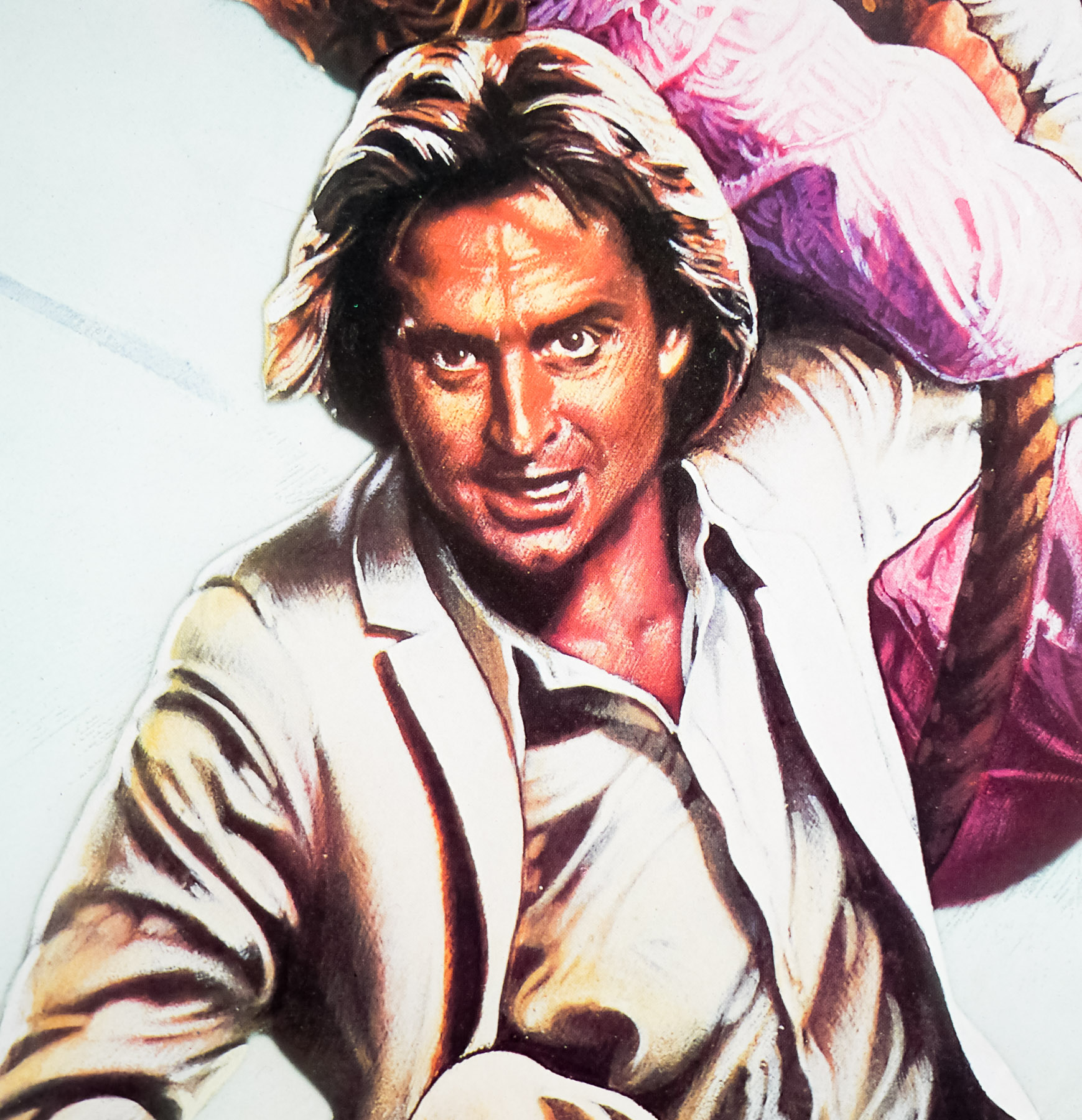
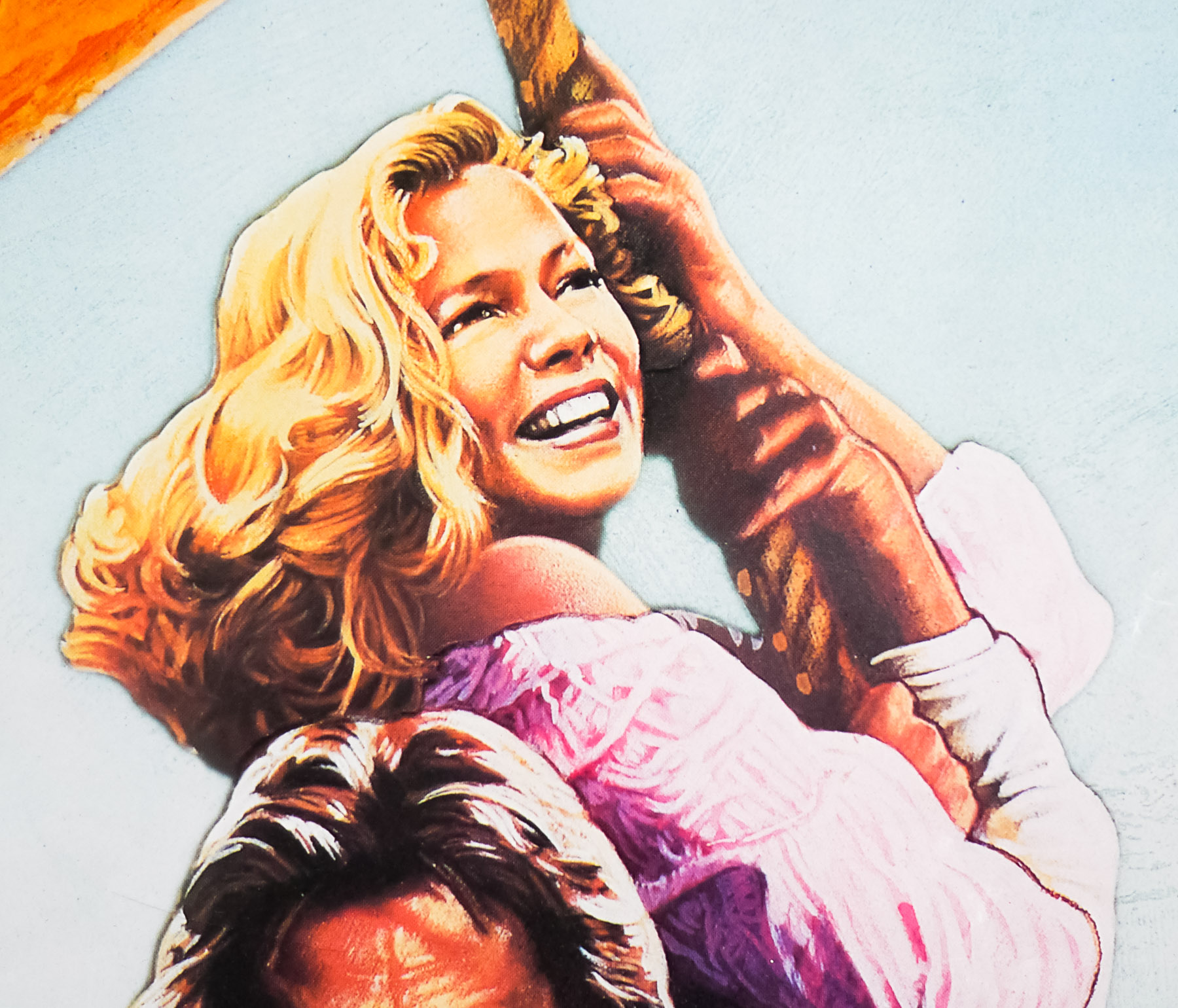
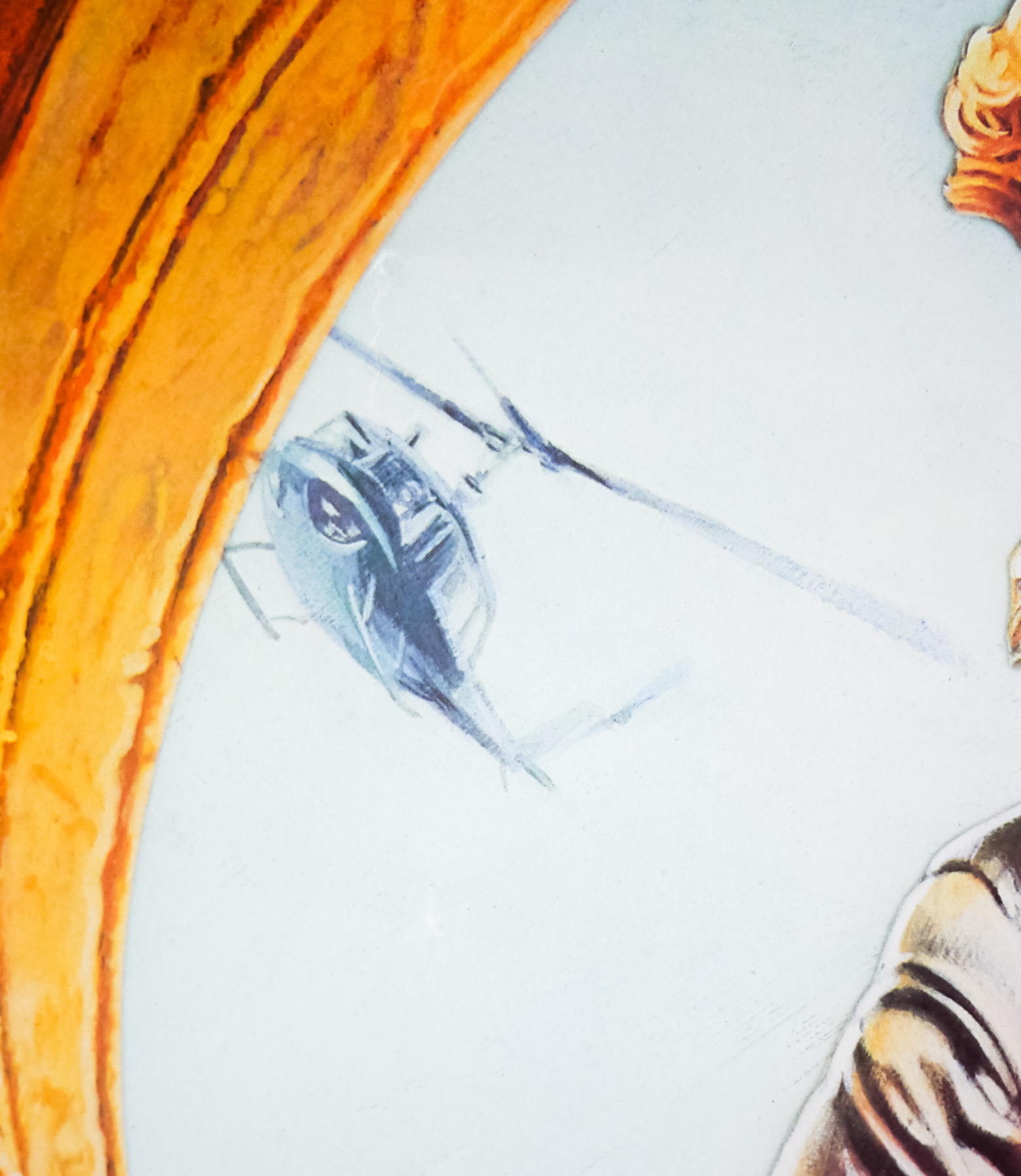
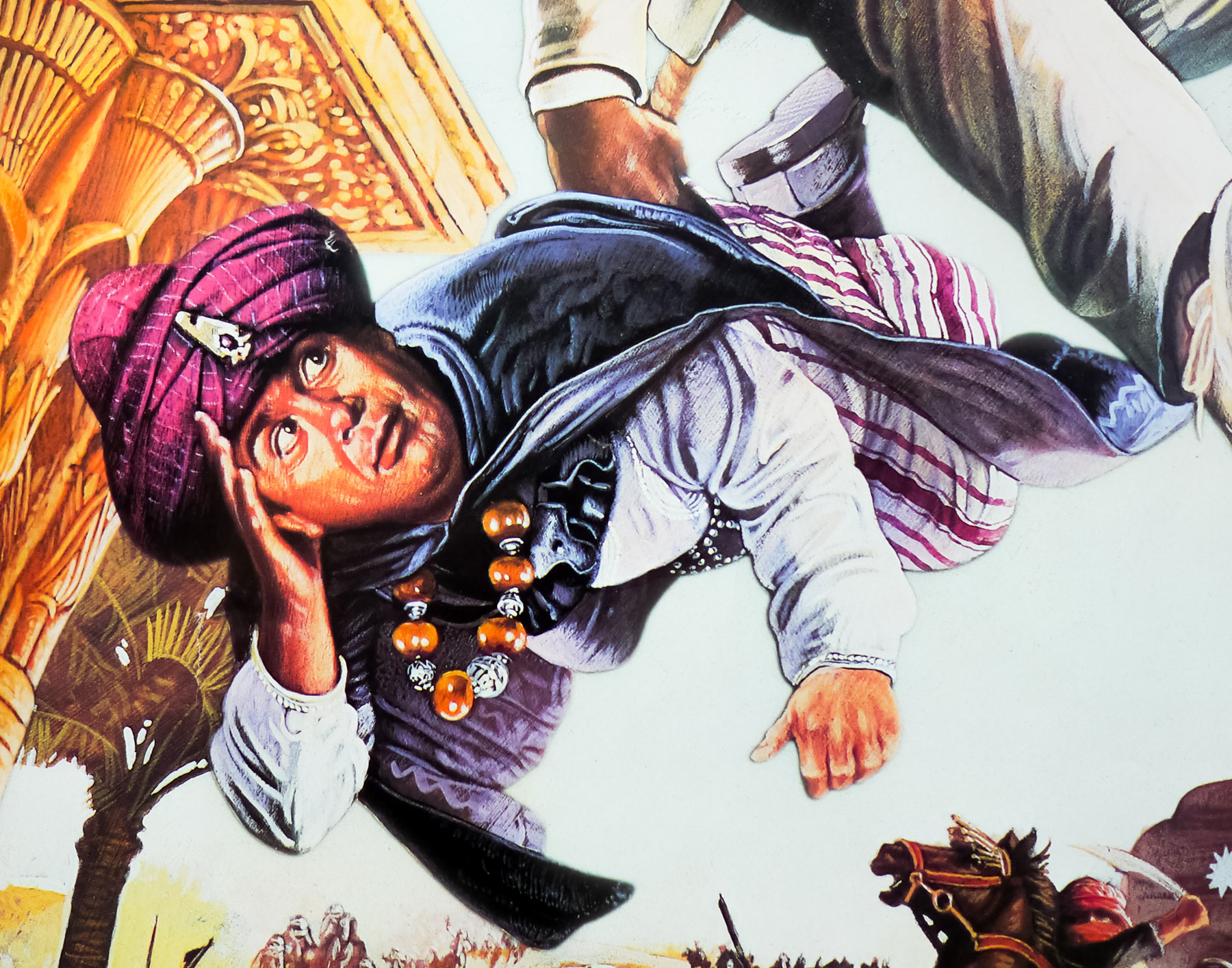
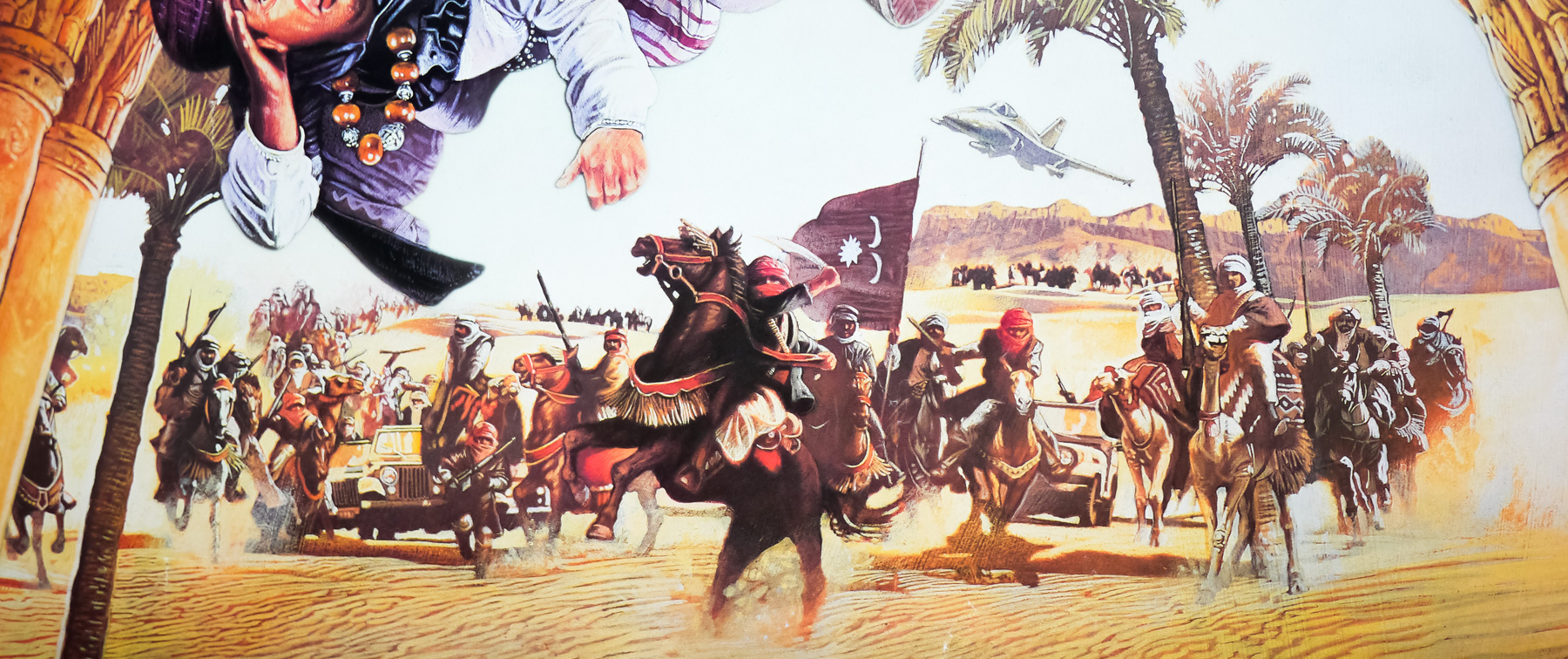
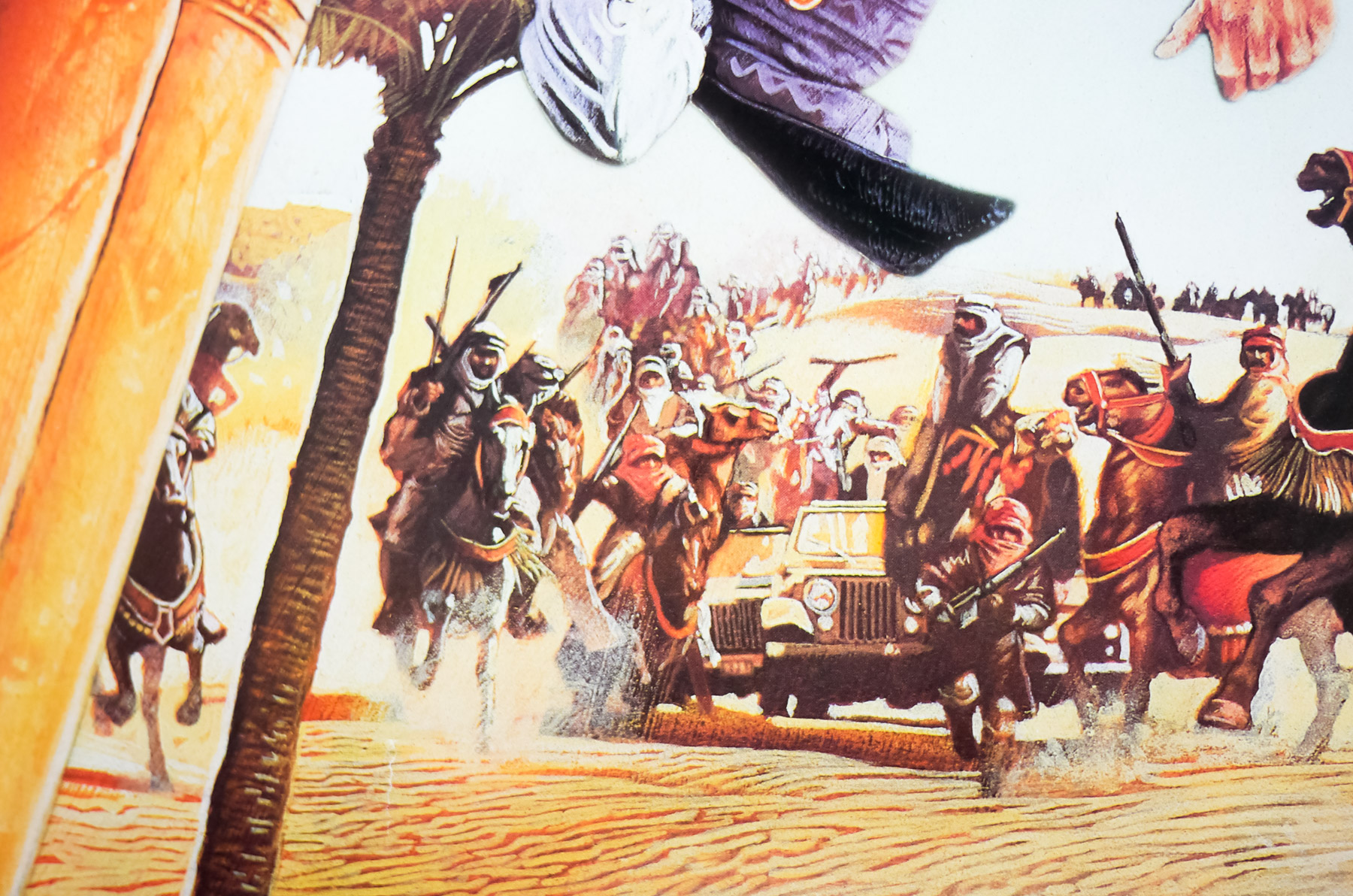
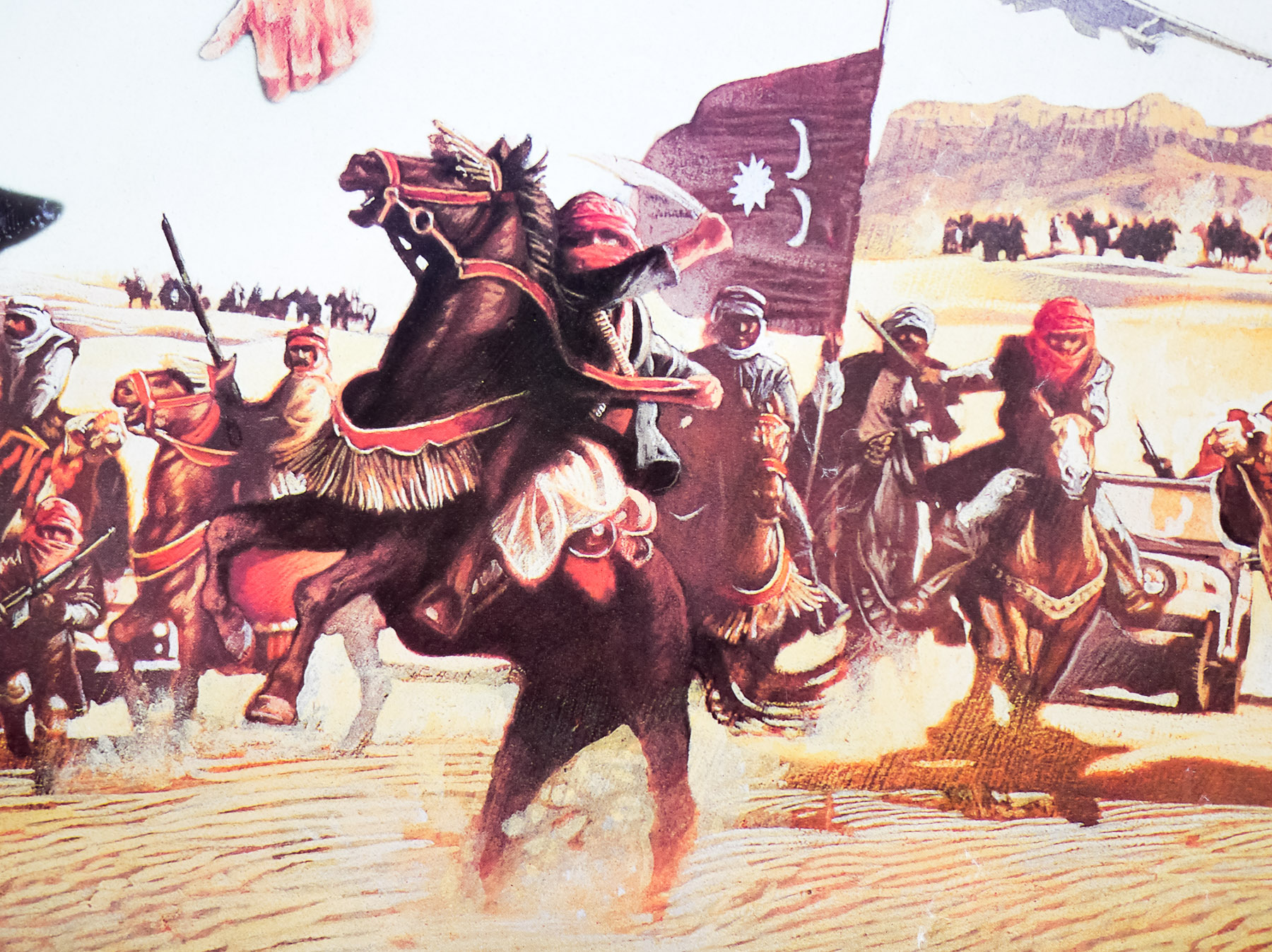
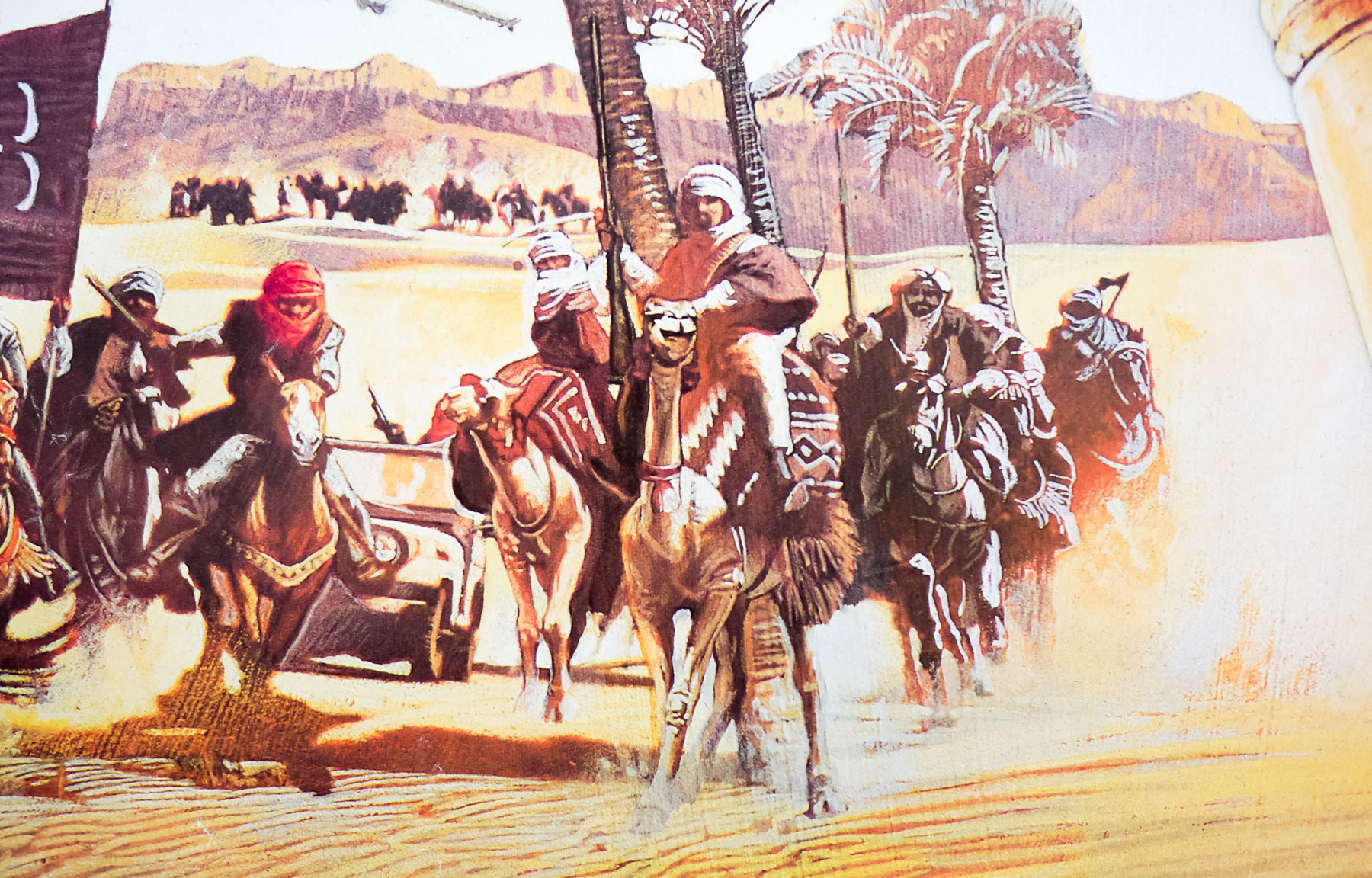
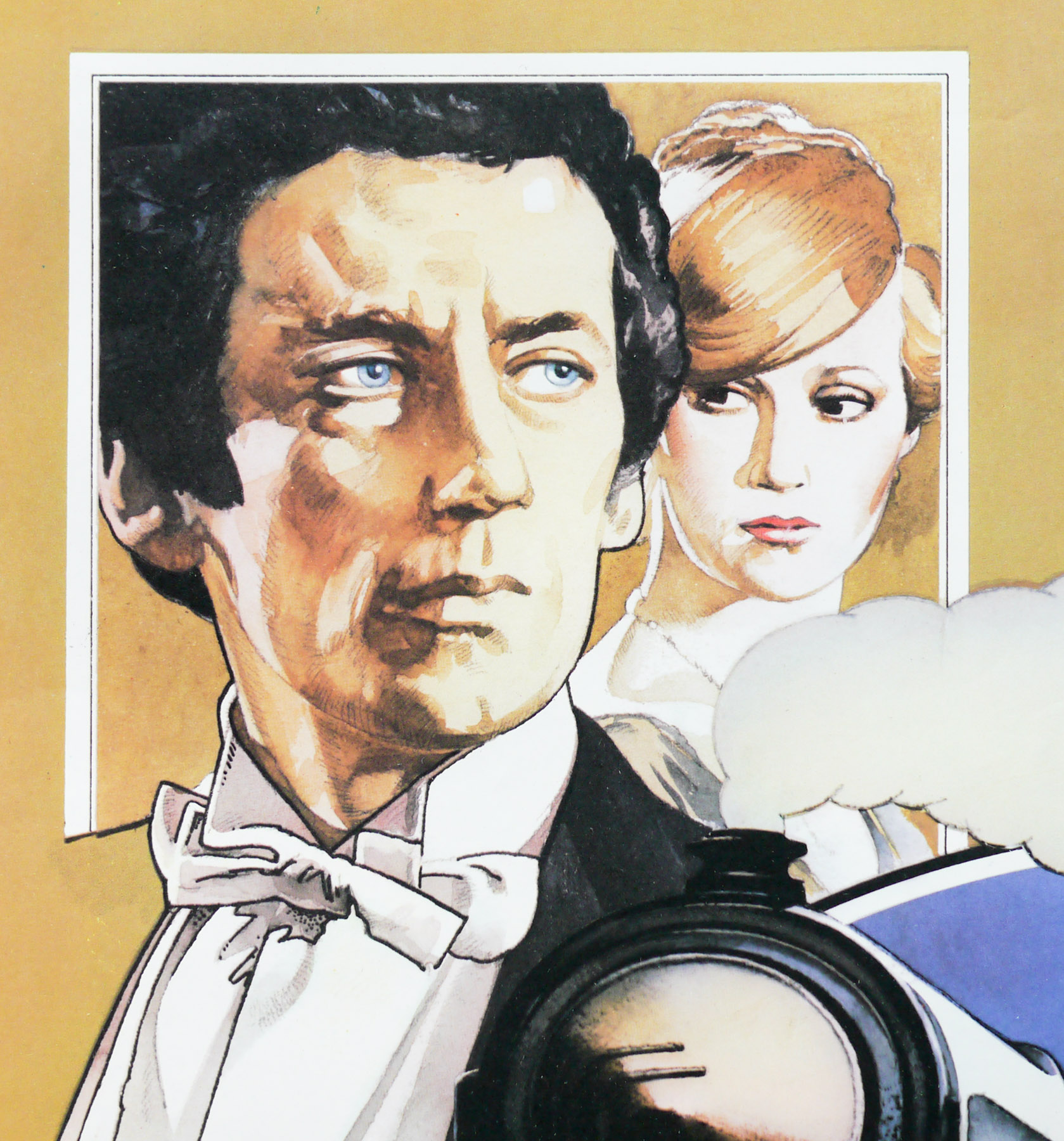
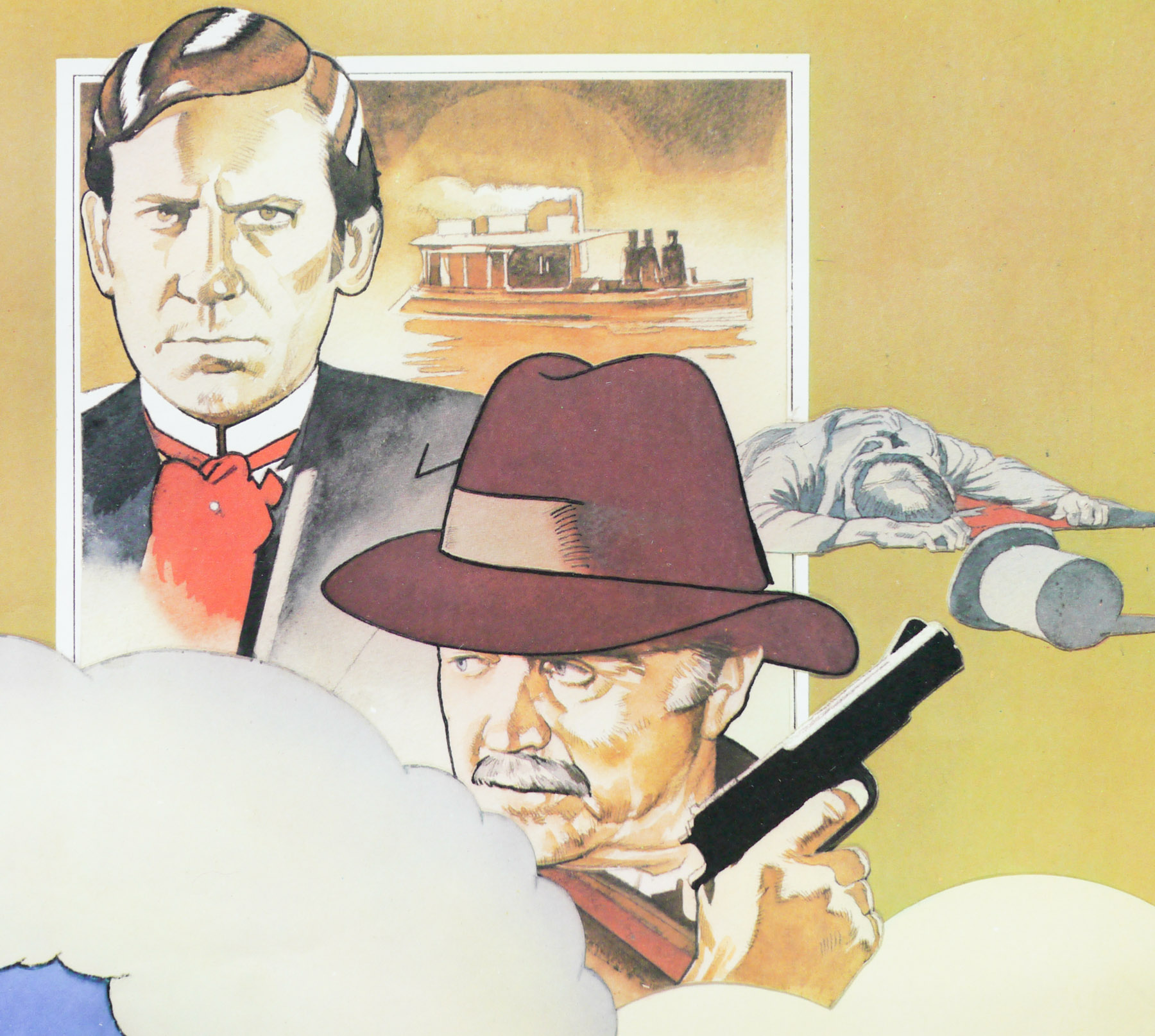
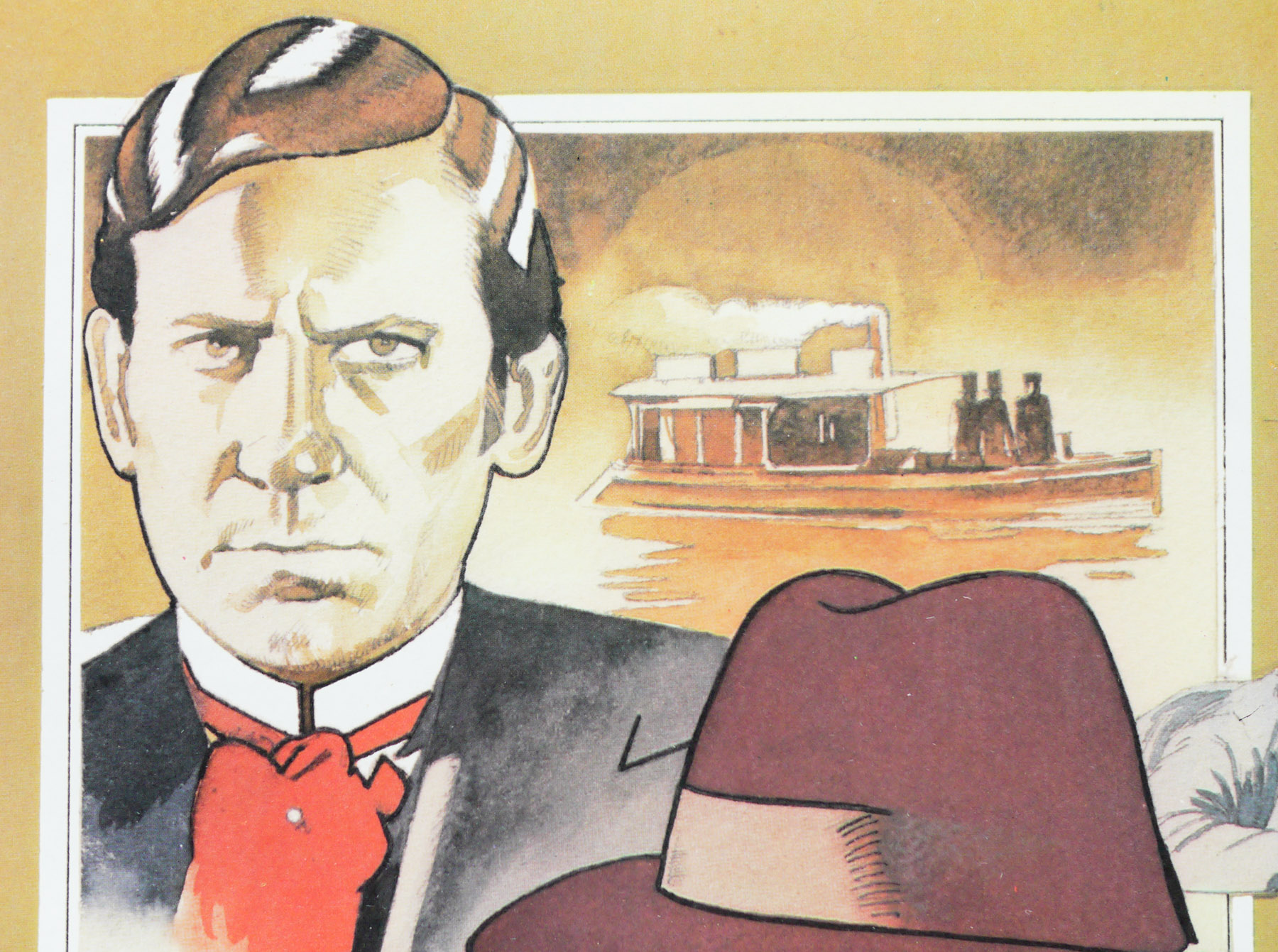
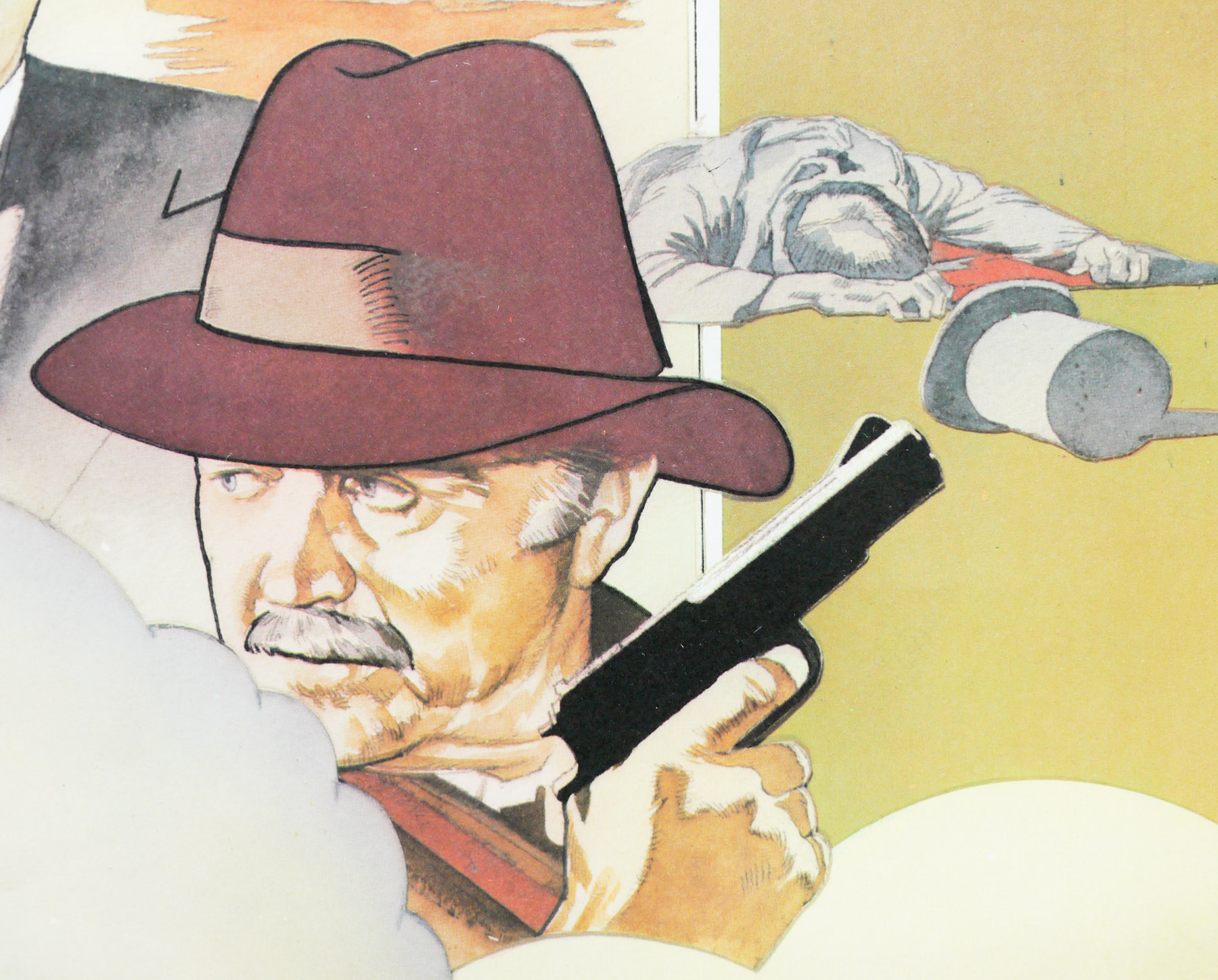
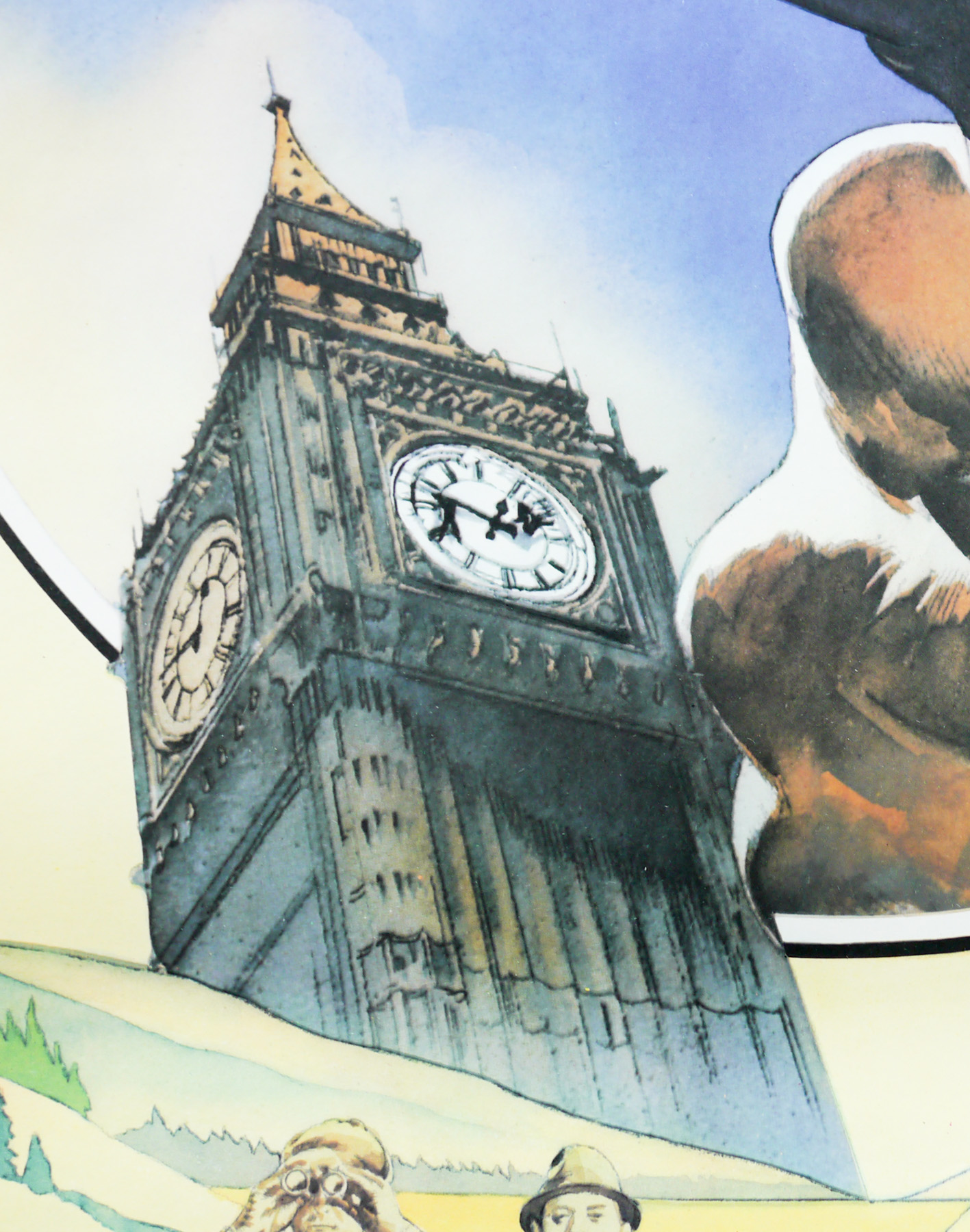
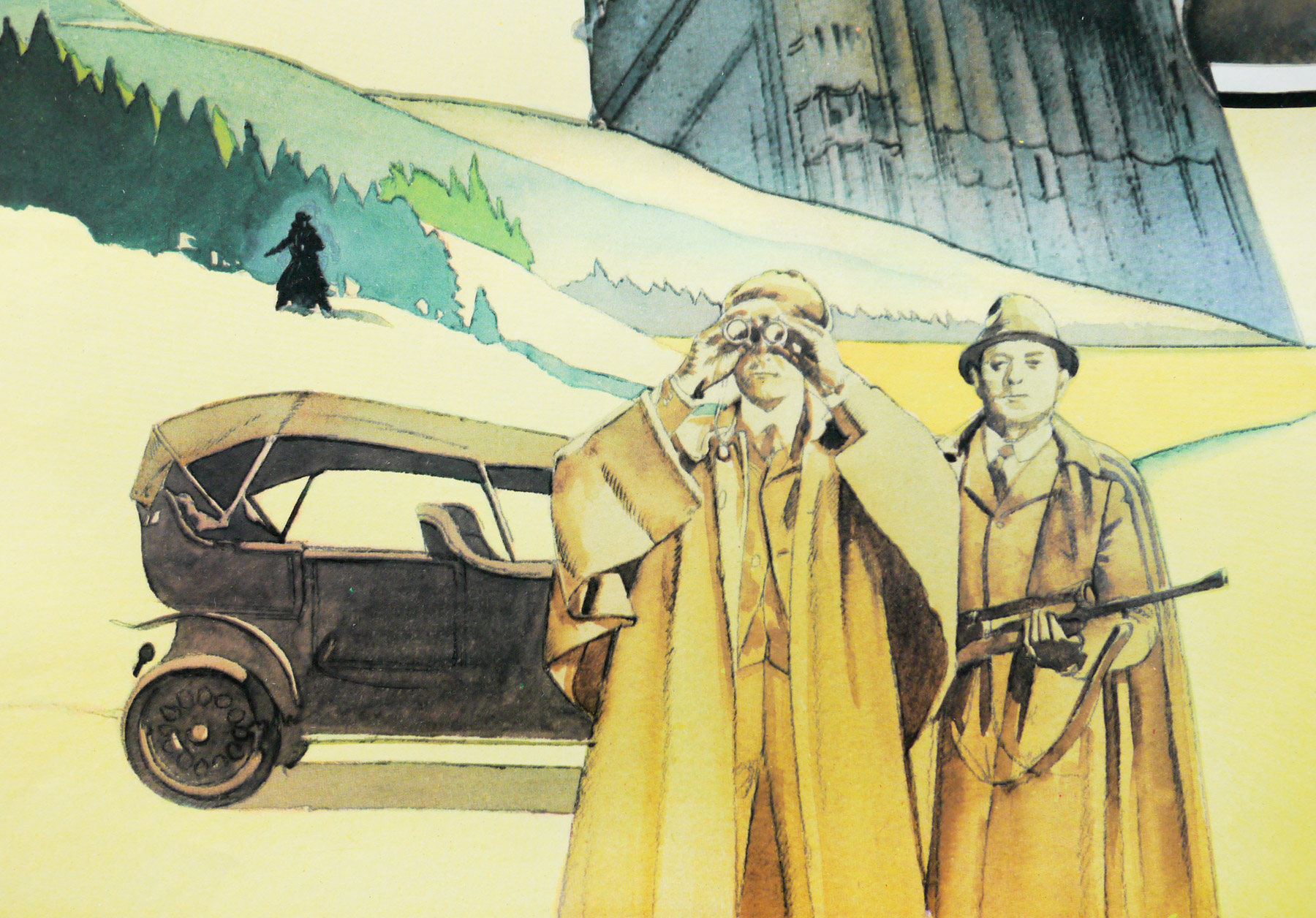
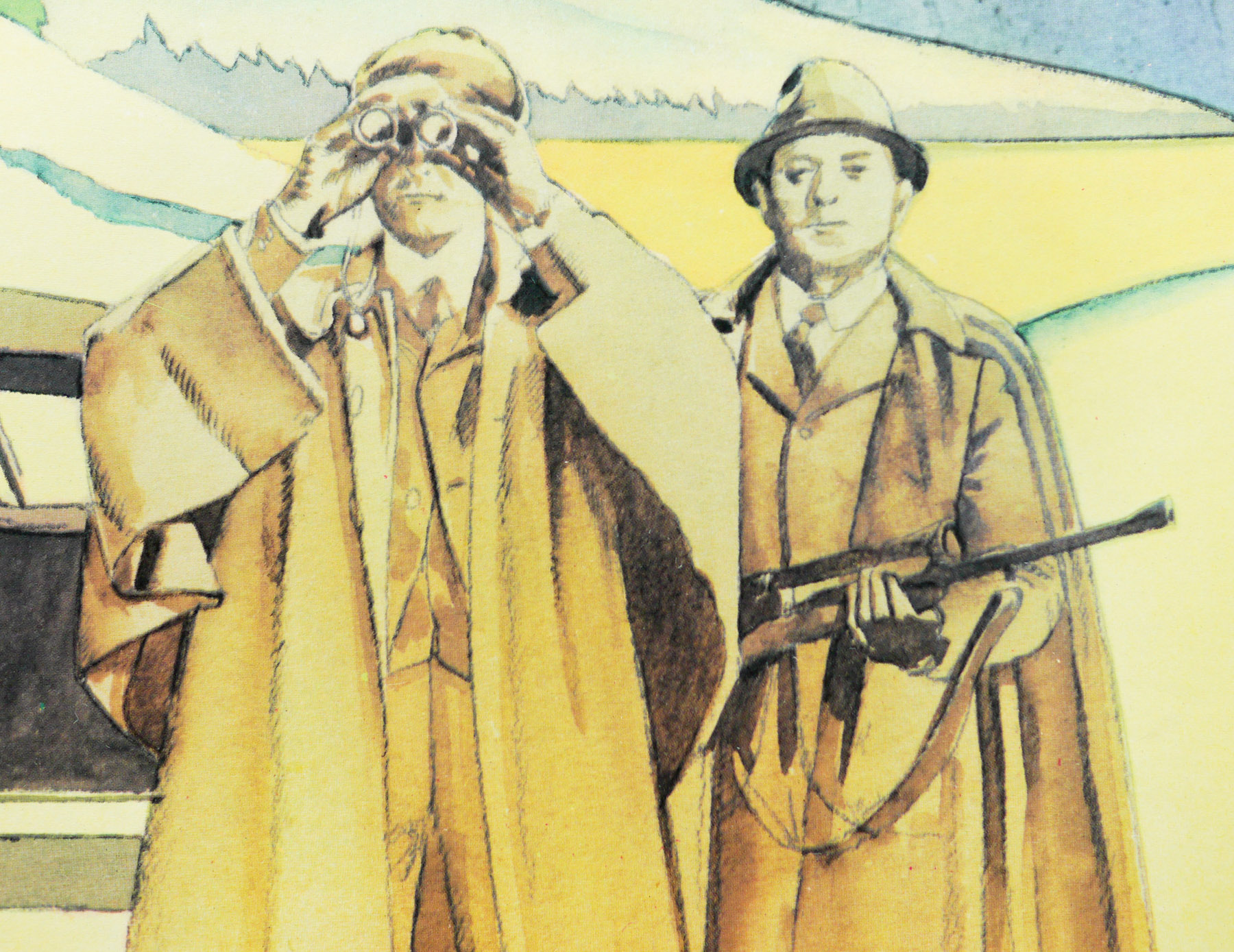
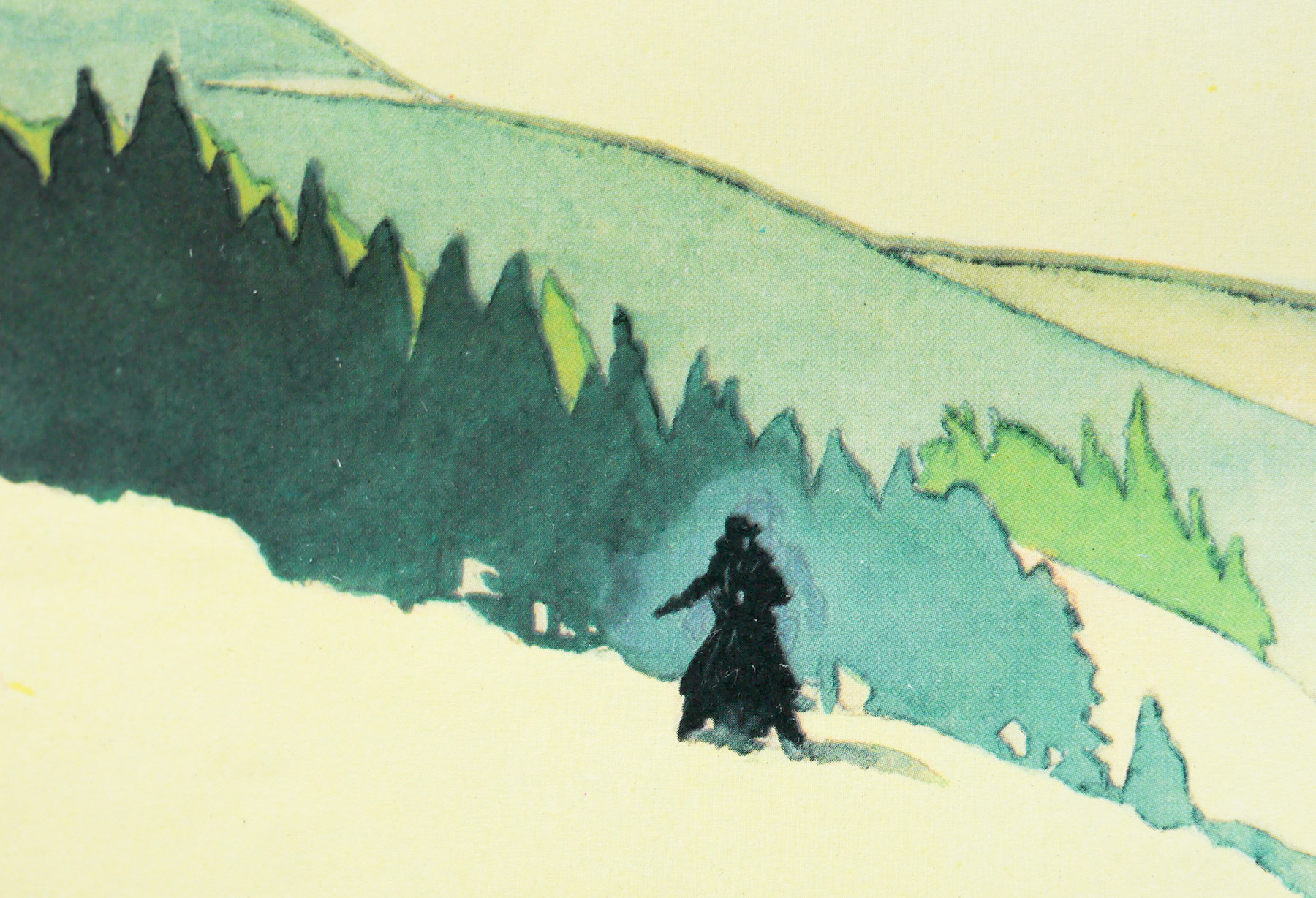
The Living Daylights / quad / UK

24.05.13

Poster Poster Poster Poster Poster
Title
The Living Daylights
AKA
007 zona pericolo [Dangerous area] (Italy)
Year of Film
1987
Director
John Glen
Starring
Timothy Dalton, Maryam d'Abo, Joe Don Baker, Art Malik, John Rhys-Davies, Jeroen Krabbé
Origin of Film
UK | USA
Genre(s) of Film
Action | James Bond
Type of Poster
Quad
Style of Poster
--
Origin of Poster
UK
Year of Poster
1987
Designer
Brian Bysouth | Bernie Goddard | Mike Bell
Artist
Brian Bysouth
Size (inches)
30 1/16" x 39 14/16"
SS or DS
SS
NSS #
--
Tagline
The new James Bond... living on the edge.

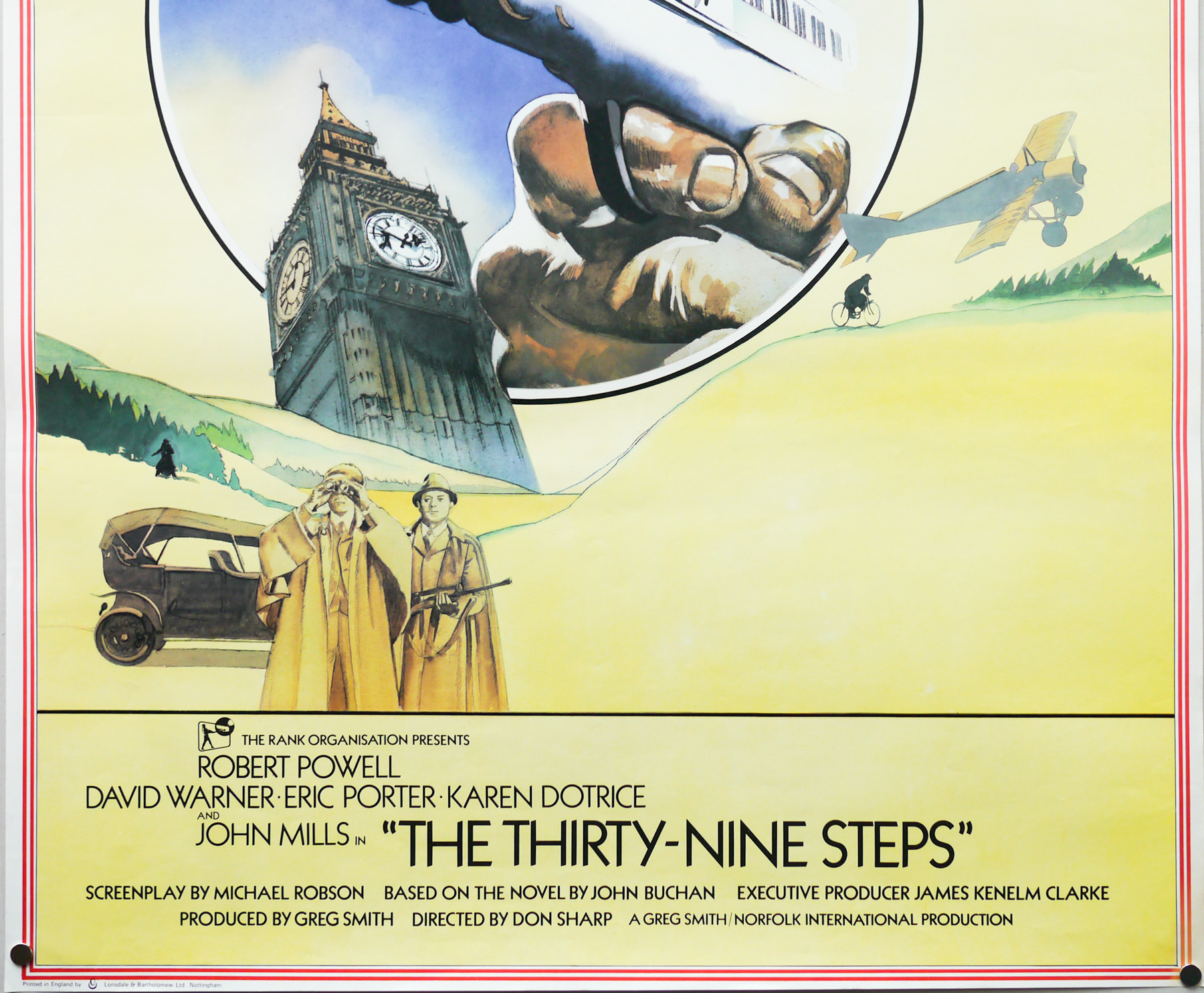
The Living Daylights was the first of two films in the long-running James Bond franchise to feature actor  as the legendary spy. Dalton had been offered the role following Roger Moore’s decision not to reprise it in the wake of the disappointing performance of 1985′s A View to a Kill. The film sees Bond caught up in an international conspiracy after the abduction from a London safe-house of a recently defected KGB officer, which sees the agent travel to Czechoslovakia, Morocco, Austria and eventually Afghanistan in search of the missing man. The spy uncovers an arms-dealing plot with global ramifications and he must work with the Russian girlfriend of the missing KGB officer to get to the truth and prevent the conspirators from fulfilling their plans.
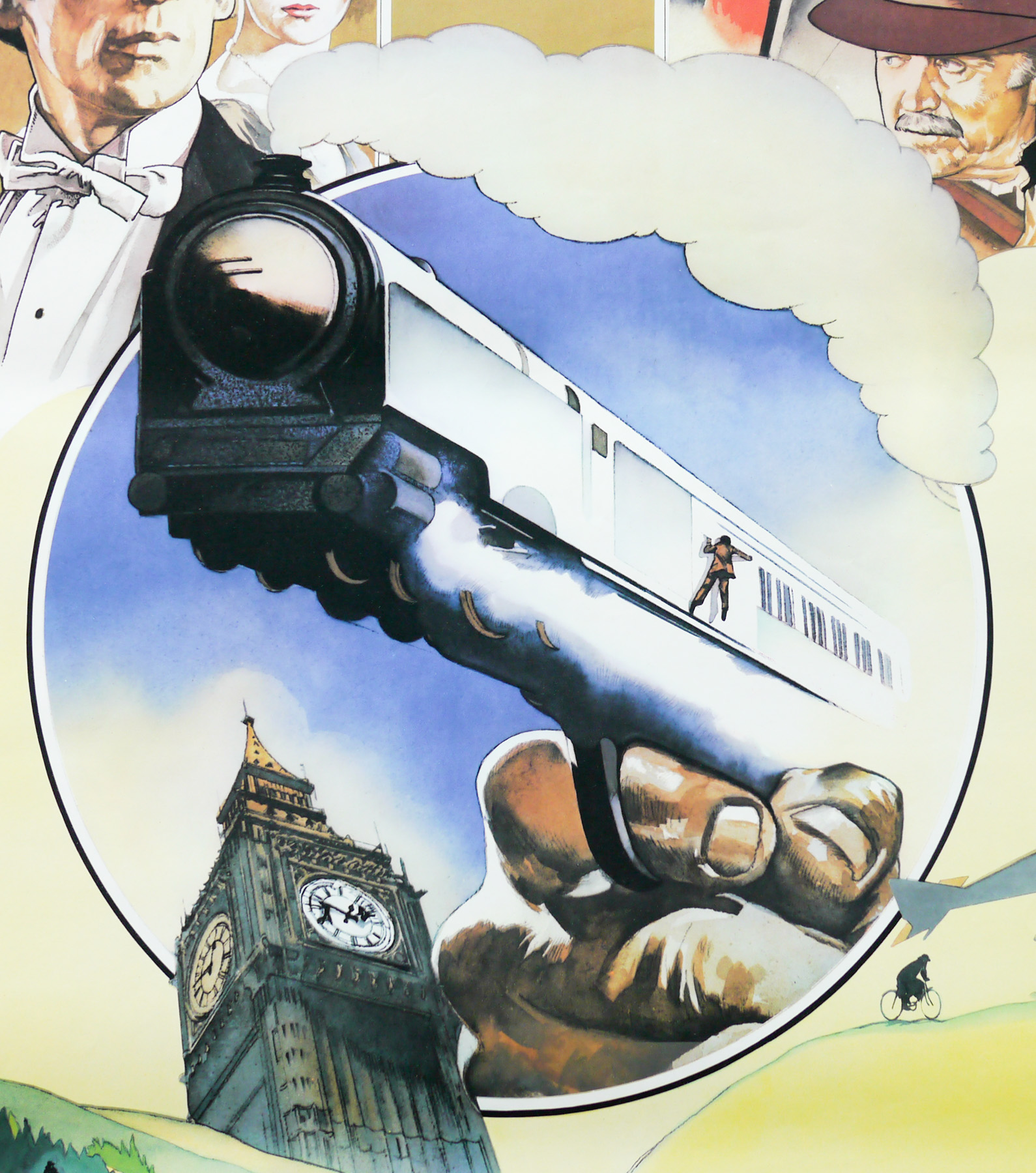
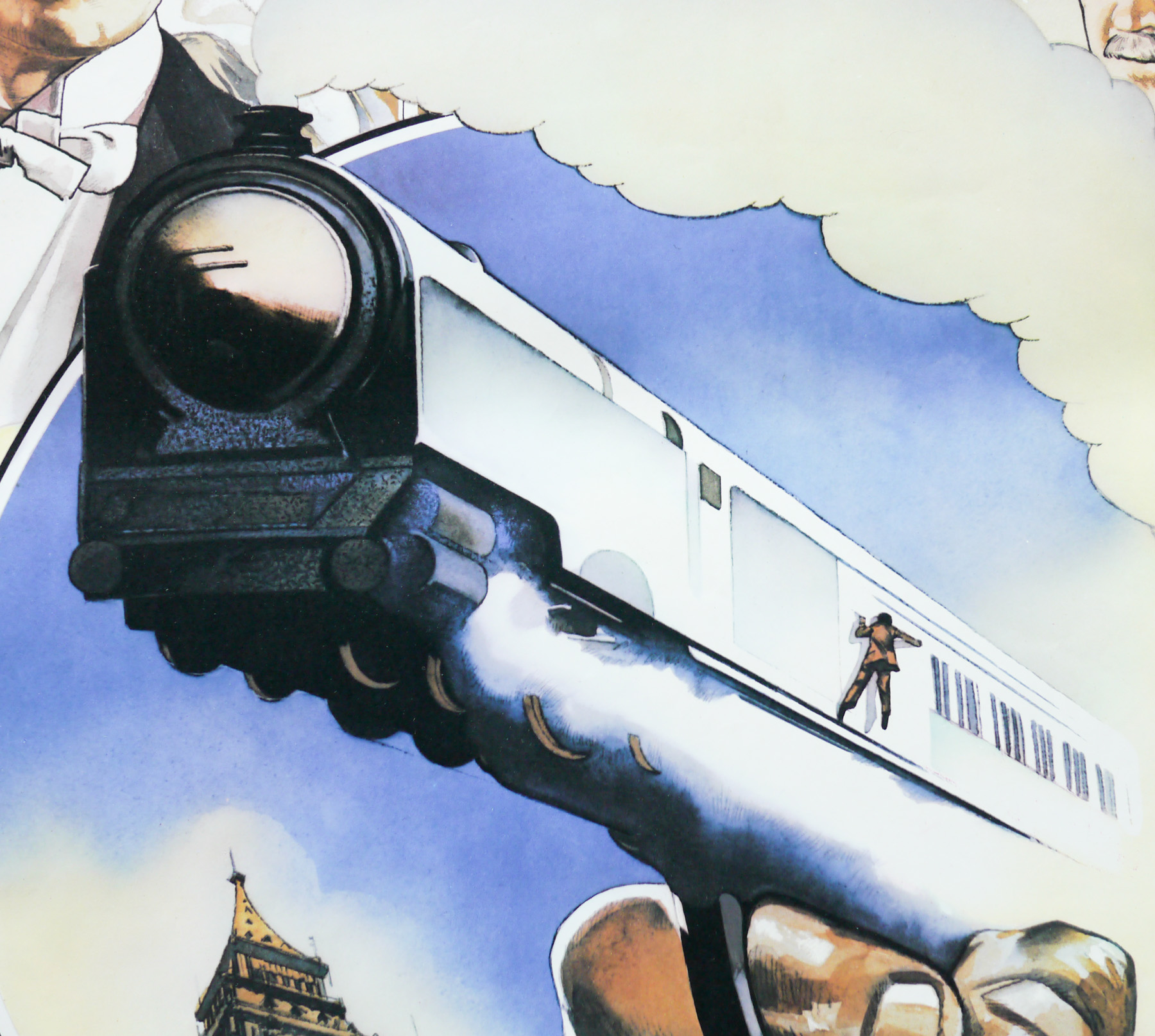
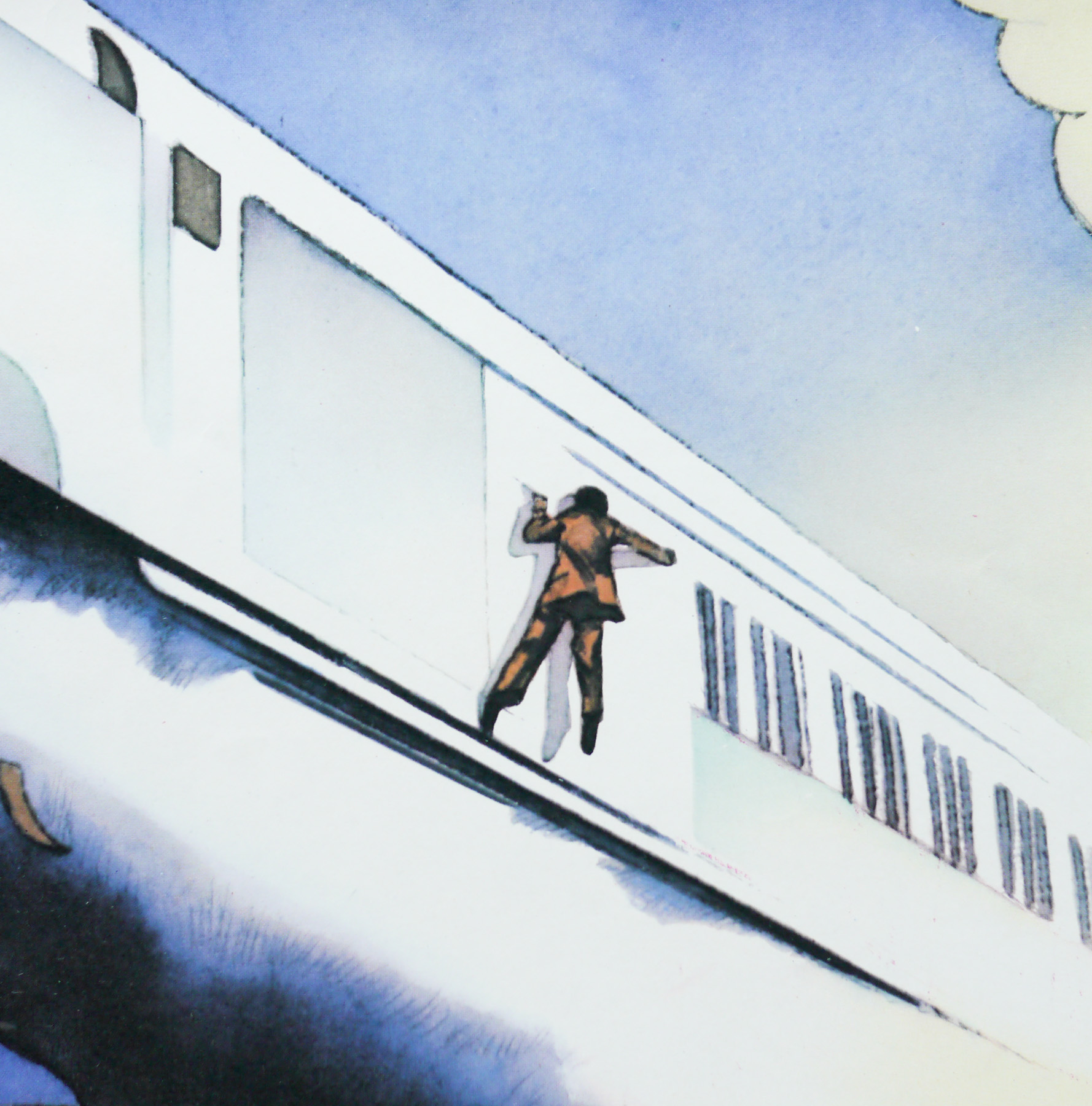
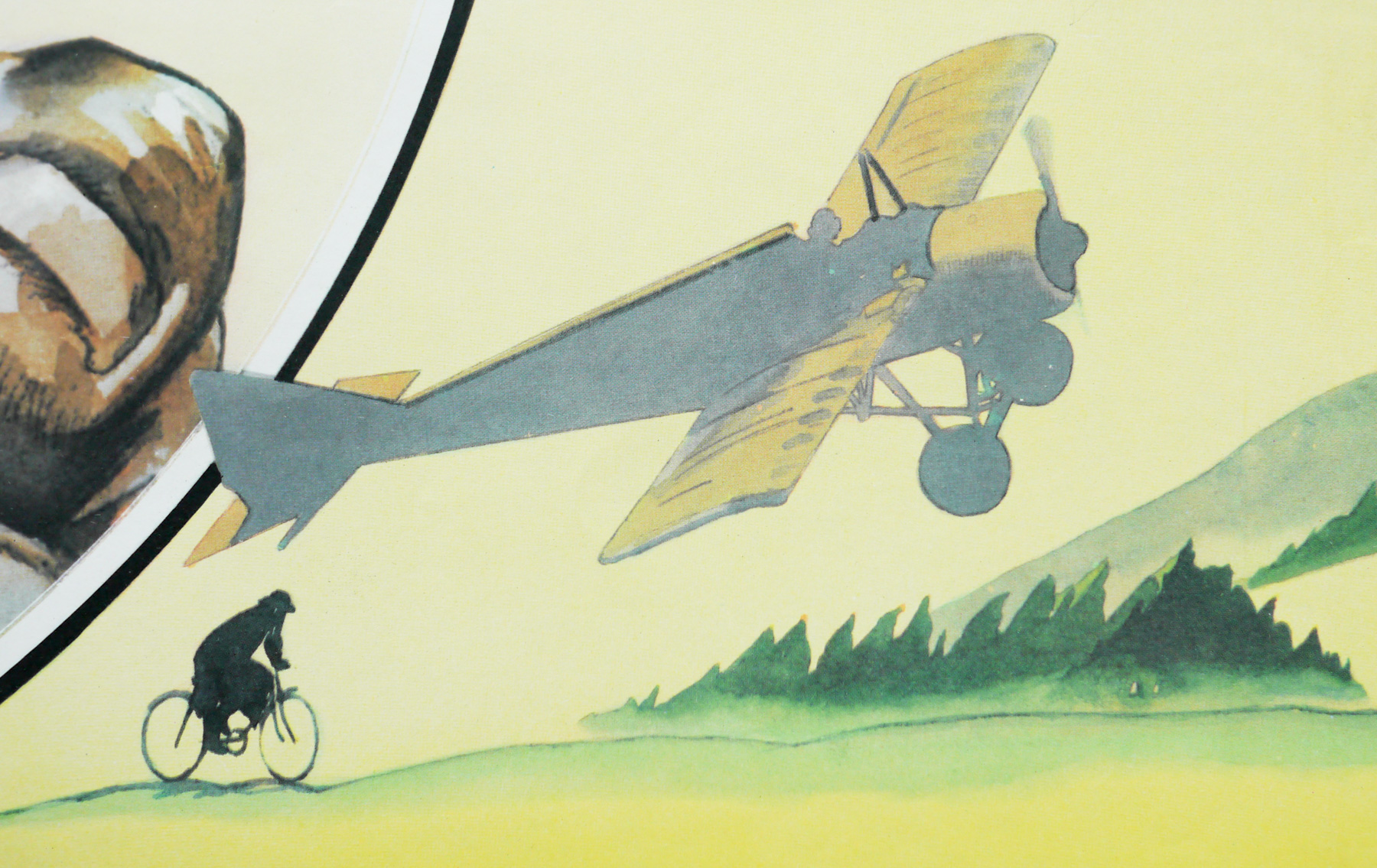
This is the UK quad and it features artwork that was used across the globe to promote the film. It’s unquestionably the last truly great Bond poster and was also the last to be entirely hand painted. The man responsible is the British artist Brian Bysouth and the poster was discussed during my 2012 interview with him:
“The last painting I did was for The Living Daylights. There were a number of us involved with the initial design ideas for that poster, including Bernie Goddard, a freelance designer who often worked with FEREF. Mike Bell also produced some concept roughs. Using the original Bond spiral gun barrel idea was a concept that featured on some of the designs and Bernie submitted one using it. The final concept was an amalgamation of ideas and I was tasked with composing the montage that became the poster. I produced the final colour rough that was sent to the client and we were all very glad when it was approved and I was able to start the finished painting.
I came across the rough a little while ago and it’s in reasonable condition considering it’s age.

That design ended up being used around the world and, as Sim Branaghan disclosed in his book, you were paid the highest fee ever given to a British film poster artist for that.
[Laughs] I probably shouldn’t have told Sim that! I don’t know if it was the highest fee ever paid, as I have no idea what other artists in Britain were getting for their work. But later I read somewhere that Bob Peak was being paid up to $50,000 for one poster at the beginning of the 1980s, and other artists such as Drew Struzan were perceived as being extremely well rewarded. I used to charge a day rate and always felt there was a downward pressure on the fees I charged. I was aware that as a director of the company I felt obliged not to inflate my prices, always making allowance for the company mark-up.  With the wisdom of hindsight, maybe I was wrong and I should have charged more. Anyway, I remember being content at the time.

I never knew how much FEREF were charging the client and I never thought to enquire. I decided that I was going to charge £3000 for my work on The Living Daylights because I had been working on the campaign for weeks. The fee was agreed and that was fine. Looking back in retrospect at an illustration that was used around the world to market a James Bond film do you really think that was a lot of money? It’s peanuts! Especially in comparison to the enormous budget the studio would have allotted to the marketing in total. Finally, I hope I am right in believing the client thought well of FEREF because we didn’t ridiculously inflate the price of the work we did for them. We sincerely believed we were the best at what we did, and it was upmost in our minds that we had to be competitive with our charges.”

The article also features pictures of the original artwork and initial sketches for this poster.

Rashomon / one sheet / 2009 re-release / USA

22.05.13

Poster Poster Poster
Title
Rashomon
AKA
Rashômon (Japan - original title)
Year of Film
1950
Director
Akira Kurosawa
Starring
Toshirô Mifune, Machiko Kyô, Masayuki Mori, Takashi Shimura, Minoru Chiaki, Kichijirô Ueda, Noriko Honma, Daisuke Katô
Origin of Film
Japan
Genre(s) of Film
Crime | Drama
Type of Poster
One sheet
Style of Poster
Re-release
Origin of Poster
USA
Year of Poster
2009
Designer
Unknown
Artist
Kent Williams
Size (inches)
27" x 40"
SS or DS
SS
NSS #
--
Tagline
--

Legendary Japanese director Akira Kurosawa‘s 1950 masterpiece Rashomon is considered by many to be his crowning achievement, which is no mean feat when you consider it’s stacked against films as beloved as Seven Samurai (1954) and Yojimbo (1961). Considered incredibly influential and ground-breaking, particularly in terms of storytelling, cinematography and editing, the film has lost none of its impact in the 60+ years since its first release. The film is essentially an investigation into the truth behind a heinous crime in which a woman is raped and her samurai husband is slain at the end of a dagger, but it’s the way that Kurosawa stages the recollections of the four key eyewitnesses that makes Rashomon so special.

The film begins as three strangers shelter under the ruins of the eponymous gate during a calamitous thunderstorm. Two of the men, a woodcutter and a priest, were witnesses to events that happened in a nearby forrest three days earlier and they begin to recount what they saw to the commoner who’s eager to hear the details of the crime. Each of the recollections feature the husband and wife and a bandit named Tajômaru () but each of the witnesses recall the events that led to the death of the samurai in very different ways.

Kurosawa uses a number of editing techniques to differentiate the recollections for the viewer and apparently shot the same scene with several different cameras so he could cut to another angle of the same performances as he saw fit. Mifune, a frequent collaborator, deserves special mention for his memorable portrayal of the bandit Tajomaru in each of his different ‘guises’. In the end, the viewer is left to decide which of the witnesses they believe with the director resisting the urge to wrap things up neatly. As the commoner remarks when discussing the validity of one of the recollections: ‘We all want to forget something, so we tell stories. It’s easier that way.’

American artist Kent Williams painted this stunning portrait of Tajomaru that was commissioned by Janus Films for the 2009 cinema re-release of Rashomon, which followed an extensive 2008 restoration undertaken by the Academy Archive, the National Film Center of the National Museum of Modern Art, Tokyo, and Kadokawa Pictures. Born in 1962, Williams has lent his considerable talents to a wide range of artistic channels, including printmaking, photography, architecture and film. He is perhaps best known for his work on graphic novels for the likes of Marvel and Vertigo and in 2006 he collaborated with filmmaker Darren Aronofsky on a comic book tie-in for the sci-fi fantasy film The Fountain. His official website contains galleries of his work, as well as a biography, links to blogs and more.

Kent’s 2009 blog post announcing the completion of this piece can be viewed here and confirms that the original artwork was realised with oil and encaustic on linen mounted on wood panel with a distressed wooden beam. This same image was used for the must-own 2012 Criterion re-release of Rashomon and the poster was available to purchase via their web shop for a number of months, which is where I picked it up from. It sadly appears to be no longer available for purchase.

Big Trouble In Little China / A1 / Germany

20.05.13

Poster Poster Poster Poster
Title
Big Trouble In Little China
AKA
--
Year of Film
1986
Director
John Carpenter
Starring
Kurt Russell, Kim Cattrall, Dennis Dun, James Hong, Victor Wong
Origin of Film
USA
Genre(s) of Film
Action | Adventure | Fantasy
Type of Poster
A1
Style of Poster
--
Origin of Poster
Germany
Year of Poster
1986
Designer
Unknown
Artist
A. Helden
Size (inches)
23 6/16" x 33"
SS or DS
SS
Tagline
--

John Carpenter’s excellent action adventure Big Trouble in Little China marked the director’s fourth outing with lead actor  and also saw him satisfy his long-held desire to make a film featuring martial artistry. The film apparently started life as a Western but the screenwriter W. D. Richter was tasked with retooling the script and modernising it completely. Russell stars as Jack Burton, an all-American trucker who arrives in town with cargo to deliver and, after beating him at a card game, offers to drive his friend Wang Chi () to the airport to pick up his fiancee, Miao Yin (). When a gang of thugs from the Lords of Death street gang abduct Miao Yin, Burton and Wang chase them back to the alleys of Chinatown.

After interrupting a funeral procession the pair become embroiled in a battle between two rival Chinese gangs, which is brought to a conclusion by the arrival of The Three Storms, a trio of supernaturally strong warriors. Whilst attempting to escape, Burton inadvertently runs over the crime lord Lo Pan () who then blinds Burton after he exits his truck. As Lo Pan’s gang steals the truck, Wang leads Jack out of the area and to his restaurant where they meet up with a lawyer called Gracie Law (), Wang’s friend Eddie Lee () and magician Egg Shen (). The gang then plan a mission to rescue Miao Yin from the clutches of Lo Pan, who aims to sacrifice her in order to break an ancient curse. What follows is an action-packed romp that sees Burton and the others descend into the crime-lord’s lair to face-off against a series of adversaries, both human and otherwise.

Russell plays Burton with a perfect mix of tough-guy bravado and goofball charm and the character makes a nice change from the gruff, no-nonsense roles he played in Escape from New York and The Thing. Sadly, the film was to prove a flop at the box-office and it struggled to even regain its $25 million budget. Carpenter and Russell have since revealed that they feel the studio didn’t really know how to sell the film to audiences, plus it was also (unluckily) released with a couple of weeks of James Cameron’s mega-hit Aliens. Big Trouble in Little China became a huge cult hit on video and has subsequently seen a large amount of critical reappraisal and now stands at 82% fresh on RottenTomatoes.com, for example.

In the States the film was marketed with a Drew Struzan illustration, whilst the UK was treated to a wonderful Brian Bysouth painting. This is the German poster that features exclusive artwork by someone who signs their work A. Helden. It’s a decent portrait of Russell and Cattrall and also features Burton’s truck, the Pork Chop Express. Despite numerous searches I’ve been unable to discover much about the artist, so if you have any ideas about them please get in touch.

Time Bandits / B2 / Japan

17.05.13

Poster Poster Poster Poster
Title
Time Bandits
AKA
--
Year of Film
1981
Director
Terry Gilliam
Starring
John Cleese, Sean Connery, Shelley Duvall, Katherine Helmond, Ian Holm, Michael Palin, Ralph Richardson, Peter Vaughan, David Warner, David Rappaport, Kenny Baker
Origin of Film
UK
Genre(s) of Film
Adventure | Fantasy
Type of Poster
B2
Style of Poster
Artwork
Origin of Poster
Japan
Year of Poster
1983
Designer
Unknown
Artist
Unknown
Size (inches)
20 6/16" x 28 14/16"
SS or DS
SS
Tagline
--

This Japanese B2 for Terry Gilliam‘s time-travelling fantasy Time Bandits features unique artwork exclusive to the poster. The 1981 film is one of the director’s best, in my opinion, and features typically brilliant imagery combined with a great cast, including a few surprising cameos.

The film follows 11-year-old Kevin (Craig Warnock) and his adventures with a troupe of time-travelling dwarves who are on the run from their master, the Supreme Being. As the gang use a special map to hop through holes in the universe and into different time periods they soon realise that their journey is being controlled by a sinister force. It’s not long before they are forced to confront Evil and save themselves from certain death. The ending of the film, which I won’t spoil, is brilliantly bonkers.

According to IMDb, in 1996 Terry Gilliam and [screenwriter and actor] Charles McKeown collaborated on a script for Time Bandits 2, bringing back most of the original cast, with the exceptions of David Rappaport and Tiny Ross who had passed away a few years before, and owing to Jack Purvis being paralysed from a car accident, his character was written to be in a similar state. But following the death of Purvis, the project was shelved indefinitely.

I’m unsure who is responsible for the artwork on this poster and there are no signatures or any other identifying marks. If you have any ideas please get in touch.

The excellent, unusual trailer is on YouTube.


Black Hooker / one sheet / USA

15.05.13

Poster Poster Poster
Title
Black Hooker
AKA
Streets Sisters (USA - alternative title) | Black Mama (USA - video title) | Don't Leave Go My Hand (USA - alternative title)
Year of Film
1974
Director
Arthur Roberson
Starring
Sandra Alexandra, Jeff Burton, Kathryn Jackson, Teddy Quinn, Gioya Roberson, Durey Mason, Mary Reed, Alan Bass
Origin of Film
USA
Genre(s) of Film
Drama | Blaxploitation
Type of Poster
One sheet
Style of Poster
--
Origin of Poster
USA
Year of Poster
1974
Designer
Unknown
Artist
Unknown
Size (inches)
27 1/16" x 41"
SS or DS
SS
NSS #
--
Tagline
She was lovable... She Was Mean.... Damn mean! | What would you do if your mama was a hooker?

They sure don’t make, title or market them like this anymore! Black Hooker is an obscure 1974 drama that was written, produced and directed by a man named  whose sole film credits are all for this film (according to IMDb he also did the production design, art direction and set decoration). Seemingly only released in the States, the reason for its obscurity is explained in the reviews section of its IMDb page. In 2004 a reviewer with the handle ‘spropes’ wrote the following:

‘When I worked with L.A. County, I knew Art Roberson fairly well, tho I have no idea of his current status or whereabouts. We were both social workers in the ghetto (really) in the 1970s. My impression was that being a social worker was his day job, that being a movie maker was his primary ambition…so what else is new? The movie, some interiors of which were shot at the legendary Joe Jost’s in Long Beach, premiered for friends and associates at Warner Bros. screening room in Burbank. At the end of the showing, it was greeted by dead silence, replacing excitement or applause. 

I think the viewers realized that the director had blown a pretty good chance to do something worthwhile after all his work, investment and attention to this film. Originally entitled something like “Don’t Leave Go My Hand” (or maybe ”Don’t Let Go My Hand”), it was supposed to sensitively portray the horrible life of a neglected (or abused, I don’t recall which) black child, the son of a…you guessed it…black hooker! But that original intent didn’t play, so the title was changed to “Black Hooker,” presumably to piggyback on the blaxploitation movement at the time.’

This would explain why the film has several alternative titles and why it is often listed as a blaxploitation film despite the storyline having barely anything in common with other entries in the genre. Another reviewer sums up the film thusly:

‘Whatever the hell this is, it is quite the mean-spirited, uncomfortable little obscurity, which caters only to collectors of the most obscure B-cinema available. A hostile, impersonal story, with zero light at the end of the tunnel. none of the characters even have names. What kind of director makes a movie like this? A director who didn’t have a very happy childhood, that’s who. I mean, this isn’t exactly Cannibal Holocaust, or I Spit On Your Grave, or anything like that, but Black Hooker is just hateful.’

I have no clues as to who is responsible for the design or artwork of this one sheet and I doubt I’ll ever be able to discover who should be credited with it, but if you have any ideas please get in touch.

E.T. the Extra-Terrestrial / quad / UK

13.05.13

Poster Poster Poster
Title
E.T. the Extra-Terrestrial
AKA
Night Skies (USA working title)
Year of Film
1982
Director
Steven Spielberg
Starring
Henry Thomas, Dee Wallace, Robert MacNaughton, Drew Barrymore, Peter Coyote
Origin of Film
USA
Genre(s) of Film
Adventure | Sci-Fi
Type of Poster
Quad
Style of Poster
--
Origin of Poster
UK
Year of Poster
1982
Designer
Unknown
Artist
John Alvin
Size (inches)
30" x 39 15/16"
SS or DS
SS
Tagline
He is afraid. He is alone. He is three million light years from home.

Easily one of the most iconic pieces of film poster artwork ever printed, John Alvin’s superb image was used around the globe to advertise Steven Spielberg’s sci-fi masterpiece, E.T. the Extra-Terrestrial. The story of a small alien who gets stranded on earth and meets a young boy called Elliot () touched the hearts of millions of movie-goers around the world. Within a year of its release it was crowned the highest-grossing film of all time, overtaking the previous leader, George Lucas’ Star Wars (this record has since been bested by over forty films in the intervening years). Last year saw E.T. celebrate its 30th anniversary and having watched the 2012 blu-ray release recently there’s no question that it has stood the test of time well.

The image of the two fingers touching is an obvious homage to the most famous section of the fresco on the ceiling of the Sistine Chapel in Rome that was painted by the Italian artist Michelangelo in the 16th century. Known as The Creation of Adam, the painting is thought to depict God breathing life into Adam, which is the Biblical creation narrative from the book of Genesis. The painting is arguably as famous as Leonardo da Vinci’s legendary Mona Lisa. In Alvin’s version it is E.T.’s gnarled hand that reaches out towards what is clearly the hand of Elliot. The alien’s finger is shown to have particular powers during the film.

The poster artwork on this British quad is by the late American designer and artist John Alvin, who was responsible for over 135 film poster designs over a thirty year period. Alvin painted many unforgettable pieces of artwork, including for Blade Runner and Gremlins, both of which were used around the world to promote their respective films. Alvin sadly passed away too early, just shy of his 6oth birthday (in 2008), but his fantastic designs will live on for generations to come.

The Green Hornet / B2 / Japan

09.05.13

Poster Poster Poster
Title
The Green Hornet
AKA
--
Year of Film
1974
Director
William Beaudine, Norman Foster, E. Darrell Hallenbeck
Starring
Van Williams, Bruce Lee, Wende Wagner, Lloyd Gough, Walter Brooke, William Dozier
Origin of Film
USA
Genre(s) of Film
Action | Crime | Sci-Fi
Type of Poster
B2
Style of Poster
--
Origin of Poster
Japan
Year of Poster
1975
Designer
Unknown
Artist
Unknown
Size (inches)
20 6/16" x 28 14/16"
SS or DS
SS
Tagline
--

Legendary action star Bruce Lee was given his break into acting after being cast as Kato, one half of the crime-fighting duo in the 1960s TV show The Green Hornet. The masked vigilante began life as a radio show that was created by George W. Trendle and Fran Striker and aired in 1936. It went on to be produced as film serials and as comic book series in the 1940s, before being adapted for a TV series in the 1960s.

 starred as Britt Reid, the playboy owner of The Daily Sentinel who runs his media empire whilst simultaneously fighting criminal gangs as the titular vigilante with assistance from his martial-artist sidekick Kato. The series was to only last for one season of 26 episodes but nevertheless proved popular in the States and elsewhere, with Lee being catapulted to fame on the back of the show. In Japan the series was apparently even aired as The Kato Show.

This Japanese B2 poster was printed for the 1975 release of the first of two films based on the character that were cobbled together from several episodes of the TV show and are apparently as incoherent as that would suggest. As can be seen from the design, the emphasis was placed firmly on Lee’s character, particularly since the studio was clearly keen to cash in on the star’s fame following his run of classic action films that ended with Enter the Dragon (1973) and his untimely death that same year.

Twin Peaks: Fire Walk With Me / one sheet / UK

07.05.13

Poster Poster Poster
Title
Twin Peaks: Fire Walk With Me
AKA
--
Year of Film
1992
Director
David Lynch
Starring
Sheryl Lee, Moira Kelly, David Bowie, Chris Isaak, Harry Dean Stanton, Ray Wise, Kyle MacLachlan, Heather Graham
Origin of Film
France | USA
Genre(s) of Film
Mystery | Crime
Type of Poster
One sheet
Style of Poster
--
Origin of Poster
UK
Year of Poster
1992
Designer
Unknown
Artist
--
Size (inches)
27" x 40"
SS or DS
SS
NSS #
--
Tagline
In a town like Twin Peaks, no one is innocent. | These are the last seven days of Laura Palmer

Despite the phenomenal ratings success that David Lynch and Mark Frost‘s Twin Peaks TV series had enjoyed during its first season, the viewing figures dropped sharply in the middle of the second and the show was put on hiatus by ABC. After a letter-writing campaign by fans, dubbed COOP (Citizens Opposed to the Offing of Peaks), the studio relented and agreed to show the remaining six episodes. The biggest problem the show faced was that halfway through the second series the killer of Laura Palmer had been revealed, which had been the main storyline focus up until that point, and the following episodes failed to hold viewer interest as much.

When ABC revealed they were not planning to make a third series the show’s cancellation was confirmed. Only a month after this happened, Lynch announced that he was planning to make a Twin Peaks film in conjunction with French company CIBY-2000, which ended up being both a prequel and an epilogue to the original show. Working without Mark Frost, Lynch was able to assemble most of the original cast, with the exception of Lara Flynn BoyleSherilyn Fenn and Richard BeymerKyle MacLachlan had been reluctant to return as FBI Agent Dale Cooper and is only featured briefly in the film, which lead Lynch and his co-screenwriter to change the focus of the film, with another murder case and the life of Laura Palmer being key facets of the plot.

Chris Isaak plays FBI Agent Chester Desmond who, along with his new partner Sam Stanley (Kiefer Sutherland), are sent to investigate the murder of Teresa Banks in the town of Deer Meadow. After finding an important clue, Desmond mysteriously disappears and the film then cuts to one year later in the town of Twin Peaks, picking up the story of homecoming queen Laura Palmer whose eventual murder has a direct link to that of Teresa Banks.

Despite the cult following of the TV series, the film was both a critical and commercial flop and was greeted with boos and jeers at the Cannes Film Festival, with Quentin Tarantino confessing “After I saw Twin Peaks: Fire Walk with Me at Cannes, David Lynch had disappeared so far up his own ass that I have no desire to see another David Lynch movie until I hear something different. And you know, I loved him. I loved him.” It also saw poor box-office takings in the USA after the ratings drop of the second series and the unforgiving plot for people unfamiliar with the Twin Peaks universe.

This UK one sheet has a unique design that features the same portrait of Laura Palmer as seen on the US one sheet (albeit cropped) as well as an image of Kyle MacLachlan, despite his relative absence from the film. In addition, this is the only poster for the film to feature an image of the demonic Killer Bob (Frank Silva).

The original trailer is on YouTube.

Scanners / B1 / Japan

03.05.13

Poster Poster Poster
Title
Scanners
AKA
Telekinesis (Mexico)
Year of Film
1981
Director
David Cronenberg
Starring
Stephen Lack, Michael Ironside, Patrick McGoohan, Jennifer O'Neill, Lawrence Dane, Robert A. Silverman, Jock Brandis, Lee Broker, Mavor Moore
Origin of Film
Canada
Genre(s) of Film
Horror | Sci-Fi
Type of Poster
B1
Style of Poster
--
Origin of Poster
Japan
Year of Poster
1981
Designer
Unknown
Artist
Joann (figure - based on his original artwork)
Size (inches)
28 10/16" x 40.5"
SS or DS
SS
Tagline
--

David Cronenberg‘s ‘future shock’ classic features a memorable turn by Michael Ironside as the superbly-monikered Daryl Revok, the evil leader of a renegade group of ‘Scanners’; mutant humans born with extreme telepathic and telekinetic powers who are capable of controlling machines and infiltrating the minds of others, often with head-popping consequences. The film is responsible for one of the best animated gifs on the internet.

This Japanese B1 features great artwork but I’ve been unable to identify the artist, so if you have any ideas please get in touch. The main figure is based on the one illustrated by Joann on the excellent British quad.

The film’s original British trailer is on YouTube (“You pray it will end…and it will!”).


Brazil / quad / UK

01.05.13

Poster Poster Poster Poster Poster
Title
Brazil
AKA
--
Year of Film
1985
Director
Terry Gilliam
Starring
Jonathan Pryce, Robert De Niro, Katherine Helmond, Ian Holm, Bob Hoskins, Michael Palin, Ian Richardson, Peter Vaughan, Kim Greist, Jim Broadbent
Origin of Film
UK
Genre(s) of Film
Drama | Fantasy | Sci-Fi
Type of Poster
Quad
Style of Poster
Withdrawn 'dream cabinets' version
Origin of Poster
UK
Year of Poster
1985
Designer
Unknown
Artist
Unknown
Size (inches)
30 1/16" x 39 15/16"
SS or DS
SS
Tagline
--

One of my favourite British posters of all time, this is the supposedly withdrawn quad for Terry Gilliam‘s 1985 masterpiece Brazil. A film that is near impossible to categorise, the story  is a heady mix of dystopian sci-fi, surreal dark fantasy and anarchic satirical comedy set in an alternative universe in which an overbearing government has practically strangled society with its mixture of paranoia, crippling bureaucracy and unreliable technology. That one of the film’s working titles was ’1984 and 1/2′ gives you some idea of the Orwellian overtones that Gilliam and his fellow screenwriters  and Charles McKeown intended to evoke.

 stars as Sam Lowry, a low-level employee at the ‘Ministry of Information’ who is seemingly content with his role as a cog in the giant machine, but at night he escapes in dreams where he is a knight is shining armour with giant wings strapped to his back, often rescuing the same damsel in distress from malicious forces. When a clerical error caused by a dead beetle falling into a printer causes the wrong man to be rounded up, tortured and killed by government forces (“we didn’t know he had a weak heart!”), Sam is given the task of correcting the error. Whilst visiting the wife of the deceased man, Sam meets Jill Layton () a neighbour who bears a striking resemblance to the girl in his dreams.

Naturally he is instantly smitten and sets in motion a series of events that ends up with Sam and Jill pitched against his employer and on the run. The film features several memorable appearances from the likes of  as Sam’s bumbling, inefficient boss,  as an ambitious and ultimately ruthless friend within the Ministry, and  in a cameo role as Harry Tuttle, a rogue heating engineer who was meant to be the original target for the government round-up.

The film is visually stunning with some of the most incredible production design ever committed to celluloid. Gilliam and his skilled crew of technicians stretched every penny of the modest budget and created countless memorable sets, brilliantly realised props and entirely believable environmental details that all add up to something unforgettable. The special effects are also top notch, with the dream sequences deserving special mention, particularly Sam’s battle with a giant Samurai warrior and the literal flights of fantasy in his winged suit.

Infamously, Gilliam would end up in a bitter wrangle with the American distributors Universal after they decided his final cut was overlong, confusing and the ending was too depressing. The then Universal president Sid Sheinberg ordered a small team of editors to cut the film down from its original length of 2 hours and 20 minutes to just over 90 minutes for a version unofficially dubbed ‘The Love Conquers All’ cut. Most of the dream sequences were excised, the opening scenes completely chopped around and many scenes were horribly truncated. Worst of all, the original darker ending was replaced with a bizarre ‘happy’ denouement that completely ruined the tone of Gilliam’s film.

Understandably furious, the director refused to have anything to do with the new cut and actually began a campaign to get his original version seen by as many American film fans and critics as possible, much to the chagrin of Universal’s management. Eventually this culminated in the Los Angeles Film Critics Association awarding the original cut their prize for Best Film and this led to Universal relenting and agreeing to release a near complete version to cinemas (minus around 10 minutes from the European cut). The bastardised ‘Love Conquers All’ version never saw the inside of a cinema.

The image on this poster is actually a combination of imagery from the flying sequences and a deleted scene that was only ever storyboarded by Gilliam in which a dreaming Sam finds himself at a vast wall of filing cabinets. The title treatment is taken directly from the opening title of the film itself, which is an actual neon signage that falls away from the camera to the accompaniment of Michael Kamen’s excellent score.

I have heard from at least three independent sources that this particular quad was withdrawn from cinemas by the distributor 20th Century Fox because it was felt the image wasn’t the right one to sell the film to UK audiences and was replaced by this bizarre ‘flying bed’ quad that is a world away from this striking design. If anyone knows for sure that this quad was withdrawn or any more details about it, please get in touch.