


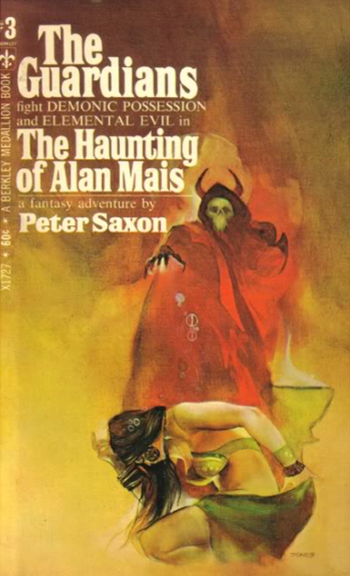
 Synopsis
Whilst researching an earlier case in the British Museum, Steven Kane accidentally uncovers an intriguing reference to a 1652 witch-trial which took place in Maidstone, Kent. A young local woman allegedly first corrupted and then poisoned a virtuous army officer “by the Devilish wiles lent to her by her master, Satan, enticed and seduced this true and godly Colonel of the army of the Commonwealth into the sweats of her adulterous bed”. The woman indignantly protested she had in fact been blackmailed into sex, and eventually poisoned her persecutor purely in order to escape his gross demands, later burying his body in the woods in a crude attempt to conceal the crime. The Court was unsympathetic, and she was burned as a witch in Maidstone town square, dying in agony while cursing her judges.
Nothing too remarkable there. Except for one thing. The woman was named Mistress Anne Ashby, and the man Colonel Gideon Cross! Coincidence? Or something stranger? After all, the modern-day Anne does have an inexplicable terror of fire… But Kane knows he’ll only look foolish if he mentions this peculiar discovery, and edgily keeps his knowledge to himself.
The Guardians are approached by rich elderly playboy Langford Layton, who zooms around in a red Lamborghini, a dolly-bird permanently on his suavely well-tailored arm. He’s recently bought isolated Beacon Hill Farm, twenty miles outside Maidstone, for weekend entertaining, but dash it all the place has a ghost! Old chum Caroline Squires recommended the Guardians, and if the team can pop along and get rid of it for him, he’ll pay handsomely for their trouble. But is Layton all he seems? His background is a bit vague, and something about his story doesn’t quite stack up. Why would he want to buy the ramshackle farm in the first place? The place has long had a bad local reputation, with village gossip suggesting the haunting may date right back to the Civil War…
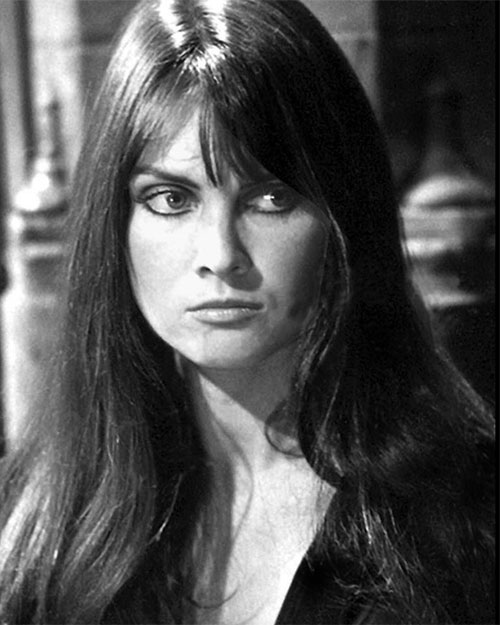
 Feeling it’s probably a waste of their time, Kane and Father Dyball agree to visit for a weekend. They’re just fixing arrangements when Anne Ashby walks in and is cursorily introduced to Layton, who can barely conceal his lascivious interest. Anne however is her usual coldly distant self… until the farm and its location are mentioned, when her attitude abruptly shifts to one of intense interest, and she actually begins flirting with the dazzled Layton (to Dyball and Kane’s private dismay). Anne looks all set to join the party, until Gideon Cross abruptly appears, and calmly suggests this may not be a good idea. Anne seems to sulkily accept the unspoken command, and while Layton is merely disappointed, Kane and Dyball are now thoroughly confused. What does Cross know that they don’t? Their enigmatic leader clearly has no intention of elaborating…
 Kane and Dyball arrive at Beacon Hill Farm, and experience for themselves the unpleasantly oppressive atmosphere, which malevolently intensifies after dark. Kane catches a fleeting glimpse of a tormented face at his window, and hears the ghostly words “Set me free… Alan…. Alan…” but cannot make any sense of them, and Dyball similarly gets nowhere in his attempts to research the farm’s history in the village church of St Magnus the Martyr. Both are wondering how to proceed when Anne Ashby unexpectedly (and defiantly) turns up and sets about passive-aggressively seducing their confused host, flirtatiously leading him on one minute, cruelly belittling him the next. Anne’s behaviour is so utterly out of character both Dyball and Kane begin to suspect some form of mild possession. But how does it all tieup? The nocturnal phenomena are now escalating into violent poltergeist attacks…
Layton and Anne go riding together, and she casually leads him out to a secluded hillside grove where they make passionate love, an experience Layton finds at least as chilling as erotic, particularly when afterwards she does not bother hiding her contempt for him. Kane later chances across the grove independently, and picks up on its uncanny atmosphere. He uncovers an overgrown wooden stake, burned almost to the ground, and digging down around its base finds a deeply inscribed name—Alan Mais. Who was he?
Taking advantage of Layton’s increasing paranoia, Kane presses him for the truth about his denied (but quite transparent) local connections, which his host reluctantly admits. There is no such person as ‘Langford Layton’. He was a foundling, abandoned as a newborn baby on the steps of St Magnus the Martyr, and raised by a local foster-family down in the village as plain John Smith. As a youth he worked as groom / butler for a nearby country house, but often gazed across at distant Beacon Hill Farm and swore he would one day own it himself as Lord of the Bloody Manor. He had some luck at the racetrack, invested his winnings shrewdly, and eventually became rich. Buying this farm is the culmination of a life’s ambition, a way to escape his roots by returning to them in reinvented triumph. But this damn ghost is going to ruin everything. And just why is your Miss Ashby behaving so strangely anyway? It’s as though she’s possessed by some spiteful demon, deliberately tormenting him… Kane admits he hasn’t a clue.
Later that evening Father Dyball decides to try an exorcism at the haunted grove, but just as he and Kane are about to leave, the phone rings. It’s the vicar of St Magnus the Martyr, excitedly explaining he’s uncovered some old documents relating to the Cromwellian history of the parish, which seem highly relevant to his visitors’ enquiries. Dyball isn’t convinced of their significance—they’re so close to the truth now anyway—and asks the priest to drop them off later.
 The exorcism spectacularly fails, as another poltergeist-outbreak means Dyball is badly stunned by a flying rock. Dragging him back to the farm, Kane is just in time to find Layton in the process of brutally throttling Anne. Afterwards neither of them can quite explain their actions—she felt driven to viciously humiliate him about his past, and he in turn felt an irresistible compulsion goading him to kill… The vicar arrives with his papers, and explains Alan Mais was an unfrocked village priest somehow tangled up in a local witchcraft trial. Dyball asks the vicar to accompany them back to the grove and assist at a second exorcism—they can examine the documents later. This time the ceremony is successful, and both Dyball and Kane share a chilling vision of a defiant Mais being burned at the stake before them: “You fools… to think that you could destroy me! For I tell you, as I curse this place and you—the people who have put me here—that I shall go at the last unburned. I shall be set free, for this has been promised. Set me free! Set me free! Release me! THIS HAS BEEN PROMISED….!” However his cries are in vain and he dies in agony. But who exactly had promised him supposed salvation?
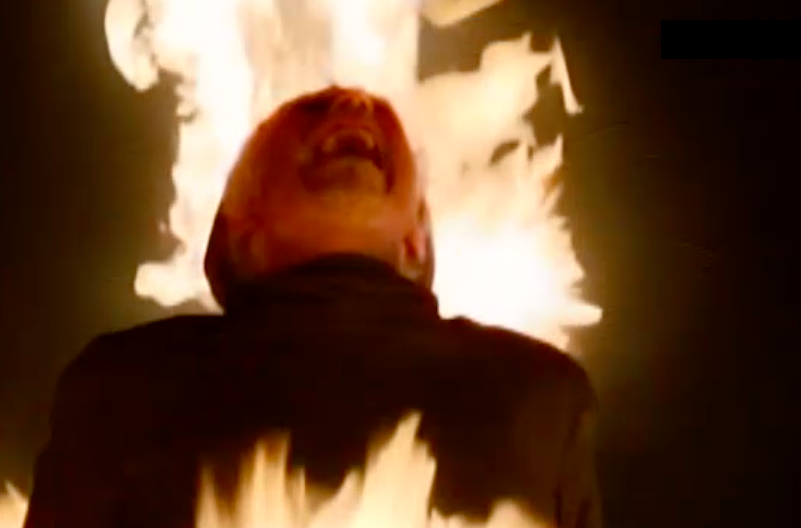
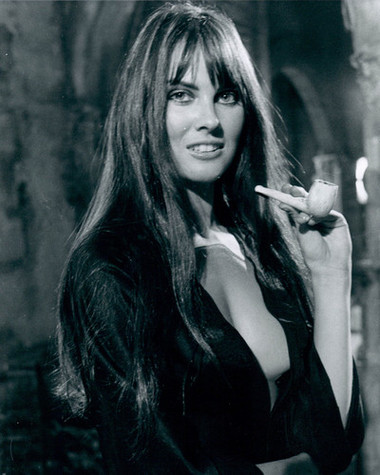 Returning exhausted to the farm, Kane and Dyball see flames flickering through the windows, and hear Anne screaming inside. But it’s only a small blaze near the fireplace, and Kane soon stamps it out. Anne apologetically explains that it was her fault—she had opened a window as the room was stuffy, and was just sitting down to read the vicar’s papers when a sudden gust blew the pile straight onto the fire… She sounds suitably remorseful, but Kane can see the shrouded victory in her eyes. What she doesn’t realise is that he glimpsed one of the burning pages seconds before it crumbled into glowing embers: “…and in his confession did the said Alan Mais adduce and confirm that he did come into These Ways through the Wiles and Enchantments of a Certain She-witch who did make to him Certain Promises… not fulfilled which Being so he did also lay on her a Curse…. and stated Further that in his habitations with this Witch did bege…. and that The Said Anne Ash…” Kane, as before, keeps his dark speculations to himself.
Commentary
If Dark Ways to Death was heavily flawed as noted, it did at least possess a certain crude energy. The Haunting of Alan Mais in contrast has a far more intriguing and involved set-up, but unfortunately treads (tepid) water for 143 overstretched pages before racing through a dismayingly ineffectual climax in the closing (six-page) chapter. To say one or two loose ends are left flapping is a bit of an understatement.
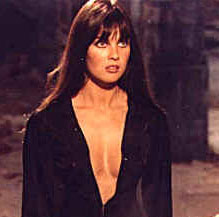 The Haunting of Alan Mais is in fact chiefly composed of endless drearily-repeated Questions that it doesn’t bother to finally clear up. What exactly is Langford Layton’s part in the drama? It’s hinted he’s an unrealised descendant of Mais himself (or possibly one of his local persecutors), but this idea is just left hanging. Similarly, is Anne supposed to be a reincarnation of her Cromwellian namesake? And if so, exactly how culpable is she’? There are two versions of her historical involvement—one entirely innocent / exploited, one irredeemably guilty—and the novel never clarifies which is correct (and where, therefore, the reader’s sympathies should lie). The Haunting itself is rather half-soaked, and while there are a couple of genuinely atmospheric set-pieces, author McNeilly seems much more interested in the psychological angle—which would be fair enough if this wasn’t as noted badly fluffed. Overall then, a missed opportunity requiring painstaking revision.
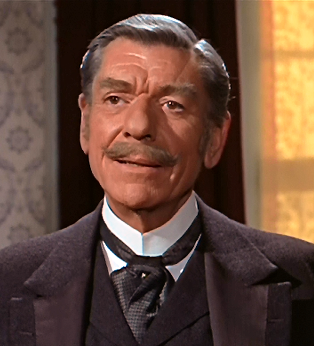
Andre Morell as Langford Layton in Hammer’s The Haunting of Alan Mais (1975)
 Wicking would face quite a challenge here. The basic structure is sound, but needs a far more urgent pace, a more frankly sensational haunting (presenting an ideal opportunity for Chris to ripoff Richard Matheson’s recently-published, and highly-salacious Hell House), and a totally restructured climax which is both (i) actually dramatic and (ii) a satisfying resolution of the various plot threads. Fortunately—in this best-of-all-possible Alternate Worlds—Chris comes up with the goods, and audiences are thrilled by a tastefully-shot yet controversially explicit love-scene between Munro and André Morell that blows Don’t Look Now out of the water, and a series of intensely gruelling shock-sequences that are blenchingly described as making The Devils look restrained. Now on a roll, Carreras immediately green-lights instalment #3…