


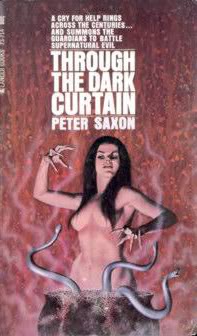
 Synopsis
The Guardians are approached by plain-speaking Northern industrialist Sir Giles Offord, on behalf of his son and daughter-in-law John and Mavis, who have undergone a Terrifying Experience. They were driving home from a party in rural Suffolk a couple of nights ago, got lost, then ran out of petrol in the middle of nowhere during a torrential downpour. A dripping signpost pointed to a village named Frenton just a couple of miles further down the lane, so John reluctantly plodded off in his raincoat to go and get help, while Mavis stayed in the car. By the time John returned an hour or so later with a can of petrol, Mavis was huddled under a nearby bush gibbering incoherently. She had seen or encountered something that had driven her clean out of her wits, and is currently sedated in an Essex nursing home in a permanent catatonic state. Sir Giles has put the best available doctors on the case, and one of them—Dr Conover, an expert on modern-day Possession—has discreetly suggested he contact Gideon Cross to investigate the background…
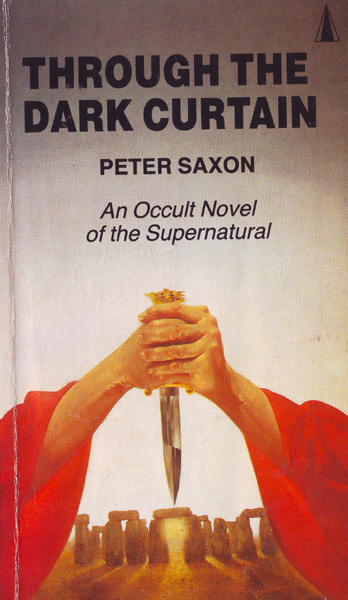 Stephen Kane and Father Dyball journey down to Frenton and check into village pub the Icken Arms. The locals are taciturnly hostile, and the few characters who WILL give them the time of day—a barman and amiable garage-mechanic etc—are effectively outsiders themselves, recently arrived in pursuit of work. Joe Soper, the garrulous mechanic, is particularly shrewd. No mysteries in Frenton, he asserts, apart from this ridiculous society ‘The Sons of Anglia’ that meet up in Icken Park Manor on the hill there. Supposed to be an Antiquarian group, but half the members are local farmers who can barely sign their name. It’s run by Lawrence Stow, some old academic, but you won’t meet him: he’s a recluse, never leaves the manor—semi-invalid apparently. His daughter Barbara comes down into the village every few days for supplies, and you can’t miss her—tall, statuesque blonde, a real looker. But you won’t have much luck there either—she’s a few bricks short of a full load, know what I mean? The lights are on but nobody’s home. The Sons are supposed to be having a meeting tonight actually, but don’t expect an invite—you’re an Outsider like me. Your best bet is to sneak up there after dark and try peeping through a window. Ha Ha.
While Kane lubricates Soper in the pub, Dyball goes to see the parish priest in the Vicarage—has the Reverend noticed any unusual happenings recently? Well, there have been a few odd incidents—that poor young woman last week of course, and before that a girl from the next village, Tenfold, who walked back alone from a local Dance a few months ago, and supposedly had a similar nasty experience up near Icken Park…. but then you know village gossip, things get exaggerated—though come to think of it, there were a couple of London lads down here last autumn for the Harvest who supposedly saw something one evening that made them pack up and disappear again first thing the following morning, without even collecting their wages…
Dyball is intrigued: there’s some sort of pattern here… Are there any local legends or traditions attached to the area? Well, of course there’s the Boudicca connection—the correct pronunciation of her Iceni tribe was ‘Ickenny’, and Icken Park hill may well have been the scene of her final battle with the Romans almost 2,000 years ago… Though it’s hard to see how that could be relevant…
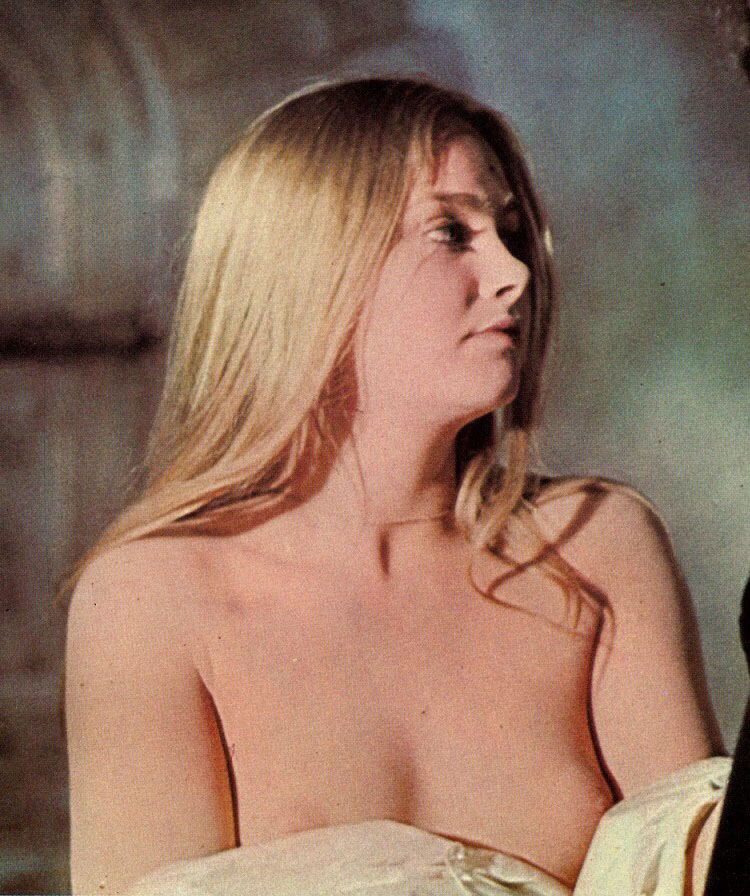 Lacking any better leads, Kane and Dyball decide to follow Soper’s jokey suggestion that they gatecrash the Sons of Anglia meeting that night. Sneaking into the decrepit manor house via an open kitchen window, they creep along a corridor to a large meeting-hall, lit only by a distant flickering fire in a grate at the far end. A group of cloaked and hooded onlookers, kneeling and unidentifiable in the gloom, are transfixed by what is happening in front of the fireplace. A young blonde woman, wearing only a white shift, appears to be suspended by her wrists in mid-air, hanging from invisible bonds and swinging eerily several feet above the floor. As Kane and Dyball watch in horror, her shift is torn from her shoulders by unseen hands and brutal whiplash-weals begin appearing across her back, her body shuddering from the impact of repeated invisible blows. Kane and Dyball crash into the room bellowing in outrage, and the anonymous onlookers scatter in terror, vanishing through various doors and windows out into the night. The girl abruptly collapses unconscious in a heap on the floor, and the only onlooker left, a frail white-bearded man, appears on the point of fainting himself…
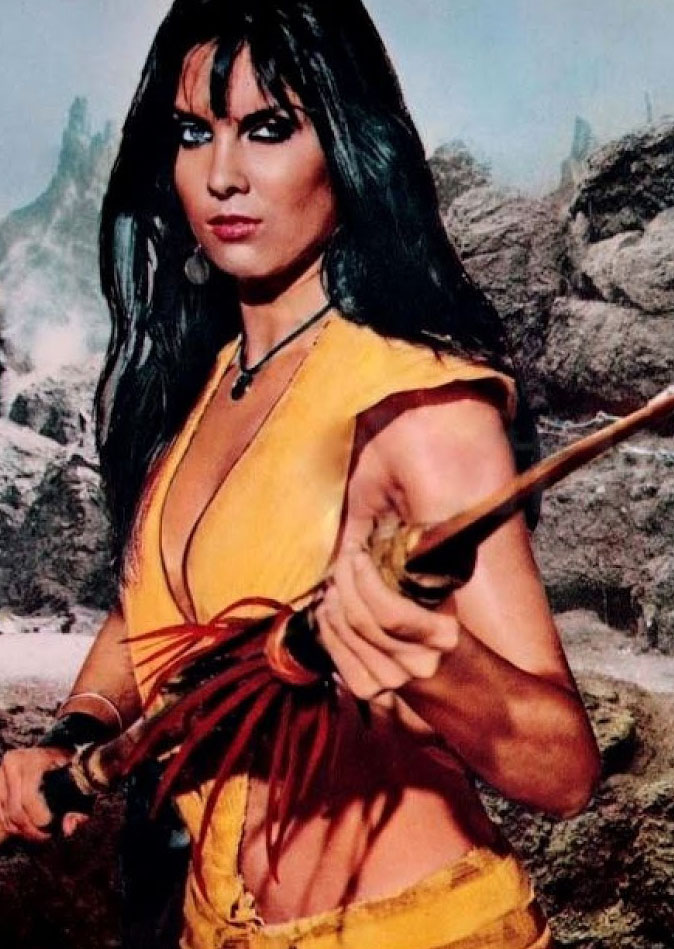
The girl proves to be Barbara Stow and the old man her father Lawrence, though both are still in a catatonic stupor in the morning. Kane phones Anne Ashby for assistance, and she quickly arrives to help attend to Barbara. While Dyball investigates Stow’s extensive occult library—which soon begins to reveal its owner’s crazed ambitions—Anne attempts to reach Barbara via hypnosis. But it is ironically Anne who incautiously slips into a brief trance-state, and experiences a vivid vision of Barbara as Boudicca, with herself acting as a devoted handmaiden. Even more incredibly, Stephen Kane fleetingly appears as an Iceni warrior and Lawrence Stow as an elderly Druid! Whatever can it all mean?
Dyball thinks he has the answer. Stow has realised his daughter is a reincarnation of Boudicca, and has used that knowledge—plus his lifelong occult studies—to chase the ultimate goal: Immortality. The other villagers are helping him, presumably with the promise of power for themselves once Stow has finally managed to permanently bridge the gap between past and present. But his reckless dabbling has somehow opened a portal through which timeless elementals have managed to gain entry into our world. Mavis Offord encountered one last week, and the experience has driven her temporarily insane. We must try and close the gateway before anyone else is attacked…
But just as they debate how best to achieve this, a group of hooded villagers suddenly burst unexpectedly into the room, overpower them and unceremoniously lock them in the cellar. While they are thus helplessly trapped, Stow and Barbara (the latter’s will now completely subjugated to her obsessive father) are rapidly reviving upstairs and preparing for the final ritual…
The trio eventually manage to get out of the cellar, but emerge to find Stow re-energised and triumphant. There is nothing you can do to stop me now, Guardians! Barbara is about to reclaim her place in history as the great warrior-queen of these islands, and through her I shall live forever! Join us now in the meeting hall and bow before her, and you too can play a part in this victory—I know you possess a psychic-link with her yourselves, I sense the connection… Dyball stiffly declines, harbouring an idea of what he can do to help once left alone, but Kane and Anne reluctantly agree, desperately hoping to somehow enter the past and perhaps change it…
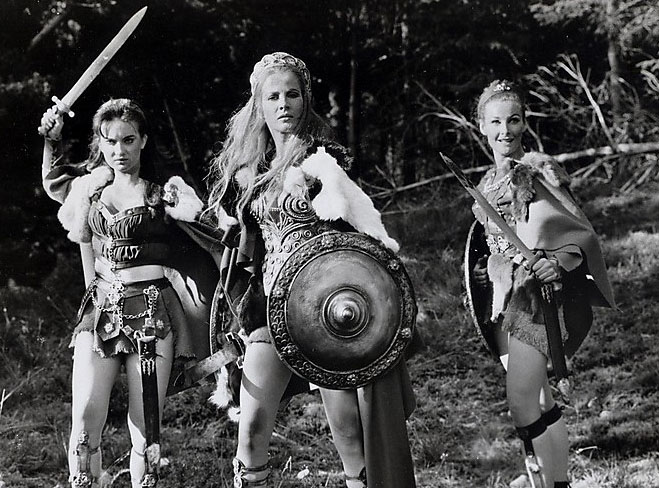
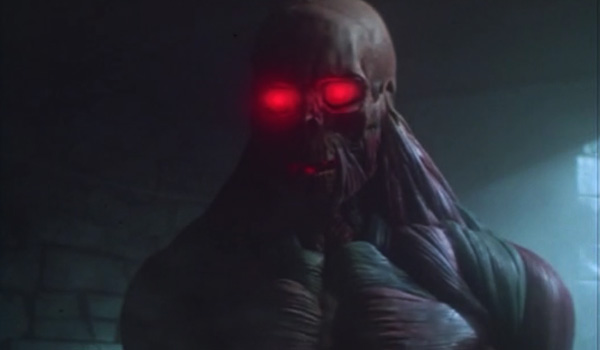 Kane and Anne quickly slip into a trance and find themselves back in 43AD, fighting Boudicca’s last battle against the Roman General Suetonius Paulinus. The Iceni think Paulinus has allowed himself and his (vastly-outnumbered) remaining troops to become trapped at the narrow end of a long valley below Icken Park, but it is the Celts themselves who have been lured into a cold-blooded ambush, brutally and expertly cut down as they repeatedly try and break through the impenetrable Roman lines. Once the Iceni hordes are critically weakened, the Roman counter-attack suddenly begins, driving the remaining Celts back up the valley in disarray with Boudicca / Barbara at their head. Kane and Anne, fighting side by side, manage to help save her life several times, but the vengeful Romans are pressing closer… Her chief Druid—unmistakably Lawrence Stow—steps forward. All is not lost! he wildly declares, I have prayed for deliverance from the Roman dogs and my prayers have been answered—behold, the ancient Dark Ones approach…. The sky is turning black and dreadful ebony shapes with glowing red eyes are materialising down in the valley, to creep silently across the battlefield and envelop screaming Romans and Celts alike. No! cries Boudicca in despair, better we suffer the Roman crucifixion and die with honour than call forth the Dark Ones to plague the land! You have disobeyed my orders and disgraced your tribe! She impales him with her spear, and he collapses dead at her feet. Suddenly the sky seems to split open, and a great bolt of lightning strikes his inert body, the blast throwing everyone blindly backwards…
Kane gradually comes round on the lawn in front of Icken Park. The manor house is a smoking ruin, its roof partially collapsed. Dyball is standing over him looking haggard but relieved. What happened? Kane blearily asks, there was a huge bolt of lightning… That was real enough, confesses Dyball, it hit Stow through an open window just as he was beginning the final incantation—he’s dead I’m afraid, though everyone else got out alive with a few cuts and bruises. Quite a fluke, mutters Kane… Well, not really, admits Dyball, I think I was responsible—I found an ancient Druid exorcism in one of Stow’s manuscripts and performed it, though I wasn’t anticipating quite such an, ahem, dramatic effect. But Anne and Barbara are both ok, and with the Gateway permanently closed I’m sure Mavis Offord is also recovering as we speak…
Commentary
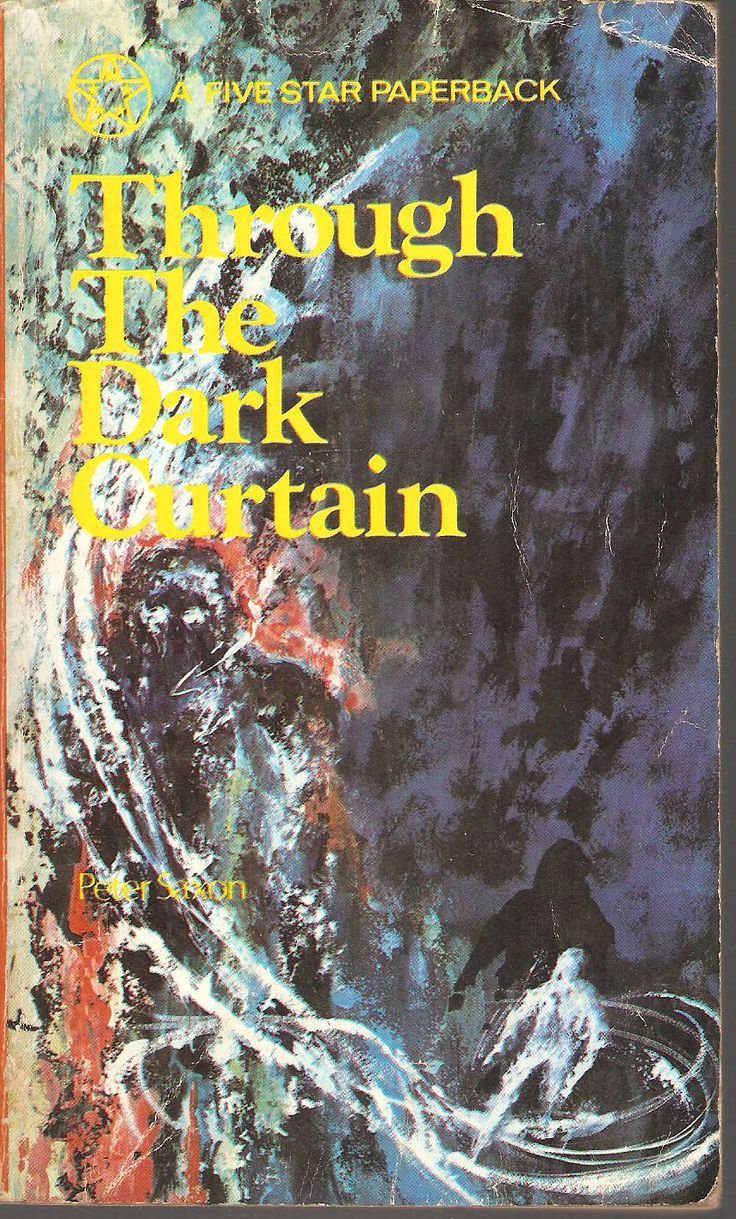 This (considerably tightened) summary actually makes Through the Dark Curtain sound quite good, but this is in fact by far the weakest entry in the Guardians series. It doesn’t really have all that much plot, and Ross Richards is a truly hopeless writer. Not merely technically incompetent, worse, he all-too-clearly has zero interest in the story he’s been paid to tell. If one word sums up this novel it would have to be ‘perfunctory’. Richards just flatly outlines his narrative with no attempt at any flavour or atmosphere, his descriptions being the bare clichéd minimum. On the odd occasion he DOES include some apparently spurious bit of extra detail, the reader immediately KNOWS it will later become a crucial plot-point. Take this introduction to Joe Soper, outside his garage on p.54:
“This time he was greeted cheerfully, for Joe Soper was a cheerful extrovert. As Kane approached, Soper was working underneath a car that stood several feet off the ground on steel ramps, its tyres securely chocked. The two pillars supporting it gleamed black and oily, and some of the oil had come off on the otherwise clean green overalls of the man working on the car. He came out from underneath, wiping his hands on cotton waste, and looked at Kane with a sly grin…”
Guess what happens to the overly-talkative Joe on p.87—go on, have a guess. Give up? OK, I’ll tell you: he’s discovered “accidentally” crushed to death underneath his hydraulic ramp the following morning. Phew, didn’t see that one coming. And it’s like that all the way through.
Furthermore, Richards seems almost perversely determined to deflate what little dramatic tension he creates. The only genuinely effective sequence—Kane and Dyball’s discovery of the supernaturally-suspended Barbara receiving a phantom-lashing—ends abruptly with our heroes dashing into the room. Cut immediately to Chapter Ten, and Anne Ashby blandly reporting the aftermath of these dramatic events to Gideon Cross in Half Moon Street. If Richards is deliberately aiming to prevent any momentum from building, he certainly succeeds.
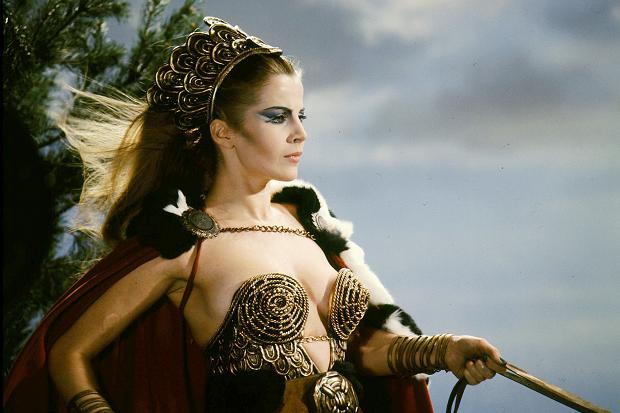 To be fair, the final pitched Iceni-Roman battle is quite well-described, but without this modestly engaging climax the novel would frankly be a total failure. There is very little actual supernatural content—the climactic appearance of the fearsome Elementals is totally thrown away—and chunks of the book read like a leaden historical treatise on the Roman Occupation. The dialogue is unspeakable, and the preceding synopsis deliberately omits several redundant subplots and peripheral characters that contribute nothing except padding. Scratching his head back at Hammer House, our alternative-universe Chris Wicking resolves to go right back to basics and craft something totally fresh. Luckily, the already disjointed past/present/future narrative-structure appeals to him, and he constructs a screenplay so bafflingly convoluted— full of unannounced leaps back and forth through time, echoing Alan Resnais’s Je t’aime je t’aime (1968)—critics are impressed in spite of themselves, and declare it a challengingly avant-garde new direction for Hammer Horror.
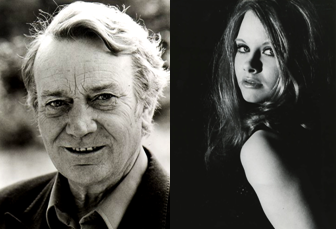 Hessler’s handling of actors is praised for the first time, too, though unkind critics suggest the praise should be directed to Hammer’s casting director; drawing particularly good notices are the performances of Denholm Elliott as Lawrence Stow and Linda Hayden as his daughter Barbara (the latter here eclipsing her uninhibited turn in Satan’s Skin). That said, Hessler still draws some flak for a reckless decision to shoot the epic final clash on a small patch of scrub in Black Park using twelve extras, one of whom is wearing a CND badge. But tight editing minimises the problem. Relieved he has got away with it, and knowing he still has the best two books of the series up his sleeve, Carreras gives the go-ahead for #5, convinced this time he is onto a sure-fire winner…