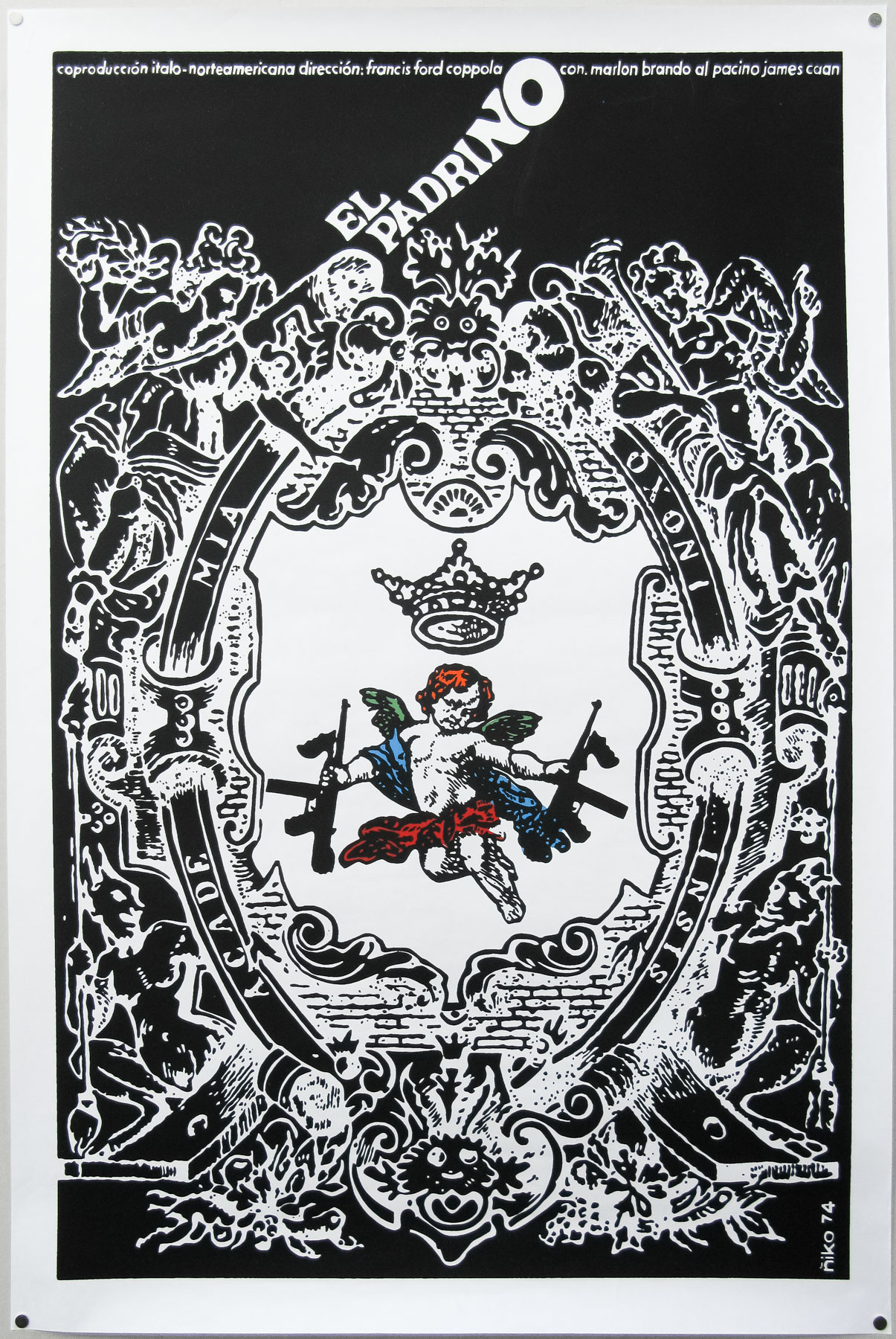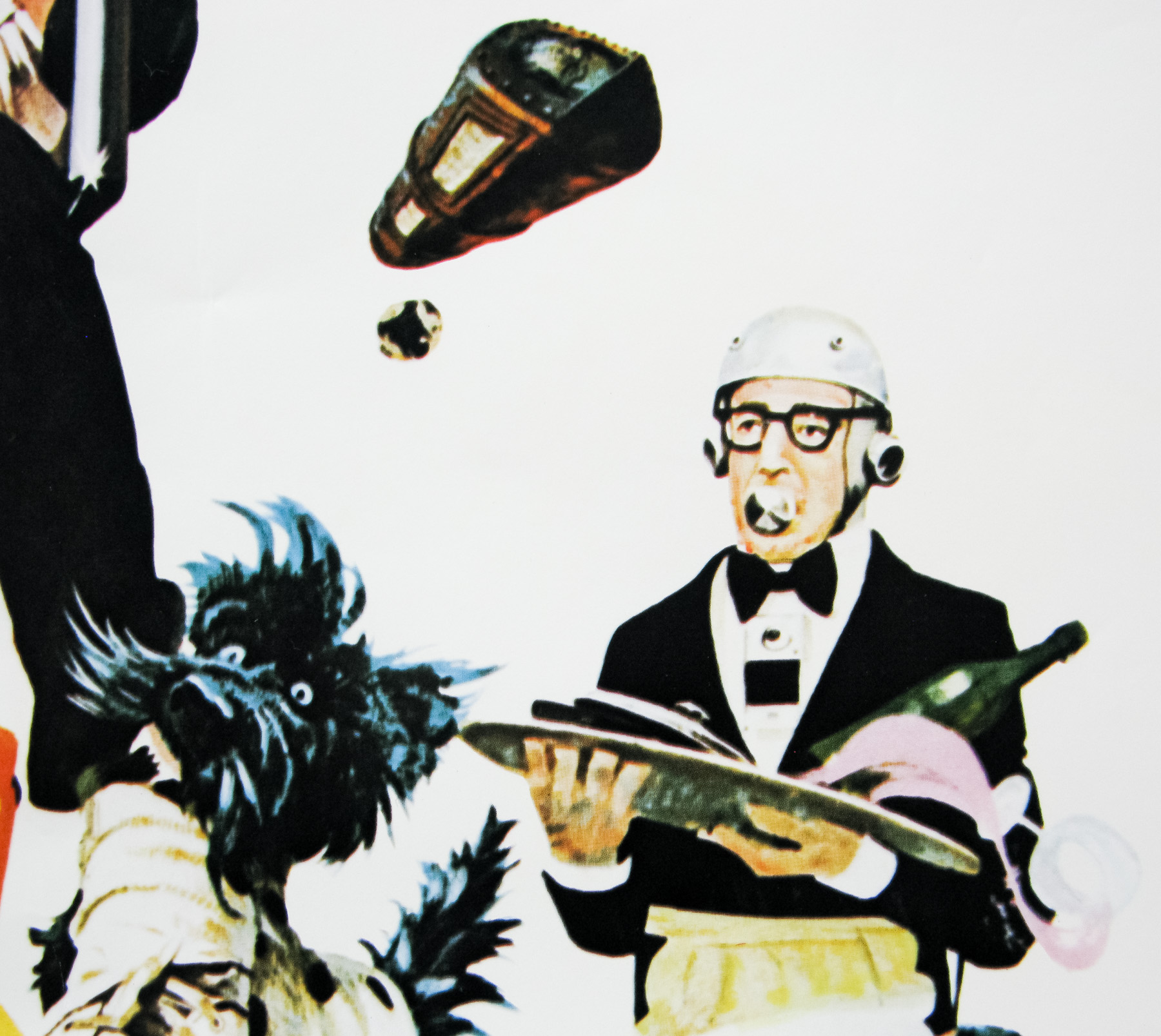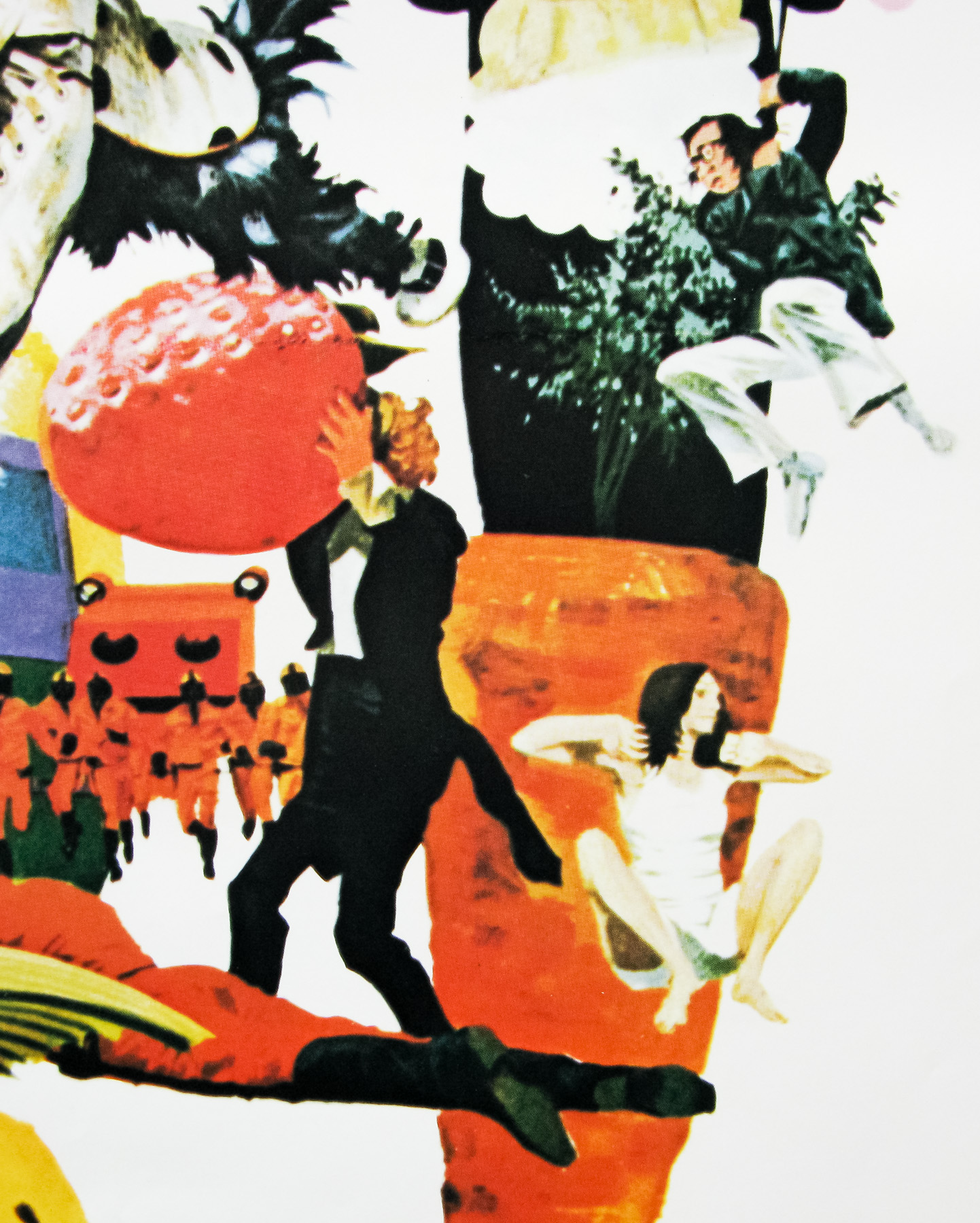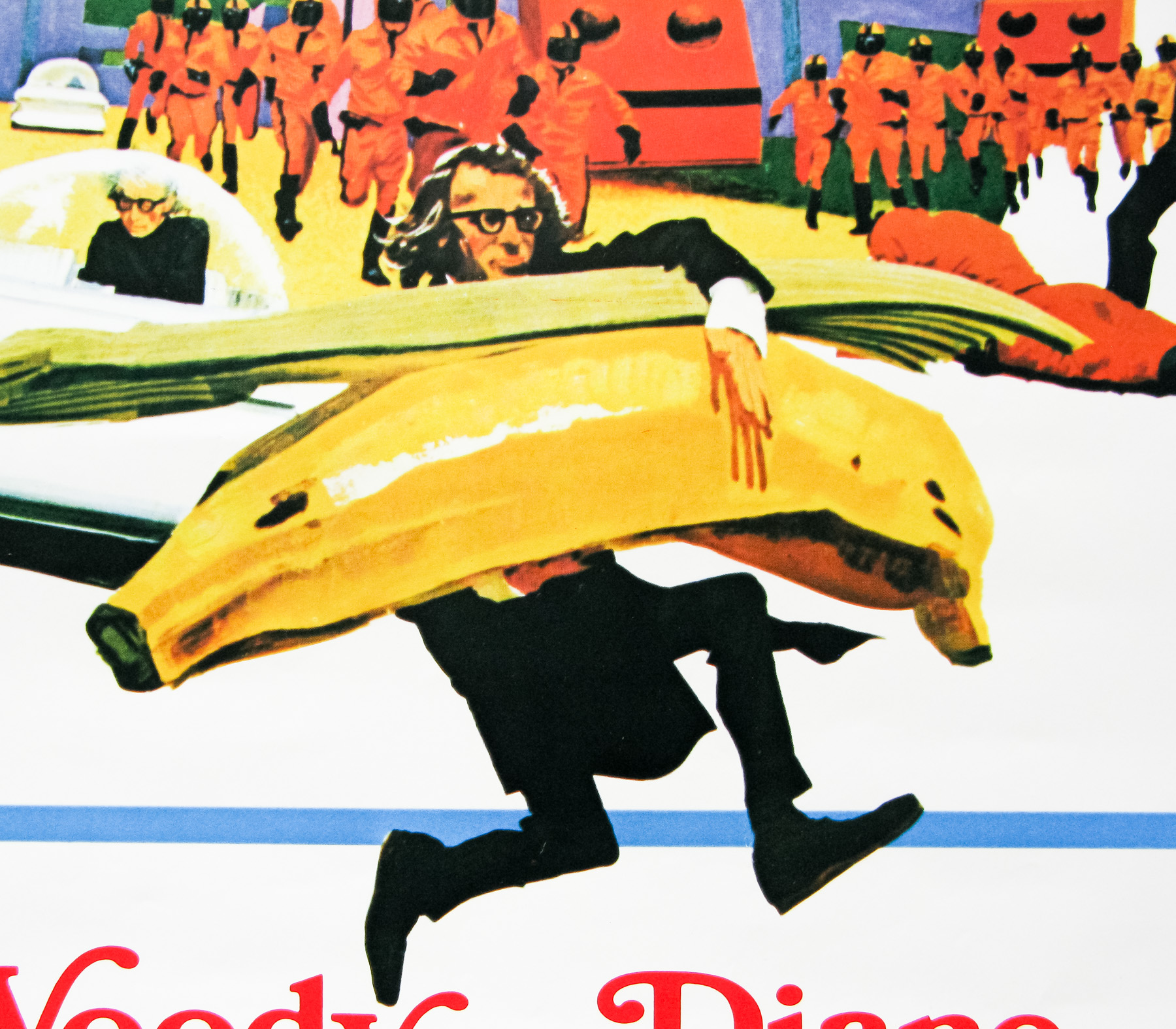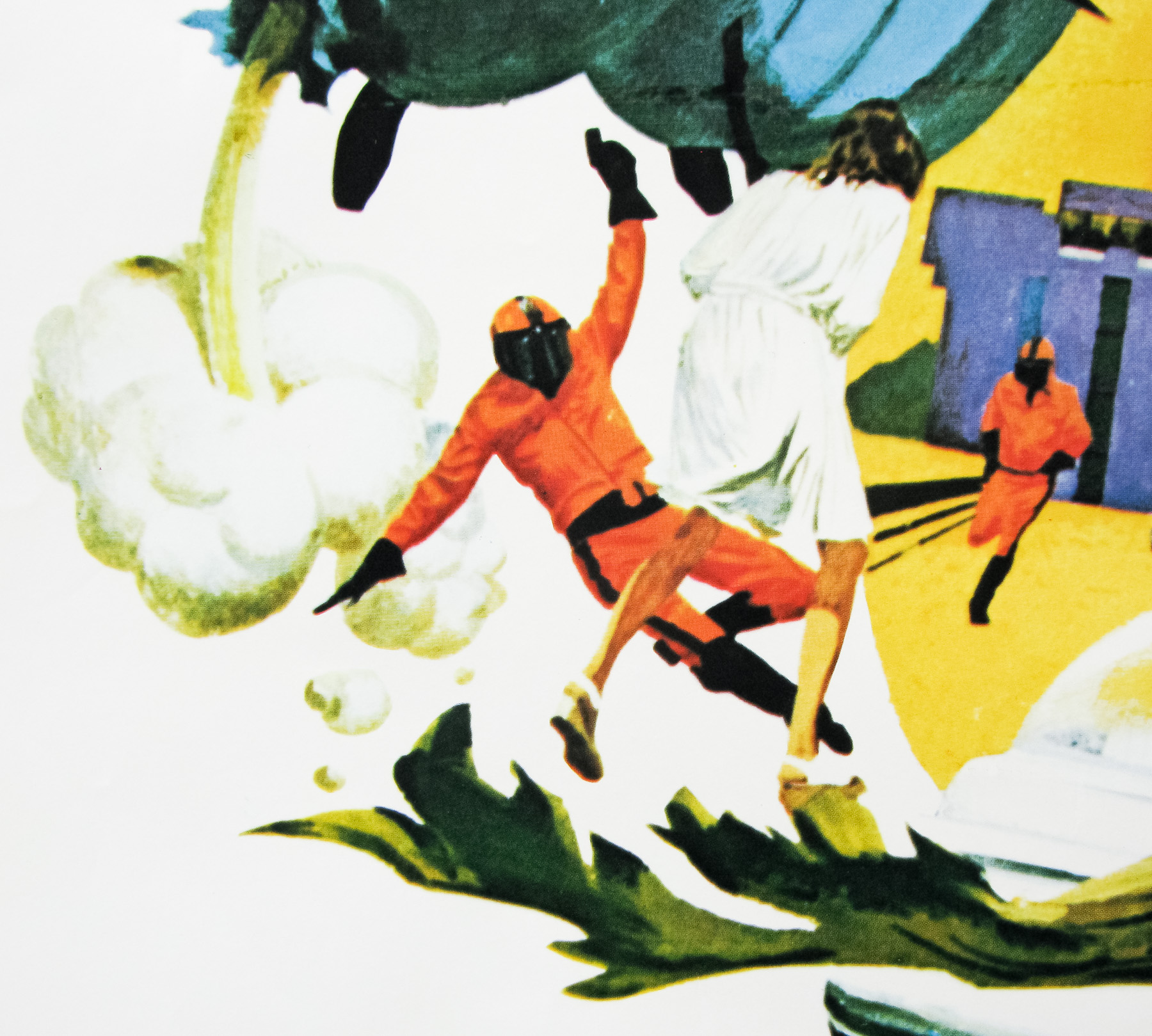


The Godfather / screen print / Ñiko / Cuba

18.06.12

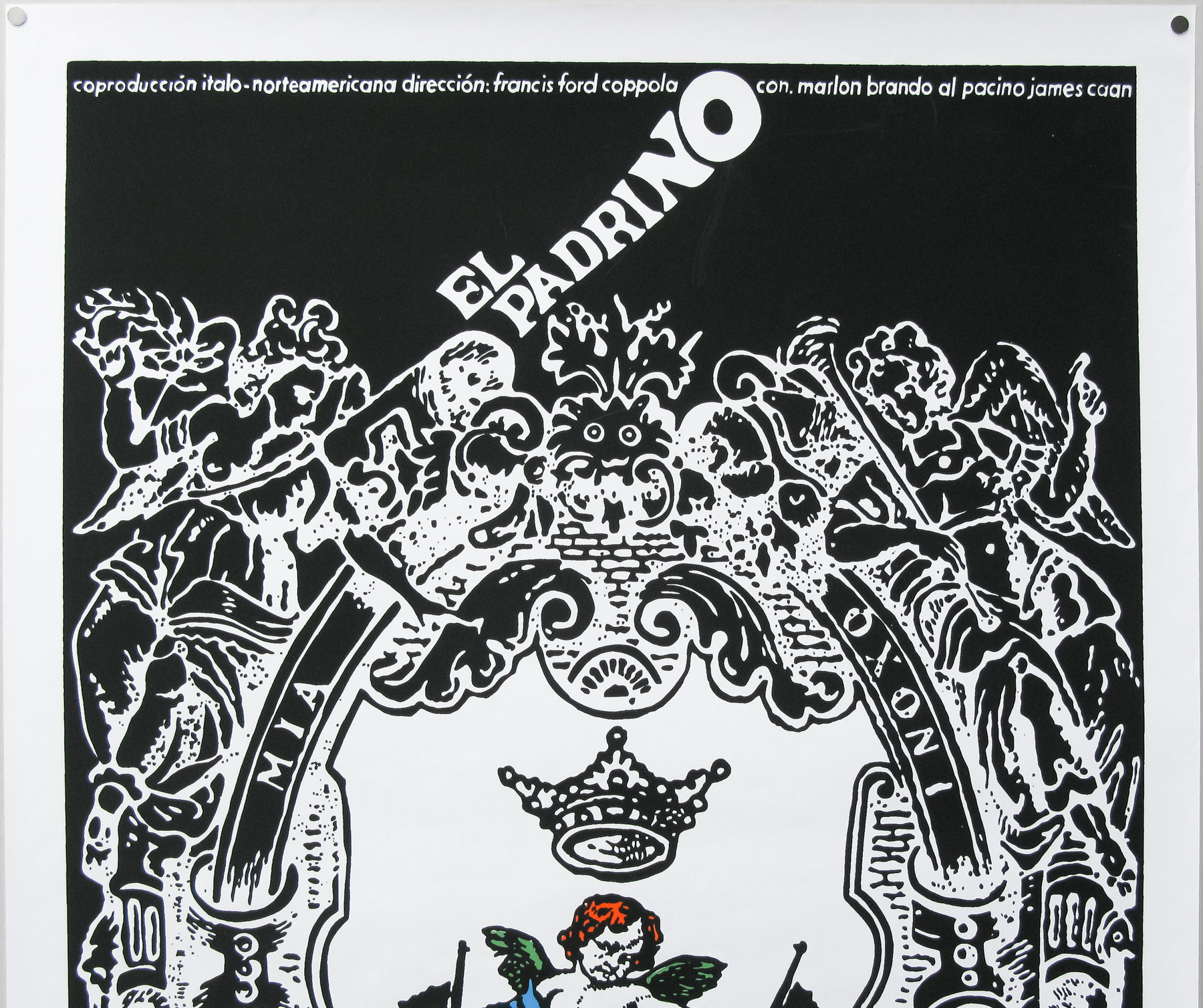
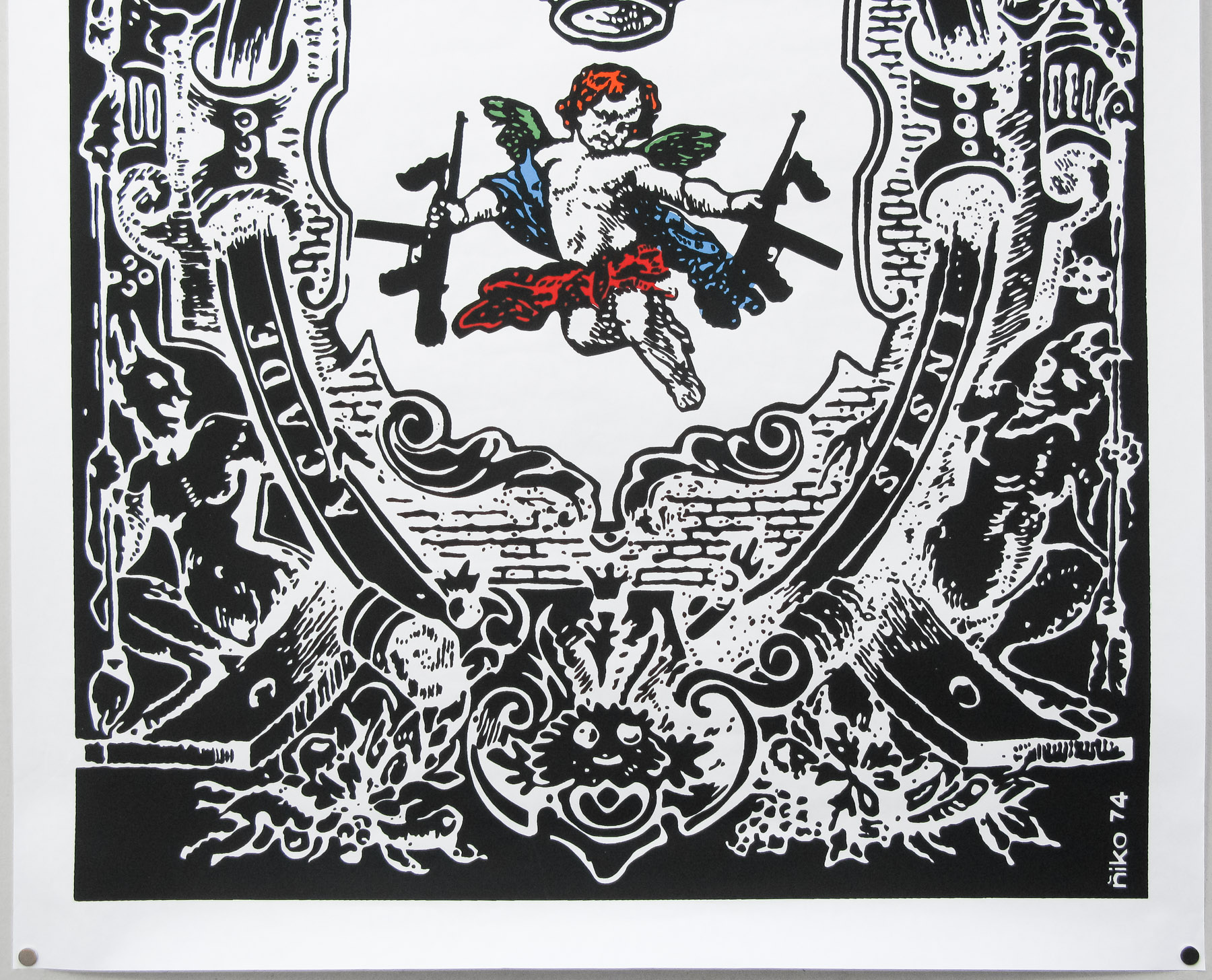
Cuban screen print (1974) for The Godfather (1972). Artwork by Antonio Pérez González ÑikoCuban screen print (1974) for The Godfather (1972). Artwork by Antonio Pérez González Ñiko, image 2Cuban screen print (1974) for The Godfather (1972). Artwork by Antonio Pérez González Ñiko, image 3
Title
The Godfather
AKA
The Godfather (USA - original title) | El Padrino
Year of Film
1972
Director
Francis Ford Coppola
Starring
Marlon Brando, Al Pacino, James Caan, Richard S. Castellano, Robert Duvall, Sterling Hayden, John Marley, Richard Conte, Al Lettieri, Diane Keaton, Abe Vigoda, Talia Shire, Gianni Russo, John Cazale
Origin of Film
USA
Genre(s) of Film
Crime | Drama
Type of Poster
Screen print
Origin of Poster
Cuba
Year of Poster
1974
Designer
Antonio Pérez González Ñiko
Artist
Antonio Pérez González Ñiko
Size (inches)
20 1/8" x 30 3/16"
SS or DS
SS

In August 2011 I was lucky enough to visit the island of Cuba for a ten day trip, which was a fantastic experience. It really does feel like a country stuck in a time warp, circa 1965, particularly once you leave the capital and head into the countryside. It’s a stunningly beautiful island with very hospitable people but the relative poverty of the country is clear to see. It’s often said that the government is likely to relax the current freeze on foreign (particularly Western) investment once ‘Comandante’ Fidel Castro passes away, although with his brother Raul currently in charge very little has changed. This article (opens in a new tab) on the BBC gives you an insight into the current situation.

The Cuban people’s love for film and cinema-going is legendary and our guidebook claimed that at the end of the 1950s there were over 300 cinemas in the capital Havana alone. Today, these great old buildings continue to thrive and whilst there I witnessed the queues of people lining up to see the latest releases. I took this picture of the Yara cinema in the Vedado area of Havana before the evening crowds descended.

Whilst in Havana I visited a bookshop that was selling original Cuban propaganda posters printed in the 1950s and 60s by OSPAAAL (opens in a new tab). They also had a handful of screen-printed film posters, all of which were reprints of the original Cuban cinema posters or re-imagined designs by local artists. They are officially screen printed by the ICAIC (Instituto Cubano de Artes Industrias Cinematografia) in Havana.

This poster for Francis Ford Coppola (opens in a new tab)‘s classic crime epic The Godfather (opens in a new tab) was designed and illustrated by Antonio Pérez González Ñiko. Born in Havana in 1941, Ñiko (as he is known) studied a Bachelor degree in Art at the city’s university before getting a job at a graphic design agency. He was instrumental in designing multiple posters for the Cuban revolutionary movement in the 1960s and 1970s as well as many film posters in conjunction with the ICAIC.

Now a resident of Mexico, Ñiko works as a professor of Graphic Design at the Gestalt Design School in Xalapa, Veracruz. He continues to design and paint and his work has been featured in countless exhibitions around the world. Check out his personal blog (opens in a new tab). There are galleries of his work on his Cargo Collective website (opens in a new tab), and the sheer number of film posters (opens in a new tab) he’s worked on is nothing short of incredible.

Whilst in Havana I also picked up a few other posters, one of which (A Clockwork Orange) I have already posted.

Nosferatu the Vampyre / B2 / Japan

14.06.12

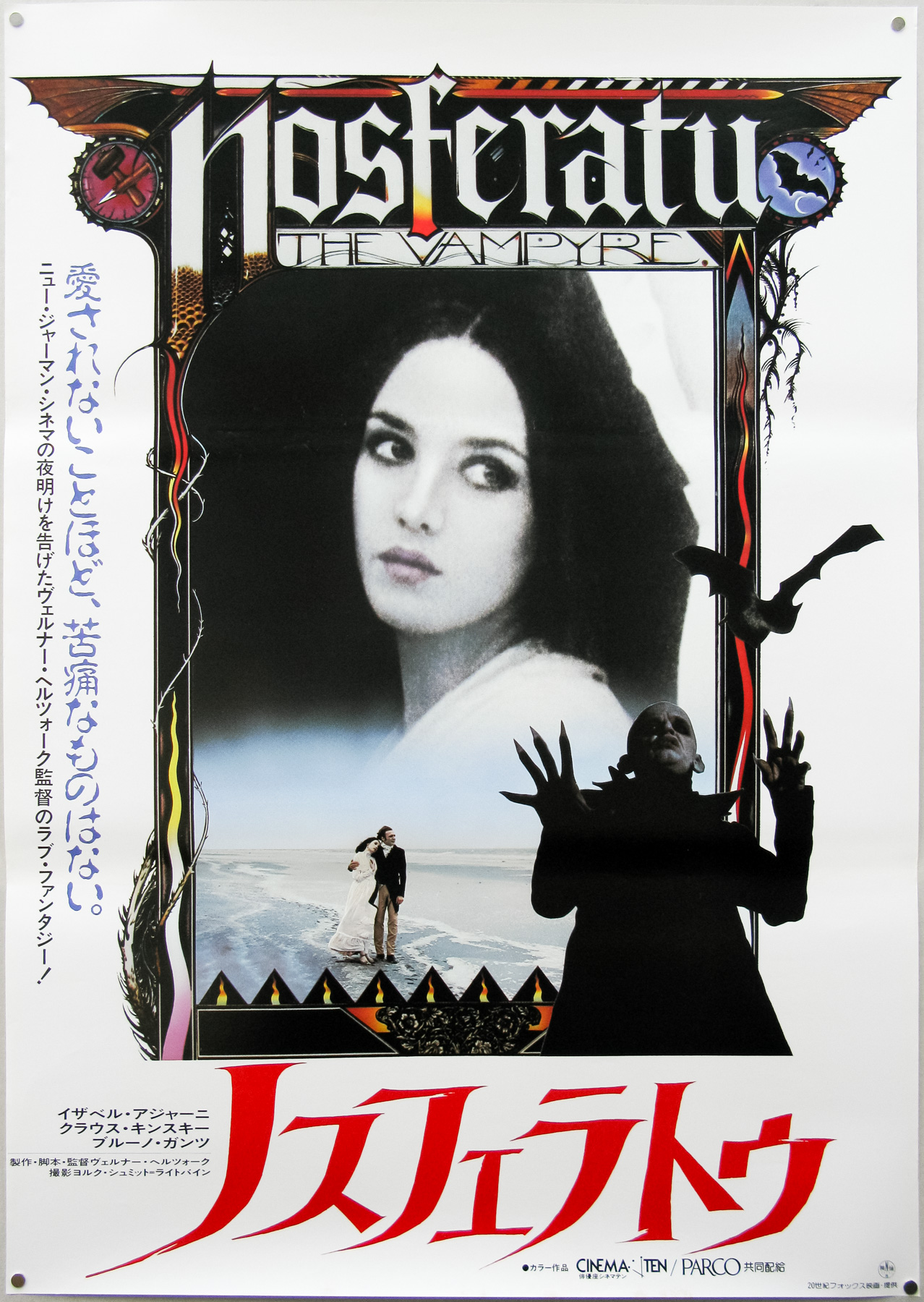
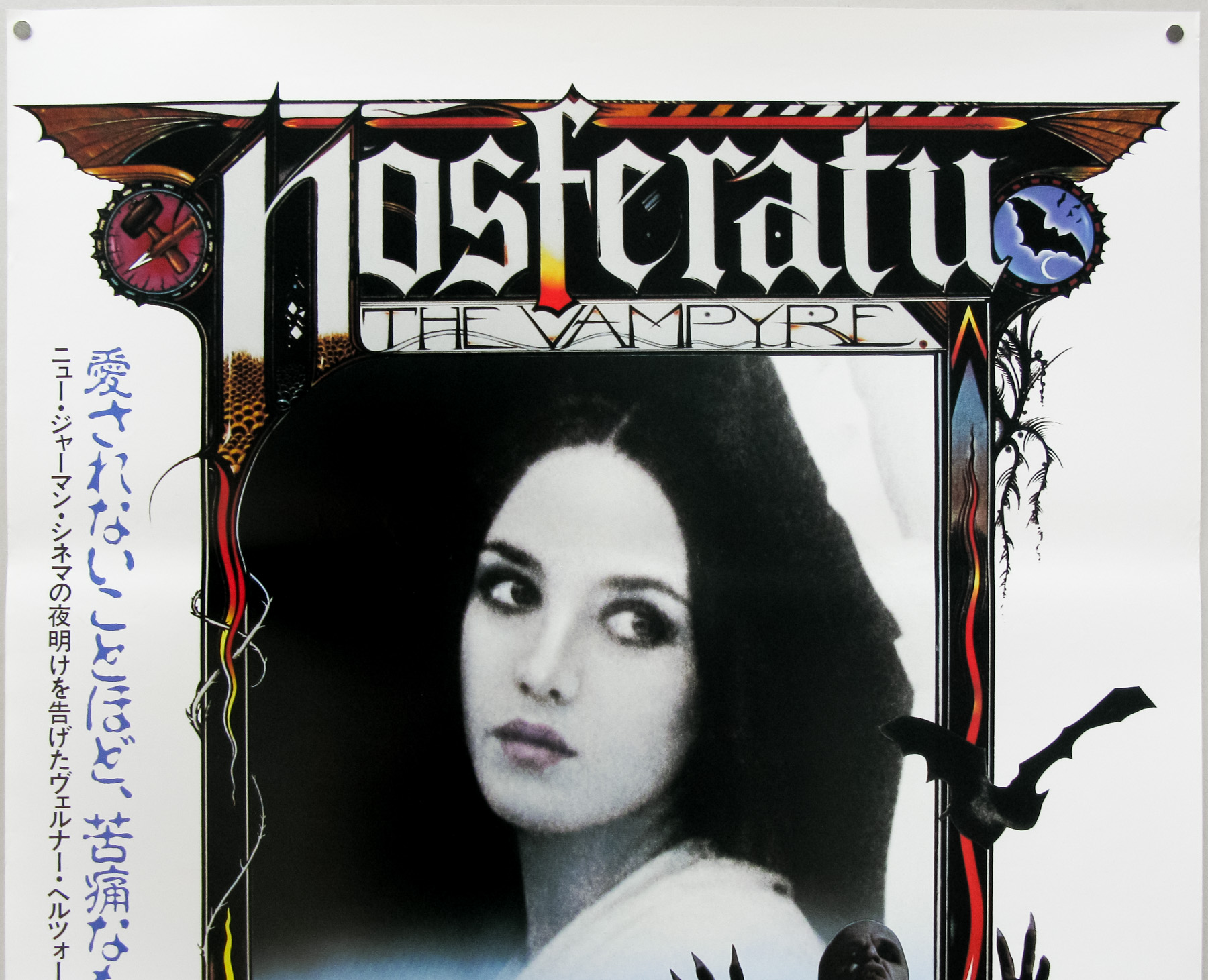
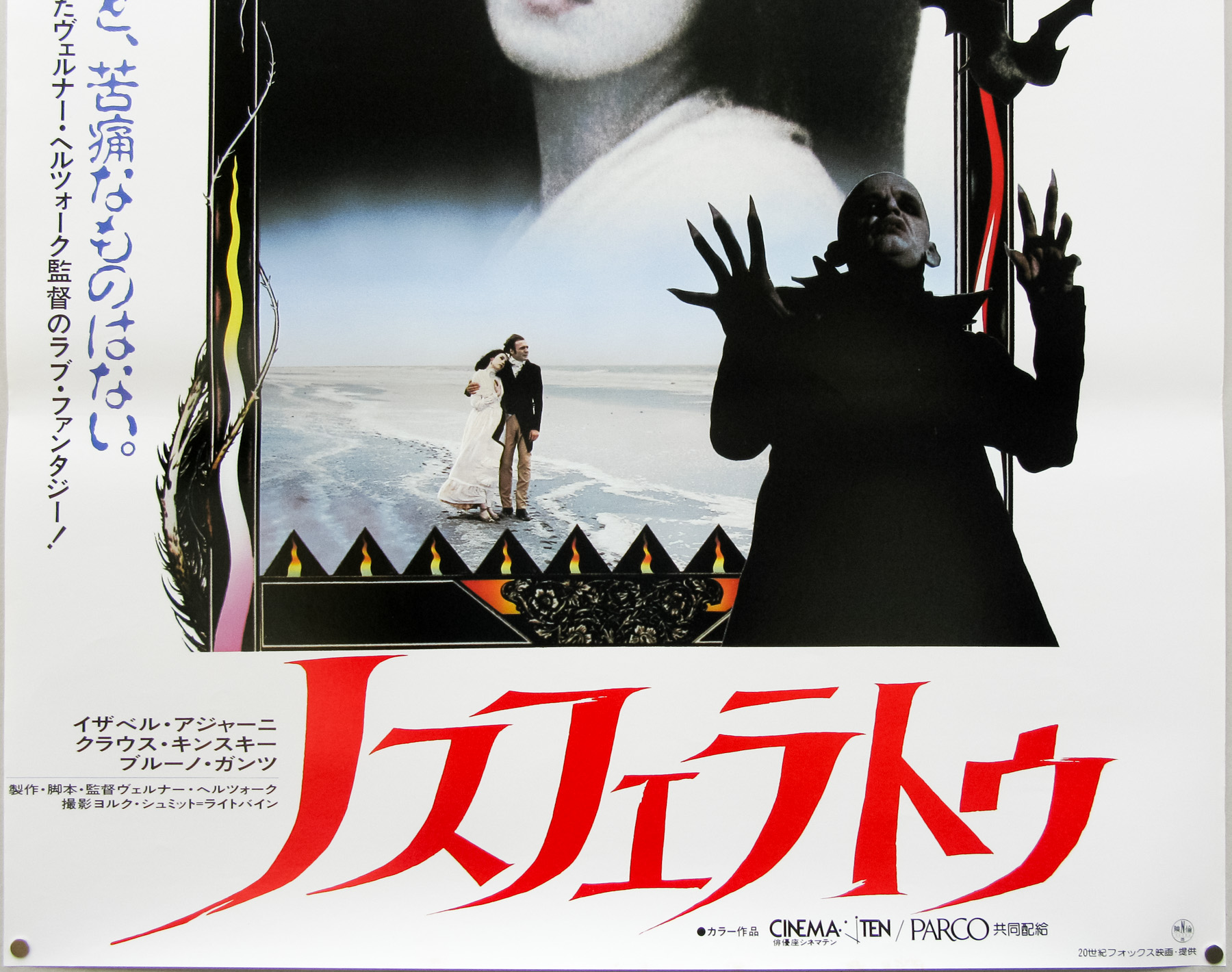
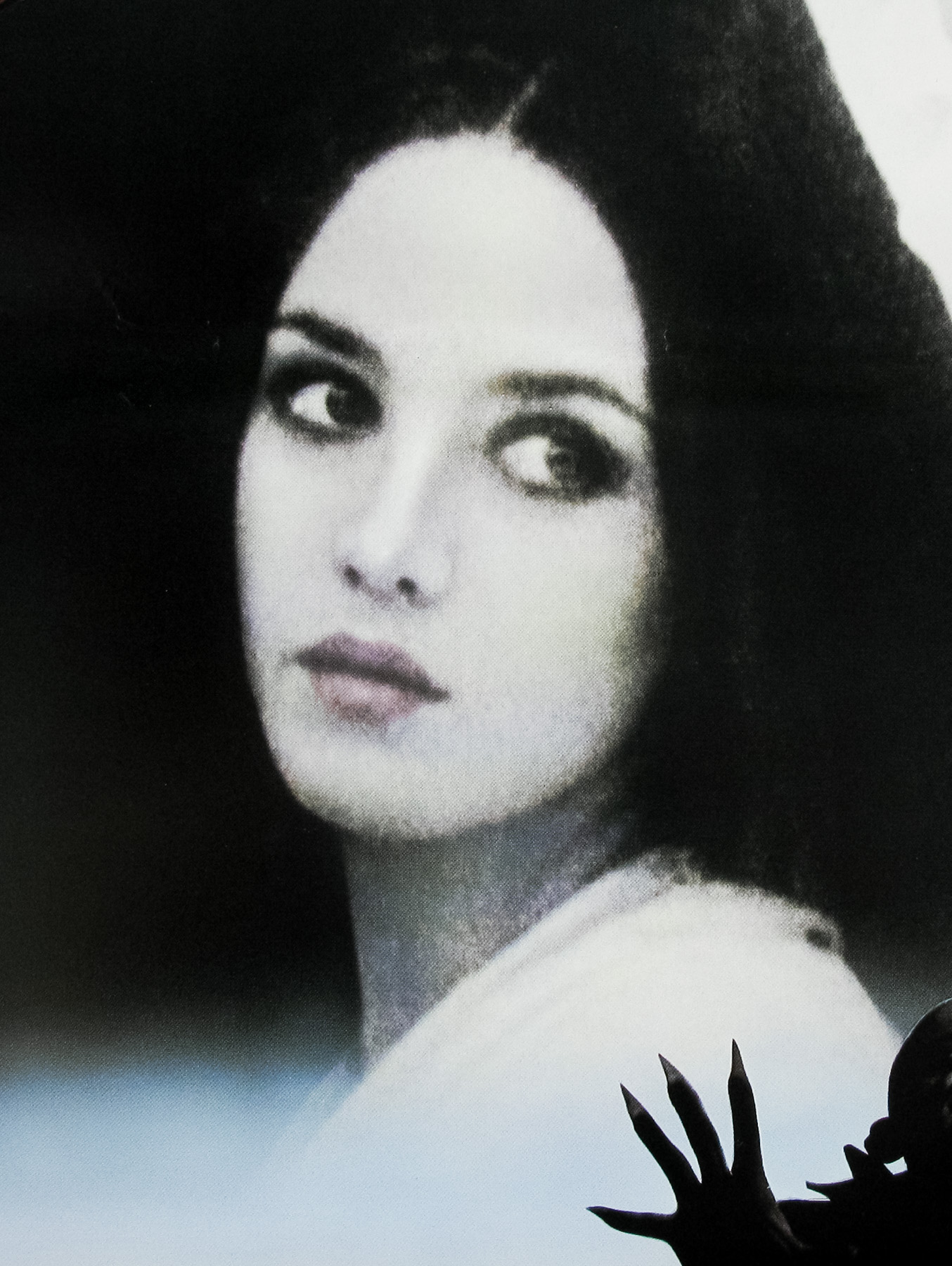
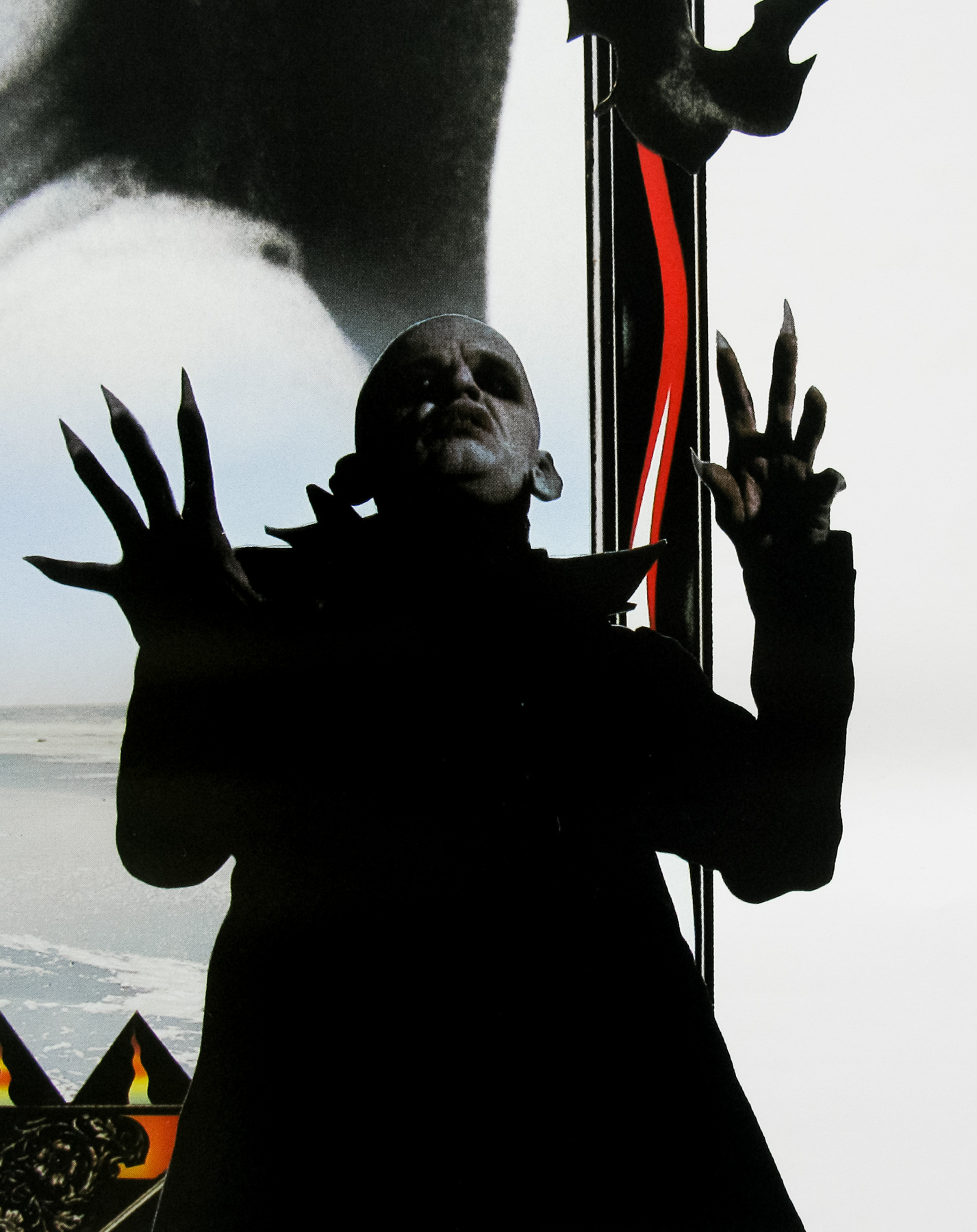
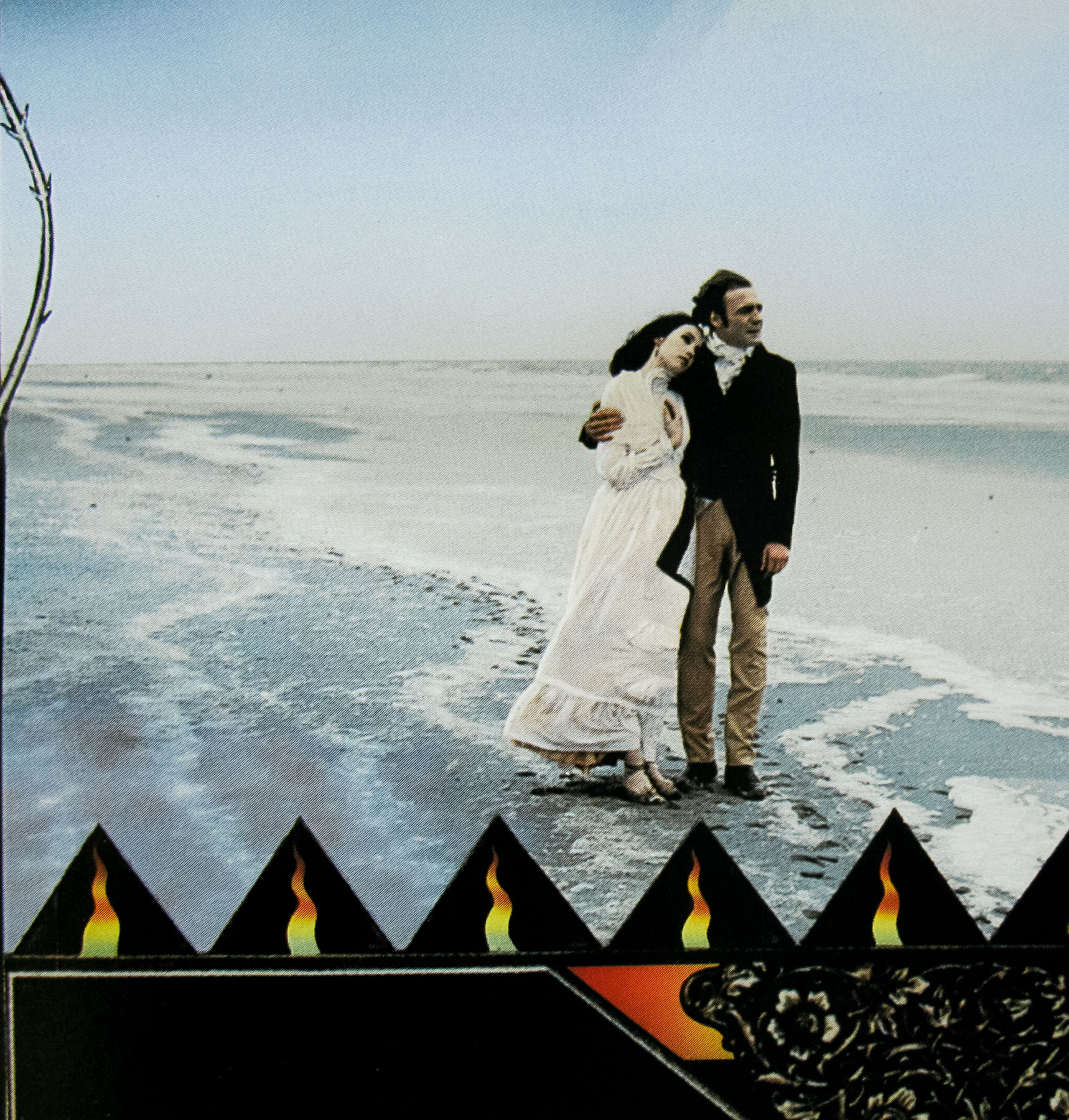
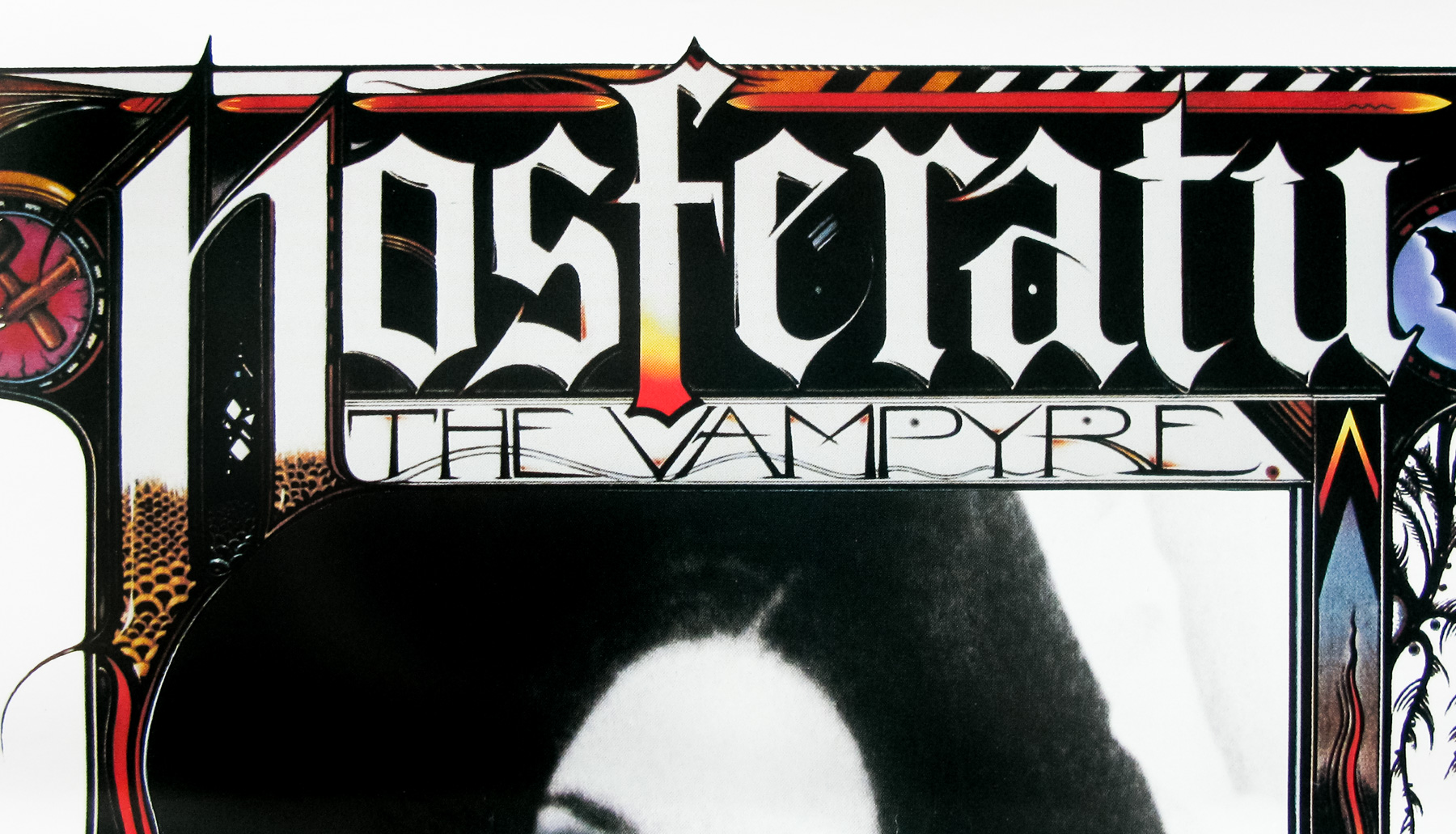
Japanese B2 poster for Nosferatu the Vampyre (1979). Artwork by David PalladiniJapanese B2 poster for Nosferatu the Vampyre (1979). Artwork by David Palladini, image 2Japanese B2 poster for Nosferatu the Vampyre (1979). Artwork by David Palladini, image 3Japanese B2 poster for Nosferatu the Vampyre (1979). Artwork by David Palladini, image 4
Title
Nosferatu the Vampyre
AKA
Nosferatu: Phantom der Nacht (Germany - original title)
Year of Film
1979
Director
Werner Herzog
Starring
Klaus Kinski, Isabelle Adjani, Bruno Ganz, Roland, Topor, Walter Ladengast, Dan van Husen, Jan Groth, Carsten Bodinus, Martje Grohmann, Rijk de Gooyer
Origin of Film
West Germany | France
Genre(s) of Film
Horror
Type of Poster
B2
Origin of Poster
Japan
Year of Poster
1979
Designer
Unknown
Artist
David Palladini (partial)
Size (inches)
20 7/16" x 28 7/8"
SS or DS
SS

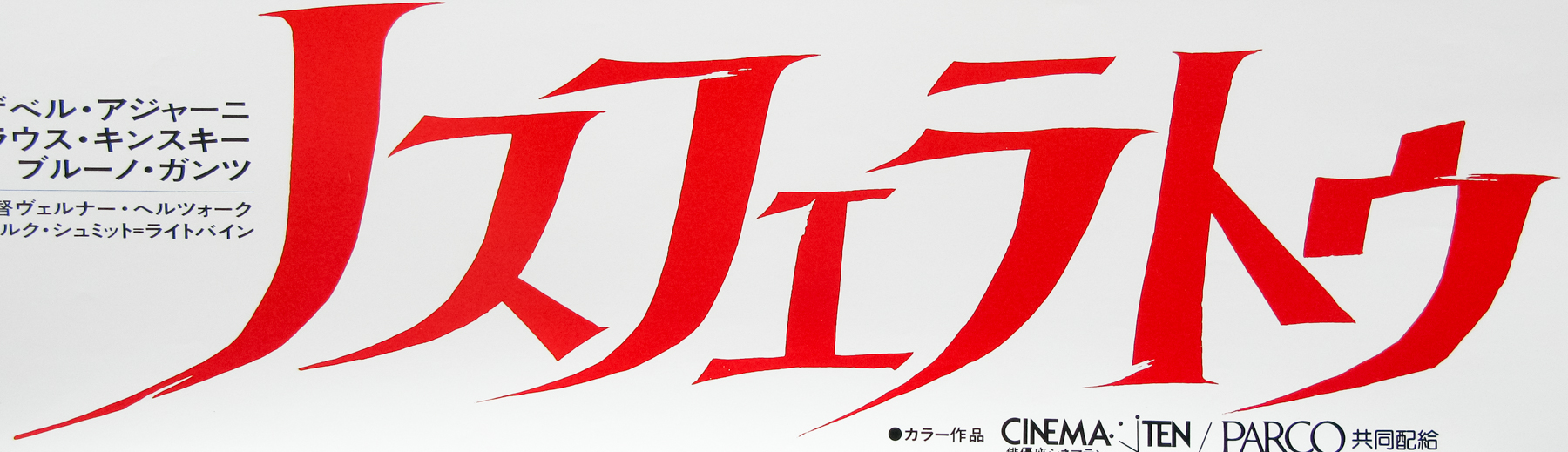
Legendary German film maker Werner Herzog (opens in a new tab) wrote and directed this brilliant, stylish homage to the 1922 Dracula (opens in a new tab) adaptation, ‘Nosferatu (opens in a new tab), eine Symphonie des Grauens’. F. W. Murnau (opens in a new tab)‘s seminal silent classic was actually filmed without permission from Bram Stoker (opens in a new tab)‘s estate and had a number of minor details changed in attempt to avoid infringing copyright. Their attempts were unsuccessful and Stoker’s widow filed a lawsuit that resulted in the film being withdrawn and most of the prints being destroyed. Luckily, a handful survived and the film was able to be properly restored and saved from total loss.
Frequent Herzog collaborator (and occasional adversary) Klaus Kinski (opens in a new tab) stars as Count Dracula (changed from the Count Orlok of Murnau’s verison), the undead vampire who travels to Germany from Transylvania. He intends to prey upon Lucy (Isabelle Adjani (opens in a new tab)), the wife of Jonathan Harker (Bruno Ganz (opens in a new tab)) from whom the Count purchased real-estate deeds before locking him in his castle. Jonathan manages to escape and heads home in hot pursuit of the evil vampire to save Lucy from an undead fate. Herzog’s version is particularly notable for the way it portrays the classic Count as a weary, unloved character who is struggling with the idea of immortality and is disgusted with the predatory side of himself. This was in stark contrast to many of the Dracula adaptations that had been made since Murnau’s original.

Unusually, the studio (20th Century Fox) requested that Herzog film each scene with dialogue twice (in German and English, spoken by the same actors) so that two versions of the film could be constructed with the idea that the English one would appeal more to Western audiences. Today most fans prefer the German version as the actors are clearly more comfortable speaking in their native language and the acting is thus more natural.

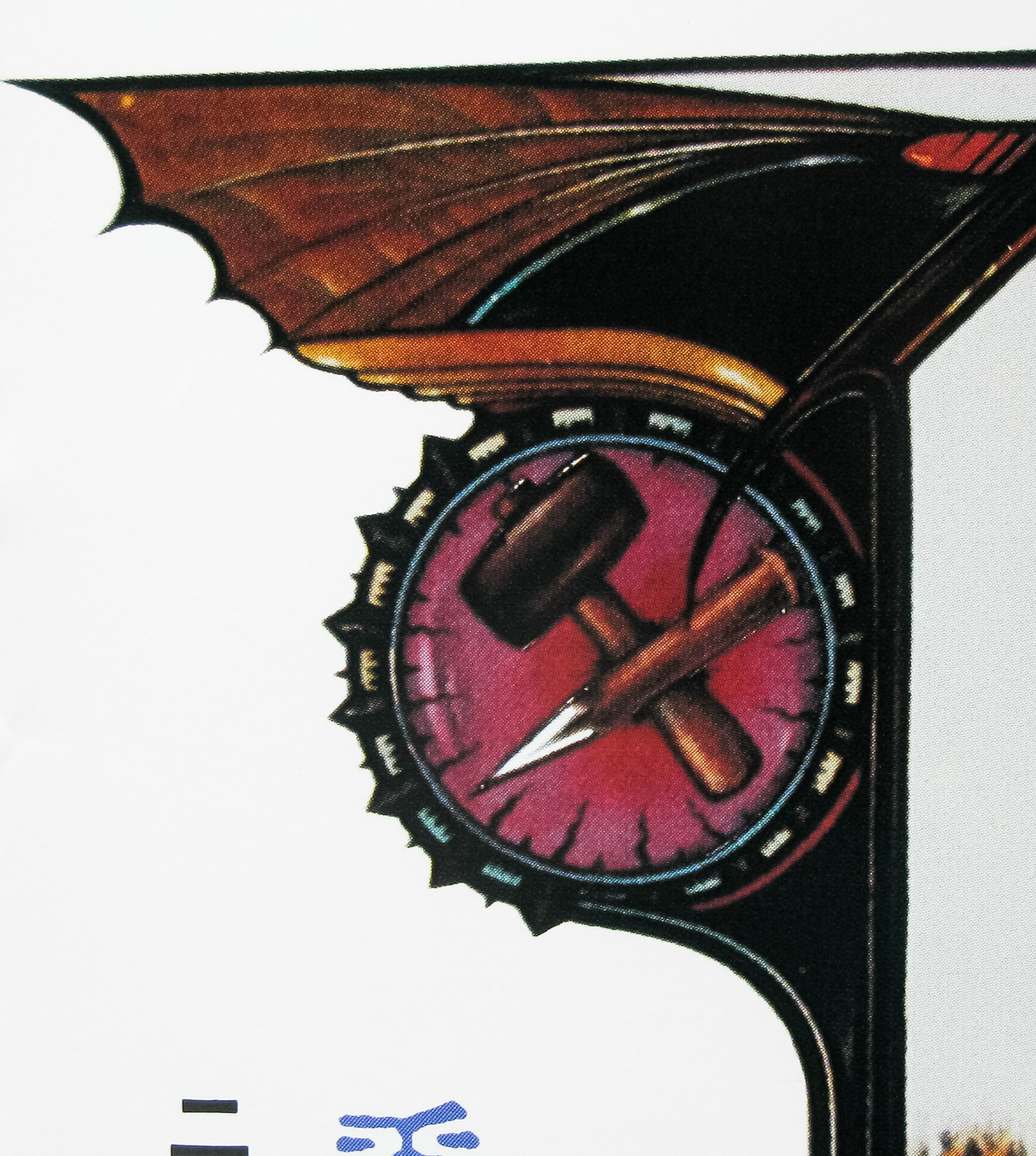
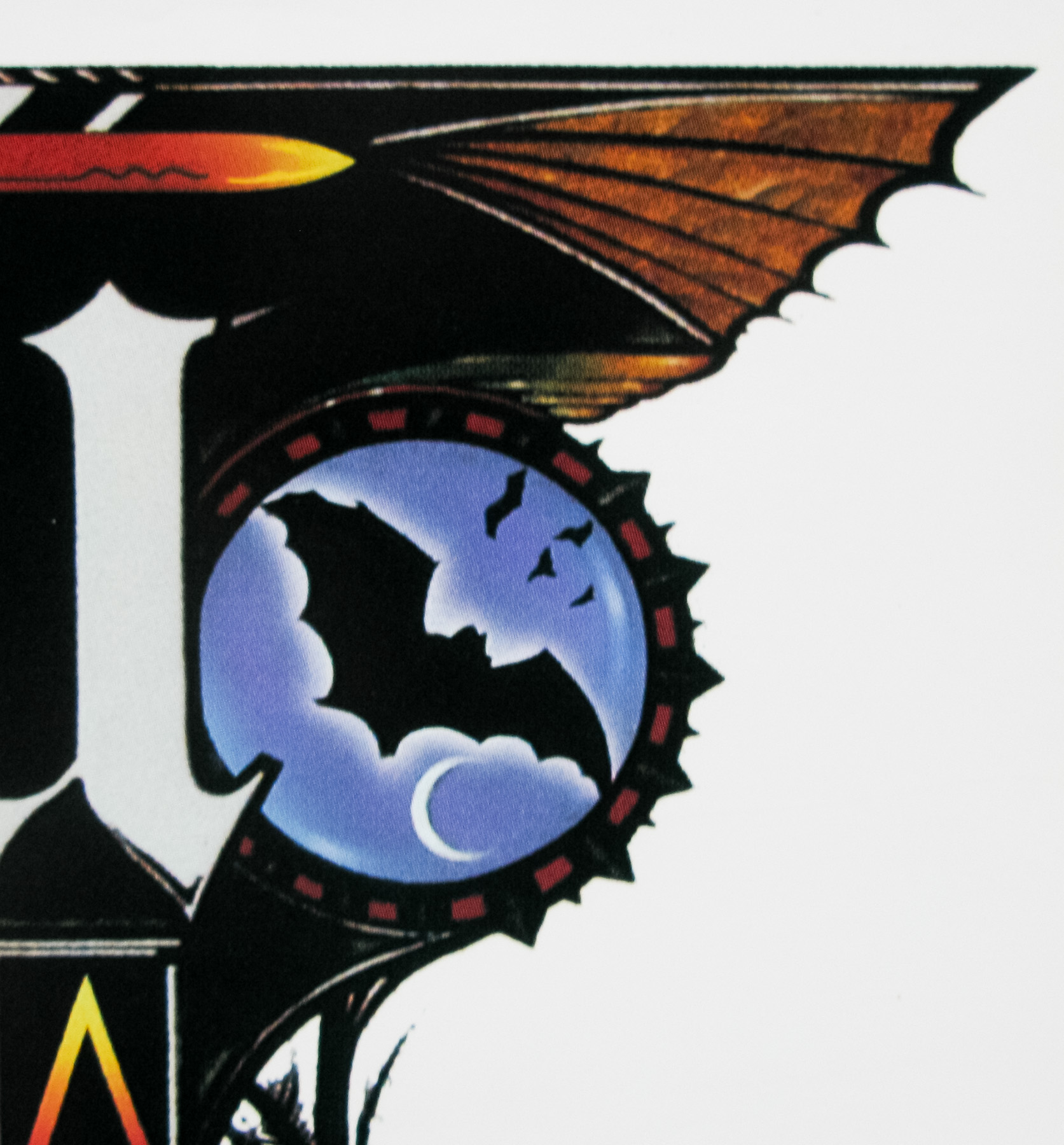
This Japanese poster features elements of the fantastic American one sheet, which was painted by David Palladini, and is one of the best posters of the 1970s, in my opinion. In the place of the illustration of Count Dracula is a striking image of the gorgeous Adjani and two smaller photos featuring the Harkers and Dracula.

The original trailer is on YouTube (opens in a new tab).

Fright Night part 2 / quad / UK

12.06.12

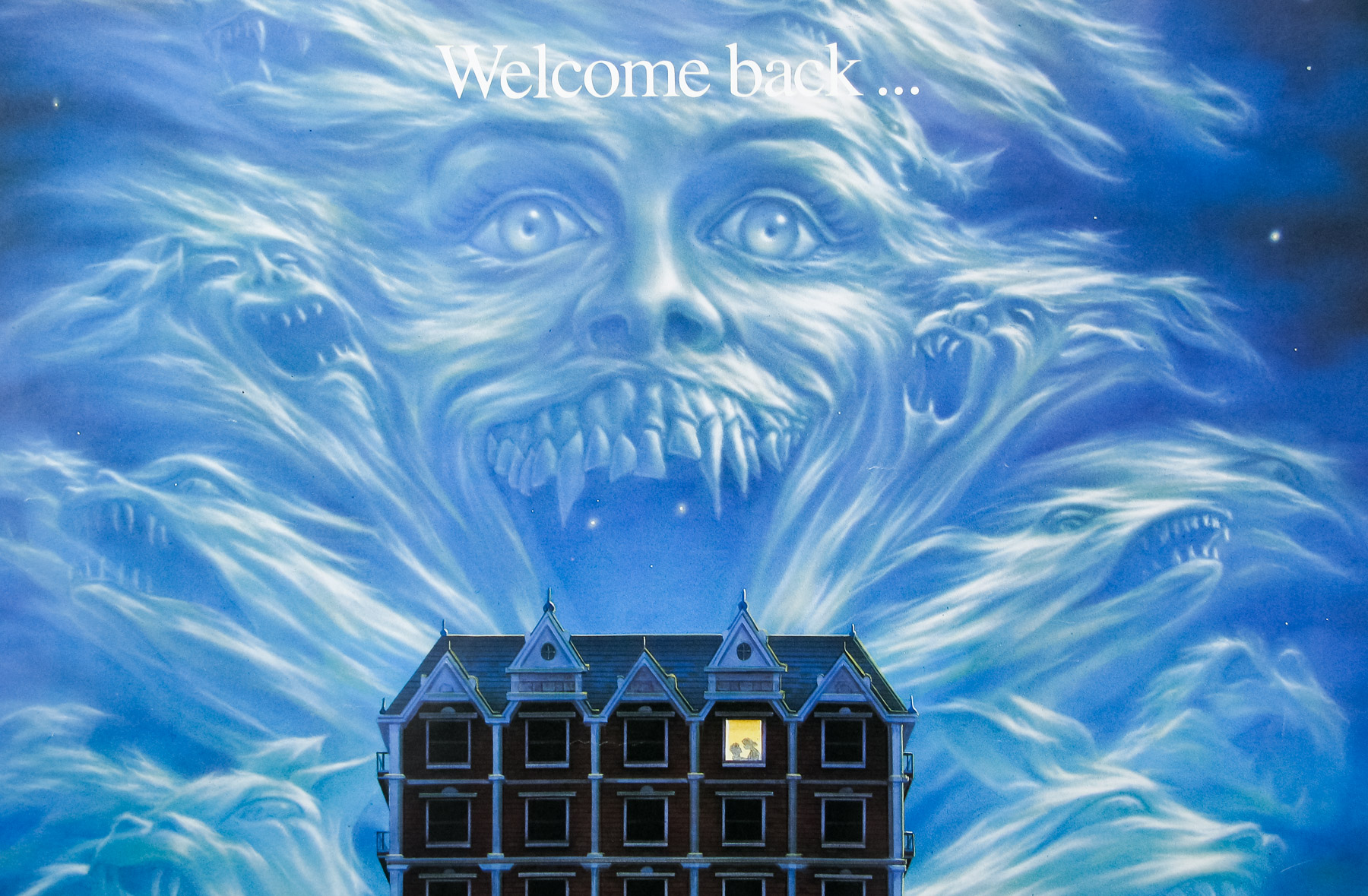
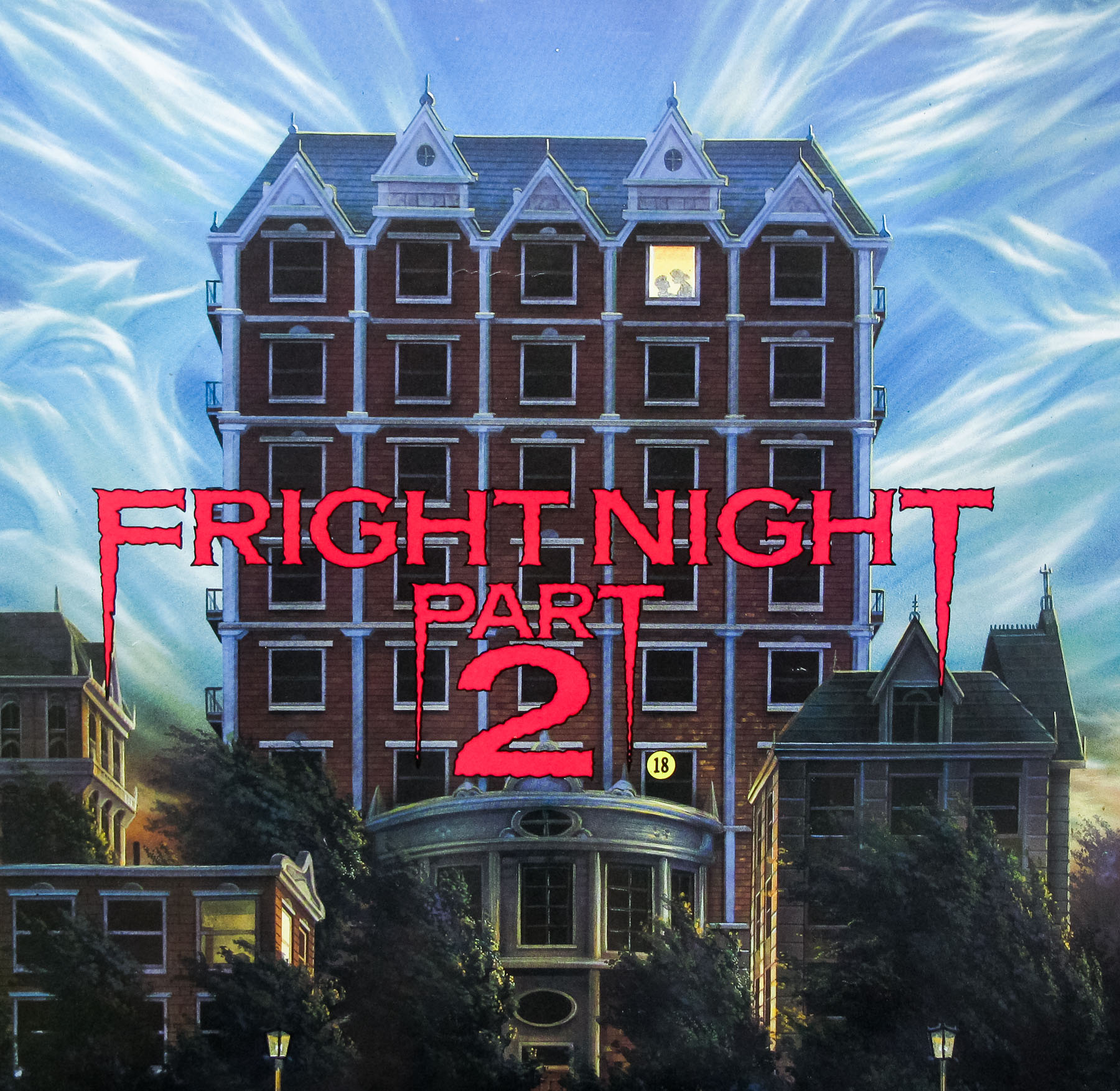
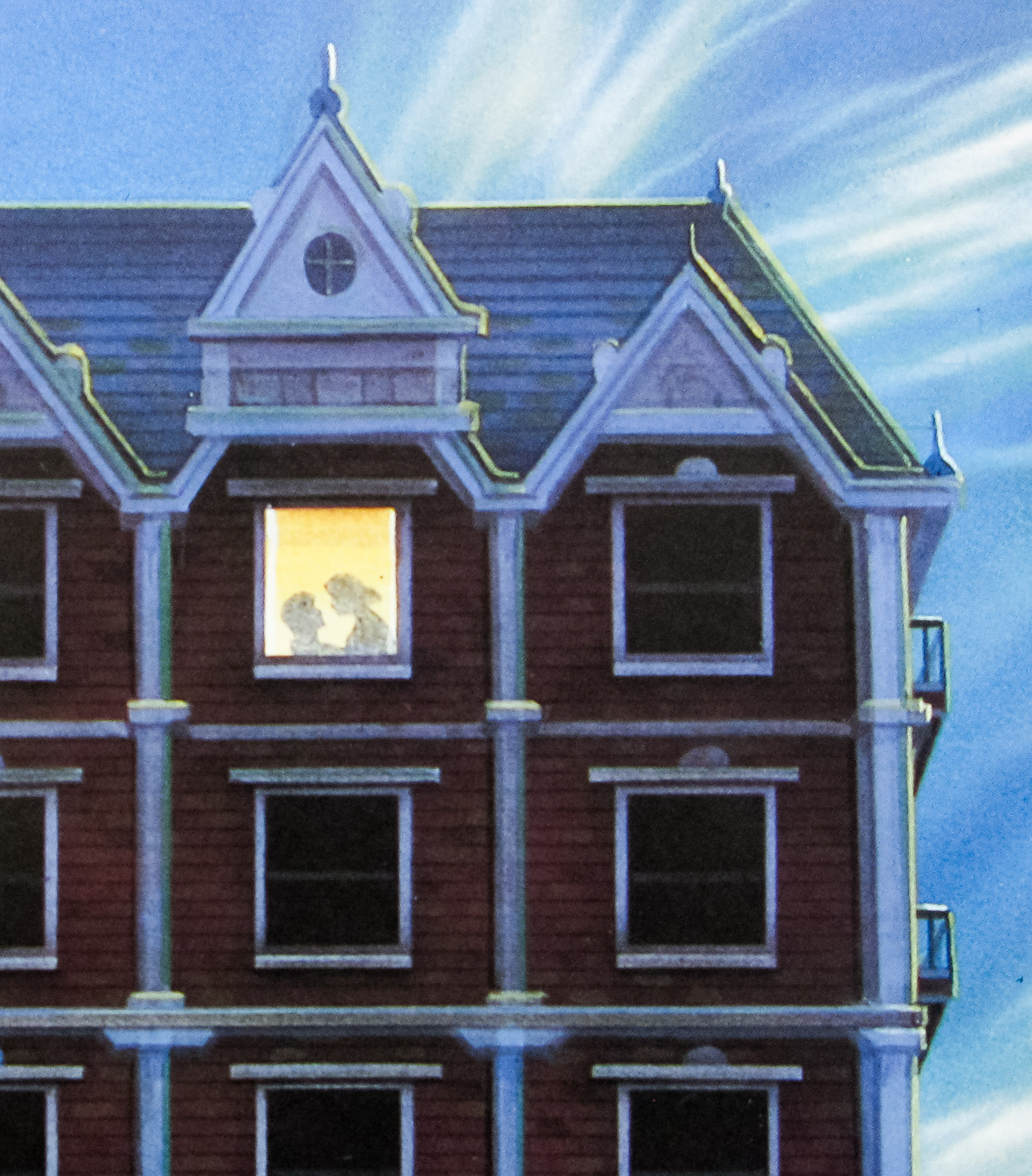
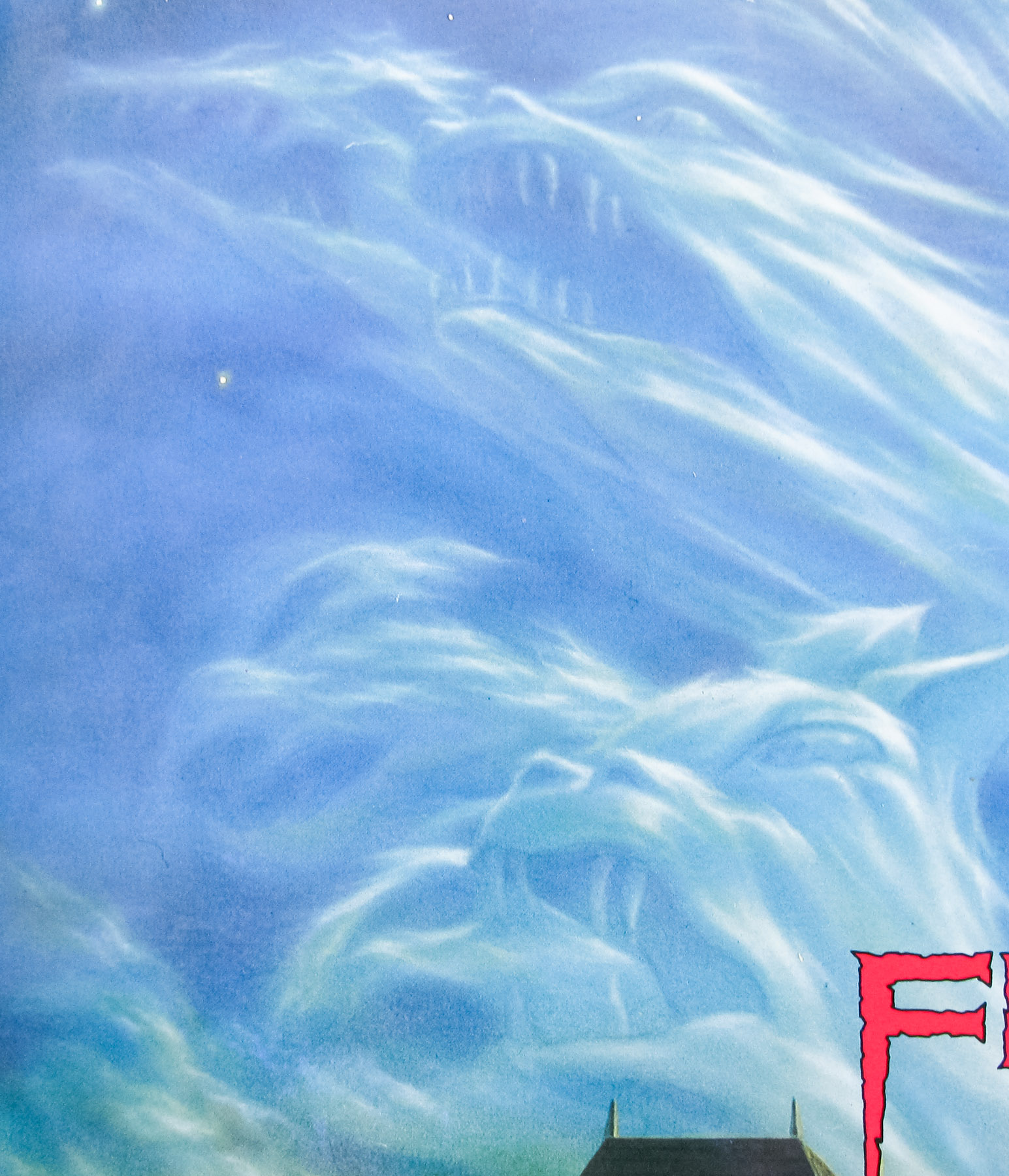
British quad poster for Fright Night part 2 (1988)British quad poster for Fright Night part 2 (1988), image 2British quad poster for Fright Night part 2 (1988), image 3British quad poster for Fright Night part 2 (1988), image 4British quad poster for Fright Night part 2 (1988), image 5
Title
Fright Night part 2
AKA
Vampire... vous avez dit vampire? II [Vampire ... you said Vampire?] (France)
Year of Film
1988
Director
Tommy Lee Wallace
Starring
Roddy McDowall, William Ragsdale, Traci Lind, Julie Carmen, Jon Gries, Russell Clark, Brian Thompson, Merritt Butrick, Ernie Sabella, Matt Landers
Origin of Film
USA
Genre(s) of Film
Horror | Comedy
Film Series
Fright Night
Type of Poster
Quad
Origin of Poster
UK
Year of Poster
1988
Designer
Unknown
Artist
Unknown
Size (inches)
30" x 39 15/16"
SS or DS
SS
Tagline
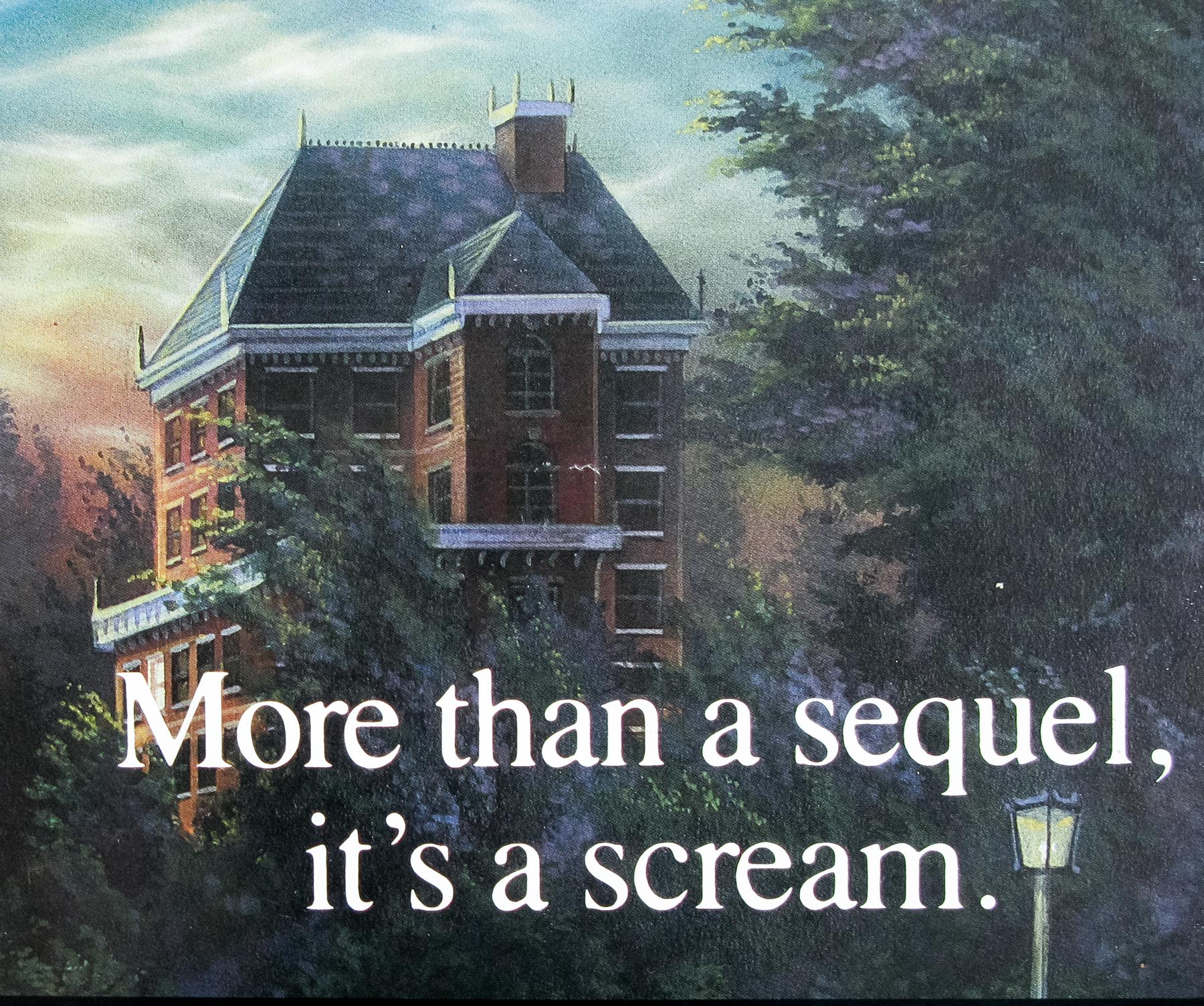
Welcome back... | More than a sequel it's a scream.

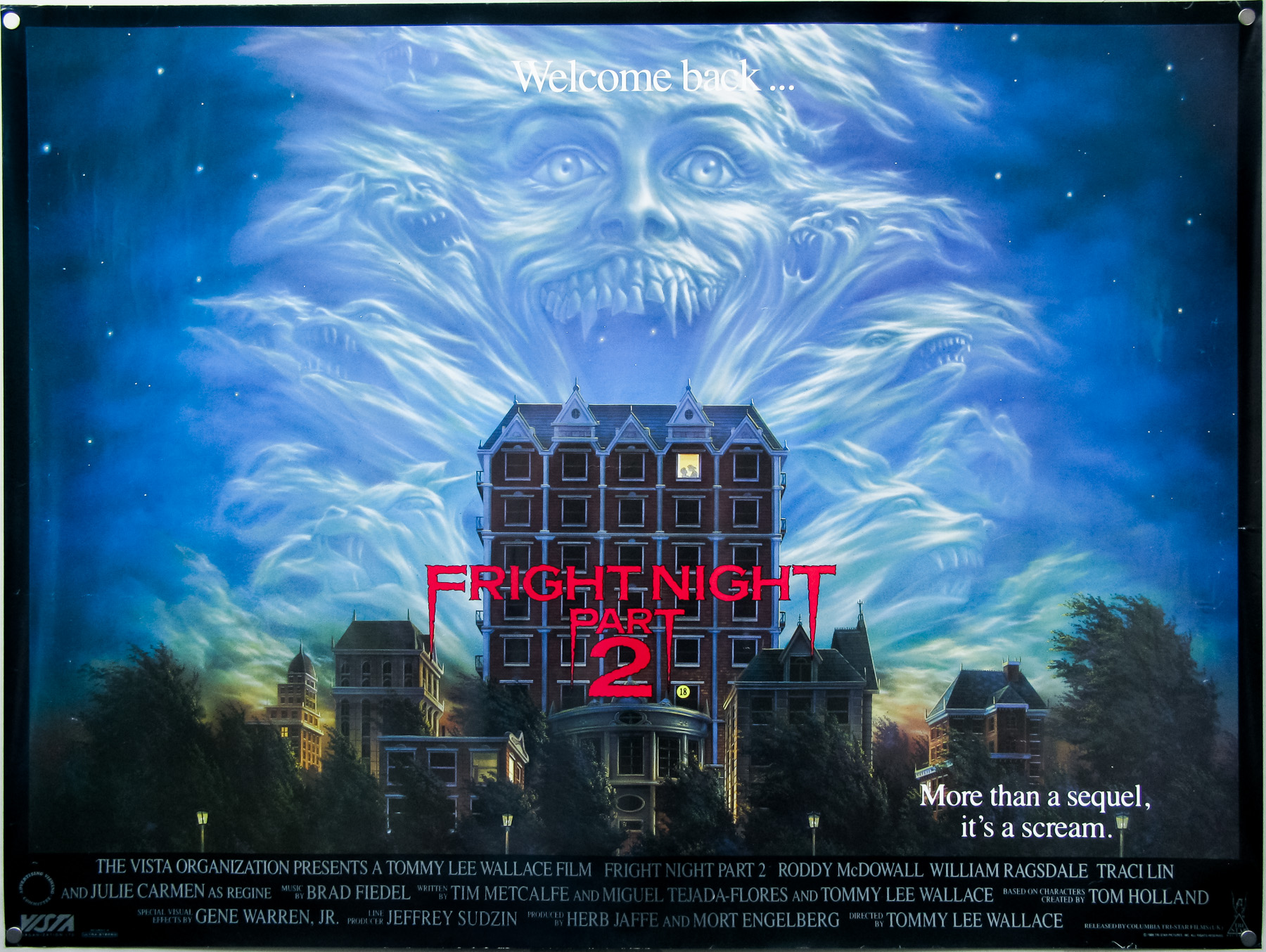
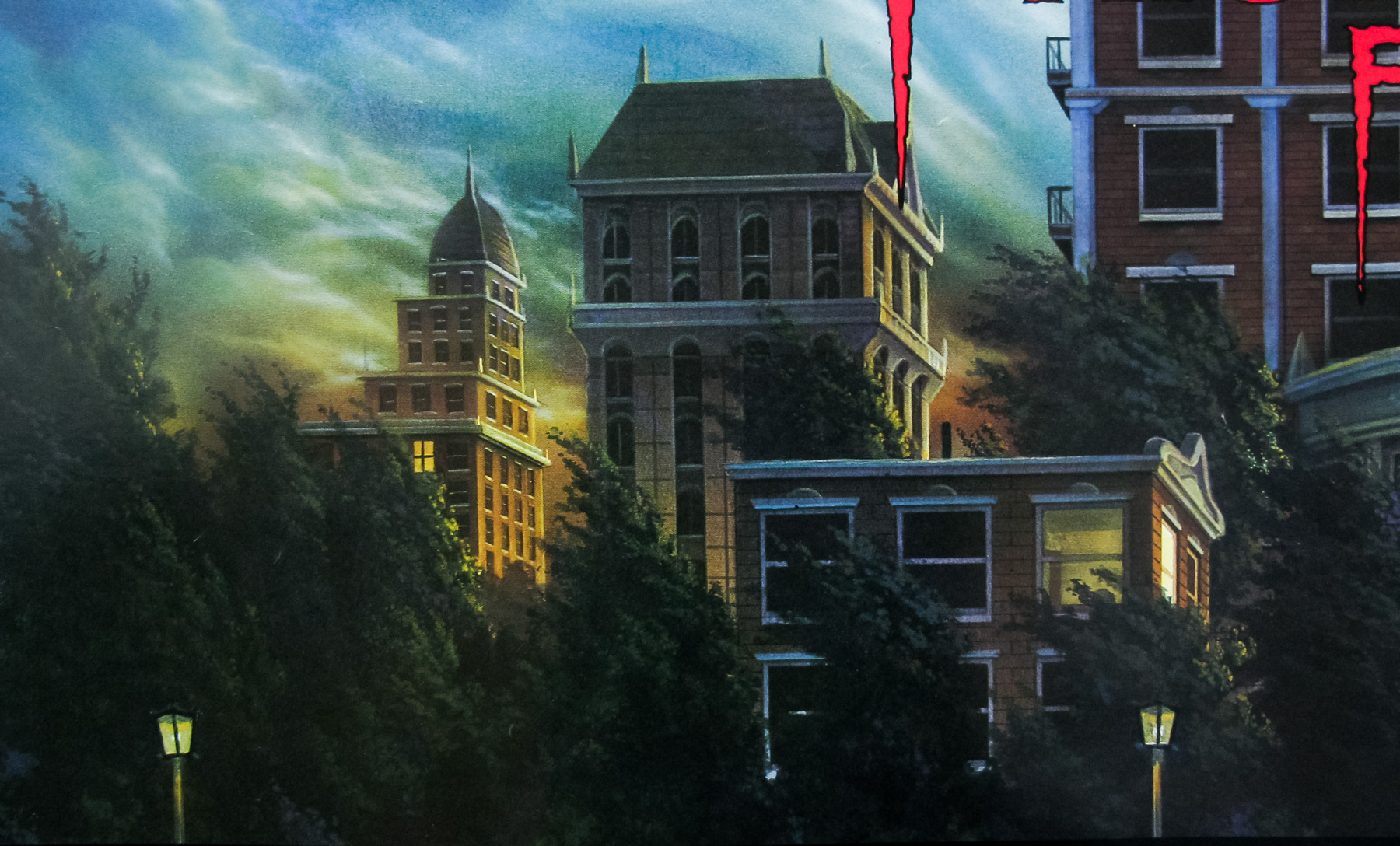
As with the film itself, the poster for the second Fright Night (opens in a new tab) film is definitely a case of ‘if it’s not broken, why fix it?’. The artwork of the vampiric face is practically identical to the one that was used for the global marketing campaign for the original; see the Japanese poster. Note the slight difference in the eyes, which leads me to believe it may have been redrawn the second time around. The key difference for this version is the location and the suburban house of the first film has been replaced by the multi-storey town house of the second.
Set three years after the original, Charlie Brewster (William Ragsdale (opens in a new tab)) has undergone psychiatric therapy and now believes that Jerry Dandridge (Chris Sarandon (opens in a new tab)) was actually a serial killer who had disguised himself as a vampire, and is trying to get on with his life with new girlfriend Alex (Traci Lind (opens in a new tab)). Peter Vincent (Roddy McDowall (opens in a new tab)) has returned to being a burnt out vampire hunter on his Fright Night TV show, but one night a mysterious group of people move into his building lead by the alluring Regine (Julie Carmen (opens in a new tab)). It’s not long before Charlie and Peter discover that she is Jerry’s vampire sister who plans to exact her revenge for his death and sentence Charlie to eternal damnation.

I’ve struggled to find out who was responsible for both the original and this sequel artwork so please get in touch if you have an idea.

The original trailer is on YouTube (opens in a new tab).

Flesh Gordon / B2 / Japan

08.06.12

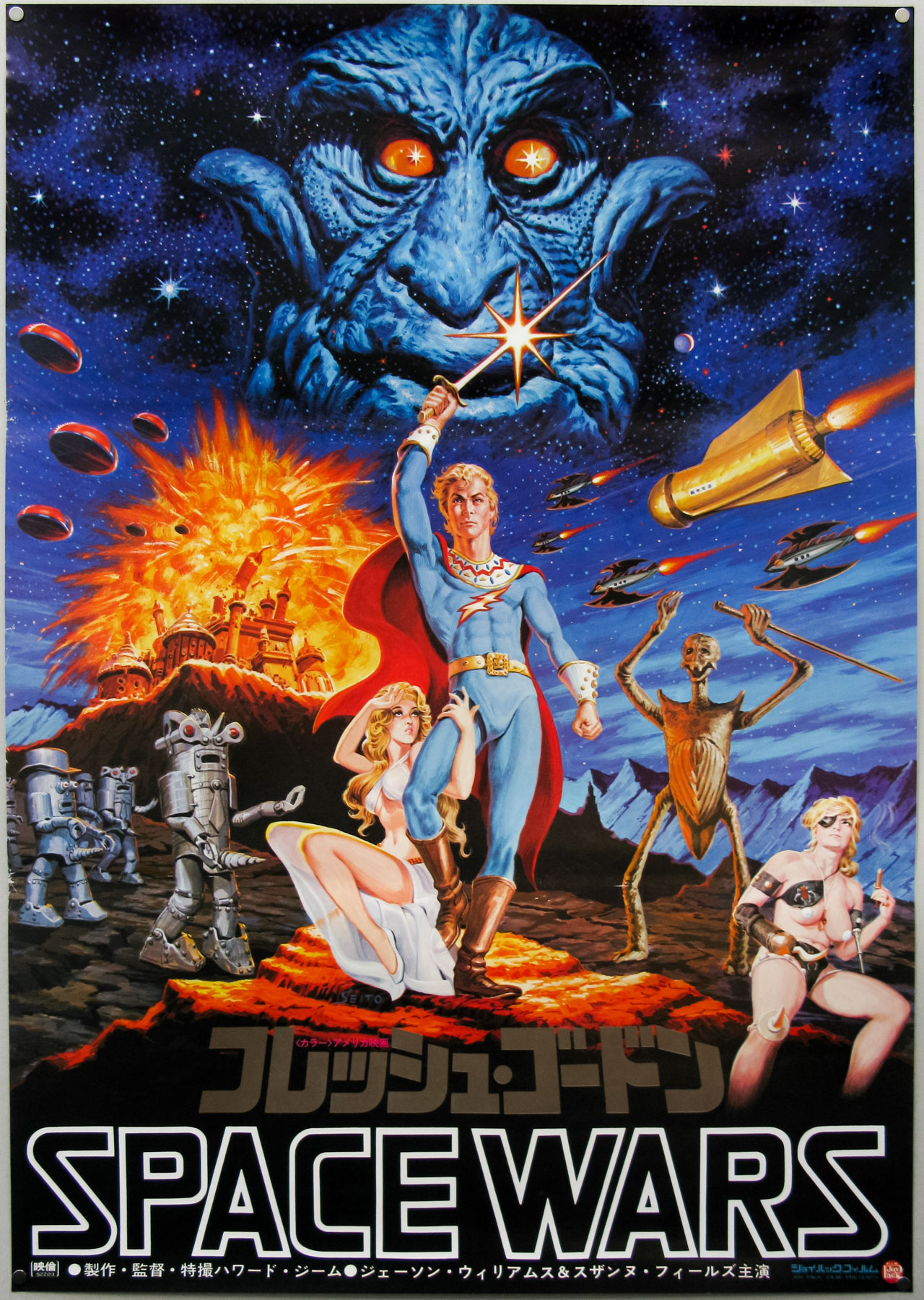
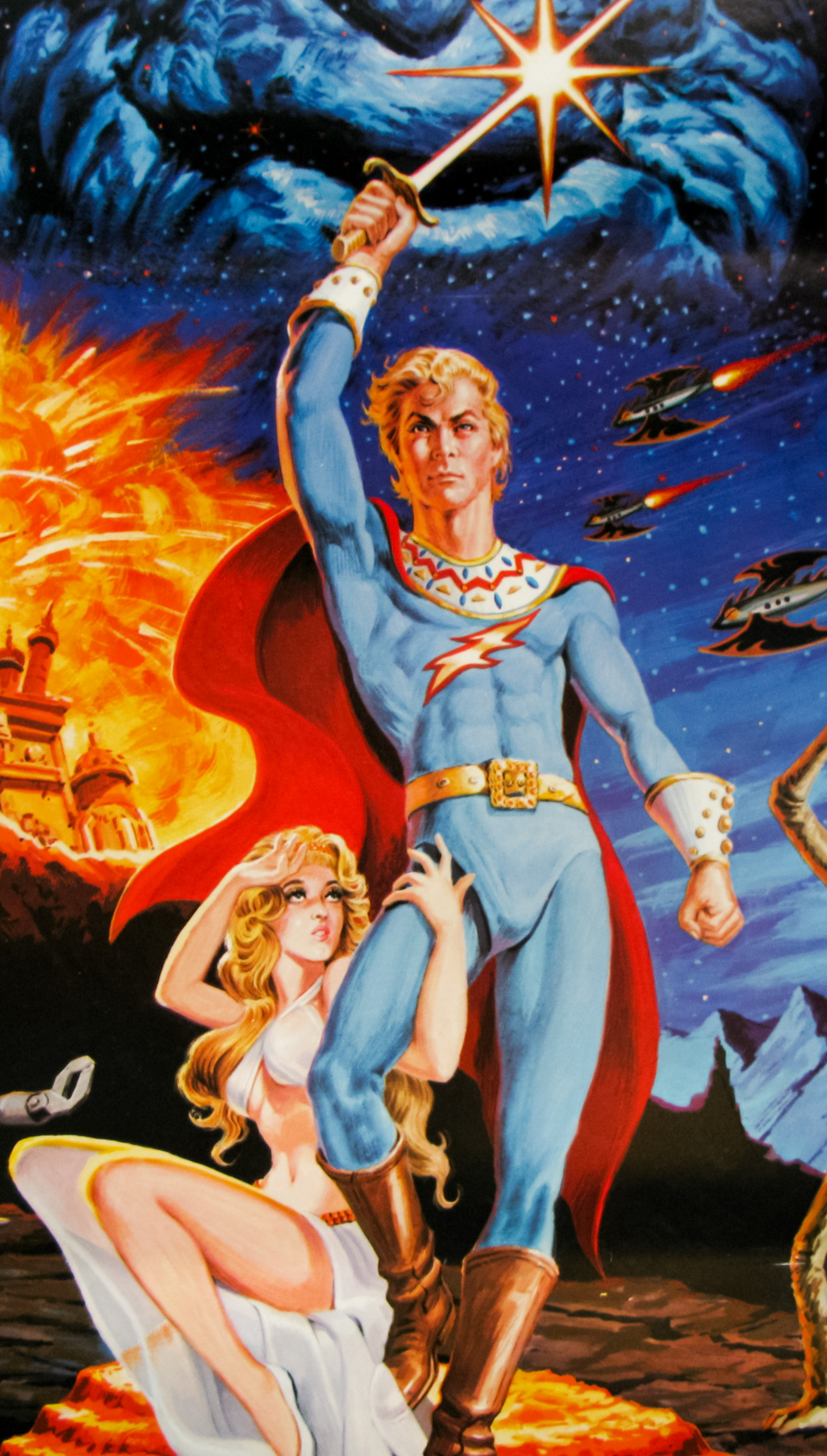
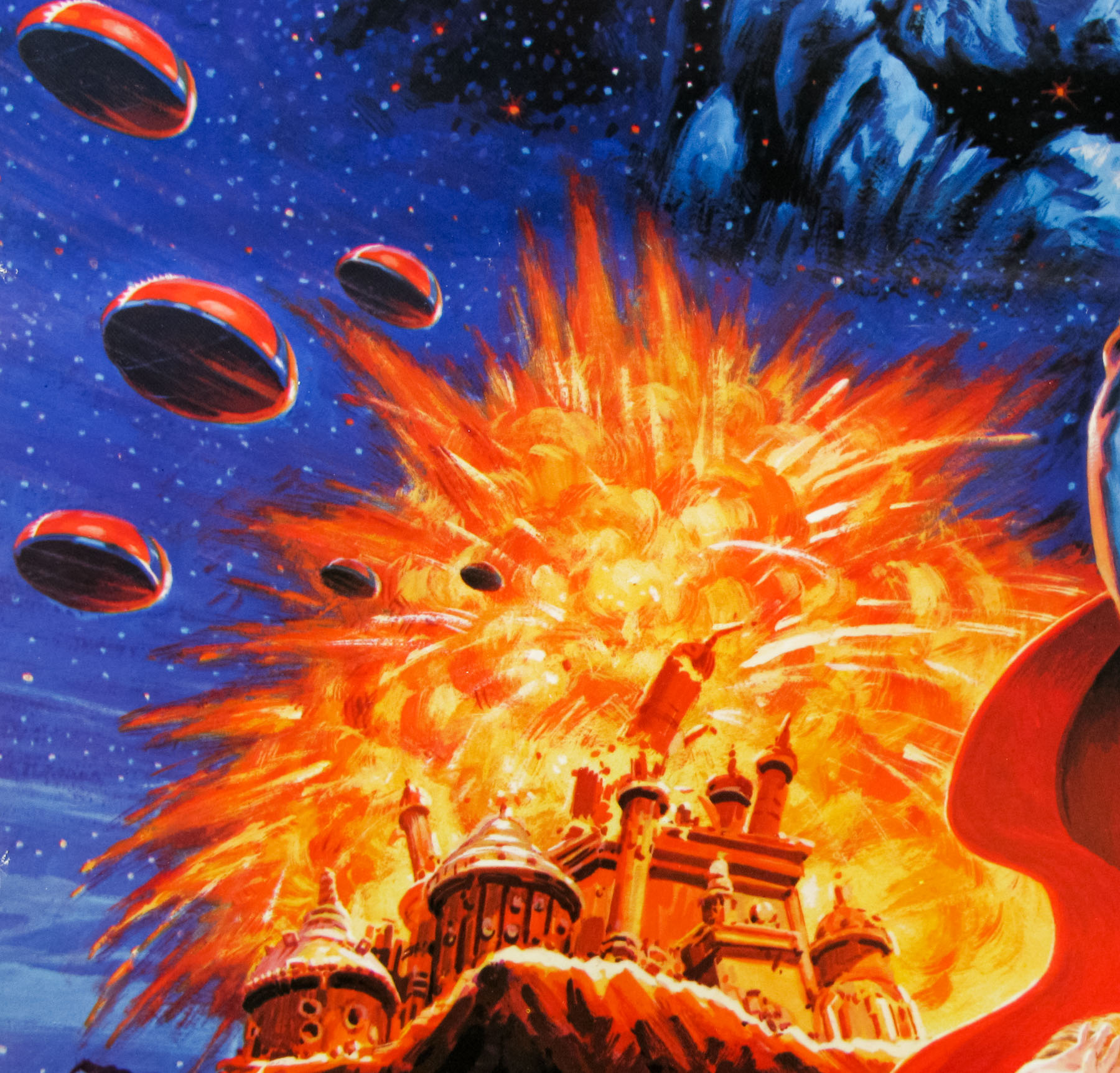
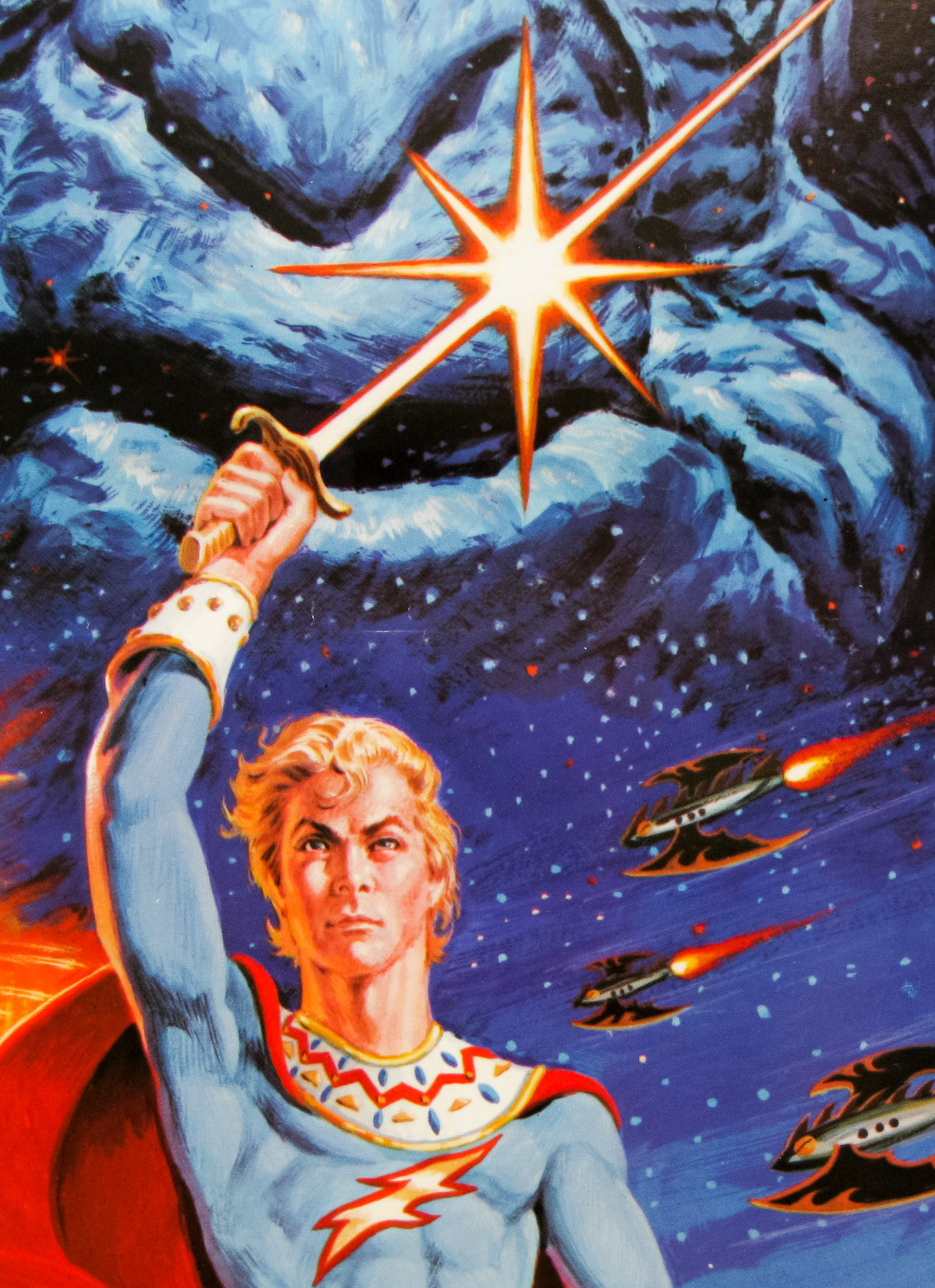
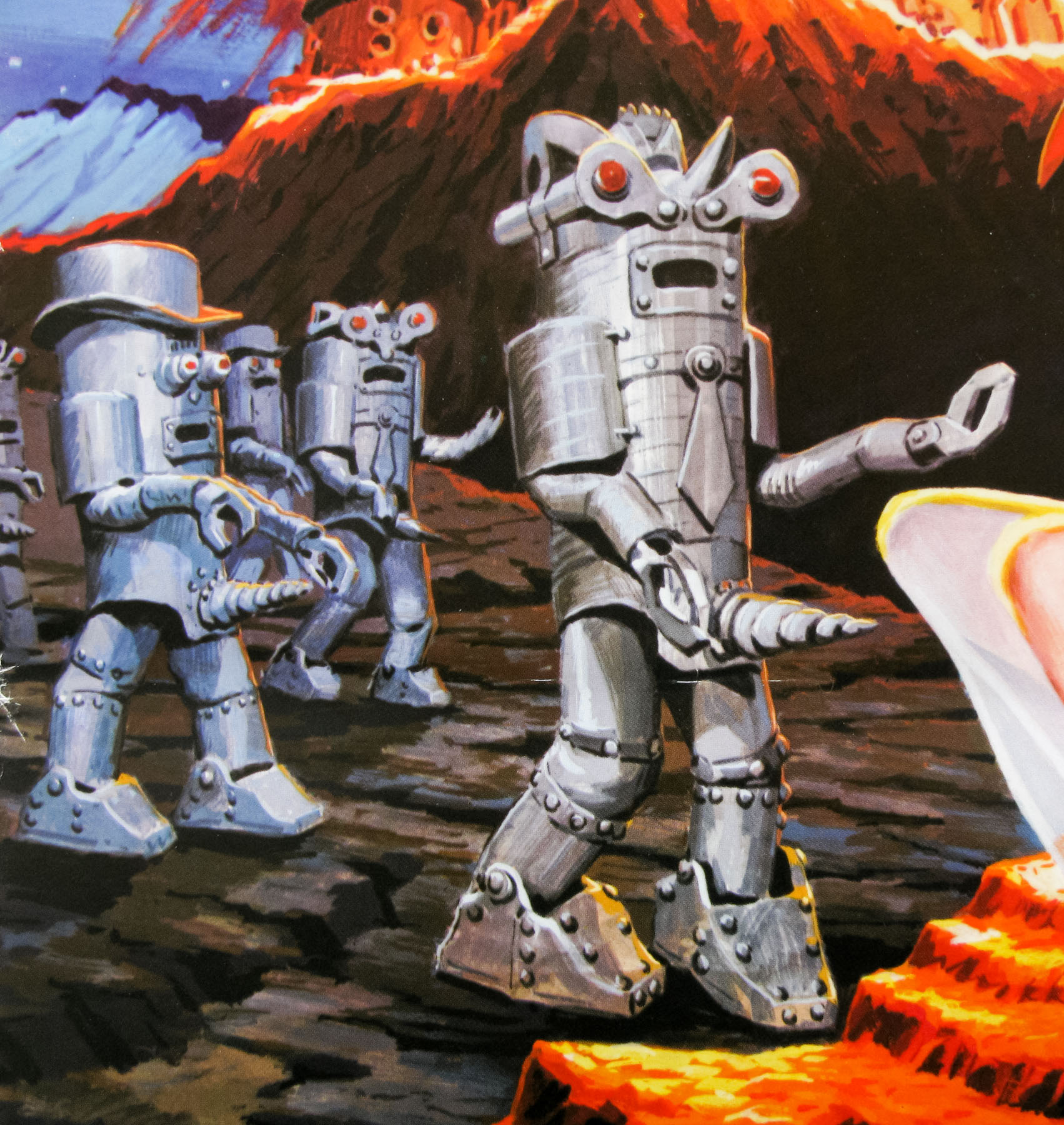
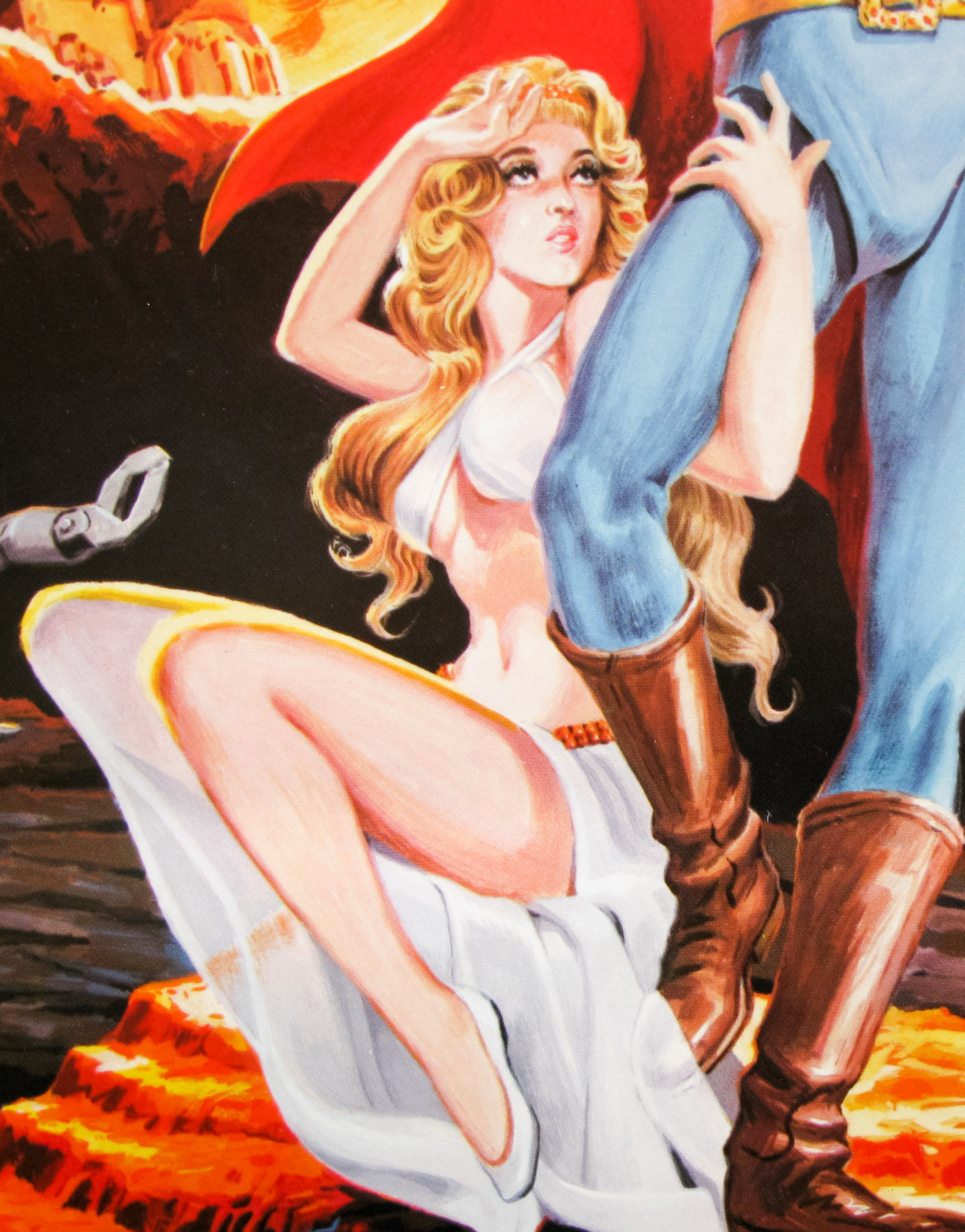
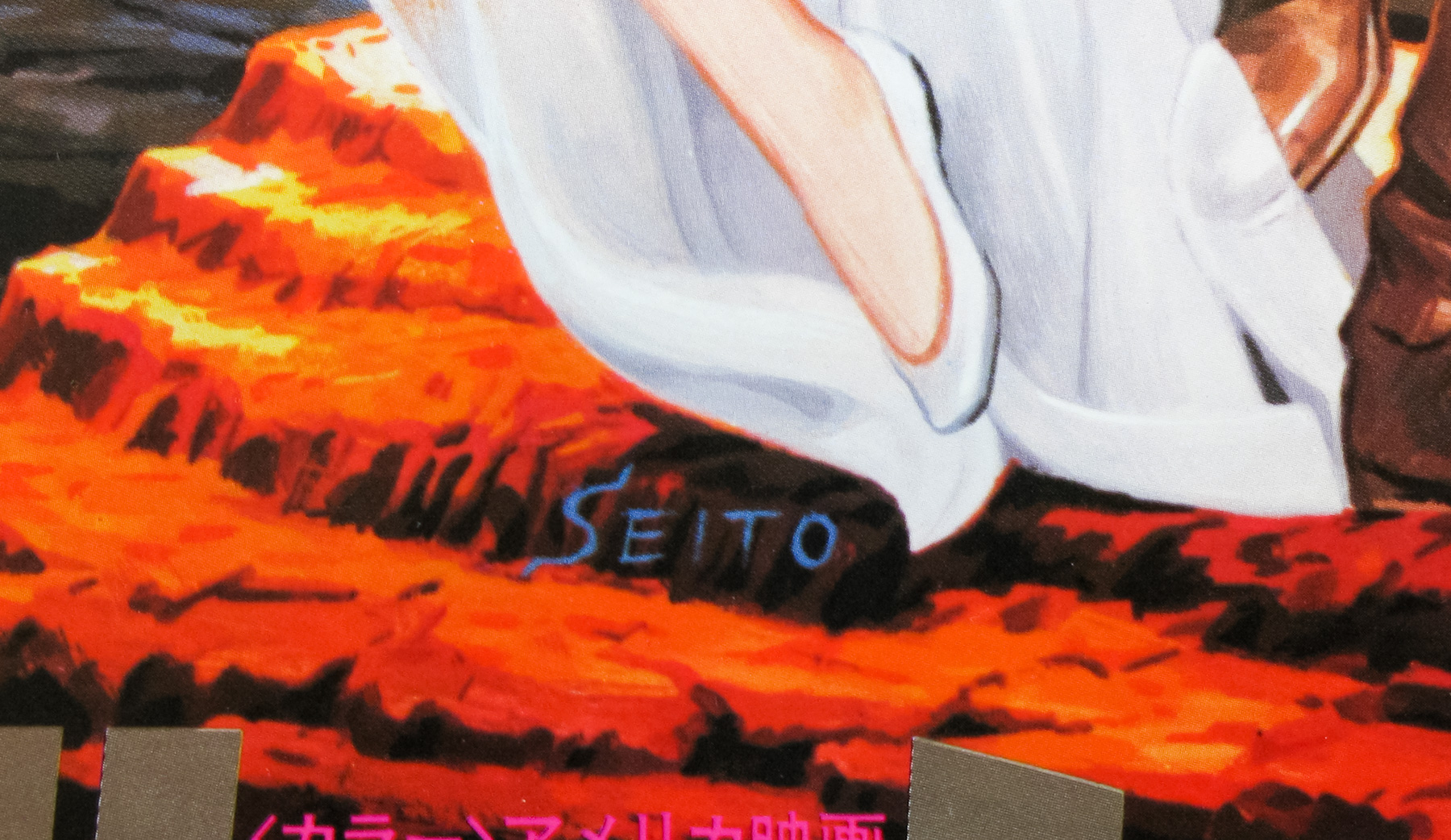
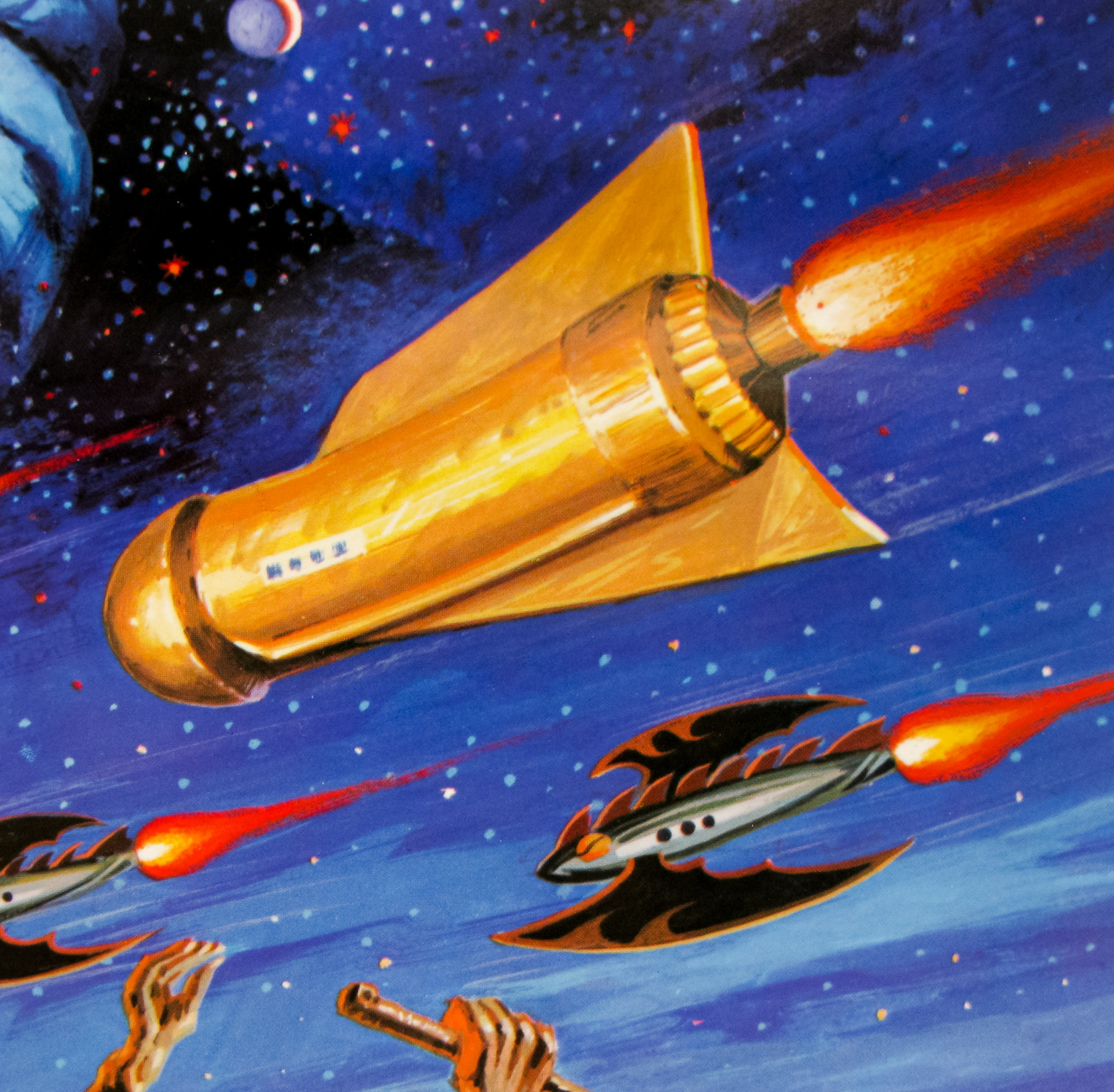
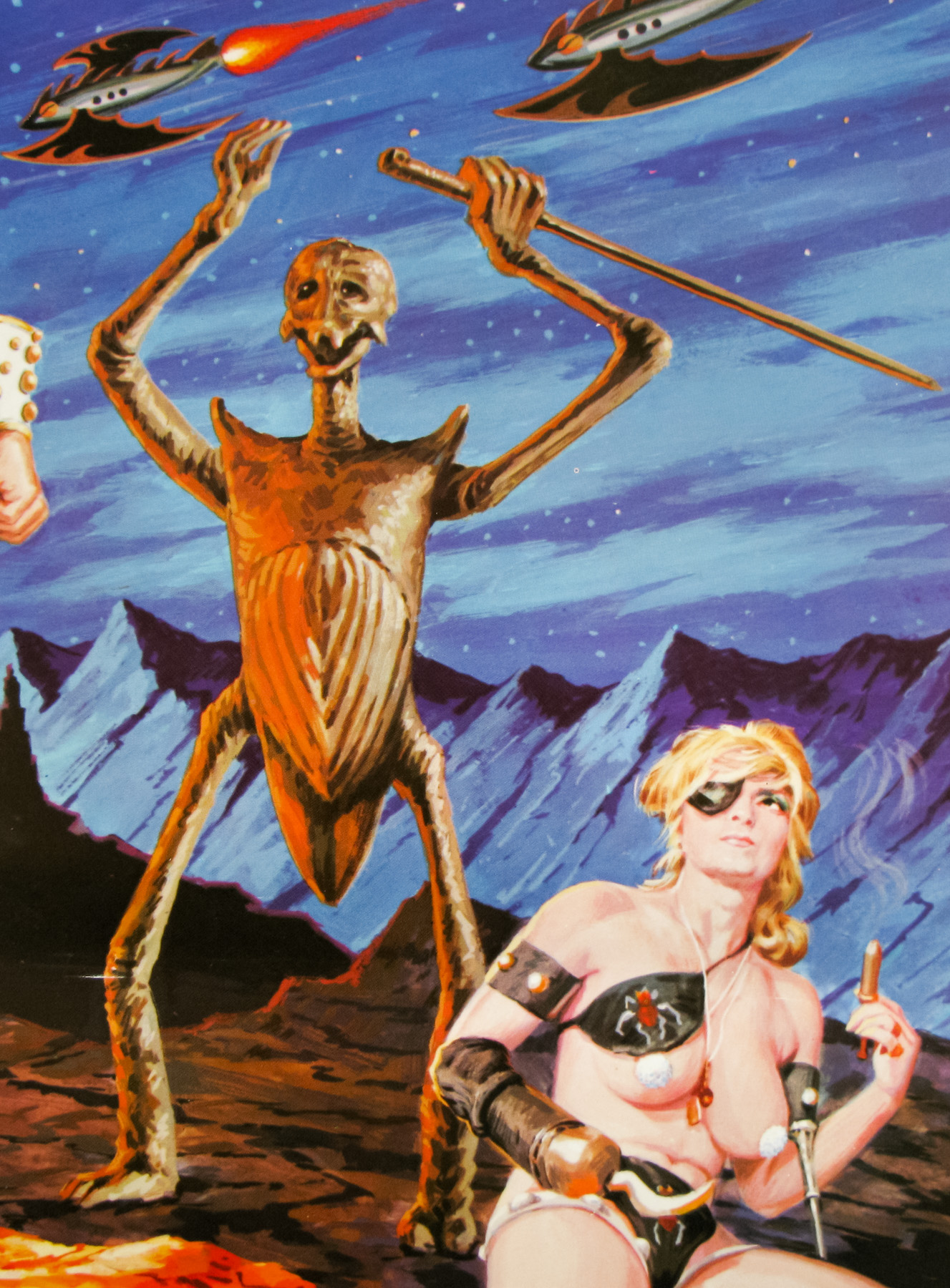
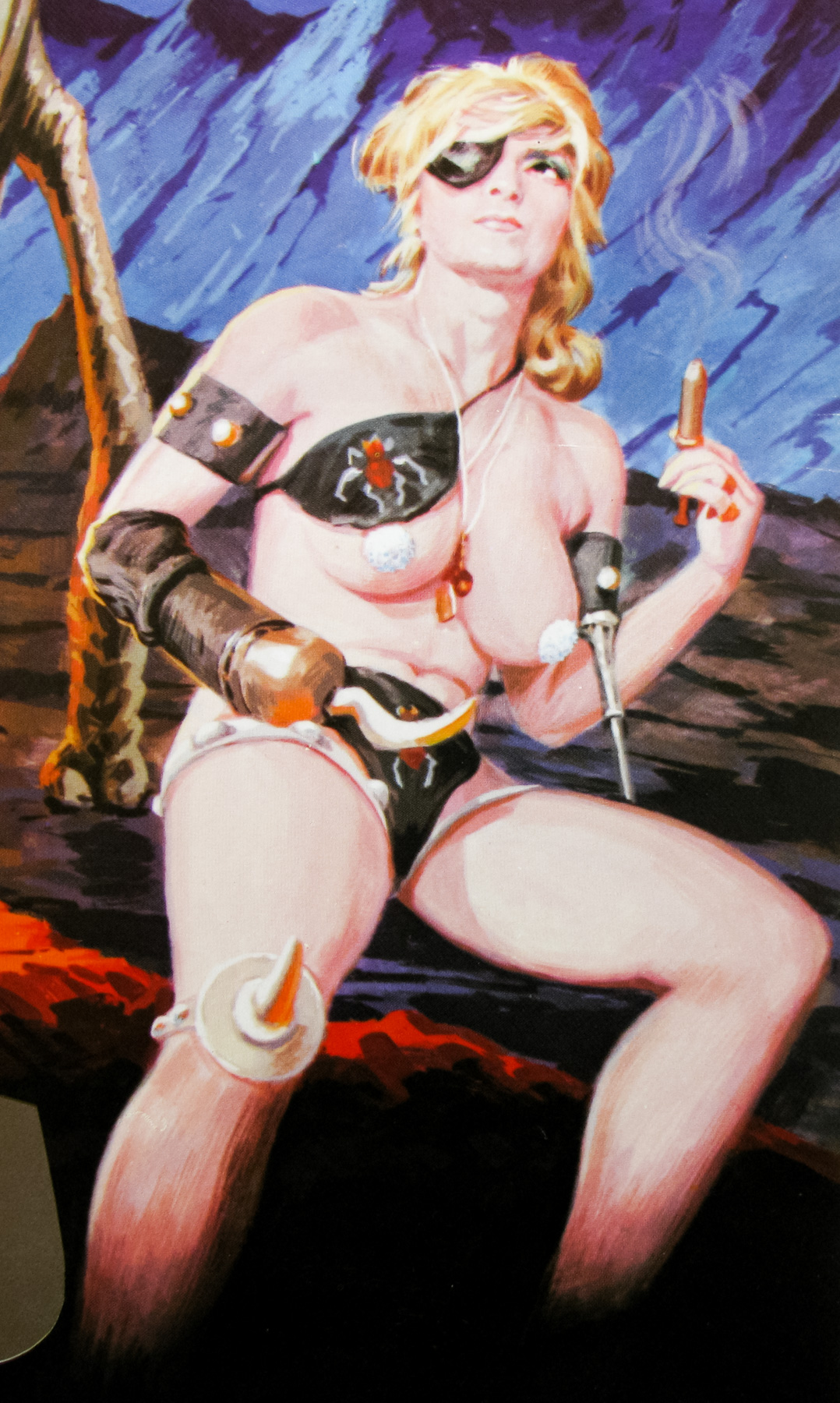
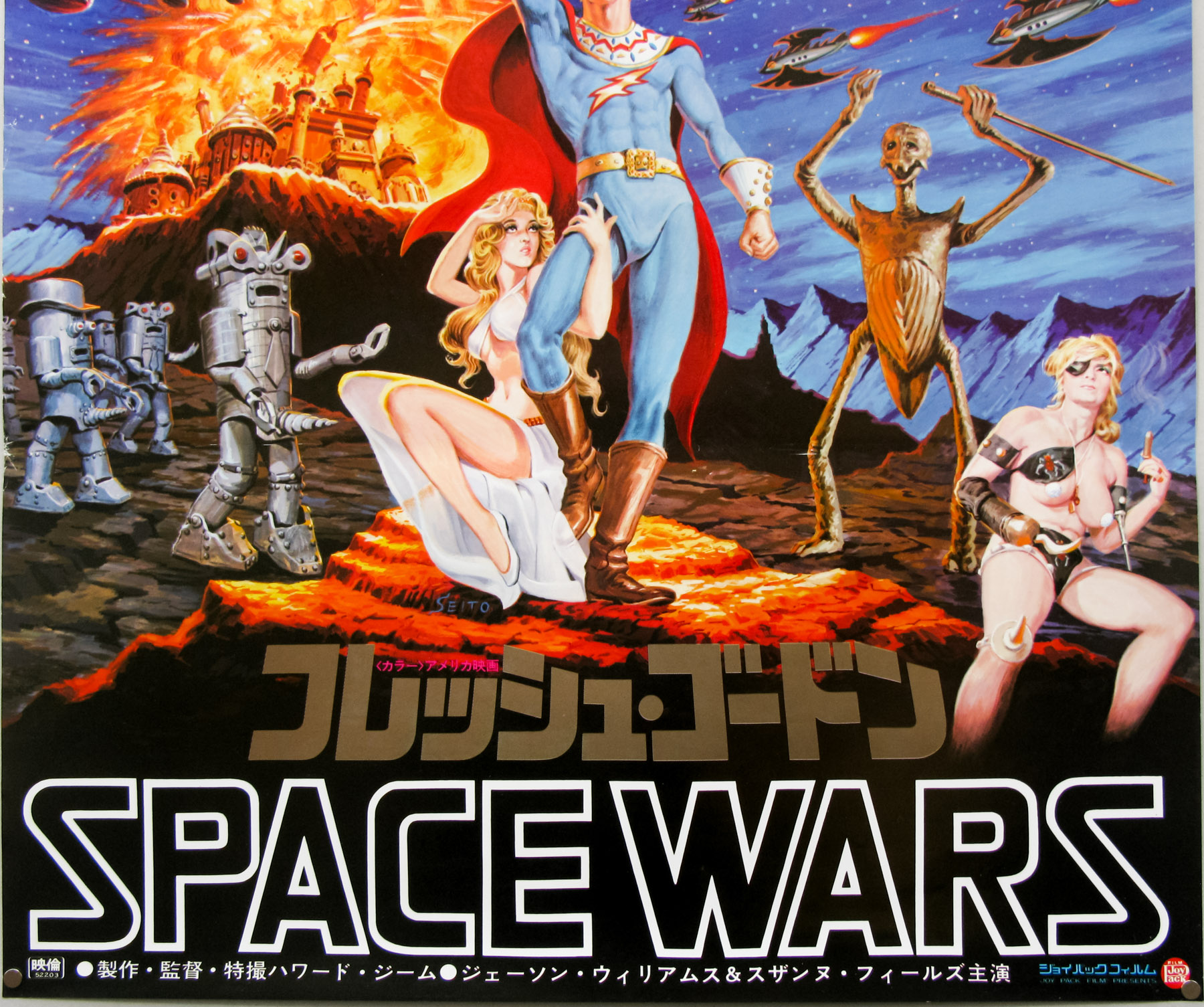
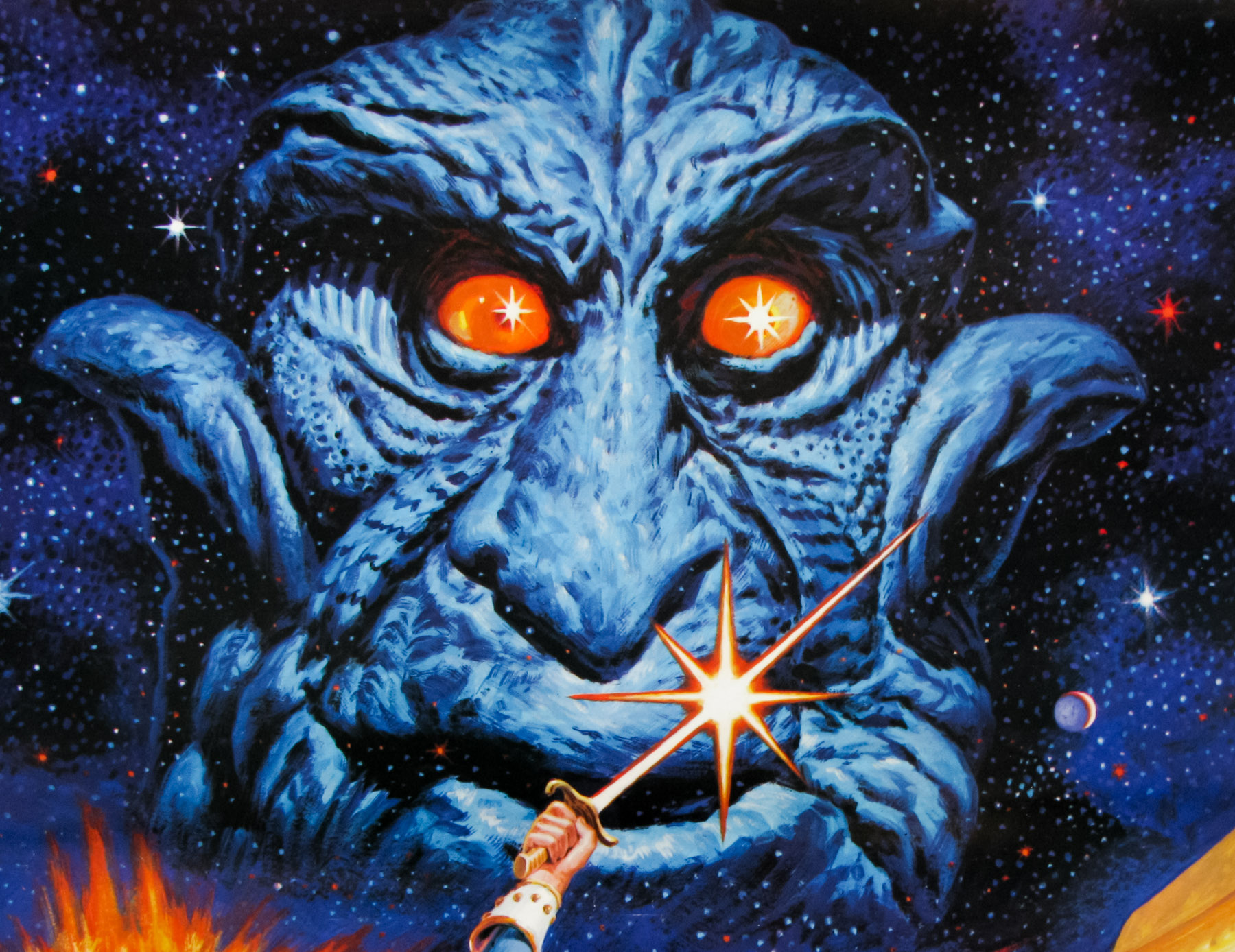
Japanese B2 poster (1977) for Flesh Gordon (1974). Artwork by SeitoJapanese B2 poster (1977) for Flesh Gordon (1974). Artwork by Seito, image 2Japanese B2 poster (1977) for Flesh Gordon (1974). Artwork by Seito, image 3Japanese B2 poster (1977) for Flesh Gordon (1974). Artwork by Seito, image 4Japanese B2 poster (1977) for Flesh Gordon (1974). Artwork by Seito, image 5
Title
Flesh Gordon
AKA
Space Wars (Japan - English title)
Year of Film
1974
Director
Michael Benveniste, Howard Ziehm
Starring
Jason Williams, Suzanne Fields, Joseph Hudgins, William Dennis Hunt, Candy Samples, Mycle Brandy, Steve Grumette
Origin of Film
USA
Genre(s) of Film
Adventure | Comedy | Sci-Fi
Type of Poster
B2
Origin of Poster
Japan
Year of Poster
1977
Designer
Unknown
Artist
Seito
Size (inches)
20 1/4" x 28 3/4"
SS or DS
SS

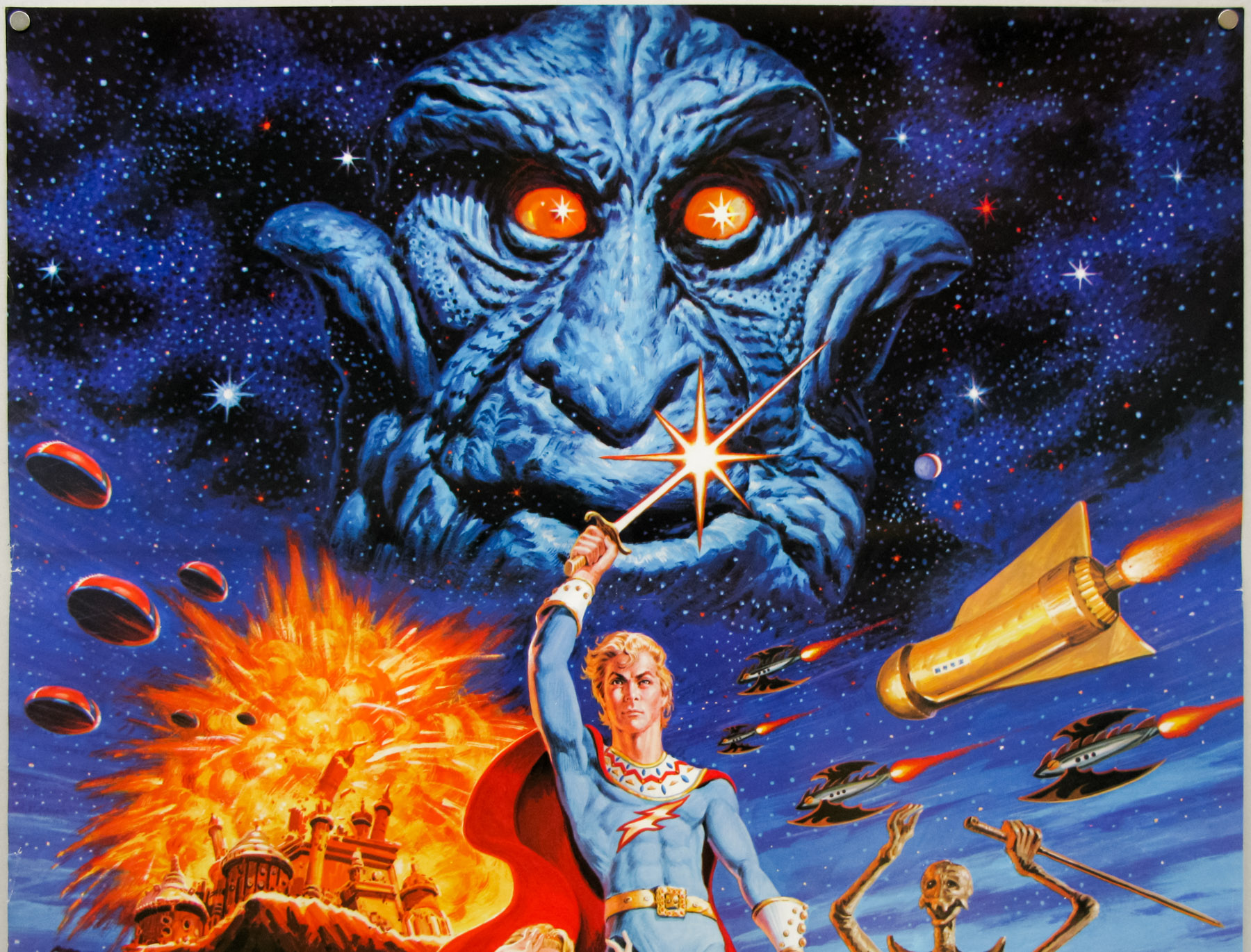
The sex-spoof Flesh Gordon (opens in a new tab) was released within a few months of Star Wars (opens in a new tab) in Japan and that probably accounts for the name change to a title so similar there can be no doubting the canny local distributors were hoping to cash in on some of the success of George Lucas’ sci-fi classic. Based on the original Buster Crabbe-starring Flash Gordon film serials (opens in a new tab) of the 1930s, which were themselves based on a comic strip (opens in a new tab) created by Alex Raymond (opens in a new tab), the film parodies many of the names and situations seen in the originals.

In this version Emperor Wang the Perverted, the leader of the planet Porno, points his mighty ‘Sex Ray’ towards Earth, turning everyone into sex-crazed lunatics. Only one man can save the planet; football player Flesh Gordon. Along with his girlfriend Dale Ardor and the (brilliantly named) mad Professor Flexi-Jerkoff, they set off towards the source of the Sex Ray determined to put a stop to Wang.

Entertaining and unremittingly trashy, the film does an excellent job of being just reverential enough to the original source material whilst adding it’s own brand of madcap humour interspersed with sex scenes. The effects are particularly decent for such a low-budget film and that’s because several of the effects specialists who worked on it were either established experts or men who would later go on to become leading artists in the field, including Mike Minor (opens in a new tab), Greg Jein (opens in a new tab), and Rick Baker (opens in a new tab) (An American Werewolf in London (opens in a new tab)).

For the large monster seen towards the end of the film the production utilised the talents of Jim Danforth (opens in a new tab) and Dave Allen (opens in a new tab) who are both now recognised as two of the leading figures in the world of stop-motion animation. The monster was given the name ‘Nesuahyrrah’, which is ‘Harryhausen’ spelled backwards, the surname of likely the greatest stop-motion animator of all time, Ray Harryhausen (opens in a new tab).

The poster artwork is by one of my favourite Japanese artists, Seito, and is unique to this B2. See the other posters I’ve collected by the artist.

The original trailer is on YouTube (opens in a new tab).

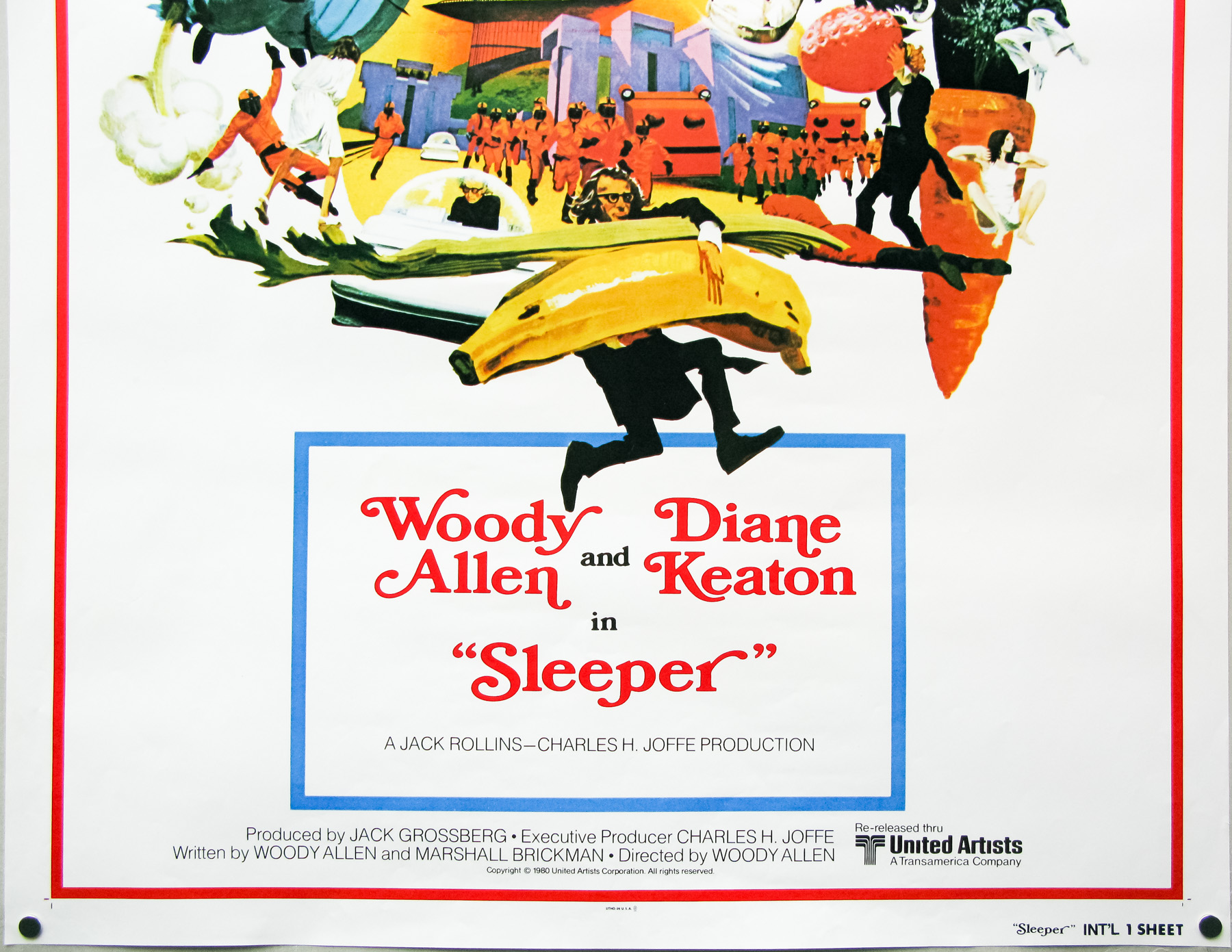
Sleeper / one sheet / 1980 re-release / international

06.06.12

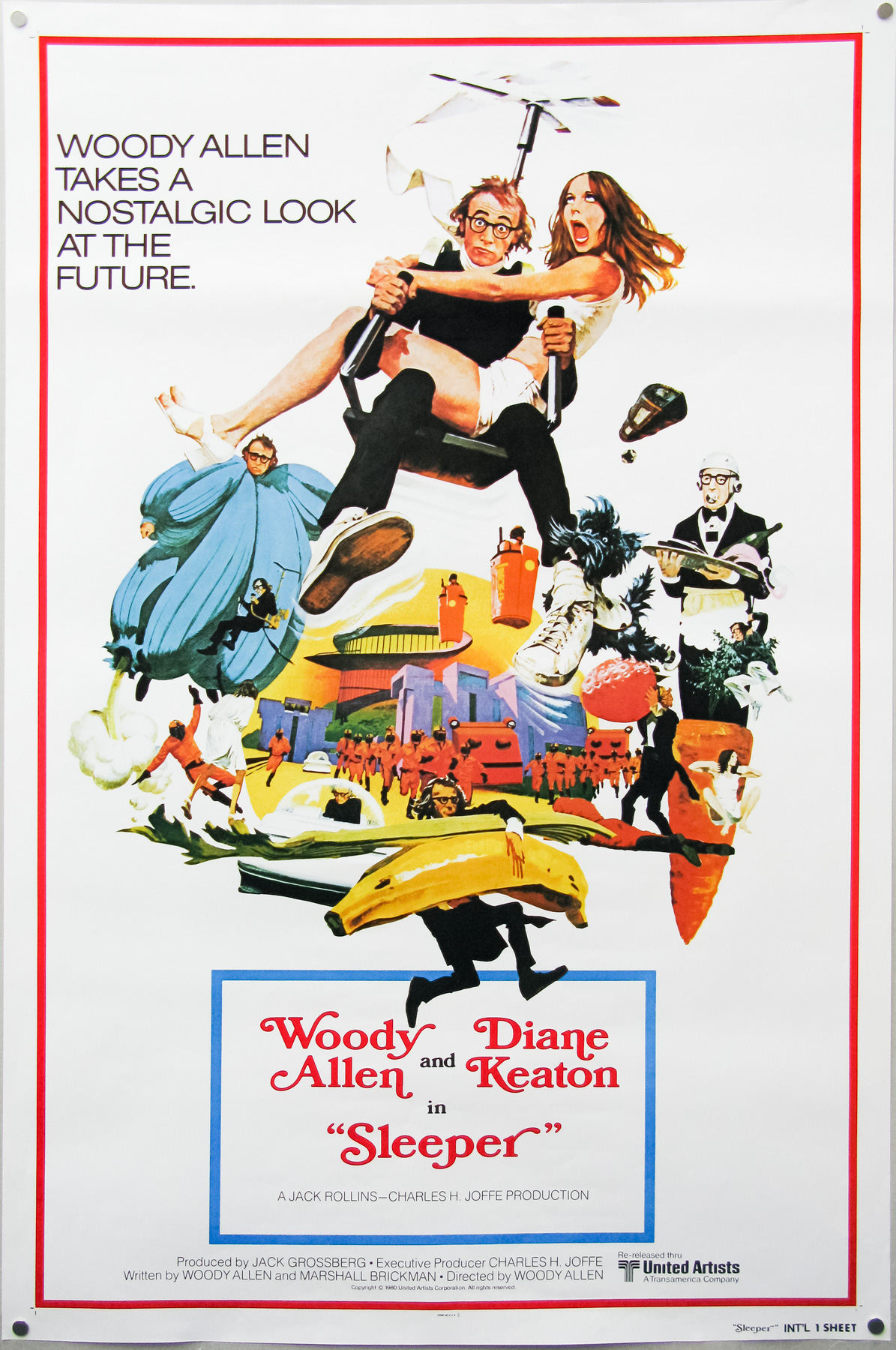
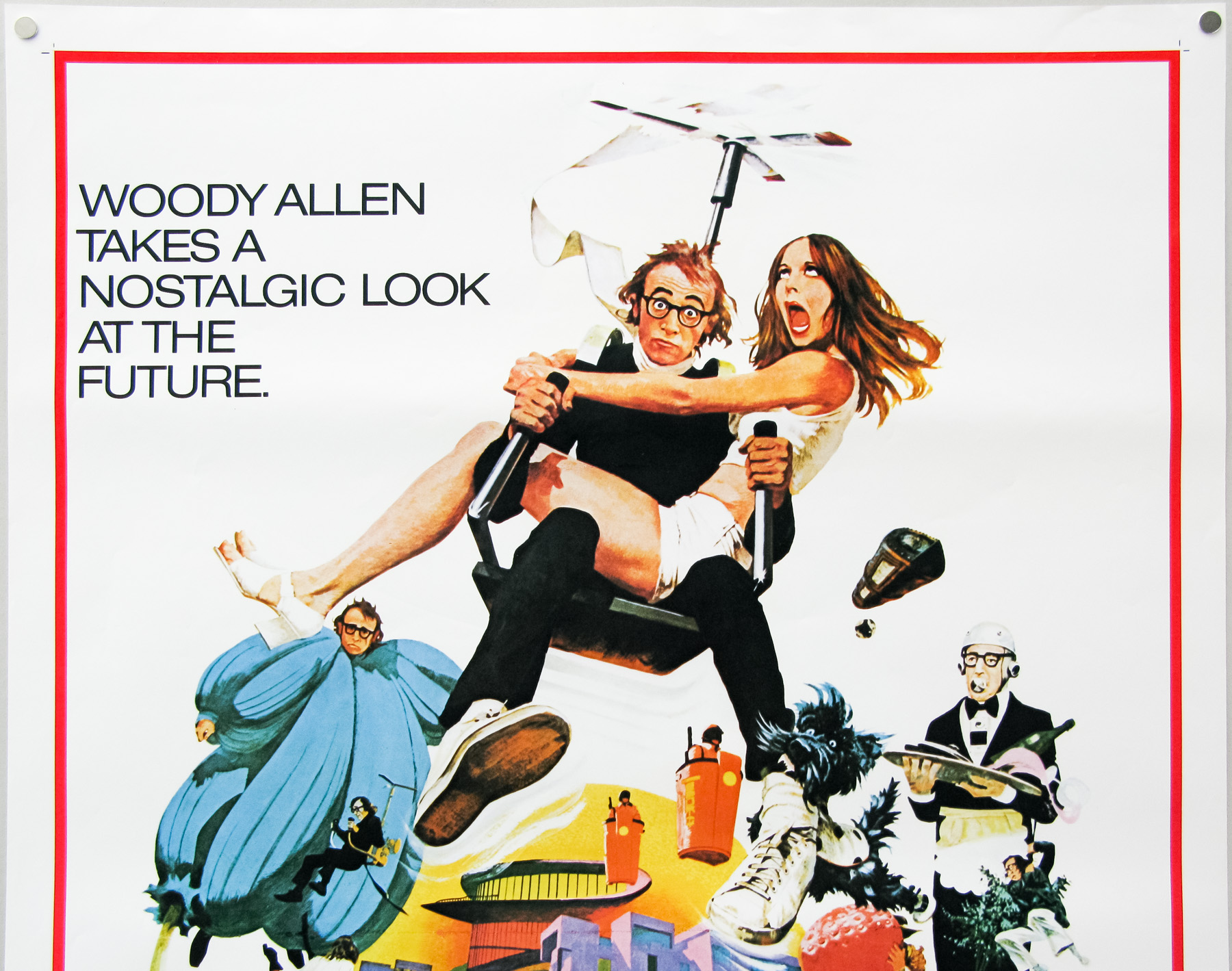
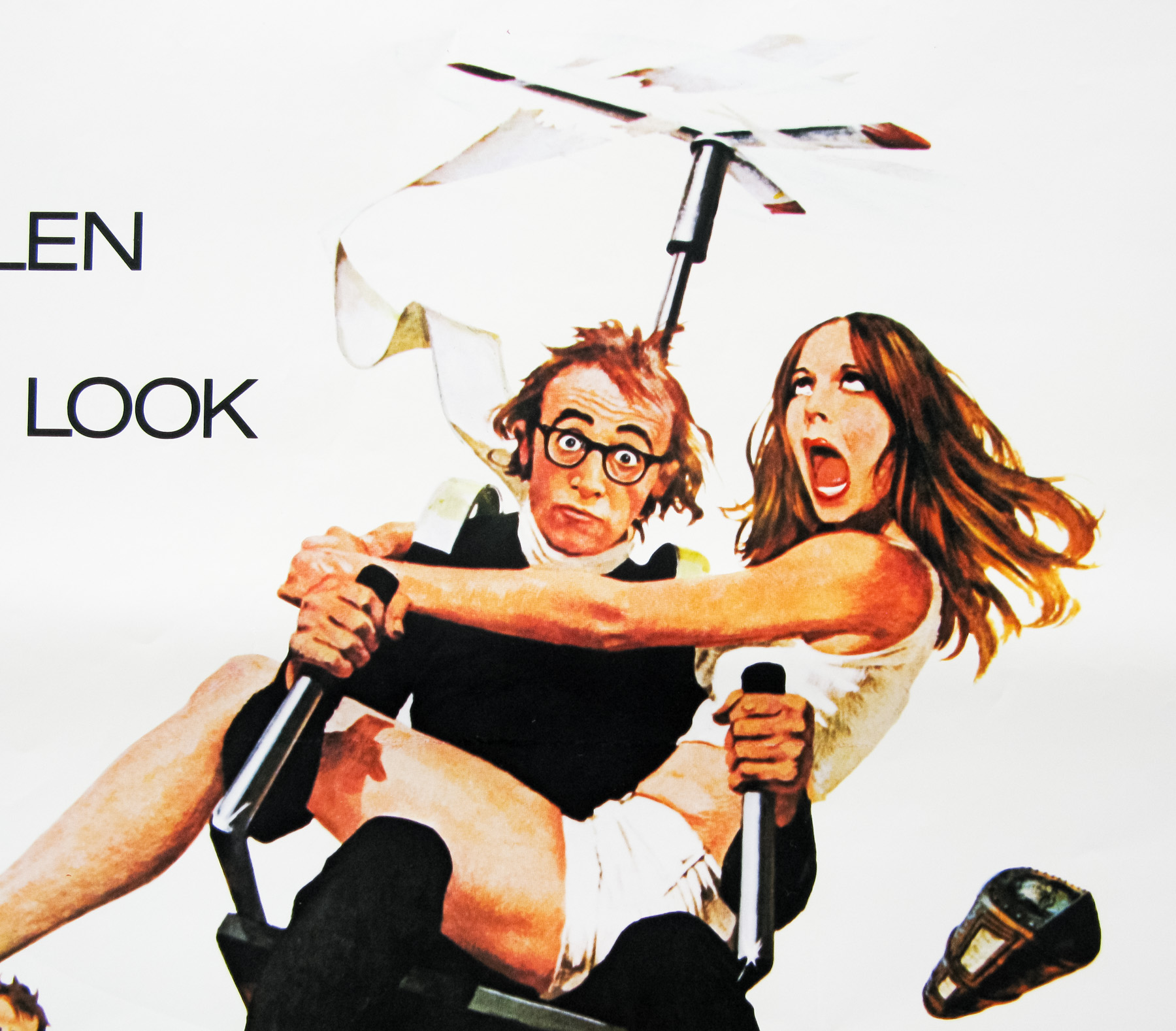
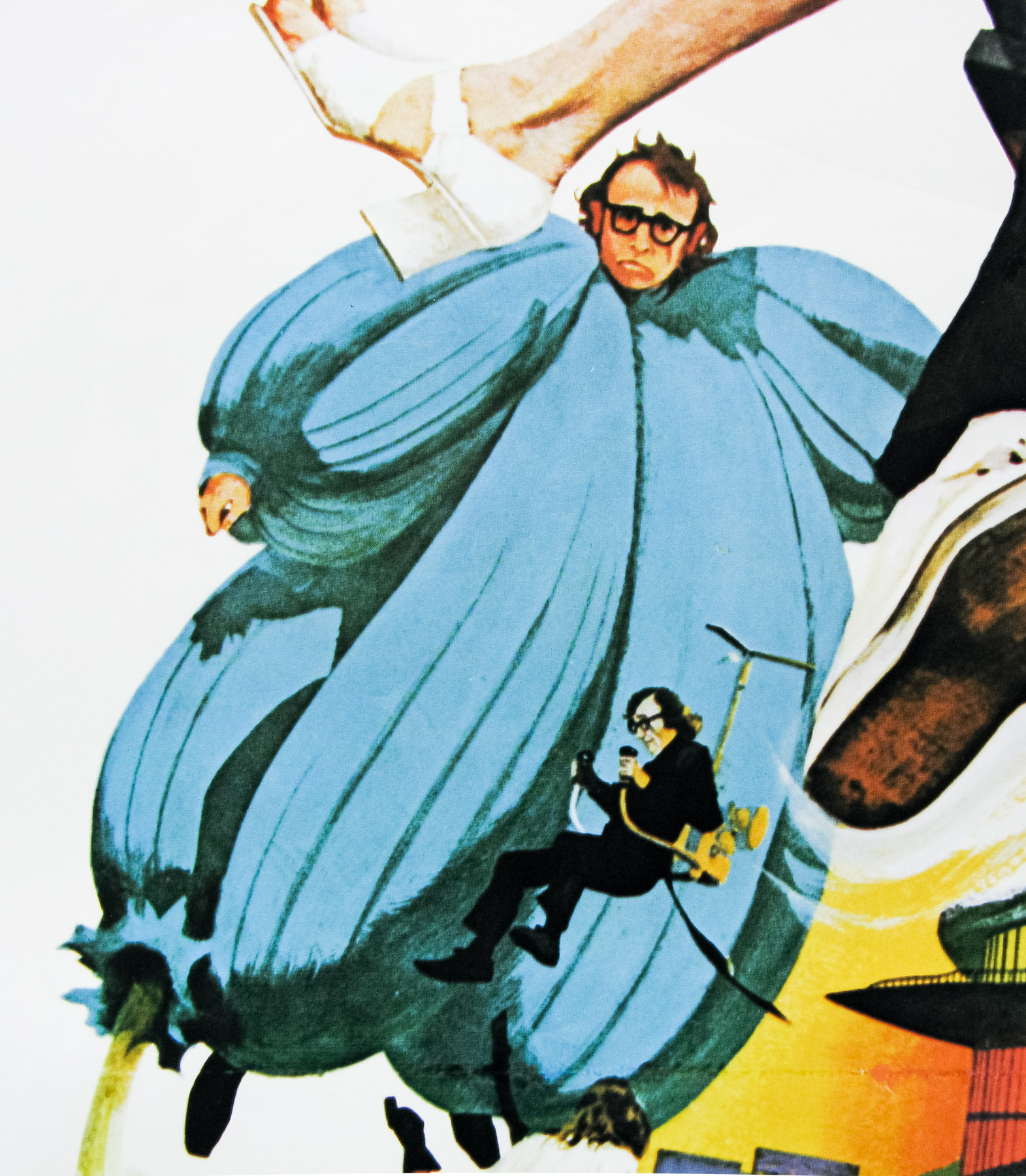
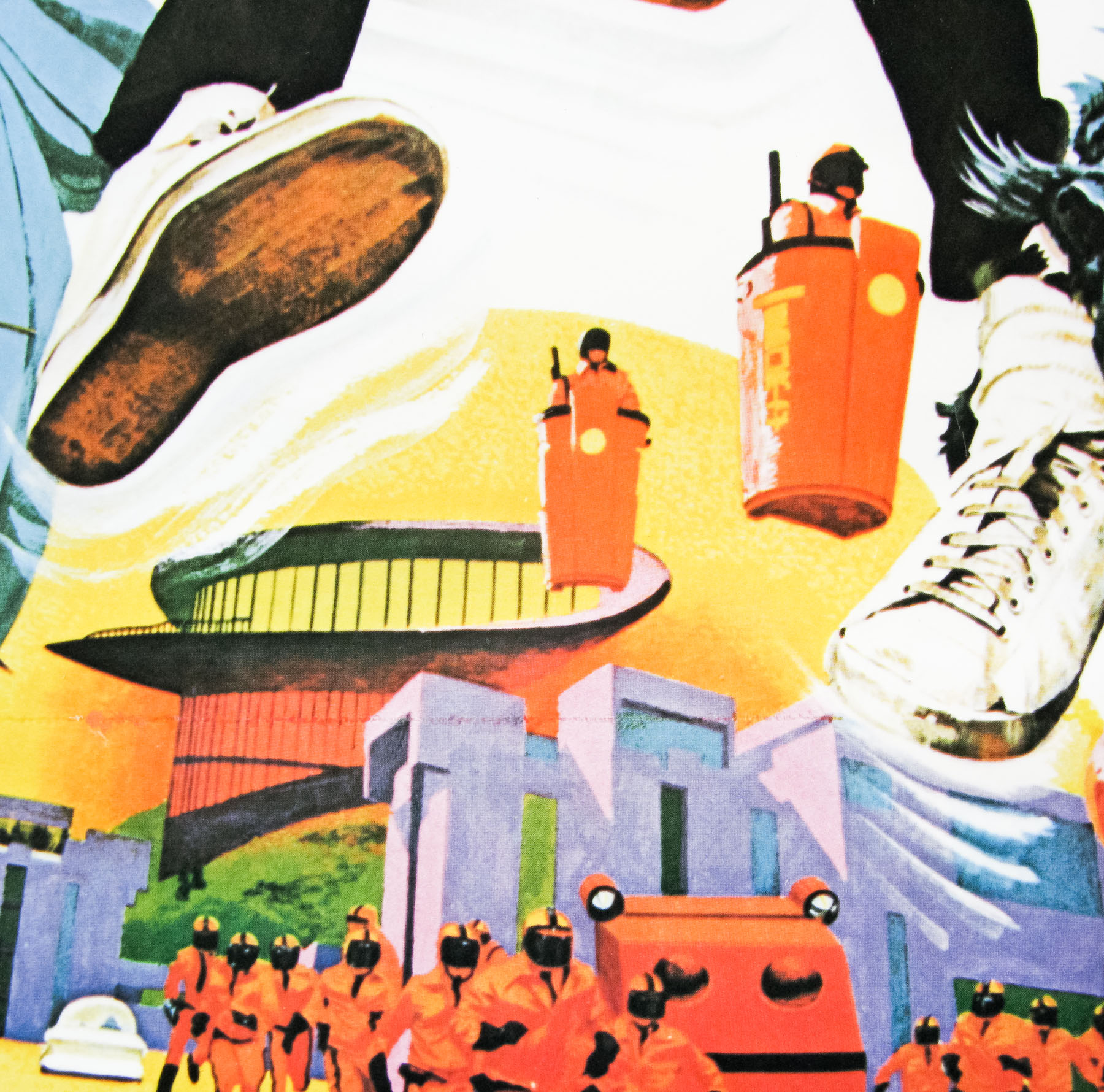
International one sheet poster (1980 re-release) for Sleeper (1973). Artwork by Robert McGinnisInternational one sheet poster (1980 re-release) for Sleeper (1973). Artwork by Robert McGinnis, image 2International one sheet poster (1980 re-release) for Sleeper (1973). Artwork by Robert McGinnis, image 3International one sheet poster (1980 re-release) for Sleeper (1973). Artwork by Robert McGinnis, image 4
Title
Sleeper
AKA
Woody et les robots (France)
Year of Film
1973
Director
Woody Allen
Starring
Woody Allen, Diane Keaton, John Beck, Mary Gregory, Don Keefer, John McLiam, Bartlett Robinson, Chris Forbes, Mews Small
Origin of Film
USA
Genre(s) of Film
Sci-Fi | Comedy
Type of Poster
One sheet
Style of Poster
Re-release
Origin of Poster
International
Year of Poster
1980
Designer
Unknown
Artist
Robert McGinnis
Size (inches)
27 1/8" x 41"
SS or DS
SS
Tagline
Woody Allen takes a nostalgic look at the future

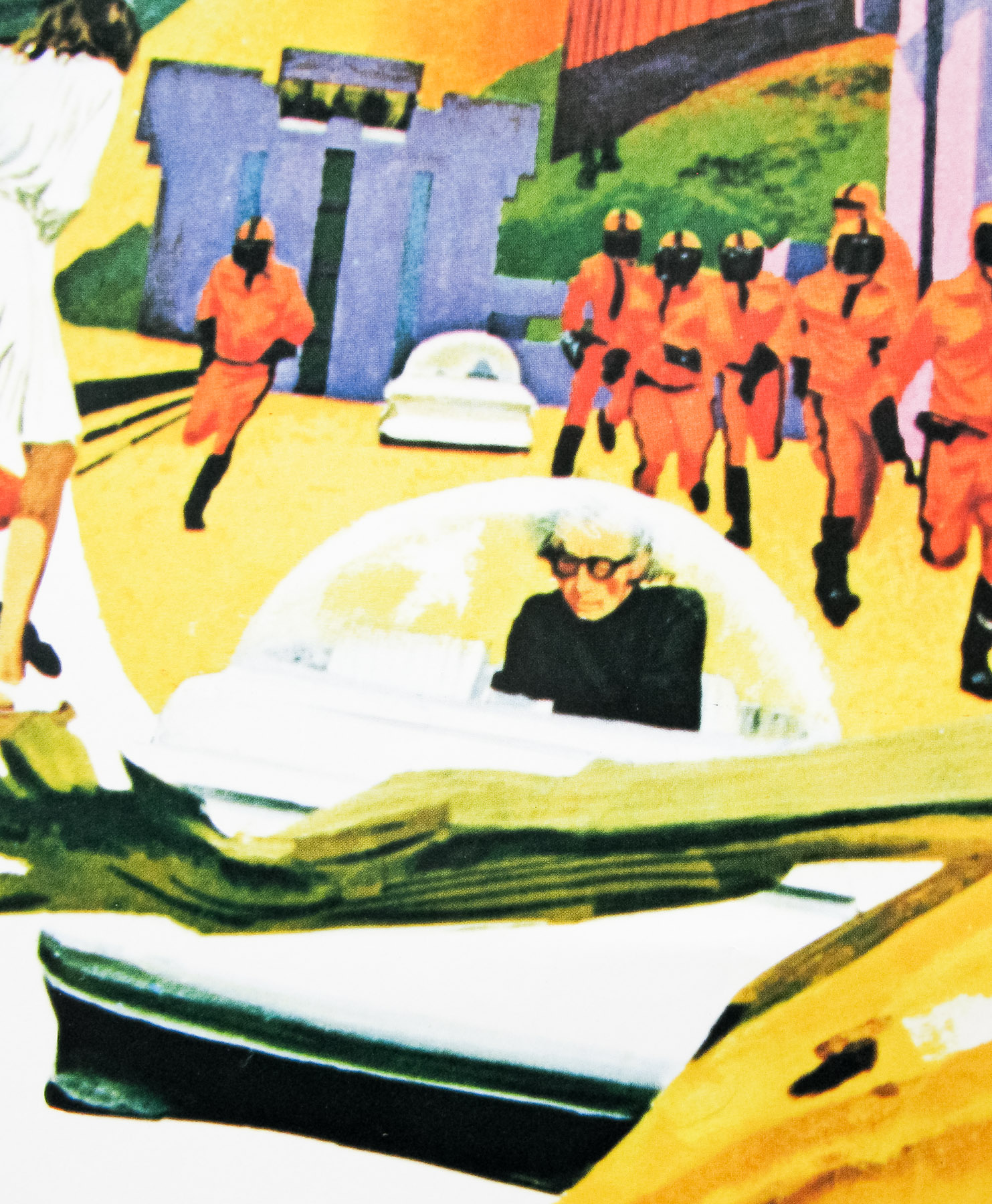
Artwork by the brilliant Robert McGinnis (opens in a new tab) on this US one sheet for the 1980 re-release of Woody Allen (opens in a new tab)‘s 1973 sci-fi comedy Sleeper (opens in a new tab). Allen stars as Miles Monroe, a musician and health store owner who is cryogenically frozen by accident in 1973 and then revived 200 years later to discover that 22nd-century America is now an oppressive police state ruled by a dictator. Monroe falls in with a group of rebels who are trying to infiltrate the government’s top secret Aires Project, and it’s not long before he is on the run from the authorities with a kidnapped socialite Luna Schlosser (Diane Keaton) in tow.

One of the director’s earliest and best, in my opinion, the film is a frequently hilarious slapstick adventure that differs greatly from many of his later, more serious and introspective films. Incredibly, Allen was able to complete editing almost 35 hours of footage down to the release running time of two hours; a feat he managed with two days to spare. The film was released with the title ‘Woody and the Robots’ in French-speaking Canada and this led the director to ensure he had a clause in all future contracts that prevented his film titles being changed by third parties.

Robert McGinnis is an American artist and illustrator who is perhaps best known for his work on several James Bond posters, as well the iconic one sheet for the first release of Breakfast at Tiffanys. These and many others can be seen on this website (opens in a new tab). See the other posters I’ve collected by him.

The brilliantly bonkers trailer can be seen on YouTube (opens in a new tab).

Gonzo: The Life and Work of Dr. Hunter S. Thompson / one sheet / USA

04.06.12

US one sheet poster for Gonzo: The Life and Work of Dr. Hunter S. Thompson (2008). Artwork by Ralph SteadmanUS one sheet poster for Gonzo: The Life and Work of Dr. Hunter S. Thompson (2008). Artwork by Ralph Steadman, image 2US one sheet poster for Gonzo: The Life and Work of Dr. Hunter S. Thompson (2008). Artwork by Ralph Steadman, image 3
Title
Gonzo: The Life and Work of Dr. Hunter S. Thompson
Year of Film
2008
Director
Alex Gibney
Starring
Hunter S. Thompson, Johnny Depp
Origin of Film
USA
Genre(s) of Film
Documentary
Type of Poster
One sheet
Origin of Poster
USA
Year of Poster
2008
Designer
Unknown
Artist
Ralph Steadman
Size (inches)
27" x 39 11/16"
SS or DS
SS

Artwork by the brilliant Ralph Steadman (opens in a new tab) on this poster for Alex Gibney (opens in a new tab)‘s documentary on the life of the late, great American journalist and author Hunter S. Thompson (opens in a new tab). The title refers to Gonzo journalism (opens in a new tab), which is a style of reporting where the reporter involves themselves in the story to such a degree that they become a key part of it. The documentary features some fantastic, never-before-seen video recordings of Thompson as well as excerpts from audio tapes and unpublished manuscripts.

British artist Steadman was a long-time collaborator with Thompson and provided artwork for many of his articles and books, including the classic Fear and Loathing in Las Vegas (opens in a new tab). He is also responsible for the artwork on the British poster for the 1980 film Where the Buffalo Roam (opens in a new tab), which is a semi-biographical story based on a period of time in Thompson’s life.

Director Gibney is also responsible for the brilliant documentaries Taxi to the Dark Side (opens in a new tab) and Enron: The Smartest Guys in the Room (opens in a new tab) as well as several others.

The trailer for the film is on YouTube (opens in a new tab).