You searched for: Quad%2520

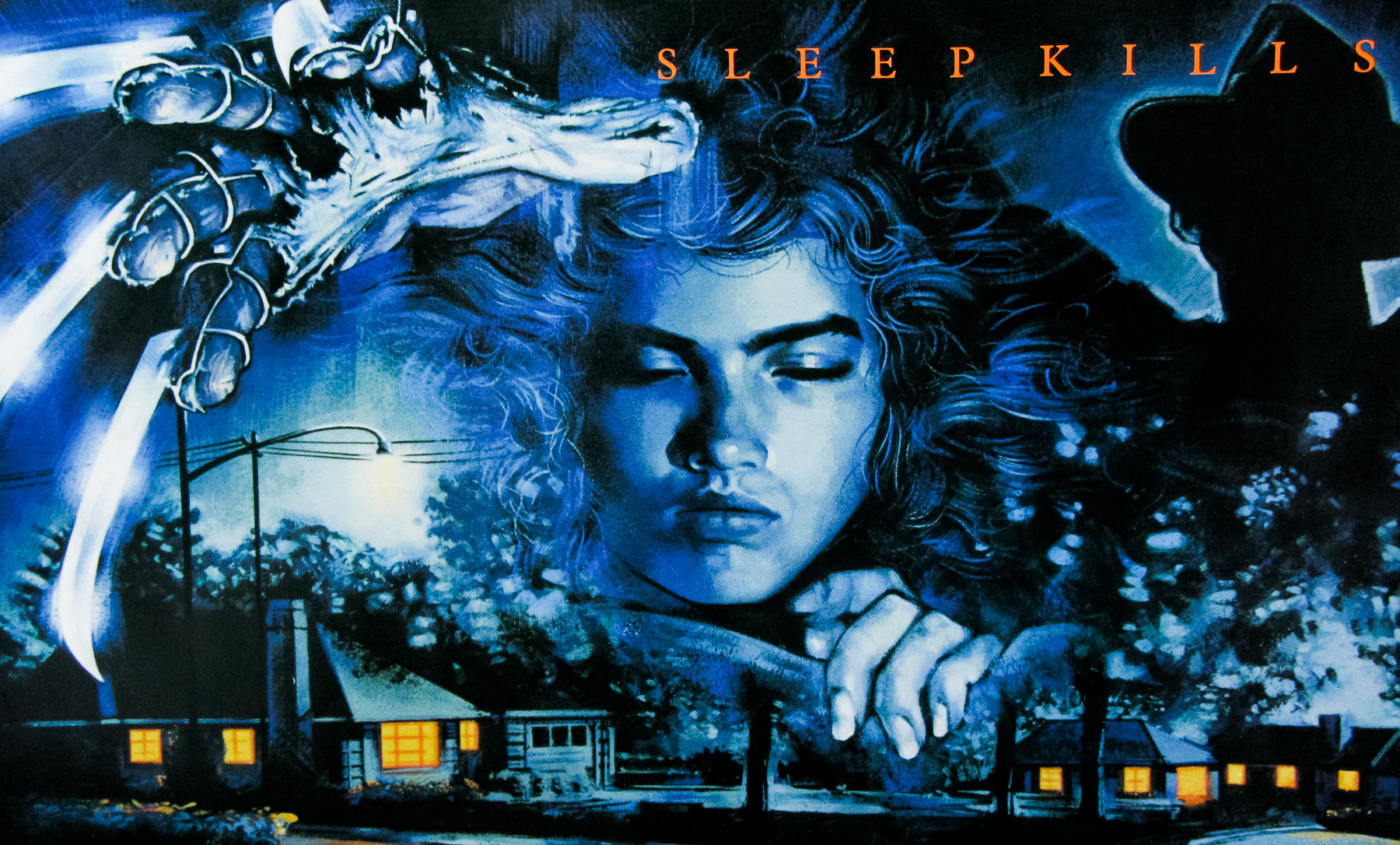
A Nightmare On Elm Street / quad / UK

18.05.11

Poster Poster
Title
A Nightmare On Elm Street
AKA
Nightmare dal profondo della notte [Nightmare from the depths of the night] (Italy)
Year of Film
1984
Director
Wes Craven
Starring
John Saxon, Ronee Blakley, Heather Langenkamp, Amanda Wyss, Nick Corri, Johnny Depp, Robert Englund
Origin of Film
USA
Genre(s) of Film
John Saxon, Ronee Blakley, Heather Langenkamp, Amanda Wyss, Nick Corri, Johnny Depp, Robert Englund,
Type of Poster
Quad
Style of Poster
--
Origin of Poster
UK
Year of Poster
1985
Designer
Graham Humphreys
Artist
Graham Humphreys
Size (inches)
30 1/16" x 39 14/16"
SS or DS
SS
Tagline
Sleep kills

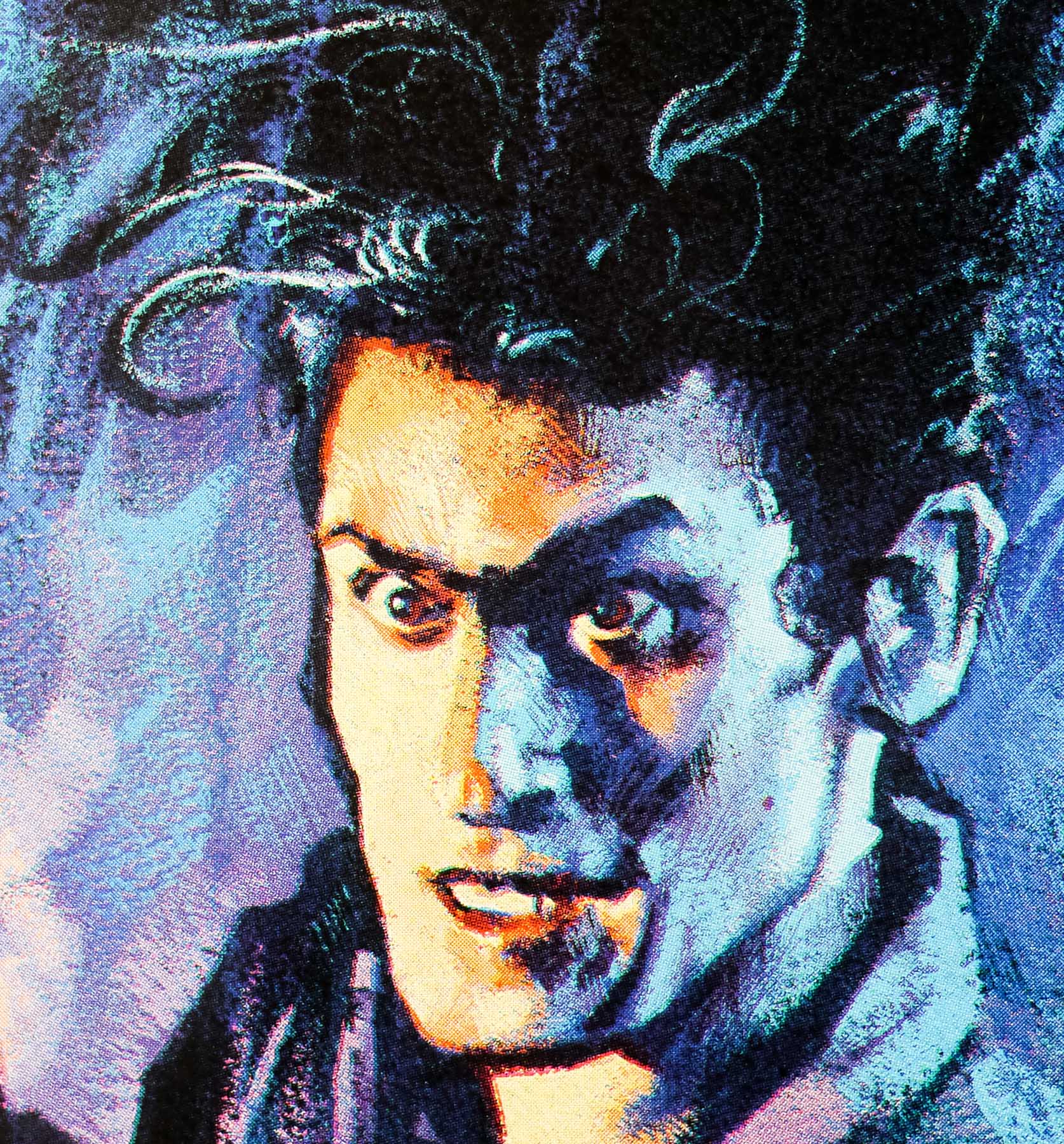
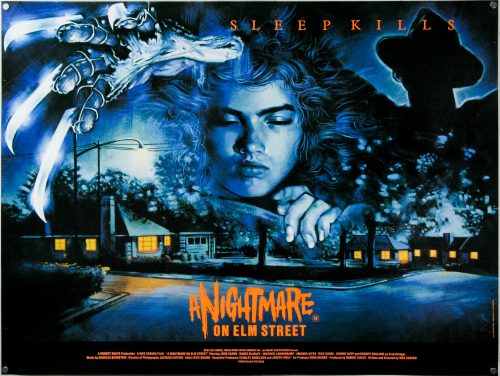
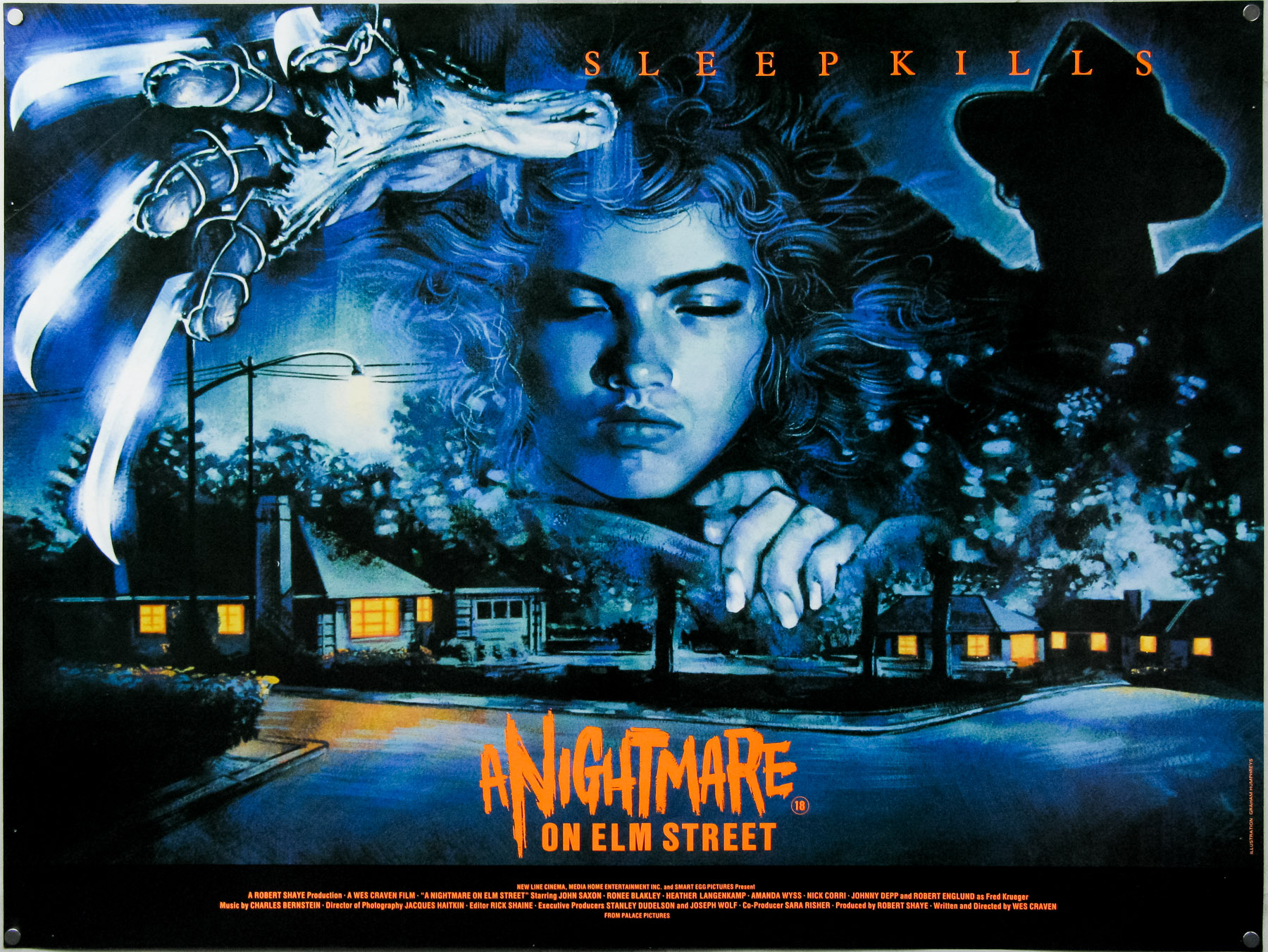
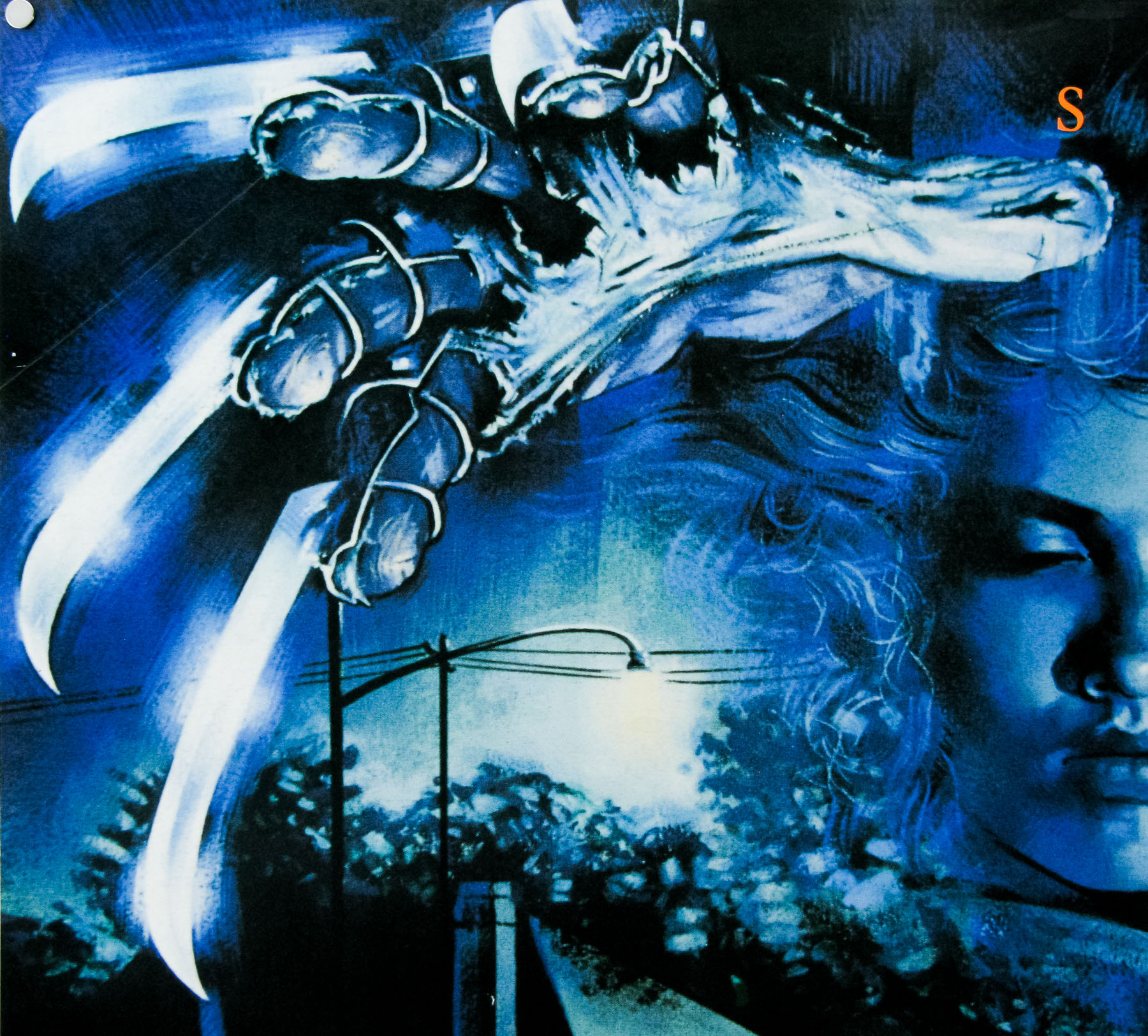
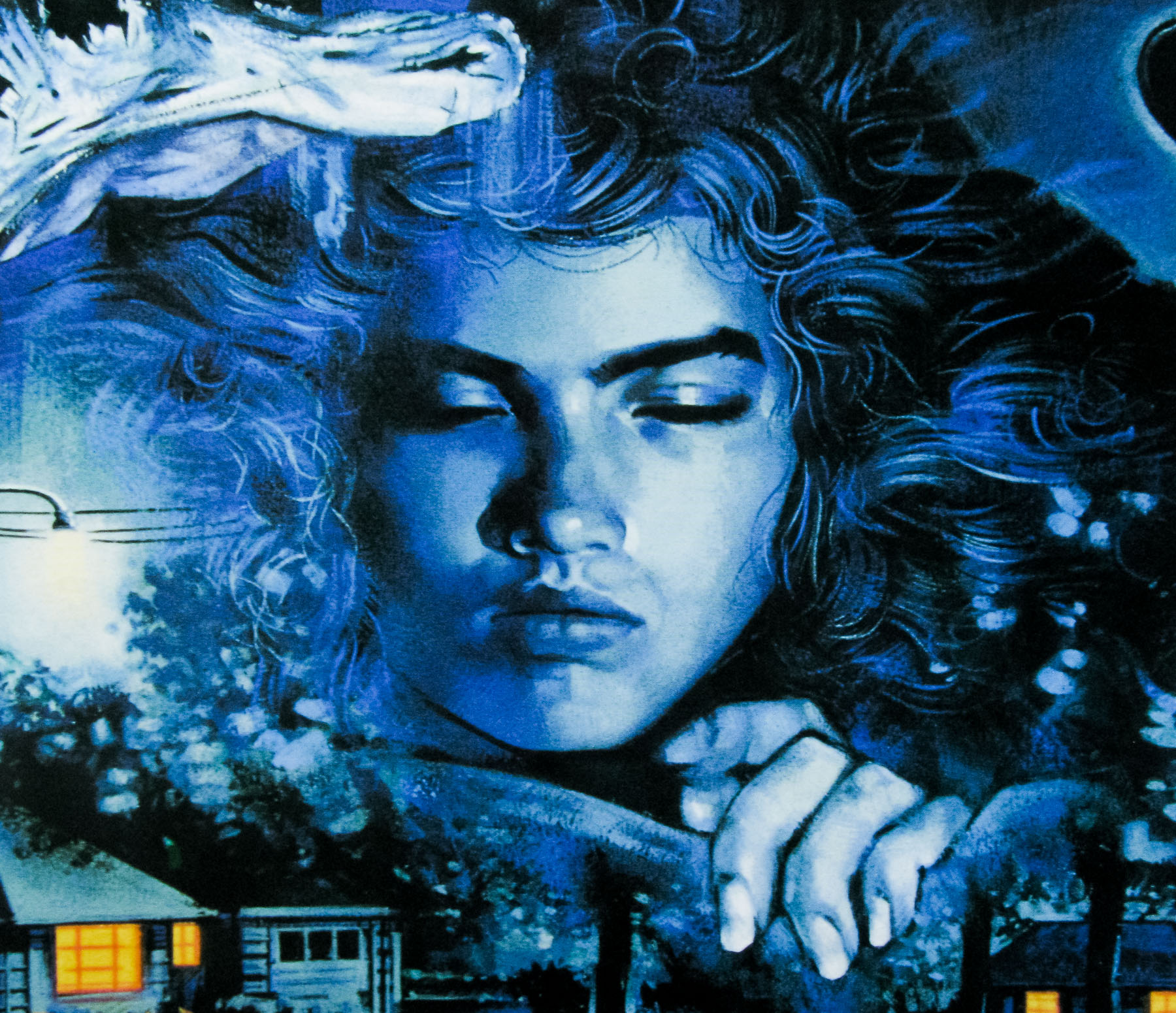
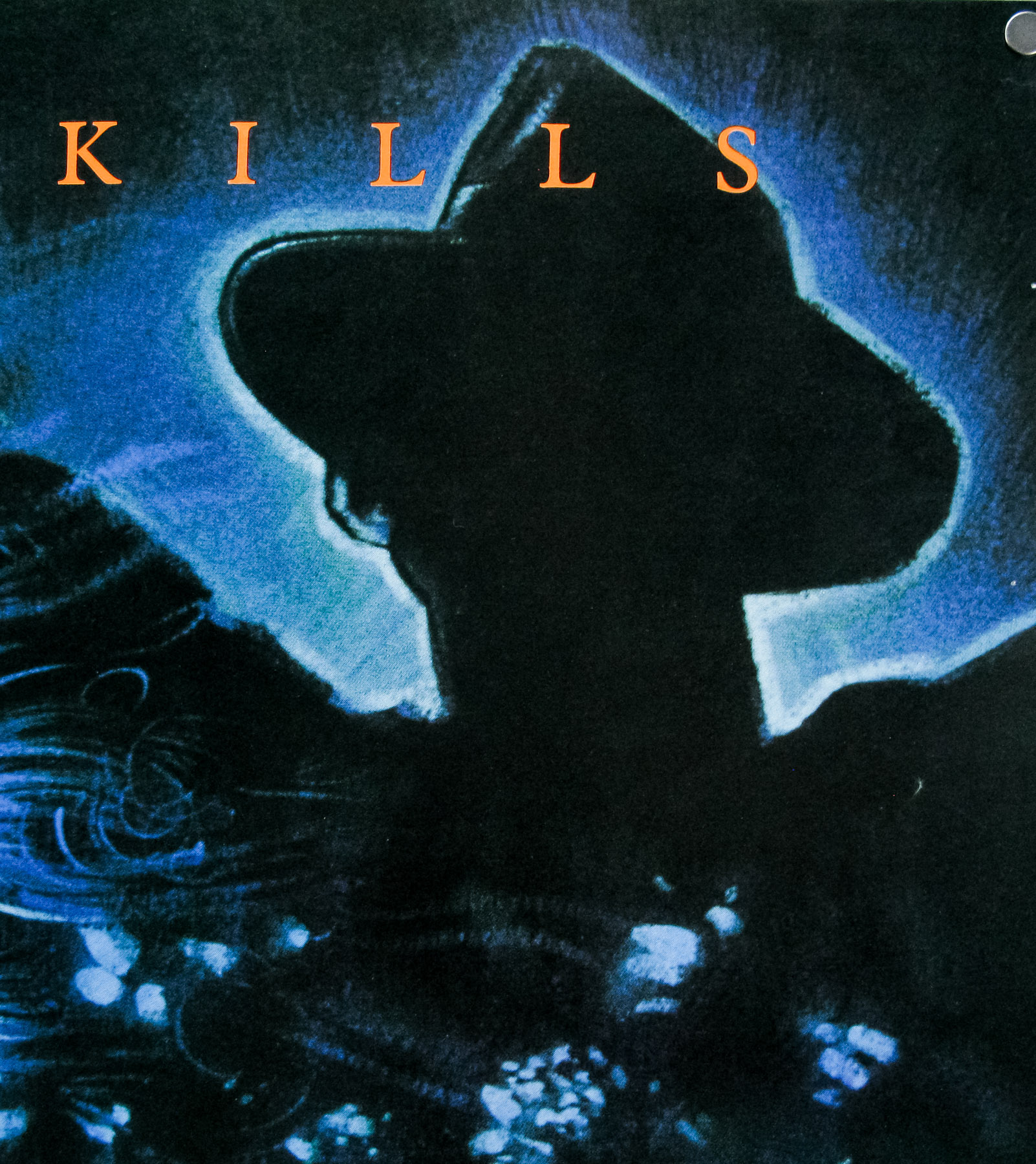
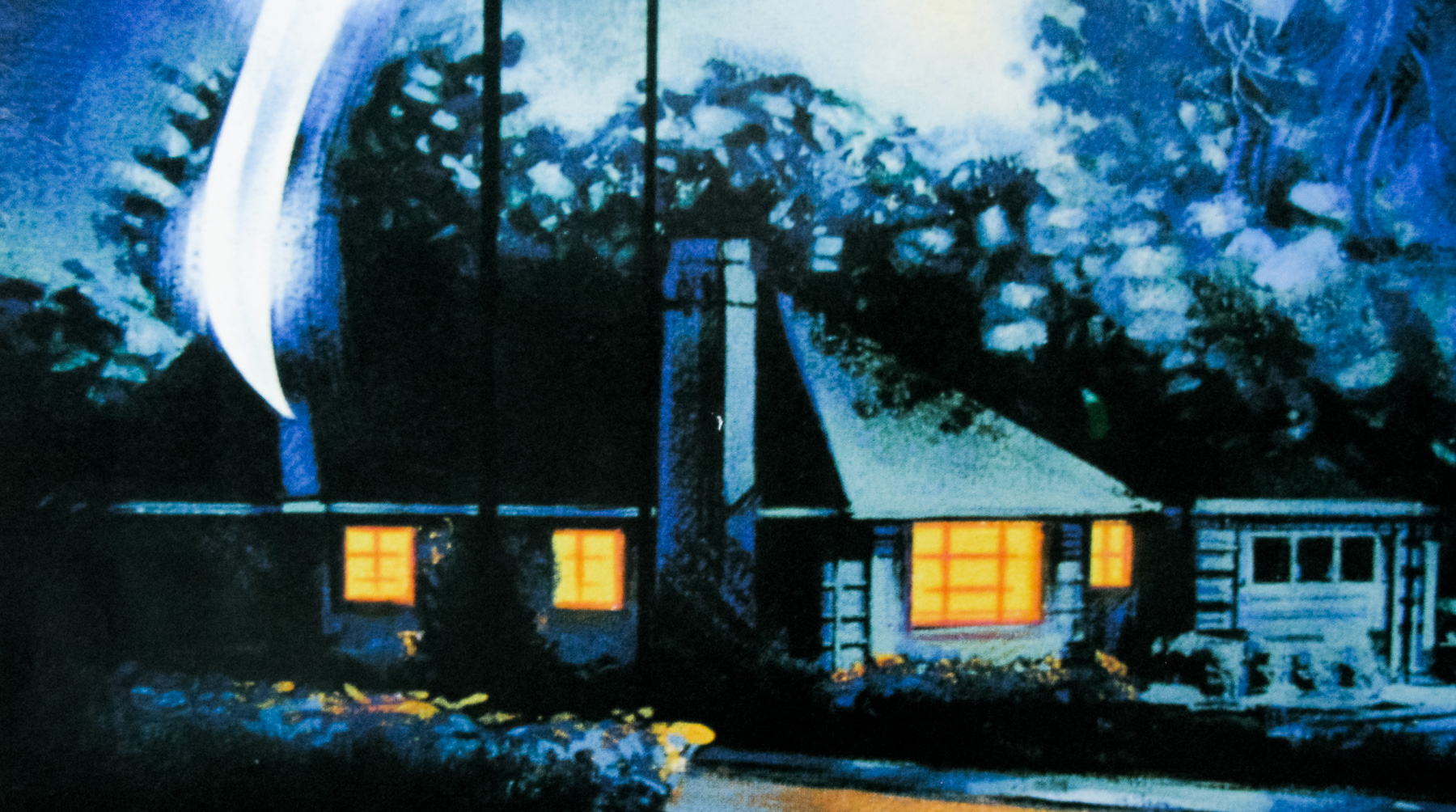
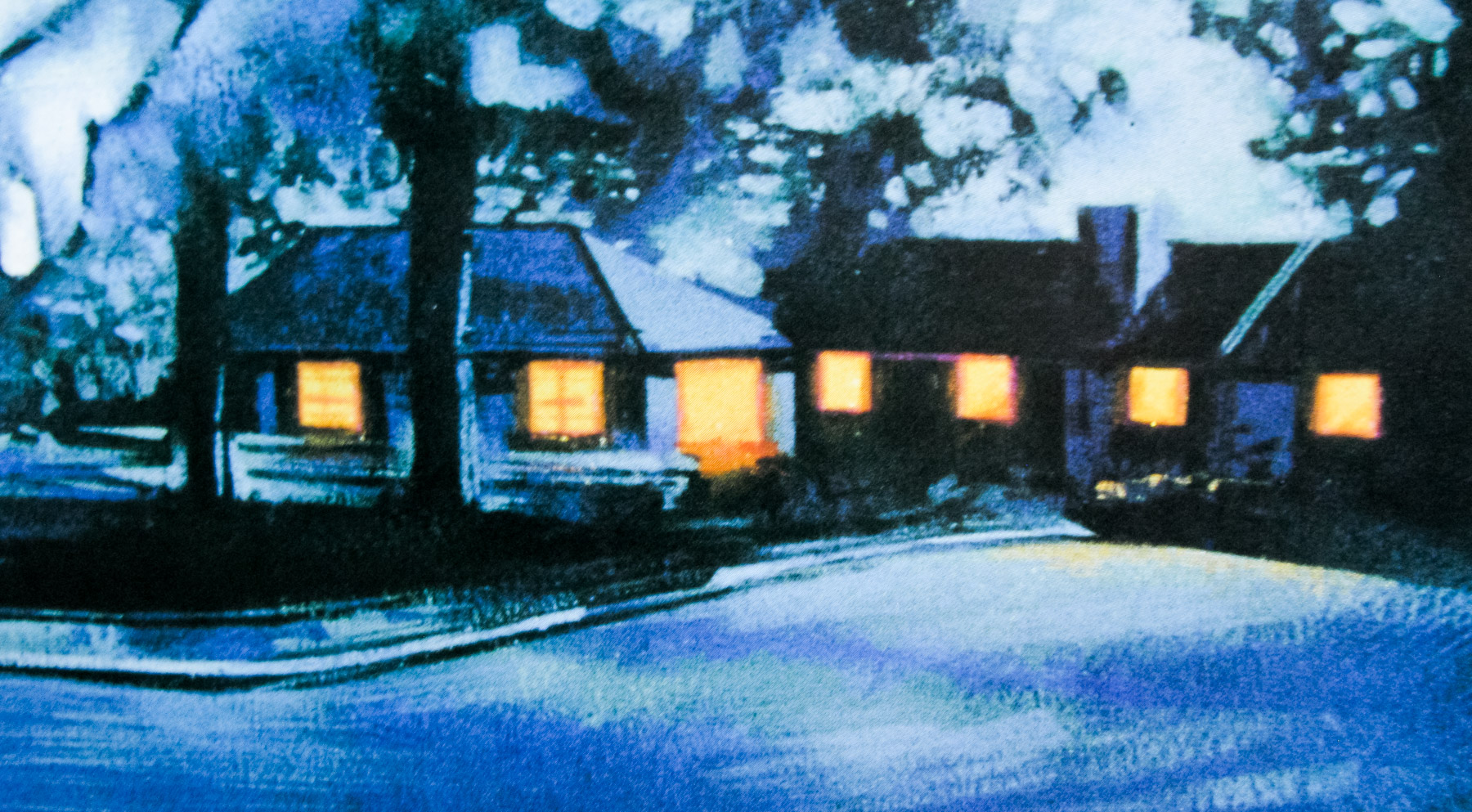
Iconic design and illustration on this UK quad for the film that started the successful Freddy Krueger franchise, featuring artwork by the British designer and artist Graham Humphreys. When I interviewed him about his career in 2011 I asked about the design for the poster and the excerpt from the interview is below:

I wanted to move onto another poster that’s many people’s favourite for the film, and that’s your design for A Nightmare on Elm Street. That was another one for Palace Pictures?
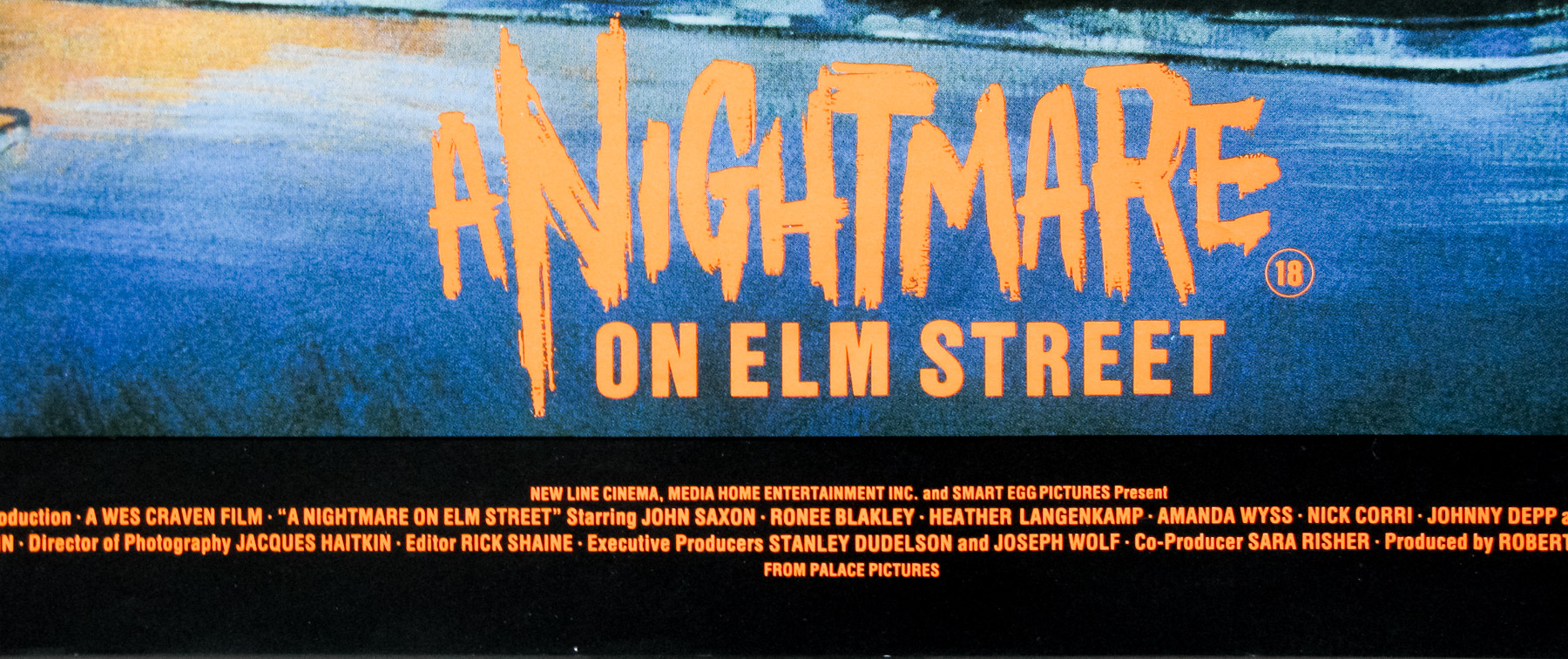
It was shortly after the Evil Dead. I wasn’t commissioned directly, it was through a couple of friends of mine who had set up a design company and they were working with Palace. The company was called Red Ranch. I’d been at college with one of the guys. They got on very well with Palace Pictures and they were given this project. They realised it was going to be an illustration and they were very happy to use me. I was able to do the logo for the poster as well.

Can you talk about the design of the poster?
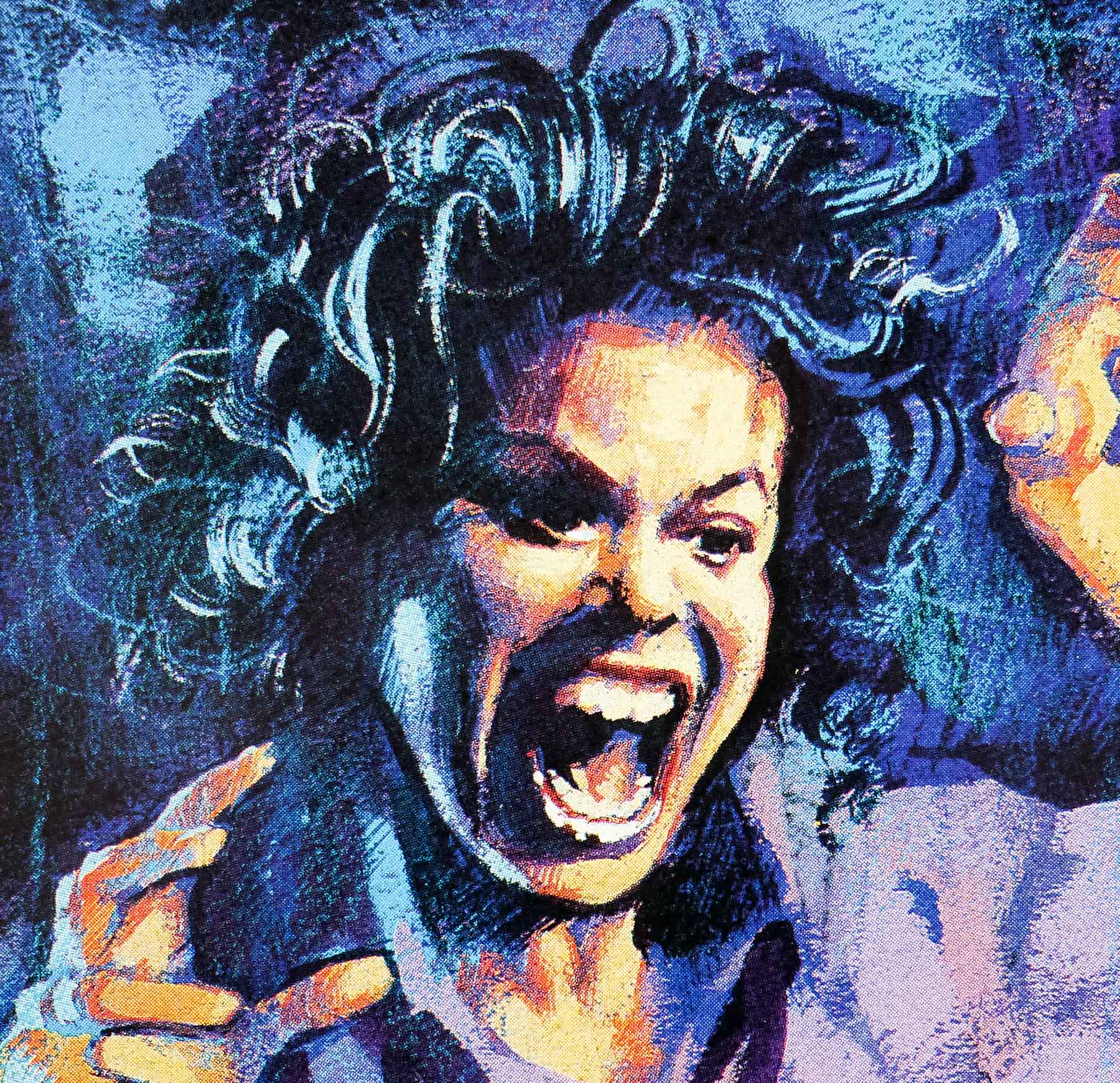
There was an American flyer for the film that was essentially the street with four tears through it. I saw the film and knew what I was going to do. I’d actually gone along to a screening with my friend, Phil Nutman, who I’ve since given this to [Graham points at the Evil Dead artwork] so I’d already seen it at the cinema before I was given a VHS copy. Anyway, I paused the VHS and took a photograph of Nancy’s face so I could draw that easily.

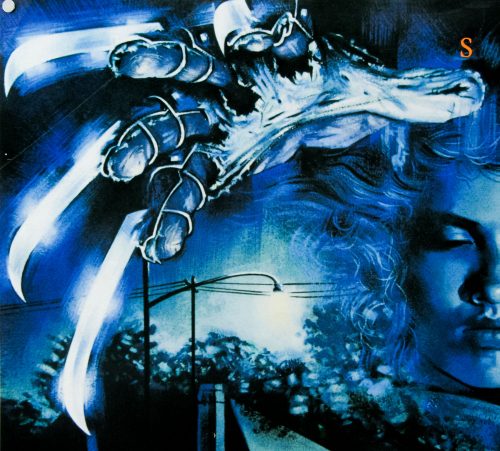
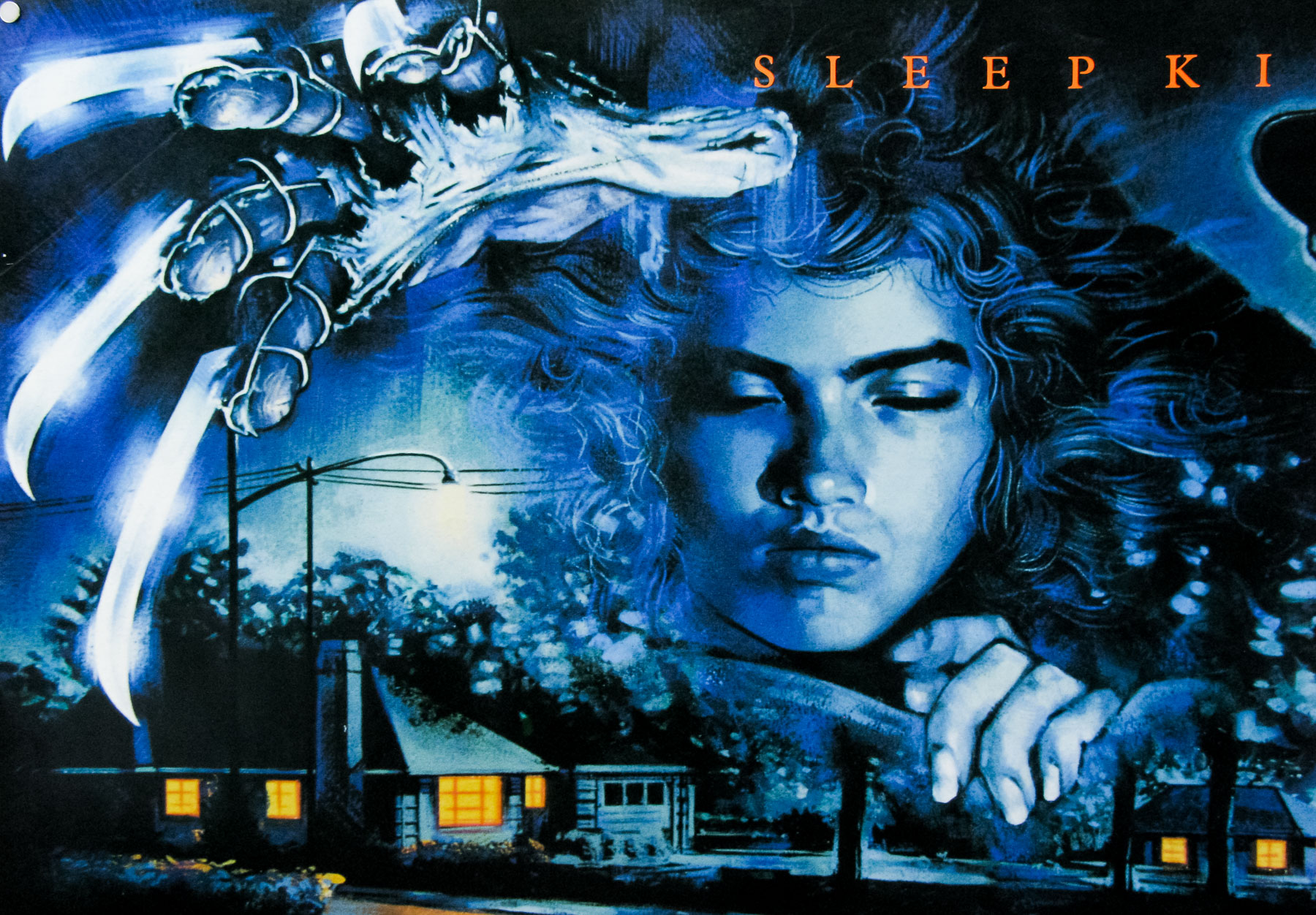
Freddy [Krueger] himself is actually silhouetted in the background. In the later posters he’s more prominent but on this first quad you don’t see anything, just the shadow and his glove.
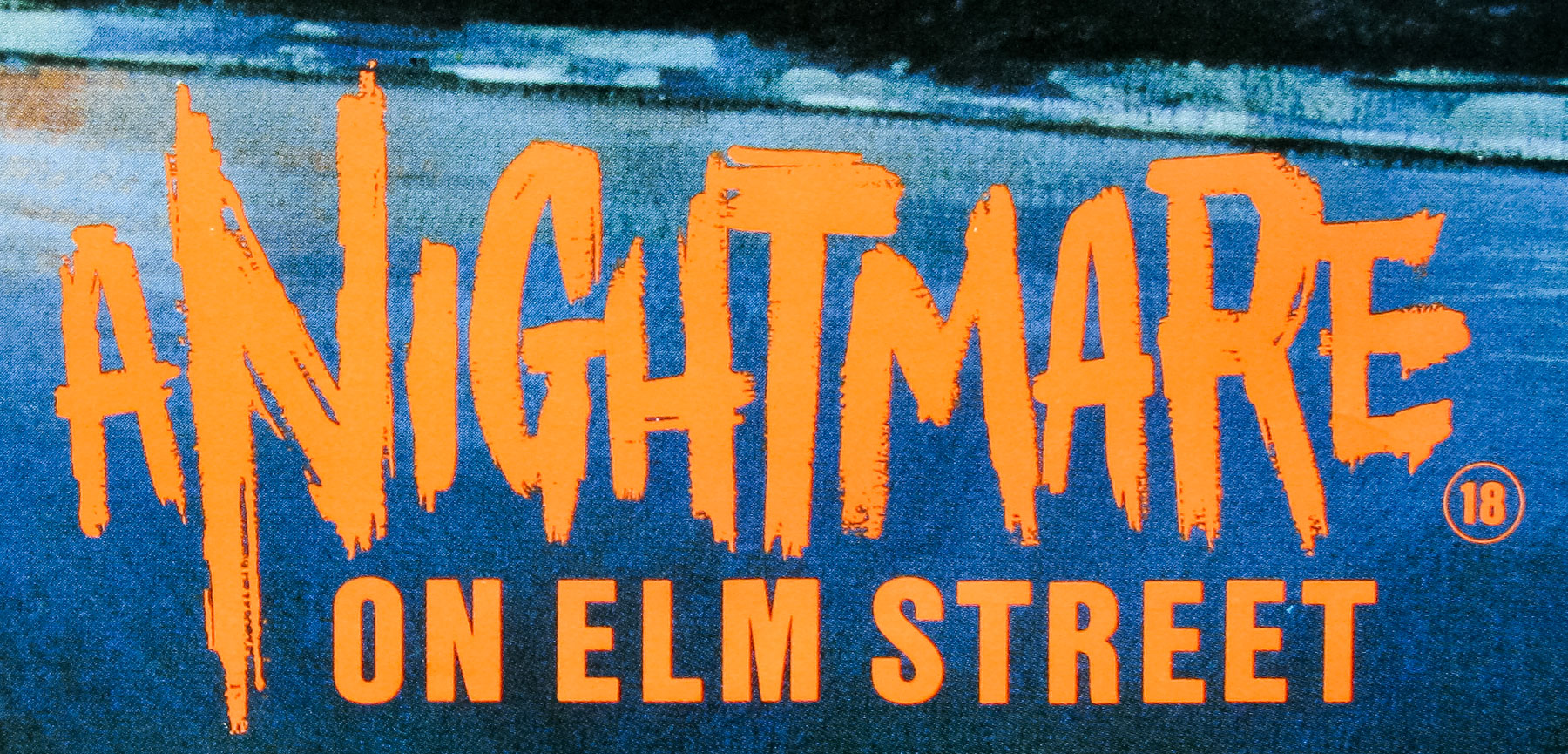
I think they wanted the poster to look fairly classy, in comparison to the Evil Dead quad which shows exactly the type of film it is. Obviously the glove became iconic but at the time people had no clue who Freddy was. To me, it was the glove and the whole dreaming thing that was the interesting thing about the film. You’ve got the pretty girl, the glove and the dream-like urban setting, you don’t need the big ugly face leering at you. I hand lettered the title too.

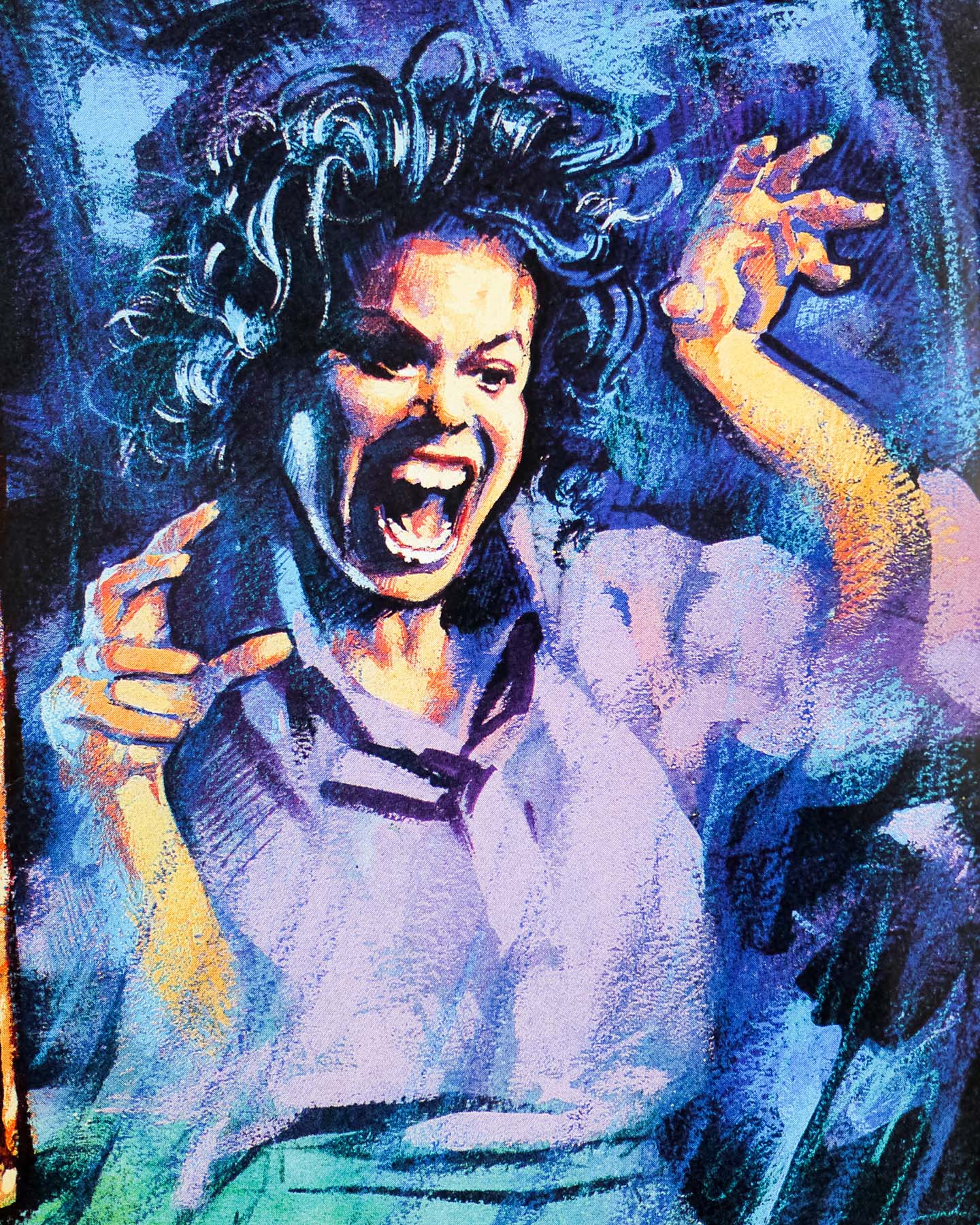
There’s also a second painting which is in portrait format and features Freddy’s other hand reaching down below Nancy’s face.
Yes, I think I prefer this one. This was used for fly posting and was the VHS cover too. For some reason at that time no one would think about the whole different format thing. Everyone was always focusing on quad posters for underground advertising and cinema fronts. The 40×60 inches or bus stop format was very much an American thing, but then when cinema became more commercial we found we had to start doing that size and format.
Evil Dead II / quad / UK

21.09.12

Poster Poster
Title
Evil Dead II
AKA
Evil Dead 2: Dead by Dawn (USA title)
Year of Film
1987
Director
Sam Raimi
Starring
Bruce Campbell, Sarah Berry, Danny Hicks, Kassie Wesley, Ted Raimi, Denise Bixler, Richard Domeier, John Peaks, Lou Hancock
Origin of Film
USA
Genre(s) of Film
Bruce Campbell, Sarah Berry, Danny Hicks, Kassie Wesley, Ted Raimi, Denise Bixler, Richard Domeier, John Peaks, Lou Hancock,
Type of Poster
Quad
Style of Poster
--
Origin of Poster
UK
Year of Poster
1987
Designer
Graham Humphreys
Artist
Graham Humphreys
Size (inches)
30" x 40"
SS or DS
SS
NSS #
--
Tagline
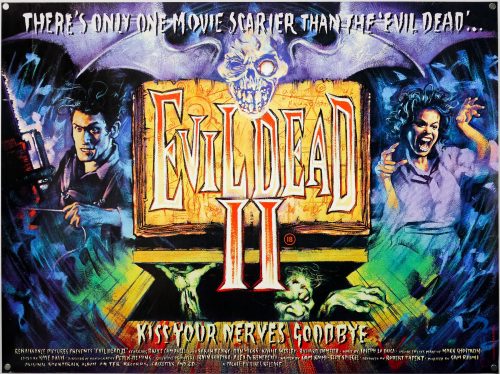
There's only one movie scarier than 'The Evil Dead'... | Kiss your nerves goodbye

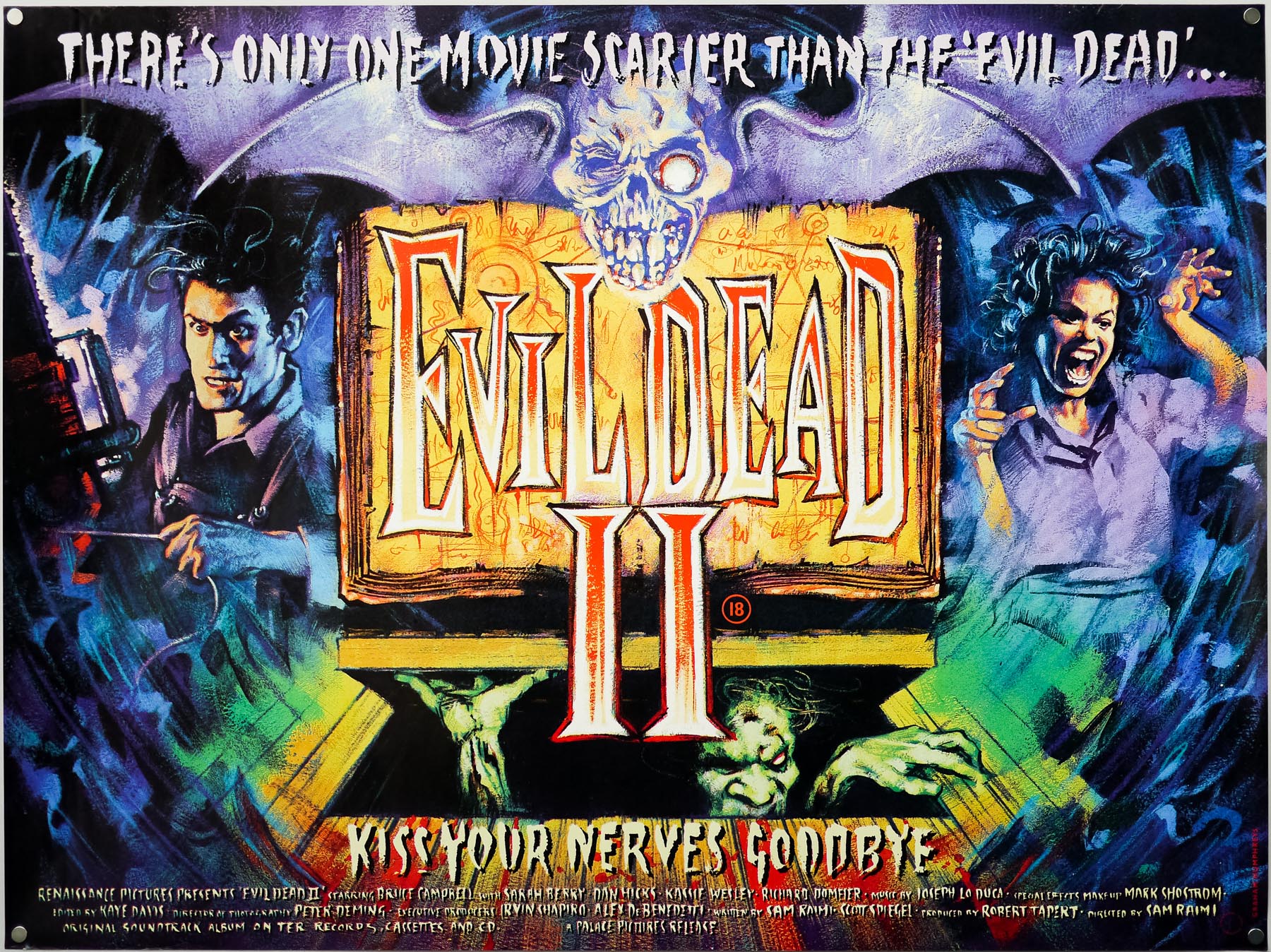
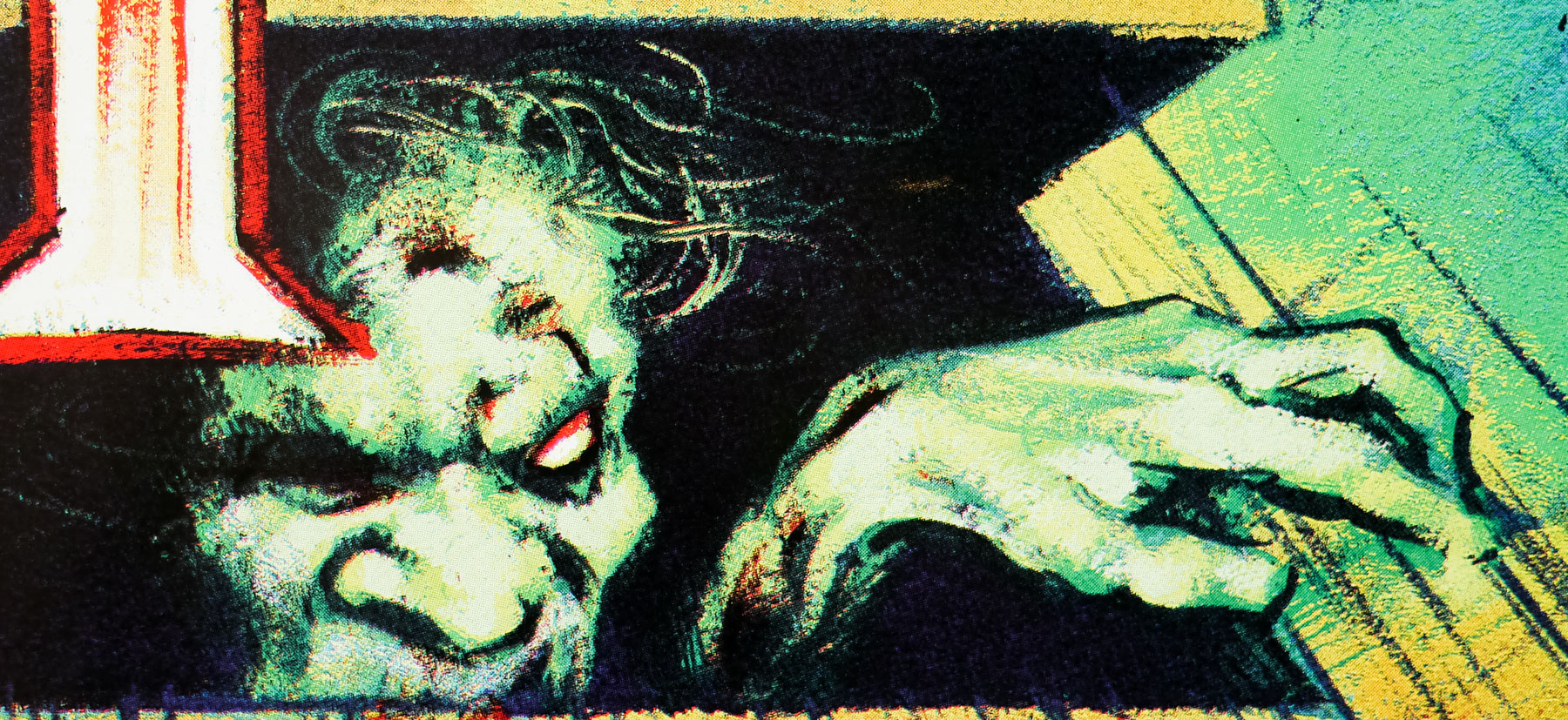
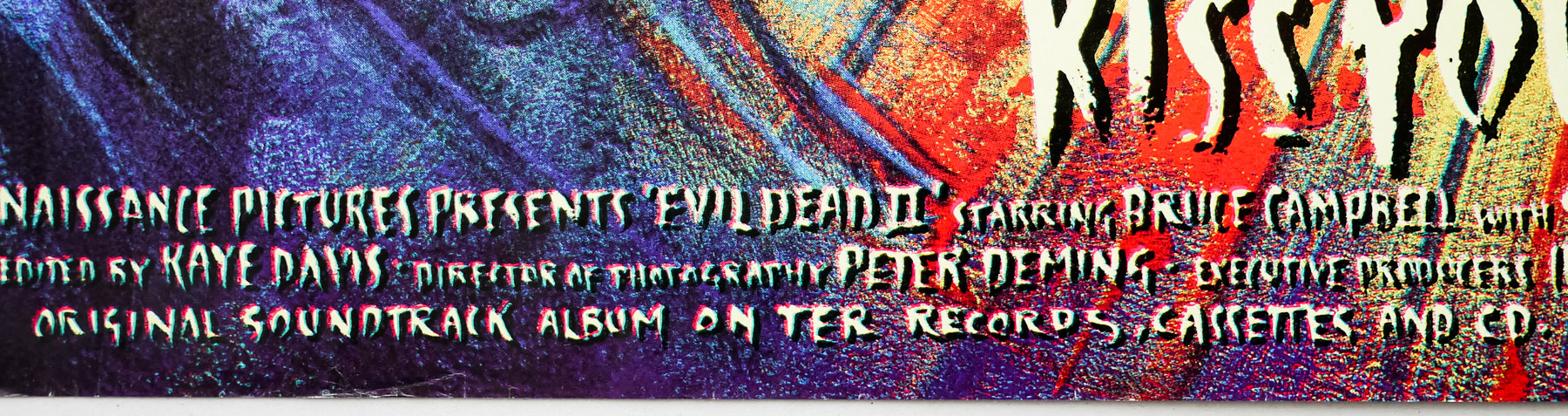
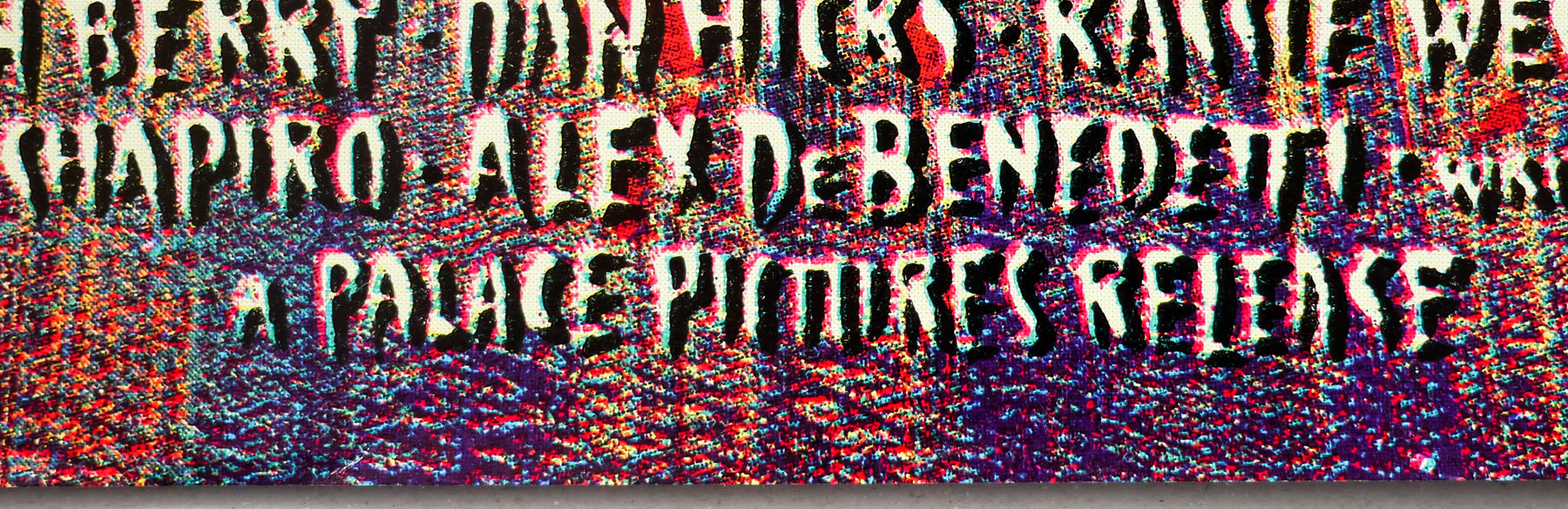
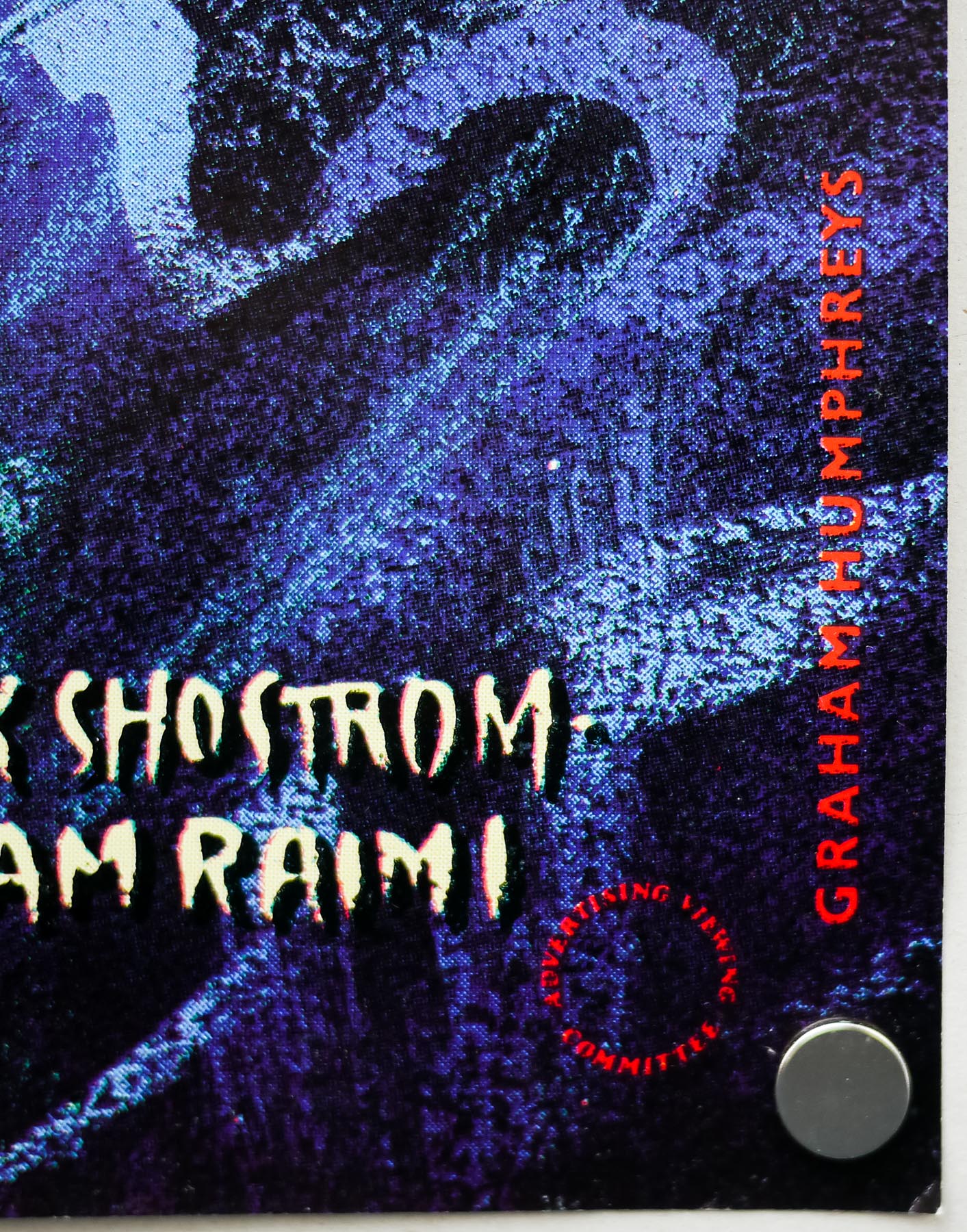
Brilliant artwork by UK artist Graham Humphreys on this quad for the (superior IMO) sequel to Sam Raimi’s brilliant low-budget horror The Evil Dead. The films were a great success in the UK after the first was bought at the Cannes Film Festival by the legendary British distribution (and later production) company Palace Pictures. Released in cinemas and on VHS almost simultaneously the modest outlay for the rights to distribute the film proved to be an excellent deal as it went on to see great box-office takings and thousands of tapes sold. The first film was eventually caught up in the infamous video nasties debacle of the 1980s and was banned for a number of years under the Video Recordings Act.

The sequel, made six years later and technically a retcon sequel, was allotted a significantly larger budget than the first and is more of a black comedy than the original. Lead actor Bruce Campbell is put through a continually escalating series of horrific encounters that allow him to show the full extent of his talent for slapstick comedy.

Palace pictures bought the rights to distribute the second film and asked Graham Humphreys to design the quad and video artwork for it after his iconic design for the first film had proved so successful. When I interviewed the artist about his career in 2011 I asked him about the design for the poster and the excerpt from the interview is below:

What happened with the quad for Evil Dead II?
It was the same situation at Palace but I think Steve and Nik Powell were at the helm with this one, since the first film had been so succesful. They figured why change the formula. I guess the point was that the film was almost a remake of the first one, plus a bit extra and so that’s what going on here. A re-imagining of the first one.

In that documentary you talk about how you’d had another idea involving a clock.
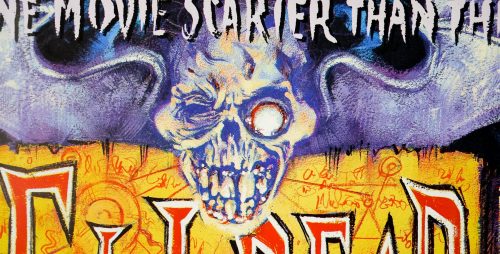
Yeah, that was the whole thing about ‘dead by dawn’ and I had this pendulum and a blood-covered clock that looked fantstic. I was particularly influenced by Werner Herzog’s Nosferatu film because there’s a great clock in that, which is beautifully designed with a little skull. That’s really what I wanted to do. The idea was actually to build a physical clock, but I never got to make it. The guys thought it was a bit obscure. There was also going to be a ‘Pit and the Pendulum’-style swishing blade covered in blood and the title was going to be on that.

The feedback was to keep things simple and use the characters?
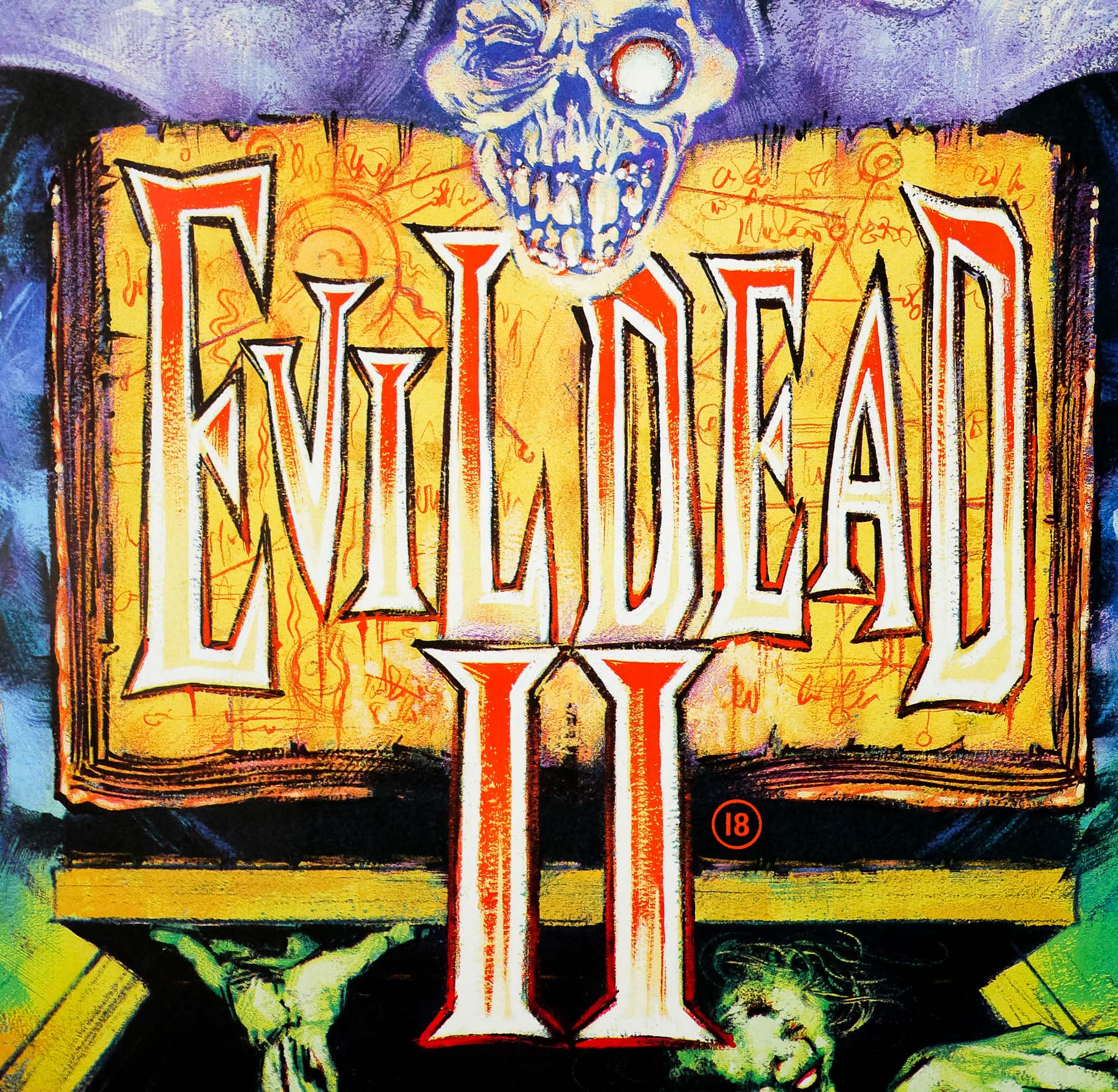
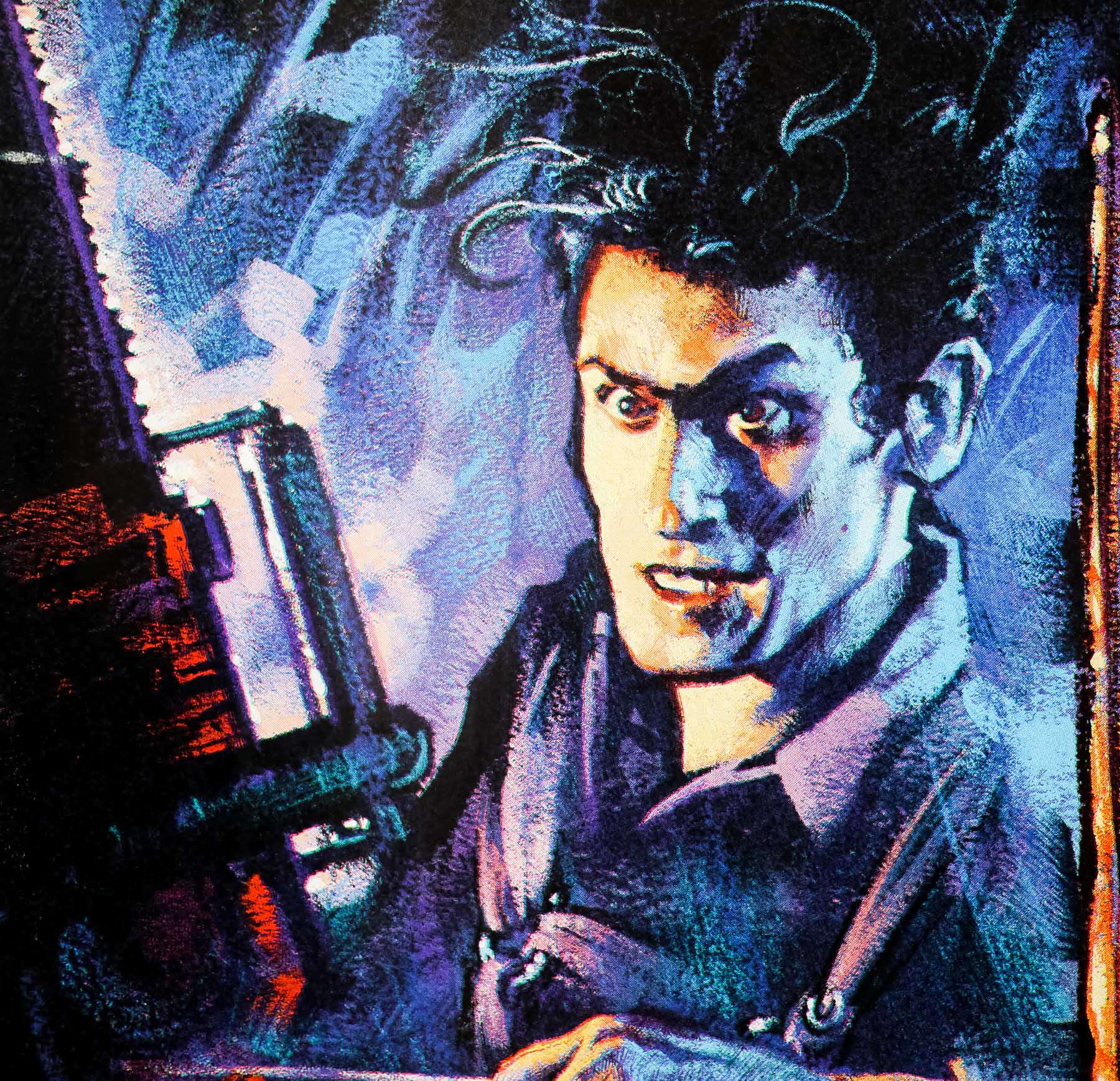
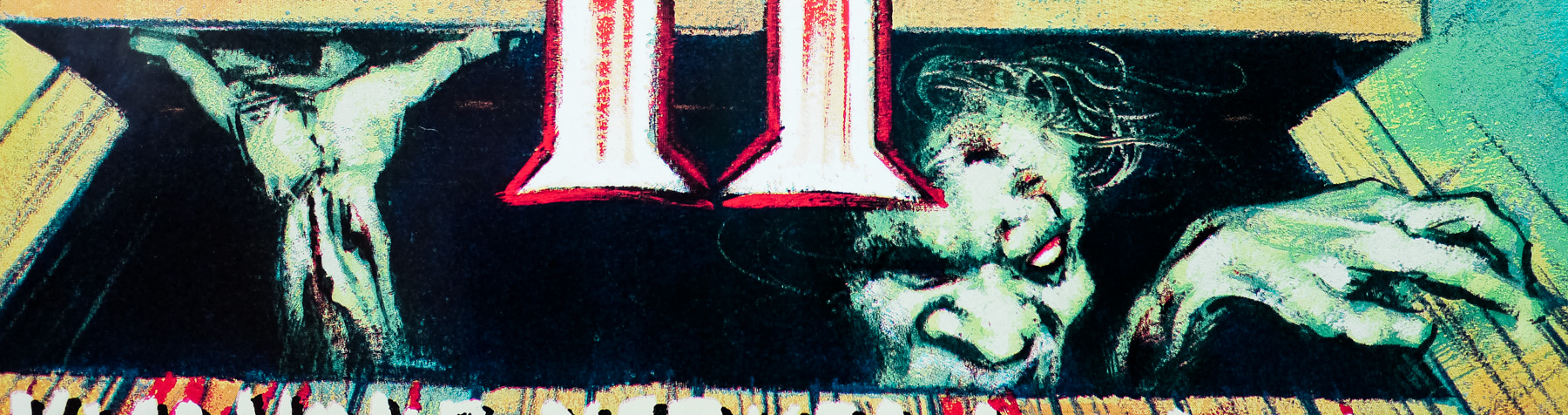
Yeah, we had the reel to reels on the first one and for this we had the book of the dead as the key element. There was some contention over whether we do the Roman numerals or the big number 2. To me it felt it should be classic looking with the numerals. I used a colour slide-set for the characters with only a few adjustments. I think I took a Polaroid of my hand to get the position right and a girl I was working with did the pose for me onto which I added the actresses head.

Do you prefer this one or the first film’s quad better?
I like the first one because it’s so raw and it captures the mood and music of the time for me. They’re two different animals really.
The full interview can be read here.

Check out these TV clips that were specially filmed in the UK to promote the film featuring Sam Raimi and English TV and radio (and film critic) Jonathan Ross


The House by the Cemetery / quad / UK

01.11.12

Poster Poster

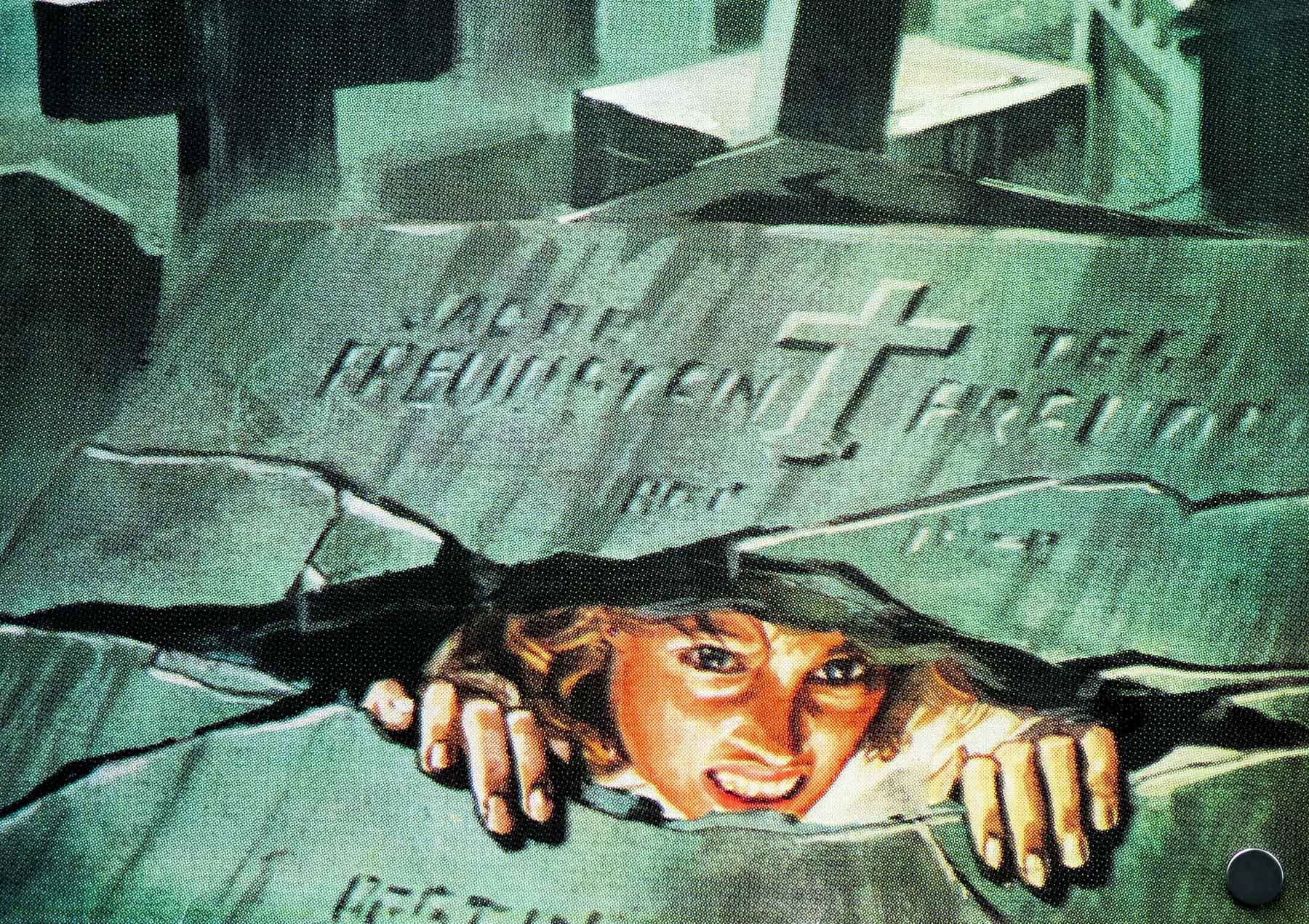
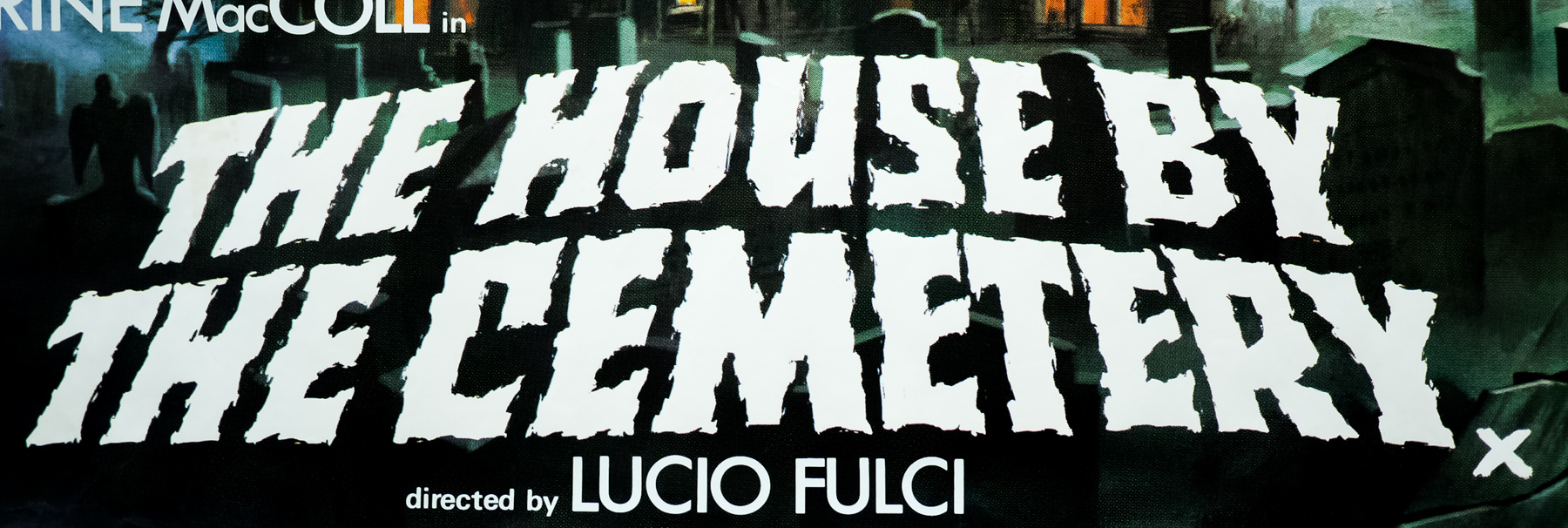
Nicknamed The Godfather of Gore, the late Italian director Lucio Fulci is responsible for several memorable entries in the horror genre and The House by the Cemetery is one of what I consider to be the big four Fulci films (the others being Zombie Flesh Eaters, The Beyond and City of the Living Dead), which were all made within two years of each other. The director tried his hand at various genres, including westerns and comedies, but it was horror where he found the greatest success and for which he is best remembered.

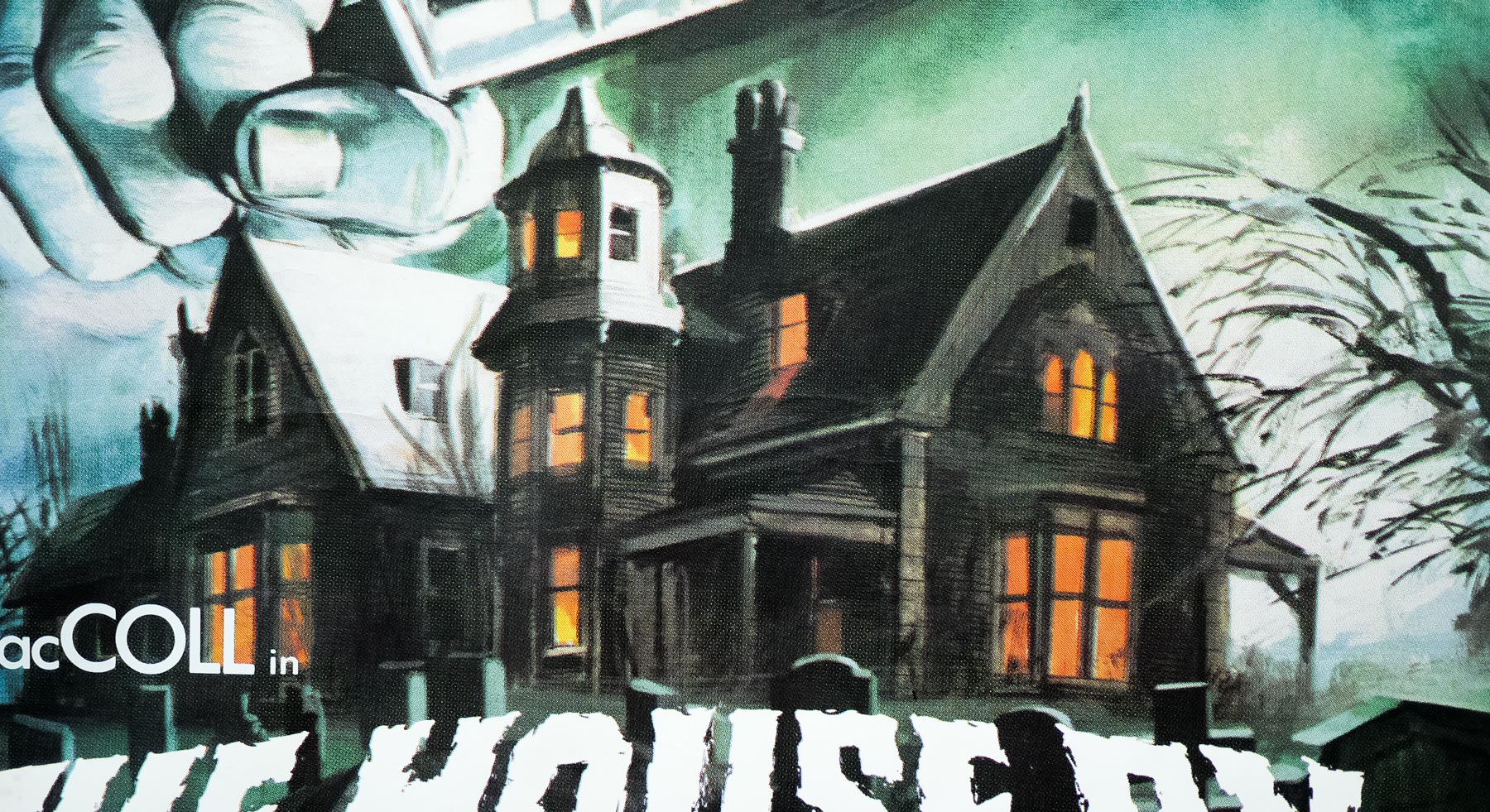
The House by the Cemetery is the third film in the unofficial ‘Gates of Hell’ trilogy of Fulci films that began with 1980s City of the Living Dead and was followed by The Beyond. It stars British actress Catriona MacColl (credited on the poster as Katherine MacColl) who had collaborated with Fulci on the previous two entries. The story sees Dr Norman Boyle (Paolo Malco), a professor at a New York University, being sent on research trip to New Whitby, Boston, taking his wife (MacColl) and young son with him. Their base is a big old house situated, as the title suggests, in the grounds of an old graveyard. After moving in and meeting a few of the locals, it soon becomes clear to the family that they aren’t the only ones living in the house and slowly but surely the dark secret of the previous occupant is revealed.

As was typical with all of Fulci’s output during this period, the film features several scenes of brutal, graphic gore and there’s one death scene in particular that would fall foul of the BBFC, the folks responsible for passing the film for release in the UK. This page on IMDB details the various cuts the UK release of the film was given over the years; in 1984 the film was caught up in the infamous Video Nasties situation and the VHS was banned outright. When it was re-released on tape in 1988 there were almost five minutes cut from its running time and it wasn’t until 2009 that a fully uncut version was available.

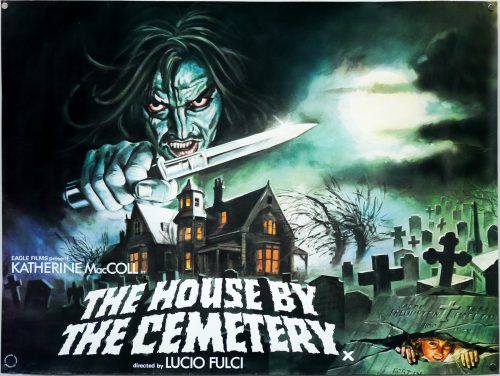
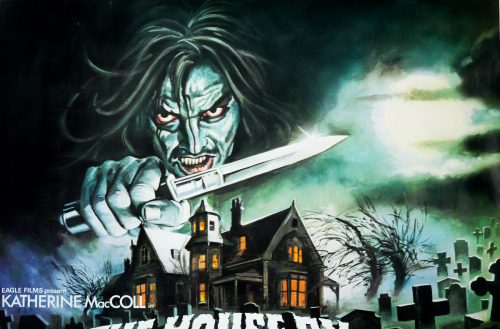
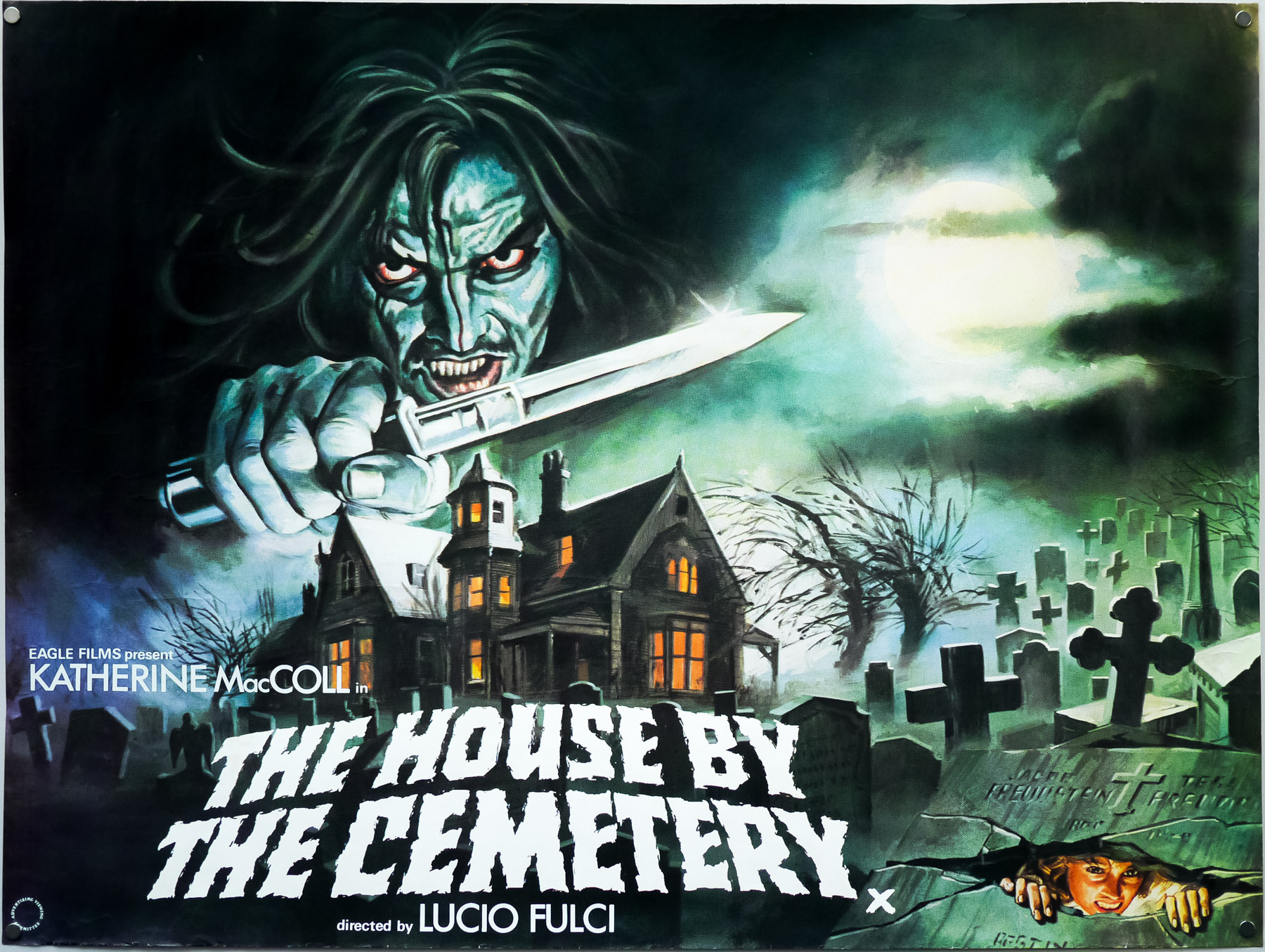
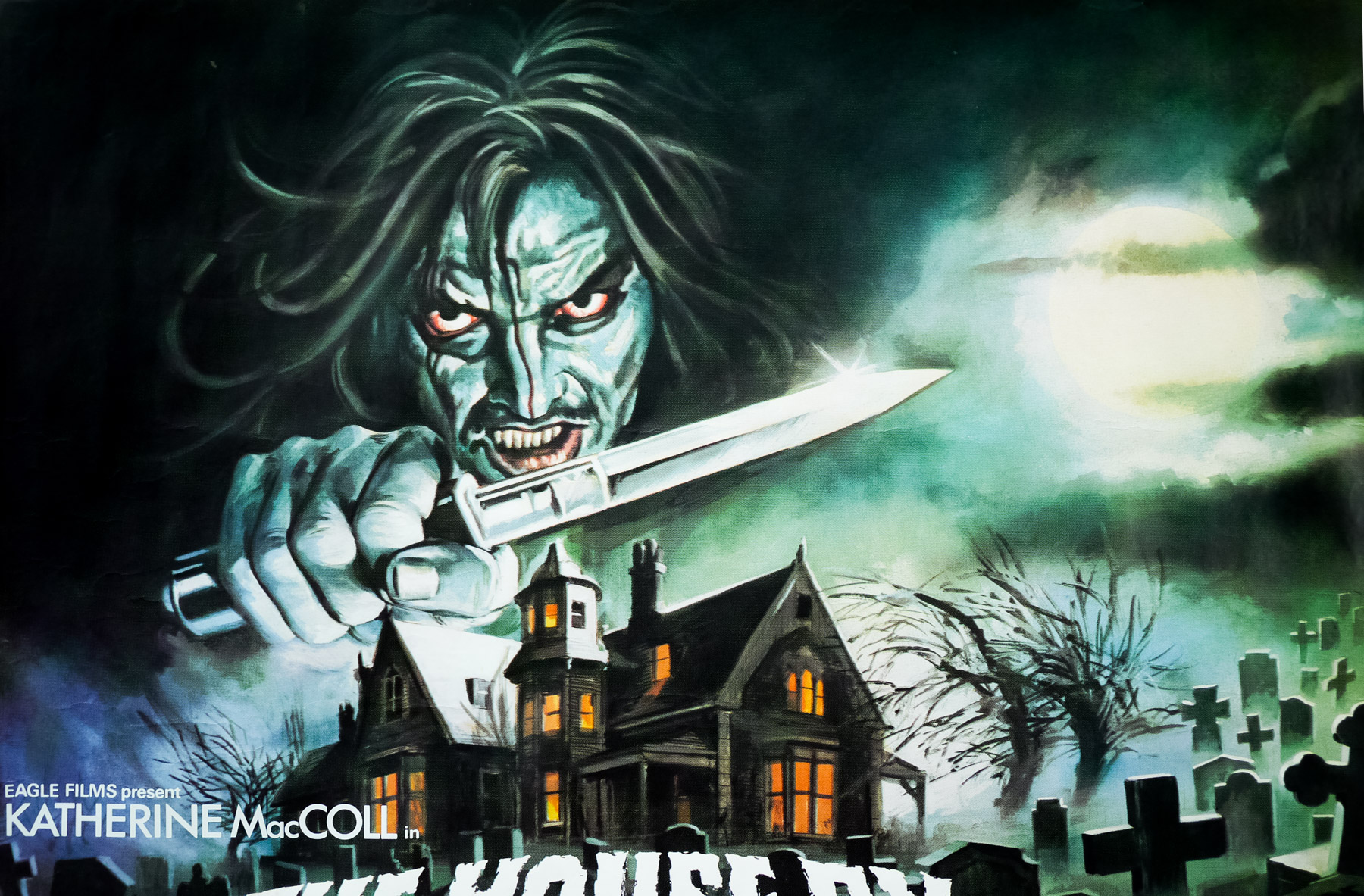
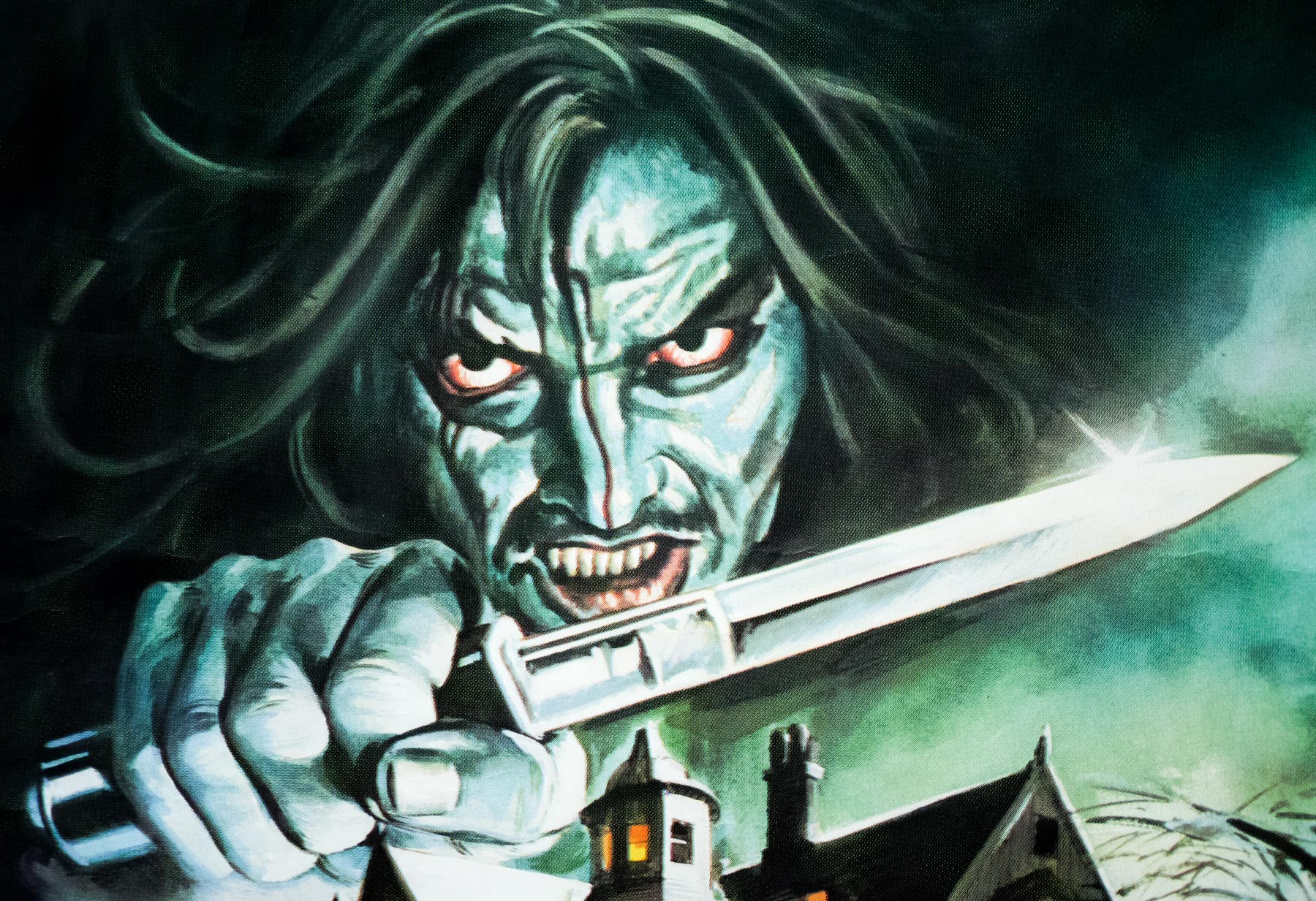
This is the UK quad poster for the first release of the film in British cinemas in 1982. It features artwork that is based on the Italian poster that was painted by the great artist Enzo Sciotti who has painted countless fantastic horror, sci-fi and exploitation posters over the years. As anyone who has seen the film will know, the knife-wielding character that dominates the poster doesn’t actually feature in the film itself. It’s said that the decision was taken to depict a psychotic killer that resembled Jack Nicholson’s character in Stanley Kubrick’s The Shining after that film had proven such an international success only a year previously.

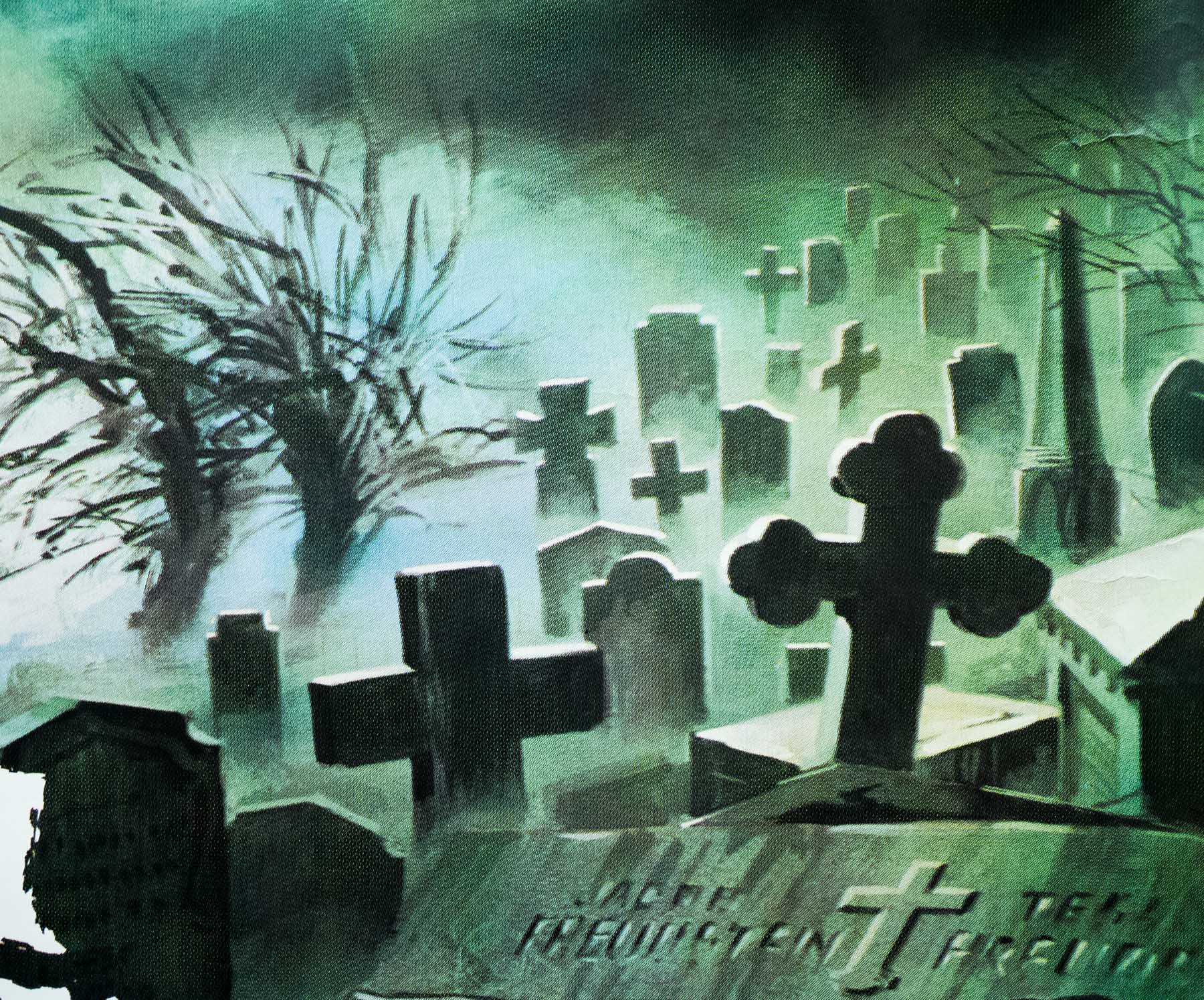
It is my belief that this artwork has been adapted from Sciotti’s original by a British artist, quite possibly Ted Baldwin who is thought to be responsible for the art on the quad for Zombie Creeping Flesh. Note the clear differences between the Italian poster and the details seen on this quad, particularly the evil character, the orientation and size of the house, and the layout of the graveyard. Obviously the original poster is in a portrait format so the decision may well have been taken to redraw it to better fit the landscape format of the quad.

Enzo Sciotti‘s official site has galleries of his work, some of which is for sale. Wrong Side of the Art has a selection of some of his work, and Eatbrie.com also features several of his designs. The other posters I’ve collected by him can be seen here.

The Taking of Pelham 123 / quad / UK

23.11.12

Poster Poster
Title
The Taking of Pelham 123
AKA
The Taking of Pelham One Two Three (alternative title) | Il colpo della metropolitana - un ostaggio al minuto [The underground hit - one hostage a minute] (Italy)
Year of Film
1974
Director
Joseph Sargent
Starring
Walter Matthau, Robert Shaw, Martin Balsam, Jerry Stiller, Hector Elizondo, Dick O'Neill, Earl Hindman
Origin of Film
USA
Genre(s) of Film
Walter Matthau, Robert Shaw, Martin Balsam, Jerry Stiller, Hector Elizondo, Dick O'Neill, Earl Hindman,
Type of Poster
Quad
Style of Poster
--
Origin of Poster
UK
Year of Poster
1974
Designer
Unknown
Artist
Unknown
Size (inches)
29 14/16" x 39 14/16"
SS or DS
SS
Tagline
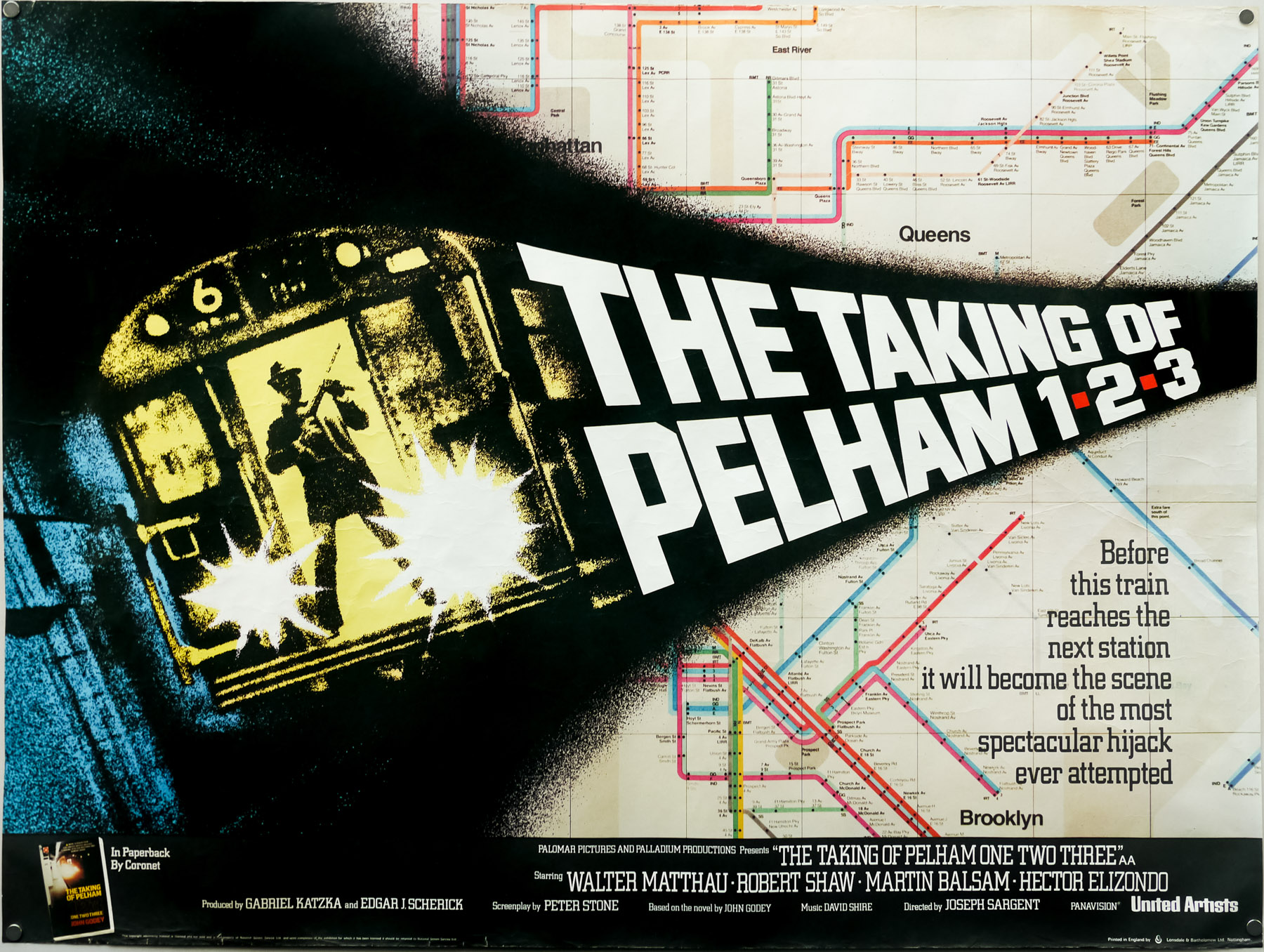
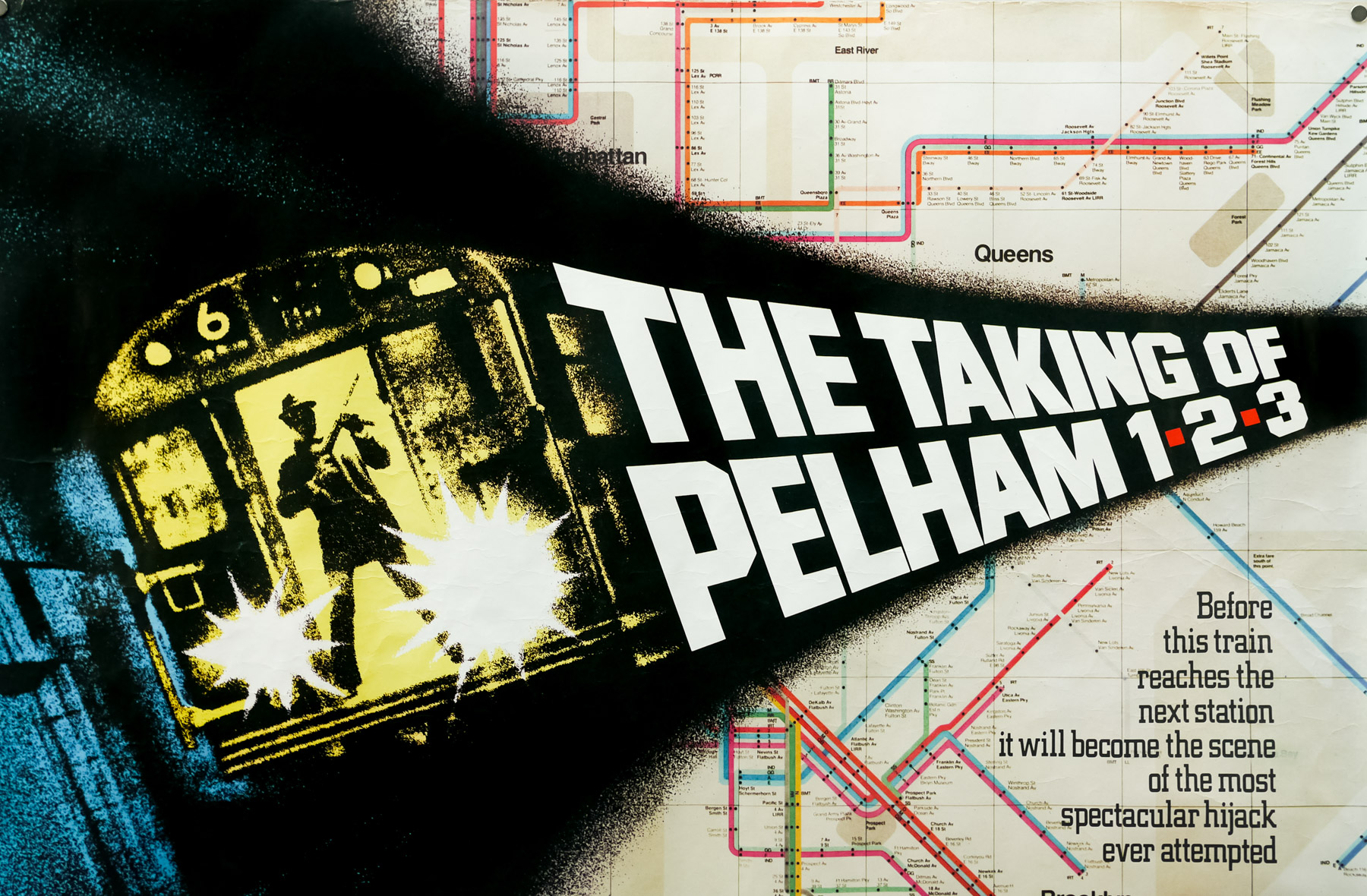
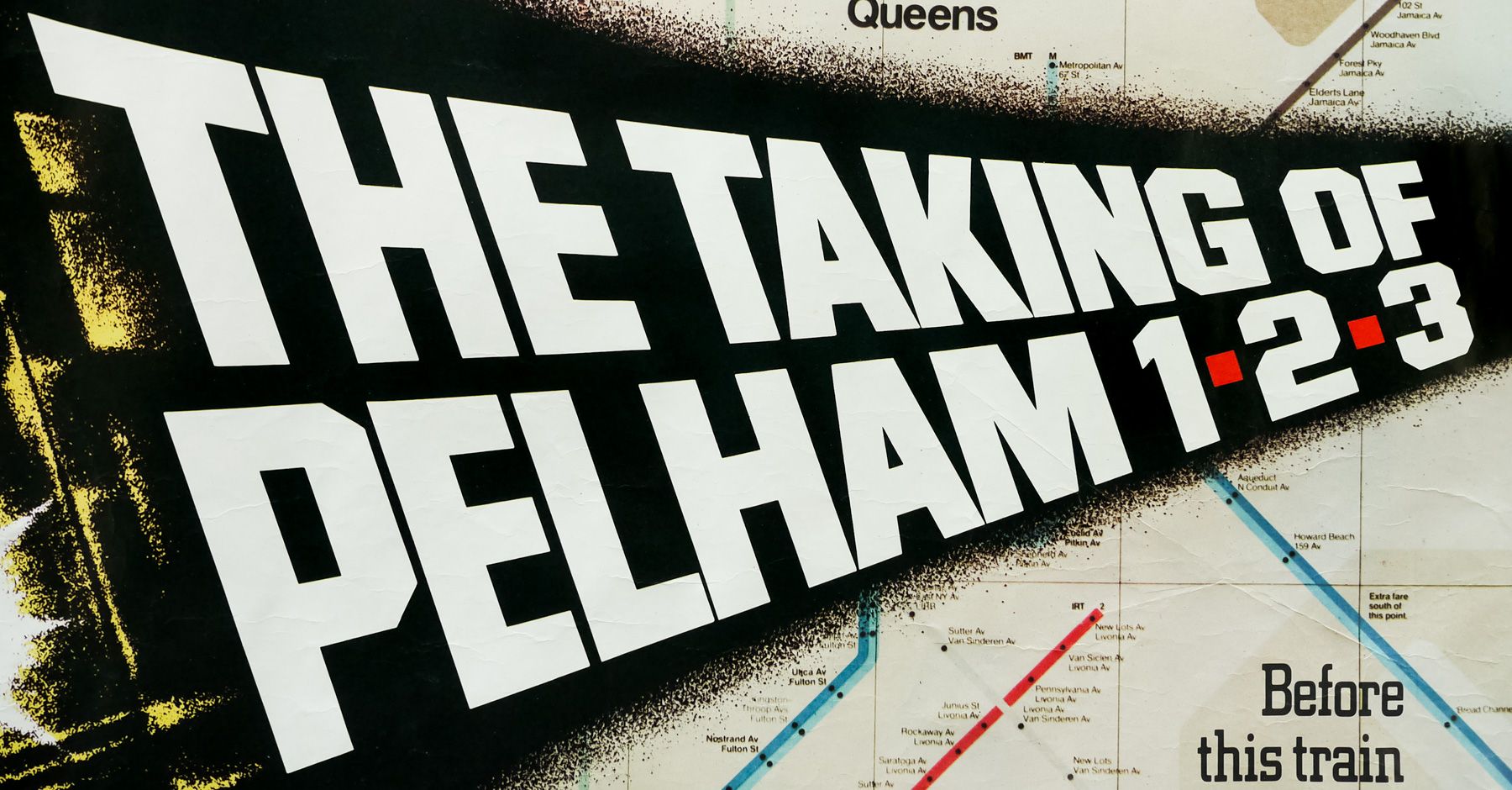
Before this train reaches the next station it will become the scene of the most spectacular hijack ever attempted

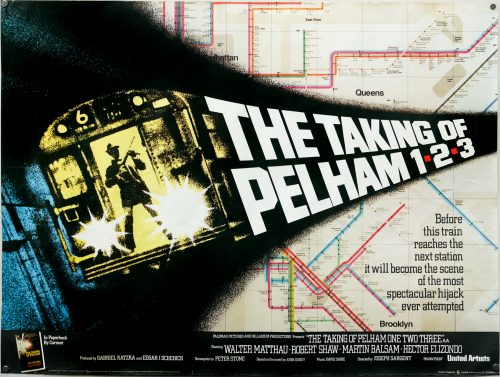
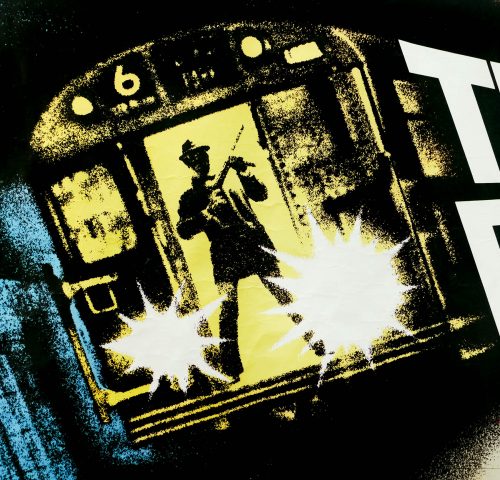
A really striking design on this British quad for the release of the original New York subway-based action thriller, The Taking of Pelham 123. Directed by Joseph Sargent, whose career seems to have consisted mostly of TV movies, the film stars the late Robert Shaw as the psychotic leader of a gang of criminals who board and hijack a subway train. The gang demand a ransom of $1million and threaten to execute a passenger for every minute over the deadline.

Walter Matthau plays a world-weary New York City Transit Authority police lieutenant who ends up being the chief negotiator between the gang, working to try and foil their plans. Famously the gang have colour-based nicknames, which they use instead of their real names (Robert Shaw is blue, for example). Director Quentin Tarantino would later use this idea for his film debut Reservoir Dogs. This film was remade by the late Tony Scott in 2009

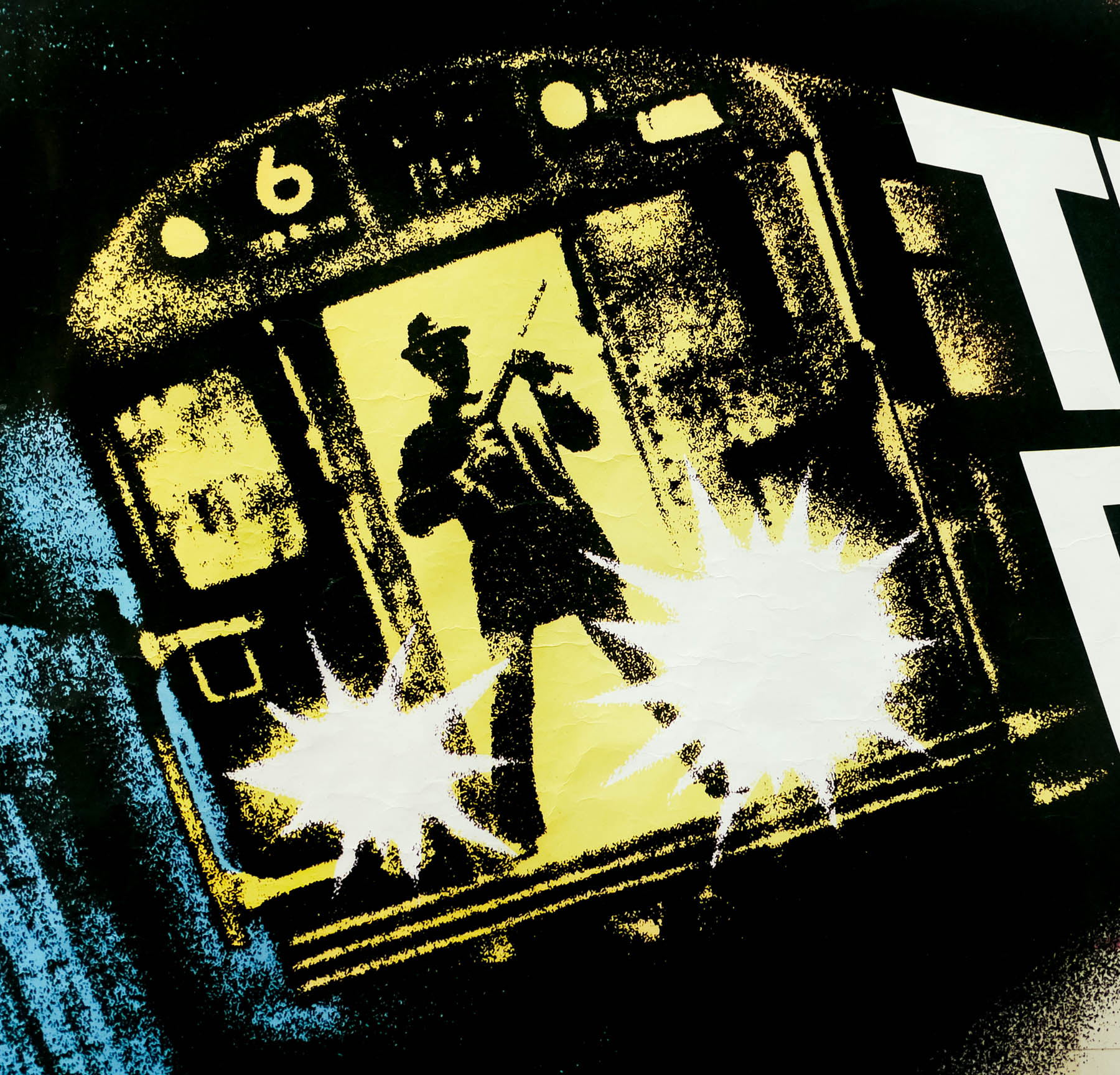
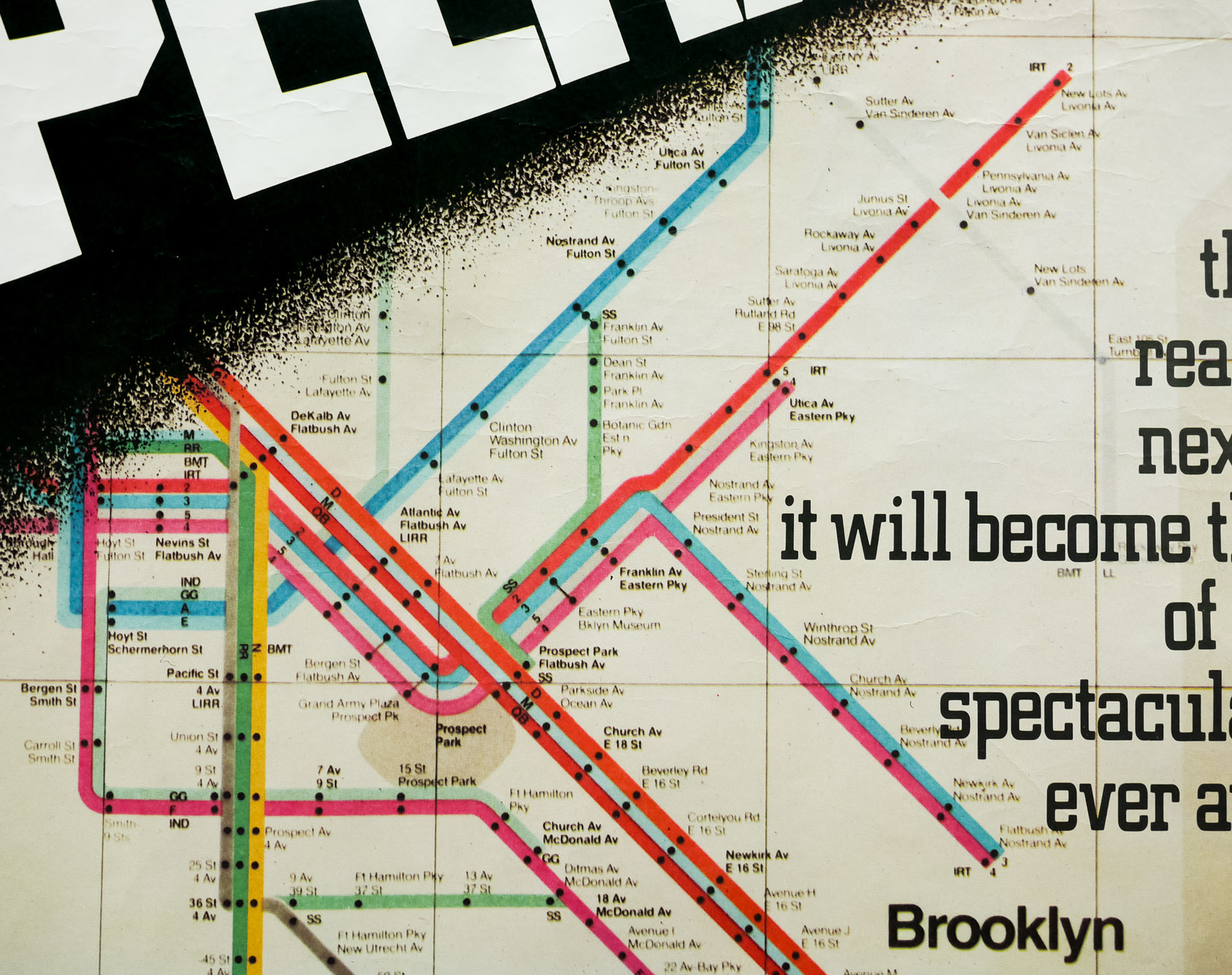
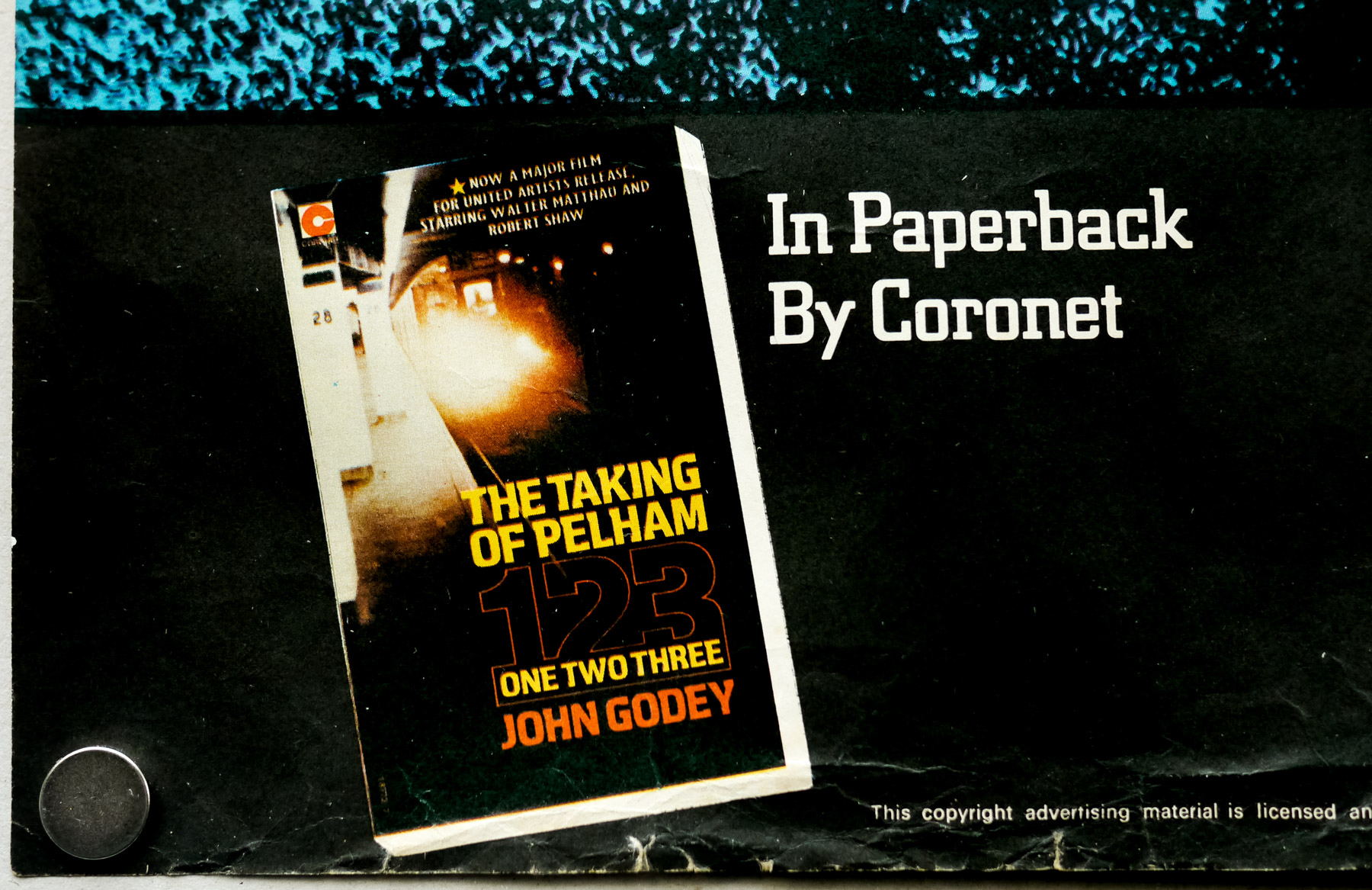
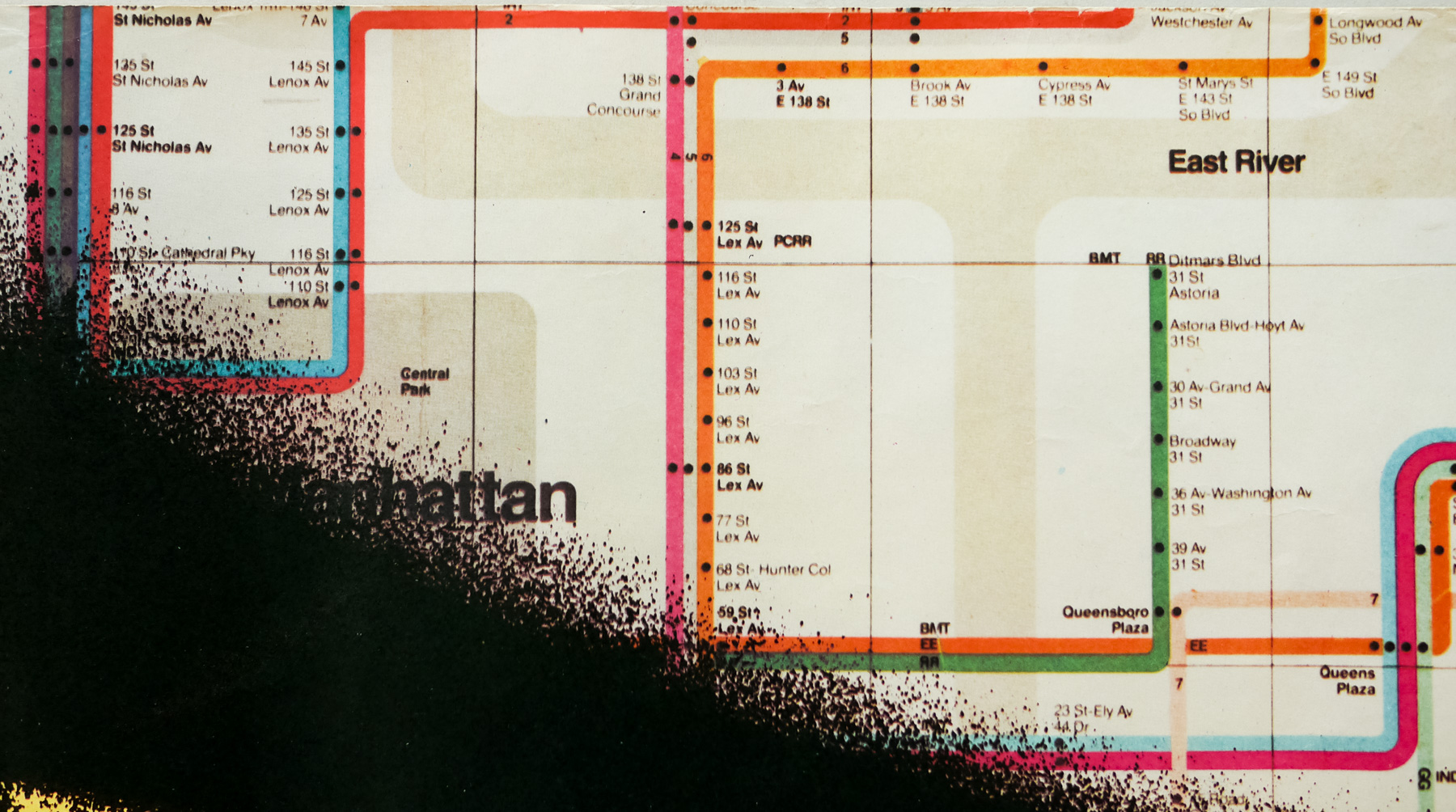
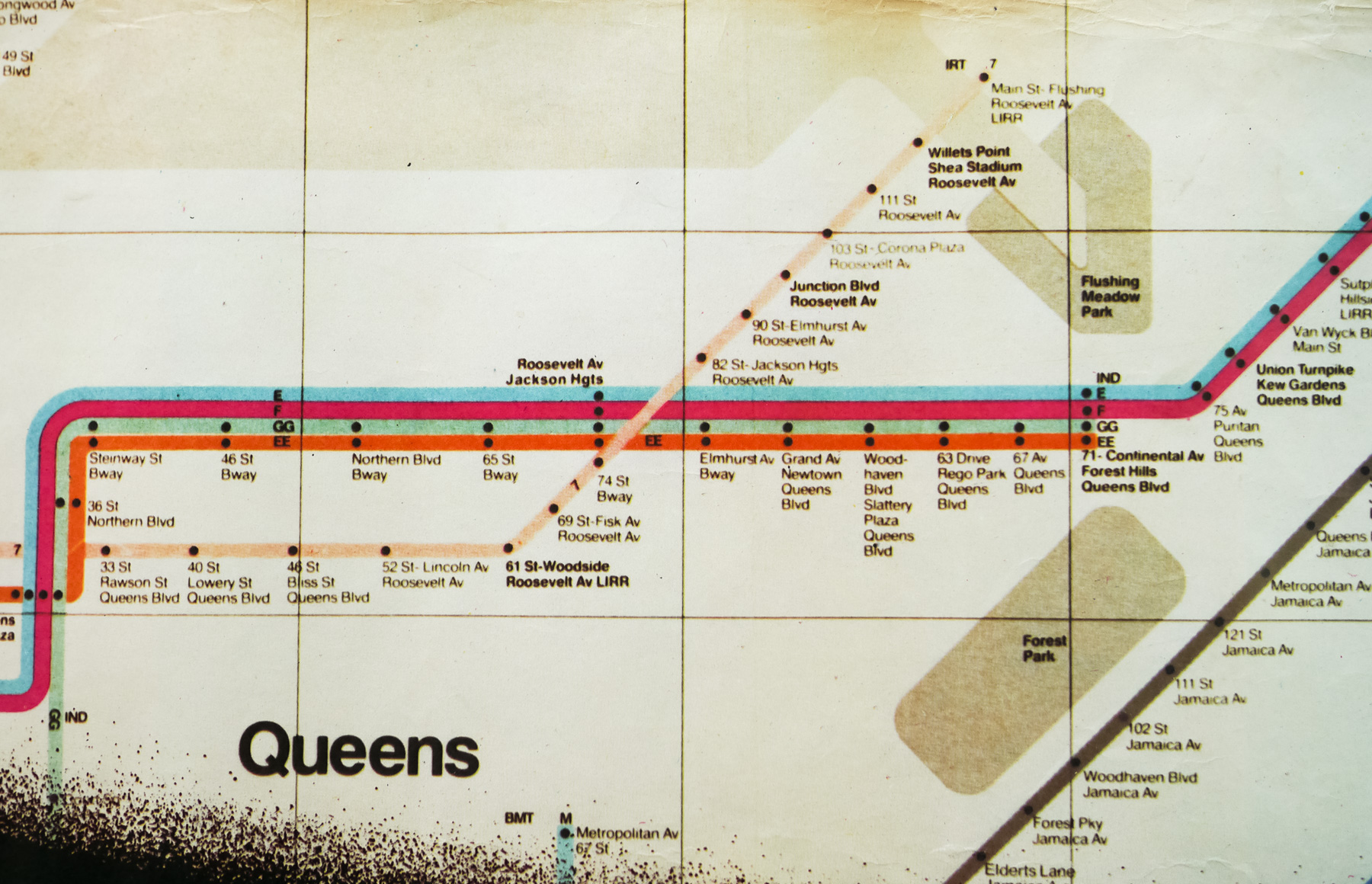
This design is unique to the British quad and brilliantly uses the colourful lines of the real New York subway map designed by Massimo Vignelli as the background to the sweeping train made from the title of the film. The front element of the shadowy figure standing in the door is actually taken from the American advance one sheet, which can be seen here. I’m unsure who is responsible for the design of the quad so if you have any ideas please get in touch.

I had been hunting for a rolled copy of this quad for over a decade after seeing it in the book ‘Film Posters of the 1970s’ and I was thrilled to finally track down a copy as I consider it to be one of the best British posters ever printed.

Brazil / quad / UK

01.05.13

Poster Poster
Title
Brazil
AKA
--
Year of Film
1985
Director
Terry Gilliam
Starring
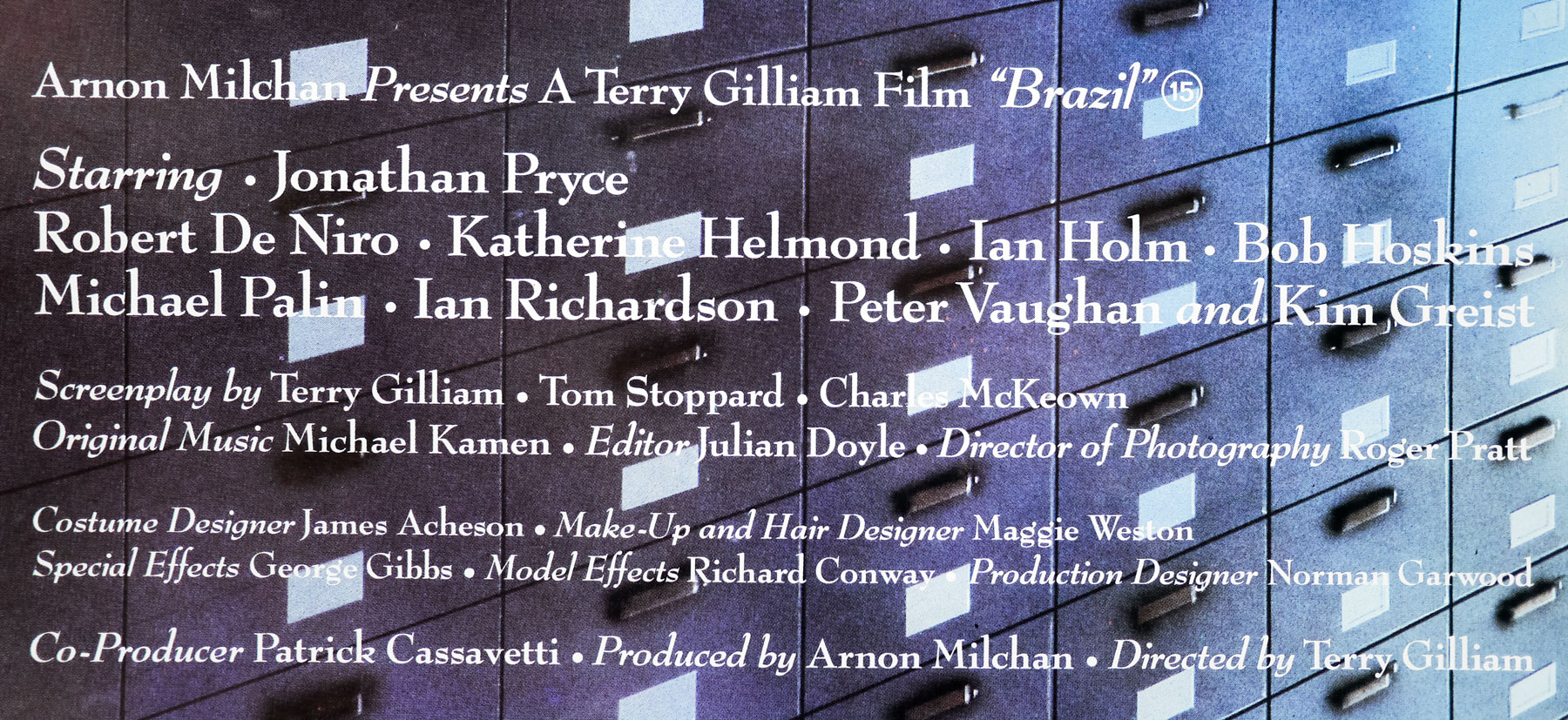
Jonathan Pryce, Robert De Niro, Katherine Helmond, Ian Holm, Bob Hoskins, Michael Palin, Ian Richardson, Peter Vaughan, Kim Greist, Jim Broadbent
Origin of Film
UK
Genre(s) of Film
Jonathan Pryce, Robert De Niro, Katherine Helmond, Ian Holm, Bob Hoskins, Michael Palin, Ian Richardson, Peter Vaughan, Kim Greist, Jim Broadbent,
Type of Poster
Quad
Style of Poster
Withdrawn 'dream cabinets' version
Origin of Poster
UK
Year of Poster
1985
Designer
Unknown
Artist
Unknown
Size (inches)
30 1/16" x 39 15/16"
SS or DS
SS
Tagline
--

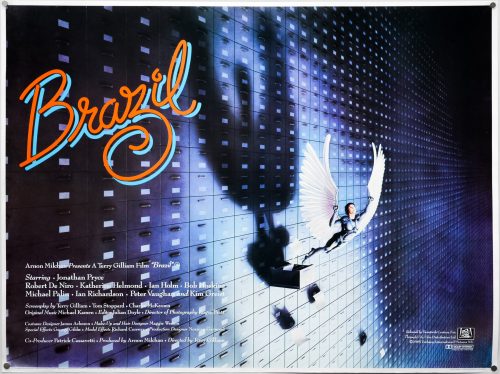
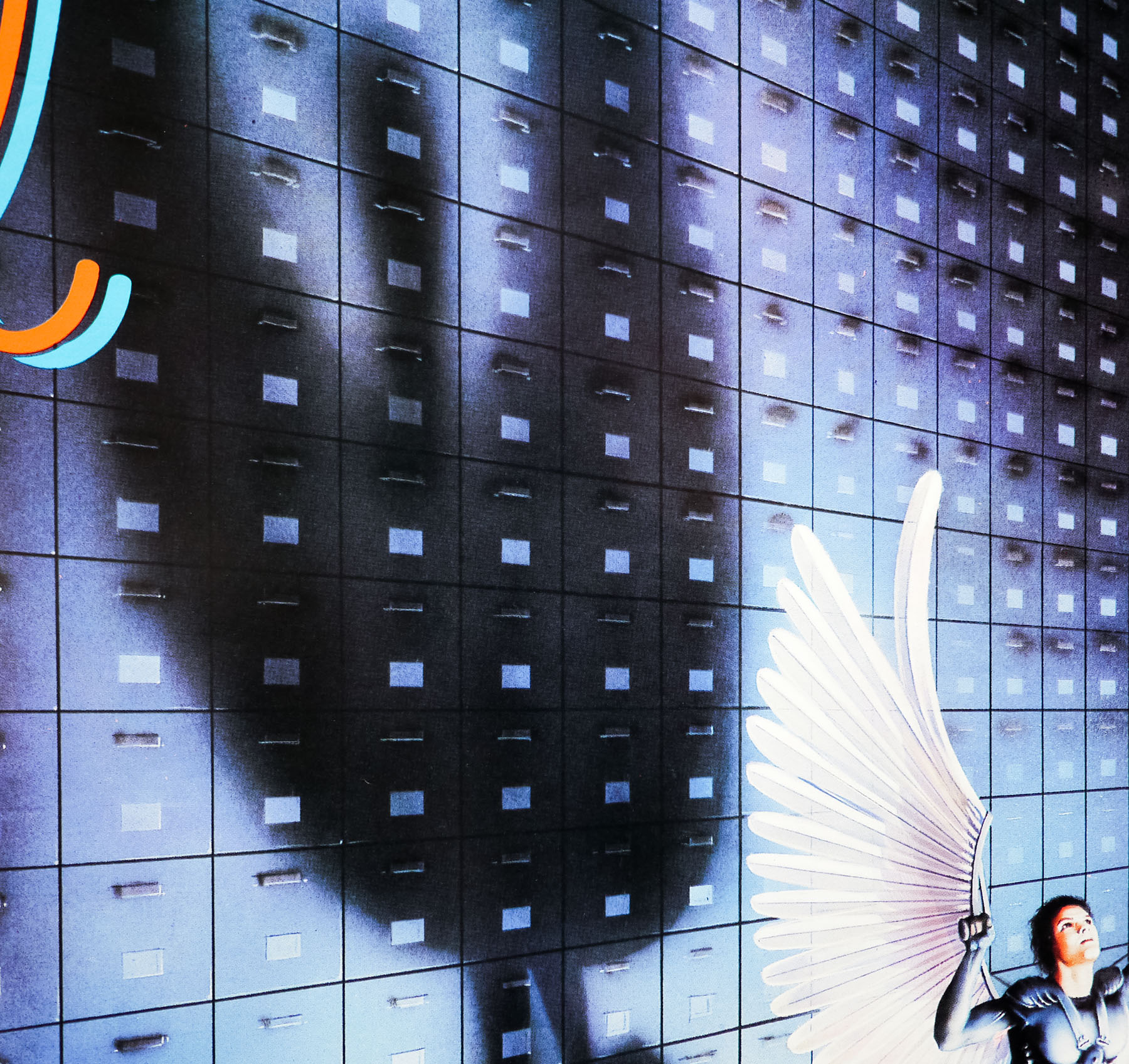
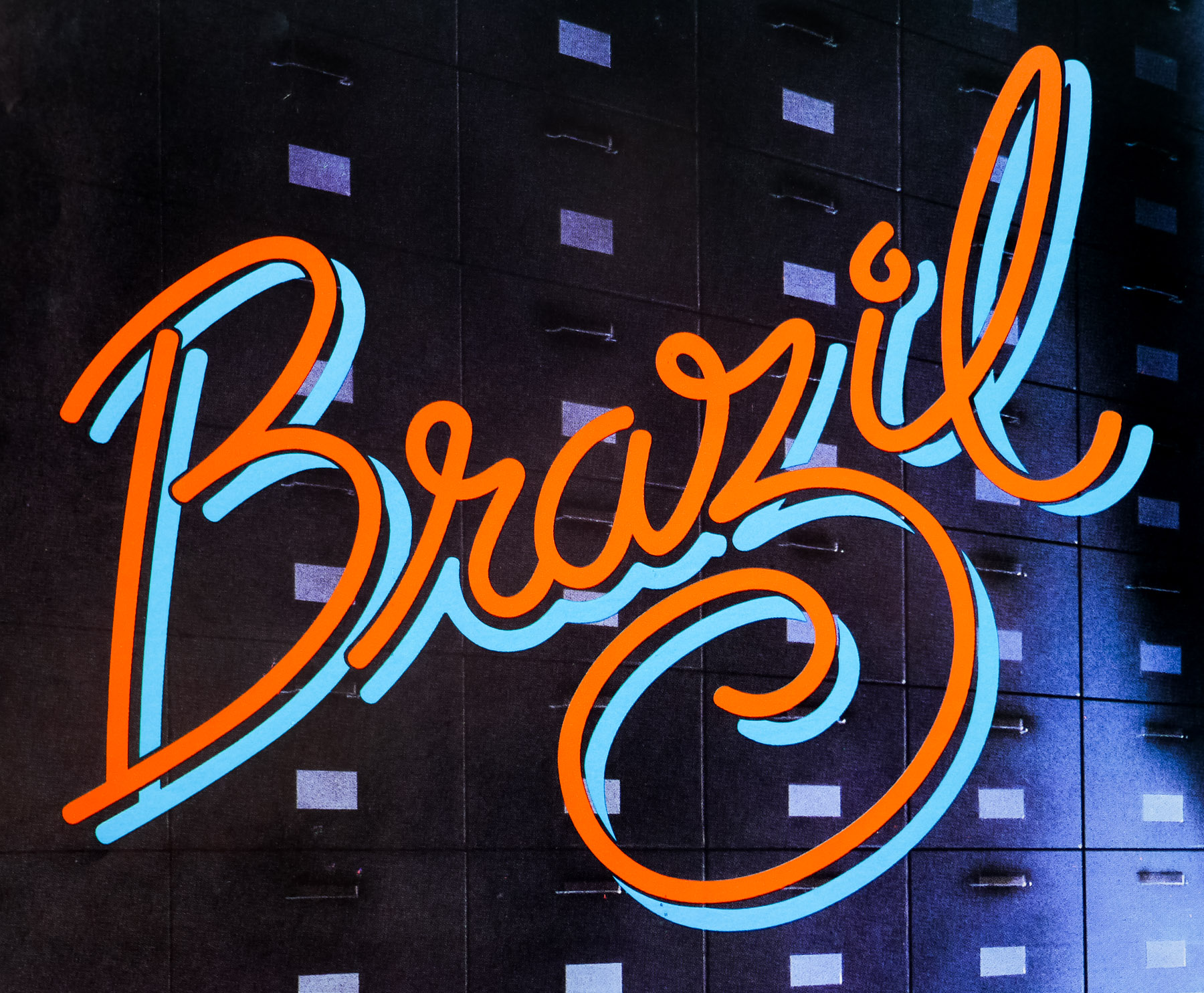
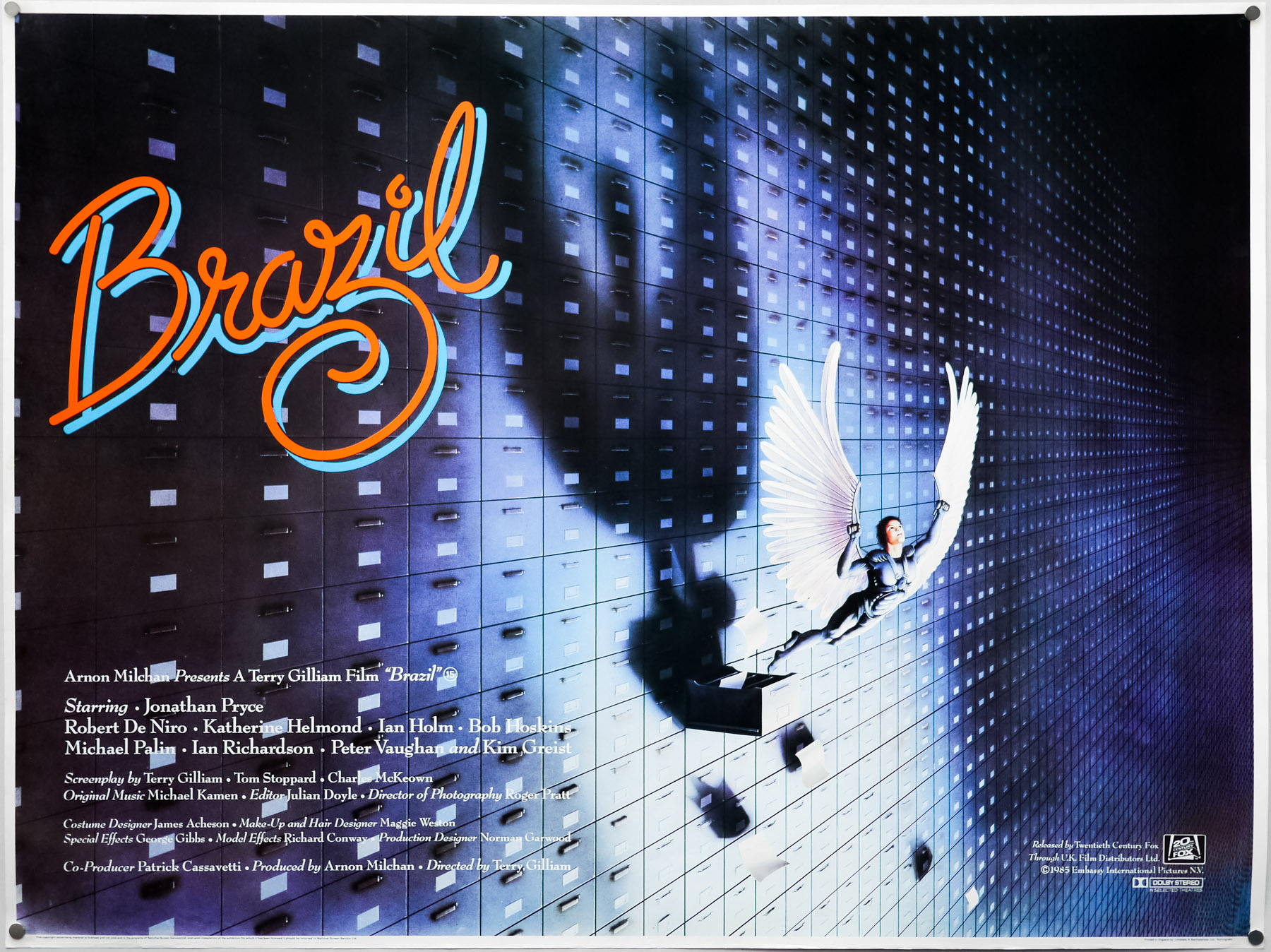
One of my favourite British posters of all time, this is the supposedly withdrawn quad for Terry Gilliam‘s 1985 masterpiece Brazil. A film that is near impossible to categorise, the story  is a heady mix of dystopian sci-fi, surreal dark fantasy and anarchic satirical comedy set in an alternative universe in which an overbearing government has practically strangled society with its mixture of paranoia, crippling bureaucracy and unreliable technology. That one of the film’s working titles was ‘1984 and 1/2’ gives you some idea of the Orwellian overtones that Gilliam and his fellow screenwriters Tom Stoppard and Charles McKeown intended to evoke.

Jonathan Pryce stars as Sam Lowry, a low-level employee at the ‘Ministry of Information’ who is seemingly content with his role as a cog in the giant machine, but at night he escapes in dreams where he is a knight is shining armour with giant wings strapped to his back, often rescuing the same damsel in distress from malicious forces. When a clerical error caused by a dead beetle falling into a printer causes the wrong man to be rounded up, tortured and killed by government forces (“we didn’t know he had a weak heart!”), Sam is given the task of correcting the error. Whilst visiting the wife of the deceased man, Sam meets Jill Layton (Kim Greist) a neighbour who bears a striking resemblance to the girl in his dreams.

Naturally he is instantly smitten and sets in motion a series of events that ends up with Sam and Jill pitched against his employer and on the run. The film features several memorable appearances from the likes of Ian Holm as Sam’s bumbling, inefficient boss, Michael Palin as an ambitious and ultimately ruthless friend within the Ministry, and Robert De Niro in a cameo role as Harry Tuttle, a rogue heating engineer who was meant to be the original target for the government round-up.

The film is visually stunning with some of the most incredible production design ever committed to celluloid. Gilliam and his skilled crew of technicians stretched every penny of the modest budget and created countless memorable sets, brilliantly realised props and entirely believable environmental details that all add up to something unforgettable. The special effects are also top notch, with the dream sequences deserving special mention, particularly Sam’s battle with a giant Samurai warrior and the literal flights of fantasy in his winged suit.

Infamously, Gilliam would end up in a bitter wrangle with the American distributors Universal after they decided his final cut was overlong, confusing and the ending was too depressing. The then Universal president Sid Sheinberg ordered a small team of editors to cut the film down from its original length of 2 hours and 20 minutes to just over 90 minutes for a version unofficially dubbed ‘The Love Conquers All’ cut. Most of the dream sequences were excised, the opening scenes completely chopped around and many scenes were horribly truncated. Worst of all, the original darker ending was replaced with a bizarre ‘happy’ denouement that completely ruined the tone of Gilliam’s film.

Understandably furious, the director refused to have anything to do with the new cut and actually began a campaign to get his original version seen by as many American film fans and critics as possible, much to the chagrin of Universal’s management. Eventually this culminated in the Los Angeles Film Critics Association awarding the original cut their prize for Best Film and this led to Universal relenting and agreeing to release a near complete version to cinemas (minus around 10 minutes from the European cut). The bastardised ‘Love Conquers All’ version never saw the inside of a cinema.

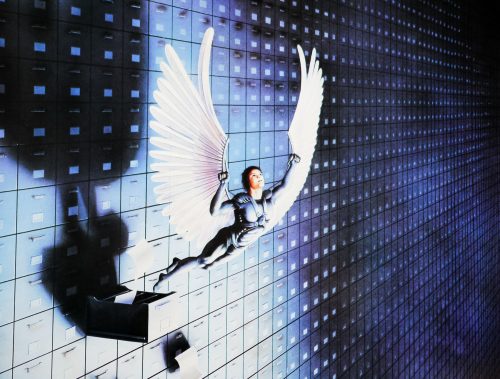
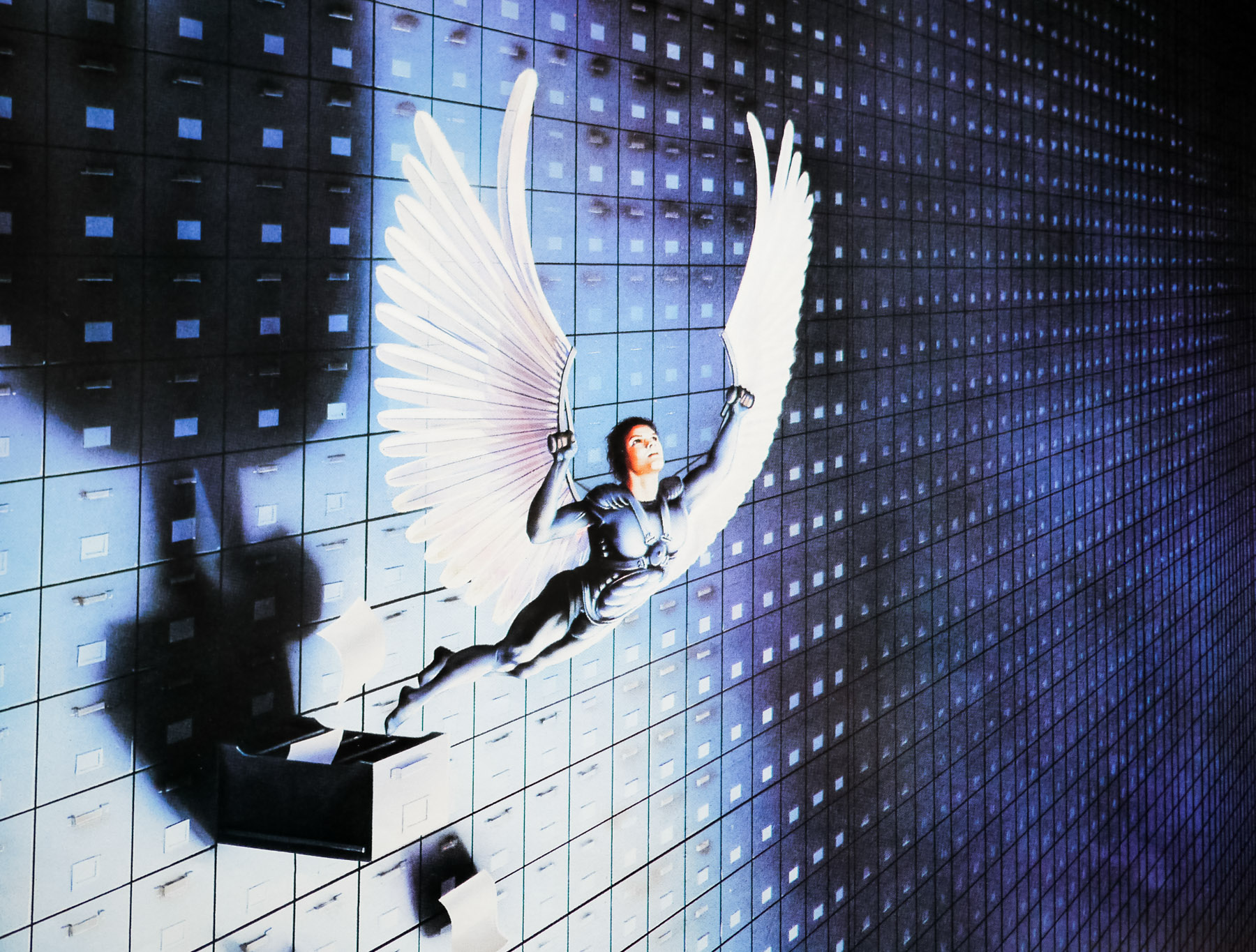
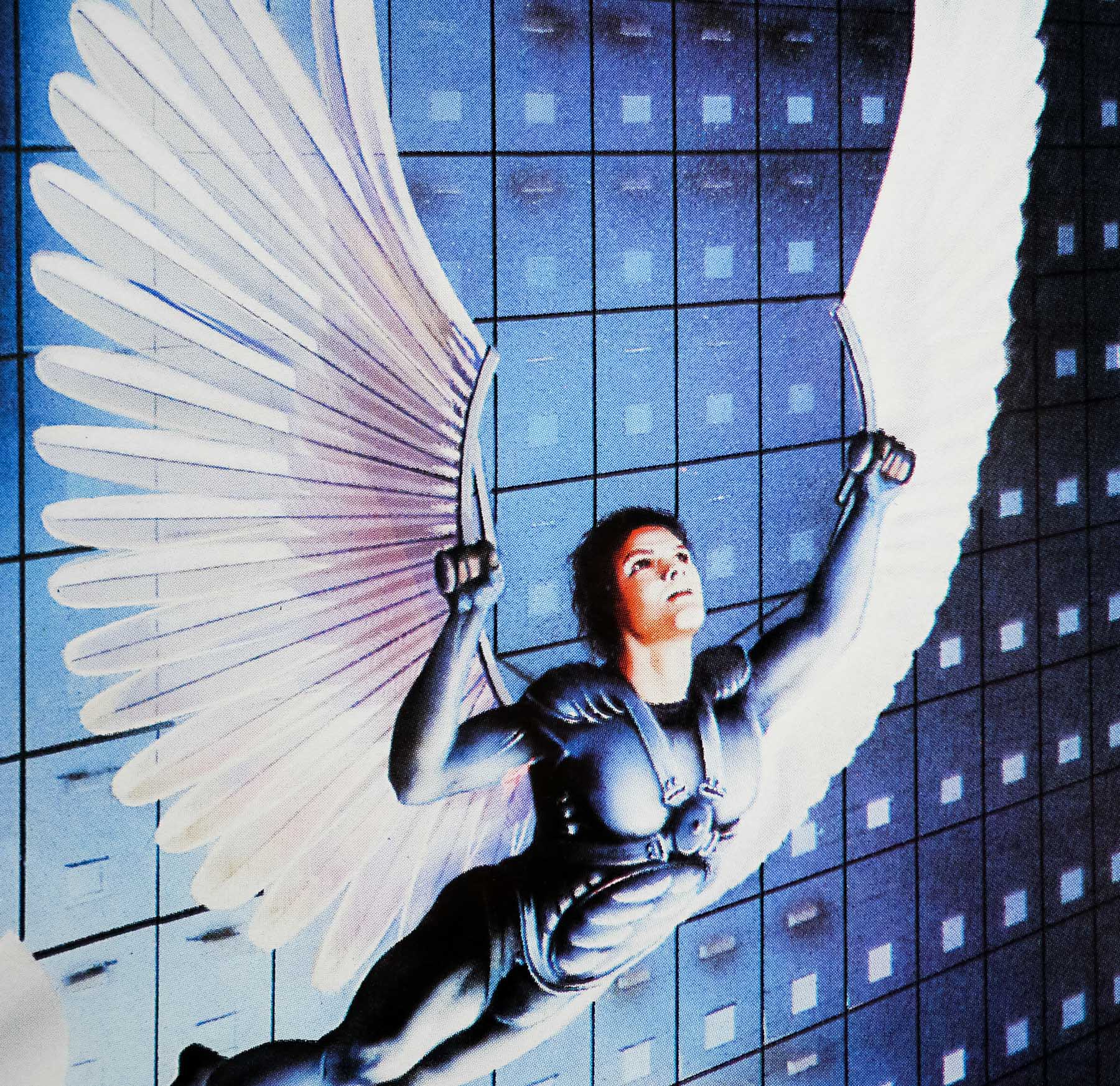
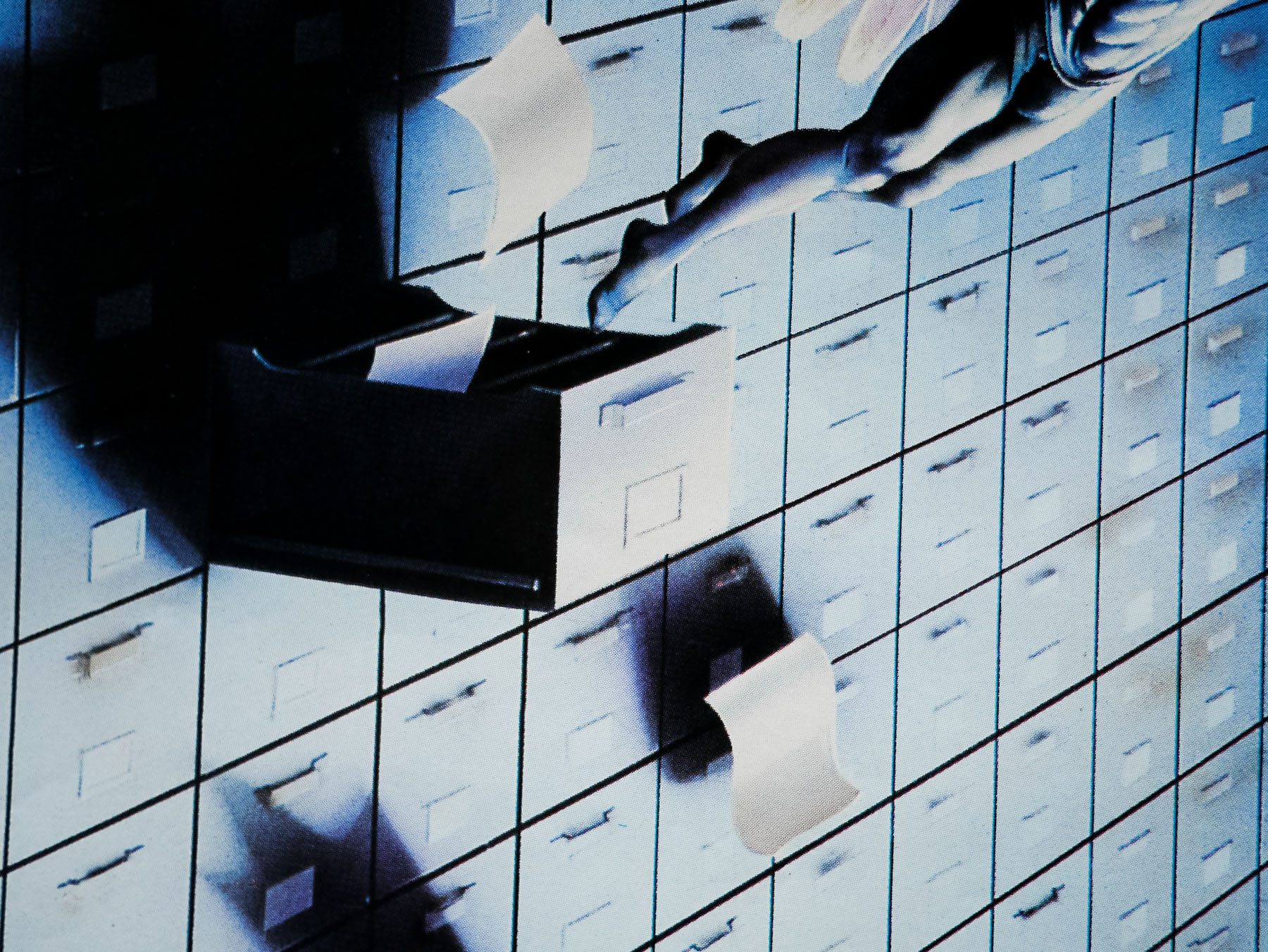
The image on this poster is actually a combination of imagery from the flying sequences and a deleted scene that was only ever storyboarded by Gilliam in which a dreaming Sam finds himself at a vast wall of filing cabinets. The title treatment is taken directly from the opening title of the film itself, which is an actual neon signage that falls away from the camera to the accompaniment of Michael Kamen’s excellent score.

I have heard from at least three independent sources that this particular quad was withdrawn from cinemas by the distributor 20th Century Fox because it was felt the image wasn’t the right one to sell the film to UK audiences and was replaced by this bizarre ‘flying bed’ quad that is a world away from this striking design. If anyone knows for sure that this quad was withdrawn or any more details about it, please get in touch.

Q the Winged Serpent / quad / UK

23.12.13

Poster Poster
Title
The Winged Serpent
AKA
Q (USA) | Q: The Winged Serpent (UK) | American Monster (West Germany)
Year of Film
1982
Director
Larry Cohen
Starring
Michael Moriarty, Candy Clark, David Carradine, Richard Roundtree, James Dixon, Ron Cey
Origin of Film
USA
Genre(s) of Film
Michael Moriarty, Candy Clark, David Carradine, Richard Roundtree, James Dixon, Ron Cey,
Type of Poster
Quad
Style of Poster
--
Origin of Poster
UK
Year of Poster
1982
Designer
Tom Chantrell
Artist
Tom Chantrell
Size (inches)
30" x 40"
SS or DS
SS
NSS #
--
Tagline
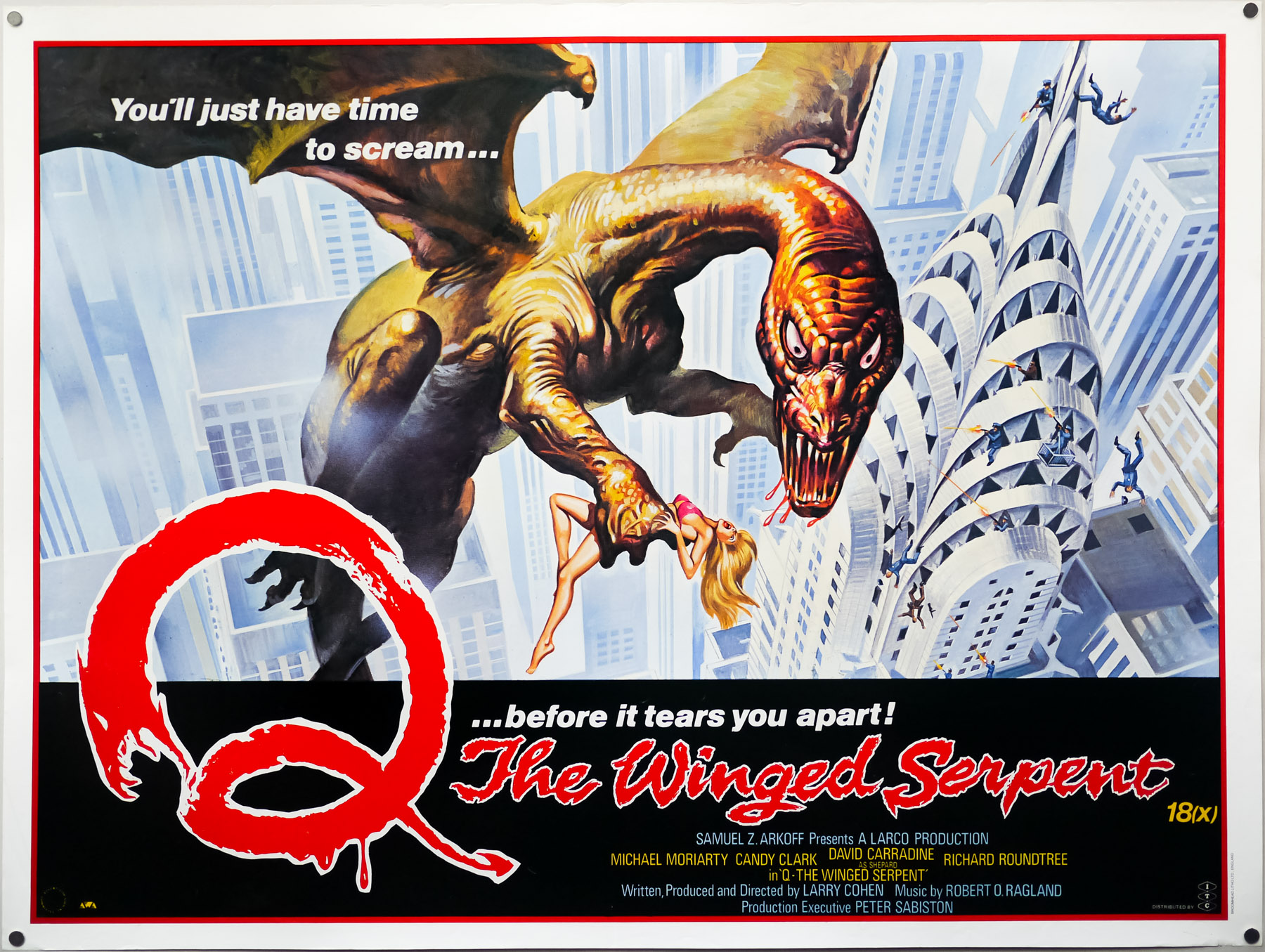
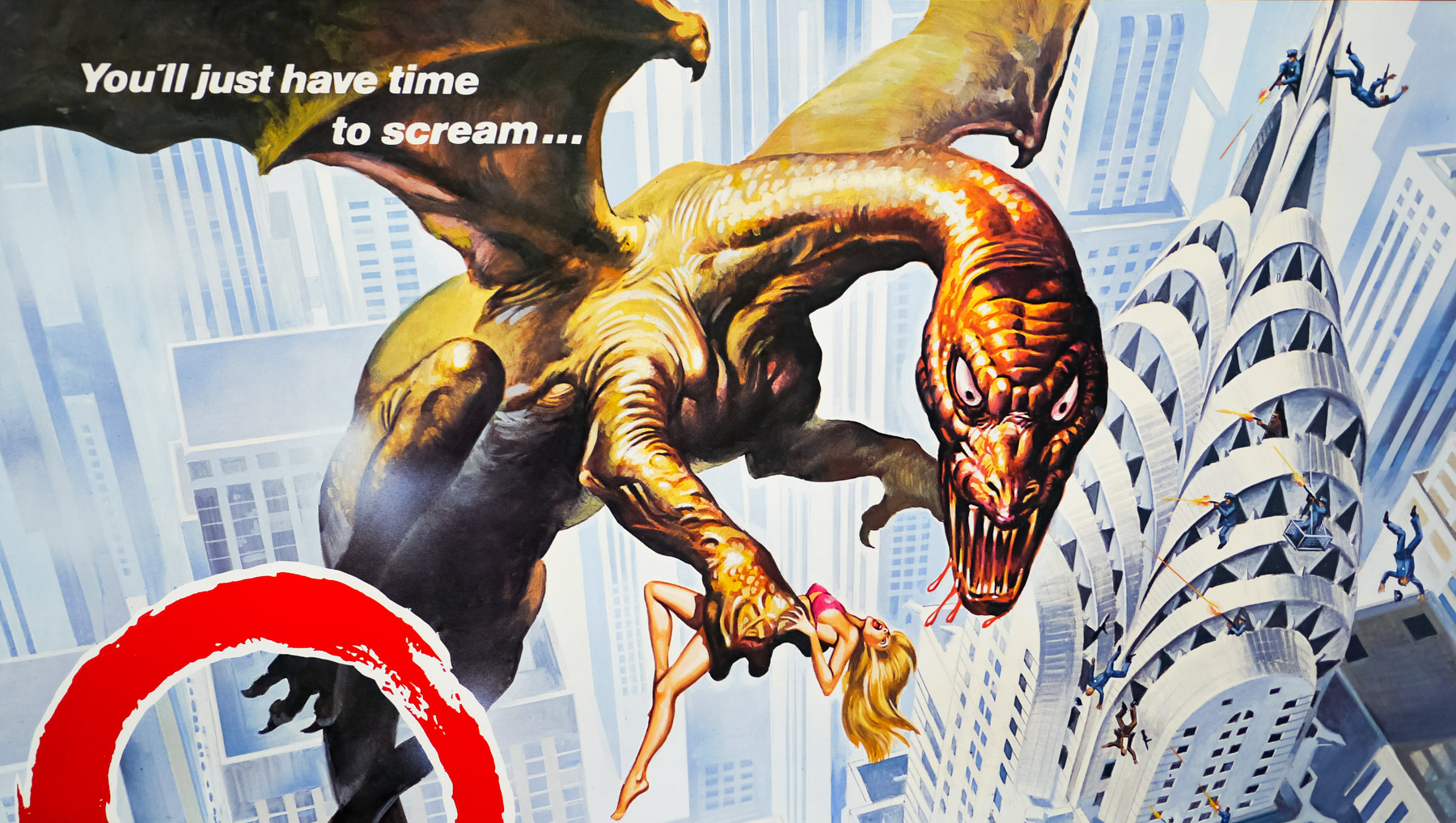
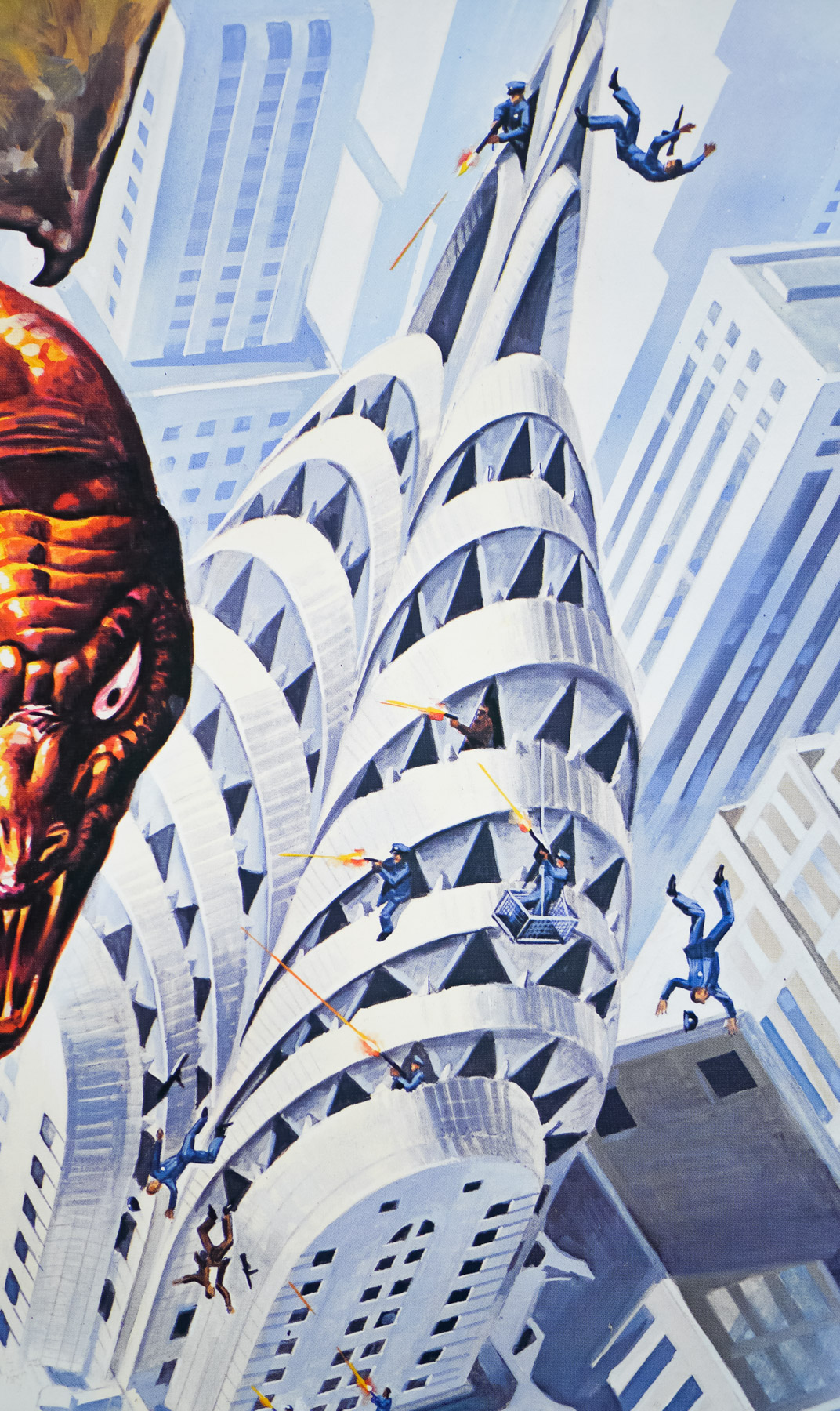
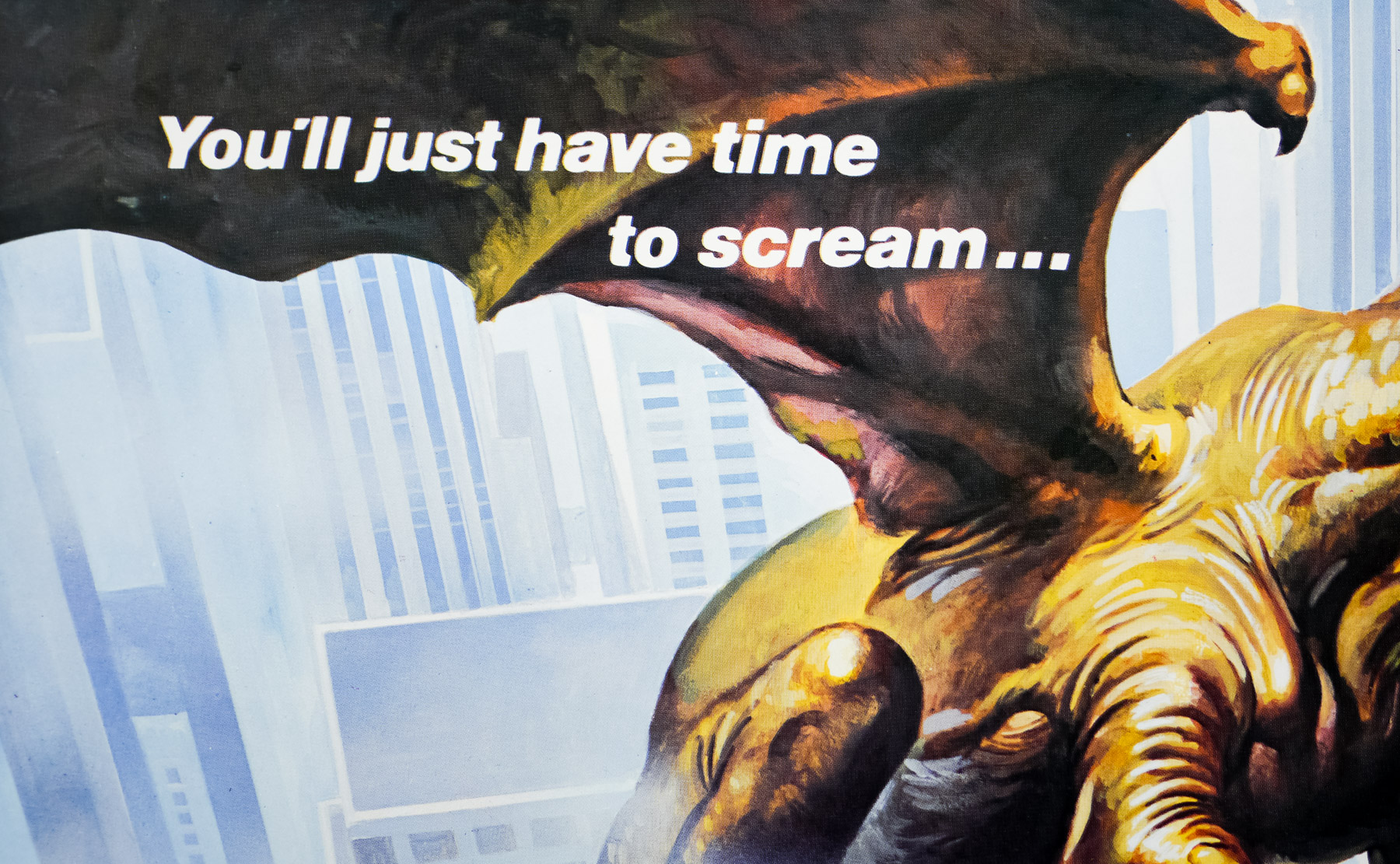
You'll just have time to scream... before it tears you apart!

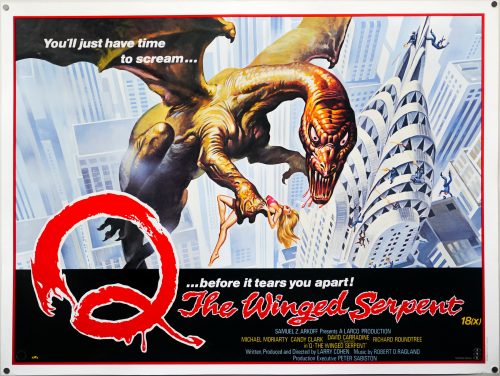
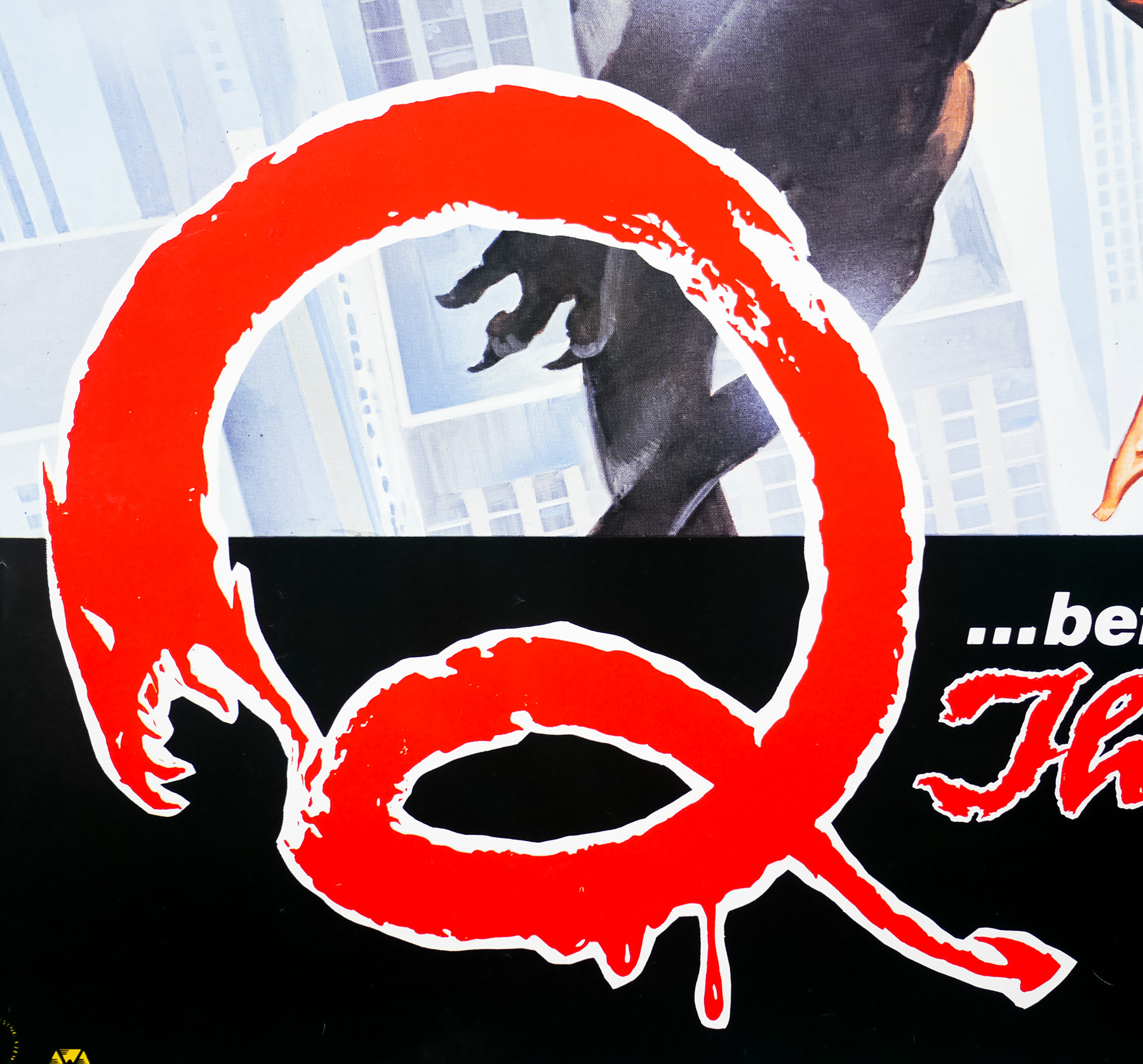
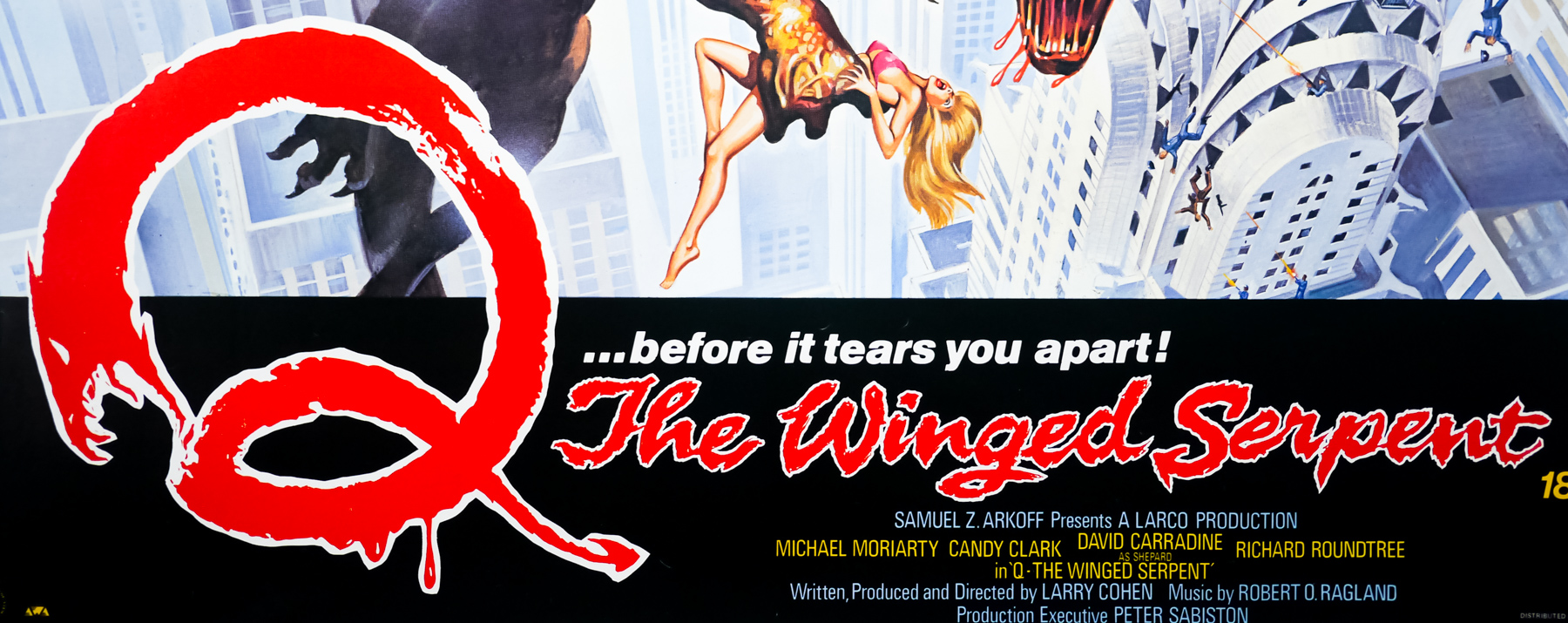
Writer/director and B-movie legend Larry Cohen is responsible for this 1982 horror film that harks back to the popular ‘giant beast’ monster movies of the 1950s. Commonly known as ‘Q: The Winged Serpent‘, or simply ‘Q’, the story is set in New York City and follows two police detectives (played by David Carradine and Richard Roundtree) investigating a series of brutal sacrificial slayings in which victims’ hearts and skins have been removed. They are also struggling to explain the mysterious deaths of people snatched from high up on rooftops by what is reported to be a flying lizard.

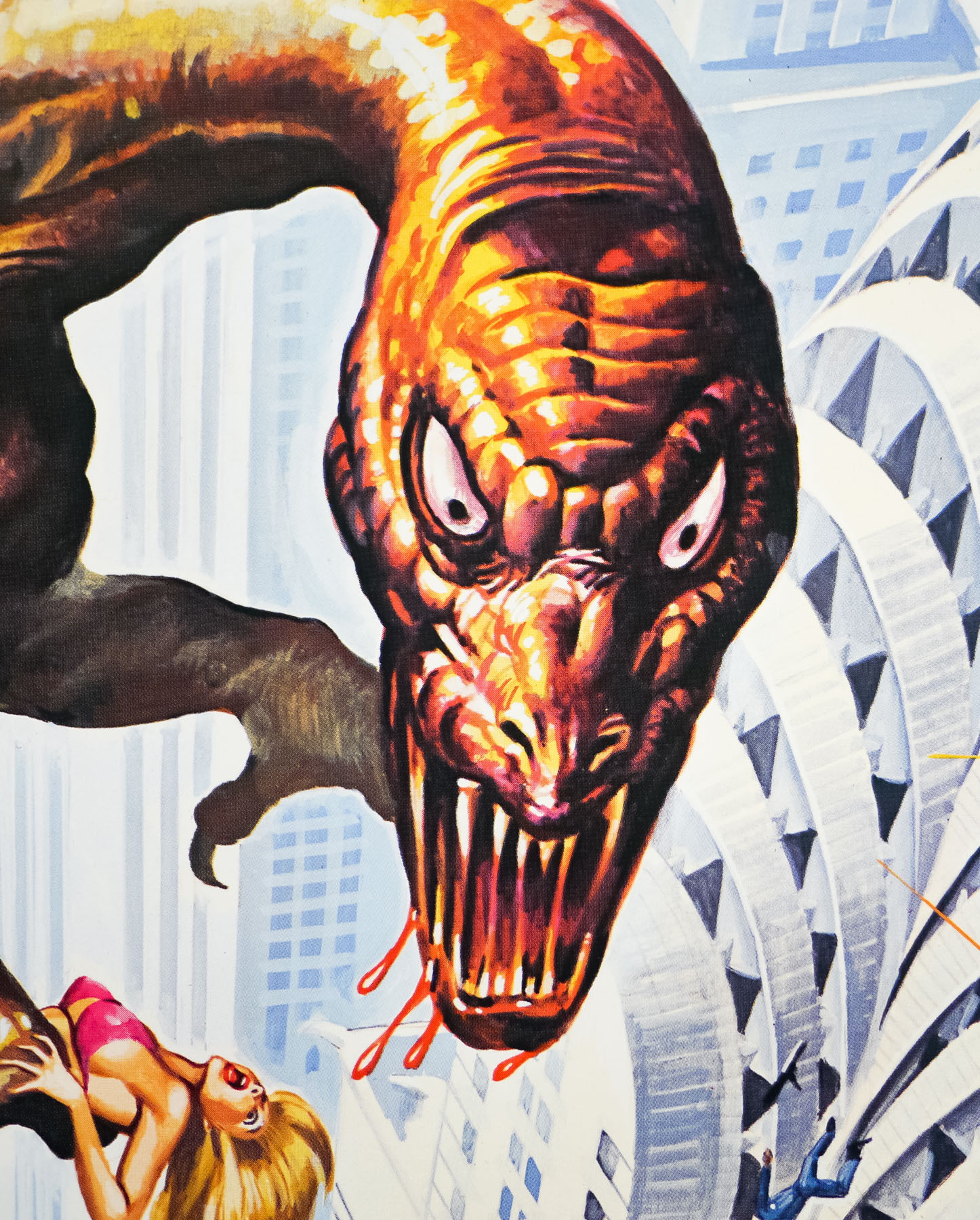
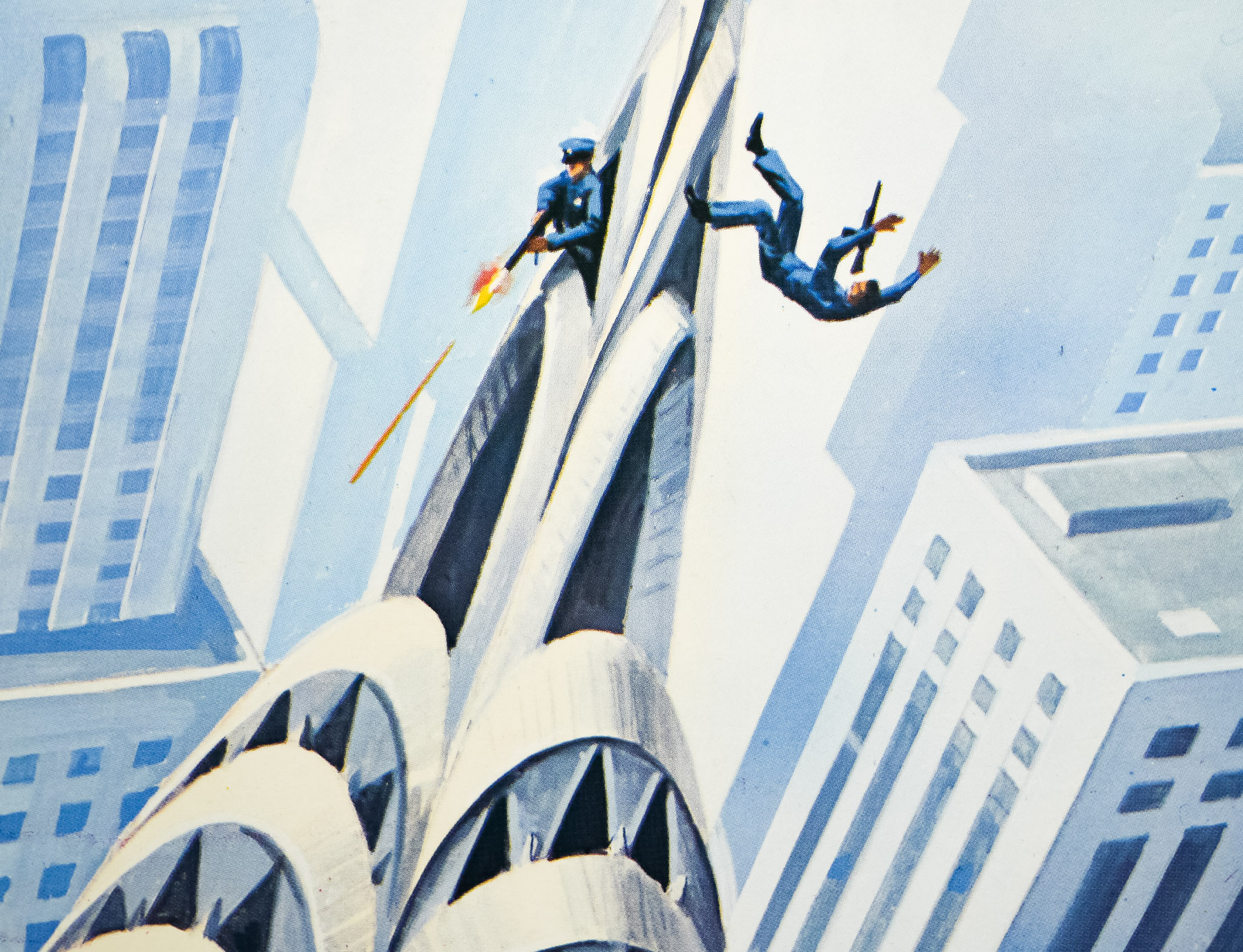
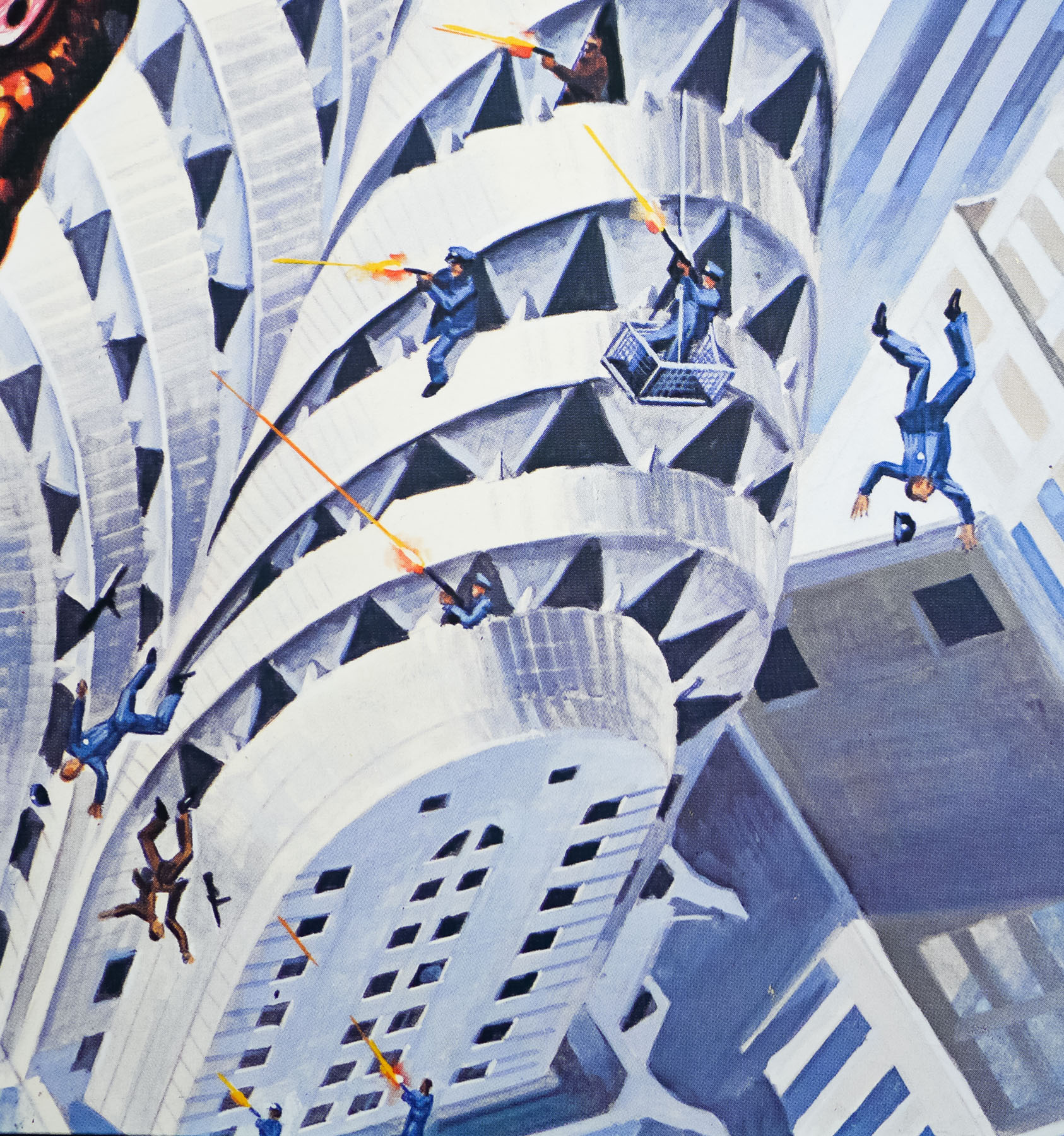
At the same time, a luckless hoodlum called Jimmy Quinn (played with gusto by Michael Moriarty) is on the run from murderous mobsters and discovers a giant egg hidden in the crown of the famous Chrysler Building, which apparently belongs to the deadly creature. It becomes apparent that the cult behind the sacrificial murders has managed to resurrect an Aztec god known as Quetzalcoatl, a flying lizard with huge talons and a taste for human flesh, and the detectives must battle to stop both the cult members and defeat the beast before New York City is lost.

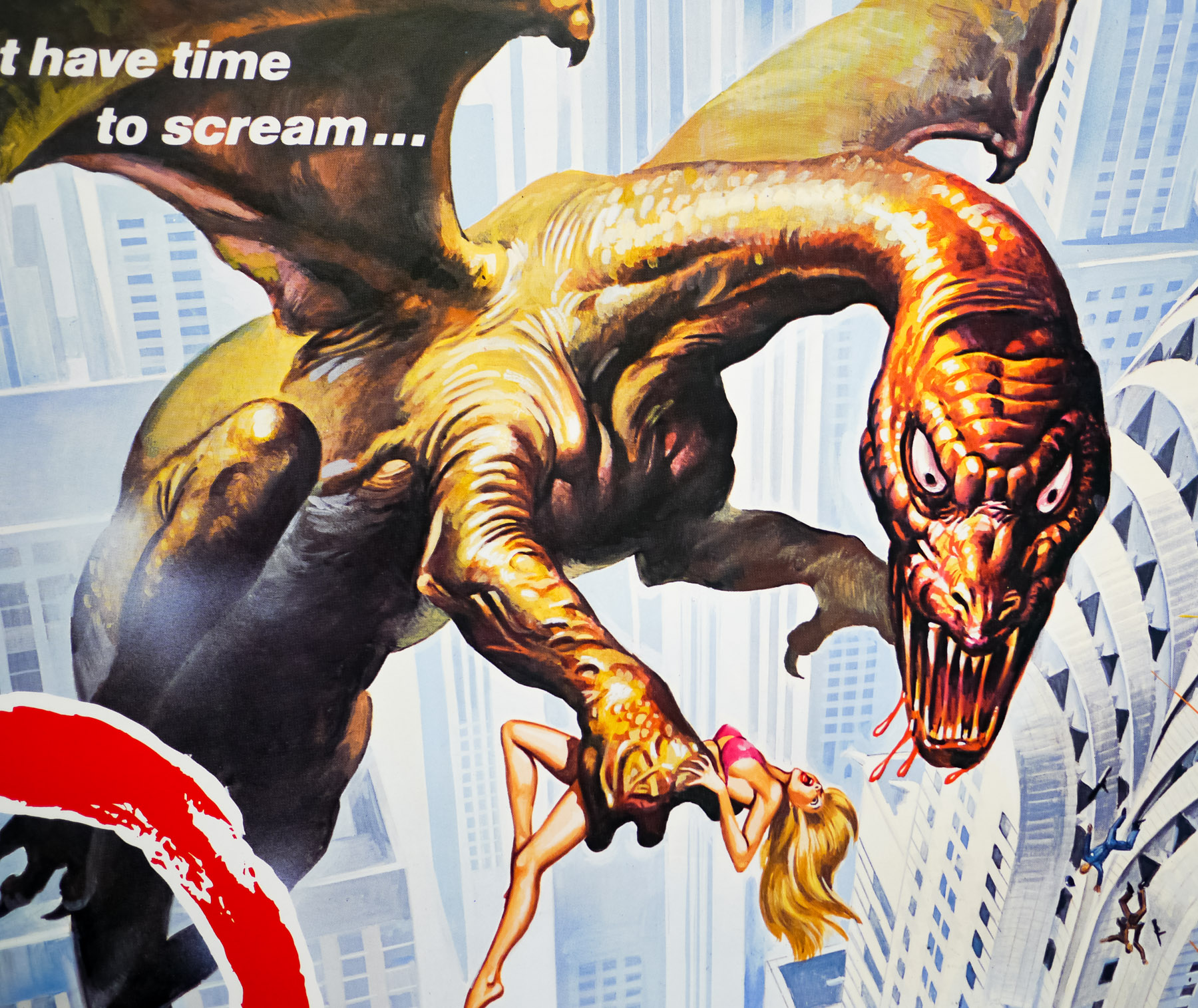
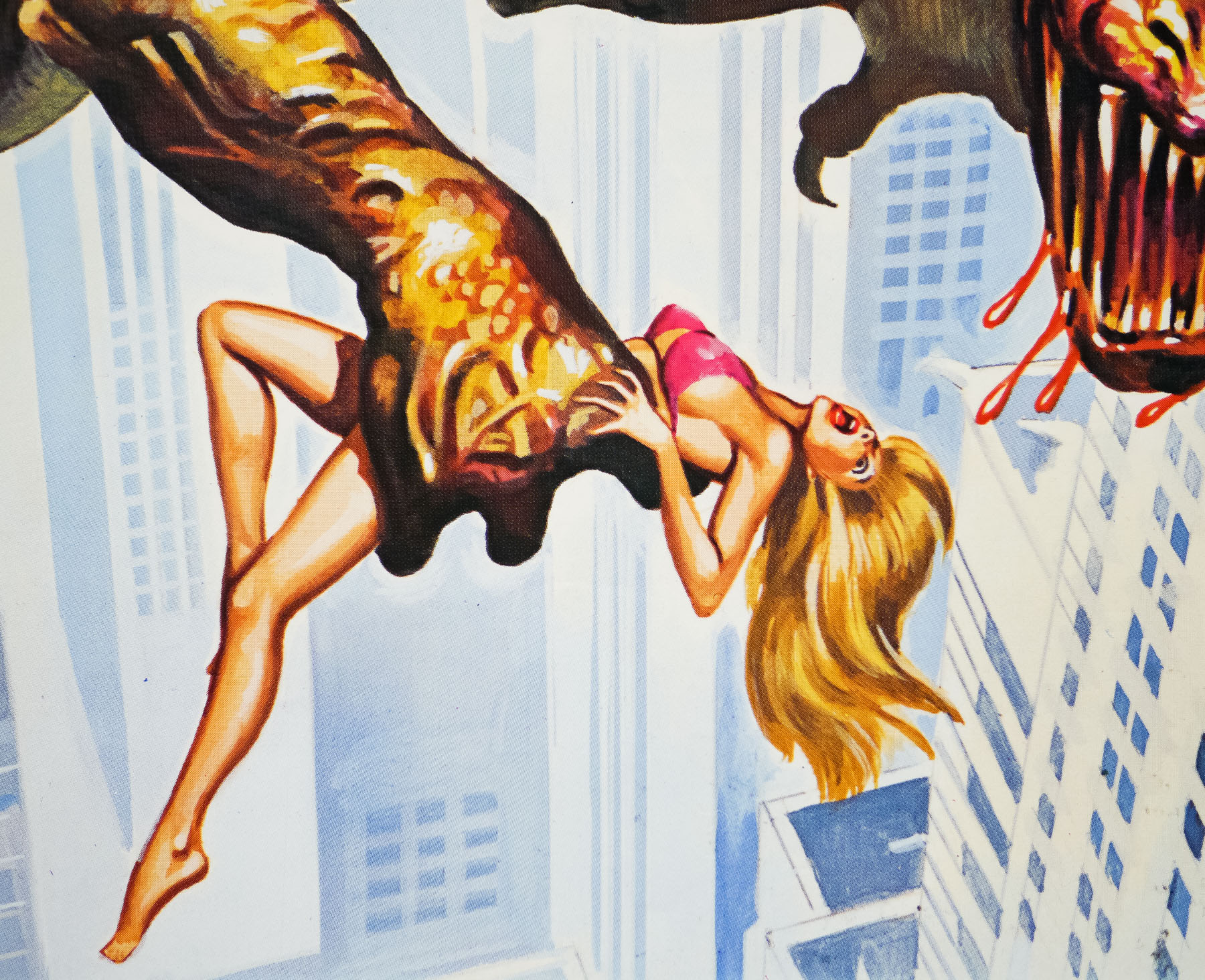
This quad was designed and illustrated by the late, great British artist Tom Chantrell whose dynamic and colourful work featured on hundreds of posters over a forty year period. It features the Chrysler Building, a famous New York landmark that also appears on the international one sheet, painted by Bob Gleason. Note that the lady in peril is wearing quite a bit less on this quad than she is on the one sheet – Chantrell always had an eye for adding extra bits of titillation to his artwork.

Tom Chantrell sadly passed away in 2001 but last year his widow Shirley launched his official website, which showcases his work and features a great biography written by Sim Branaghan, author of the must-own book British Film Posters. Chantrell illustrated many classic poster designs, including several Hammer posters such as the brilliant quad for ‘One Million Years B.C.’, and he was also responsible for the iconic Star Wars quad, the artwork of which ended up being used around the globe.

I have a number of other designs by Chantrell on this site and you can read an exclusive interview with Shirley by clicking here.

Heavy Metal / quad / UK

14.07.14

Poster Poster
Title
Heavy Metal
AKA
--
Year of Film
1981
Director
Gerald Potterton
Starring
Harvey Atkin, Jackie Burroughs, John Candy, Eugene Levy, Marilyn Lightstone, Harold Ramis, Richard Romanus
Origin of Film
Canada
Genre(s) of Film
Harvey Atkin, Jackie Burroughs, John Candy, Eugene Levy, Marilyn Lightstone, Harold Ramis, Richard Romanus,
Type of Poster
Quad
Style of Poster
--
Origin of Poster
UK
Year of Poster
1981
Designer
Unknown
Artist
Chris Achilleos
Size (inches)
30" x 40"
SS or DS
SS
NSS #
--
Tagline
A Step Beyond Science Fiction

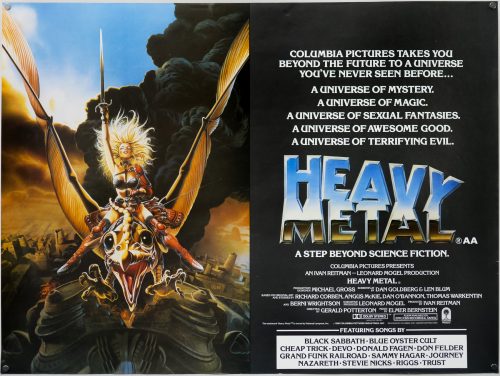
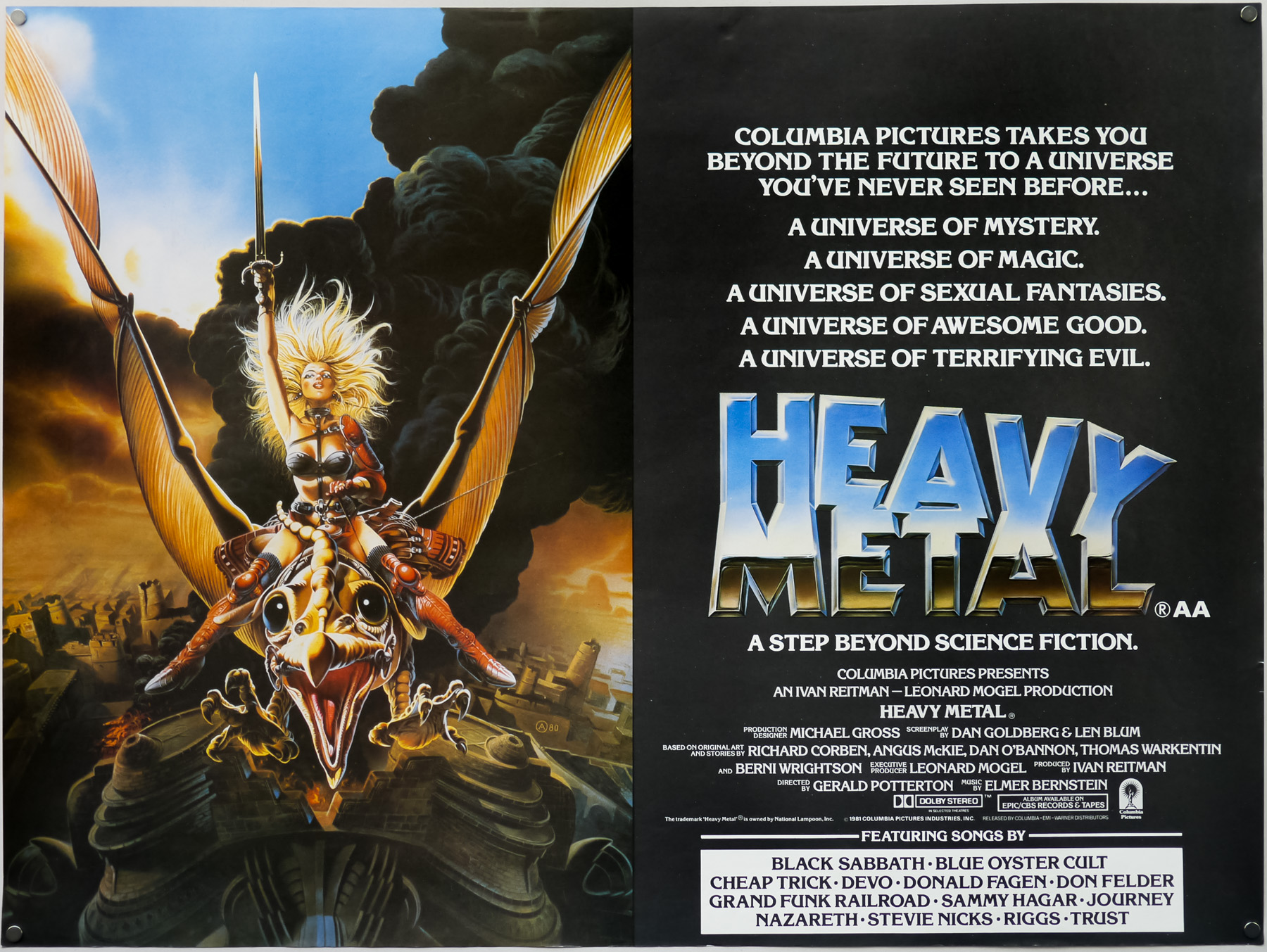
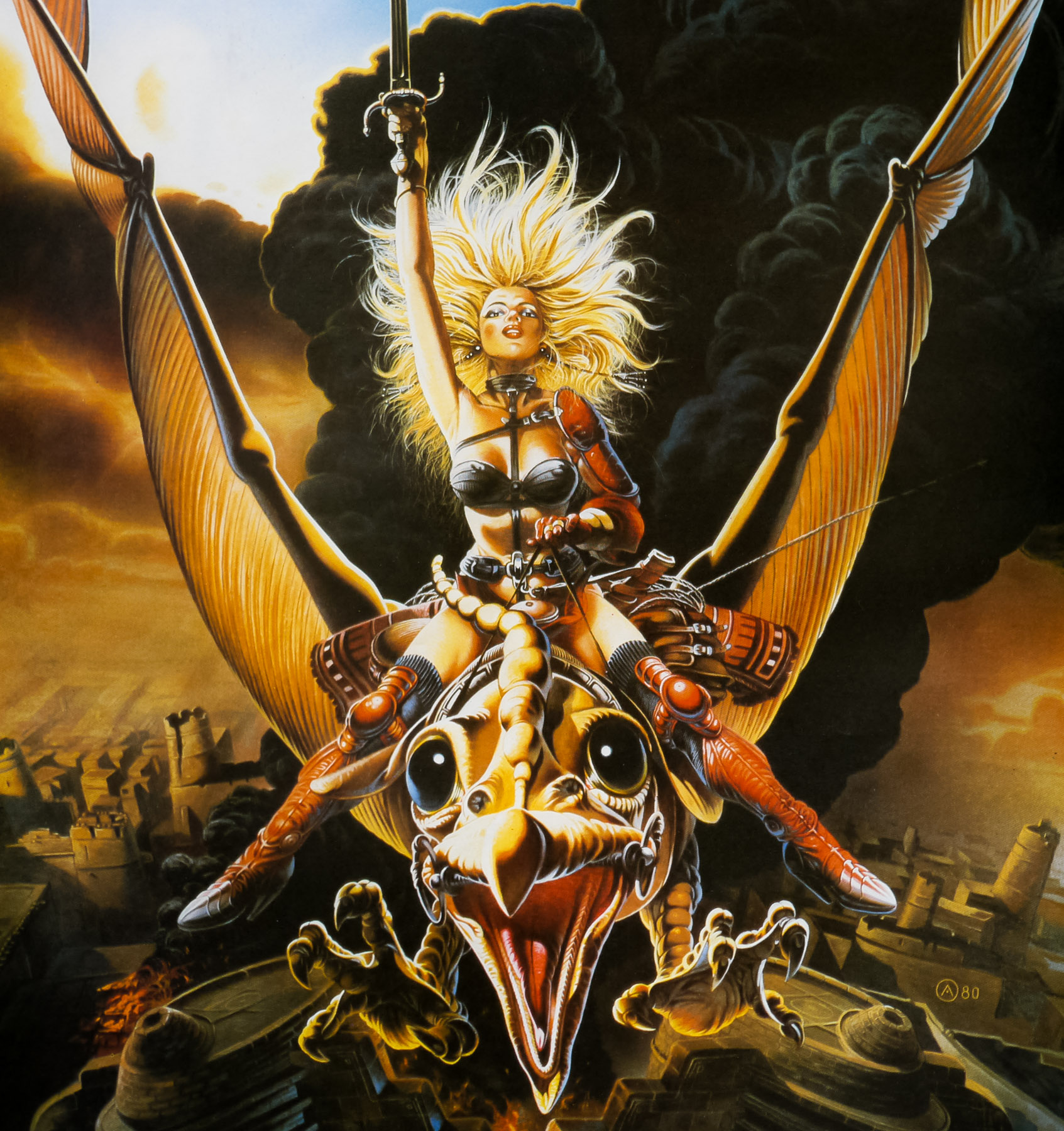
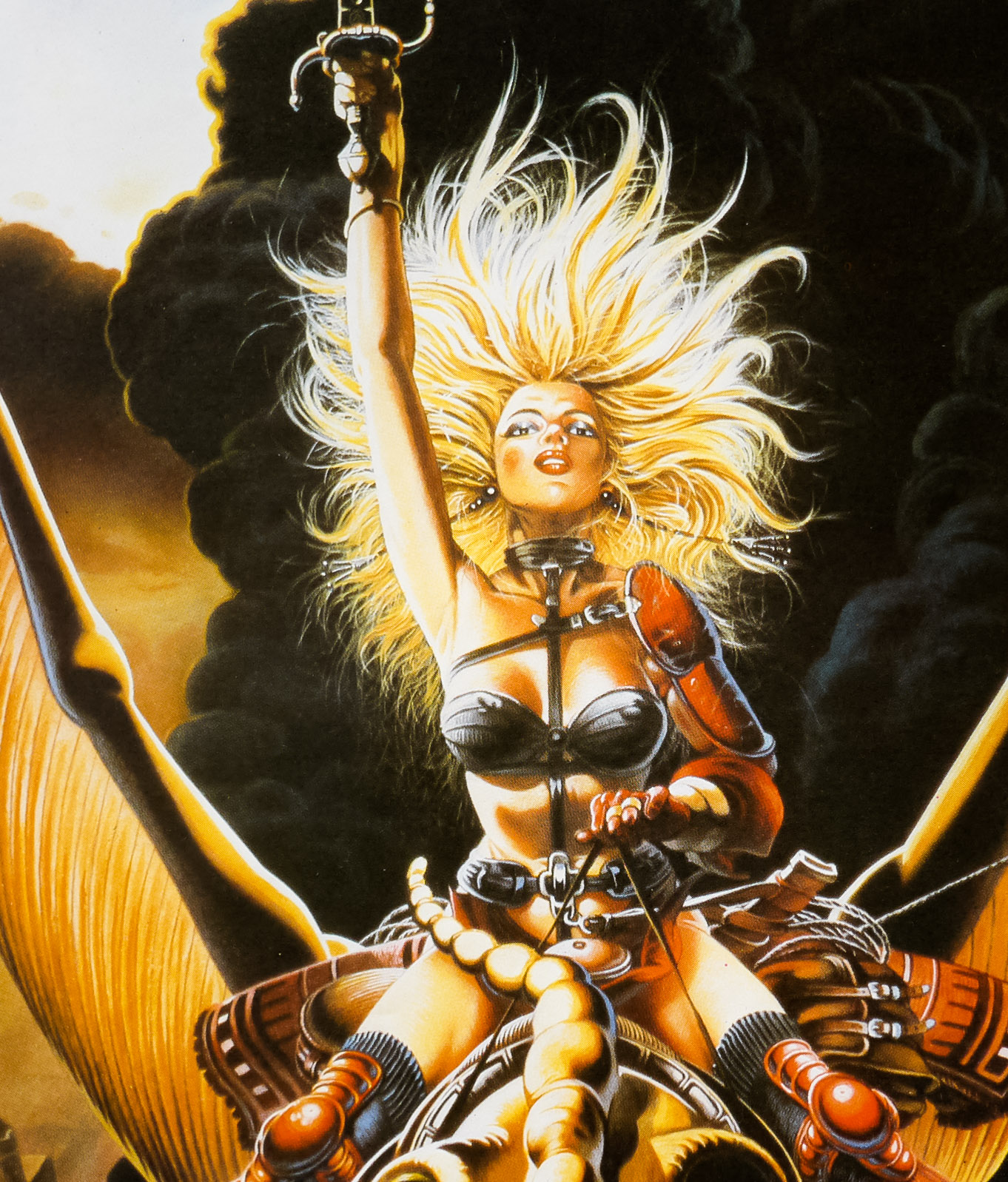
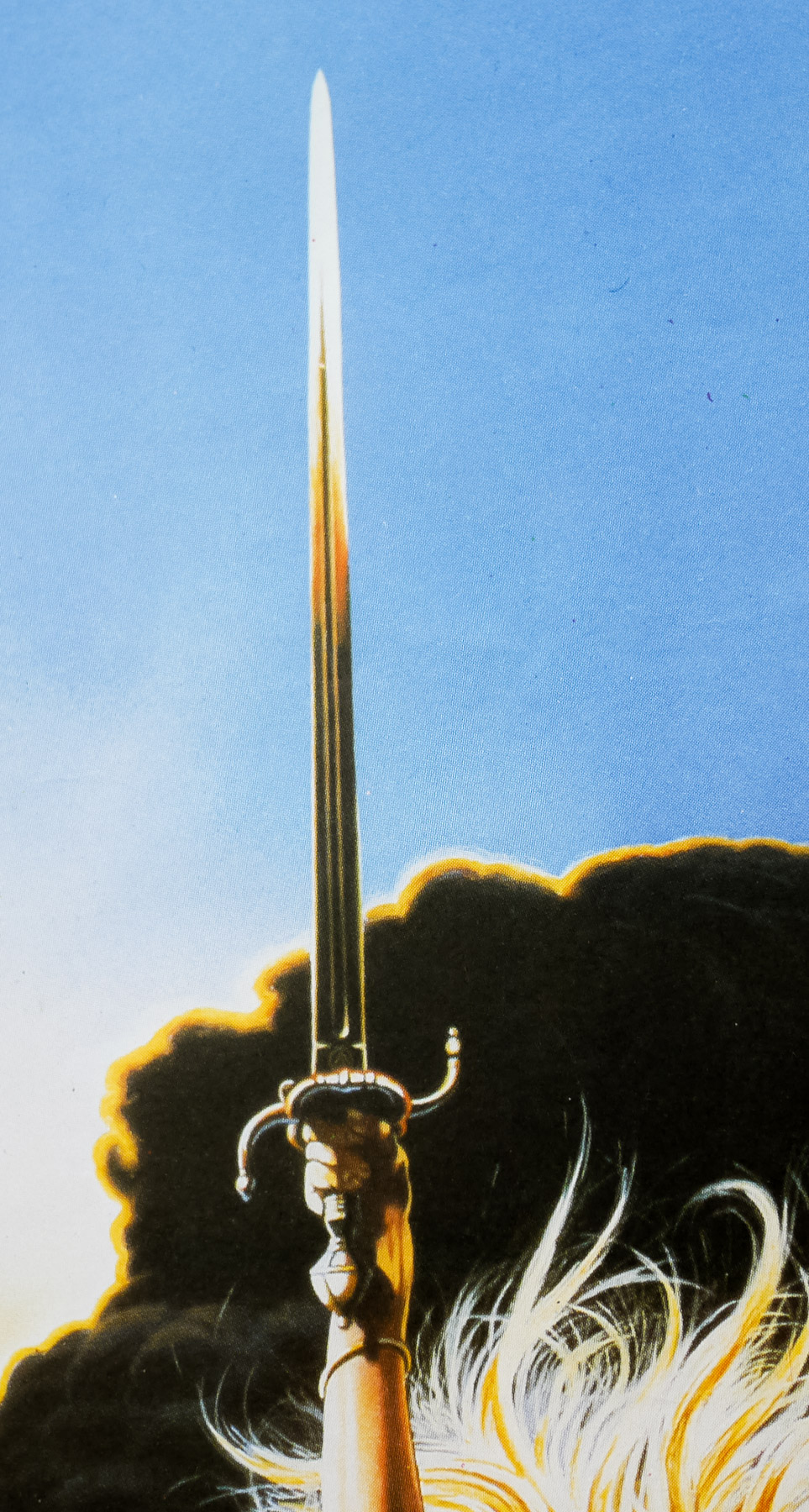
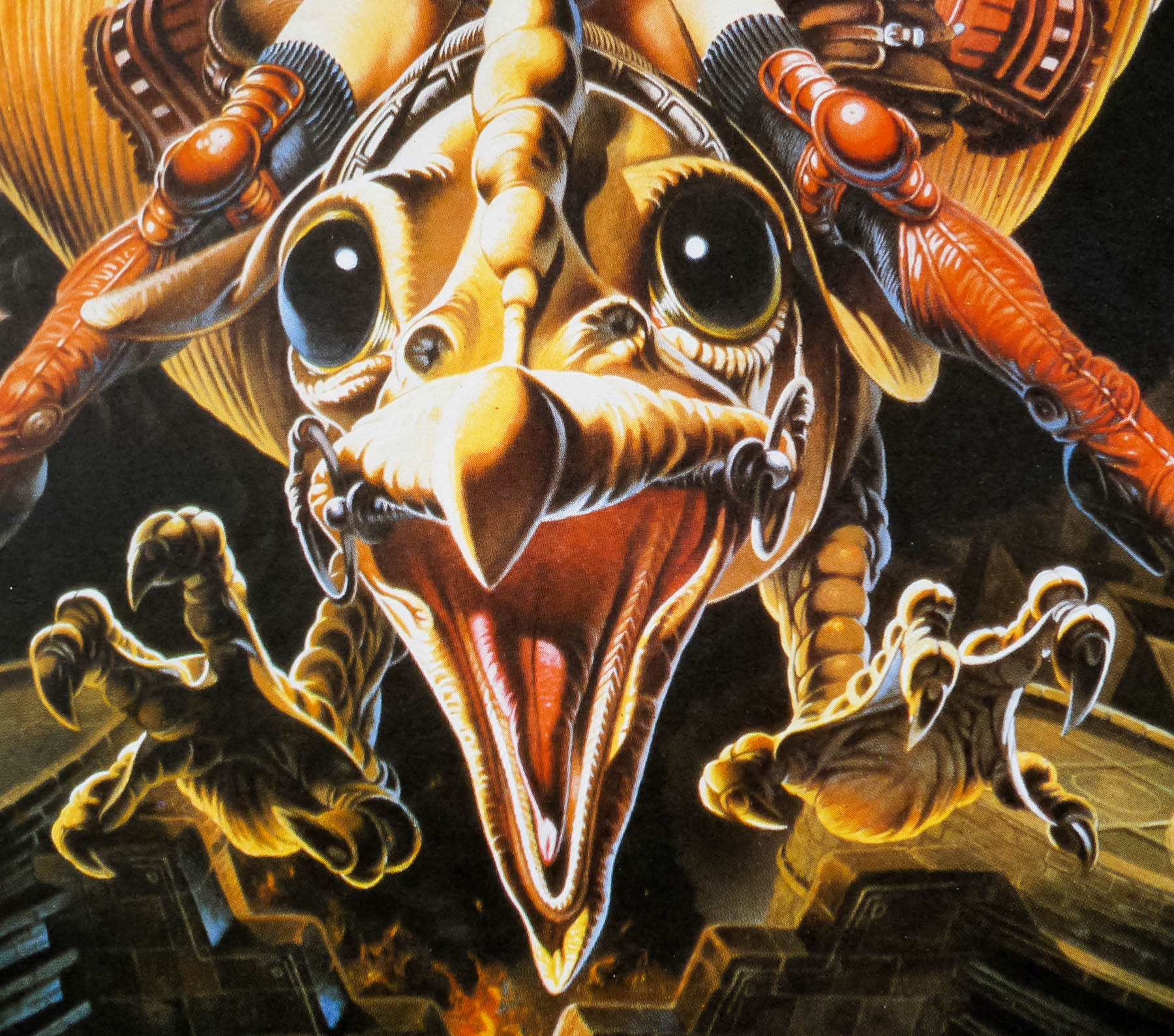
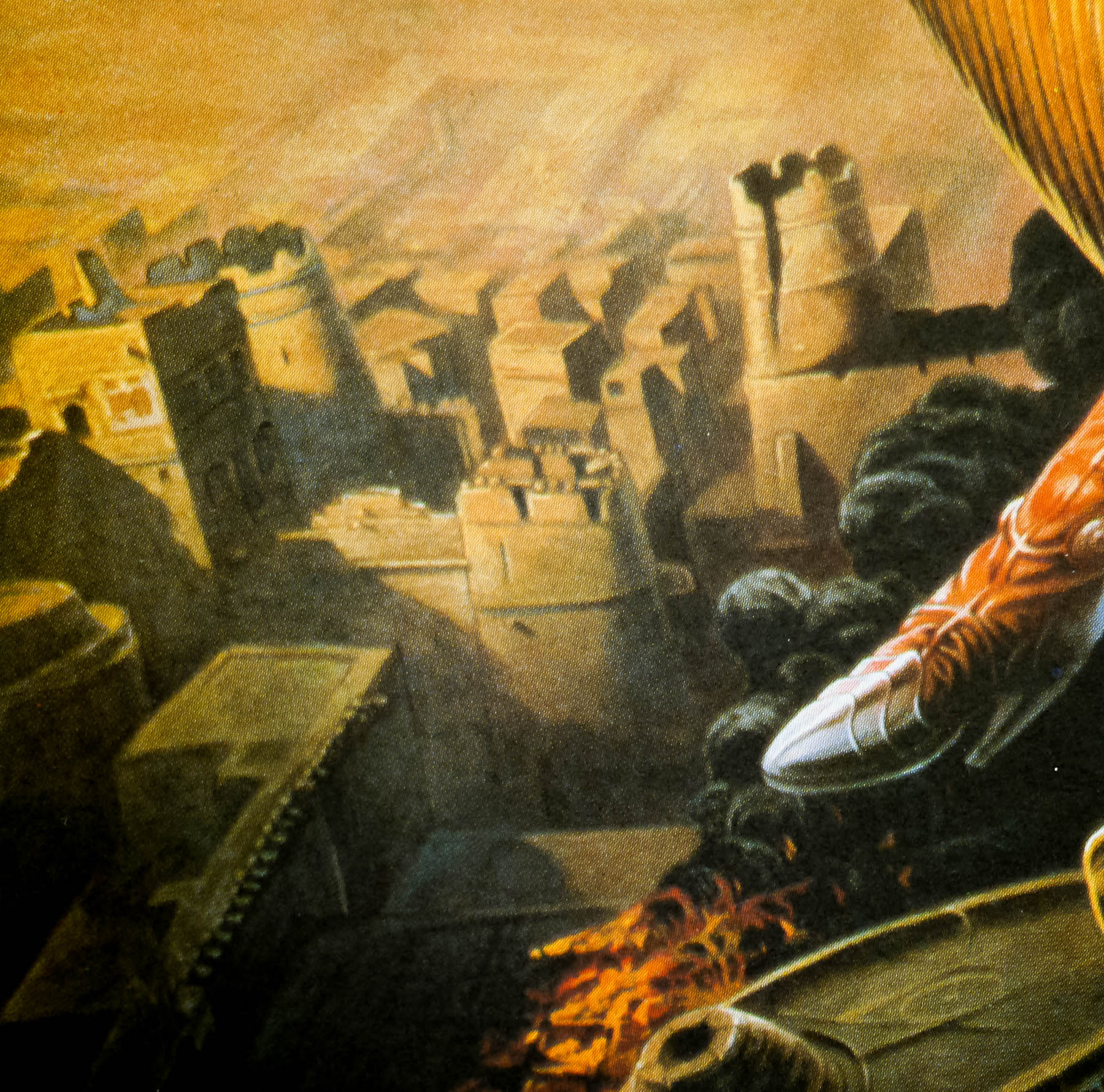
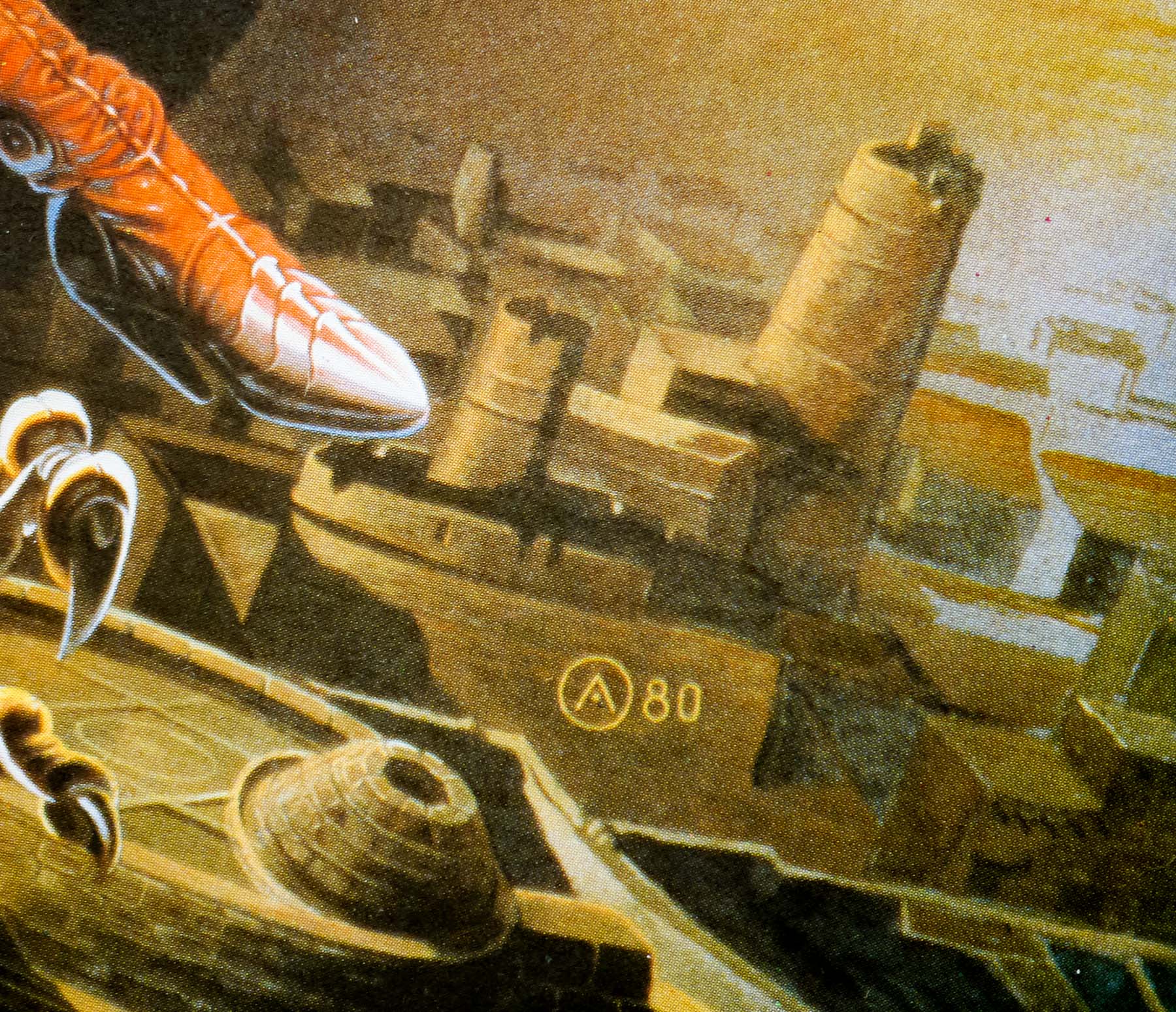
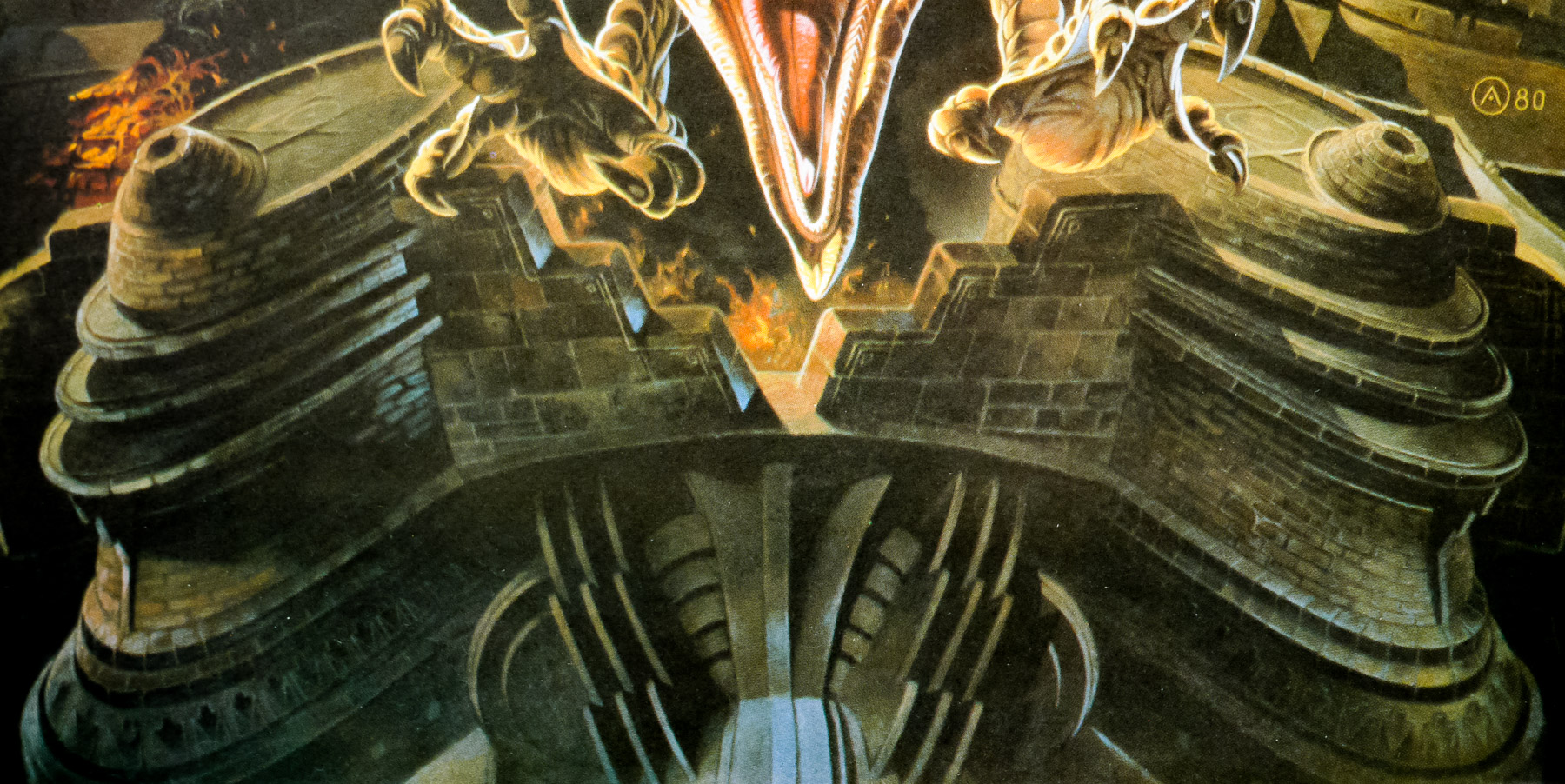
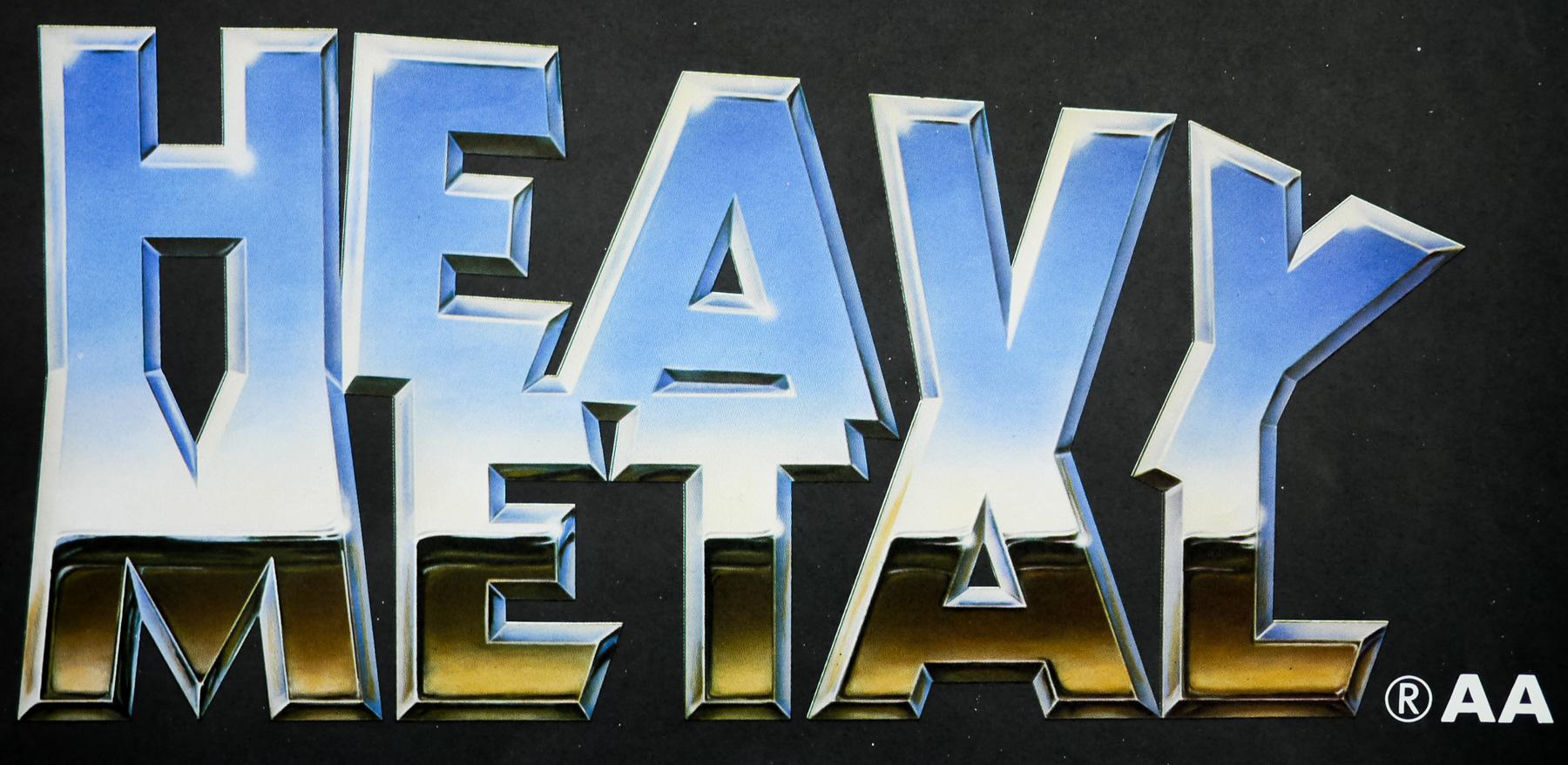
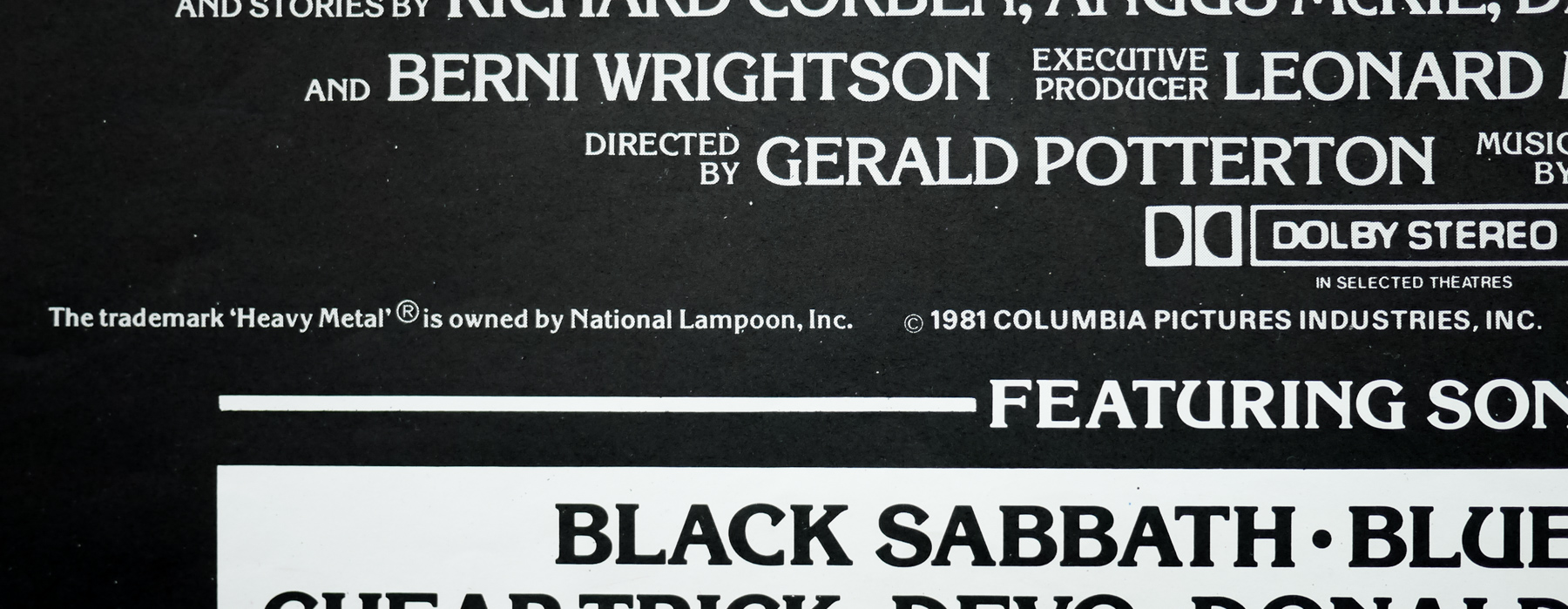
A great piece of artwork by Chris Achilleos on this UK quad for the release of Heavy Metal, an animated film based on stories from the magazine of the same name, which was known for its blend of science fiction, fantasy and erotica. Developed over a period of three years, the film is an anthology of tales connected by a framing story, with each one being based on a segment from the magazine or created specifically for the film. Like its source material it contains plenty of graphic violence and sexual imagery, although the film is somewhat softer in comparison to the tales seen in print. Several different animation houses worked on the segments, which is how it was able to be completed in a relatively short period of time. The voice cast included John CandyEugene Levy and Harold Ramis.

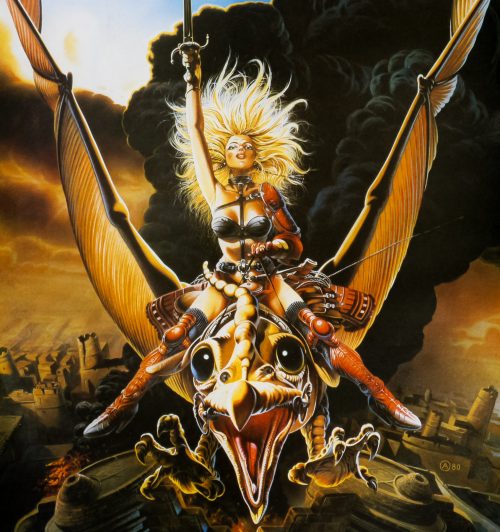
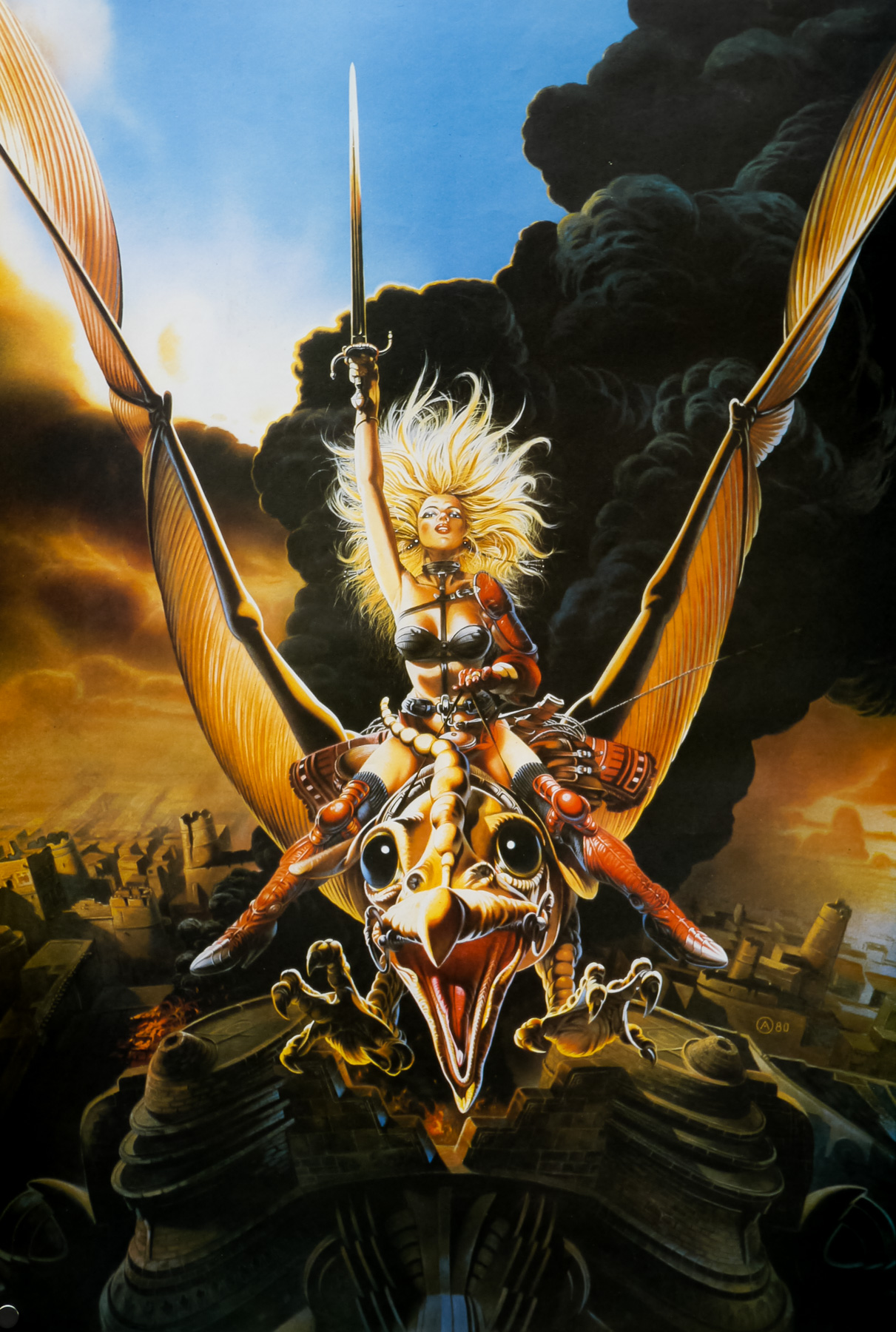
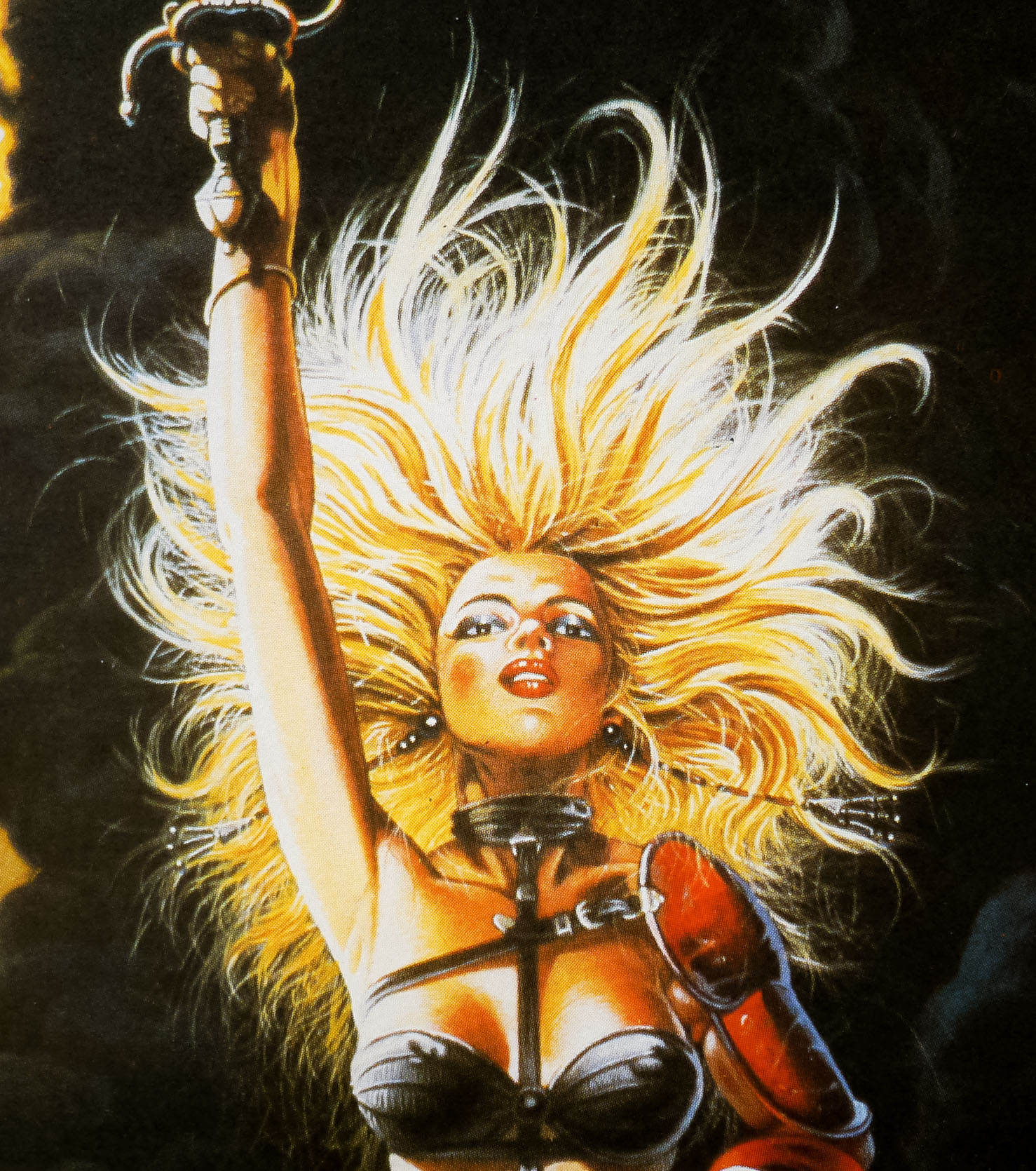
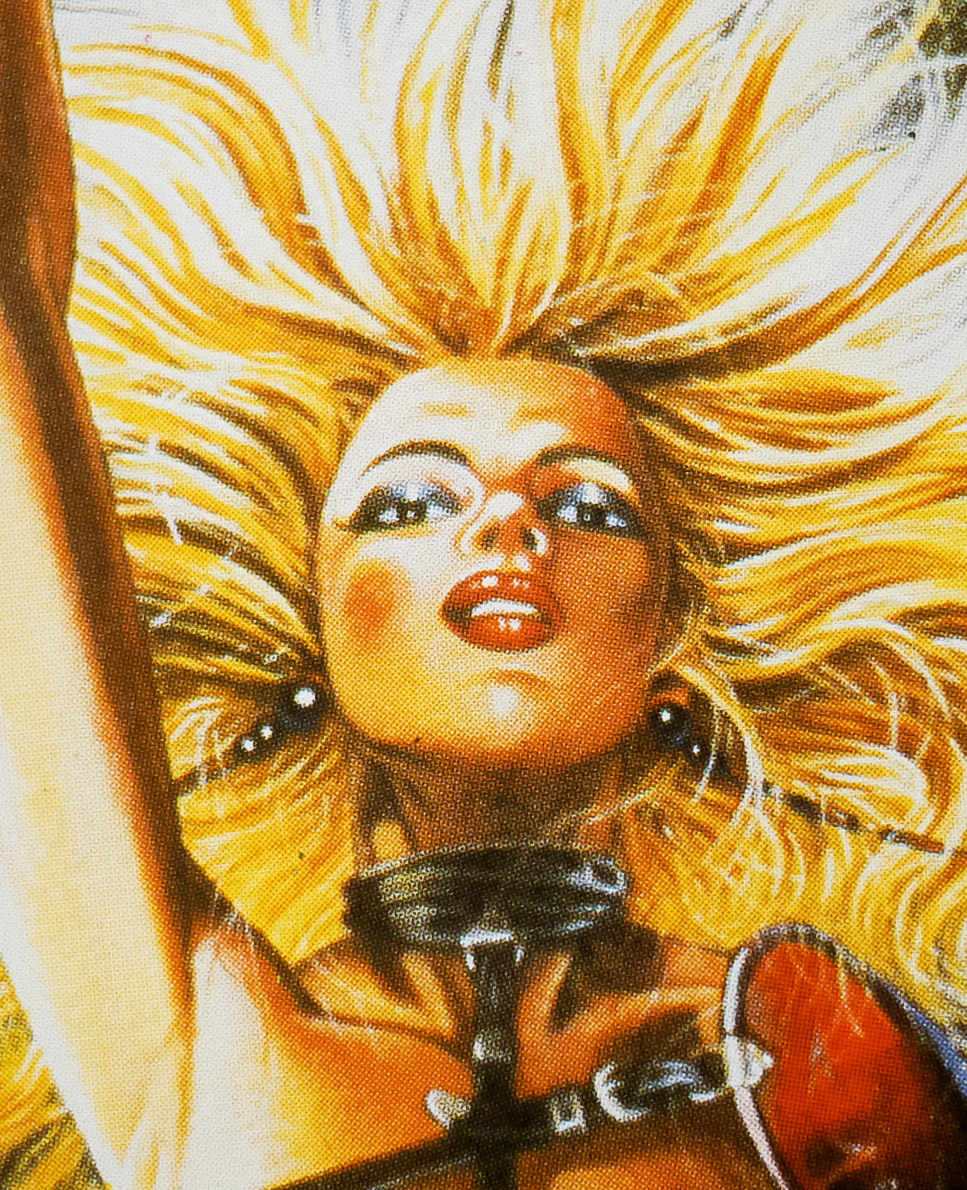
Chris Achilleos is one of the foremost British sci-fi and fantasy artists and has been working for over 40 years, creating some of the most celebrated artwork in the genre. Born in Cyprus, Achilleos and his family emigrated to London in 1959 and he went on to study illustration at Hornsey Art College where he learned the skills of technical illustration and became proficient with the airbrush in his final year. The artist would go on to create illustrations and painted work for album covers, book covers, magazines and would publish a series of books showcasing his skills. In addition, Achilleos also worked on concept designs for films including Willow (1988), King Arthur (2004) and the Last Legion (2007). This portrait of the heroine Taarna and her faithful steed was influential on the creation of the segment in the film, although the level of detail in the animation doesn’t quite match up to his skills!

Sim Branaghan, author of the brilliant British Film Posters, interviewed the artist for his book and notes that Achilleos’ film work often ended in frustration and disappointment. His first contact with the film industry came with a call from Julian Senior, a marketing executive at Warners at the time, who invited Achilleos to produce some concepts for Greystoke (1984). These were swept aside for an urgent job to produce three big illustrations for posters for Supergirl (1984) that ended up being scrapped when the distribution of the film changed and the work went to the FEREF agency.

Achilleos was also asked to work on posters for Blade Runner that ended up being rejected by the clients who decided to go with the photo montage of the UK quad. There were other frustrating no-gos with designs for Clash of the Titans, Twilight Zone (1983) and an illustration for Batman (1989) that was caught up in a knotty legal wrangle. Some posters designs did make it through, including Riding High (1979), this artwork for Heavy Metal that was used on the UK quad as well as the US one sheet and Japanese B2, plus a quad for Jackie Chan vehicle The Protector (1986).

Graham Humphreys on the making of The Monster Club quad

30.11.12

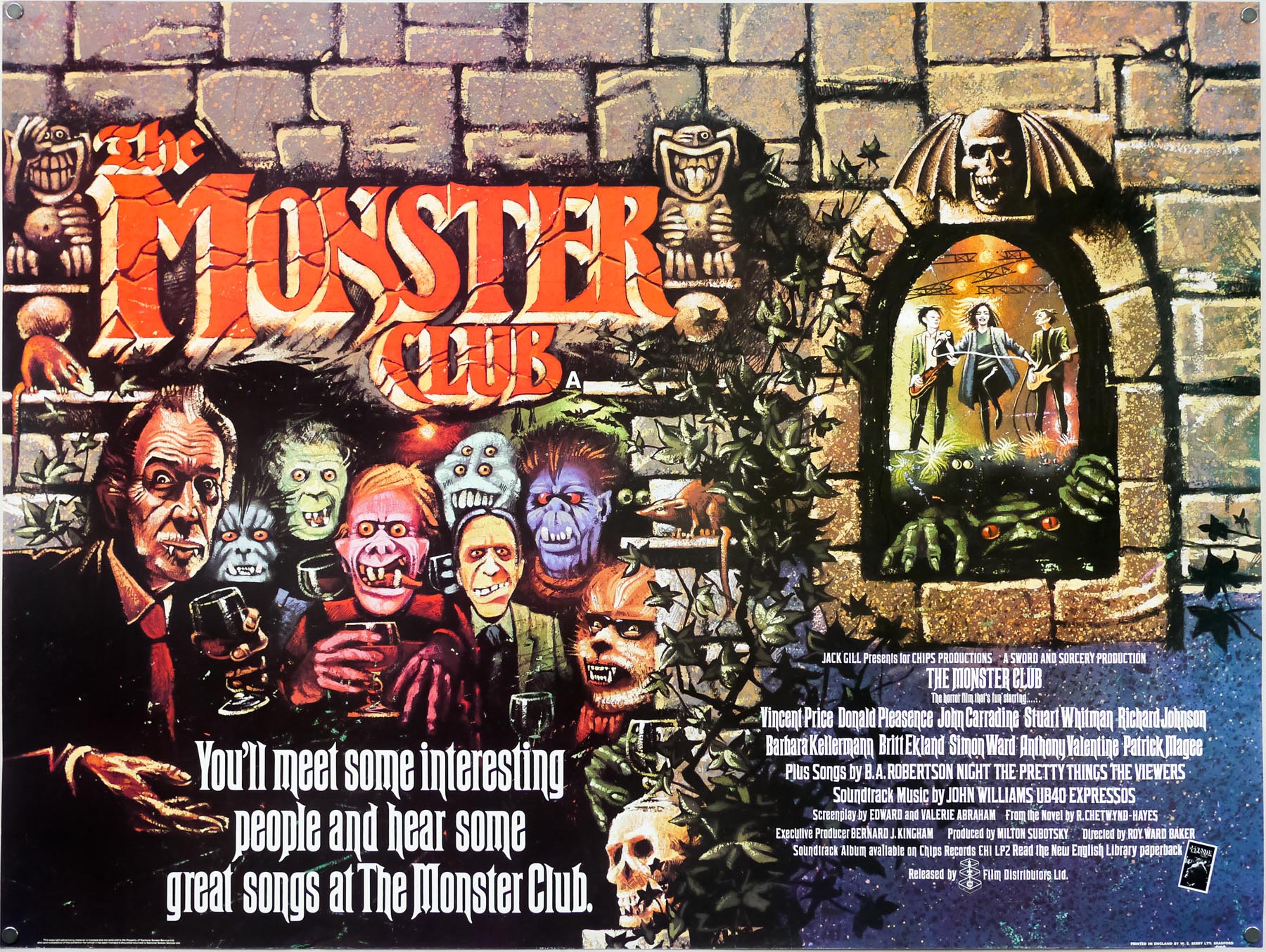
After adding the British quad for The Monster Club to the site, I wanted to speak to its designer and illustrator Graham Humphreys about its creation. The poster wasn’t one that we discussed during our 2011 interview and I felt it deserved this ‘making of’ article.

The British quad for The Monster Club, designed and painted by Graham Humphreys

The British quad for The Monster Club, designed and painted by Graham Humphreys

Hi Graham, thanks for agreeing to talk about the poster. First of all, is it true this was the first film poster you ever worked on?
Yes, although in retrospect it was perhaps a bit bit of a false start!

How did you get involved with it?
The client was another random name on a list of people I went to see whilst I was starting out (film distributors, etc) and within two weeks of showing them my folio (my college folder, one of those basic cardboard versions tied by string!), this project turned up. I can’t remember who the company was – though they were one of the big distributors and it was at a time when everything was ‘in house’, ie. they had their own design studio.

What kind of brief were you initially given?
They called me in for a meeting and showed me a series of 35mm transparencies (pre-digital of course) and a drawing of the layout required, which specifically featured a title treatment that had to be copied. So my illustration was merely to flesh out the sketch to full artwork. I was offered the pick of transparencies which were then made into photographic prints that I could use as direct refrence. I had about a week and a half in which to deliver the painting.

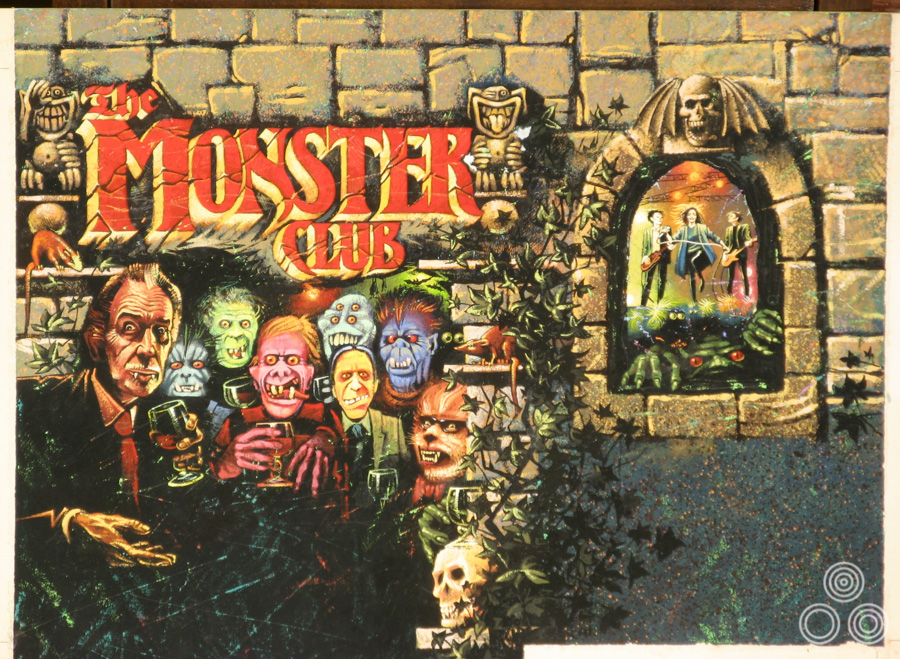
The British quad for The Monster Club, designed and painted by Graham Humphreys

The British quad for The Monster Club, designed and painted by Graham Humphreys

I understand that the first version of the poster was rejected – what did it look like compared to the final printed version?
My original version had blue hues to give it a midnight feel. I spent time carefully making the Vincent Price portrait as true as possible. I took a full week to complete the painting working exclusively on the project. A few days after delivery I had a phone call informing me that it had been rejected and would I come in for a meeting. Apparently it was considered to ‘adult’ and ‘scary’. It had been hoped that kids would see the film as well, but the marketing people thought I had produced a ‘horror’ poster. It would have been futile to argue that a film called ‘The Monster Club’ starring Vincent Price and John Carradine, produced by Milton Subotsky, might already have appeared ‘genre’! However, the client, ‘being right’, were happy to let me repaint the illustration as ‘happier’ more colourful, daytime and ‘not scary’, but I had two days.

So I worked two days and two nights (including a visit from the client mid-way to check on progress) until I was a sleep deprived, hallucinating wreck. The painting was rushed and needed another two days, but the deadline was set. The job was delivered, approved and I got paid extra money and slept for a full 24 hours after.

What happened to the artwork for the first version of the poster?
I’ve been racking my brains and I can only conclude that I gave the original version to a friend who has since passed away and thus I will never see the painting again. We lost touch and apparently he became alcoholic and died penniless – I had no idea until recently but it’s a sad tale.

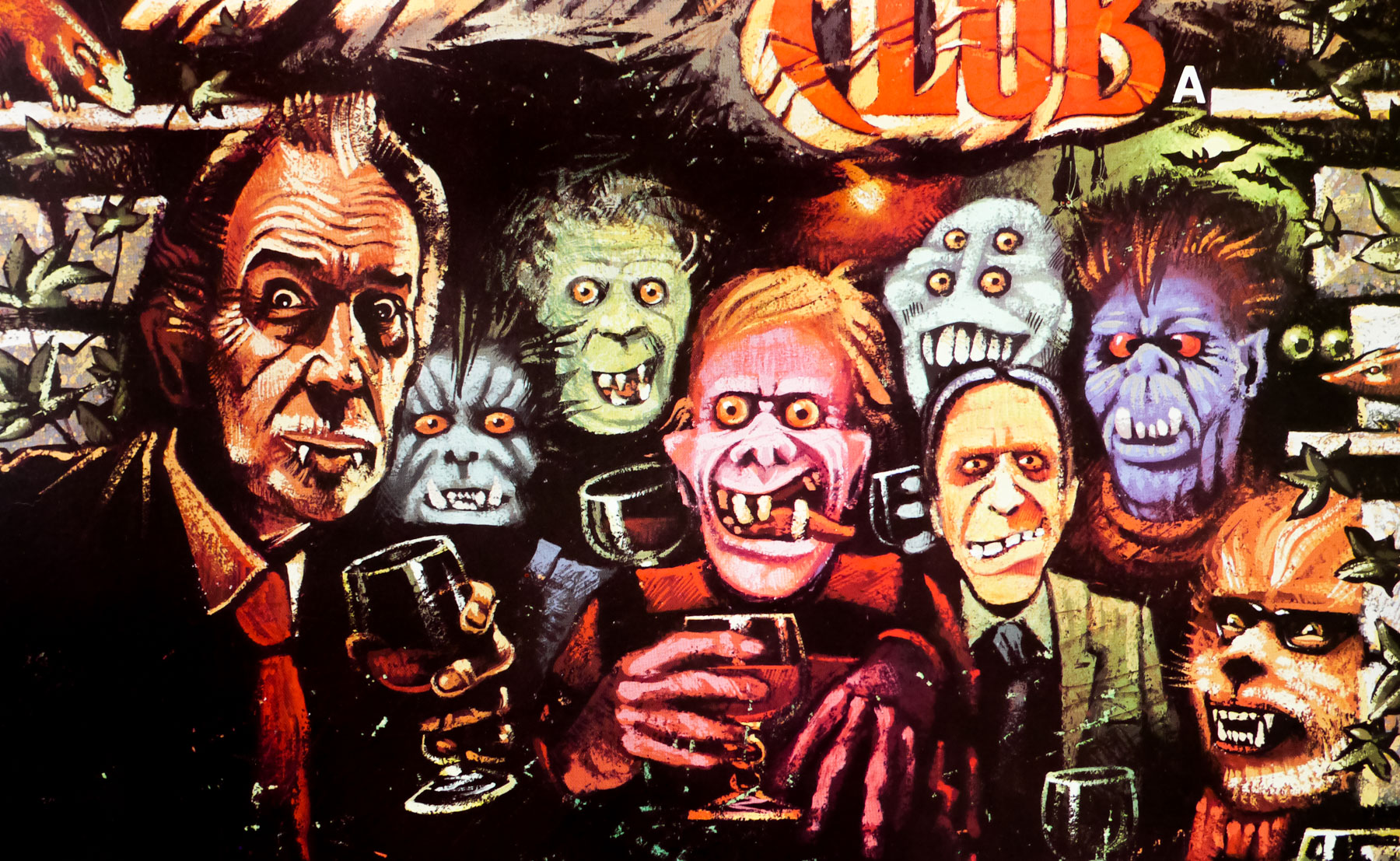
Close up detail of The Monster Club quad artwork by Graham Humphreys

Close up detail of The Monster Club quad artwork by Graham Humphreys

Did you have fun painting the various creatures?
No, I had been shown images from the film and clearly most of the club members are wearing hastily prepared rubber masks, there was no license to be creative with the heads.

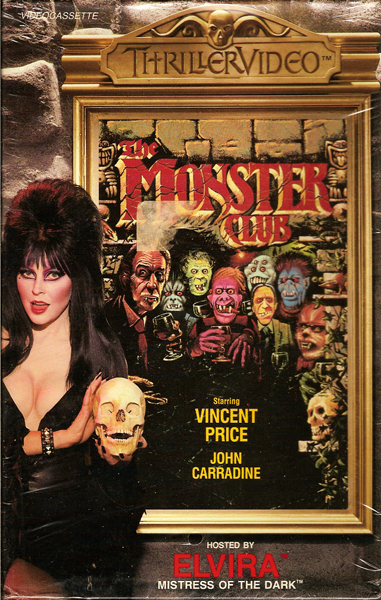
They must have liked the poster as the painting was used on a number of international posters as well as multiple VHS covers?
I suspect that this was more to do with budget. Clearly the film was intended to be supplied with a full supporting poster campaign as a package. This is why the marketing department were being so particular. This was an international poster, not domestic. The photo of the original painting shows that the main image descends further in order to facillitate the international format. Only the UK would have got the full width quad version.
Were you happy with the final result?
Absolutely not!

'Elvira presents...' - a VHS cover for the film released by Thriller Video - image taken from Bloodsprayer.com

‘Elvira presents…’ – a VHS cover for the film released by Thriller Video – image taken from Bloodsprayer.com

Did this poster help you secure your next job?
Whilst working on ‘The Monster Club’, the same distributor offered me ‘The Funhouse’ and, after supplying initial sketches, the job suddenly changed and was then a double bill with ‘My Bloody Valentine’. So all my ideas for a quad format poster had to adapt to a tall verticle format. Still smarting from the first poster, I was cautious with the imagery and in retrospect should have taken it much further.
Thanks for taking the time to speak to me about the poster, it’s much appreciated.

– Graham’s official website can be viewed here.
– This site’s 2011 interview with Graham is available here.
– The other posters I’ve collected that were designed and painted by Graham can be viewed by clicking here.