

Day of the Dead / Thailand

18.02.15

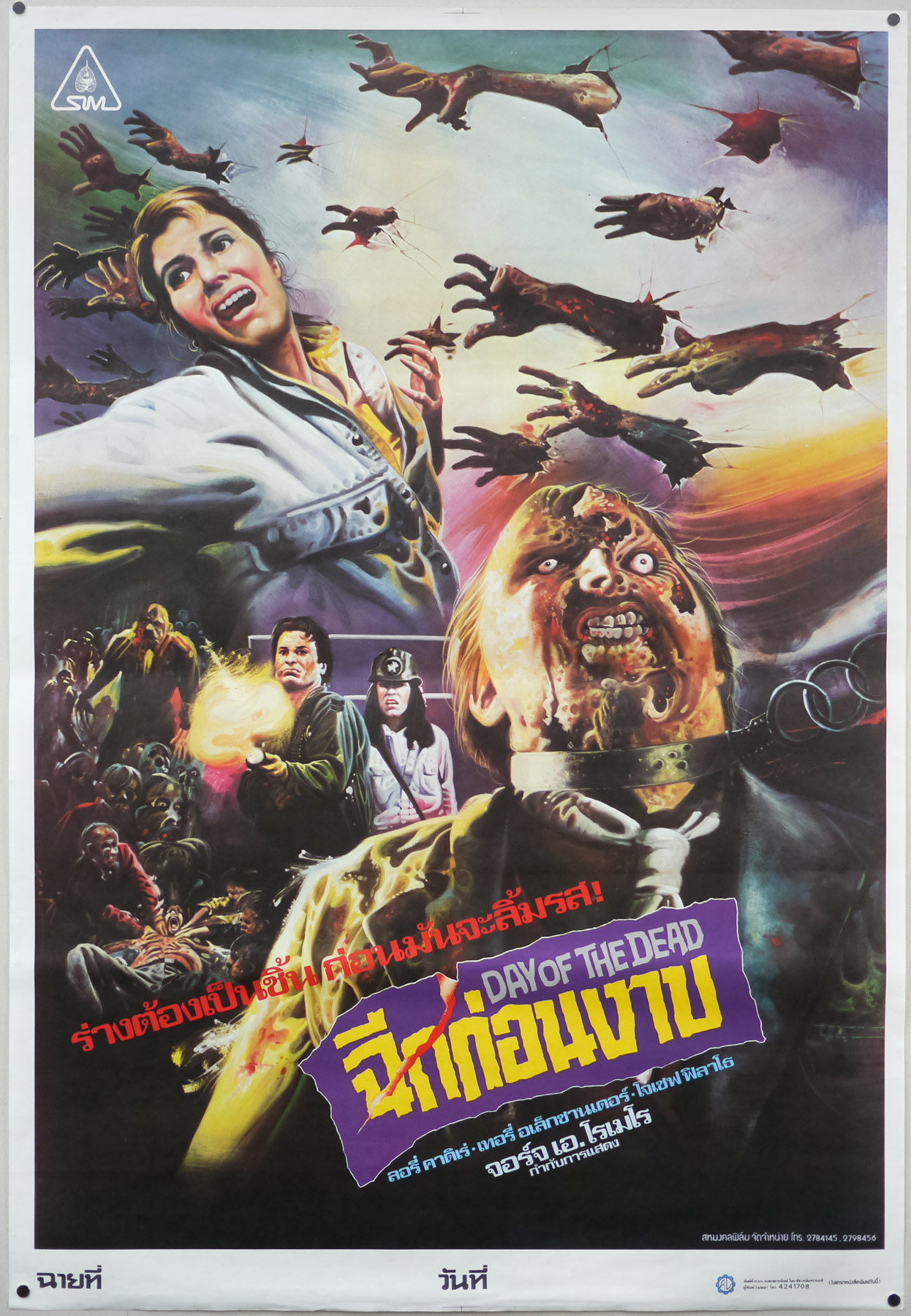
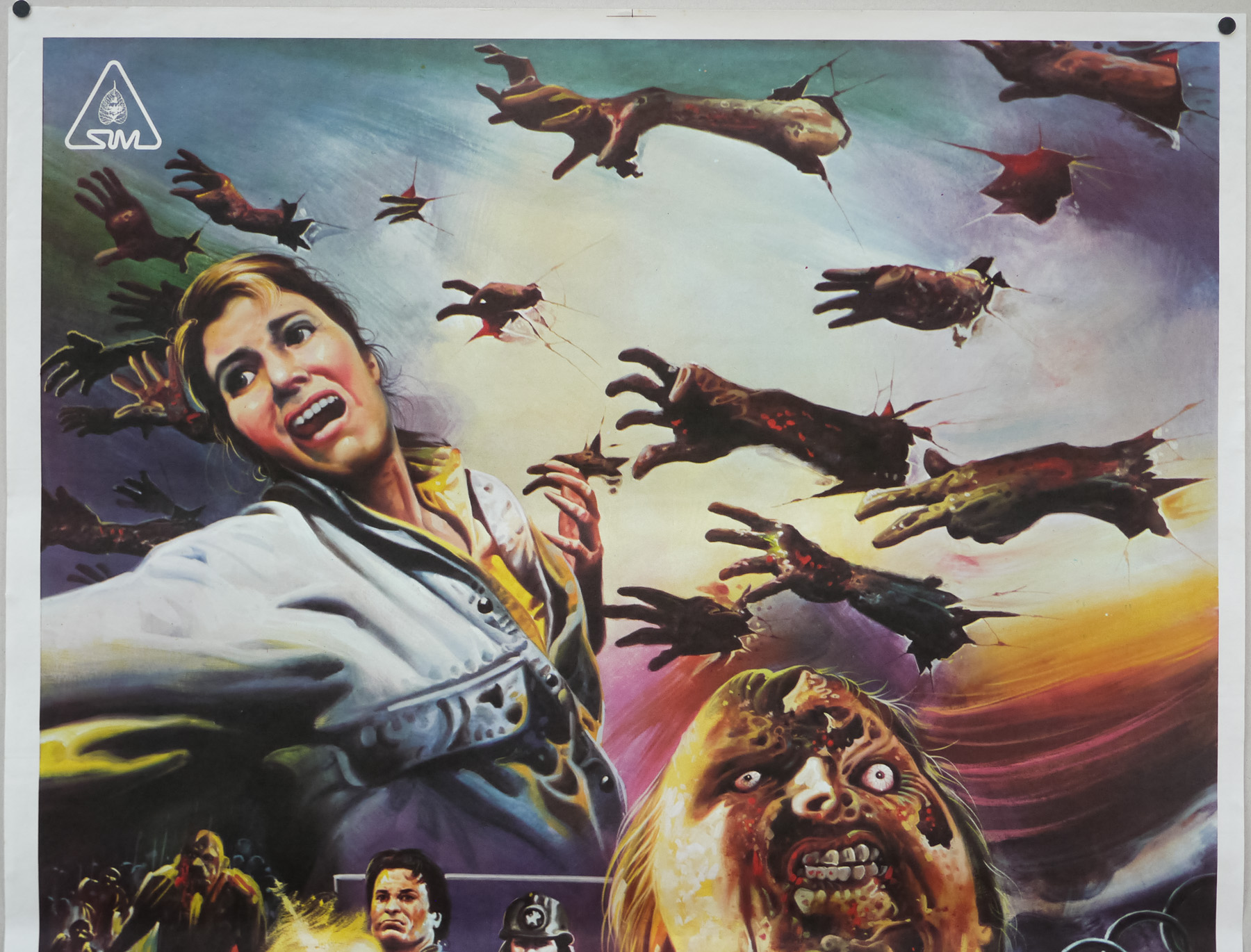
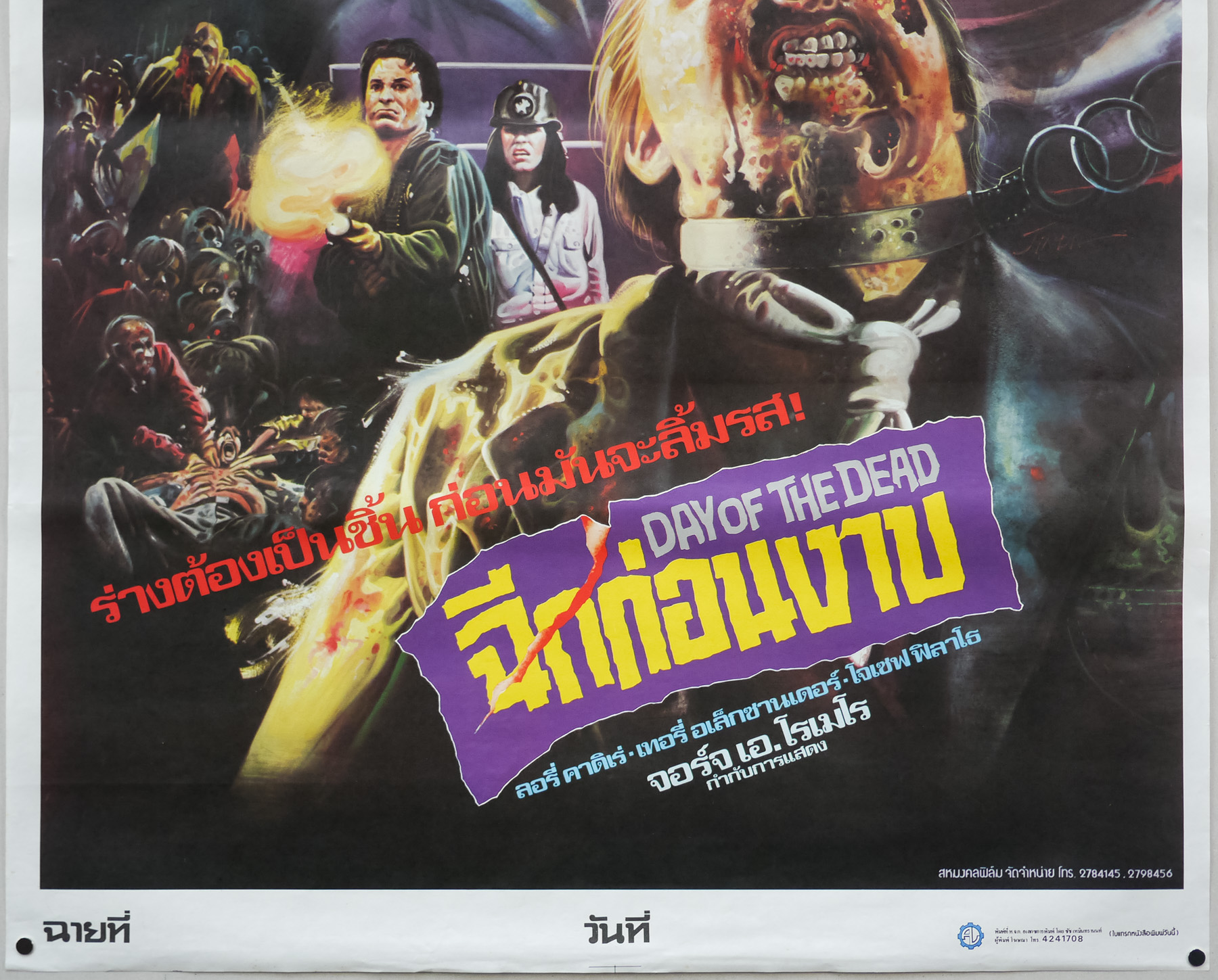
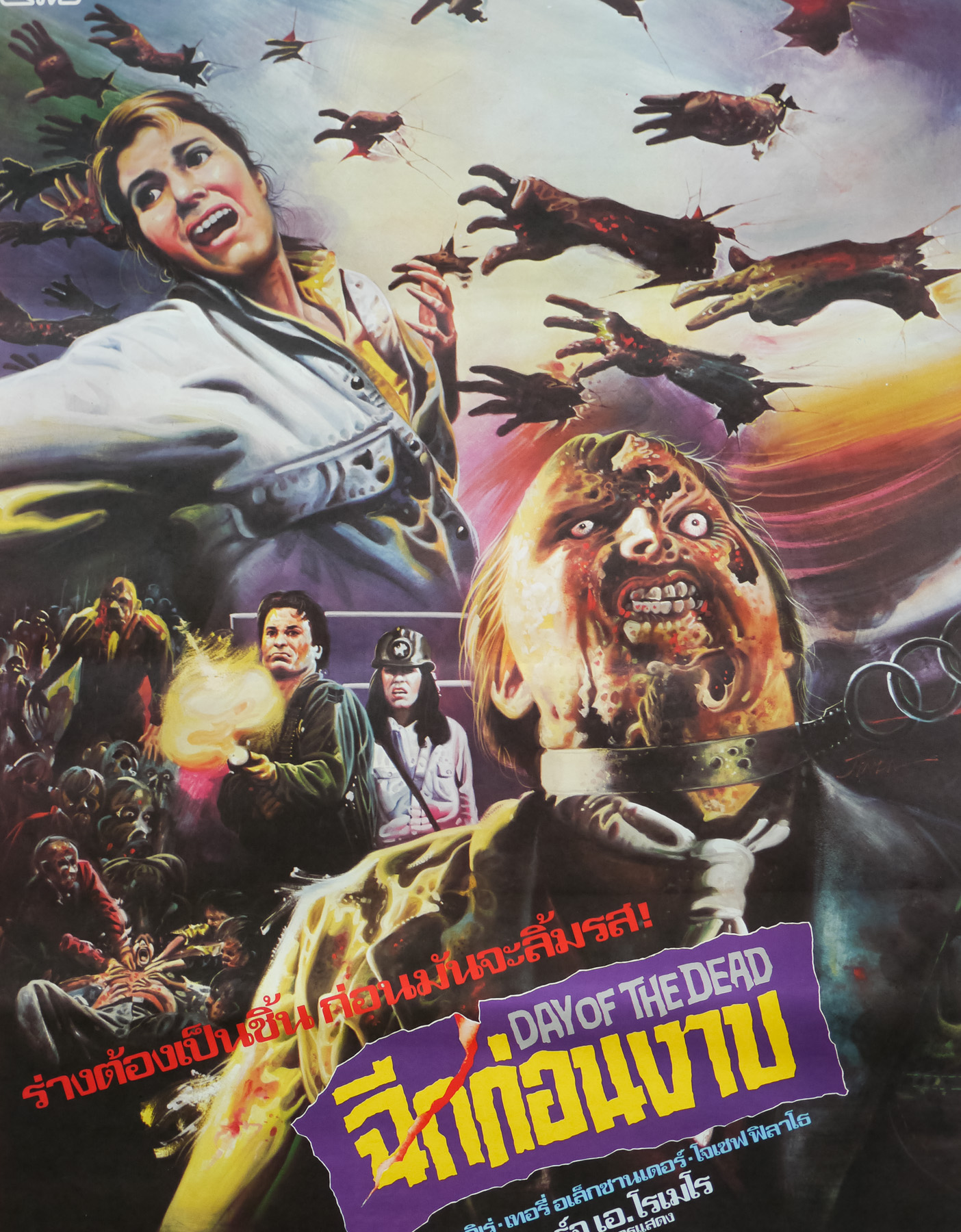
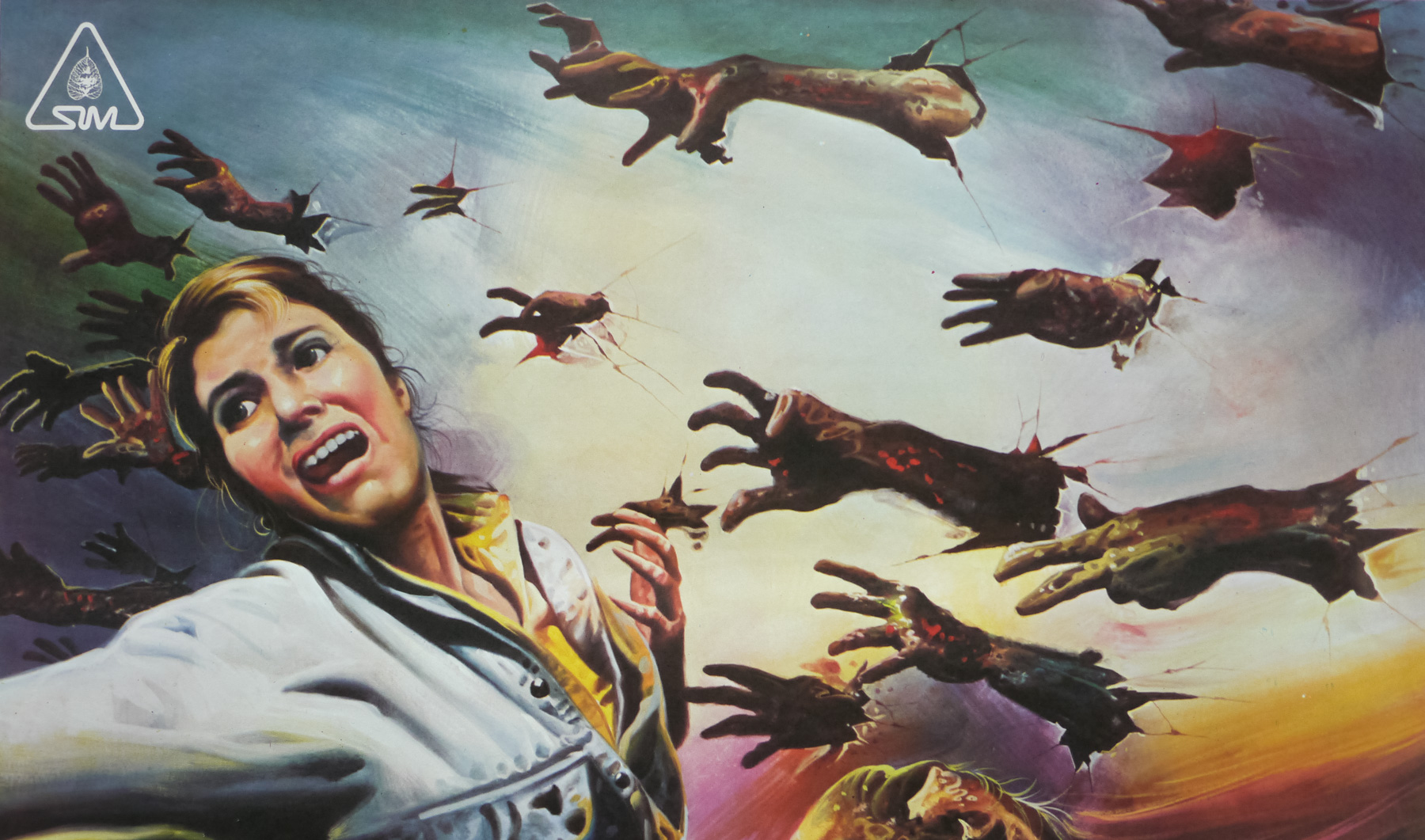
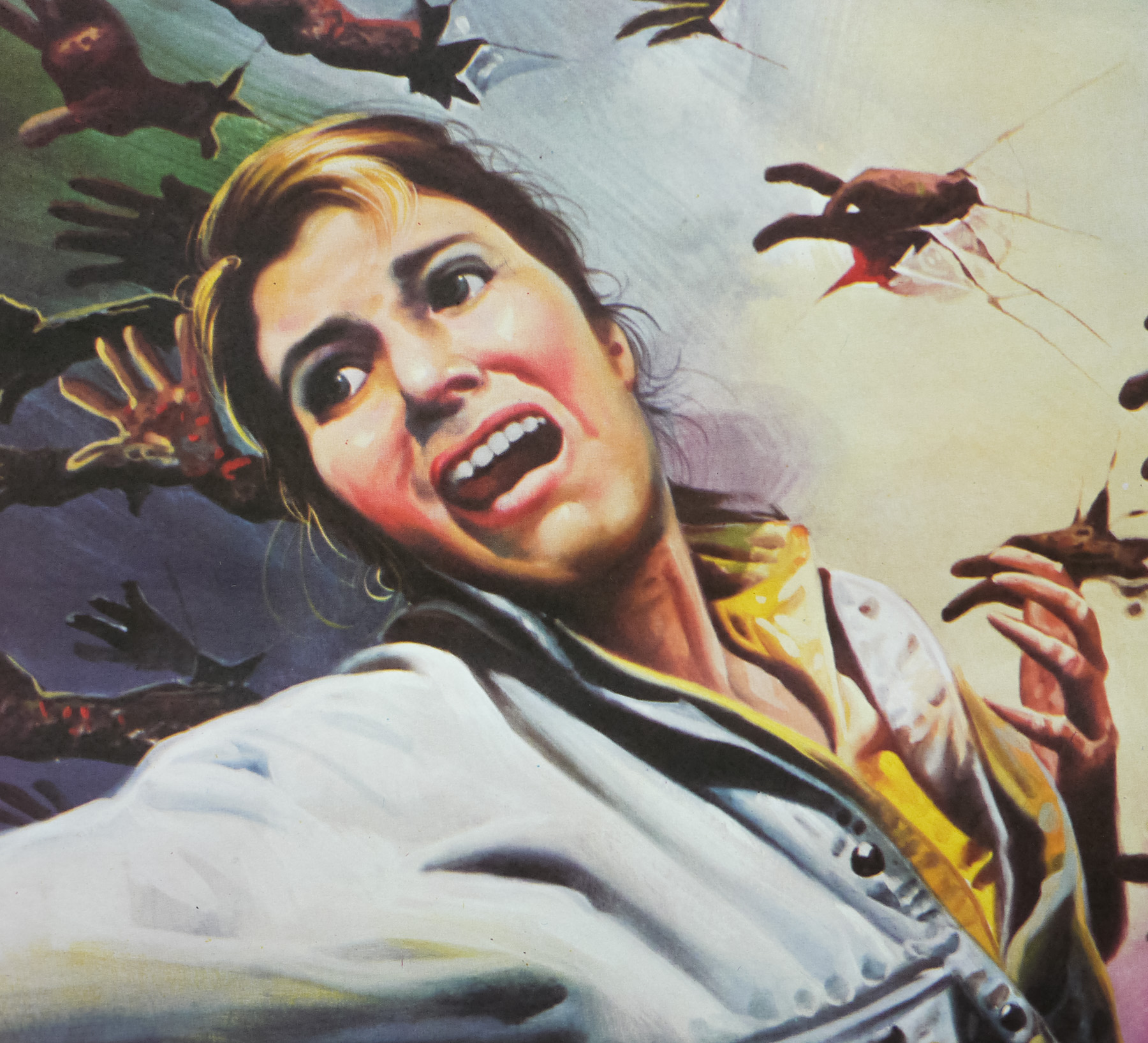
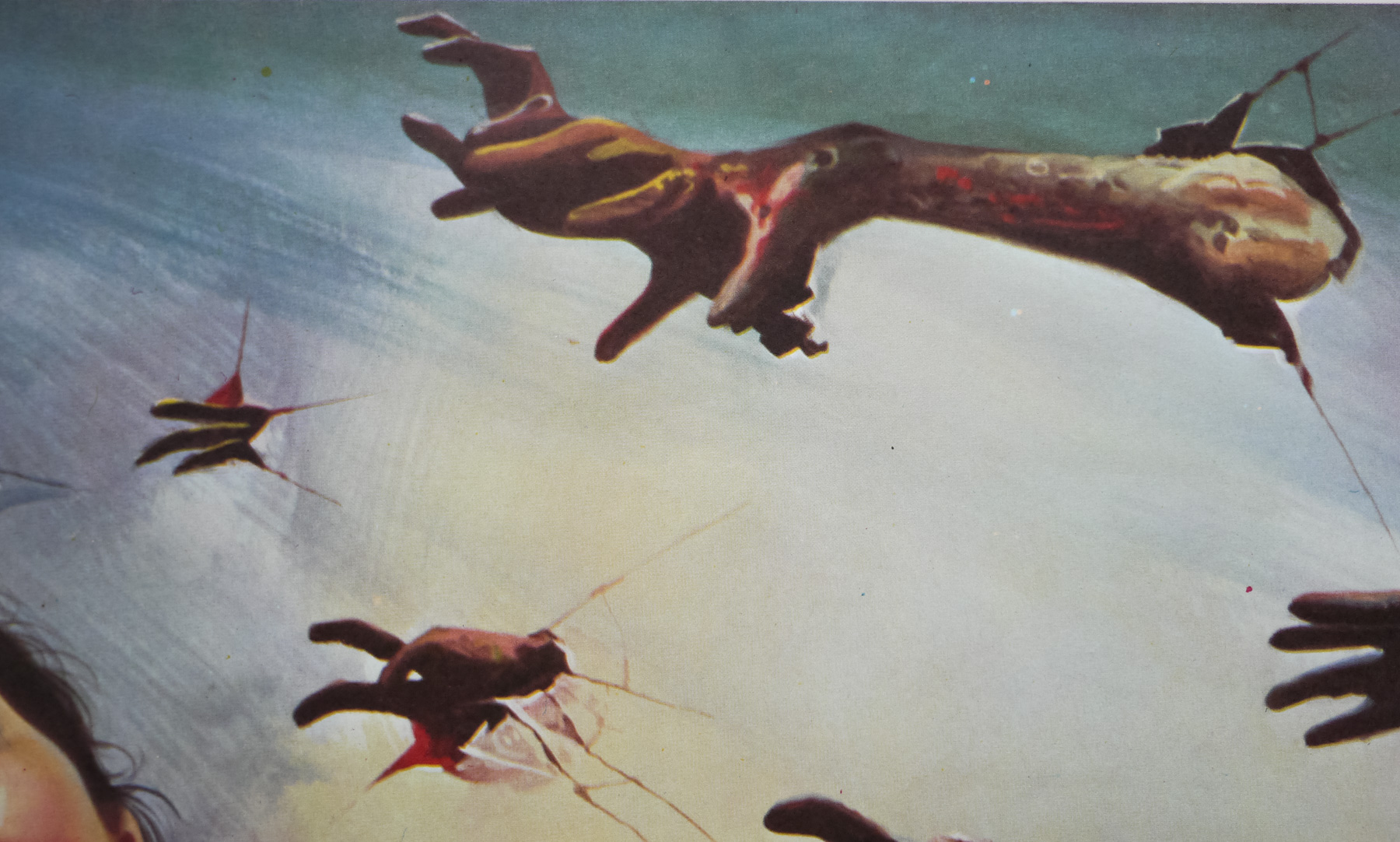
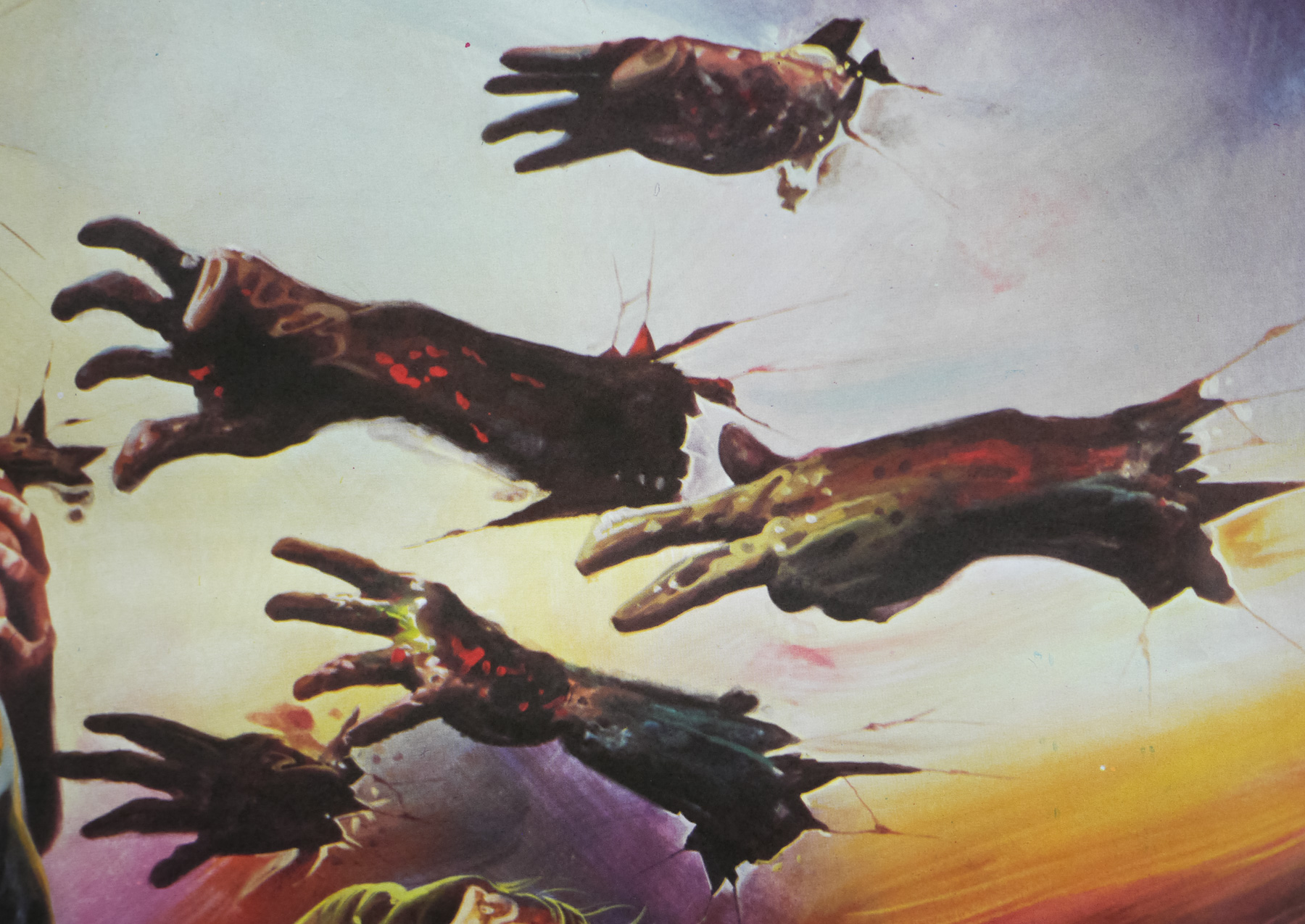
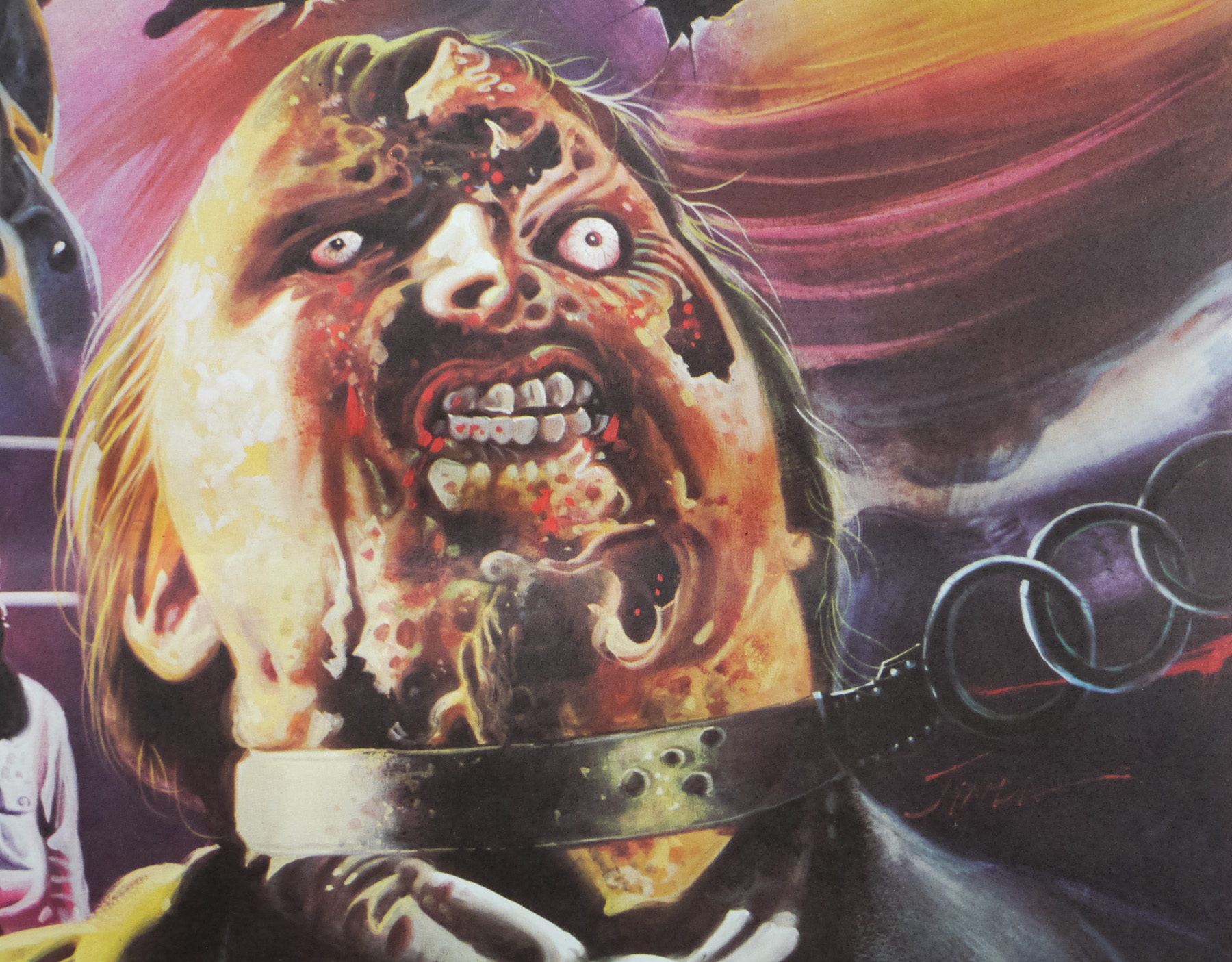
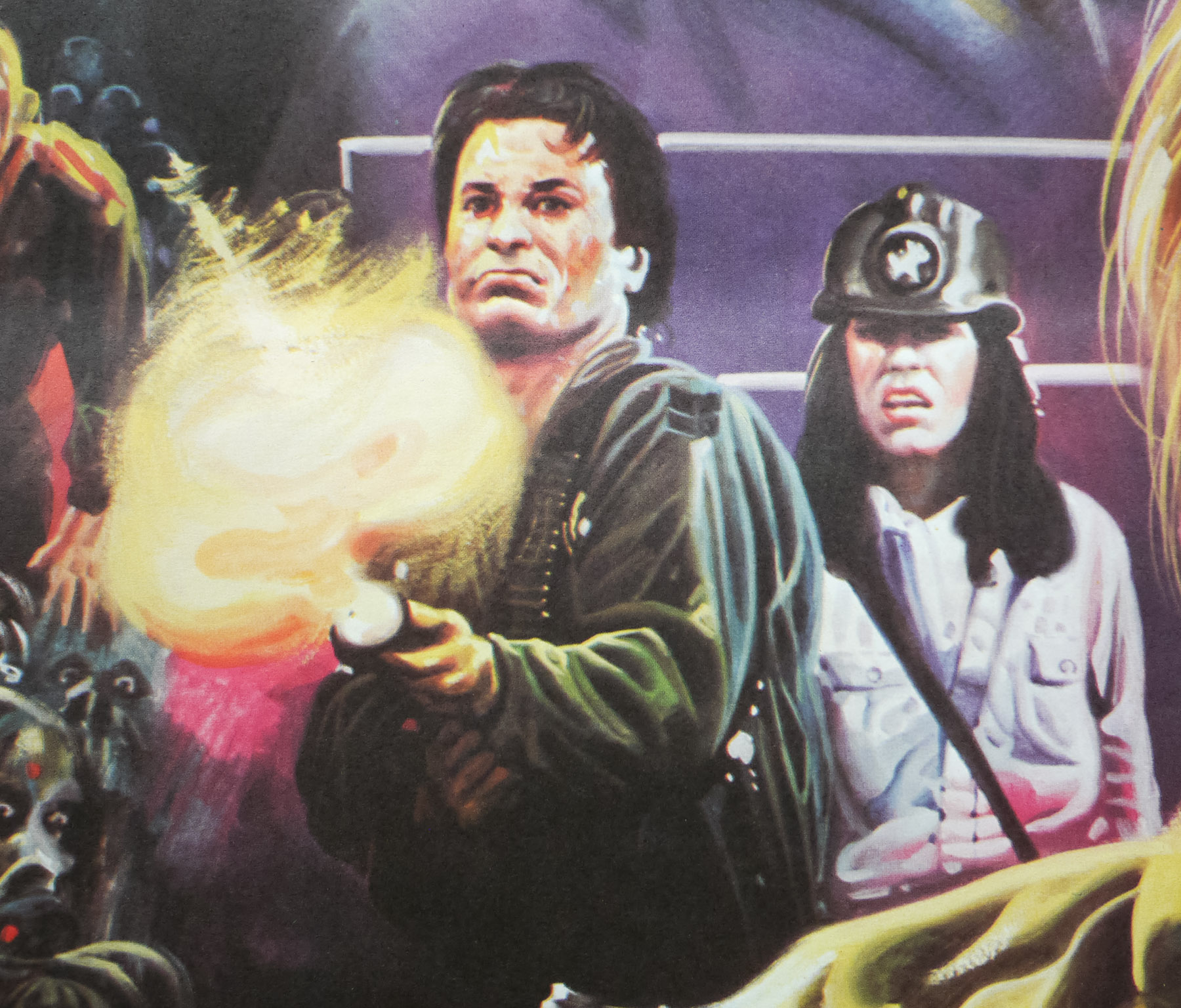
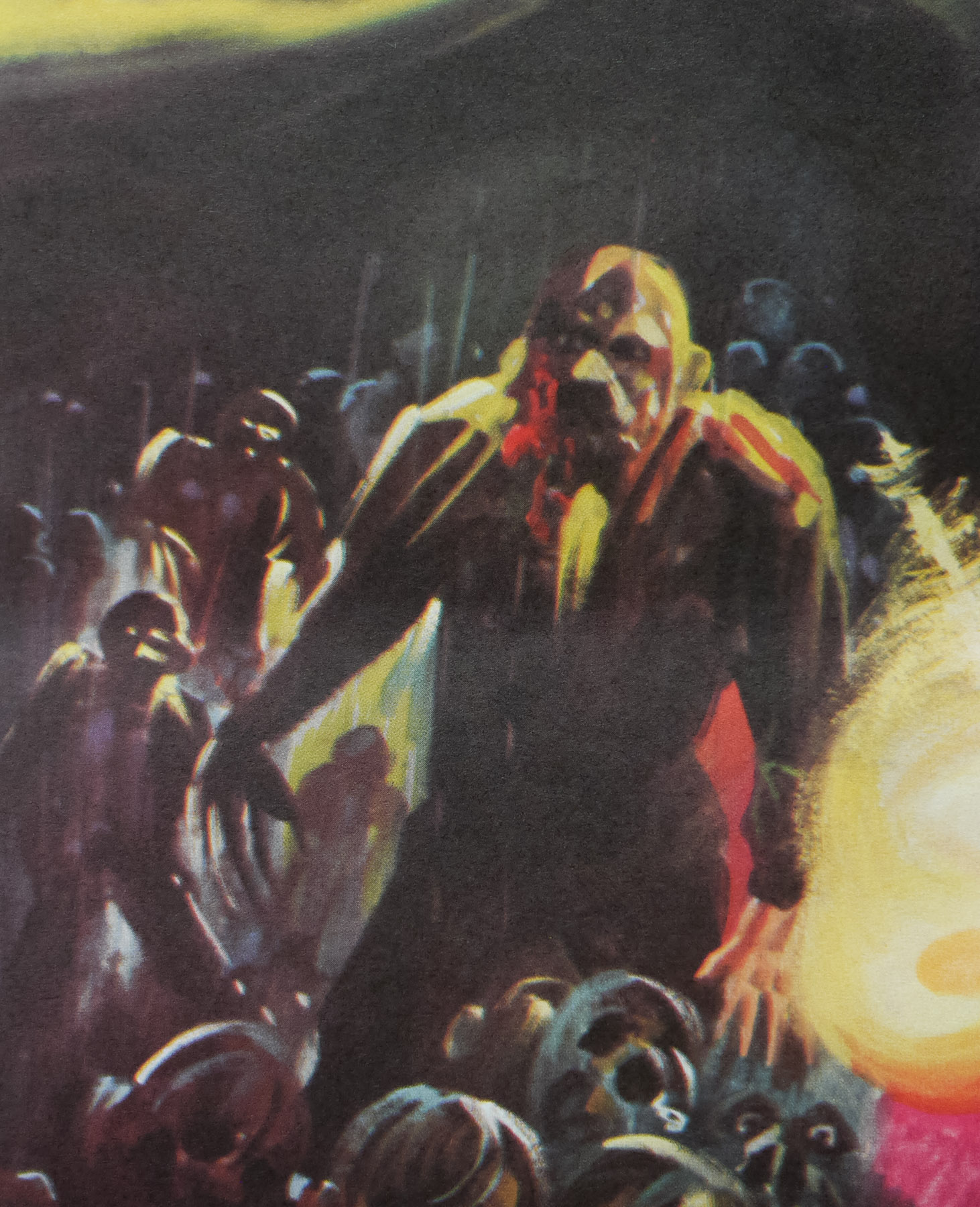
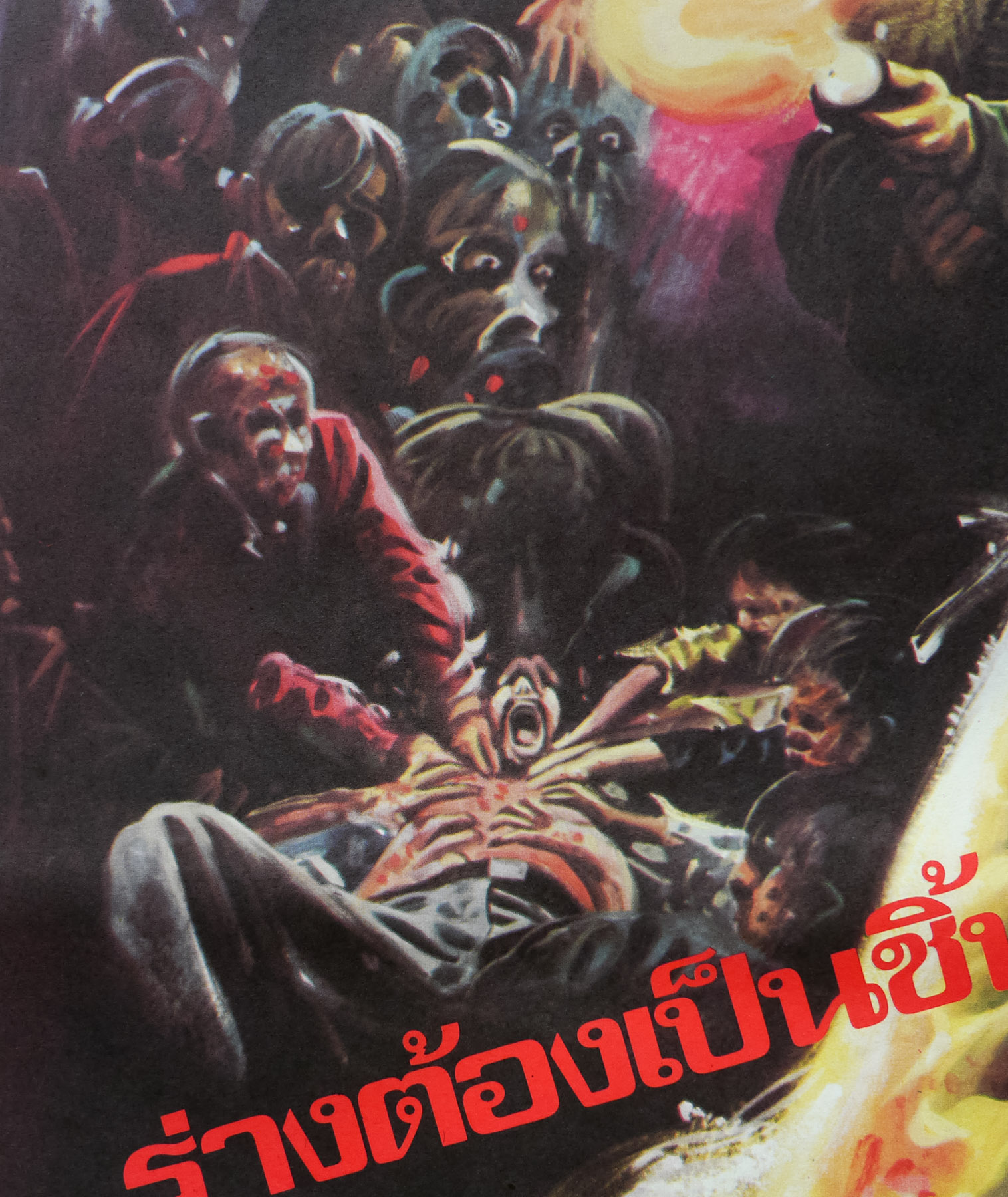
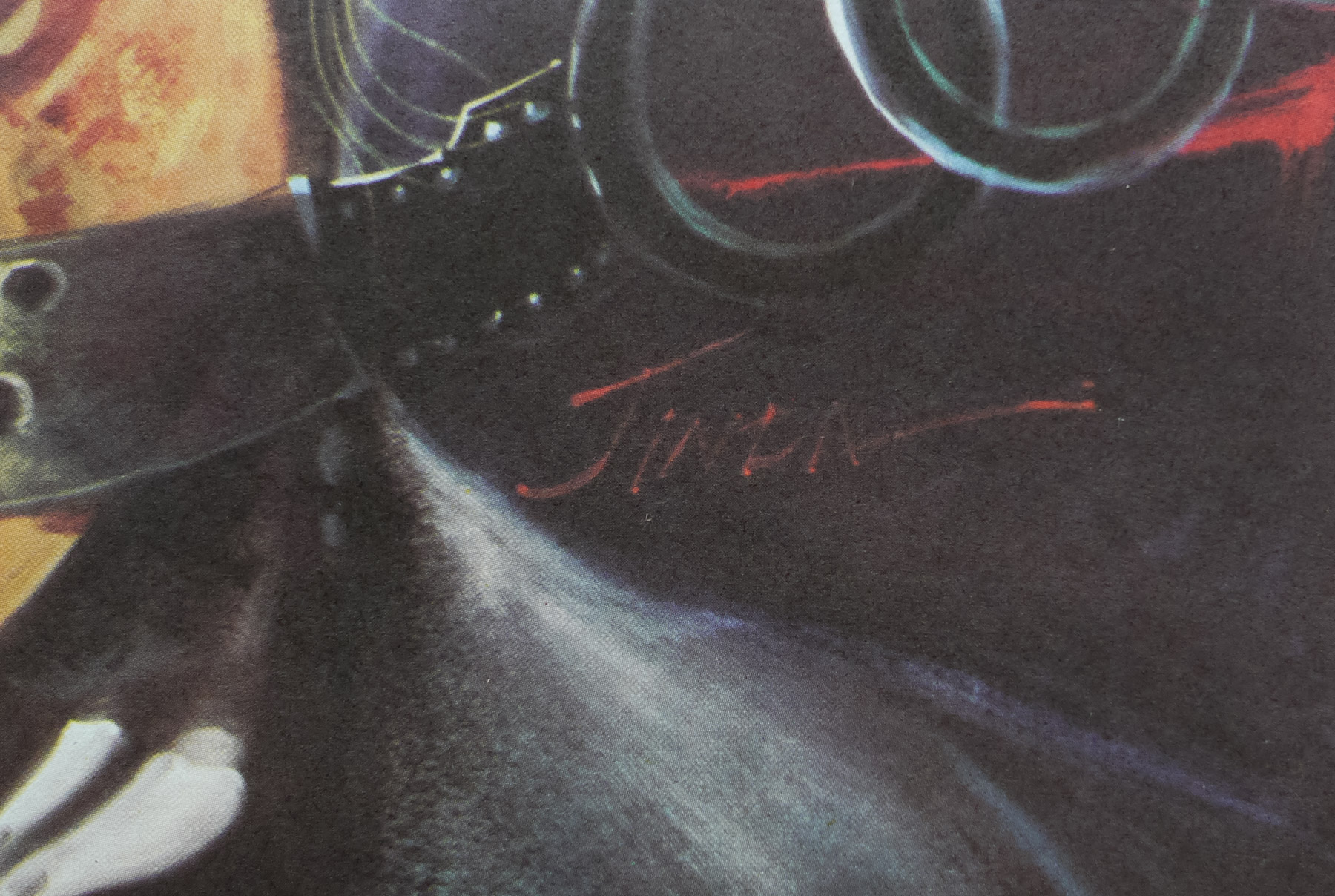
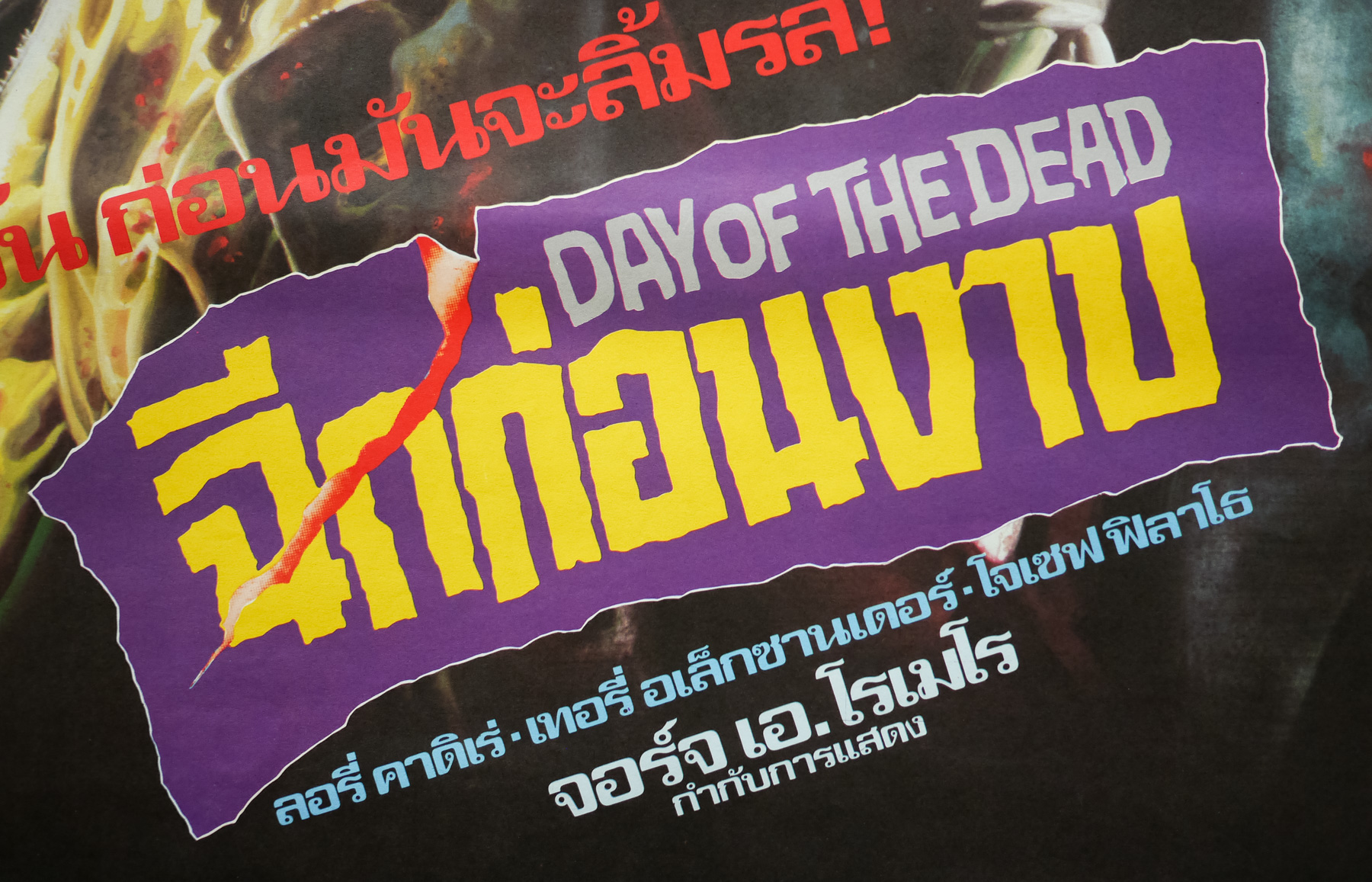
Thai poster for Day Of The Dead (1985). Artwork by JindaThai poster for Day Of The Dead (1985). Artwork by Jinda, image 2Thai poster for Day Of The Dead (1985). Artwork by Jinda, image 3Thai poster for Day Of The Dead (1985). Artwork by Jinda, image 4Thai poster for Day Of The Dead (1985). Artwork by Jinda, image 5
Title
Day Of The Dead
AKA
Zombie 2 - Das letzte Kapitel (West Germany) | Il giorno degli zombi (Italy)
Year of Film
1985
Director
George A. Romero
Starring
Lori Cardille, Terry Alexander, Joe Pilato, Jarlath Conroy, Anthony Dileo Jr., Richard Liberty, Sherman Howard
Origin of Film
USA
Genre(s) of Film
Horror
Type of Poster
Thai
Origin of Poster
Thailand
Year of Poster
1985
Designer
Unknown
Artist
Jinda
Size (inches)
21 1/4" x 30 7/8"
SS or DS
SS

This is Thai poster for the release of the third film in George A. Romero (opens in a new tab)‘s ‘Dead’ series, Day of the Dead (opens in a new tab). In a similar situation to Dawn of the Dead (opens in a new tab) (released 7 years earlier) this film had no returning characters from the previous entry due to rights issues, so it’s set in the same universe after the zombie outbreak but shares no continuity with the earlier films. Romero’s original vision for the ‘Day…’ was scaled back to due to budget constraints, but the director has since said he’s very happy with the final product. It’s a notably darker, bleaker effort than the fan favourite ‘Dawn’ but features a unique setting, memorable characters and some of the best special effects of the entire series, courtesy of the legendary Tom Savini (opens in a new tab).

The story follows a group of survivors who have holed-up in a military bunker in Florida and make regular trips around the area looking for survivors. Underground a small group of scientists and technical specialists, including Dr Sarah Bowman (Lori Cardille (opens in a new tab)) and Dr Logan (Richard Liberty (opens in a new tab)), known as ‘Frankenstein’, are working to discover the cause of the outbreak and discover if anything can be done to make the zombies more docile. An uneasy truce is maintained by the scientists and other specialists like helicopter pilot John (Terry Alexander (opens in a new tab)), with a group of soldiers ostensibly there to protect them and deliver them test subjects from a fenced off area of the base. The soldiers are led by the psychotic Captain Rhodes (Joseph Pilato (opens in a new tab)) who discovers that Dr Frankenstein has been secretly carrying out experiments using dead soldiers, including training a zombie known as Bub (Sherman Howard (opens in a new tab)) to follow commands. At this point the truce is shattered and a series of events see the base overrun with the undead, forcing Sarah and the others to try to escape the carnage before its too late.

This Thai poster features a montage of images from the film, including the infamous dream sequence where zombie hands burst through the wall trying to grab Dr Bowman. The artist responsible is known as Jinda and, other than some other Thai film posters he’s painted, I could find little information about him. If anyone knows more biographical details about Jinda, please get in touch.

E.T. the Extra-Terrestrial / A1 / Czechoslovakia

16.02.15

Czechoslovak A1 poster (1984) for E.T. the Extra-Terrestrial (1982). Artwork by Zdenek ZieglerCzechoslovak A1 poster (1984) for E.T. the Extra-Terrestrial (1982). Artwork by Zdenek Ziegler, image 2Czechoslovak A1 poster (1984) for E.T. the Extra-Terrestrial (1982). Artwork by Zdenek Ziegler, image 3
Title
E.T. the Extra-Terrestrial
AKA
Night Skies (USA working title)
Year of Film
1982
Director
Steven Spielberg
Starring
Henry Thomas, Dee Wallace, Robert MacNaughton, Drew Barrymore, Peter Coyote
Origin of Film
USA
Genre(s) of Film
Adventure | Sci-Fi
Type of Poster
A1
Origin of Poster
Czechoslovakia
Year of Poster
1984
Designer
Zdenek Ziegler
Artist
Zdenek Ziegler
Size (inches)
22 7/16" x 32"
SS or DS
SS

This is the original Czechoslovakian poster for the first release (in 1984) of Steven Spielberg’s sci-fi masterpiece, E.T. the Extra-Terrestrial (opens in a new tab). The story of a small alien who gets stranded on earth and meets a young boy called Elliot (Henry Thomas (opens in a new tab)) touched the hearts of millions of movie-goers around the world. Within a year of its release it was crowned the highest-grossing film of all time, overtaking the previous leader, George Lucas’ Star Wars (this record has since been bested by over forty films in the intervening years). 2012 saw E.T. celebrate its 30th anniversary and having watched the blu-ray release recently there’s no question that it has stood the test of time well.

This poster is one of only a few from the worldwide marketing campaign to feature a full depiction of E.T. and this was likely okayed because it’s release in Czechoslovakia came two years after most other territories and revealing the alien would have been less of an issue.

This poster features a design by the celebrated Czech artist Zdenek Ziegler. Born in Prague in 1932, Ziegler studied at the Czech Technical University and graduated in 1961. He went on to design over 200 film posters during a 26-year period from 1963 to 1989. The website Terry Posters has a page with a biography of Ziegler (opens in a new tab) and a gallery of his work (with some of them being available to purchase). Since 1990 Ziegler has been a teacher at Academy of Arts in Prague.

Some of his most celebrated designs include a 1970 poster for Hitchock’s Psycho (opens in a new tab) and a great design for Truffaut’s Jules et Jim (opens in a new tab). I also have his poster for the re-release of Sergio Leone’s Once Upon a Time in the West in the collection, as well as a great poster he designed for Ridley Scott’s Alien.

Brainstorm / B2 / Japan

13.02.15

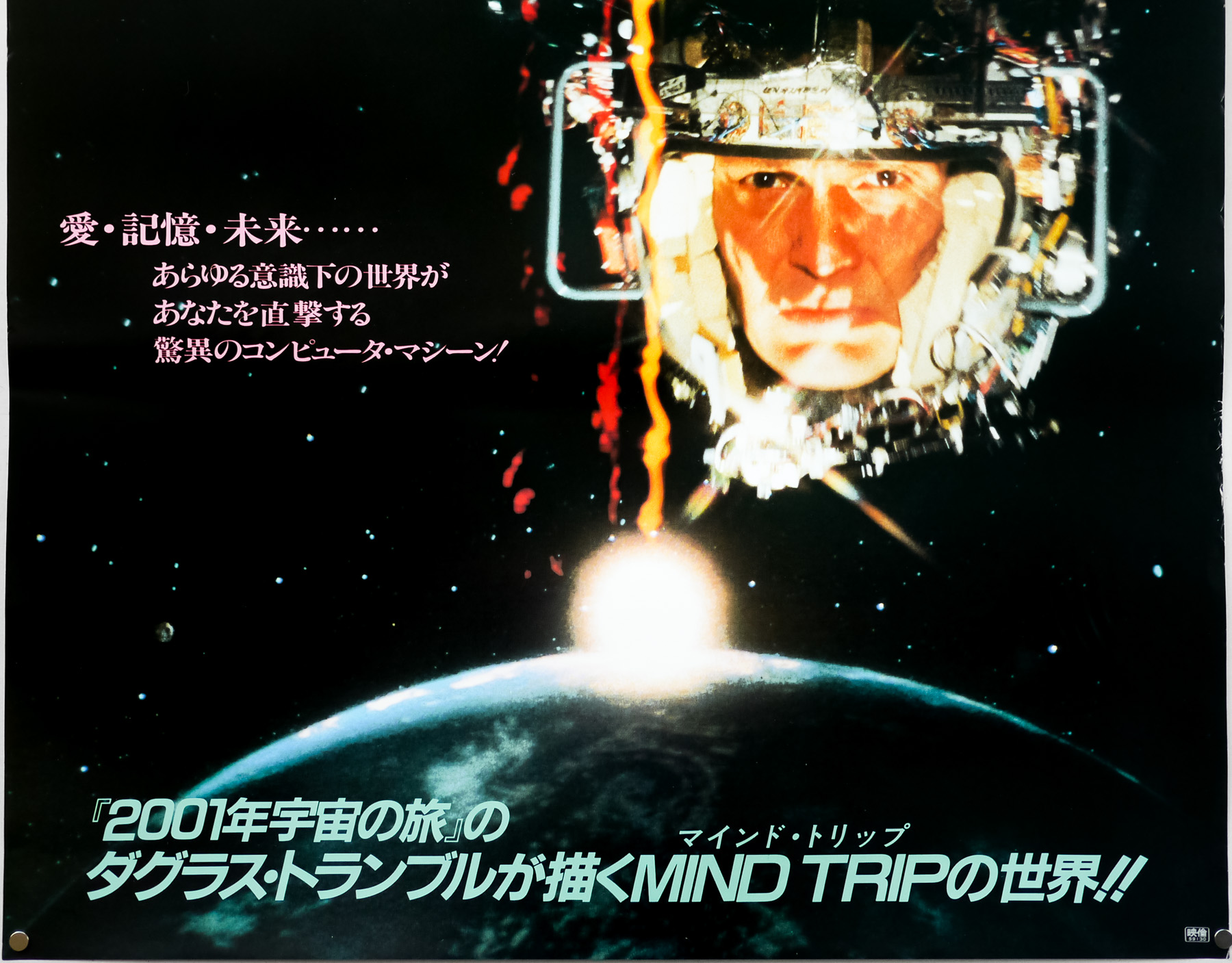
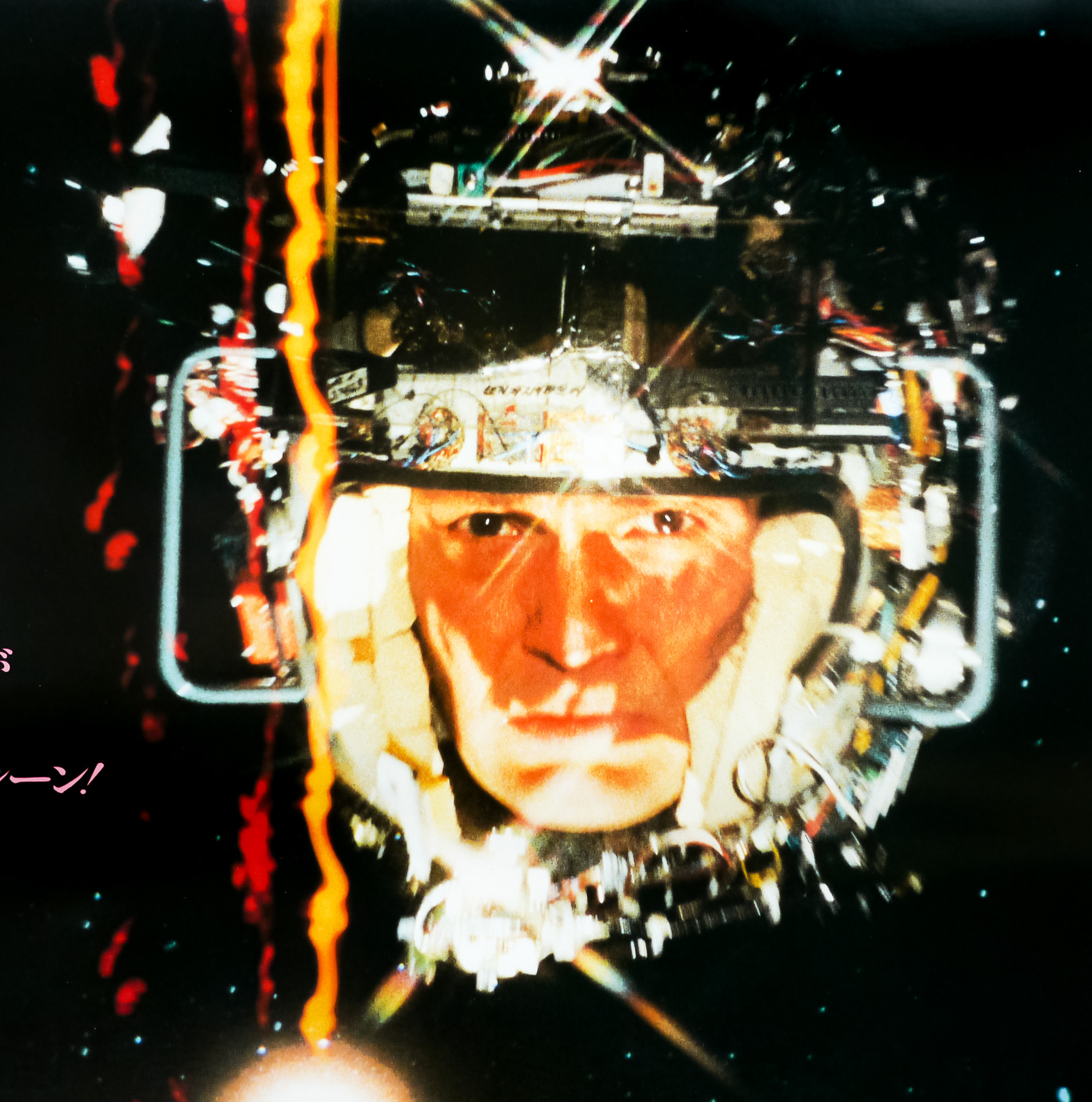
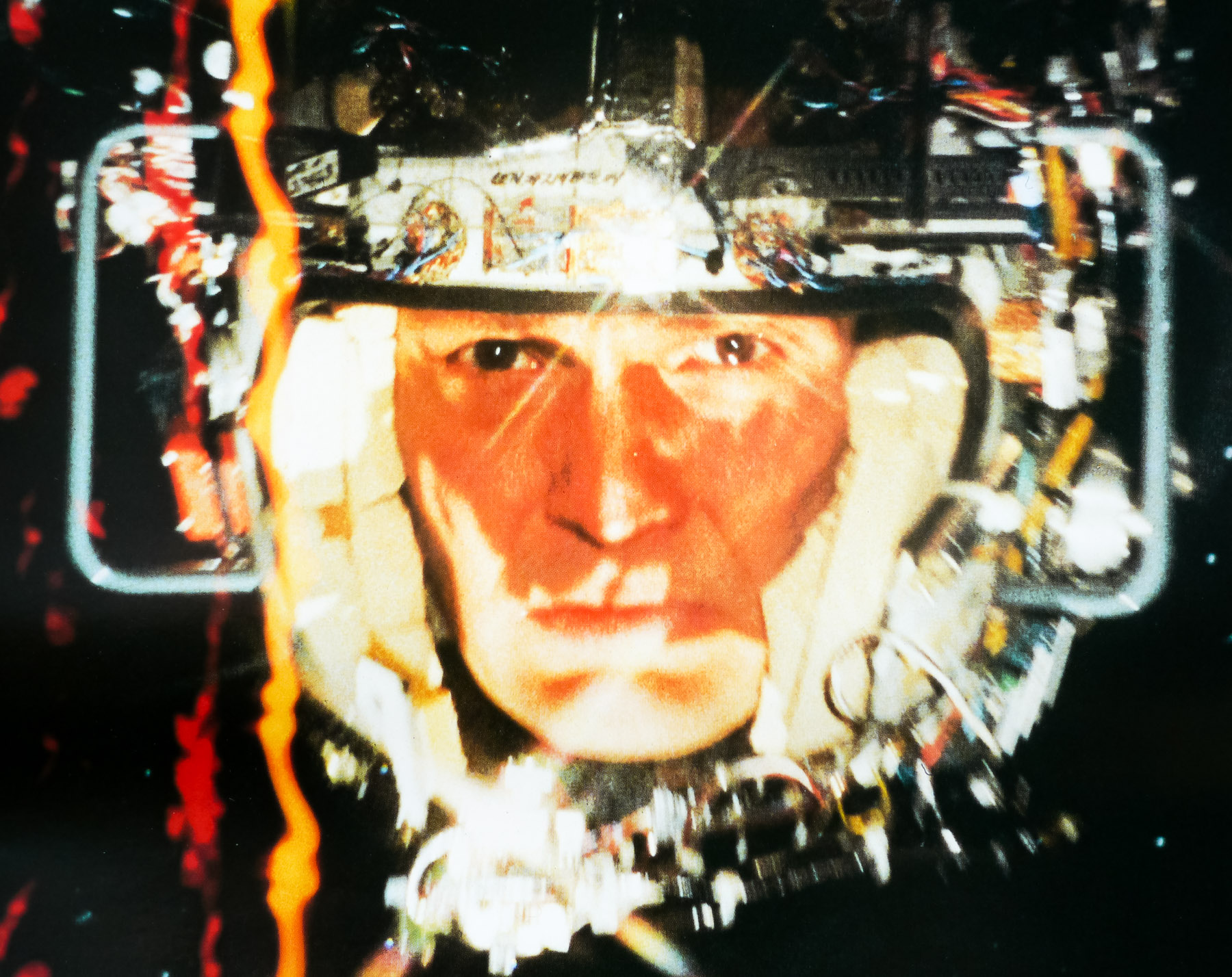
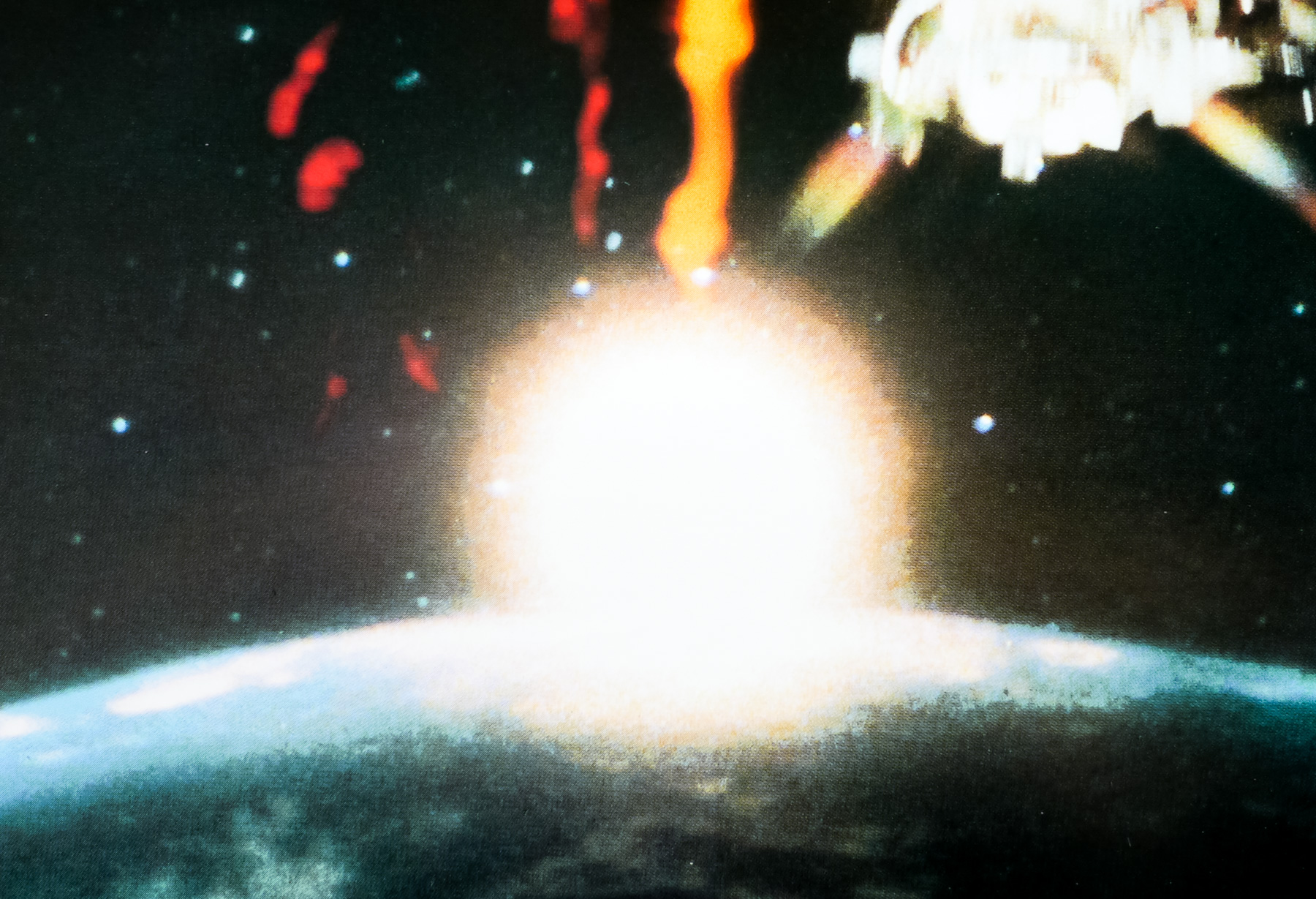
Japanese B2 poster (1984) for Brainstorm (1983)Japanese B2 poster (1984) for Brainstorm (1983), image 2Japanese B2 poster (1984) for Brainstorm (1983), image 3Japanese B2 poster (1984) for Brainstorm (1983), image 4Japanese B2 poster (1984) for Brainstorm (1983), image 5
Title
Brainstorm
Year of Film
1983
Director
Douglas Trumbull
Starring
Christopher Walken, Natalie Wood, Louise Fletcher, Cliff Robertson
Origin of Film
USA
Genre(s) of Film
Sci-Fi | Thriller
Type of Poster
B2
Origin of Poster
Japan
Year of Poster
1984
Designer
Unknown
Size (inches)
20 3/8" x 28 3/4"
SS or DS
SS

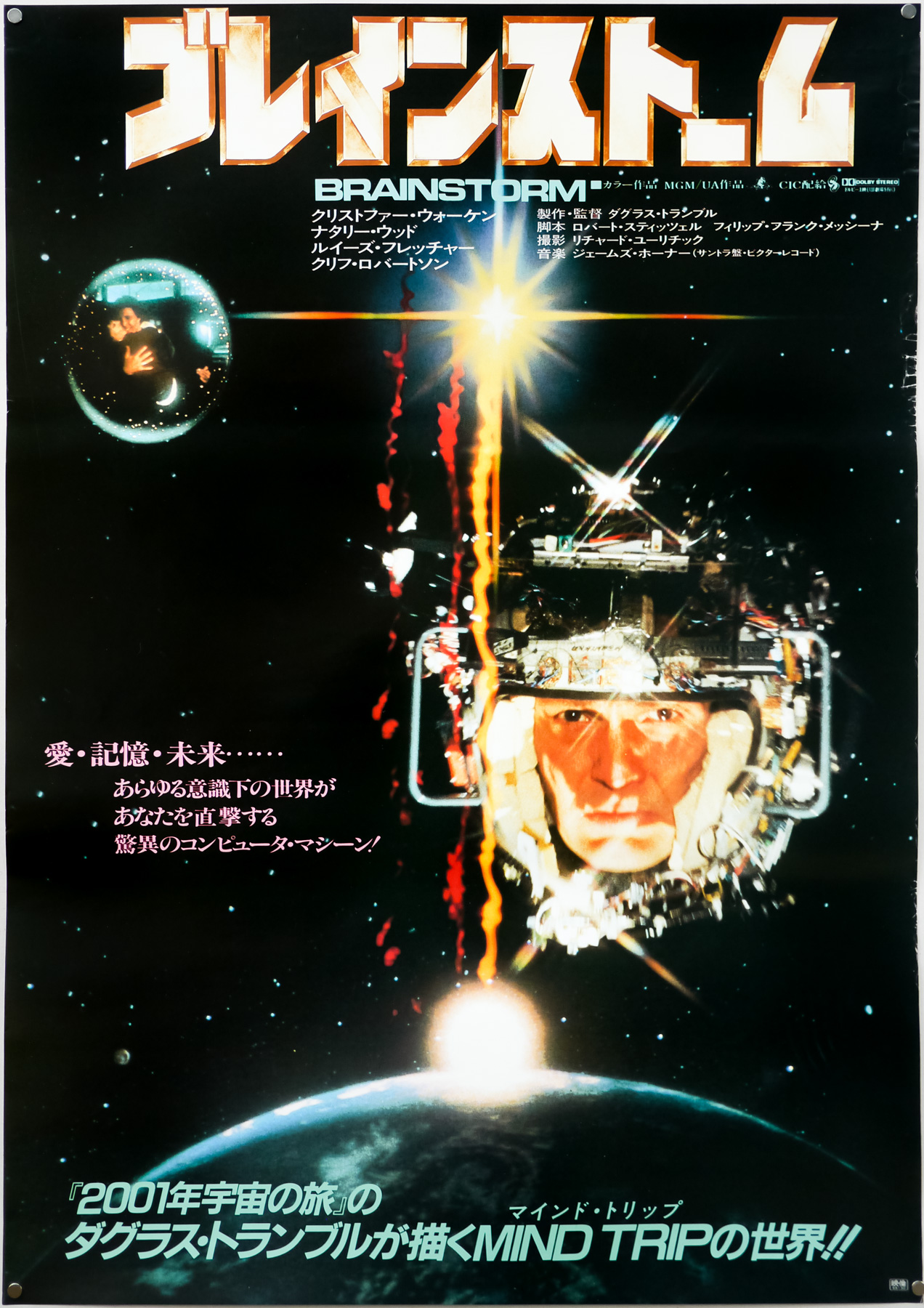
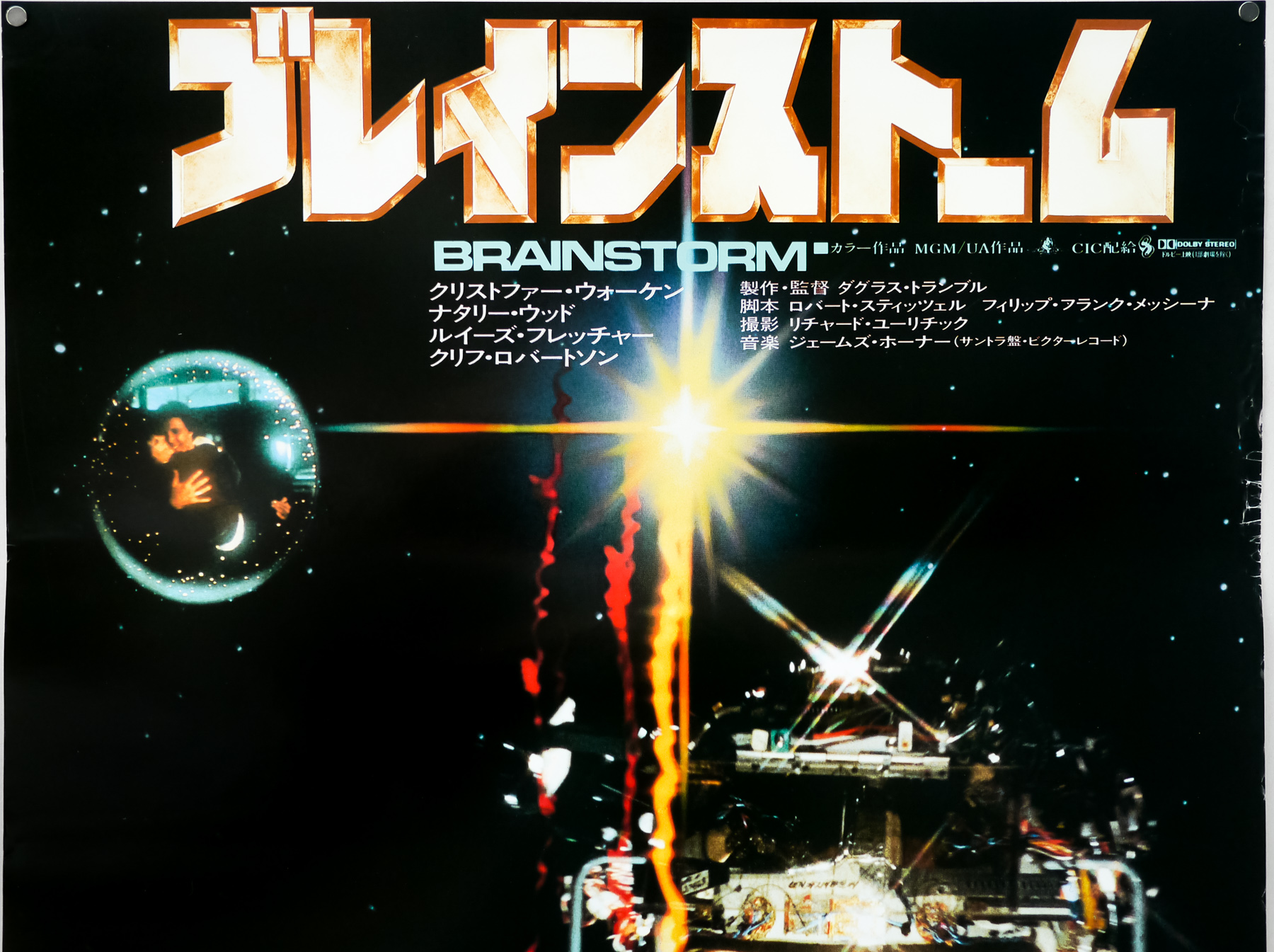
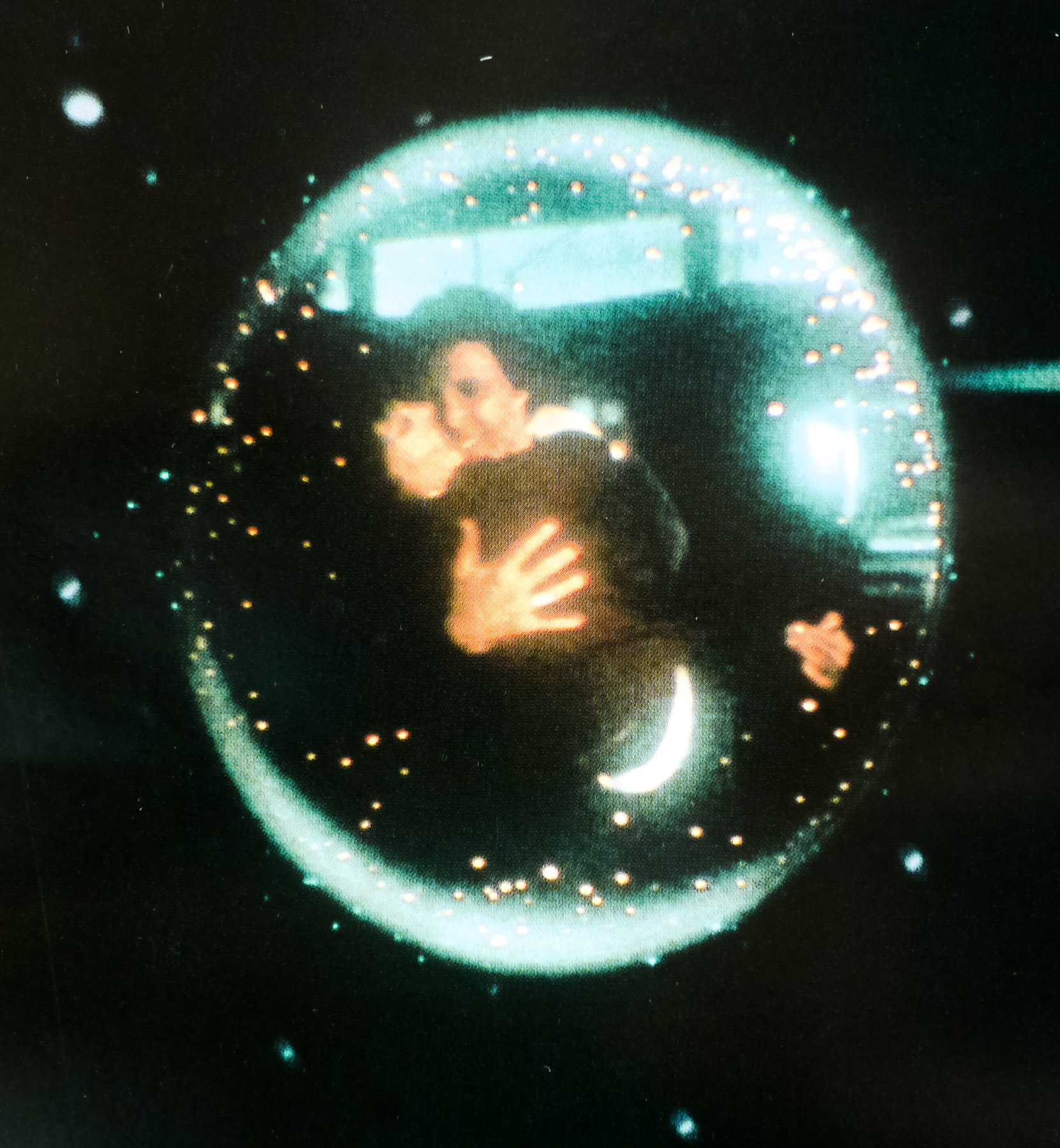
This is the Japanese B2 poster for the release of the science-fiction film Brainstorm (opens in a new tab), which was the second and final directorial effort from Douglas Trumbull (opens in a new tab) who is best known for his pioneering work in the field of special effects. Trumbull had worked with Stanley Kubrick on 2001: A Space Odyssey and created the iconic ‘Star Gate’ sequence at the end of the film. He would go on to create special effects sequences for films including Close Encounters of the Third Kind, Star Trek: The Motion Picture and Blade Runner. The first film he directed was the cult classic Silent Running (opens in a new tab) (1974) which was a critical success but a box-office failure and it would be eight years before Trumbull would once again sit in the director’s chair.

The film stars Christopher Walken (opens in a new tab) as Michael Brace, a scientist working as part of a pioneering research team that has discovered a method of recording the sensory and emotional feelings of a person onto tape, allowing them to be viewed by others. His estranged wife Karen (Natalie Wood (opens in a new tab)) also works with him and Michael realises he can use the system to reconcile their feelings for each other and show her his true emotions. Unfortunately not all of the scientists use it for good with one recording a sexual encounter which he then shares with several of his colleagues, leading to his eventual dismissal. 

Lillian Reynolds (Louise Fletcher (opens in a new tab)) one of the lead scientists is fiercely protective of the team’s work and is angry when the company forces the team to involve military advisors in their plans. When she suffers a heart attack in the lab and is unable to call for help, she records the experience of death into the system. The tape is viewed by another scientist and the sensory experience causes him to also have a heart attack so the company locks the tape away. Lillian’s fears about the nefarious plans of the military are borne out when Michael discovers they plan to use the system for torture and brainwashing but his protestations see him get fired from the program. He and Karen decide to shut down the system to prevent it being used for negative means but Michael is also determined to view Lillian’s ‘death’ tape, despite Karen’s protestations.

Trumbull used the production to work on a new effects process which he called Showscan (opens in a new tab) that allowed for 70mm film to be projected at 60fps (standard film is 24fps) and create a hyperreal feeling to the footage. MGM backed out of plans to create prints in the new format but Trumbull did film the virtual reality sequences in the larger Super Panavision 70 (opens in a new tab) format and the ‘normal’ sequences in the conventional 35mm format so that it changes throughout the film whenever the scientists use their machines. The film was shown at special 70mm cinemas during its initial run.

The film’s production was unfortunately overshadowed by the mysterious death of Natalie Wood who drowned whilst on a boat trip with Walken and her husband Robert Wagner (opens in a new tab). MGM shut down the production and were planning to write it off and claim insurance on the money already spent. Trumbull and others argued with the studio that Wood had already completed most of her key scenes and the insurers realised that the film was salvageable. They agreed to finance the completion of production for a cut of any profits but by then things were getting very acrimonious between the director and MGM.

Trumbull was allowed to finish the film by rewriting several scenes and using a body double for Wood in some scenes but the experience critically damaged his desire to work inside the Hollywood system again. In 1983 he stated, “I have no interest…in doing another Hollywood feature film…Absolutely none. The movie business is so totally screwed-up that I just don’t have the energy to invest three or four years in a feature film. Moviemaking is like waging war. It destroys your personal life, too.” Sadly Brainstorm under-performed in cinemas despite strong critical notices and failed to recoup most of its final budget.

The Man in the White Suit / quad / 1993 re-release / UK

11.02.15

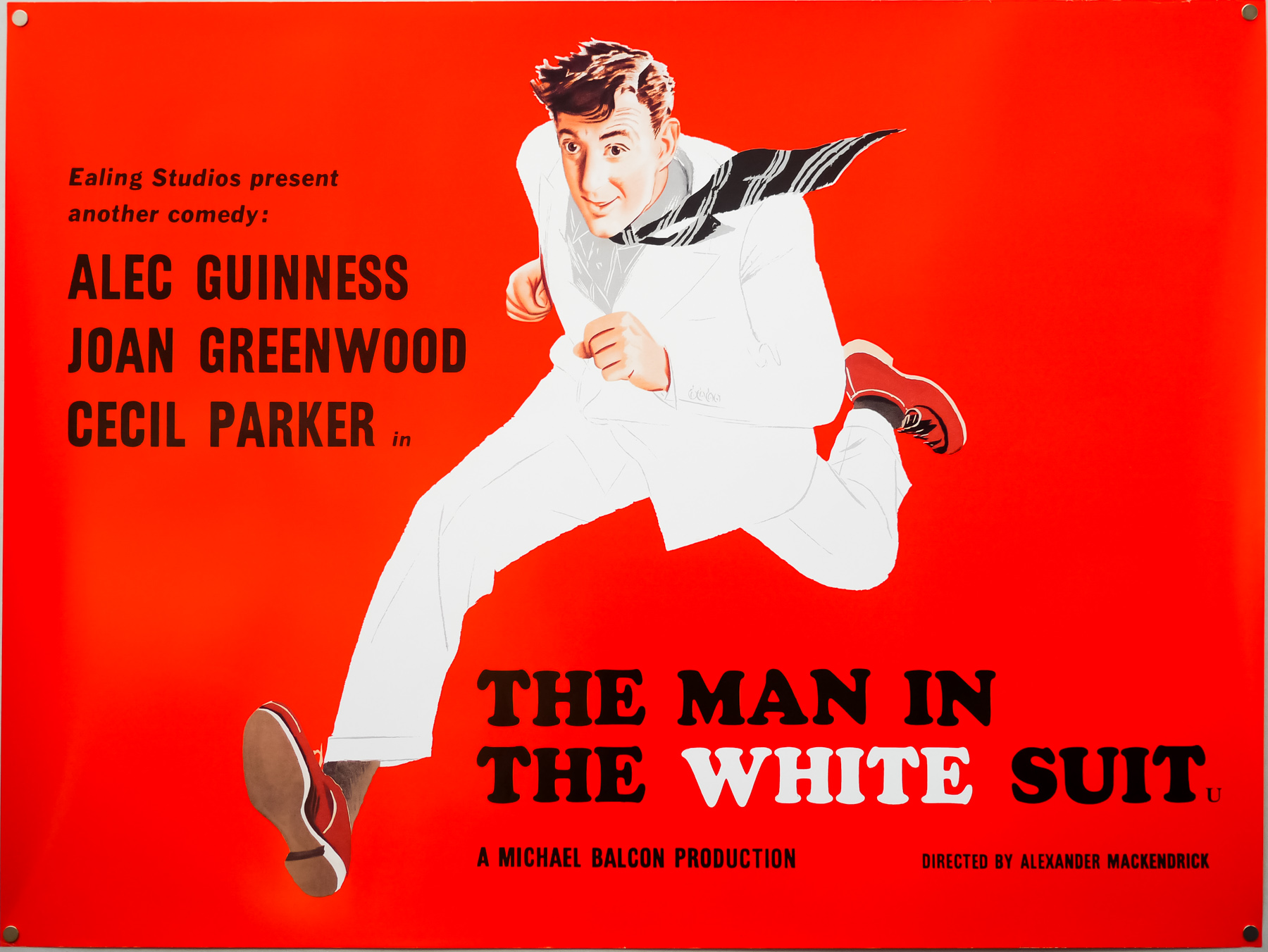
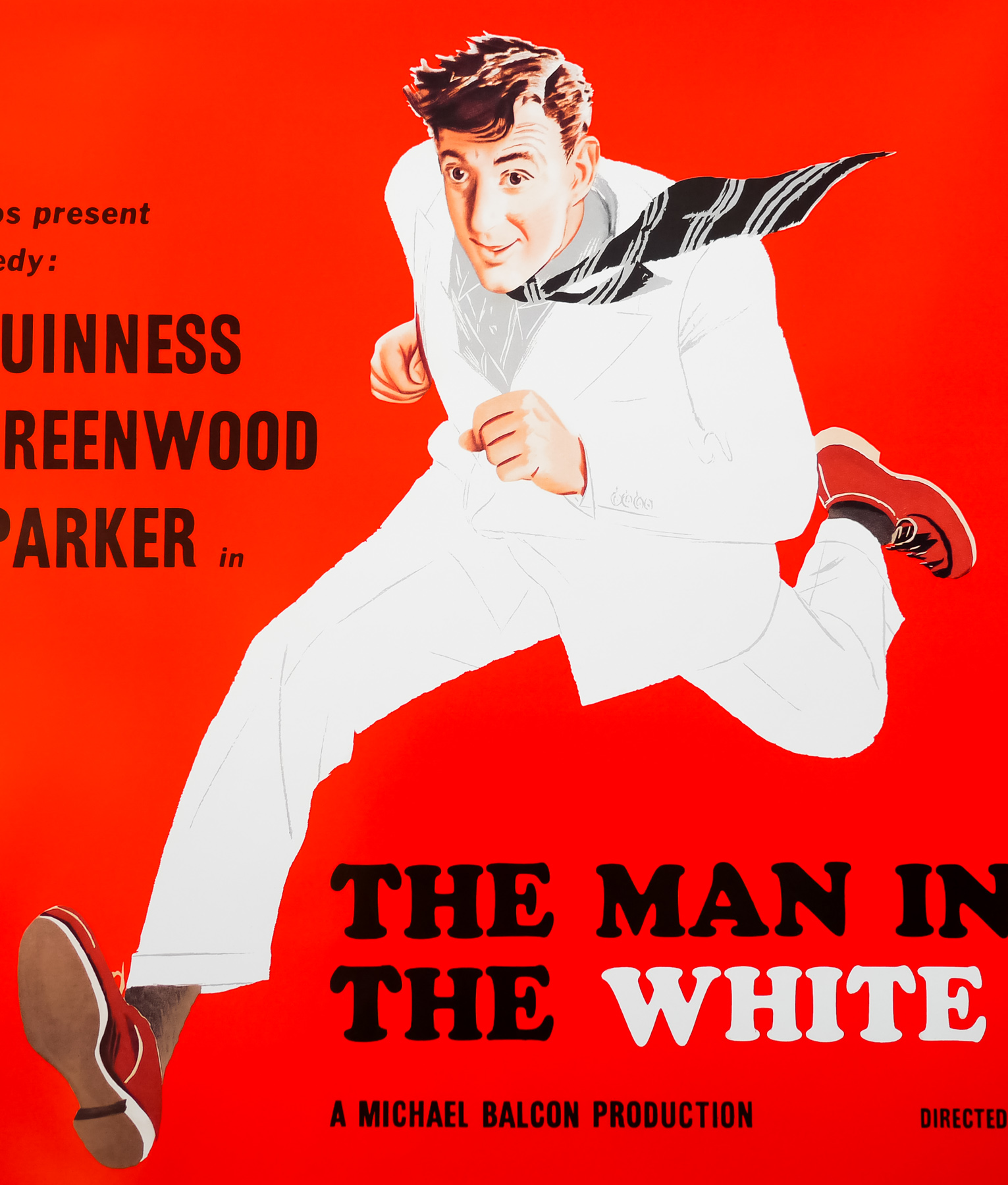
British quad poster (1993 BFI re-release) for The Man in the White Suit (1951). Artwork by Alfred Reginald Thomson, design by Sydney John WoodsBritish quad poster (1993 BFI re-release) for The Man in the White Suit (1951). Artwork by Alfred Reginald Thomson, design by Sydney John Woods, image 2British quad poster (1993 BFI re-release) for The Man in the White Suit (1951). Artwork by Alfred Reginald Thomson, design by Sydney John Woods, image 3British quad poster (1993 BFI re-release) for The Man in the White Suit (1951). Artwork by Alfred Reginald Thomson, design by Sydney John Woods, image 4British quad poster (1993 BFI re-release) for The Man in the White Suit (1951). Artwork by Alfred Reginald Thomson, design by Sydney John Woods, image 5
Title
The Man in the White Suit
Year of Film
1951
Director
Alexander Mackendrick
Starring
Alec Guinness, Joan Greenwood, Cecil Parker, Michael Gough, Ernest Thesiger, Howard Marion-Crawford, Henry Mollison, Vida Hope, Patric Doonan
Origin of Film
UK
Genre(s) of Film
Comedy | Sci-Fi | Drama
Type of Poster
Quad
Style of Poster
BFI re-release
Origin of Poster
UK
Year of Poster
1993
Designer
Sydney John Woods
Artist
Alfred Reginald Thomson
Size (inches)
30 1/8" x 39 15/16"
SS or DS
SS

The Man in the White Suit (opens in a new tab) is a satirical comedy that was made for the famous Ealing Studios (opens in a new tab) in London and released in 1951. Directed by regular Ealing collaborator Alexander Mackendrick (opens in a new tab) (who also helmed The Ladykillers (opens in a new tab) and others), the film stars Alec Guinness (opens in a new tab) as Sidney Stratton a frustrated chemist who is obsessed with creating an everlasting fibre. Sidney has been fired from several mills around Manchester because of his unauthorised use of expensive lab materials and his focusing on invention instead of the job he’s being paid to do. After starting at Alan Birnley’s (Cecil Parker (opens in a new tab)) textile mill he manages to wangle an unpaid job as a researcher and is eventually afforded the space and materials to come up with his miracle fibre that resists all dirt and stays spotless.

Soon the management are aware of his invention, thanks to Birnley’s daughter Daphne (Joan Greenwood (opens in a new tab)) spotting the potential, and are about to go public with the news when the trade unions and mill workers get involved. Both parties realise that such an invention will put them out of business since the public will never need to buy items made from the material again. They end up trying to bargain with Sidney but when he realises they just want to suppress the invention he tries to escape from their clutches, leading everyone on a chase around town. Unluckily for Sidney, it turns out his invention is not as robust as he’d hoped!

This British quad is from a BFI re-release of the film in 1993 (thanks to Sim Branaghan for confirmation of the exact year). It’s almost identical to the original 1950s quad but is missing the original distributor logo in the bottom left-hand corner, as well as the designer/artist credits. See this thread (opens in a new tab) on the NSFGE poster forum for details and check out the image of a previous sale of the poster (opens in a new tab) at Christies auction house.

The original 1951 quad was one of two that featured on the cover of Sim Branaghan‘s must-own British Film Posters, the definitive reference for those interested in the history of the subject. As detailed in the book, the poster was designed by man called Sydney John Woods who Sim notes was ‘more or less single-handedly responsible for the Ealing poster success’. Born in 1915, Woods trained as a graphic designer and painter and was also an art critic. He also design posters for theatres, including the Old Vic and Sadler’s Wells before starting to work for the film industry with a role in Fox’s publicity department.

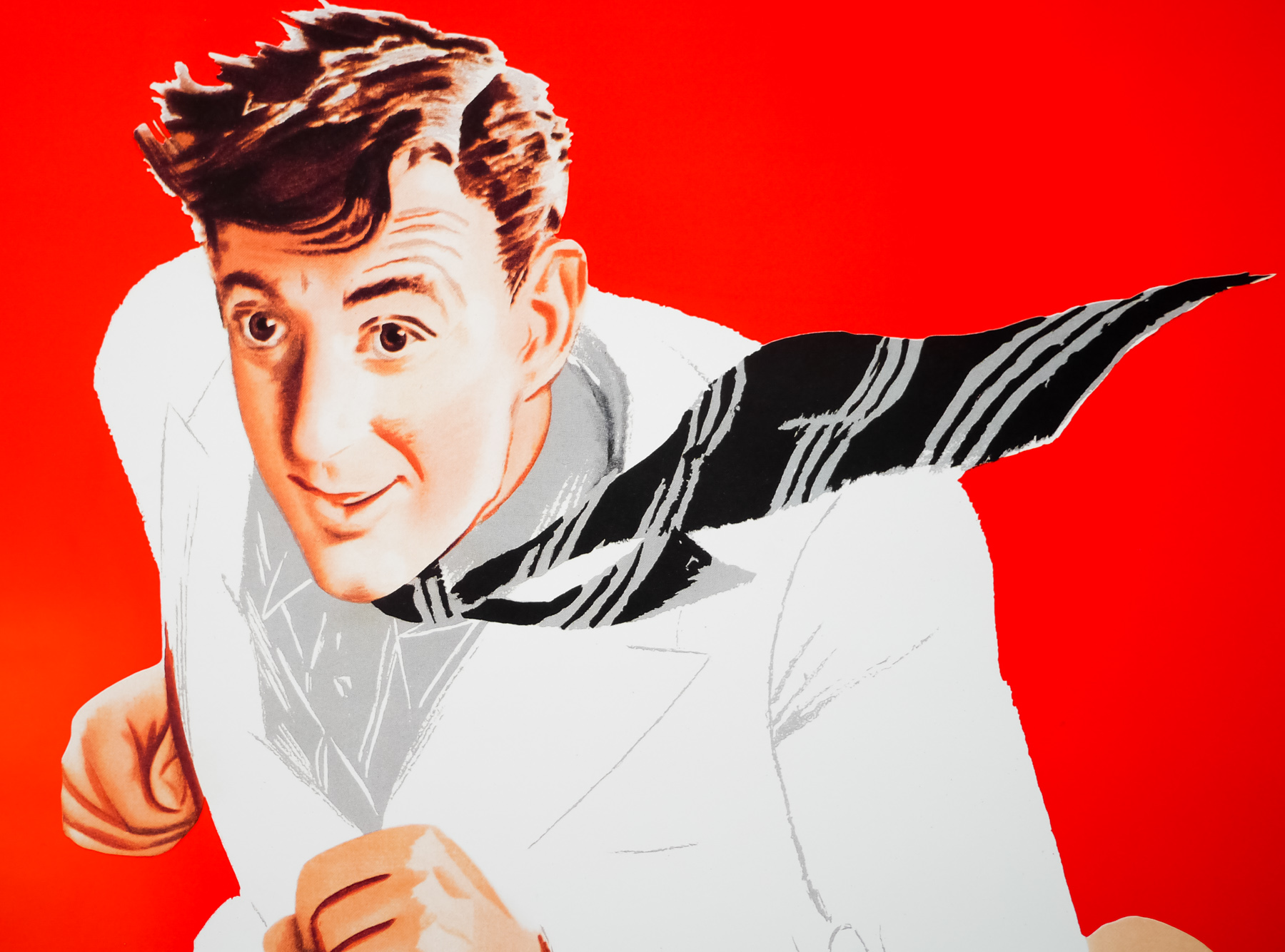
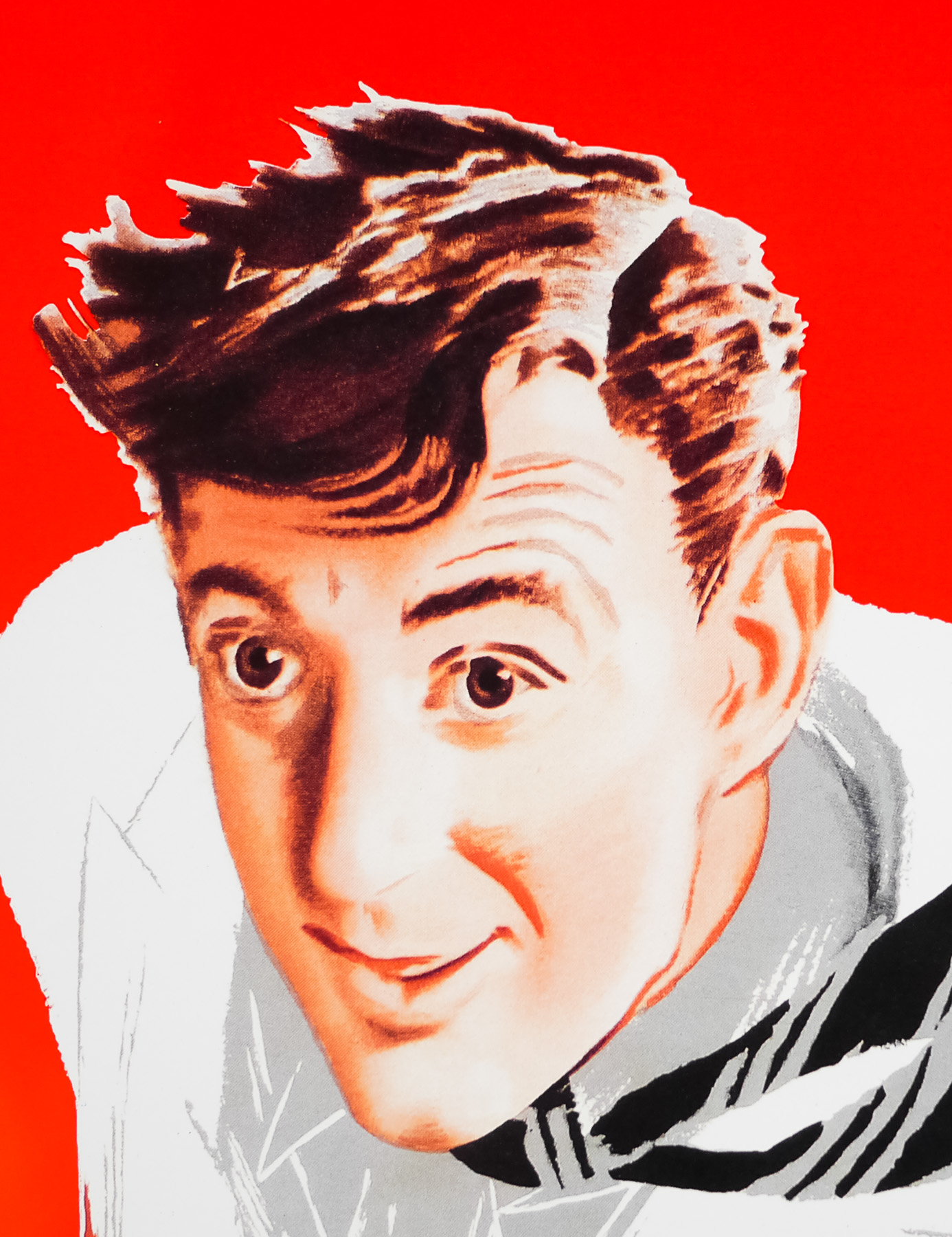
Woods joined Ealing in 1943 and worked there until the studios’ demise in 1959. Sim notes that Woods ‘revealed perhaps his greatest skill as an impresario, marshalling, encouraging, and exploiting to best advantage the talents of other artists’. He built up an impressive stable of artists that he could call on to produce illustrations for the studios’ output. This included the cartoonist Nicolas Bentley (opens in a new tab) (for Passport to Pimlico, 1949) and Ronald Searle (opens in a new tab), creator of the St. Trinian’s cartoons (for The Lavender Hill Mob, 1951). The same year he would commission the artist A. R. Thomson (opens in a new tab) to paint this portrait of Alec Guinness.

Thomson was born deaf and dumb in India in 1894 to a civil servant father who later brought the family back to London where Alfred attended the Royal School for Deaf Children. He became known as the ‘deaf and dumb artist’ and would go on to work on commercial advertising for the likes of Daimler, and also became the RAF’s official war artist in 1940. Interestingly, he was also the last person to win a gold medal for painting (opens in a new tab) at the 1948 Olympic games in London (the last year that artists were allowed to compete). Thomson passed away in 1979. The ArtUK site features a gallery (opens in a new tab) of his work.

The Last Dragon / B2 / Japan

09.02.15

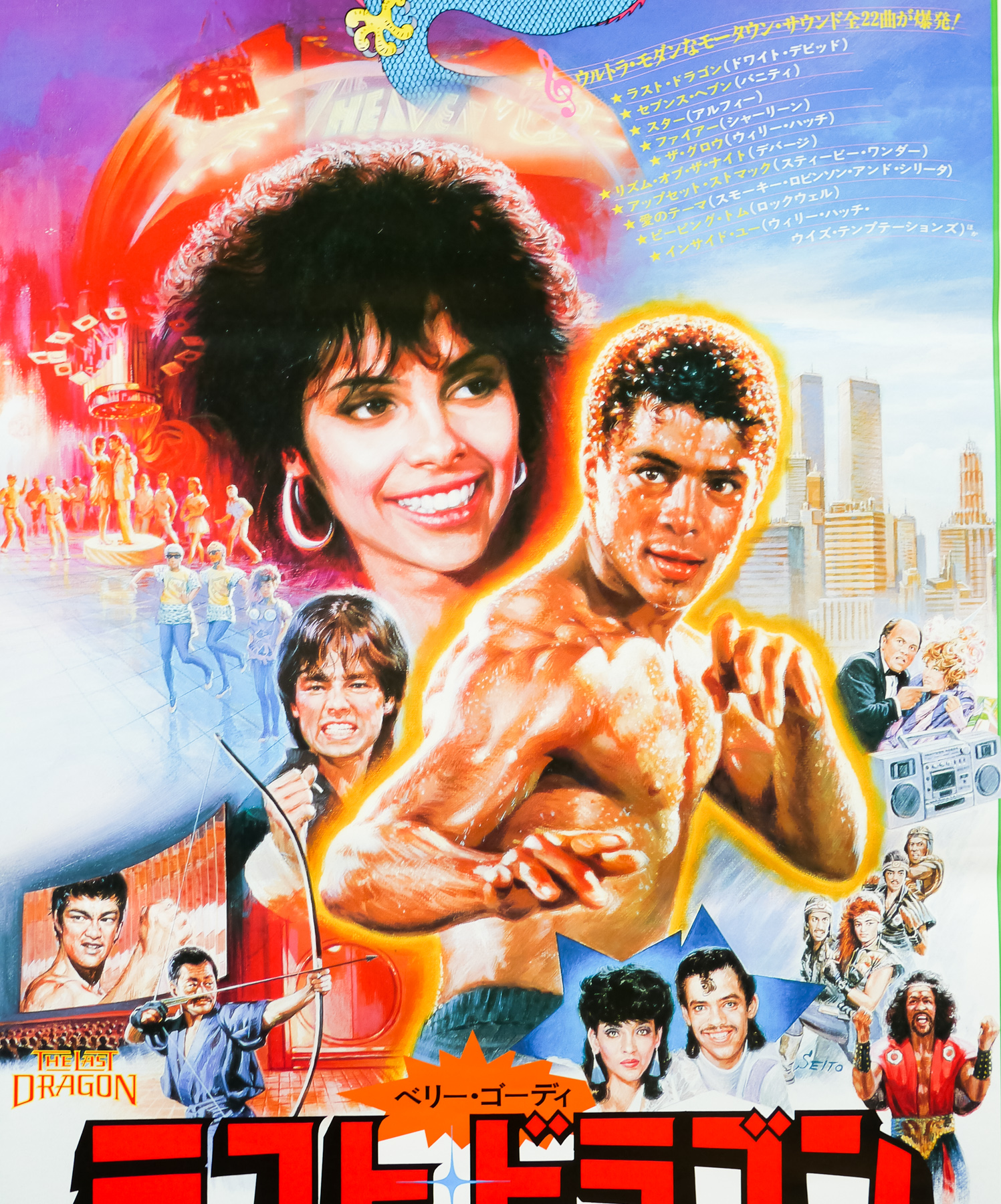
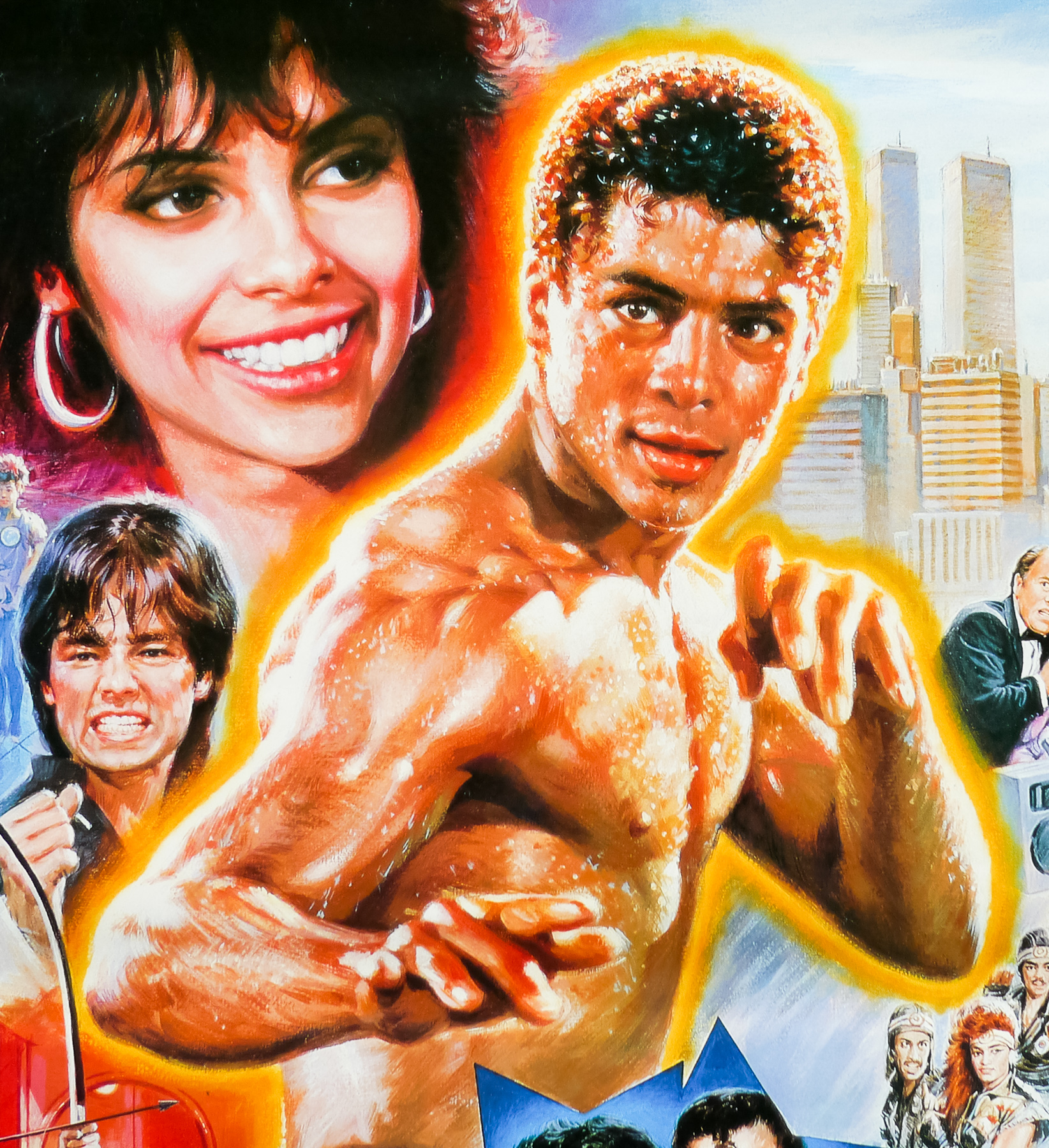
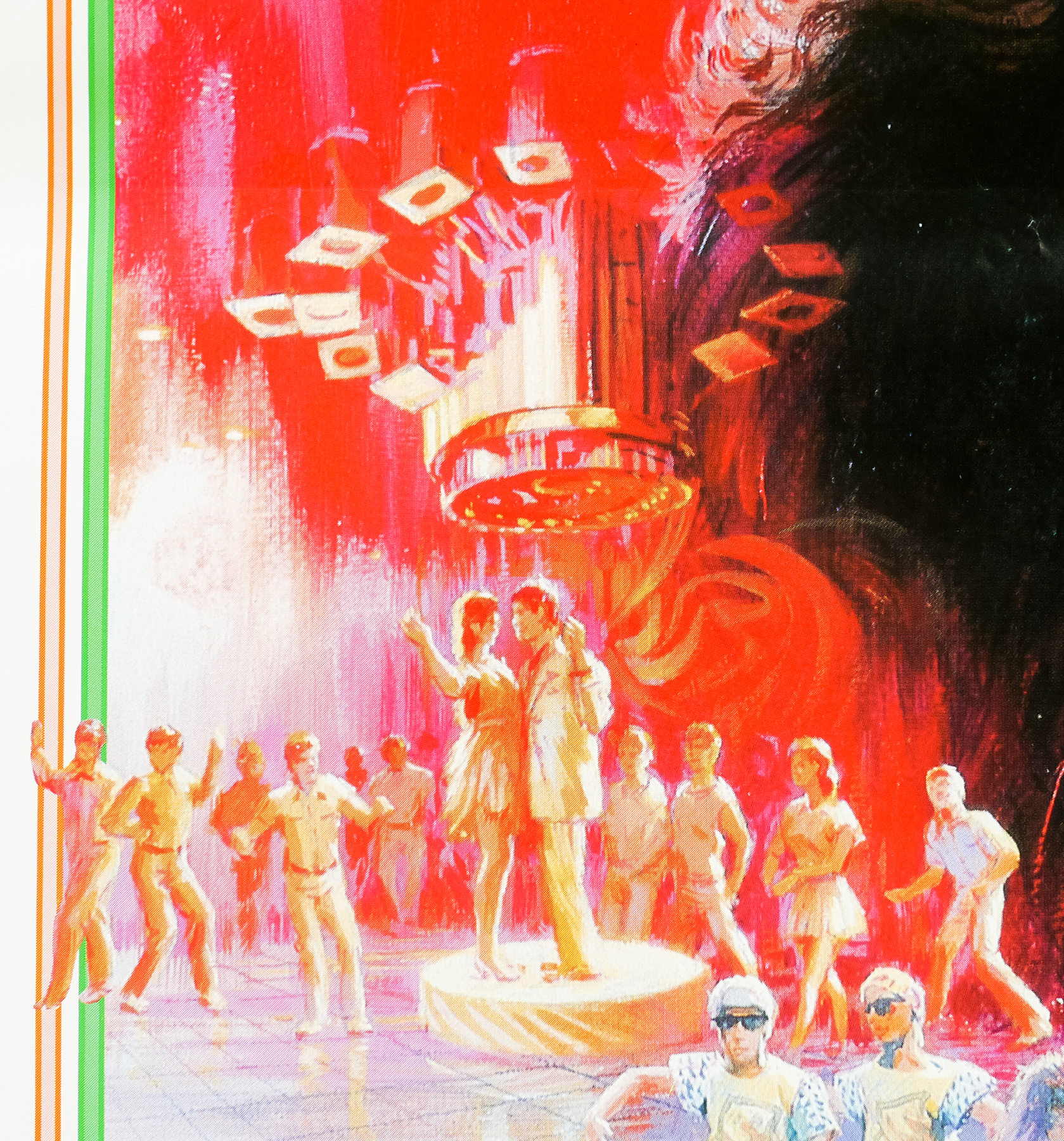
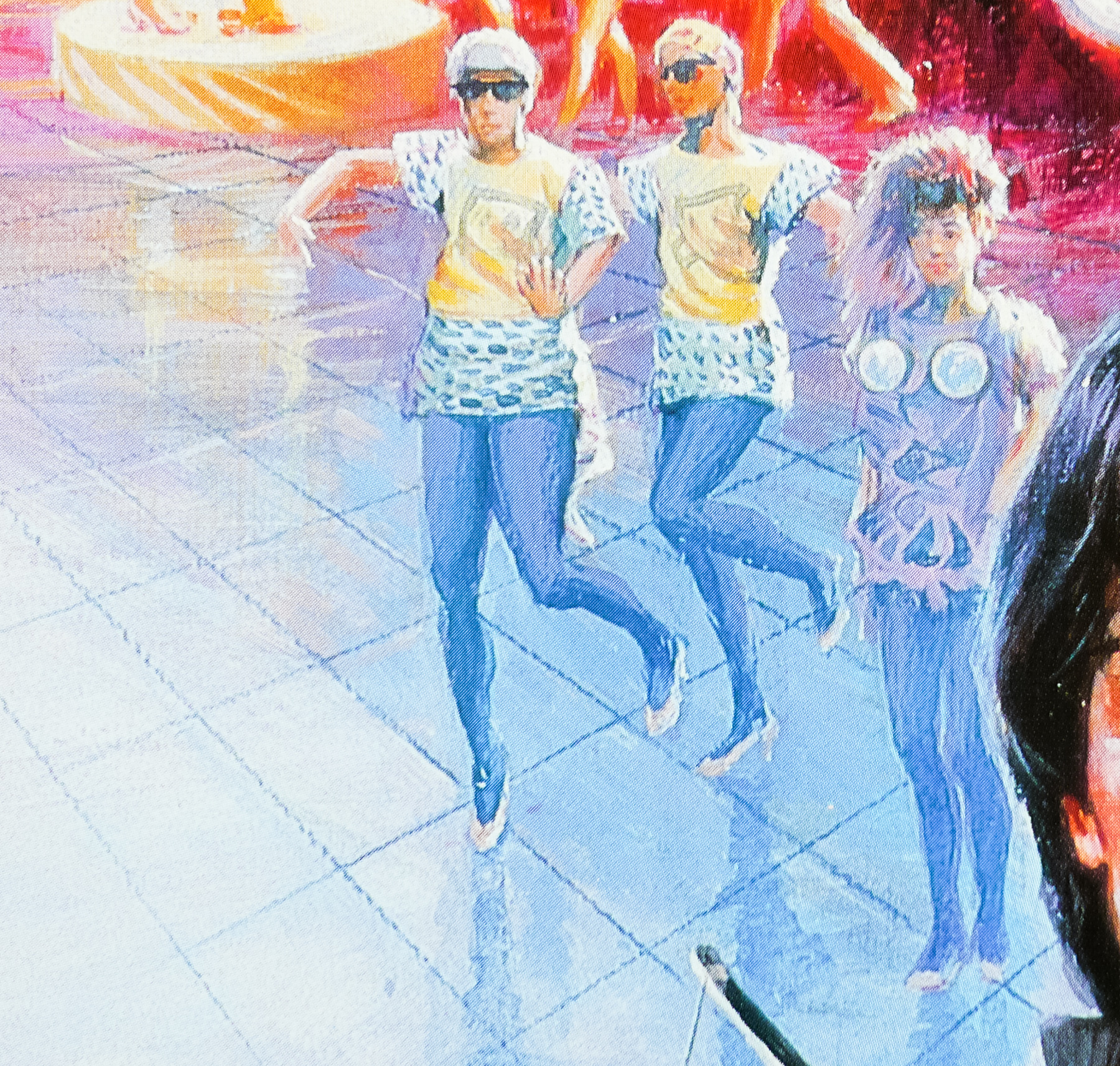
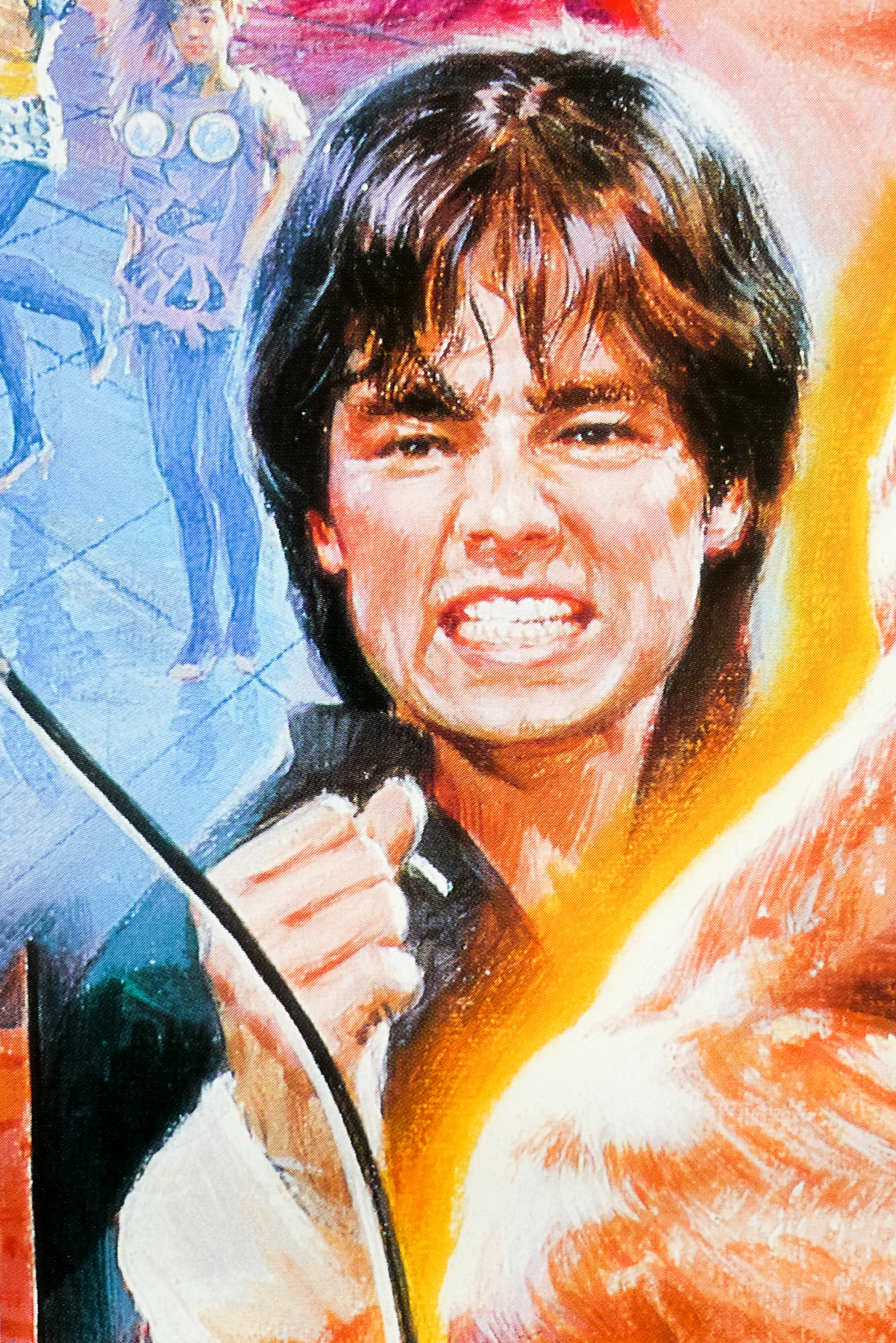
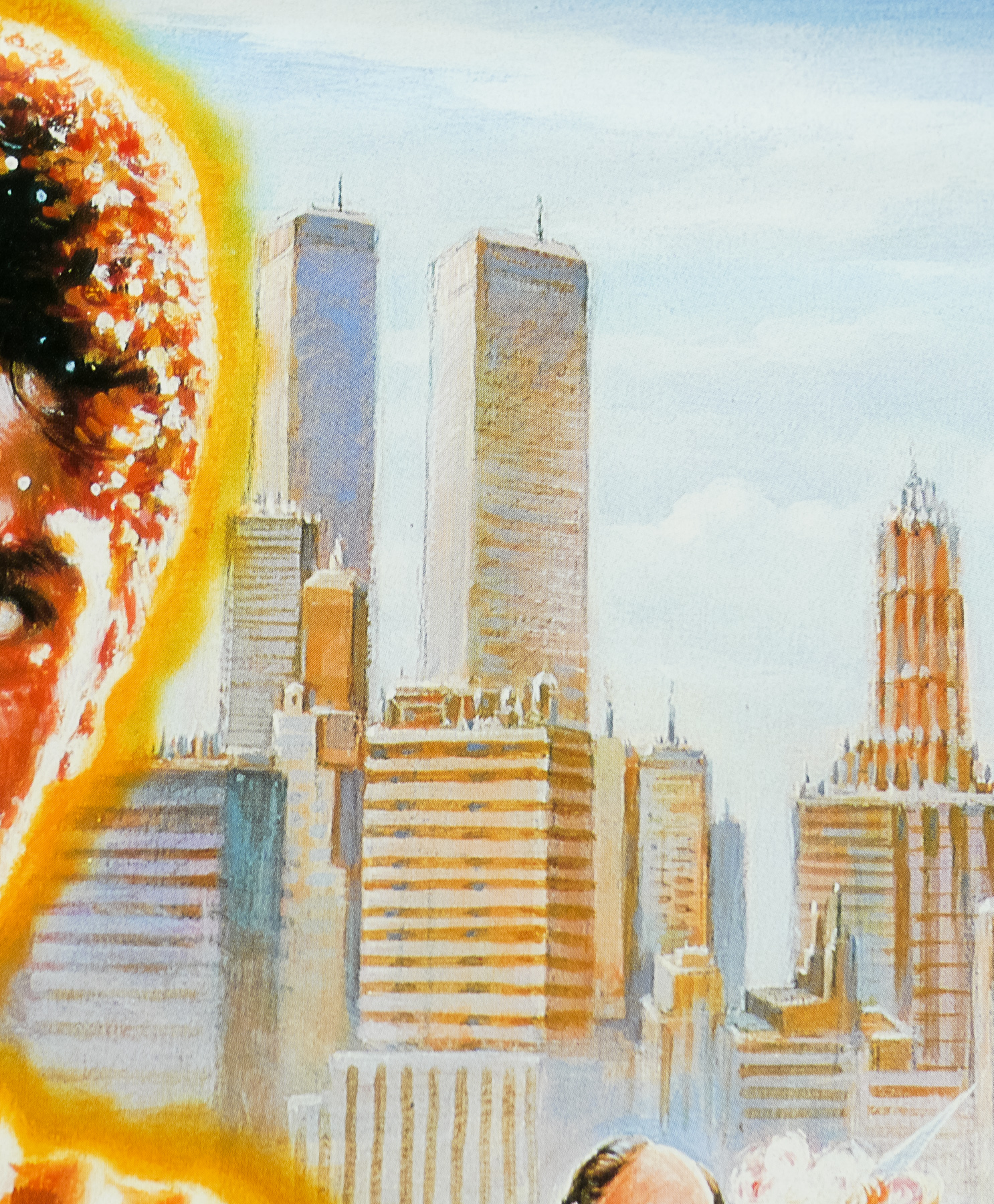
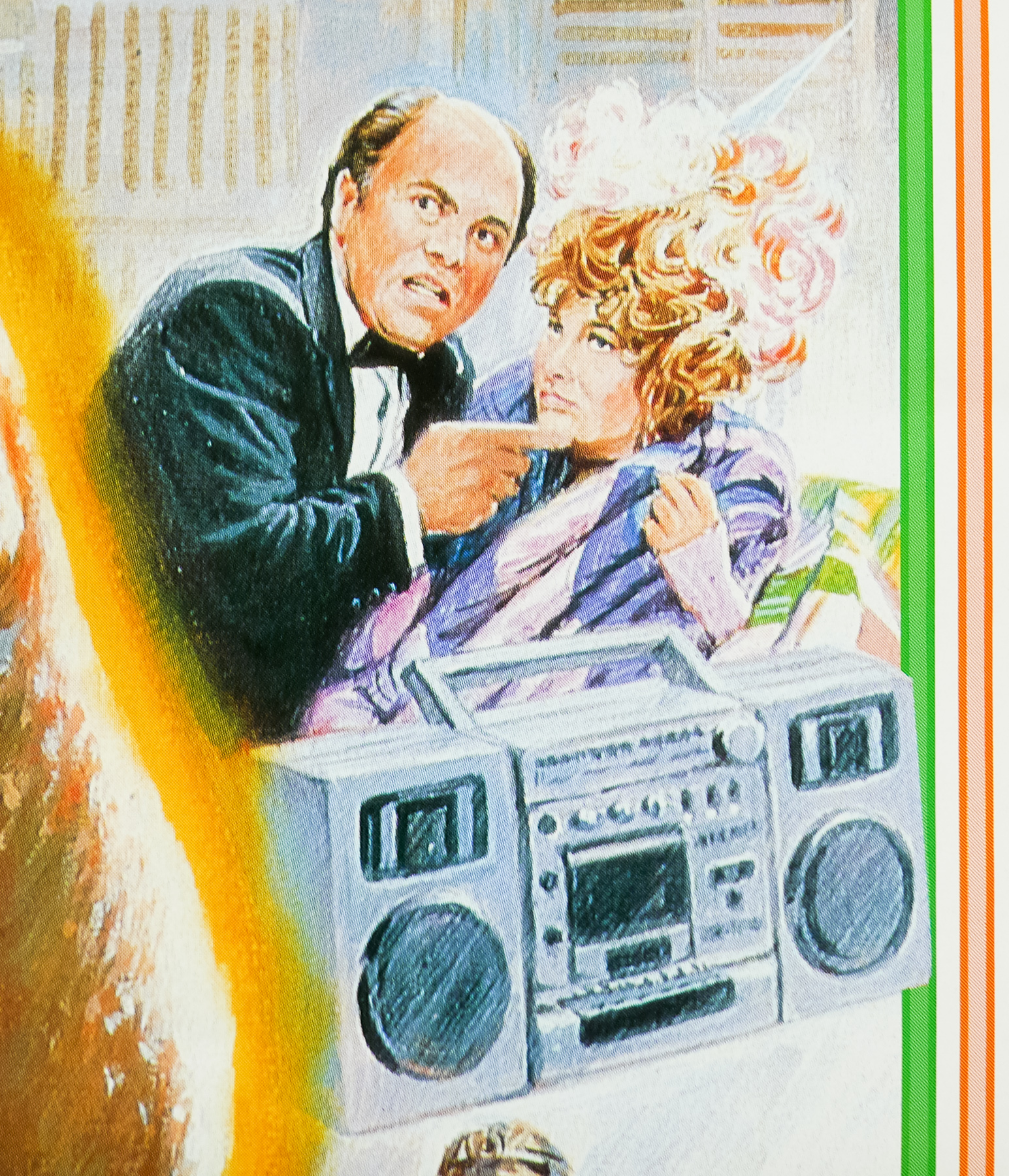
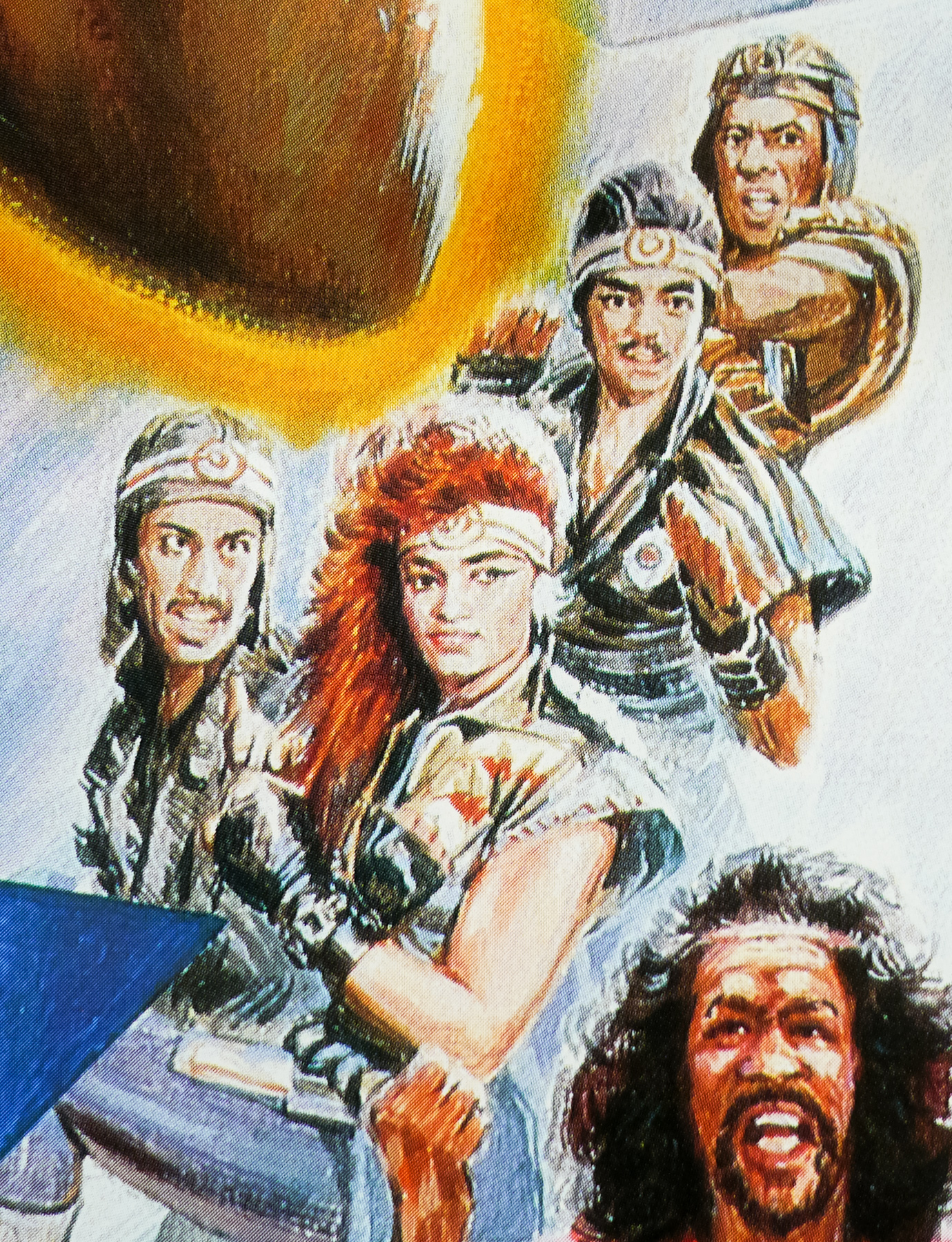
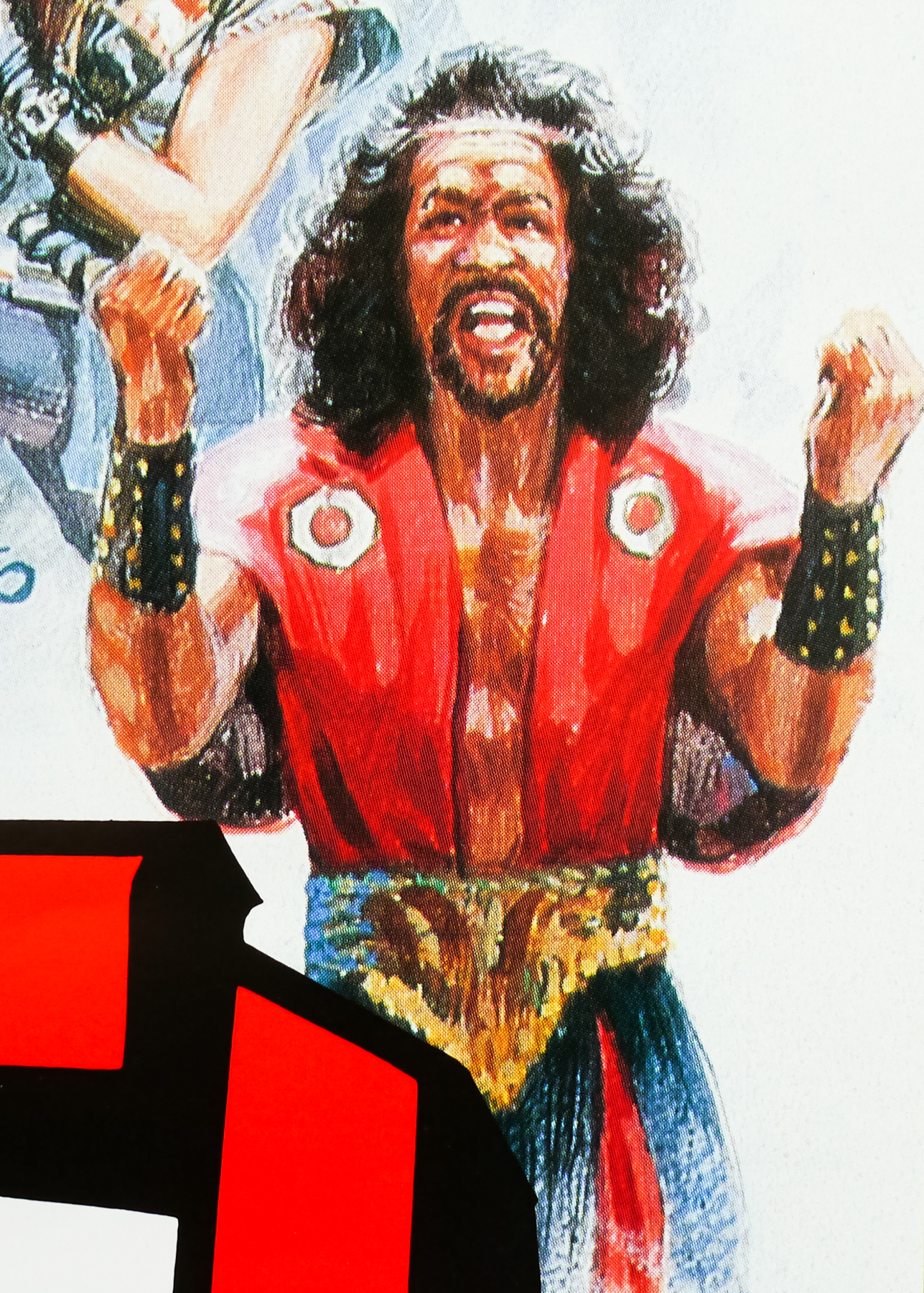
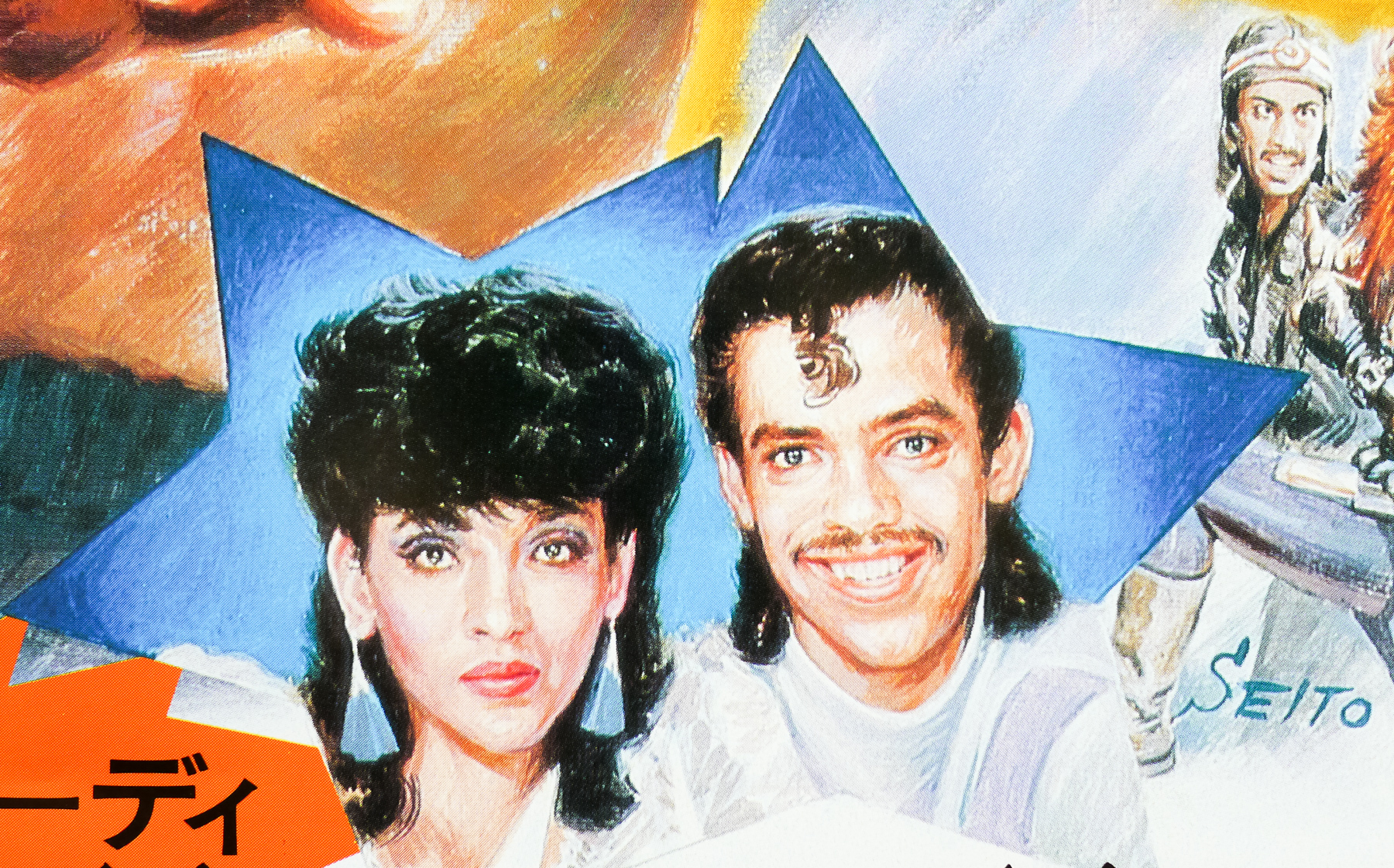
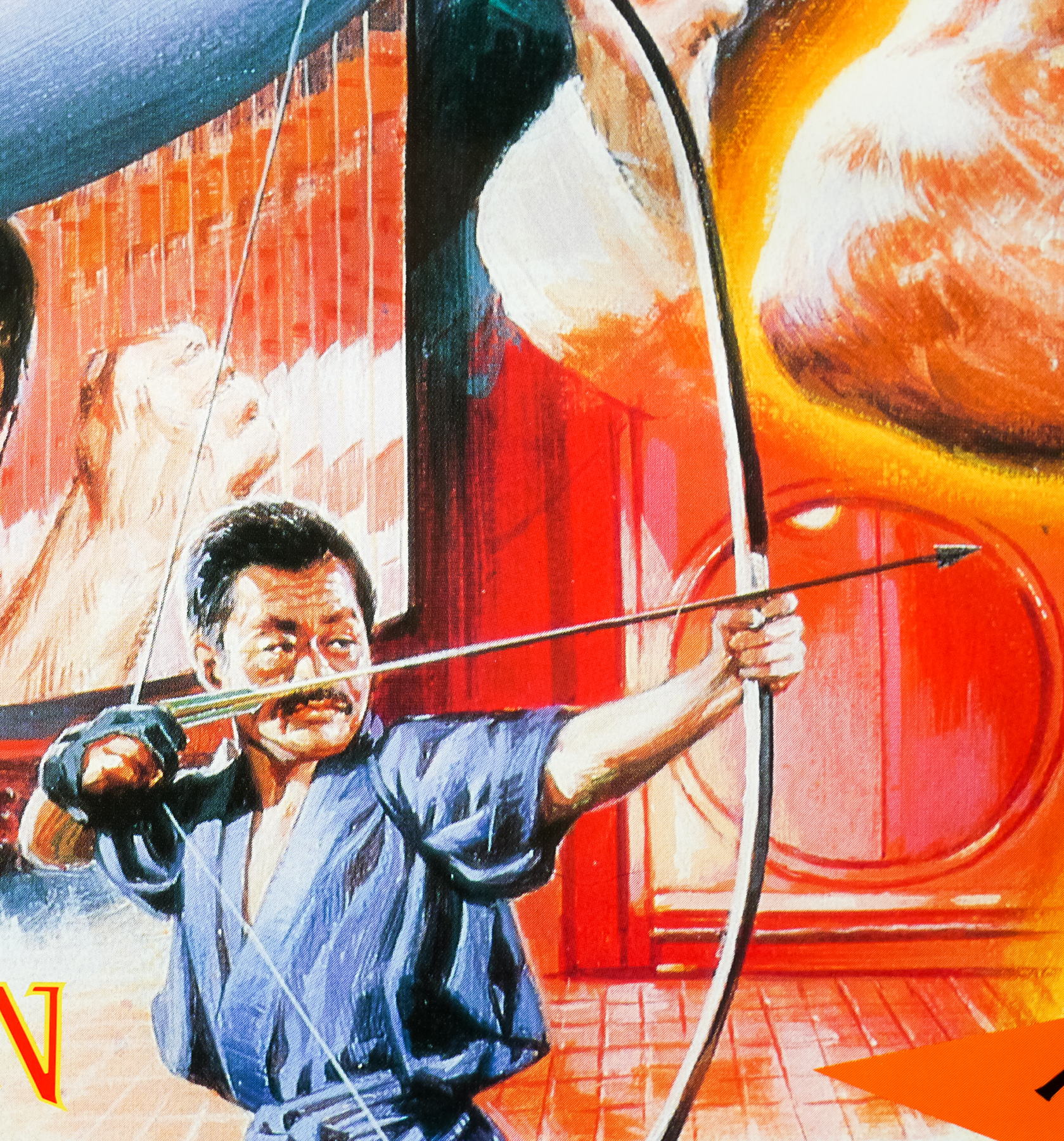
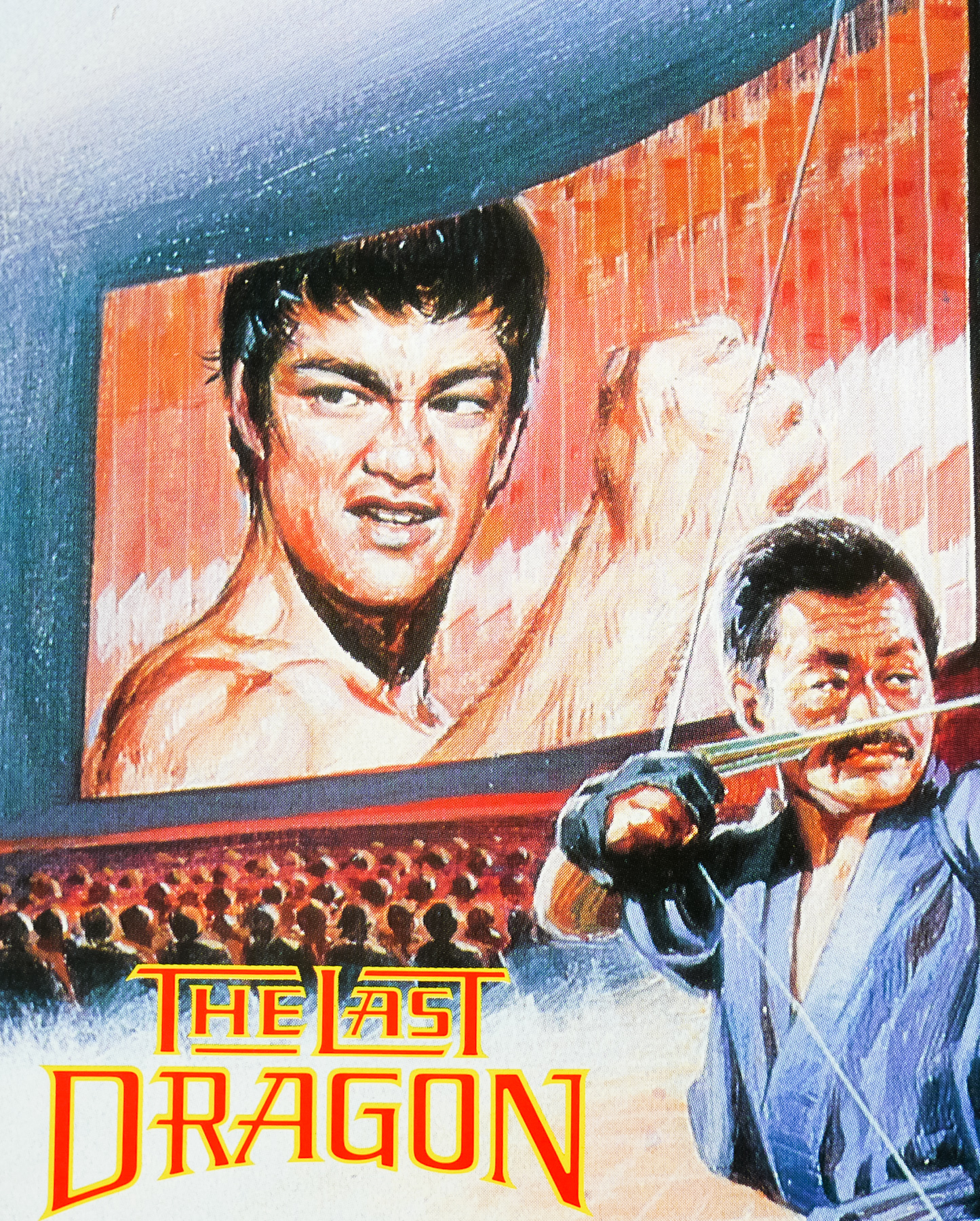
Japanese B2 poster (1986) for The Last Dragon (1985). Artwork by SeitoJapanese B2 poster (1986) for The Last Dragon (1985). Artwork by Seito, image 2Japanese B2 poster (1986) for The Last Dragon (1985). Artwork by Seito, image 3Japanese B2 poster (1986) for The Last Dragon (1985). Artwork by Seito, image 4Japanese B2 poster (1986) for The Last Dragon (1985). Artwork by Seito, image 5
Title
The Last Dragon
Year of Film
1985
Director
Michael Schultz
Starring
Taimak, Vanity, Christopher Murney, Julius Carry, Faith Prince, Leo O'Brien, Mike Starr, Jim Moody, Glen Eaton, Ernie Reyes Jr.
Origin of Film
USA
Genre(s) of Film
Action | Comedy | Drama | Music
Type of Poster
B2
Origin of Poster
Japan
Year of Poster
1986
Designer
Unknown
Artist
Seito
Size (inches)
20 5/16" x 28 7/8"
SS or DS
SS

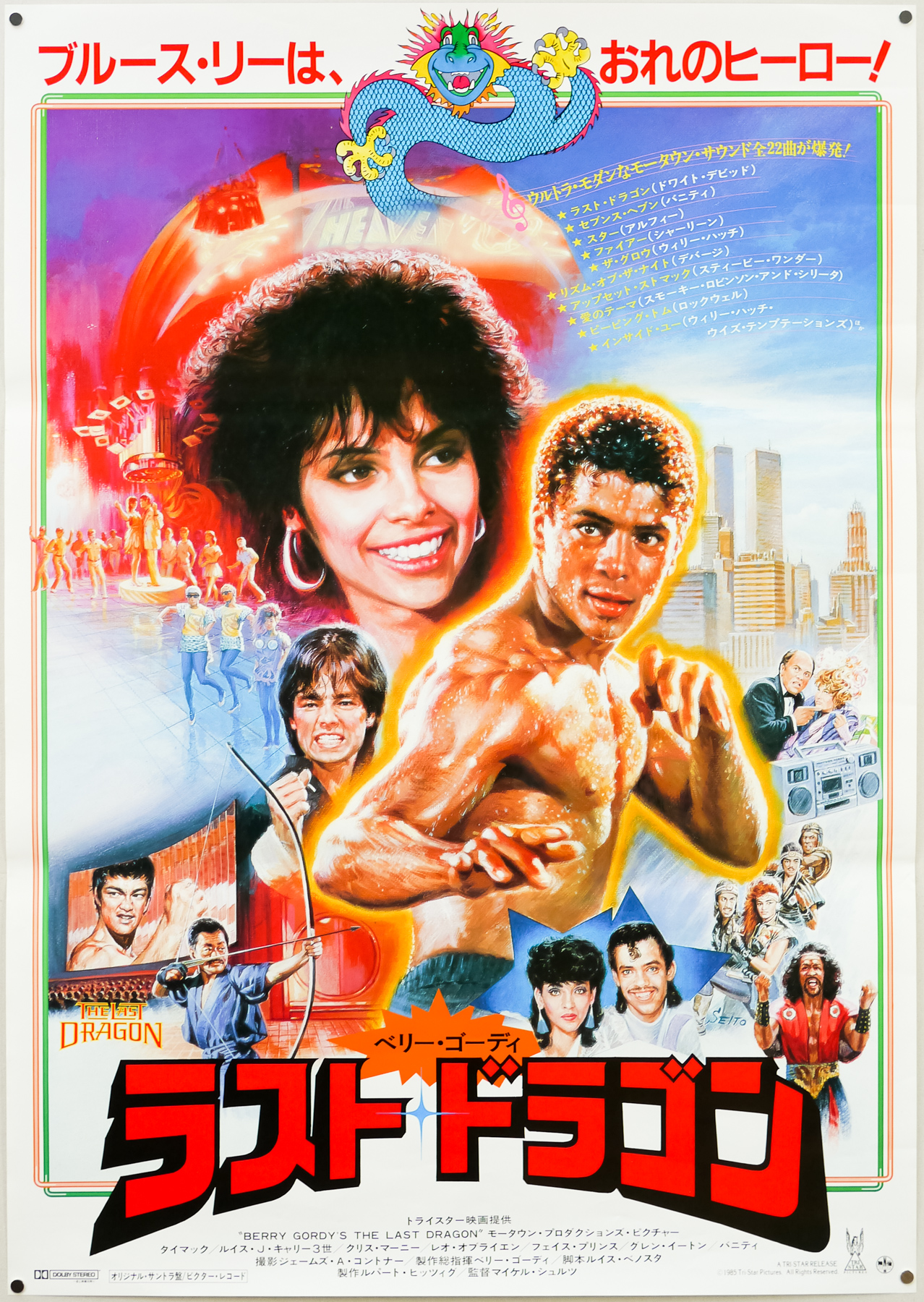
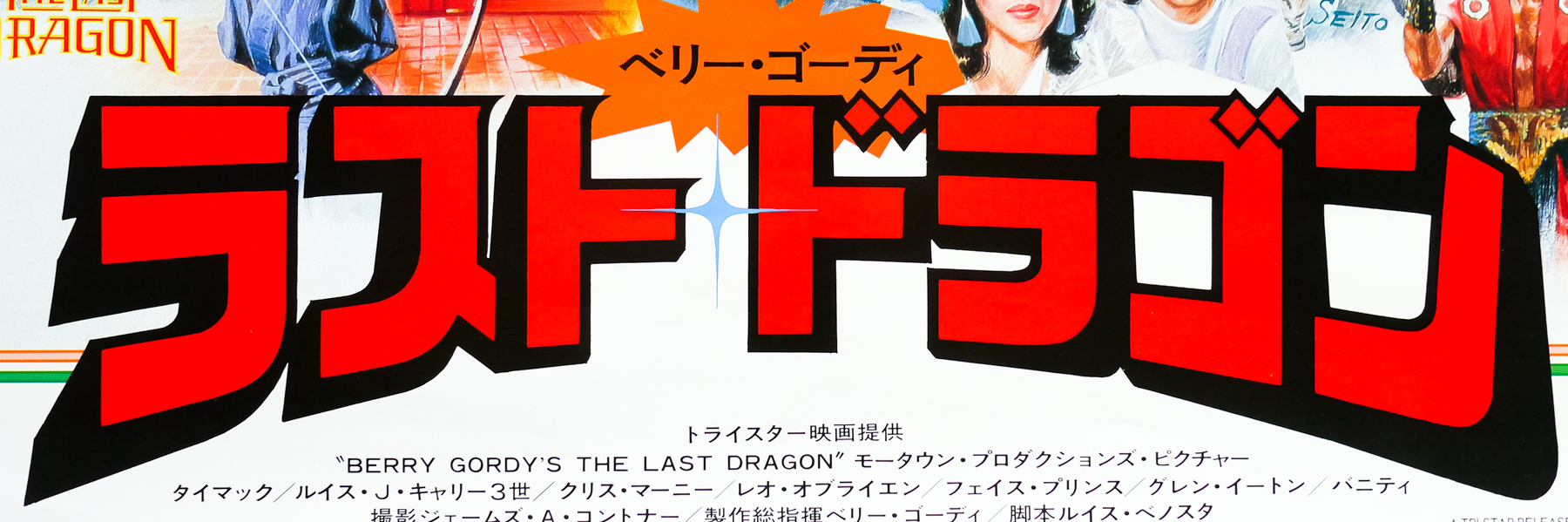
The Last Dragon (opens in a new tab) is a martial-arts cult classic from the 1980s that (at least in the US) stands alongside films like The Goonies and Back to the Future as a defining youth-oriented film of the era. It’s definitely less well known in the UK and I think that has something to do with the fact that it was released with a ’15’ rating over here, meaning it was out of bounds for the younger audience it clearly attracted in the US (with a PG rating).

That it was rated 15 was probably to do with the video nasties (opens in a new tab) situation of the time and the passing of the Video Recordings Act of 1984 (opens in a new tab) that meant all home video had to be classified by the British Board of Film Classification (opens in a new tab), designated by the government as the upholders of film ratings. Martial arts films were seen as an undesirable genre as they were (stupidly) thought to have a strong potential to cause cases of copycat violence in school children across the nation. In addition to being given a 15 rating, the film had cuts made totalling almost 2 minutes for the cinema and subsequent home video releases.

To say this action by the BBFC was excessive would be an understatement as, aside from a couple of moments of profane language, the film is really quite mild, with none of the fight scenes being at all brutal. The film was produced by the founder of Motown records Berry Gordy (opens in a new tab) and was intended to mix musical numbers (predominantly hip-hop) with the popular (at the time) martial arts genre. The lead role of Leroy Green (AKA Bruce Leroy), a young warrior who wishes to attain the ultimate level of martial arts skill known as ‘The Glow’, was given to the 20-year-old, single-monikered Taimak (opens in a new tab), a martial artist who apparently learned to act whilst on the set of the Last Dragon.

Leroy leaves his master on the quest to find Master Sum Dum Goy whom he believes will teach him the final lessons needed to attain The Glow. Along the way he must battle with the malevolent Sho’nuff (a hilarious performance from Julius Carry (opens in a new tab)) another martial artist who sees Leroy as standing in the way of total domination, as well as deal with the machinations of the twisted video arcade mogul Eddie Arkadian (Christopher Murney (opens in a new tab)). Laura Charles (Vanity (opens in a new tab), single-monikered protege of Prince) the VJ of a popular music video channel is kidnapped by Arkadian’s men in an attempt to convince her to play his girlfriend’s awful music video. Leroy sets out to rescue her and romance soon blossoms between them. He soon learns the truth about attaining The Glow and the final fight with Sho’nuff features the use of rotoscoped special effects.

The film contains a few almost full-length music videos, including the DeBarge (opens in a new tab) song, ‘Rhythm of the Night (opens in a new tab)‘. The fight scenes are all well choreographed and entertaining, with Taimak clearly having skills in that area (if not so much as a thespian). The excellent Last Dragon Tribute site (opens in a new tab) features a recent letter from the man himself (opens in a new tab) in which he explains why he’s not starred in many films since then. It’s not hard to see why the film was so popular as it played to the adolescent fantasy of many a young male teen who dreamed of using martial arts to win the heart of a girl.

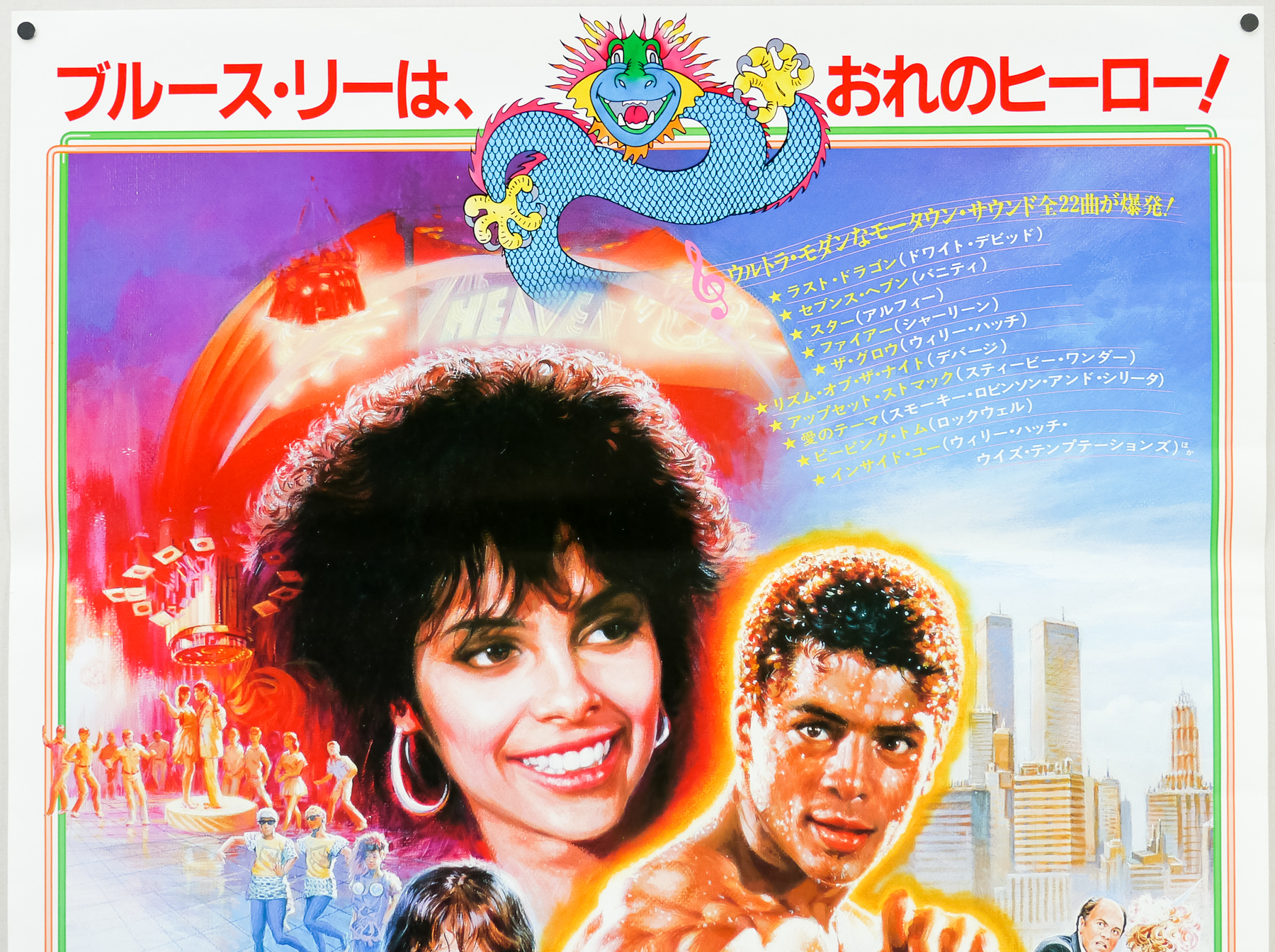
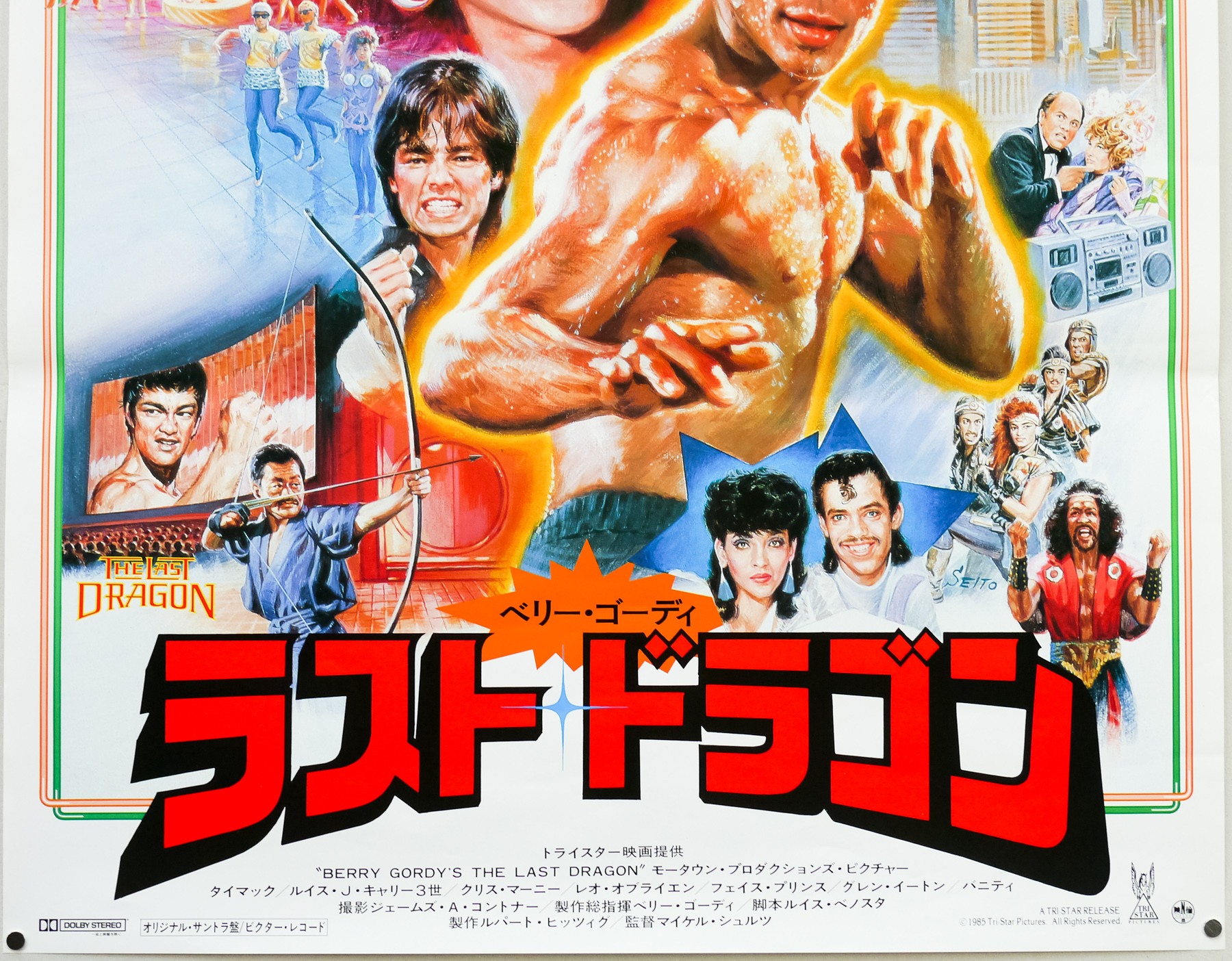
This Japanese poster is rather excellent and the artwork is unique to the Japanese campaign. Seito is one of my favourite Japanese artists who was responsible for several fantastic illustrated posters during the 1970s and 1980s. Little is known about the man himself, even in his native country.

See the other posters I’ve collected by Seito.

Wild At Heart / A1 / Czechoslovakia

06.02.15

Czechoslovak A1 poster for Wild At Heart (1990). Artwork by Jan WeberCzechoslovak A1 poster for Wild At Heart (1990). Artwork by Jan Weber, image 2Czechoslovak A1 poster for Wild At Heart (1990). Artwork by Jan Weber, image 3
Title
Wild At Heart
AKA
Sailor et Lula (France)
Year of Film
1990
Director
David Lynch
Starring
Nicolas Cage, Laura Dern, Diane Ladd, Harry Dean Stanton, Willem Dafoe, J.E. Freeman, Crispin Glover, Calvin Lockhart, Isabella Rossellini, Grace Zabriskie, Sherilyn Fenn, Marvin Kaplan, William Morgan Sheppard, David Patrick Kelly
Origin of Film
USA
Genre(s) of Film
Crime | Drama
Type of Poster
A1
Origin of Poster
Czechoslovakia
Year of Poster
1990
Designer
Jan Weber
Artist
Jan Weber
Size (inches)
23 3/8" x 33 1/8"
SS or DS
SS

A suitably bizarre design features on this Czech poster for David Lynch’s 1990 twisted road trip Wild at Heart (opens in a new tab). Based on Barry Gifford’s 1989 novel of the same name (opens in a new tab), the film is arguably the most conventional film that Lynch has ever made, but it’s no less weird and wonderful than the rest of his output. Nicolas Cage (opens in a new tab) turns in one of his career best performances as Sailor Ripley, a young man sent to jail for killing a knife-wielding attacker in North Carolina.

Upon his release, he is met by his girlfriend Lula Fortune (Laura Dern (opens in a new tab)) at the prison gates and the pair decide to run away to California to escape her domineering mother Marietta (a memorable performance by Diane Ladd (opens in a new tab)). Marietta is a twisted bully and totally disapproves of Sailor and Lula’s relationship. It’s revealed that she sent the knife-wielding killer after him to begin with and when they disappear she hires both a private detective and a dangerous mobster to track them down.

The lovers end up in Texas where they meet an old friend called Perdita Durango (Isabella Rossellini (opens in a new tab)) who they hope will be able to help them, but also encounter the psychotic gangster Bobby Peru (a terrifying Willem Dafoe (opens in a new tab)) who leads Sailor astray with terrible consequences. The film is full of Lynch’s trademark surreal sequences and shocking moments of violence, including one involving a shotgun that is hard to forget. Apparently the film tested badly upon completion and Lynch recalls that over 100 people walked out during one screening. It received a pretty mixed critical reception but it did win the coveted Palme d’Or at the Cannes Film Festival and was a moderate financial success in the US and internationally.

This Czech poster was designed by Jan Weber about whom I’ve been able to discover very little, other than that he was active from the 1970s to the 1990s and mainly specialised in posters for Hollywood films being released in Czechoslovakia. The site Terry Posters has a gallery (opens in a new tab) of many of his posters.