You searched for: James%2520B.%2520Harris

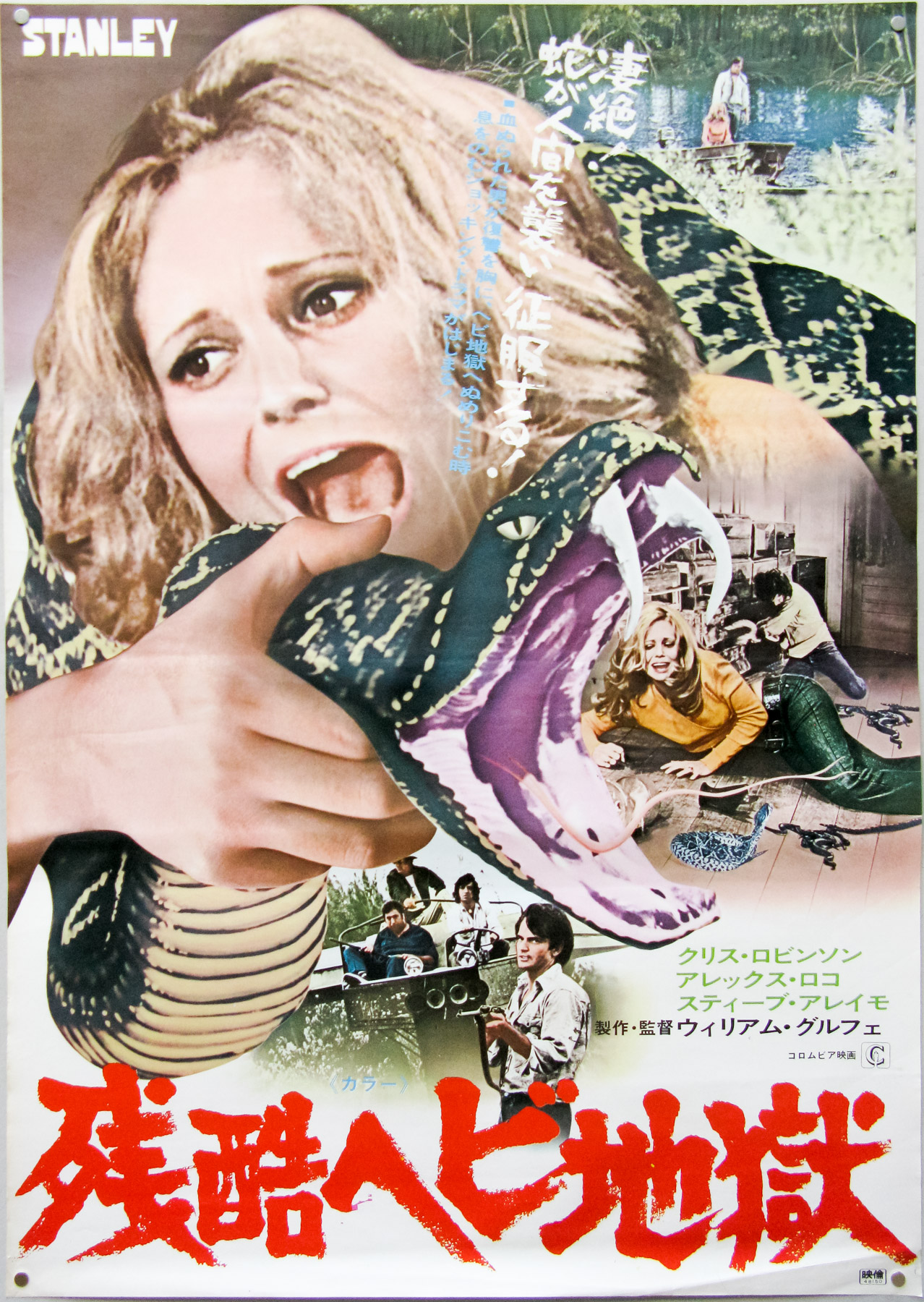
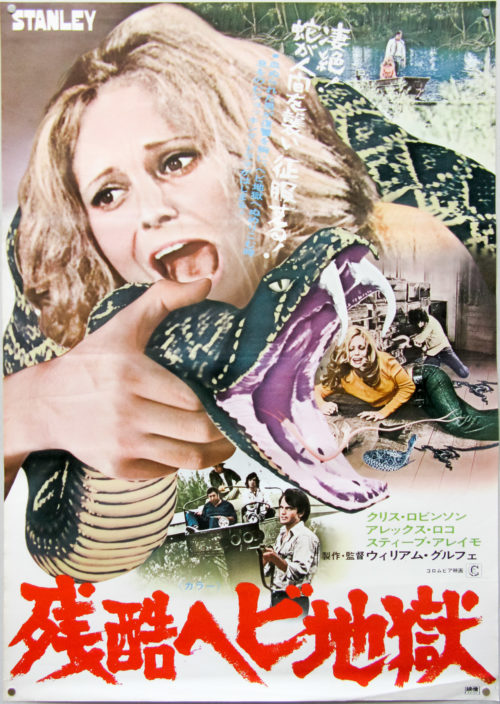
Stanley / B2 / Japan

17.05.11

Poster Poster

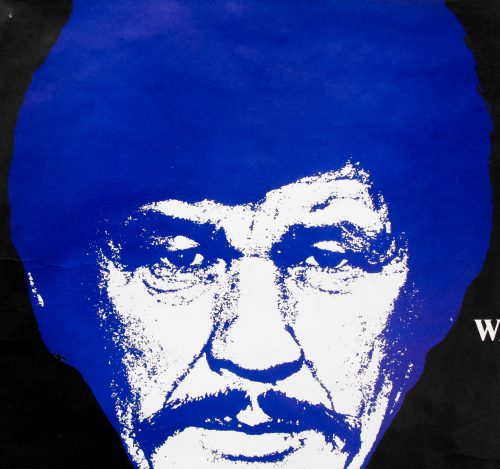
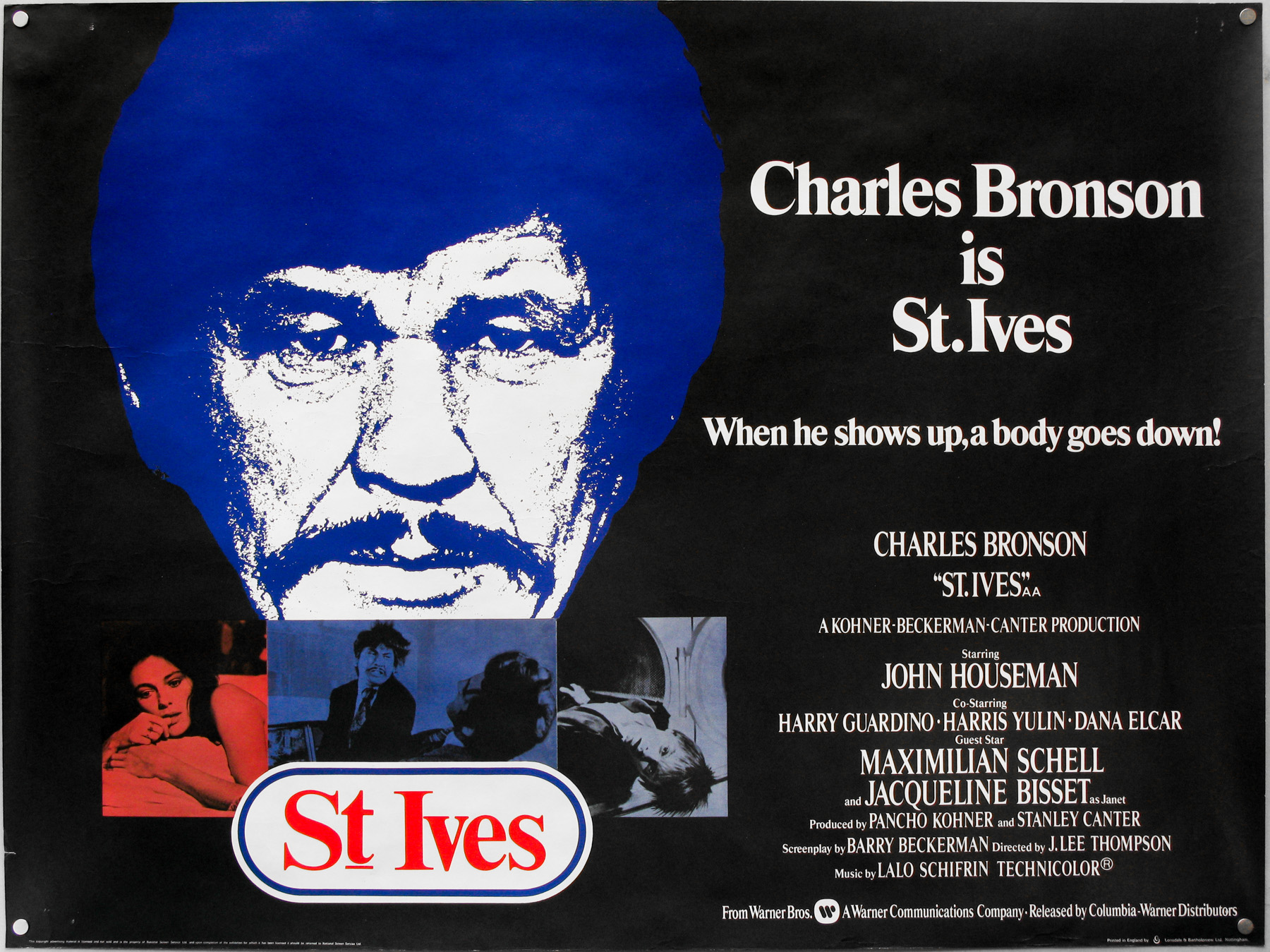
St Ives / quad / UK

18.05.11

Poster Poster

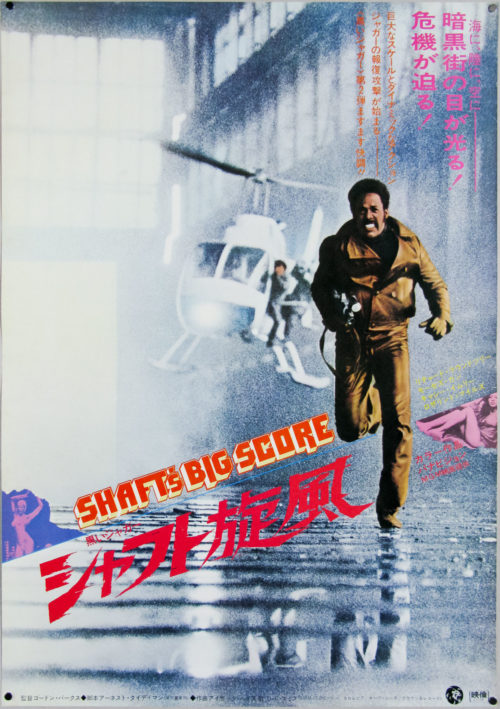
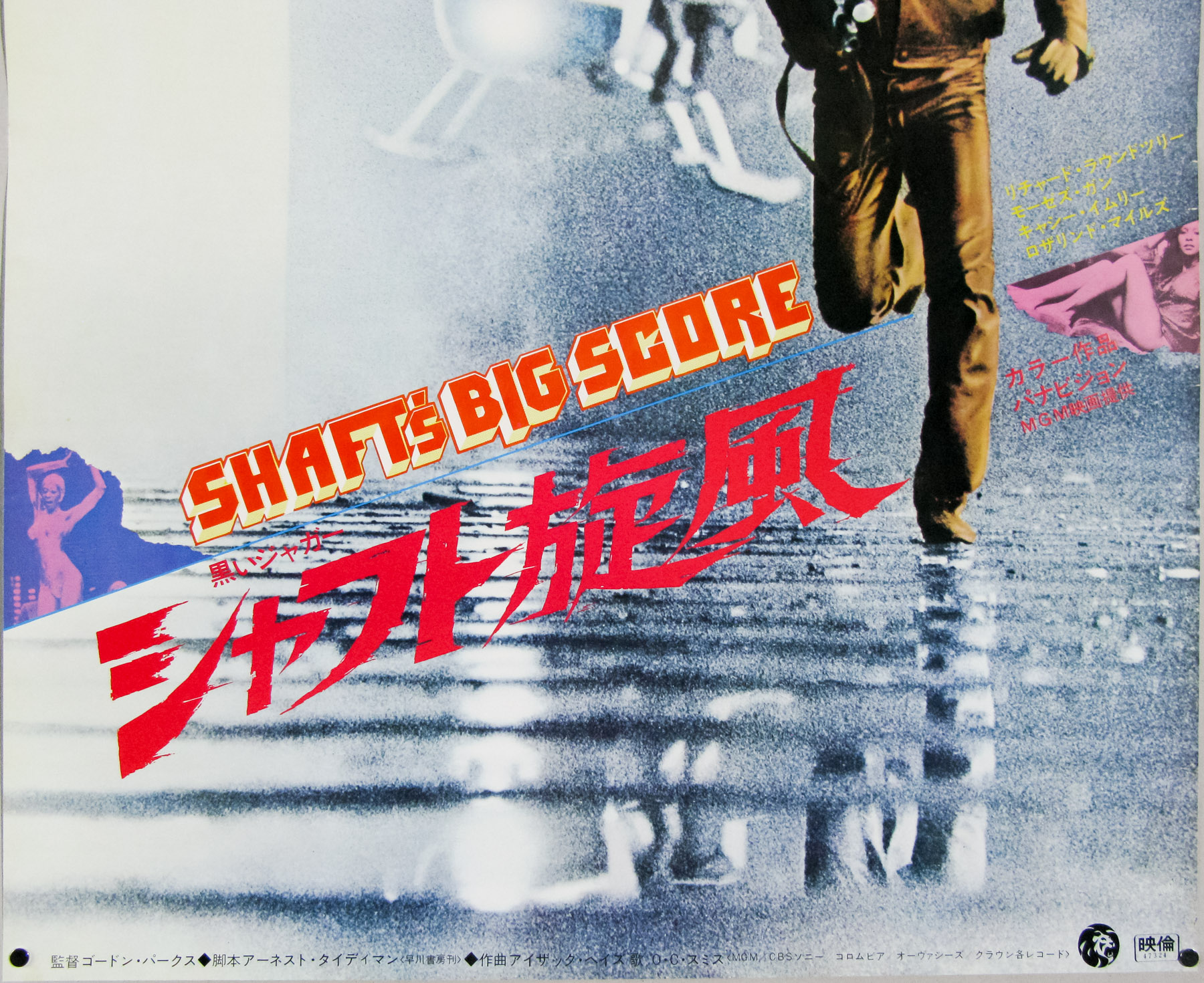
Shaft’s Big Score / B2 / Japan

25.07.11

Poster Poster
Title
Shaft's Big Score
AKA
--
Year of Film
1972
Director
Gordon Parks
Starring
Richard Roundtree, Moses Gunn, Drew Bundini Brown, Joseph Mascolo, Kathy Imrie, Wally Taylor, Julius Harris, Rosalind Miles, Joe Santos
Origin of Film
USA
Genre(s) of Film
Richard Roundtree, Moses Gunn, Drew Bundini Brown, Joseph Mascolo, Kathy Imrie, Wally Taylor, Julius Harris, Rosalind Miles, Joe Santos,
Type of Poster
B2
Style of Poster
--
Origin of Poster
Japan
Year of Poster
1972
Designer
Unknown
Artist
--
Size (inches)
20 4/16" x 28 13/16"
SS or DS
SS
Tagline
--

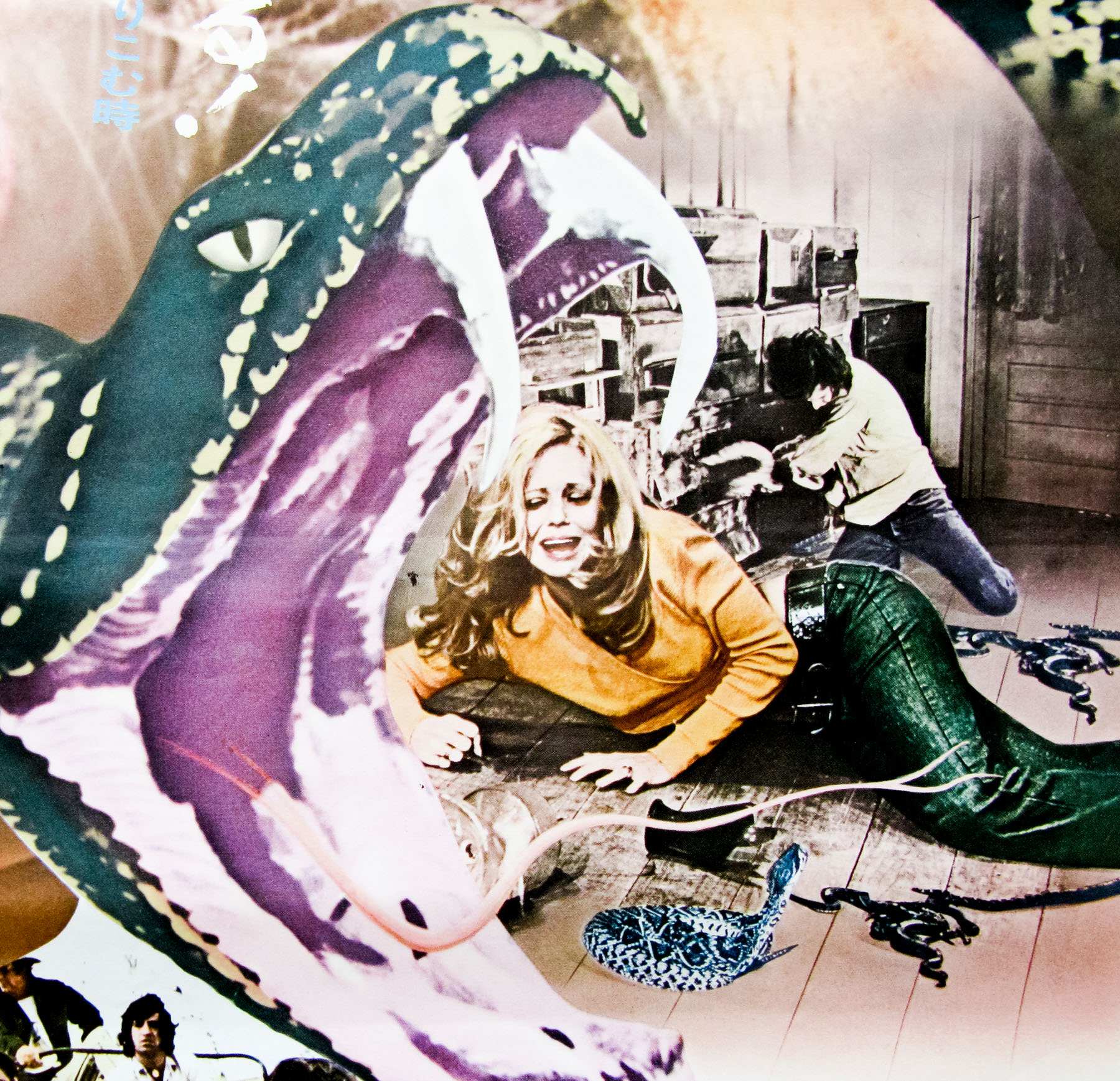
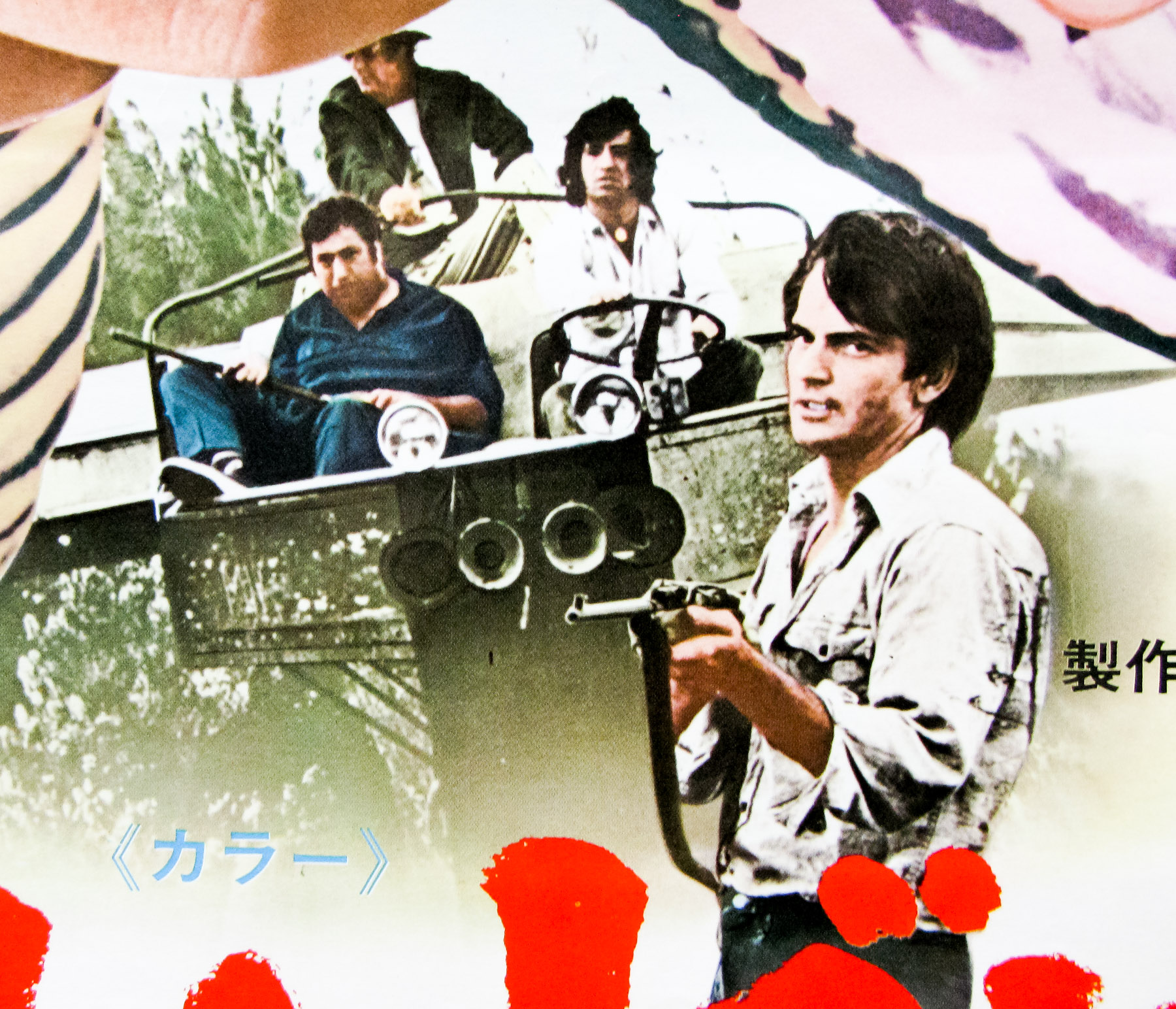
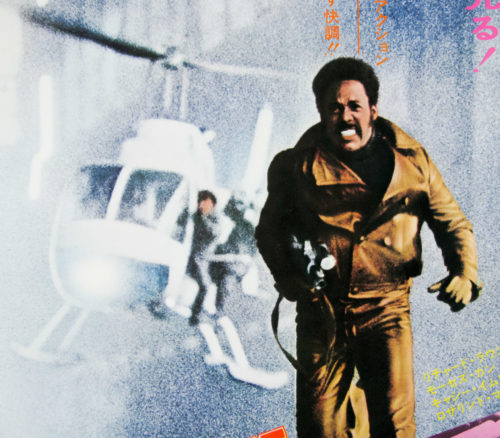
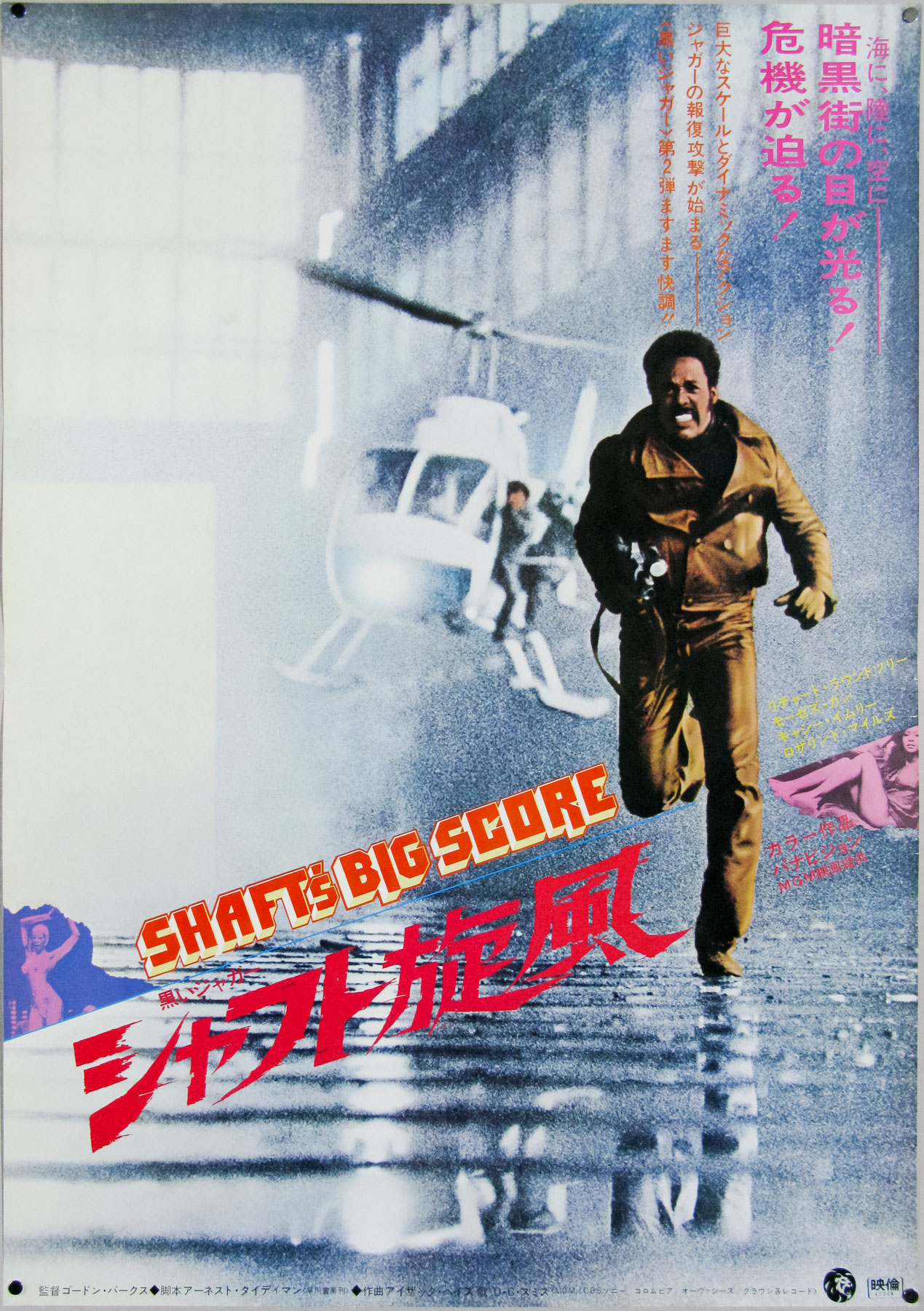
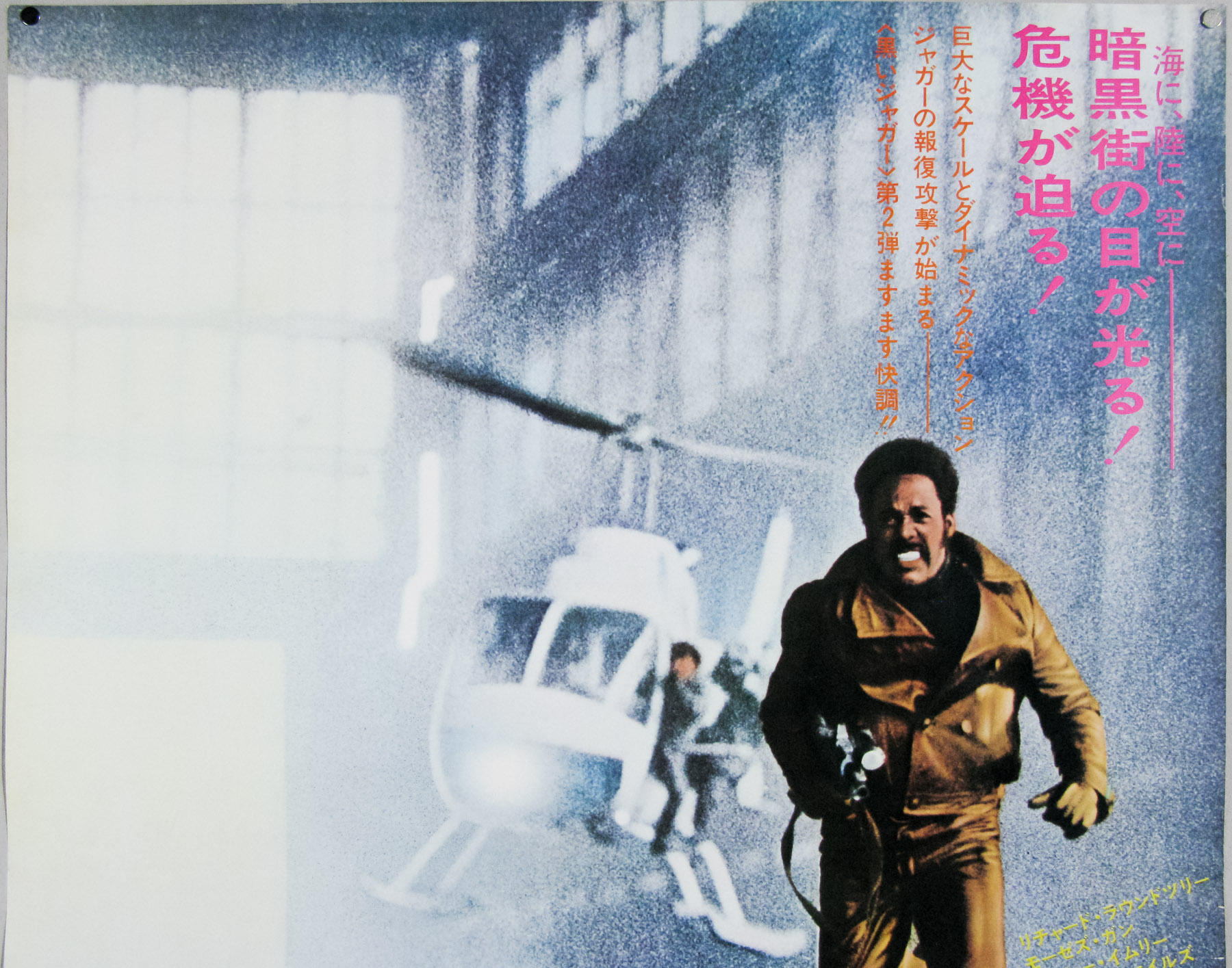
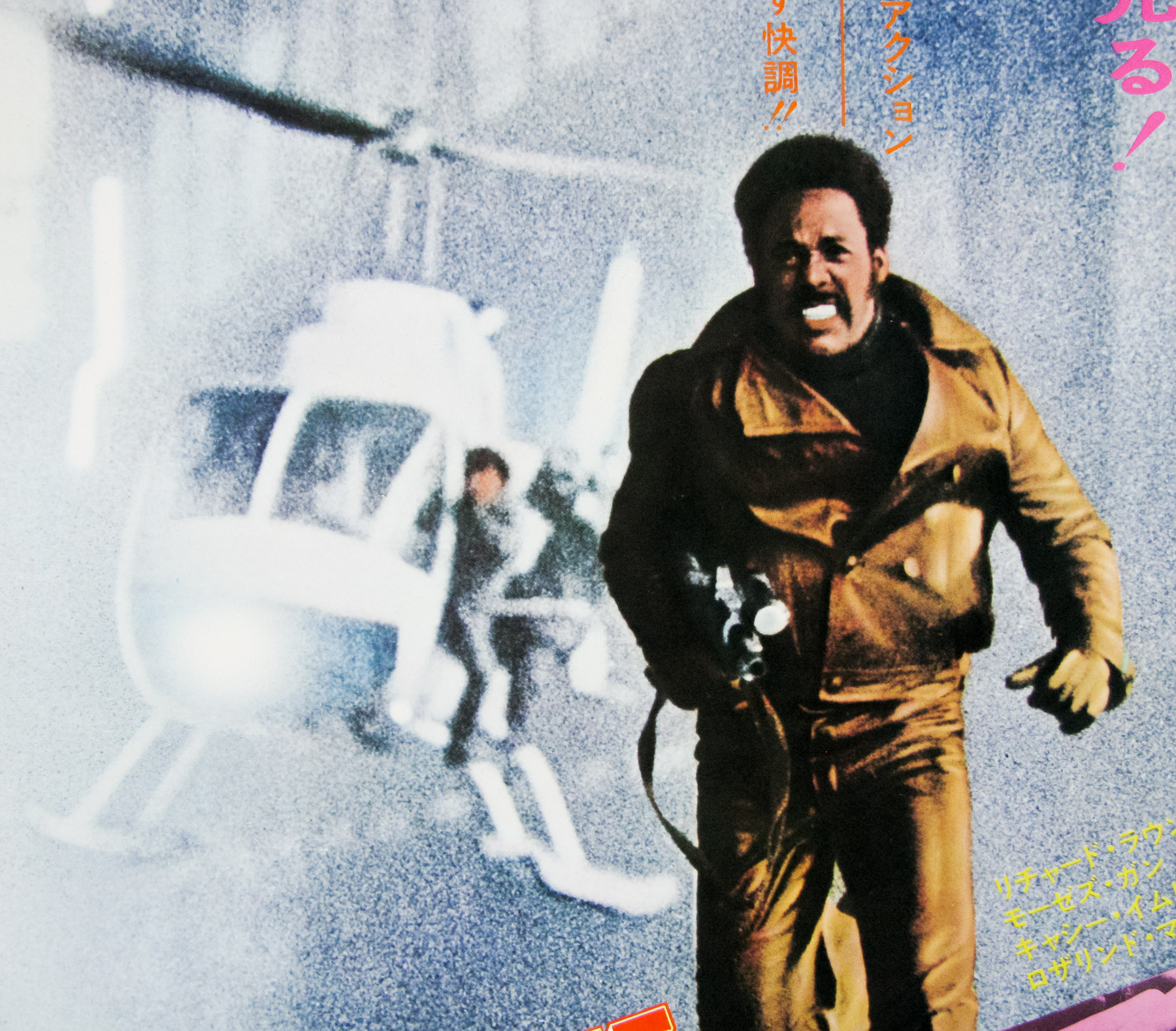
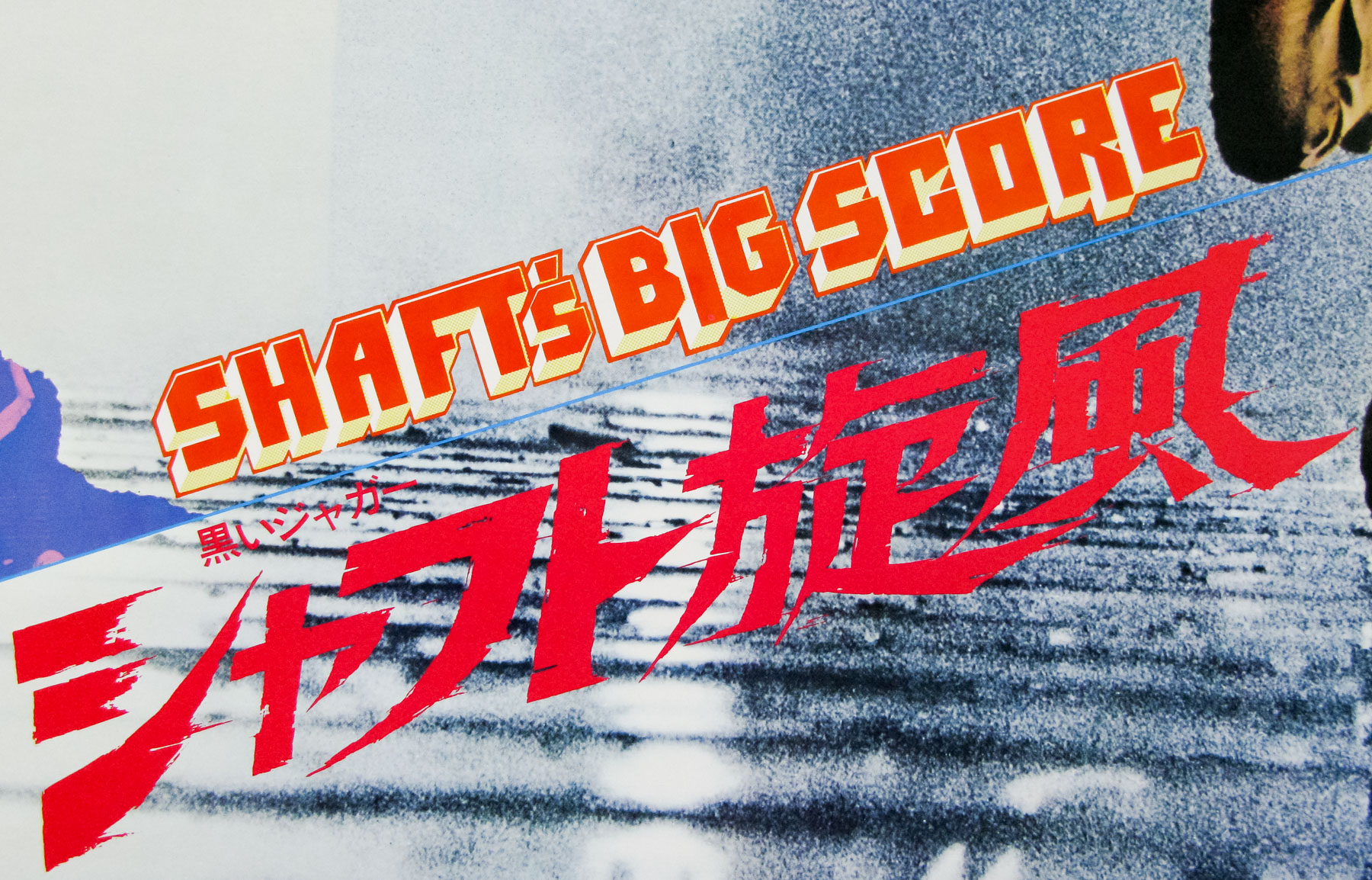
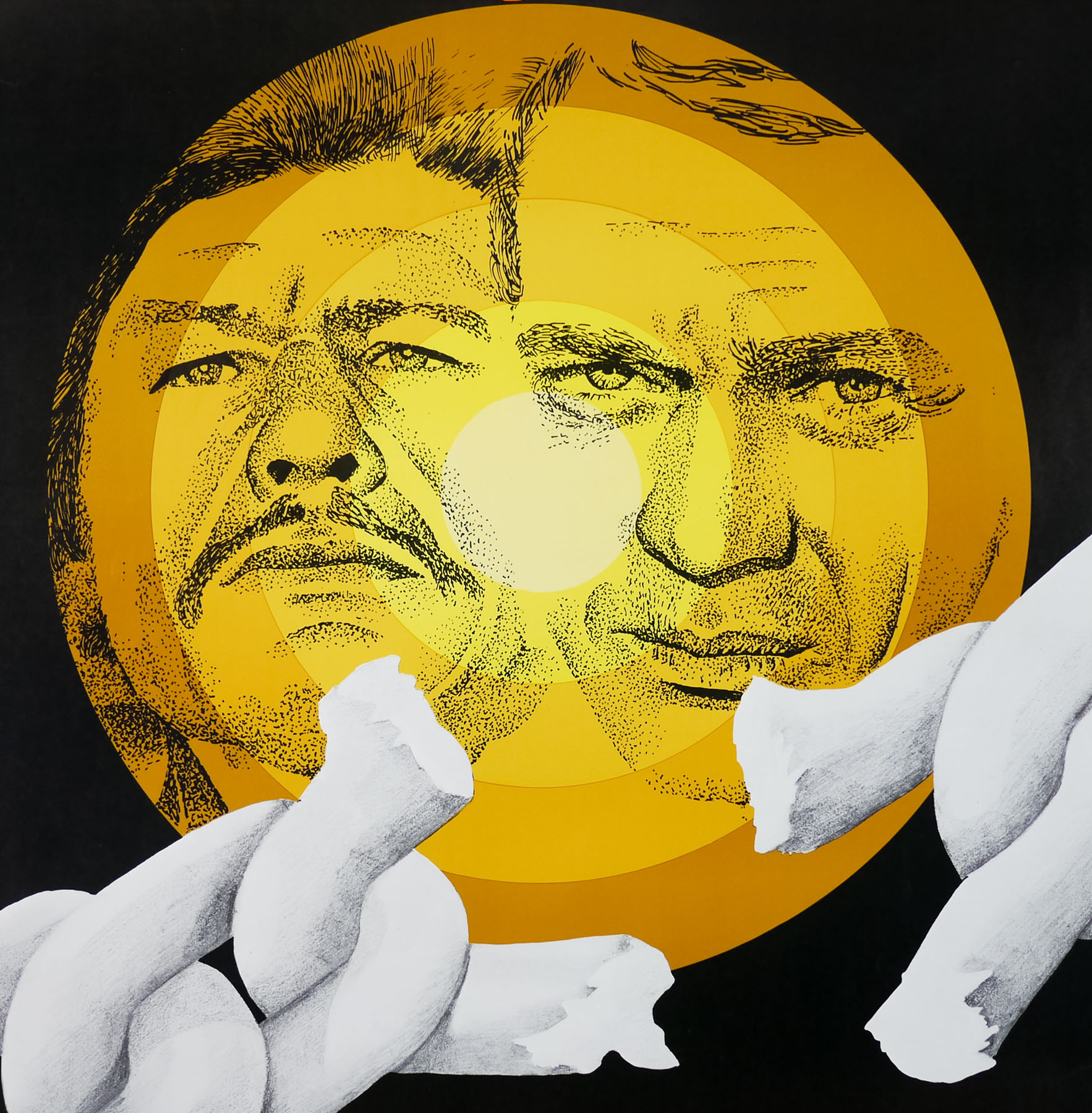
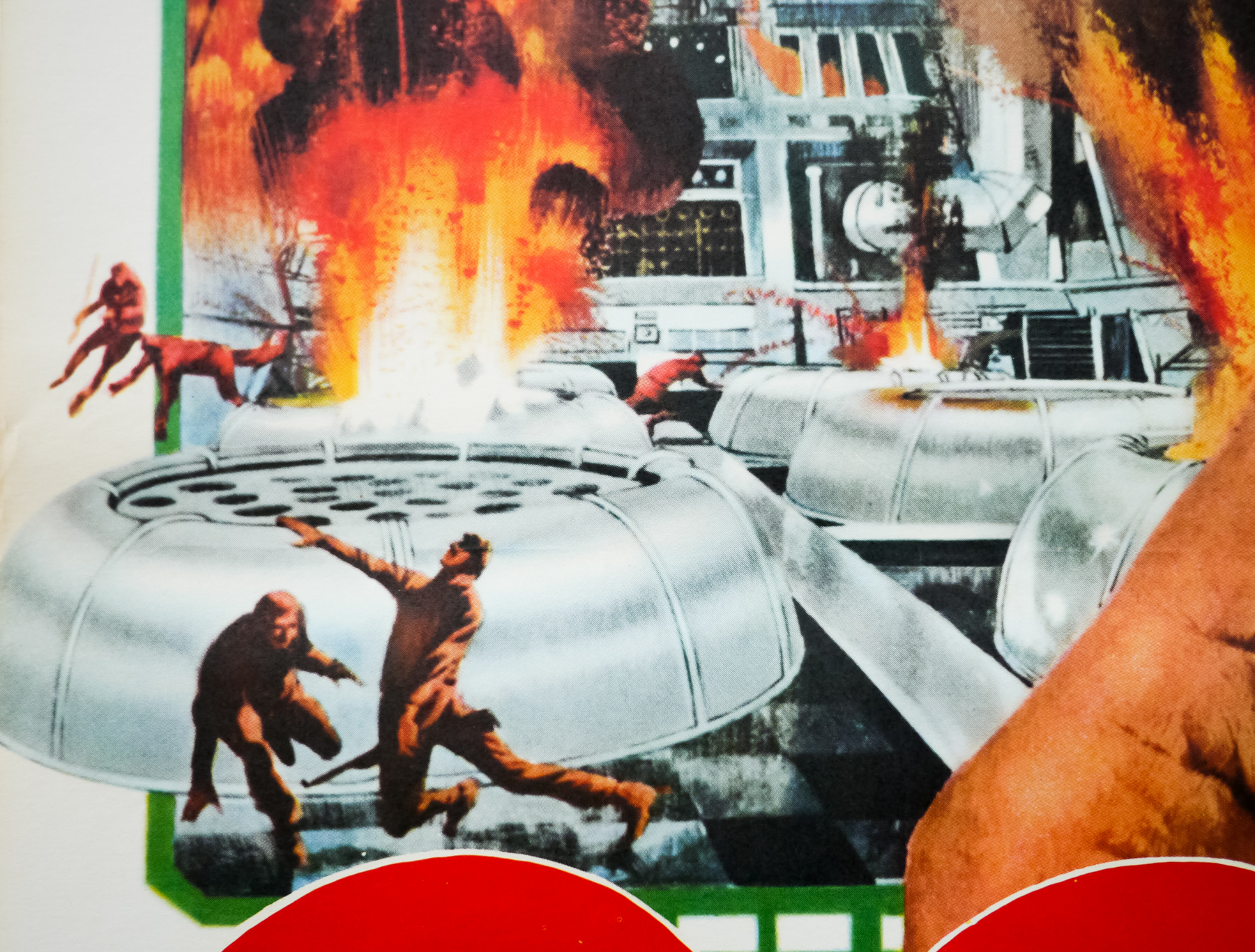
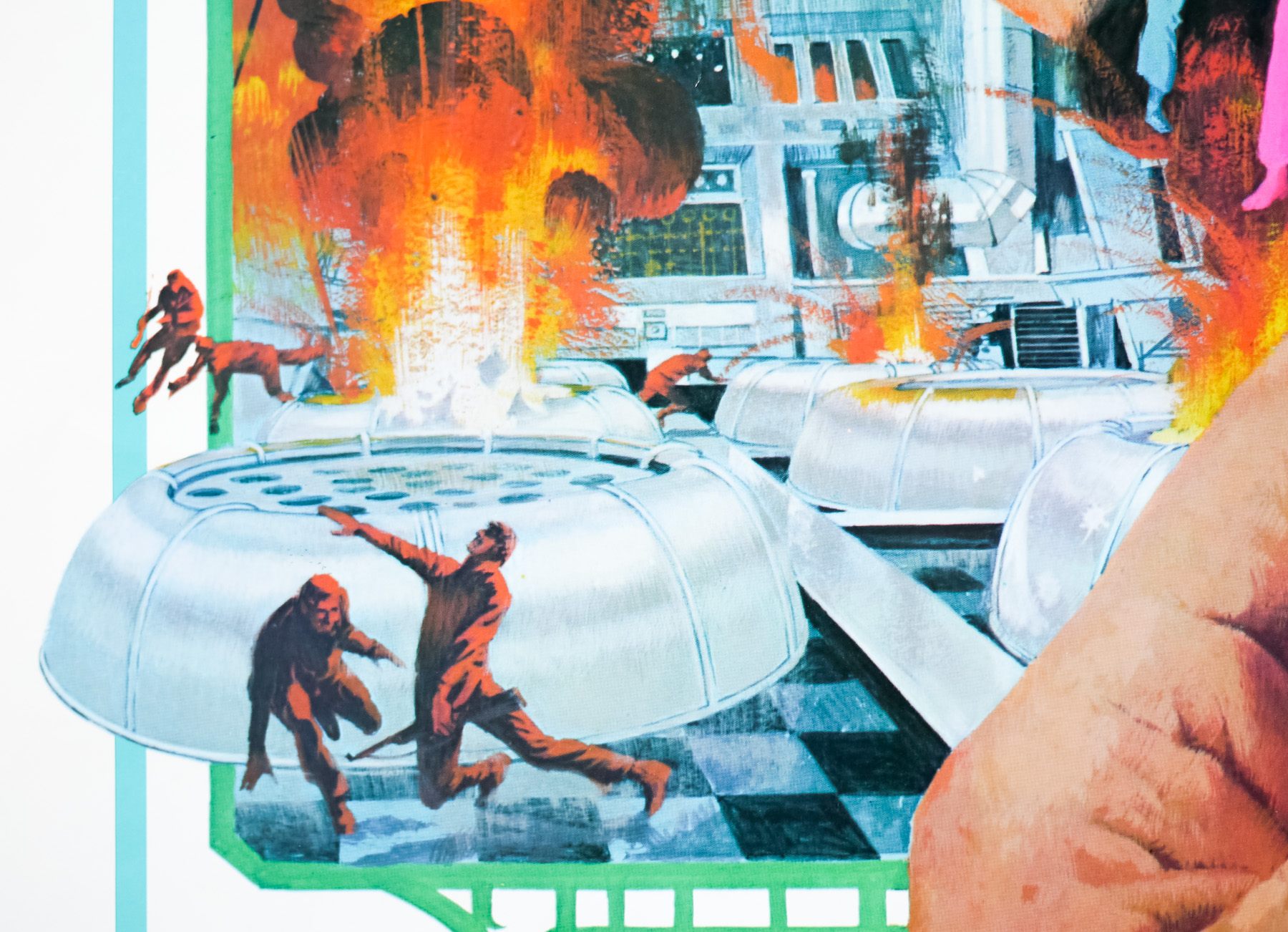
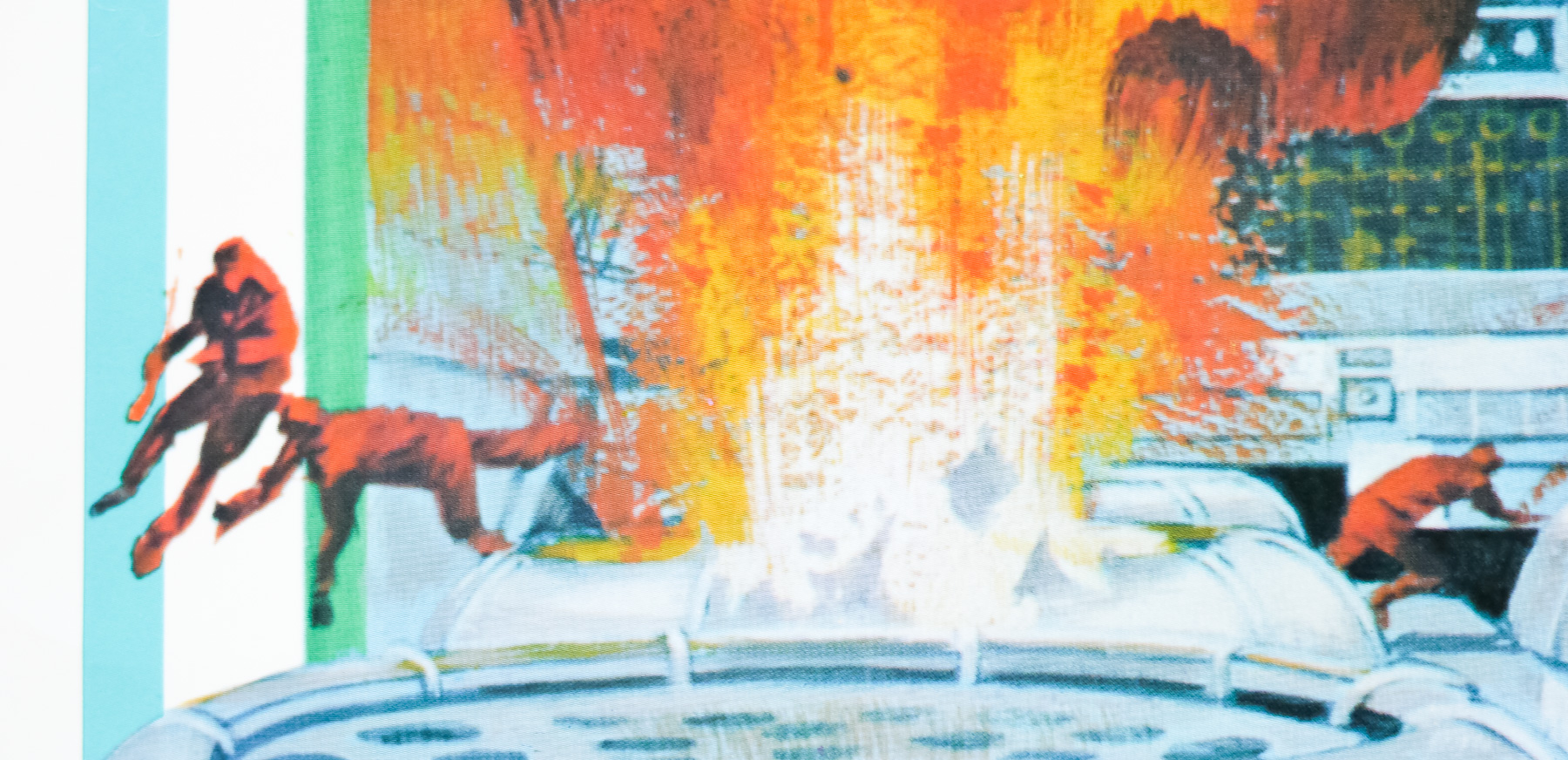
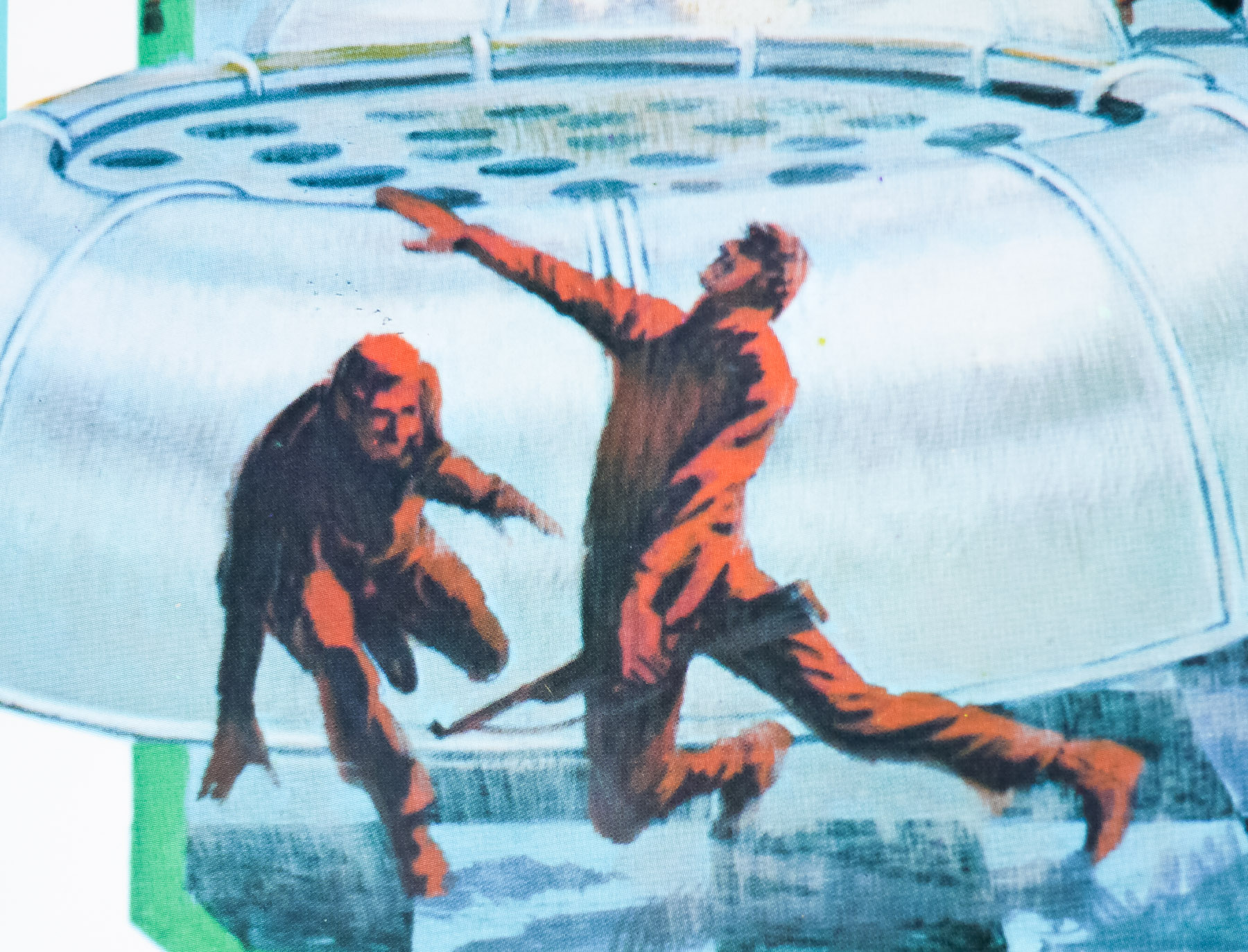
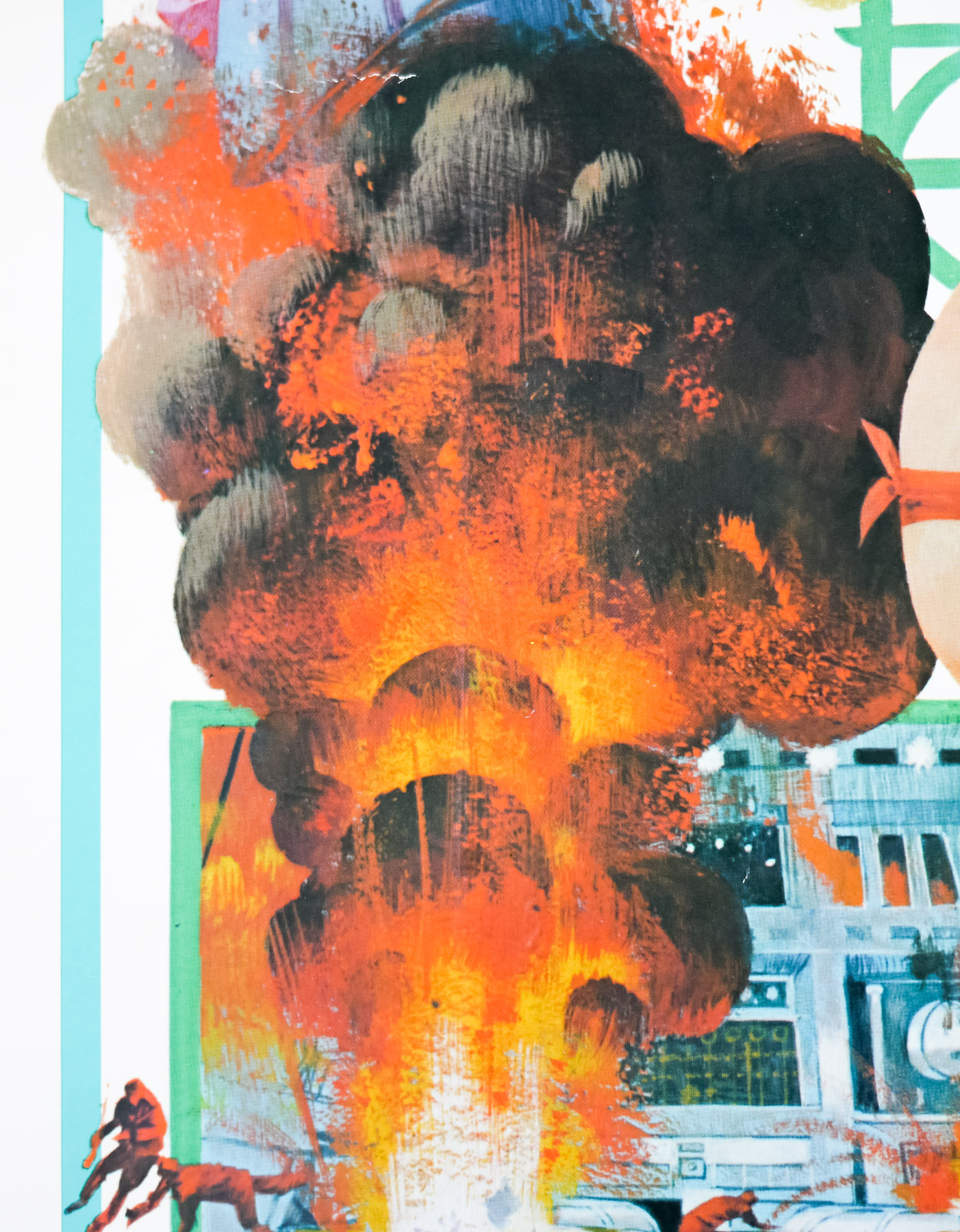
Shaft’s Big Score is the second in a trilogy of films featuring blaxploitation hero Shaft (Richard Roundtree). This Japanese poster features a still from one of the big action sequences in the film. I’m a fan of the typography used for the title.

You can view the trailer on YouTube.

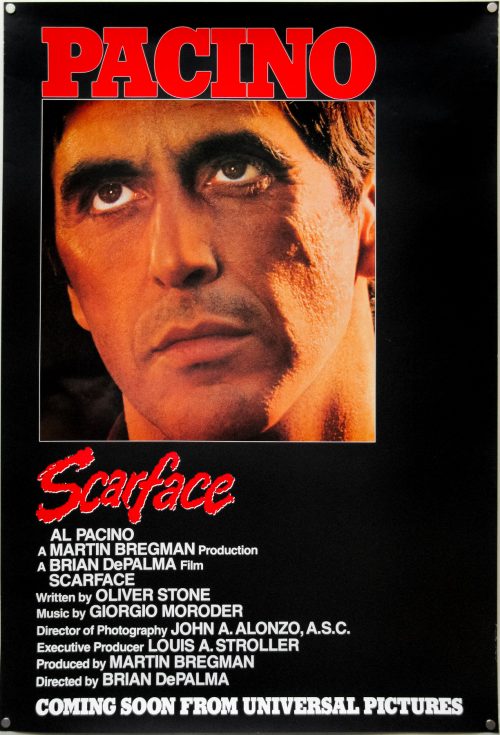
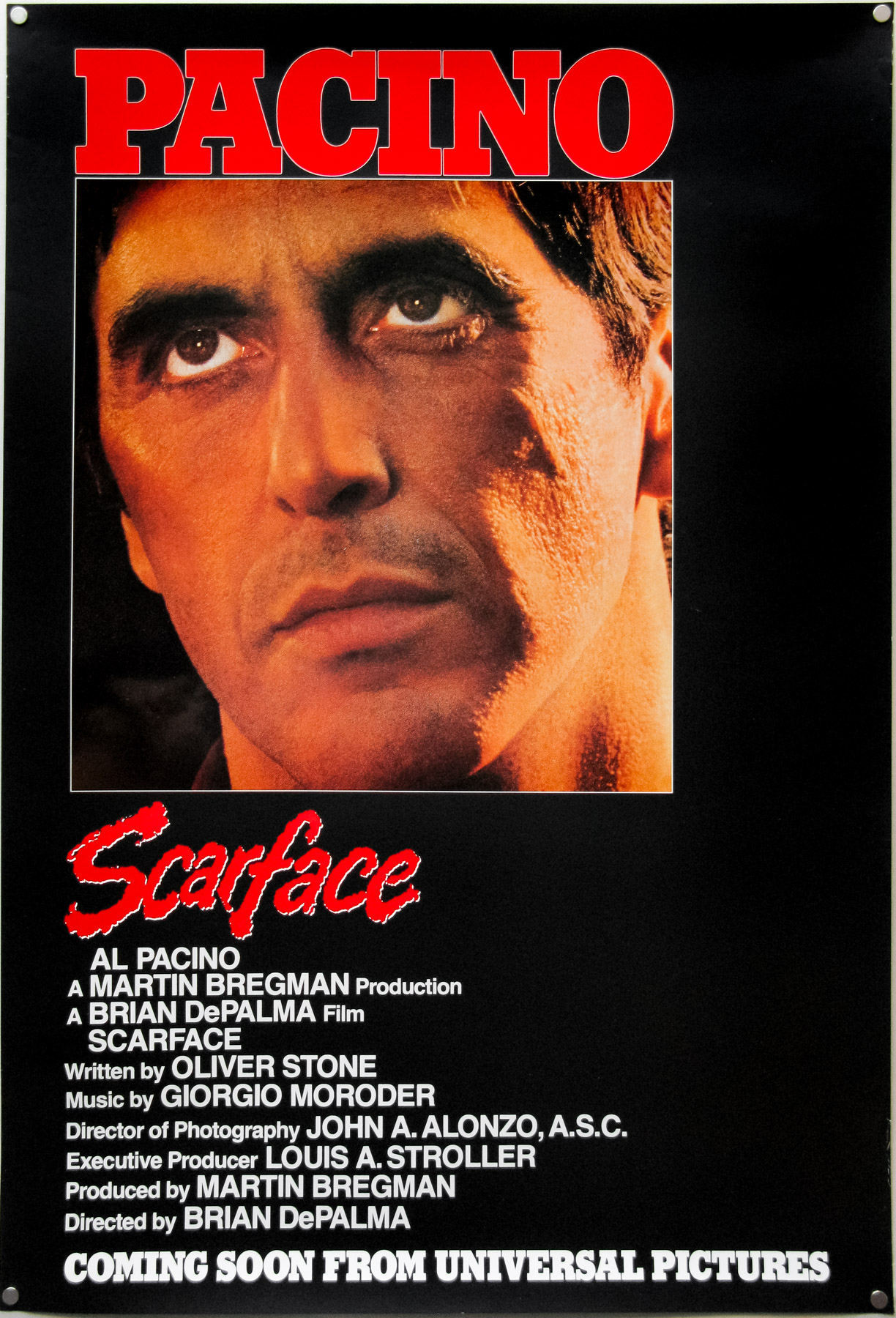
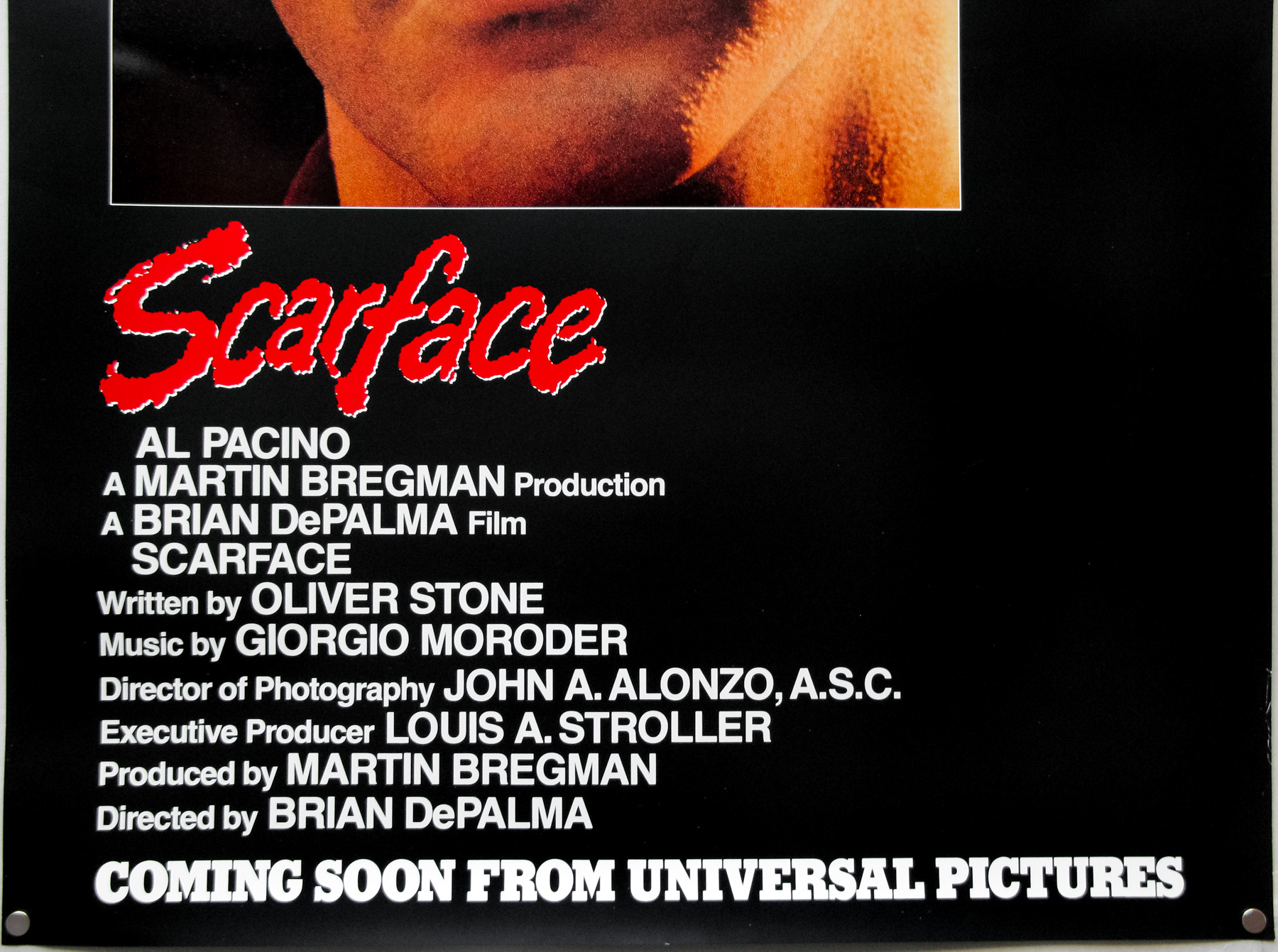
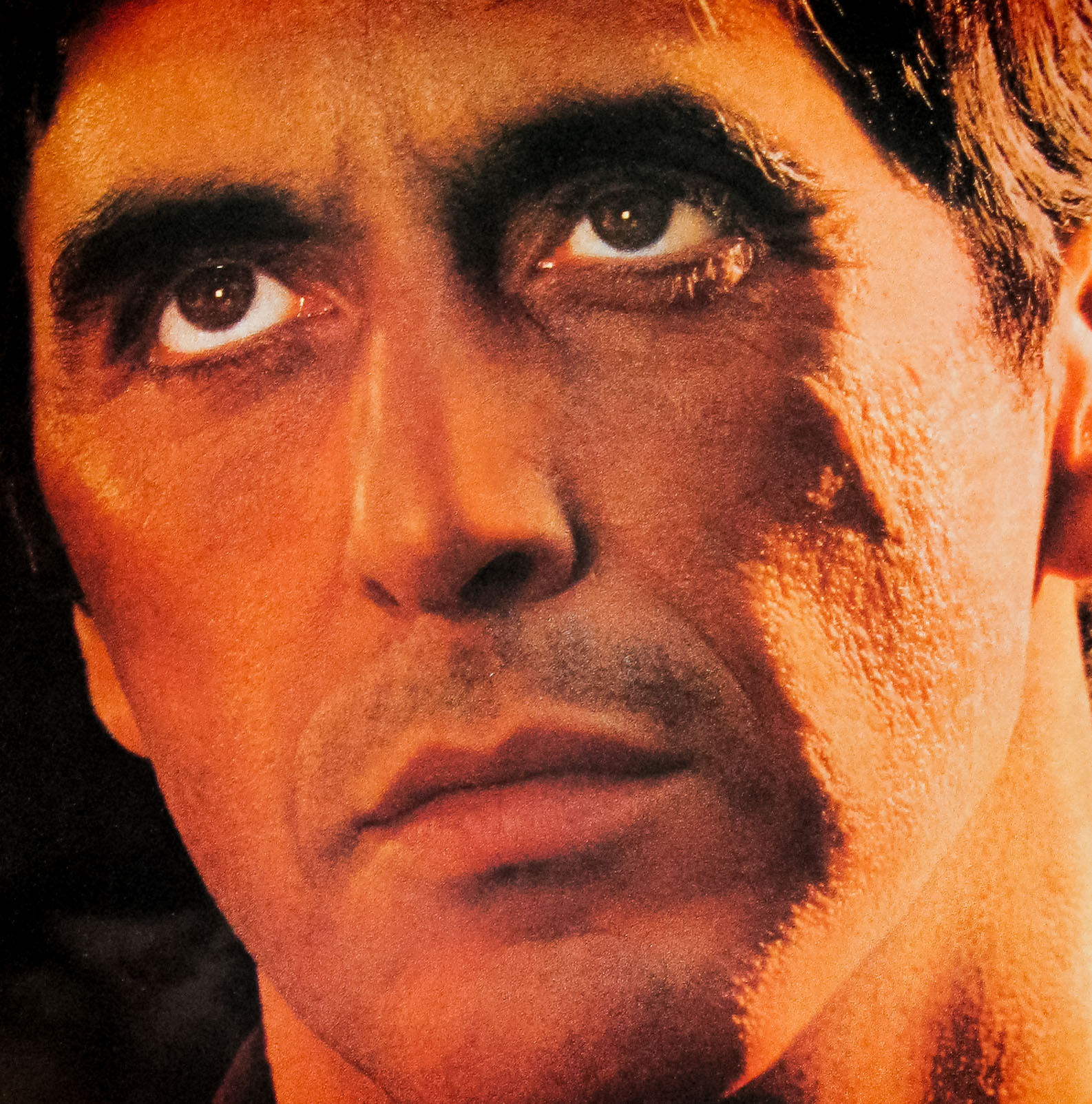
Scarface / one sheet / advance / USA

17.05.11

Poster Poster

Scarface / B2 / blue style / Japan

17.05.11

Poster Poster
Title
Scarface
AKA
--
Year of Film
1983
Director
Brian De Palma
Starring
Al Pacino, Steven Bauer, Michelle Pfeiffer, Mary Elizabeth Mastrantonio, Robert Loggia, F. Murray Abraham, Harris Yulin
Origin of Film
USA
Genre(s) of Film
Al Pacino, Steven Bauer, Michelle Pfeiffer, Mary Elizabeth Mastrantonio, Robert Loggia, F. Murray Abraham, Harris Yulin,
Type of Poster
B2
Style of Poster
Blue style
Origin of Poster
Japan
Year of Poster
1984
Designer
Unknown
Artist
--
Size (inches)
20 6/16" x 28 13/16"
SS or DS
SS
Tagline
--

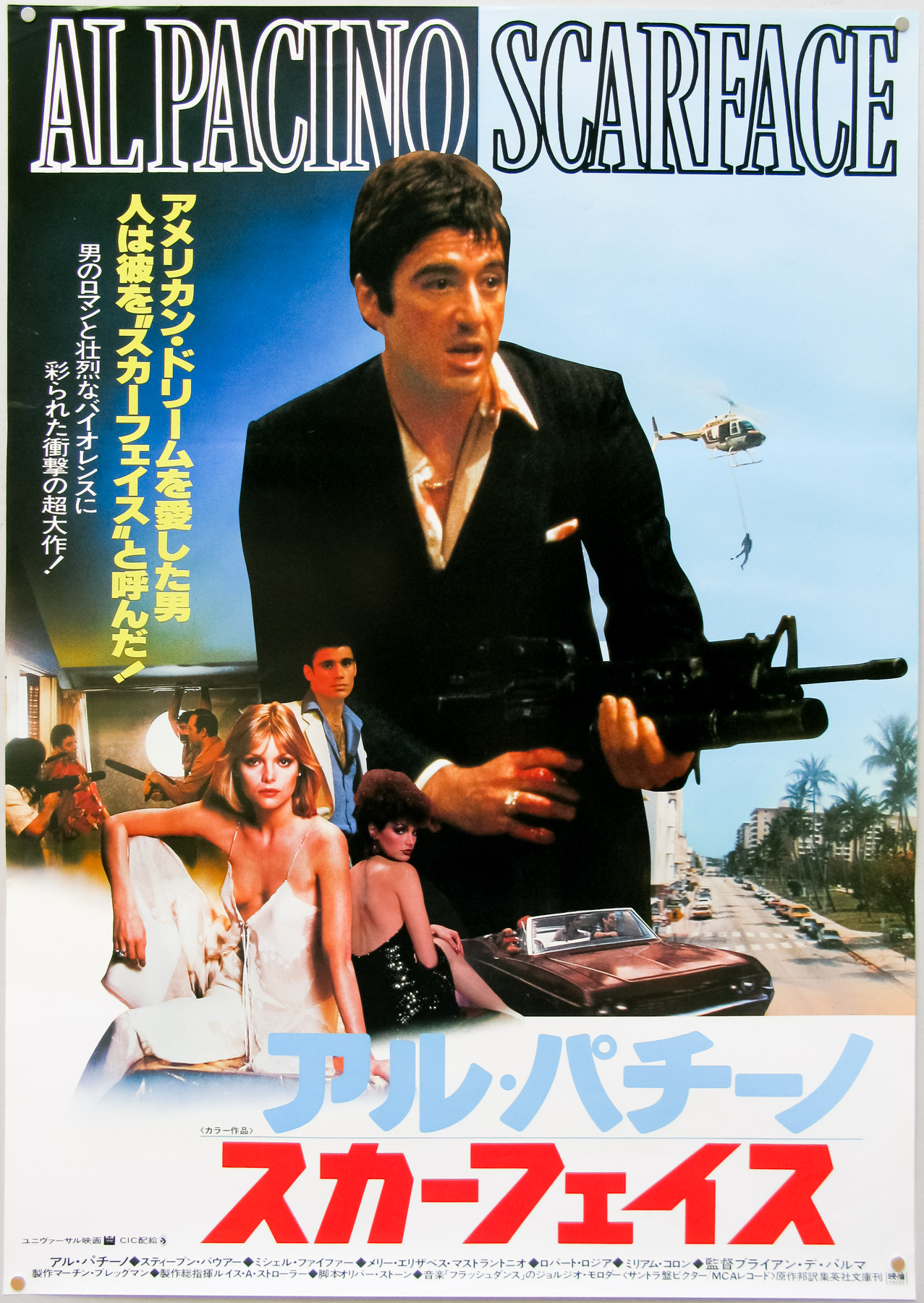
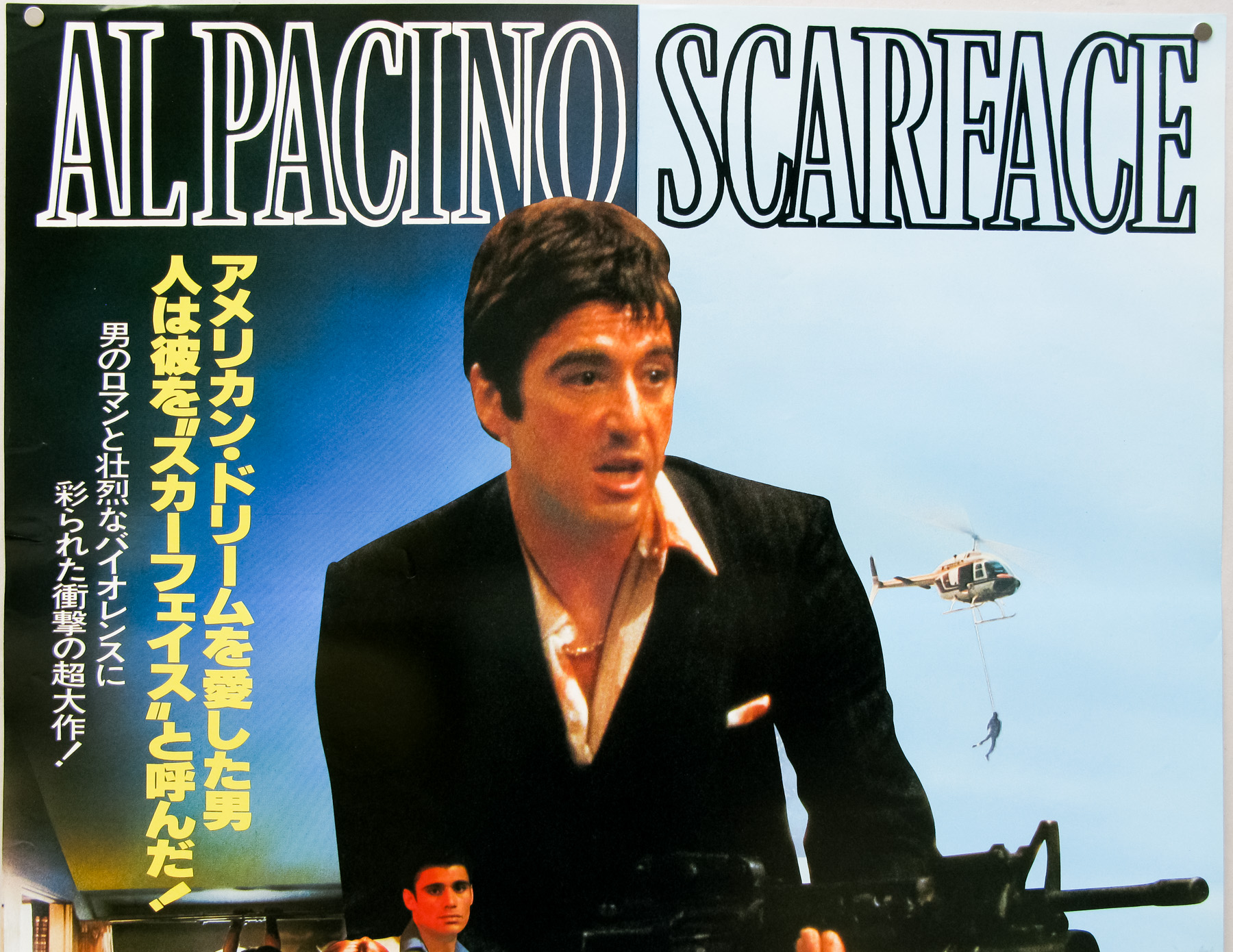
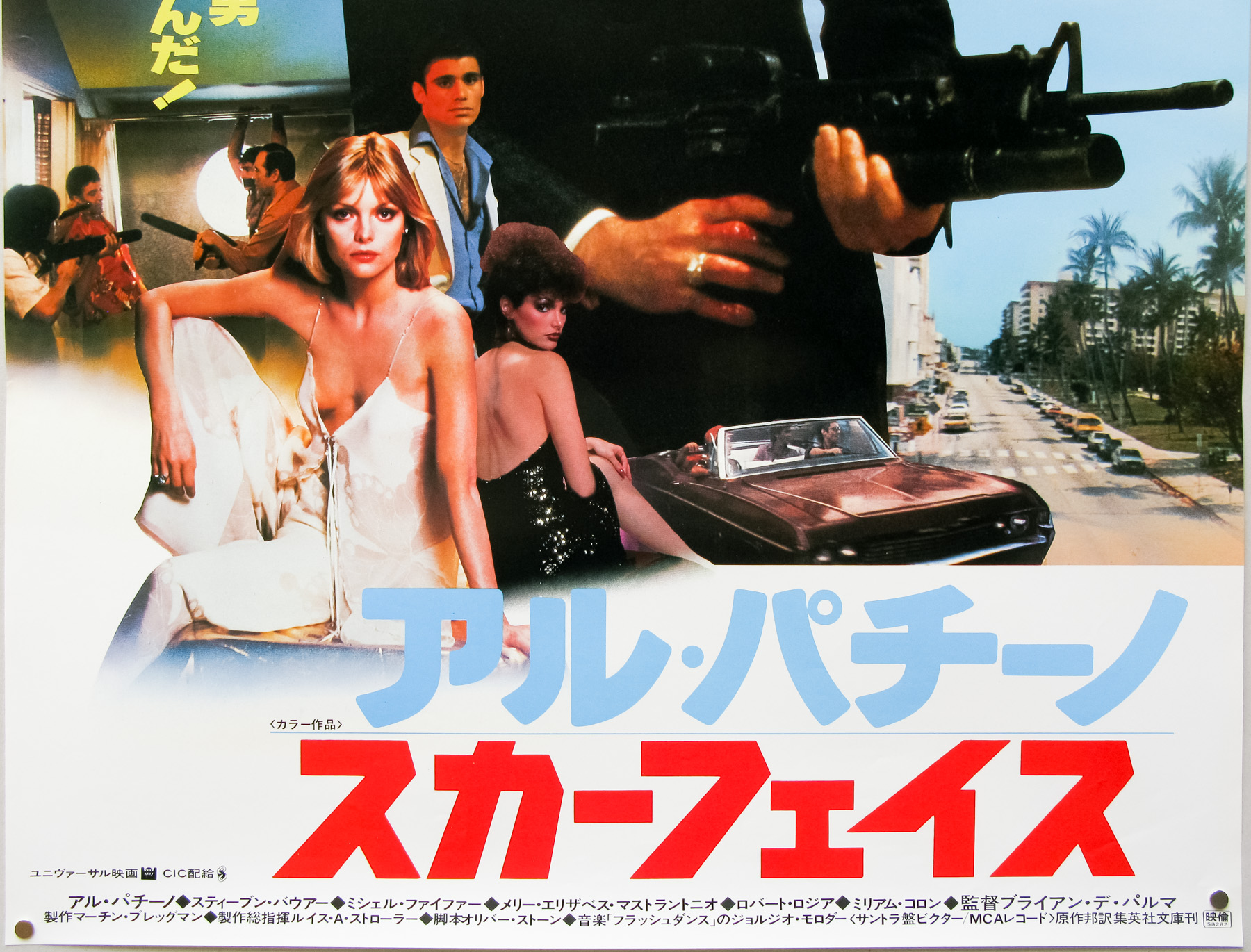
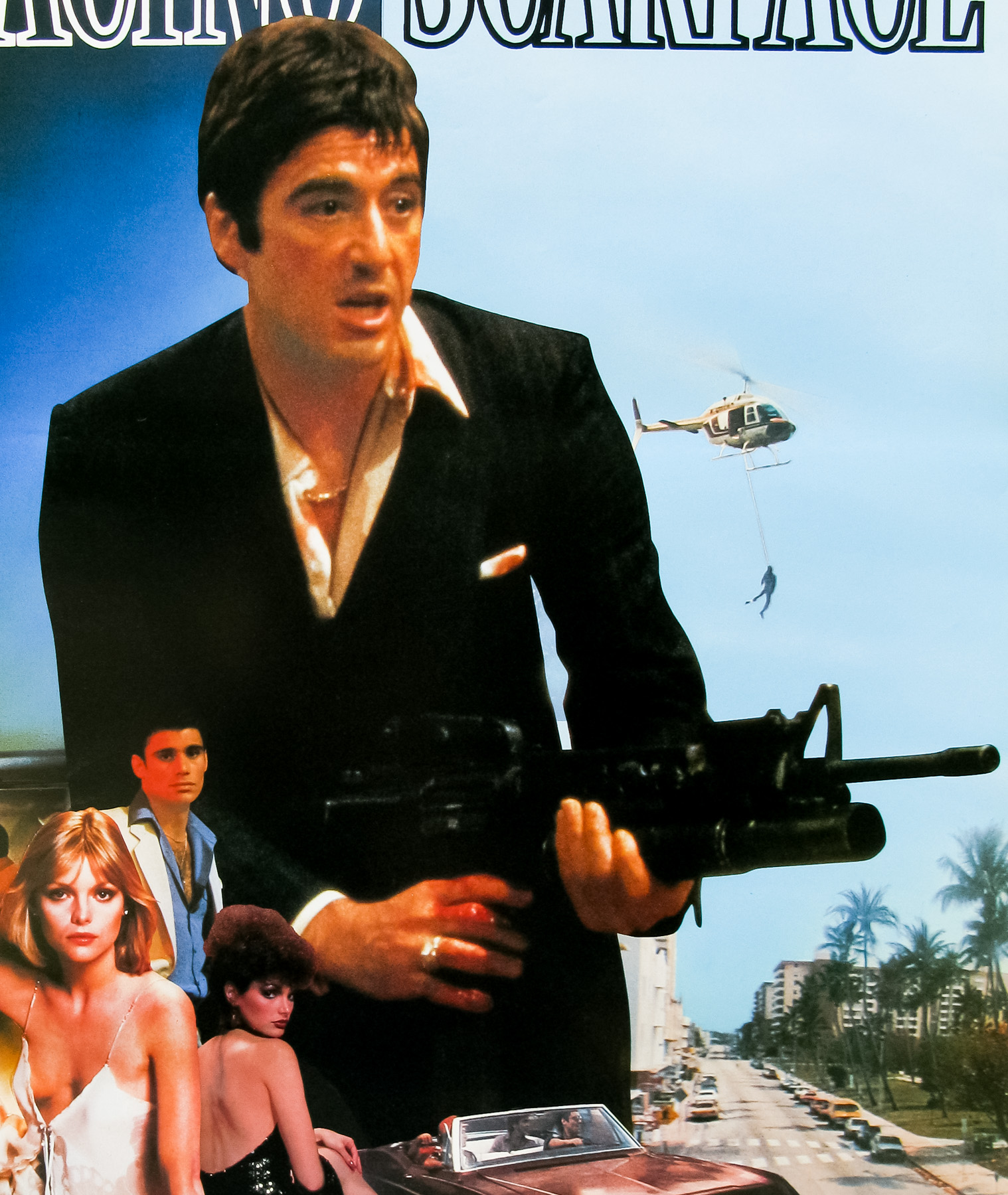
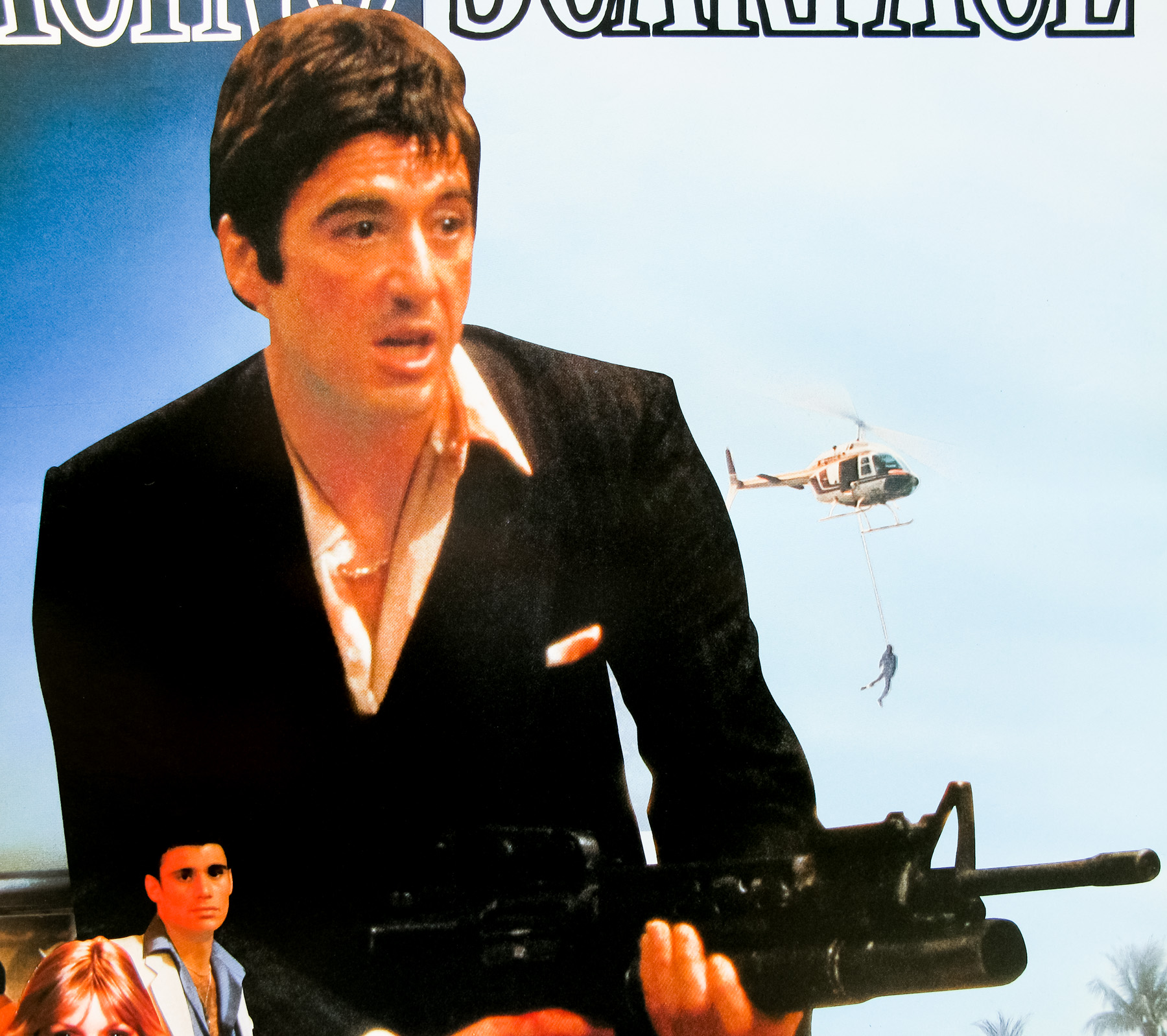
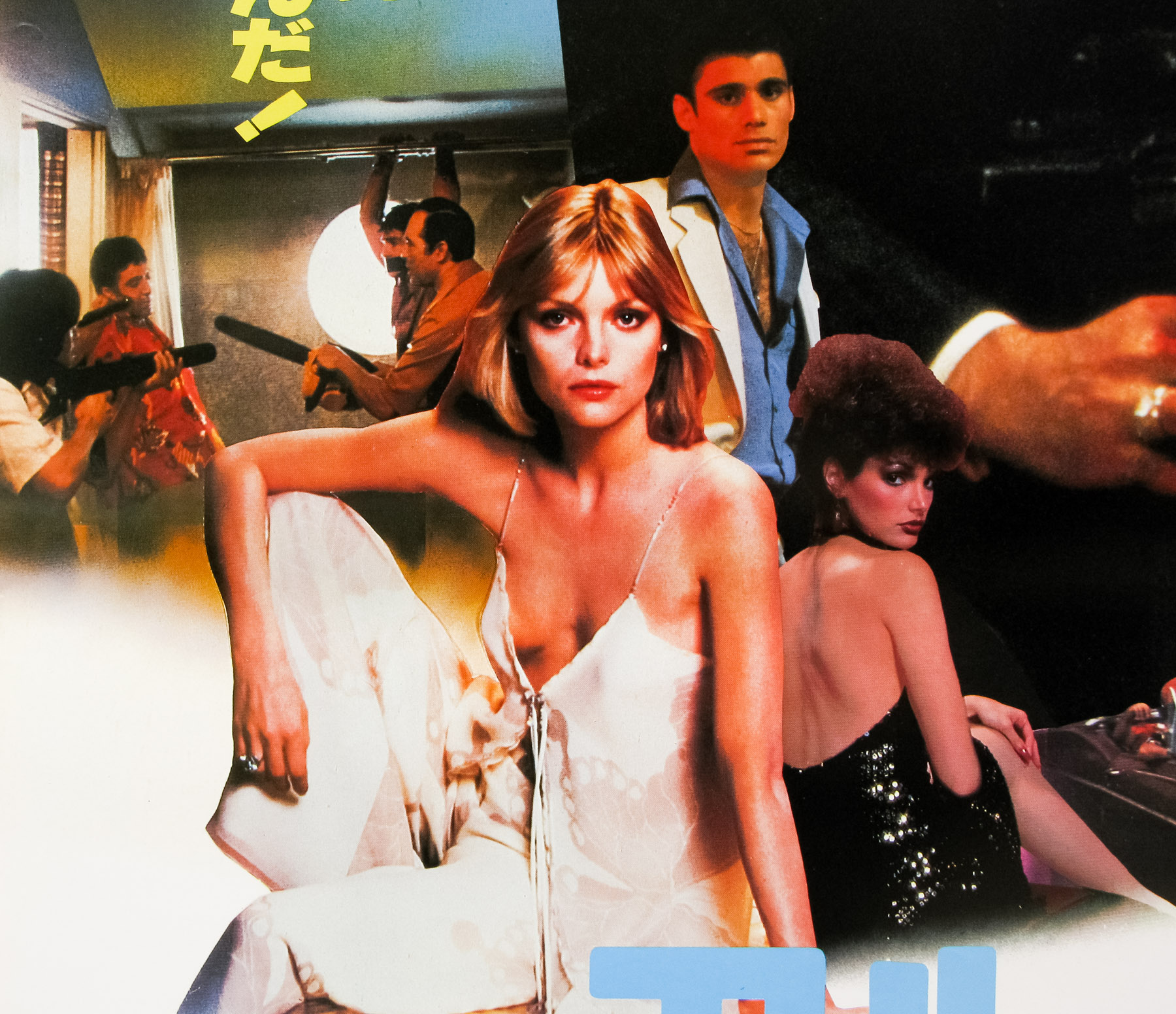
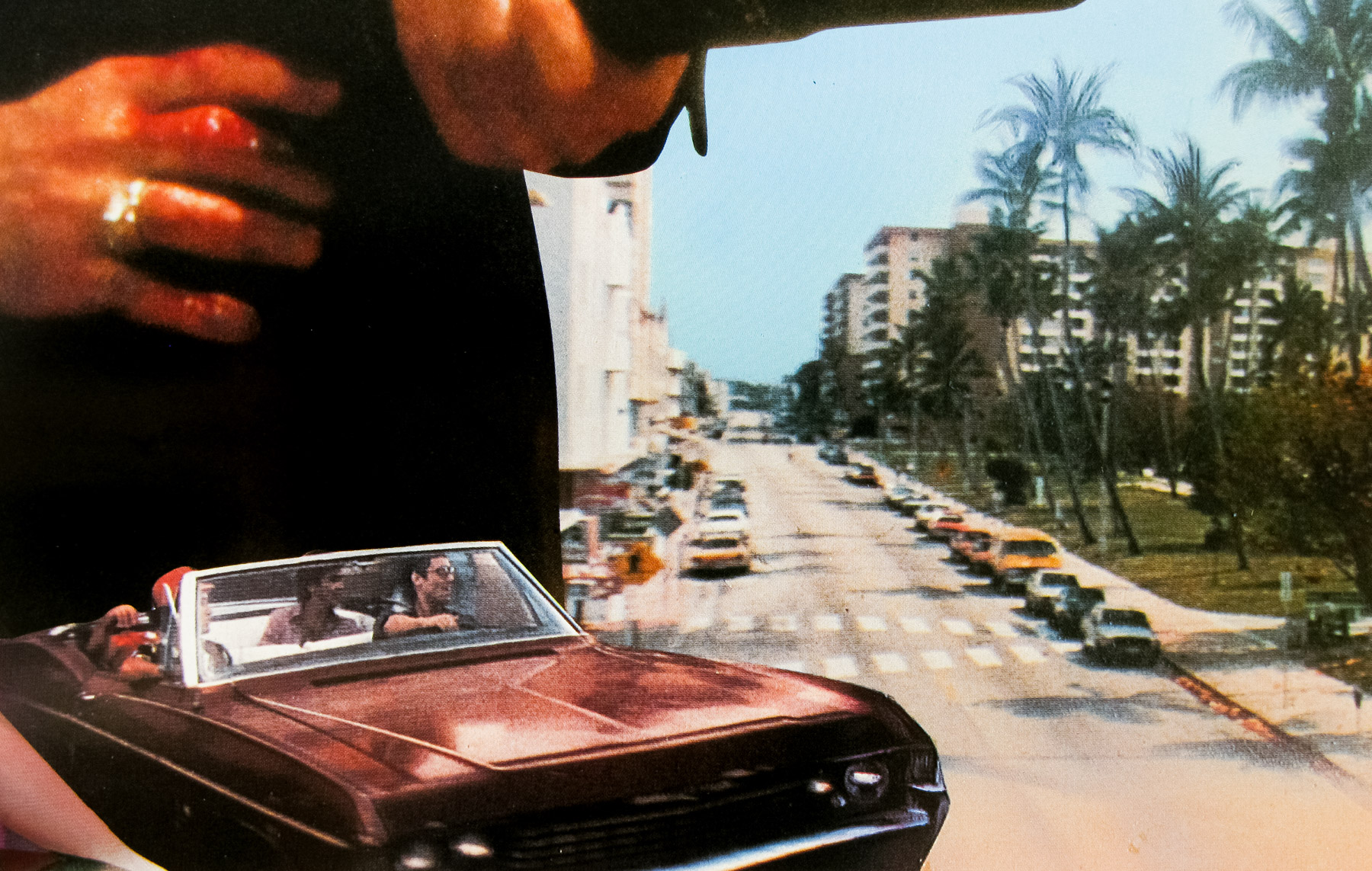
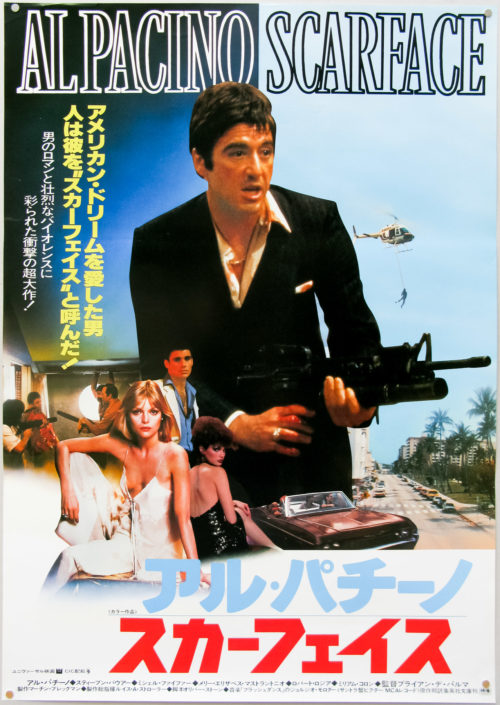
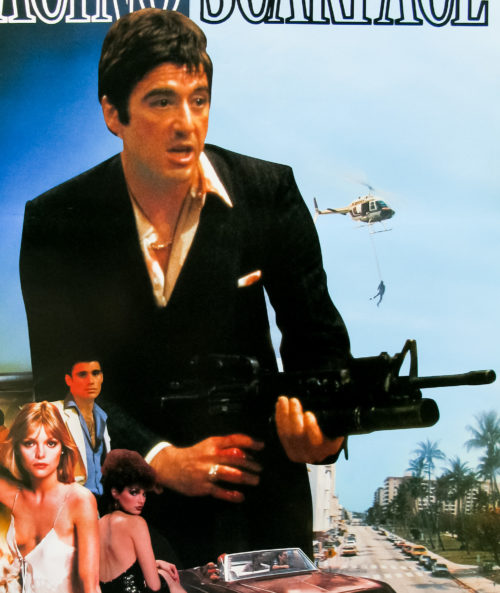
This is one of three B2 posters printed for the Japanese release of Brian De Palma‘s unforgettable 1983 crime epicScarface. Unquestionably one of the all-time great gangster films, it’s hard to believe now but the film was originally released to mixed critical reception and audience ambivalence, much to De Palma and screenwriter Oliver Stone‘s dismay. Over the course of the following three decades the story of Cuban refugee Tony Montana’s rise to the top of the Miami drug world has been embraced by fans worldwide, including a multitude of African American rappers who cite his story as an inspiration and frequently reference the film in their music.

In one of his most memorable film performances, Al Pacino portrays Montana who arrives in Miami following the (real-life) Mariel boatlift, which saw thousands of Cubans leave the island in a bid to escape internal tensions and grinding poverty that had caused months of strife in the country. Hundreds of small boats made the journey across shark-infested waters to the Miami coast in an attempt to seek asylum in the Peruvian embassy. Fidel Castro also ordered the release of criminals from Cuban jails and joined the exodus and Montana and his friend Manny Ribera (Steven Bauer) are two such exiles who start their new life in America stuck in a refugee camp. After agreeing to murder a former Cuban government official, who is also in the camp, the pair are released with the help of a Miami drug kingpin Frank Lopez (played byRobert Loggia).

Tony and Manny get involved in a drug deal arranged by one of Lopez’s henchmen called Omar (F. Murray Abraham) that quickly goes horribly wrong and almost sees Tony being butchered with a chainsaw until Manny comes to his rescue and the pair turn the tables on the murderous gang. Suspecting that they may have been set up by Omar, Tony insists on delivering the recovered drugs and money to Frank who is impressed and offers them a job. The rest of the film deals with Tony’s violent rise to the top of the Miami drug trade, which sees him usurp and murder Frank, steal his woman Elvira (an early performance by Michelle Pfeiffer) and mess with the wrong Bolivian drug crime lord. The finale sees a cocaine-crazed Tony defend his palatial mansion from machine-gun toting killers, resulting in bullet-spraying mayhem and one of the most famous lines in cinematic history: “Say hello to my little friend!”

One of the other Japanese B2s can be seen by clicking here.

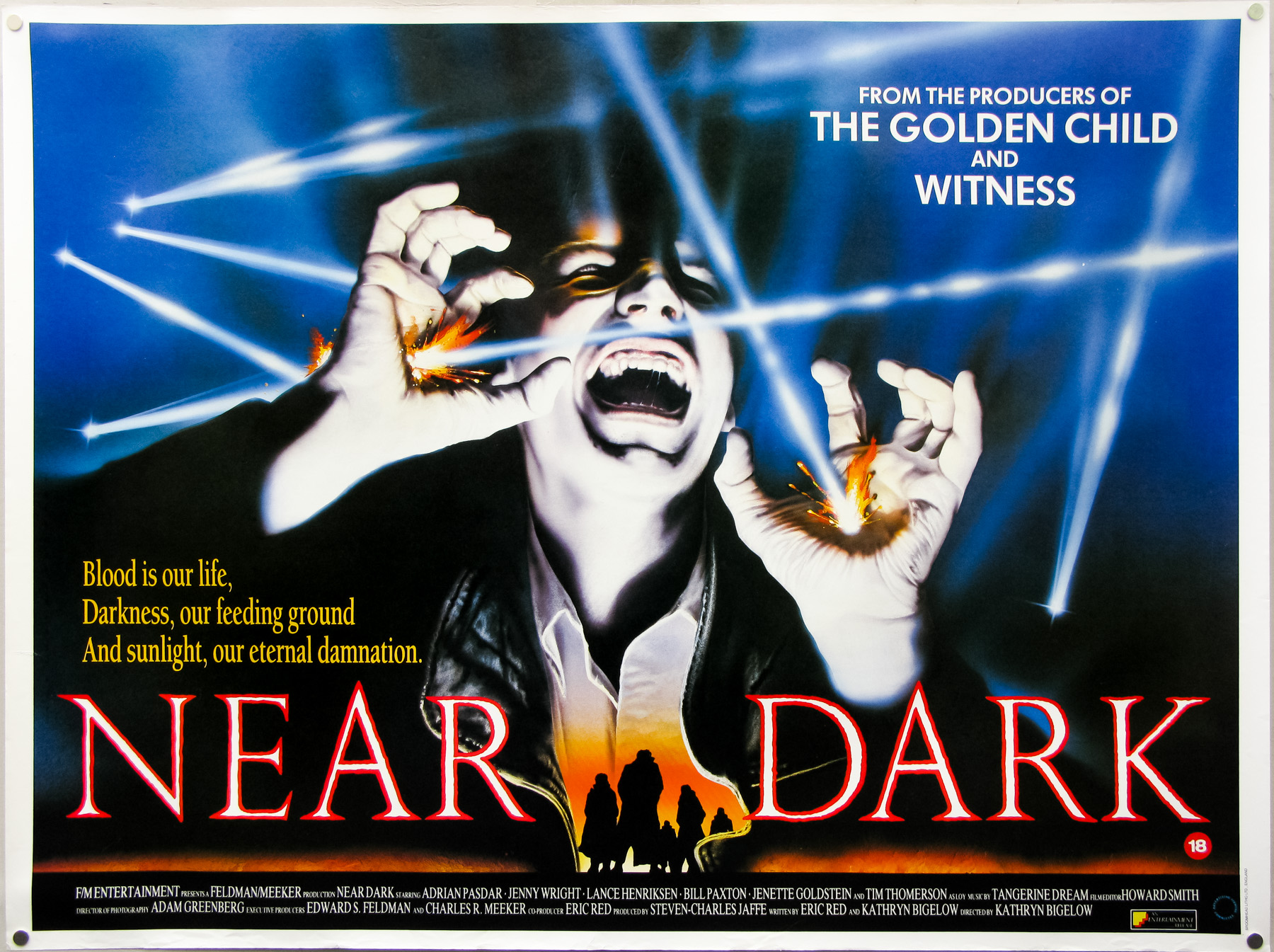
Near Dark / quad / UK

18.05.11

Poster Poster

Memento / B2 / red title style / Japan

09.07.14

Poster Poster

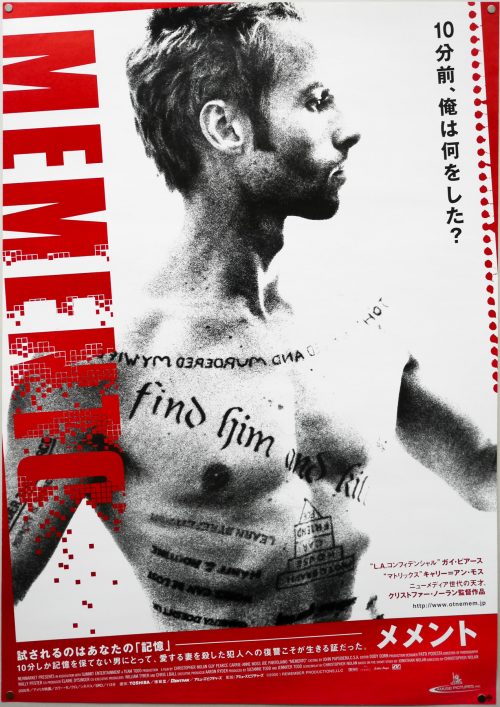
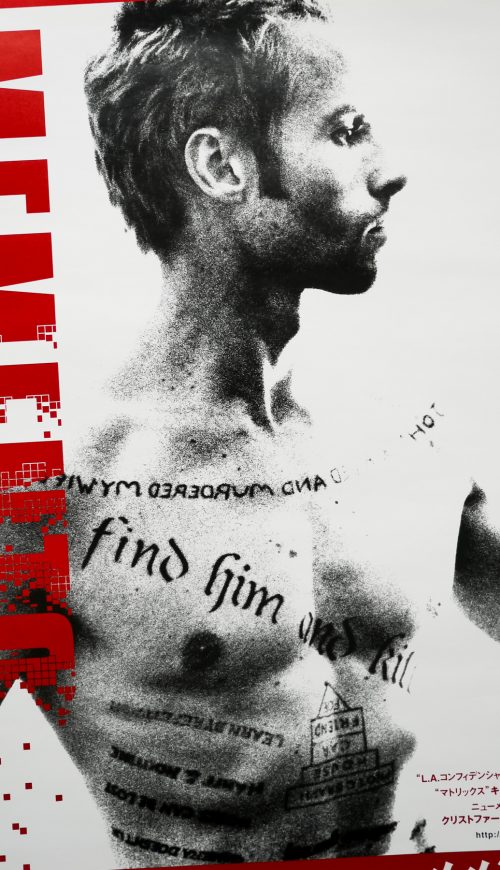
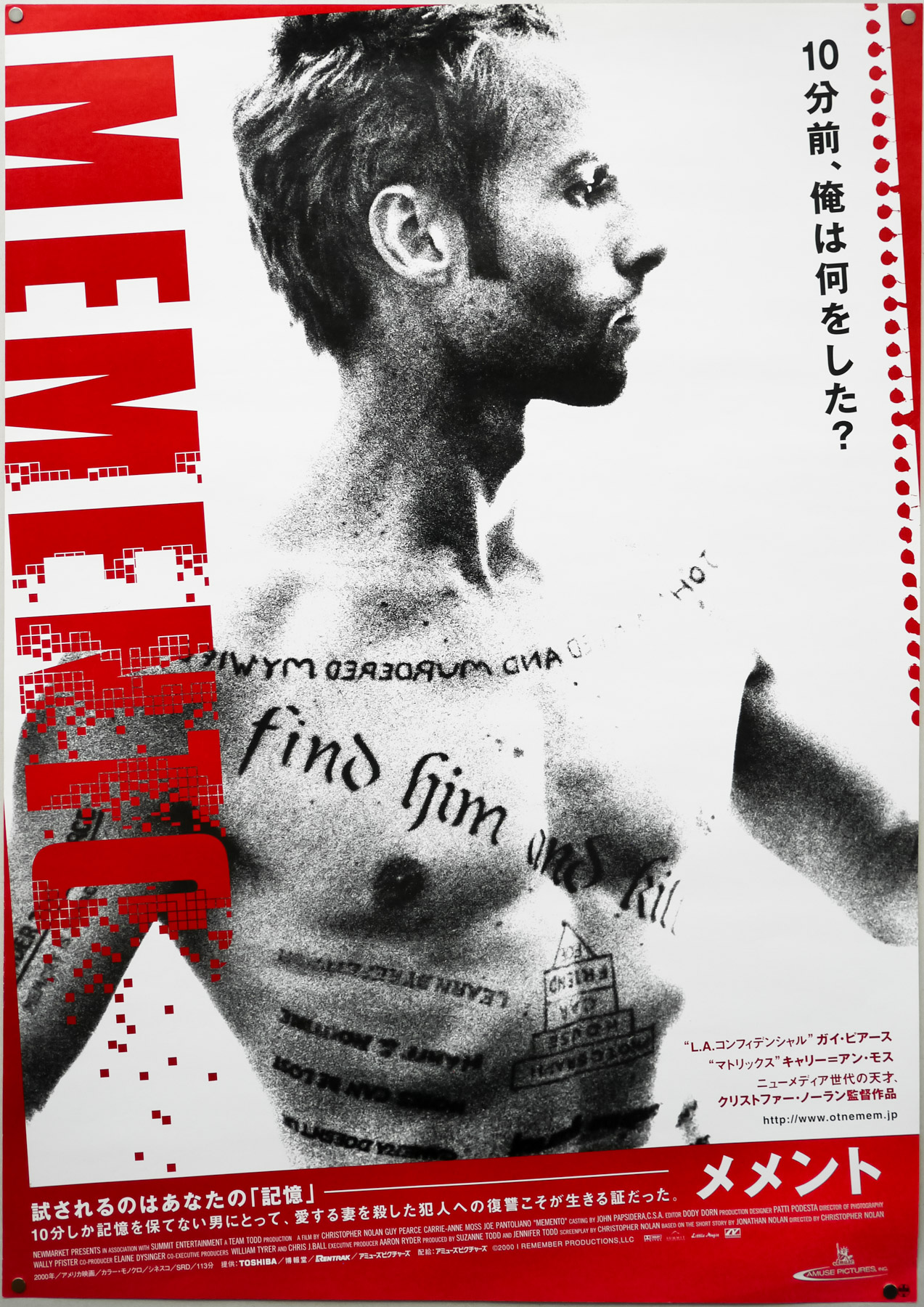
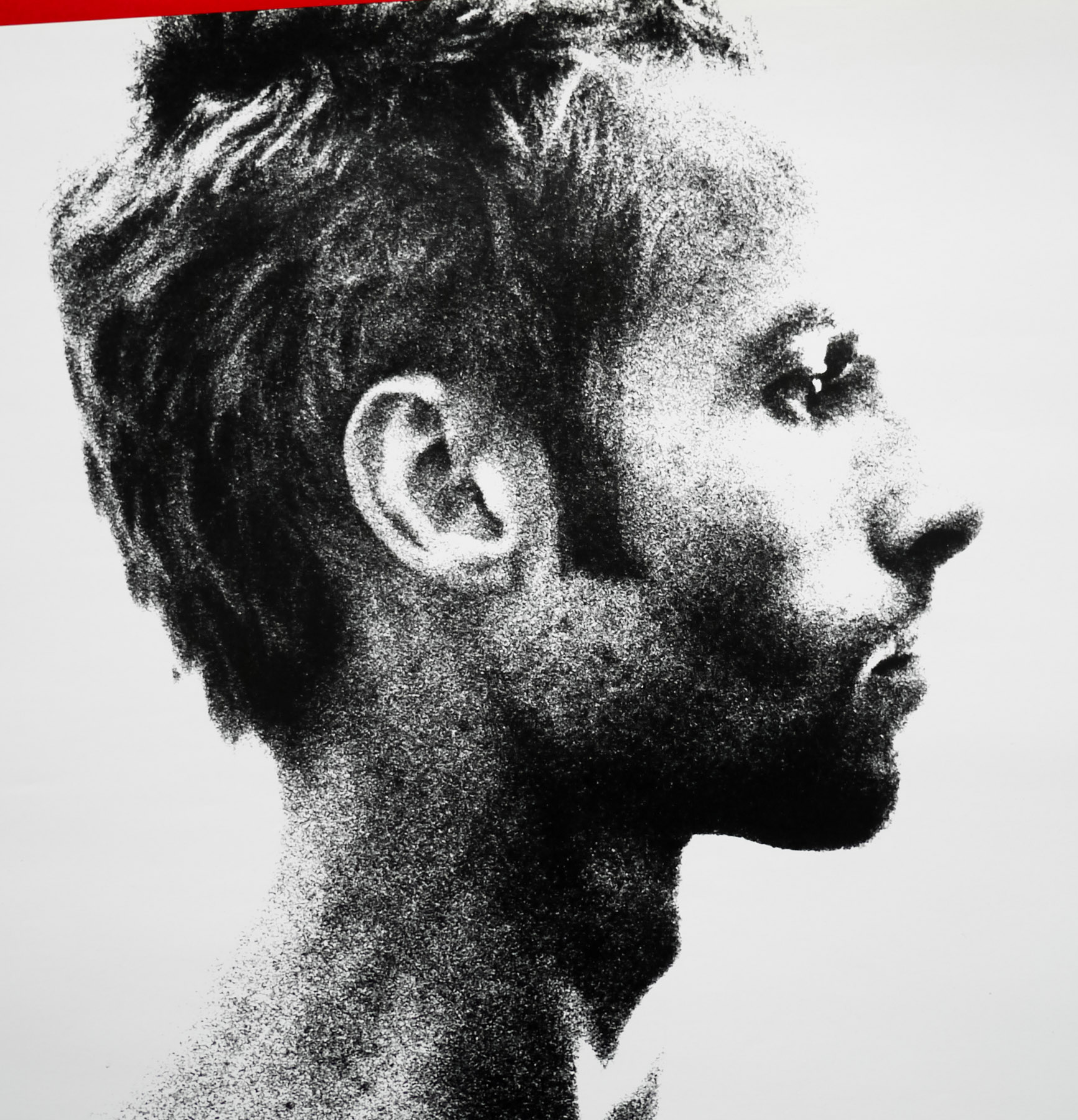
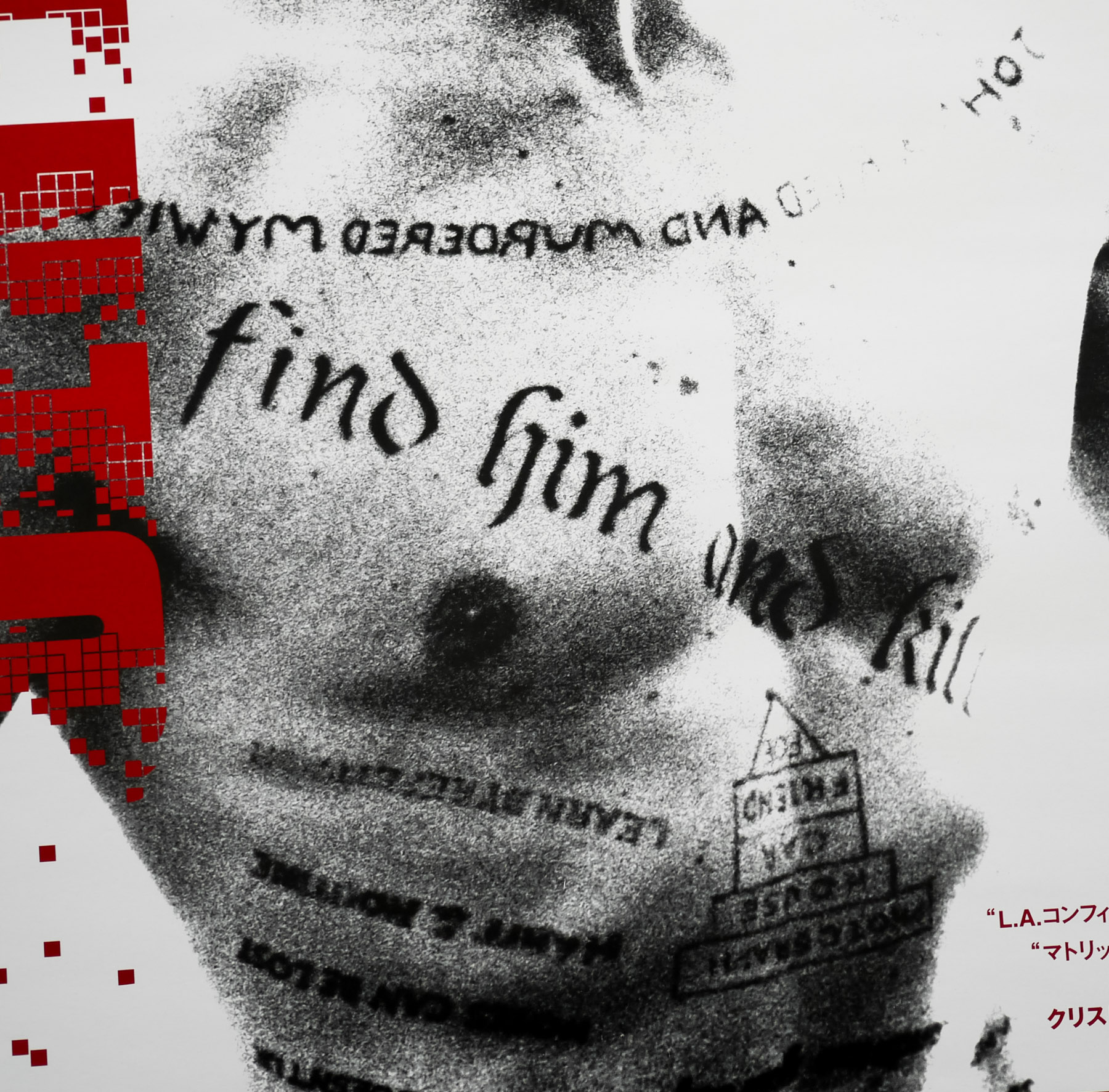
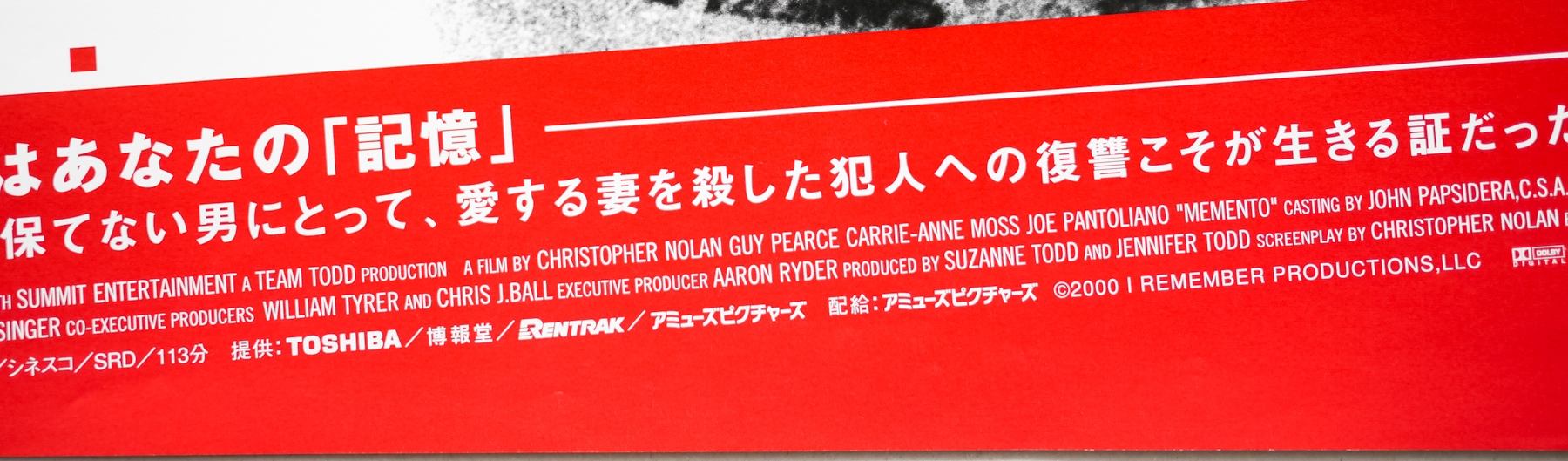
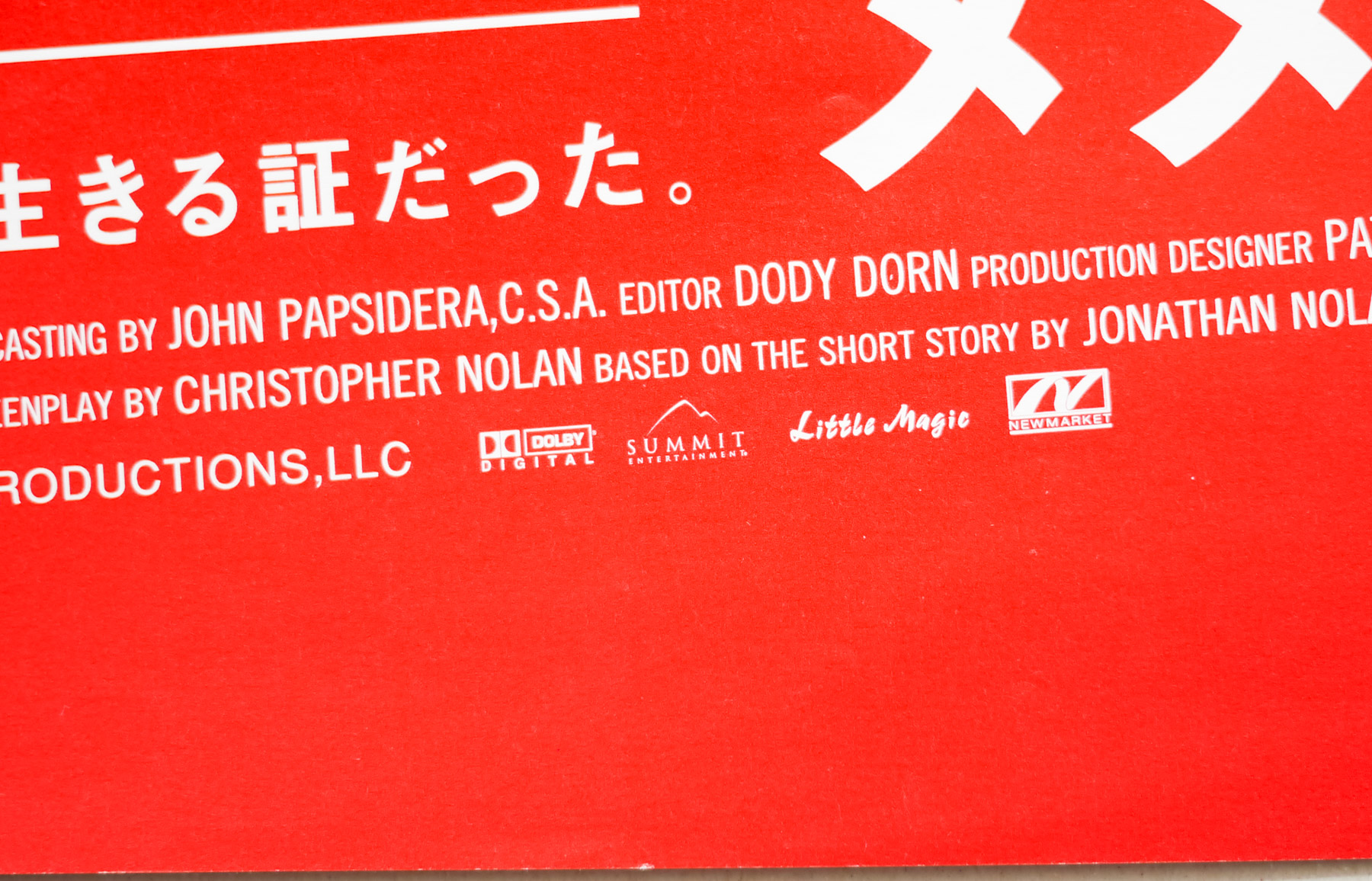
The film that launched Christopher Nolan into the international cinematic limelight, the ingenious mystery thriller Memento was written and directed by the man who would go on to helm the phenomenally successful Dark Knight Trilogy. Based on a short story by Jonathan Nolan the story focuses on a man called Leonard, played by Guy Pearce (an important role for the actor), who has no short term memory and is obsessively trying to solve the murder of his wife. Using scribbled notes, polaroids and tattoos, Leonard attempts to make sense of discoveries he makes and the interactions he has with people along the way, which includes Teddy (Joe Pantoliano) and Carrie-Anne Moss, two characters who shift and change throughout the film as Leonard, and the audience, try to understand who’s ultimately responsible.

What makes the film so memorable is the way that the story is told with two timelines being shown one after another, one in black and white and chronologically ordered, and the other in colour and in reverse chronological order. The film opens with Leonard shooting and killing Teddy, but as the film progresses we see Teddy alive and the reason for the shooting eventually becomes clear, with a devastating reveal at the end of the film. This diagram gives you an idea of the way the story is told and the film continues to be discussed almost 15 years since its release (see here and here, for example). Critics and audiences responded positively to a film that felt genuinely fresh and different, particularly compared against a glut of sequels and identikit plots that were flooding the cinema at the end of the 1990s.

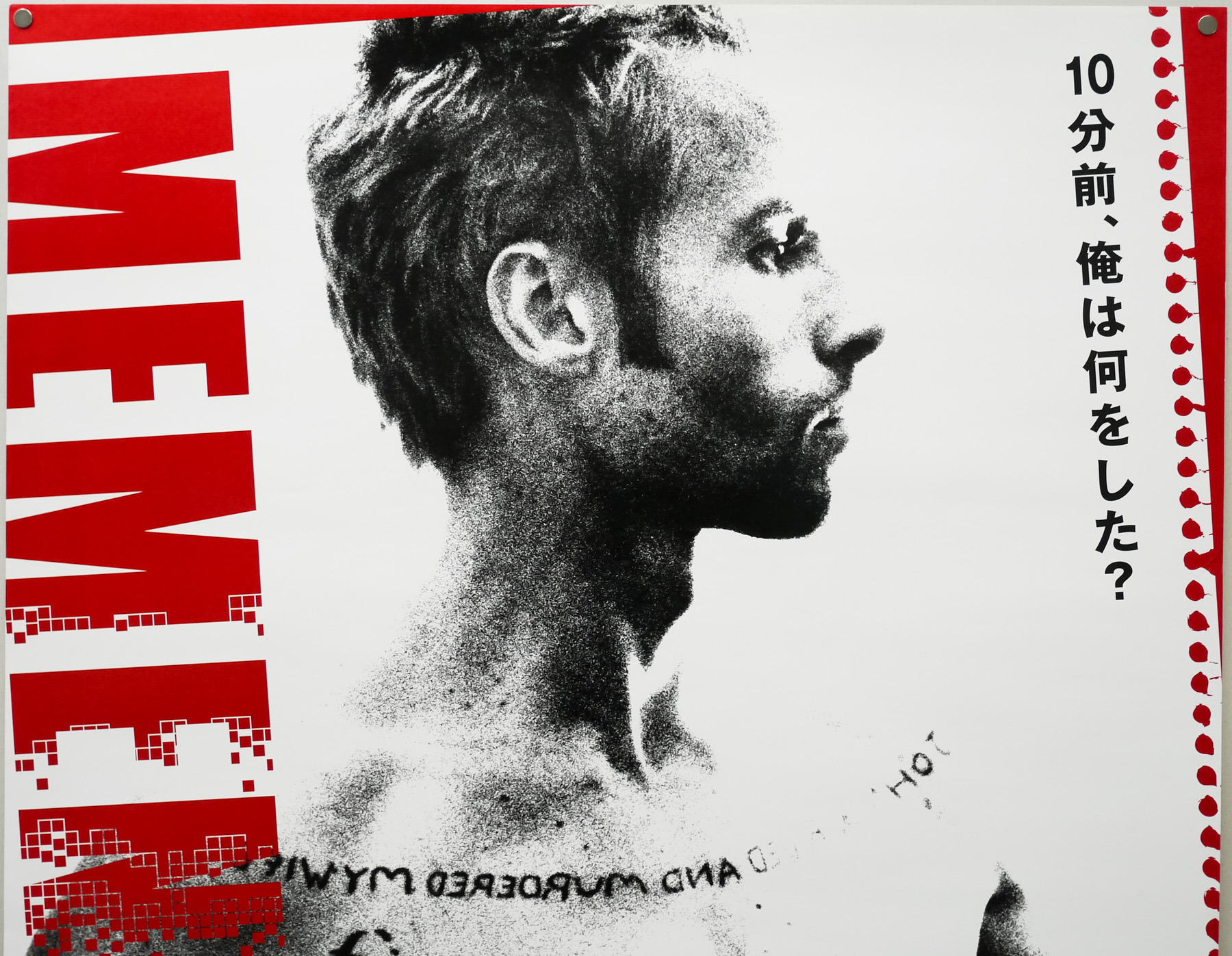
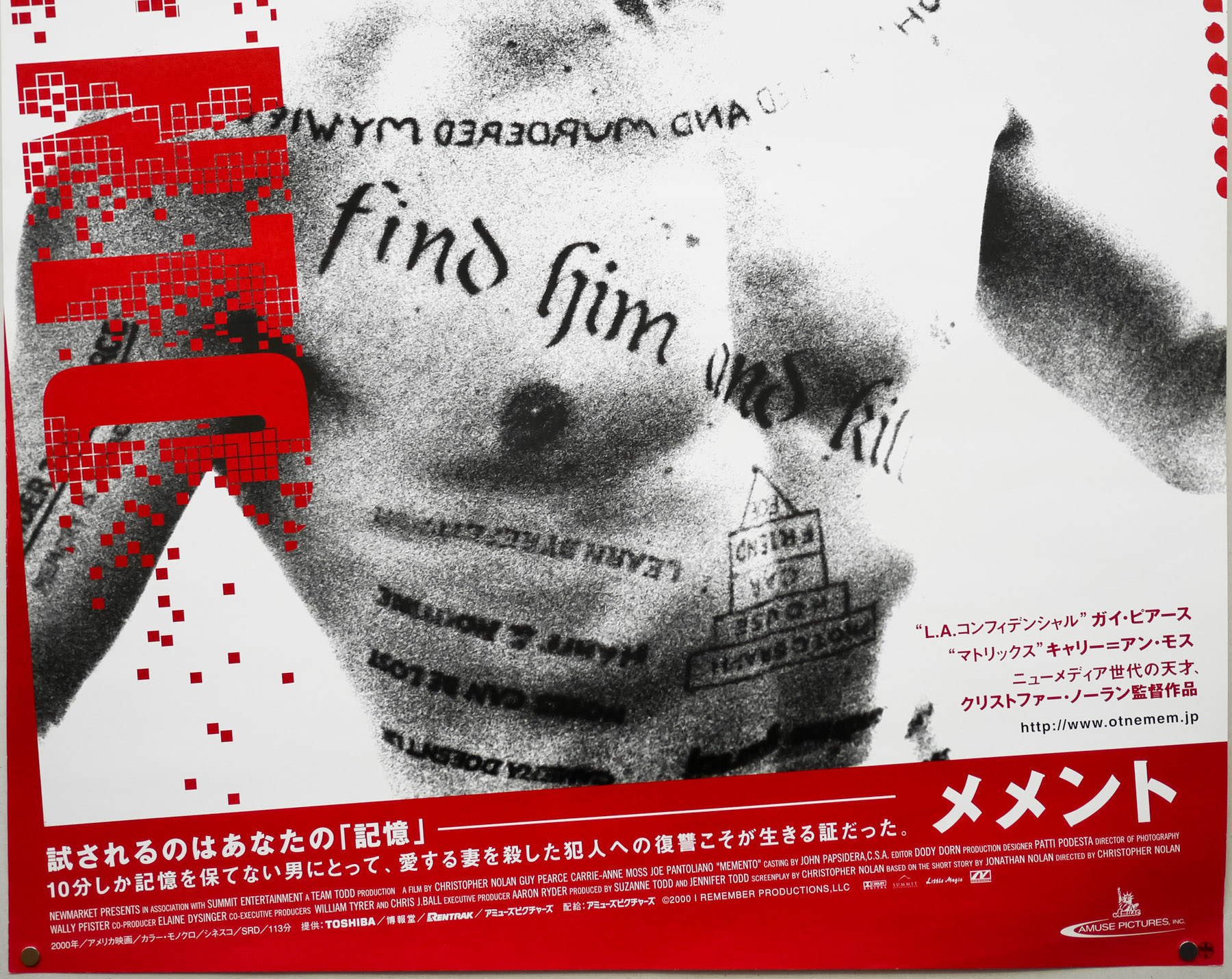
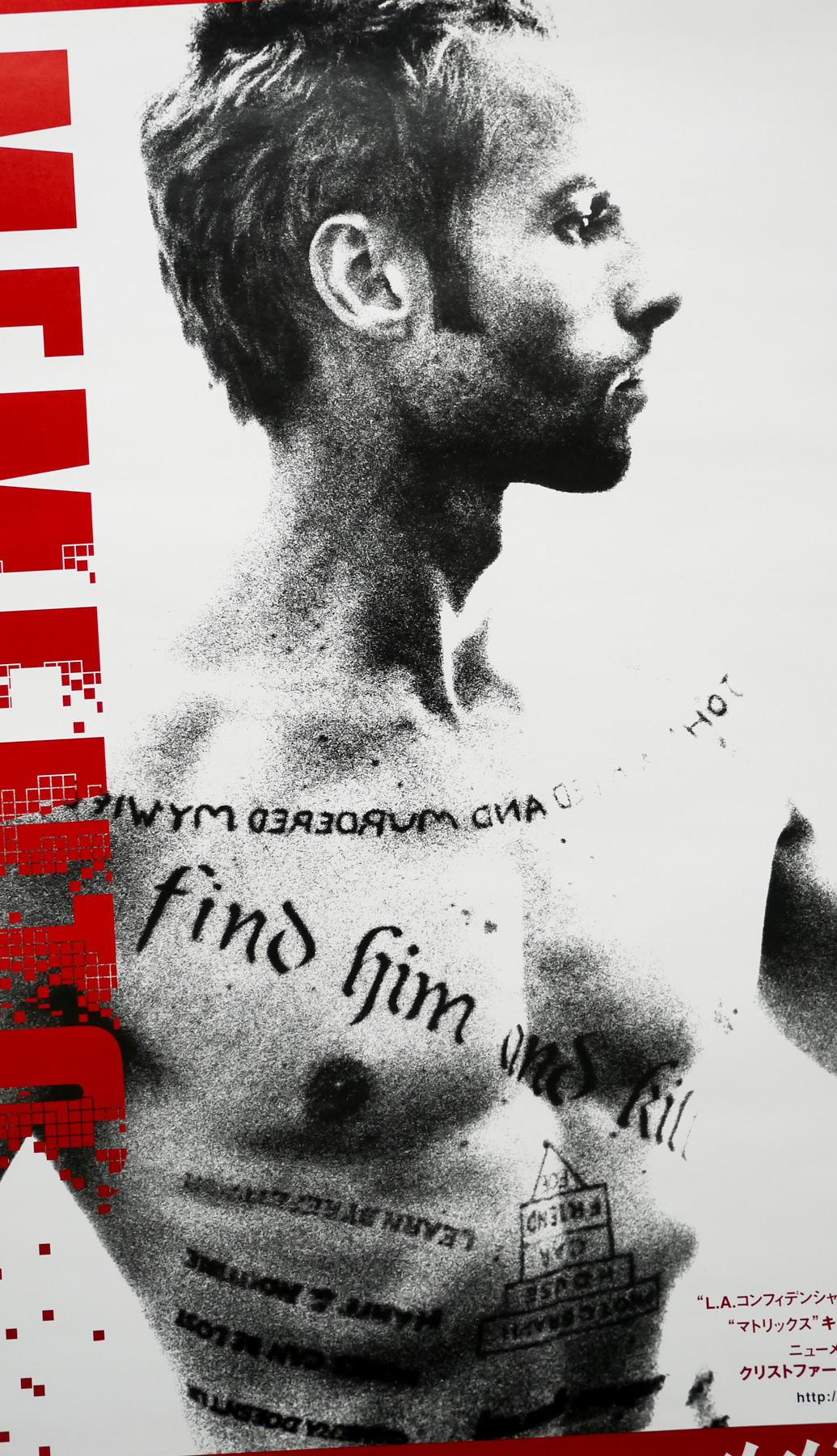
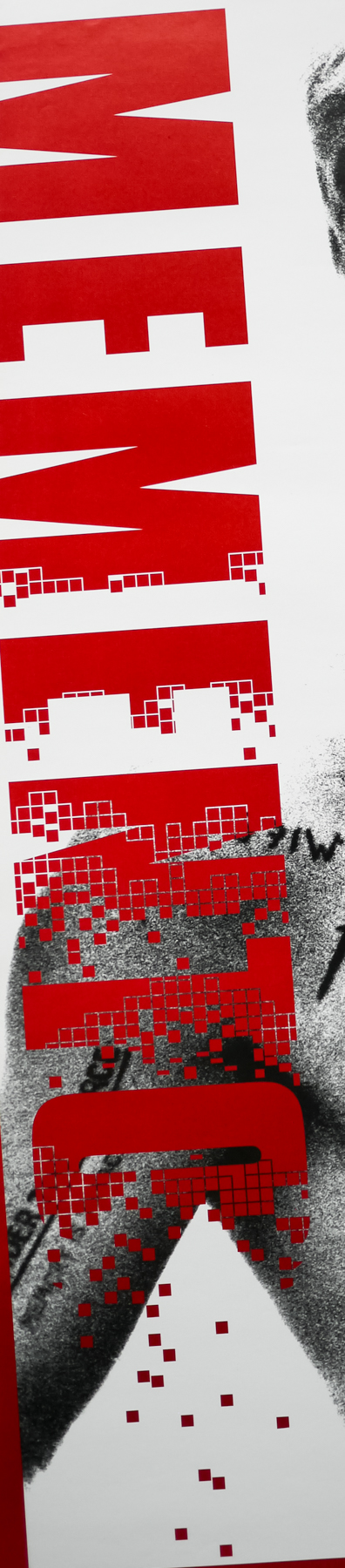
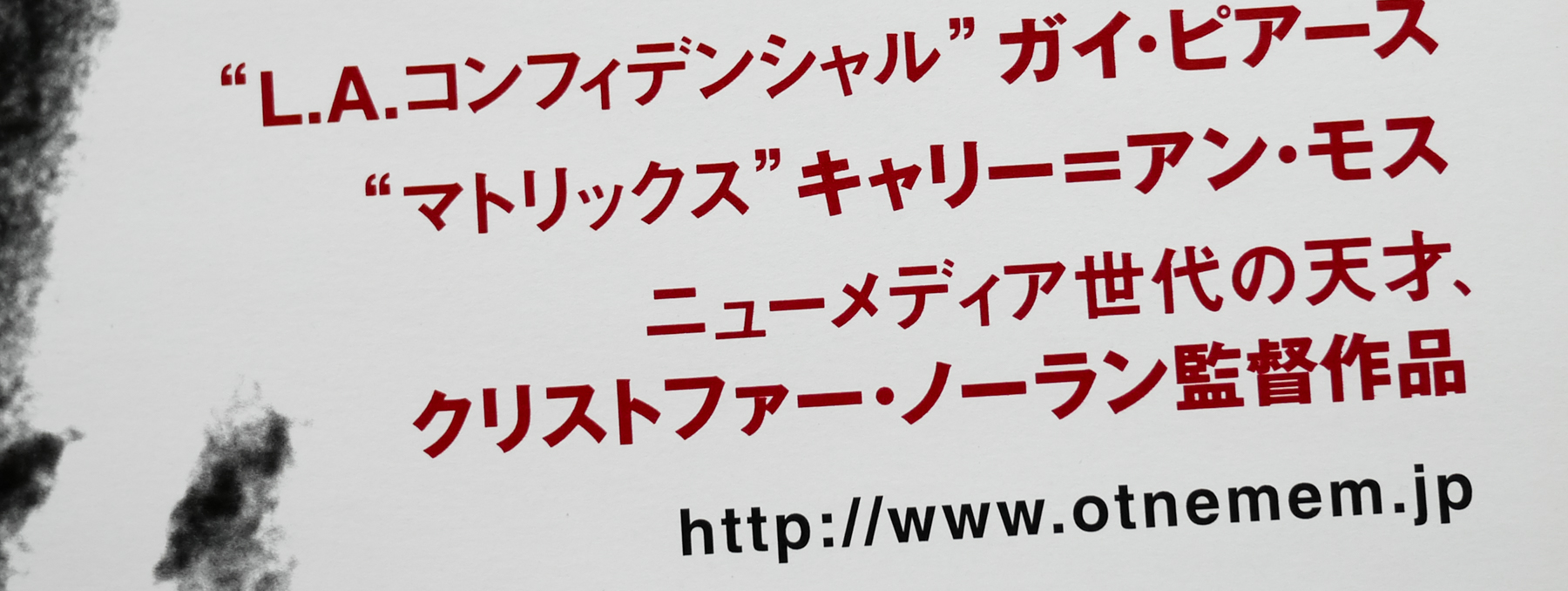
This is the Japanese B2 (red style) from the original release there back in 2001 and the design is unique to this poster. The American one sheet is markedly different and includes Carrie-Anne Moss.


Drive / special print / Canada

18.01.12

Poster Poster

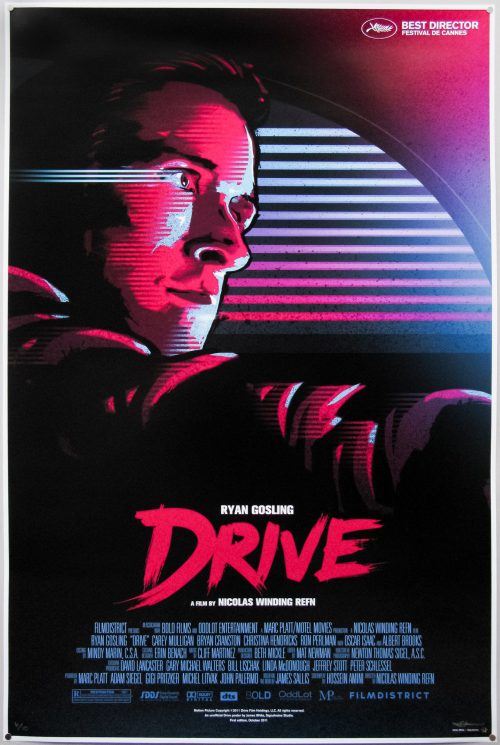
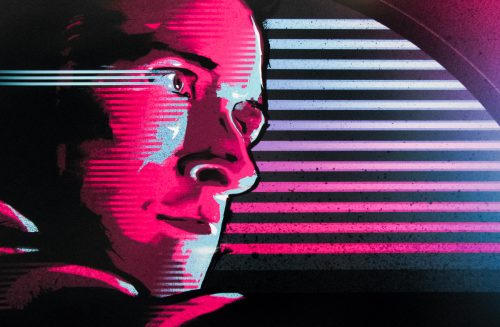
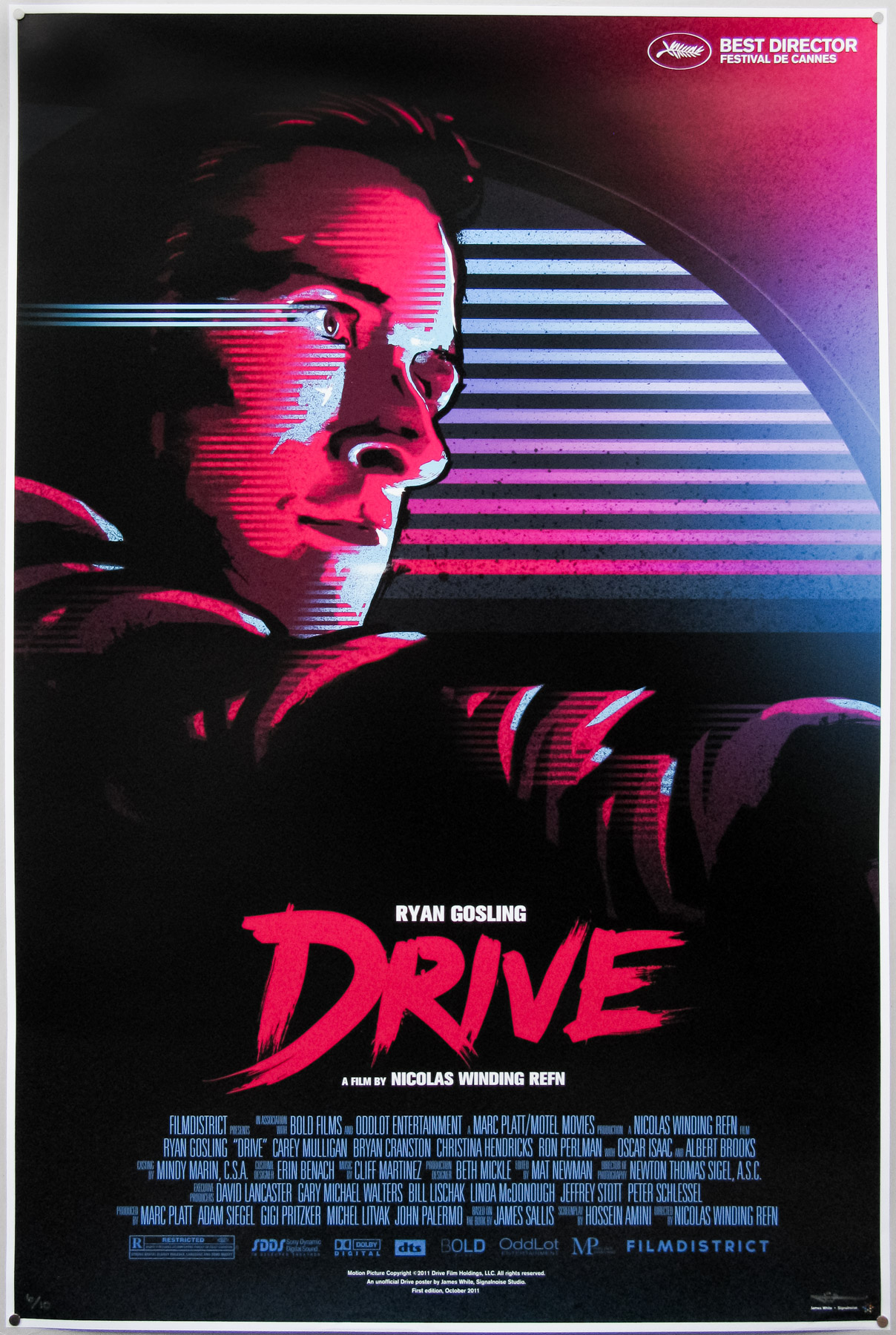
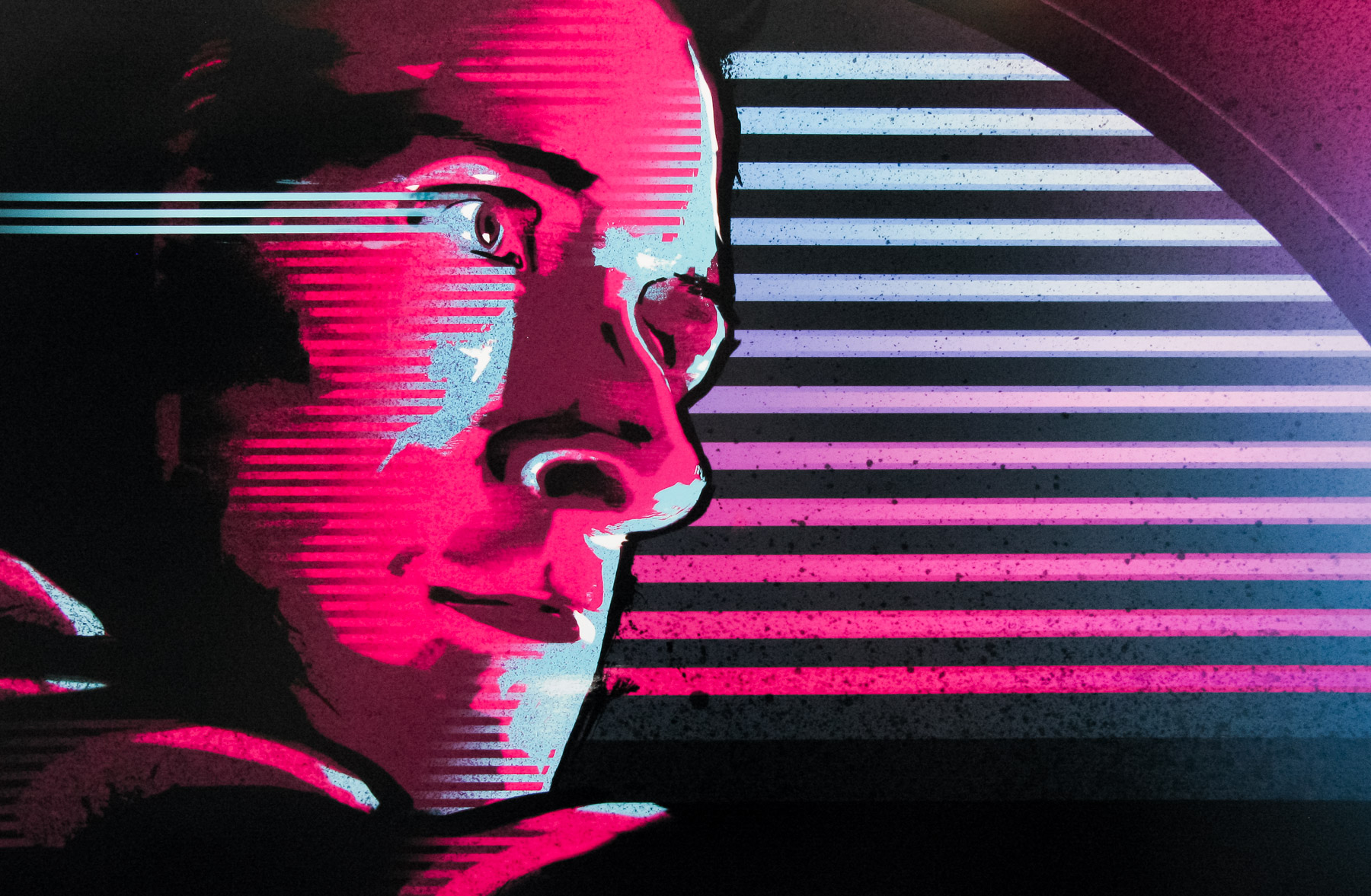
Nicolas Winding Refn’s superb neo-noir Drive ended up at the top of many ‘best of 2011’ lists, including my own, and there were few films released last year that matched it for sheer cinematic cool. The nameless protagonist was played by Ryan Gosling who suddenly found himself rocketing to the top of the Hollywood hot list, helped in no small part to the silk ‘Scorpion’ jacket and toothpick his near-silent character sports throughout the film.

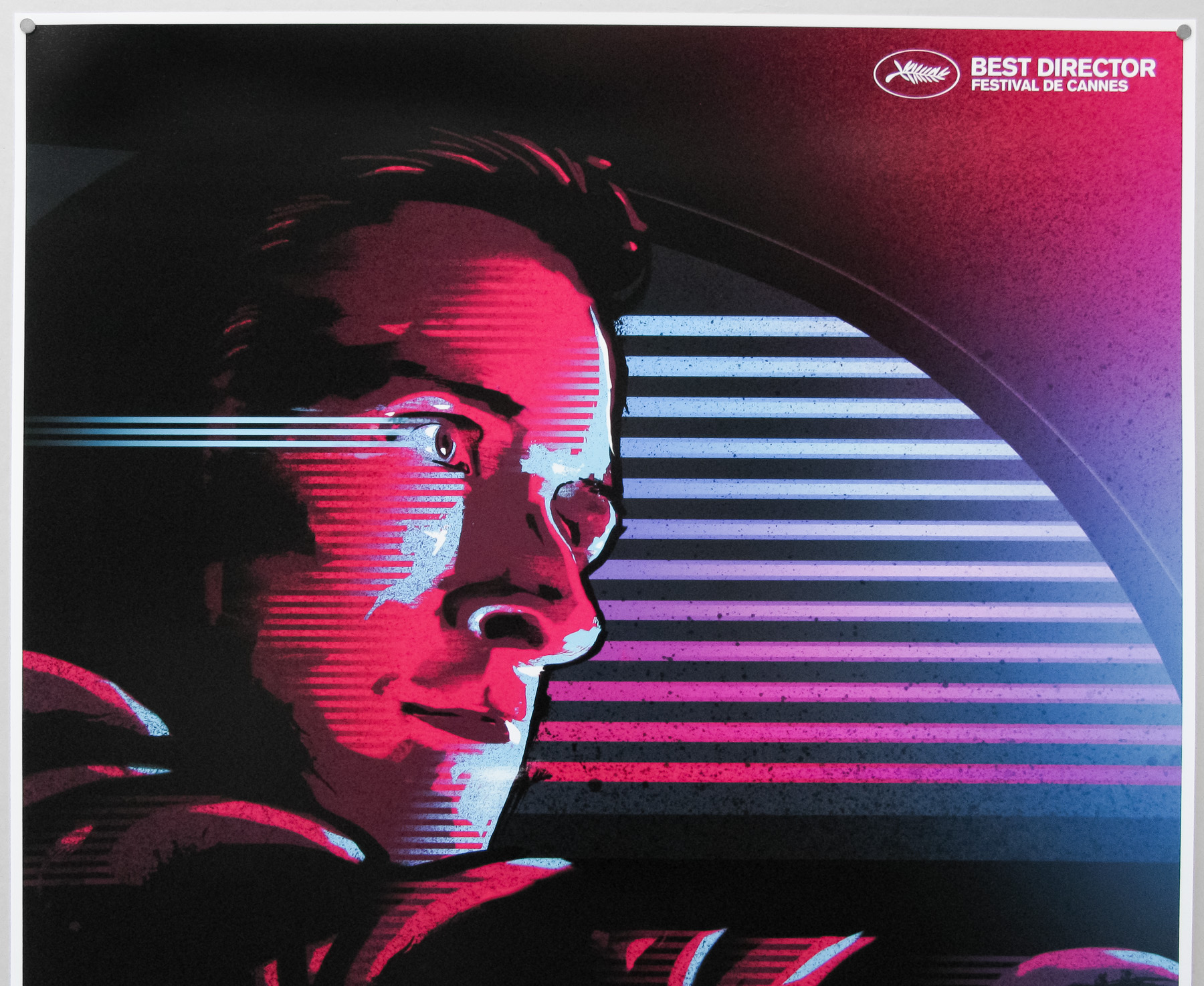
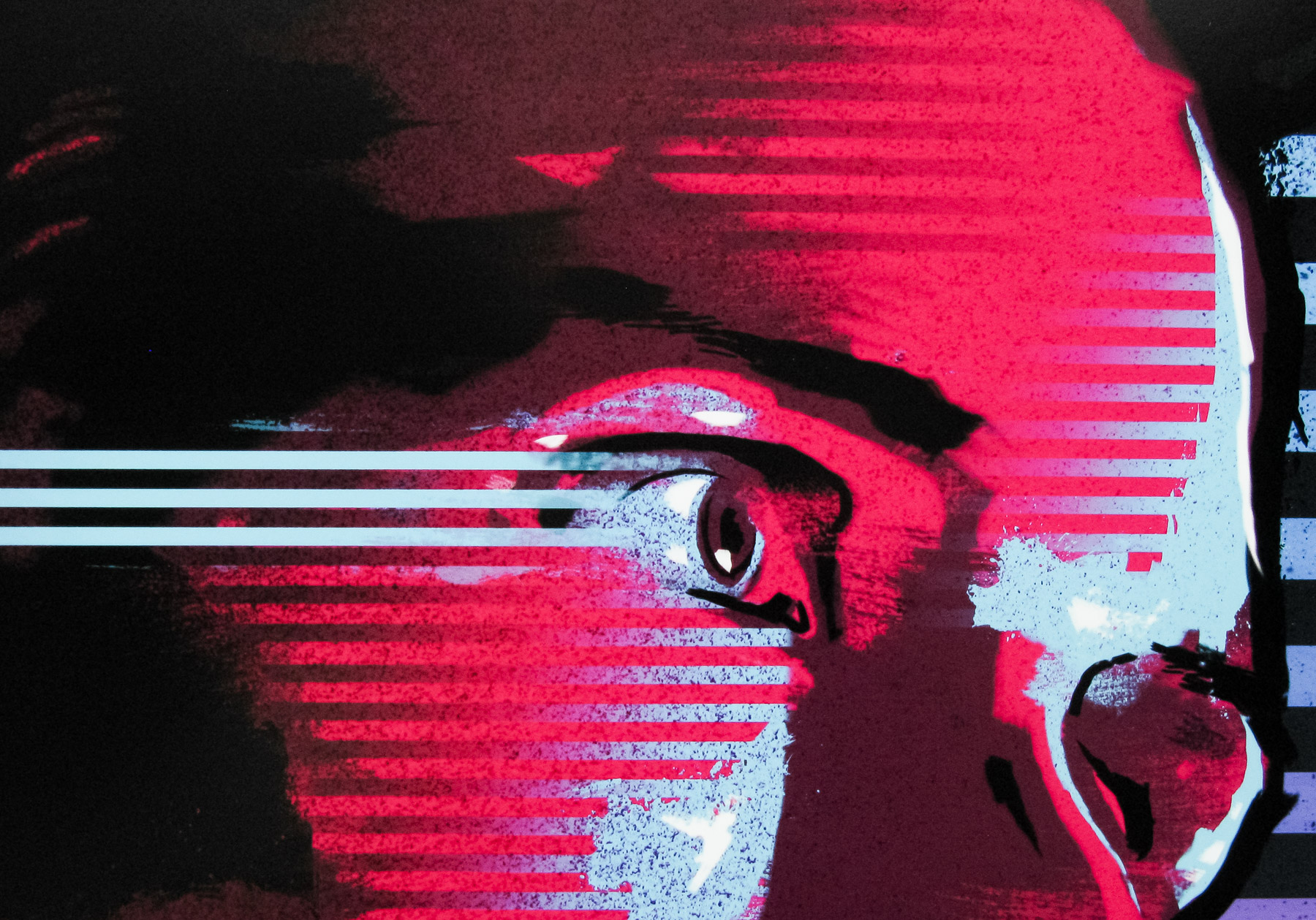
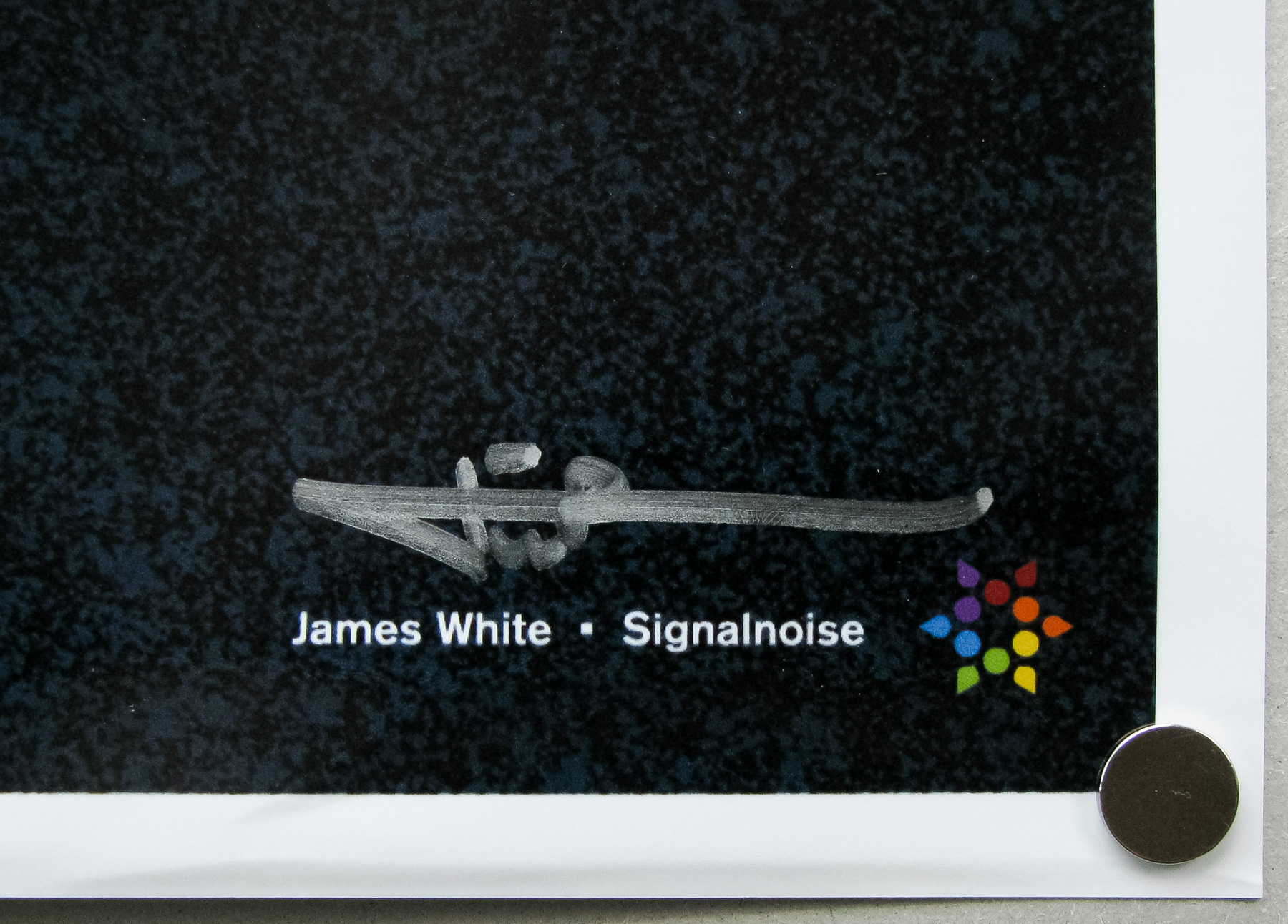
At the time I, along with many others, felt that the official US one sheet failed to capture the spirit and feel of this supremely stylish film and its release felt like something of a missed opportunity. Thank goodness, then, that the talented graphic designer and illustrator James White (AKA Signalnoise) also felt this way and took it upon himself to design a fitting poster for the film. The results speak for themselves and James’ use of a single image from the opening sequence of ‘cat and mouse’ (as seen in this clip) combined with the striking neon colours is the perfect distillation of the film into one frame.

The poster was designed as a personal project and something of a tribute to the film but, thanks to the effort of James’ agent, Ollie Judge, James was able to gain permission from the film’s rights owners and print the poster as official merchandise to sell on his website.

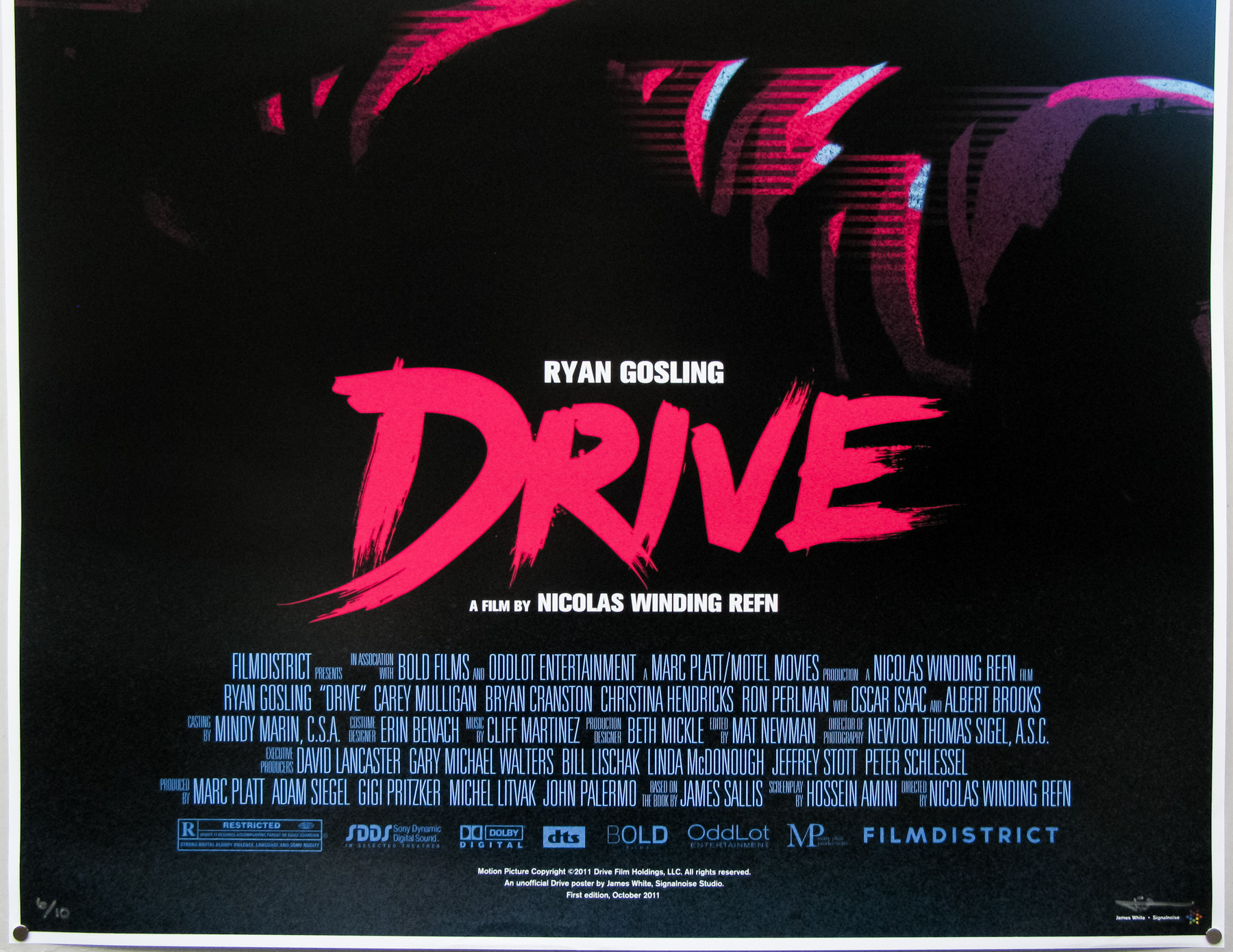
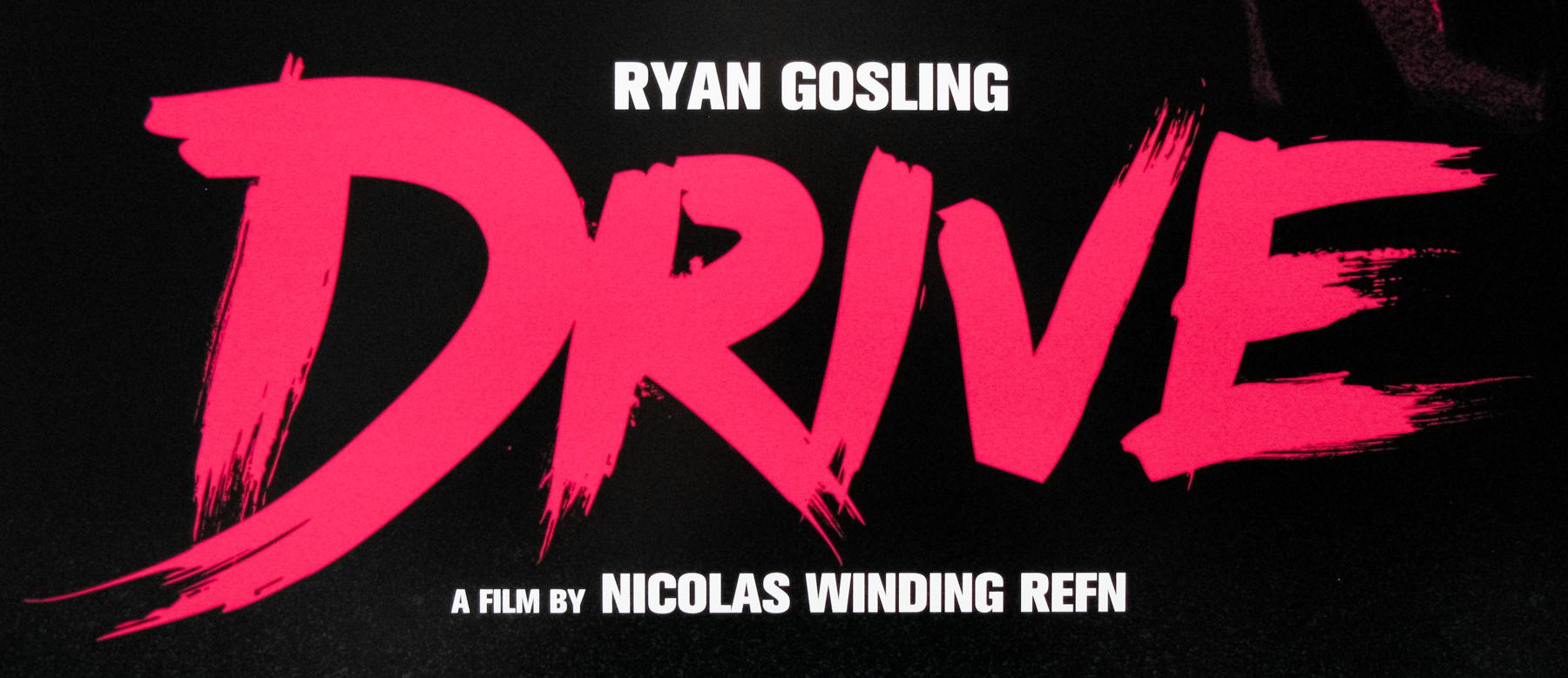
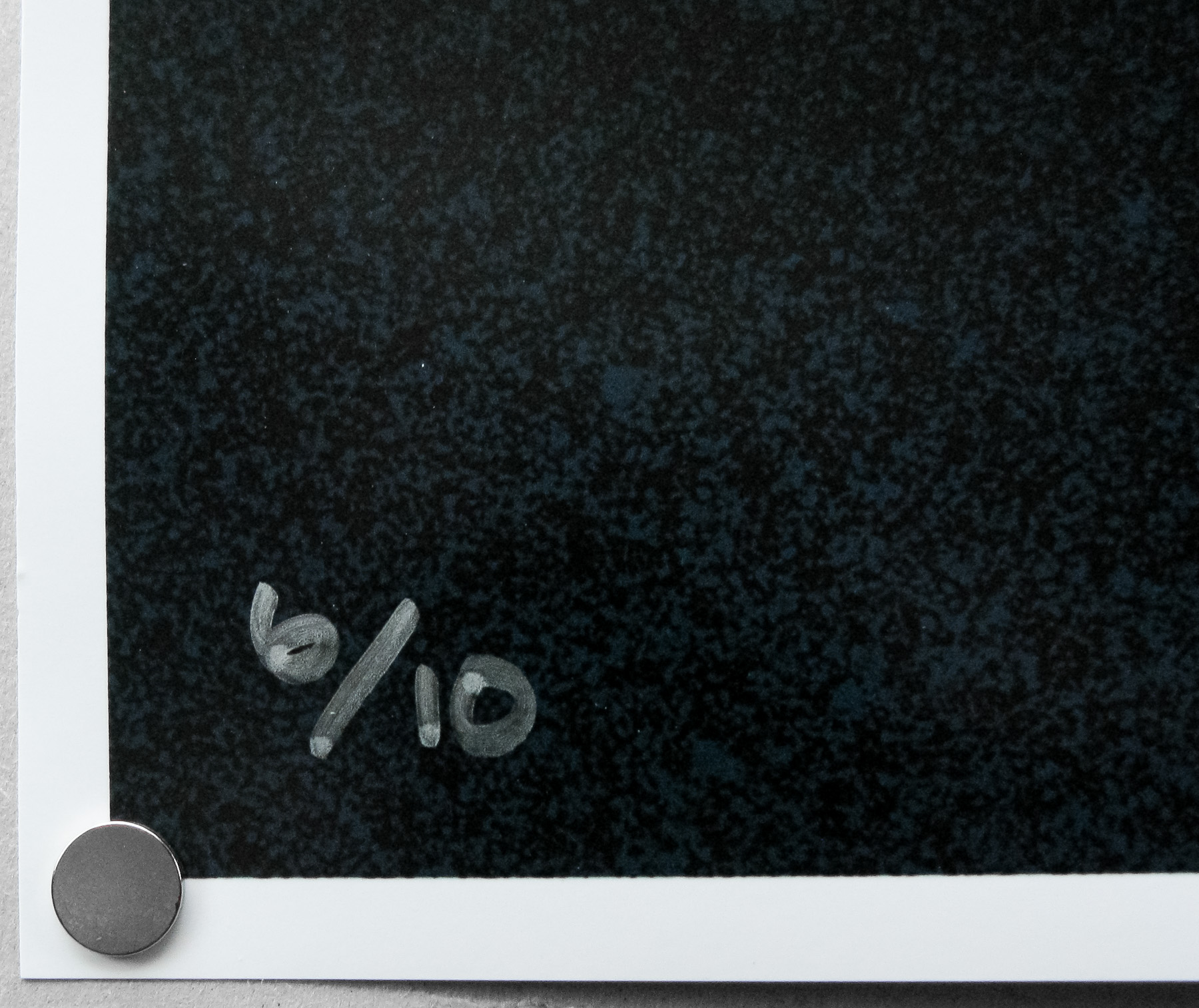
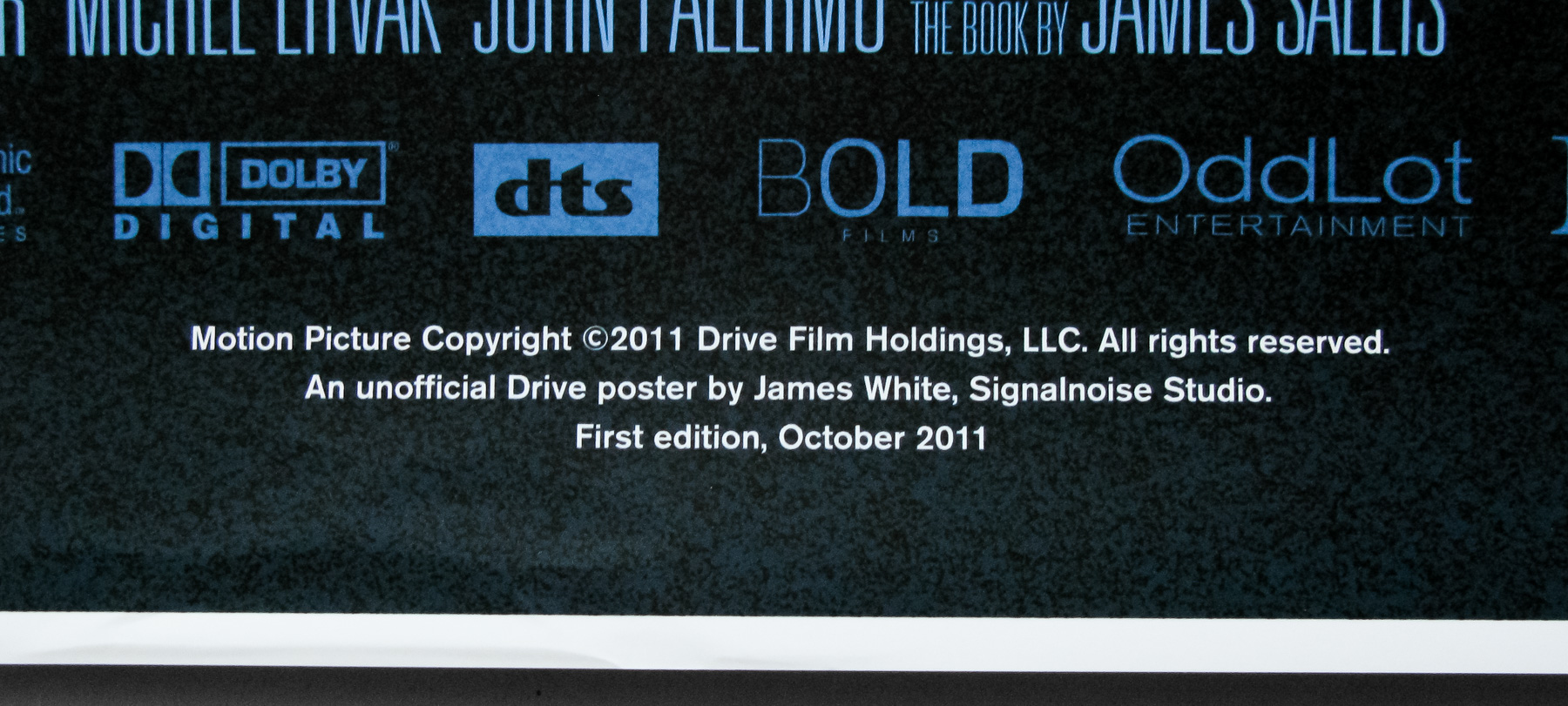
I was lucky enough to be sent this first edition late last year that was printed as a limited, not-for-sale run before the rights had been secured. You’ll notice the text at the bottom of the poster that confirms this.

See this blog post on my site for and interview with James and details on the making of this awesome poster.

The official poster will be available to purchase online on Thursday, January 19 at 1pm EST. The poster will be activated in the Signalnoise Store at that time. I will have 300 copies of the 22″ x 28″ poster for $50 along with a super limited 30 copies of the 24″ x 36″ poster for $90.

The trailer for Drive can be watched on YouTube.

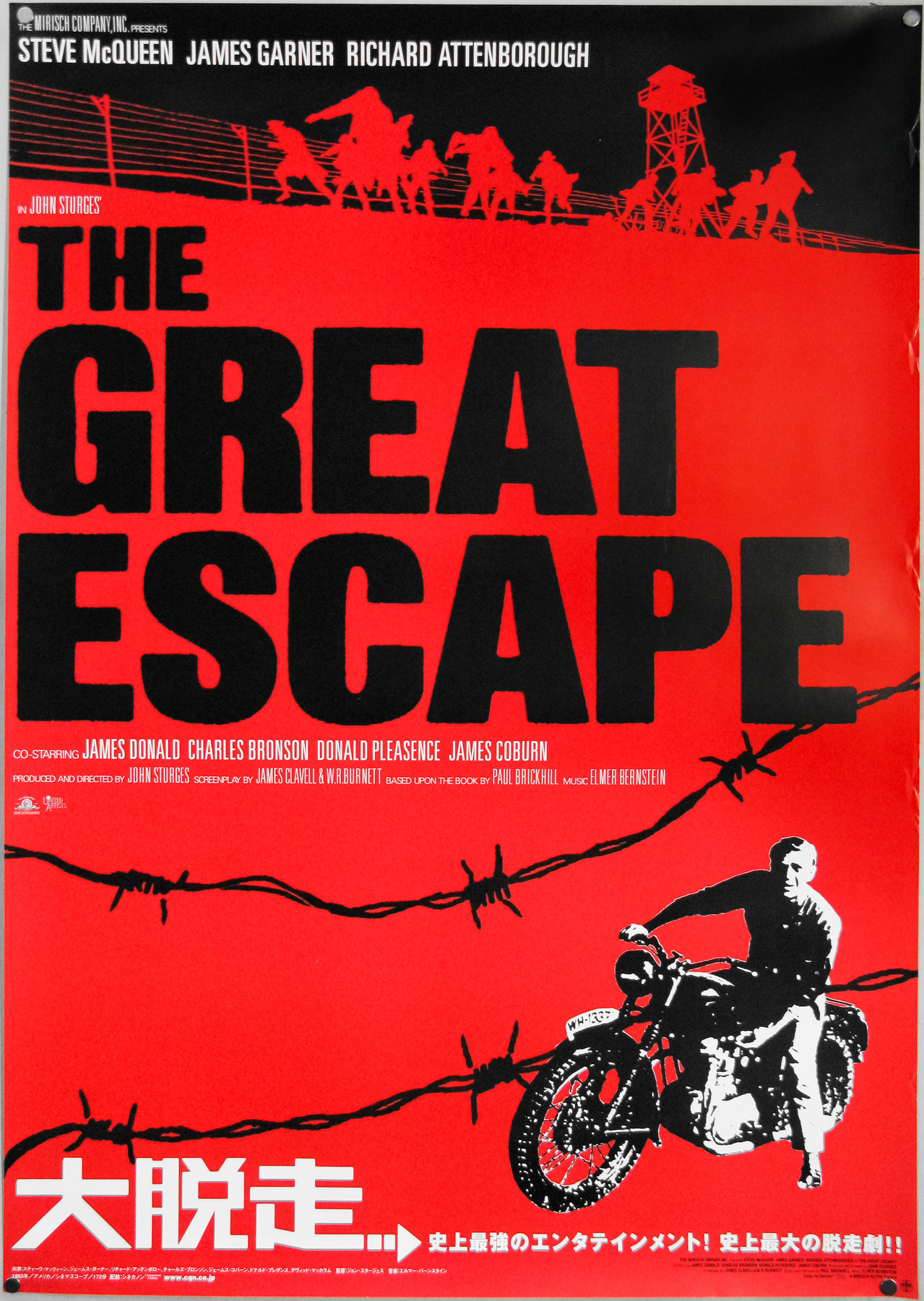
The Great Escape / A1 / 1975 re-release / Germany

30.11.15

Poster Poster

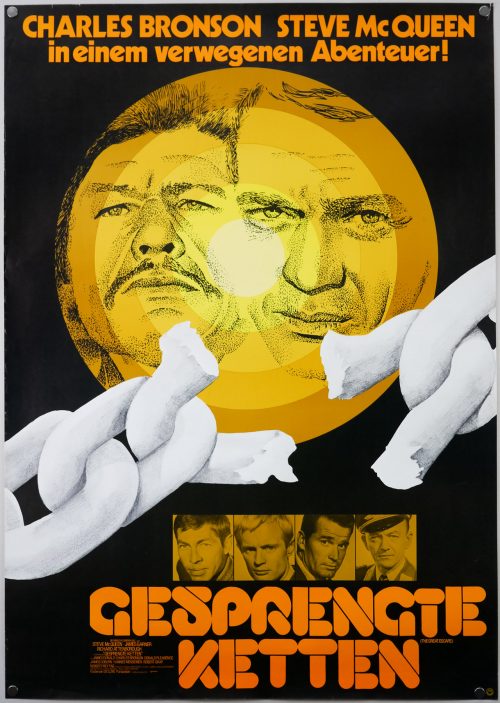
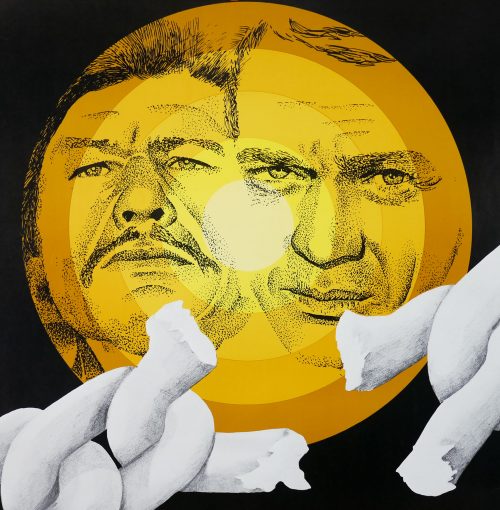
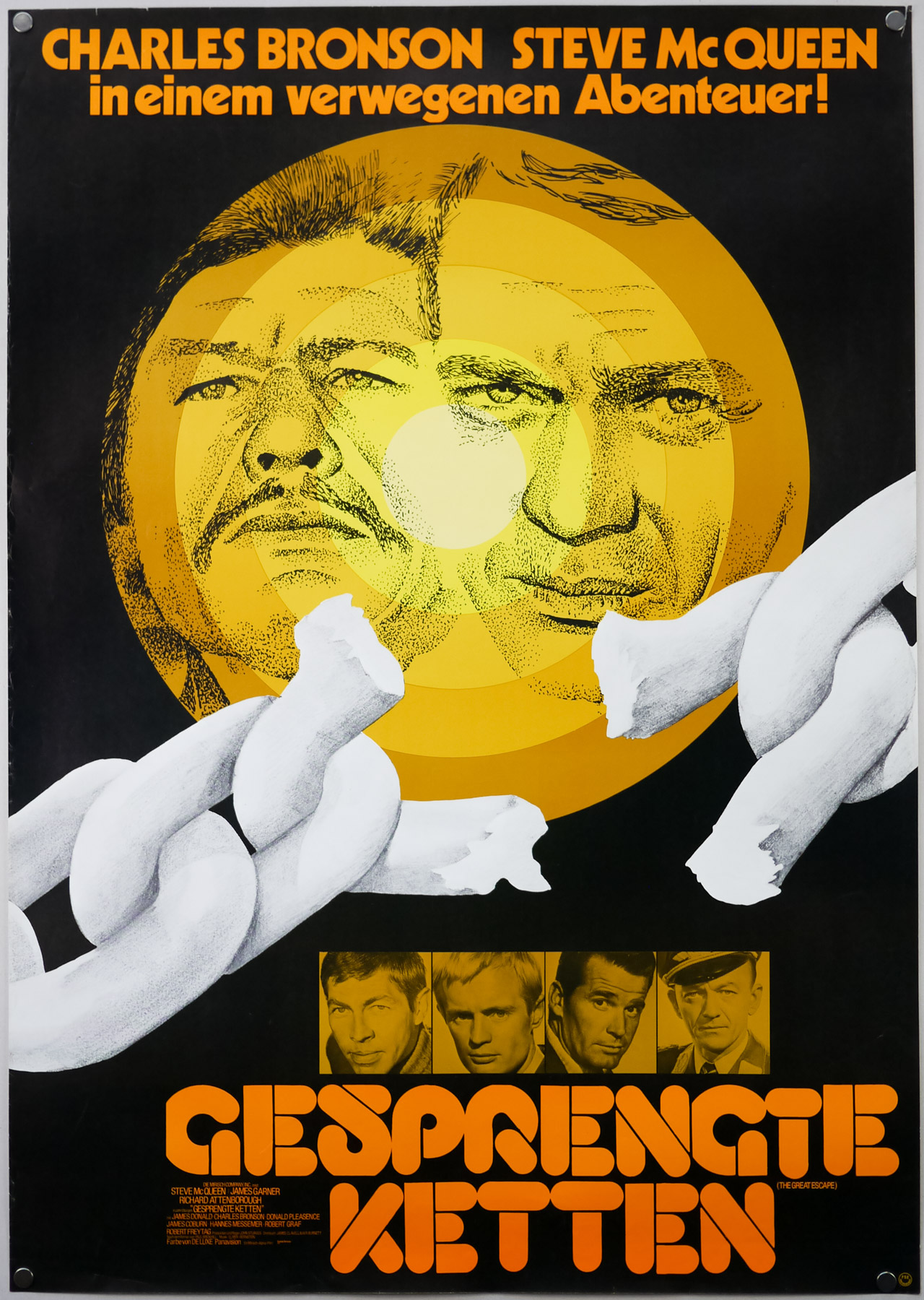
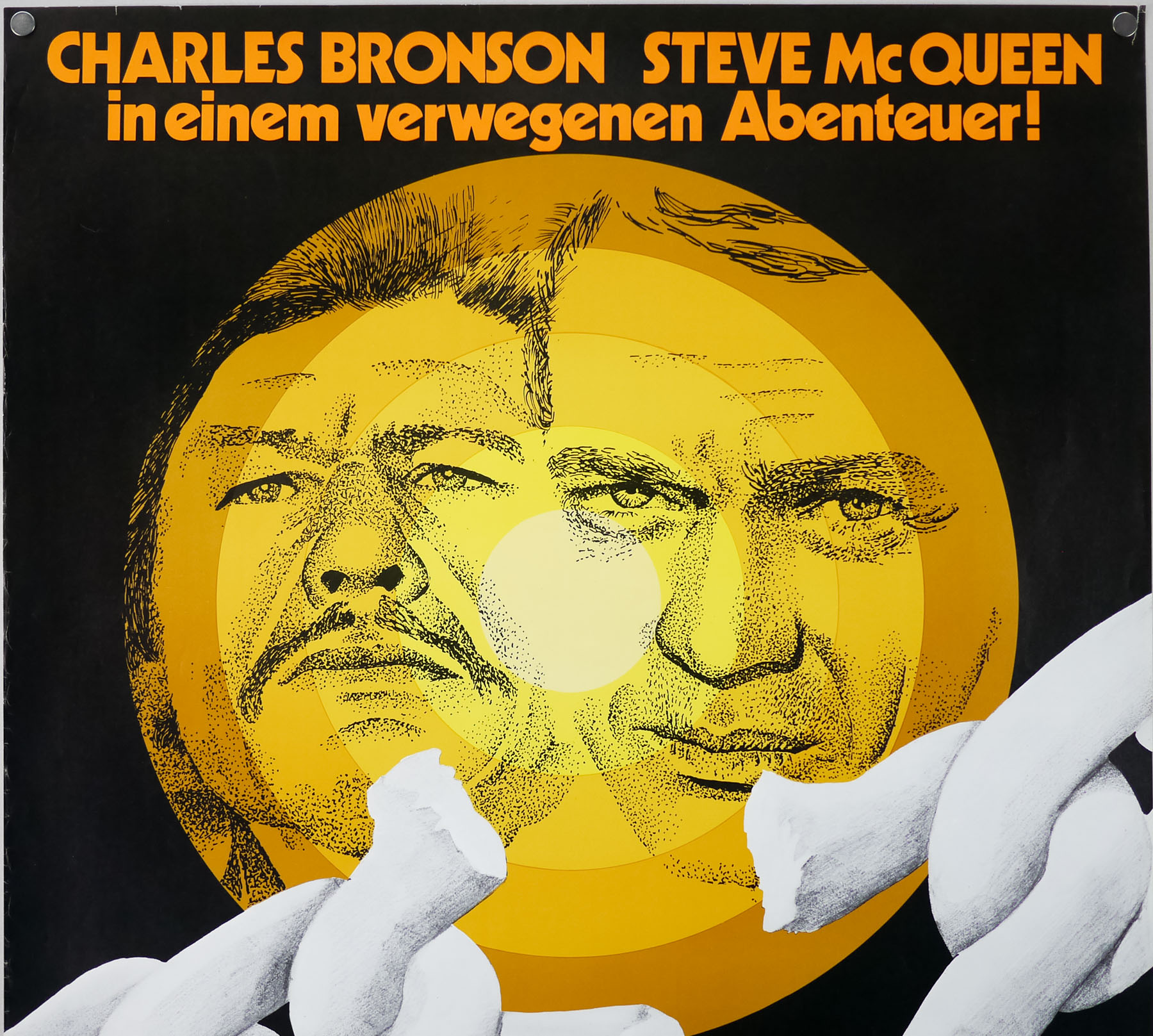
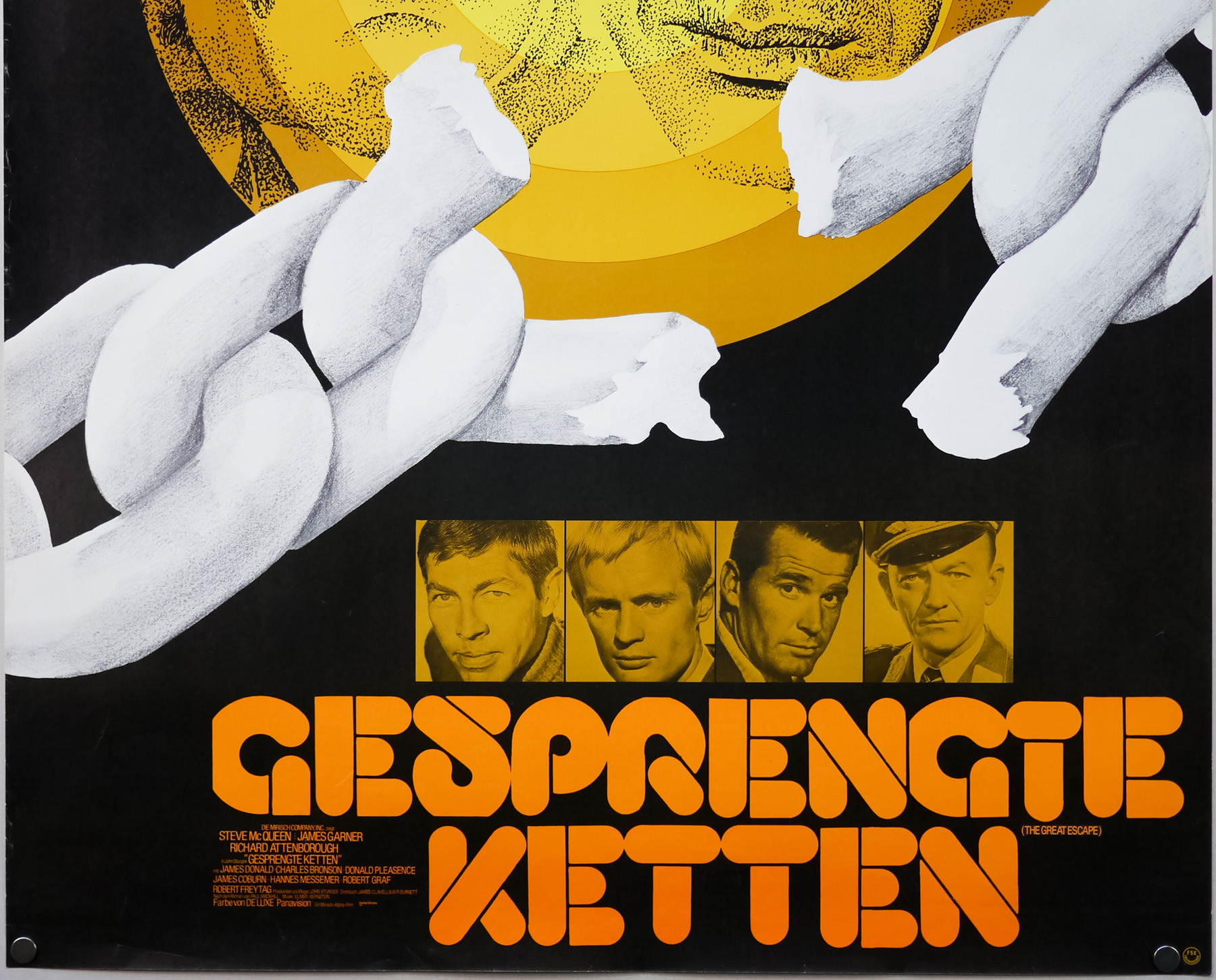
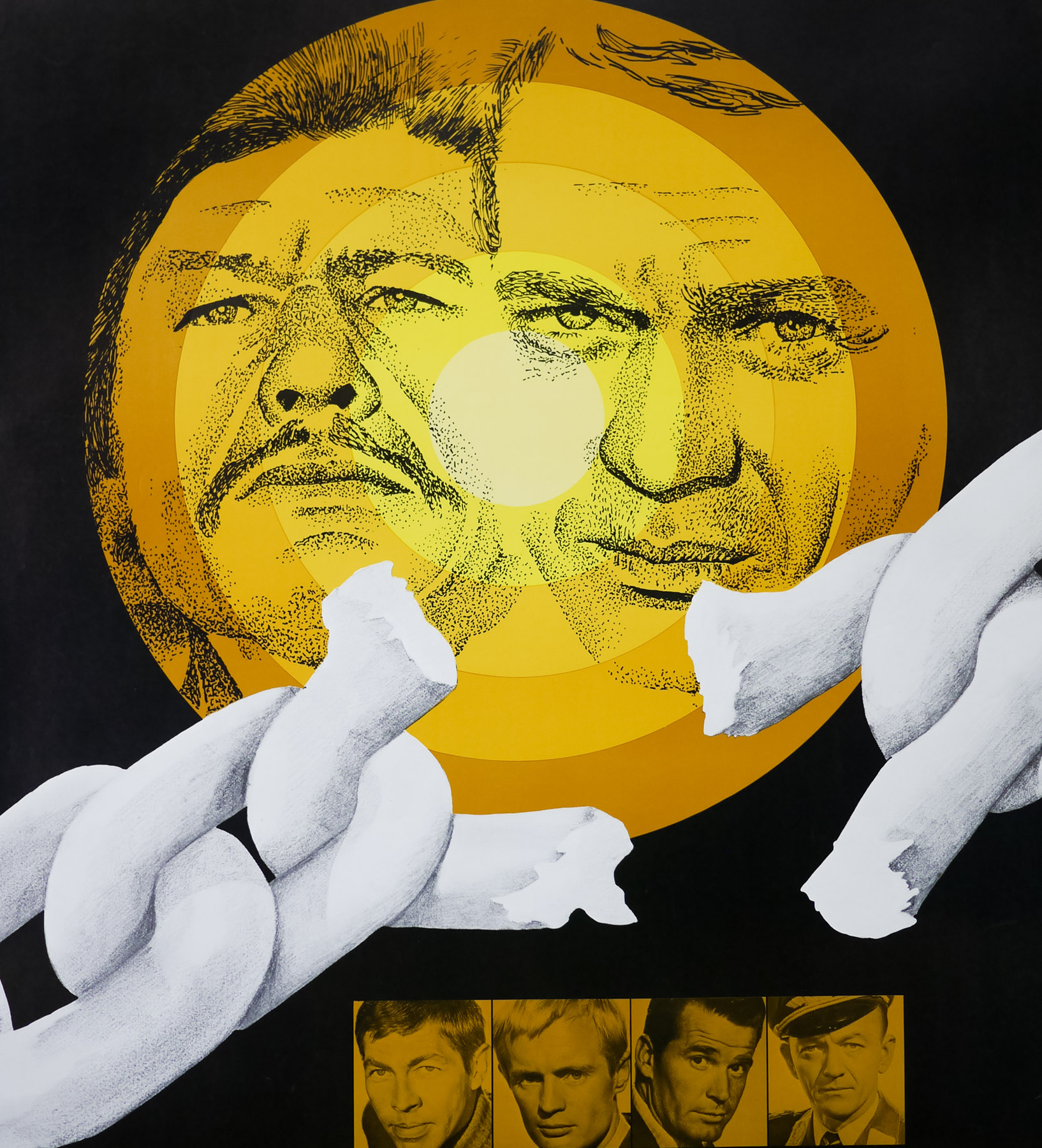
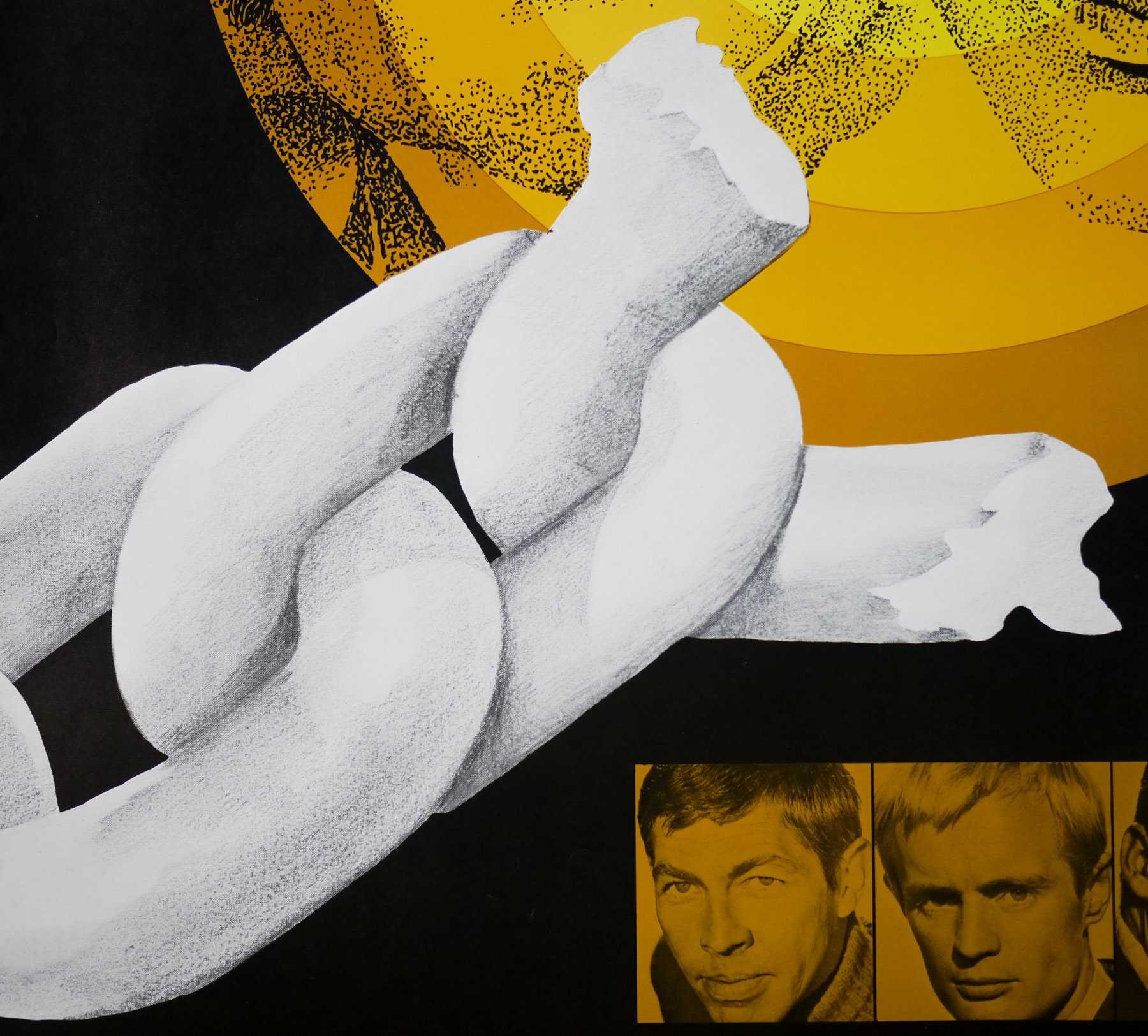
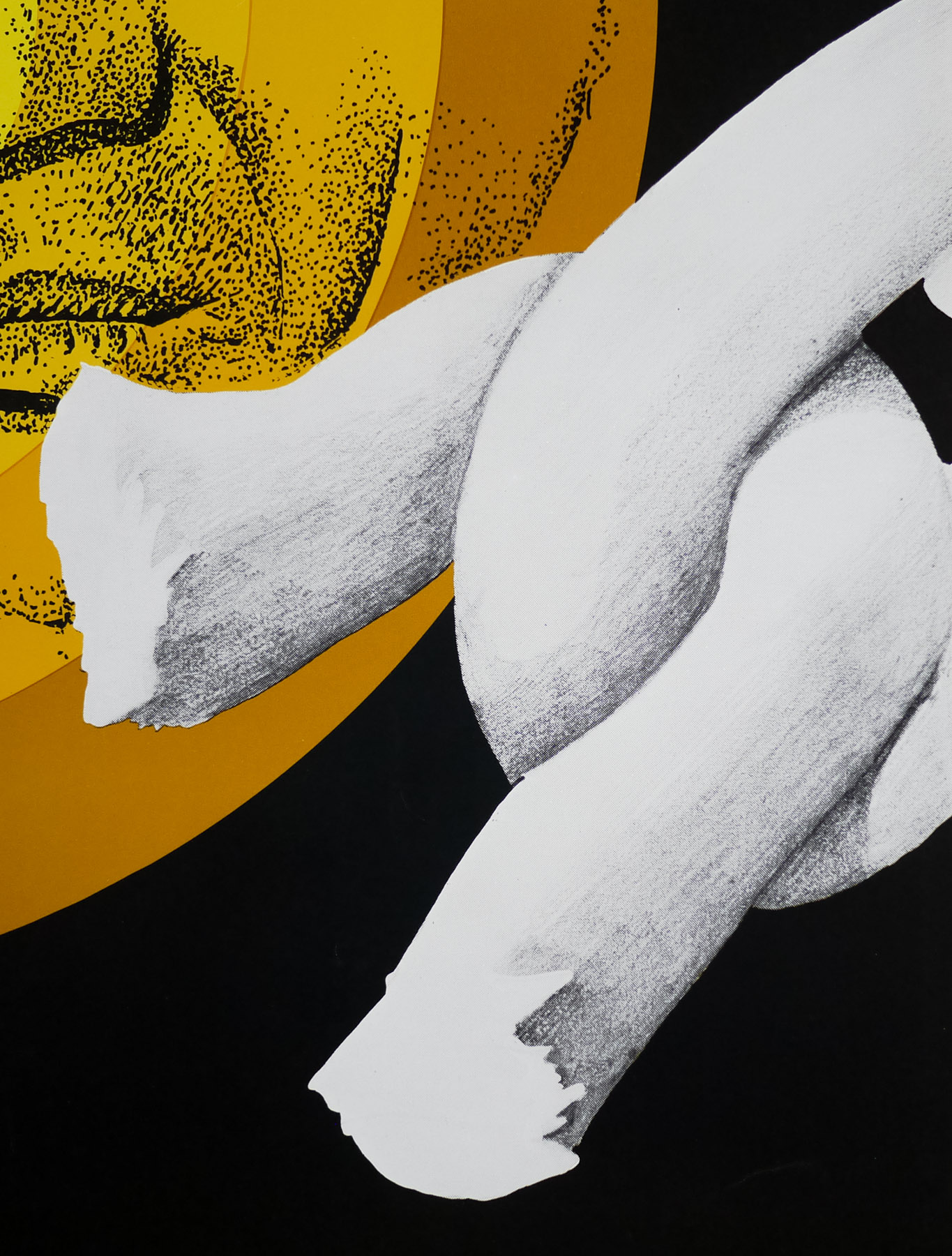
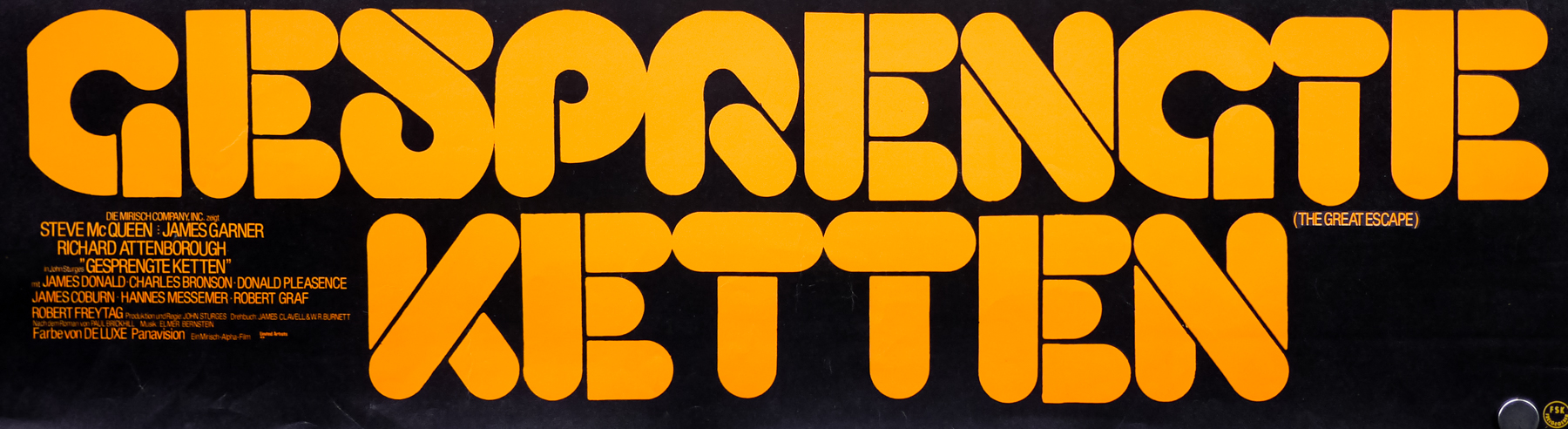
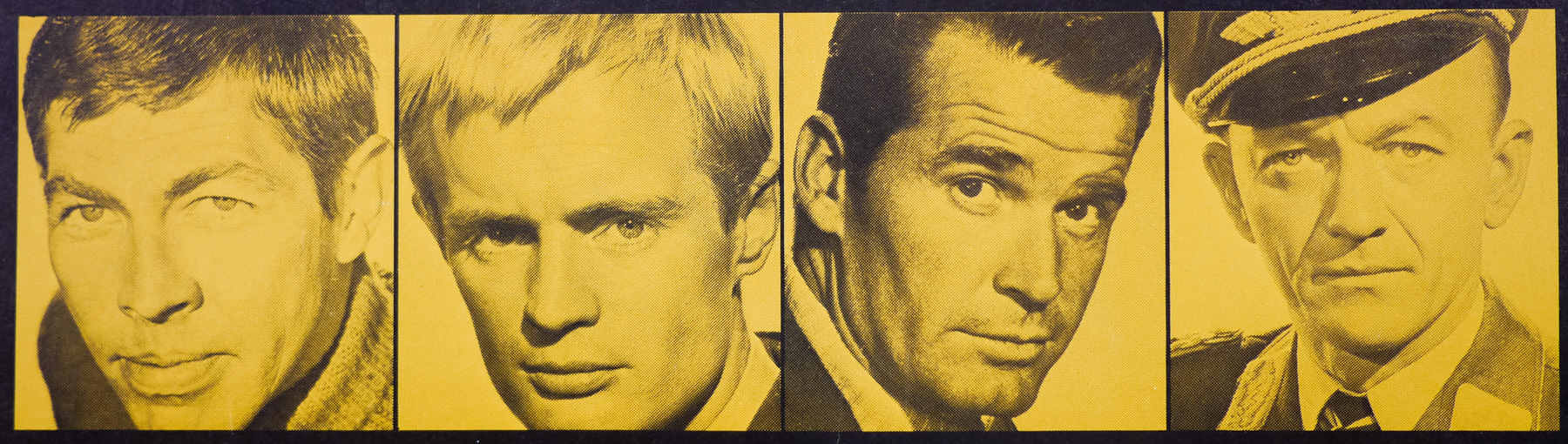
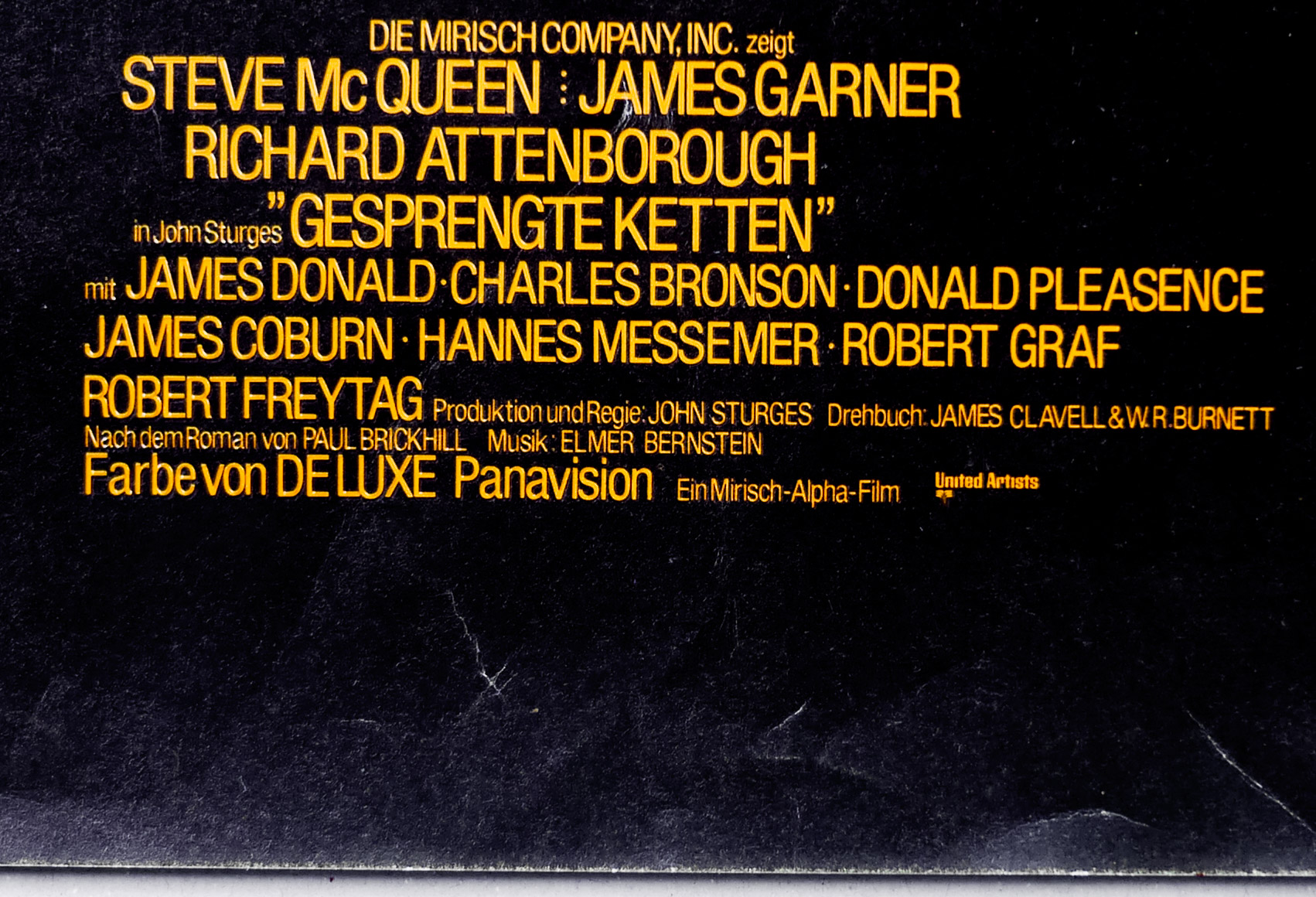
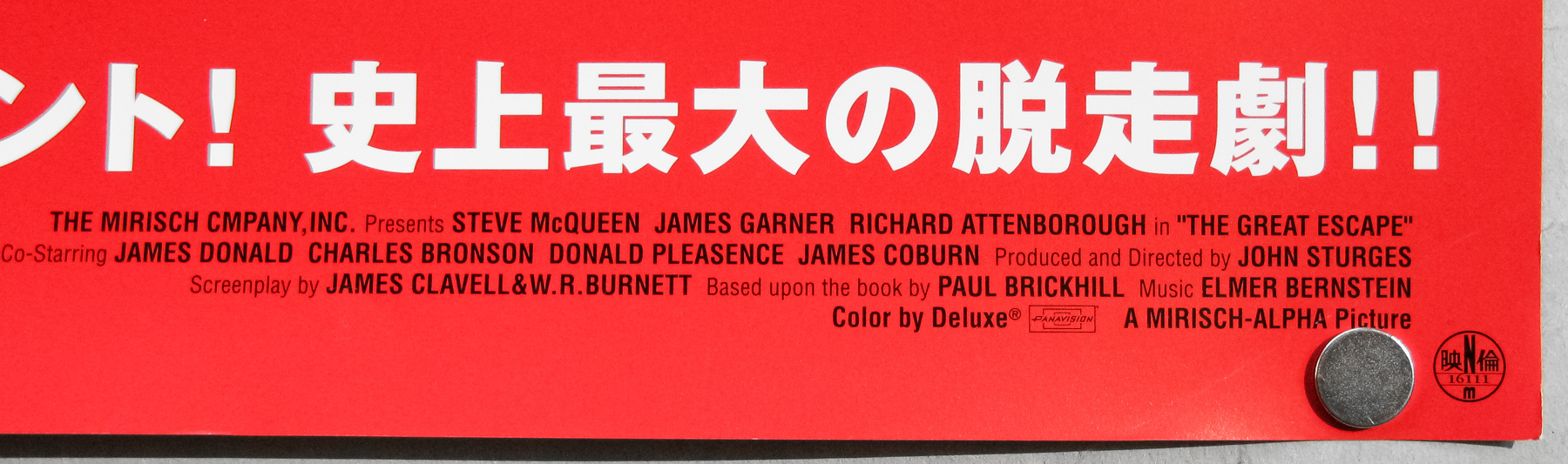
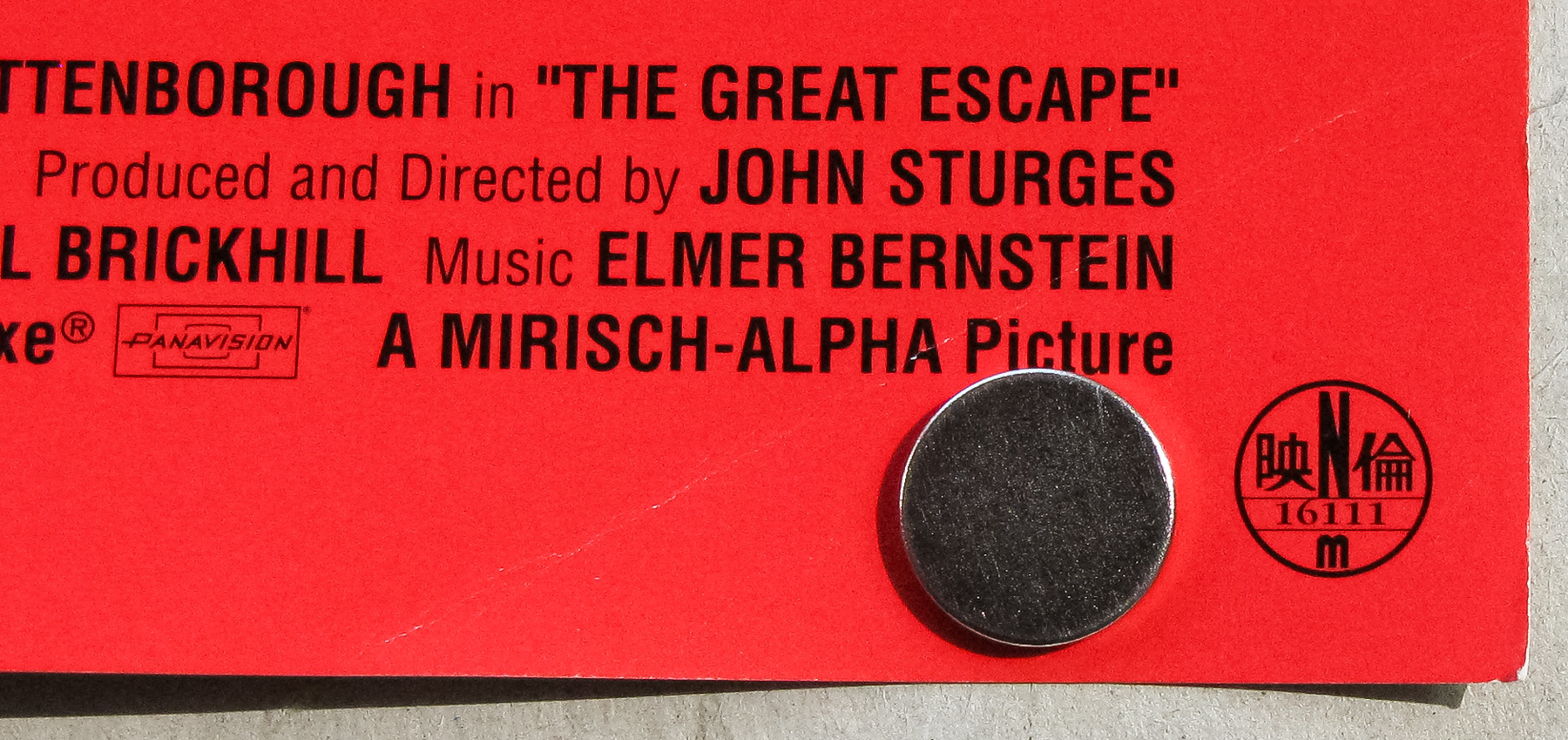
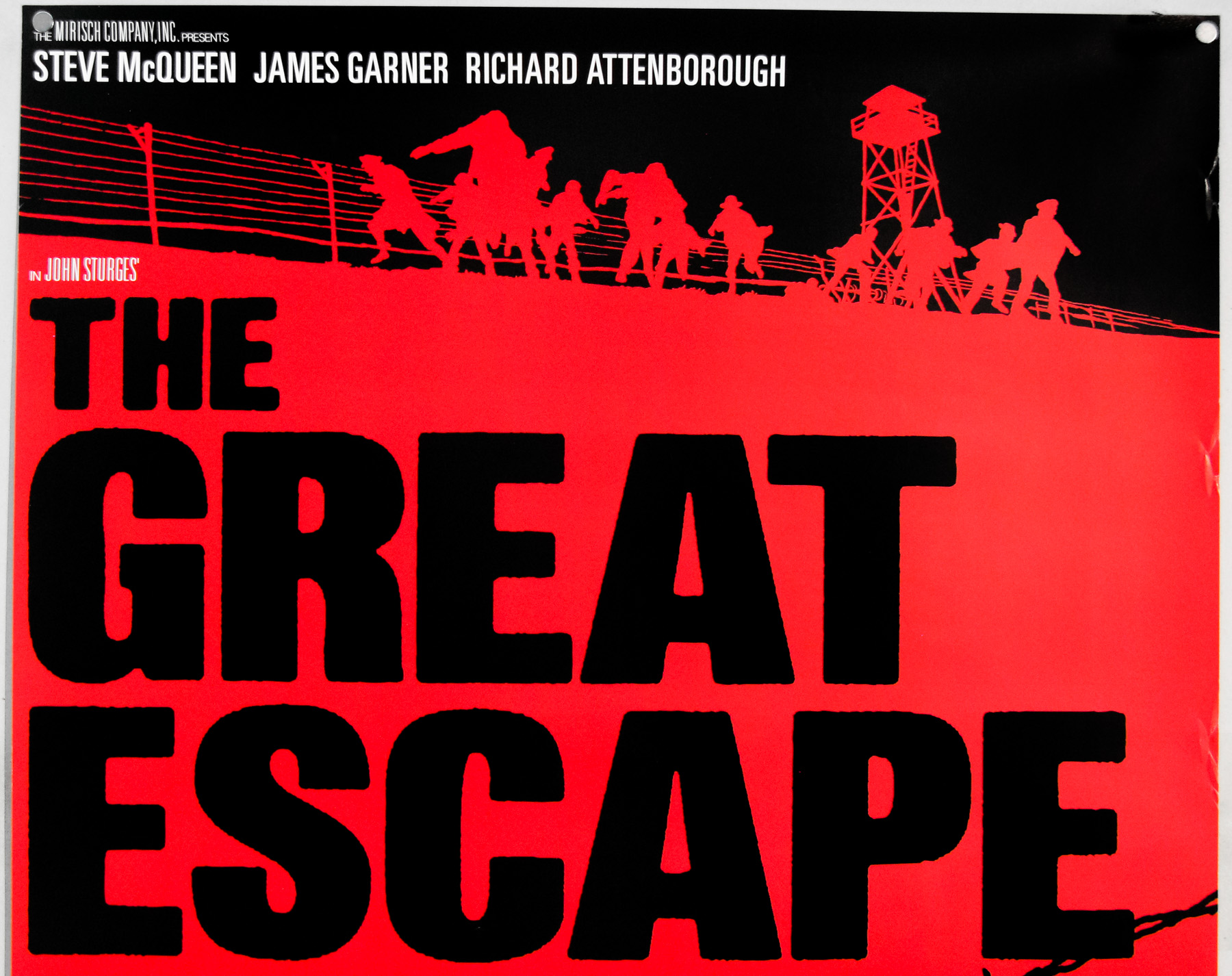
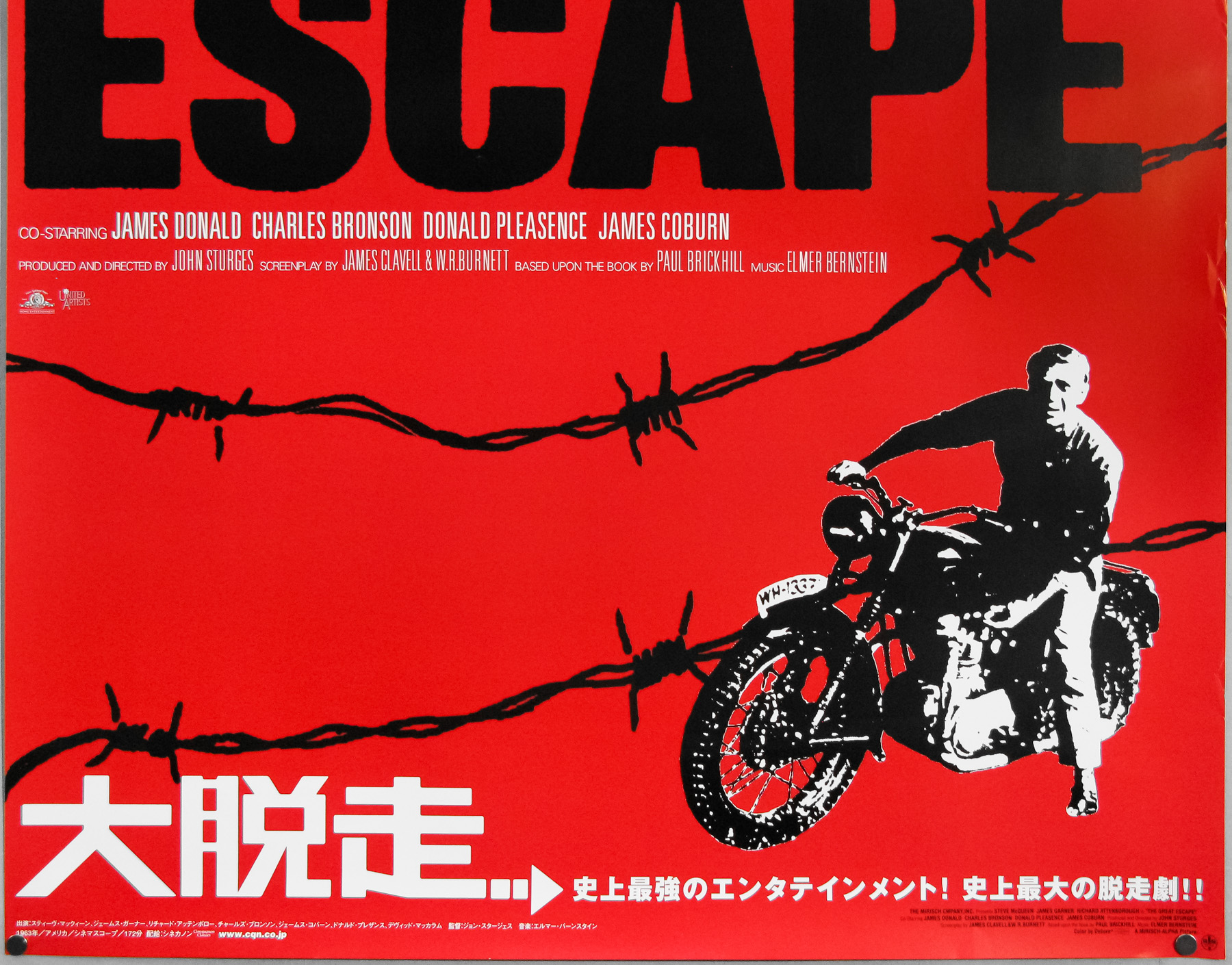
A striking design features on this German poster for the 1975 re-release of one of the greatest war films ever released, 1963’s The Great Escape. Director John Sturges (Magnificent Seven) helmed the film and it’s based on the 1950 non-fiction book of the same name, written by Paul Brickhill, which tells the story of a mass escape by allied prisoners from the high-security Stalag Luft III prison in Nazi Germany. Although partly fictionalised, many of the events depicted in the film did occur and the filmmakers only changed certain events and characters to add to the film’s commercial appeal.

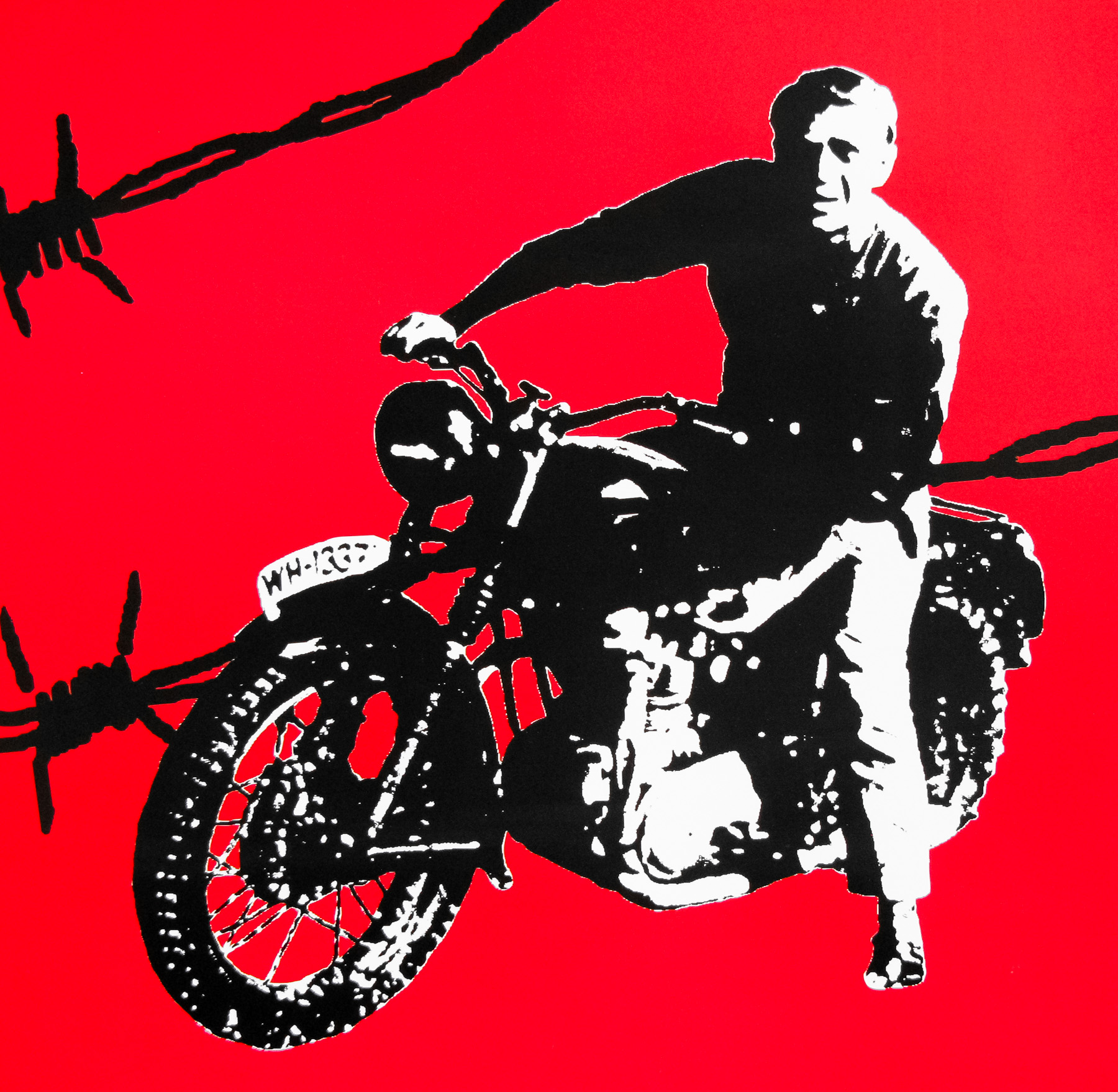
An absolutely star-studded affair, the film features many of the finest male actors of the day, including Steve McQueenJames GarnerRichard Attenborough and Donald Pleasence. American actor Charles Bronson also appears as one of the prisoners and his popularity in Europe at the time of this 1975 re-release explains why he’s given equal billing on the poster alongside McQueen. Despite the roster of big names it will undoubtedly always be known as McQueen’s film since his turn as Virgil ‘The Cooler King’ Hilts, the cocky, determined Air Force captain, is really the centre of the film. It was McQueen’s image that was used to promote the film on various posters around the world. 

I’m unsure why the film was re-released in the then West Germany in 1975 and am also unsure who was responsible for the design and art on this A1 poster. If anyone has any ideas please get in touch.

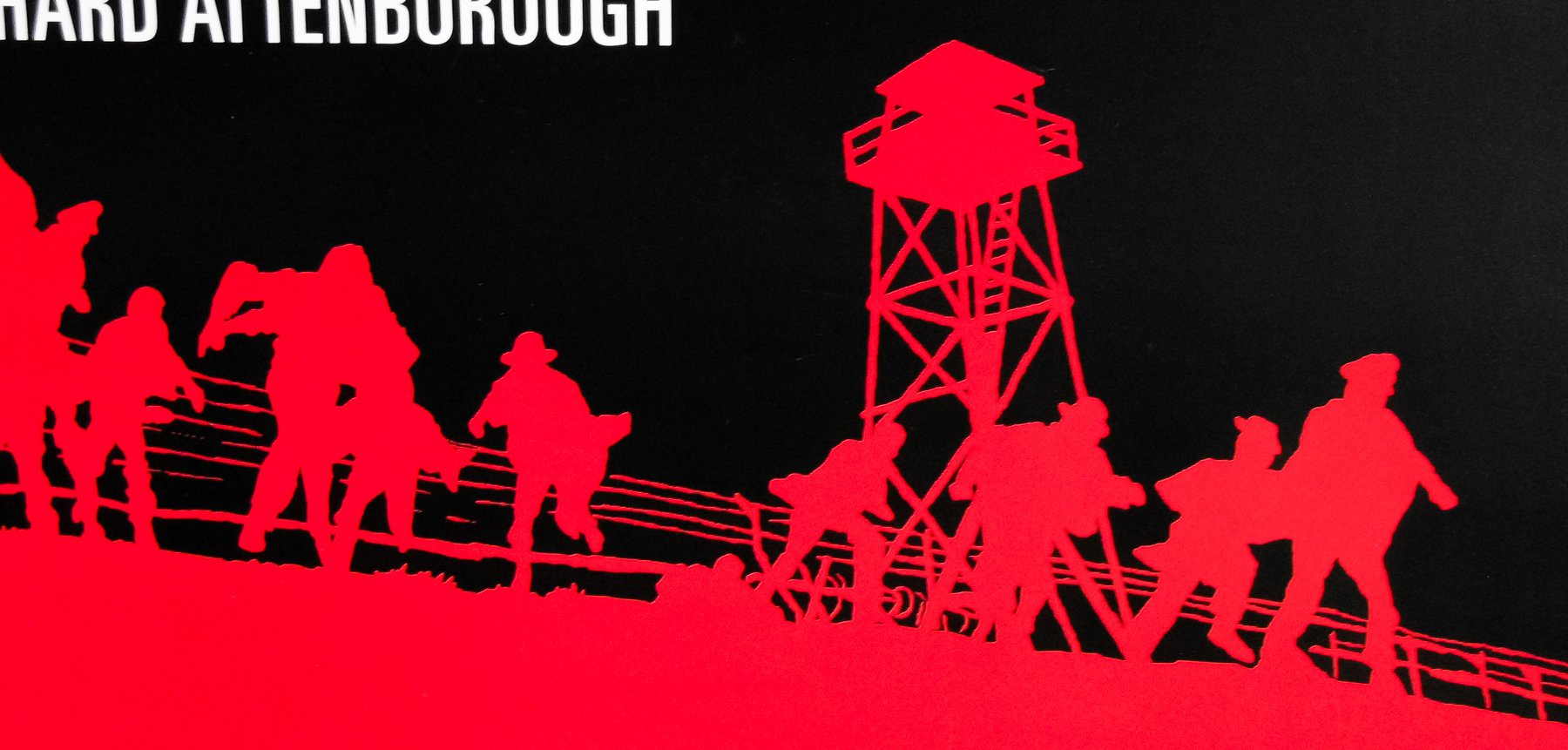
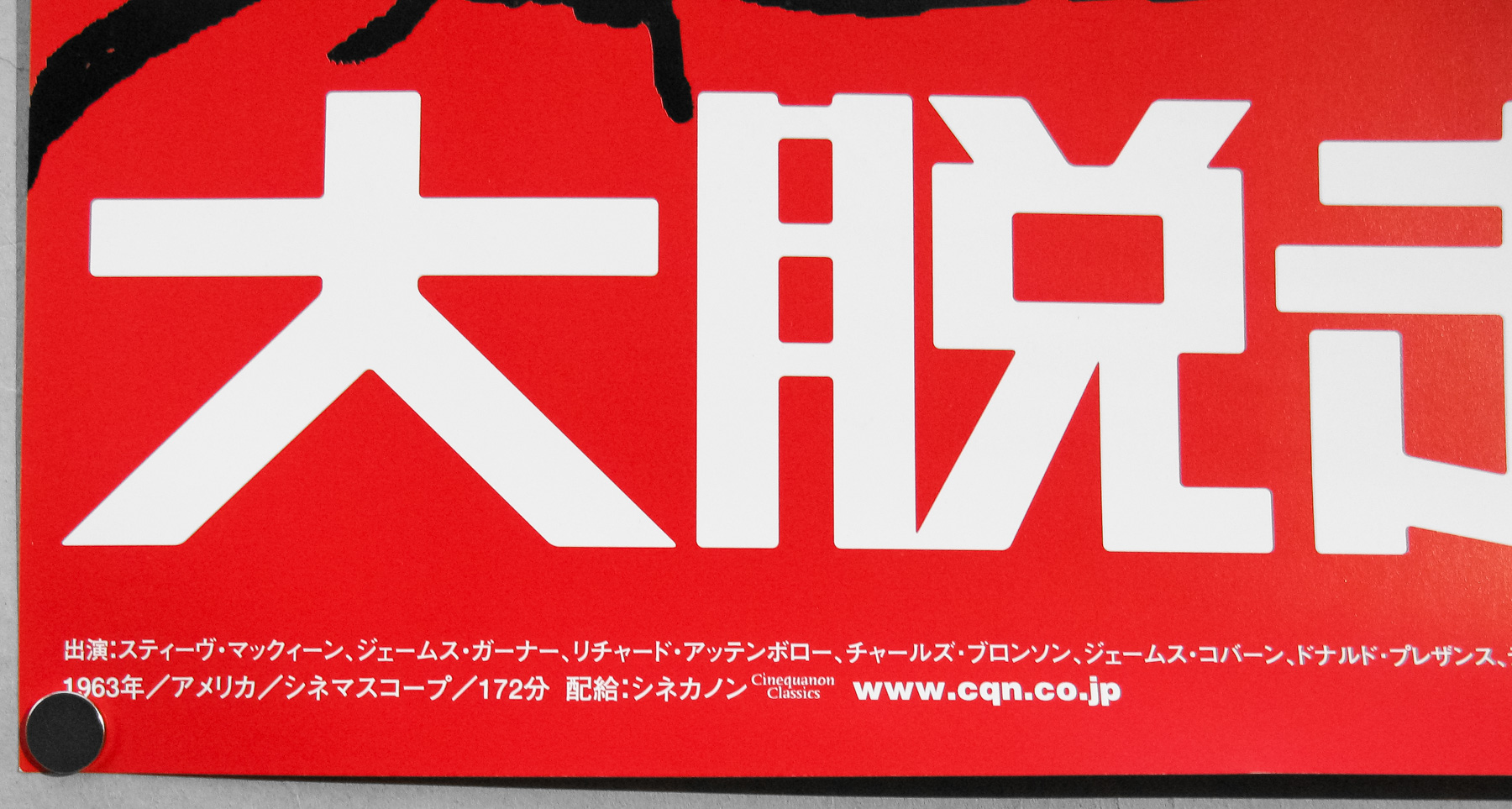
The Great Escape / B1 / 2004 re-release / Japan

17.05.11

Poster Poster

The Man With The Golden Gun / B2 / Japan

16.06.14

Poster Poster

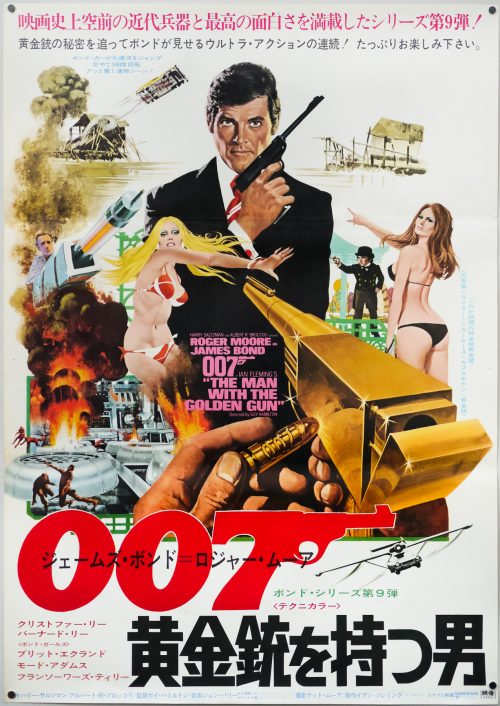
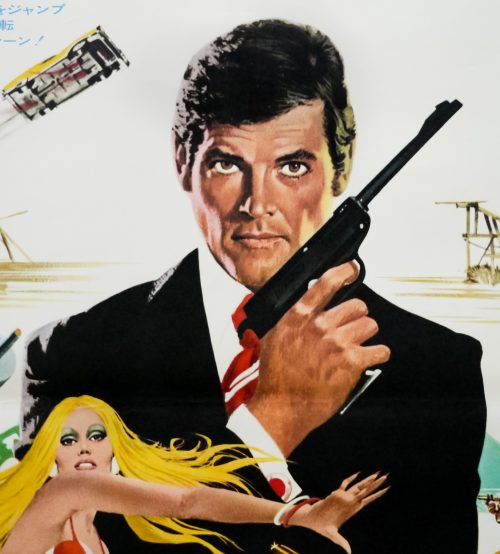
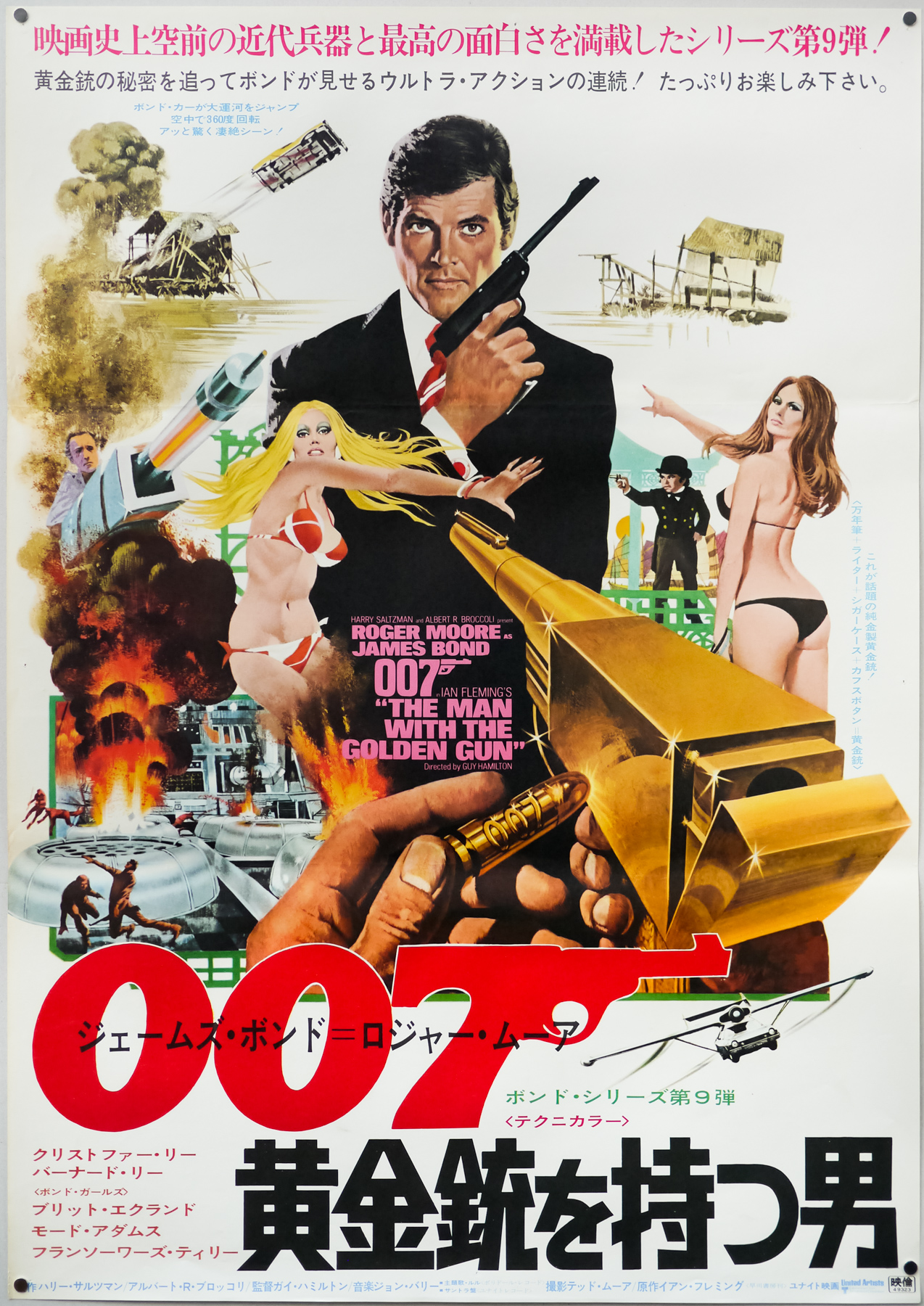
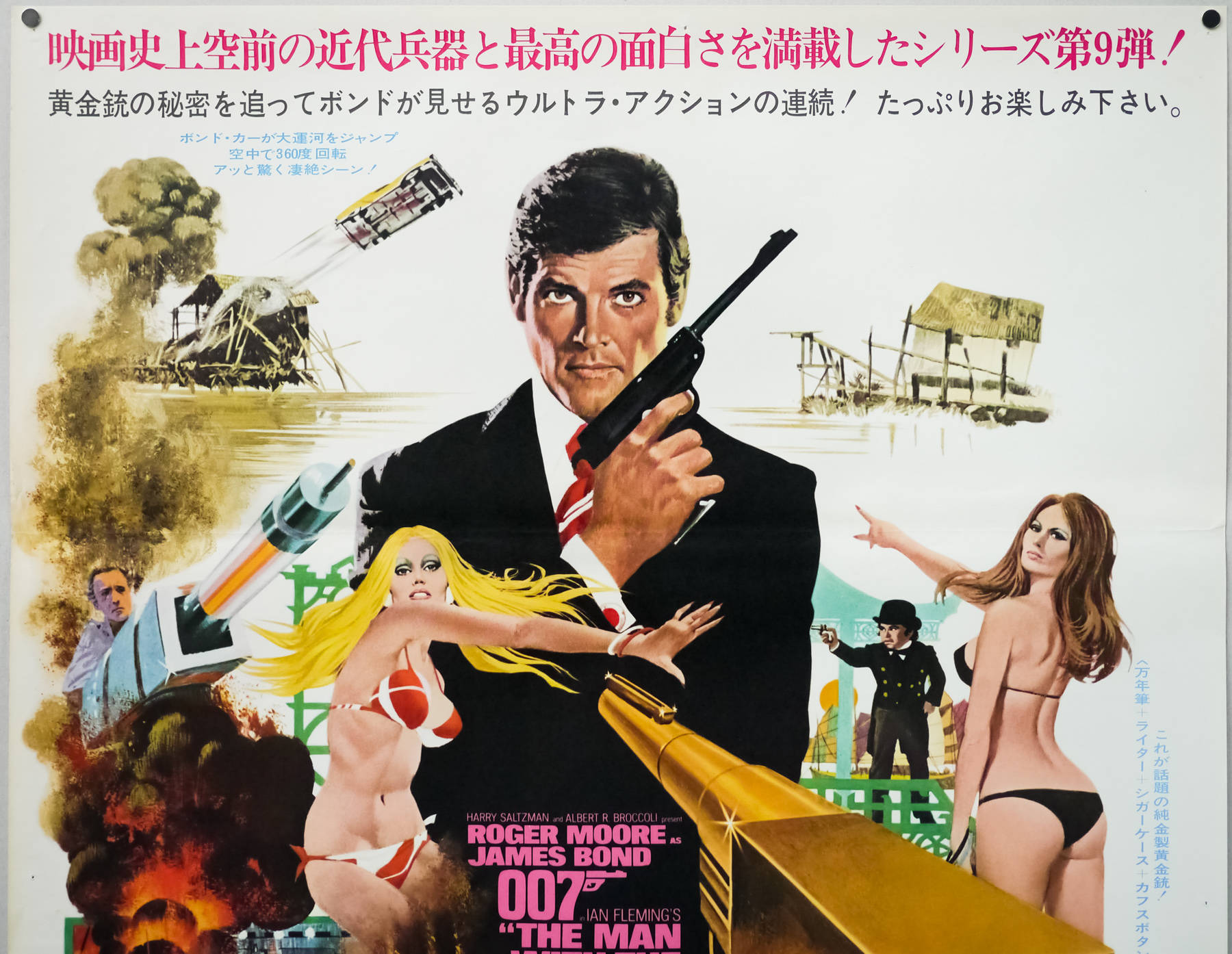
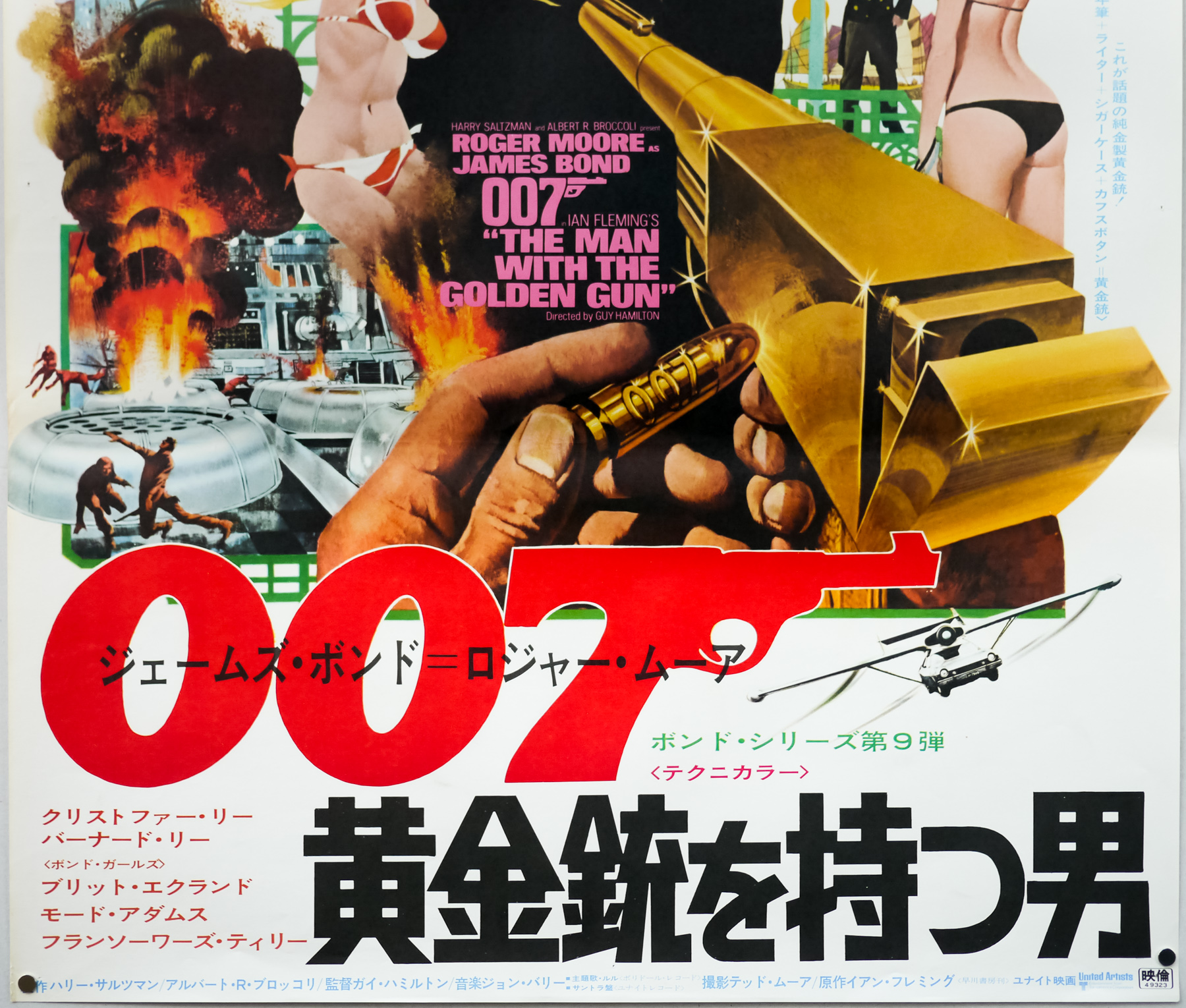
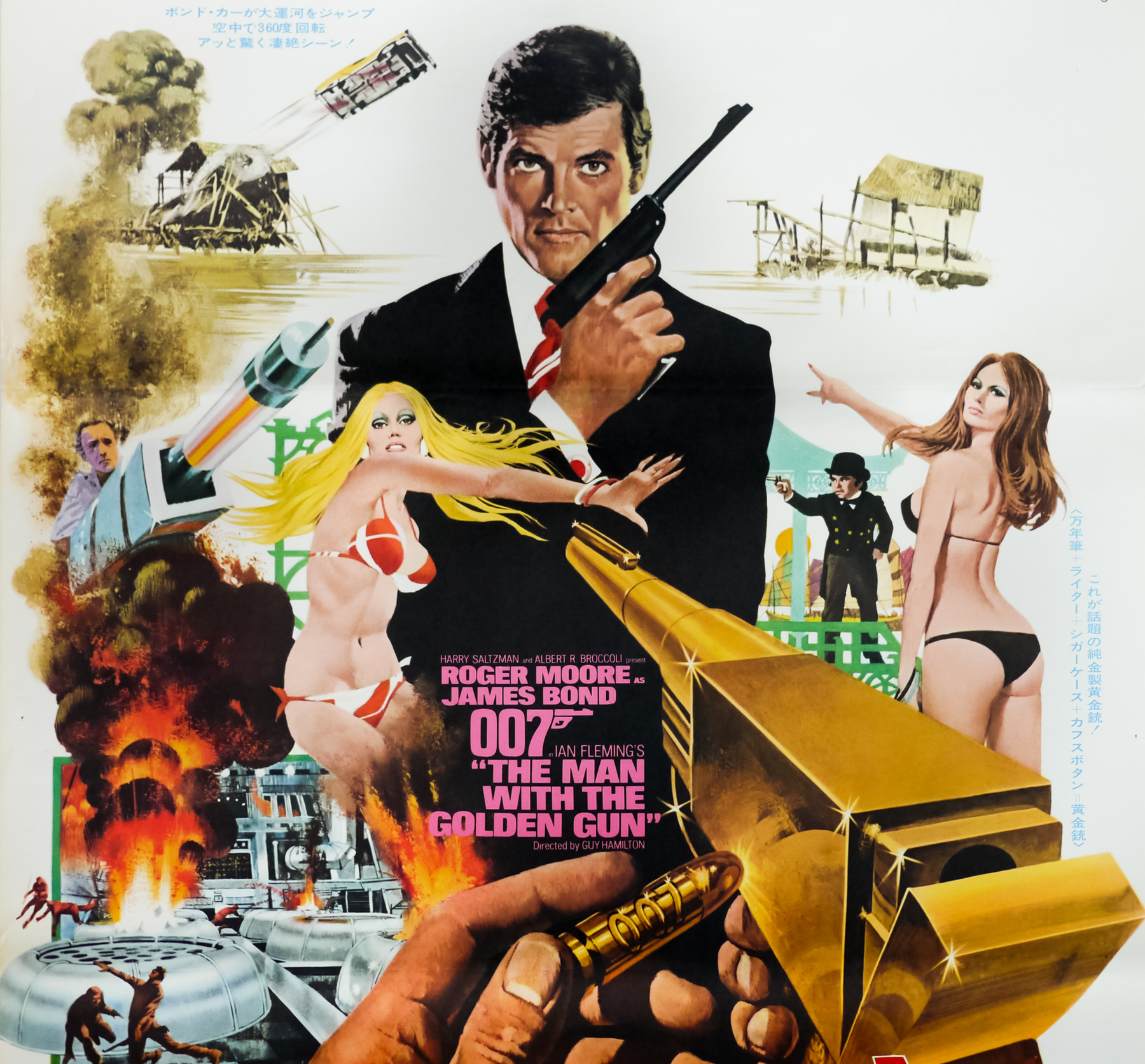
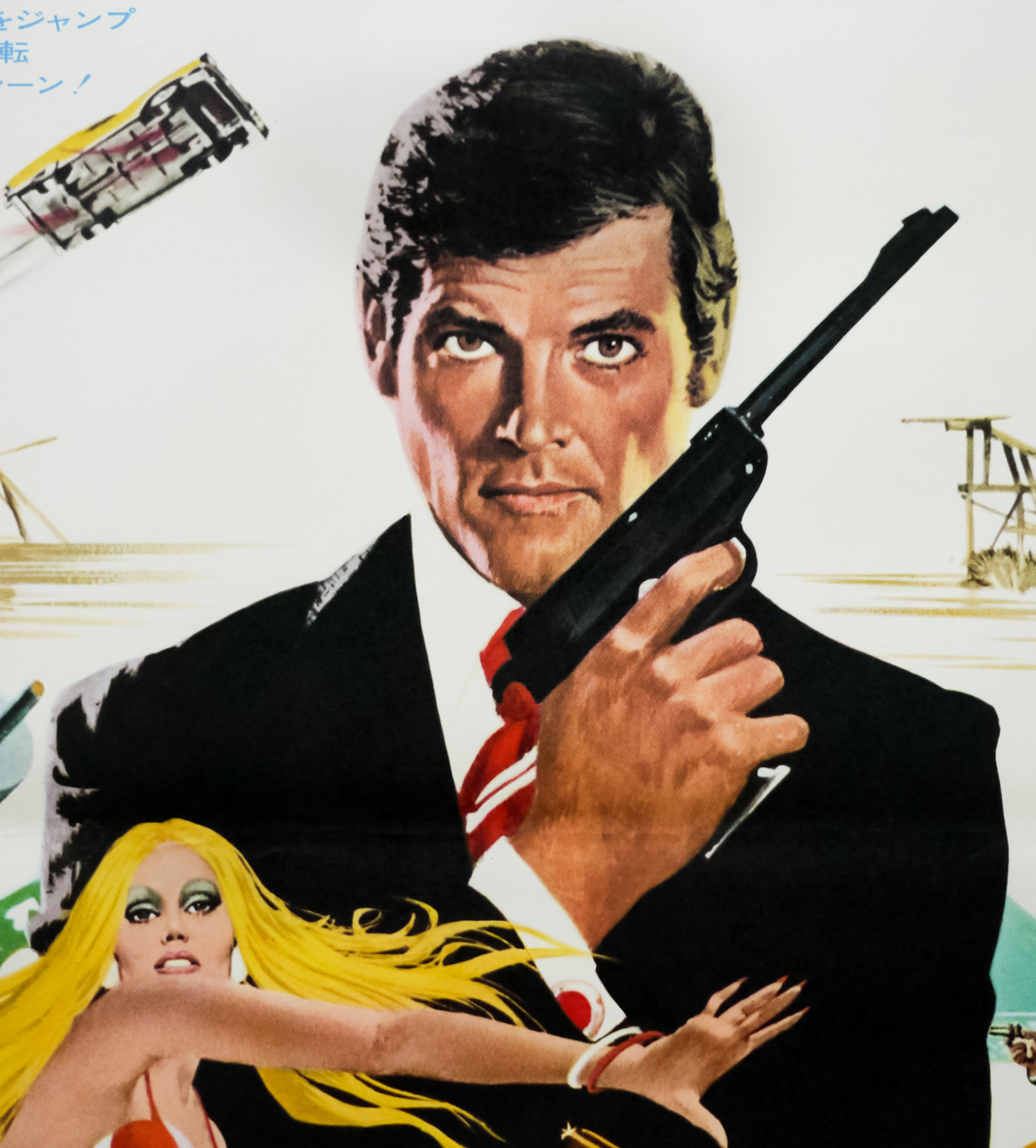
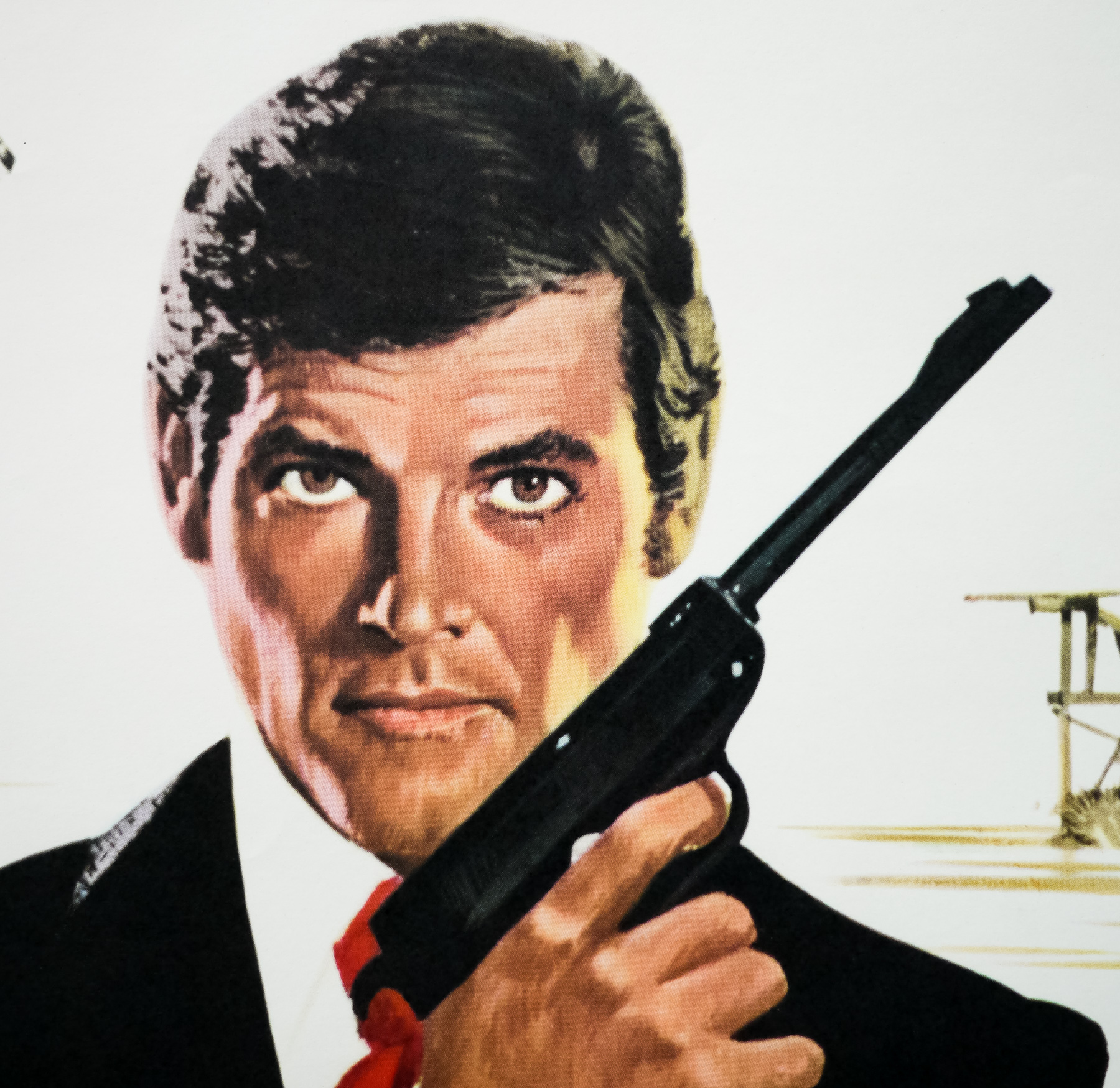
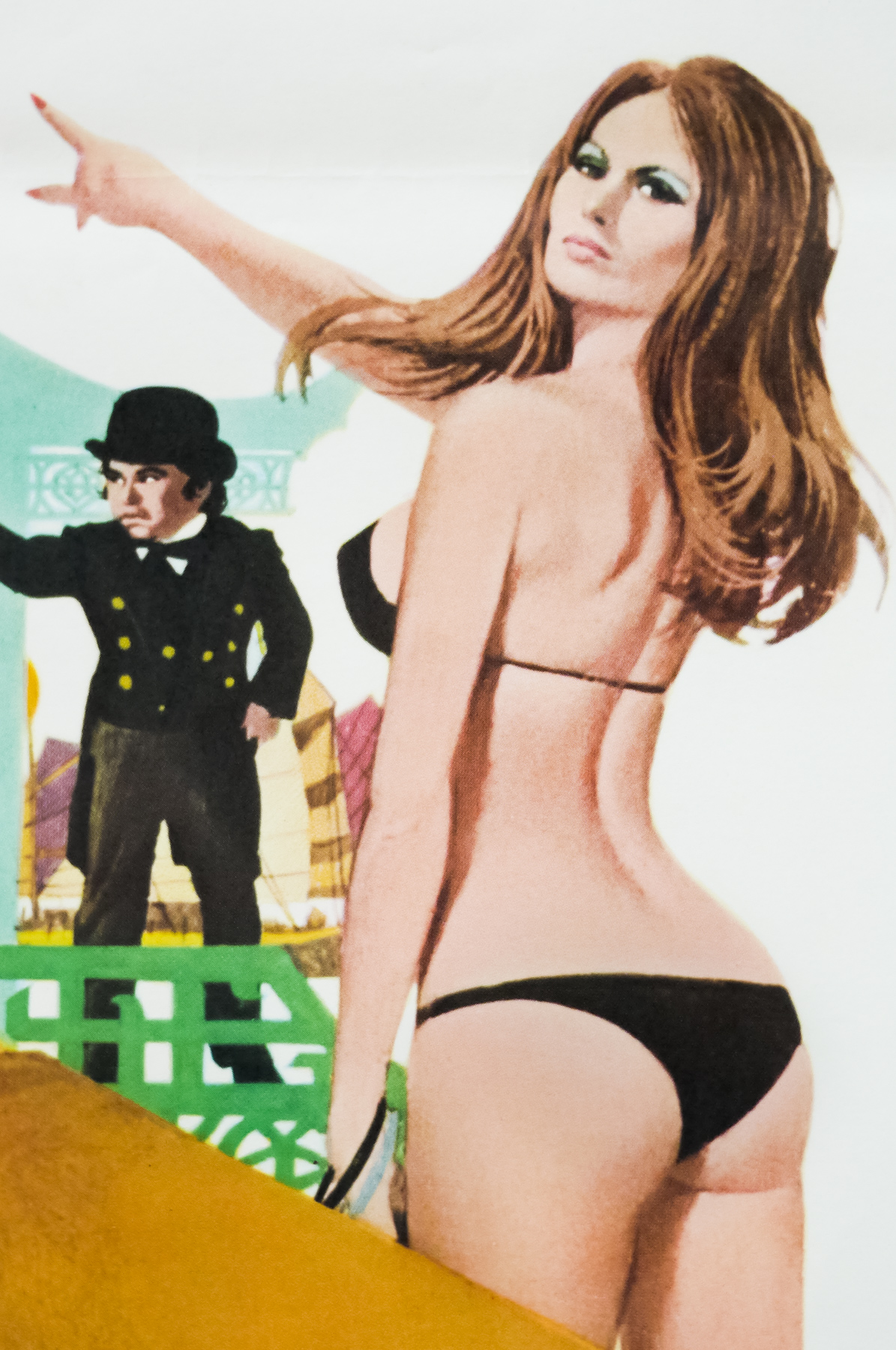
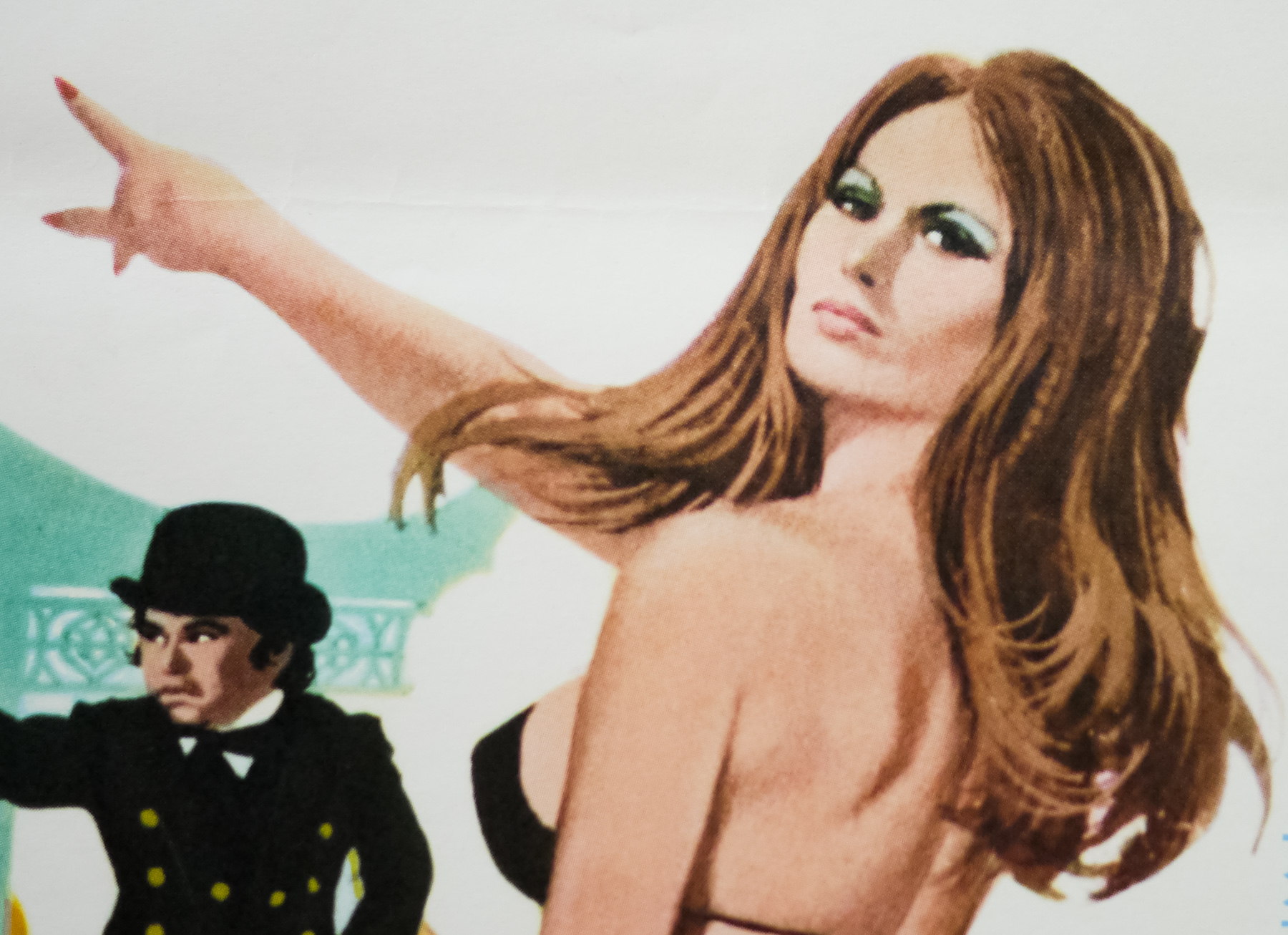
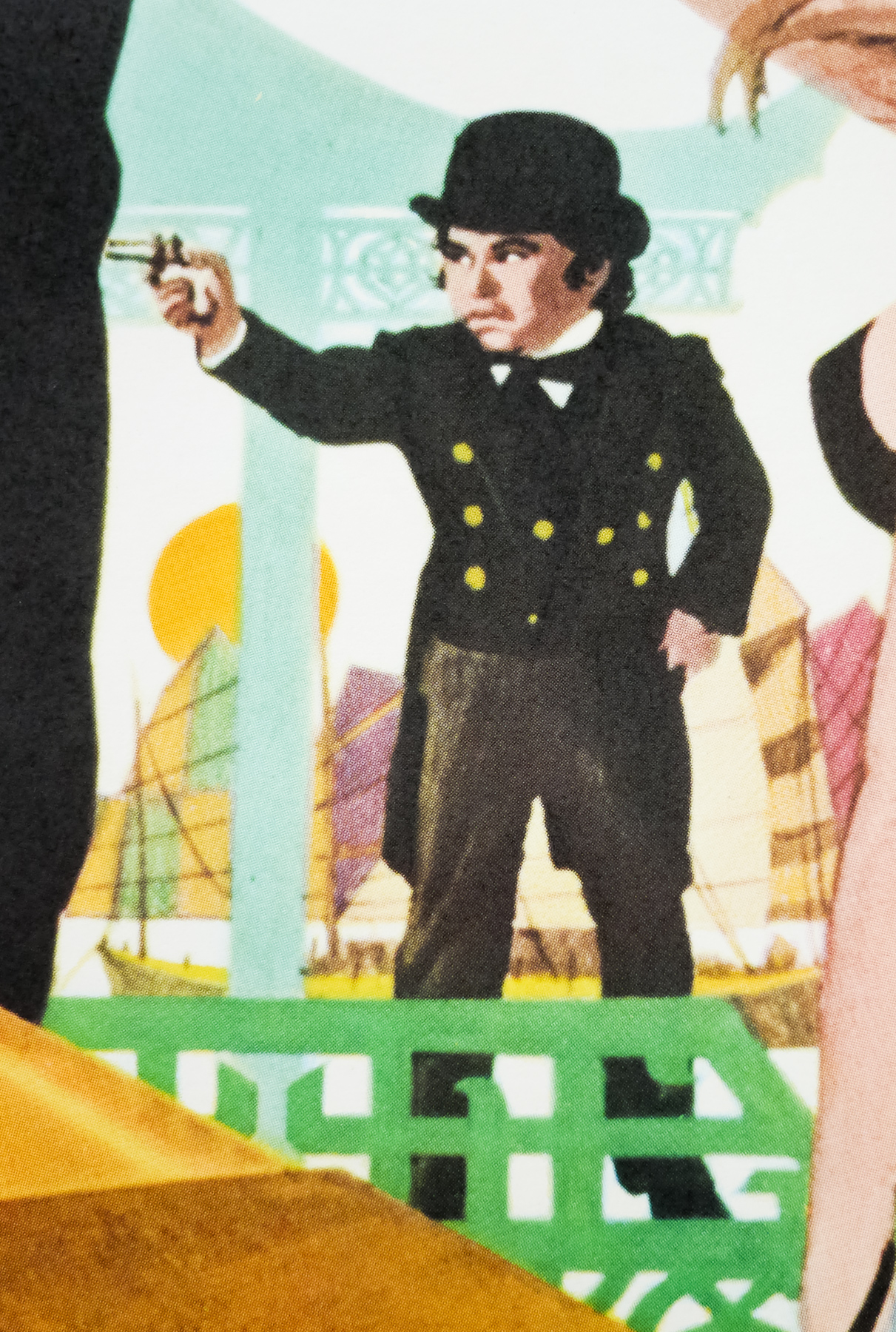
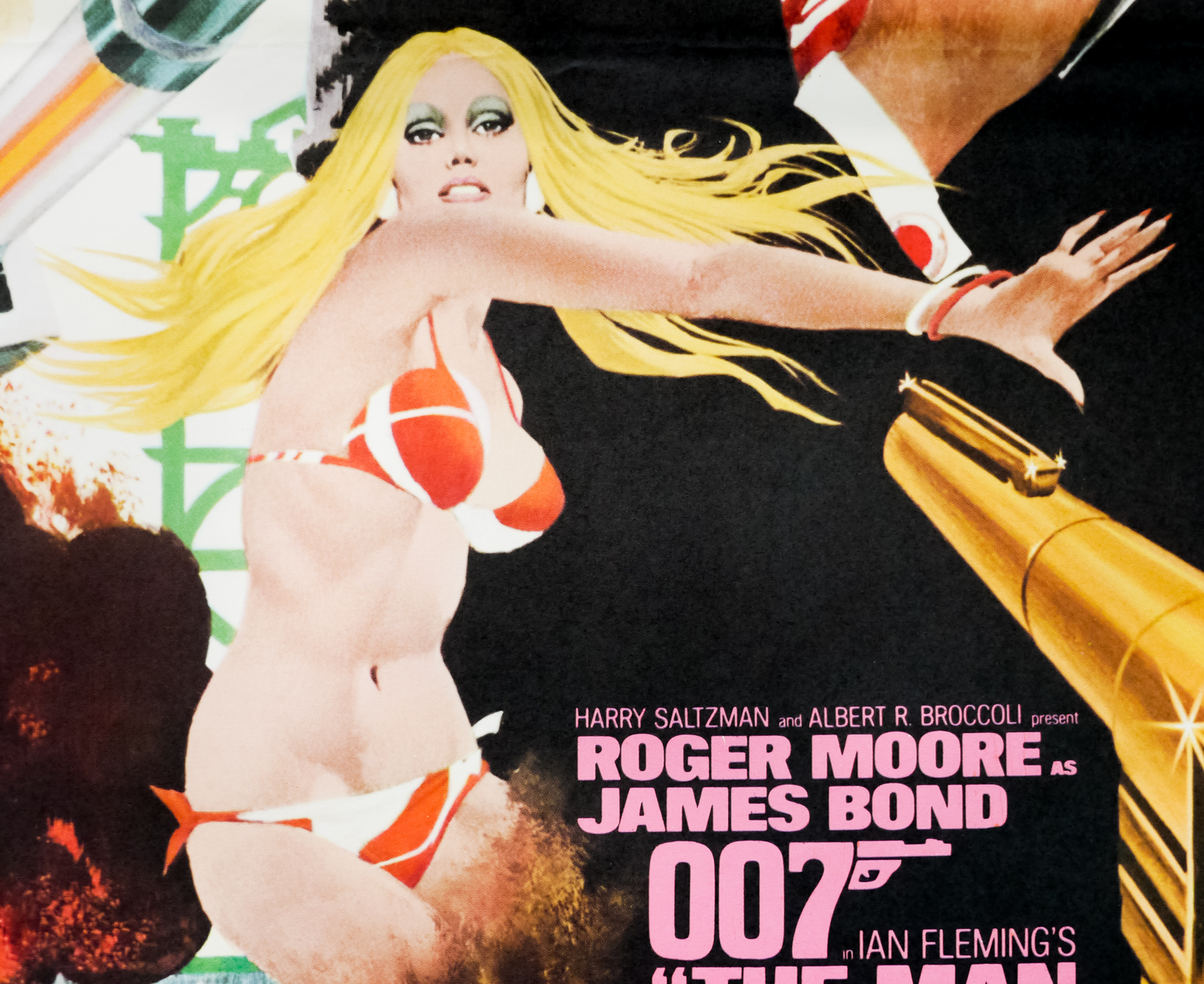
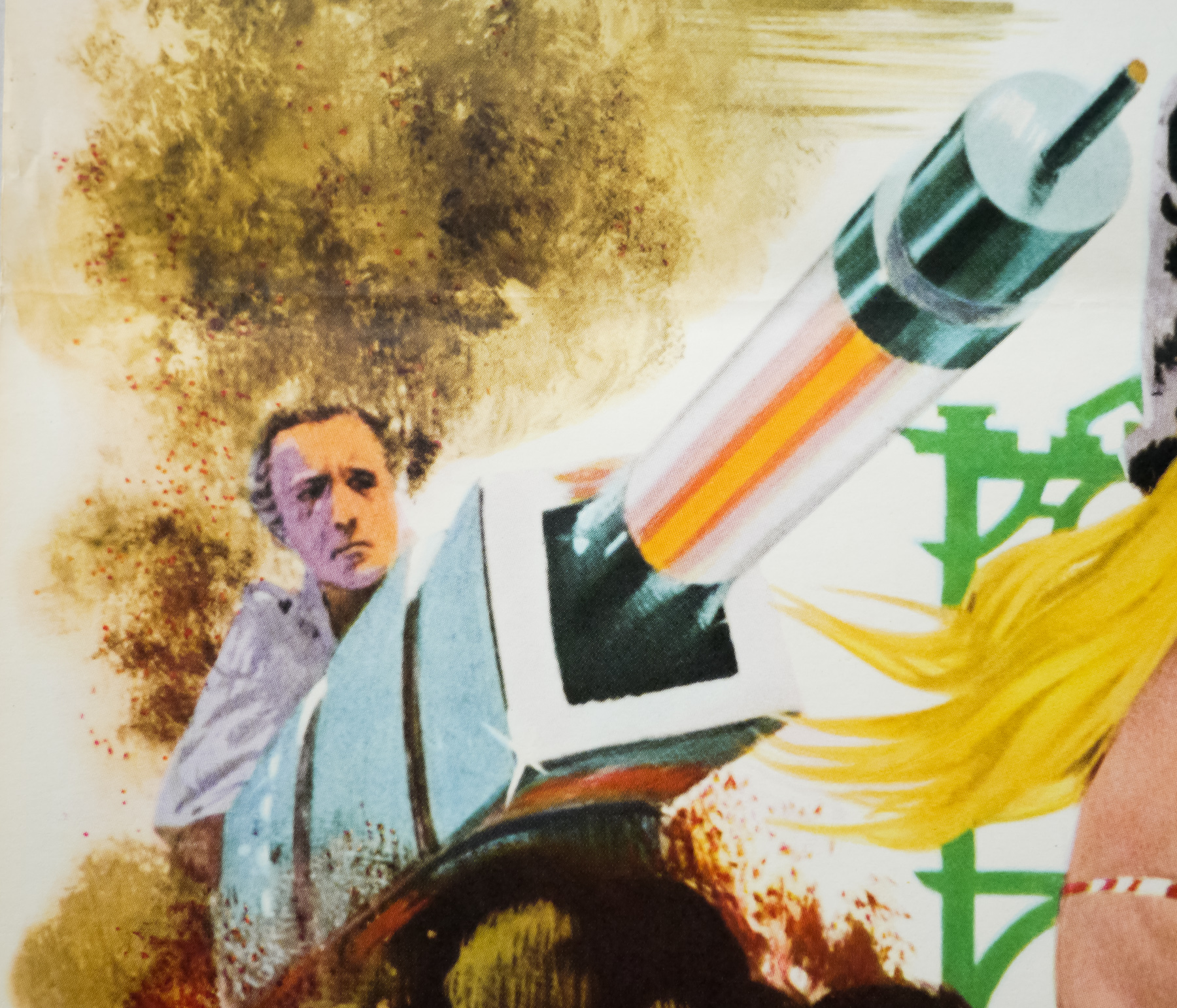
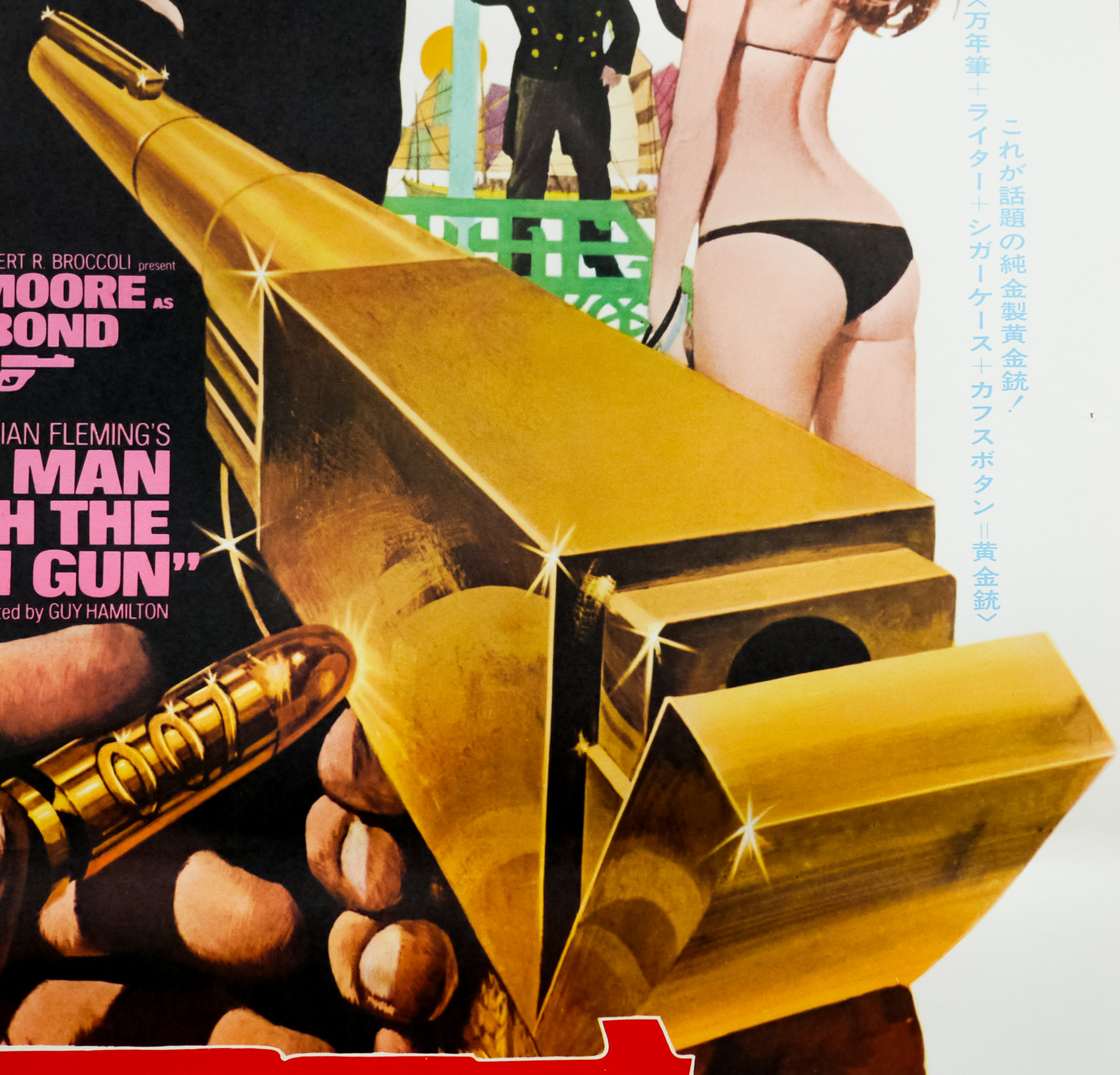
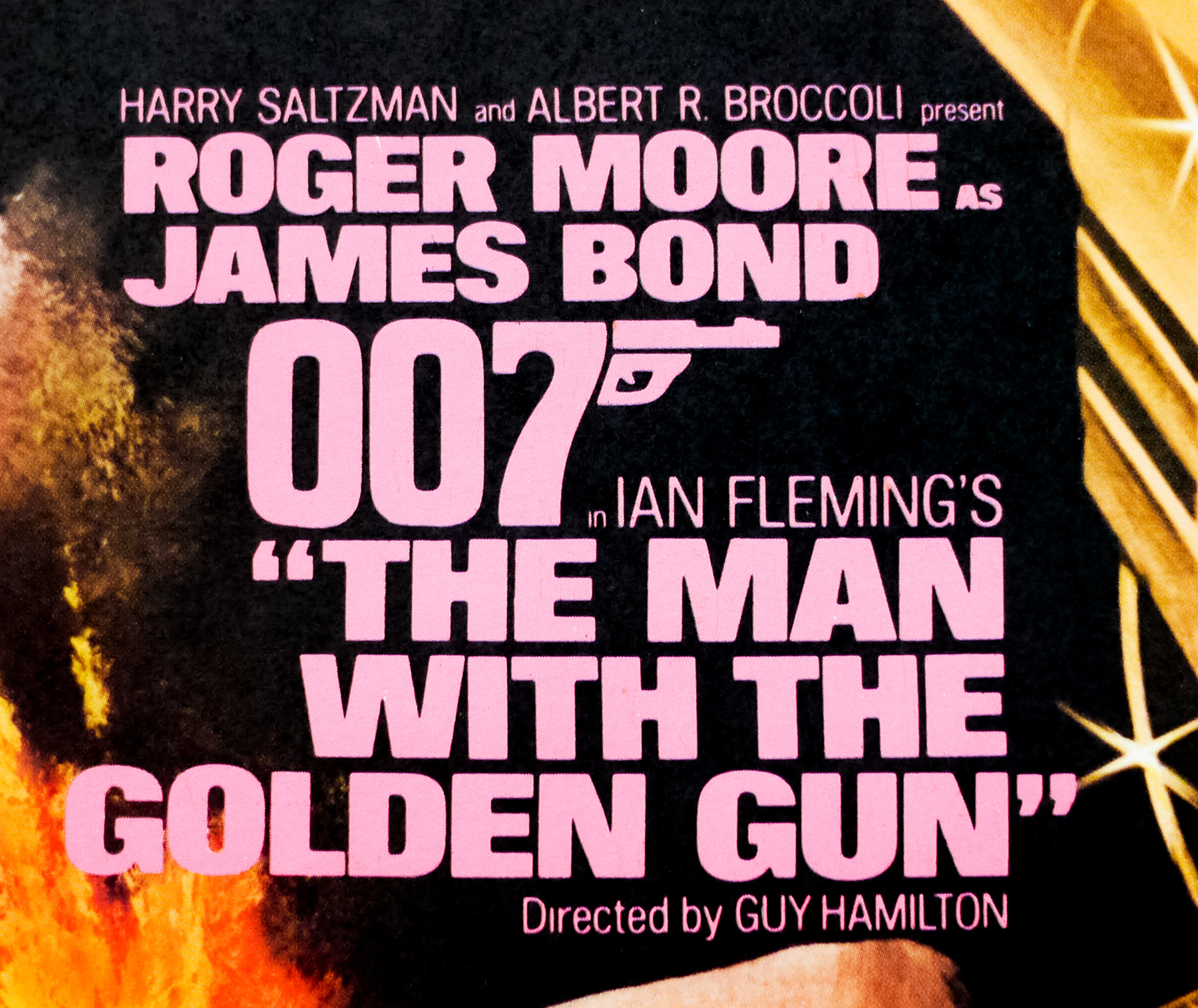
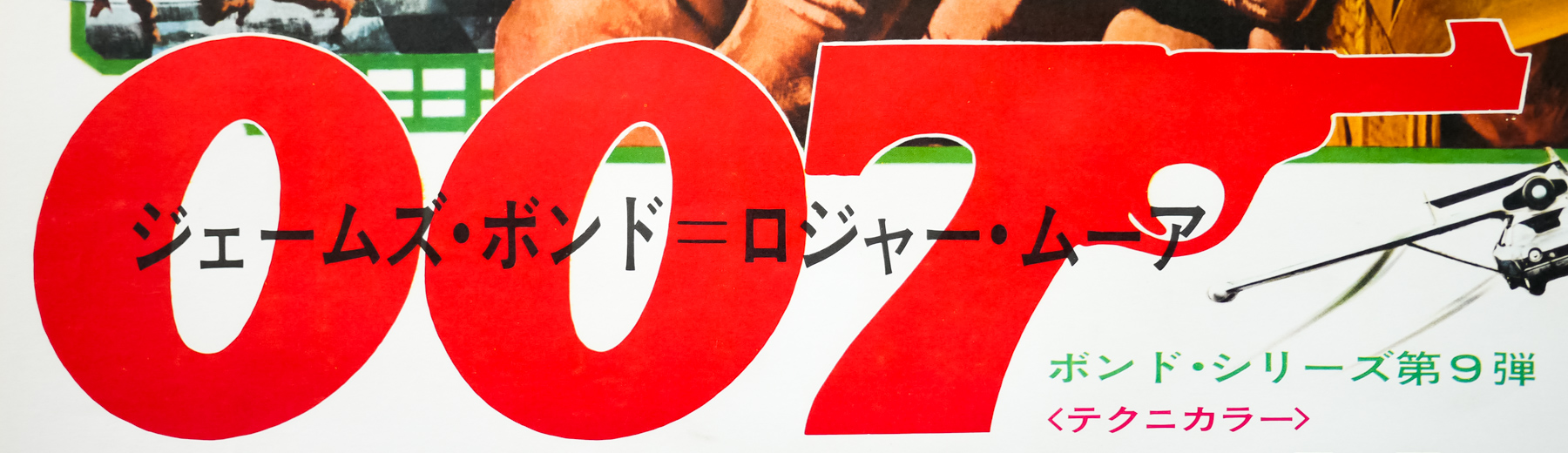
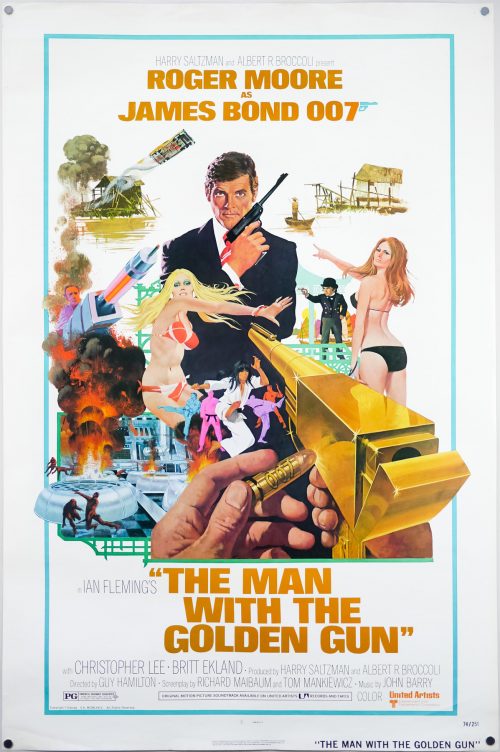
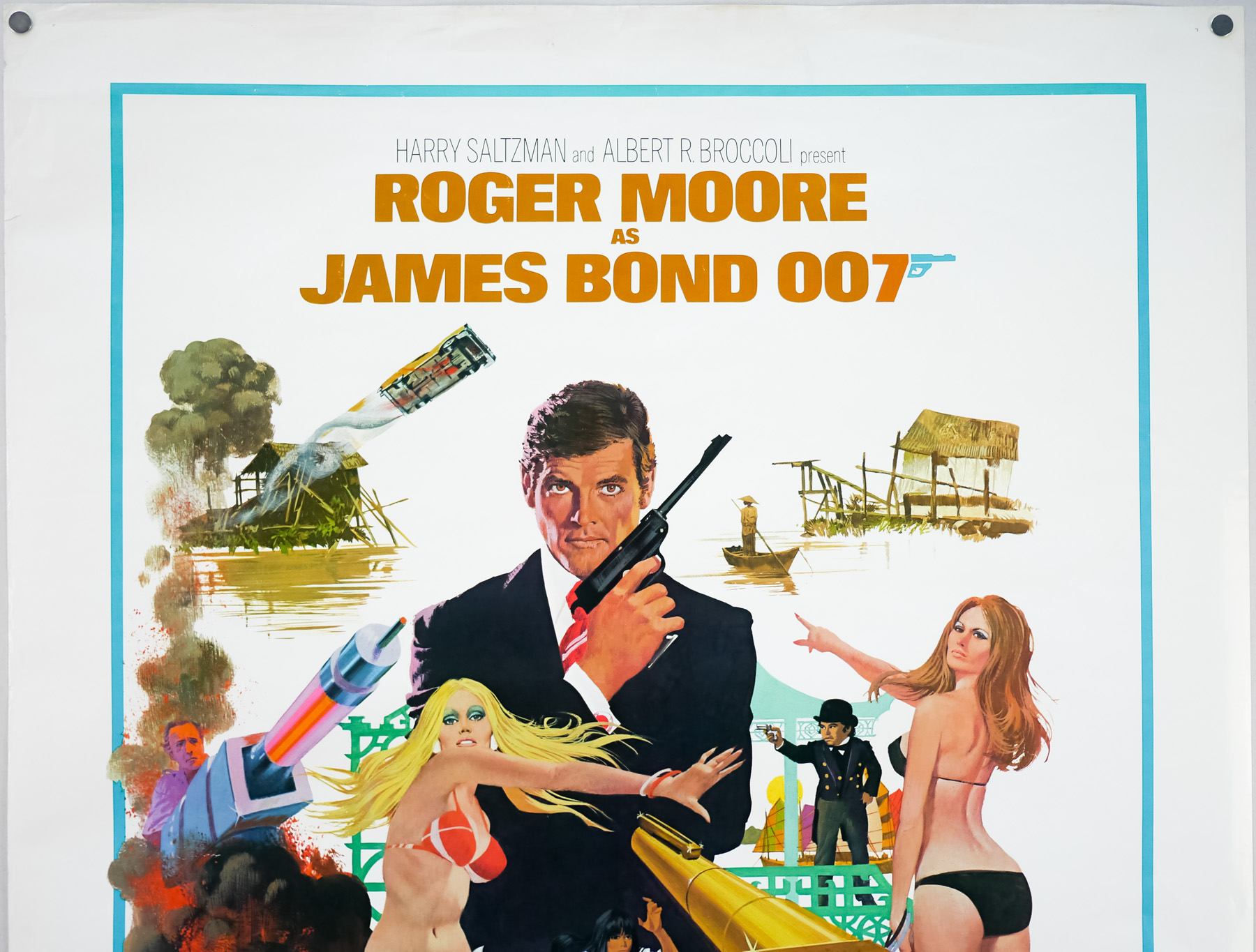
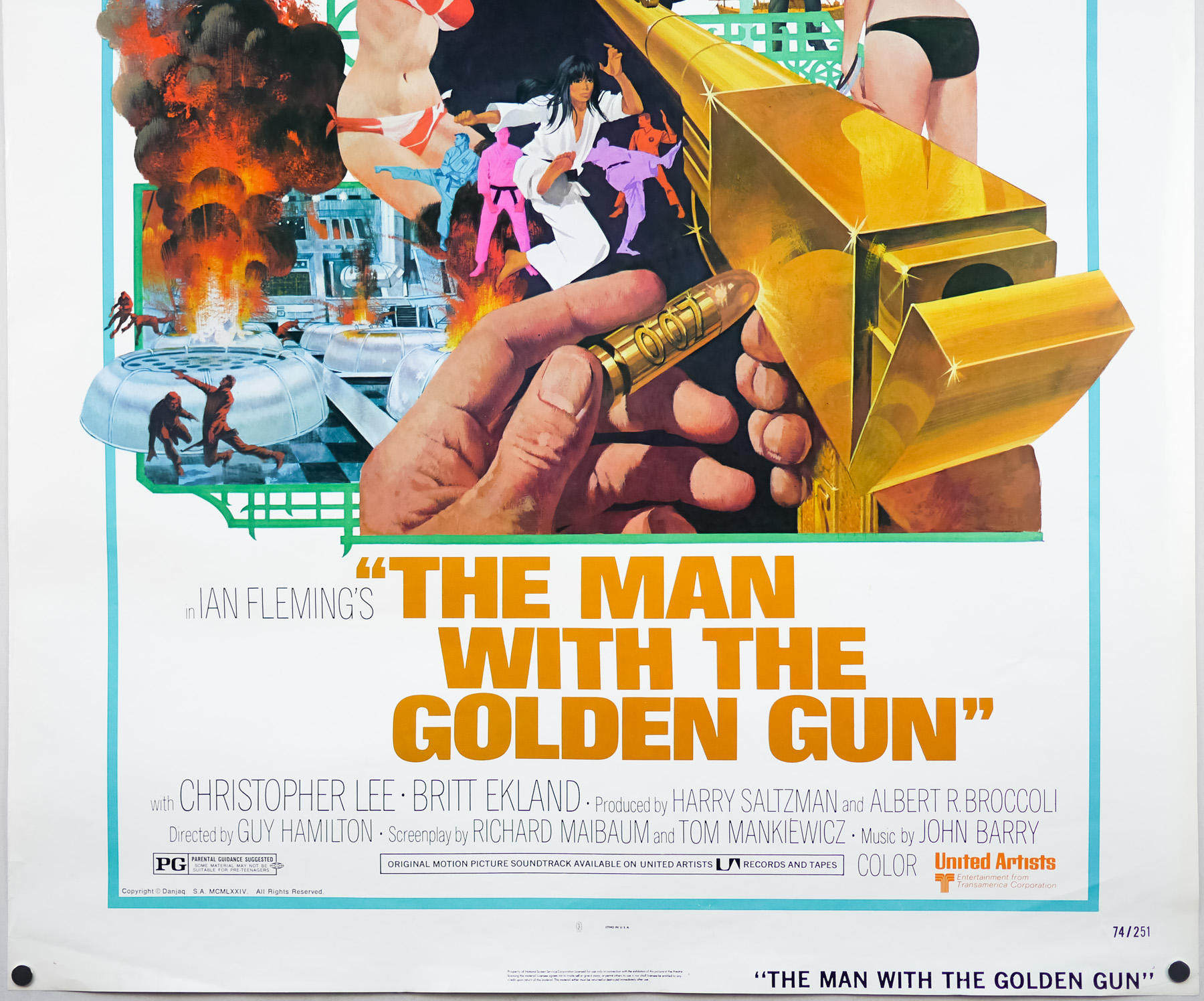
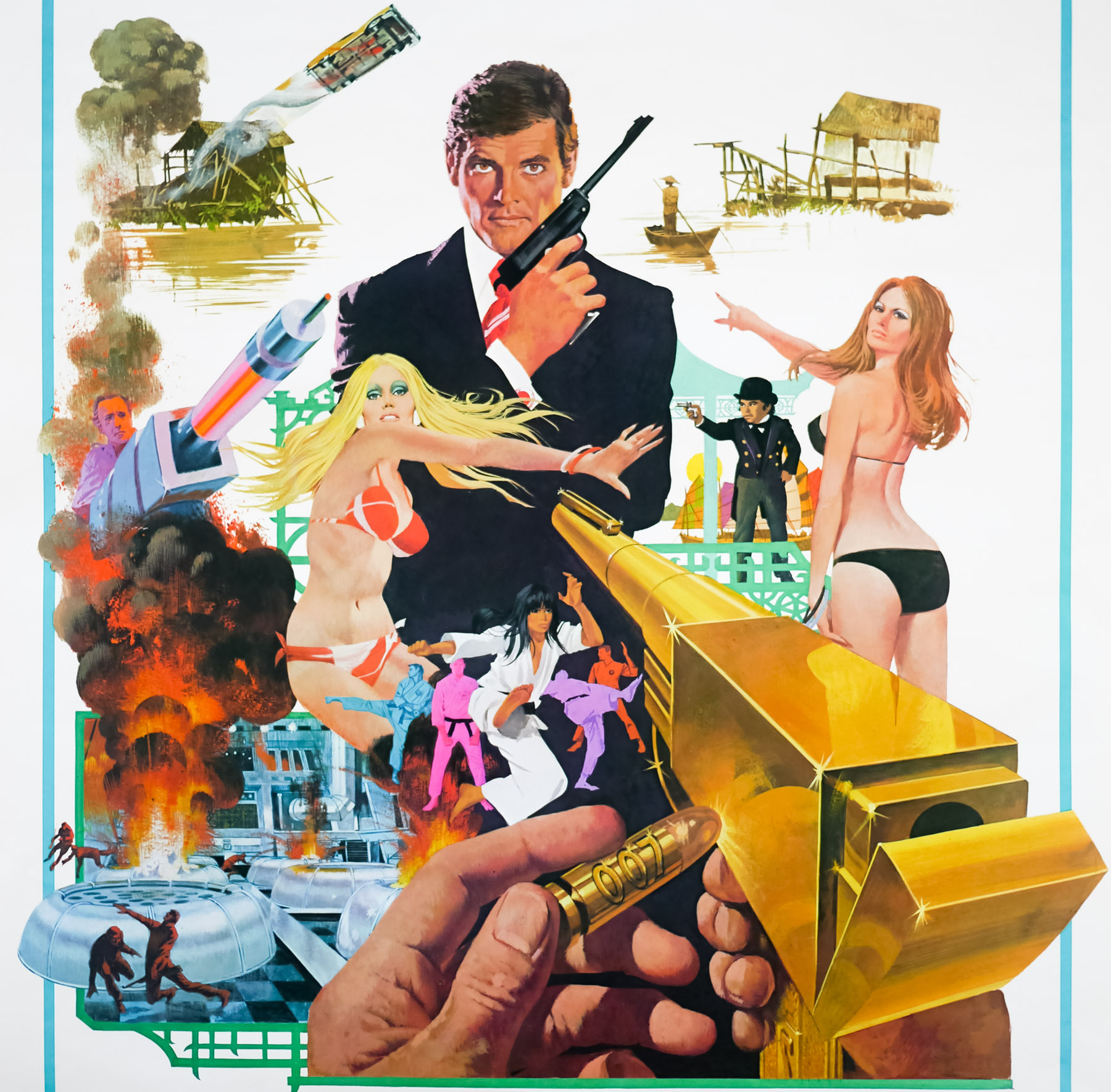
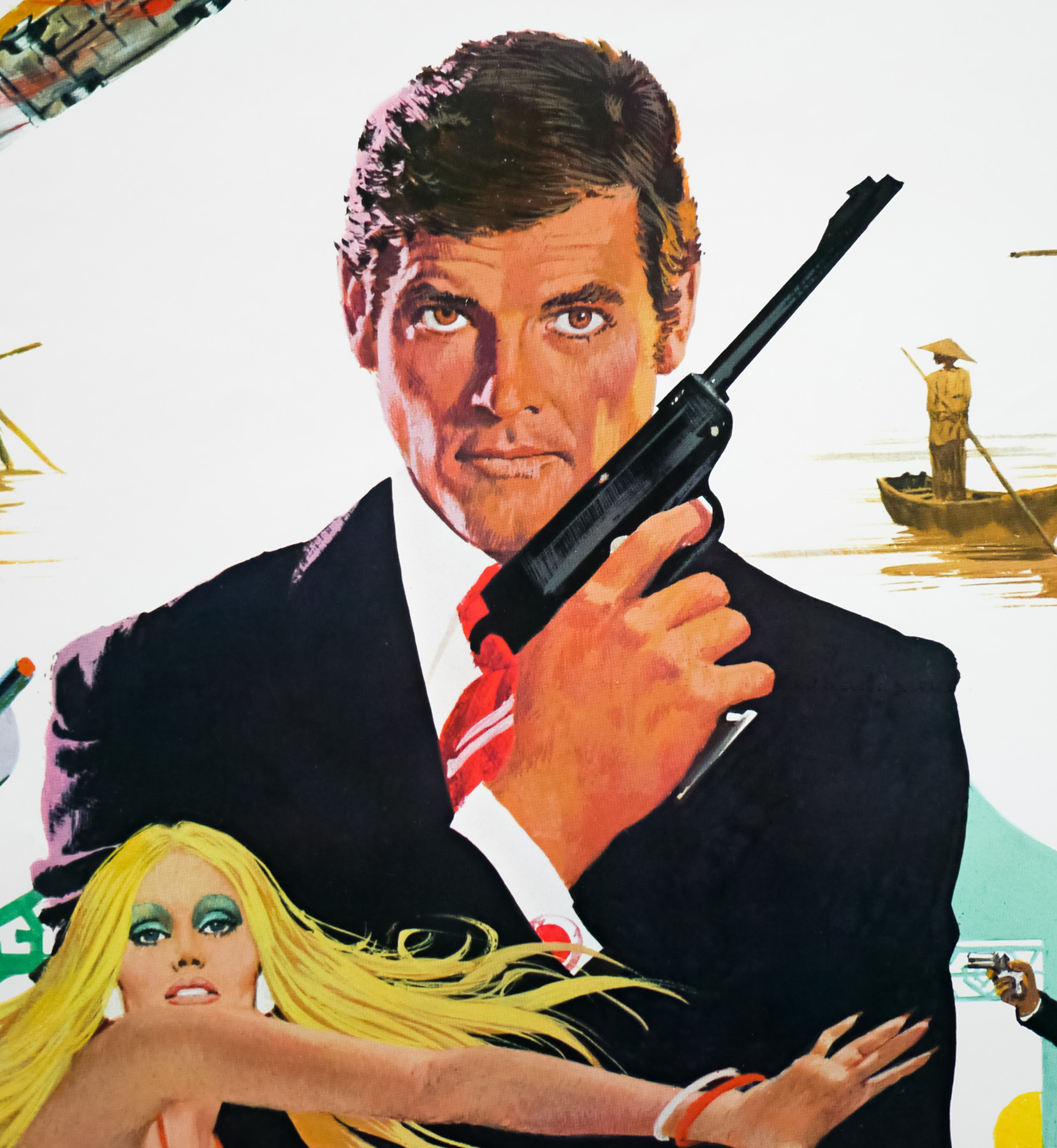
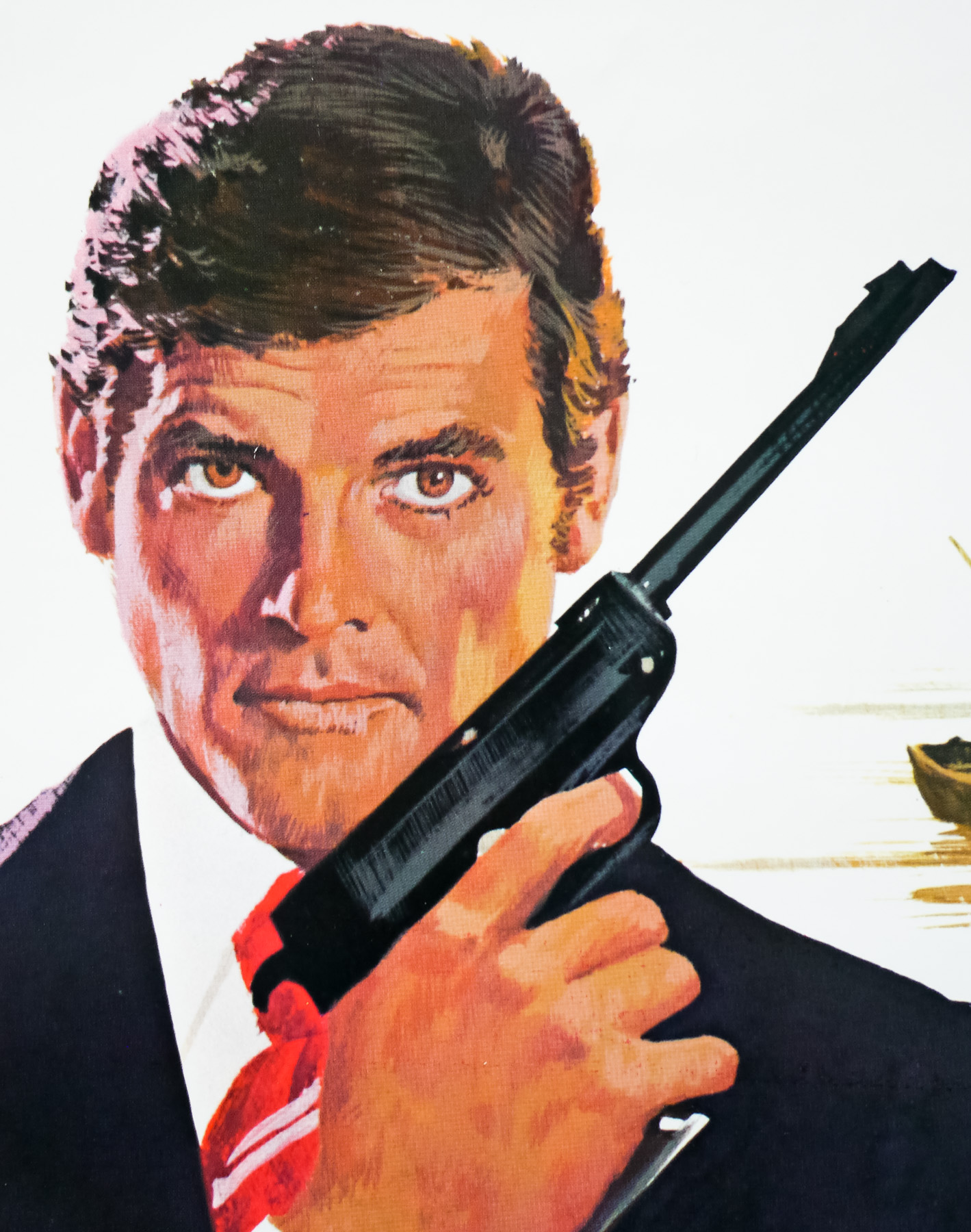
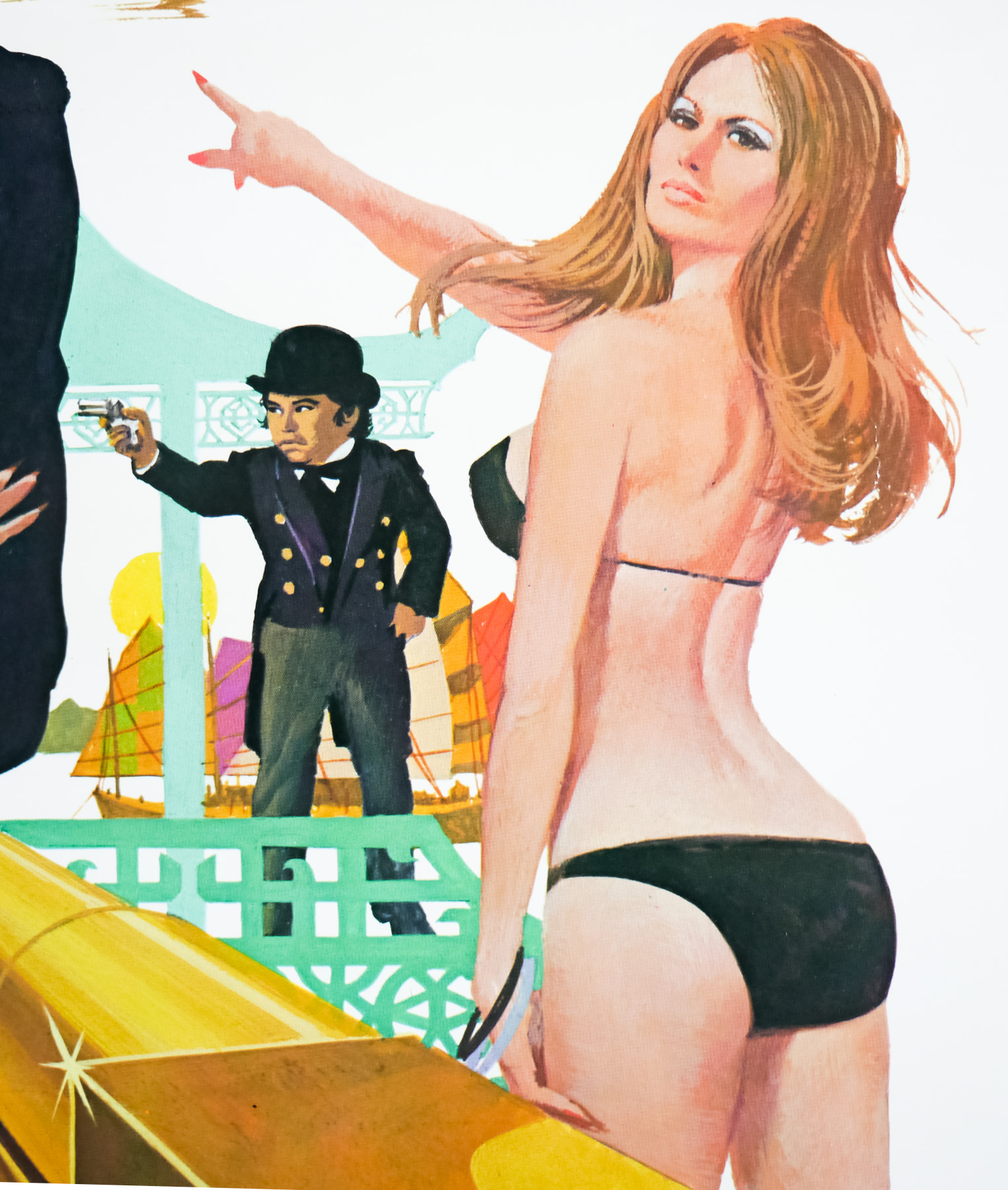
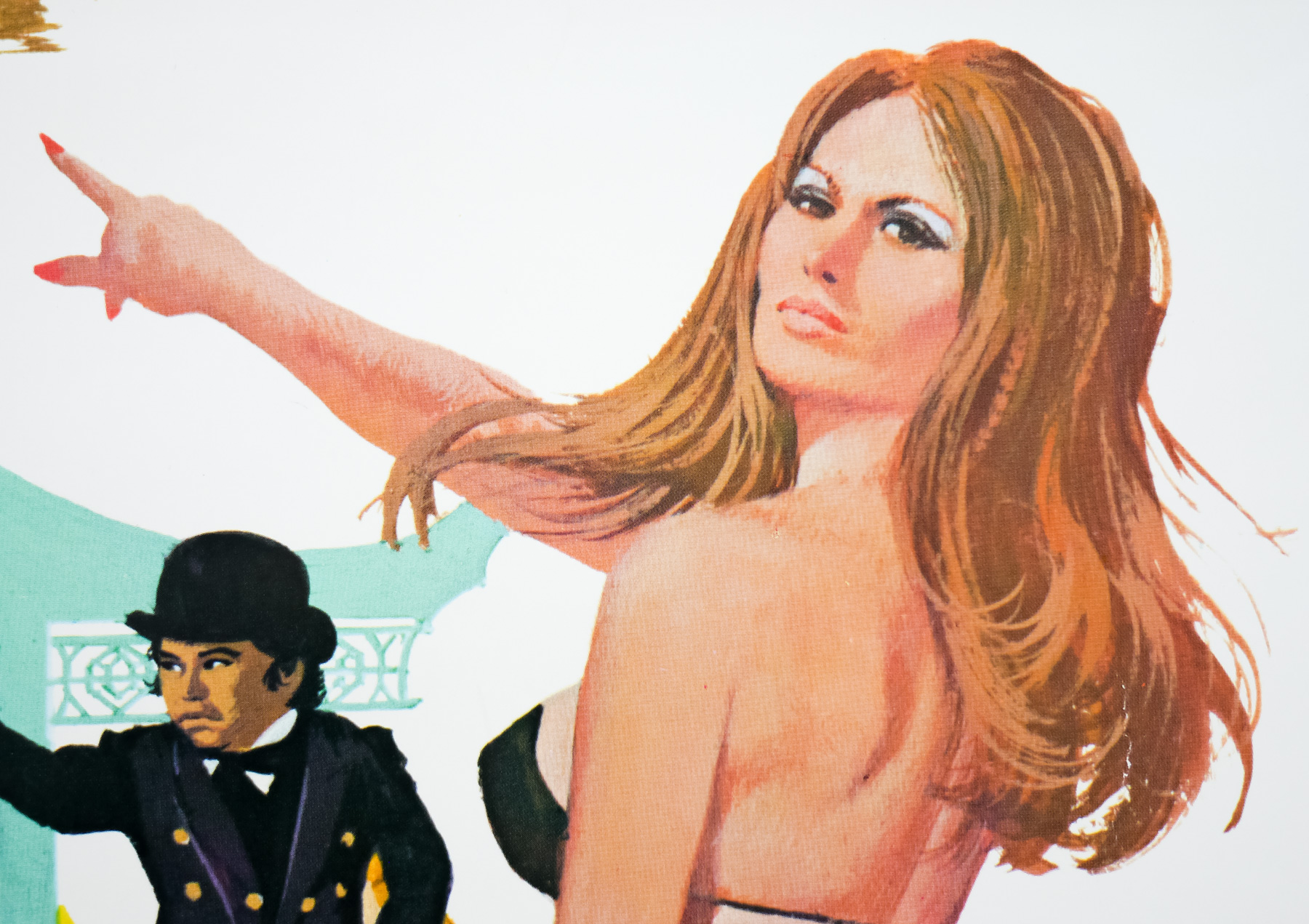
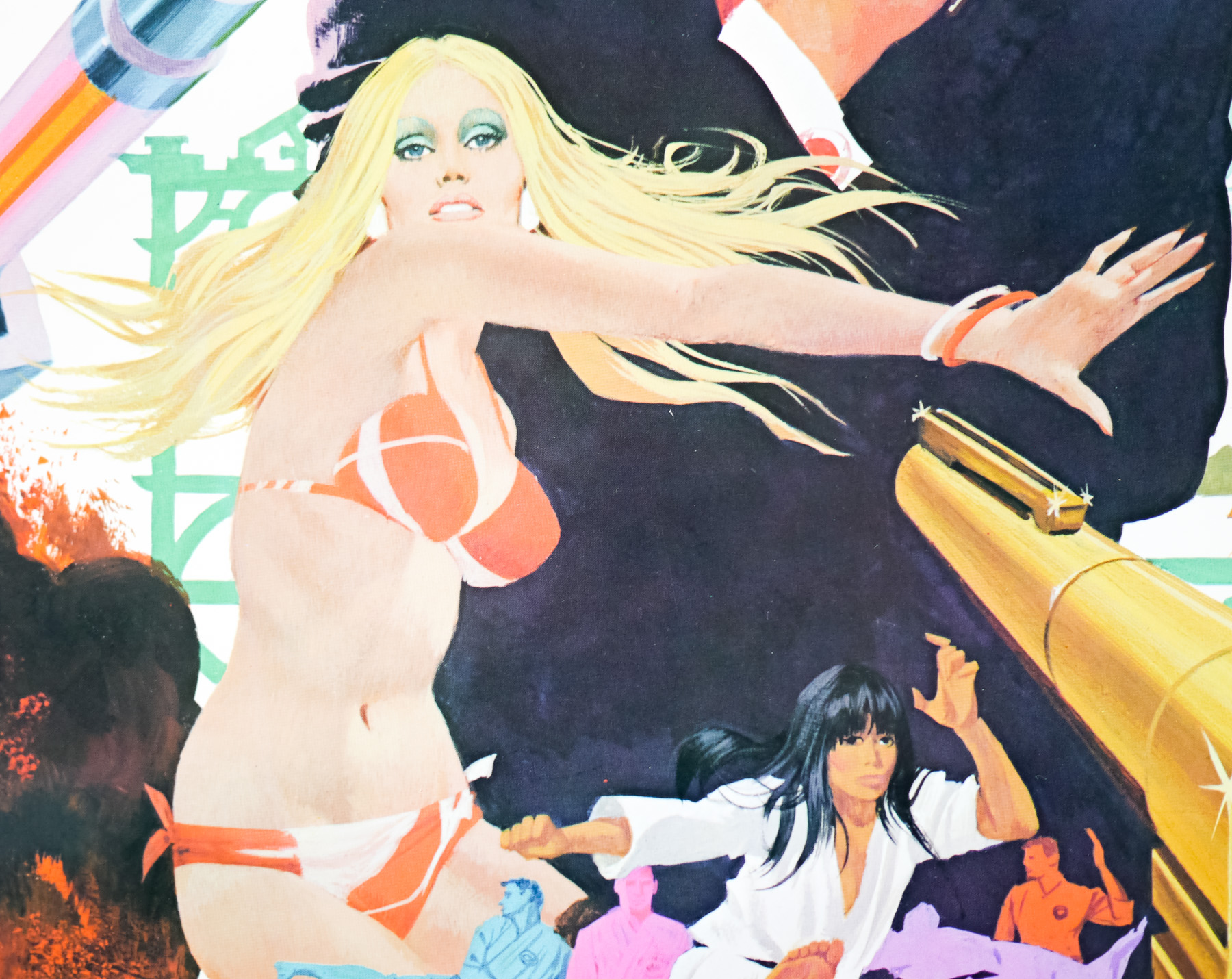
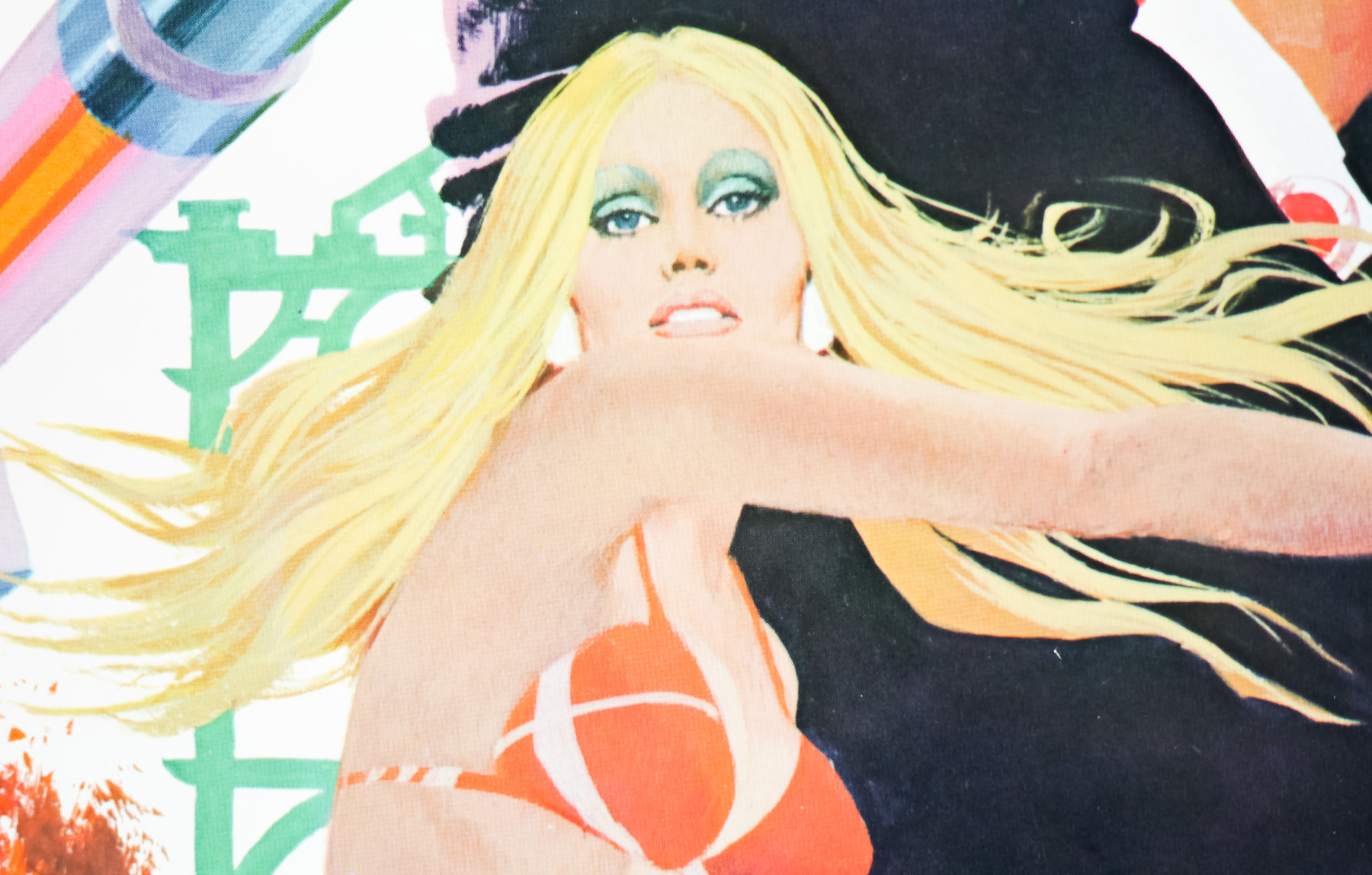
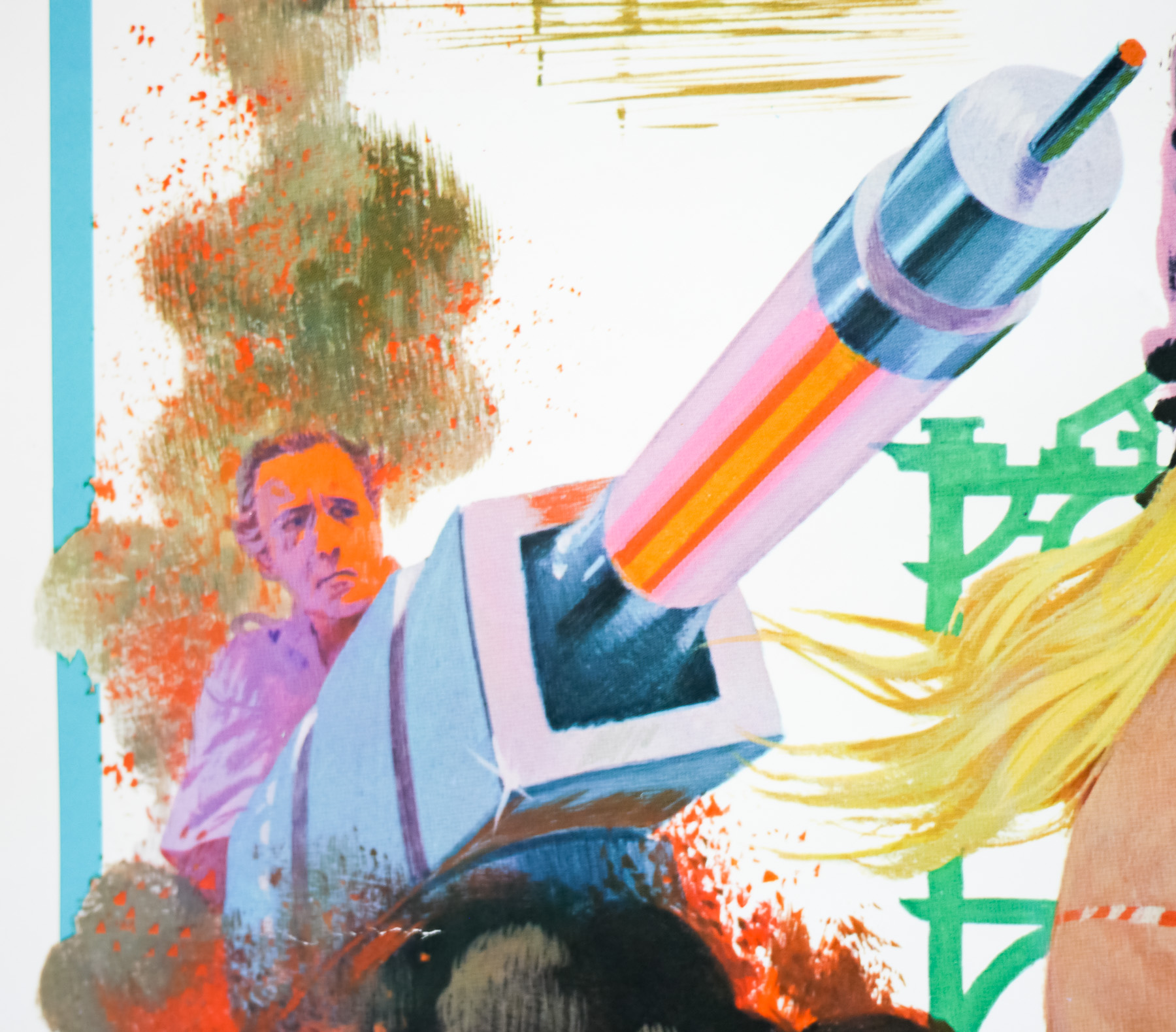
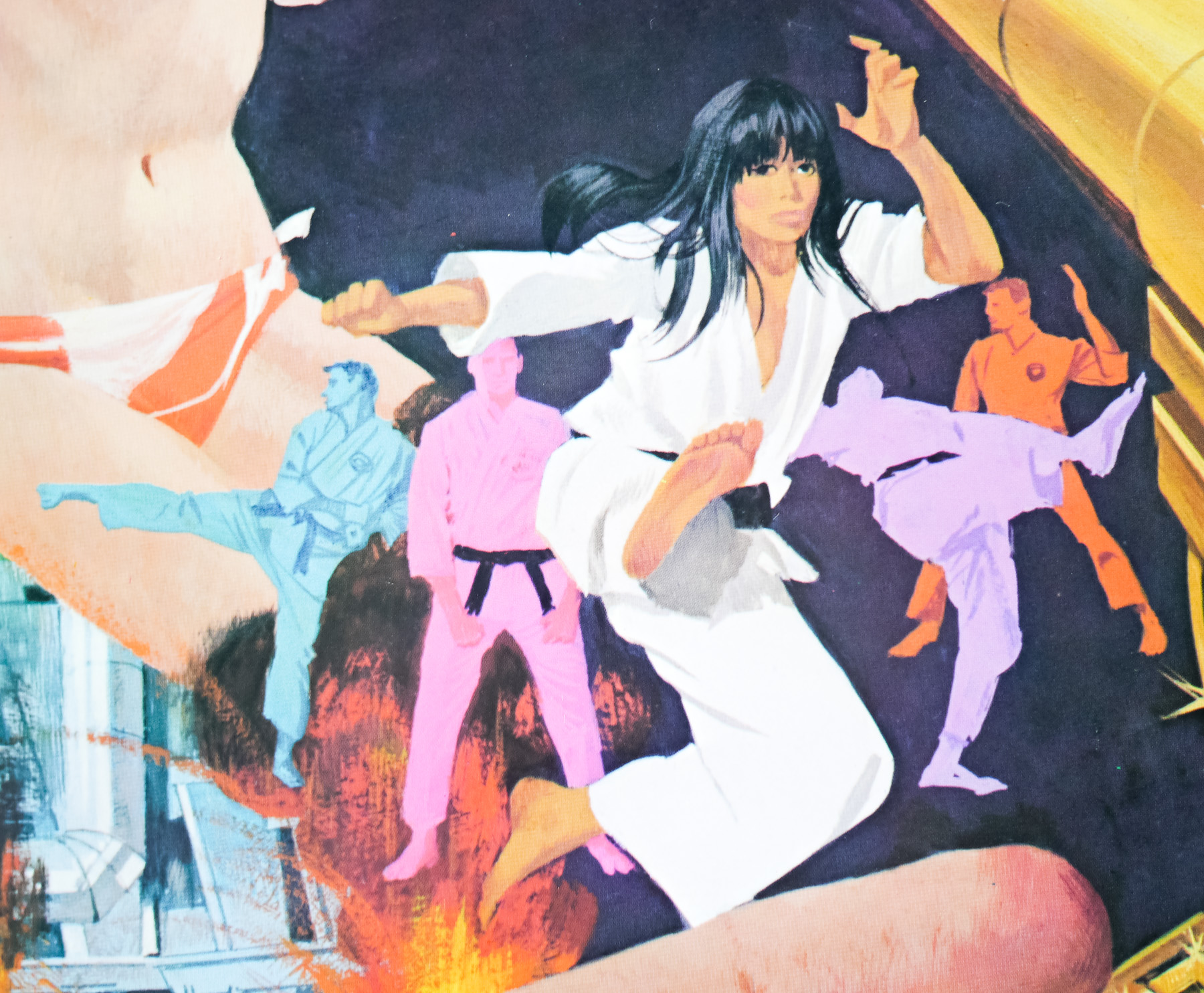
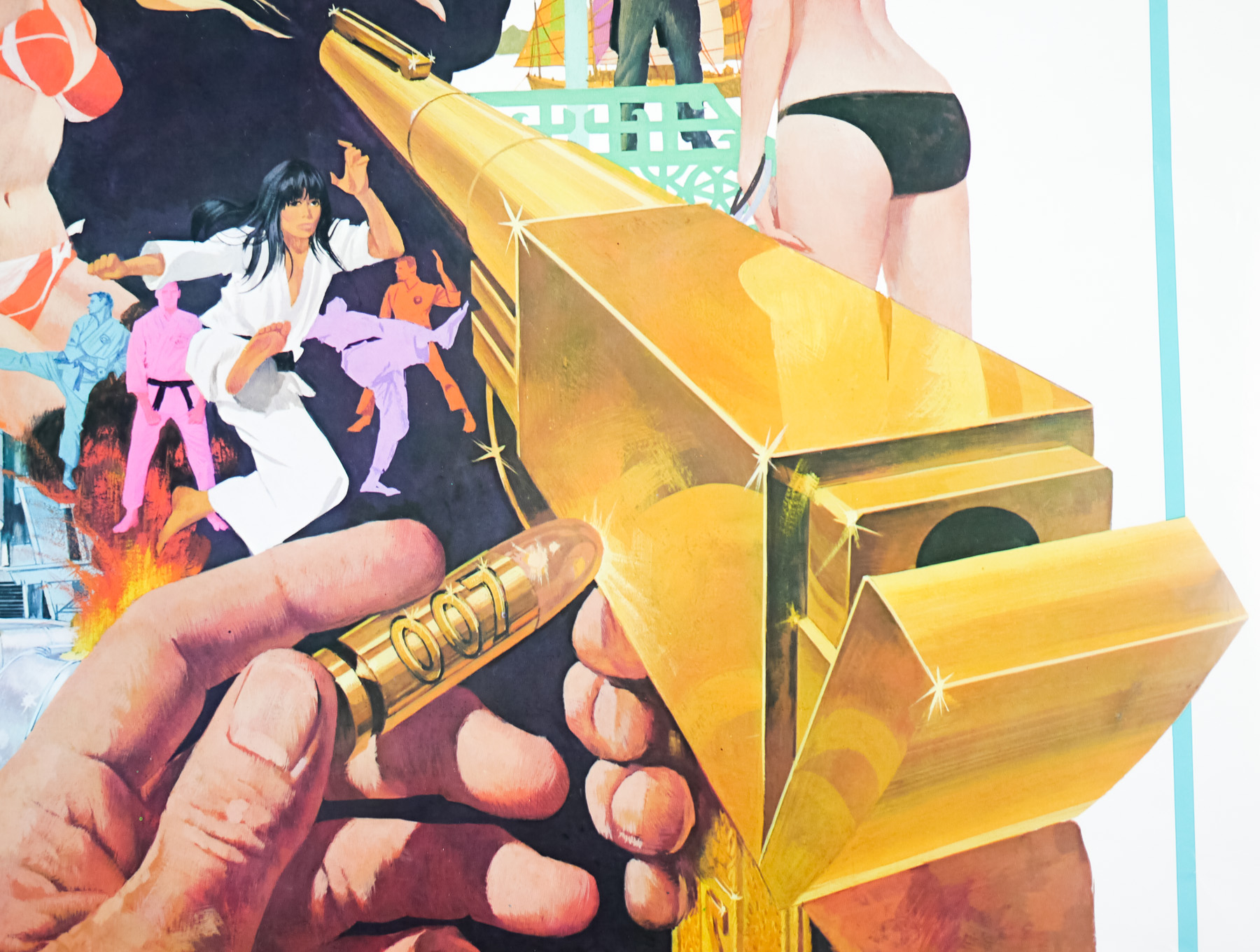
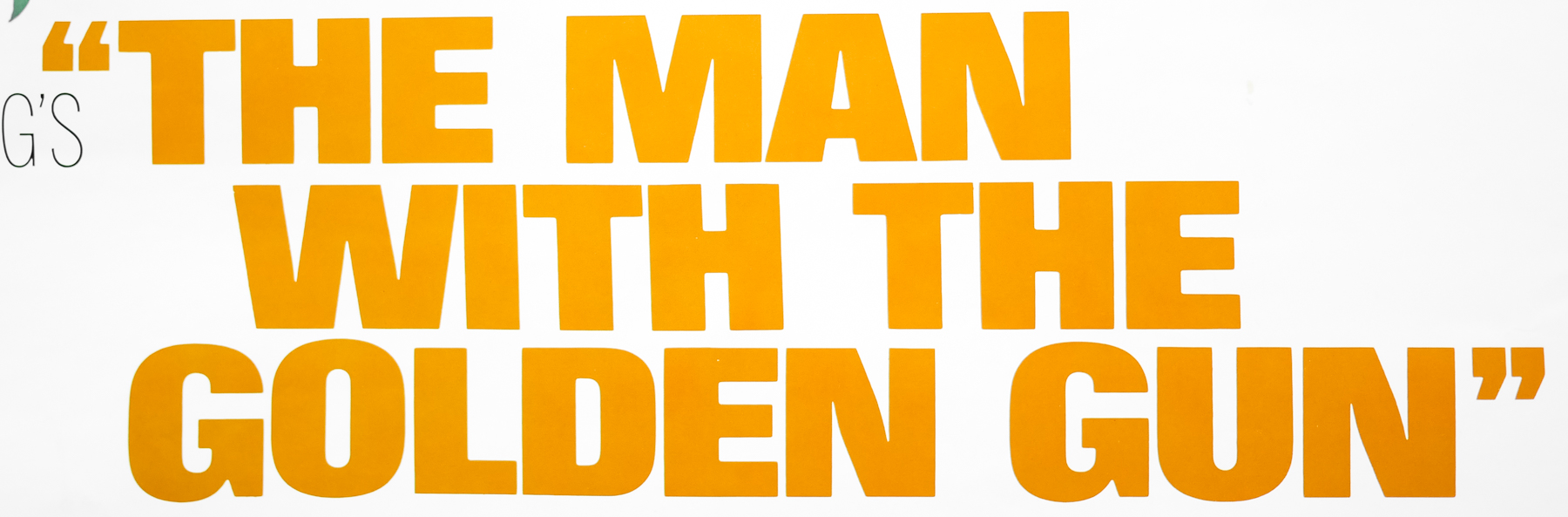
This is the Japanese B2 poster for the release of The Man With the Golden Gun, the ninth James Bond film and the second to star Roger Moore as the legendary secret agent. It’s definitely one of the weaker films in the long-running series and certainly not Moore’s finest hour, but it has several elements that make it worth watching, including a host of interesting far-eastern locales, strong production design and a very memorable bad guy in the shape of Christopher Lee‘s Scaramanga. Guy Hamilton returned as director for the fourth and last time in the series and the script, written by Richard Maibaum and Tom Mankiewicz, takes place amidst the climate of energy worries that followed the 1973 oil crisis. It also reflected the then craze for martial arts movies that followed the release of films like Bruce Lee’s Enter the Dragon with several kung-fu sequences and exotic locations.

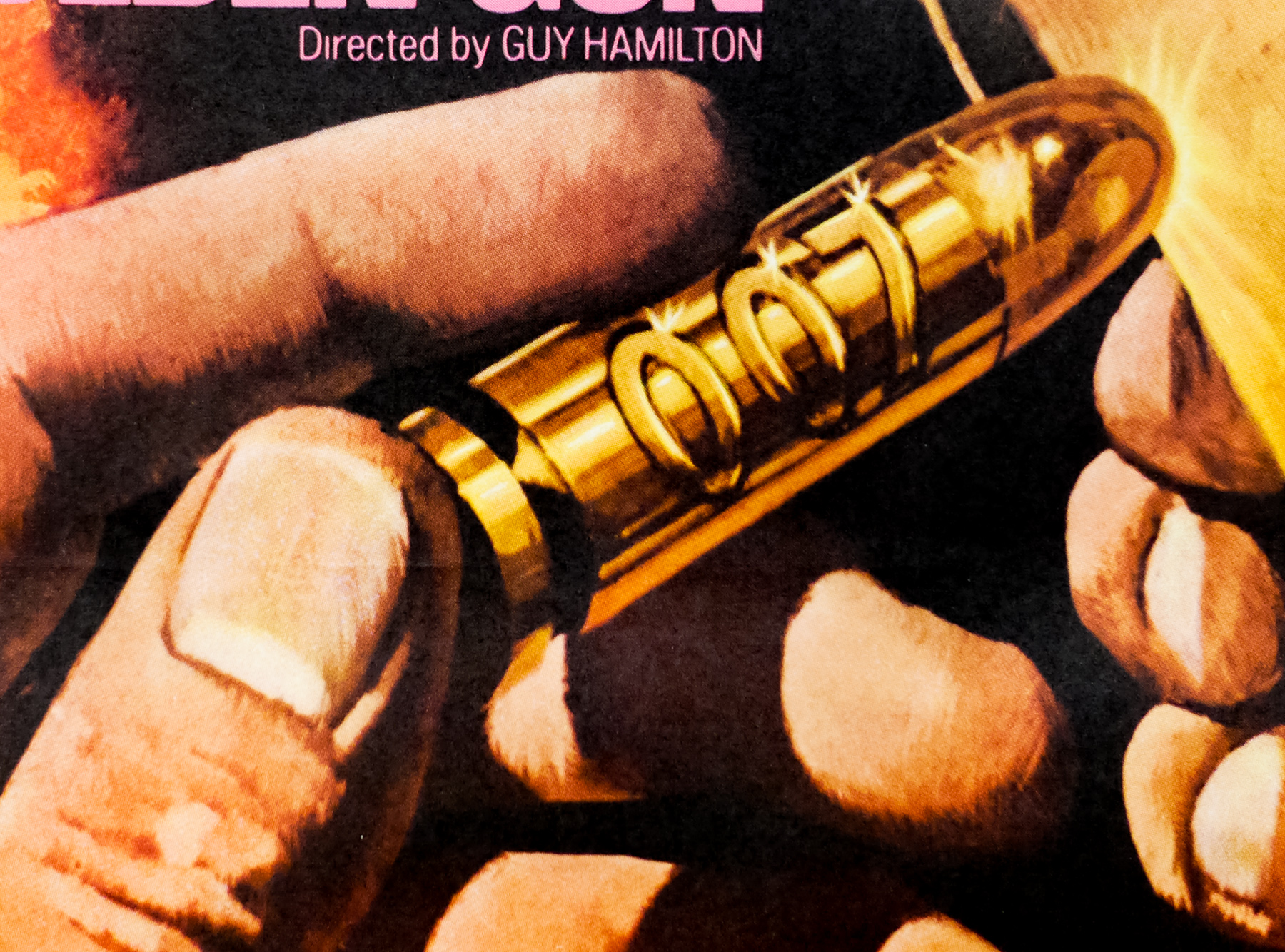
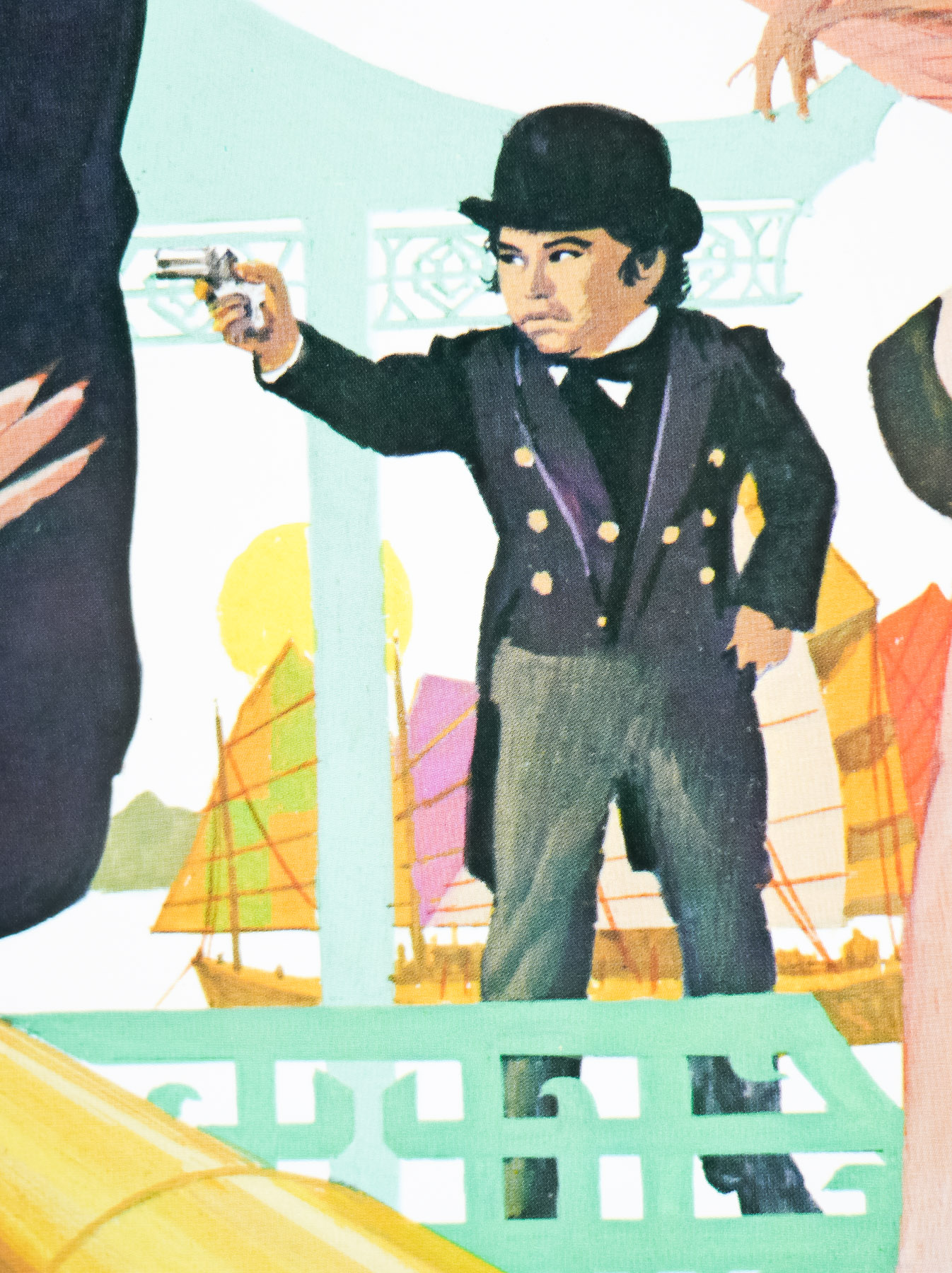
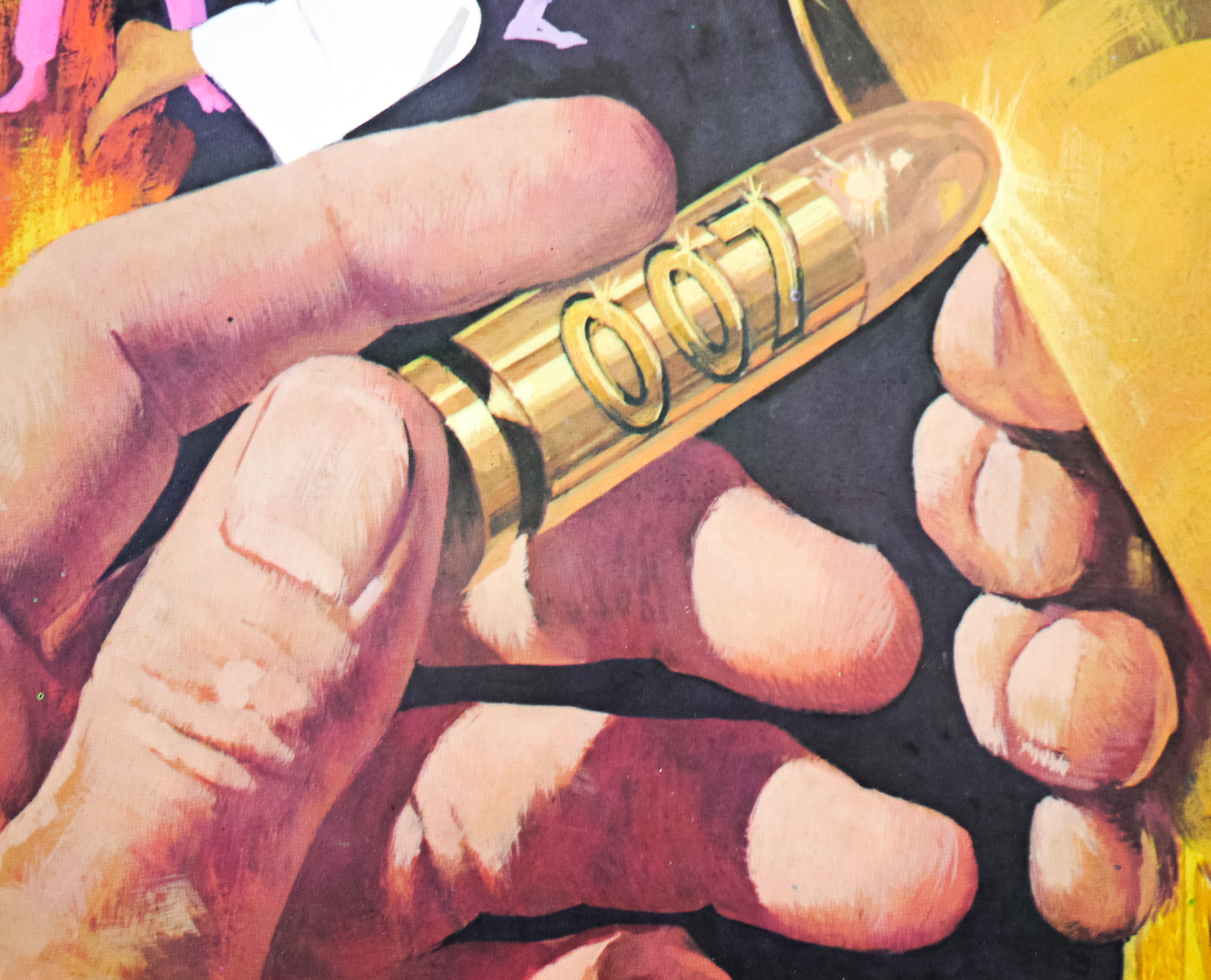
The story starts as MI6 receive a golden bullet with 007 etched into it, leading them to believe that Bond’s life is at threat from the notorious international assassin Scaramanga so they decide to remove him from active duty. The agent was on the trail of a scientist who it is thought could help with the energy crisis and he is frustrated to have been stopped in his pursuit so he sets off to find Scaramanga without official approval. Bond follows a trail of assassinations which lead him from Macau to Bangkok and eventually to Scaramanga’s private island hideout where he discovers that the master assassin has an interest in solar power. Soon Bond is challenged to a duel to the death and he must use his wits to survive the traps set around Scaramanga’s hideout. Dwarf actor Hervé Villechaize has a memorable role as the assassin’s servant Nick Nack, and Clifton James returns as the (perhaps ill-advised) comic relief figure of Sheriff J.W. Pepper, as featured in Live and Let Die.

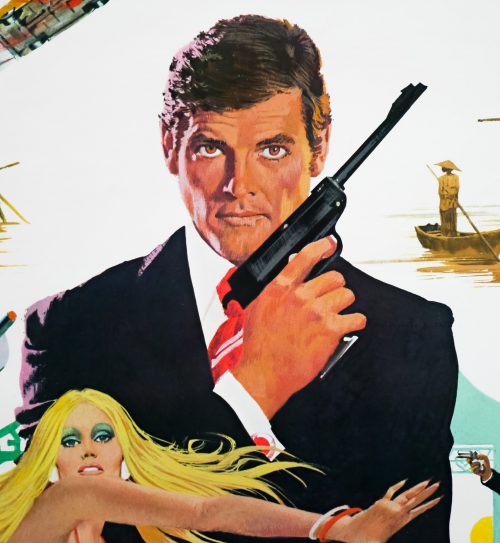
The artwork on this poster also features on the US one sheet and was painted by Robert McGinnis who is responsible for some of the best James Bond posters, including Thunderball, Live and Let Die and Diamonds are Forever as well as multiple other classic posters from the 60s, 70s and 80s. He was born in Cincinatti, Ohio in 1926 and was given an apprenticeship at Walt Disney studios before studying fine art at Ohio State University. After serving in the Merchant Marines during World War II, he started work in the advertising industry and later moved into painting book jackets for several notable authors, as well as editorial artwork for the likes of Good Housekeeping, TIME and The Saturday Evening Post. McGinnis’ first film poster was the now iconic one sheet for Breakfast at Tiffany’s, painted in 1962, and he went on to paint over 40 others during his career, including one for The Incredibles in 2004.

To see the other posters I’ve collected that were painted by McGinnis click here and to see the other James Bond posters in the Film on Paper collection click here.
The Man With The Golden Gun / one sheet / USA

17.12.14

Poster Poster

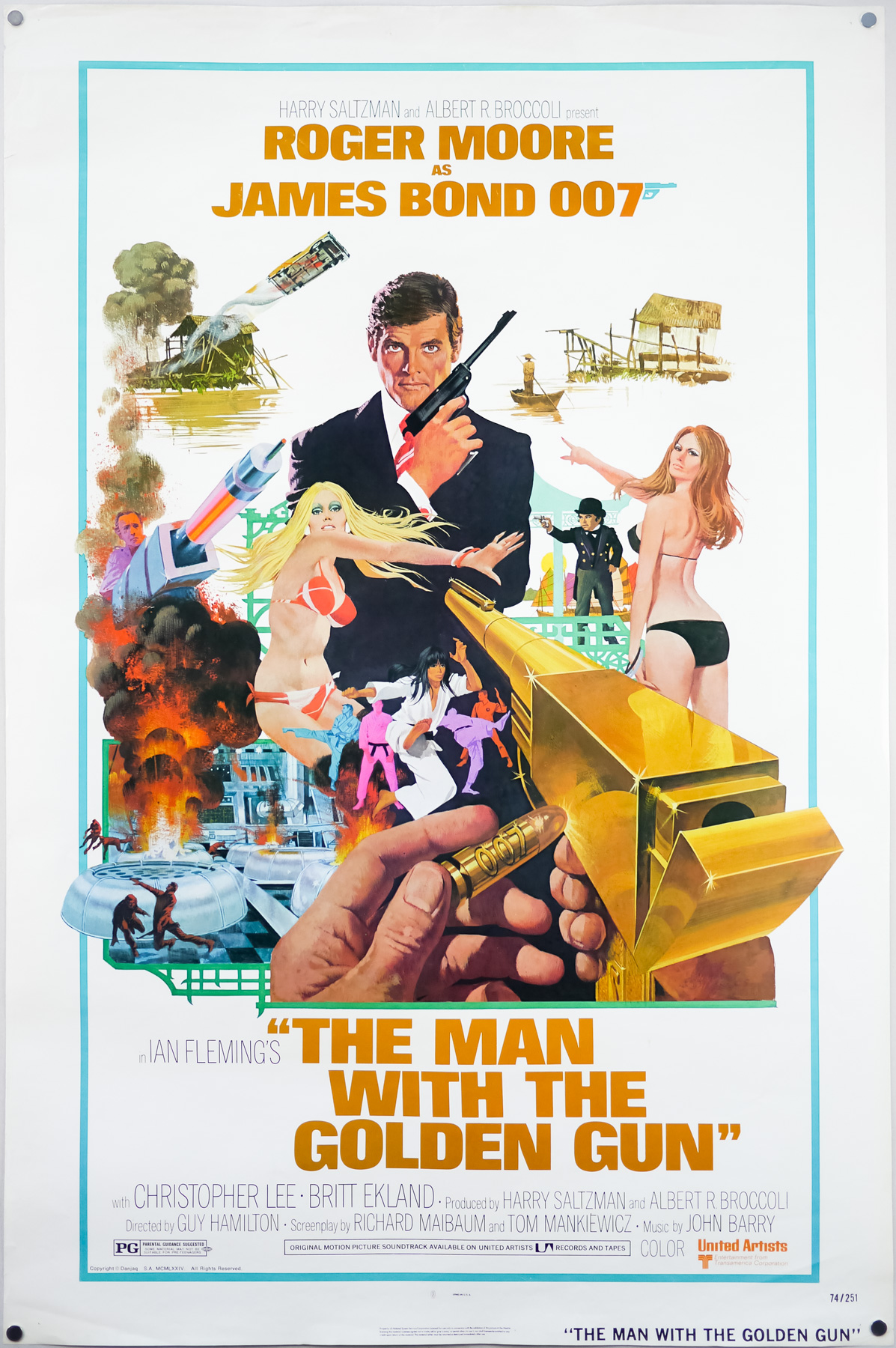
This is the original US one sheet for the release of The Man With the Golden Gun, the ninth James Bond film and the second to star Roger Moore as the legendary secret agent. It’s definitely one of the weaker films in the long-running series and certainly not Moore’s finest hour, but it has several elements that make it worth watching, including a host of interesting far-eastern locales, strong production design and a very memorable bad guy in the shape of Christopher Lee‘s Scaramanga. Guy Hamilton returned as director for the fourth and last time in the series and the script, written by Richard Maibaum and Tom Mankiewicz, takes place amidst the climate of energy worries that followed the 1973 oil crisis. It also reflected the then craze for martial arts movies that followed the release of films like Bruce Lee’s Enter the Dragon with several kung-fu sequences and exotic locations.

The story starts as MI6 receive a golden bullet with 007 etched into it, leading them to believe that Bond’s life is at threat from the notorious international assassin Scaramanga so they decide to remove him from active duty. The agent was on the trail of a scientist who it is thought could help with the energy crisis and he is frustrated to have been stopped in his pursuit so he sets off to find Scaramanga without official approval. Bond follows a trail of assassinations which lead him from Macau to Bangkok and eventually to Scaramanga’s private island hideout where he discovers that the master assassin has an interest in solar power. Soon Bond is challenged to a duel to the death and he must use his wits to survive the traps set around Scaramanga’s hideout. Dwarf actor Hervé Villechaize has a memorable role as the assassin’s servant Nick Nack, and Clifton James returns as the (perhaps ill-advised) comic relief figure of Sheriff J.W. Pepper, as featured in Live and Let Die.

The artwork on this poster also features on the US one sheet and was painted by Robert McGinnis who is responsible for some of the best James Bond posters, including Thunderball, Live and Let Die and Diamonds are Forever as well as multiple other classic posters from the 60s, 70s and 80s. He was born in Cincinatti, Ohio in 1926 and was given an apprenticeship at Walt Disney studios before studying fine art at Ohio State University. After serving in the Merchant Marines during World War II, he started work in the advertising industry and later moved into painting book jackets for several notable authors, as well as editorial artwork for the likes of Good Housekeeping, TIME and The Saturday Evening Post. McGinnis’ first film poster was the now iconic one sheet for Breakfast at Tiffany’s, painted in 1962, and he went on to paint over 40 others during his career, including one for The Incredibles in 2004.

One interesting thing about this particular poster is that it missing the ‘East/West Hemi’ text that appears on most copies of this poster and on a few other Bond posters of the era, including the Live and Let Die one sheet that’s in the Film on Paper collection. This page on Learn About Movie Posters explains what the significance of that text is. An excerpt:

[Albert] Broccoli met with [Harry] Saltzman and tried to acquire the rights but Saltzman refused to sell. They instead decided to co-produce them. [….] After some success they decided to divide the production credits and entered into a contractual agreement for top billing and so was created the Hemi’s. [….] They divided the world into hemispheres. Harry took the East Hemisphere and Albert took the West Hemisphere. So Saltzman would get the European countries and Broccoli would get the Americas.

I’m not sure why it’s missing on this copy but I’ve heard of other examples like this turning up and I’m confident it’s an original. If anyone has any ideas please get in touch.

To see the other posters I’ve collected that were painted by McGinnis click here and to see the other James Bond posters in the Film on Paper collection click here.
The Exterminator / one sheet / USA

16.05.14

Poster Poster
Title
The Exterminator
AKA
--
Year of Film
1980
Director
James Glickenhaus
Starring
Christopher George, Samantha Eggar, Robert Ginty, Steve James, Tony DiBenedetto, Dick Boccelli, Patrick Farrelly, Michele Harrell
Origin of Film
USA
Genre(s) of Film
Christopher George, Samantha Eggar, Robert Ginty, Steve James, Tony DiBenedetto, Dick Boccelli, Patrick Farrelly, Michele Harrell,
Type of Poster
One sheet
Style of Poster
--
Origin of Poster
USA
Year of Poster
1980
Designer
B.D. Fox Independent
Artist
--
Size (inches)
27 1/16" x 41 1/16"
SS or DS
SS
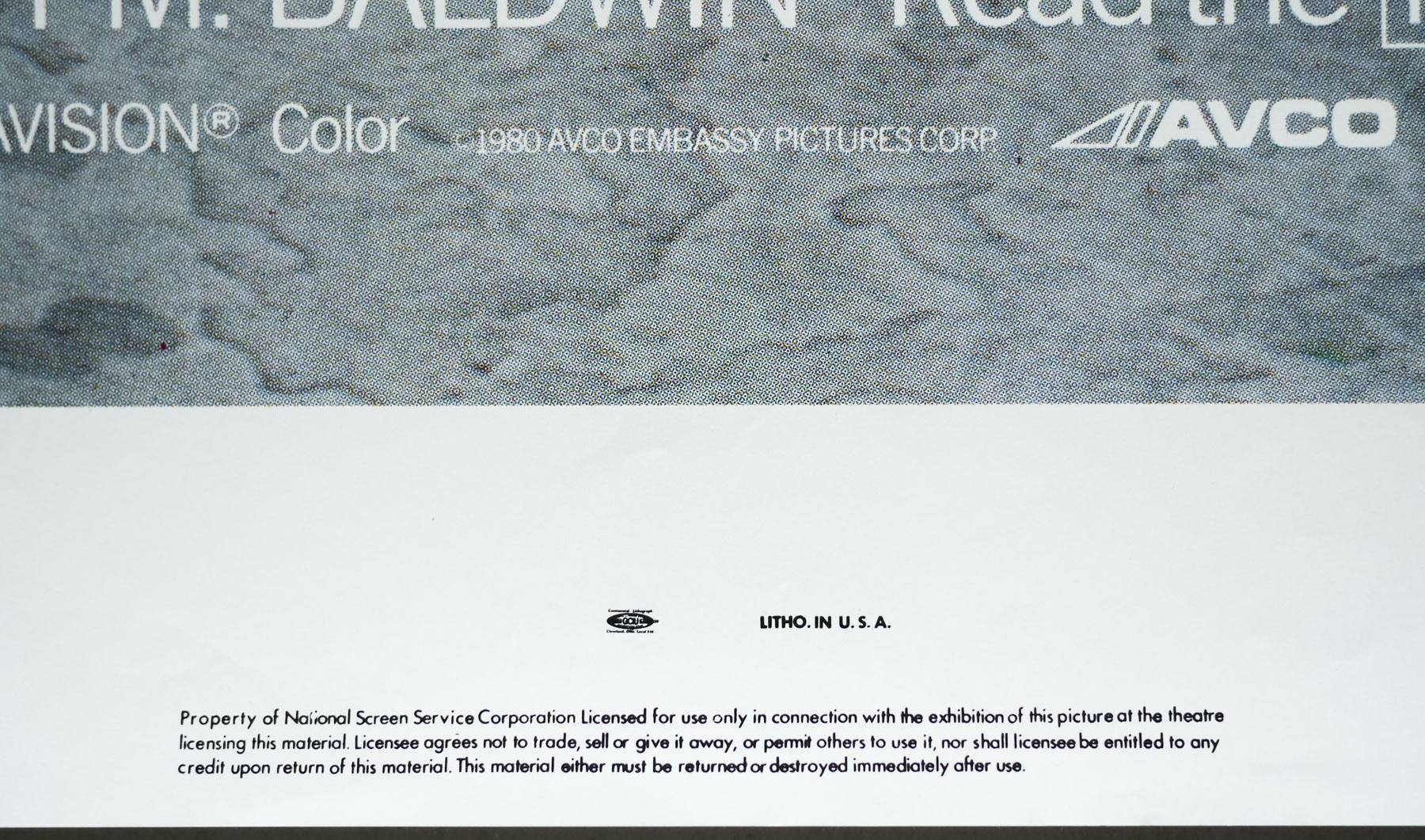
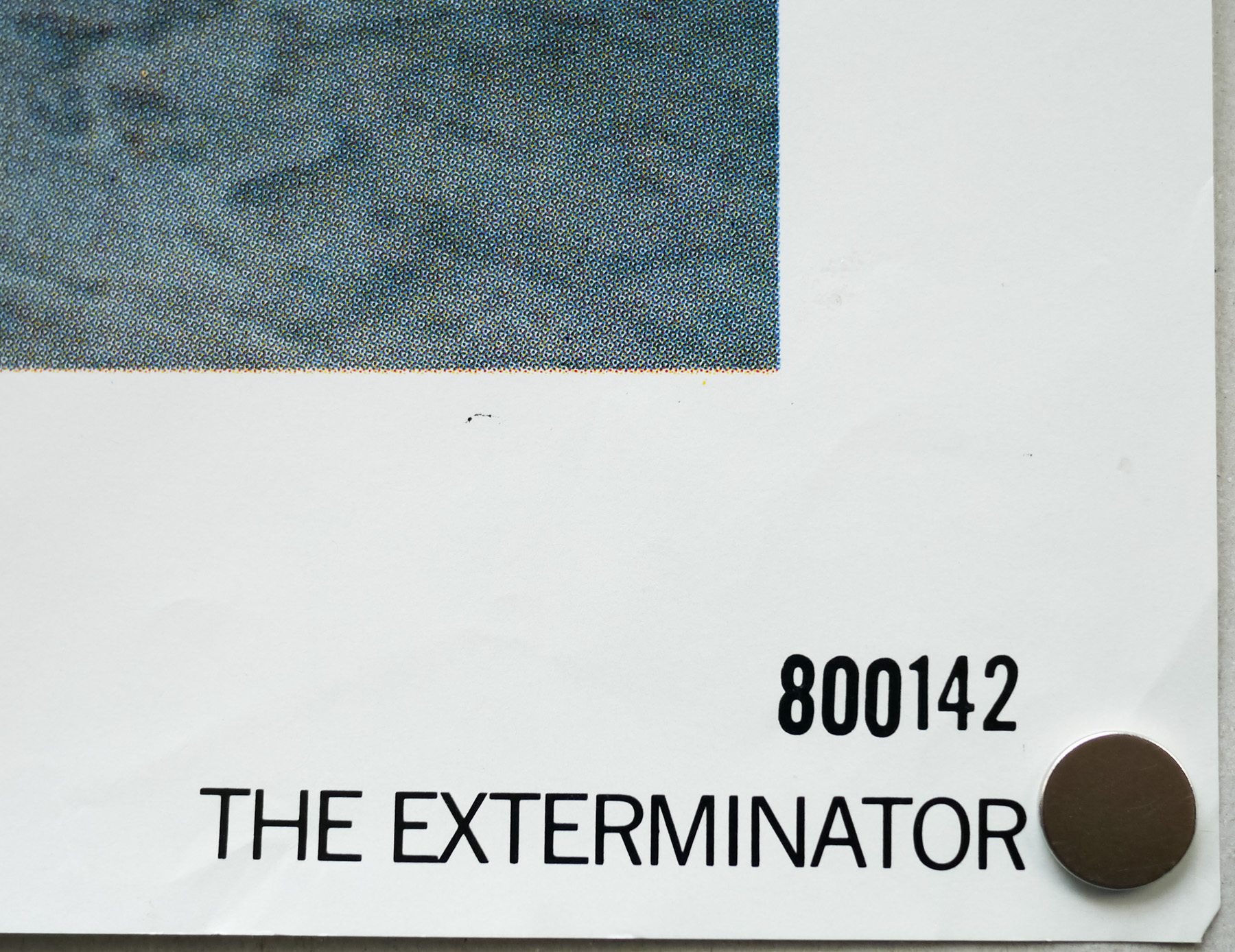
NSS #
800142
Tagline
In war, you have to kill to stay alive... on the streets of New York, it's often the same. | ...the man they pushed too far.

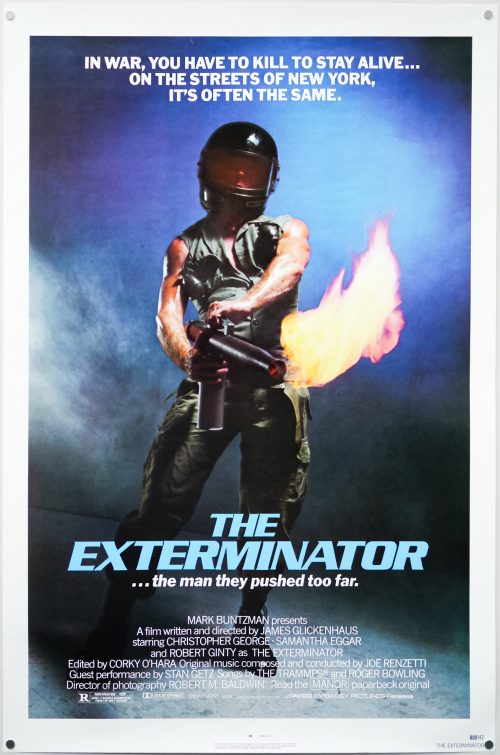
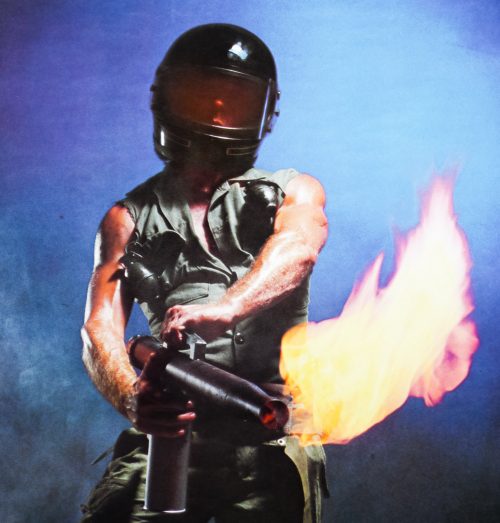
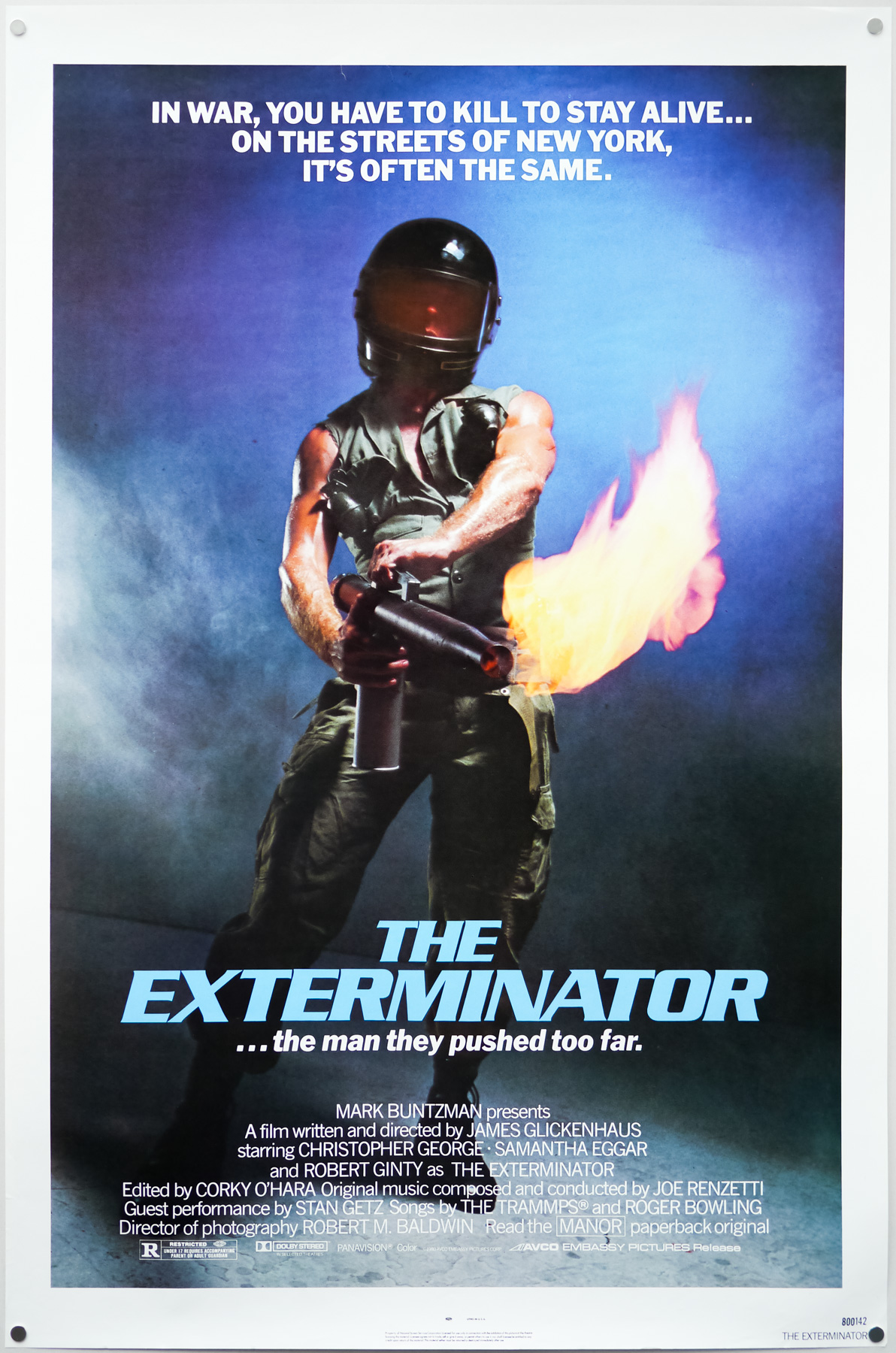
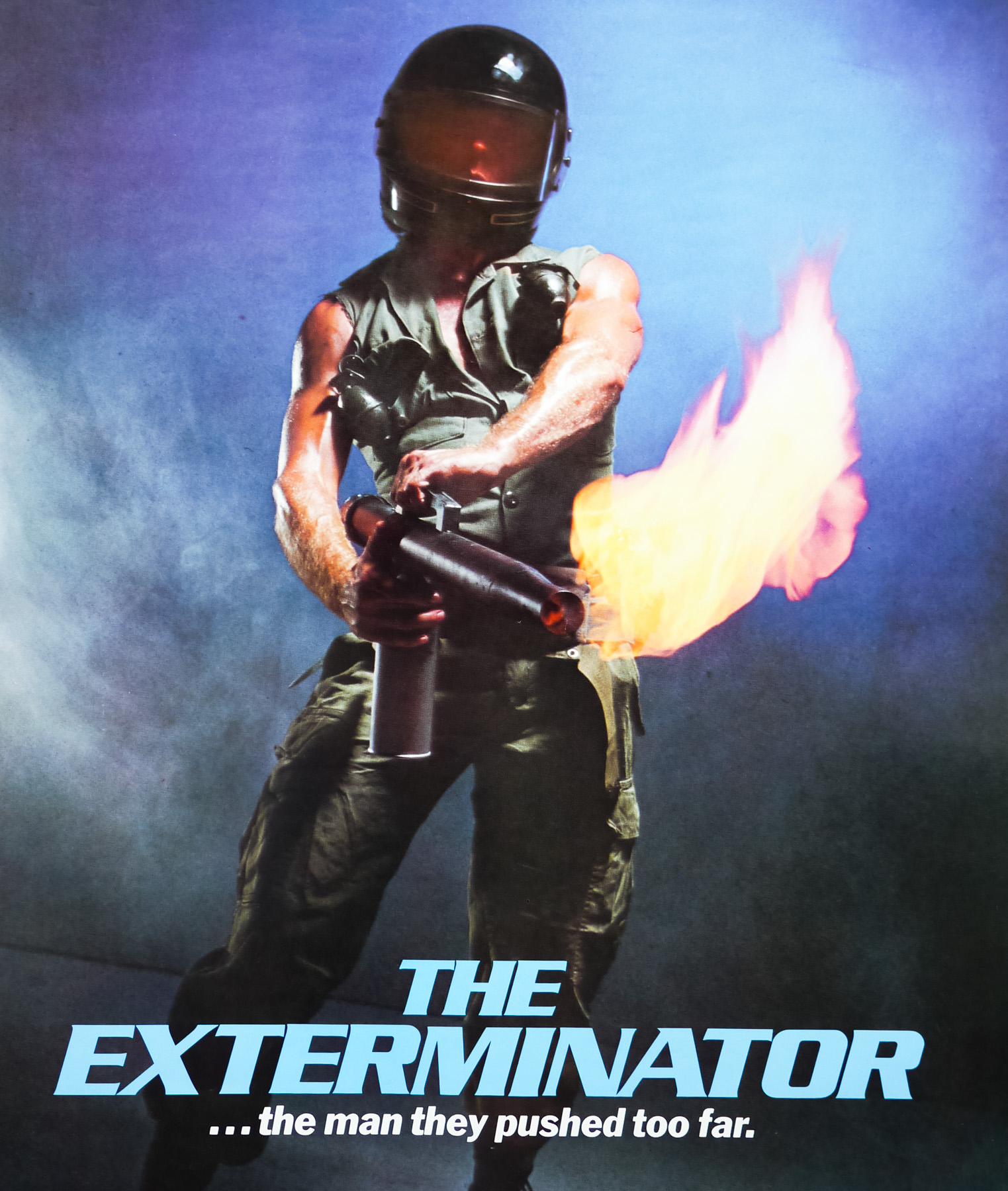
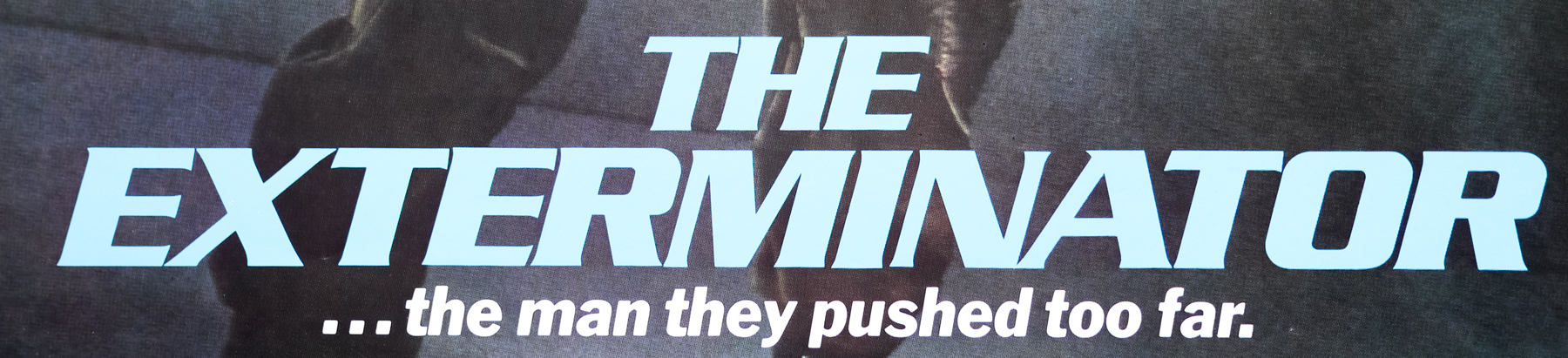
The Exterminator is a 1980 vigilante b-movie that was written and directed by James Glickenhaus and set in New York. Opening with a commendably over-the-top sequence in war-torn Vietnam, we’re introduced to John Eastland (Robert Ginty) and his friend Michael Jefferson (Steve James) who are captured by the Vietcong and forced to watch as a fellow soldier is beheaded (achieved courtesy of Stan Winston special effects). After being rescued the pair return to their lives in New York but when Michael is attacked and paralysed by street thugs, John sets out for revenge with an army machine gun and images of the atrocities he saw in Vietnam playing over in his head. Before long, he’s attacking and killing various underworld characters who he sees as a blight on society. It’s not long before he comes to the attention of a police detective (Christopher George) and shady elements within the CIA.

The film has a gritty atmosphere, helped no end by the fact that several scenes were set (and filmed) around New York’s 42nd street (Times Square) back when it wasn’t the family-friendly tourist trap it is today. Although Glickenhaus wanted John to be a normal, non-macho kind of guy, Robert Ginty takes it a little too far and at times is barely audible as he mumbles along with dead-eyed stare – he’s very hard to root for during each of the violent encounters. Despite a critical drubbing the film was a box-office success in the States, quickly expanding to more cinemas in the weeks following its opening. A sequel would be made a few years later without Glickenhaus’ involvement.

In an interview on the blu-ray release of the film from Arrow Video, the director talks briefly about the promotion of the film, mentioning the poster:

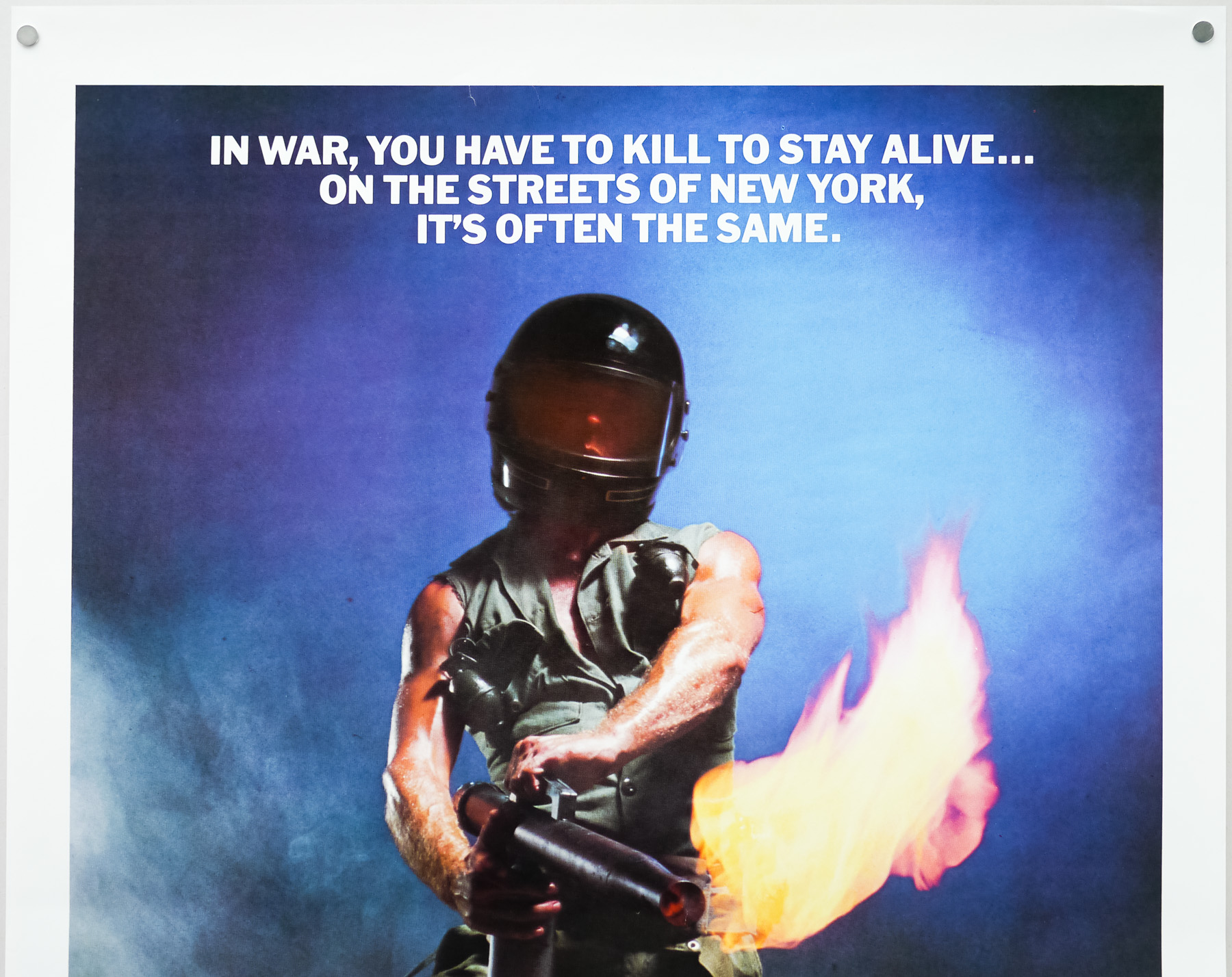
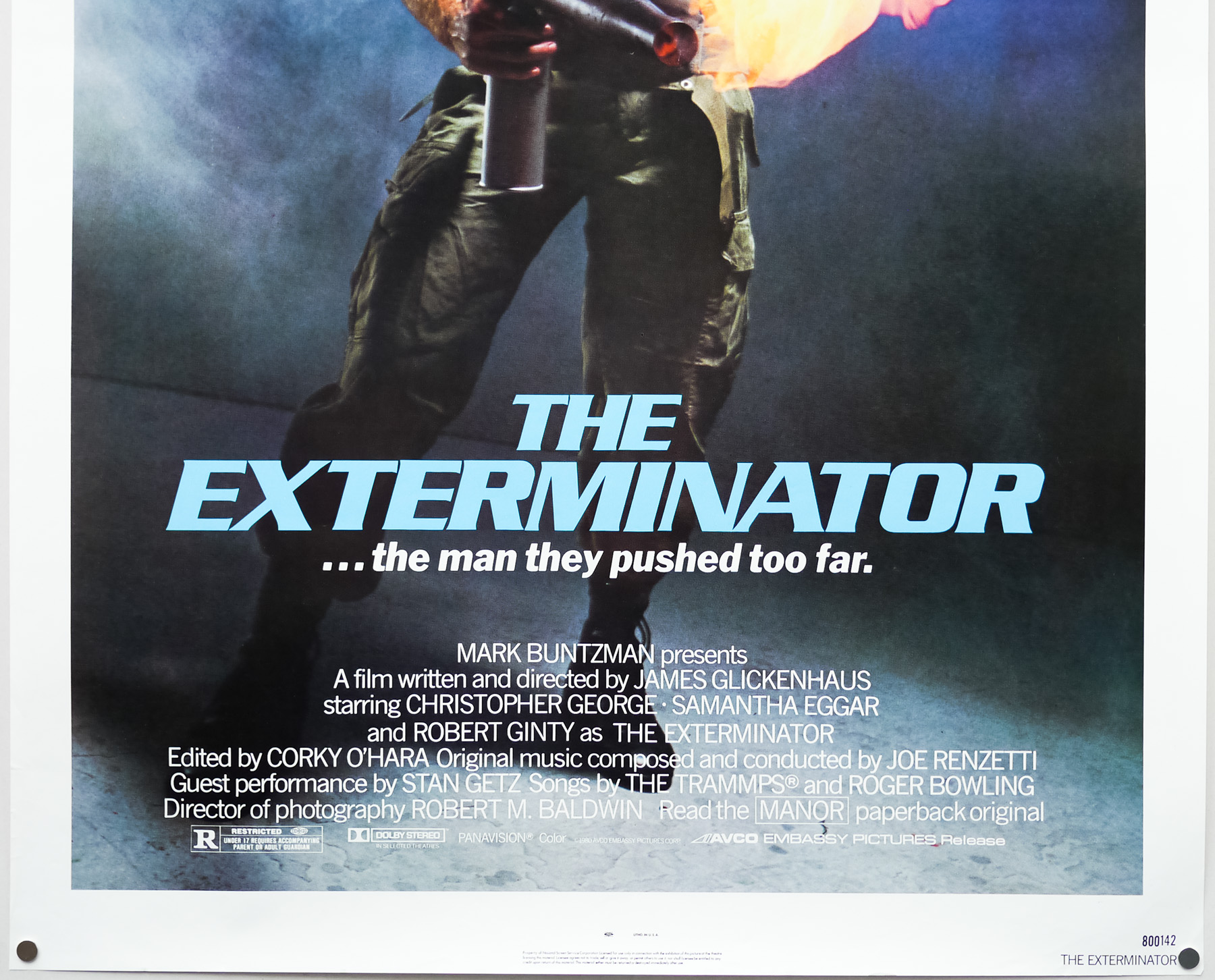
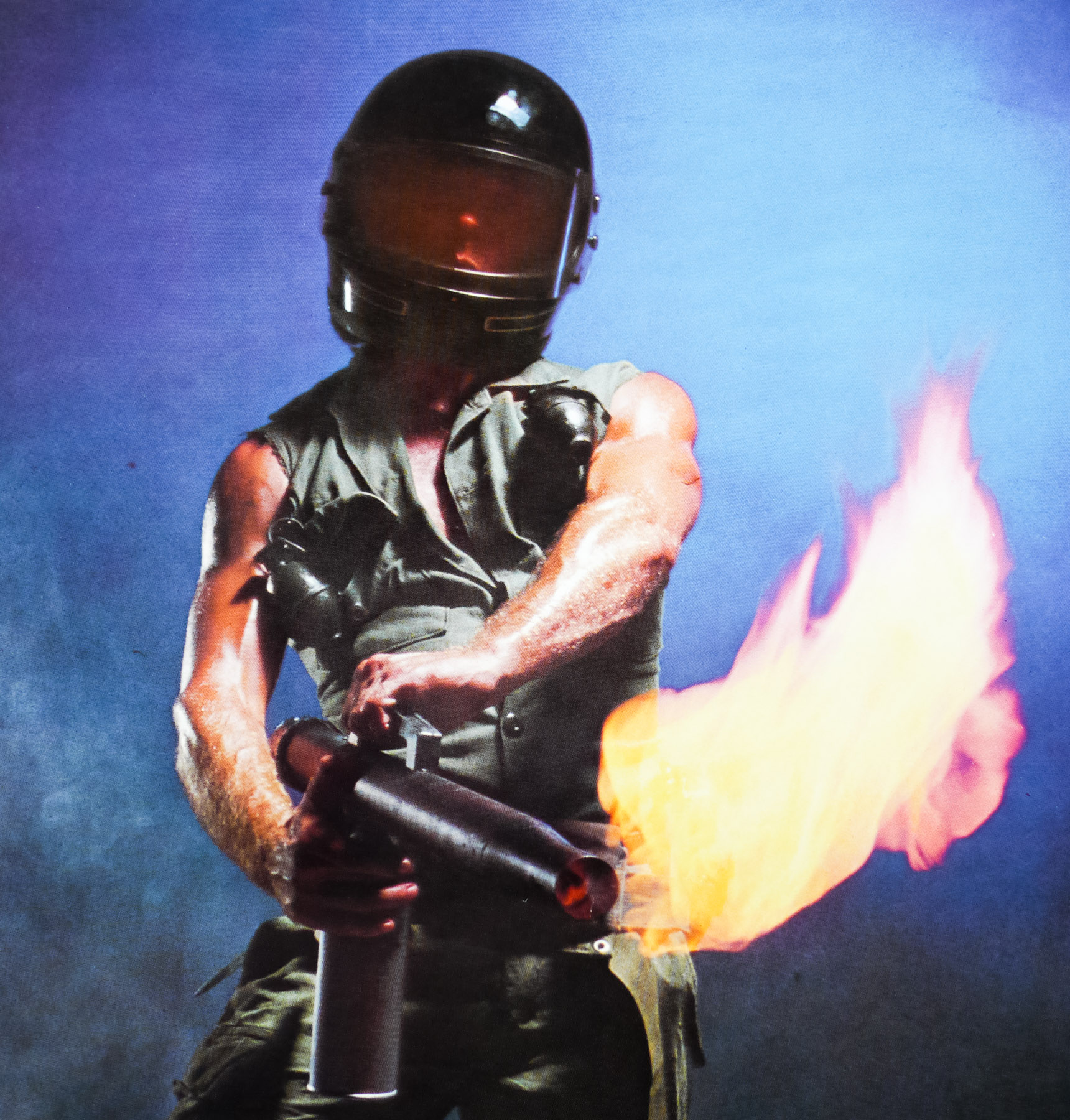
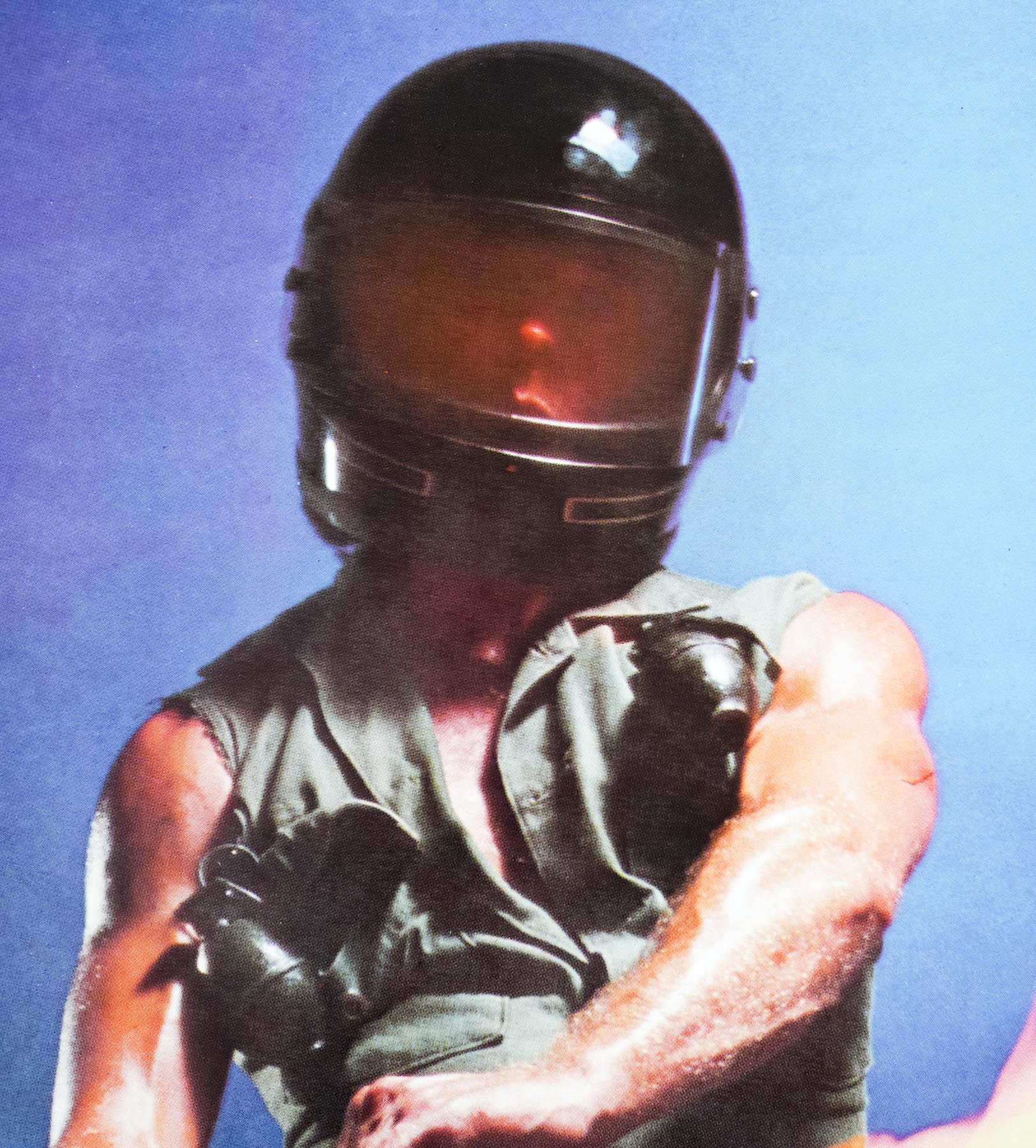
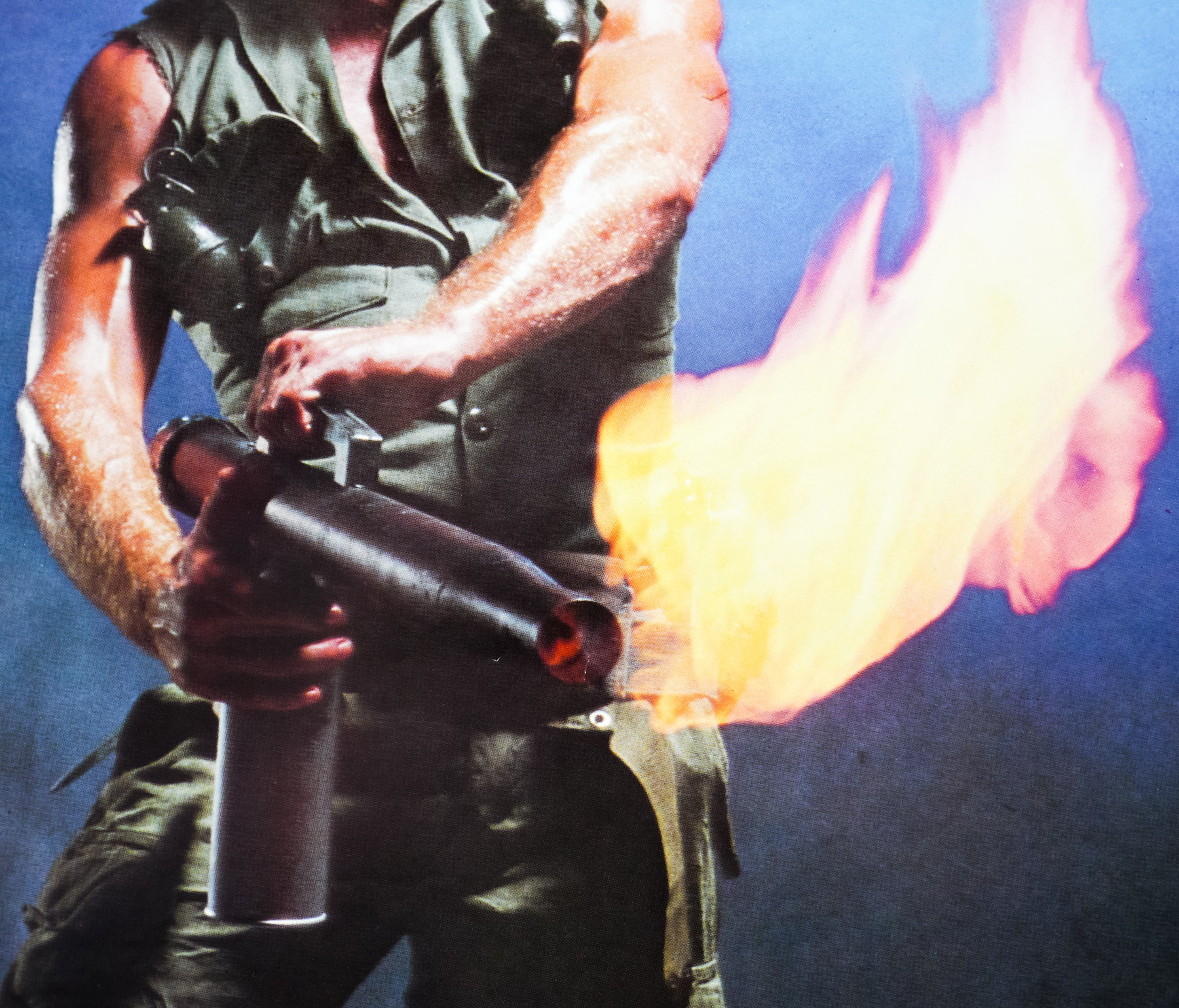
‘Avco Embassy came up with that idea and asked me and I thought it would be an interesting thing. I think they made it a little bit mysterious with the motorcycle helmet and what-not but it did become an iconic image and was copied more than a few times, including for a porno film called The Penetrator. They had a naked guy with a flame-thrower standing there, which is what it is. But it [the Exterminator poster] got people to the box-office so it worked.’

Violent Streets / one sheet / international

06.10.14

Poster Poster
Title
Violent Streets
AKA
Thief (USA)
Year of Film
1981
Director
Michael Mann
Starring
James Caan, Tuesday Weld, Willie Nelson, James Belushi, Robert Prosky, Tom Signorelli, Dennis Farina, Nick Nickeas
Origin of Film
USA
Genre(s) of Film
James Caan, Tuesday Weld, Willie Nelson, James Belushi, Robert Prosky, Tom Signorelli, Dennis Farina, Nick Nickeas,
Type of Poster
One sheet
Style of Poster
--
Origin of Poster
International
Year of Poster
1981
Designer
Unknown
Artist
--
Size (inches)
27 1/16" x 41"
SS or DS
SS
NSS #
--
Tagline
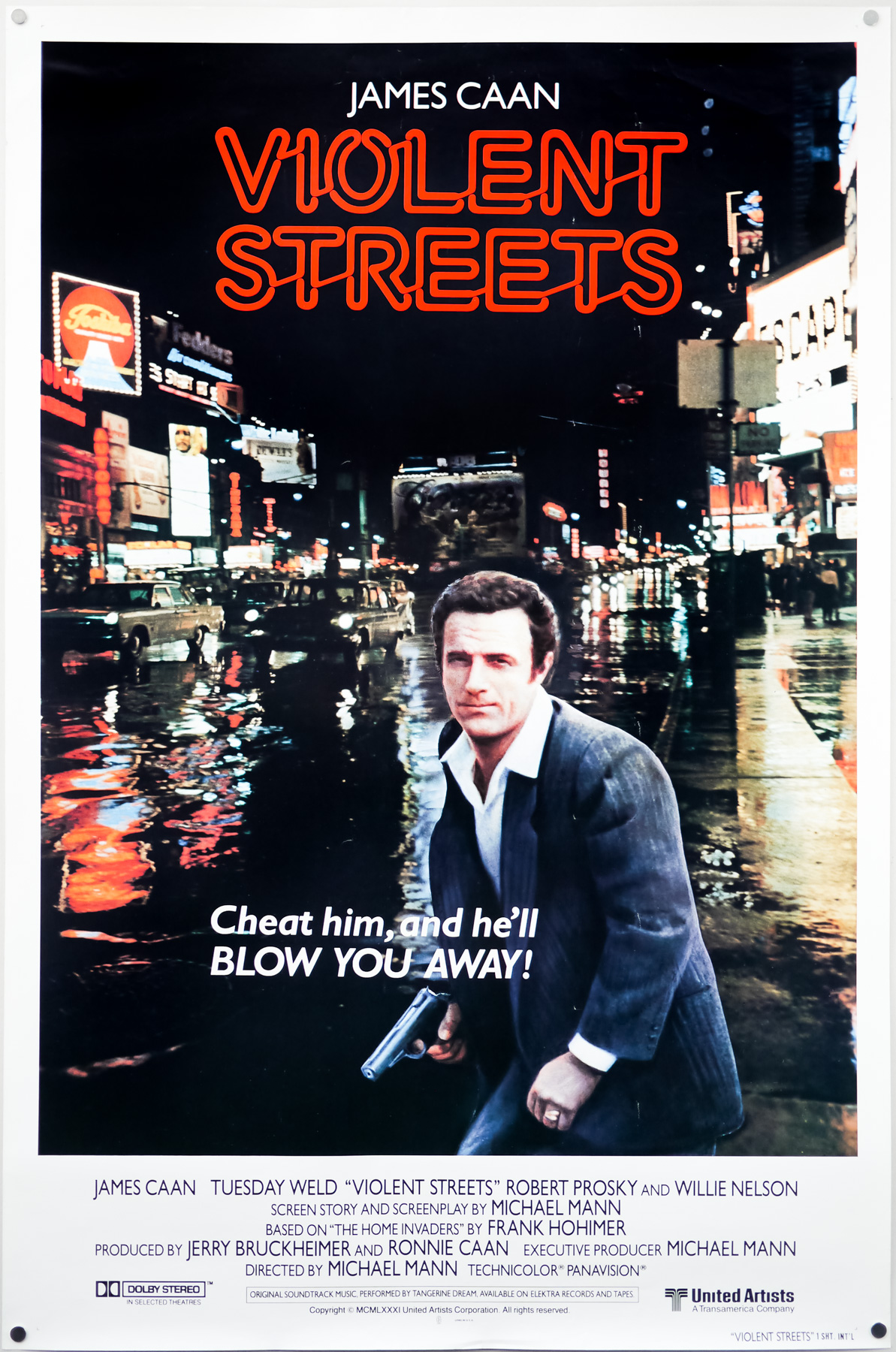
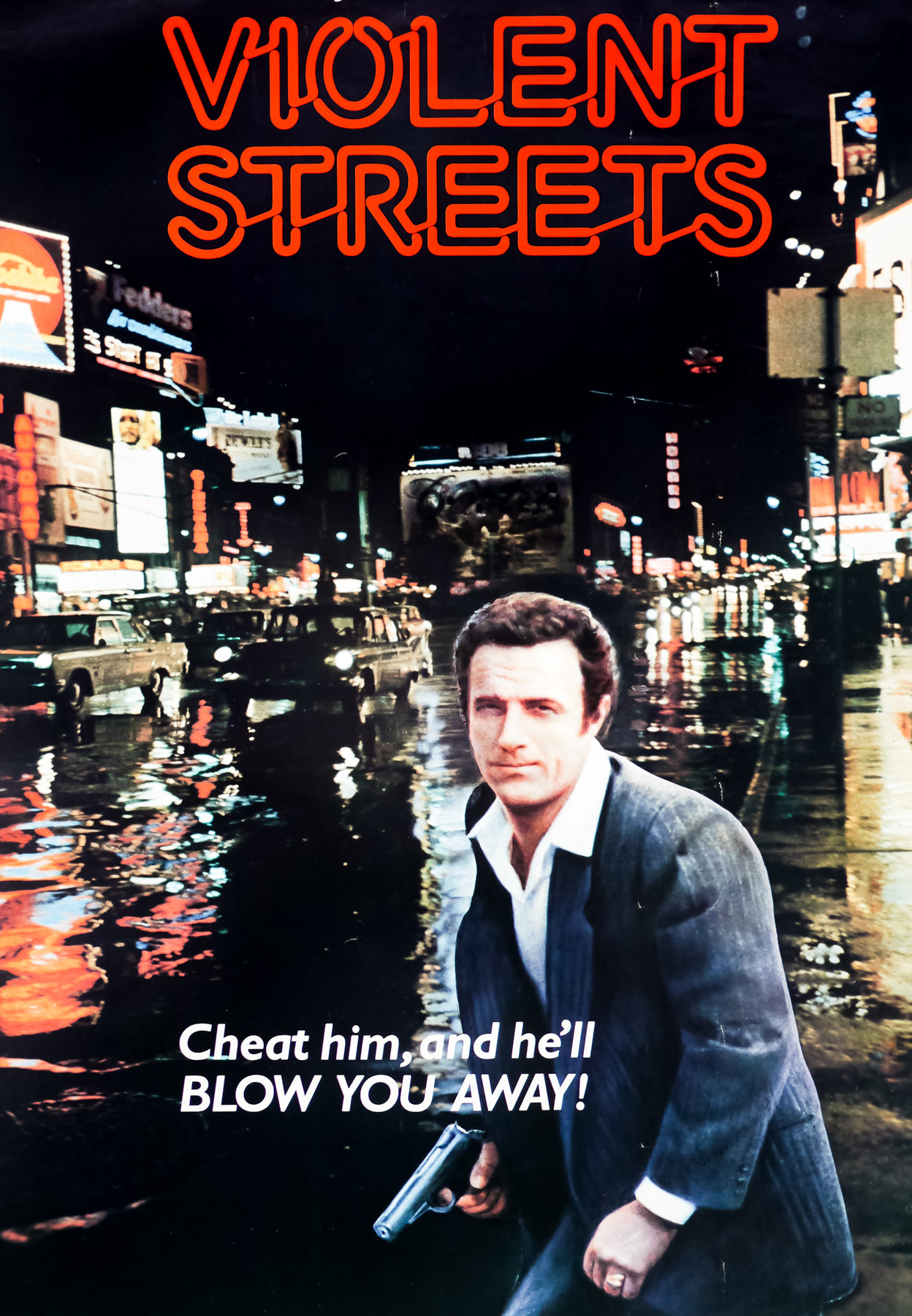
Cheat him, and he'll BLOW YOU AWAY!

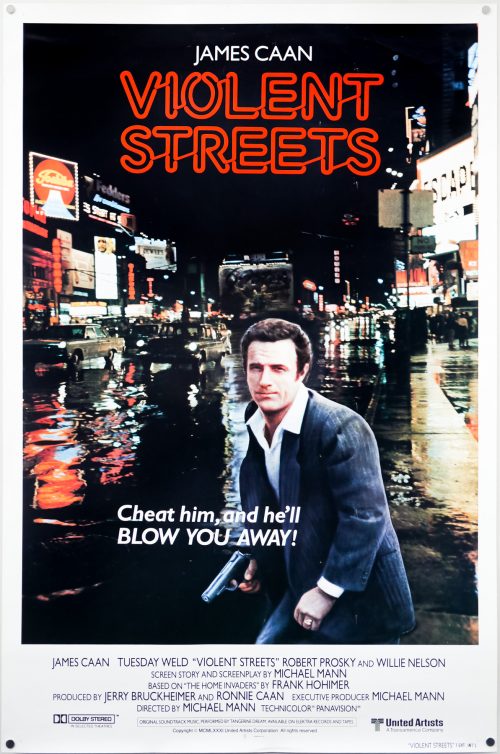
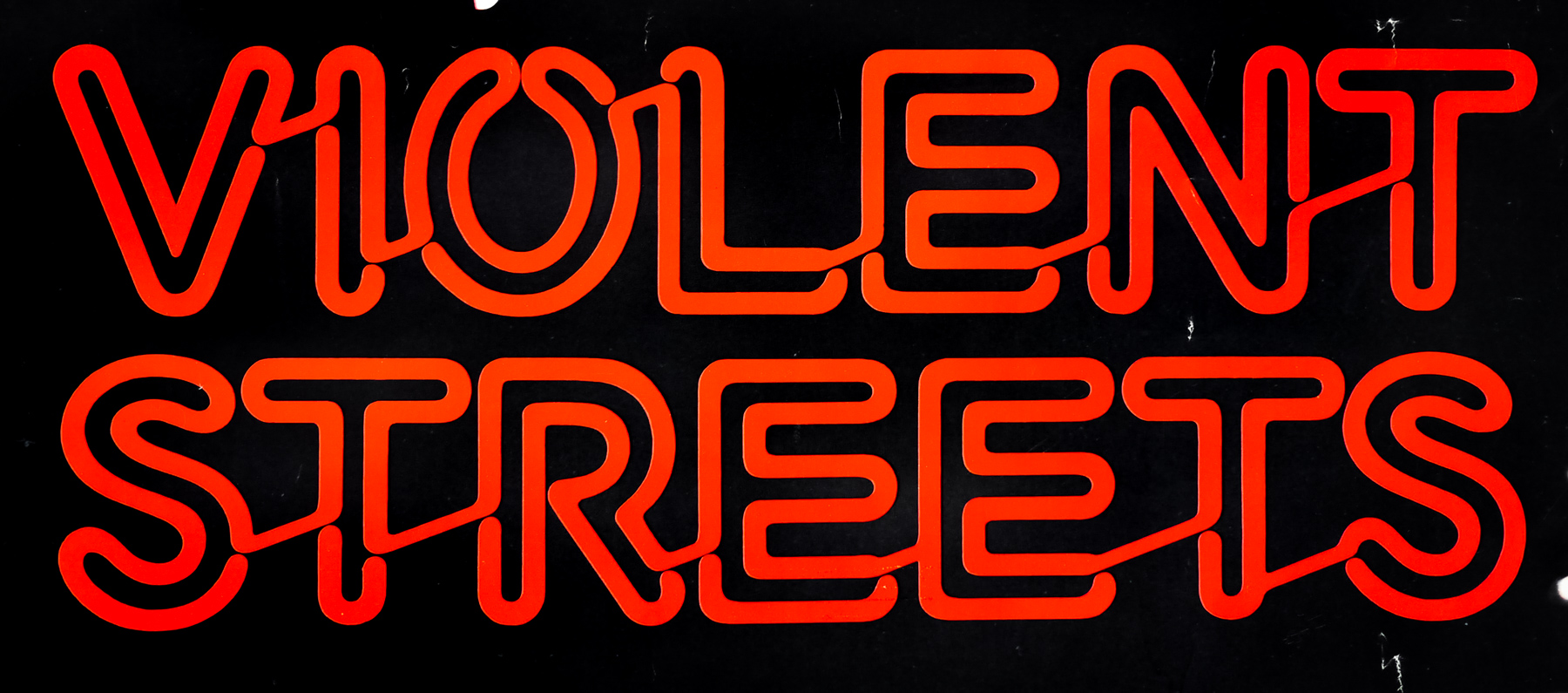
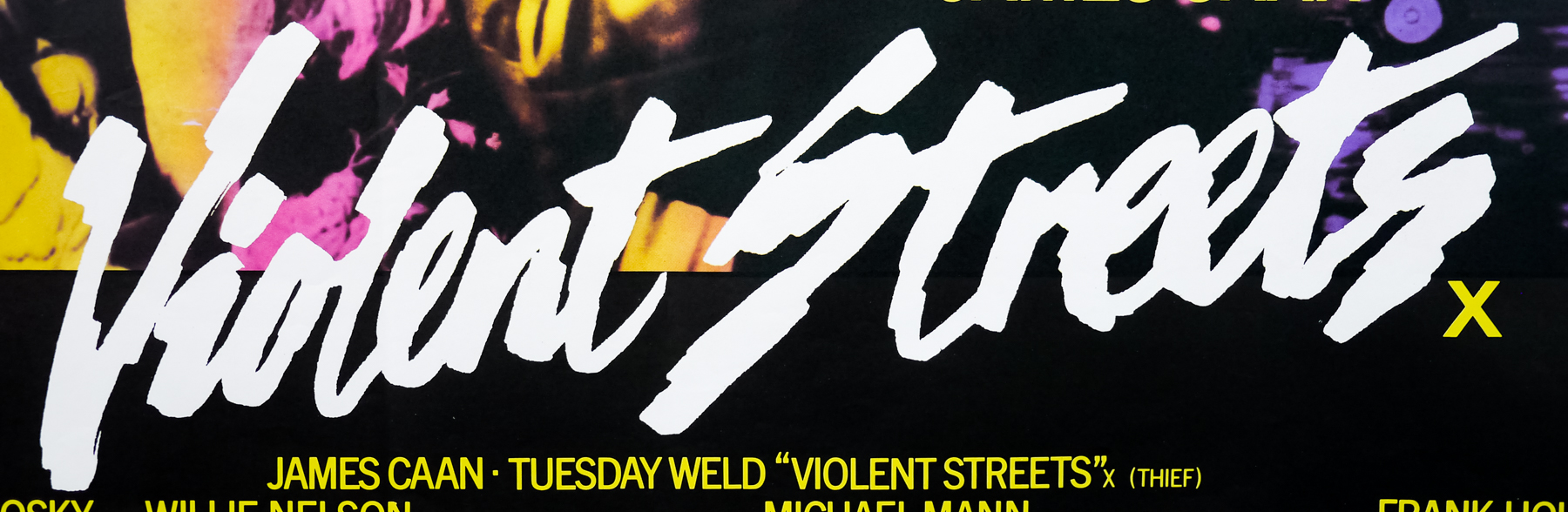
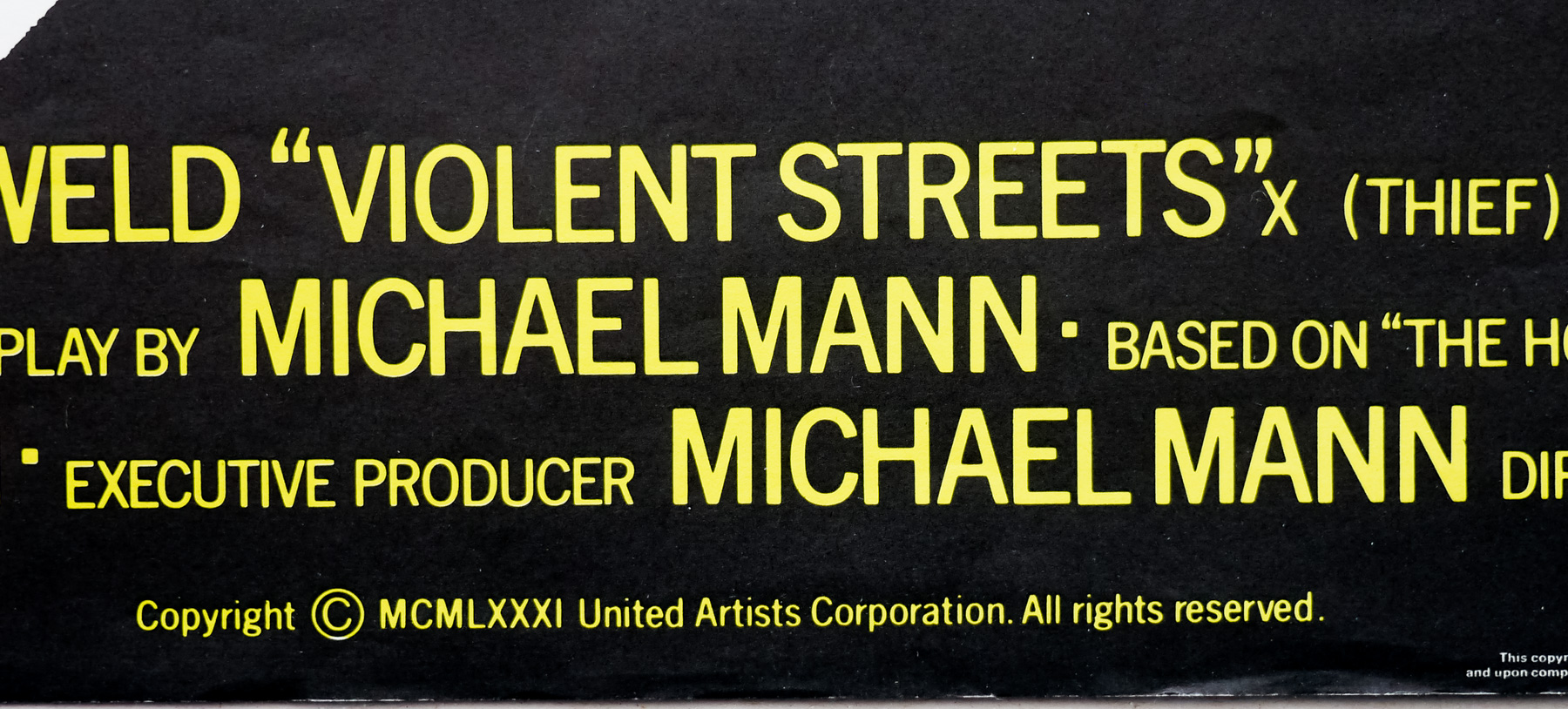
Ace director Michael Mann‘s debut film was released as Violent Streets in the UK and in several other countries (it was originally filmed with that title) but is now better known as Thief. Starring James Caan, in arguably his best role outside of The Godfather, it’s a neo-noir crime caper featuring the ‘one last job’ plot device. Frank (Caan) is an expert safecracker, jewel thief and hardened ex-con who works with a small, close-knit team of thieves on high-end robberies that are planned to an exacting degree.

After a run in with the Chicago mob Frank agrees to do one last big heist that will allow him to follow his dream of getting out of the game to spend time with his new wife Jessie (Tuesday Weld). It quickly becomes clear that getting out isn’t as easy as Frank hoped and, as the caper escalates, his usual wariness and mistrust is set aside, which puts his very life at risk.

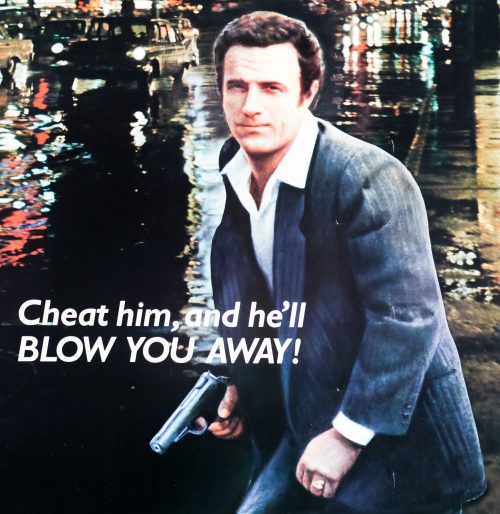
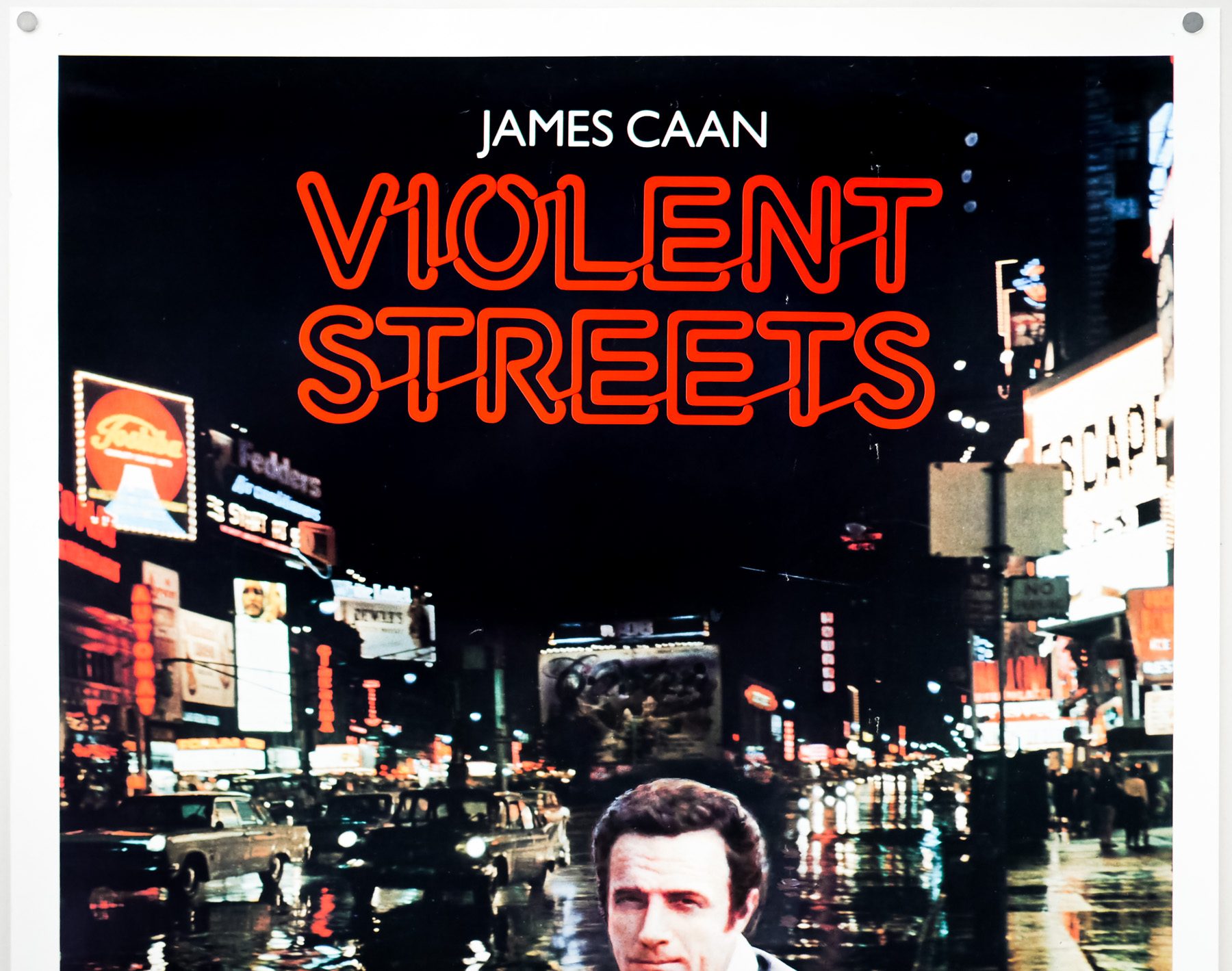
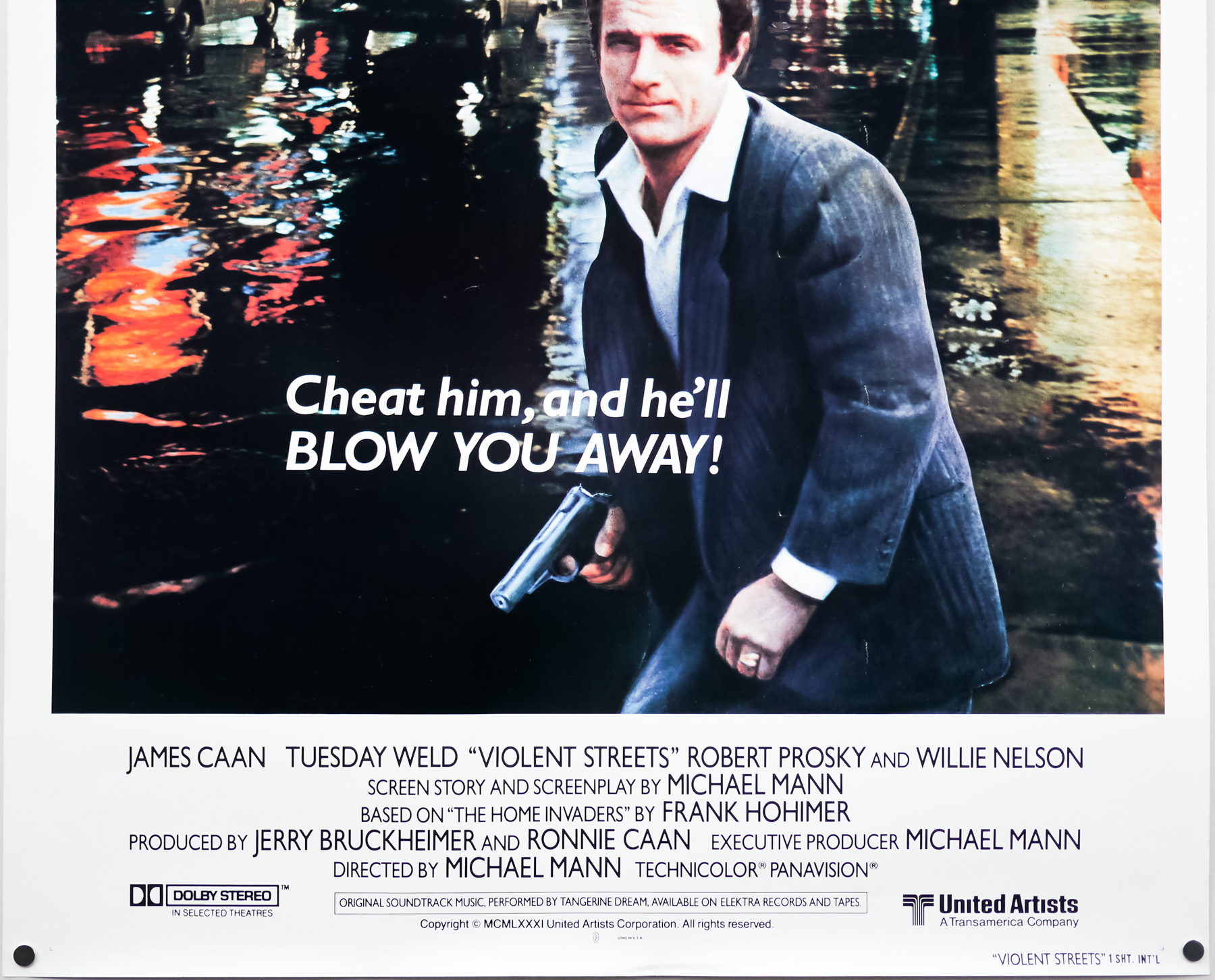
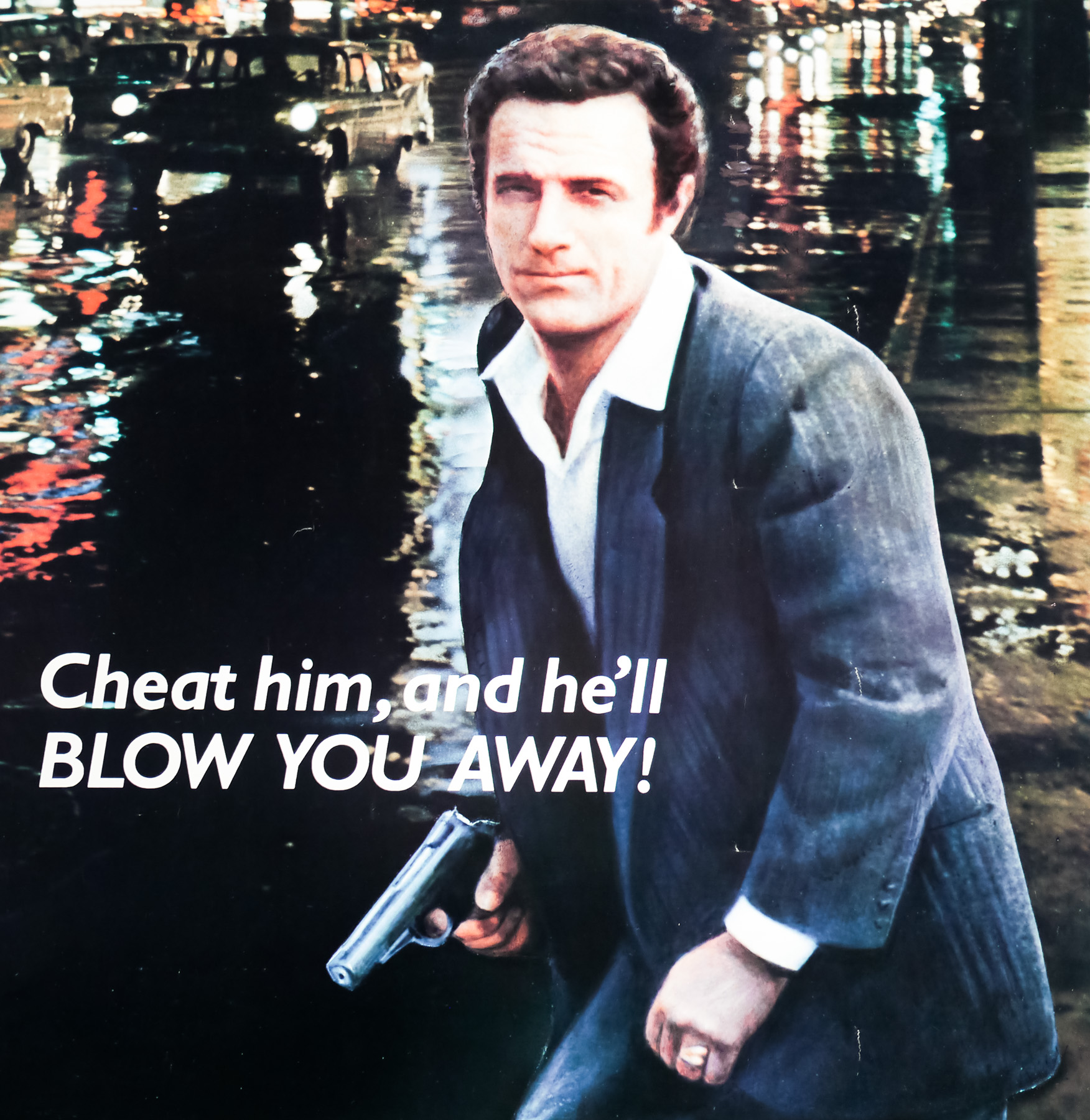
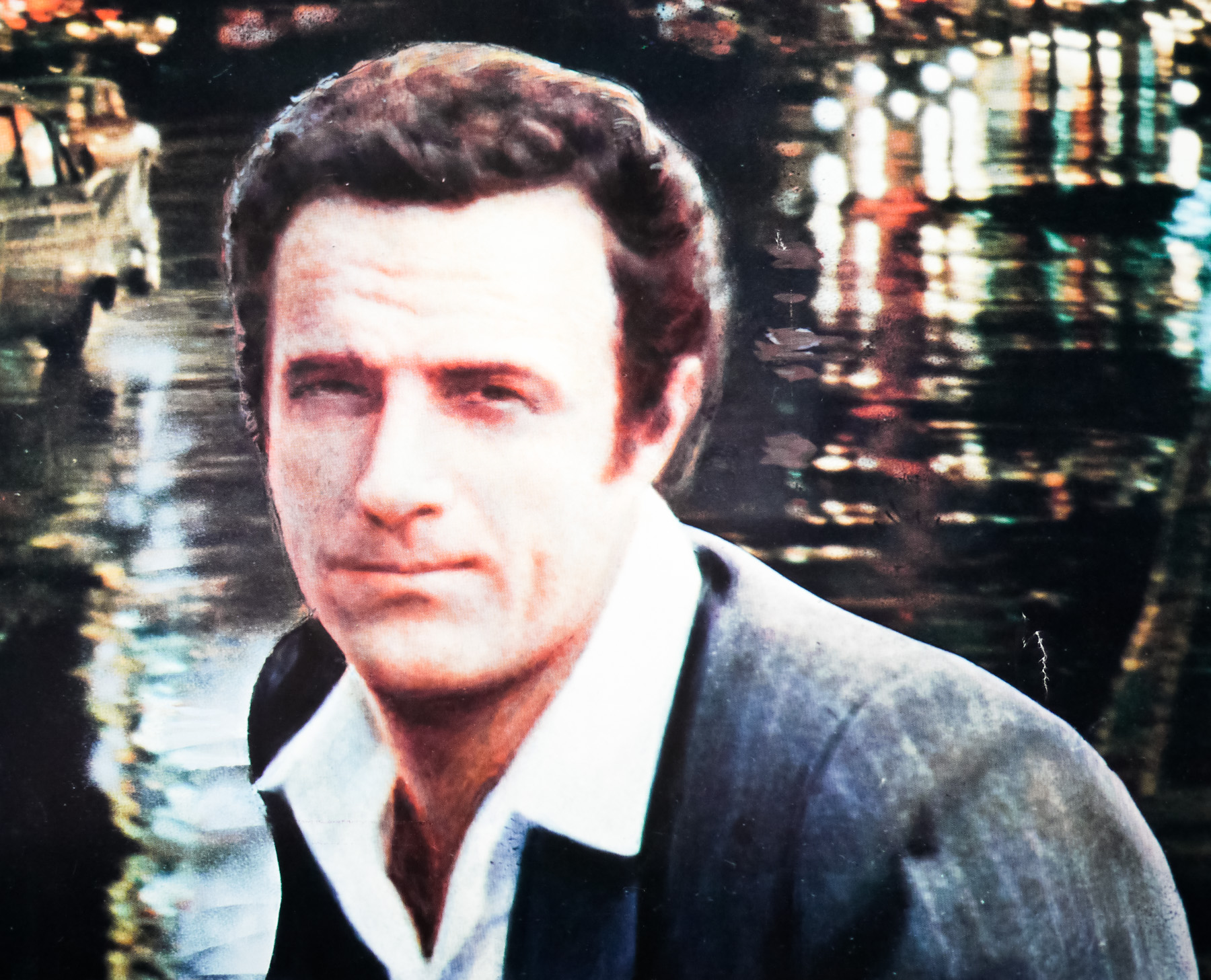
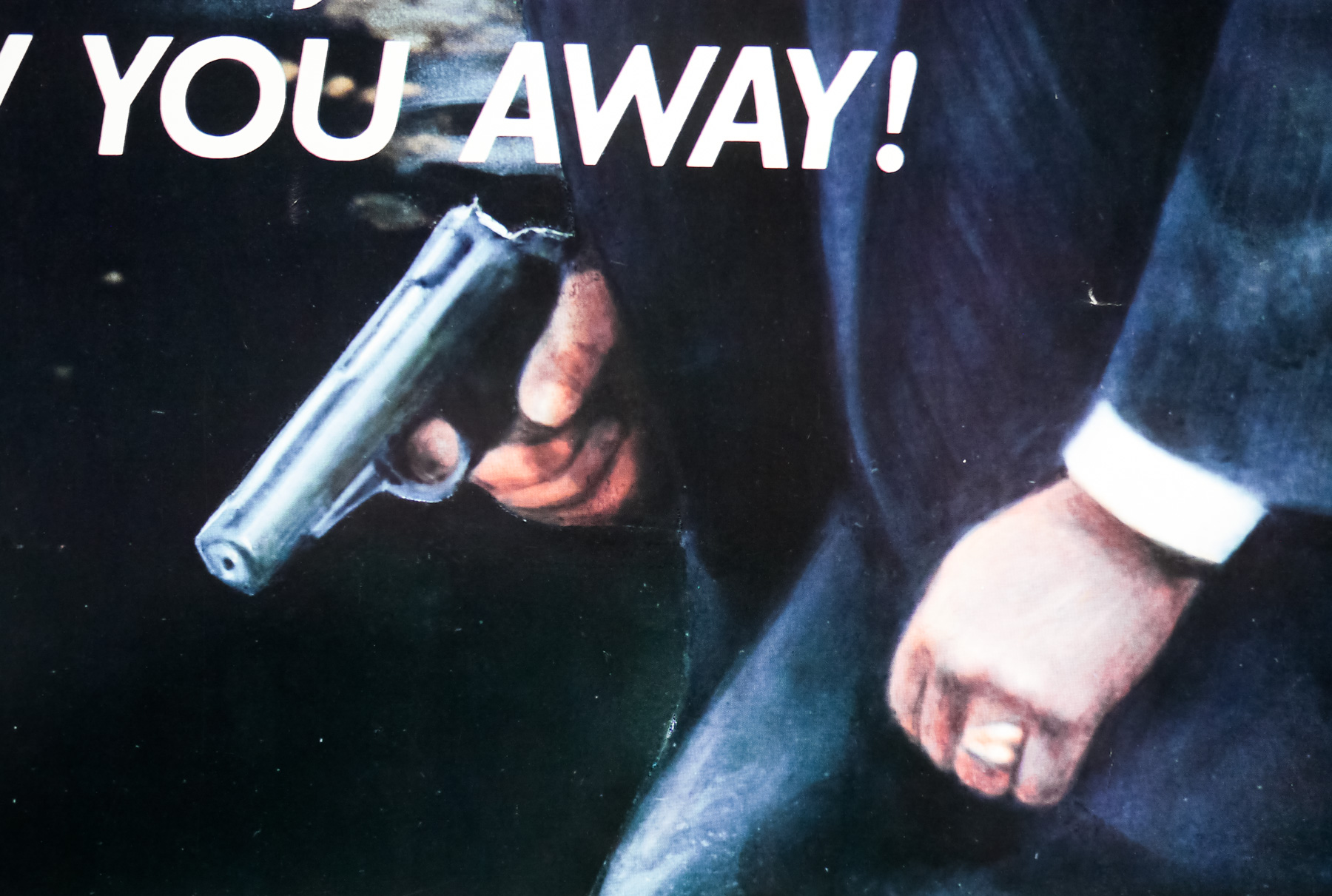
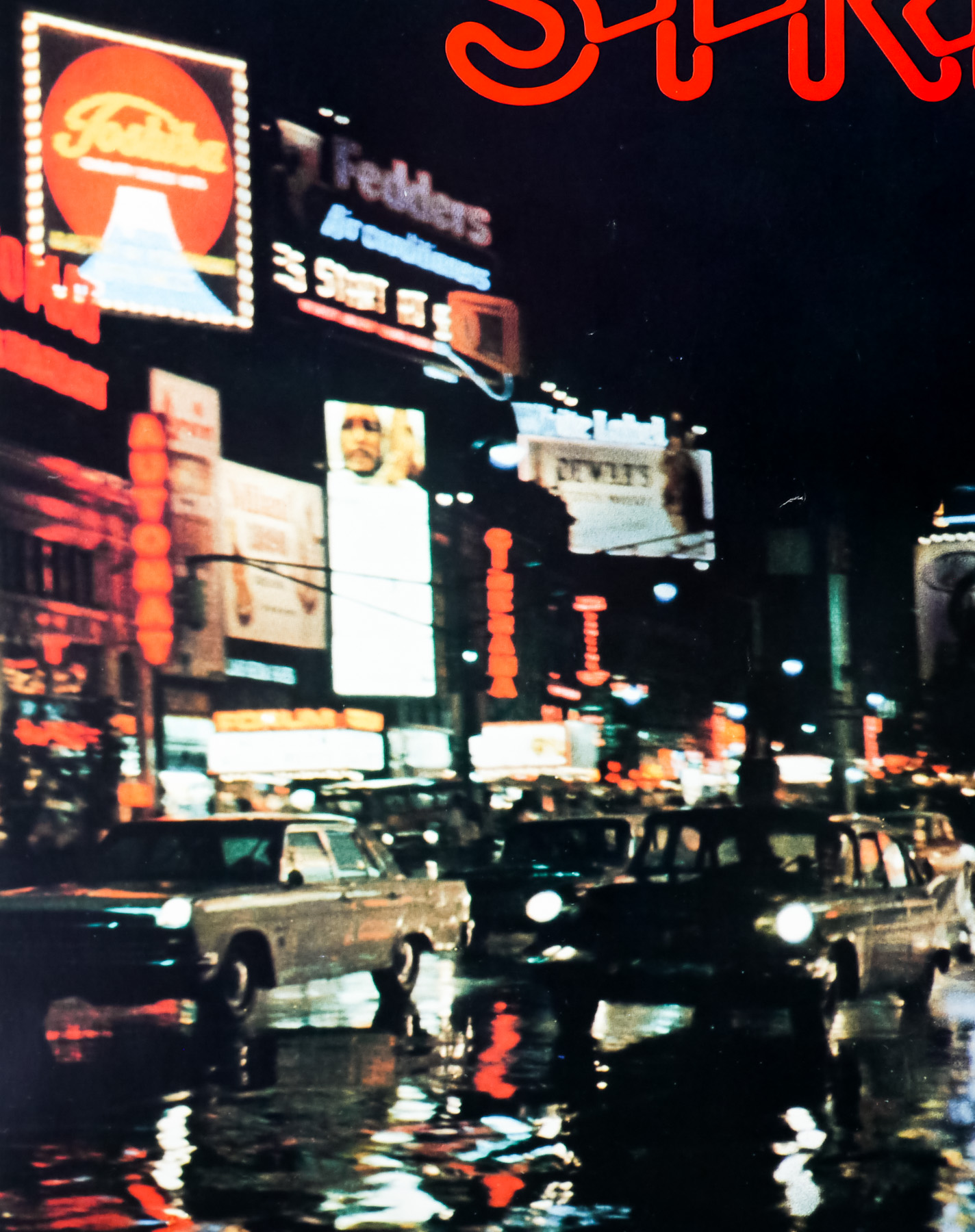
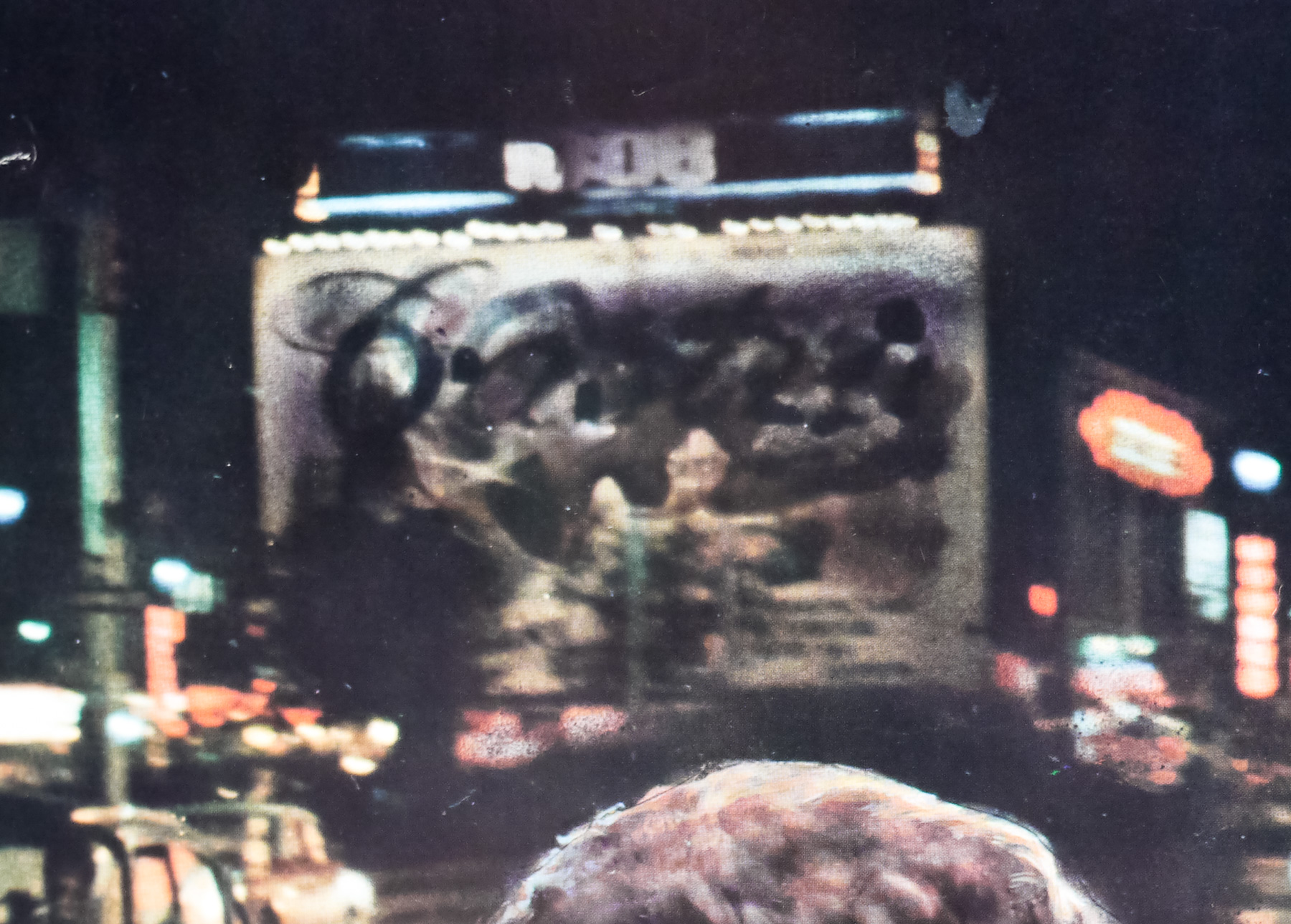
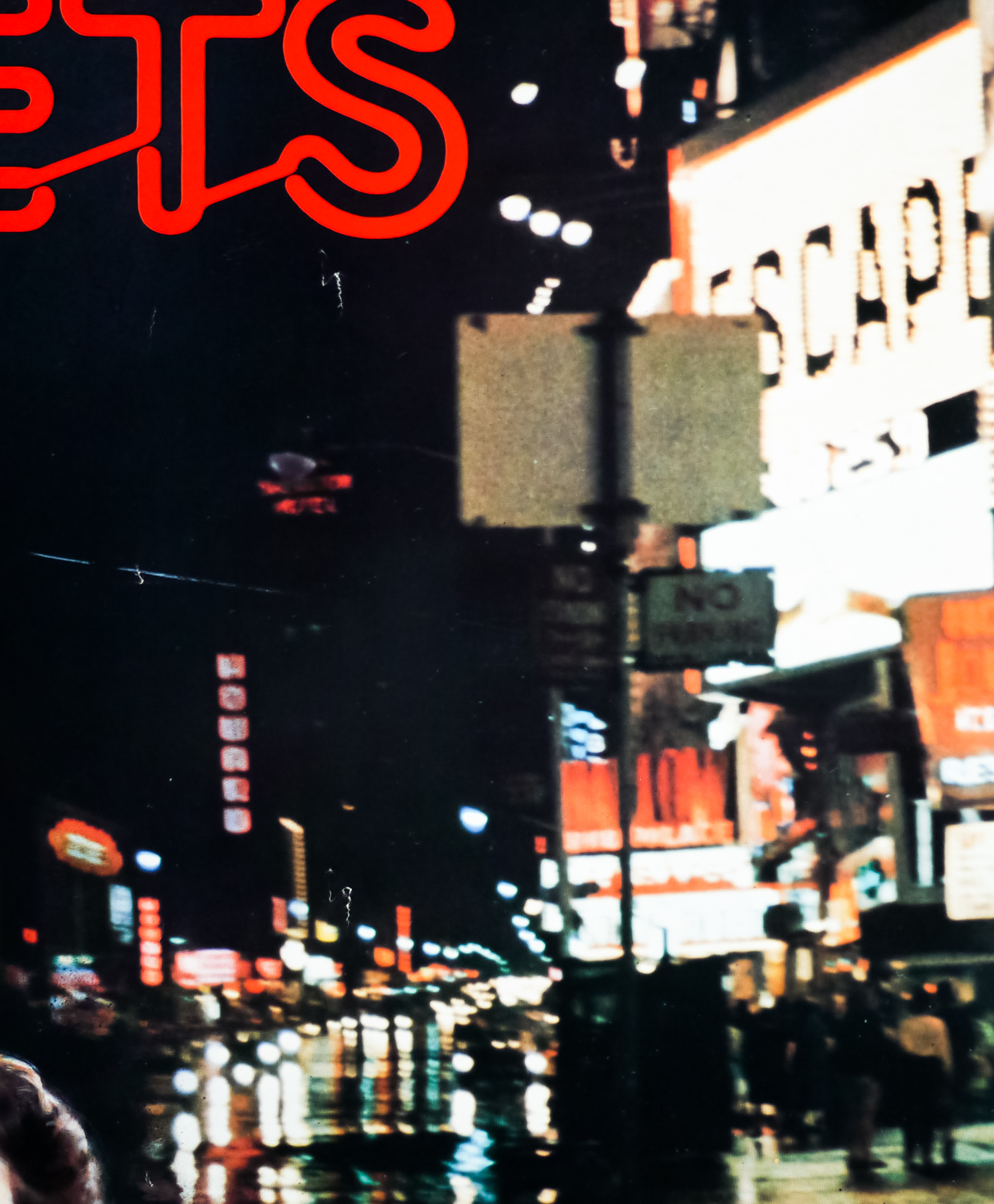
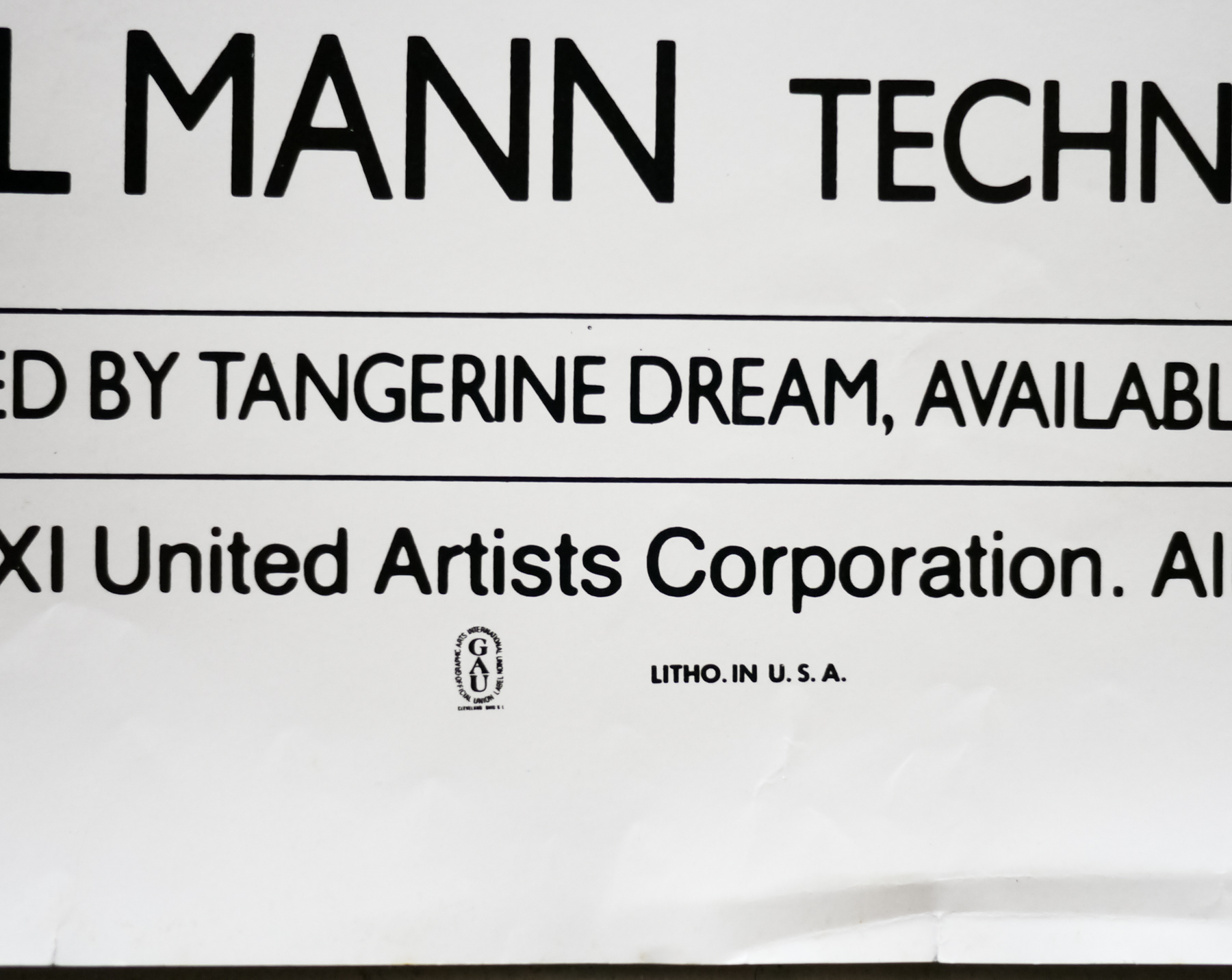
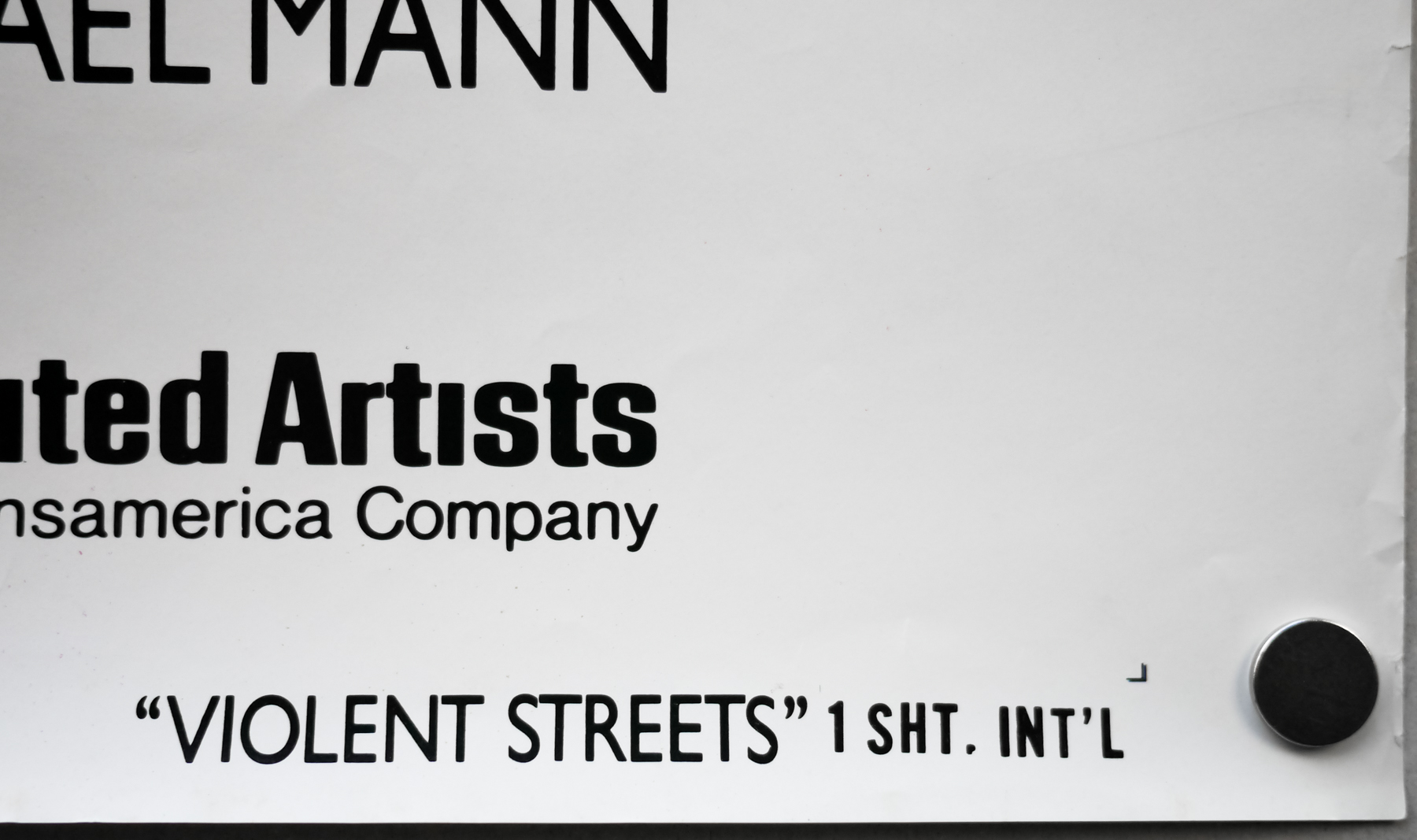
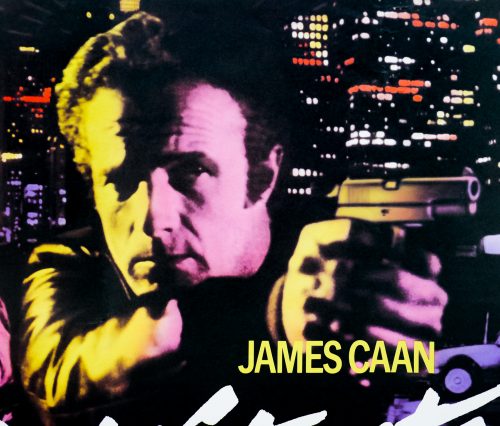
This one sheet was printed in the USA for use in international English-speaking countries and features a unique design not seen on any other poster for the film. The rain-soaked street scene is very evocative of the film itself and I believe the figure of James Caan is actually a photograph that has been touched-up with paint (check out the close-ups). The American one sheet is markedly different and features stylised artwork of Caan and the UK quad can be seen here.

The original trailer is on YouTube.

Violent Streets / quad / UK

27.09.12

Poster Poster
Title
Violent Streets
AKA
Thief (USA)
Year of Film
1981
Director
Michael Mann
Starring
James Caan, Tuesday Weld, Willie Nelson, James Belushi, Robert Prosky, Tom Signorelli, Dennis Farina, Nick Nickeas
Origin of Film
USA
Genre(s) of Film
James Caan, Tuesday Weld, Willie Nelson, James Belushi, Robert Prosky, Tom Signorelli, Dennis Farina, Nick Nickeas,
Type of Poster
Quad
Style of Poster
--
Origin of Poster
UK
Year of Poster
1981
Designer
Unknown
Artist
--
Size (inches)
30 1/16" x 40"
SS or DS
SS
NSS #
--
Tagline
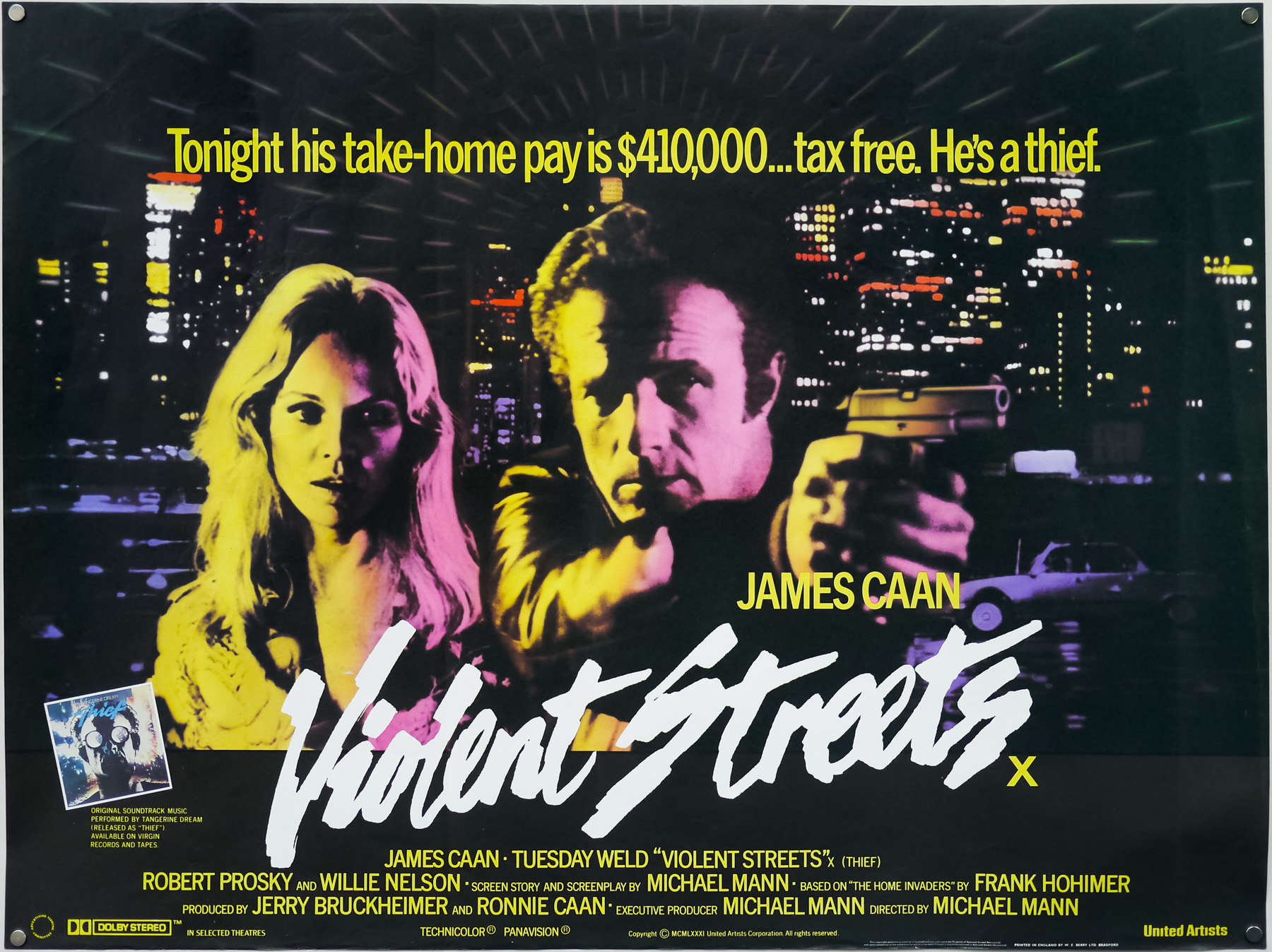
Tonight his take-home pay is $410,000...tax free. He's a thief.

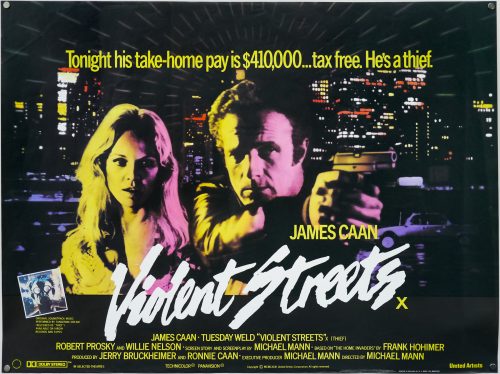
Ace director Michael Mann‘s debut film was released as Violent Streets in the UK (and was originally filmed with that title) but is now better known as Thief. Starring James Caan, in arguably his best role outside of The Godfather, it’s a neo-noir crime caper featuring the ‘one last job’ plot device. Frank (Caan) is an expert safecracker, jewel thief and hardened ex-con who works with a dedicated team of thieves on high-end robberies that are planned to an exacting degree. After a run in with the Chicago mob Frank agrees to do one last big heist that will allow him to follow his dream of getting out of the game to spend time with his new wife Jessie (Tuesday Weld). It quickly becomes clear that getting out isn’t as easy as Frank hoped and, as the caper escalates, his usual wariness and mistrust is set aside, putting his very life at risk.

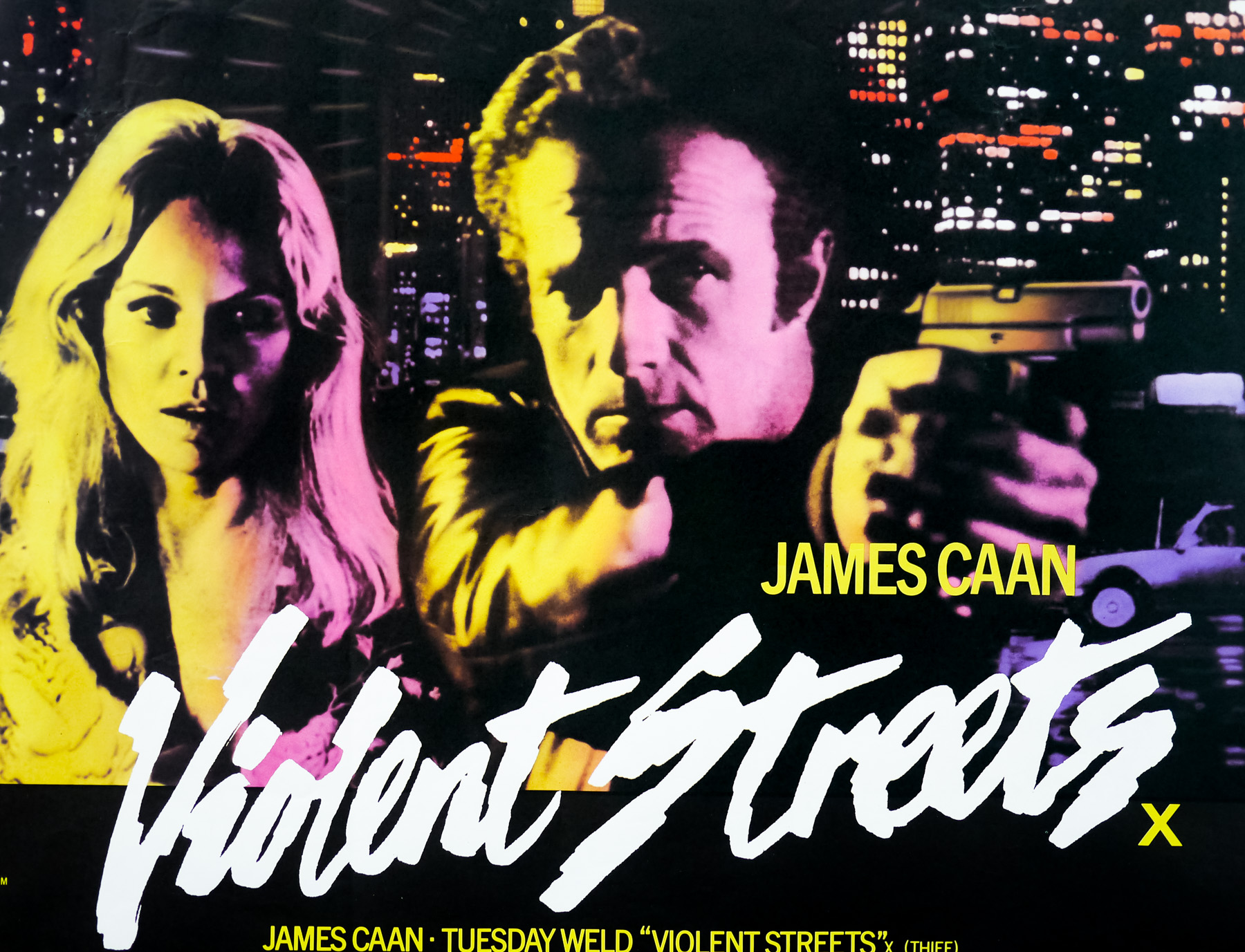
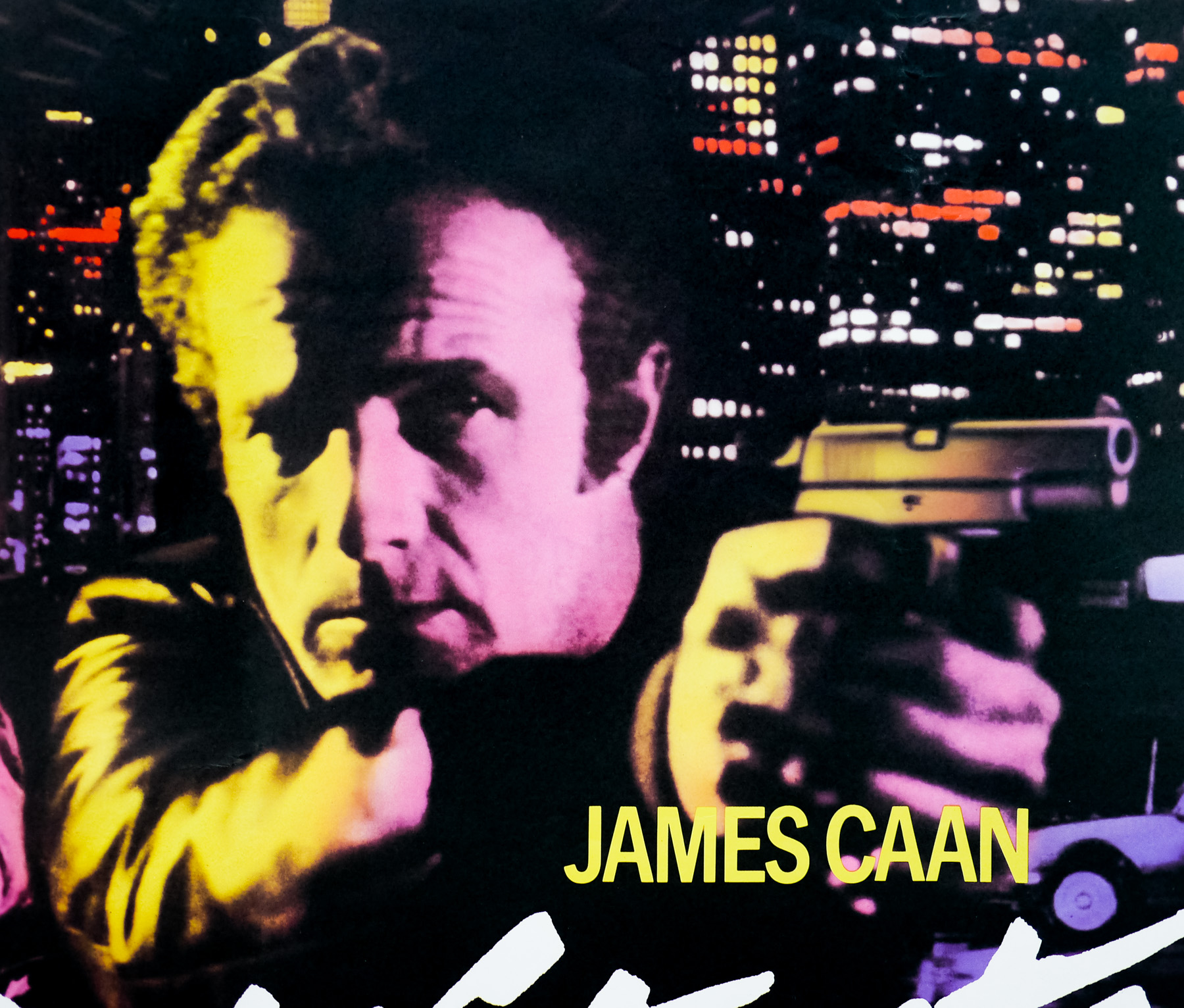
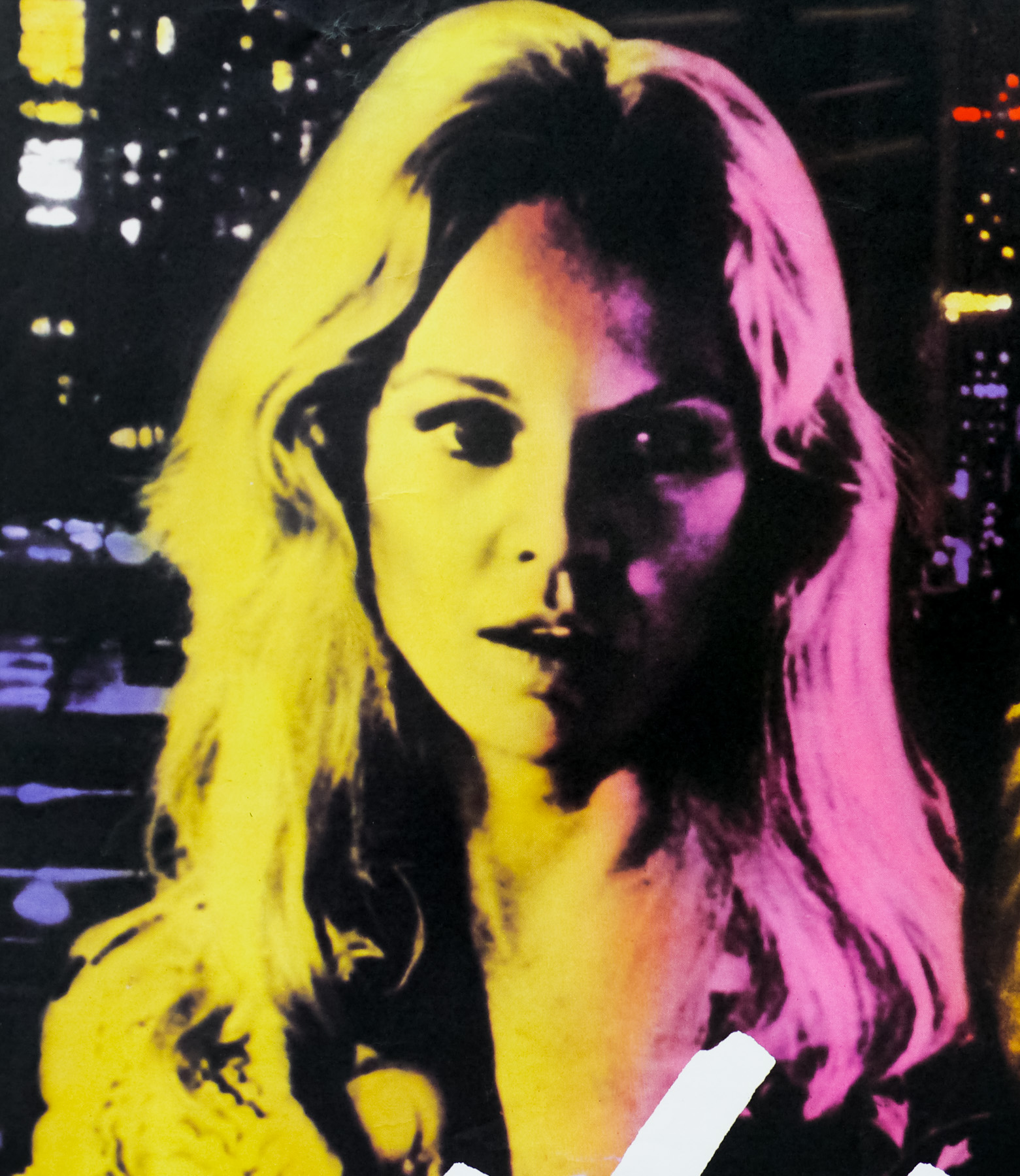
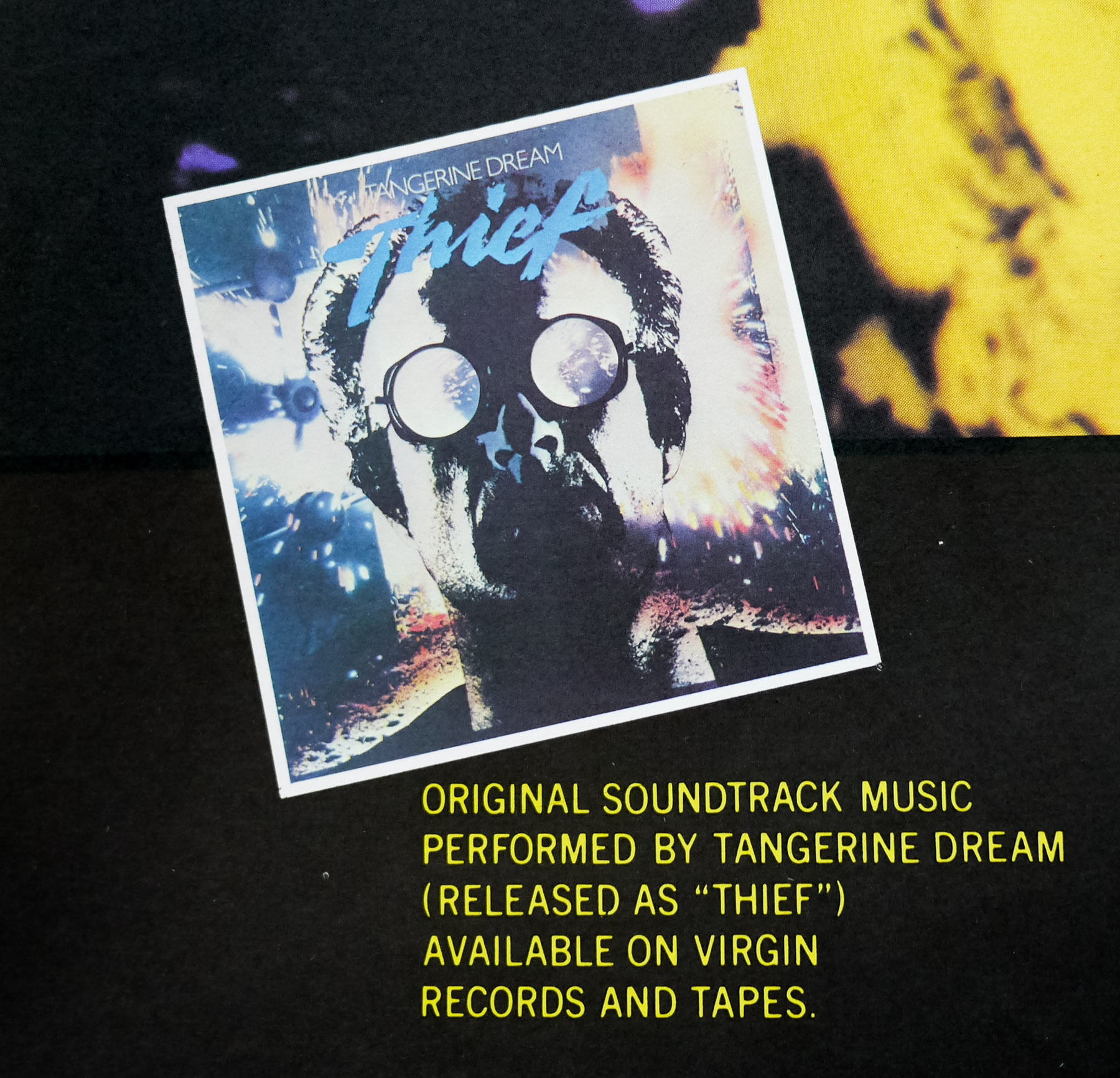
This quad features a unique design not seen on any other poster for the film, with neon colours evocative of the noir urban settings seen in the film. The American one sheet is markedly different and features stylised artwork of Caan, which can be seen on the cover of the record advertisement as detailed to the left.

The original trailer is on YouTube.

Planet Of The Apes / screen print / Martin Ansin / regular / AP / USA

20.06.14

Poster Poster
Title
Planet Of The Apes
AKA
Apornas planet (Sweden)
Year of Film
1968
Director
Franklin J. Schaffner
Starring
Charlton Heston, Roddy McDowall, Kim Hunter, Maurice Evans, James Whitmore, James Daly, Linda Harrison
Origin of Film
USA
Genre(s) of Film
Charlton Heston, Roddy McDowall, Kim Hunter, Maurice Evans, James Whitmore, James Daly, Linda Harrison,
Type of Poster
Screen print
Style of Poster
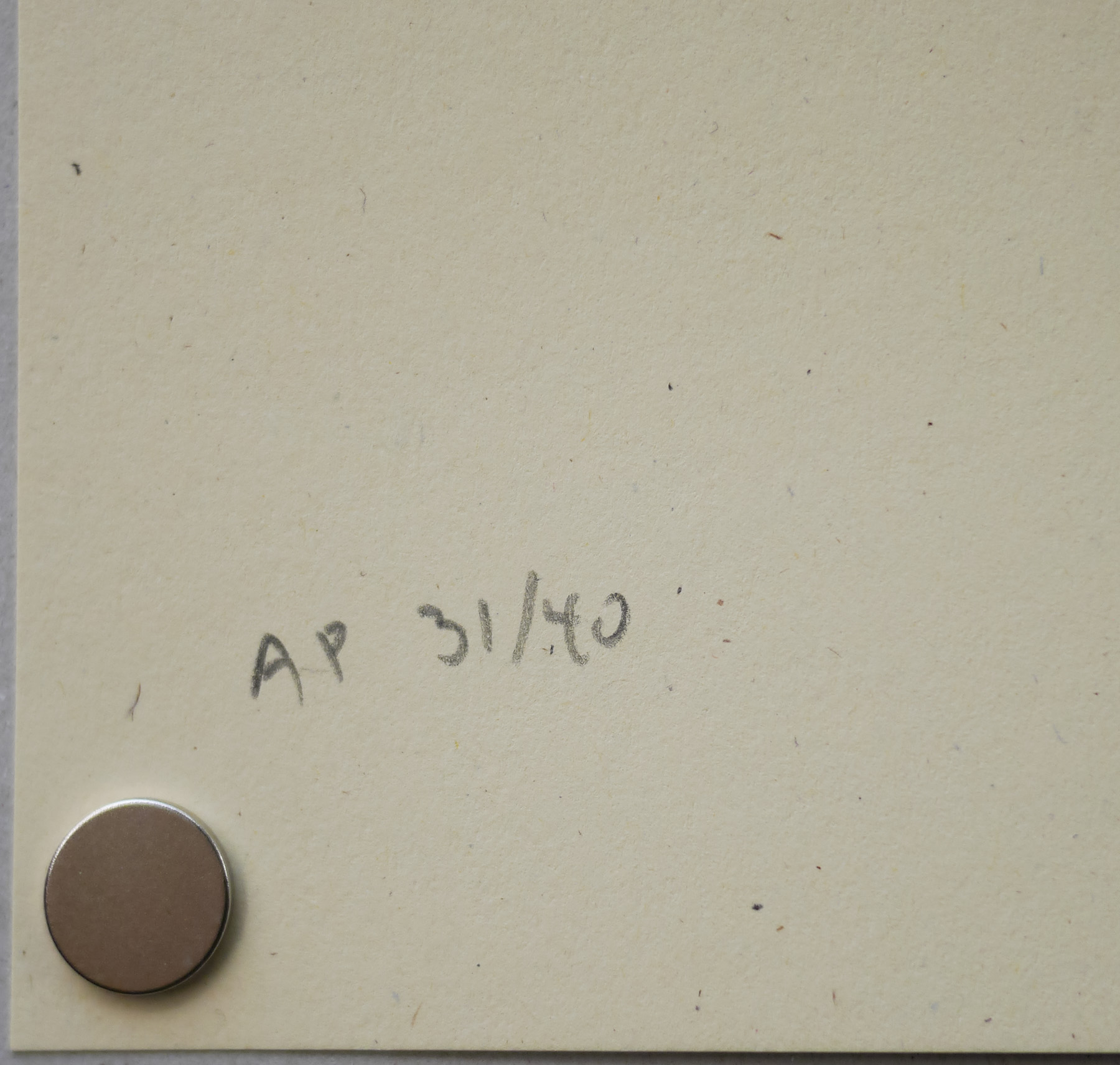
Regular - Artists Proof
Origin of Poster
USA
Year of Poster
2012
Designer
Martin Ansin
Artist
Martin Ansin
Size (inches)
24" x 36"
SS or DS
SS
Tagline
--

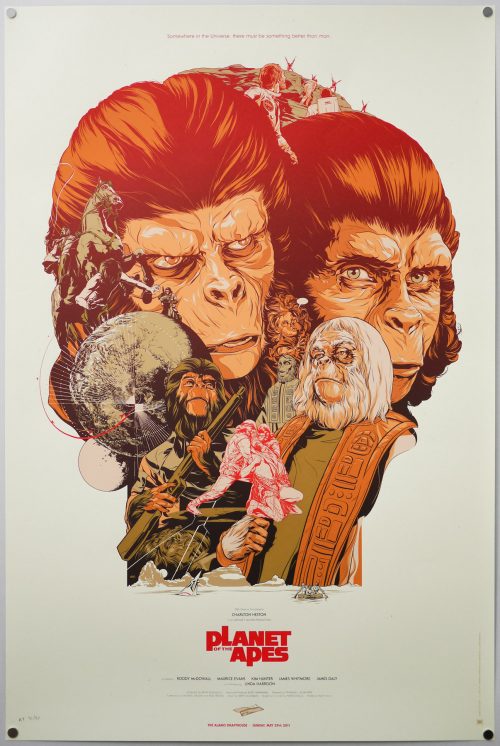
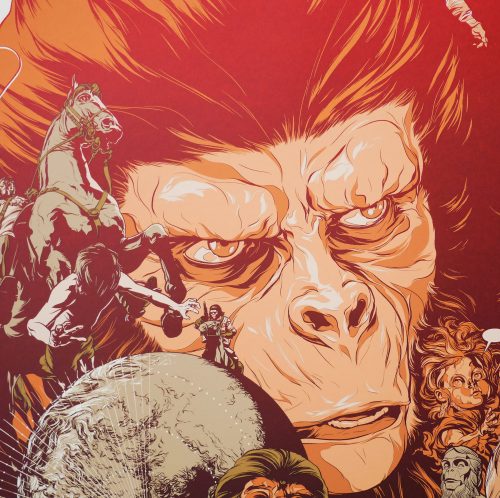
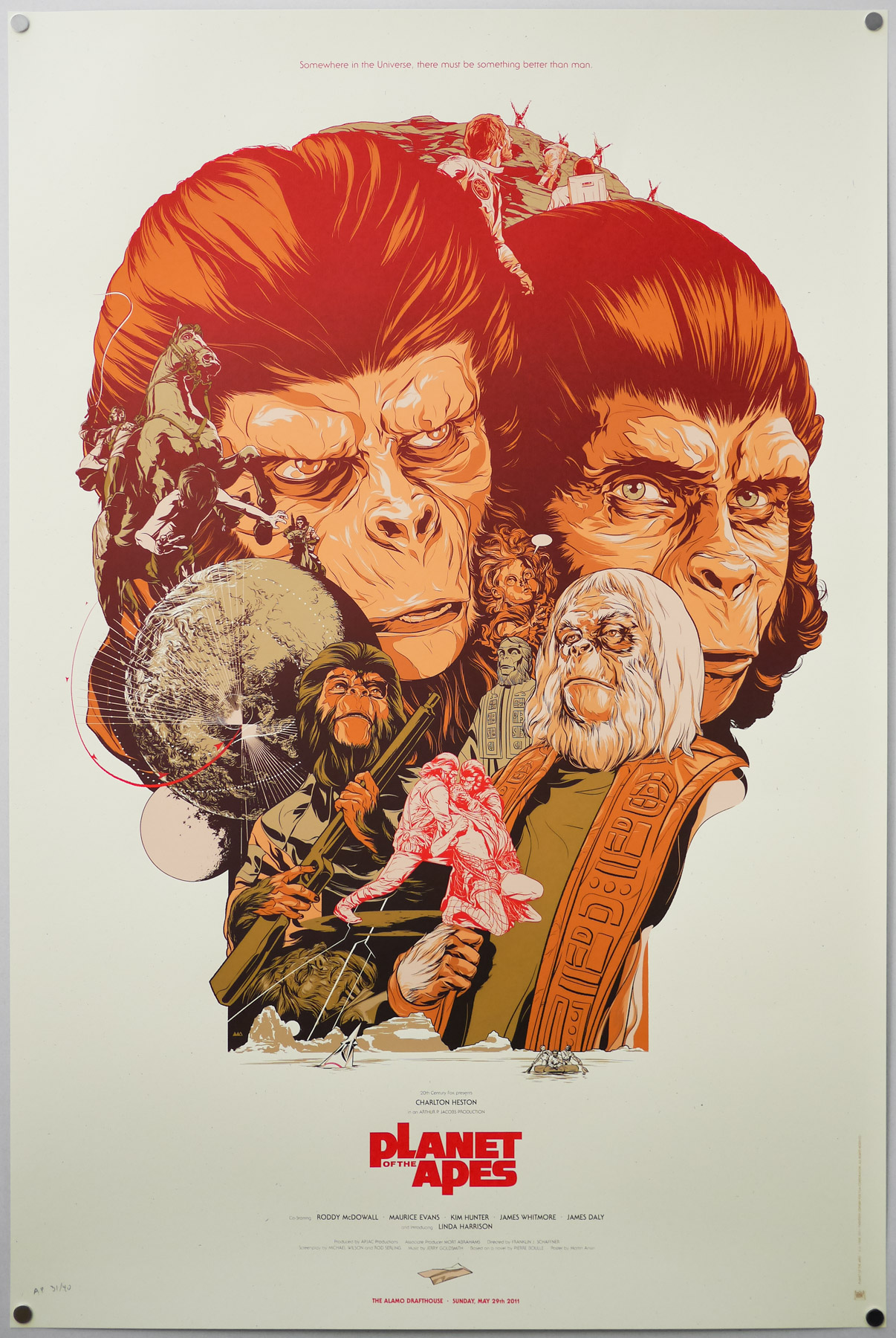
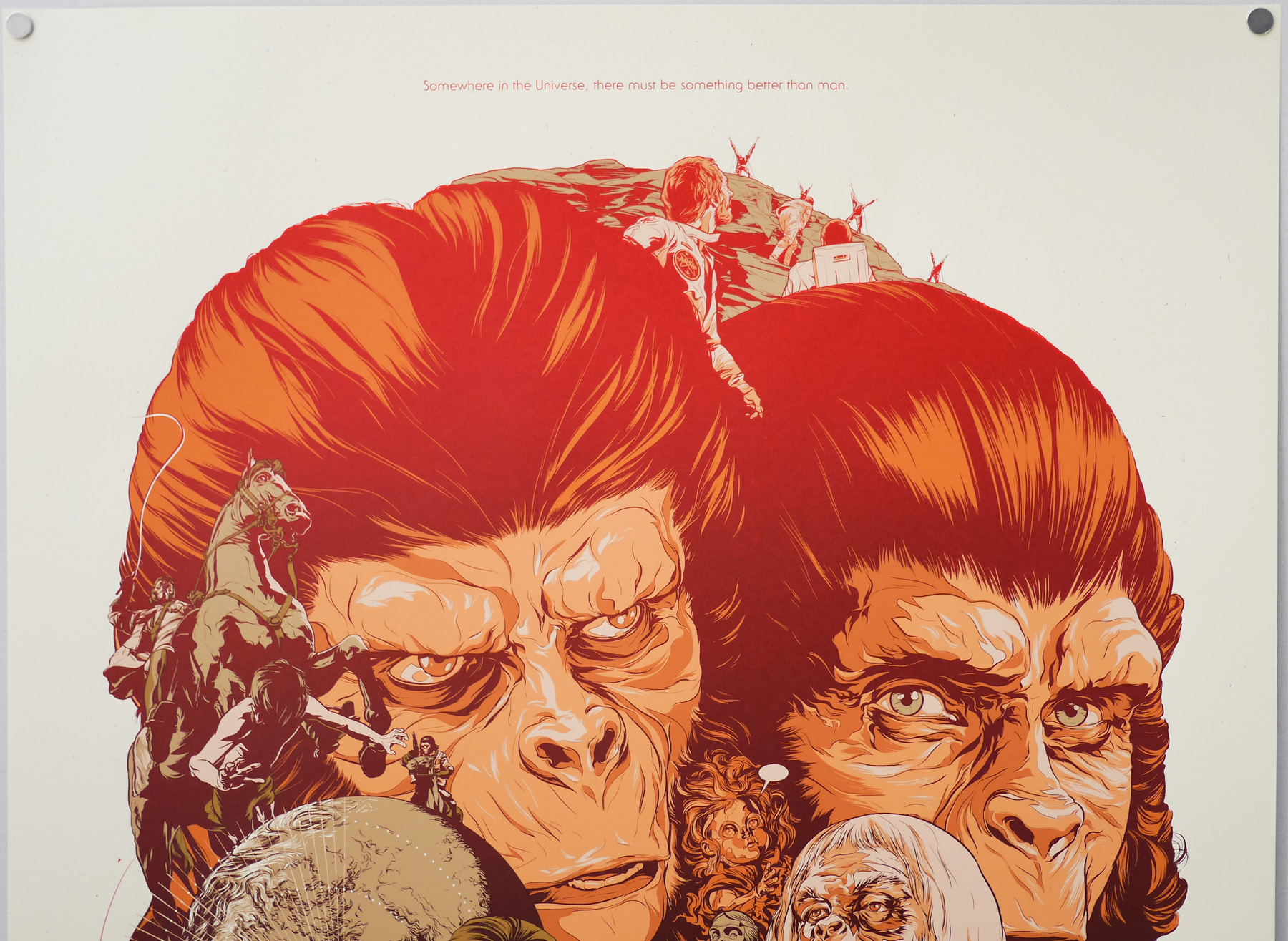
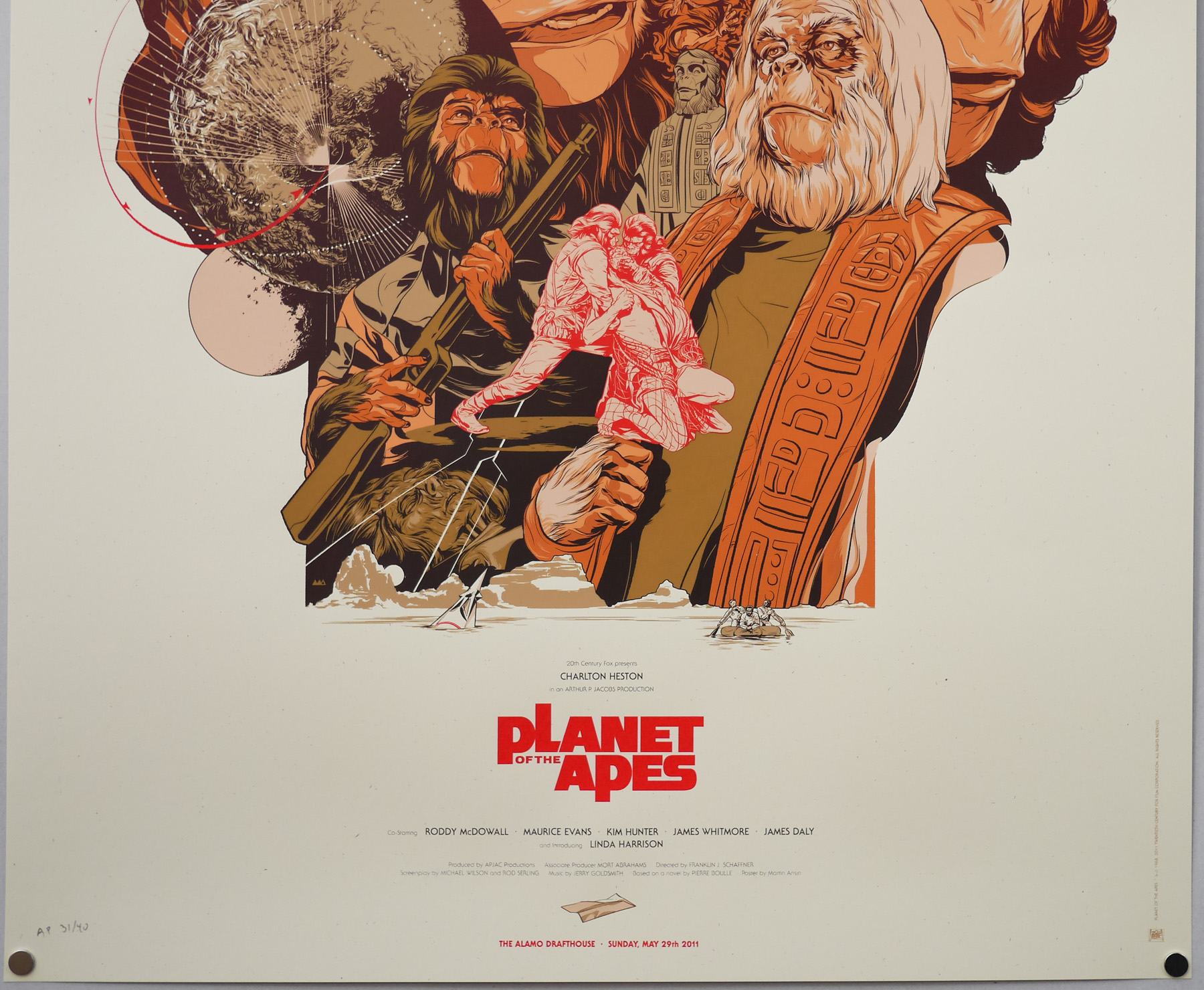
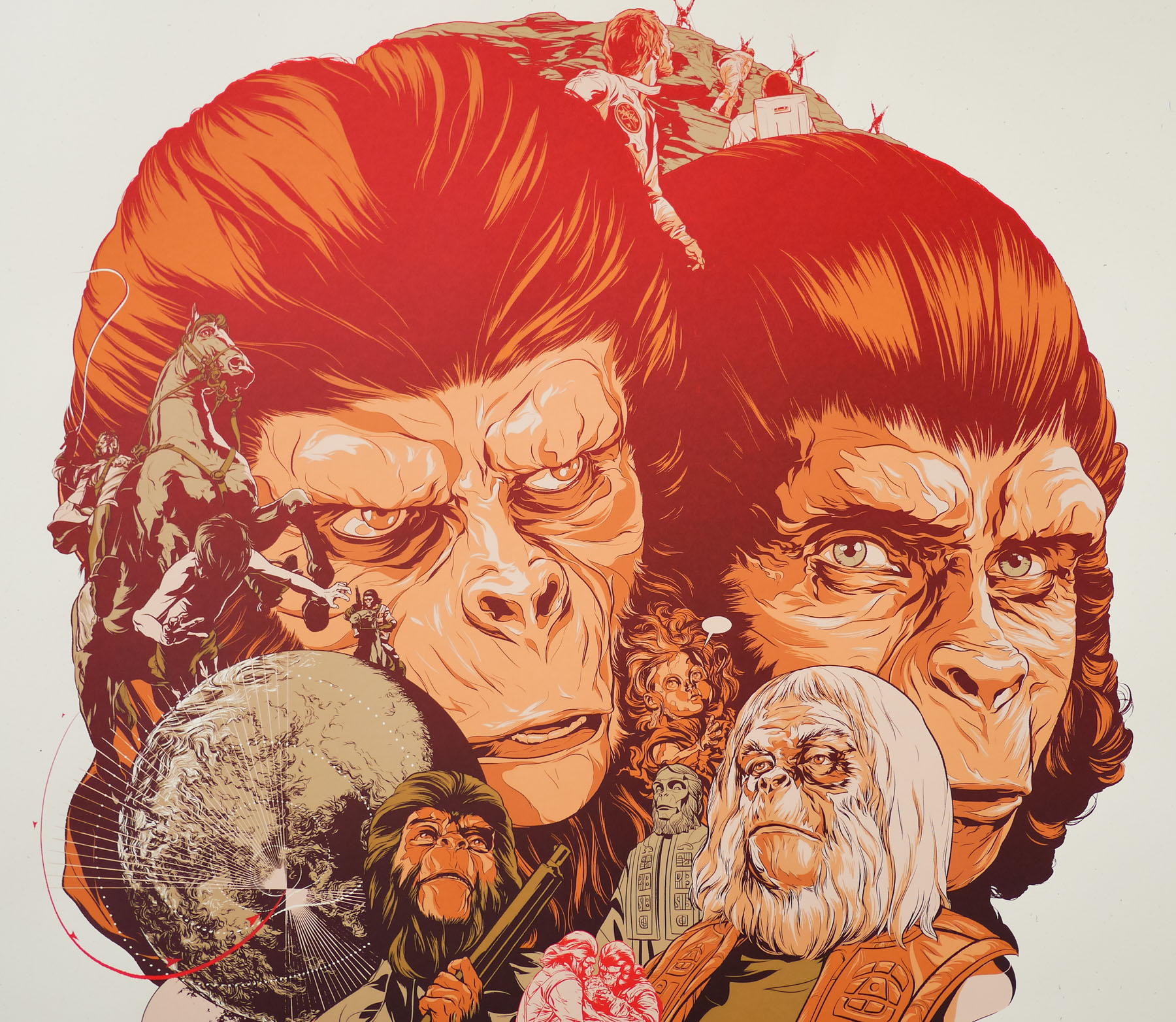
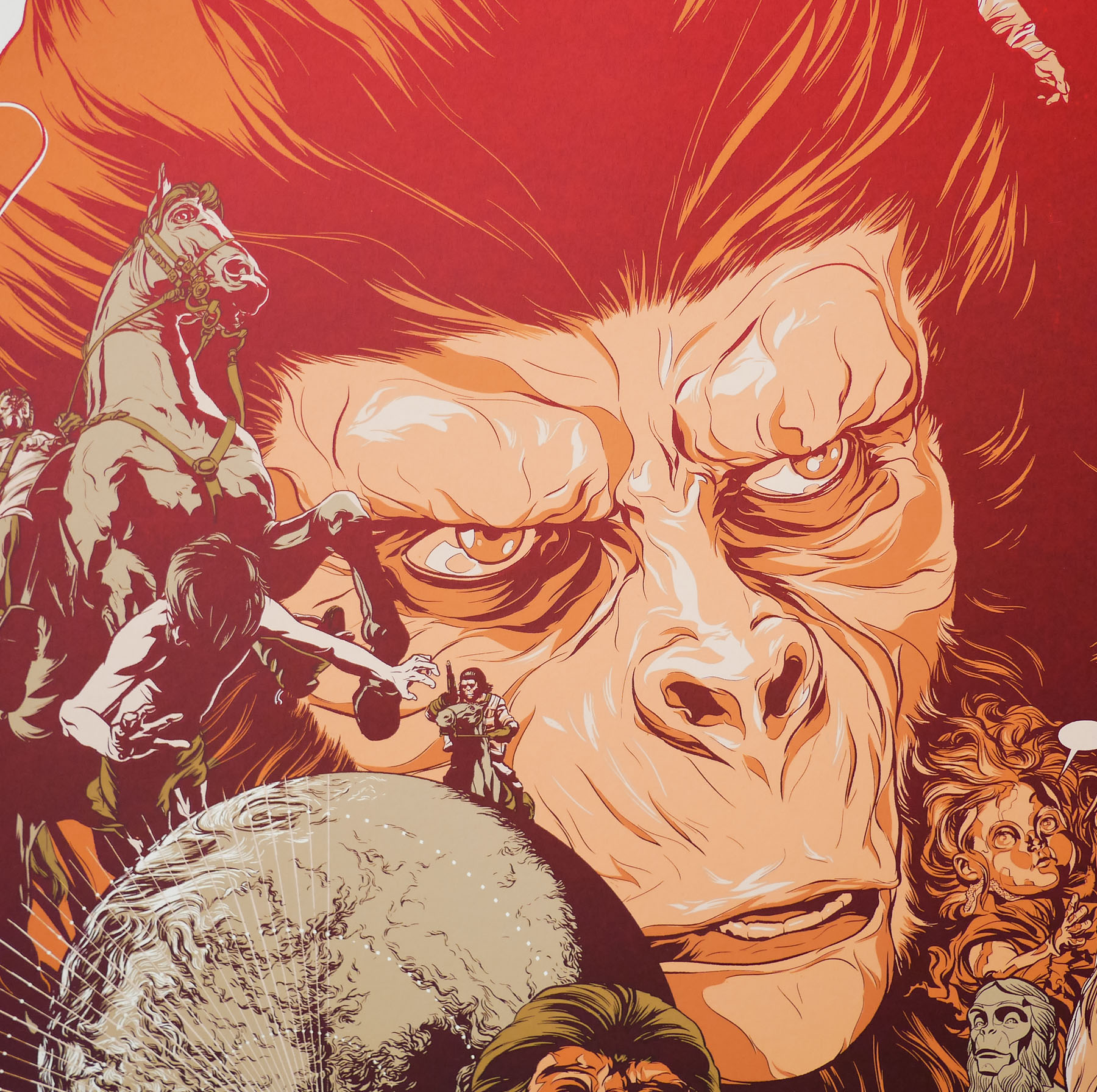
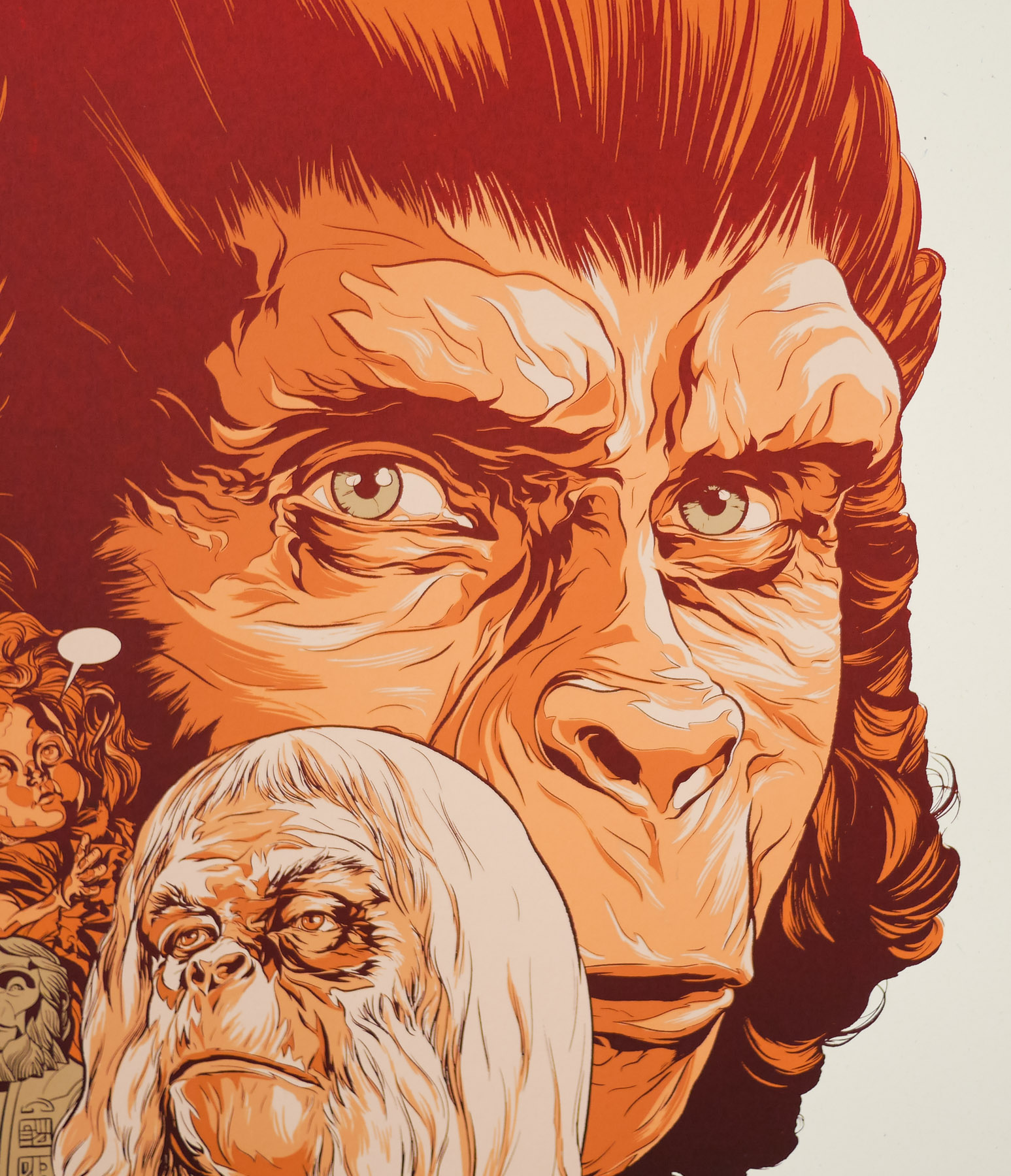
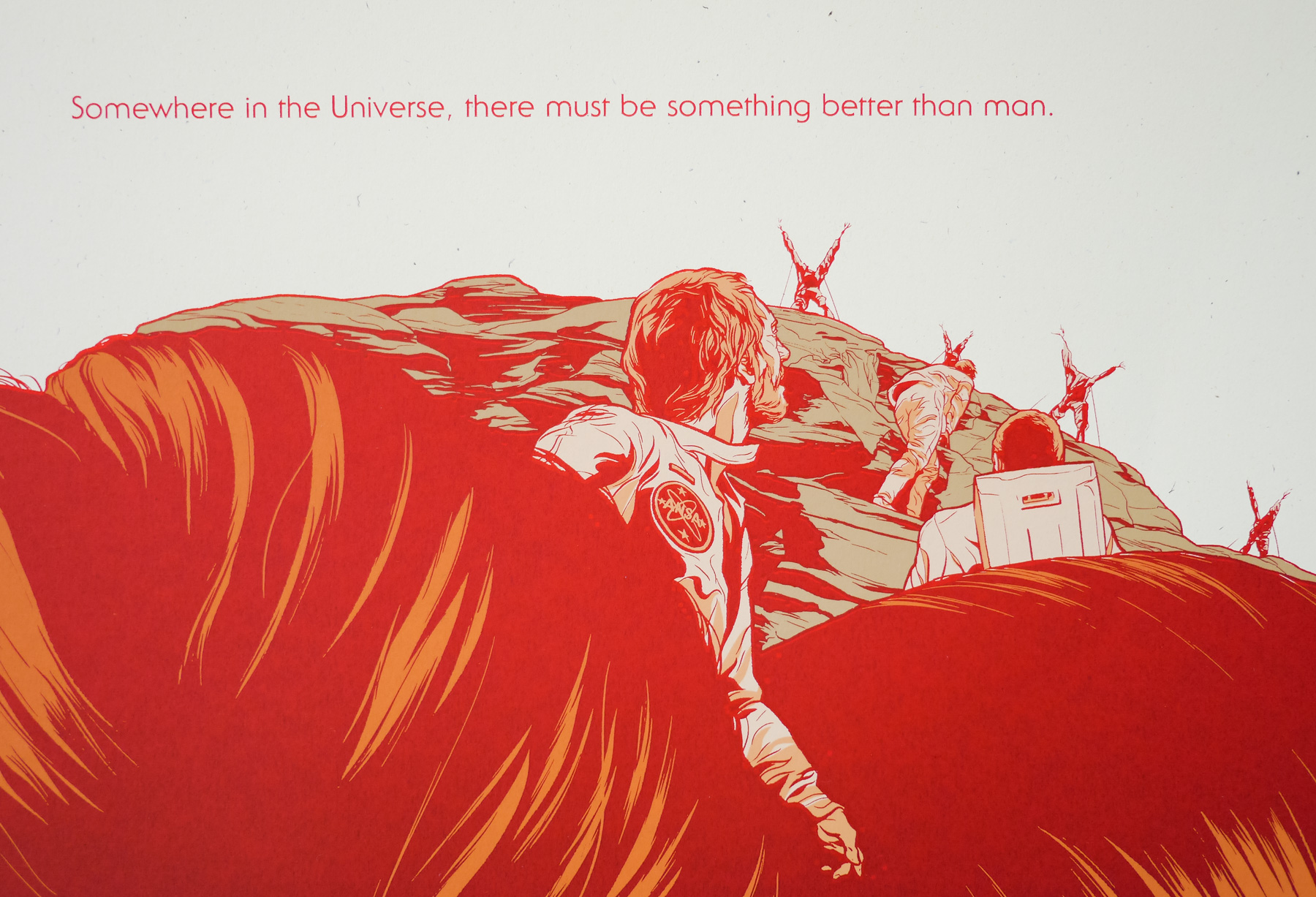
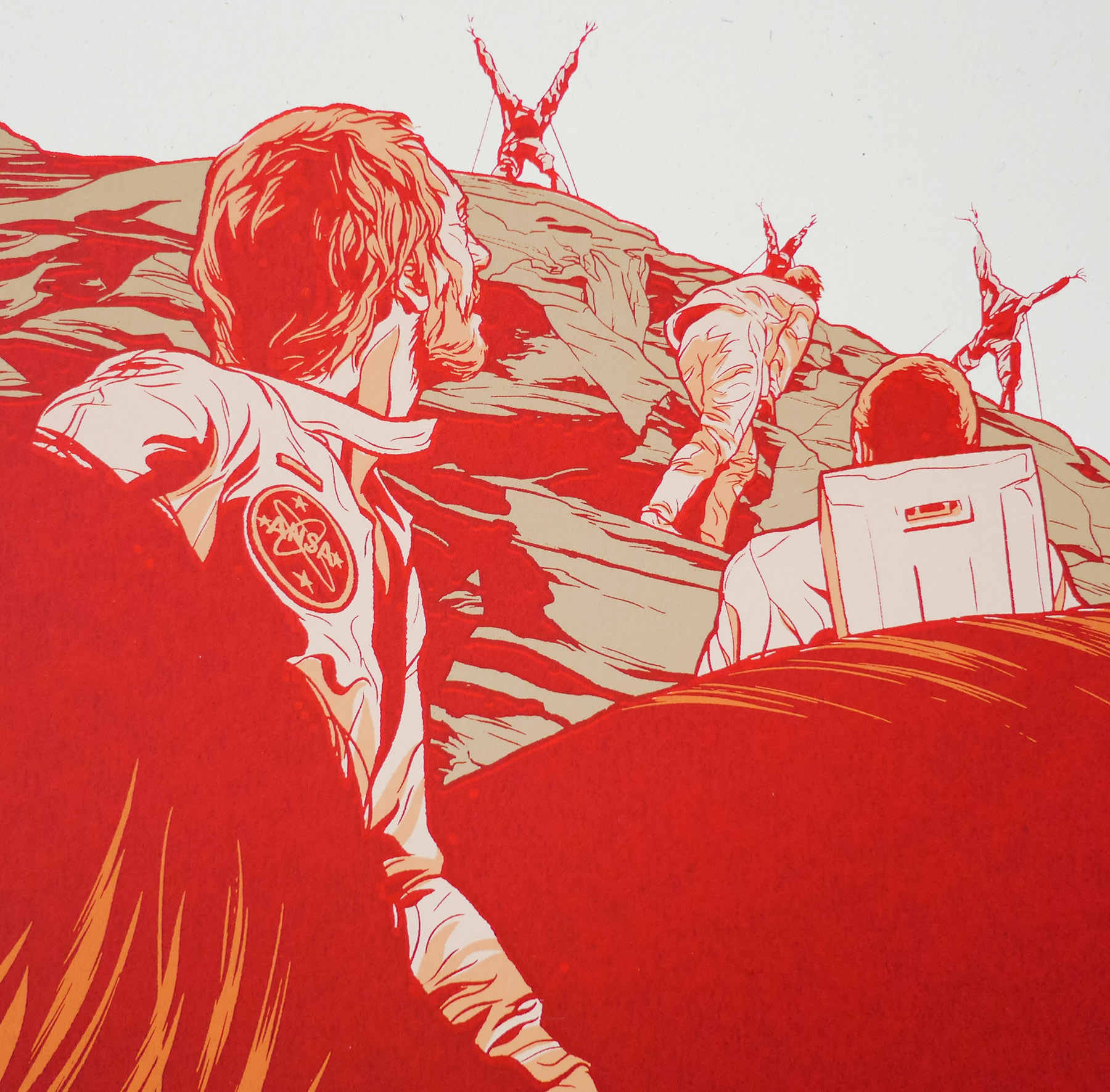
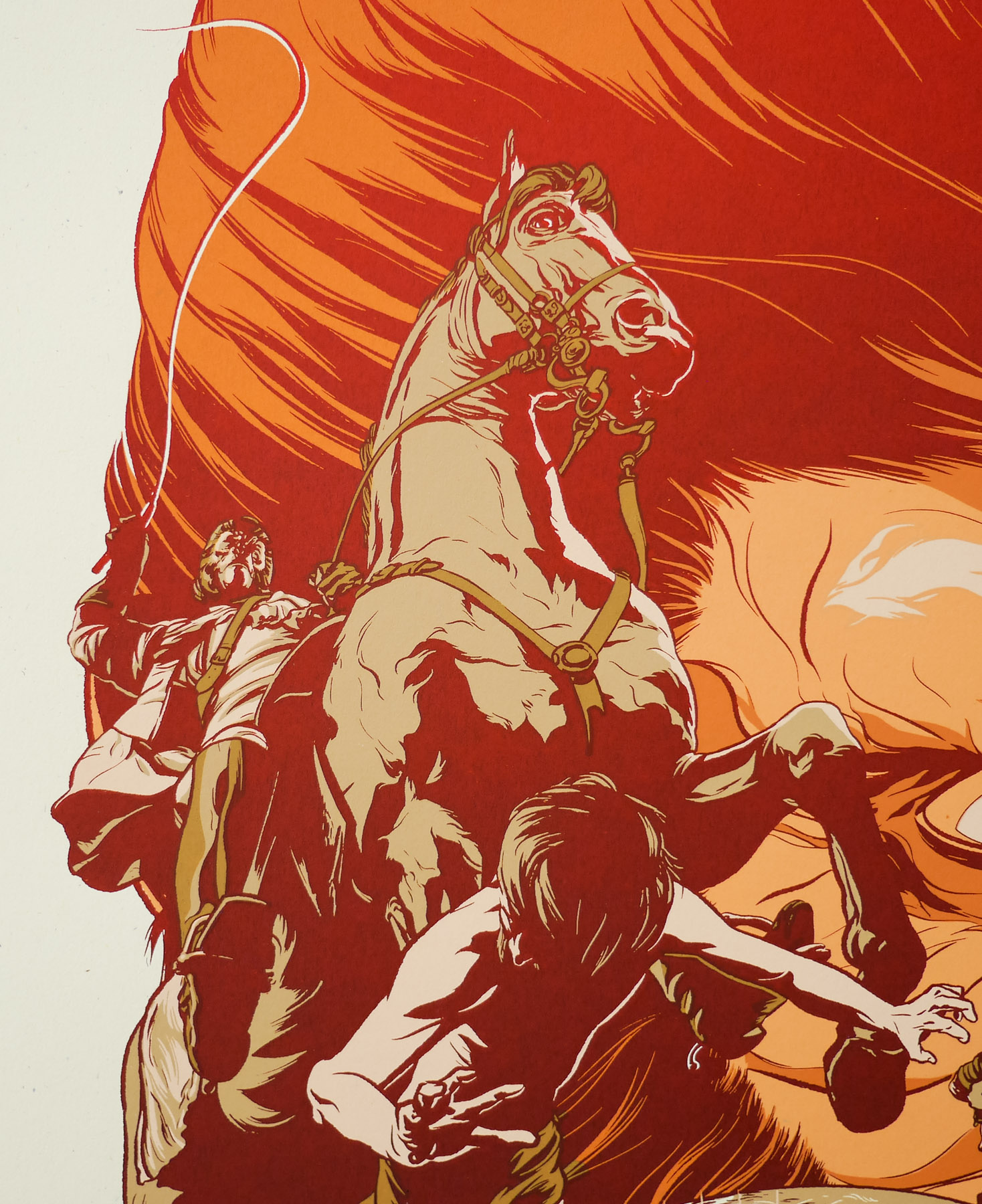
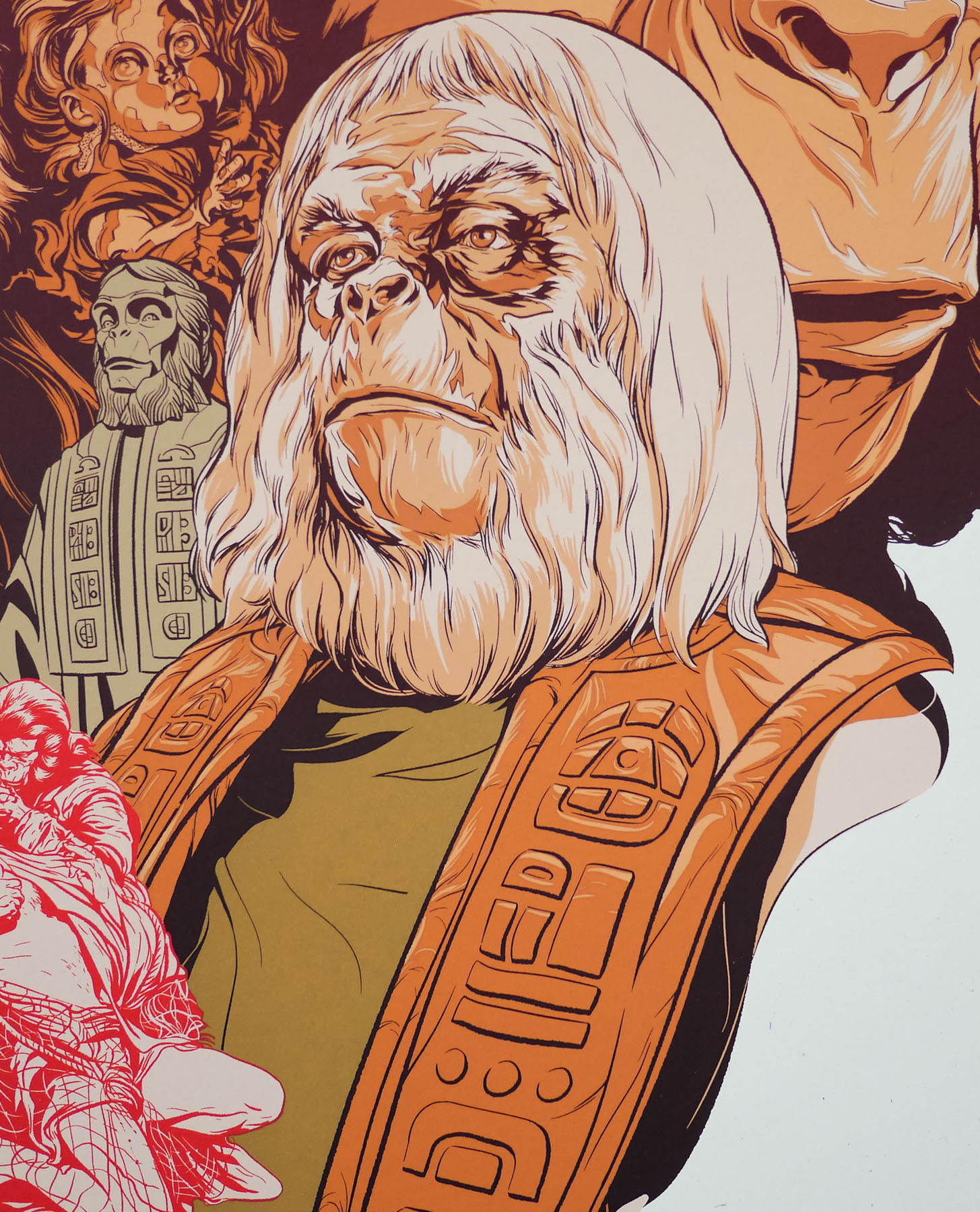
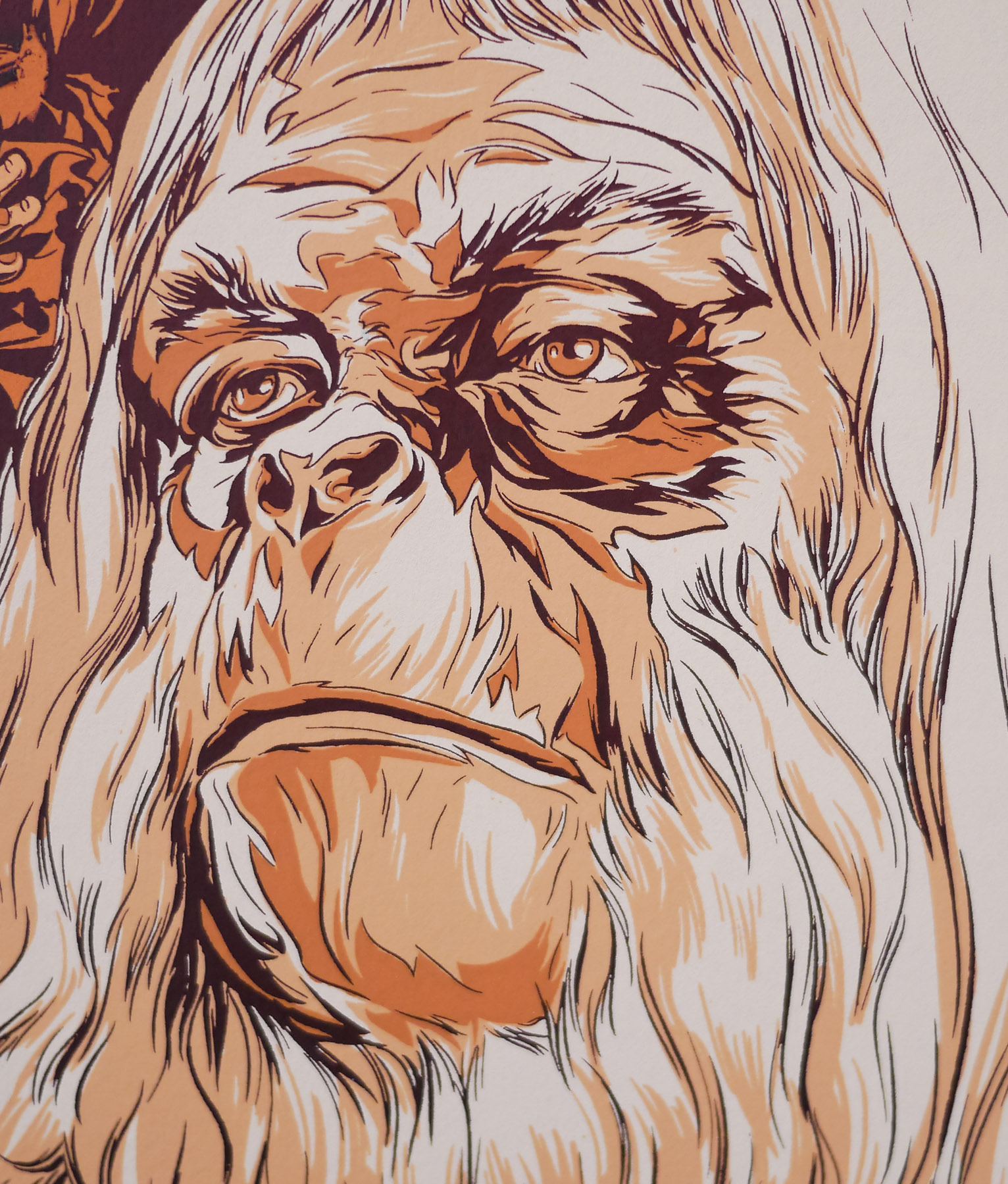
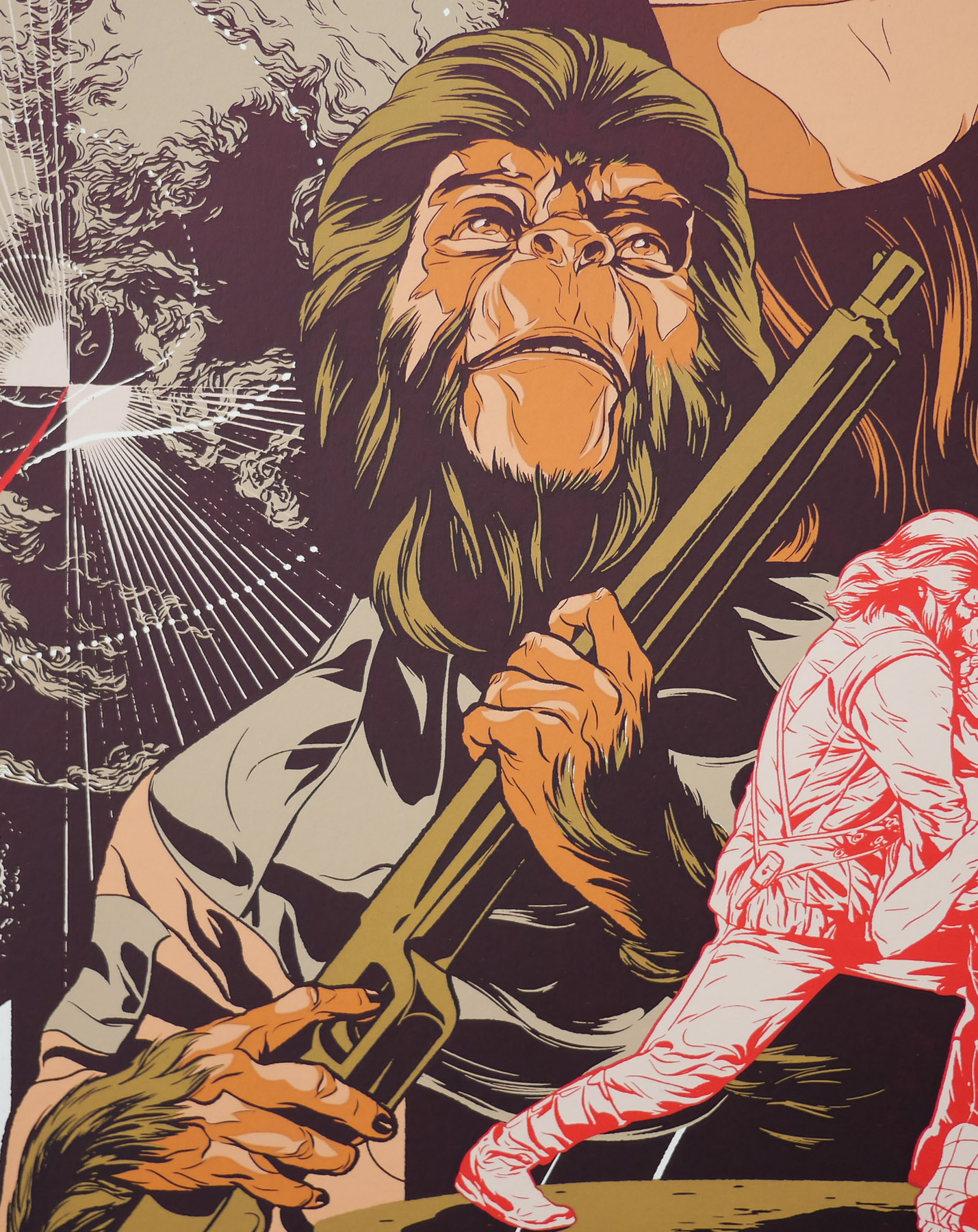
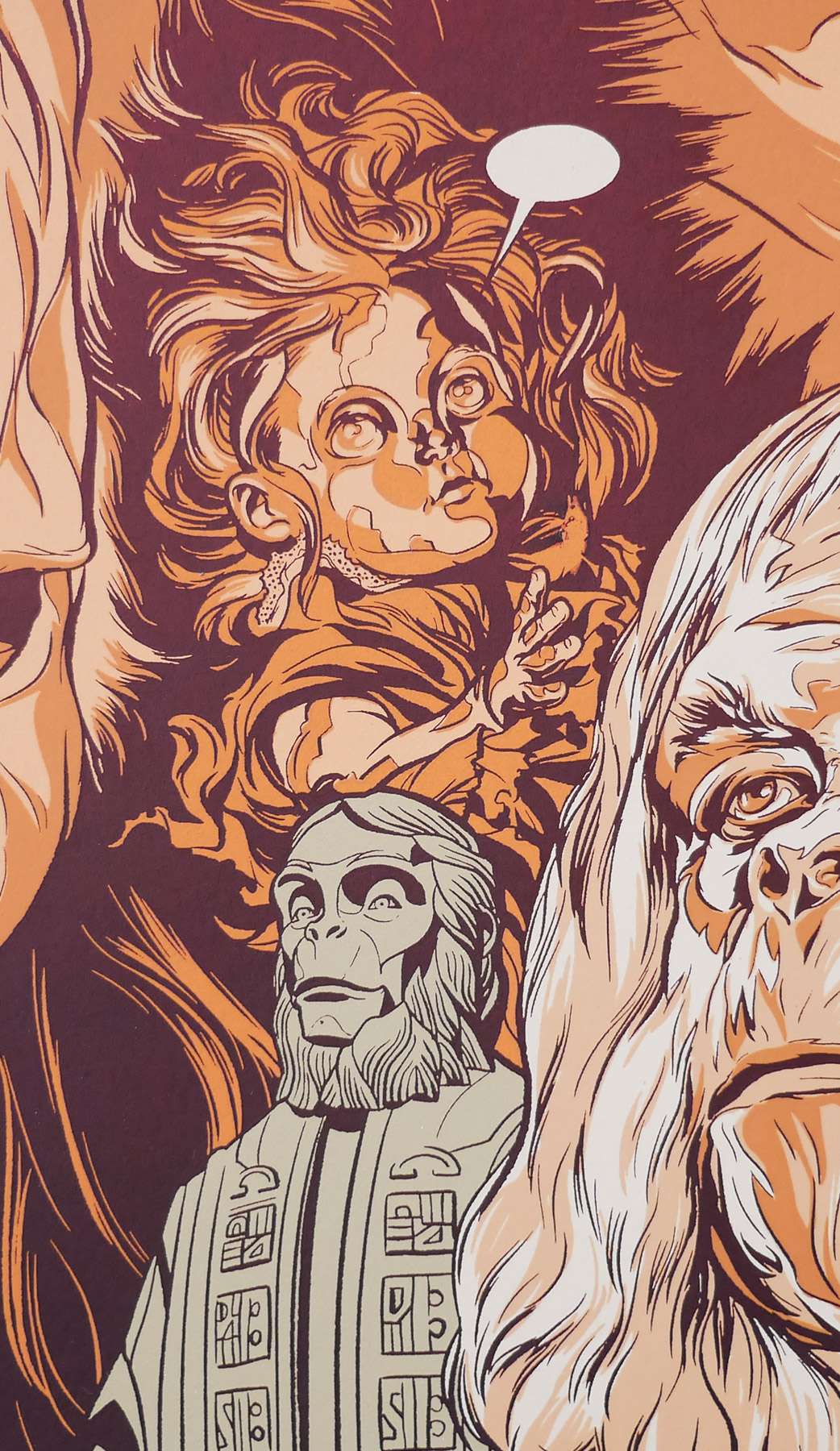
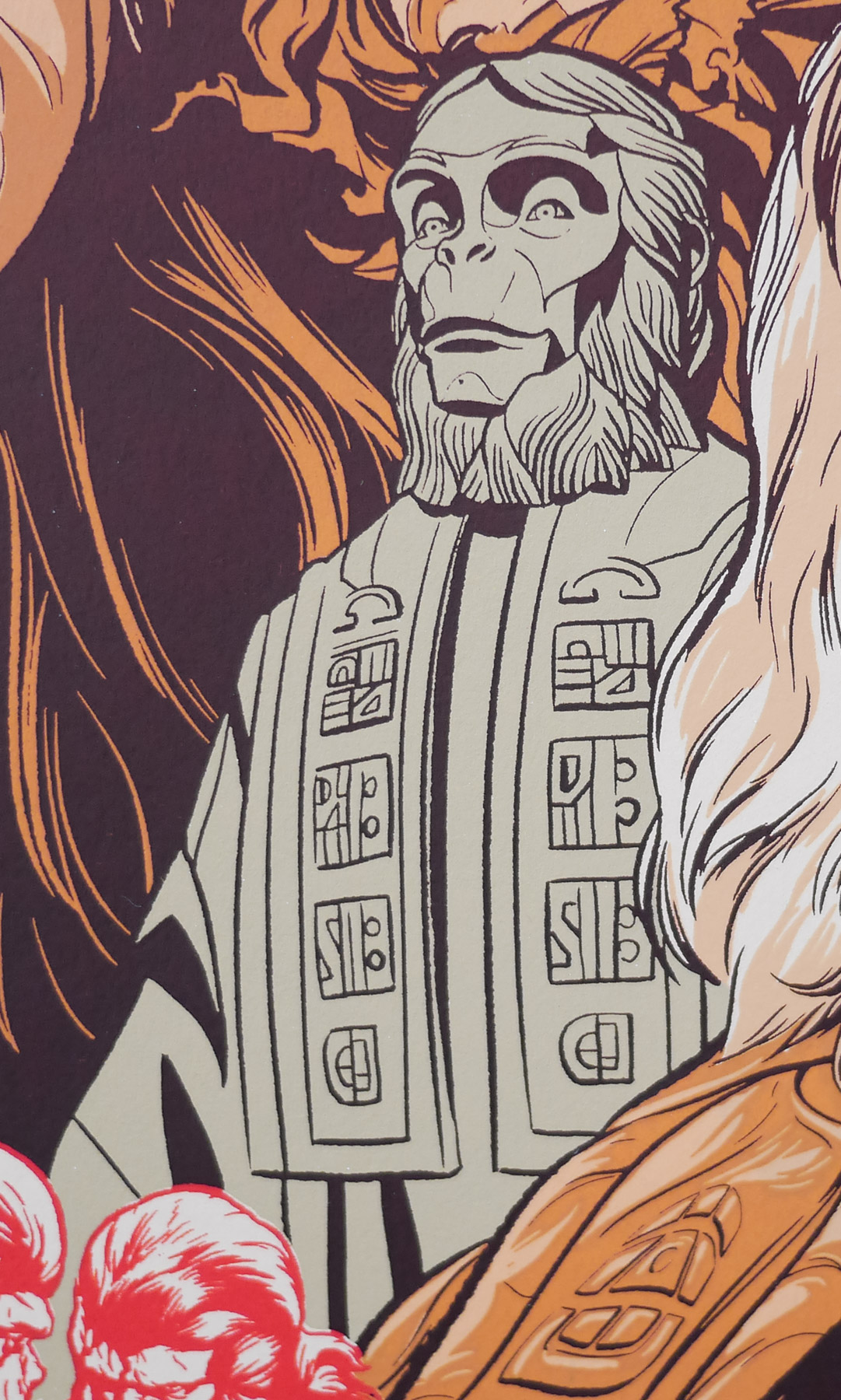
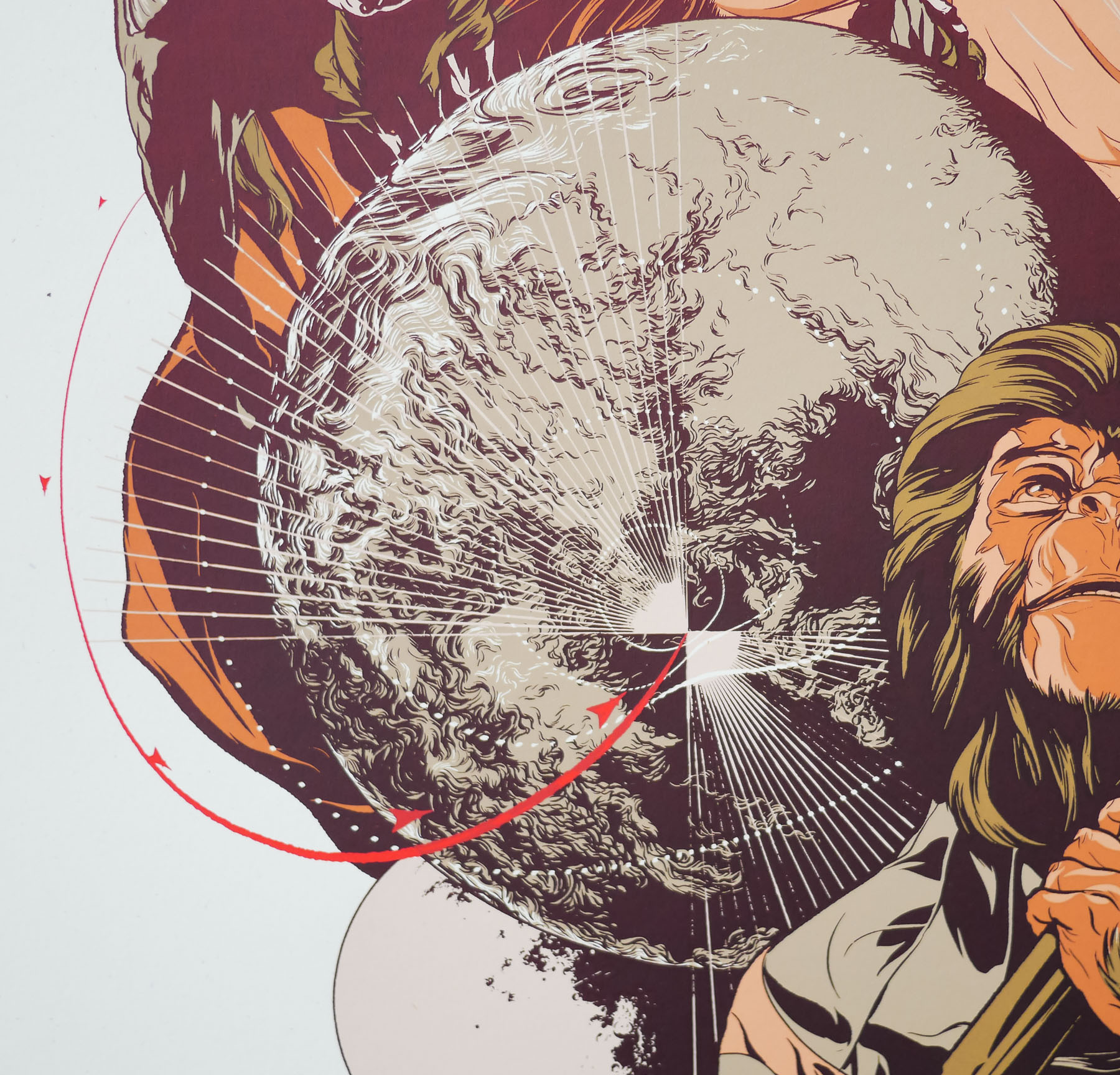
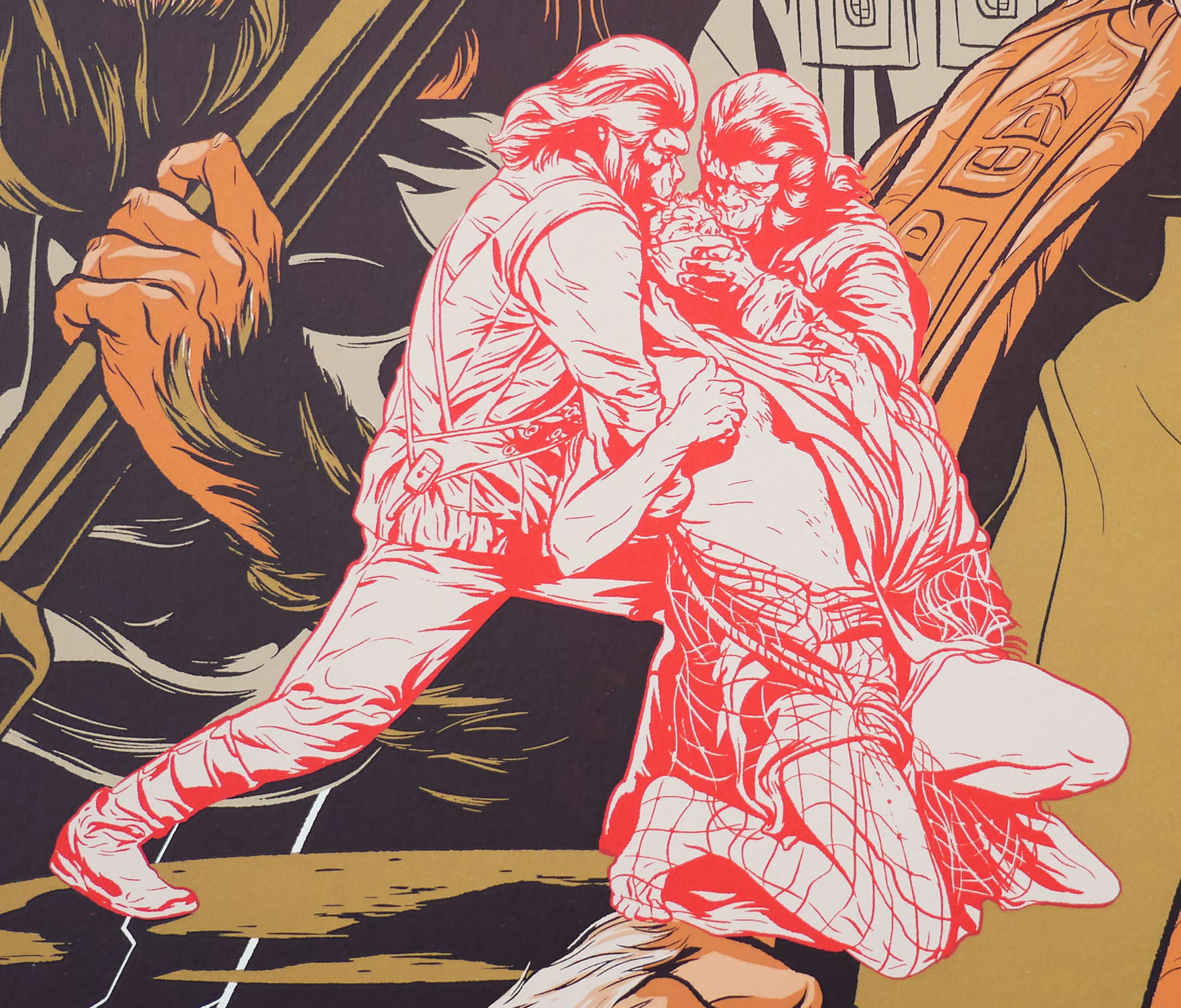
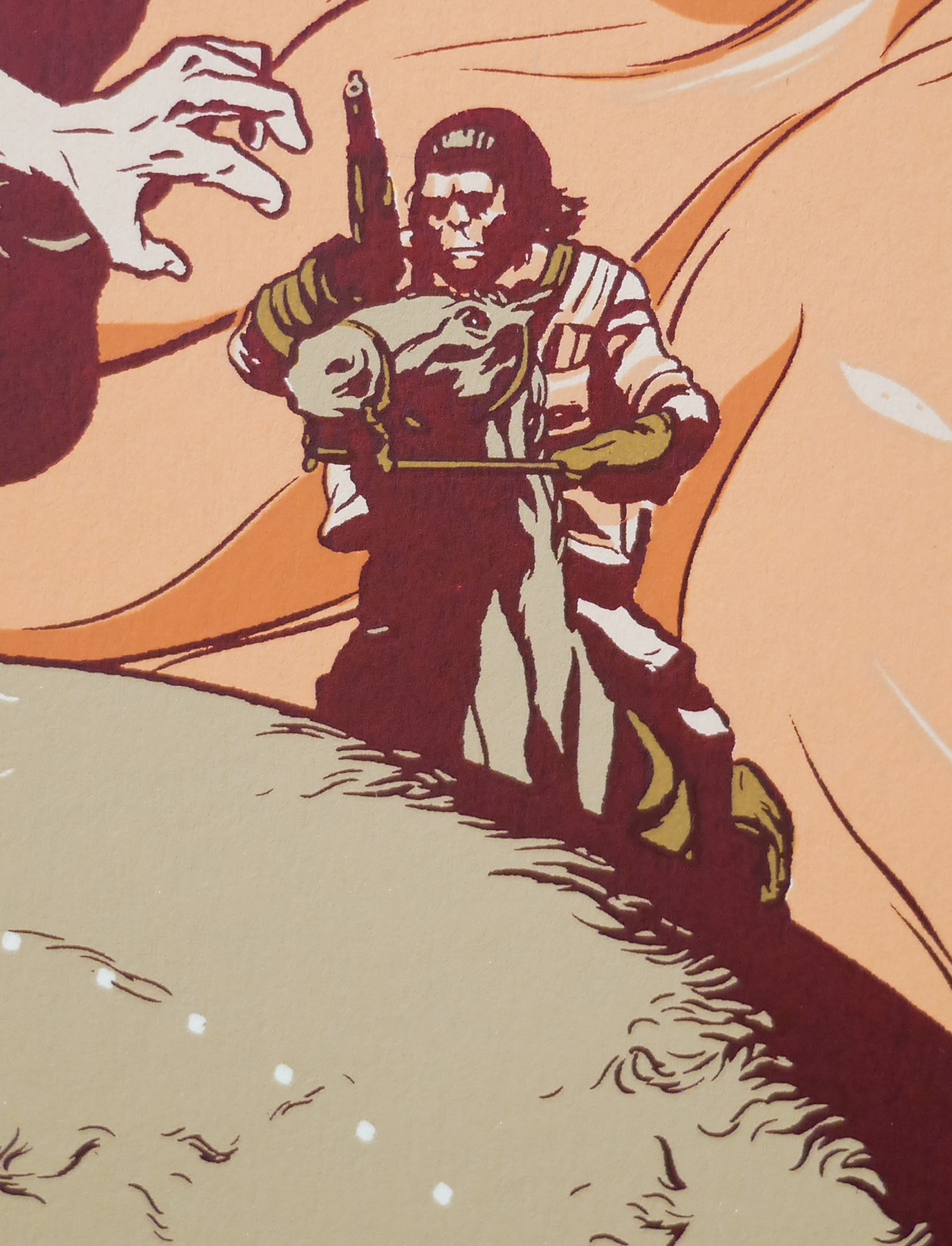
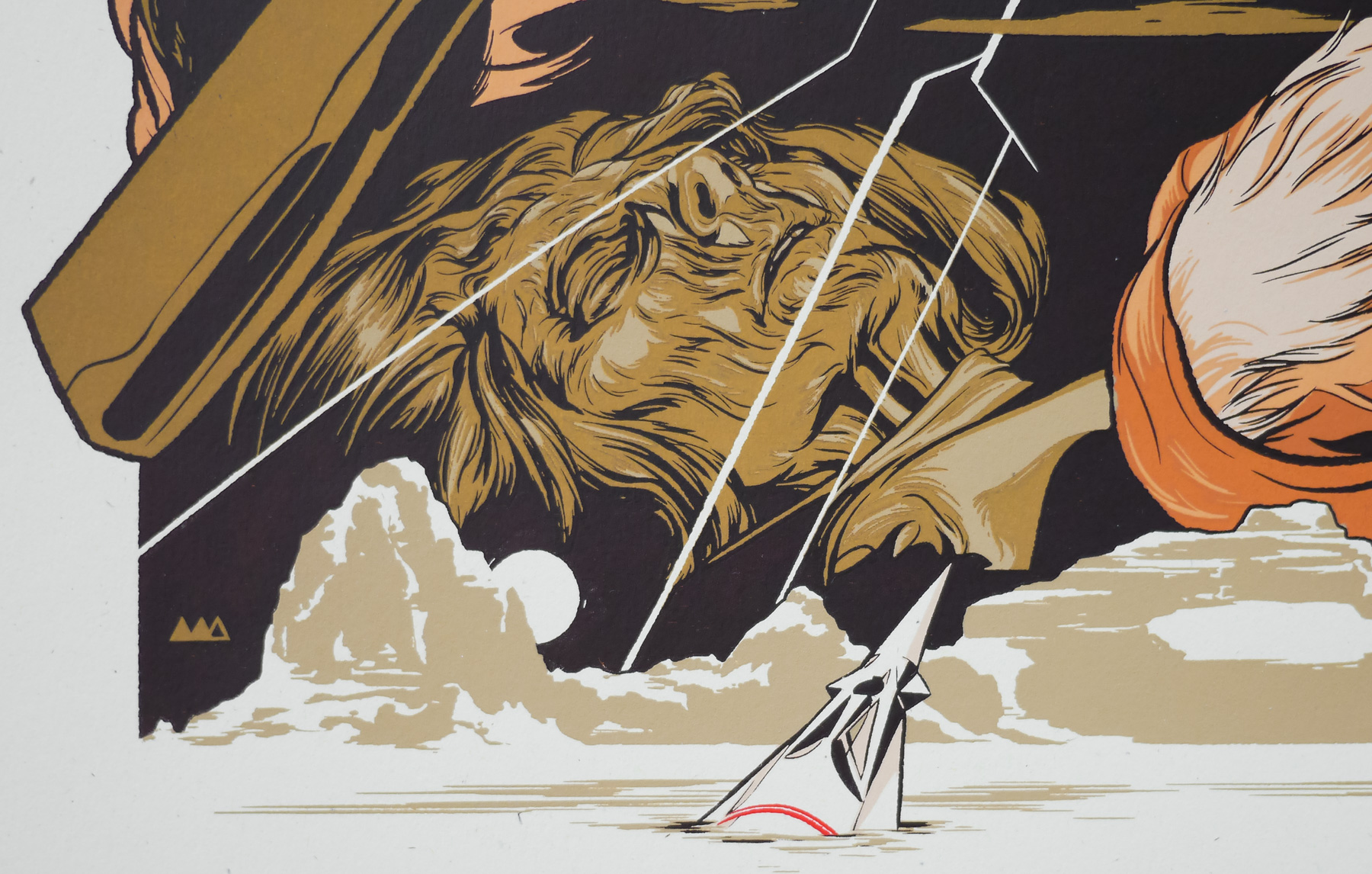
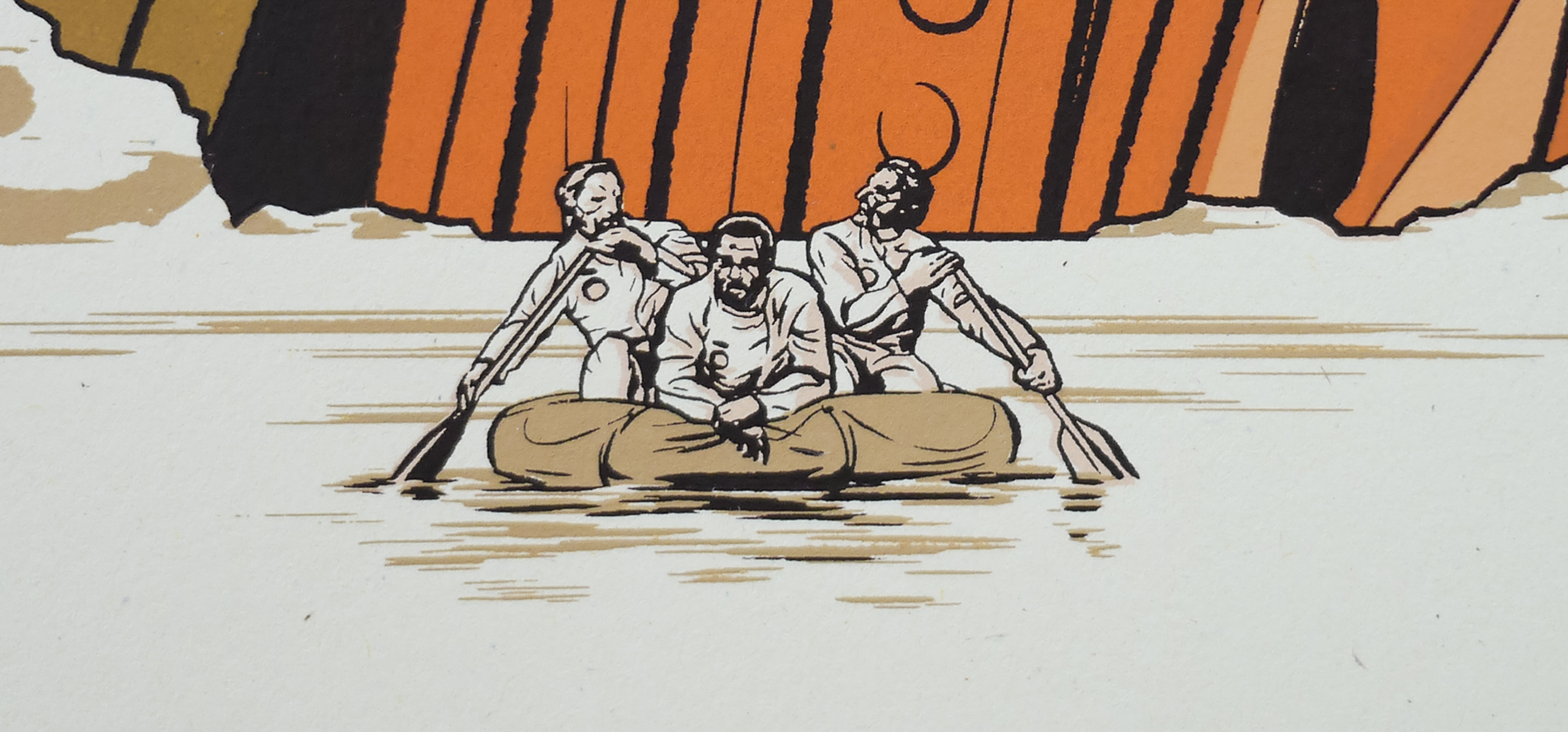
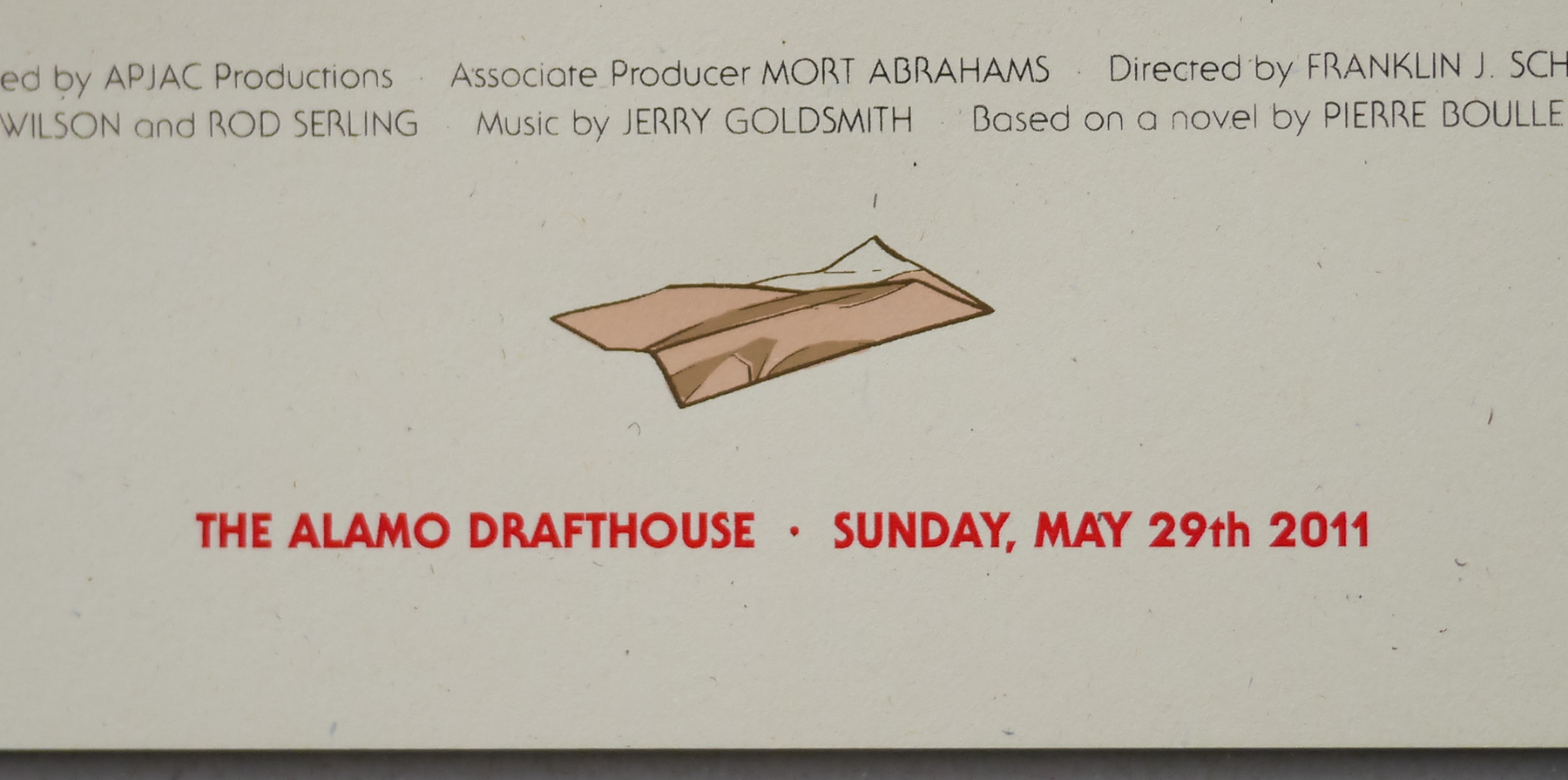
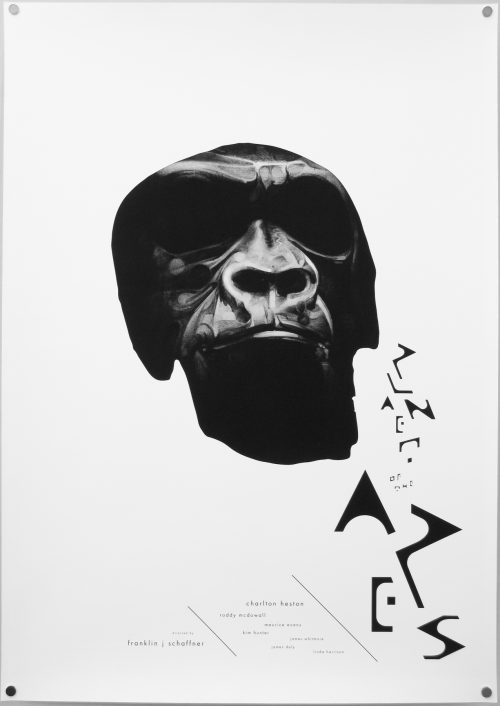
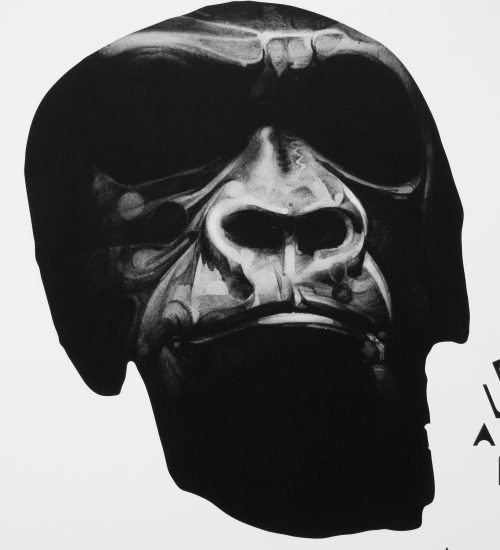
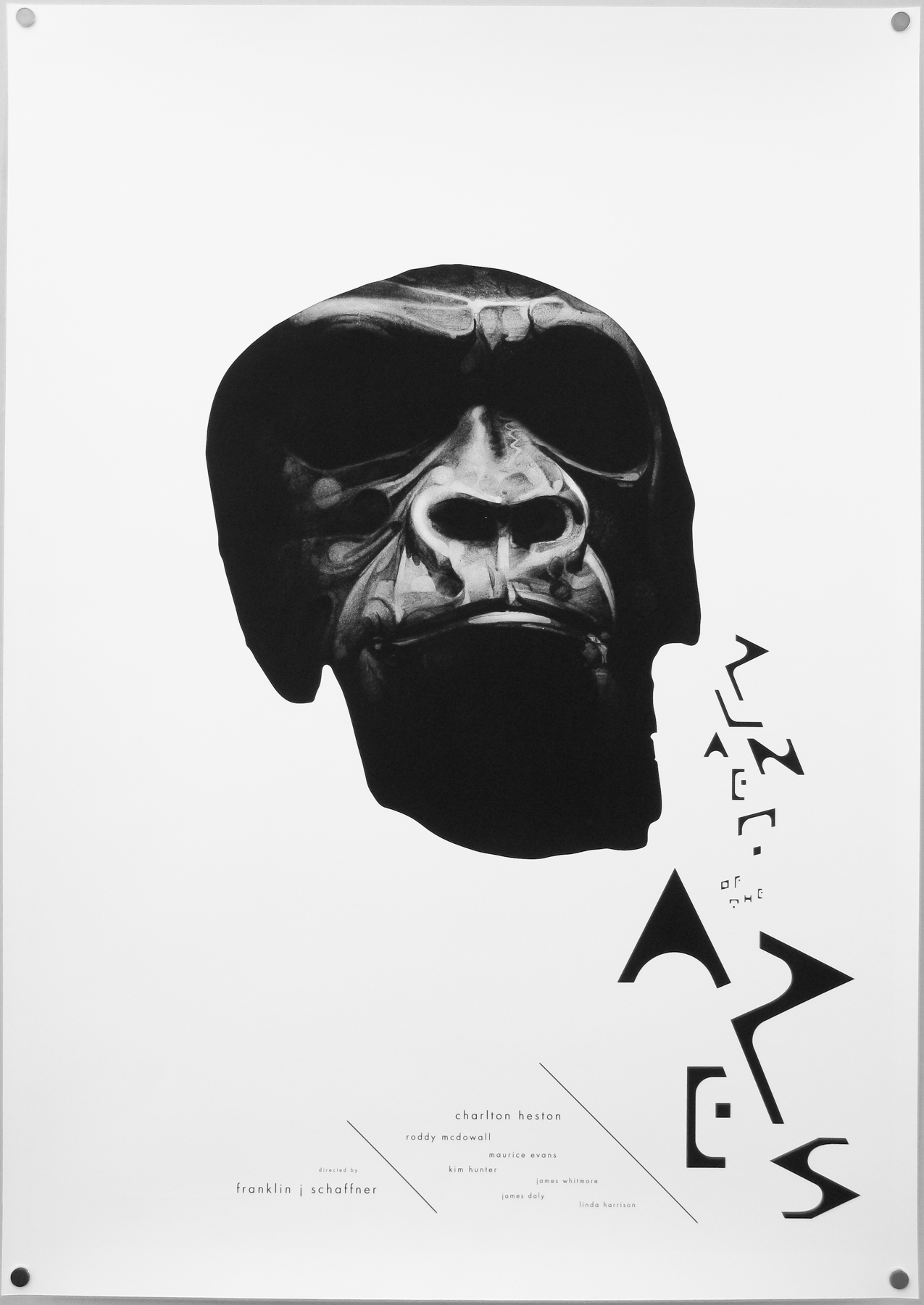
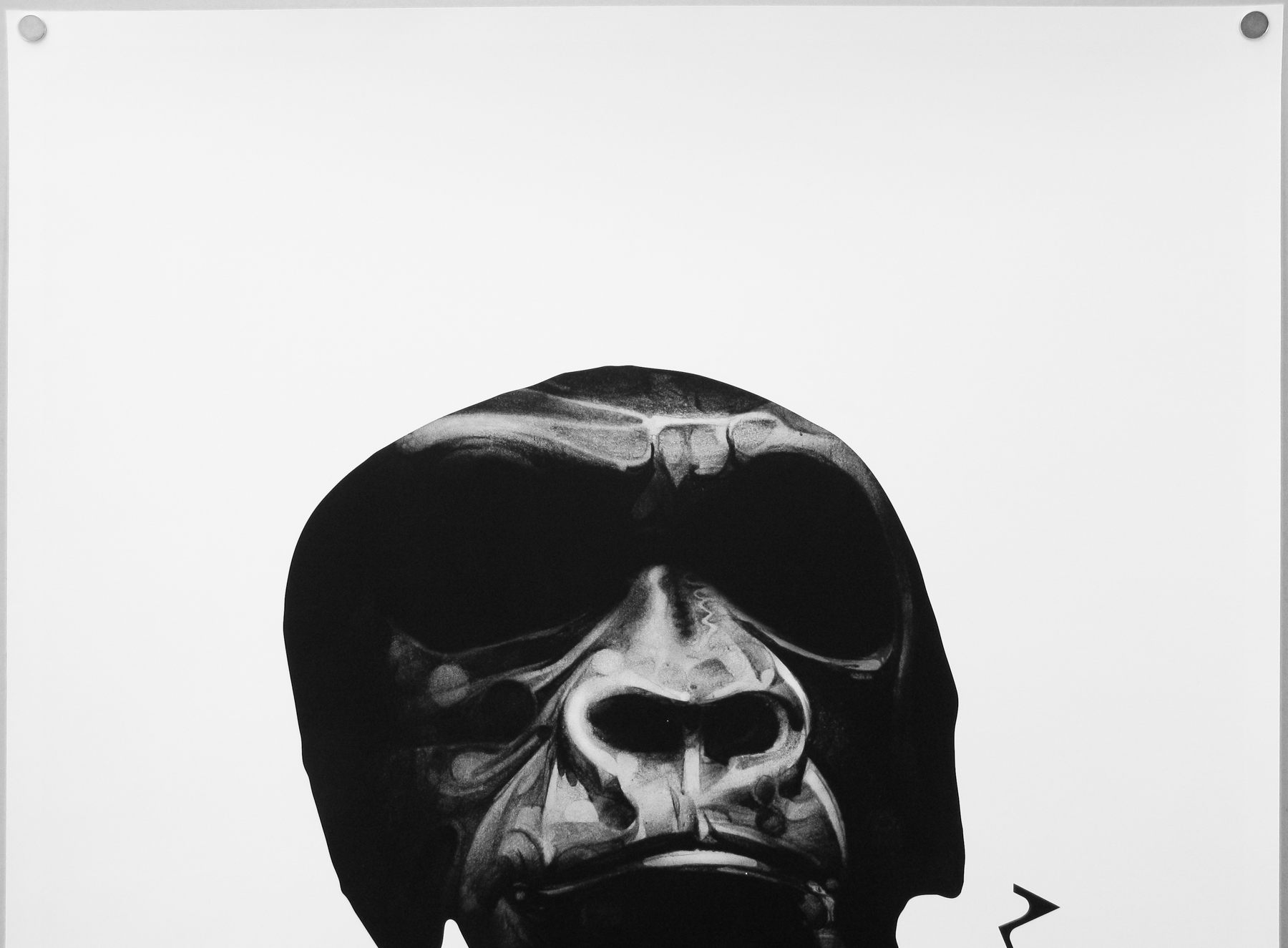
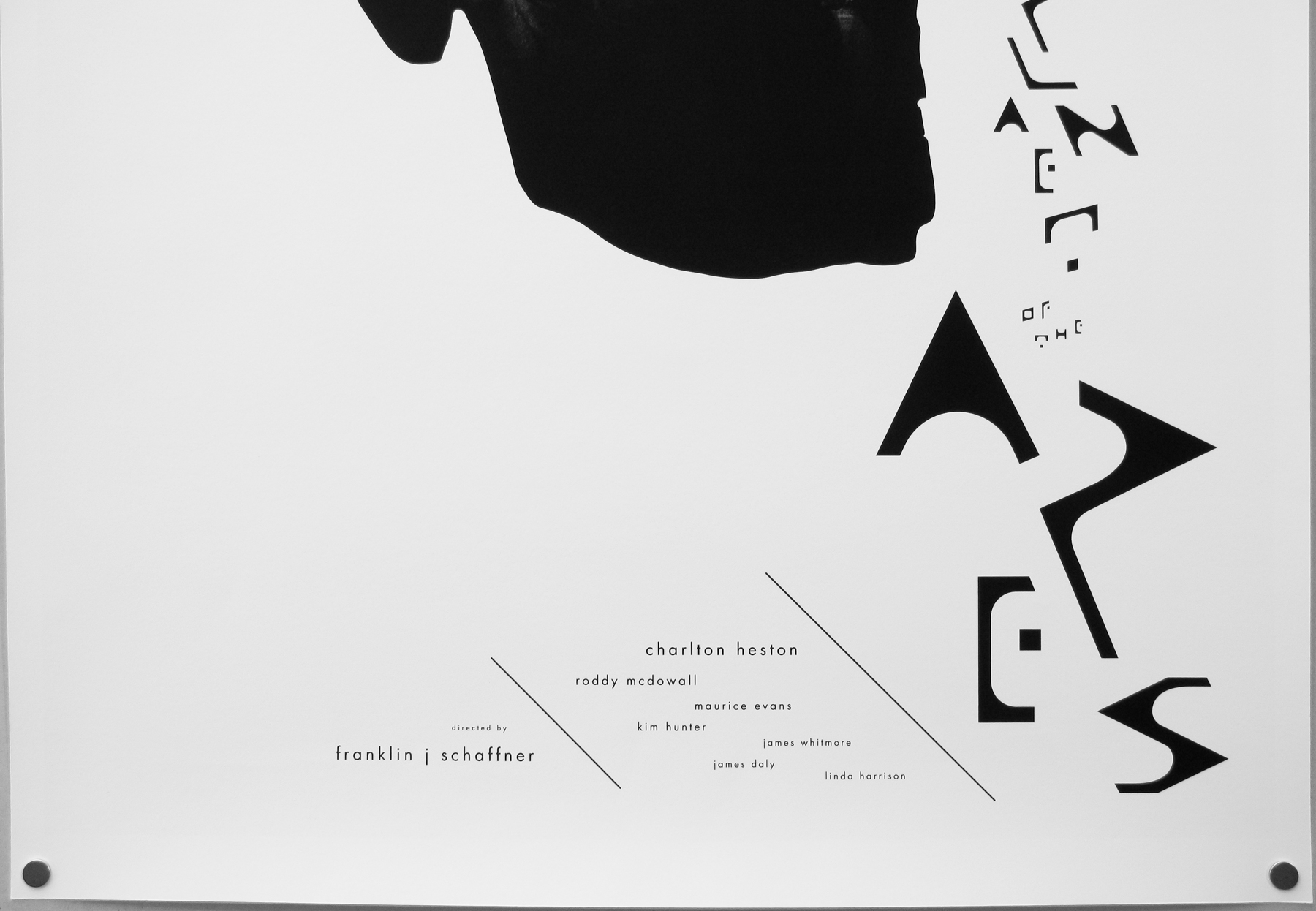
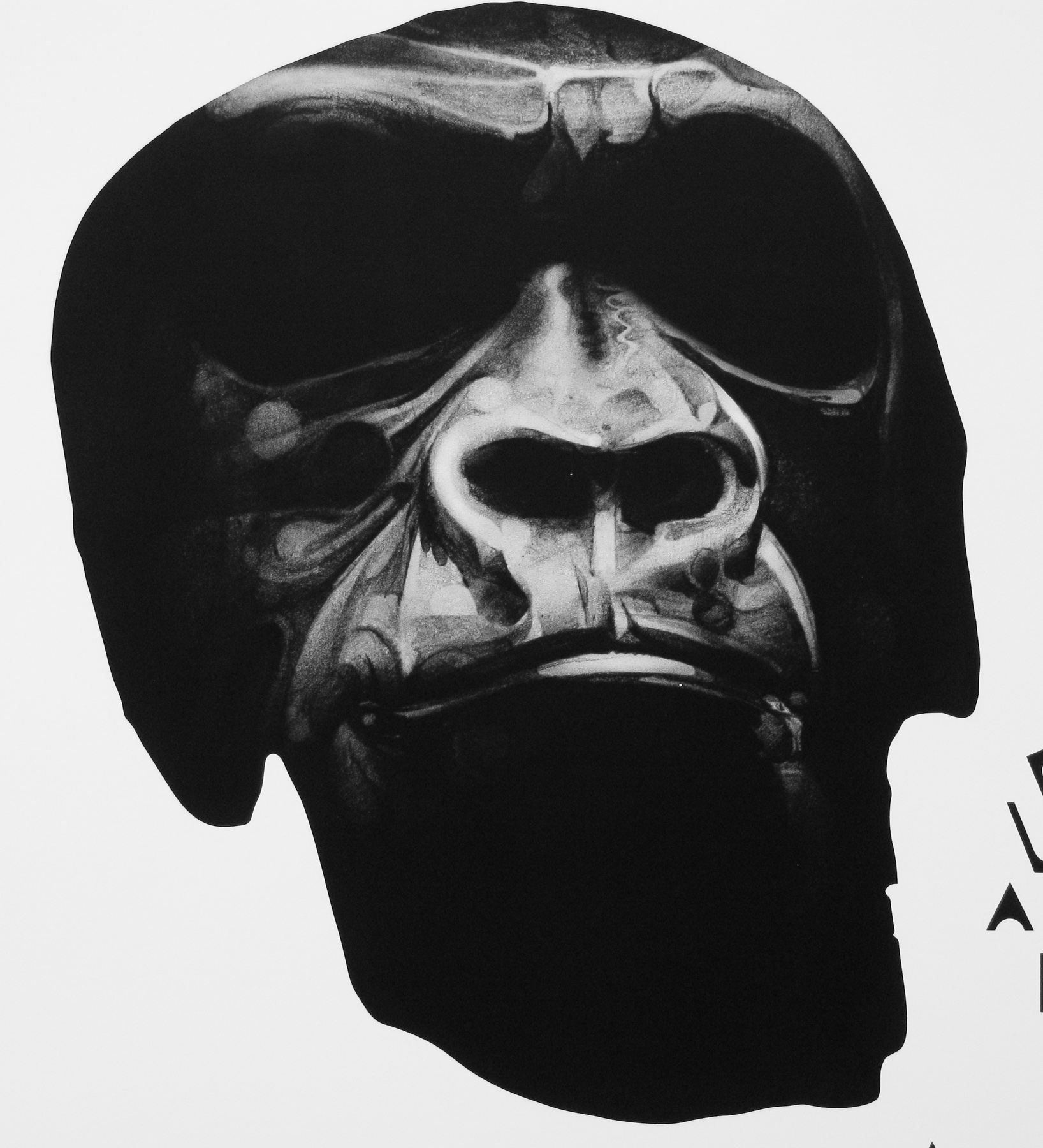
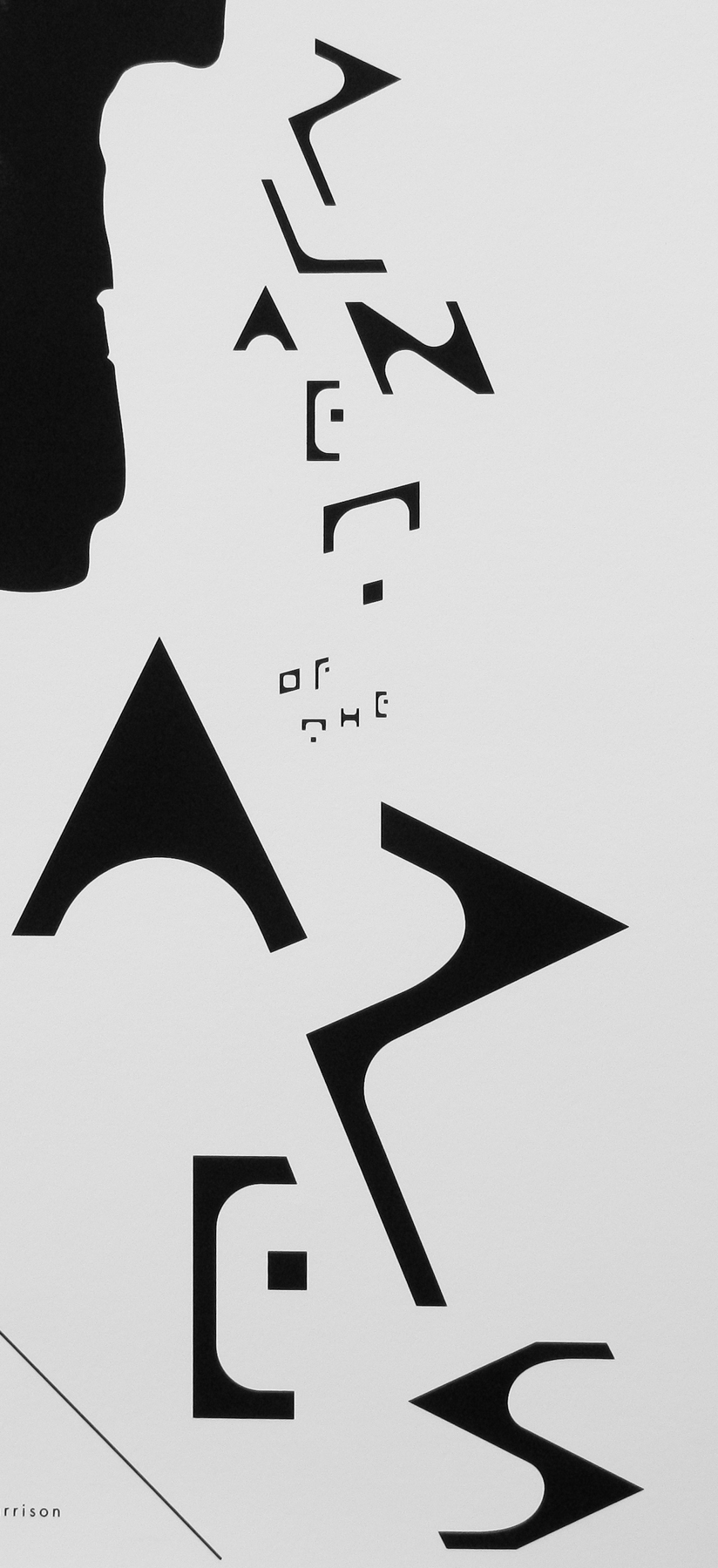
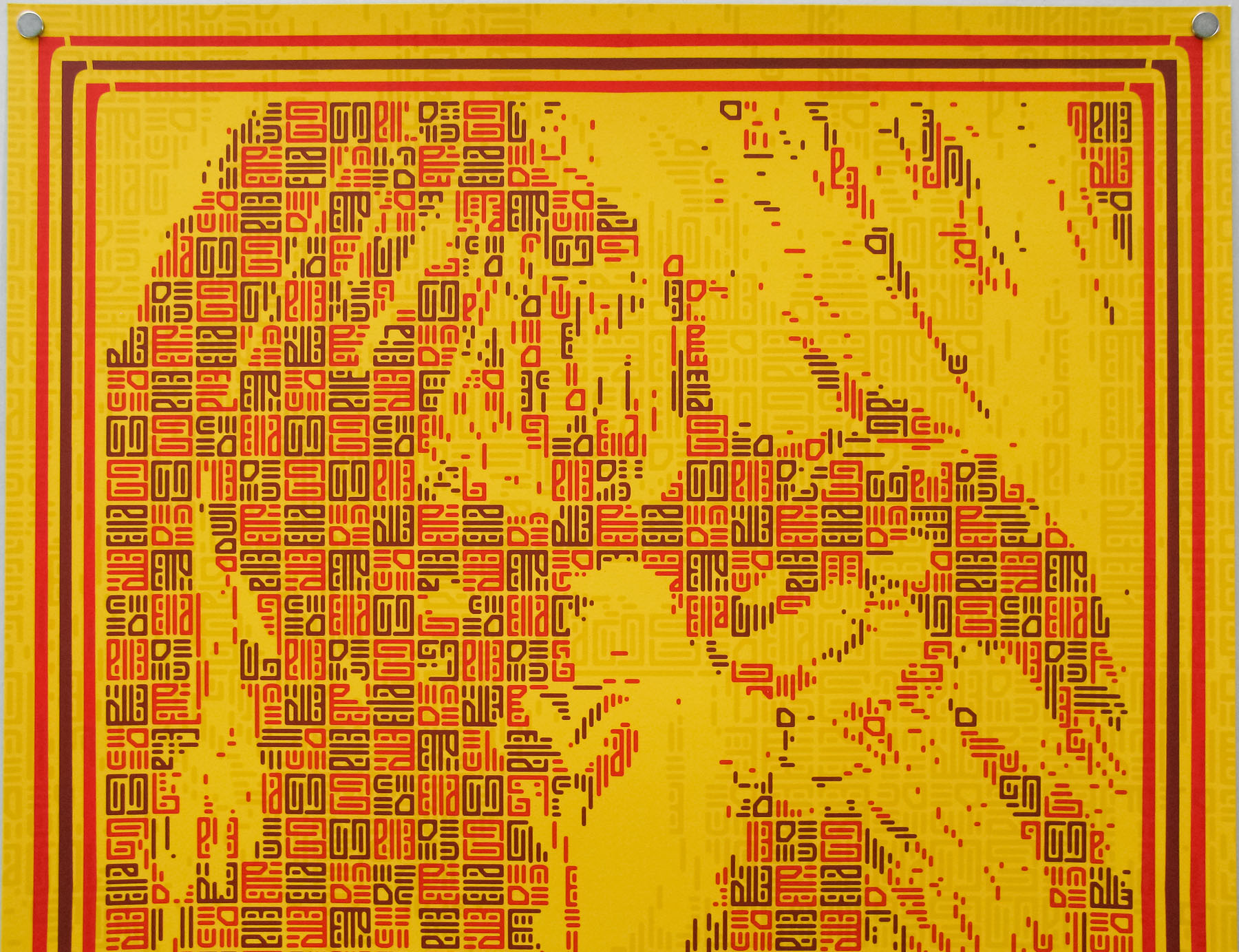
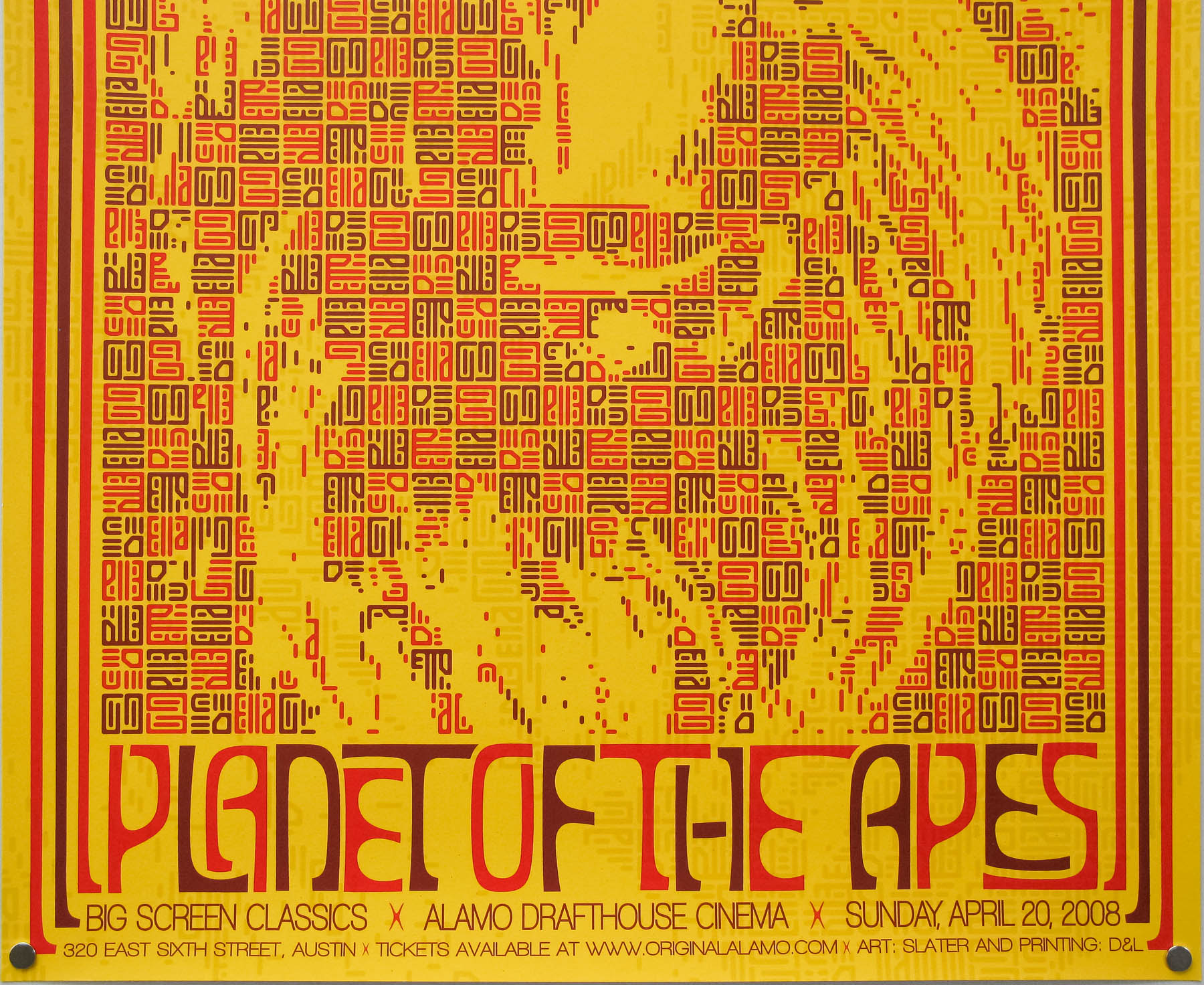
Another superb design by Martin Ansin on this screen print for the original 1968 sci-fi classic Planet of the Apes, which was released in January 2012 as part of a series of Apes inspired prints by Mondo, the celebrated Austin-based limited-edition art boutique. A true cult classic, the first Planet of the Apes was adapted from the book La Planète des singes by the French author Pierre Boulle and went through several iterations at the scripting stage, with the first draft handled by American TV legend Rod Serling, plus a few potential directors before Franklin J. Schaffner was handed the job and production began. The film was shot mostly on location and used some stunning locales, including Lake Powell in Utah/Arizona and along the Colorado river.

Charlton Heston stars as George Taylor, one of a group of astronauts who awake from deep space hibernation to discover that their craft has crash landed on an alien planet 2000 years into the future. The group set-off across the barren landscape in search of life. Eventually they come to an area with lush vegetation and fresh-water lake, which they dive into with relief. Soon afterwards they come across a group of primitive, mute humans but suddenly the whole group is attacked and rounded up by talking, armed, unif0rm-wearing gorillas. One of the astronauts is killed by gunfire, Taylor is shot in the throat and he and his friend are captured and taken back to Ape City. There he meets chimpanzee archaeologist Cornelius (Roddy McDowall) and his fiancee, animal psychologist Zira (Kim Hunter), who soon discover Taylor is not like the other primitives. Eventually he regains his ability to talk and must answer to the President of the apes Assembly Dr. Zaius (James Whitmore) who is determined to discover Taylor’s origins at any cost.

Fearing his life is in danger, Cornelius and Zira help Taylor escape the city and lead him to a cave by the sea in which the history of the planet’s inhabitants is shown to be at odds with the Assembly’s teachings. After an ambush by the Dr Zaius and his gorilla troops, Taylor is eventually allowed to leave and before long he has made a horrifying discovery about the planet, in what is arguably the most famous twist ending in the history of cinema. The film was a success worldwide and spawned a number of sequels of varying quality, plus a short-lived TV series, and a whole raft of merchandising, including what is often cited as the first action-figures tied to a film property, certainly pre-dating the phenomenally successful Star Wars figures.

One of my favourite artists working today, Martin Ansin‘s work has graced many of the best posters released by Mondo, including several in the Universal Monsters series like this amazing Phantom of the Opera print and an excellent Dracula (1931) one. You only have to look at the gallery on his official site to see how talented an artist he is, with an eye for composition and detail unmatched by most of the artists in Mondo’s roster. To see the other posters I’ve collected so far that were designed by Ansin, click here.
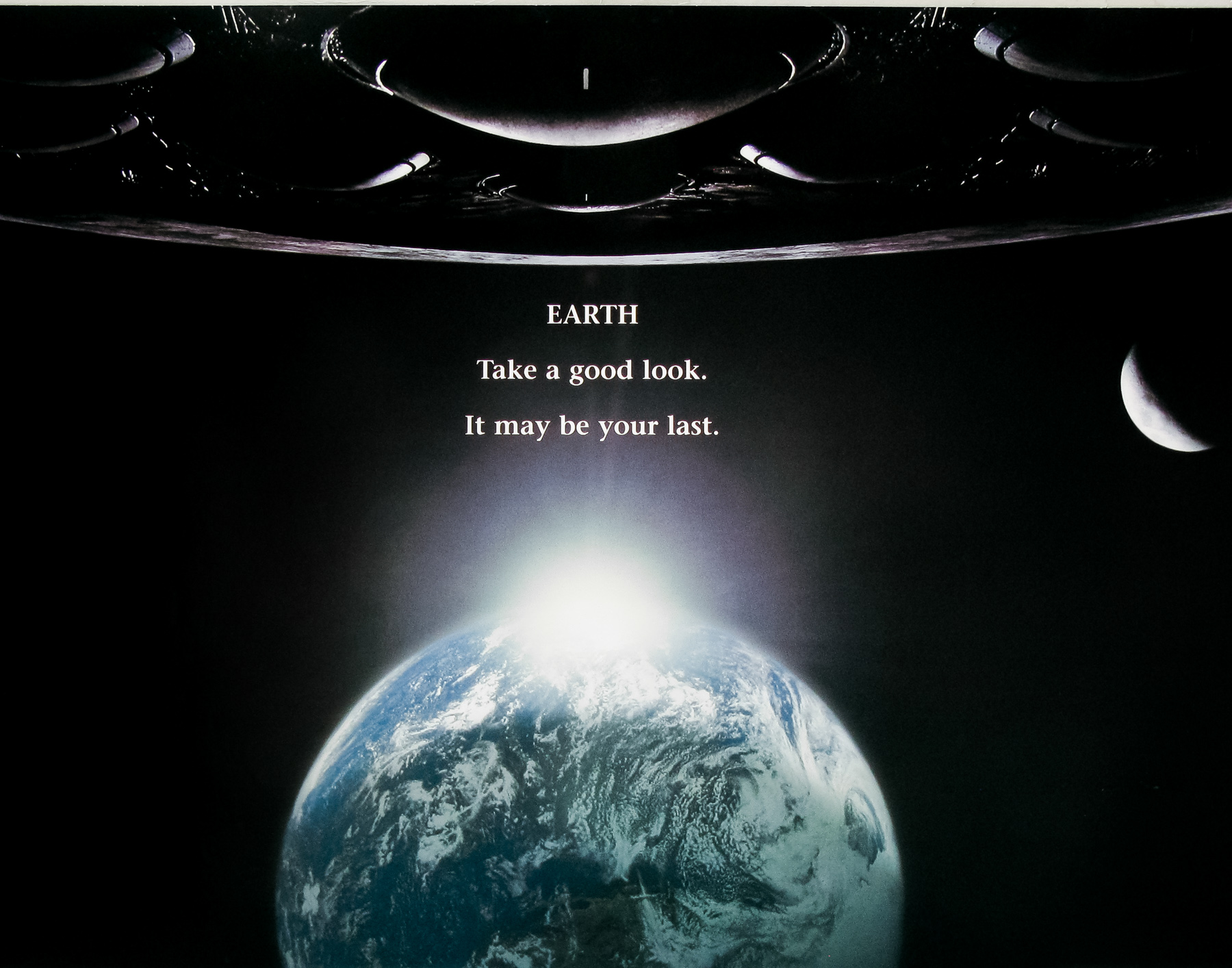
Independence Day / quad / teaser / UK

18.05.11

Poster Poster

Independence Day / quad / ships style / UK

18.05.11

Poster Poster

Independence Day / quad / New York style / UK

18.05.11

Poster Poster

Once Upon a Time In America / one sheet / USA

02.05.12

Poster Poster
Title
Once Upon a Time In America
AKA
C'era una volta in America (Italy)
Year of Film
1984
Director
Sergio Leone
Starring
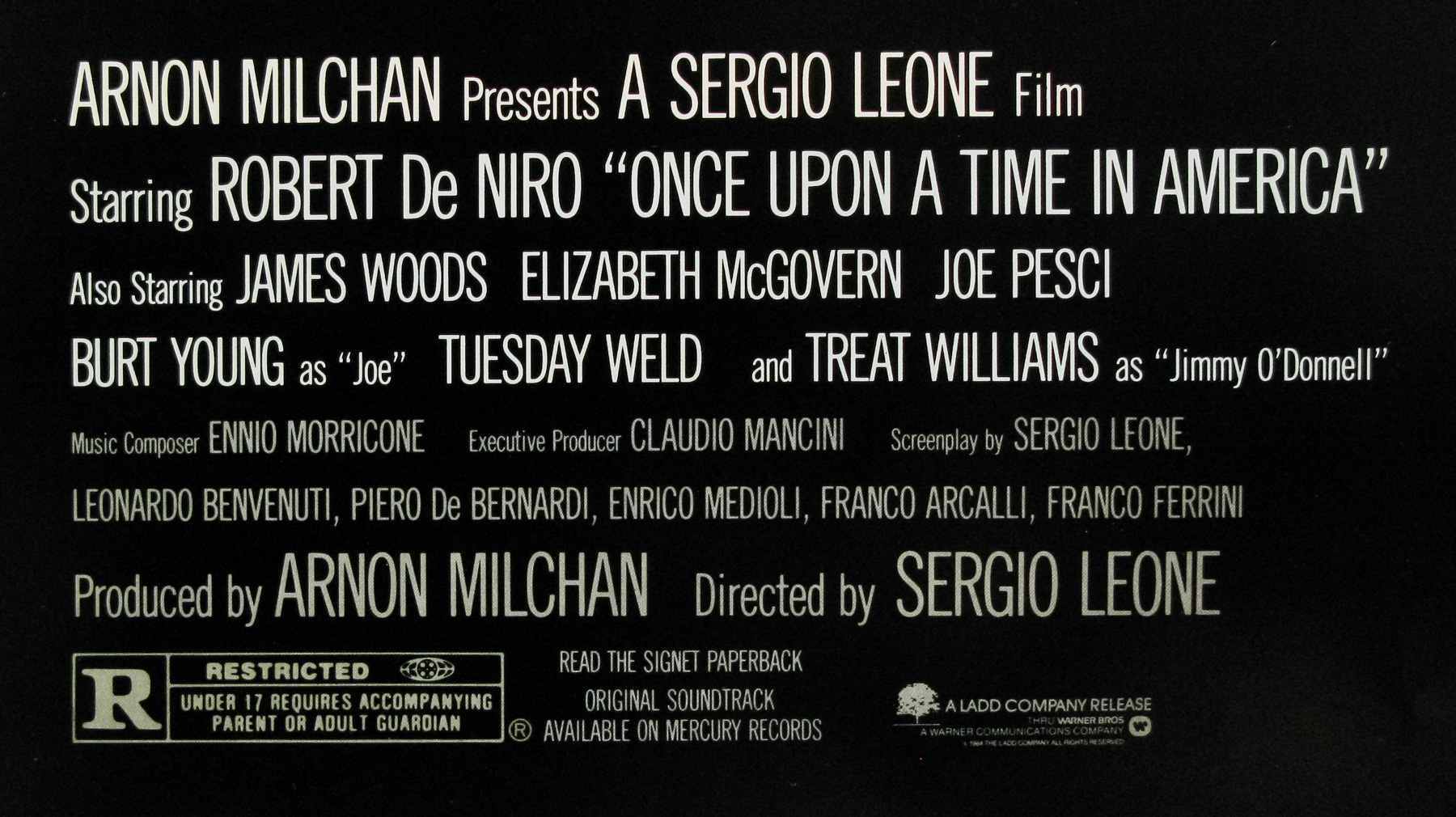
Robert De Niro, James Woods, Elizabeth McGovern, Joe Pesci, Burt Young, Tuesday Weld, Treat Williams, Danny Aiello, Richard Bright, James Hayden, William Forsythe, Darlanne Fluegel
Origin of Film
Italy | USA
Genre(s) of Film
Robert De Niro, James Woods, Elizabeth McGovern, Joe Pesci, Burt Young, Tuesday Weld, Treat Williams, Danny Aiello, Richard Bright, James Hayden, William Forsythe, Darlanne Fluegel,
Type of Poster
One sheet
Style of Poster
--
Origin of Poster
USA
Year of Poster
1984
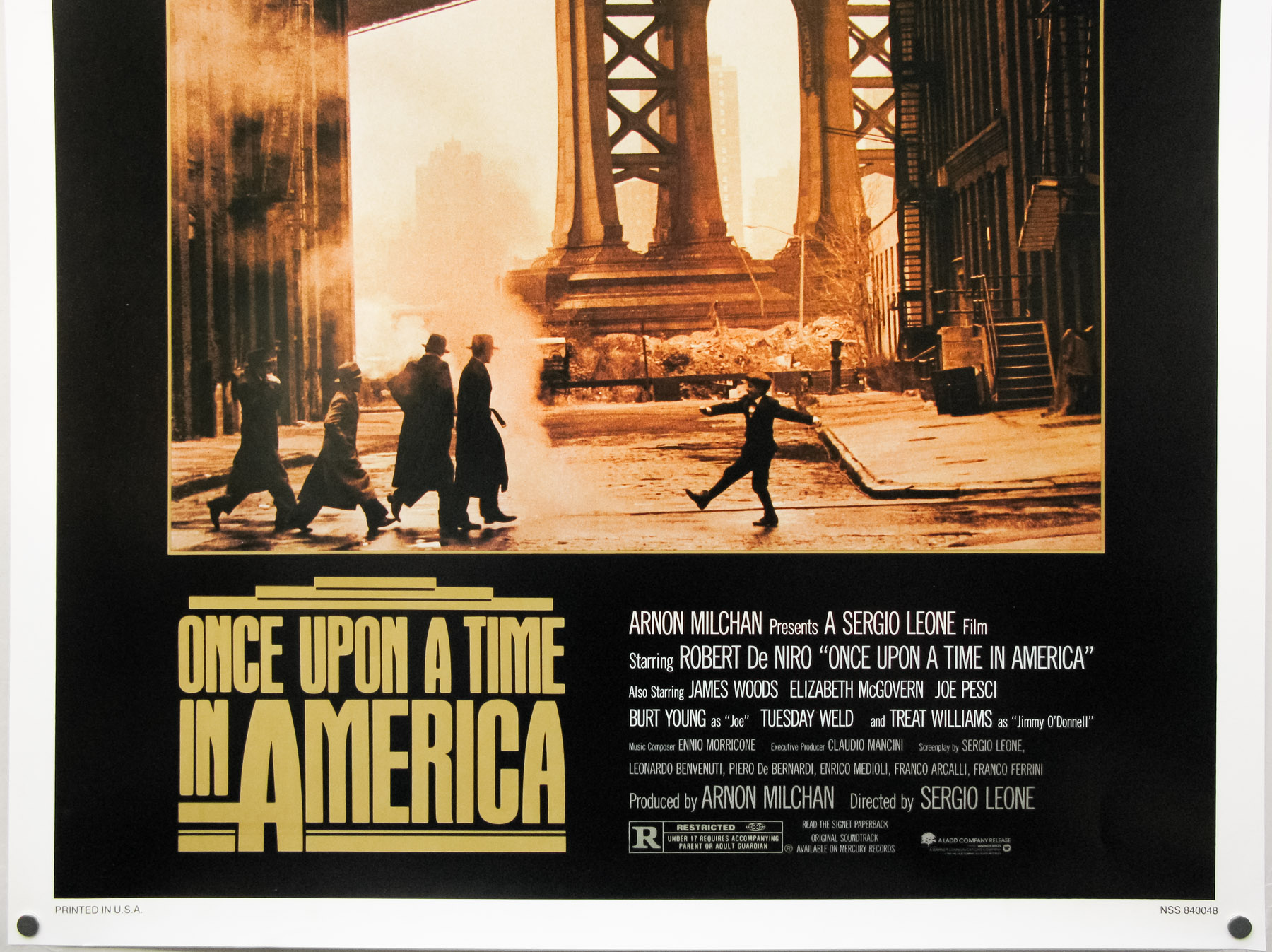
Designer
Tom Jung
Artist
--
Size (inches)
27" x 41"
SS or DS
SS
NSS #
840048
Tagline
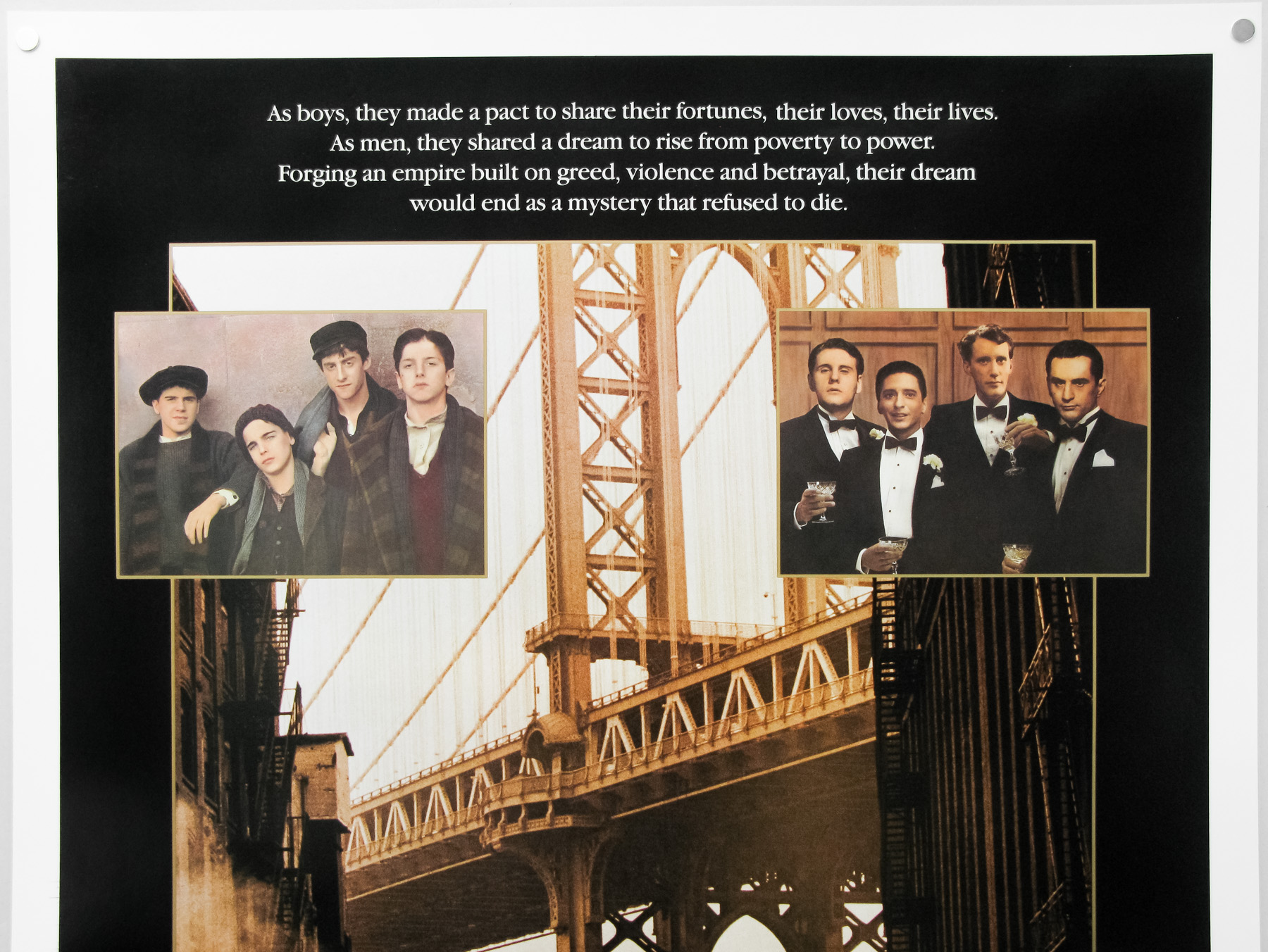
As boys, they made a pact to share their fortunes, their loves, their lives. As men, they shared a dream to rise from poverty to power. Forging an empire built on greed, violence and betrayal, their dream would end as a mystery that refused to die.
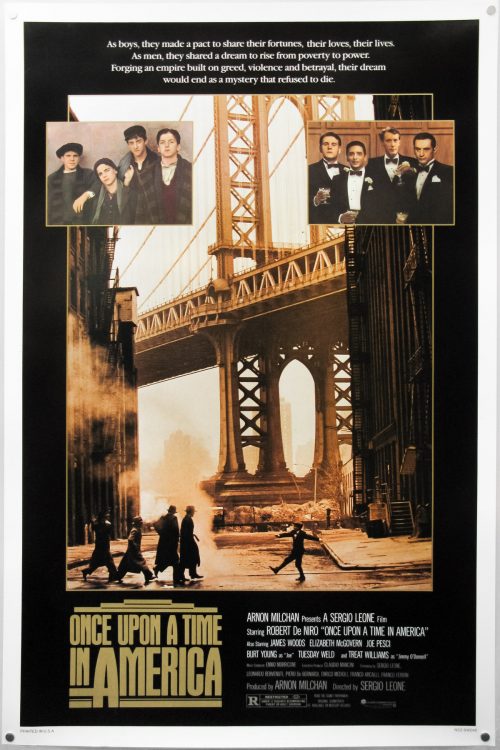
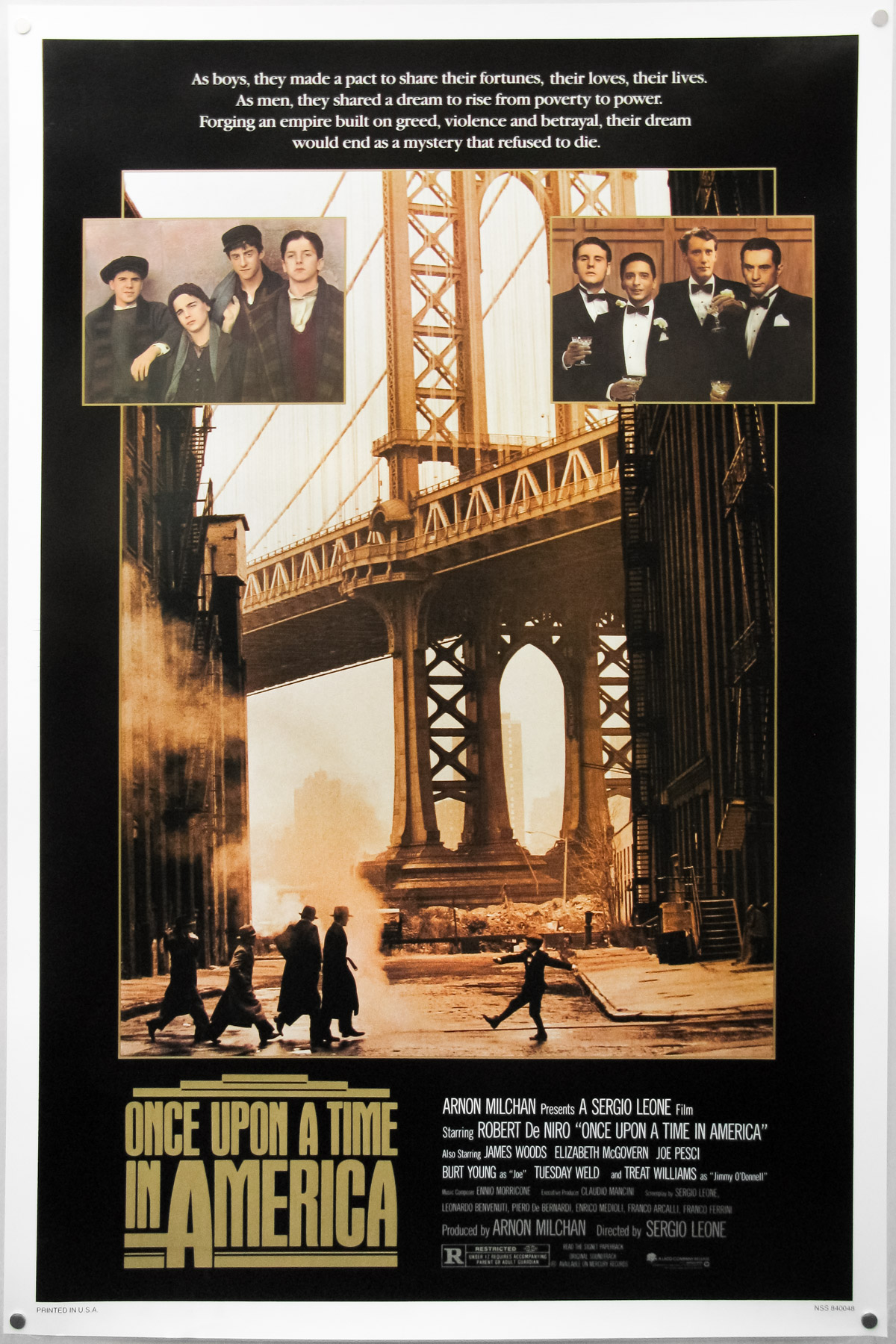
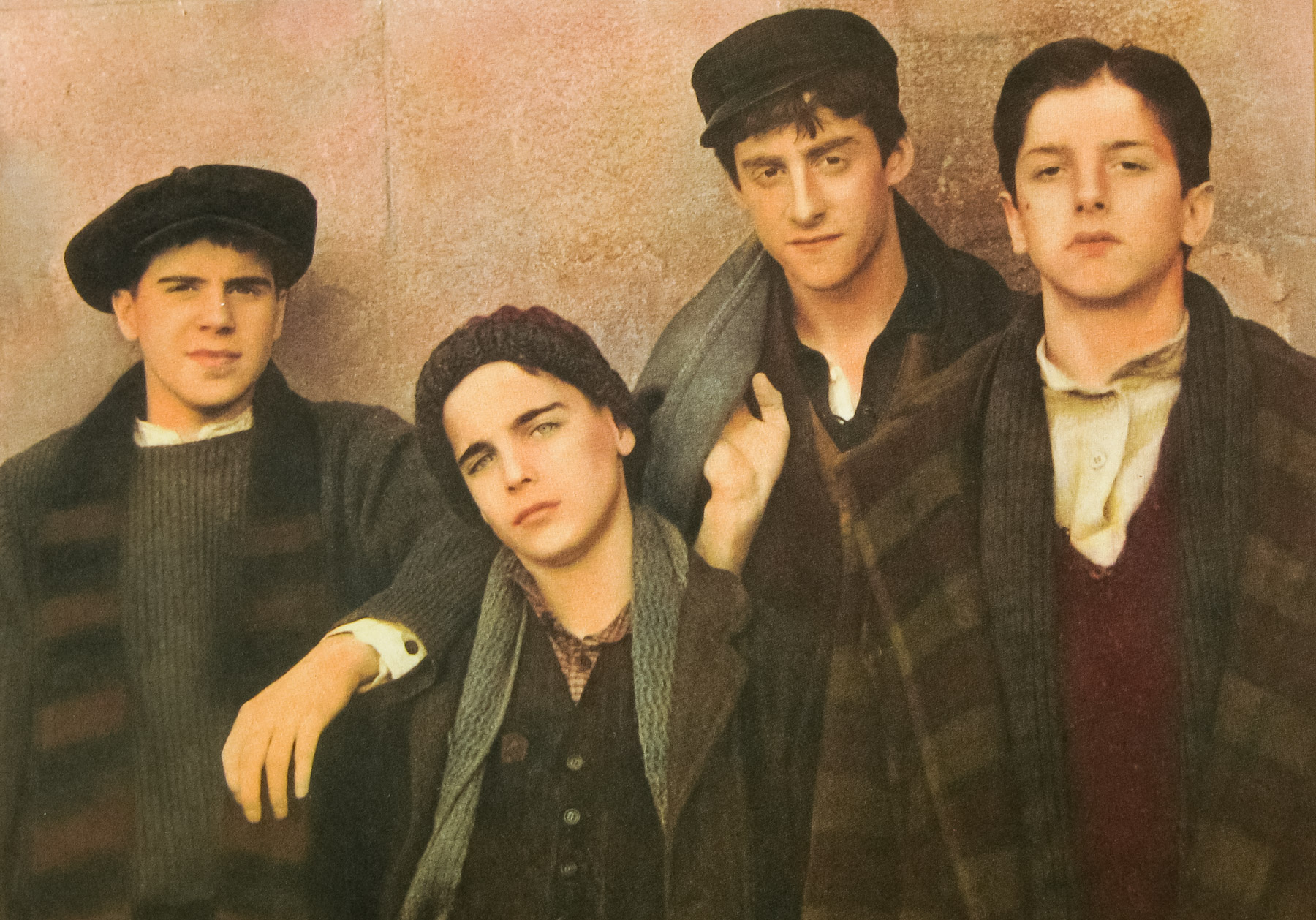
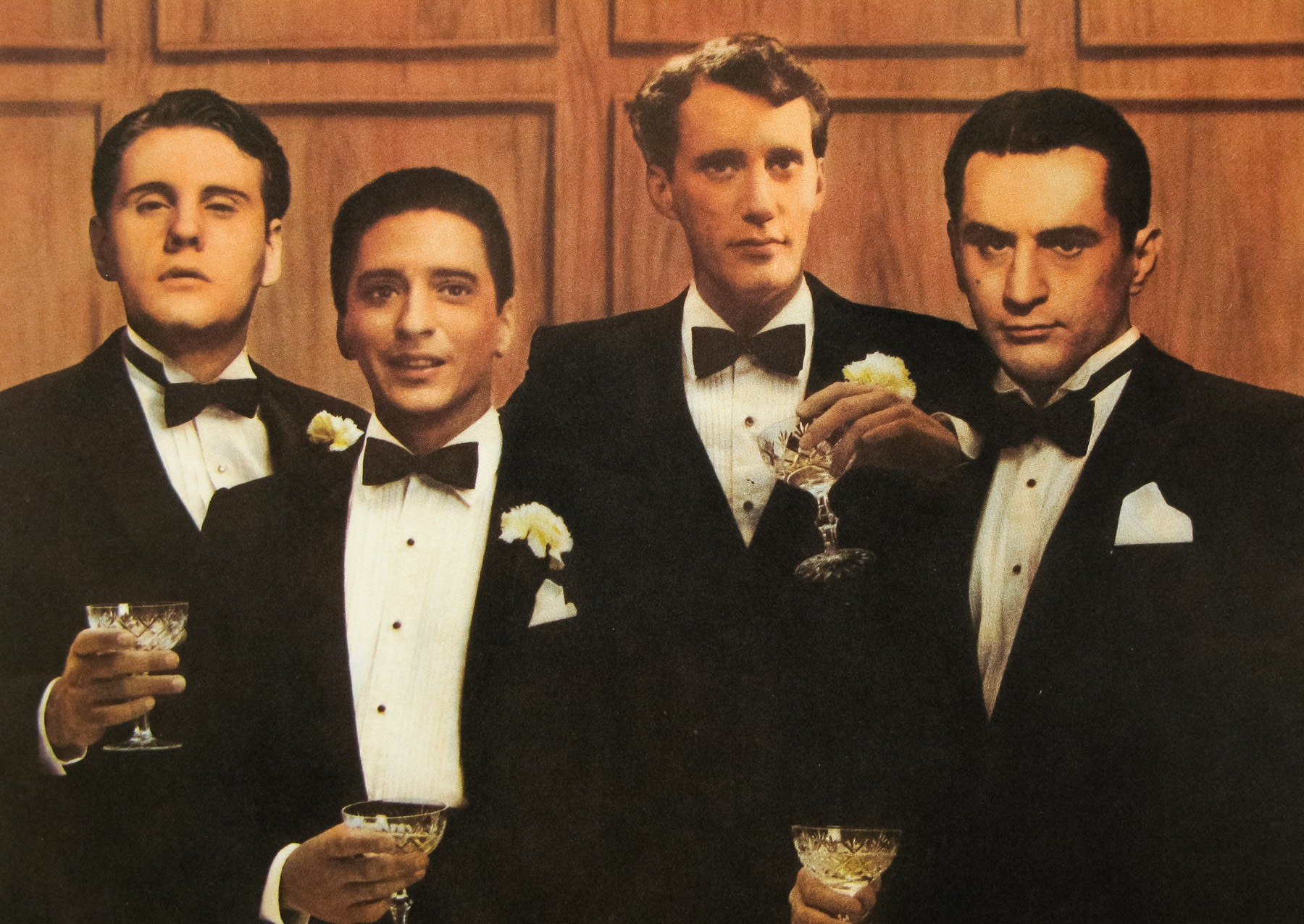
Considered by many to be Sergio Leone’s masterpiece – certainly not an easy choice to make when there are films like The Good, the Bad and the Ugly and Once Upon a Time in the West to choose from – ‘…America’ was to be the Italian director’s last film. Infamously, it had almost 90 minutes removed for its US cinematic release (in 1984), apparently after receiving terrible notice from American critics at the Cannes Film Festival – the re-cut version was also given a slating when it appeared.
Eventually the full 229 minute version was made available on home video in America. In 2012 it was announced that the film was to be restored to an even longer cut with over 40 minutes of newly discovered material that was thought lost. An extended cut of the film was released on blu-ray in 2014.

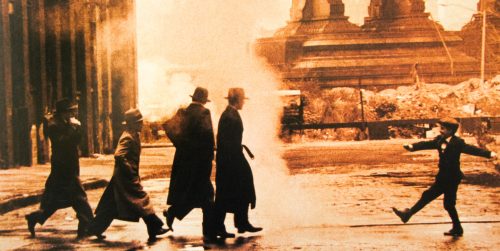
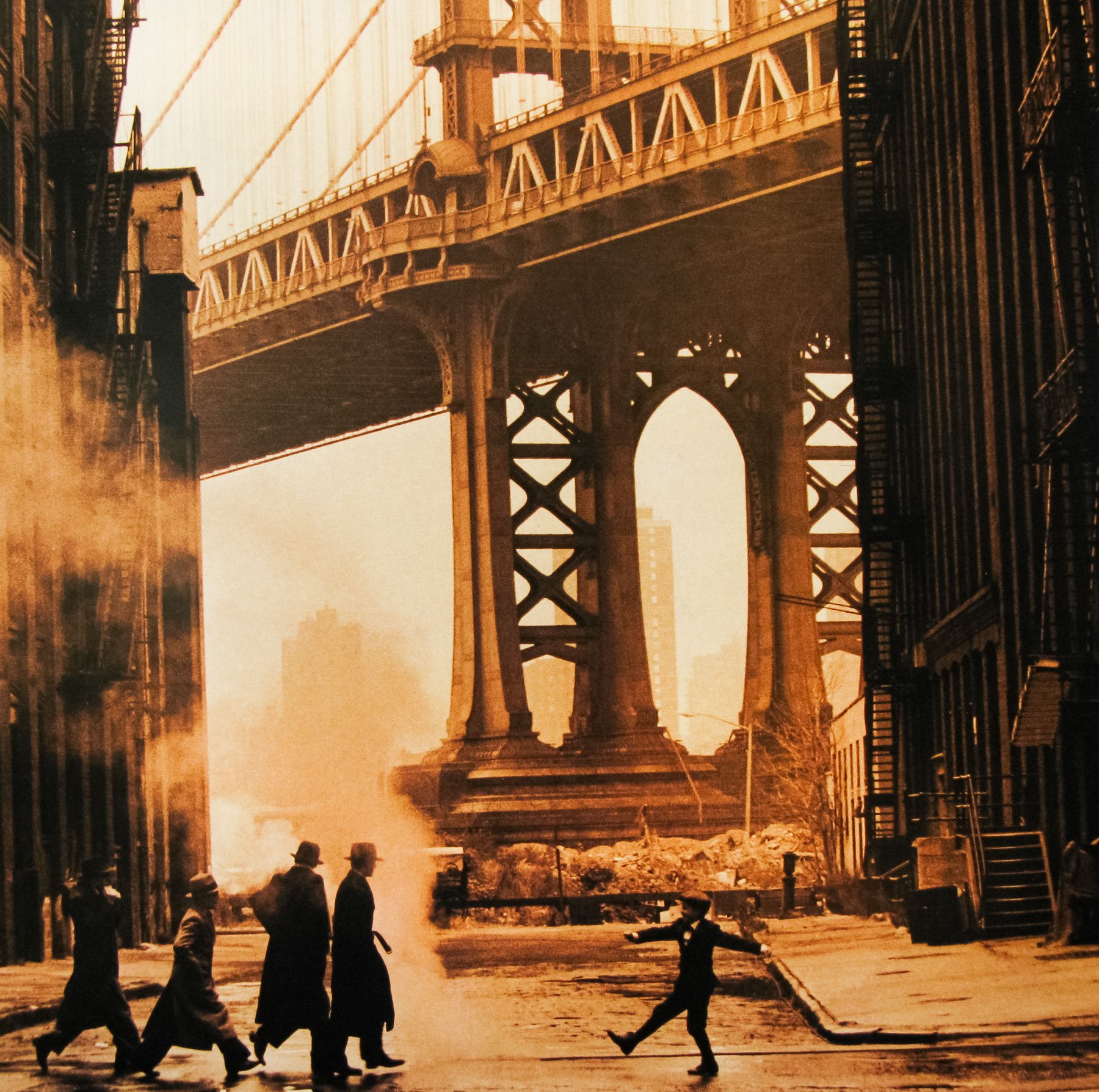
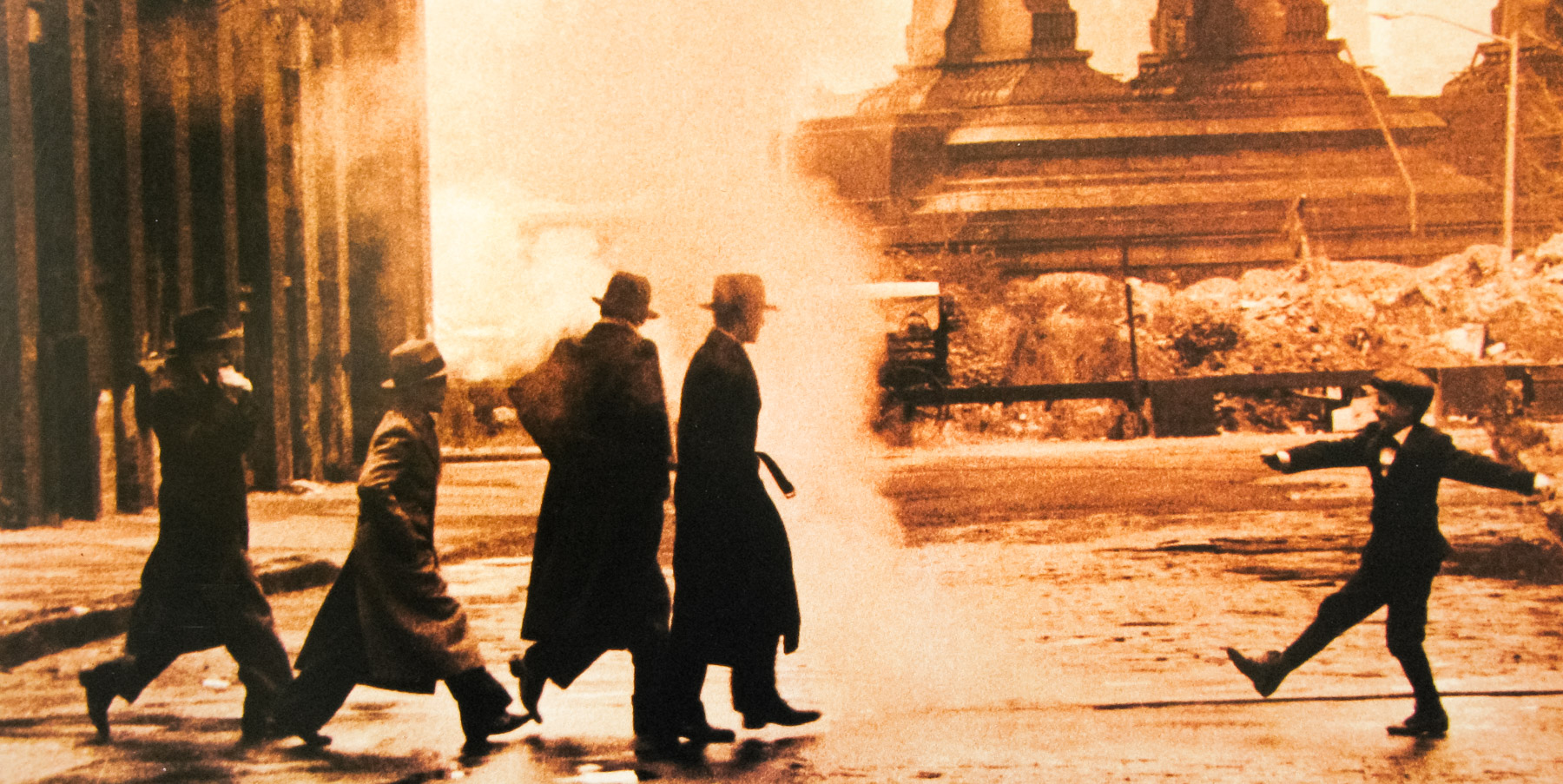
This one sheet was designed by the American designer and artist Tom Jung, who is probably best known for the Star Wars style A one sheet. A reader of the site got in touch to confirm that Jung used this still photograph by the on-set photographer Angelo Novi as the main image on the poster.

In 2012 I visited the same street in Brooklyn that leads down to the Manhattan Bridge and is featured in the film and on this poster. I took this picture, which gives you an idea of how the street looks today.

The original trailer is on YouTube.
 

Once Upon a Time In America / B2 / Japan

19.09.11

Poster Poster

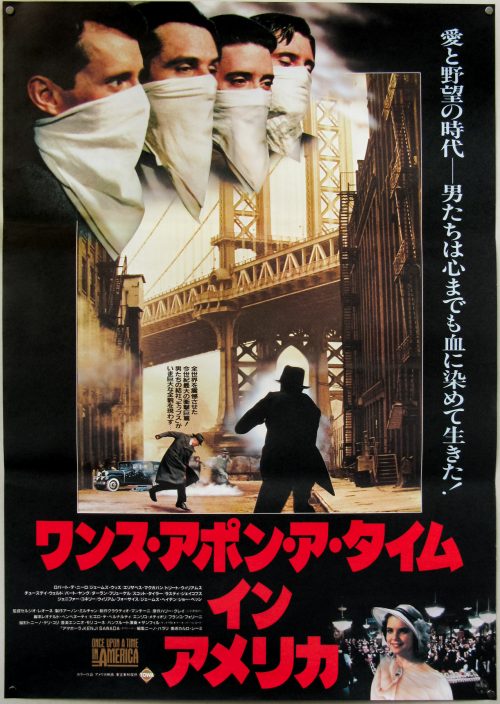
Considered by many to be Sergio Leone’s masterpiece – certainly not an easy choice to make when there are films like The Good, the Bad and the Ugly and Once Upon a Time in the West to choose from – Once Upon a Time in America was to be the Italian director’s last film. Infamously, it had almost 90 minutes removed for its American cinematic release (in 1984), apparently after receiving terrible notice from American critics at the Cannes Film Festival – the re-cut version was also given a slating upon release. Eventually the full 229 minute version was  made available on home video in America. Earlier this year it was announced that the film is currently being restored to an even longer ‘director’s cut’ with over 40 minutes of new material, due for release in 2012.
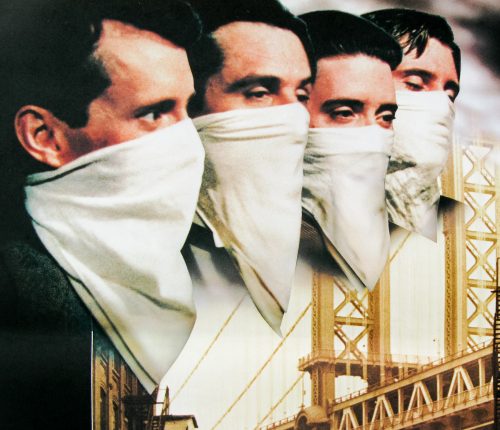
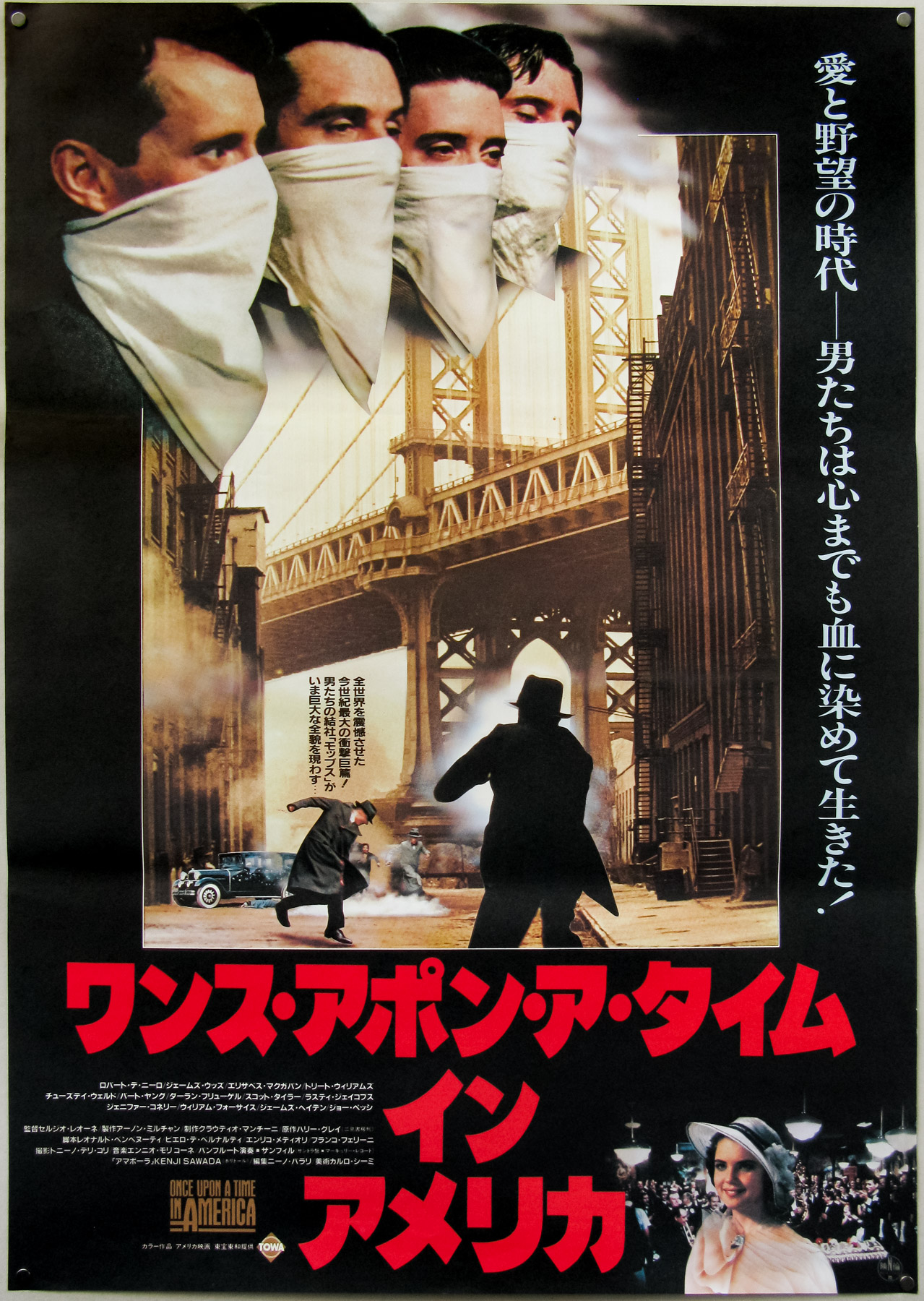
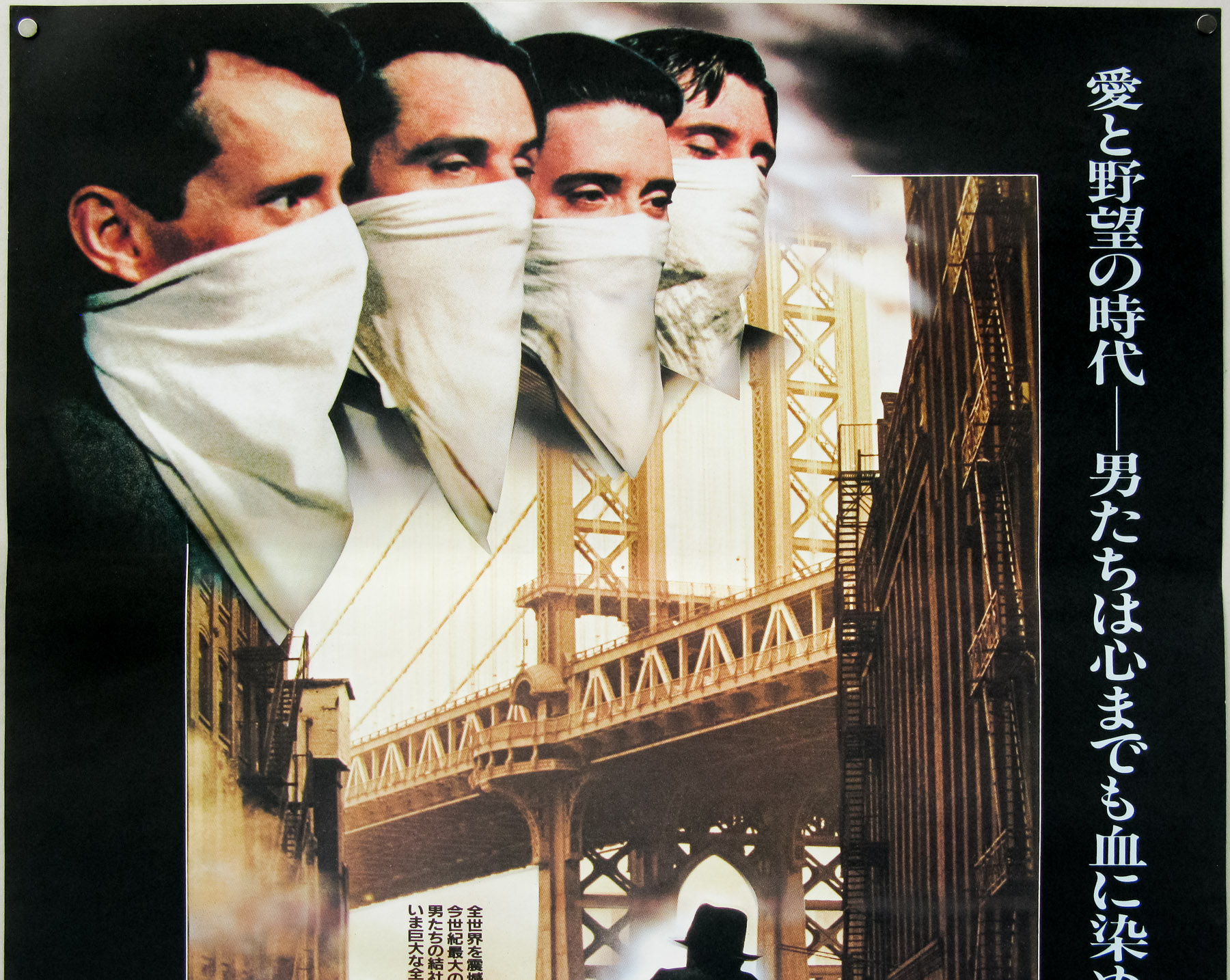
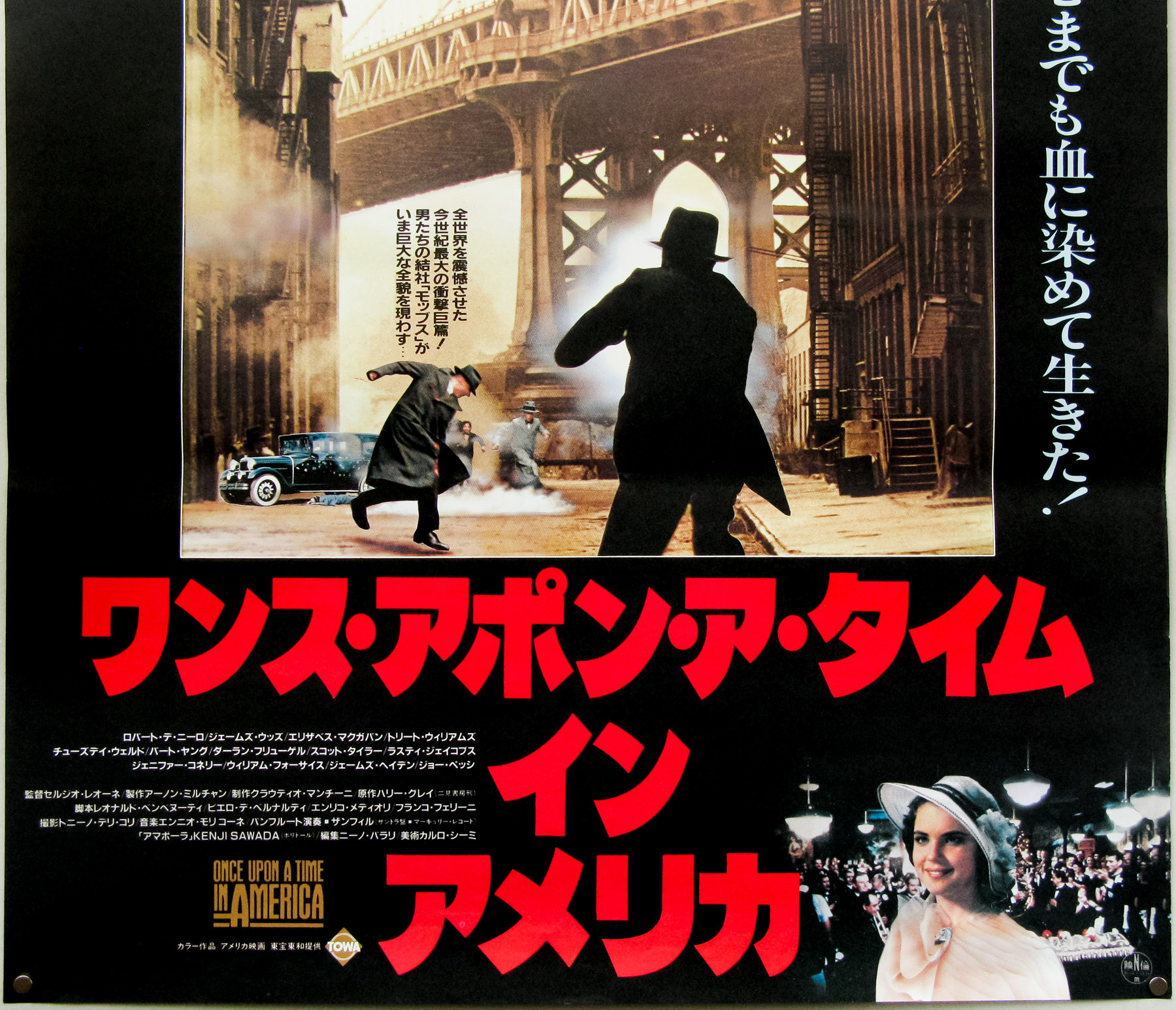
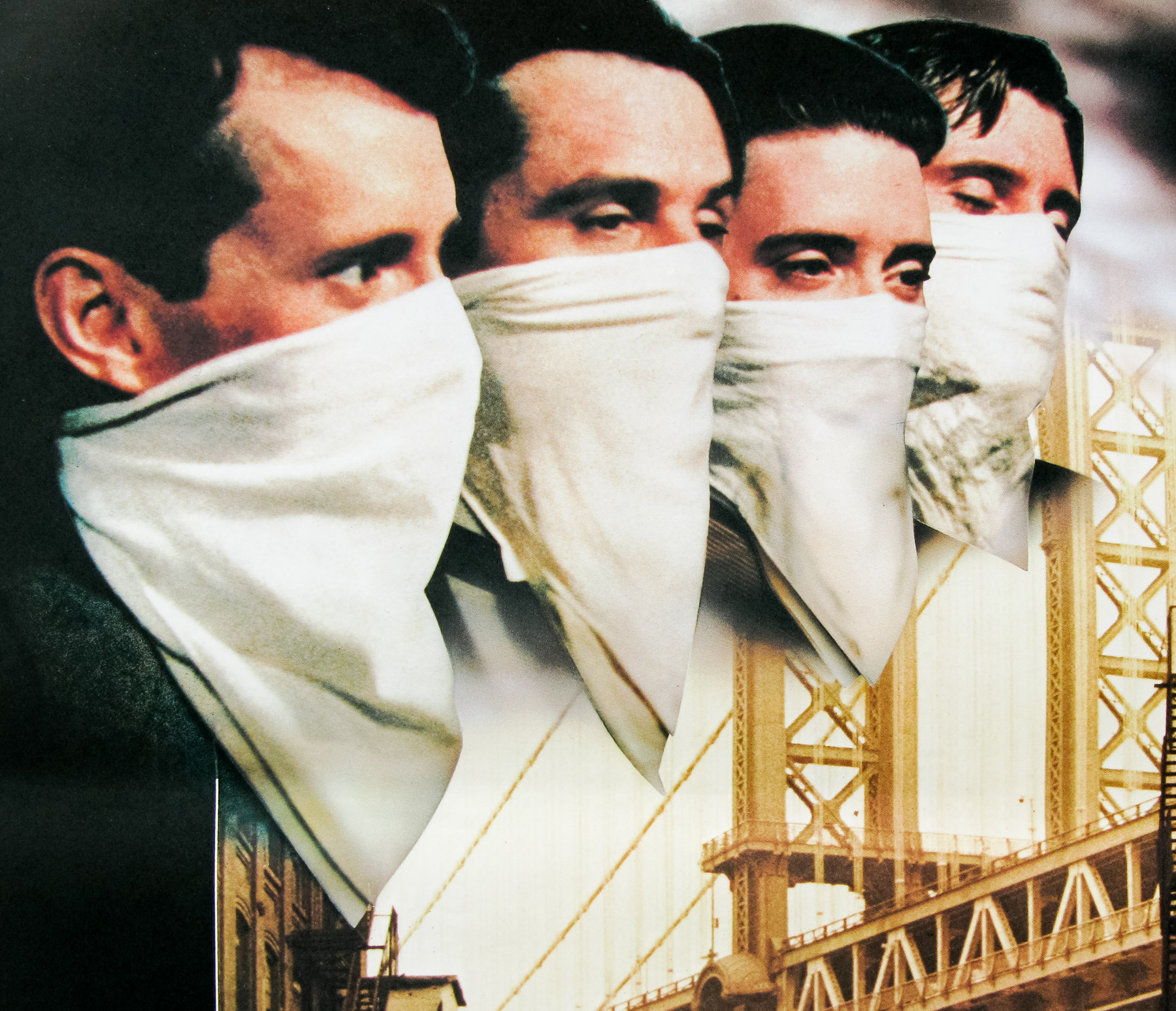
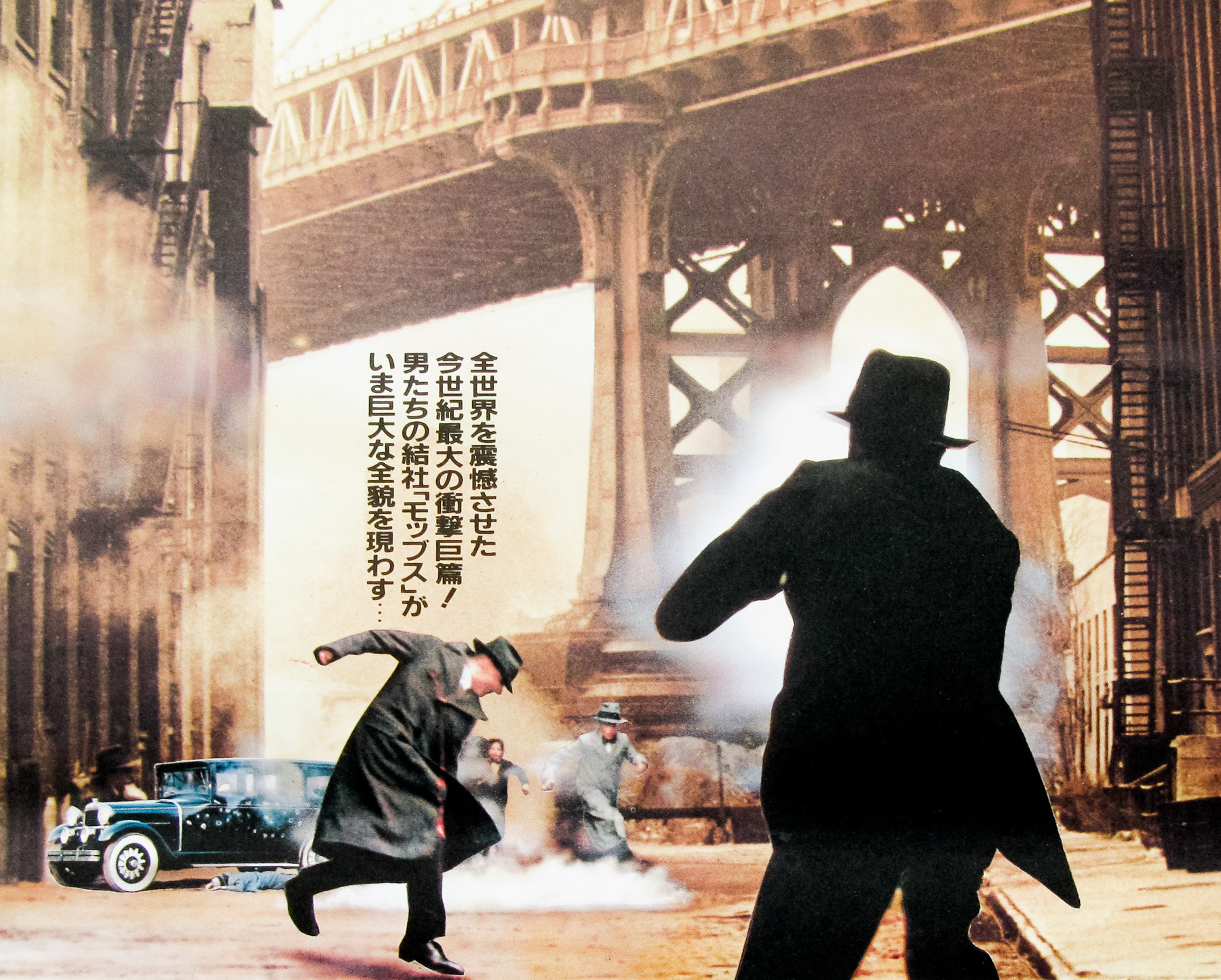
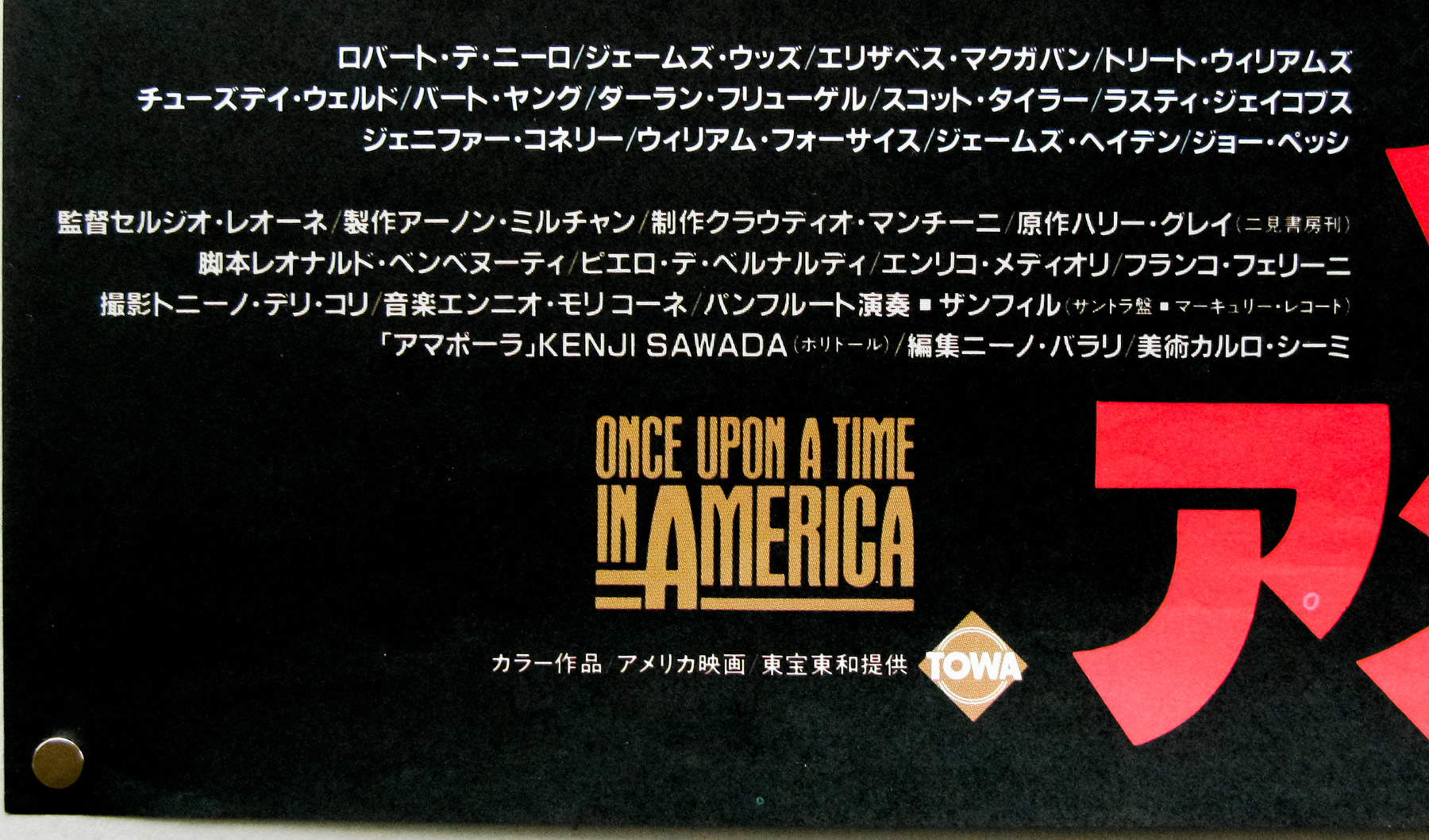
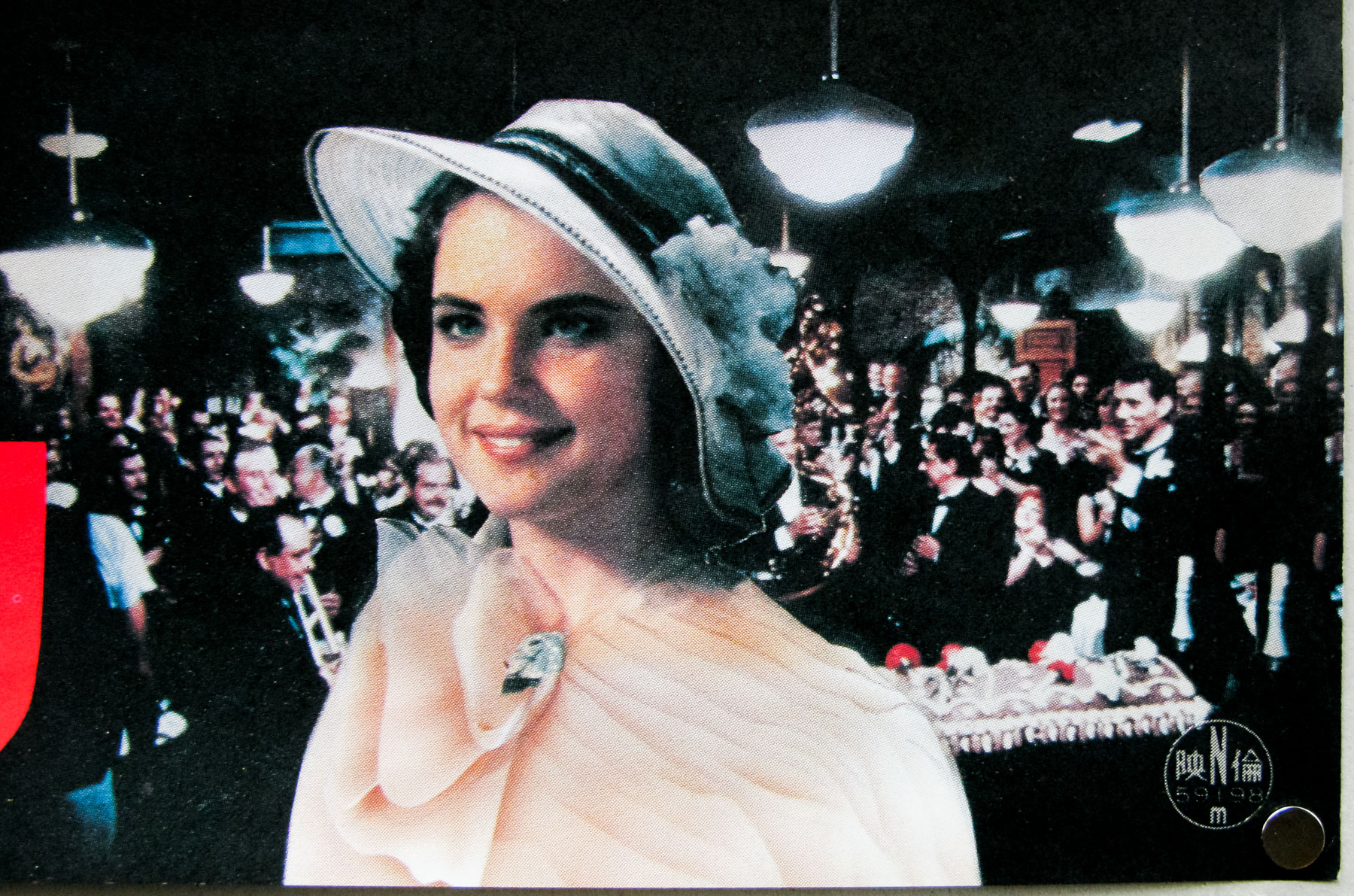
This Japanese poster features the famous shot of Manhattan bridge from Brooklyn street level, along with the four leads with bandanna face masks and a few other scenes from the film.

Here’s the original trailer on YouTube.

Planet Of The Apes / giclee / Now Showing exhibition / UK

17.05.11

Poster Poster

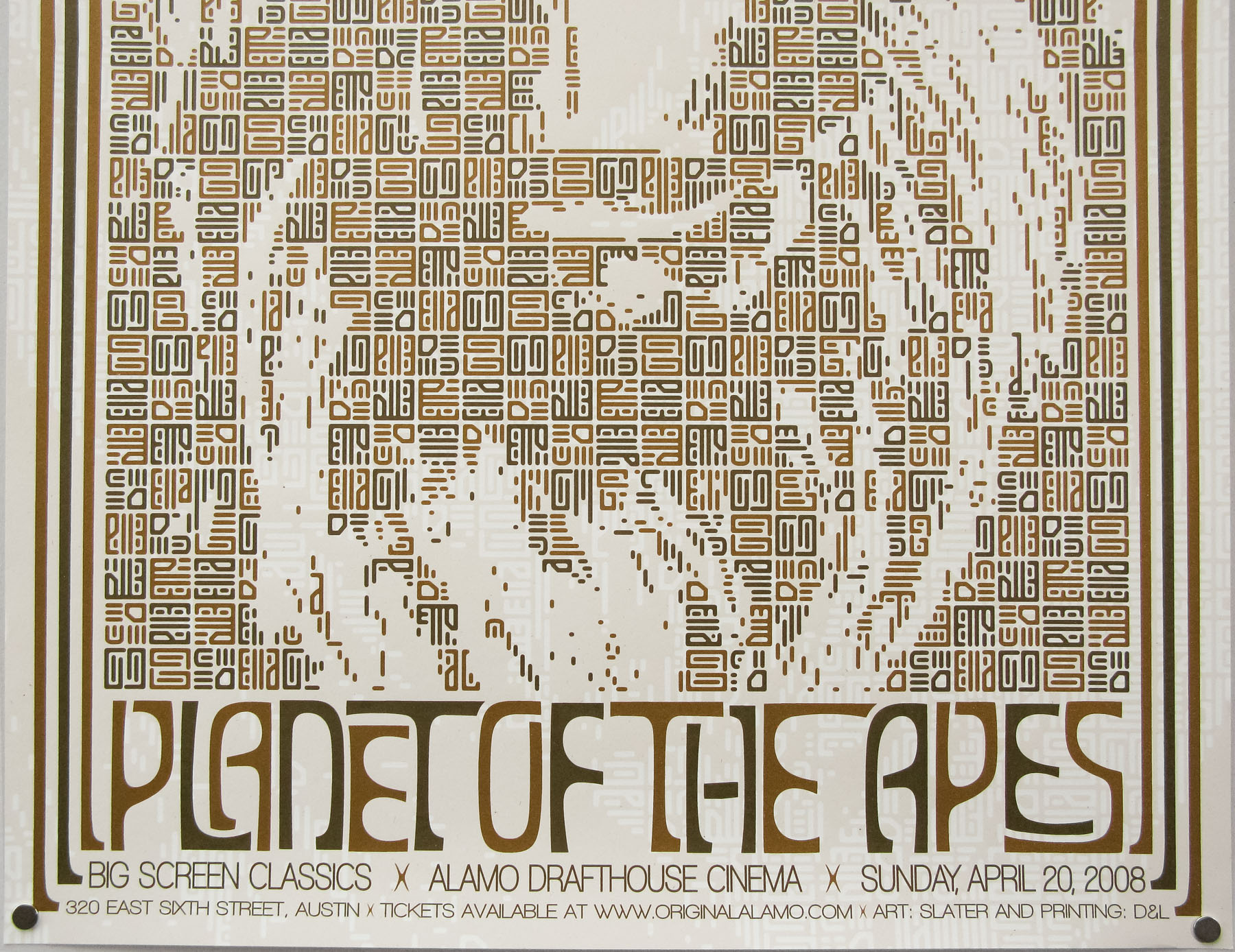
Planet Of The Apes / screen print / Todd Slater / regular / USA

17.05.11

Poster Poster

Planet Of The Apes / screen print / Todd Slater / variant / USA

17.05.11

Poster Poster

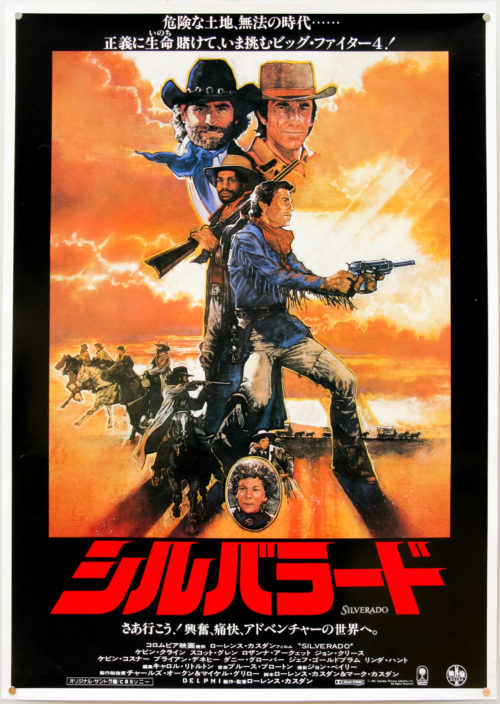
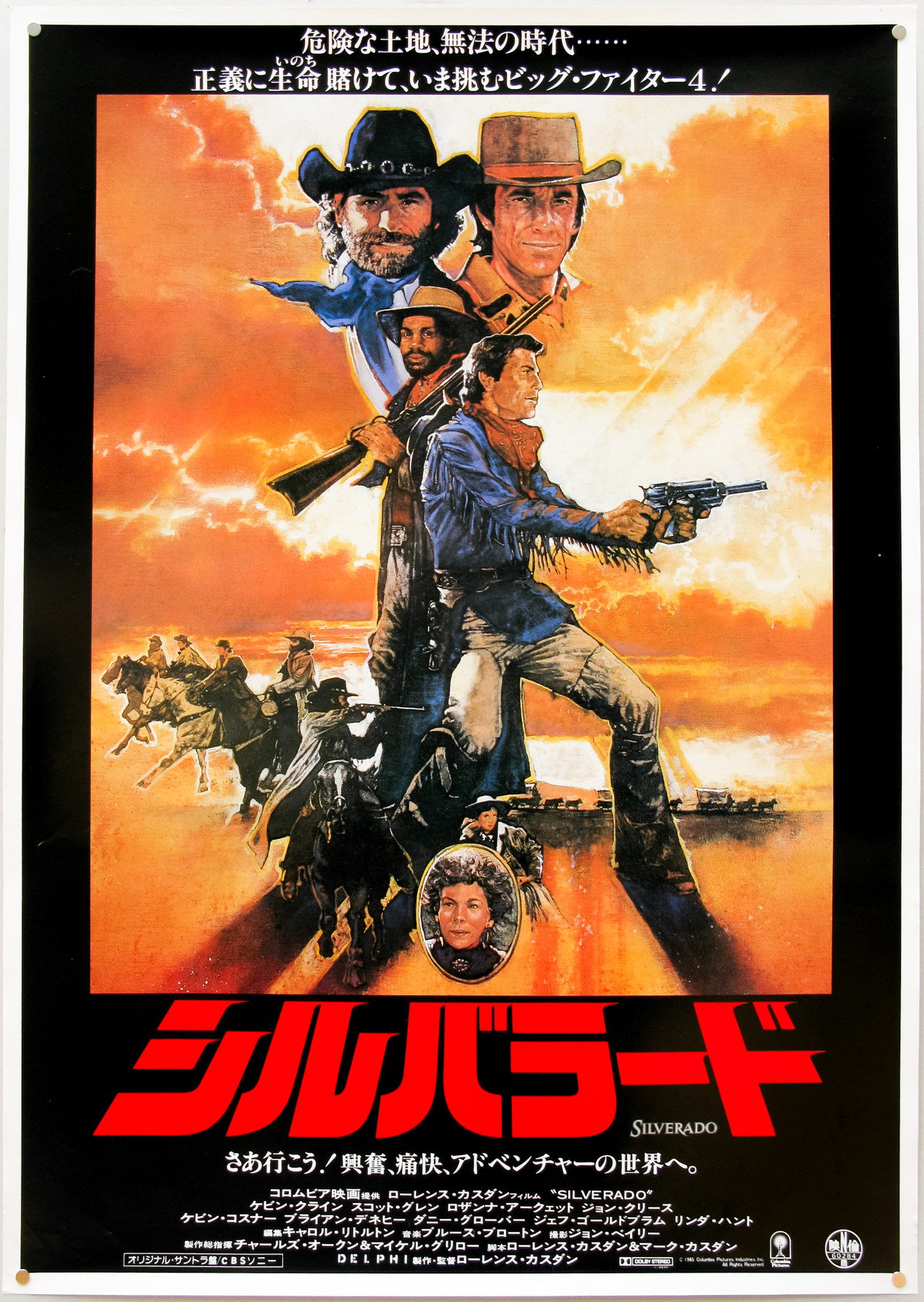
Silverado / B2 / Japan

17.05.11

Poster Poster