You searched for: One%2520sheet

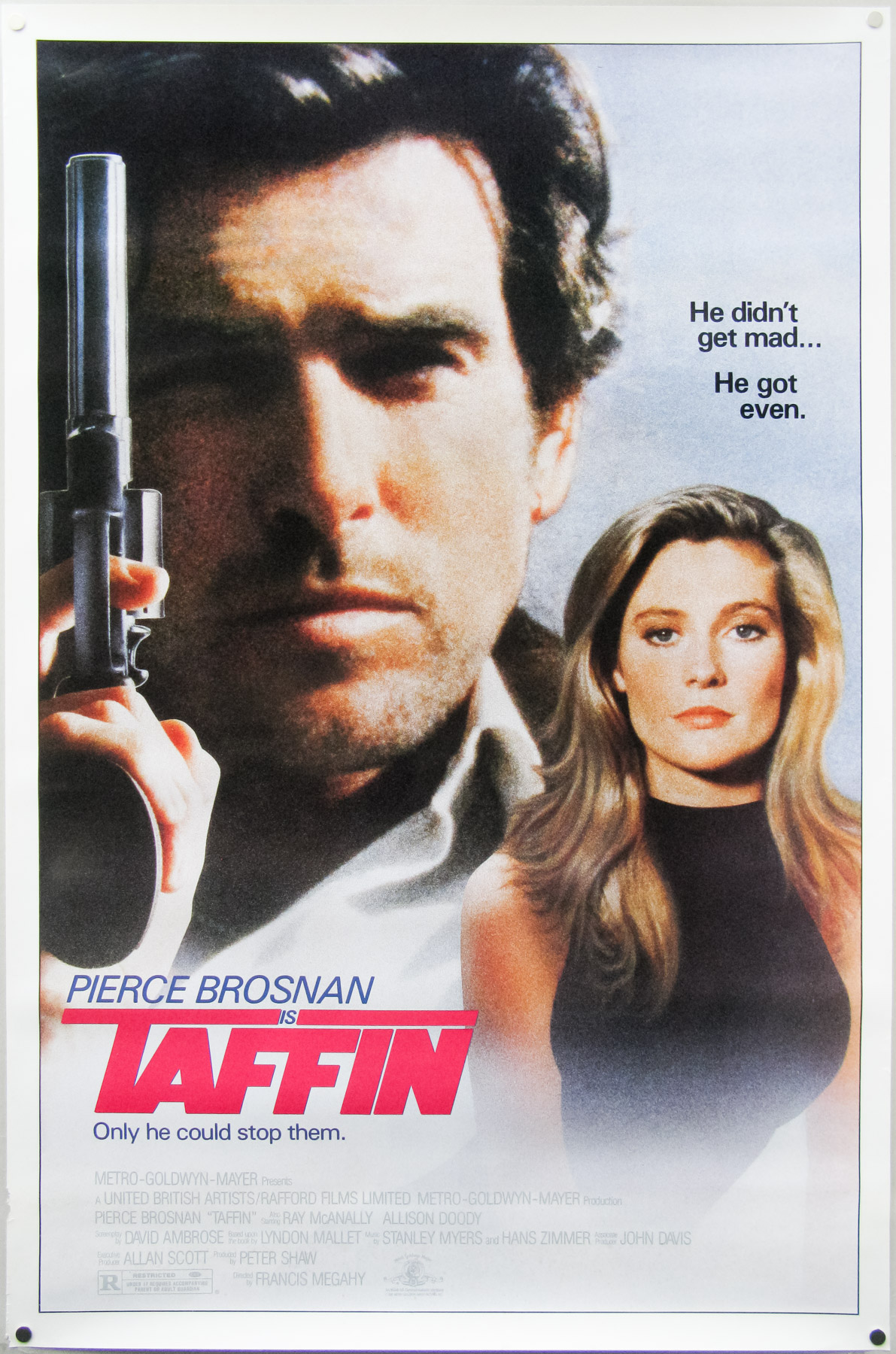
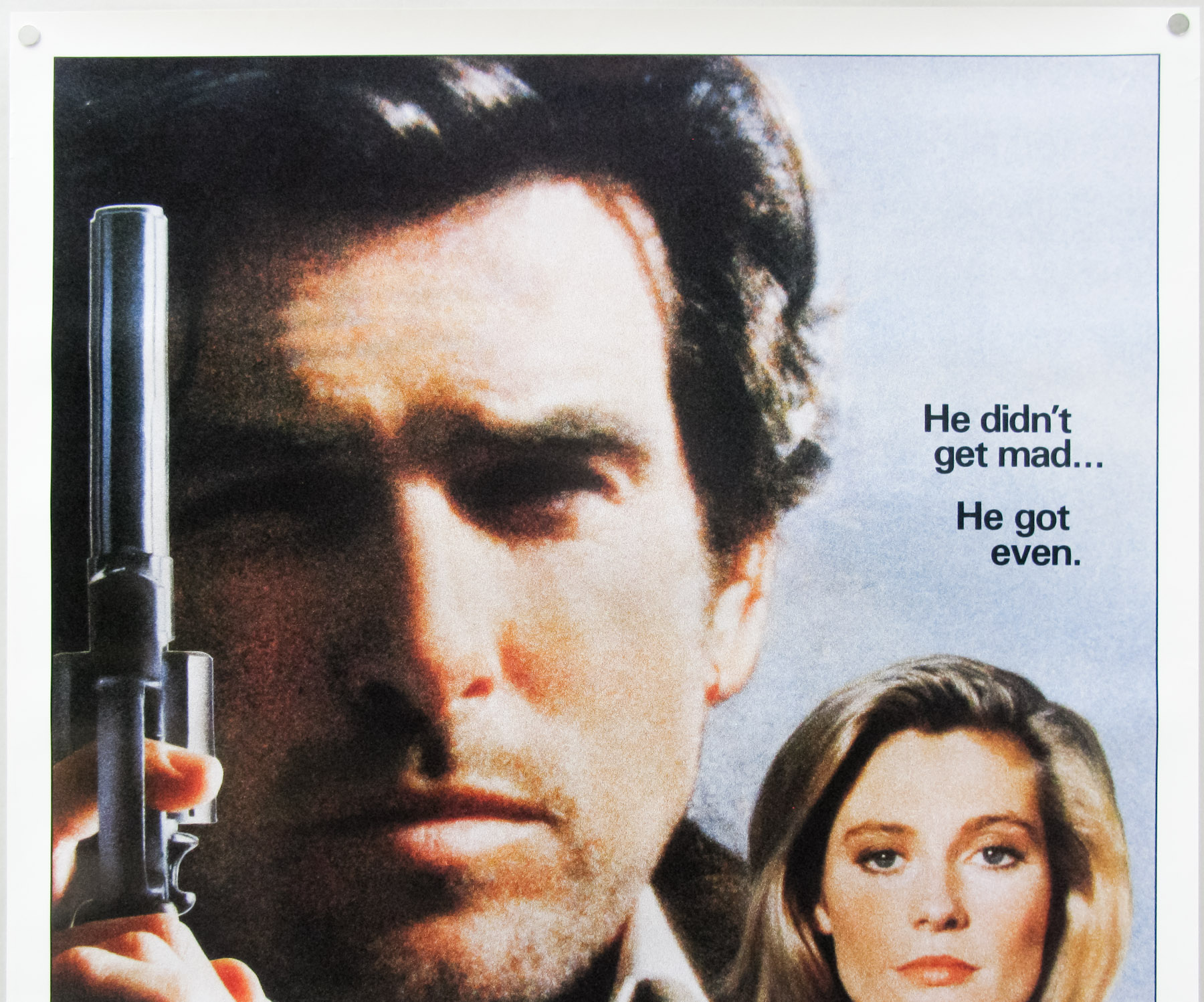
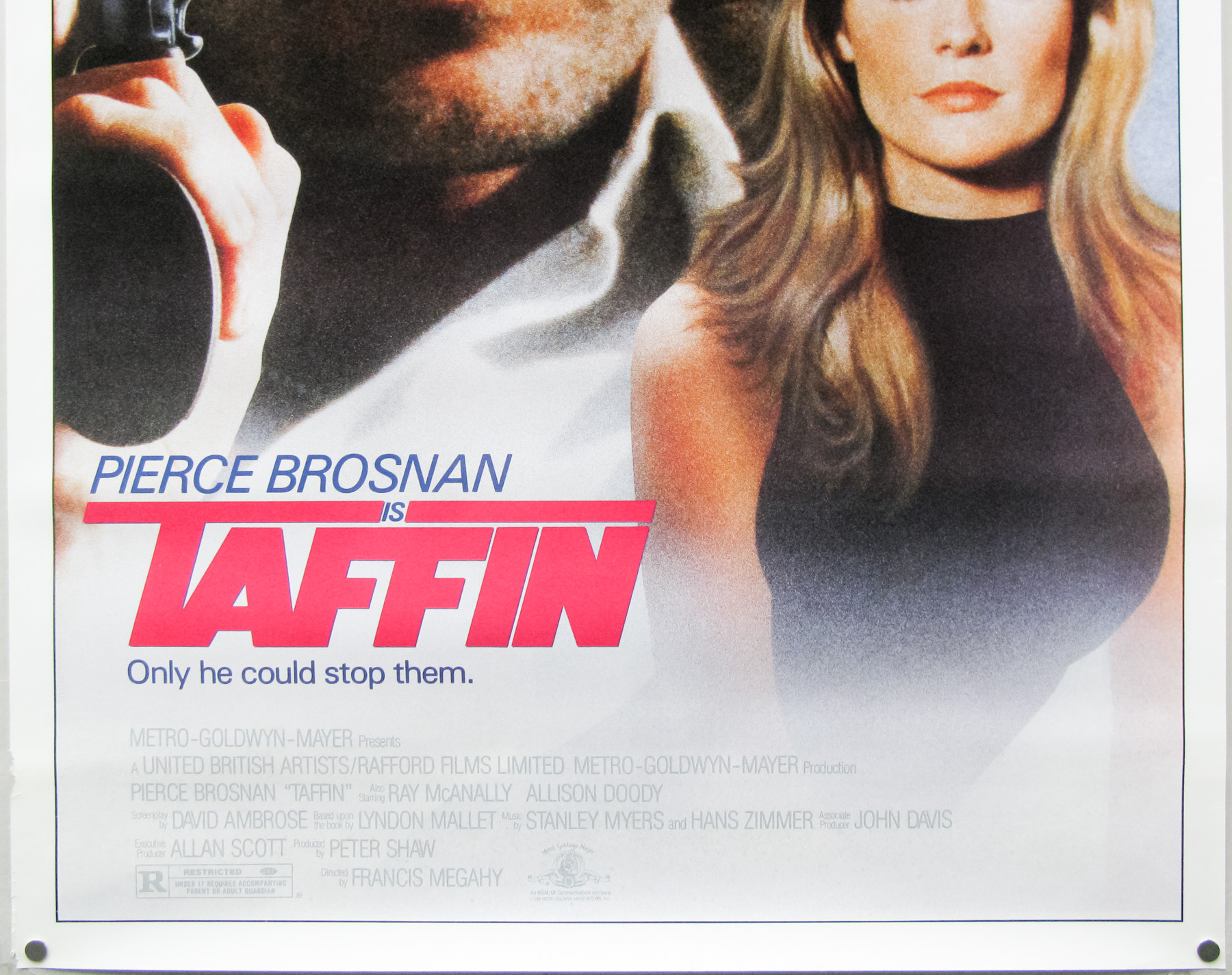
Taffin / one sheet / USA

20.06.12

Poster Poster
Title
Taffin
AKA
--
Year of Film
1988
Director
Francis Megahy
Starring
Pierce Brosnan, Ray McAnally, Alison Doody, Jeremy Child, Dearbhla Molloy, Jim Bartley, Alan Stanford, Gerard McSorley, Patrick Bergin, Britta Smith, Jonathan Ryan
Origin of Film
UK | Ireland | USA
Genre(s) of Film
Pierce Brosnan, Ray McAnally, Alison Doody, Jeremy Child, Dearbhla Molloy, Jim Bartley, Alan Stanford, Gerard McSorley, Patrick Bergin, Britta Smith, Jonathan Ryan,
Type of Poster
One sheet
Style of Poster
--
Origin of Poster
USA
Year of Poster
1988
Designer
Unknown
Artist
--
Size (inches)
27 1/16" x 41"
SS or DS
SS
NSS #
--
Tagline
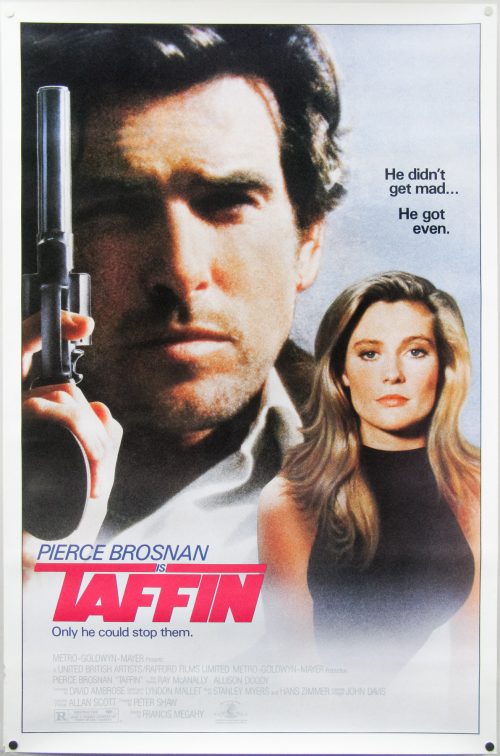
He didn't get mad... He got even. | Only he could stop them.

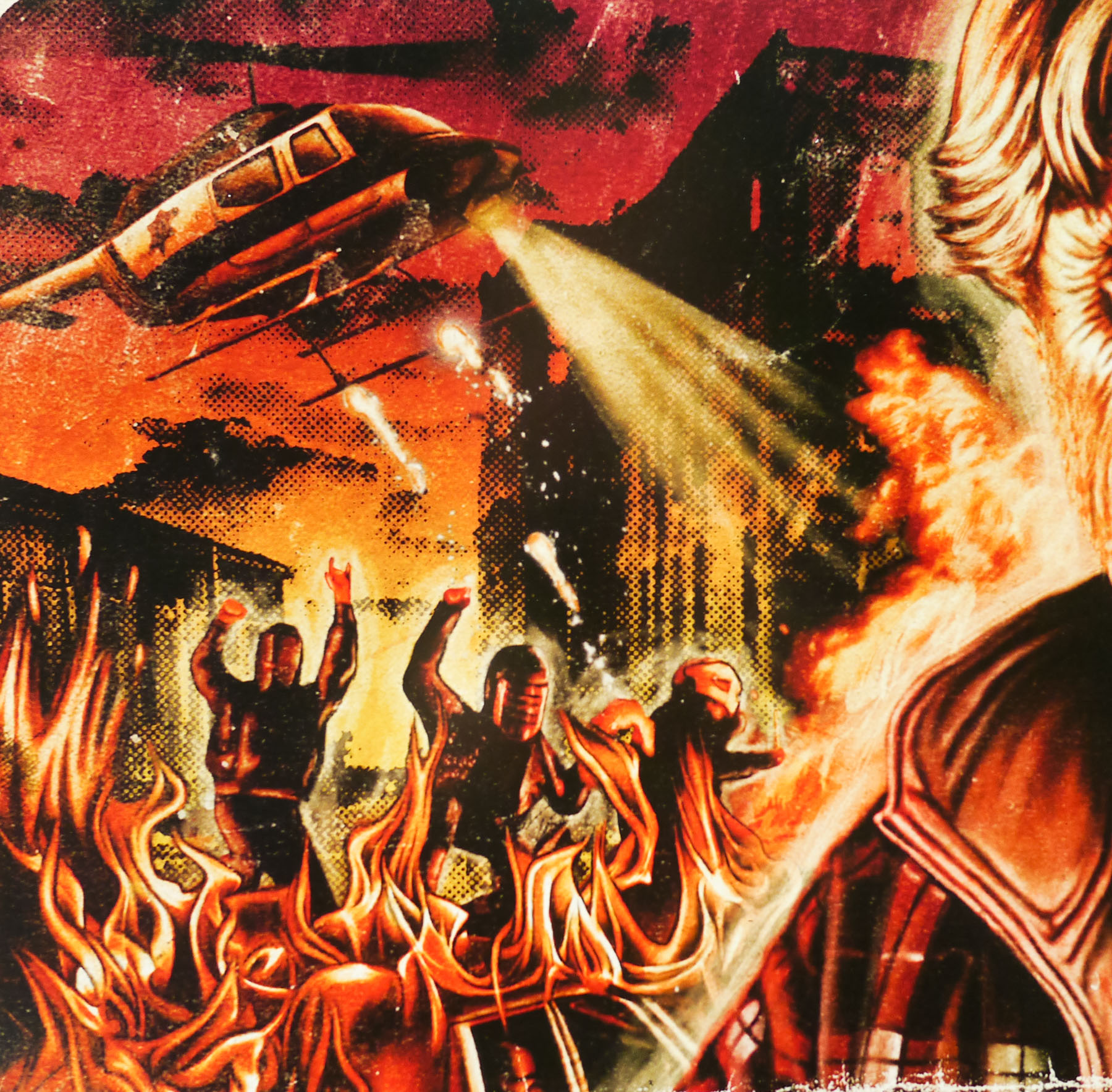
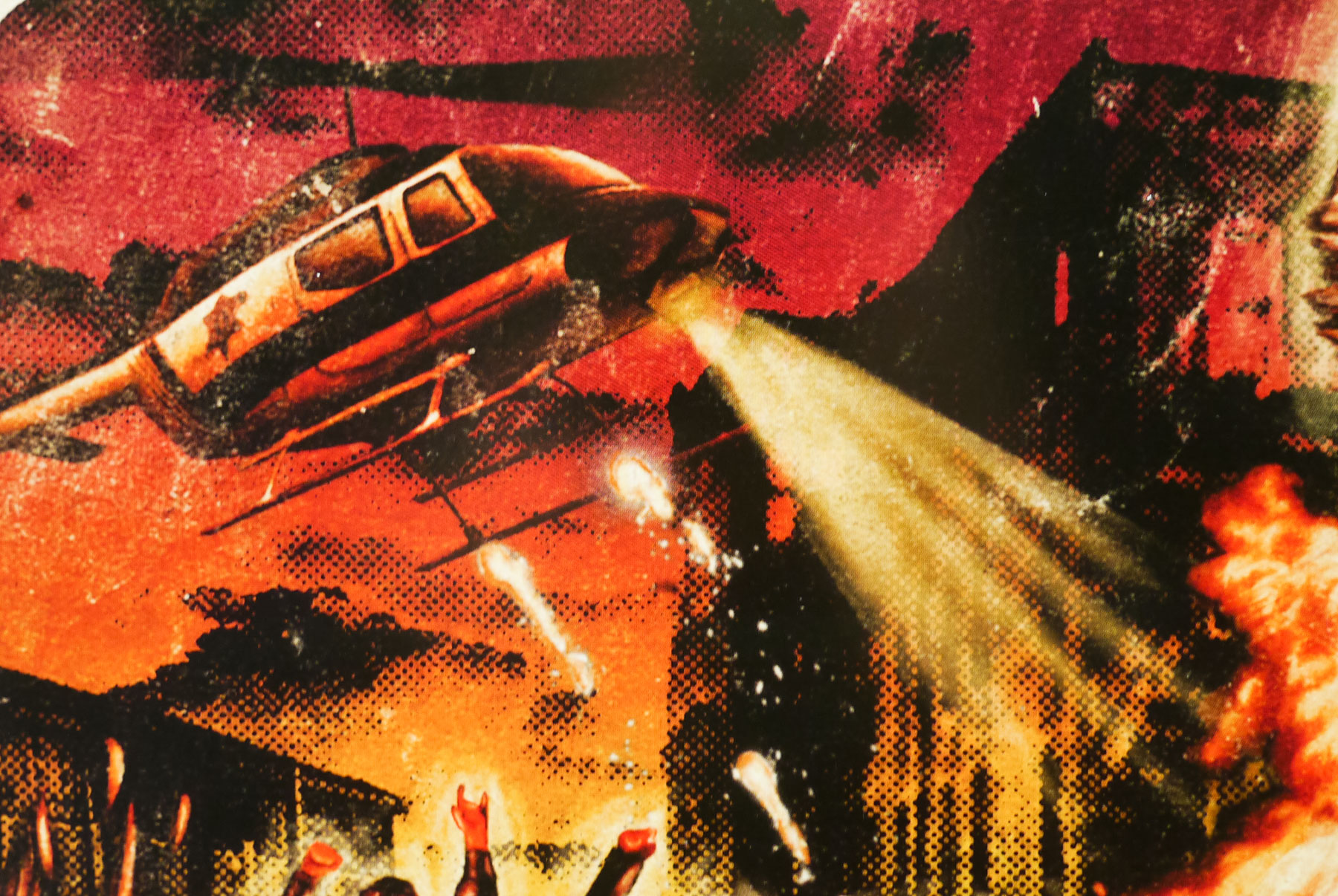
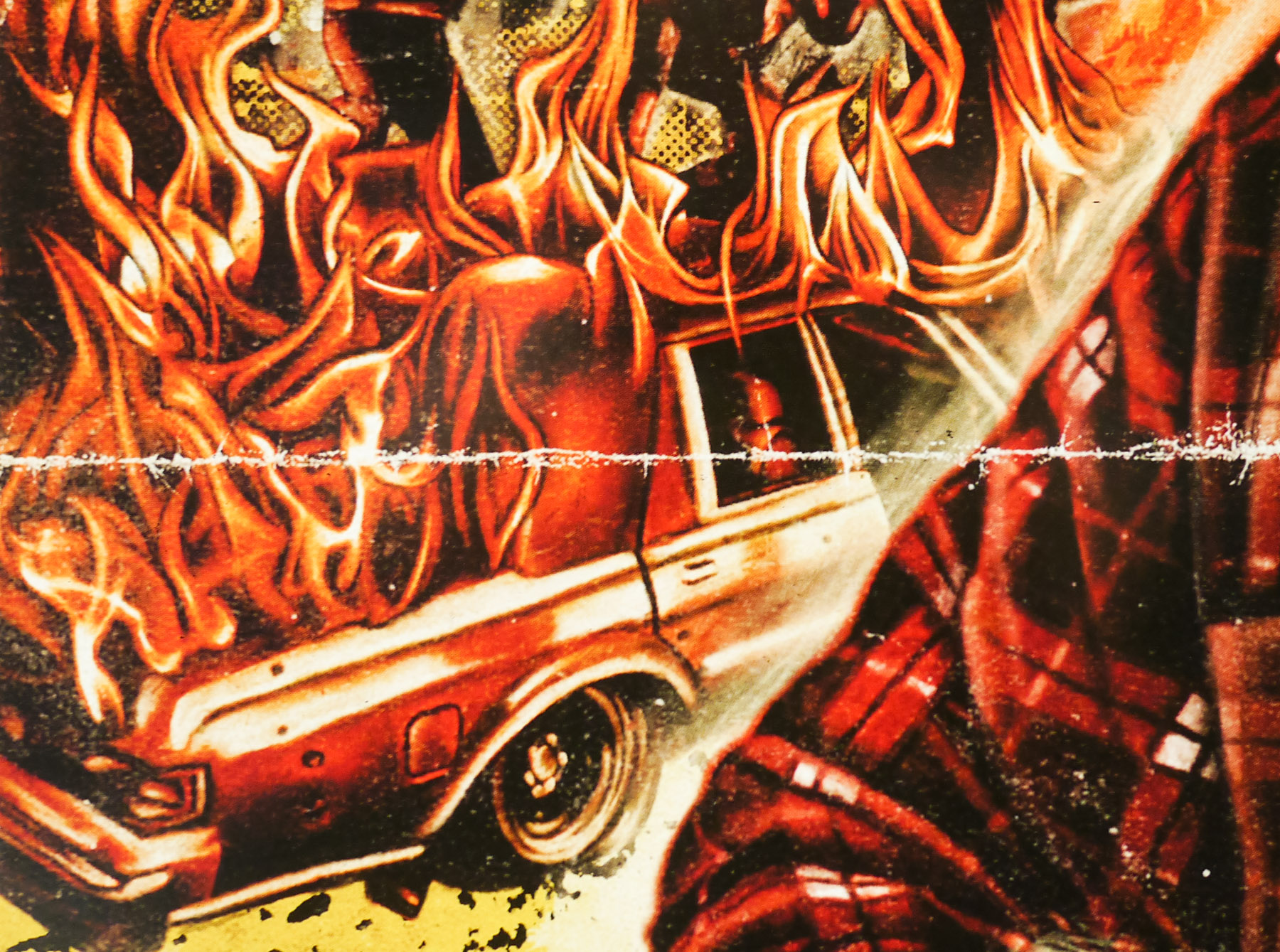
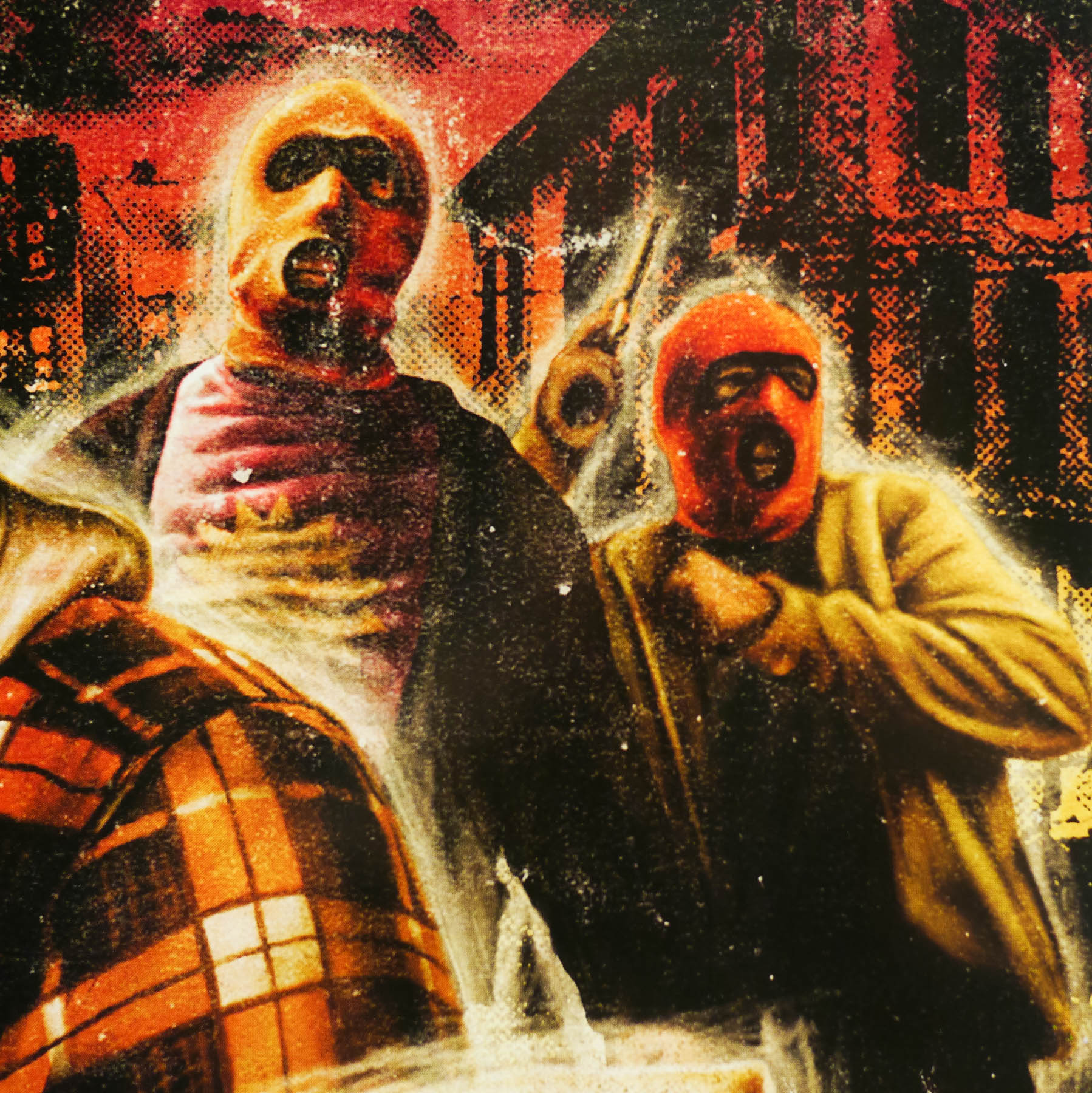
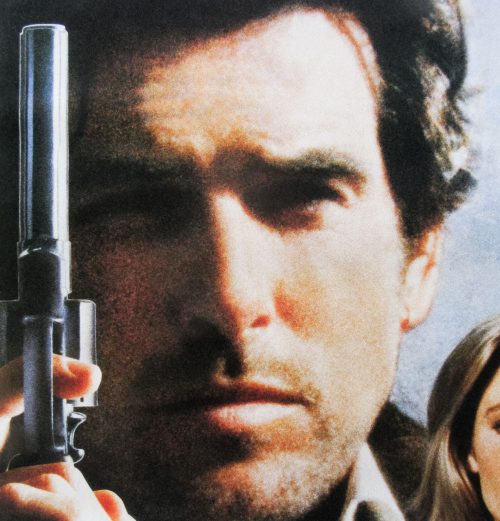
An unremarkable poster for what would have been an unremarkable entry in Pierce Brosnan‘s filmography were it not for one of the strangest, left-field line readings in the history of cinema. The infamous moment takes place during an exchange that Taffin (Brosnan) is having with the character of Charlotte (played by Alison Doody). For no apparent reason Brosnan’s tone explodes into an insane shout of ‘THEN MAYBE YOU SHOULDN’T BE LIVING HEEEEEEEERE!’ The moment is available to watch on YouTube here.

If you’re a fan of UK comedians Adam Buxton and Joe Cornish and listen to their (currently off-air) radio show on 6 music you will have heard their discussion of this infamous moment last year.  The reaction to the show saw the clip becoming its own meme for a while and it spawned several remixes.

The original trailer is on YouTube.

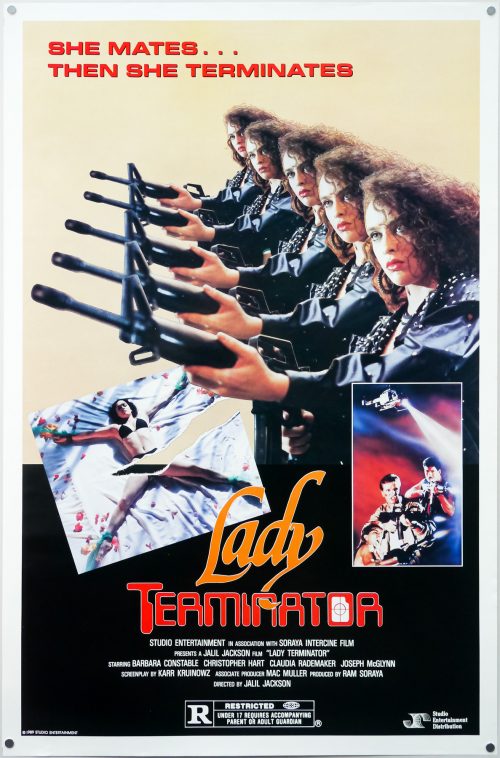
Lady Terminator / one sheet / USA

01.02.13

Poster Poster
Title
Lady Terminator
AKA
Pembalasan ratu pantai selatan (Indonesia - original title) | Nasty Hunter (France / International) | La maledizione di Erika [The Curse of Erika] (Italy) | Snake Terminator: The Snake Wench Dies Twice (Japan - English title)
Year of Film
1989
Director
H. Tjut Djalil (as Jalil Jackson)
Starring
Barbara Anne Constable, Christopher J. Hart, Claudia Angelique Rademaker, Joseph P. McGlynn, Adam Stardust, Ikang Fawzi
Origin of Film
Indonesia
Genre(s) of Film
Barbara Anne Constable, Christopher J. Hart, Claudia Angelique Rademaker, Joseph P. McGlynn, Adam Stardust, Ikang Fawzi,
Type of Poster
One sheet
Style of Poster
--
Origin of Poster
USA
Year of Poster
1989
Designer
Unknown
Artist
--
Size (inches)
27" x 41"
SS or DS
SS
NSS #
--
Tagline
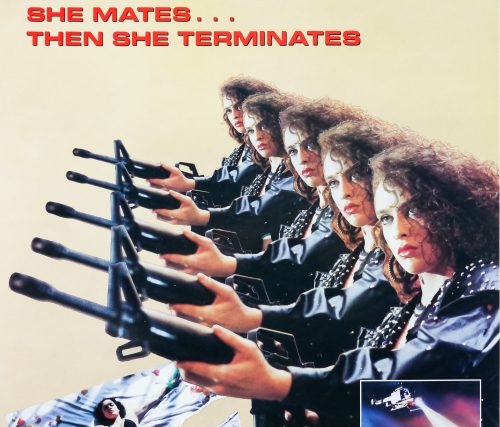
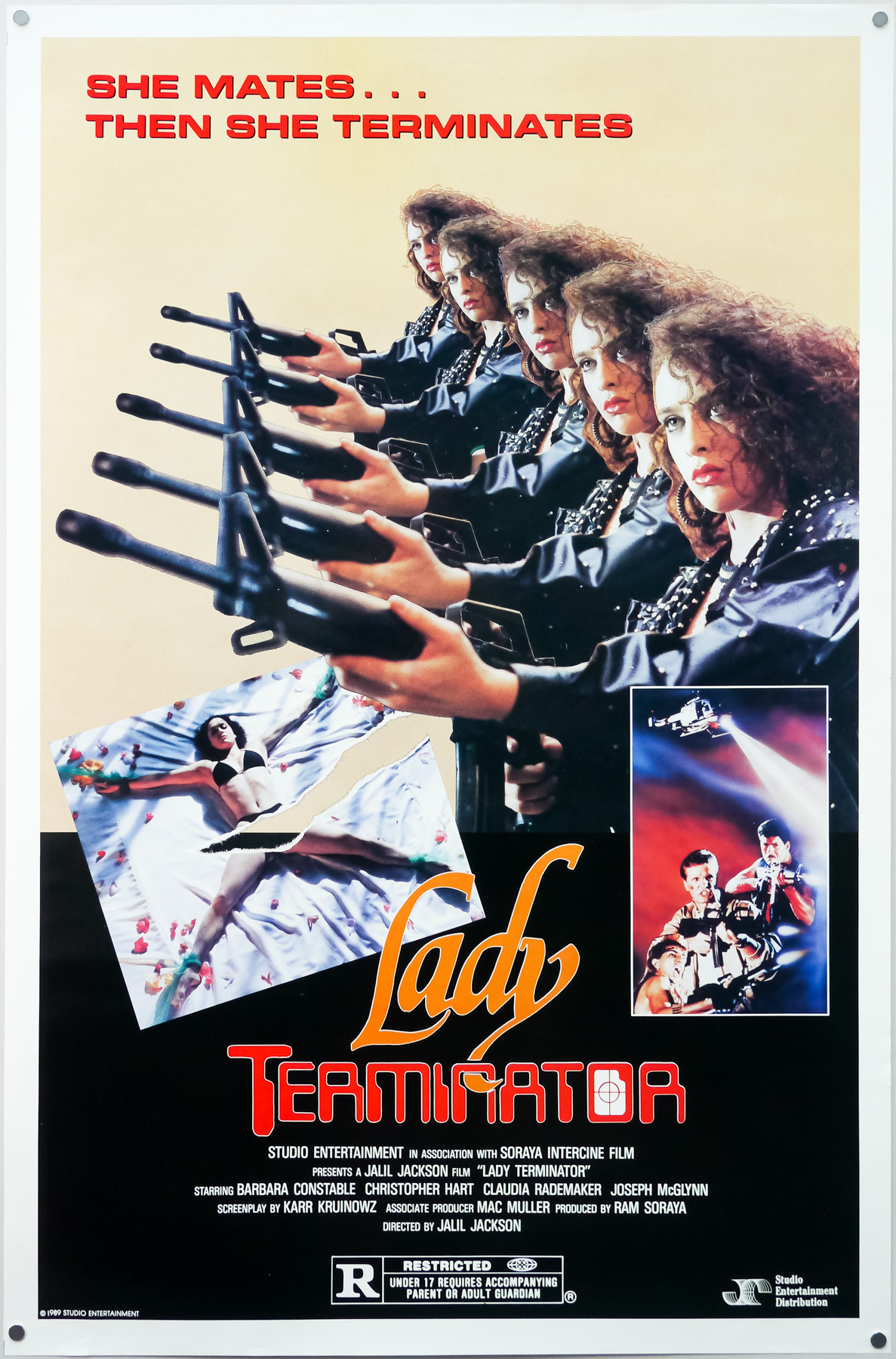
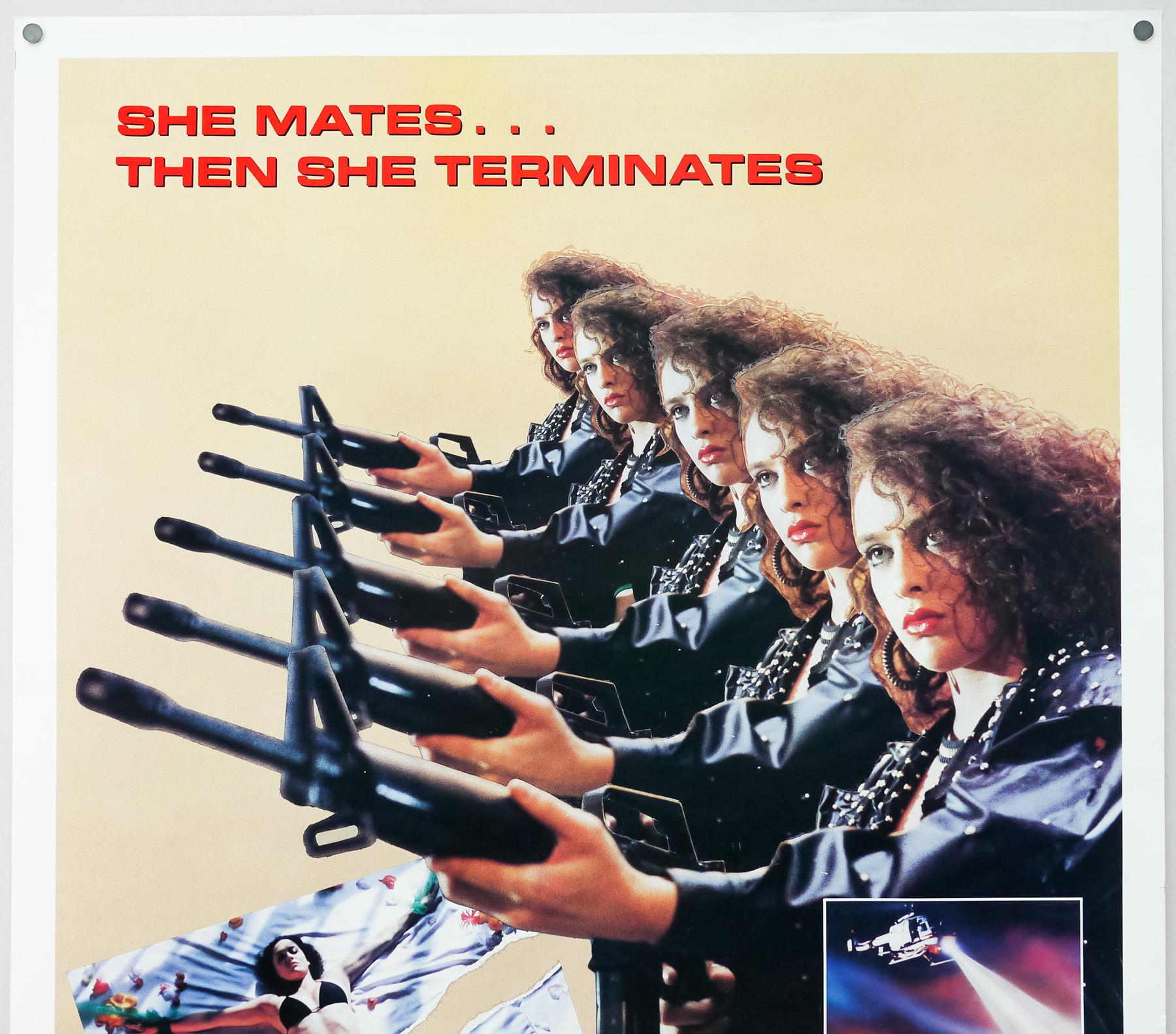
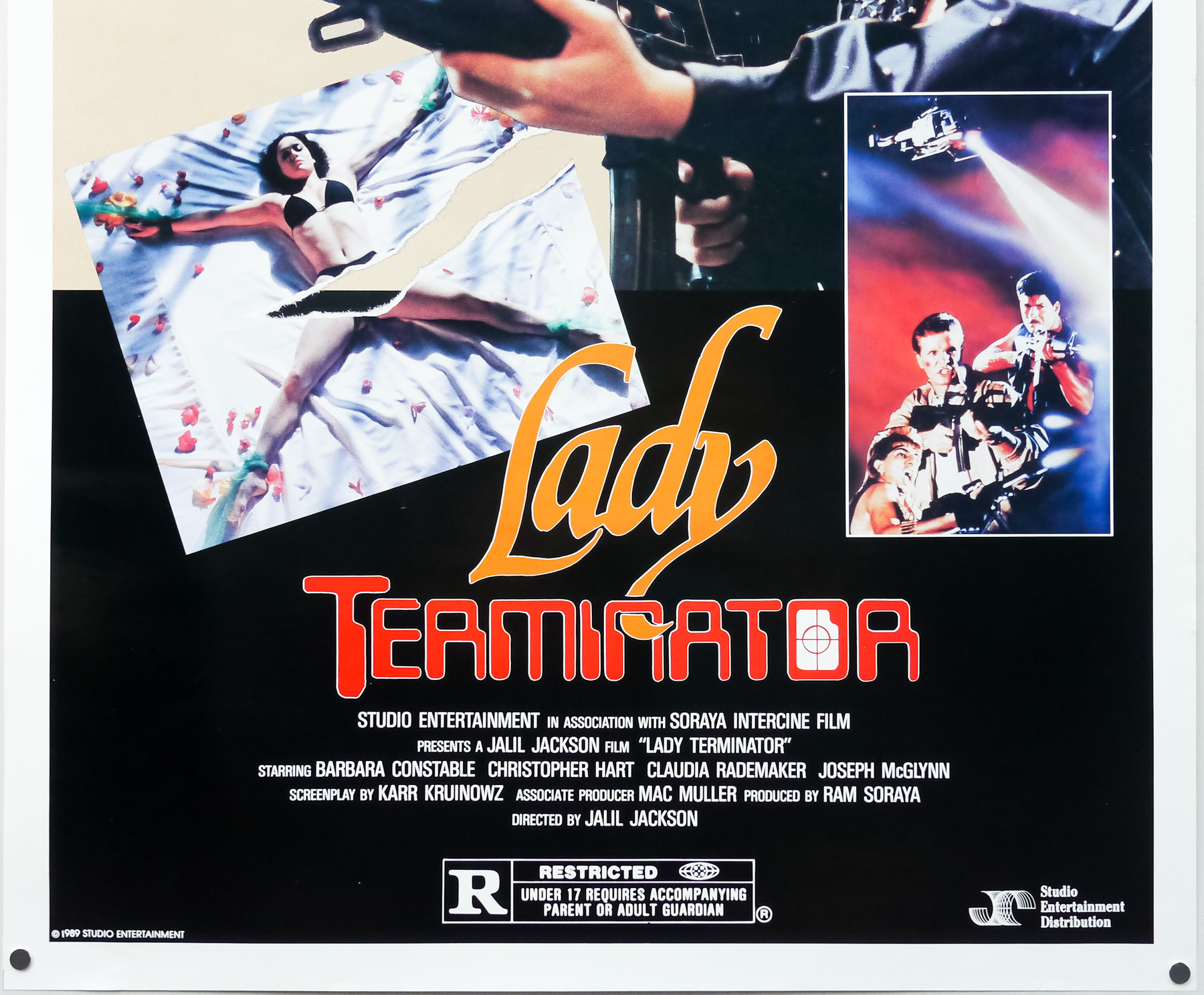
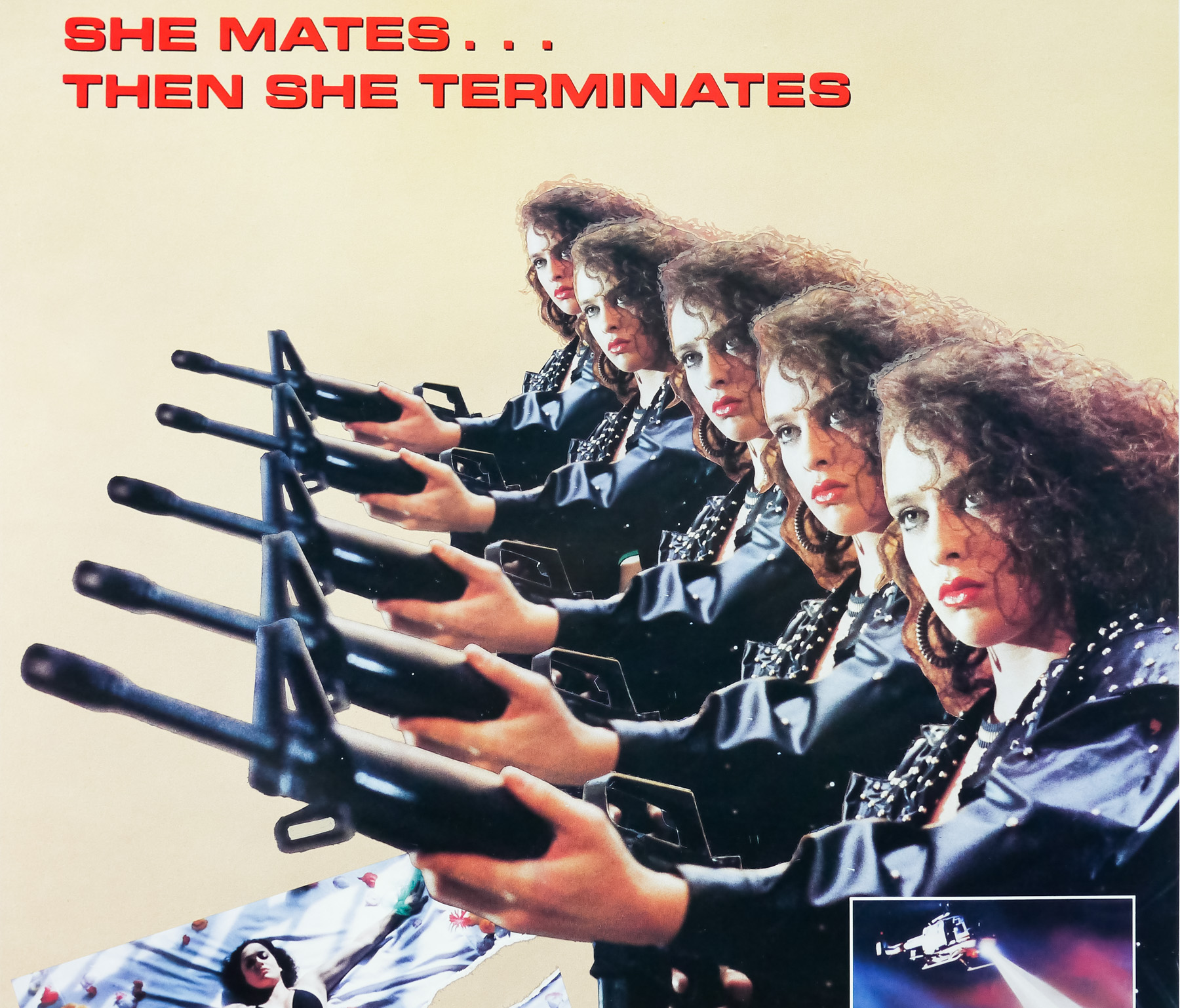
She mates... then she terminates

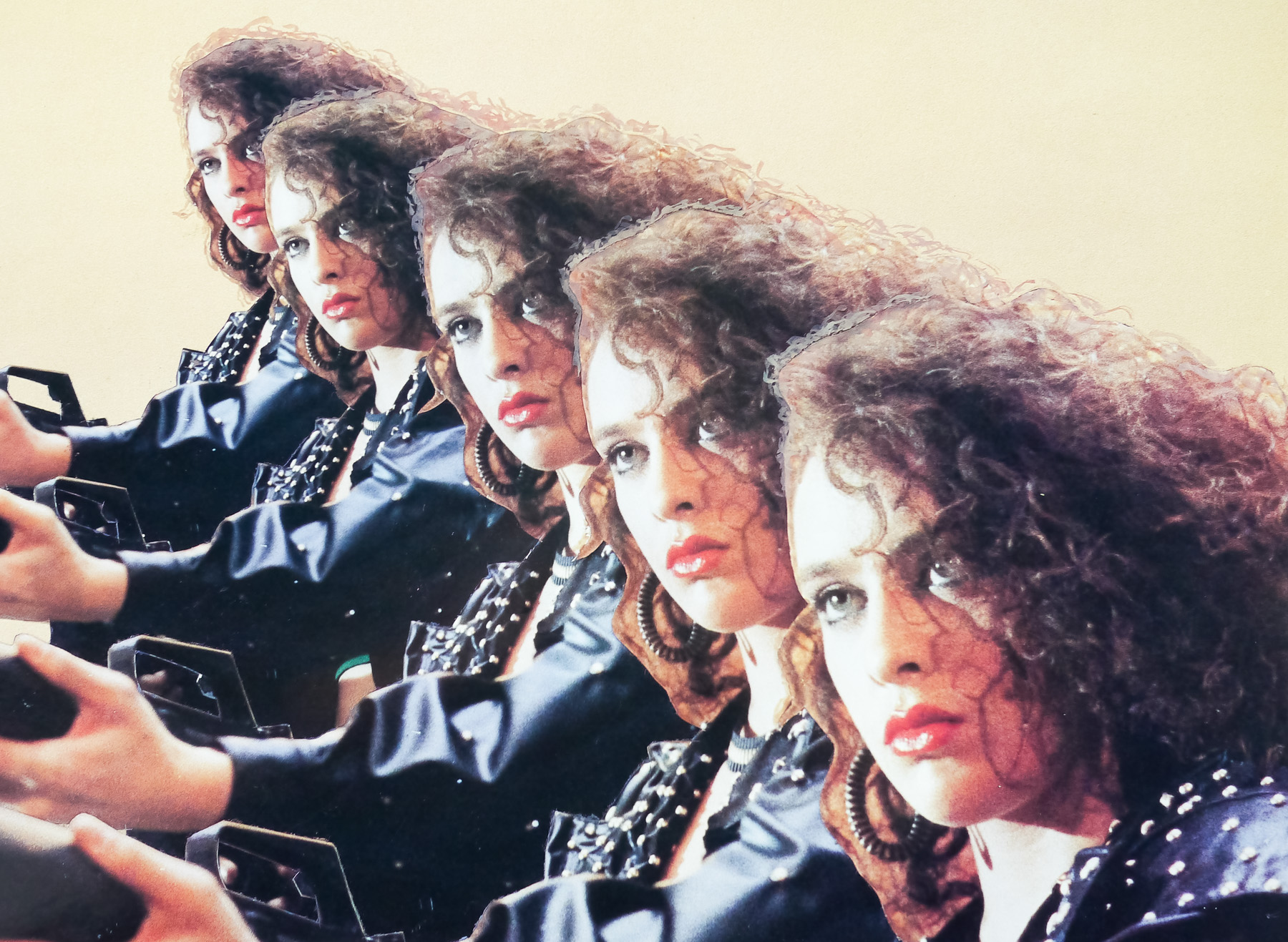
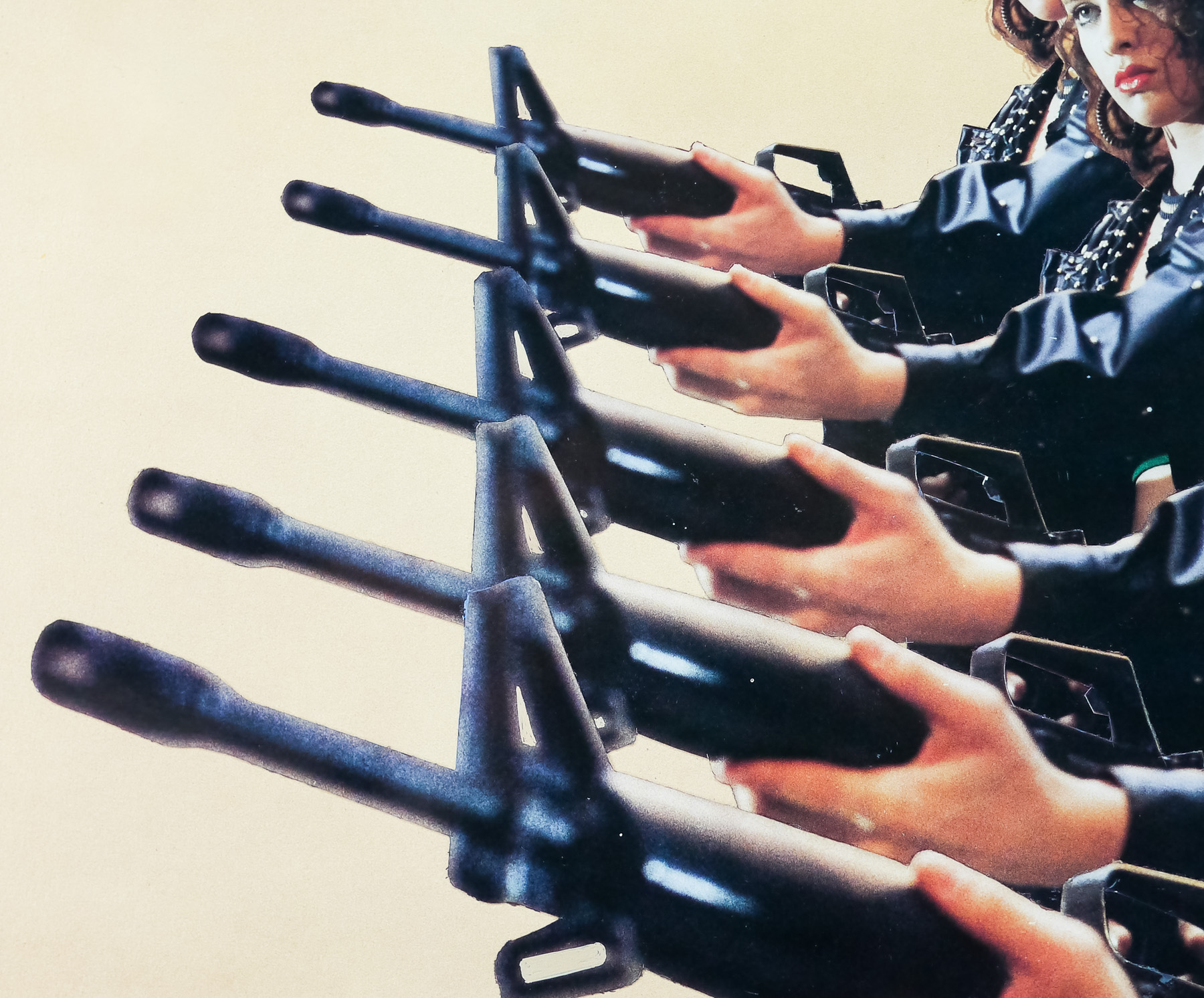
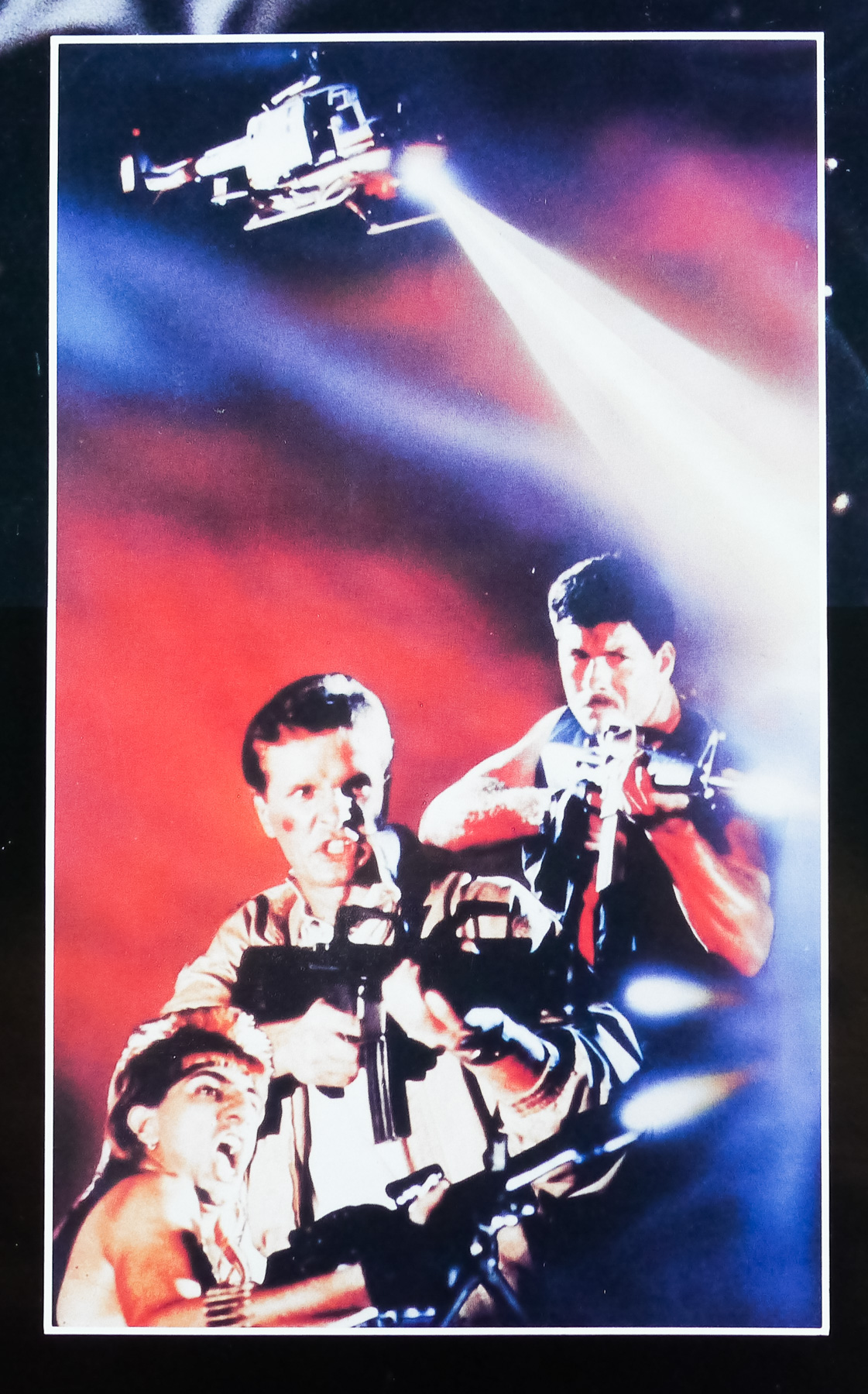
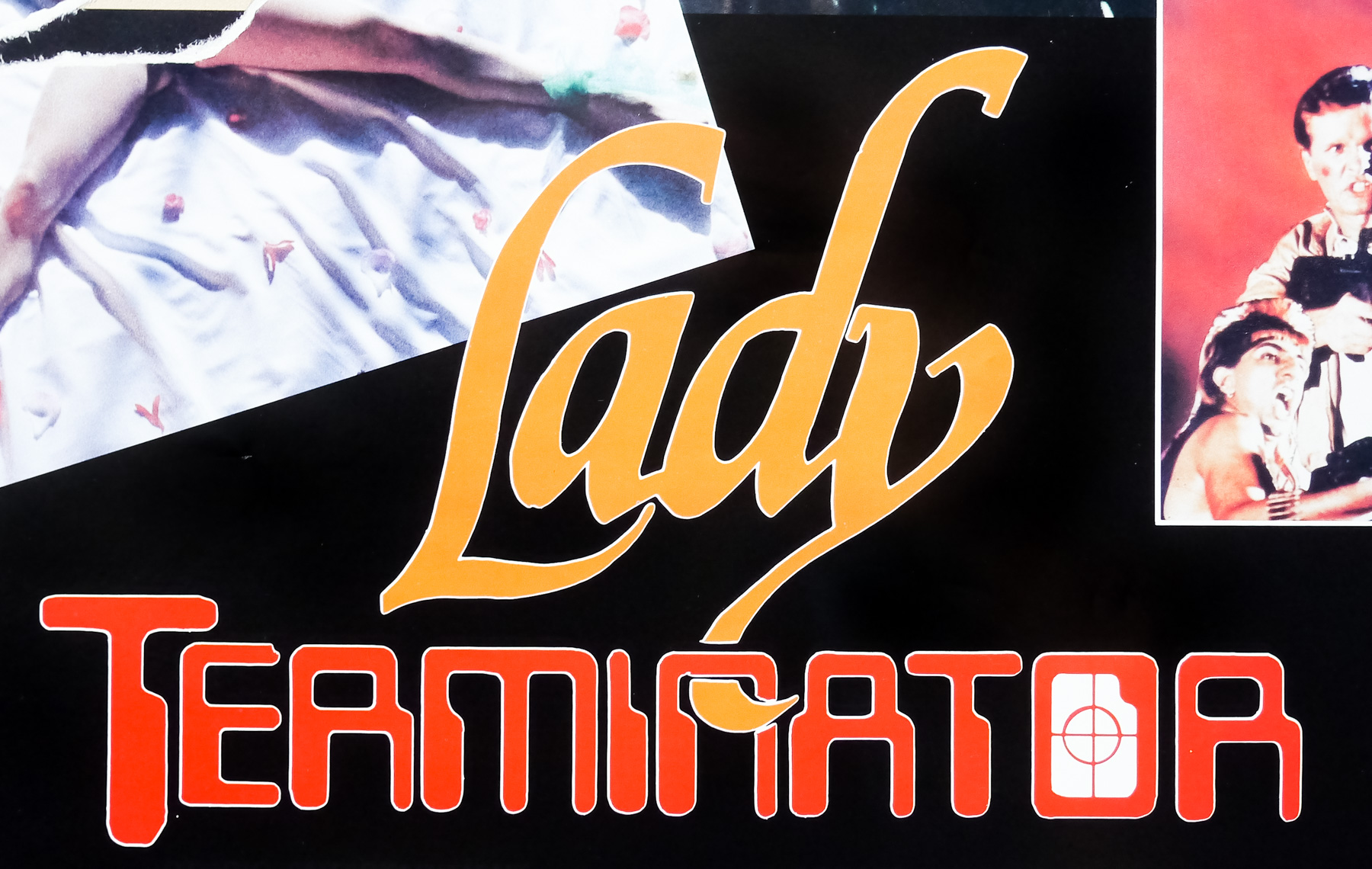
You have to love that tagline! From Indonesia comes this brazen rip-off homage to James Cameron’s original sci-fi classic, which not only rehashes most of the original’s premise but actually lifts entire shot sequences and even lines of dialogue, including the famous ‘come with me if you want to live’. Lady Terminator was apparently the product of a period of boom in the Indonesian economy that lasted from the early 1970s up until the 1990s and had a knock on effect the country’s cultural output, including the fledgling film industry. Eager directors filmed a number of low-budget exploitation features, often with western distribution in mind, and the results are a mish-mash of Hollywood tropes and Indonesian culture.

Arguably the most well-known of these films is this 1989 action/horror that features an admirably ludicrous plot blending the history of the legendary Indonesian spirit The Queen of the Southern Sea with a series of loosely connected action scenes featuring a possessed anthropology student on a murderous rampage. This page on Rotten Tomatoes does a better job at summarising the plot than I ever could:

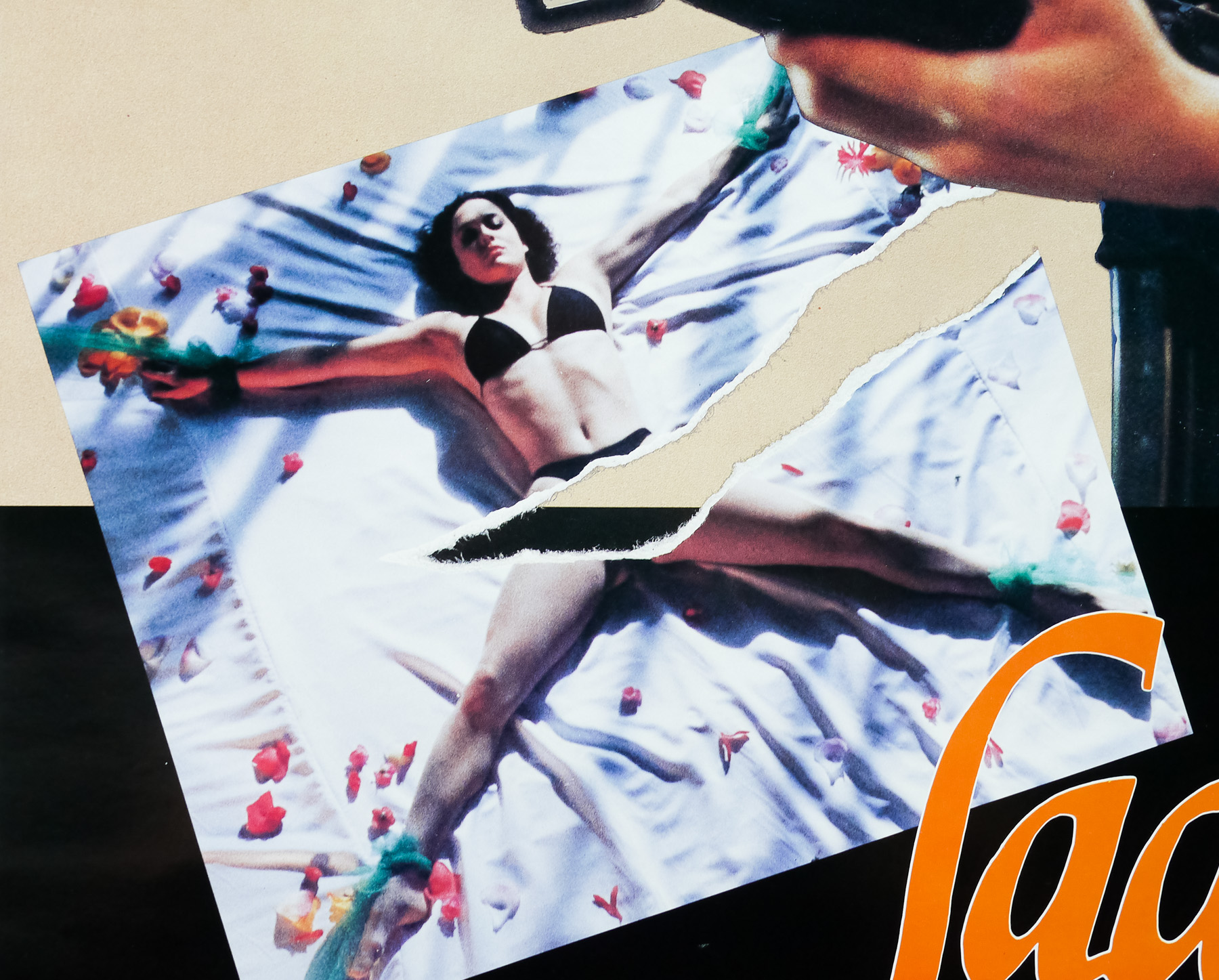
In 1889, the vicious “Queen of the South Sea” collects men that she murders during sex, thanks to a magical eel that lives inside of her vagina and bites the penises off of those who can’t satisfy her lust. Finally, one man pleasures her long enough to reach inside and pull out the creature, which instantly turns into a dagger. Furious, the Queen vows that she’ll take her revenge on the man’s great-granddaughter, and goes into the sea to wait for one hundred years.

A century passes, and Tania, a plucky anthropologist, finds an ancient book on the legend of the Queen and decides to investigate. She charters a boat to take her to the area where the Queen is believed to have disappeared, but while skindiving, a tidal wave destroys the vessel and Tania suddenly finds herself tied to a bed in a mysterious room. When a mystical eel enters her, she is possessed by the spirit of the bloodthirsty Queen. After killing a pair of drunken punks in a lascivious manner, she sees the image of Erika, a pop singer, on television and recognizes her as the descendant of the man the Queen vowed revenge on a century before.

Just…wow! Check out the trailer to get a glimpse at this insanity. Lady Terminator was played by the London-born model Barbara Anne Constable who grew up in Australia and landed the role in Lady Terminator whilst visiting Hong Kong. It ended up being her only film role and there’s a great interview with her on this website.

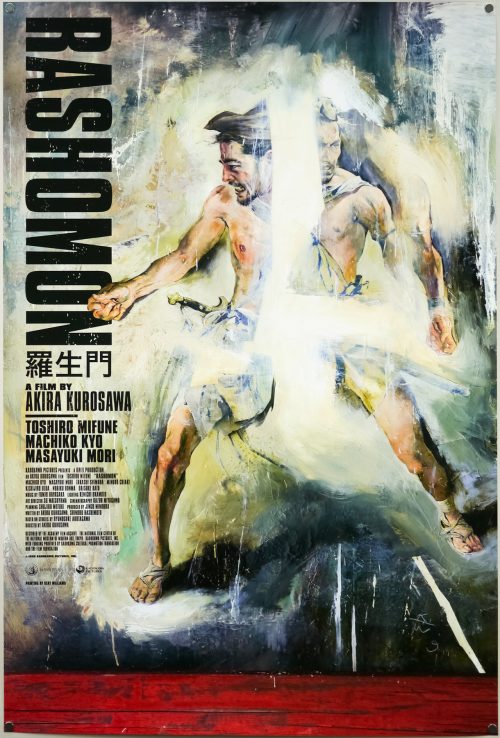
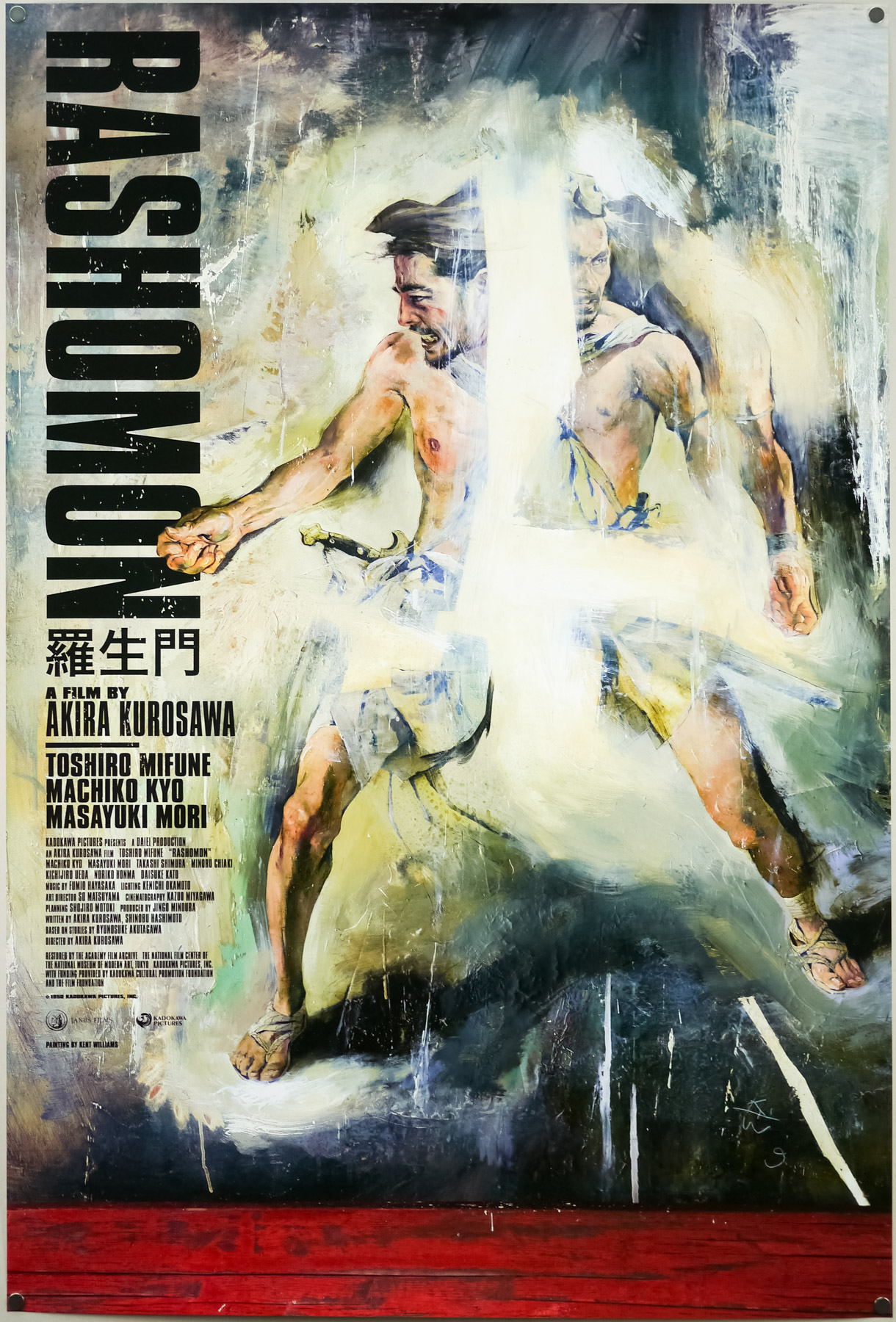
Rashomon / one sheet / 2009 re-release / USA

22.05.13

Poster Poster
Title
Rashomon
AKA
Rashômon (Japan - original title)
Year of Film
1950
Director
Akira Kurosawa
Starring
Toshirô Mifune, Machiko Kyô, Masayuki Mori, Takashi Shimura, Minoru Chiaki, Kichijirô Ueda, Noriko Honma, Daisuke Katô
Origin of Film
Japan
Genre(s) of Film
Toshirô Mifune, Machiko Kyô, Masayuki Mori, Takashi Shimura, Minoru Chiaki, Kichijirô Ueda, Noriko Honma, Daisuke Katô,
Type of Poster
One sheet
Style of Poster
Re-release
Origin of Poster
USA
Year of Poster
2009
Designer
Unknown
Artist
Kent Williams
Size (inches)
27" x 40"
SS or DS
SS
NSS #
--
Tagline
--

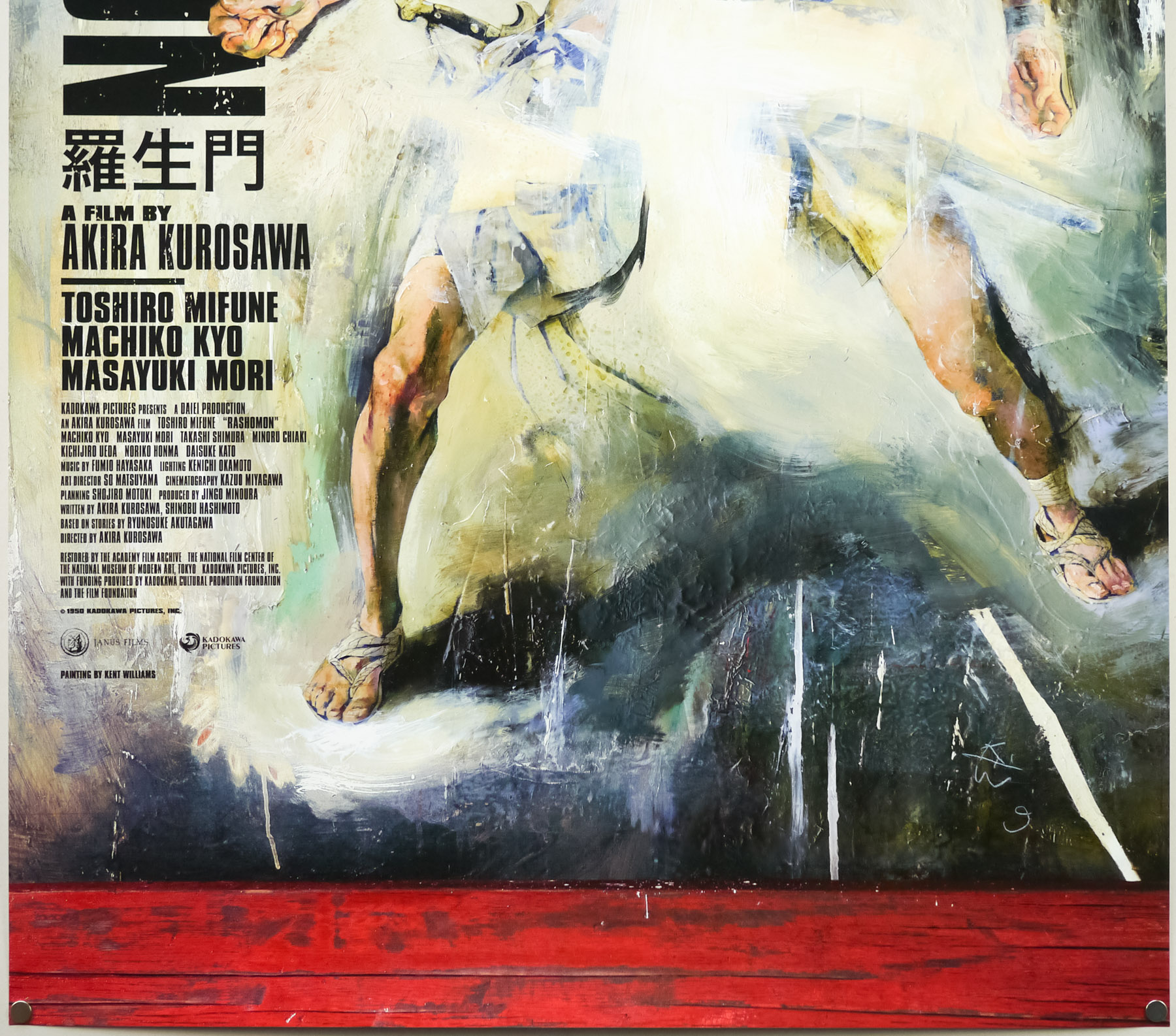
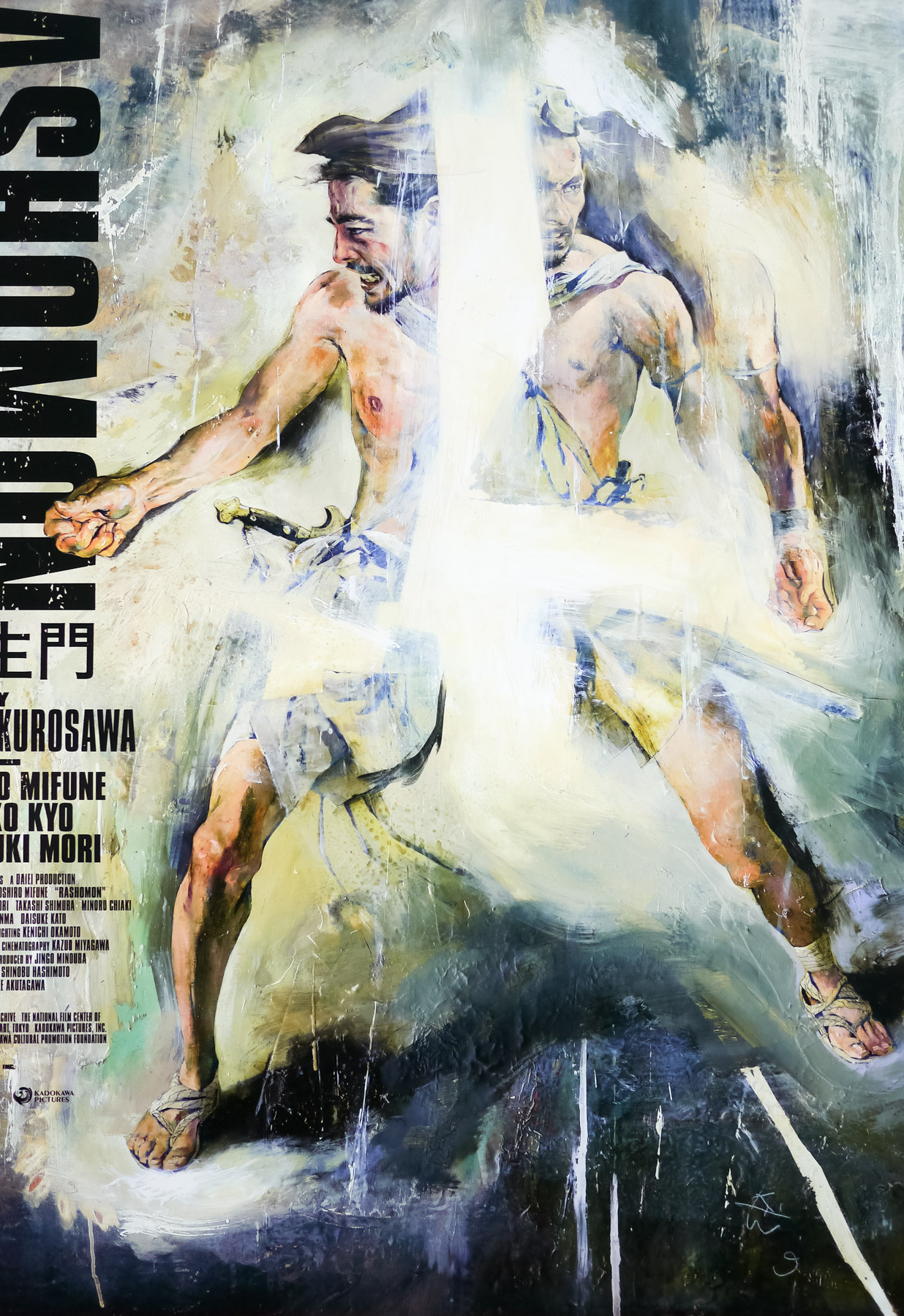
Legendary Japanese director Akira Kurosawa‘s 1950 masterpiece Rashomon is considered by many to be his crowning achievement, which is no mean feat when you consider it’s stacked against films as beloved as Seven Samurai (1954) and Yojimbo (1961). Considered incredibly influential and ground-breaking, particularly in terms of storytelling, cinematography and editing, the film has lost none of its impact in the 60+ years since its first release. The film is essentially an investigation into the truth behind a heinous crime in which a woman is raped and her samurai husband is slain at the end of a dagger, but it’s the way that Kurosawa stages the recollections of the four key eyewitnesses that makes Rashomon so special.

The film begins as three strangers shelter under the ruins of the eponymous gate during a calamitous thunderstorm. Two of the men, a woodcutter and a priest, were witnesses to events that happened in a nearby forrest three days earlier and they begin to recount what they saw to the commoner who’s eager to hear the details of the crime. Each of the recollections feature the husband and wife and a bandit named Tajômaru (Toshirô Mifune) but each of the witnesses recall the events that led to the death of the samurai in very different ways.

Kurosawa uses a number of editing techniques to differentiate the recollections for the viewer and apparently shot the same scene with several different cameras so he could cut to another angle of the same performances as he saw fit. Mifune, a frequent collaborator, deserves special mention for his memorable portrayal of the bandit Tajomaru in each of his different ‘guises’. In the end, the viewer is left to decide which of the witnesses they believe with the director resisting the urge to wrap things up neatly. As the commoner remarks when discussing the validity of one of the recollections: ‘We all want to forget something, so we tell stories. It’s easier that way.’

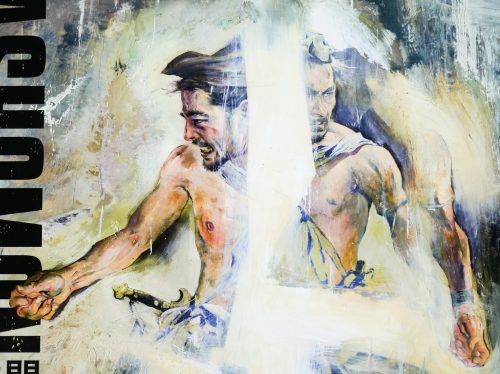
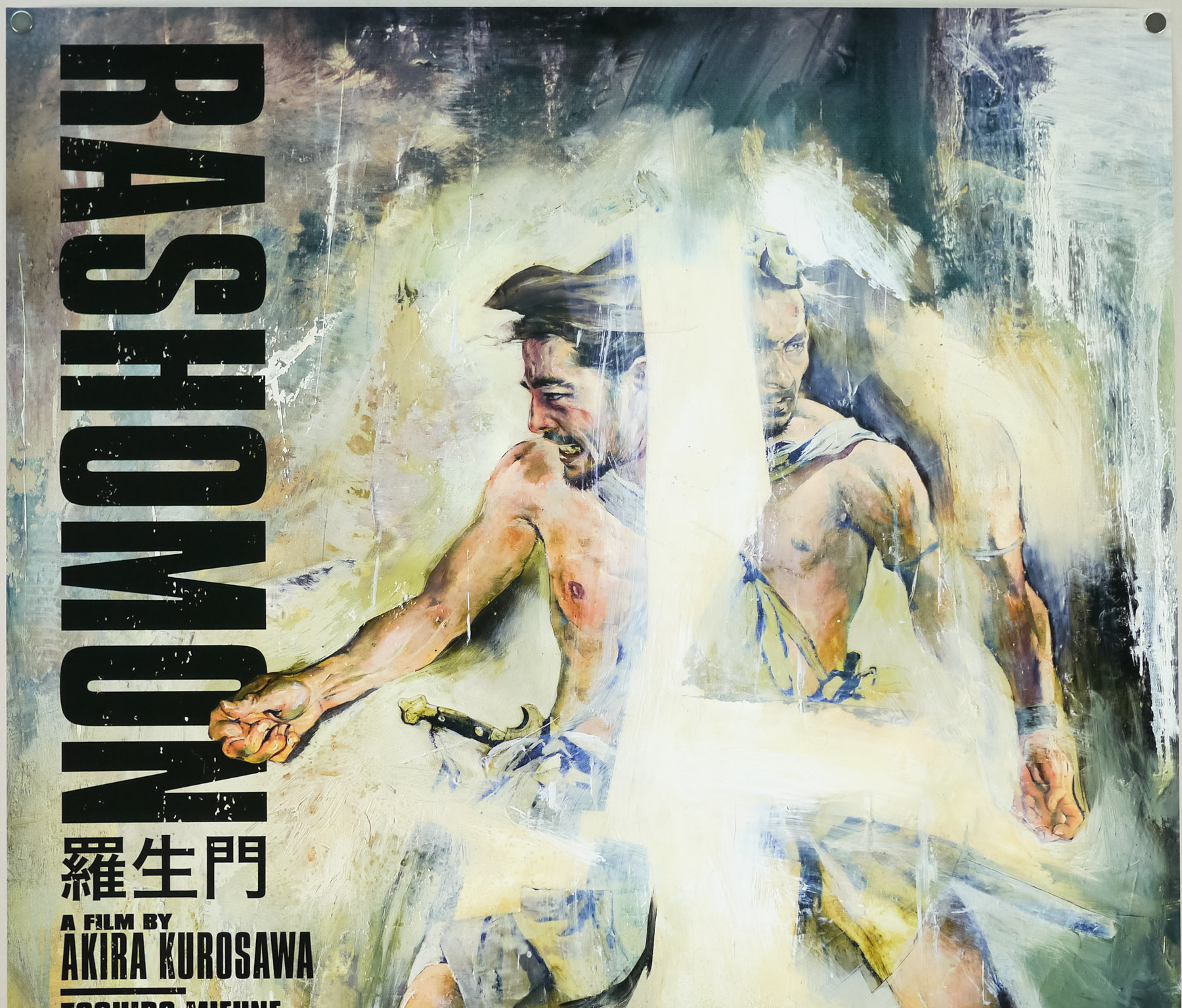
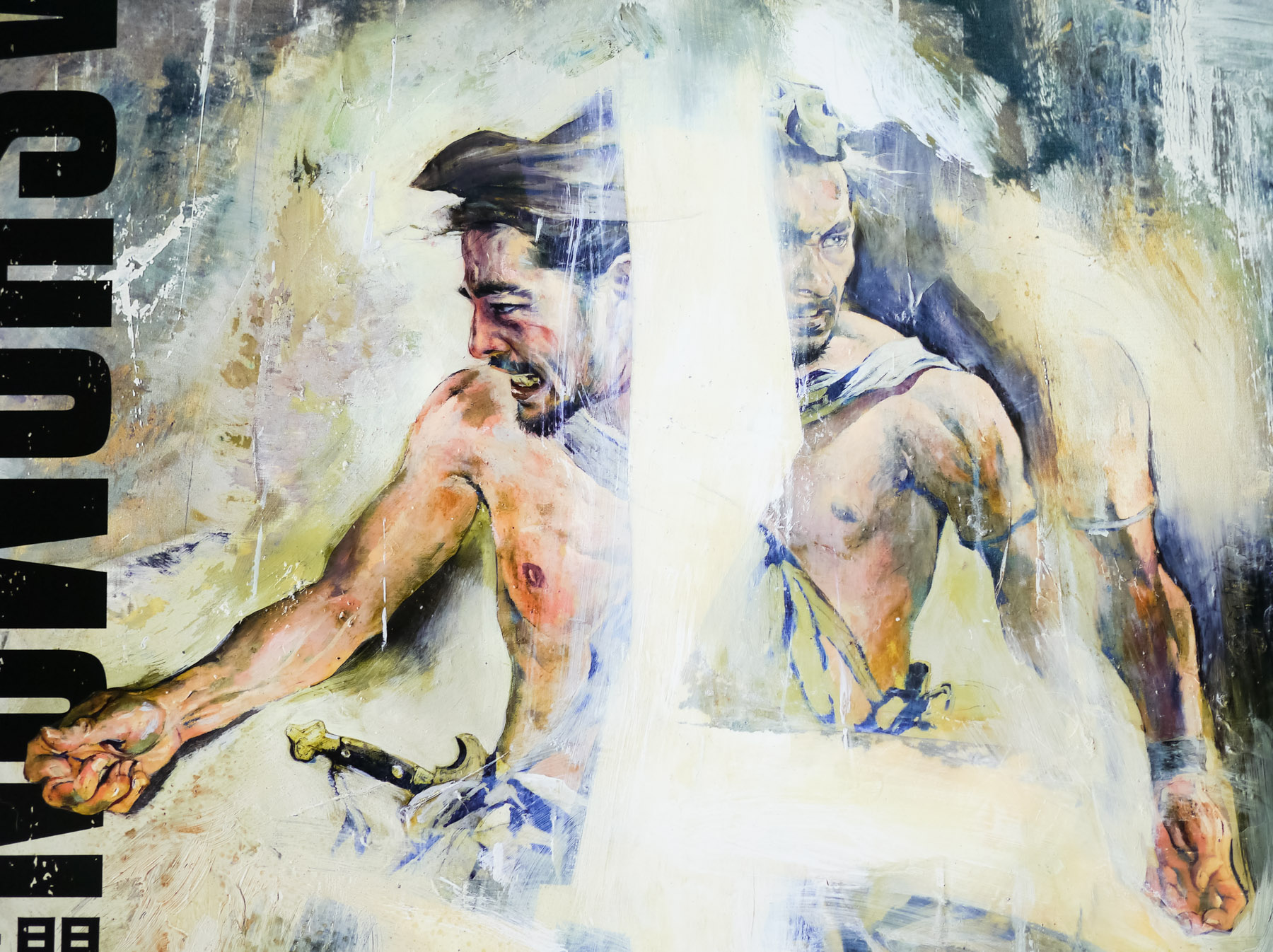
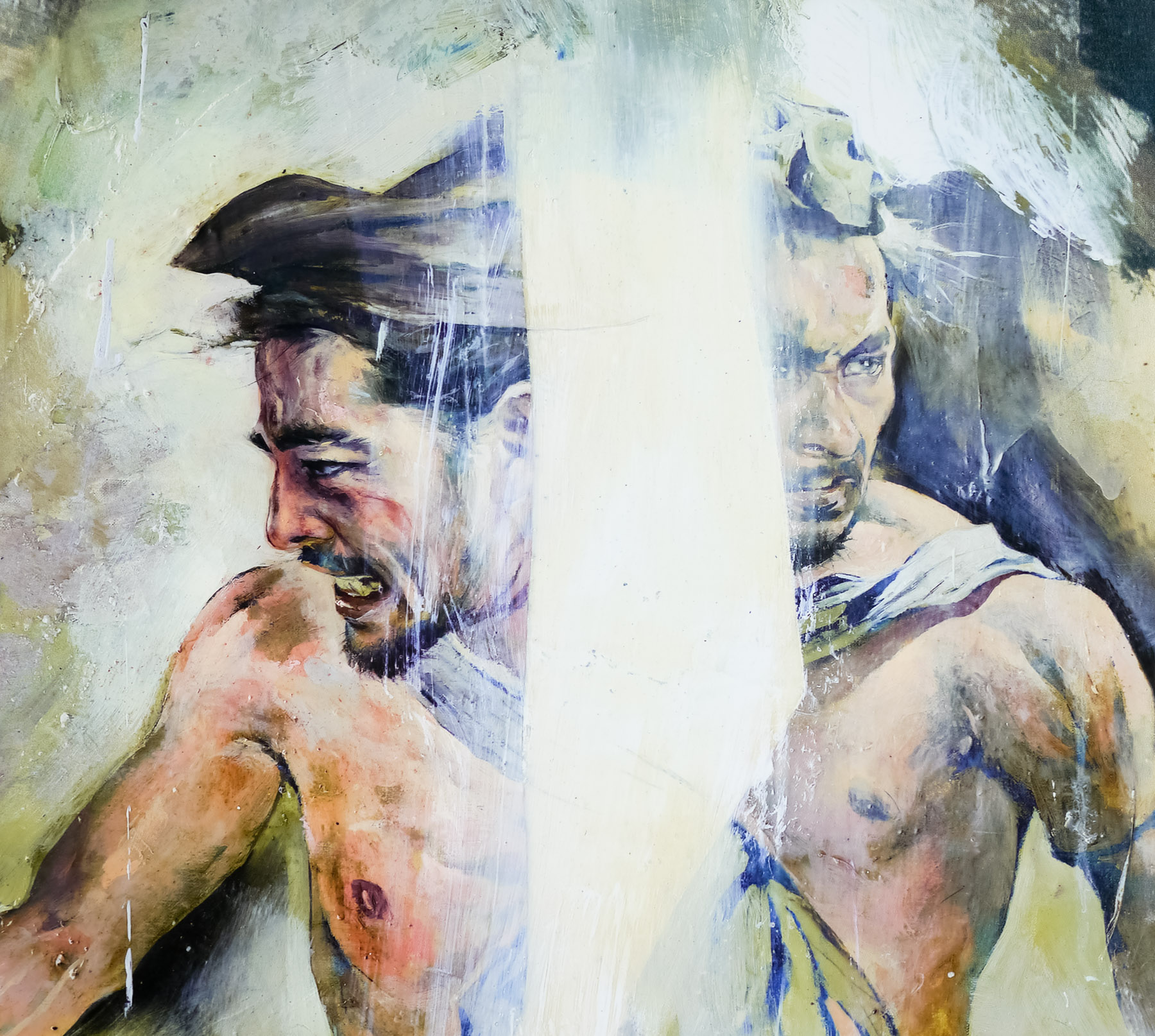
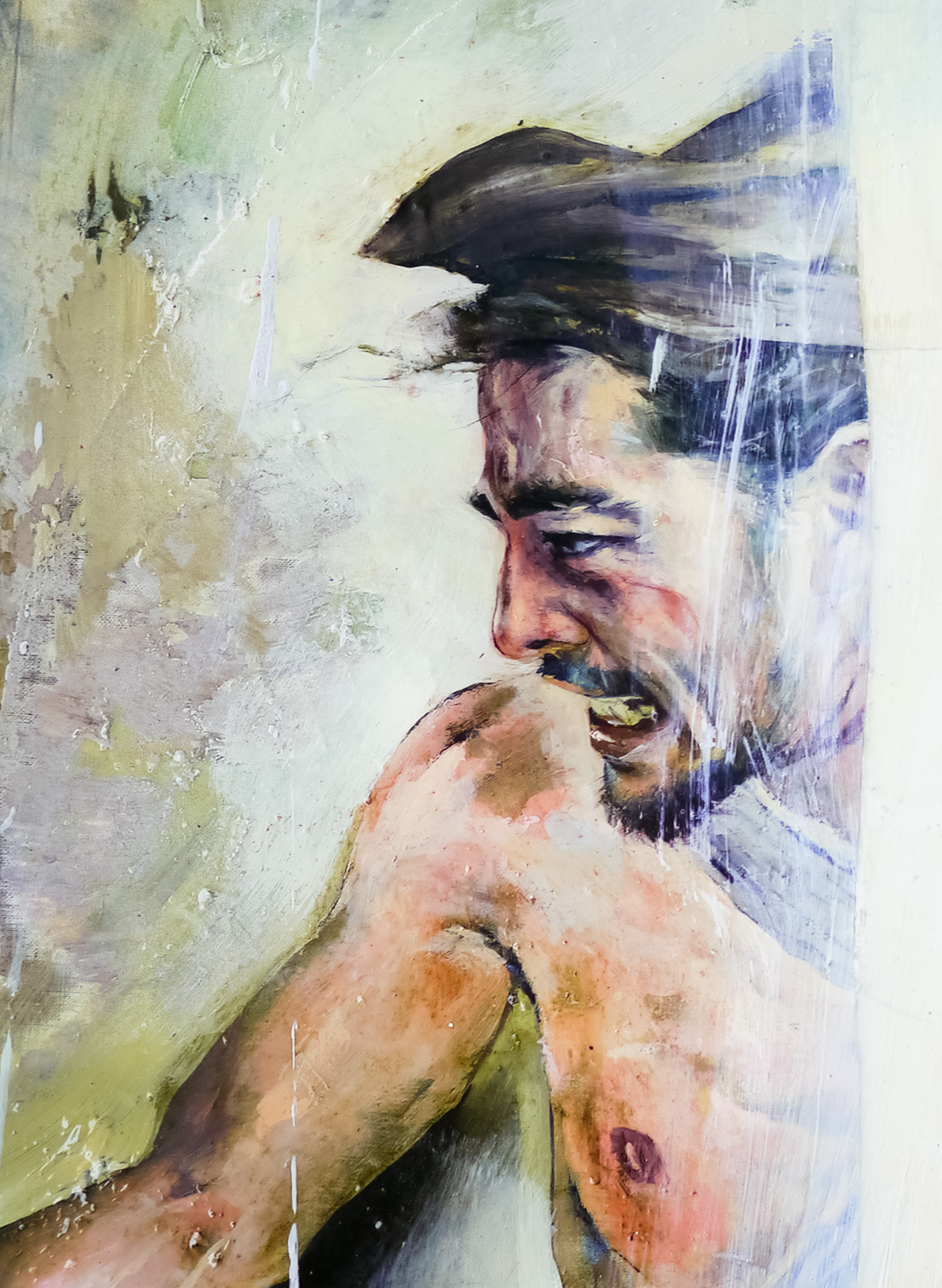
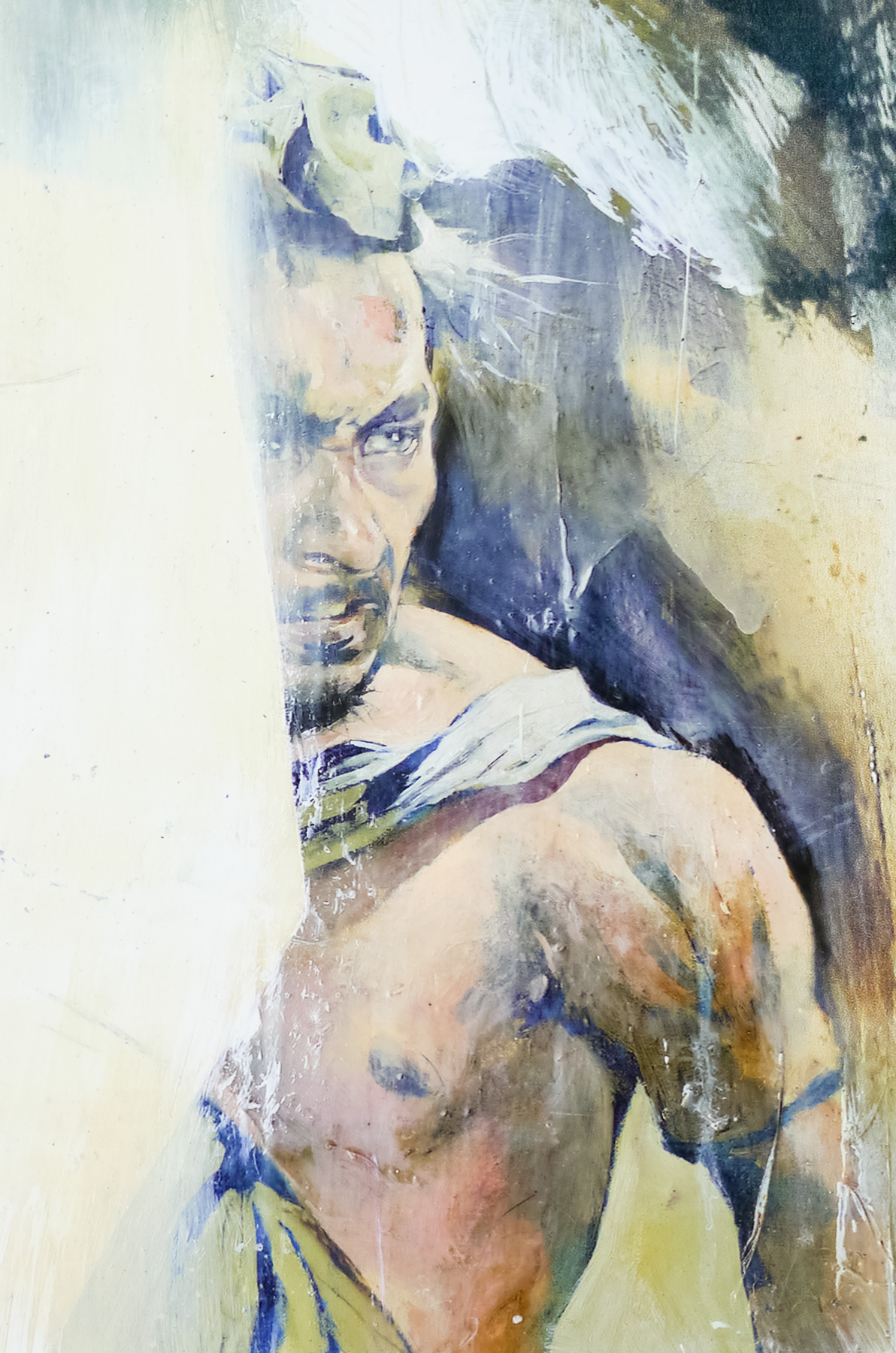
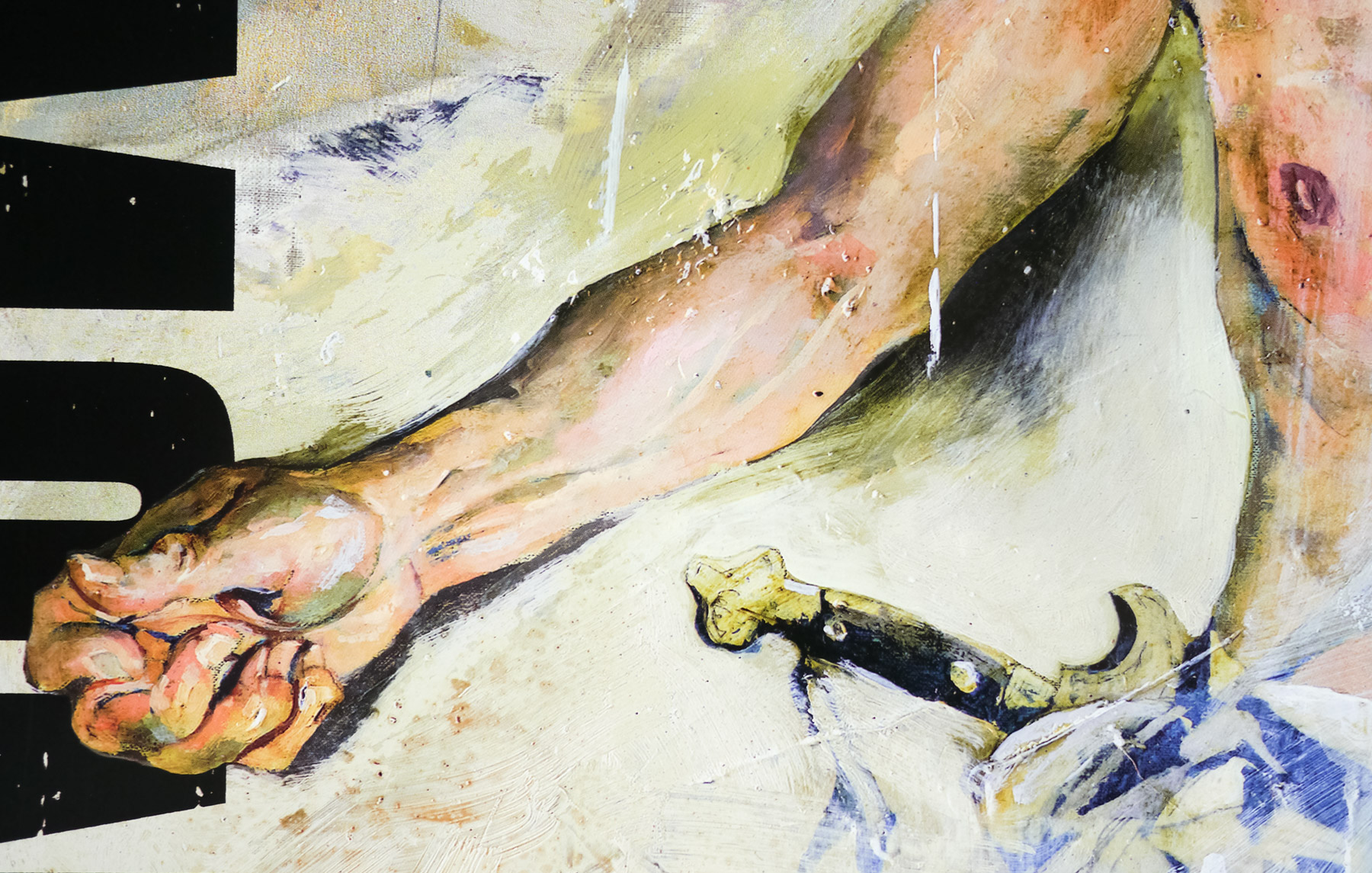
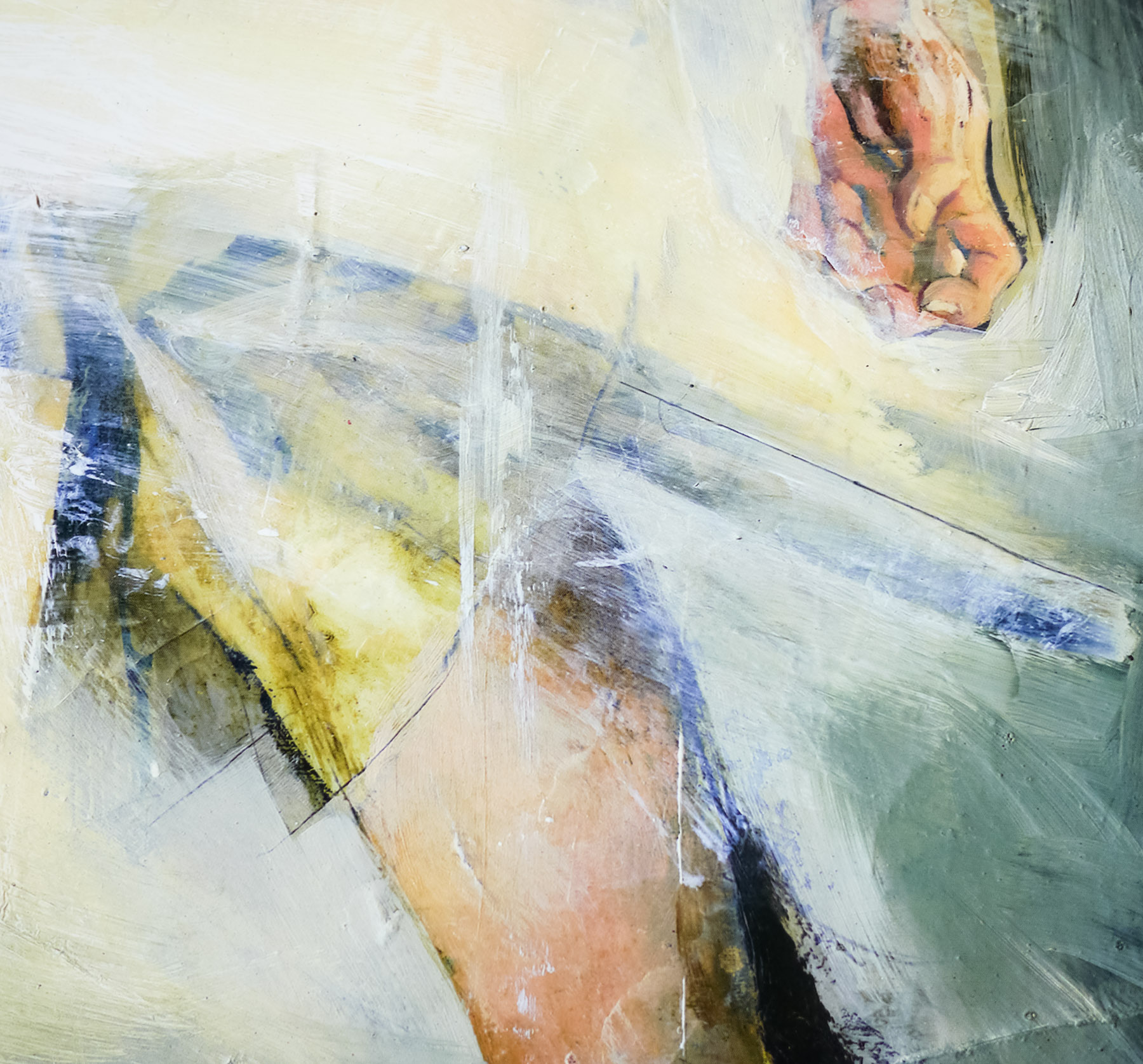
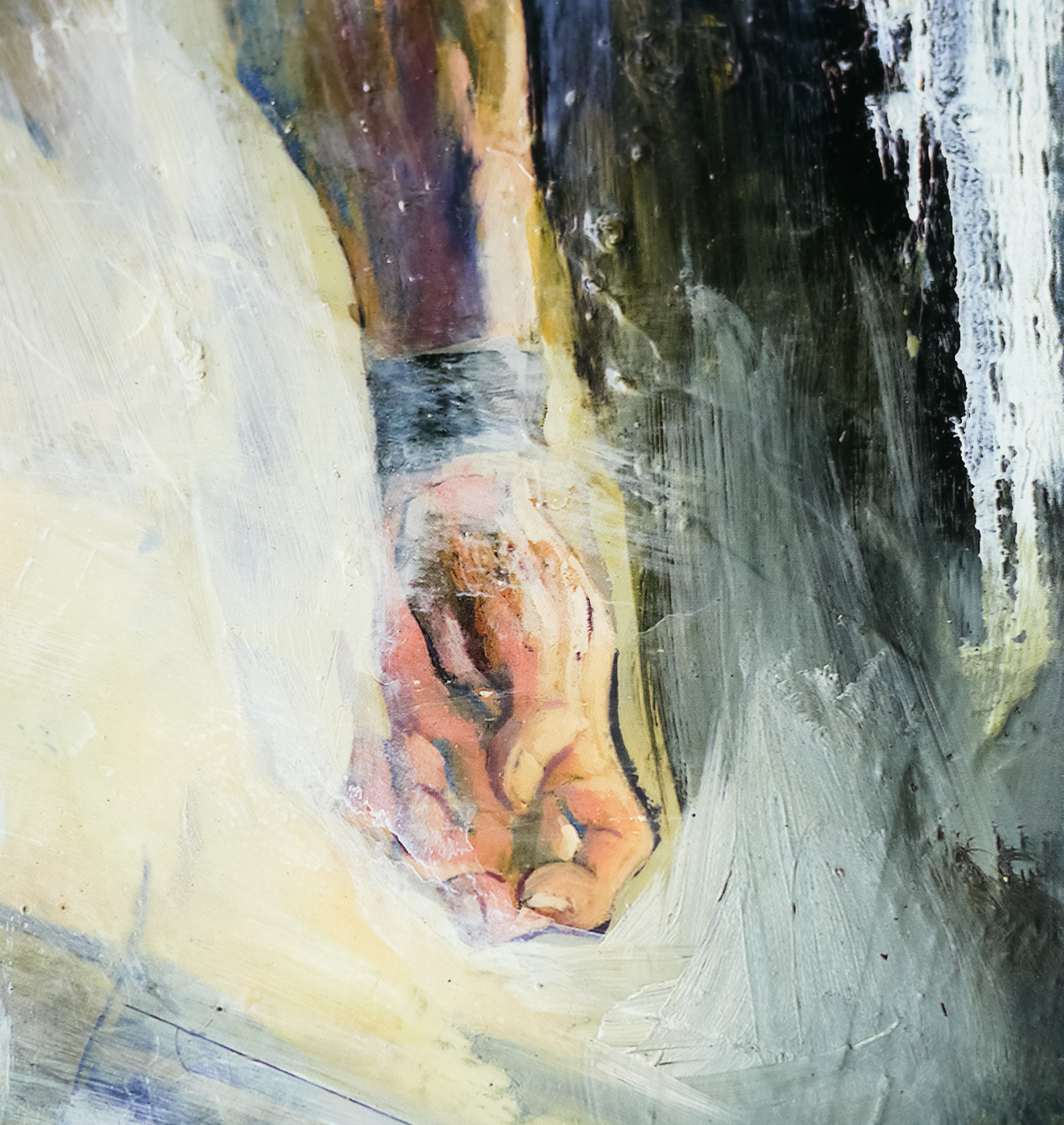
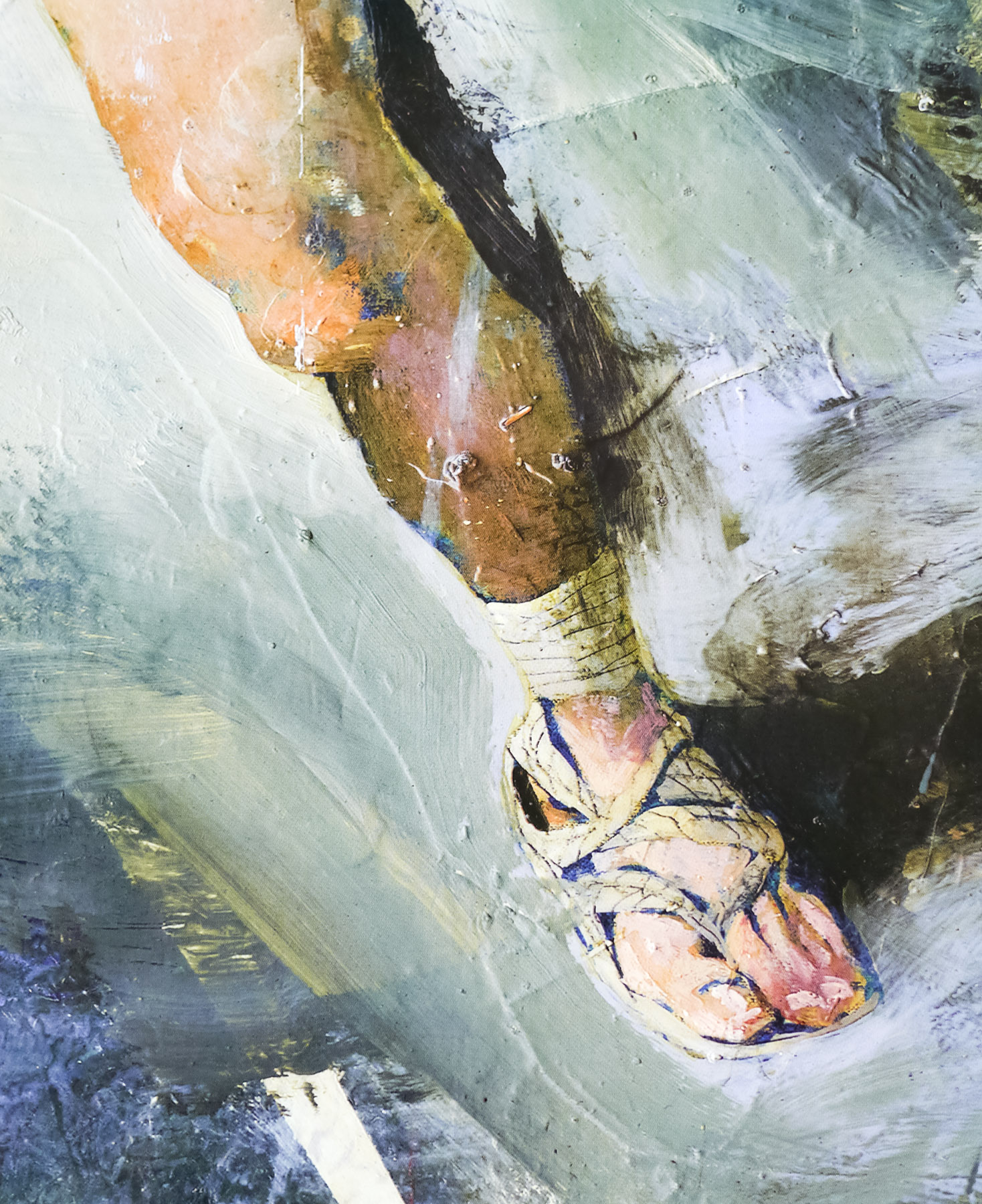
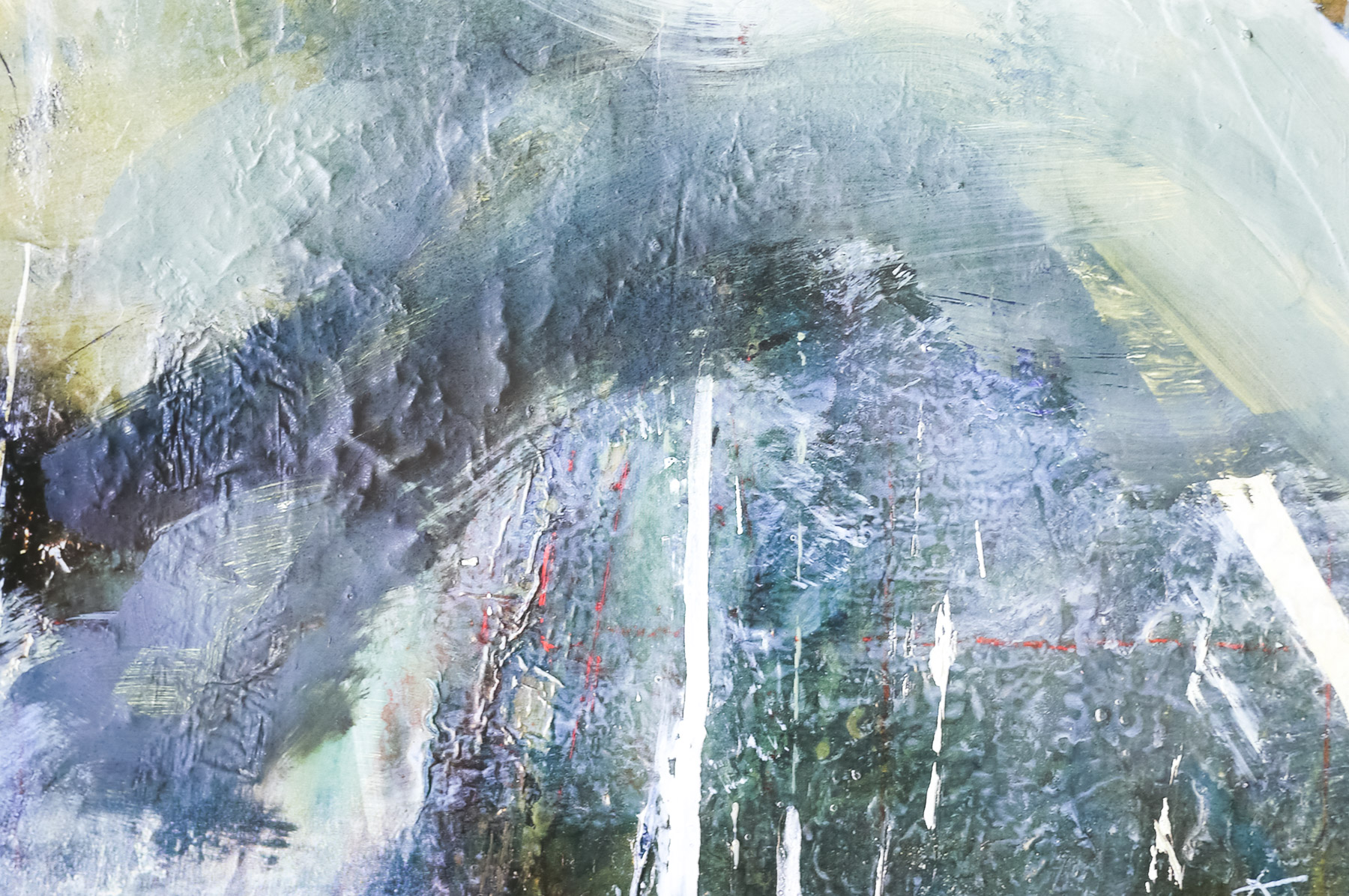
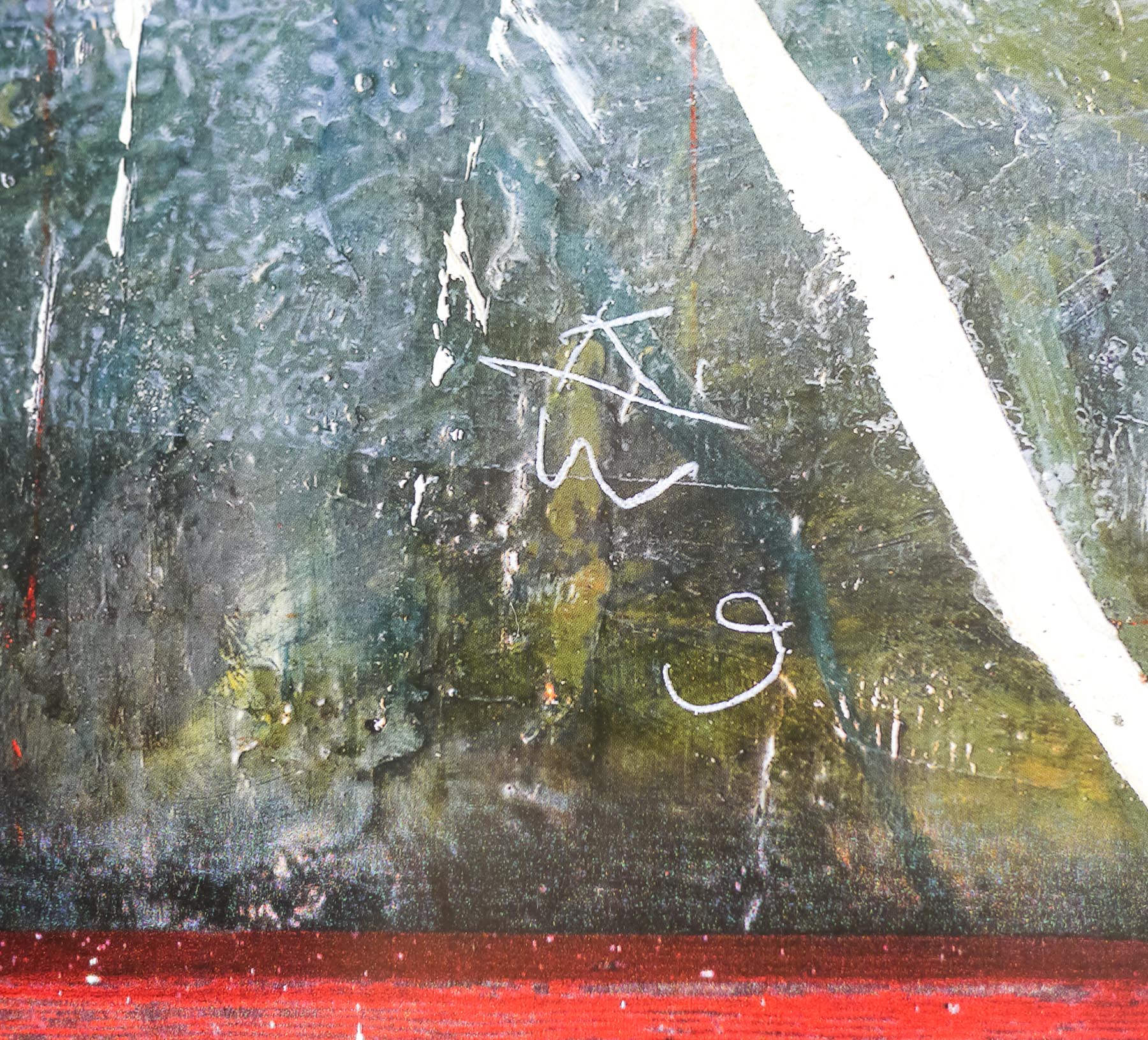
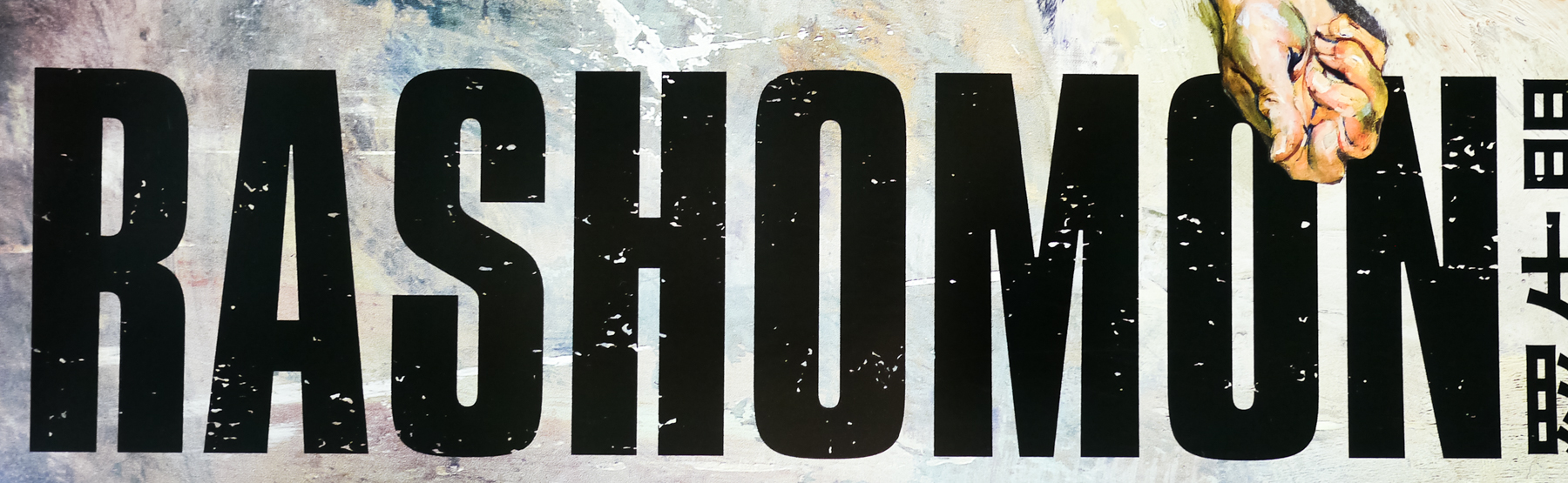
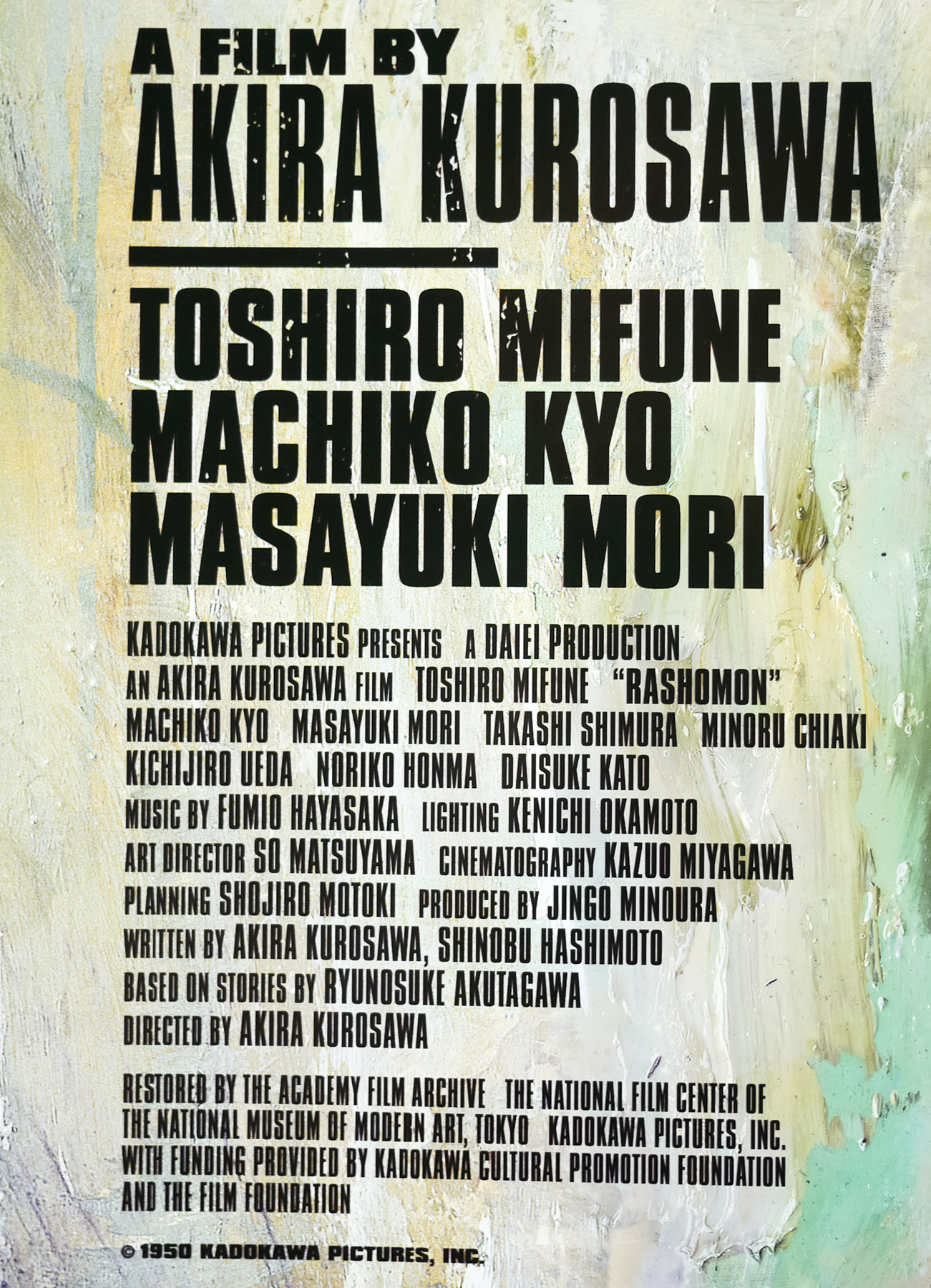
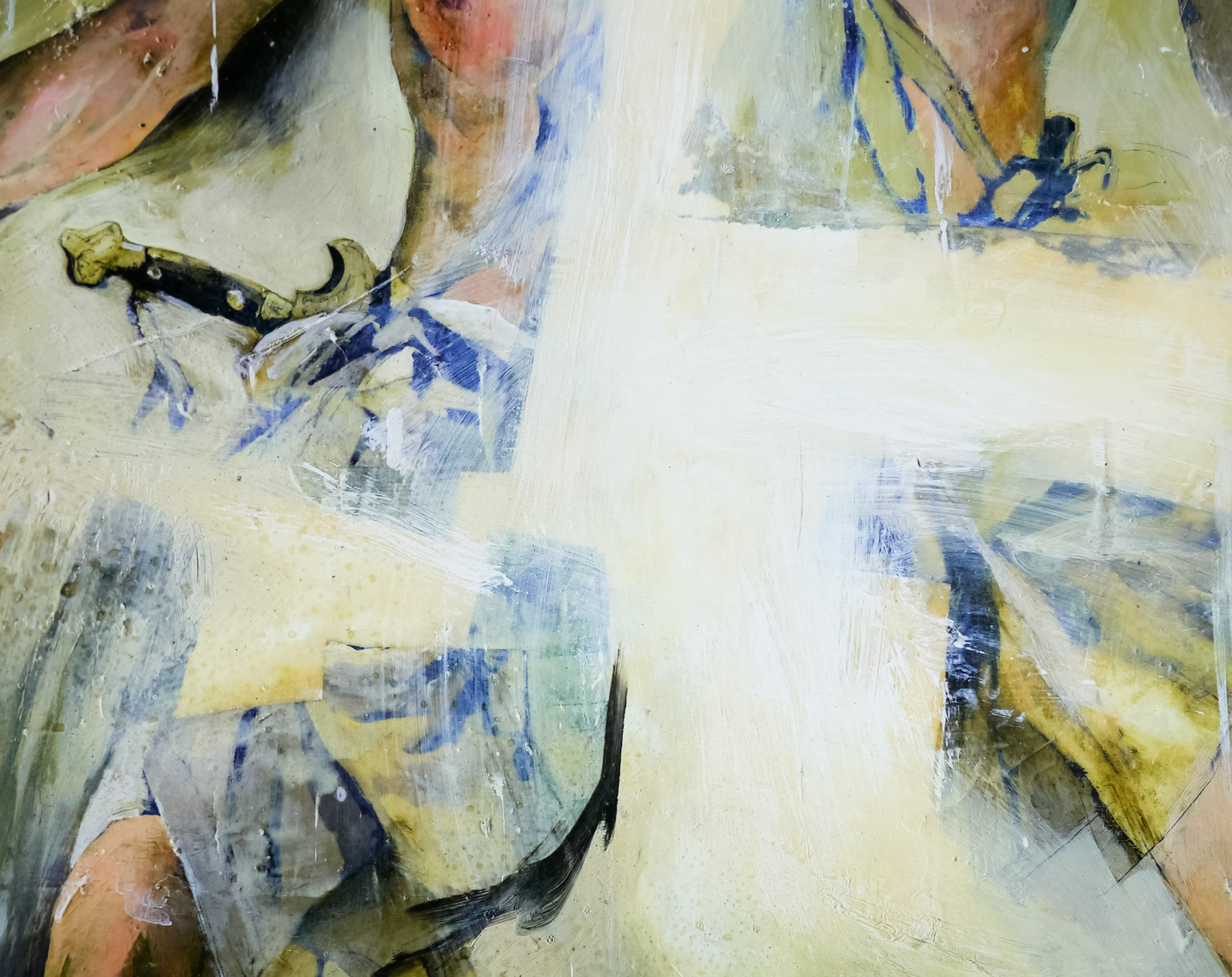
American artist Kent Williams painted this stunning portrait of Tajomaru that was commissioned by Janus Films for the 2009 cinema re-release of Rashomon. The release followed an extensive 2008 restoration undertaken by the Academy Archive, the National Film Center of the National Museum of Modern Art, Tokyo, and Kadokawa Pictures. Born in 1962, Williams has lent his considerable talents to a wide range of artistic channels, including printmaking, photography, architecture and film. He is perhaps best known for his work on graphic novels for the likes of Marvel and Vertigo and in 2006 he collaborated with filmmaker Darren Aronofsky on a comic book tie-in for the sci-fi fantasy film The Fountain. His official website contains galleries of his work, as well as a biography, links to blogs and more.

Kent’s 2009 blog post announcing the completion of this piece can be viewed here and confirms that the original artwork was realised with oil and encaustic on linen mounted on wood panel with a distressed wooden beam. This same image was used for the must-own 2012 Criterion re-release of Rashomon and the poster was available to purchase via their web shop for a number of months, which is where I picked it up from. It sadly appears to be no longer available for purchase.

World on a Wire / one sheet / 2011 re-release / USA

19.06.13

Poster Poster

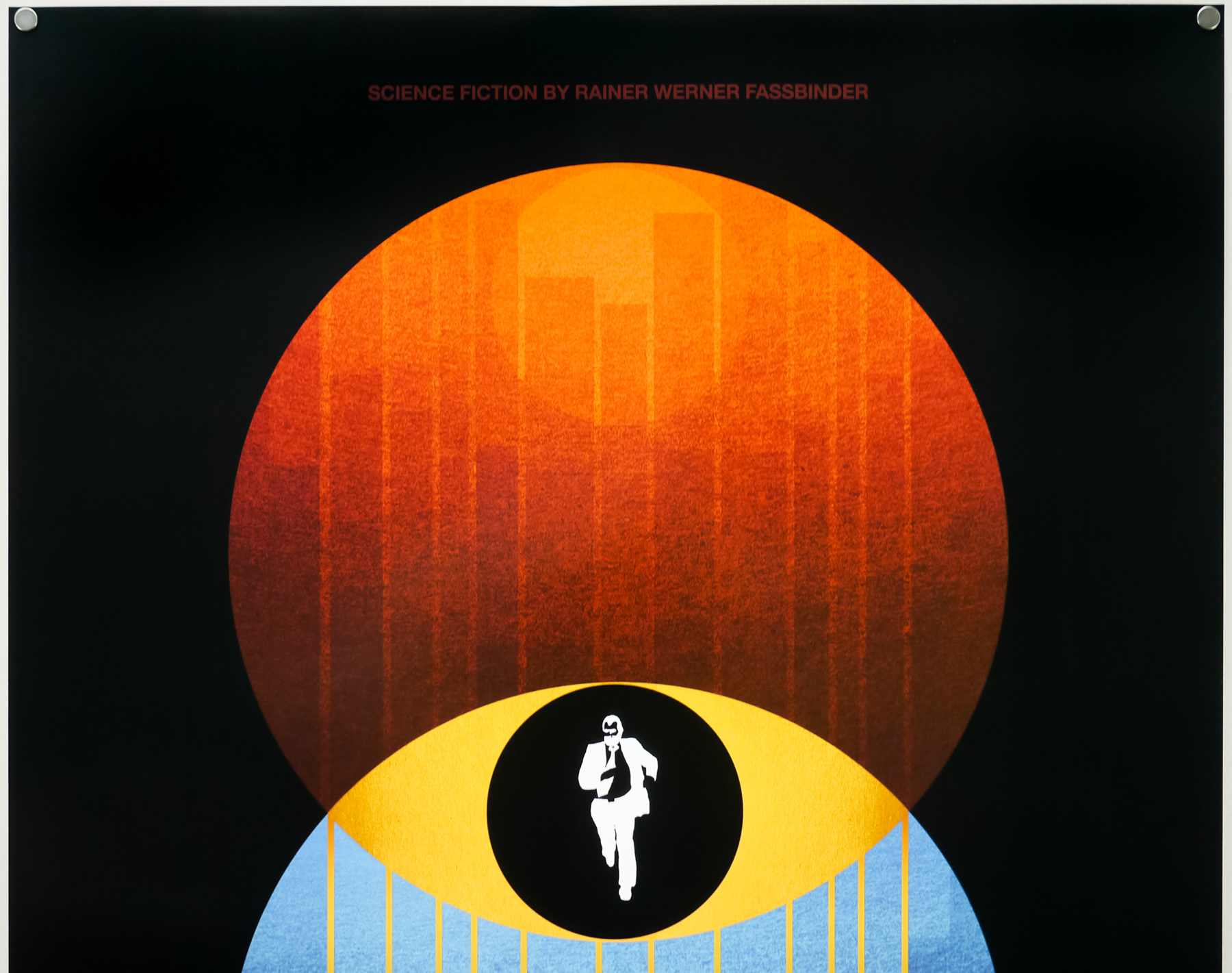
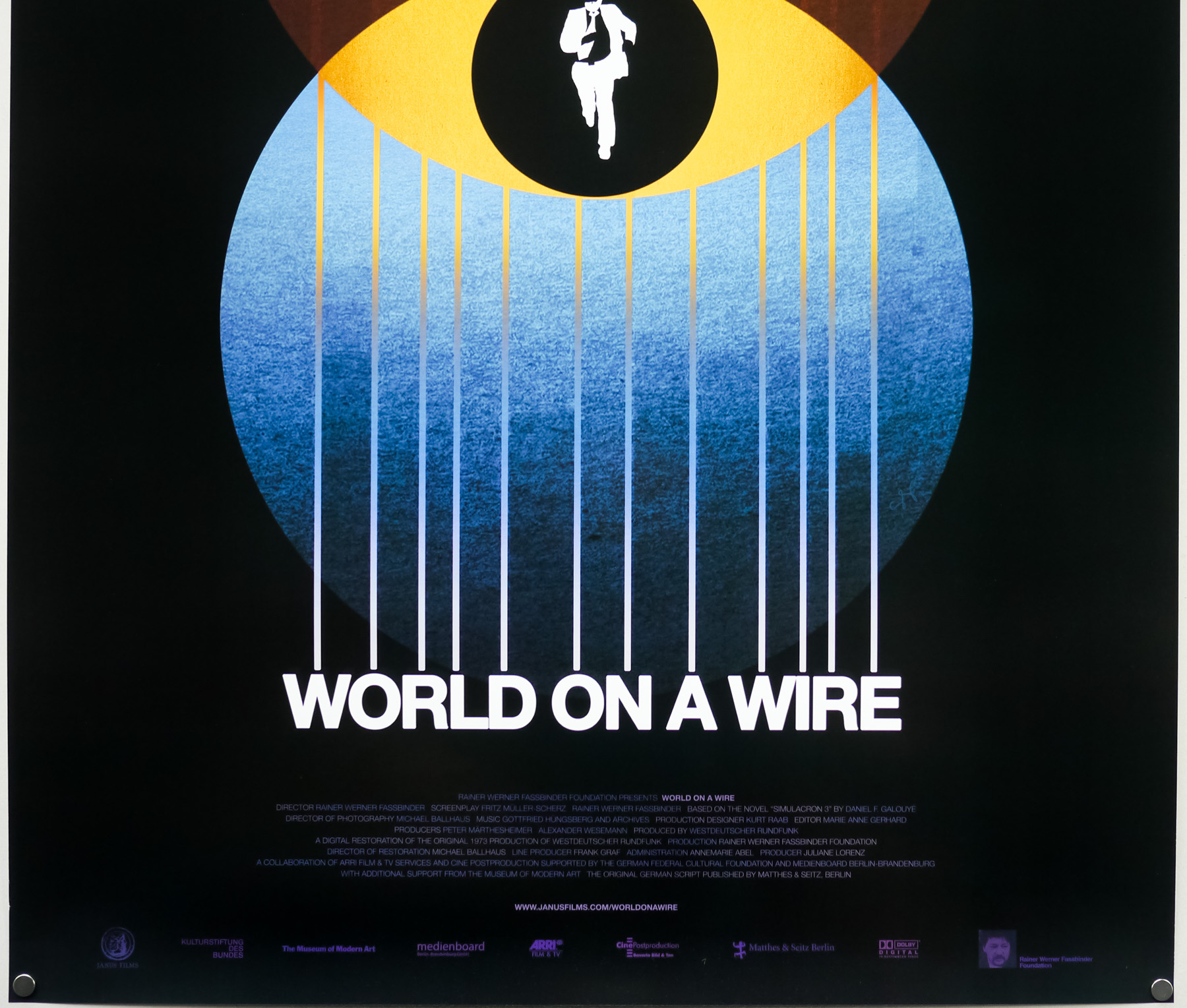
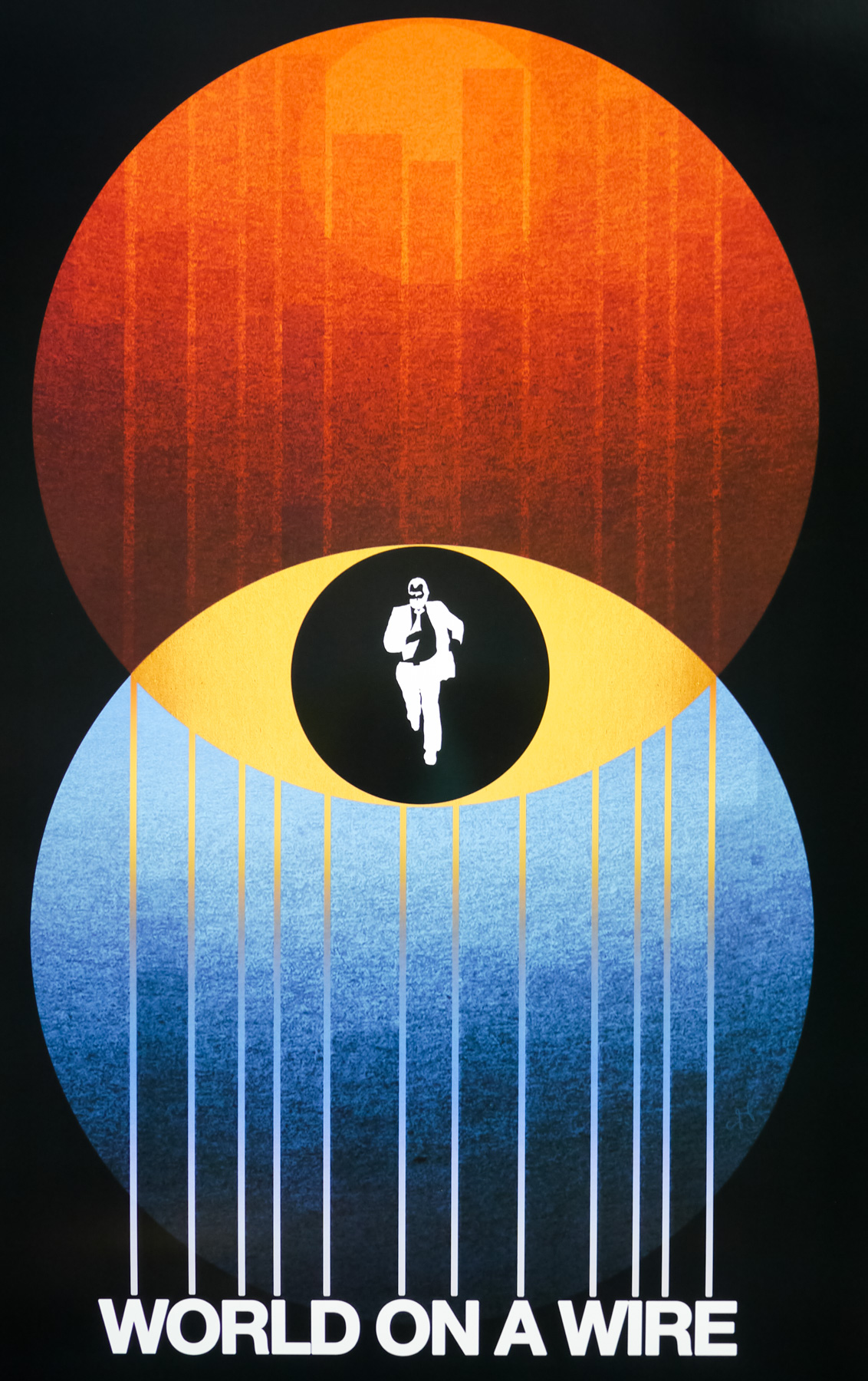
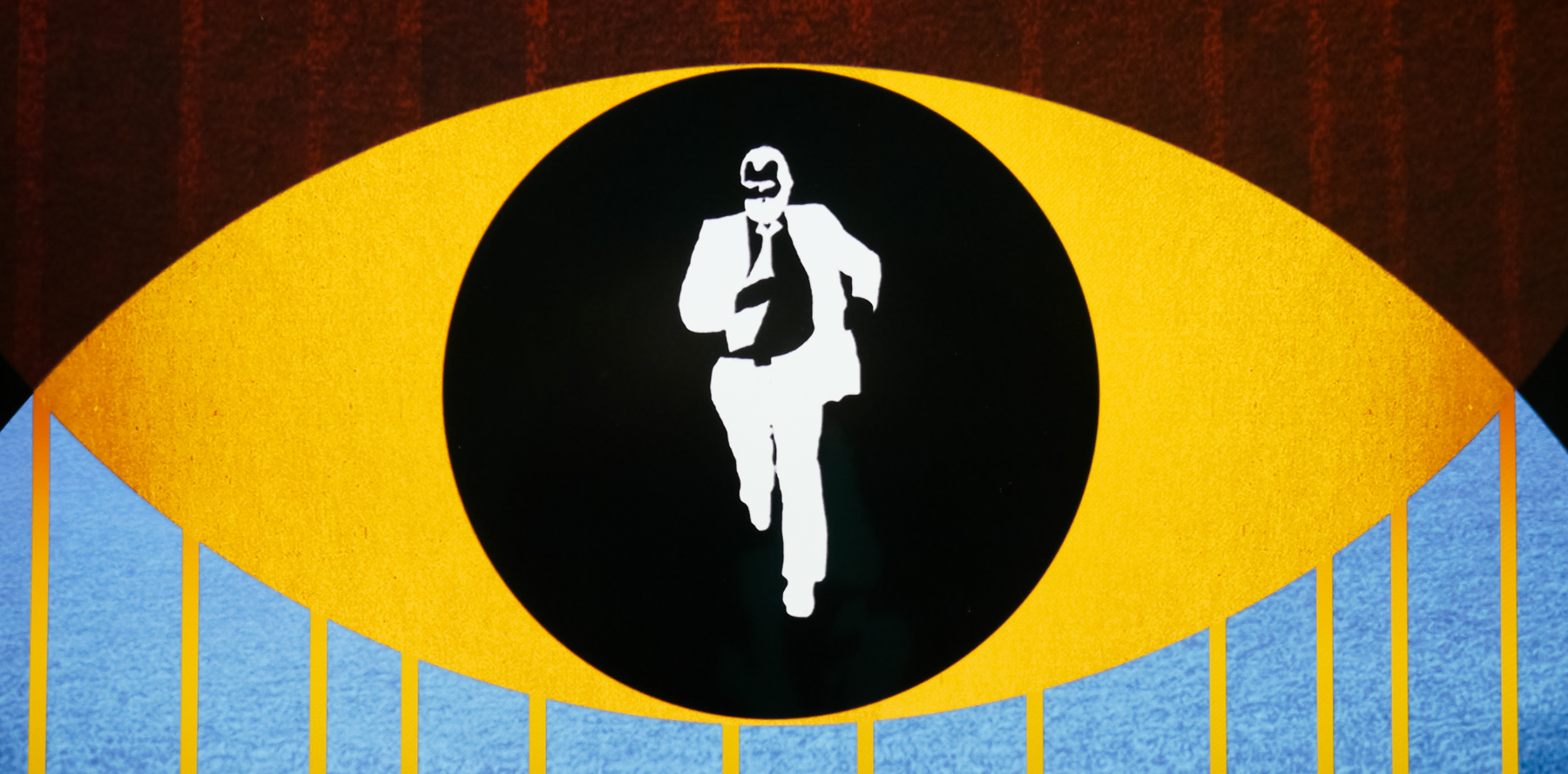
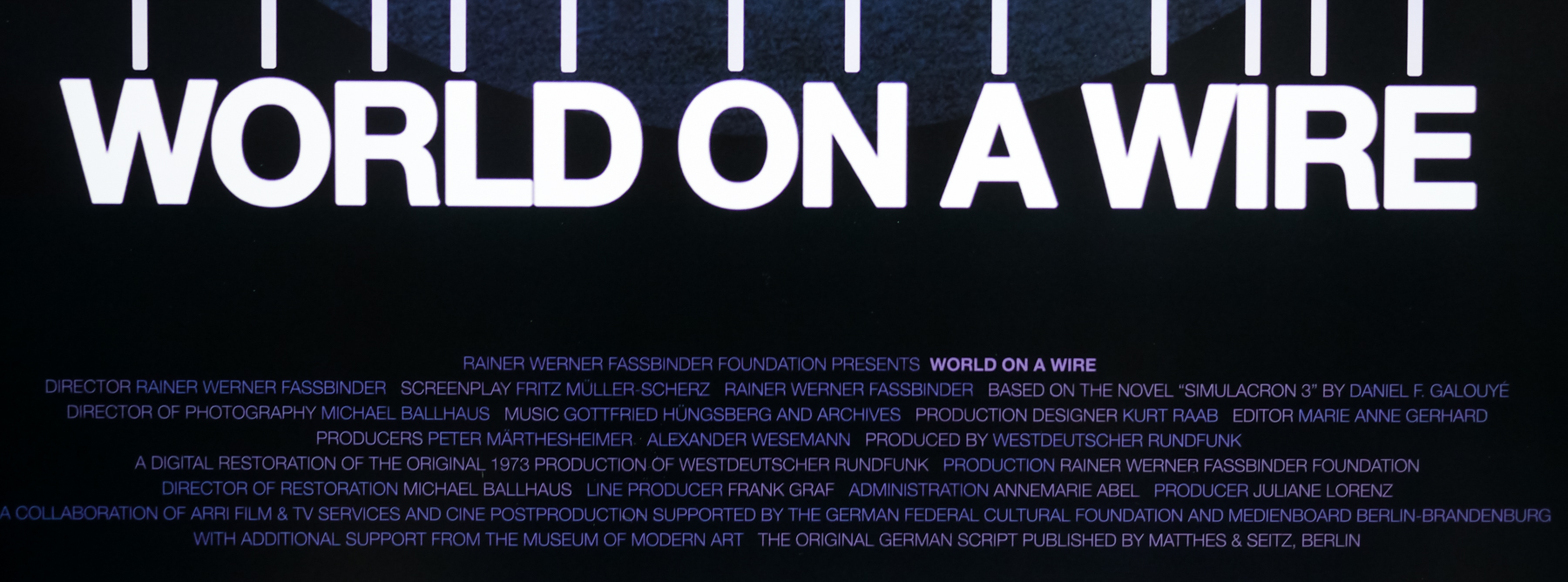
German wunderkind Rainer Werner Fassbinder’s dystopian science-fiction epic World on a Wire (Welt am Dracht) was one of 40 films that he directed during his prolific career before his untimely death at the age of 37 (in 1982). Considered a pioneer of the New German Cinema movement, Fassbinder originally prepared World on a Wire, his only sci-fi story, for German television as a two-part miniseries. Based on the 1964 novel Simulacron-3 by the American author Daniel F. Galouye, the film is set in an alternative-reality 1970s in which a supercomputer built by the cybernetics & future science institute (IKZ), and known as the Simulacron, is hosting an advanced simulation program of an artificial world. 9000 so-called ‘identity units’ are living as human beings who are totally unaware that their world is entirely artificial with their every move tracked and followed by the computer in order to help (it is implied) large multinational companies with an advanced form of marketing research.

When the technical director of the program dies in a mysterious incident, his replacement Fred Stiller (Klaus Löwitsch) must unravel the mystery of his demise whilst also investigating the sudden disappearance of the institute’s security adviser, Günther Lause. When Stiller’s colleagues claim to have no recollection of Lause and one of the simulated humans commits suicide, he descends into a twisting conspiracy that leads him to question his very existence. To say the film’s themes were prescient would be an understatement, with most web users readily submitting themselves to online tracking cookies (a form of market research) by the likes of Google, and its influence of films like 1999s The Matrix and even James Cameron’s Avatar cannot be denied.

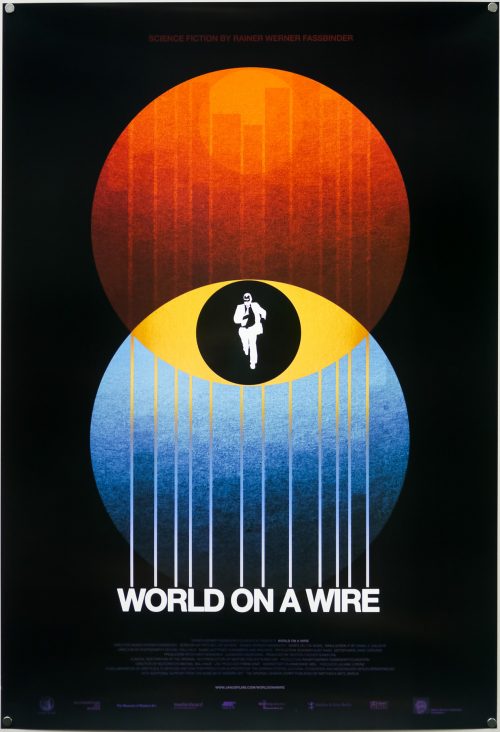
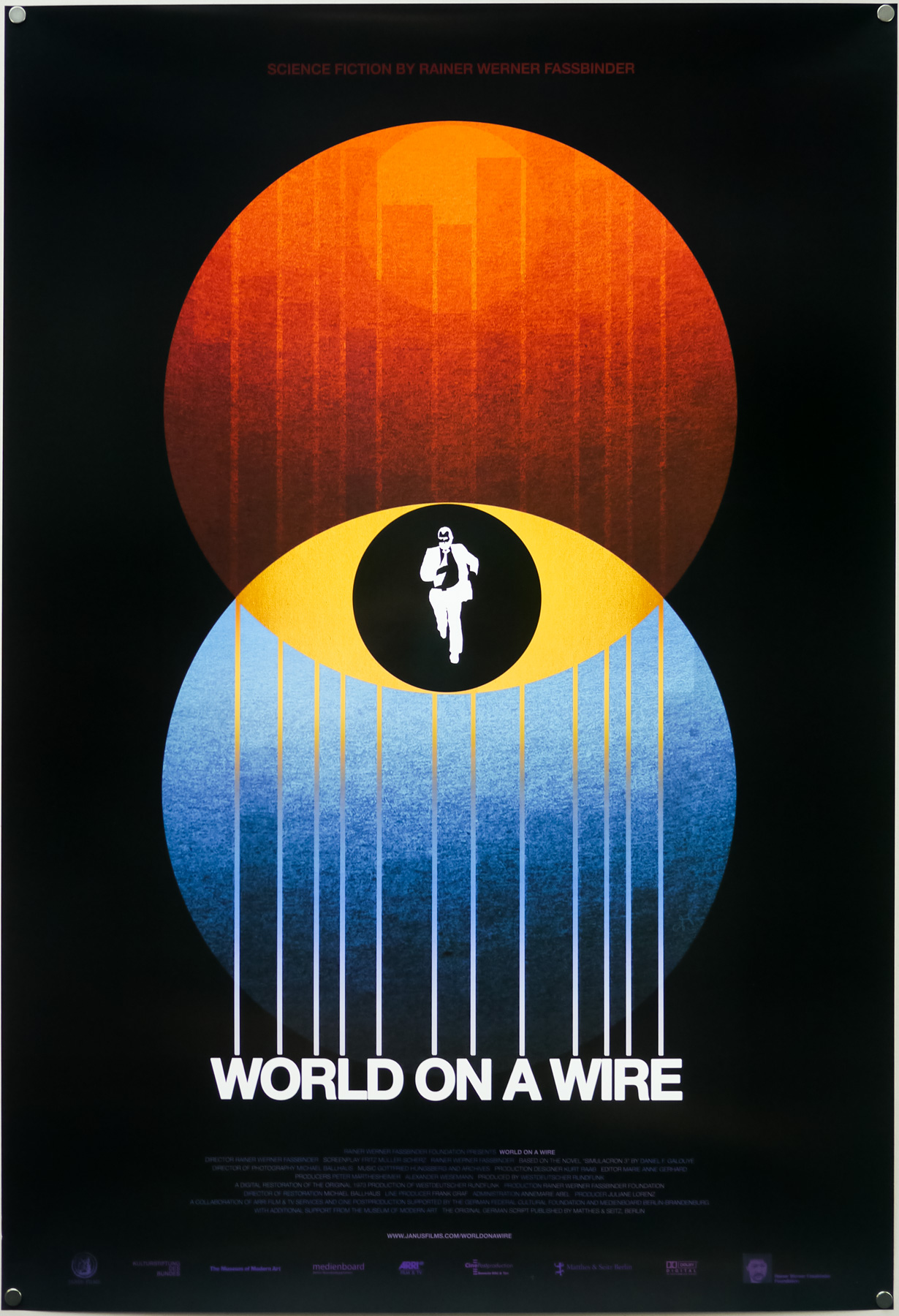
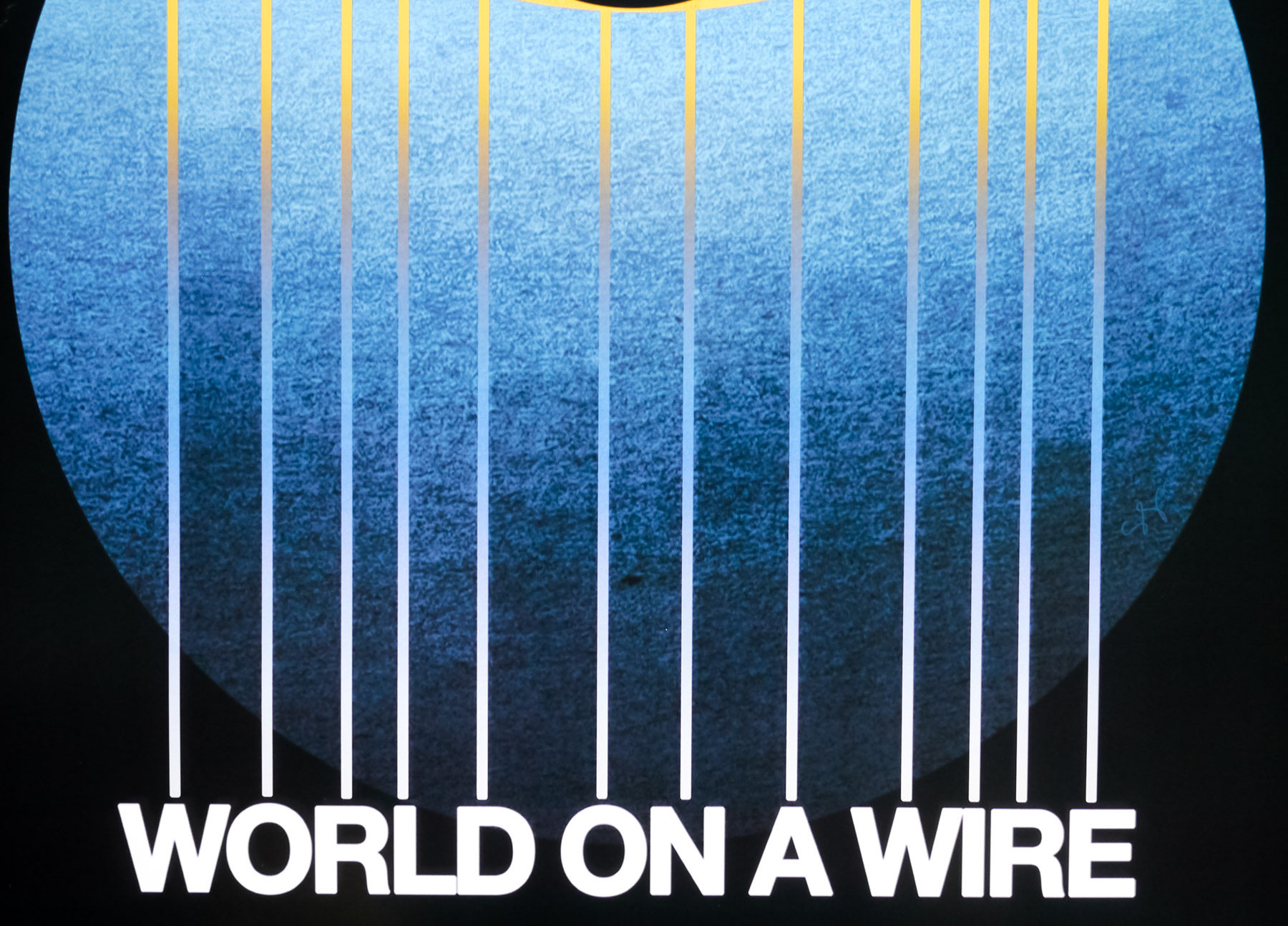
After airing on German television World on a Wire practically disappeared from reach, with bootleg VHS copies of the original broadcasts being the only way fans could watch it. In 2010 the American distributor Janus Films aided in a digital restoration and  US cinema release of the film, with an eventual 2011 blu-ray release on their Criterion label. The Nashville-based designer and artist Sam Smith (AKA Sam’s Myth) was asked to put together a poster for the cinema release, which would also end up being used for the blu-ray cover. In June 2013 I interviewed Sam and the resultant article can be read here. We discussed the World on a Wire poster and this is the excerpt from the interview:

The World on a Wire cover, which was printed as a poster too, is a fantastic design that had the film’s titles as it’s starting point. The final poster came about thanks to the client suggesting a simple iconic image would be better suited for the film. Can you talk about that project and what it meant to you?
Janus entrusted me with this poster design after we did House and Kuroneko together. I remember being very concerned with topping my previous work and trying to come up with my best poster yet. I was also pursuing a very misguided impulse to try to create something visually complex that could compete with what Mondo artists like Tyler Stout and Ken Taylor were doing. I built some comps around this idea, using my translated and modified version of Fassbinder’s original title treatment as a framing device.

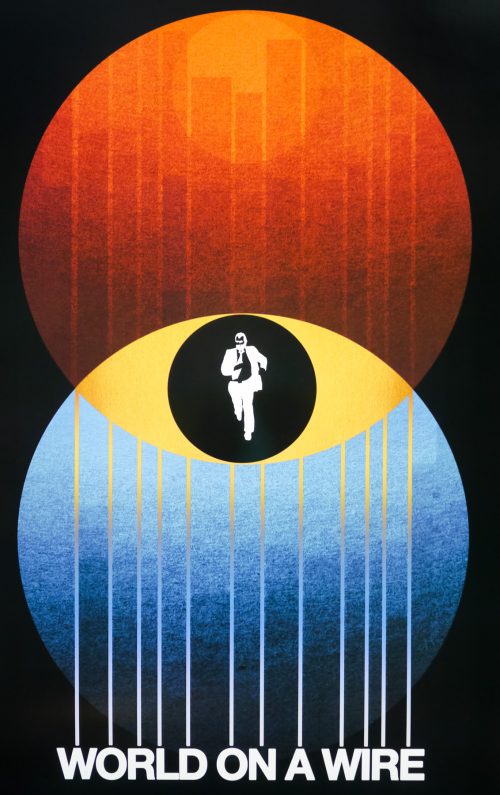
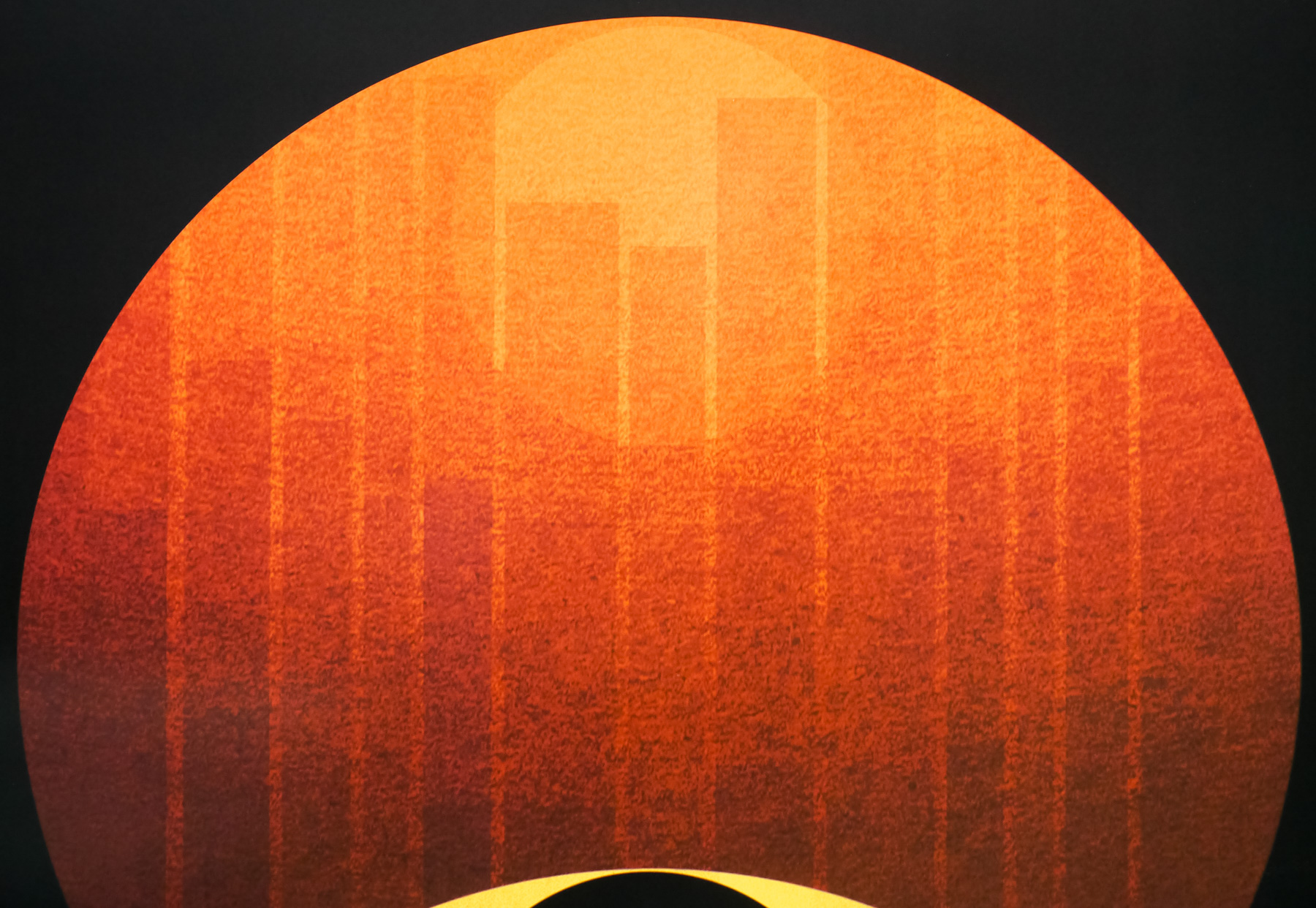
Ultimately Janus suggested that it would be great to see me try something simple and iconic, and they referred to two designs I did for Before Sunrise and Before Sunset where a more minimal arrangement of shape and color suggested something deeply about the film and its themes. This is kind of feedback designers dream about at night! I threw two overlapping circles down and studied them as symbol of the multiple worlds/realities in the film. From there, this poster came together quite quickly too.

————

Sam’s blog features an excellent ‘process’ post on the making of the poster that I strongly urge you to check out.

Shame / one sheet / USA

07.10.13

Poster Poster
Title
Shame
AKA
--
Year of Film
2011
Director
Steve McQueen
Starring
Michael Fassbender, Hannah Ware, James Badge Dale, Nicole Beharie, Alex Manette, Hannah Ware
Origin of Film
UK
Genre(s) of Film
Michael Fassbender, Hannah Ware, James Badge Dale, Nicole Beharie, Alex Manette, Hannah Ware,
Type of Poster
One sheet
Style of Poster
--
Origin of Poster
USA
Year of Poster
2011
Designer
Mark Carroll
Artist
--
Size (inches)
27 1/16" x 40"
SS or DS
DS
Tagline
--

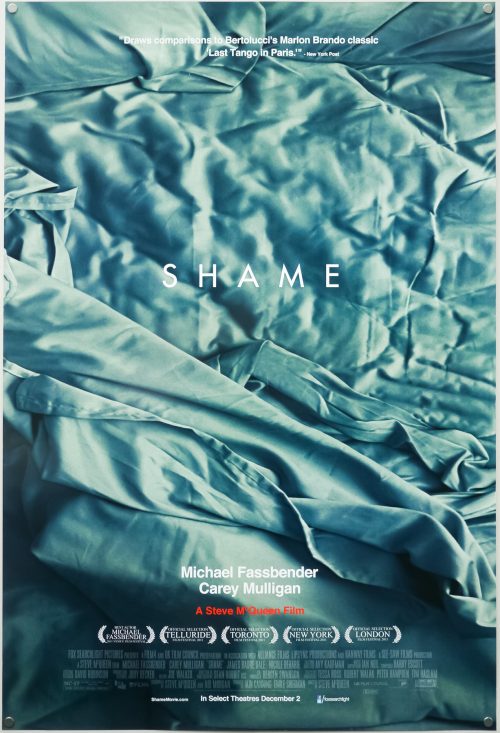
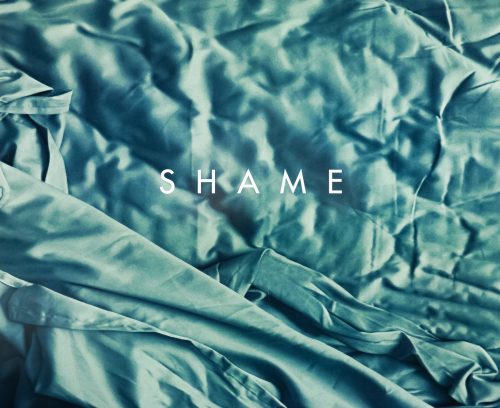
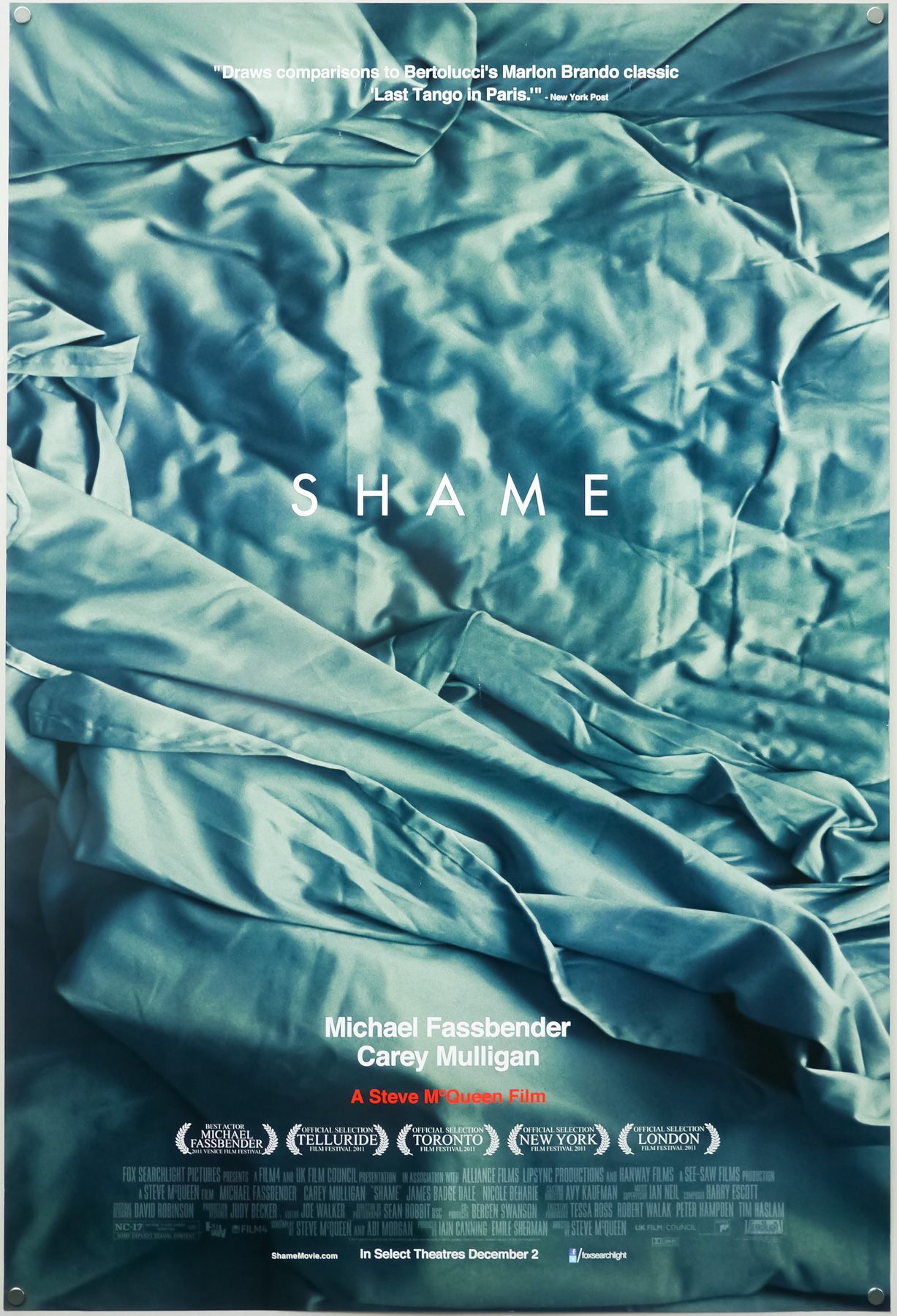
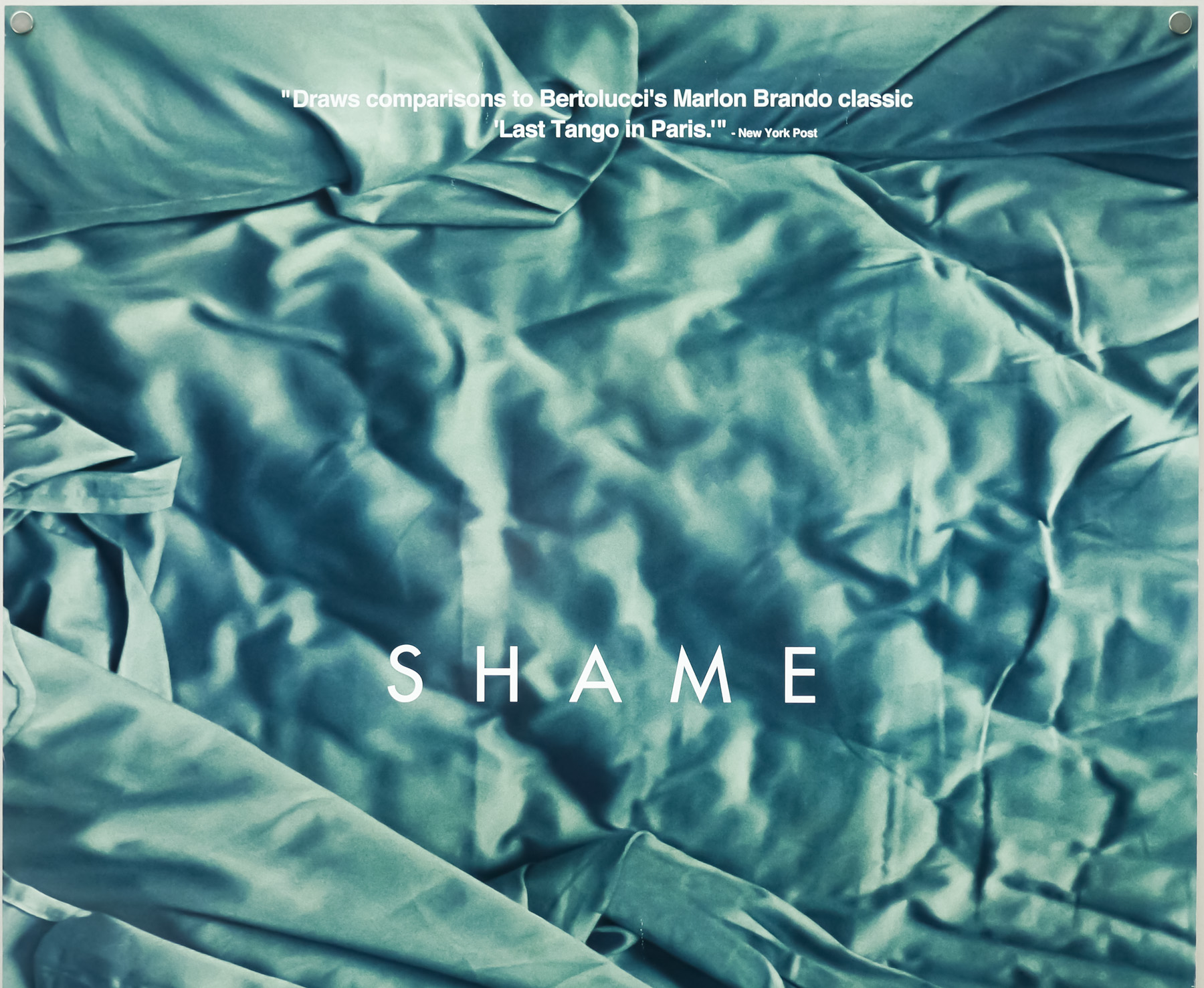
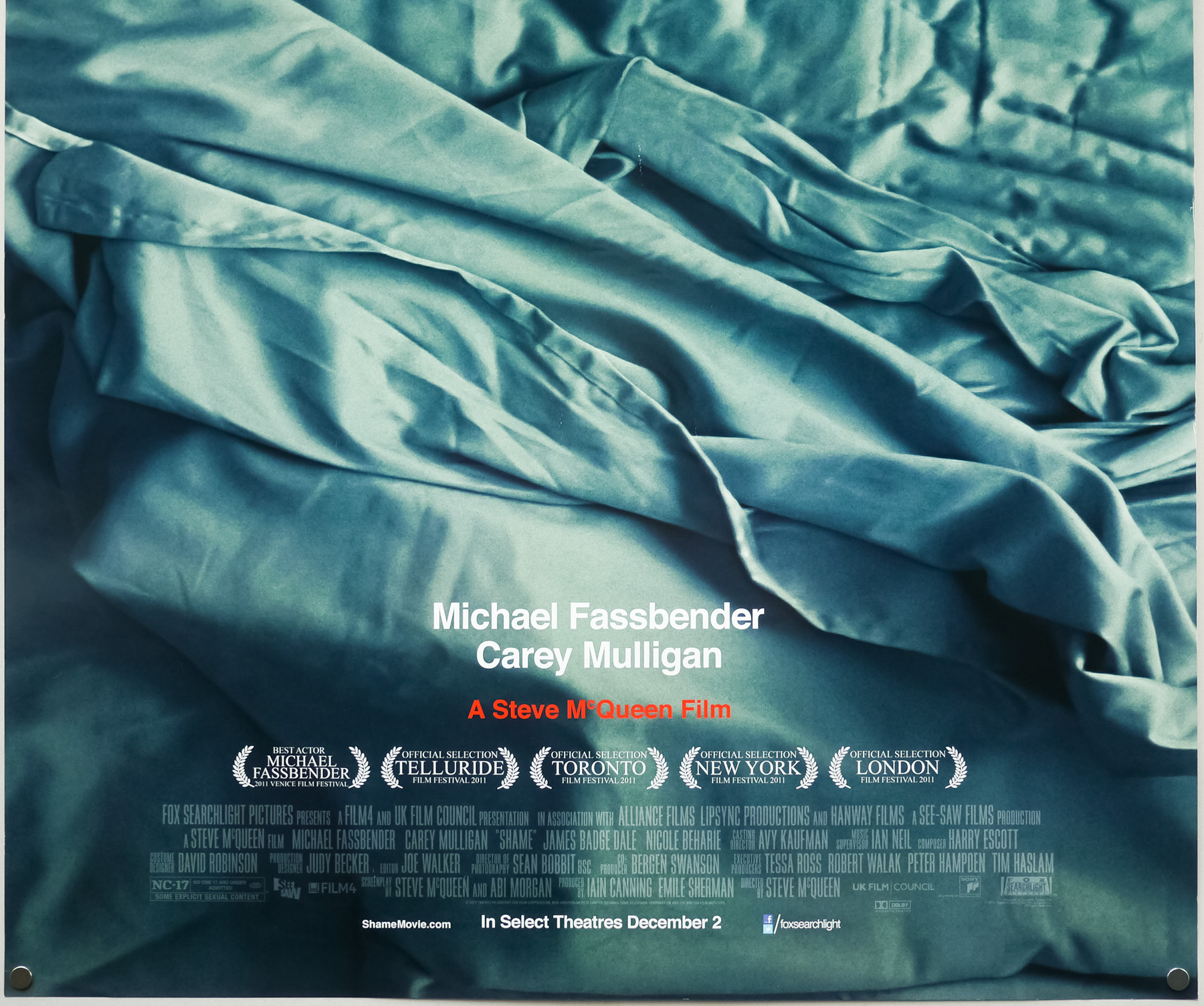
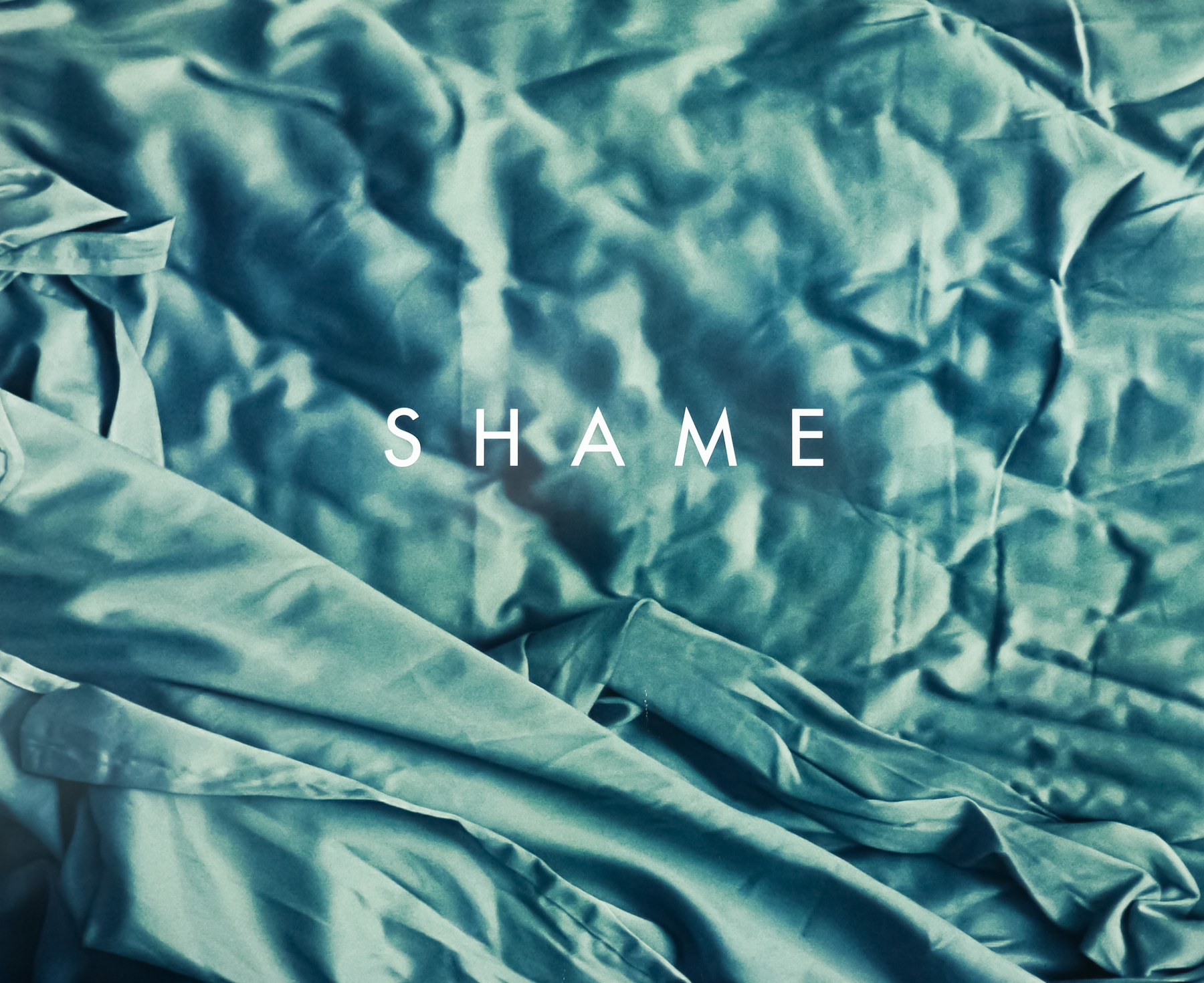
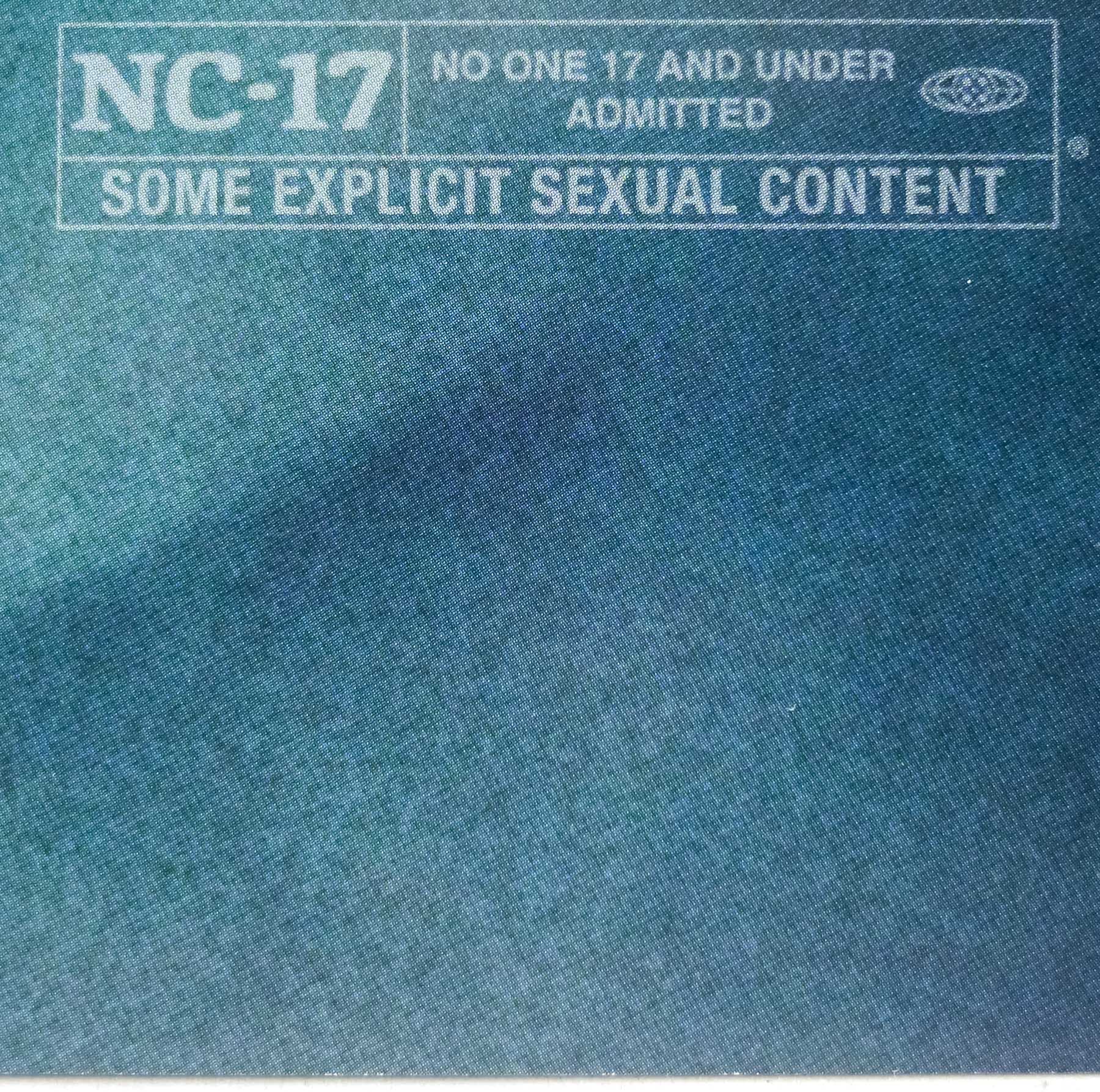
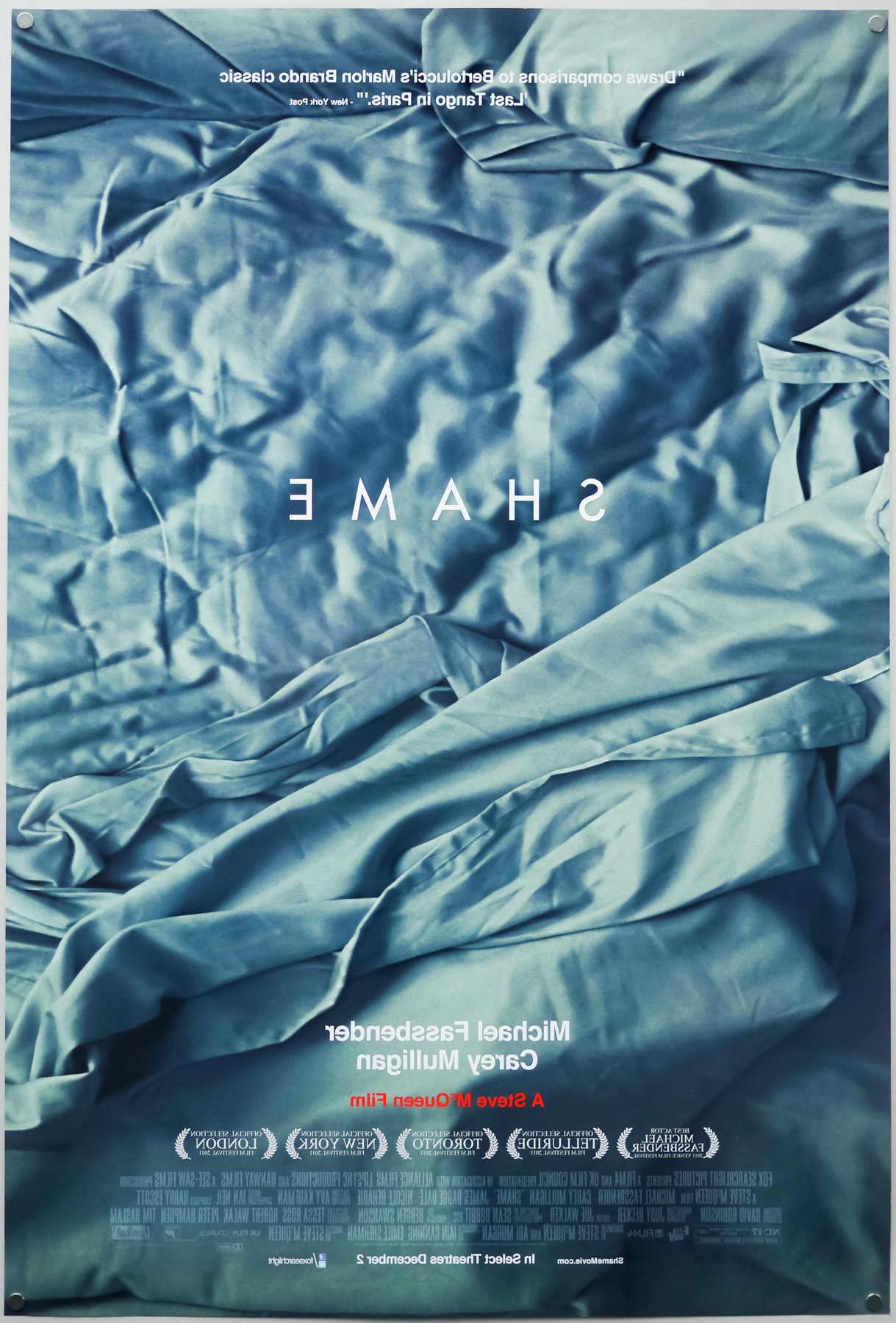
A simple yet striking design on this poster for Shame, director Steve McQueen‘s 2011 portrait of a sex addict in New York City. Starring Michael Fassbender as Brandon, a 30-something office worker whose regimented diet of erotic activity is thrown into disarray with the arrival of his estranged and emotionally disturbed younger sister, Sissy (Carey Mulligan). Fassbender’s performance is something to behold and was certainly up there with the best of 2011 and McQueen cemented himself as a director of note, this having followed on from his stunning debut film Hunger (2008). It’s worth noting that this is the only poster in my collection that features an NC-17 rating.

The designer of this poster is a freelance American designer called Mark Carroll, who has worked on a number of other excellent posters for recent films including Tree of Life and Martha Marcy May Marlene. I’ve struggled to find much out about the man himself – I don’t believe he has website, for example – but IMPAwards has a gallery of some of his other designs. If anyone has any more information about him, and other posters that he’s worked on, please get in touch.

The Fury / one sheet / style A / USA

30.10.13

Poster Poster
Title
The Fury
AKA
--
Year of Film
1978
Director
Brian De Palma
Starring
Kirk Douglas, John Cassavetes, Carrie Snodgress, Charles Durning, Amy Irving, Fiona Lewis, Andrew Stevens, Carol Eve Rossen, Rutanya Alda, Joyce Easton, William Finley
Origin of Film
USA
Genre(s) of Film
Kirk Douglas, John Cassavetes, Carrie Snodgress, Charles Durning, Amy Irving, Fiona Lewis, Andrew Stevens, Carol Eve Rossen, Rutanya Alda, Joyce Easton, William Finley,
Type of Poster
One sheet
Style of Poster
Style A
Origin of Poster
USA
Year of Poster
1978
Designer
Unknown
Artist
--
Size (inches)
27" x 41"
SS or DS
SS
NSS #
--
Tagline
An experience in terror and suspense.

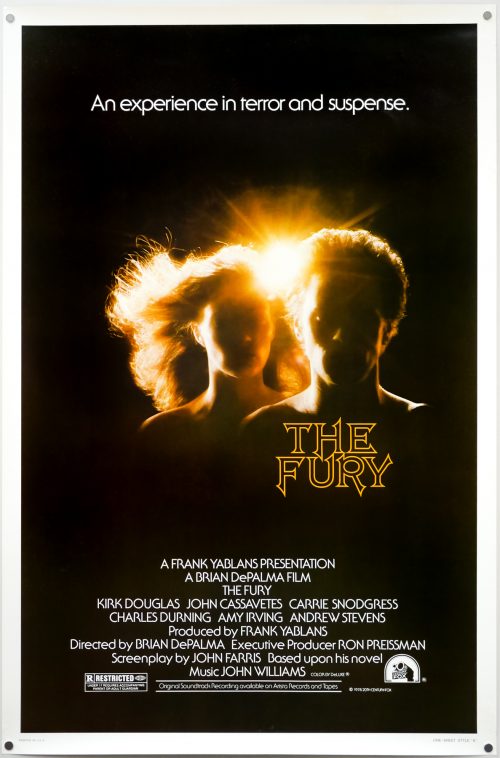
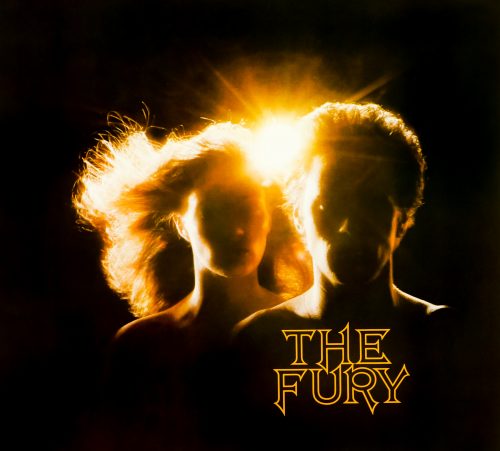
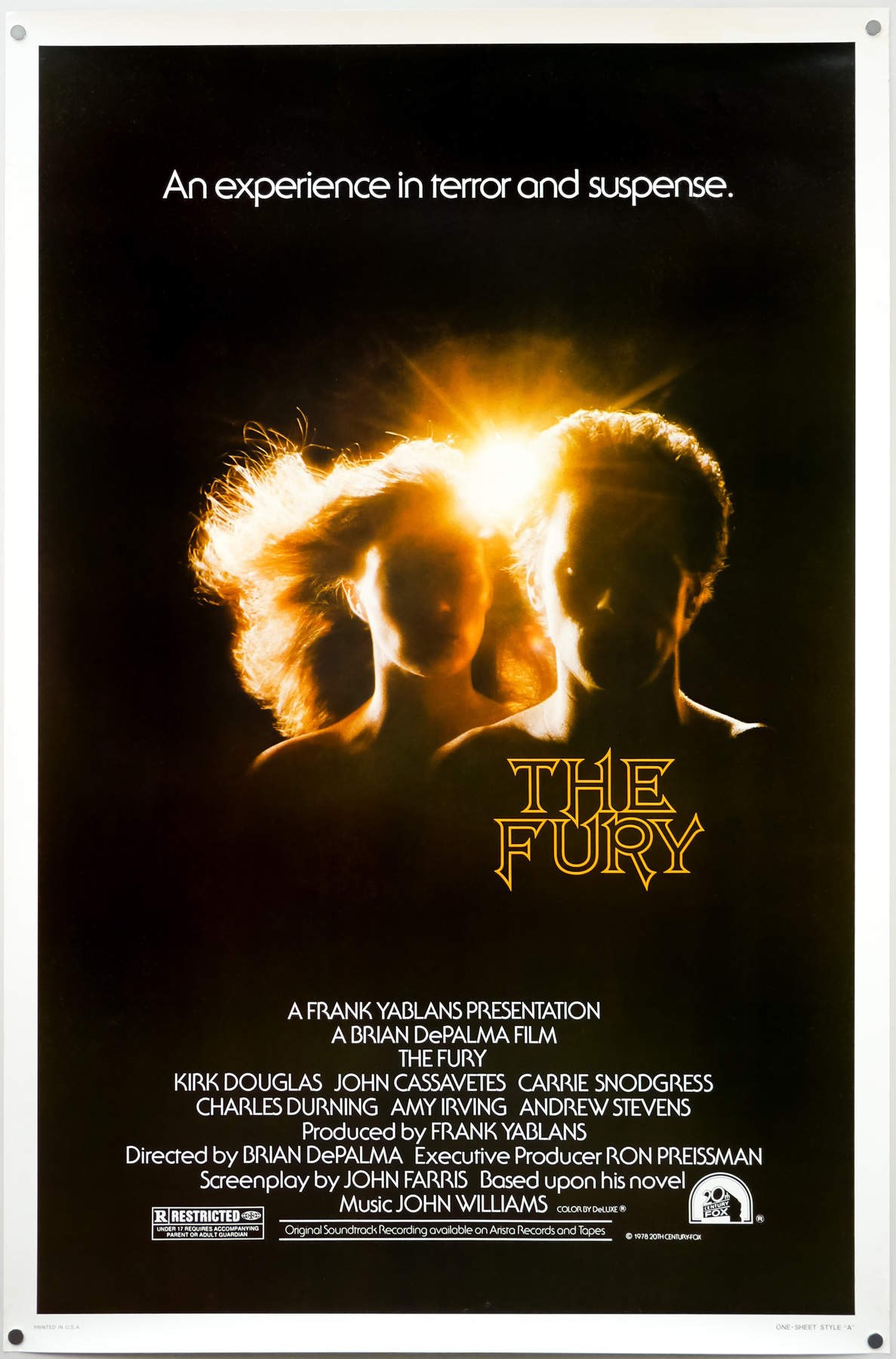
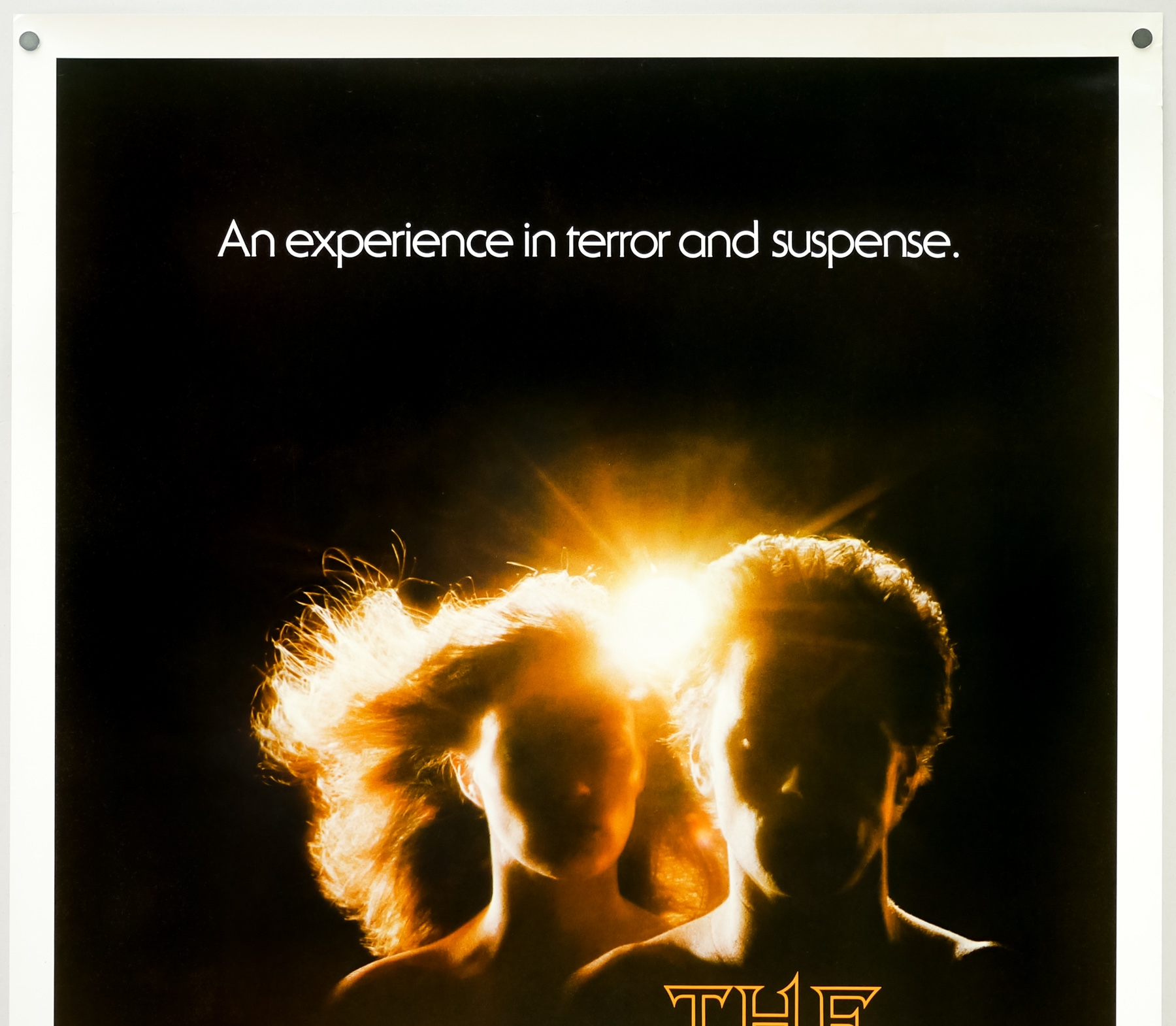
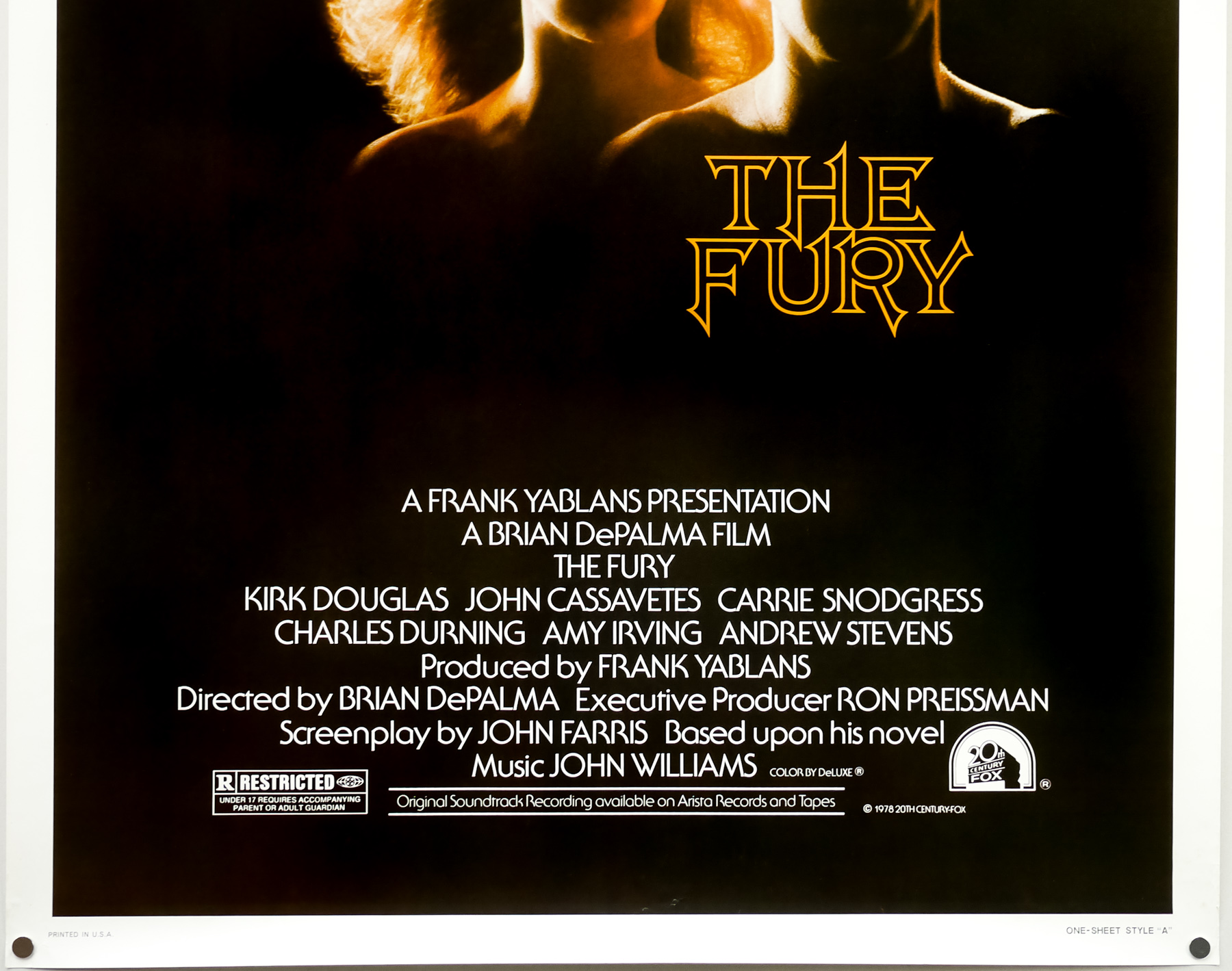
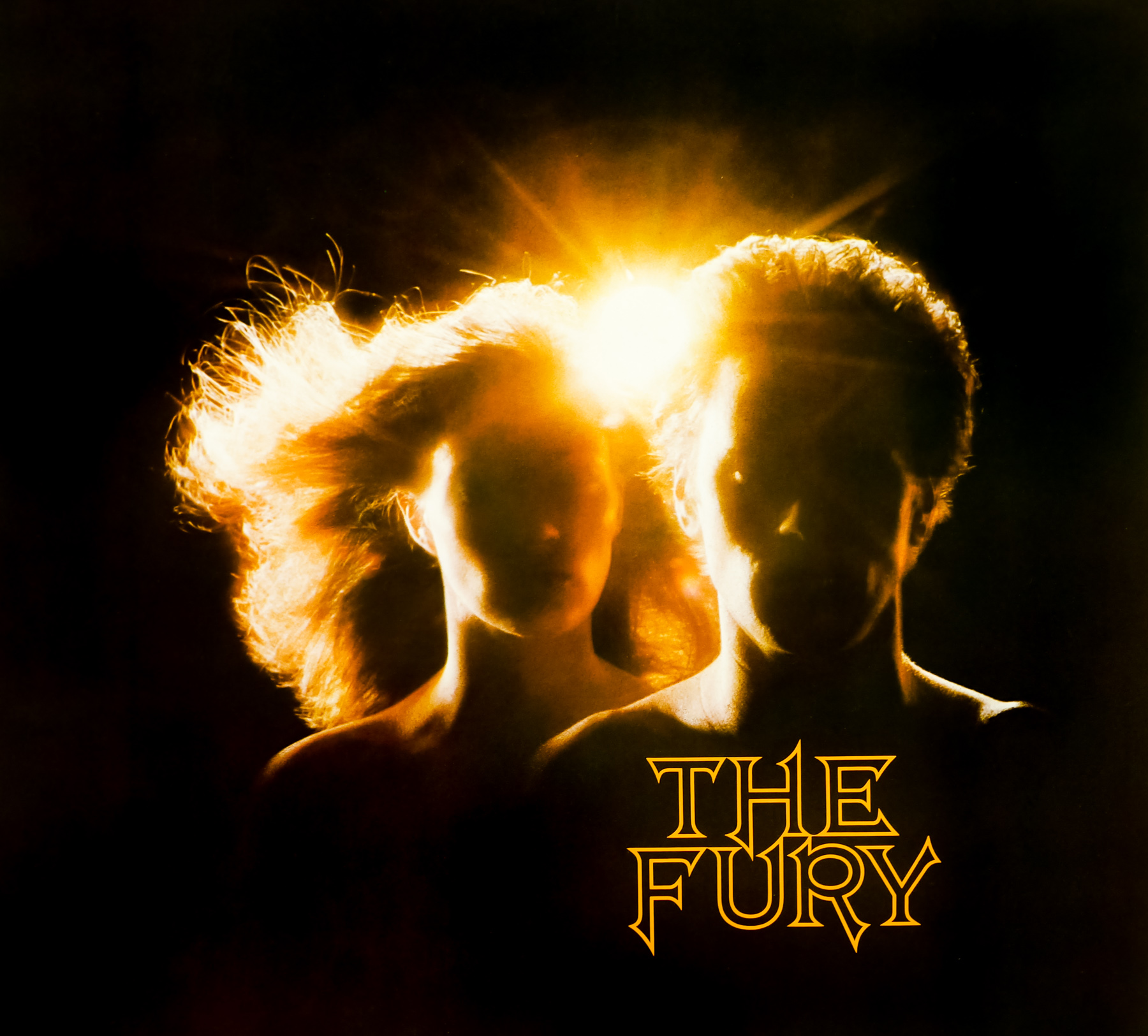
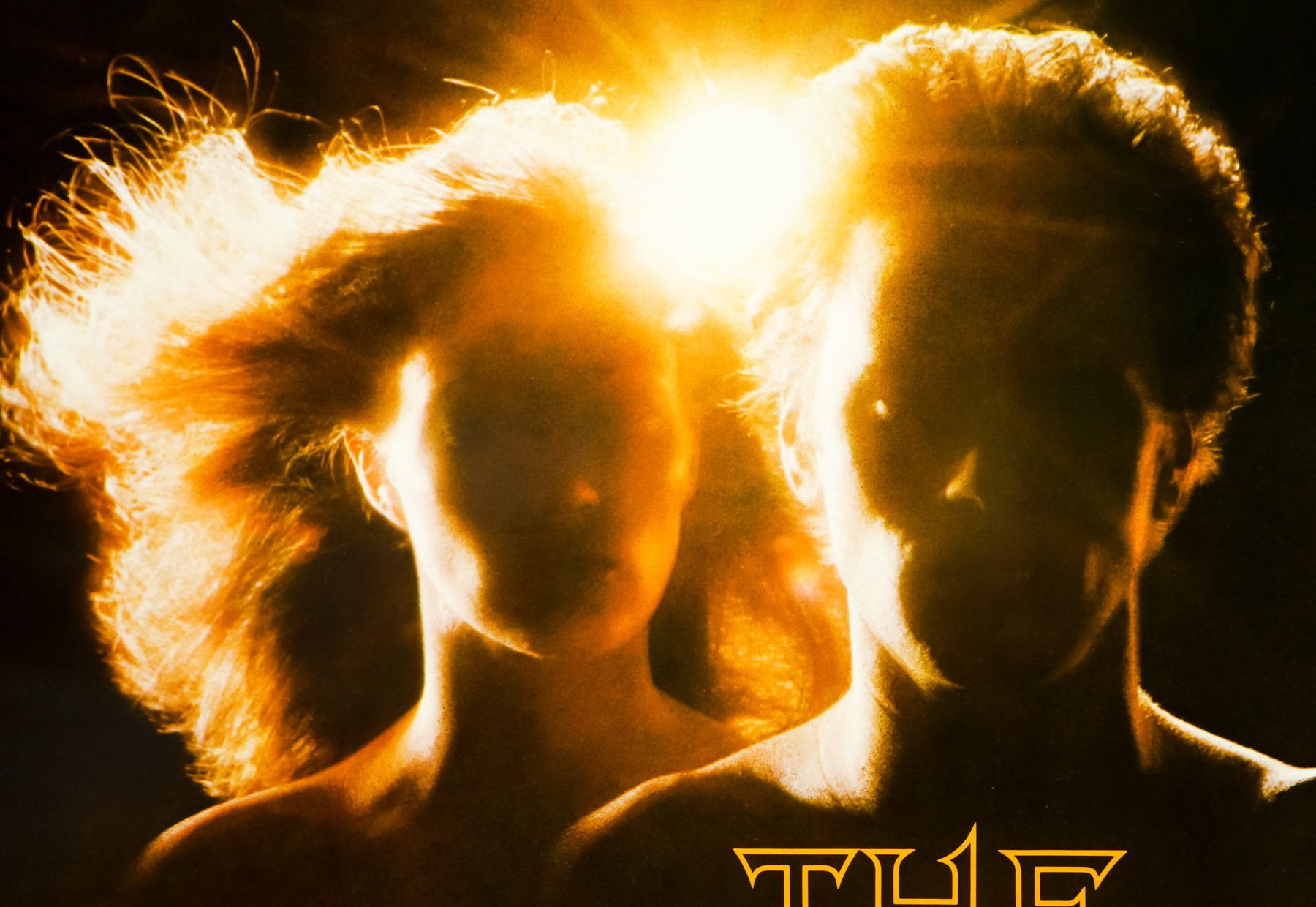
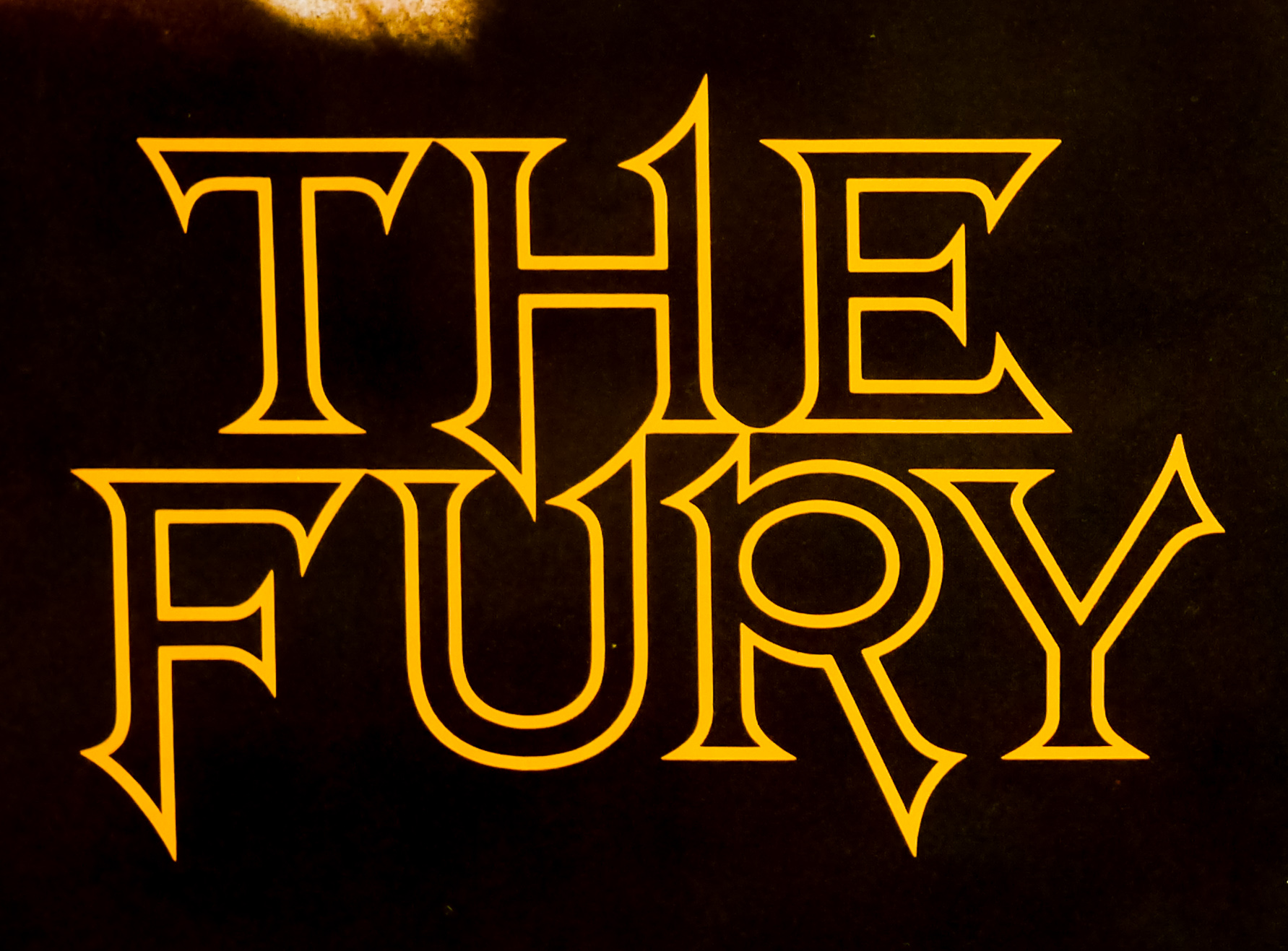
A striking design on this poster for the US release of Brian De Palma’s The Fury, the movie that followed his horror classic Carrie (1976). The director continued the theme of telekinesis that he’d started with Sissy Spacek’s teenager pushed over the edge, and in this picture there are two young telekinetics who start the picture unsure why they’ve been granted this strange power and who are unable to control it. The film opens with Kirk Douglas‘ Peter Sandza, an agent for an ‘organisation you didn’t even know exists’, and his son Robin relaxing on a beach in the Middle East with Sandza’s colleague Ben Childress (played by John Cassavetes). Suddenly the peace is shattered with an attack by terrorists who rush the crowded beach and attempt to shoot Peter who manages to fight several of them off before being seemingly killed in an explosion. The audience soon discover that Childress has double-crossed his friend in order to kidnap Robin and investigate his apparent telekinesis for shadowy means. Peter survives the explosion and realises what his friend has done, almost killing him with gunfire, but Childress escapes with Robin.

Fast forward a few years and we learn that Peter has been obsessively searching for his son whilst being pursued by the shadowy agency intent on killing him. At the same time, teenager Gillian Bellaver (Amy Irving, a Carrie alumni) is struggling to understand the powers she’s been gifted with and, after a few incidents involving other pupils at her school, her mother decides to put her into a special institution that has been set up to deal with those with psychic potential. The viewer discovers that the place is actually funded by Childress and his nefarious organisation but, unbeknownst to them, Peter has a mole inside the school and is hoping that Gillian will be able to help find the whereabouts of his son. After Gillian makes a connection with Robin, Peter and his compatriot stage a breakout and set off to try and rescue Robin, but it may already be too late…

The Fury is definitely one of De Palma’s better efforts, even if it’s not up there with Carrie. It features several exciting sequences, including the initial faked terrorist attack, and at least one trademark bravura slow-motion sequence that’s impeccably executed. Both Douglas and Cassavetes are excellent and Amy Irving also puts in a decent performance. The special effects mostly stand-up and it’s a thrill to see the full power of telekinesis being unleashed after having it teased at several points in Carrie (we see what happens if the power is directed at a single human body, pre-Scanners). I’m unsure who’s responsible for this poster so please get in touch if you have any ideas.

Halloween II / one sheet / USA

01.11.13

Poster Poster
Title
Halloween II
AKA
Boogey Man (Japan) | Il signore della morte [The lord of death] (Italy)
Year of Film
1981
Director
Rick Rosenthal
Starring
Jamie Lee Curtis, Donald Pleasence, Charles Cyphers, Jeffrey Kramer, Lance Guest, Pamela Susan Shoop, Hunter von Leer
Origin of Film
USA
Genre(s) of Film
Jamie Lee Curtis, Donald Pleasence, Charles Cyphers, Jeffrey Kramer, Lance Guest, Pamela Susan Shoop, Hunter von Leer,
Type of Poster
One sheet
Style of Poster
--
Origin of Poster
USA
Year of Poster
1982
Designer
Unknown
Artist
--
Size (inches)
27" x 41"
SS or DS
SS
NSS #
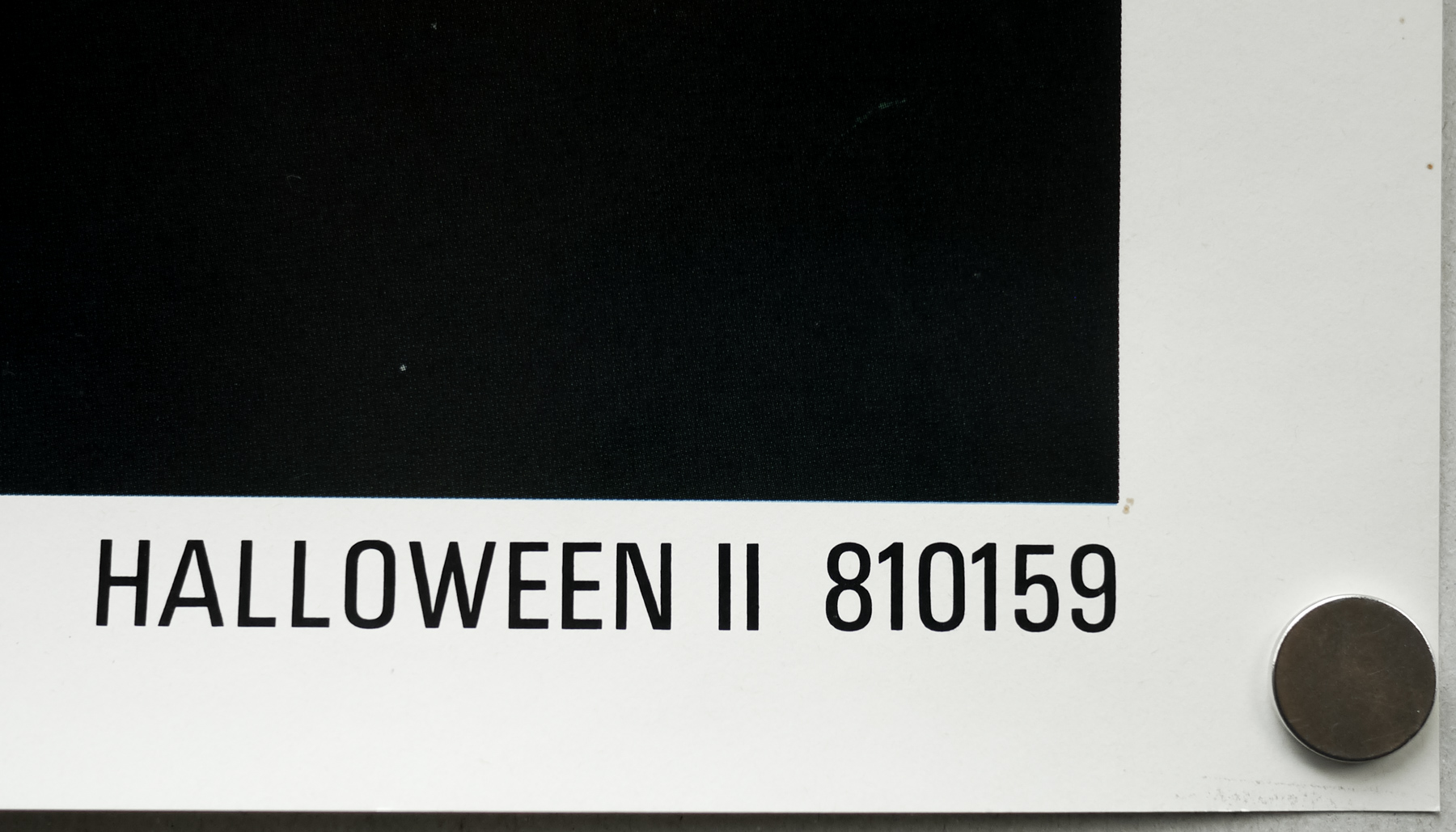
810159
Tagline
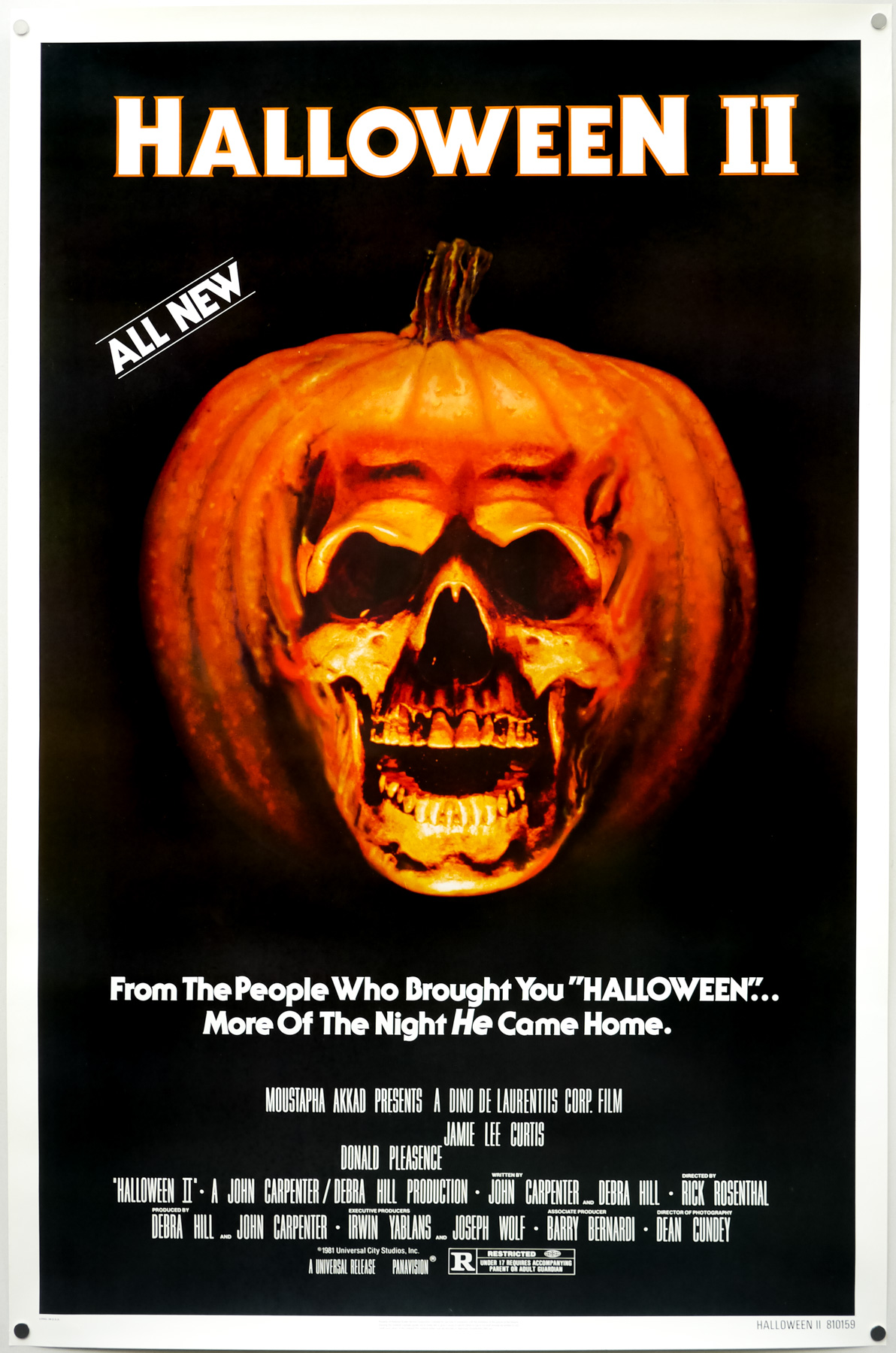
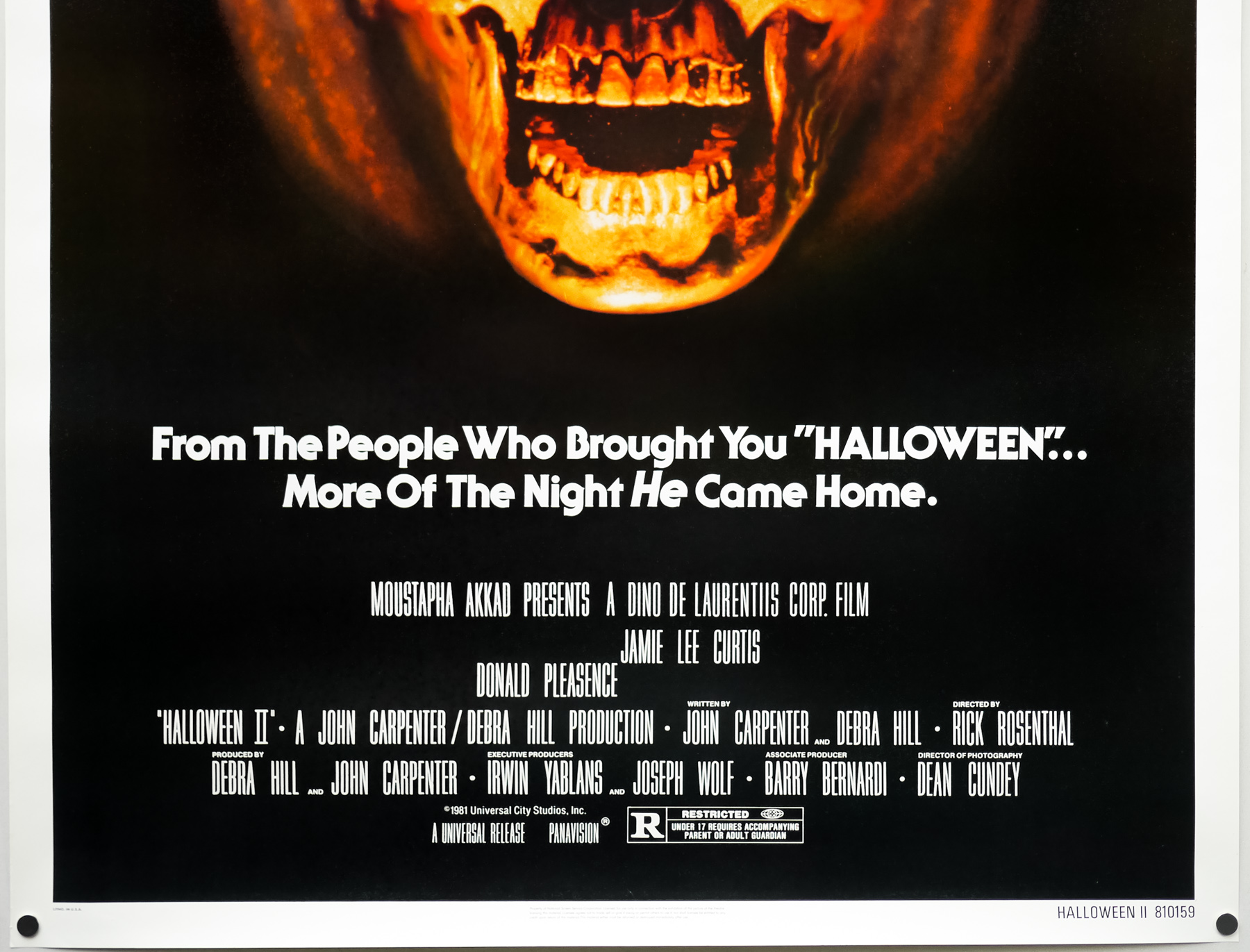
From The People Who Brought You "Halloween"... More of the Night He Came Home

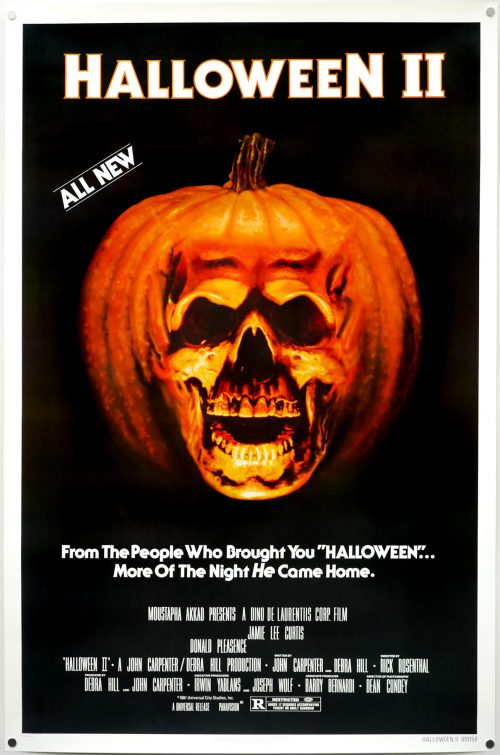
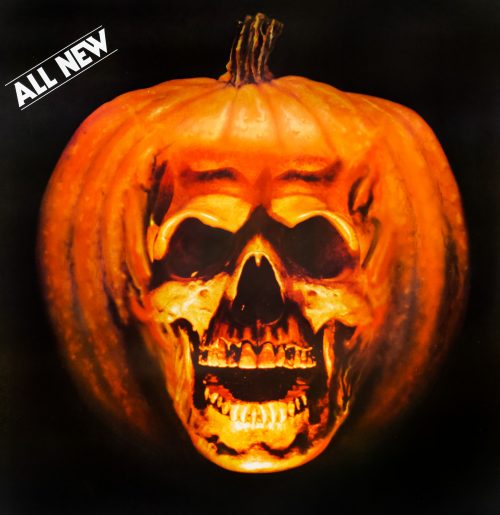
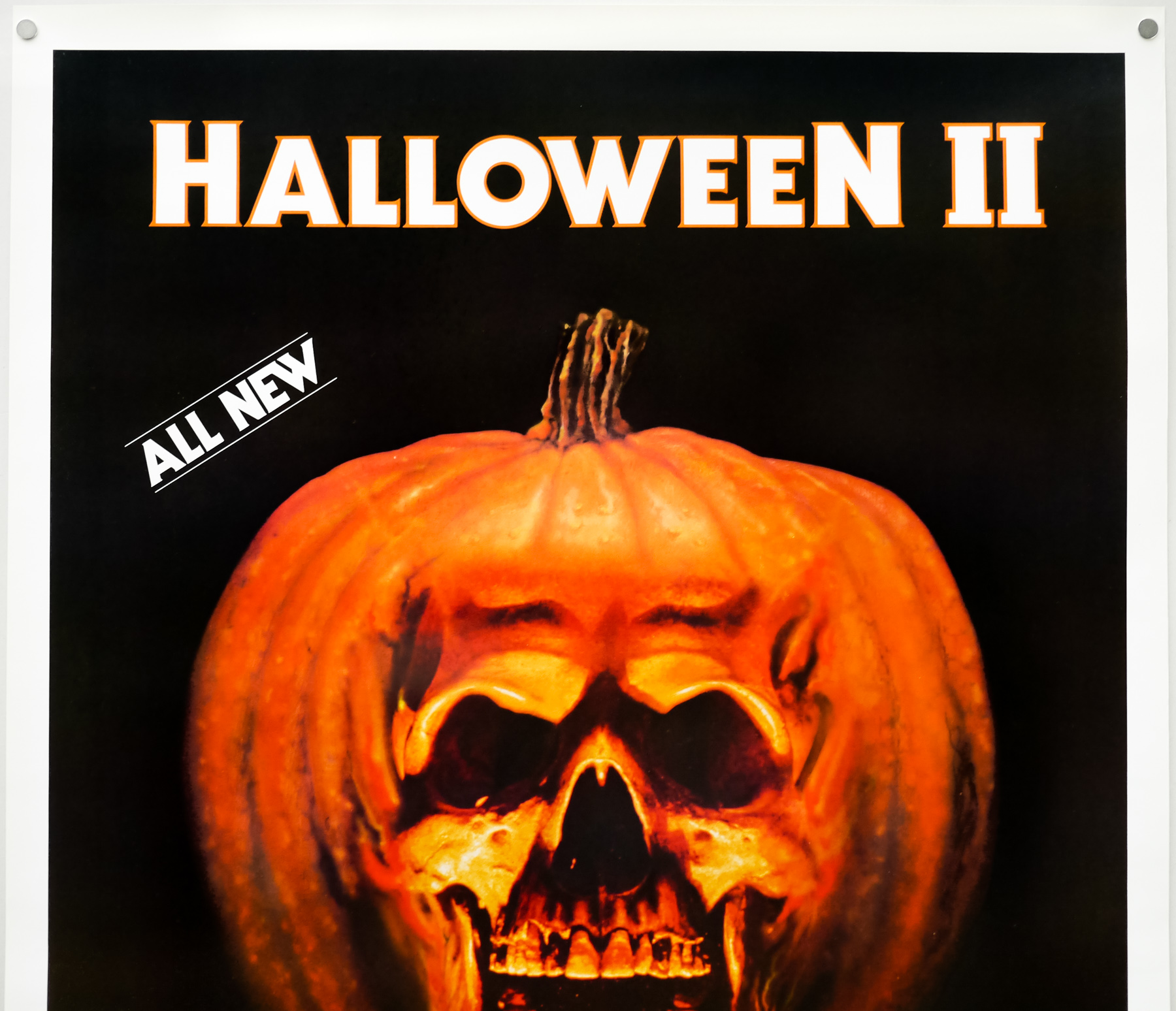
After John Carpenter’s original horror classic Halloween made over $70 million at the global box-office on a budget of $325k – earnings equivalent to $250 million adjusted for ticket price inflation – it was only a matter of time before a sequel was put into production. Carpenter passed on the chance to direct Halloween II, but offered to both produce and write the screenplay (and apparently even direct a few scenes) and the film was put into production with a significantly increased budget of $2.5 million. A relatively unknown director called Rick Rosenthal was offered the job and filming got underway with a targeted release date of Halloween 1981.

This is one of those sequels that picks up immediately after the events at the end of the previous film and Laurie Strode (Jamie Lee Curtis) is being loaded into an ambulance having survived the attack by Michael Myers who was shot by Dr Sam Loomis (Donald Pleasence) before escaping into the night. We follow Myers as he stalks the neighbourhood, murdering an unlucky teenager as he searches for the whereabouts of Laurie. Dr Loomis and the Haddonfield police desperately hunt the killer as the true extent of his actions in the previous film come to light. Meanwhile, Laurie arrives at the town’s hospital and soon falls into a catatonic state thanks to the shock of her ordeal. When Michael learns of her whereabouts after overhearing a news broadcast he heads towards the hospital and the carnage begins again.

Rosenthal is definitely no Carpenter but it’s still a strong horror film, which has several creepy moments despite upping the body count and leaning towards quick, gross-out murders rather than tense, drawn-out pursuit sequences. It’s interesting to see the aftermath of the events in the first film and the hospital makes for an excellent location for Myers to stalk his prey. At the time, the explosive ending seemed to draw a line under the story of Michael Myers and, infamously, Halloween III made no mention of him, but when that film was something of a box-office flop the producers of the next sequel brought the man in the mask back from the dead.

The Exterminator / one sheet / USA

16.05.14

Poster Poster
Title
The Exterminator
AKA
--
Year of Film
1980
Director
James Glickenhaus
Starring
Christopher George, Samantha Eggar, Robert Ginty, Steve James, Tony DiBenedetto, Dick Boccelli, Patrick Farrelly, Michele Harrell
Origin of Film
USA
Genre(s) of Film
Christopher George, Samantha Eggar, Robert Ginty, Steve James, Tony DiBenedetto, Dick Boccelli, Patrick Farrelly, Michele Harrell,
Type of Poster
One sheet
Style of Poster
--
Origin of Poster
USA
Year of Poster
1980
Designer
B.D. Fox Independent
Artist
--
Size (inches)
27 1/16" x 41 1/16"
SS or DS
SS
NSS #
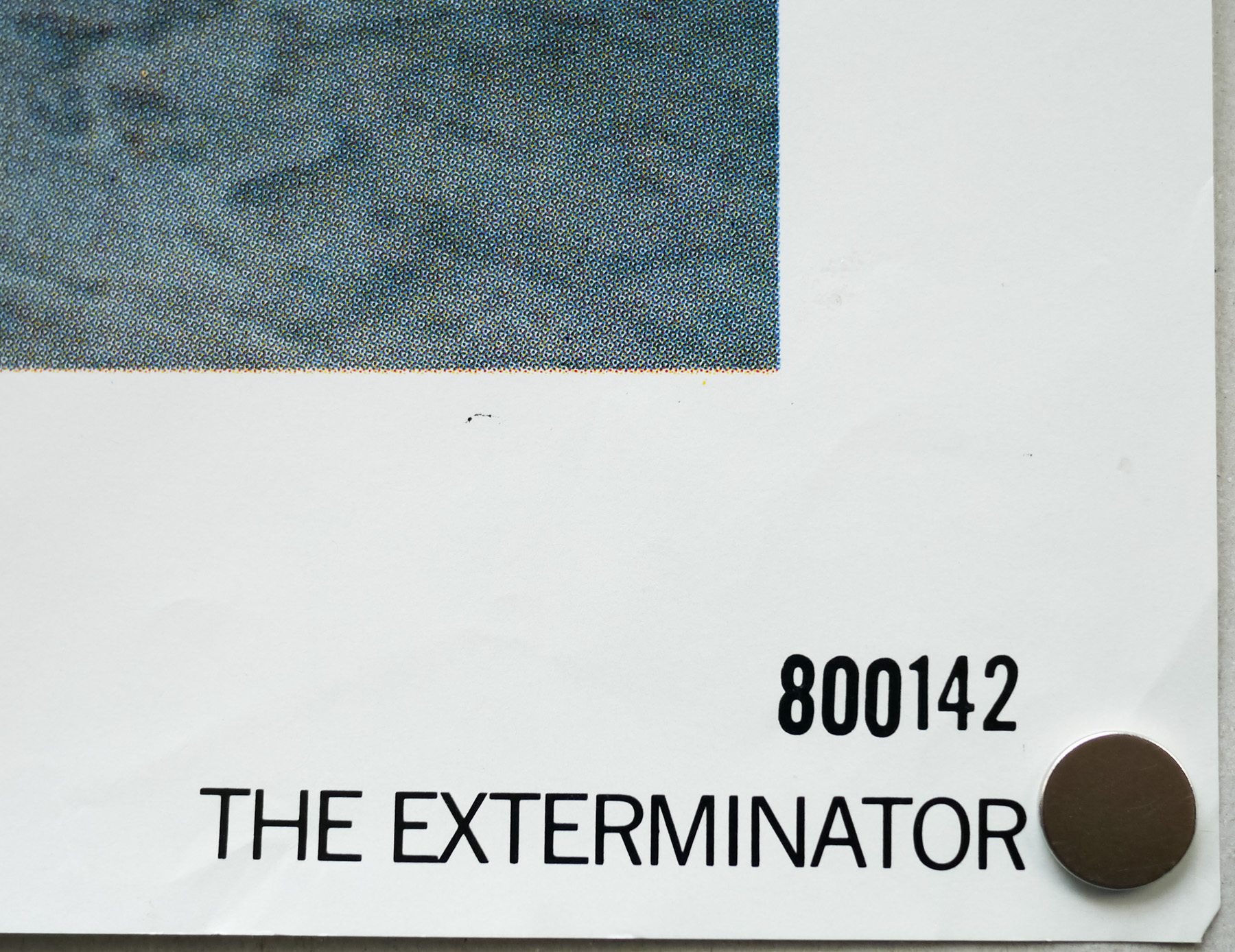
800142
Tagline
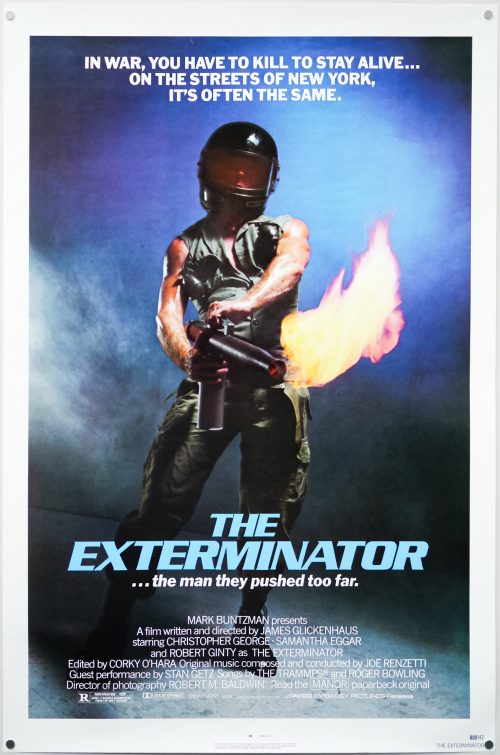
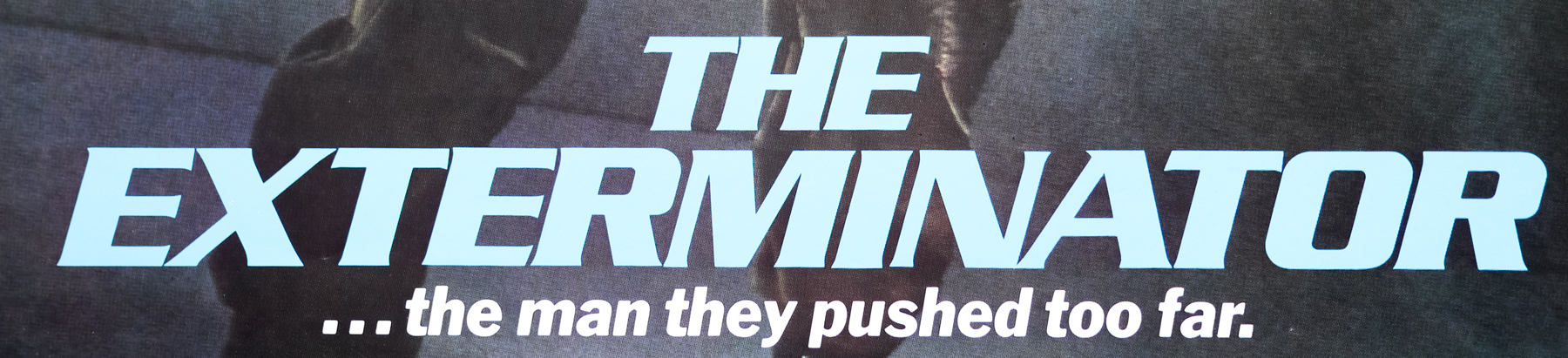
In war, you have to kill to stay alive... on the streets of New York, it's often the same. | ...the man they pushed too far.

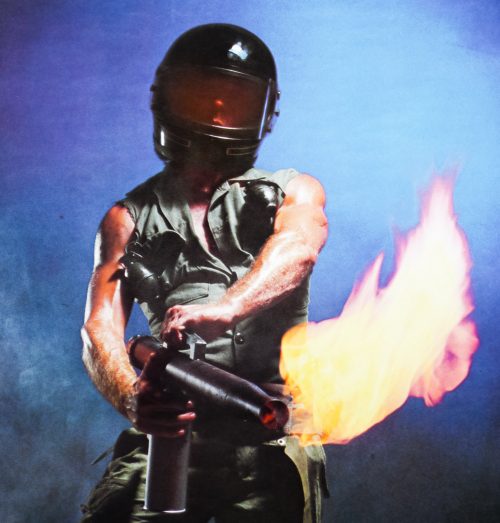
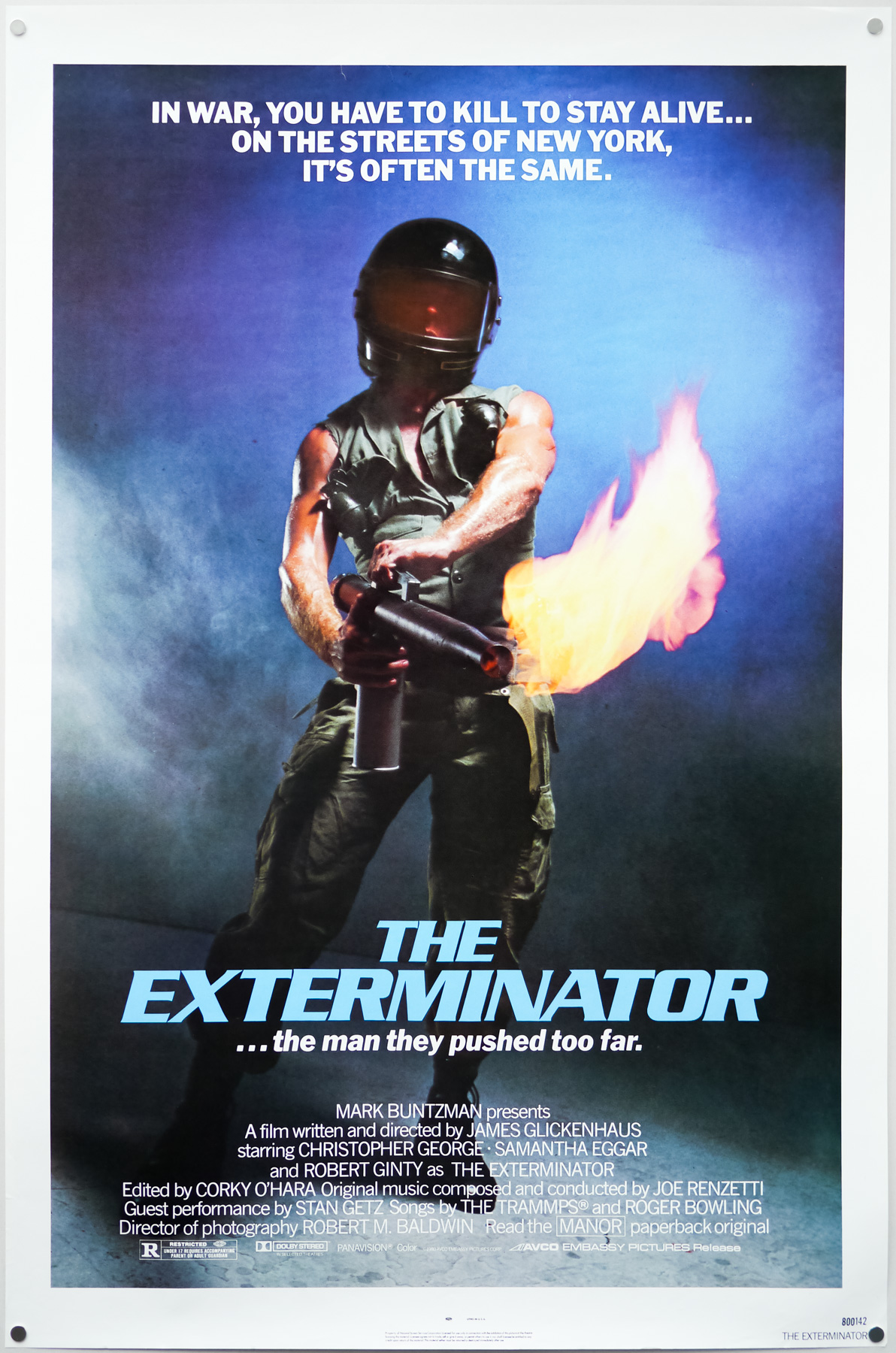
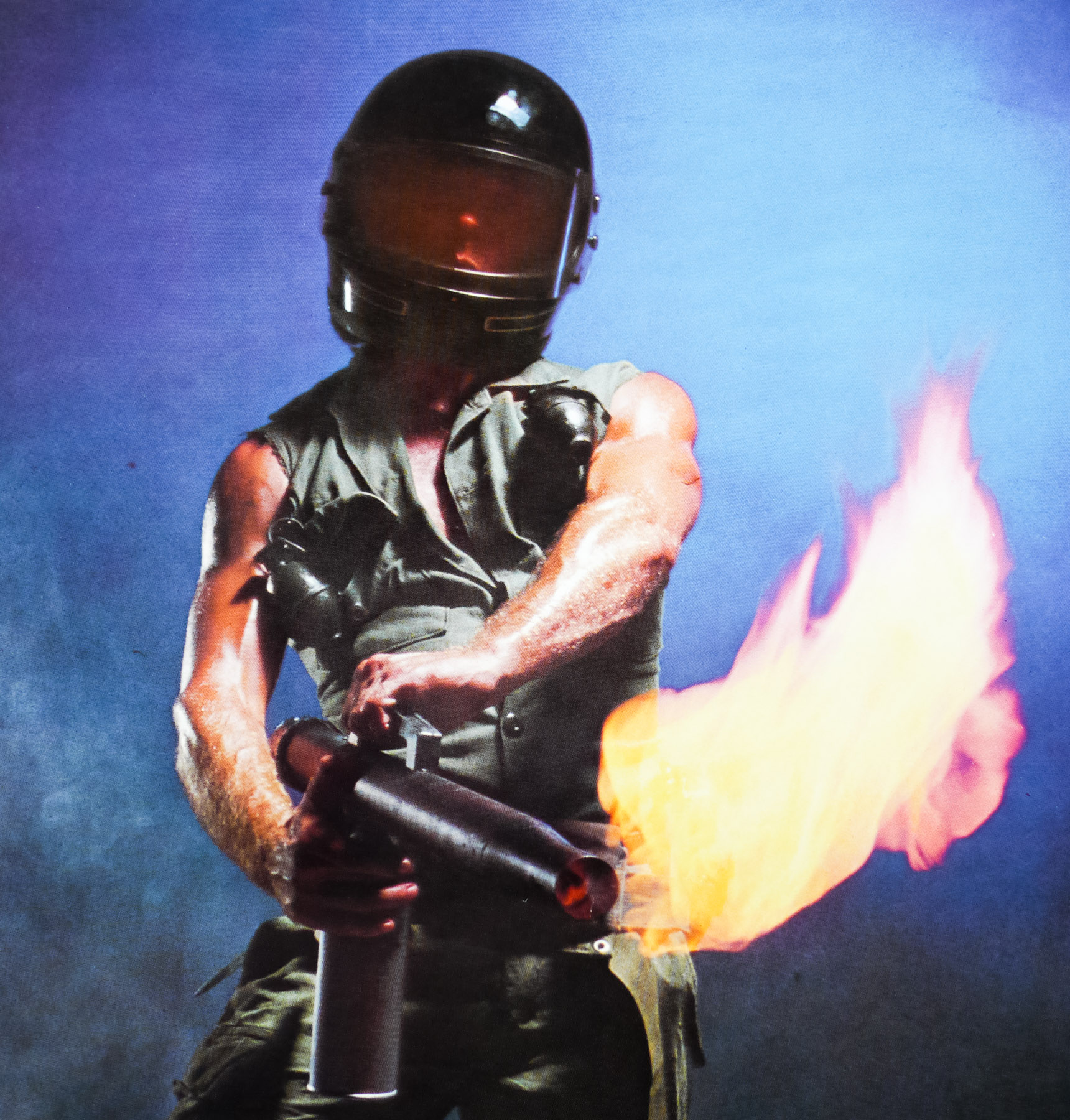
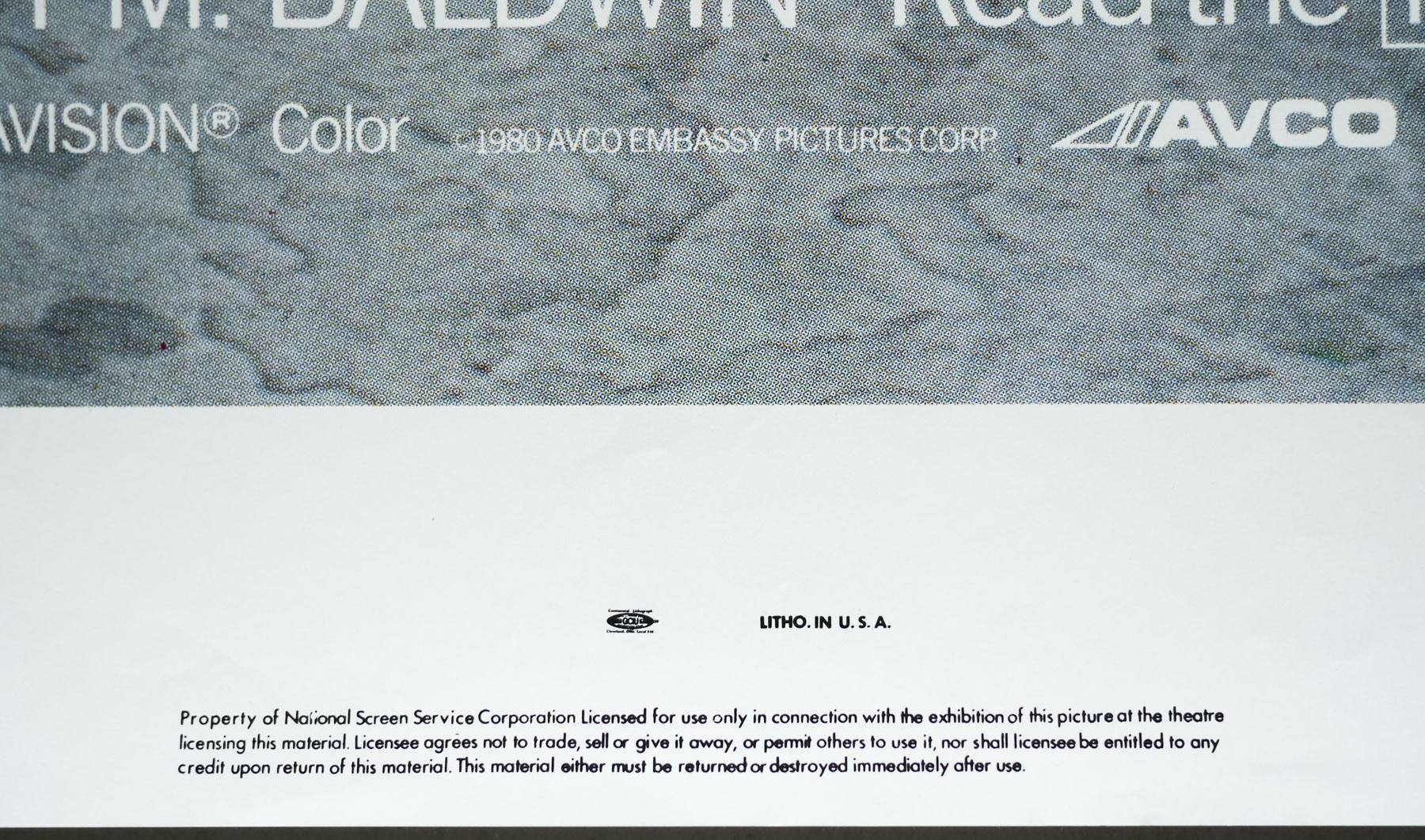
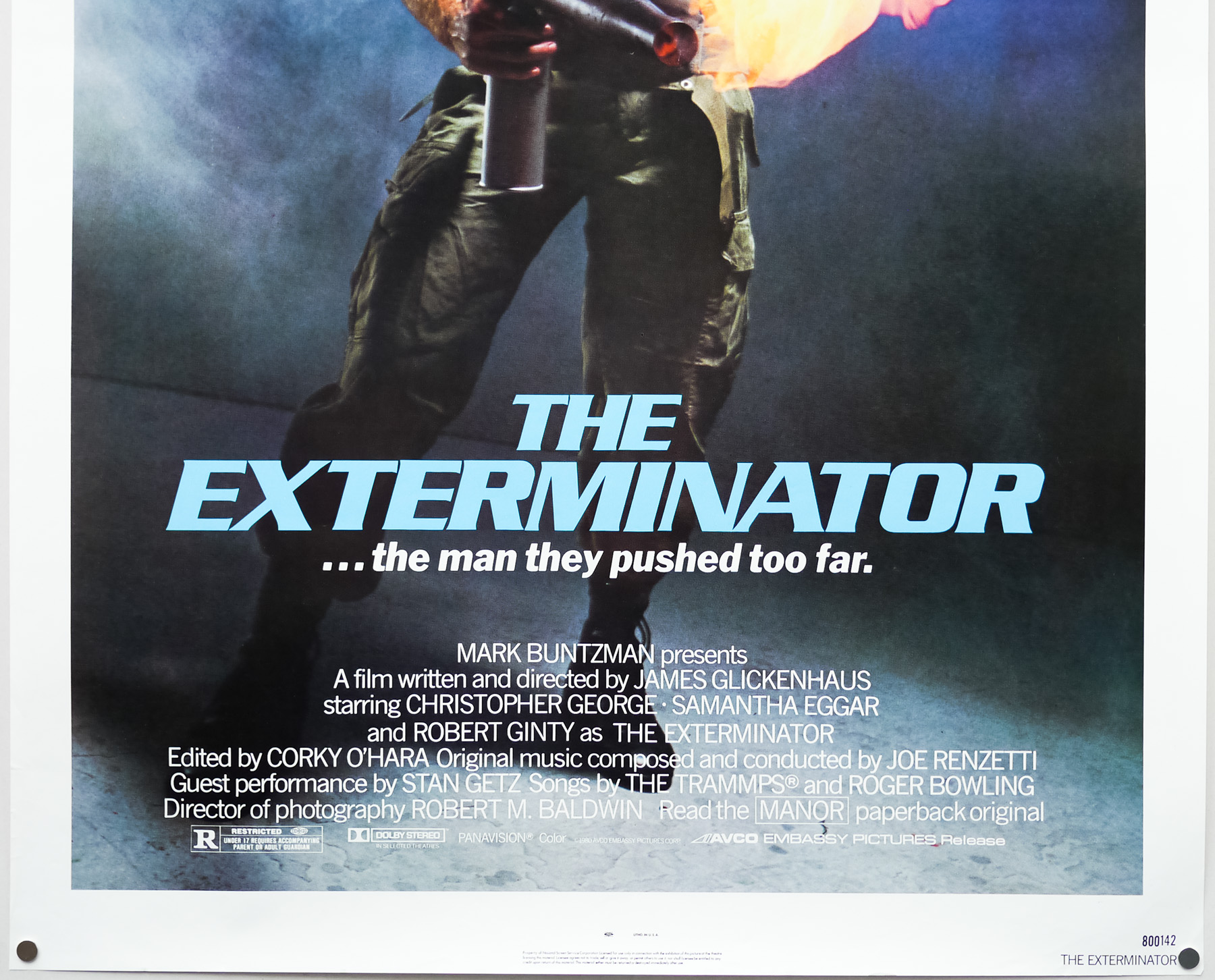
The Exterminator is a 1980 vigilante b-movie that was written and directed by James Glickenhaus and set in New York. Opening with a commendably over-the-top sequence in war-torn Vietnam, we’re introduced to John Eastland (Robert Ginty) and his friend Michael Jefferson (Steve James) who are captured by the Vietcong and forced to watch as a fellow soldier is beheaded (achieved courtesy of Stan Winston special effects). After being rescued the pair return to their lives in New York but when Michael is attacked and paralysed by street thugs, John sets out for revenge with an army machine gun and images of the atrocities he saw in Vietnam playing over in his head. Before long, he’s attacking and killing various underworld characters who he sees as a blight on society. It’s not long before he comes to the attention of a police detective (Christopher George) and shady elements within the CIA.

The film has a gritty atmosphere, helped no end by the fact that several scenes were set (and filmed) around New York’s 42nd street (Times Square) back when it wasn’t the family-friendly tourist trap it is today. Although Glickenhaus wanted John to be a normal, non-macho kind of guy, Robert Ginty takes it a little too far and at times is barely audible as he mumbles along with dead-eyed stare – he’s very hard to root for during each of the violent encounters. Despite a critical drubbing the film was a box-office success in the States, quickly expanding to more cinemas in the weeks following its opening. A sequel would be made a few years later without Glickenhaus’ involvement.

In an interview on the blu-ray release of the film from Arrow Video, the director talks briefly about the promotion of the film, mentioning the poster:

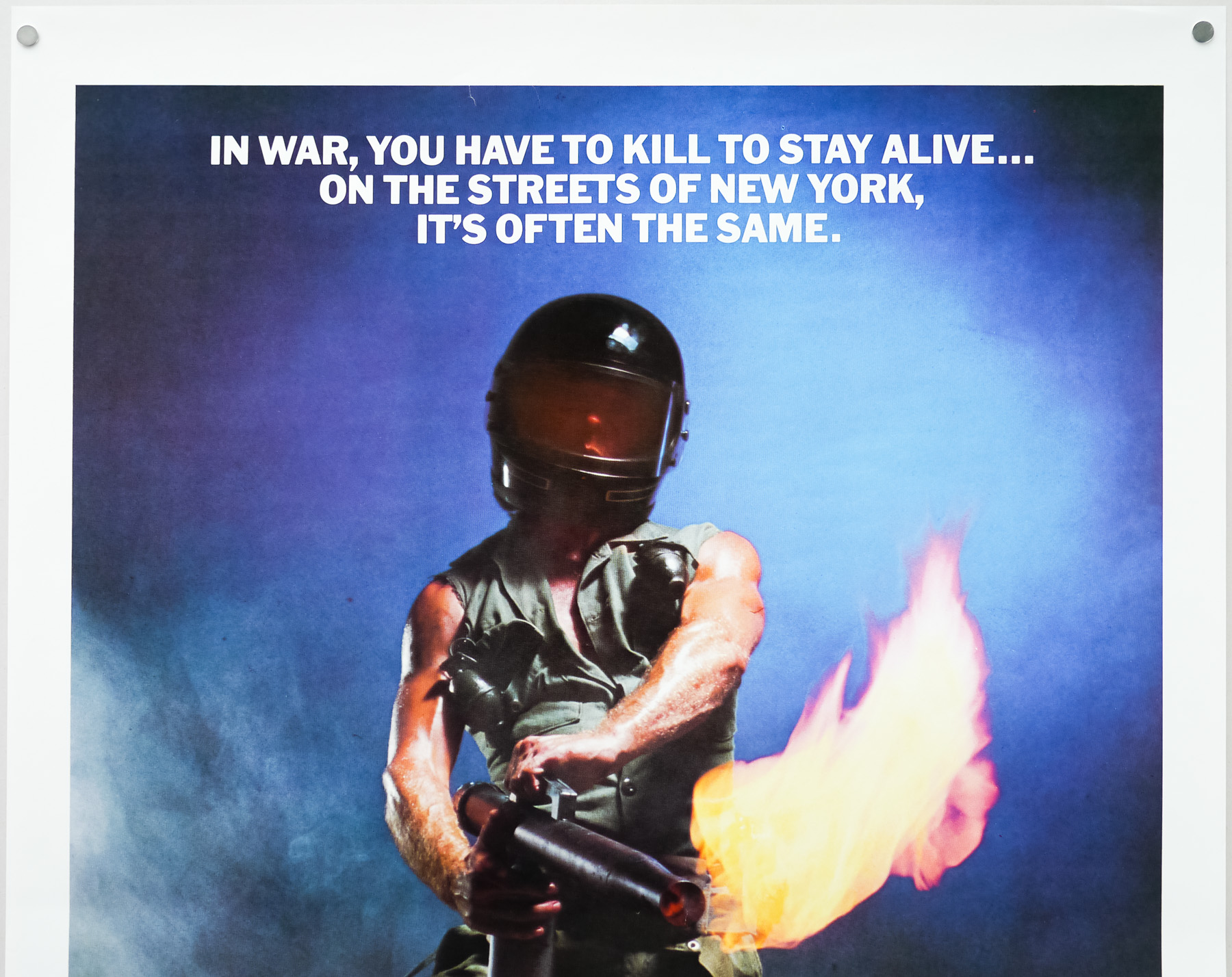
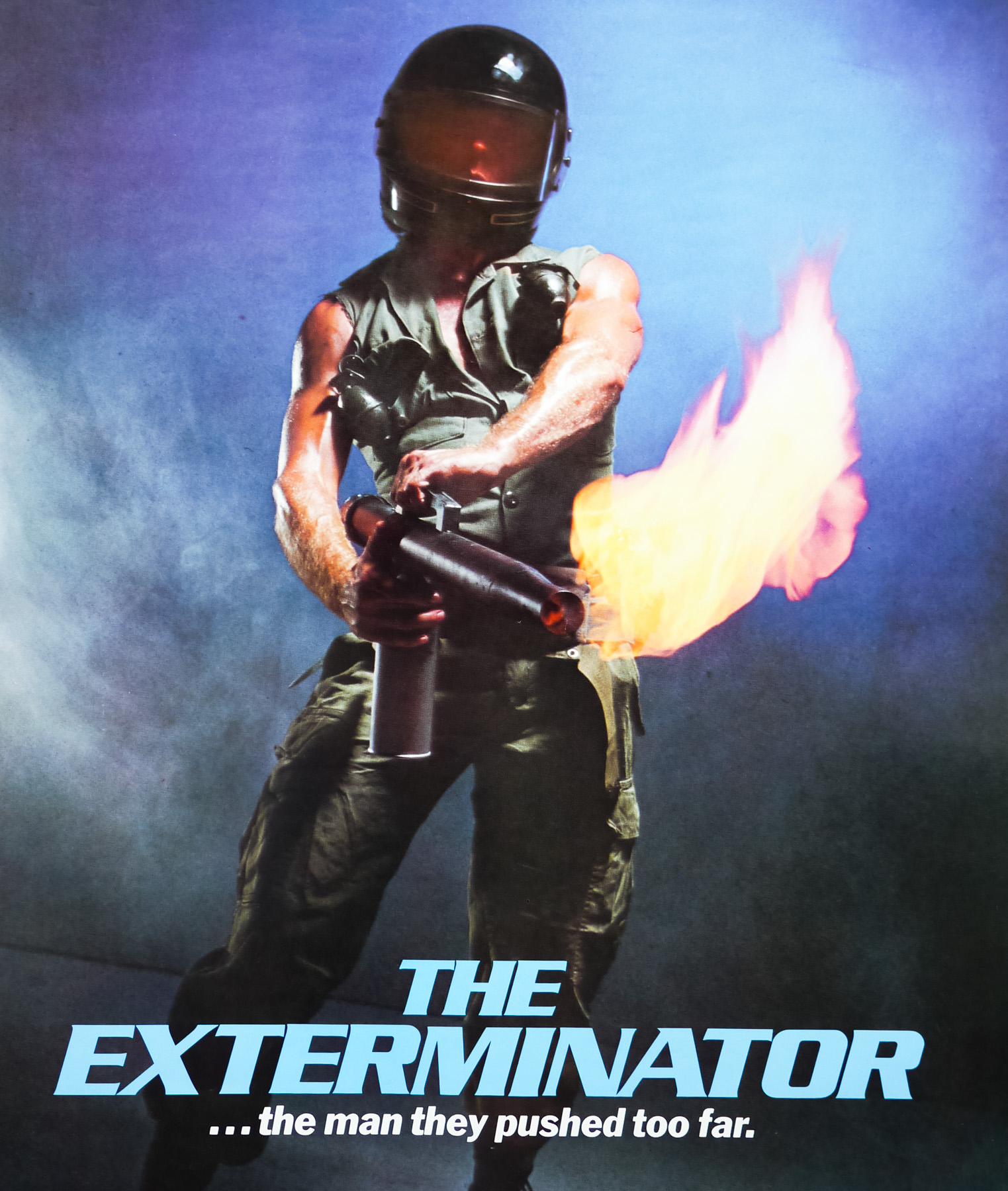
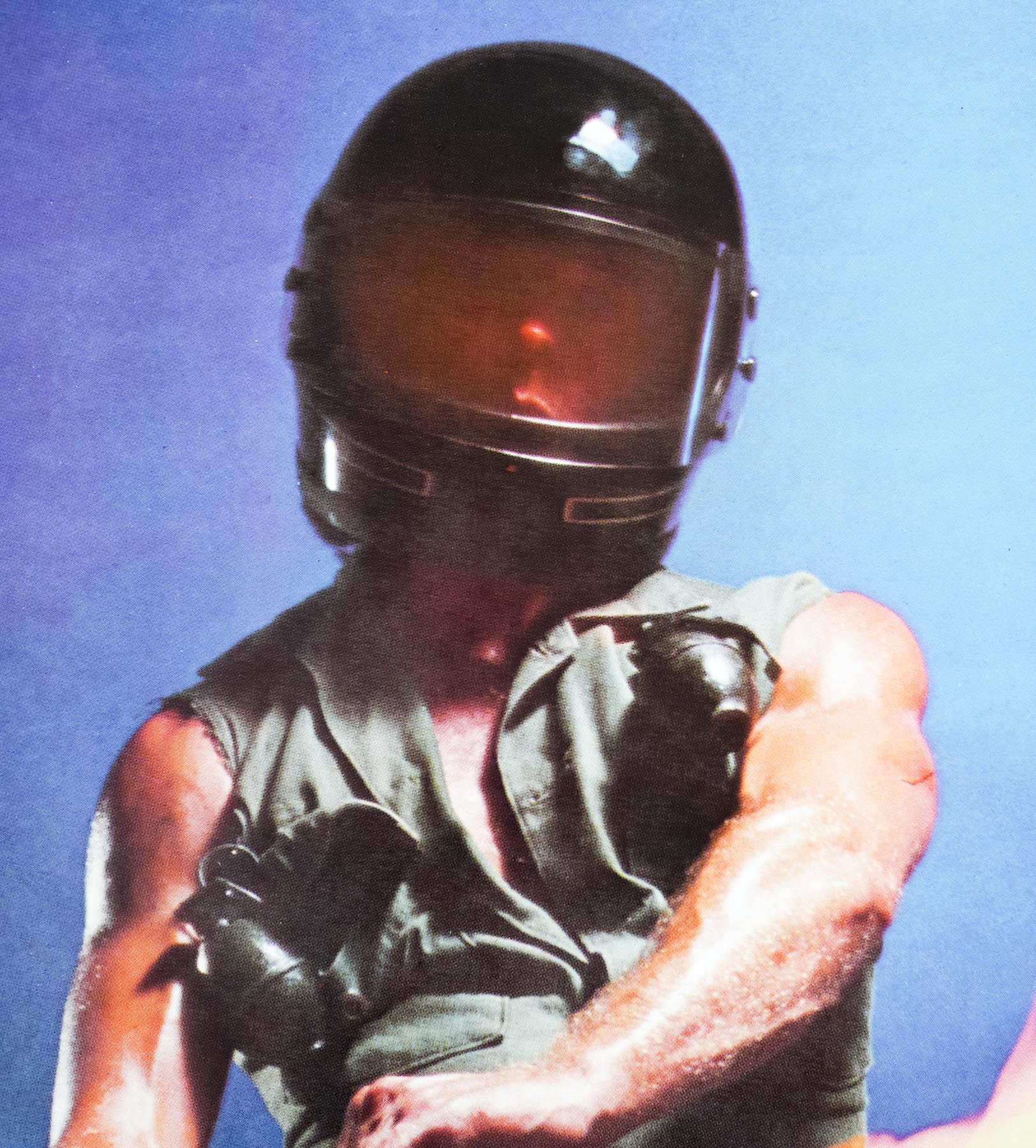
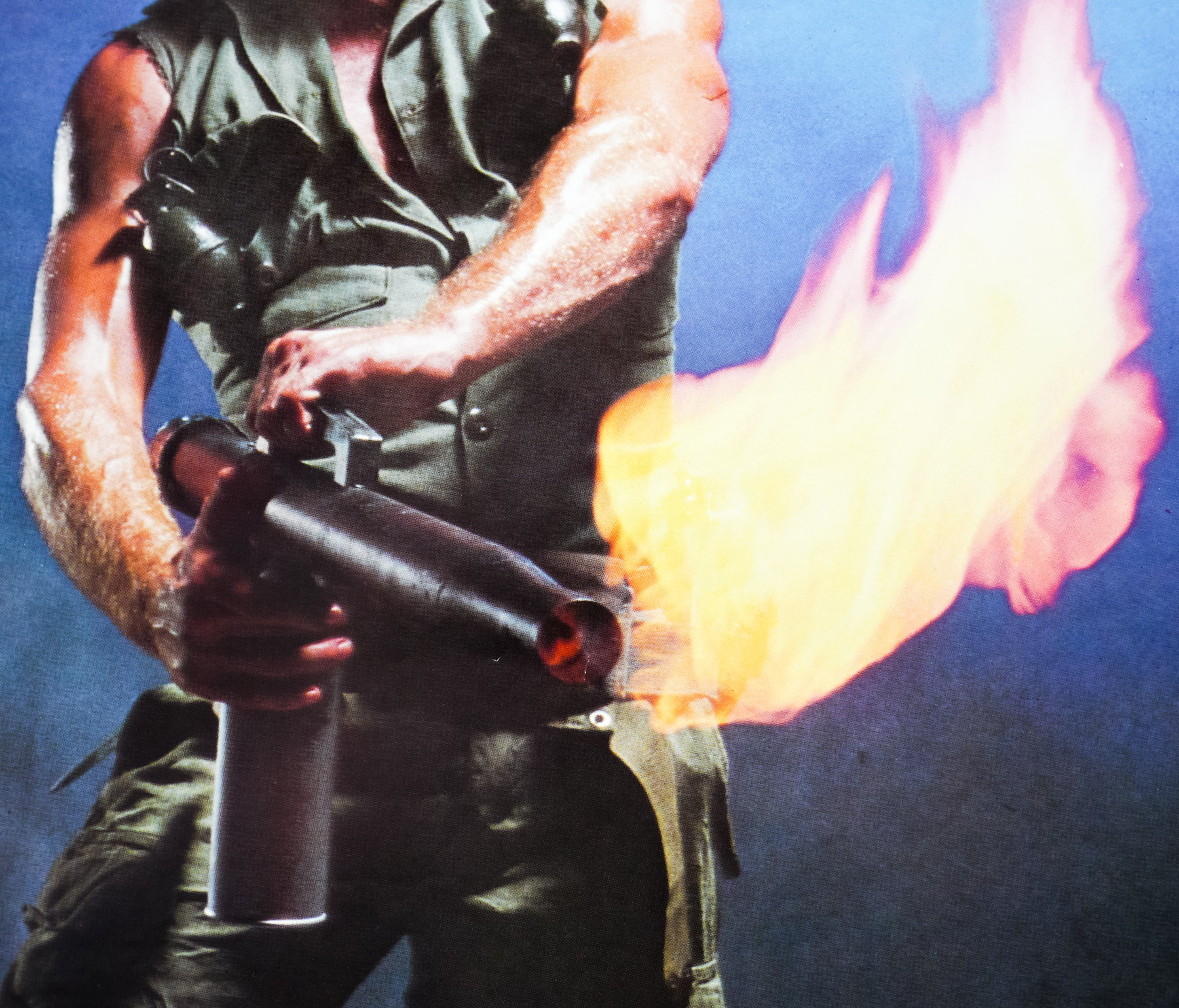
‘Avco Embassy came up with that idea and asked me and I thought it would be an interesting thing. I think they made it a little bit mysterious with the motorcycle helmet and what-not but it did become an iconic image and was copied more than a few times, including for a porno film called The Penetrator. They had a naked guy with a flame-thrower standing there, which is what it is. But it [the Exterminator poster] got people to the box-office so it worked.’

Dead Ringers / one sheet / USA

15.12.14

Poster Poster
Title
Dead Ringers
AKA
Inseparables (Spain)
Year of Film
1988
Director
David Cronenberg
Starring
Jeremy Irons, Geneviève Bujold, Heidi von Palleske, Barbara Gordon, Shirley Douglas, Stephen Lack, Nick Nichols, Lynne Cormack, Damir Andrei, Miriam Newhouse
Origin of Film
Canada | USA
Genre(s) of Film
Jeremy Irons, Geneviève Bujold, Heidi von Palleske, Barbara Gordon, Shirley Douglas, Stephen Lack, Nick Nichols, Lynne Cormack, Damir Andrei, Miriam Newhouse,
Type of Poster
One sheet
Style of Poster
--
Origin of Poster
USA
Year of Poster
1988
Designer
Spiros Angelikas
Artist
Spiros Angelikas
Size (inches)
27 2/16" x 40 15/16"
SS or DS
SS
NSS #
880119
Tagline
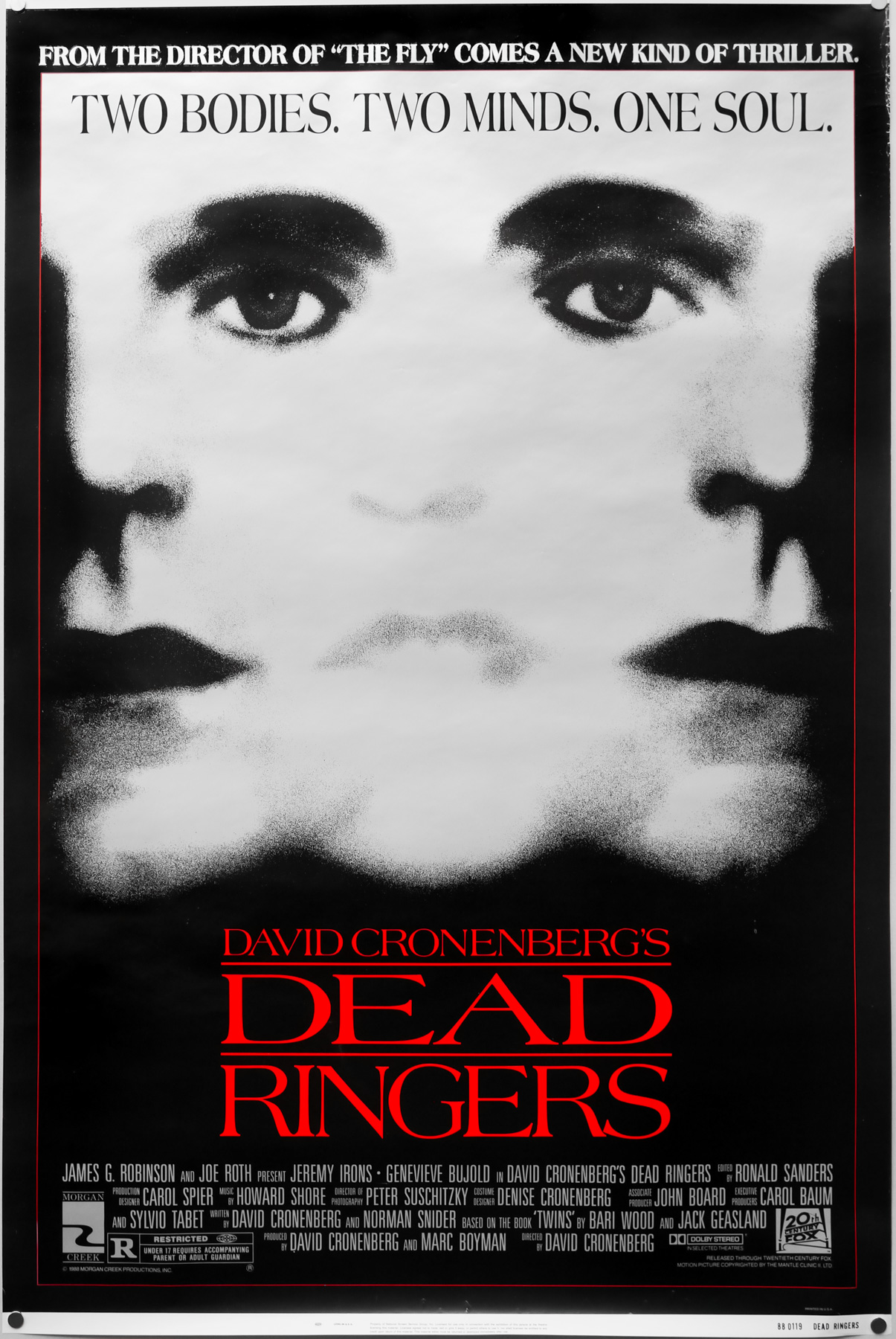
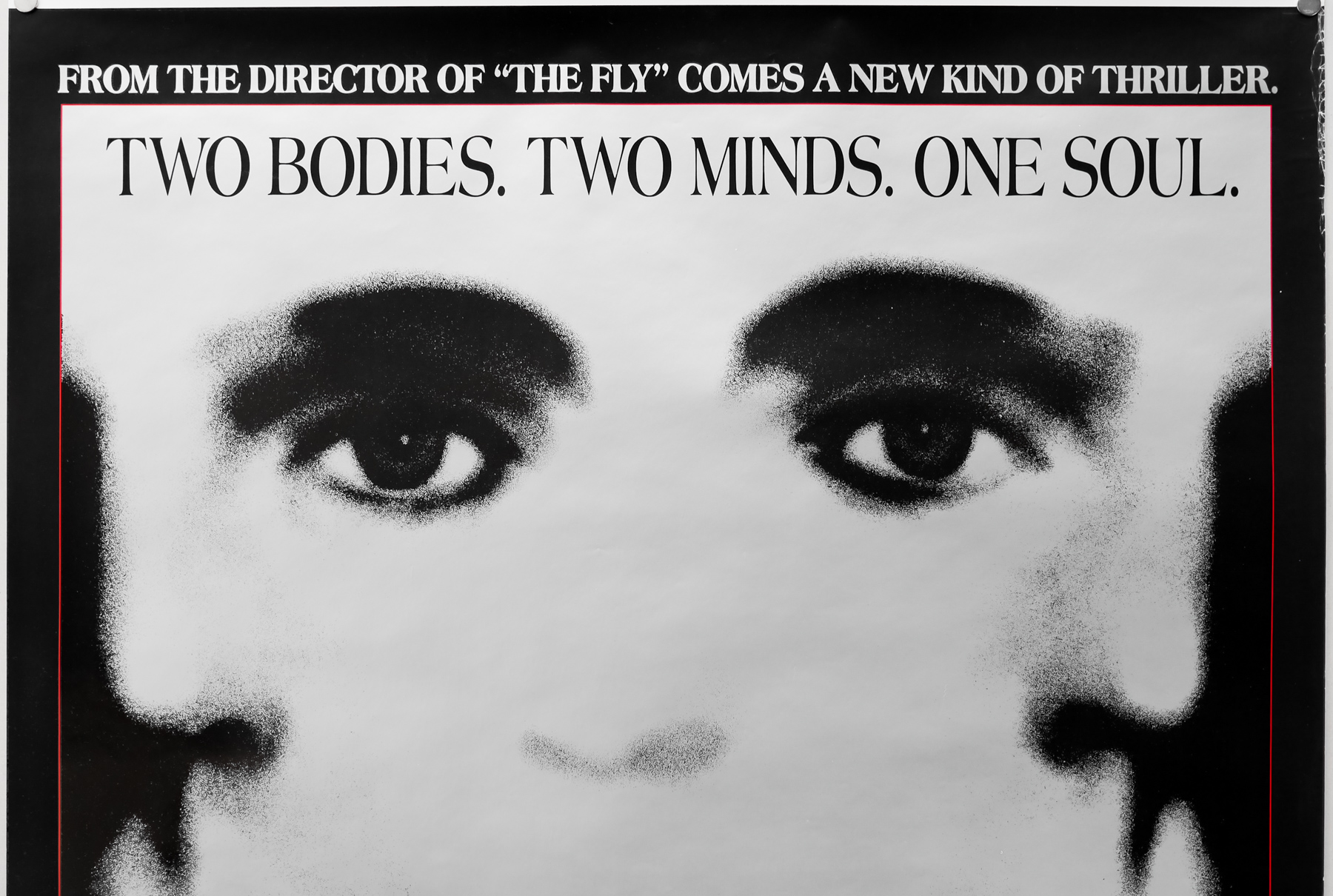
From the director of "The Fly" comes a new kind of thriller. | Two bodies. Two minds. One soul.

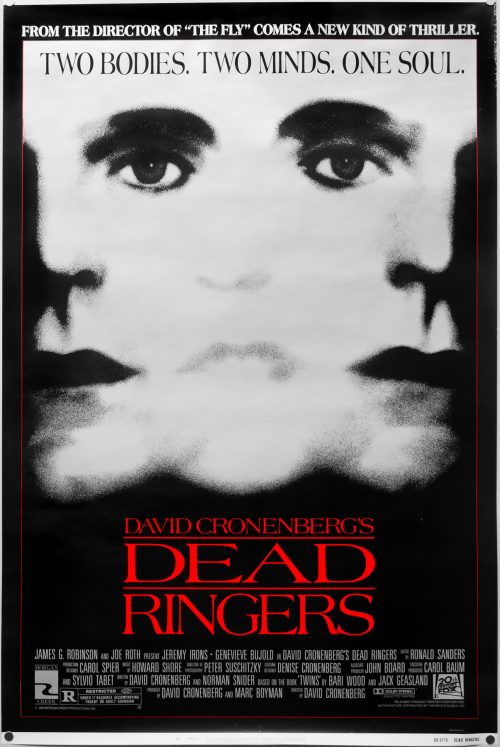
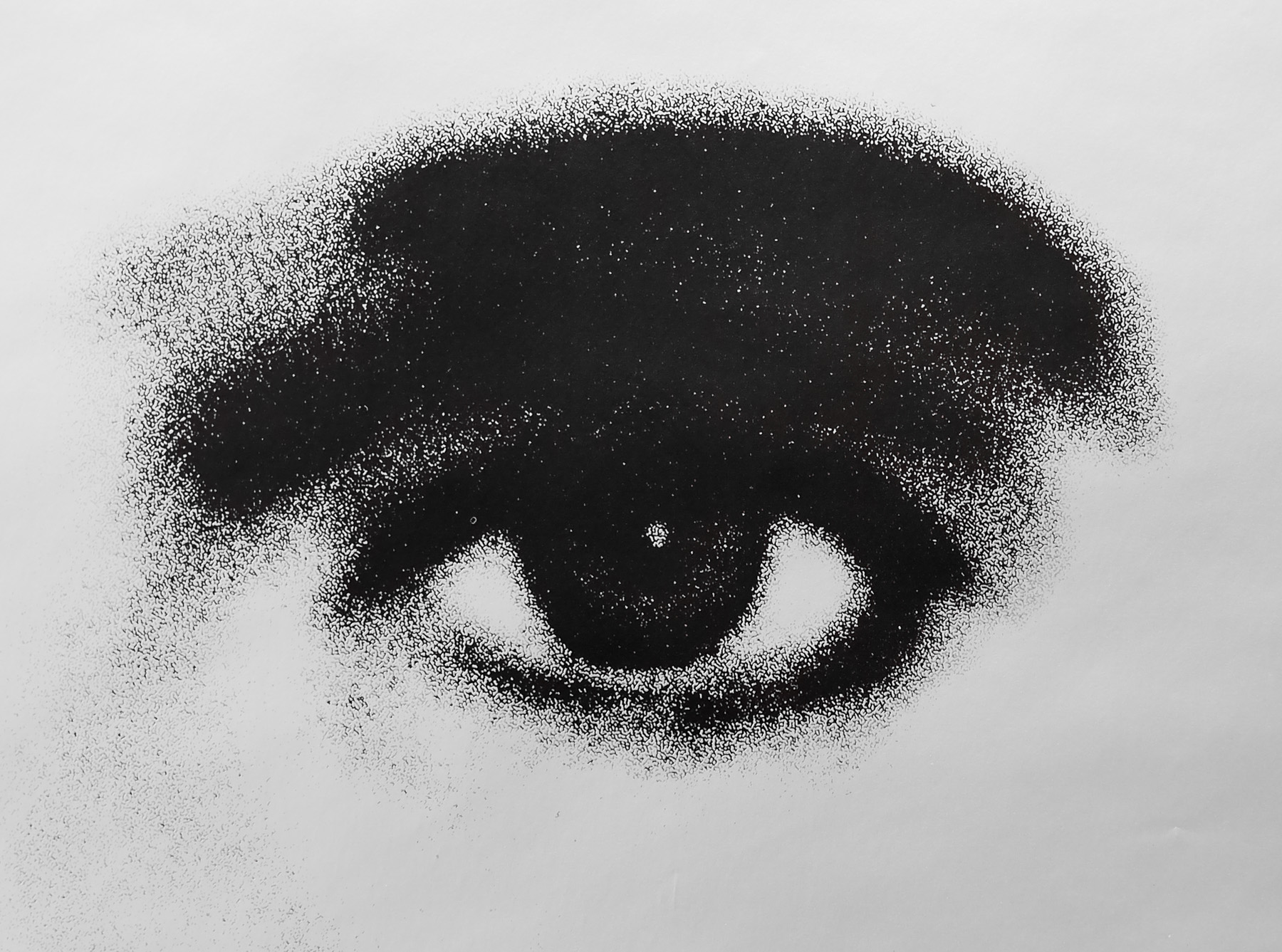
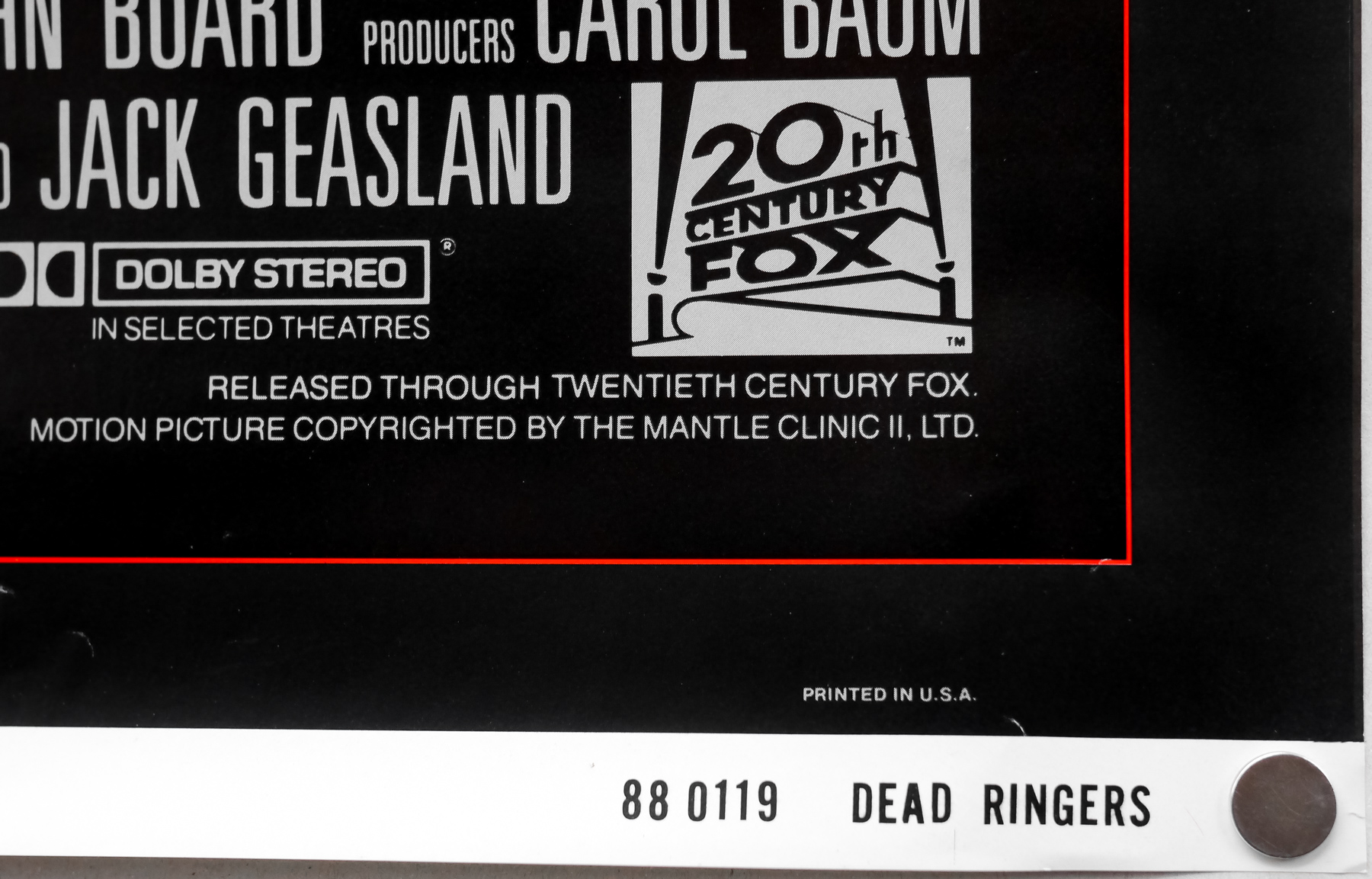
Upon its release in 1988, Dead Ringers was arguably Canadian director David Cronenberg‘s most mainstream release to date (as close as he’d come at least) and it was his first psychological thriller following a slew of horrors, including Scanners (1981) and The Fly (1986). Based on the novel ‘Twins’ by Bari Wood and Jack Geasland, the film was also influenced by the real life case of Stewart and Cyril Marcus and focuses on twin gynaecologists Beverly and Elliot Mantle (both played by Jeremy Irons) who practice in a Toronto clinic dealing with fertility problems. For years they have operated a system where the more confident Elliot seduces women who visit the clinic and then passes them onto the shy Beverly when he’s bored of them, with the women usually not noticing the deception.

One day troubled actress Claire Niveau (Geneviève Bujold) visits the clinic and Elliot does his usual seduction trick. Beverly then becomes infatuated with her, leading to a destabilising of the relationship between the brothers and, after Beverly begins taking the prescription drugs that Claire is addicted to, things take a turn for the worse. Soon paranoid delusions of ‘mutant women’ lead Beverly to purchasing a series of bizarre tools from a metallurgical artist. When he later attacks a patient at the clinic the twins are suspended from practice and set in motion a chain of events with a deadly conclusion.

Although more drama focused, the film still gave Cronenberg plenty of scope for his usual body horror tricks and although it’s not as bloody as previous efforts the film is no less disturbing. Irons impresses with his performance and the actor would win a few awards during the year of release.

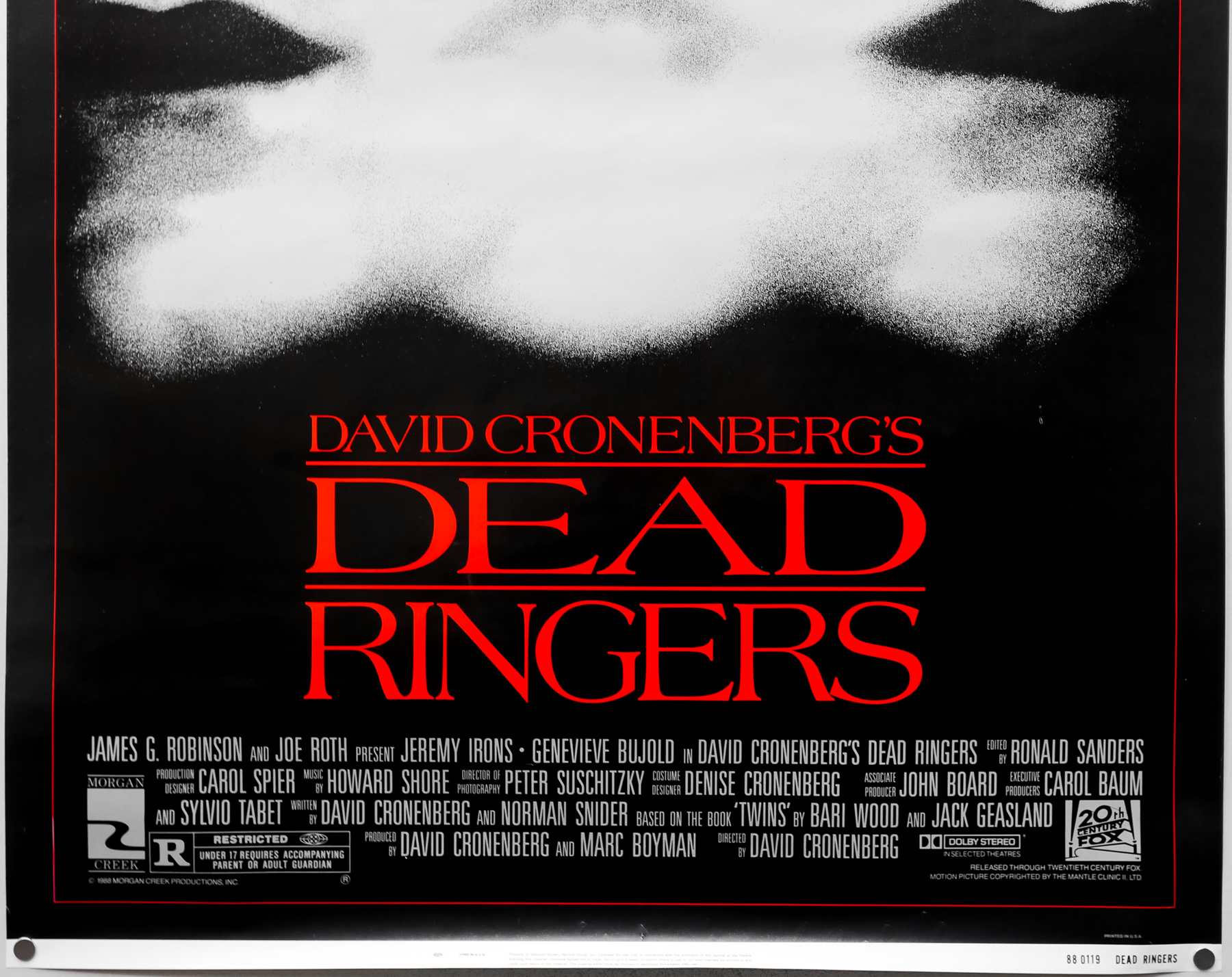
The poster was designed by Spiros Angelikas who was a prolific designer and artist of film posters during the 1970s and 1980s. He owned a design agency called Spiros Associates. Some of his most famous work includes the poster he designed for Friday the 13th, with artist Alex Ebel, and for his collaborations with the legendary artist Richard Amsel. They worked on Raiders of the Lost Ark and Nijinsky together and there’s a great article on the late artist’s website about their efforts. He also worked on several of the posters for the original Star Trek films, including the gorgeous Bob Peak original. There’s an interesting article by Angelikas’ son Harry on the Trek Core website which has photographs of concepts for the posters by Spiros that never made it to the print stage.

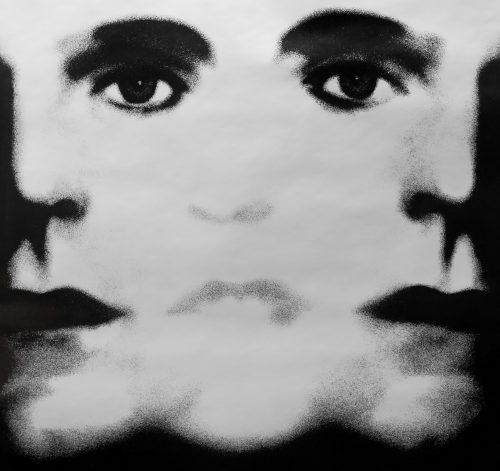
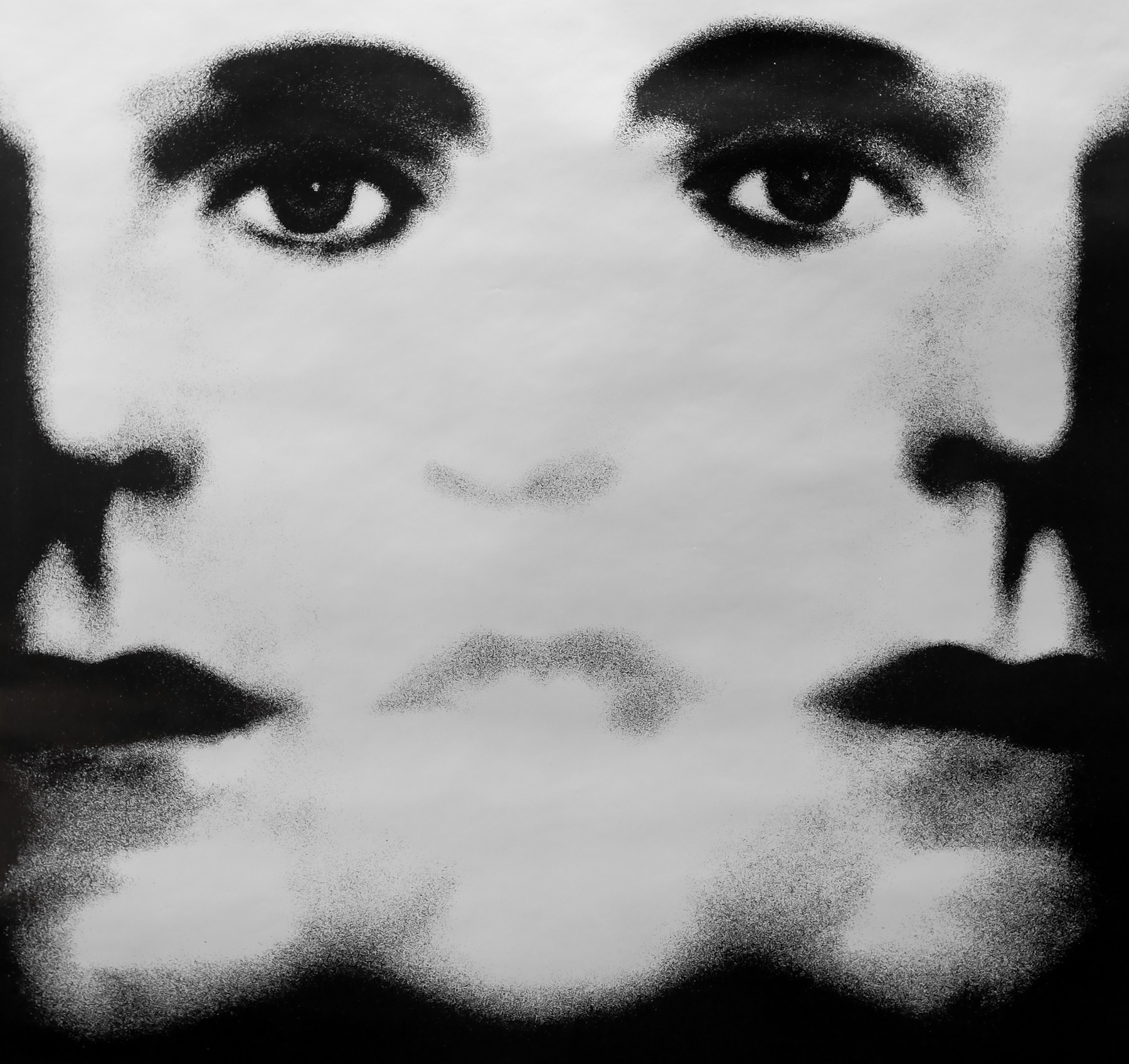
For this poster, not only did Spiros design the layout and type but he also put together the photo montage used for the central image of the melded faces.

One Flew Over the Cuckoo’s Nest / one sheet / USA

20.02.15

Poster Poster
Title
One Flew Over the Cuckoo's Nest
AKA
Gökboet (Sweden)
Year of Film
1975
Director
Miloš Forman
Starring
Jack Nicholson, Louise Fletcher, William Redfield, Brad Dourif, Will Sampson, Danny DeVito, Scatman Crothers, Christopher Lloyd
Origin of Film
USA
Genre(s) of Film
Jack Nicholson, Louise Fletcher, William Redfield, Brad Dourif, Will Sampson, Danny DeVito, Scatman Crothers, Christopher Lloyd,
Type of Poster
One sheet
Style of Poster
--
Origin of Poster
USA
Year of Poster
1975
Designer
Unknown
Artist
--
Size (inches)
27 2/16" x 41"
SS or DS
SS
NSS #
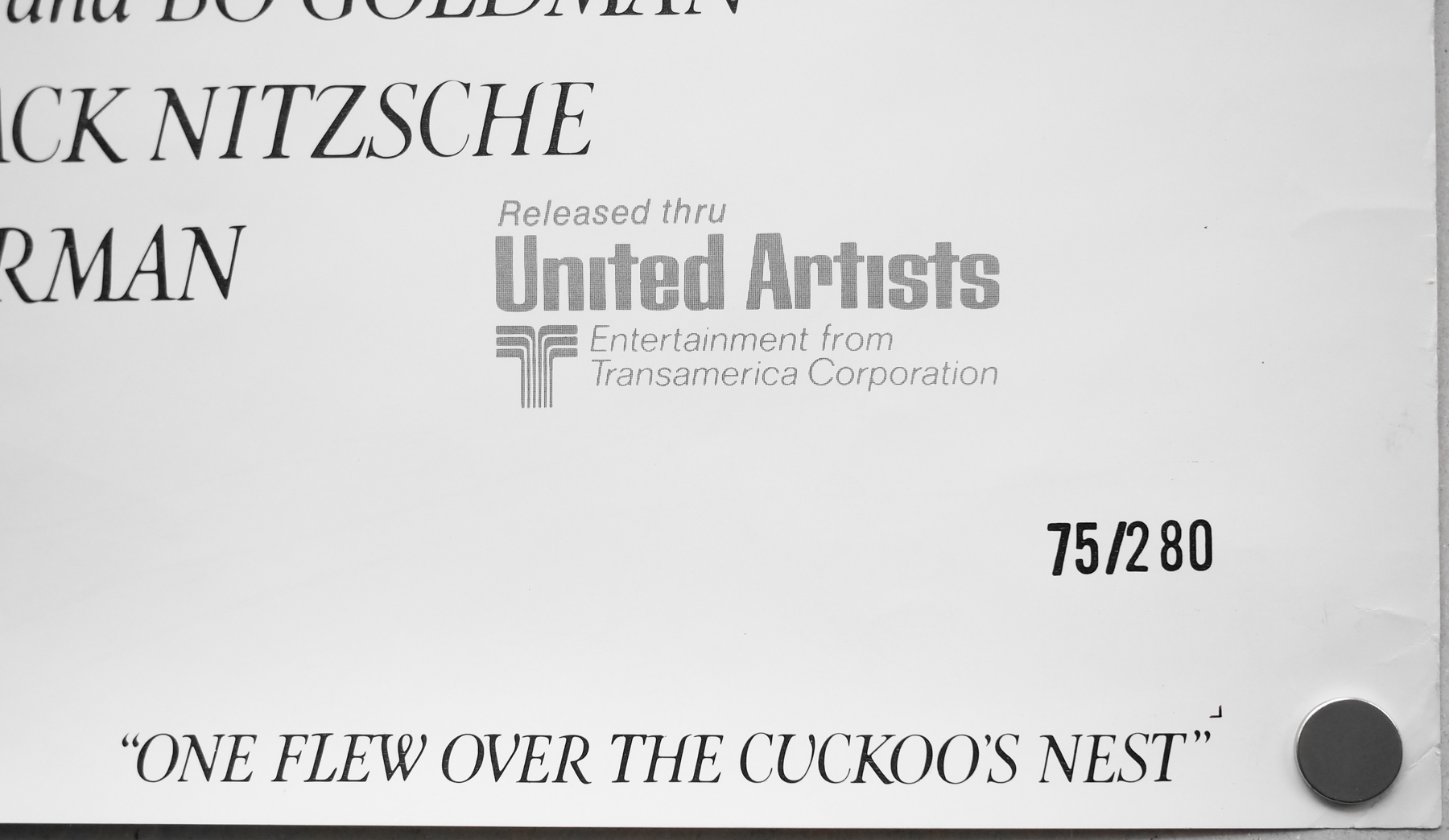
75/280
Tagline
--

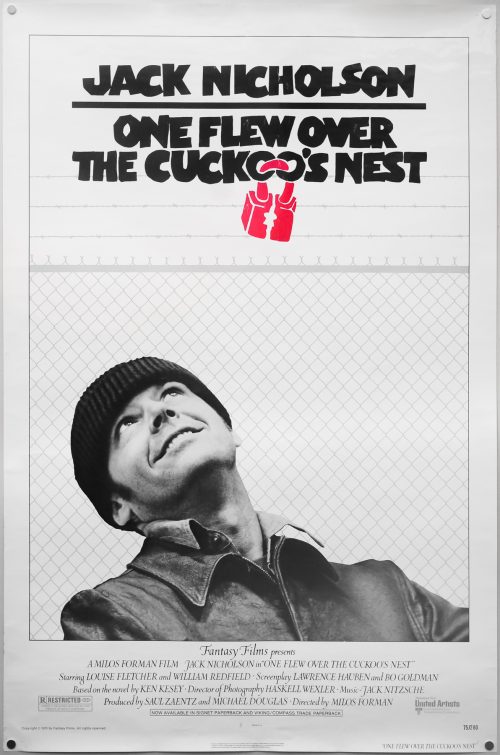
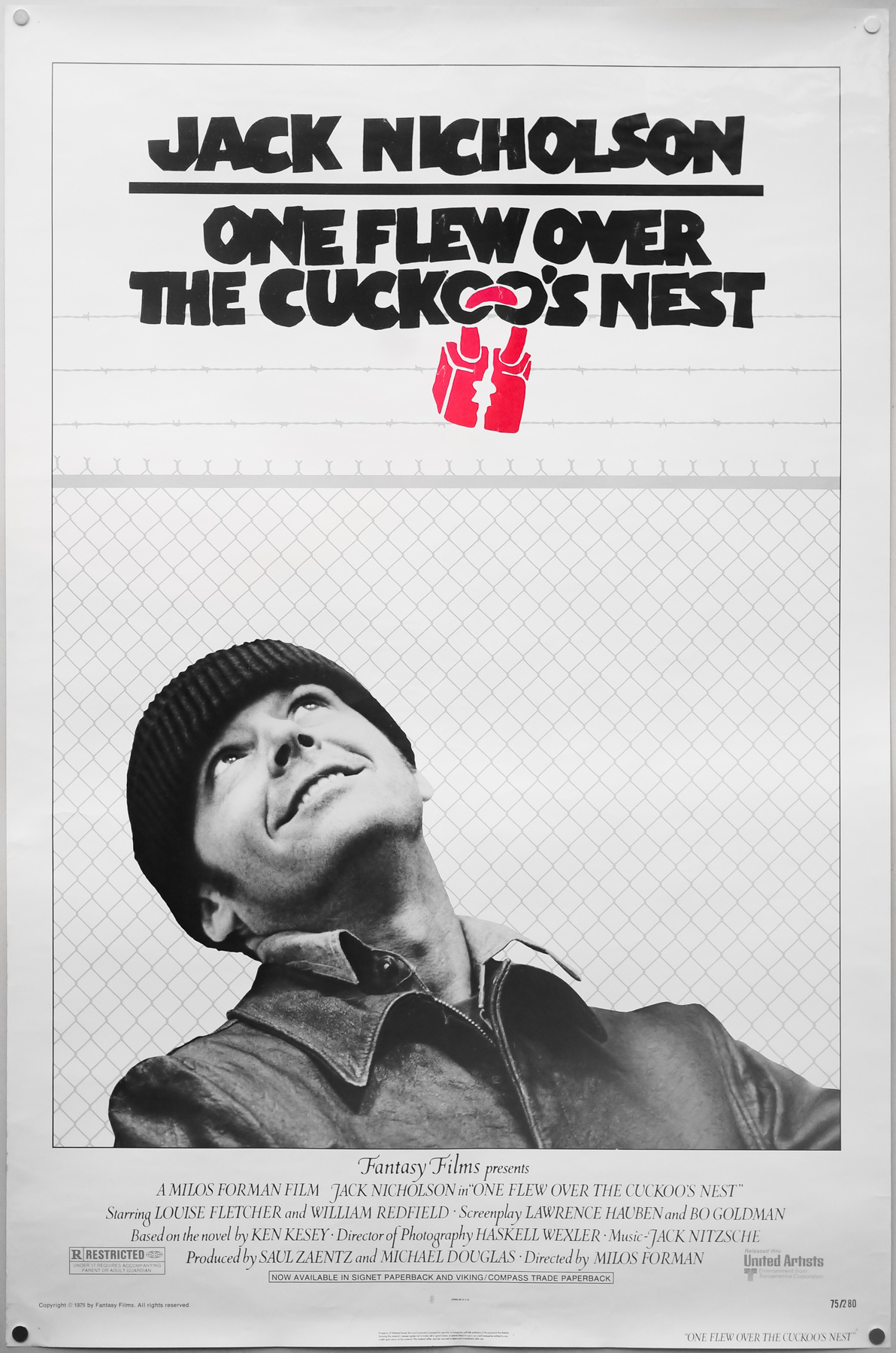
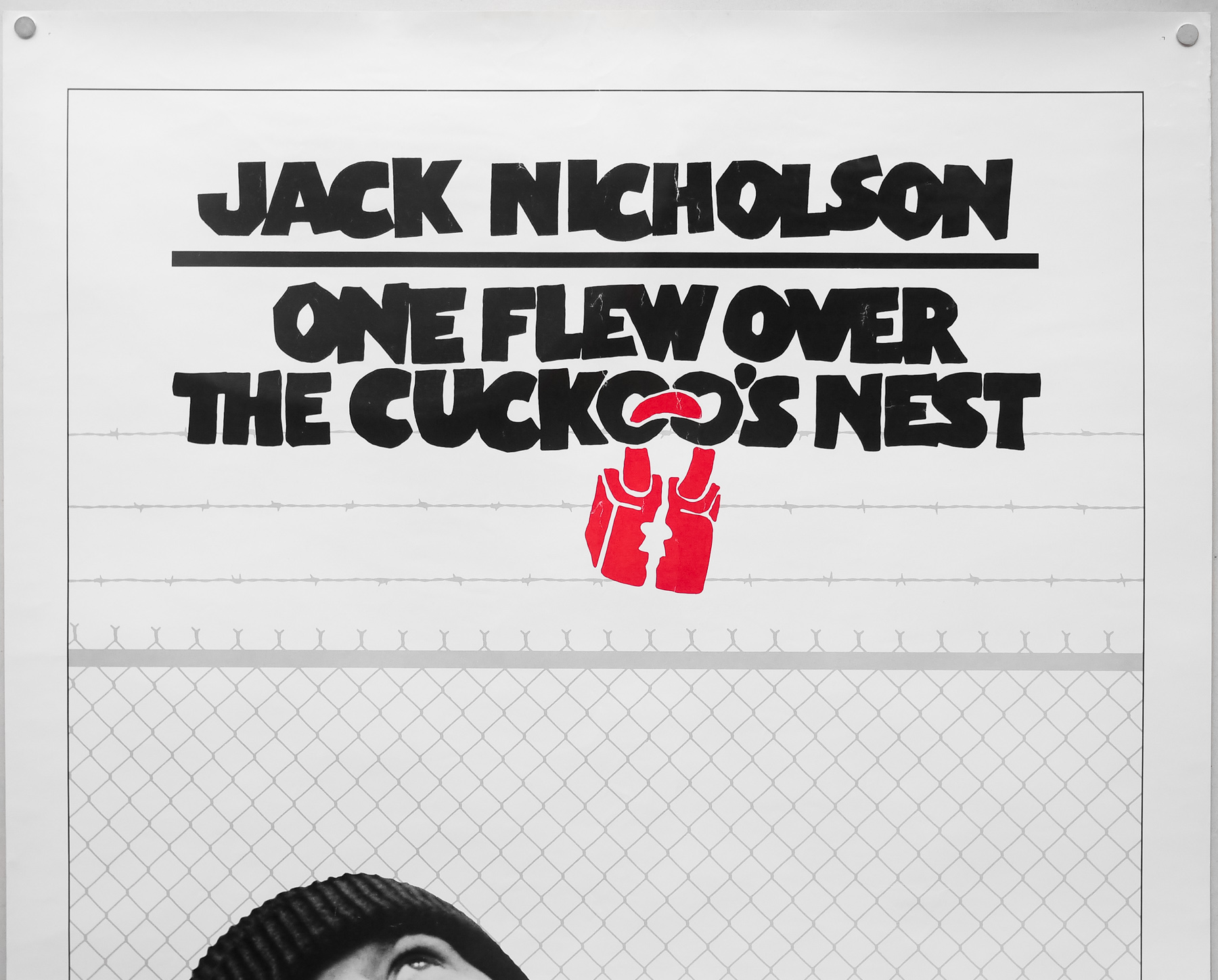
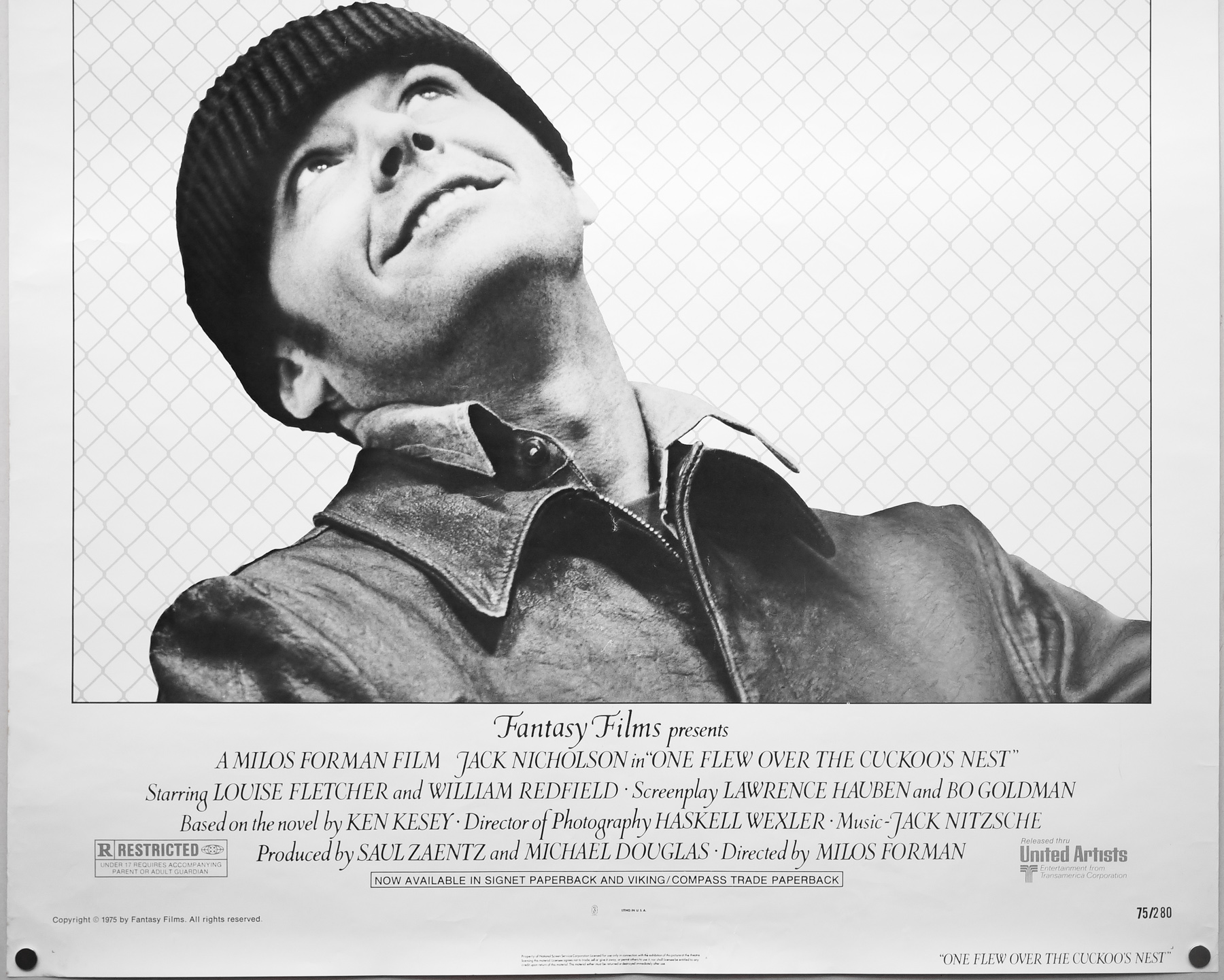
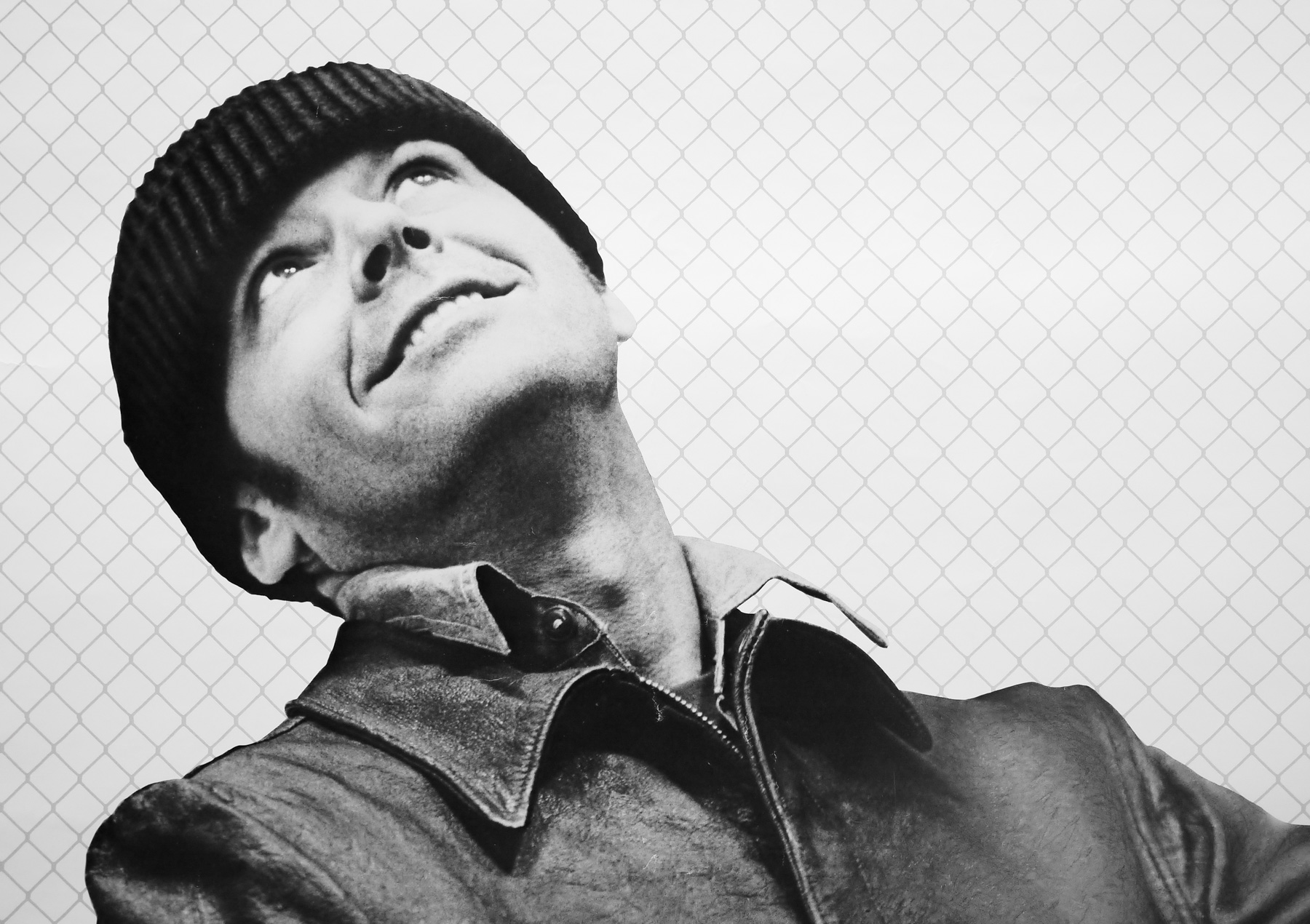
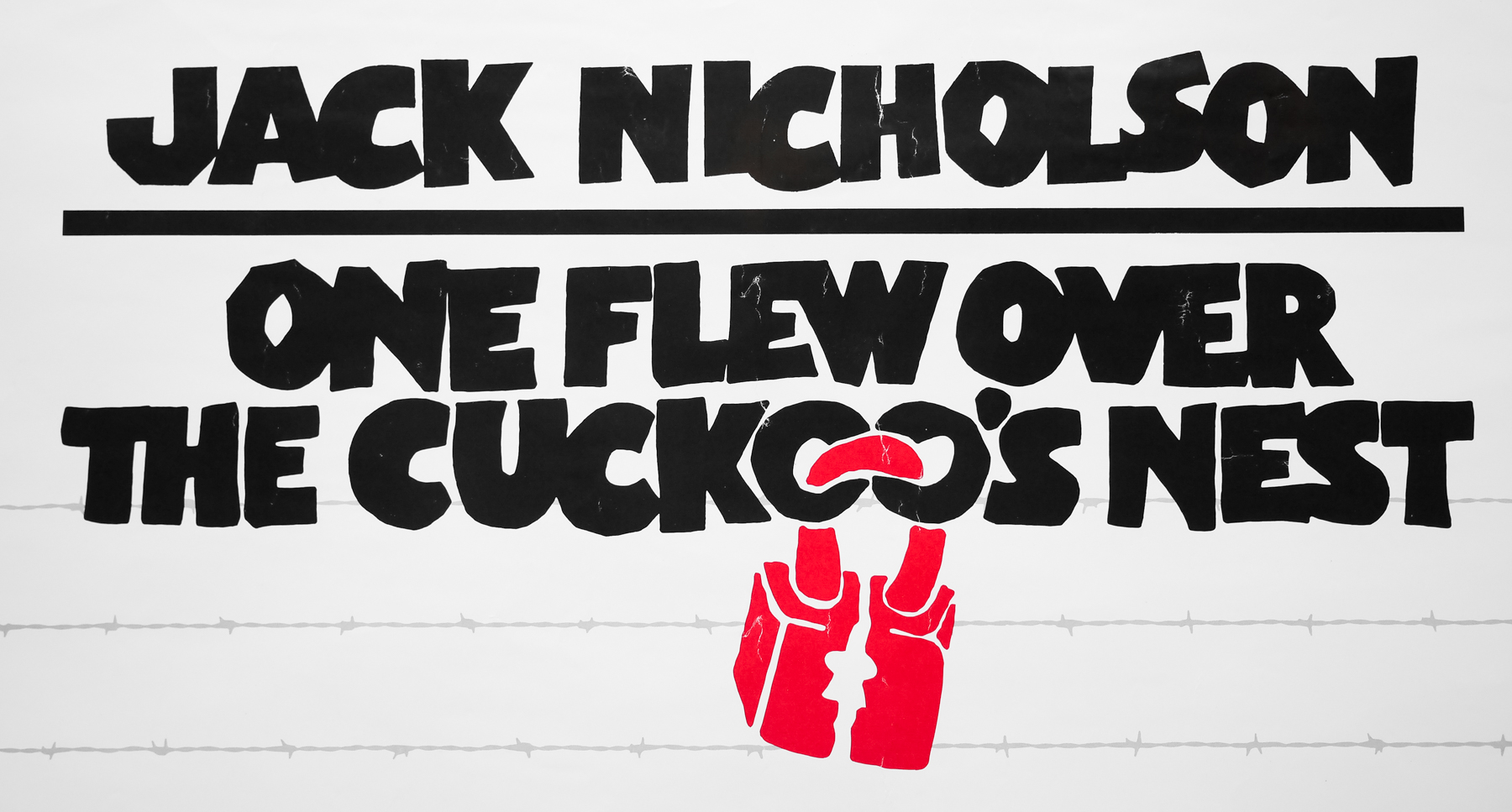
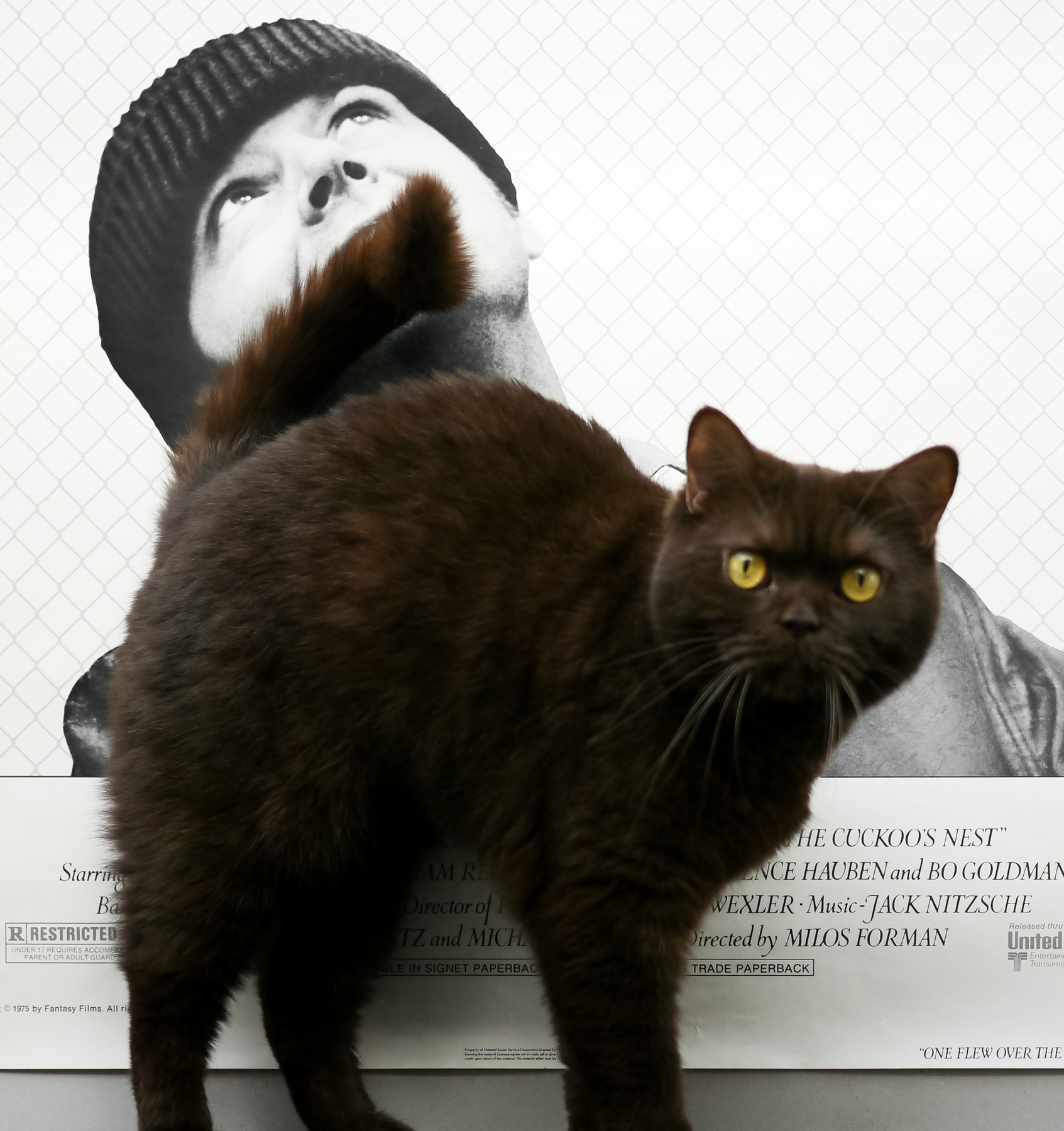
Arguably Jack Nicholson‘s finest performance (not an easy choice when there are films like Chinatown), One Flew Over the Cuckoo’s Nest is one of only three films that have won all five major Academy Awards (Best Picture, Actor in Lead Role, Actress in Lead Role, Director, and Screenplay), with the others being It Happened One Night (1934) and The Silence of the Lambs (1991). Based on the 1962 novel of the same name by Ken Kesey, the film focuses on goings on inside Oregon State Mental Hospital, which is where the book is set and, fortuitously, production was able to take place.

Nicholson plays Randall McMurphy a lifelong petty criminal who is sent to the mental hospital for evaluation after he fakes insanity in order to try and avoid a prison sentence in a traditional jail. After adjusting to life among genuinely disturbed characters including Billy Bibbit (Brad Dourif) and Martini (Danny DeVito) and Taber (Christopher Lloyd) he starts to lead a small rebellion agains the authorities in the hospital and gains a cult status amongst the patients. But McMurphy hasn’t reckoned on the determination of the cruel Nurse Ratched (an unforgettable Louise Fletcher) who realises how much of a threat he is to life at the hospital and the tension between them escalates until a shocking ending that hasn’t lost it’s power 40 years on.

The film was a huge box-office and critical success with the Academy Awards being only some of the many accolades the film would garner. The film has been oft parodied in the years since with several elements of the story entering the cultural lexicon, such as uncompromising authoritarian figures often being referred to as being Ratched-like.

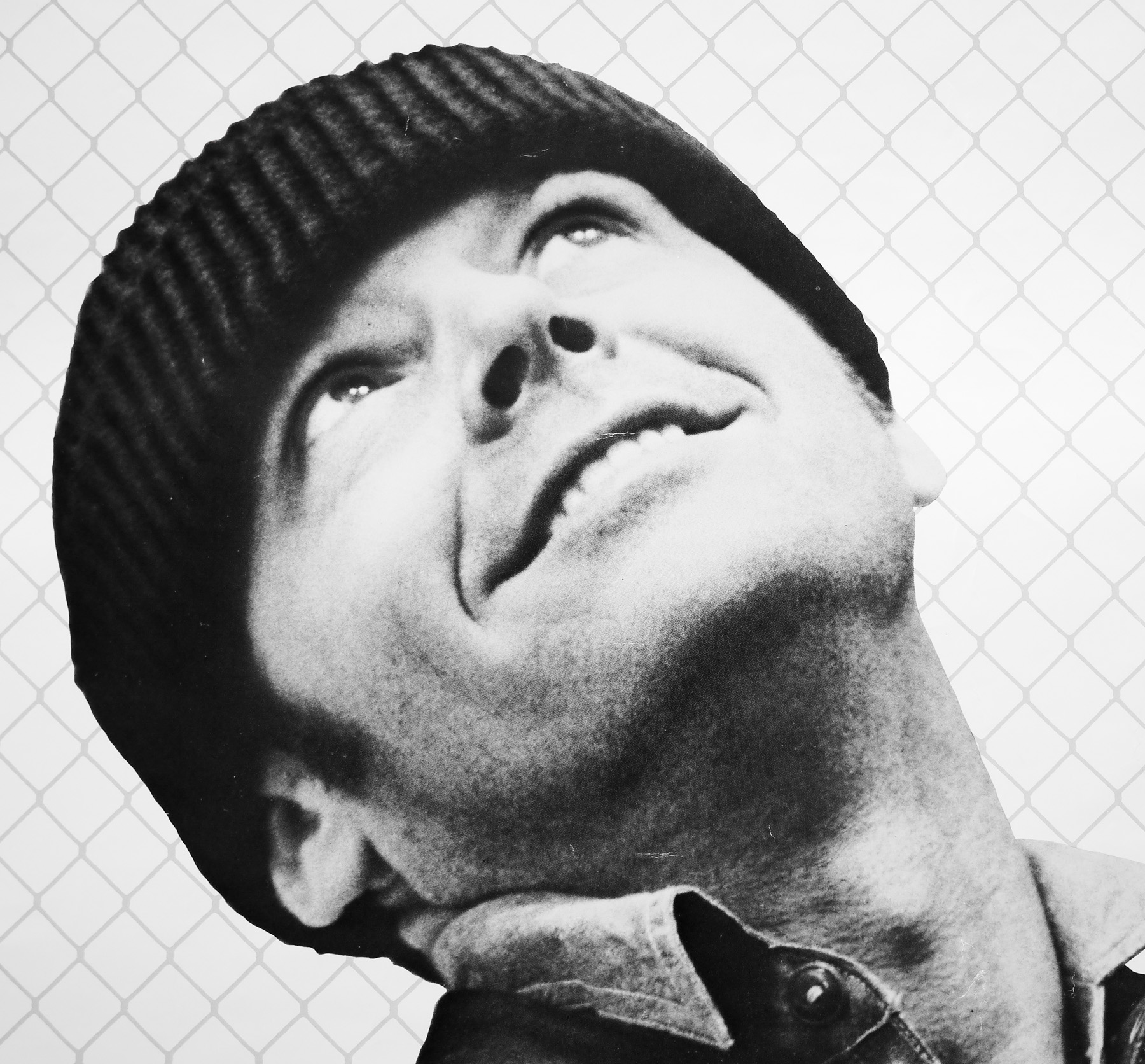
I’m unsure who’s responsible for the design of this poster so if anyone has any ideas please get in touch.

Hobo With A Shotgun / one sheet / USA

08.05.15

Poster Poster
Title
Hobo With a Shotgun
AKA
--
Year of Film
2011
Director
Jason Eisener
Starring
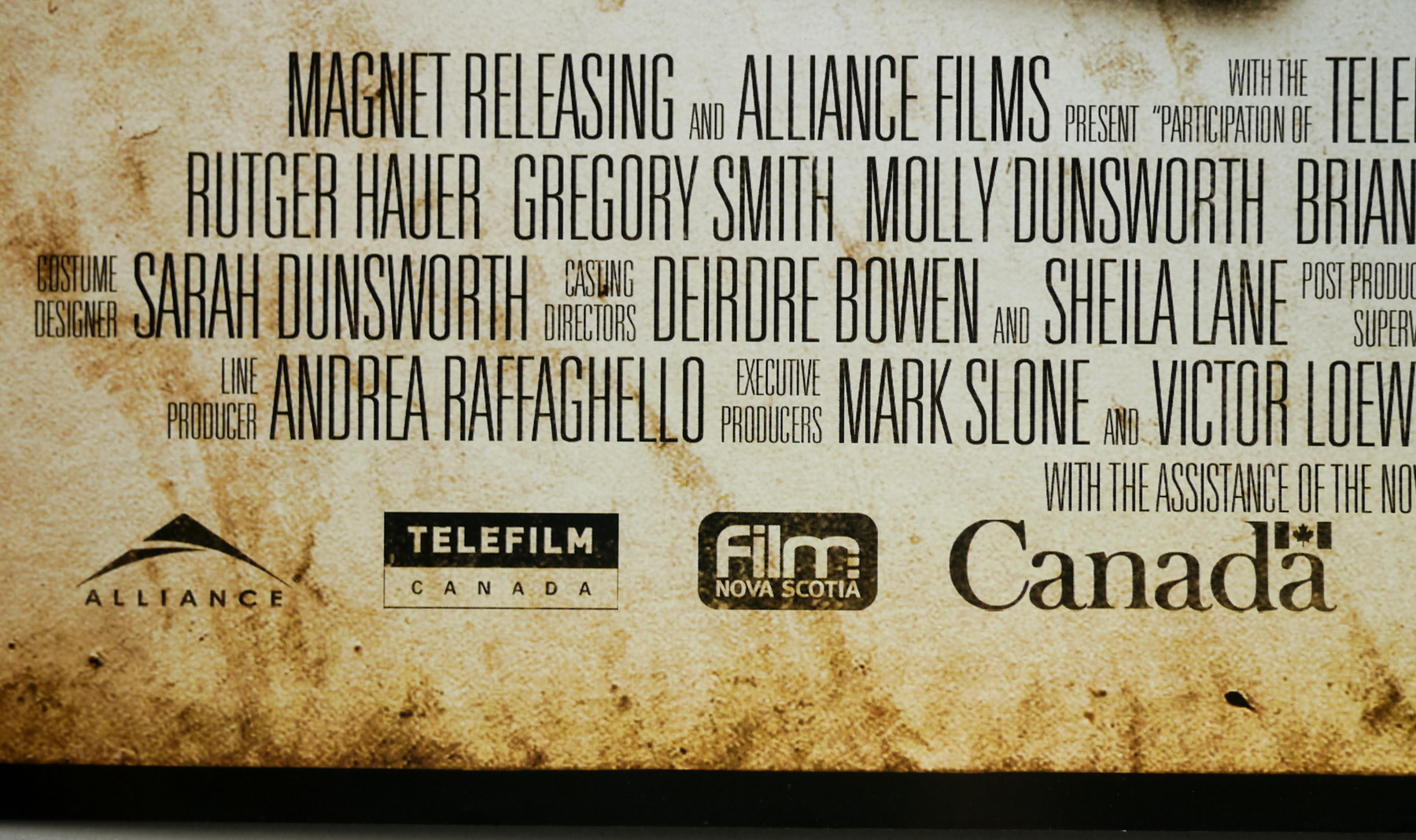
Rutger Hauer, Pasha Ebrahimi, Robb Wells, Brian Downey, Gregory Smith, Nick Bateman, Drew O'Hara, Molly Dunsworth, Jeremy Akerman
Origin of Film
Canada
Genre(s) of Film
Rutger Hauer, Pasha Ebrahimi, Robb Wells, Brian Downey, Gregory Smith, Nick Bateman, Drew O'Hara, Molly Dunsworth, Jeremy Akerman,
Type of Poster
One sheet
Style of Poster
--
Origin of Poster
USA
Year of Poster
2011
Designer
Tom Hodge AKA The Dude Designs
Artist
Tom Hodge AKA The Dude Designs
Size (inches)
27 1/16" x 39 13/16"
SS or DS
SS
Tagline
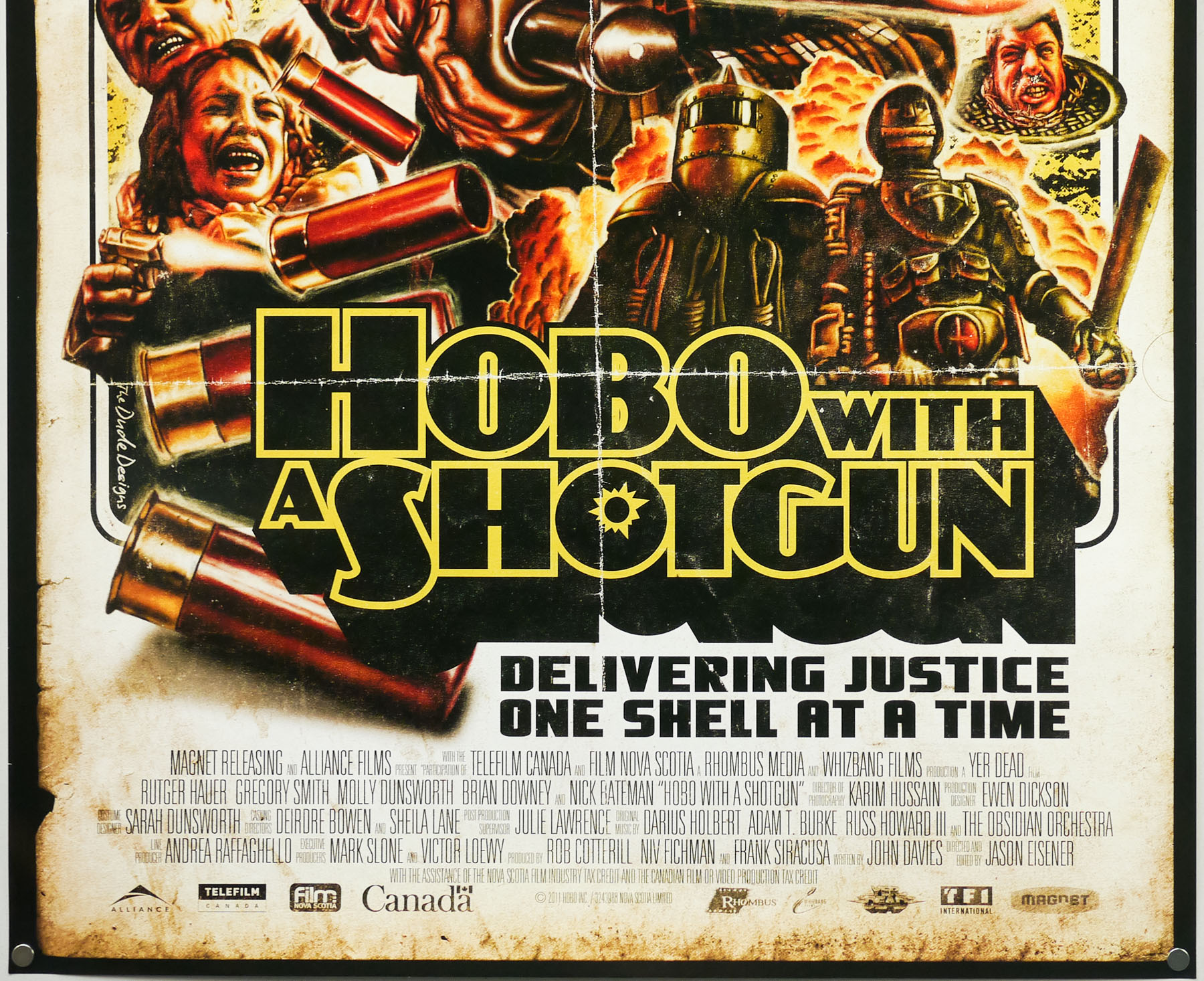
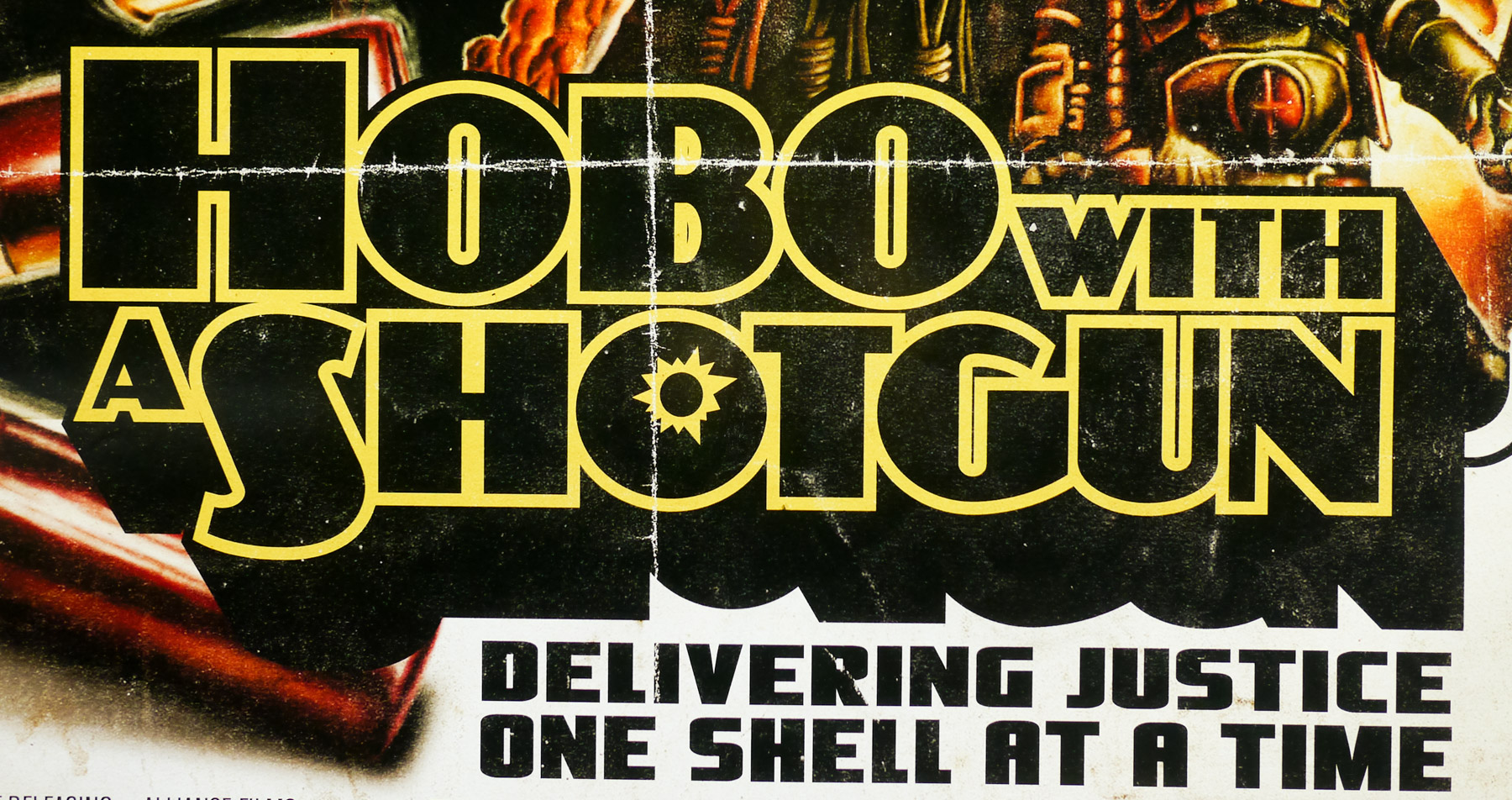
Delivering justice one shell at a time

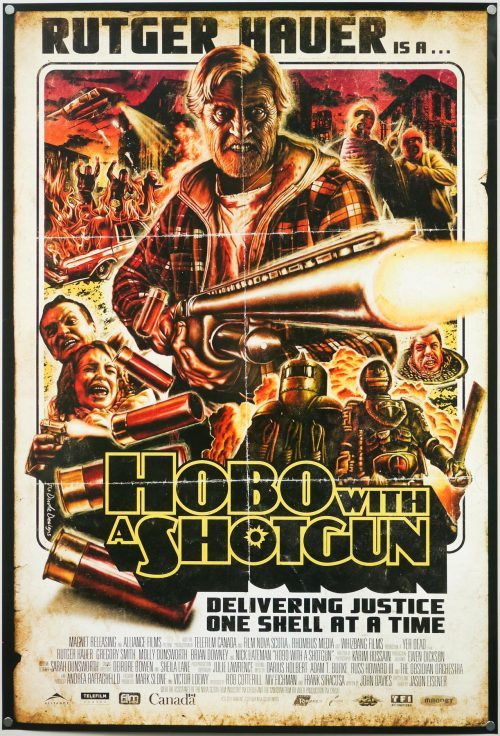
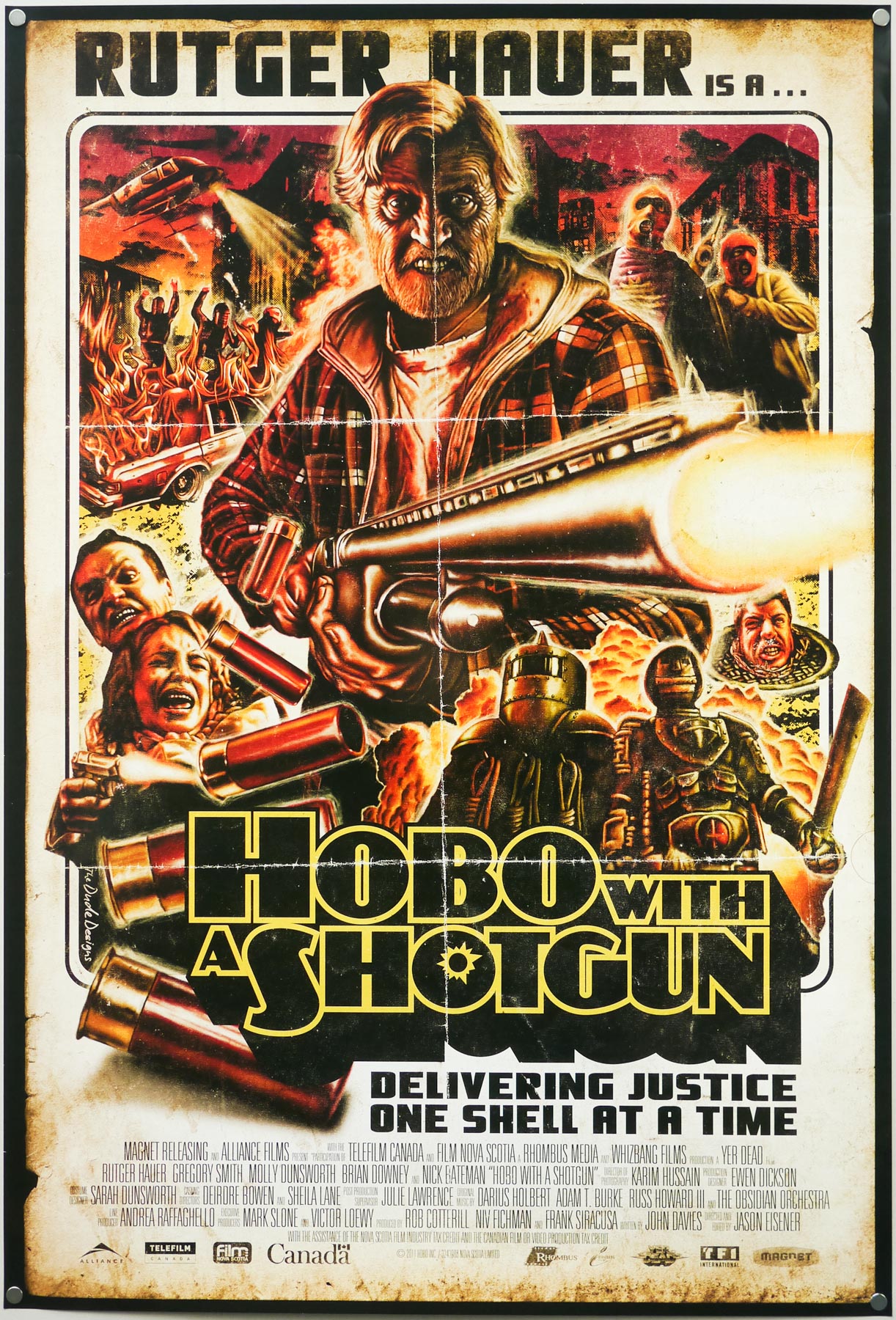
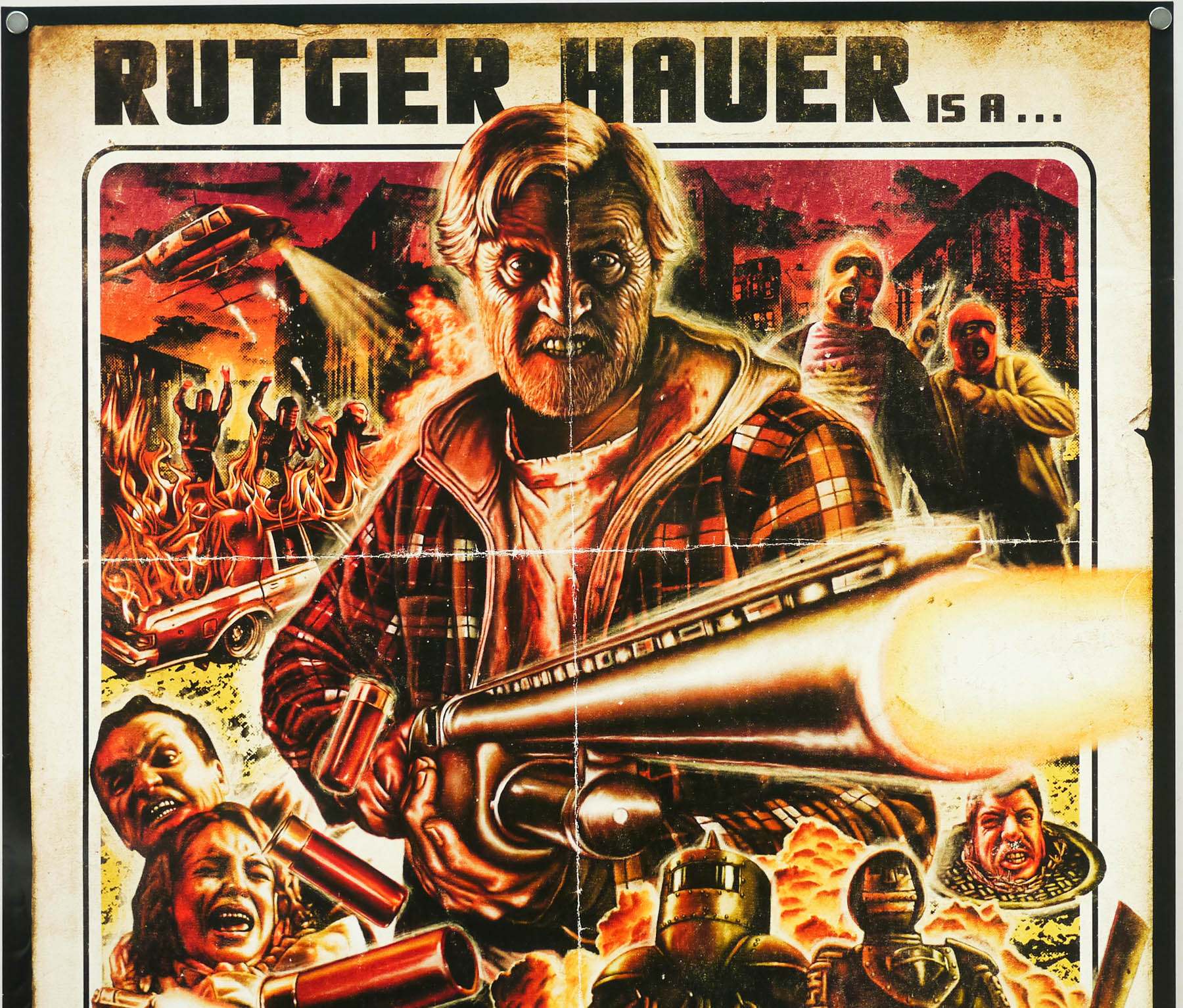
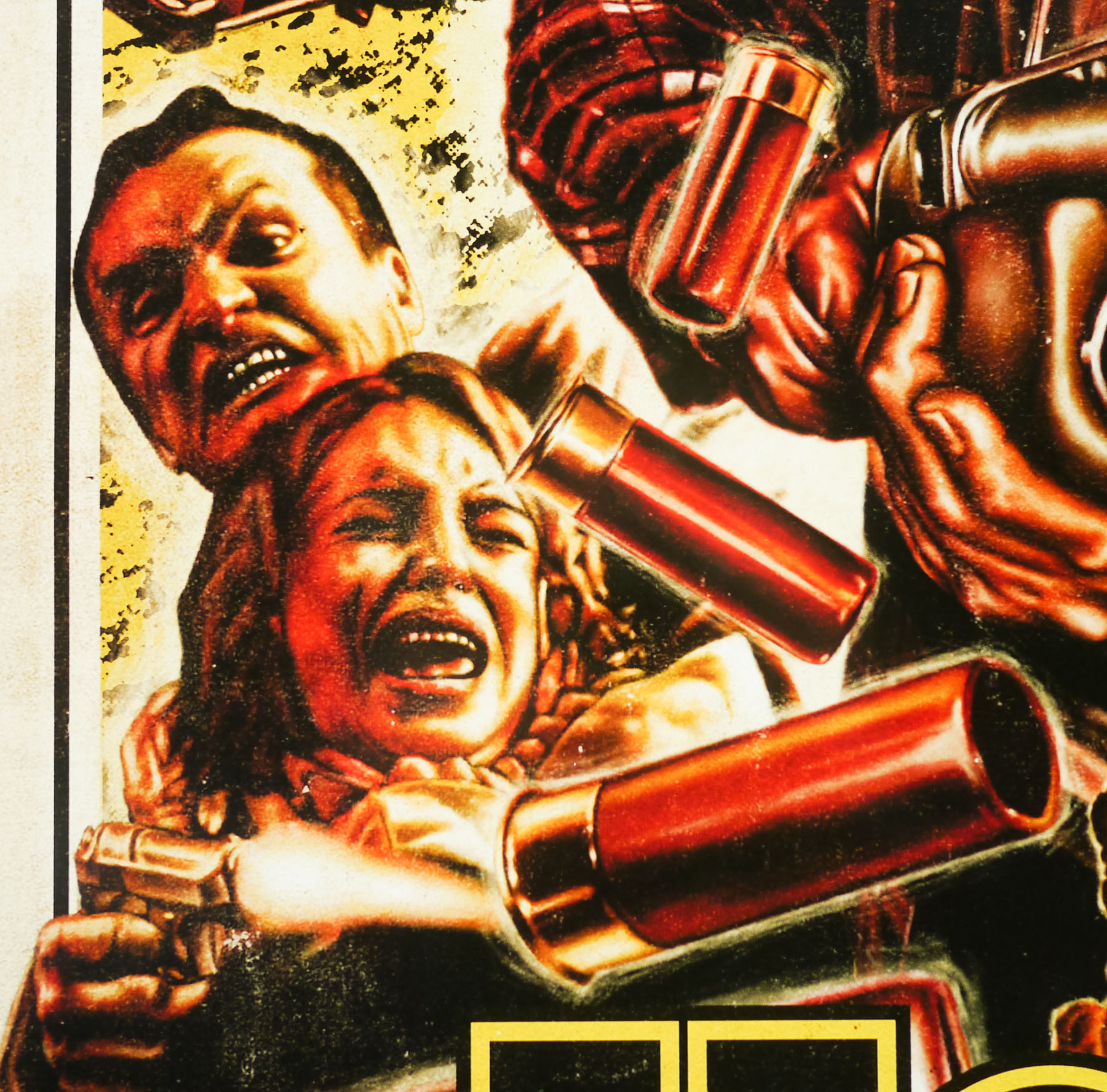
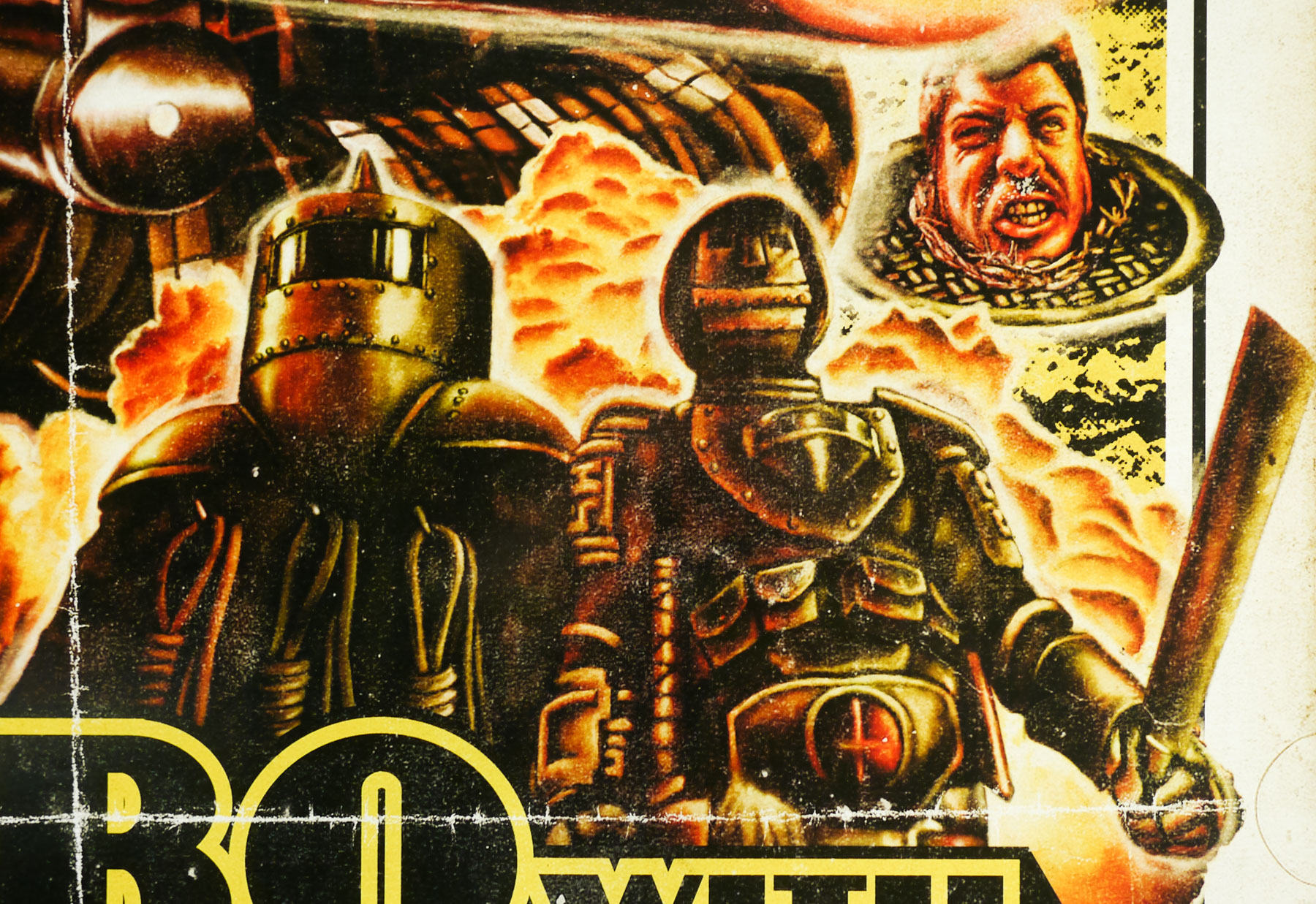
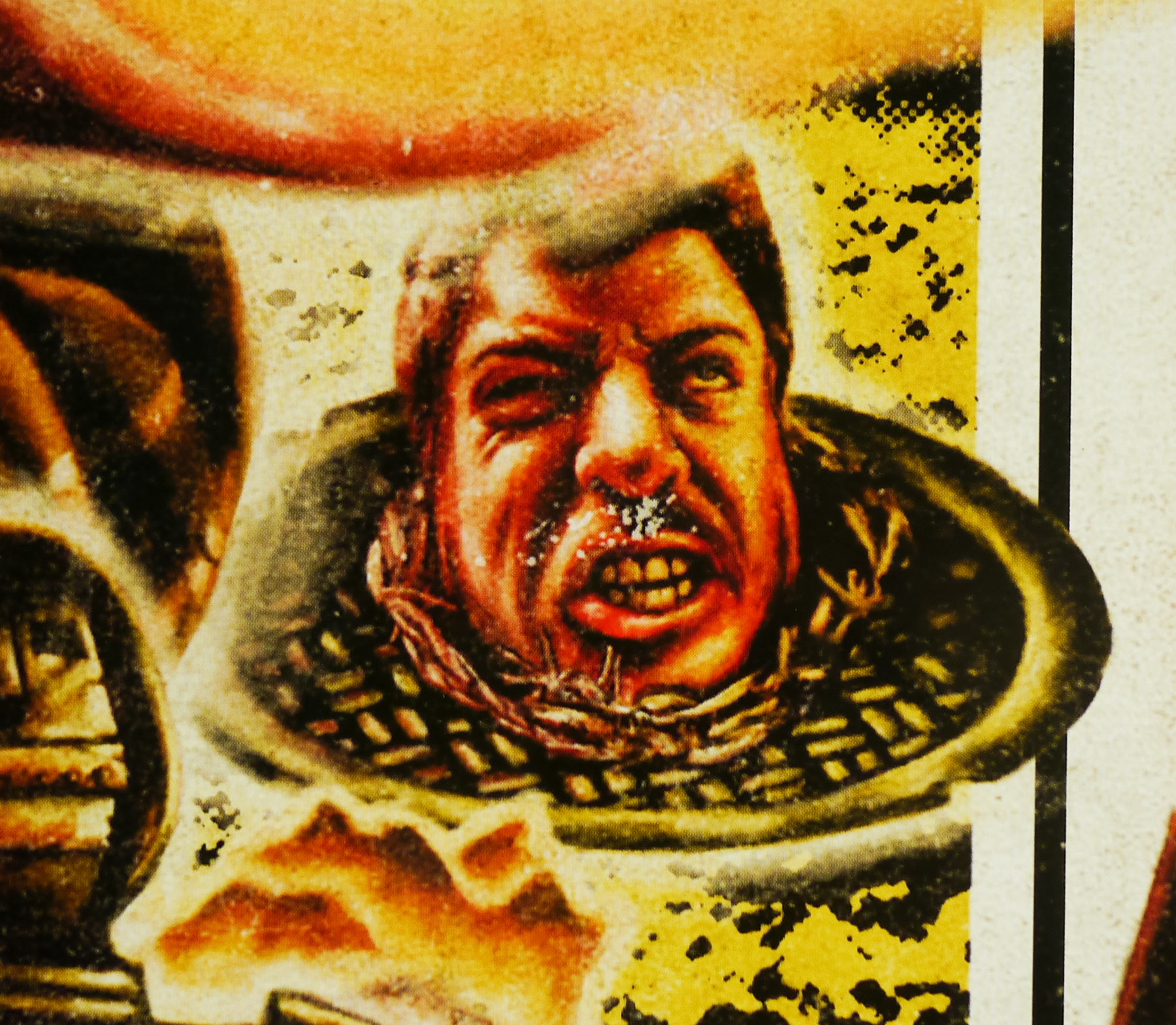
Hobo With a Shotgun is a Canadian exploitation action film which started out as a fake trailer that was the winning entry in a competition held as part of the promotion of Quentin Tarantino and Robert Rodriguez’s Grindhouse. Prior to the 2007 South By Southwest festival (held annually in Austin, Texas) Rodriguez challenged budding filmmakers to create a trailer that celebrated exploitation and horror films, which would then be shown as part of a panel on Grindhouse cinema.

This CinemaBlend article describes the event and confirms that the trailer by Nova Scotians Jason Eisener, John Davies, and Rob Cotterill was the winner. When Grindhouse was shown in cinemas in the US there were several fake trailers shown around the two main features, shot by the likes of Edgar Wright and Rob Zombie, and the Hobo With a Shotgun was shown alongside them in several Canadian cinemas. In 2010 Rodriguez turned his fake Grindhouse trailer for a film called Machete, starring long-time collaborator Danny Trejo, into a feature-length release and Jason Eisener then followed suit with a full-length version of Hobo in 2011.

The film stars Rutger Hauer as the titular homeless man who arrives in the fictional Hope Town only to discover it is now known as Scum Town and is ruled over by crime boss Drake and his psychotic sons Ivan and Slick. The family have a stranglehold over the town and the hobo witnesses robberies, brutal violence and prostitution as he wanders the streets. Although he initially dreams of buying a lawnmower from a pawnshop to earn money through landscaping, an encounter with Slick and Ivan steels his resolve to do something about the injustice he’s seen. The same pawnshop has shotguns for sale and so the hobo sets out to clean up the streets, delivering justice one shell at a time!

The film absolutely nails the grindhouse aesthetic and has clearly been made by someone with genuine reverence for the films that defined the genre. The production design is top notch throughout with Dartmouth and Halifax in Nova Scotia turned convincingly into the crime-ridden Scum Town. It’s also filled with excellent performances from actors who are clearly enjoying delivering the outlandish lines that John Davies’ script contains, but Hauer steals the show with his enjoyment of playing the vengeful hobo clear to see. The soundtrack is also notably excellent and perfectly suits the action on screen.

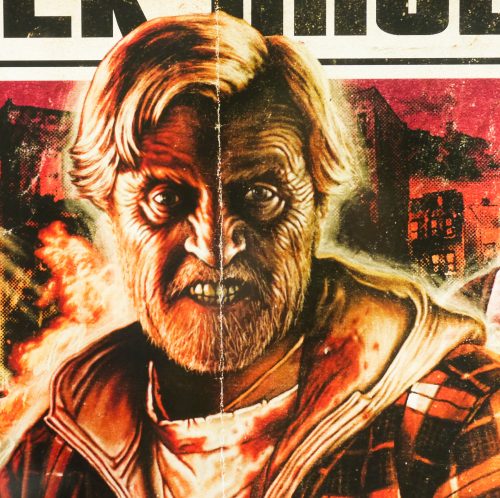
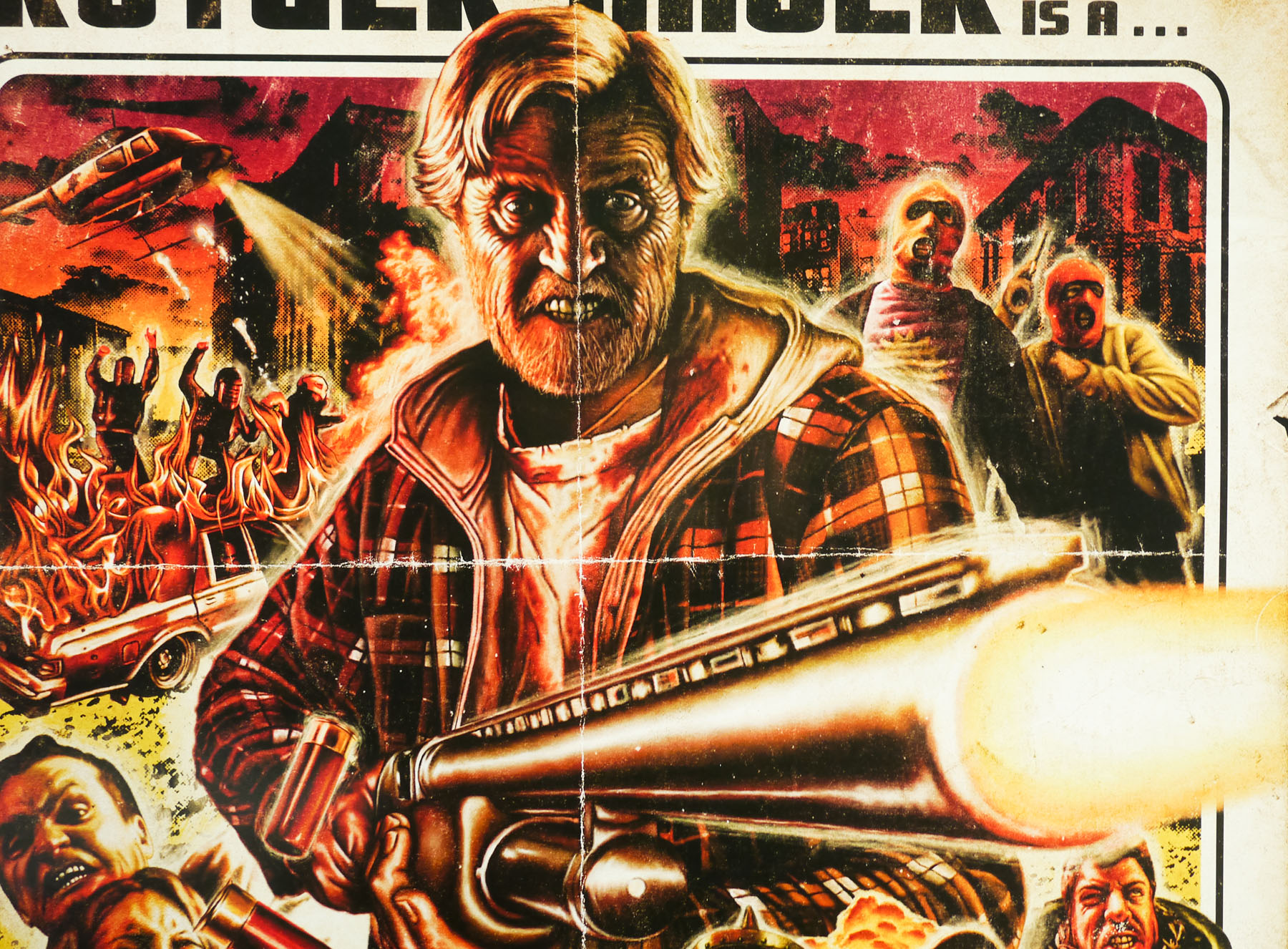
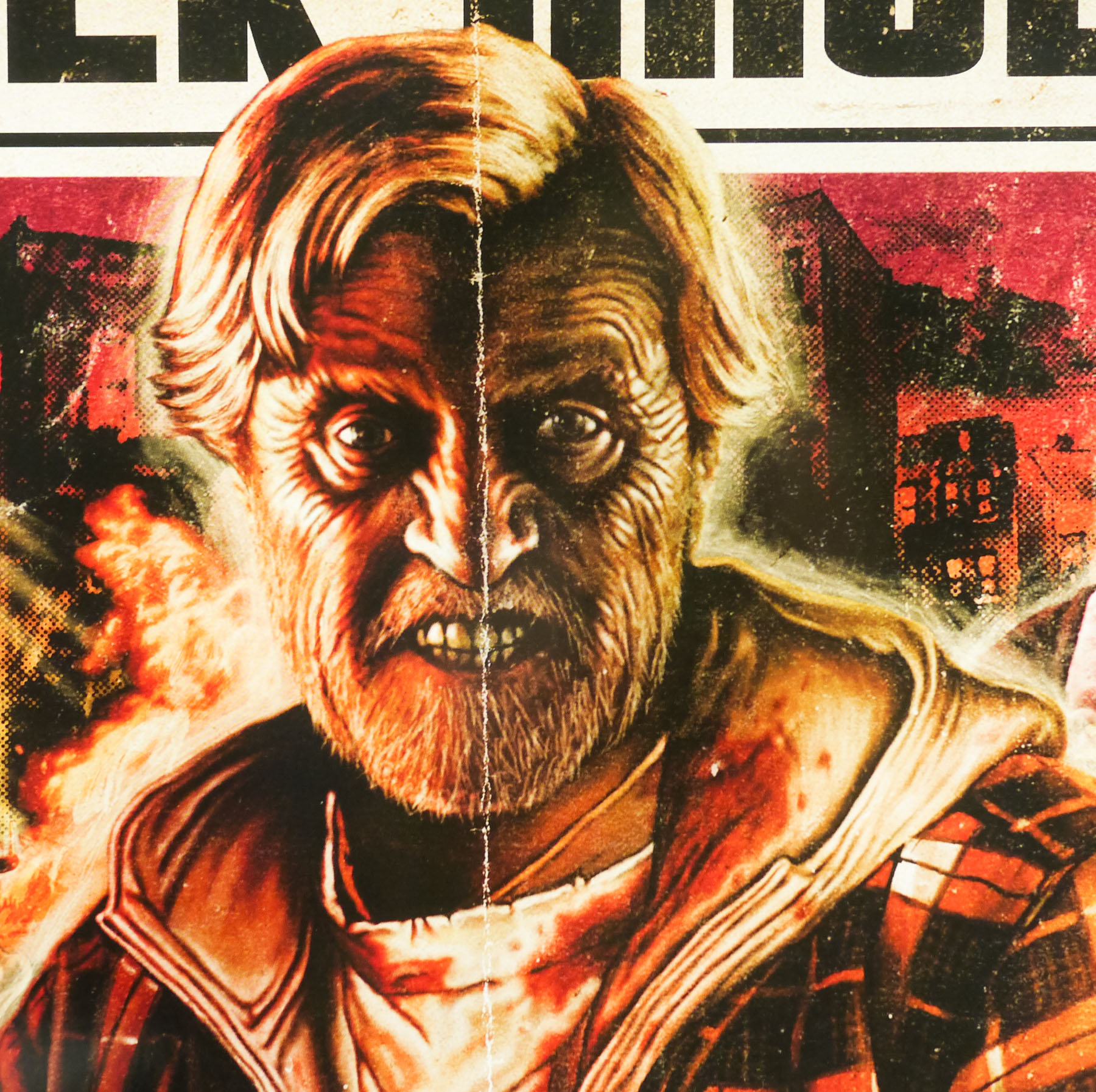
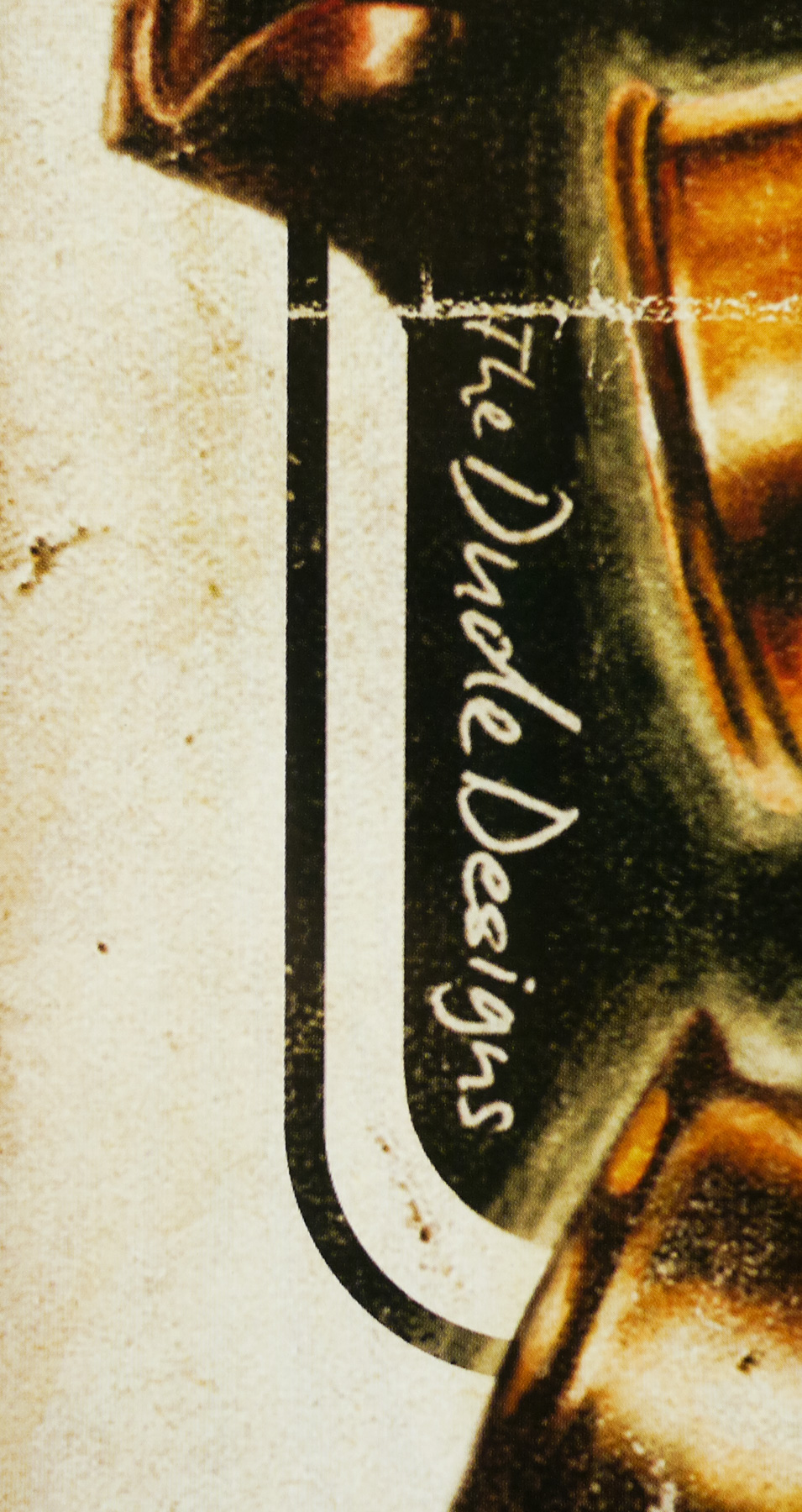
This poster was designed and illustrated by Tom Hodge AKA The Dude Designs, a Brit who has worked for over 12 years creating advertising materials for films and games, and is a big proponent of continuing the use of painted artwork over computer-generated montages. The about page on his official site details several of the companies he’s provided illustrations for, which includes Mondo, Arrow Video and Death Waltz Records (he created their logo, amongst other projects). The site also includes galleries of his work, which includes this great cover for the Shout Factory release of John Carpenter’s They Live. It’s my belief that this poster for Hobo was the first one of his to be printed and used around the world to advertise the film.

Blow Out / one sheet / USA

18.05.15

Poster Poster
Title
Blow Out
AKA
--
Year of Film
1981
Director
Brian De Palma
Starring
John Travolta, Nancy Allen, John Lithgow, Dennis Franz, Peter Boyden, Curt May, John Aquino, John McMartin
Origin of Film
USA
Genre(s) of Film
John Travolta, Nancy Allen, John Lithgow, Dennis Franz, Peter Boyden, Curt May, John Aquino, John McMartin,
Type of Poster
One sheet
Style of Poster
--
Origin of Poster
USA
Year of Poster
1981
Designer
Unknown
Artist
--
Size (inches)
27 1/16" x 41"
SS or DS
SS
NSS #
810132
Tagline
Murder has a sound all of its own

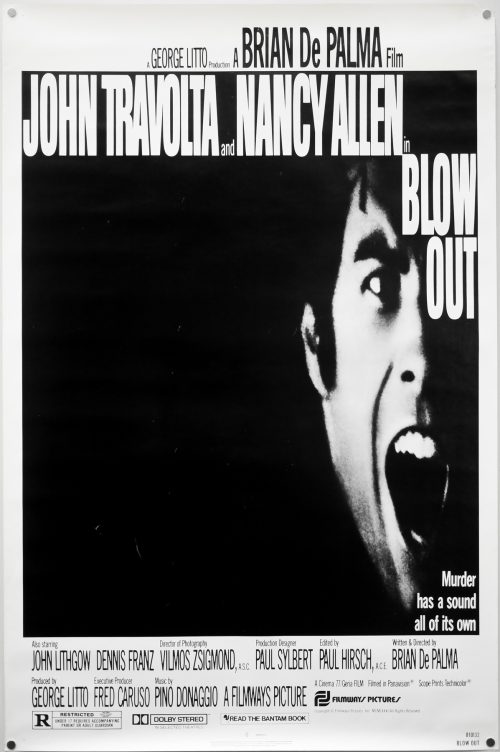
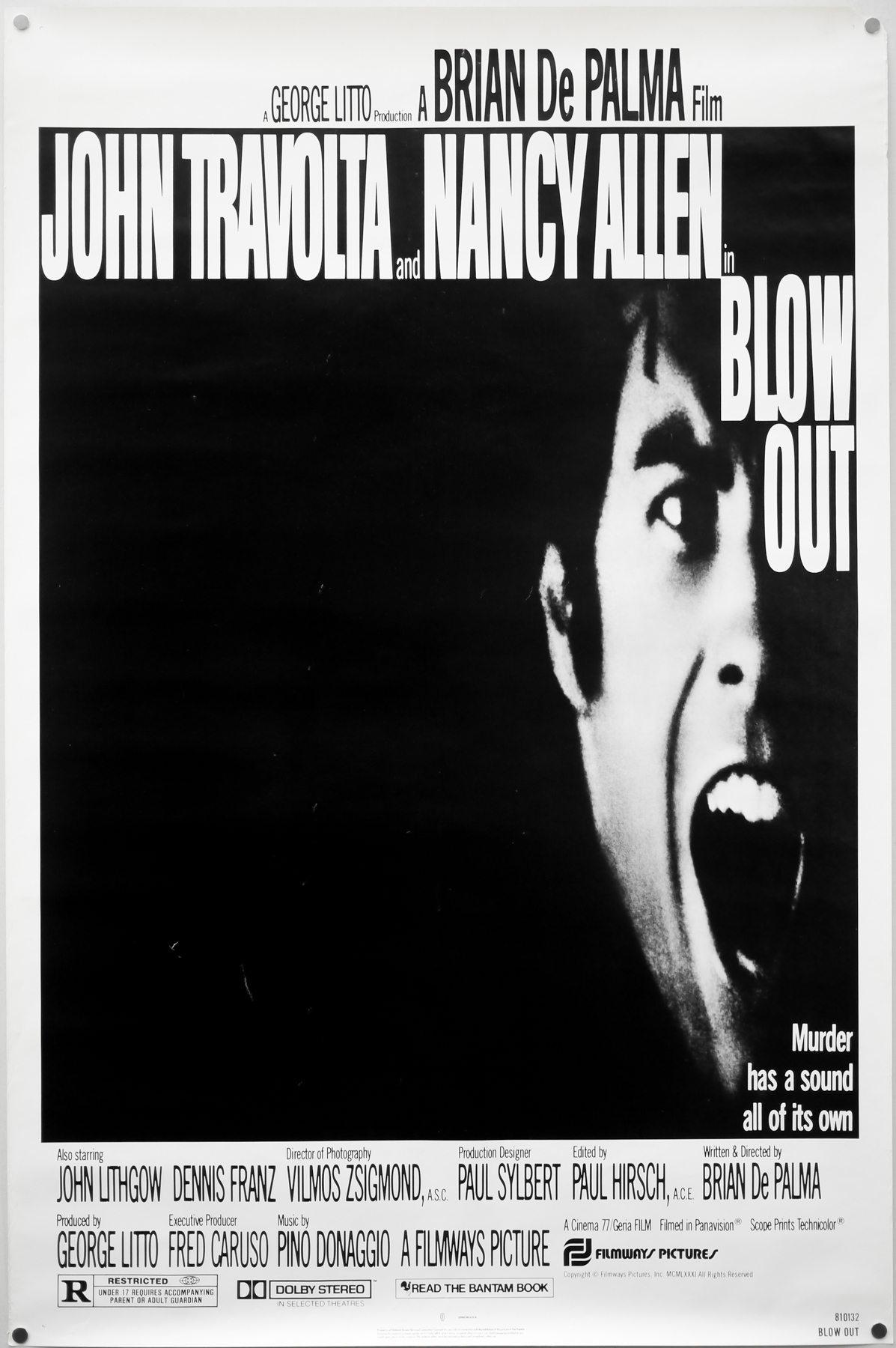
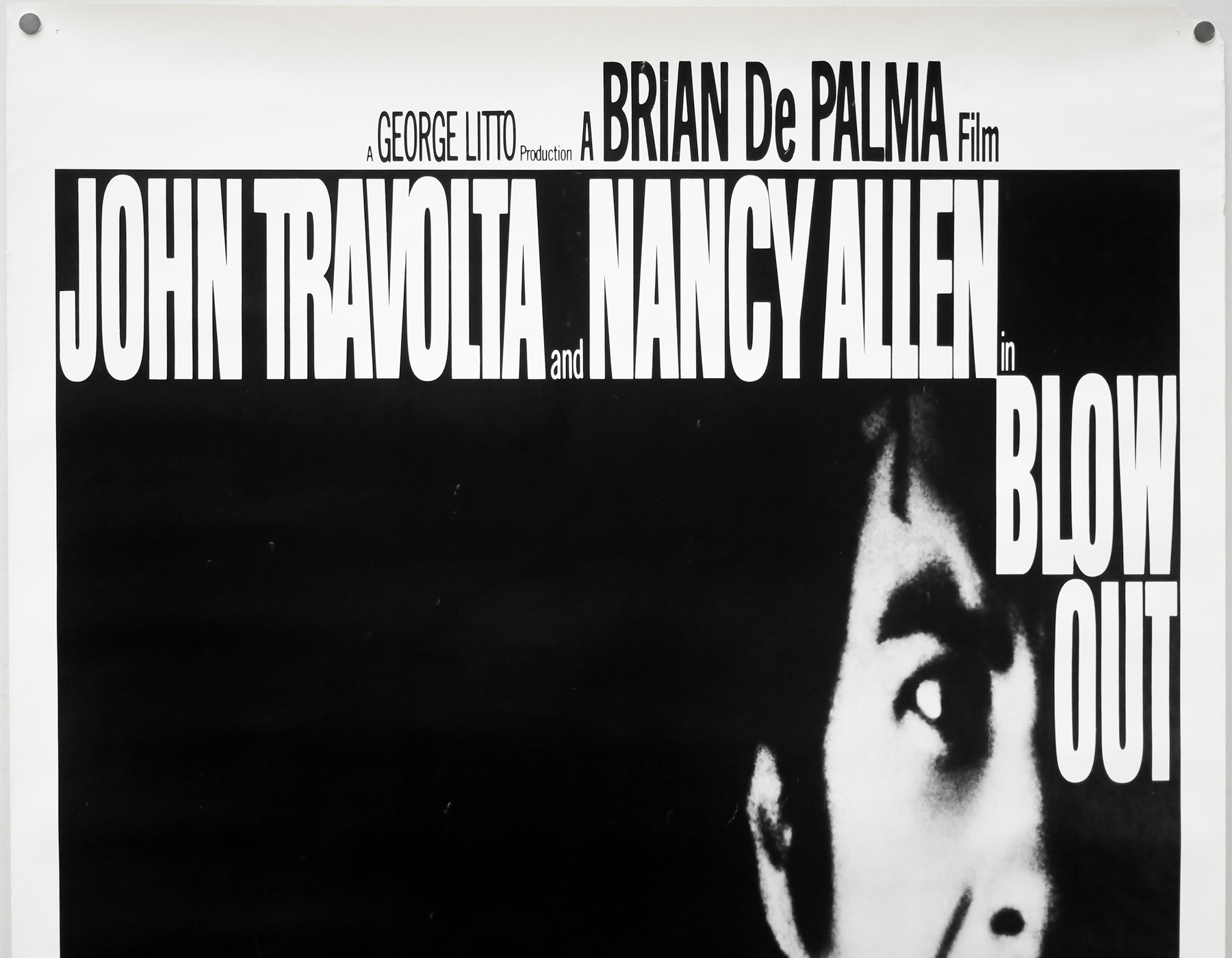
Following the poor reception of 1980’s Dressed to Kill, director Brian De Palma decided to develop an idea he’d had during production that was based on Antonioni’s 1966 thriller Blow Up, swapping photography for sound recording. The resultant film, with a screenplay by De Palma, was named Blow Out and released almost exactly a year after Dressed to Kill. John Travolta stars as Jack Terry, a sound technician who is working on a low-budget exploitation film and is tasked by a producer to set out and record a better scream for a pivotal scene as well as some ambient noises. Jack travels to a local park at night to record but whilst there he witnesses a limousine crash off a road and into a lake.

After diving in to see if there are any survivors Jack discovers the driver dead and a young woman alive but trapped in the back of the car. After rescuing her and pulling her to safety, Jack discovers that the driver was a governor and presidential candidate and the woman is Sally (De Palma’s then wife Nancy Allen), an escort. The governor’s associates persuade Jack to cover up the fact that Sally was in the car and whilst listening to the recordings he made that night he begins to suspect that the crash wasn’t an accident as people are being led to believe. When he discovers that an amateur cameraman was also recording in the park that night he works with Sally to get a copy of the film, and when spliced together it becomes clear that a single gunshot was fired before the car smashes into the lake. It soon becomes clear that Jack has inadvertently involved himself in a deepening conspiracy and that he and Sally are in grave danger, with the gunman Burke (John Lithgow) still at large and keen to tie up loose ends.

As expected, the film is visually stylish and features several of De Palma’s trademark bravura sequences, with one towards the end of the film featuring a parade and a fireworks display that is particularly memorable. The leads all give excellent performances, with Travolta’s low-key depiction of an ordinary man in over his head is in stark contrast to his breakout role in 1977’s Saturday Night Fever. The score by regular De Palma collaborator Pino Donaggio is also superb and serves the film perfectly.

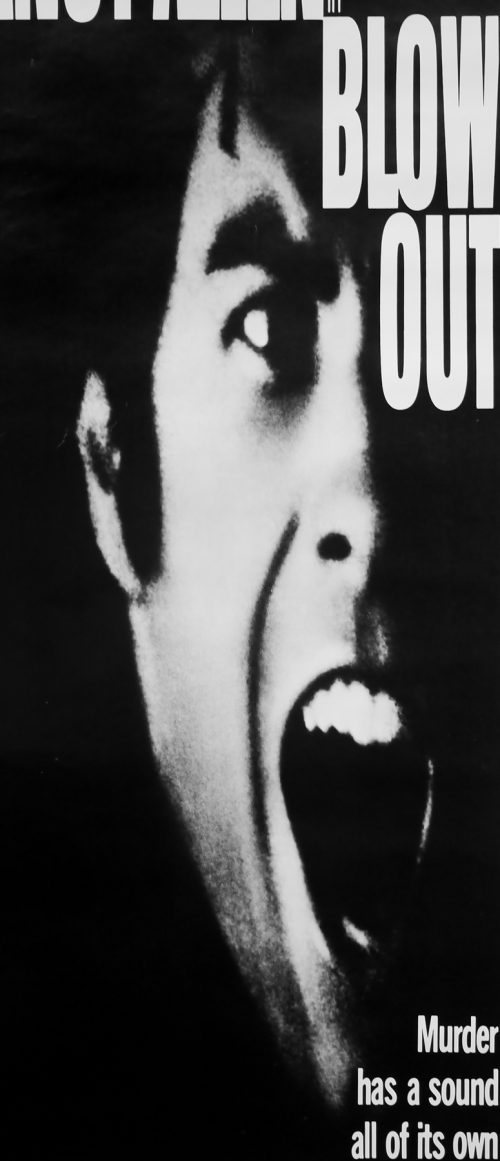
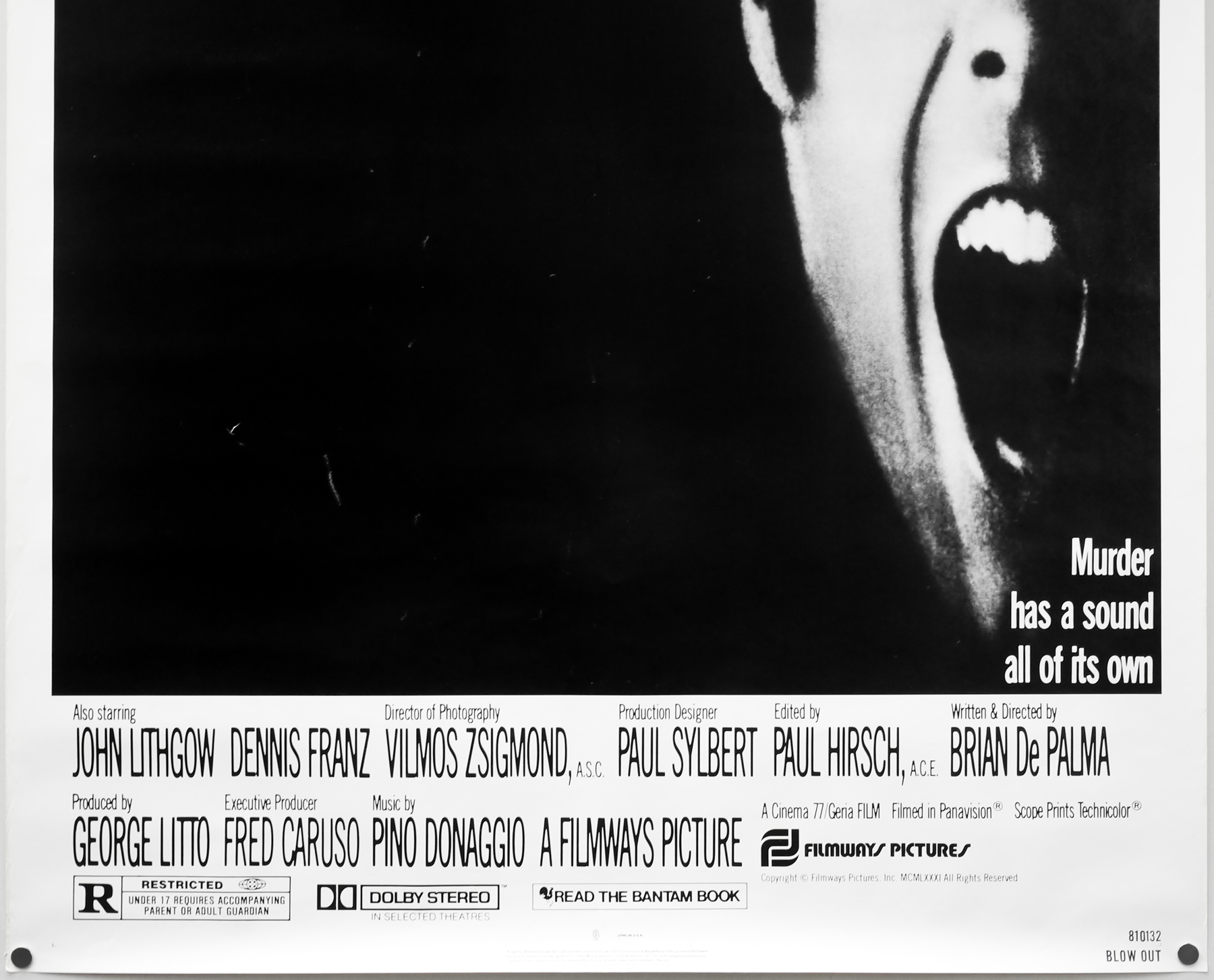
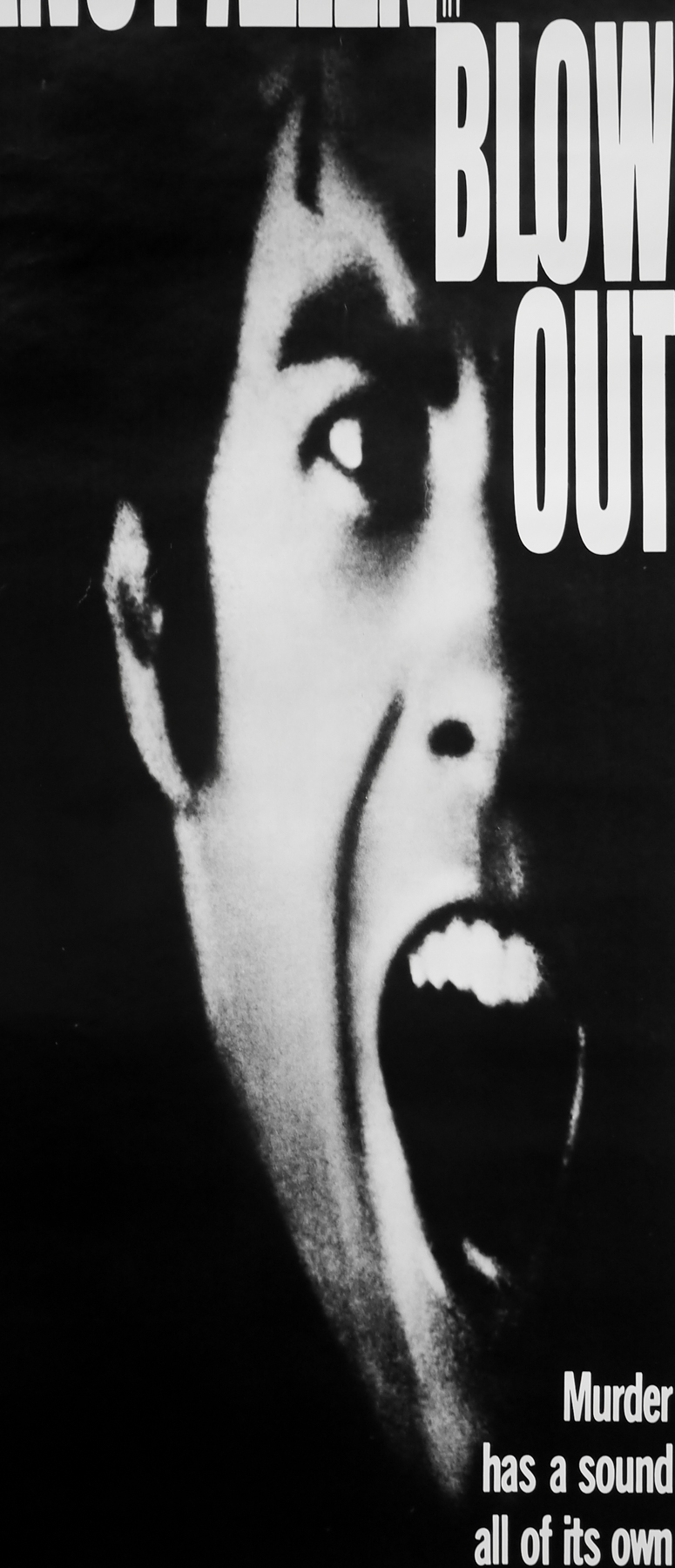
Although it received several rave reviews from the likes of Pauline Kael and Roger Ebert, the film failed to take off at the box-office and only found cult success years after its initial release. The home video label Criterion released the film on blu-ray in 2011 and during a making-of documentary Nancy Allen mentions the marketing for the film, and this poster, as not helping the film’s box-office performance. It’s a very simple image and perhaps didn’t say enough about the film to entice potential film-goers. It’s also thought that word of mouth about the notoriously downbeat ending probably didn’t help either.

If anyone has any ideas who designed this poster please get in touch.

Outback / one sheet / USA

03.06.15

Poster Poster
Title
Outback
AKA
Wake in Fright
Year of Film
1971
Director
Ted Kotcheff
Starring
Donald Pleasence, Gary Bond, Chips Rafferty, Sylvia Kay, Jack Thompson, Peter Whittle, Al Thomas, John Meillon, John Armstrong
Origin of Film
Australia | USA
Genre(s) of Film
Donald Pleasence, Gary Bond, Chips Rafferty, Sylvia Kay, Jack Thompson, Peter Whittle, Al Thomas, John Meillon, John Armstrong,
Type of Poster
One sheet
Style of Poster
--
Origin of Poster
USA
Year of Poster
1971
Designer
Unknown
Artist
Unknown
Size (inches)
27 2/16" x 41"
SS or DS
SS
NSS #
71/278
Tagline
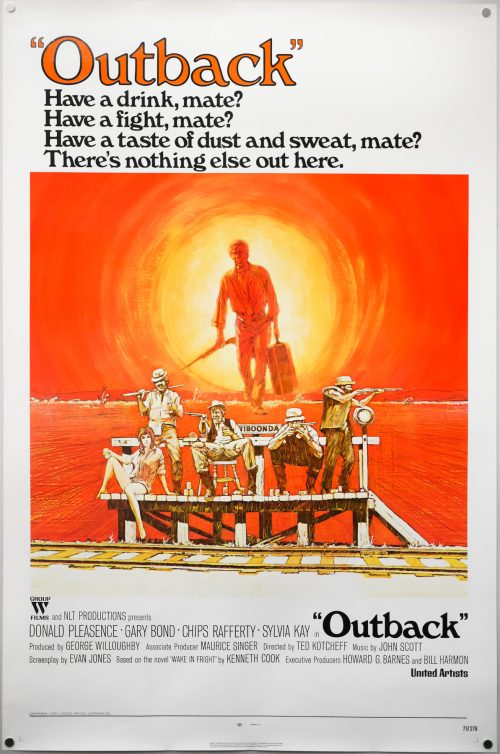
Have a drink, mate? Have a fight, mate? Have some dust and sweat, mate? There's nothing else out here.

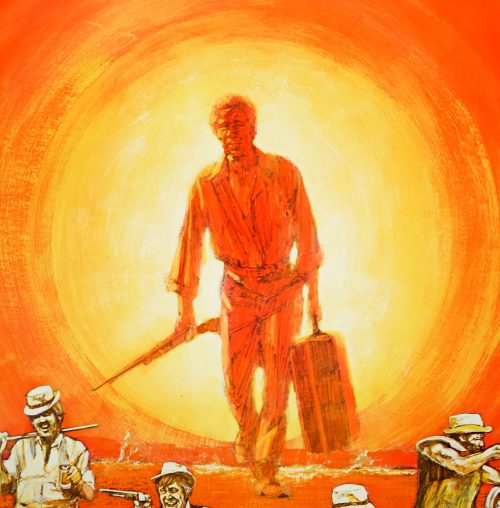
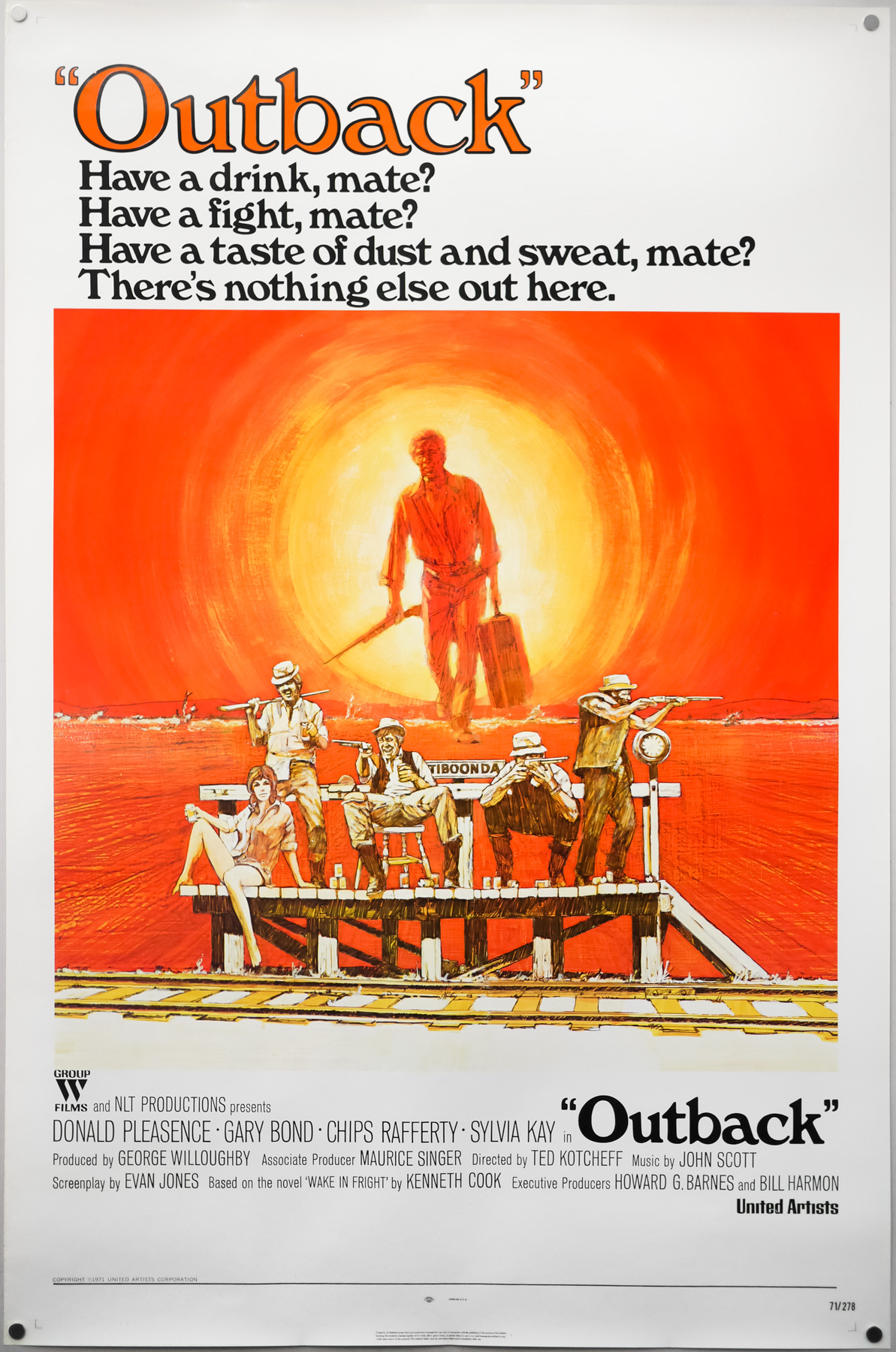
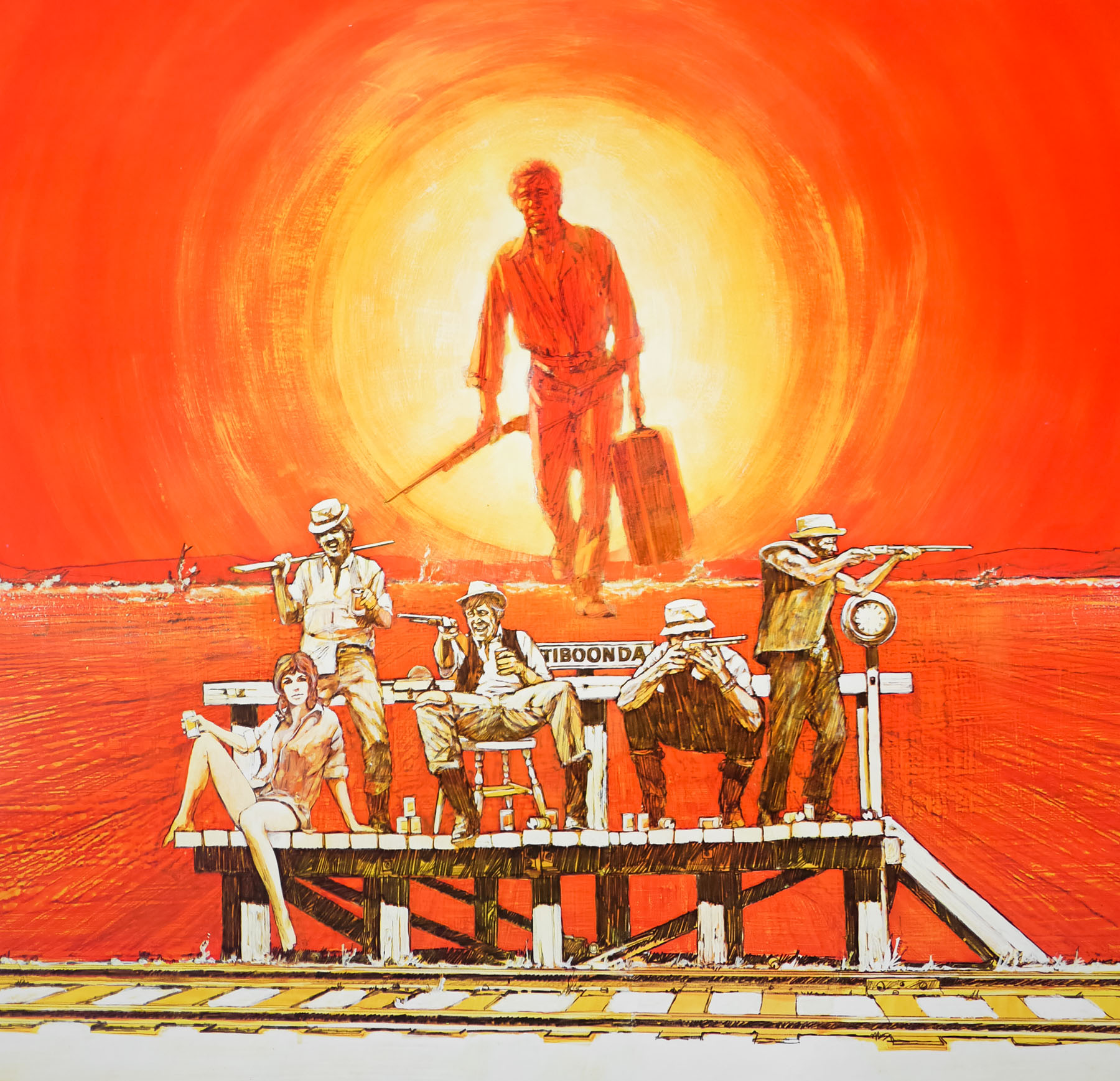
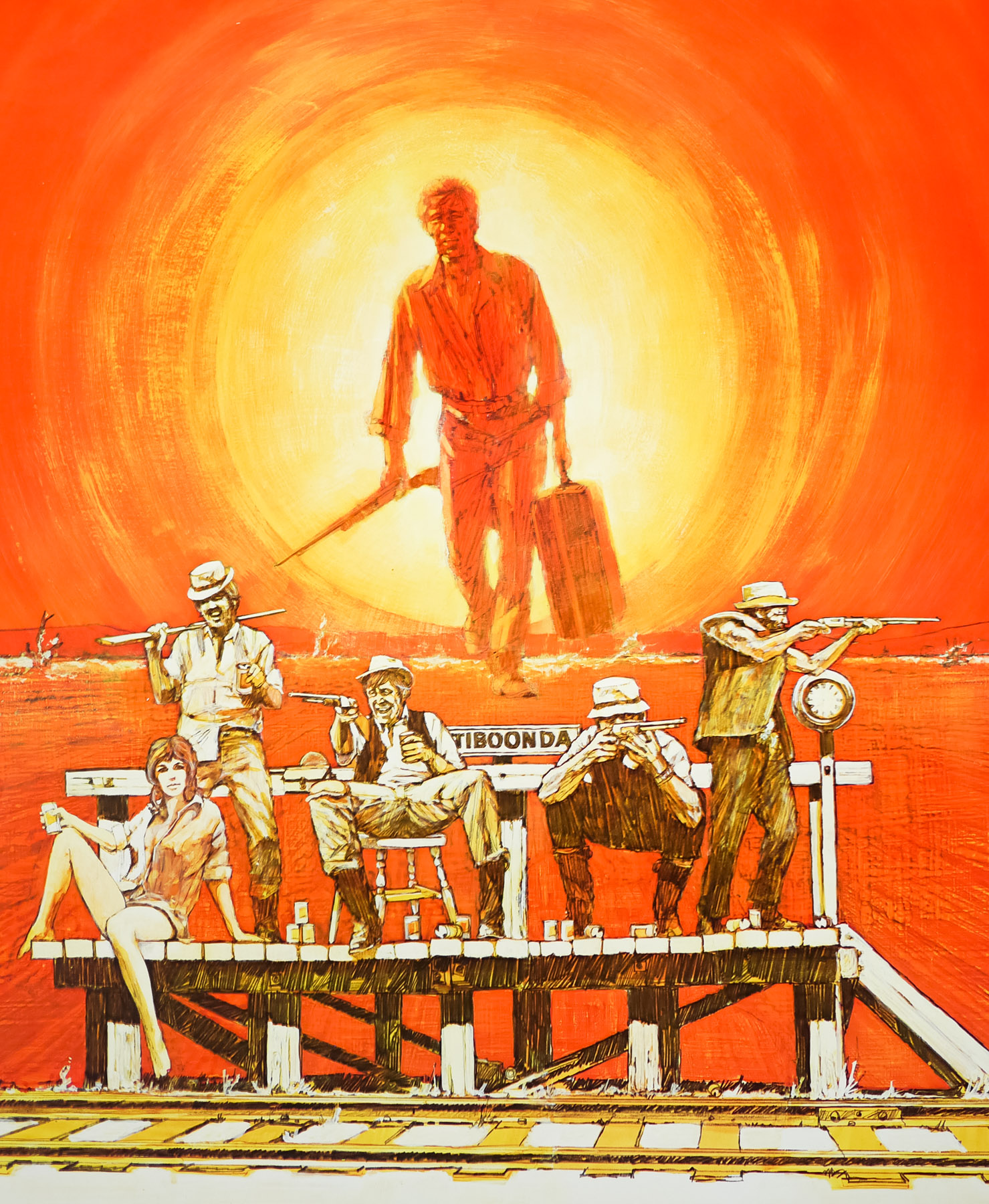
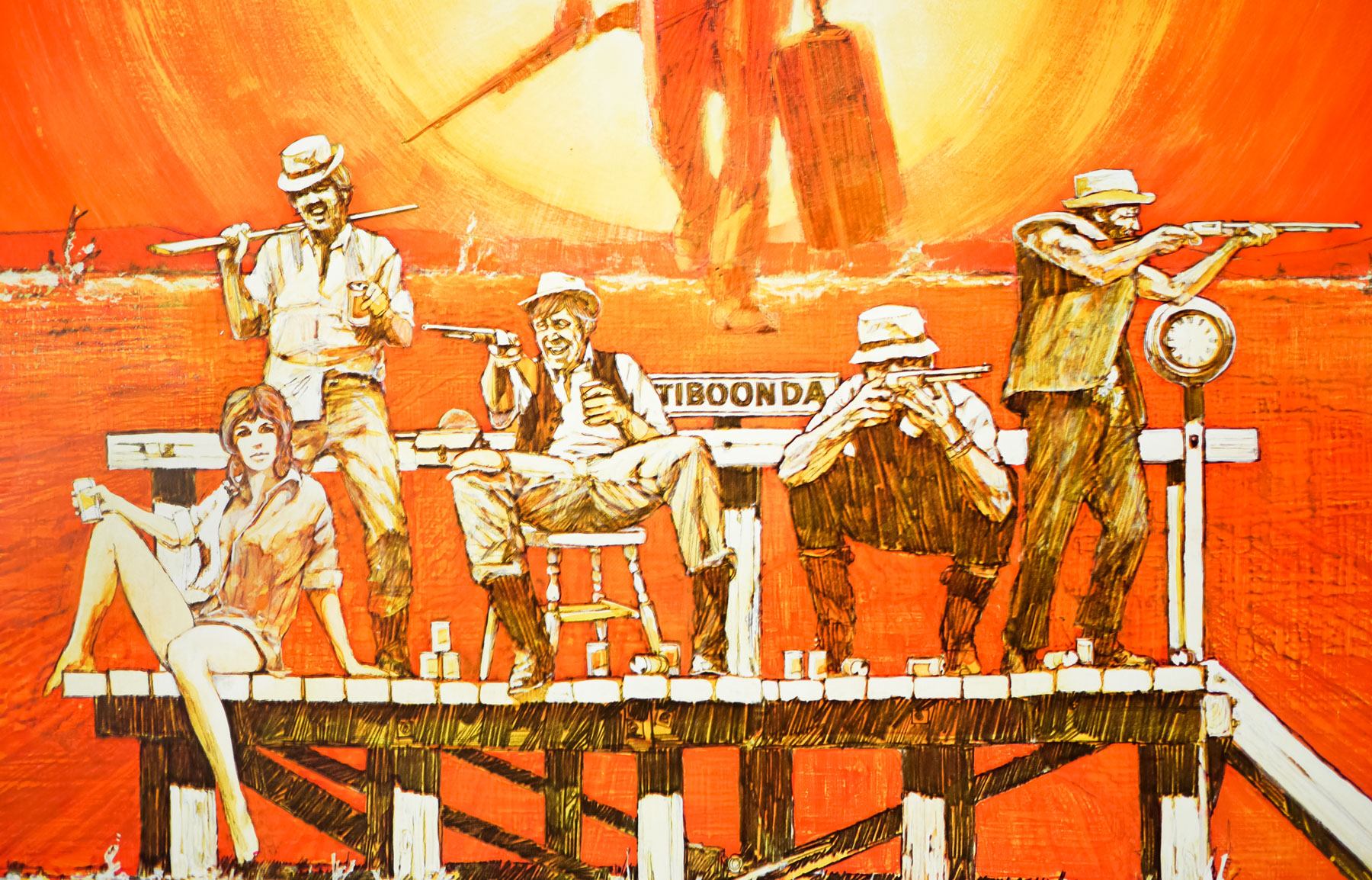
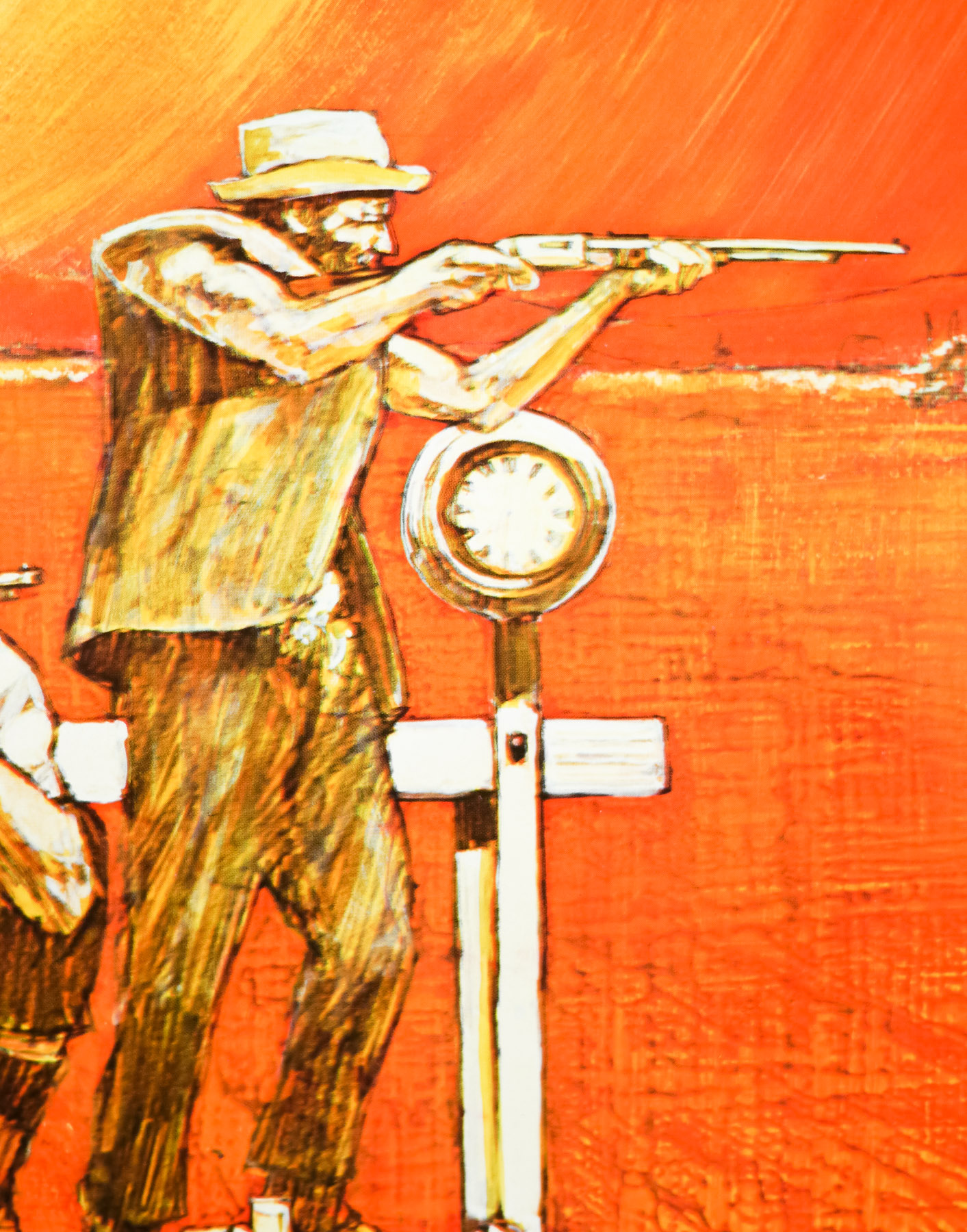
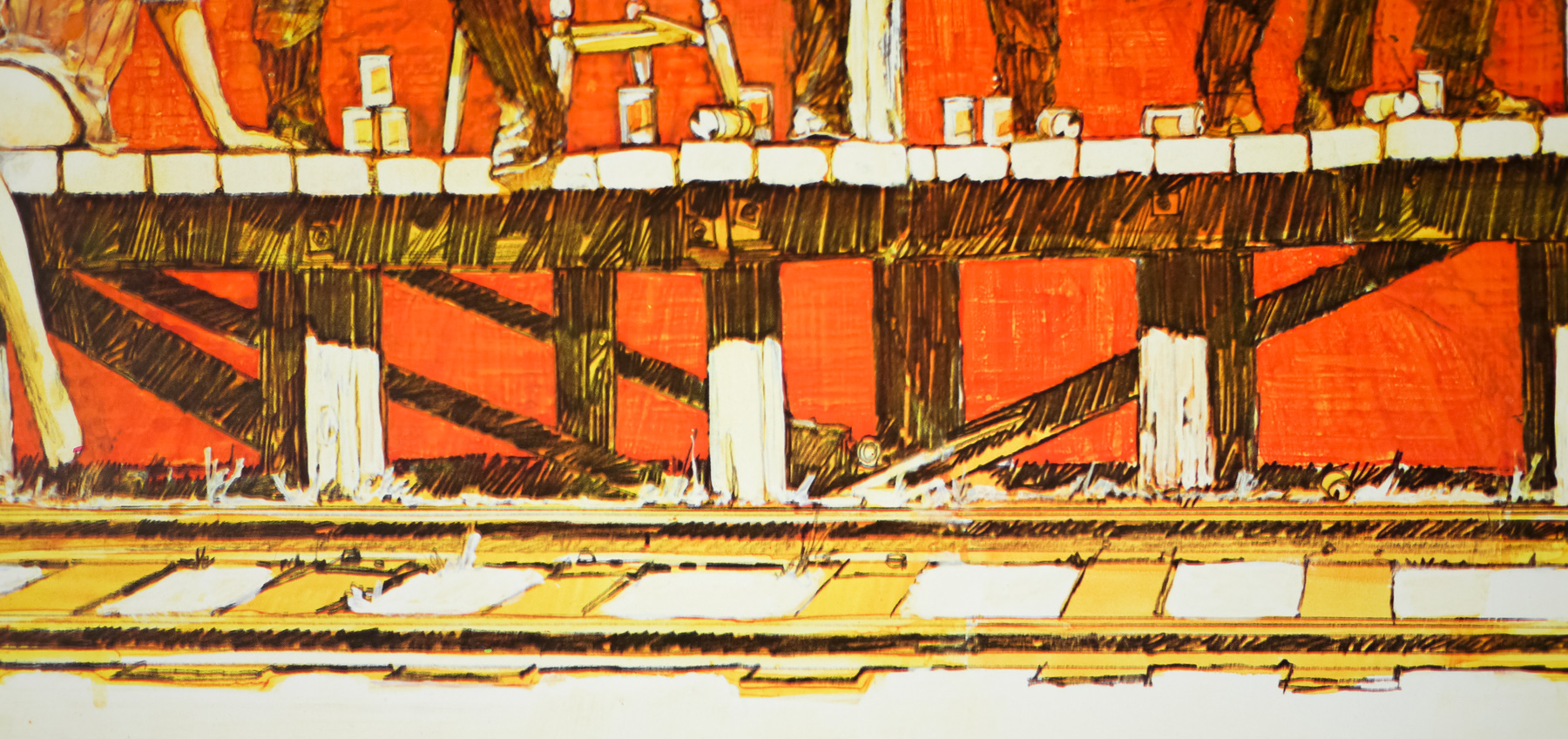
Outback (AKA Wake in Fright) was originally released in 1971 to a strong critical reception and decent box-office figures in countries like the UK, but it was almost a lost film by turn of the century. Only released in a few markets during the early 1970s, the film was seemingly forgotten about by the end of the decade and when Anthony Buckley, the editor of the film began looking for the original materials in 1996 it would be six years before he finally tracked them down to a warehouse in Pittsburgh. He was just in time since they were due to be destroyed only a week later. A full restoration was instigated and the results were screened at the 2009 Cannes Film Festival to great acclaim. The film was given a worldwide release shortly after and was put out on the blu-ray format at the same time.

An Australian-American co-production, the film was based on Australian author Kenneth Cook‘s 1961 novel Wake in Fright, which was the title it would be released with in Australia (and re-christened for its recent release everywhere). The film’s rights were acquired soon after the book was released but it would be several years before producers from NLT and Group W got involved and invited the Canadian director Ted Kotcheff (First Blood) to helm the adaptation. Kotcheff had never been to Australia before then and now admits to having known little about the outback and the situations he would go on to portray, but he immersed himself in the culture whilst filming on location and the results are clear to see on screen.

The late British actor Gary Bond plays John Grant, a teacher from Sydney who has agreed to the terms of a financial bond with the Australian government that guarantees him a tertiary eduction but means he has to take a teaching job in a remote outback township called Tiboonda. At the start of the Christmas holidays he sets off on a journey back to Sydney to see his girlfriend, which takes him via the mining town of Bundanyabba, known as The Yabba. He visits a bar where he meets a friendly but eccentric policeman (played by Chips Rafferty in his final role) who introduces him to the local gambling obsession of two-up. After winning a few rounds John gets carried away and decides to bet all his winnings to try and escape from the government bond. Unfortunately, luck is not on his side and he’s soon stuck in The Yabba, relying on the kindness of strangers to keep him afloat.

At another bar he meets a local called Tim Hynes (Al Thomas) who invites John back to his home. There he meets Tim’s daughter Jeanette and a bunch of his friends. Things take a dark turn from there as John is drawn into sordid events and descends into a drunken stupor with the aid of the gang of local men, led by alcoholic doctor Doc Tydon (played by a memorably wild-eyed Donald Pleasence). John eventually takes part in a horrific night-time kangaroo hunt that sees the men drunkenly shooting at the poor beasts before John is forced to stab an injured young kangaroo to death. Despite attempting to escape The Yabba via hitch-hiking, he soon finds himself back in the town carrying only a loaded rifle.

The film has a distinctly menacing atmosphere and you can’t help but put yourself in the shoes of John Grant, a man out of place, trapped in an oppressively hot and sticky environment. At some points you can practically taste the dust and sweat. The film attracted controversy for the kangaroo hunting scene, which featured graphic footage shot by Kotcheff and a camera crew after they’d joined a real kangaroo hunt during which the men with the rifles got progressively drunker whilst the night wore on. It’s still deeply unsettling to watch to this day, much like similar footage of animal cruelty in films like Cannibal Holocaust.

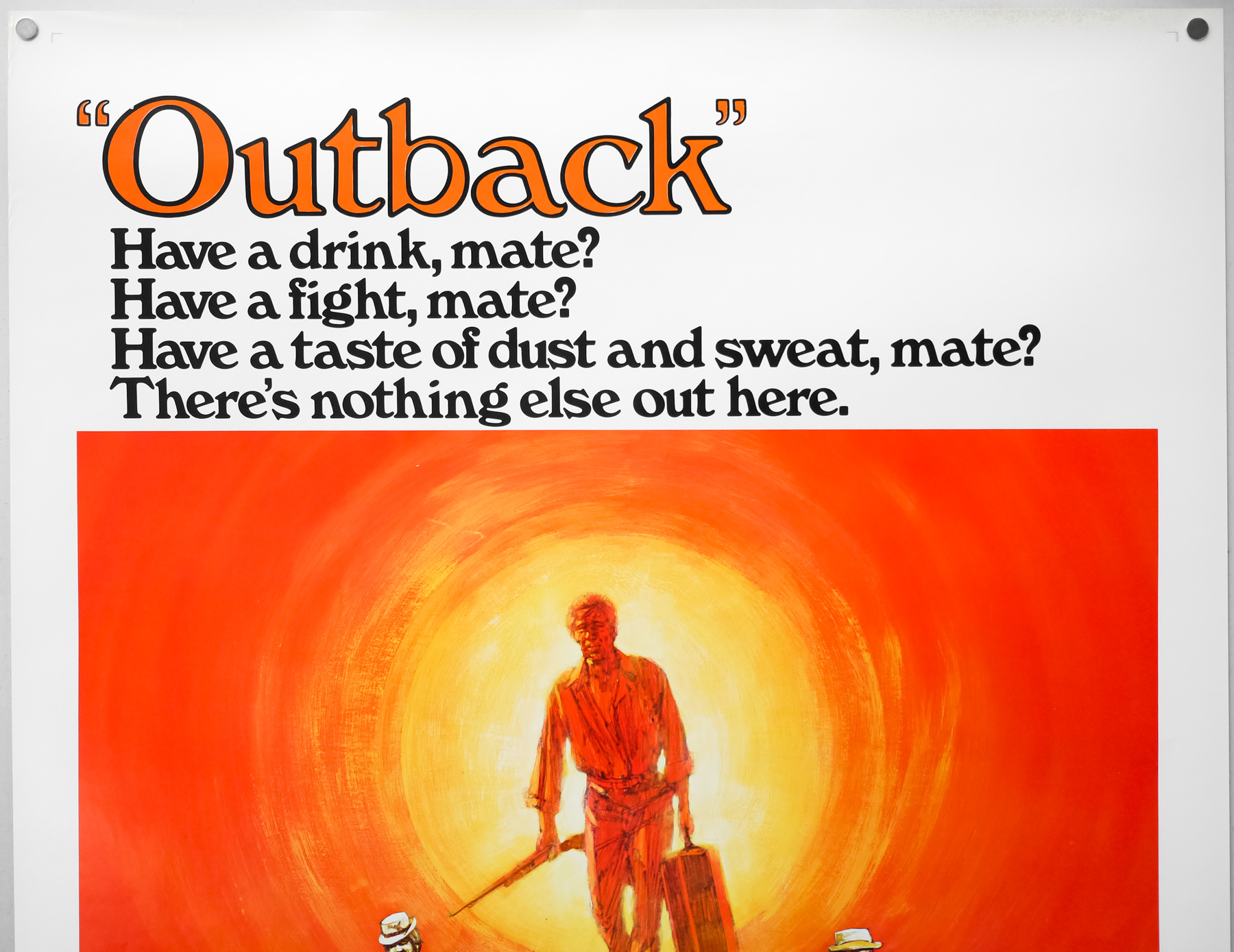
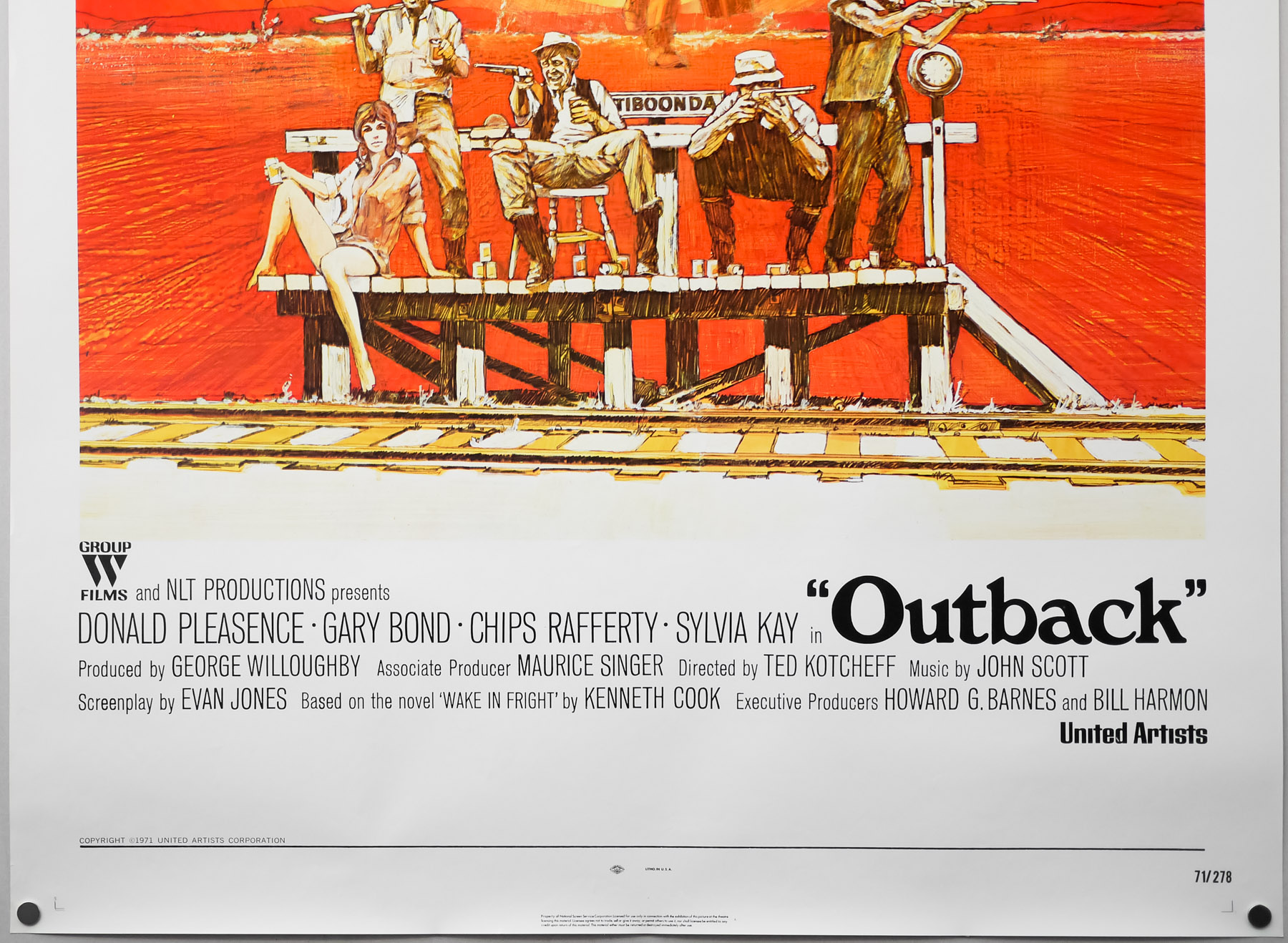
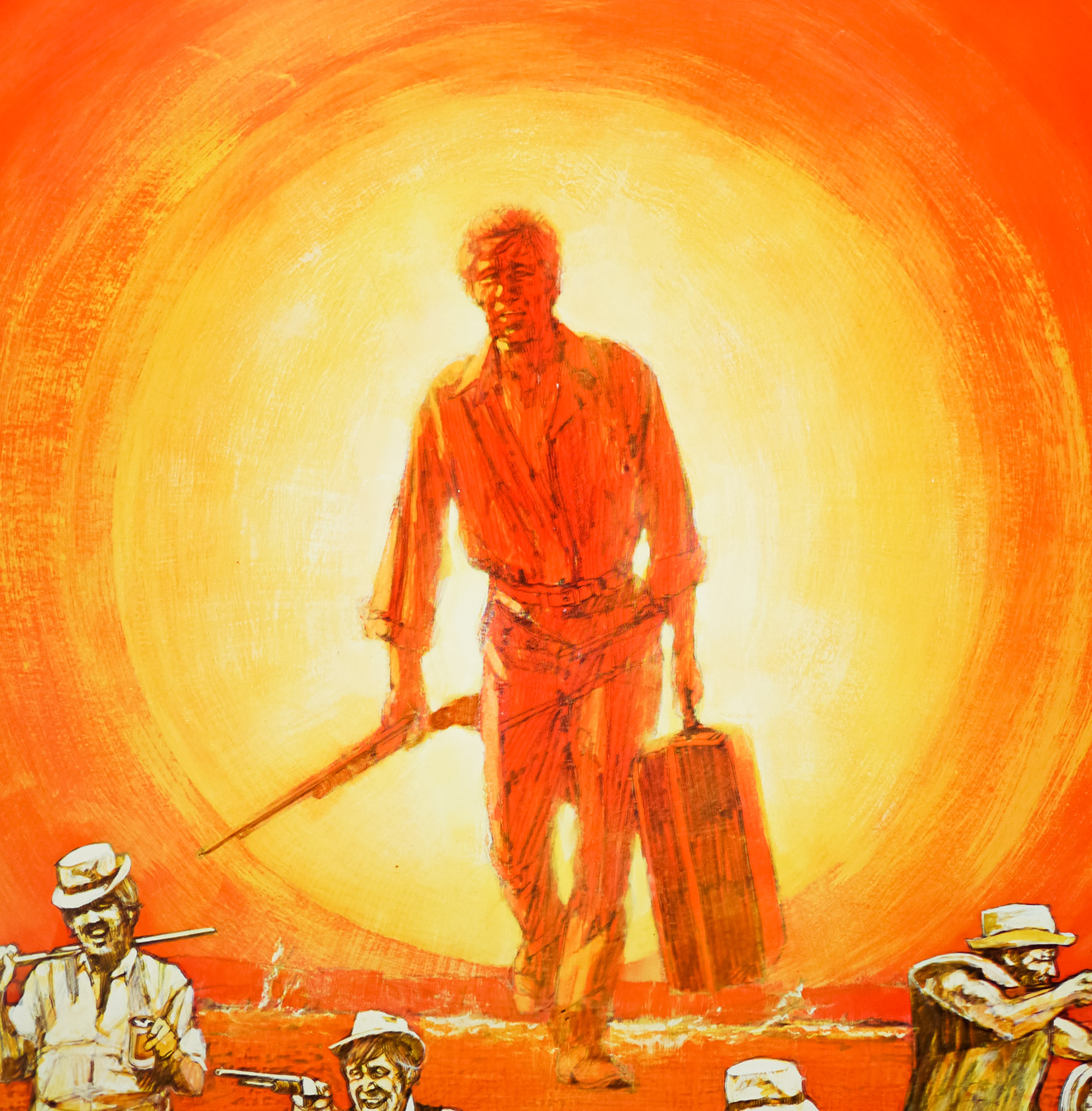
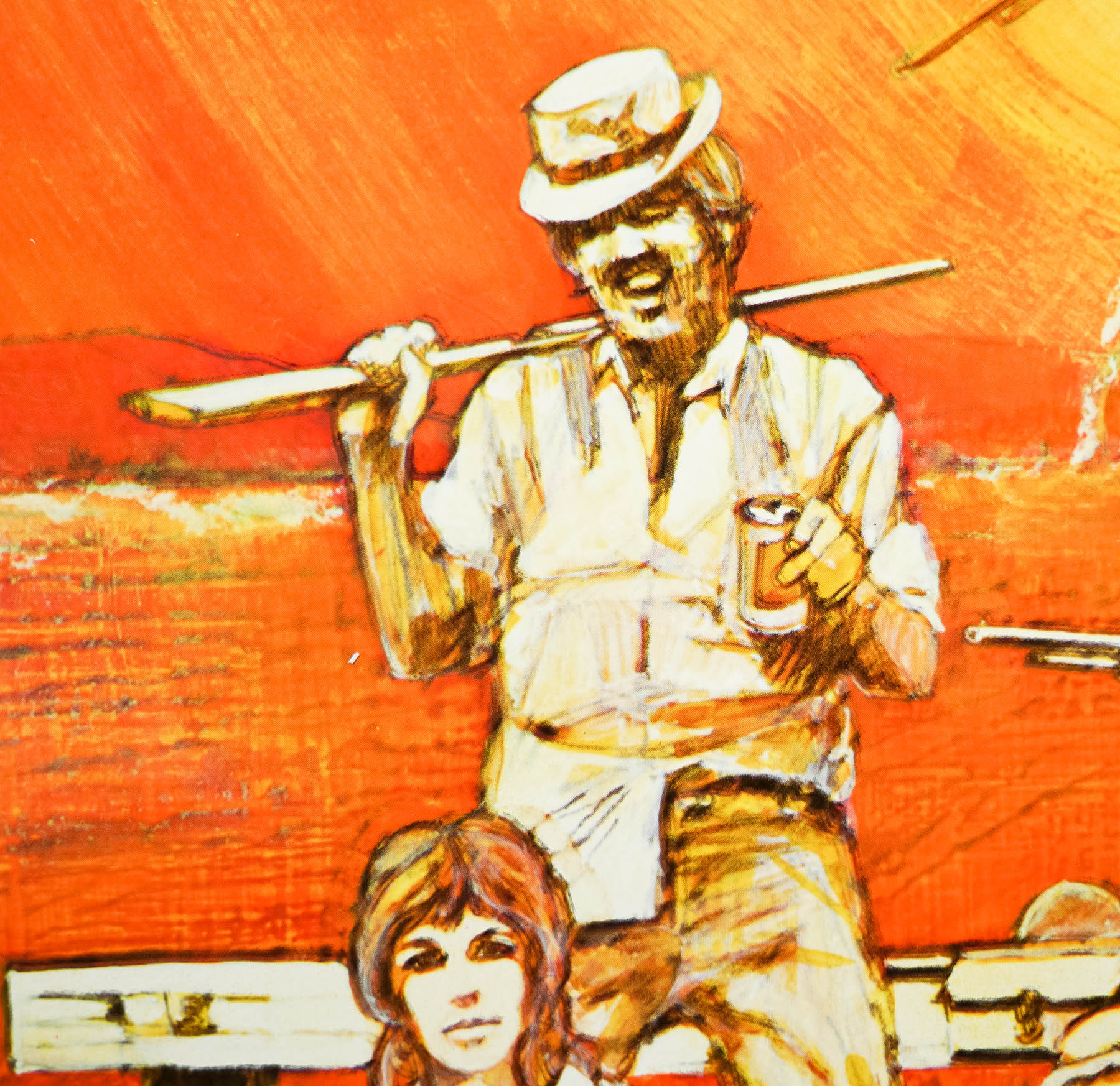
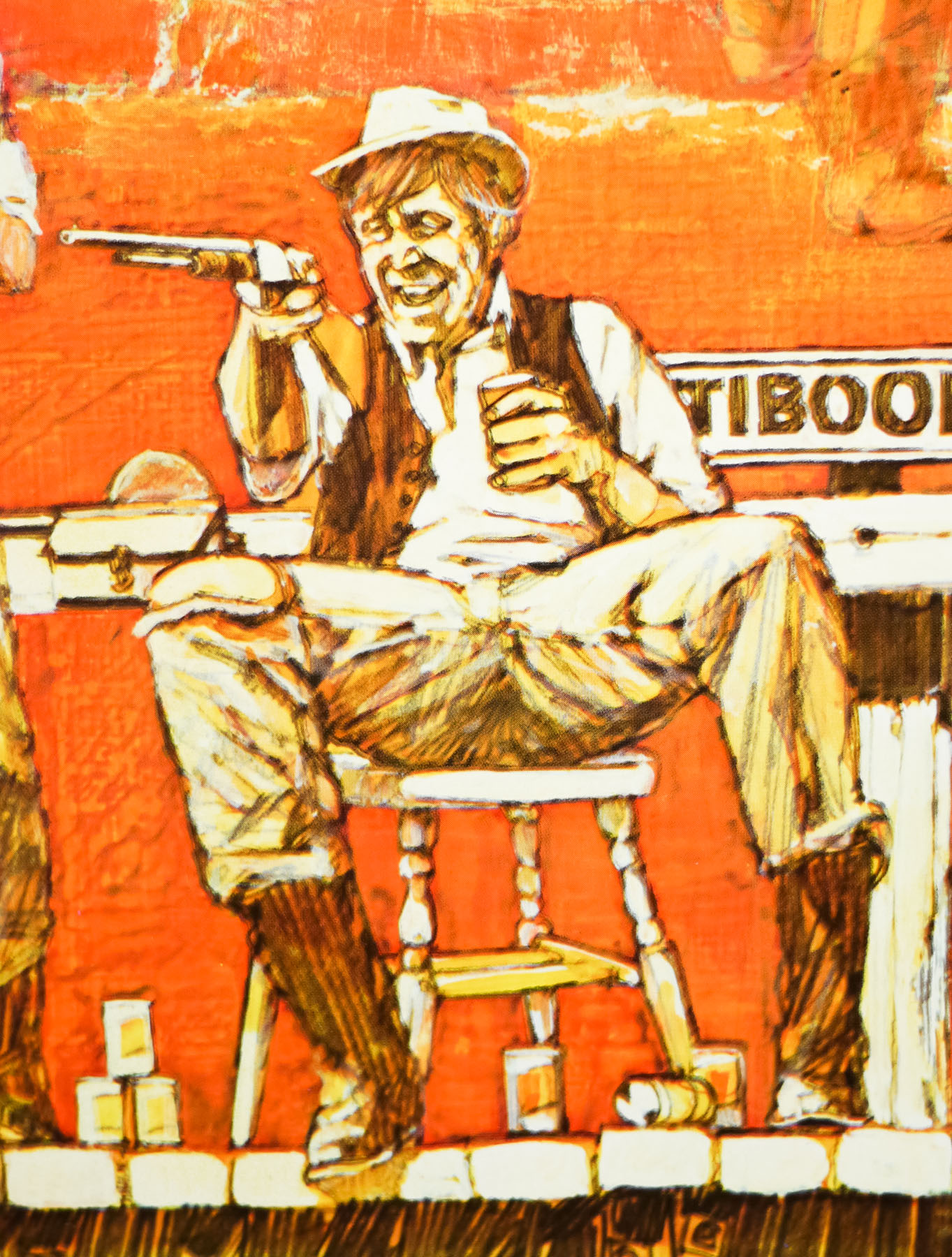
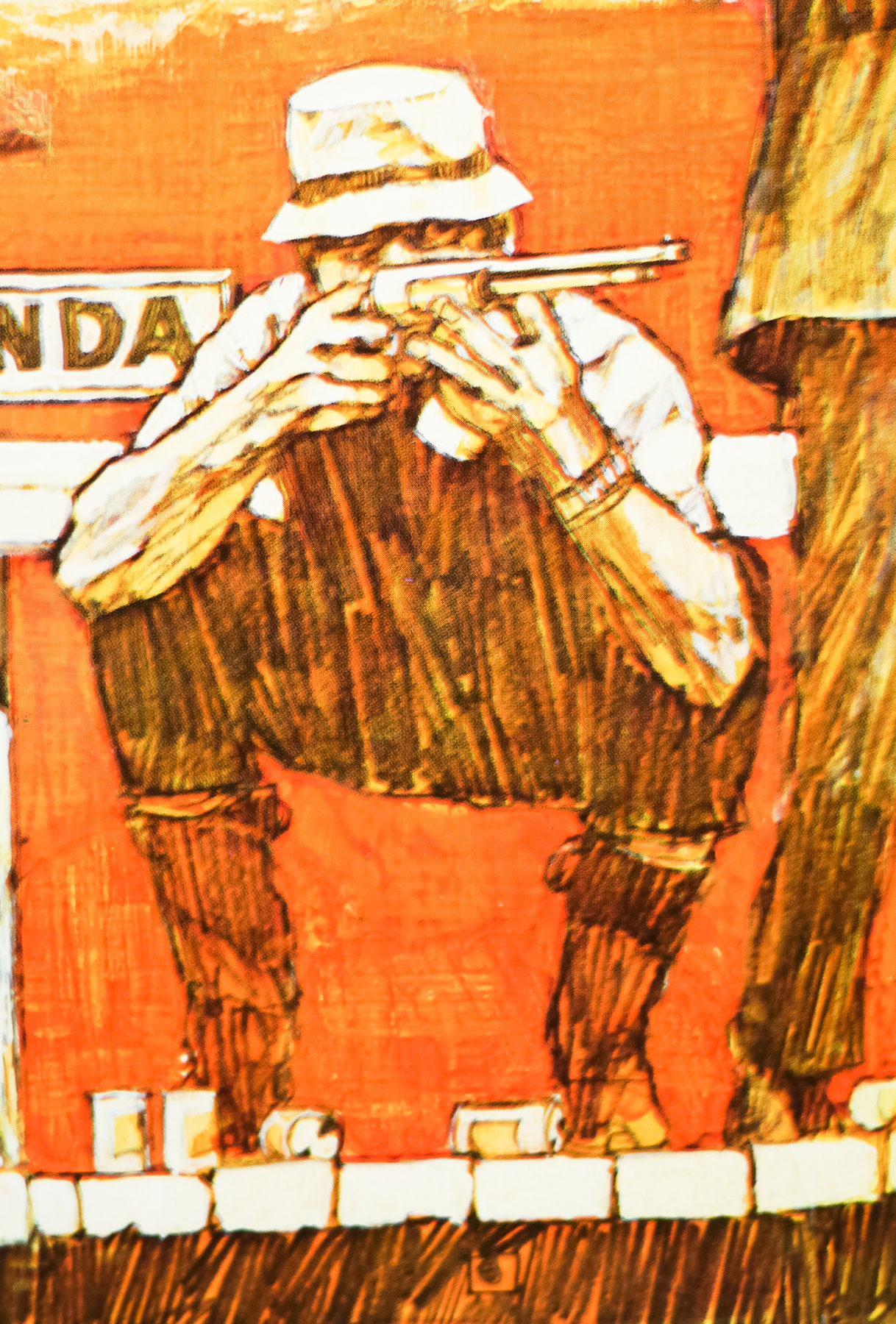
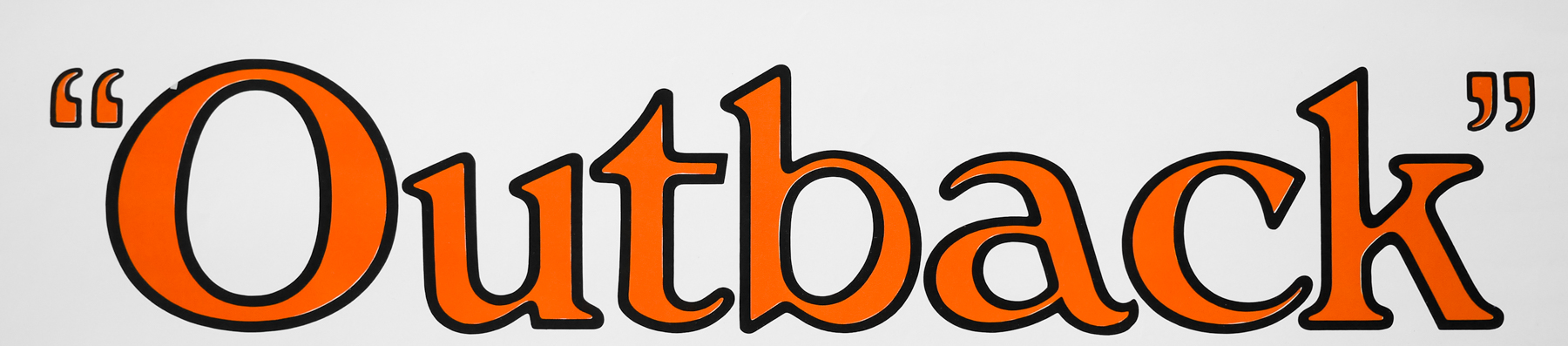
This artwork was used for the American marketing campaign and I think it was an adaptation of the Australian art (the two are very similar but there are a few notable differences). I’ve been unable to determine the name of the artist so if anyone has an idea please get in touch.

Red Scorpion / one sheet / USA

15.07.15

Poster Poster
Title
Red Scorpion
AKA
--
Year of Film
1988
Director
Joseph Zito
Starring
Dolph Lundgren, M. Emmet Walsh, Al White, T.P. McKenna, Carmen Argenziano, Alex Colon, Brion James, Ruben Nthodi
Origin of Film
South Africa | USA | Namibia
Genre(s) of Film
Dolph Lundgren, M. Emmet Walsh, Al White, T.P. McKenna, Carmen Argenziano, Alex Colon, Brion James, Ruben Nthodi,
Type of Poster
One sheet
Style of Poster
--
Origin of Poster
USA
Year of Poster
1988
Designer
Kaiser Creative
Artist
Unknown
Size (inches)
27 1/16" x 40 14/16"
SS or DS
SS
NSS #
--
Tagline
They think they control him. Think again.

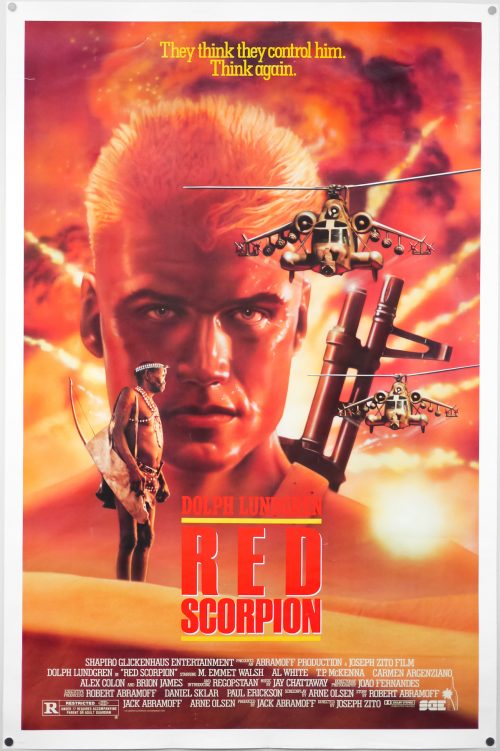
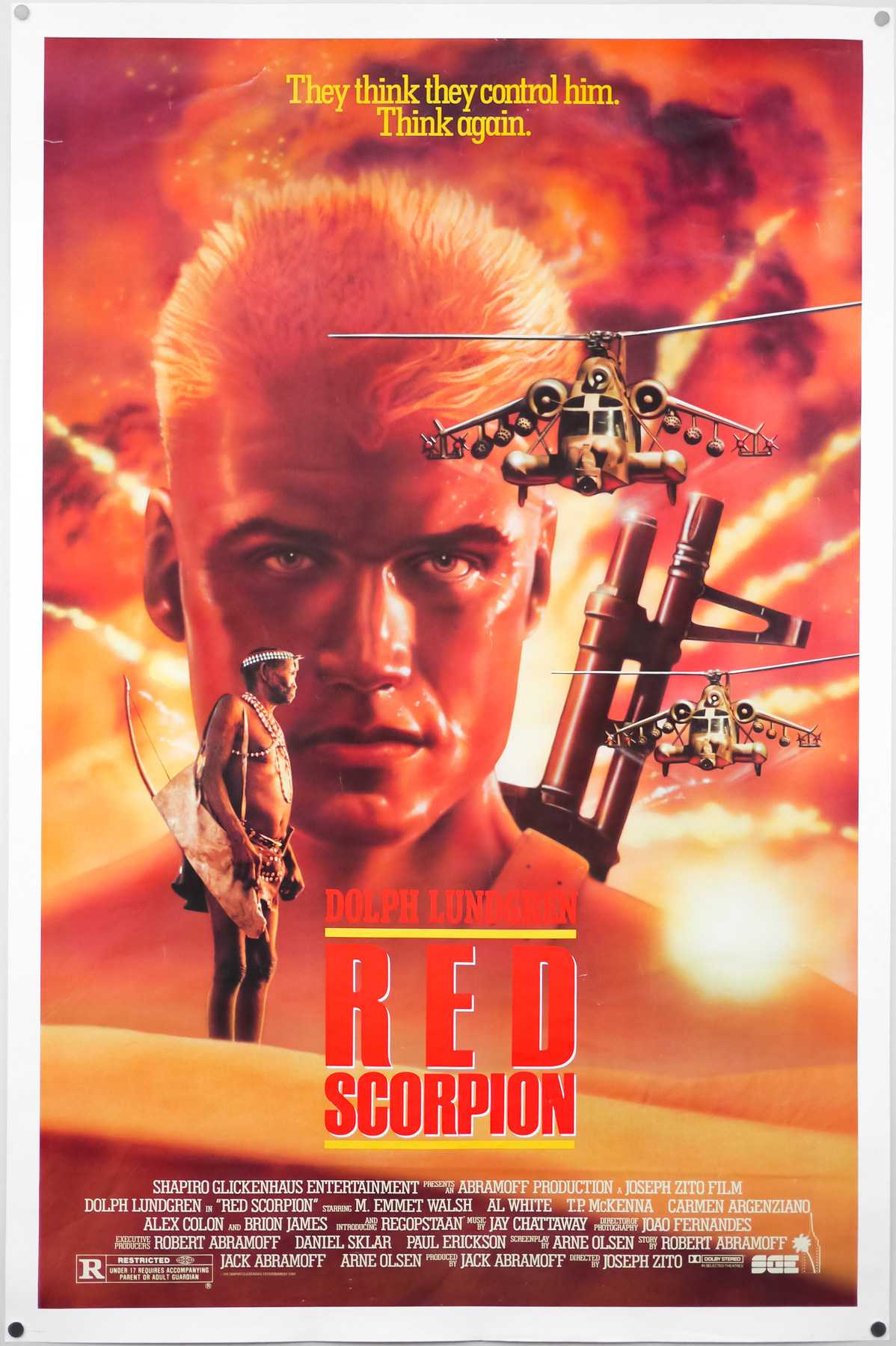
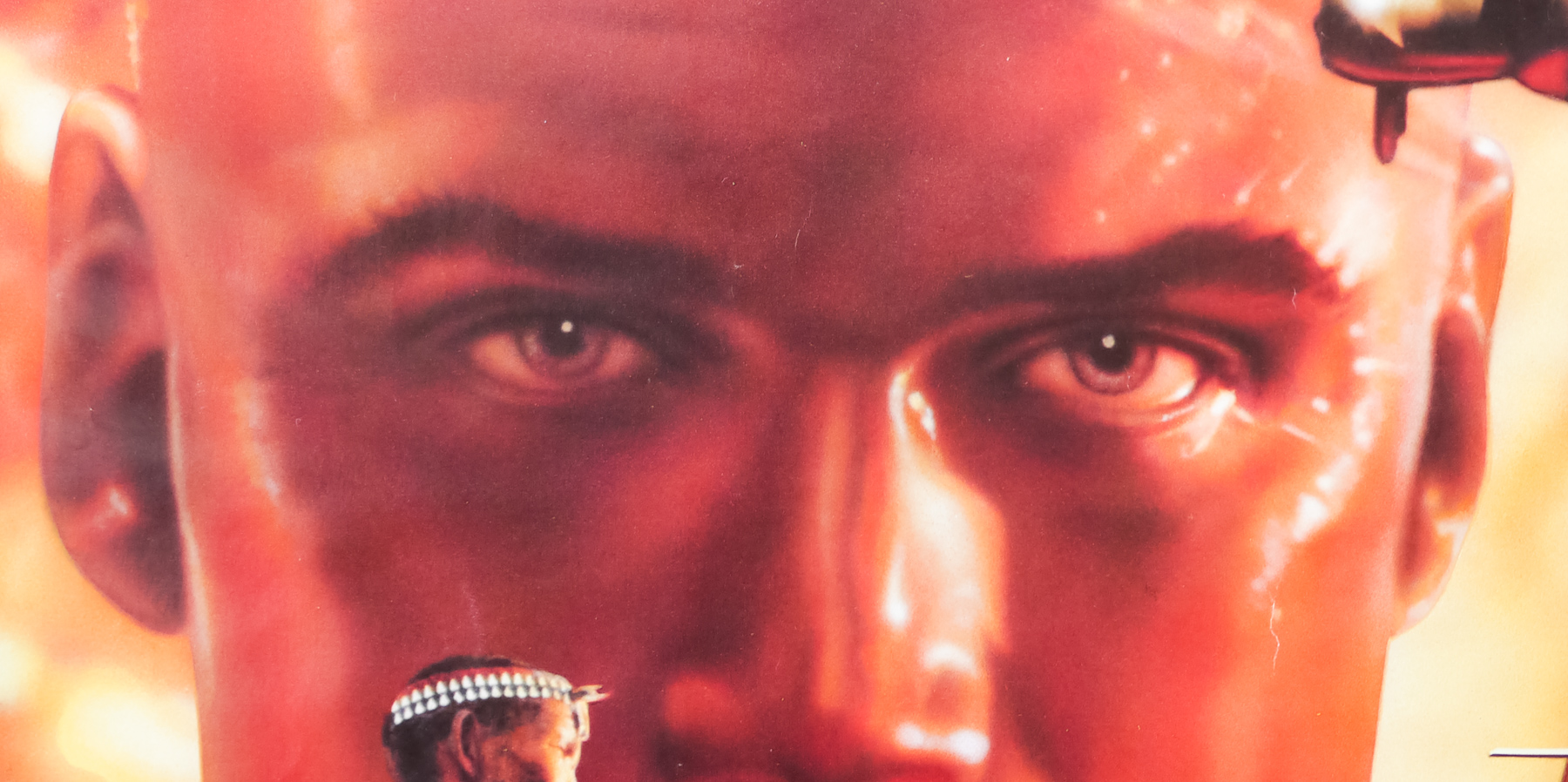
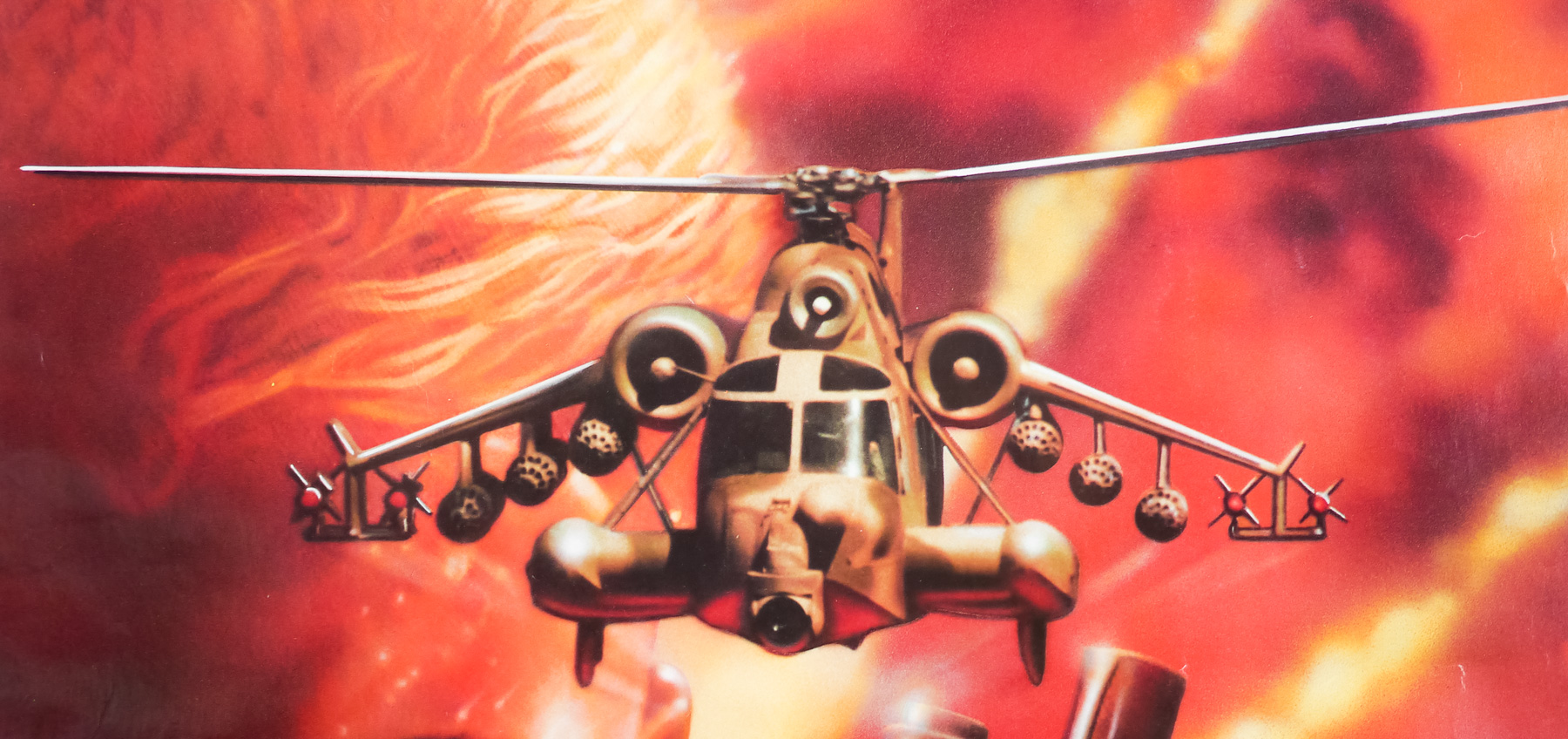
Directed by Joseph Zito, a man with only 9 films under his belt, including a couple of Chuck Norris titles and the notorious slasher The Prowler, Red Scorpion was the second film to be headlined by the Swedish action star Dolph Lundgren. After earning degrees in chemical engineering, Lundgren won a couple of European championships in the martial art of Karate and eventually landed a job as a bodyguard for the singer and actress Grace Jones. The pair soon began a relationship and when he accompanied Jones during the filming of A View to a Kill she suggested he try out for a minor role in the film. This appearance helped him land the memorable role of the Russian boxer Ivan Drago in Rocky IV and then in 1987 he played He-Man in the ill-advised live-action film Masters of the Universe. Since then he has featured in over 60 films, mostly in the action genre.

Red Scorpion was produced by the disgraced former American lobbyist Jack Abramoff who was sentenced to jail in 2006 for mail fraud, conspiracy to bribe public officials, and tax evasion, all related to his involvement in lobbying for American Indian tribes and casinos. Before his career as a lobbyist, Abramoff spent 10 years in Hollywood as a producer and developed the screenplay for Red Scorpion along with his brother Robert, a more prolific producer who is still working in the industry today. Red Scorpion was filmed in Swaziland and the production became embroiled in the South African apartheid situation at the time, allegedly receiving some funding from the government as part of efforts to undermine the movement. The film suffered multiple delays and ultimately ended up about 8 million dollars over budget.

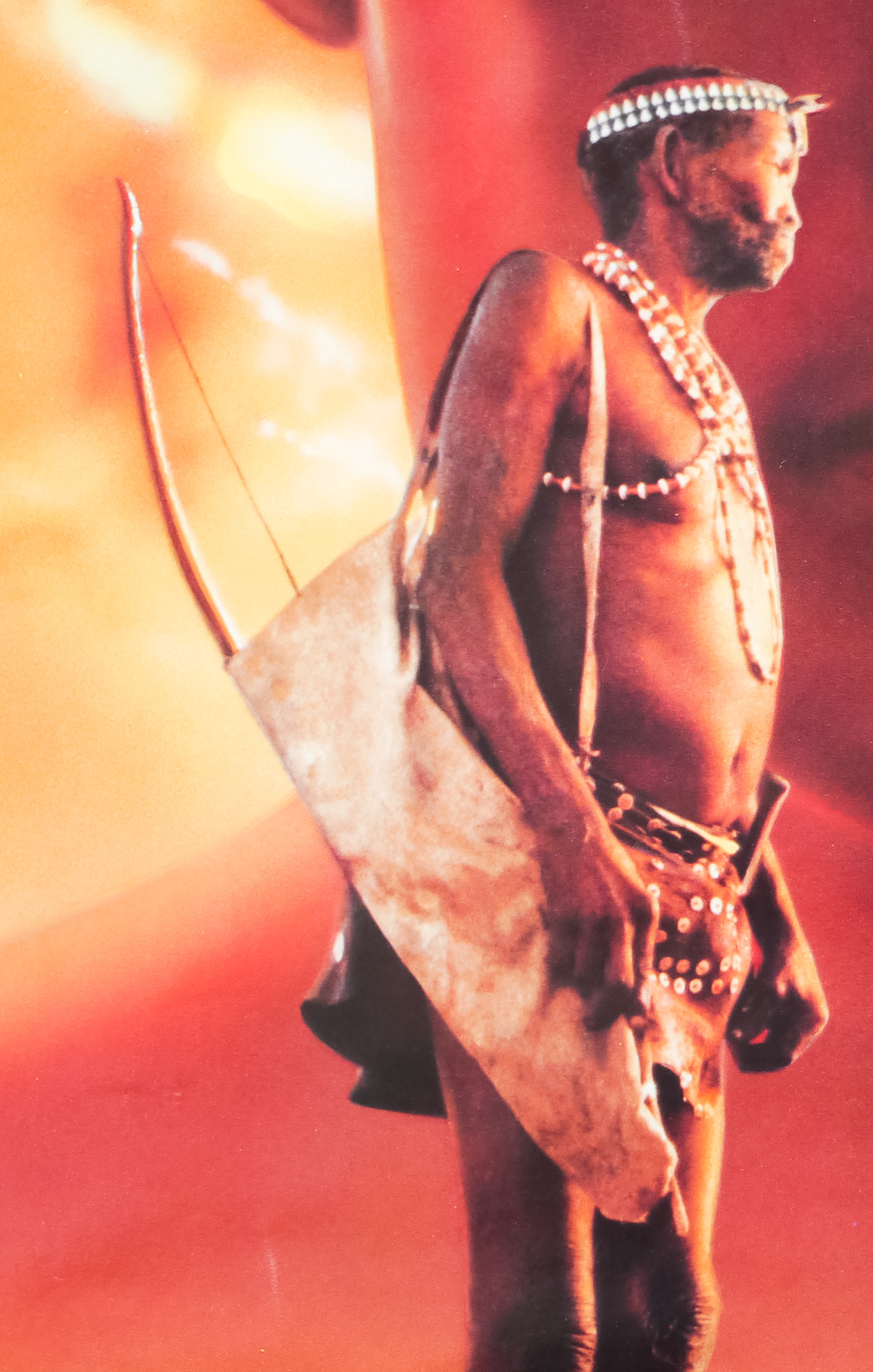
Dolph appears as Nikolai Petrovitch Radchenko, a Soviet Spetsnaz agent who is sent to a fictional African country to assassinate the leader of a large anti-communist rebel group. In order to get near to his target he gets involved in a bar brawl and is arrested and placed in a cell with a rebel commander. After gaining the man’s trust, the pair escape and end up at the rebel’s main hideout. He is met with distrust by most of the group and his attempt to assassinate the leader during the night results in his capture. After he ends up back in Soviet hands he is tortured and disgraced by his commanders, but manages to escape from an interrogation chamber and ends up in the desert where he is rescued by native bushmen. He learns about their customs and way of life, discovering that the peaceful tribe continues to be attacked by the Soviet forces. Radchenko is later given a ceremonial brand in the shape of a scorpion. Eventually he joins the rebel forces for an attack on the base where the corrupt Soviet commanders are based.

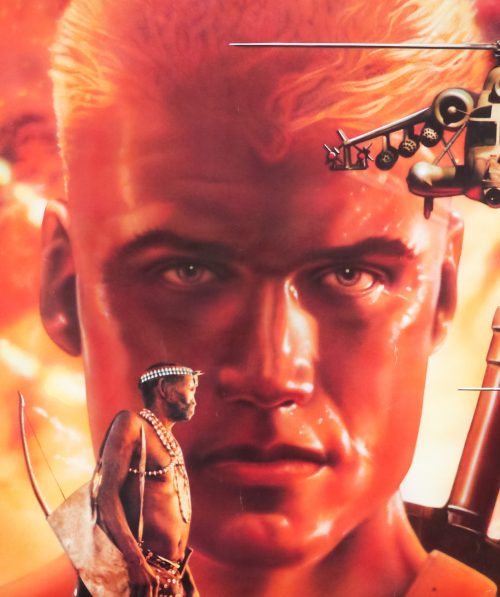
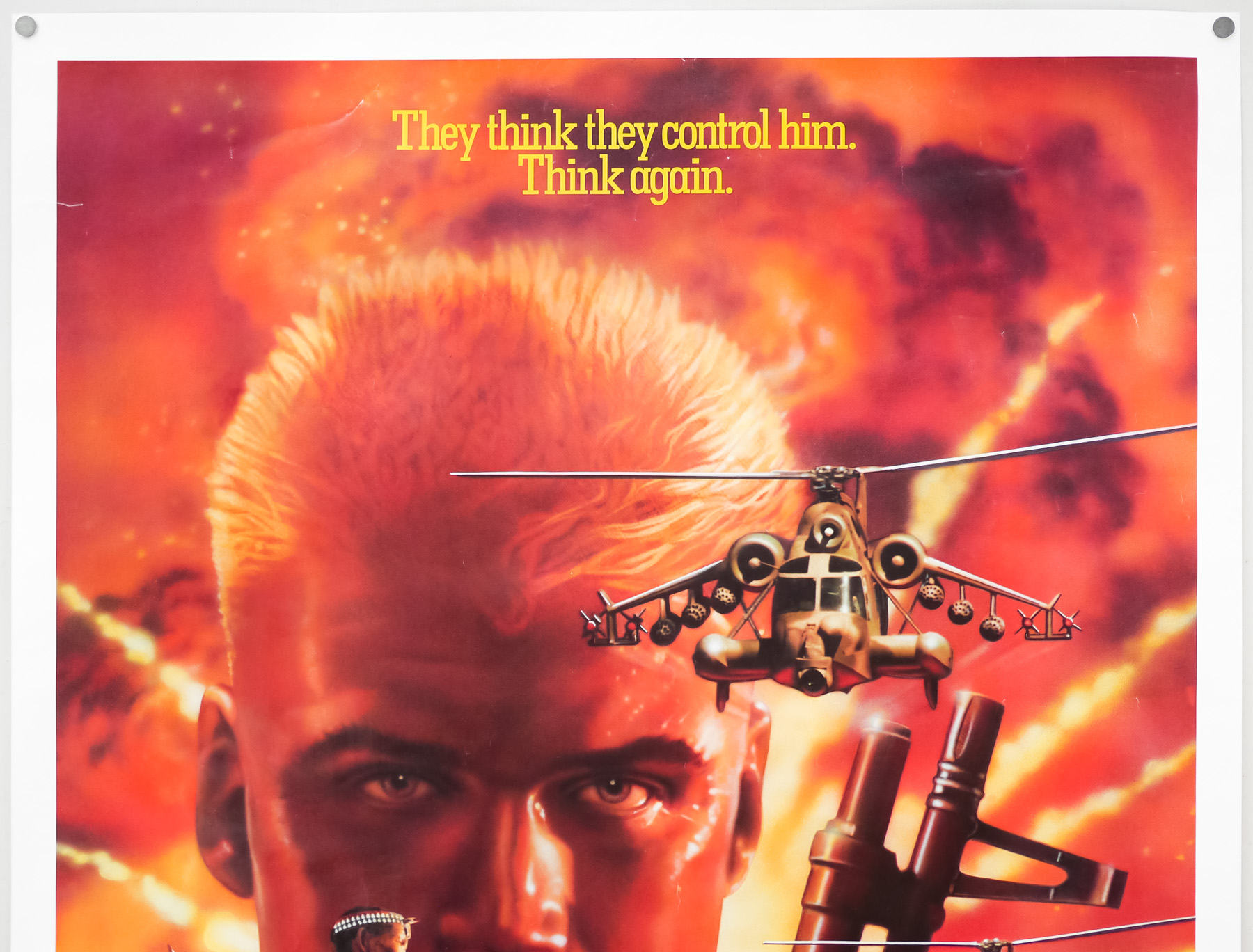
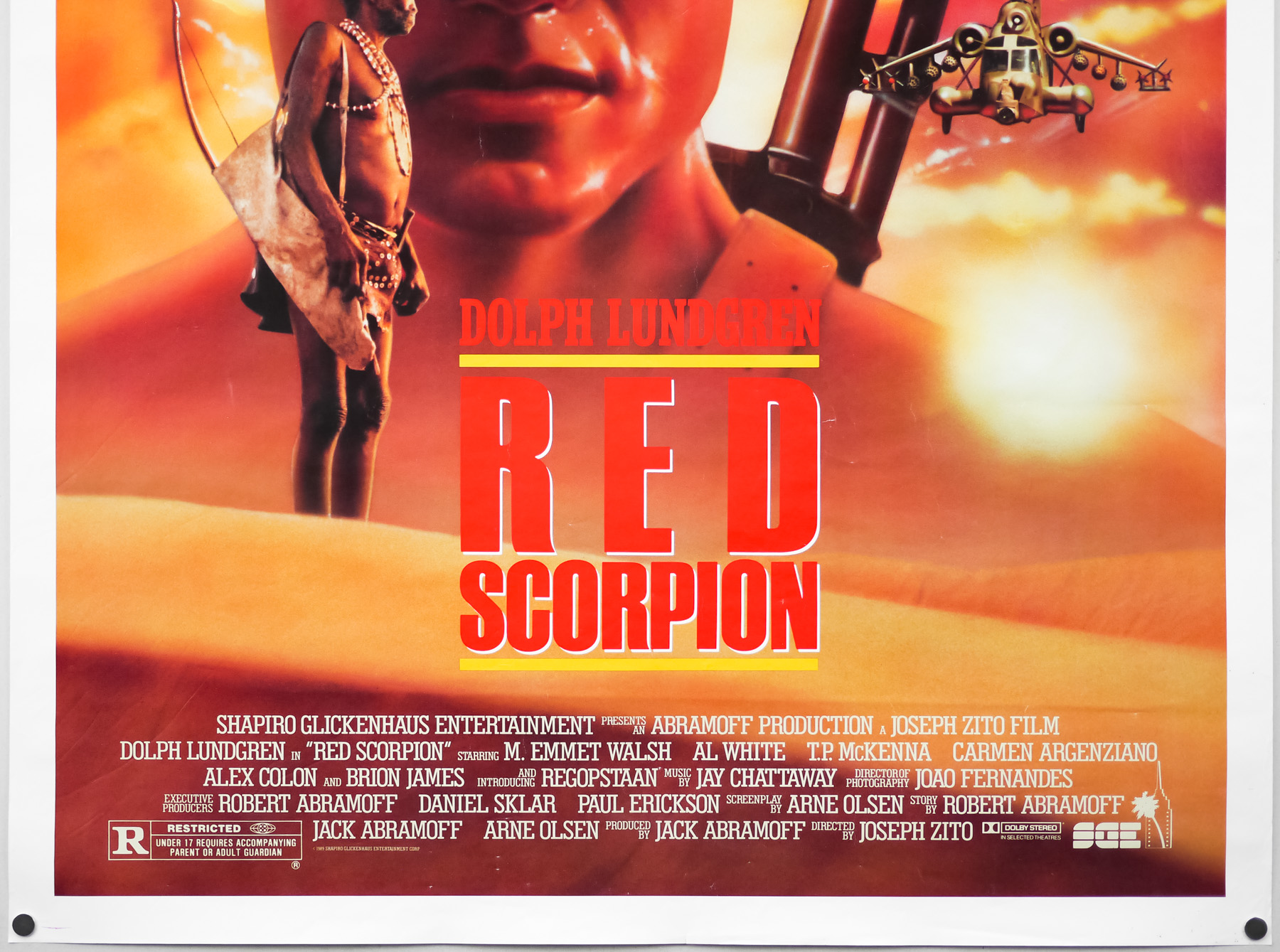
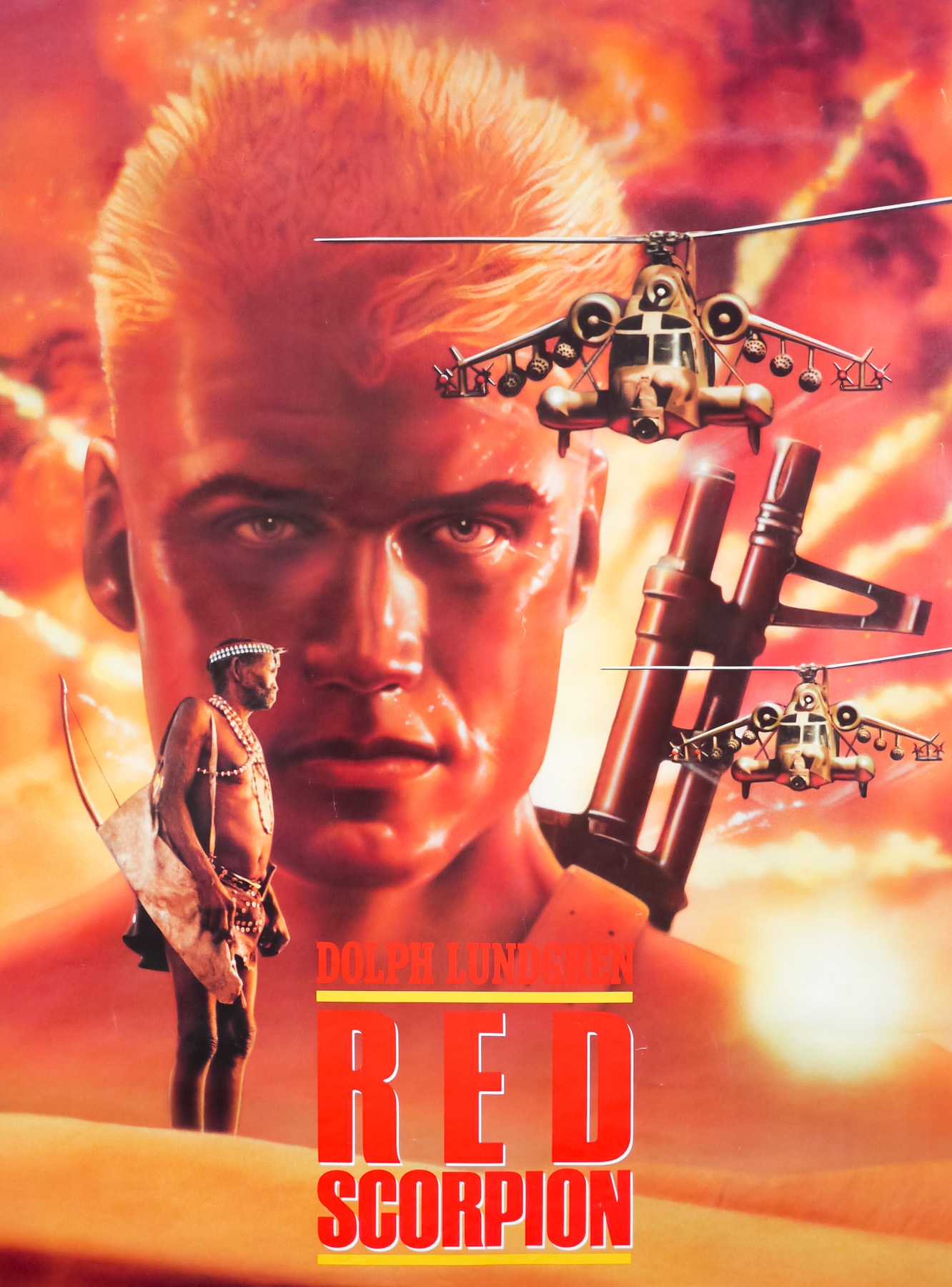
This poster was designed by the Los Angeles-based Kaiser Creative who worked on a number of film posters over the years. IMPAwards has a gallery of many of their posters. I’ve been unable to determine who is responsible for the artwork so if anyone has any ideas please get in touch.

A Coming of Angels / one sheet / USA

22.07.15

Poster Poster
Title
A Coming of Angels
AKA
Momento Supremo (Brazil)
Year of Film
1977
Director
Joel Scott
Starring
Lesllie Bovee, Abigail Clayton, Annette Haven, Jamie Gillis, Amber Hunt, Susan McBain, John Leslie, Eric Edwards
Origin of Film
USA
Genre(s) of Film
Lesllie Bovee, Abigail Clayton, Annette Haven, Jamie Gillis, Amber Hunt, Susan McBain, John Leslie, Eric Edwards,
Type of Poster
One sheet
Style of Poster
--
Origin of Poster
USA
Year of Poster
1977
Designer
Unknown
Artist
August
Size (inches)
27 1/16" x 41 1/16"
SS or DS
SS
NSS #
--
Tagline
--

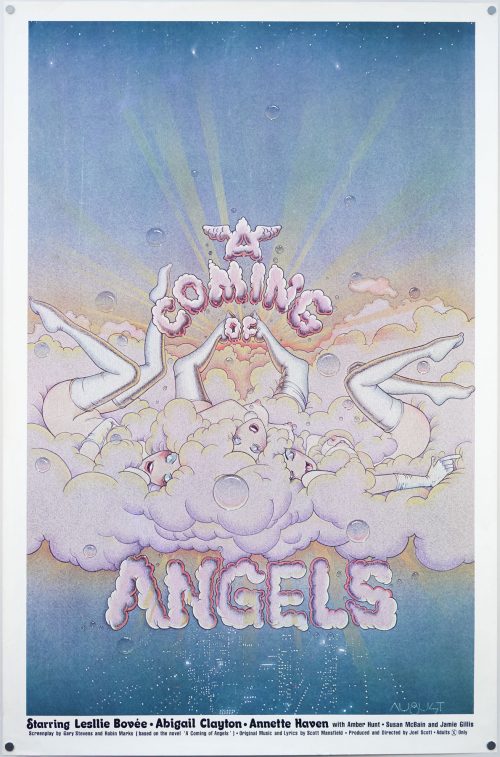
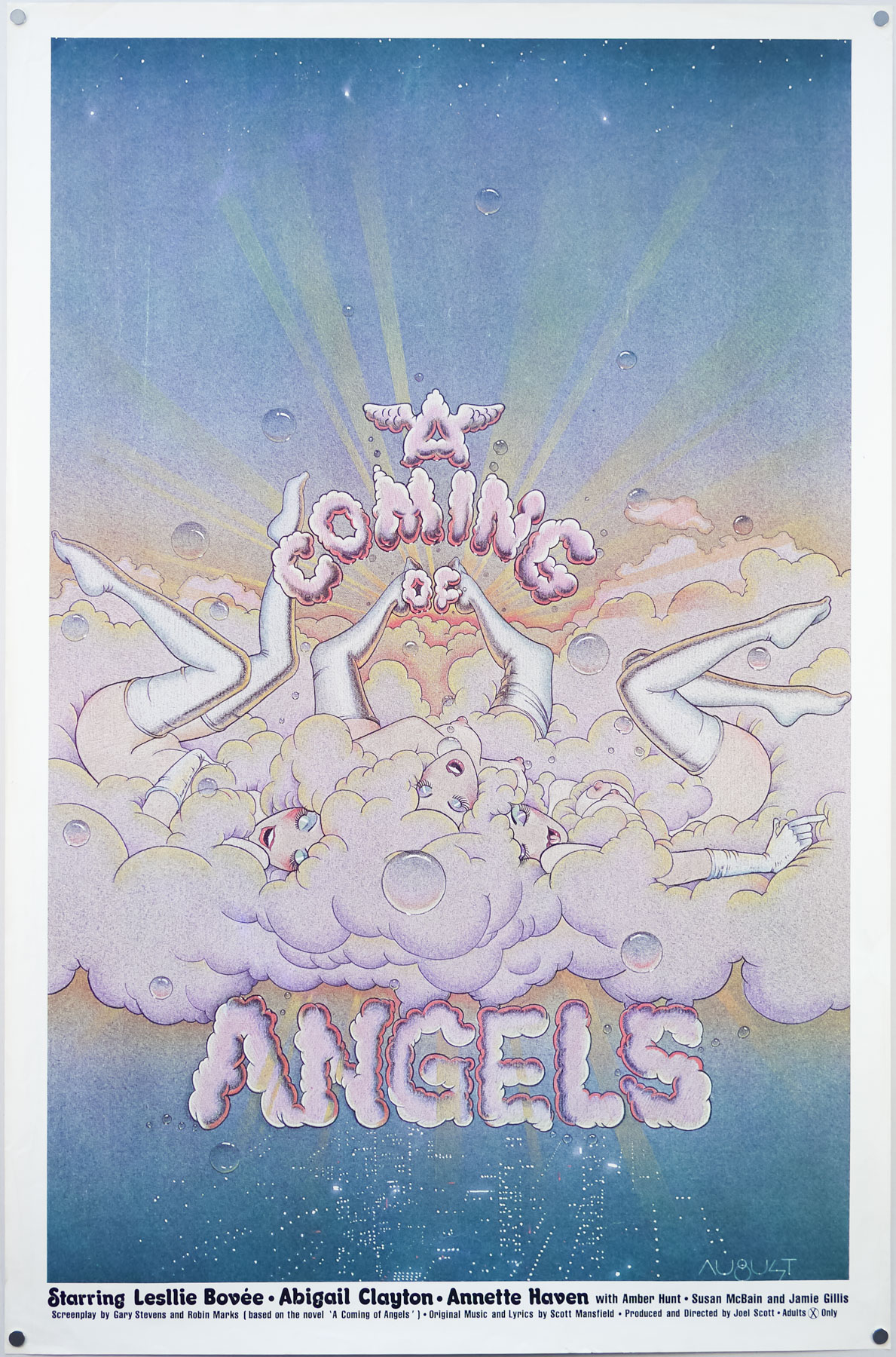
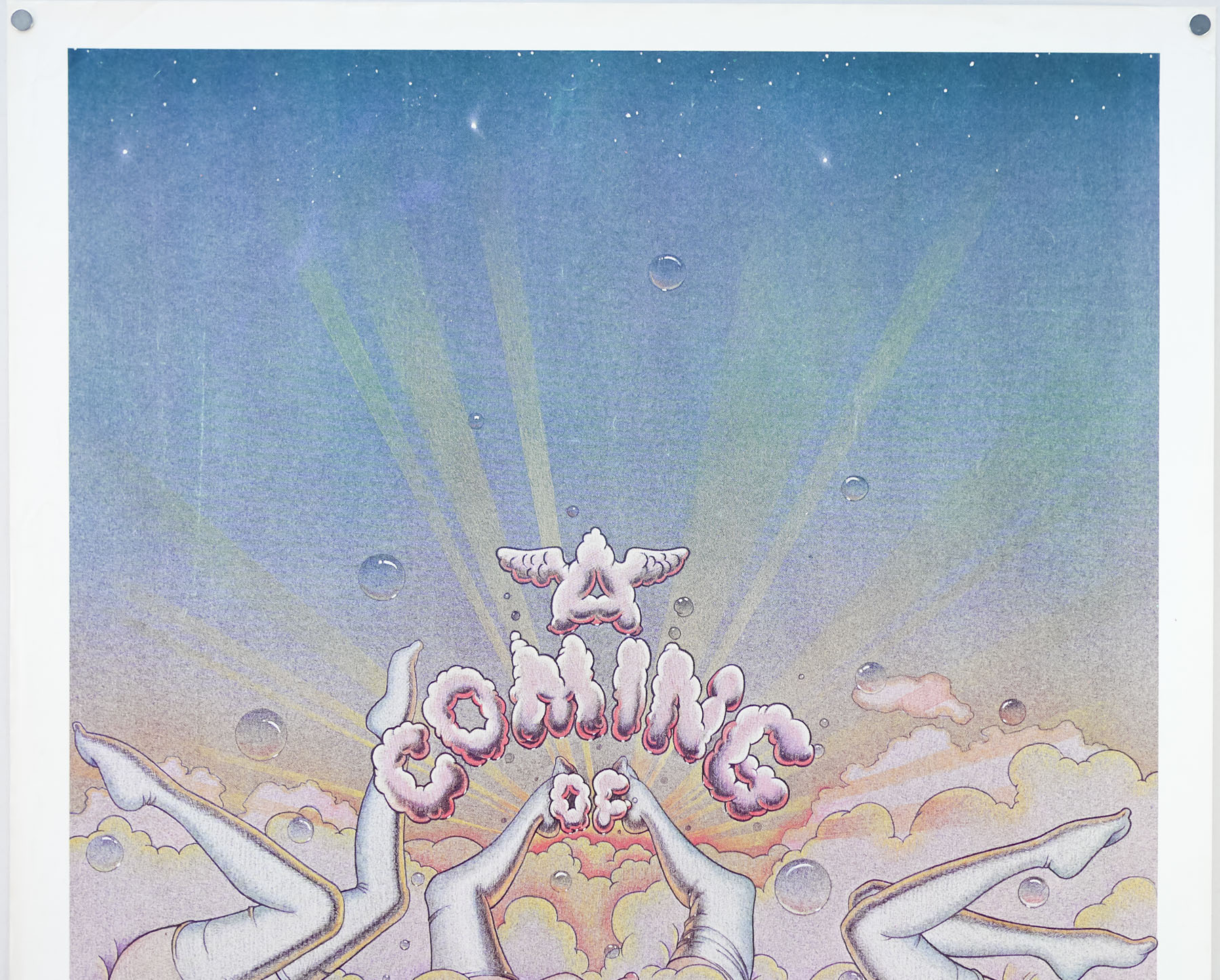
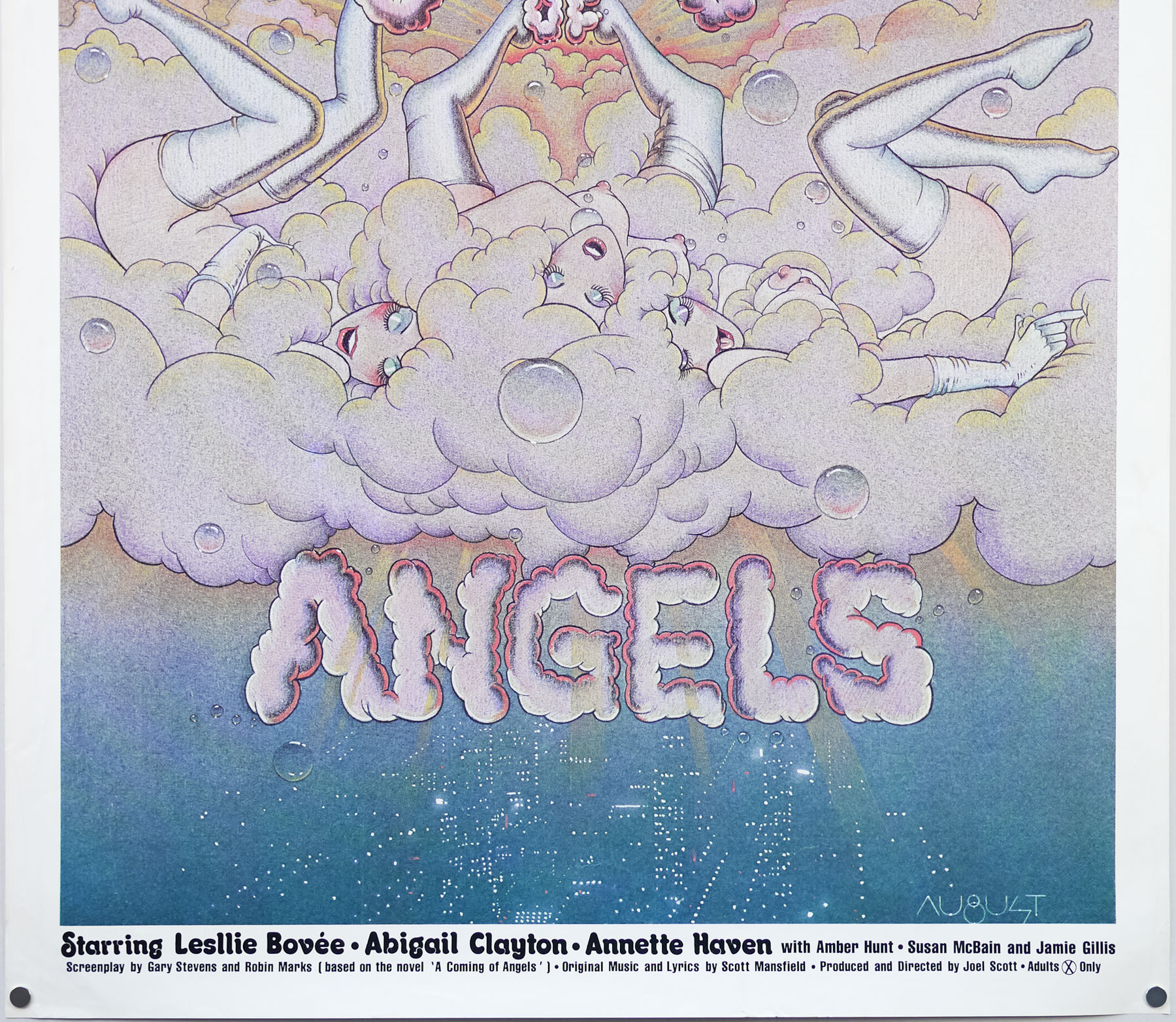
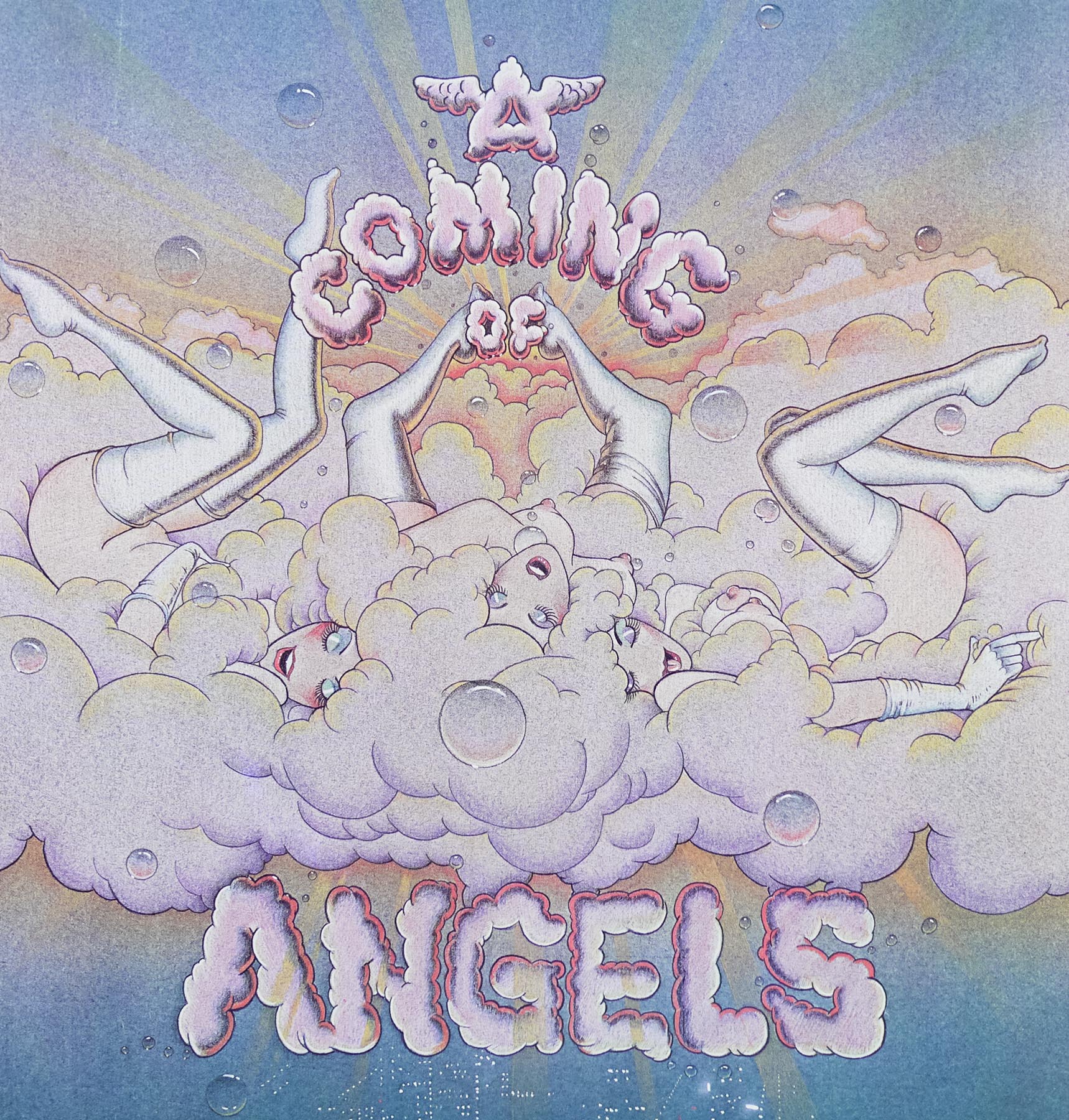
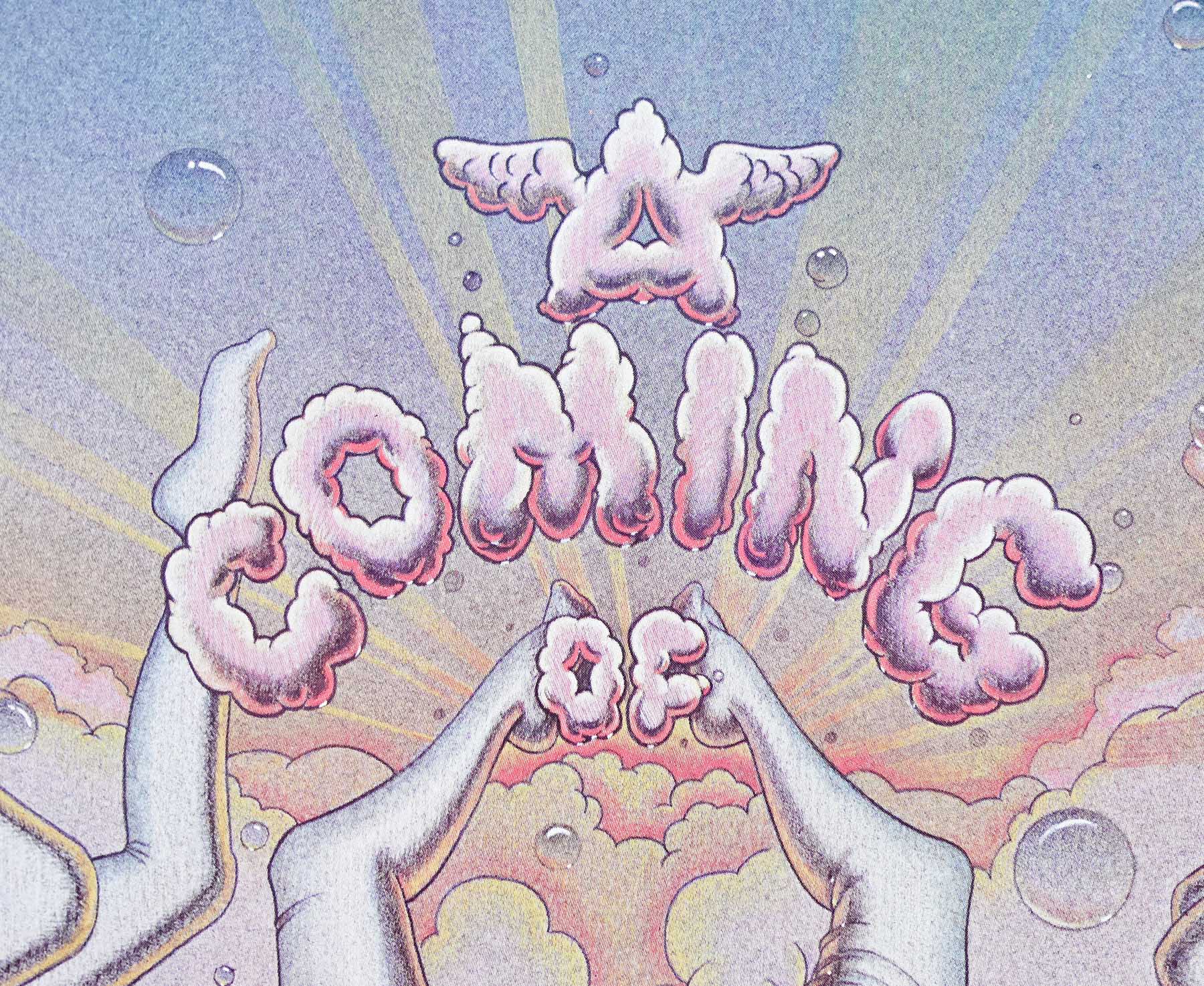
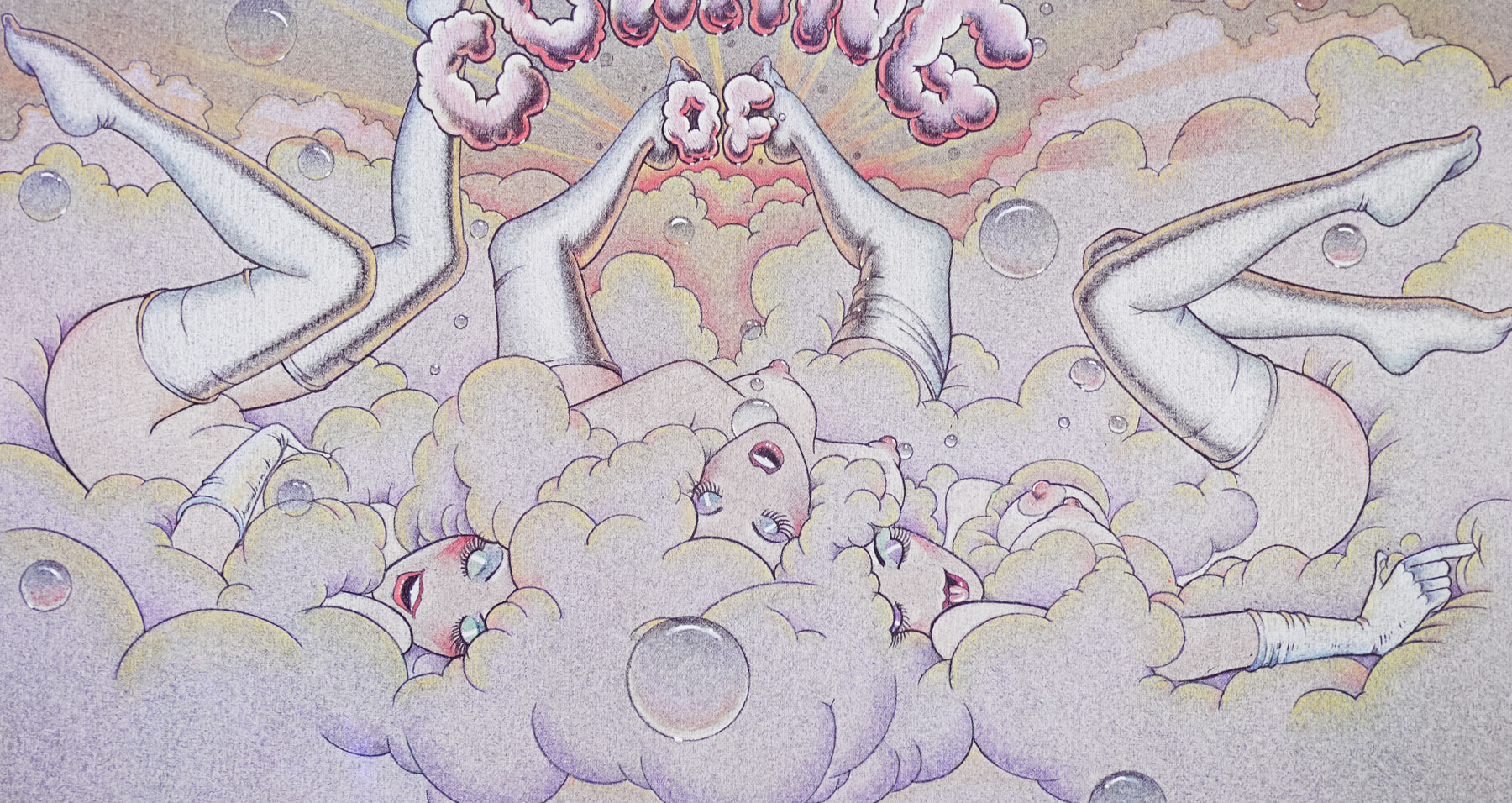
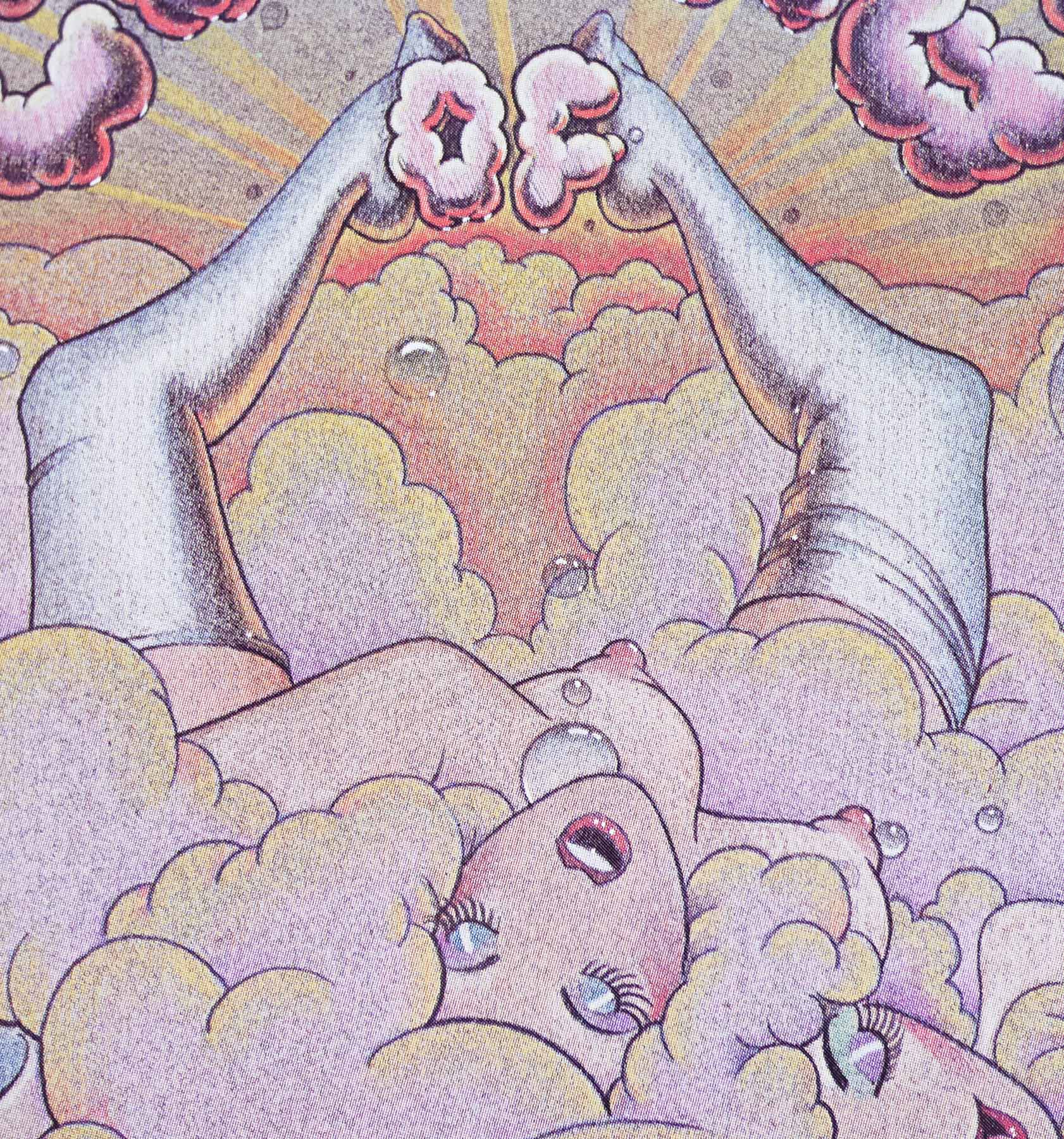
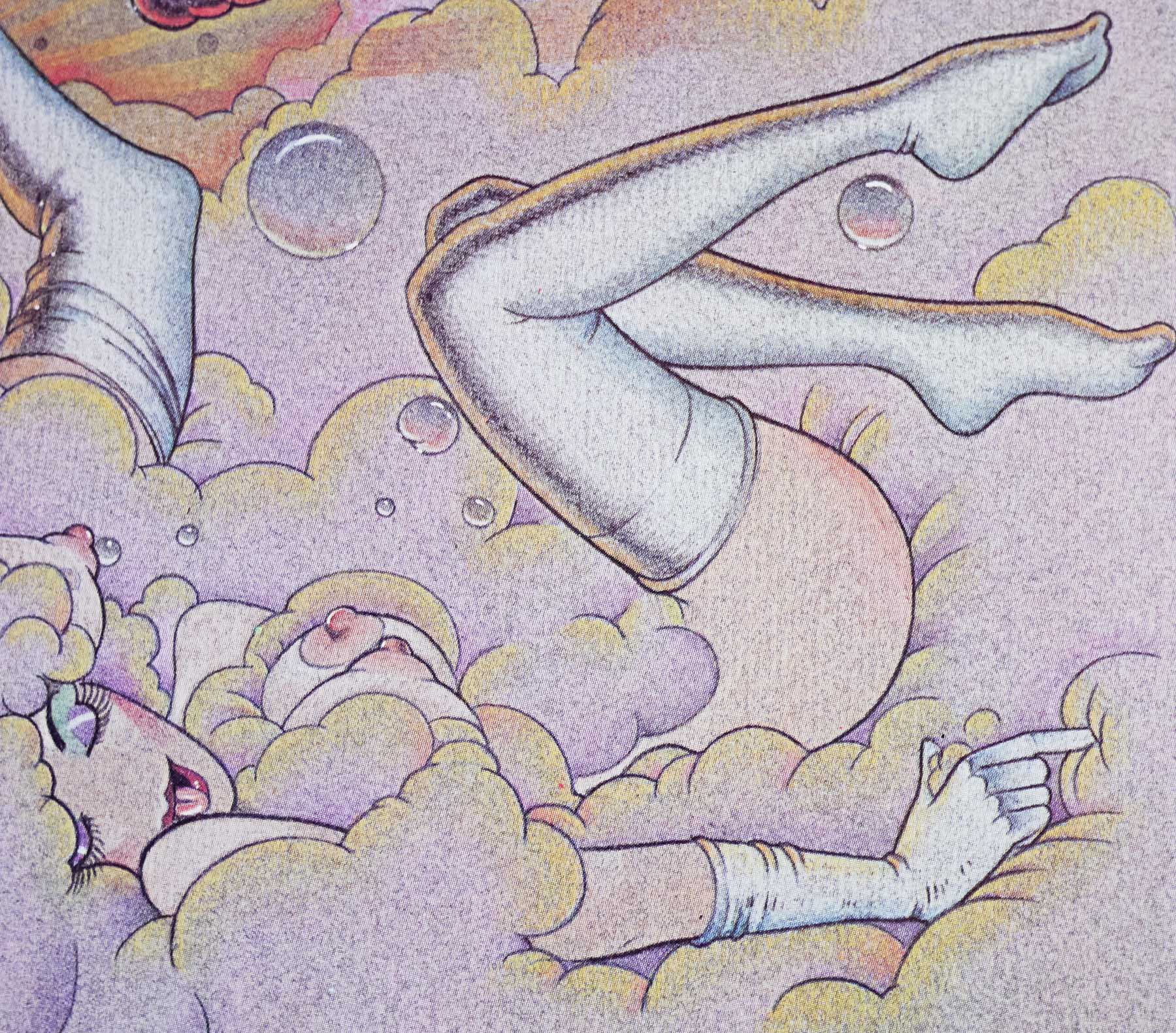
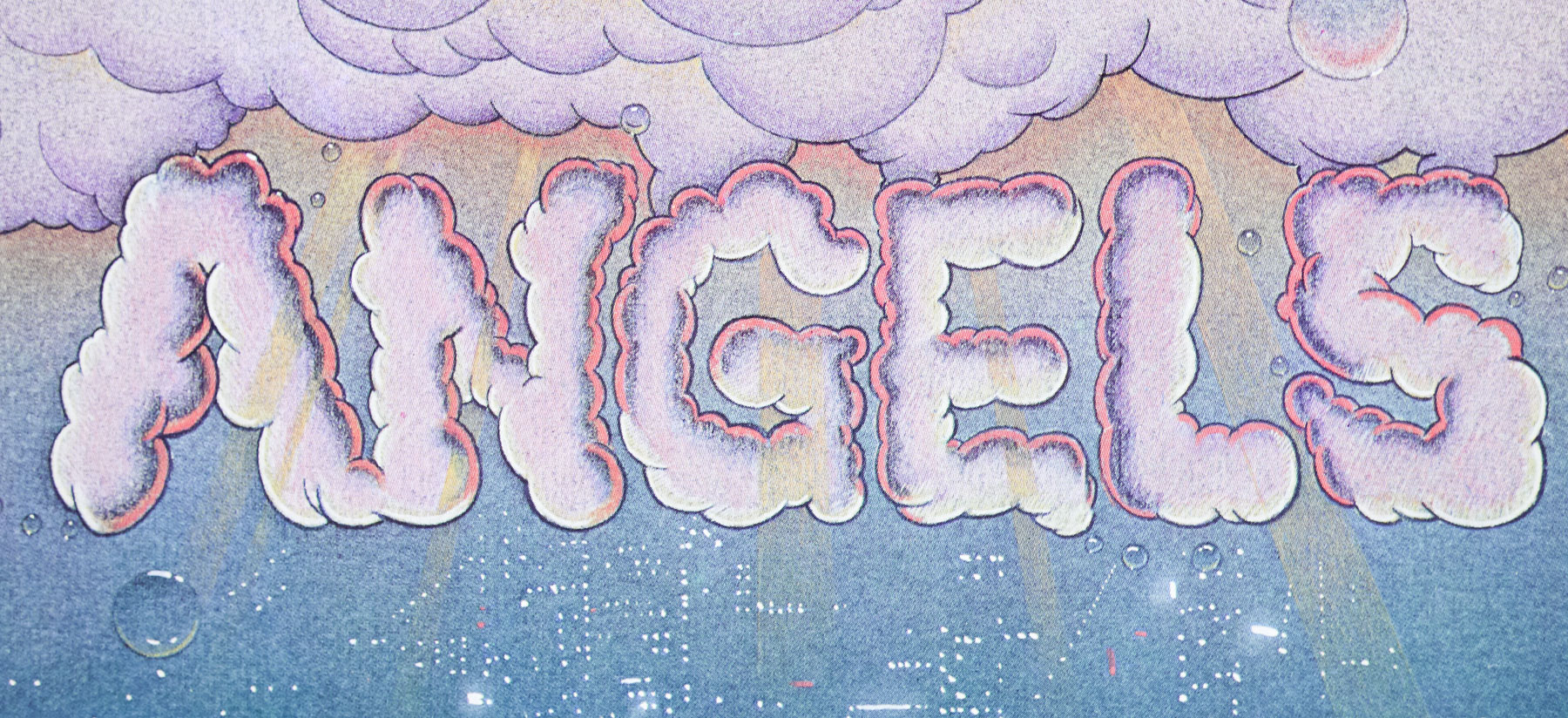
A Coming of Angels, released in select US cinemas in 1977, is an X-rated homage to the original Charlie’s Angels TV show and proves that pornographic spoofs of popular films and TV series is not a recent phenomenon. This is the only film that Joel Scott ever directed but he managed to assemble a cast of now legendary adult stars, including the late Jamie Gillis who starred in over 400 adult pictures as well as John Leslie and Eric Edwards who were actors in over 300 titles each. There are only 6 reviews for the title on IMDb, but there’s a lengthy one by someone called Dries Vermeulen who goes into detail about the background of the film and the action it contains.

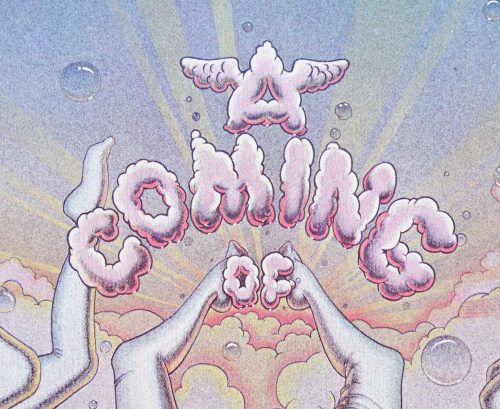
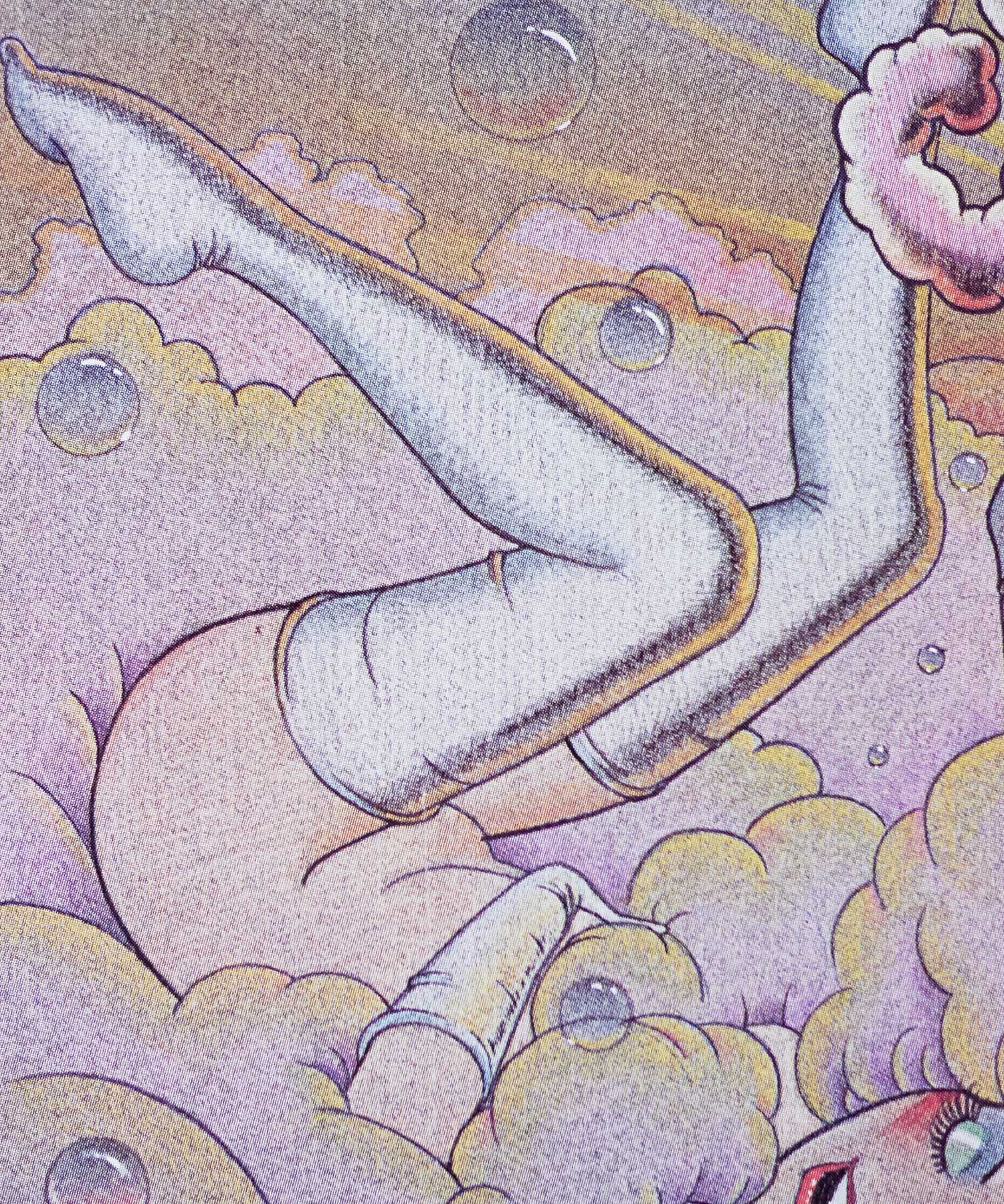
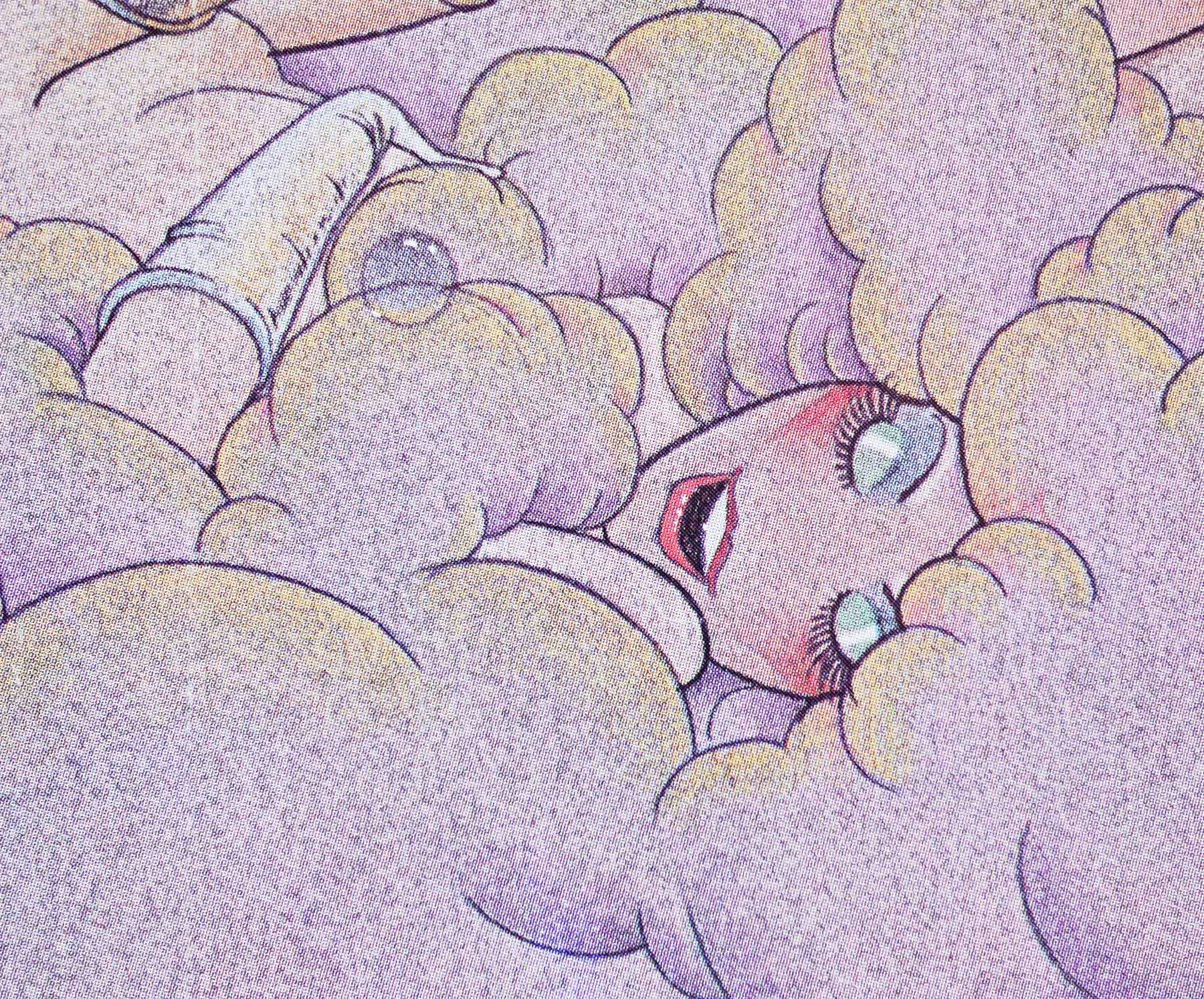
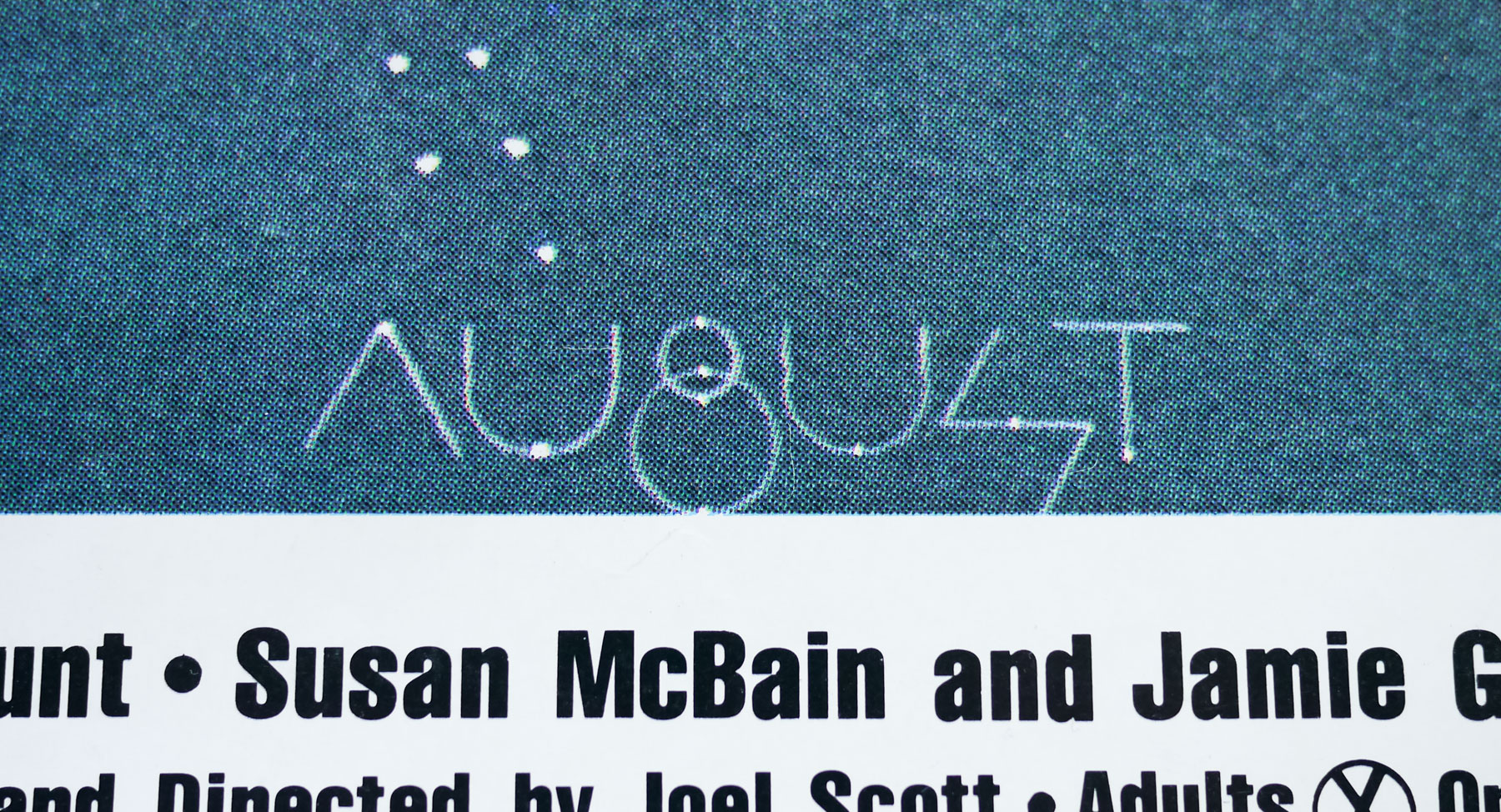
The artwork features the signature ‘August’ but I’ve been unable to determine who this belongs to and Robin Bougie, the author of the excellent Graphic Thrills (a book about adult movie posters) was also unable to track the artist down. If anyone has any ideas please get in touch.

Silver Streak / one sheet / style A / USA

31.05.16

Poster Poster
Title
Silver Streak
AKA
--
Year of Film
1976
Director
Arthur Hiller
Starring
Gene Wilder, Jill Clayburgh, Richard Pryor, Patrick McGoohan, Ned Beatty, Clifton James, Ray Walston, Stefan Gierasch, Len Birman, Valerie Curtin, Lucille Benson, Scatman Crothers, Richard Kiel, Fred Willard
Origin of Film
USA
Genre(s) of Film
Gene Wilder, Jill Clayburgh, Richard Pryor, Patrick McGoohan, Ned Beatty, Clifton James, Ray Walston, Stefan Gierasch, Len Birman, Valerie Curtin, Lucille Benson, Scatman Crothers, Richard Kiel, Fred Willard,
Type of Poster
One sheet
Style of Poster
Style A
Origin of Poster
USA
Year of Poster
1976
Designer
Unknown
Artist
George Gross
Size (inches)
27 2/16" x 41"
SS or DS
SS
NSS #
76/200
Tagline
By plane, by train, by the edge of your seat, it's the most hilarious suspense ride of your life!

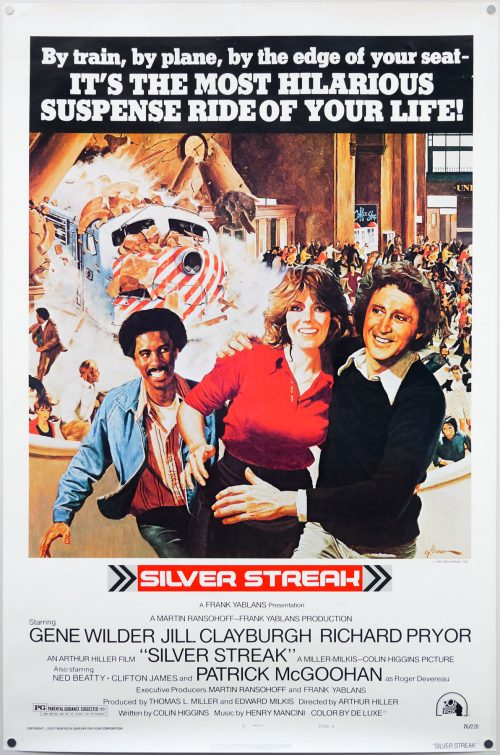
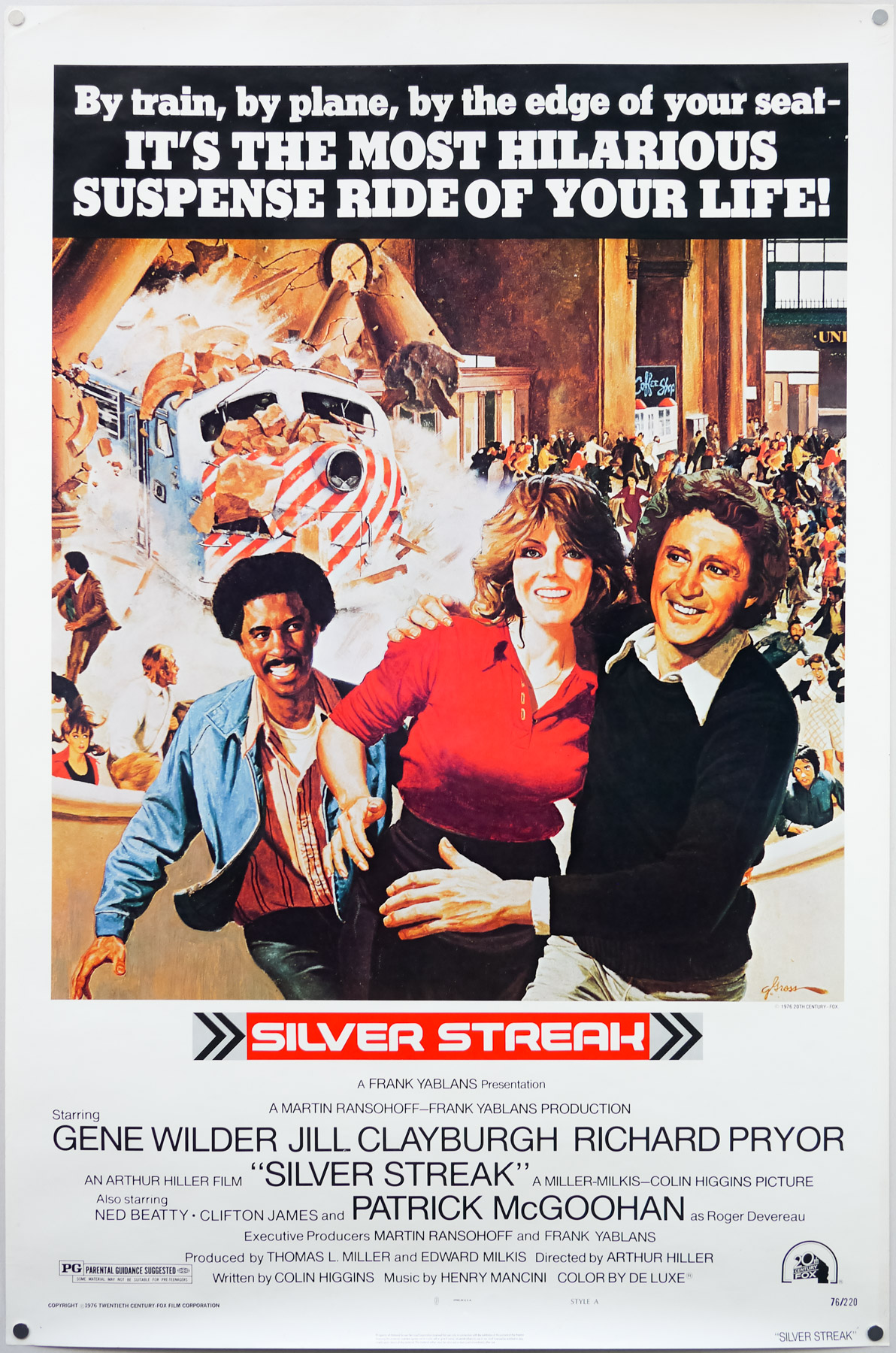
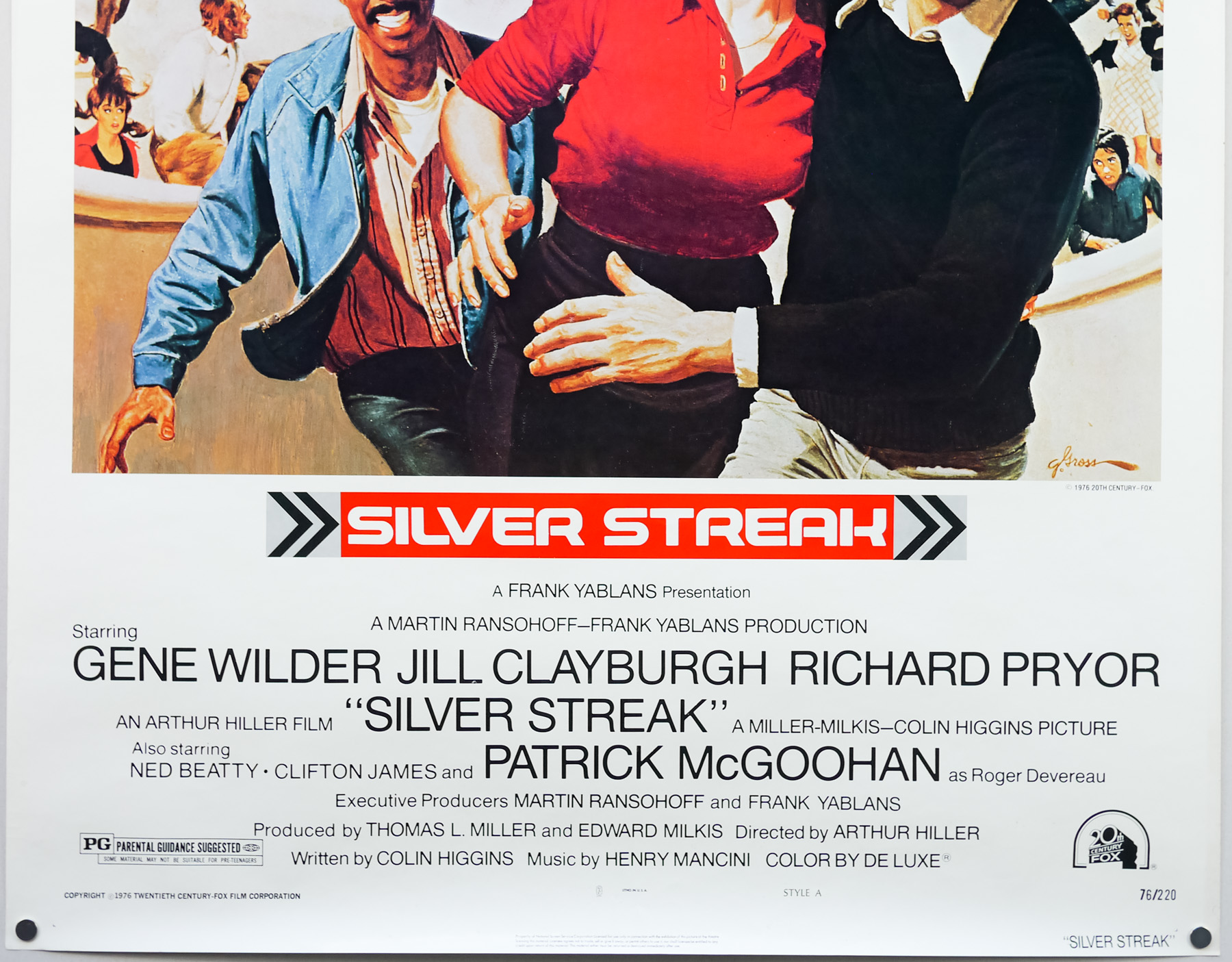
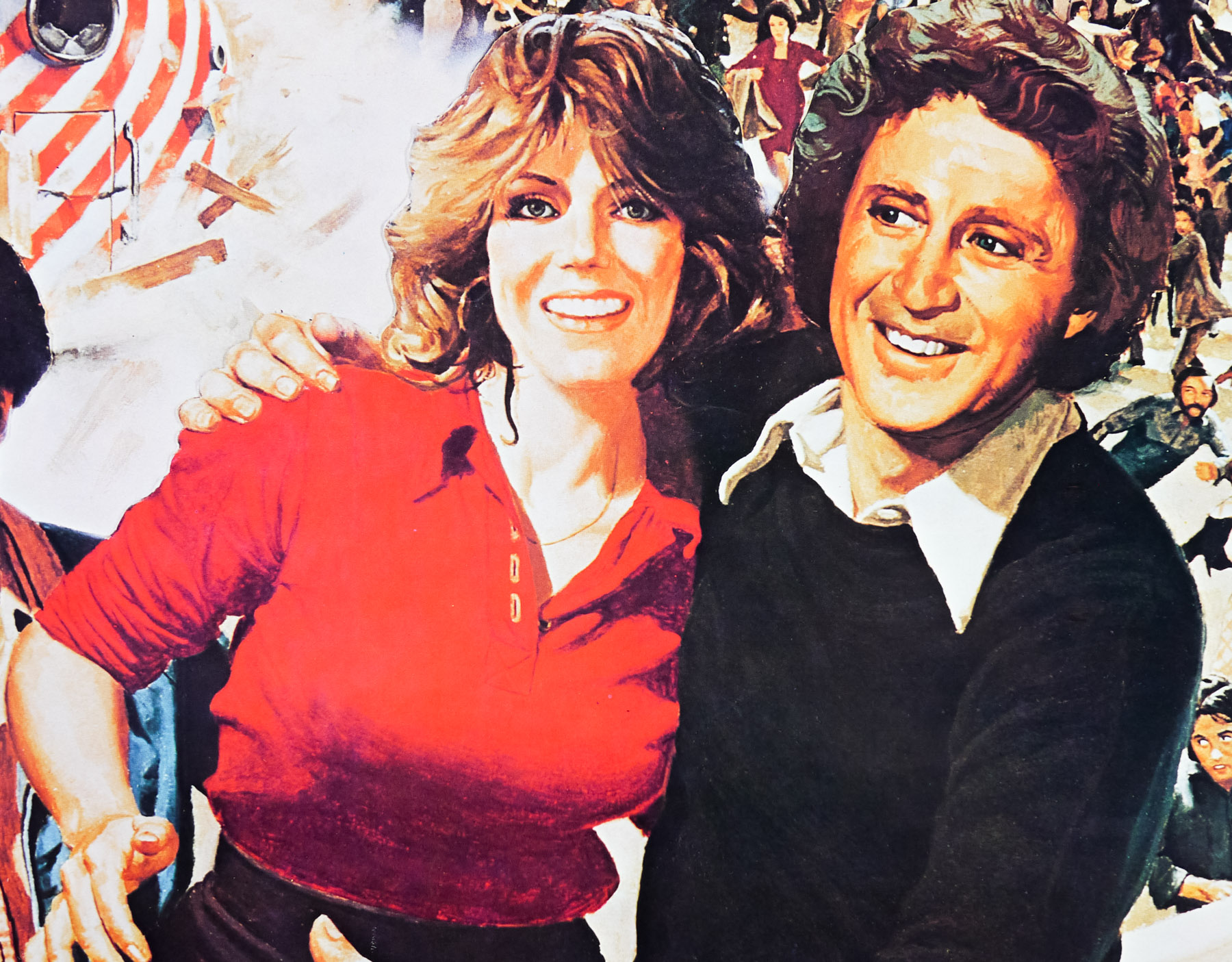
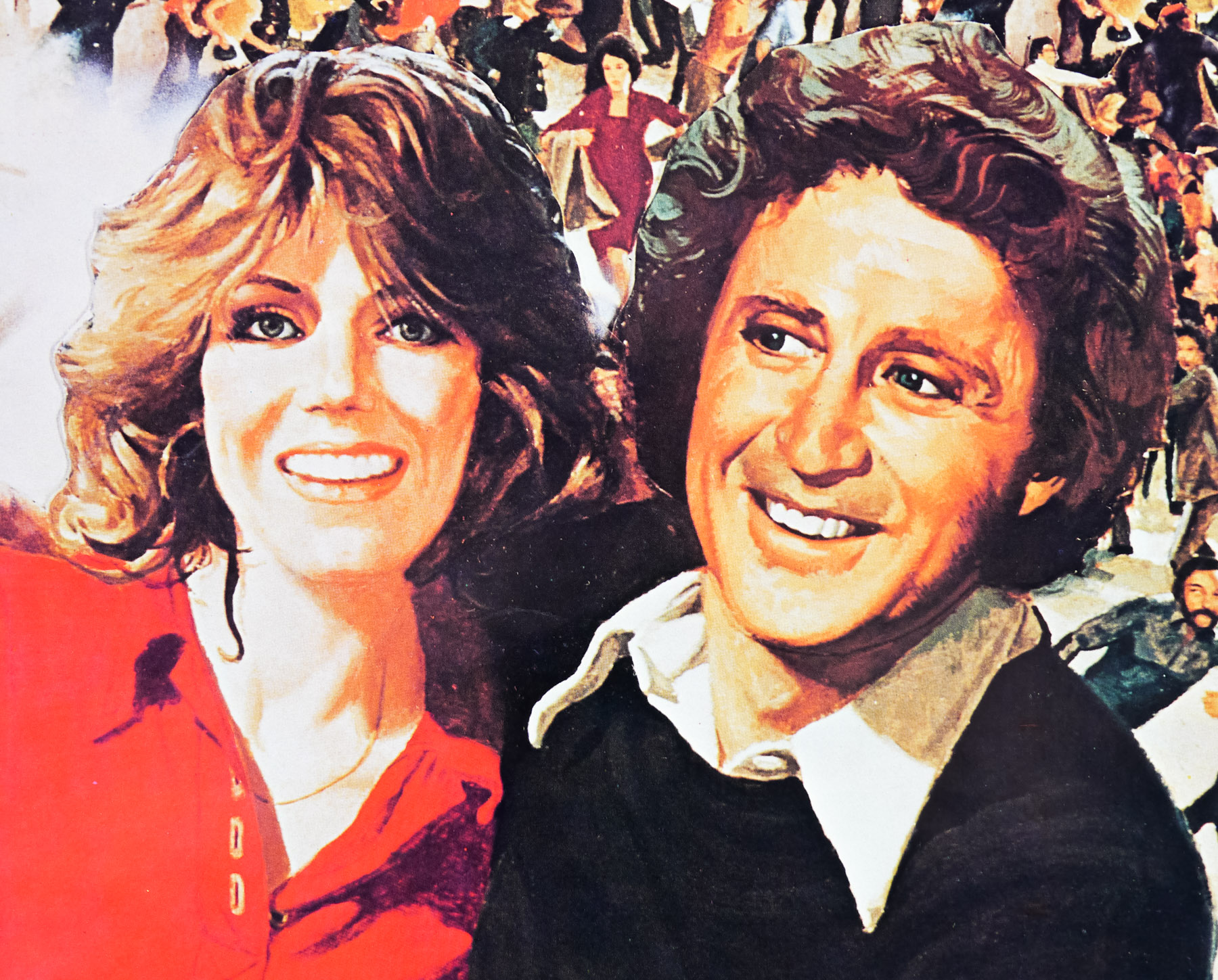
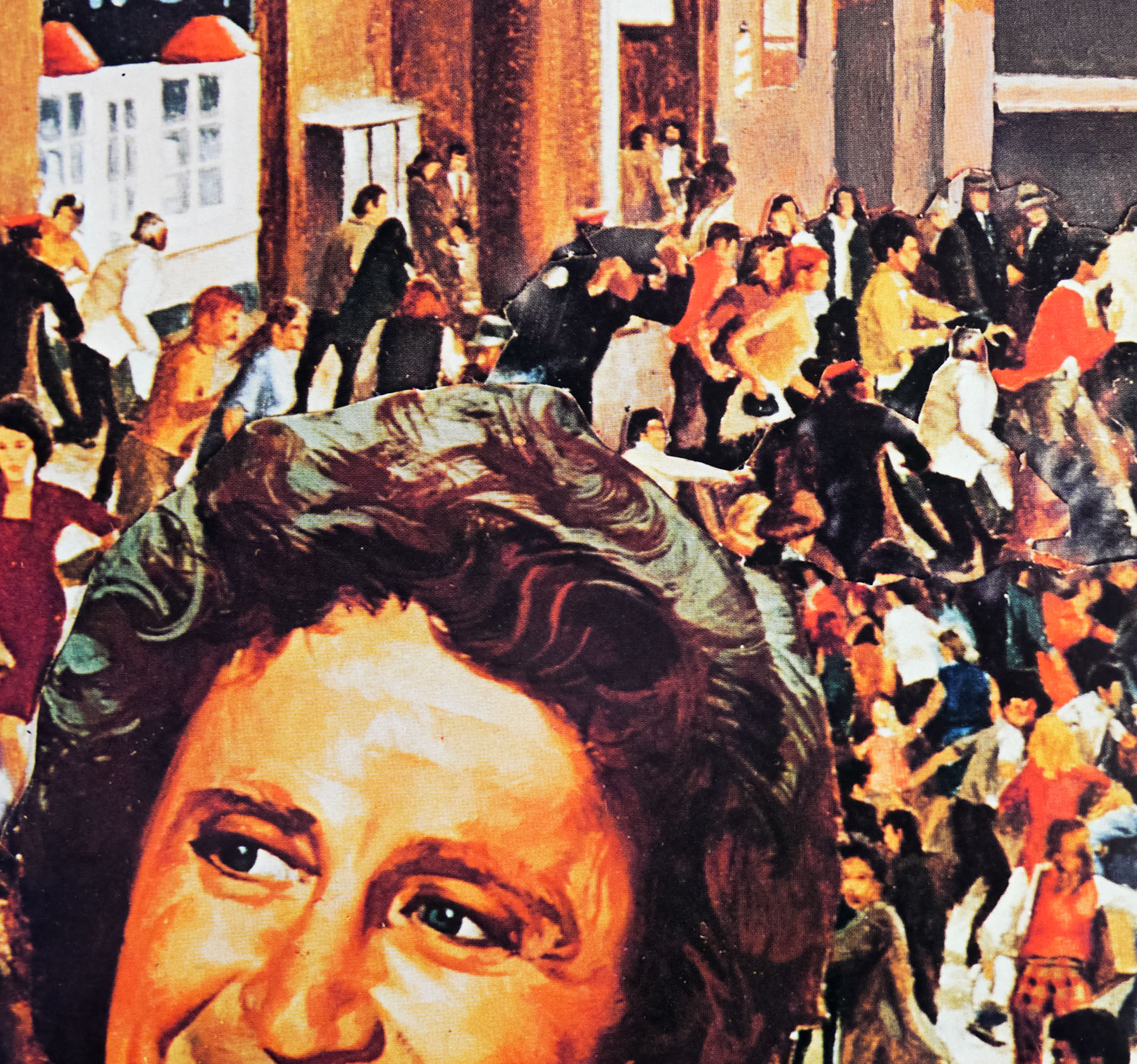
Silver Streak, a 1976 comedy thriller, marked the first time that the celebrated comic actors Gene Wilder and Richard Pryor would appear together in a film and there would be a further three pairings following this one. Directed by Arthur Hiller, who would helm See No Evil, Hear No Evil starring Wilder and Pryor 13 years later, the film is mostly set onboard the eponymous long distance train. Wilder plays George Caldwell a book editor who is traveling from Los Angeles to Chicago for his sister’s wedding. Whilst onboard he meets Hilly (Jill Clayburgh) and the pair strike up a romance, but soon George is battling to stay alive after he witnesses the murder of an art historian and attracts the attention of the killers.

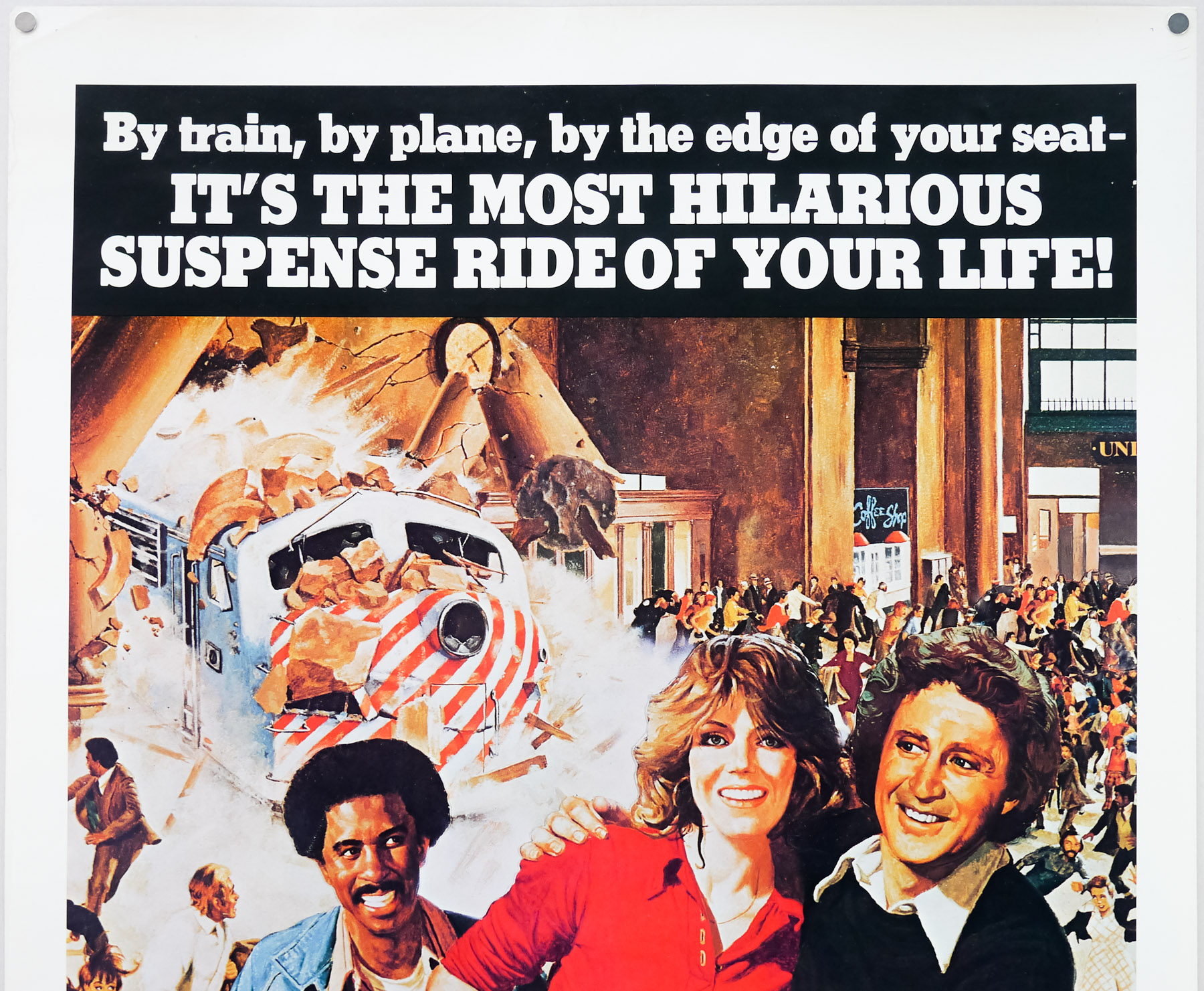
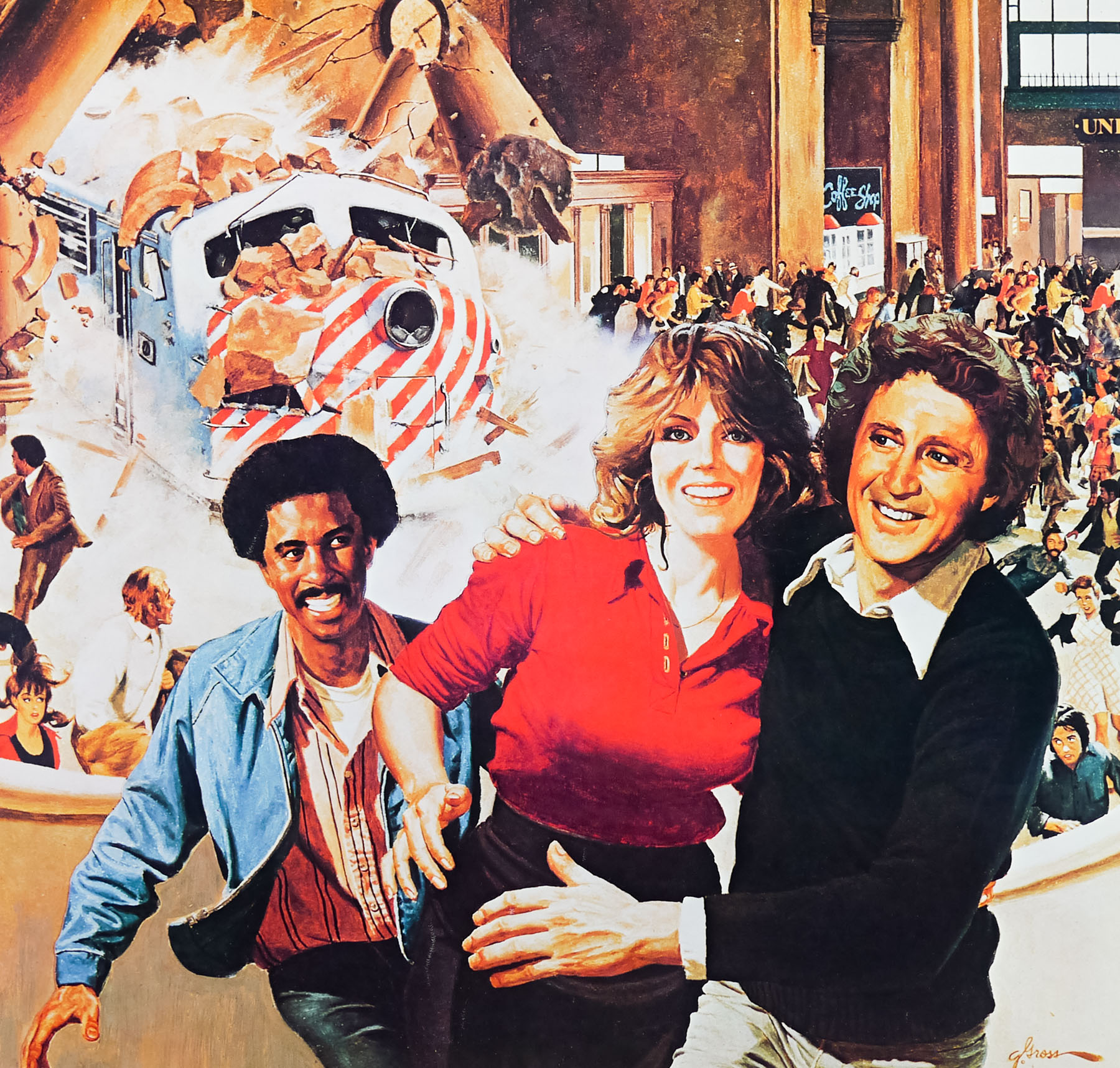
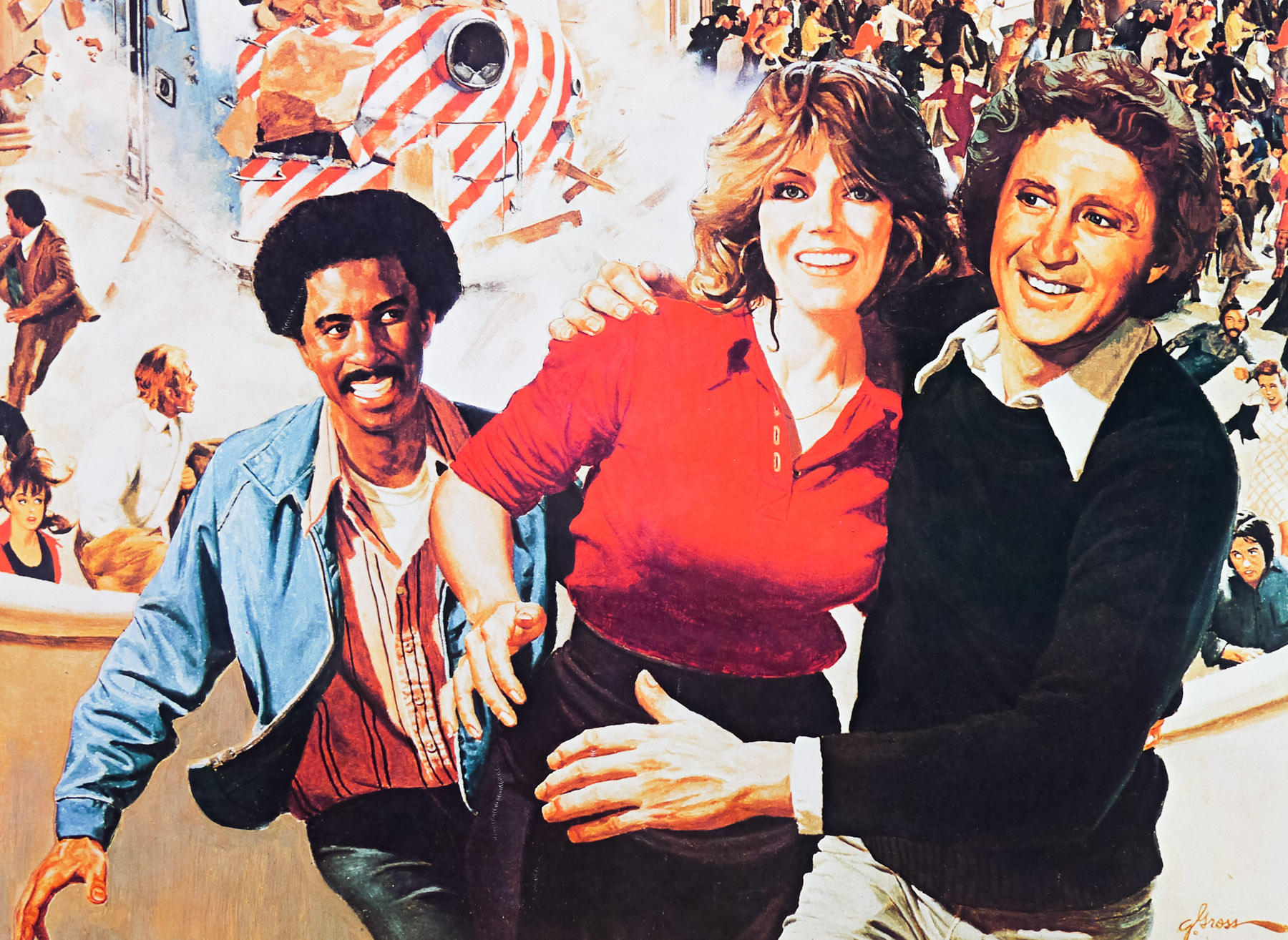
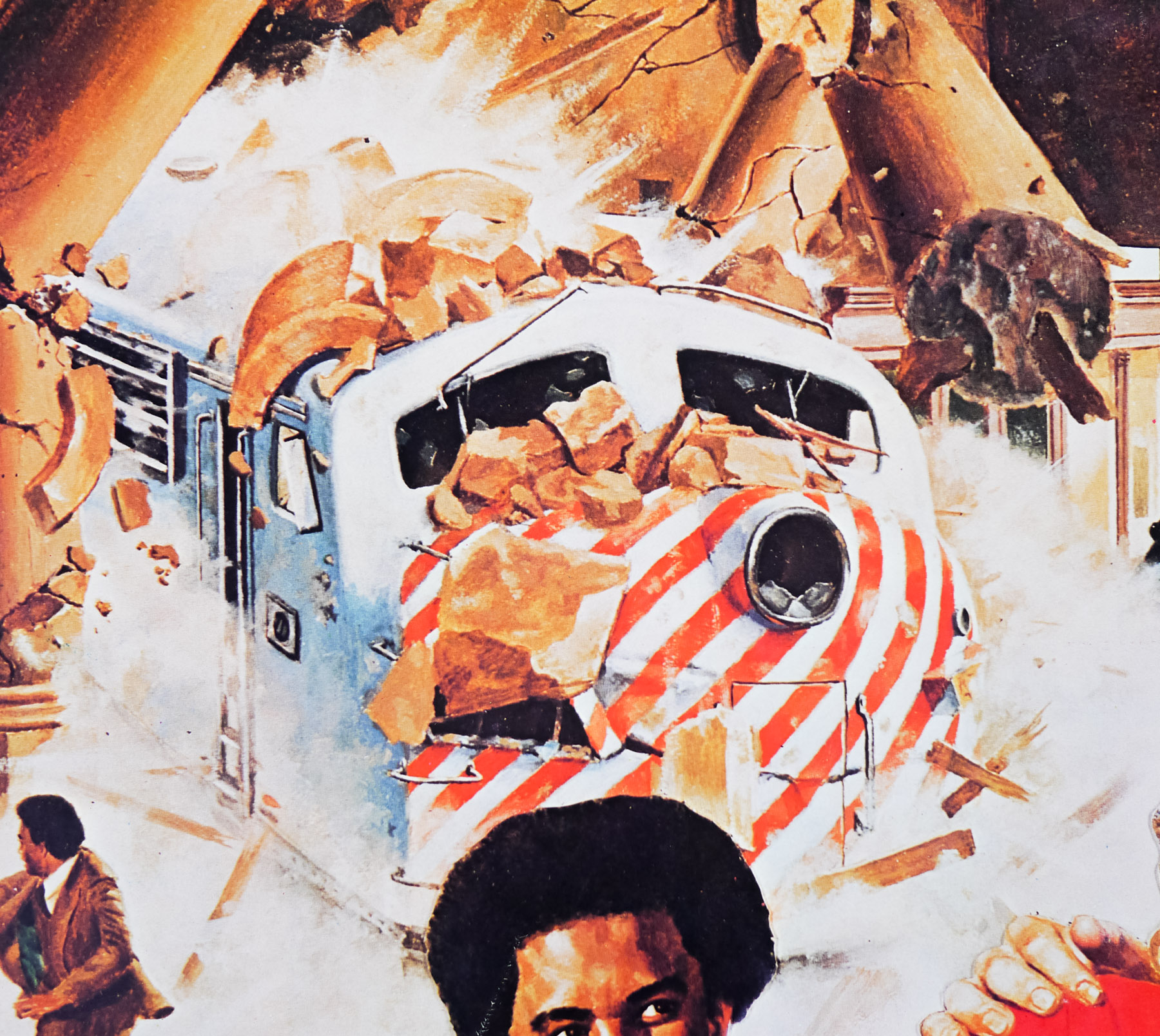
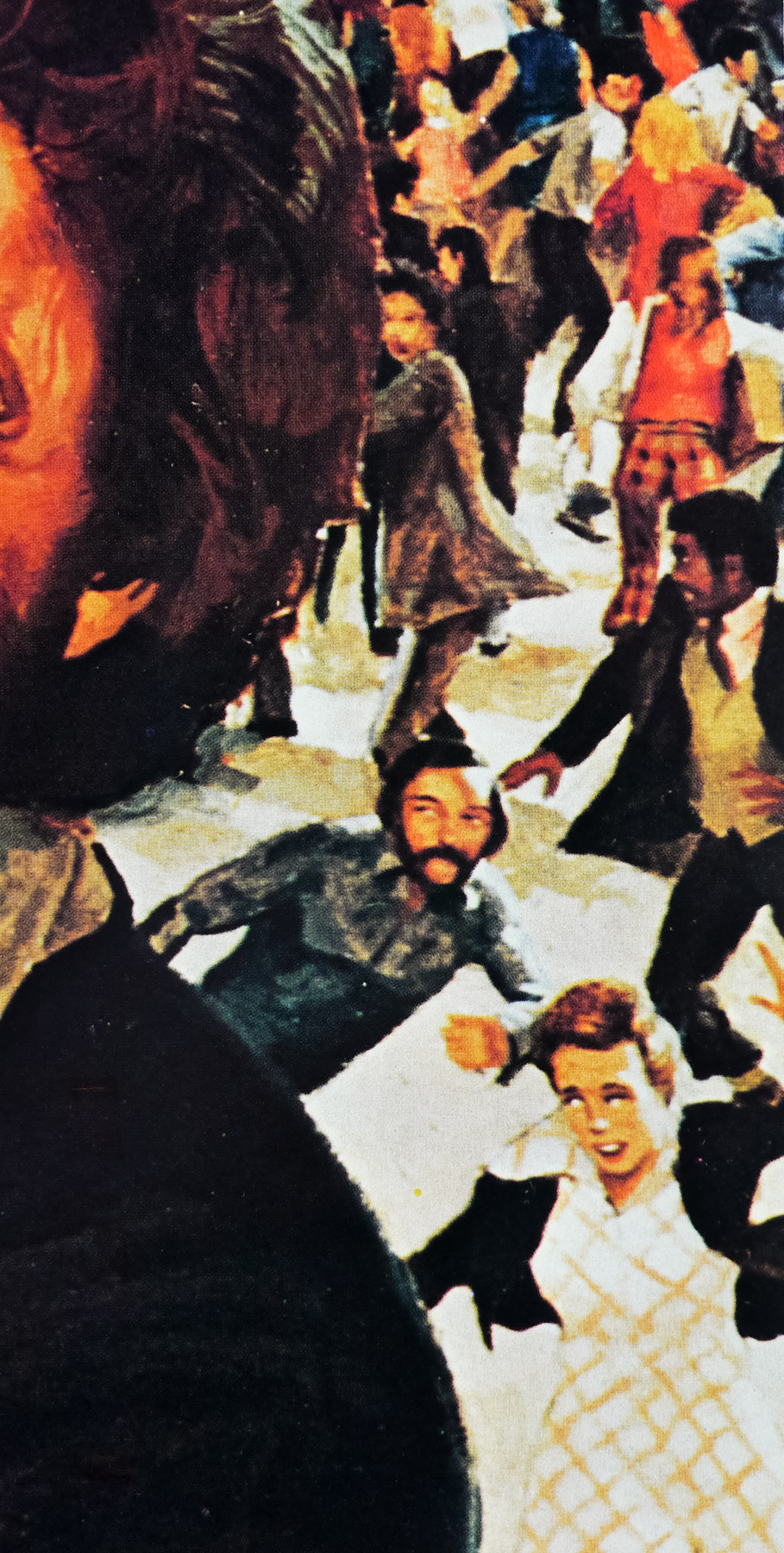
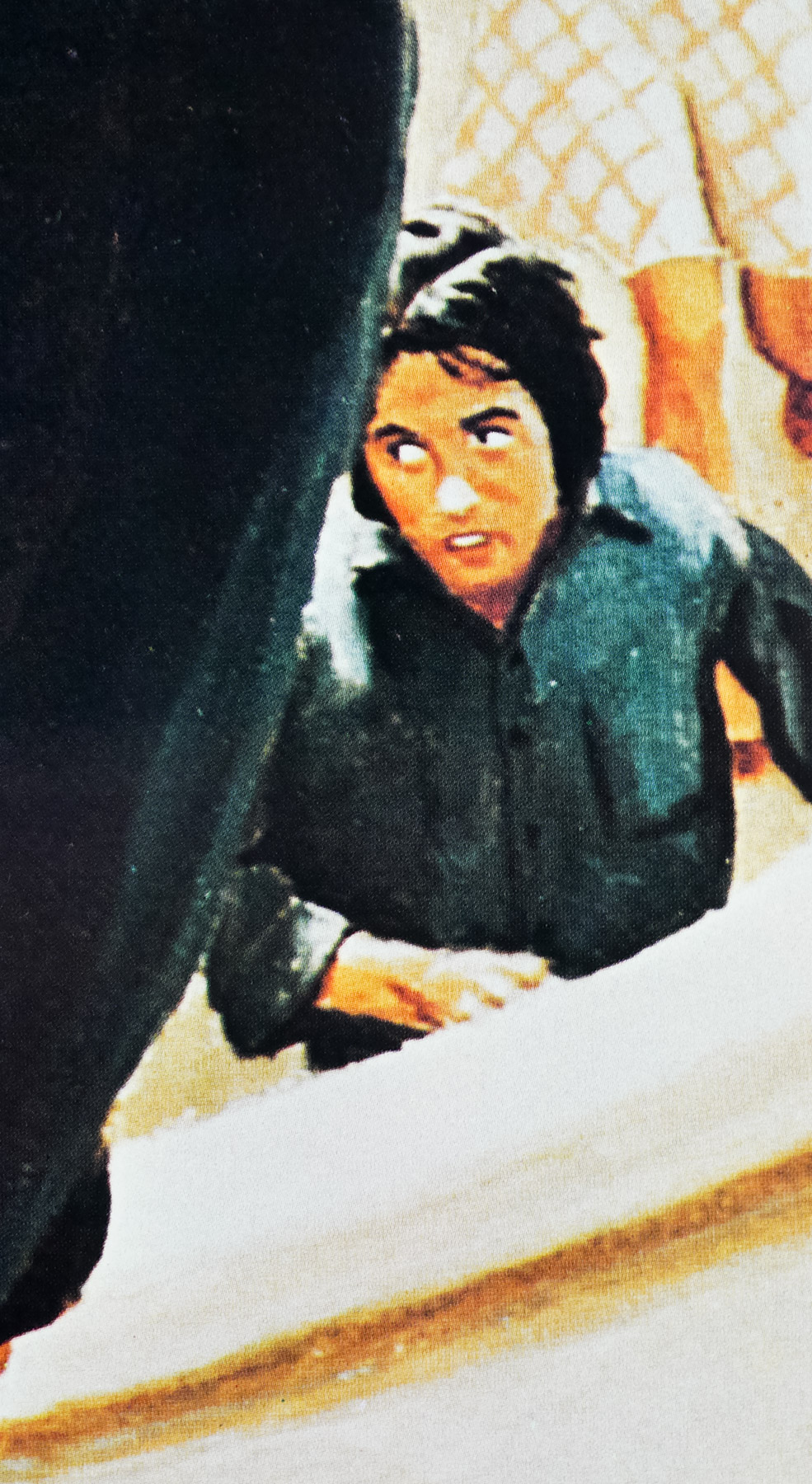
The gang plan to impersonate the dead historian in order to pass of a pair of forged Rembrandt paintings as original. George is forcefully removed from the train several times and it’s during one of these escapades that he meets the criminal Grover T. Muldoon (Pryor) who he enlists in helping him reach the train to climb back onboard and bring the conspiracy to light. As this poster artwork suggests, the film ends in a spectacular train crash.

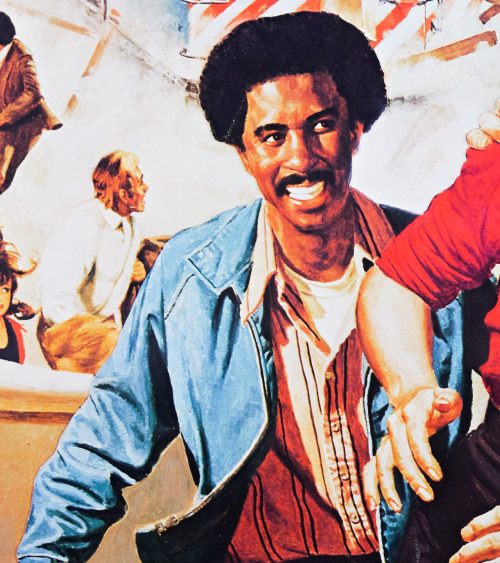
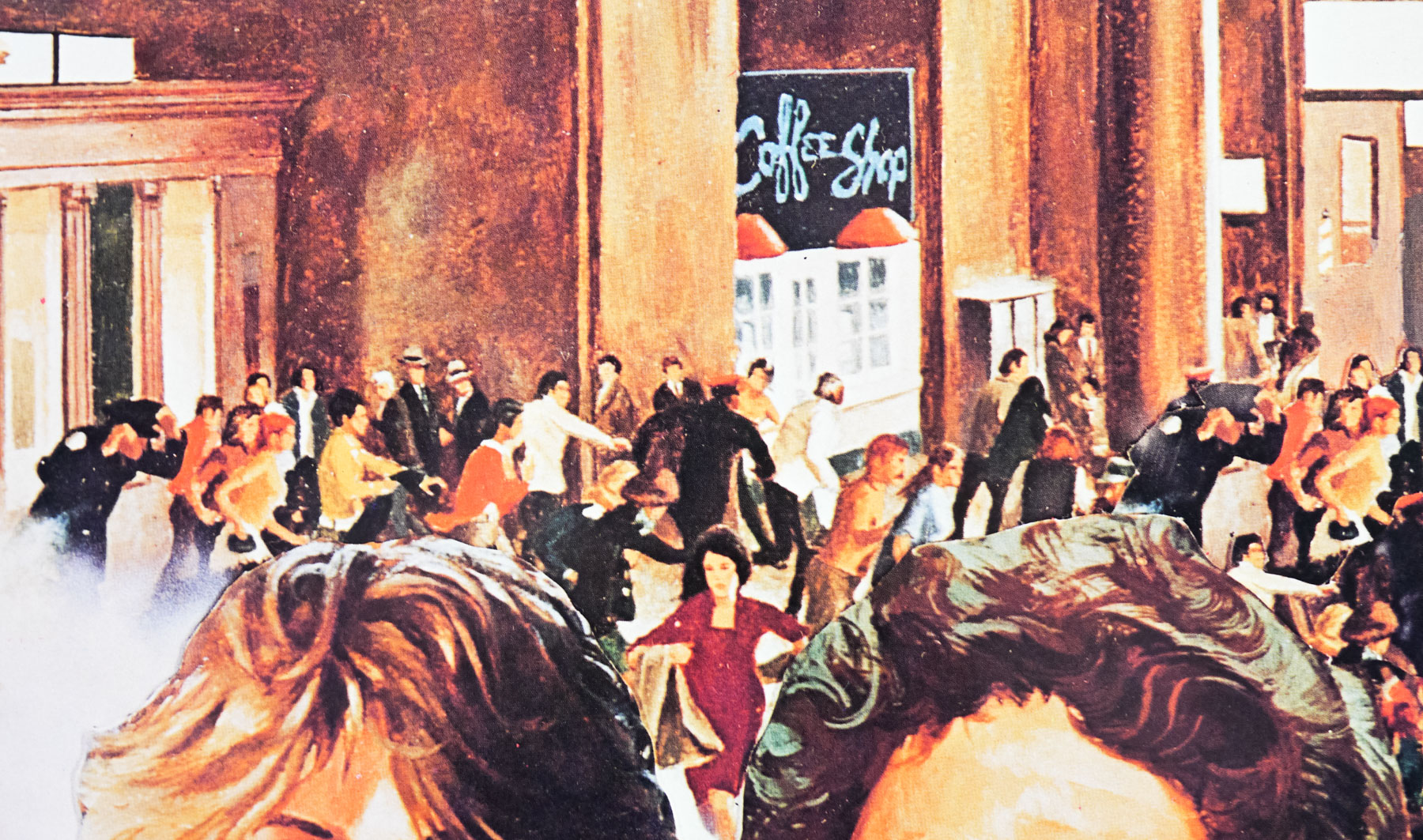
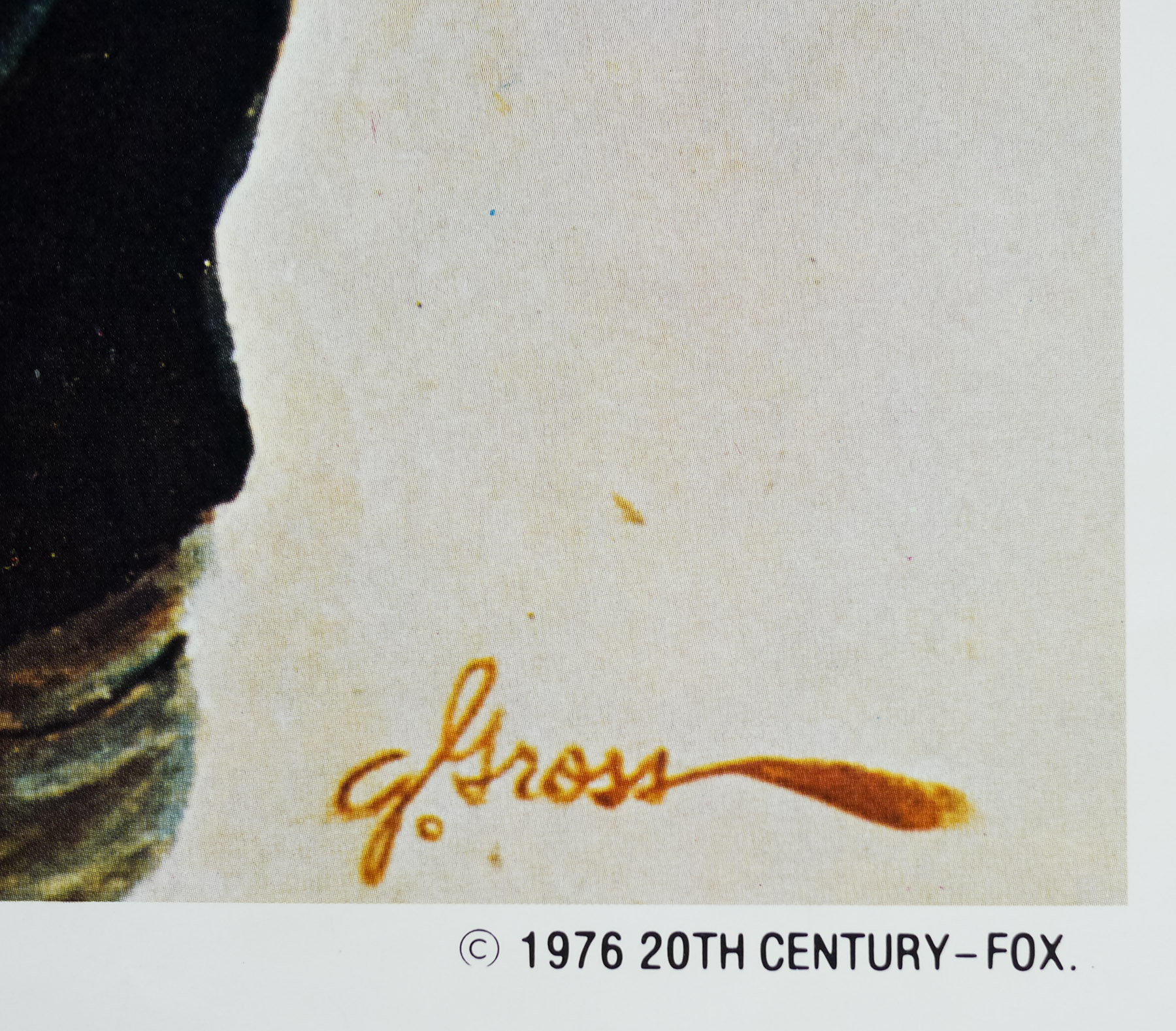
The artwork is by George Gross, an American who is best known as an artist of pulp book covers but, as this short biography details, he also worked on magazine illustrations and covers for popular novels. The artist was born in 1909 in Brooklyn and he followed his father into the area of commercial illustration, with both of his siblings eventually making it a proper family affair. This site has a gallery of his pulp covers. I’ve been unable to determine if he painted any other film posters so please get in touch if you know of any others.

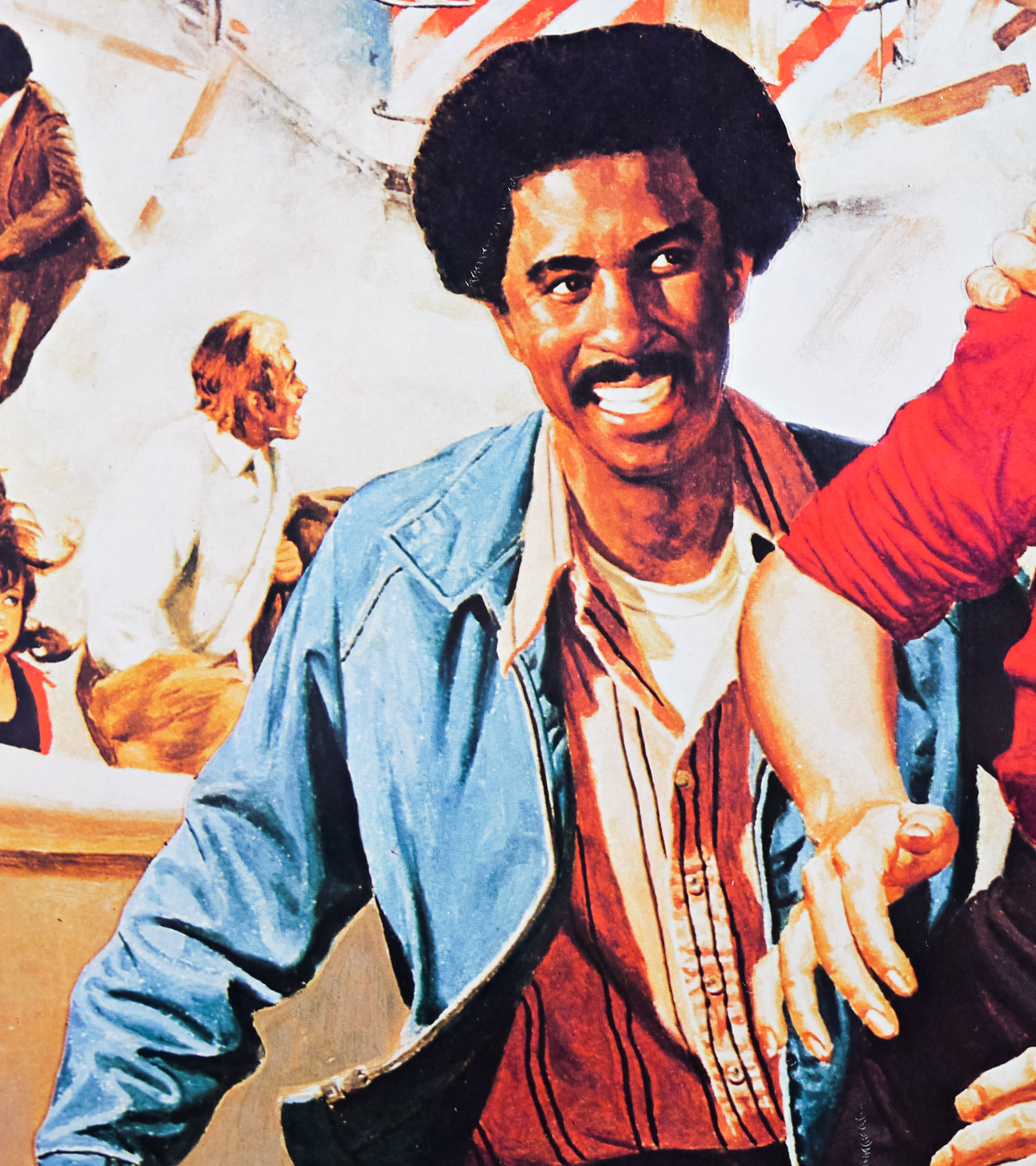
It’s worth noting that the central figures have been rather crudely cut out and placed over the background scenes, which have also been cut up in places (see if you can spot the replicated policeman).

Anguish / one sheet / USA

22.03.17

Poster Poster
Title
Anguish
AKA
Angustia (Spain - original title)
Year of Film
1987
Director
Bigas Luna
Starring
Zelda Rubinstein, Michael Lerner, Talia Paul, Àngel Jové, Clara Pastor, Isabel García Lorca
Origin of Film
Spain
Genre(s) of Film
Zelda Rubinstein, Michael Lerner, Talia Paul, Àngel Jové, Clara Pastor, Isabel García Lorca,
Type of Poster
One sheet
Style of Poster
--
Origin of Poster
USA
Year of Poster
1988
Designer
Unknown
Artist
--
Size (inches)
27 2/16" x 41"
SS or DS
SS
NSS #
--
Tagline
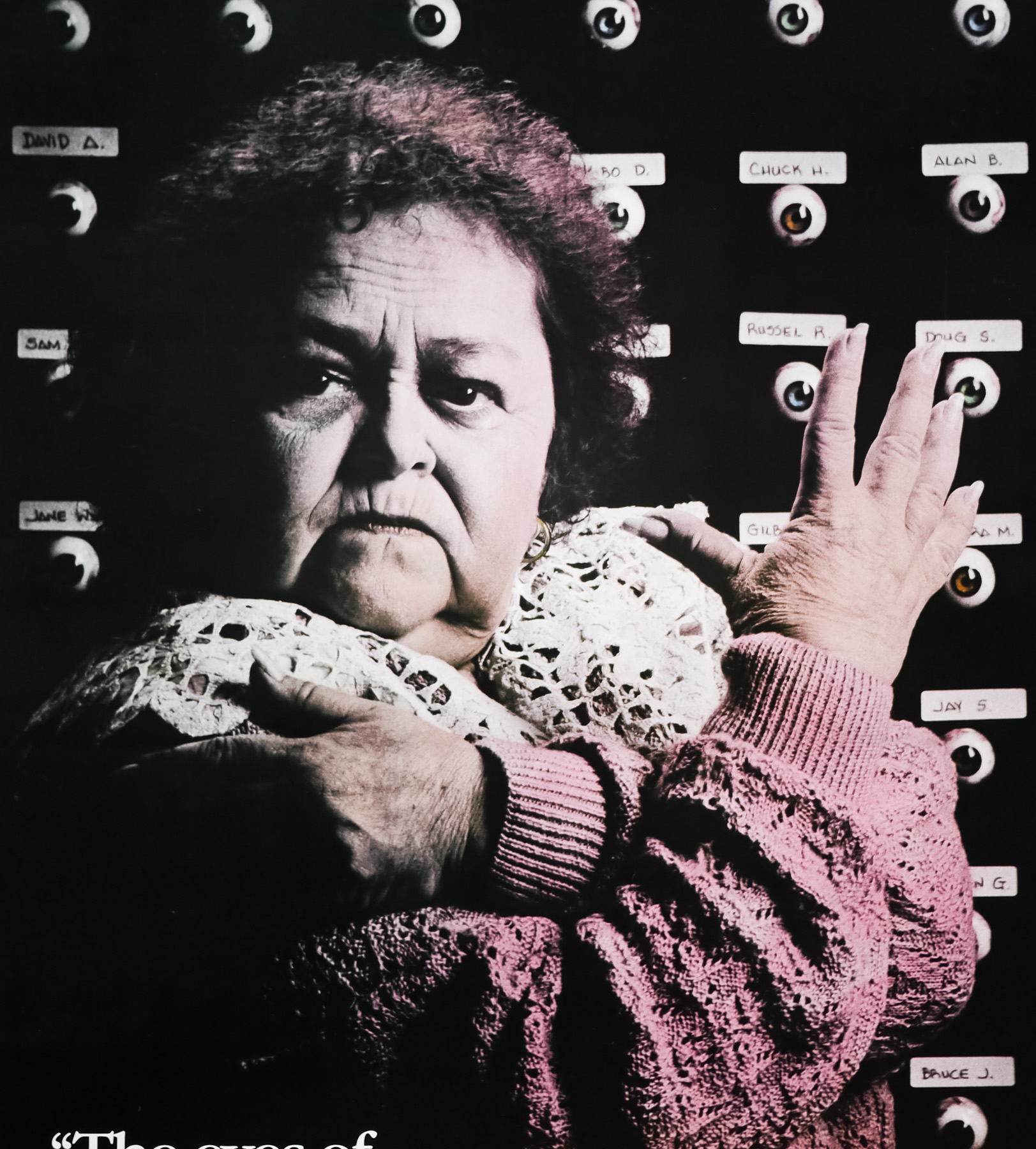
"The eyes of the city are mine"

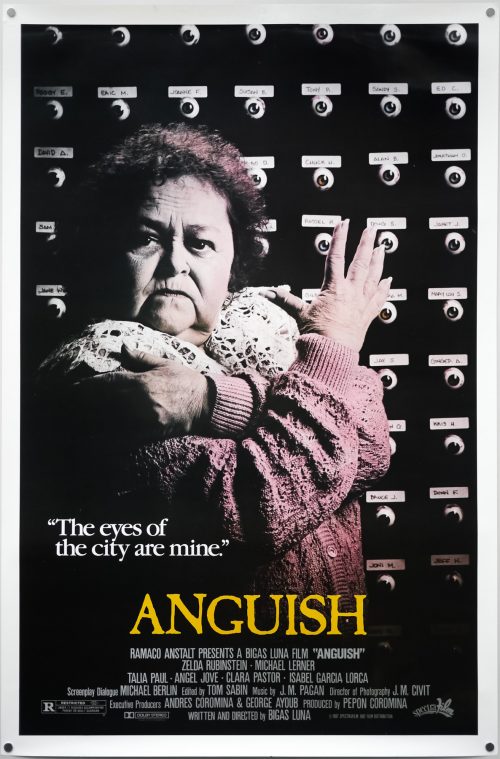
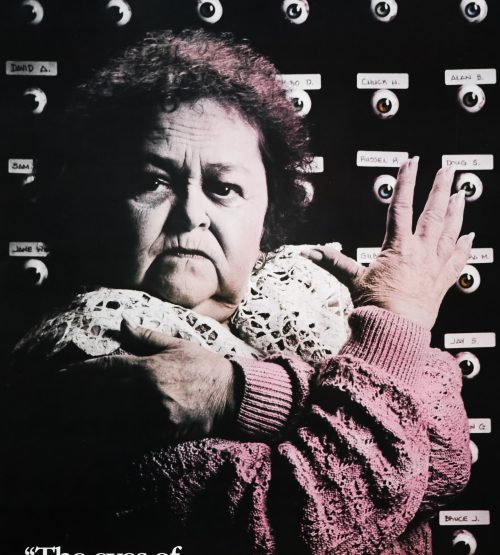
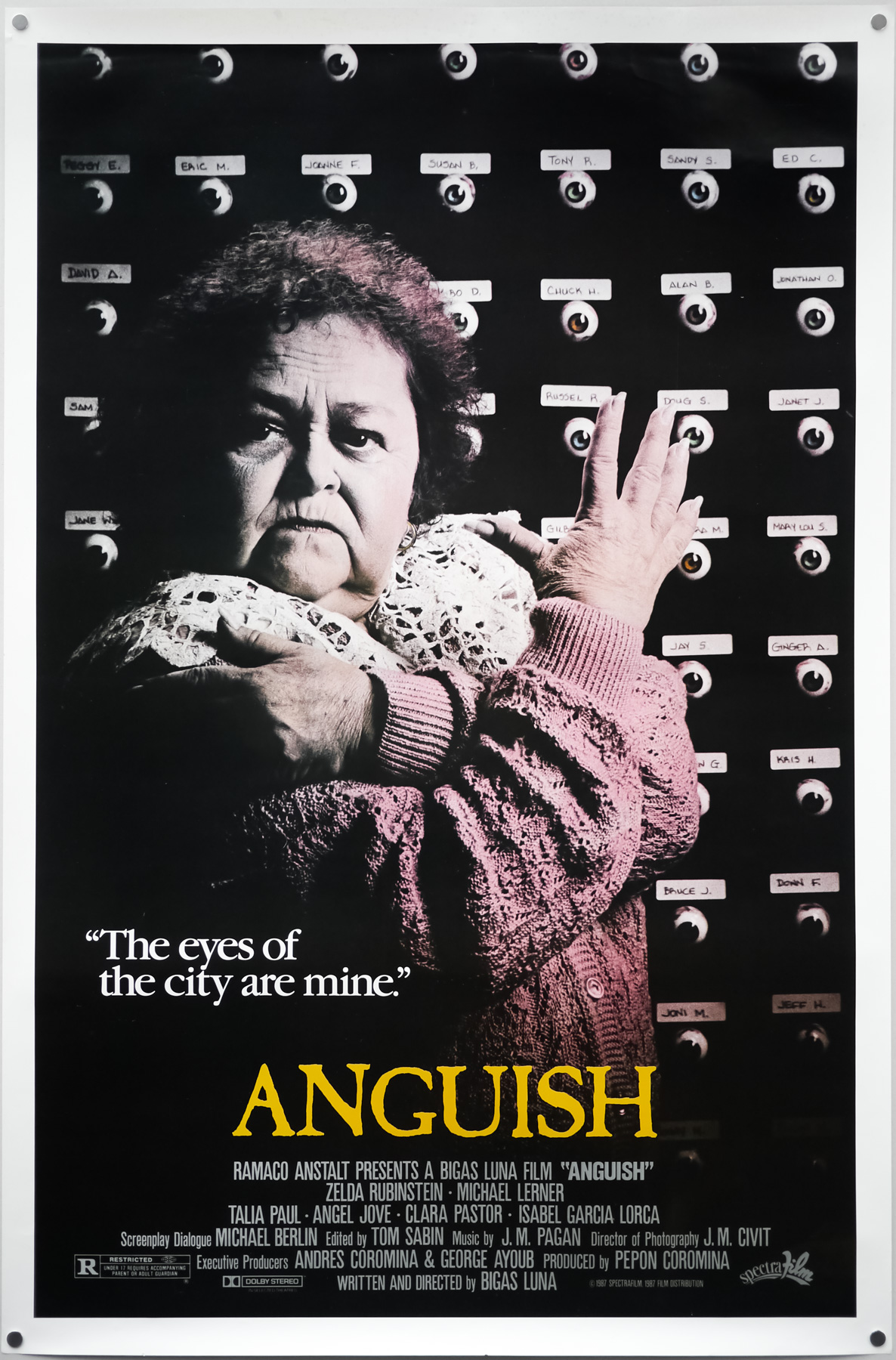
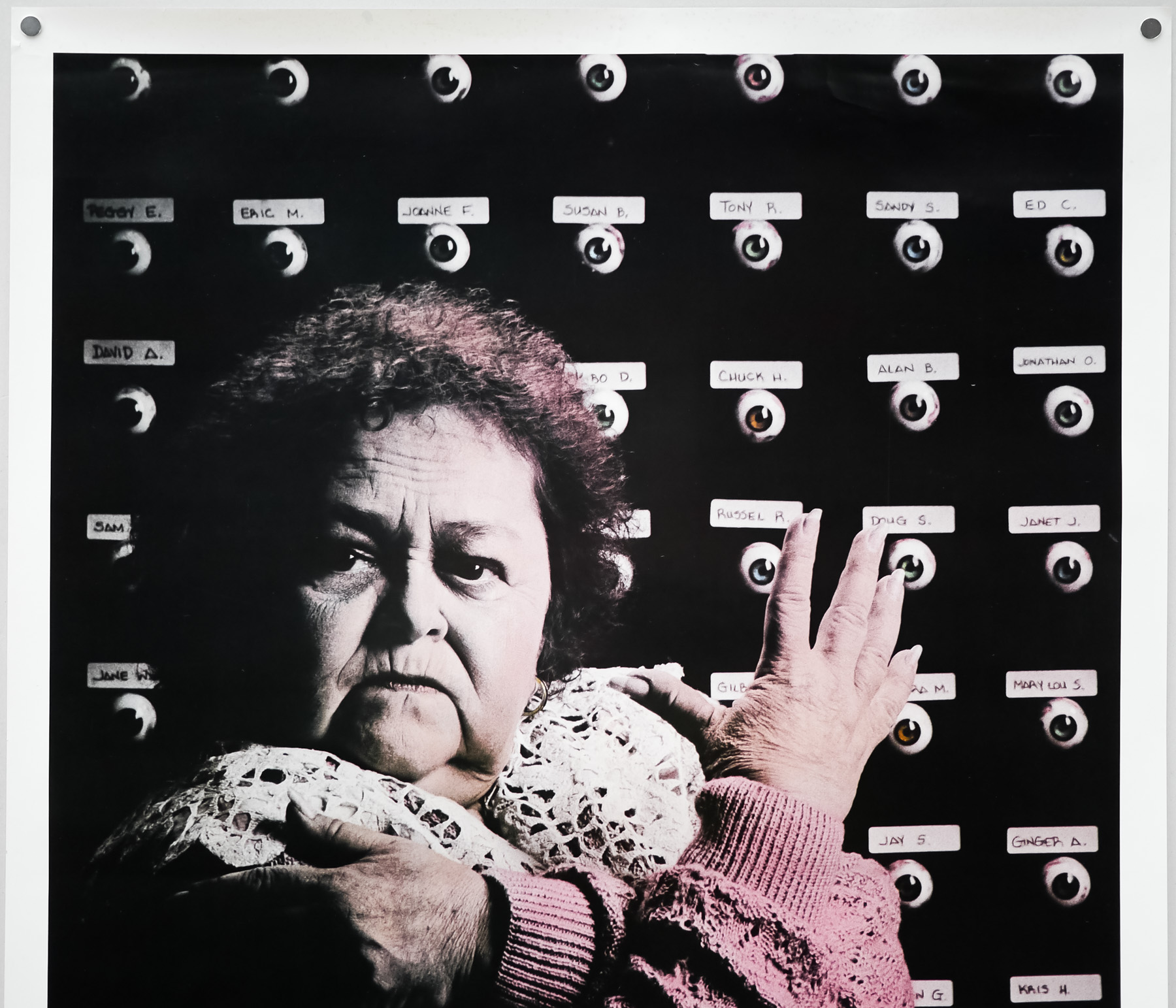
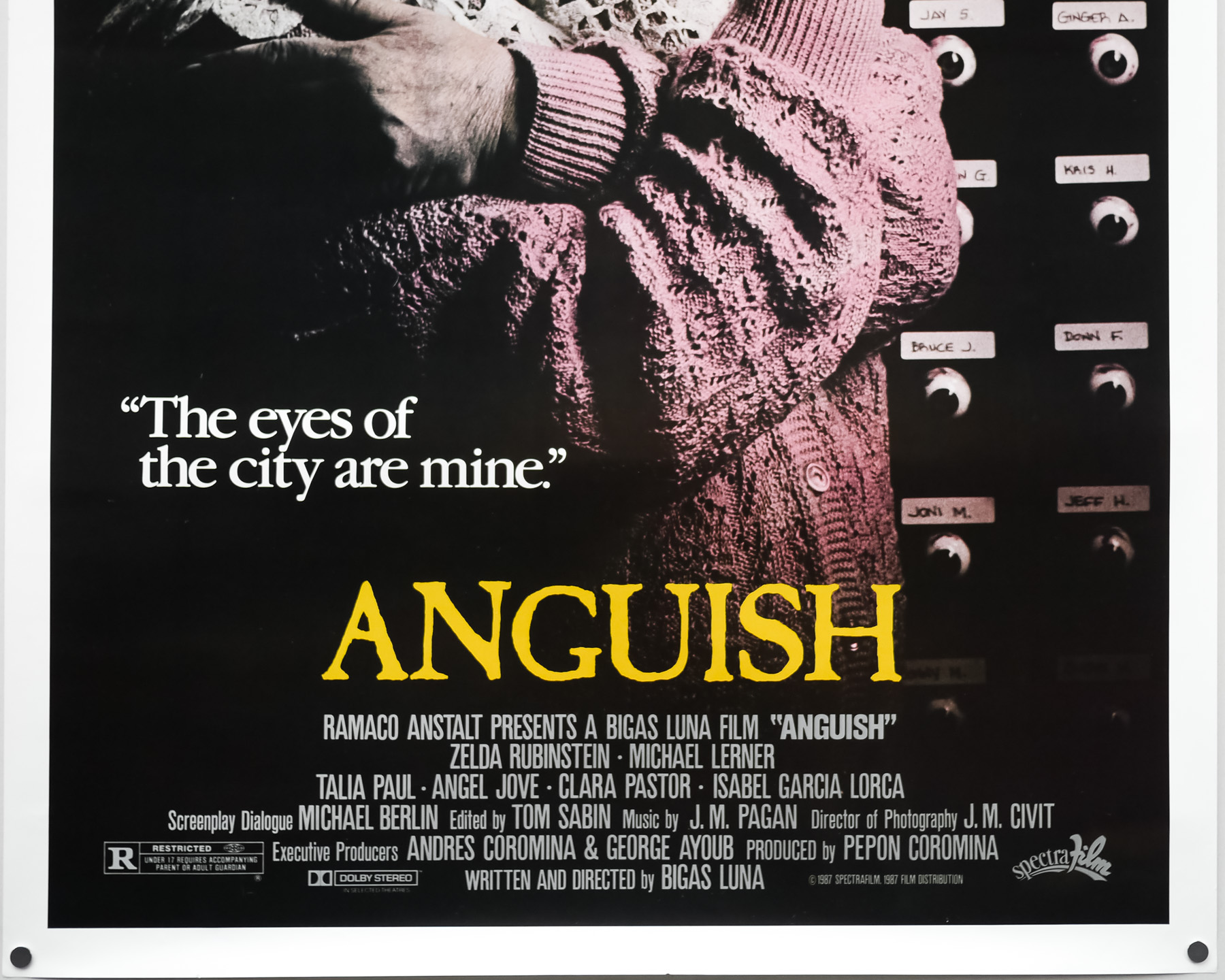
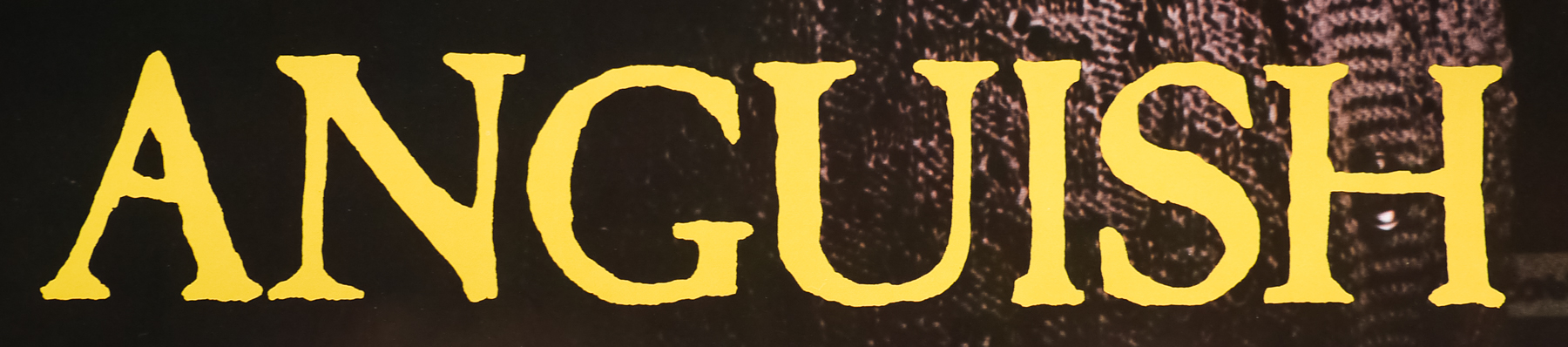
A striking image of actress Zelda Rubinstein (best known for her appearance in 1982’s Poltergeist) for the 1987 horror, Anguish. The film was directed by the Spaniard Bigas Luna (best known for Jamón, Jamón, 1992) and was filmed in his native country. As well as Rubinstein, the film also features the American actor Michael Lerner, but the majority of the cast are Spanish actors playing American. Written by Luna, the film has a fairly original concept which sees a film within a film, featuring Rubinstein and Lerner, unfold in front of a Los Angeles cinema audience. They are then subjected to their own horror attack, seemingly influenced by the film they are watching.

Rubinstein plays the character of Mother in the projected film, which is called The Mommy. For reasons that aren’t exactly clear, she uses hypnotism to control her loner son John (Lerner) and coerce him into killing people then removing their eyeballs. The Mommy features a frankly bonkers hypnotism sequence which apparently has an effect on some of the audience in the Los Angeles cinema. John is shown to visit a cinema showing the classic film The Lost World where he proceeds to attack staff and audience members. At the same time, an agitated man in the LA cinema kills two women working at the front desk before entering the auditorium and shooting at the audience. Eventually the police are called and a hostage scene develops. All the while The Mommy continues to play on the screen.

Anguish doesn’t hold back on the gore and there are a few shocking scenes which serve to keep the audience on edge. Although the concept of a film within a film is not new, the way Luna edits and develops the story gives it a unique feel. It’s certainly worth a watch, despite it’s clearly low budget origins.

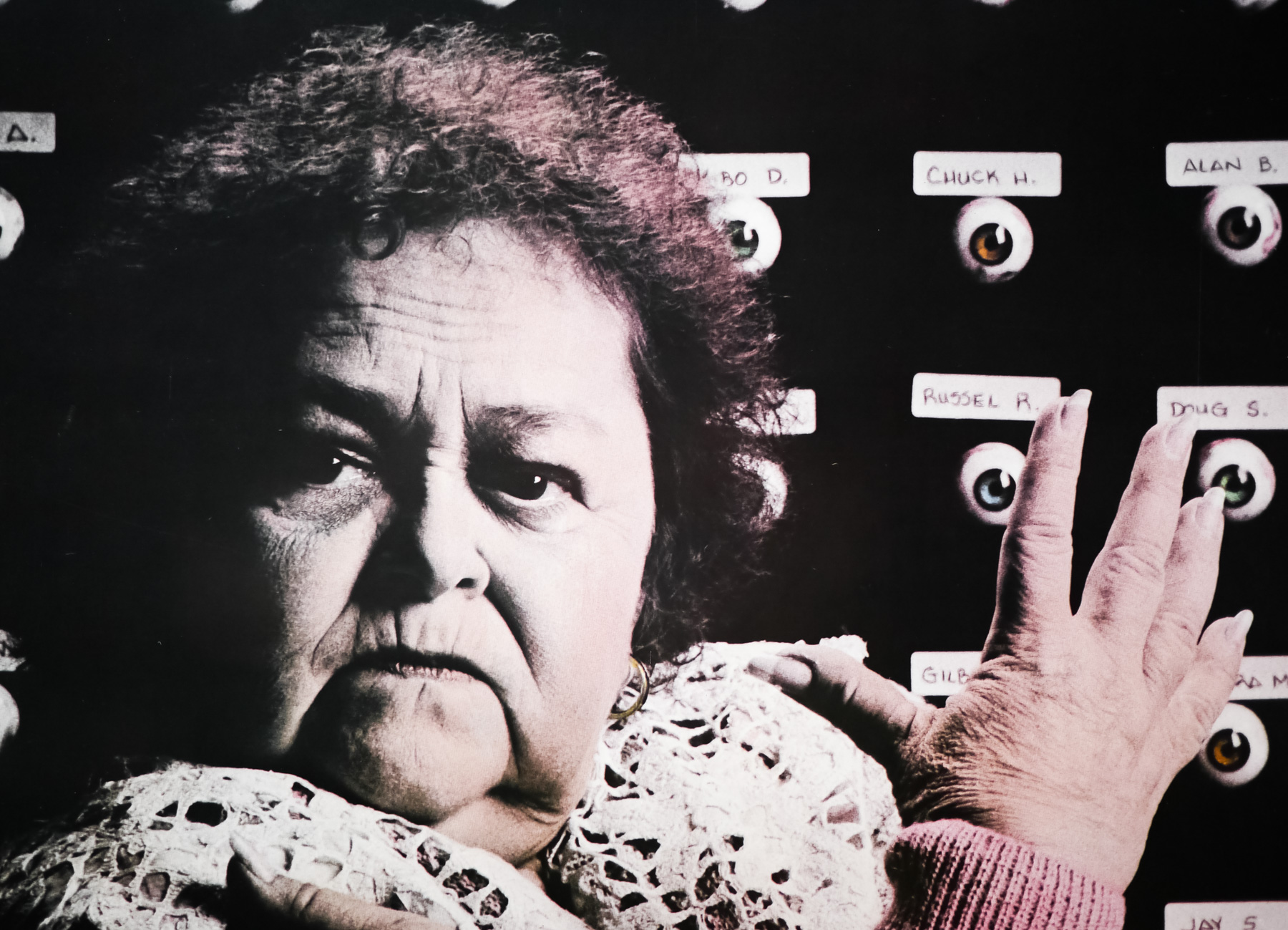
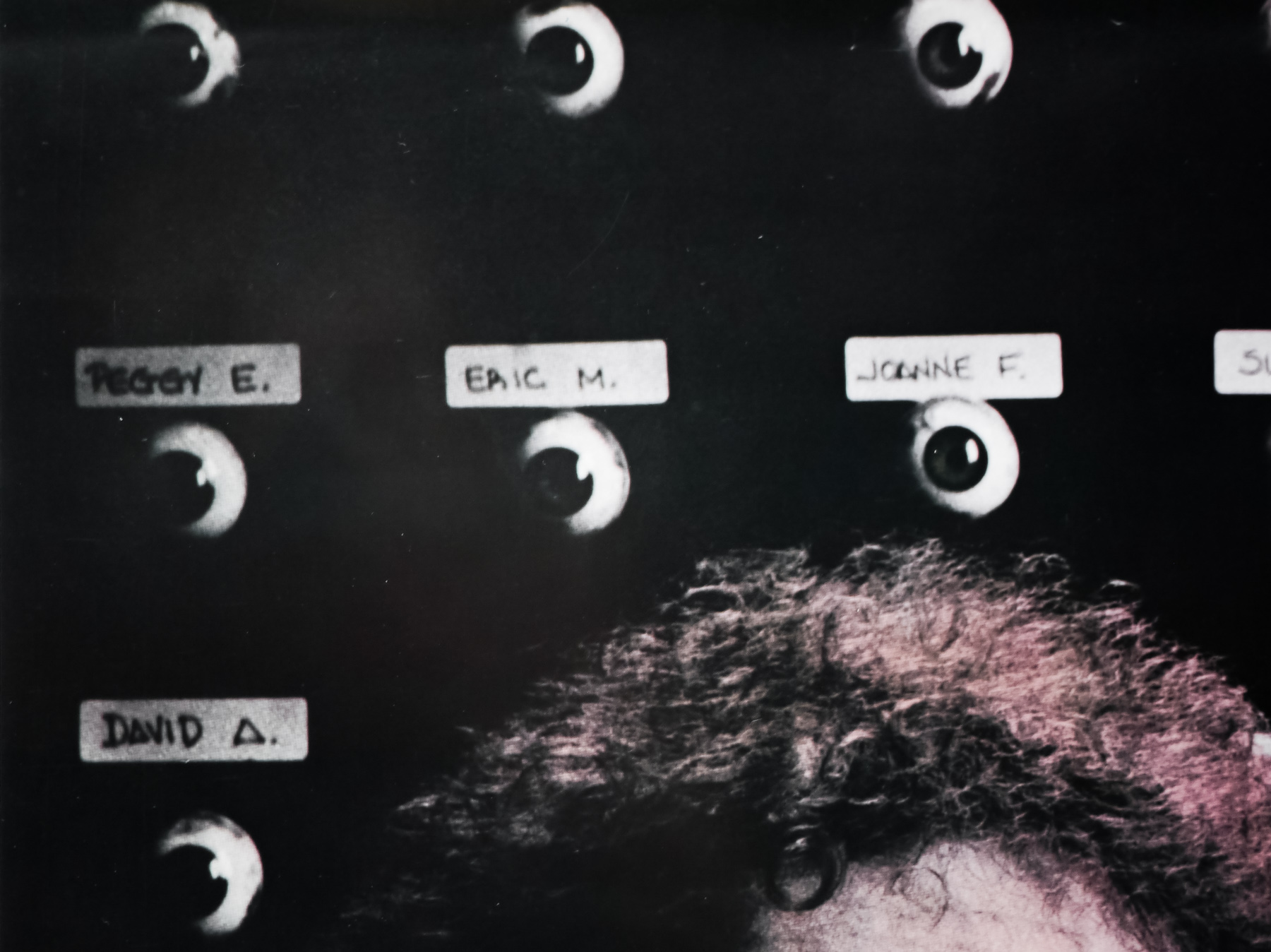
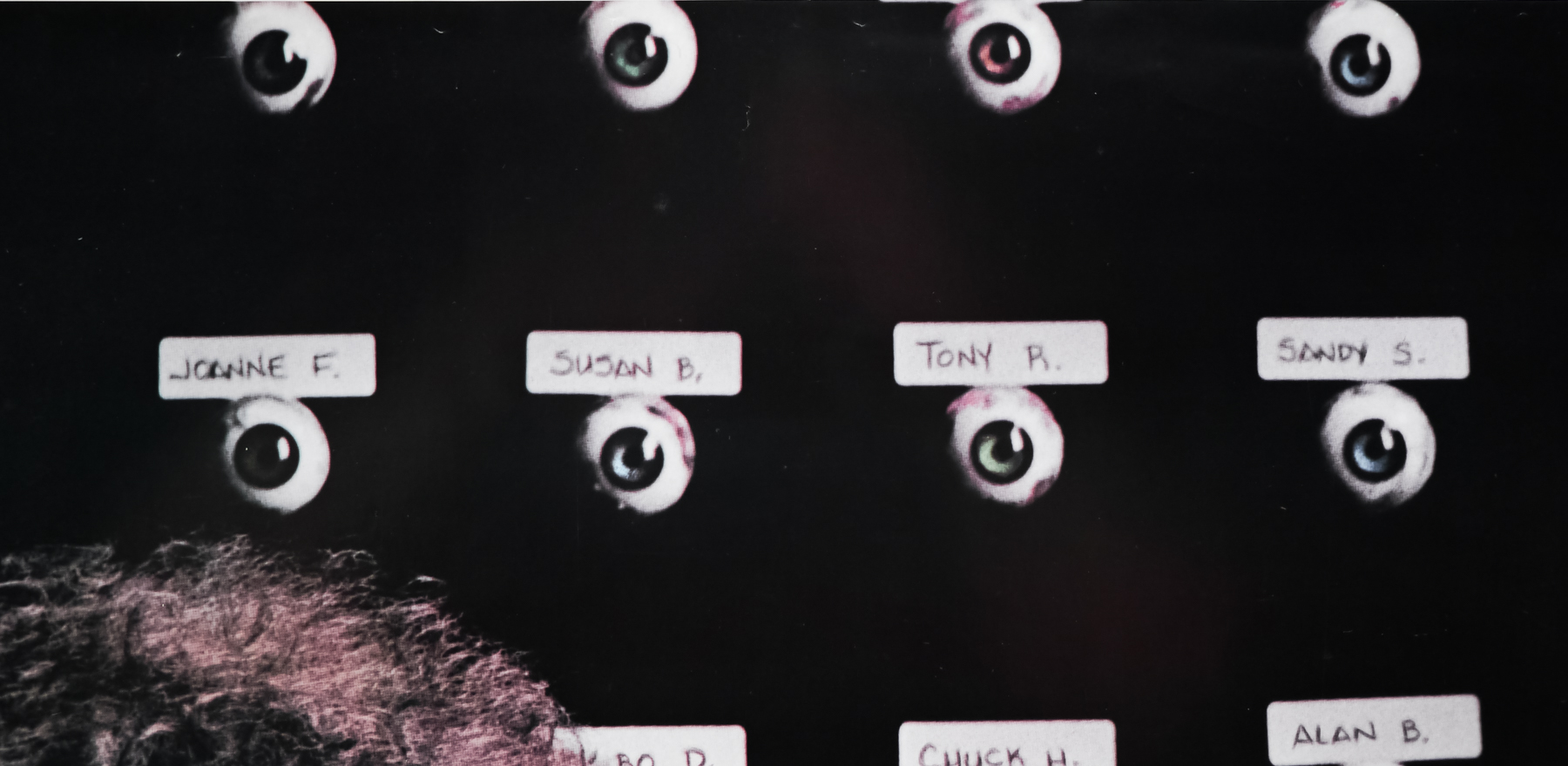
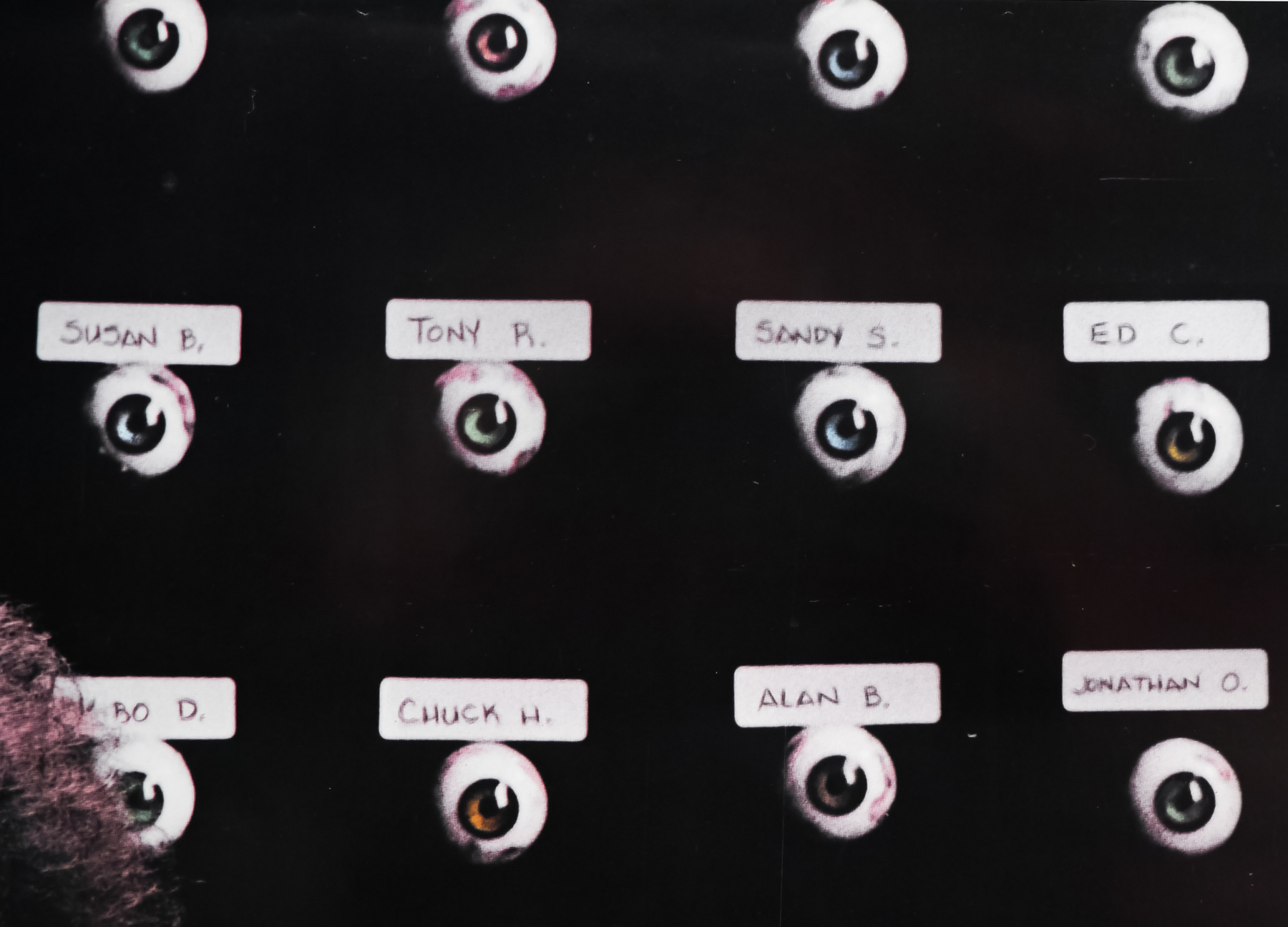
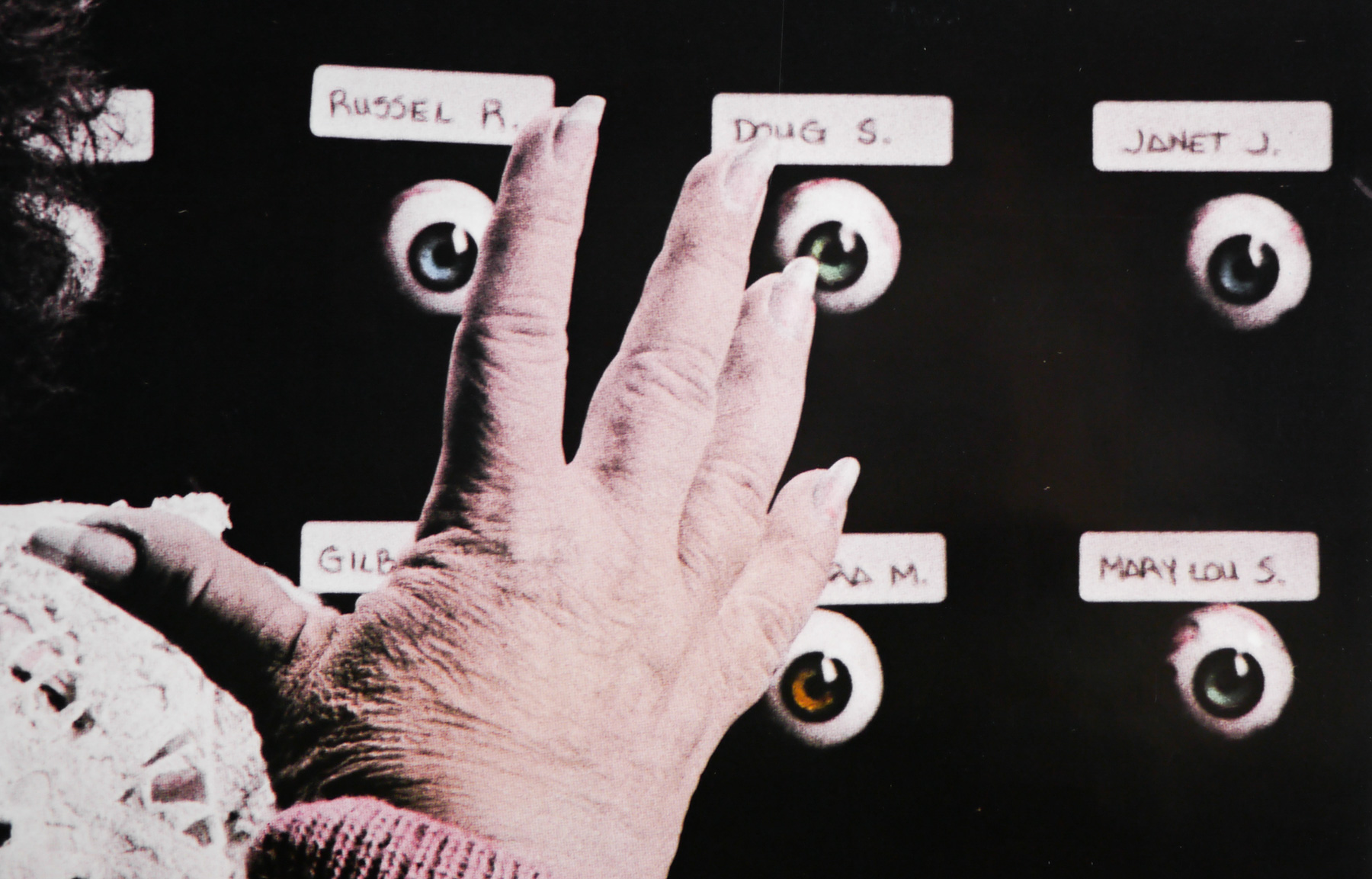
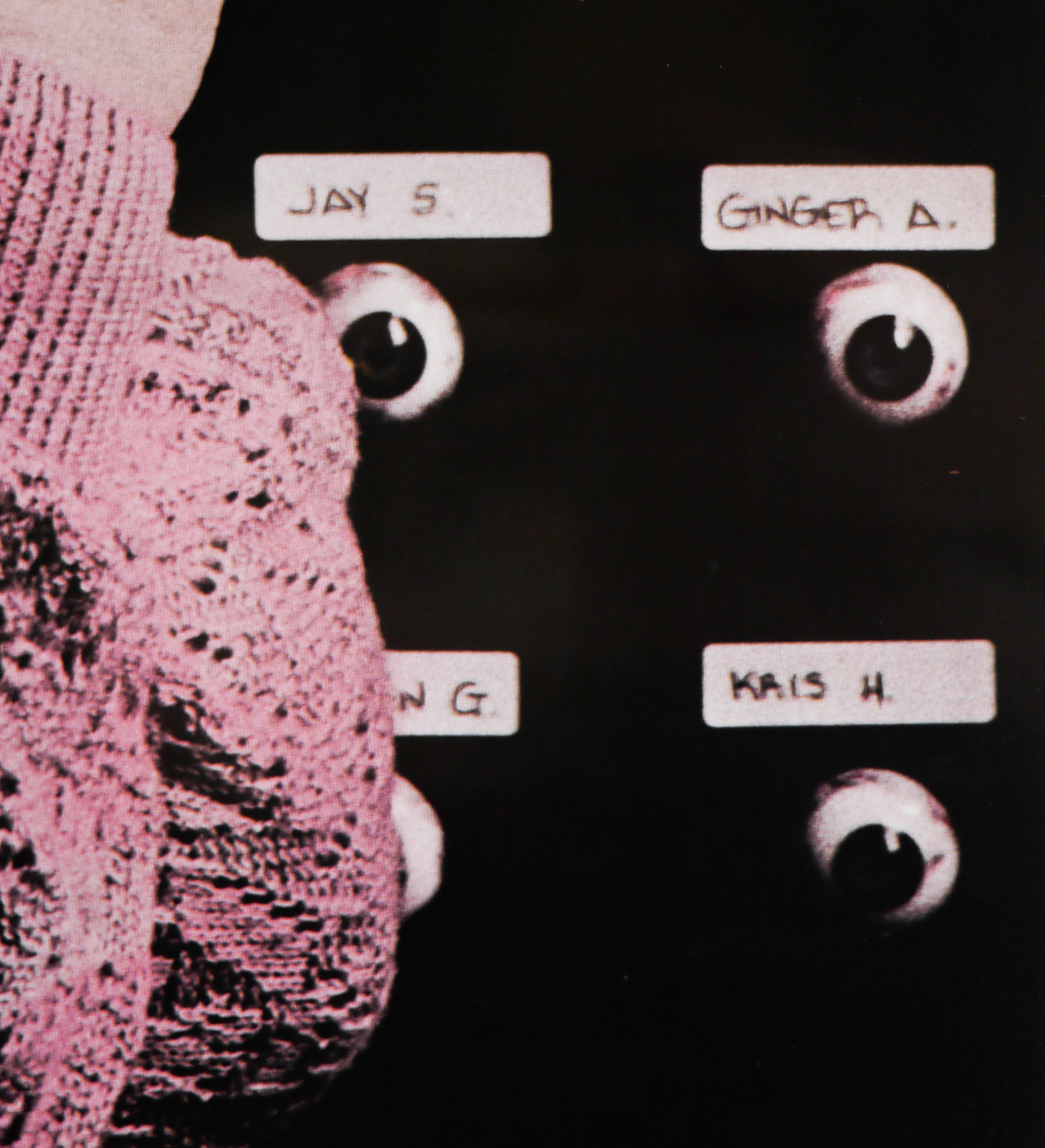
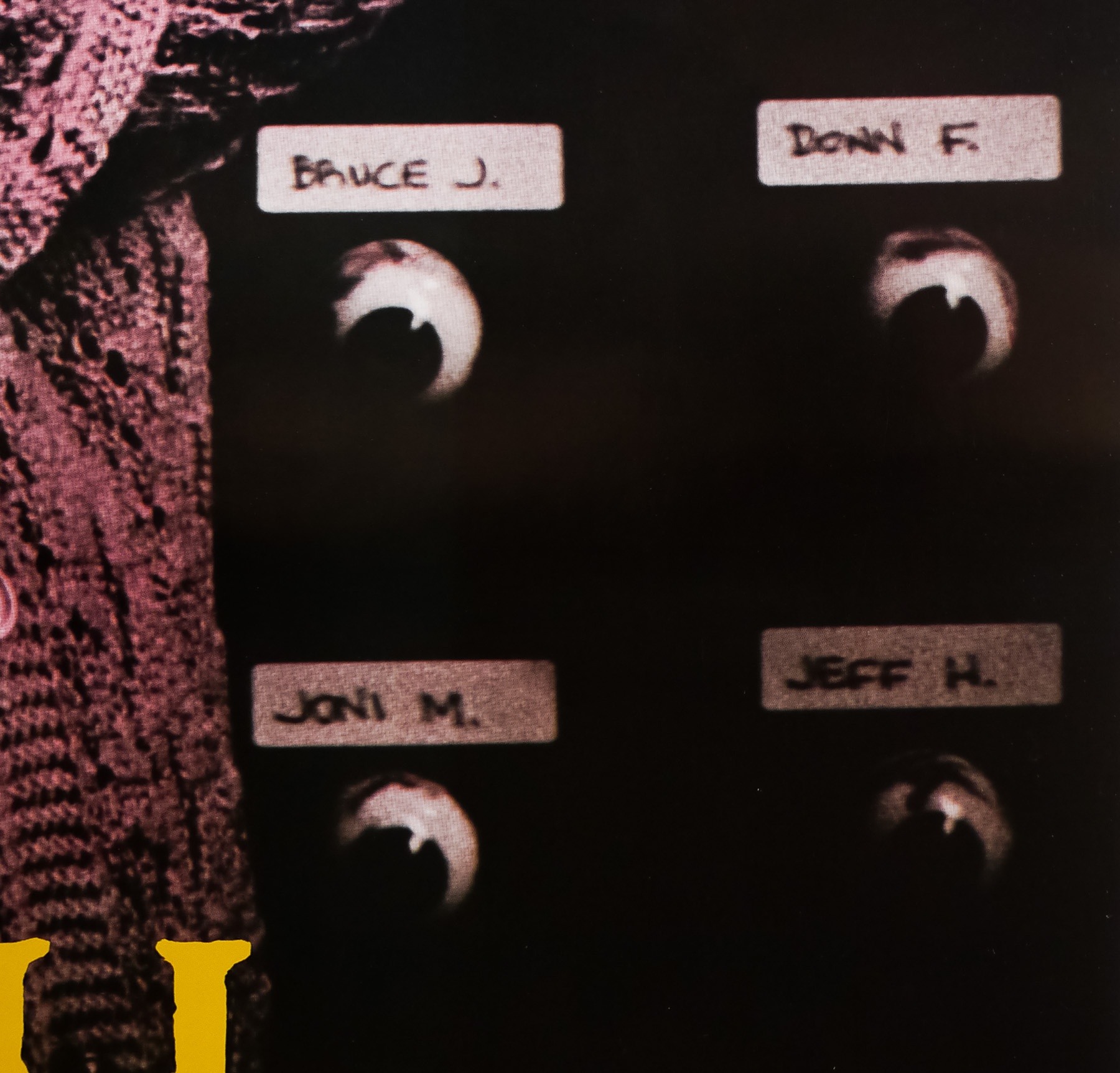
The image of Rubinstein in front of a wall of eyes must have been mocked up for this poster as I watched it recently and didn’t see anything like this. It’s possible that there was a deleted scene with it in but it feels too mocked up for that.

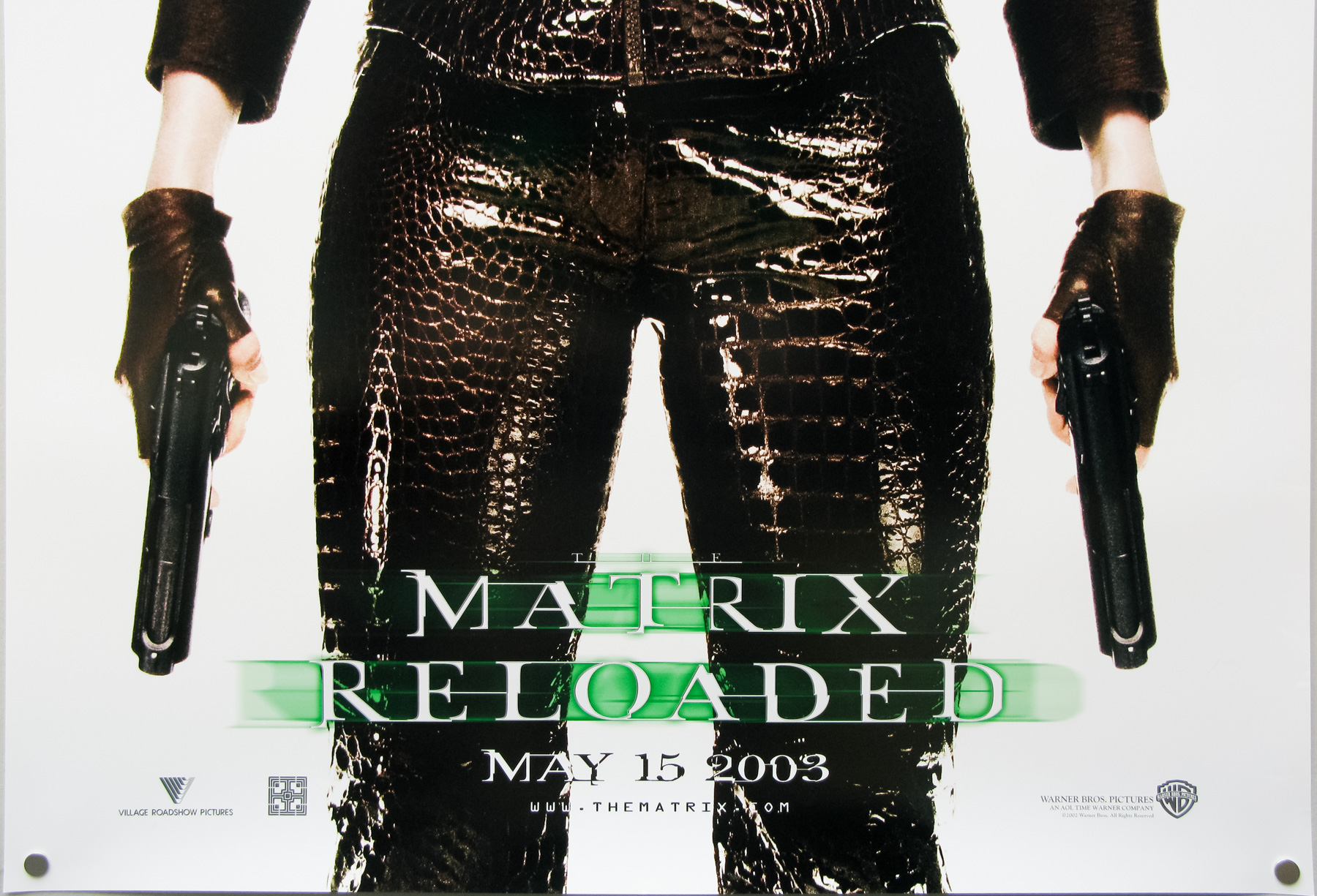
The Matrix Reloaded / one sheet / teaser / Niobe / USA

17.05.11

Poster Poster

Blades / one sheet / USA

05.01.18

Poster Poster
Title
Blades
AKA
--
Year of Film
1989
Director
Thomas R. Rondinella
Starring
Robert North, Jeremy Whelan, Victoria Scott, Holly Stevenson, William Towner, Peter Wray, Charlie Quinn, Bruce Katlin, Lee Devin, Bill Kimble, Donald Jackson
Origin of Film
USA
Genre(s) of Film
Robert North, Jeremy Whelan, Victoria Scott, Holly Stevenson, William Towner, Peter Wray, Charlie Quinn, Bruce Katlin, Lee Devin, Bill Kimble, Donald Jackson,
Type of Poster
One sheet
Style of Poster
--
Origin of Poster
USA
Year of Poster
1989
Designer
Unknown
Artist
--
Size (inches)
27 2/16" x 40 15/16"
SS or DS
SS
NSS #
--
Tagline
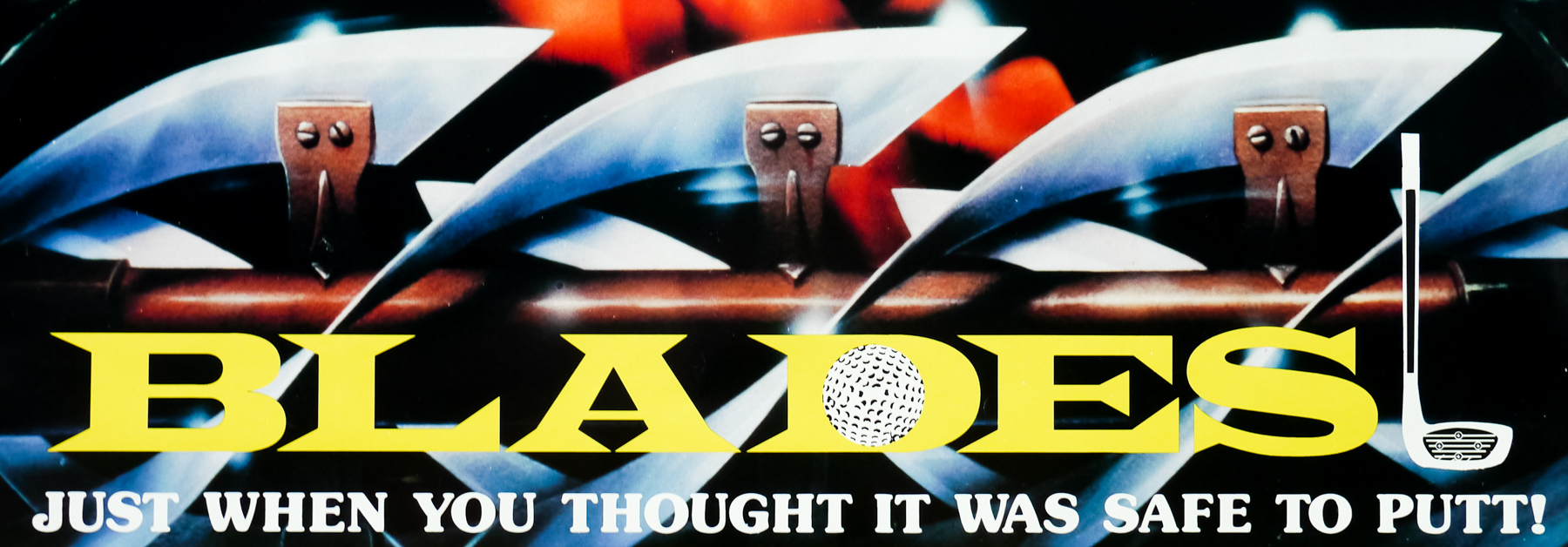
Golf - A Game of Hooks, Slices and ... Slaughter | Just When You Thought It Was Safe To Putt

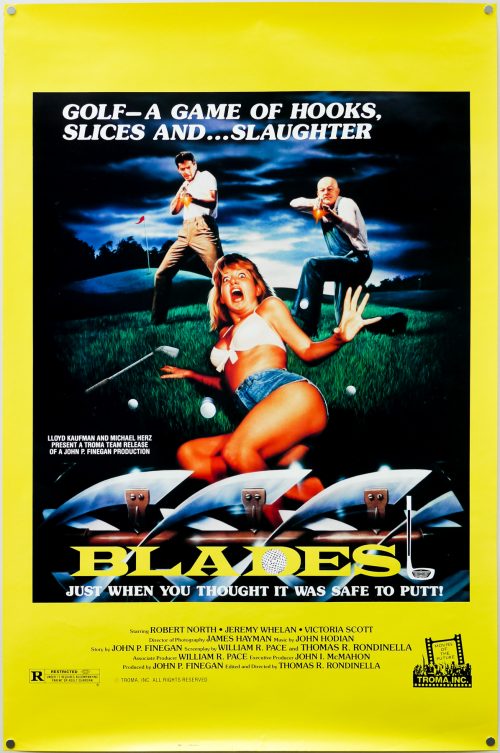
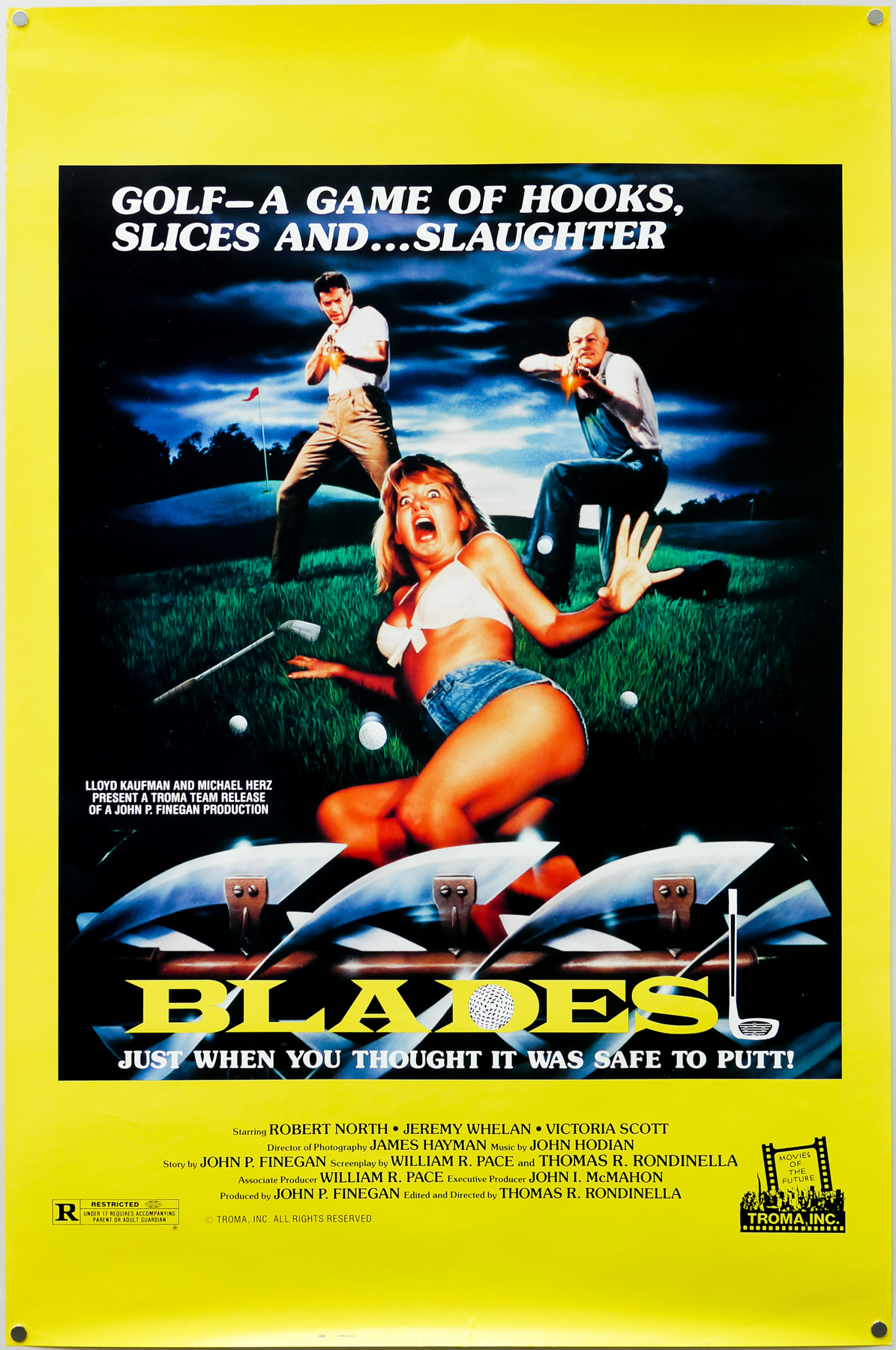
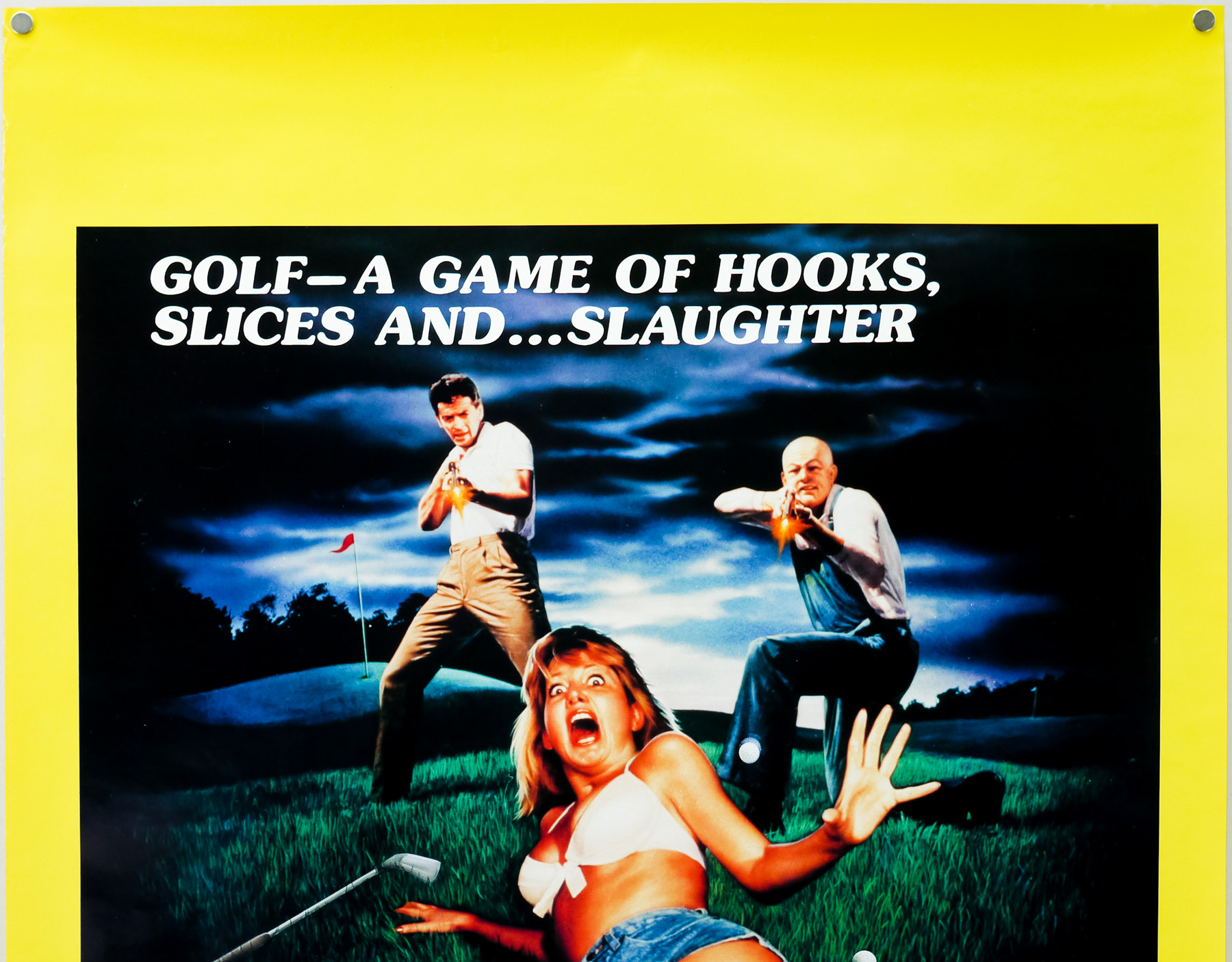
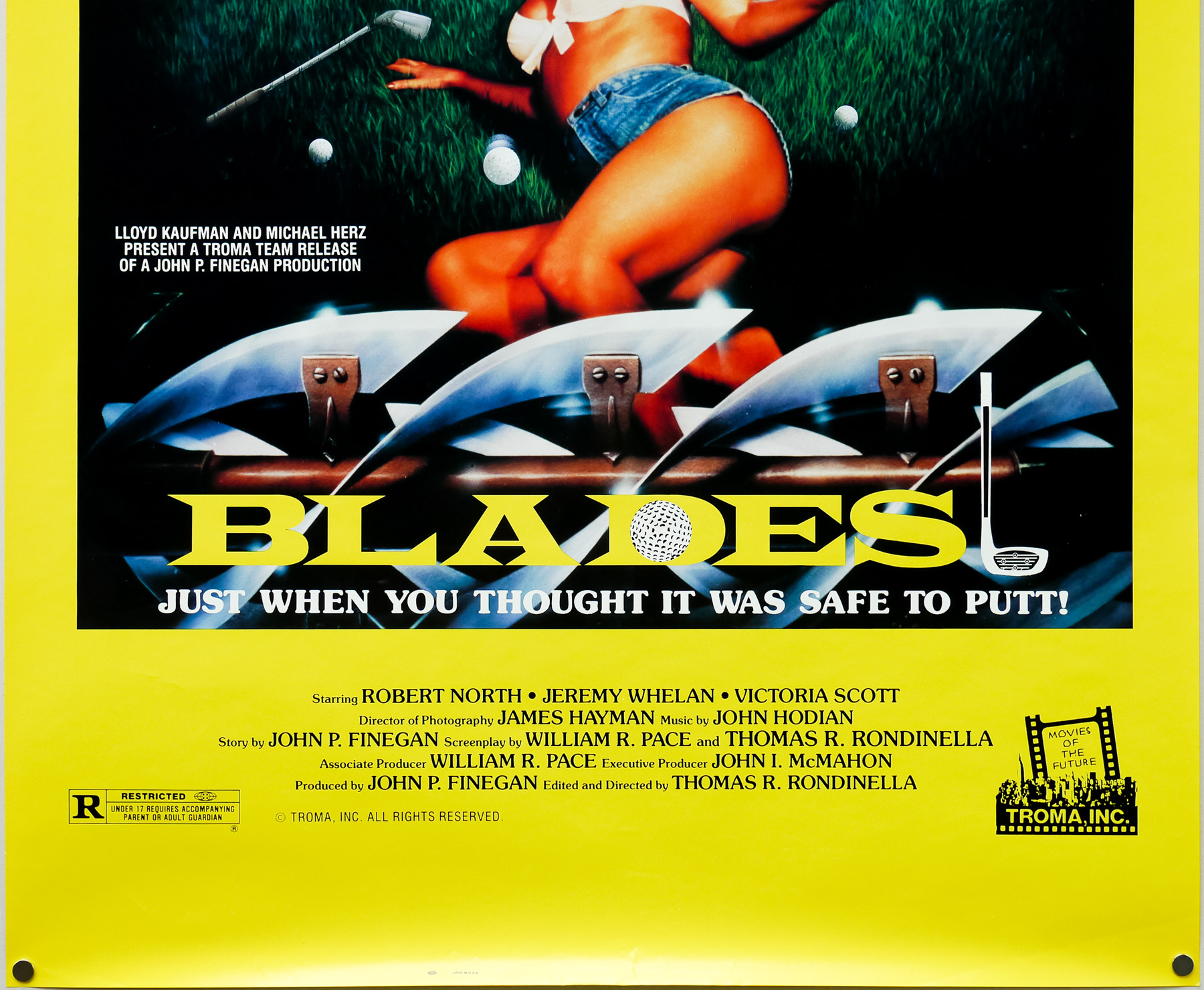
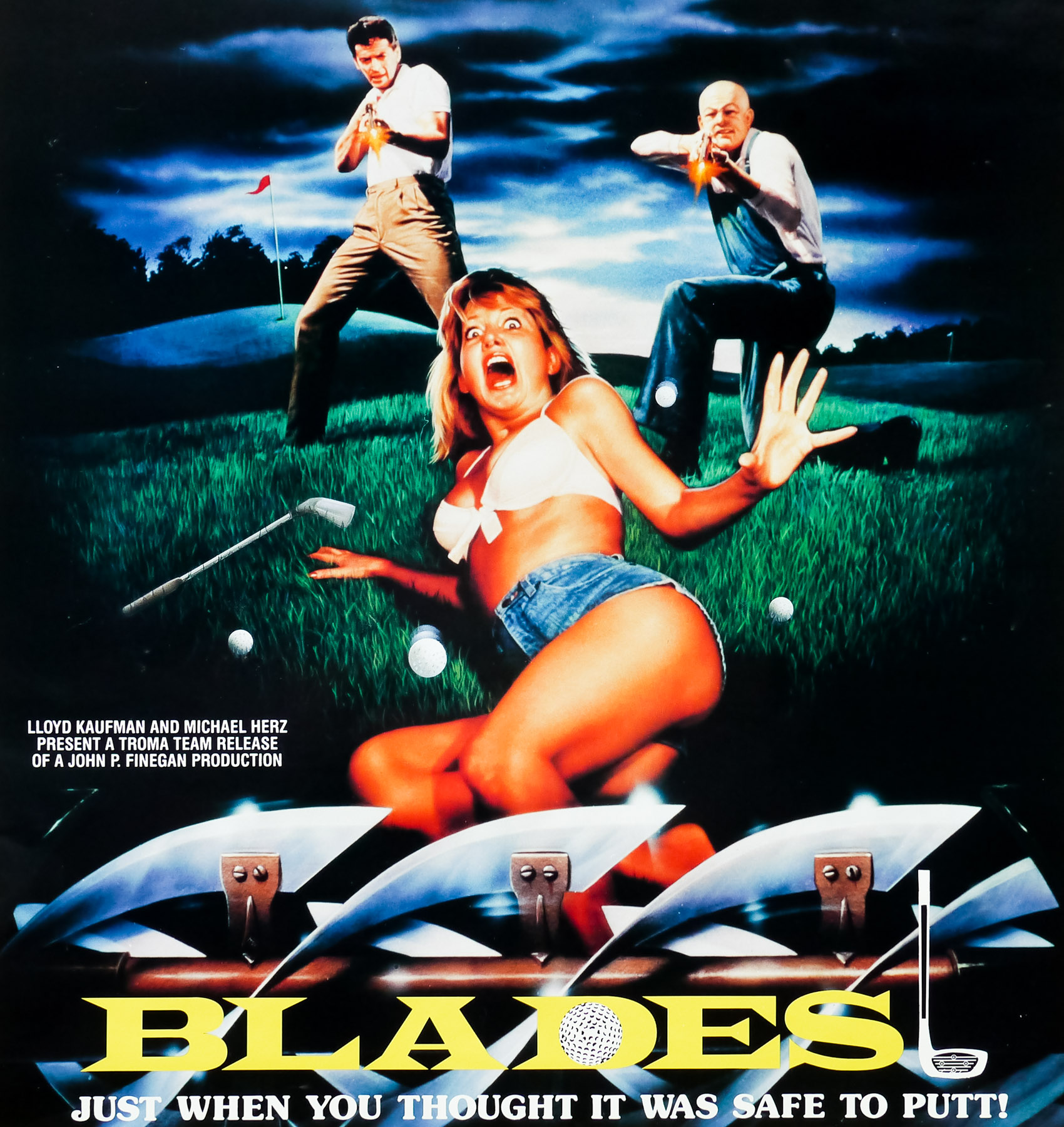
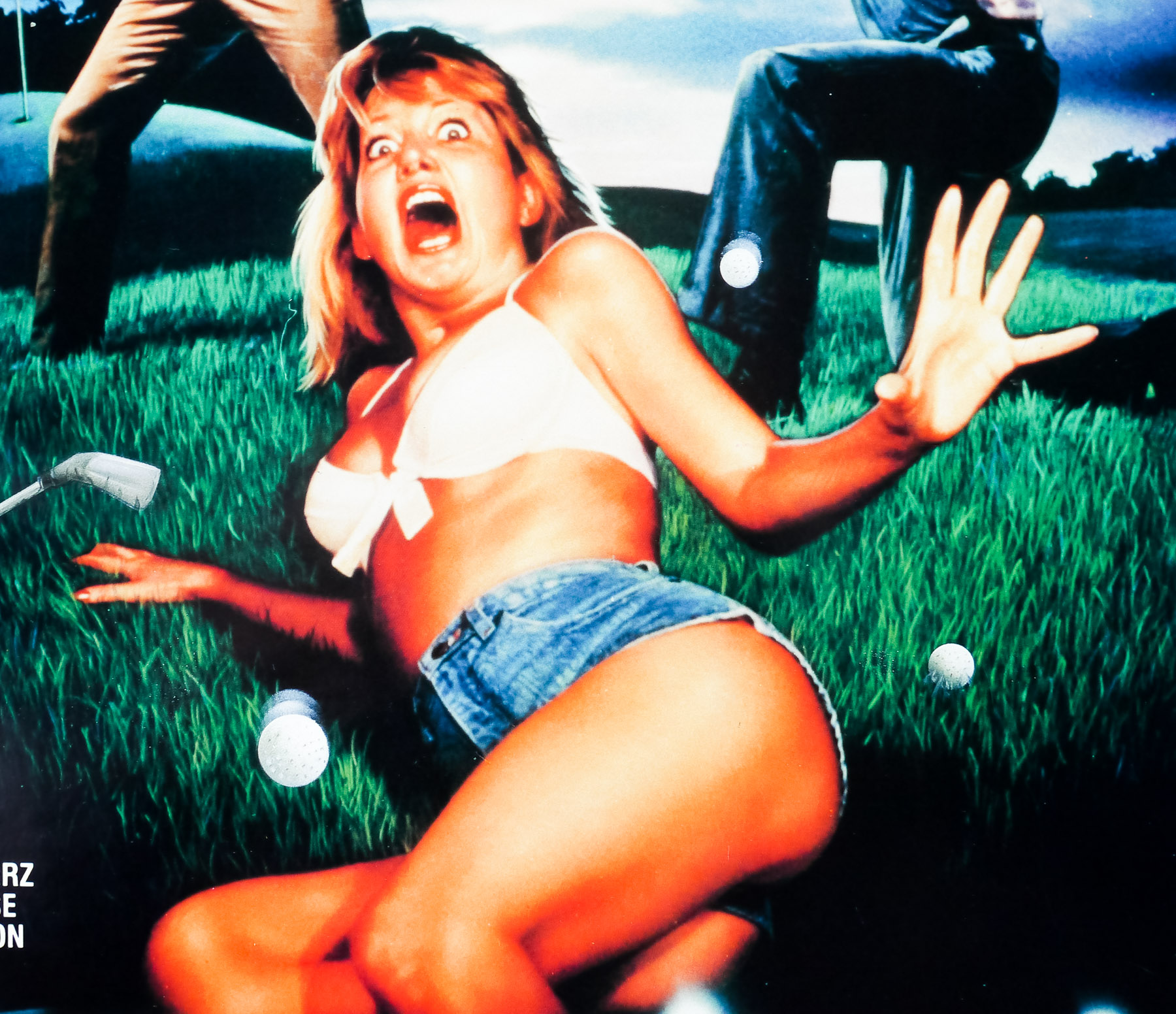
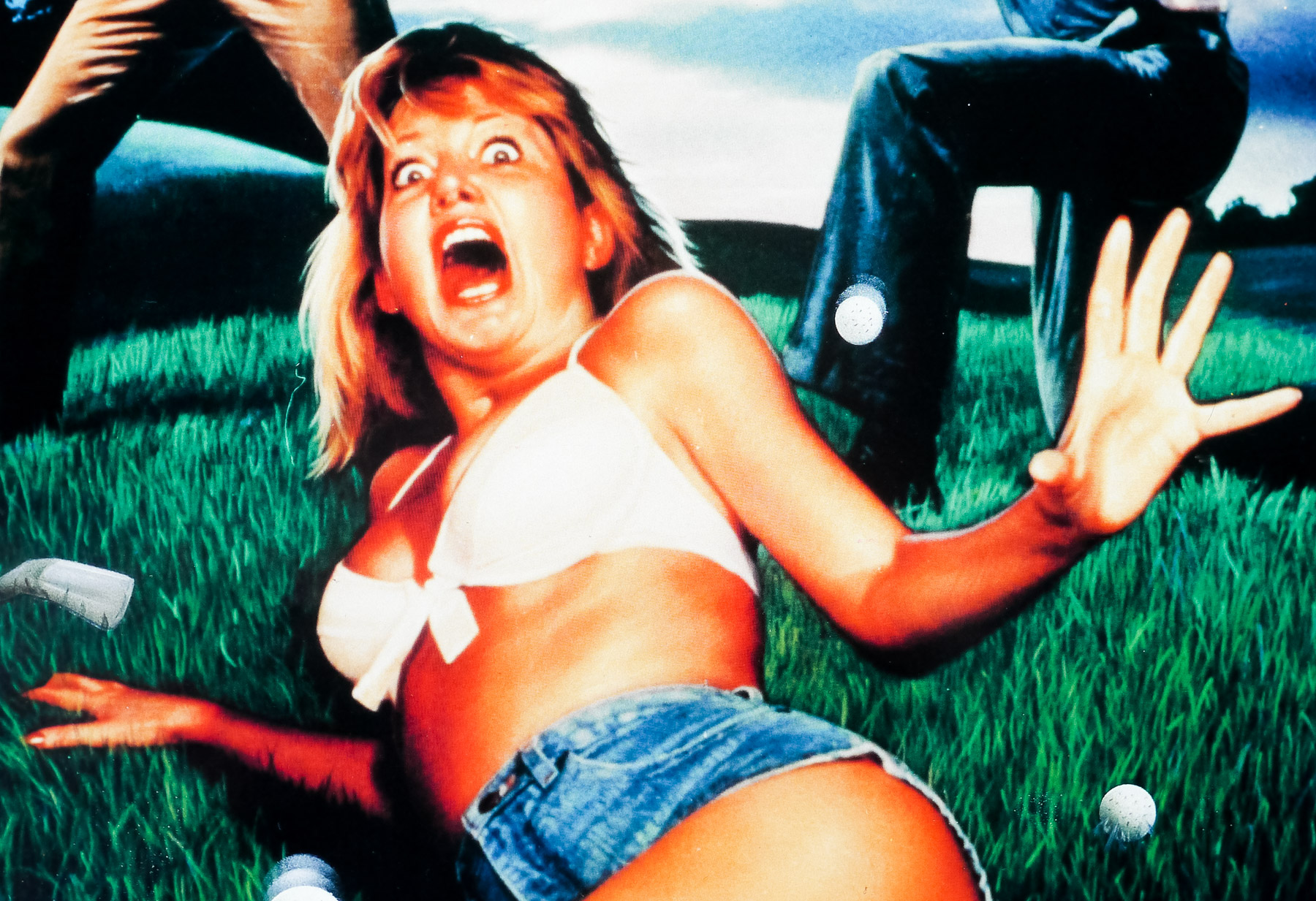
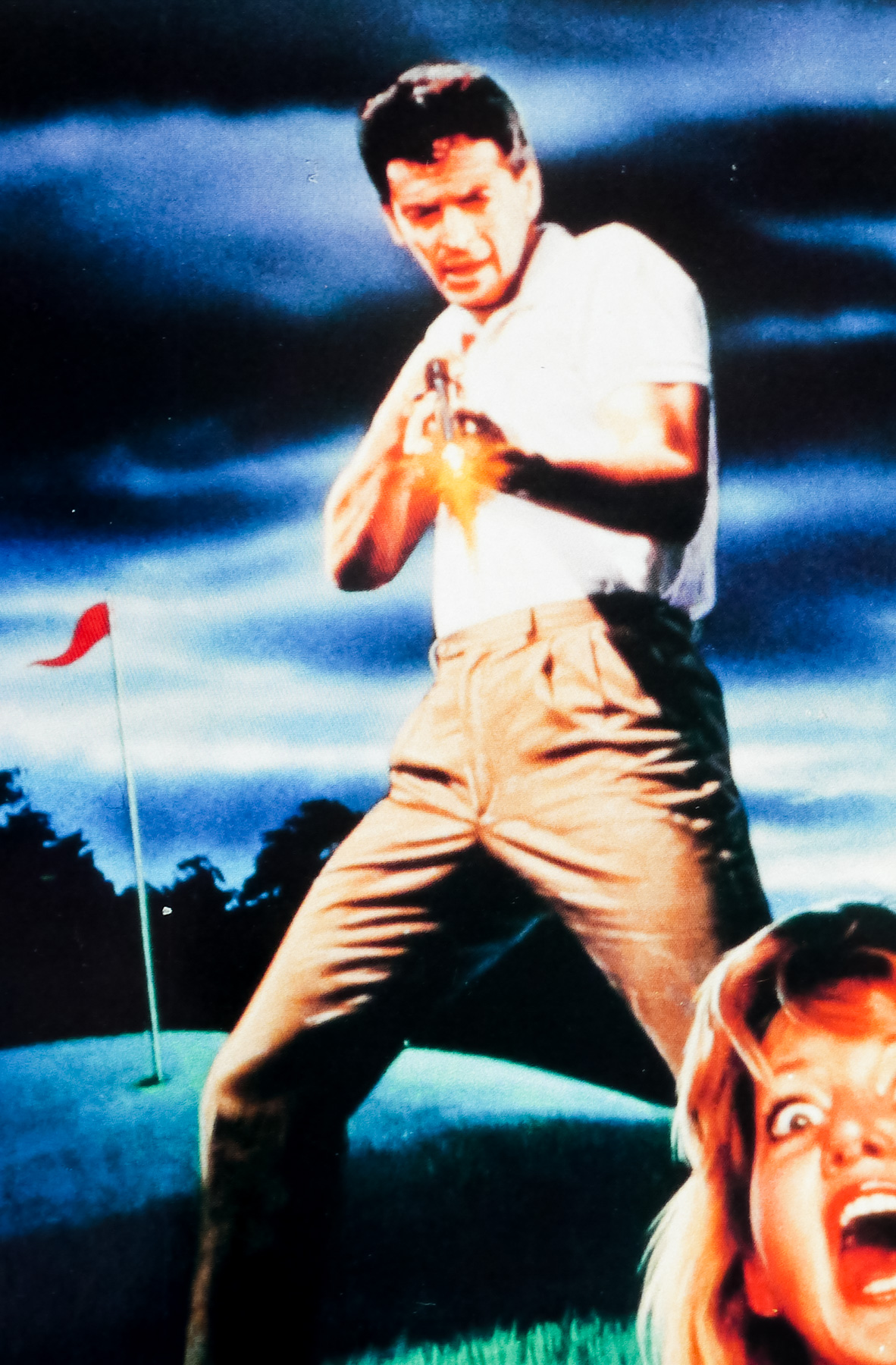
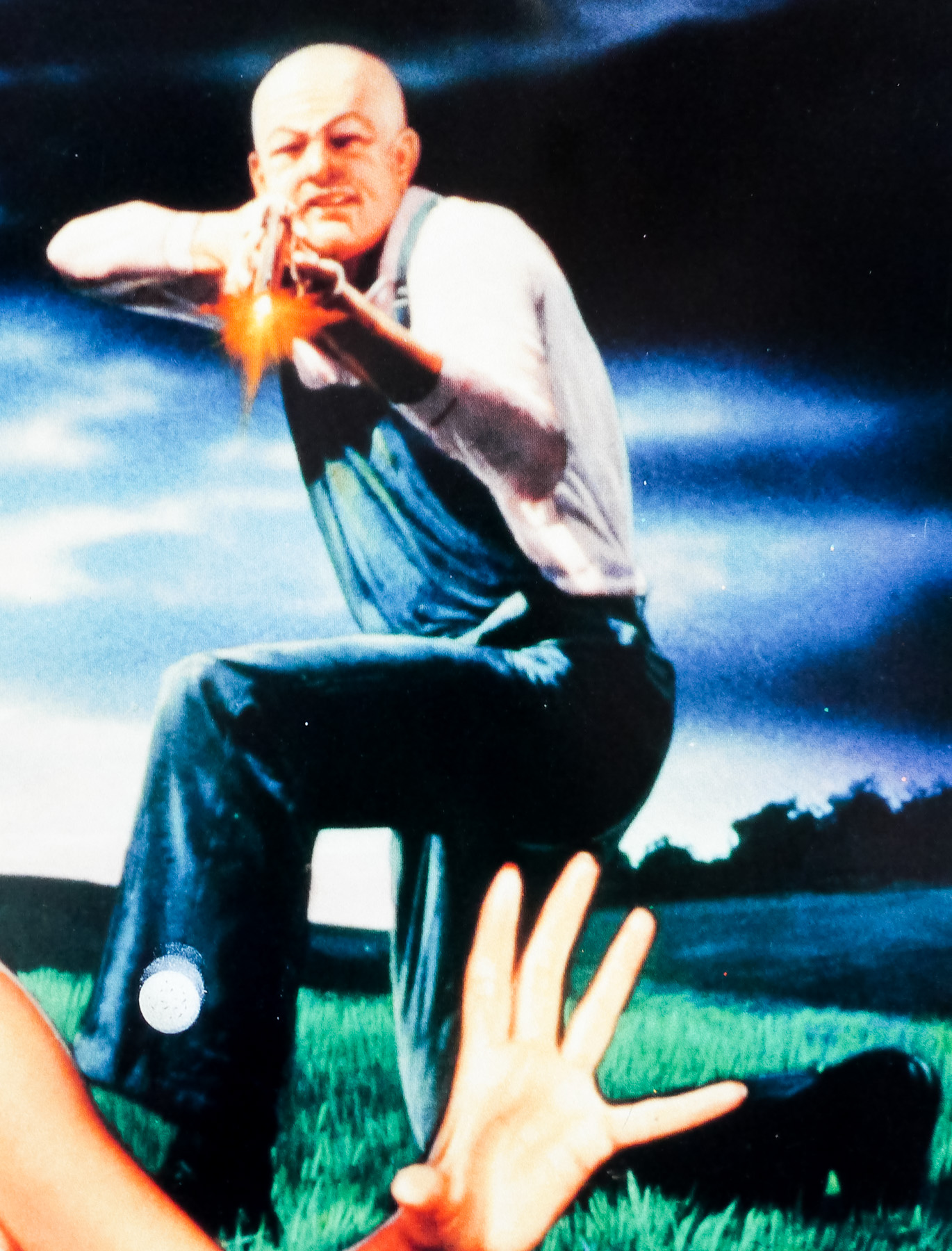
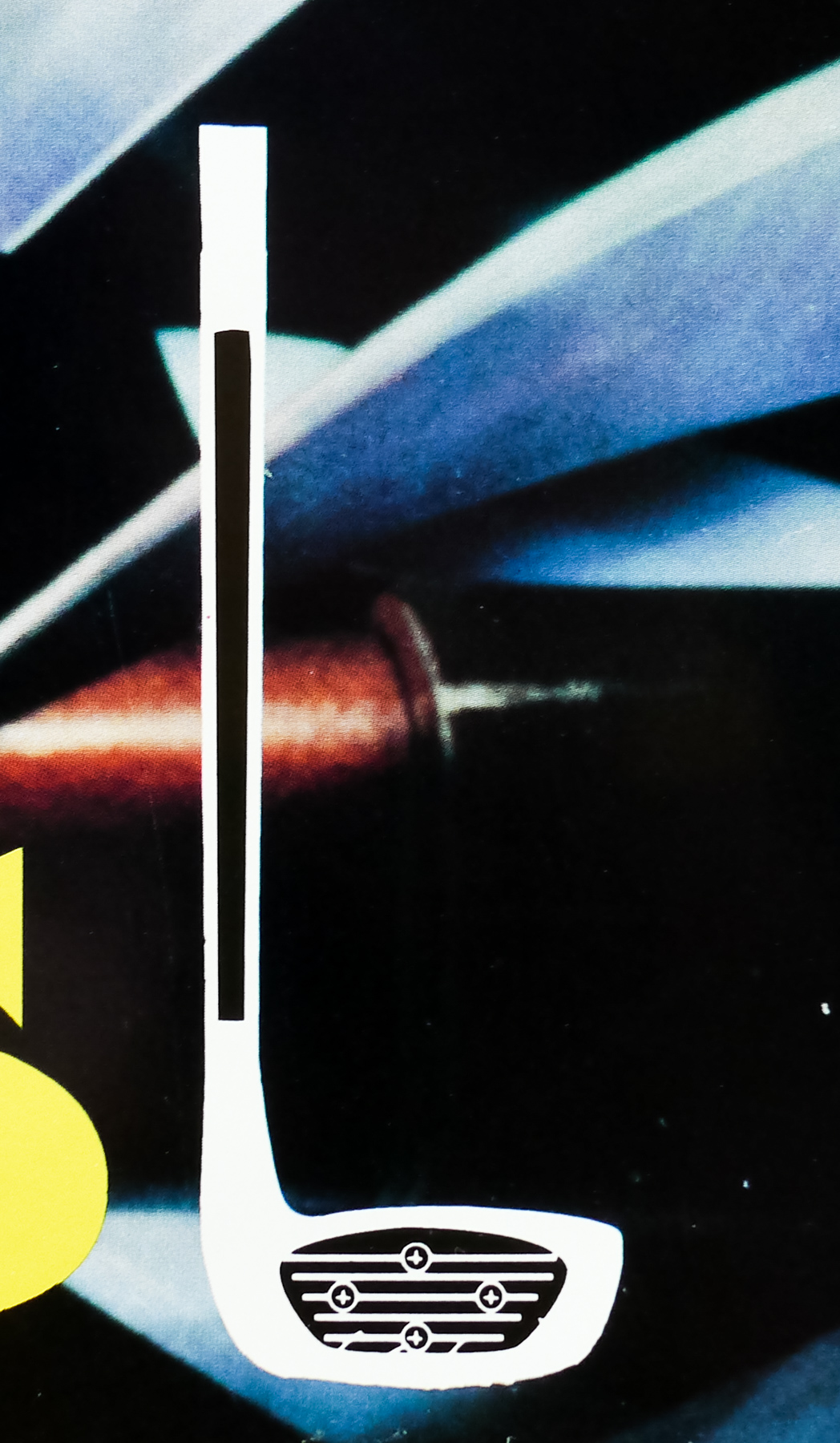
The notorious schlockmeisters Troma, headed by Lloyd Kaufman and Michael Herz, were behind what must surely be one of the only golfing-related horror films ever made (unless you count the clubs wielded by the killers in Michael Haneke’s Funny Games), 1989’s Blades. The film was directed by Thomas R. Rondinella and is his only cinema-released feature to date and, as is typical with most Troma productions, the cast is mostly made up of jobbing b-movie actors. As the second tagline alludes to, the film is apparently a pastiche of Jaws with the shark replaced with a killer lawnmower wielded by a mysterious killer (and often show from the blades’ point of view).

The plot is described thusly on IMDb:

People are showing up sliced and diced at Tall Grass Country Club. Norman, the owner of the club, wants to avoid undue publicity on the eve of the televised pro-am tournament, and encourages new pro Roy to get to the bottom of the killings quietly. Roy has a history of alcohol problems since he choked while playing a big tournament years before, and Kelly, who feels she should have been hired as the new pro, isn’t making the situation easier for him, insisting they cancel the tournament until the killer can be stopped. After a seedy character named Deke Slater is arrested, the owner relaxes, but Roy and Kelly begin to feel that Deke’s rantings about a runaway lawnmower aren’t so far-fetched after all, and after Deke is released the three of them prepare for a battle to the death out on the uncharted fairways.

The film was apparently only released in a small handful of US cinemas before heading to video and HBO soon afterwards. I may be wrong but I don’t believe it ever saw release over here in the UK.

Apocalypse Now / Thailand

23.09.15

Poster Poster

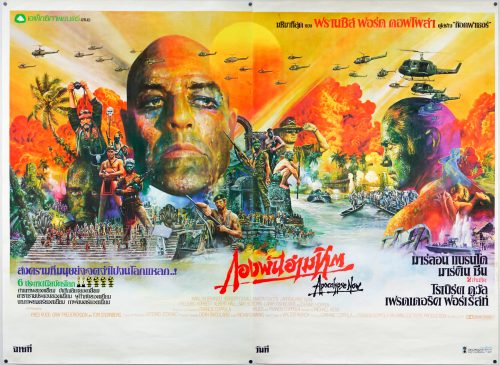
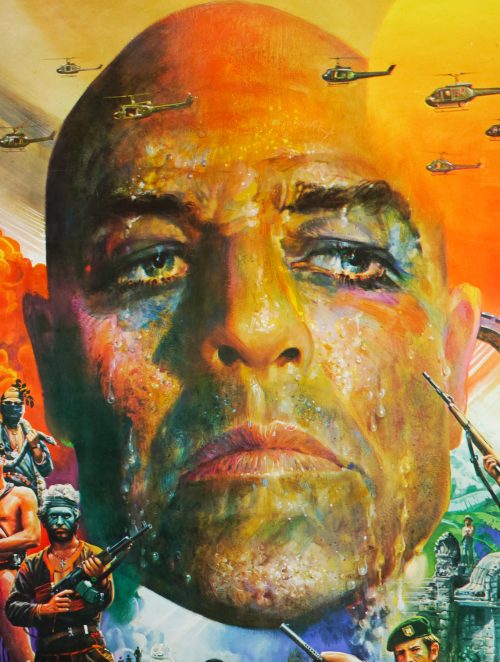
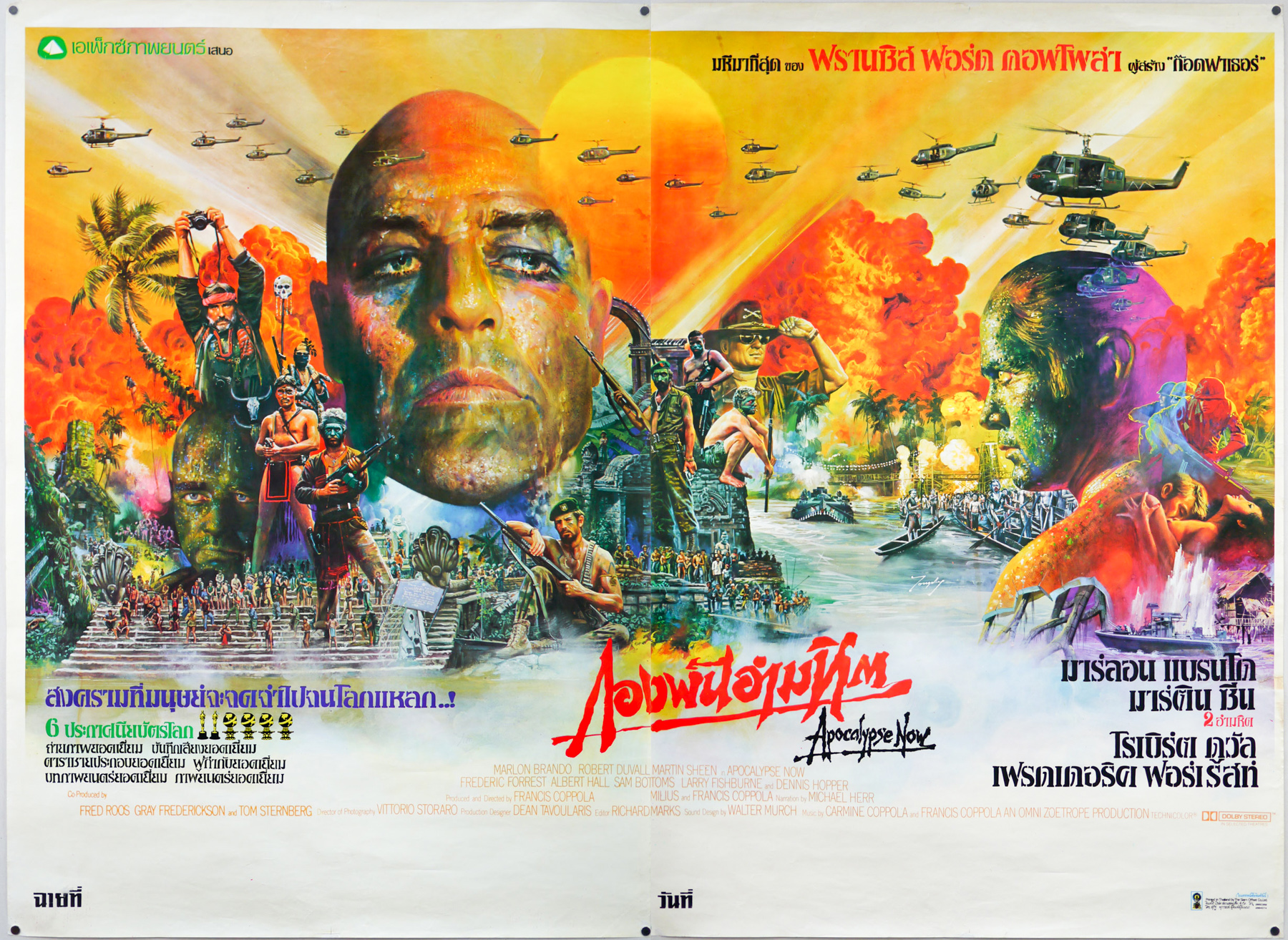
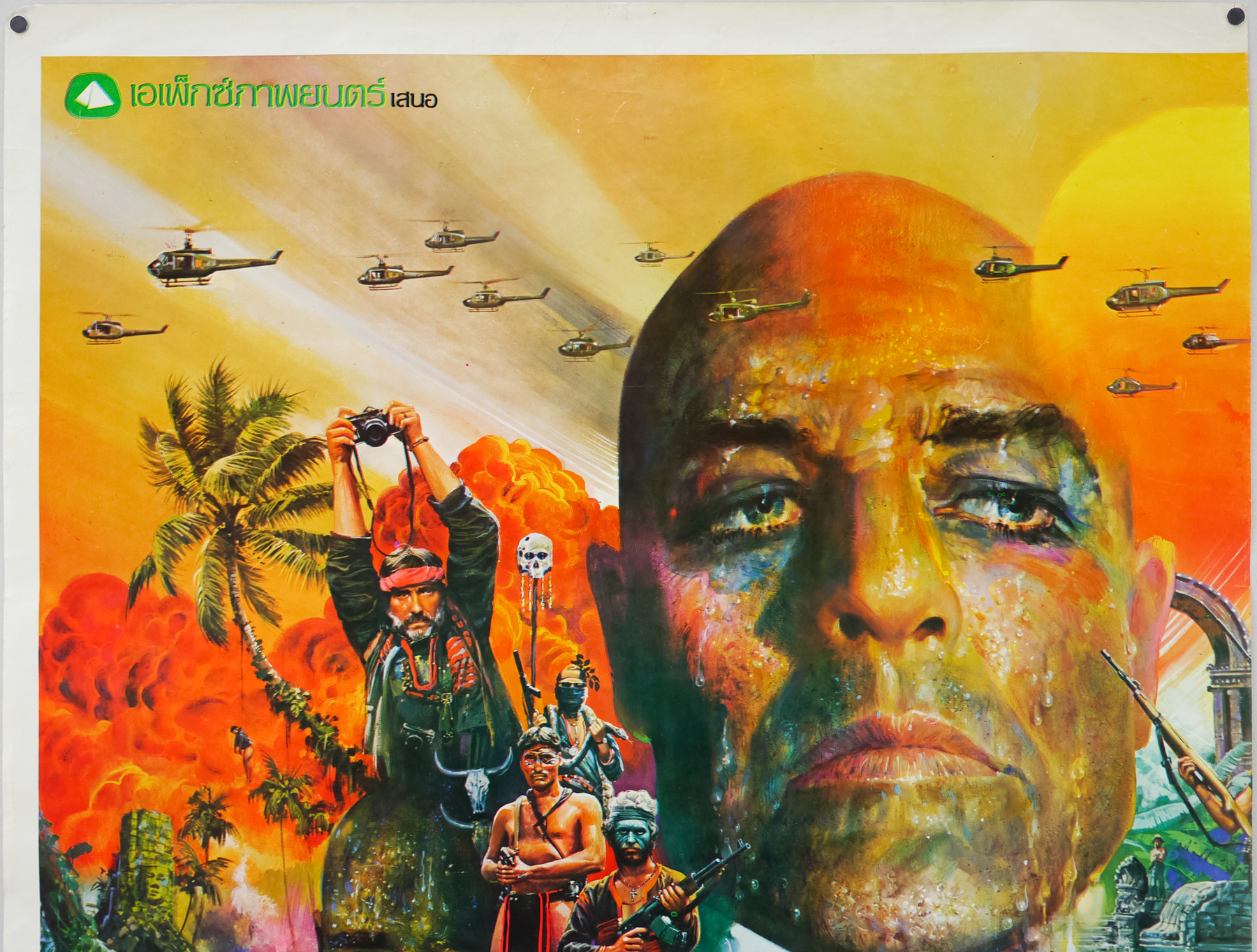
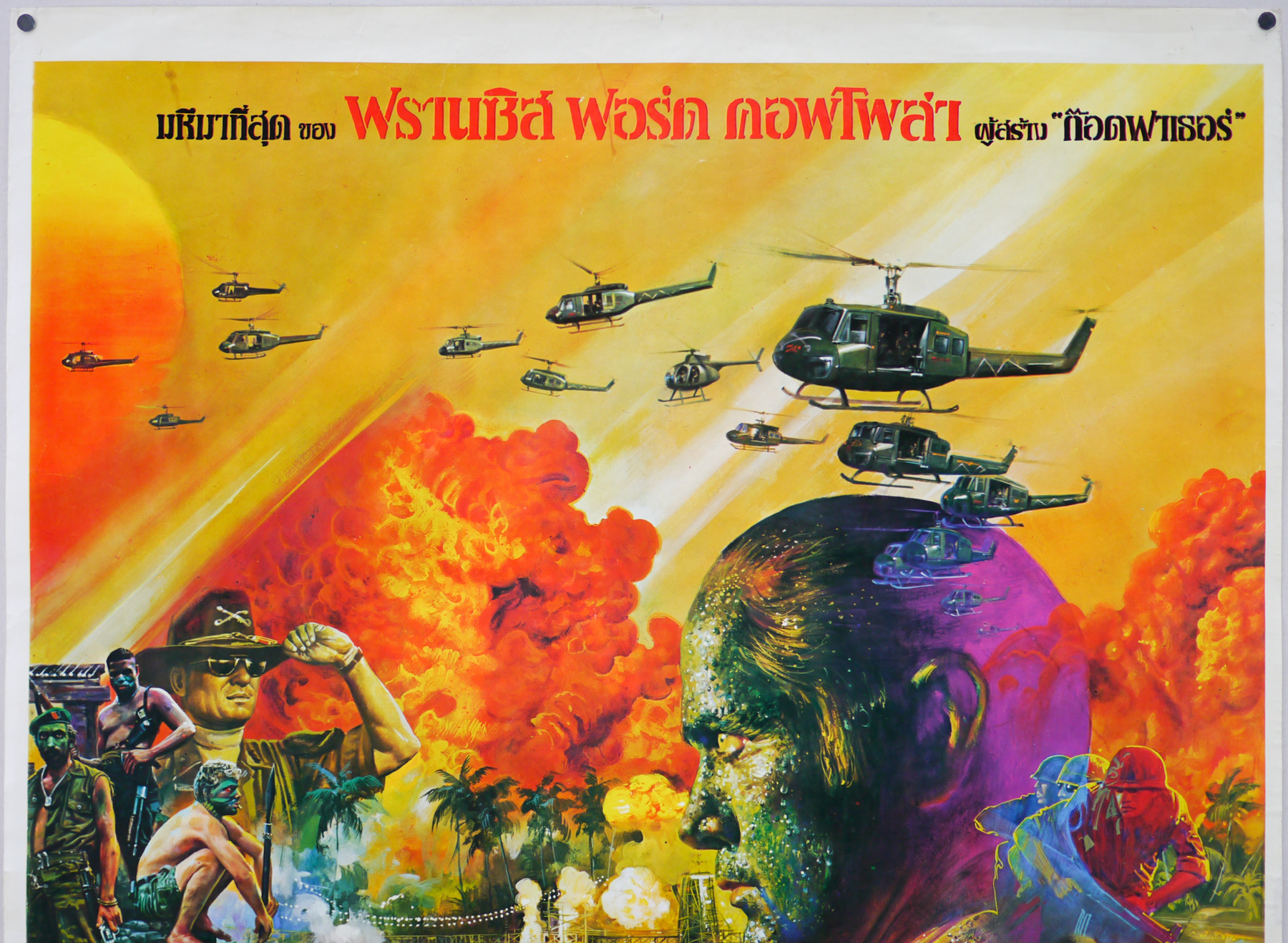
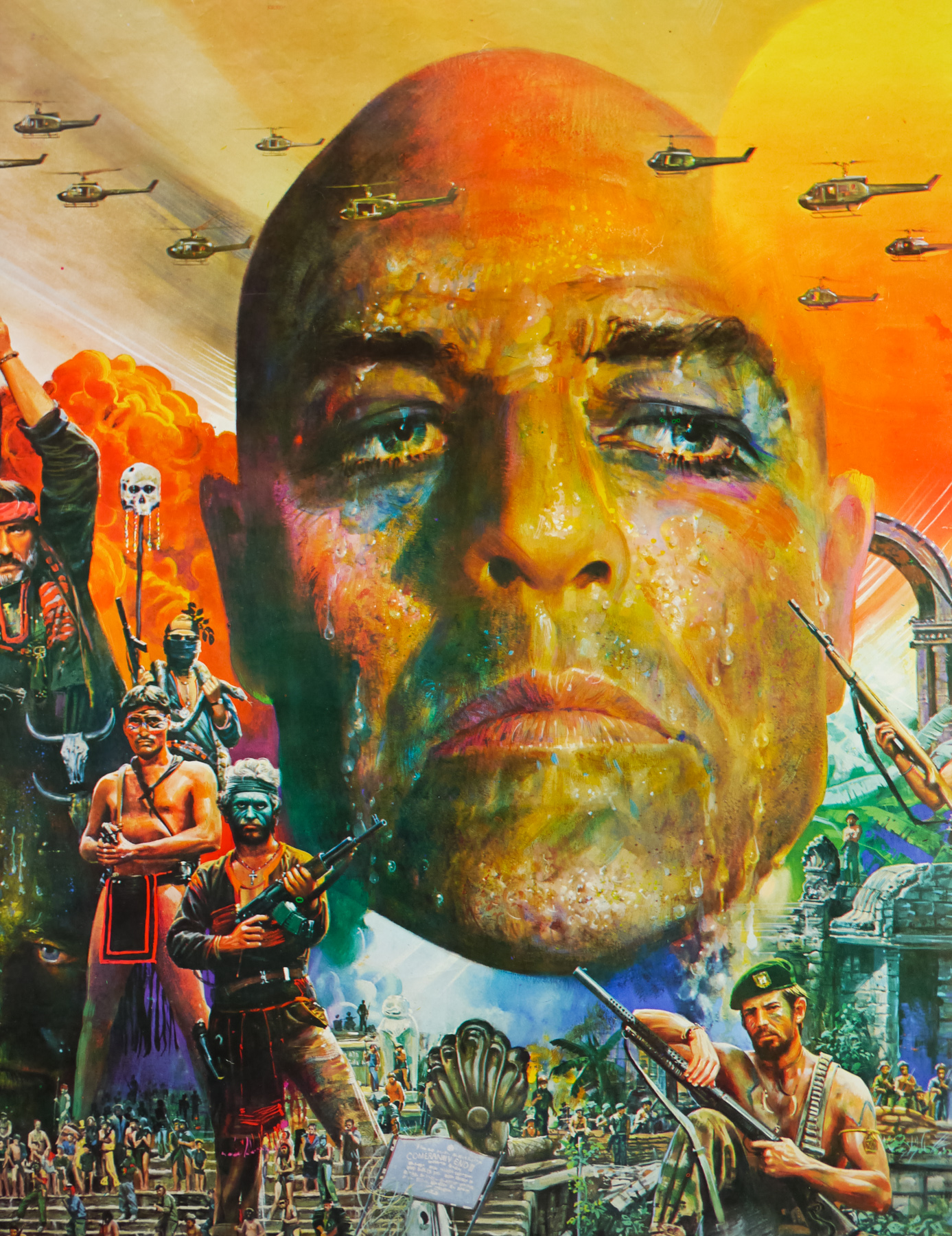
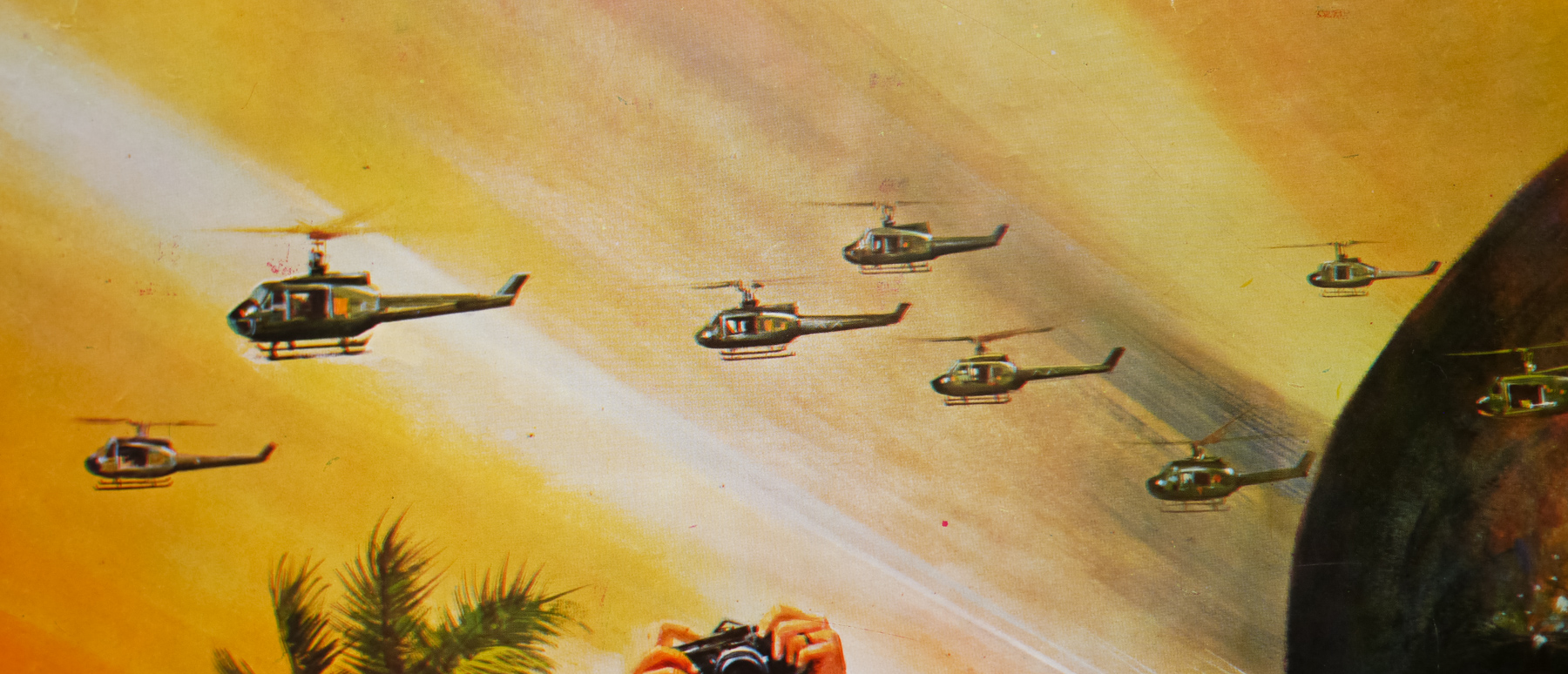
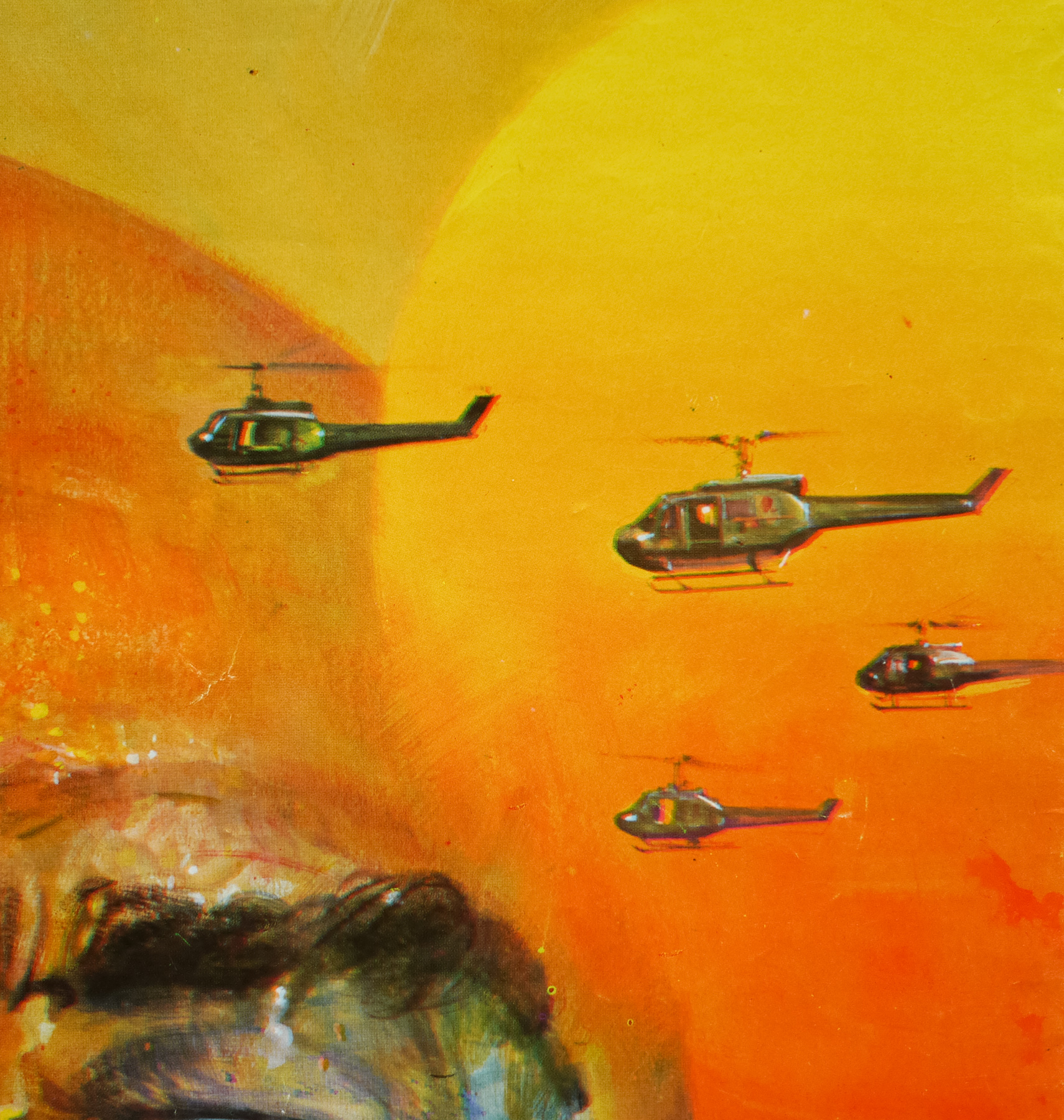
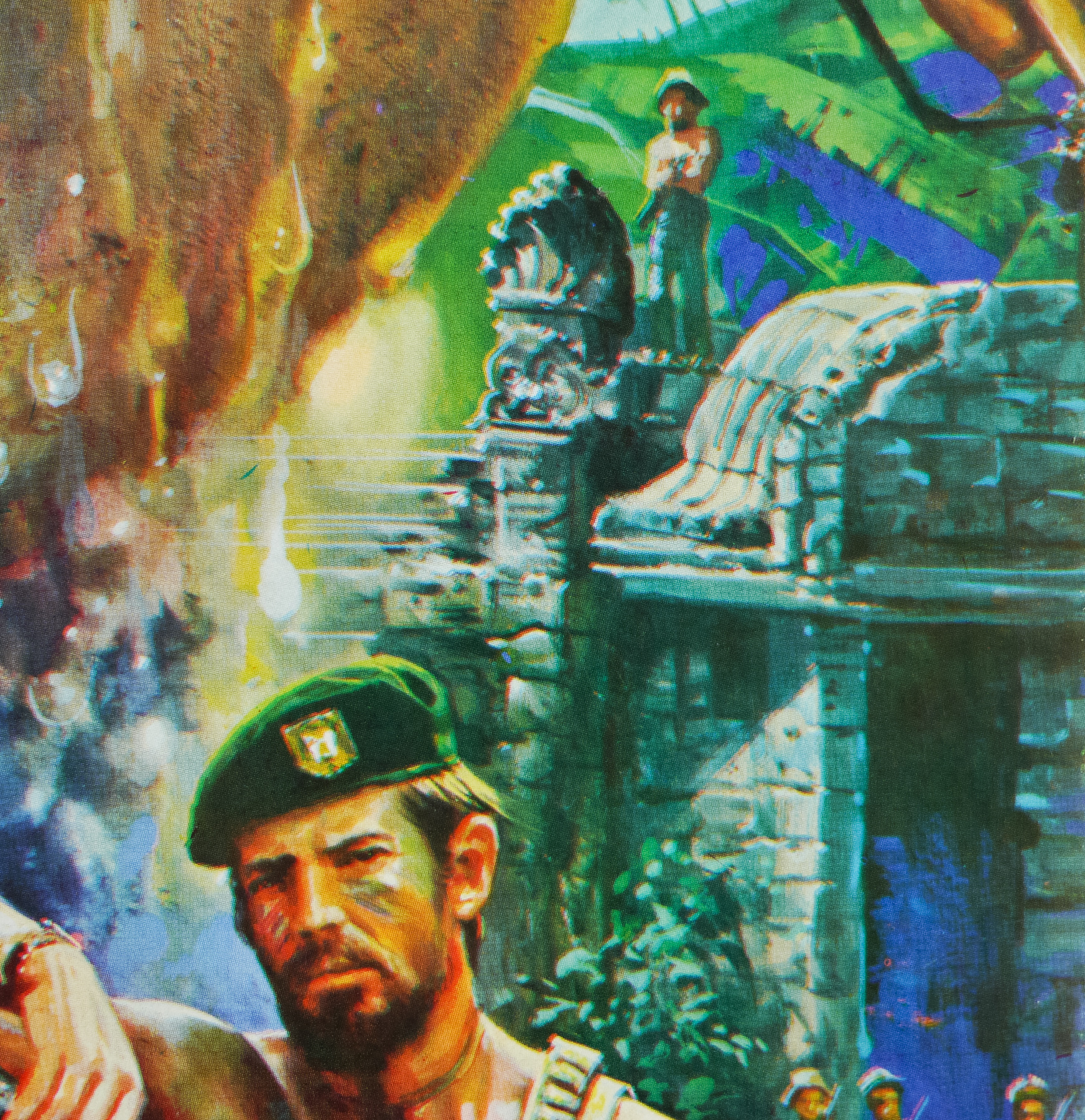
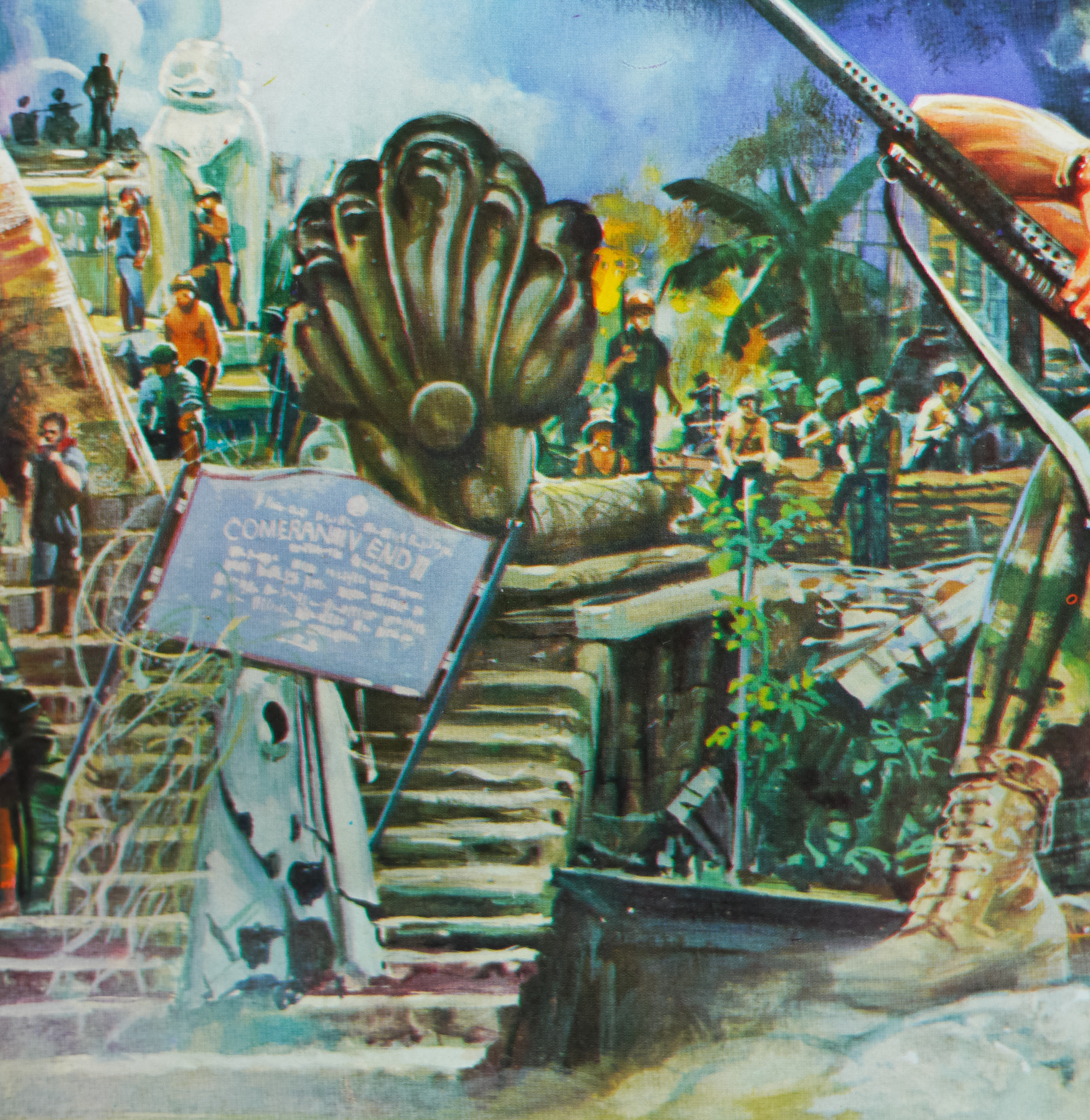
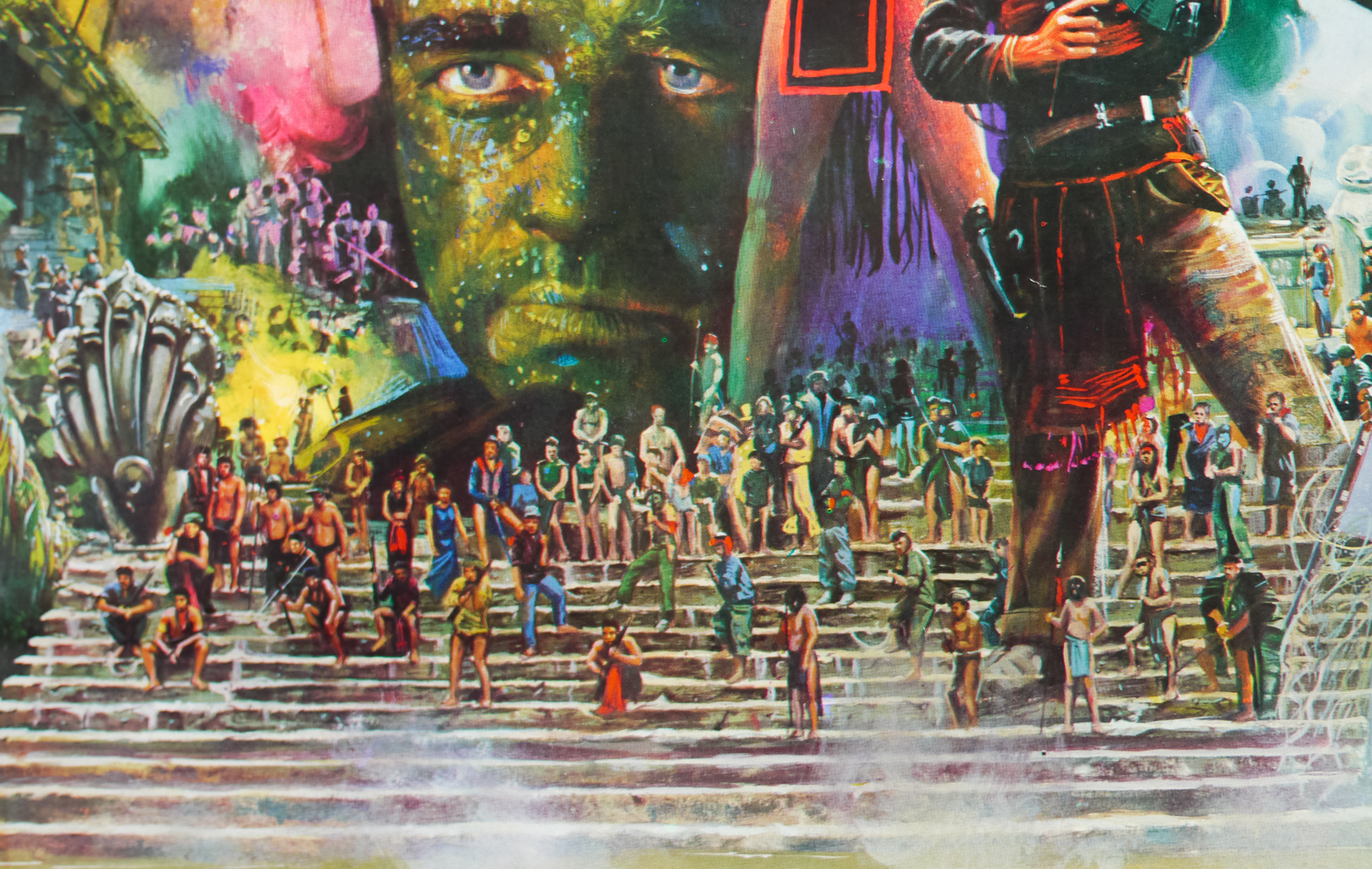
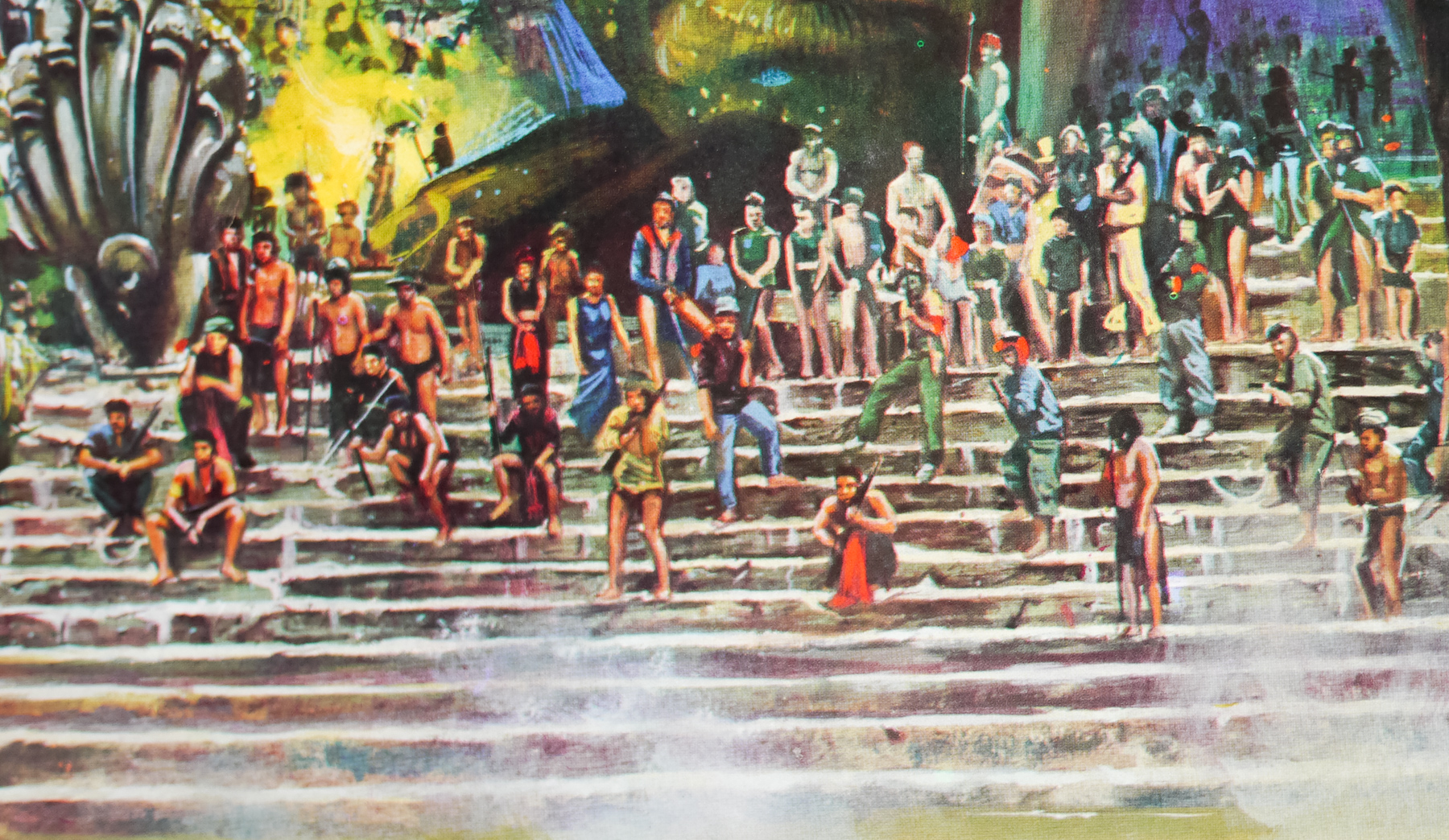
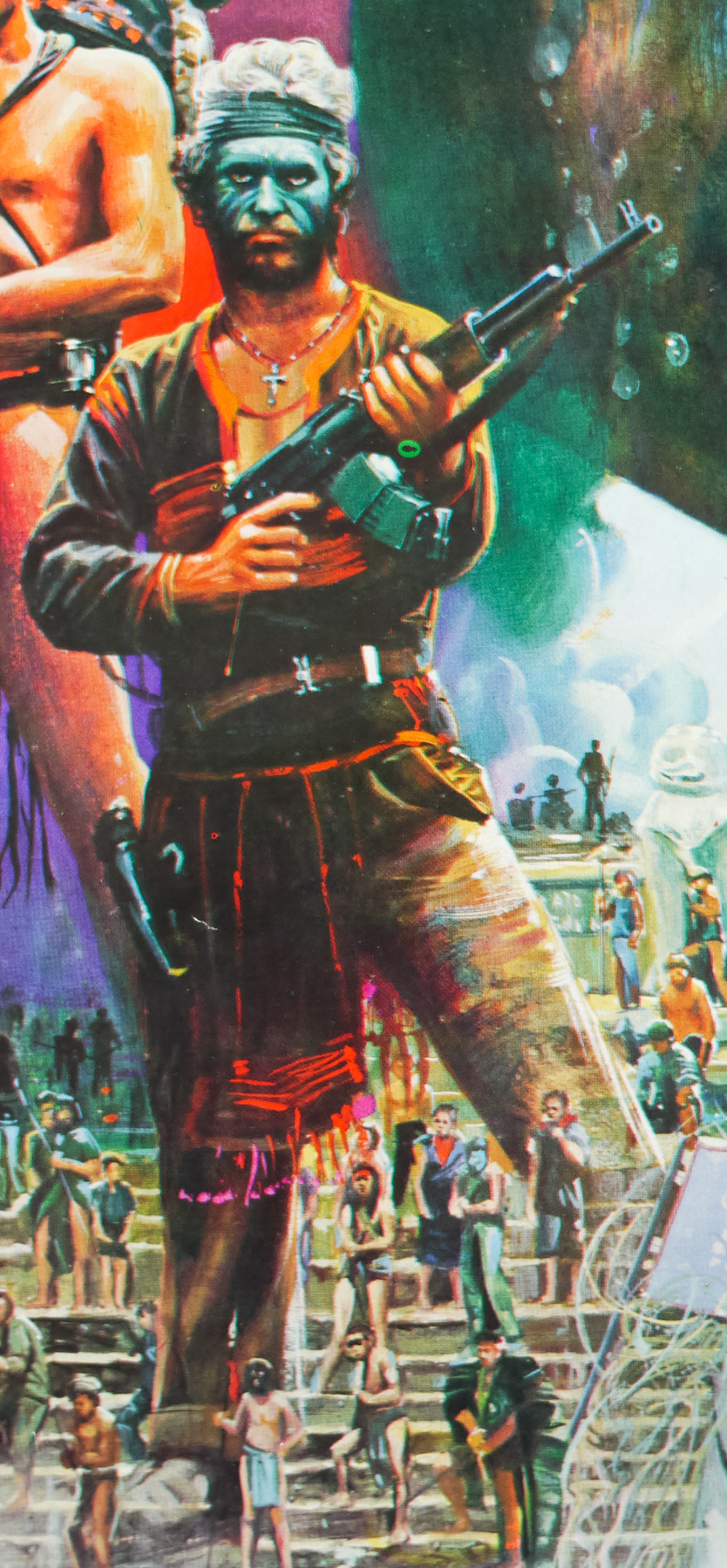
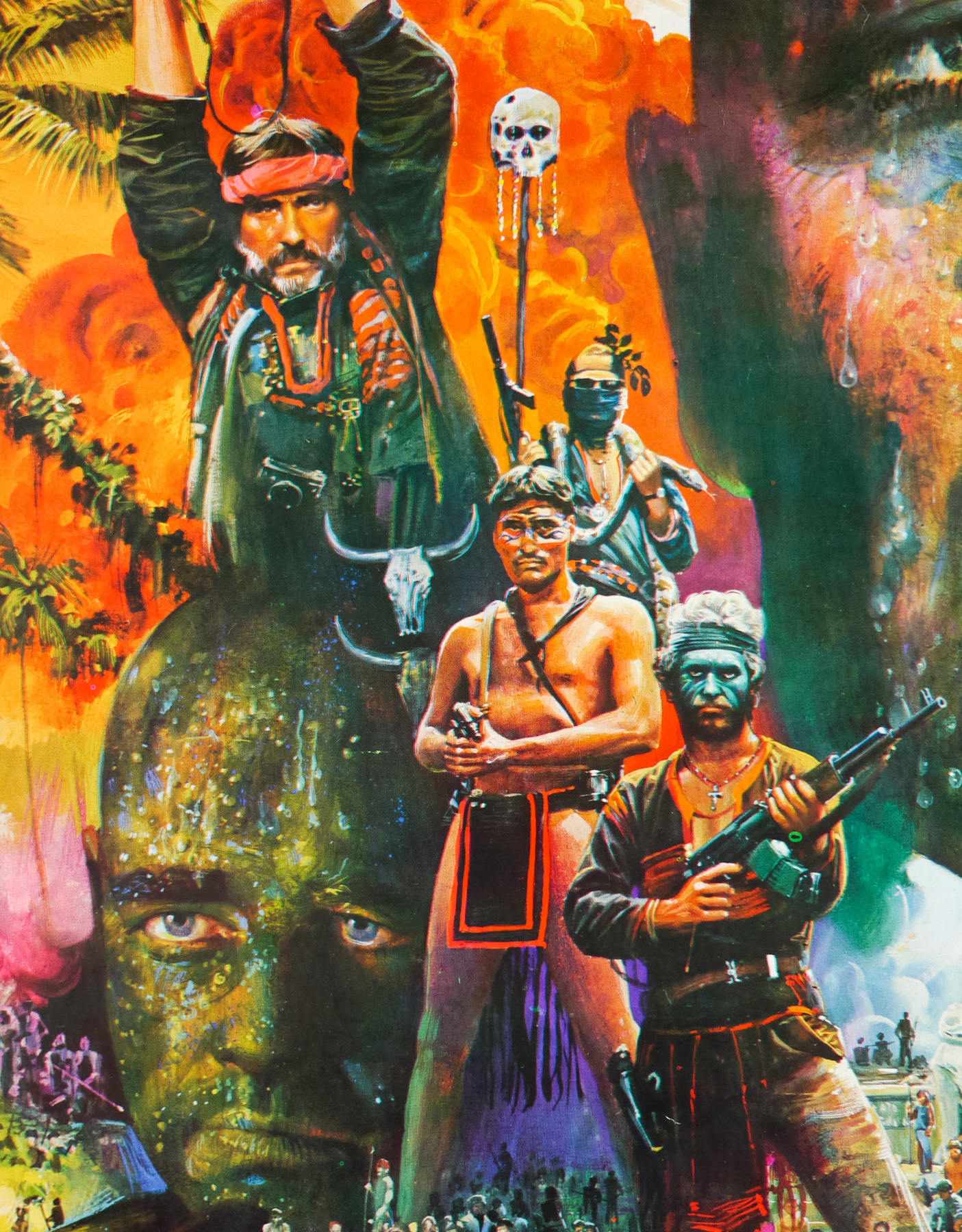
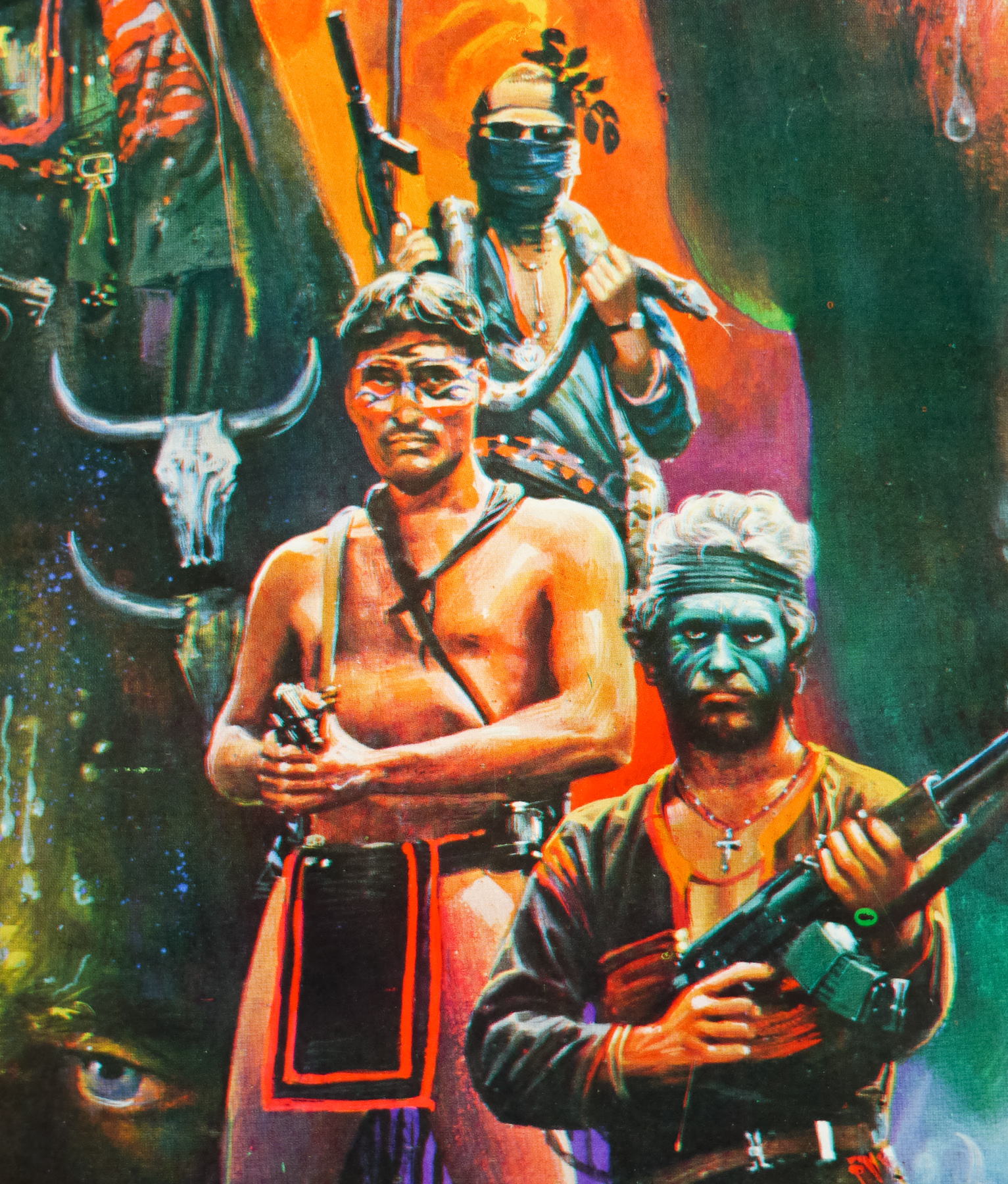
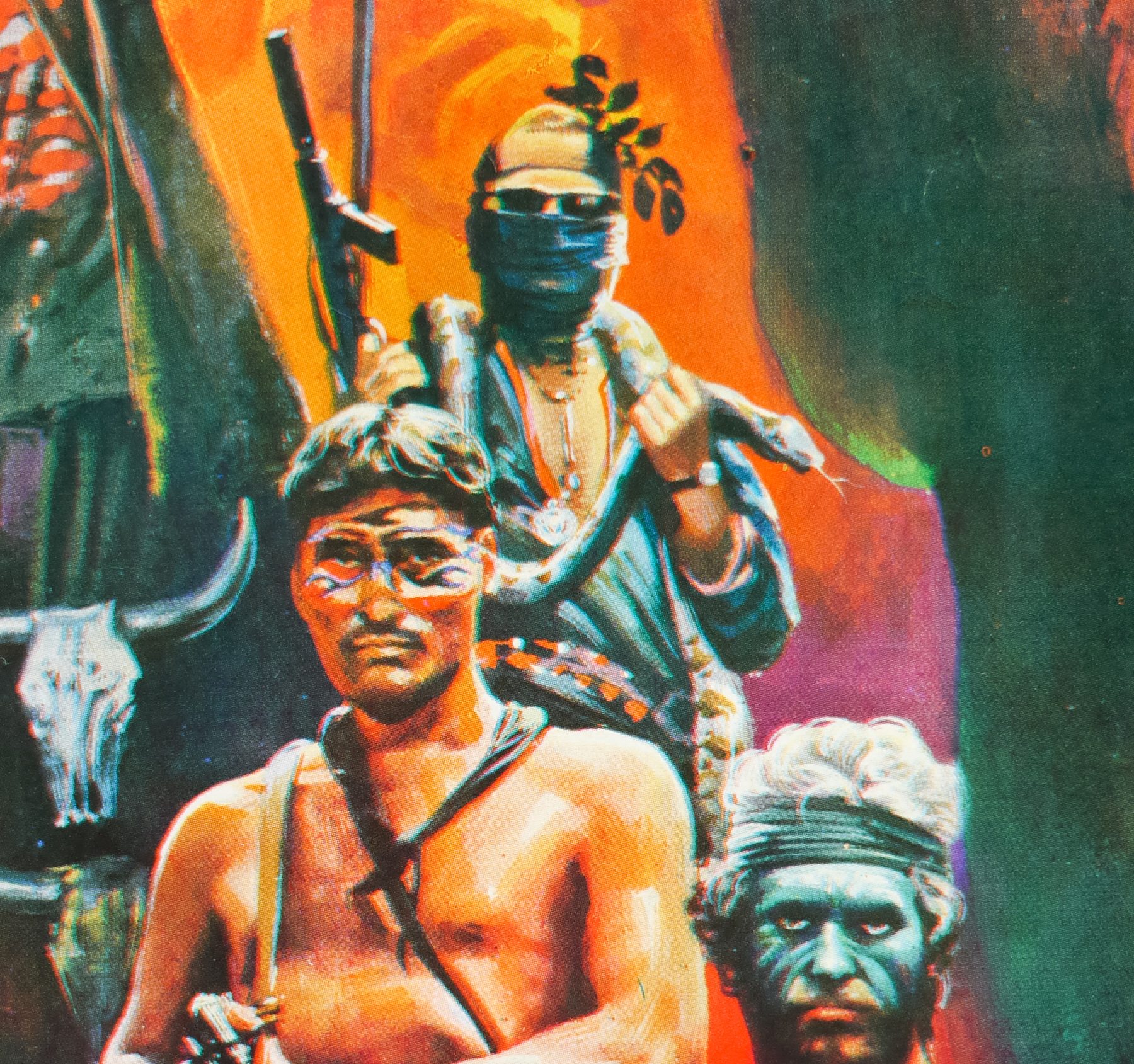
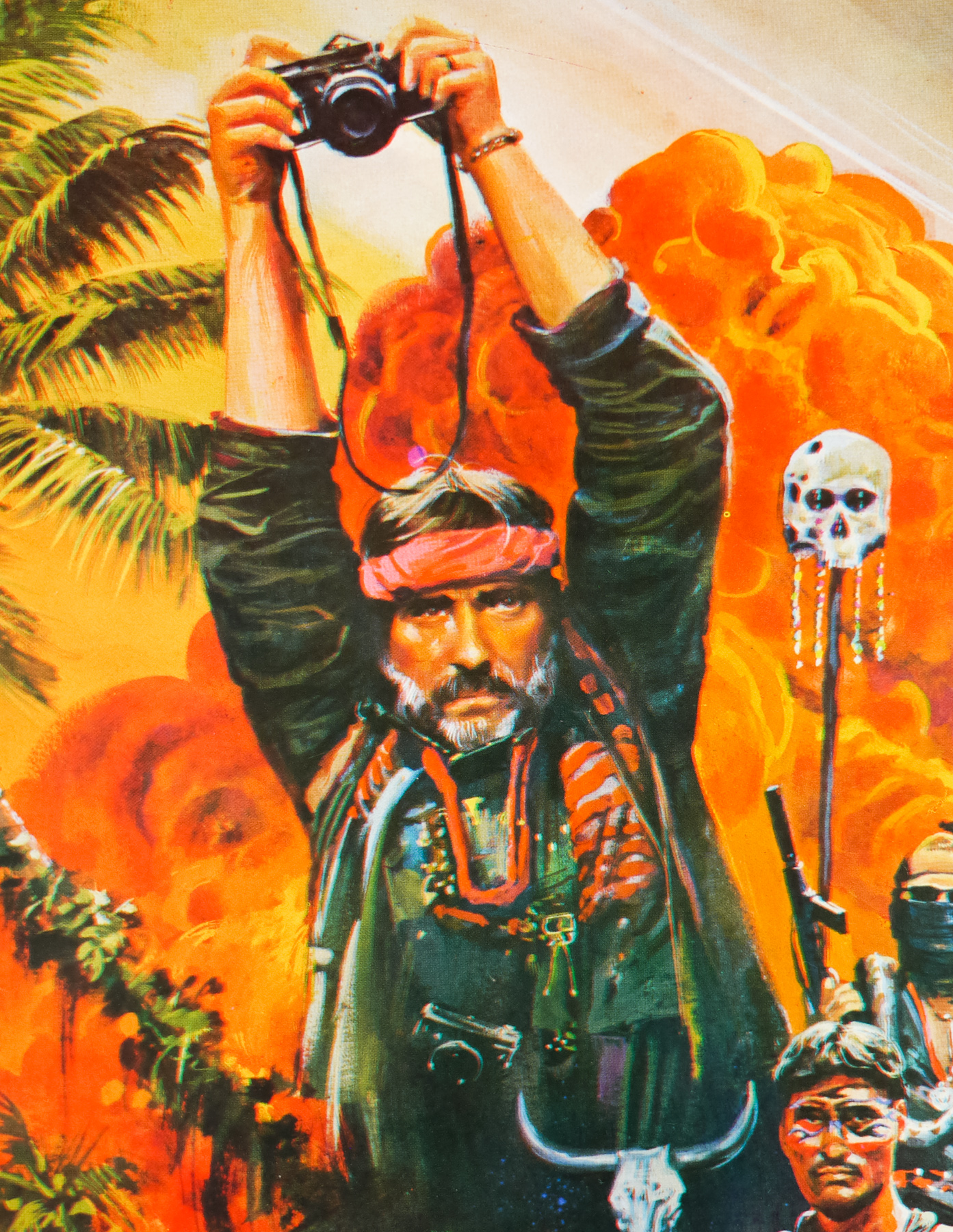
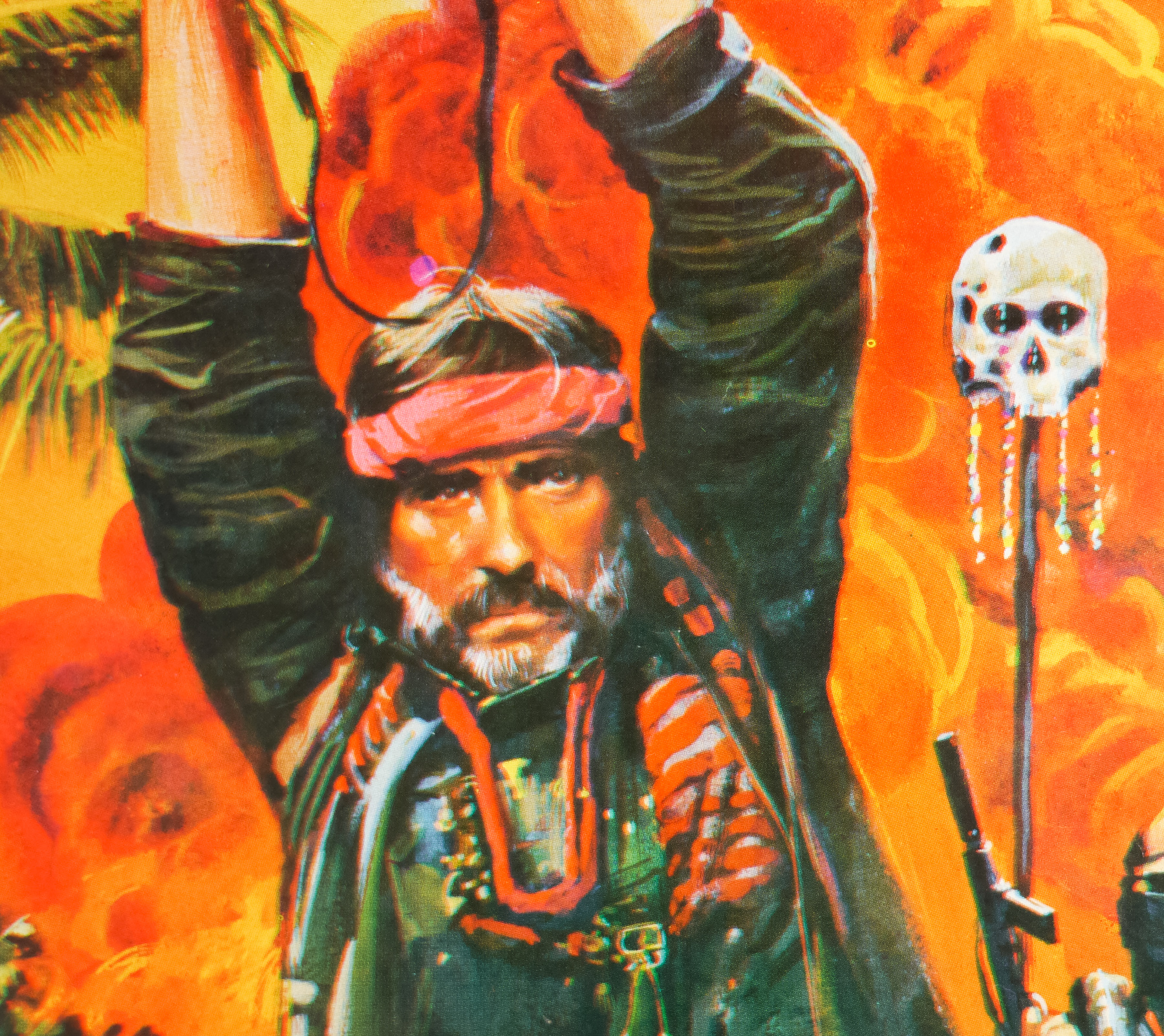
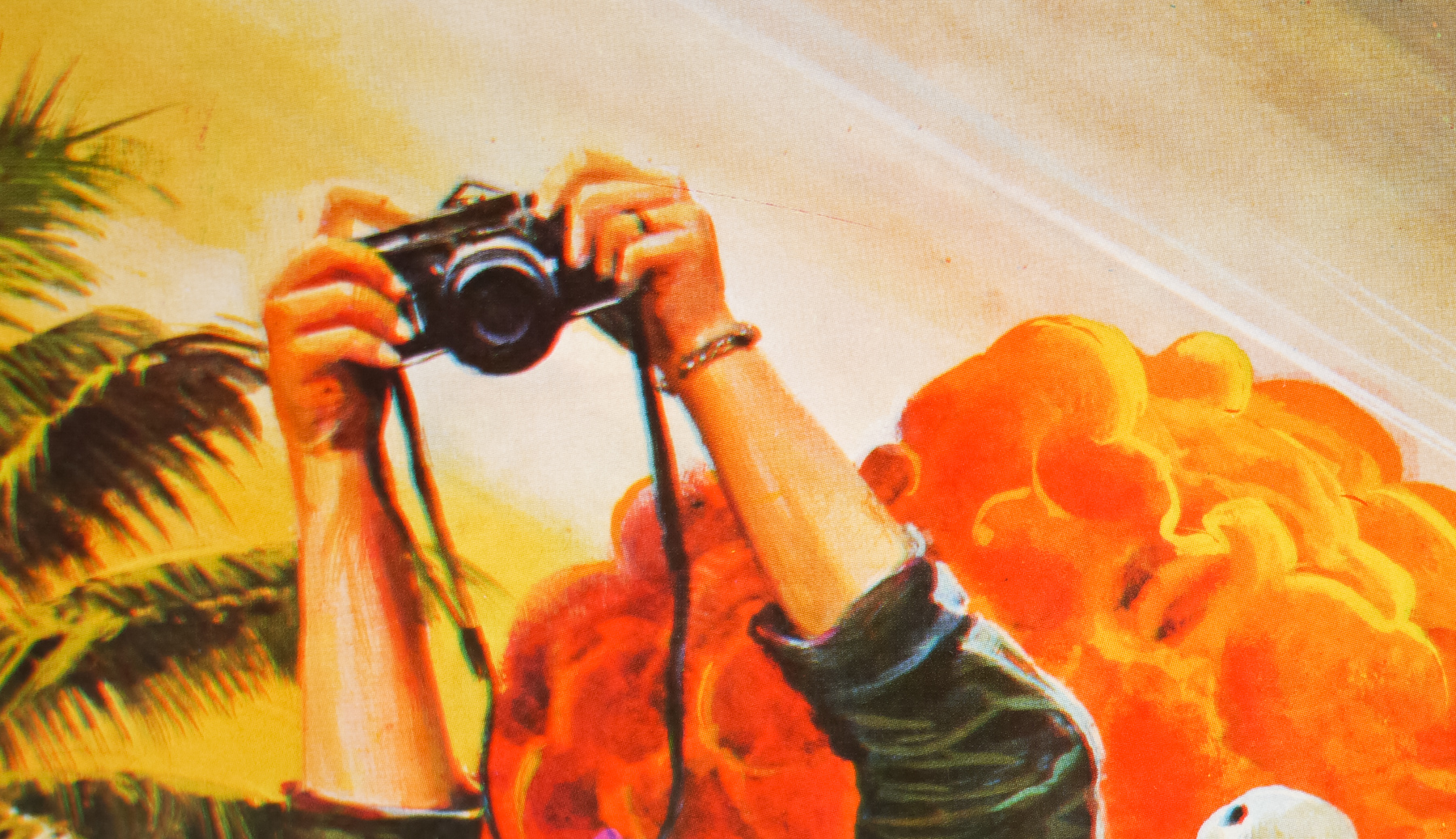
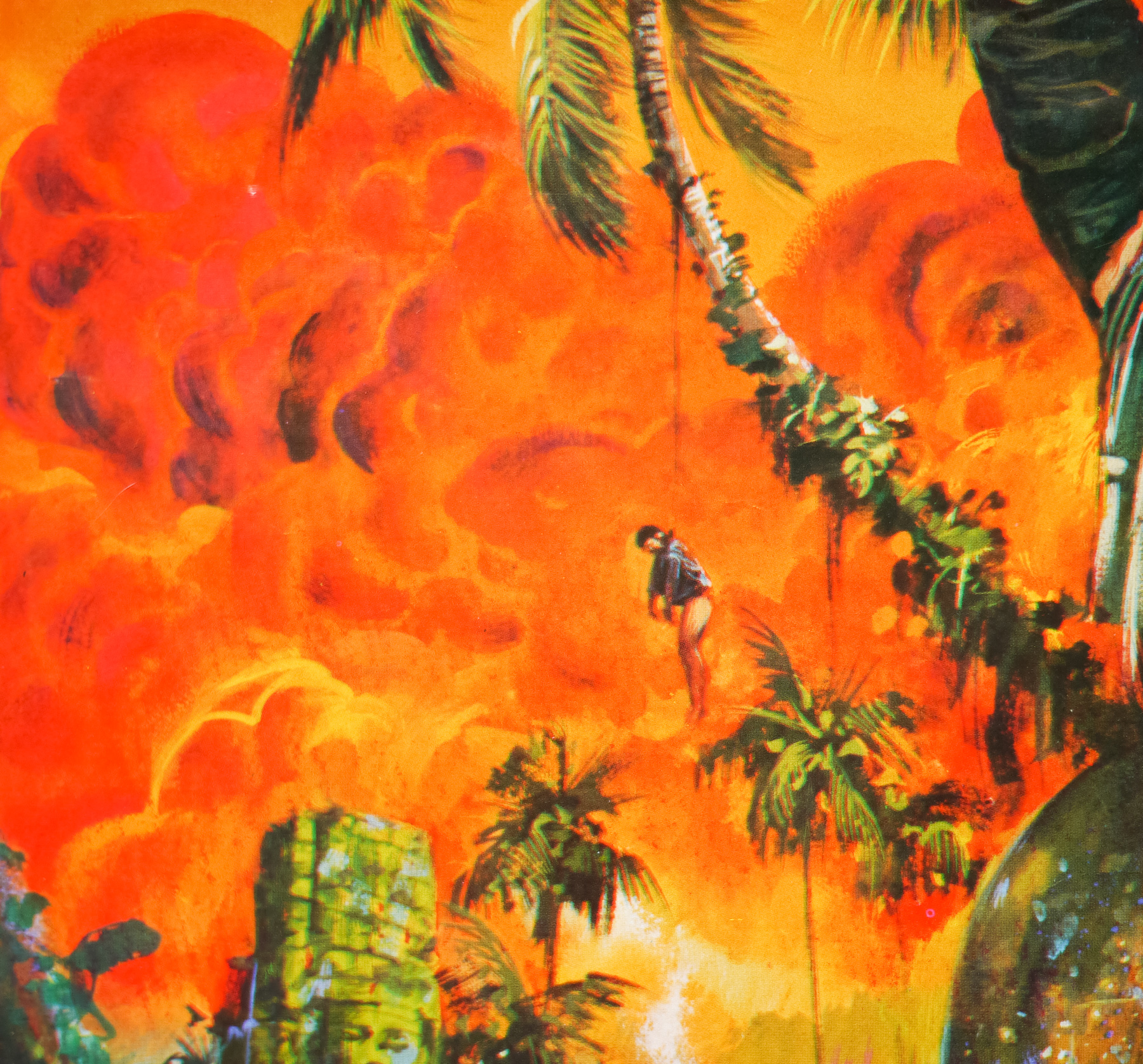
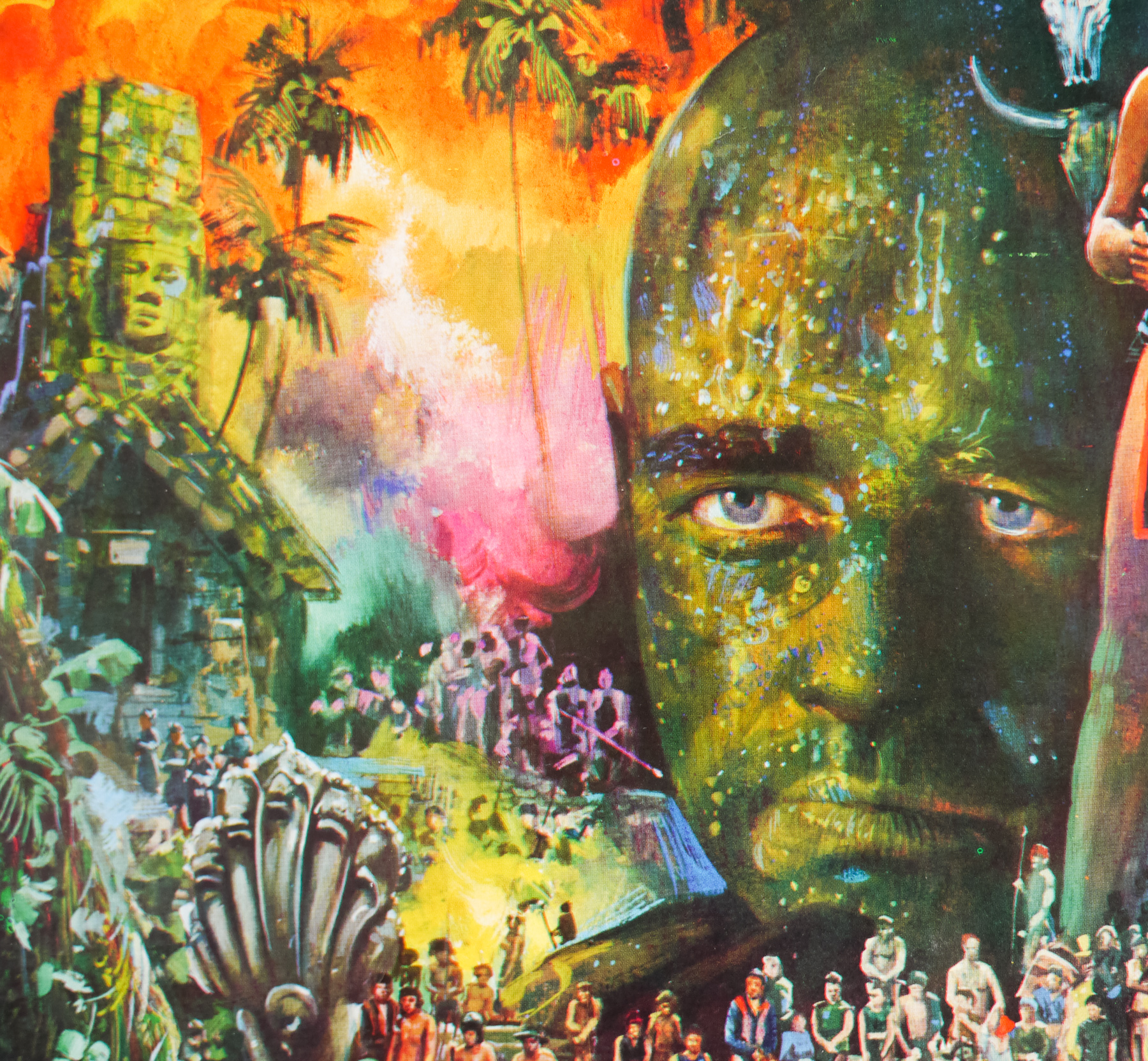
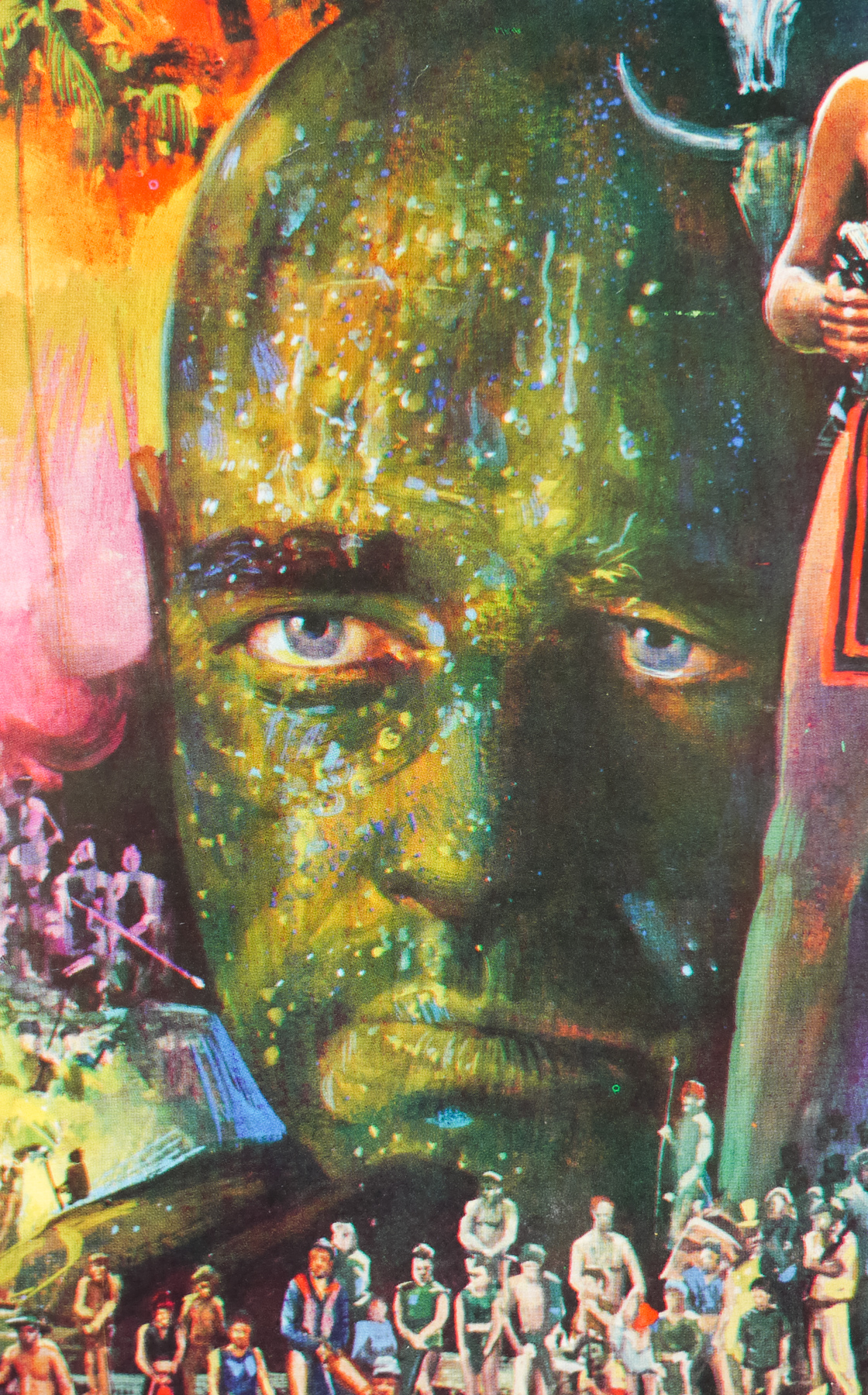
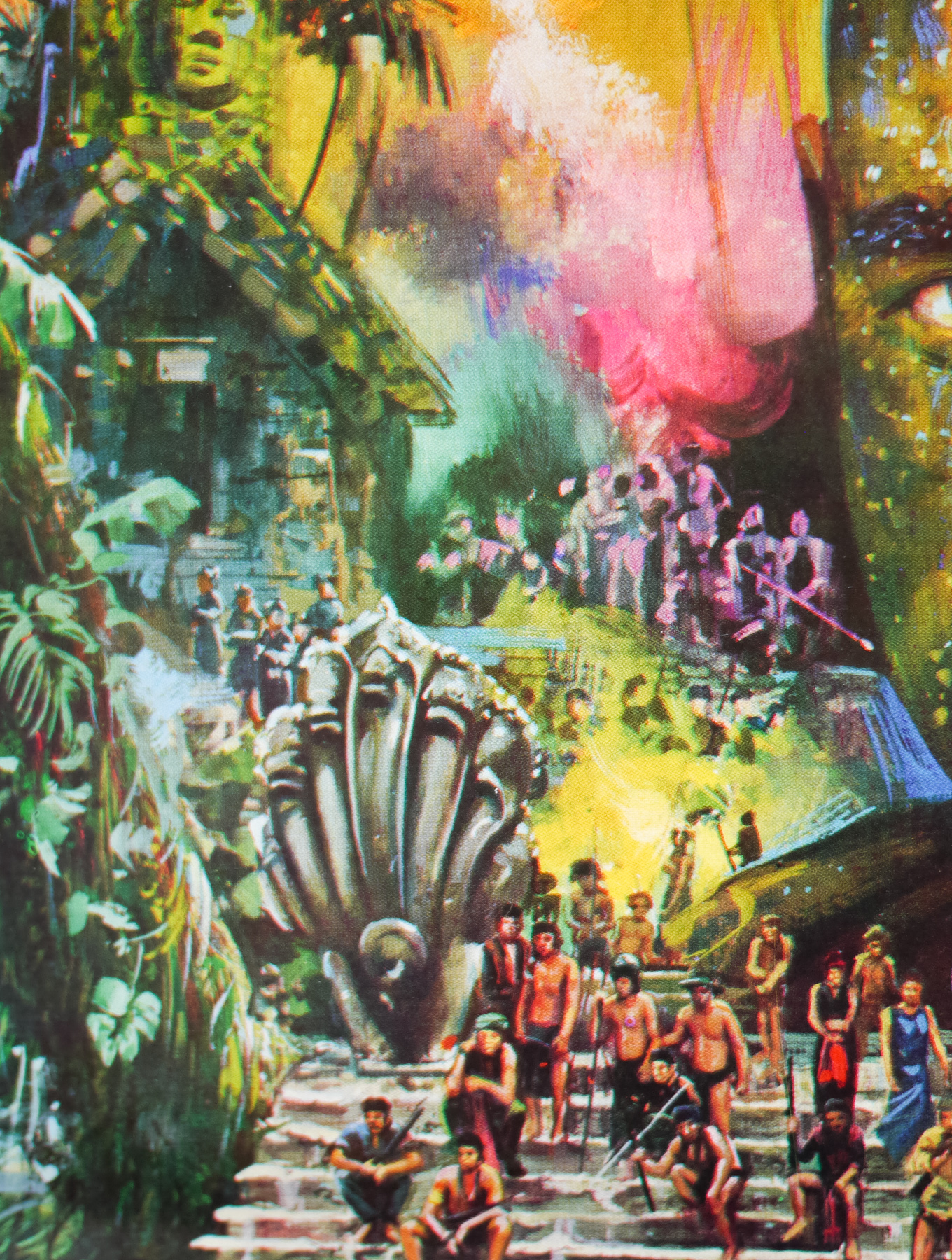
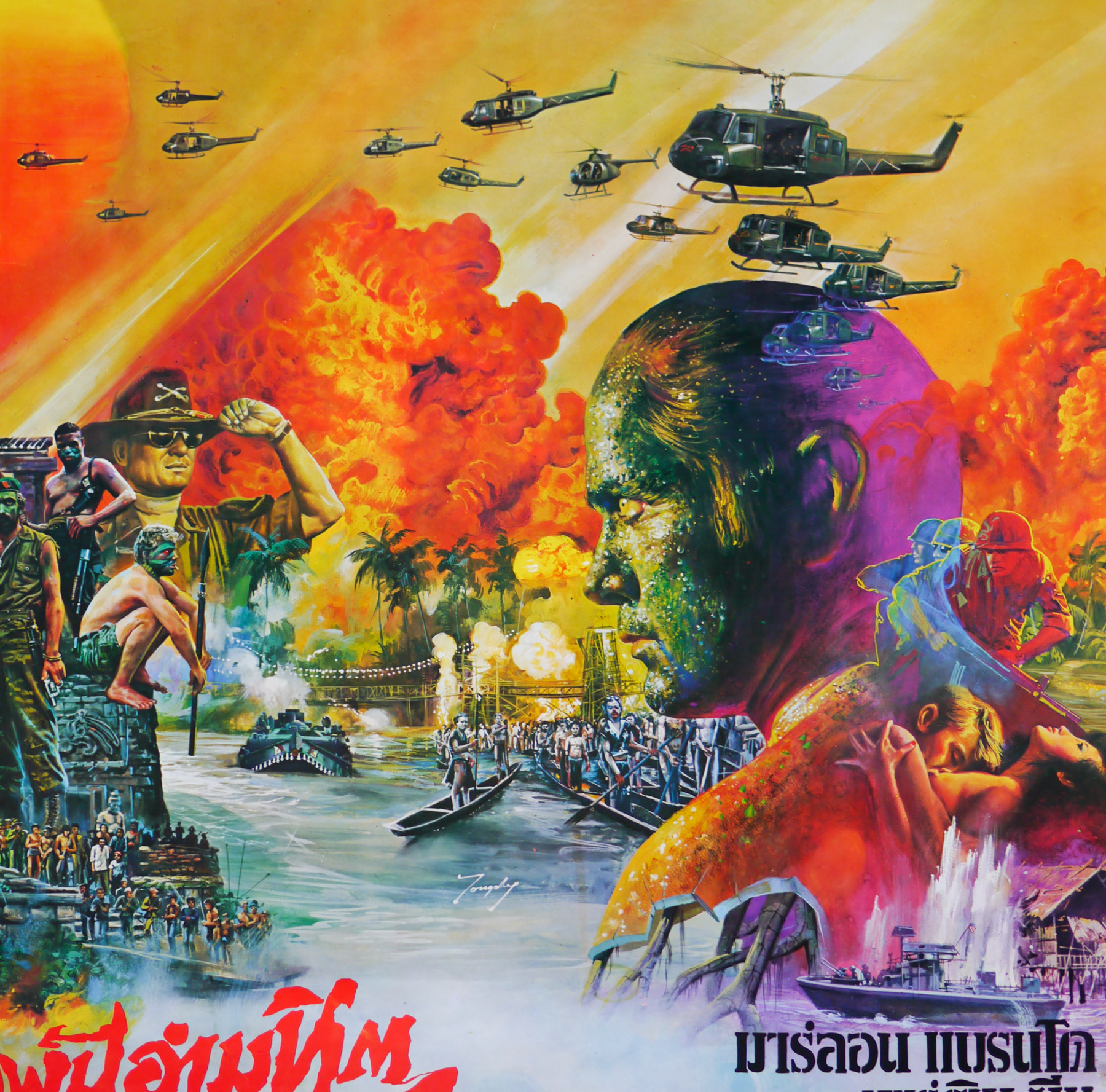
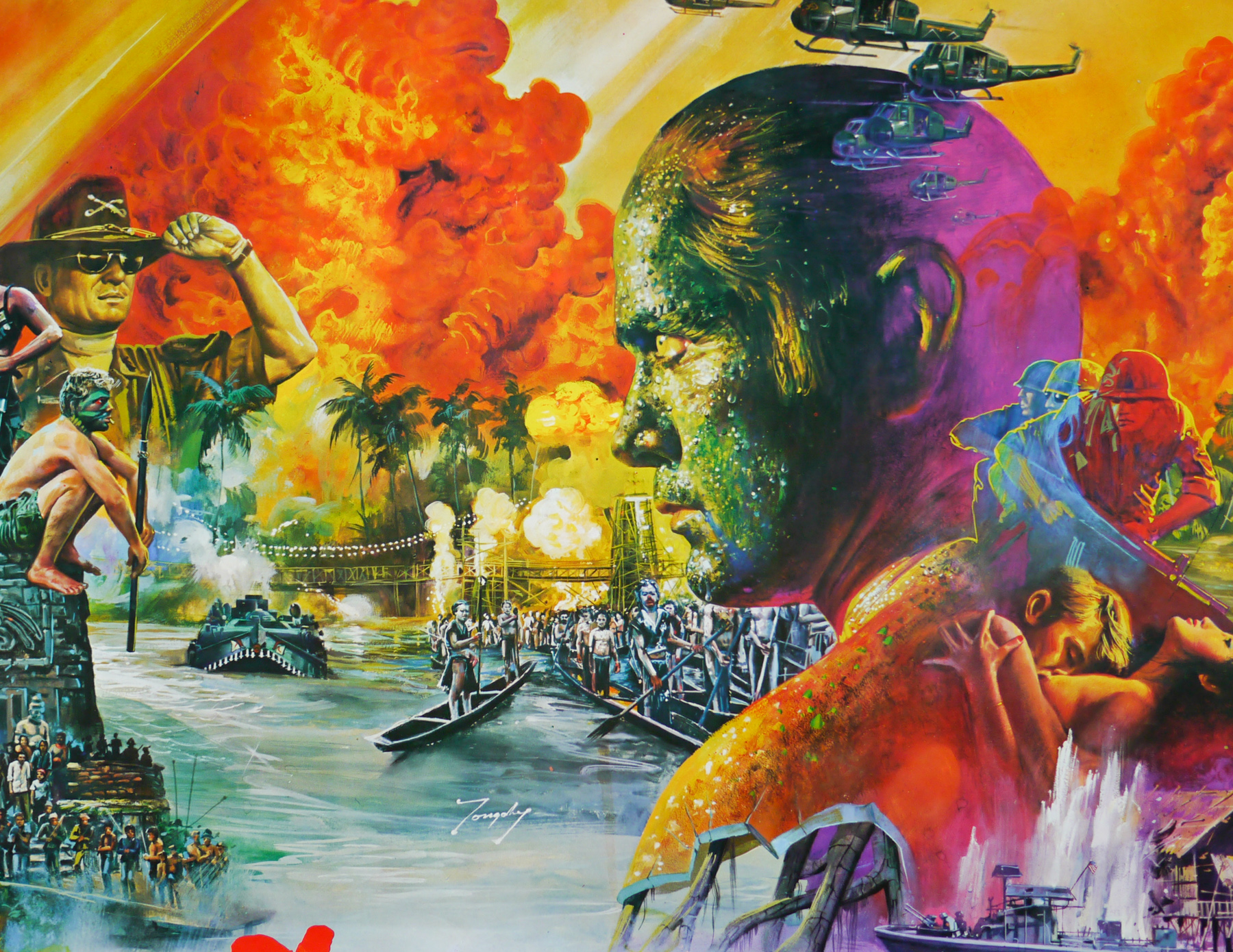
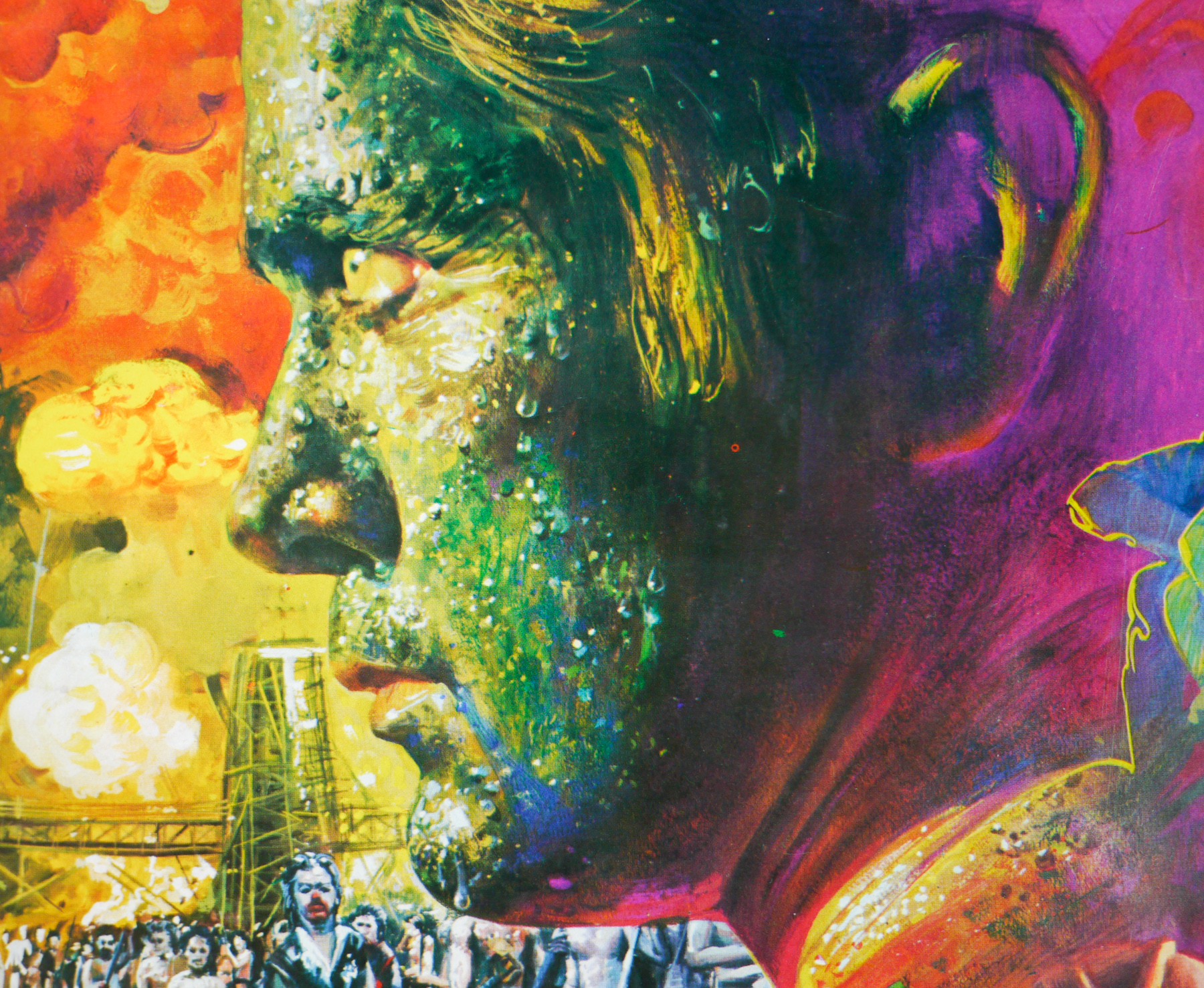
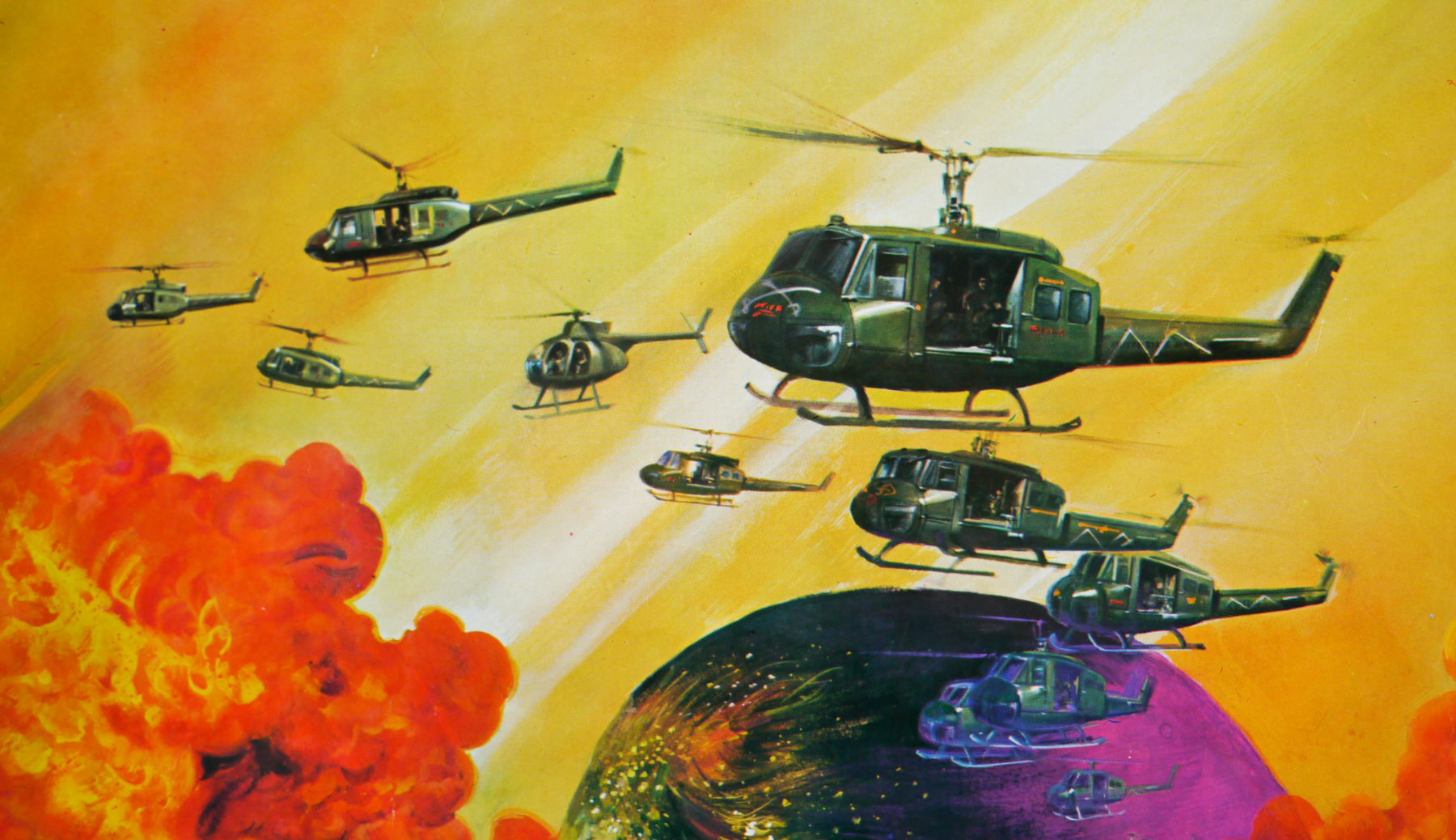
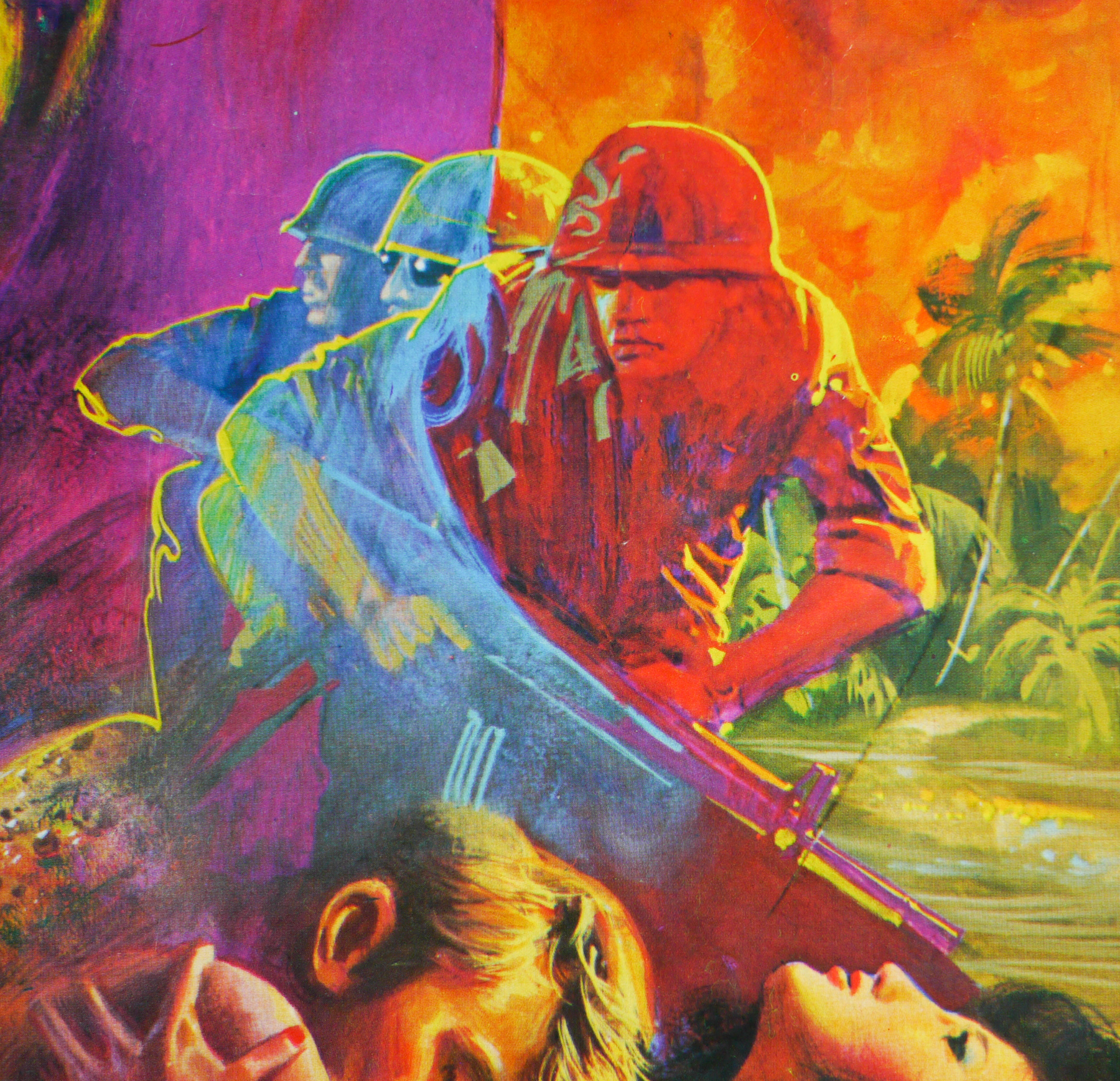
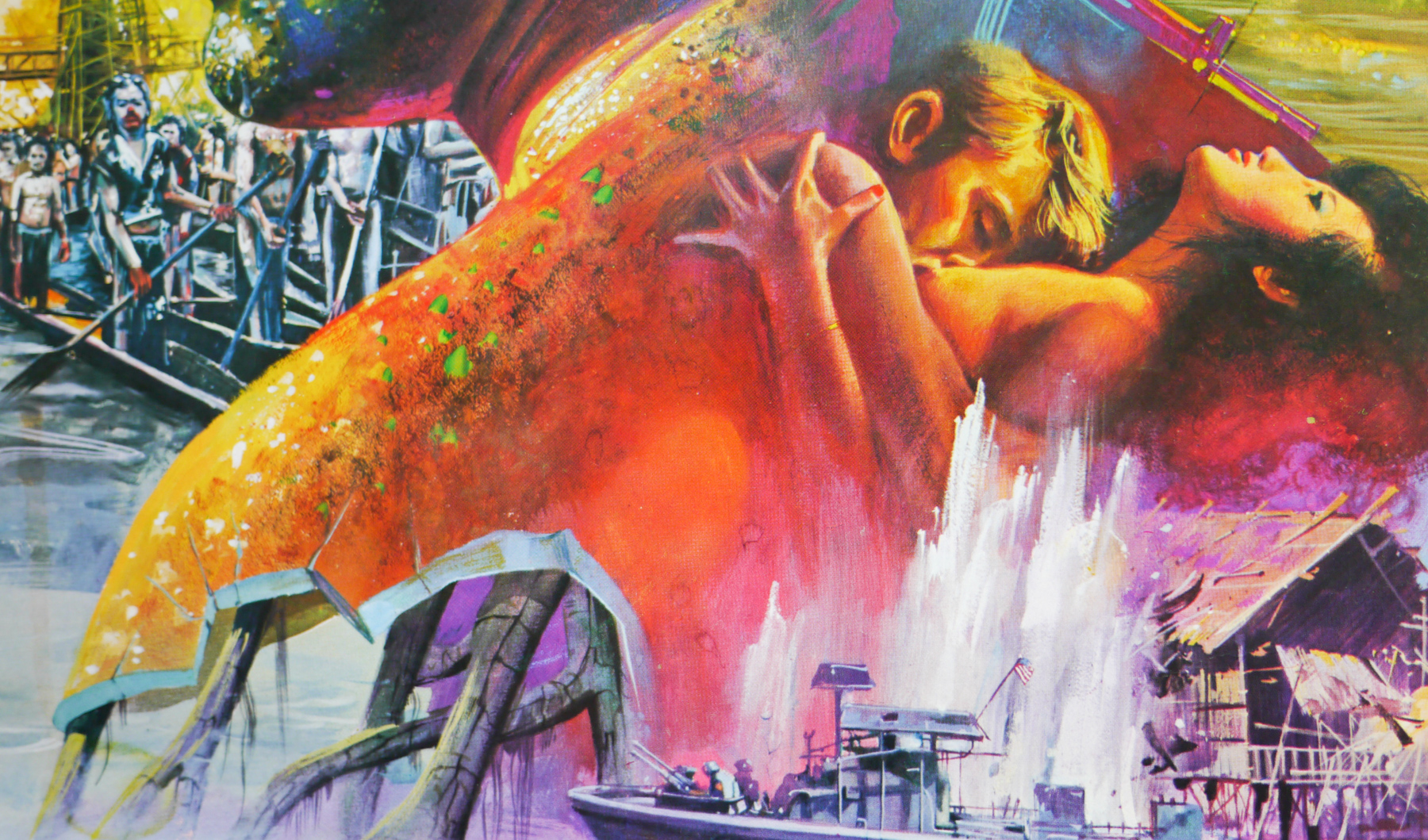
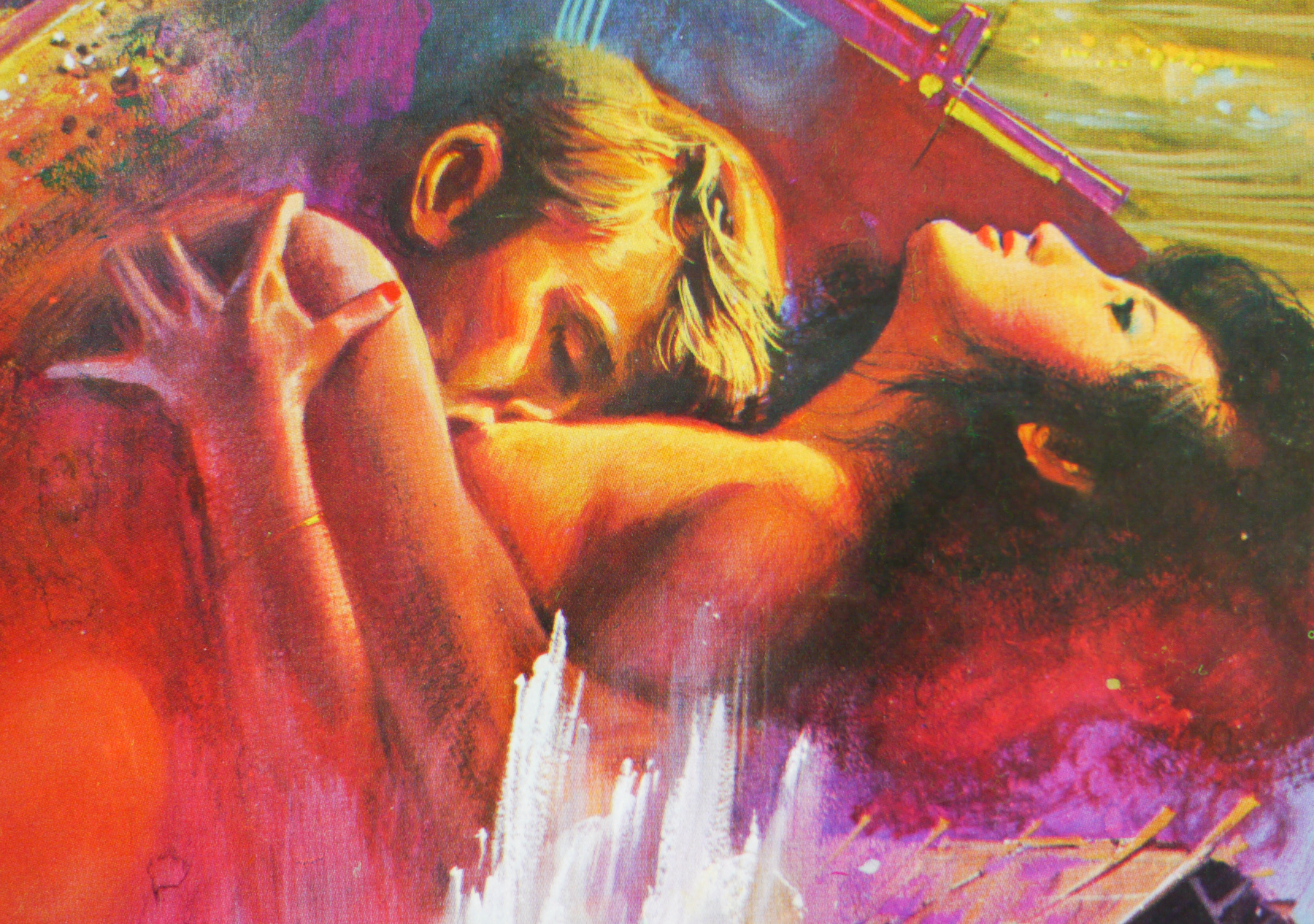
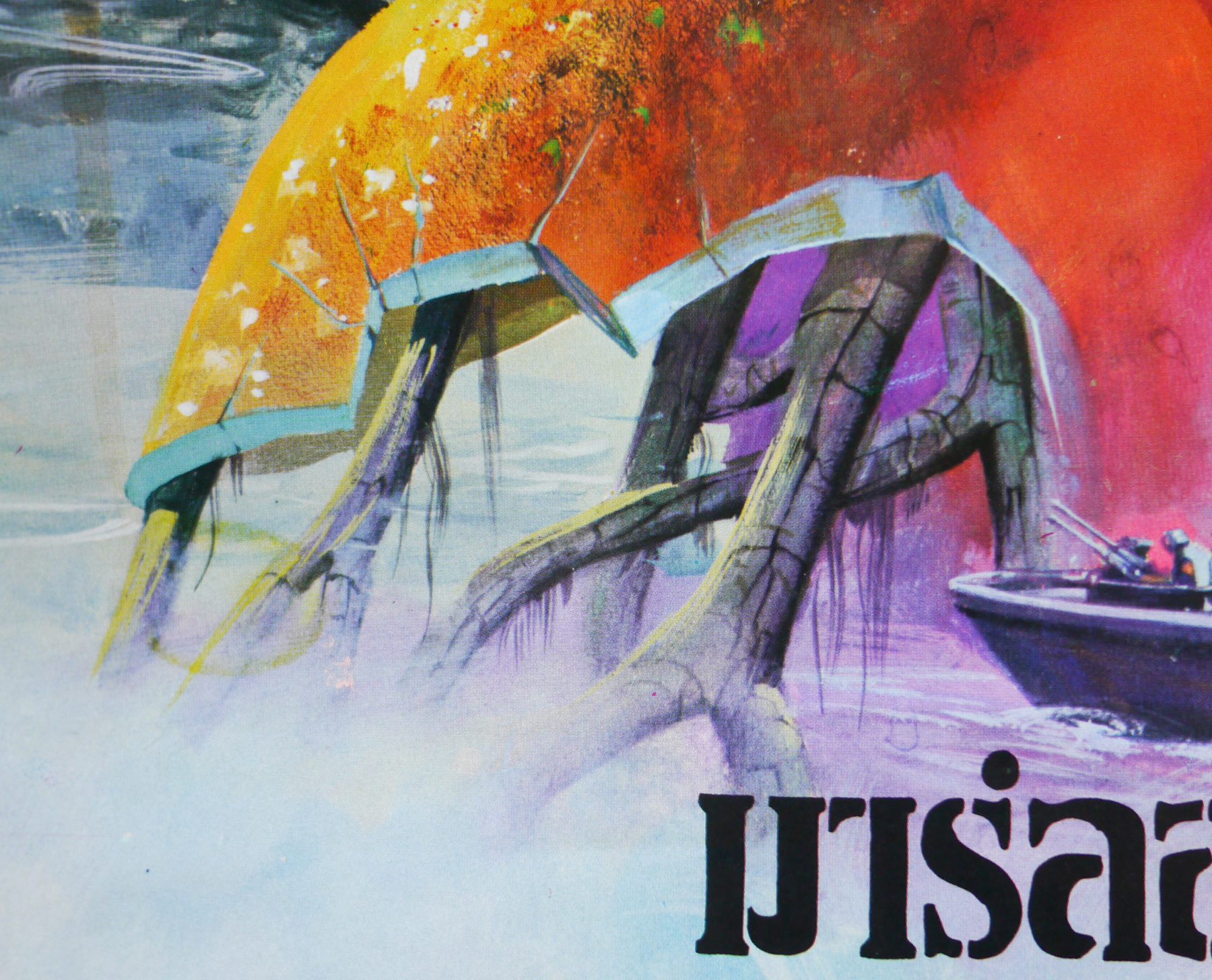
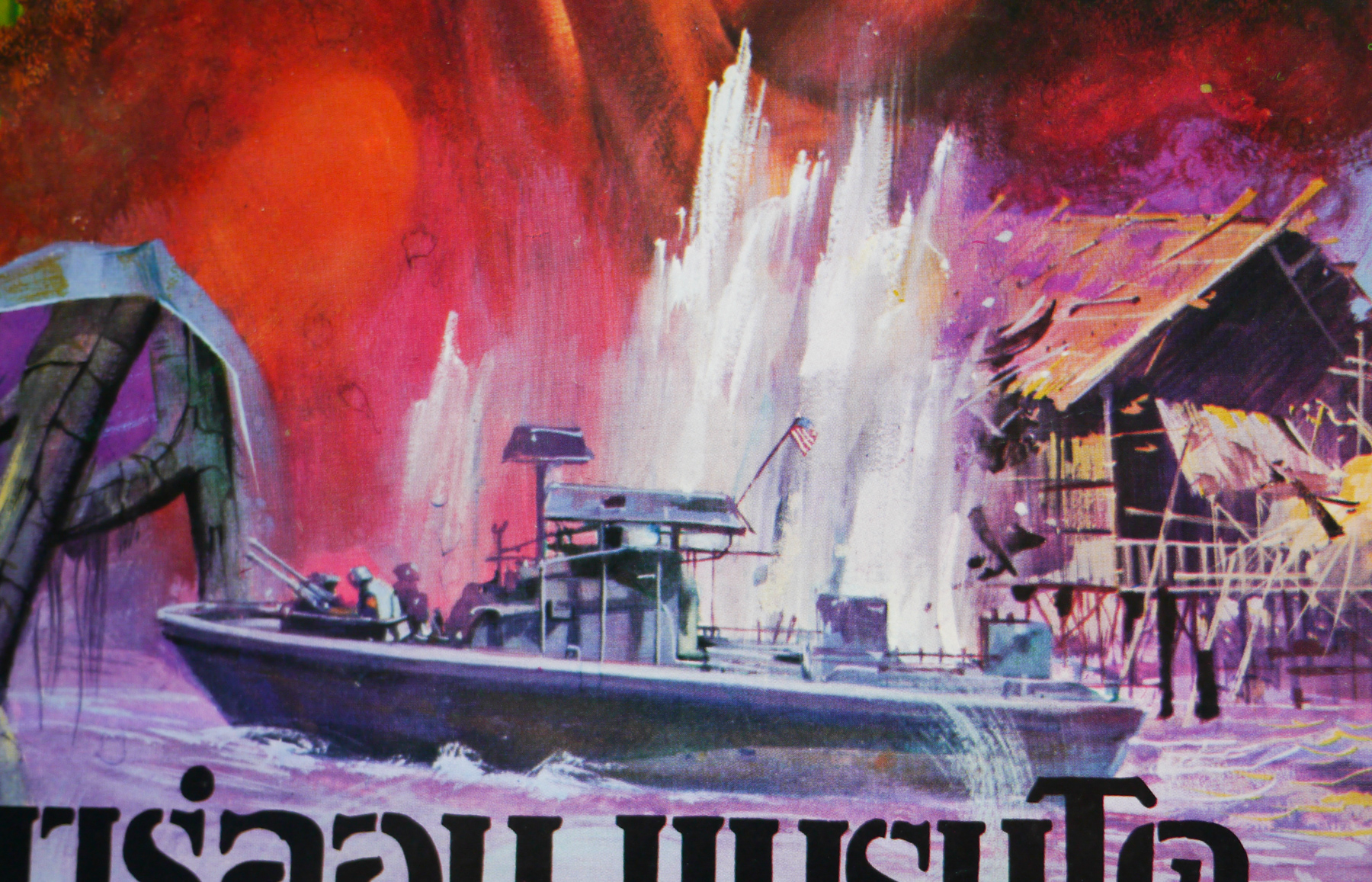
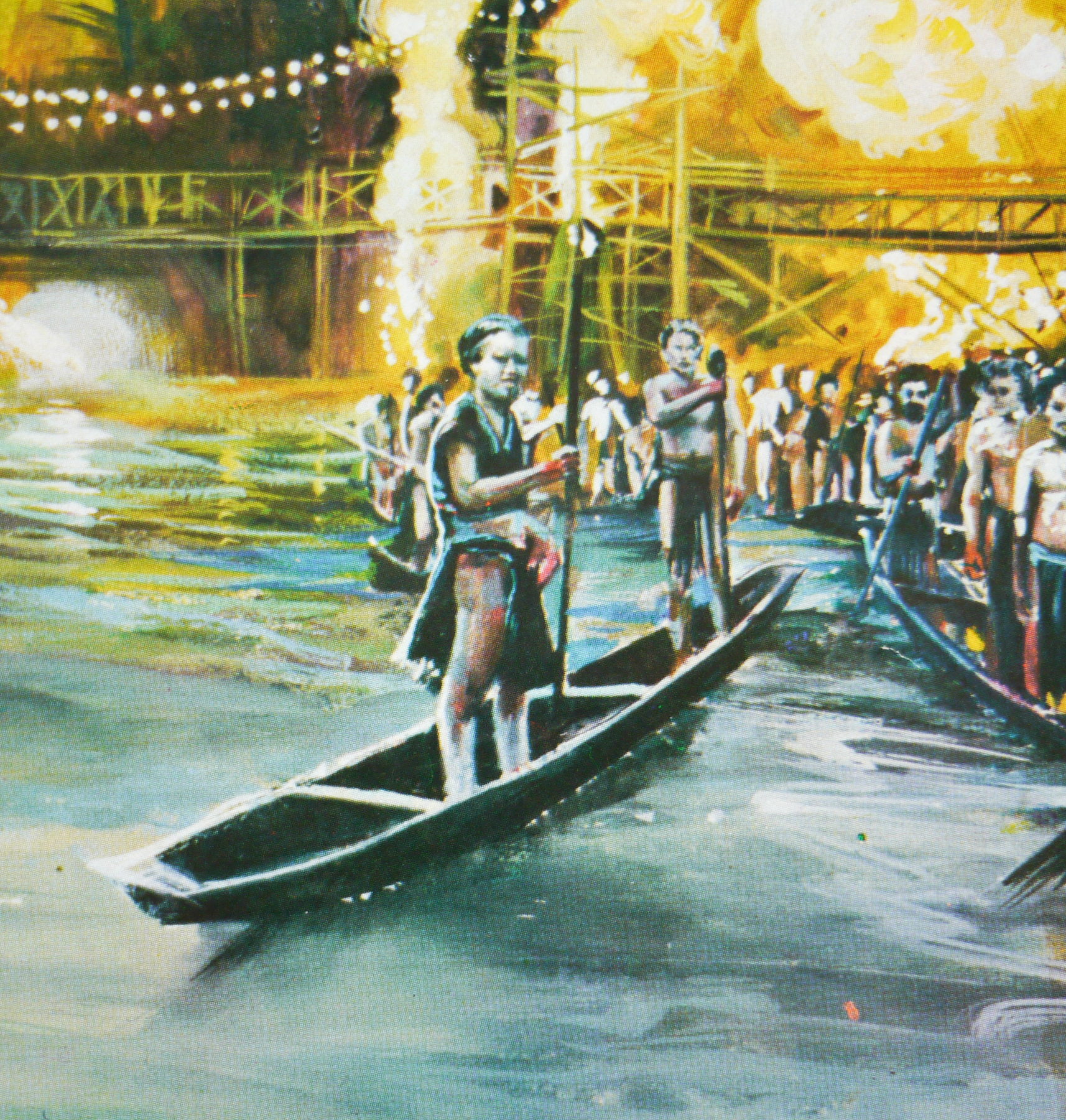
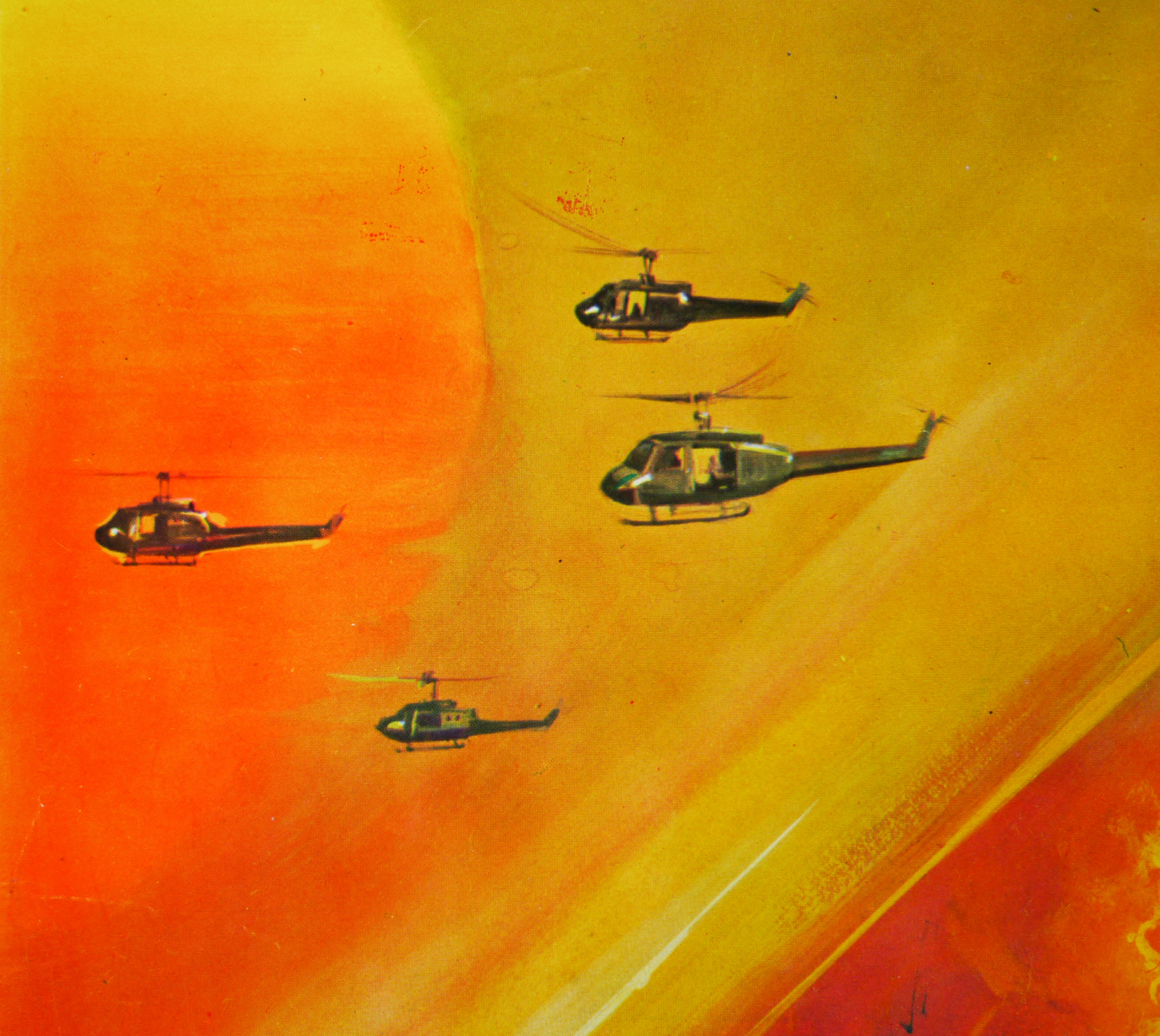
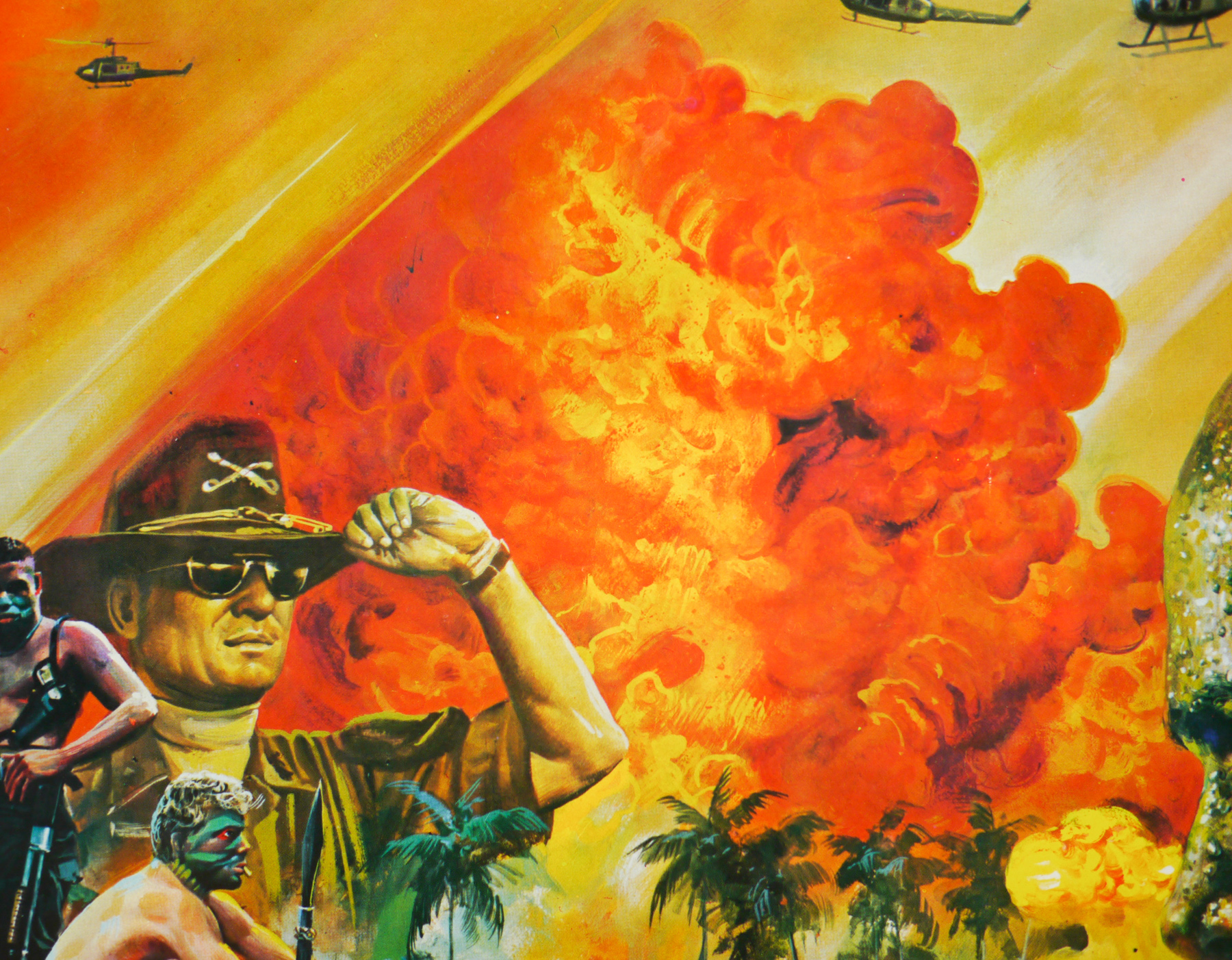
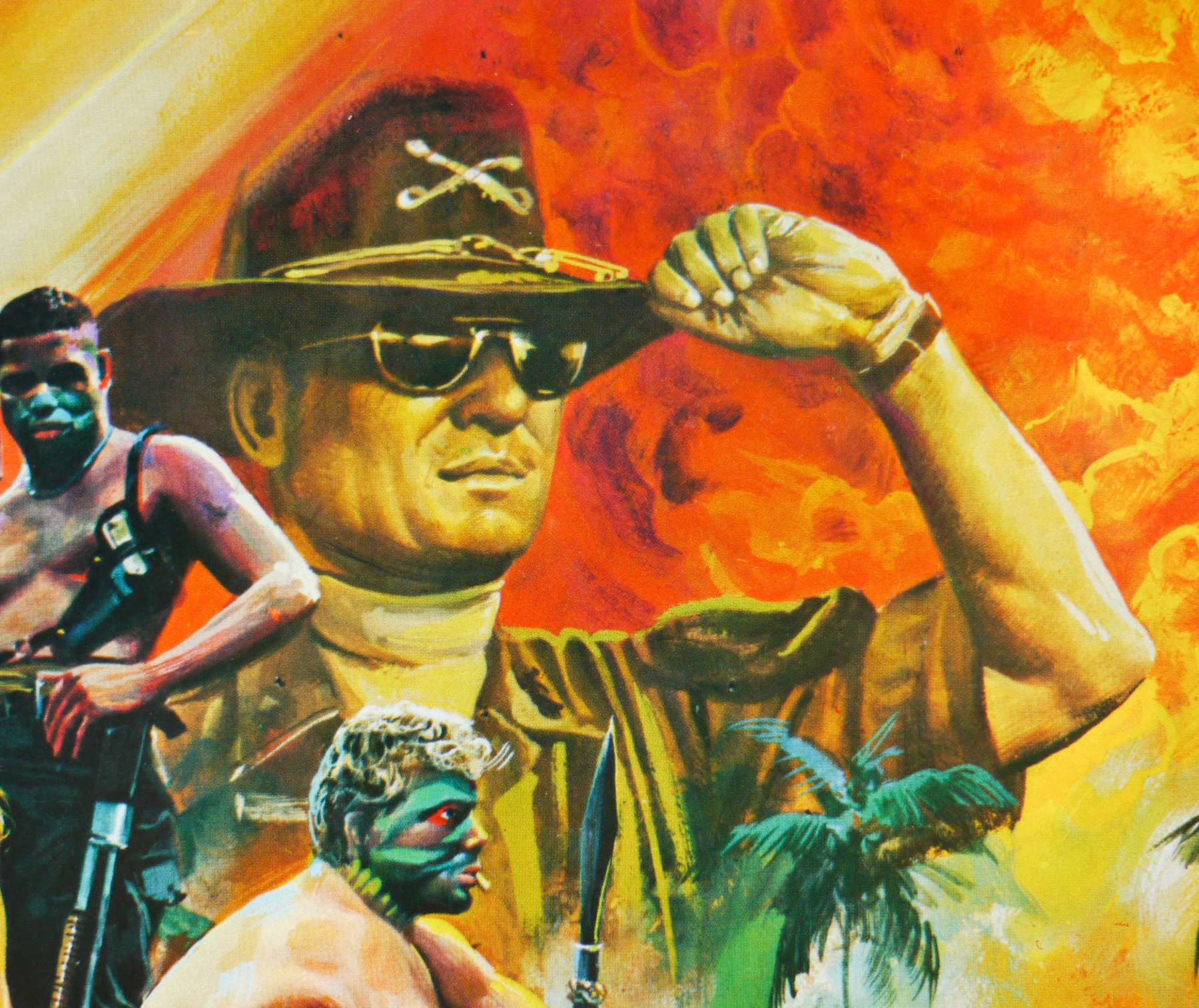
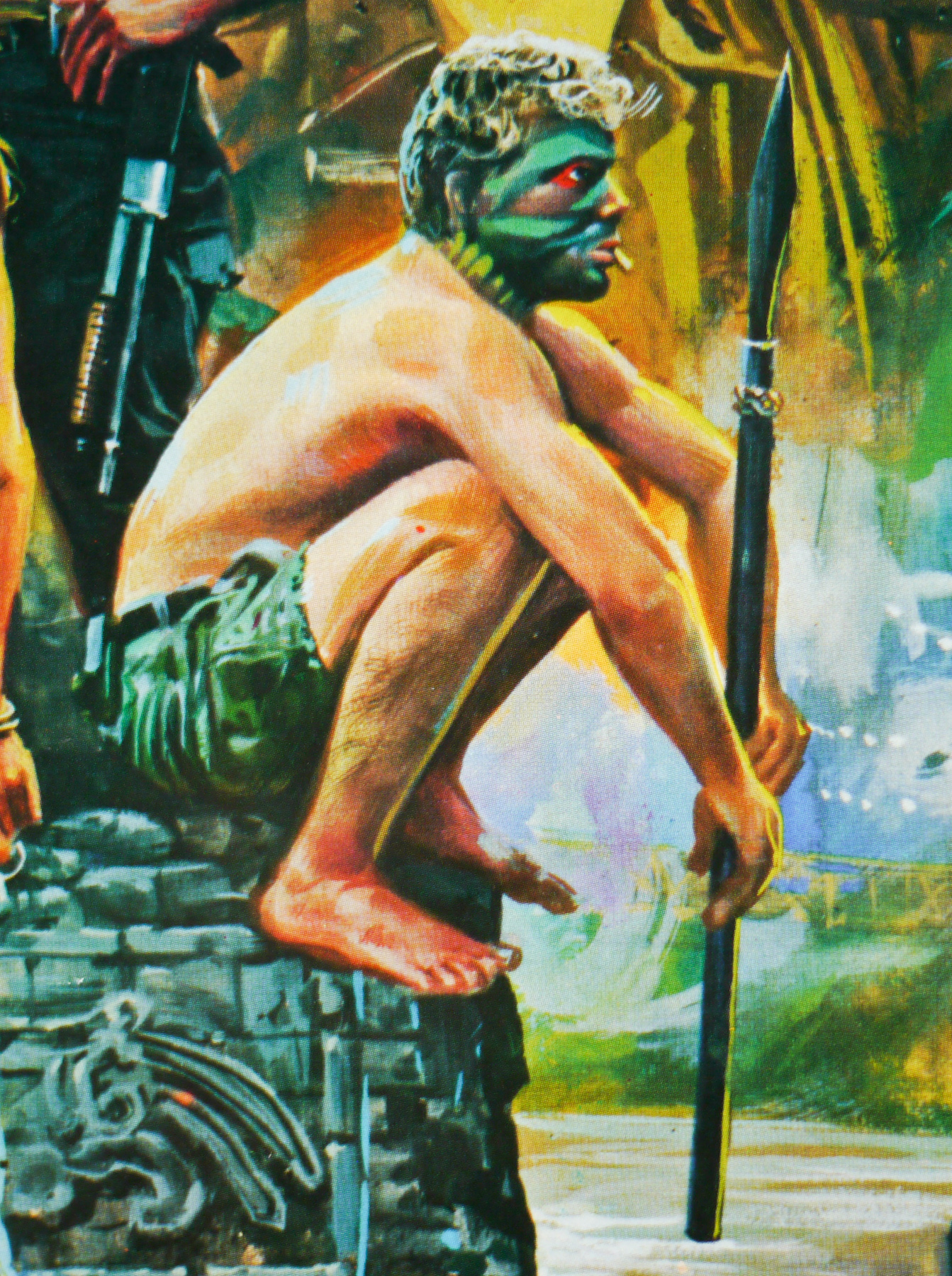
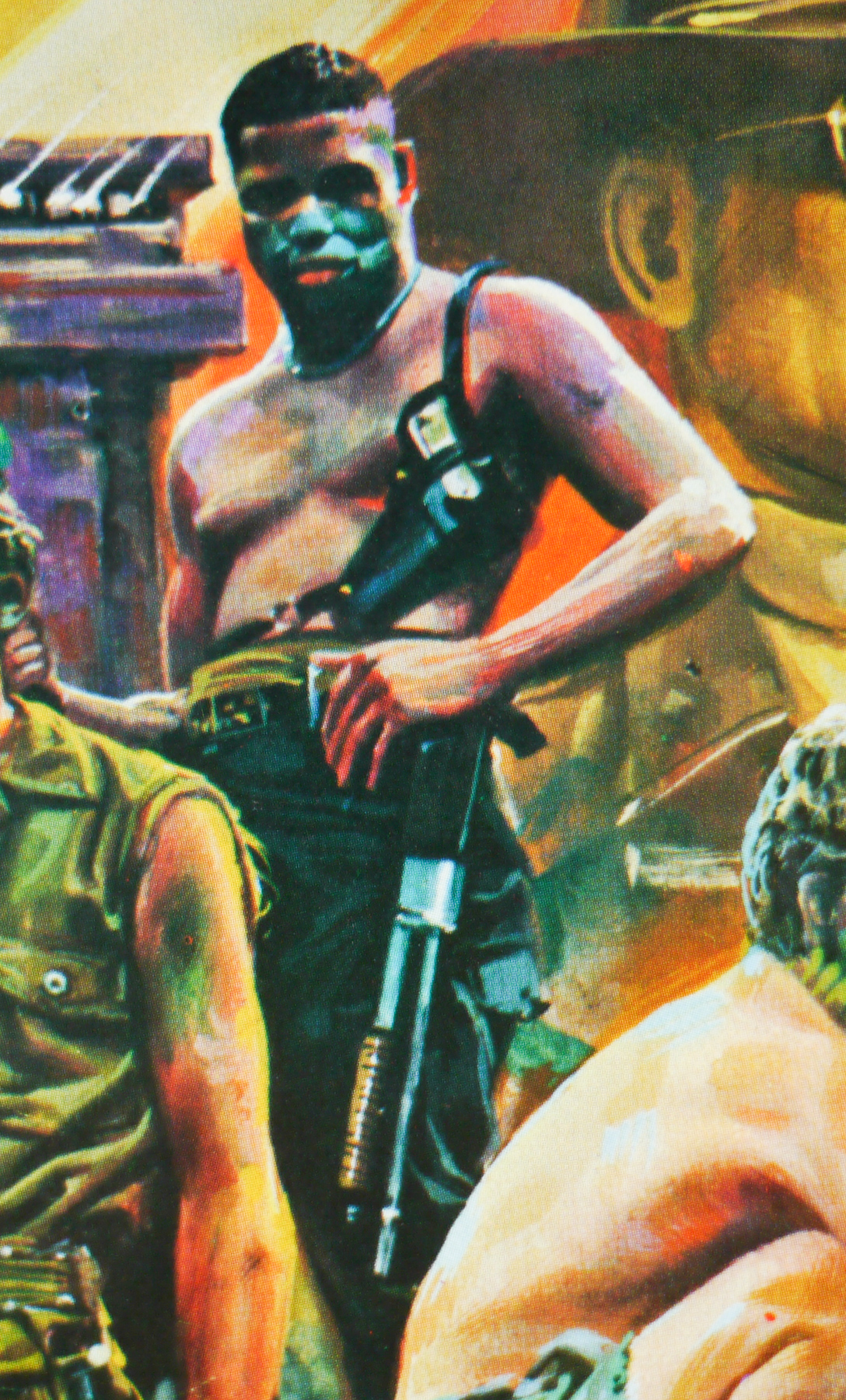
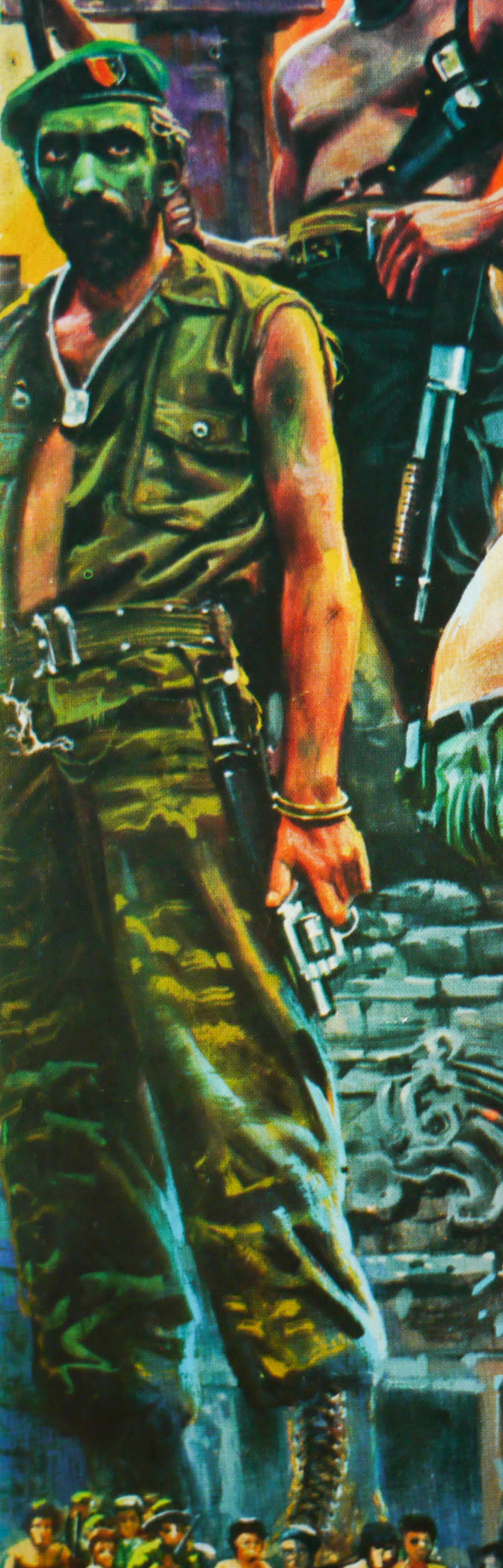
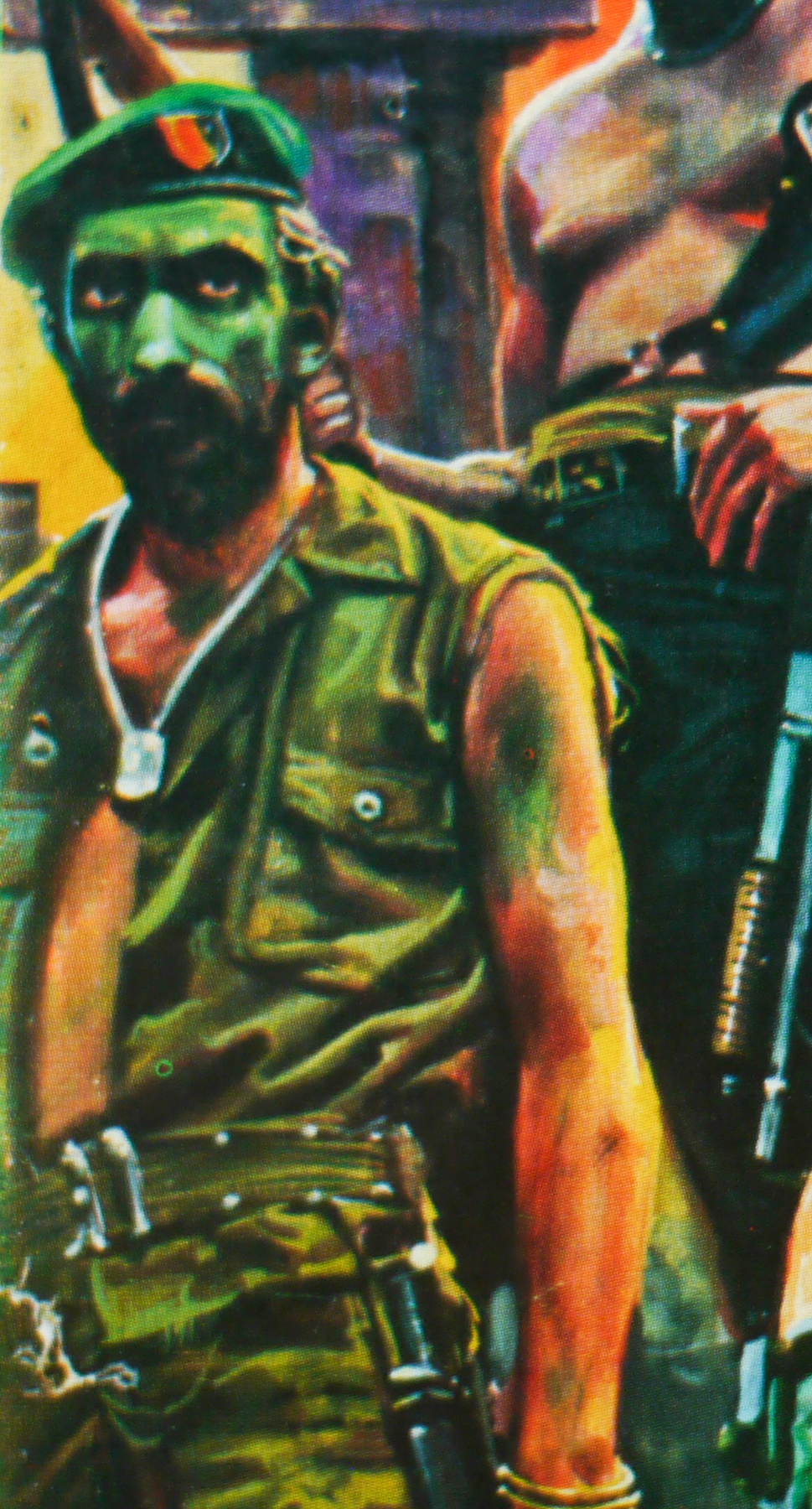
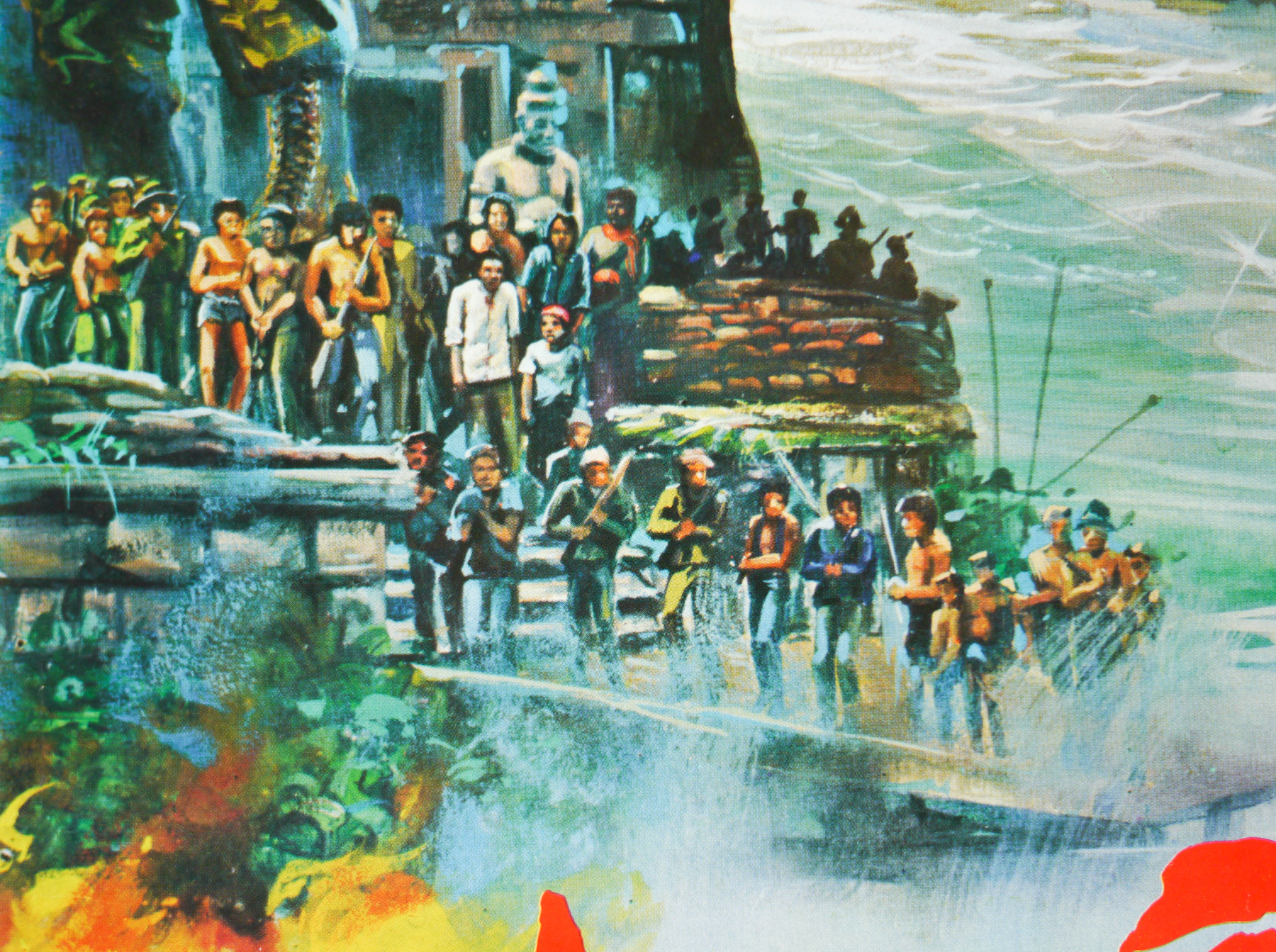
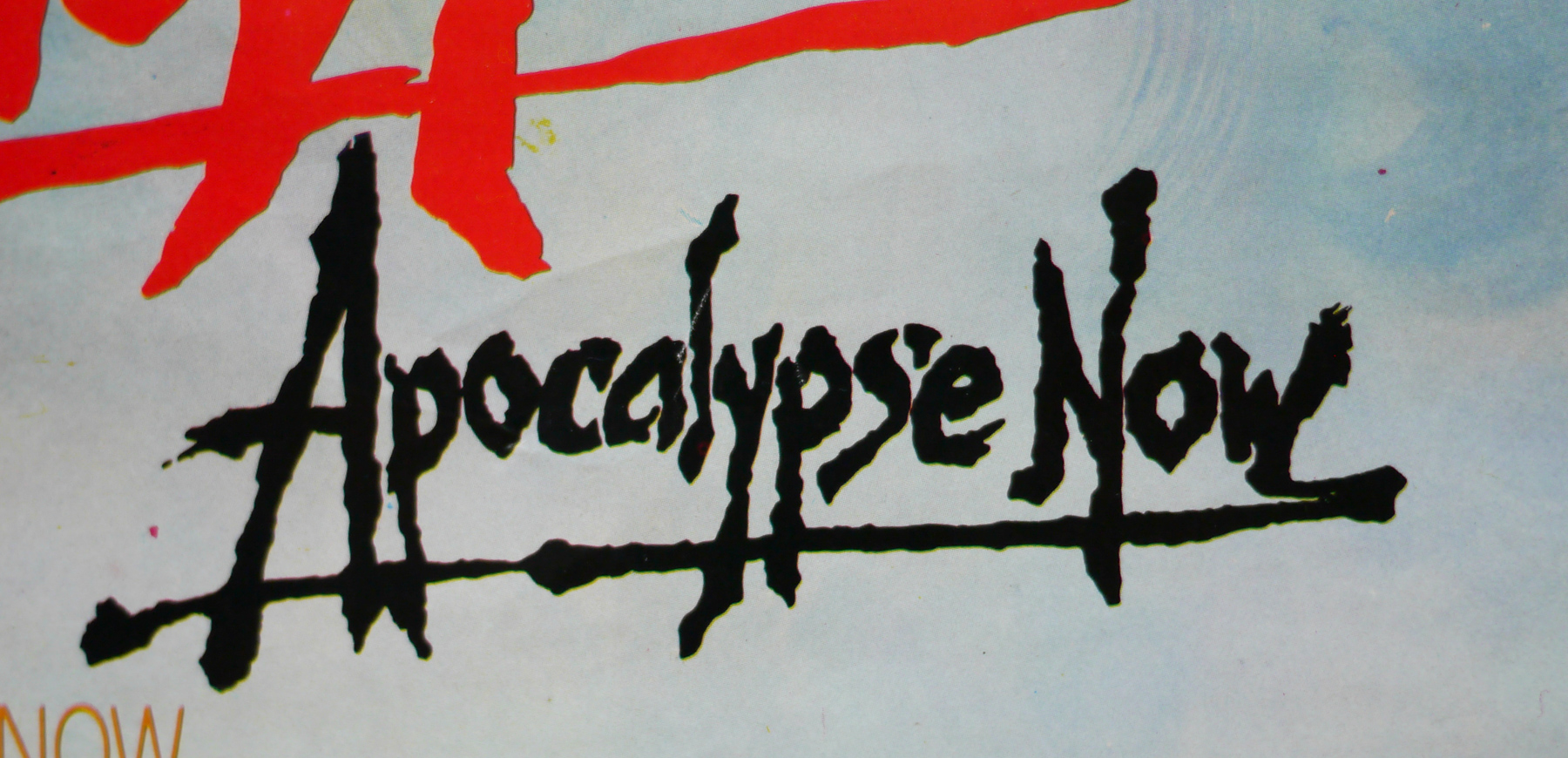
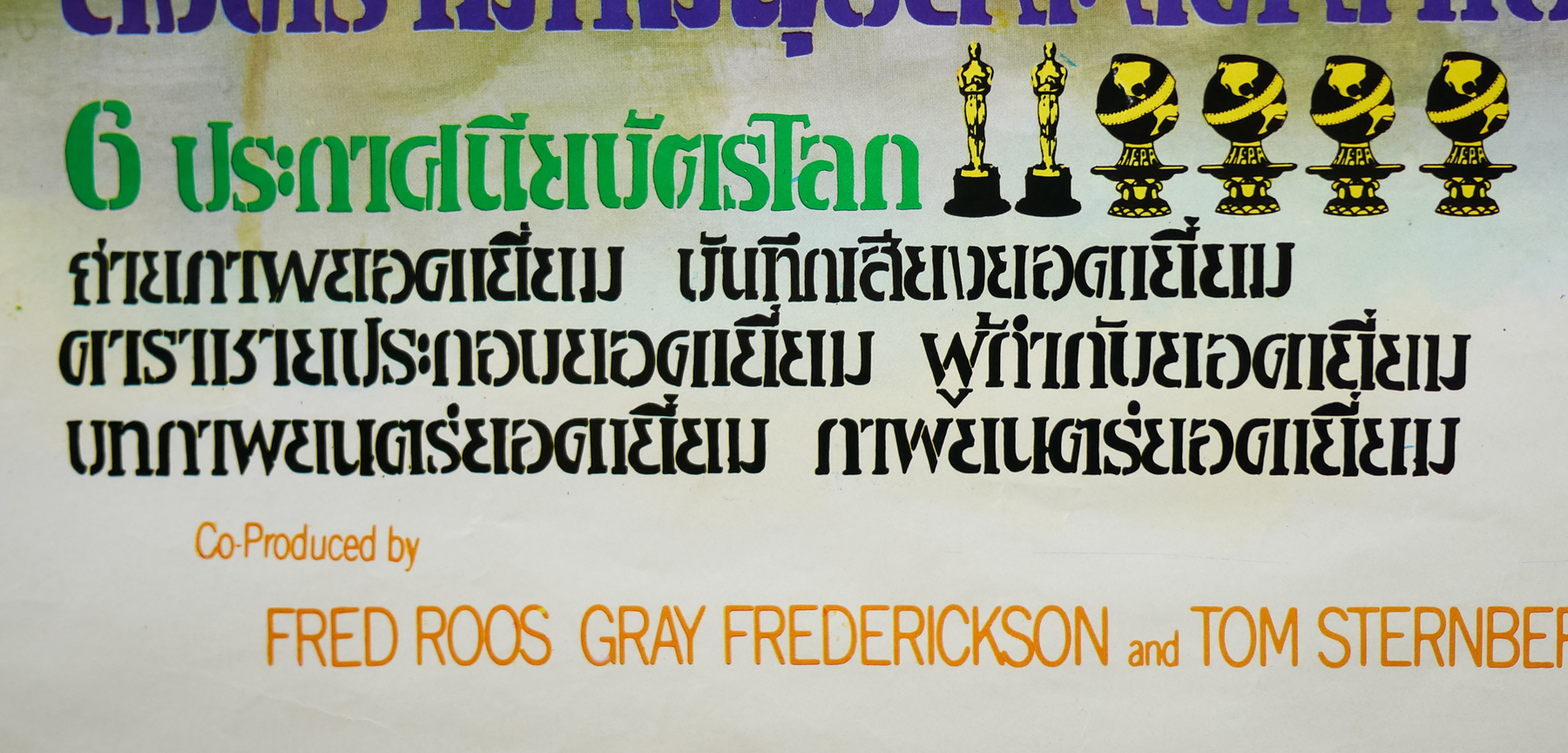
This is the very scarce original 2-sheet poster for the Thai release of arguably the best war film ever made, Francis Ford Coppola’s Apocalypse Now.  Set during America’s war in Vietnam, the film follows Martin Sheen’s US Army Army and special forces veteran Benjamin Willard as he journeys up the dangerous Nung River and deeper into the jungle in the search of the rogue Special Forces Colonel Walter E. Kurtz (Marlon Brando in an unforgettable role). Willard is told that an insane Kurtz has gathered together an army of indigenous fighters inside neutral Cambodia and that he must ‘terminate with extreme prejudice’. After landing at the mouth of the river in a spectacular sequence in which Colonel Kilgore (Robert Duvall) first attacks an enemy village from helicopters whilst blasting Wagner’s Ride of the Valkyries from loudspeakers, then orders some of his men to surf despite the fact that mortar shells continue to land all around them, Willard  joins the crew of a Navy PBR boat that transports him on his fateful journey up river.

Apocalypse Now is famous for its fraught production in which the shoot went over time and over budget, sets were destroyed by storms, Martin Sheen suffered a heart attack and other woes that caused Coppola to famously say, “We had access to too much money, too much equipment, and little by little we went insane”, and “My film is not about Vietnam, it is Vietnam”. The director’s wife Eleanor helped to put together the acclaimed documentary of the troubled production called Hearts of Darkness: A Filmmaker’s Apocalypse, which is an essential watch for fans of the film. Despite the production woes, the film was a huge critical and commercial success, with its cultural impact undeniable.

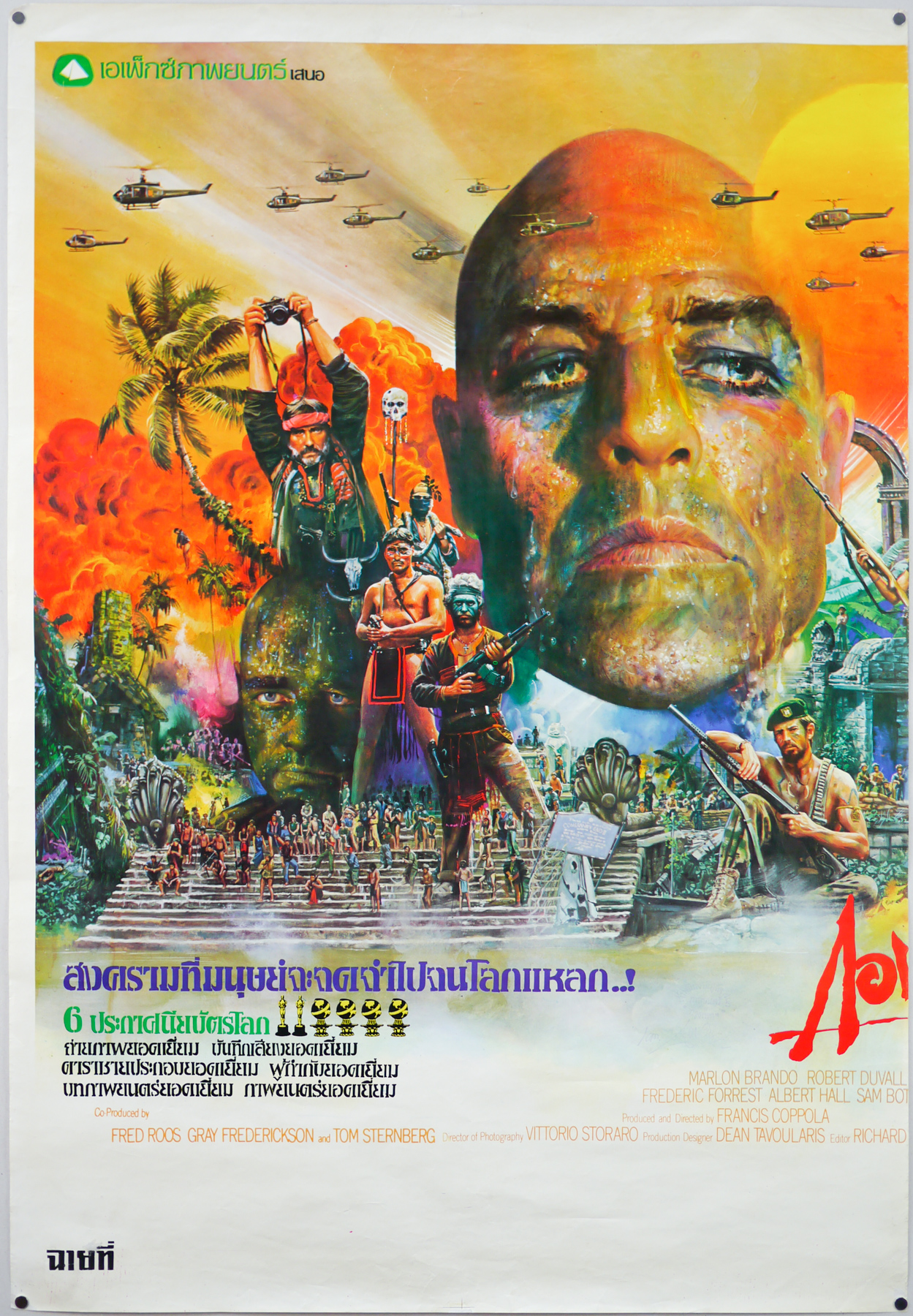
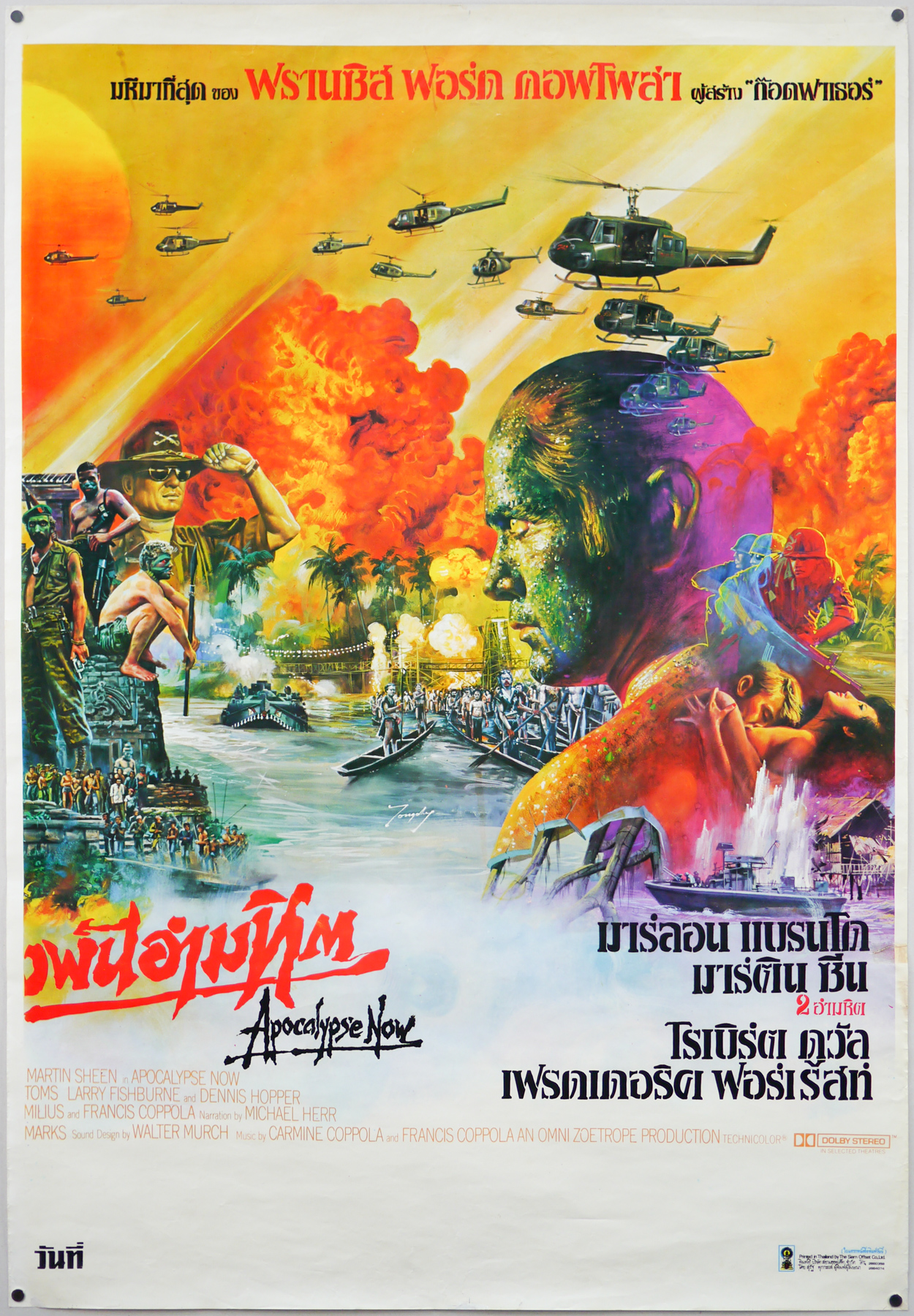
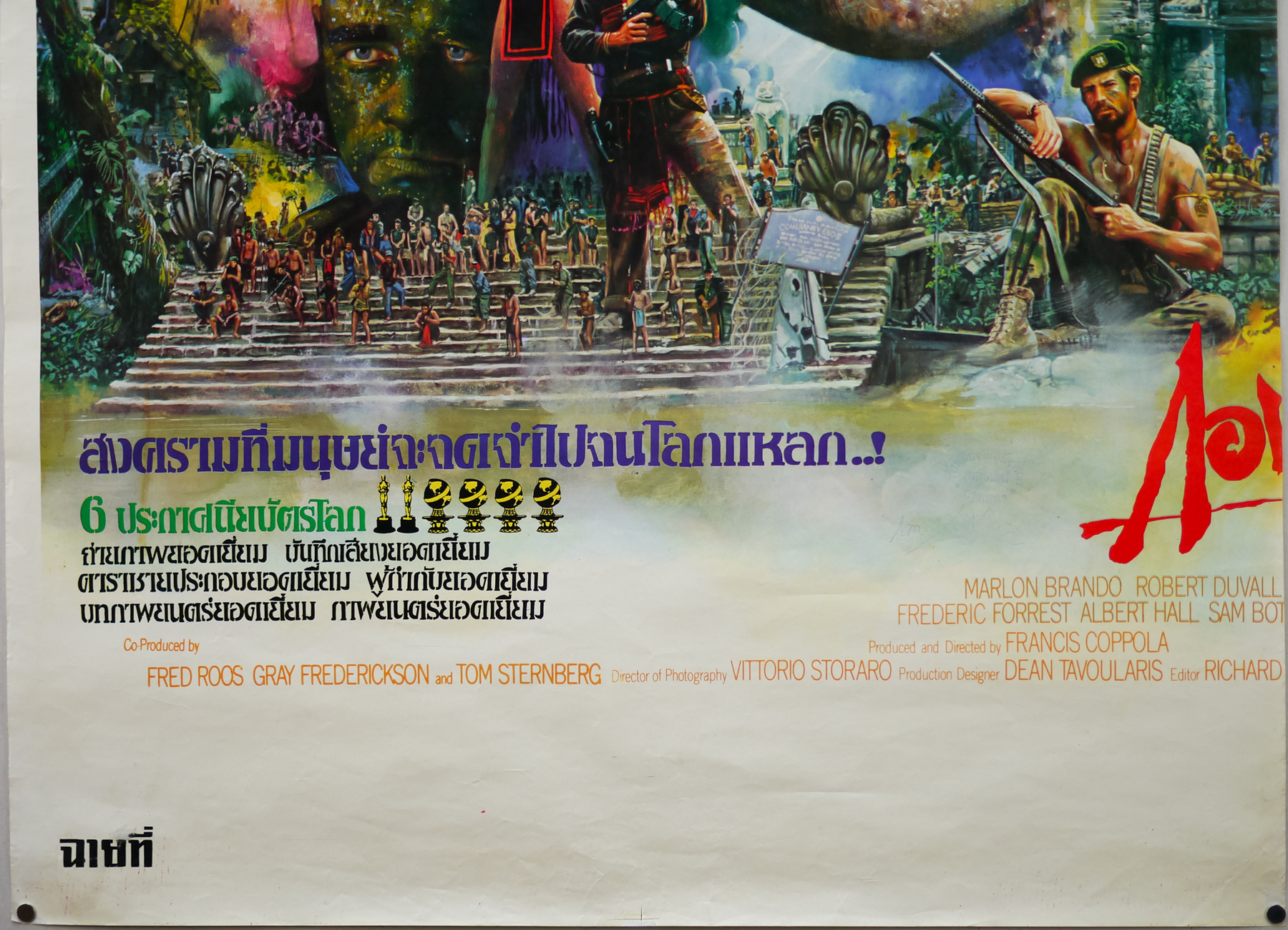
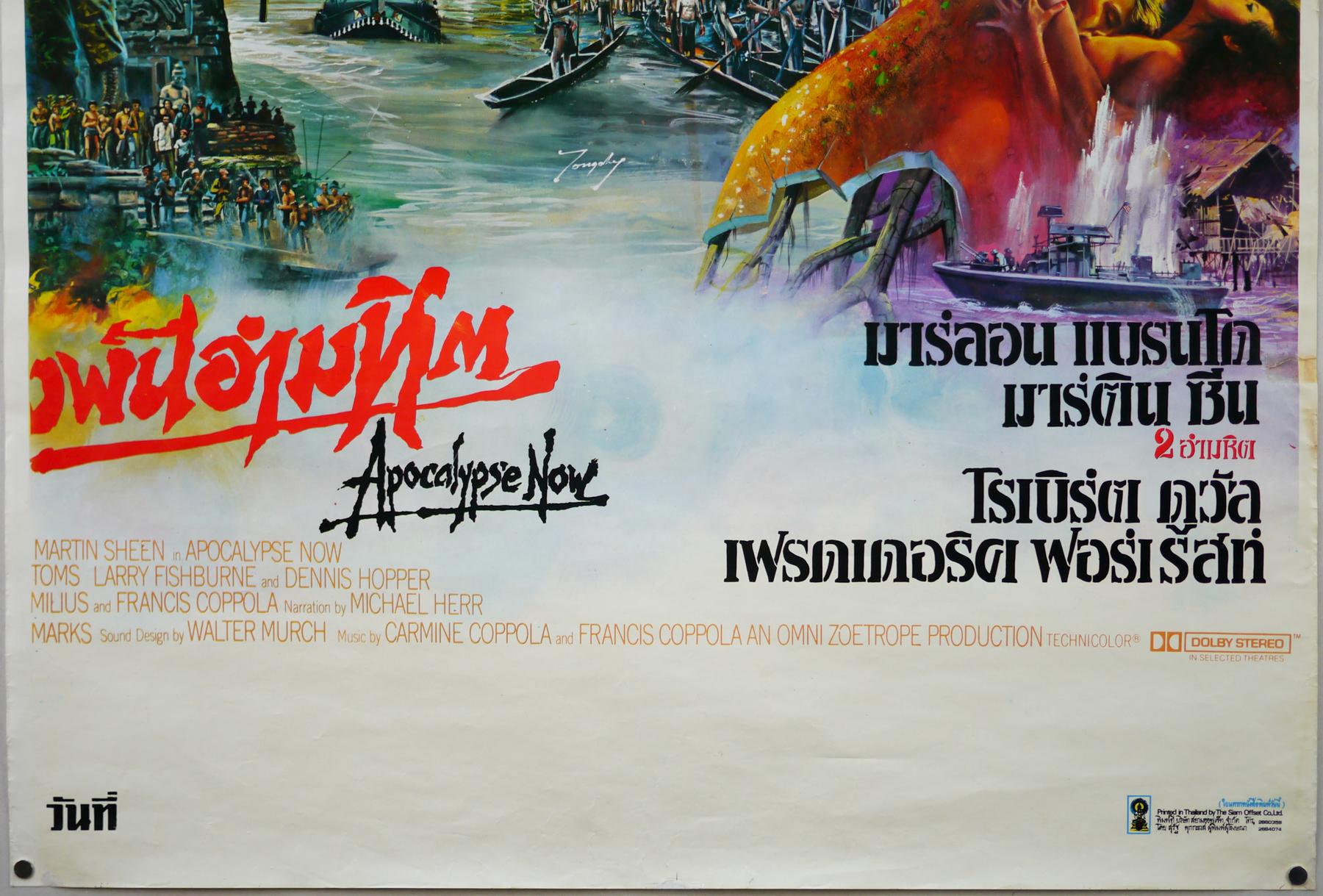
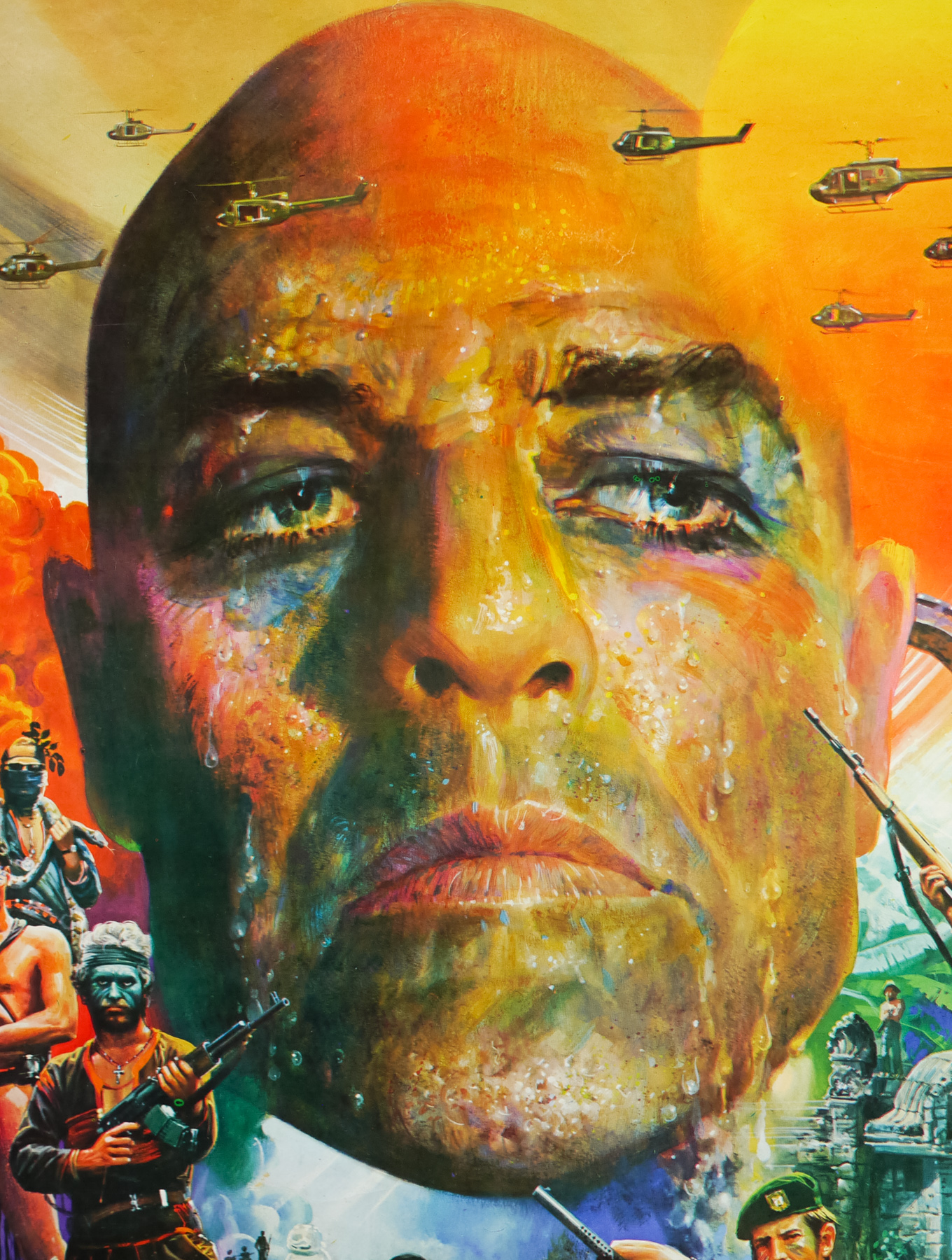
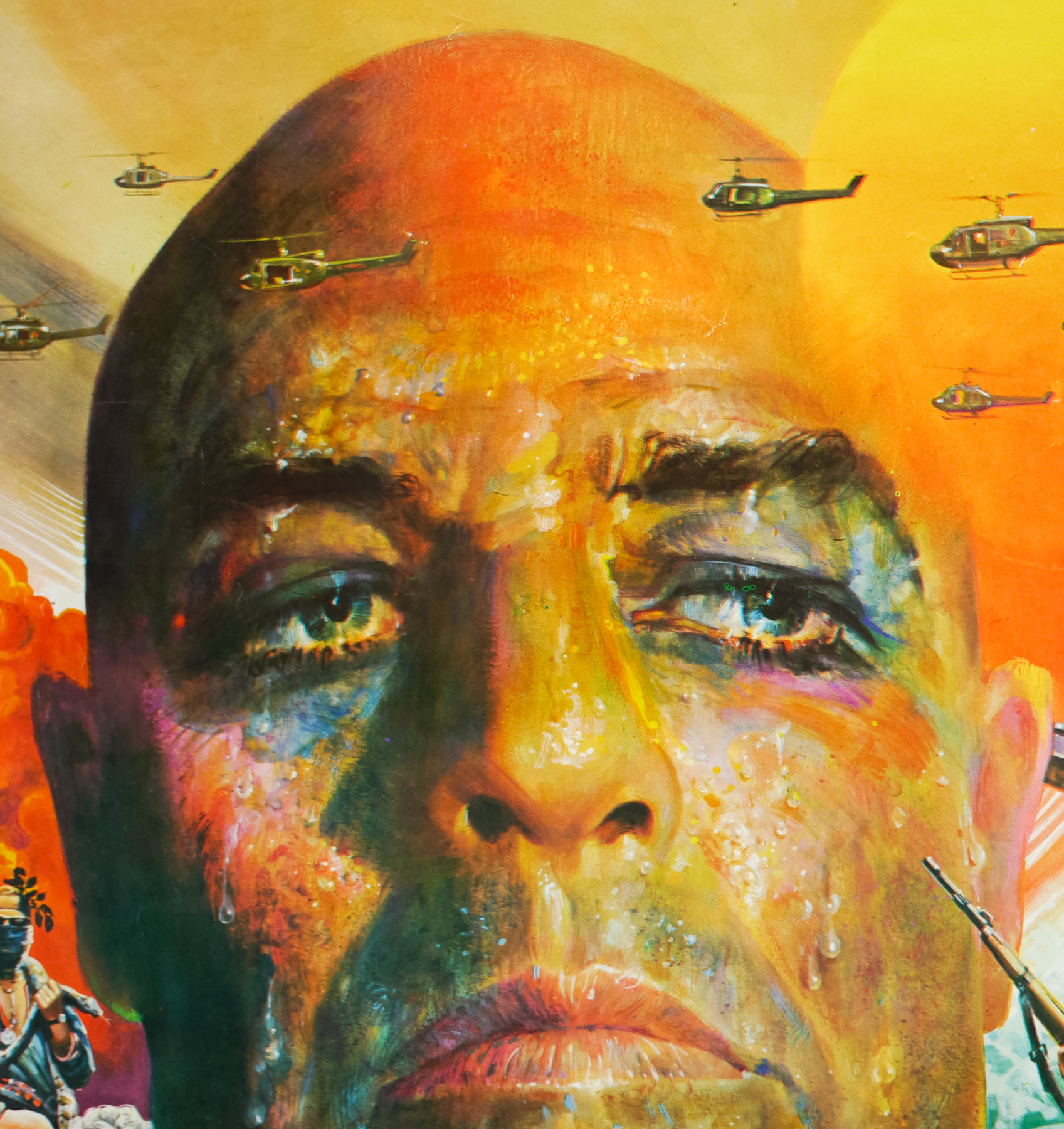
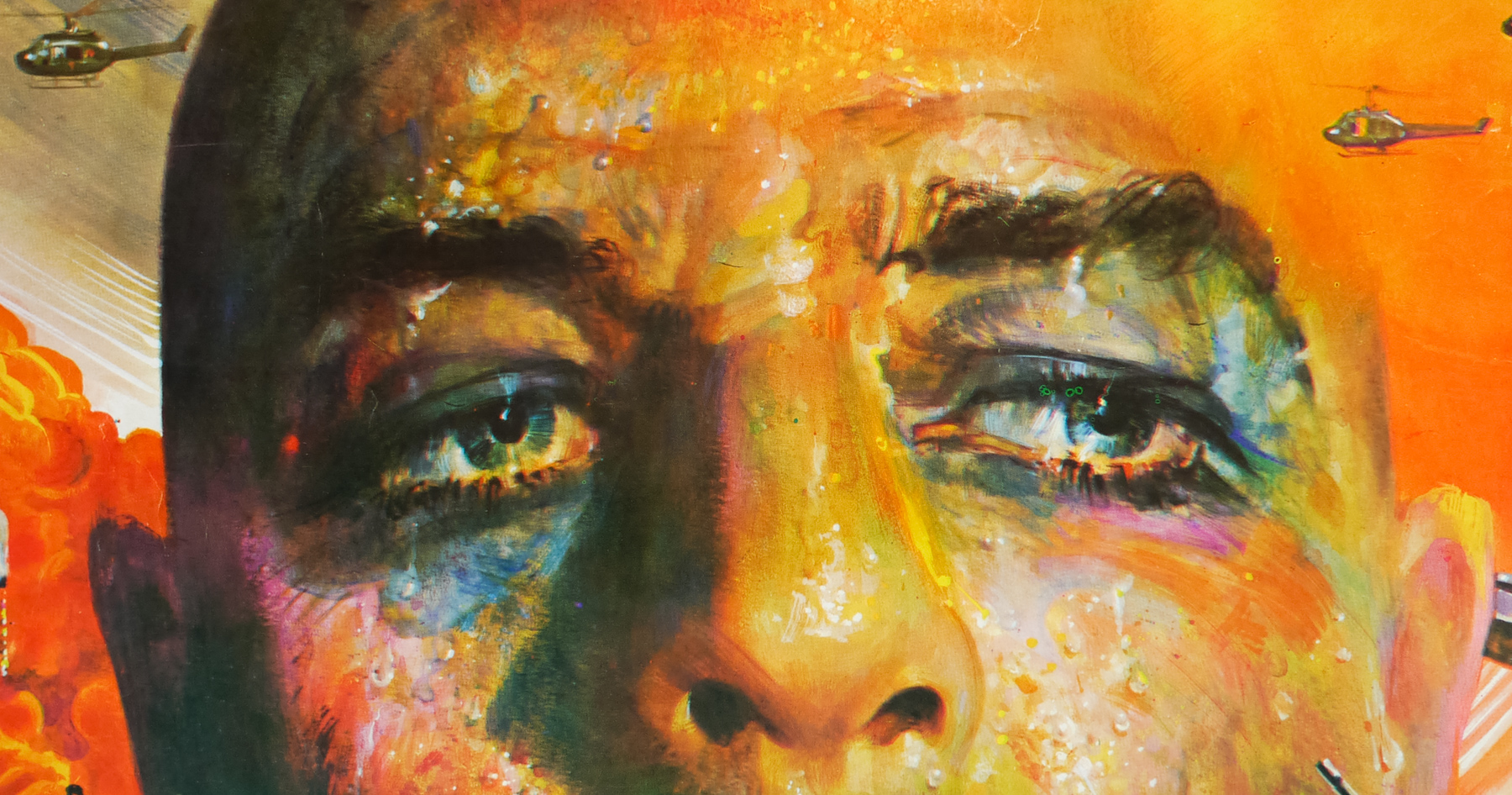
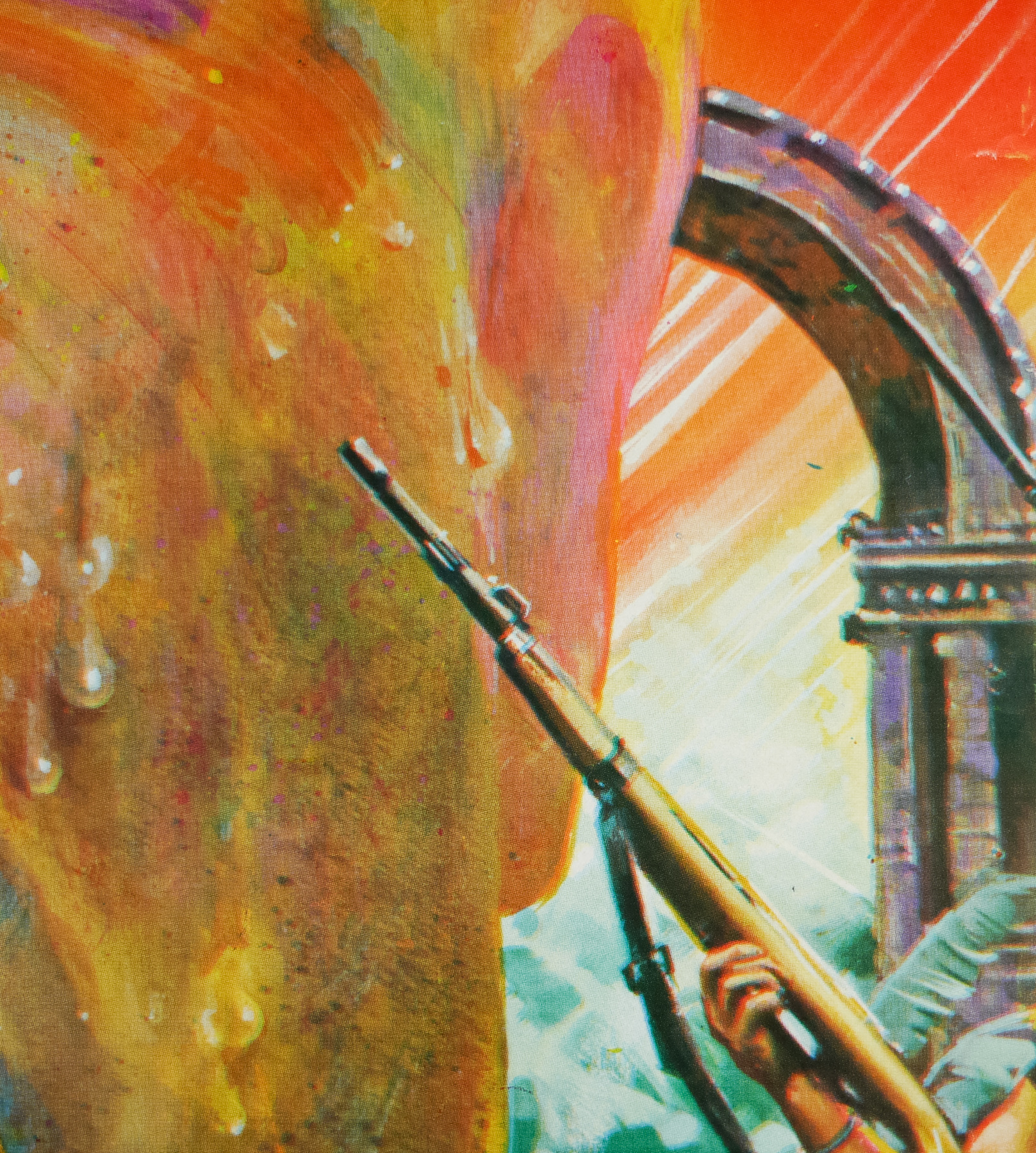
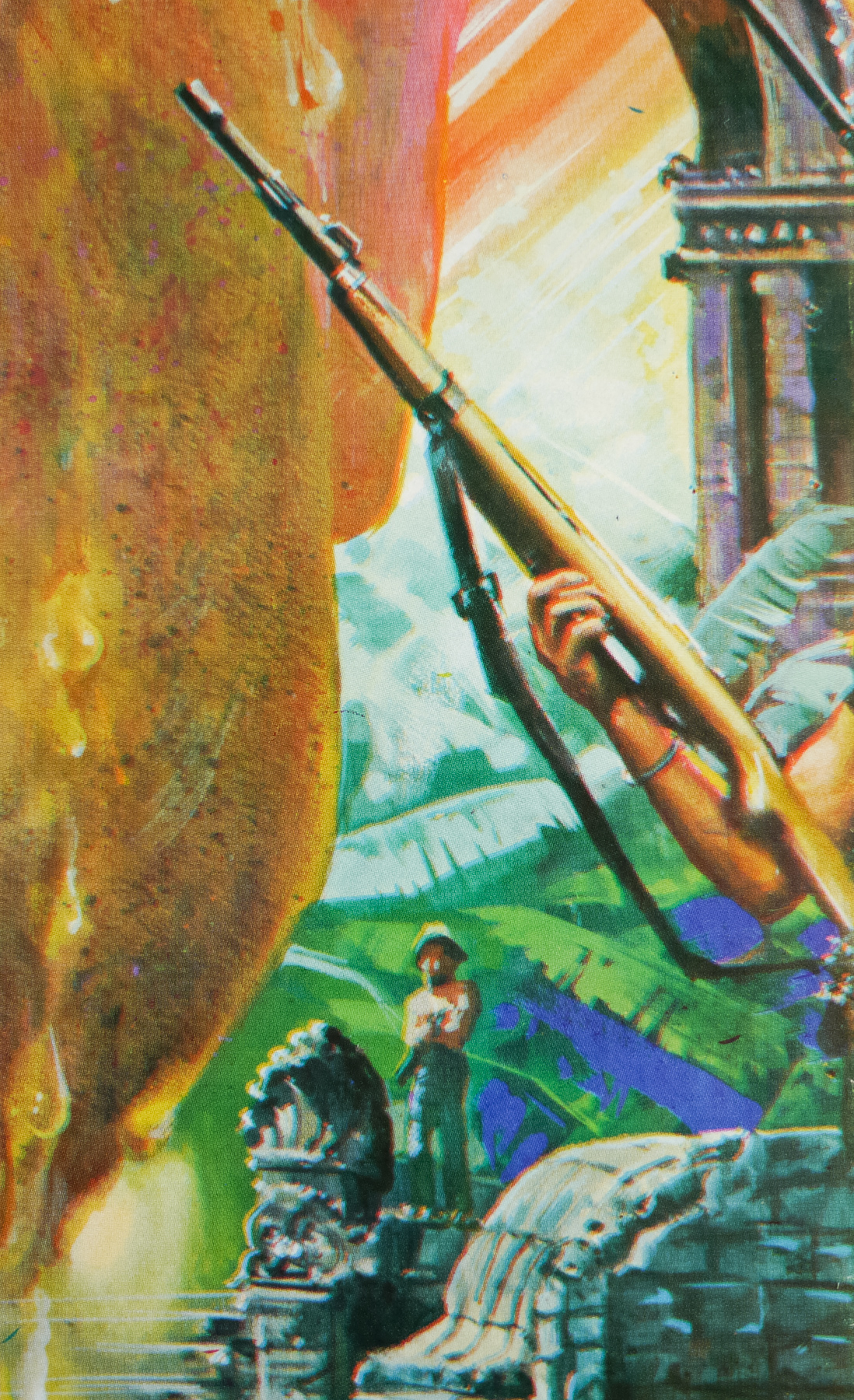
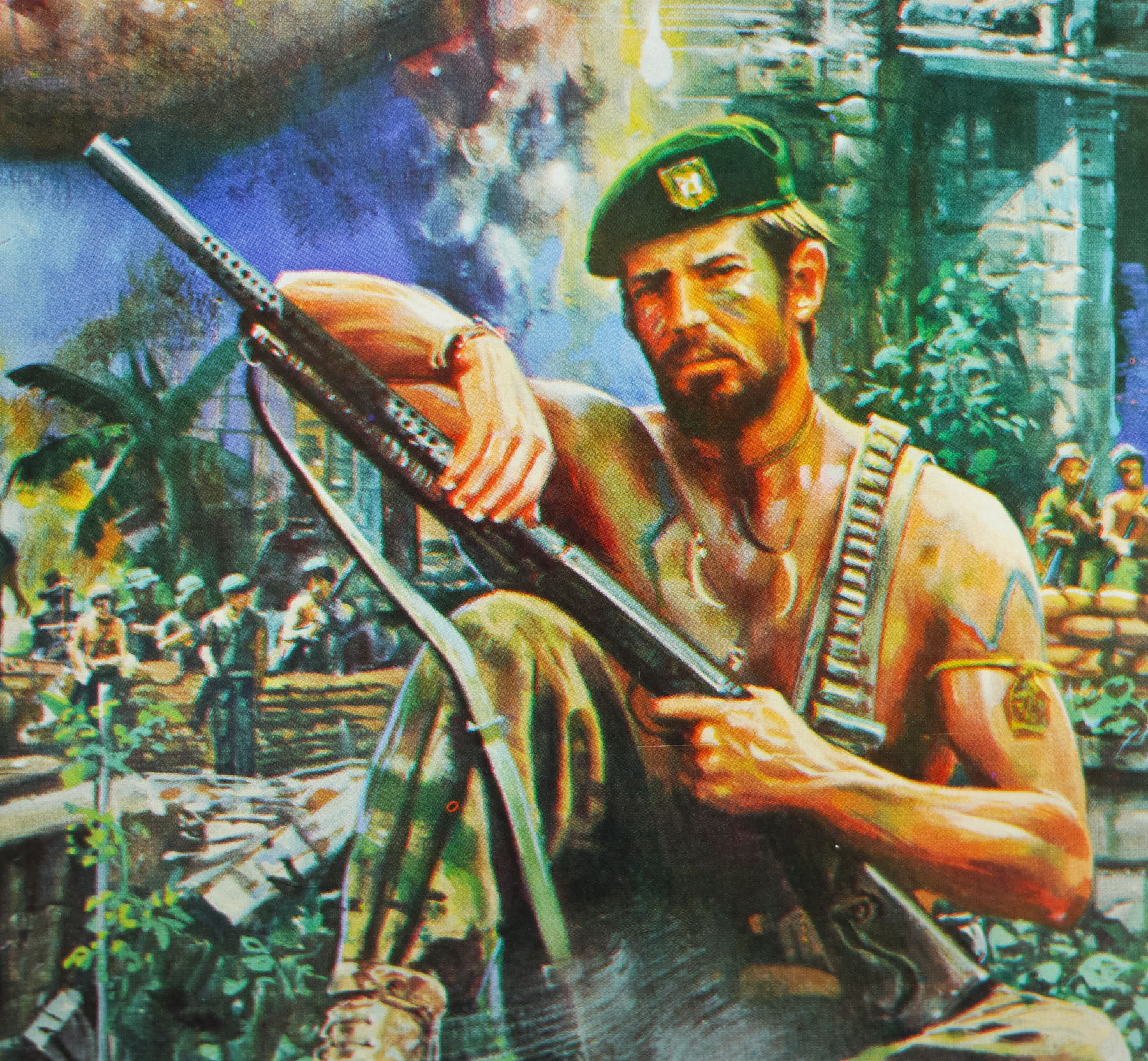
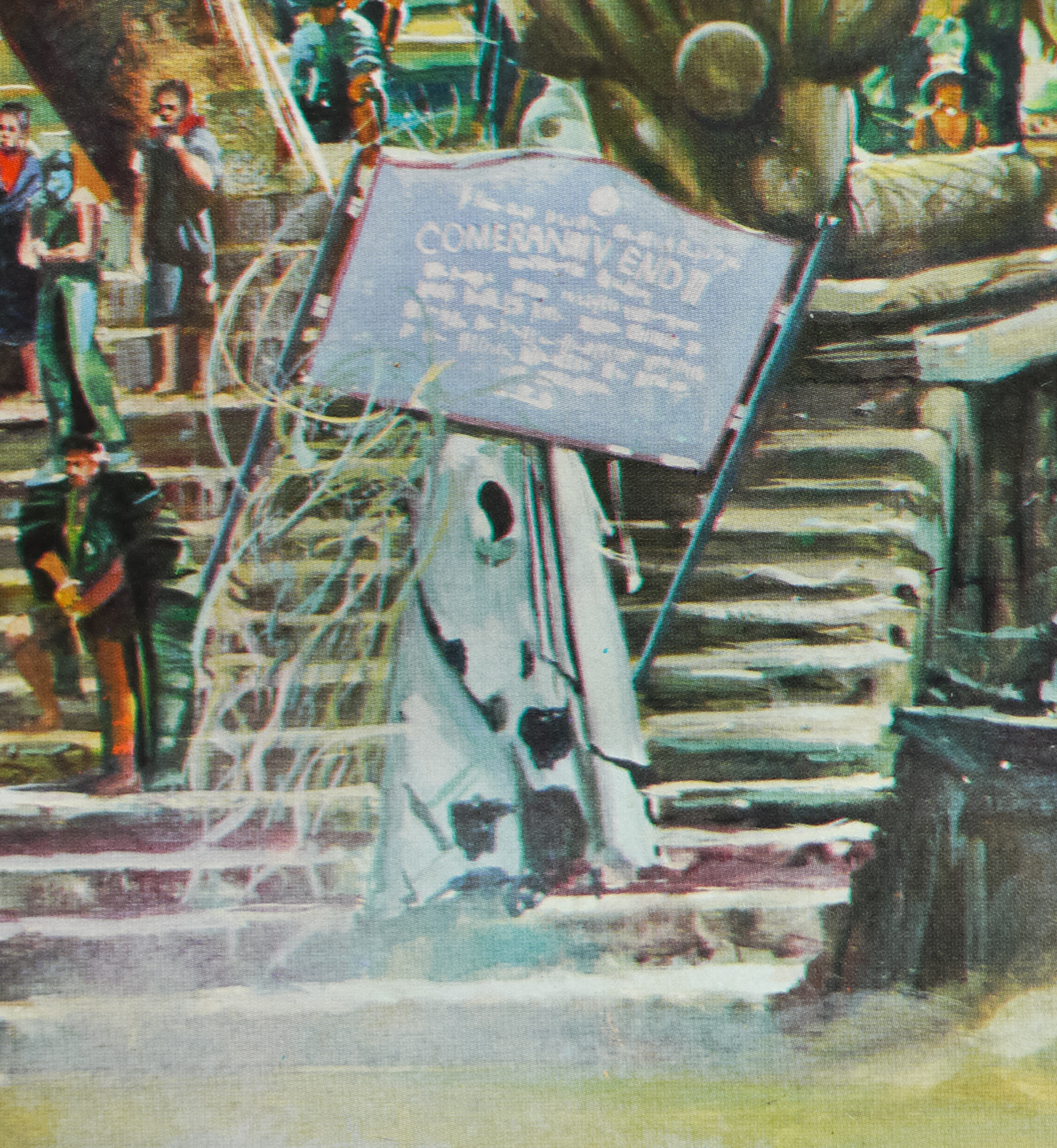
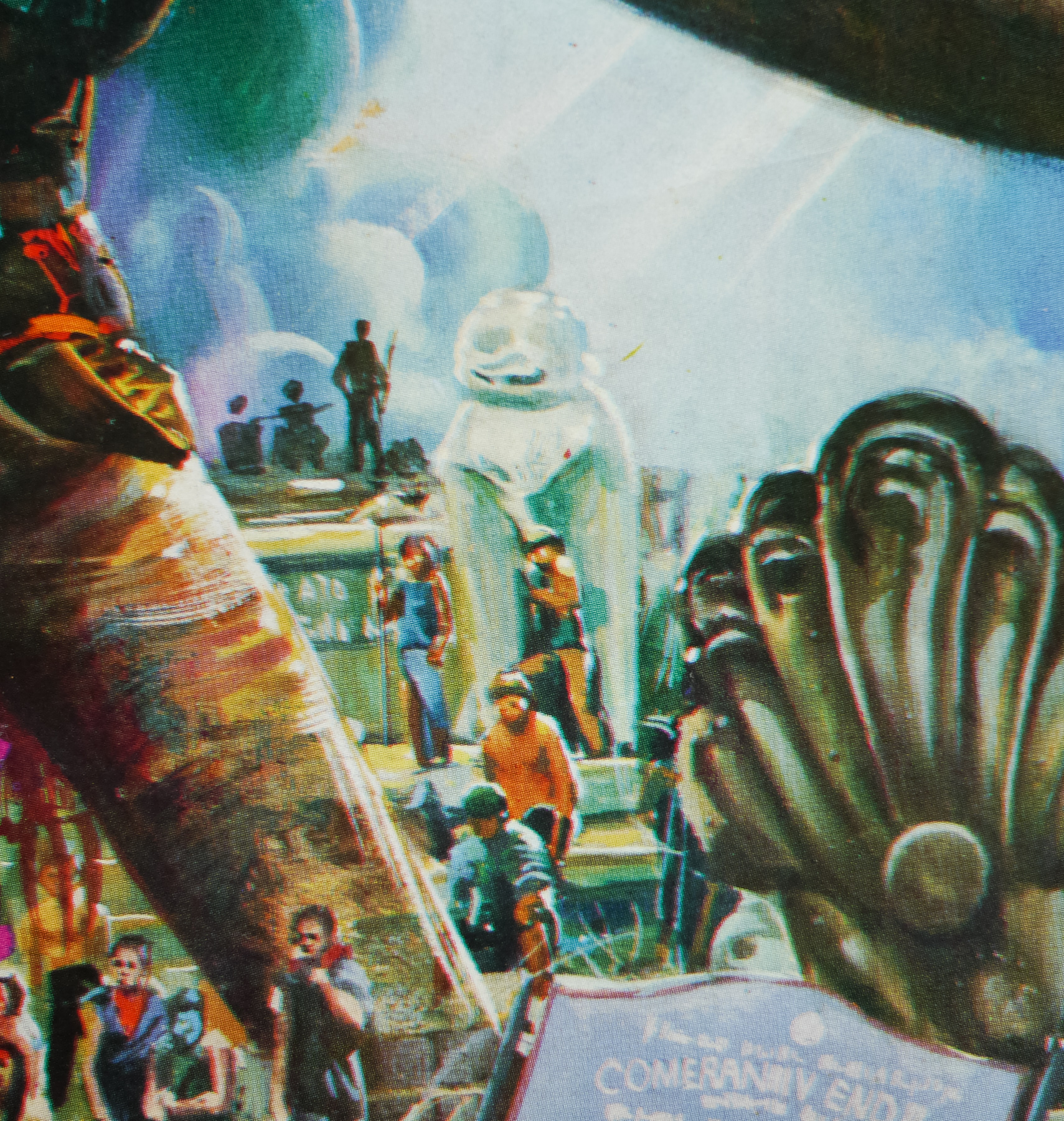
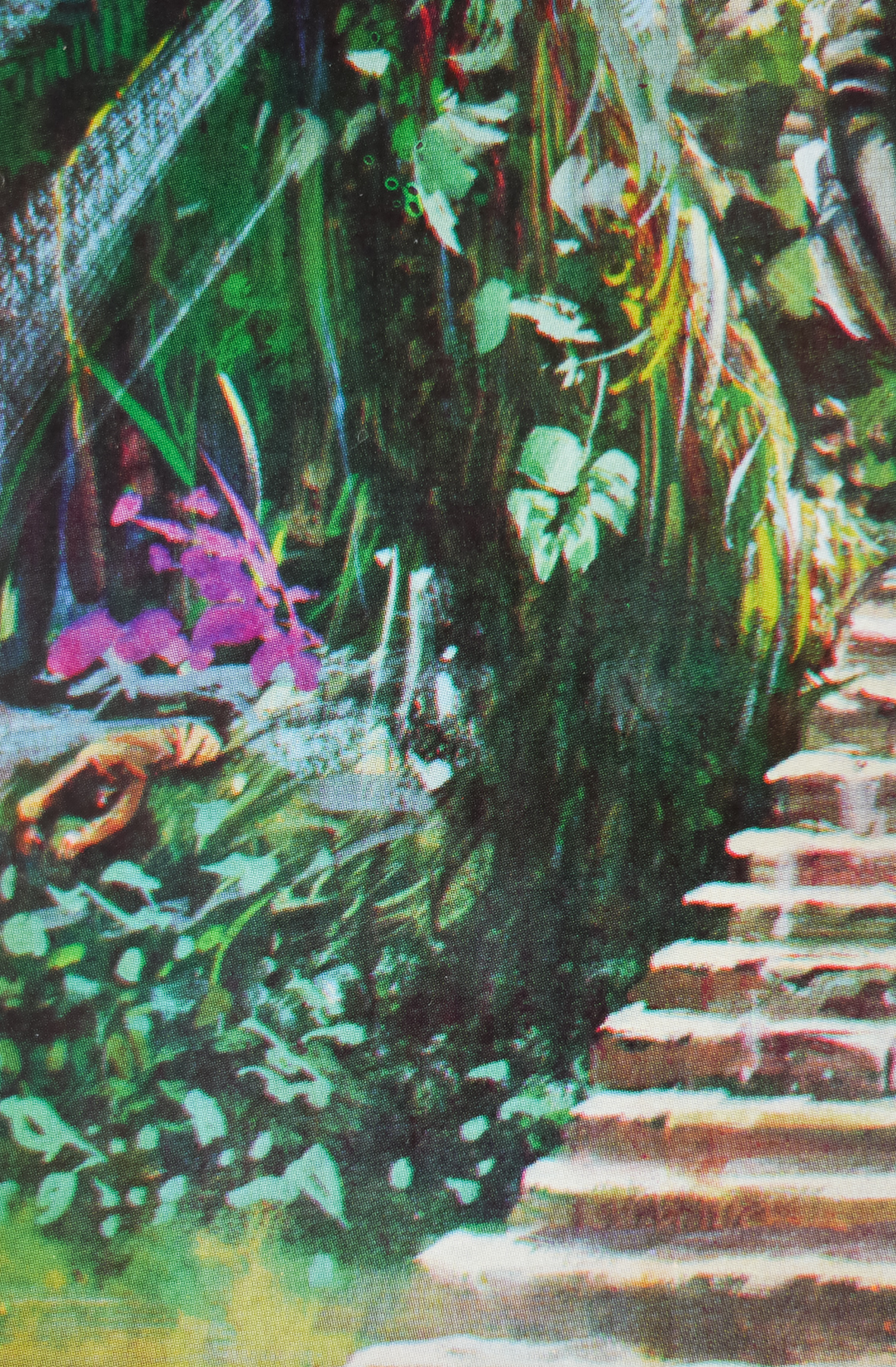
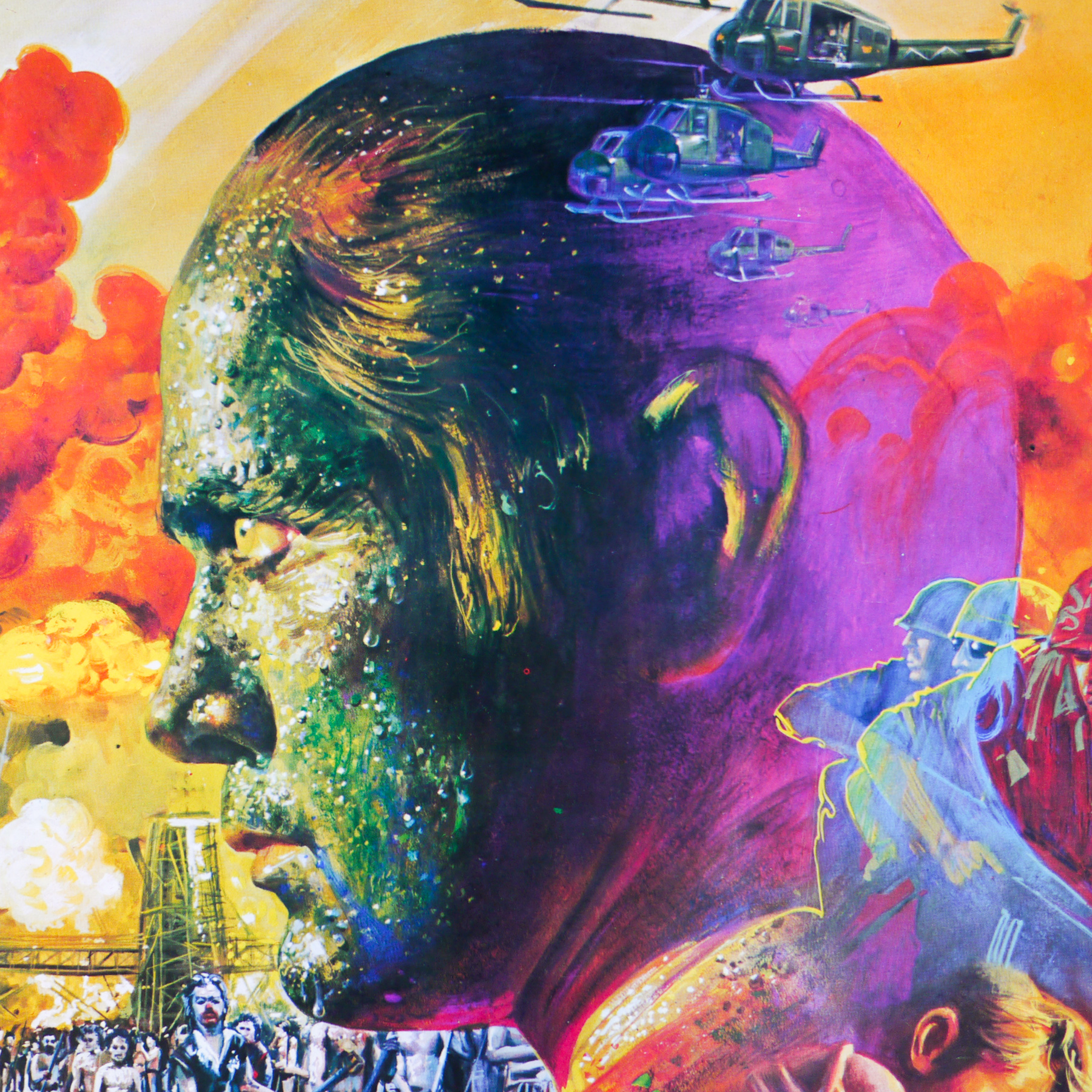
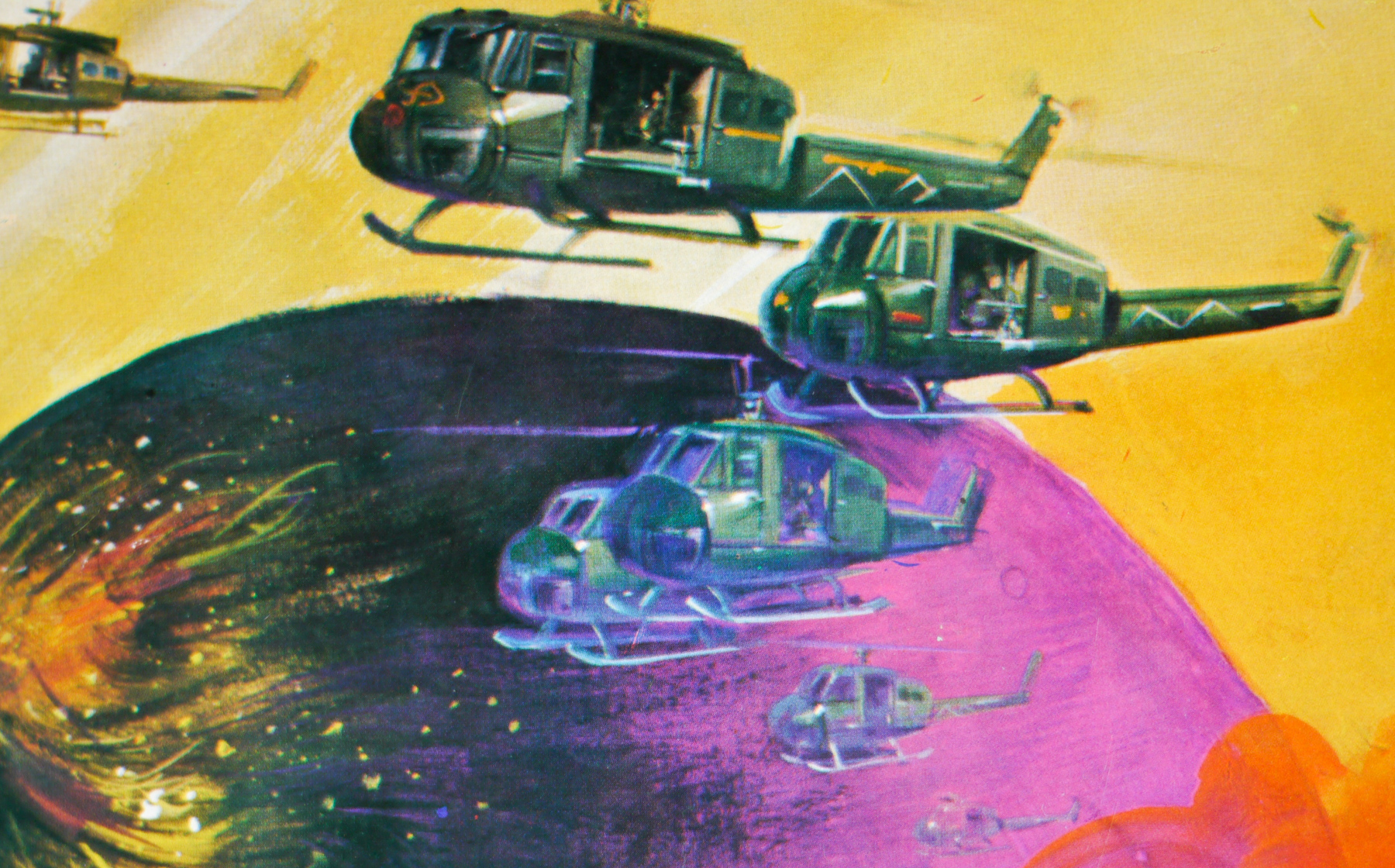
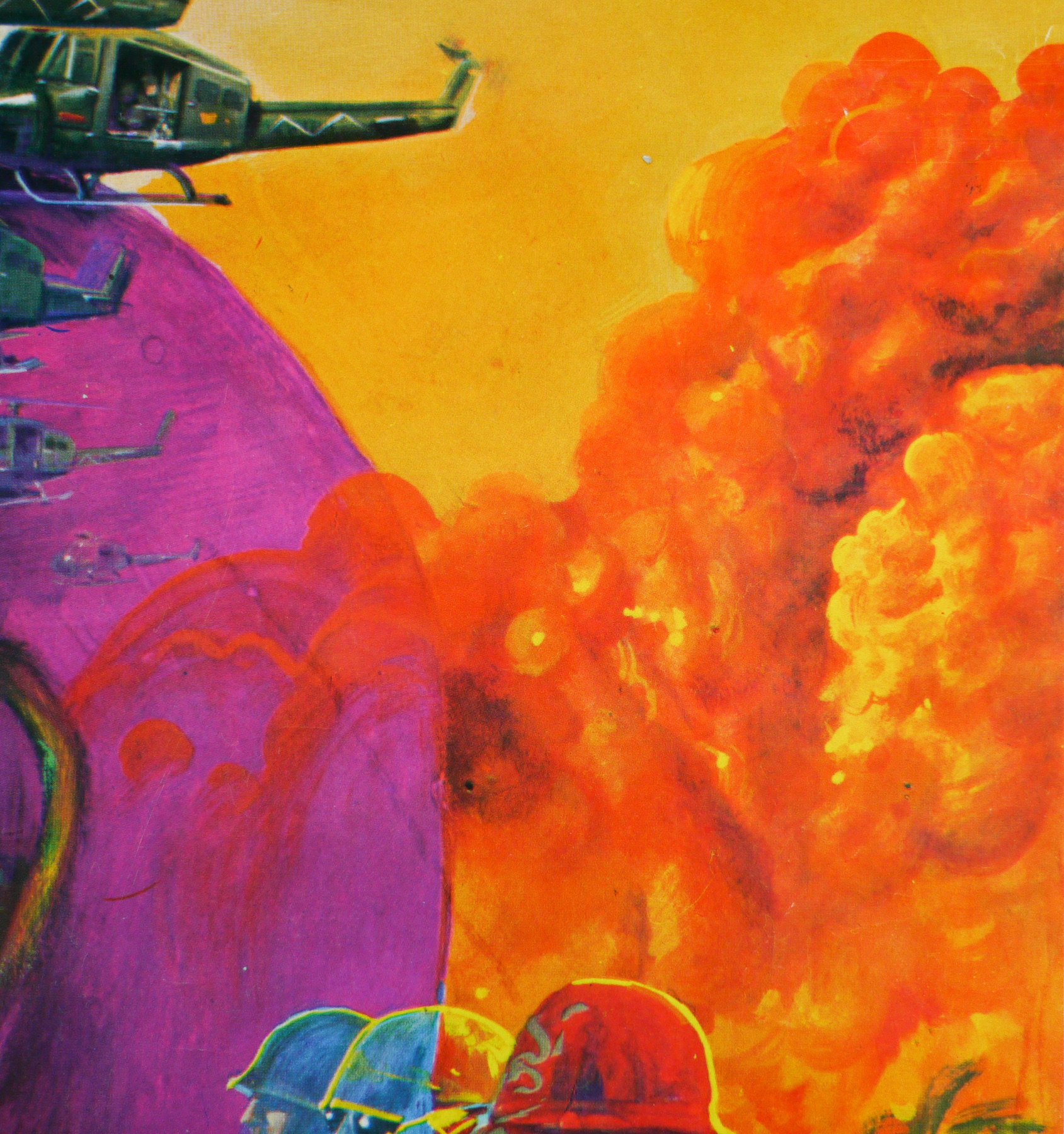
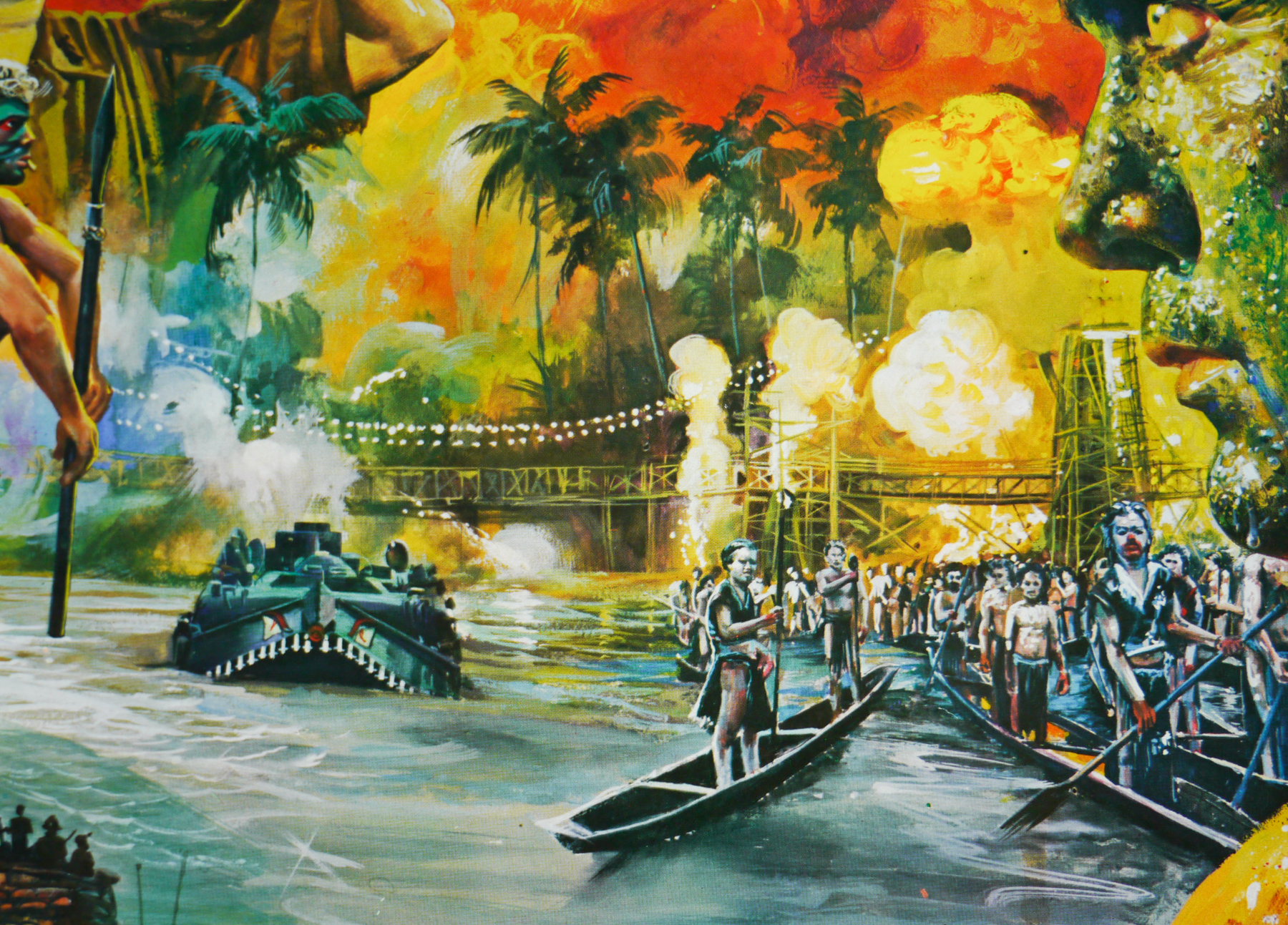
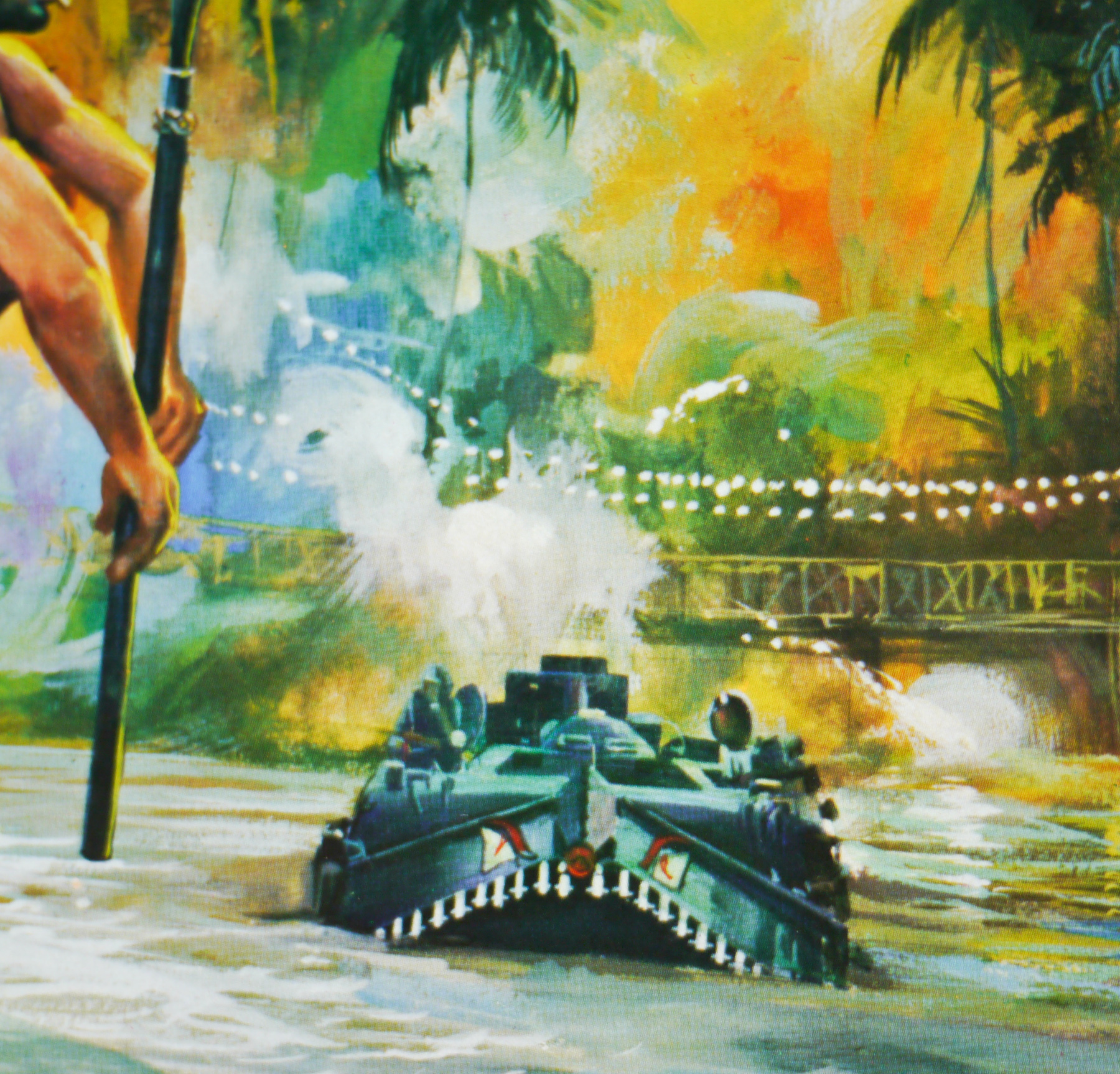
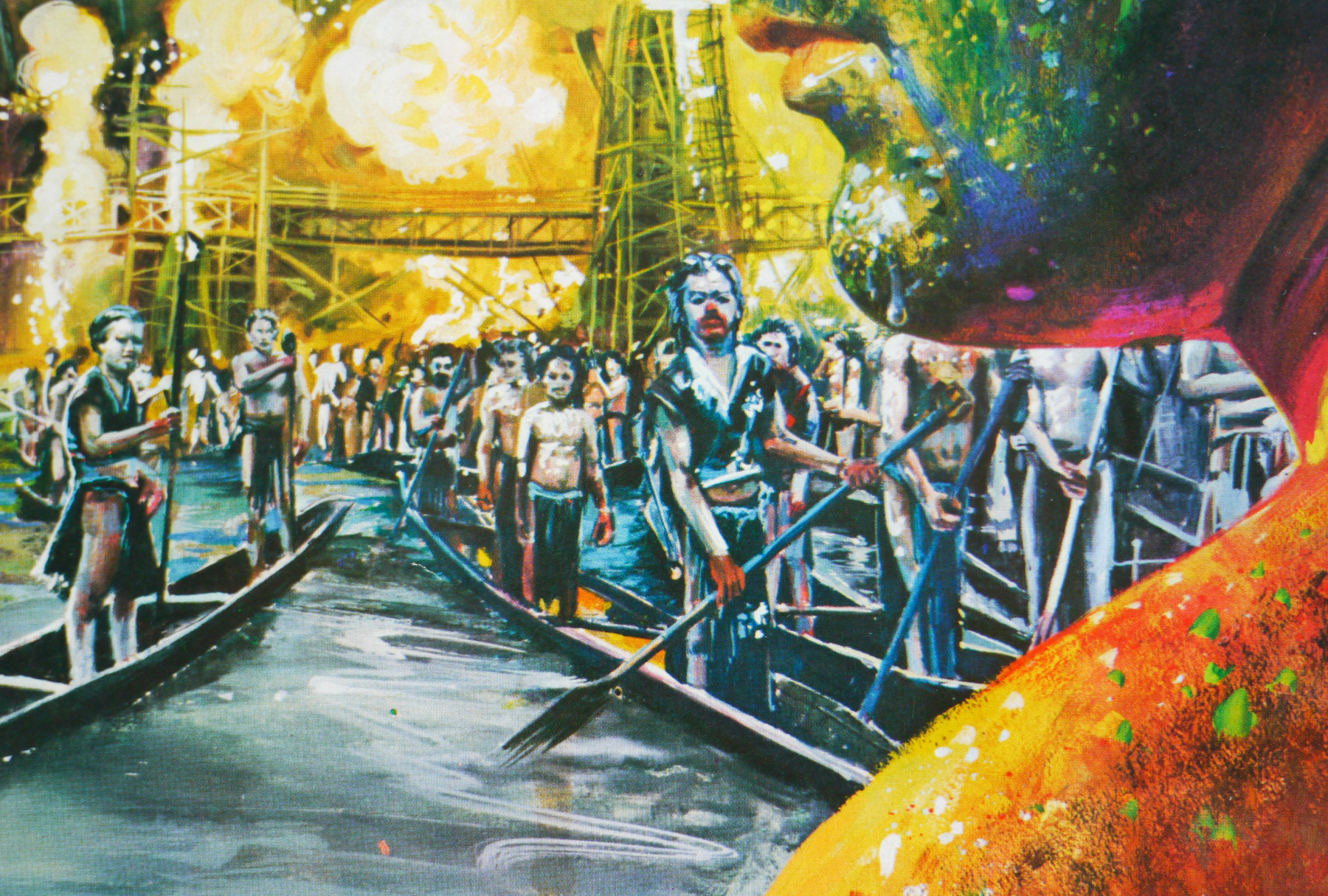
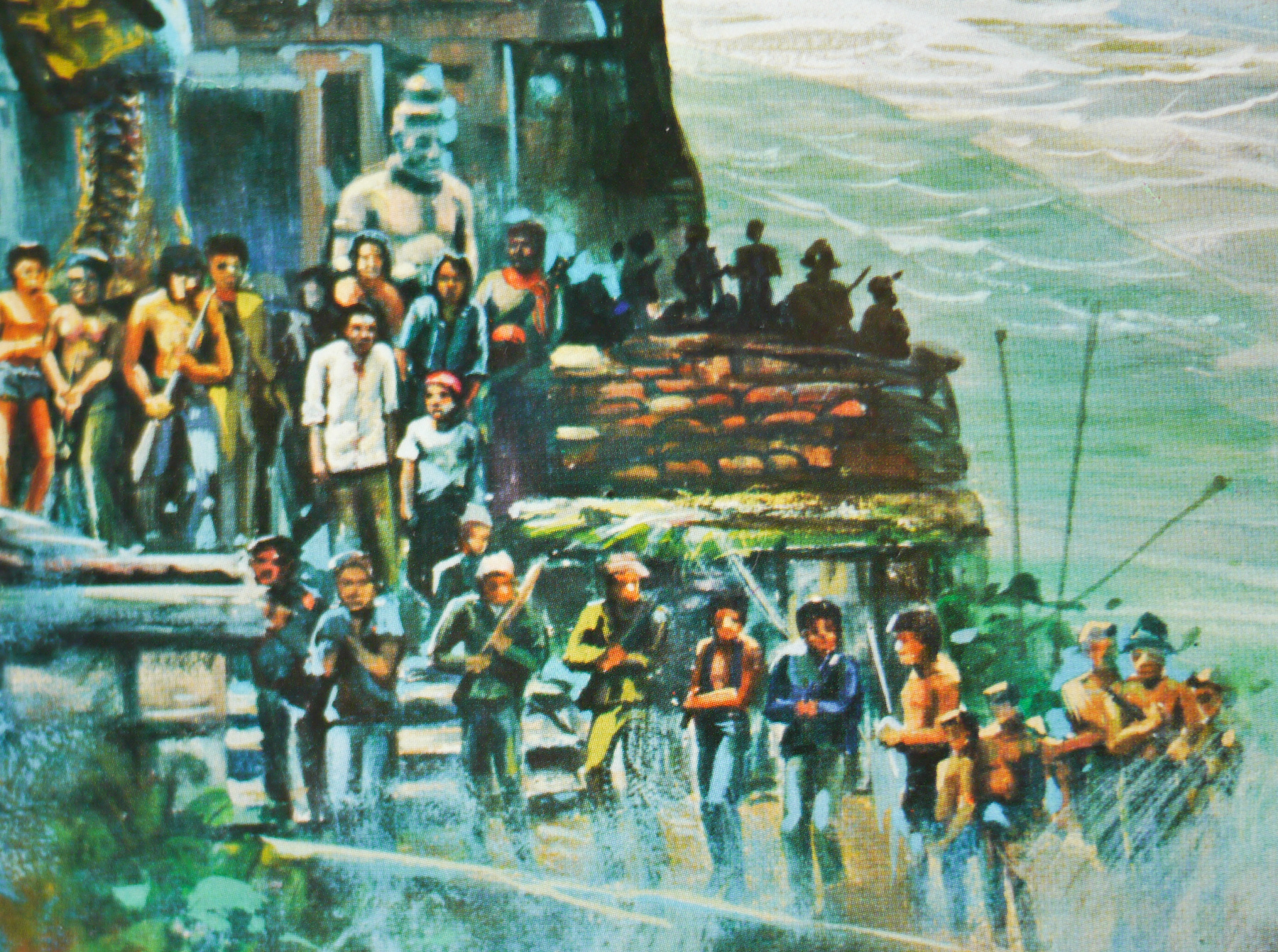
The film had several interesting posters printed for its release, including the great Bob Peak artwork used around the world, but this Thai 2-sheet is up there, in my mind, as one of the best posters ever painted, full stop. The amount of detail, use of colour and expertly arranged montage all add up to a visual feast of a design and I find some new detail every time I look at it. I’ve added 70 photos for you to really get a sense of the poster.

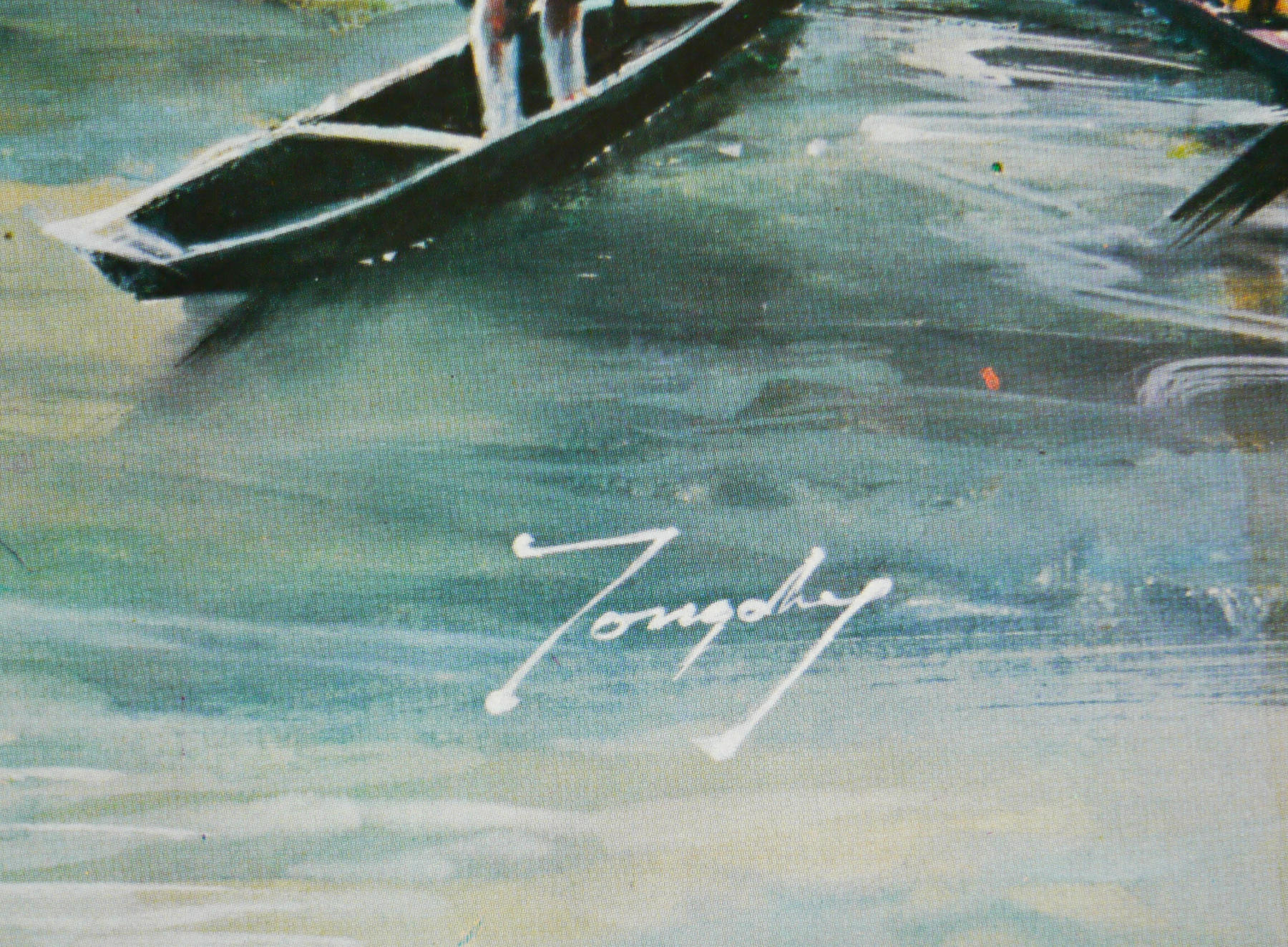
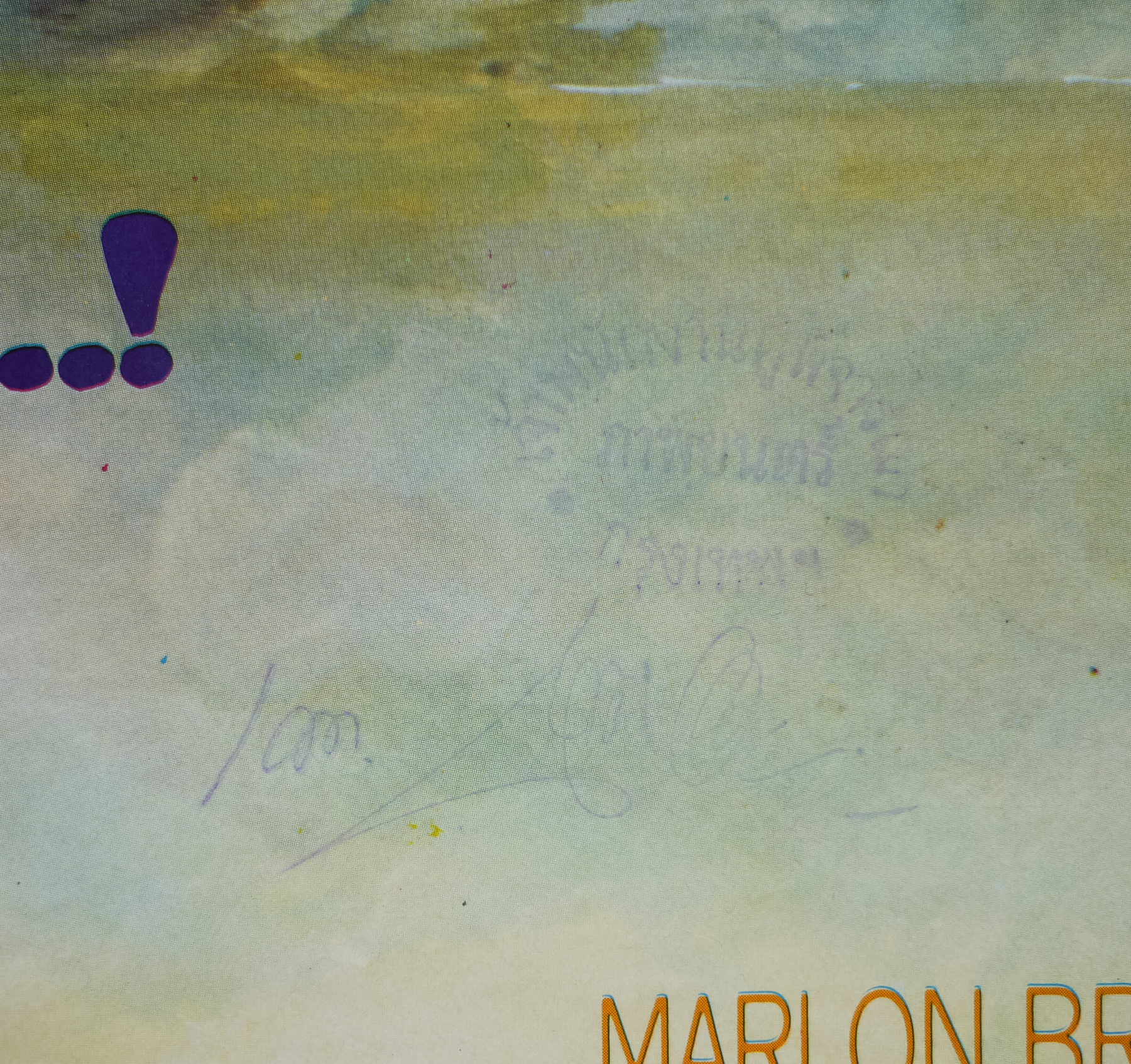
This poster was painted by the artist Tongdee Panumas (he signs his posters with just his first name) who was an incredibly prolific Thai film poster artist during the 70s, 80s and 90s but I’ve been unable to find out much about him, other than that he was born in 1947. If anyone has any more information please get in touch.

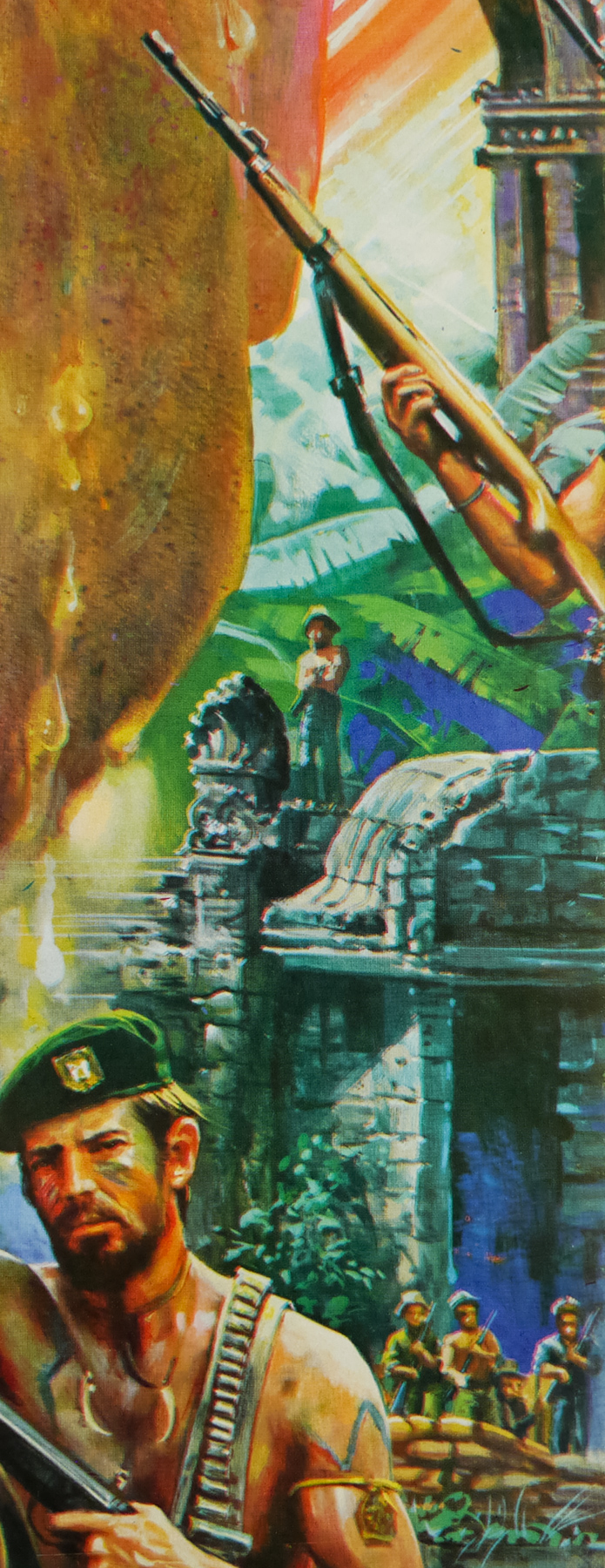
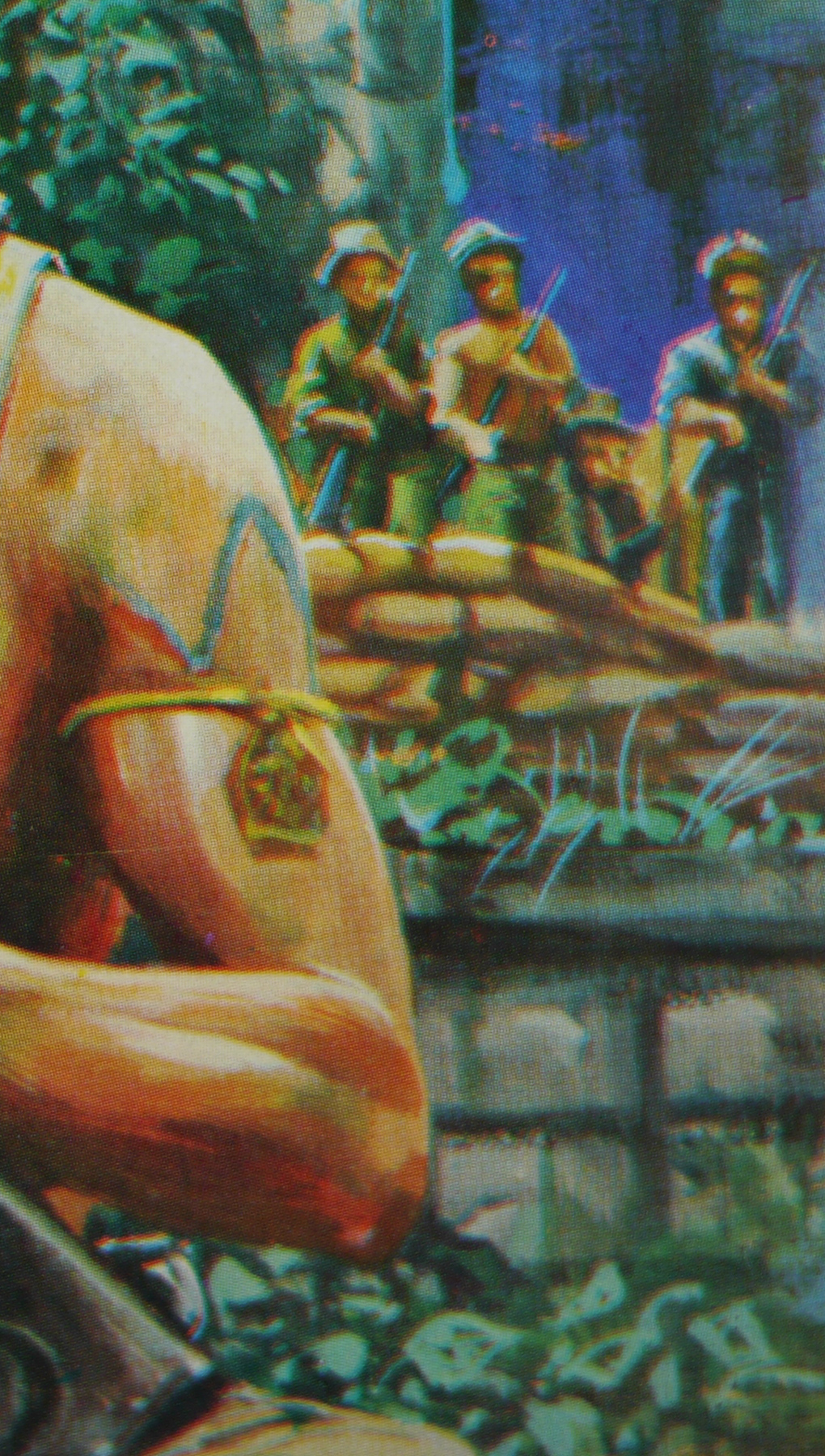
The two sides of the poster were printed separately and then joined together once they were displayed at cinemas. I tried my best to join them together with Photoshop but it’s not that easy to get them to match. Photos 2 and 3 show the two halves separately. It’s interesting to note that Tongdee actually painted the original art on two canvases as can be seen on this photograph showing him and the British collector Neil Pettigrew that was published in issue 168 of Dark Side magazine. This means that getting a totally seamless join between the two halves is impossible.

Note that there was a reprint made of this poster several years ago where someone in Thailand scanned the poster when the two halves were joined together and then printed it as a single sheet poster at the standard Thai film poster size of around 21″ x 31″. These have sometimes been sold as ‘commercial posters’ but are nothing more than unauthorised fakes and should be avoided at all costs. Permission was not sought from the distributor or the artist to make these copies and their sale should not be supported.
McCabe & Mrs Miller / special / USA

17.05.11

Poster Poster

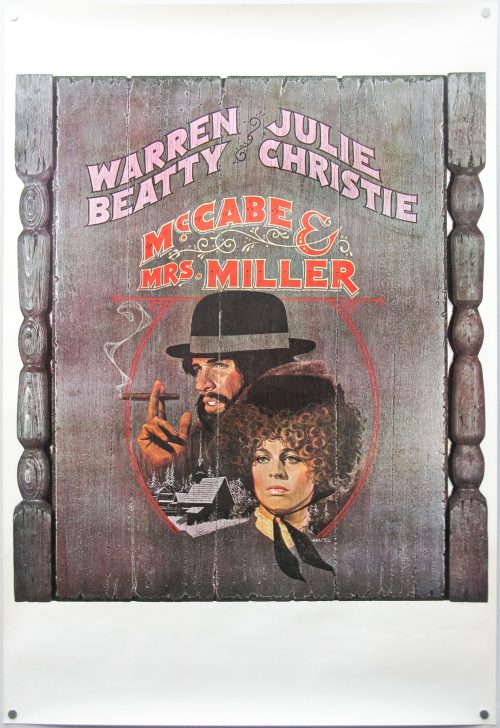
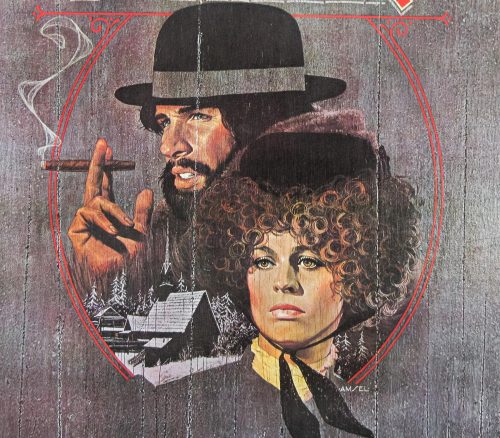
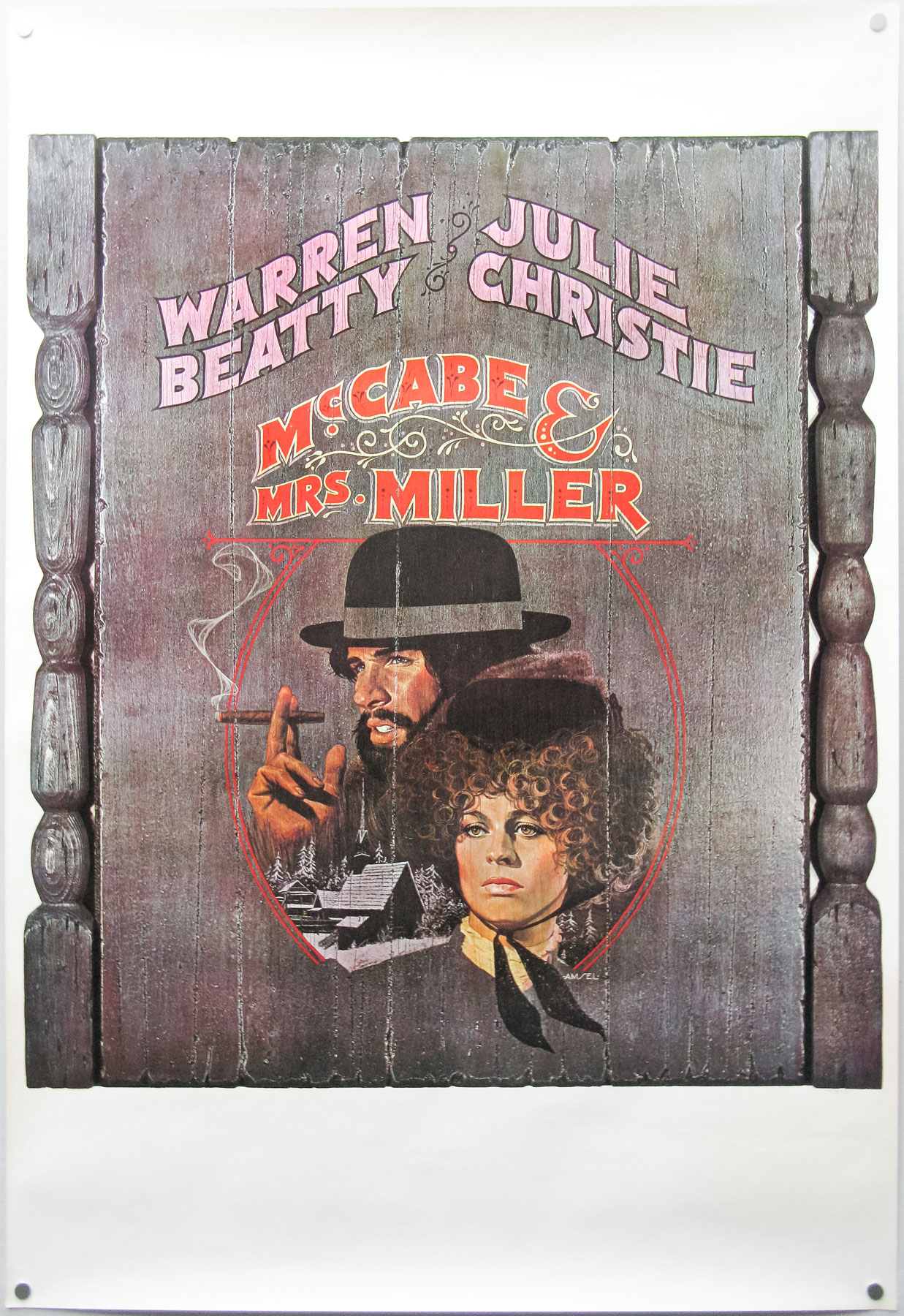
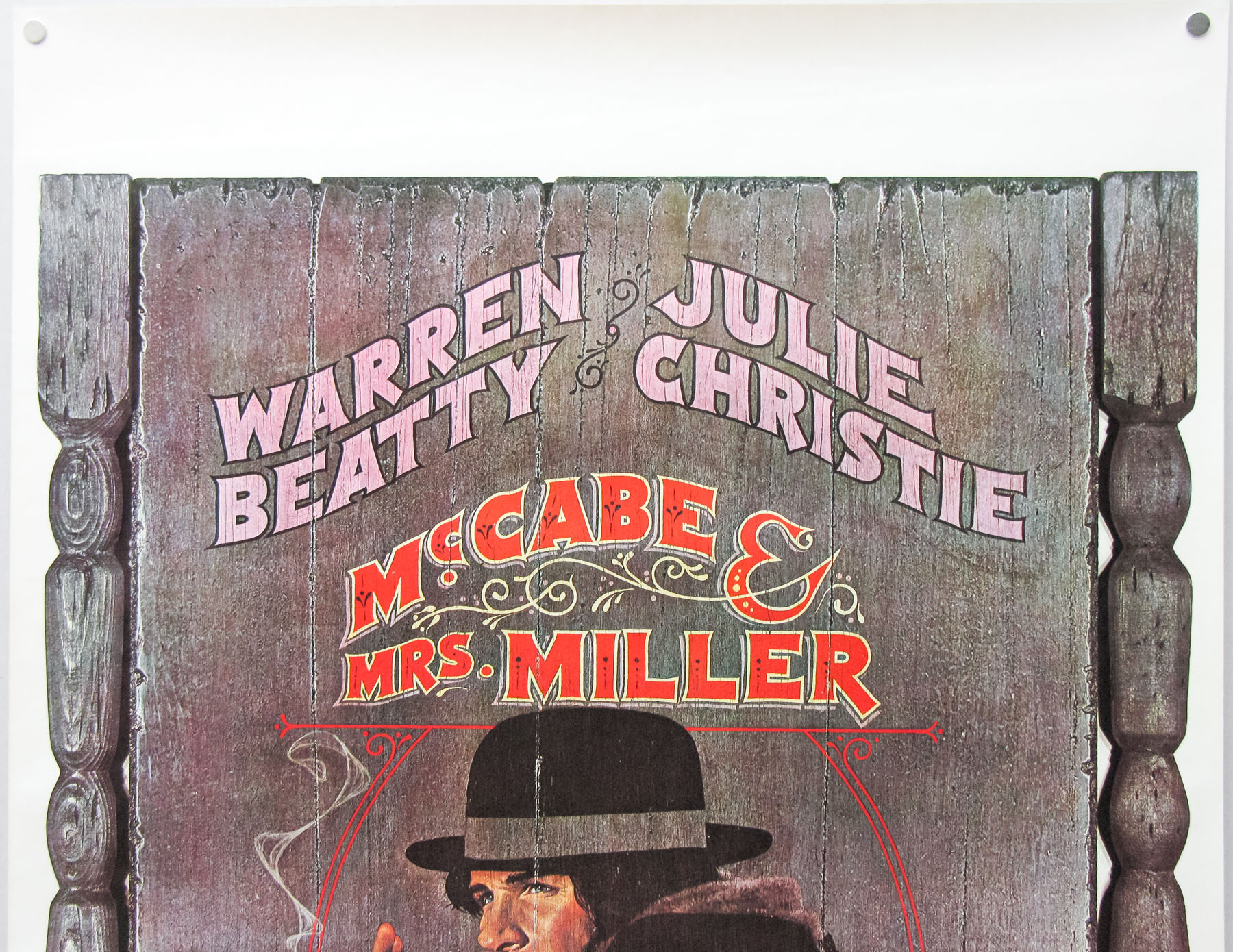
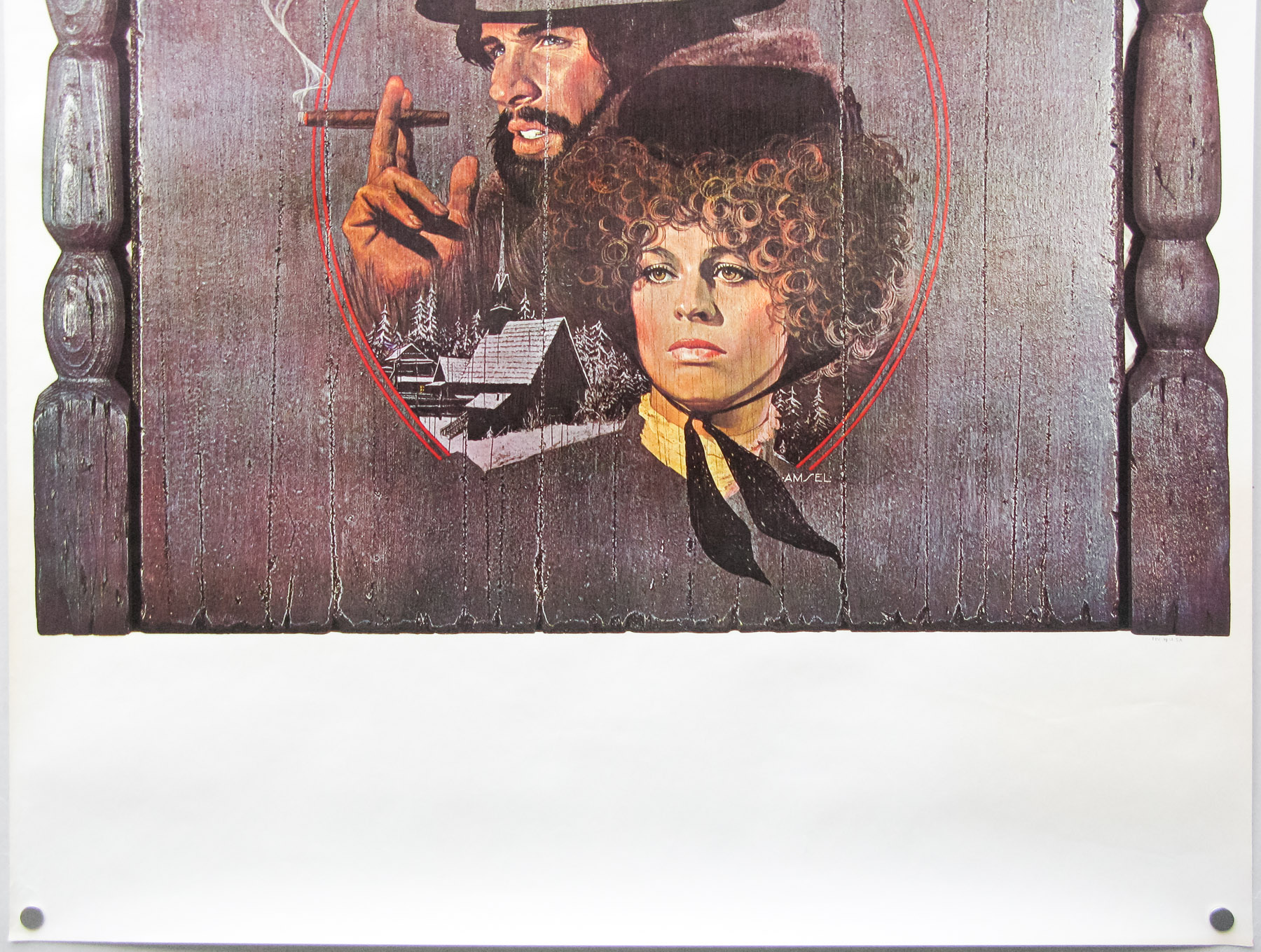
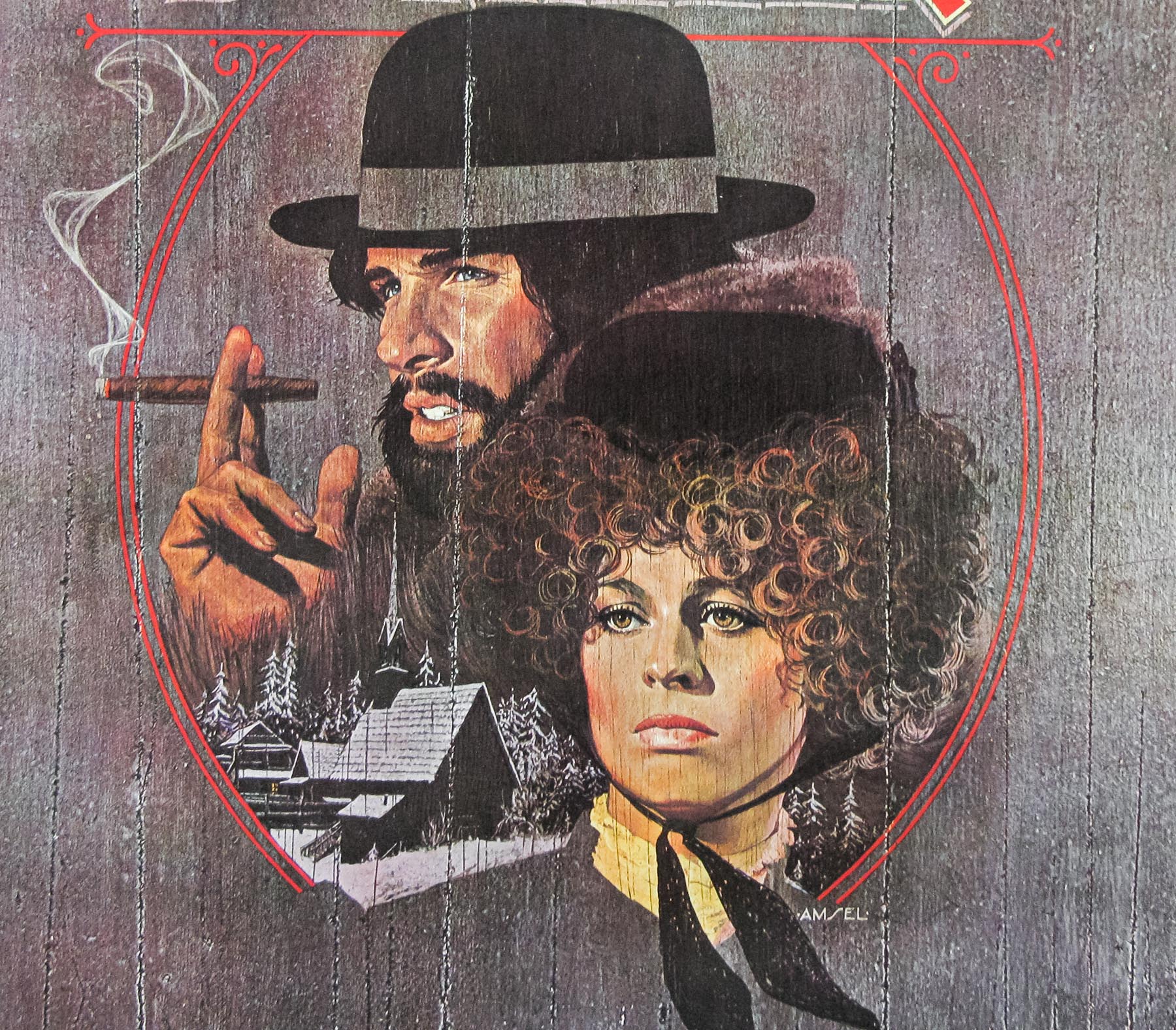
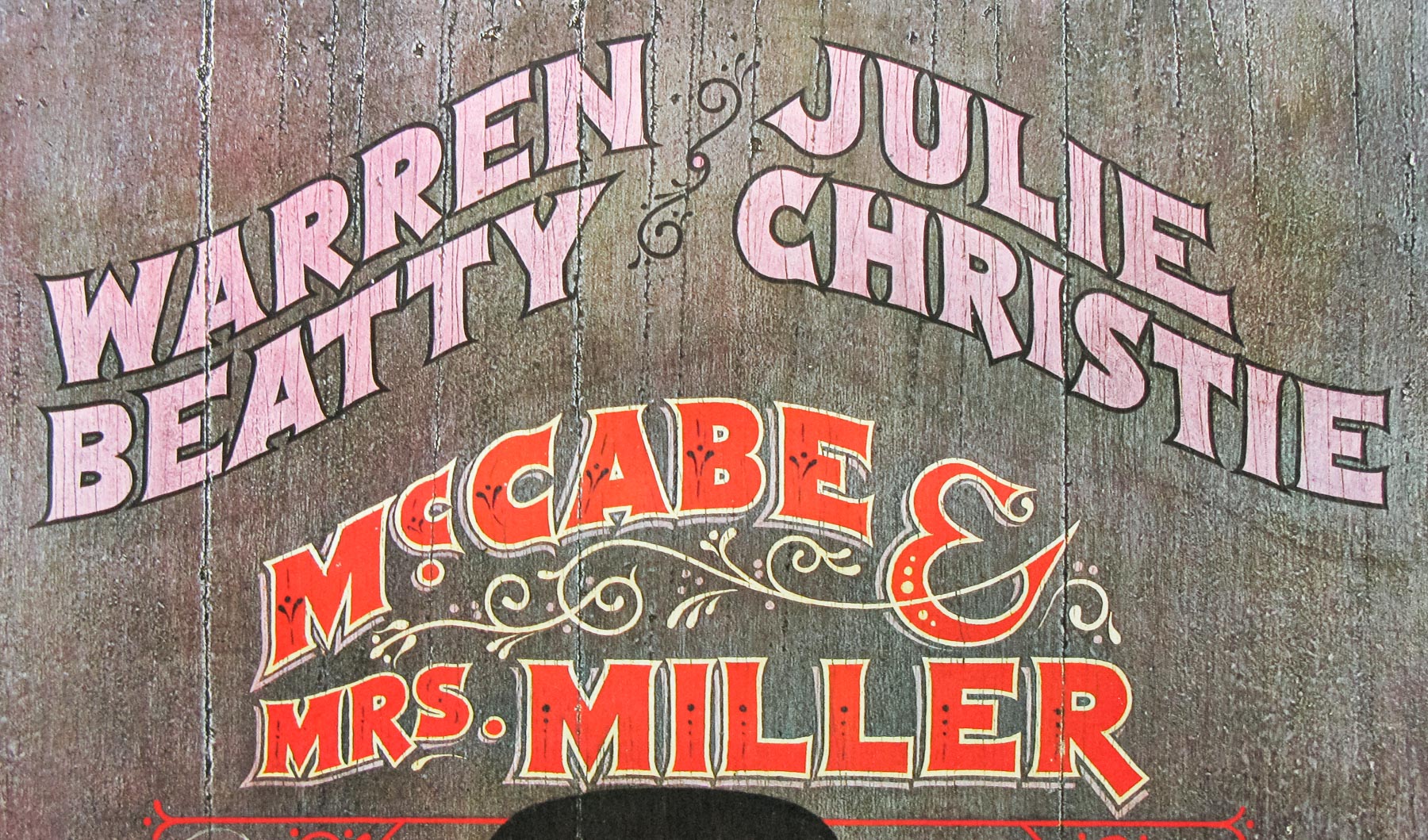
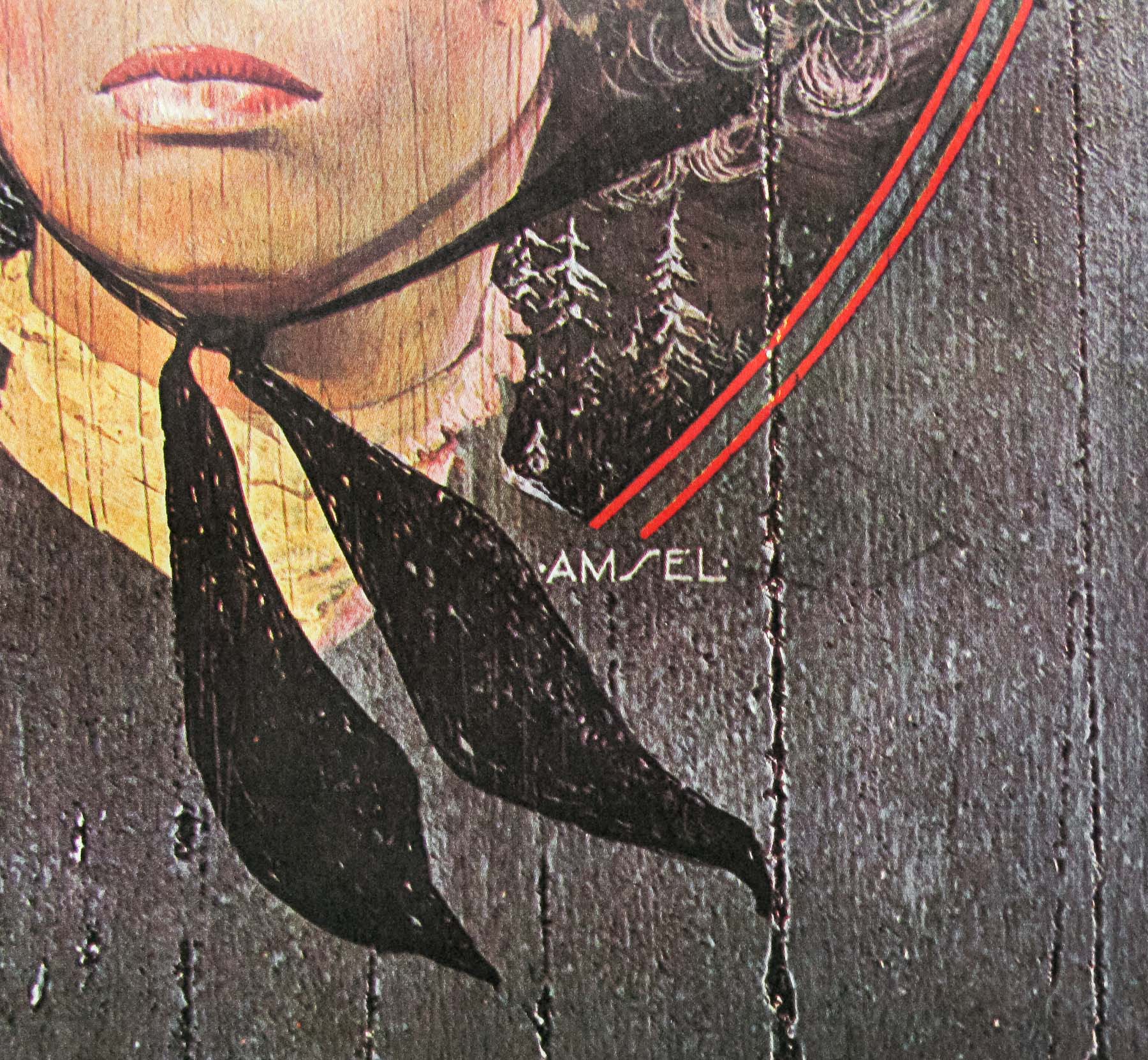
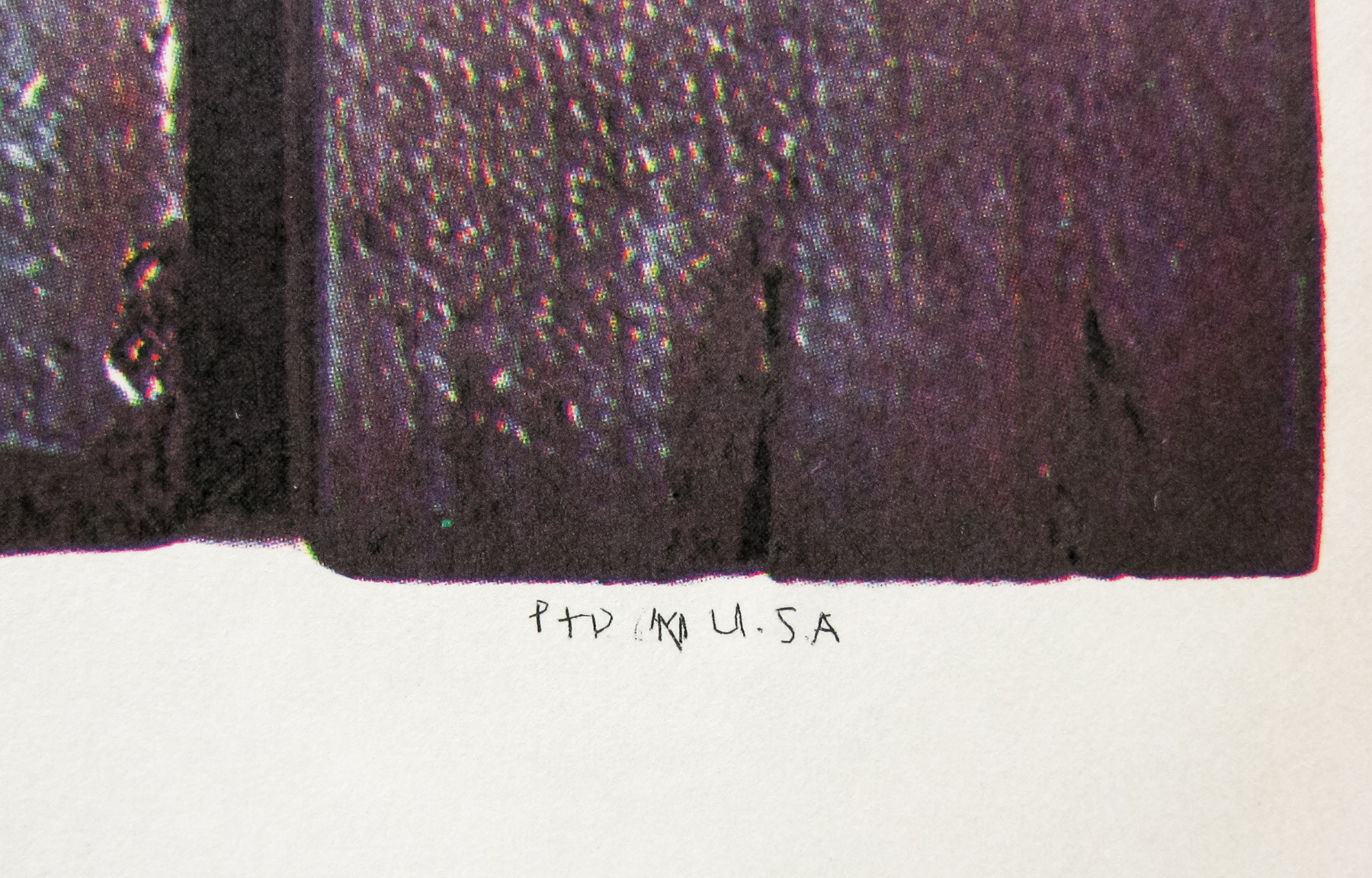
This particular poster is a bit of a mystery as it’s not the regular one sheet size and is missing all the credits that can be seen on the standard poster. I’m 99% certain it’s from the year of release as the paper is right, the printing detail is spot on and I purchased it from a trusted source.
There are a few markings that might help to shed some light on what it is. If you have any ideas or information please get in touch.

Halloween / Thailand

03.05.16

Poster Poster
Title
Halloween
AKA
The Babysitter Murders (USA - working title) | Halloween: la notte delle streghe [The night of the witches] (Italy)
Year of Film
1978
Director
John Carpenter
Starring
Donald Pleasence, Jamie Lee Curtis, Nancy Kyes, P.J. Soles, Charles Cyphers, Kyle Richards, Brian Andrews, John Michael Graham, Nancy Stephens
Origin of Film
USA
Genre(s) of Film
Donald Pleasence, Jamie Lee Curtis, Nancy Kyes, P.J. Soles, Charles Cyphers, Kyle Richards, Brian Andrews, John Michael Graham, Nancy Stephens,
Type of Poster
Thai
Style of Poster
--
Origin of Poster
Thailand
Year of Poster
1978
Designer
Unknown
Artist
Neet | Bob Gleason (central image based on art from US one sheet)
Size (inches)
21.5" x 30 13/16"
SS or DS
SS
Tagline
--

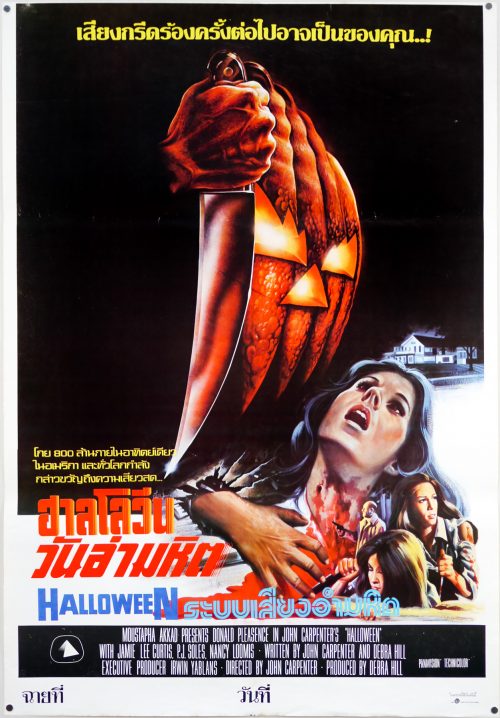
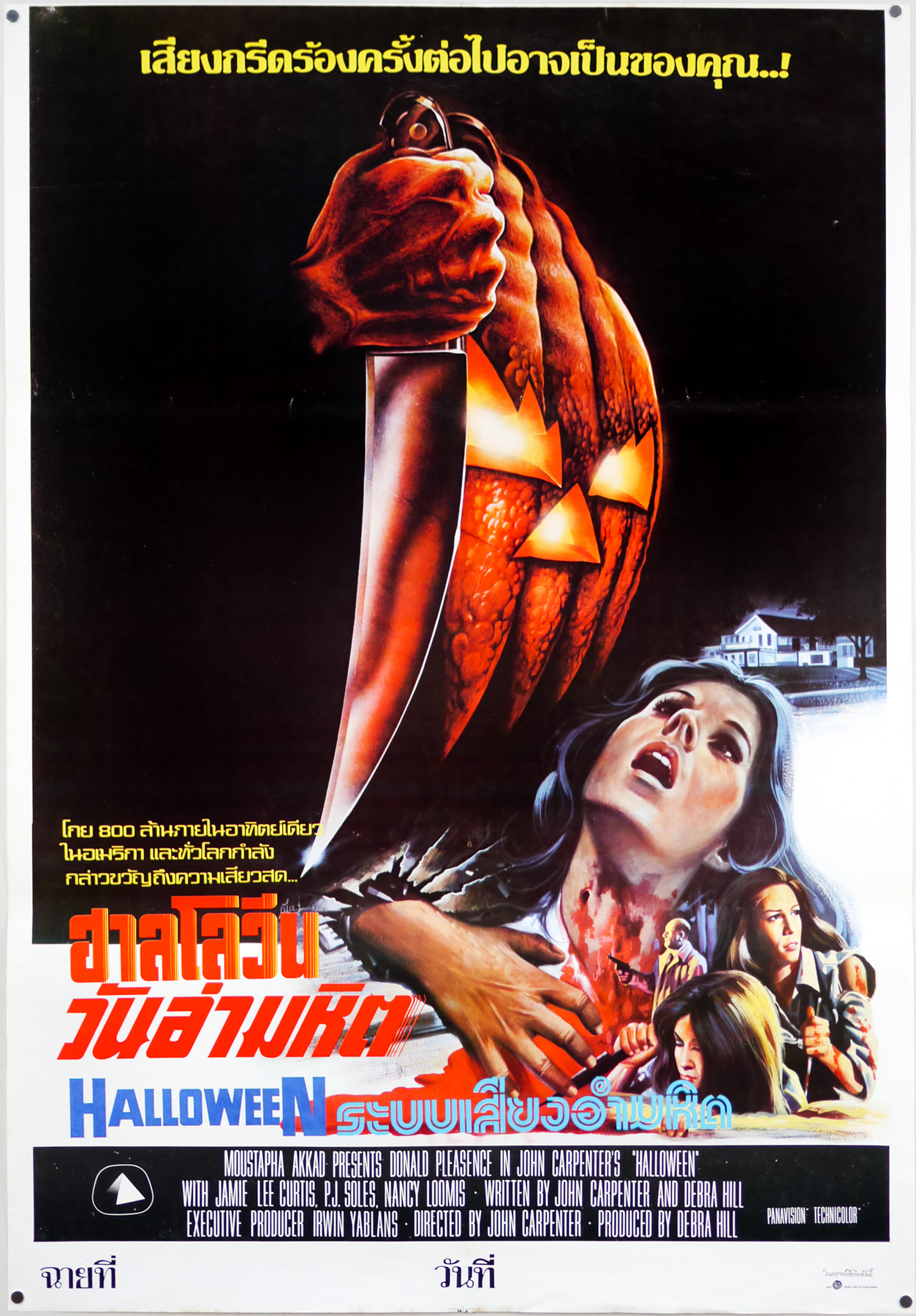
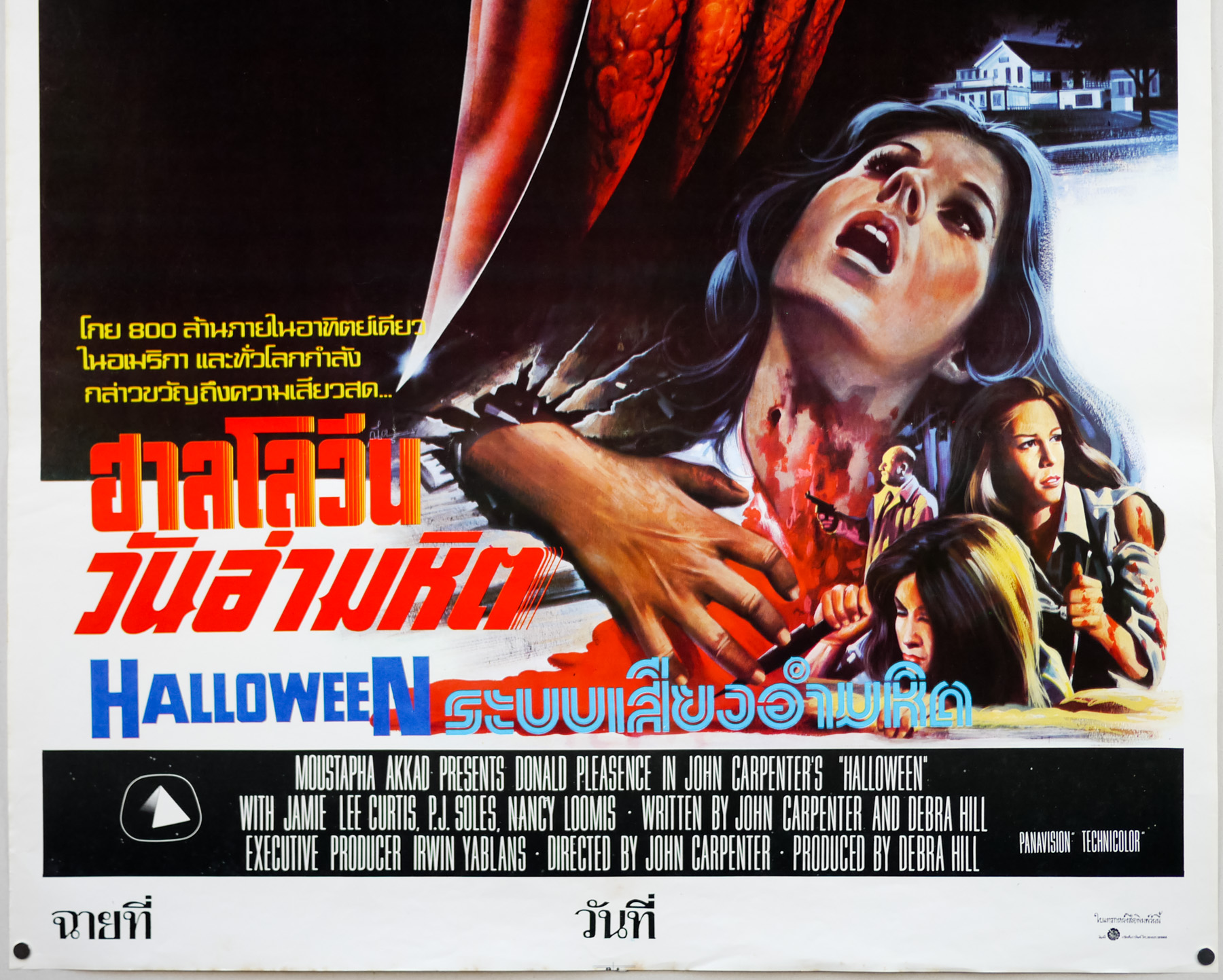
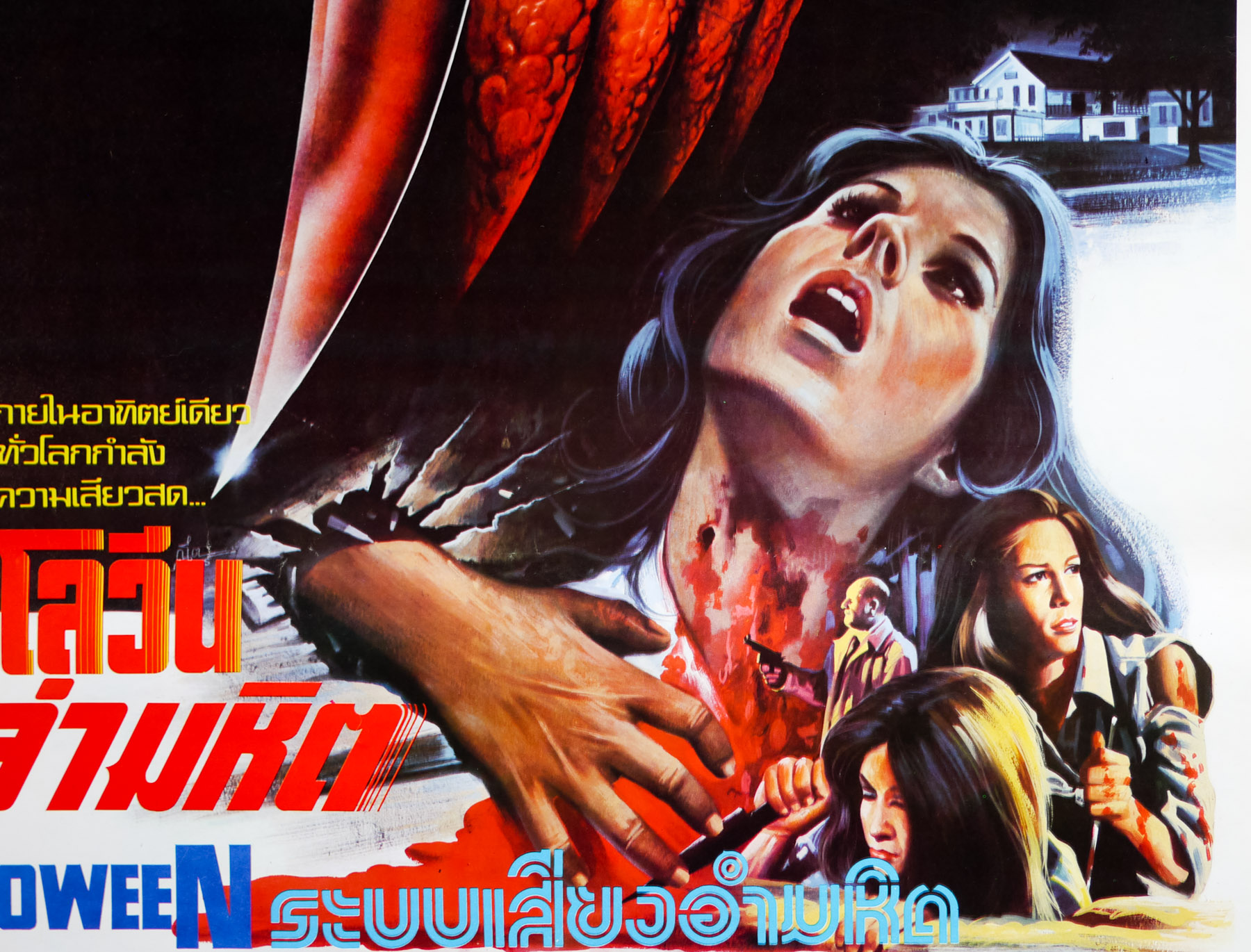
This is the Thai poster for the release of John Carpenter‘s seminal horror film Halloween. An independent release, financed by one man (Moustapha Akkad), the film was produced on a low budget of $300k and would go on to gross over $70m worldwide. Halloween kickstarted a franchise that would run for seven sequels (and a recent remake) and the masked character of Michael Myers would enter the horror pantheon as one of its most memorable monsters.

Carpenter wrote the screenplay with his then girlfriend, producer Debra Hill and is often credited as being the the first in a long line of slasher films, although films like Alfred Hitchock’s Psycho were obvious inspirations. The film has little in the way of gore or violence and instead uses clever camera work and sound design to brilliant effect, keeping the audience on the edge of their seats throughout. There have been countless imitations over the years but few that match up to the taught, perfectly-paced original Halloween.

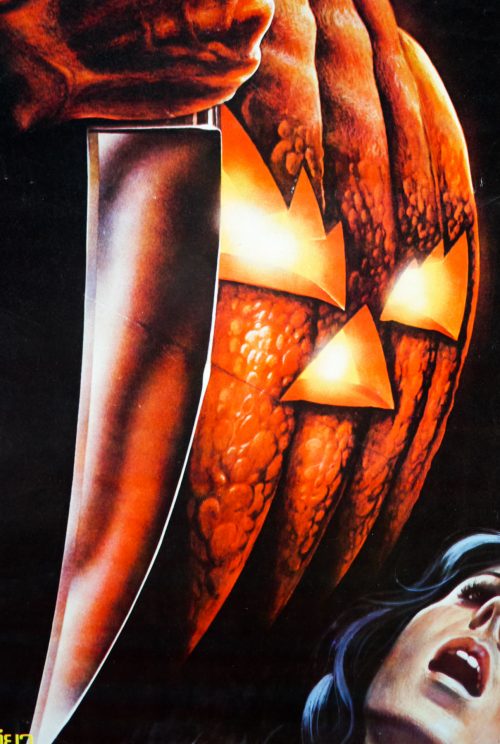
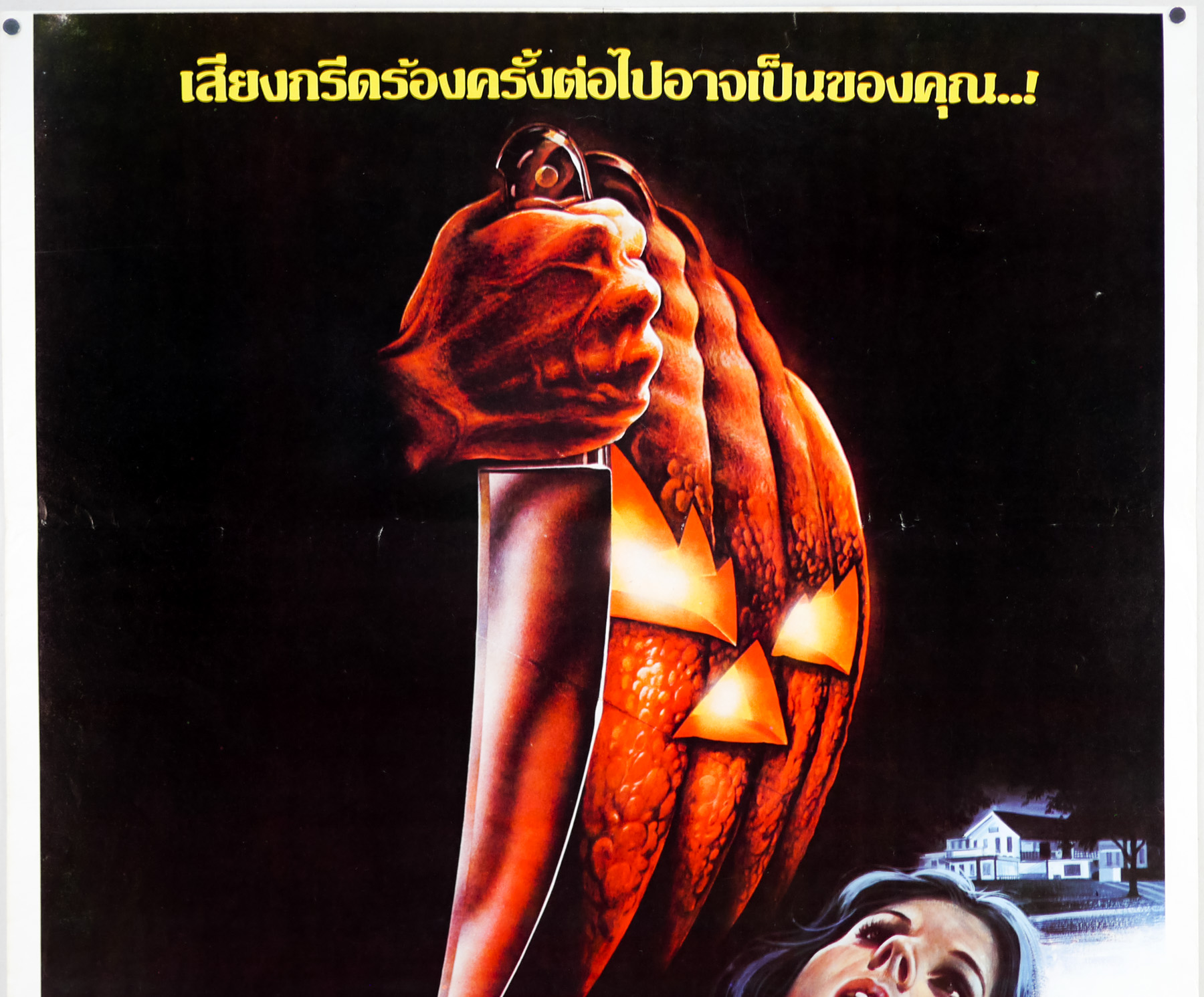
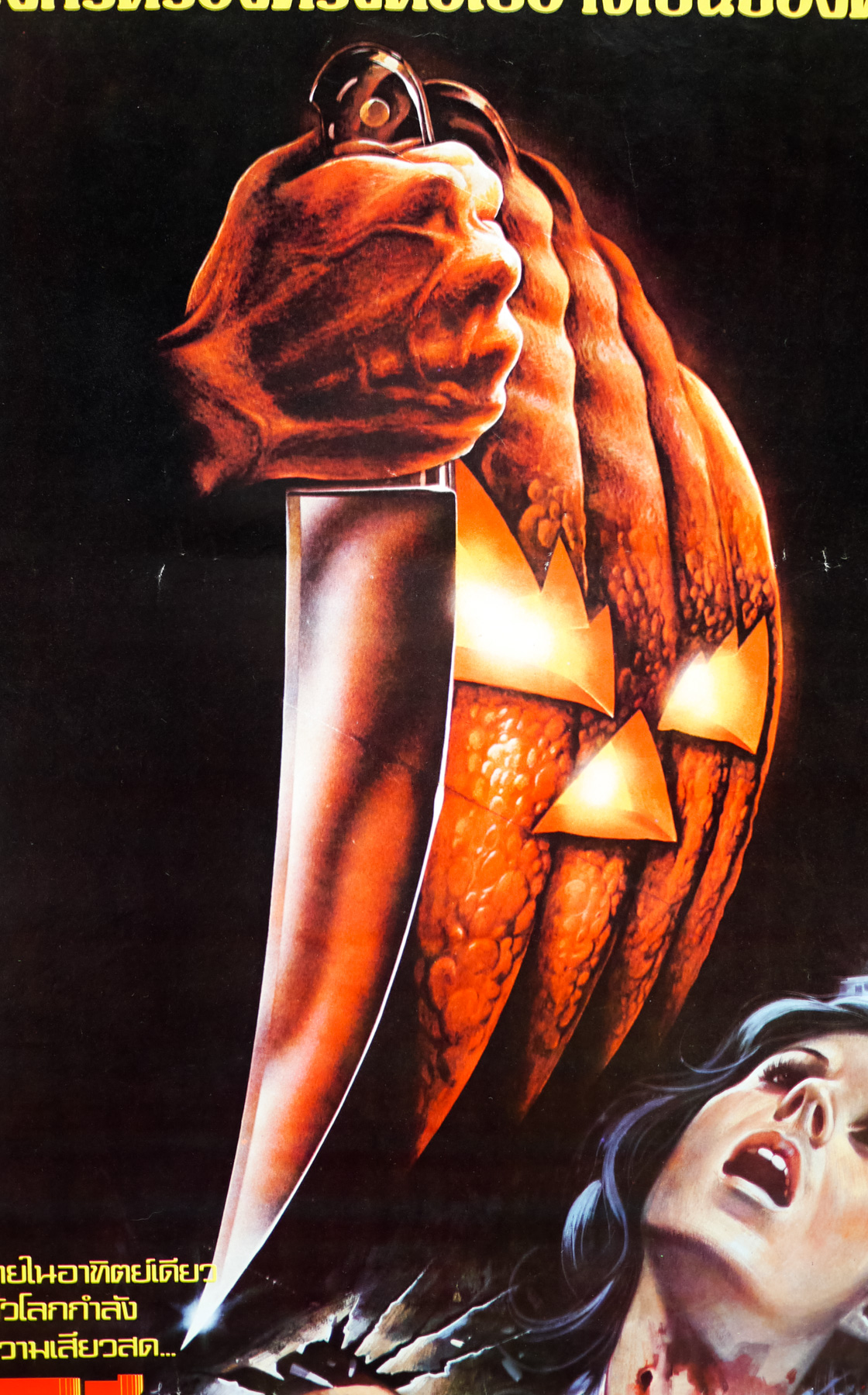
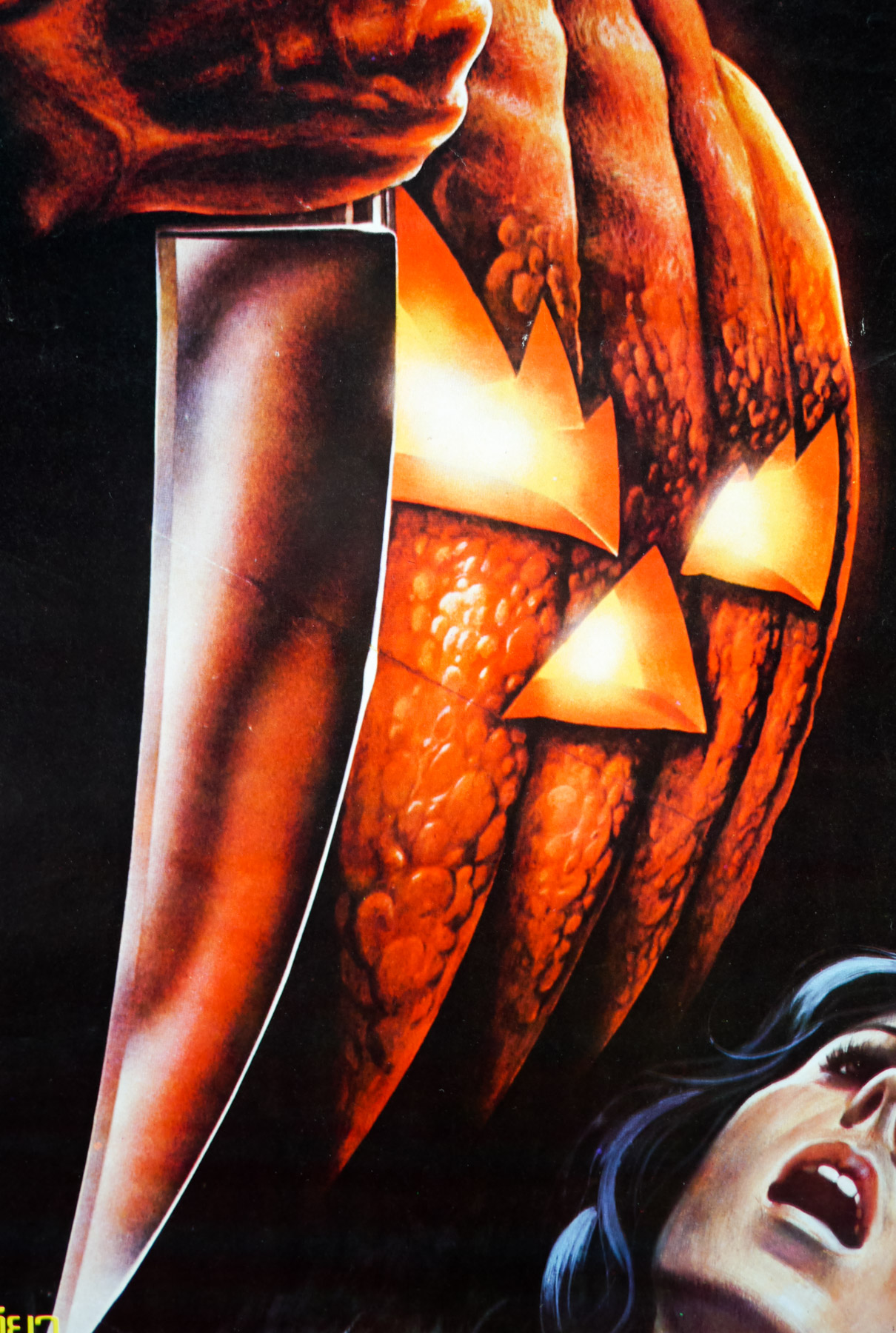
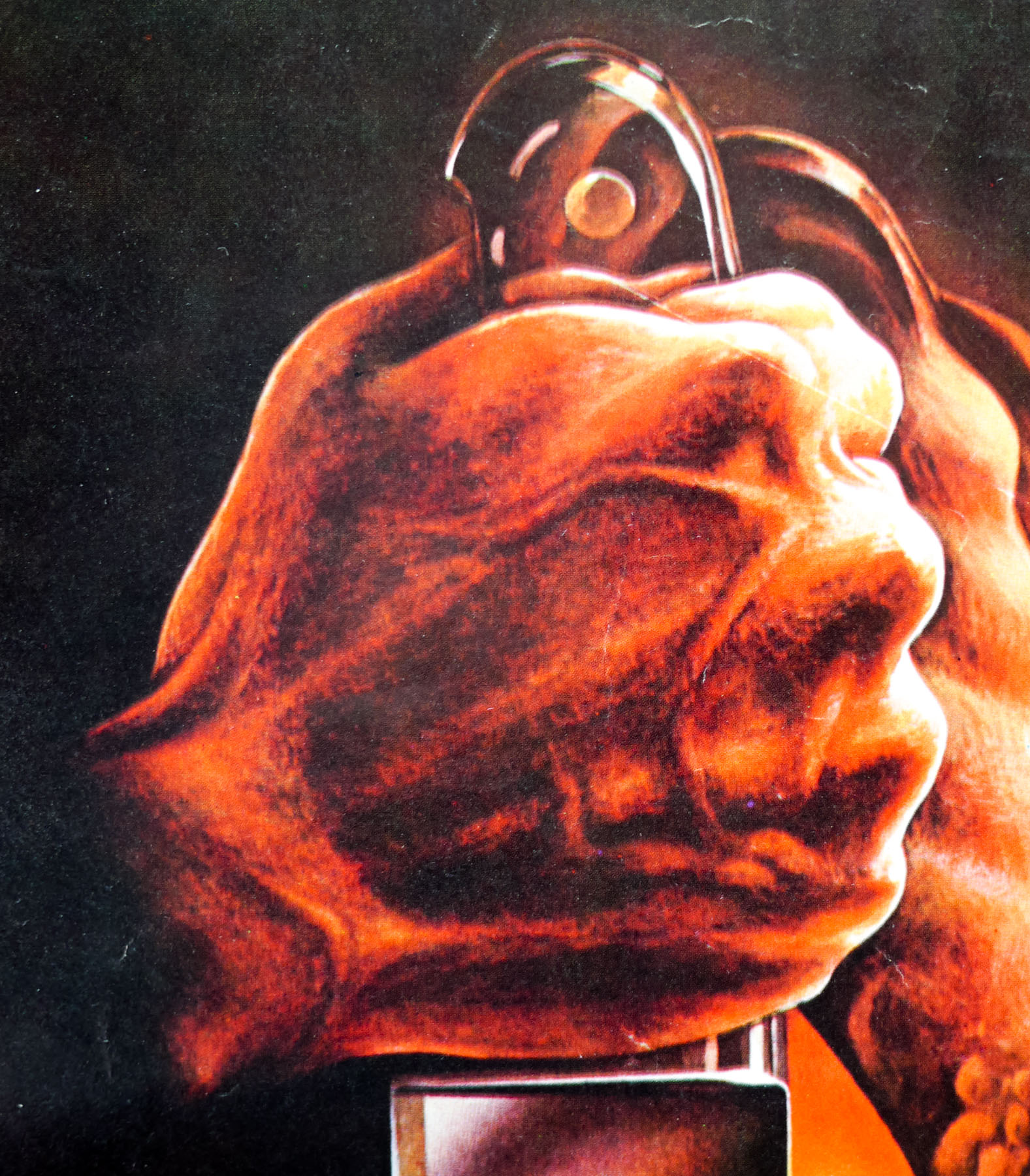
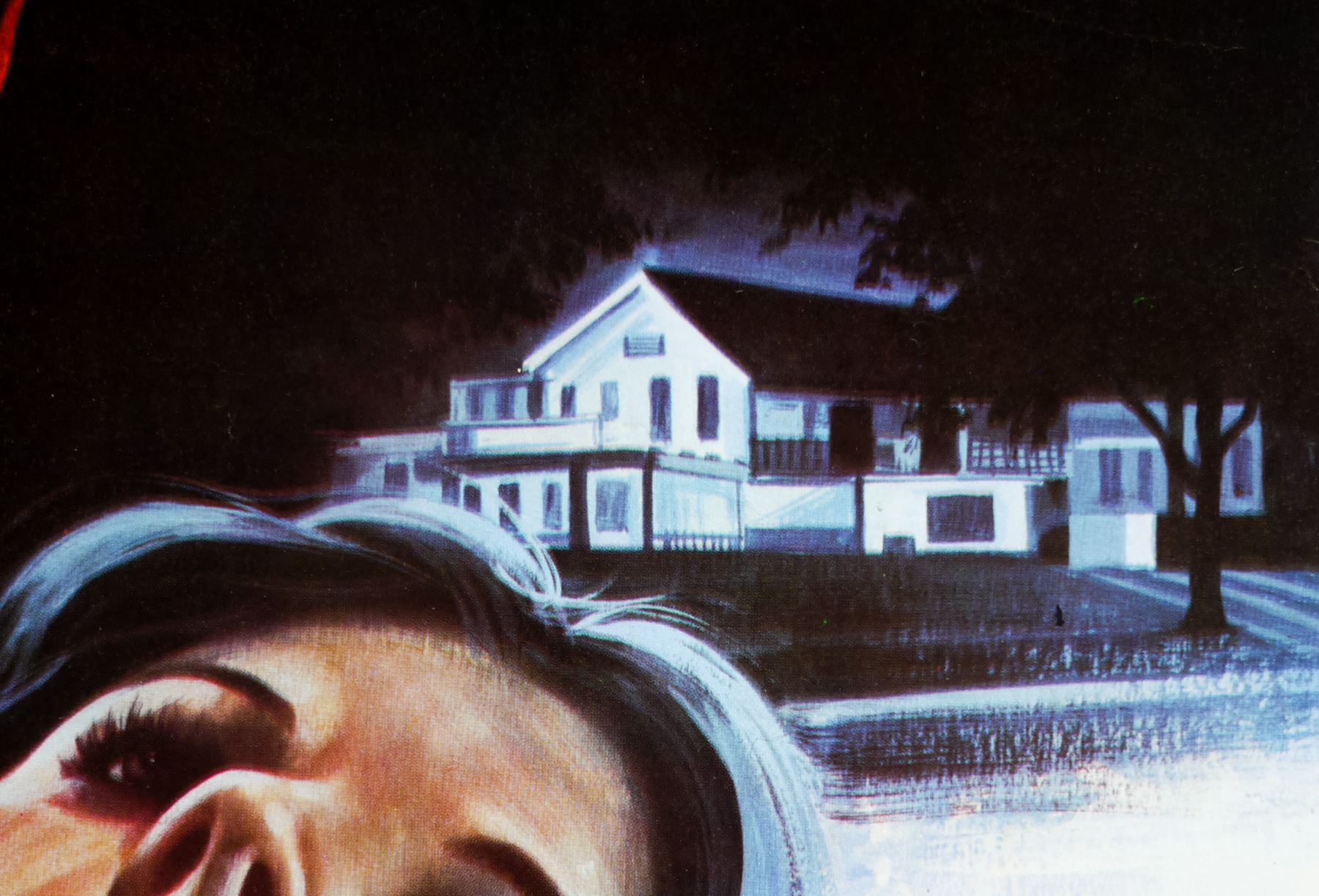
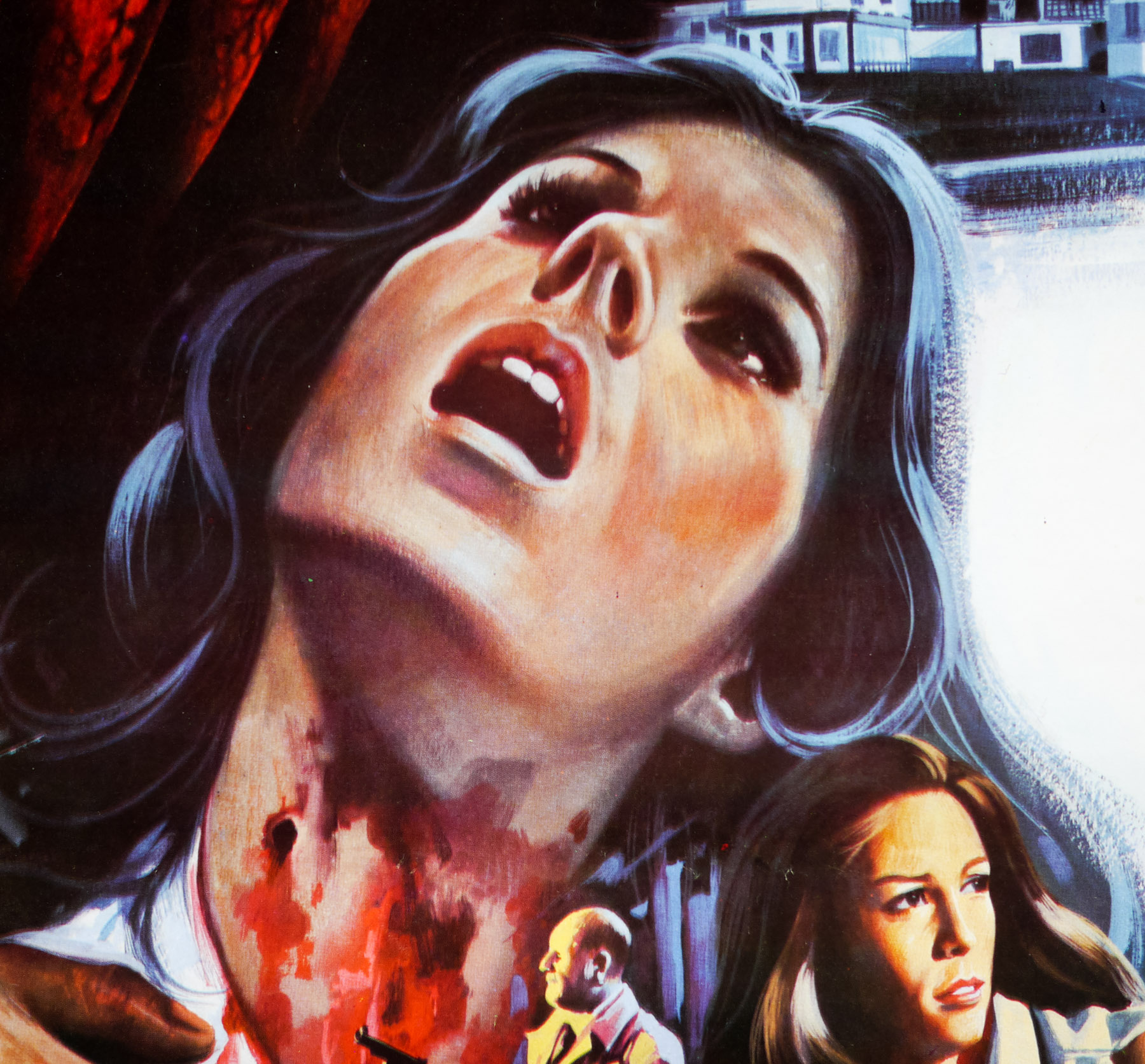
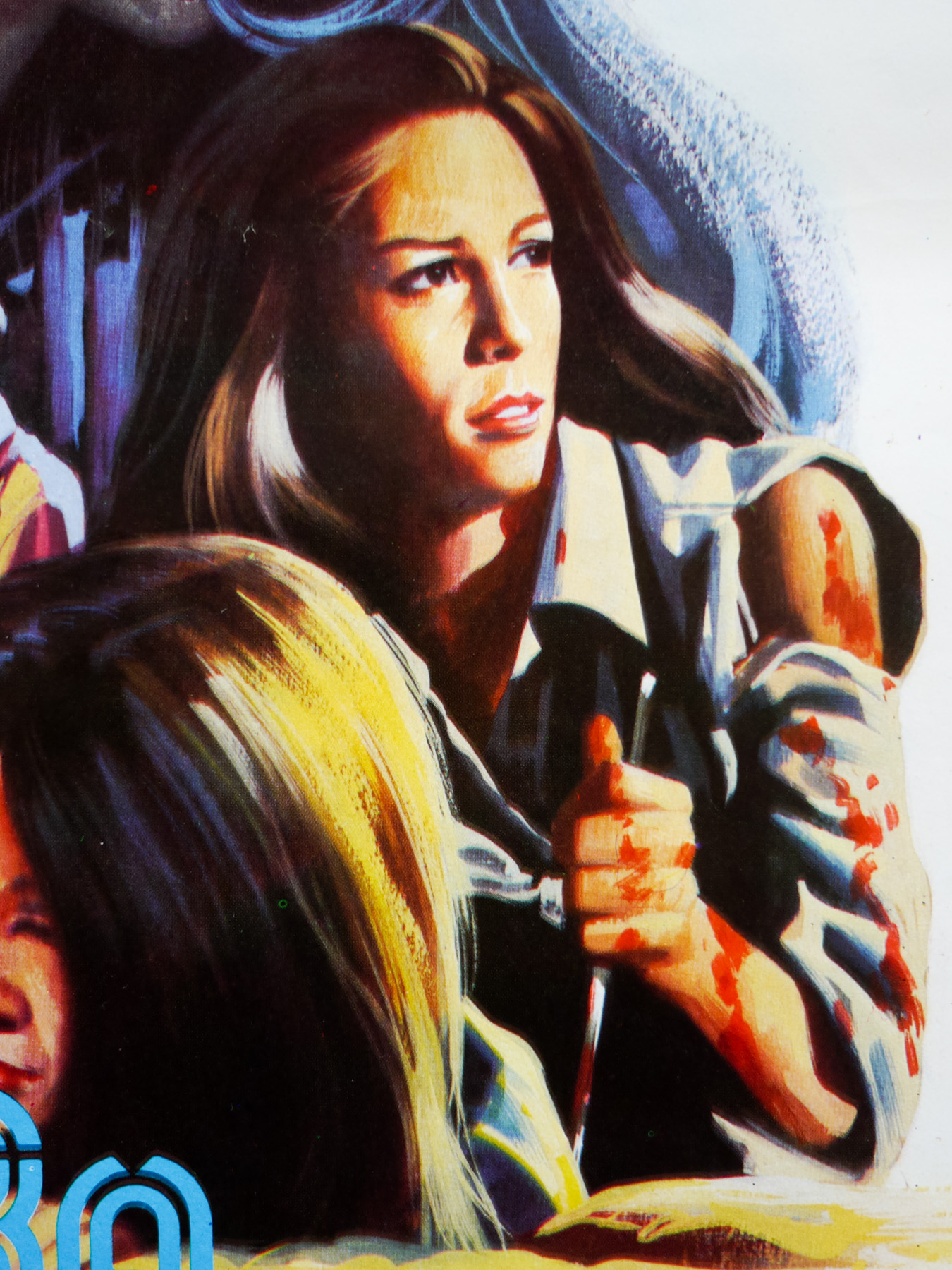
This Thai poster features the classic illustration of a knife blade morphing into a carved pumpkin that was created by the American artist Bob Gleason and used on the US one sheet and several other posters around the globe. The lurid montage at the bottom of the poster was created by a local Thai artist known as Neet. If anyone has any more details about the artist please get in touch.

In March 2016 Gleason’s original artwork was put up for auction (selling for just under $84k) and was accompanied by a letter from the artist talking about its creation, which is well worth a read.