You searched for: Paul%2520L.%2520Smith

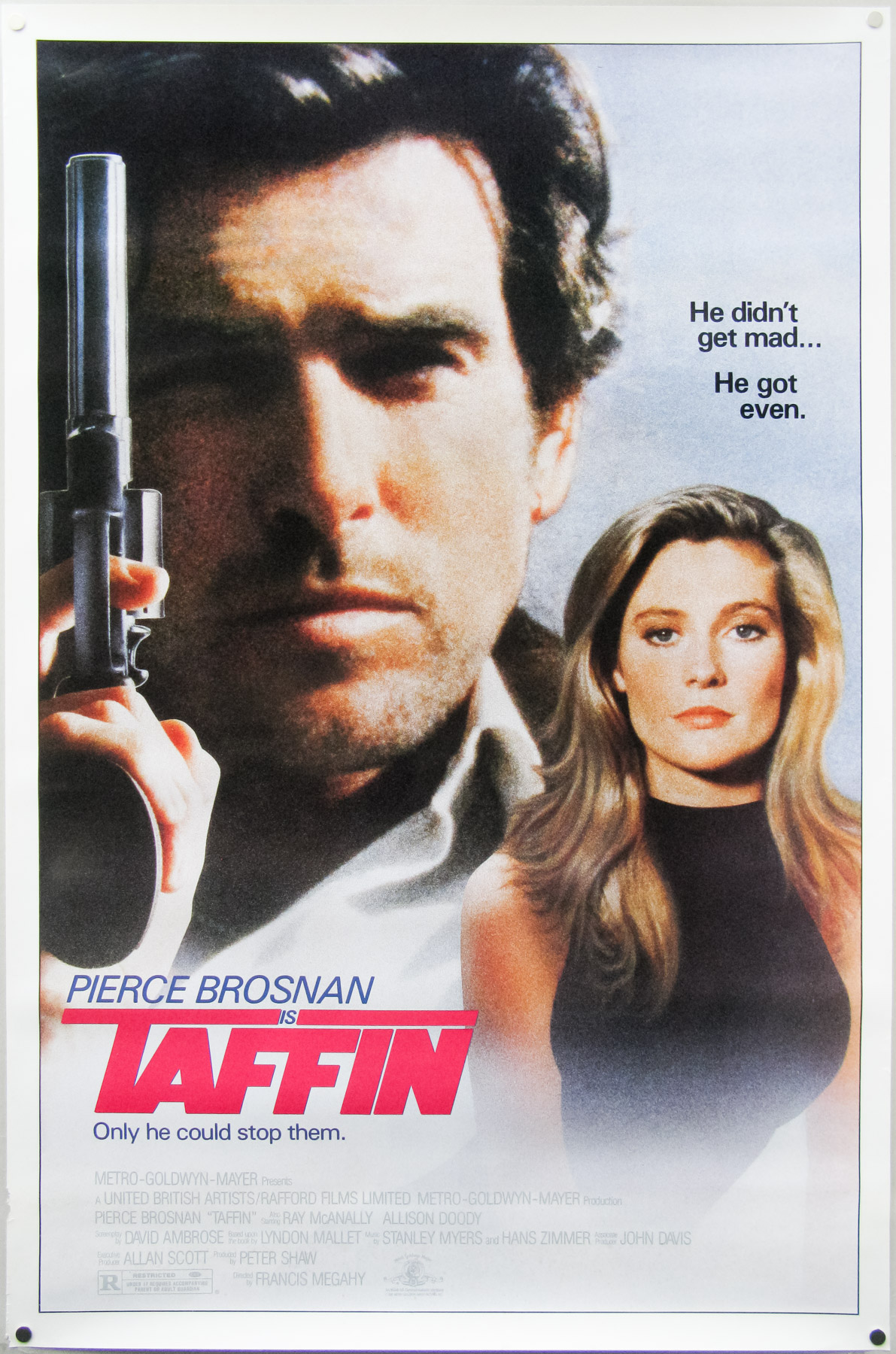
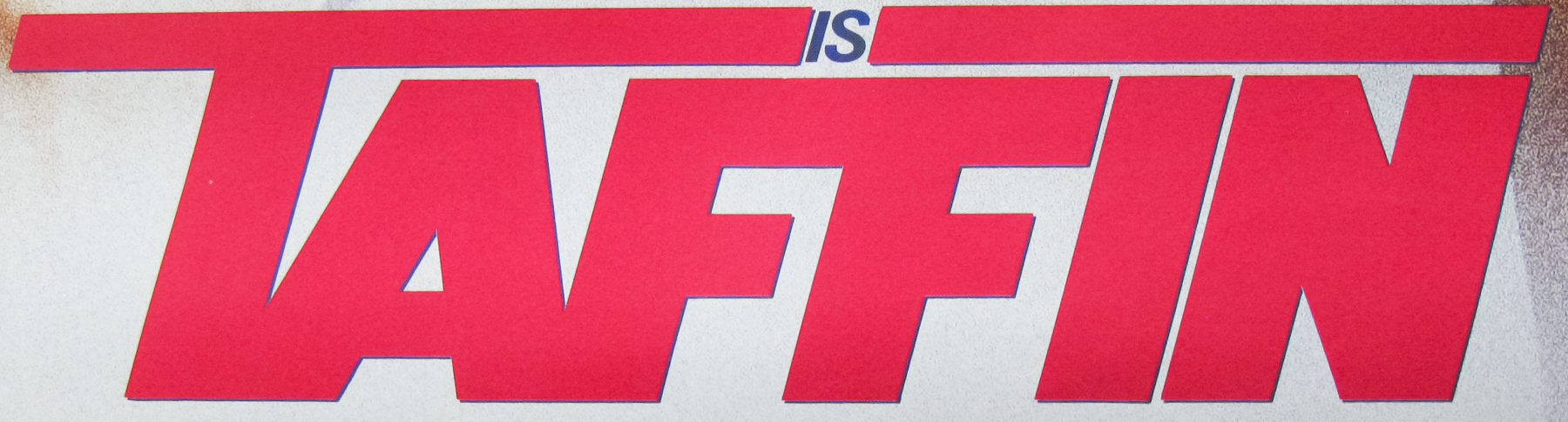
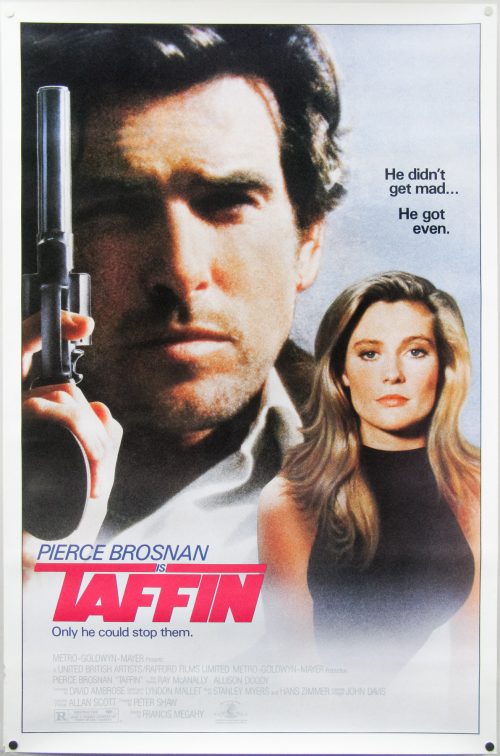
Taffin / one sheet / USA

20.06.12

Poster Poster
Title
Taffin
AKA
--
Year of Film
1988
Director
Francis Megahy
Starring
Pierce Brosnan, Ray McAnally, Alison Doody, Jeremy Child, Dearbhla Molloy, Jim Bartley, Alan Stanford, Gerard McSorley, Patrick Bergin, Britta Smith, Jonathan Ryan
Origin of Film
UK | Ireland | USA
Genre(s) of Film
Pierce Brosnan, Ray McAnally, Alison Doody, Jeremy Child, Dearbhla Molloy, Jim Bartley, Alan Stanford, Gerard McSorley, Patrick Bergin, Britta Smith, Jonathan Ryan,
Type of Poster
One sheet
Style of Poster
--
Origin of Poster
USA
Year of Poster
1988
Designer
Unknown
Artist
--
Size (inches)
27 1/16" x 41"
SS or DS
SS
NSS #
--
Tagline
He didn't get mad... He got even. | Only he could stop them.

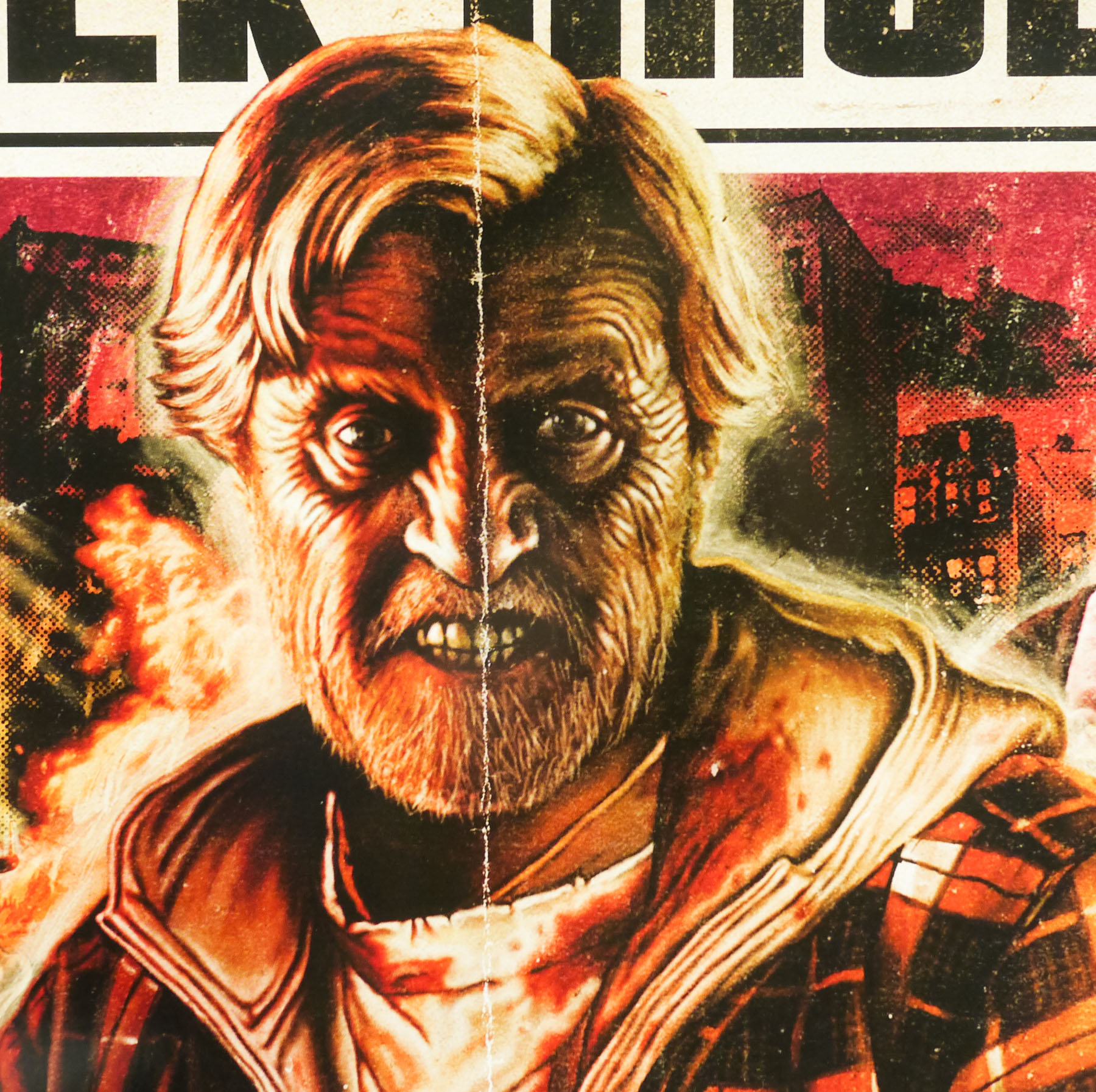
An unremarkable poster for what would have been an unremarkable entry in Pierce Brosnan‘s filmography were it not for one of the strangest, left-field line readings in the history of cinema. The infamous moment takes place during an exchange that Taffin (Brosnan) is having with the character of Charlotte (played by Alison Doody). For no apparent reason Brosnan’s tone explodes into an insane shout of ‘THEN MAYBE YOU SHOULDN’T BE LIVING HEEEEEEEERE!’ The moment is available to watch on YouTube here.

If you’re a fan of UK comedians Adam Buxton and Joe Cornish and listen to their (currently off-air) radio show on 6 music you will have heard their discussion of this infamous moment last year.  The reaction to the show saw the clip becoming its own meme for a while and it spawned several remixes.

The original trailer is on YouTube.

Road Games / 30×40 / USA

07.06.13

Poster Poster
Title
Road Games
AKA
Roadgames (Alt. spelling)
Year of Film
1981
Director
Richard Franklin
Starring
Stacy Keach, Jamie Lee Curtis, Marion Edward, Grant Page, Thaddeus Smith, Steve Millichamp, Alan Hopgood, John Murphy, Bill Stacey
Origin of Film
Australia
Genre(s) of Film
Stacy Keach, Jamie Lee Curtis, Marion Edward, Grant Page, Thaddeus Smith, Steve Millichamp, Alan Hopgood, John Murphy, Bill Stacey,
Type of Poster
30x40
Style of Poster
--
Origin of Poster
USA
Year of Poster
1981
Designer
James Costello
Artist
Joann Daley
Size (inches)
30" x 40"
SS or DS
SS
NSS #
810058
Tagline
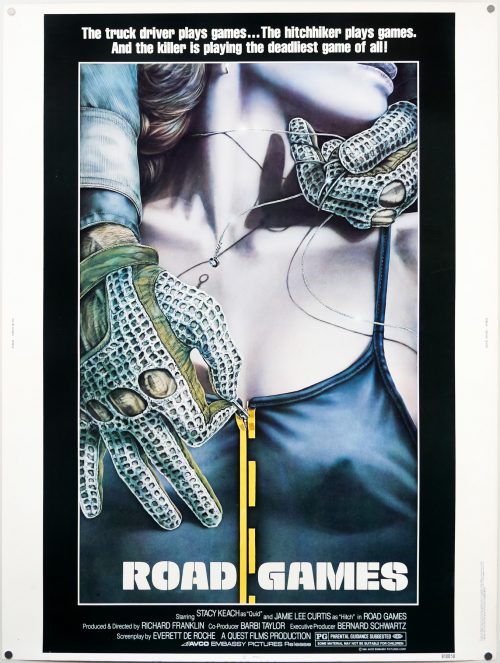
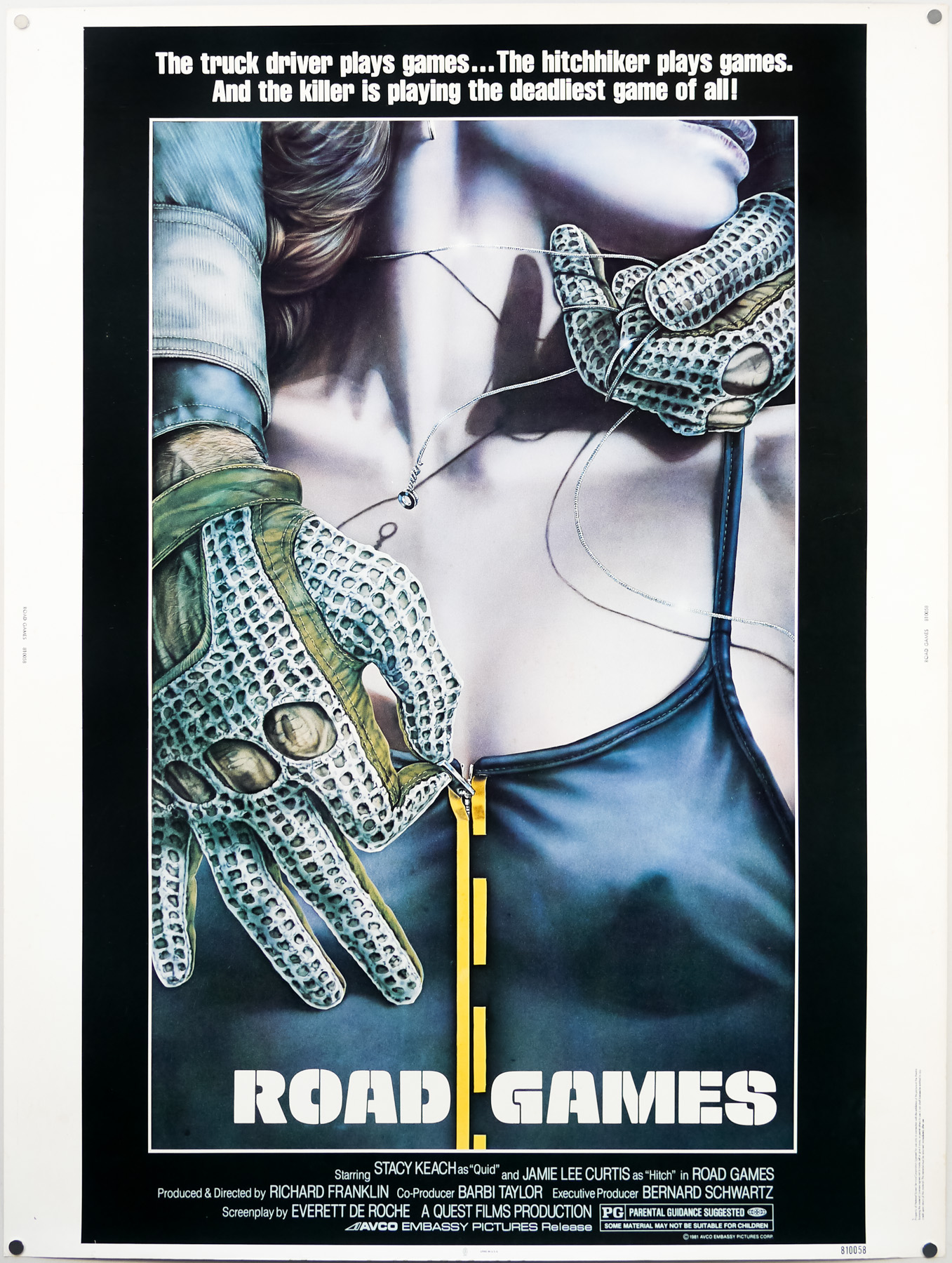
The truck driver plays games... The hitchhiker plays games. And the killer is playing the deadliest game of all!

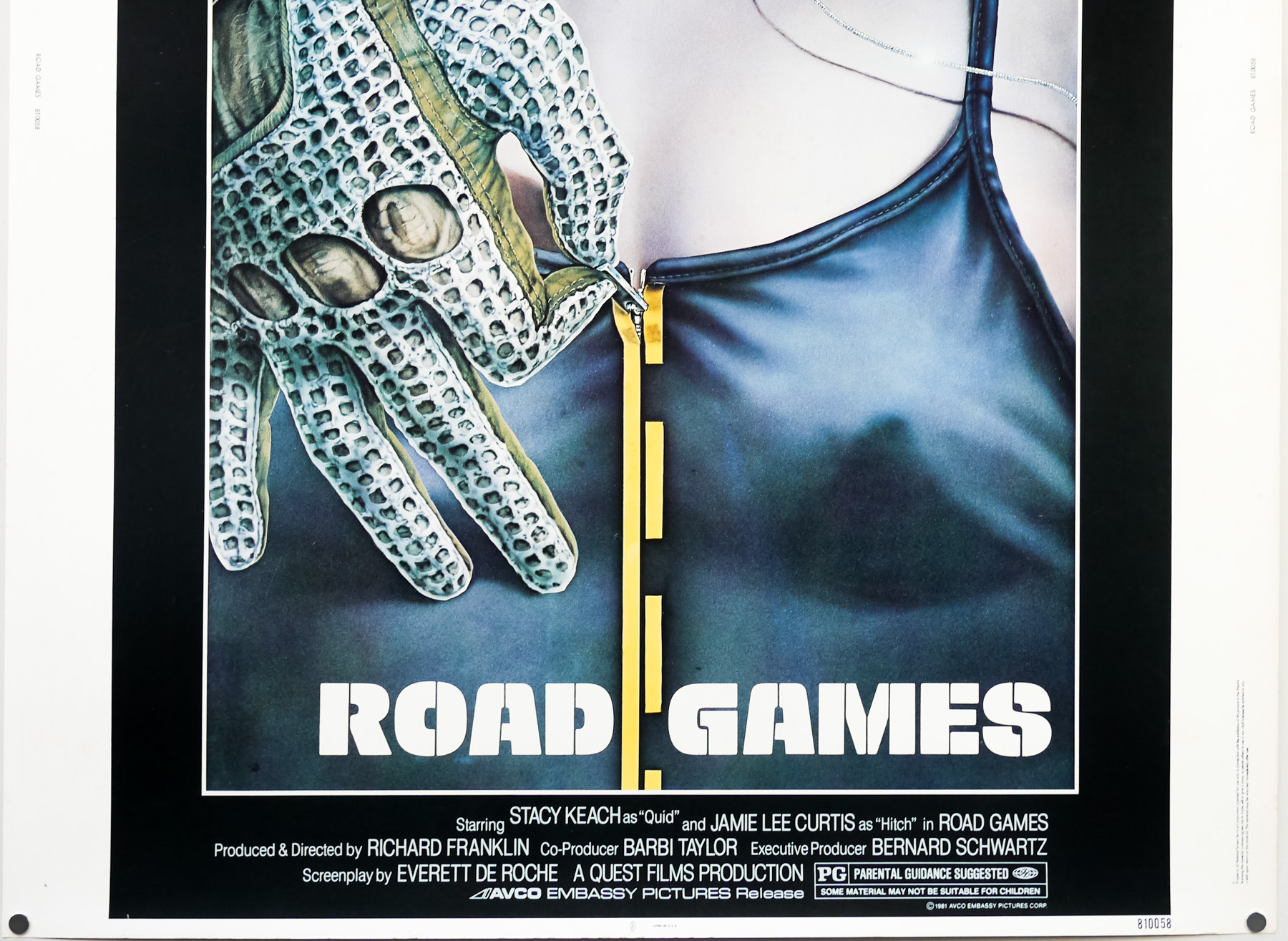
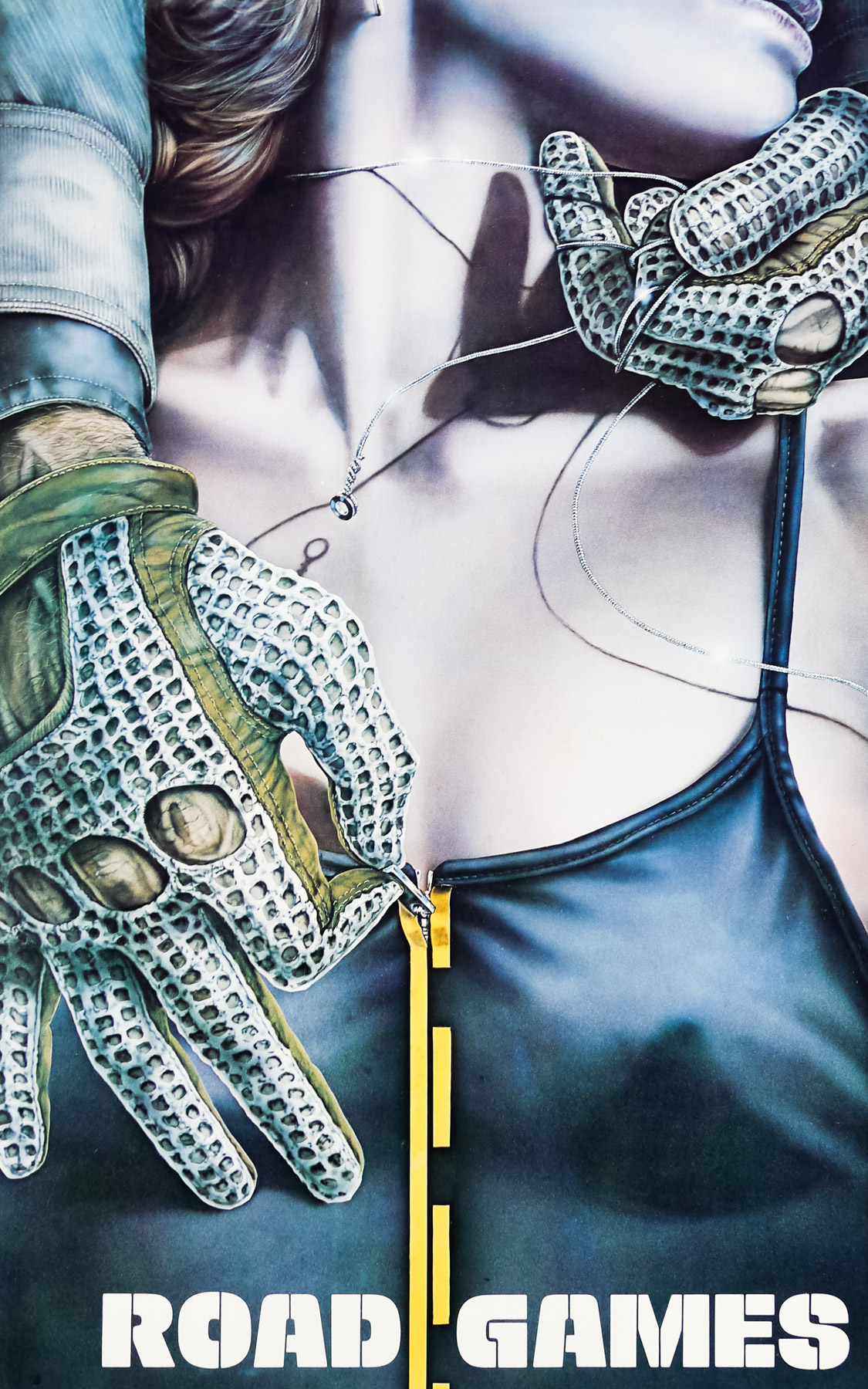
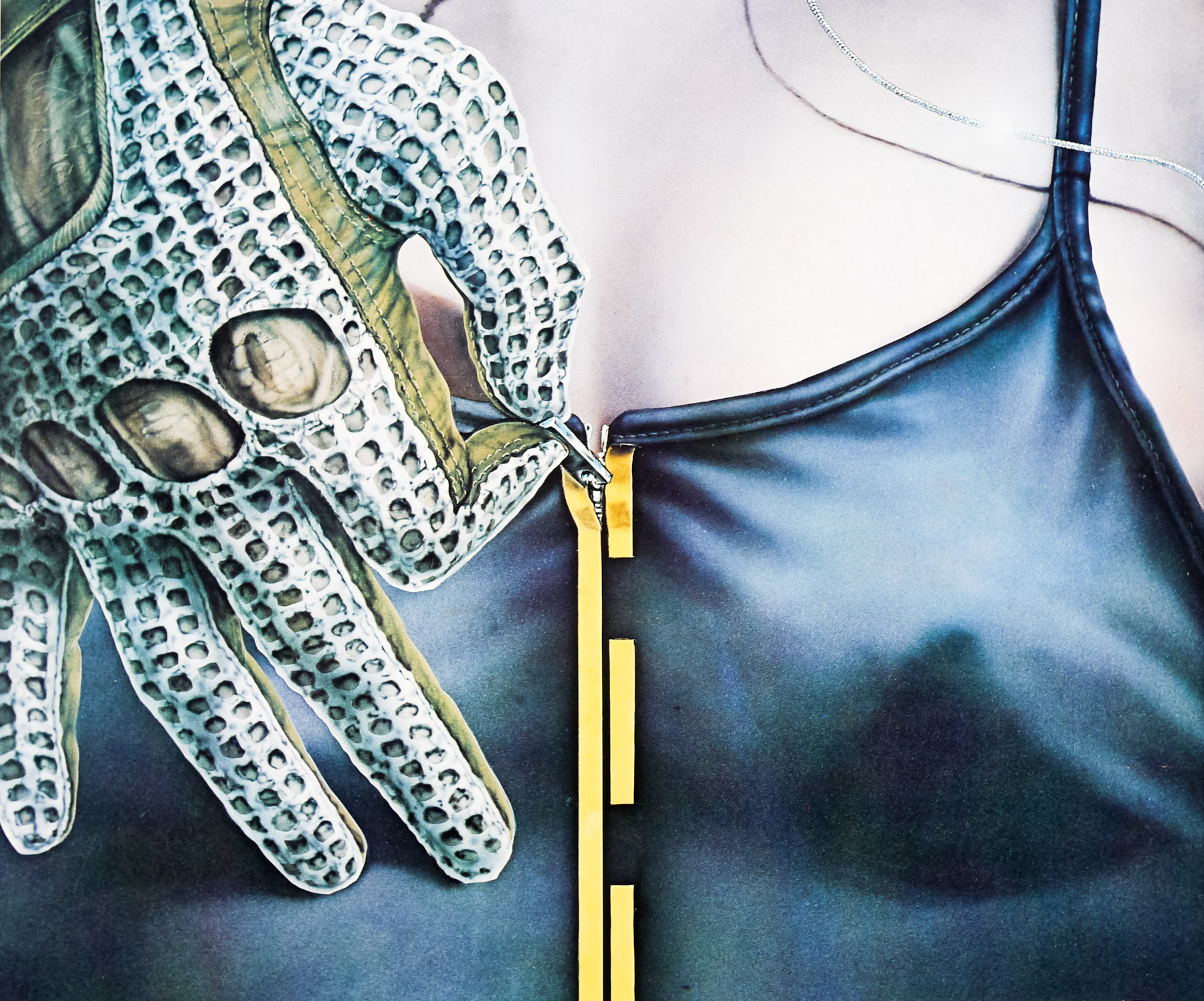
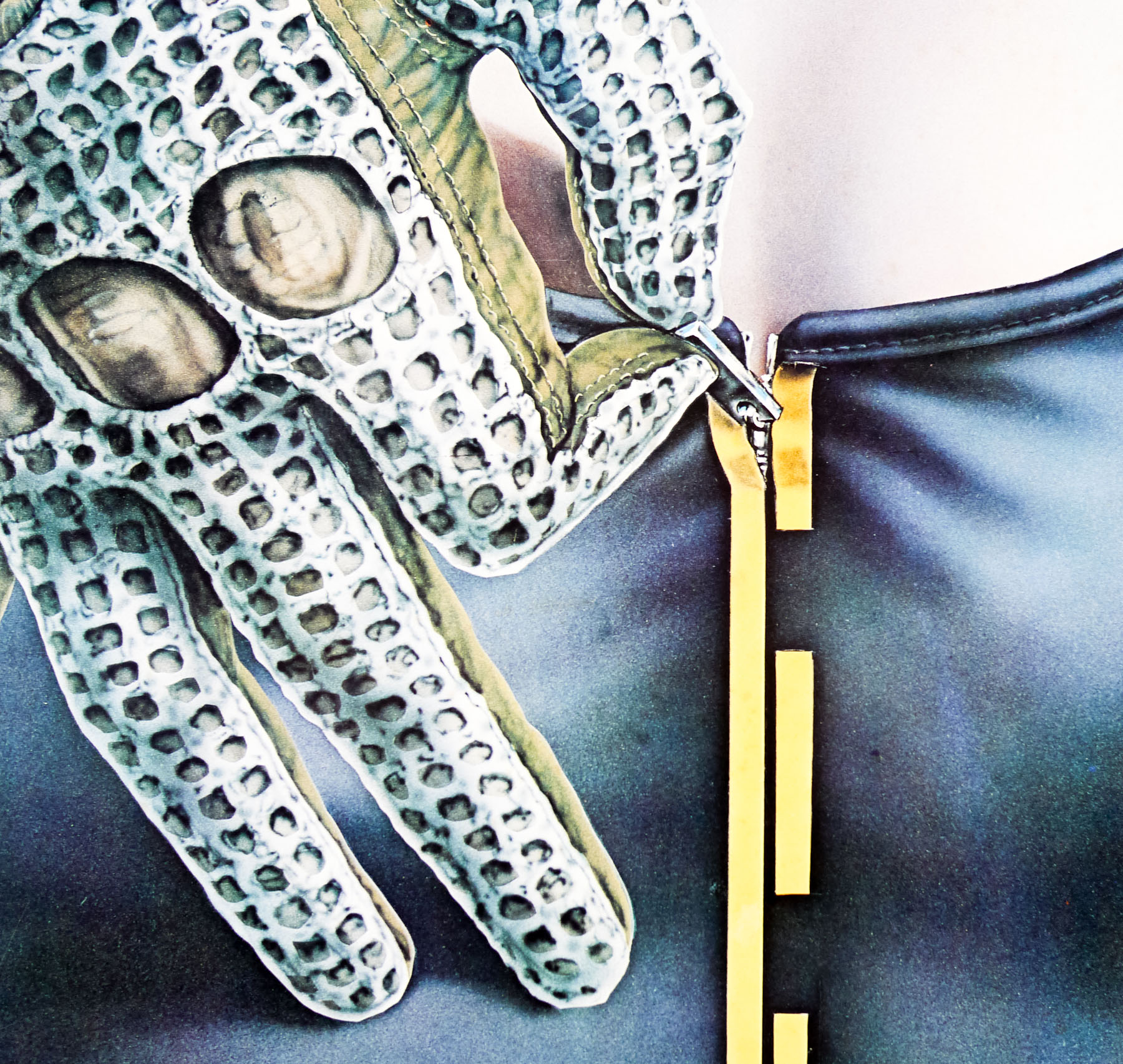
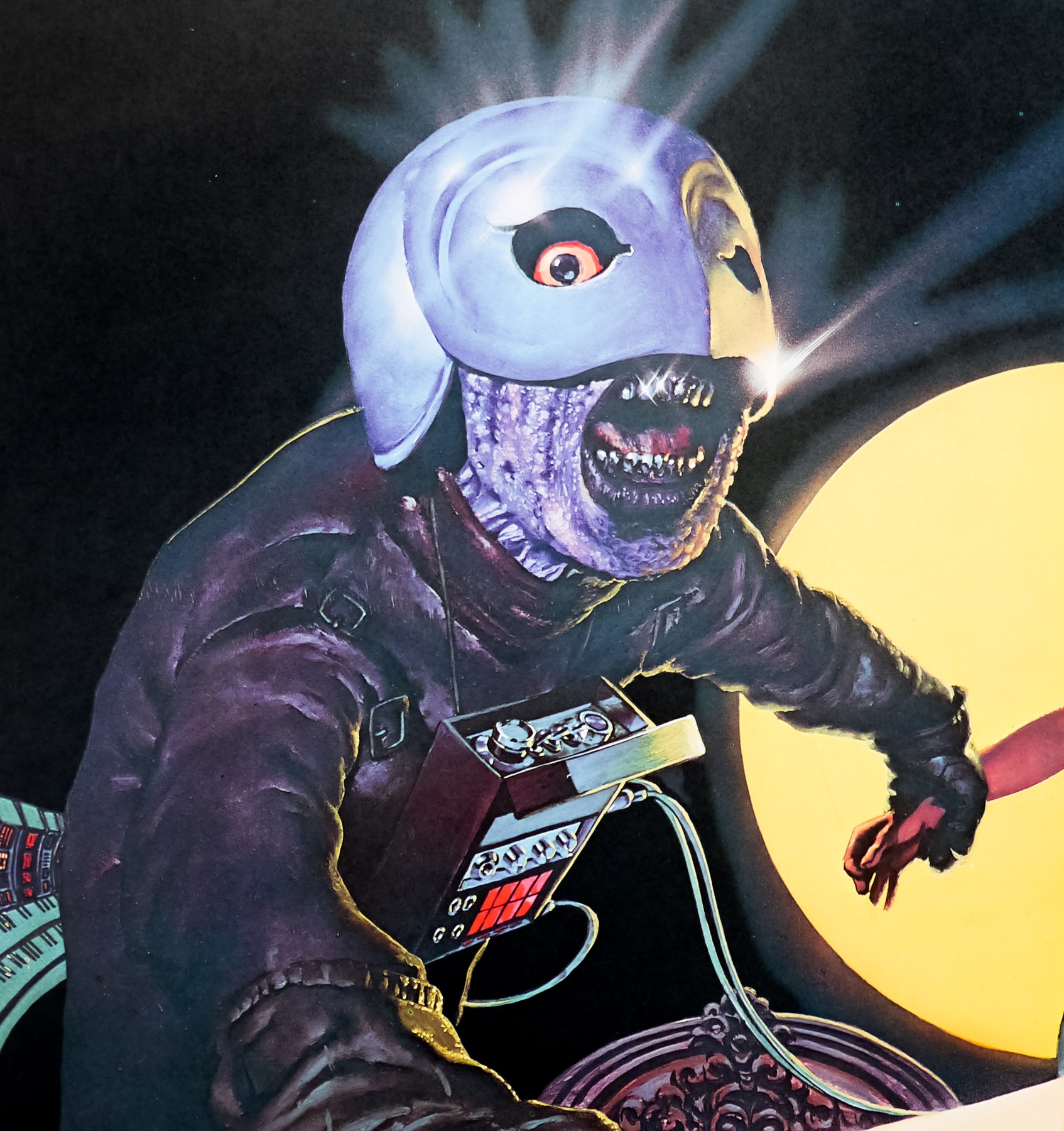
A superb design on this 30×40 poster for the US release of the excellent Australian thriller Road Games. The film’s director Richard Franklin was born in Melbourne but went on to study at the acclaimed film school at the University of Southern California, alongside future filmmakers such as George Lucas, Robert Zemeckis and John Carpenter. Franklin returned to Australia at the beginning of the 1970s when the country’s film industry was in resurgence and began directing, first on the TV police drama ‘Homicide’ and then helming a pair of soft-core porn features. In 1978 he directed Patrick, a horror film featuring a man in a coma wreaking havoc using telekinetic powers, which was a pivotal moment in Franklin’s career as it ultimately led to him being entrusted with the budget for Road Games, at the time Australia’s most expensive feature film.

Scripted by Everett De Roche, an Australian screenwriter who was a frequent collaborator with Franklin, the film was funded in part by Avco Embassy, the American independent studio and distributor, who paid $500k for all rights outside of Australia. Franklin apparently originally wanted to hire Sean Connery in the lead role but when salary demands ruled this out the production went with the prolific American character actor Stacy Keach, who is excellent in the role of Quid, a cross-country truck driver who features in practically every scene in the film. Whilst driving his cargo of meat across the country Quid becomes convinced that a man driving a green panelvan is a serial killer who has been butchering young women in various towns across Australia. Jamie Lee Curtis features, in what is essentially an extended cameo, as a hitchhiker who Quid picks up and quickly becomes embroiled in his plans to apprehend the suspect. The film is well paced and features several tense sequences and a moments of Mad Max-esque automobile carnage (the boat!).

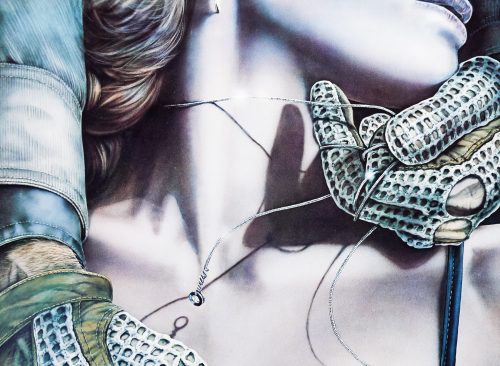
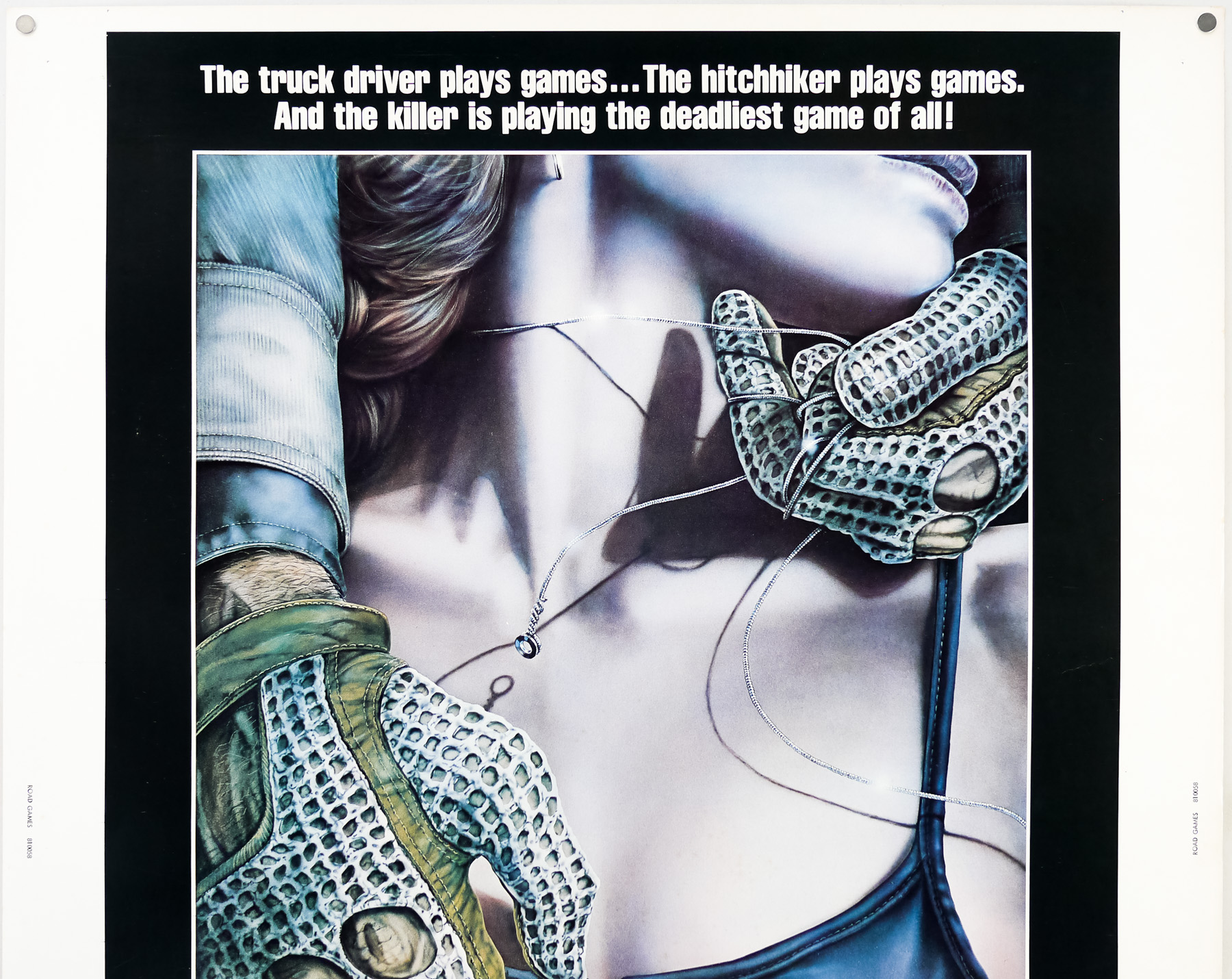
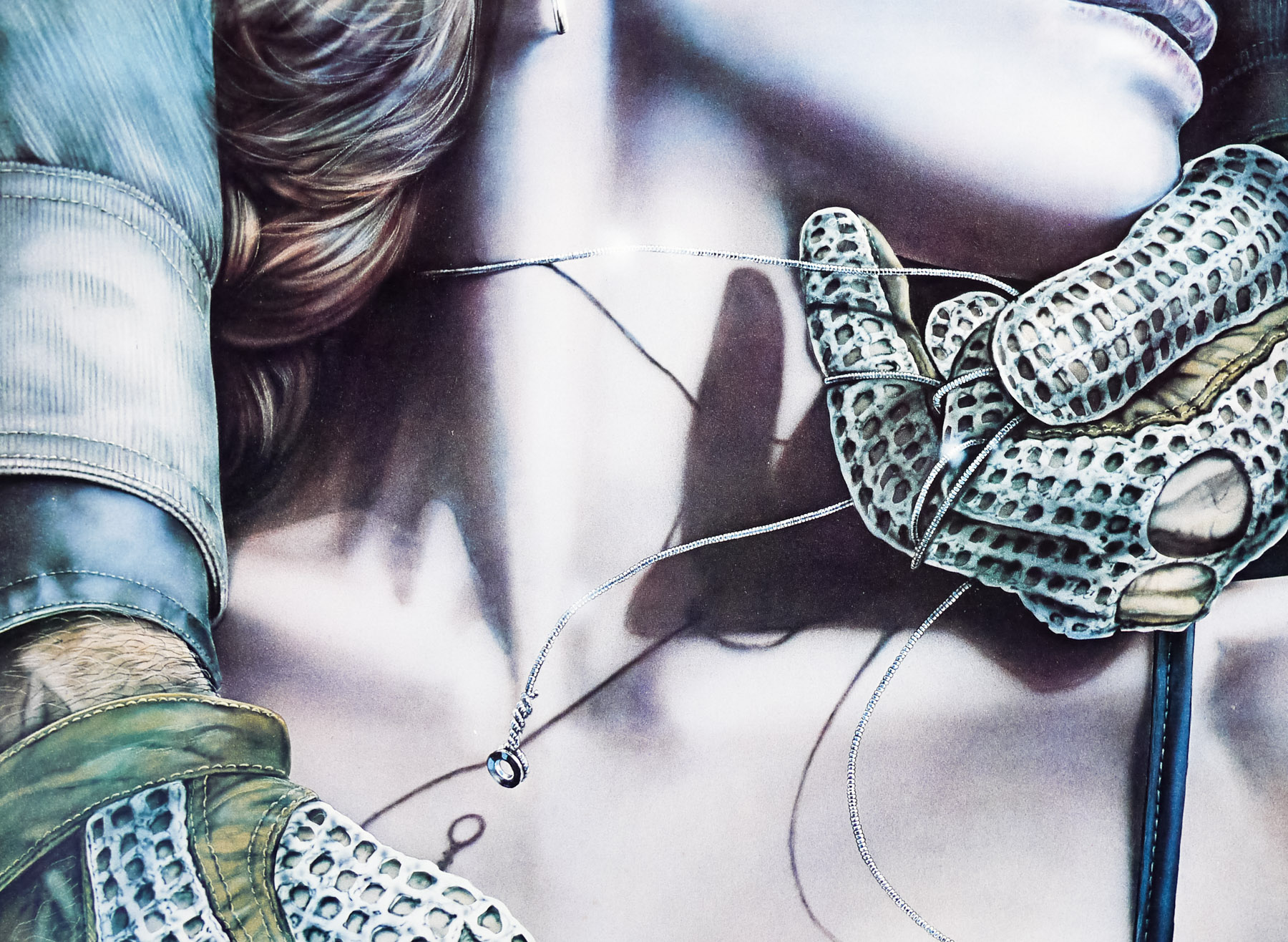
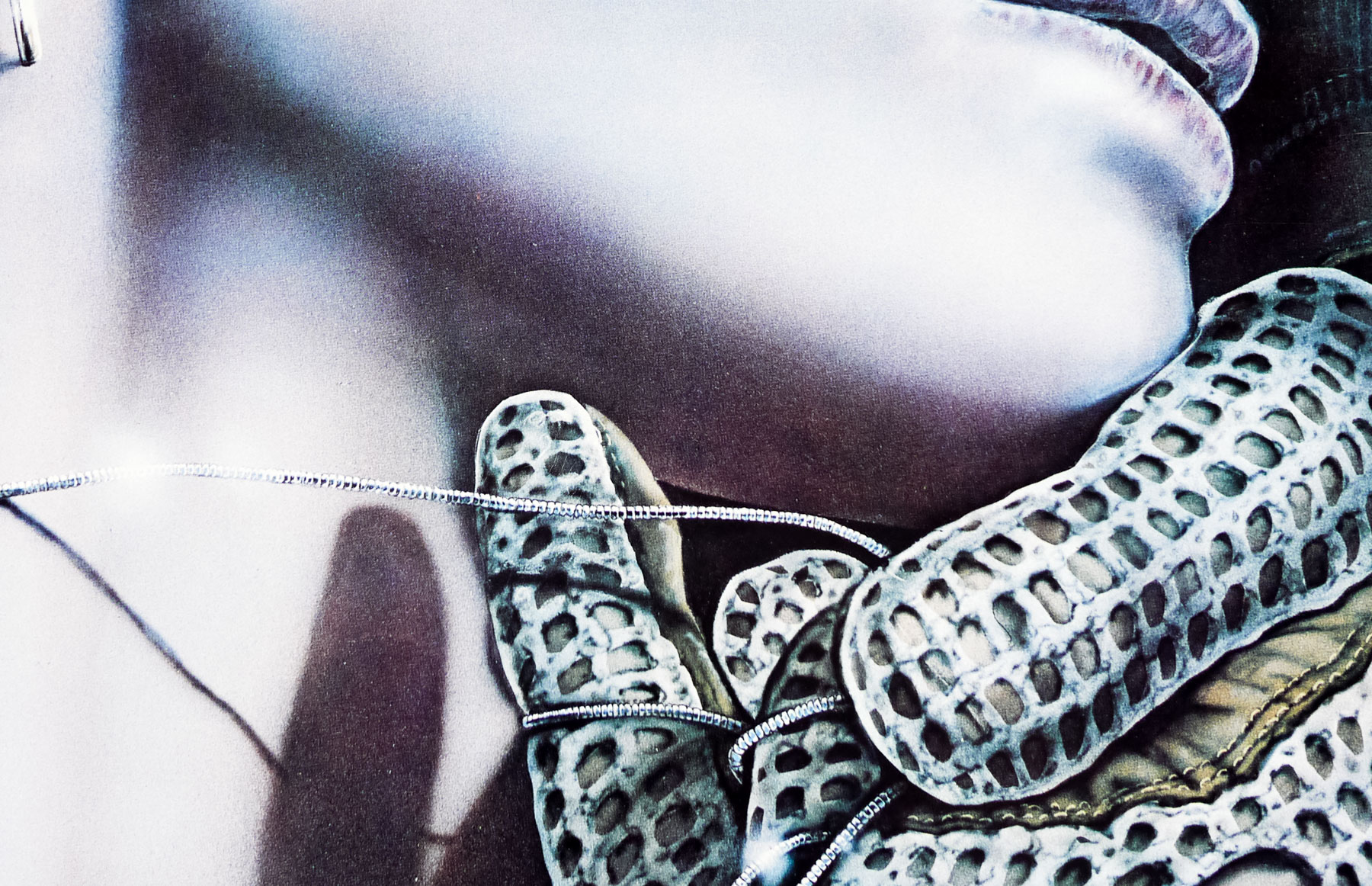
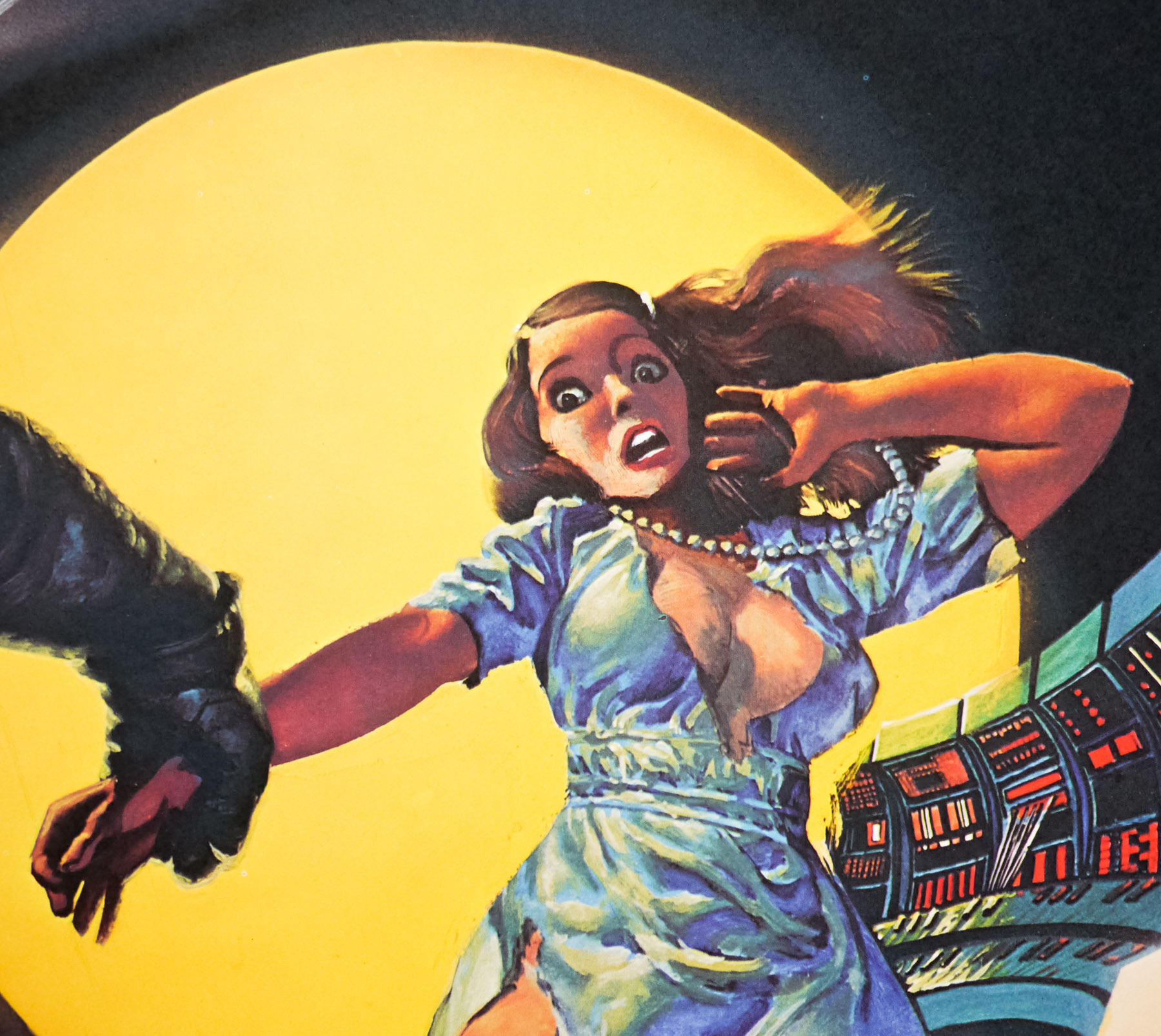
In this 2002 interview with Franklin the director complains that the US distributors sold the film as a Psycho-esque slasher, which he feels hurt its box-office performance. This artwork certainly backs up that claim, despite the early guitar string murder happening almost exactly as its depicted on this poster. The film is certainly more of a paranoid thriller than a true horror but it’s easy to see why the distributors wished to sell it as as such.

With thanks to a visitor to the site named Rudiger (see comment below), the artist was confirmed in 2023 as the late Joann Daley, an American who lived and worked in Los Angeles. Joann (as she signed her artwork) passed away in 2005 but before then she worked on several classic film posters, including one for David Cronenberg’s Scanners and the superb one for George A. Romero’s Creepshow. This poster was painted to a design by her husband James Costello.

The same image has been used several times since the original cinema release on VHS and DVD covers. The Australian poster is markedly different.

Hellraiser / one sheet / USA

12.06.13

Poster Poster
Title
Hellraiser
AKA
Clive Barker's Hellraiser (UK - complete title)
Year of Film
1987
Director
Clive Barker
Starring
Andrew Robinson, Doug Bradley, Clare Higgins, Ashley Laurence, Sean Chapman, Oliver Smith
Origin of Film
UK
Genre(s) of Film
Andrew Robinson, Doug Bradley, Clare Higgins, Ashley Laurence, Sean Chapman, Oliver Smith,
Type of Poster
One sheet
Style of Poster
--
Origin of Poster
USA
Year of Poster
1987
Designer
Pulse Advertising
Artist
--
Size (inches)
27 2/16" x 41 1/16"
SS or DS
SS
NSS #
--
Tagline
Demon to some. Angel to others. | He'll tear your soul apart

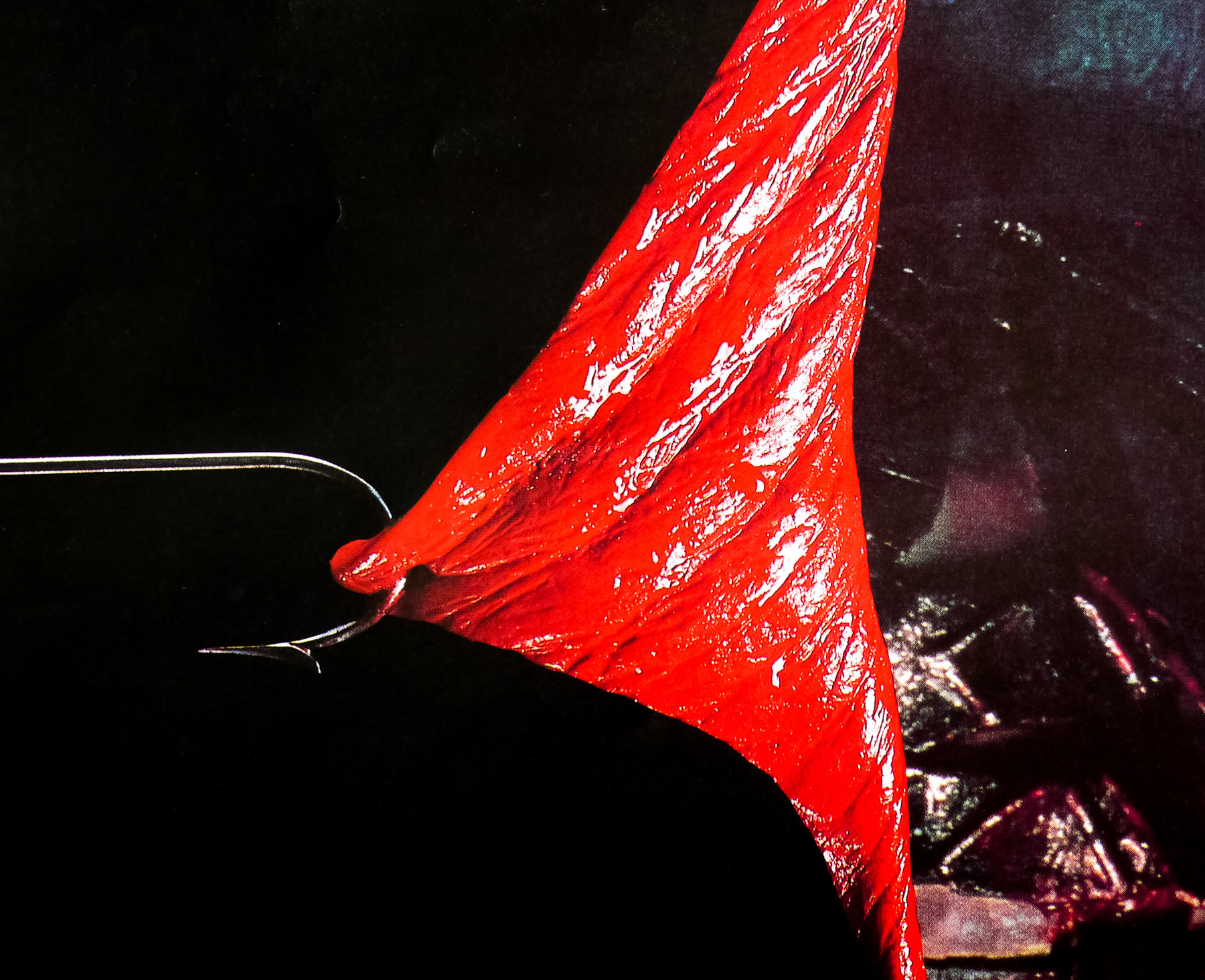
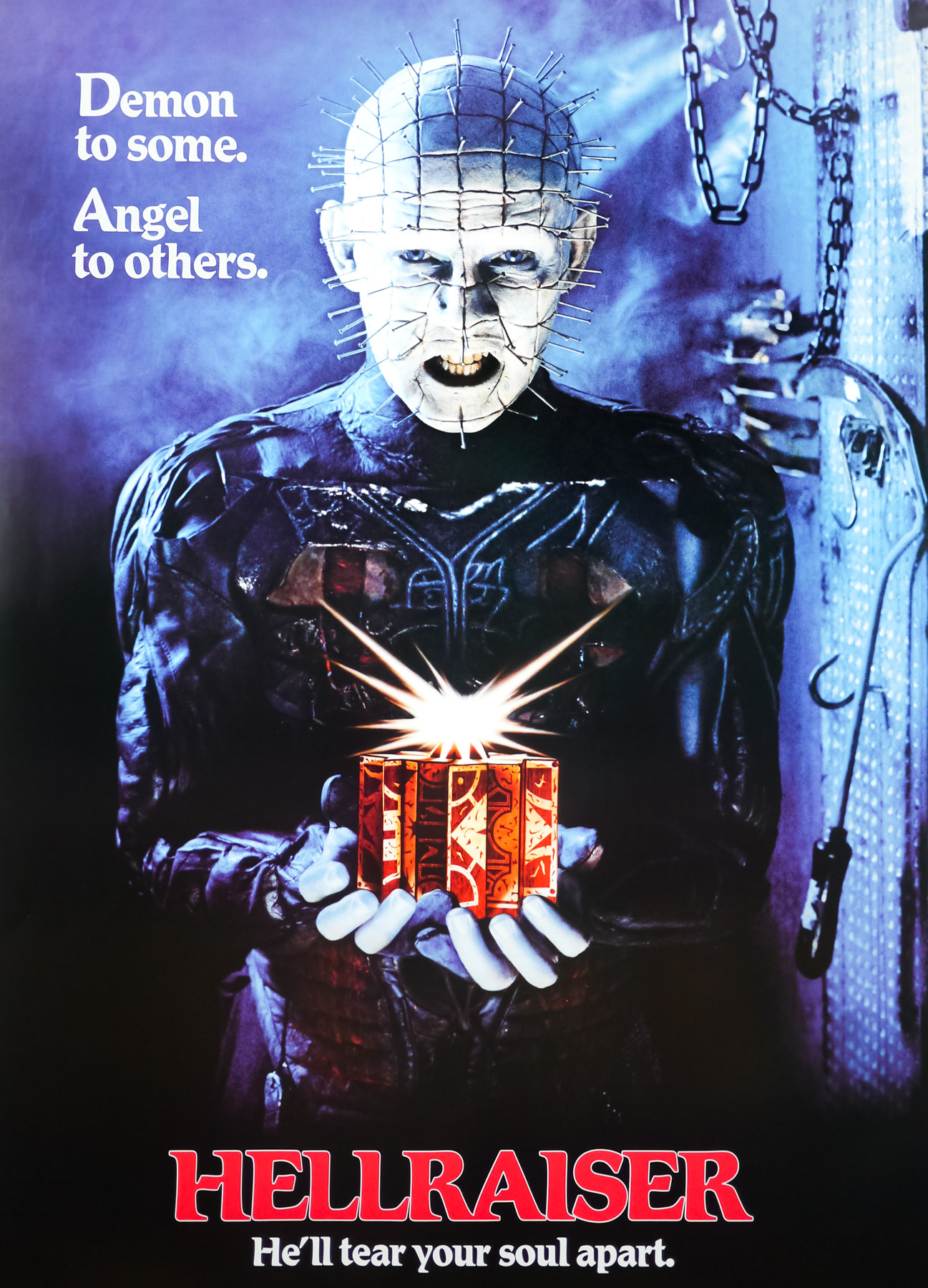
Unquestionably one of the truly great British horror films, Clive Barker‘s Hellraiser launched an enduring franchise and established the character of Pinhead (or ‘Priest’, as Barker prefers him to be known) as one of horror’s most beloved villains. Based on the 1986 novella The Hellbound Heart, Barker made the decision to both write the screenplay and direct the film after being disappointed with how two of his earlier scripts had been treated by other directors. The story begins as seedy hedonist Frank Cotton (Sean Chapman) purchases a golden puzzle box from an antiques dealer in Morocco believing it holds the key to the ‘ultimate sensual experience’. On returning to his London home, Frank opens the puzzle box and is promptly torn apart by massive hooks controlled by a group of horribly scarred and mutilated humanoids known as the Cenobites. The lead Cenobite (Pinhead, played by Doug Bradley) twists the box back to its original shape and they pass back into their realm with Frank’s remains with the room returning to normal.

Sometime later, Frank’s brother Larry (Andrew Robinson) and his second wife Julia (Clare Higgins) move into the same house assuming that Frank is in jail in some exotic location. Larry’s daughter Kirsty (Ashley Laurence) declines the offer to move in with her stepmother and chooses to find her own place. When Larry accidentally cuts his hand and drips blood onto the attic floor it somehow reaches Frank in his prison in the other realm and starts to resurrect his body (in a stunning special effects sequence). Later that day Julia finds Frank in the attic and the pair rekindle an affair they had started some years before. Julia agrees to help Frank to fully resurrect himself, which can only happen through blood sacrifices so she begins to seduce and bring back random men to the house before bludgeoning them to death for Frank to consume. Kirsty begins to suspect something is afoot and soon she is having her own encounter with the Cenobites who are displeased to learn that one of their prisoners has escaped and is on a murder spree.

What makes the film stand out is the excellent script by Barker which prevents the characters from being the usual one-dimensional death fodder usually seen in horror films, particularly those being released towards the end of the 1980s. The production, costume and makeup design are all excellent, with all of the Cenobite designs being particularly memorable. There’s only one stop-motion animation sequence at the end of the film that belies the productions low budget and the film stands up extremely well today. Although the series is up to its ninth film instalment, Barker never directed another and was only producer on the first two sequels. After the fourth film (1996’s Bloodline) the series became a straight-to-video enterprise and quality dropped significantly from then onwards.

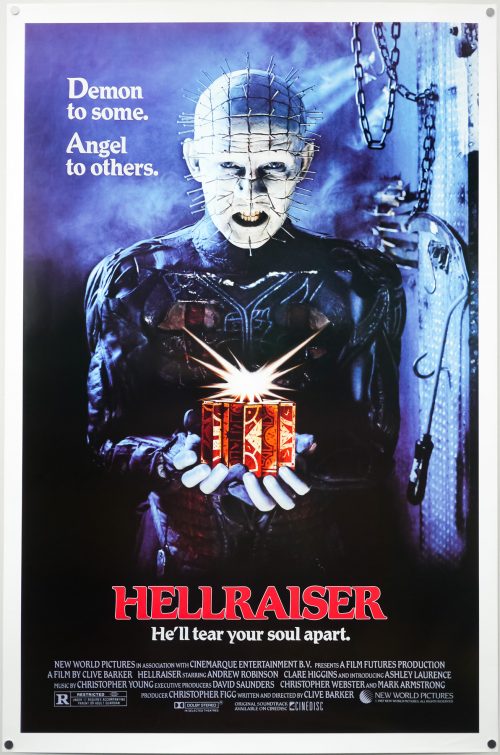
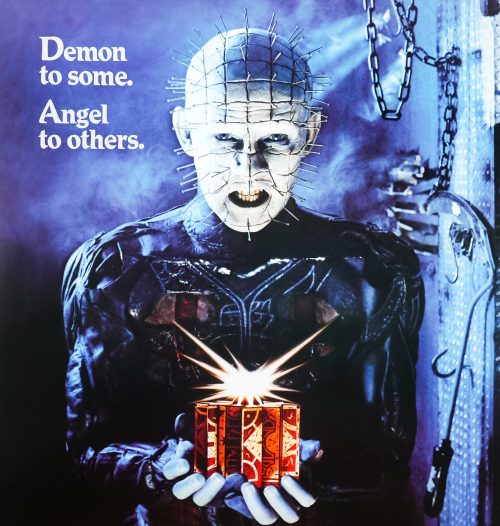
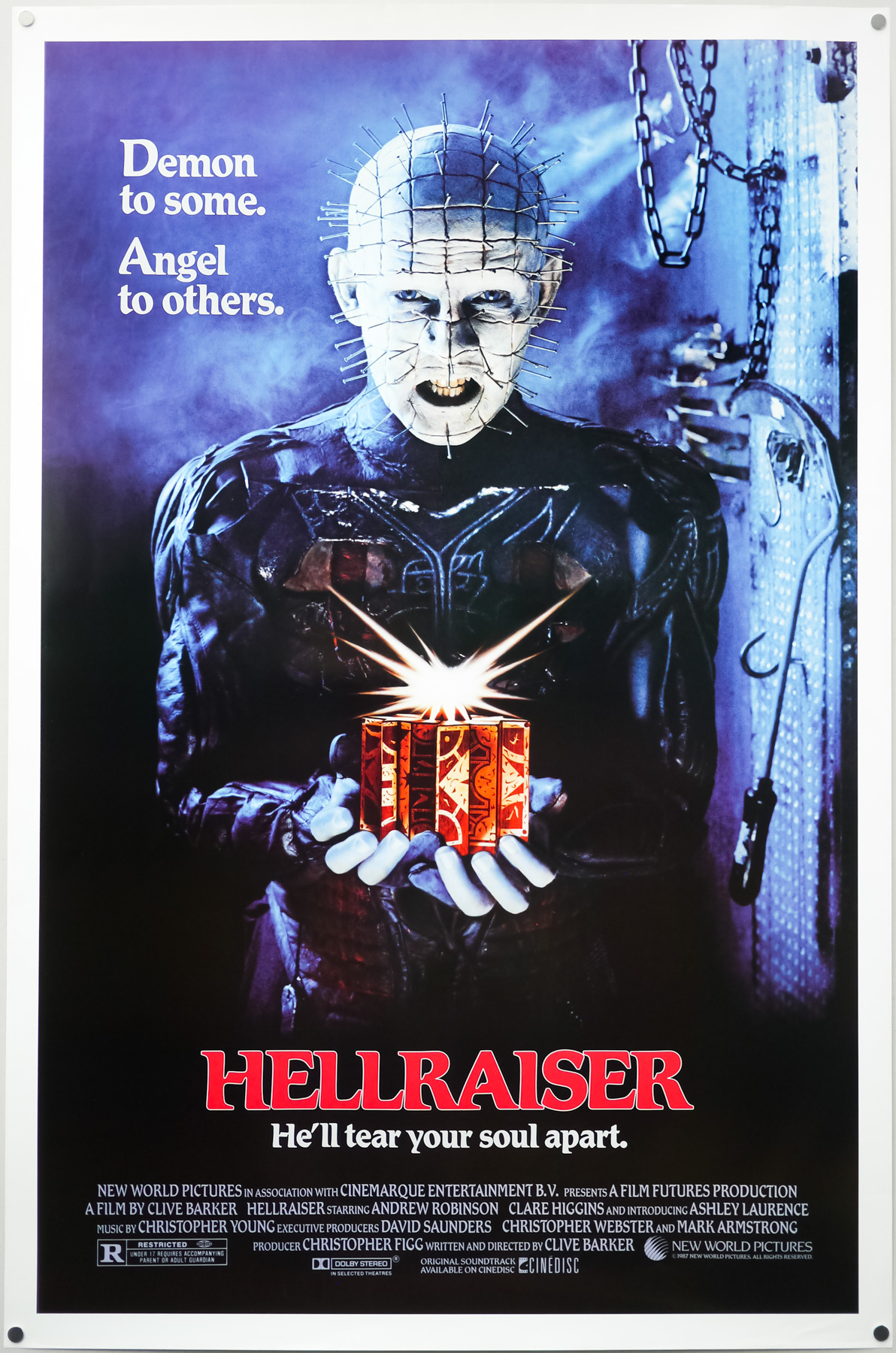
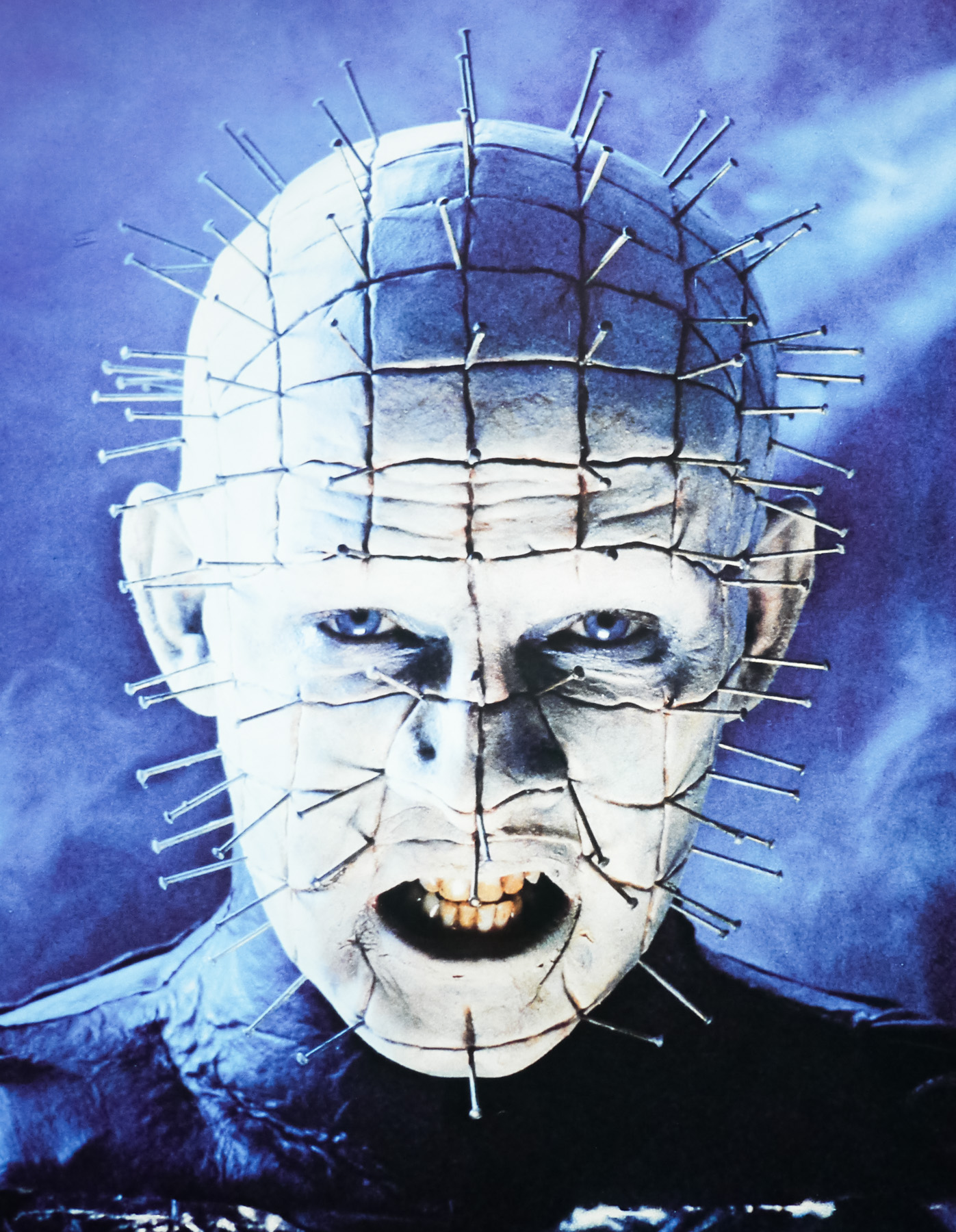
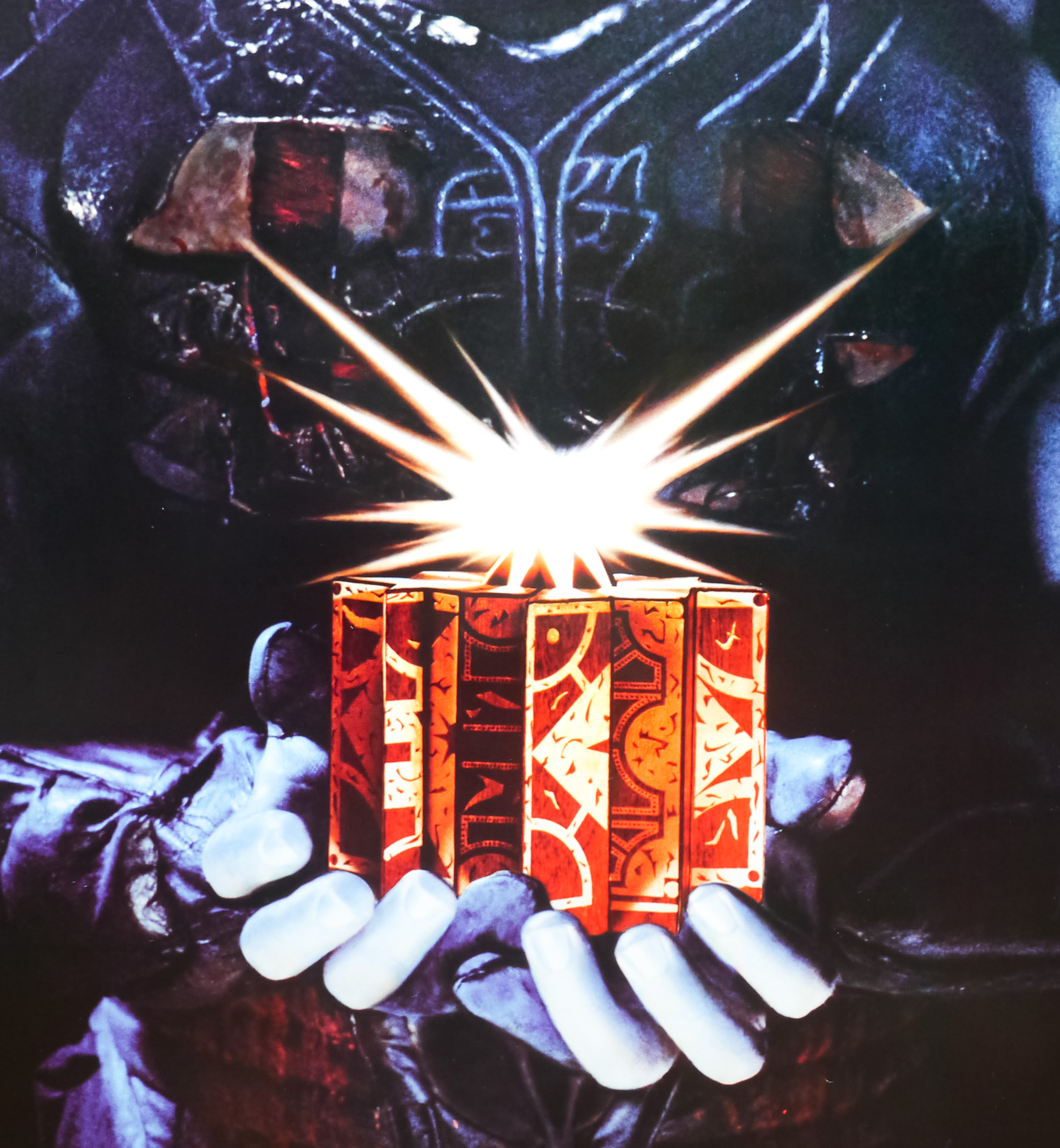
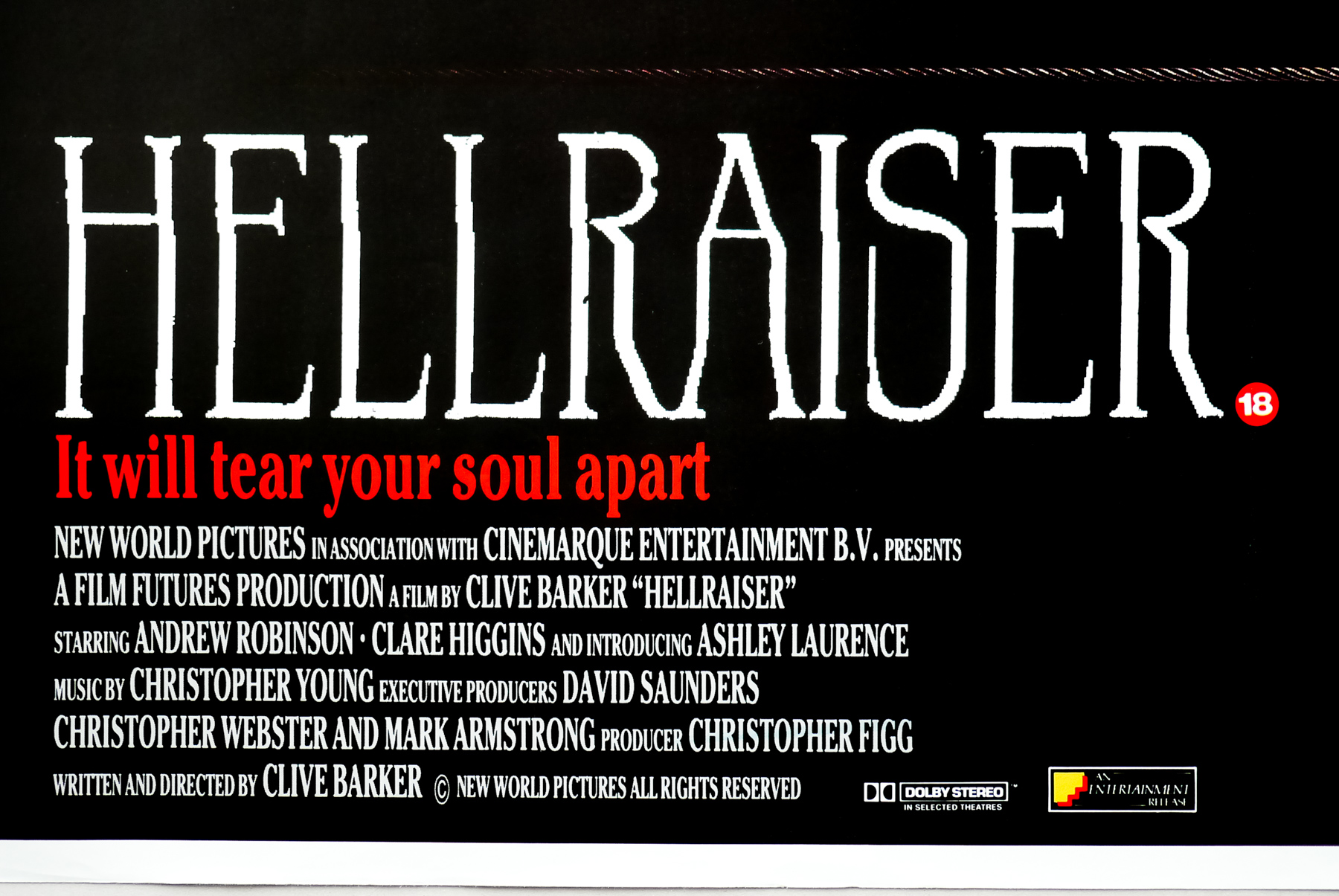
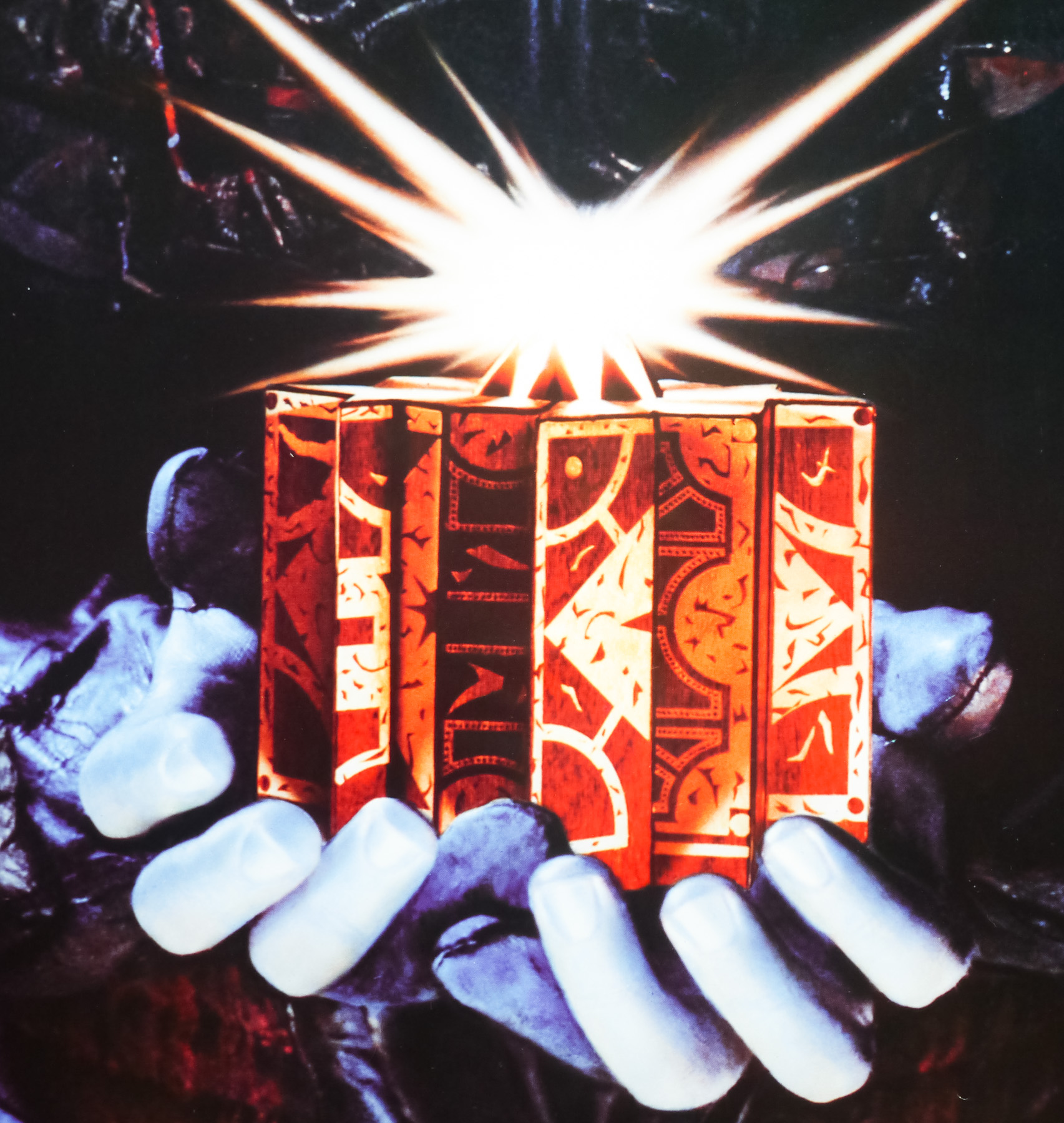
This US one sheet, designed by Pulse Advertising, features a great image of Pinhead holding the puzzlebox, alongside a very memorable tagline. The lead Cenobite would be front and centre on posters for the film used around the world, as well as all theatrically-released sequels. To see more posters designed by Pulse, check out this page on IMPAwards and the posters I’ve collected that were designed by them can be seen here.

Hellraiser / quad / UK

14.02.14

Poster Poster
Title
Hellraiser
AKA
Clive Barker's Hellraiser (UK - complete title)
Year of Film
1987
Director
Clive Barker
Starring
Andrew Robinson, Doug Bradley, Clare Higgins, Ashley Laurence, Sean Chapman, Oliver Smith
Origin of Film
UK
Genre(s) of Film
Andrew Robinson, Doug Bradley, Clare Higgins, Ashley Laurence, Sean Chapman, Oliver Smith,
Type of Poster
Quad
Style of Poster
--
Origin of Poster
UK
Year of Poster
1987
Designer
Marcus Silversides
Artist
--
Size (inches)
30 1/16" x 40"
SS or DS
SS
NSS #
--
Tagline
It will tear your soul apart.

Unquestionably one of the truly great British horror films, Clive Barker‘s Hellraiser launched an enduring franchise and established the character of Pinhead (or ‘Priest’, as Barker prefers him to be known) as one of horror’s most beloved villains. Based on the 1986 novella The Hellbound Heart, Barker made the decision to both write the screenplay and direct the film after being disappointed with how two of his earlier scripts had been treated by other directors. The story begins as seedy hedonist Frank Cotton (Sean Chapman) purchases a golden puzzle box from an antiques dealer in Morocco believing it holds the key to the ‘ultimate sensual experience’. On returning to his London home, Frank opens the puzzle box and is promptly torn apart by massive hooks controlled by a group of horribly scarred and mutilated humanoids known as the Cenobites. The lead Cenobite (Pinhead, played by Doug Bradley) twists the box back to its original shape and they pass back into their realm with Frank’s remains with the room returning to normal.

Sometime later, Frank’s brother Larry (Andrew Robinson) and his second wife Julia (Clare Higgins) move into the same house assuming that Frank is in jail in some exotic location. Larry’s daughter Kirsty (Ashley Laurence) declines the offer to move in with her stepmother and chooses to find her own place. When Larry accidentally cuts his hand and drips blood onto the attic floor it somehow reaches Frank in his prison in the other realm and starts to resurrect his body (in a stunning special effects sequence). Later that day Julia finds Frank in the attic and the pair rekindle an affair they had started some years before. Julia agrees to help Frank to fully resurrect himself, which can only happen through blood sacrifices so she begins to seduce and bring back random men to the house before bludgeoning them to death for Frank to consume. Kirsty begins to suspect something is afoot and soon she is having her own encounter with the Cenobites who are displeased to learn that one of their prisoners has escaped and is on a murder spree.

What makes the film stand out is the excellent script by Barker which prevents the characters from being the usual one-dimensional death fodder usually seen in horror films, particularly those being released towards the end of the 1980s. The production, costume and makeup design are all excellent, with all of the Cenobite designs being particularly memorable. There’s only one stop-motion animation sequence at the end of the film that belies the productions low budget and the film stands up extremely well today. Although the series is up to its ninth film instalment, Barker never directed another and was only producer on the first two sequels. After the fourth film (1996’s Bloodline) the series became a straight-to-video enterprise and quality dropped significantly from then onwards.

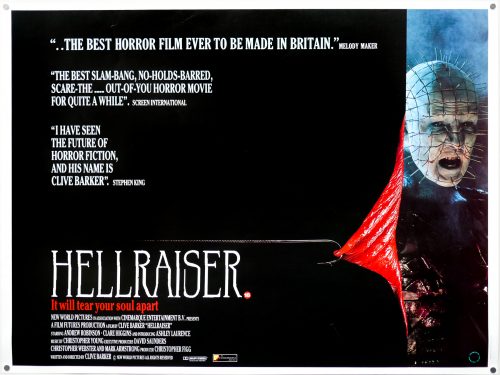
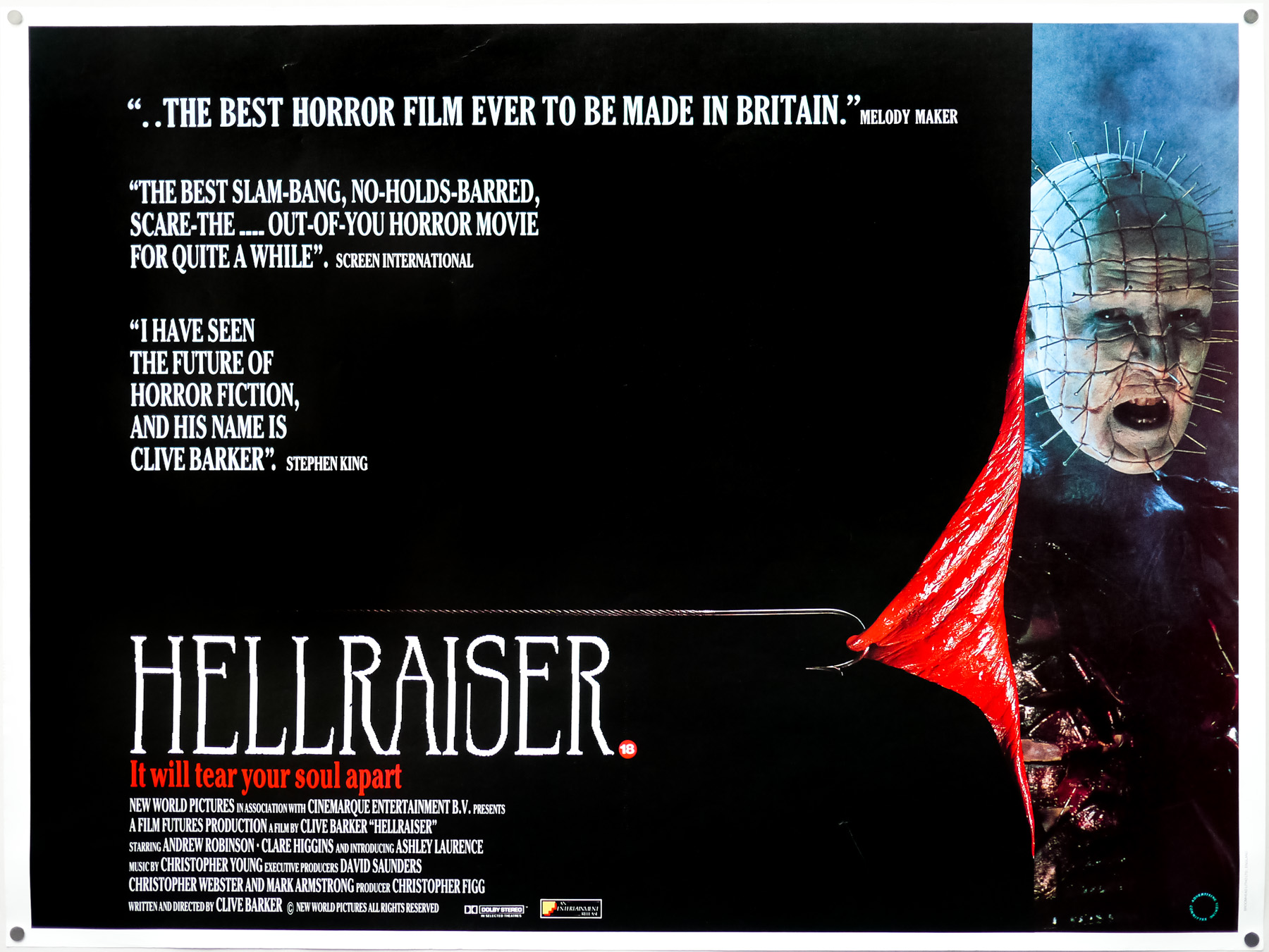
This UK quad features an image of Pinhead that differs from the American one sheet and the tagline (in red text) is slightly modified as well. The poster was designed by Marcus Silversides a freelance British designer and illustrator. The lead Cenobite would be front and centre on posters for the film used around the world, as well as all theatrically-released sequels.

ROTOR / one sheet / USA

02.05.14

Poster Poster
Title
ROTOR
AKA
R.O.T.O.R. (alt. spelling)
Year of Film
1988
Director
Cullen Blaine
Starring
Margaret Trigg, Richard Gesswein, Jayne Smith, James Cole, Stan Moore, Nanette Kuczek, Brad Overturf, Shawn Brown, Michael Hunter, Victor Kwasnick
Origin of Film
USA
Genre(s) of Film
Margaret Trigg, Richard Gesswein, Jayne Smith, James Cole, Stan Moore, Nanette Kuczek, Brad Overturf, Shawn Brown, Michael Hunter, Victor Kwasnick,
Type of Poster
One sheet
Style of Poster
--
Origin of Poster
USA
Year of Poster
1988
Designer
Unknown
Artist
Unknown
Size (inches)
27 3/16" x 41"
SS or DS
SS
NSS #
--
Tagline
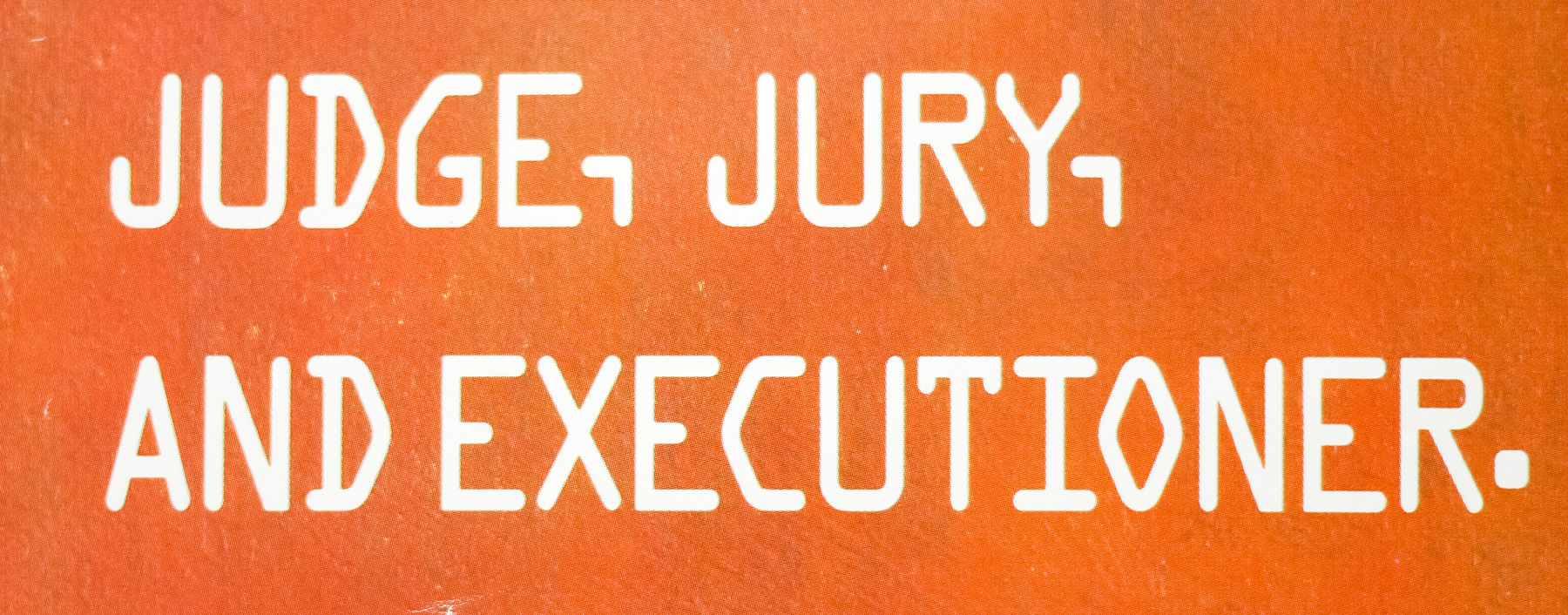
Judge, jury, and executioner.

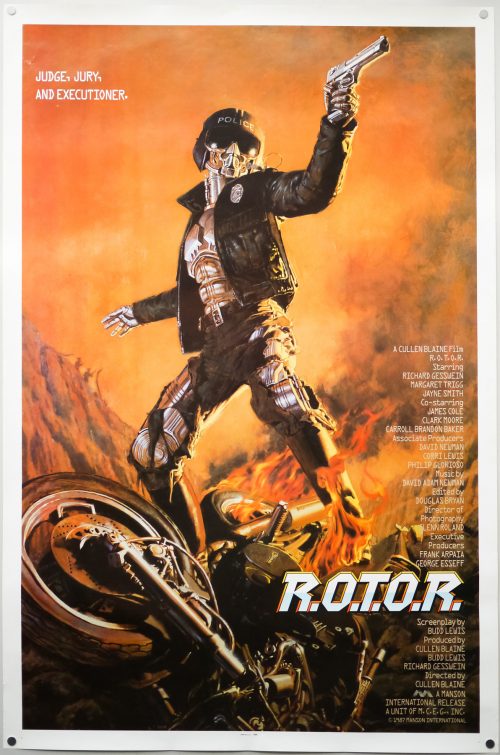
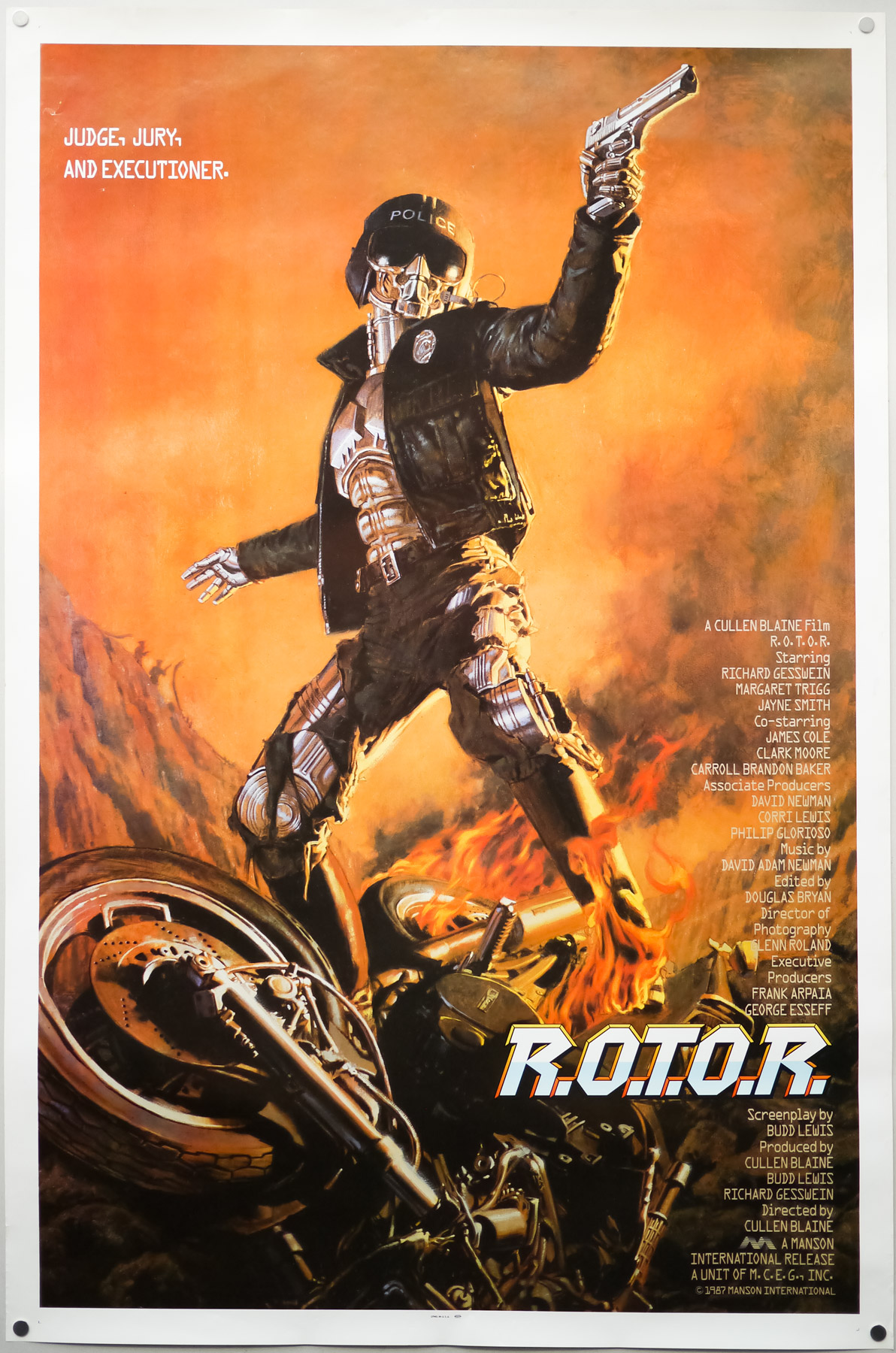
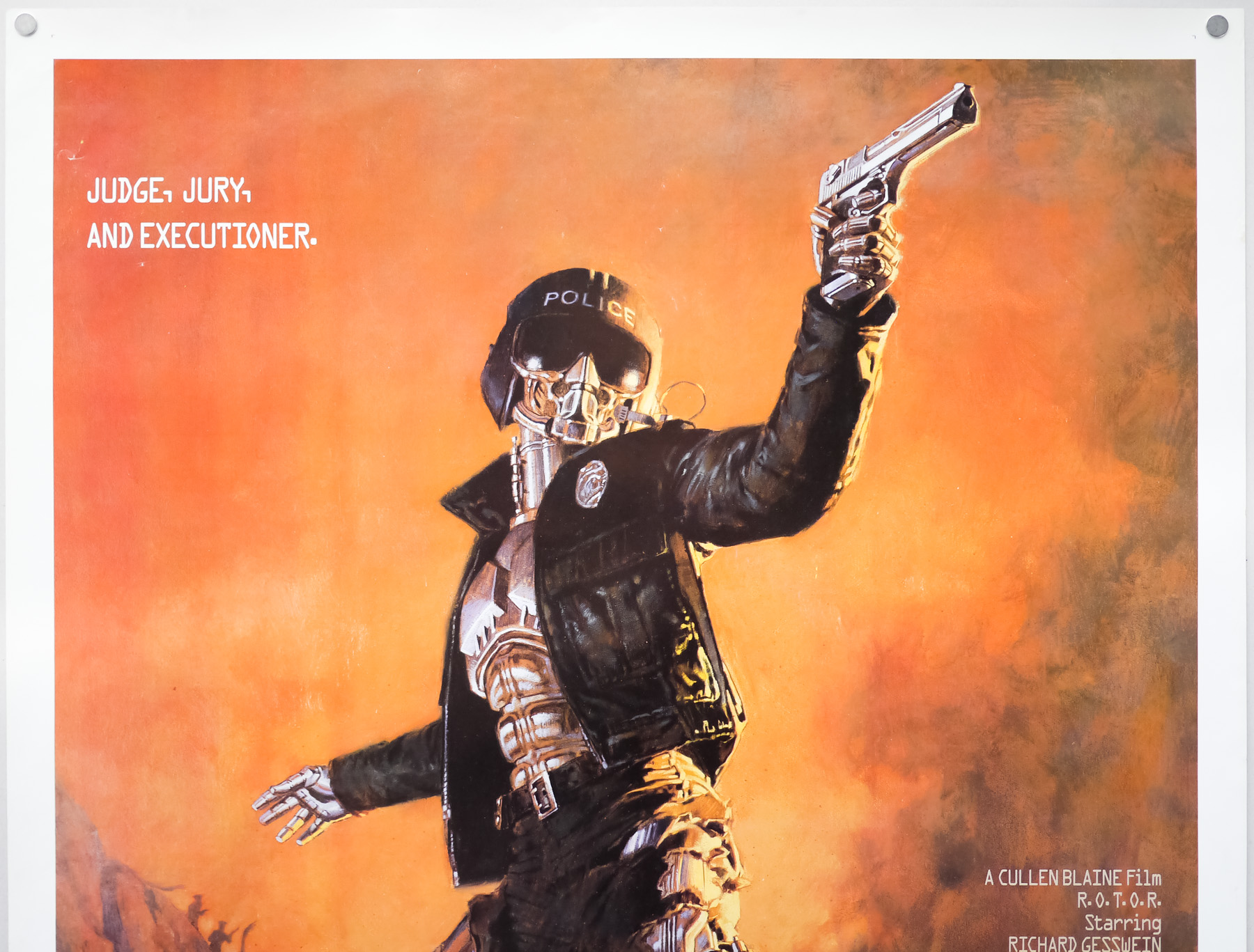
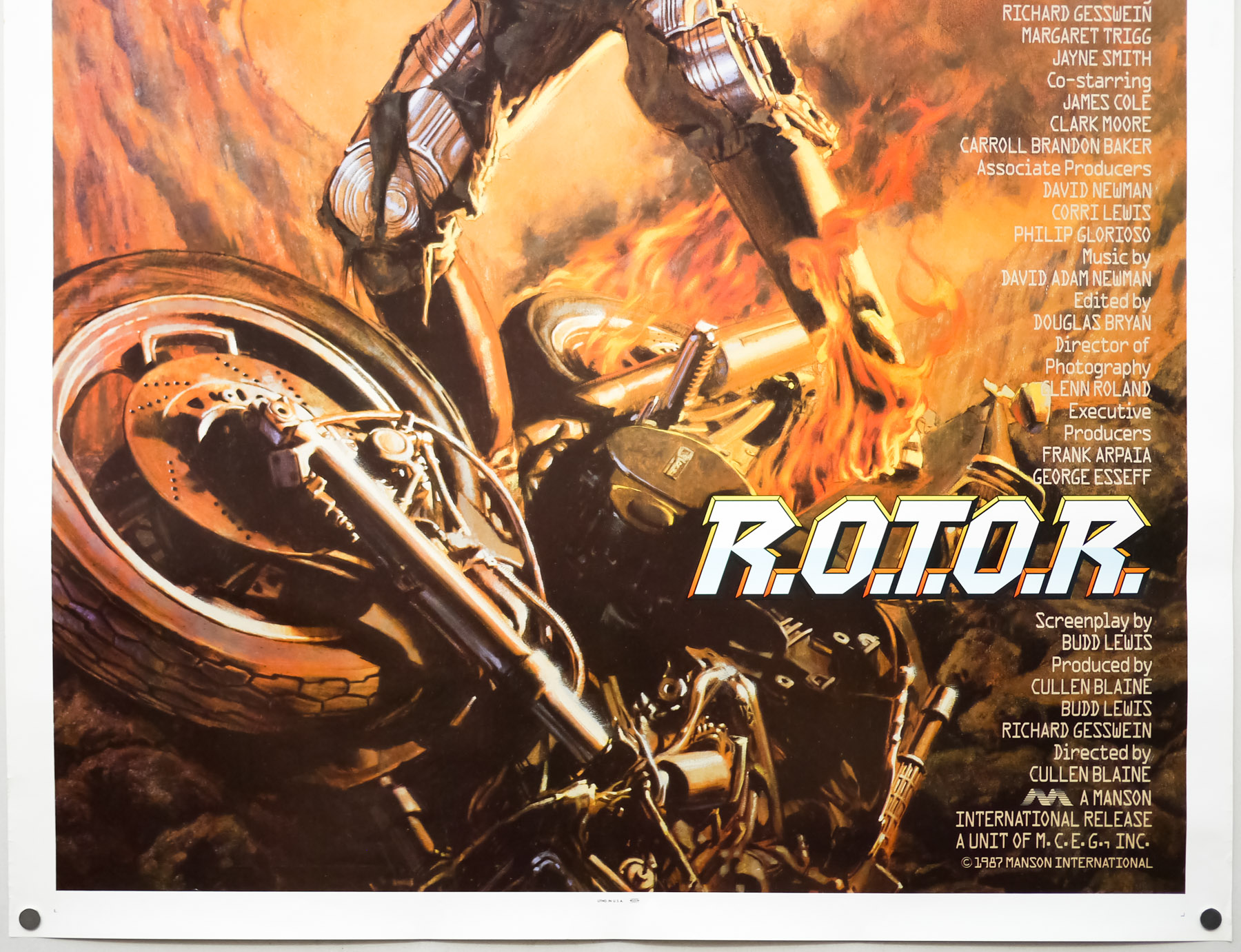
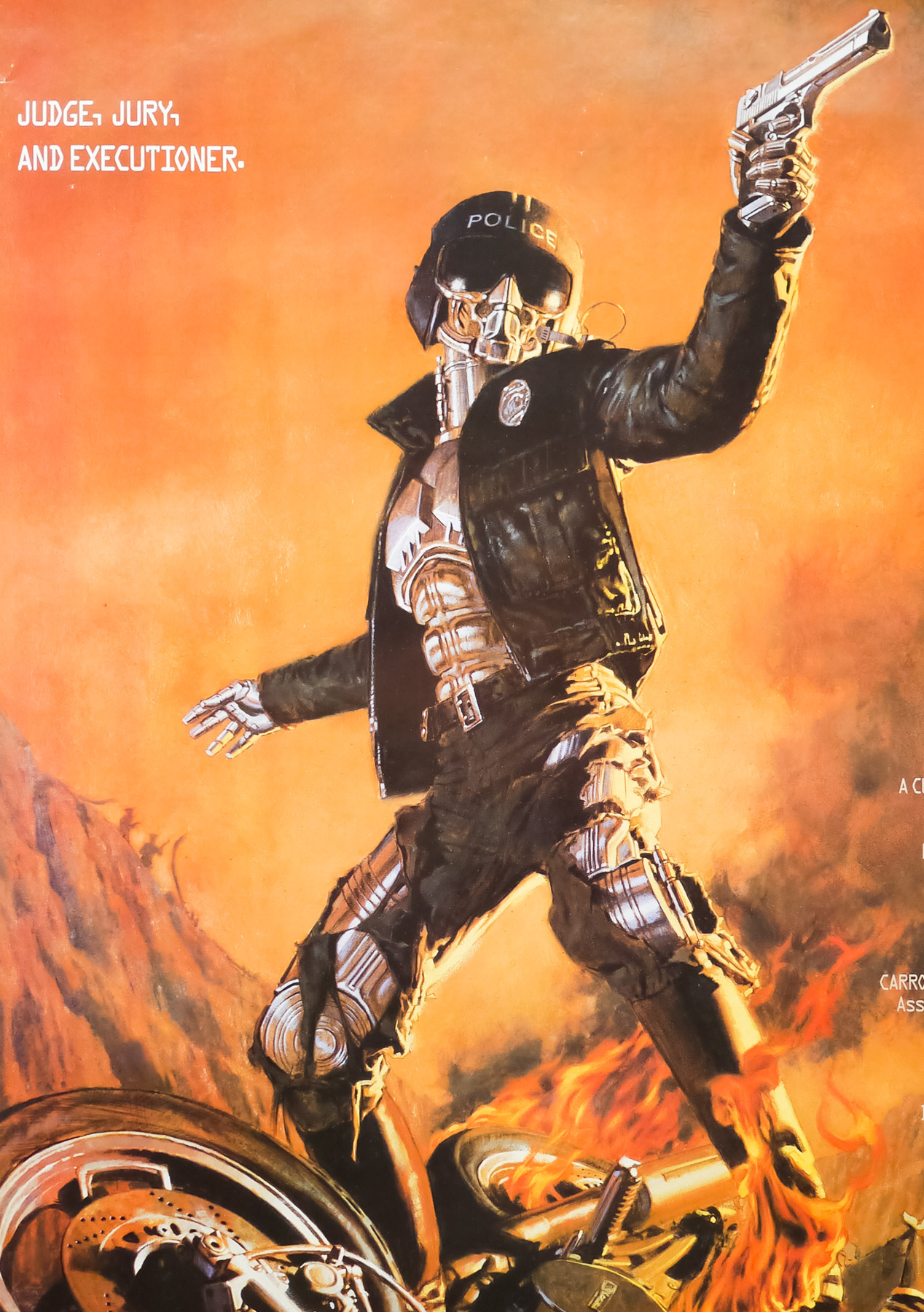
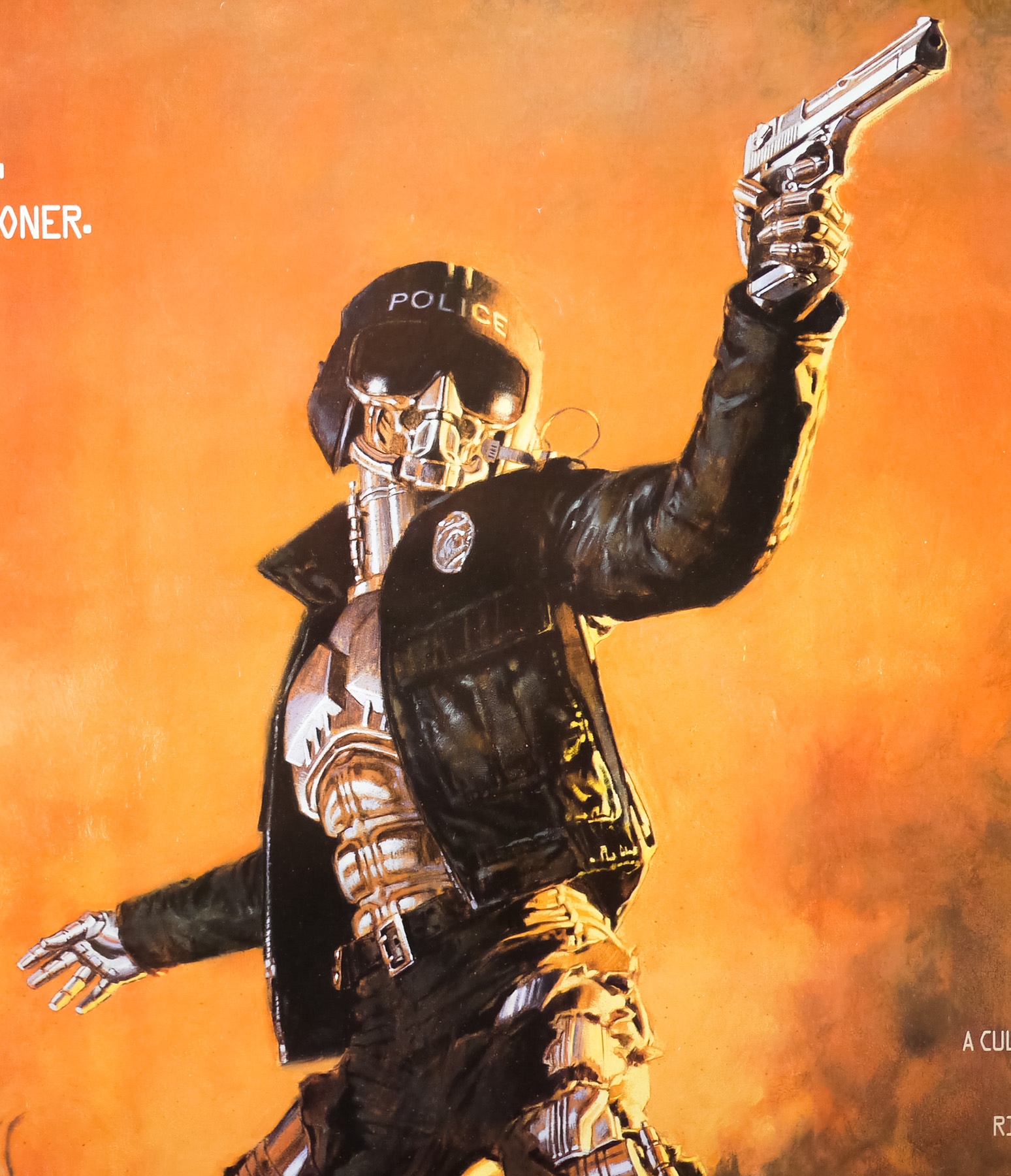
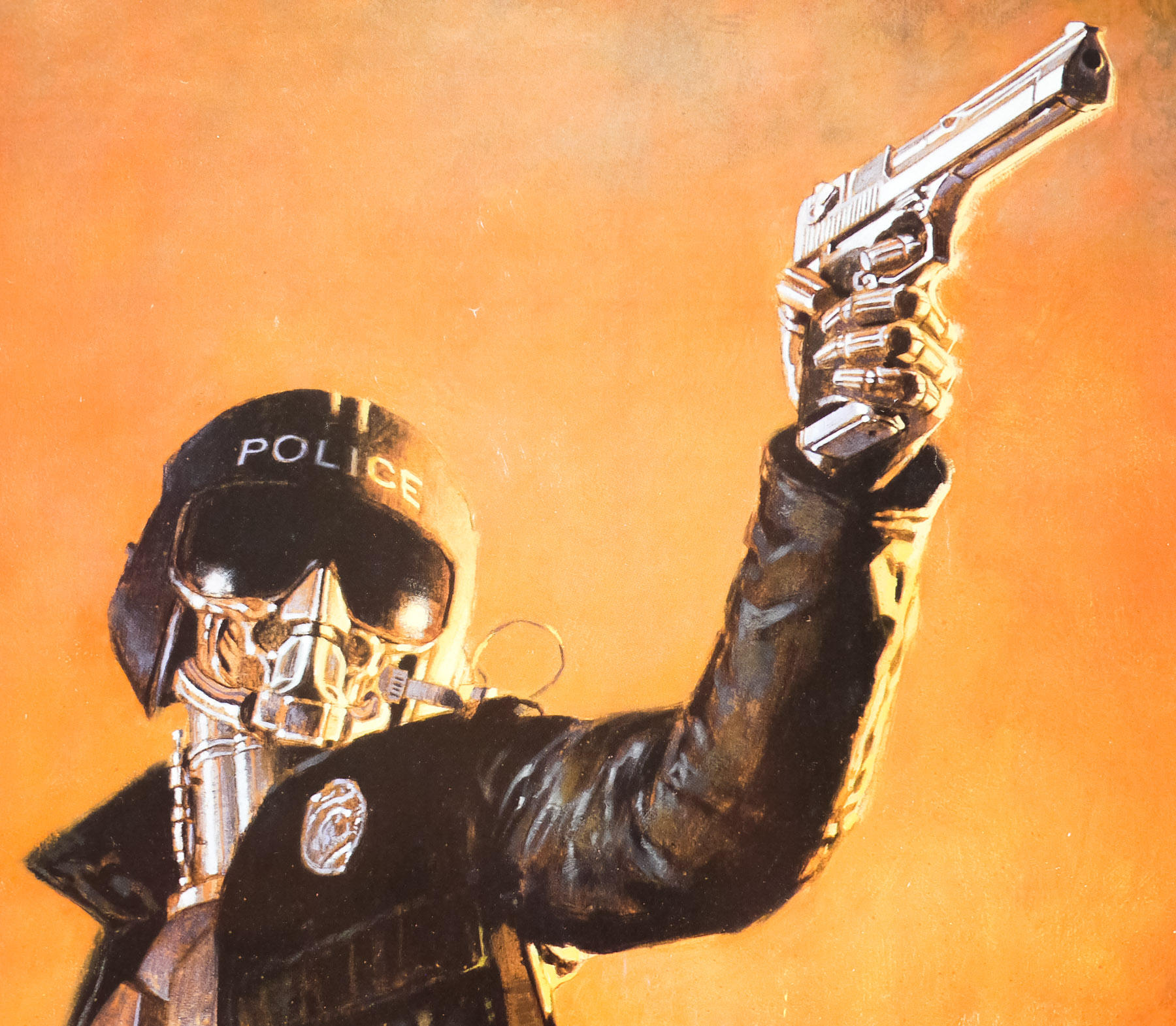
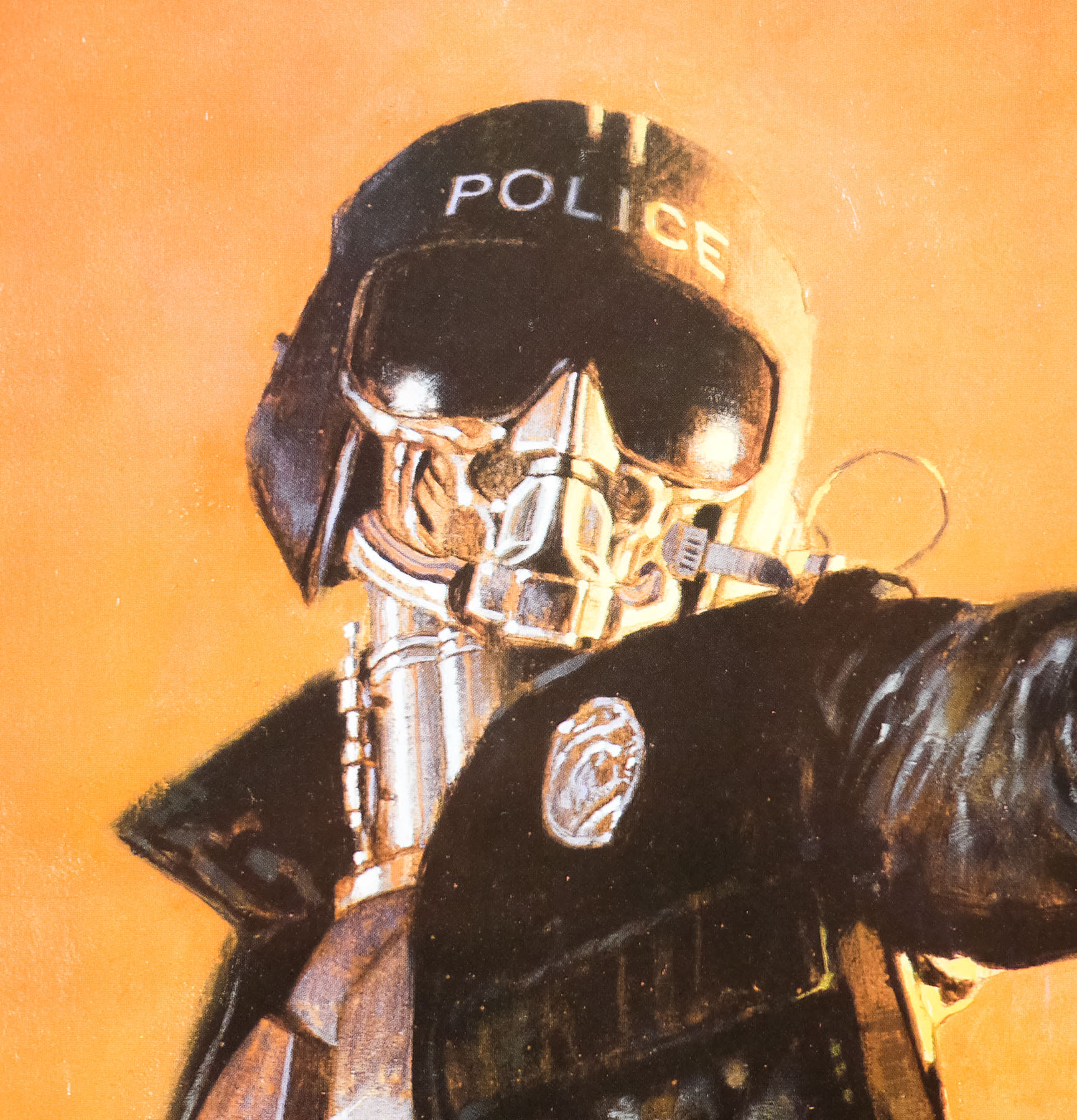
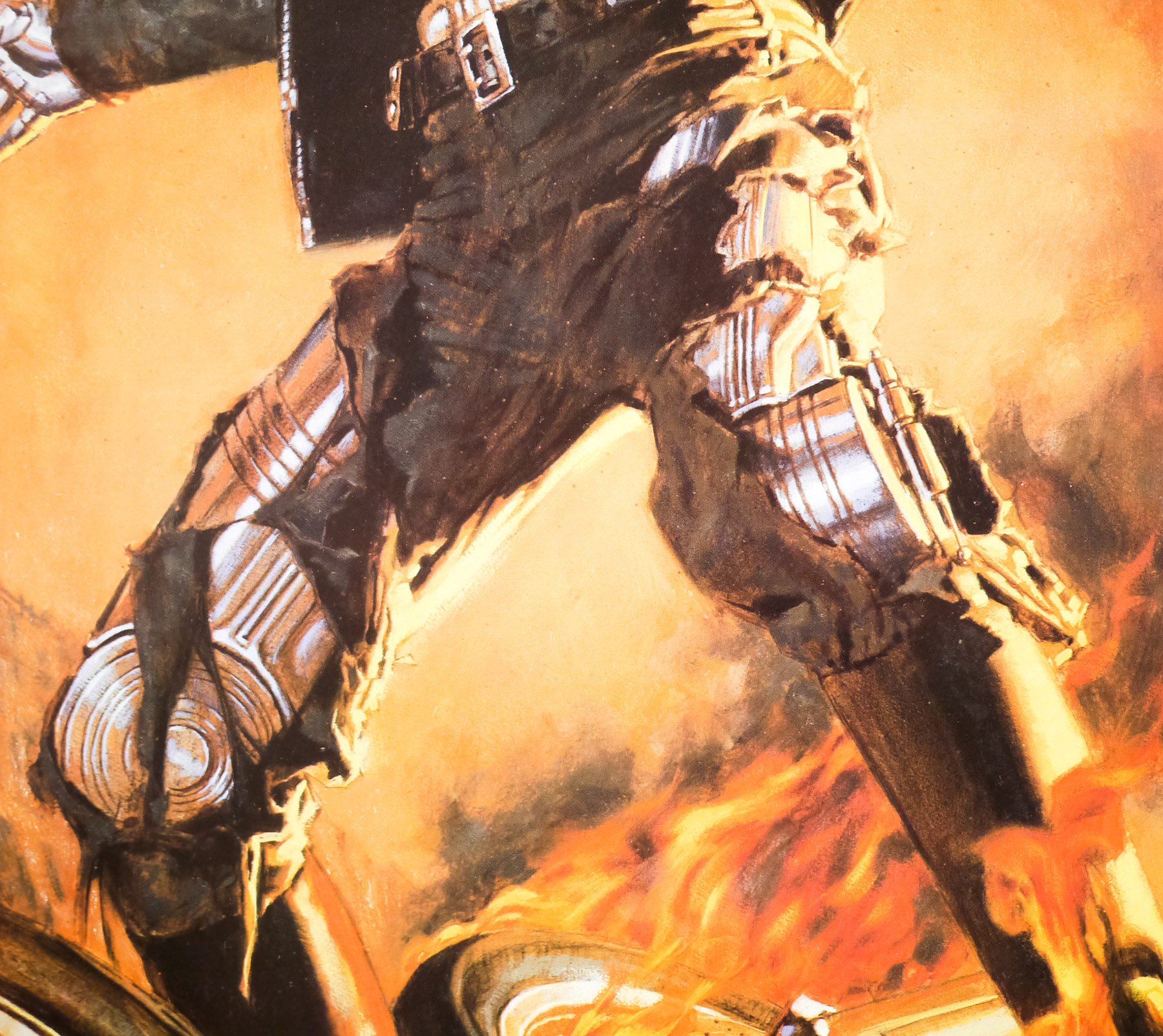
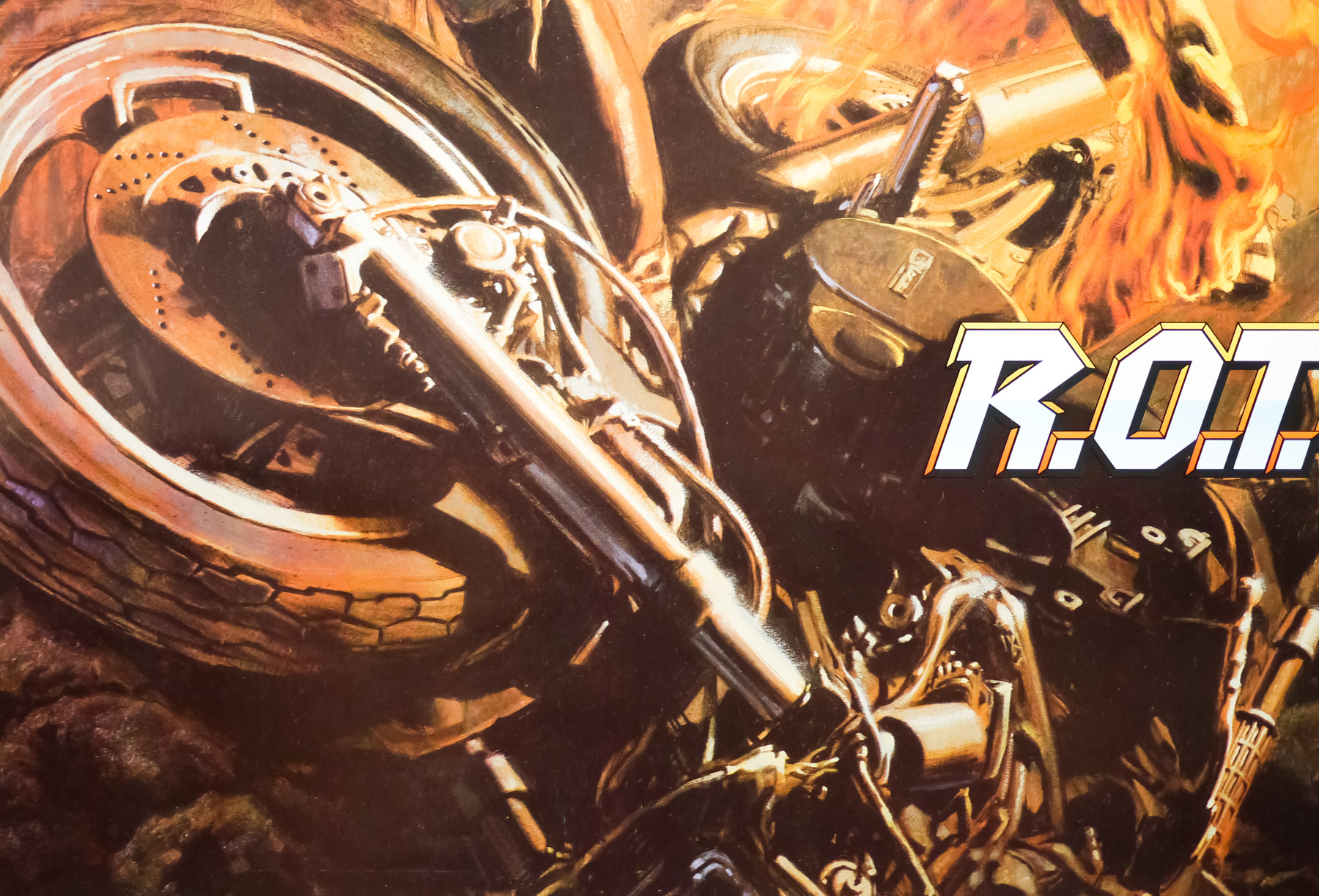
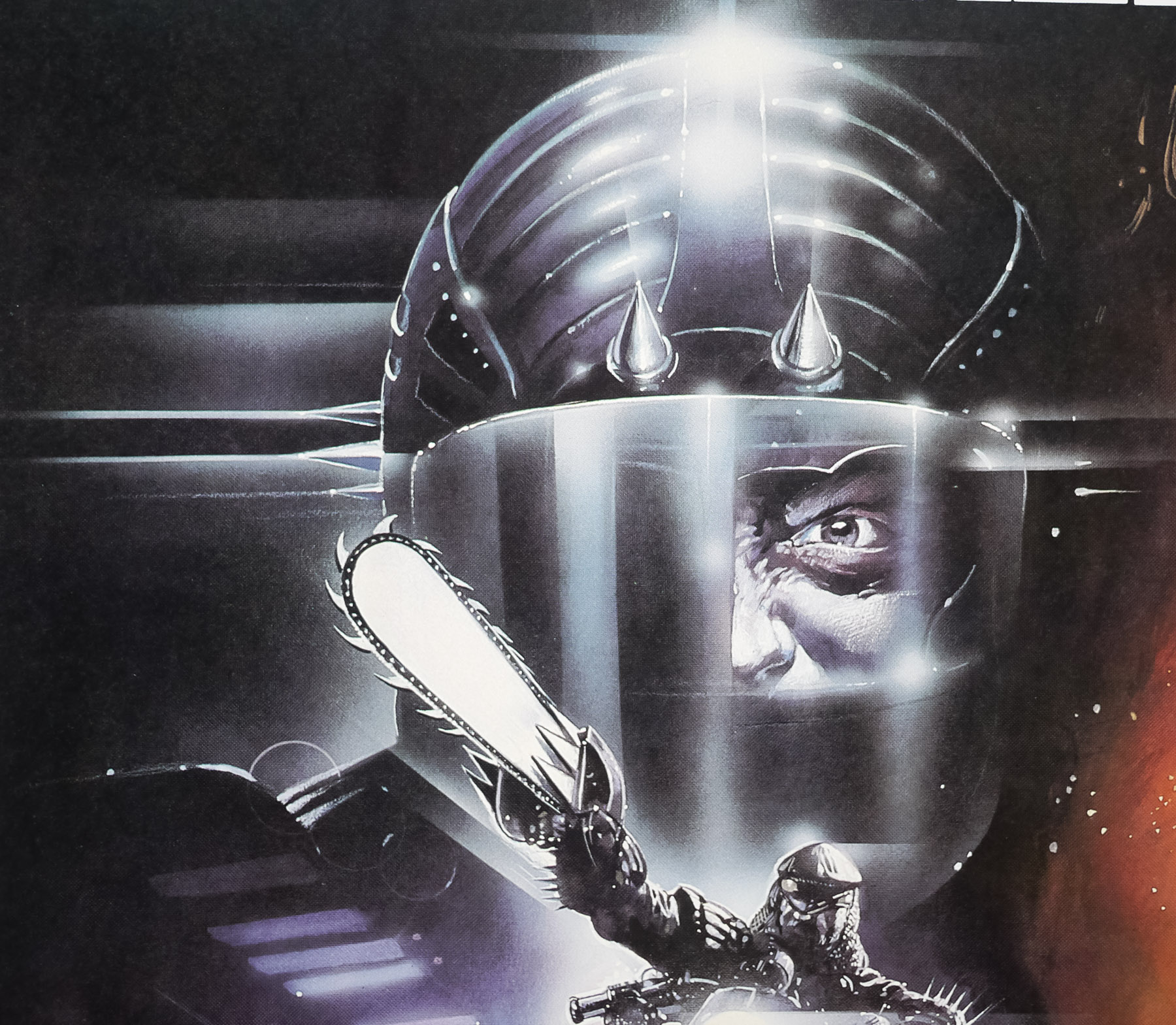
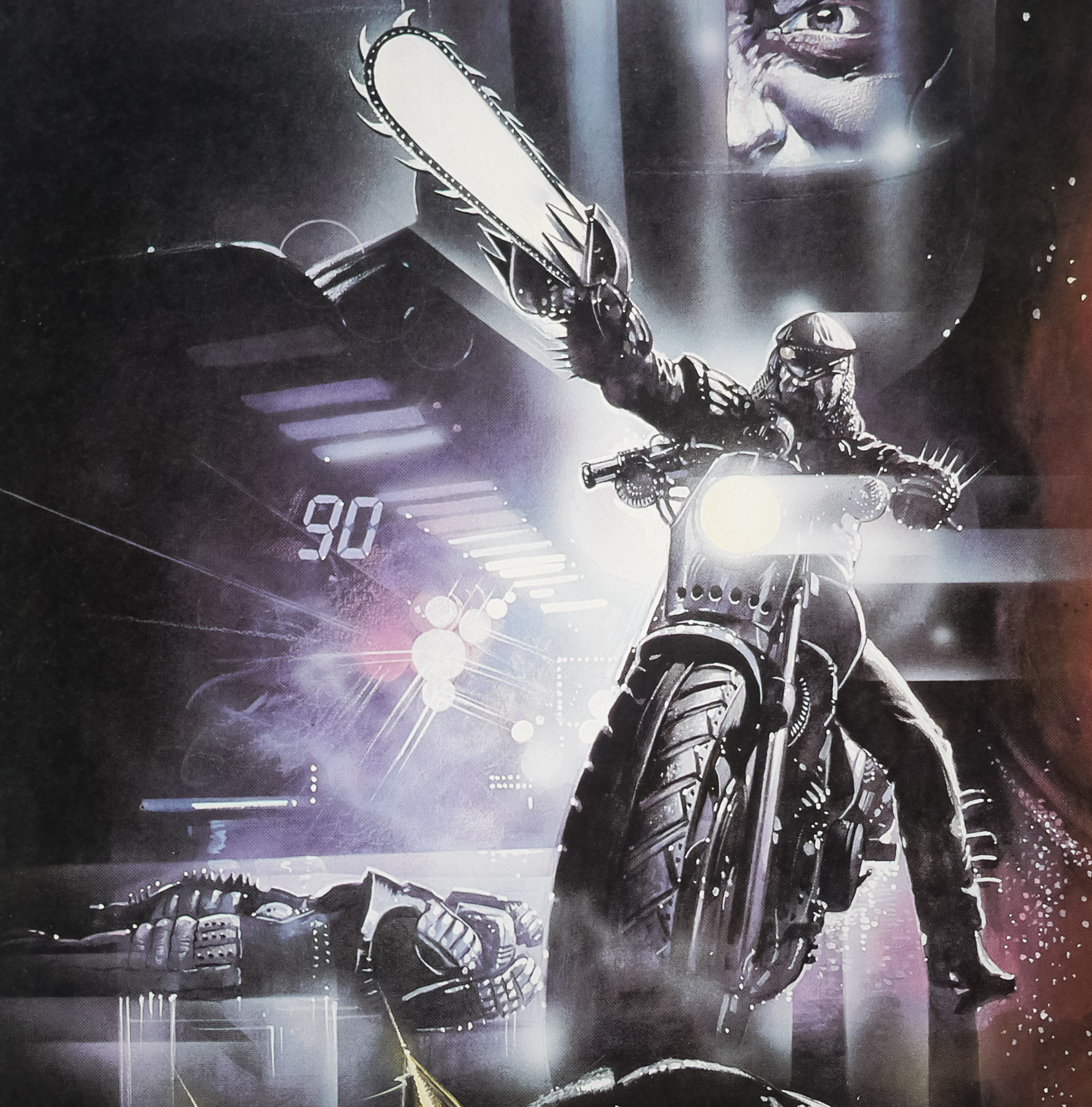
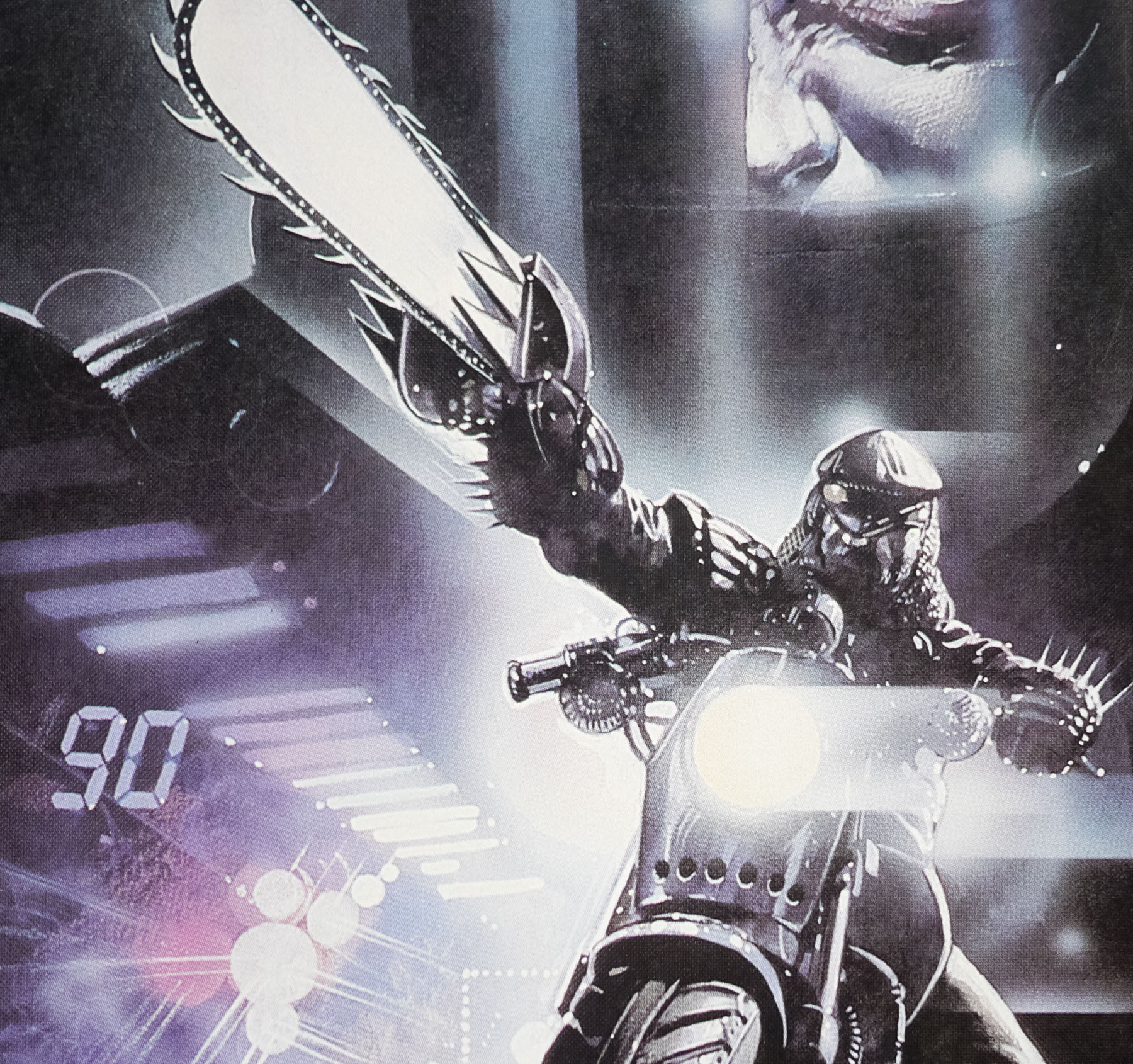
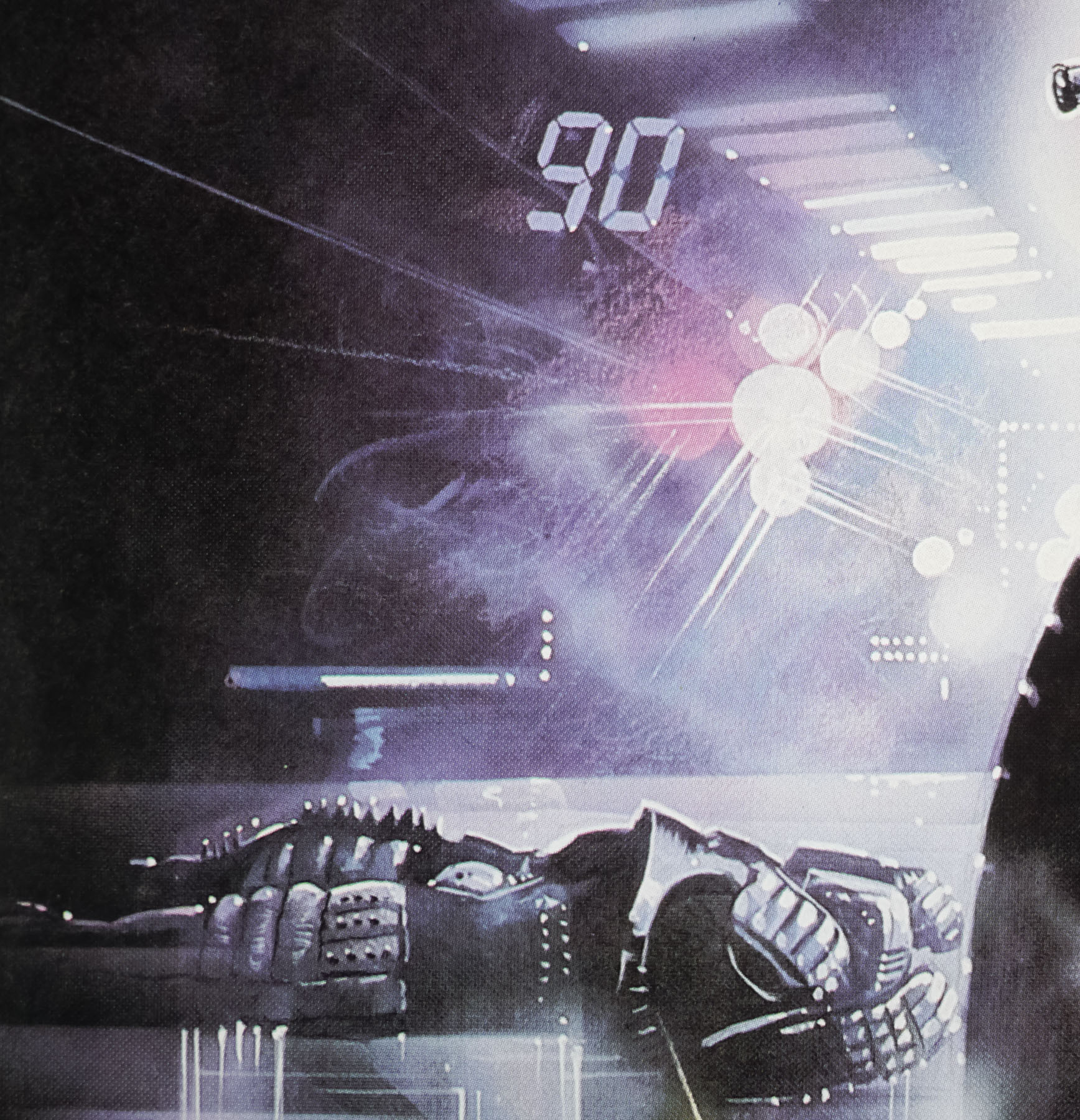
If ever there was a case where the poster is the most interesting thing about the movie, this one sheet for the brief cinema release of ROTOR (or R.O.T.O.R.) is the perfect example. Although I’ve never had the (mis)fortune of seeing the film, the reviews on IMDb speak for themselves and the following synopsis gives you an idea of the kind of experience you’re in for:

Robotic Officer Tactical Operations Research. ROTOR is a robotic cop manufactured from a rare metal – an alloy that’s not only responsible for the unit’s movements, but for it’s intelligence as well. ROTOR has been programmed to combat crime and corruption – to judge and to execute – to be the ultimate law enforcer. But something goes horribly wrong. The robot’s framework mutates into humanoid form and escapes from the research unit. Then when a speeding driver is killed for his minor traffic offence. It’s clear that ROTOR has been programmed too well. Now no one is safe – ROTOR is out on the streets, out of control and out to kill.

Currently hovering near the bottom of IMDb rankings (on a meagre 2.2 rating), reviewer ‘gridoon’ has this to say about the film:

‘There are bad movies that are funny. Bad movies that are boring. Bad movies that are offensive. And then there are bad movies that are just plain incompetent. You can’t get angry at these movies, because it’s obvious they were made by people who simply didn’t have the talent or the budget to make something even halfway decent. “R.O.T.O.R” is one such movie.’

Fellow reviewer ‘martin_dc’ sums the film up thusly:

‘Guaranteed laughter the first 15 minutes. After this the brain tends to numb completely and you watch the rest out of inertia or masochism, so in an unintentional way the movie actually works. Highlights include the R.O.T.O.R. creator giving coffee to his horse and inexplicably trying to blow up a tree.’

One reviewer simply lists 10 things they’d rather do than sit through ROTOR again, which includes ‘Get smashed on the back of the head with a folding chair’ and ‘Belly flop off a 10-meter tower into an empty swimming pool.’

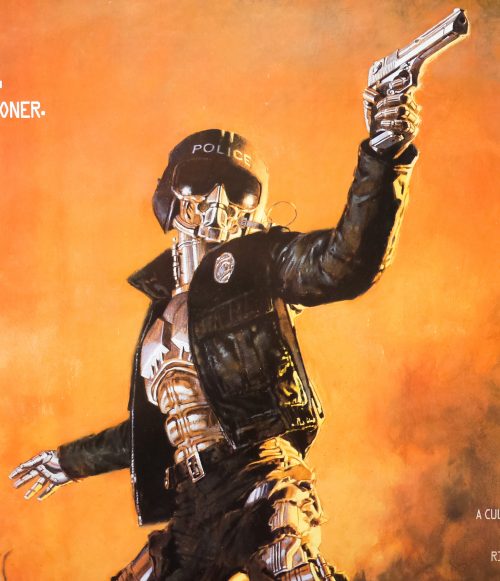
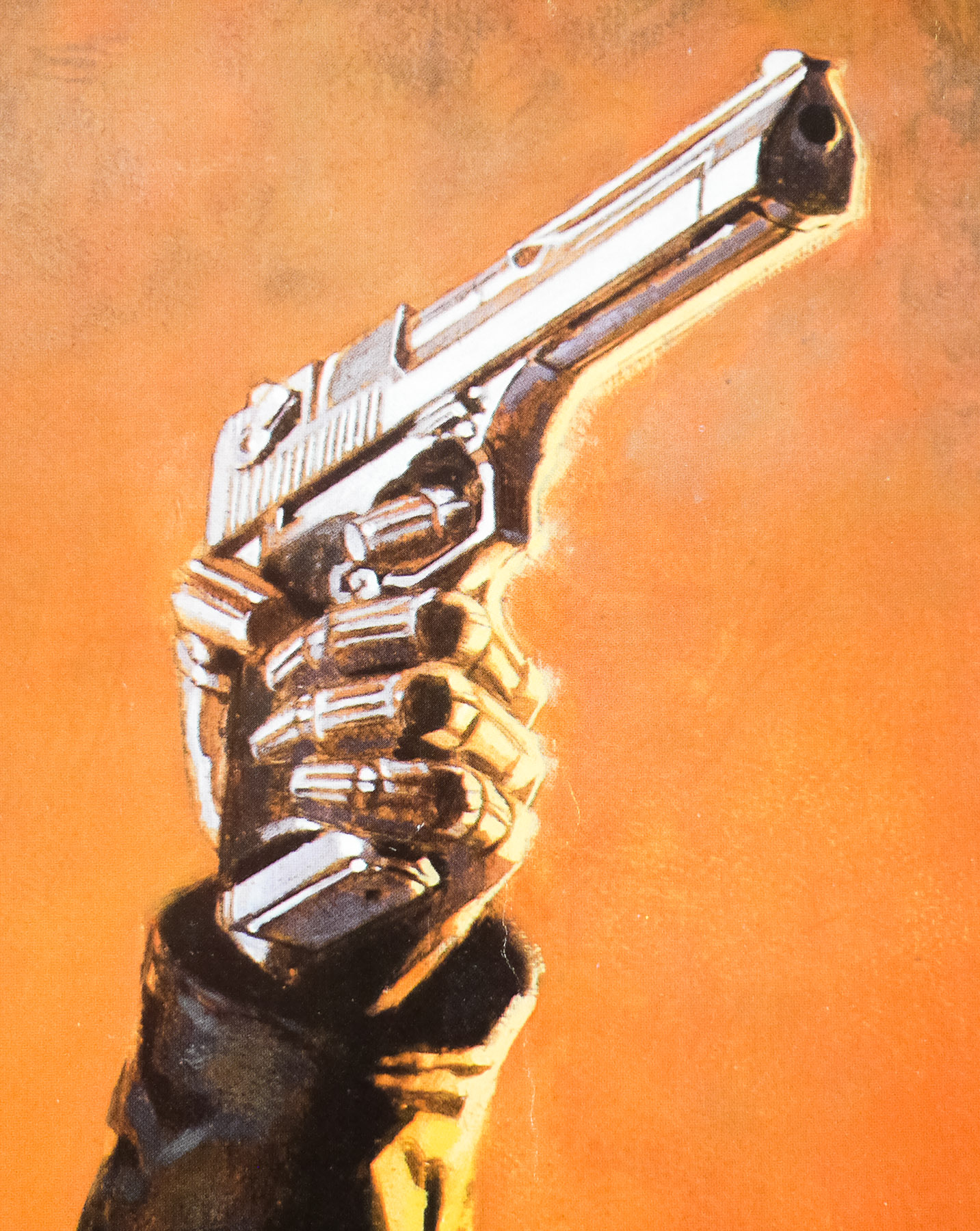
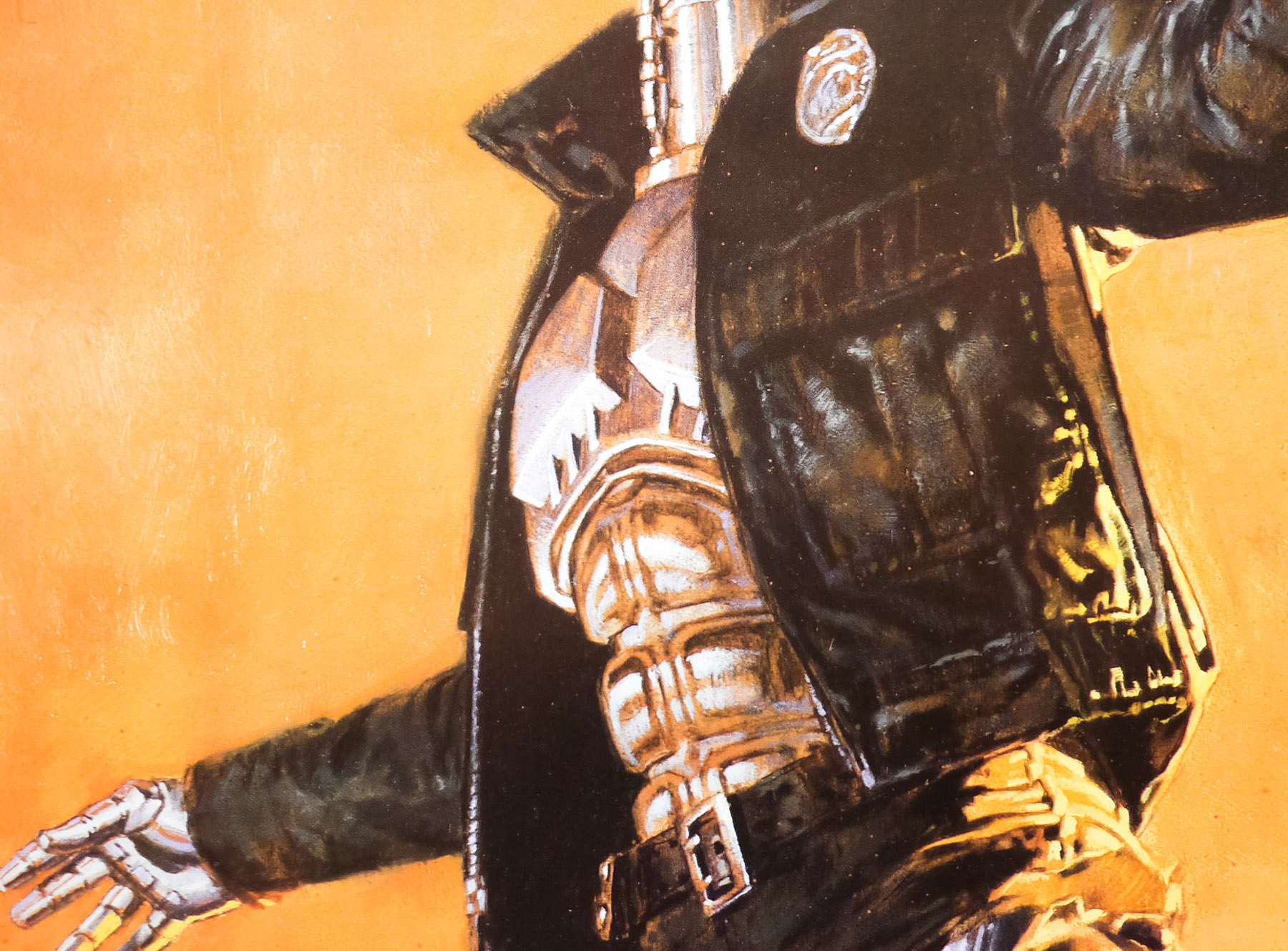
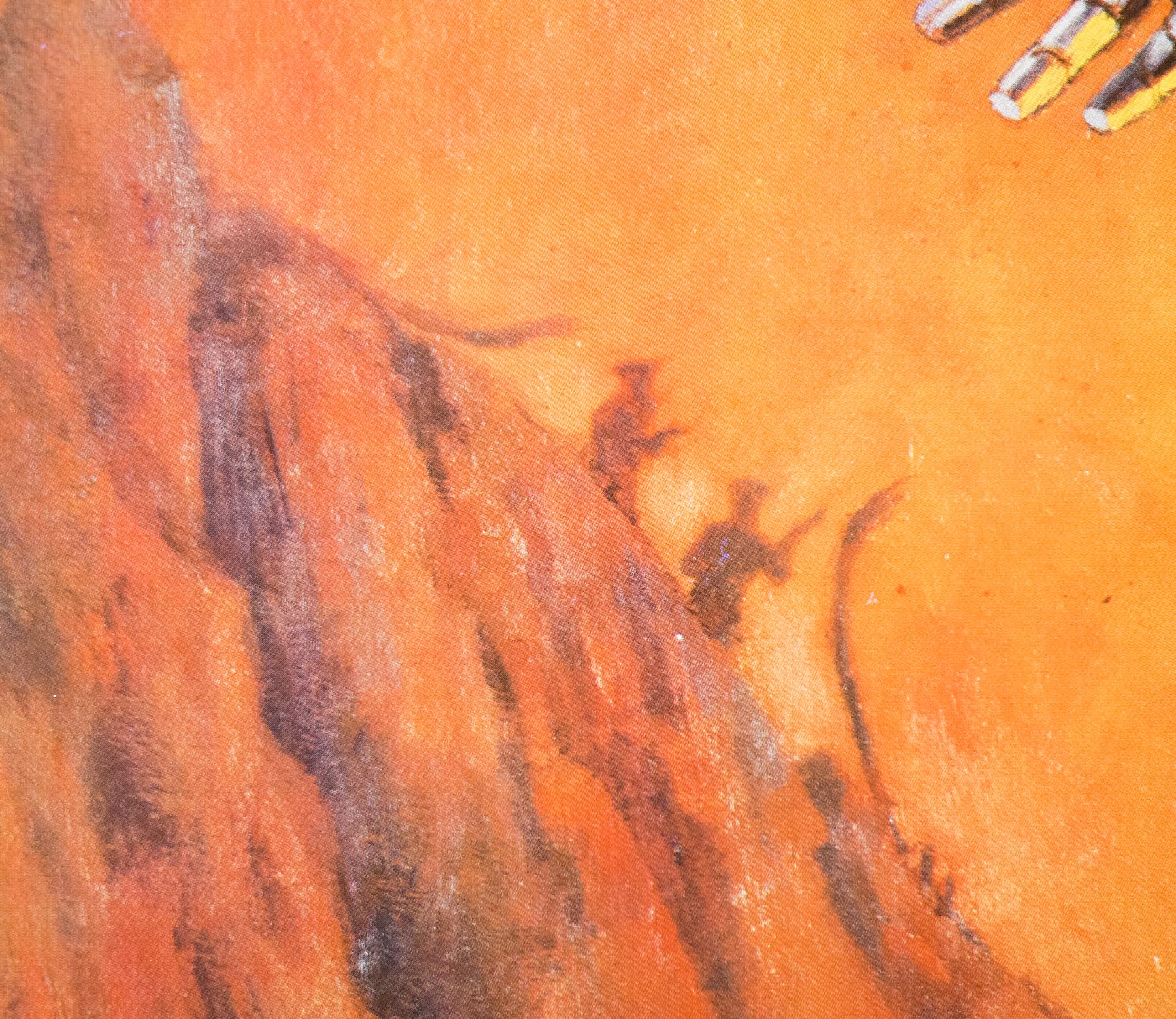
I’ve been unable to determine who painted this artwork, but it appeared on this cinema-release one sheet as well as the video release poster and VHS covers. Whoever did do it was clearly influenced by the US one sheet for Mad Max (painted by Bill Garland), right down to the pose that ROTOR is in. I can only imagine how many people were suckered into picking this VHS off the shelves of their local video rental shop based on the cover alone.

Check out the mesmerising trailer here.

Hobo With A Shotgun / one sheet / USA

08.05.15

Poster Poster
Title
Hobo With a Shotgun
AKA
--
Year of Film
2011
Director
Jason Eisener
Starring
Rutger Hauer, Pasha Ebrahimi, Robb Wells, Brian Downey, Gregory Smith, Nick Bateman, Drew O'Hara, Molly Dunsworth, Jeremy Akerman
Origin of Film
Canada
Genre(s) of Film
Rutger Hauer, Pasha Ebrahimi, Robb Wells, Brian Downey, Gregory Smith, Nick Bateman, Drew O'Hara, Molly Dunsworth, Jeremy Akerman,
Type of Poster
One sheet
Style of Poster
--
Origin of Poster
USA
Year of Poster
2011
Designer
Tom Hodge AKA The Dude Designs
Artist
Tom Hodge AKA The Dude Designs
Size (inches)
27 1/16" x 39 13/16"
SS or DS
SS
Tagline
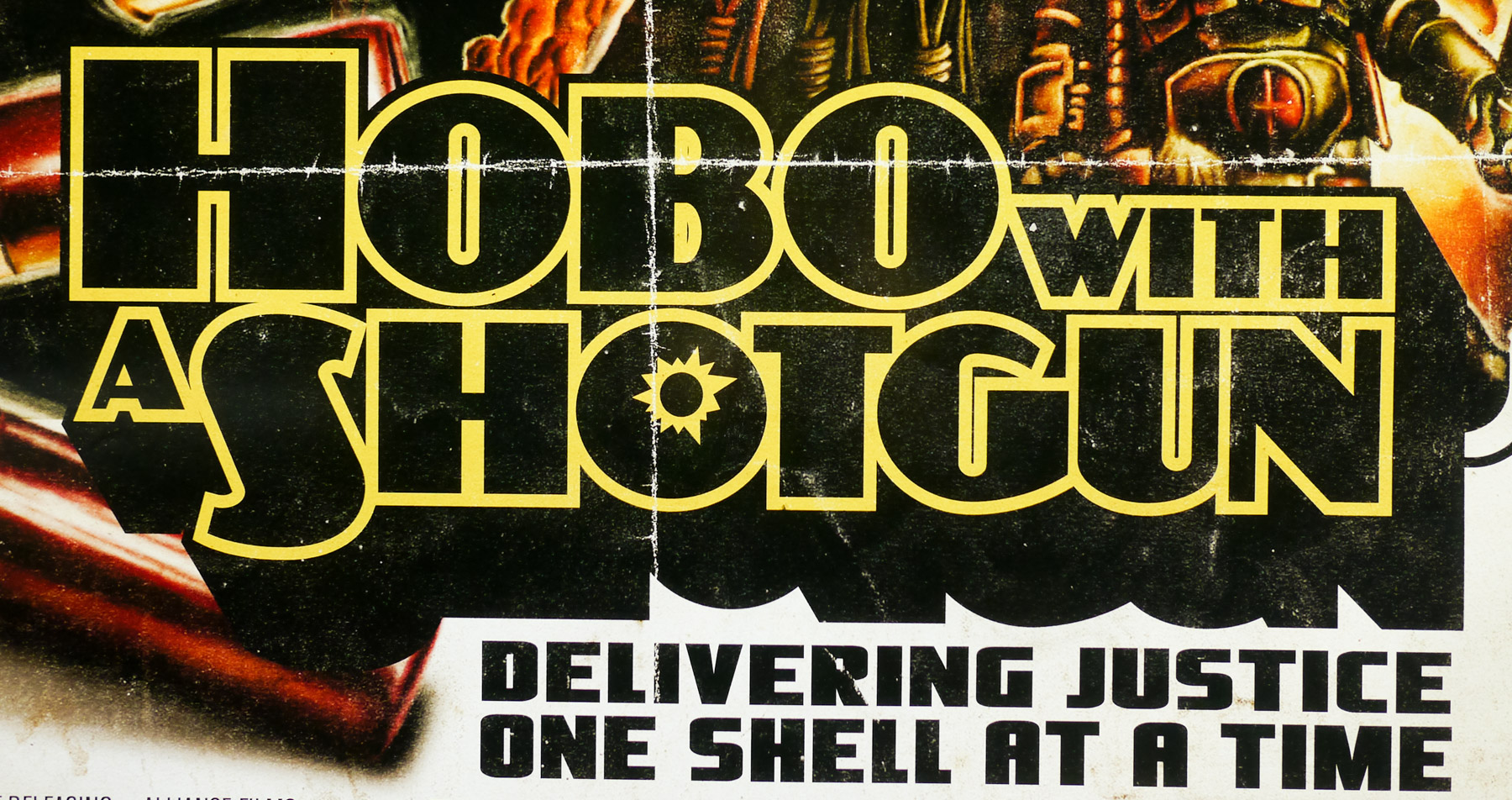
Delivering justice one shell at a time

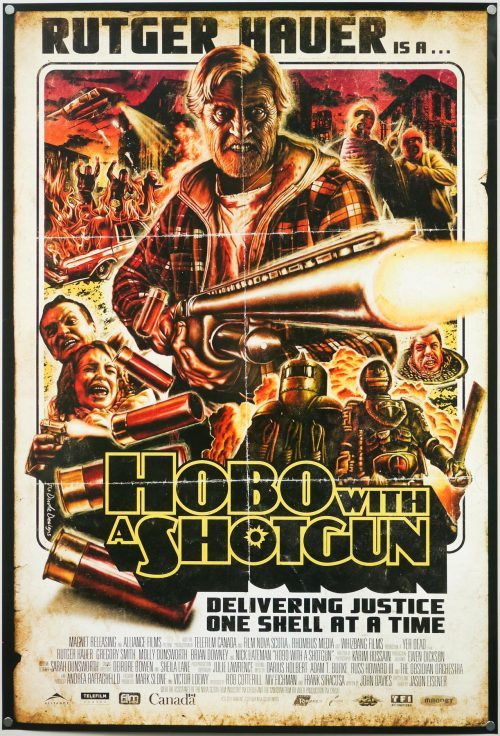
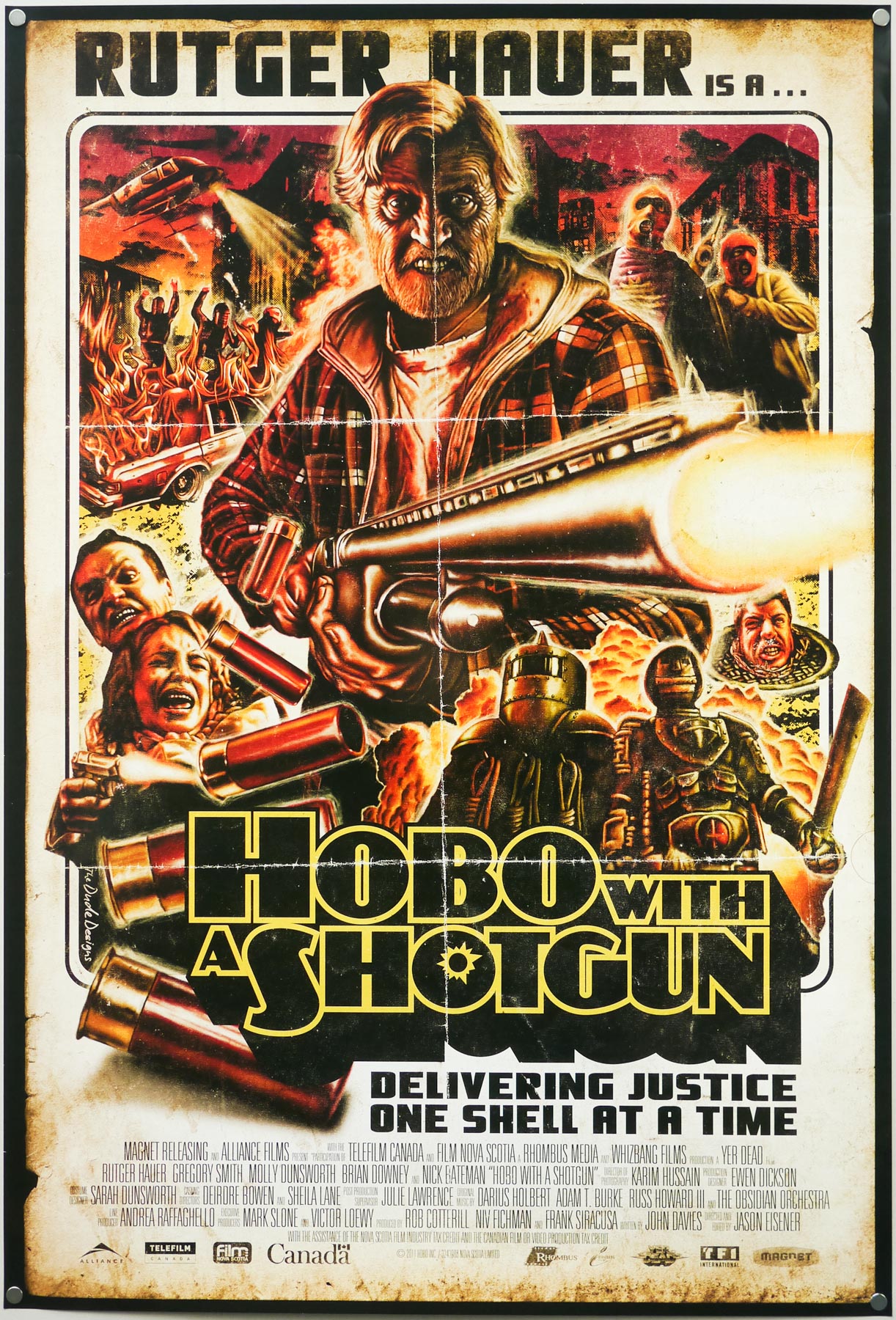
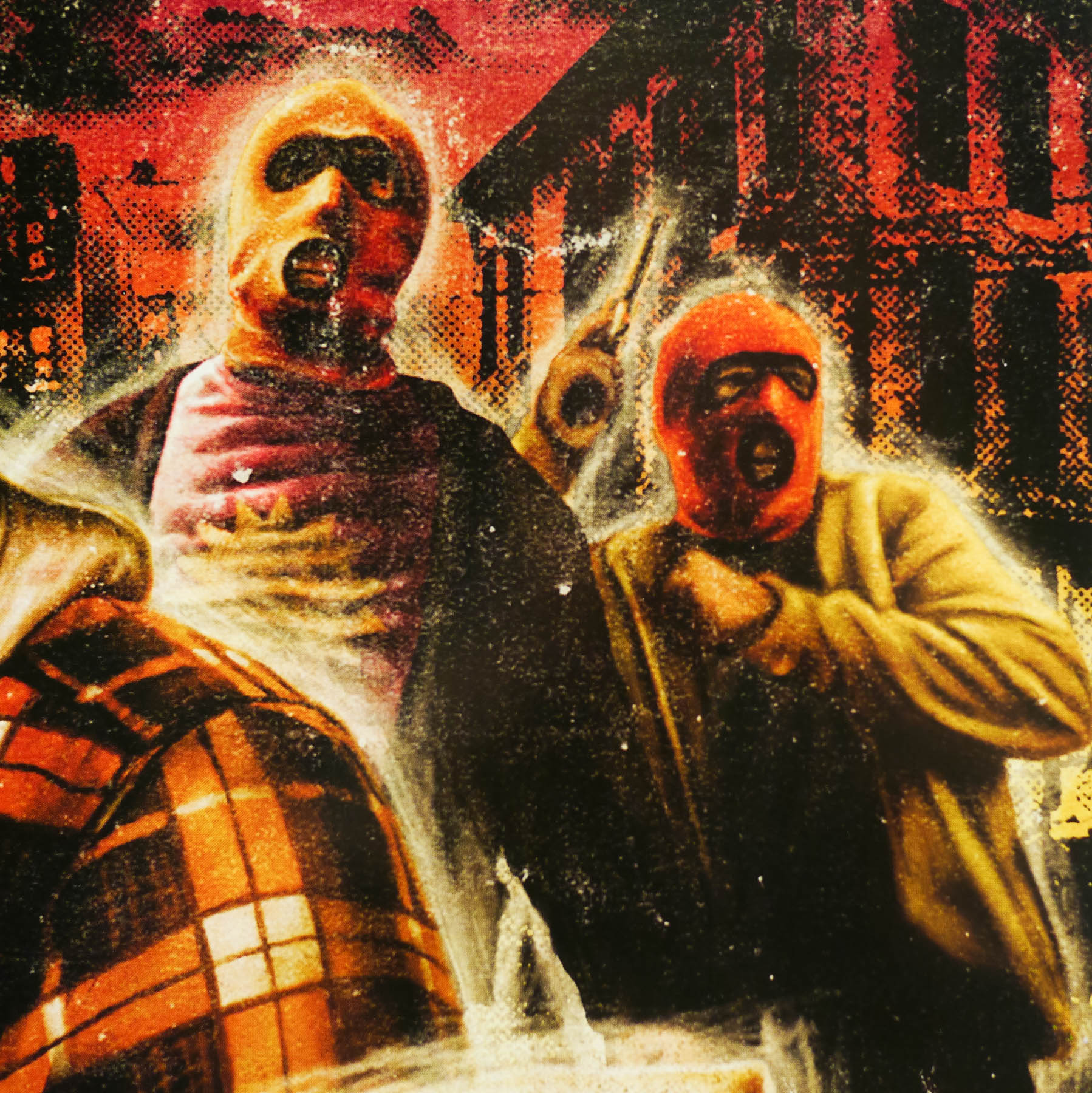
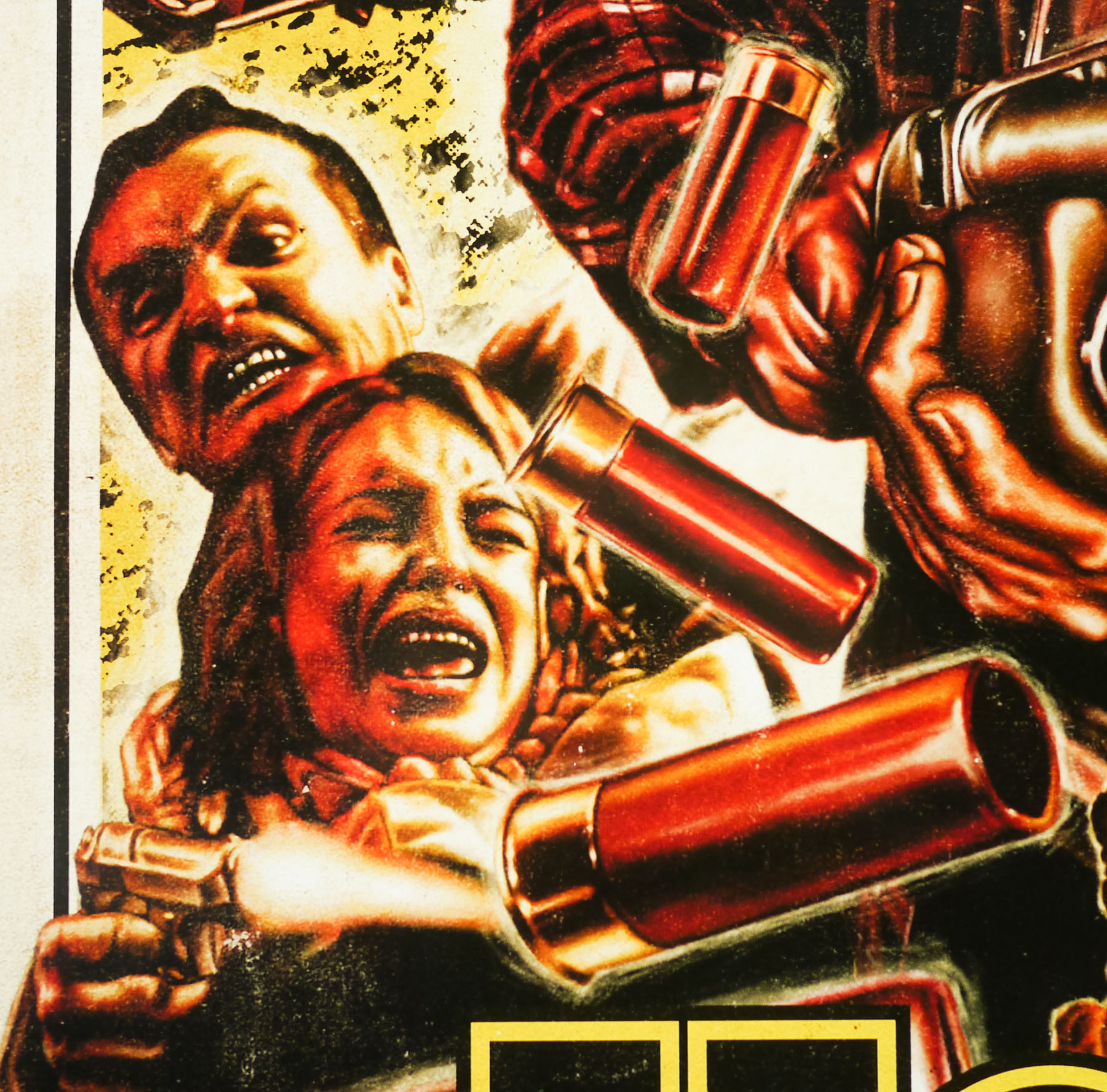
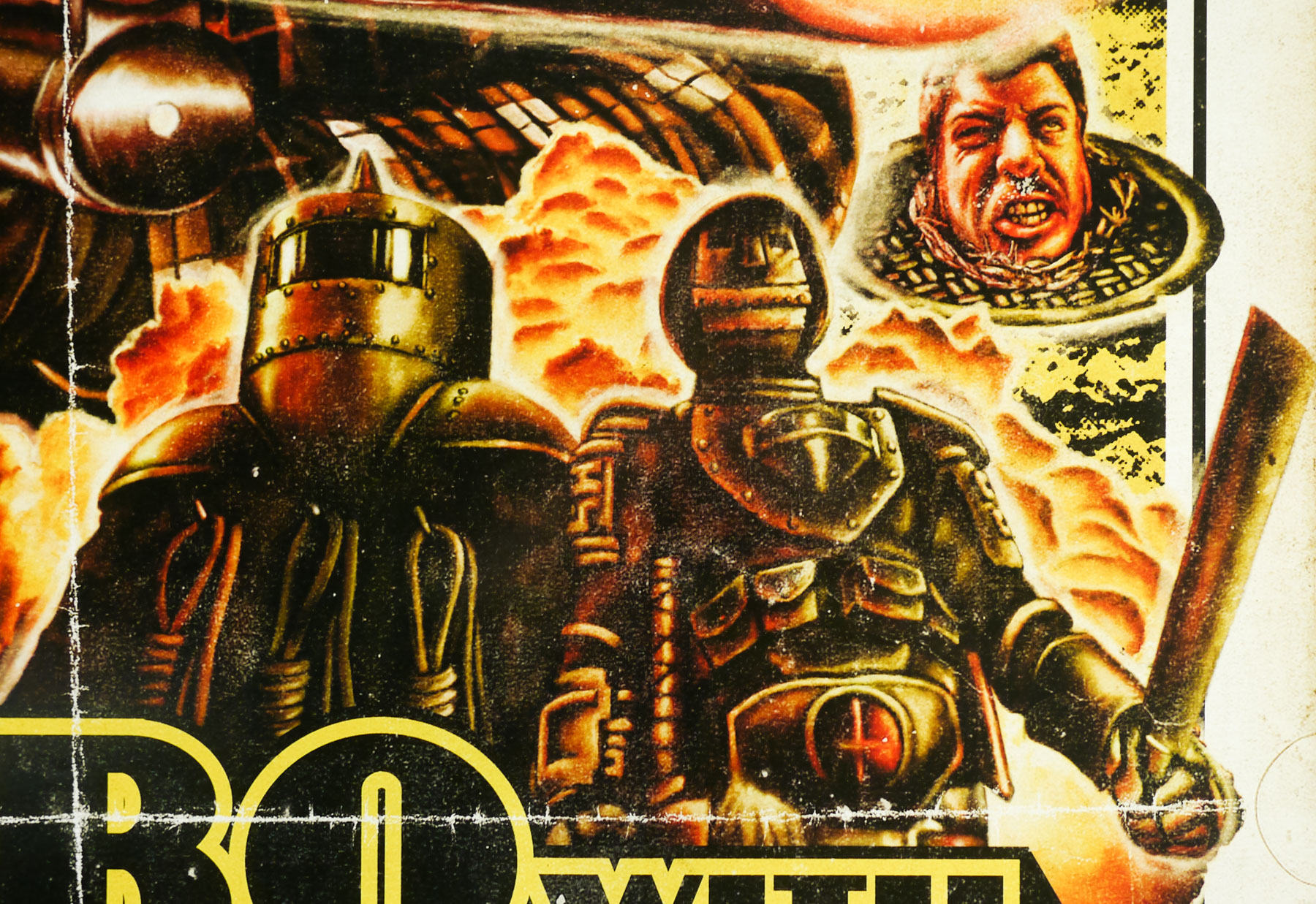
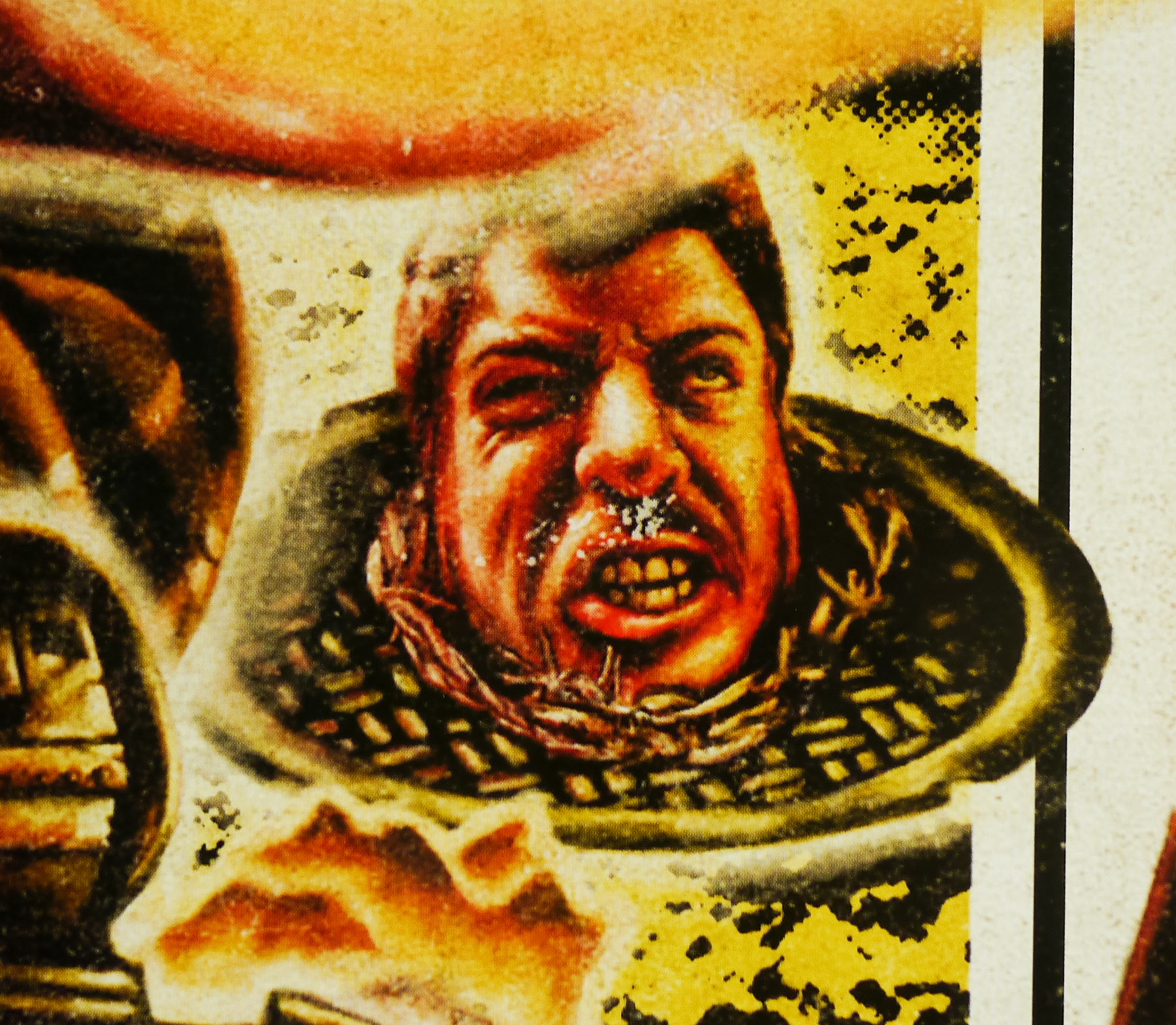
Hobo With a Shotgun is a Canadian exploitation action film which started out as a fake trailer that was the winning entry in a competition held as part of the promotion of Quentin Tarantino and Robert Rodriguez’s Grindhouse. Prior to the 2007 South By Southwest festival (held annually in Austin, Texas) Rodriguez challenged budding filmmakers to create a trailer that celebrated exploitation and horror films, which would then be shown as part of a panel on Grindhouse cinema.

This CinemaBlend article describes the event and confirms that the trailer by Nova Scotians Jason Eisener, John Davies, and Rob Cotterill was the winner. When Grindhouse was shown in cinemas in the US there were several fake trailers shown around the two main features, shot by the likes of Edgar Wright and Rob Zombie, and the Hobo With a Shotgun was shown alongside them in several Canadian cinemas. In 2010 Rodriguez turned his fake Grindhouse trailer for a film called Machete, starring long-time collaborator Danny Trejo, into a feature-length release and Jason Eisener then followed suit with a full-length version of Hobo in 2011.

The film stars Rutger Hauer as the titular homeless man who arrives in the fictional Hope Town only to discover it is now known as Scum Town and is ruled over by crime boss Drake and his psychotic sons Ivan and Slick. The family have a stranglehold over the town and the hobo witnesses robberies, brutal violence and prostitution as he wanders the streets. Although he initially dreams of buying a lawnmower from a pawnshop to earn money through landscaping, an encounter with Slick and Ivan steels his resolve to do something about the injustice he’s seen. The same pawnshop has shotguns for sale and so the hobo sets out to clean up the streets, delivering justice one shell at a time!

The film absolutely nails the grindhouse aesthetic and has clearly been made by someone with genuine reverence for the films that defined the genre. The production design is top notch throughout with Dartmouth and Halifax in Nova Scotia turned convincingly into the crime-ridden Scum Town. It’s also filled with excellent performances from actors who are clearly enjoying delivering the outlandish lines that John Davies’ script contains, but Hauer steals the show with his enjoyment of playing the vengeful hobo clear to see. The soundtrack is also notably excellent and perfectly suits the action on screen.

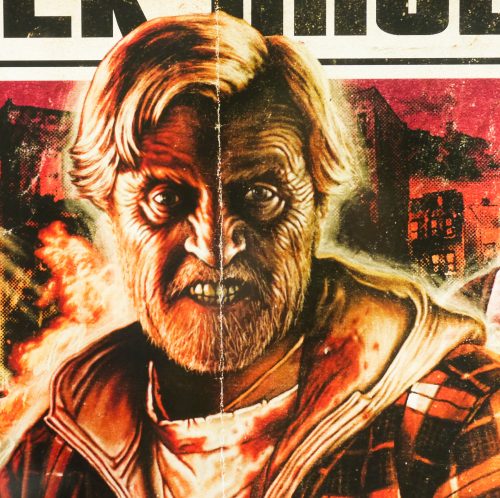
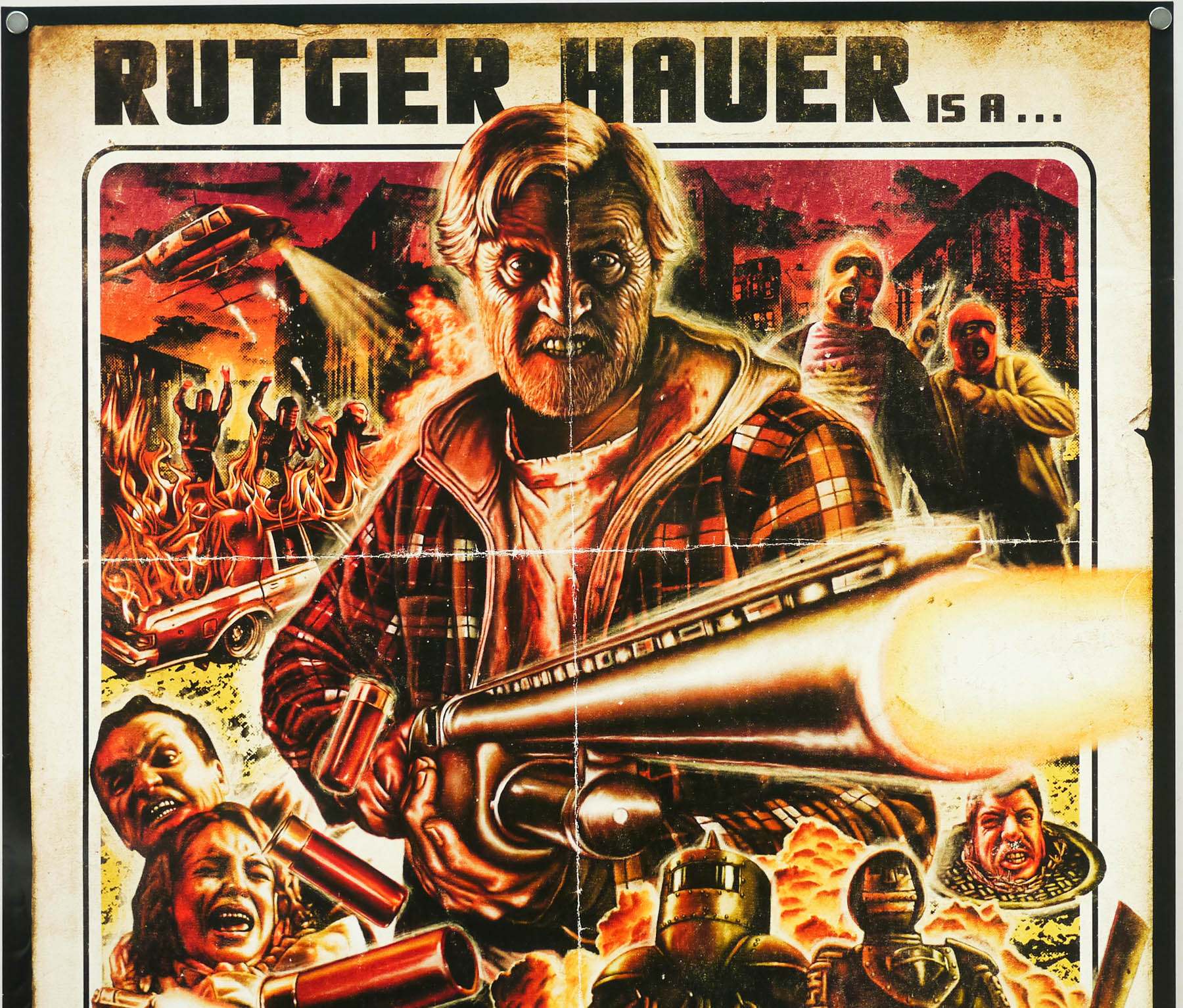
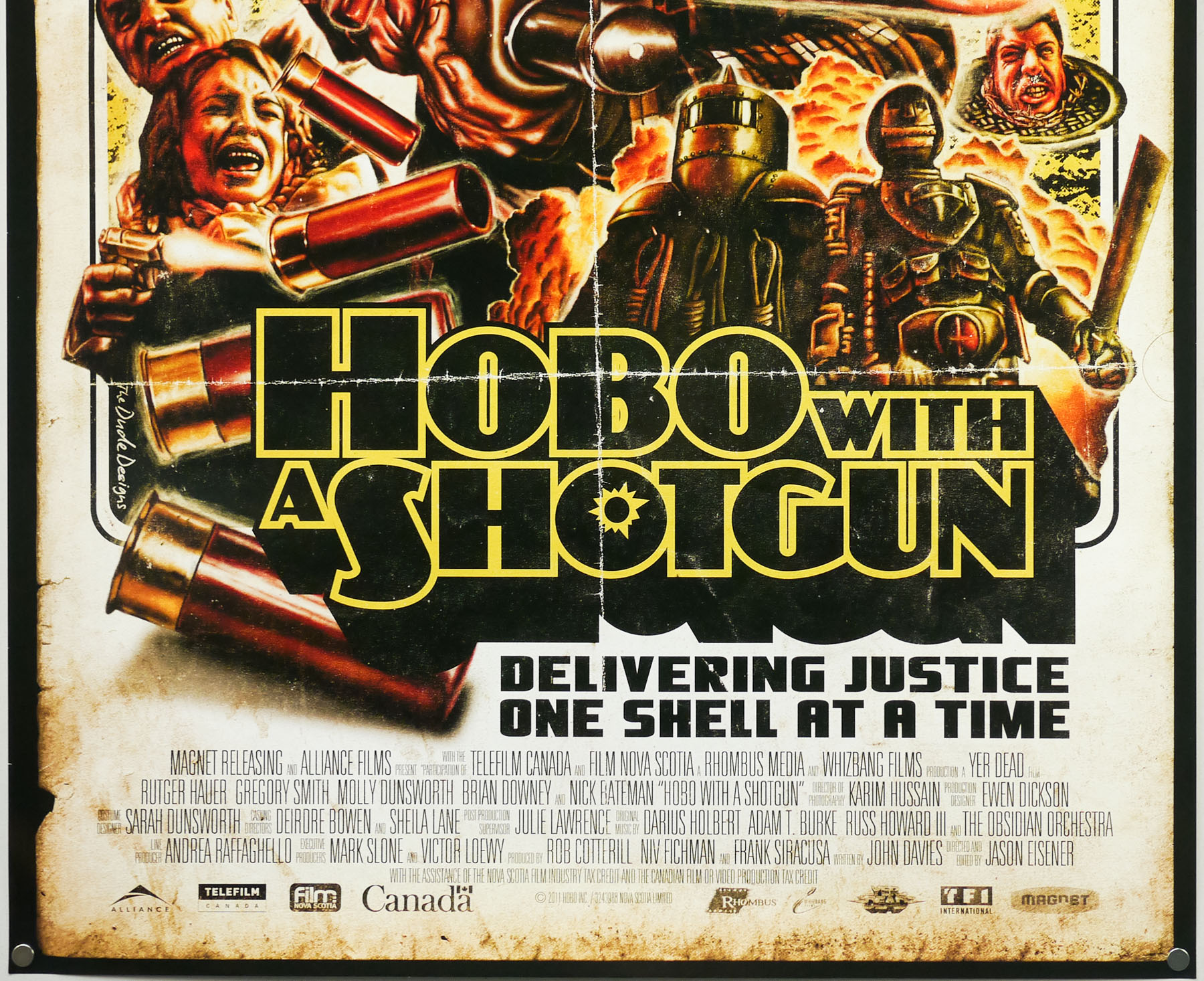
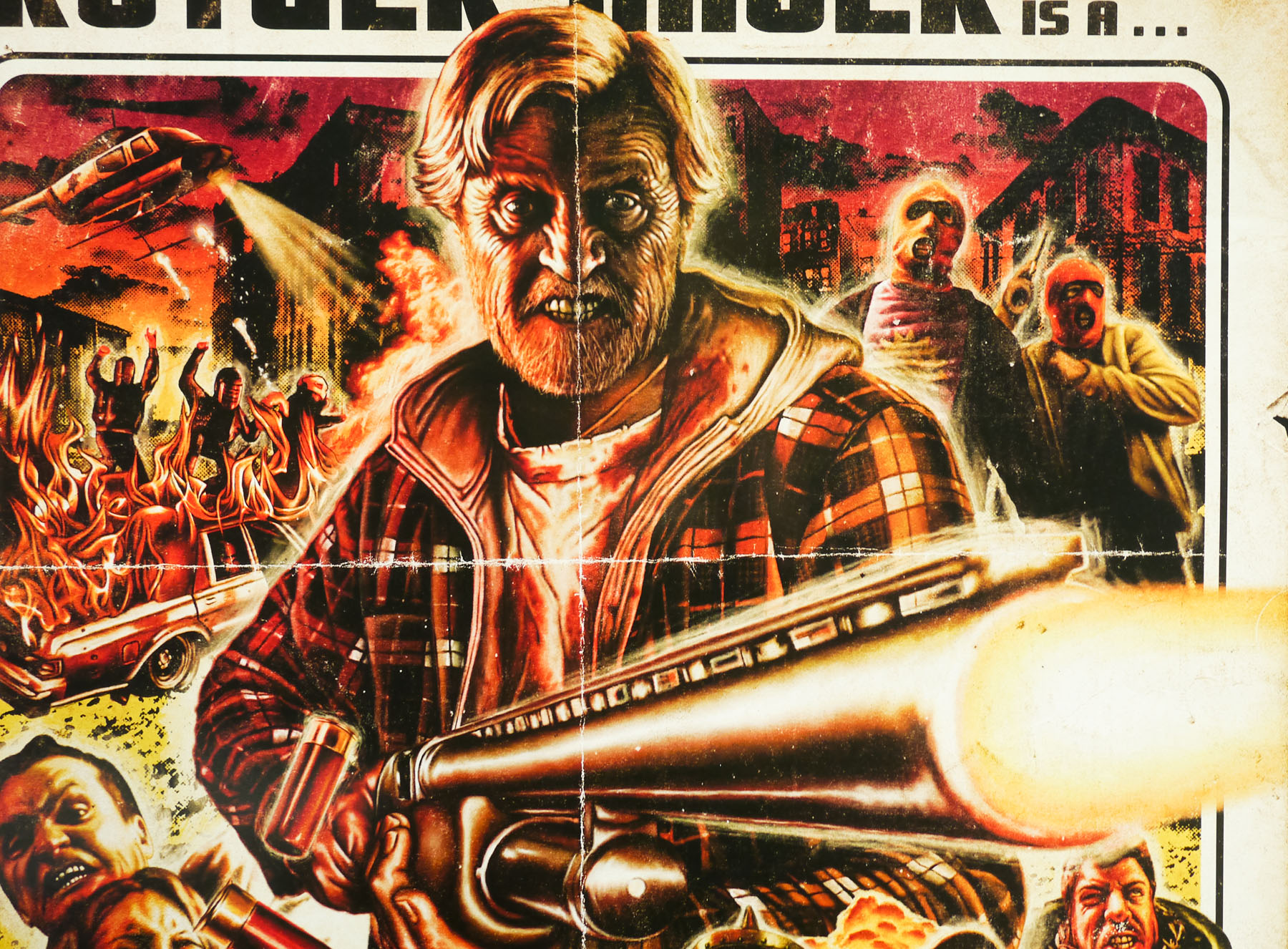
This poster was designed and illustrated by Tom Hodge AKA The Dude Designs, a Brit who has worked for over 12 years creating advertising materials for films and games, and is a big proponent of continuing the use of painted artwork over computer-generated montages. The about page on his official site details several of the companies he’s provided illustrations for, which includes Mondo, Arrow Video and Death Waltz Records (he created their logo, amongst other projects). The site also includes galleries of his work, which includes this great cover for the Shout Factory release of John Carpenter’s They Live. It’s my belief that this poster for Hobo was the first one of his to be printed and used around the world to advertise the film.

The Silence of the Lambs / Thailand

15.04.16

Poster Poster
Title
The Silence Of The Lambs
AKA
Il silenzio degli innocenti [The silence of the innocents] (Italy)
Year of Film
1991
Director
Jonathan Demme
Starring
Jodie Foster, Anthony Hopkins, Scott Glenn, Ted Levine, Anthony Heald, Brooke Smith, Kasi Lemmons, Frankie Faison, Diane Baker, Charles Napier
Origin of Film
USA
Genre(s) of Film
Jodie Foster, Anthony Hopkins, Scott Glenn, Ted Levine, Anthony Heald, Brooke Smith, Kasi Lemmons, Frankie Faison, Diane Baker, Charles Napier,
Type of Poster
Thai
Style of Poster
--
Origin of Poster
Thailand
Year of Poster
1991
Designer
Unknown
Artist
Tongdee Panumas
Size (inches)
23 15/16 x 34 14/16"
SS or DS
SS
Tagline
--

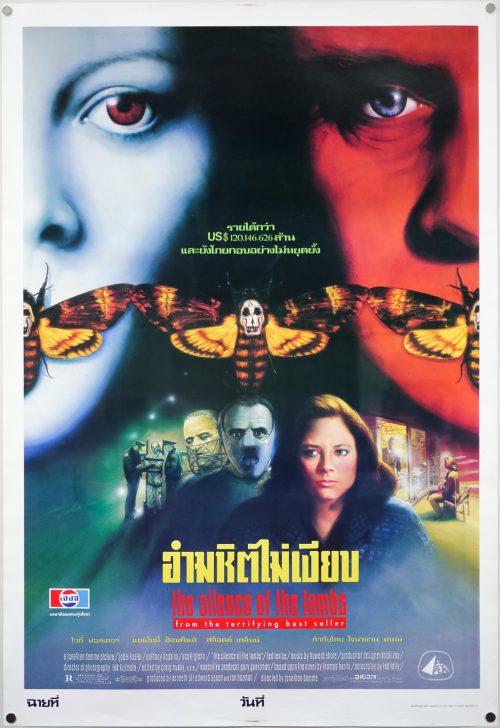
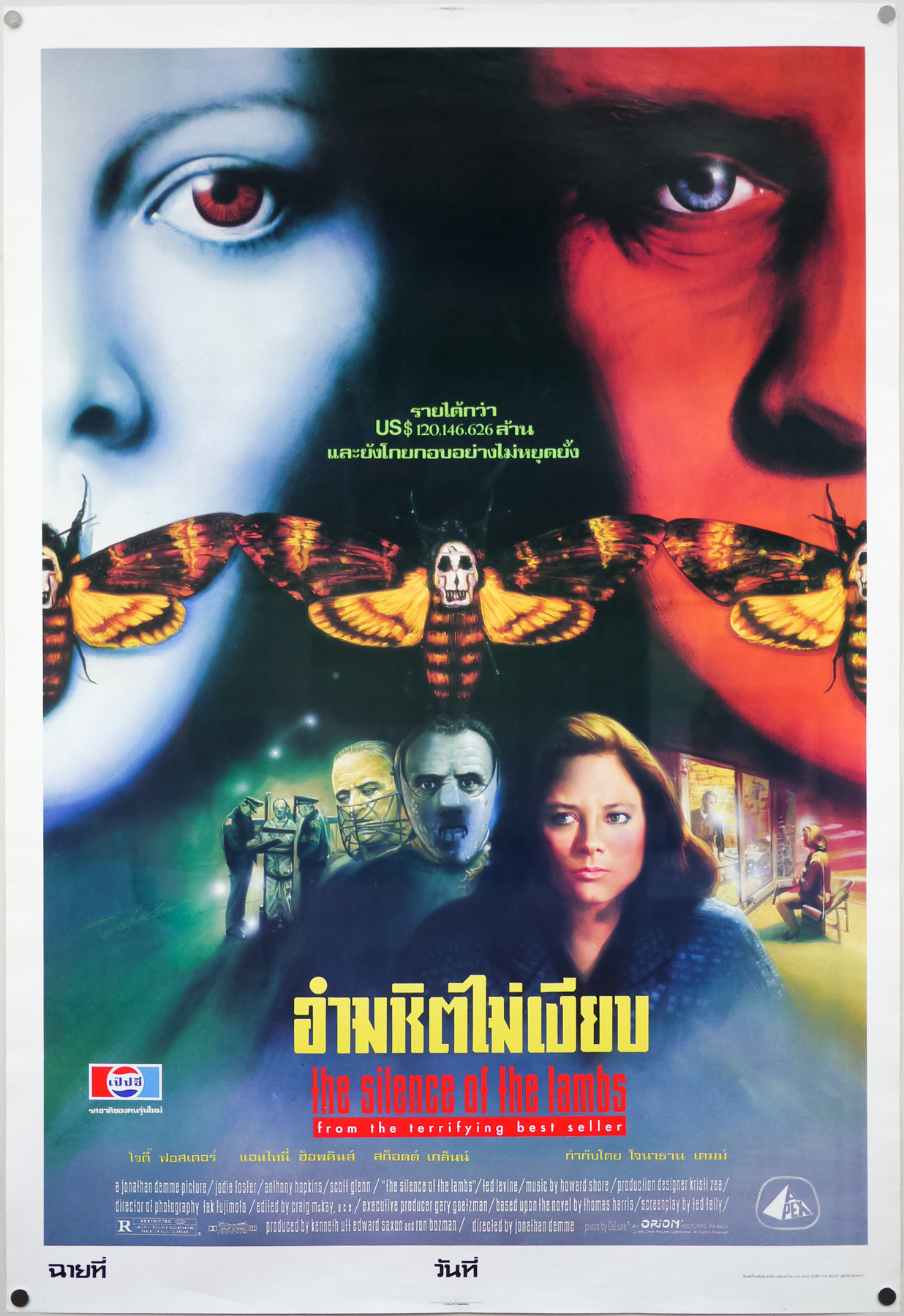
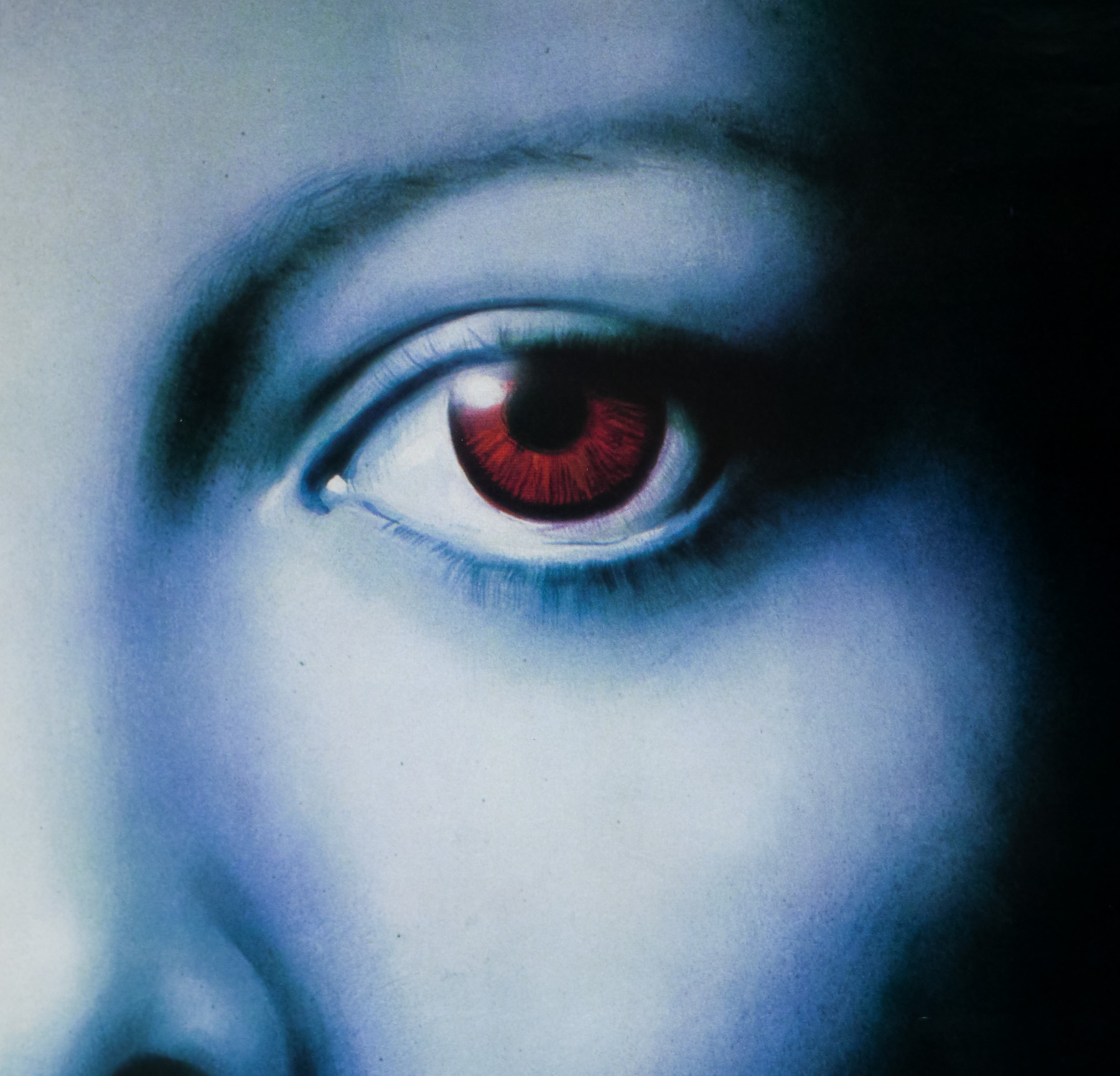
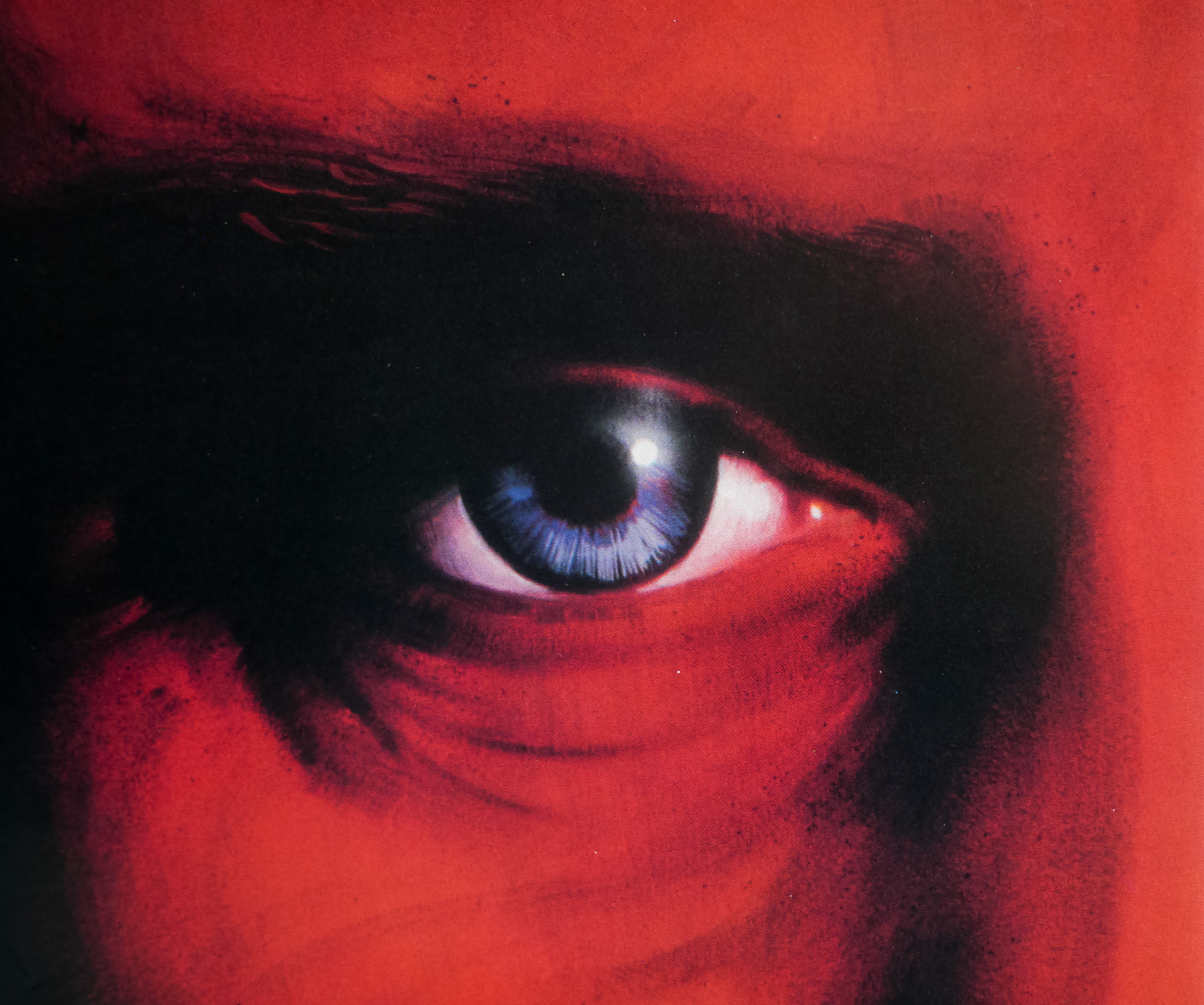
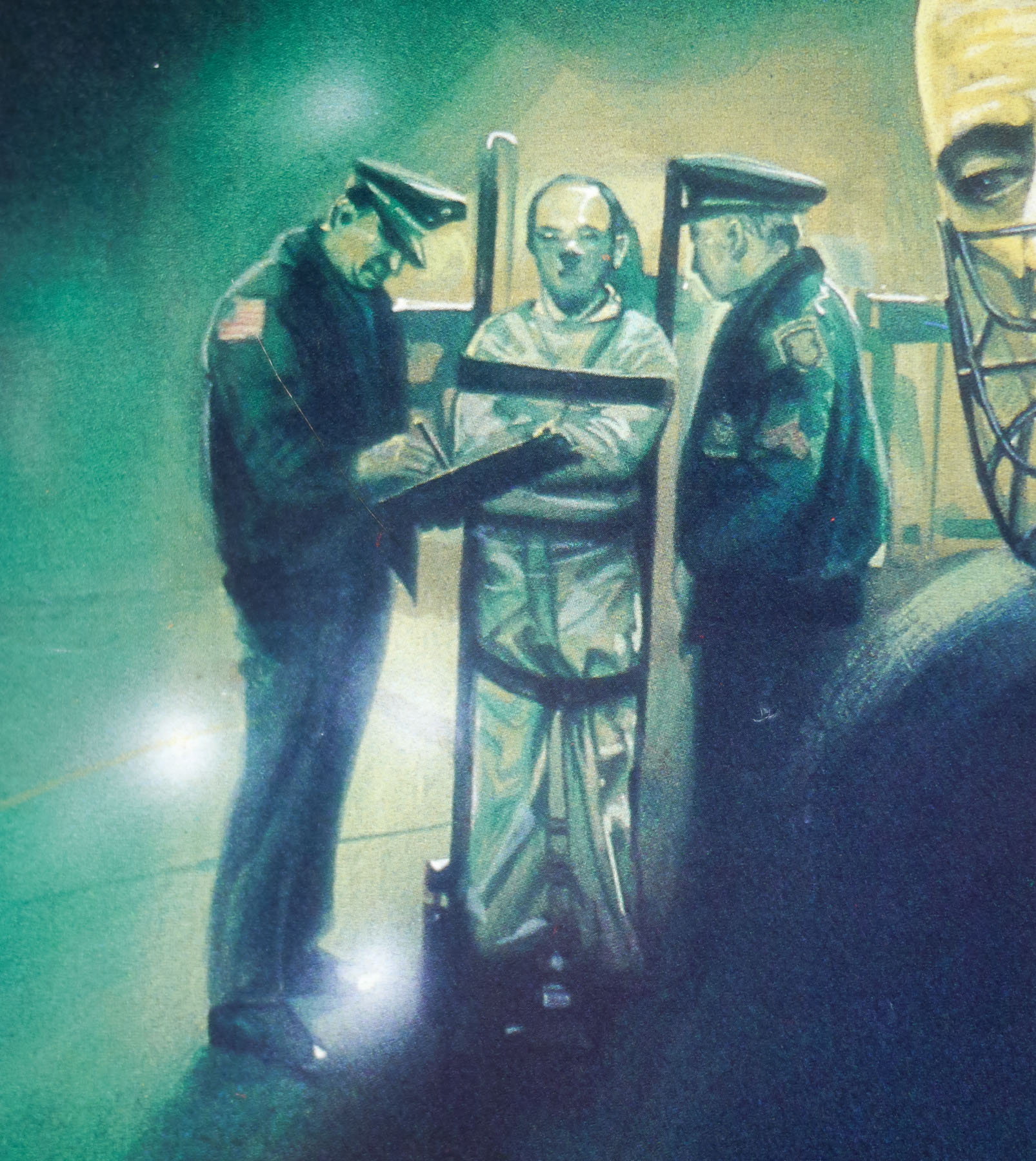
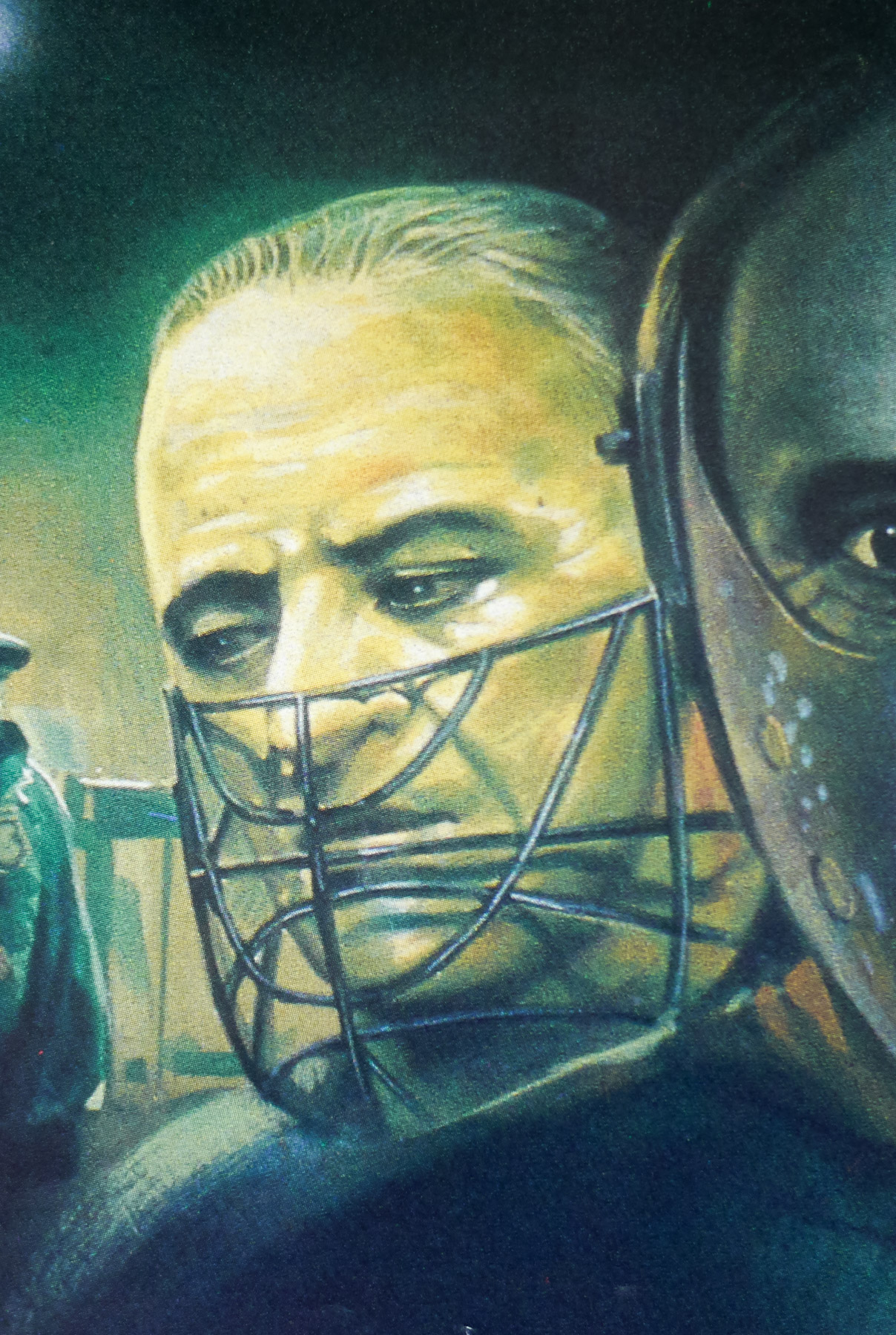
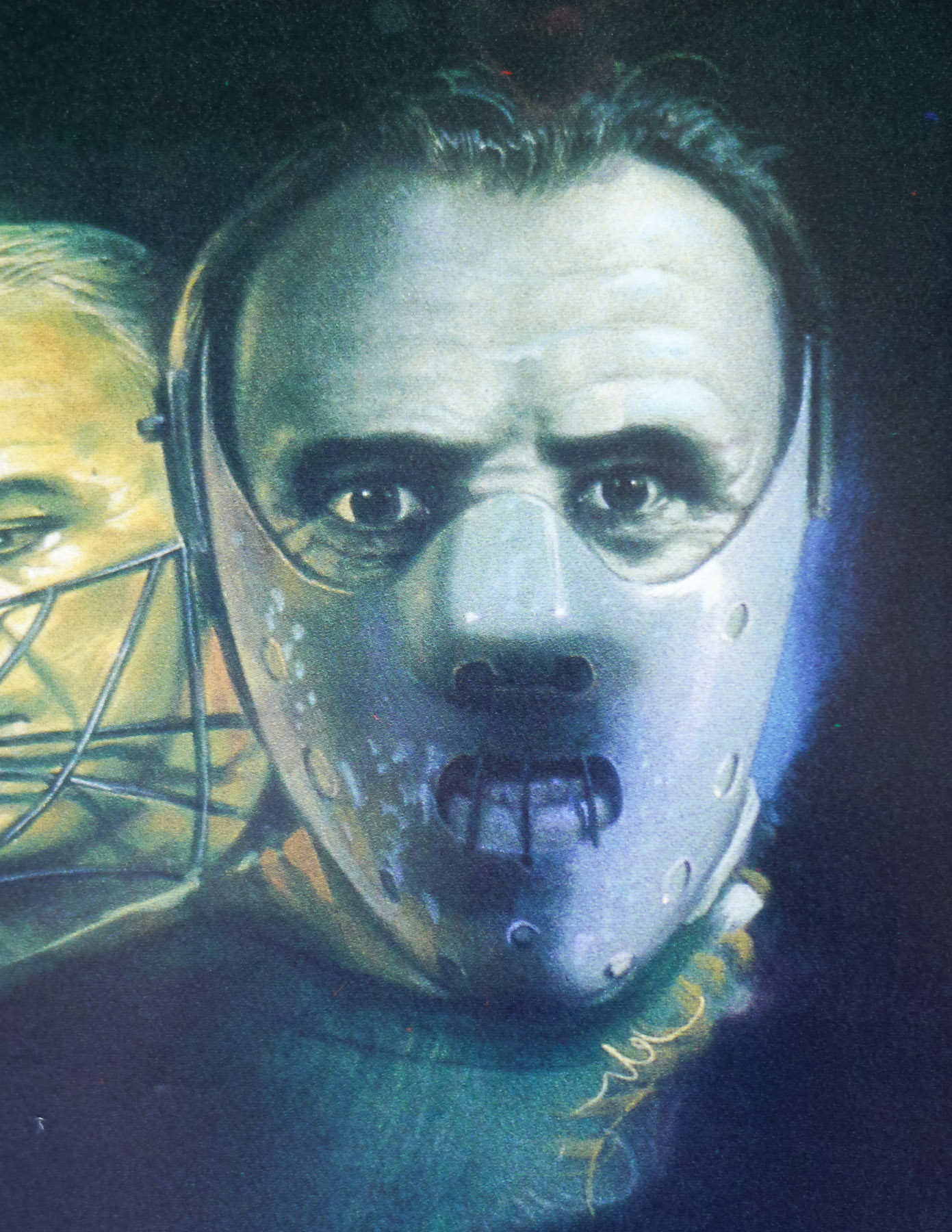
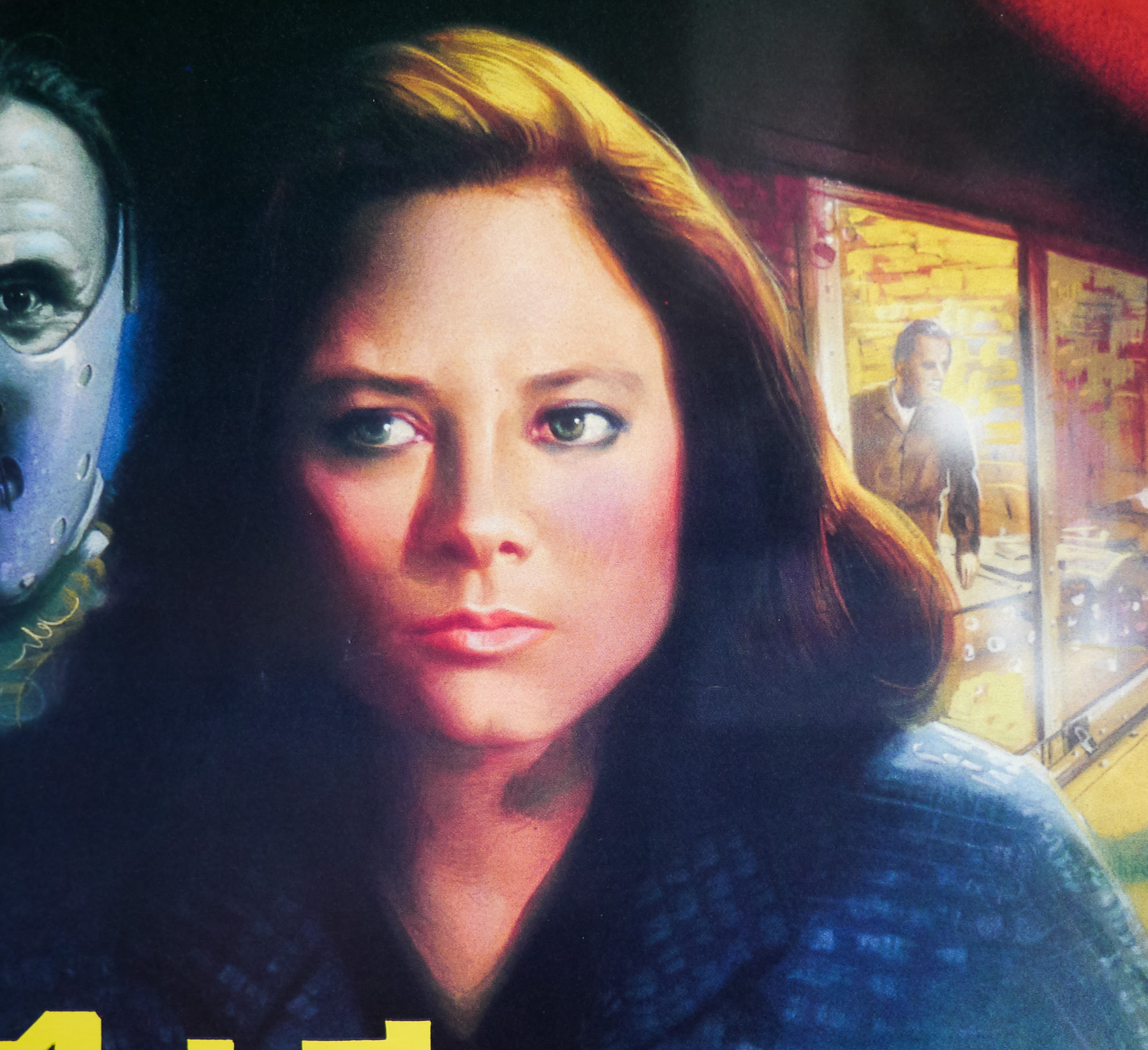
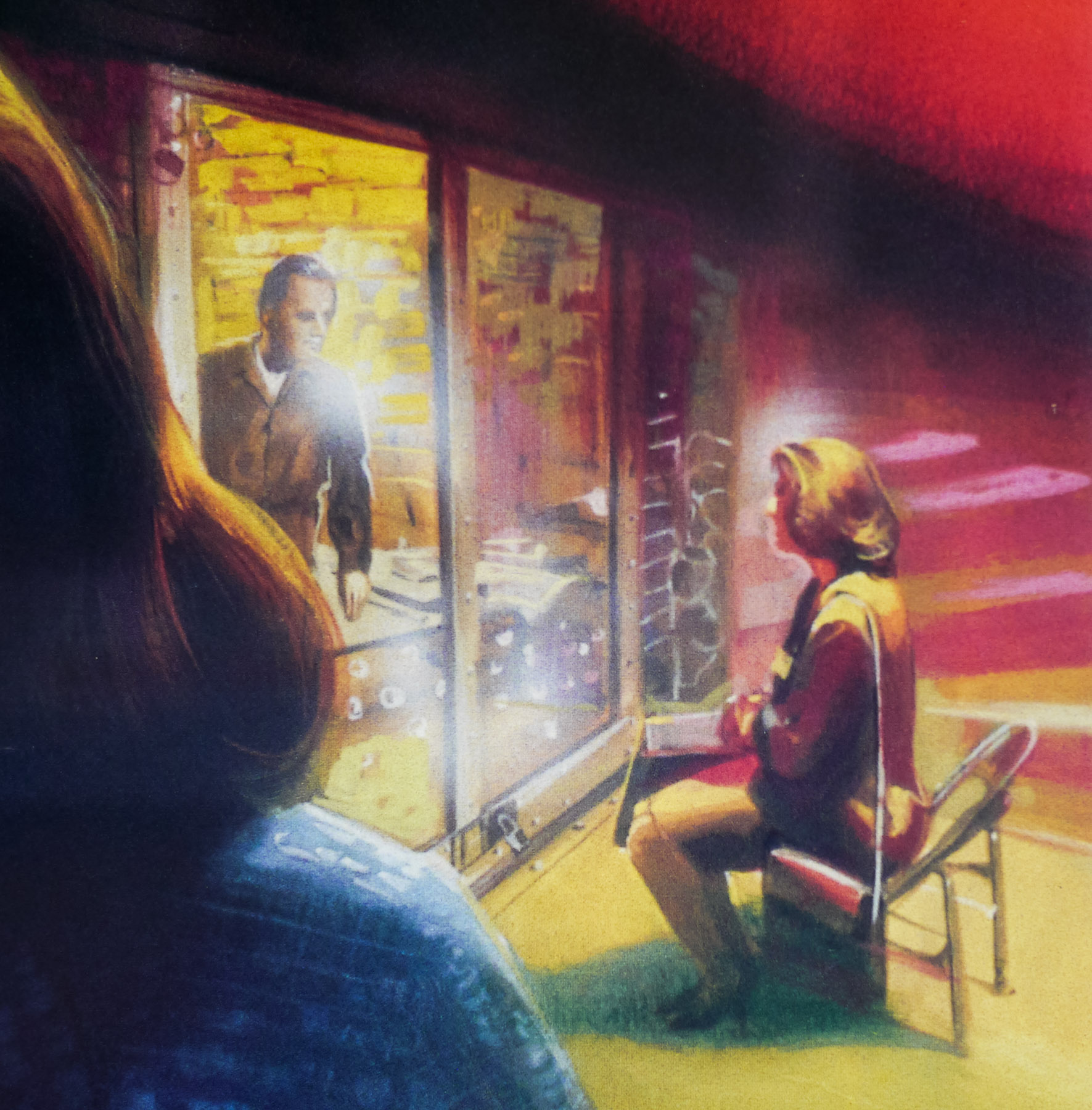
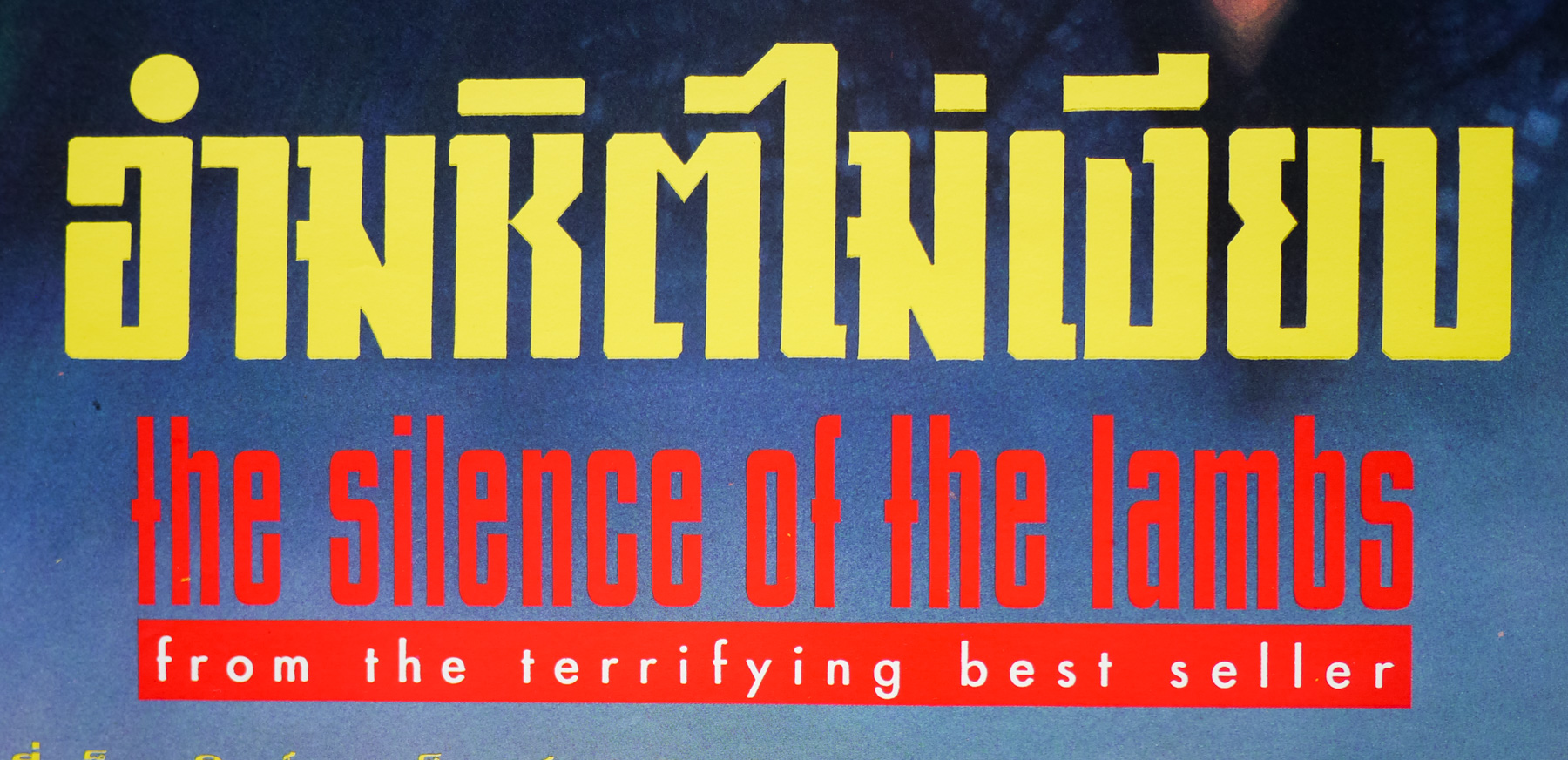
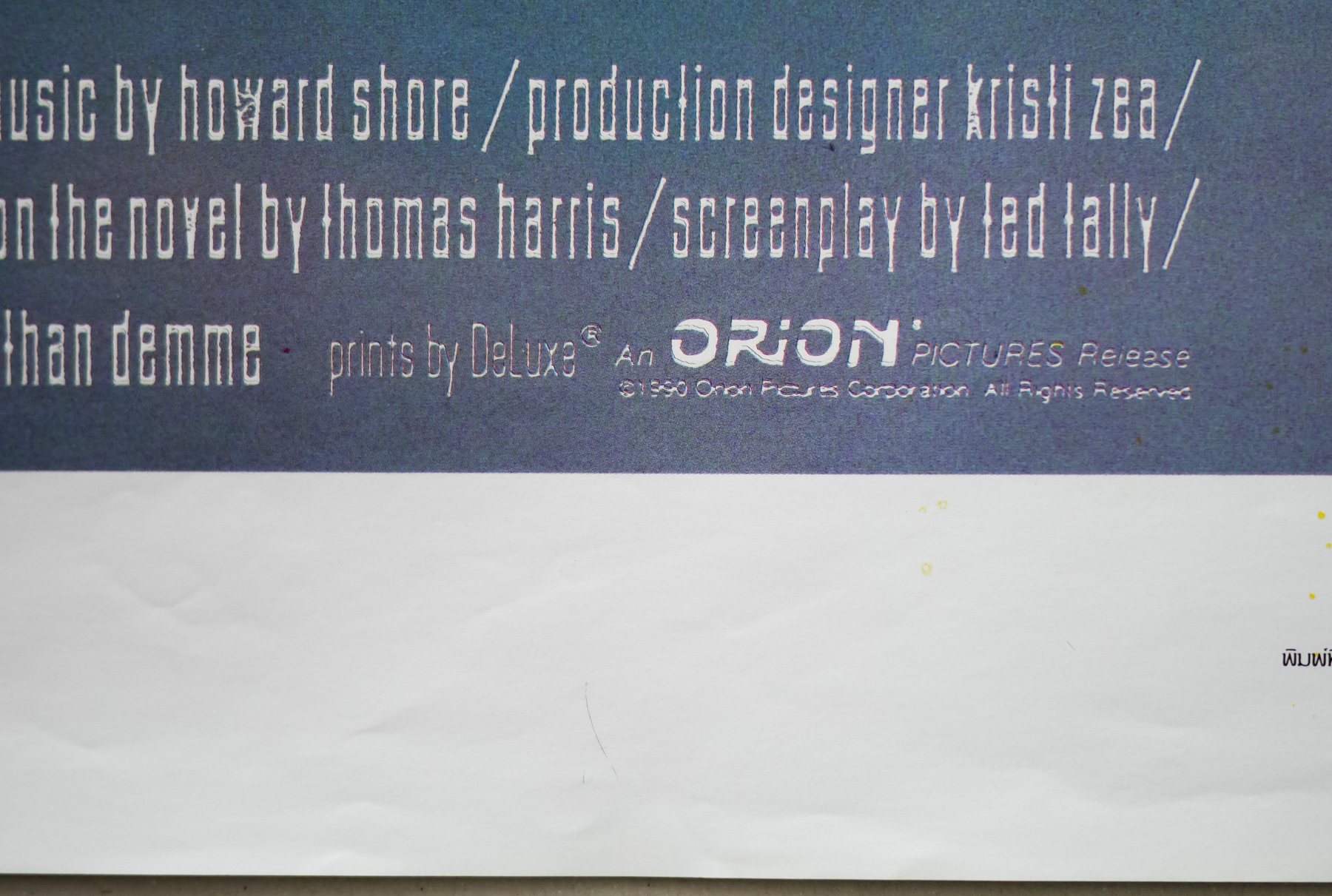
This is the original Thai poster for the release of the unforgettable thriller The Silence of the Lambs, a film that would win multiple awards across the globe following its release in 1991. Based on the novel of the same name by Thomas Harris which was the second to feature the character of Dr. Hannibal Lecter, a sociopathic serial killer who was the focus of several of his novels (in fact all but one) and featured in multiple films and a TV series since his first appearance in the novel Red Dragon (later released as the 1986 film Manhunter). The Silence of the Lambs was directed by Jonathan Demme and based on a screenplay by Ted Tally who would later adapt Harris again with another version of Red Dragon in 2002.

Jodie Foster gives a deservedly award-winning performance as the young FBI recruit Clarice Starling who excels during her training and is given the task of interviewing the incarcerated Lecter (a mesmerising, against-type performance by Anthony Hopkins). The Bureau wants to see if Lecter can help them in their hunt for another serial killer, dubbed Buffalo Bill, who is on the loose and has been skinning the corpses of his female victims. Lecter decides to toy with Clarice and she must work to gain his trust, whilst the audience are shown Bill picking up his next victim. The tension rises as Clarice closes in on the killer through clues given by Lecter and the stage is set for a nerve-shredding finale. The film won the ‘big five’ at the 1991 Academy Awards, including Best Actor and Best Actress for Hopkins and Foster, as well as Best Film, Best Director and Best Adapted Screenplay for Tally. It would prove to be a huge hit across the globe and enter the cultural lexicon in a significant way. The character of Lecter continues to fascinate and a recent TV series (called simply Hannibal) was a cult success.

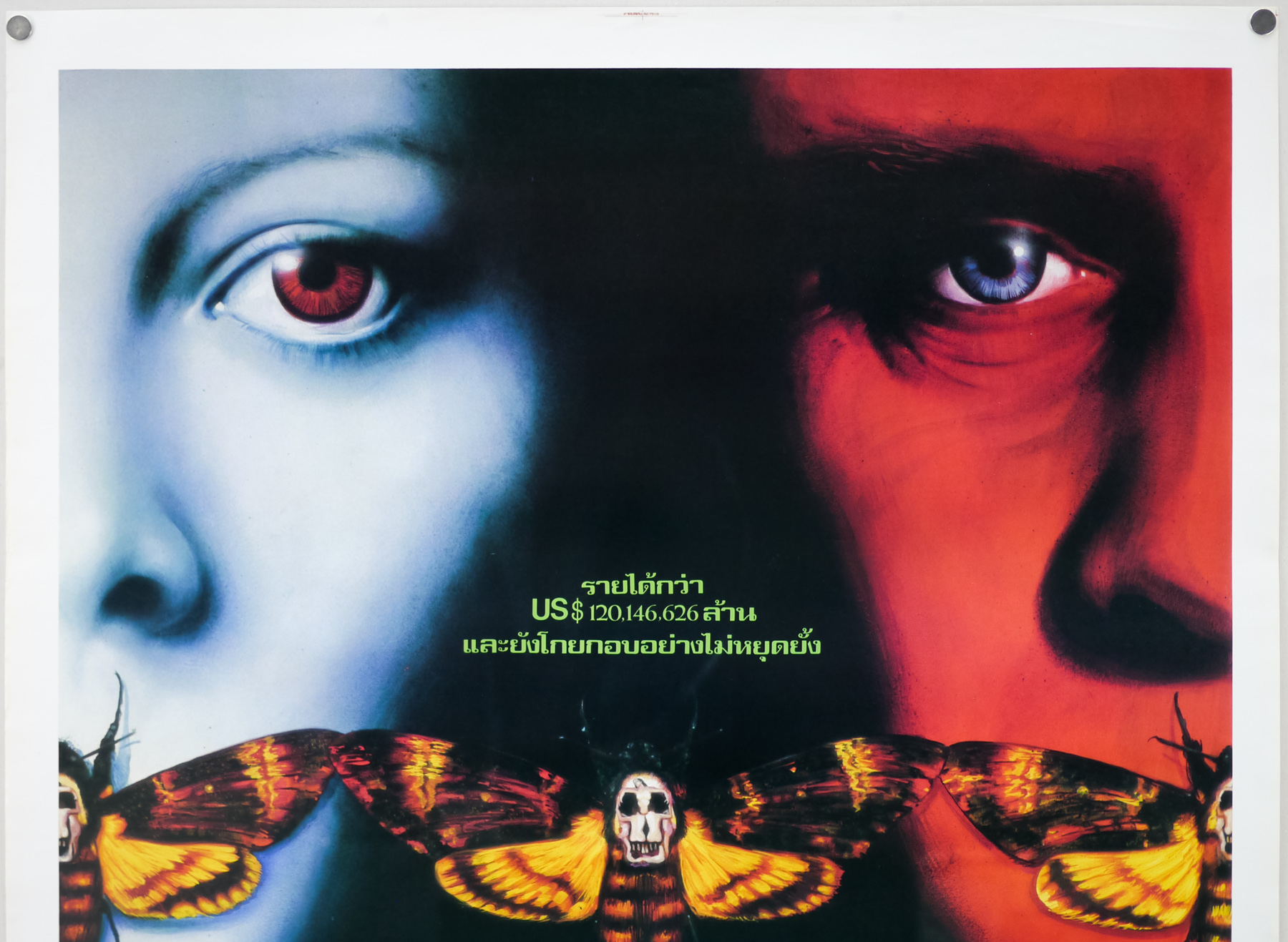
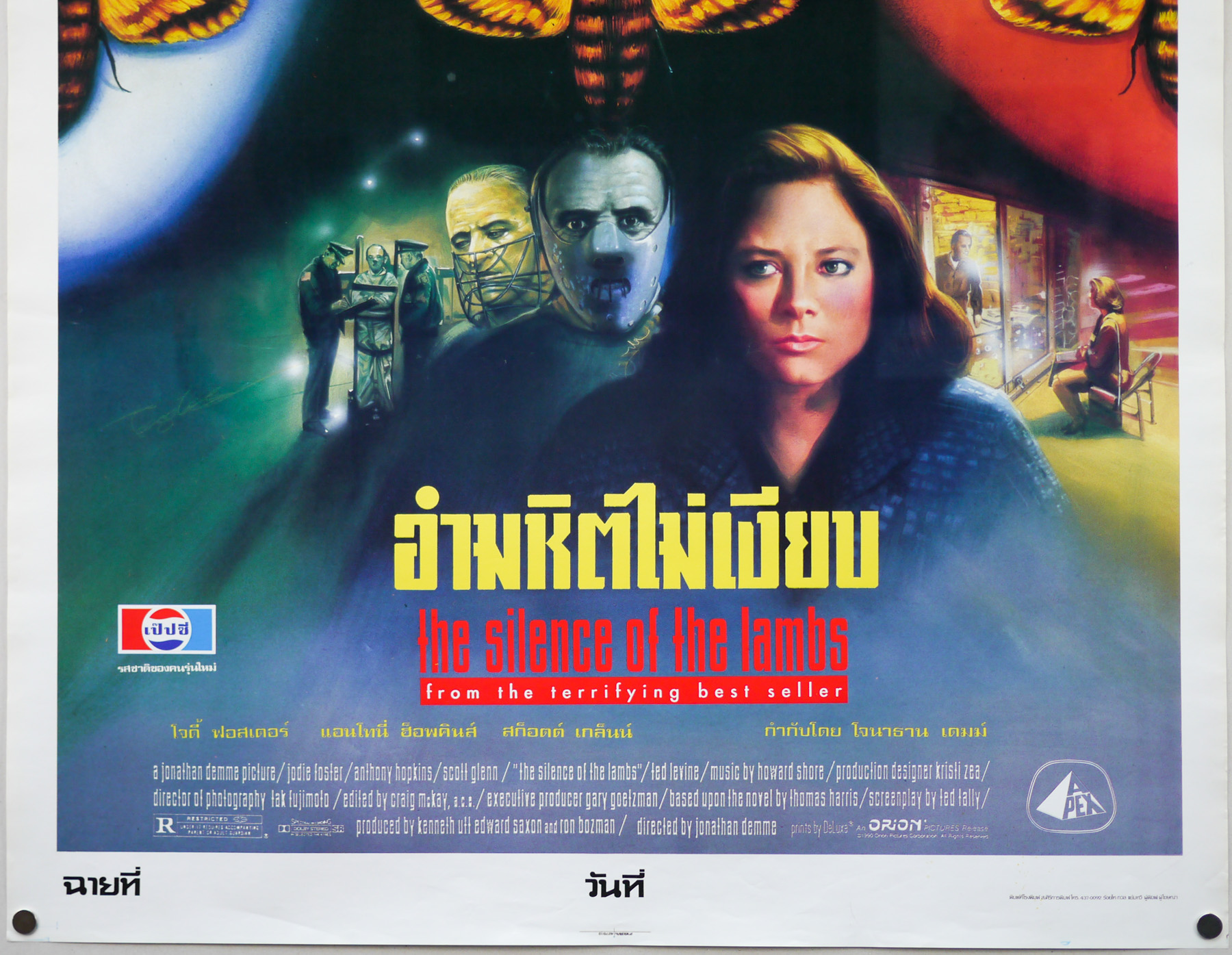
This Thai poster features excellent artwork by Tongdee Panumas (he signs his posters with just his first name) who was an incredibly prolific Thai film poster artist during the 70s, 80s and 90s. I’ve been unable to find out much about him, other than that he was born in 1947, so if anyone has any more details please get in touch.

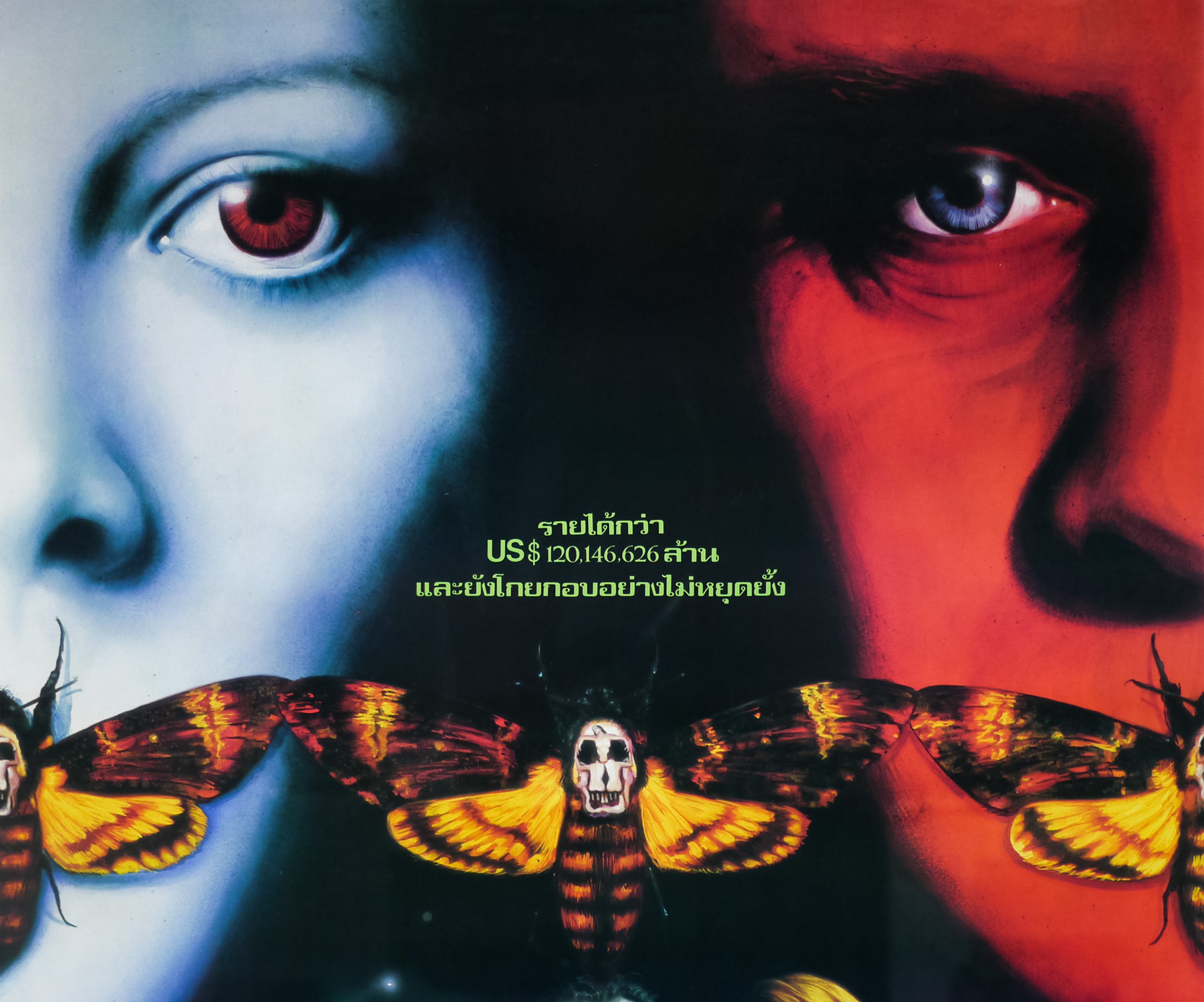
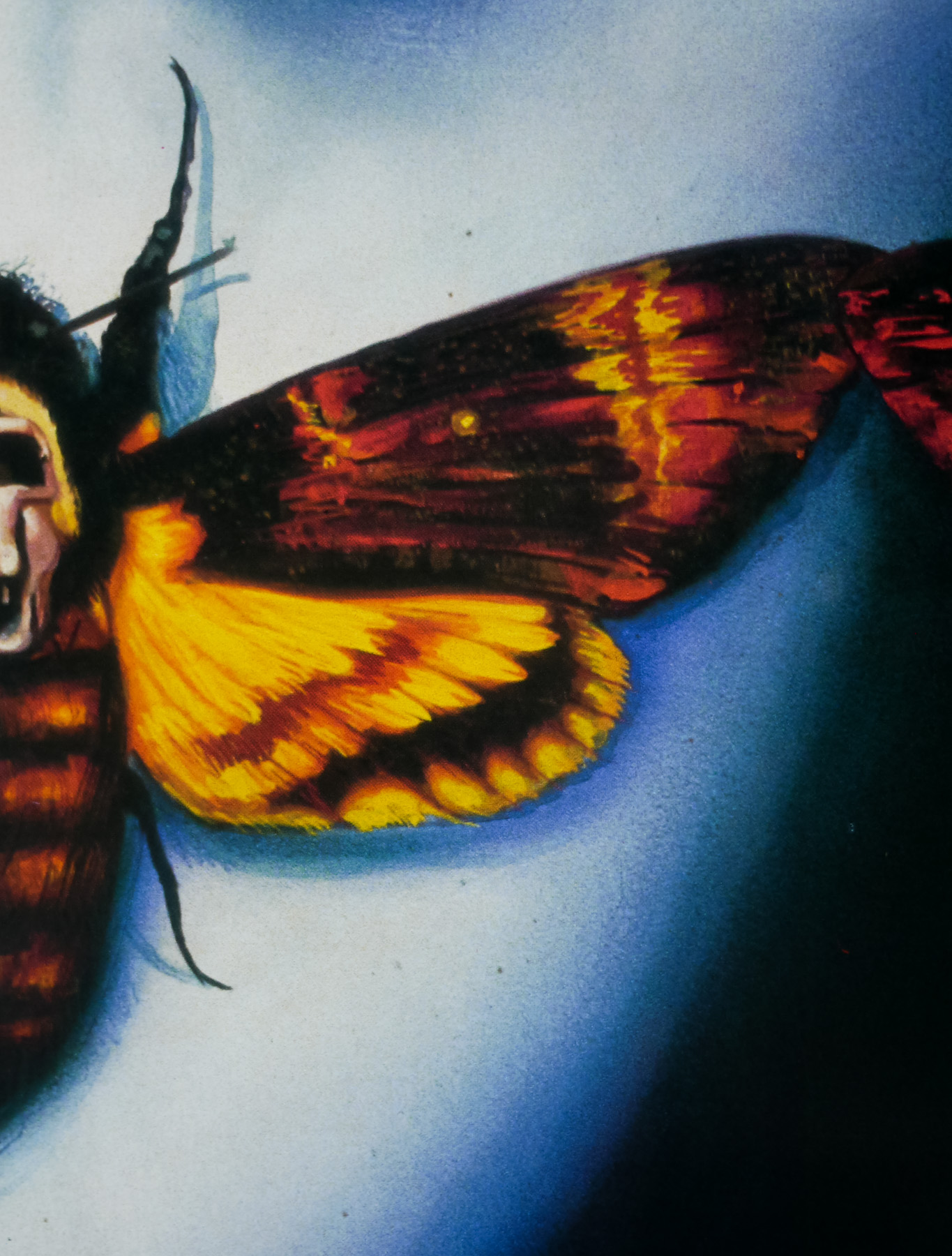
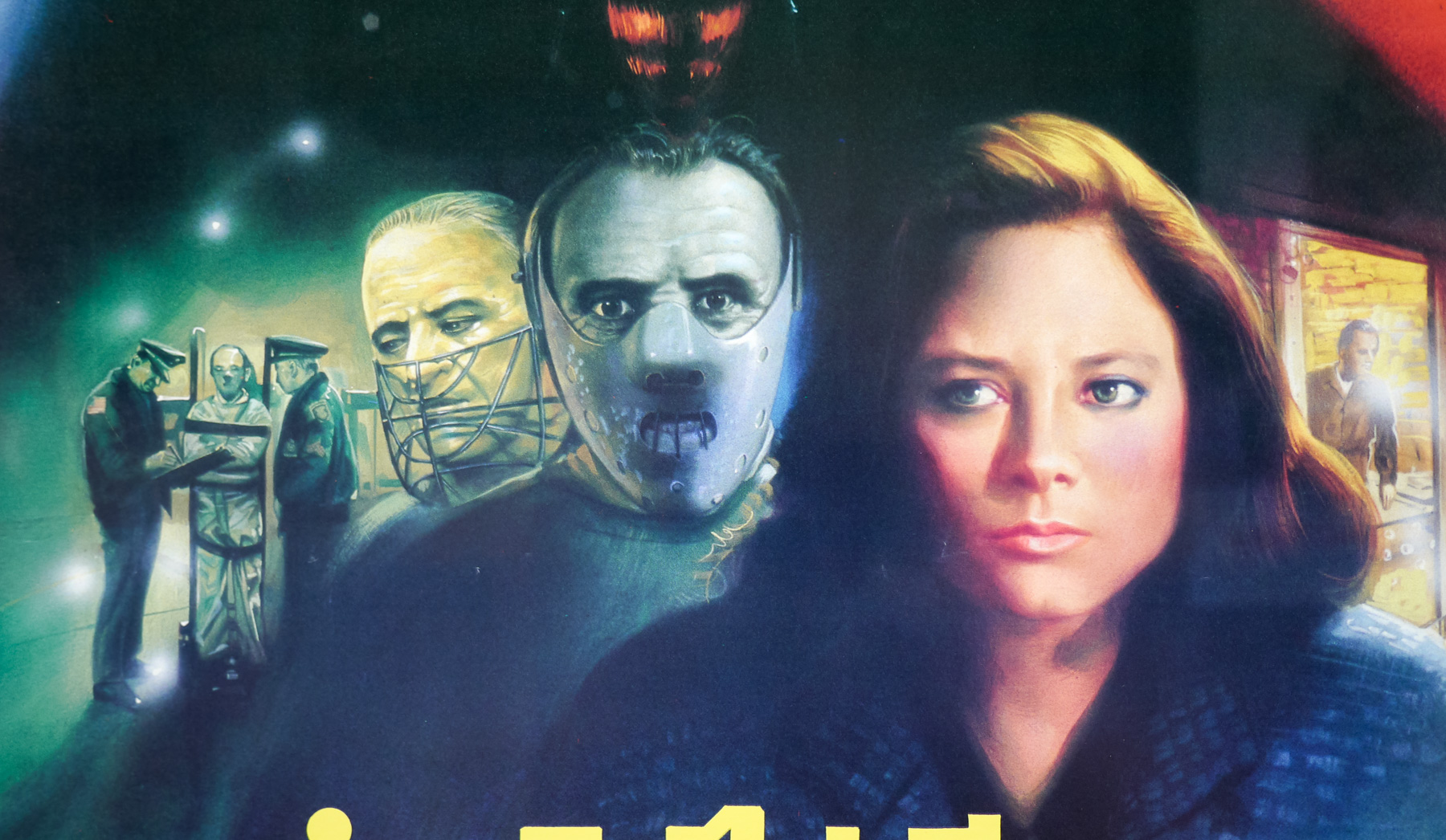
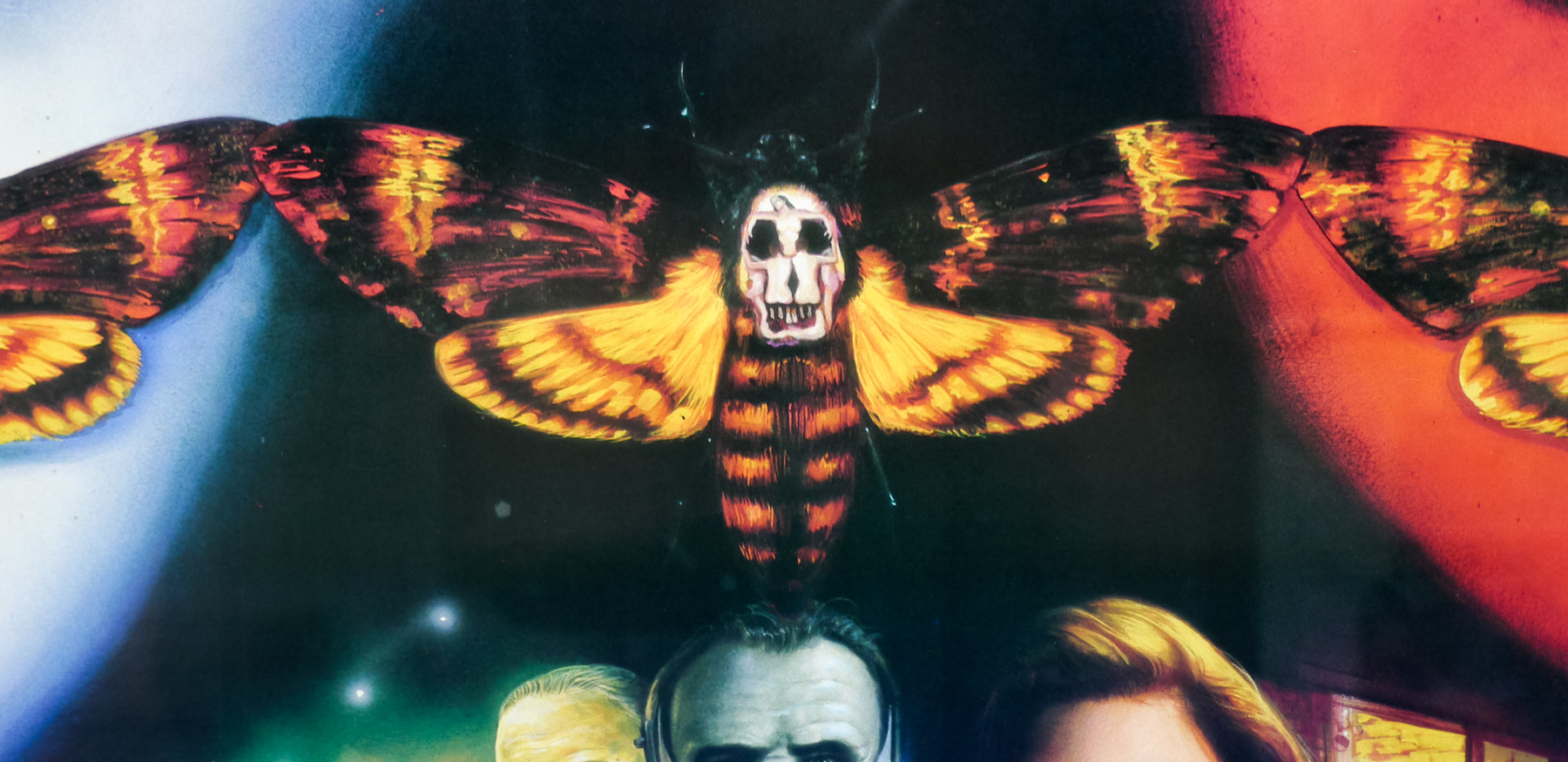
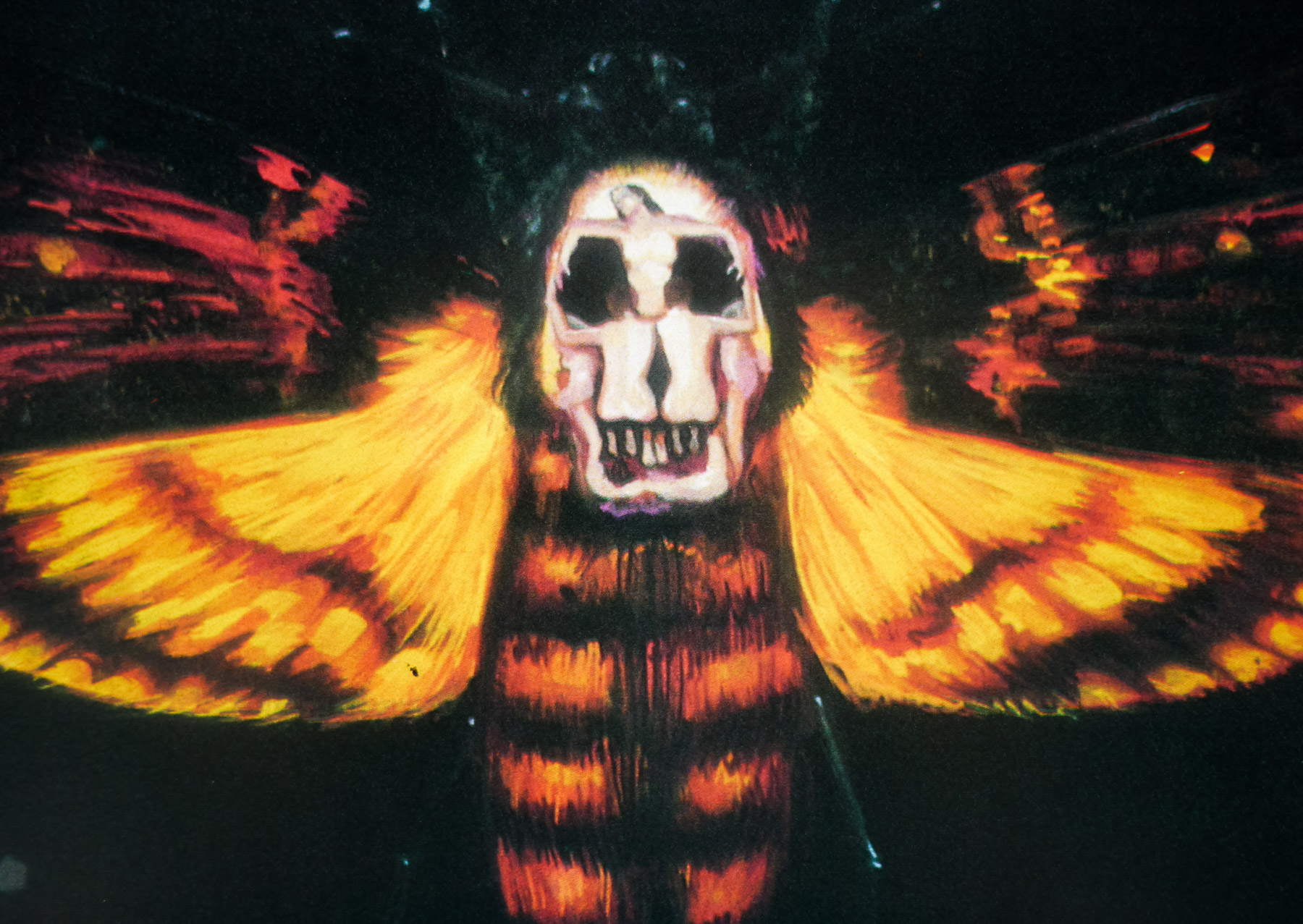
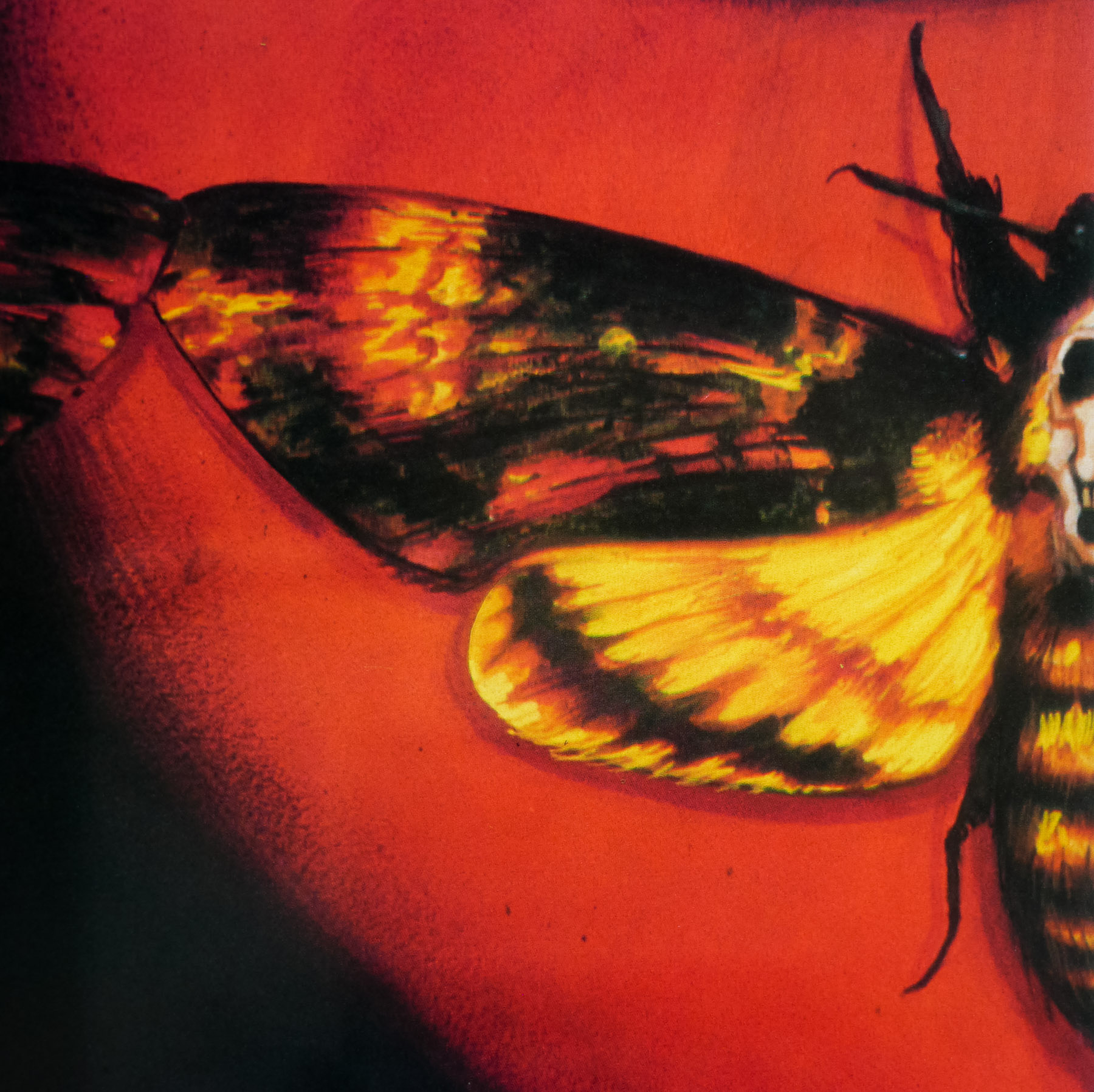
The faces of Foster and Hopkins of course feature on the classic American posters, including the Style C one sheet which merges the two, although this is more like the UK quad. At first glance I thought that Tongdee had painted the montage at the bottom over a reproduction of the photographic originals but on closer inspection it’s clear that he repainted the whole lot, including the intricate details on the infamous Deaths Head moths (featuring the freaky ‘skull’ image). The montage below is unique to this poster and features four depictions of Lecter at various points in the film.

North Dallas Forty / one sheet / USA

29.07.16

Poster Poster
Title
North Dallas Forty
AKA
--
Year of Film
1979
Director
Ted Kotcheff
Starring
Nick Nolte, Mac Davis, Charles Durning, Dayle Haddon, Bo Svenson, John Matuszak, Steve Forrest, G.D. Spradlin, Dabney Coleman, Savannah Smith Boucher
Origin of Film
USA
Genre(s) of Film
Nick Nolte, Mac Davis, Charles Durning, Dayle Haddon, Bo Svenson, John Matuszak, Steve Forrest, G.D. Spradlin, Dabney Coleman, Savannah Smith Boucher,
Type of Poster
One sheet
Style of Poster
--
Origin of Poster
USA
Year of Poster
1979
Designer
Spiros Angelikas
Artist
Morgan Kane
Size (inches)
27" x 41"
SS or DS
SS
NSS #
790134
Tagline
"Wait till you see the weird part."

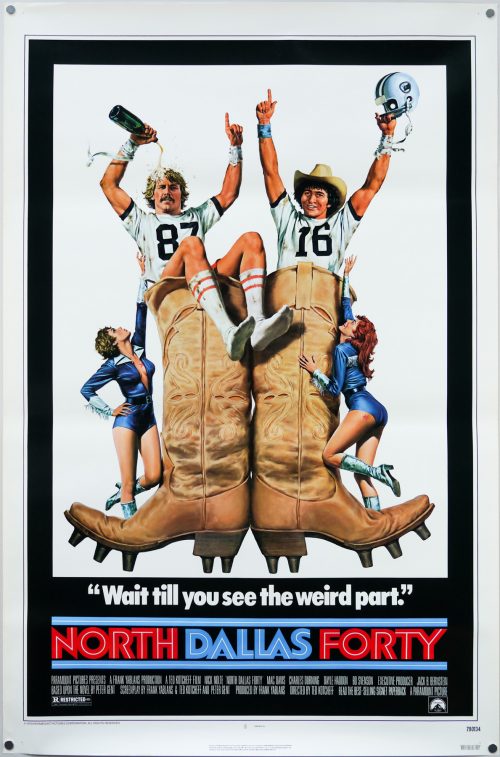
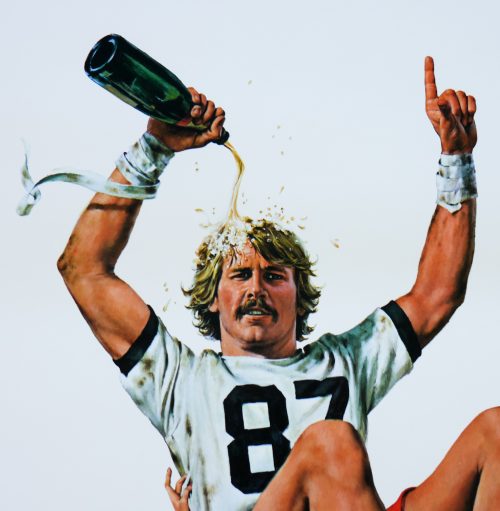
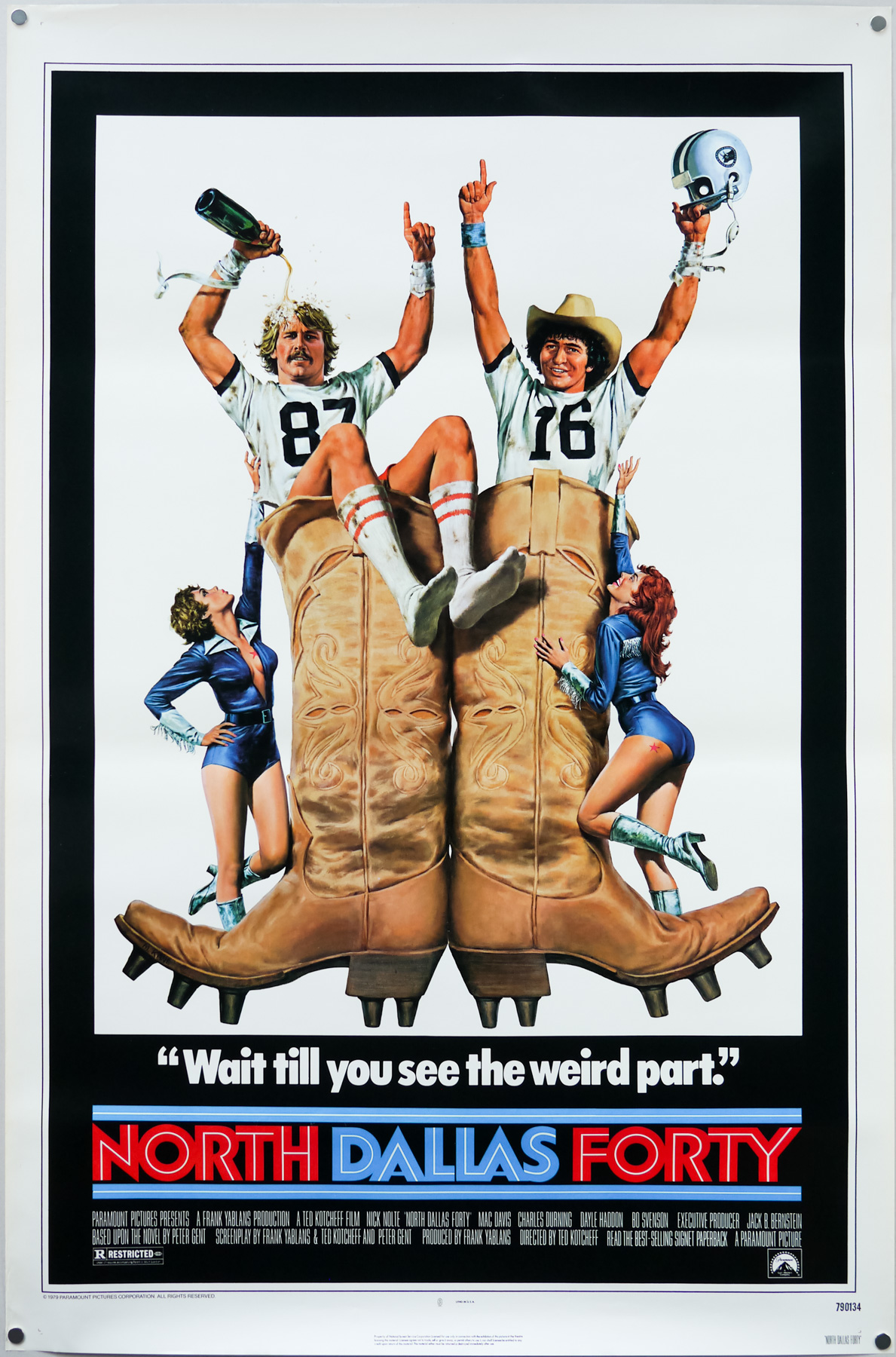
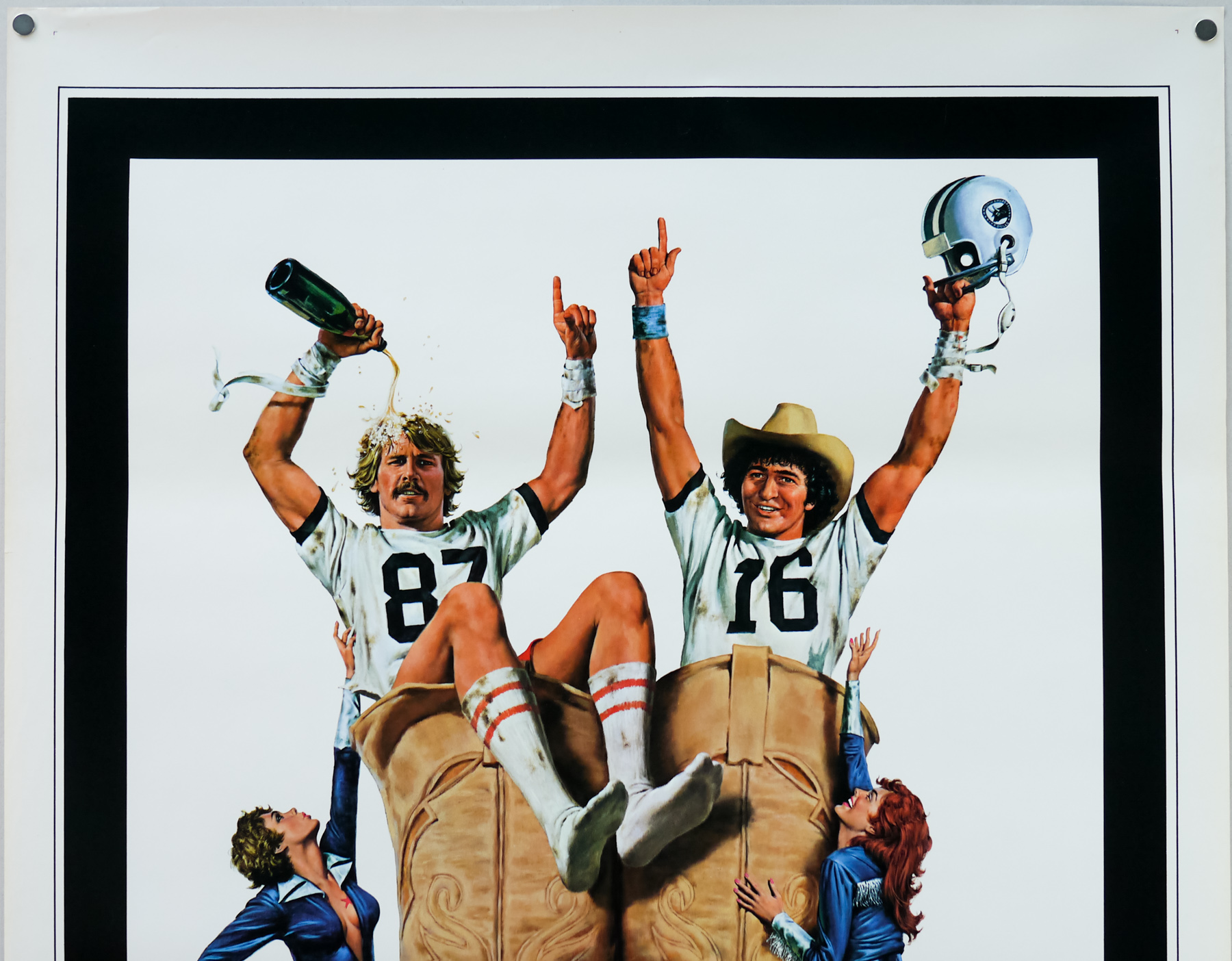
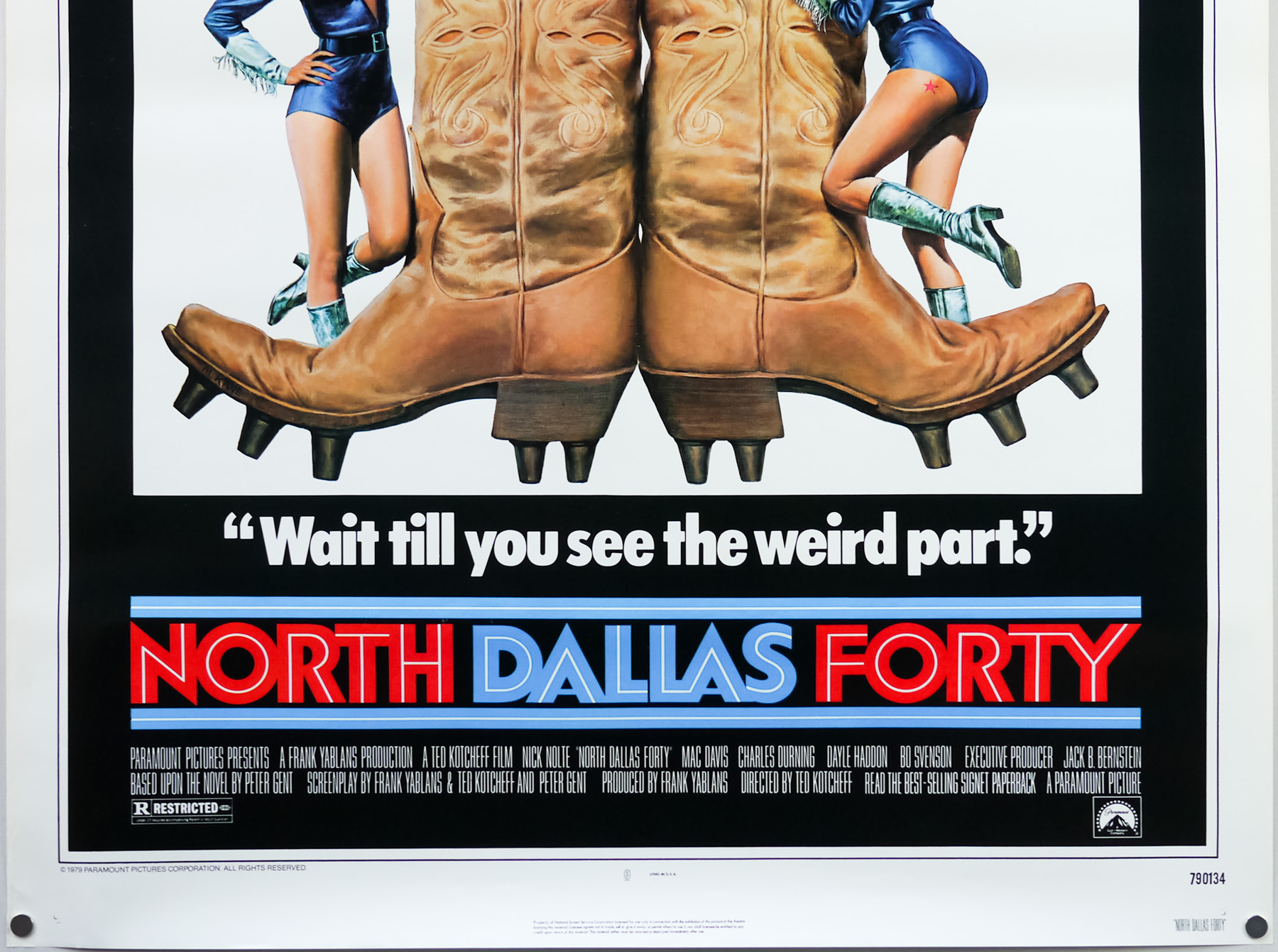
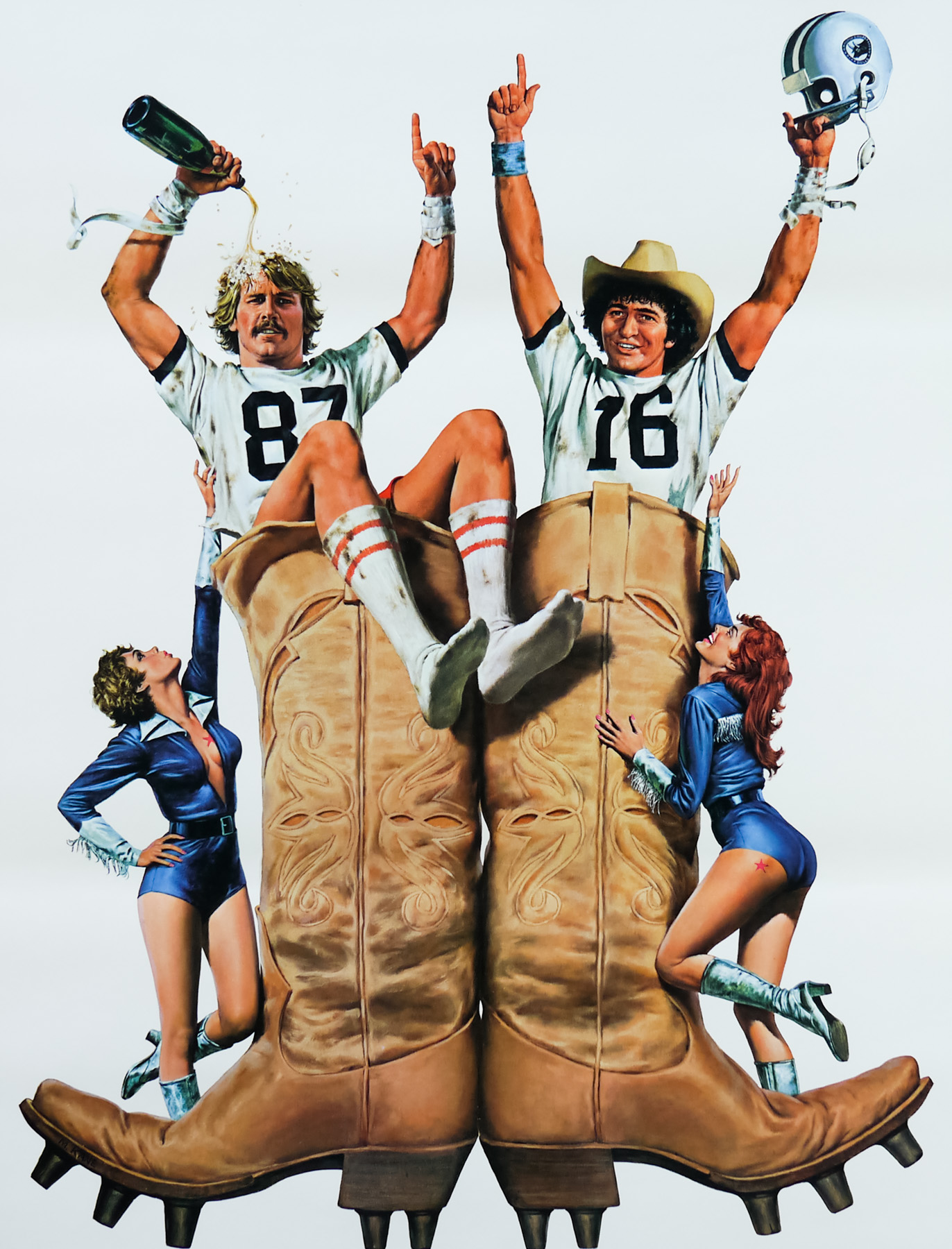
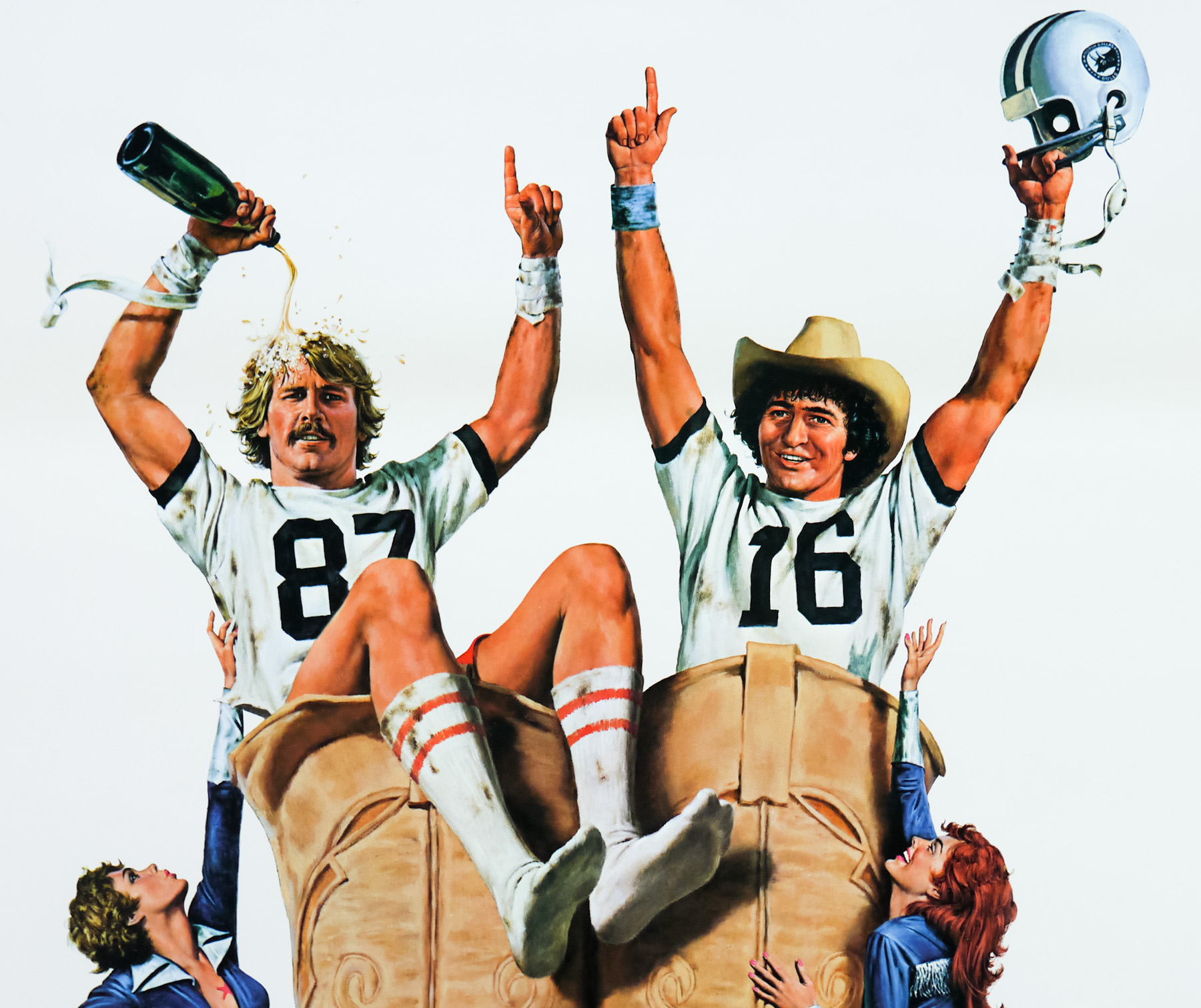
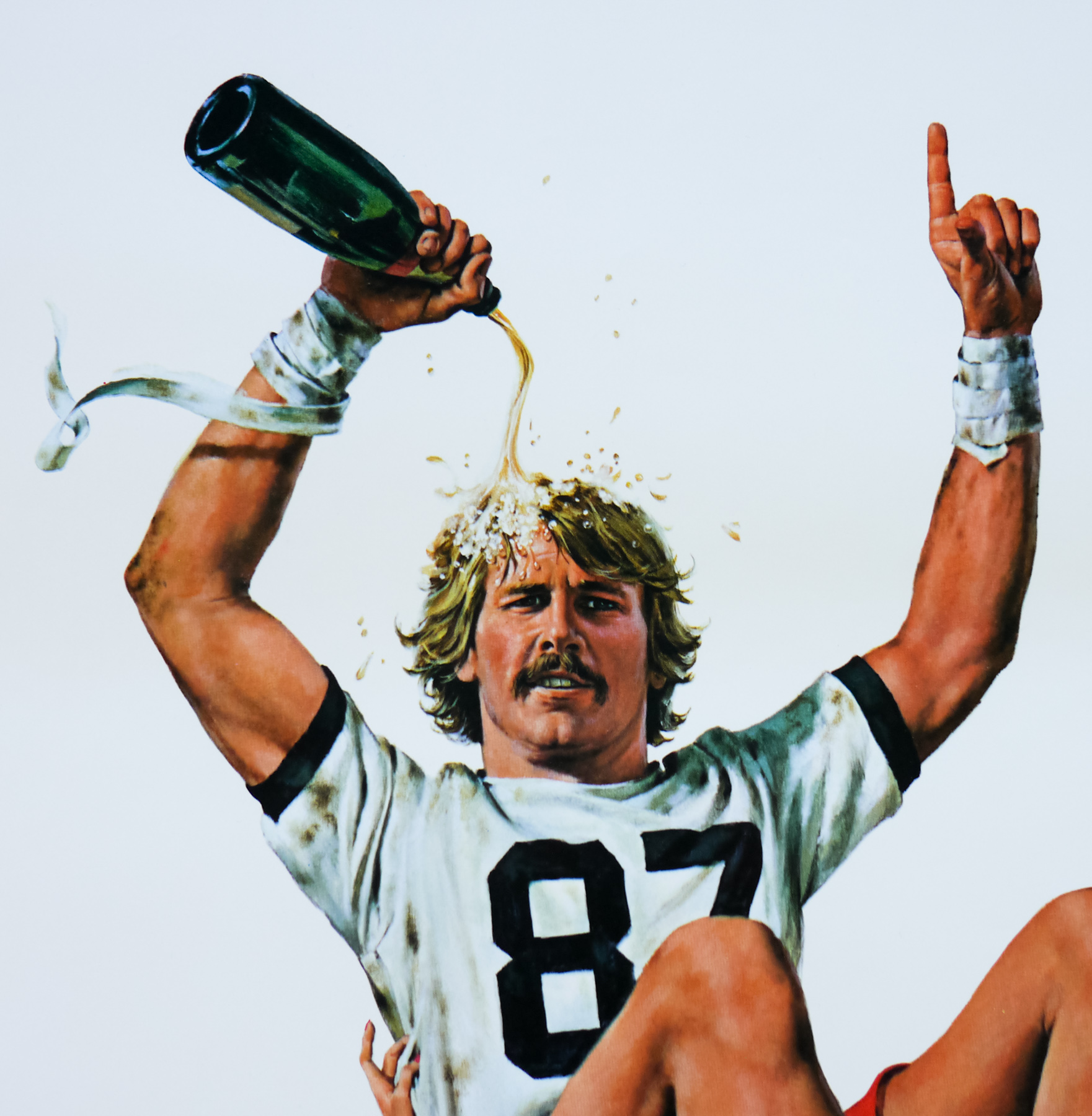
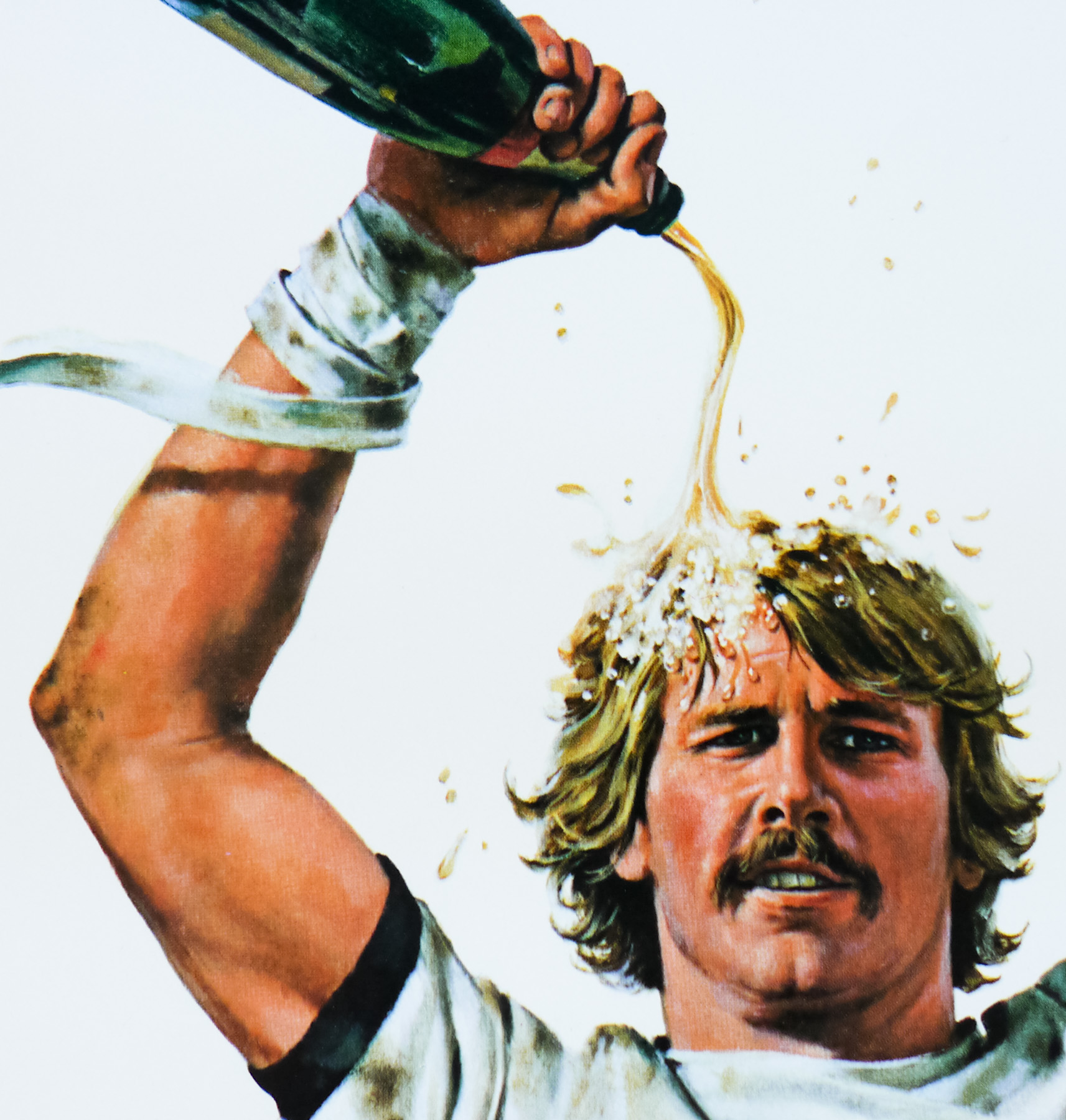
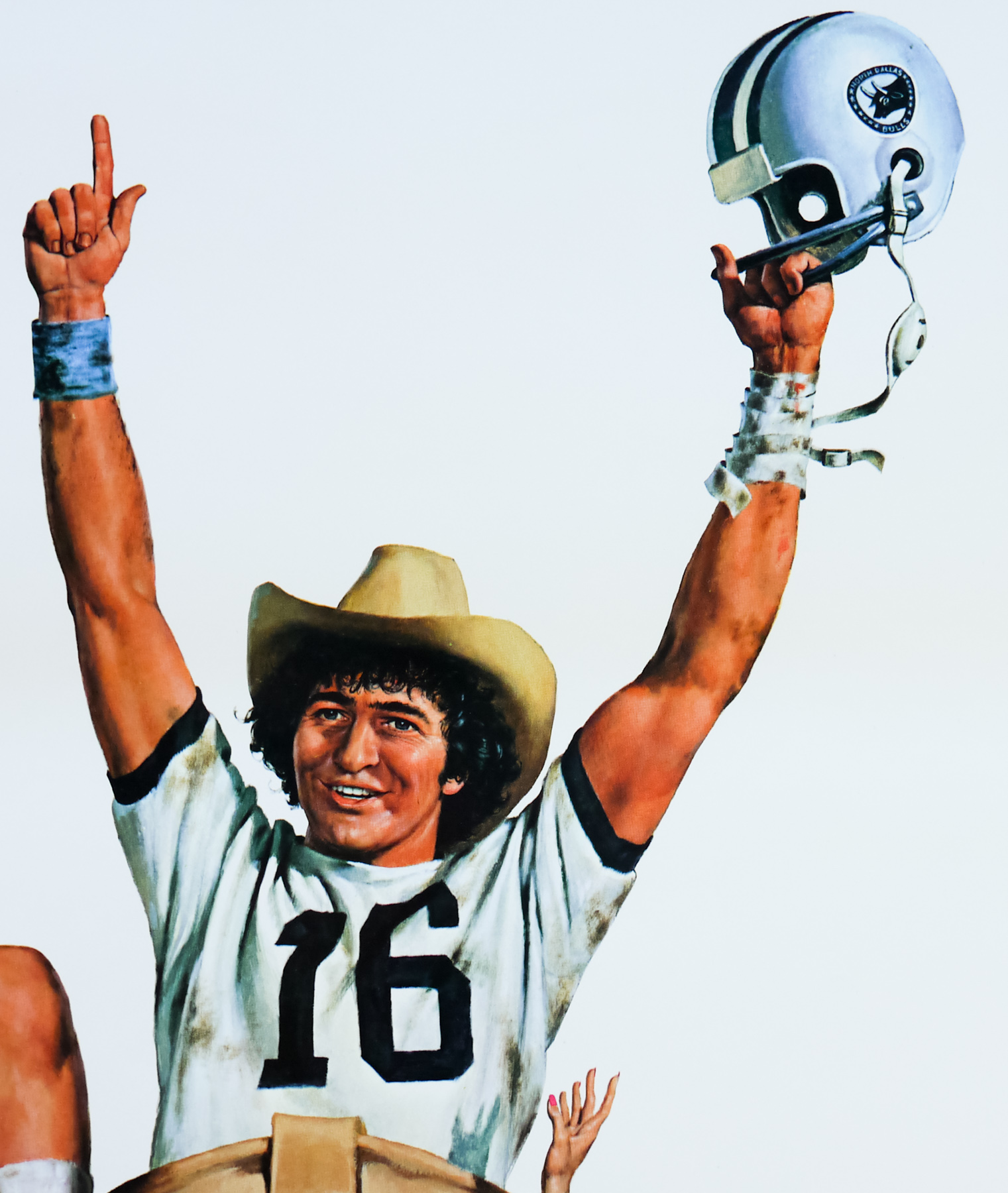
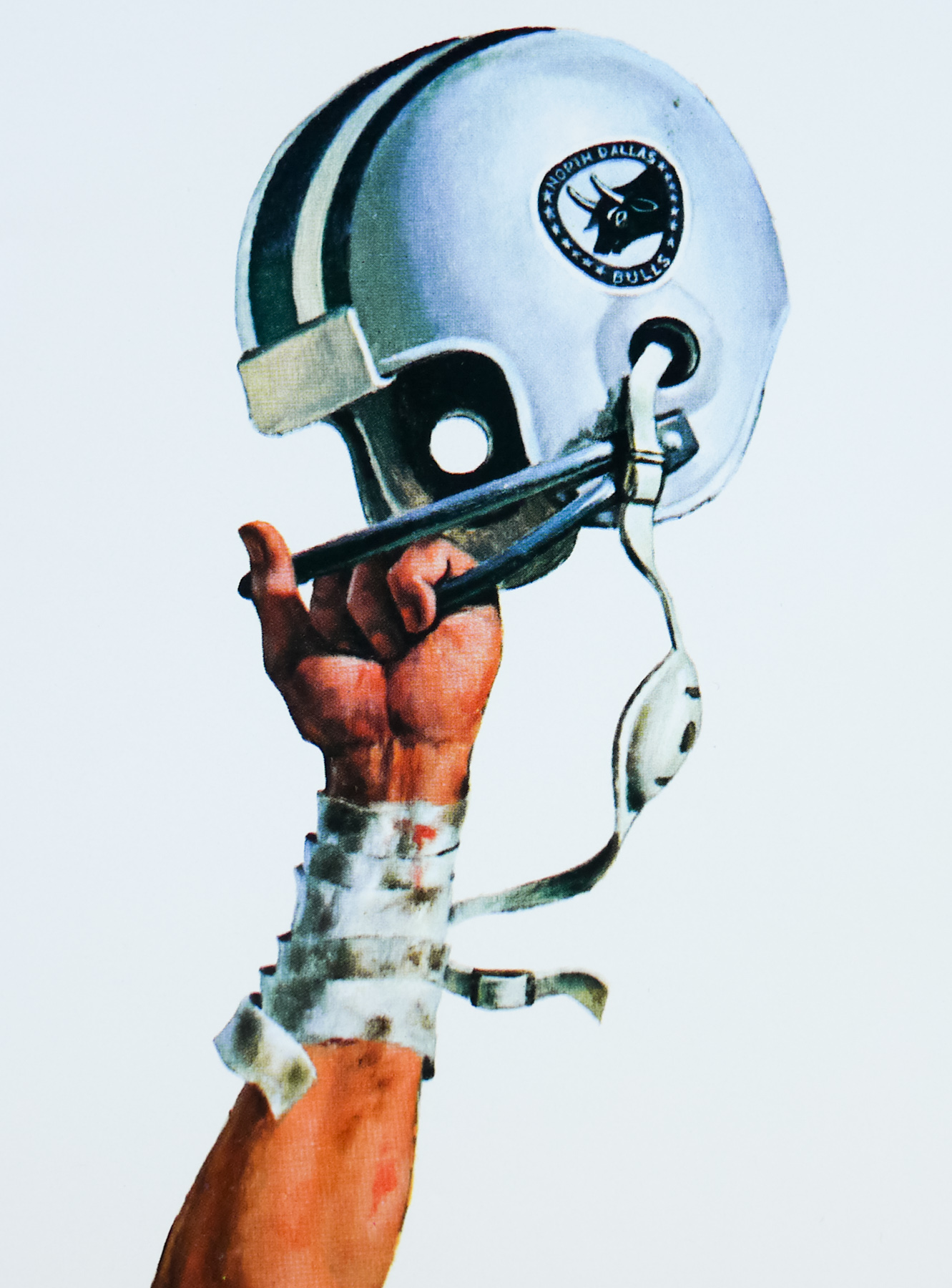
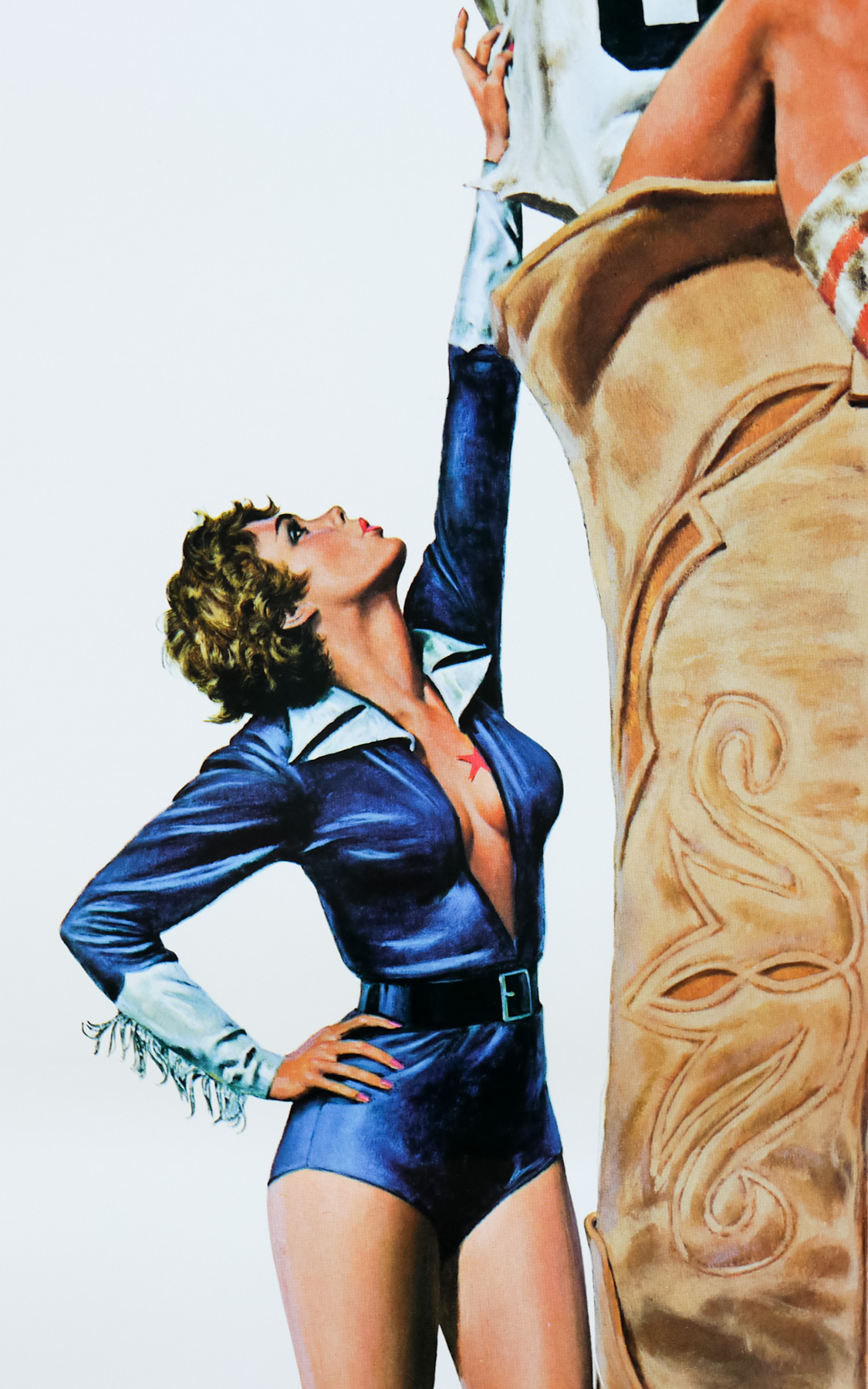
An illustration by the American artist Morgan Kane features on this US one sheet for the release of the 1979 American Football themed North Dallas Forty. Based on the best-selling novel of the same name by Peter Gent, the film is a semi-fictional tale set around a Texan team, here called the North Dallas Cowboys but clearly based on the world-famous Dallas Cowboys. The film was directed by Ted Kotcheff, the Canadian director probably best known for First Blood (Rambo) and Weekend at Bernie’s. The two lead characters depicted on this poster are played by Nick Nolte and the Texan singer-songwriter Mac Davis, here making his debut turn as an actor (with multiple roles to follow).

The plot focuses on the antics of the team’s players both on and off the field, with all the infamous sex, drugs and rock ‘n roll shenanigans of that period of the NFL. Nolte plays Elliot, an ageing superstar player who, along with Davis’ quarterback Seth, get up to all manner of hijinks, much to the club owner’s consternation. The film looks at how the excesses off the pitch affect the sport on it in a similar (slightly more comical) fashion to Oliver Stone’s 1999 film Any Given Sunday.

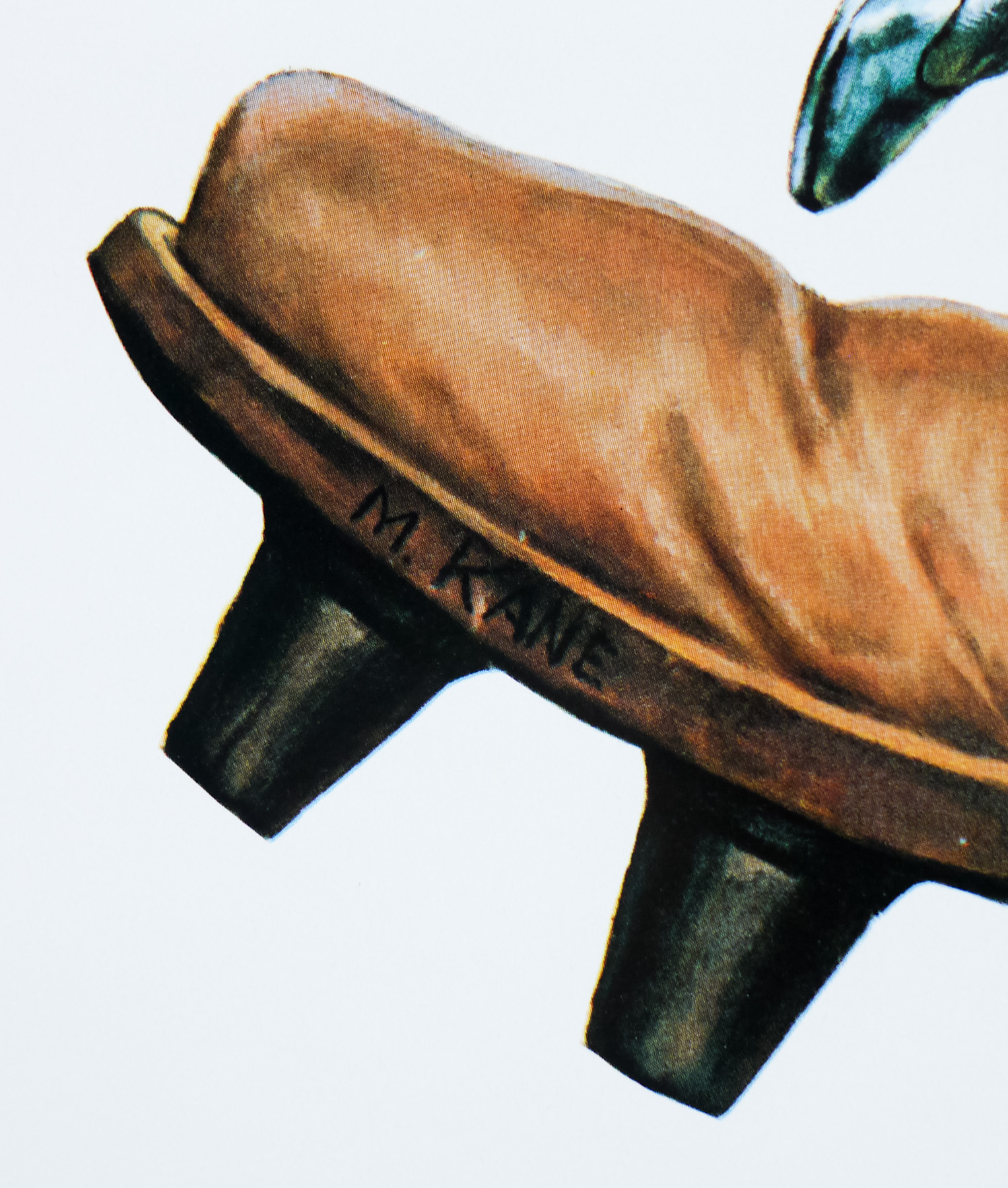
Morgan Kane was born in 1916 and graduated from the Cleveland Art Institute in 1942. During WWII he worked in Washington for the US Air Force, illustrating flying manuals and safety posters. When the war was over he moved to Chicago where he worked on commerical artwork for the likes of Coca Cola. Wanting to try his hand at magazine and book artwork, Kane then moved to Connecticut with his family and completed illustrations for a variety of magazines, including Cosmopolitan and Esquire, as well as on book covers for several publishers.

In 1963 he opened a photographic studio and worked on advertisements and more book covers, plus he took the celebrated photograph of the long pair of legs with Roger Moore underneath that featured on the poster for the Bond film ‘For Your Eyes Only‘. He would also illustrate tens of movie posters for the likes of Paramount Pictures, Universal and Warner Brothers. Other notable film posters he worked on include Meatballs, Coast to Coast and Sunburn (check out the emovieposter.com archive for images of them).

The poster was designed by Spiros Angelikas who was a prolific designer and artist of film posters during the 1970s and 1980s. He owned a design agency called Spiros Associates. Some of his most famous work includes the poster he designed for Friday the 13th, with artist Alex Ebel, his work on the Indiana Jones series, and for his collaborations with the legendary artist Richard Amsel. They worked on Raiders of the Lost Ark and Nijinsky together and there’s a great article on the late artist’s website about their efforts. He also worked on several of the posters for the original Star Trek films, including the gorgeous Bob Peak original. There’s an interesting article by Angelikas’ son Harry on the Trek Core website which has photographs of concepts for the posters by Spiros that never made it to the print stage.

Nightbreed / quad / UK

22.02.17

Poster Poster
Title
Nightbreed
AKA
Cabal (France, Italy)
Year of Film
1990
Director
Clive Barker
Starring
Craig Sheffer, Anne Bobby, David Cronenberg, Charles Haid, Hugh Quarshie, Hugh Ross, Doug Bradley, Catherine Chevalier, Malcolm Smith, Bob Sessions, Oliver Parker
Origin of Film
USA
Genre(s) of Film
Craig Sheffer, Anne Bobby, David Cronenberg, Charles Haid, Hugh Quarshie, Hugh Ross, Doug Bradley, Catherine Chevalier, Malcolm Smith, Bob Sessions, Oliver Parker,
Type of Poster
Quad
Style of Poster
--
Origin of Poster
UK
Year of Poster
1990
Designer
Unknown
Artist
--
Size (inches)
30 3/16" x 40 1/16"
SS or DS
SS
Tagline
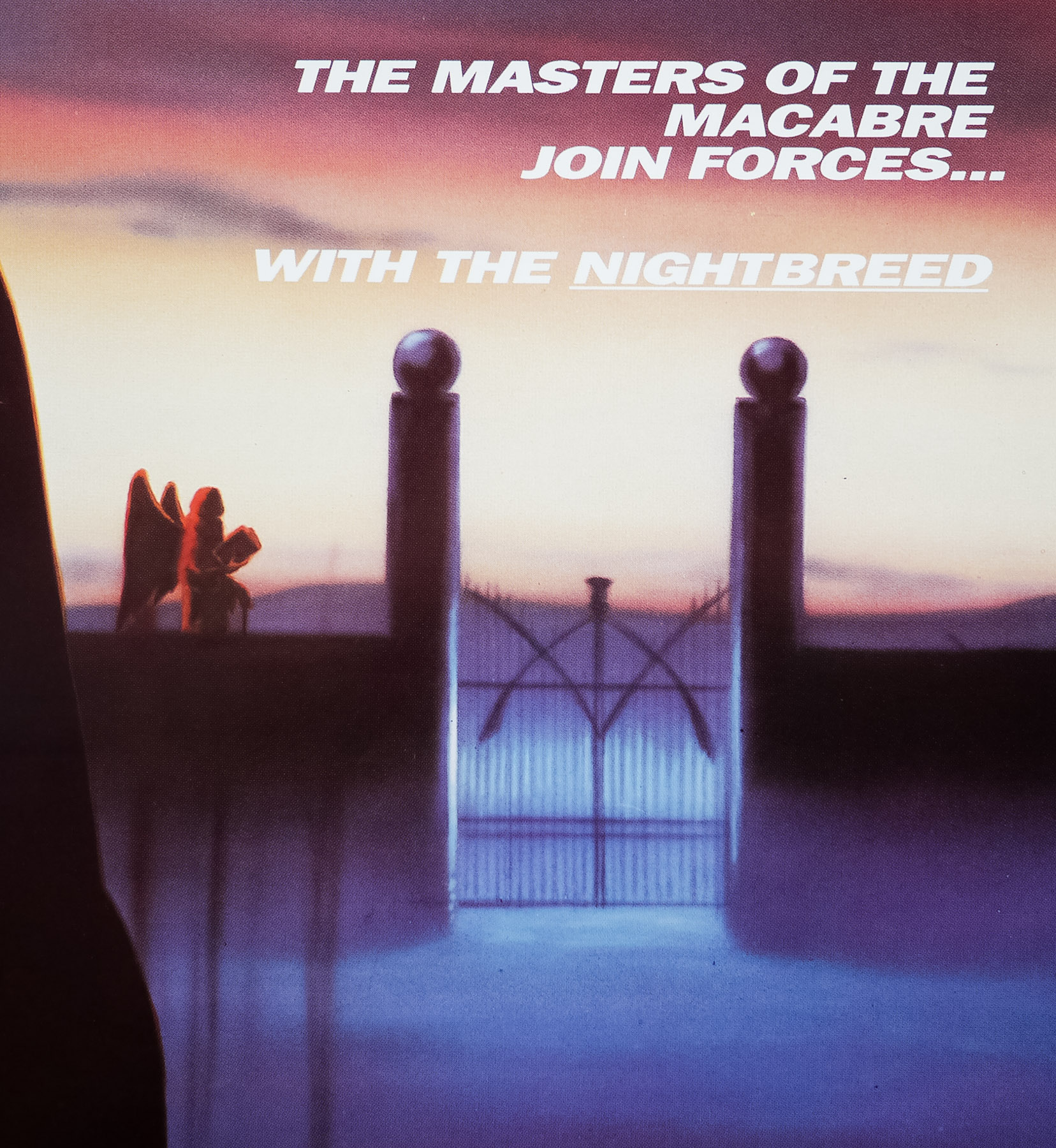
The masters of the macabre join forces... with the Nightbreed

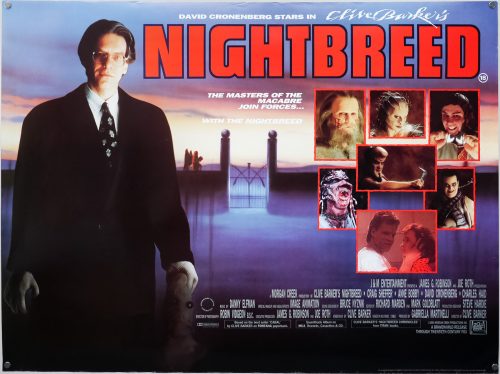
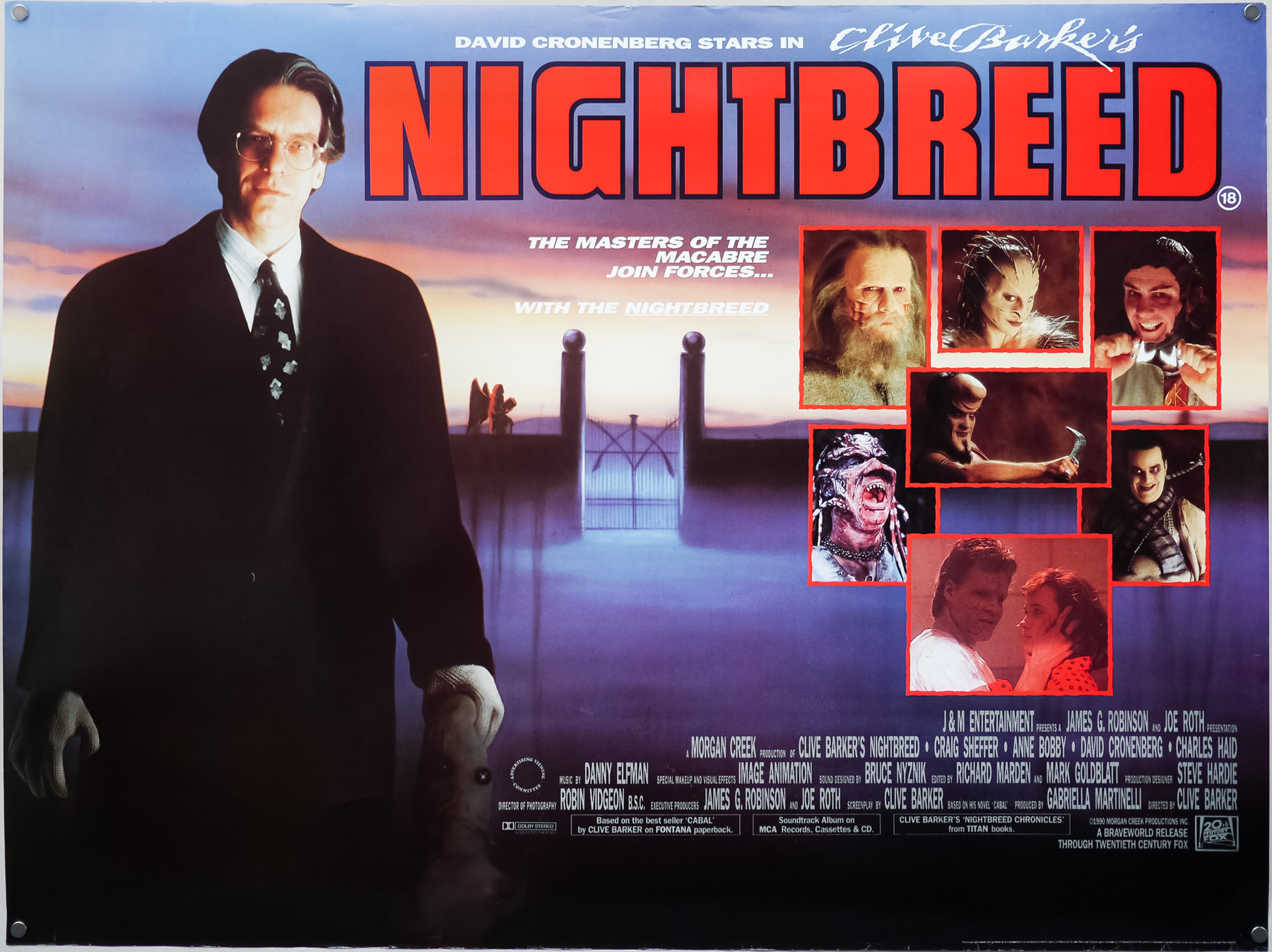
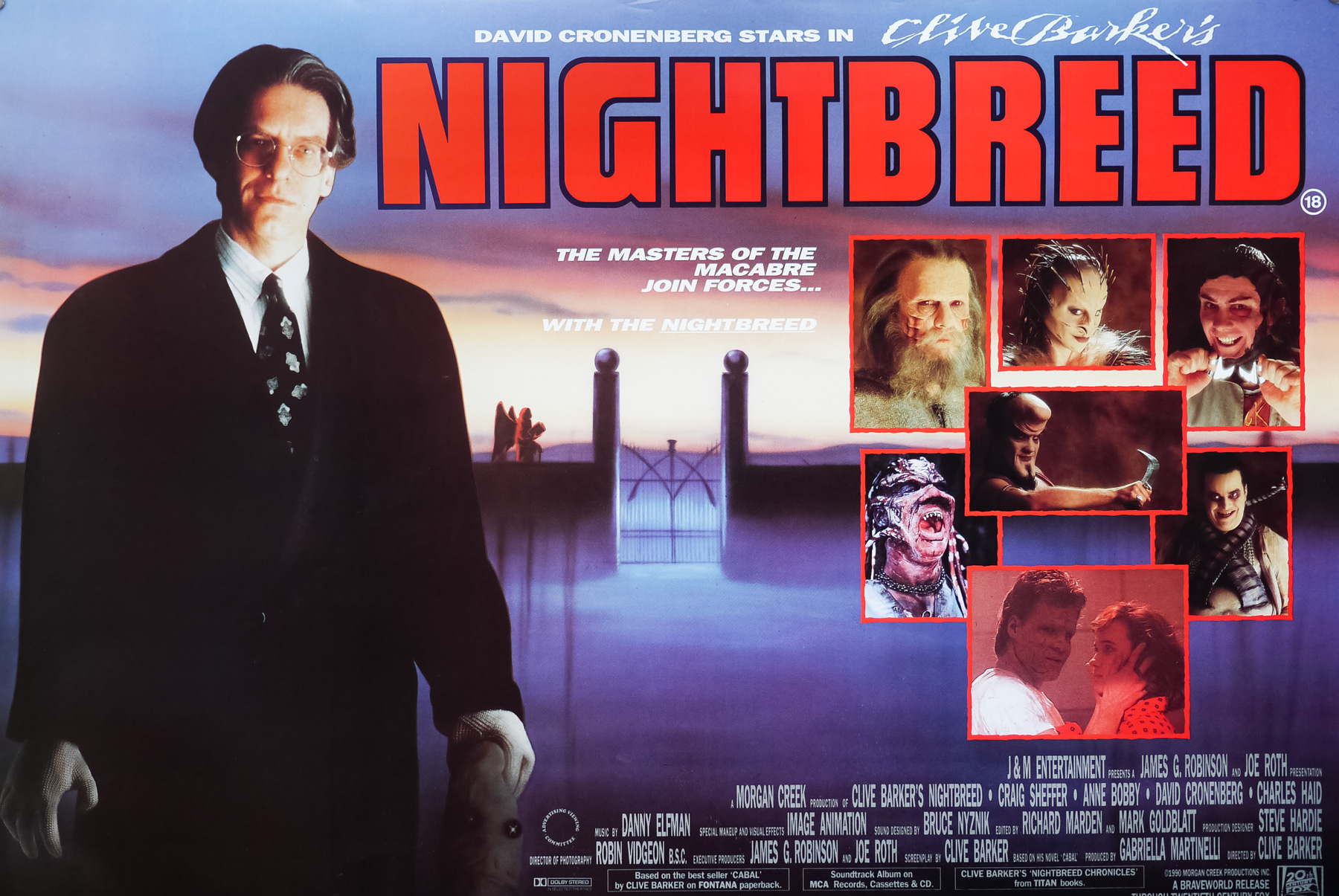
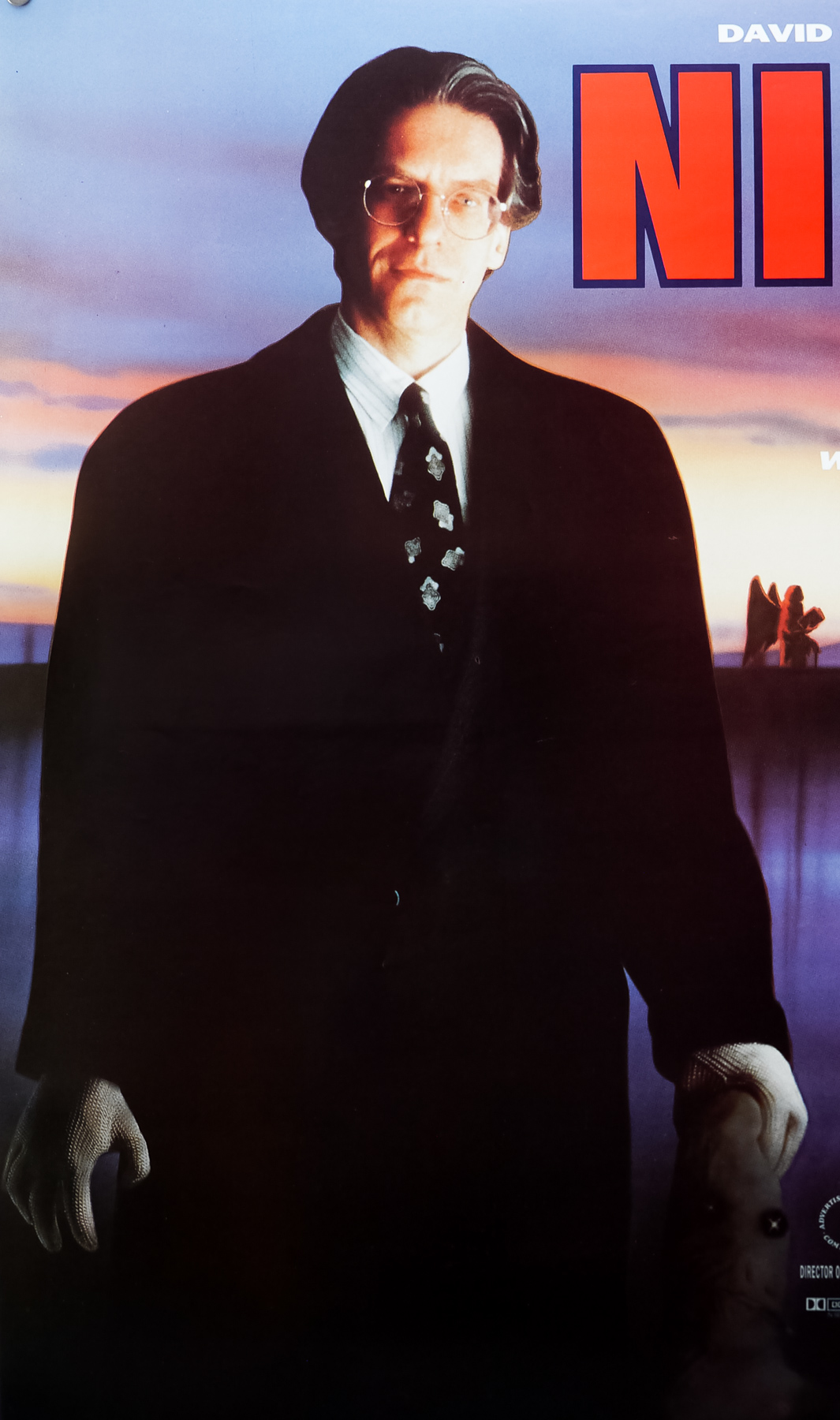
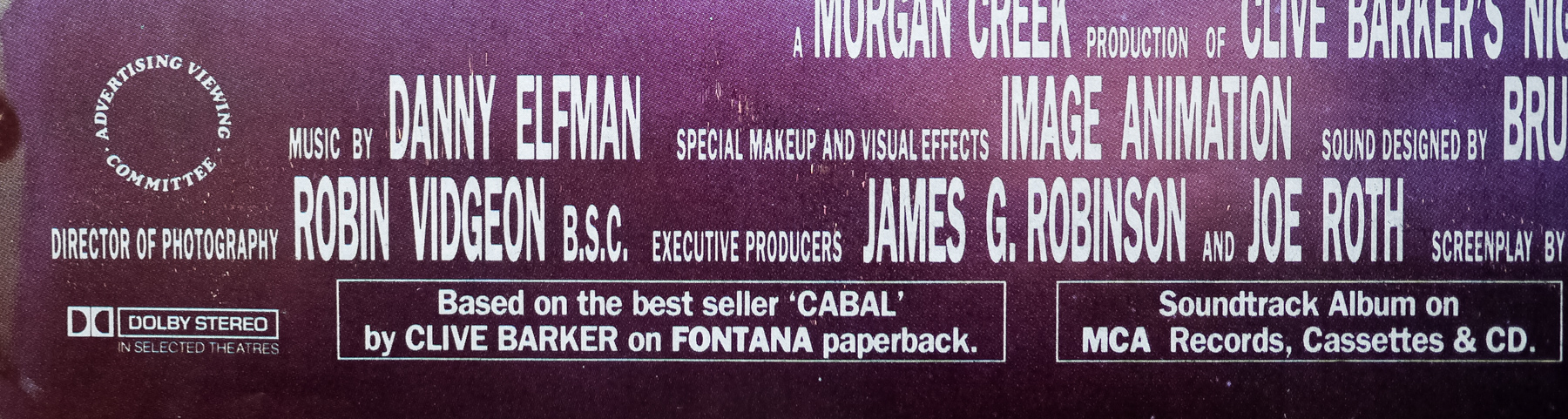
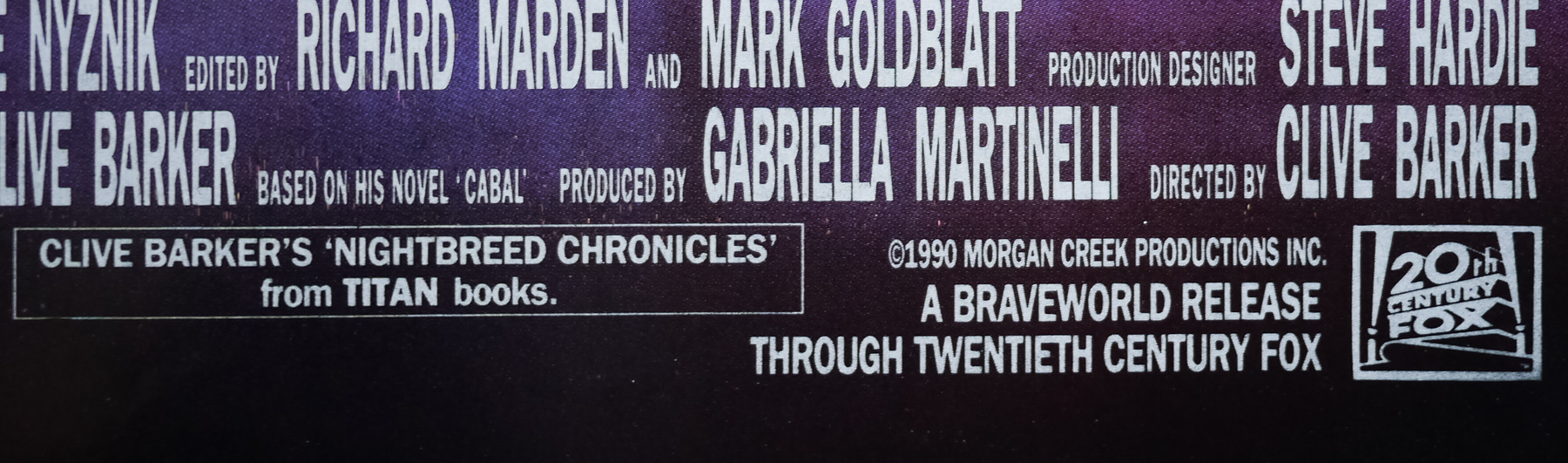
This is the UK quad for the original release of ace British writer/director Clive Barker‘s 1990 film Nightbreed. Based on Barker’s own 1988 novel Cabal, which was the sixth and final entry in his celebrated series ‘Books of Blood‘, the film was notoriously a flop upon its original release. The director has been candid in the years following its release and maintains that studio interference and a lack of understanding of how to market the film ultimately hampered its release. Having scored a hit with Hellraiser (1986) on a budget of just under $1m, 20th Century Fox gave Barker over 10 times that for Nightbreed, but with it they took away the freedom he had on the previous film. Ultimately the studio made extensive cuts to the film just before release without Barker’s input and marketed it as a slasher film, which was far from accurate.

The story focuses on a man named Aaron Boone (Craig Sheffer) who has been having vivid dreams about a city called Midian where monsters are accepted and live peacefully with each other. We learn that his girlfriend Lori (Anne Bobby) has encouraged him to see a psychologist named Dr. Phillip Decker (the cult Canadian director David Cronenberg). Decker tells Boone that he’s been suffering from a type of psychosis, is responsible for multiple murders and that he should turn himself into the police. In reality, it’s Decker who is a serial killer and he’s attempting to use Boone as a shill to cover his crimes. After being hit by a truck on his way home, Boone wakes in hospital where he meets a man named Narcisse who talks about accessing Midian before mutilating himself with a pair of blades. 

Boone follows Narcisse’s instructions and makes his way to an old cemetery in the middle of nowhere (the film is set in Canada). Once there he is confronted by a pair of monsters, Peloquin (Oliver Parker) and Kinski (Nicholas Vince), who block his request to enter Midian. Peloquin attempts to eat Boone, biting his shoulder before the latter breaks free and escapes the cemetery. Outside he is confronted by Decker and a squad of police officers and when Decker falsely shouts that Boone has a gun, he is gunned down by the squad. After Lori visits the morgue to identify Boone’s body, the bite given by Peloquin causes him to reanimate. He returns to Midian where he meets a whole host of monsters who call the city home. This time he is accepted into the city after being touched by the blood of their deity Baphomet. Meanwhile, Lori wants to understand why Boone traveled to Midian. She is eventually allowed into the city and discovers that it is a refuge for monsters after centuries of them being hunted to near extinction by humans. Unfortunately Decker has tracked her down and he plans to destroy the city and the monsters within.

One of the things that the studio struggled with is that the monsters are ultimately depicted as being the ‘good guys’ and this was obviously something of a departure from standard horror film tropes. The film has incredible production design and make-up effects, particularly the look of the various monsters in Midian. Despite critical and commercial failure in 1990, Nightbreed quickly garnered a cult following and for many years fans had been calling for the release of the longer cut that Barker had promised existed. An unofficial ‘Cabal cut’ was compiled using VHS-quality material a few years ago but in 2015 the original film elements were found and a special director’s cut released by the American video label Scream Factory, much to the delight of horror fans around the world.

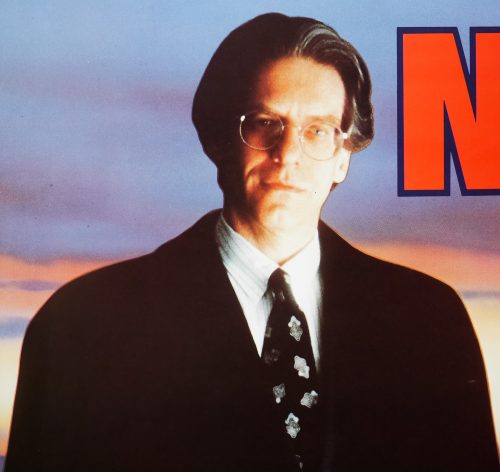
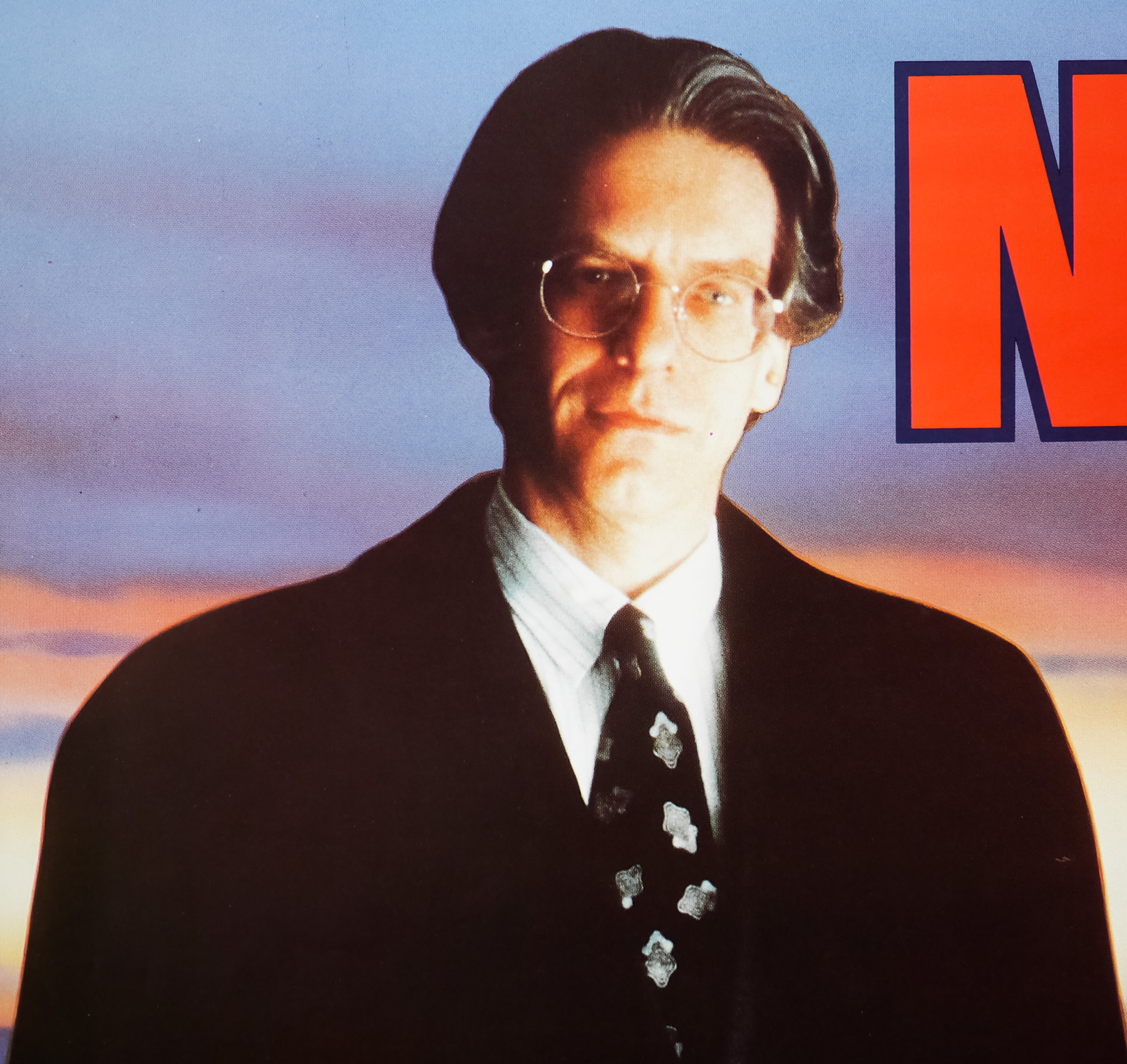
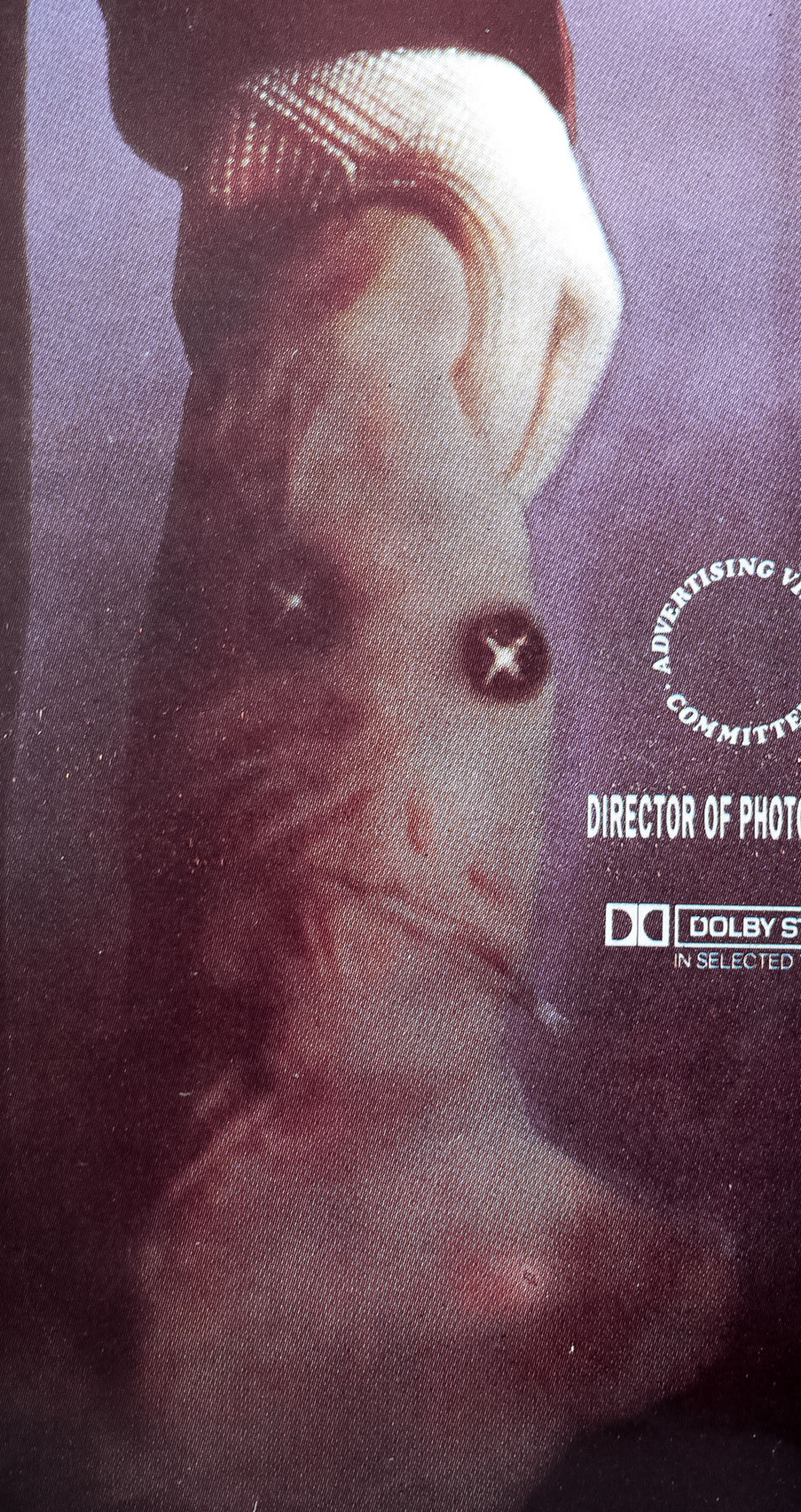
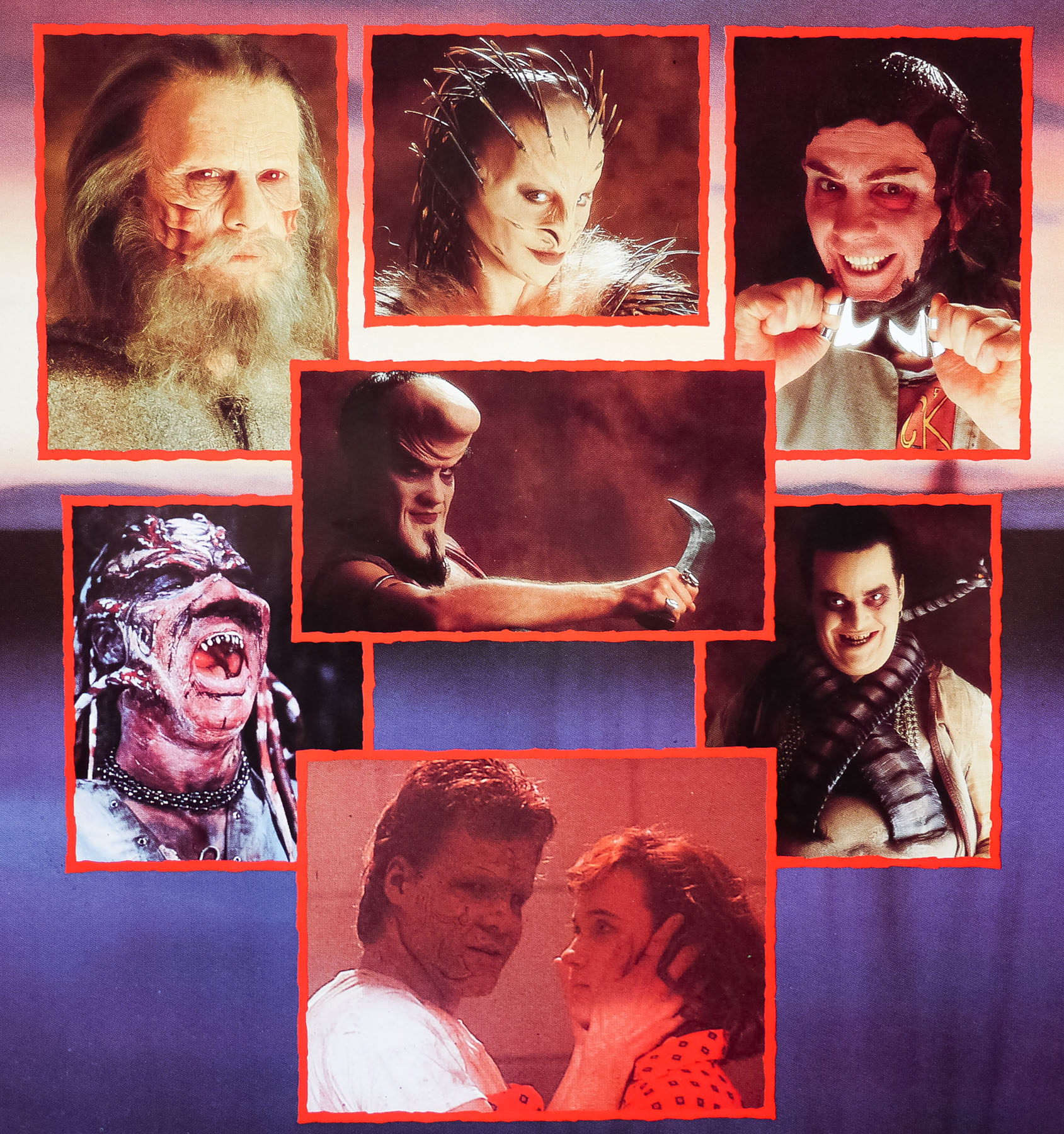
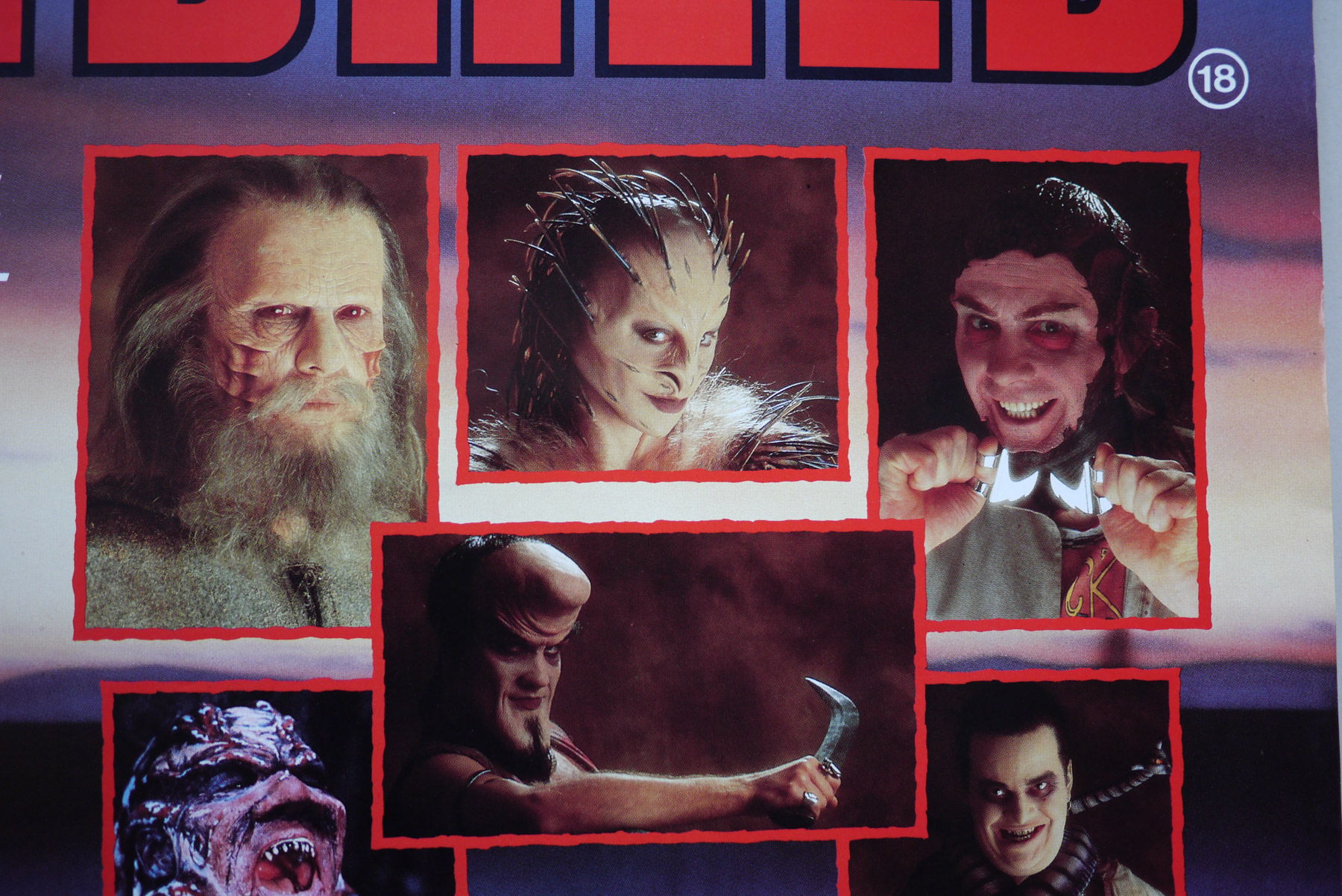
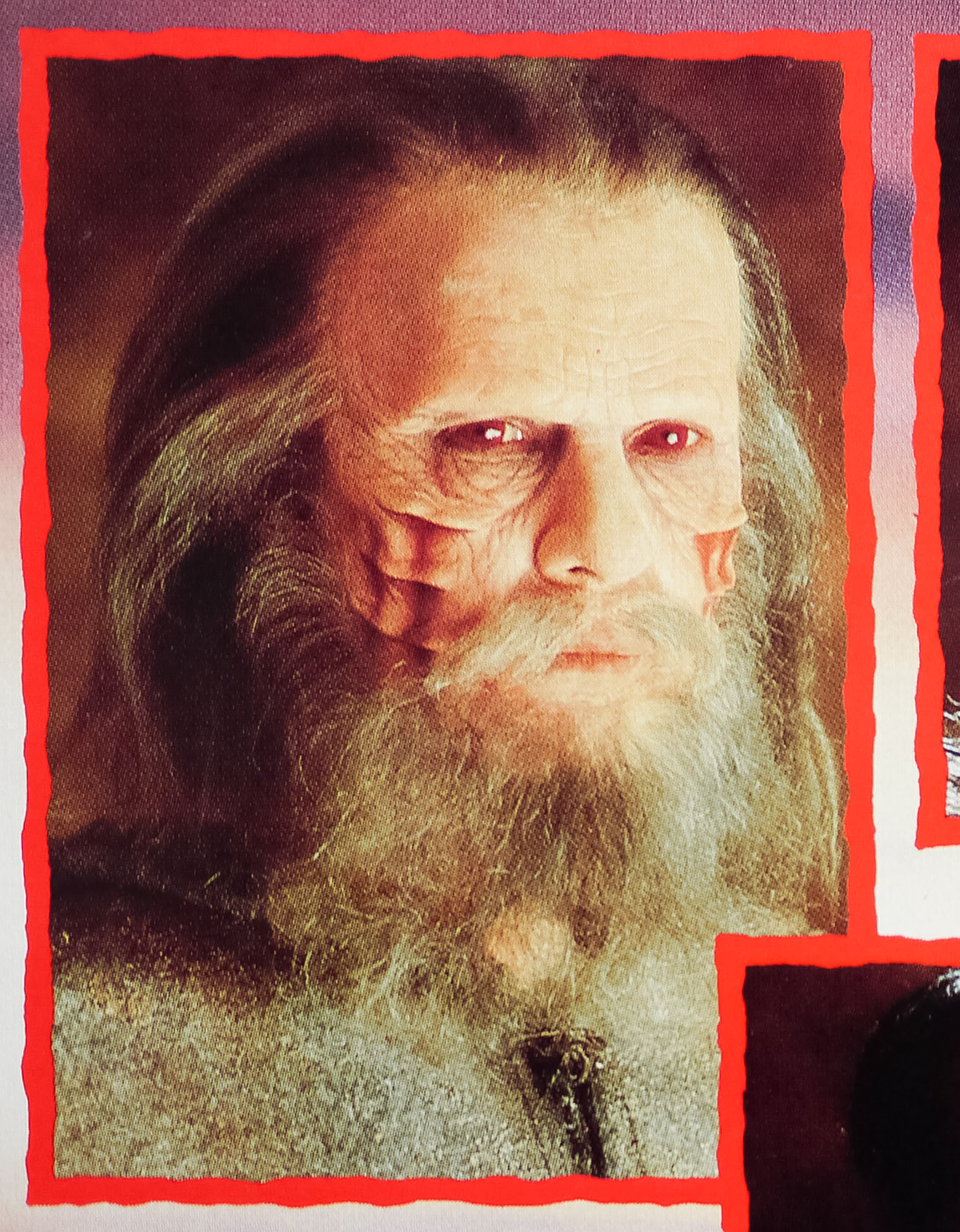
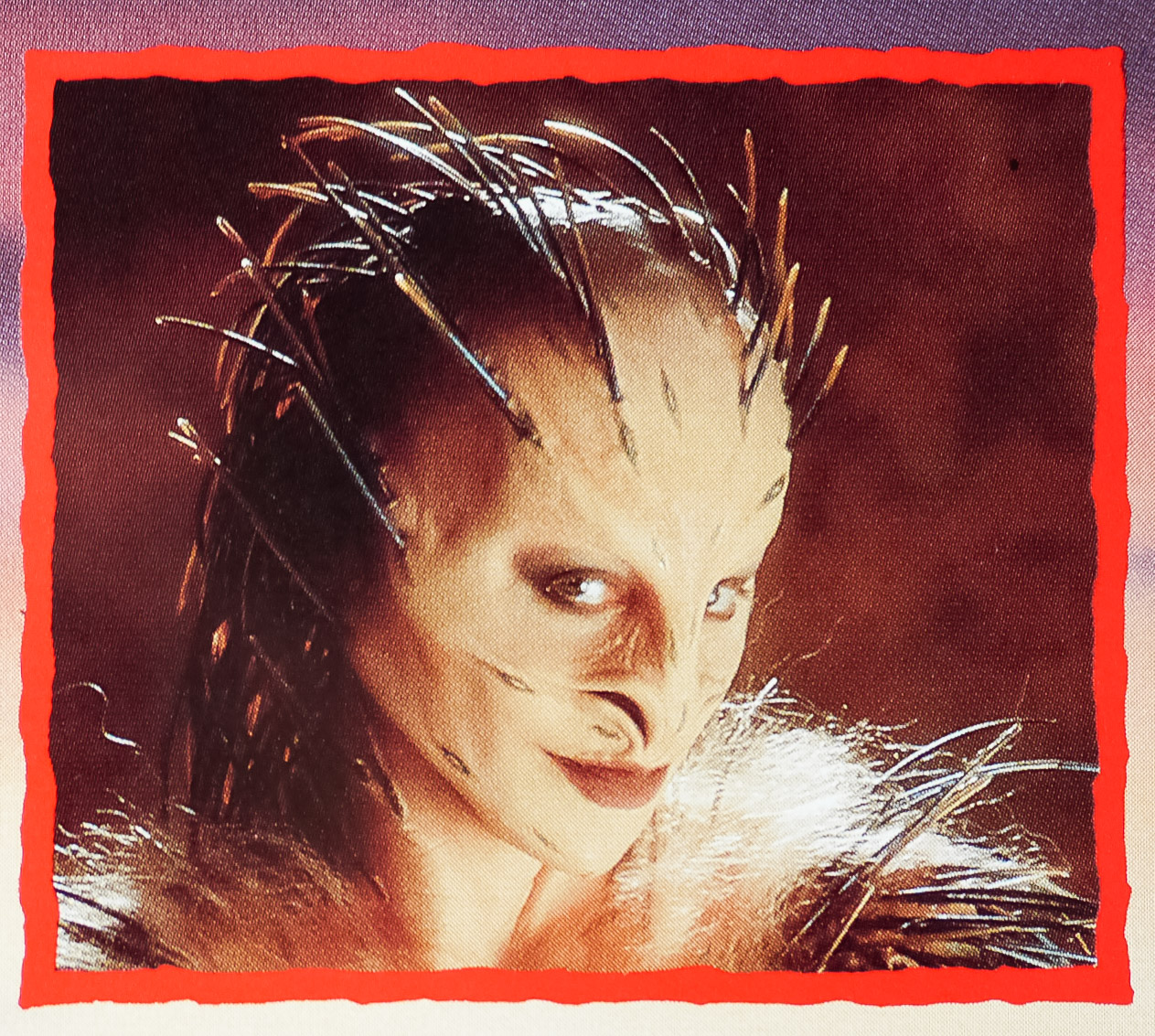
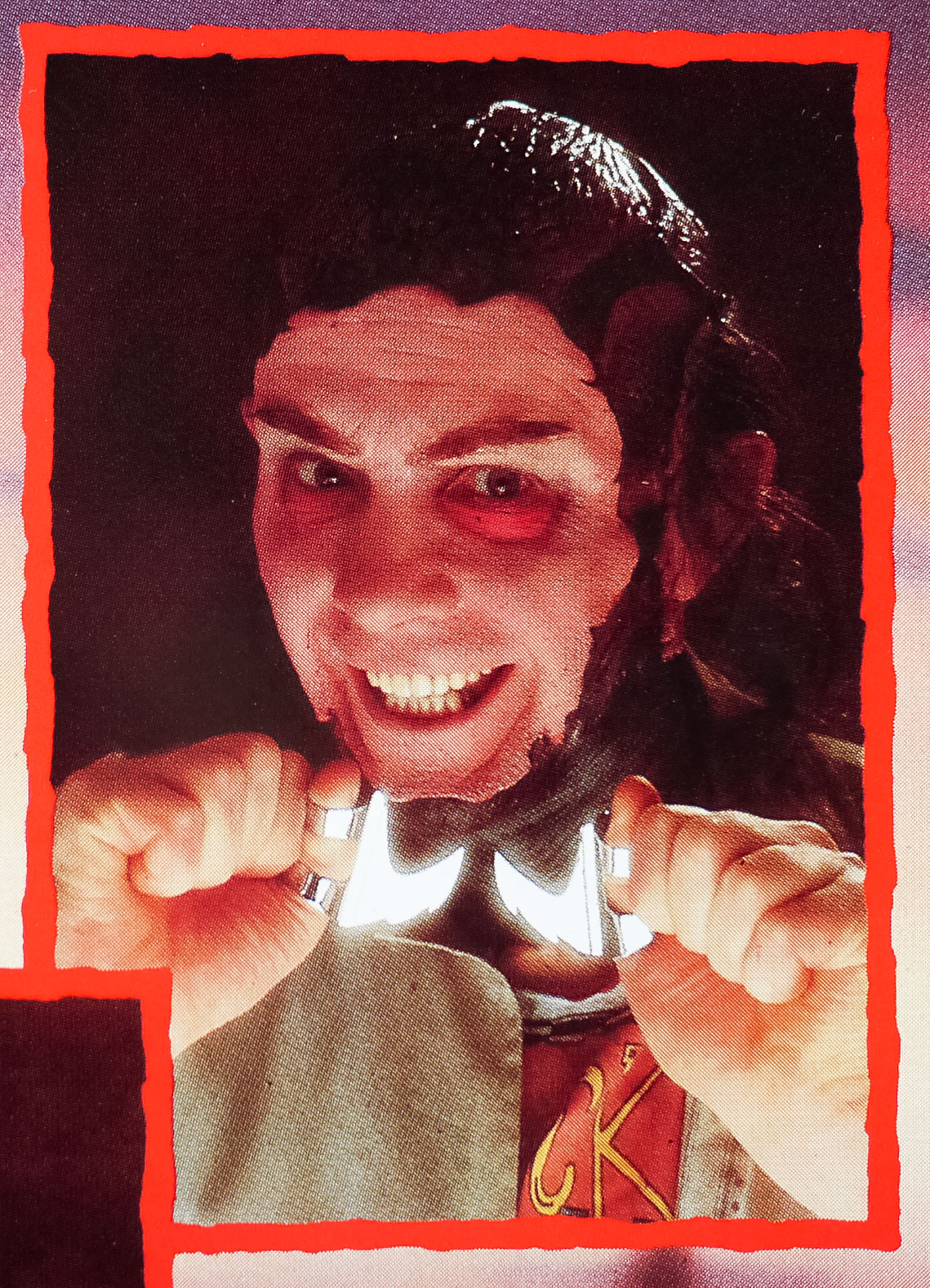
This British quad differs greatly from the disappointing American one sheet and includes several photographs of the Nightbreed and is dominated by an image of David Cronenberg. The minor spoiler (for those that were yet to view the film) that he is the masked killer obviously didn’t bother the distributors! The tagline also makes a deal of the fact that Cronenberg and Barker were working together, perhaps understandably.

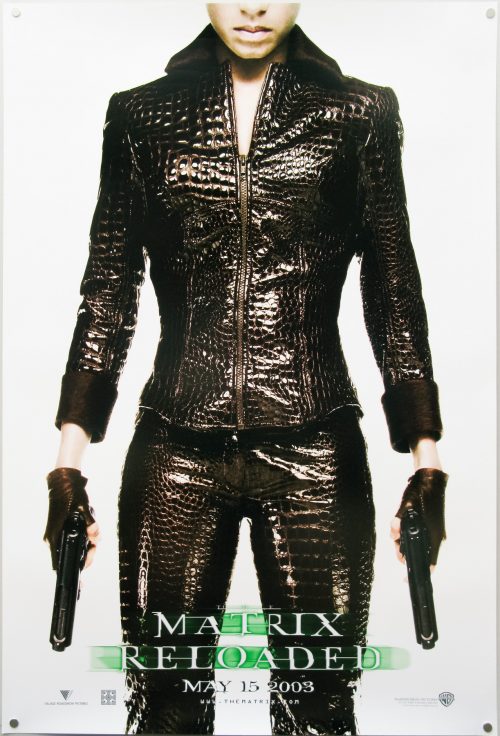
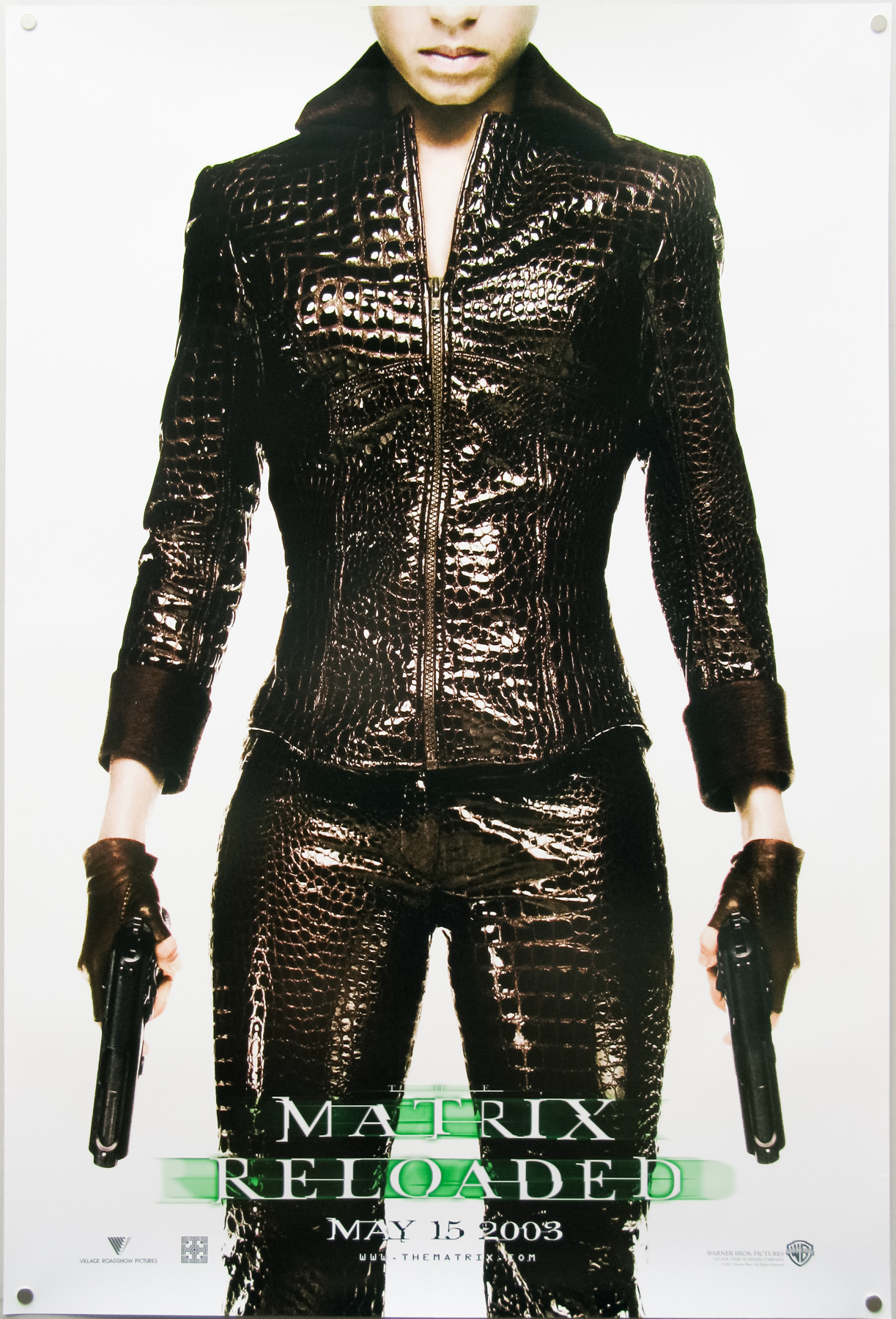
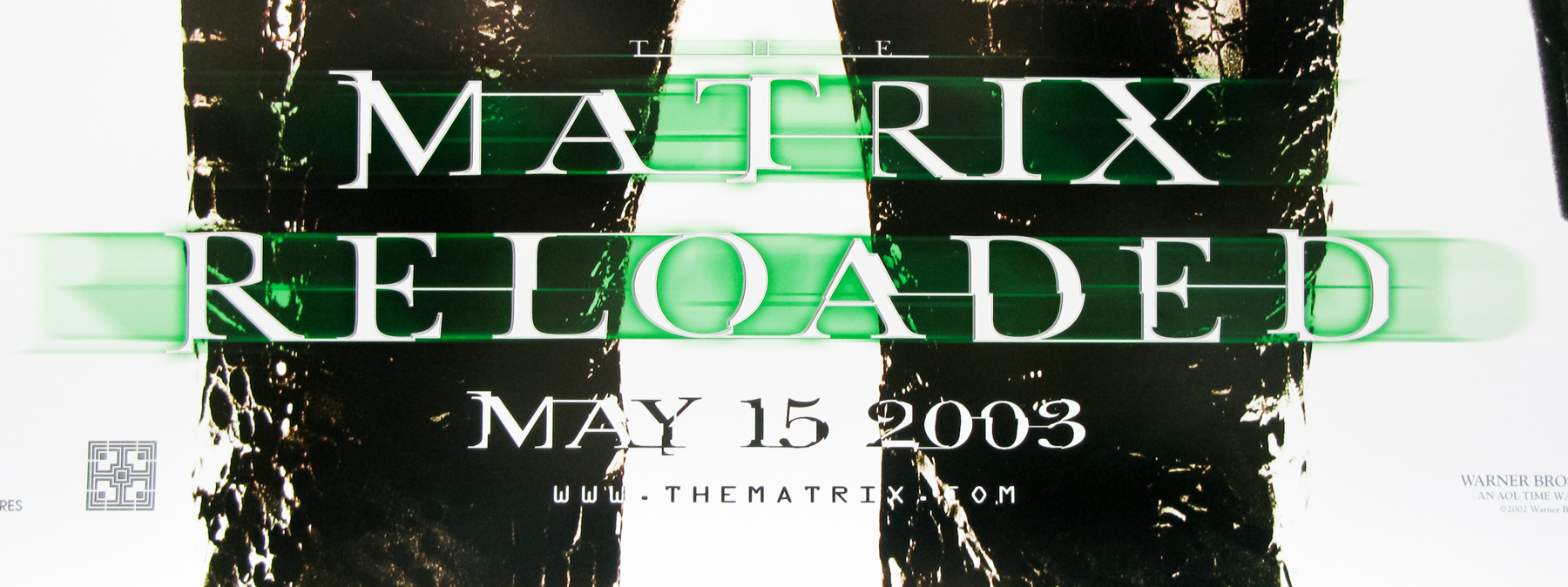
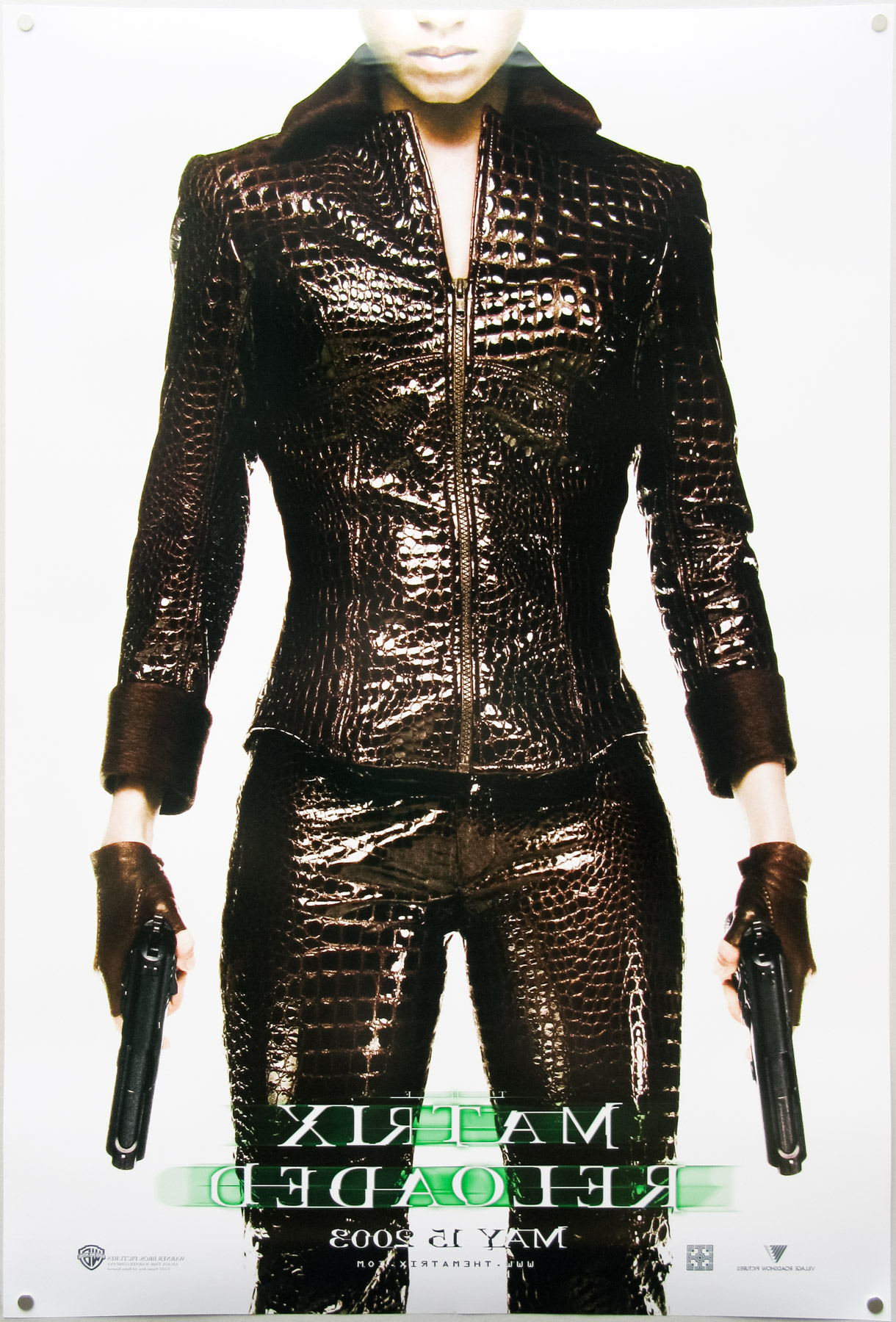
The Matrix Reloaded / one sheet / teaser / Niobe / USA

17.05.11

Poster Poster

Phantom of the Paradise / 30×40 / USA

15.04.14

Poster Poster
Title
Phantom of the Paradise
AKA
--
Year of Film
1974
Director
Brian De Palma
Starring
William Finley, Paul Williams, Jessica Harper, Gerrit Graham, George Memmoli, Archie Hahn, Jeffrey Comanor, Peter Elbling
Origin of Film
USA
Genre(s) of Film
William Finley, Paul Williams, Jessica Harper, Gerrit Graham, George Memmoli, Archie Hahn, Jeffrey Comanor, Peter Elbling,
Type of Poster
30x40
Style of Poster
Style C
Origin of Poster
USA
Year of Poster
1974
Designer
Neal Adams (original sketch)
Artist
Richard Corben
Size (inches)
30" x 40"
SS or DS
SS
NSS #
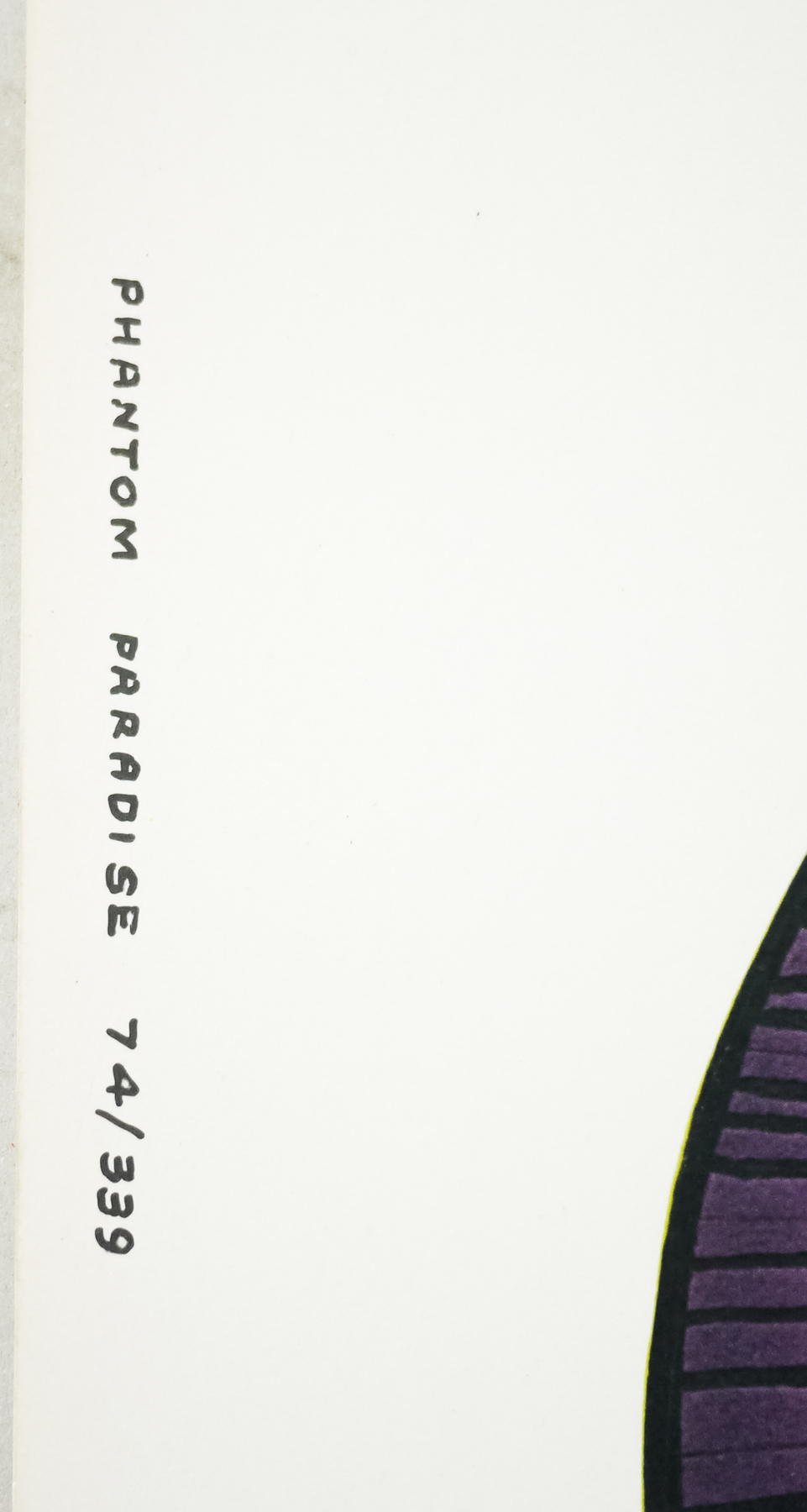
74/339
Tagline
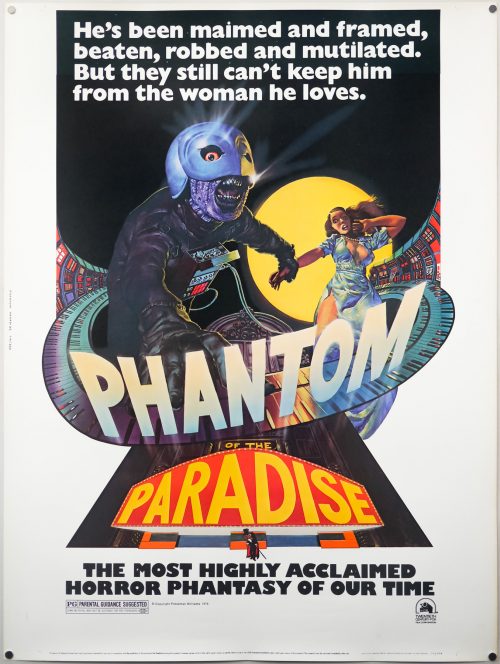
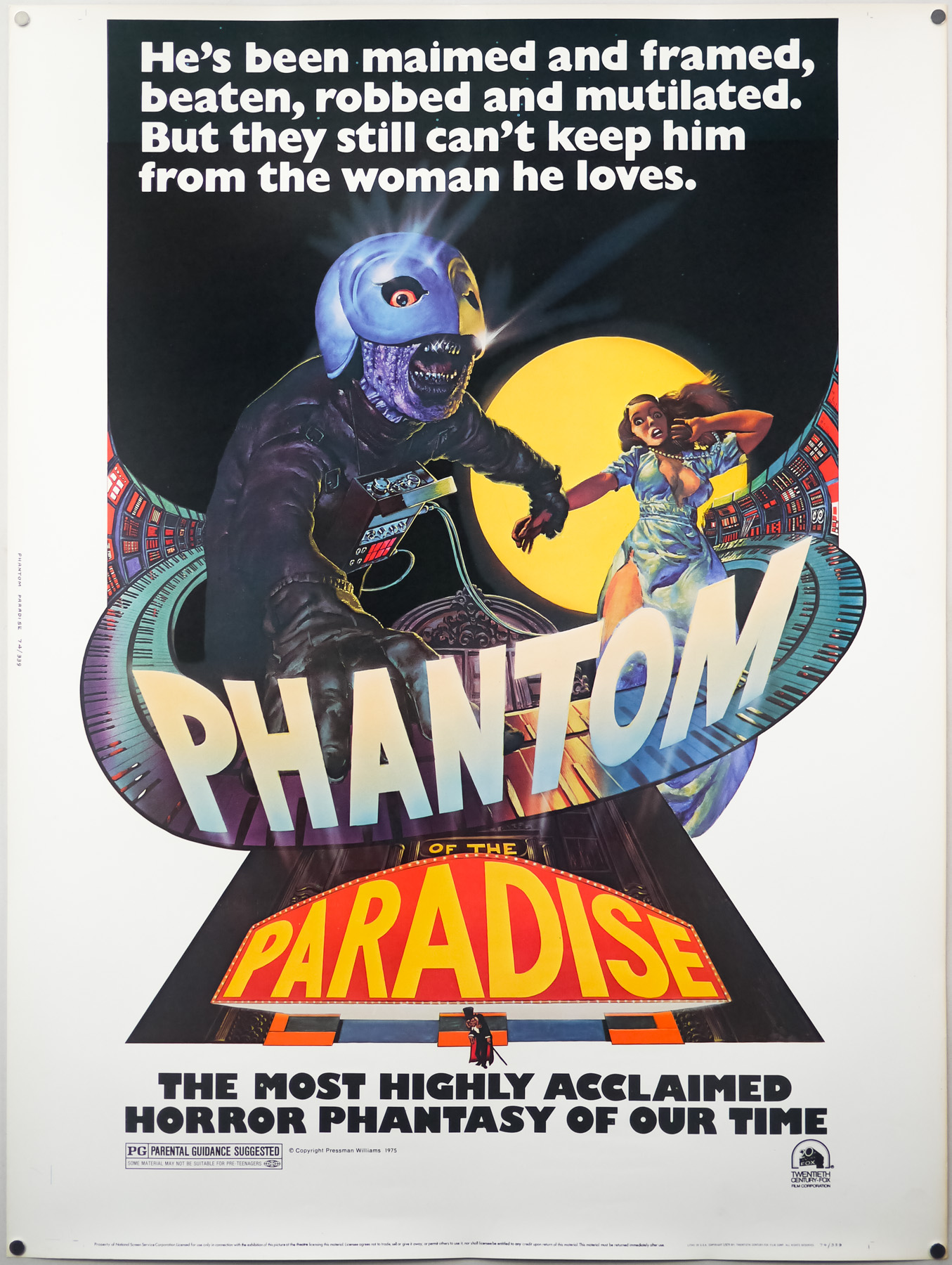
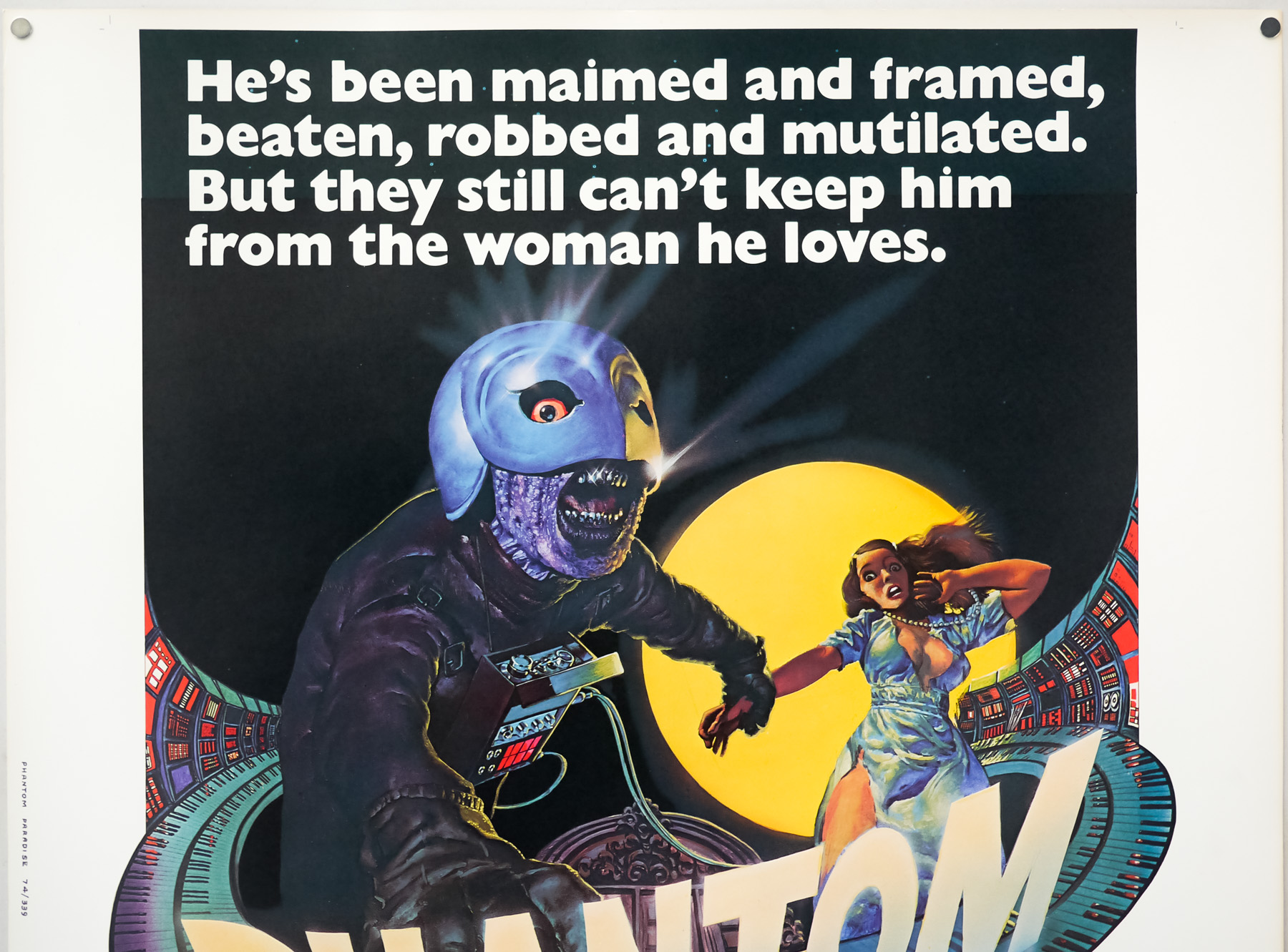
He's been maimed and framed, beaten, robbed and mutilated. But they still can't keep him from the woman he loves. | The most highly acclaimed horror phantasy of our time.

Brian De Palma’s Phantom of the Paradise is arguably one of cinema’s greatest cult oddities. Part musical, part horror and loosely based on Phantom of the Opera and the classic tale of Faust, the film has an electric atmosphere helped no end by the performance of the late William Finley as the unlucky music composer Winslow Leach who falls foul of the twisted producer Swan (Paul Williams, himself a noted musician and composer). A twisted satire of the state of the music business of the time, the film features a superb soundtrack written by Williams, which is a mix of surf pop, 70s glam rock and romantic ballads.

When Swan sees Winslow performing his music at a small concert he convinces the composer to sell his tunes to him to be used at the opening of his new club, The Paradise. Instead Swan has one of his henchmen steal the music, beat Winslow up and frame him for drug possession, sending the mild mannered musician to the brutal Sing Sing prison. Months later Winslow hears that one of Swan’s bands is to release a record based on his music and breaks out of the prison in a frenzied rage. After heading to Swan’s Death Records factory he tries to sabotage a record press but accidentally falls head-first into it, severely scarring his face and damaging his vocal chords. Escaping from the police, he makes his way to the Paradise where he dons a cape and a beaked mask and becomes the Phantom of The Paradise. Soon he discovers the secret behind Swan’s success and sets out to stop him at all costs.

The film was met with mixed critical reviews and was a worldwide box-office flop, with the only exceptions being in Japan and, bizarrely, Winnipeg in Canada where the film played at the same cinema for months. One of the key reasons for the film’s disastrous commercial performance was the way it had initially been marketed by studio Twentieth Century Fox who had created a campaign that emphasised the rock aspect of the film with the intention of drawing in teenage music fans. The plan backfired, however, when initial audiences realised how negative the portrayal of the music industry is in the film was and how it was effectively sending up the very thing they were fans of.

The brilliant fan site The Swan Archives, curated by Ari Kahan, features a thorough history of the promotion of the film and shows the initial two styles of poster, one of which was designed by Anthony Goldschmidt and illustrated by the late John Alvin and also featured on the album cover. As Kahan notes:

‘The involvement of A&M records (which issued the soundtrack, and which more or less owned the exclusive rights to Paul Williams’ life at the time) in the co-marketing campaign with 20th Century Fox meant that the film was initially pitched towards what A&M and Fox believed to be the teens-through-college “rock music demographic.” John Alvin’s beautiful painted graphics on the posters and soundtrack album emphasised guitars, keyboards, microphones, patch cords, and other musical ephemera, and a photorealistic depiction of songwriter/star Paul Williams, signalling the studio’s intention to rely heavily on Williams’ existing fame in its promotion of the film.’

The rest of the ill-conceived initial campaign is detailed on the Swan Archives page linked to above. After a disastrous few months at the box office, the film’s producer Ed Pressman convinced the studio to allow him to reposition the film with a revised marketing campaign. Kahan explains:

‘Pressman went into action by launching a second campaign, in mid-1975, which tagged the film as “The Most Highly Acclaimed Horror Phantasy of Our Time,” pushing the horror angle and perennial plot line, and downplaying the music. De Palma, Finley, and Graham were made extremely available to give interviews to Castle of Frankenstein, Monster World, and every other horror magazine that would make time for them’

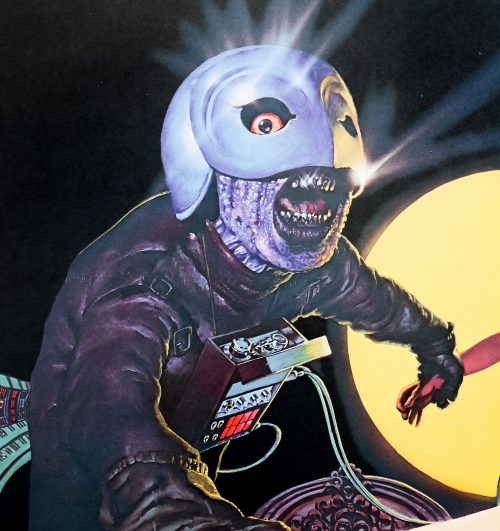
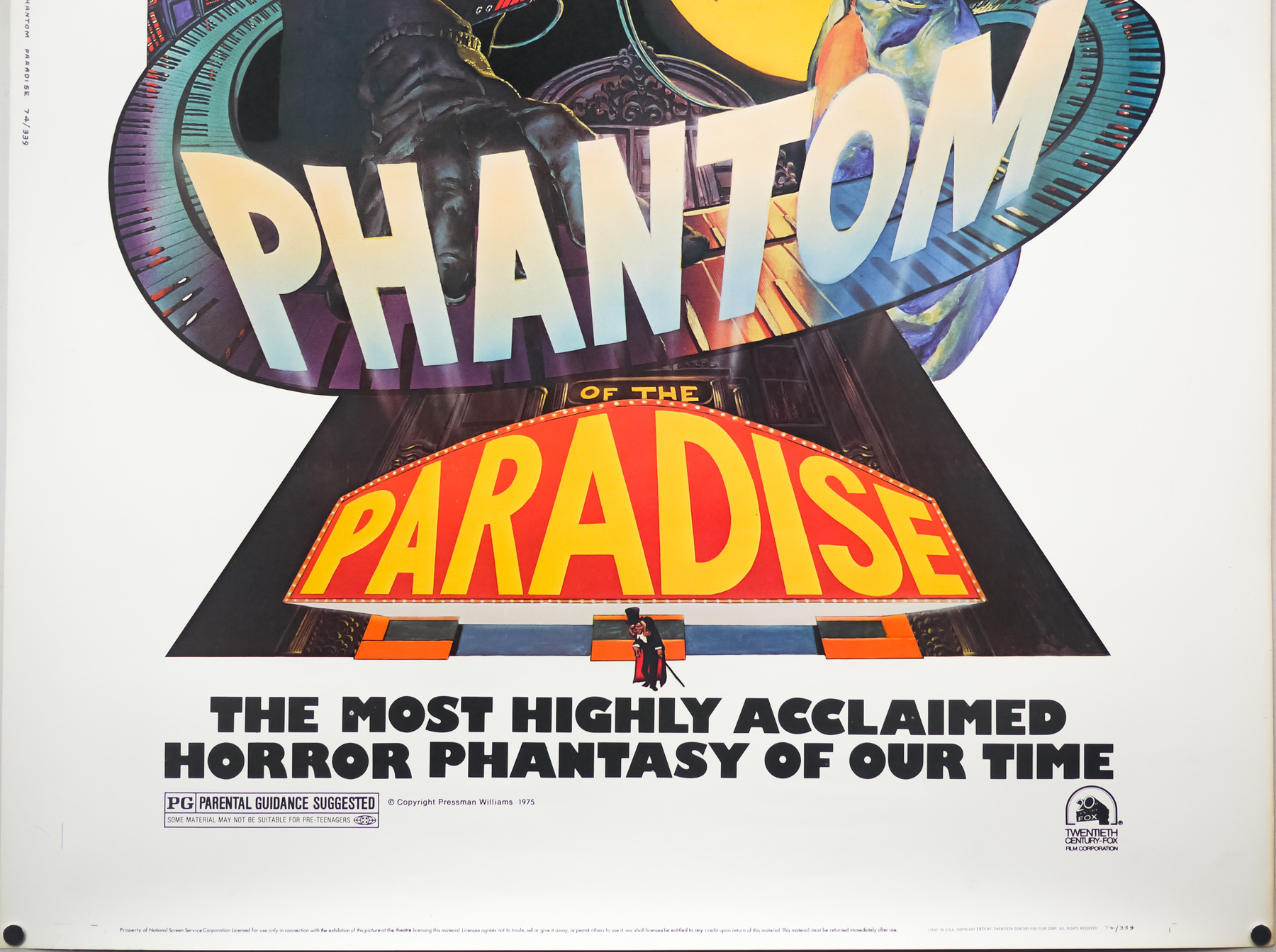
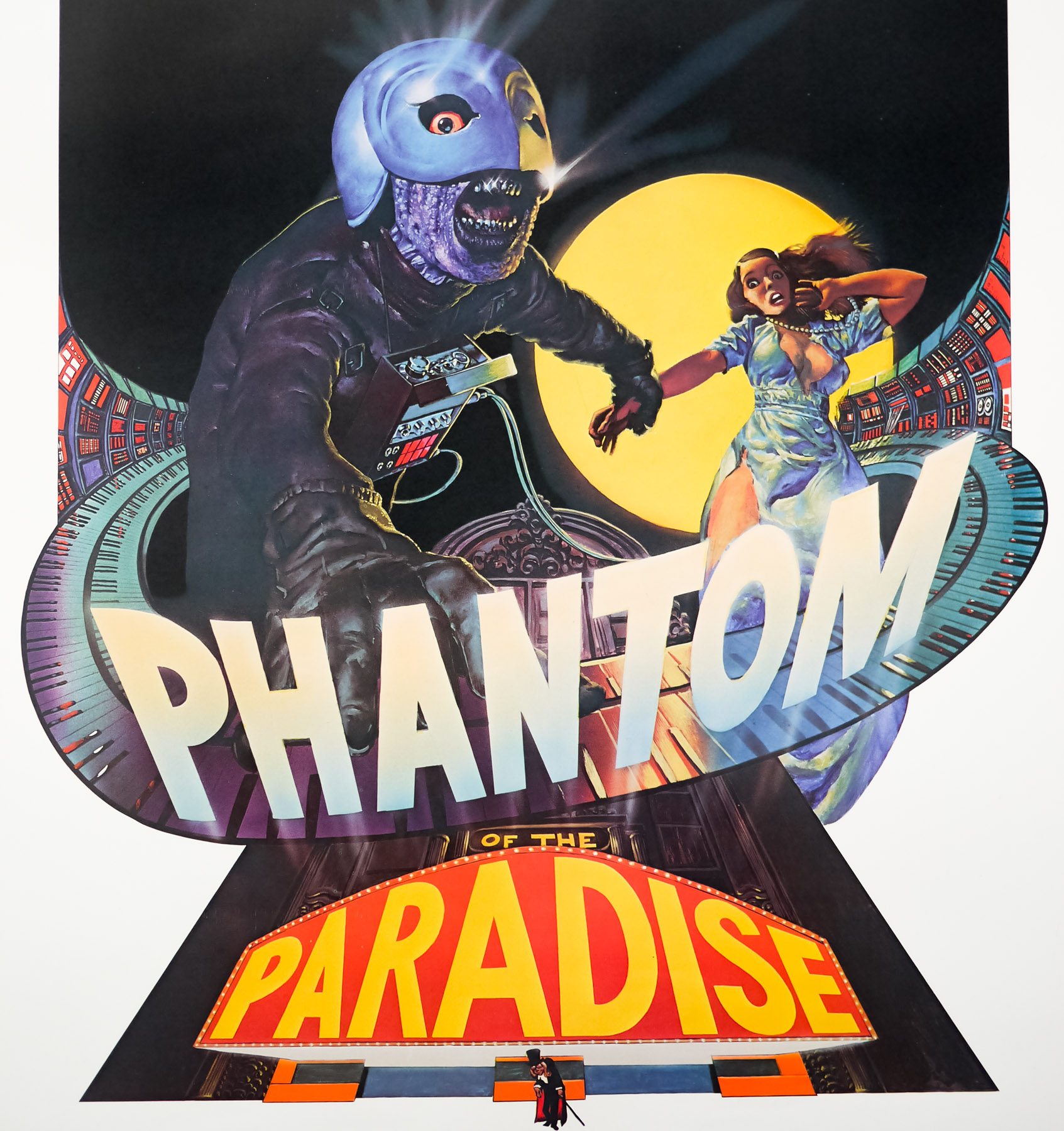
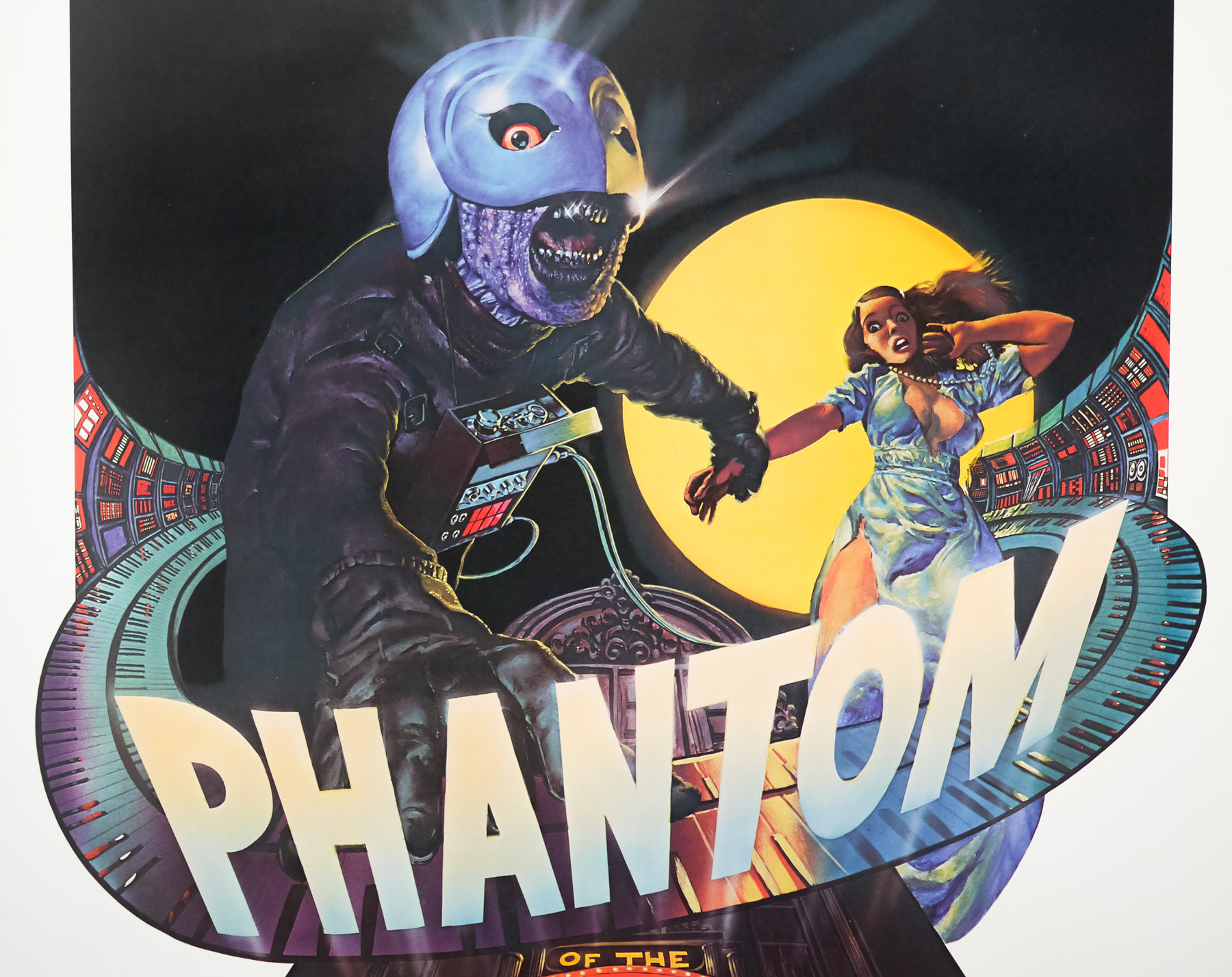
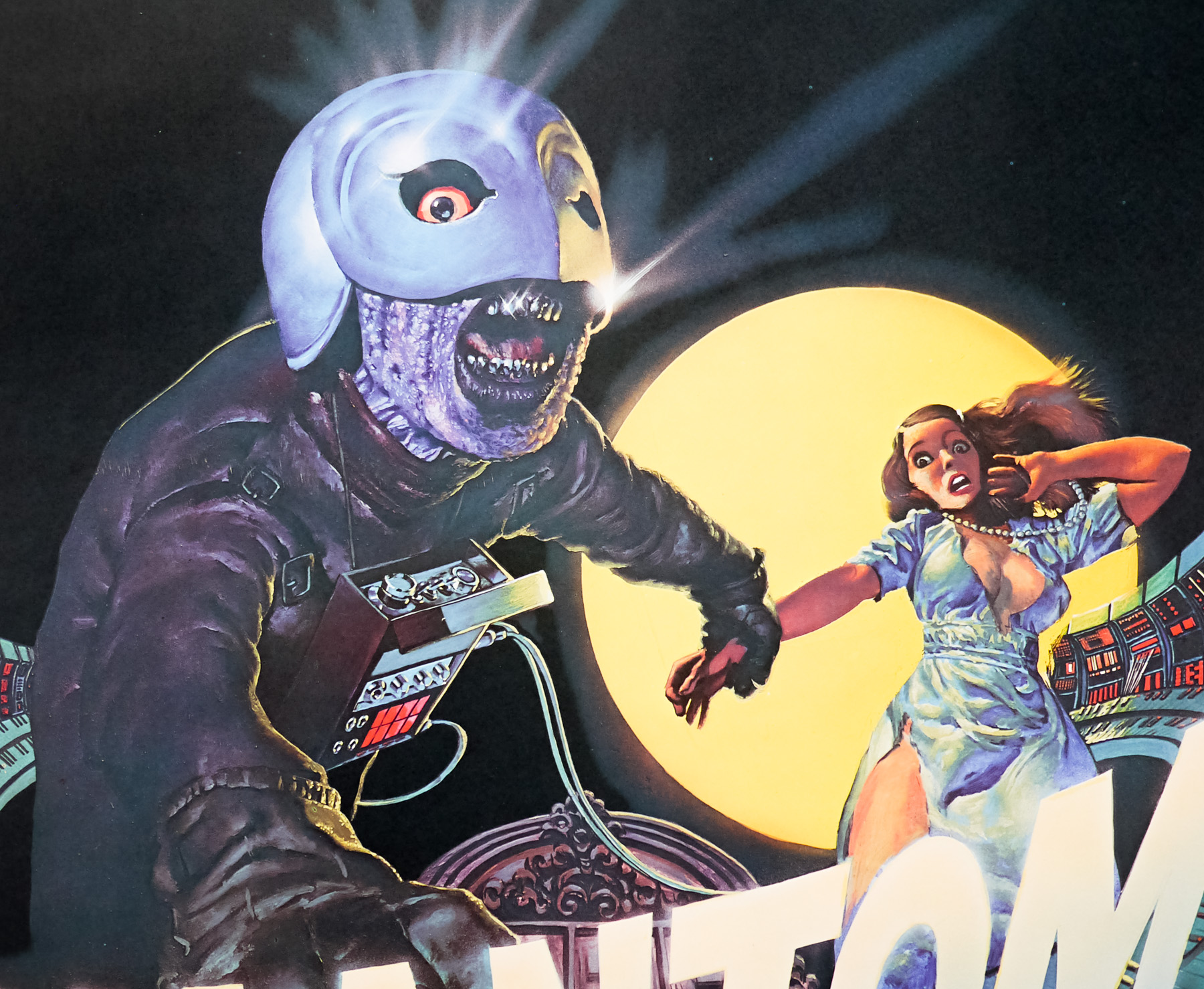
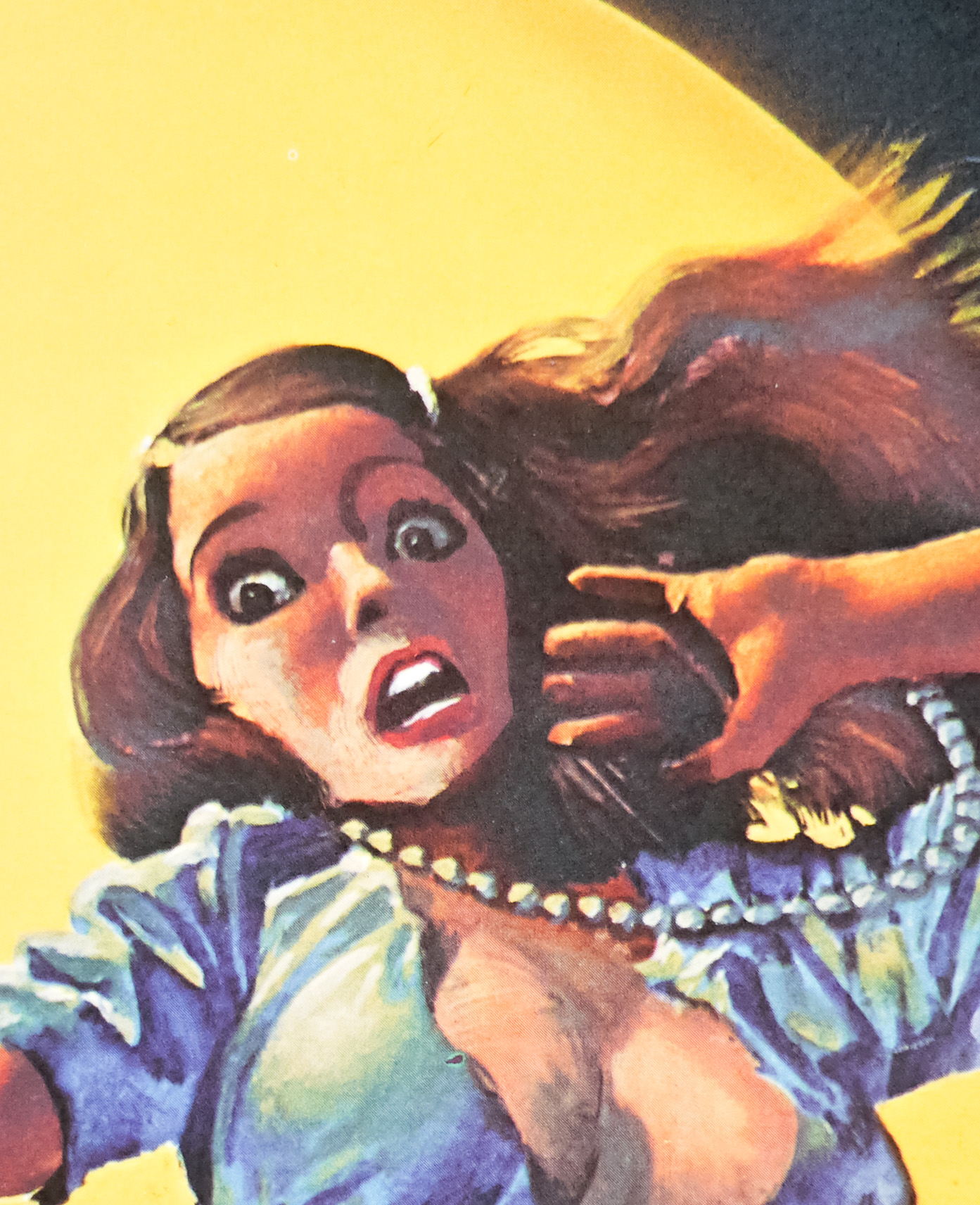
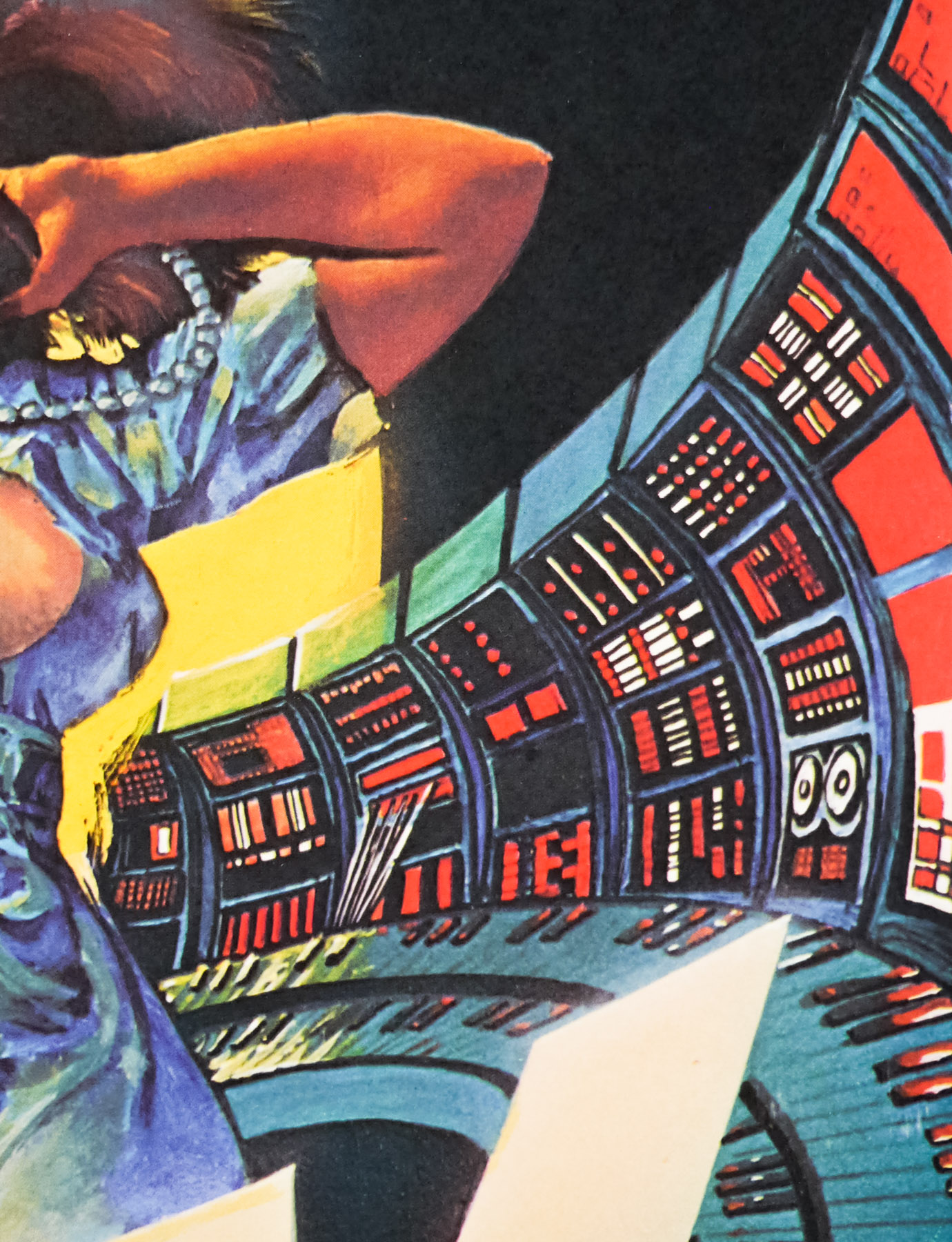
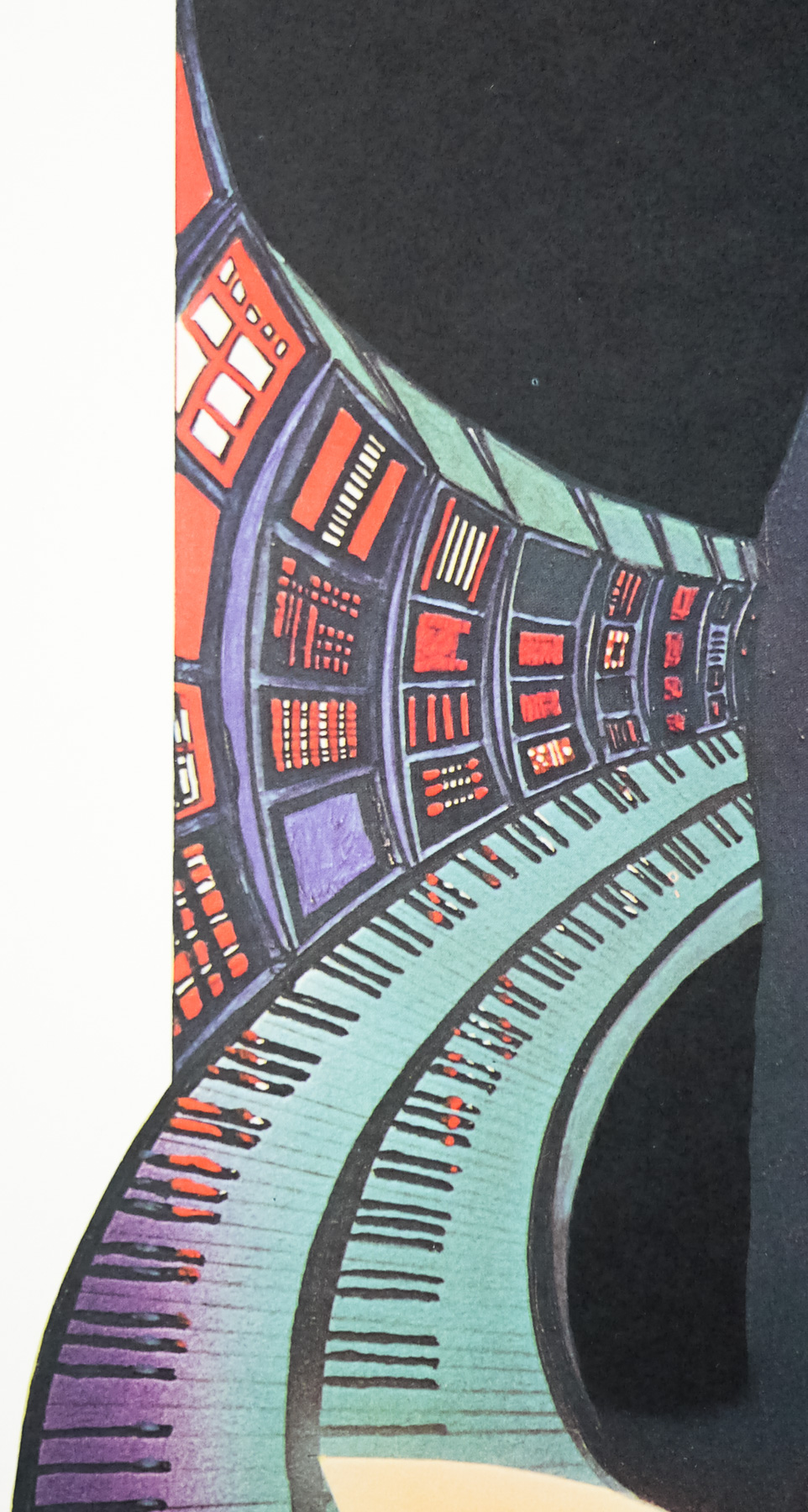
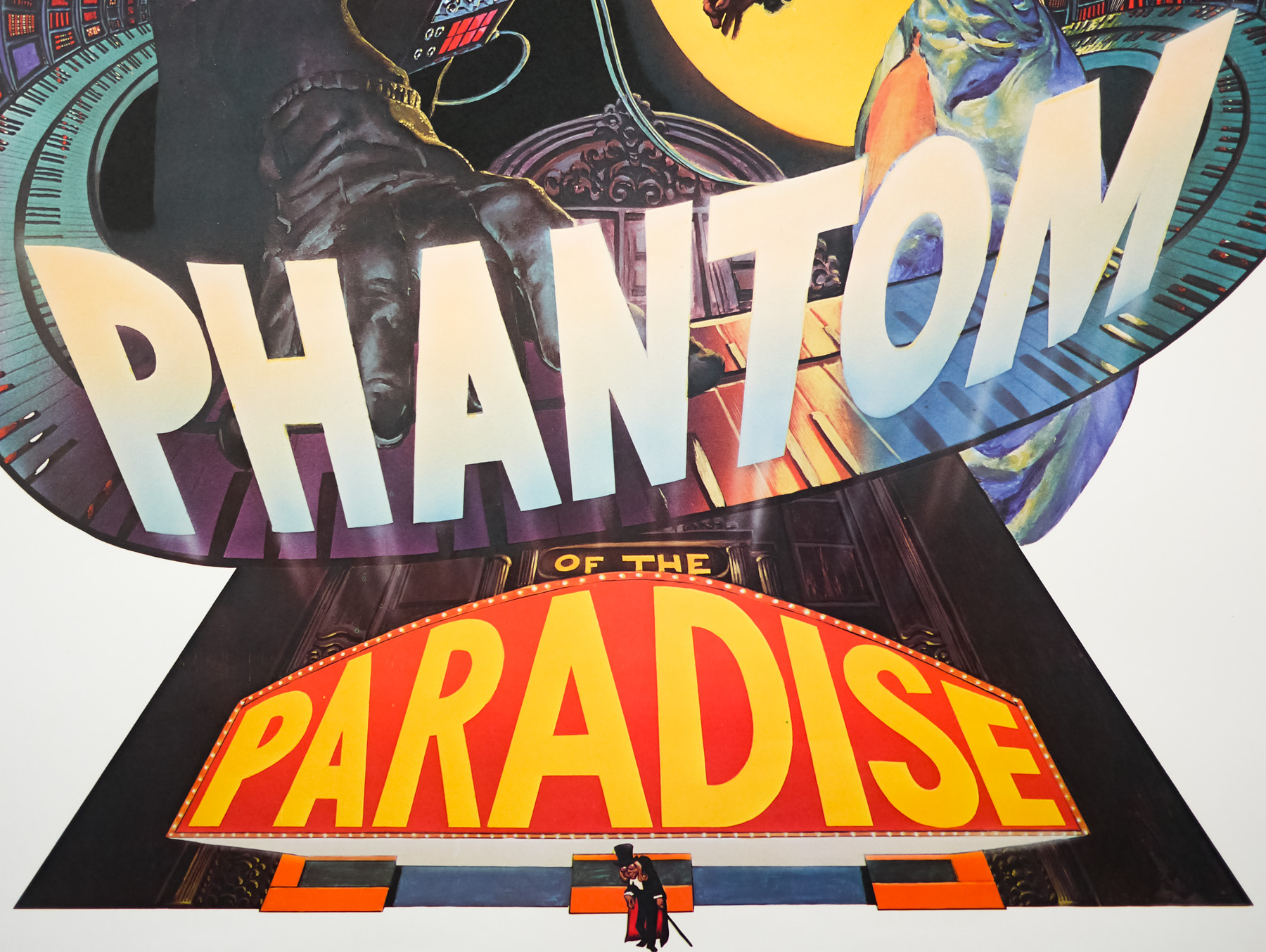
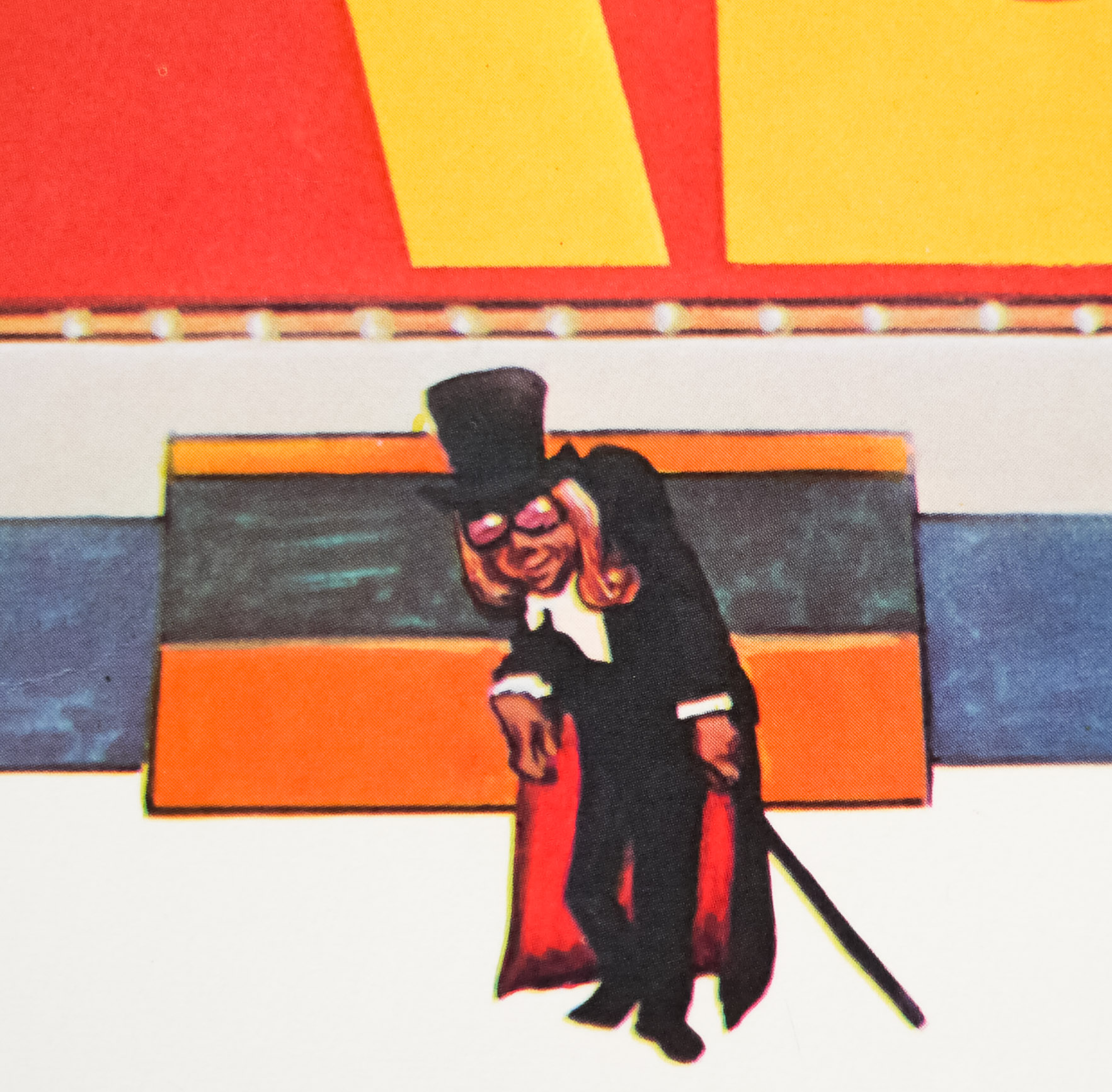
As part of this second campaign Pressman commissioned noted comic book artist Richard Corben to illustrate a new poster image and fellow comic book artist Neal Adams provided an initial concept sketch from which Corben worked (according to Kahan, ‘Adams drew the sketch for free, to aid Pressman in pitching a never-realised Phantom of the Paradise companion comic book, which he hoped might result in some paying work’) . The new painting emphasised the horror aspect and the Phantom’s mangled face and completely downplayed Williams’ presence – you can just spot him at the bottom of the marquee (see the close-up image). The new campaign proved to be more successful but as Kahan notes:

‘The film gradually took on life, bringing in decent (though never great) box office and some positive reviews. As De Palma put it, “When we revised the campaign in the U.S and made it seem more like The Phantom of the Opera than a horror/rock film, we got an entirely different response.”‘

For more on the film’s promotional travails, I again urge you to check out the excellent Swan Archives site. Corben also painted the style B one sheet for the Heavy Metal film, the magazine of which he’d been involved with for several years.
A Man Called Dagger / B2 / Japan

28.07.14

Poster Poster
Title
A Man Called Dagger
AKA
--
Year of Film
1967
Director
Richard Rush
Starring
Paul Mantee, Terry Moore, Jan Murray, Sue Ane Langdon, Eileen O'Neill, Maureen Arthur, Leonard Stone, Richard Kiel
Origin of Film
USA
Genre(s) of Film
Paul Mantee, Terry Moore, Jan Murray, Sue Ane Langdon, Eileen O'Neill, Maureen Arthur, Leonard Stone, Richard Kiel,
Type of Poster
B2
Style of Poster
--
Origin of Poster
Japan
Year of Poster
1968
Designer
Unknown
Artist
Unknown
Size (inches)
20 4/16" x 28 13/16"
SS or DS
SS
Tagline
--

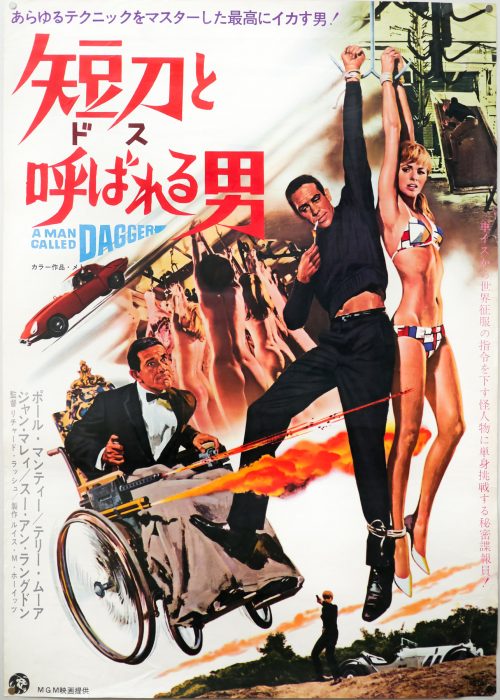
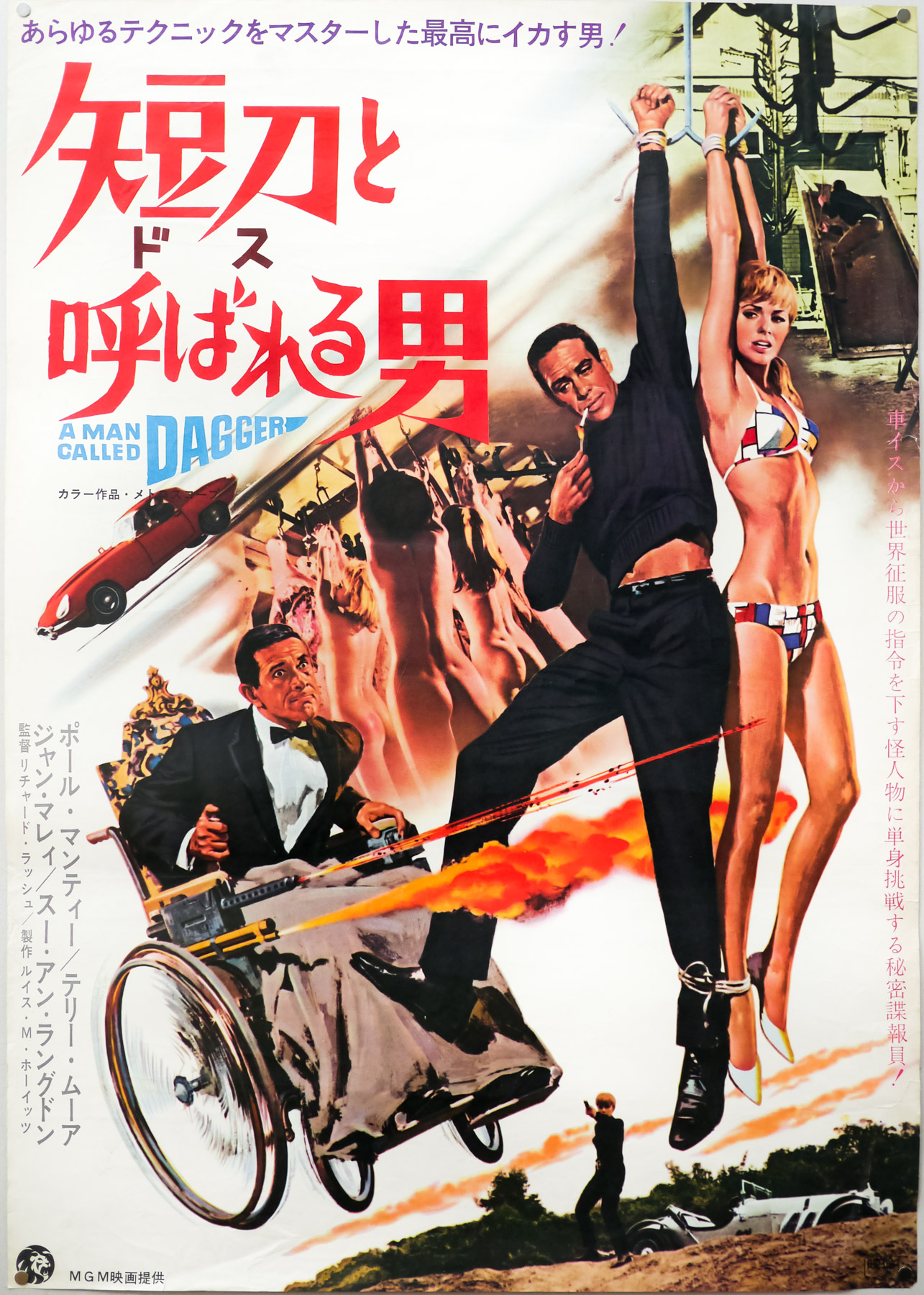
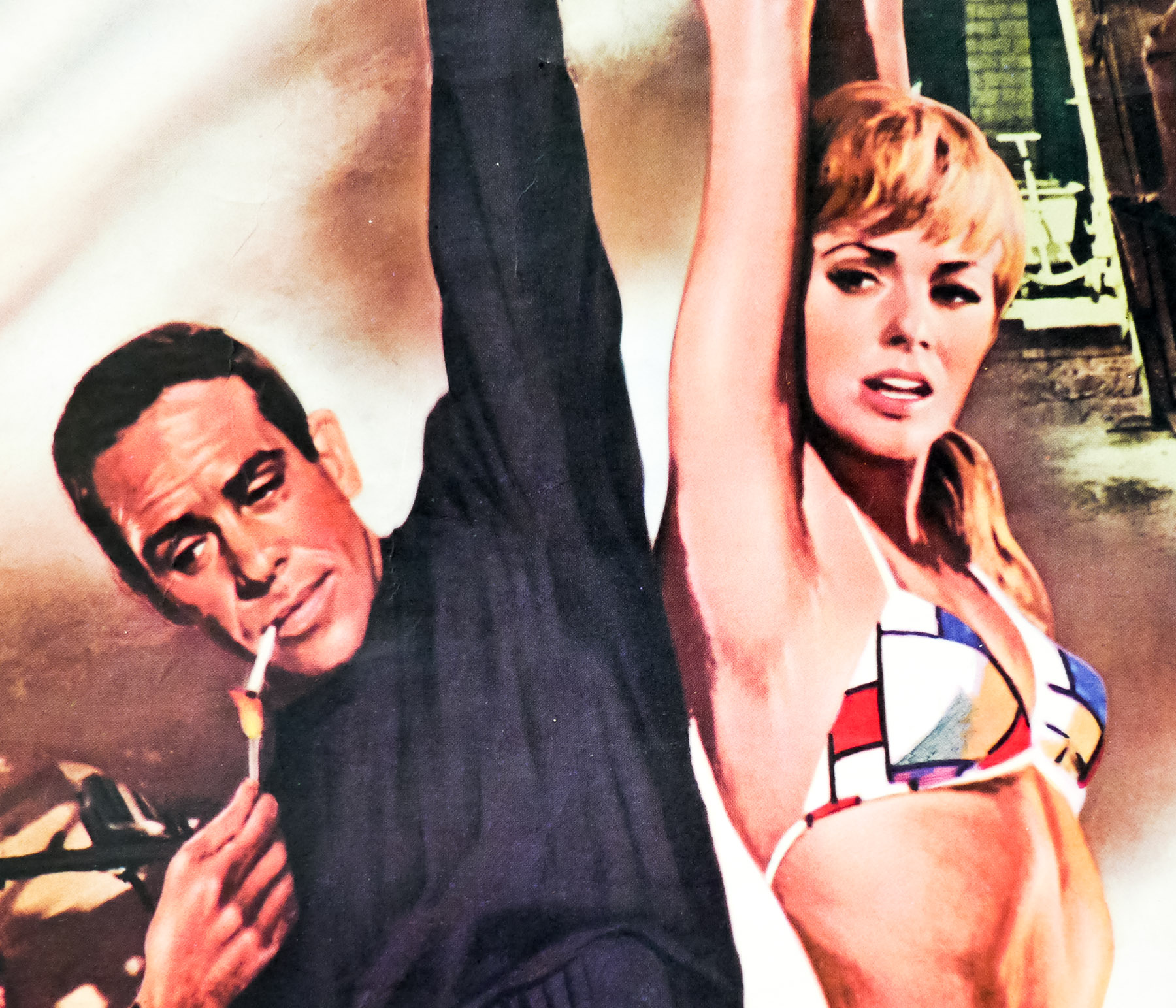
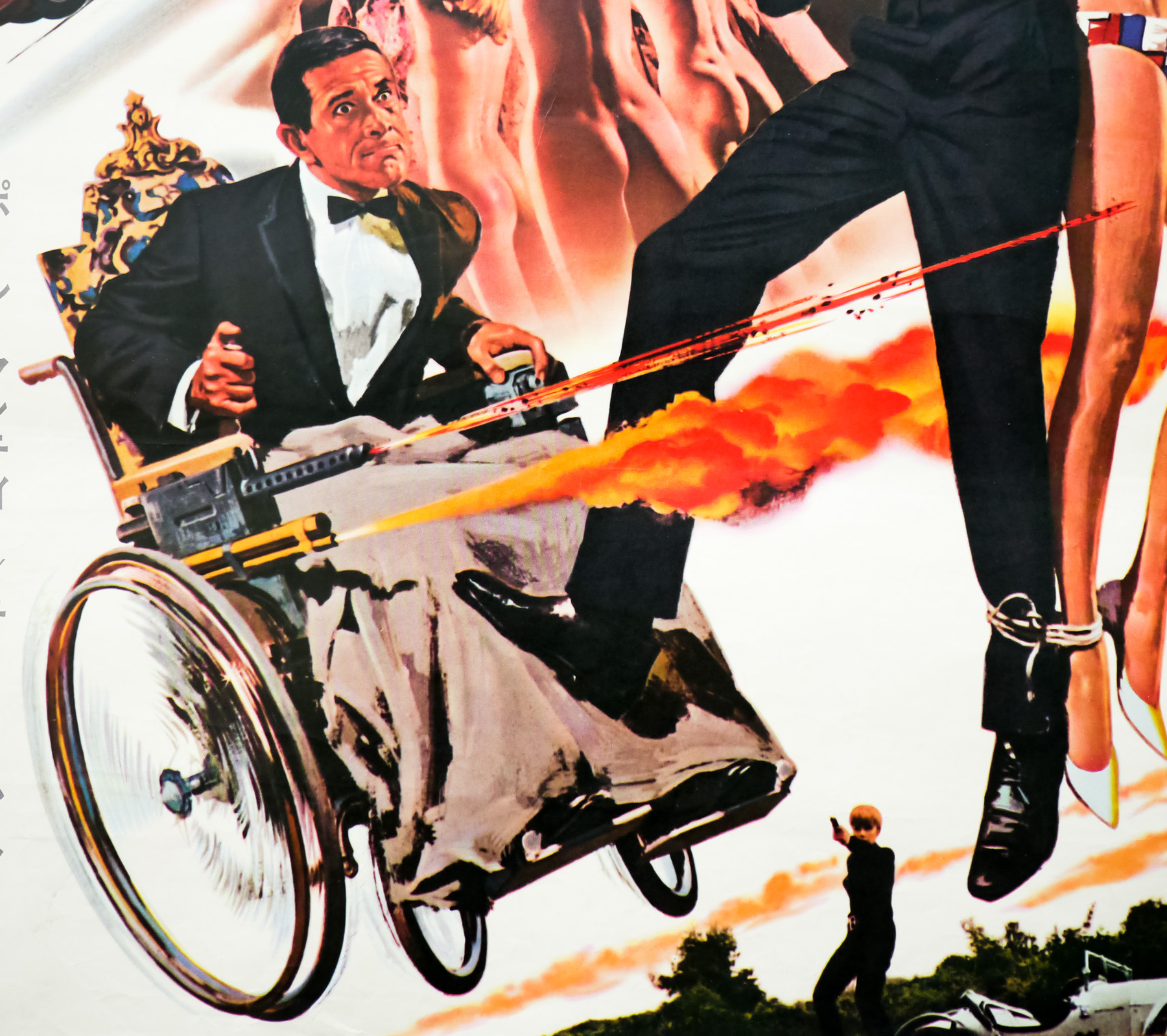
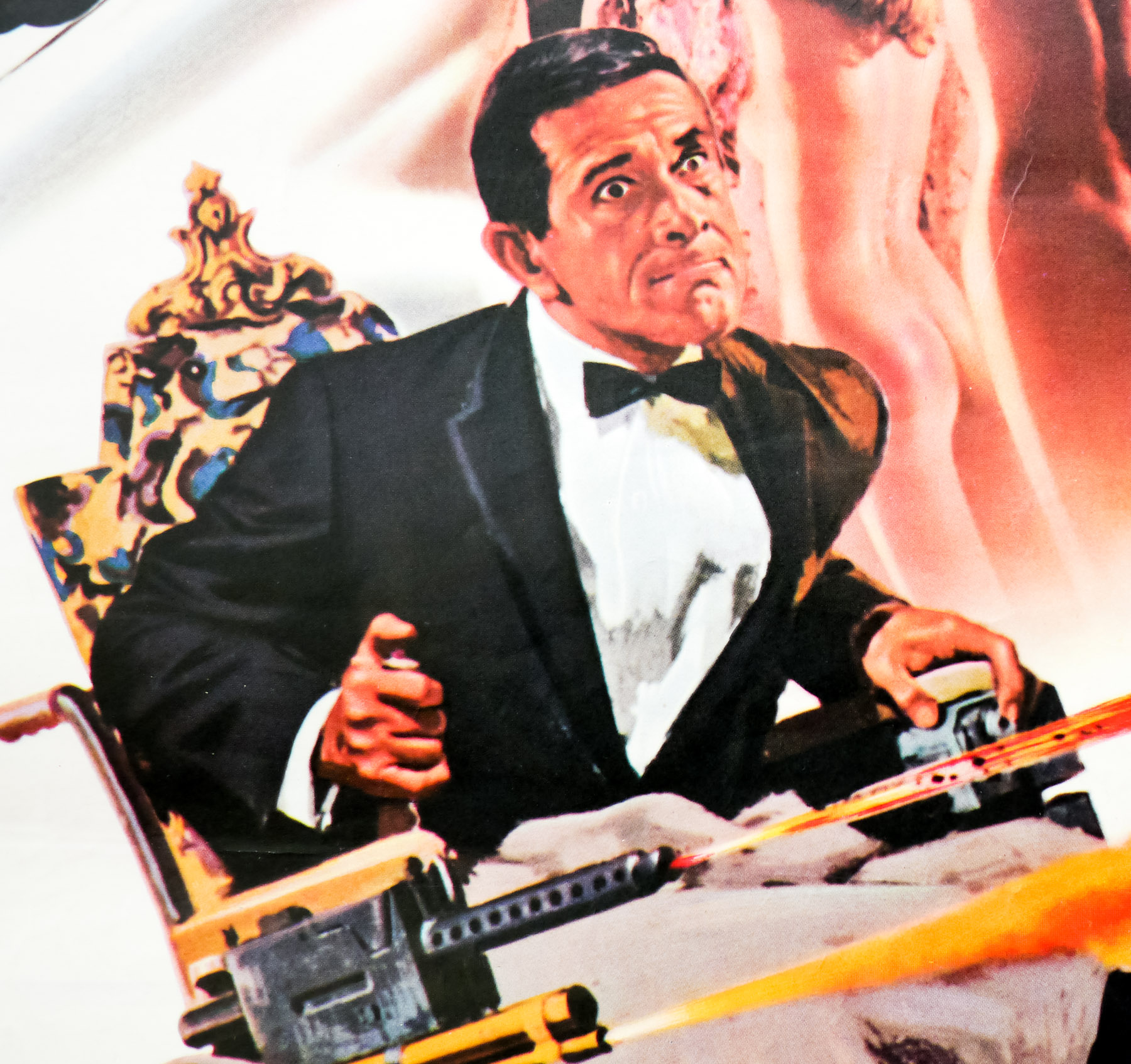
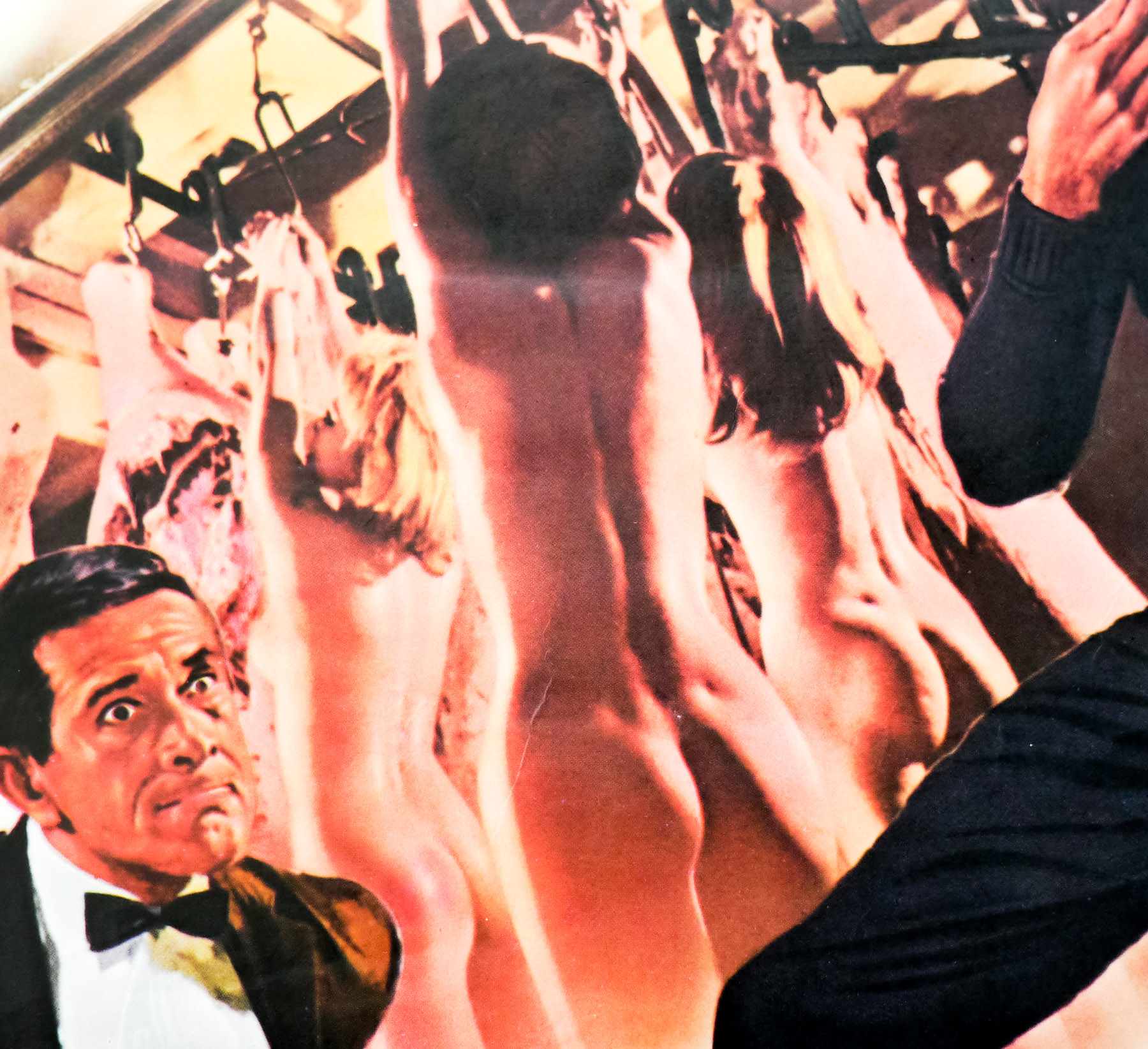
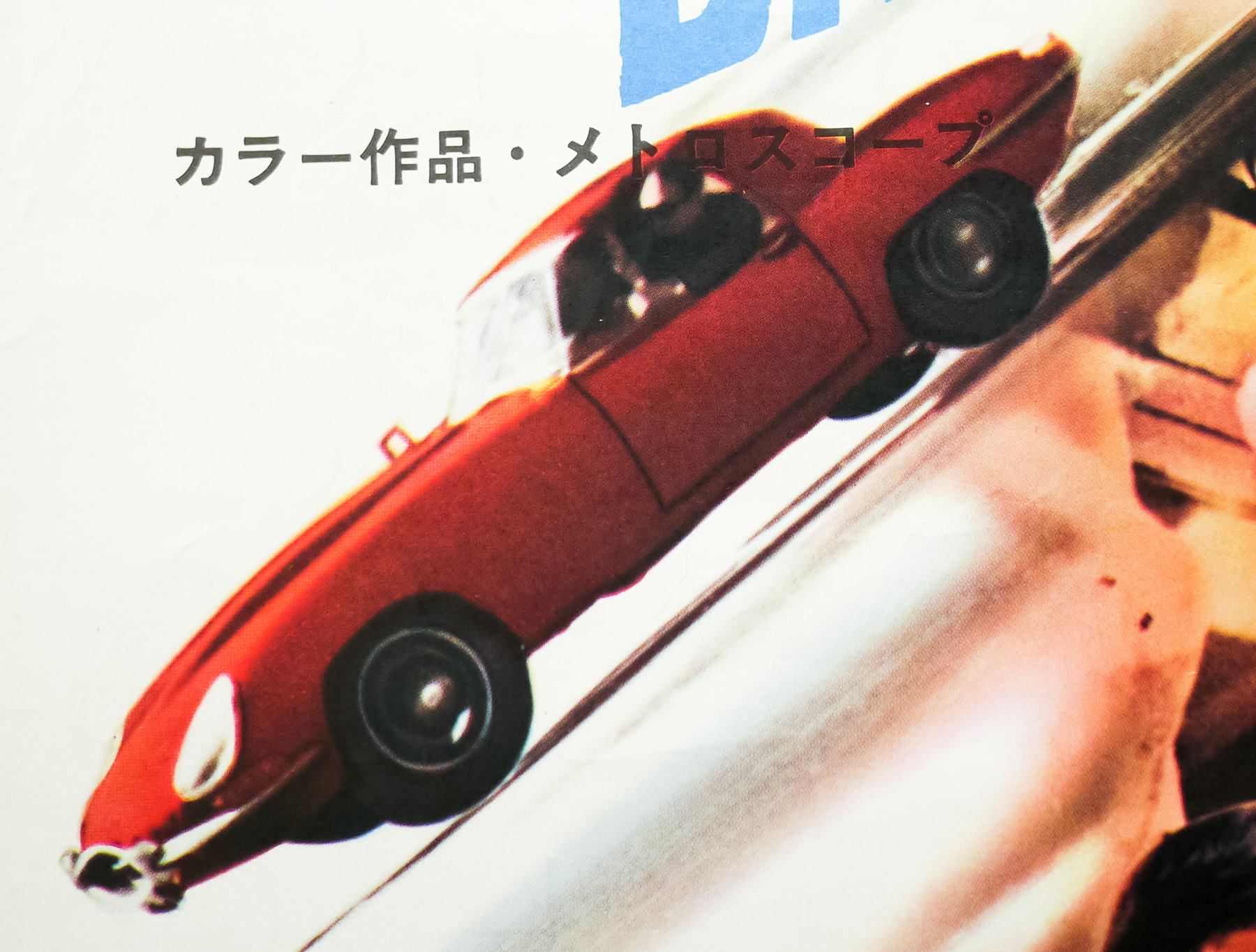
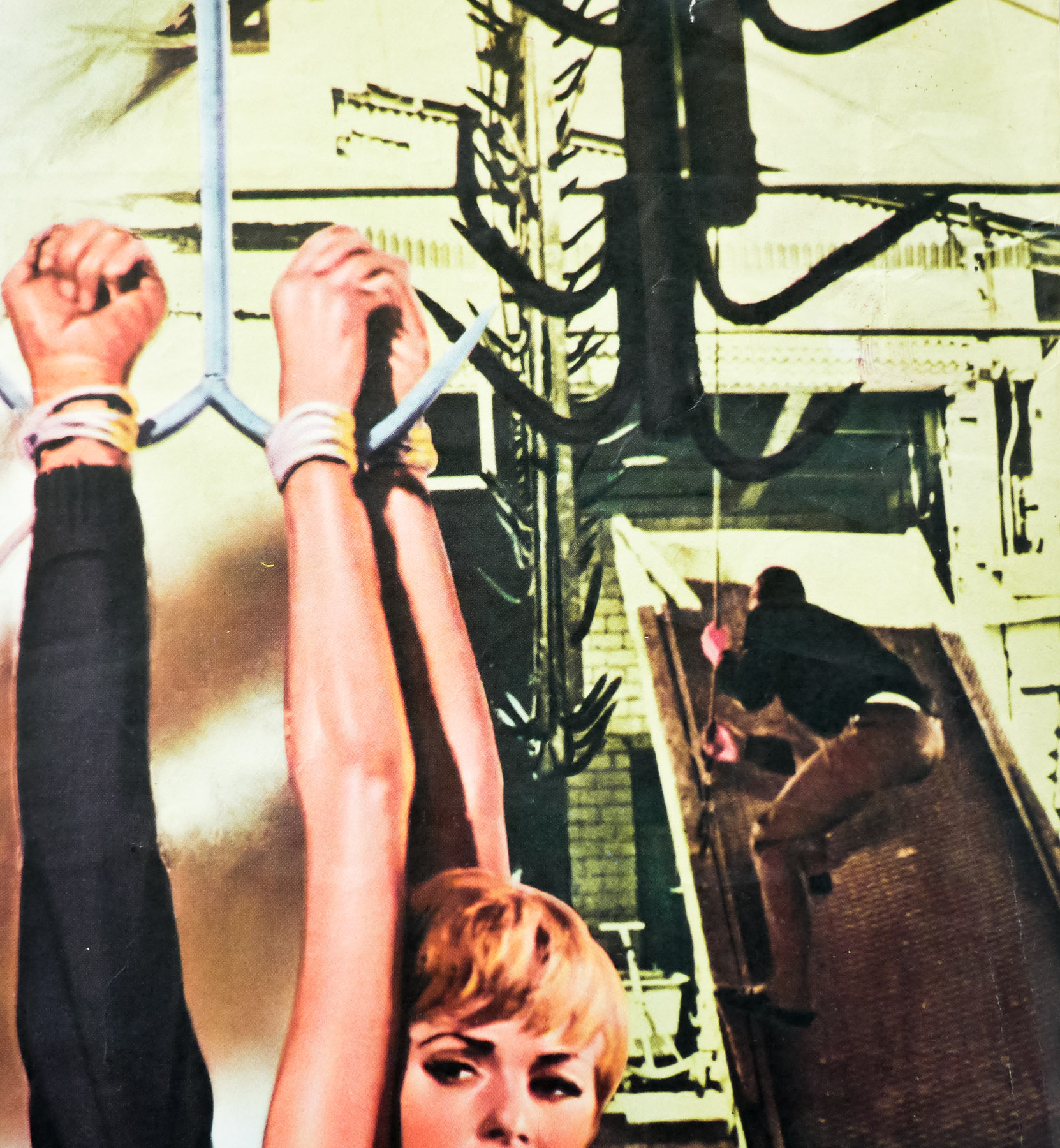
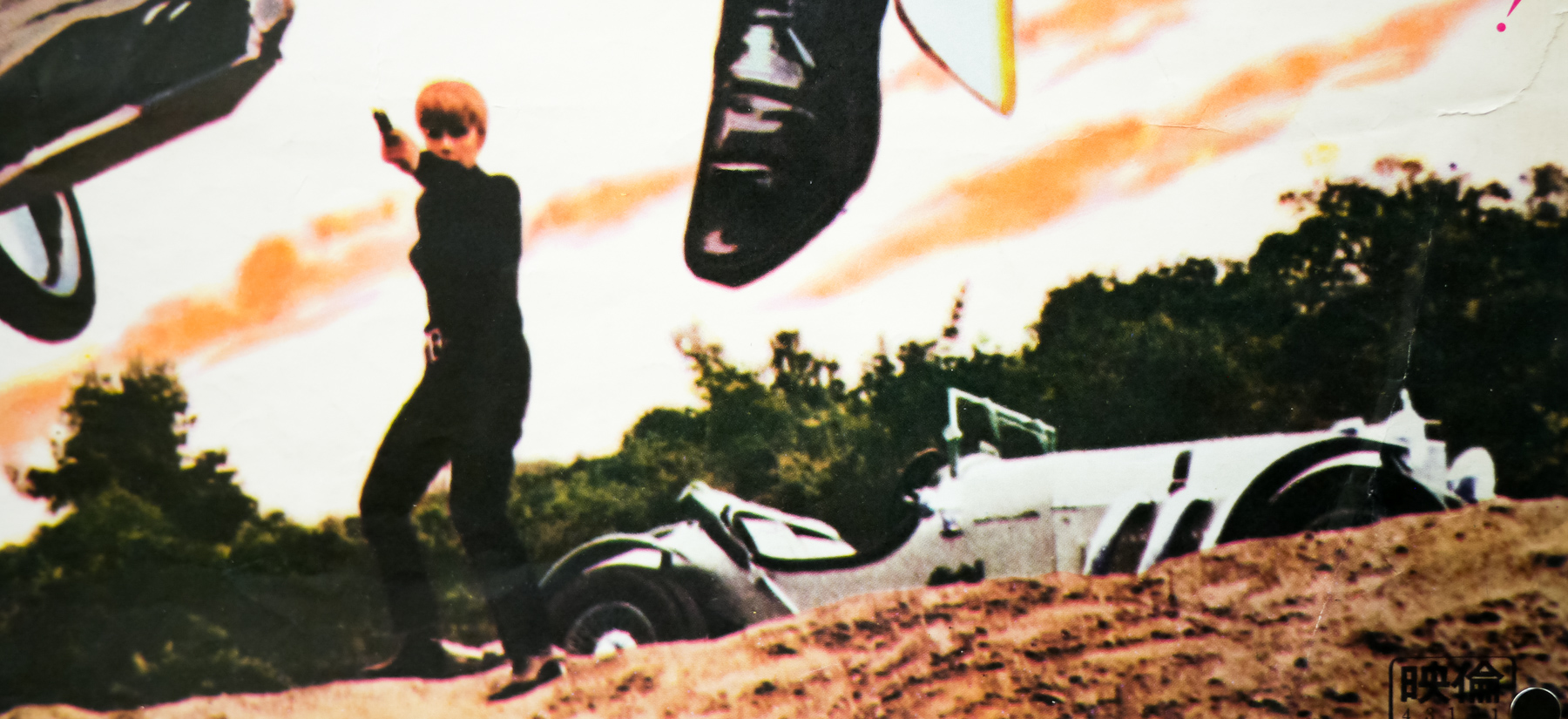
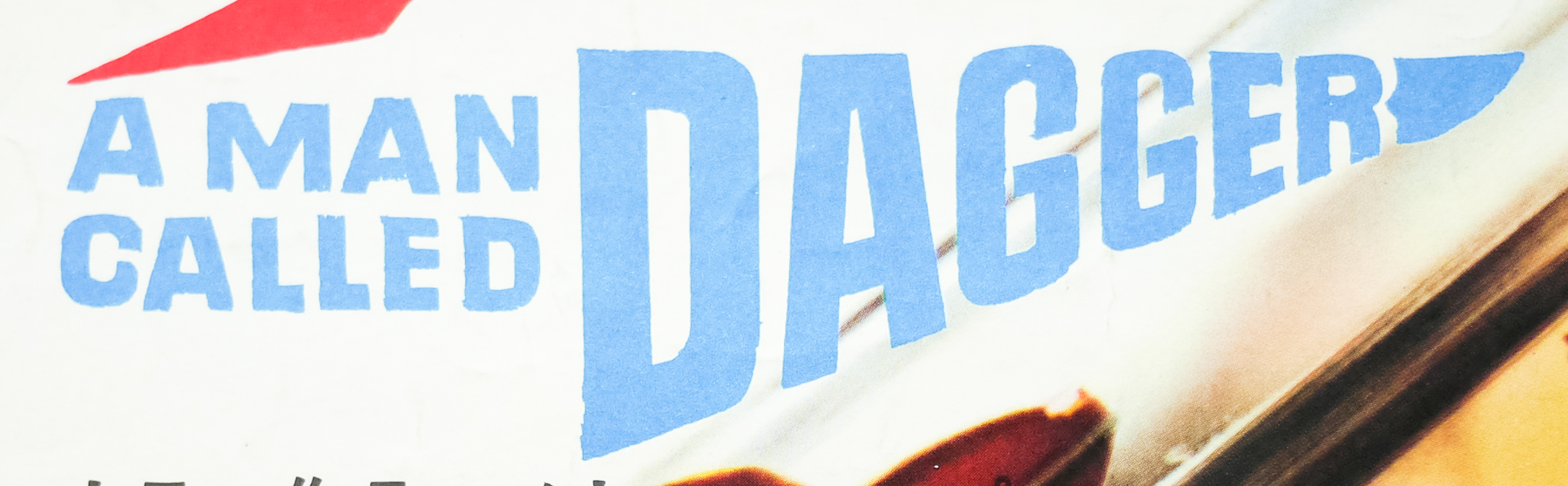
A relatively obscure spy thriller from 1967, A Man Called Dagger saw limited release around the globe and, as far as I can tell, this Japanese poster is one of the few examples of a theatrical release (I don’t believe the UK was treated to a cinema outing). Originally filmed in 1966, it fell victim to a collapse of relations between its original production company, Lew Horwitz’s Global Screen Associates (GSA), and distributors Cinema Distributors of America. It languished for almost a year before being picked up by MGM. The film is essentially a low-grade James Bond homage (the original title was ‘Why Spy?’) and it’s clear that the original producers wanted to cash in on the global popularity of Ian Fleming’s famous creation.

Richard Rush (most known for 1980’s The Stunt Man) was at the helm and Paul Mantee (a cult figure from his performance in Robinson Crusoe on Mars, 1964) plays the unfortunately monikered Dick Dagger (isn’t that a weapon from David Fincher’s Seven?), a crime-fighting spy who teams up with female agent Harper Davis (Terry Moore) in a bid to track down wheelchair bound Nazi war criminal Rudolph Koffman (Jan Murray). Koffman is holed up in a meat-packing plant and is using less than legal supplies in its production. With several damsels in distress, including Harper, Dagger must his ingenuity and gadgets, including a dodgy laser watch to save the day.

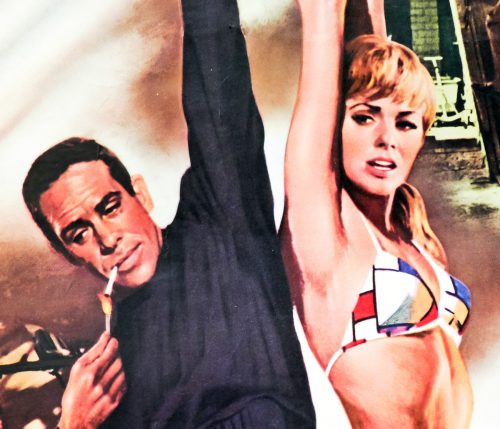
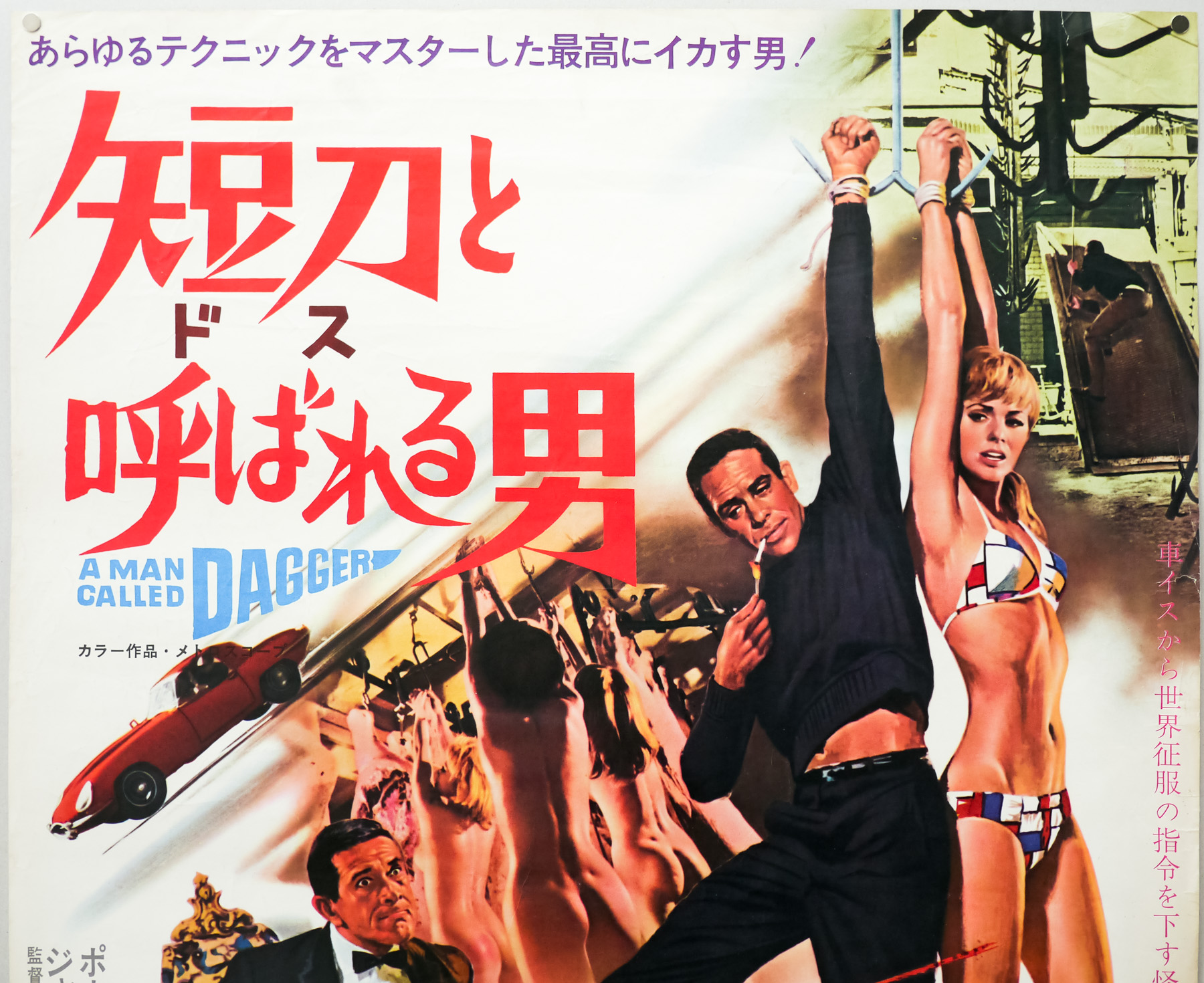
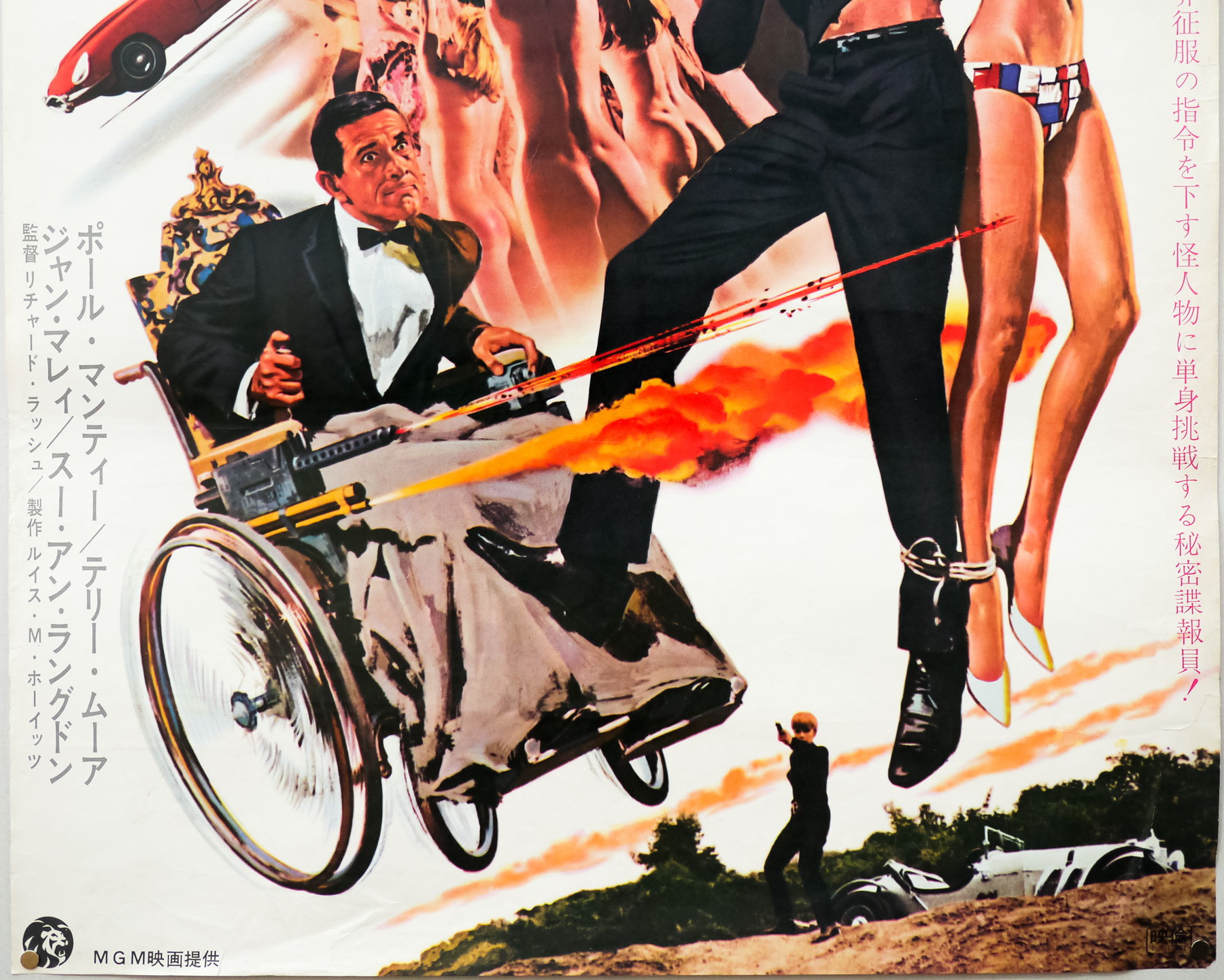
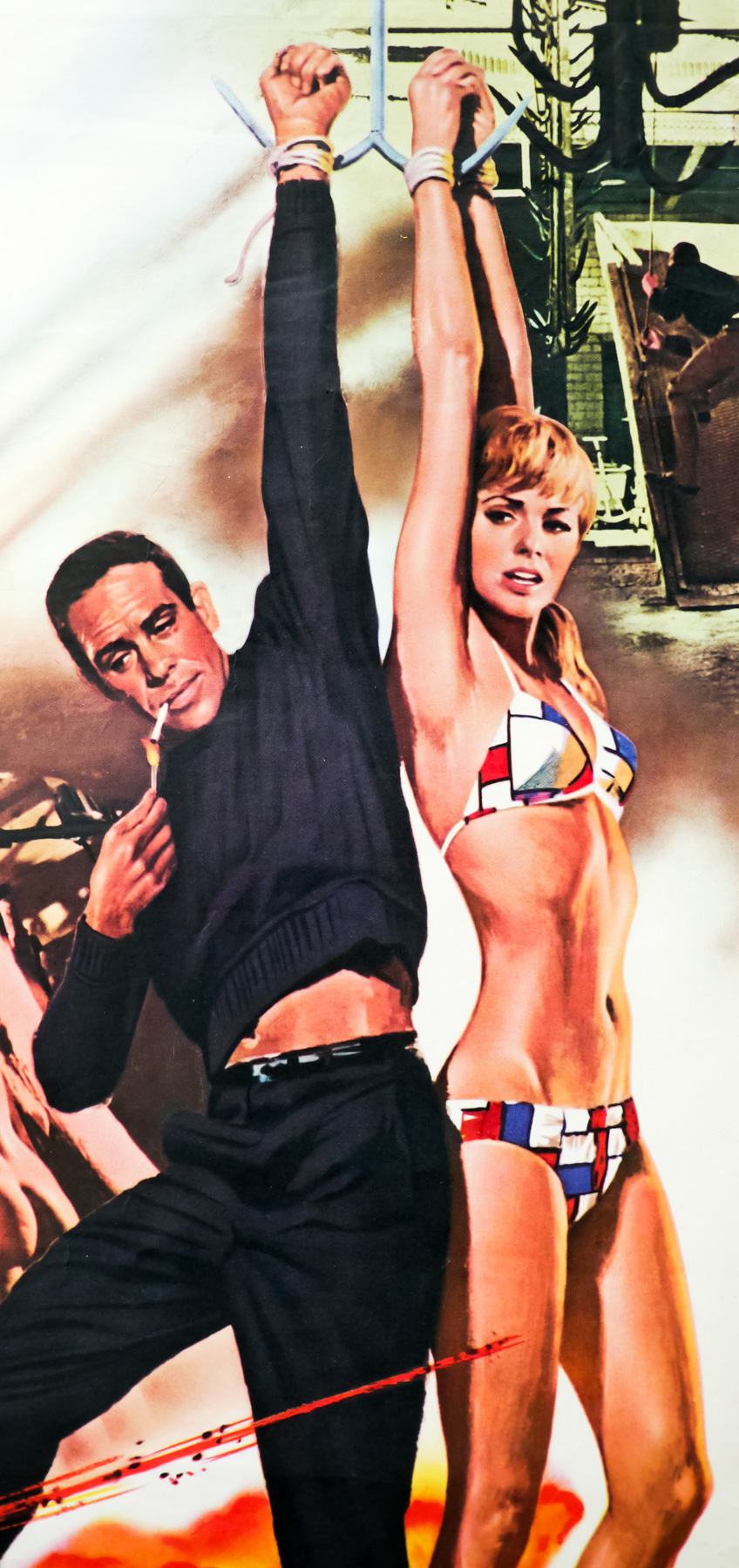
This B2 poster is a combination of the original US one sheet artwork (artist unknown) and a few photographic stills. If you have any idea who is responsible for the artwork please get in touch.

Check out the original trailer on YouTube.

Andy Warhol’s Frankenstein 3D / one sheet / USA

19.03.12

Poster Poster
Title
Andy Warhol's Frankenstein 3D
AKA
Flesh for Frankenstein (UK)
Year of Film
1973
Director
Paul Morrissey, Antonio Margheriti
Starring
Joe Dallesandro, Monique van Vooren, Udo Kier, Arno Juerging, Dalila Di Lazzaro, Srdjan Zelenovic, Nicoletta Elmi, Marco Liofredi
Origin of Film
USA | Italy | France
Genre(s) of Film
Joe Dallesandro, Monique van Vooren, Udo Kier, Arno Juerging, Dalila Di Lazzaro, Srdjan Zelenovic, Nicoletta Elmi, Marco Liofredi,
Type of Poster
One sheet
Style of Poster
3D re-release
Origin of Poster
USA
Year of Poster
1982
Designer
Unknown
Artist
Unknown
Size (inches)
27 2/16" x 41
SS or DS
SS
NSS #
--
Tagline
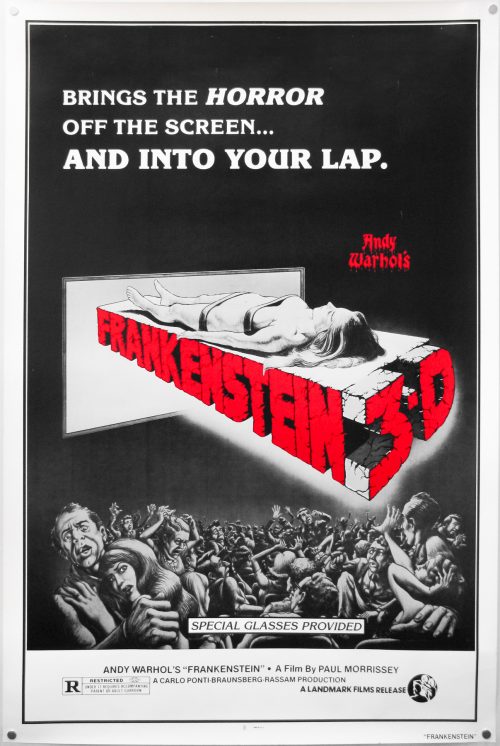
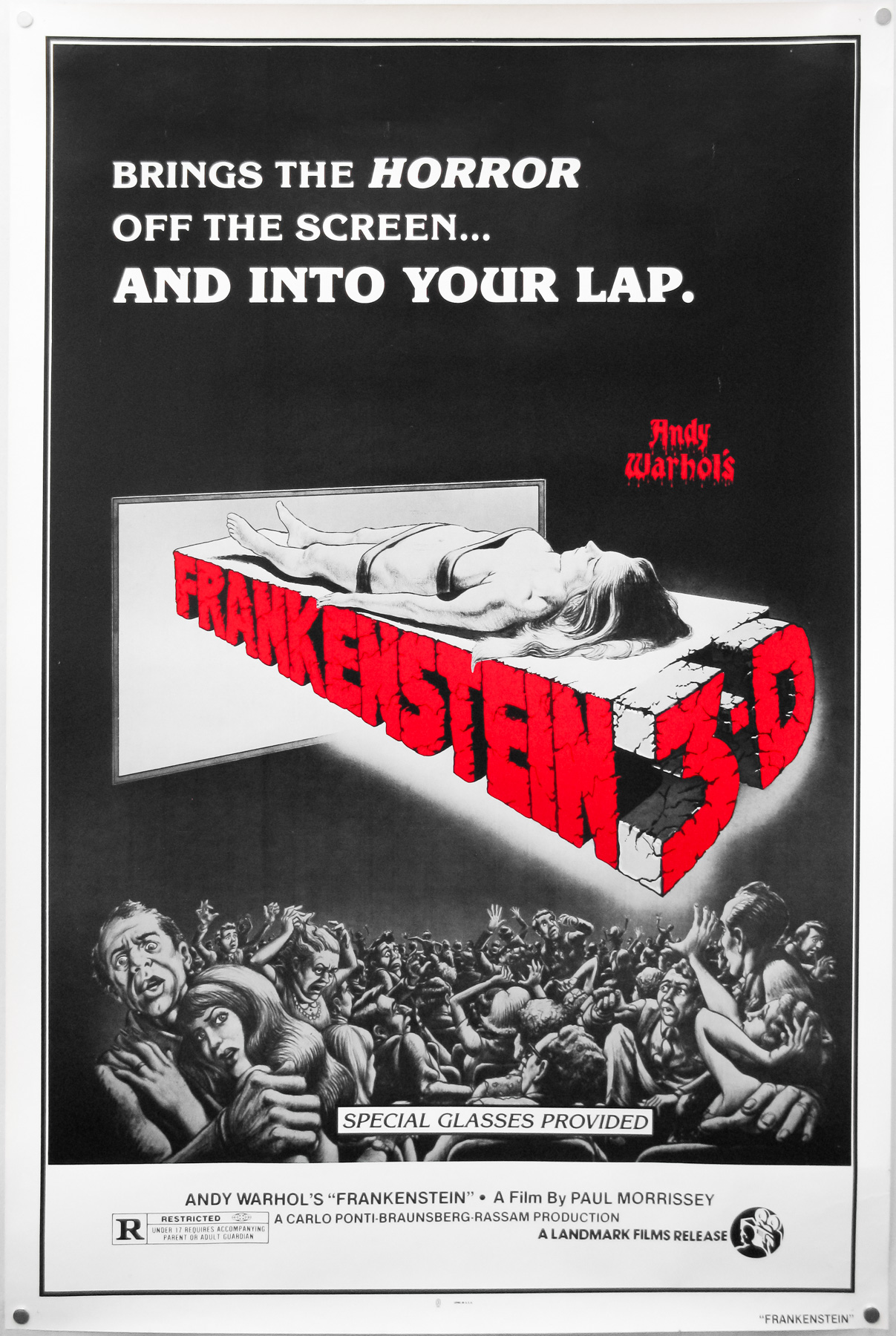
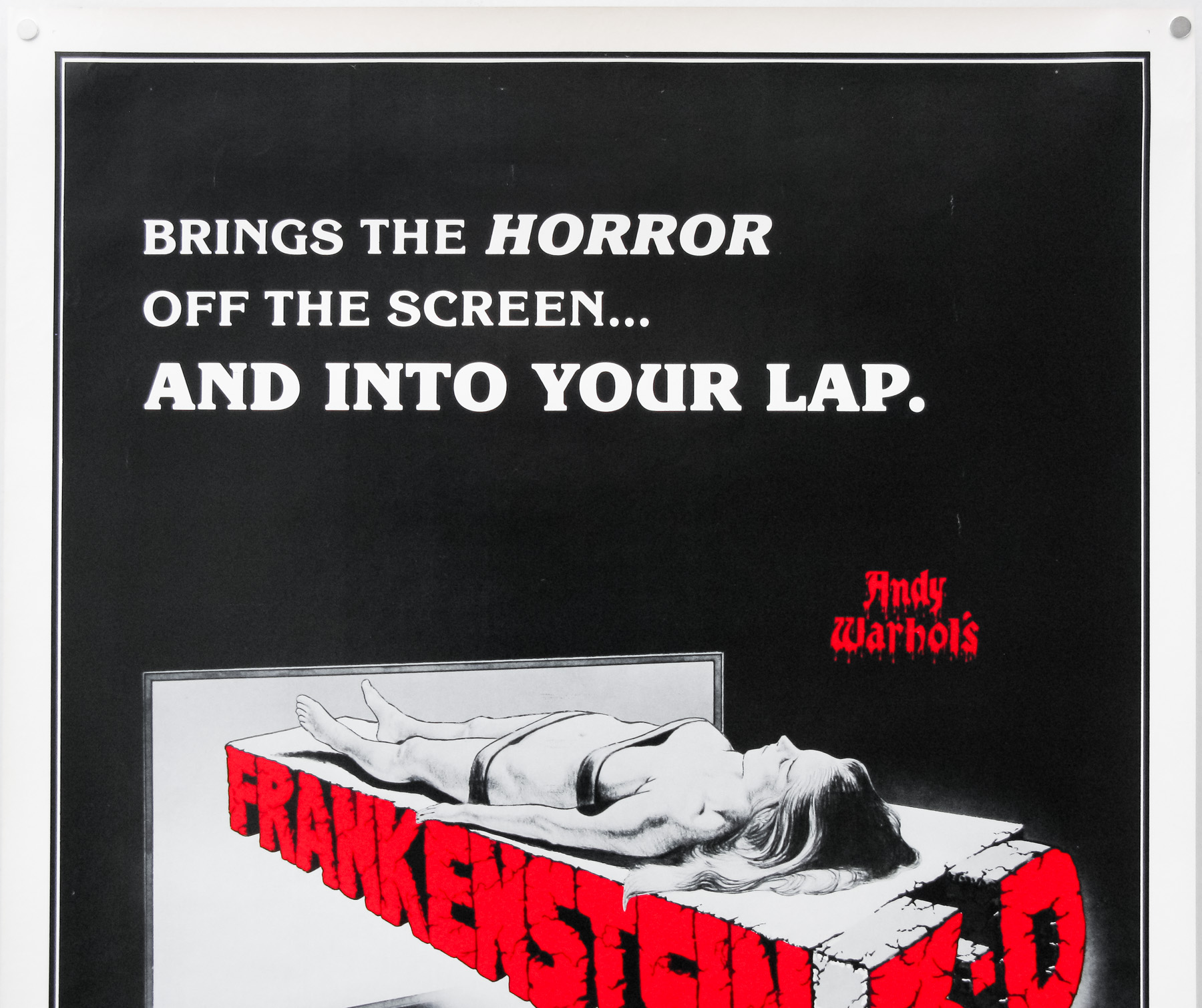
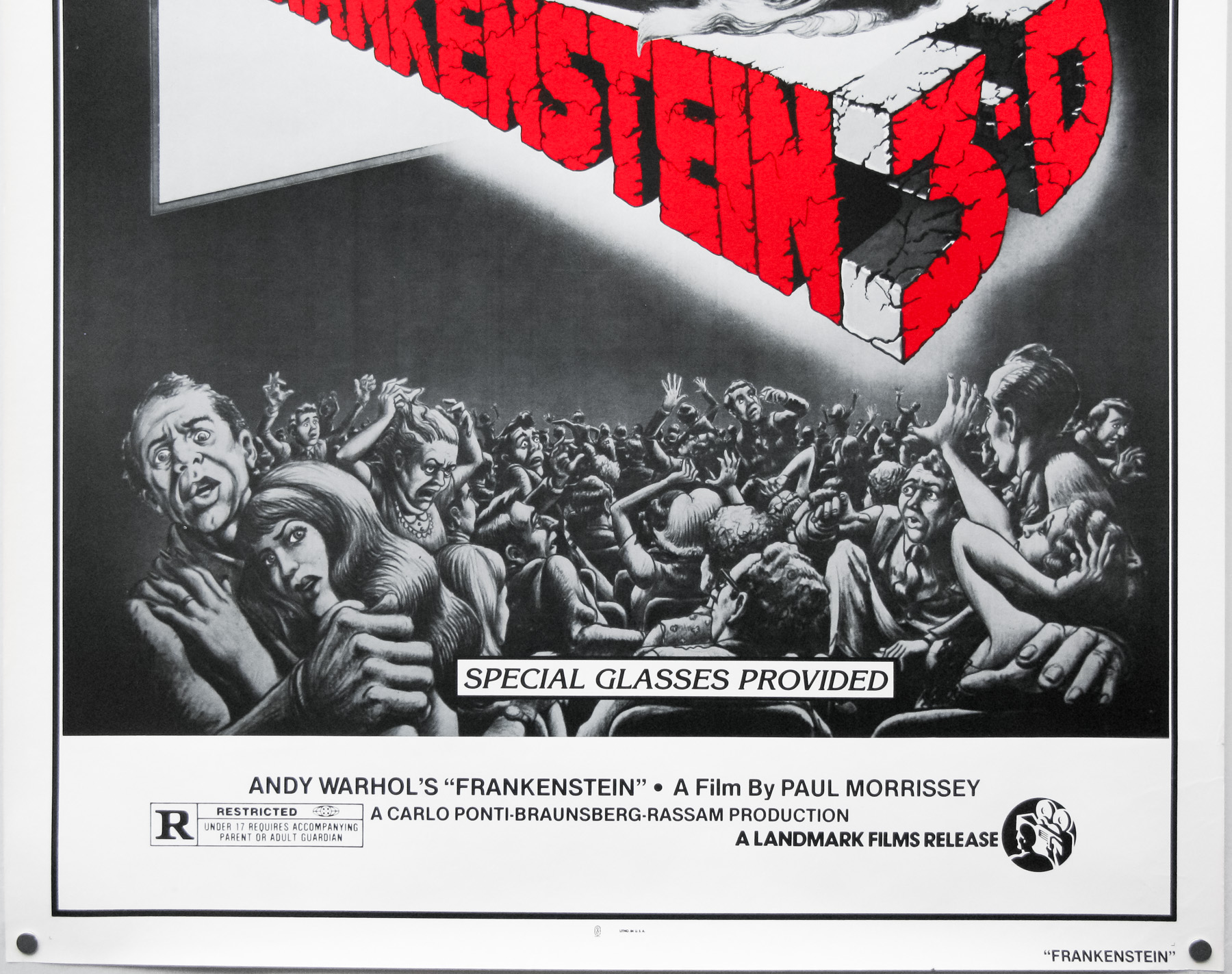
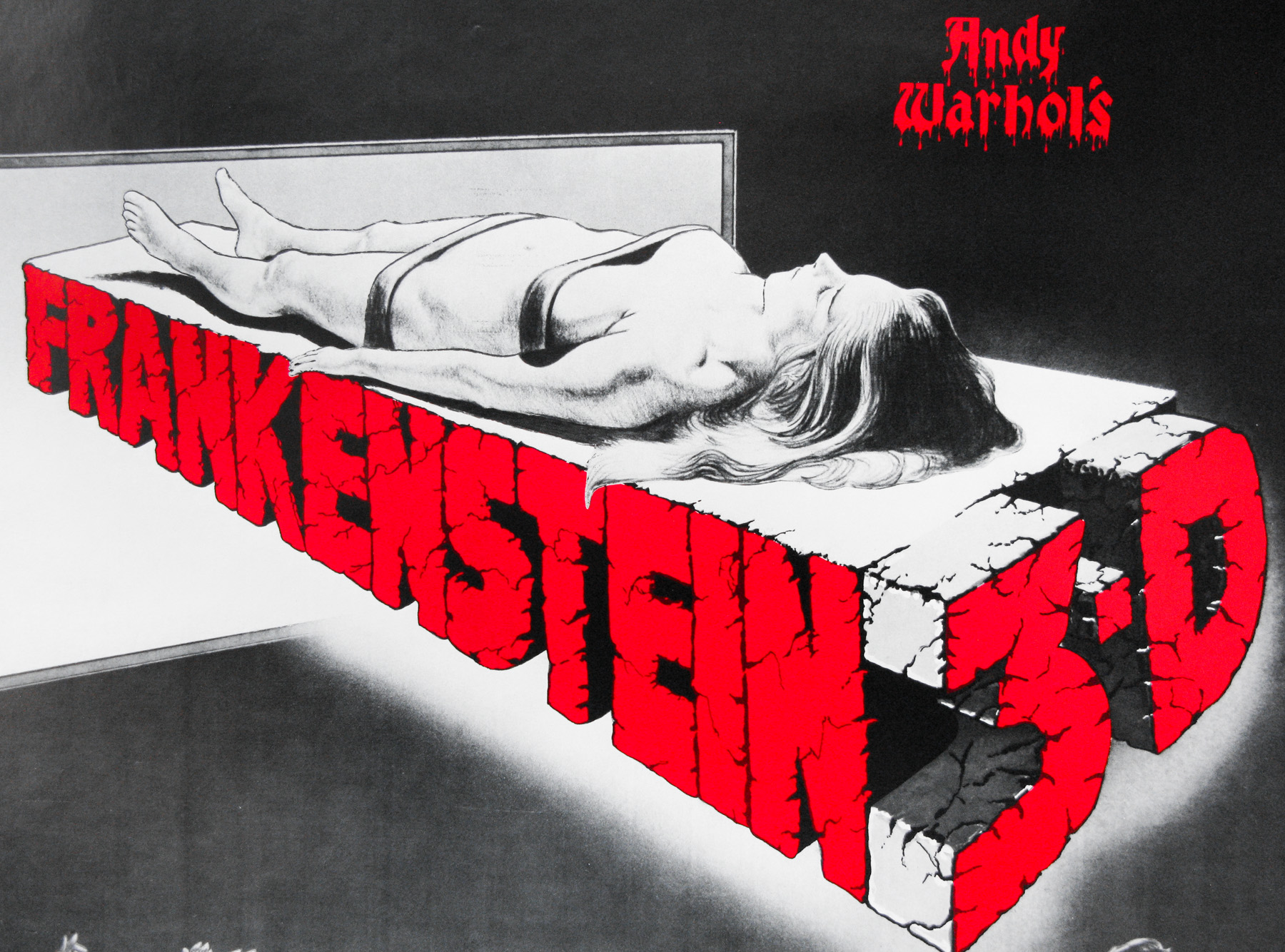
Brings the horror off the screen... and into your lap.

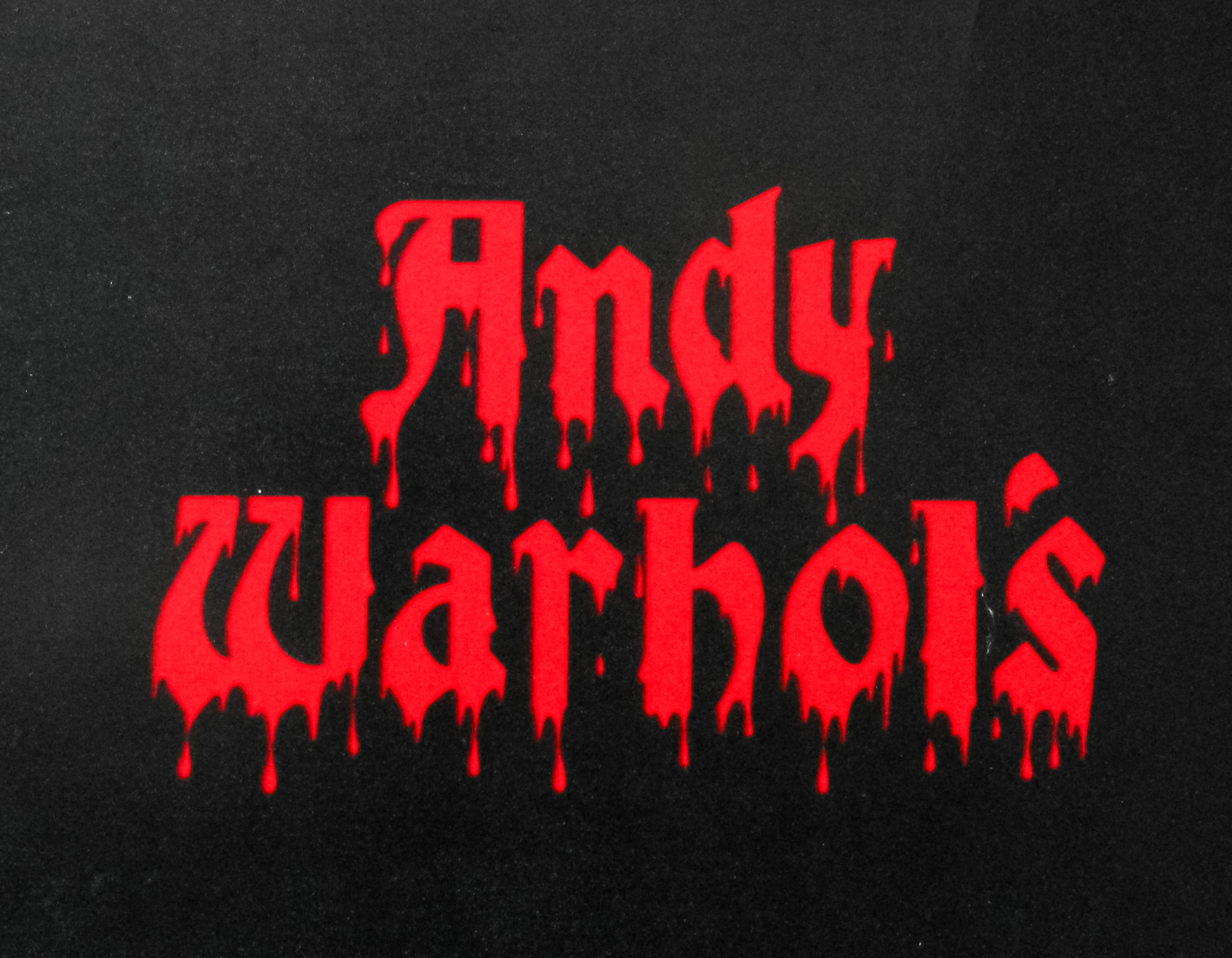
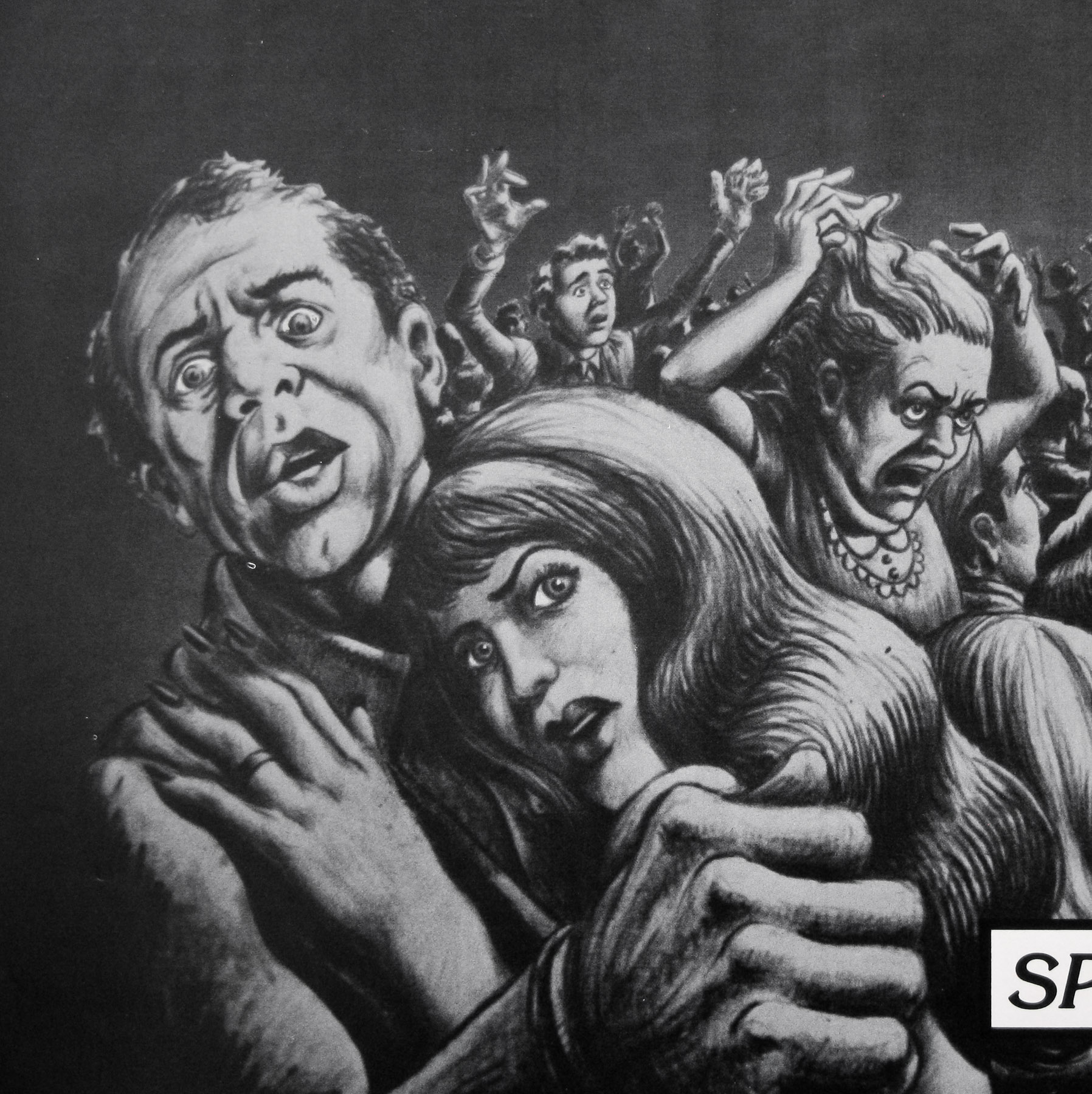
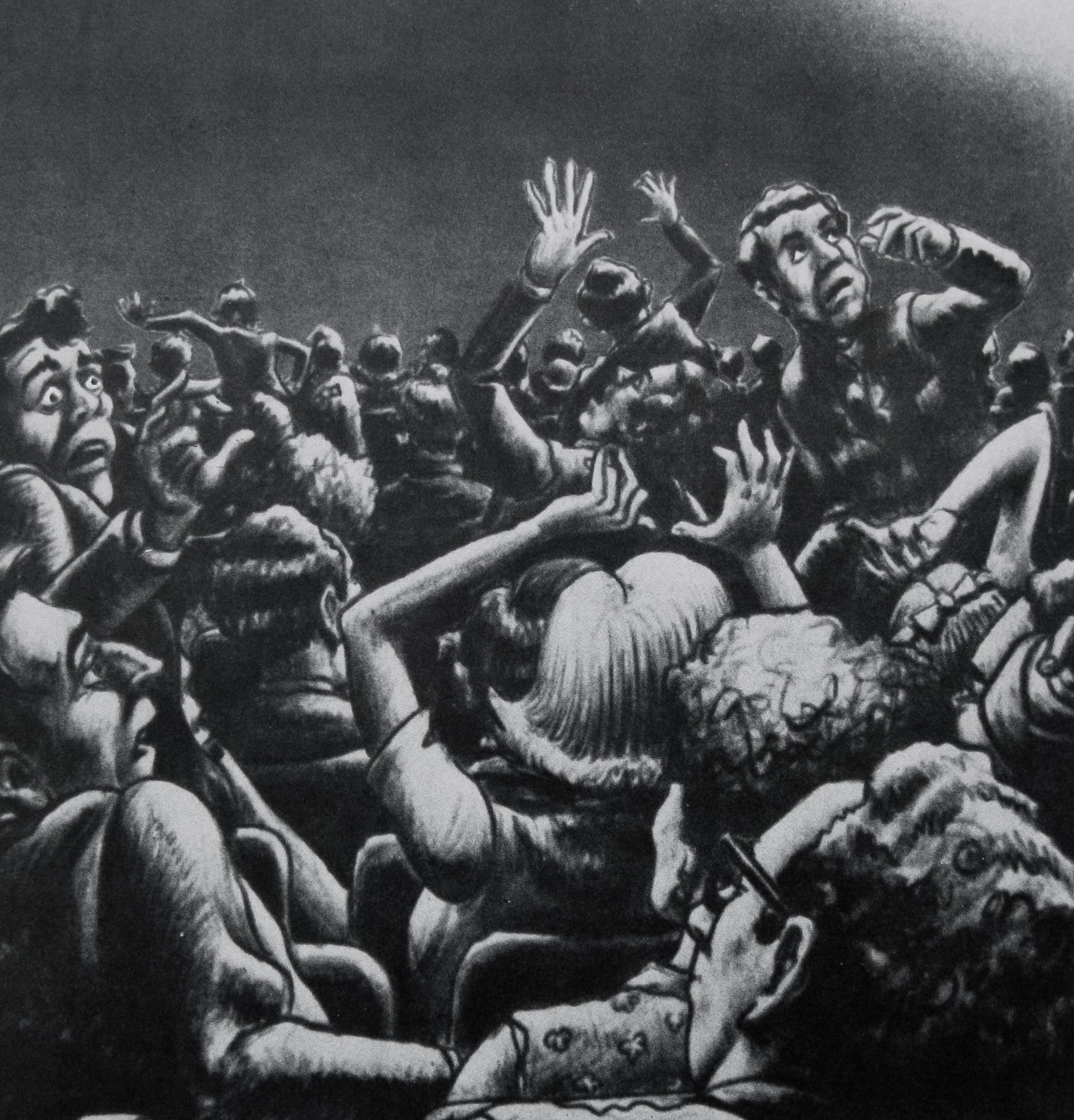
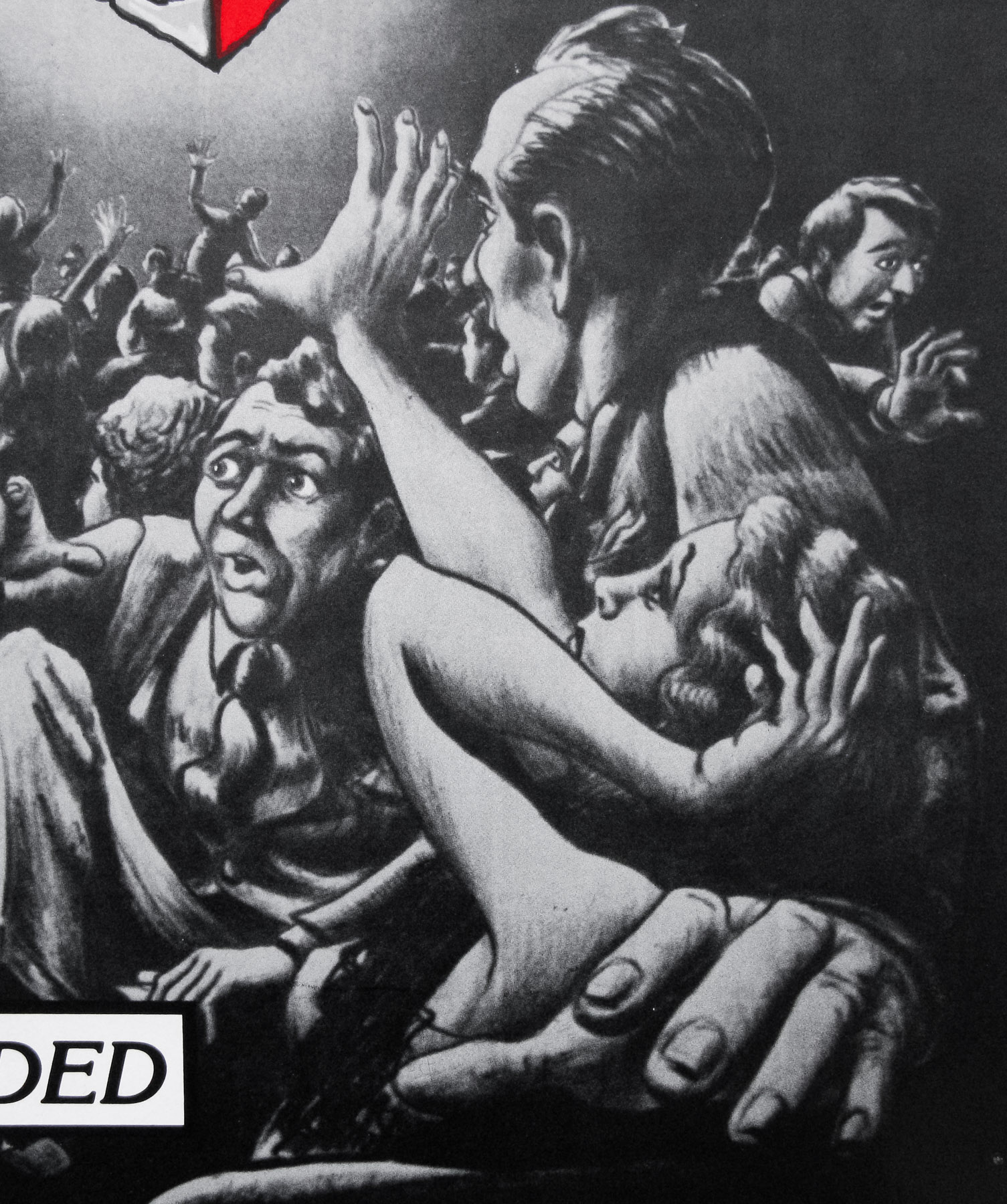
Legendary pop artist Andy Warhol had been making films since the early 1960s but after his near fatal shooting in 1968 he relinquished direct involvement in those coming out of The Factory. Warhol’s acolyte and assistant Paul Morrissey stepped into the role of director and made close to a dozen films over the following years. Two of these, filmed at the Italian studio Cinecittà, were unquestionably more mainstream than the others; Blood for Dracula (1974) and Flesh for Frankenstein.
Morrissey is co-credited with prolific Italian director Antonio Margheriti although the latter’s role in the production has since been disputed by several people involved, including Morrissey. The film is a sex and gore-filled update of the classic tale, starring German cult favourite Udo Kier as the insane Baron Frankenstein who is obsessed with breeding a Serbian super-race by creating the perfect couple, bit by bit. He makes a poor choice for the male’s head (and brain) when his assistant Otto (Arno Juerging) kidnaps a local man who had plans to enter a life of celibacy in a monastery nearby.

Factory regular Joe Dallesandro plays a randy stablehand and friend of the kidnapped man who ends up at Frankenstein’s castle and  quickly gets caught up with the mad doctor’s wife (Monique van Vooren) whilst trying to rescue his friend. The film features a bucket-load of blood and guts, perverted sexual behaviour (including the use of all-new orifices), hints of incest and plenty of wild dialogue. The film was originally released in 3D, which served to enhance the already over-the-top gore with disembowelled innards being thrust towards the audience.

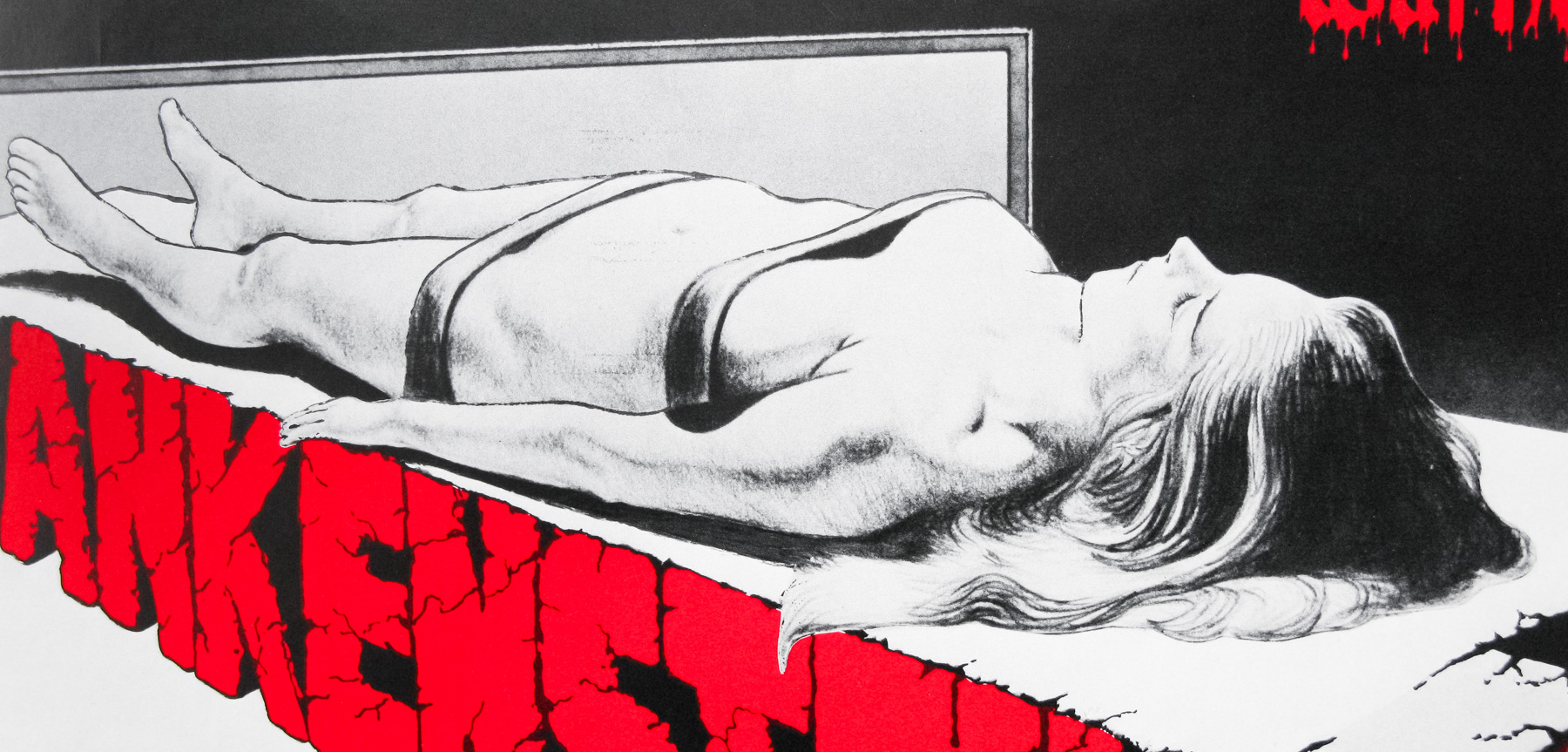
The film was also released in 2D but was granted an X-rating in the US on its initial release. This poster is for the 1982 3D re-release and is markedly different from the original 1974 one sheet; the tagline leaves you in no doubt as to the audience the re-release was aiming for. I’ve been unable to determine the artist for this poster so please get in touch if you have an idea.

In the UK the film was released as Flesh for Frankenstein and was originally passed with an X-certificate with over 8 minutes of cuts. It was later caught up in the infamous Video Nasties debacle and was only finally released uncut in 2006.

The trailer is on YouTube.

Survival Run / B1 / Japan

11.07.11

Poster Poster

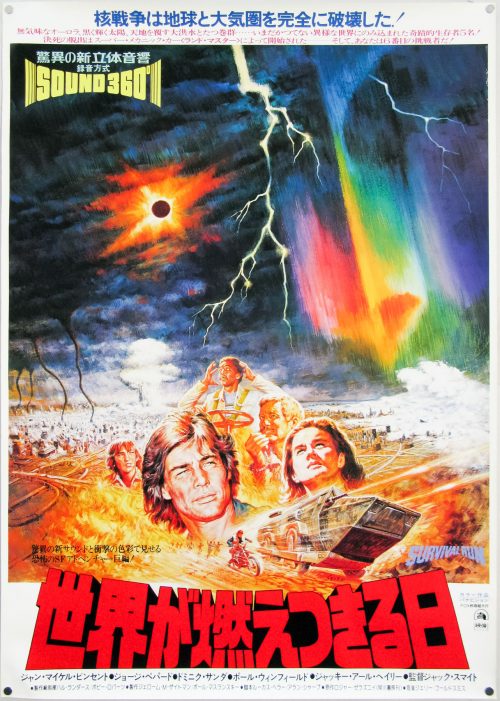
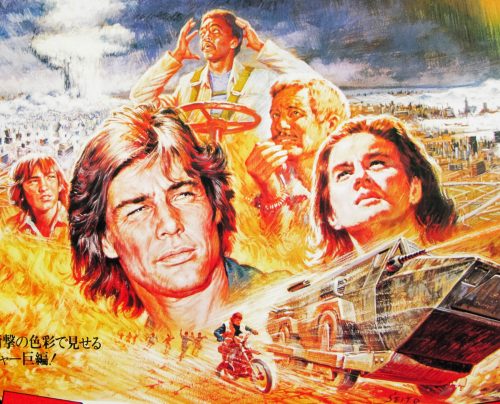
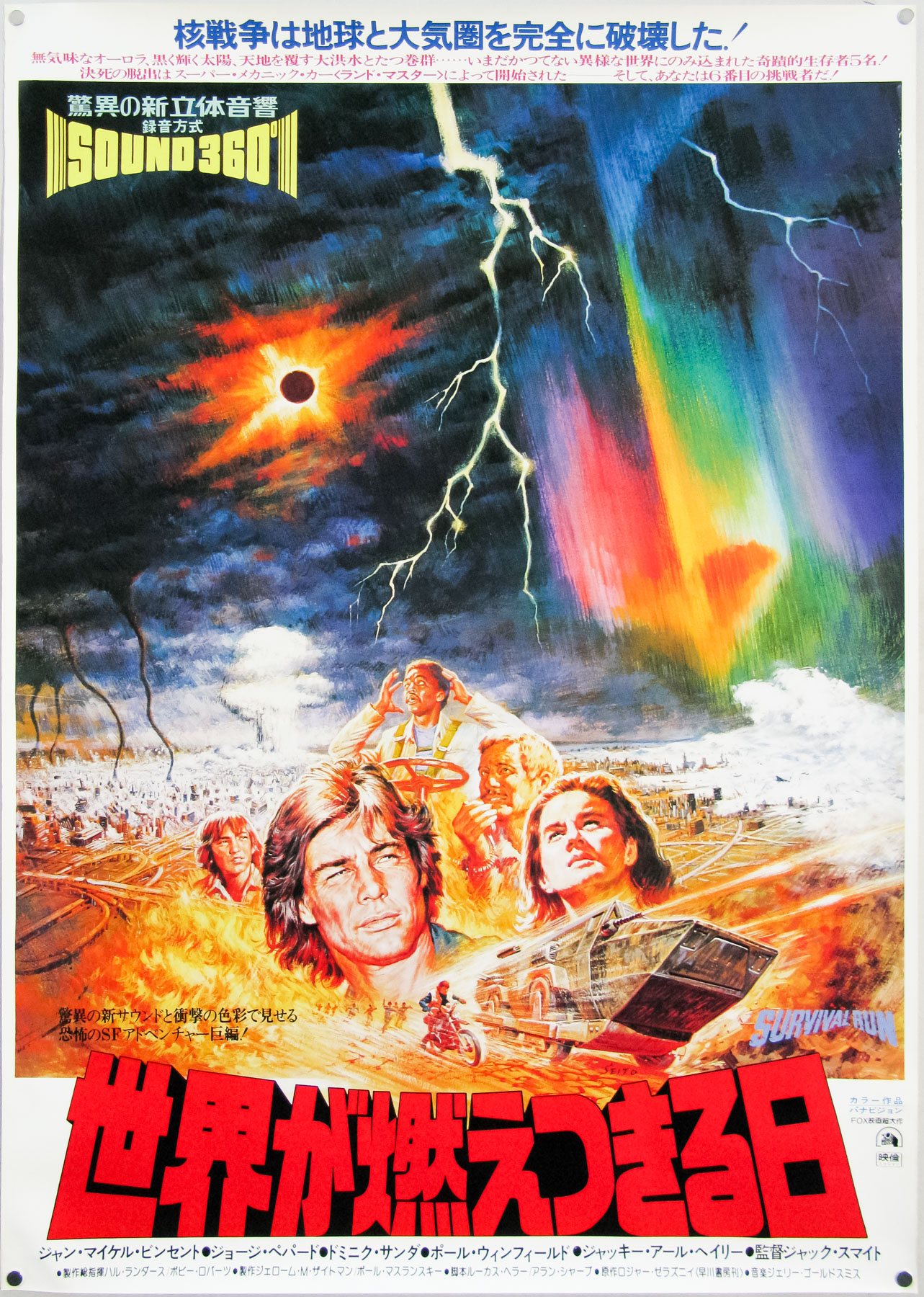
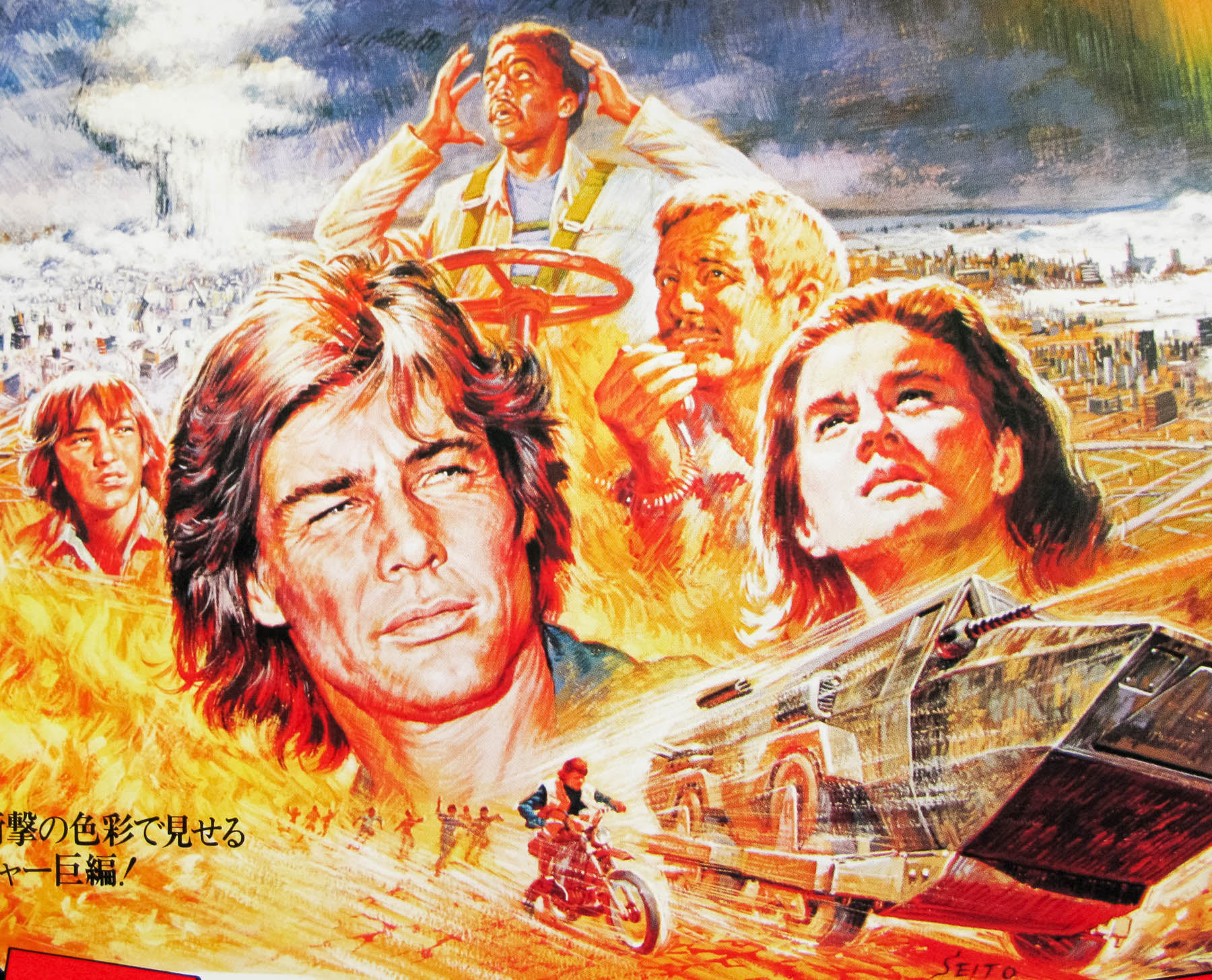
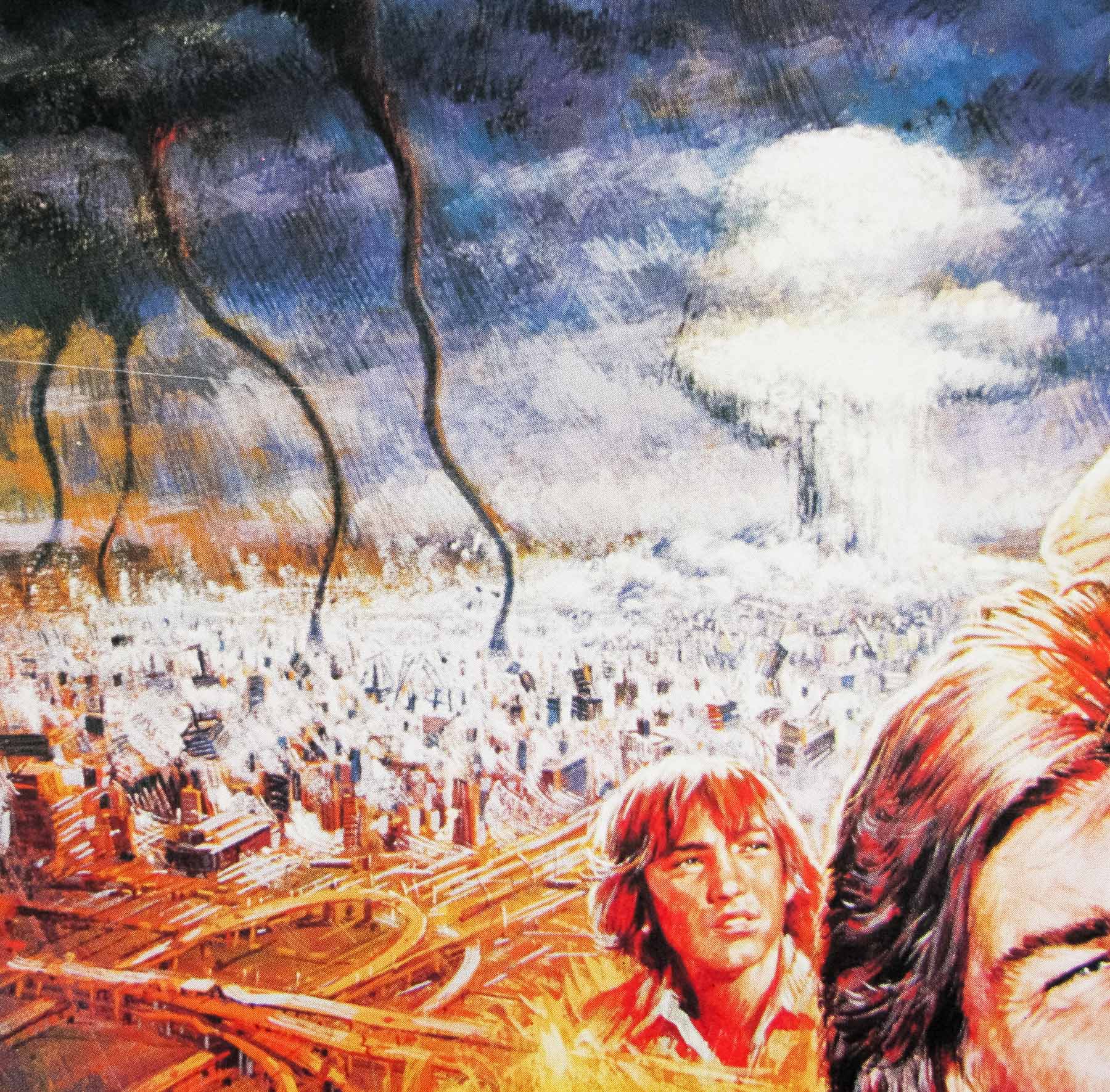
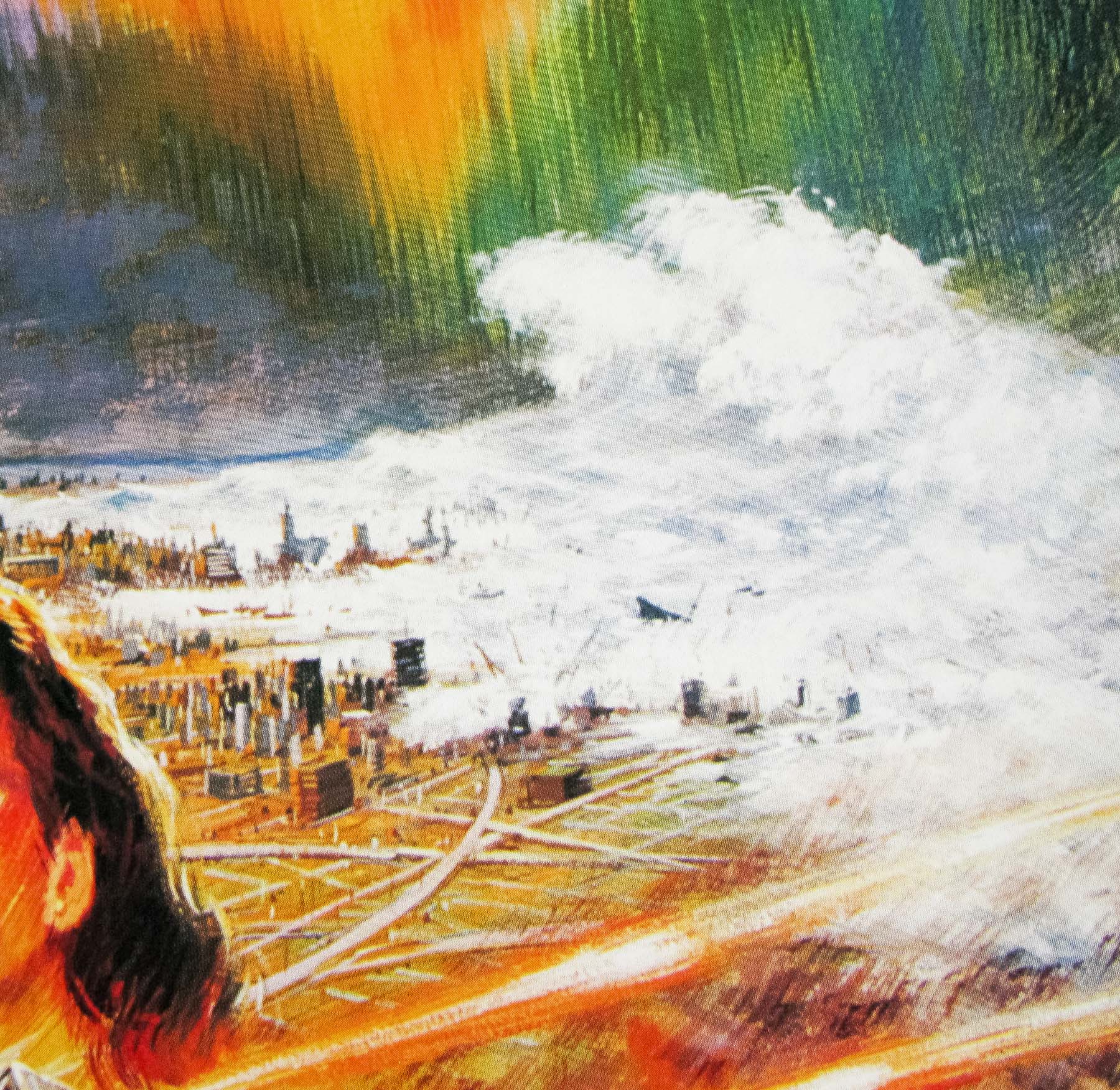
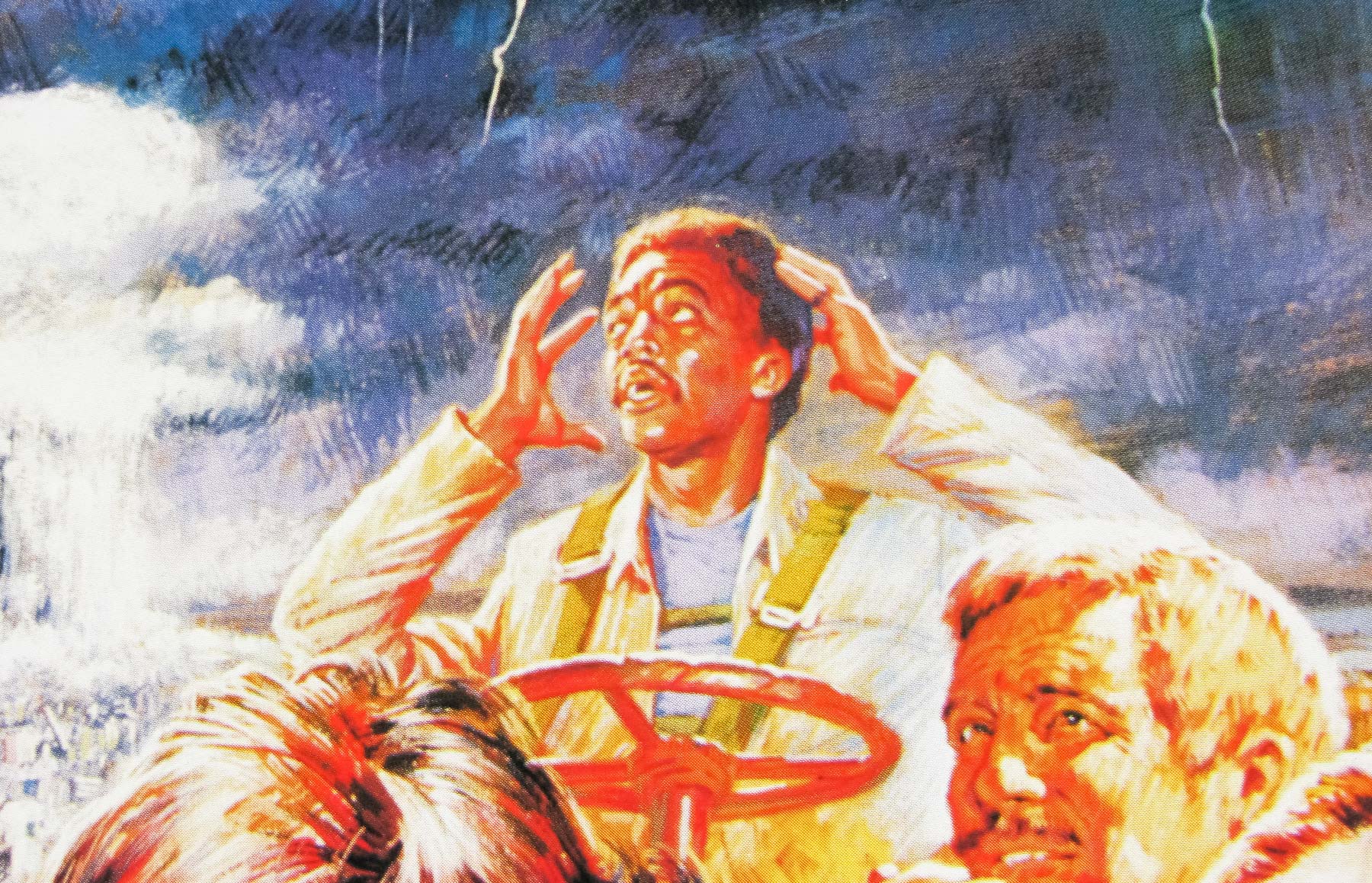
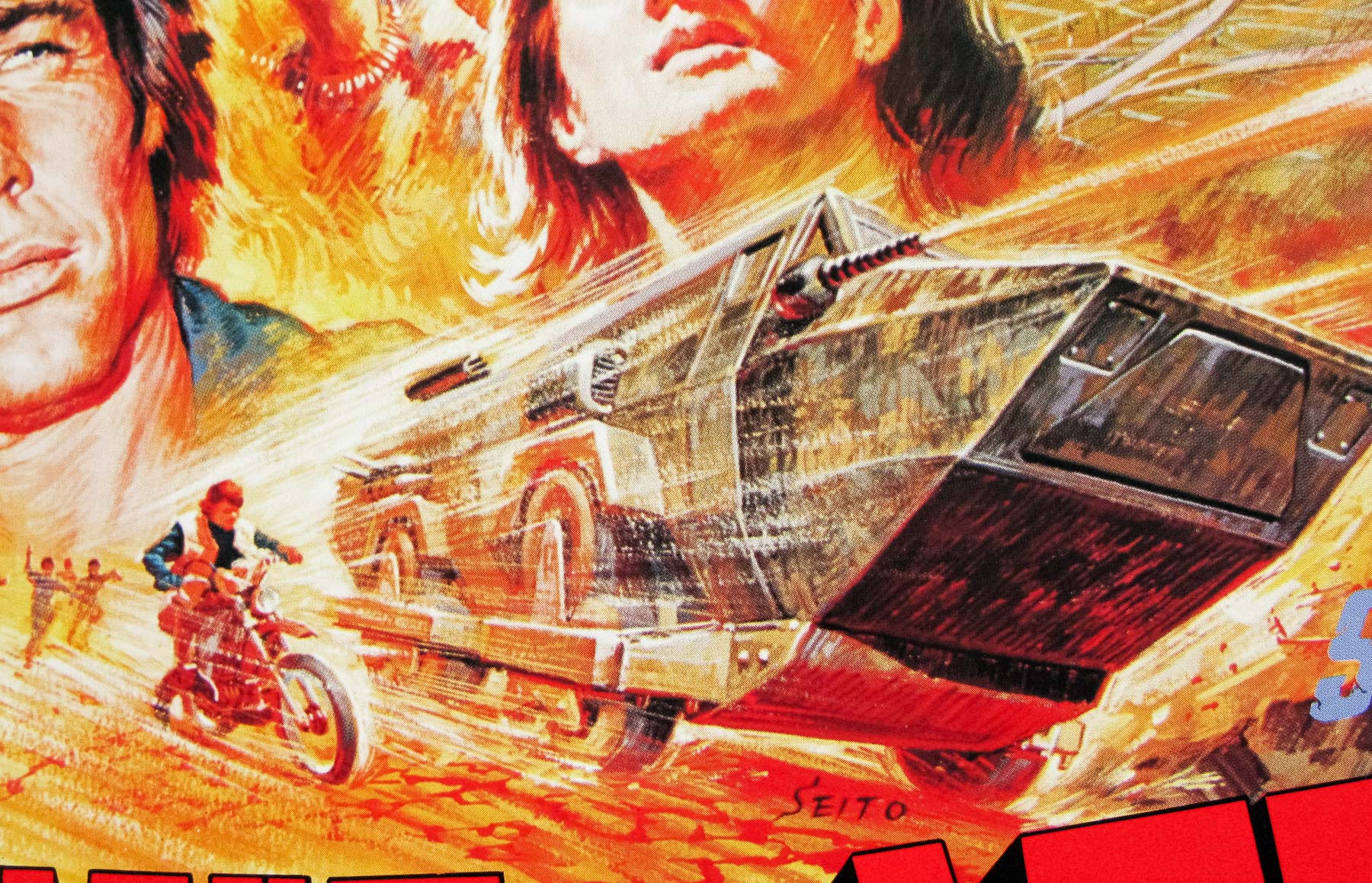
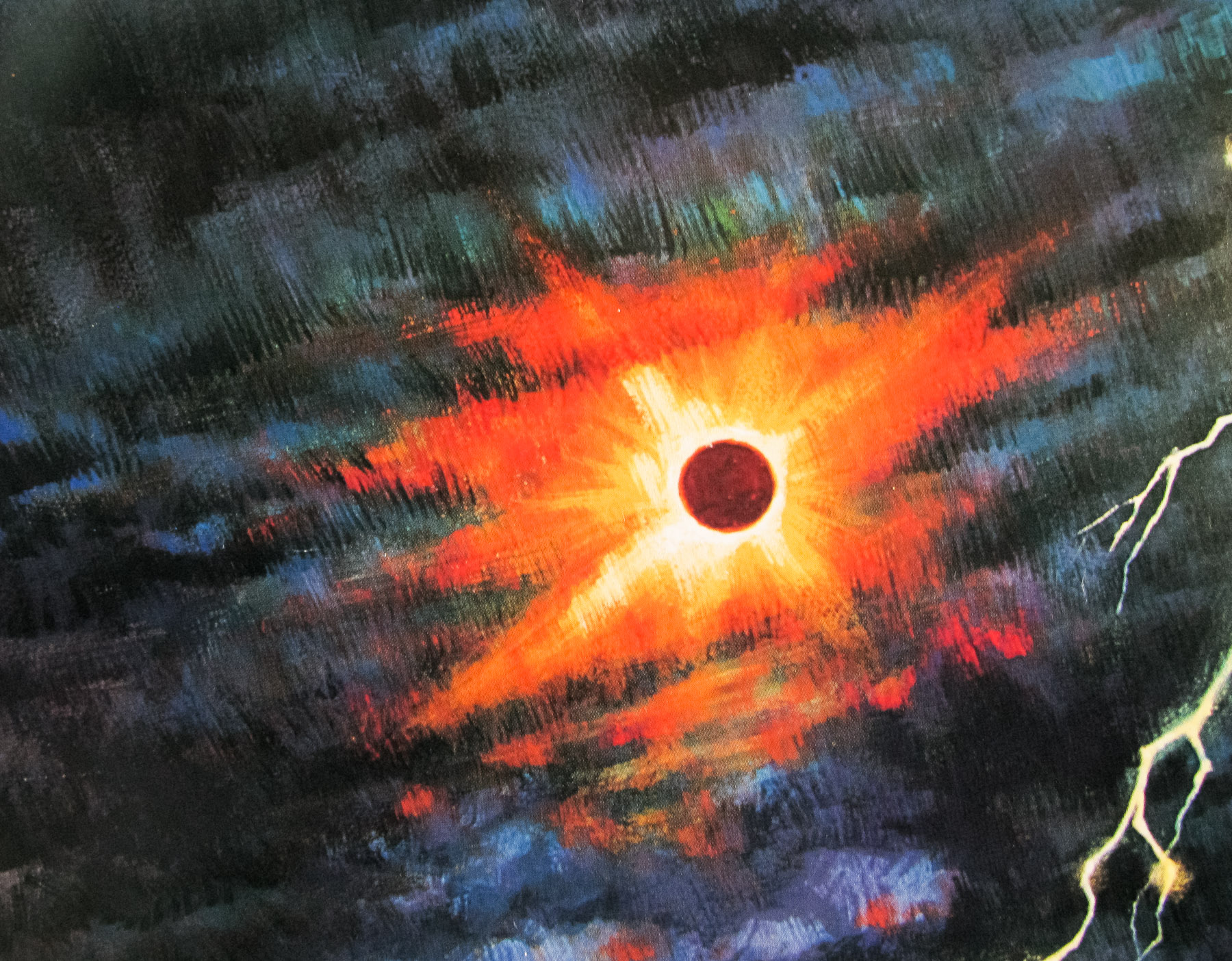
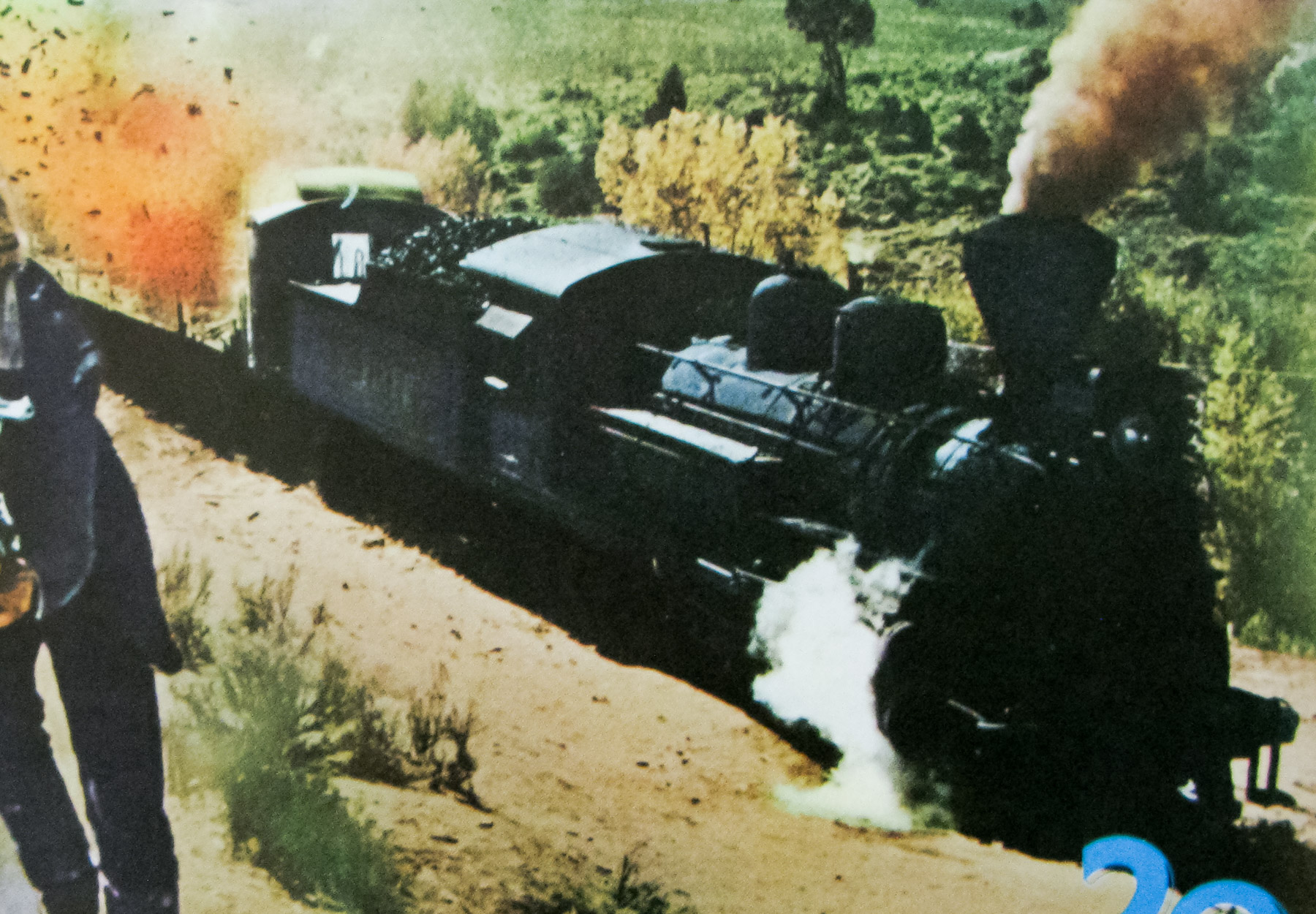
Released as Damnation Alley in the USA, this dystopian sci-fi adventure (set after the nuclear destruction of World War 3) pretty much disappeared at the box office, but later gained something of a cult status. It’s interesting to note that the studio, 20th Century Fox, were making two sci-fi films in 1977 and saw this as their big hope for a box-office blockbuster. The studio suits didn’t have much faith in the other project, a little film called Star Wars…

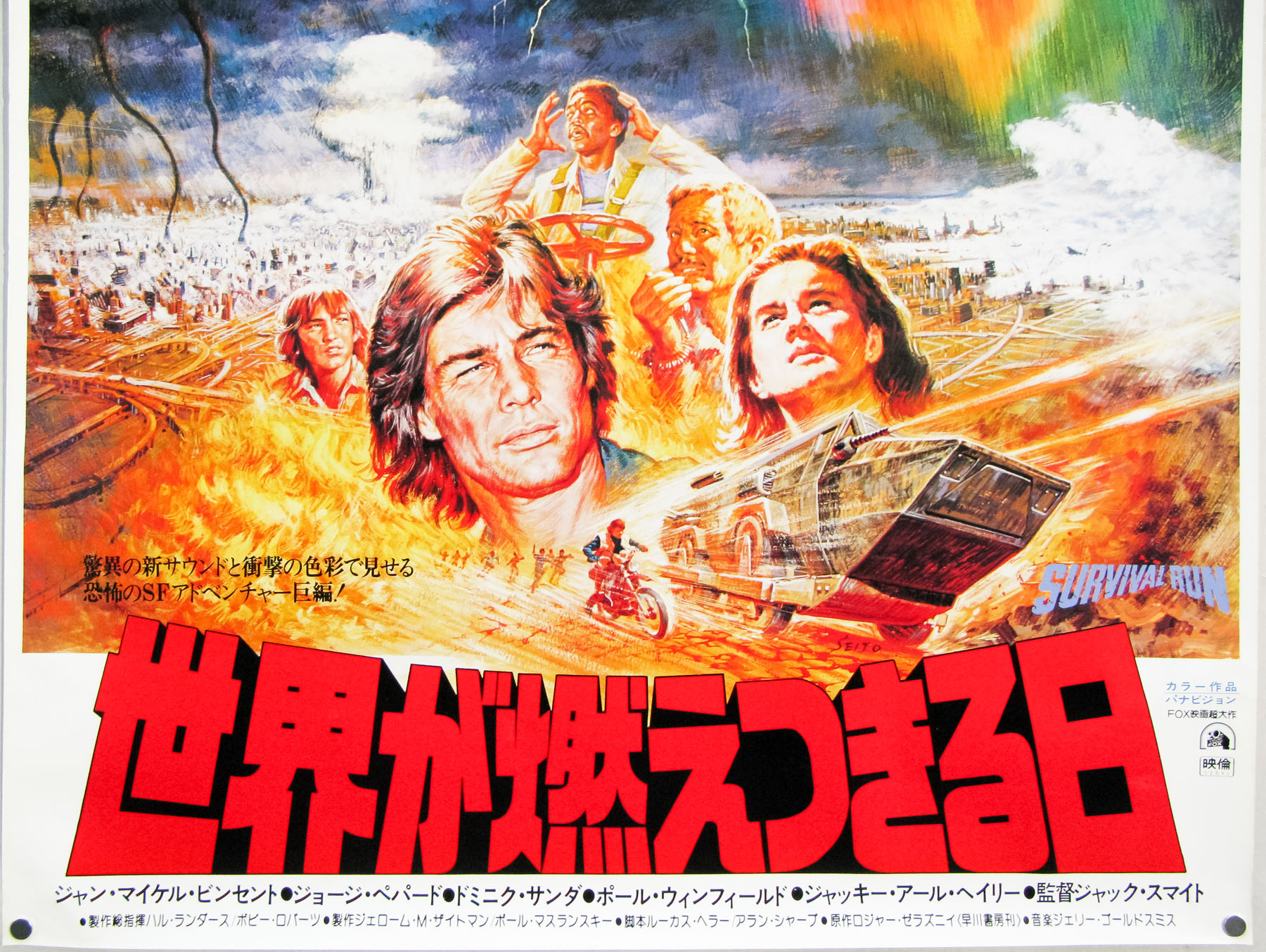
The film features a couple of infamous scenes with mutated creatures, including ‘giant’ scorpions (terribly composited using the blue screen process) and killer cockroaches. It also featured an interesting vehicle known as The Landmaster.

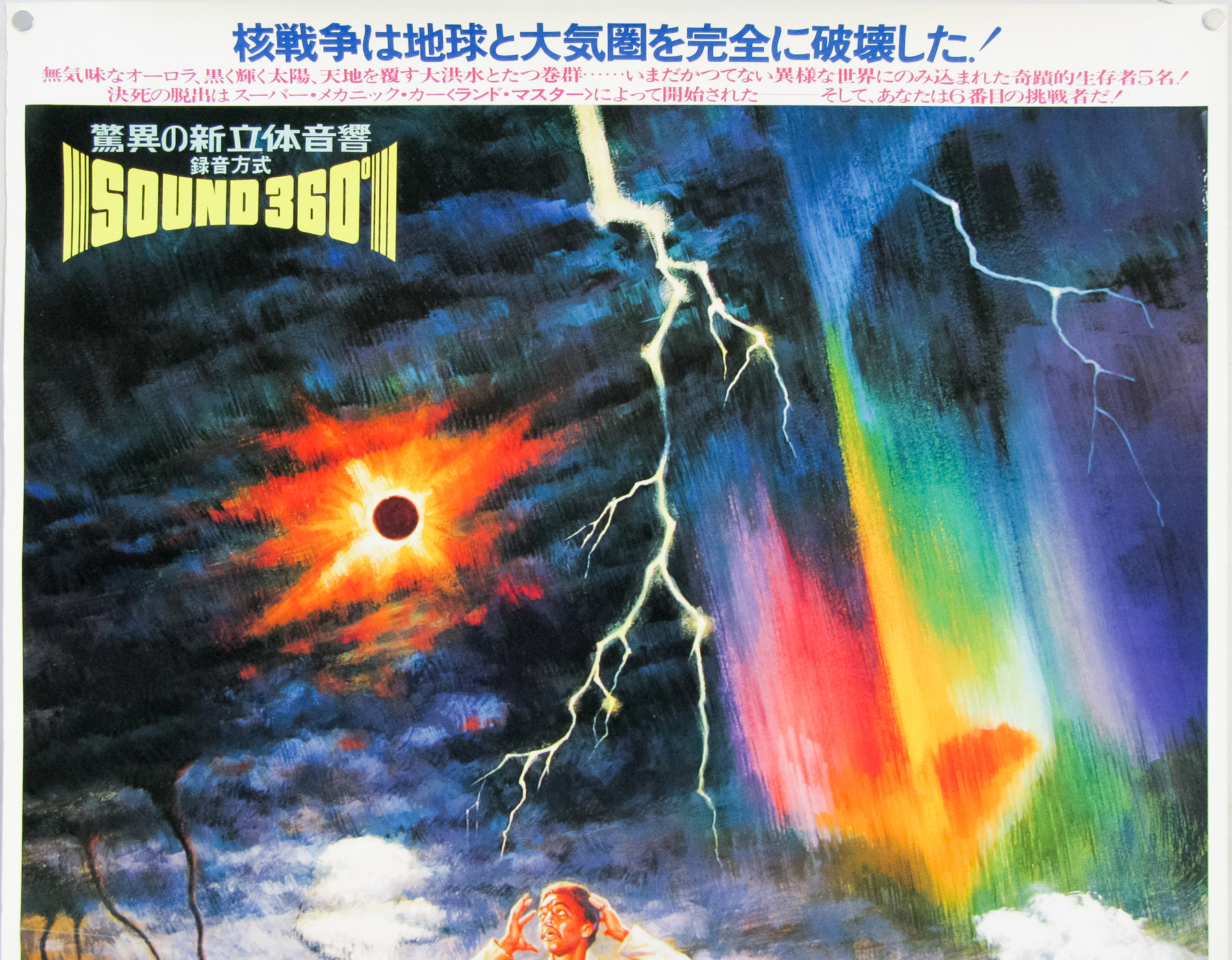
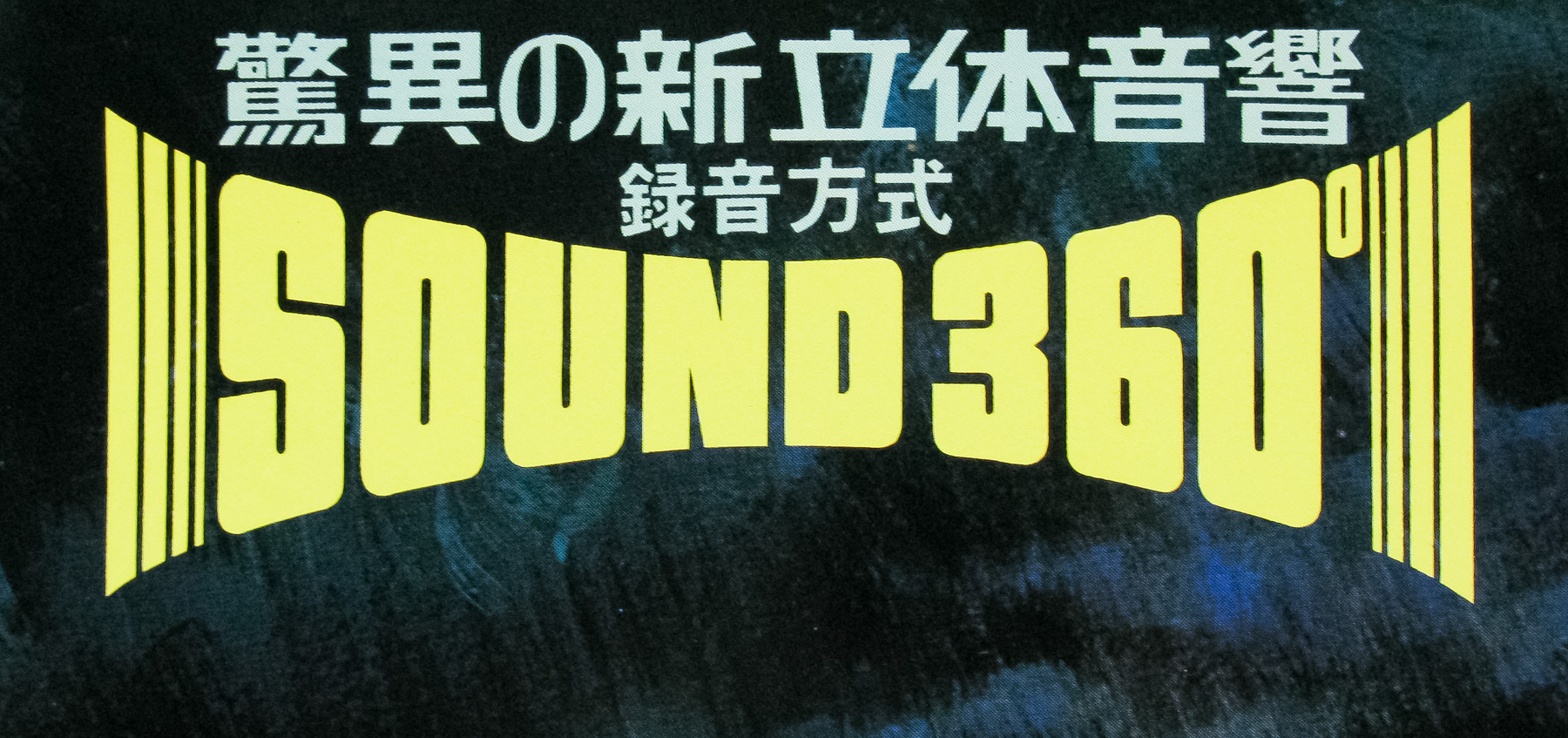
In some cinemas the film was shown with something called Sound 360. From IMDb:

20th Century-Fox developed a rival to Universal’s gimmicky ‘Sensurround’ sound process (popularized in the theatrical release of Earthquake (1974)) that was only used for the theatrical release of “Damnation Alley” called Sound 360. This process was basically a variation of Magnetic-Optical Stereo sound. This technical advancement/gimmick in sound did not last past “Damnation Alley” although it was planned for Walter Hill‘s The Driver (1978) and Damien: Omen II (1978). If you look at the one sheet of “Damnation Alley” the “Sound 360” declaration and logo are prominent at the bottom.

This one sheet by one of my favourite Japanese artists, Seito, is practically identical to one of the American one sheets that can be seen on IMPAwards (credited to artist Paul Lehr).

The film was recently released on blu-ray (in the correct aspect ratio) and a trailer for that can be watched here.


Gordon’s War / B2 / Japan

09.10.15

Poster Poster
Title
Gordon's War
AKA
--
Year of Film
1973
Director
Ossie Davis
Starring
Paul Winfield, Carl Lee, David Downing, Tony King, Gilbert Lewis, Carl Gordon, Nathan C. Heard, Grace Jones
Origin of Film
USA
Genre(s) of Film
Paul Winfield, Carl Lee, David Downing, Tony King, Gilbert Lewis, Carl Gordon, Nathan C. Heard, Grace Jones,
Type of Poster
B2
Style of Poster
--
Origin of Poster
Japan
Year of Poster
1973
Designer
Unknown
Artist
--
Size (inches)
20 5/16" x 28 13/16"
Tagline
--

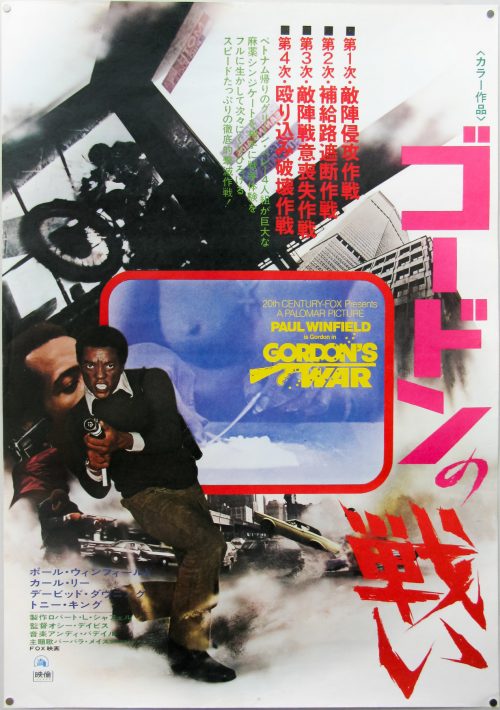
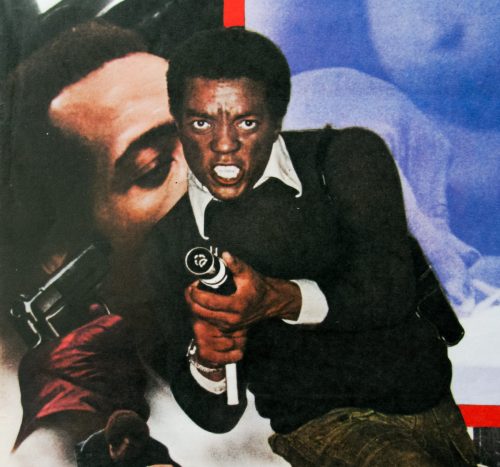
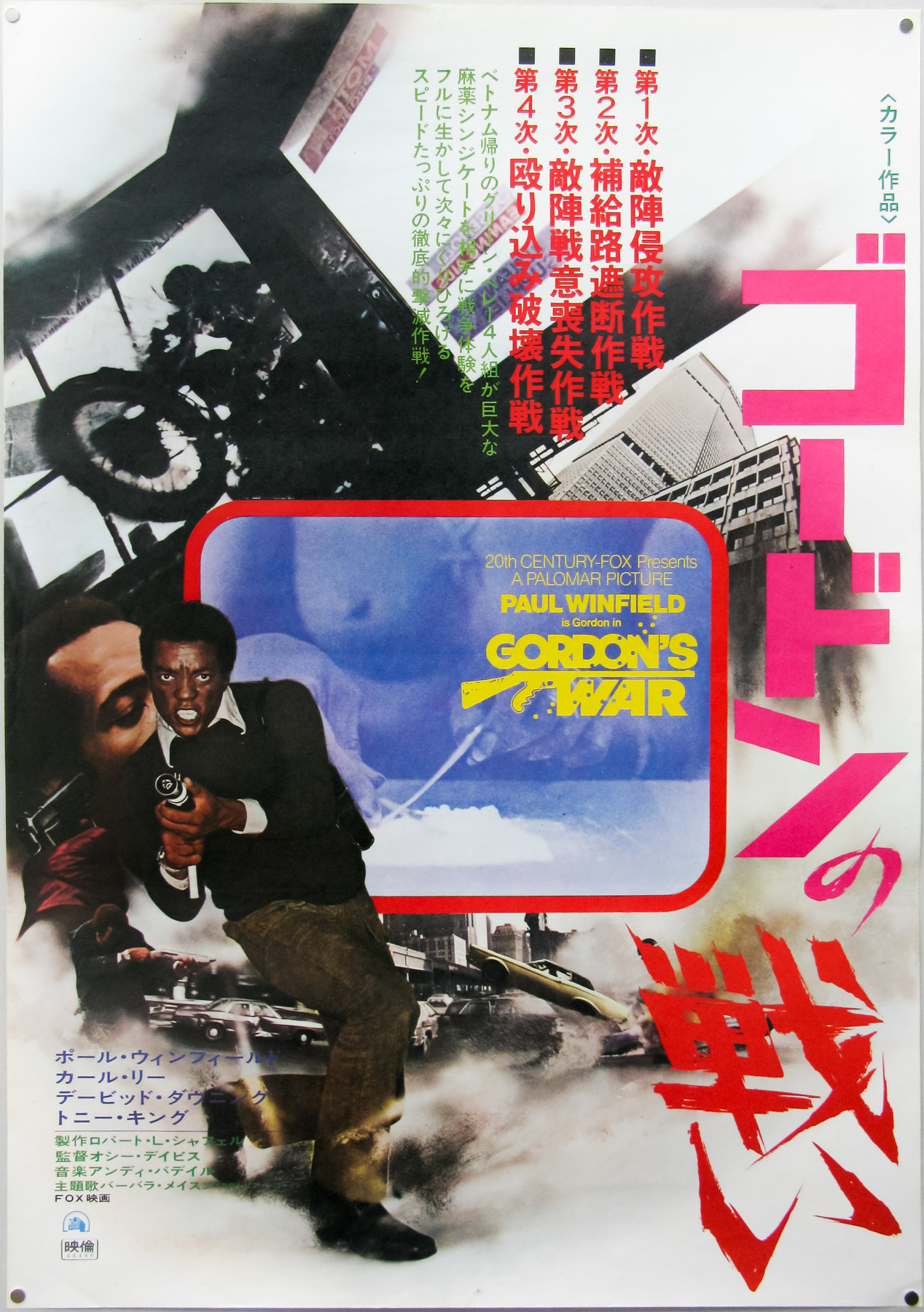
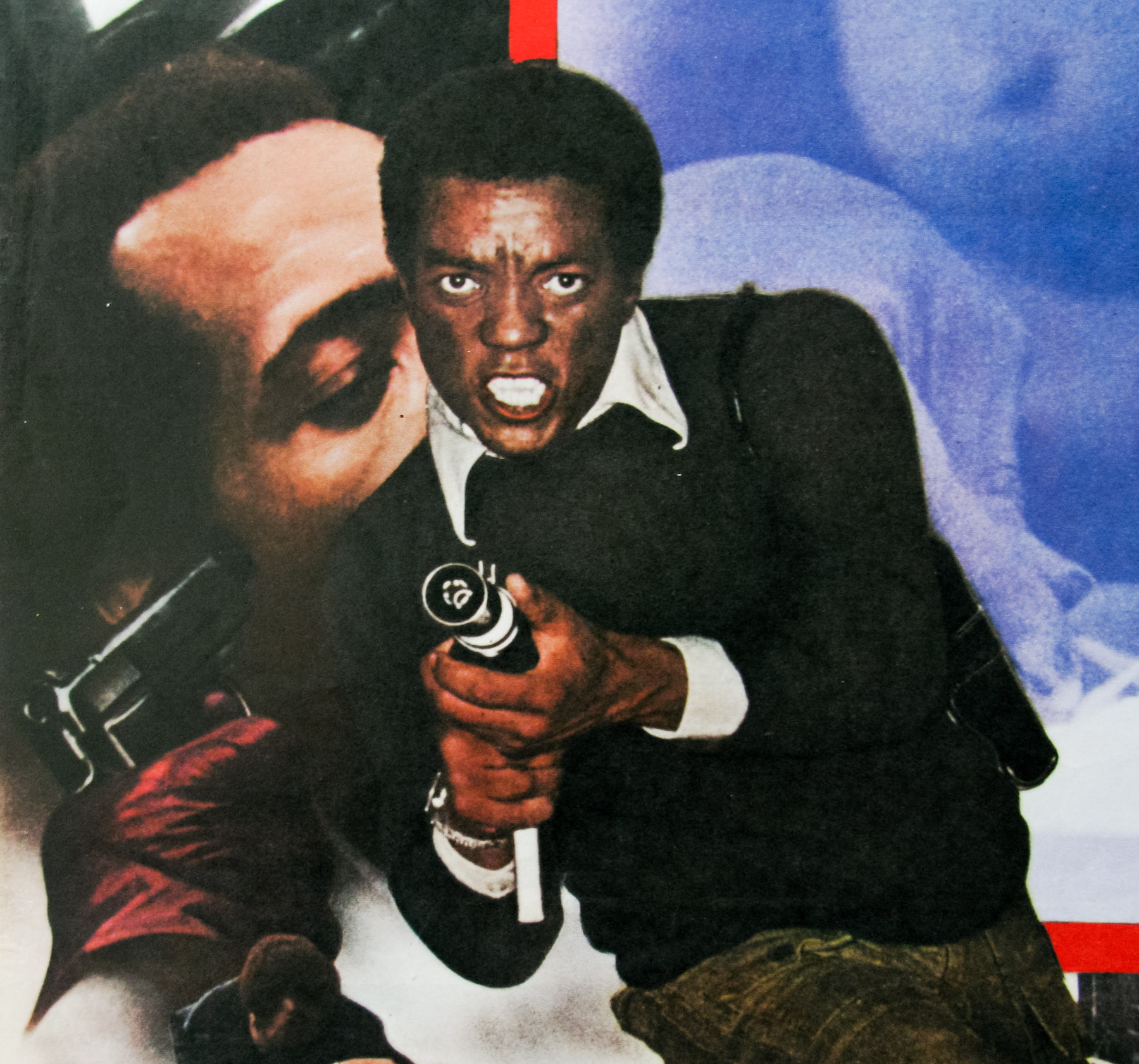
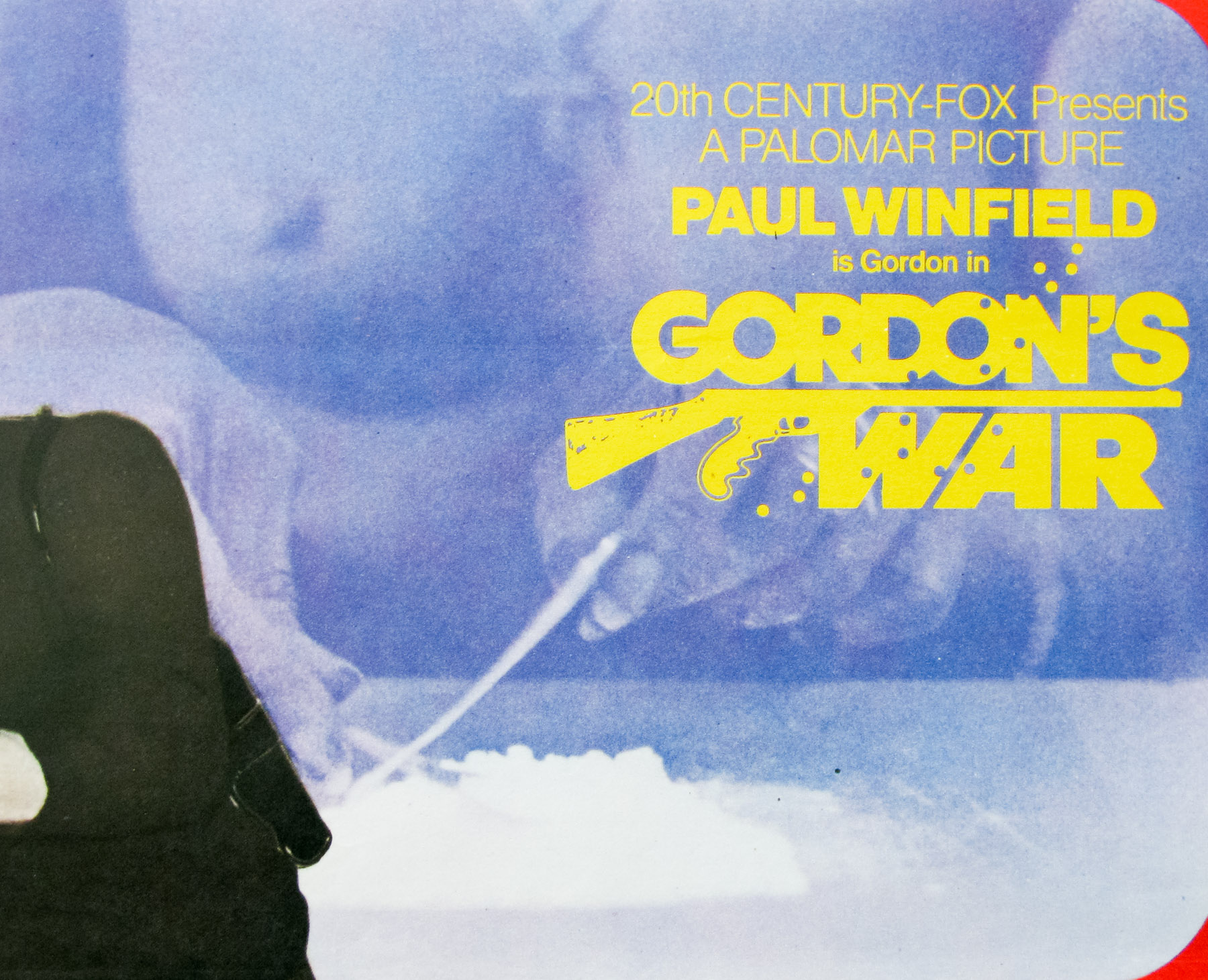
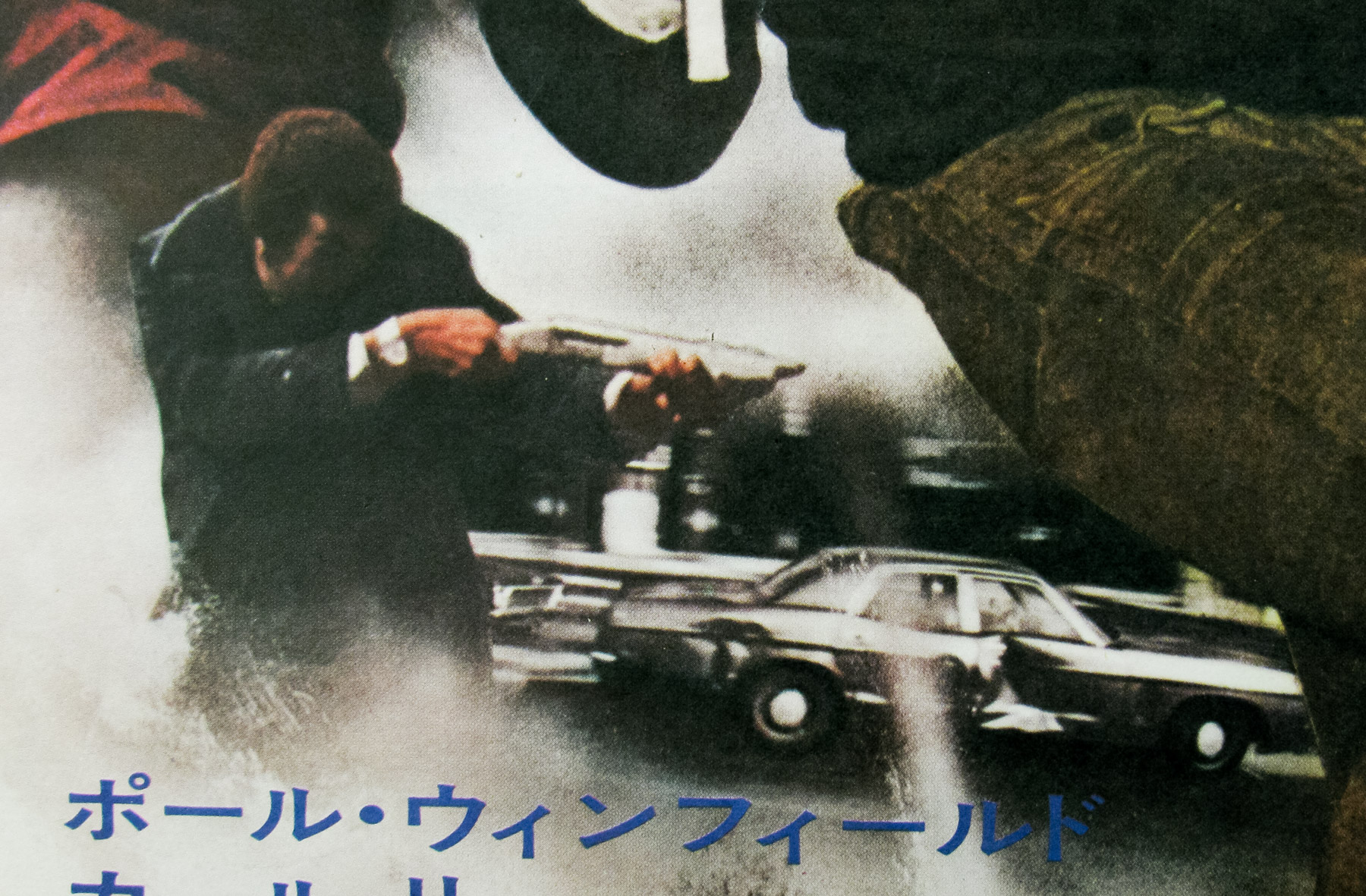
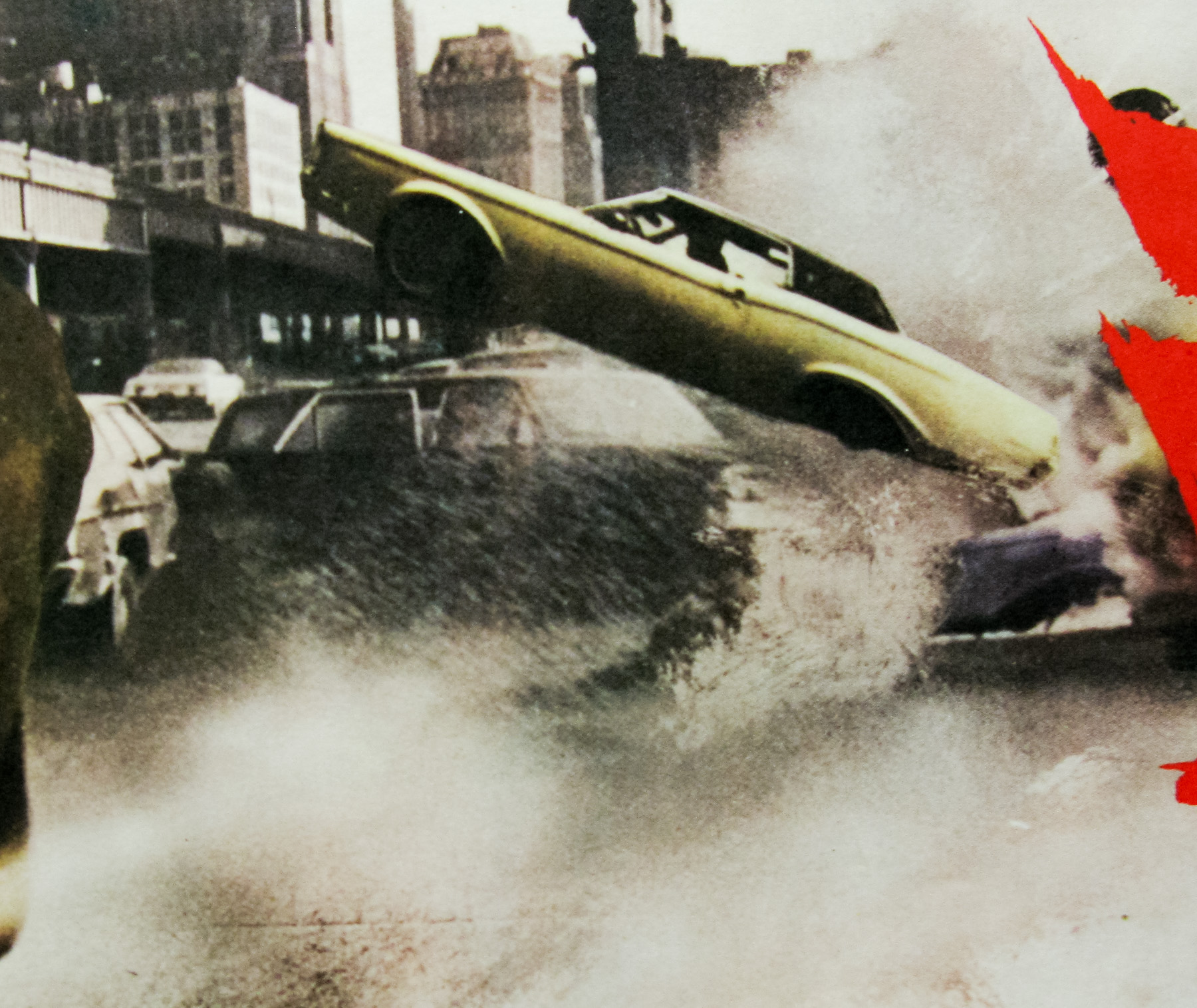
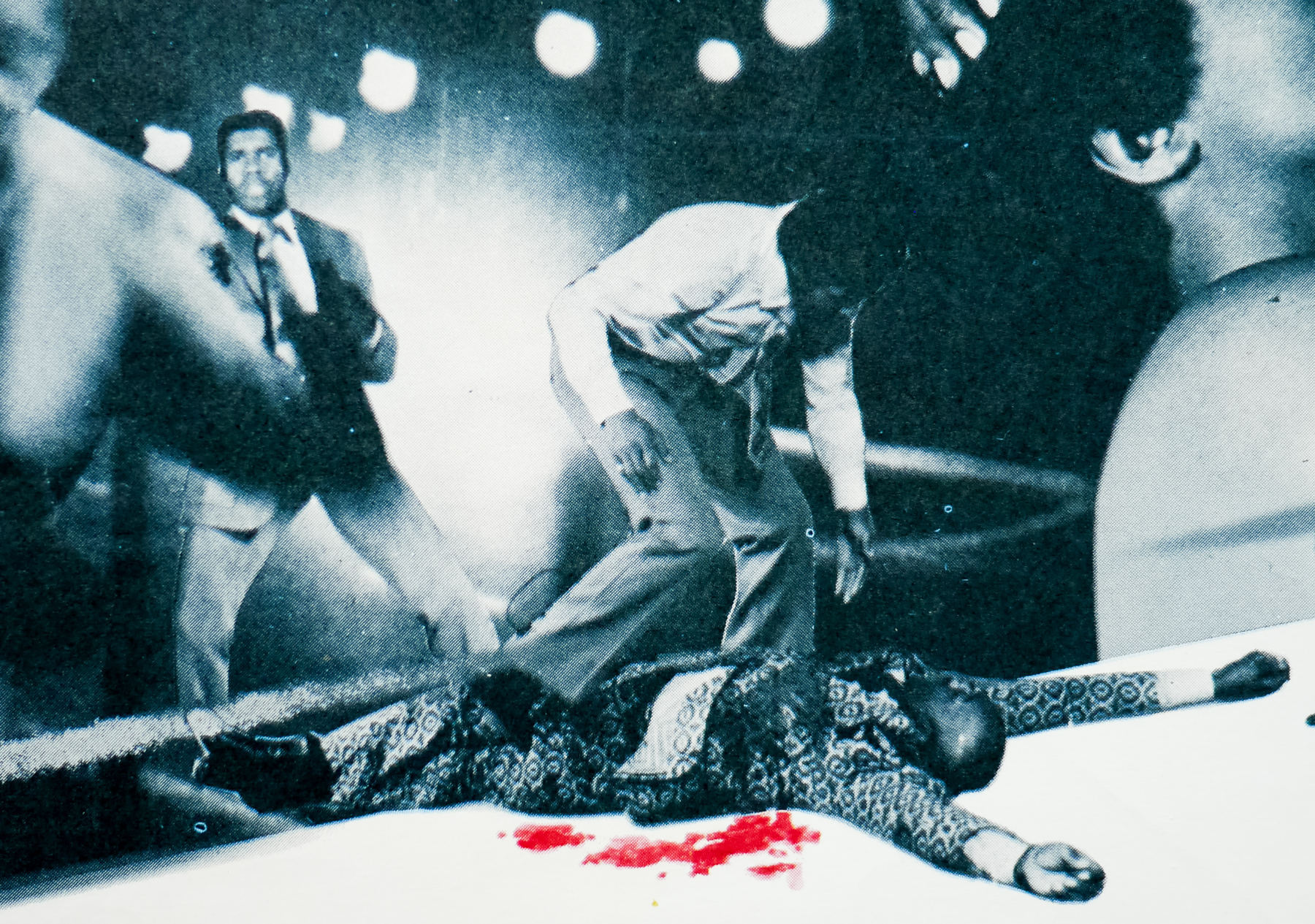
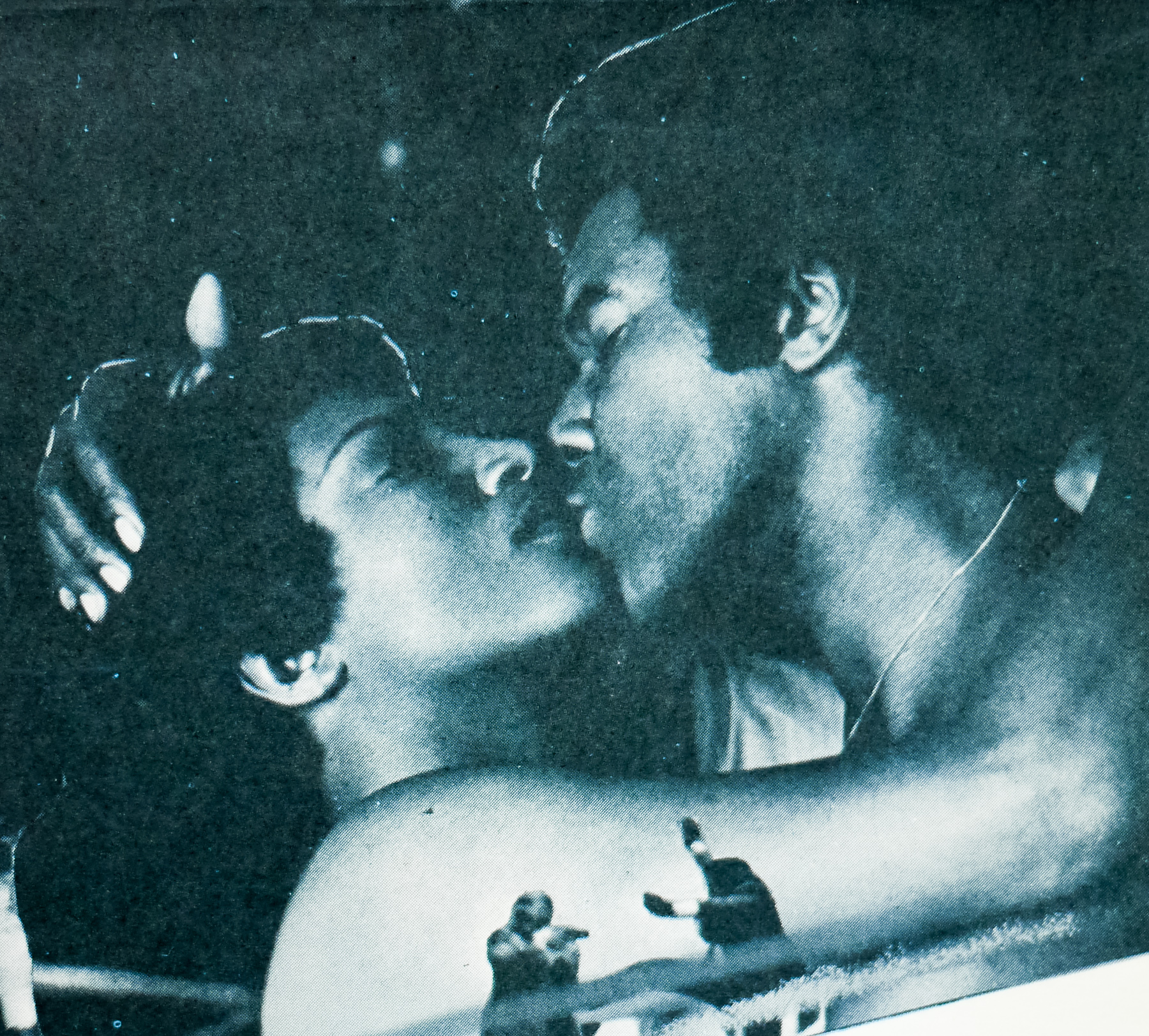
This is the Japanese B2 for the 1973 blaxploitation crime drama Gordon’s War, directed by Ossie Davis (Cotton Comes to Harlem) and starring Paul Winfield as the eponymous Gordon Hudson. After returning from the Vietnam war he finds that his neighbourhood in Harlem has been taken over by drug dealers and that his wife has died from a heroin overdose. He gathers some of his fellow soldiers together and sets out to rid the area of the dealers.
The film is unavailable on blu-ray but receives decent enough reviews on IMDb, with one praising its use of real locations:

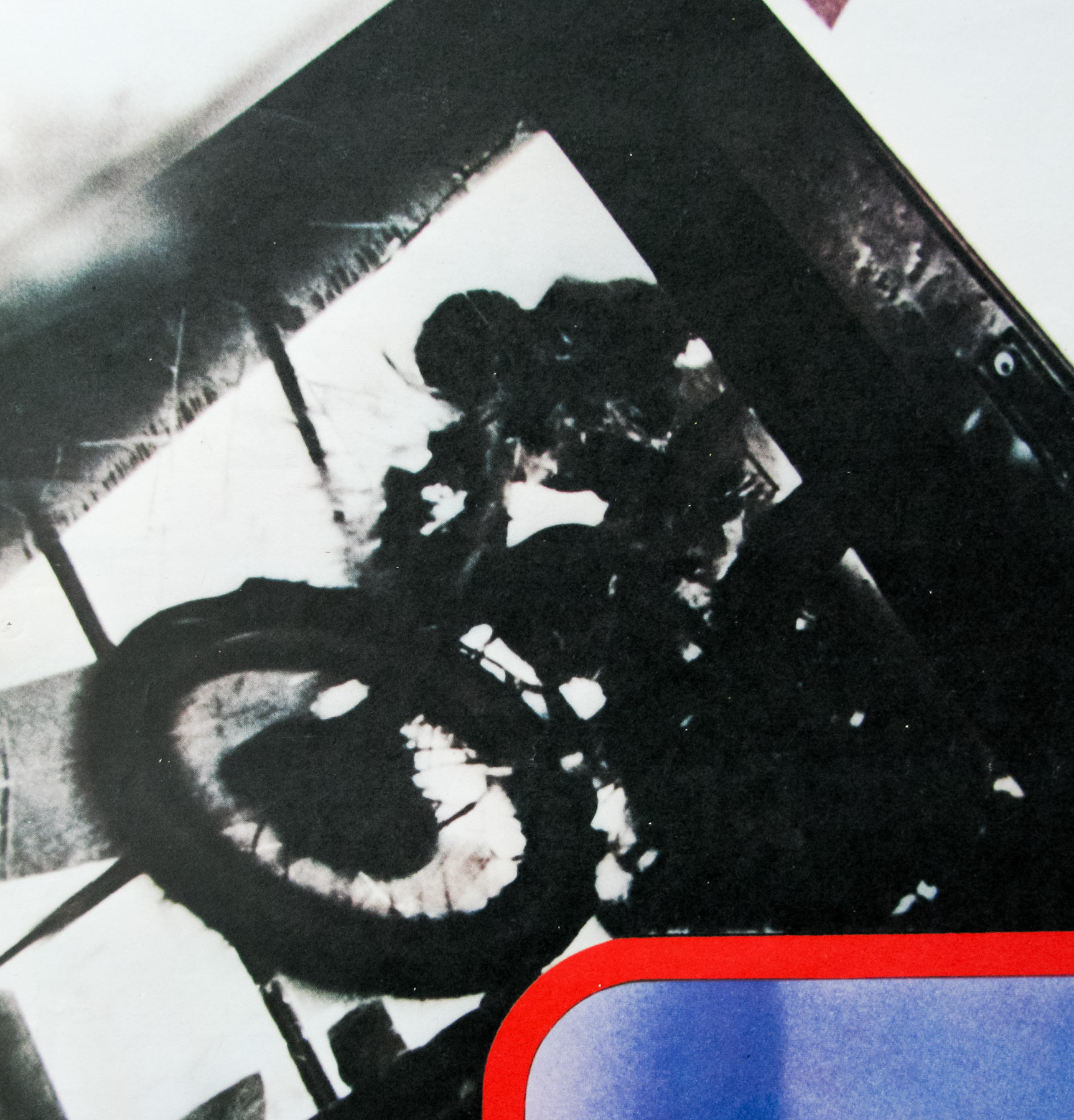
The location shoot in Harlem is an essential ingredient in making this film work. The feel of the streets, shops, people, cars, bars, abandoned buildings, rundown apartments and ramshackle appearances bolsters the movie greatly. There is a chase scene, car following motorcycle, that ranks among the very best of any movie anywhere, including those in poliziotteschis. That alone makes the movie.

Slap Shot / B2 / Japan

20.06.11

Poster Poster

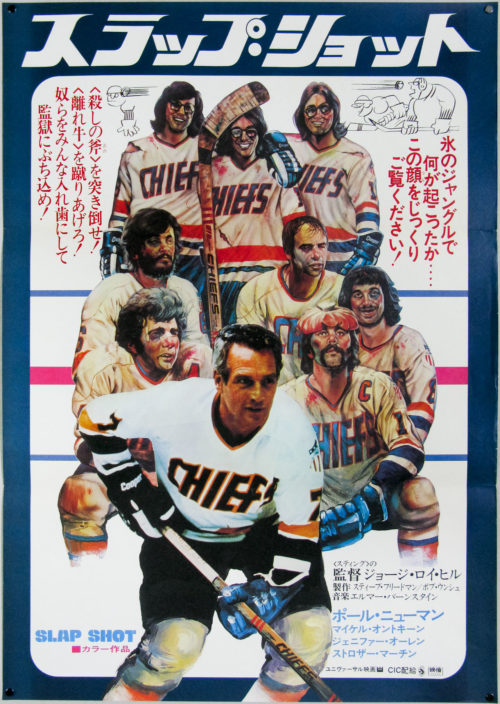
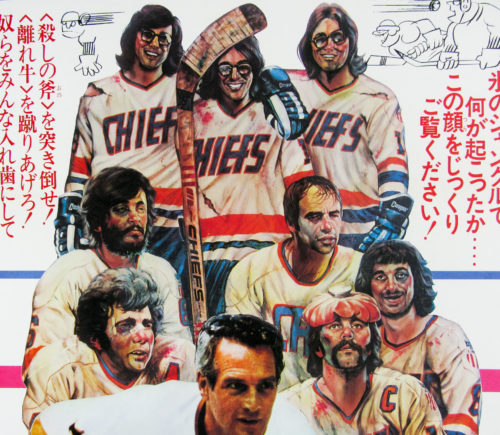
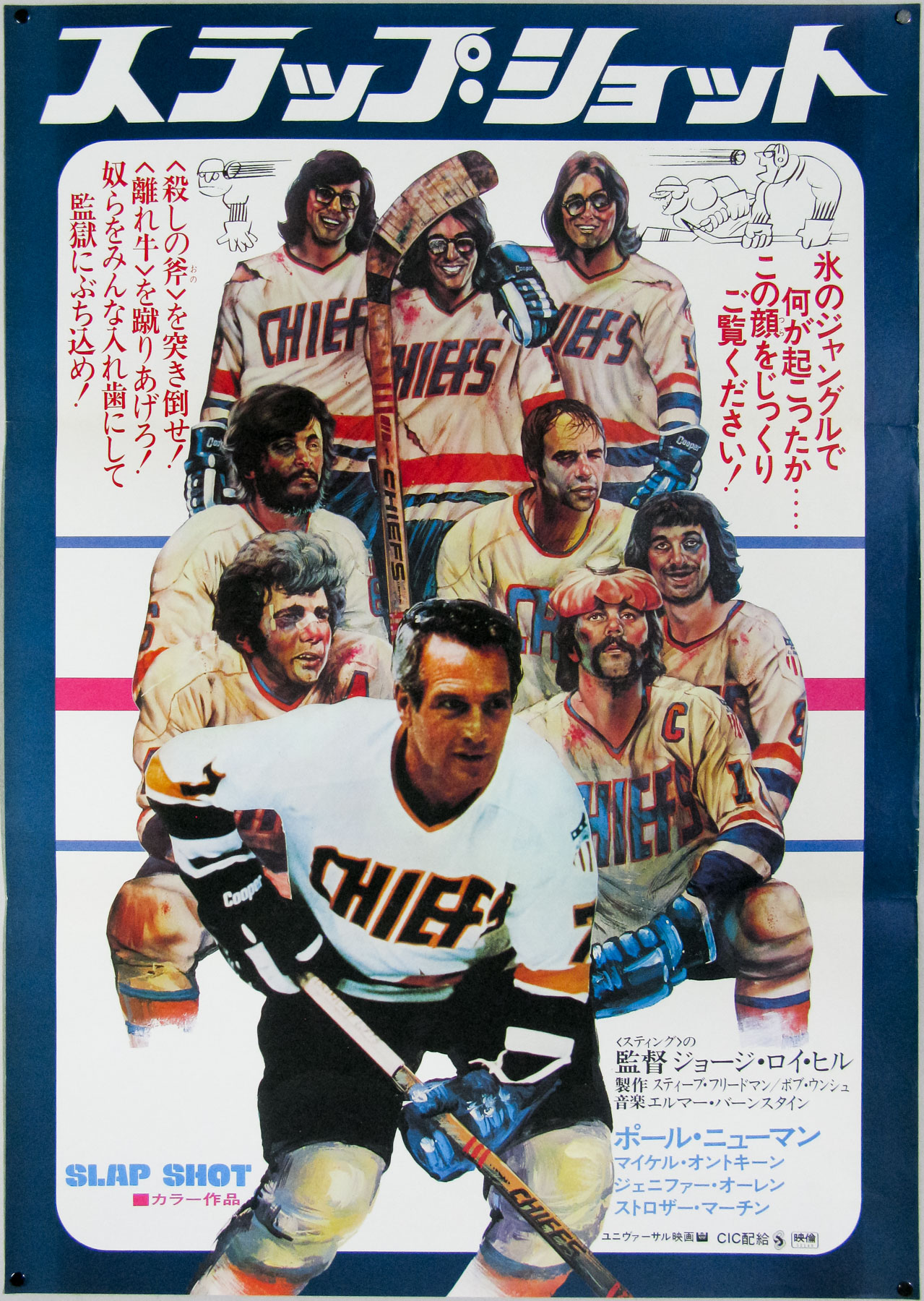
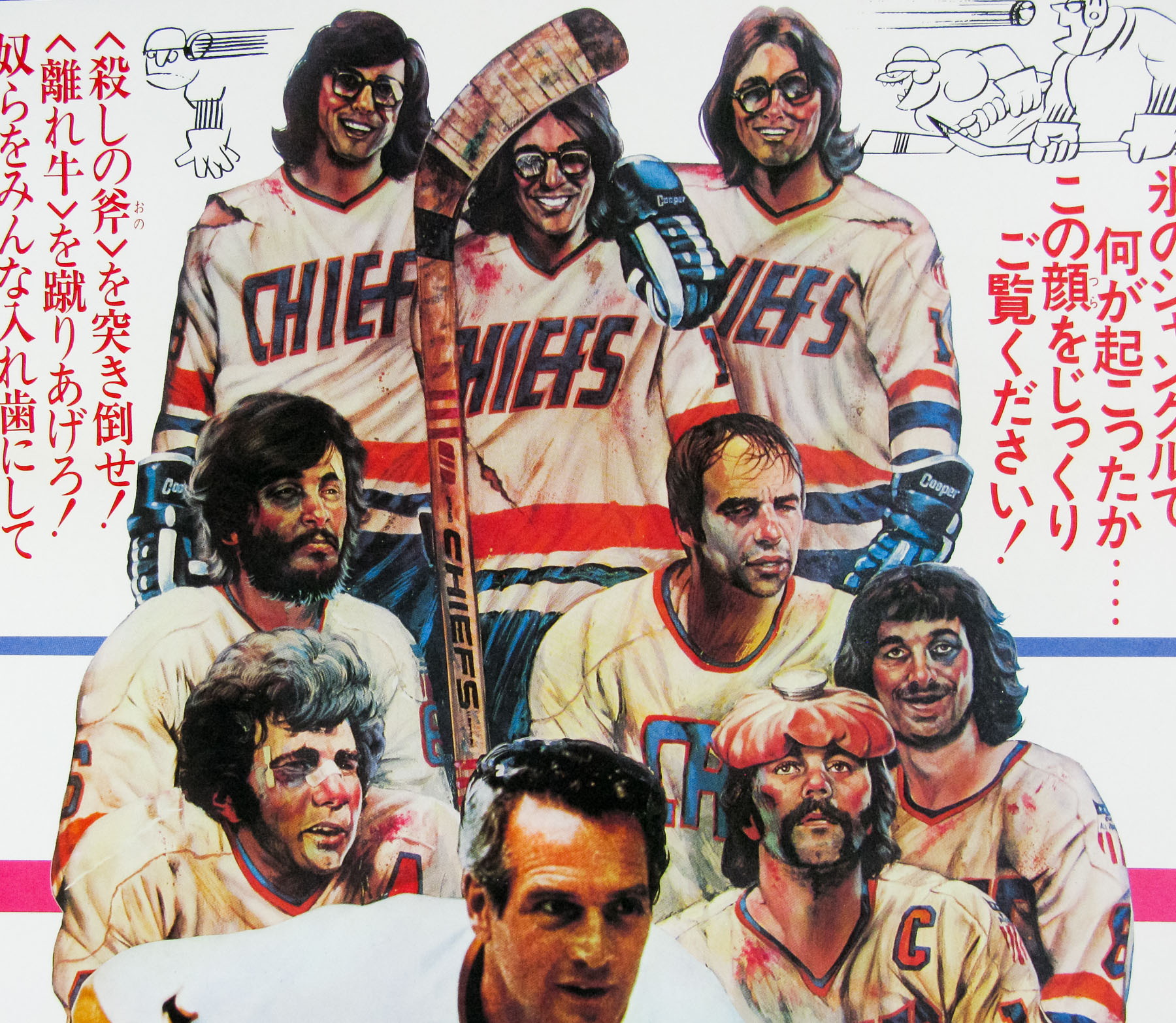
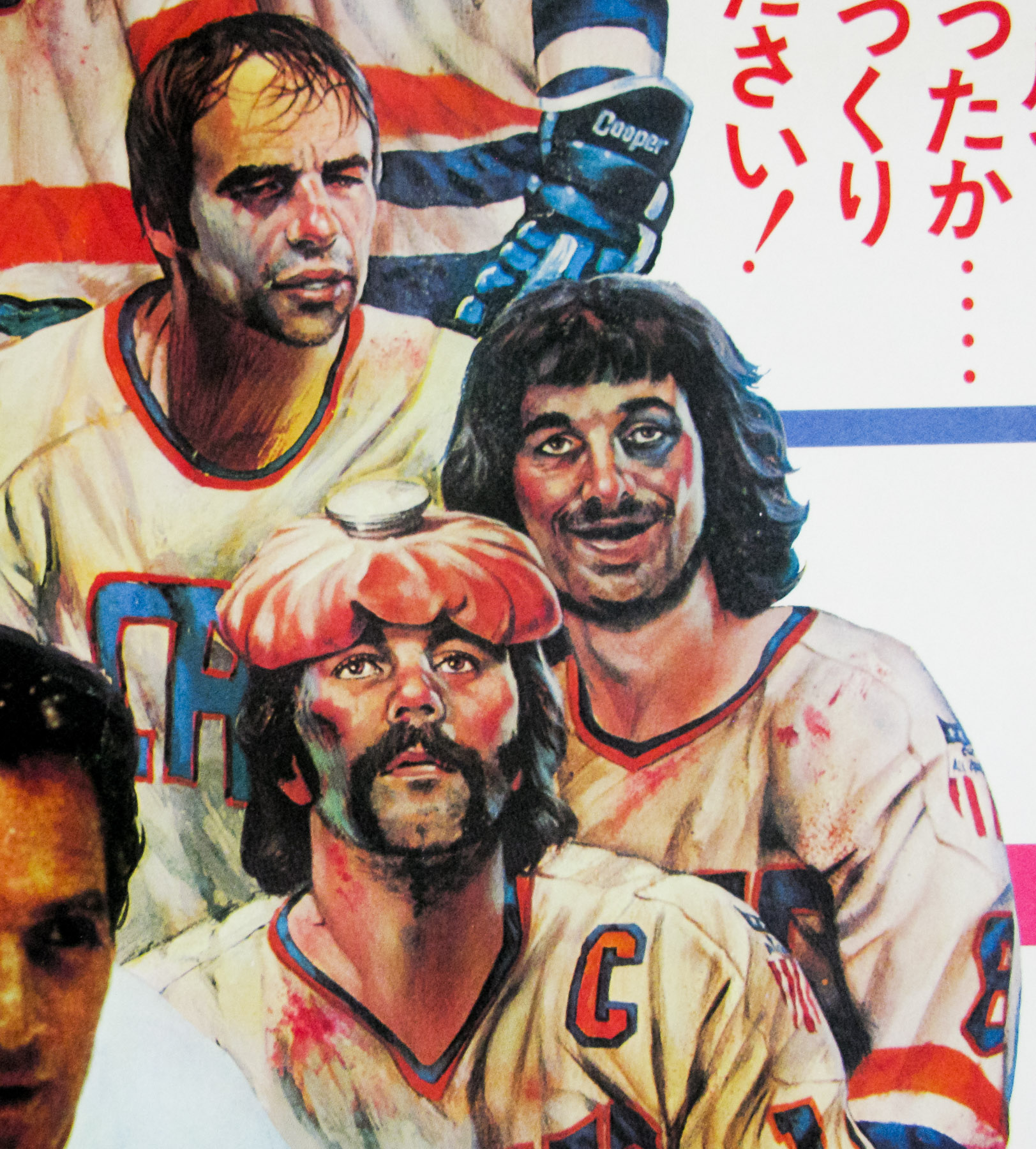
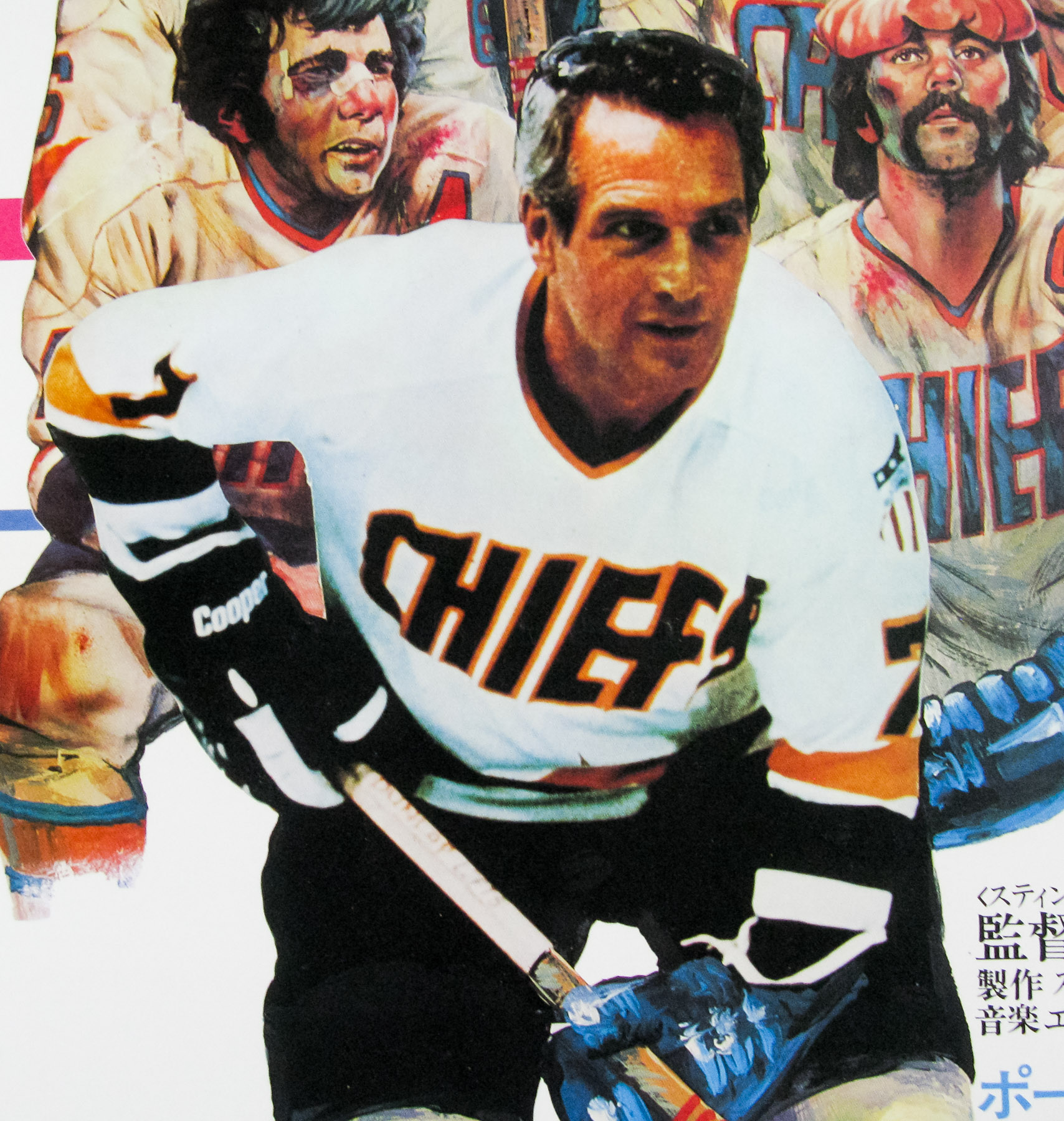
George Roy Hill‘s ice hockey comedy was critically panned on release but quickly grew into a cult classic and is considered by many to be the best sports/comedy movie ever made.

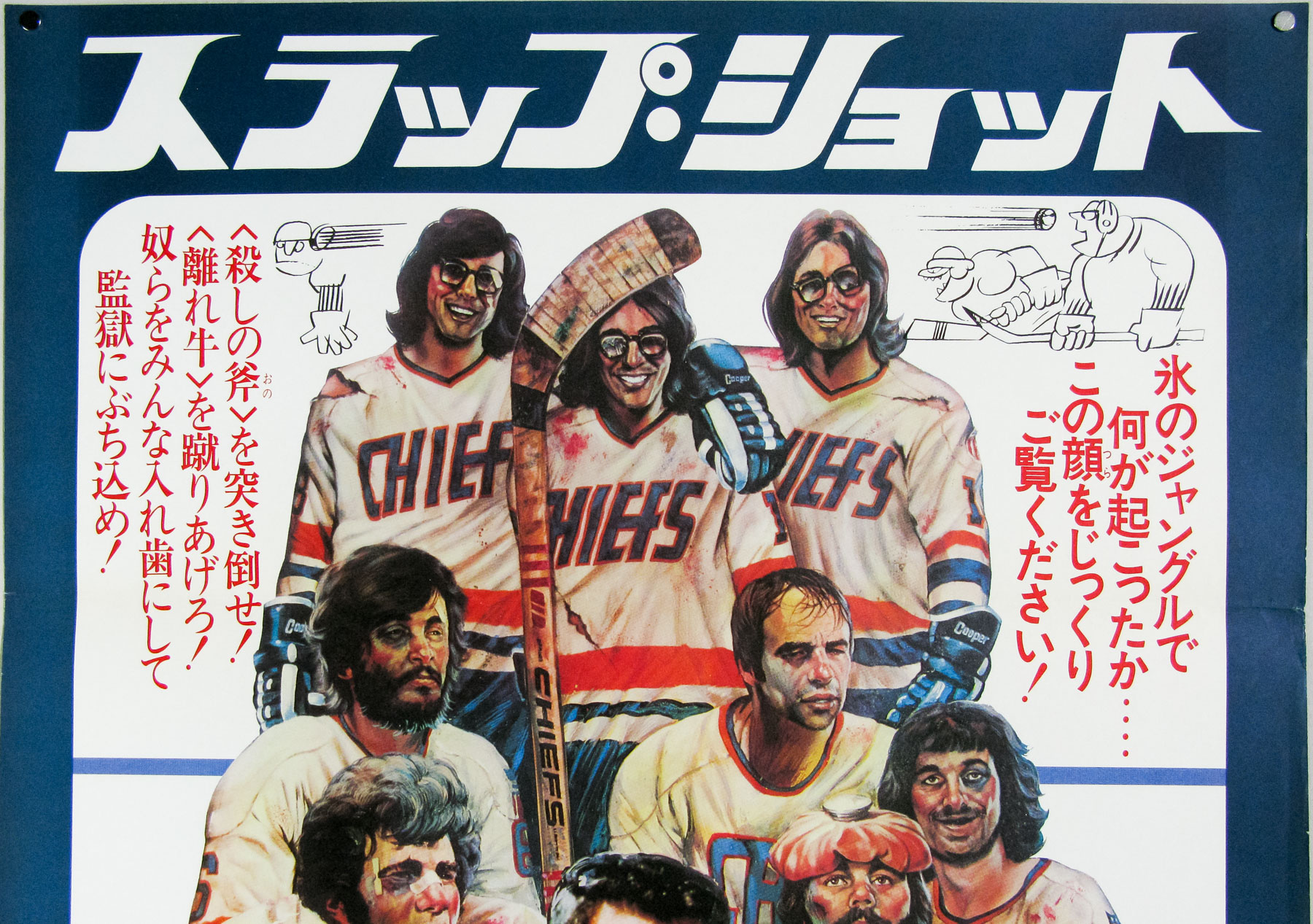
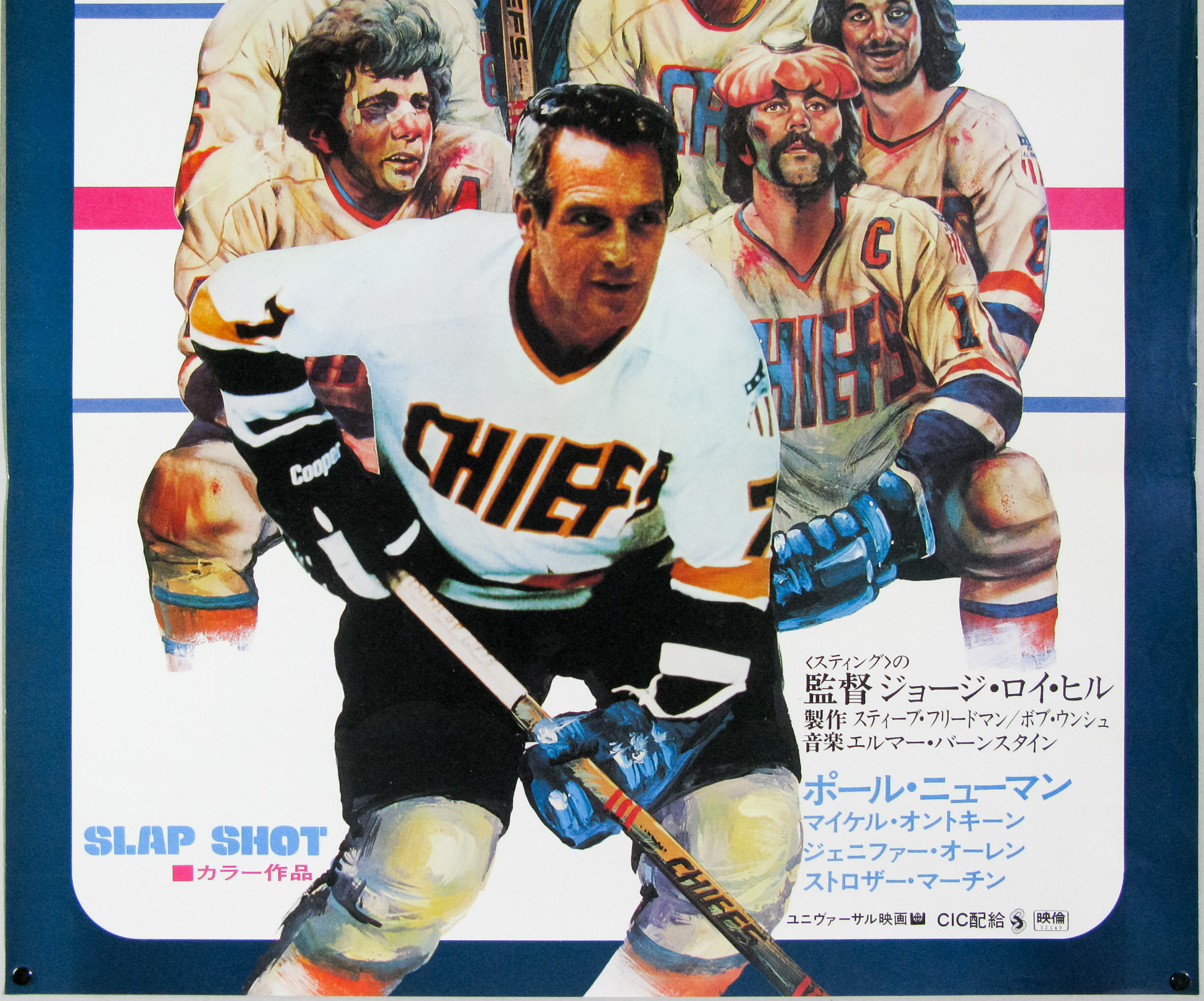
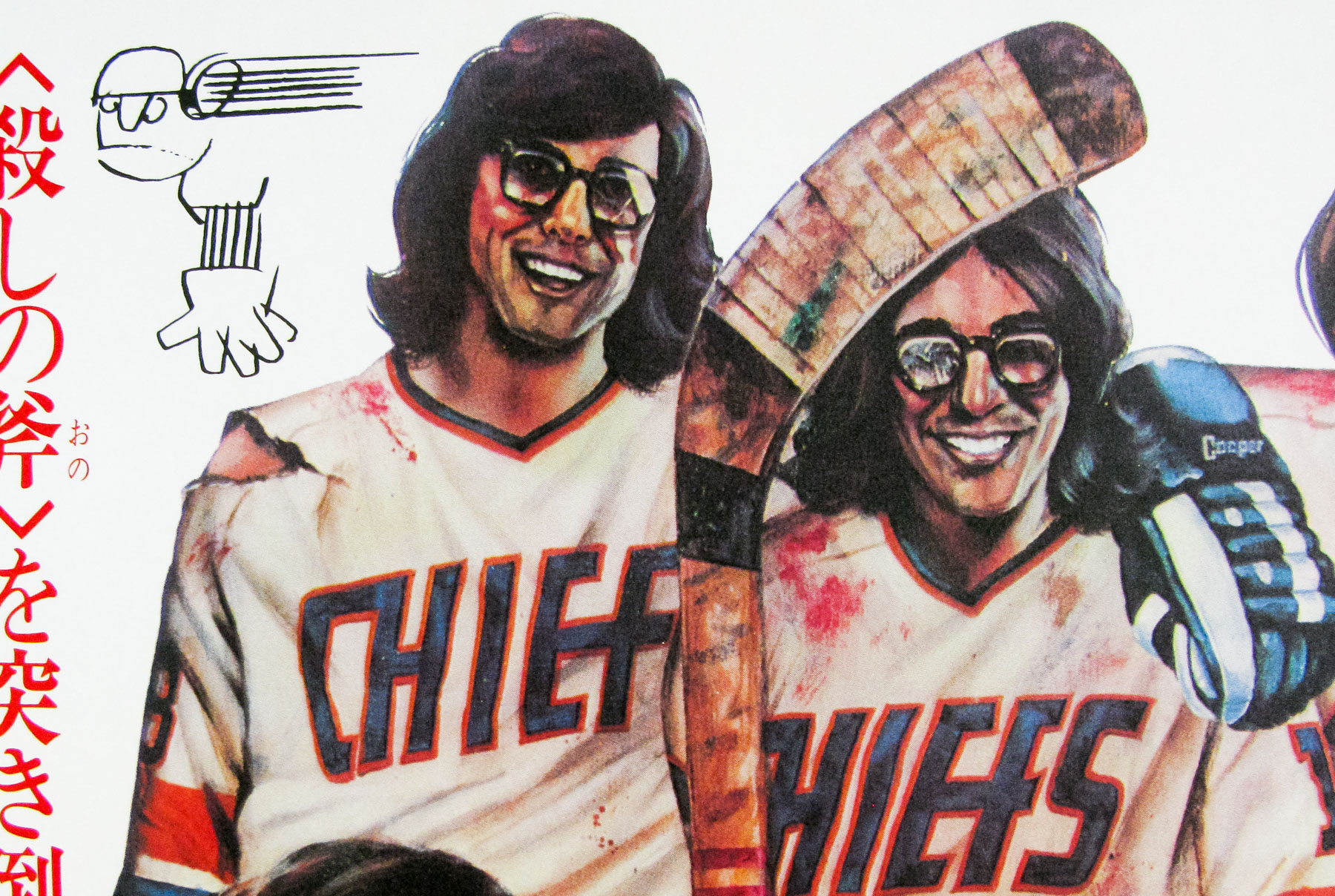
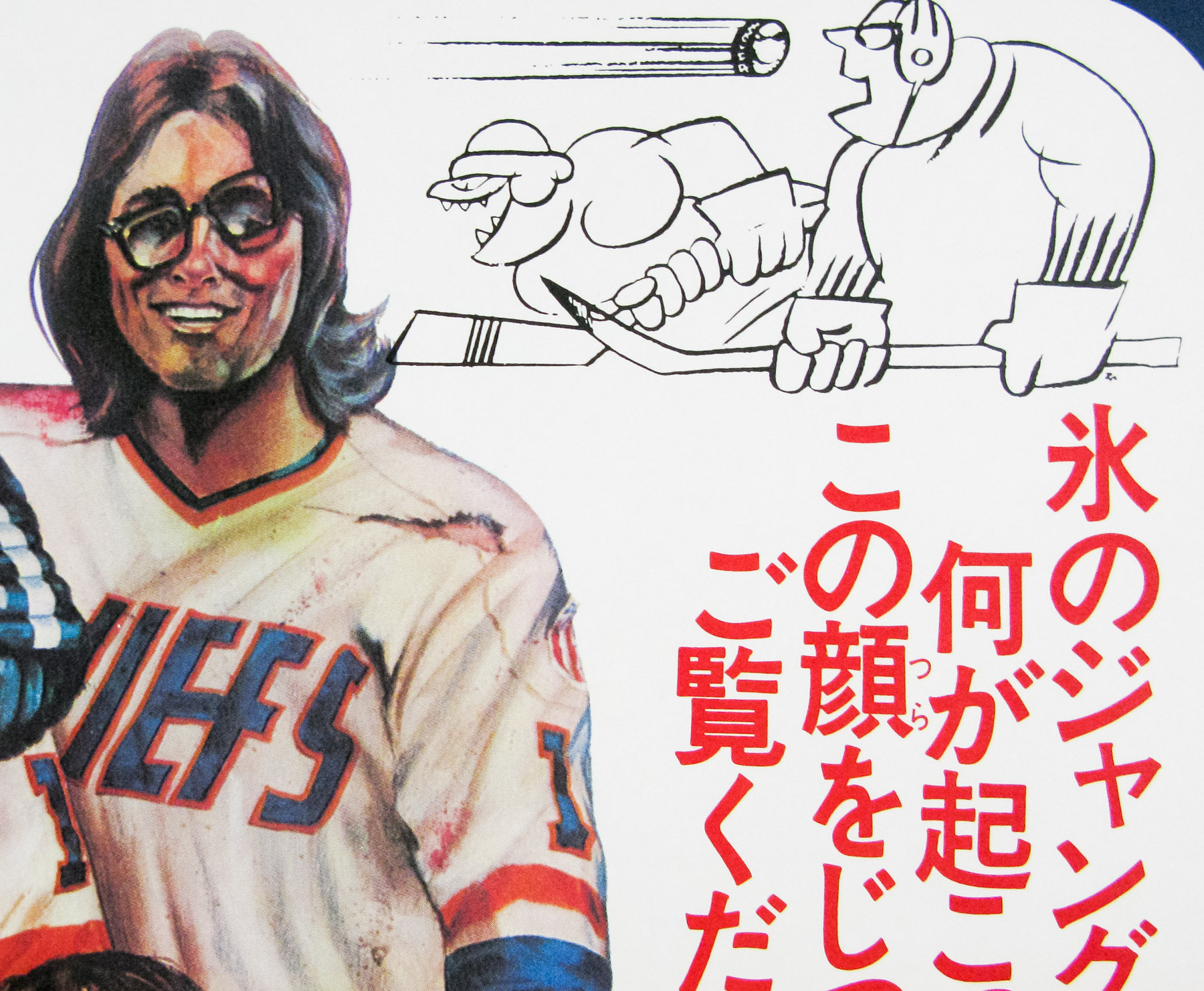
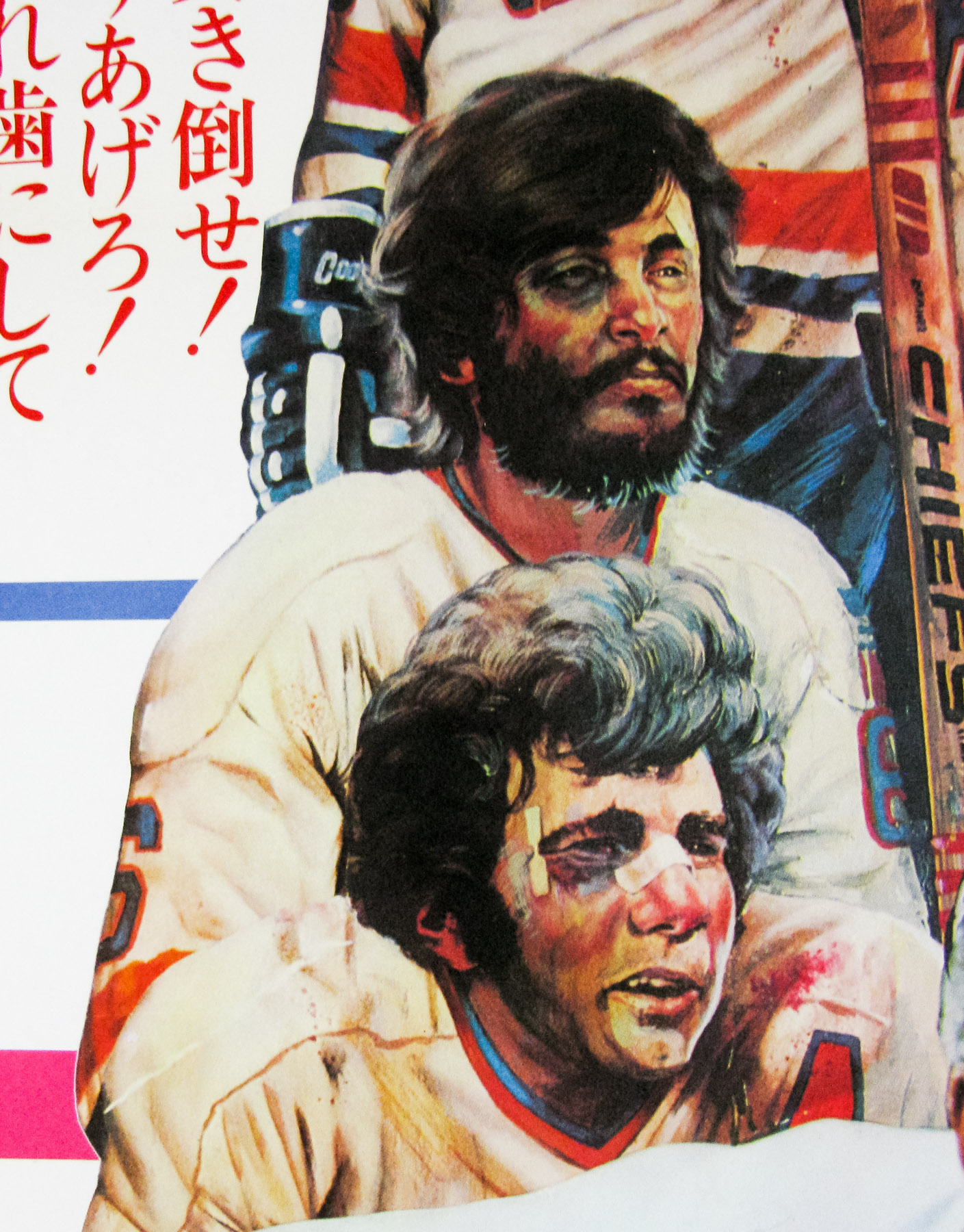
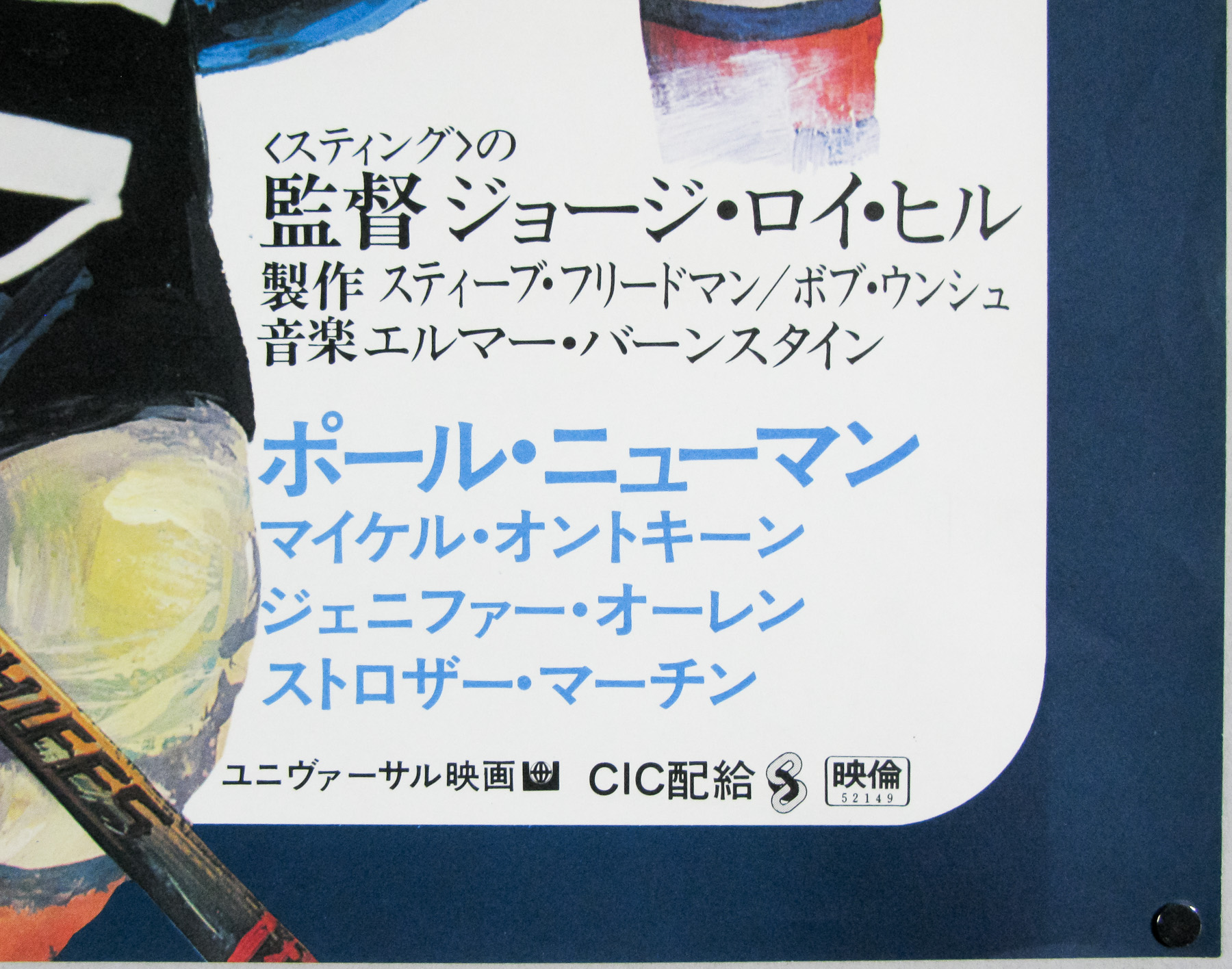
This Japanese poster is actually a combination of two of the American one sheets and a promotional still from the film. The artwork by Craig Nelson on the Style A one sheet is combined with the sketch-style artwork (credited to ‘R.G.’) on Style B. The photo of Paul Newman appears to have been taken from this still and his lower half has been illustrated to extend it downwards.

You can watch the original trailer here.

Butch Cassidy and the Sundance Kid / B2 / Japan

23.03.12

Poster Poster

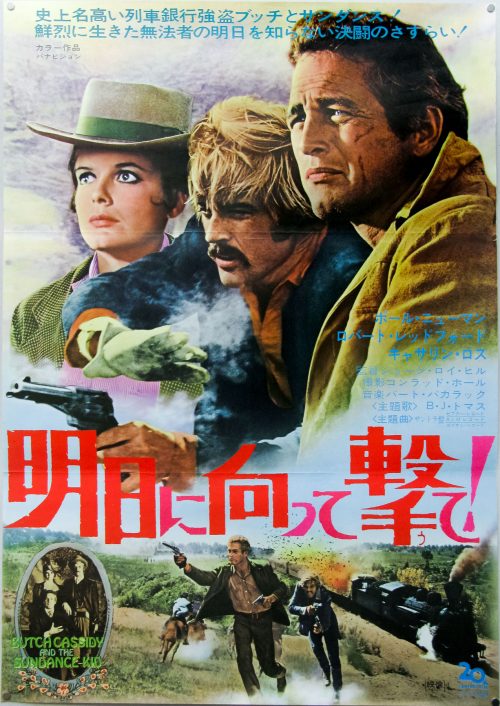
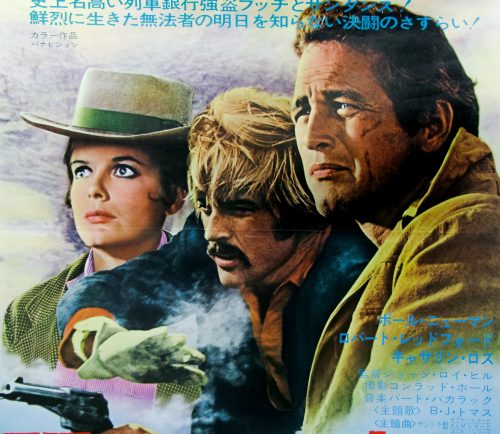
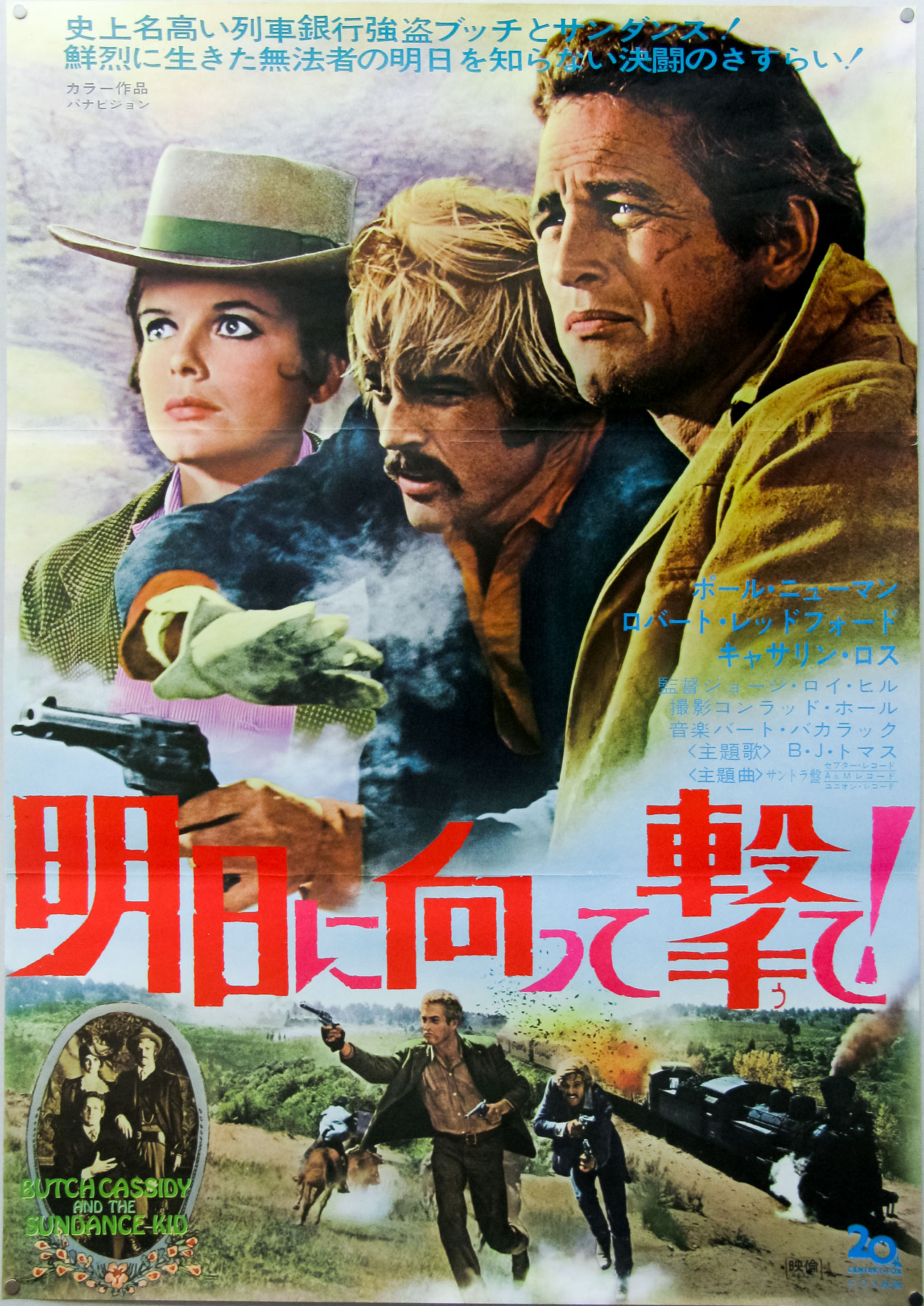
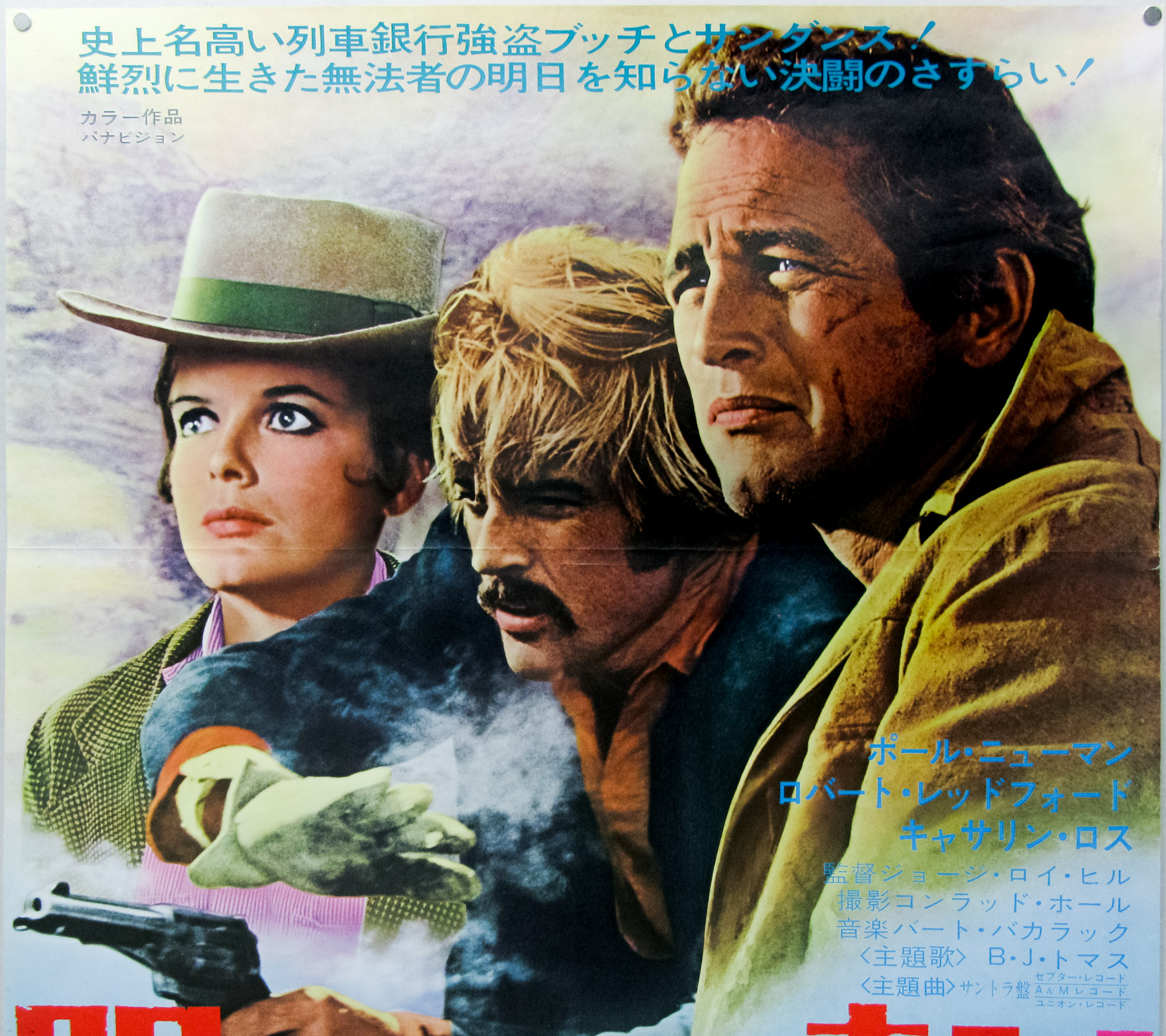
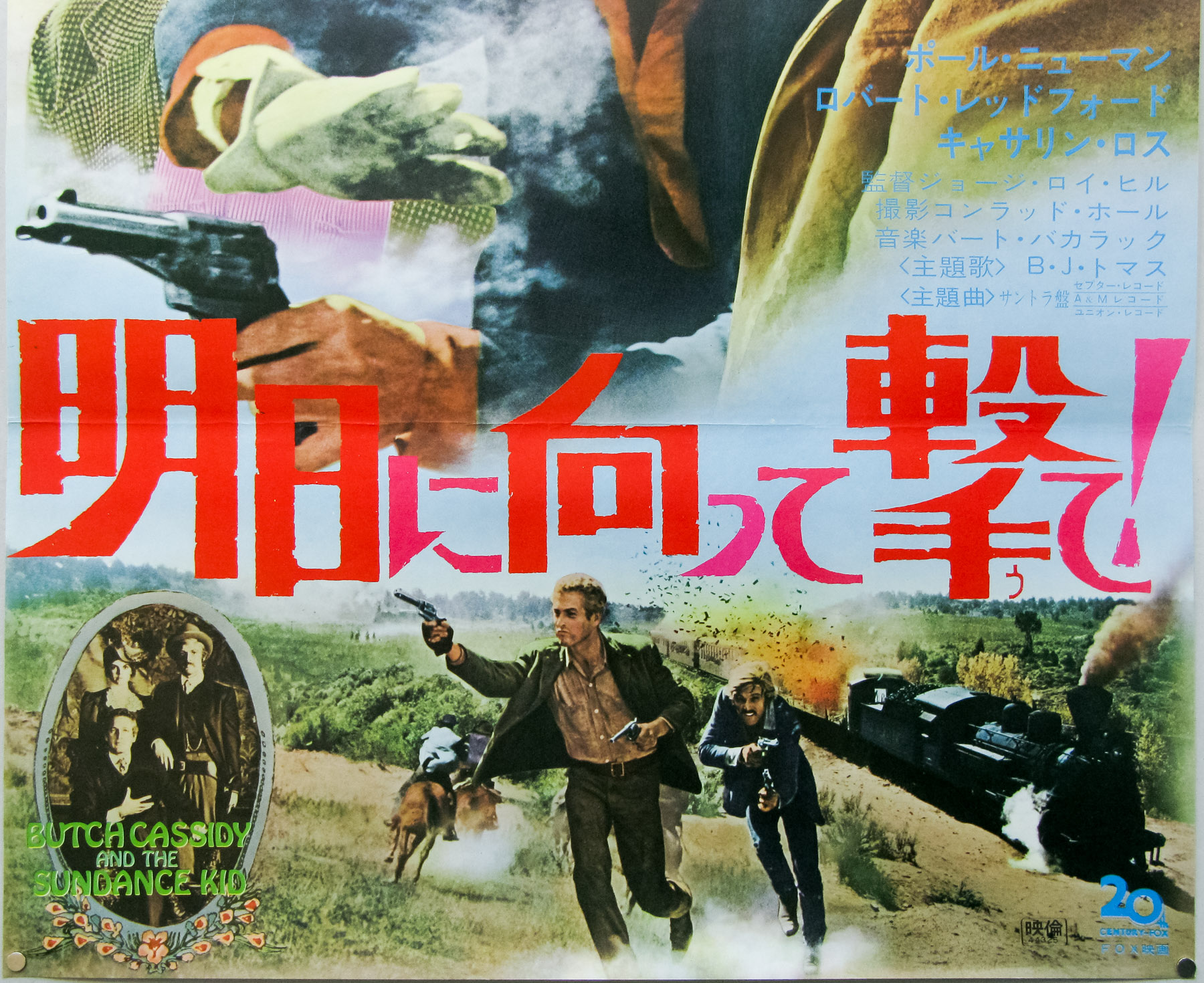
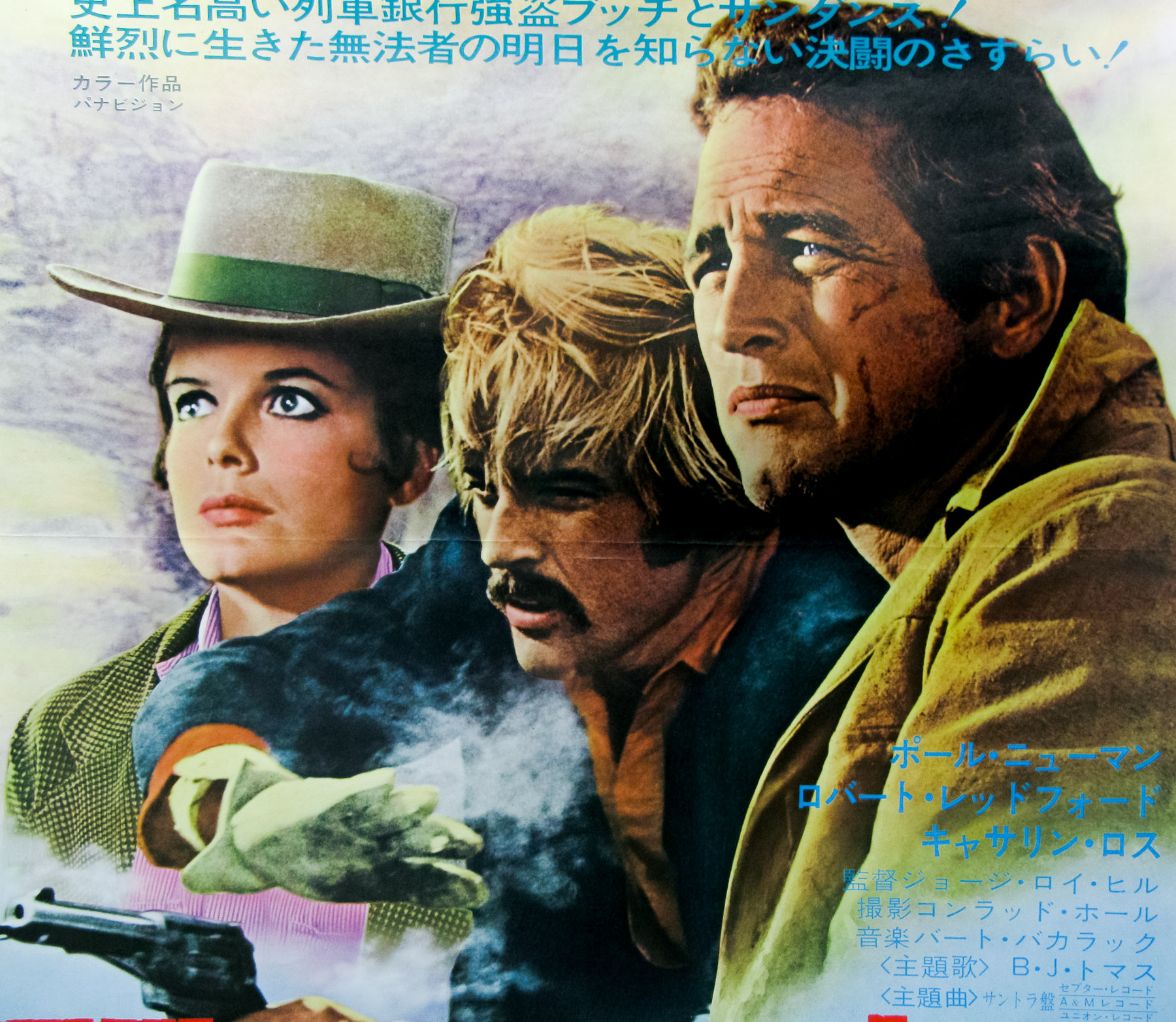
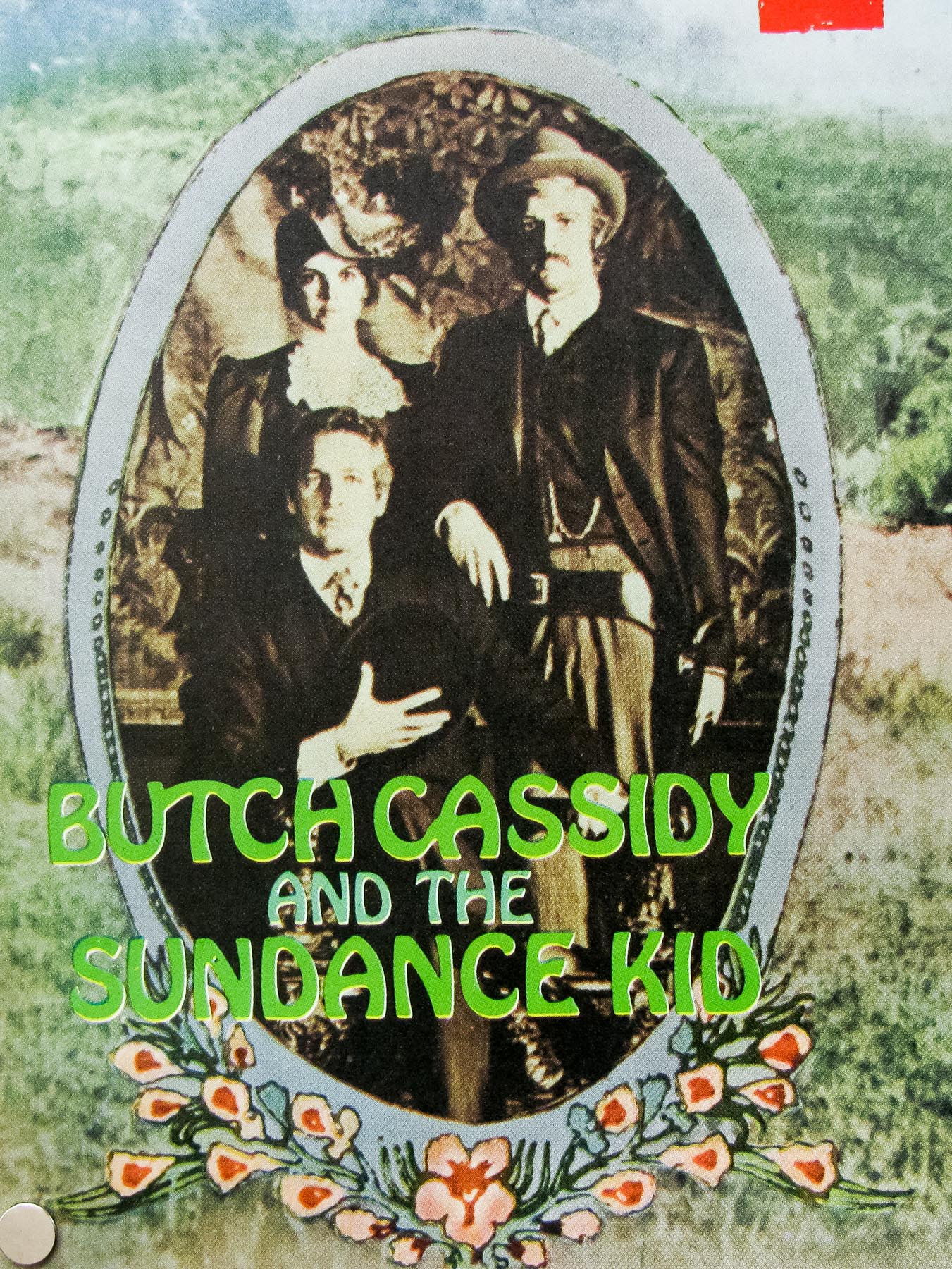
A unique design on this Japanese B2 for the 1969 take on the true story of the infamous Wild West outlaws Butch Cassidy and the Sundance Kid, here played by Paul Newman and Robert Redford in arguably their greatest screen roles. George Roy Hill would later go on to direct the pair again in the equally brilliant con men caper The Sting (1973).

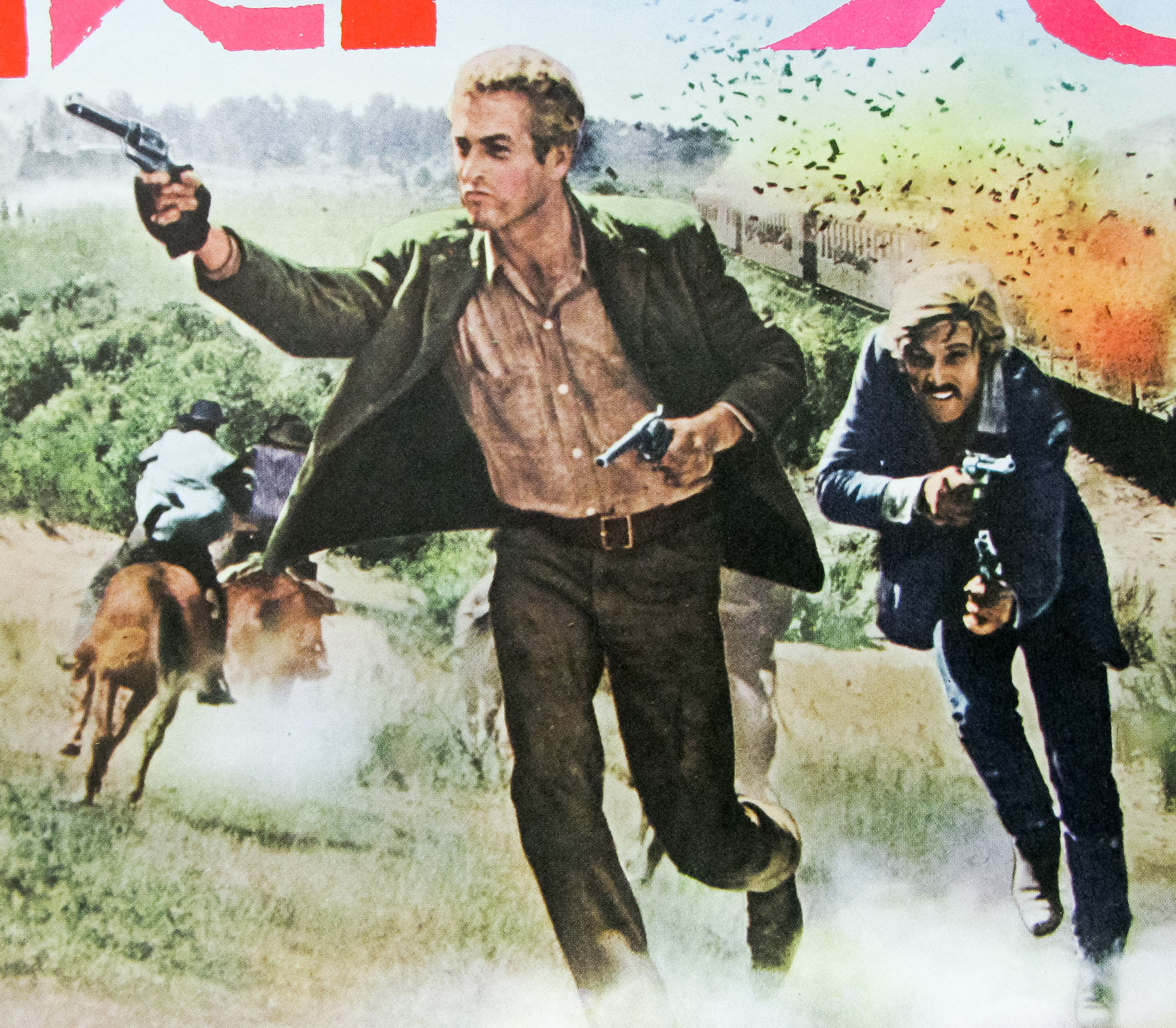
The film follows the pair as they rob from money trains with varying success (a botched effort can be seen on the poster) and are forced to flee America after a posse of bounty hunters are unleashed to track them down. Arriving in Bolivia with the Sundance Kid’s lover, Etta Place (played by the gorgeous Katharine Ross), the duo try to make an honest living working as security guards. It’s not long before a violent incident sends them back to their old ways and on a collision course with destiny. The film features arguably the most famous freeze-frame ending in cinematic history.

A number of excellent posters for the film can be viewed here. The original trailer is on YouTube.


For Your Eyes Only / quad / UK

08.10.12

Poster Poster

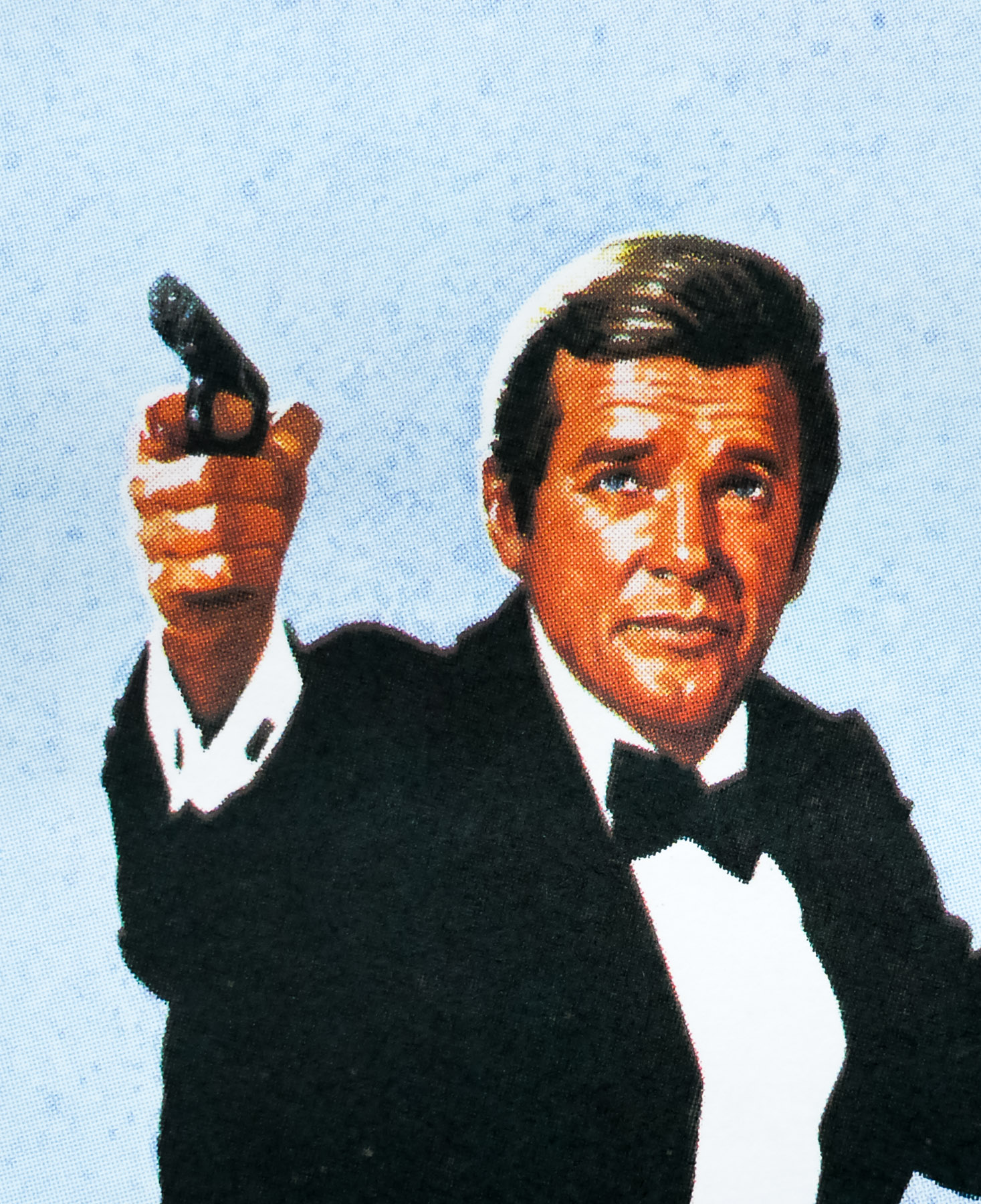
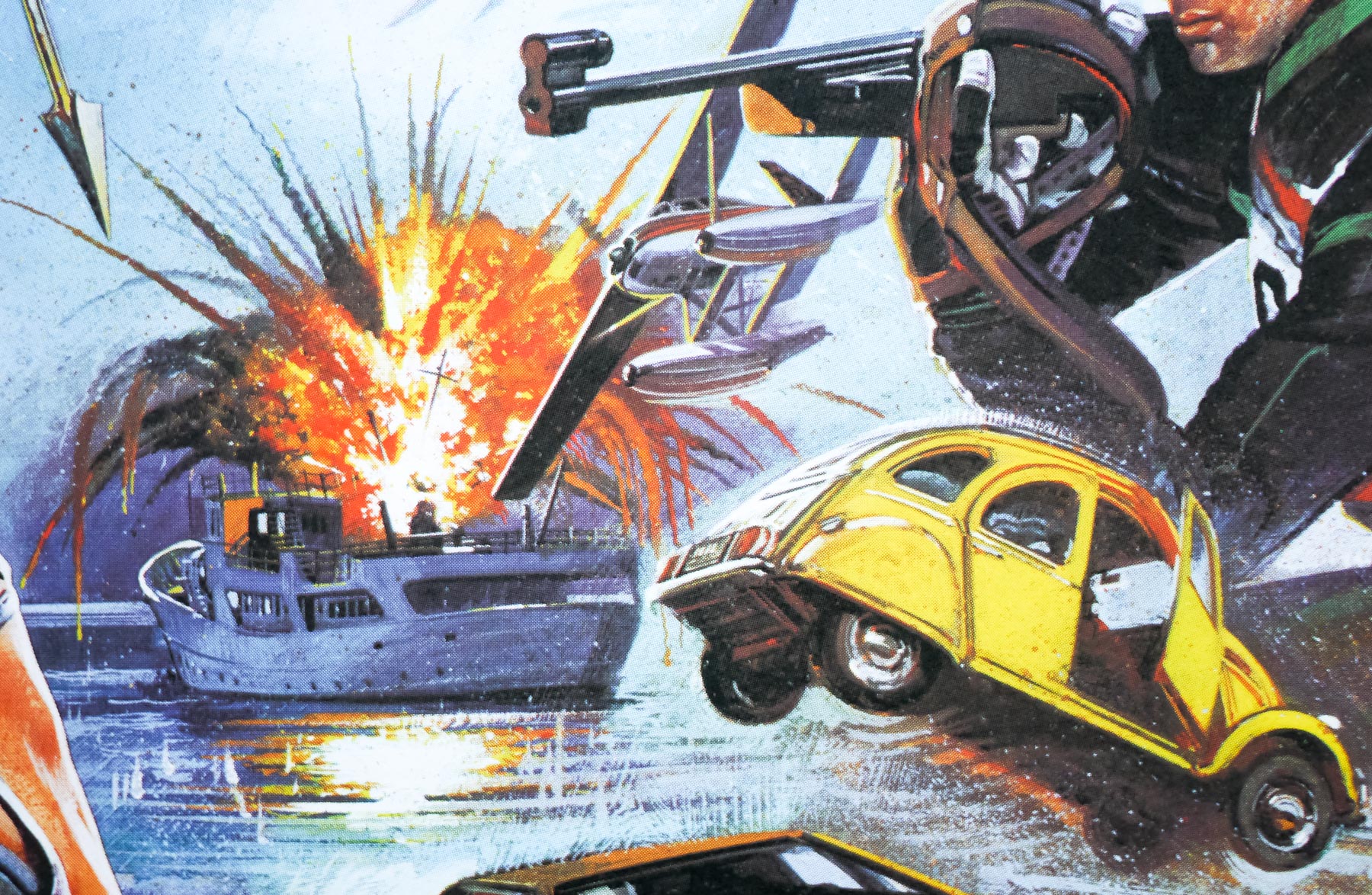
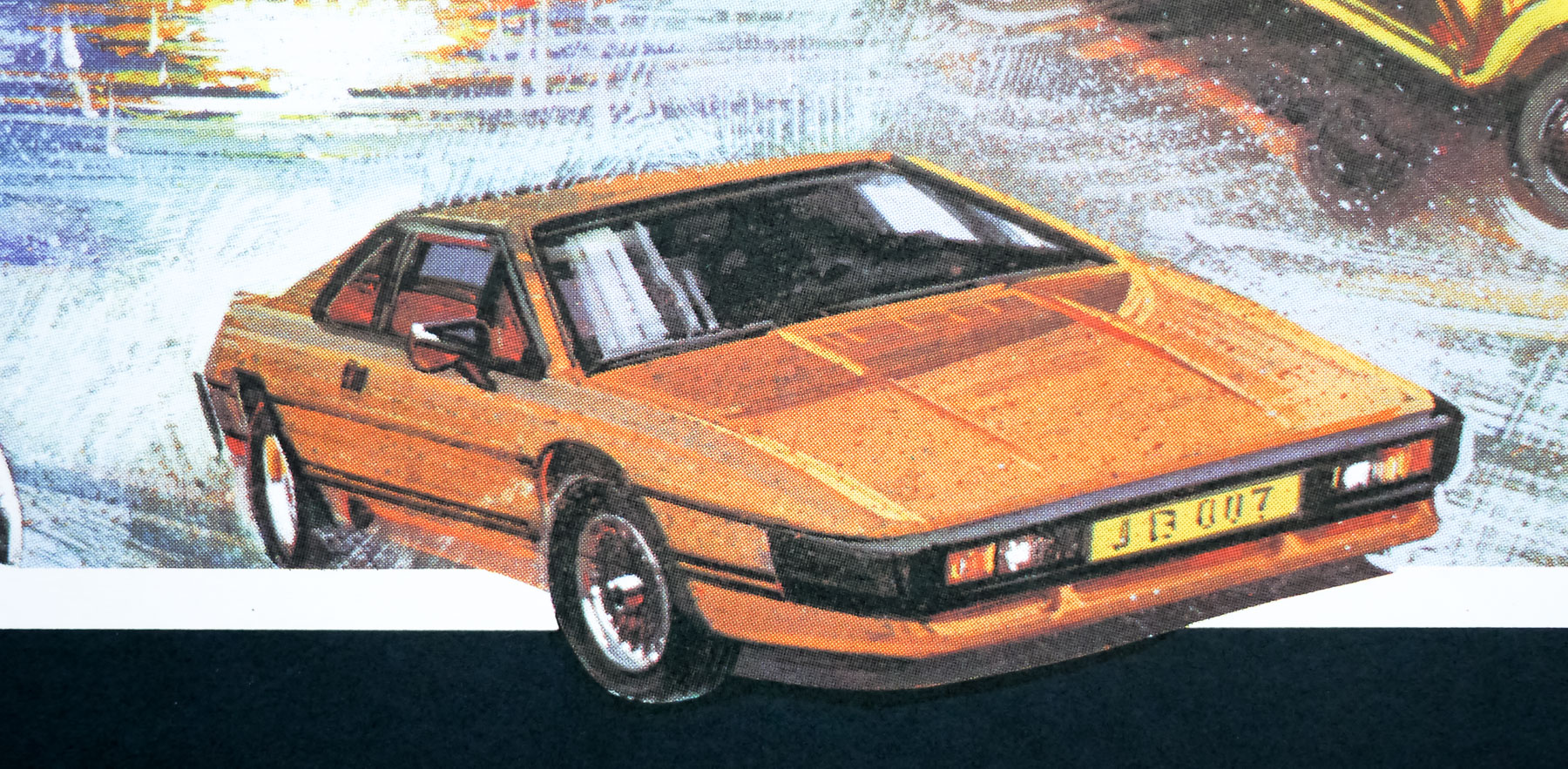
One of Roger Moore’s better outings as 007, For Your Eyes Only was intended to bring James Bond back down to earth with a more realistic and less sensational storyline following the lunacy of Moonraker. It marked the first time John Glen would helm a Bond film, having worked as an editor and second-unit director on three of the previous outings, and he would go on to direct the next four films in the series. The story sees the spy being sent to try and recover an ‘ATAC’ device capable of controlling the British Polaris submarine fleet, which is lost after a spy ship disguised as a trawler is sunk in neutral waters.
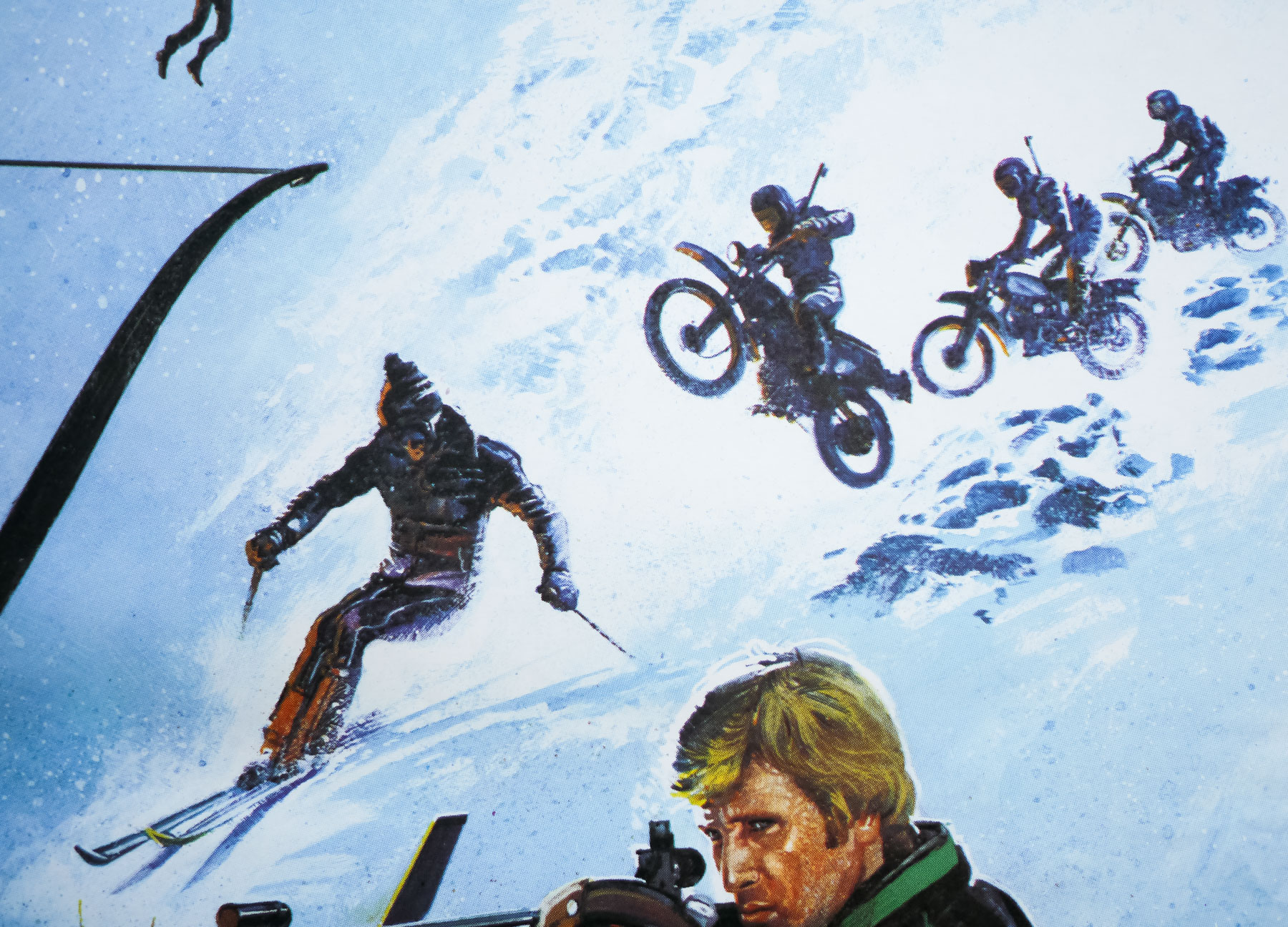
It becomes clear that the Soviets are also keen to get their hands on the device and Bond must discover who is aiding them, with suspicion falling on both Milos Columbo (Topol) and Aris Kristatos (Julian Glover). Bond also finds an ally in the form of Melina Havelock (the gorgeous Carole Bouquet) who is out for revenge after her parents are murdered by the same forces who retrieve the ATAC device. The film features several memorable chases and action sequences, including a climactic assault on a fortress on top of a sheer cliff. It also includes the infamous character of Bibi Dahl (Lynn-Holly Johnson) a gorgeous young ice-skating protégée who becomes infatuated with Bond, and in turn became the object of countless teenage boys’ fantasies, including yours truly.

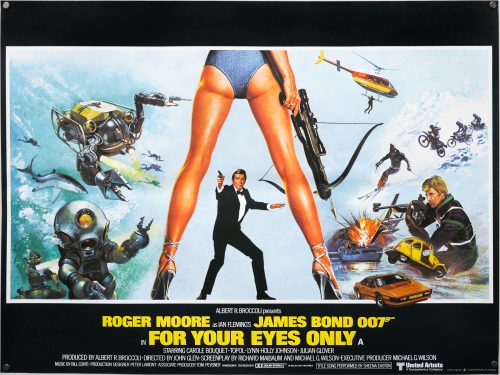
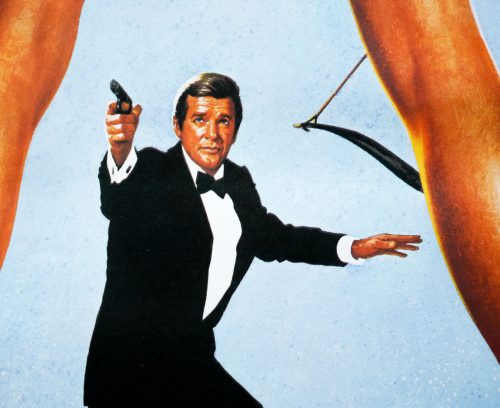
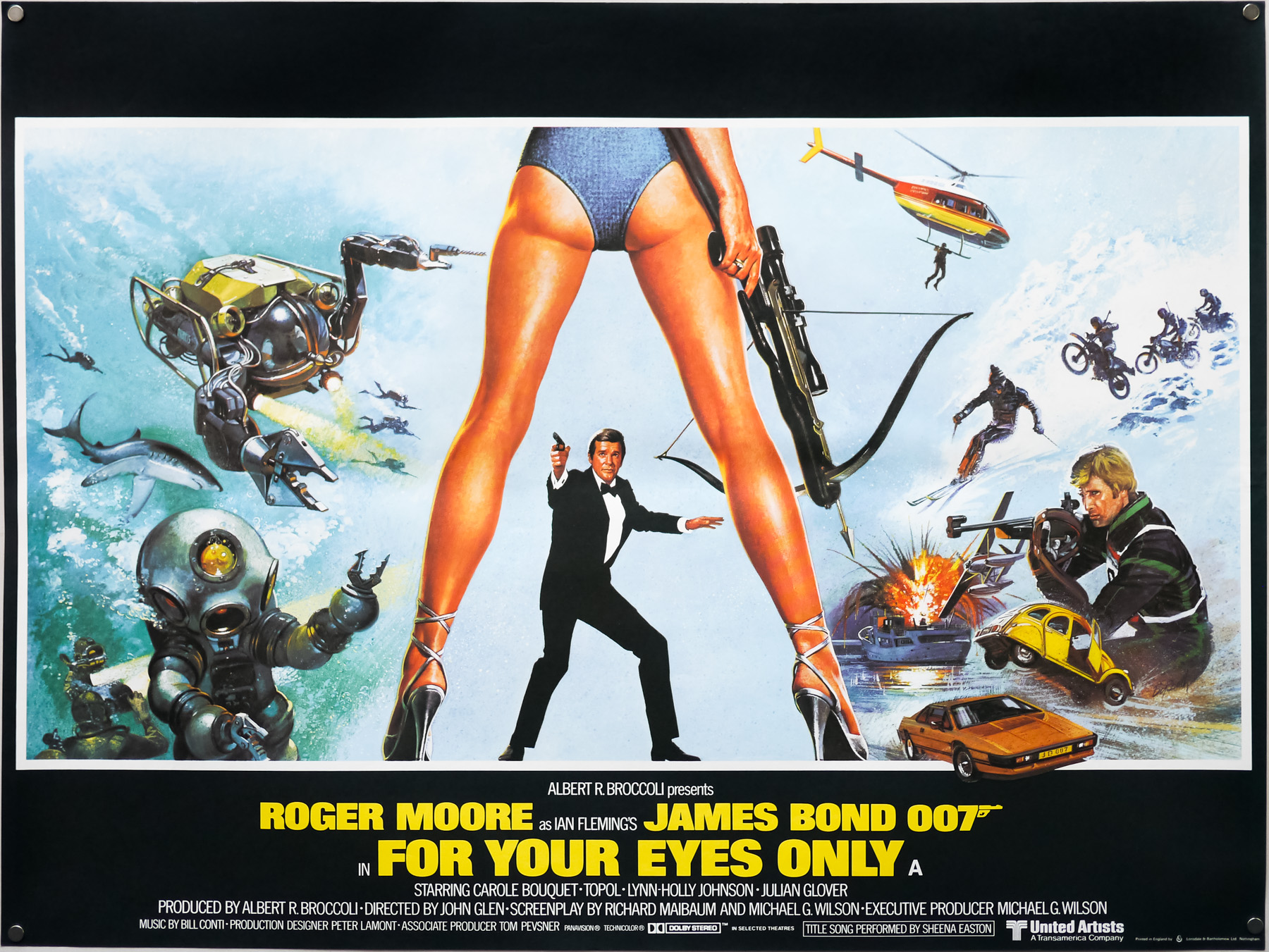
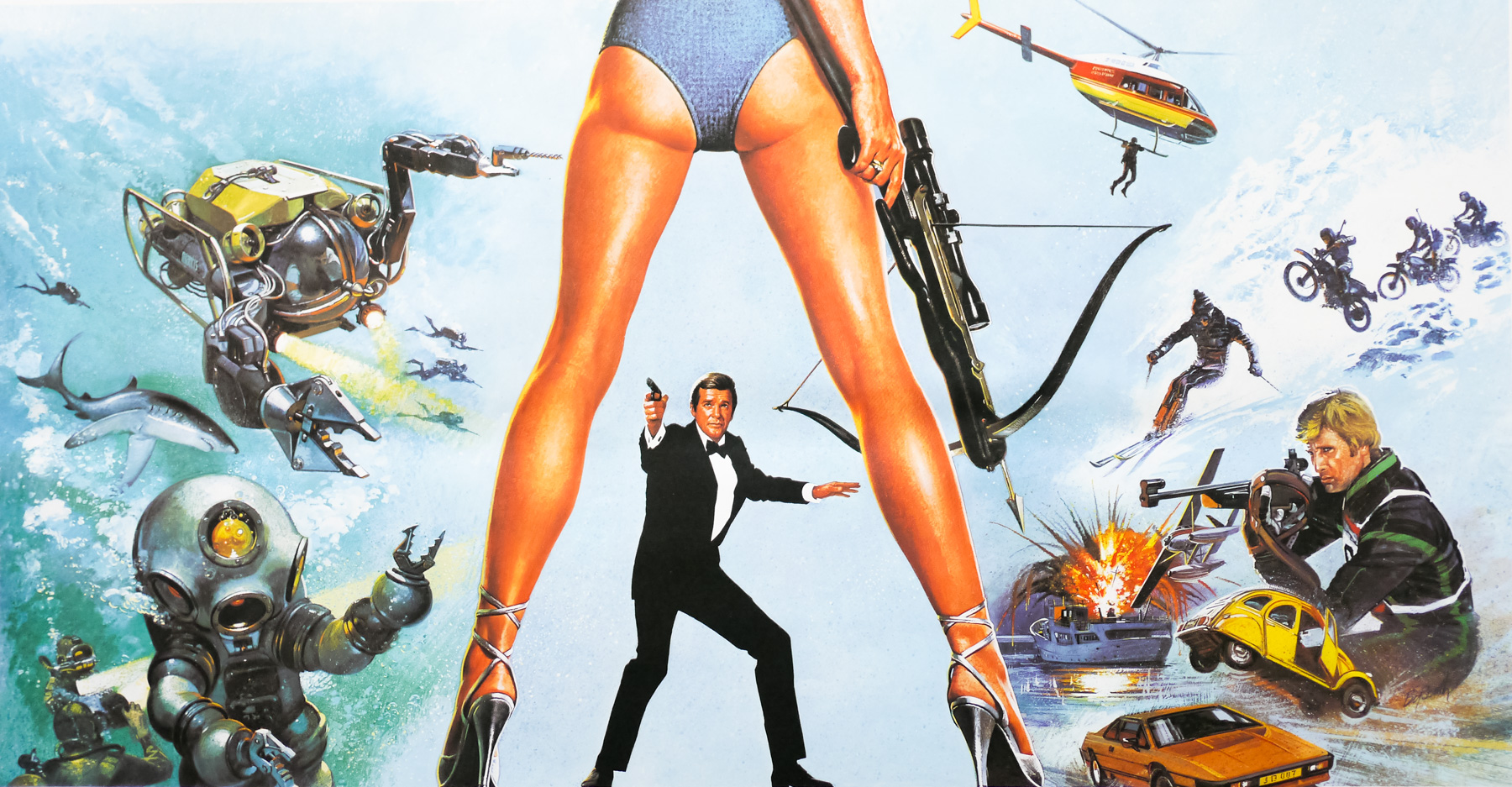
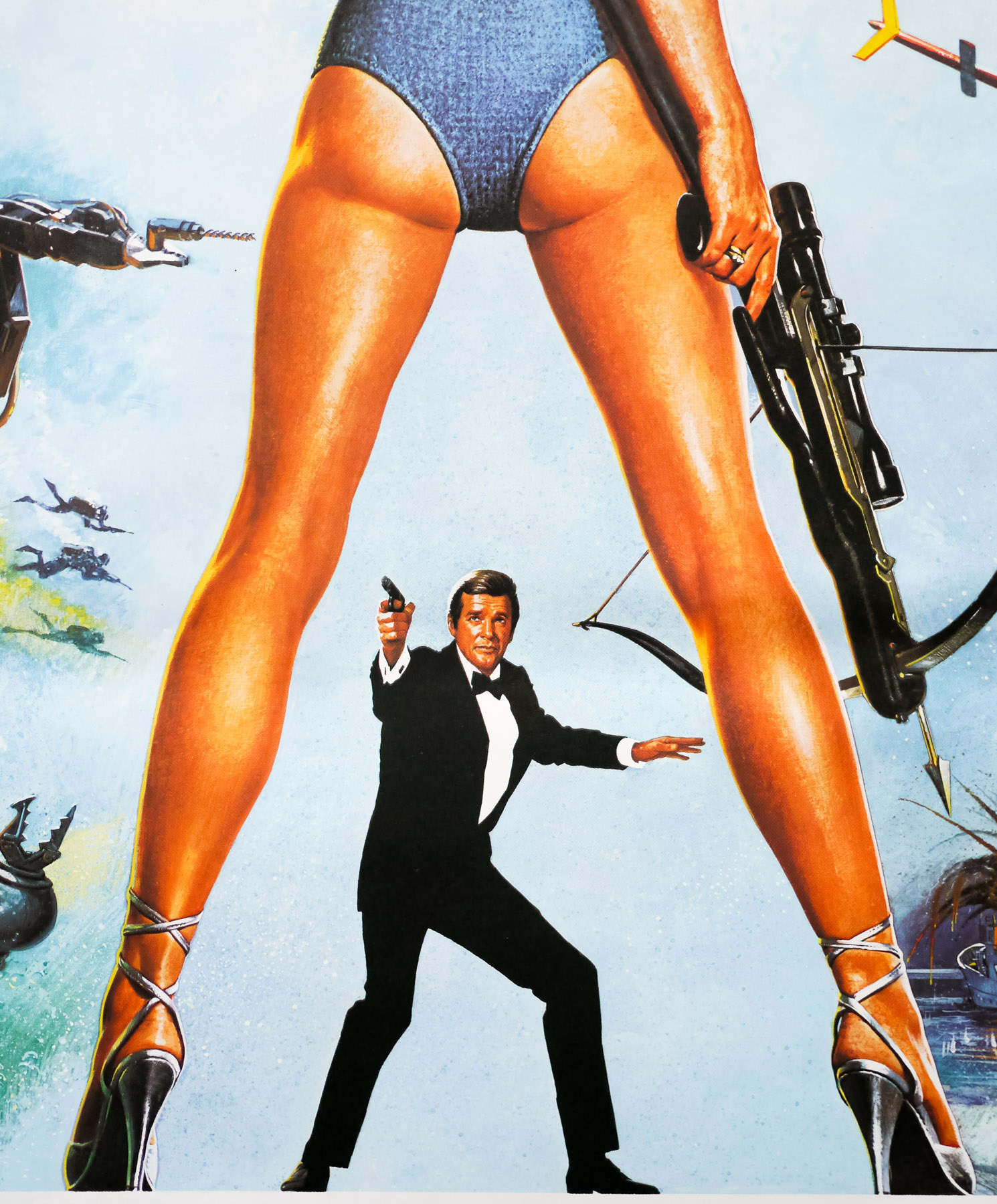
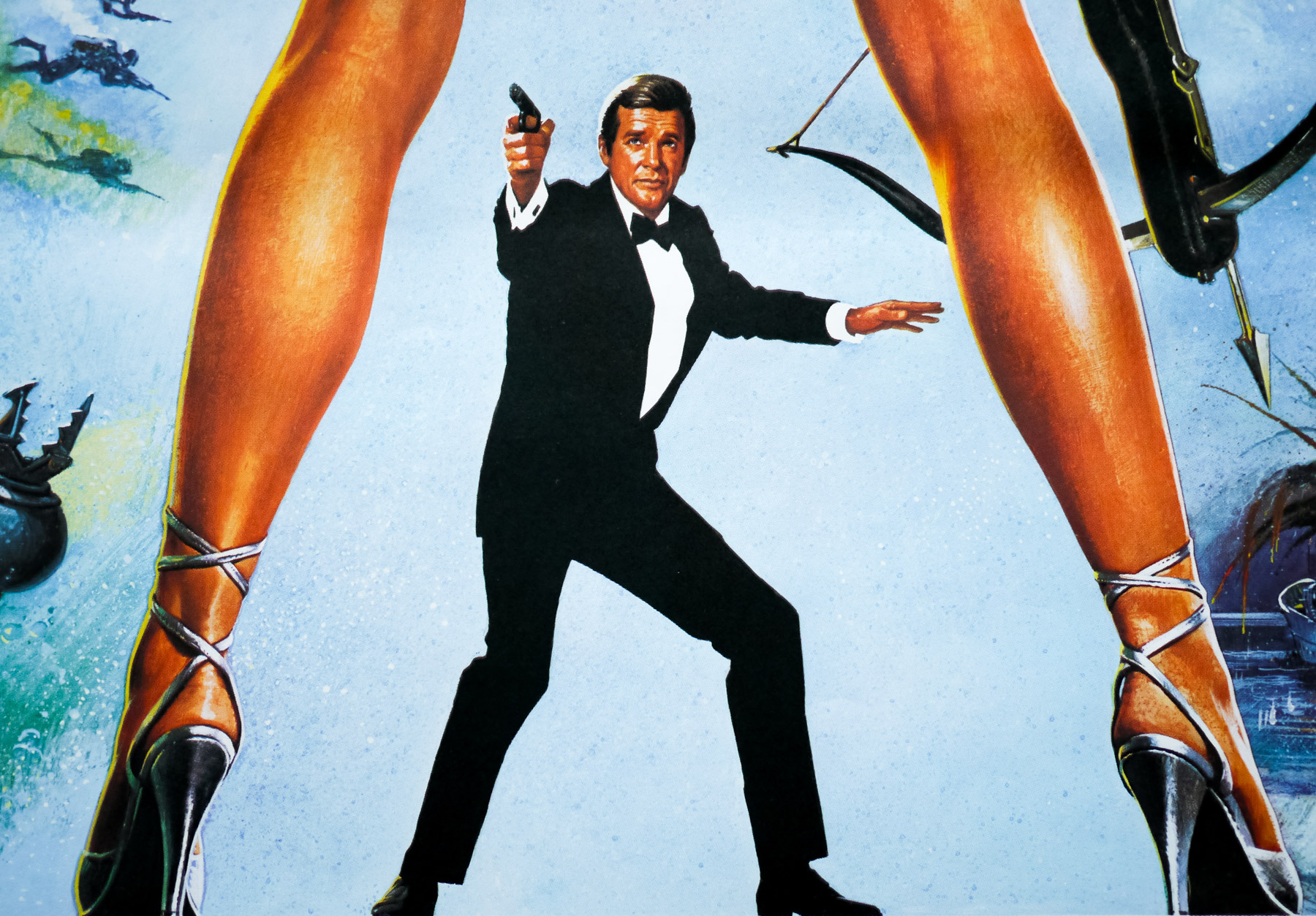
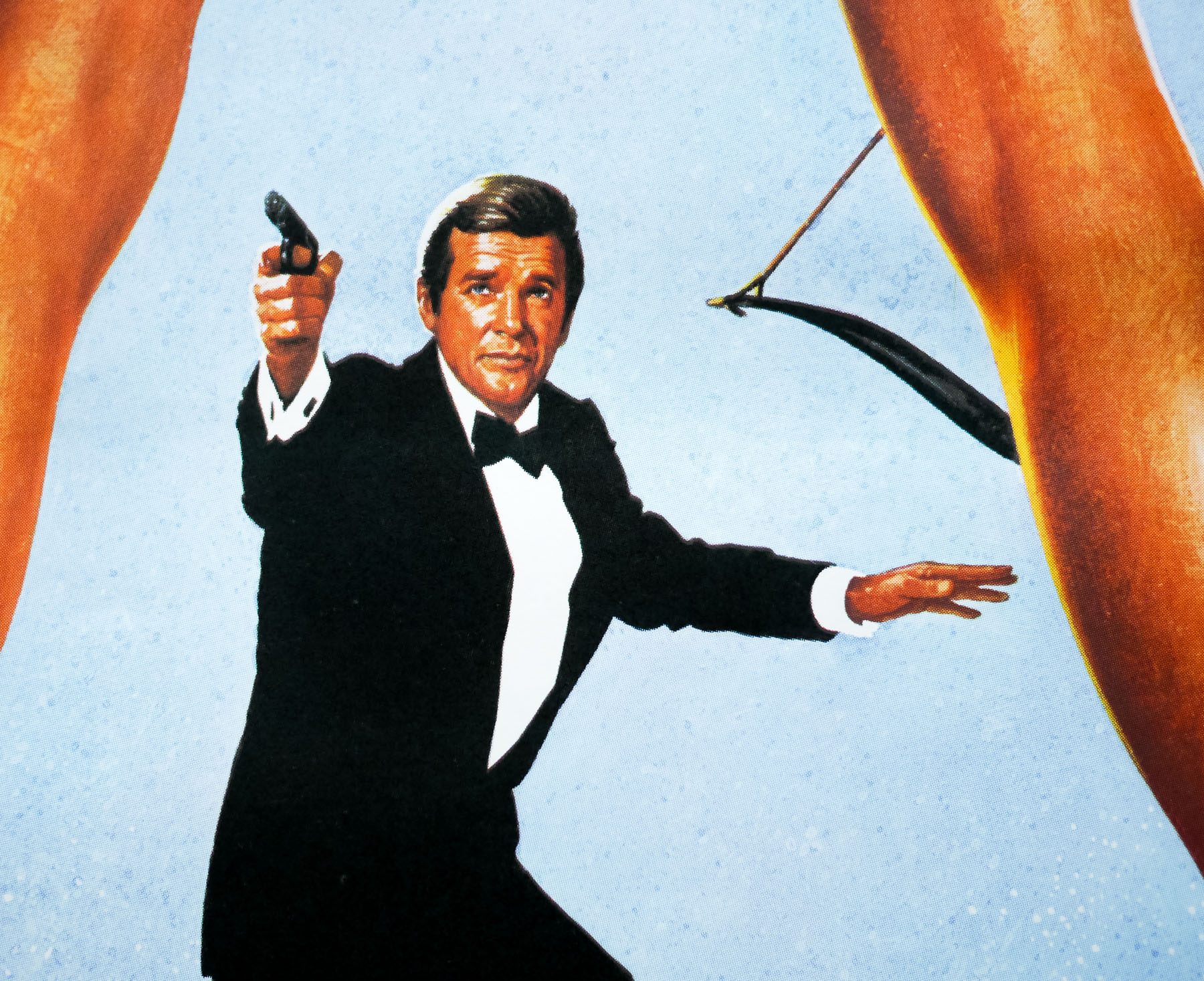
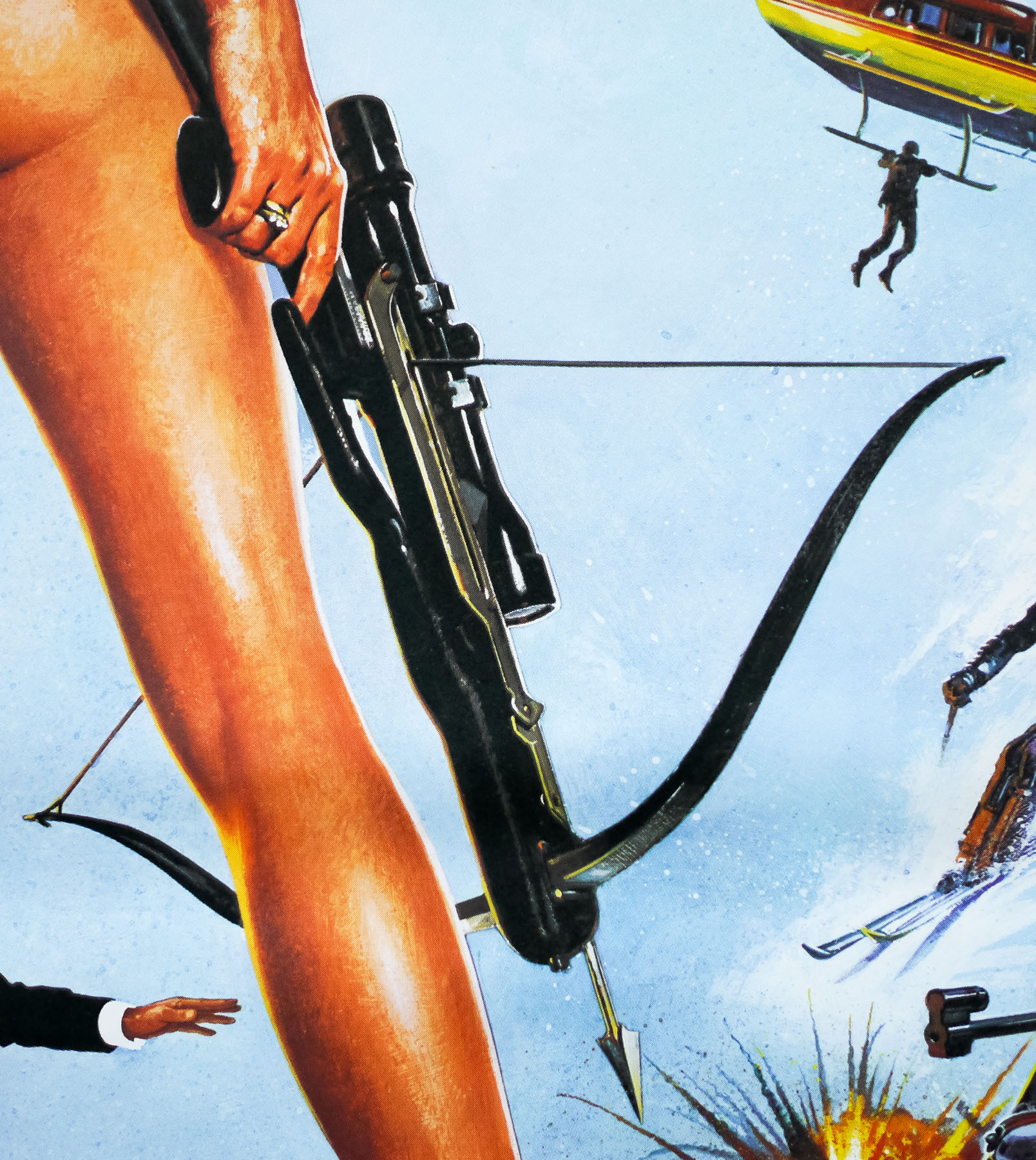
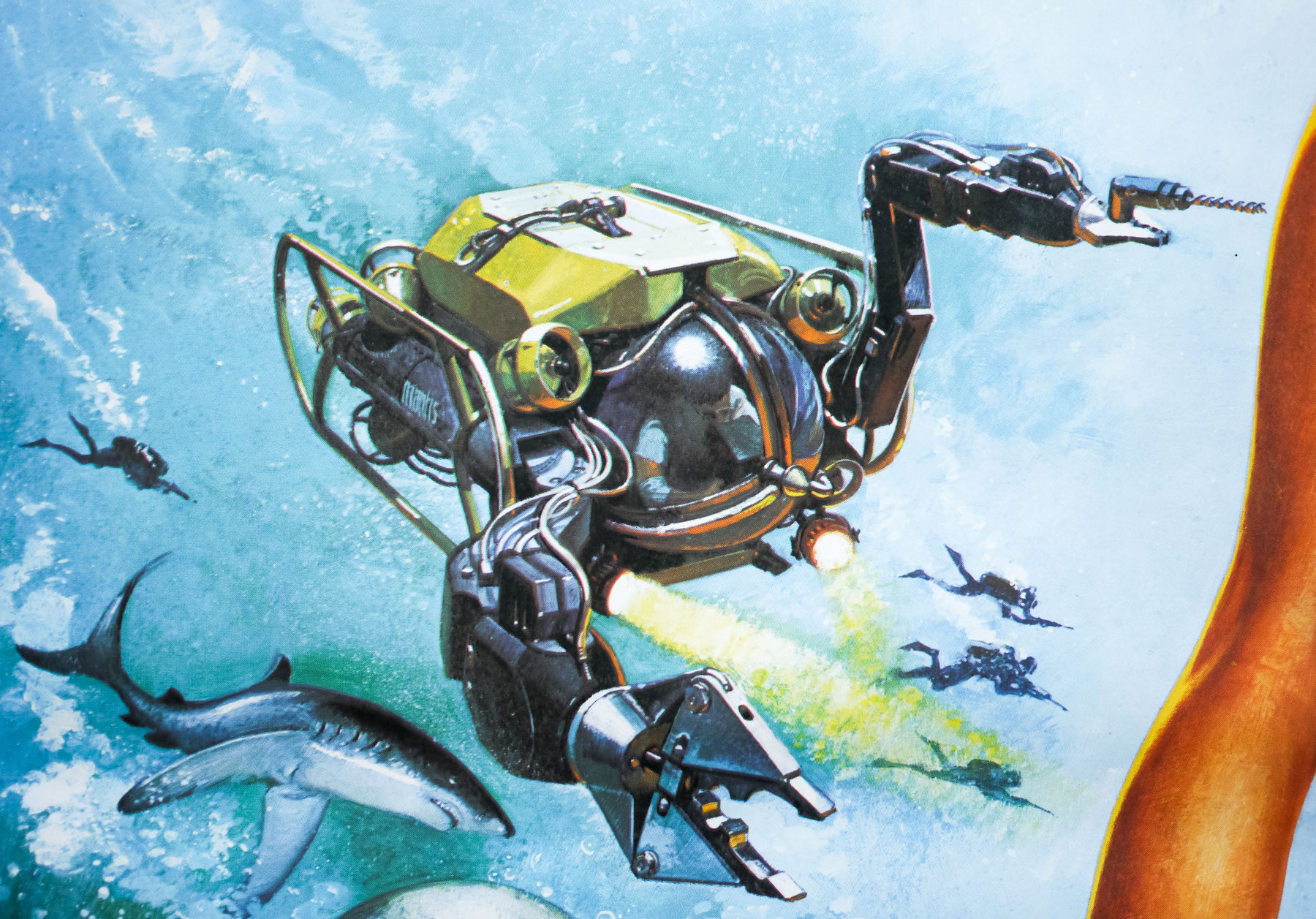
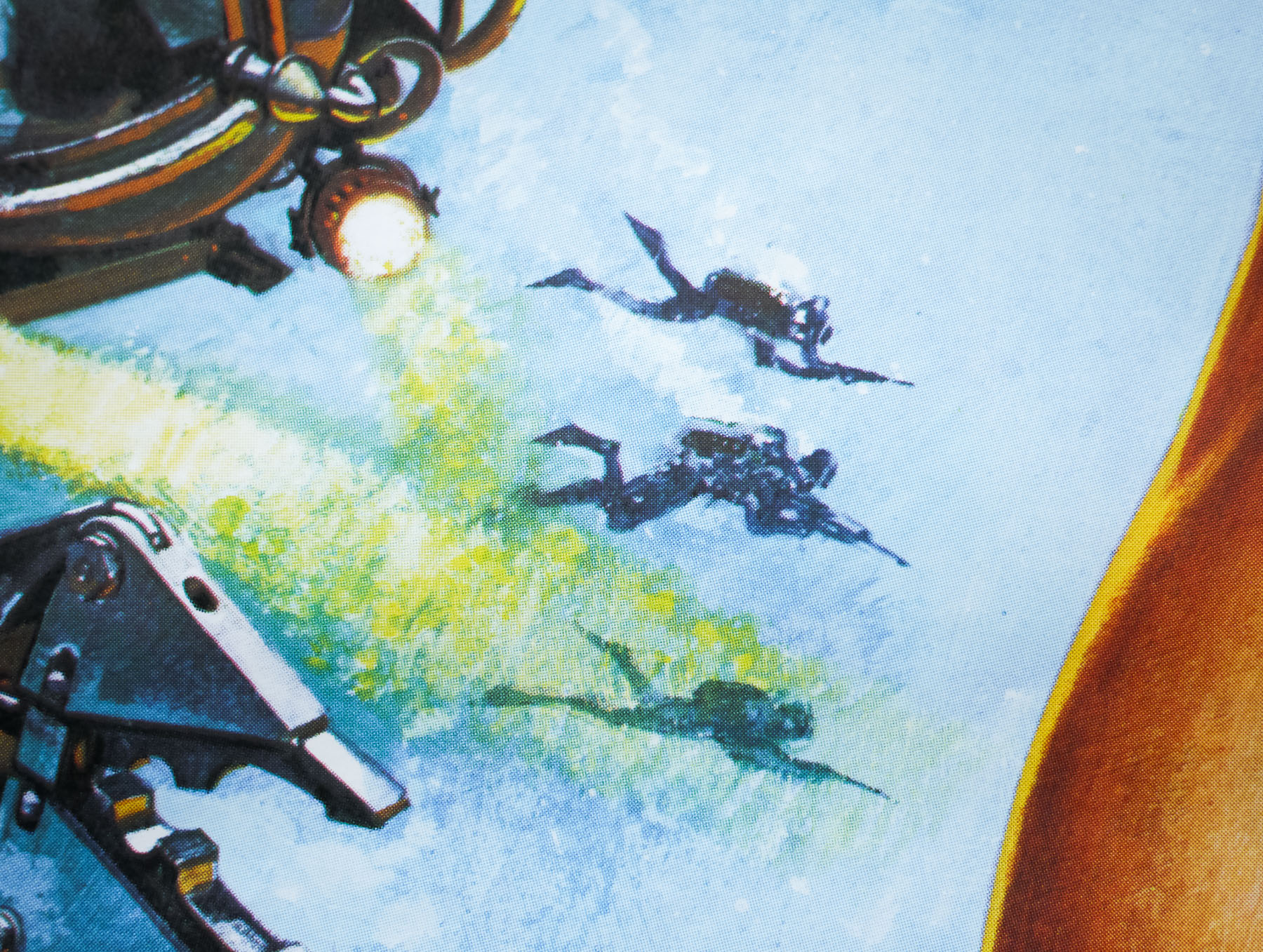
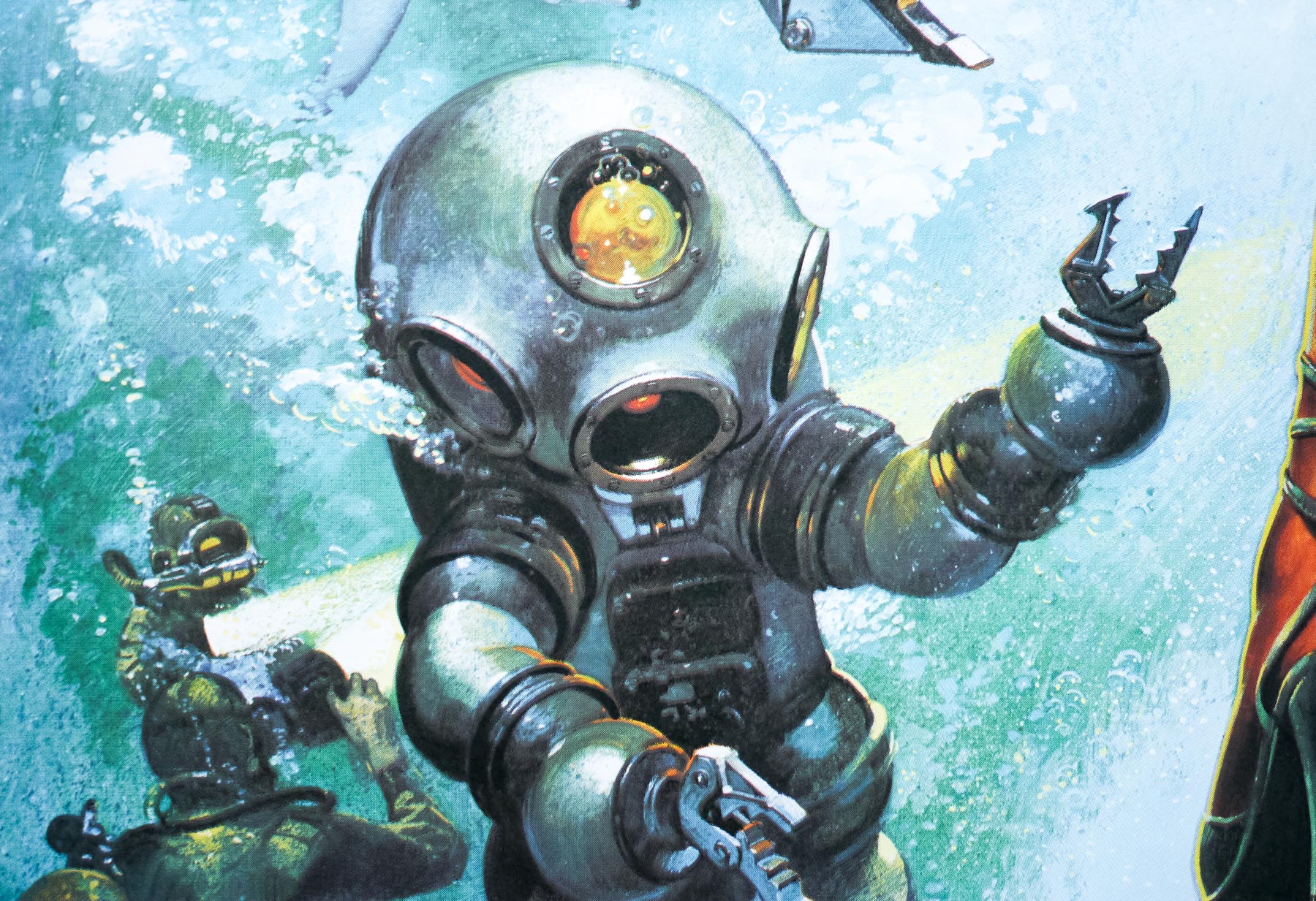
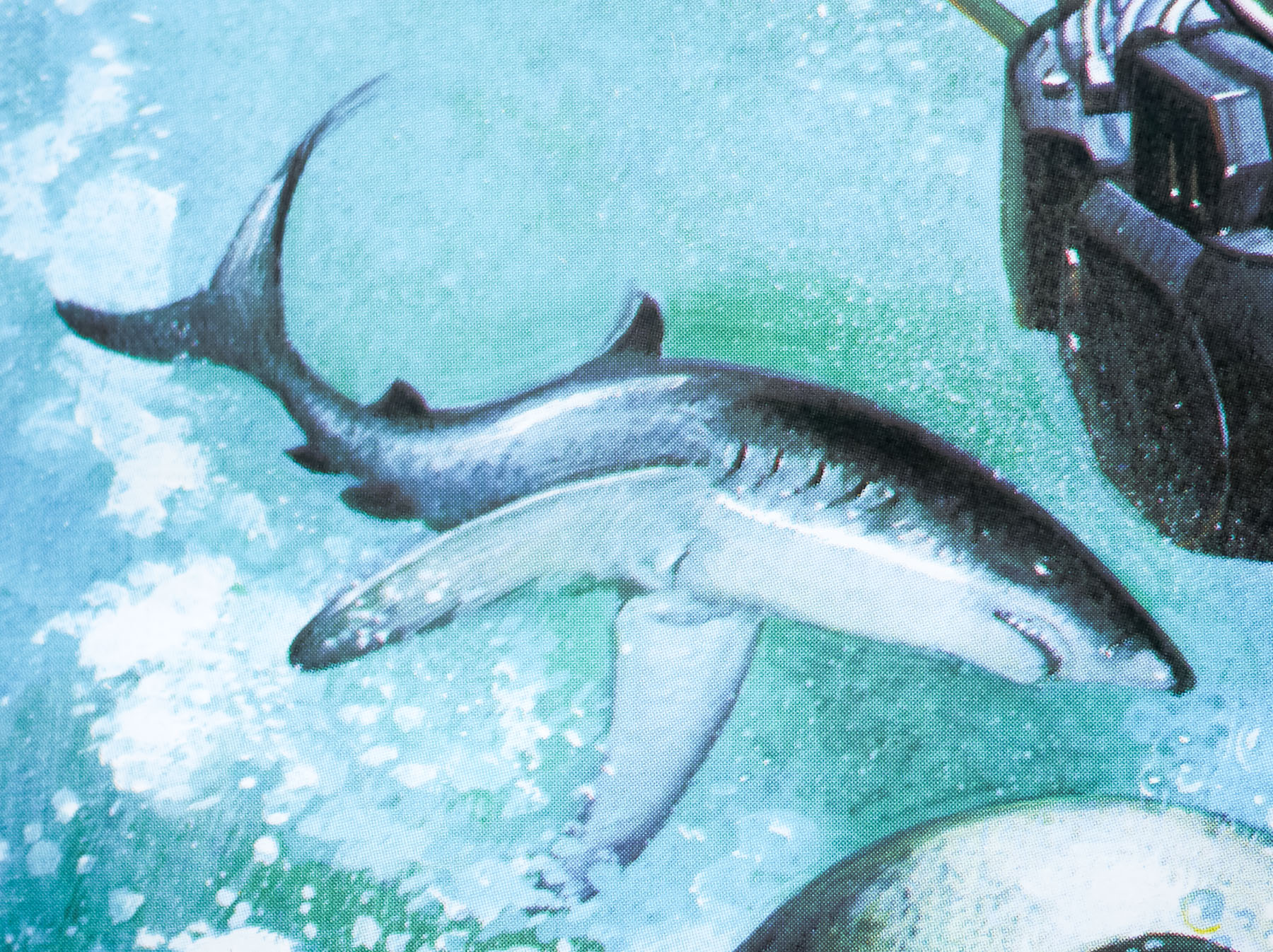
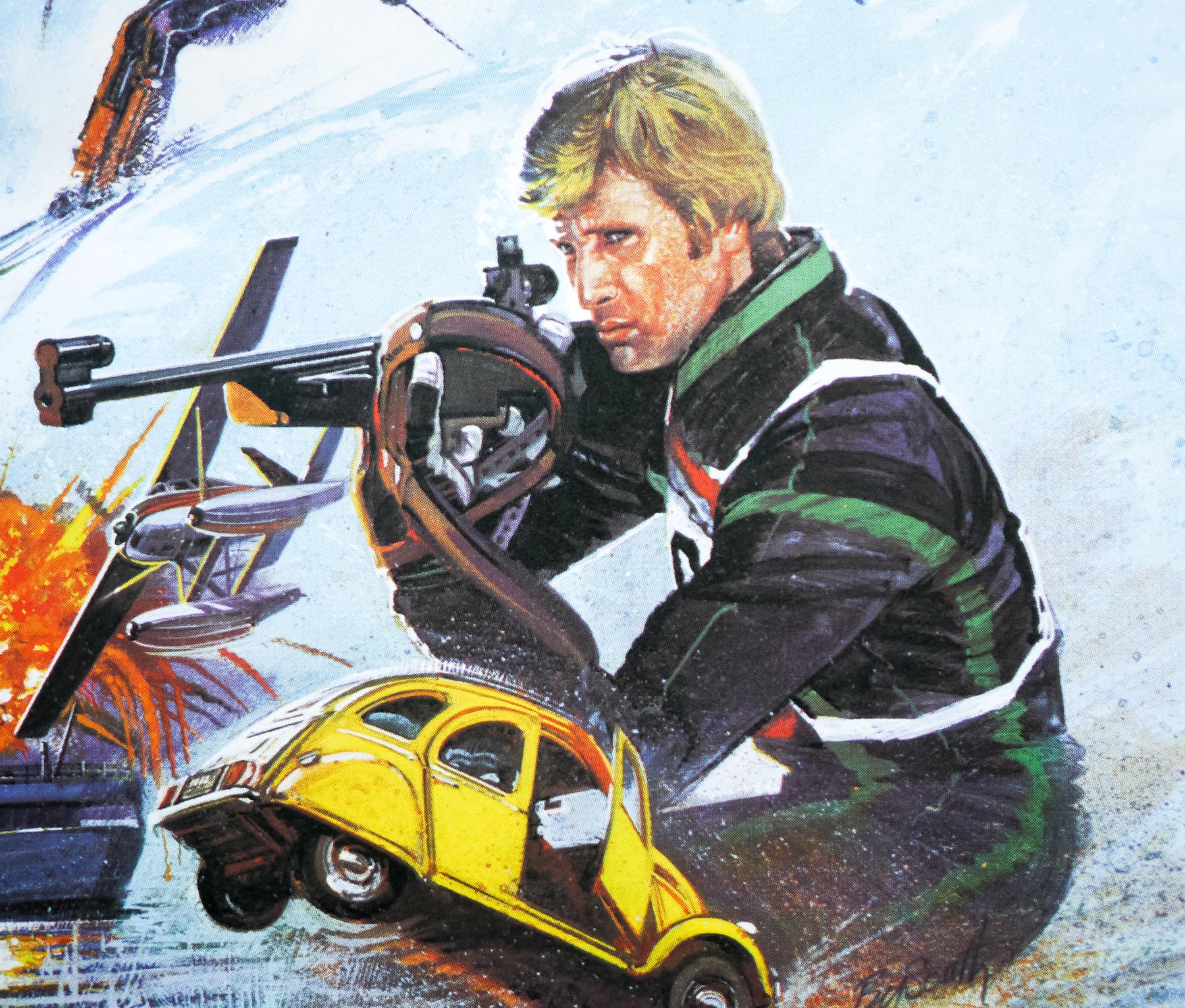
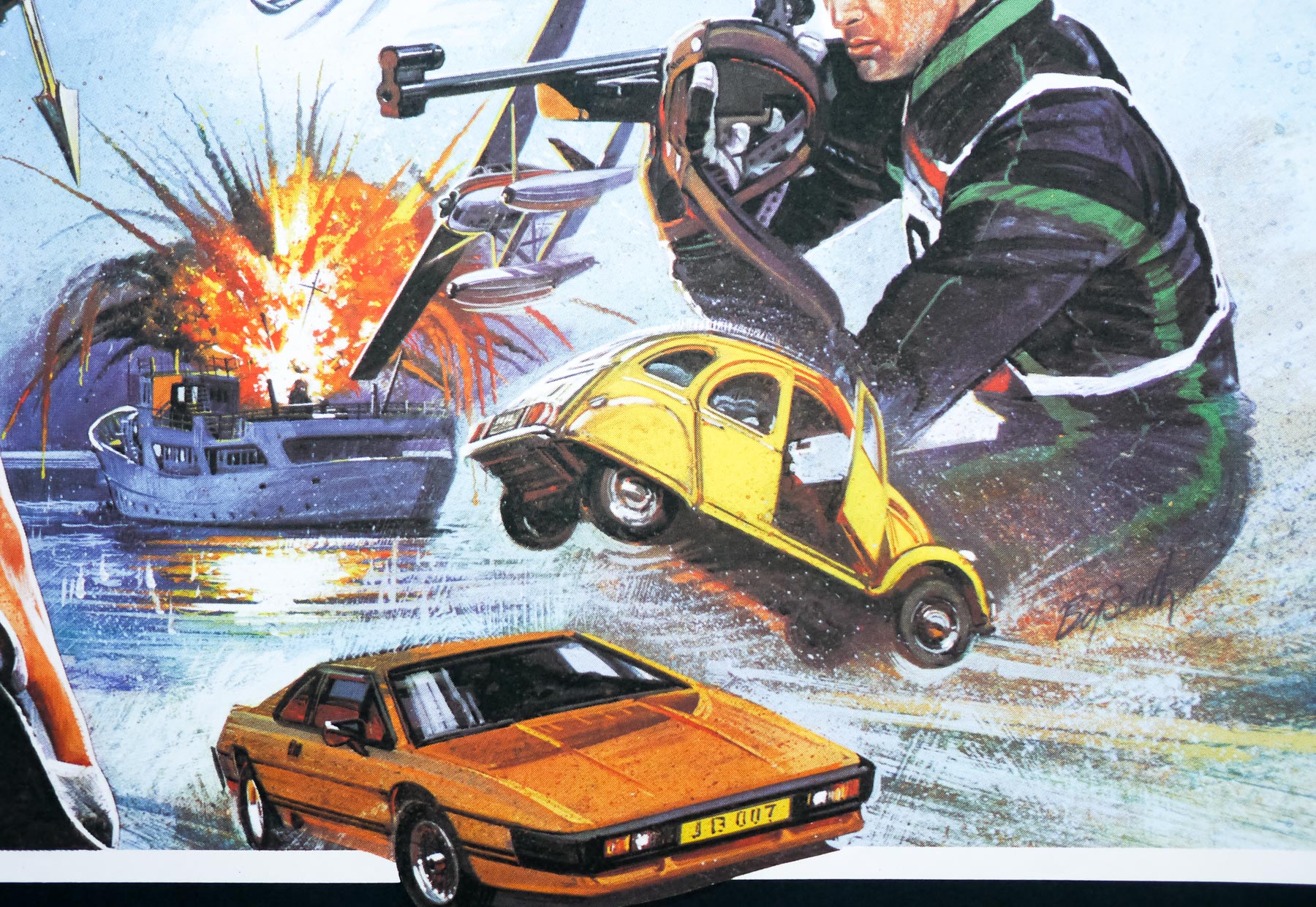
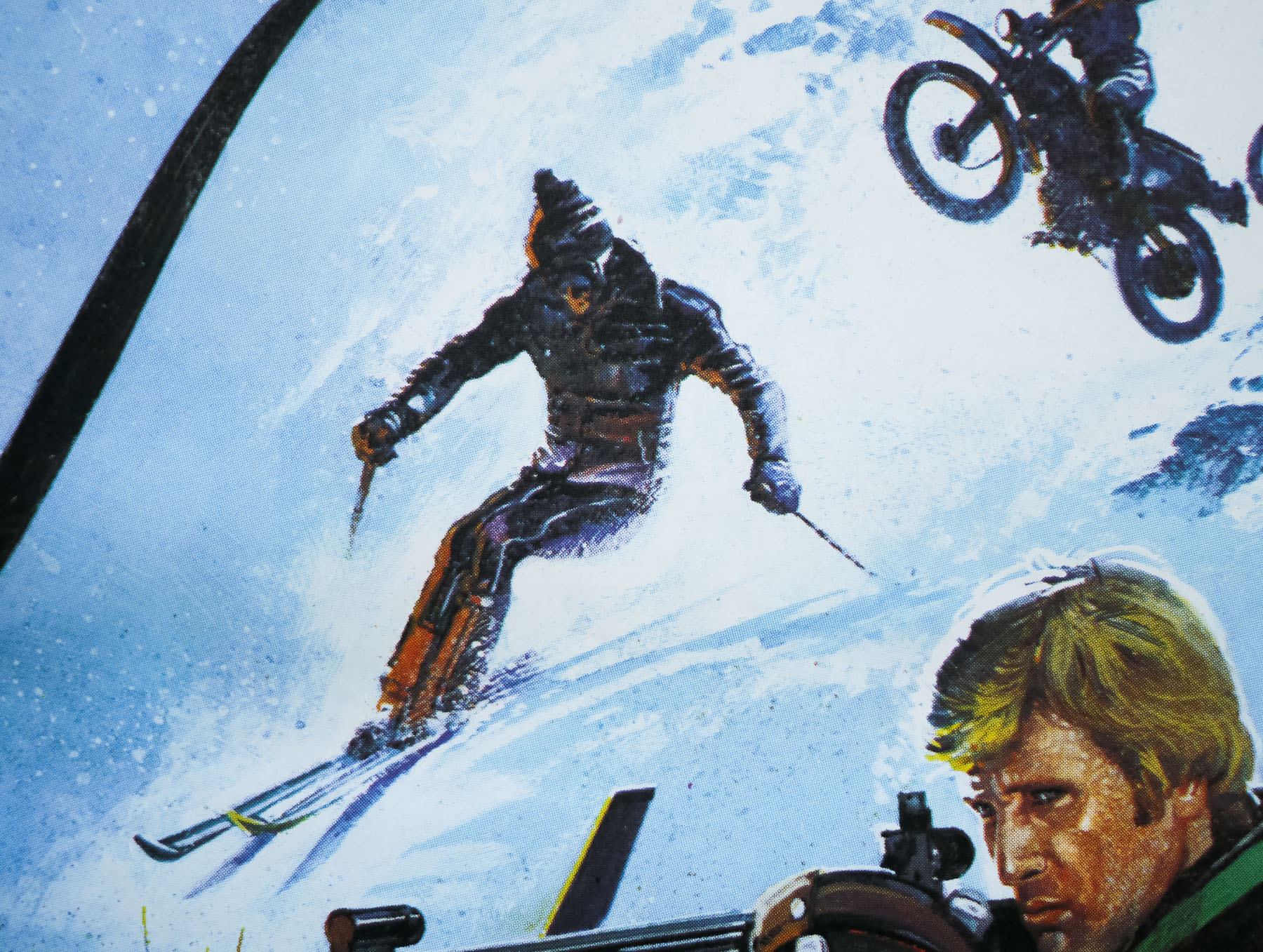
This British quad features the ‘legs’ concept that was created by the American designer Bill Gold and was subsequently used for the film’s marketing campaign across the globe, including the US one sheet. Owing to the landscape format of the quad poster it was decided that a montage of scenes from the film should be added either side of the legs. The montage was designed by Eddie Paul at the British film marketing agency FEREF and the painting job was given to the talented illustrator Brian Bysouth, whose skill at accurately depicting vehicles, characters and dynamic action scenes was the perfect compliment for the design. The montage was also adapted (and somewhat crammed) onto an international one sheet used to market the film in countries such as Australia.
In 2012 I met and interviewed Brian Bysouth and this poster was discussed during our meeting:

One Bond poster you worked on is the quad for For Your Eyes Only. It had the Bill Gold designed element of the long legs, but you modified the montage when doing the finished illustration?
Eric Pulford created the U.K. poster design that was approved. The inclusion of the very iconic Bill Gold legs concept was a must in any design that was submitted, so I suppose the scope for fresh designs was limited. In my opinion Eric’s original montage was not his best work and, although I tried to re-arrange some of the elements, the reference material supplied was not very exciting and I think the surrounding montage looks rather ordinary.

A similar difficulty arose with the design Eric had done for The Bounty (1984). His atmospheric colour rough was exciting, but when I began to sketch out the finished painting I realised the perspective of the ship was flawed. Eric’s exciting random montage of characters had initially disguised the shortcoming. I spent a day redrawing the ship and rigging to ensure it was reasonably correct, and then moved the characters to try to improve the composition. I was pleased with the final painting but was never happy with the montage, which I really thought needed recomposing. I didn’t think a confrontation with Eric was in my best interest.

Some weeks later I asked for the return of my painting only to be told, ‘it could not be found’.  Obviously, a light-fingered person took a fancy to it. Much of my work has been lost to me in that way, including my teaser art for A View to a Kill. Presently I am engaged in monitoring Film Memorabilia auction sales in order to reclaim art being offered for sale that legally belongs to me. I am glad to have been successful in recovering quite a number of paintings.  One case involving poster art I did for 20th. Century Fox is still ongoing as I speak.
Note that the article also features an image of the original artwork that has differences in the layout and details in comparison to this final quad.

Withnail and I / one sheet / USA

14.01.13

Poster Poster
Title
Withnail and I
AKA
Shakespeare a colazione [Shakespeare at breakfast] (Italy)
Year of Film
1986
Director
Bruce Robinson
Starring
Paul McGann, Richard E. Grant, Richard Griffiths, Ralph Brown, Michael Elphick, Daragh O'Malley, Michael Wardle, Una Brandon-Jones
Origin of Film
UK
Genre(s) of Film
Paul McGann, Richard E. Grant, Richard Griffiths, Ralph Brown, Michael Elphick, Daragh O'Malley, Michael Wardle, Una Brandon-Jones,
Type of Poster
One sheet
Style of Poster
--
Origin of Poster
USA
Year of Poster
1987
Designer
Unknown
Artist
Ralph Steadman
Size (inches)
27 1/16" x 41"
SS or DS
SS
Tagline
--

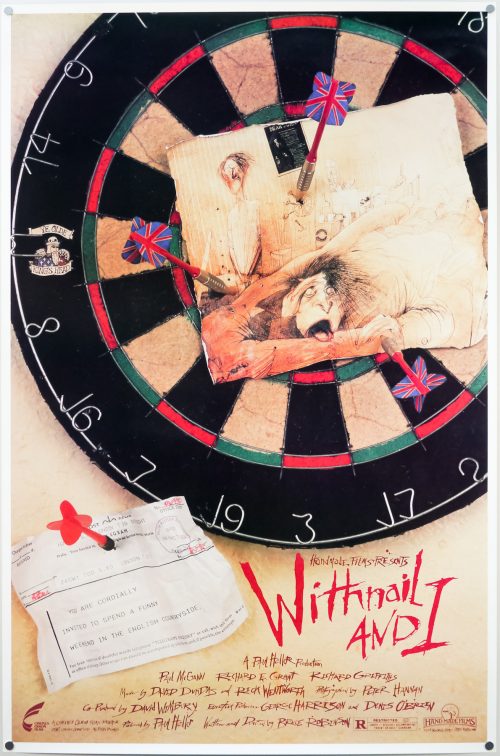
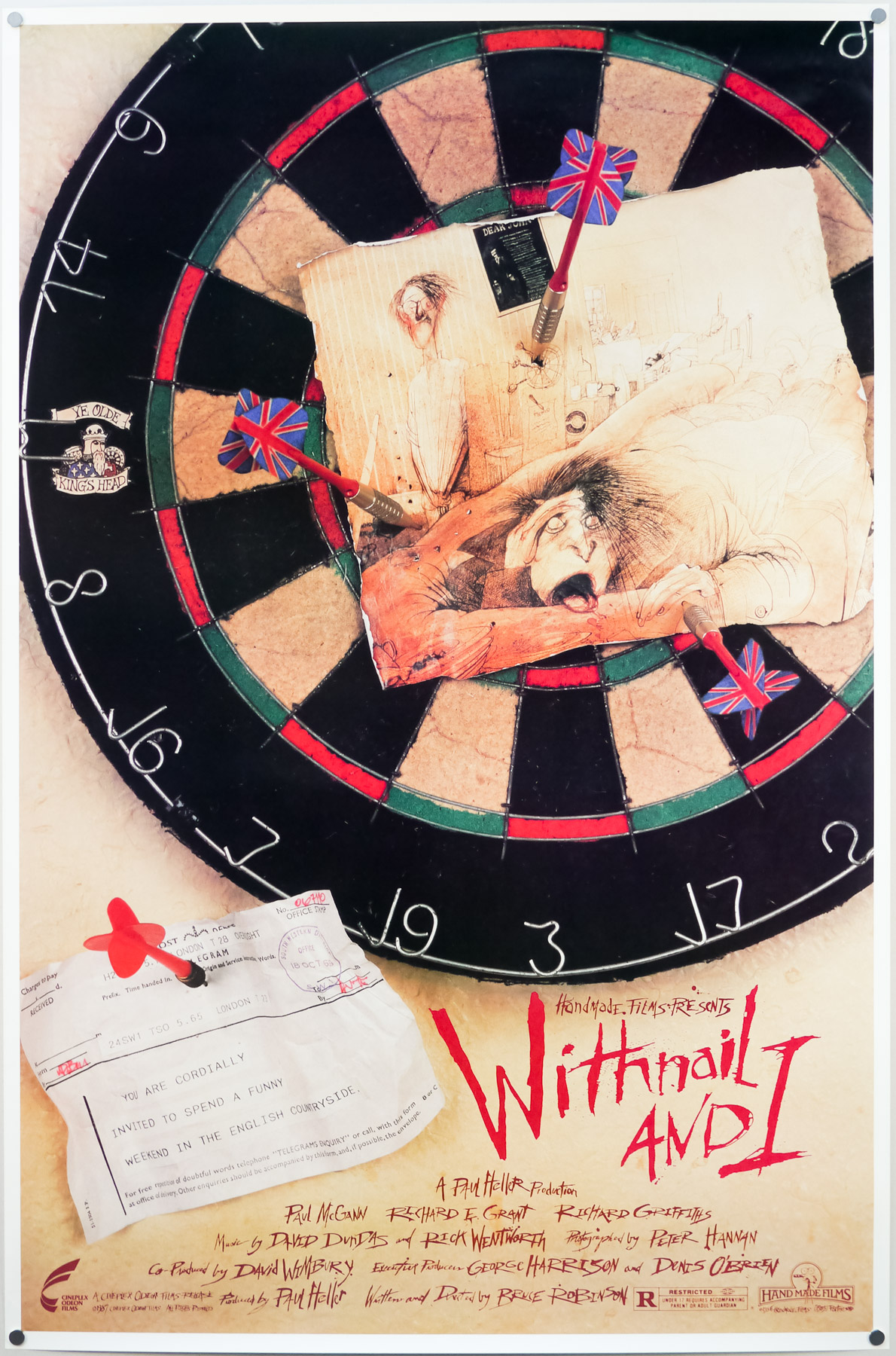
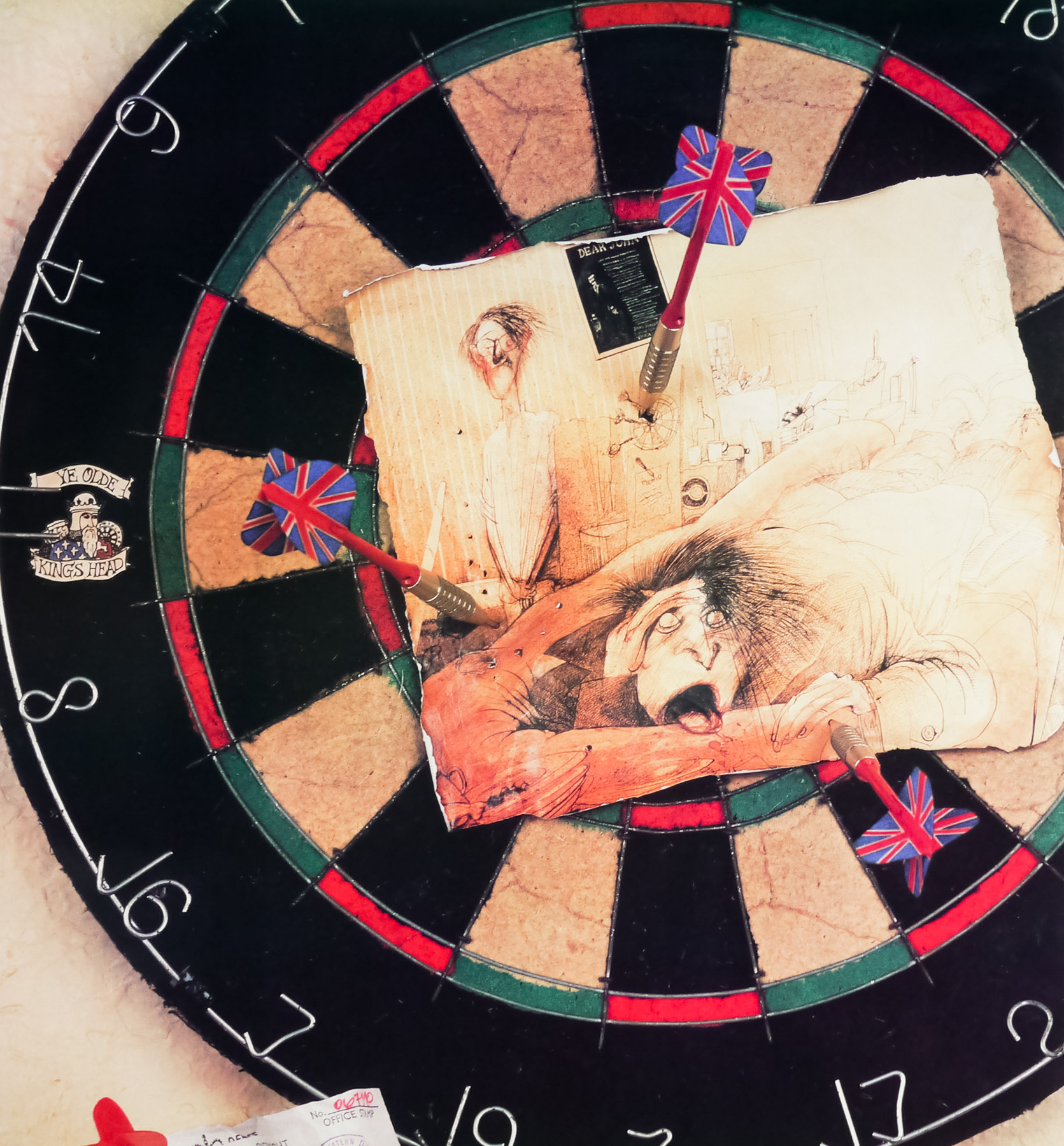
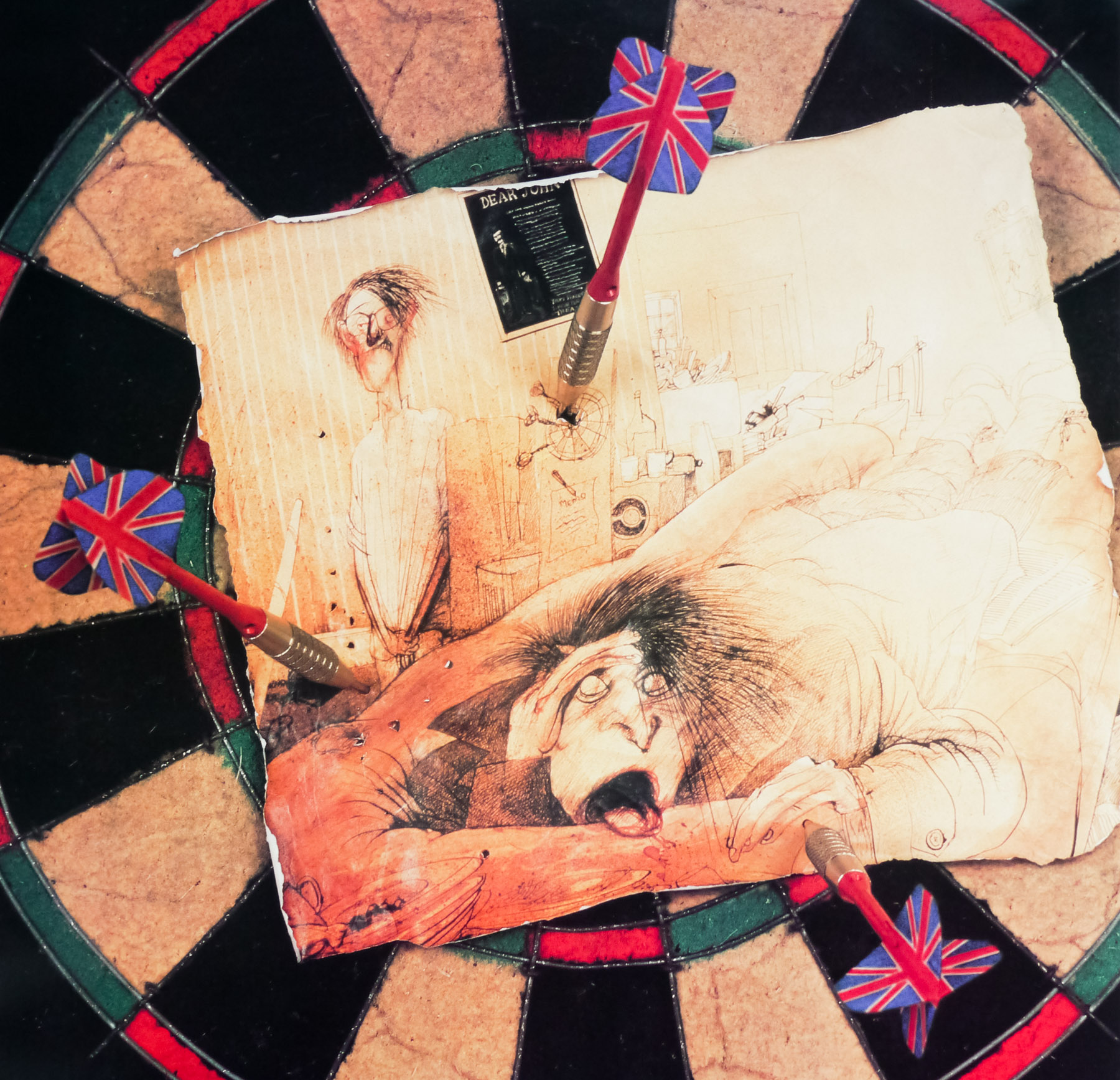
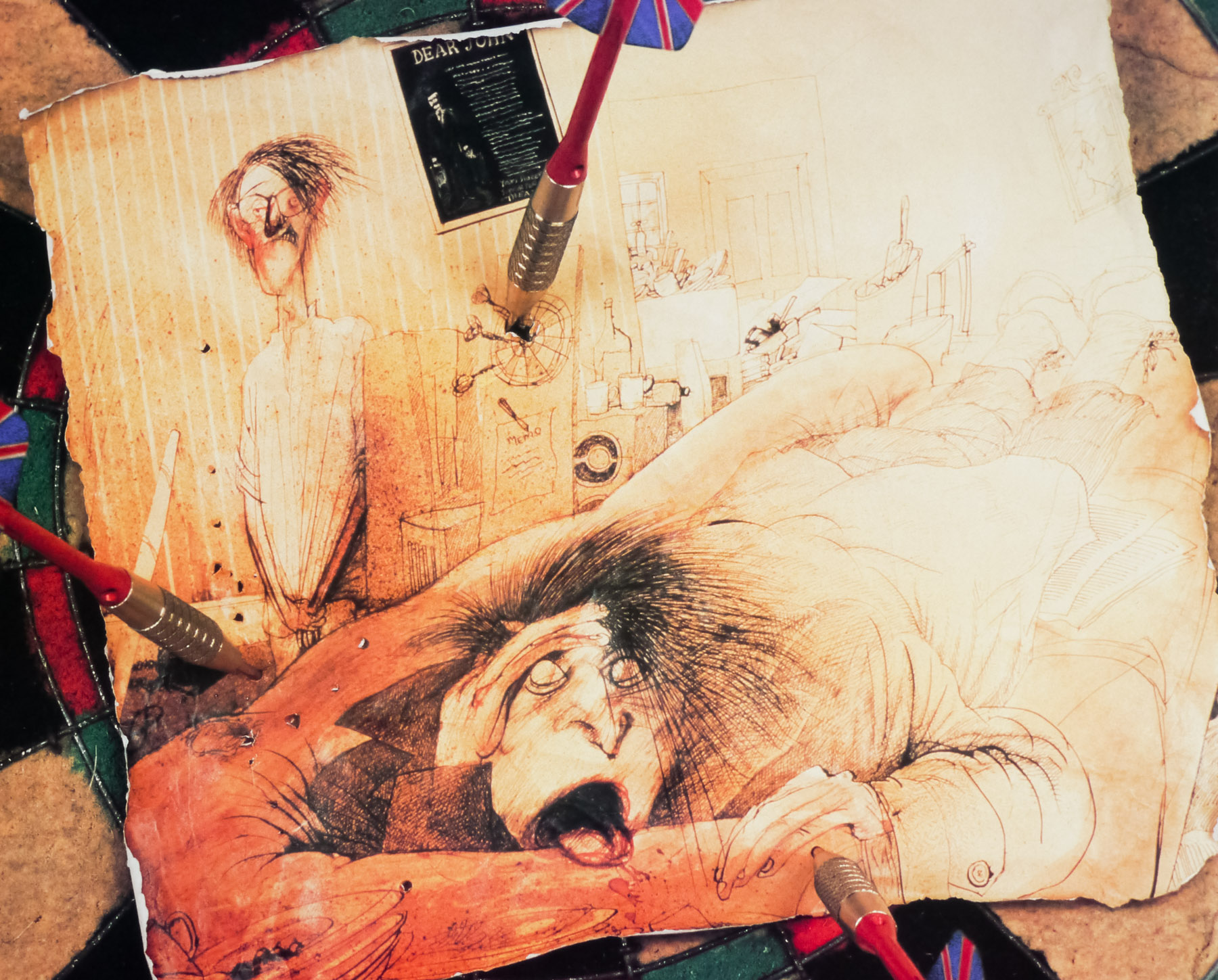
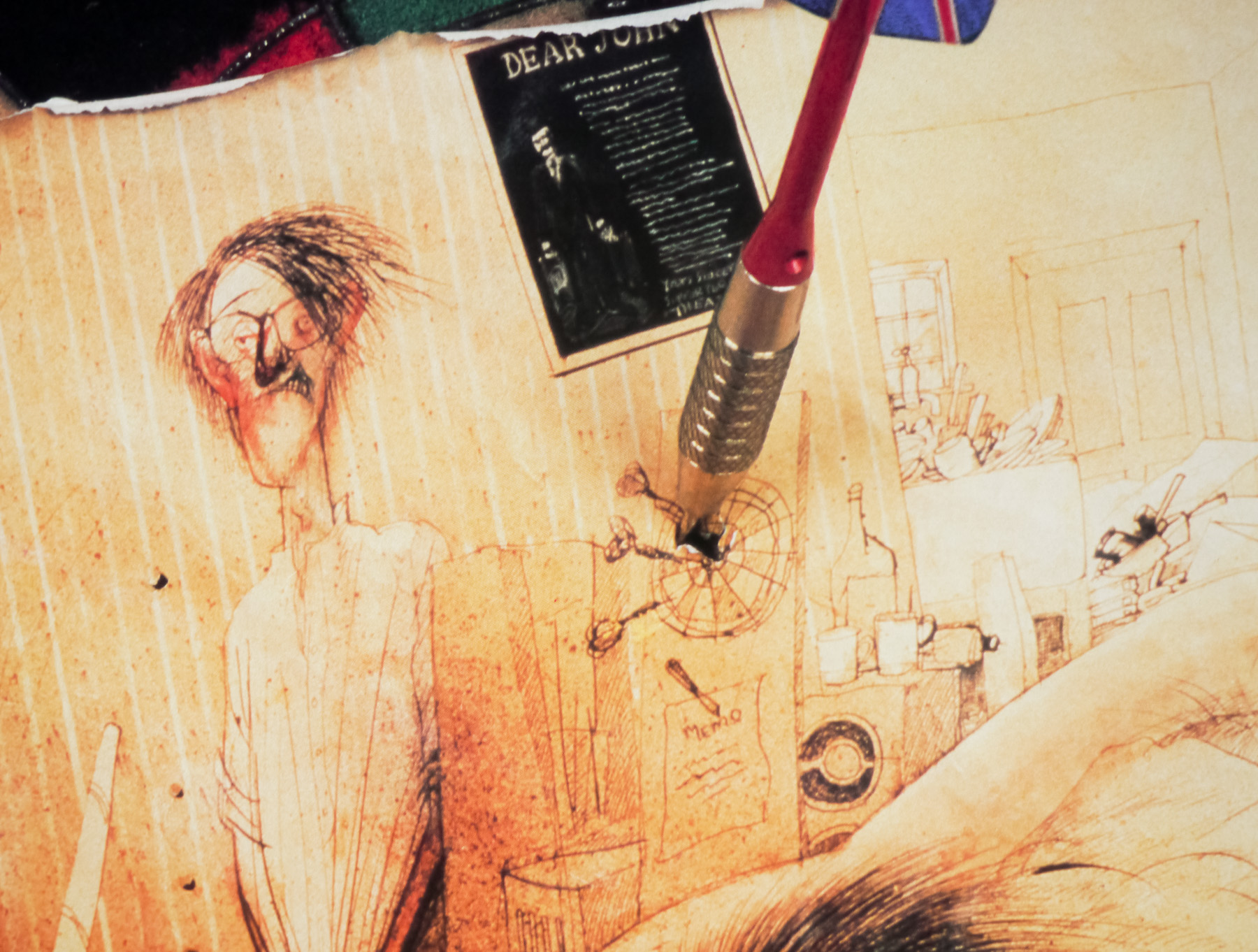
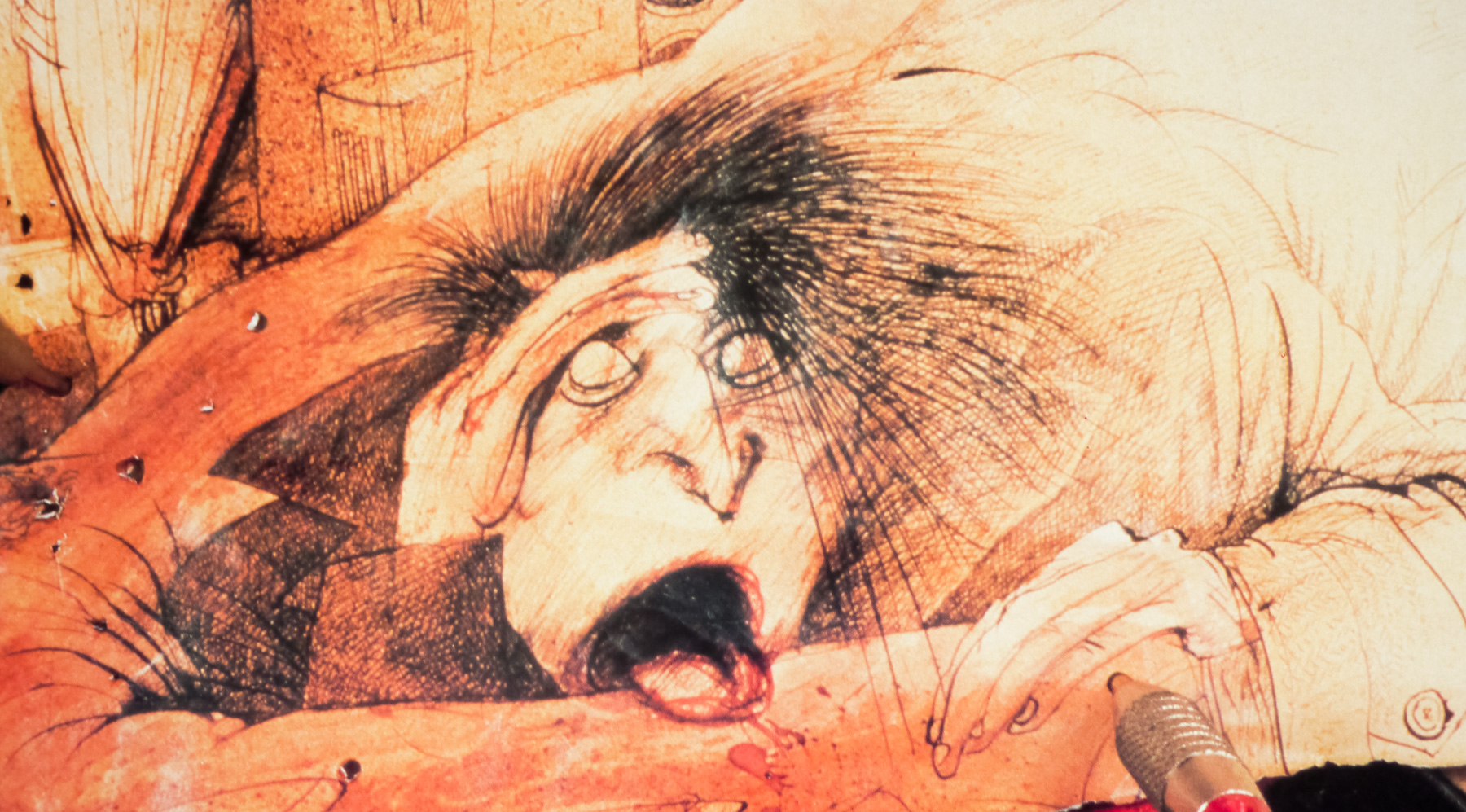
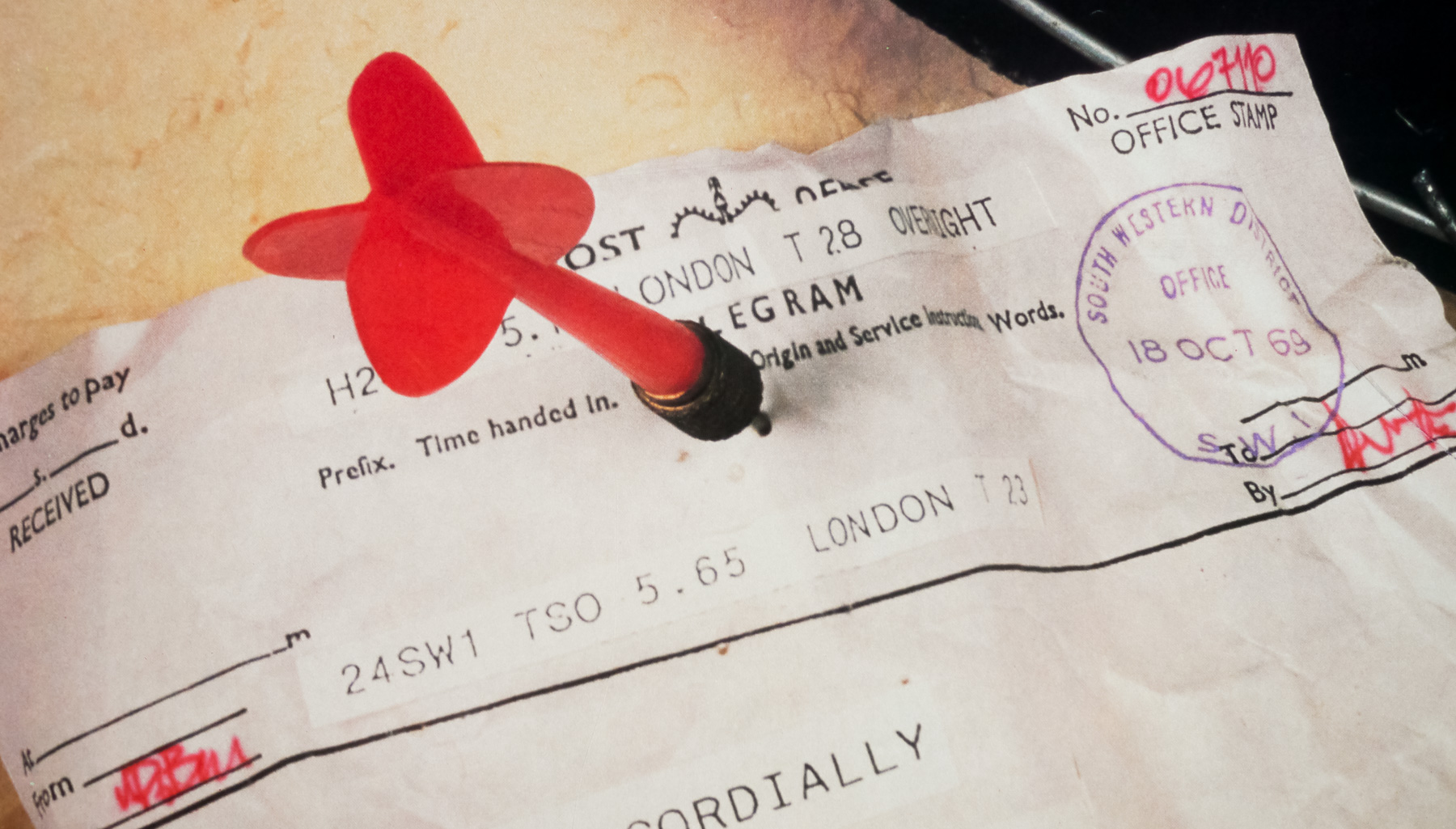
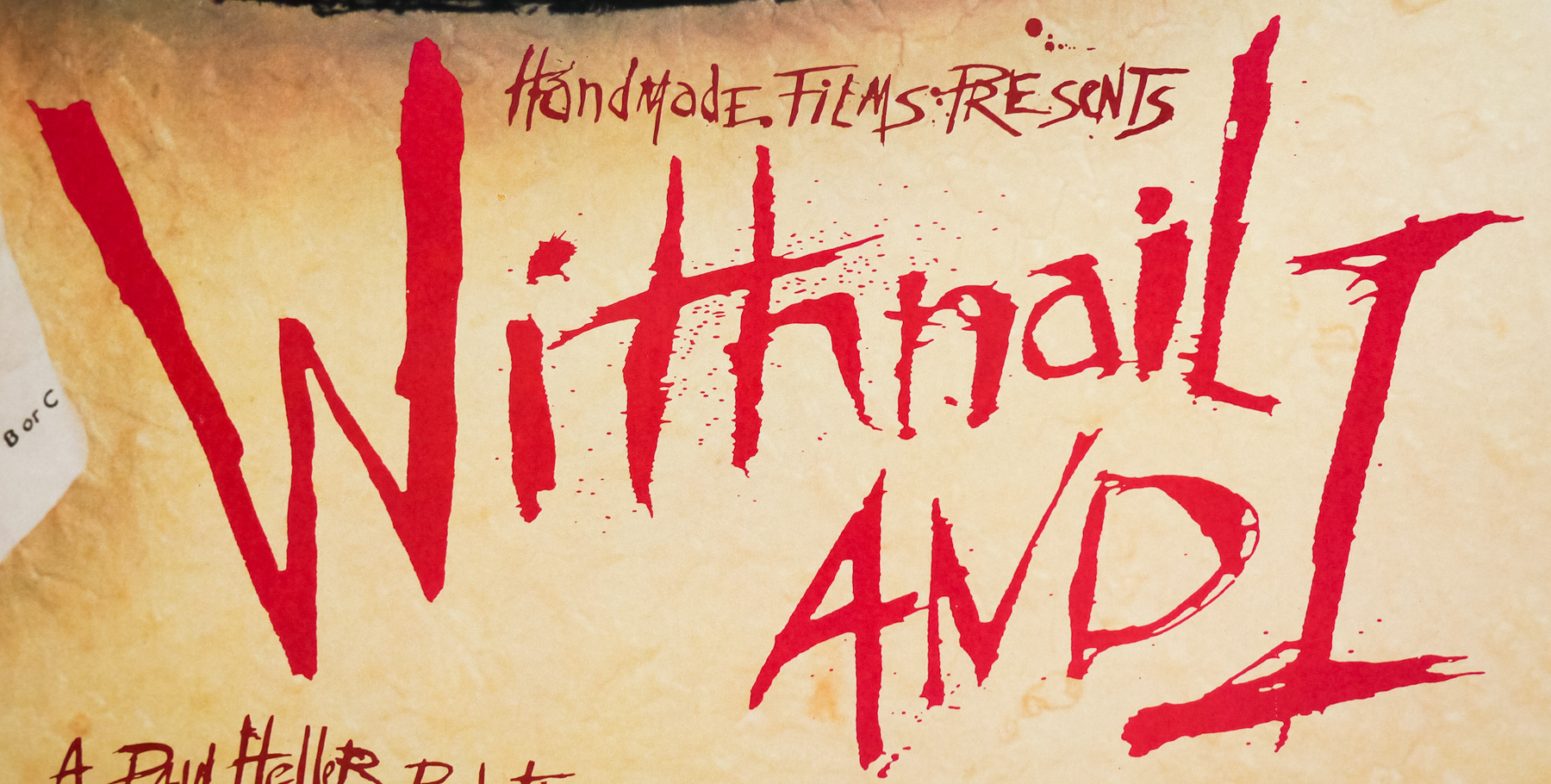
Bruce Robinson’s Withnail & I is my favourite British film and one of the best black comedies ever made. Based on the director’s own experiences of living in North London as an unemployed actor, the film stars Richard E. Grant in his debut film role as the titular Withnail and Paul McGann as ‘I’/Marwood. Tired of the mess in their squalid apartment and sick of the lack of job prospects, the pair decide to take advantage of the fact that Withnail’s eccentric uncle Monty (Richard Griffiths) has a cottage in the Lake District, and they plan a relaxing break in the country. After driving up North in Marwood’s battered Jaguar the pair find their time in the cottage is significantly less idyllic than they’d hoped, and the film follows their escapades as they  have to deal with inclement weather, a lack of supplies and a bunch of oddball locals. To make matters worse Monty arrives unannounced and takes a keen interest in Marwood.

The artwork on this American one sheet is by the famed British cartoonist and illustrator Ralph Steadman who is perhaps best known for his long-term collaboration with the late American author and journalist Hunter S. Thompson. Born in 1936, Steadman is a noted political cartoonist and has painted book covers for writers such as Ted Hughes and George Orwell, as well as editorial work for papers like The Independent. Steadman’s work with Thompson saw him accompanying the journalist on several field trips, which saw the birth of the famed Gonzo style of journalism. He illustrated the covers for both Fear and Loathing on the Campaign Trail ’72 and the classic Fear and Loathing in Las Vegas, which saw the creation of the stylised character of Thompson depicted with bucket hats, aviator glasses and a cigarette holder. The artist’s official website features a great biography and plenty of galleries of his work.

Steadman has illustrated several film posters, including Terry Gilliam’s brilliant adaptation of Fear and Loathing in Las Vegas and the film based on Thompson’s life Where the Buffalo Roam, as well as the recent documentary Gonzo. In addition to this one sheet, the artwork seen here was used on the superb British quad for the film.

Starflight One / quad / UK

27.06.13

Poster Poster
Title
Starflight One
AKA
Starflight: The Plane That Couldn't Land (USA - original title) | Airport 85 (Philippines)
Year of Film
1983
Director
Jerry Jameson
Starring
Lee Majors, Hal Linden, Lauren Hutton, Ray Milland, Gail Strickland, George DiCenzo, Tess Harper, Terry Kiser, Heather McAdam, Michael Sacks, Gary Bayer, Pat Corley, Robert Webber
Origin of Film
USA
Genre(s) of Film
Lee Majors, Hal Linden, Lauren Hutton, Ray Milland, Gail Strickland, George DiCenzo, Tess Harper, Terry Kiser, Heather McAdam, Michael Sacks, Gary Bayer, Pat Corley, Robert Webber,
Type of Poster
Quad
Style of Poster
--
Origin of Poster
UK
Year of Poster
1983
Designer
Eddie Paul
Artist
Josh Kirby
Size (inches)
30" x 39 14/16"
SS or DS
SS
Tagline
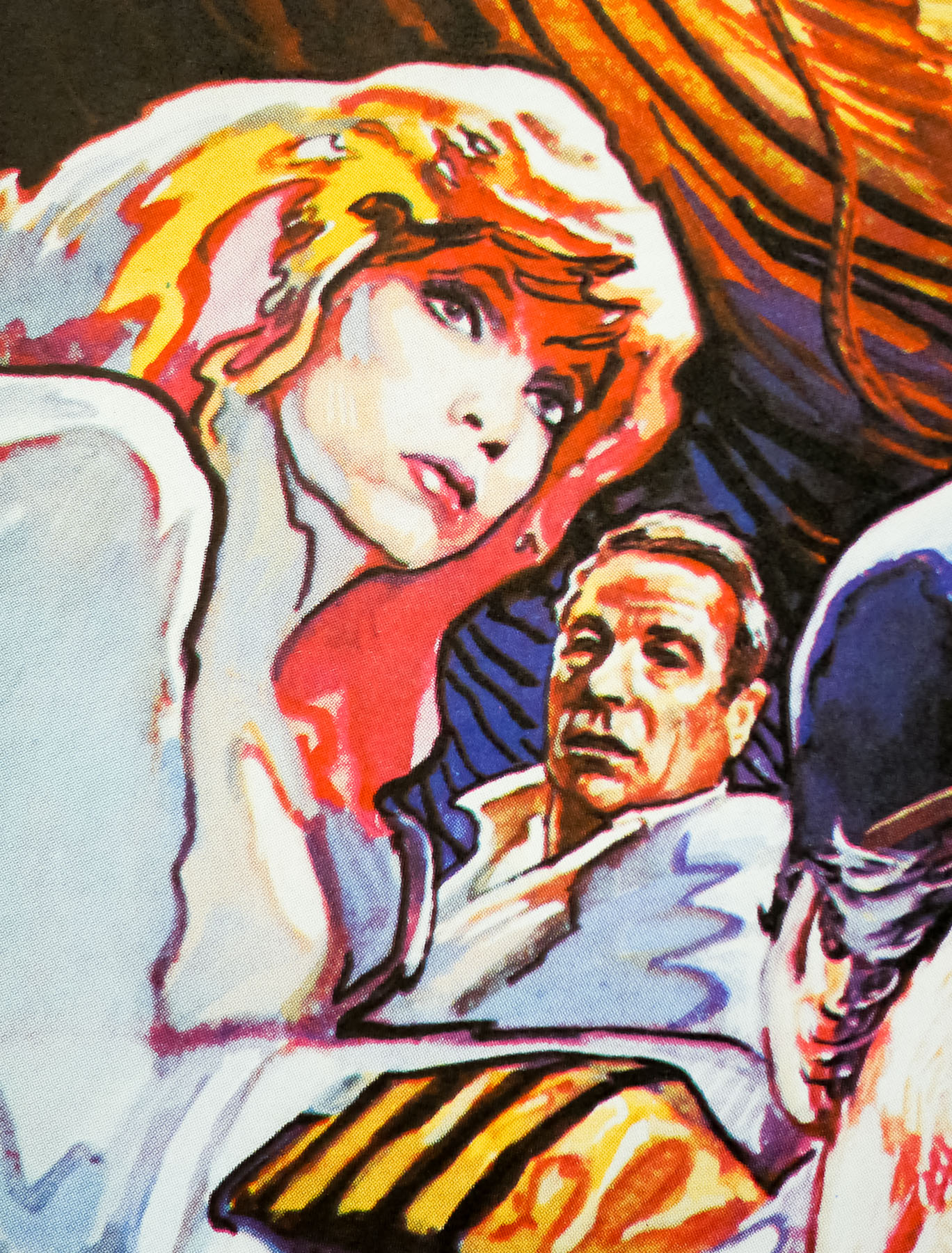
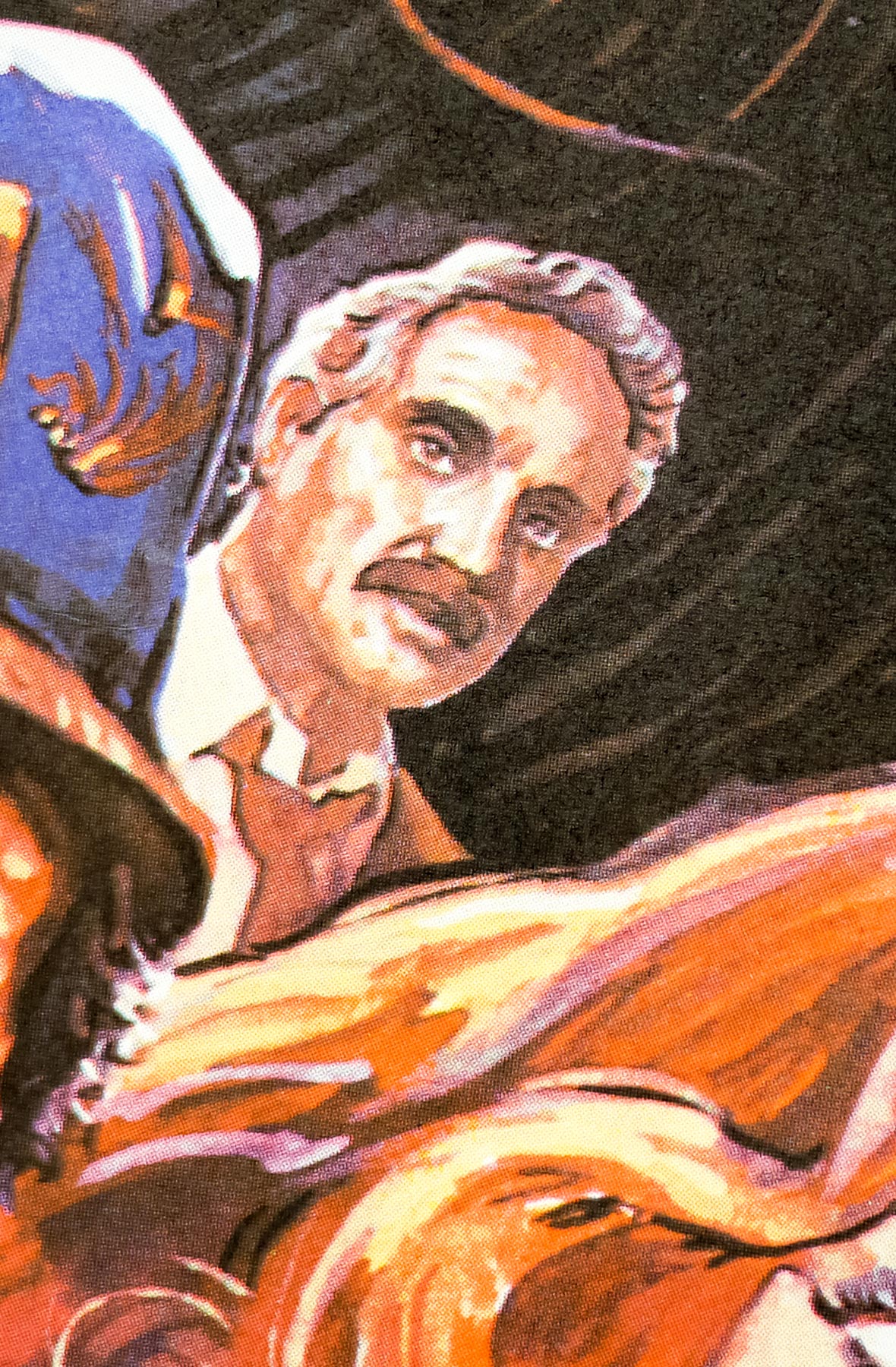
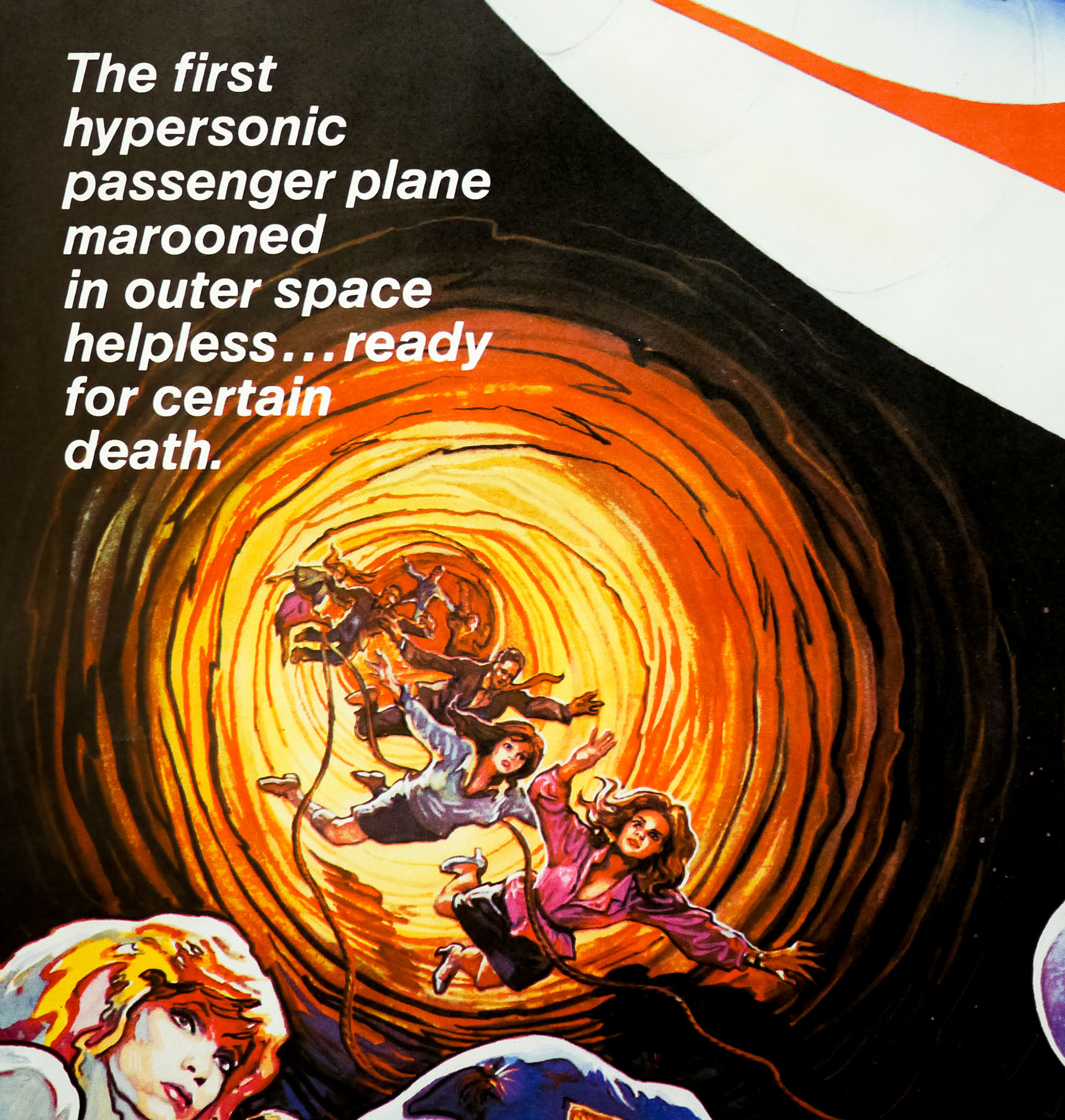
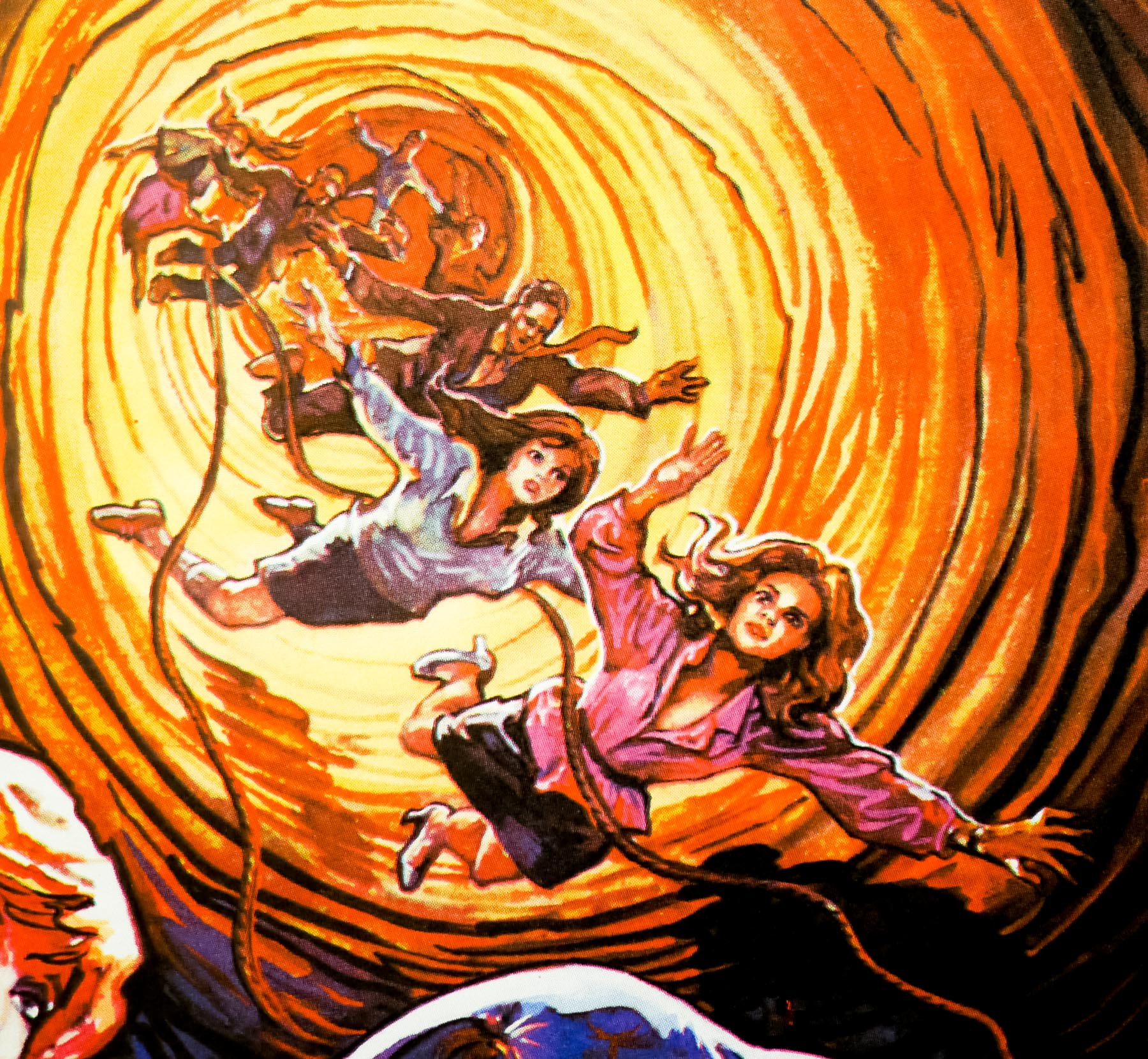
The first hypersonic passenger plane marooned in outer space helpless... ready for certain death

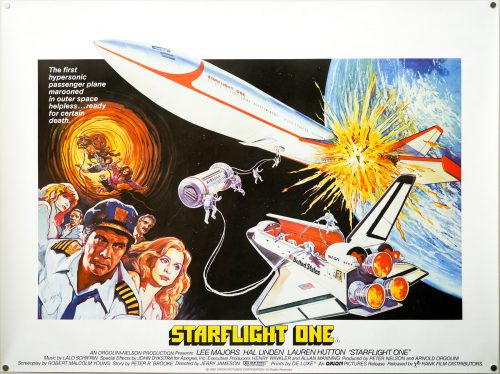
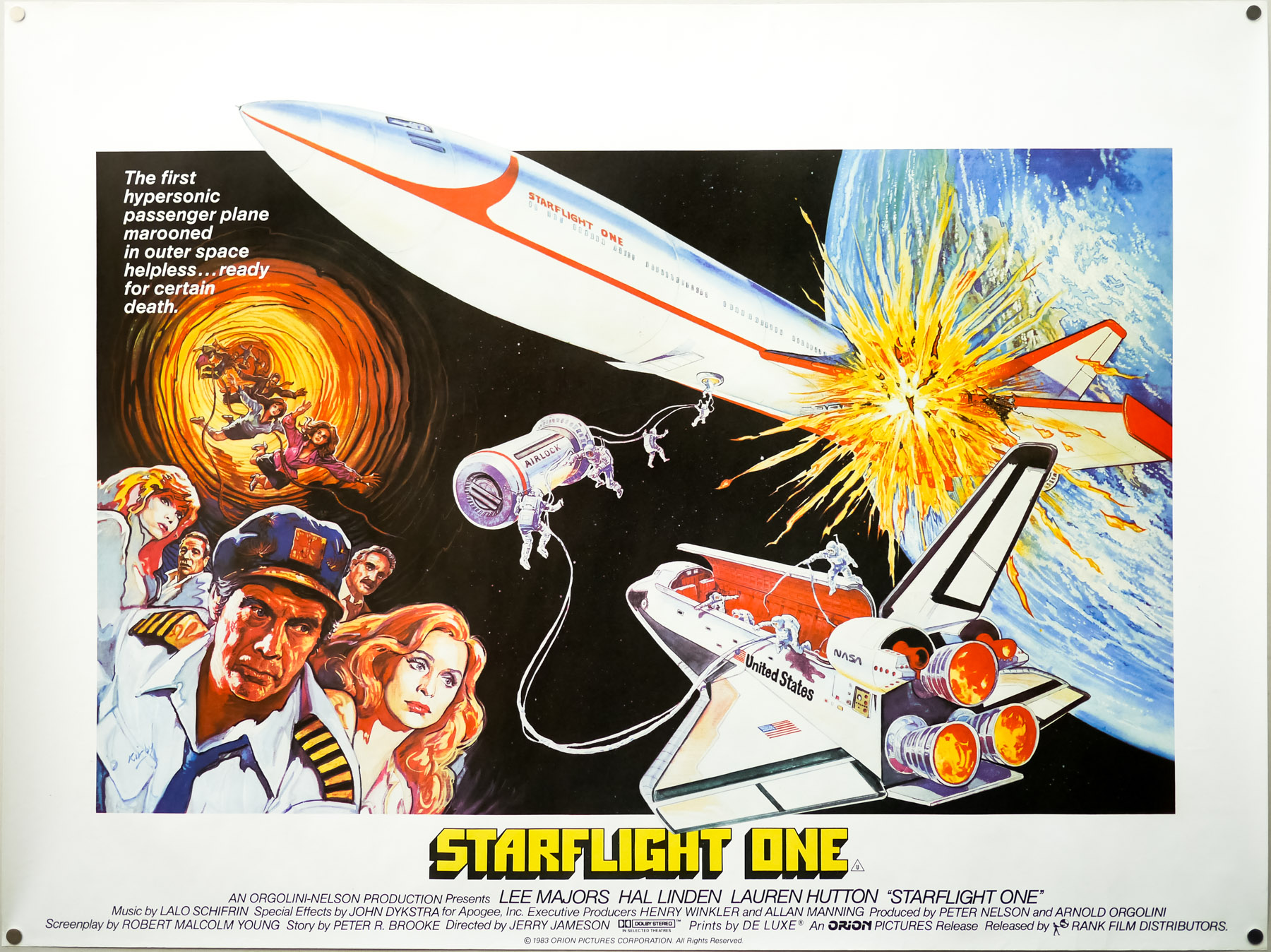
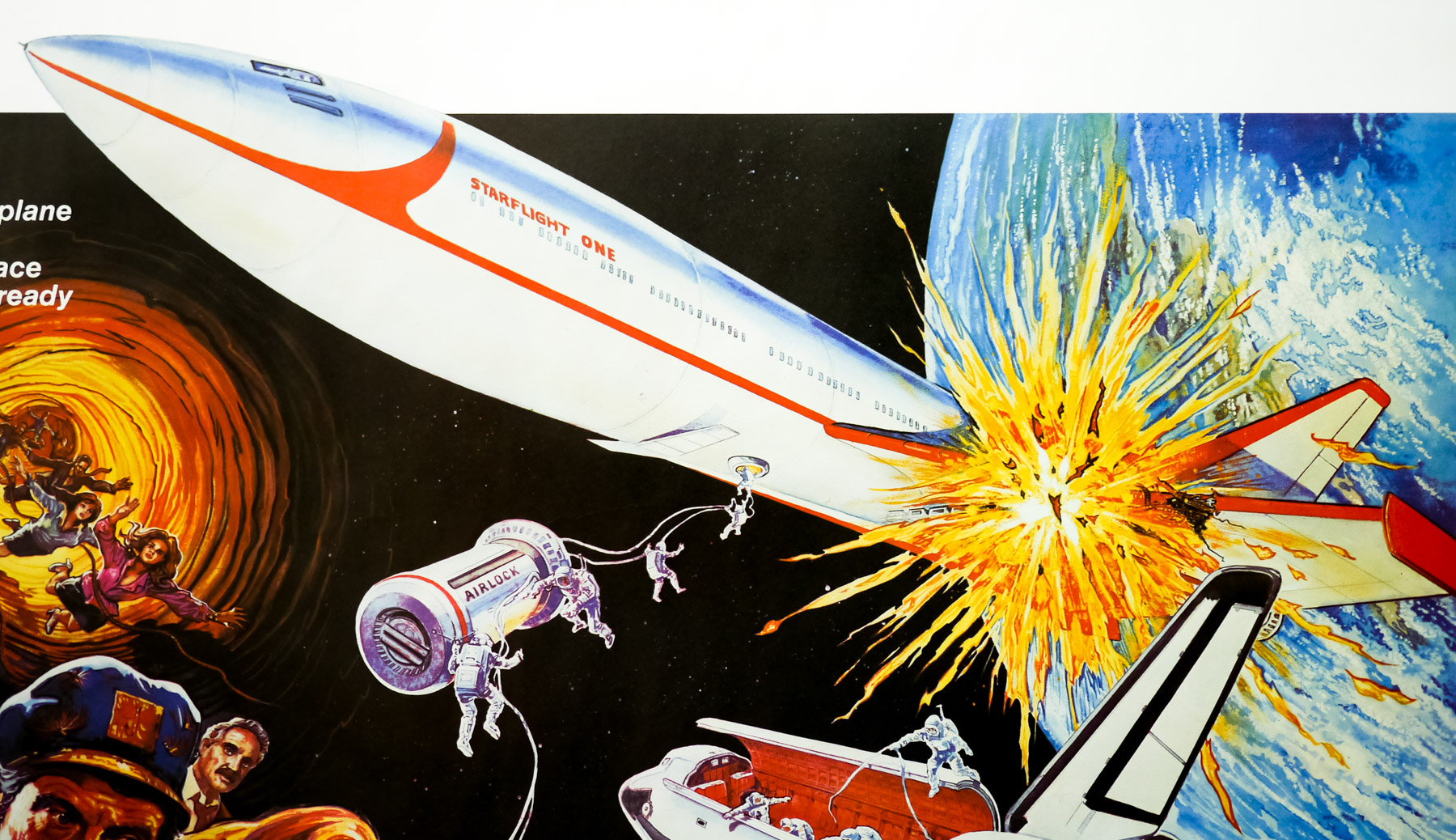
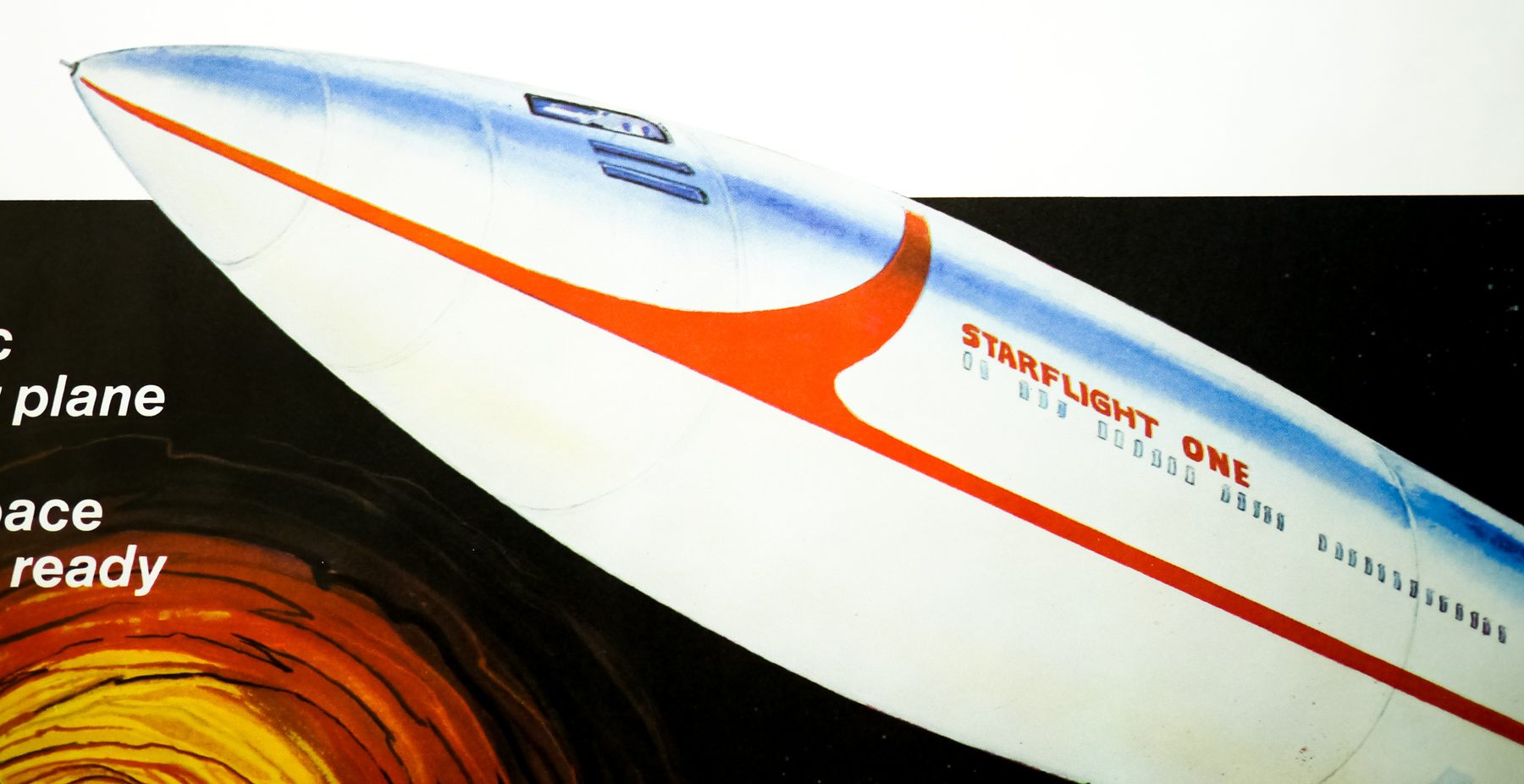
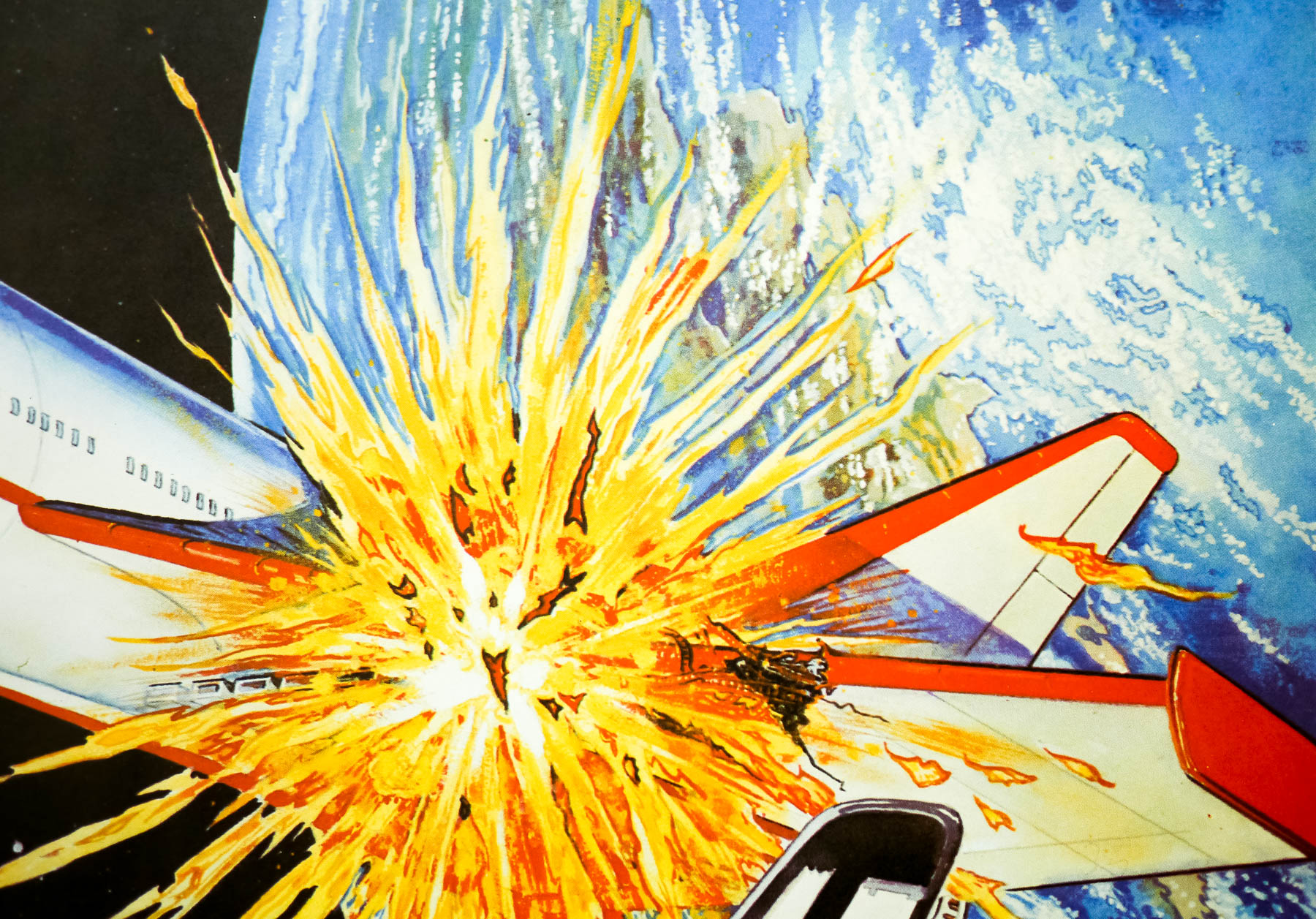
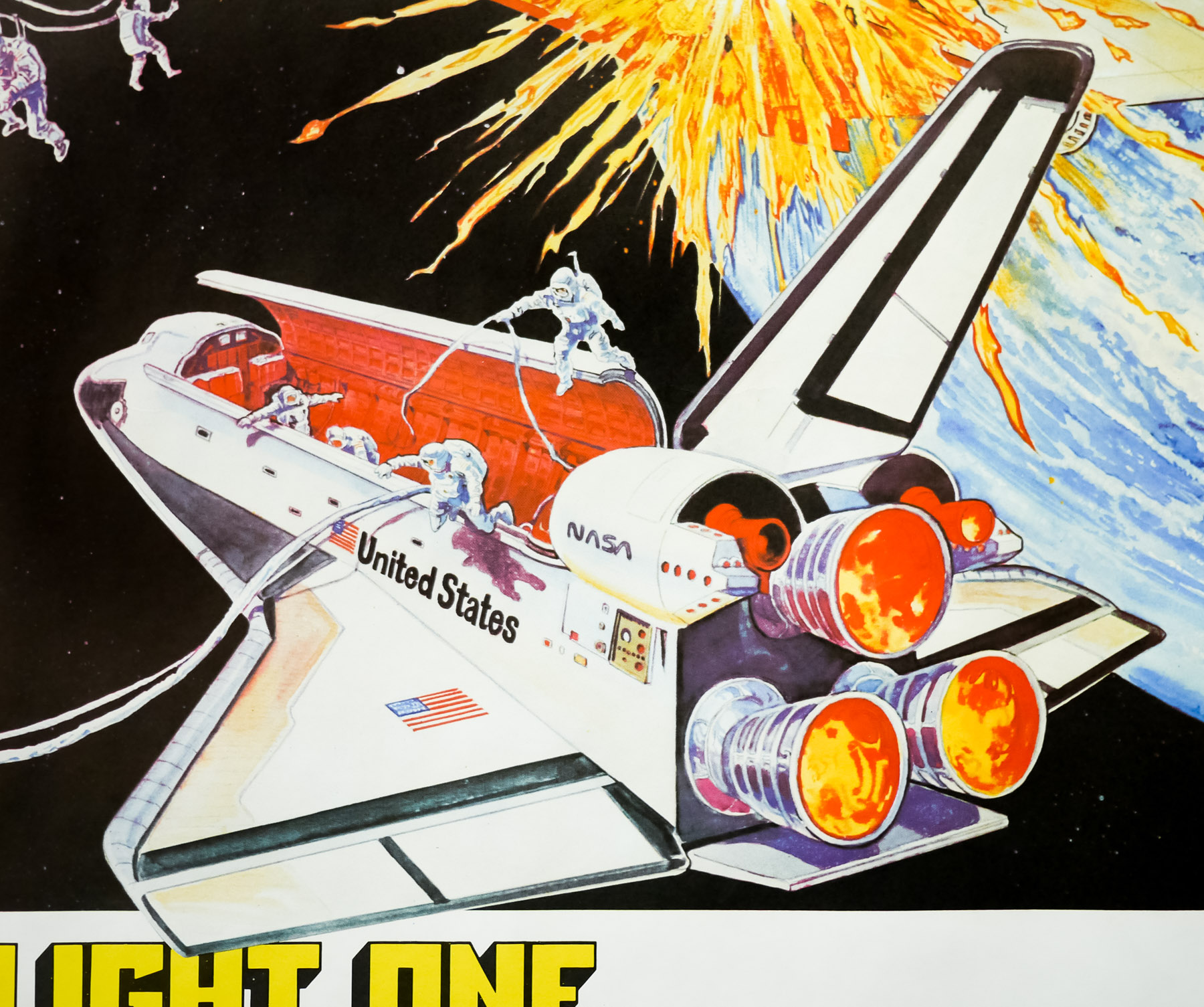
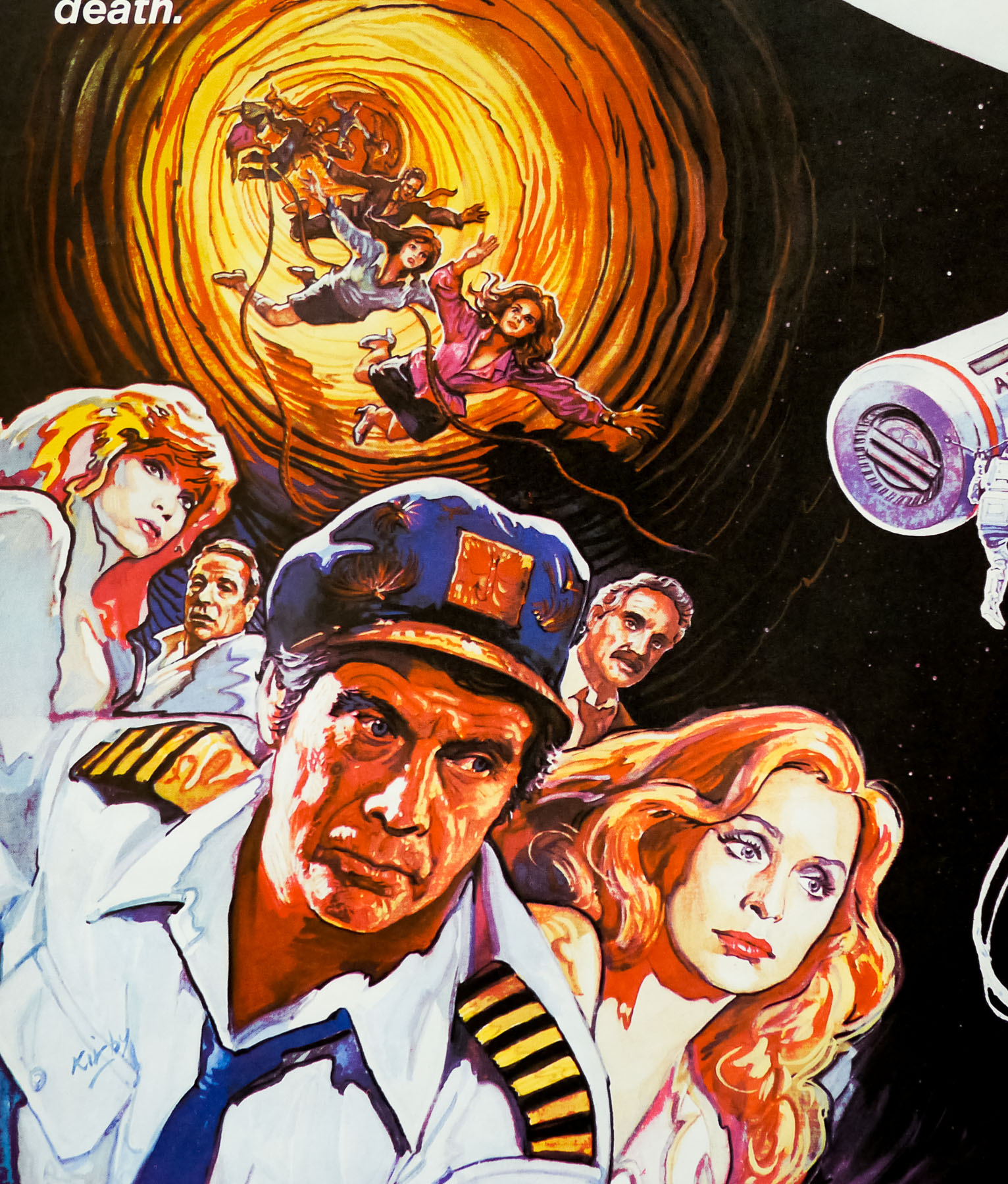
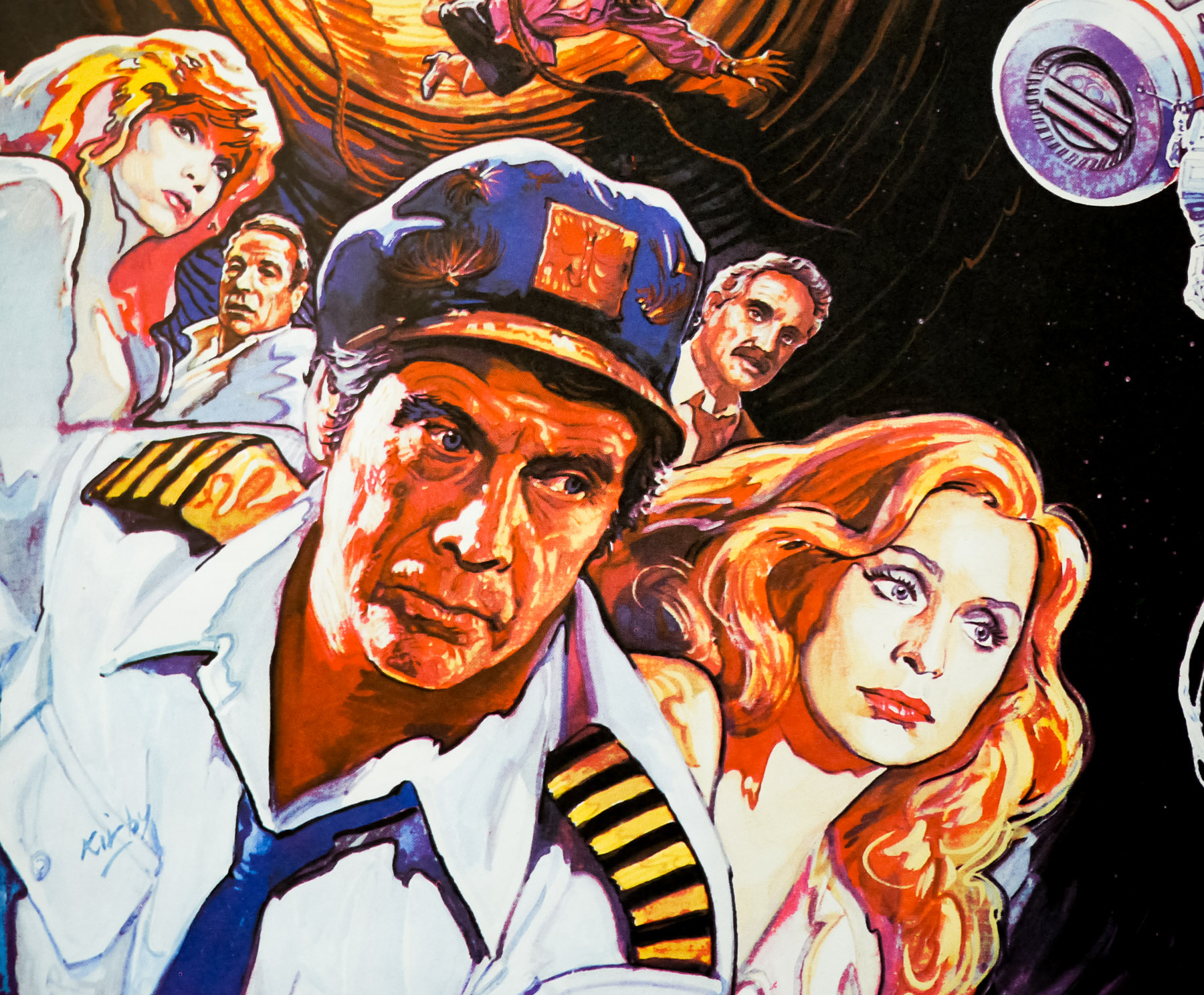
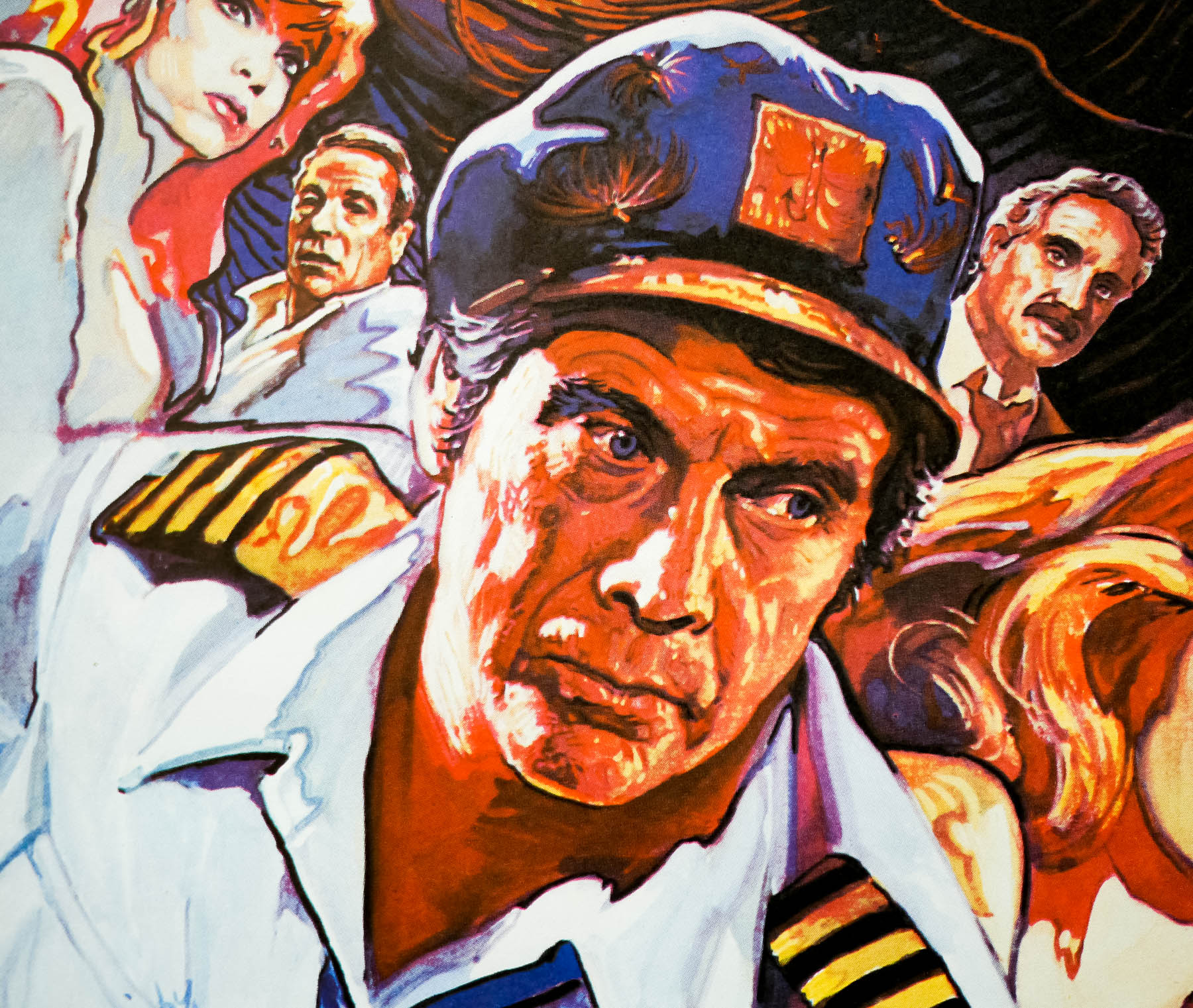
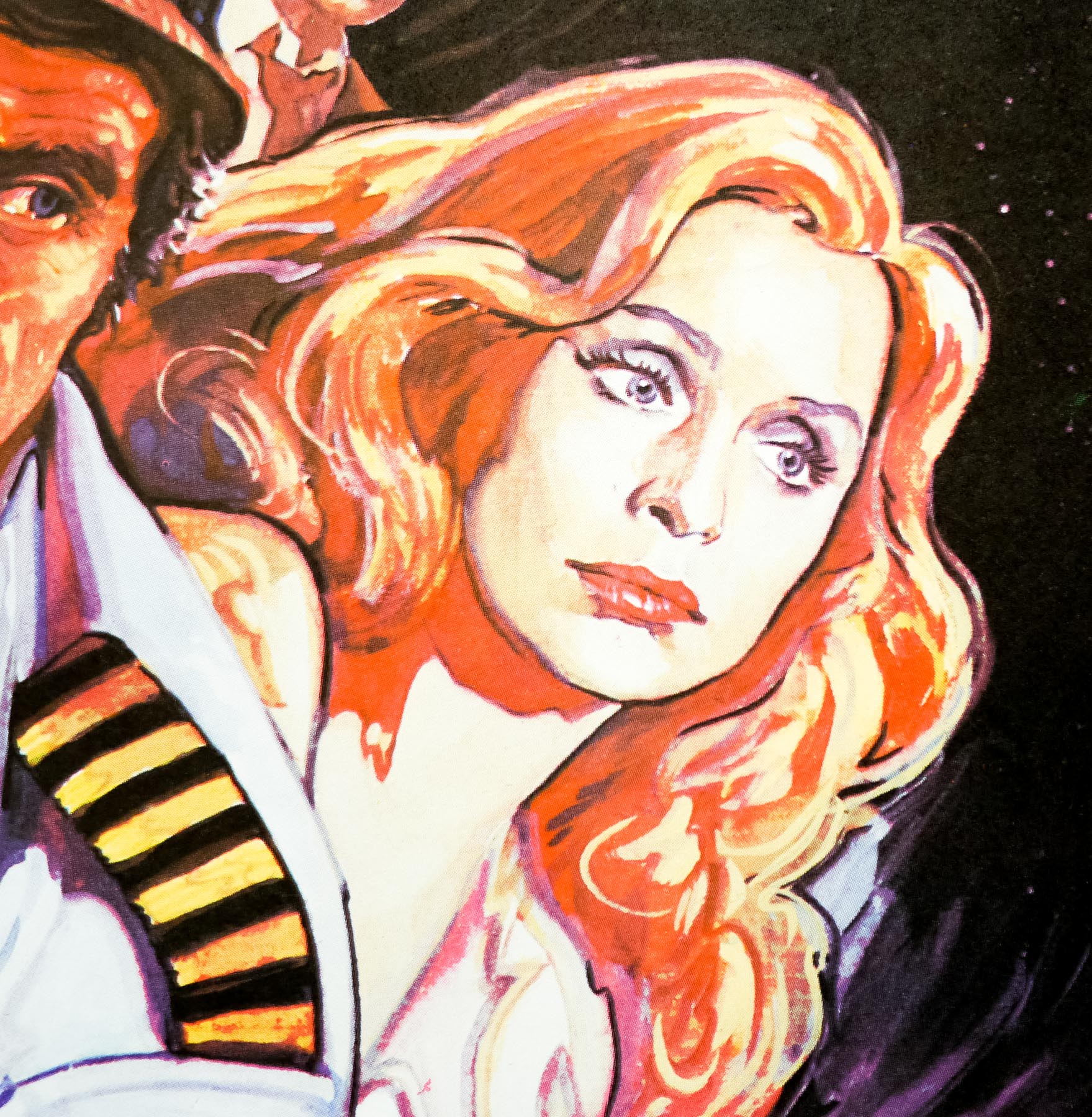
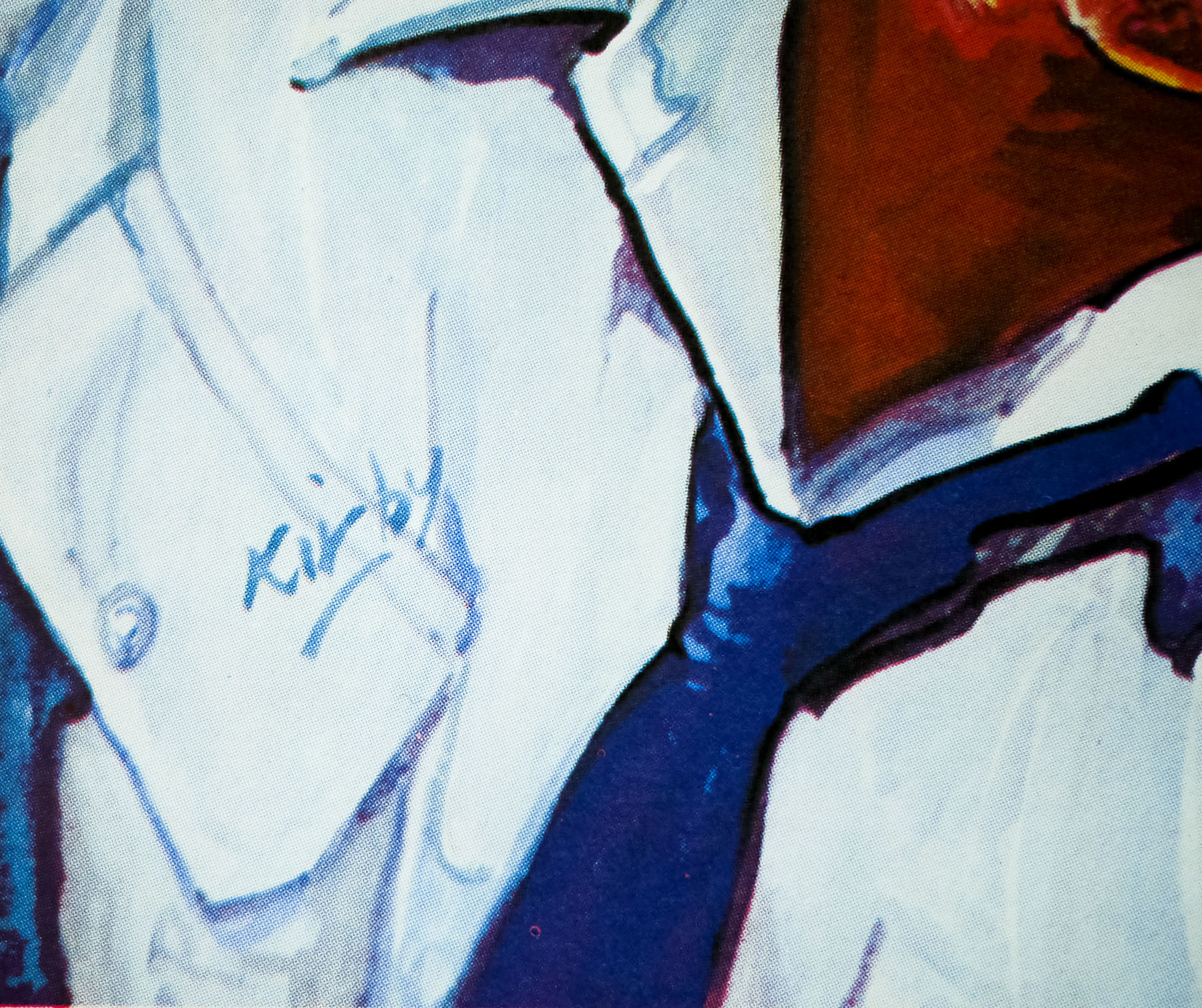
Superb artwork by the British artist Josh Kirby (not to be confused with the American comic book artist Jack Kirby) on this UK quad for the release of Starflight One, which was originally shown as a TV movie in the US with the considerably clunkier title of Starflight: The Plane That Couldn’t Land. Unquestionably the final hurrah for the ‘airplane in peril’ subgenre of the disaster movie that started with Airport in 1970 – Starflight’s director Jerry Jameson was actually at the helm of Airport ’77 – the film was unofficially dubbed Airport ’83. The world’s first ‘hypersonic’ passenger plane, which can make the flight from New York to Sydney in a mere four hours, sets off on its maiden voyage before an unexpected encounter with a rocket sends it up into space and on a decaying orbit around earth. The plane will burn up on atmospheric re-entry and the crew and a team from NASA must work out a way to rescue the passengers before time runs out. The film is, by all accounts, significantly less interesting than that premise makes it sound.

Josh Kirby was born Ronald William Kirby in the town of Waterloo, Lancashire in 1928 and went on to study at Liverpool City School of Art from 1943 to 1949. He gained the nickname Josh after a fellow pupil noticed how similar his early work was to the painting of Joshua Reynolds. As detailed in Sim Branaghan’s must-own book British Film Posters: An Illustrated History, Kirby moved down to London soon after graduating and secured a job at Pulford Publicity, an agency that specialised in the creation of film marketing materials. Kirby worked on a number of quads for Pulford publicity during the 1950s whilst also painting posters for a film company in Paris.

He also began work on book jackets for the likes of Pan Publicity, which included the first paperback edition of Ian Fleming’s Moonraker in 1956, and eventually turned out over 400 of them. In the 1970s Kirby began freelancing for the film publicity agency FEREF, working with the likes of the designer Eddie Paul on a number of posters, including one for the 1972 film Henry VIII and his Six Wives. He worked on this superb illustration for Monty Python’s Life of Brian in 1979 but it was unused, apparently because several of the character illustrations were considered too risqué for cinema-goers.

Kirby’s preferred genres were unquestionably sci-fi and fantasy and much of his best-loved work was in this area, including the UK quads for The Beastmaster, Krull and probably most famously Return of the Jedi, for which he created a wonderfully colourful montage of characters and vehicles from the film. When the market for poster illustration dried up towards the middle of the 1980s, Kirby began what would prove to be a long relationship working on the brilliantly detailed book covers for author Terry Pratchett’s Discworld series of novels. Josh Kirby passed away unexpectedly in his sleep at his home in Norfolk in October 2001 leaving behind an incredible body of work and a legion of fans.

The Running Man / quad / UK

25.10.13

Poster Poster
Title
The Running Man
AKA
L'implacabile [The remorseless] (Italy)
Year of Film
1987
Director
Paul Michael Glaser
Starring
Arnold Schwarzenegger, Richard Dawson, María Conchita Alonso, Yaphet Kotto, Jim Brown, Jesse Ventura, Sven-Ole Thorsen, Erland Van Lidth, Marvin J. McIntyre, Mick Fleetwood, Gus Rethwisch
Origin of Film
USA
Genre(s) of Film
Arnold Schwarzenegger, Richard Dawson, María Conchita Alonso, Yaphet Kotto, Jim Brown, Jesse Ventura, Sven-Ole Thorsen, Erland Van Lidth, Marvin J. McIntyre, Mick Fleetwood, Gus Rethwisch,
Type of Poster
Quad
Style of Poster
--
Origin of Poster
UK
Year of Poster
1987
Designer
Unknown
Artist
--
Size (inches)
30 2/16" x 40"
SS or DS
SS
Tagline
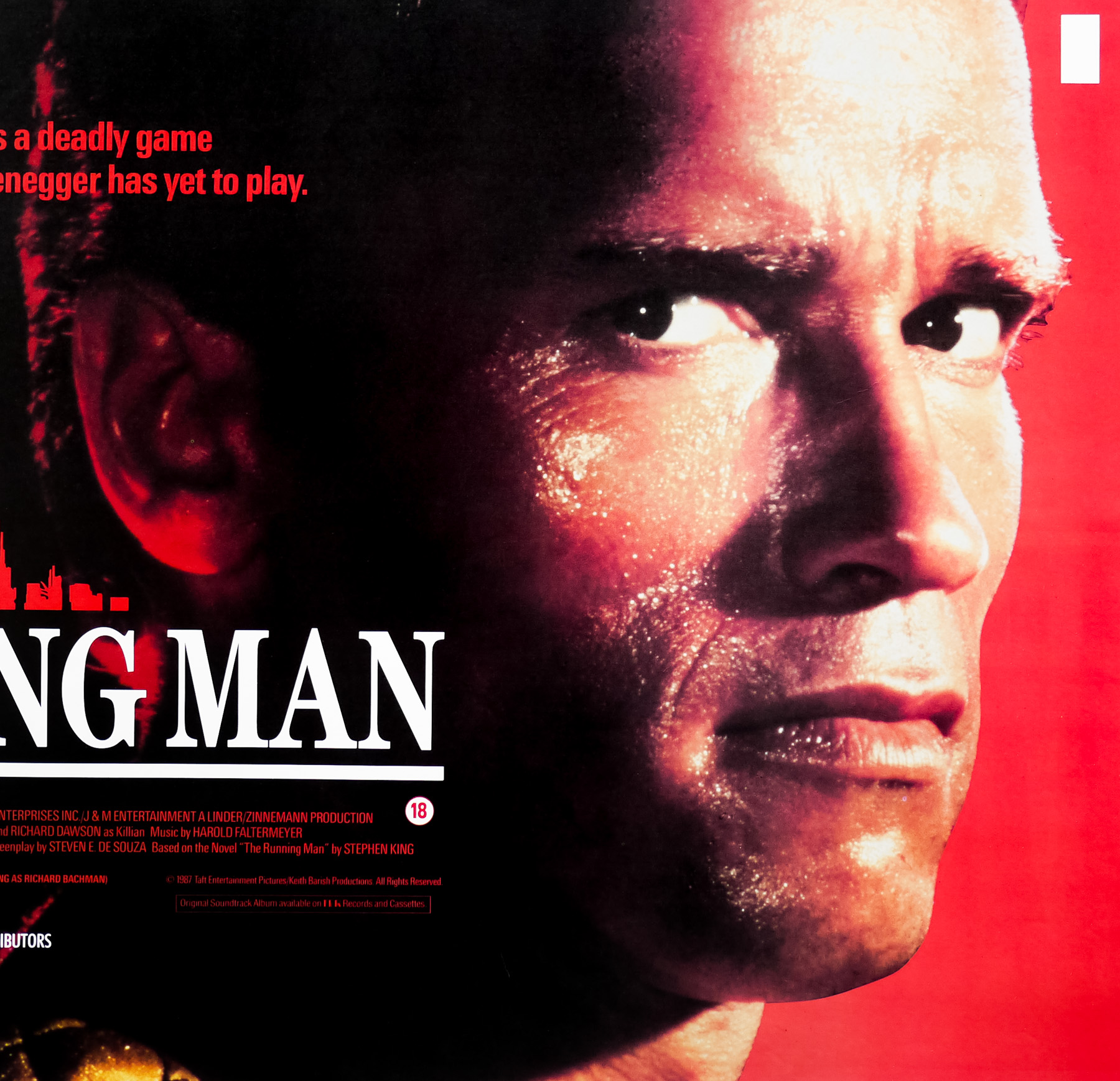
It is the year 2019. The "Running Man" is a deadly game no one has ever survived. But... Schwarzenegger has yet to play.

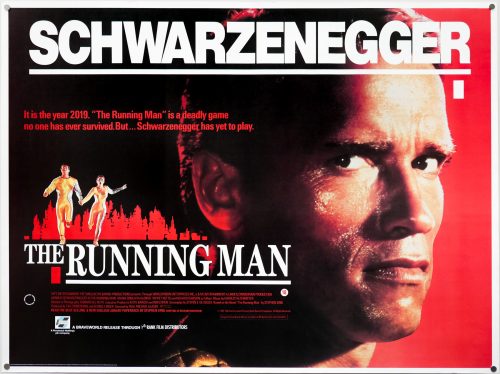
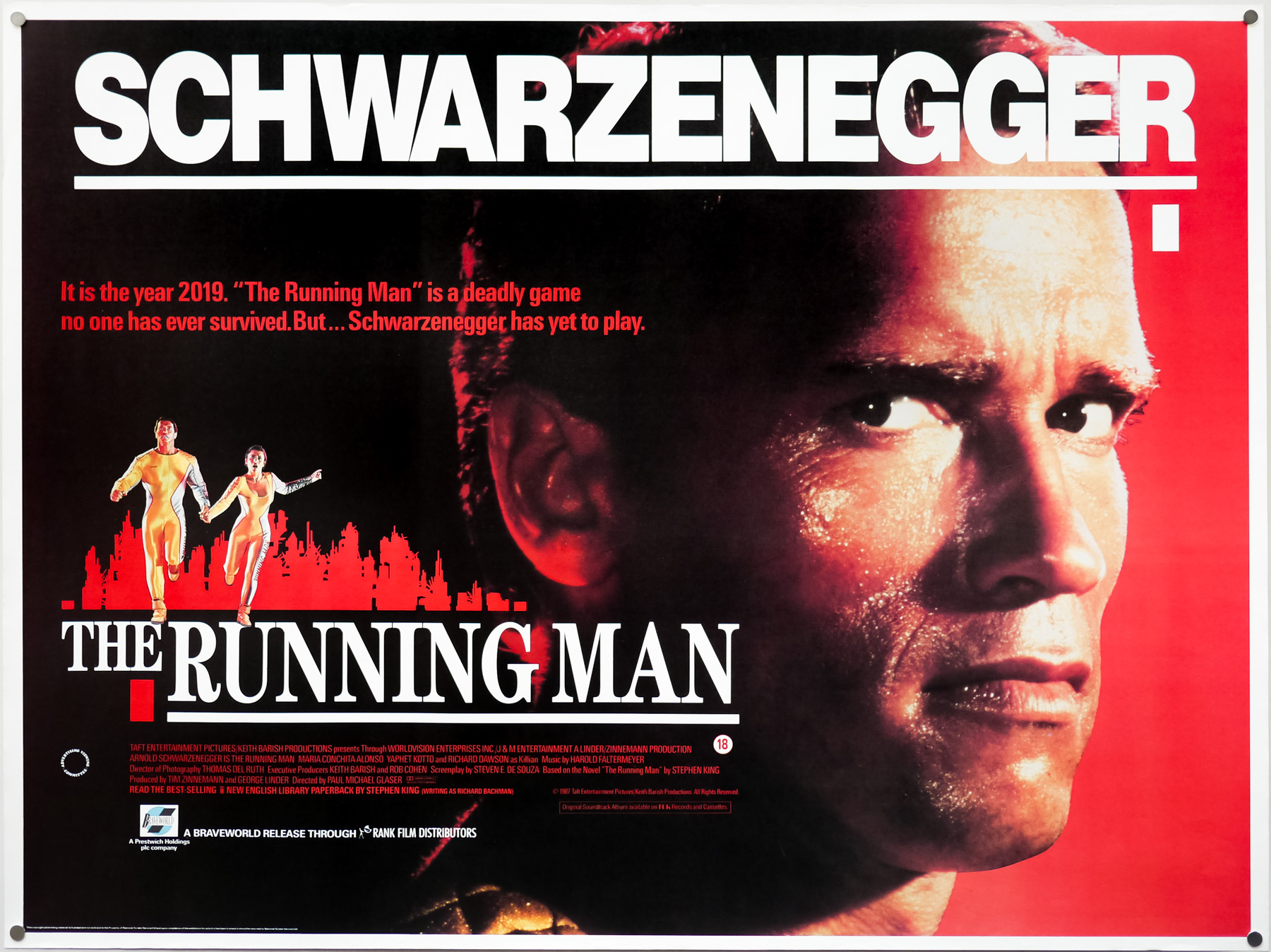
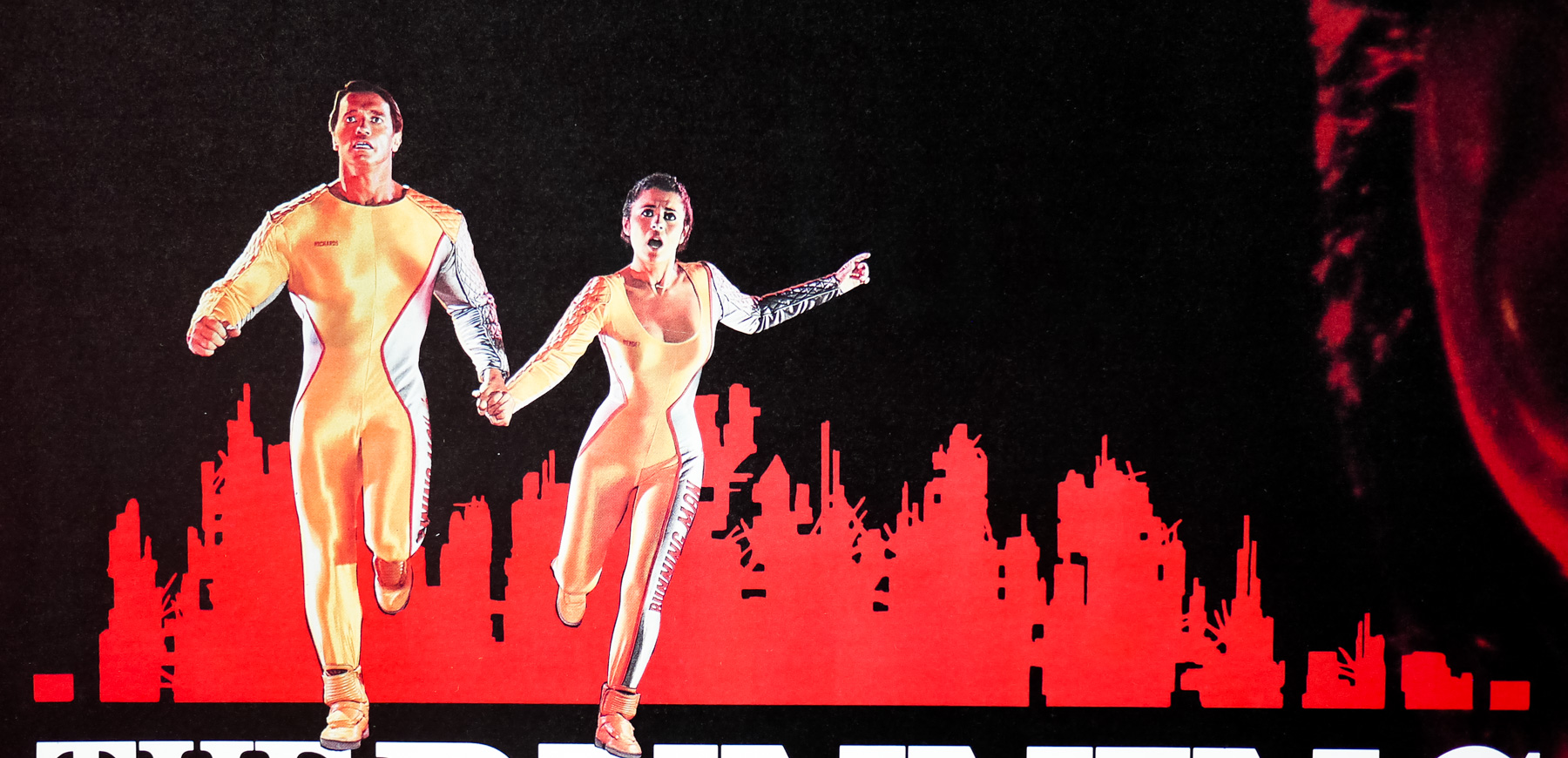
In the mid 1980s there were few actors who could get away with having their head dominate a film poster, and fewer still who could couple that with their surname in giant letters spread across the entirety of a 40″ wide poster, but then there was Arnold Schwarzenegger and this British quad for the 1987 film The Running Man. Set in the dystopian future of 2017 where the world’s economy is in ruins and America is a totalitarian police state, the populace is pacified by the broadcasting of a series of gameshows that see convicted prisoners fighting for their lives across various kinds of formats. The most popular of these shows is the titular Running Man in which the unwilling participants must try to survive in a closed-off area against an onslaught of vicious killers with catchy names and different methods of dispatching their prey.

Ben Richards (Schwarzenegger) is a former police helicopter pilot who was wrongly convicted of massacring a crowd of people and sent to prison. After escaping several months later with a pair of fellow convicts, Richards is preparing to flee the country but is turned into the authorities by Amber Mendez (Maria Conchita Alonso), a composer for the network that he finds living in his brother’s apartment. He is taken to the Running Man studio where he meets the ruthless show host Damon Killian (a memorable turn by the late Richard Dawson) who informs him that unless he takes part in the show his two friends will be sent in his place. After agreeing to get dropped into the play zone, Richards finds that Killian has tricked him and has also sent his pals into the arena. The trio must face-off against the killers whilst trying to work out how to escape the arena and put an end to the show once and for all. When Amber looks a little too closely at the reasons for Ben Richards’ incarceration, she too is captured and dropped into the Running Man arena (she’s pictured next to Arnie on this quad).

Ably directed by Paul Michael Glaser, best known for his acting career – he was Starsky in the classic 1970s cop show Starsky and Hutch – the film is well paced and features several memorable scenes, whilst not holding back on the the violence and gore. The bad guy killers, including Sub Zero, Fireball and Captain Freedom and particularly memorable. It’s definitely a highlight of the Austrian Oak’s filmography, although it was released the same year as the incredible Predator, which is unquestionably the better film. Note that the tagline on this British quad fudges the date that the film is set – 2019 instead of the correct 2017.

Trouble Man / B2 / Japan

12.02.14

Poster Poster
Title
Trouble Man
AKA
Fureur Noire [Black Fury] (France)
Year of Film
1972
Director
Ivan Dixon
Starring
Robert Hooks, Paul Winfield, Ralph Waite, William Smithers, Paula Kelly, Julius Harris, Bill Henderson, Wayne Storm, Akili Jones, Vince Howard
Origin of Film
USA
Genre(s) of Film
Robert Hooks, Paul Winfield, Ralph Waite, William Smithers, Paula Kelly, Julius Harris, Bill Henderson, Wayne Storm, Akili Jones, Vince Howard,
Type of Poster
B2
Style of Poster
--
Origin of Poster
Japan
Year of Poster
1973
Designer
Unknown
Artist
--
Size (inches)
20 6/16" x 28 12/16"
SS or DS
SS
Tagline
--

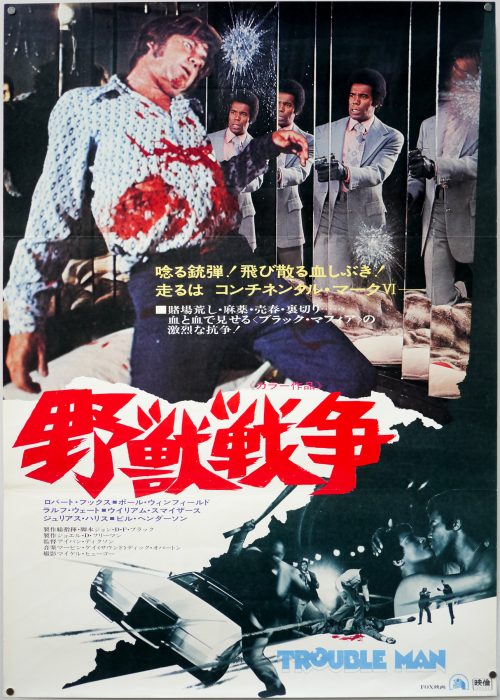
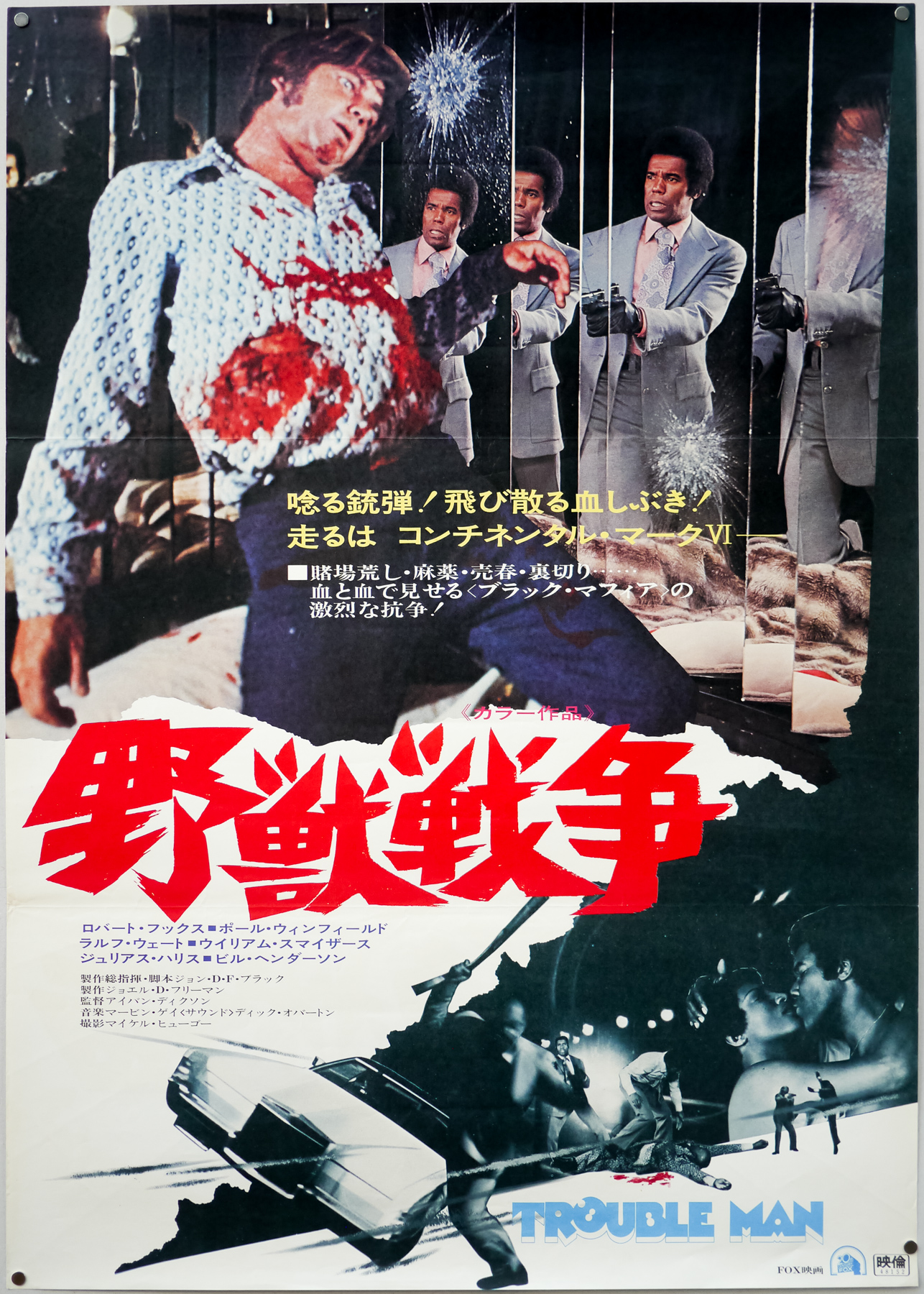
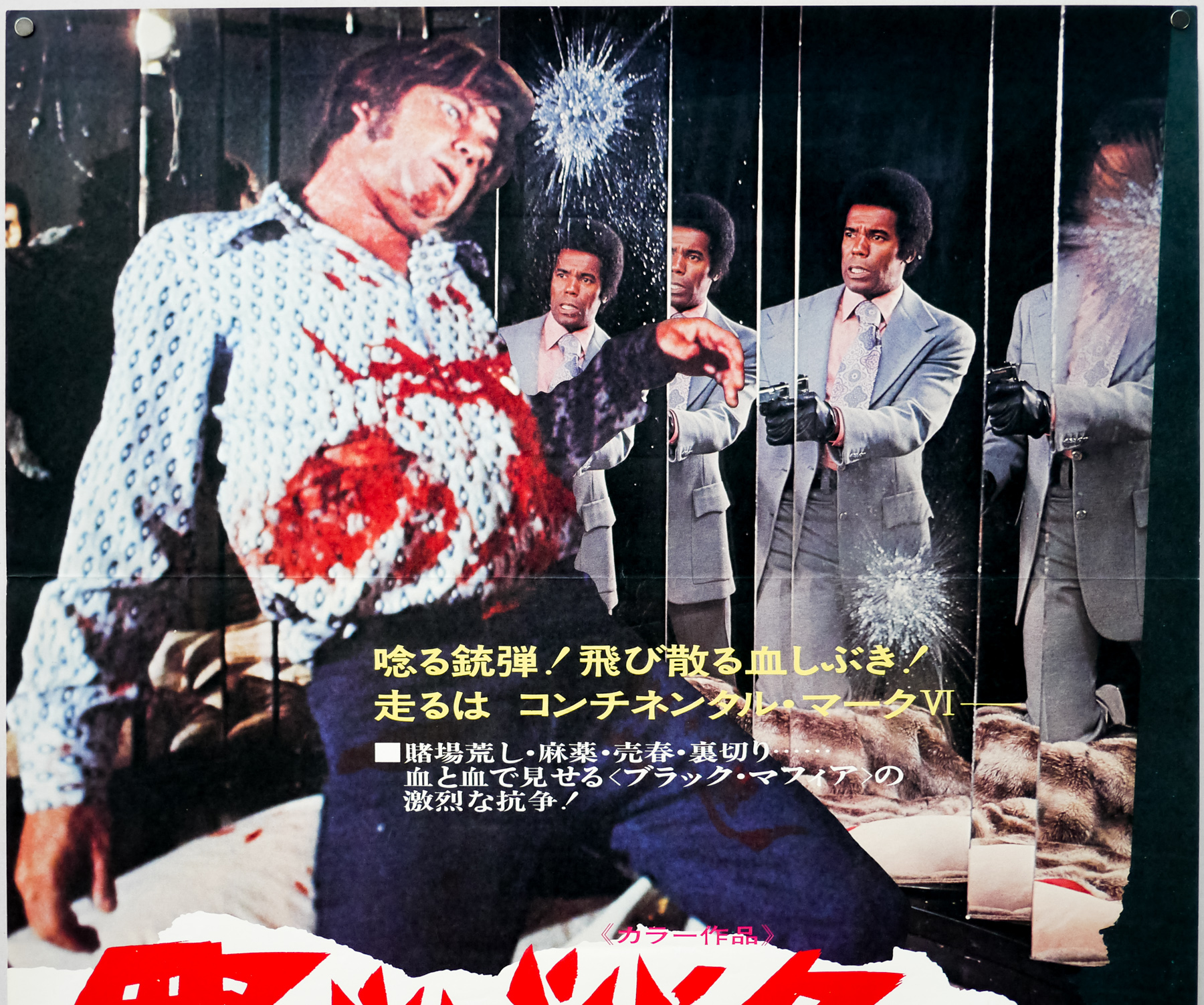
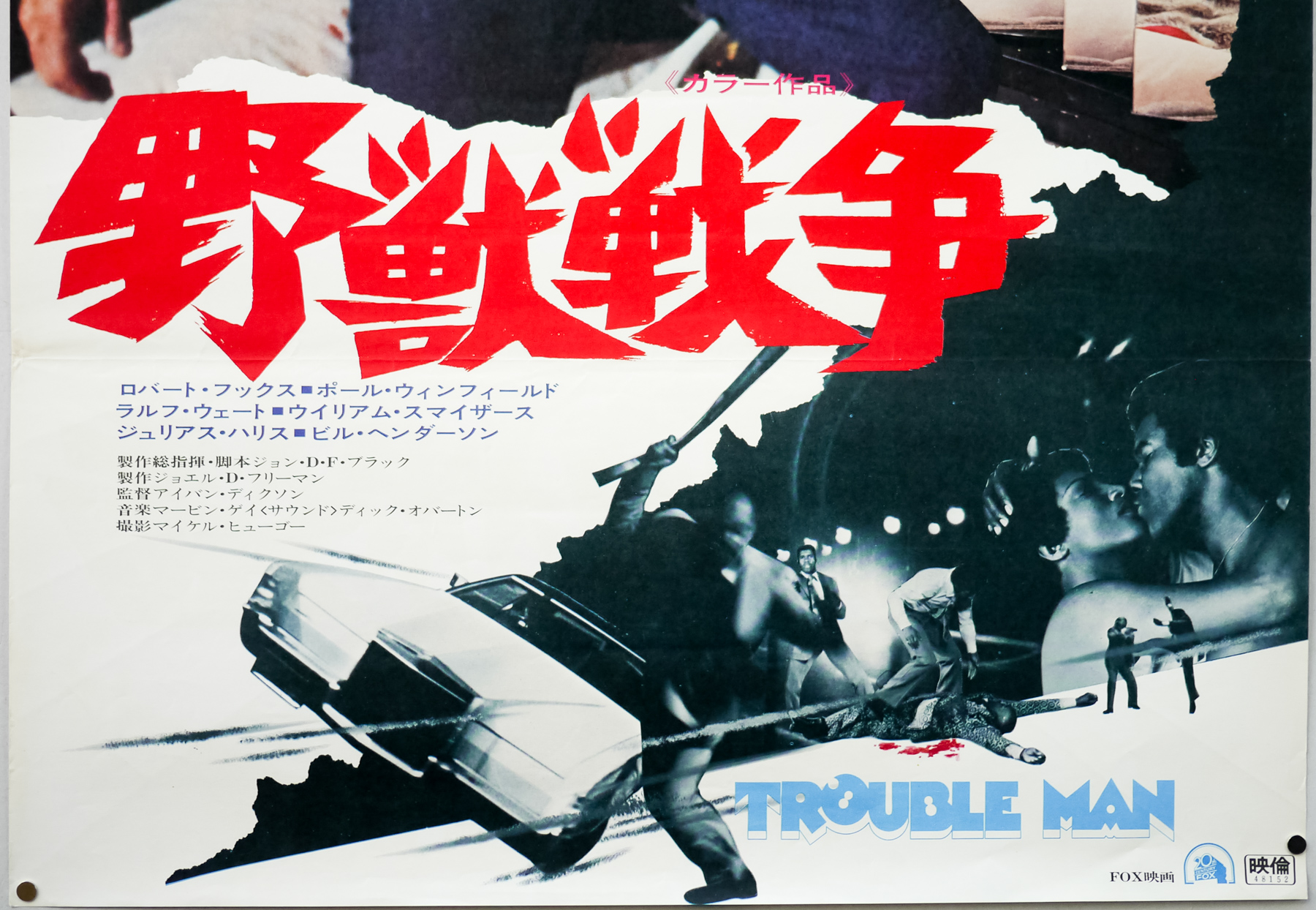
Actor turned director Ivan Dixon helmed Trouble Man, a blaxploitation thriller from 1972, starring Robert Hooks and featuring an original soundtrack by Marvin Gaye. Mr T (Hooks) is a former hustler turned private eye who has allies on both sides of the law and operates out of a pool hall where he sharks during his spare time. One day he is approached by Chalky (Paul Winfield) and Pete (Ralph Waite), two former pimps who have been running illegal dice games around the local neighbourhood which they claim have been robbed several times by a gang of masked men, despite them having changed the location several times.

Mr T agrees to help the pair discover who’s behind the heists for a price, but what he assumes to be a routine assignment soon turns out to be nothing of the sort when Chalky and Pete double cross him and leave him caught between a gang led by the kingpin Big (Julius Harris) and the local police captain. T must fight to survive and clear his name whilst getting even with Chalky and Pete before its too late. Often compared favourably to perhaps the best known blaxploitation feature Shaft, the film has something of a cult reputation today which is helped by the memorable Marvin Gaye soundtrack.

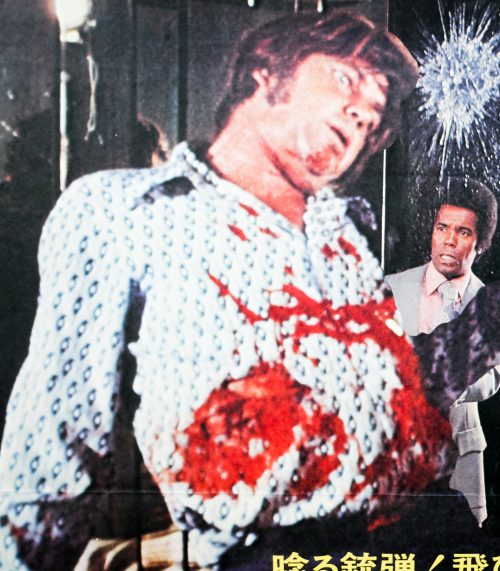
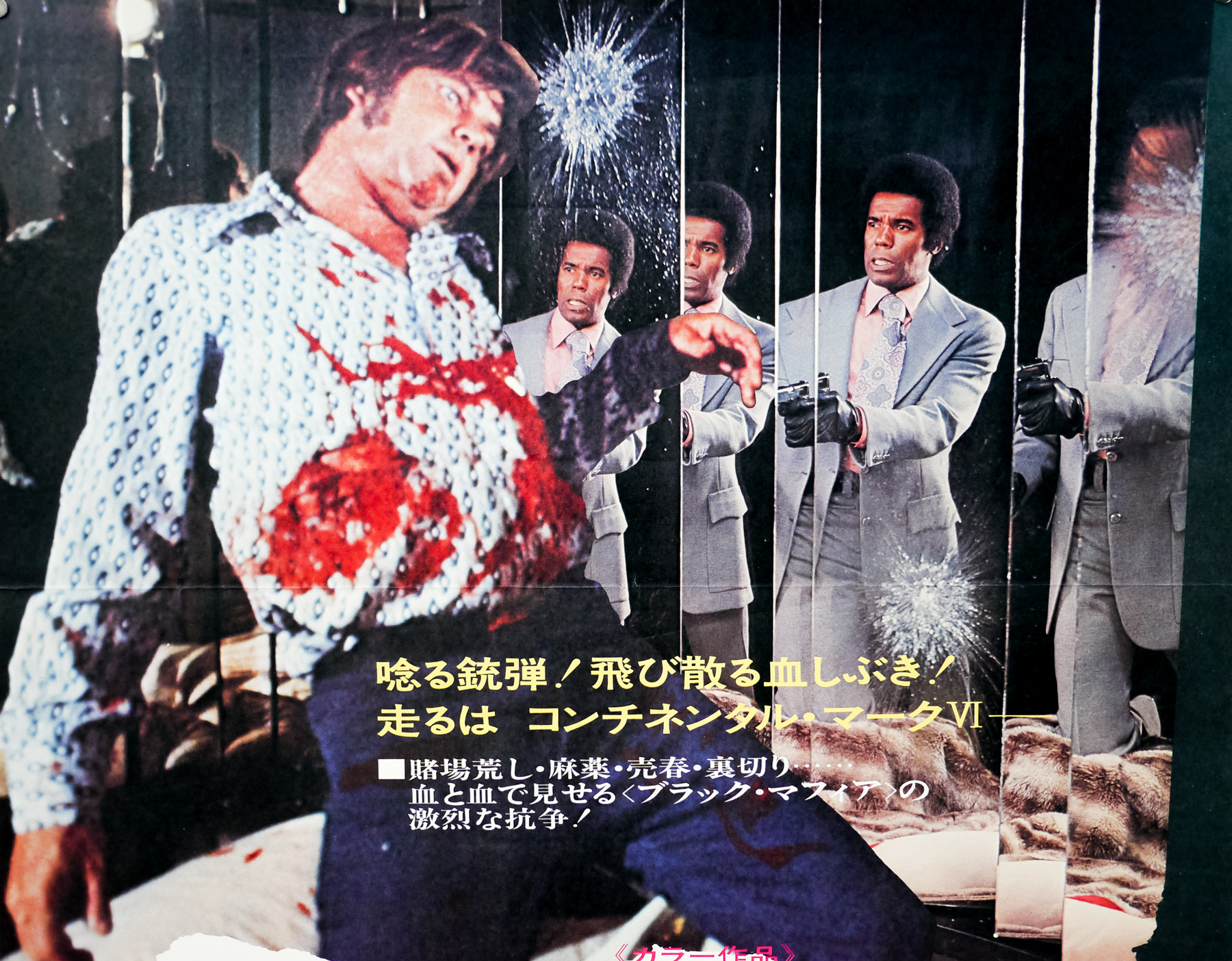
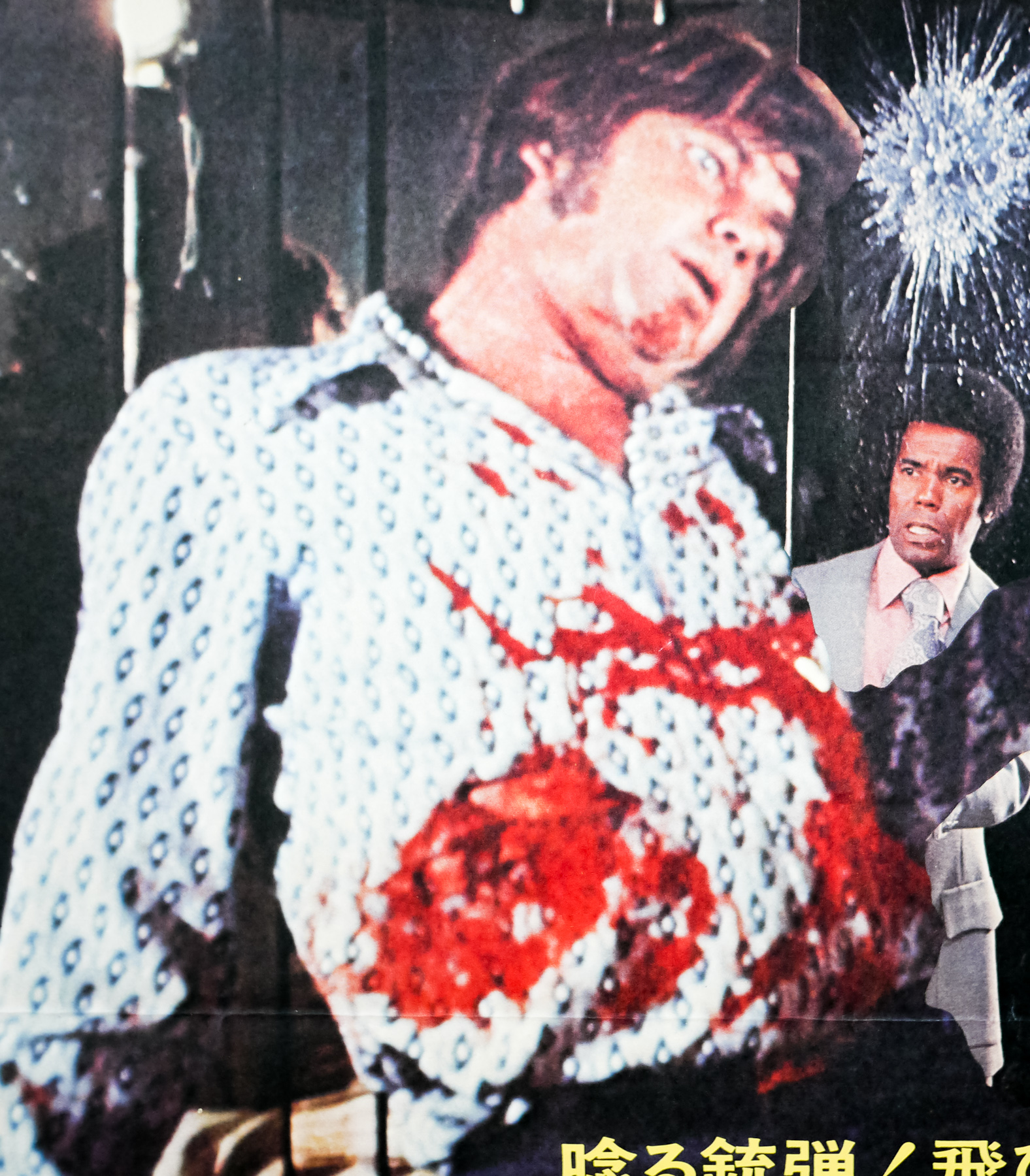
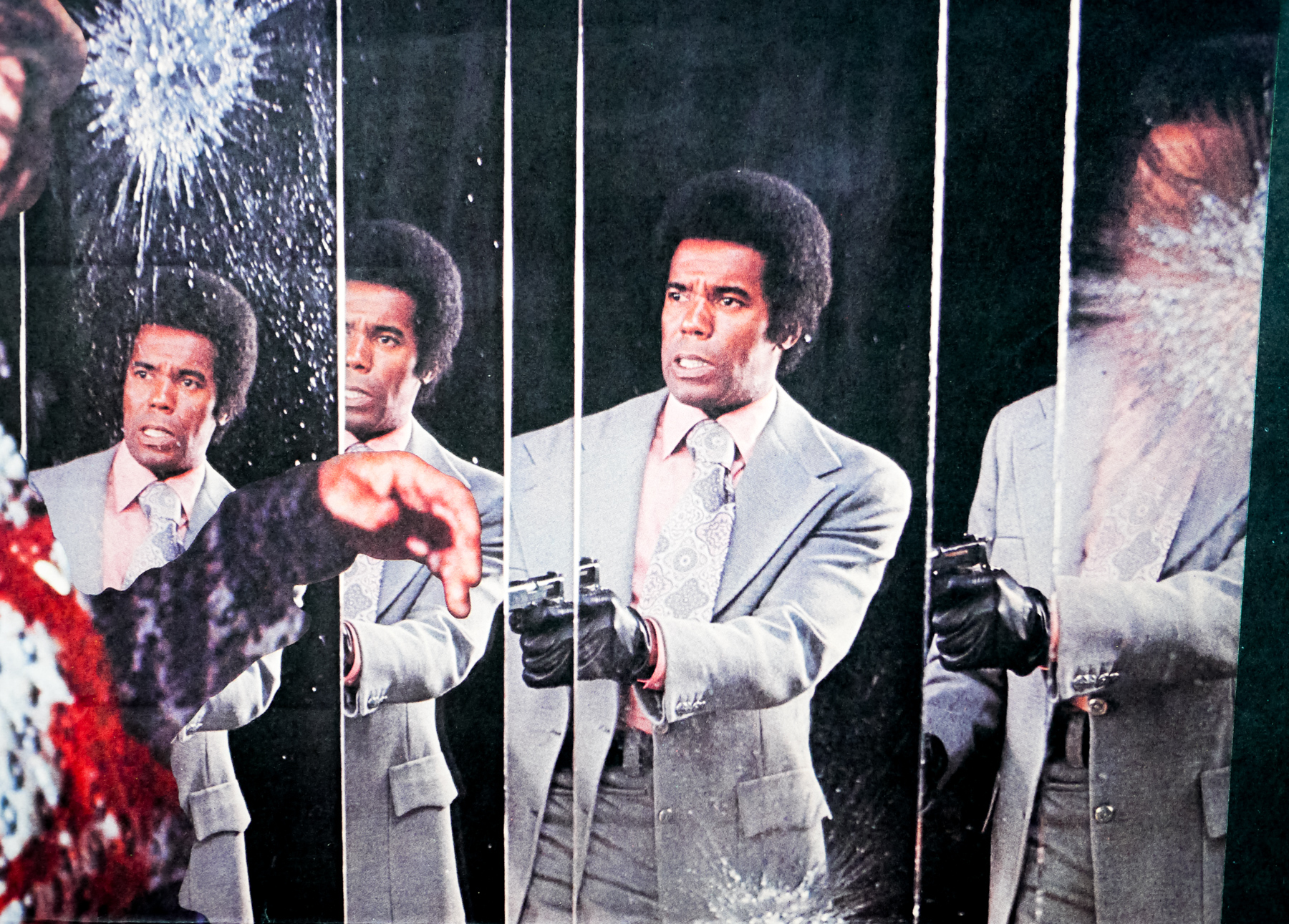
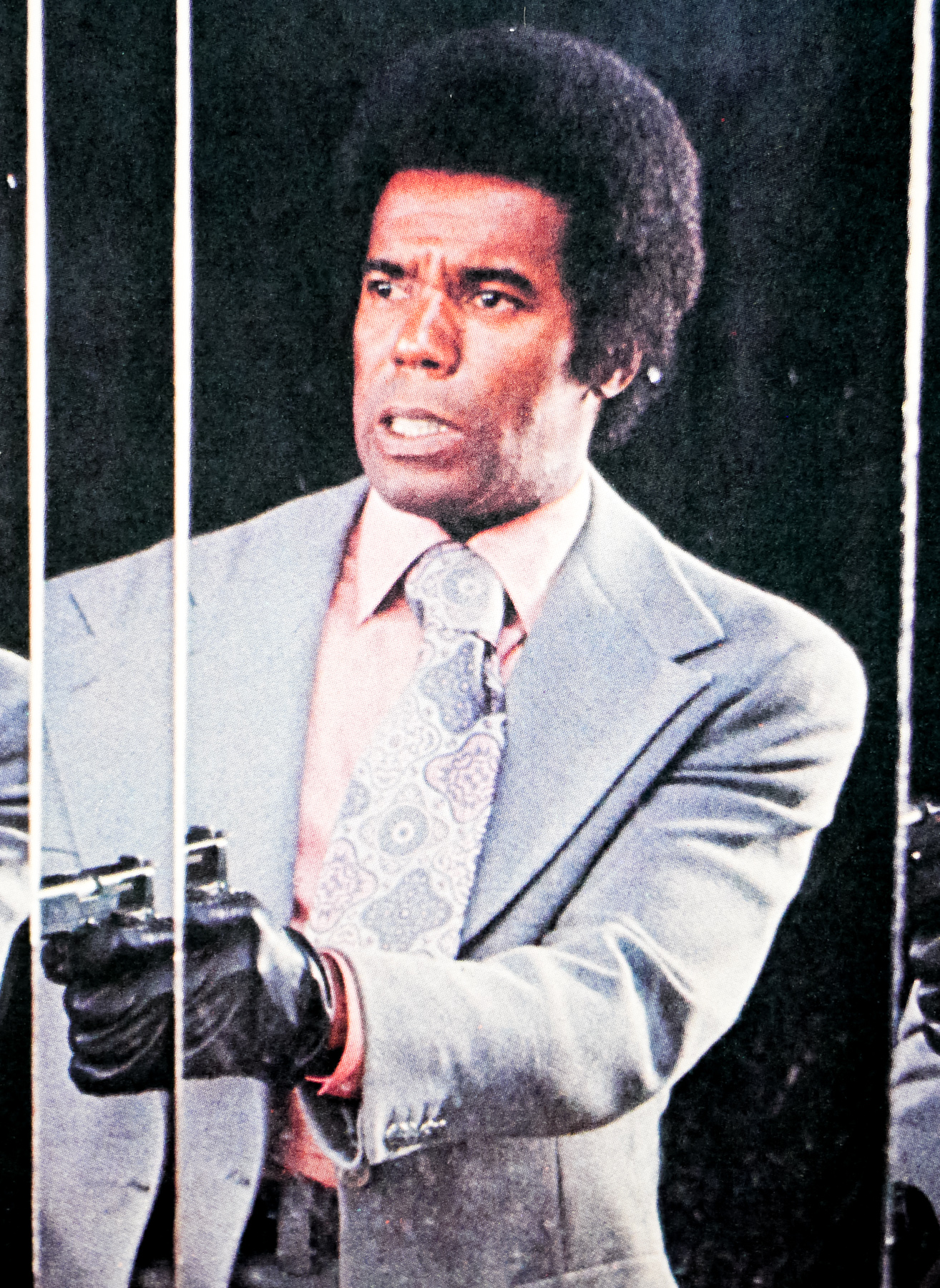
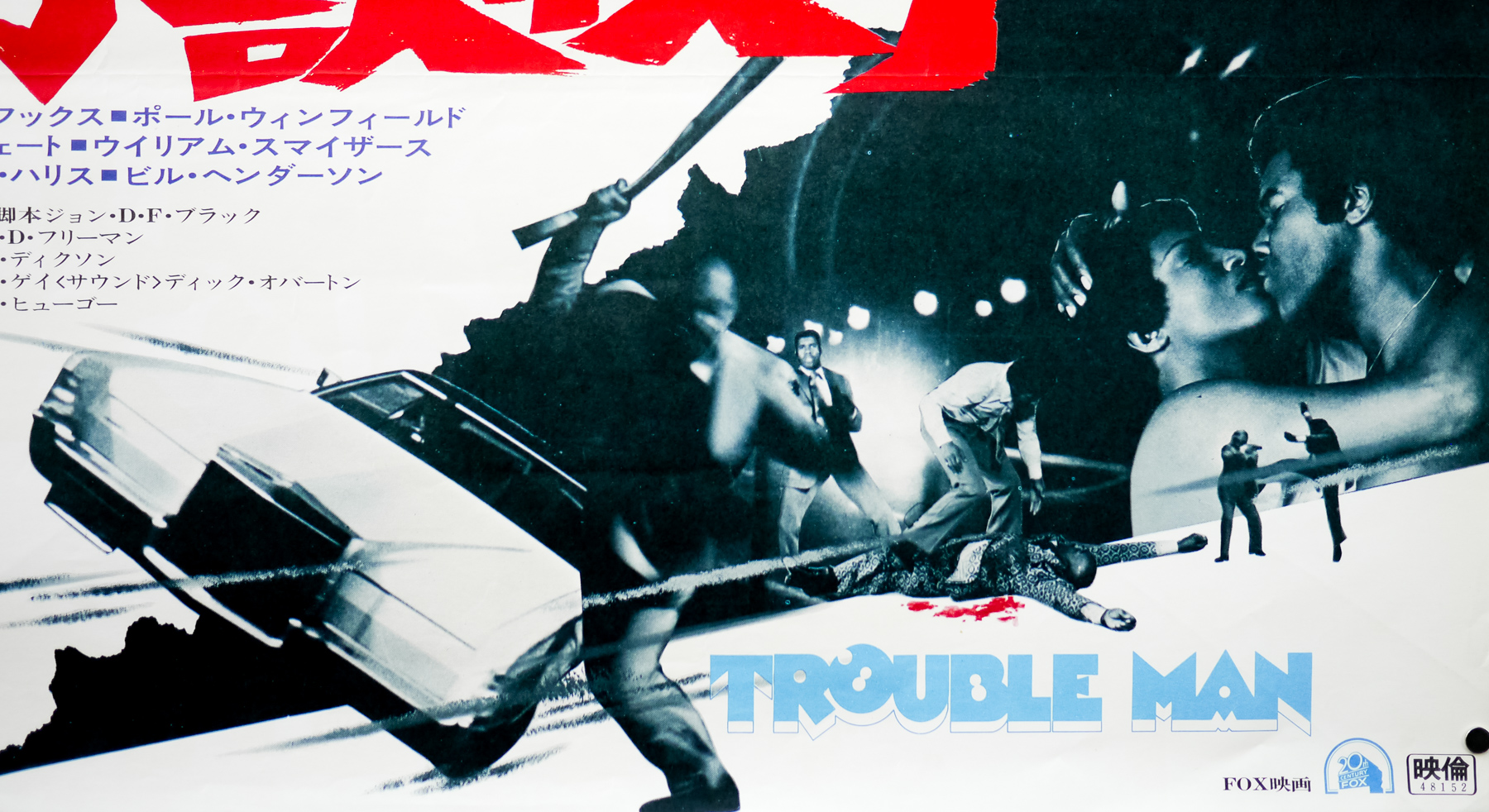
This Japanese B2 features a photo of Mr T in front of mirrors that is similar to the American one sheet, although this poster is obviously more violently explicit.

The excellent original trailer is on YouTube.

The Running Man / A1 / Germany

15.08.14

Poster Poster

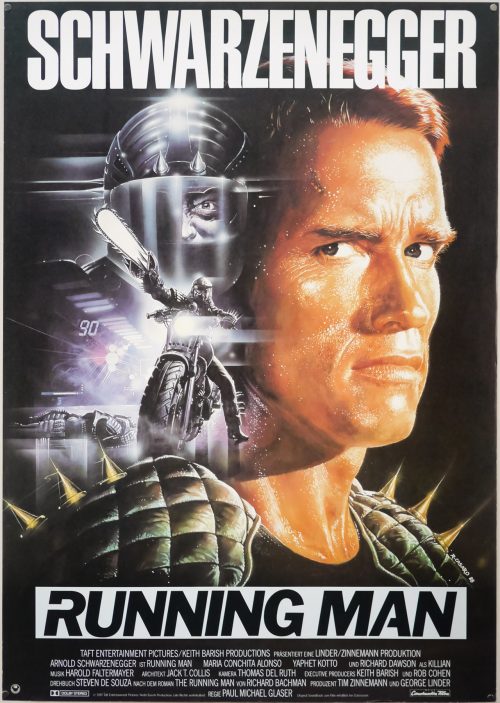
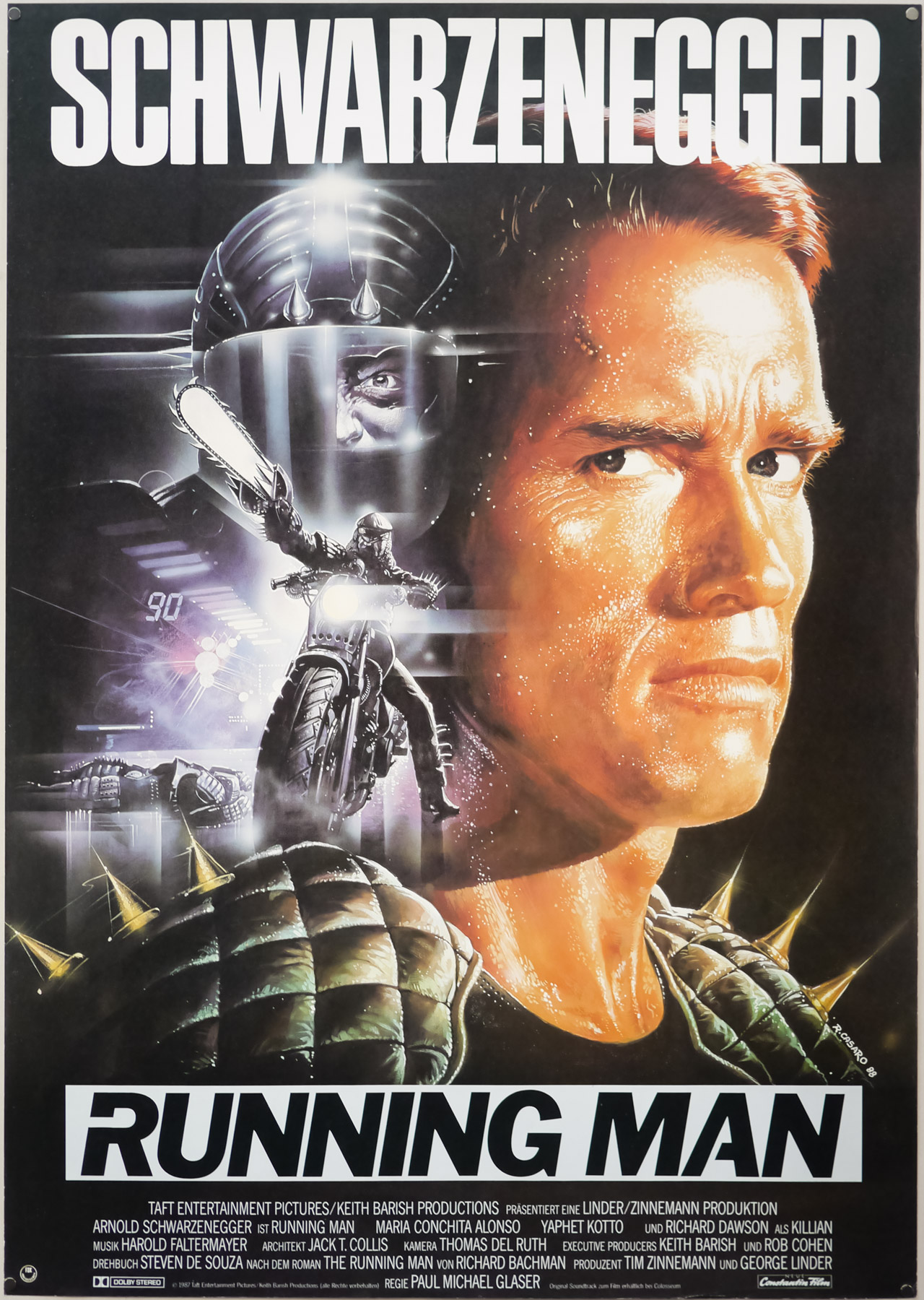
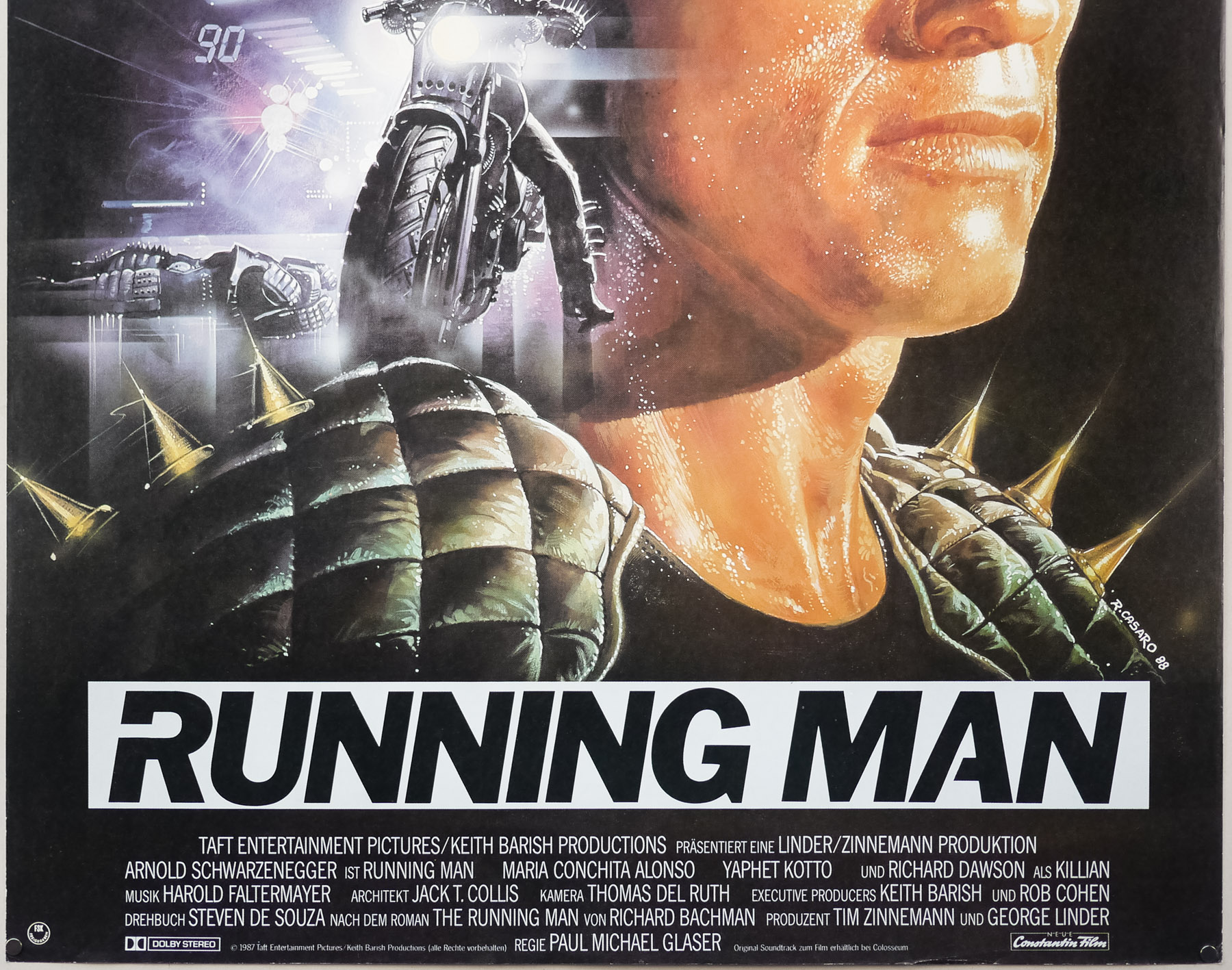
In the mid 1980s there were few actors who could get away with having their head dominate a film poster, and fewer still who could couple that with their surname in giant letters spread across the full width of the poster. One such actor was Arnold Schwarzenegger, the star of several action flicks including The Running Man. Set in the dystopian future of 2017 where the world’s economy is in ruins and America is a totalitarian police state, the populace is pacified by the broadcasting of a series of gameshows that see convicted prisoners fighting for their lives across various kinds of formats. The most popular of these shows is the titular Running Man in which the unwilling participants must try to survive in a closed-off area against an onslaught of vicious killers with catchy names and different methods of dispatching their prey.

Ben Richards (Schwarzenegger) is a former police helicopter pilot who was wrongly convicted of massacring a crowd of people and sent to prison. After escaping several months later with a pair of fellow convicts, Richards is preparing to flee the country but is turned into the authorities by Amber Mendez (Maria Conchita Alonso), a composer for the network that he finds living in his brother’s apartment. He is taken to the Running Man studio where he meets the ruthless show host Damon Killian (a memorable turn by the late Richard Dawson) who informs him that unless he takes part in the show his two friends will be sent in his place. After agreeing to get dropped into the play zone, Richards finds that Killian has tricked him and has also sent his pals into the arena. The trio must face-off against the killers whilst trying to work out how to escape the arena and put an end to the show once and for all. When Amber looks a little too closely at the reasons for Ben Richards’ incarceration, she too is captured and dropped into the Running Man arena (she’s pictured next to Arnie on this quad).

Ably directed by Paul Michael Glaser, best known for his acting career – he was Starsky in the classic 1970s cop show Starsky and Hutch – the film is well paced and features several memorable scenes, whilst not holding back on the the violence and gore. The bad guy killers, including Sub Zero, Fireball and Captain Freedom and particularly memorable. It’s definitely a highlight of the Austrian Oak’s filmography, although it was released the same year as the incredible Predator, which is unquestionably the better film.

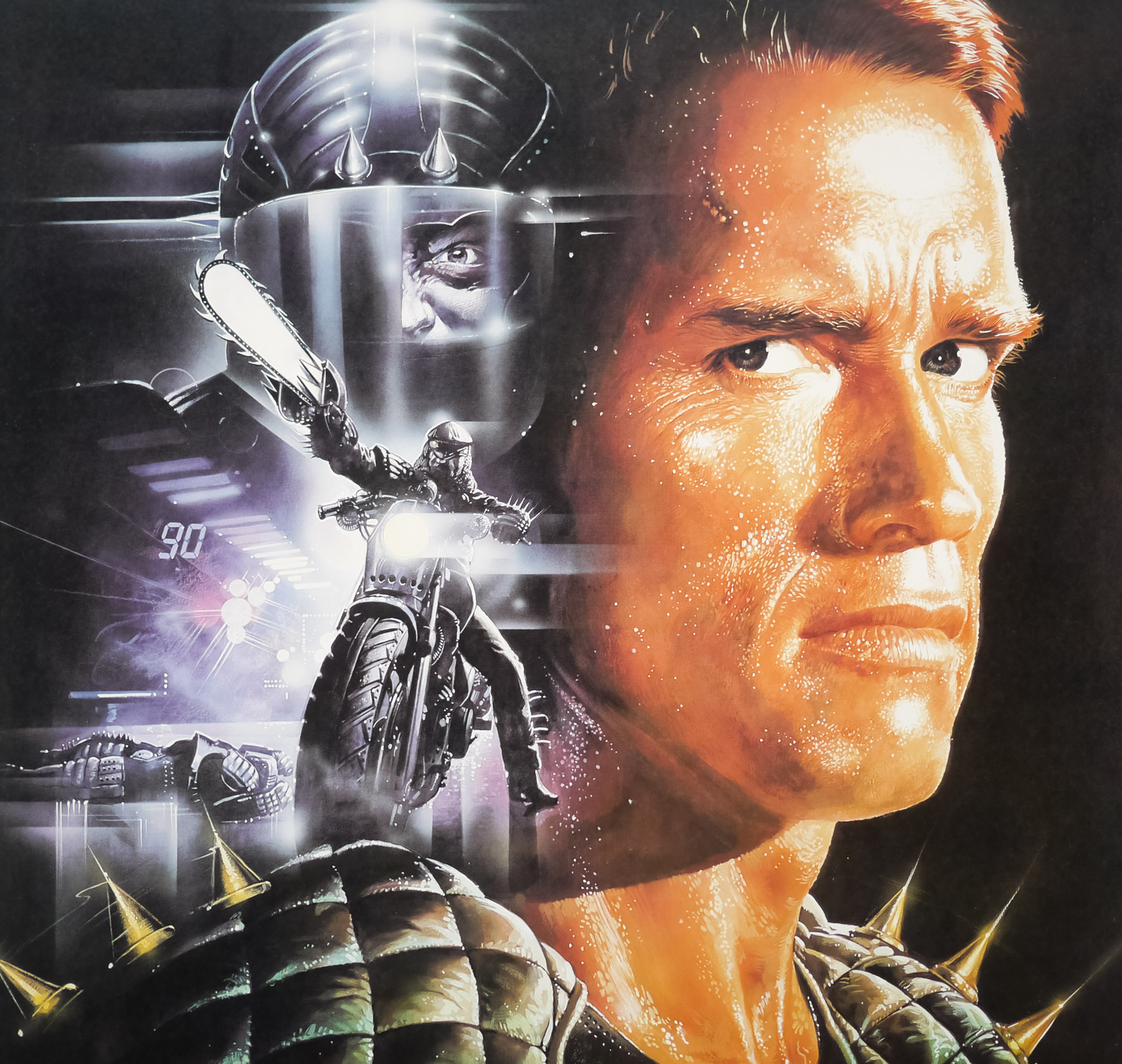
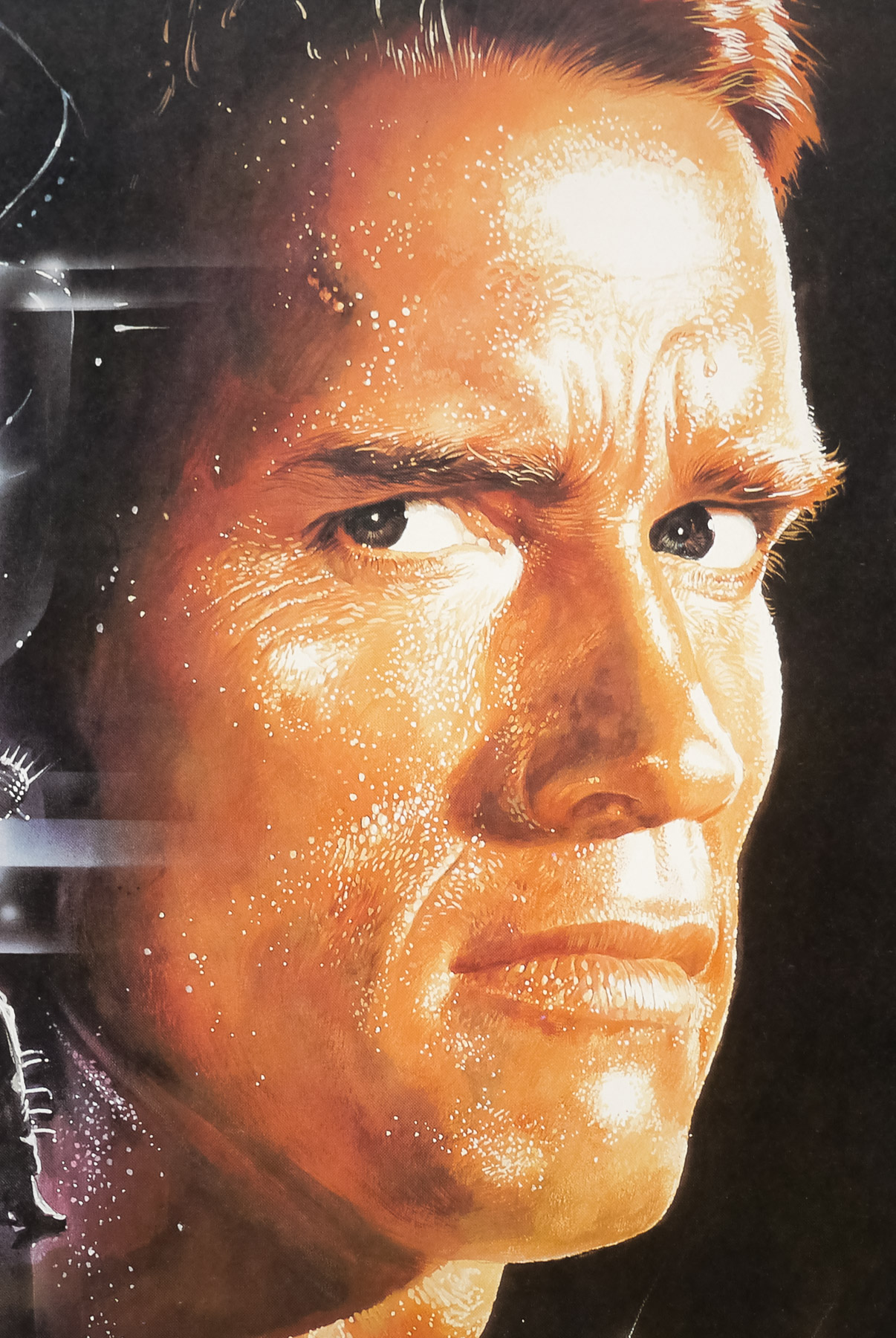
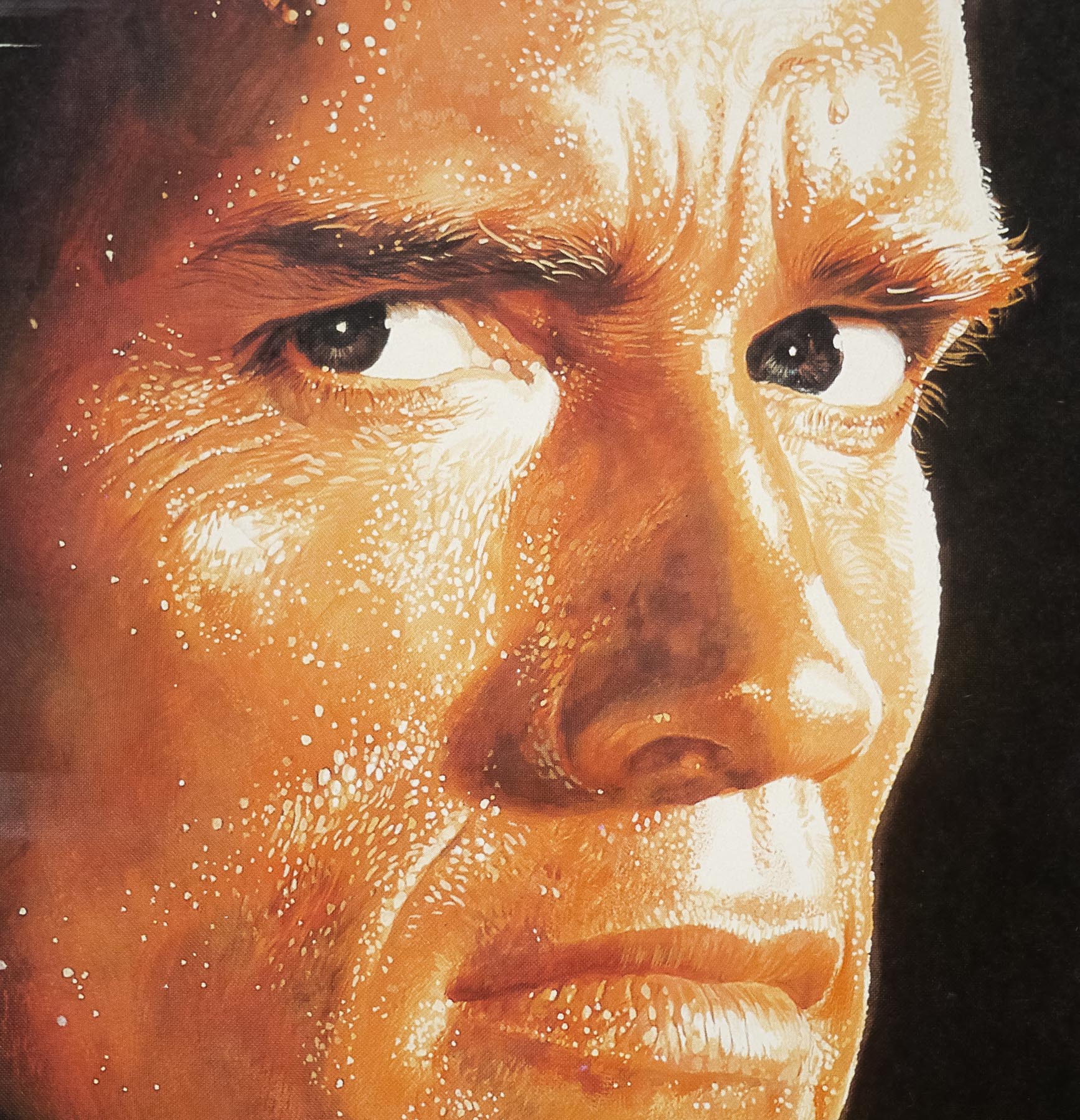
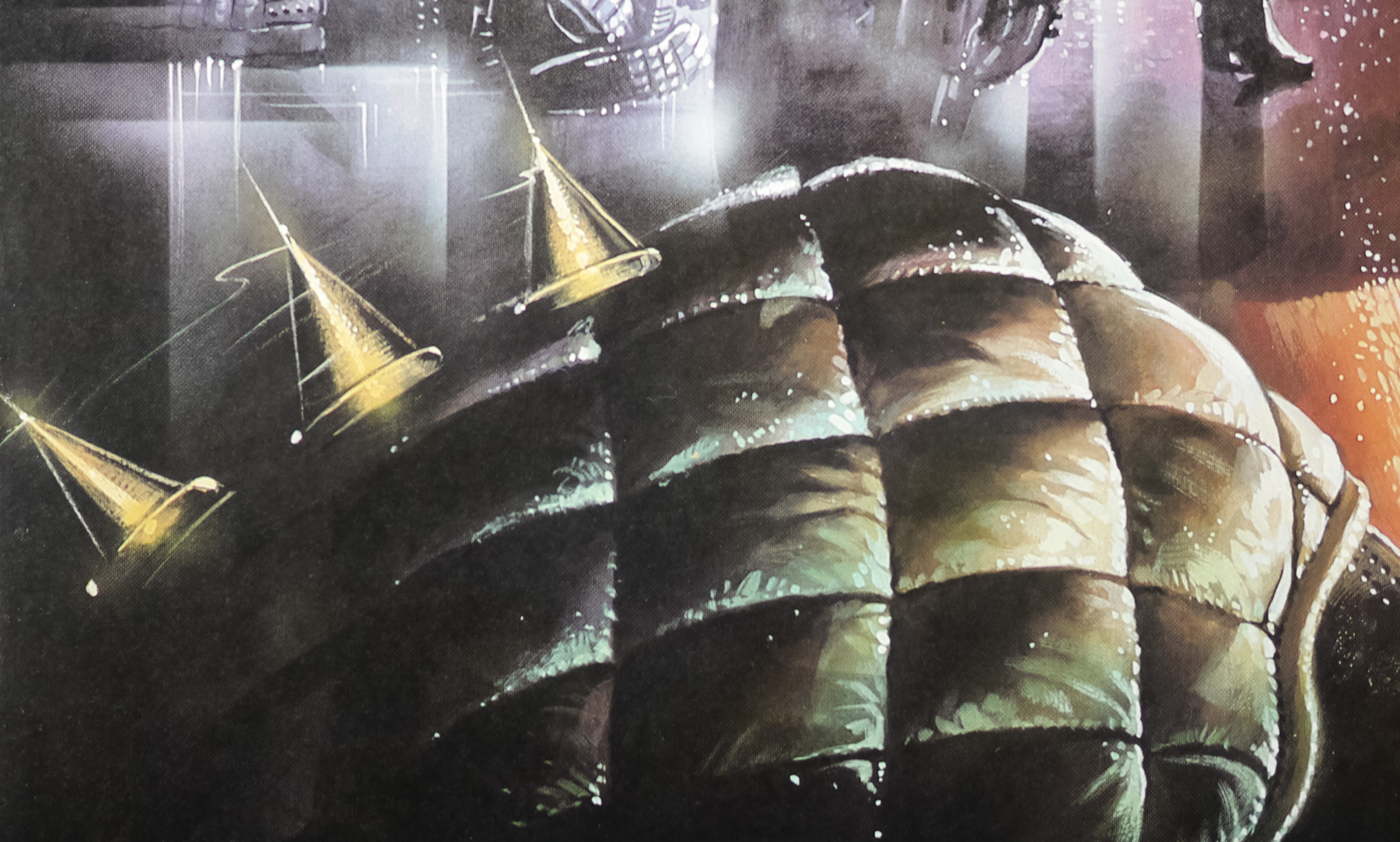
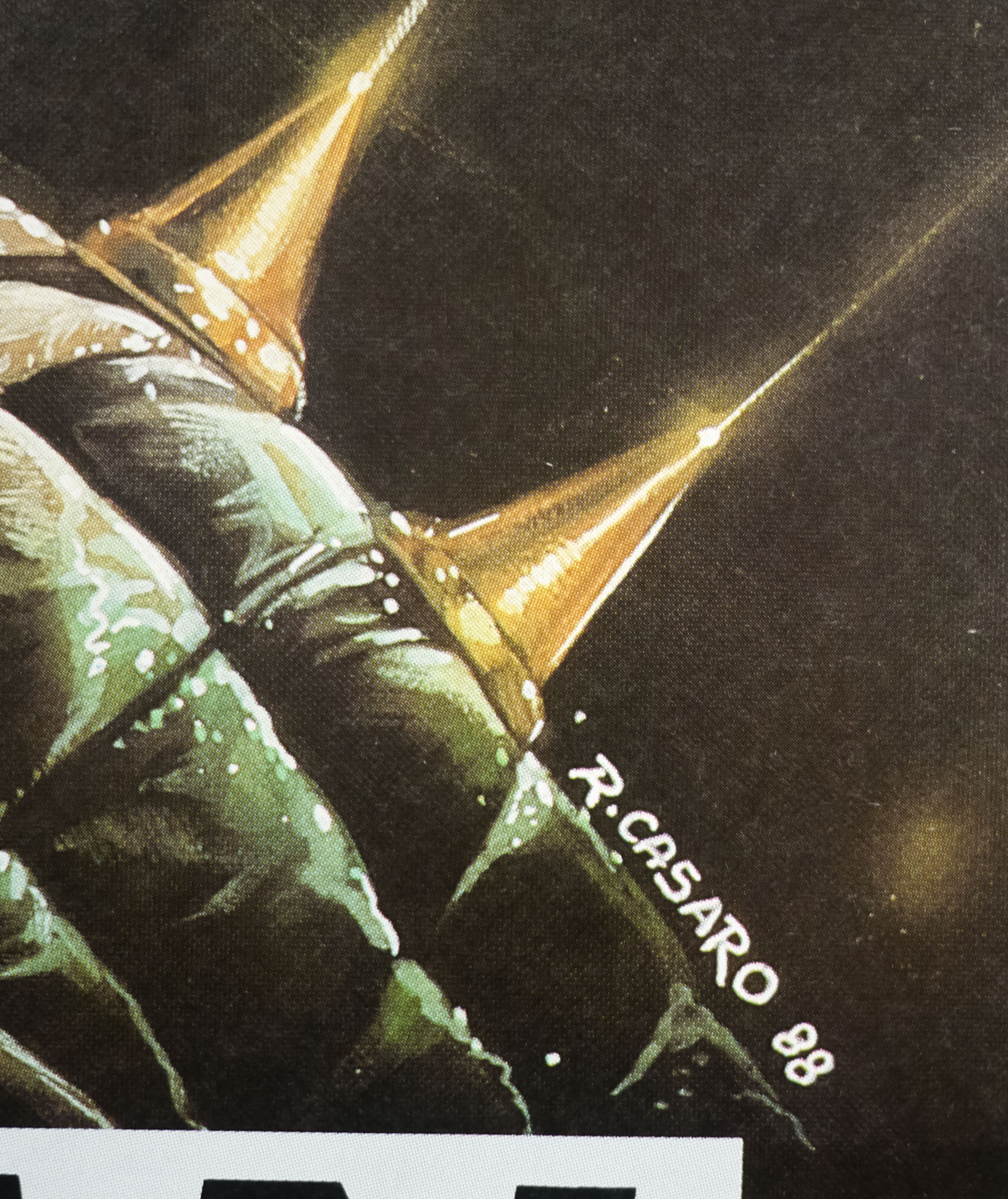
The excellent artwork on this German A1 was painted by the celebrated Italian artist Renato Casaro who worked on a significant number of German posters during the 1980s and 1990s. In March 2014 I published a lengthy interview I carried out with Renato and that can be read by clicking here. The other posters I’ve collected by the artist can be seen by clicking here.

Crocodile Dundee / quad / UK

04.07.14

Poster Poster
Title
Crocodile Dundee
AKA
--
Year of Film
1986
Director
Peter Faiman
Starring
Paul Hogan, Linda Kozlowski, John Meillon, David Gulpilil, Ritchie Singer, Maggie Blinco, Steve Rackman, Gerry Skilton
Origin of Film
Australia
Genre(s) of Film
Paul Hogan, Linda Kozlowski, John Meillon, David Gulpilil, Ritchie Singer, Maggie Blinco, Steve Rackman, Gerry Skilton,
Type of Poster
Quad
Style of Poster
--
Origin of Poster
UK
Year of Poster
1986
Designer
Unknown
Artist
Dan Goozee
Size (inches)
30 1/16" x 40"
SS or DS
SS
Tagline
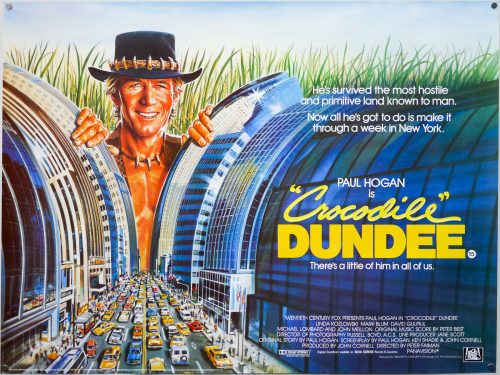
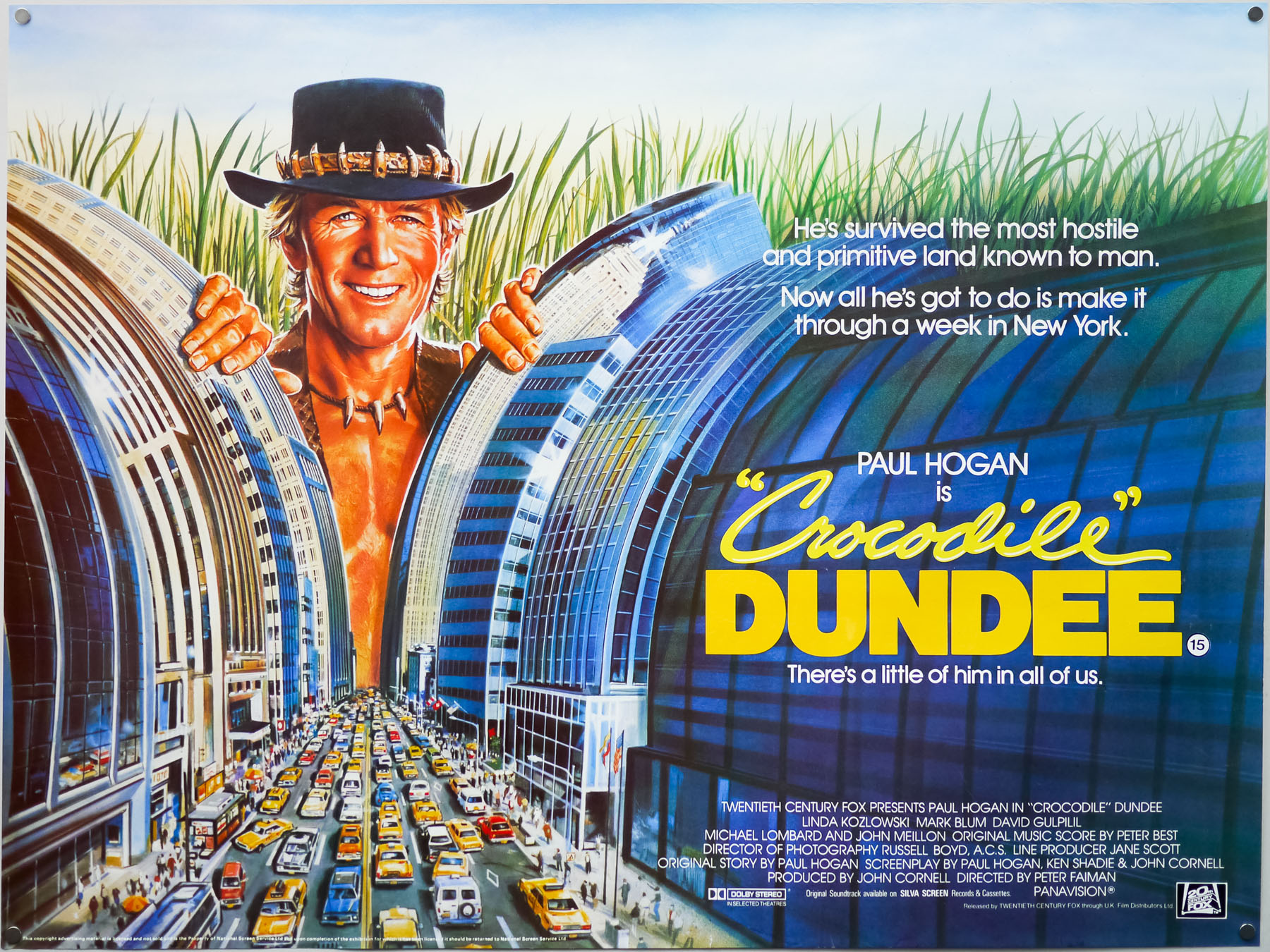
He's survived the most hostile and primitive land known to man. Now all he's got to do is make it through a week in New York. | There's a little of him in all of us.

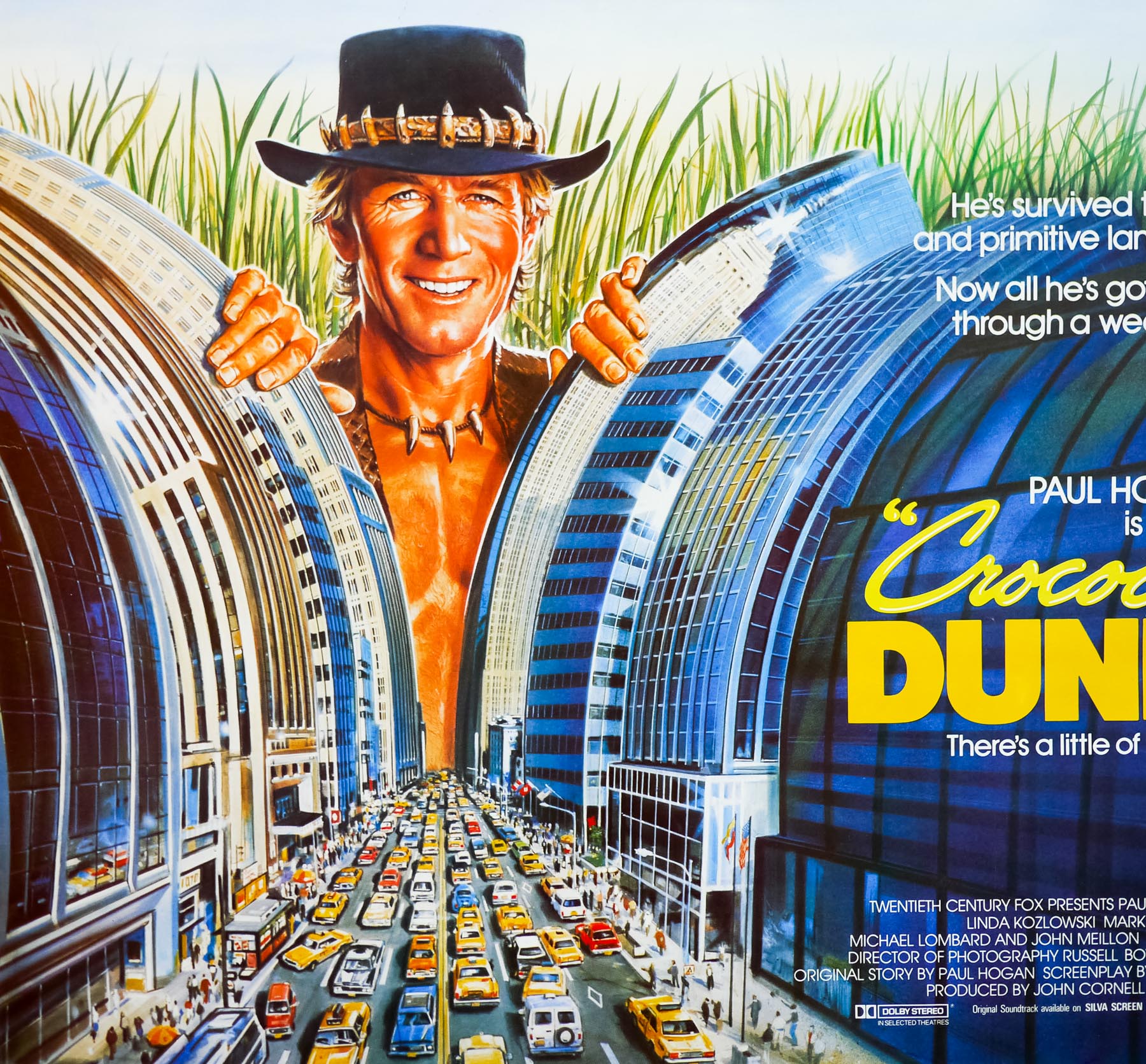
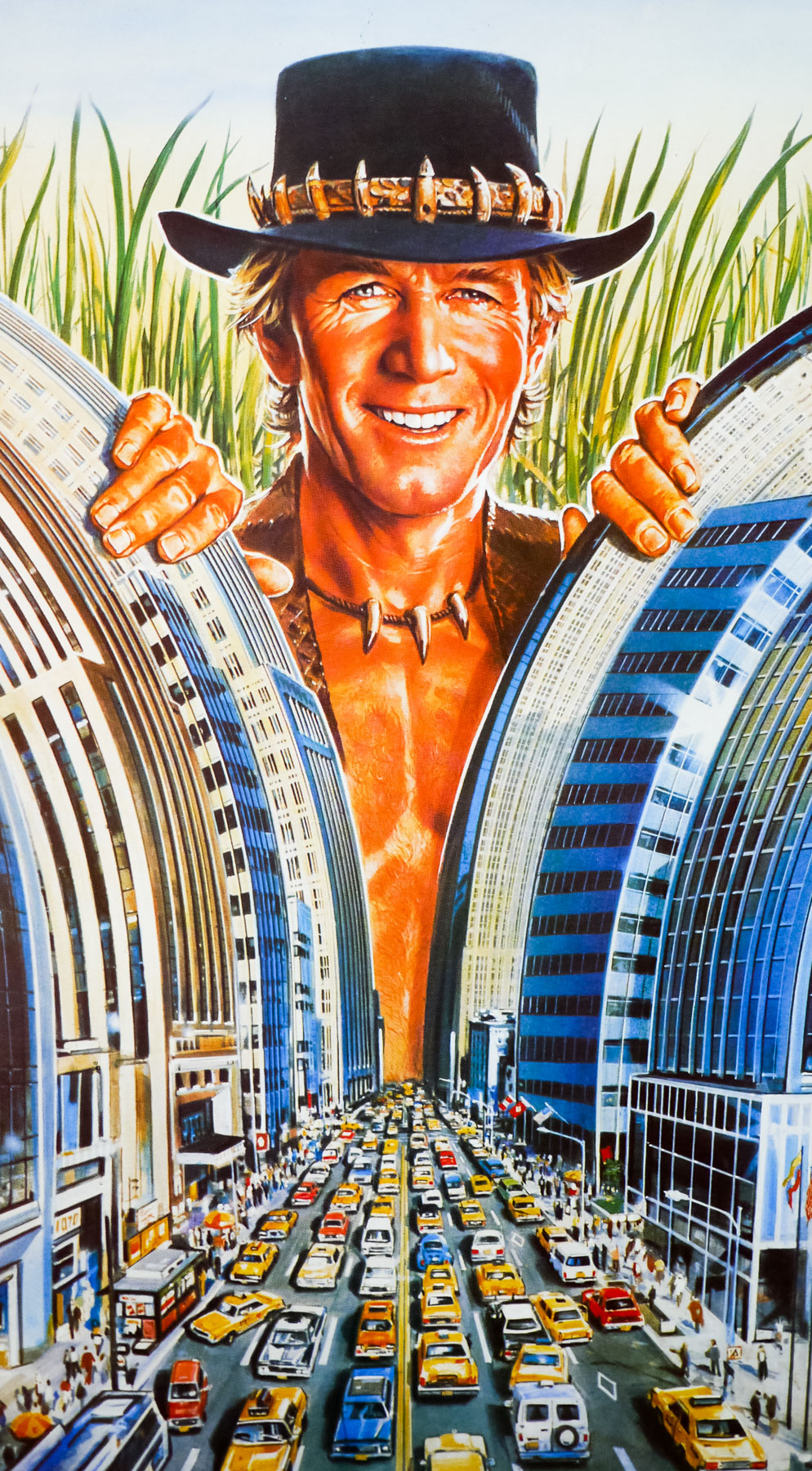
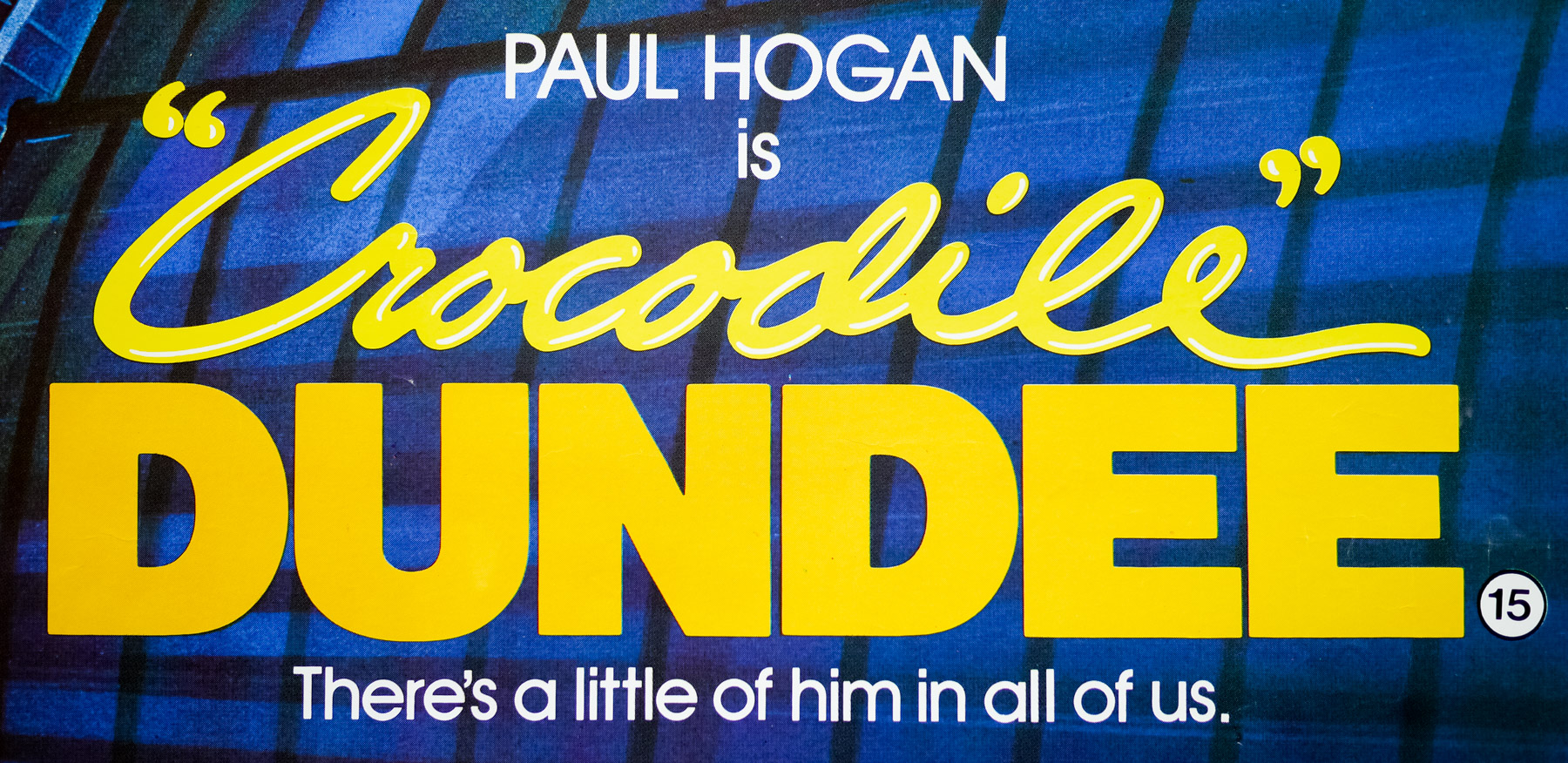
This is the UK quad for the release of arguably the most famous Australian film ever released, Crocodile Dundee. The film took its inspiration from the real life exploits of an Australian hunter called Rodney Ansell who was stranded for 56 days in the remote outback with limited supplies and managed to survive and stay alive by living off the land. The film’s story sees Sue Charlton (Linda Kozlowski), a New York reporter, travel to Australia to try and meet Mick Dundee (a memorable turn by Paul Hogan) a legendary bushman who is reported to have lost his leg in a battle with a crocodile. What she finds is an uncouth, less than legendary figure who makes several clumsy advances towards her. She starts to warm to him as they travel into the wilderness and she witnesses first hand his survival skills, ability to interact with dangerous creatures and his ease with the native aborigines.

When Mick teases her that she’d be unable to survive on her own she sets off to prove him wrong, but is soon almost killed by a crocodile before Mick intervenes. Eventually Sue invites the bushman back to New York under the pretext of continuing the story and comedy ensues as Mick has to adjust to life in one of the busiest cities on earth. The film was made on a relatively low budget, specifically tailored for American audiences and was a runaway success at the box office and ended up as a worldwide phenomenon as the second-highest grossing film of 1986. It spawned another sequel soon afterwards and a third (forgettable) entry in 2001.

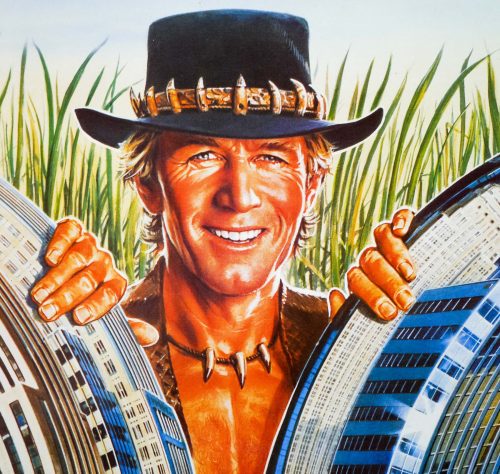
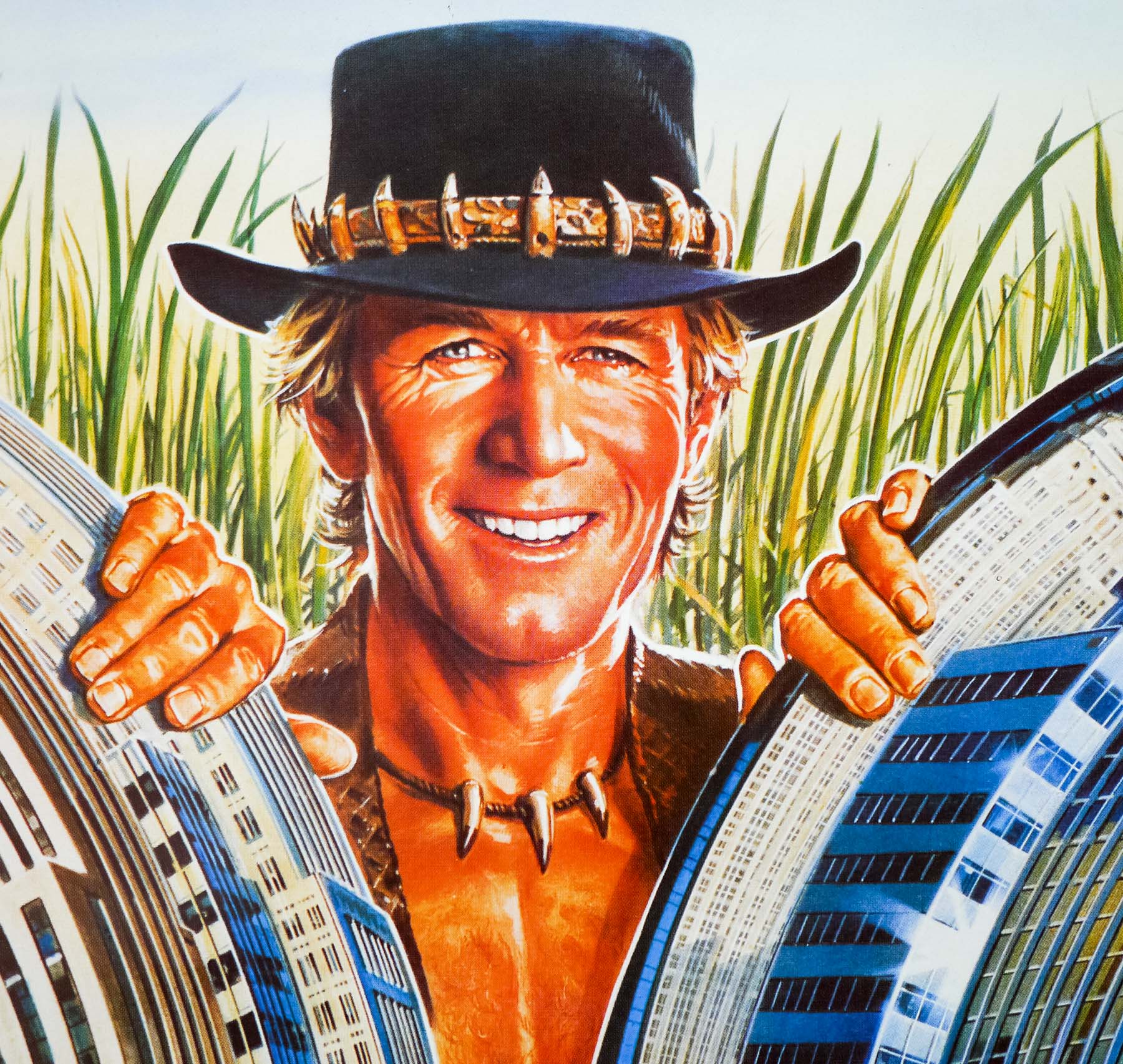
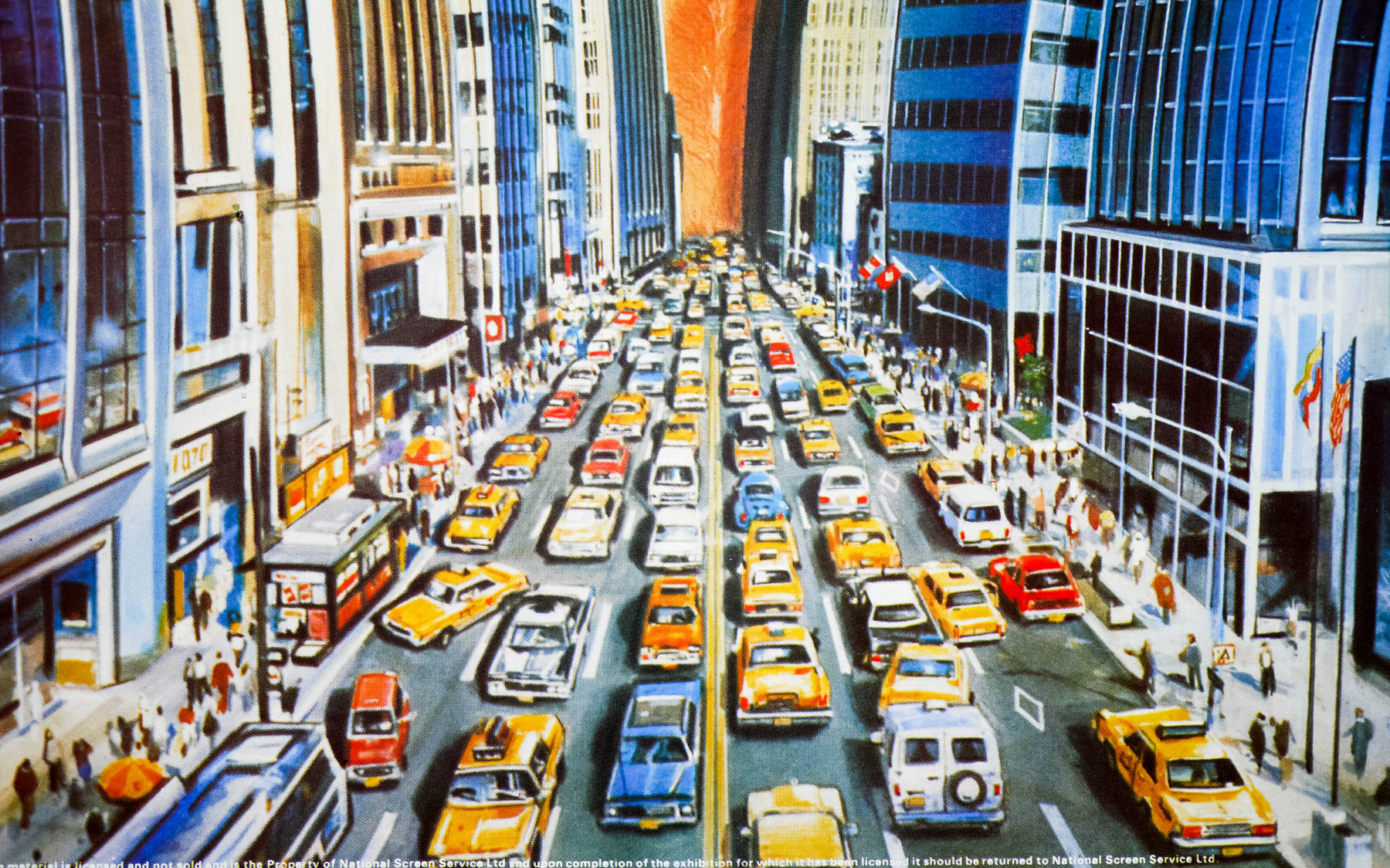
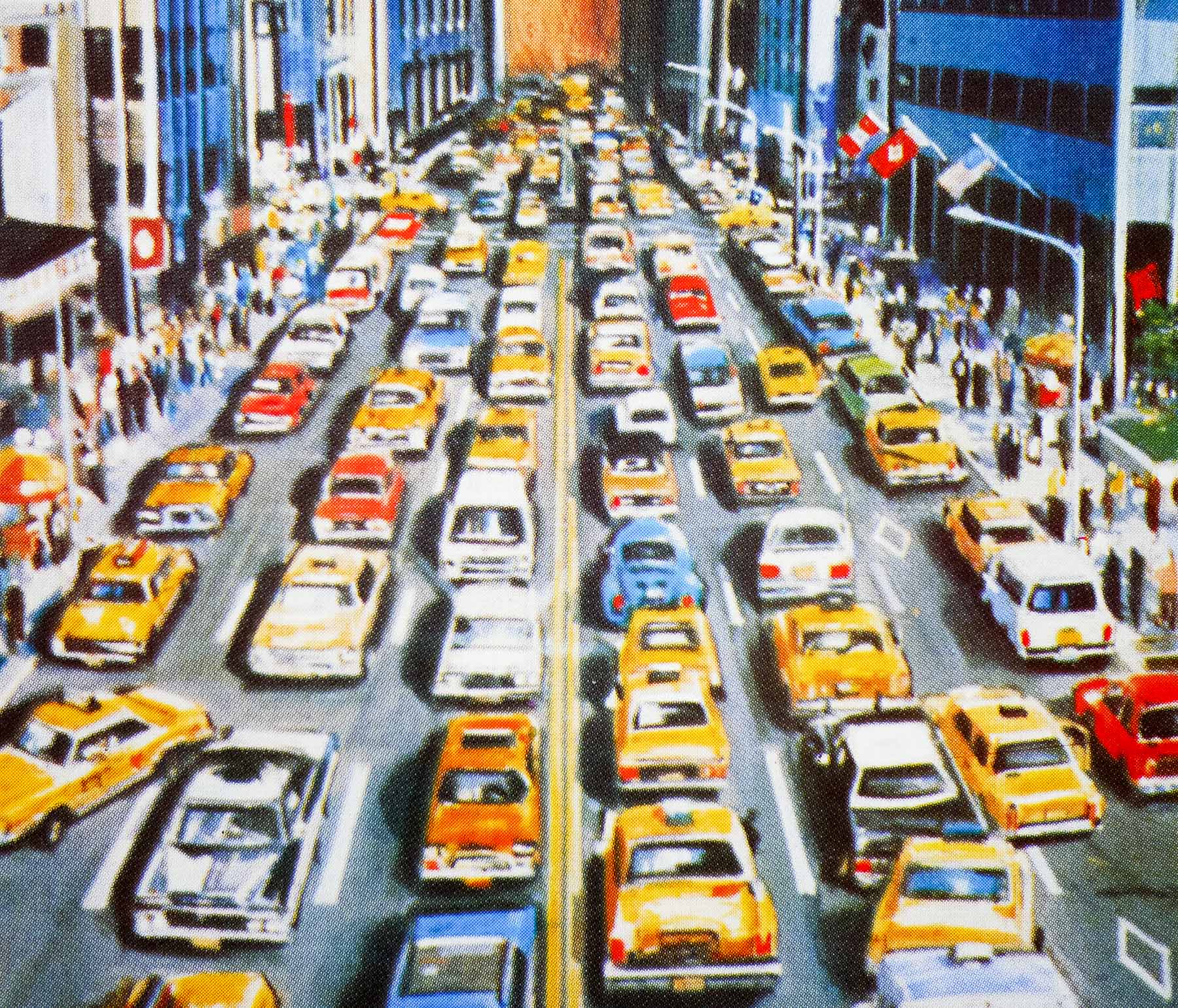
The artwork, which also featured on posters around the world, including the US one sheet, is by American poster artist Dan Goozee. An unknown UK artist is likely to have painted the extra windows on the right side to adapt the artwork to a landscape format. Goozee is perhaps best known for his work on several Bond posters, including Moonraker and Octopussy, as well as several other classic posters from the 1980s. The other designs I’ve collected by him can be seen here.

Cannonball / B2 / Japan

13.07.15

Poster Poster
Title
Cannonball
AKA
Carquake (UK) | Cannonball! (alt. title)
Year of Film
1976
Director
Paul Bartel
Starring
David Carradine, Bill McKinney, Veronica Hamel, Gerrit Graham, Robert Carradine, Belinda Balaski, Judy Canova, Archie Hahn, Carl Gottlieb, Dick Miller
Origin of Film
USA | Hong Kong
Genre(s) of Film
David Carradine, Bill McKinney, Veronica Hamel, Gerrit Graham, Robert Carradine, Belinda Balaski, Judy Canova, Archie Hahn, Carl Gottlieb, Dick Miller,
Type of Poster
B2
Style of Poster
--
Origin of Poster
Japan
Year of Poster
1977
Designer
Unknown
Artist
--
Size (inches)
20 4/16" x 28 13/16"
SS or DS
SS
Tagline
--

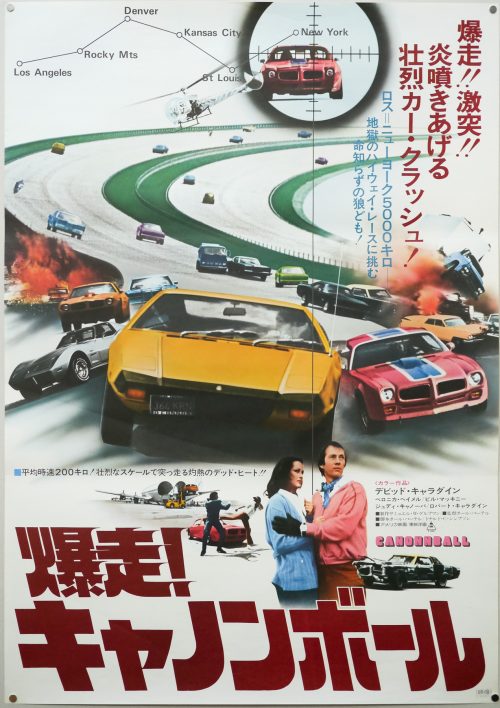
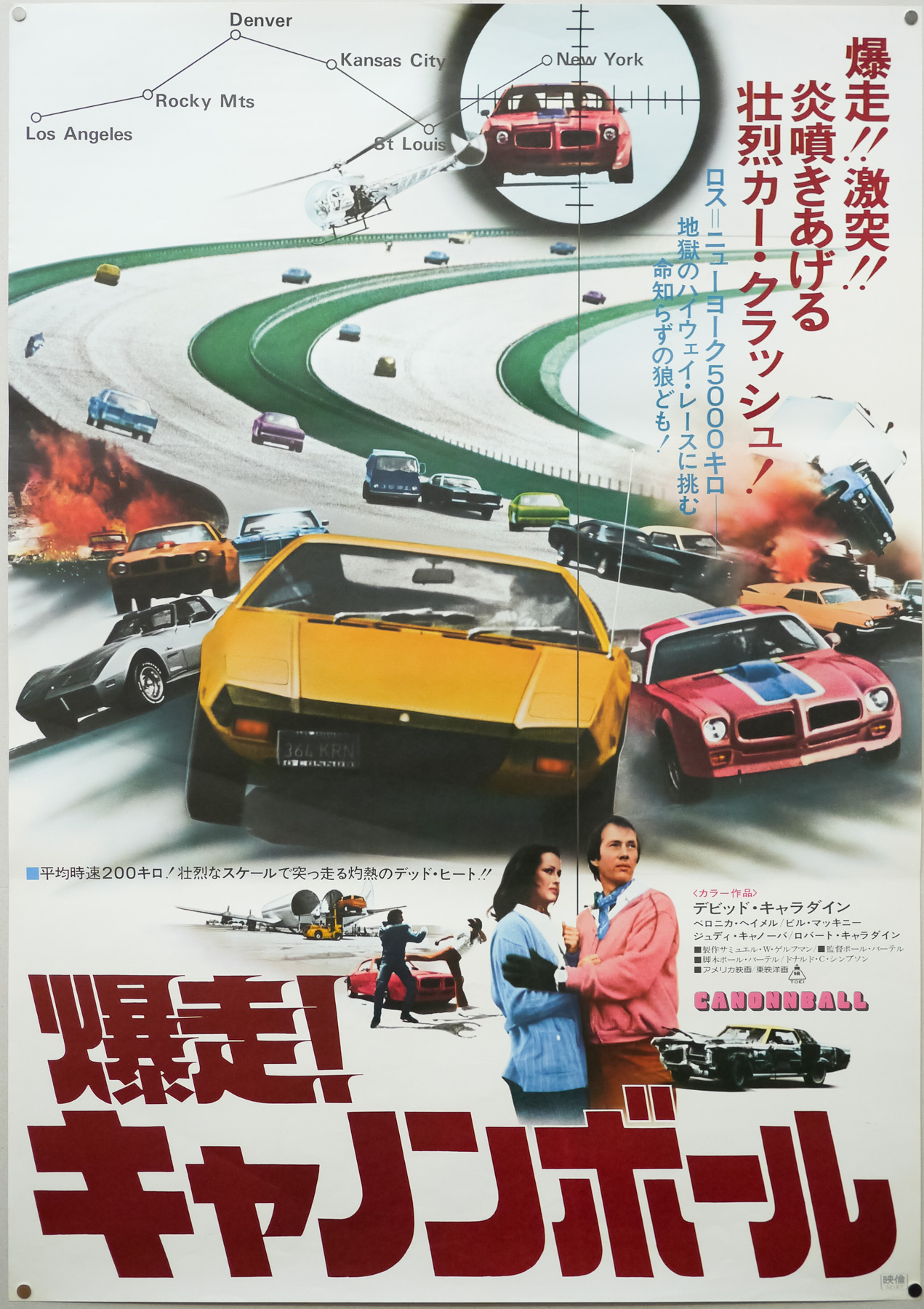
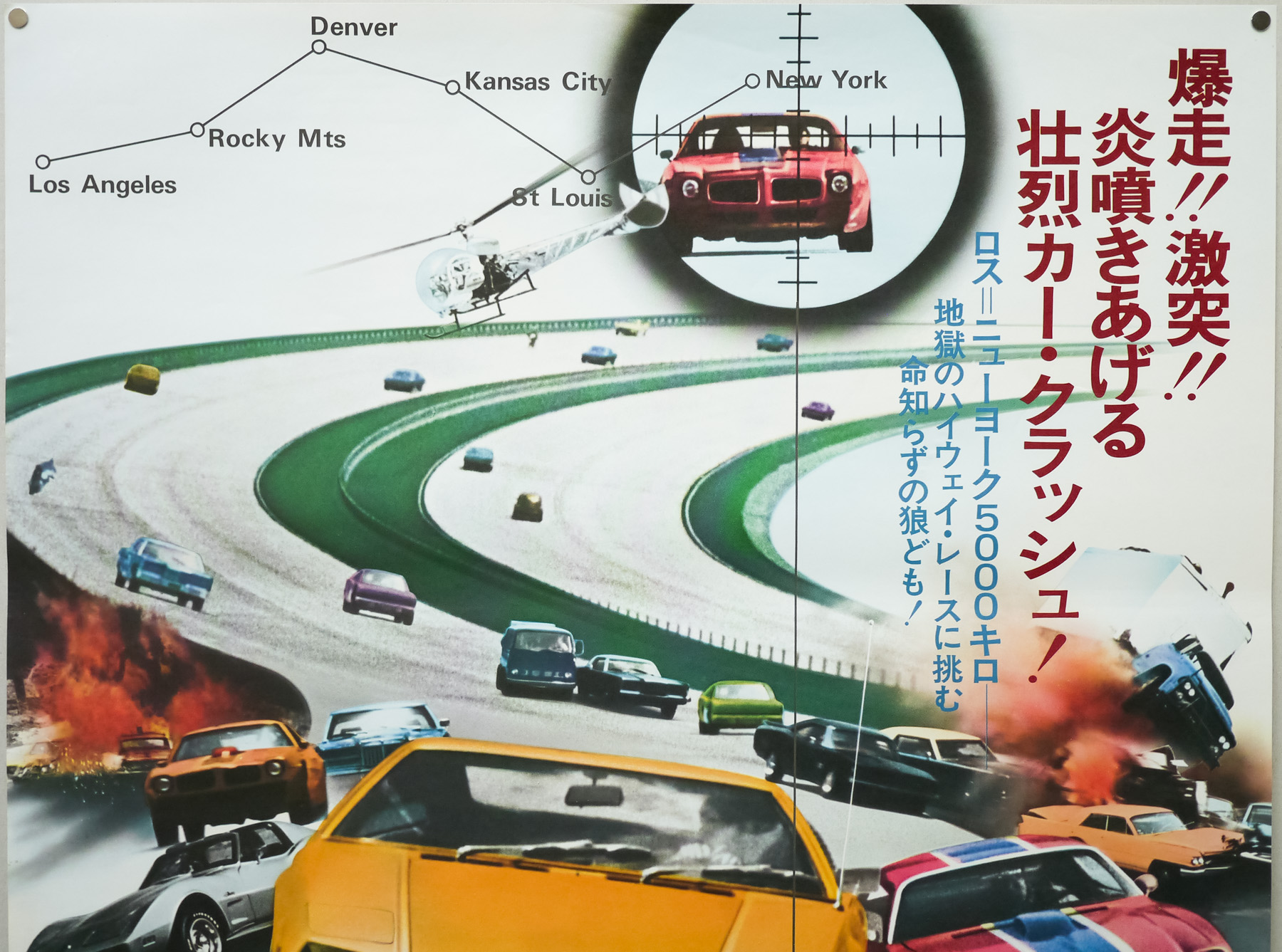
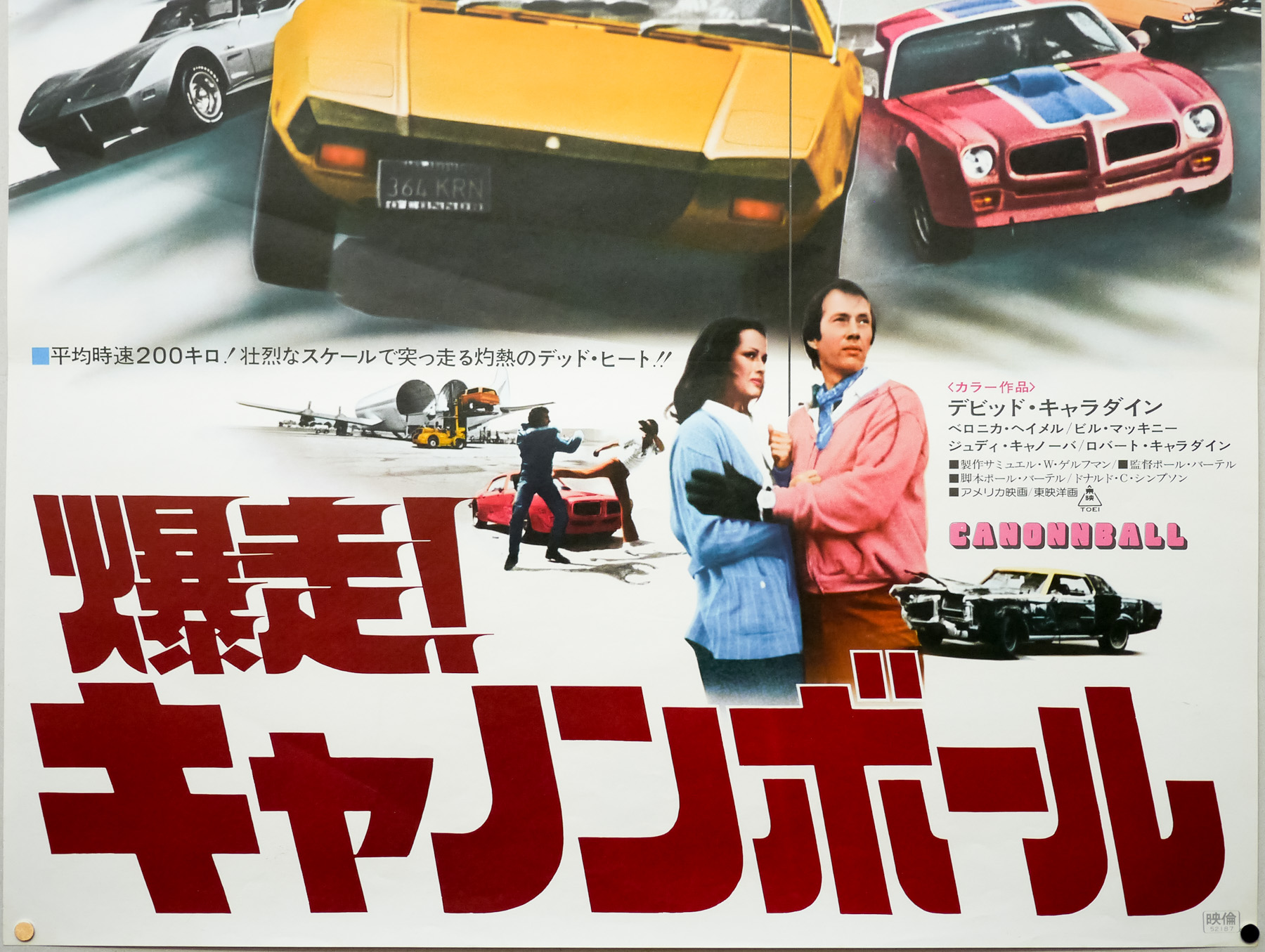
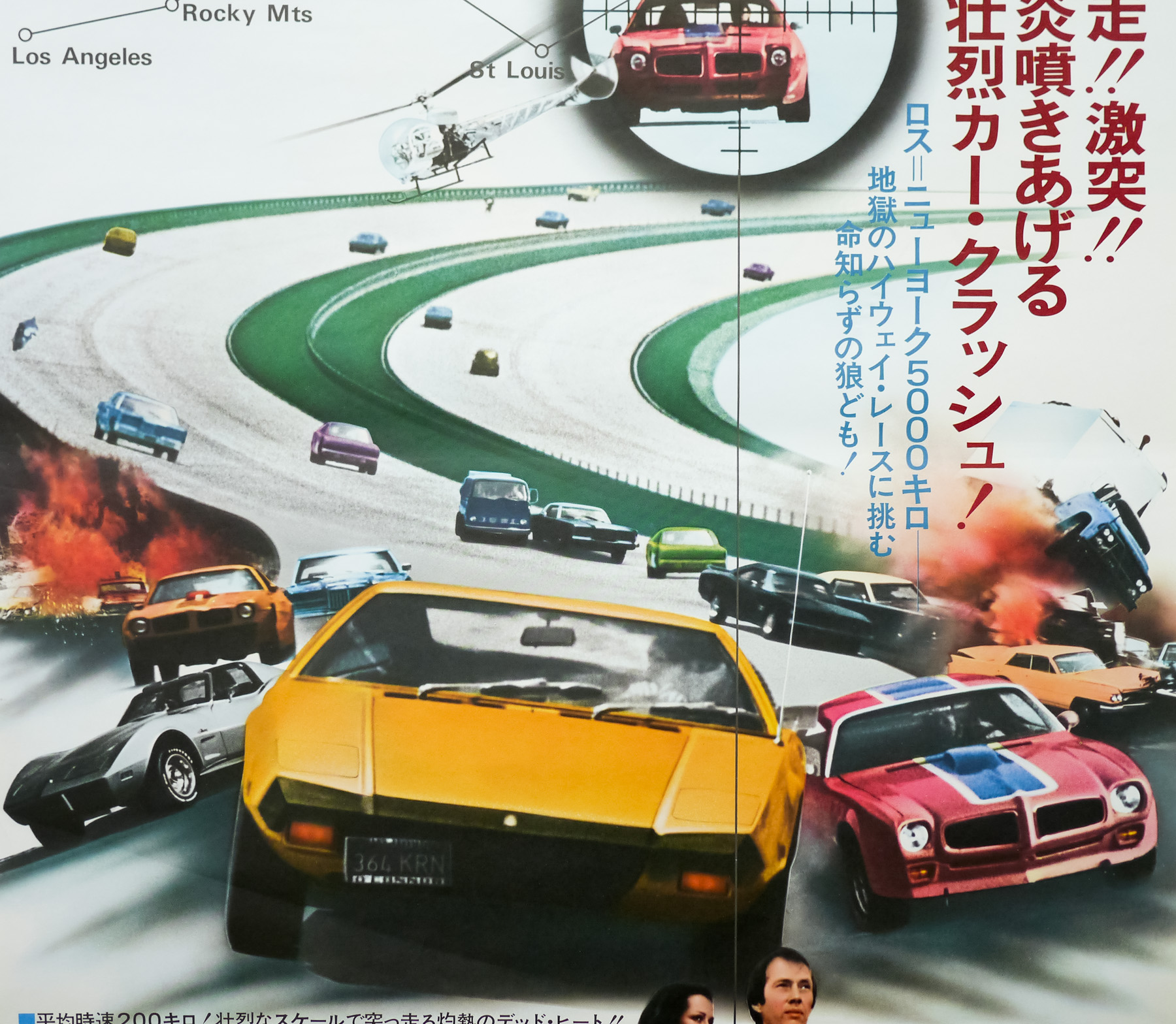
Paul Bartel, the late actor/director who was at the helm of the cult b-movie Death Race 2000 (released a year earlier), stuck with the cross-country car chase theme with this 1976 flick Cannonball, though he removed most of the gore that gave the former film its notoriety. The film and title are based on the exploits of Erwin G. “Cannon Ball” Baker, a legendary bike and car racer who made over 140 cross-country speed runs during his career and put his name to the Sea to Shining Sea Memorial Trophy Dash, an illegal cross-country race that was run five times during the 1970s. This was the first in a series of films that was based on the idea of illegal long-distance races, with The Gumball Rally seeing release the same year, and the more successful Cannonball Run and its sequel being released at the start of the 1980s.

Whilst perhaps not as star-studded as the later films, Cannonball still has a large ensemble cast with several cameos that are both credited and un-credited, including Martin Scorsese, Sylvester Stallone, Don Simpson and Roger Corman. David Carradine appears as Coy ‘Cannonball’ Buckman, a race driver who has recently been released from jail where he was sent for killing someone whilst driving drunk. He decides to enter the Trans-America Grand Prix, an illegal road race that travels between Los Angeles and New York City. The racing team Modern Motors has promised a contract to either Coy or his arch-rival Cade Redman (Bill McKinney) so he is determined to win.

Because the race crosses state lines Coy will be in violation of his parole conditions, his parole officer (Veronica Hamel) attempts to stop him and ends up being forced to come along for the ride. Two people who have offered to pay his race expenses are also passengers in his Dodge Charger and there are several other racers in the competition, including a surfer dude played by David’s brother Robert and his girlfriend (played by Belinda Balaski). The race soon descends into a violent destruction derby with many of the competitors meeting grizzly ends. Coy will be challenged in more ways than one and the first to cross the finish line isn’t who you might think. Later films in the genre would tone down the violence and deaths considerably.

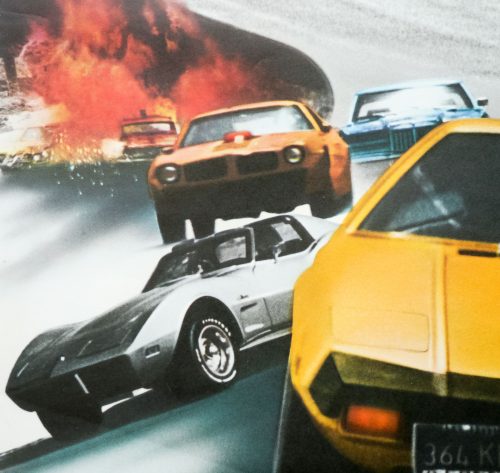
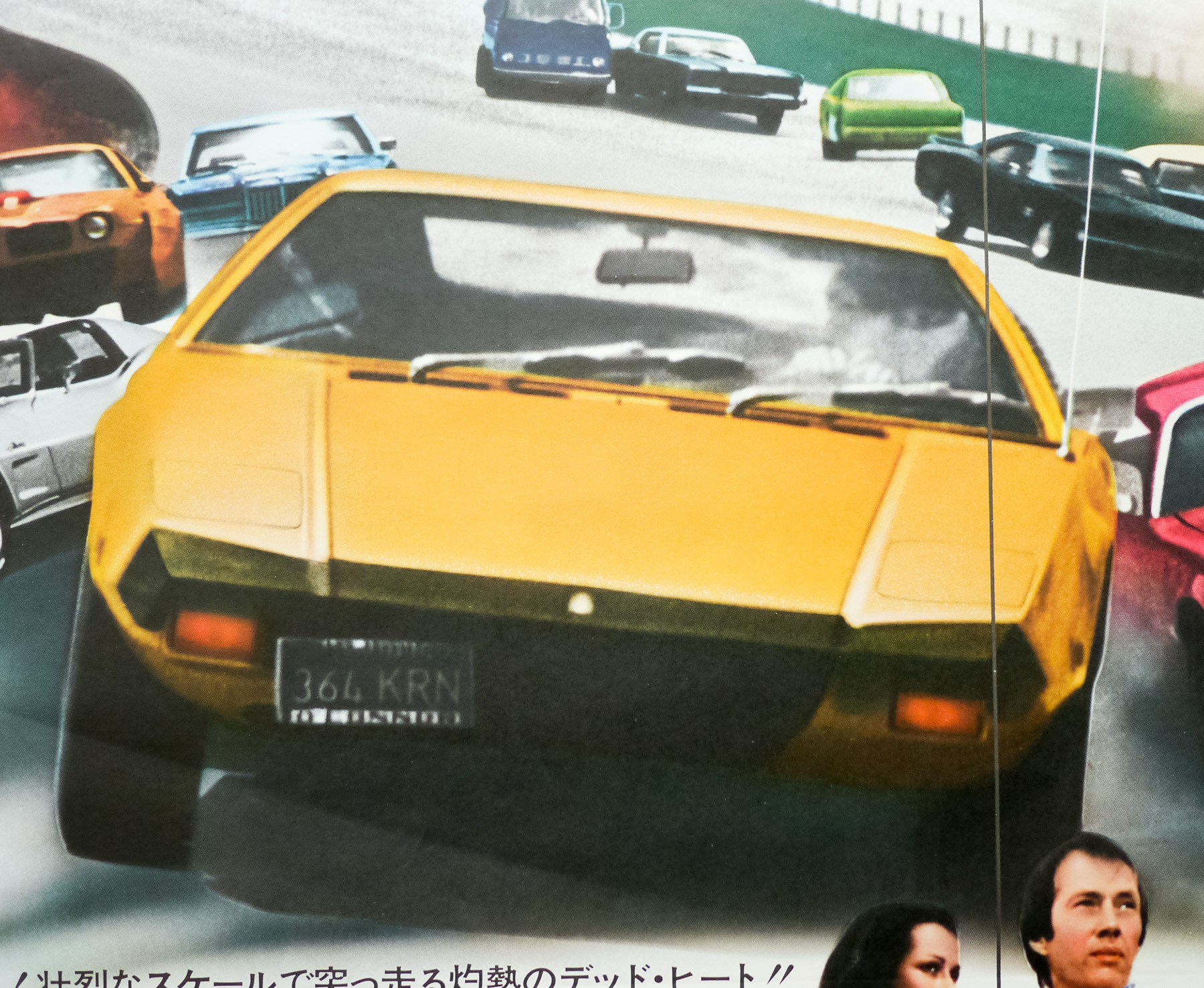
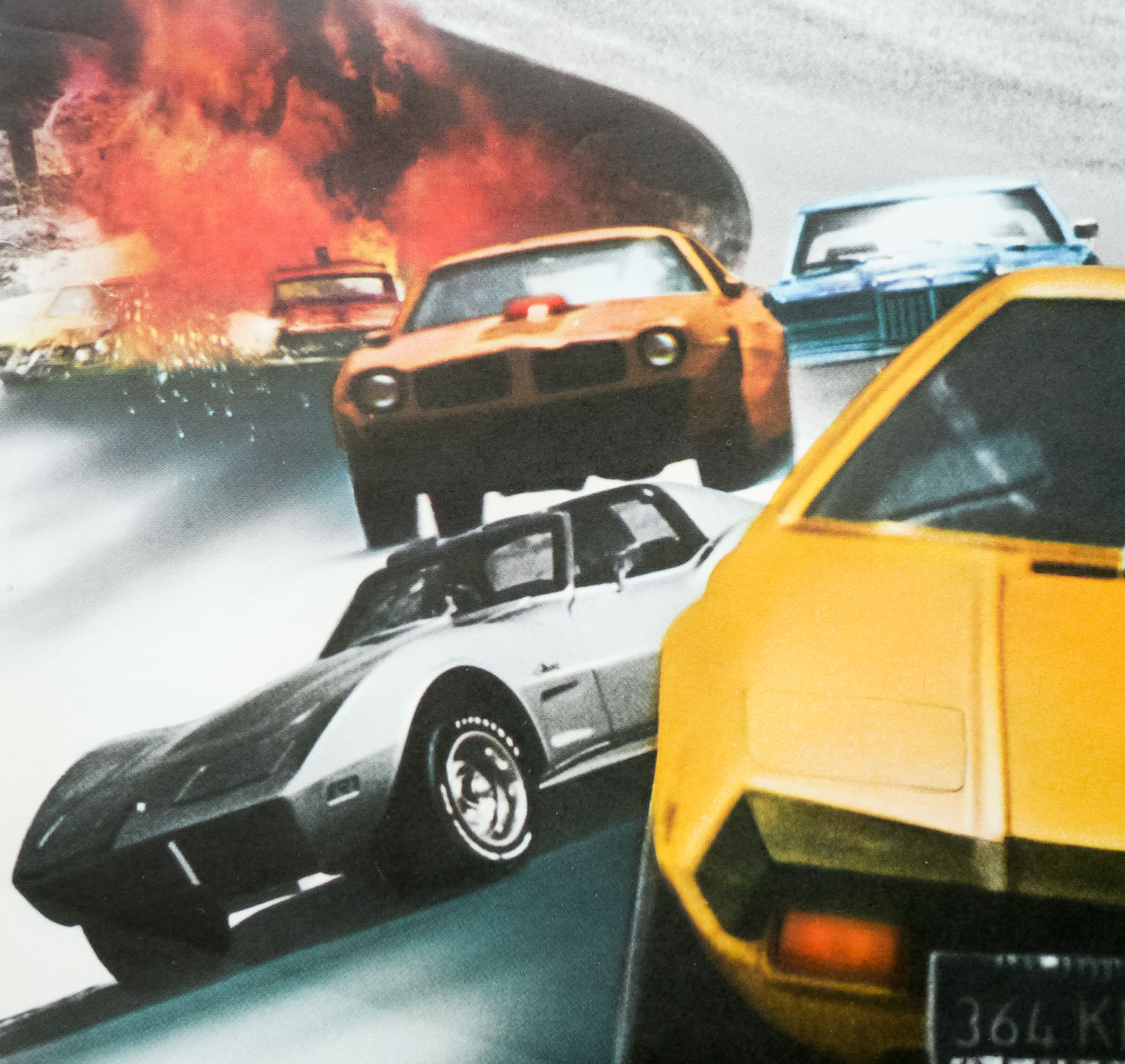
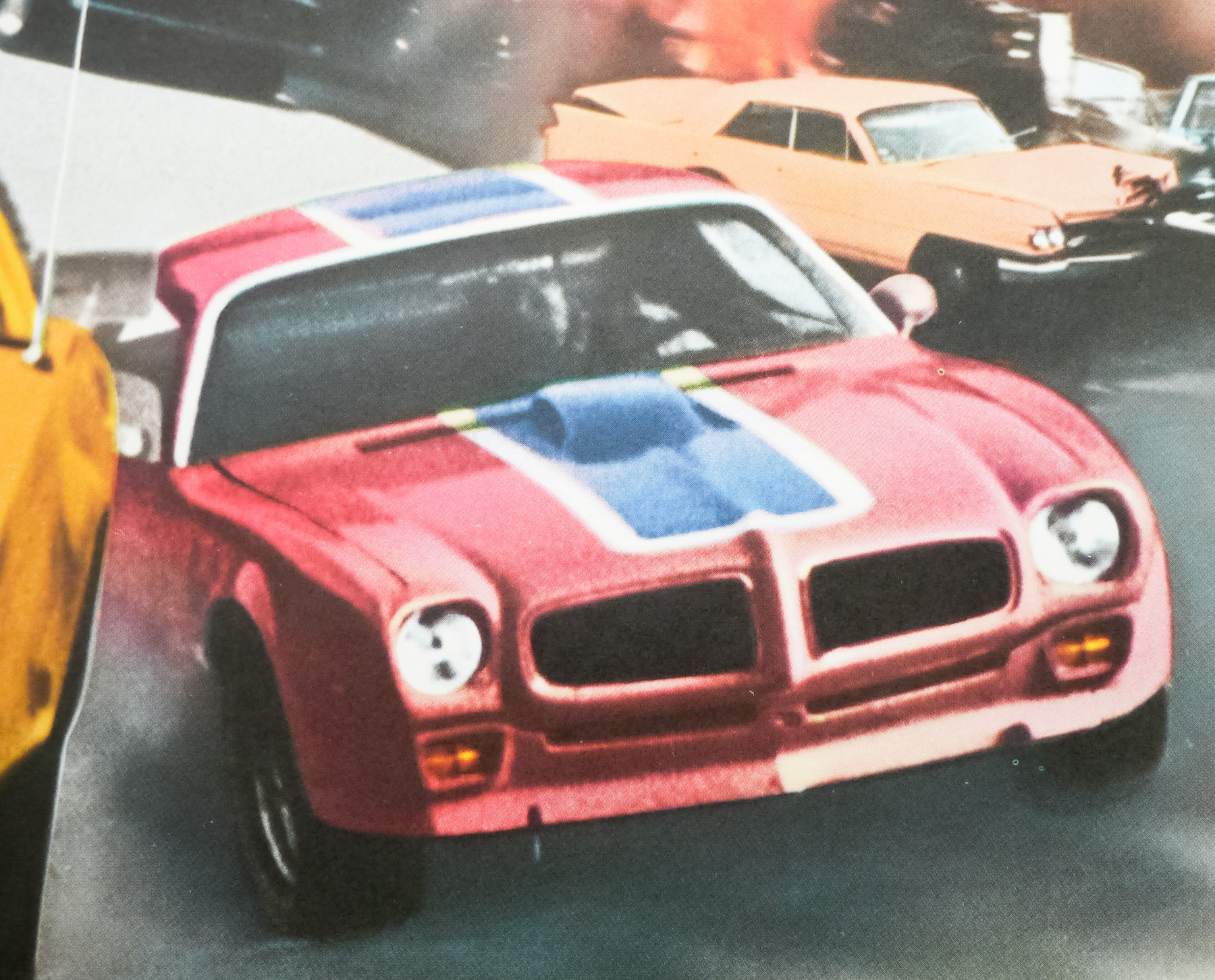
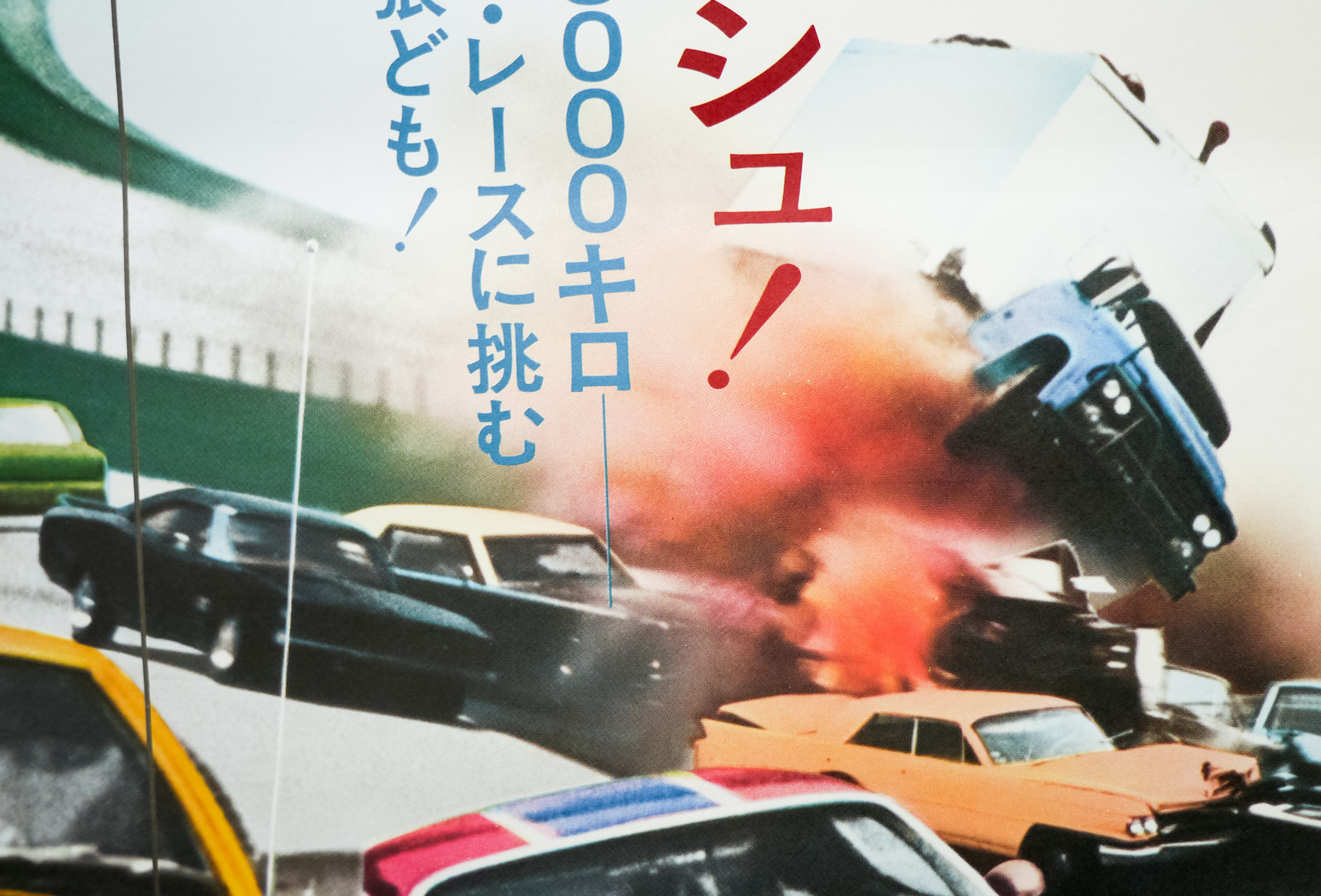
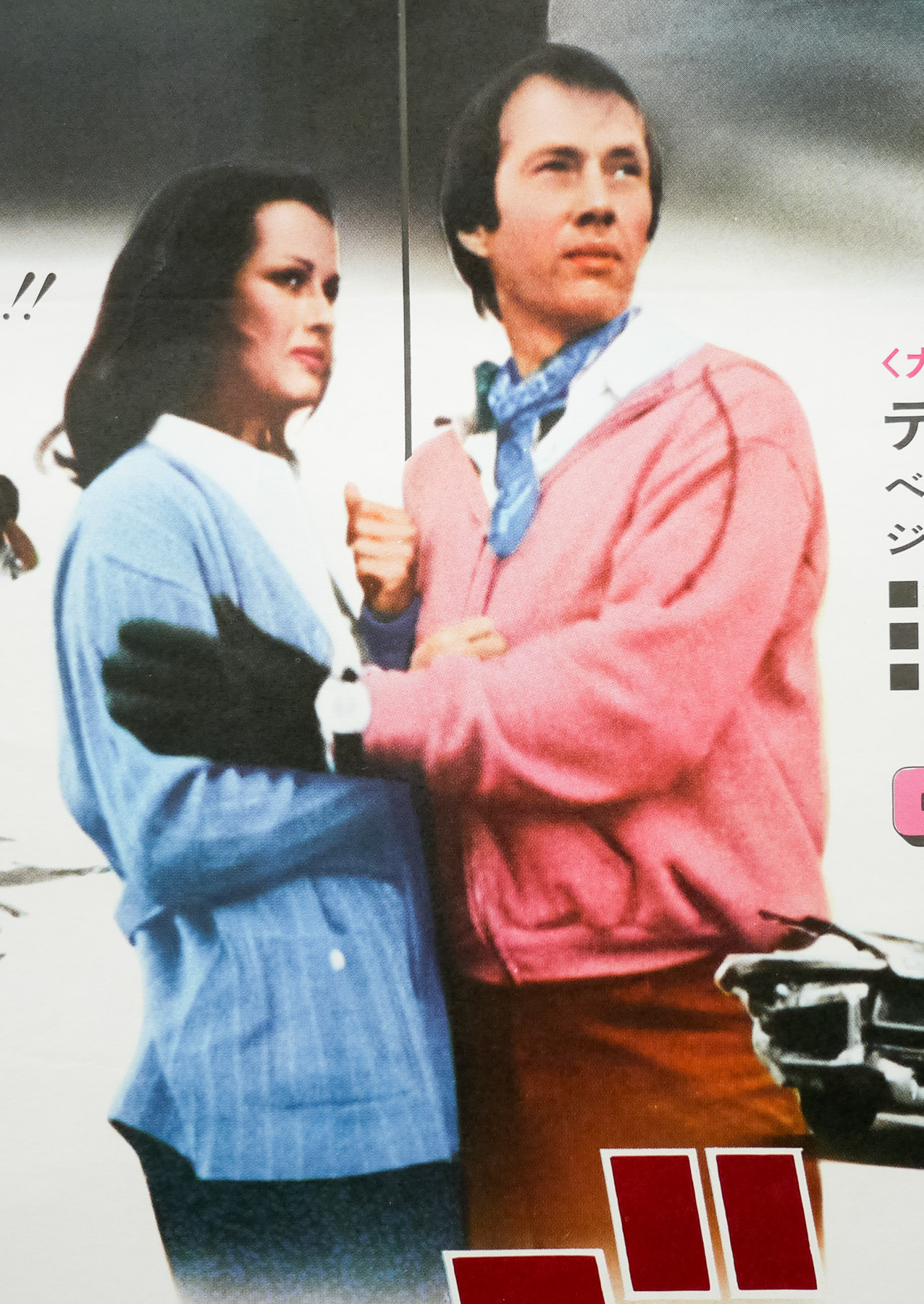
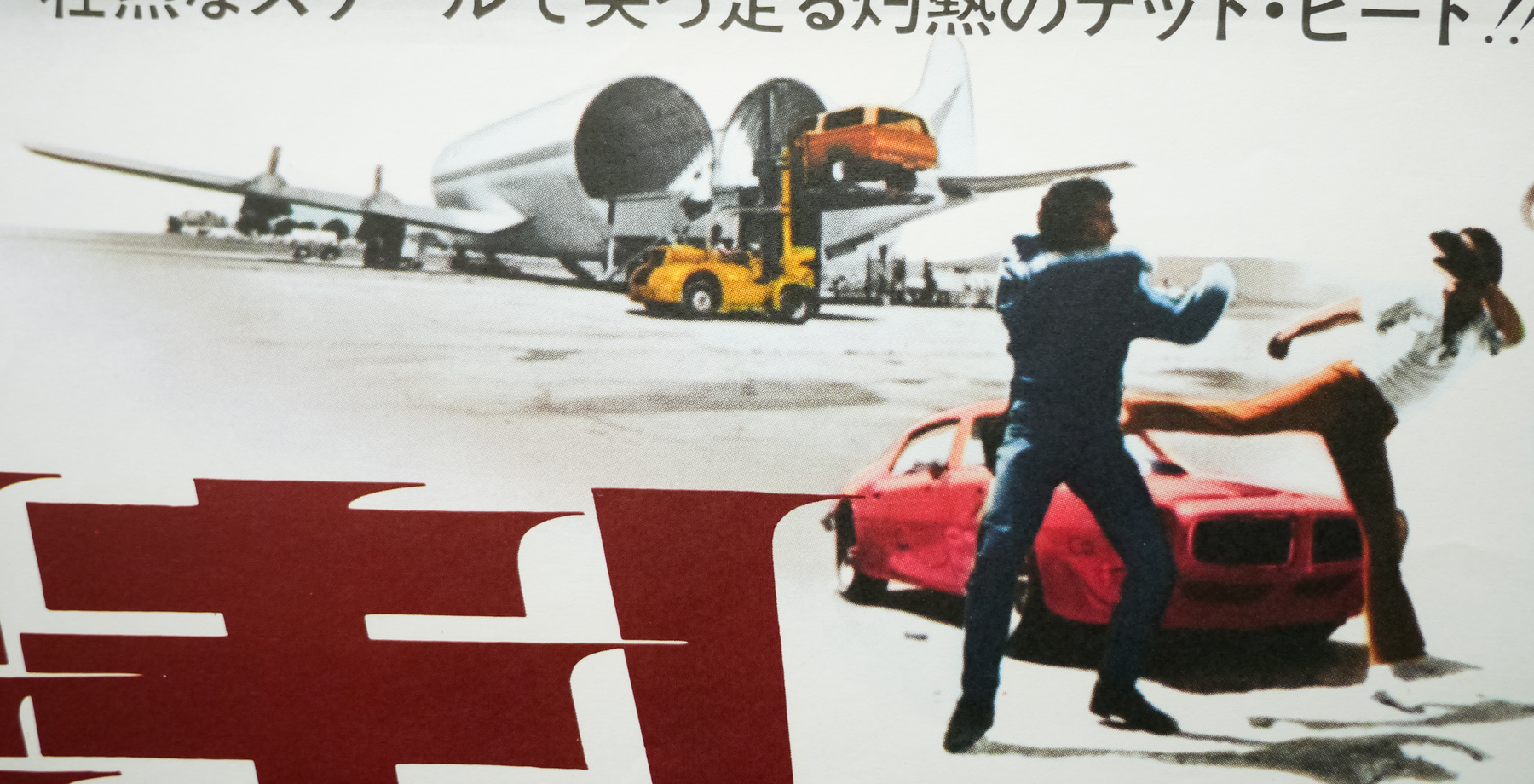
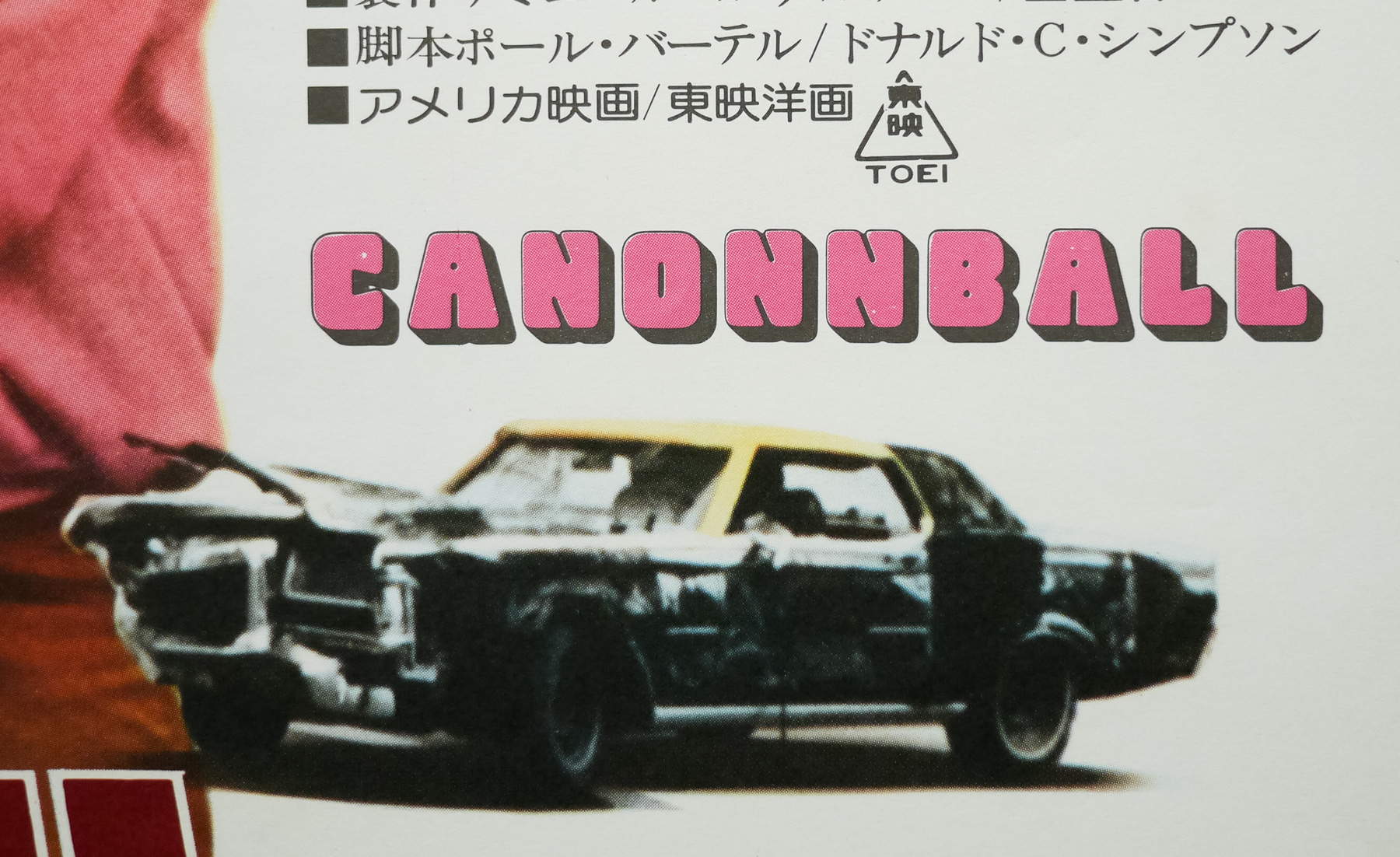
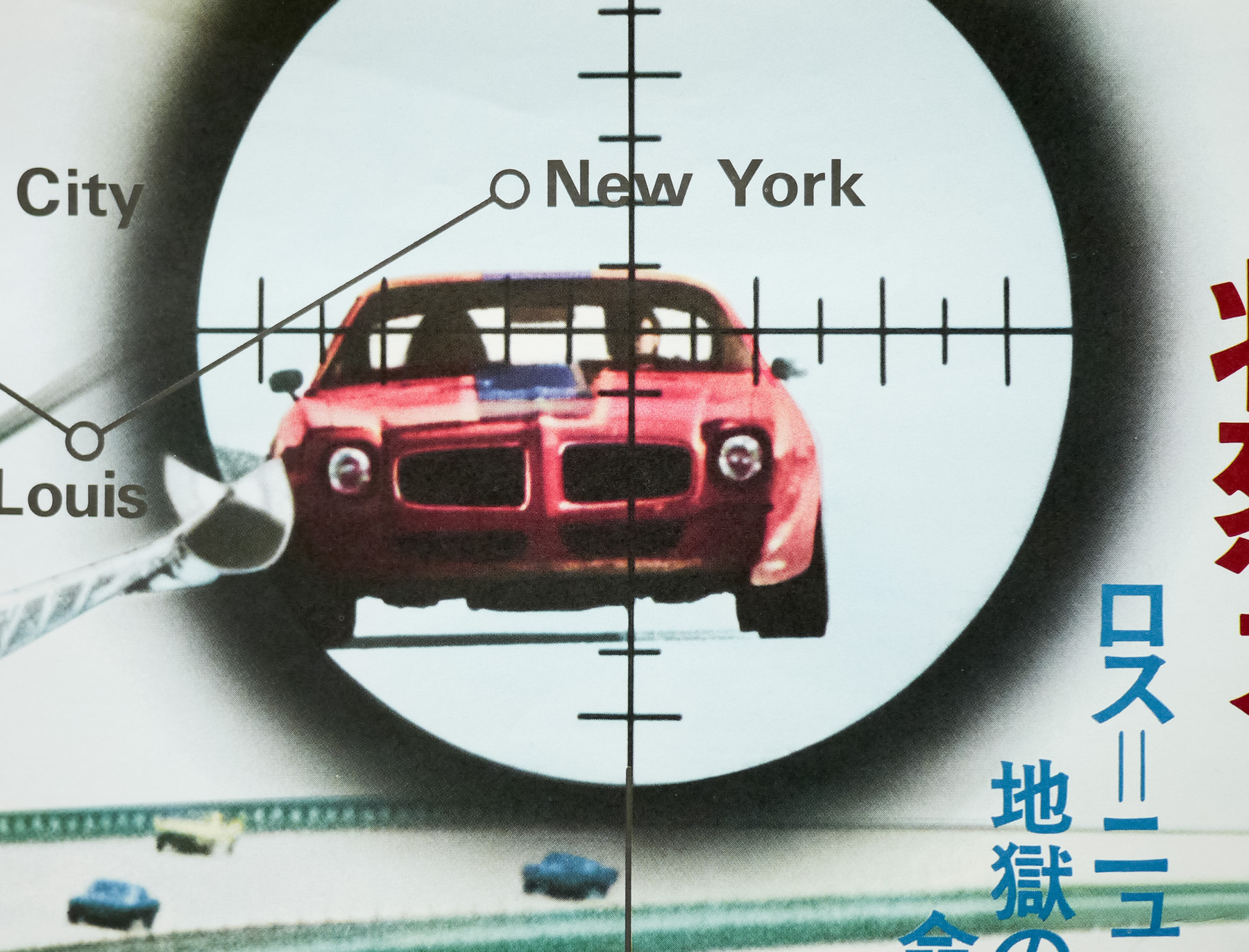
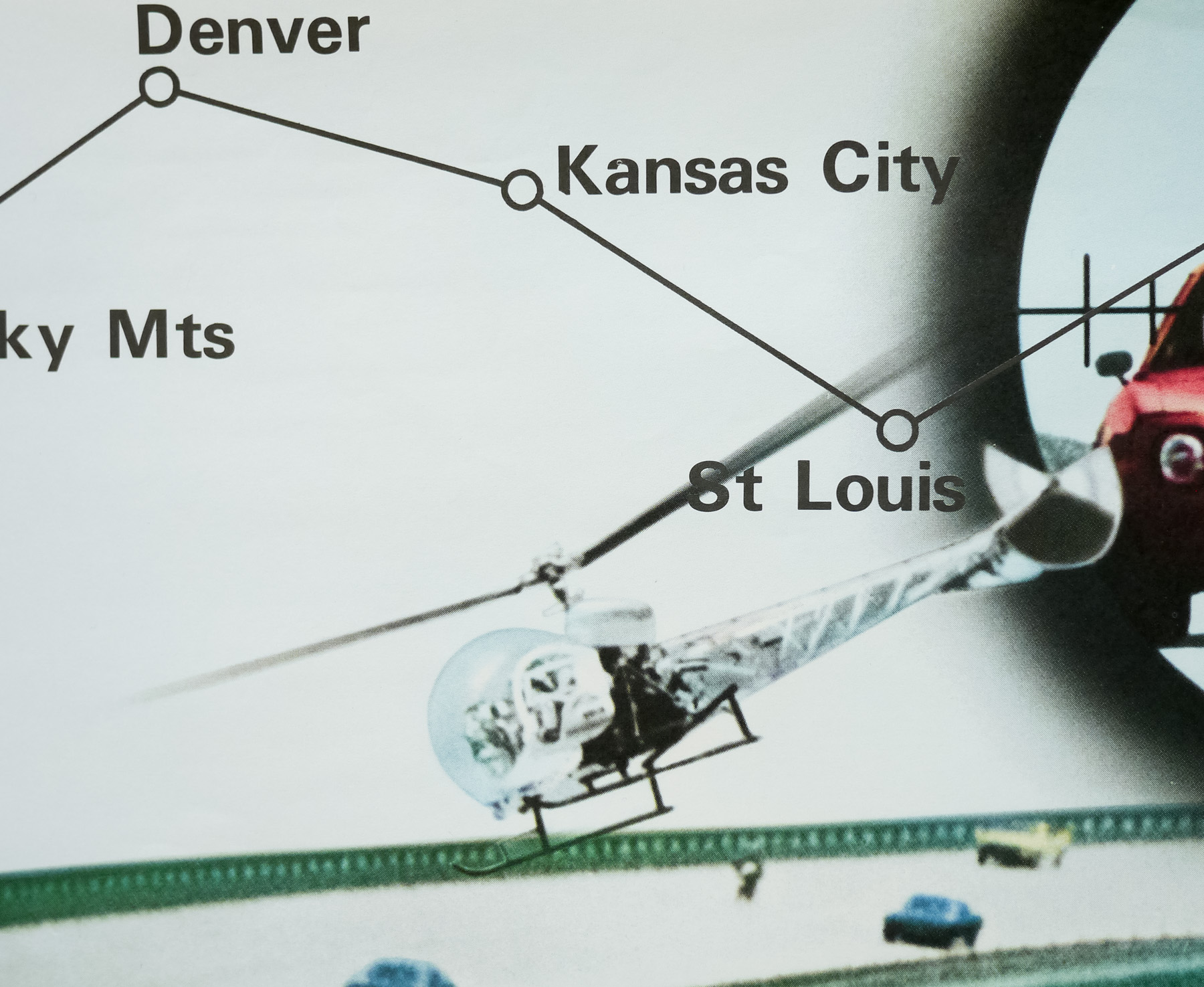
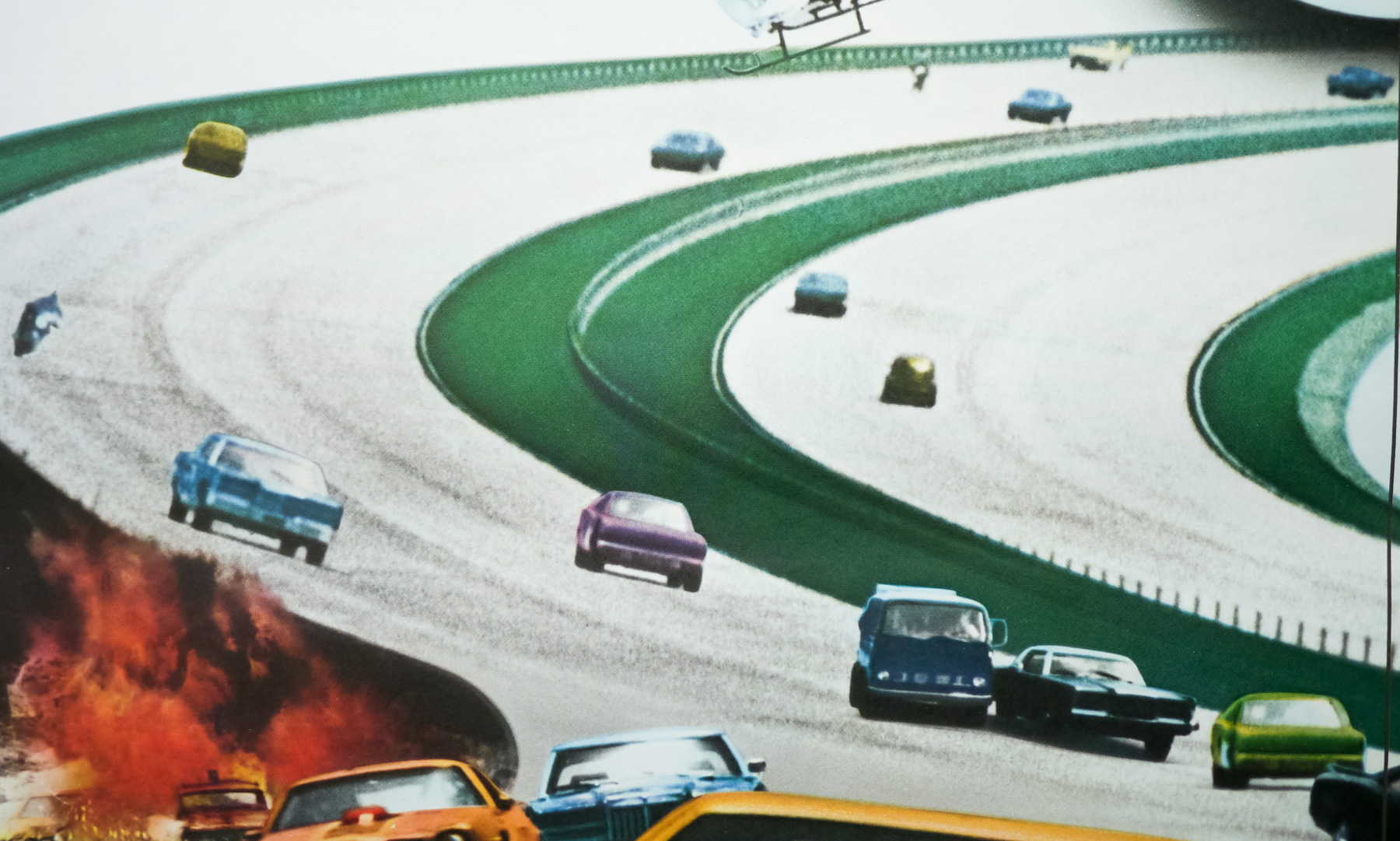
This Japanese B2 poster features a unique montage design and was printed for the film’s first release in the country in 1977. Note the miss-spelling of the title as ‘Canonnball’.