

You searched for: B2

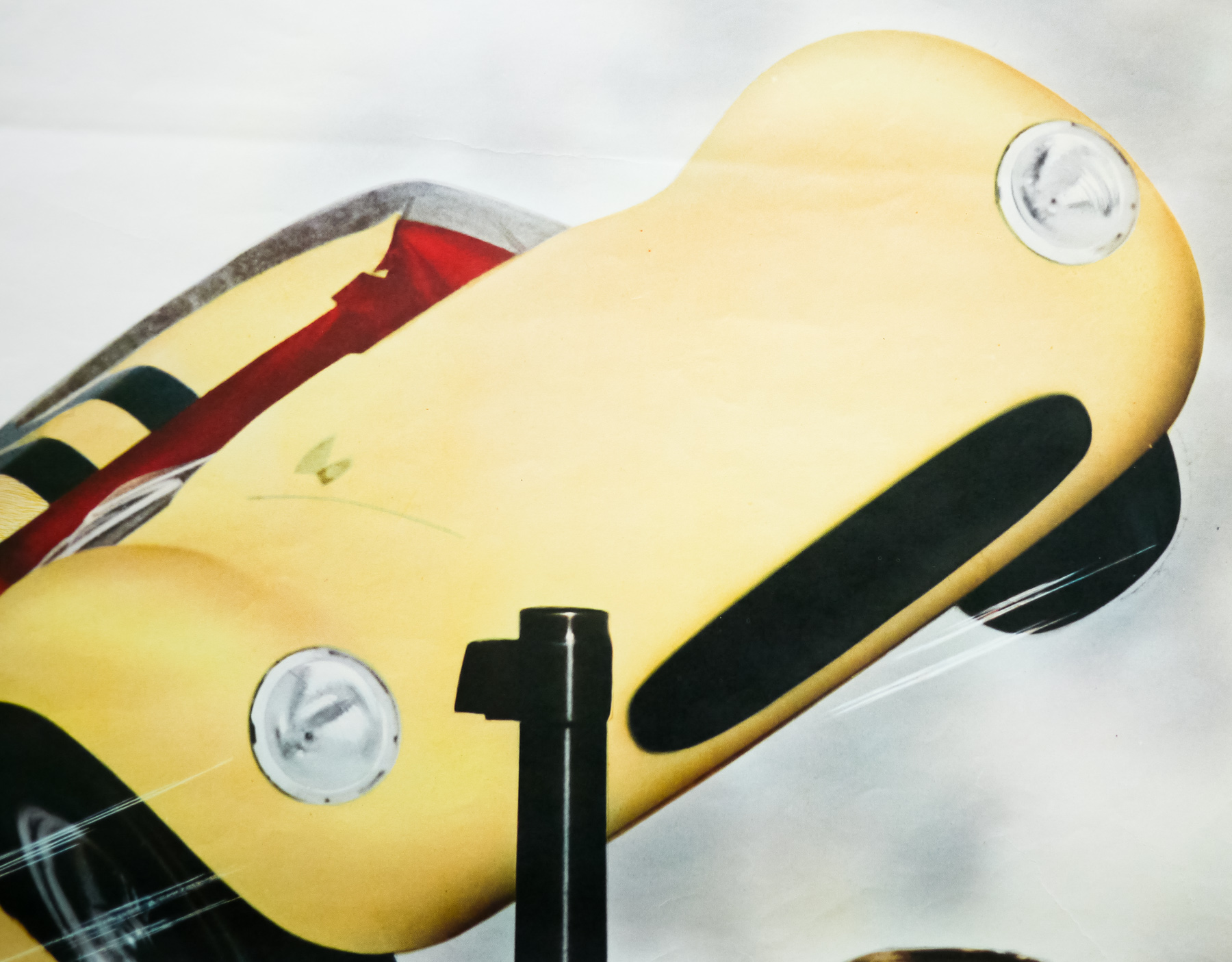
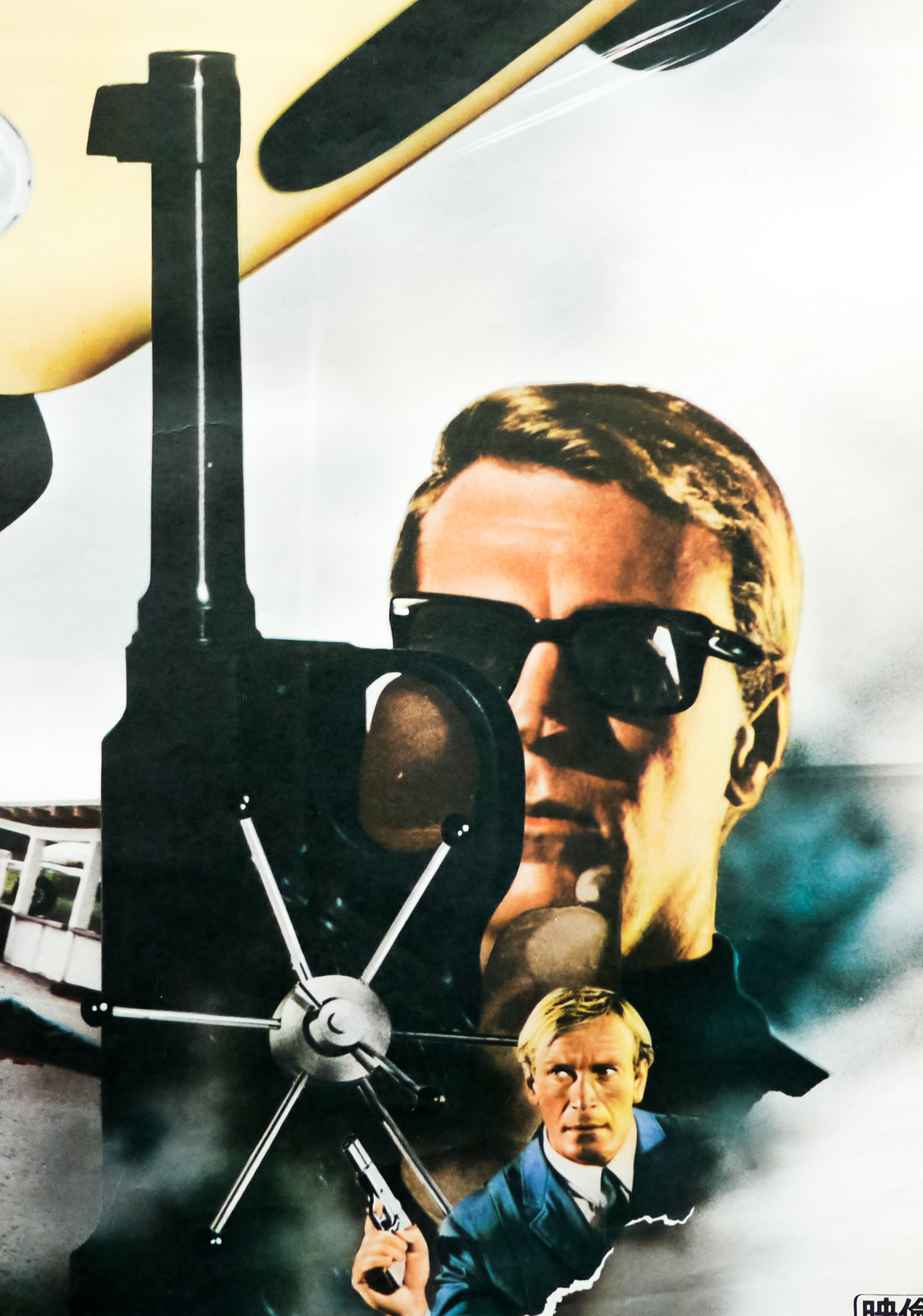
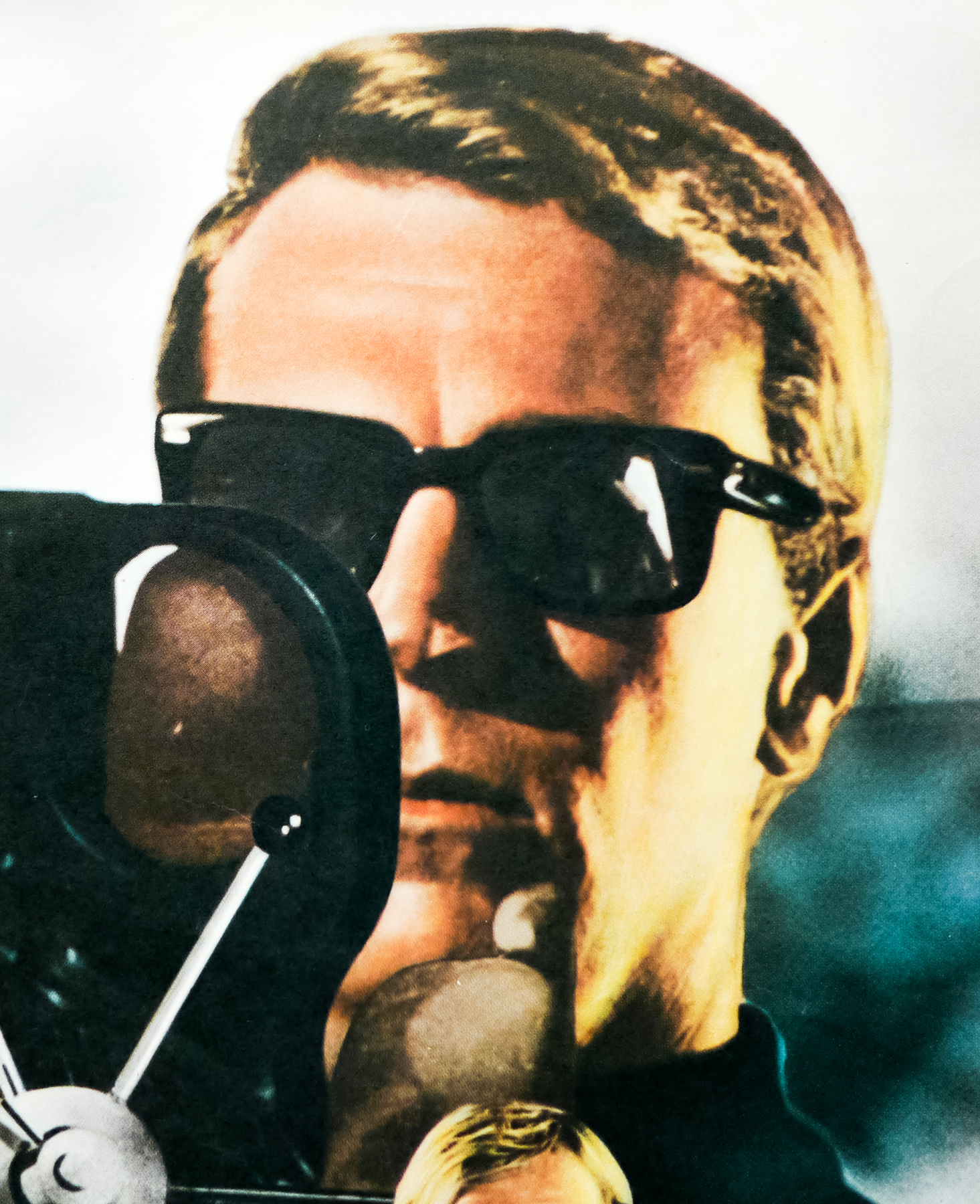
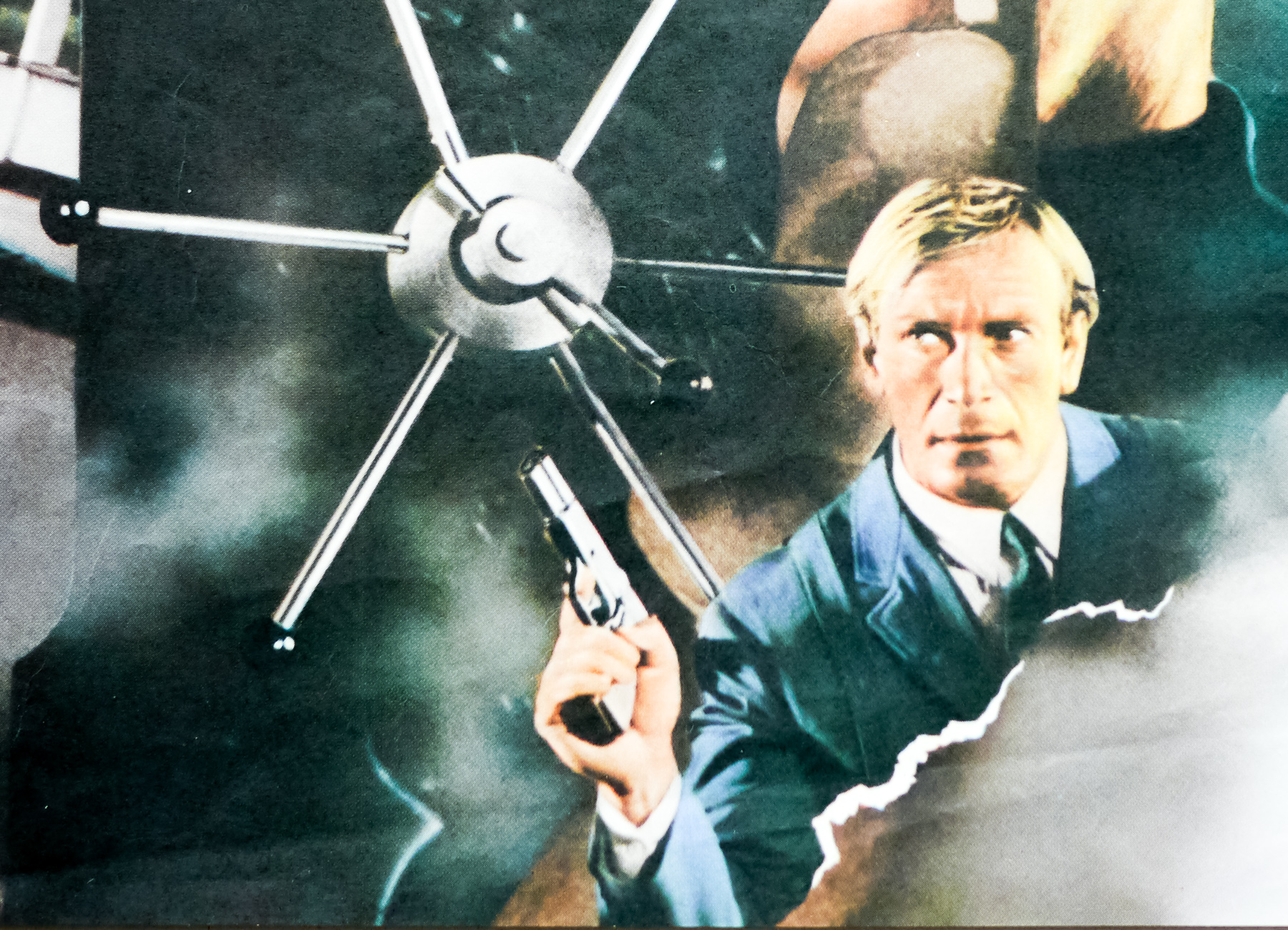
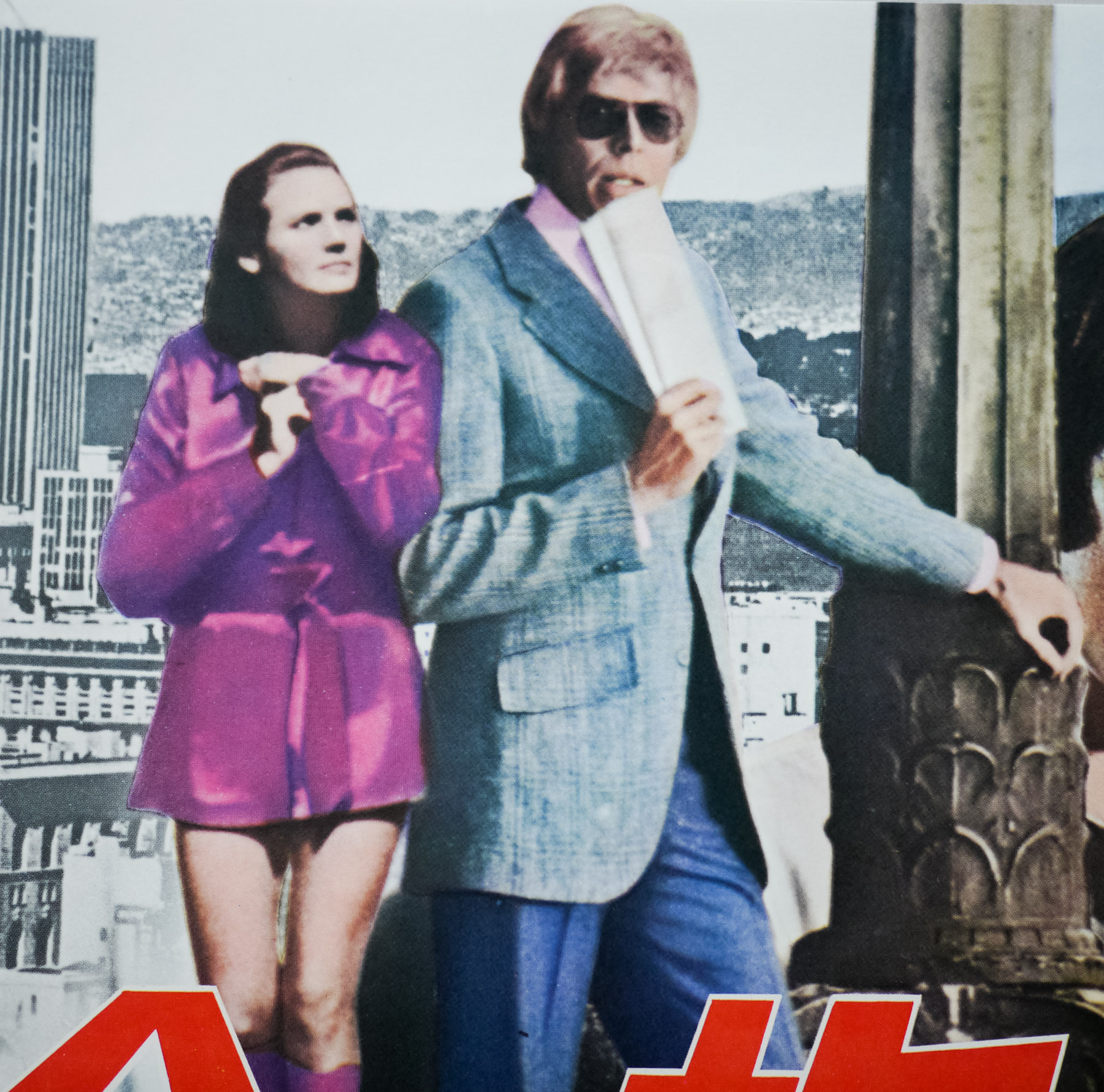
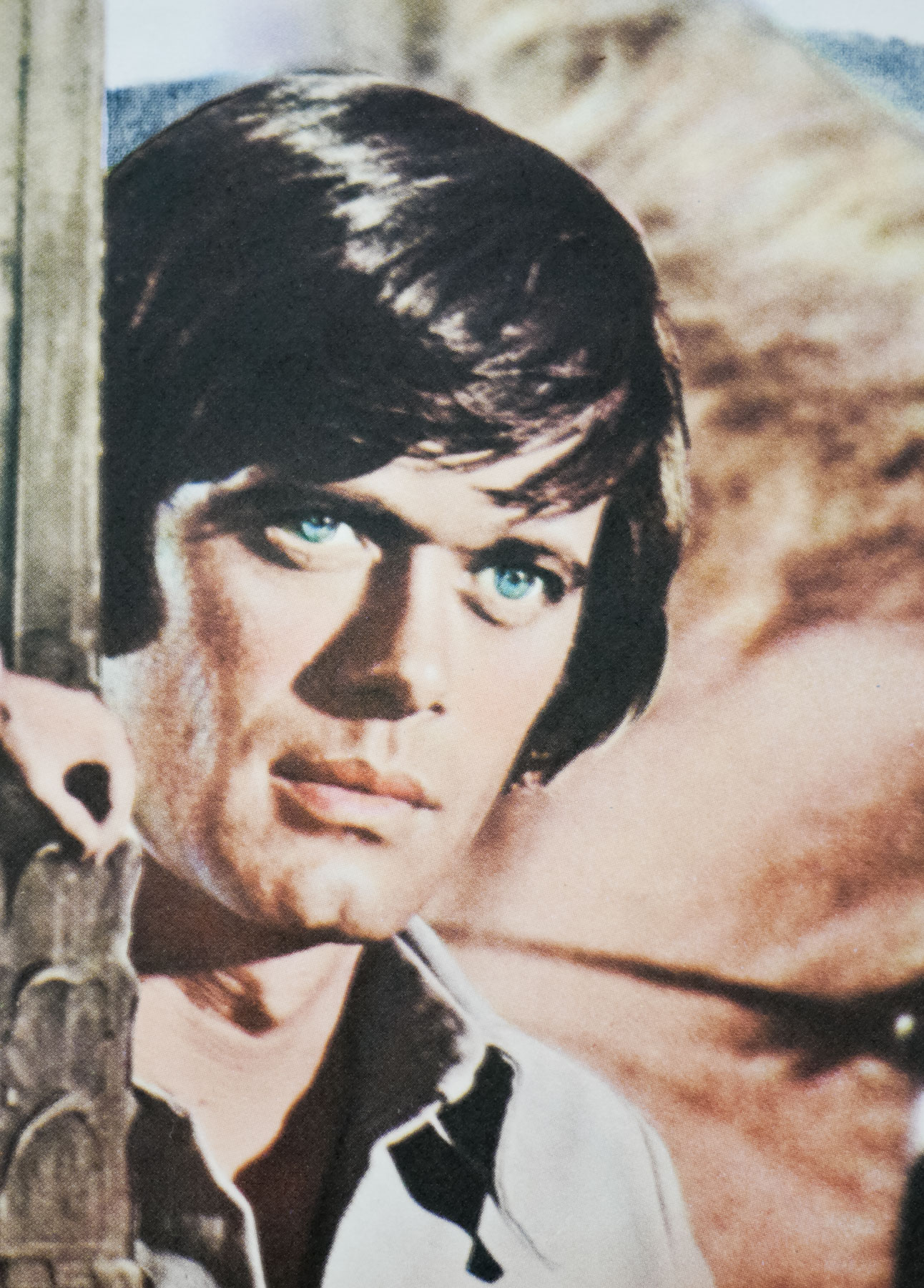
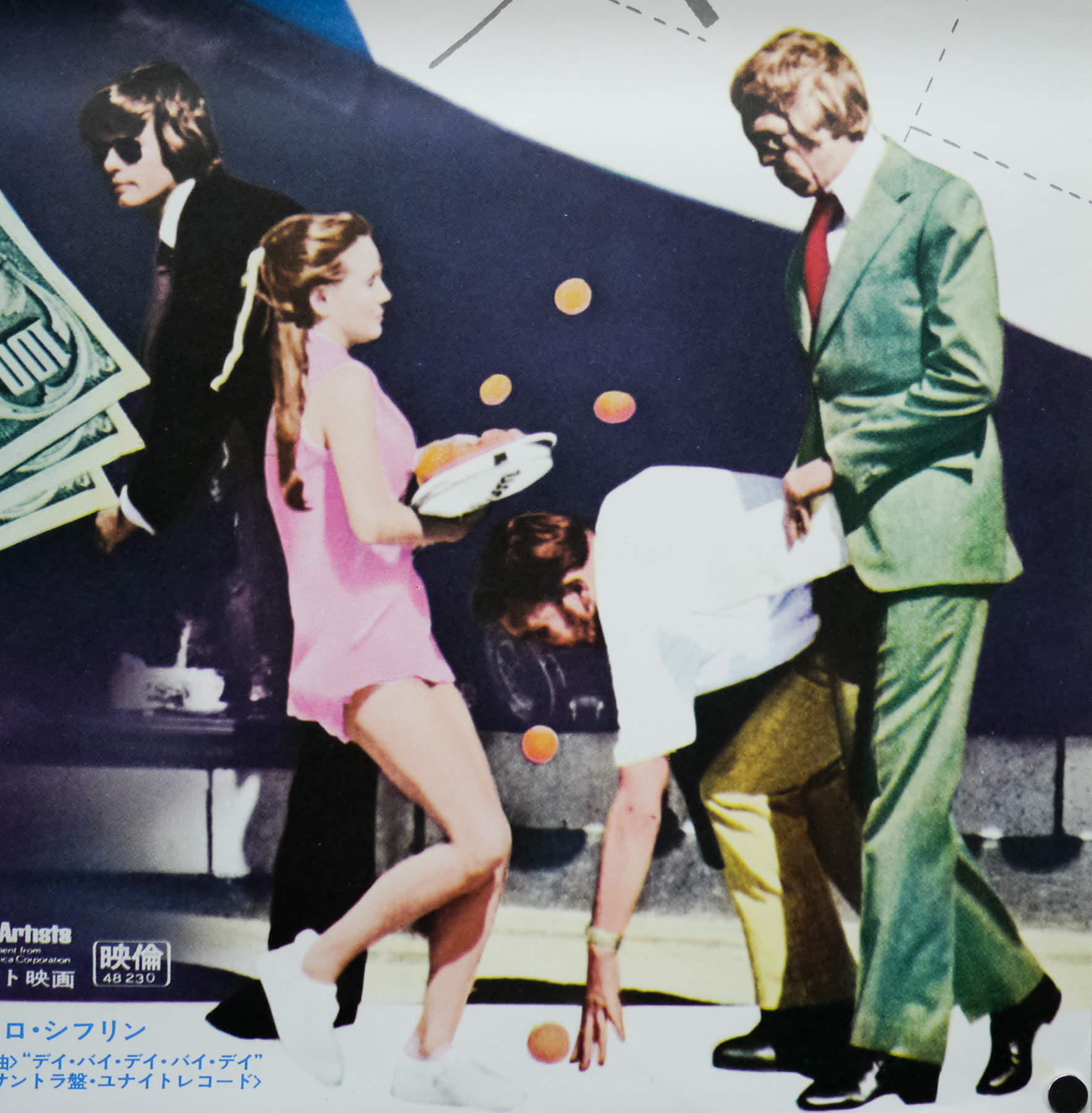
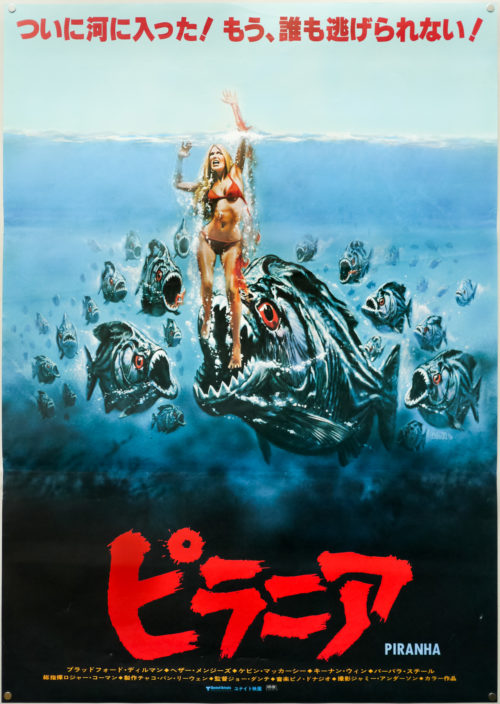
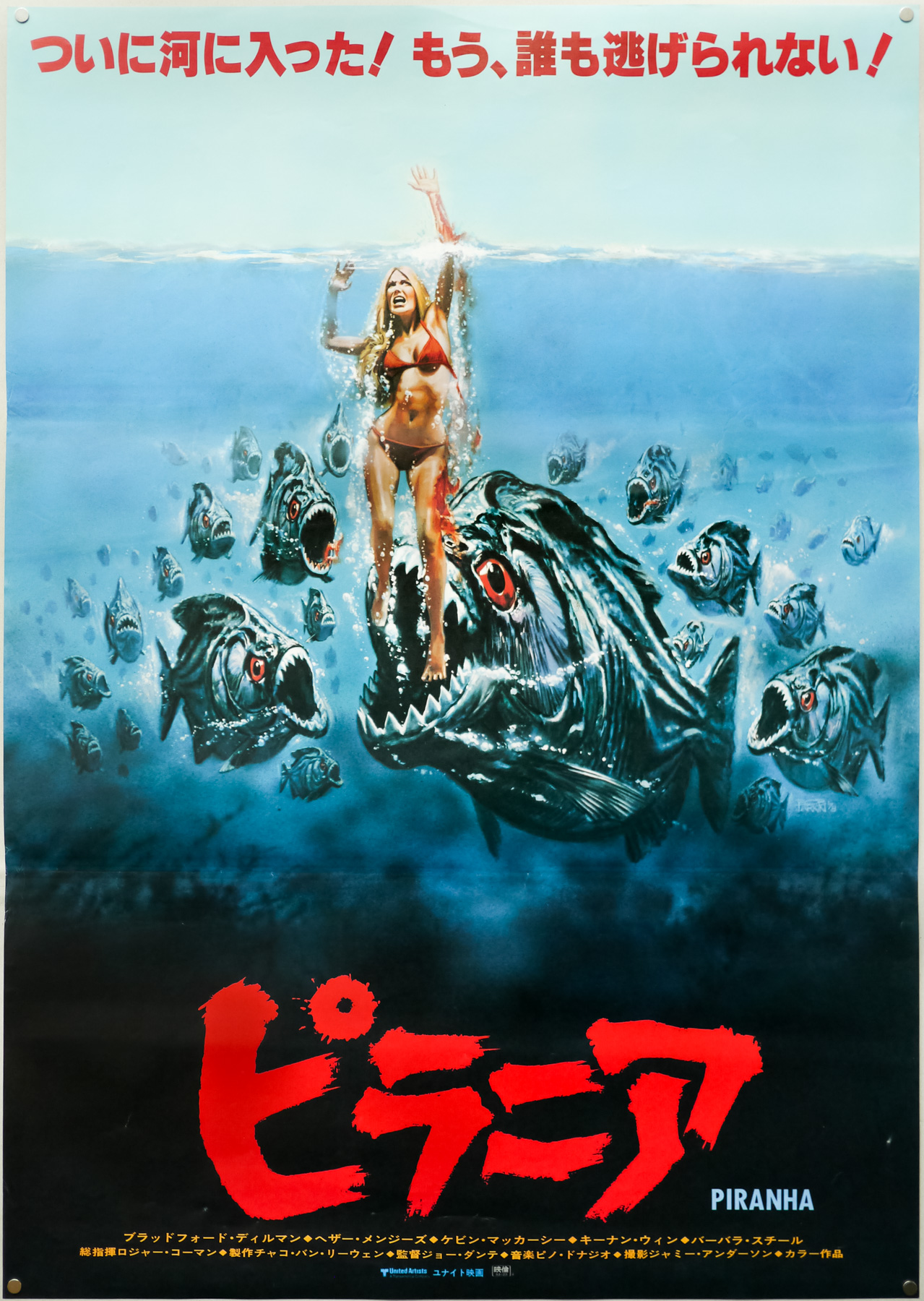
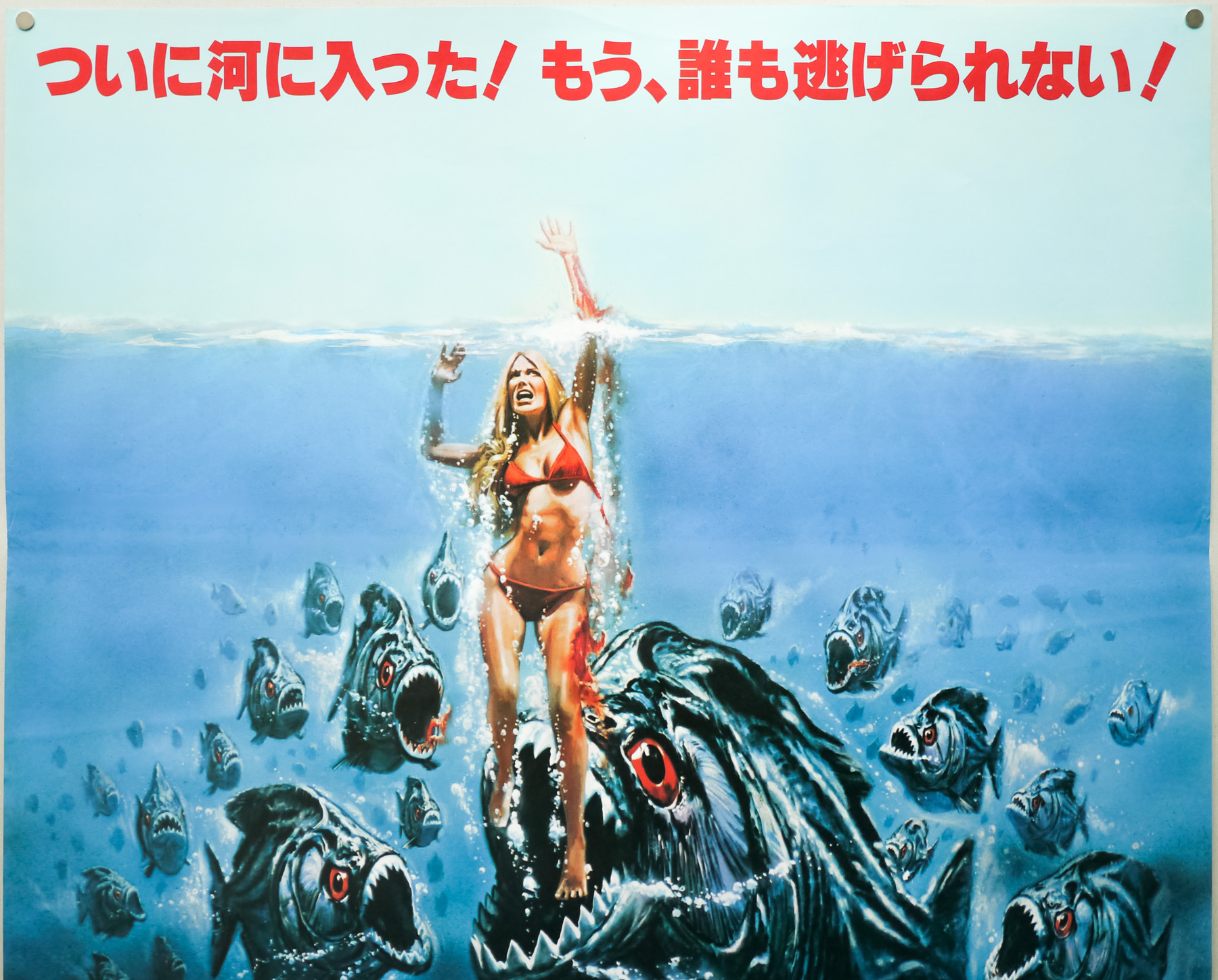
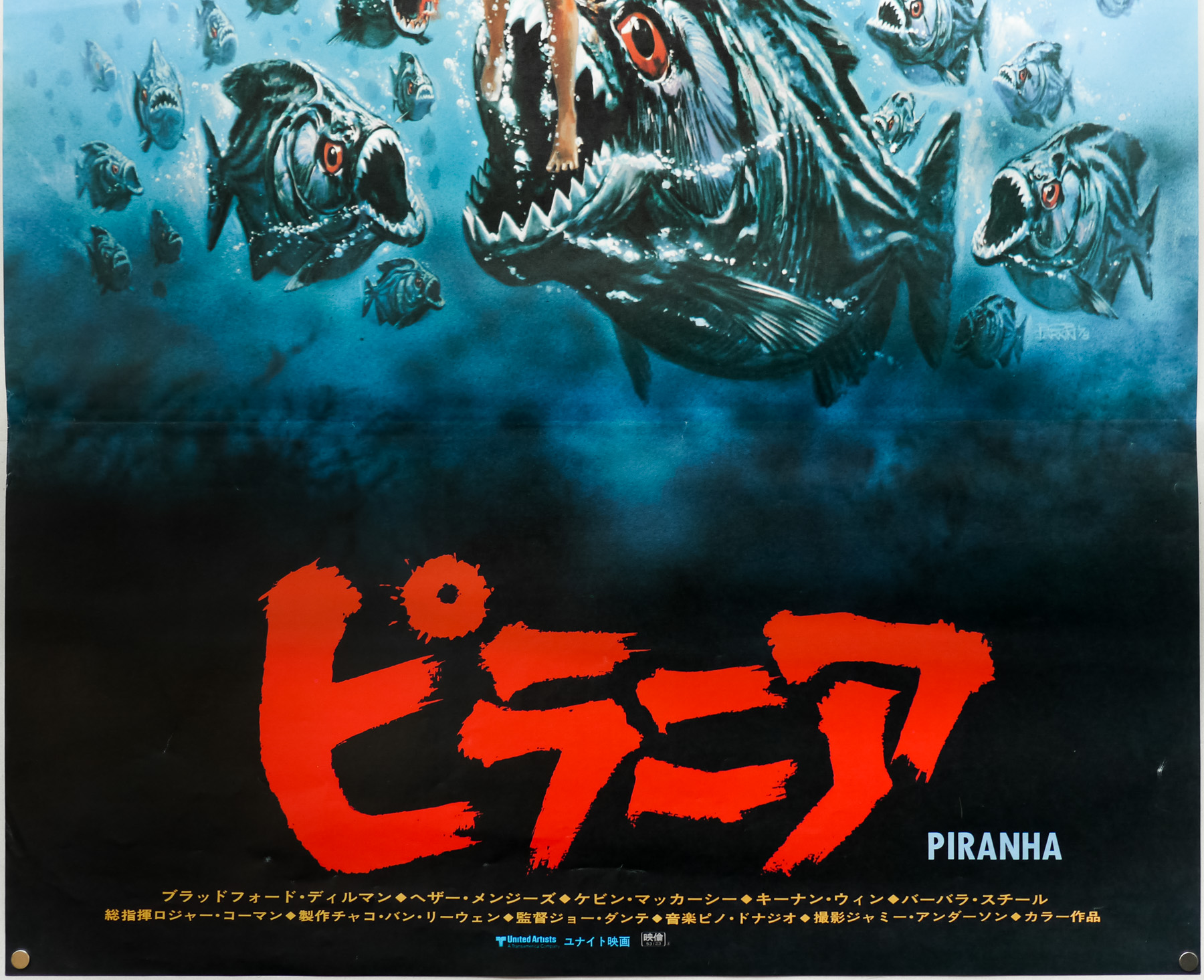
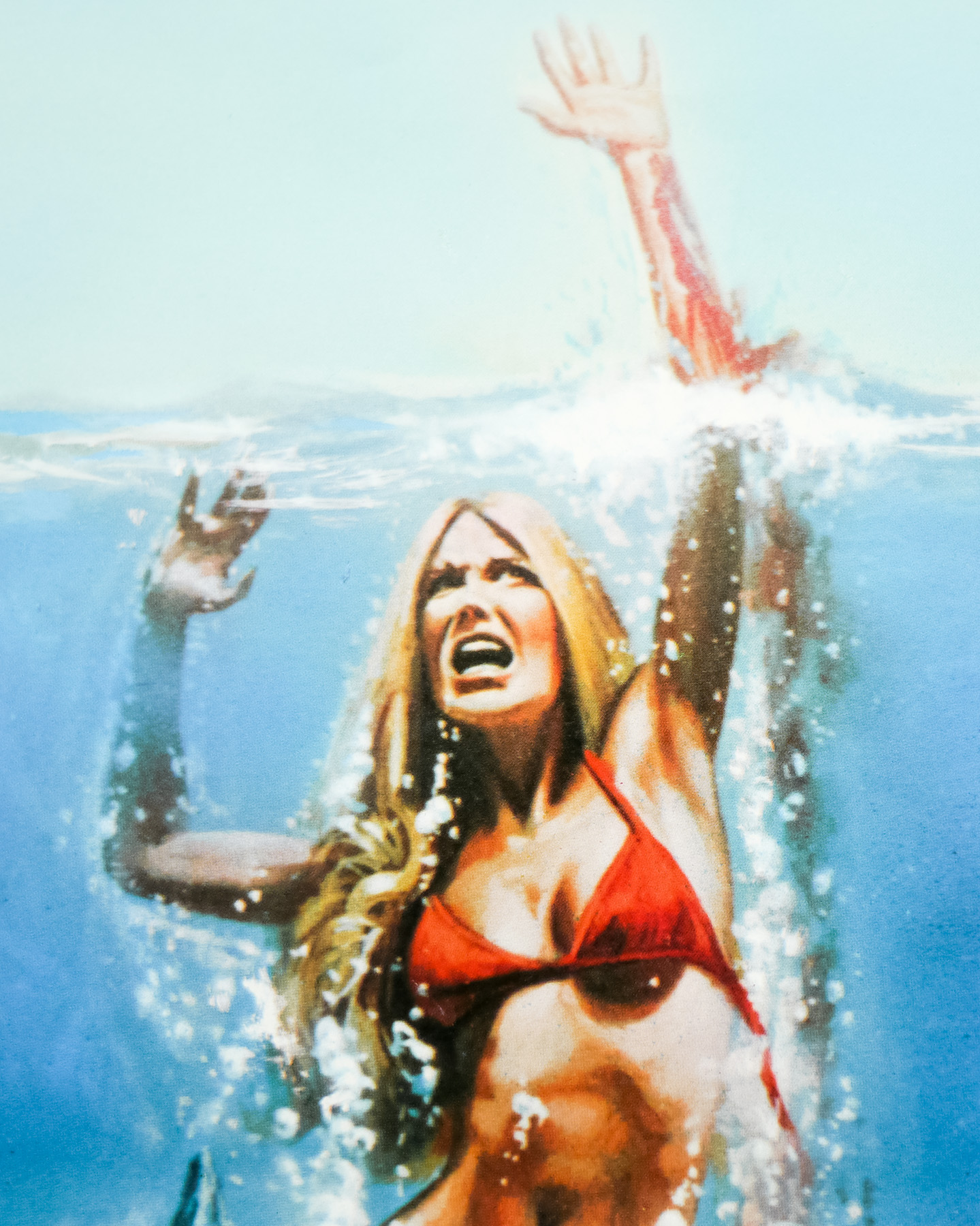
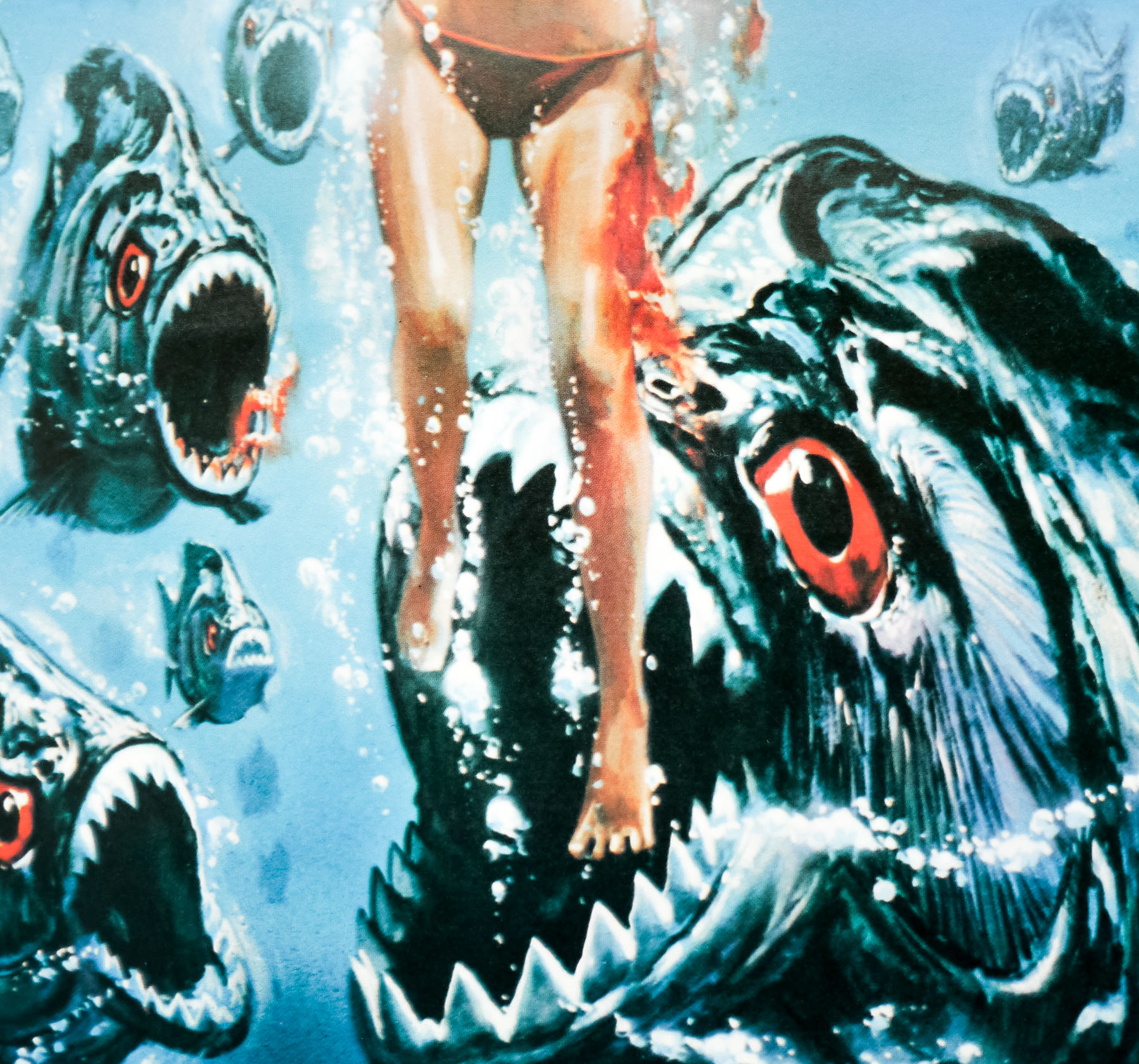
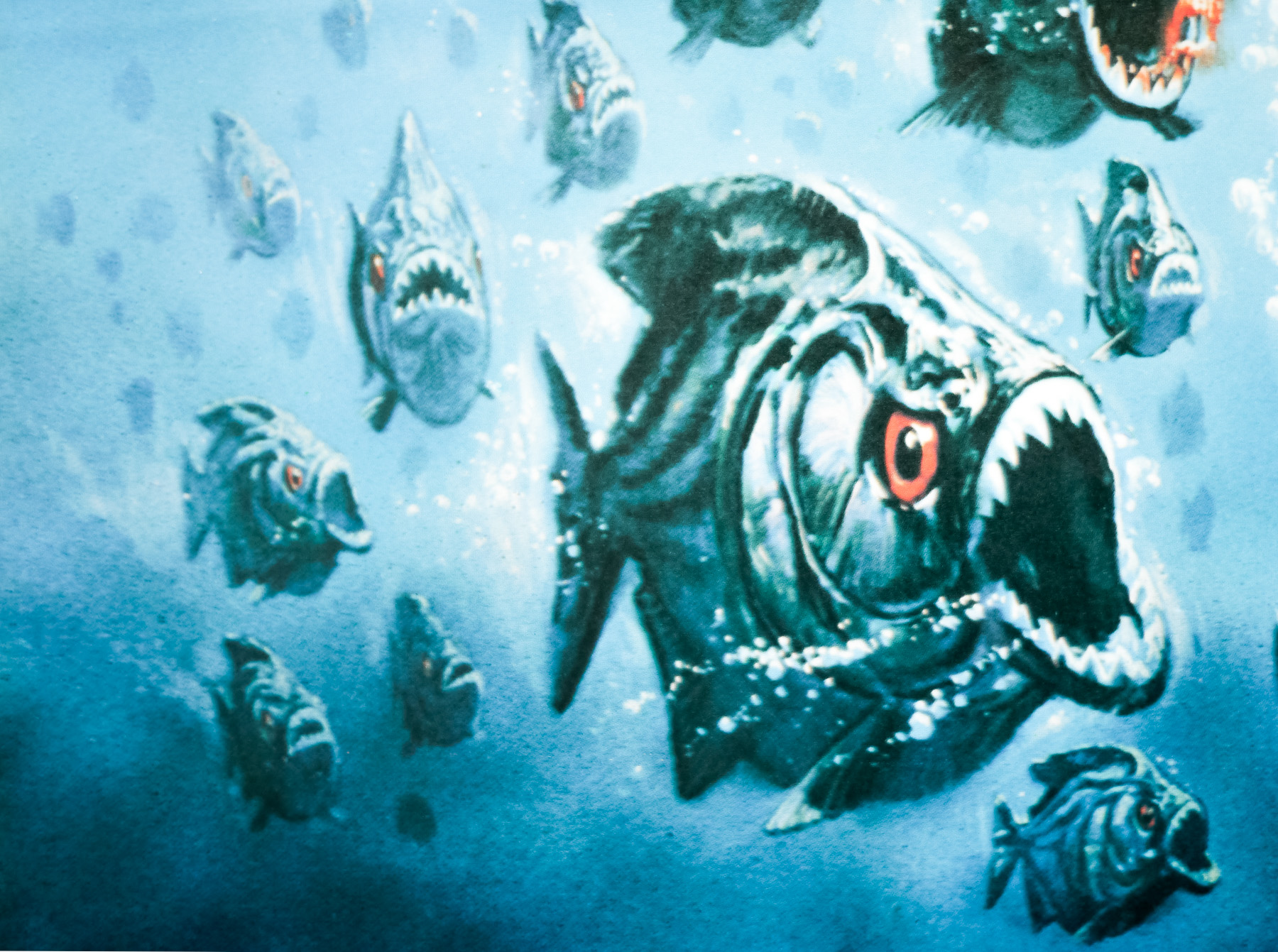
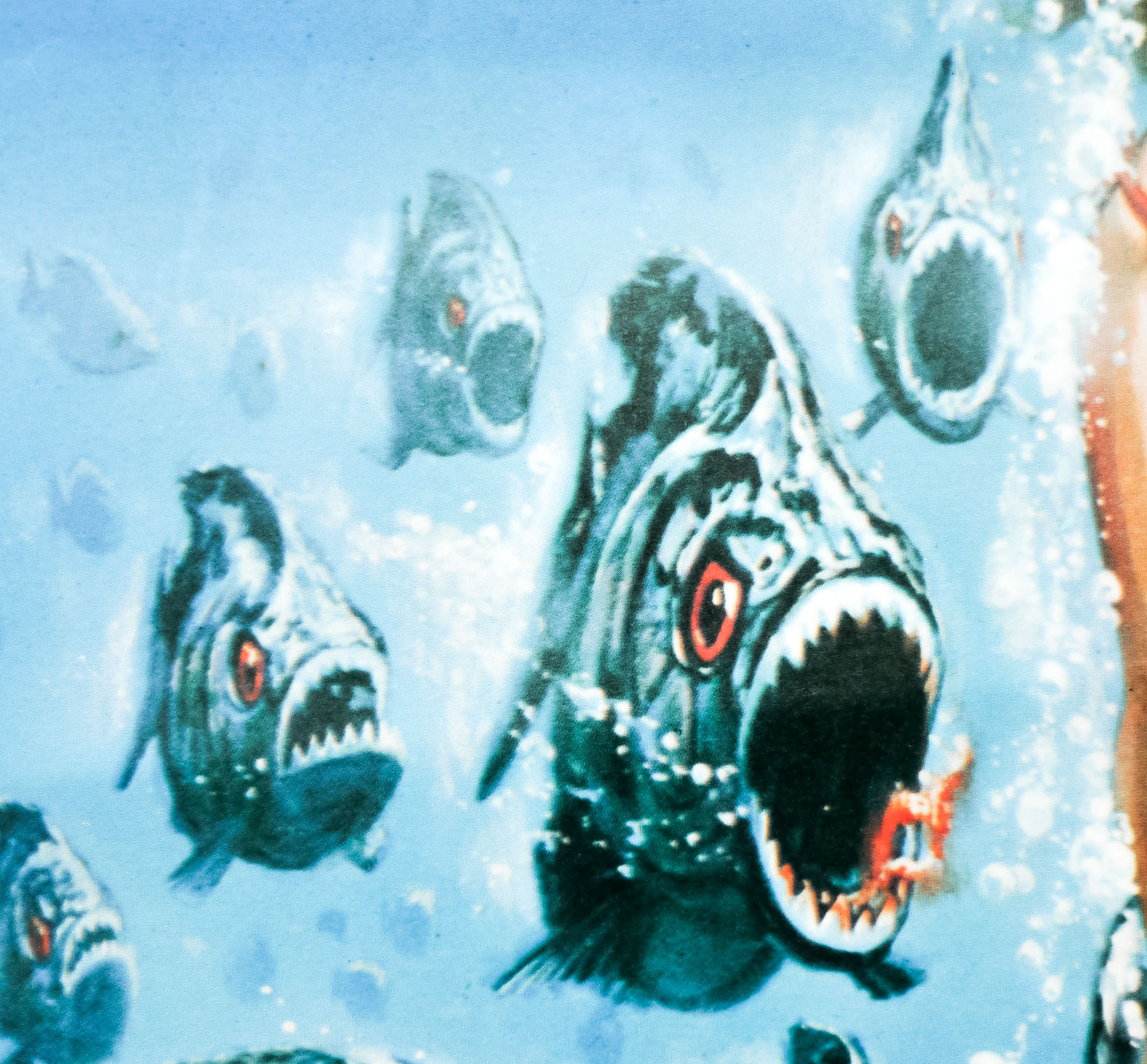
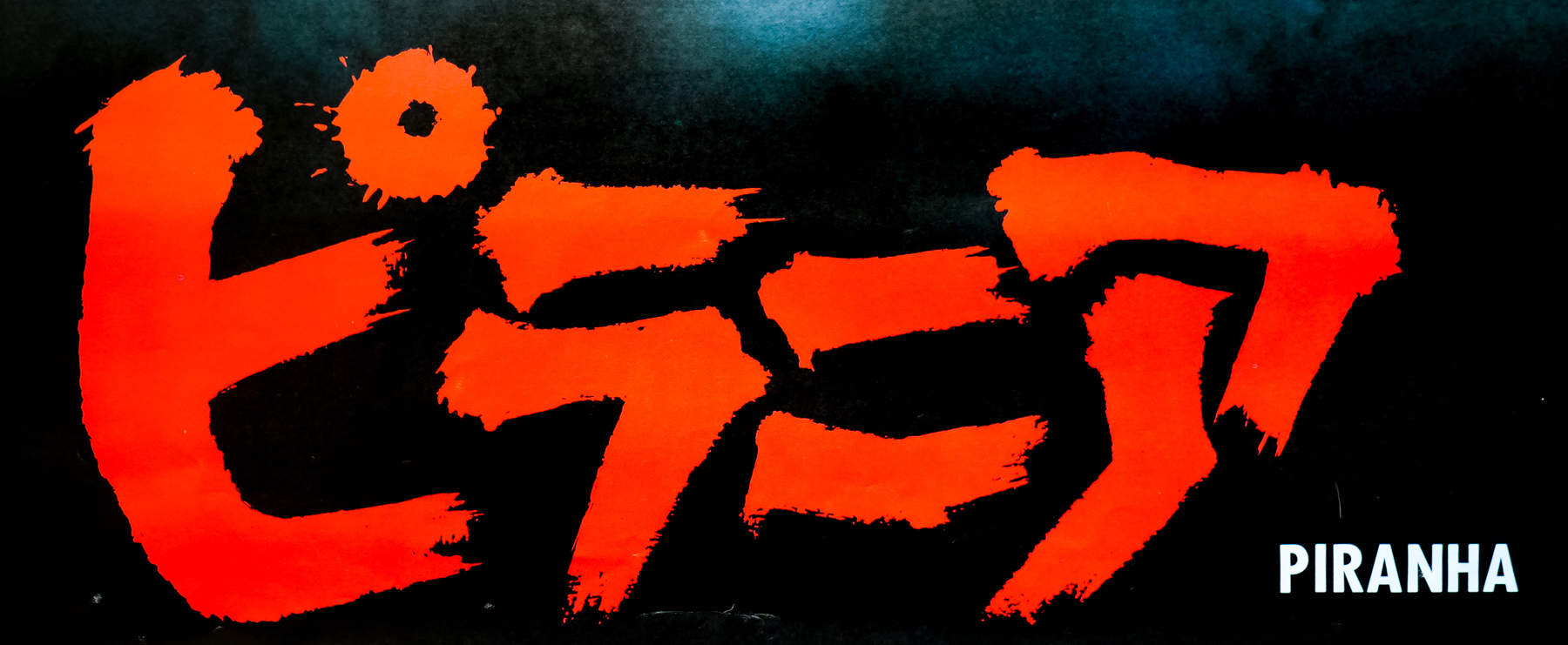
Piranha / B2 / style A / Japan

22.02.15

Poster Poster
Title
Piranha
AKA
--
Year of Film
1978
Director
Joe Dante
Starring
Bradford Dillman, Heather Menzies, Kevin McCarthy, Keenan Wynn, Barbara Steele, Dick Miller, Belinda Balaski, Richard Deacon
Origin of Film
USA
Genre(s) of Film
Bradford Dillman, Heather Menzies, Kevin McCarthy, Keenan Wynn, Barbara Steele, Dick Miller, Belinda Balaski, Richard Deacon,
Type of Poster
B2
Style of Poster
Style A
Origin of Poster
Japan
Year of Poster
1978
Designer
Unknown
Artist
Bob Larkin
Size (inches)
20 5/16" x 28 13/16"
SS or DS
SS
Tagline
--

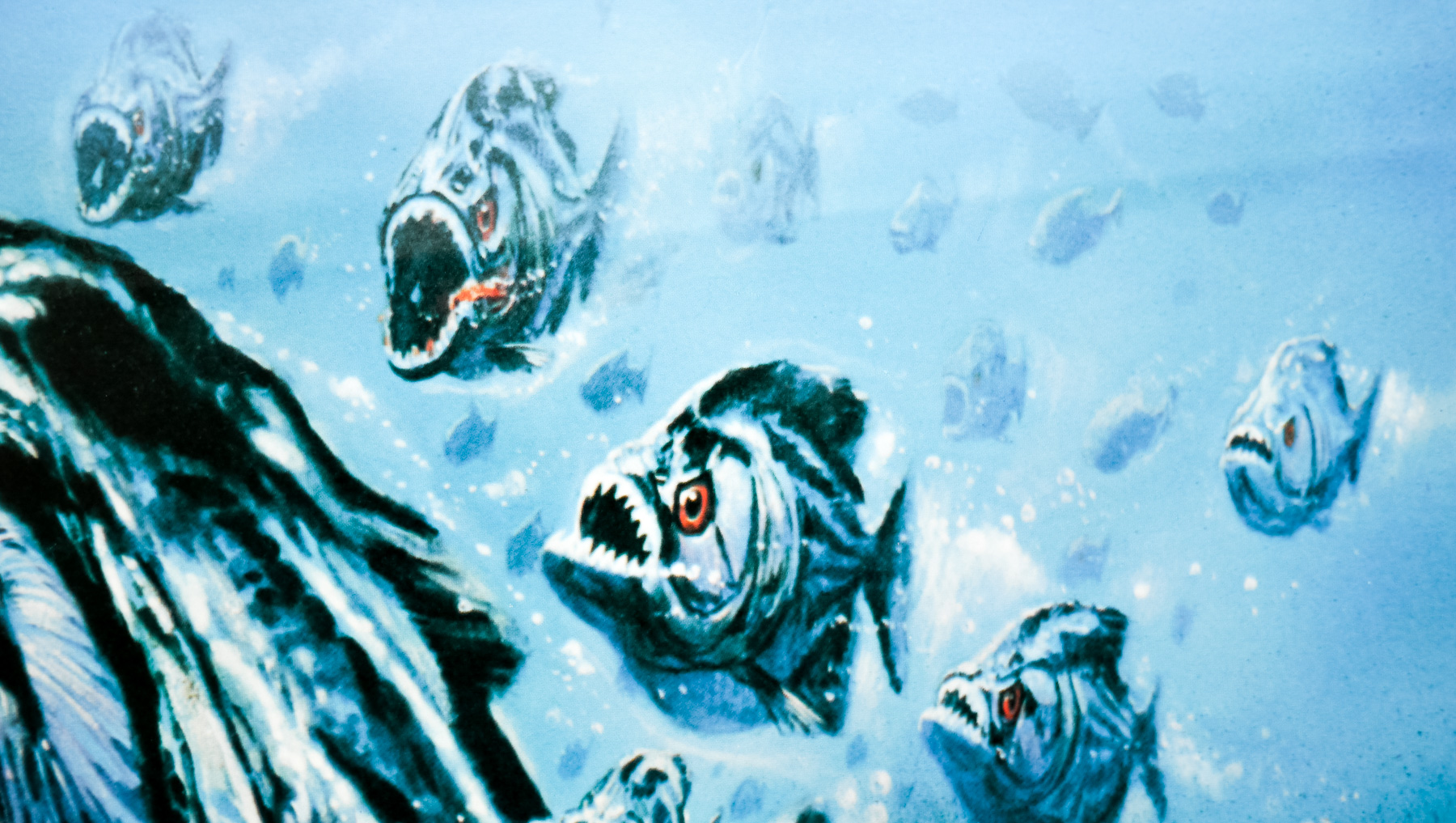
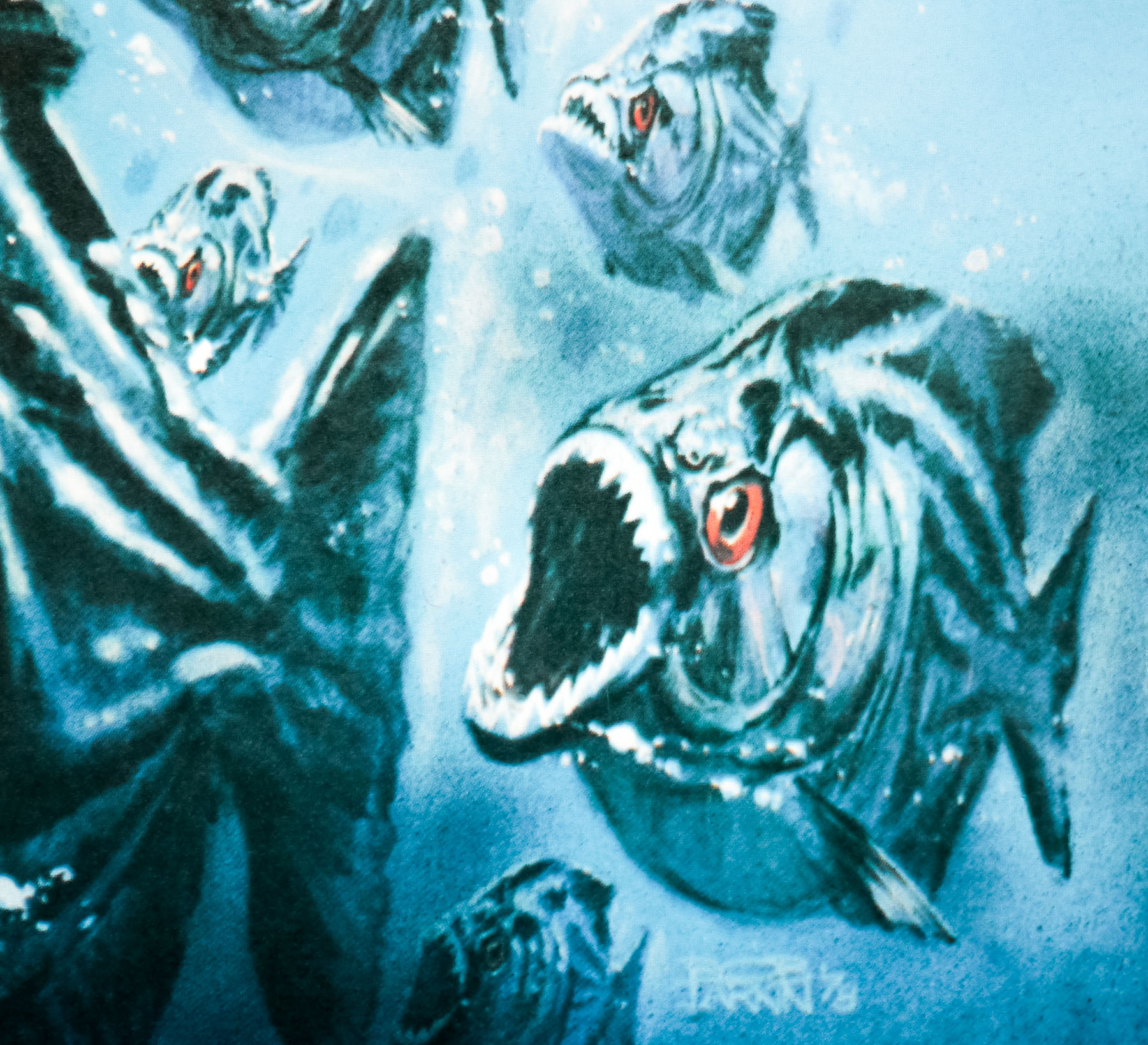
Director Joe Dante‘s Piranha was one of several killer nature films that followed in the wake of the runaway success of Spielberg’s Jaws. Executive produced by legendary schlockmeister Roger Corman and co-written by John Sayles (his first credit and before he began his directing career) the film was also one of the first jobs for special effects maestros Rob Bottin and Phil Tippett. The film begins as a young couple hiking enter an apparently abandoned military complex and jump into what looks like a swimming pool, but something deadly lurks below the water and the pair soon disappear screaming under the surface. Maggie McKeown (Heather Menzies), an insurance investigator, is dispatched to try and track down the teenagers and hires local drunkard Paul Grogan (Bradford Dillman) to help her.

The pair stumble across the complex and end up draining the pool to see if there’s anything at the bottom. When they do a bedraggled man appears from somewhere in the complex and attacks them to try and stop the pool being emptied. Grogan subdues him and the man proceeds to tell them that the water contained genetically-modified oversized killer piranha fish that were intended to be used against the enemy in the Vietnam war. The drainage pipe leads to a river and Lost River Lake, which is home to a children’s summer camp and a holiday resort. The trio set off to try and warn the camp and resort inhabitants but the fish have already made good progress and evidence of their deadly nature is discovered on the journey to Lost River Lake.

Produced on a reported budget of $600k, the film is certainly no classic but is entertaining enough, featured plenty of shocks to keep audiences happy and rake in a significant profit for Corman’s New World Pictures. Universal Studios, the Jaws production company, were all set to sue New World until Spielberg saw the film and gave it his blessing.

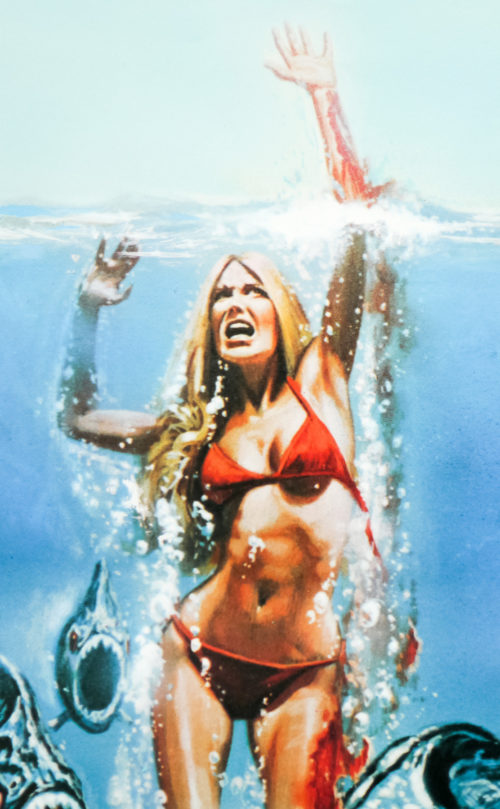
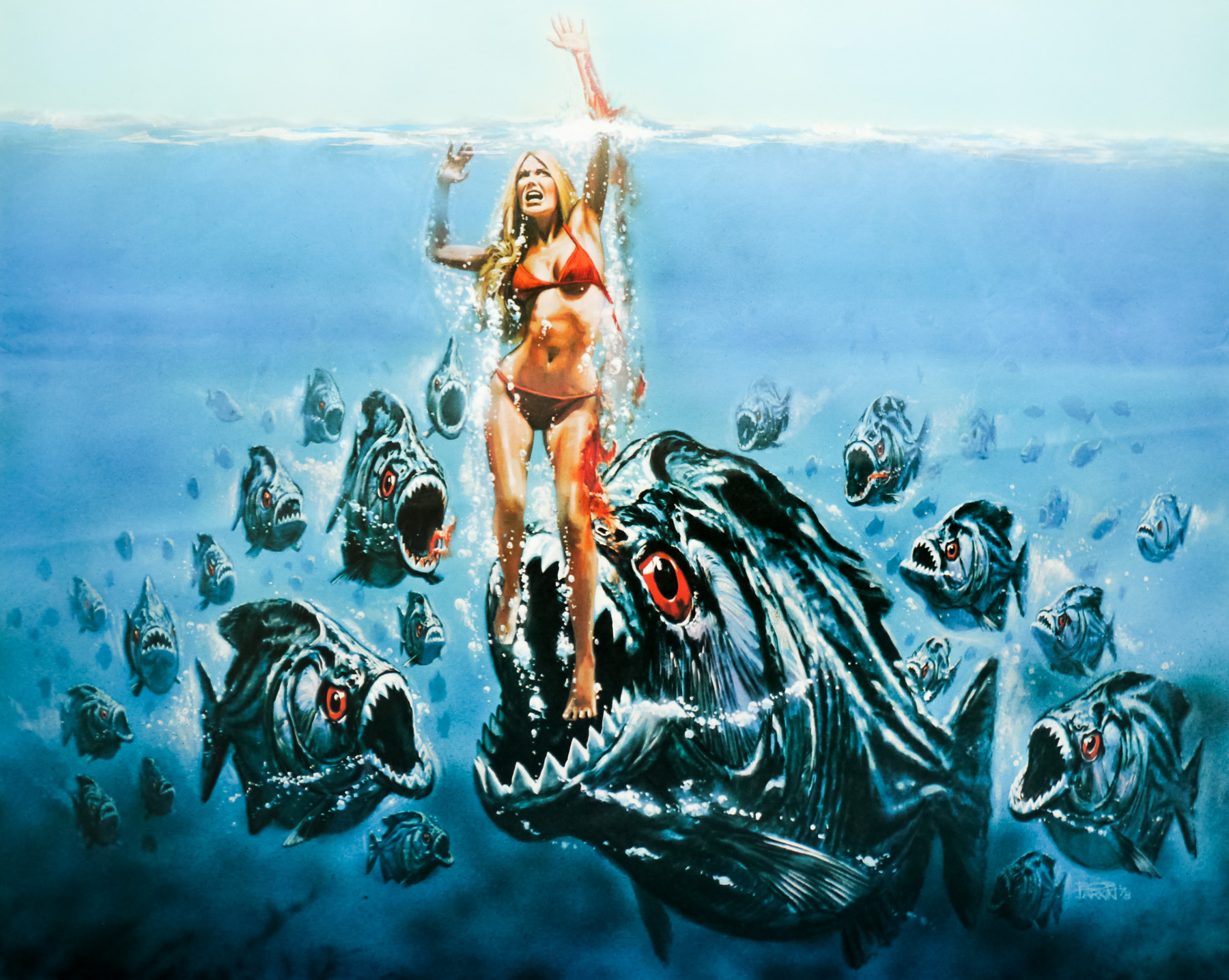
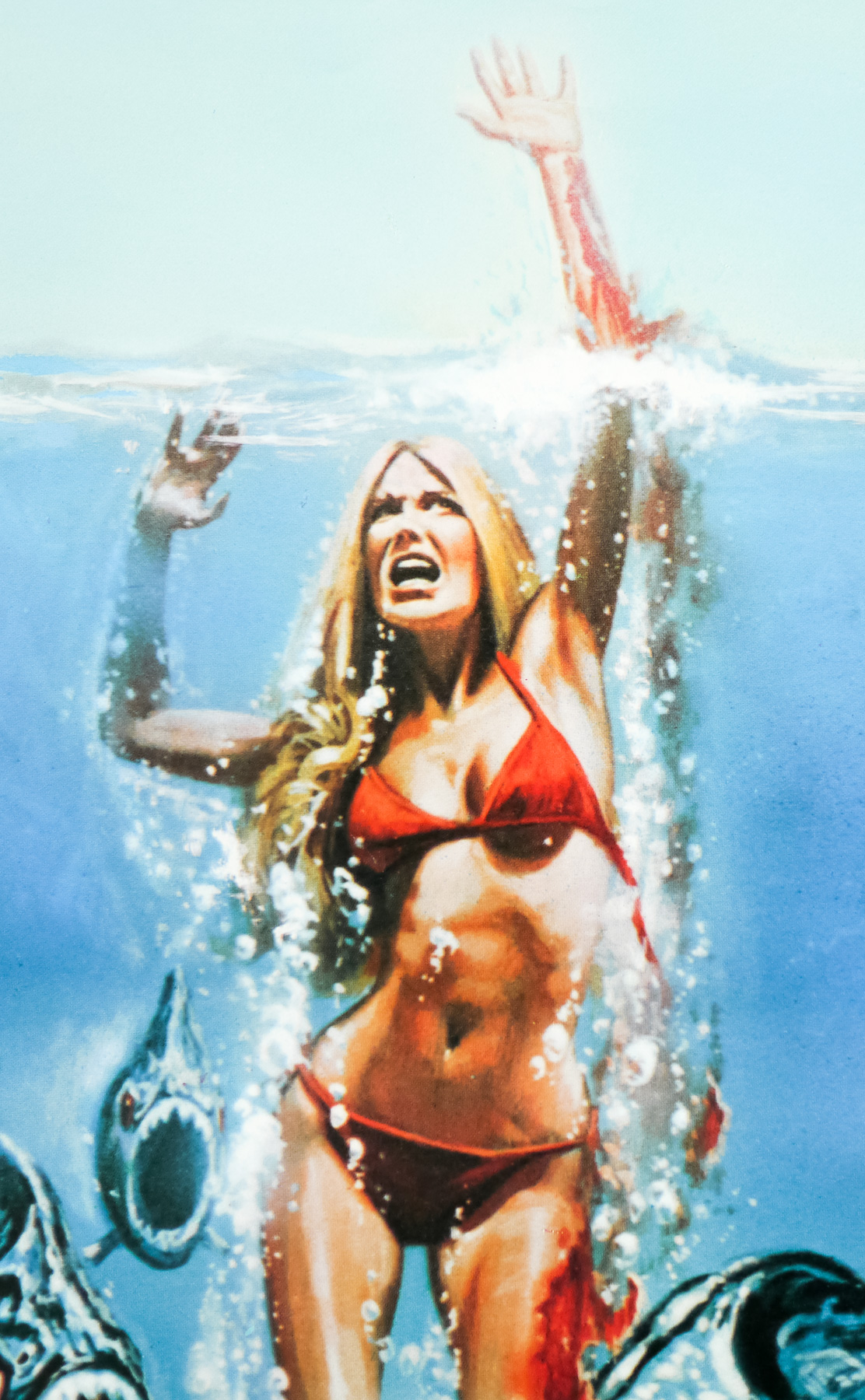
This Japanese B2 features artwork by the American artist Bob Larkin (born 1949) who is primarily known for his work on Marvel comics covers, including Savage Sword of Conan and Planet of the Apes. He also worked on covers for other comics distributors, magazines and packaging for toys. Larkin painted a handful of other film posters, including Monster (AKA Humanoids from the Deep) and Piranha II: The Spawning. The Bob Larkin: Illustrated Man site features a load of examples of his work, including many original paintings.

The Klansman / B2 / style B / Japan

18.03.15

Poster Poster

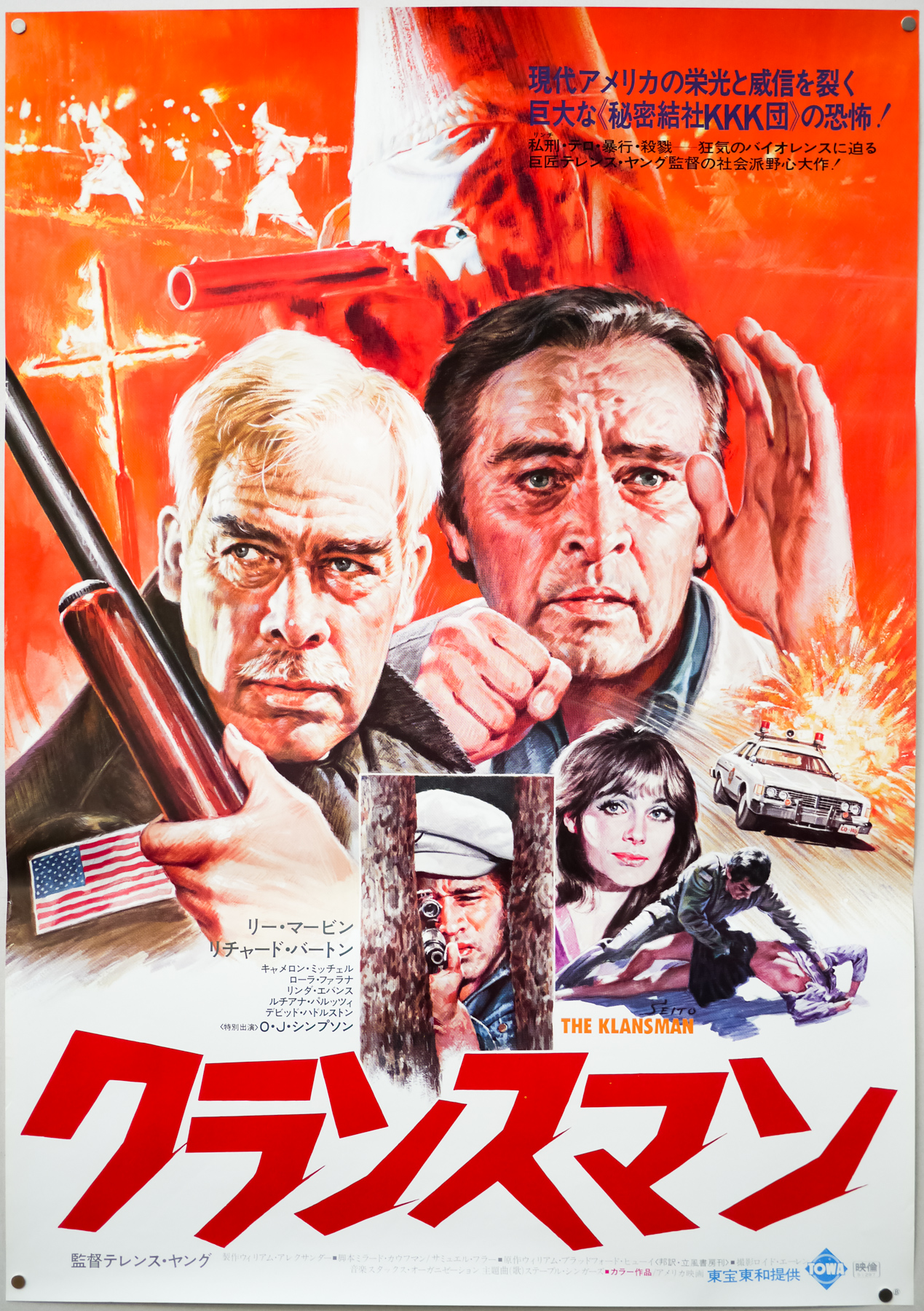
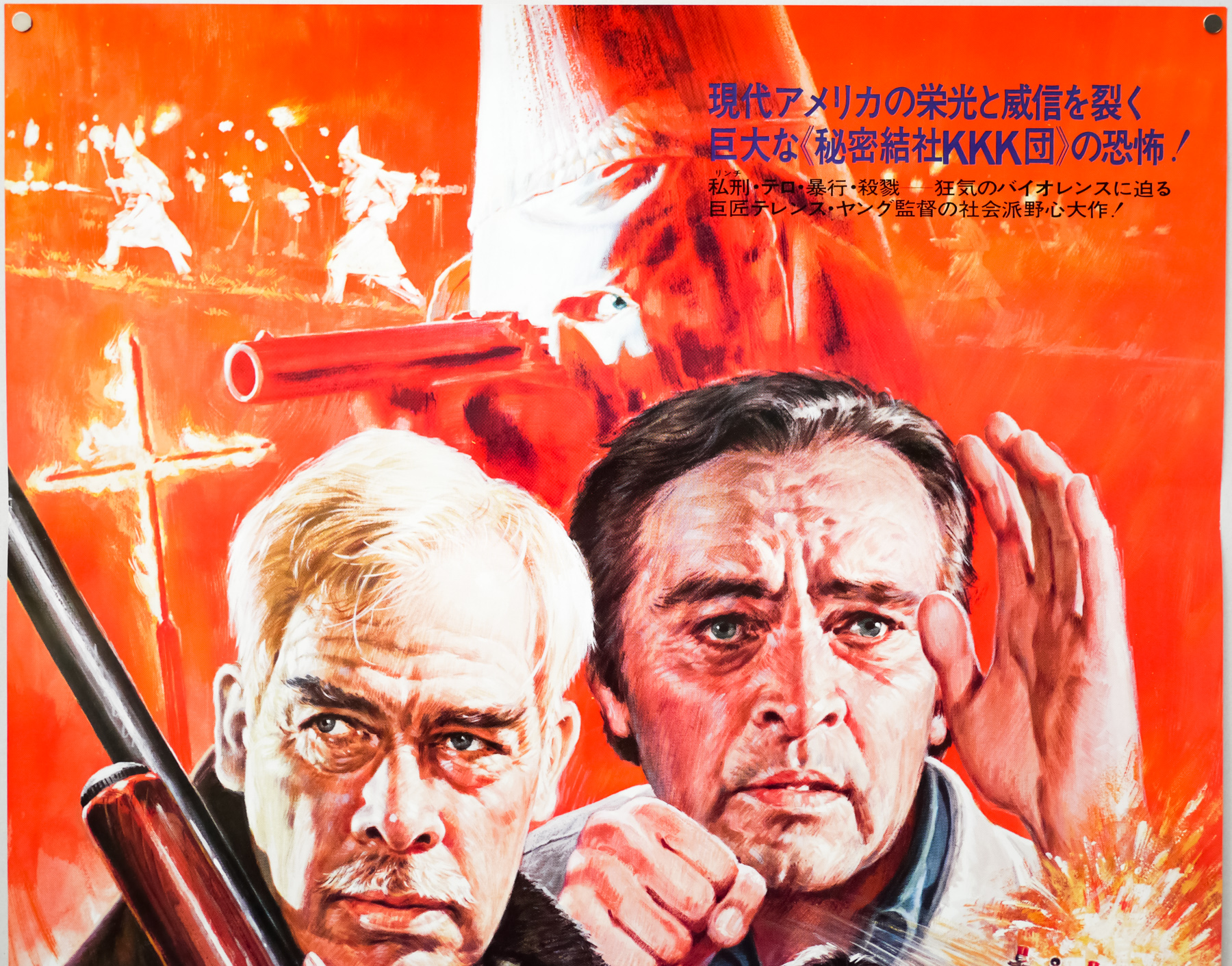
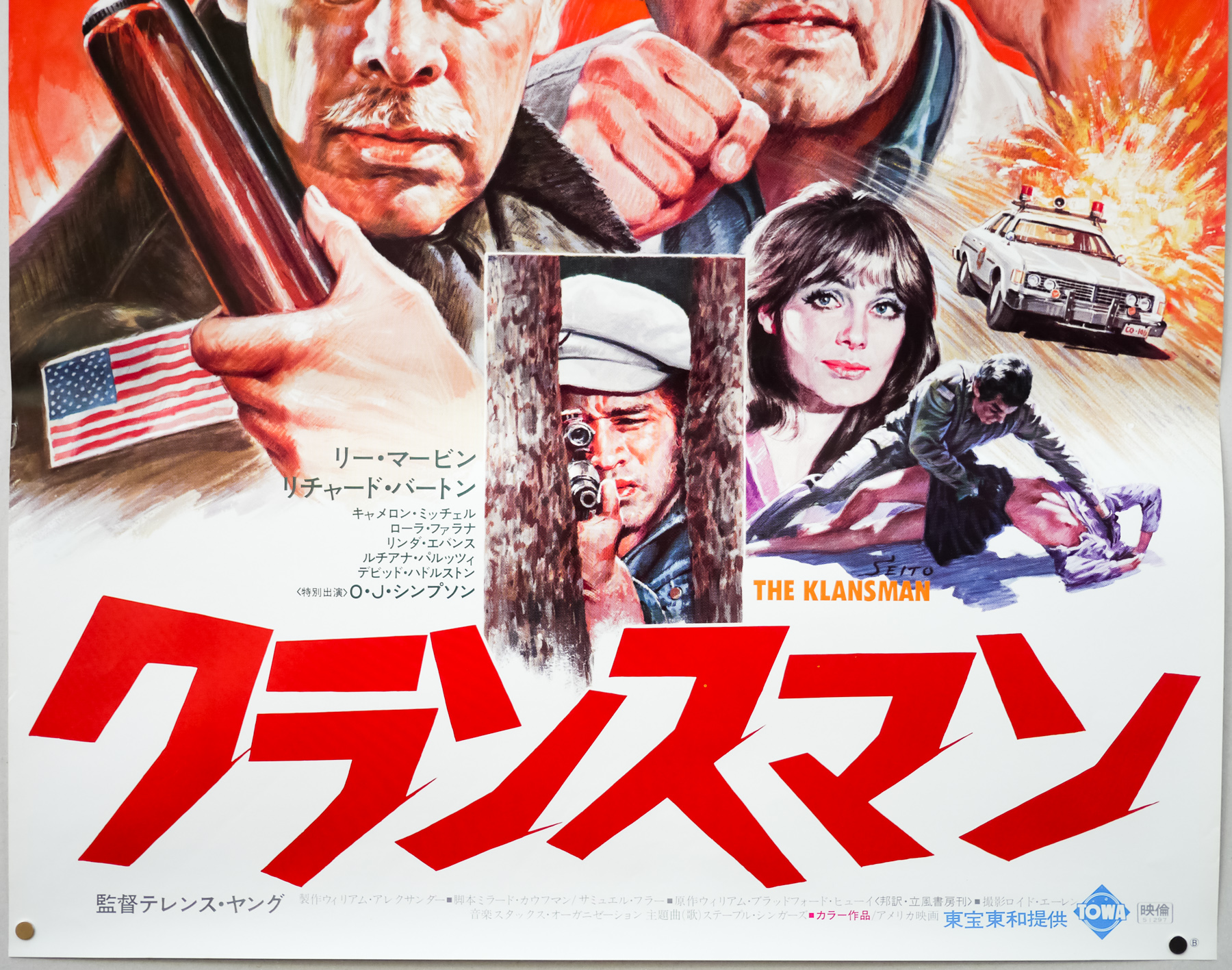
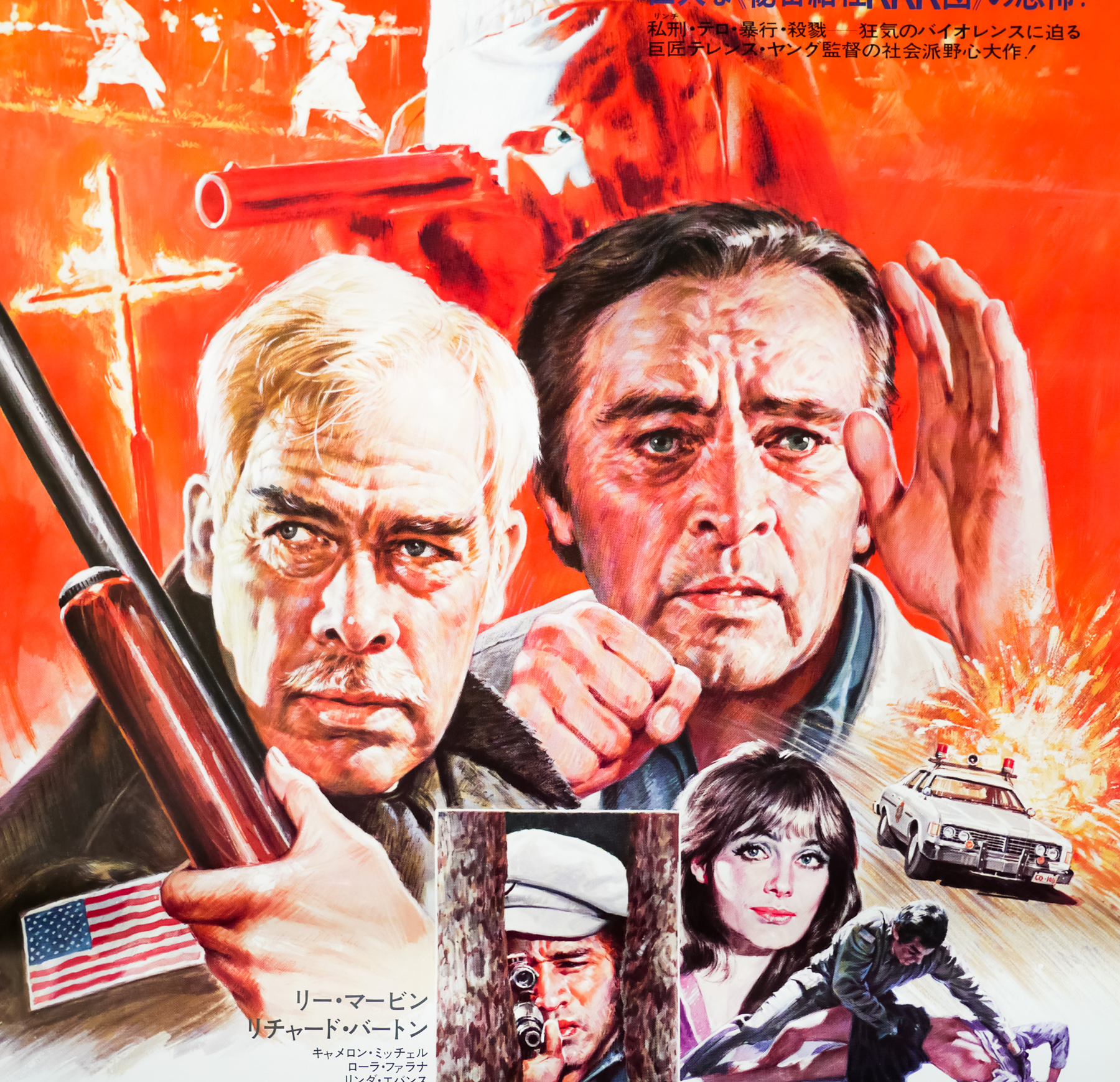
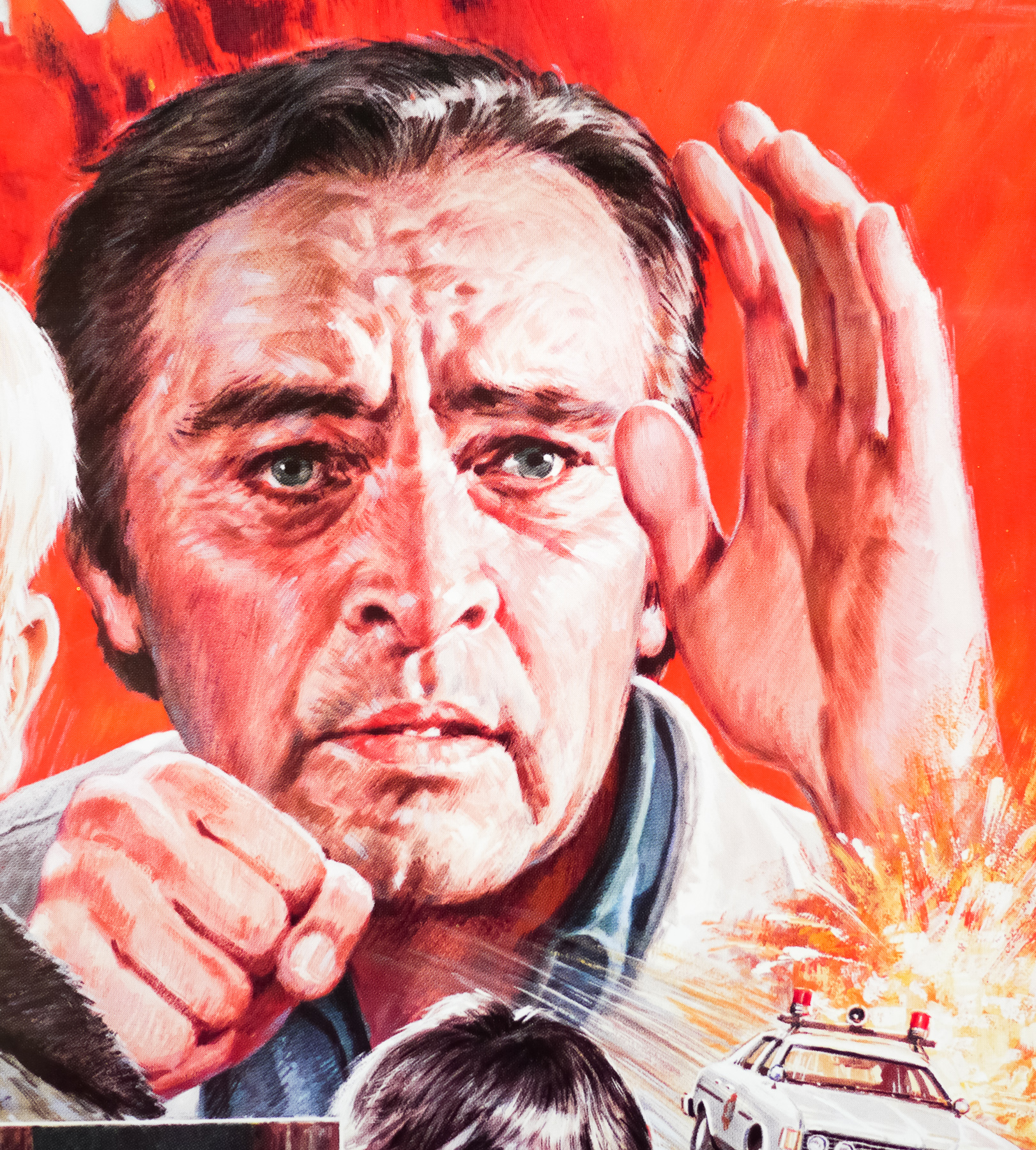
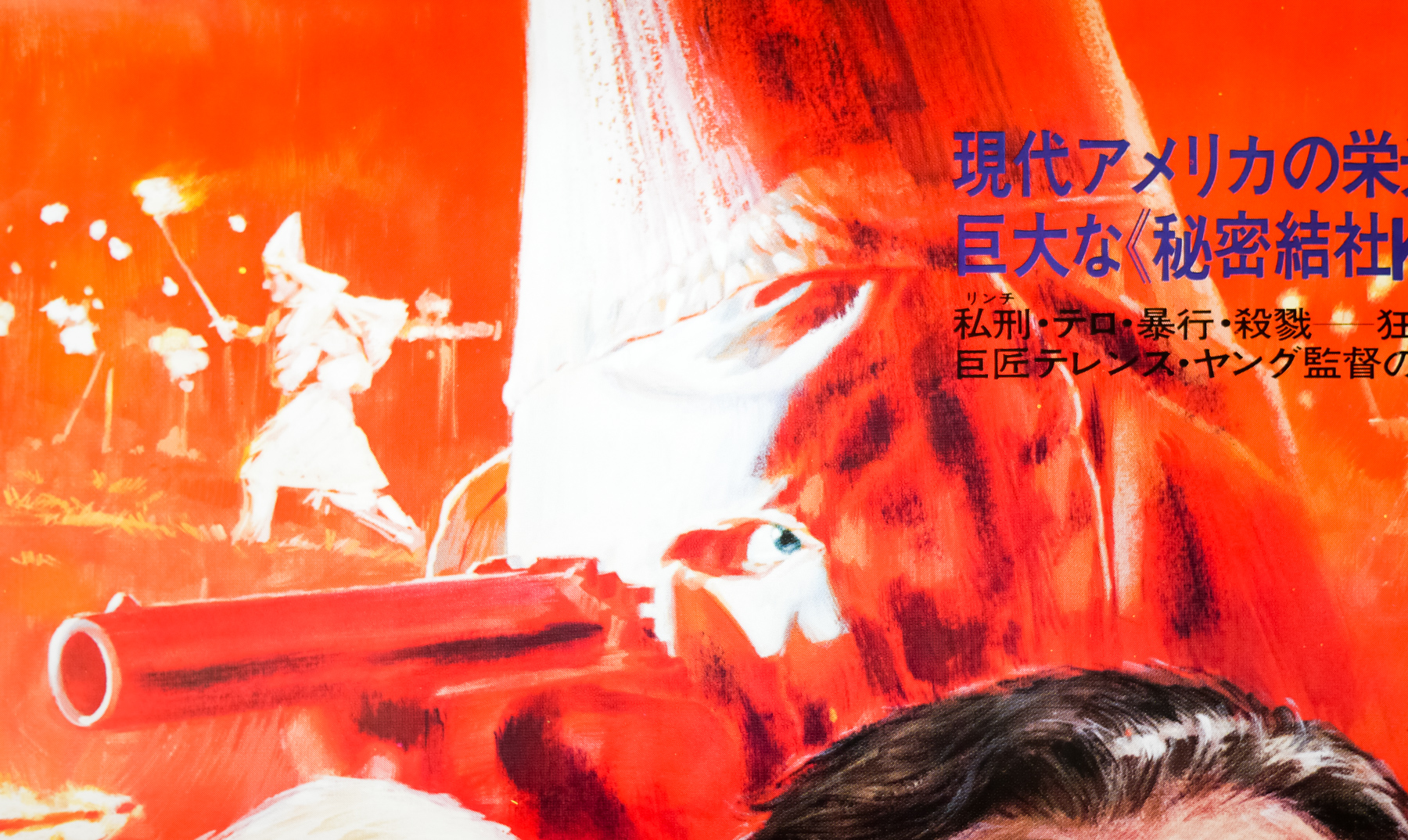
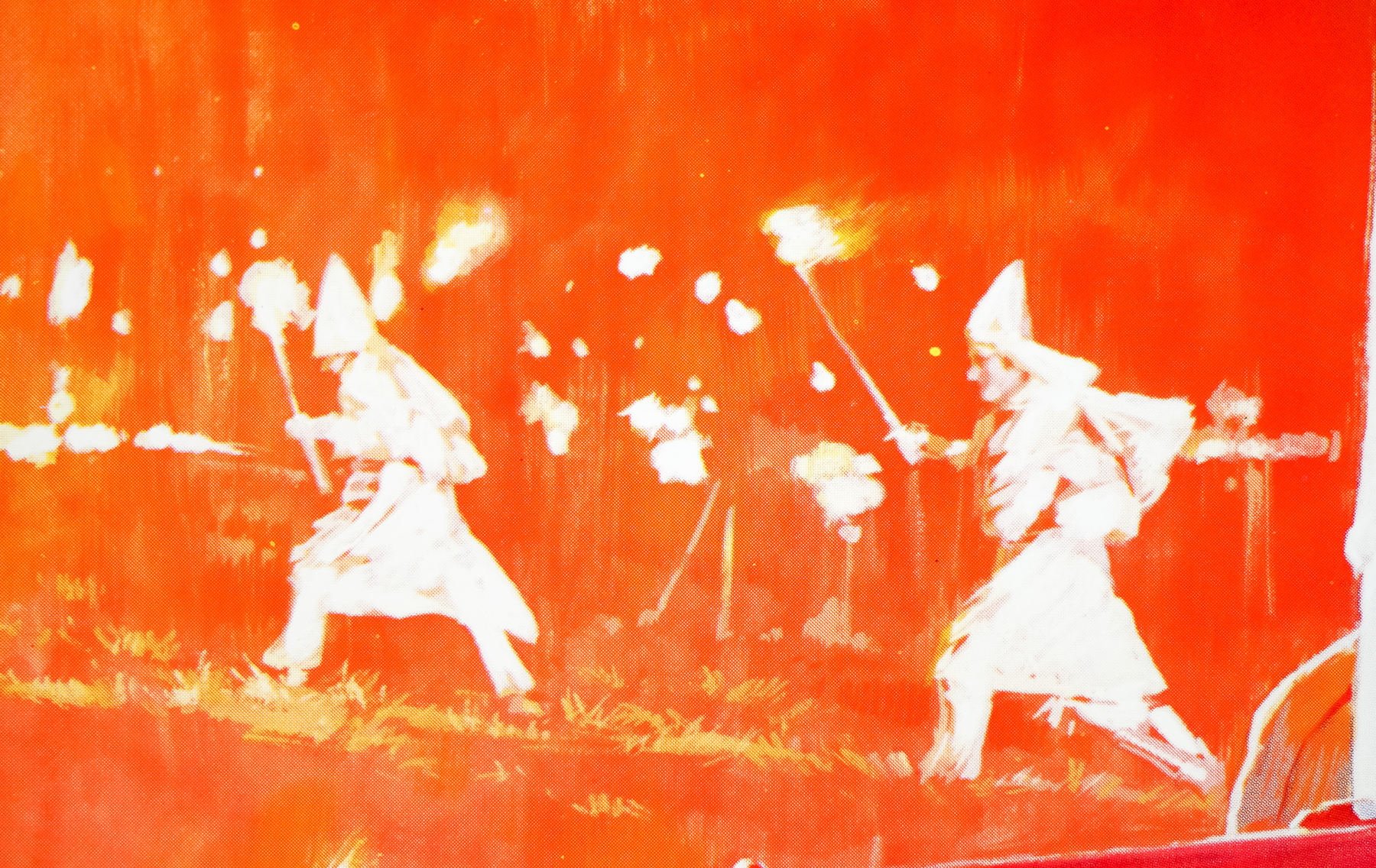
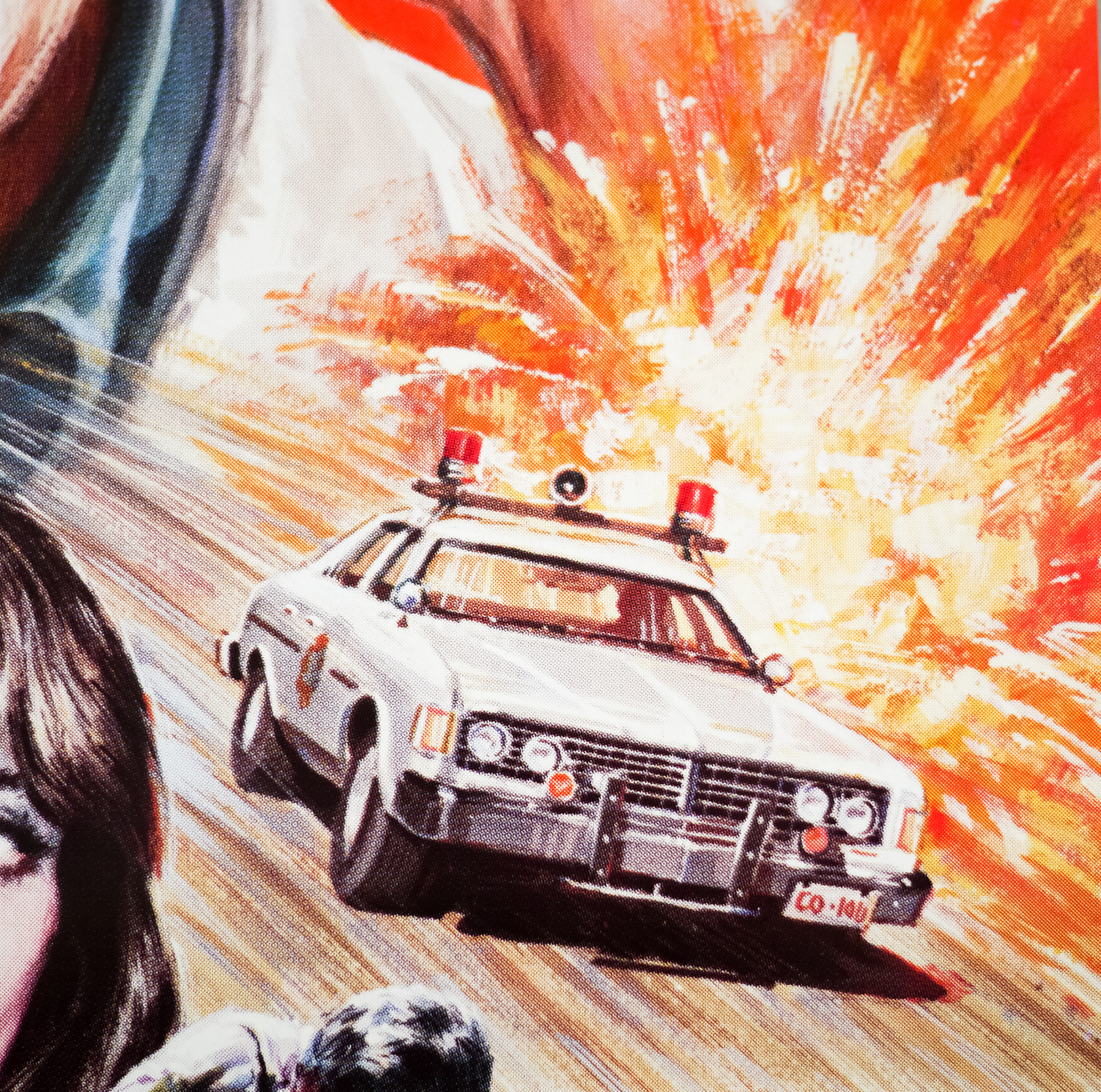
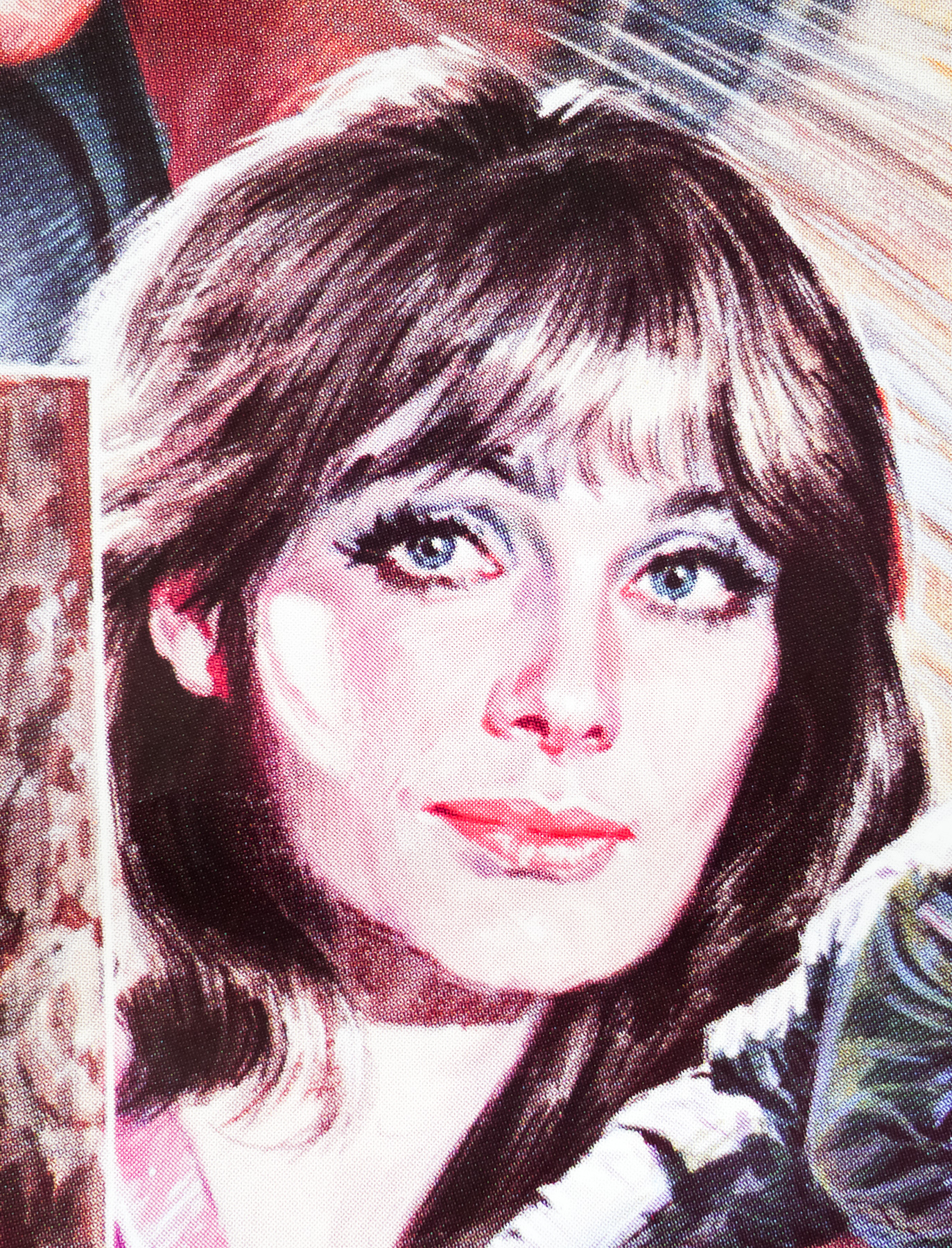
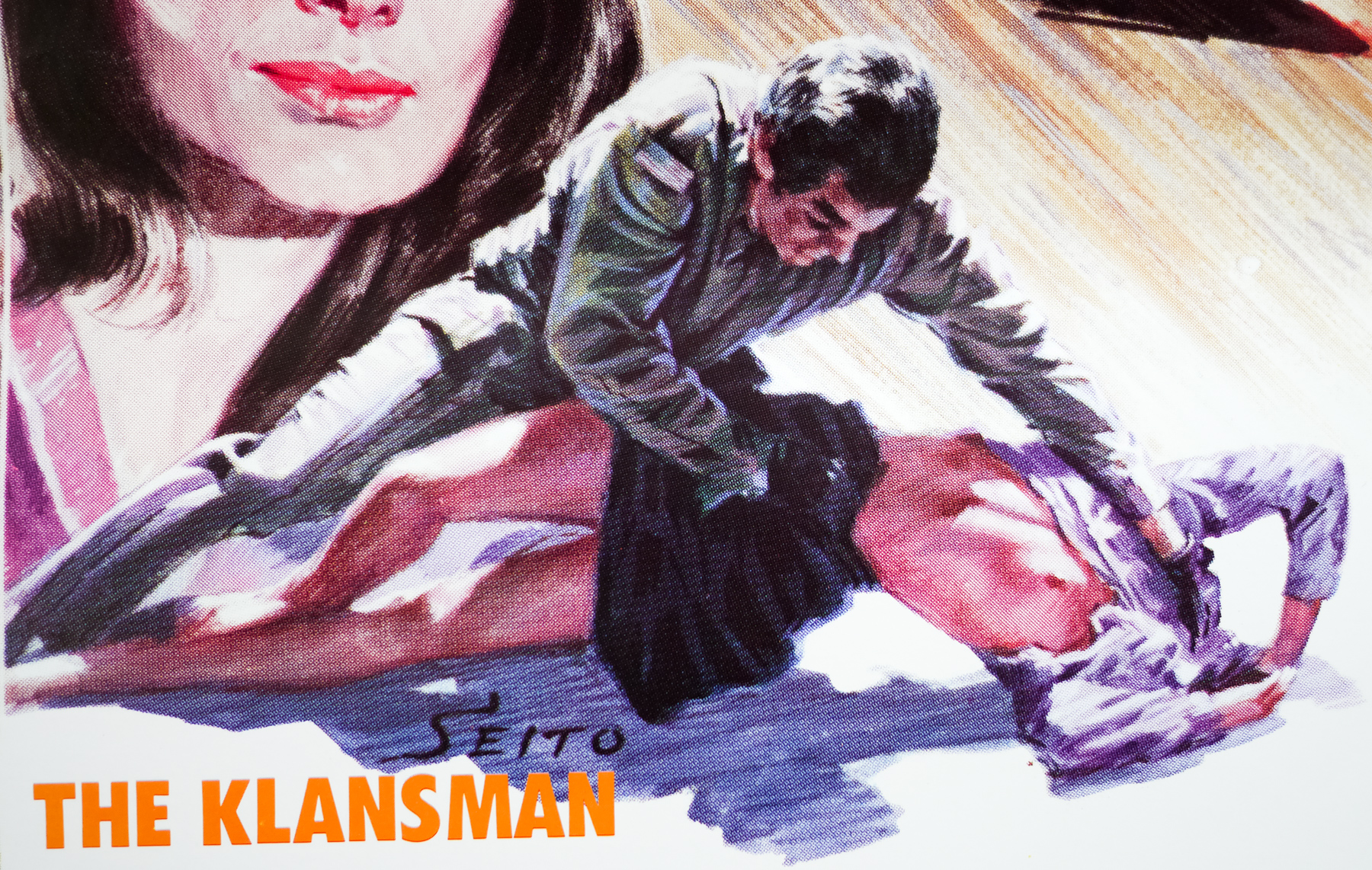
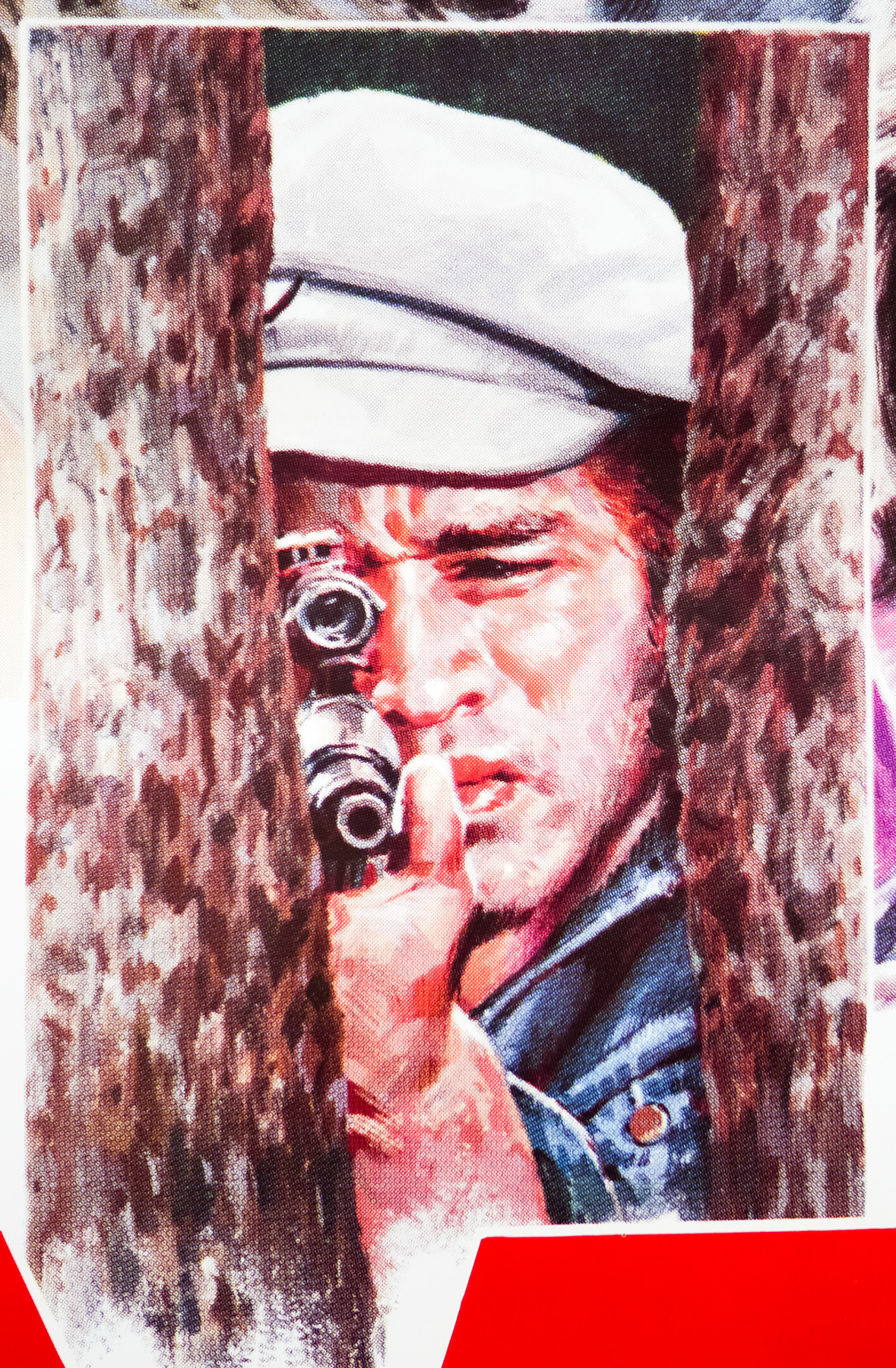
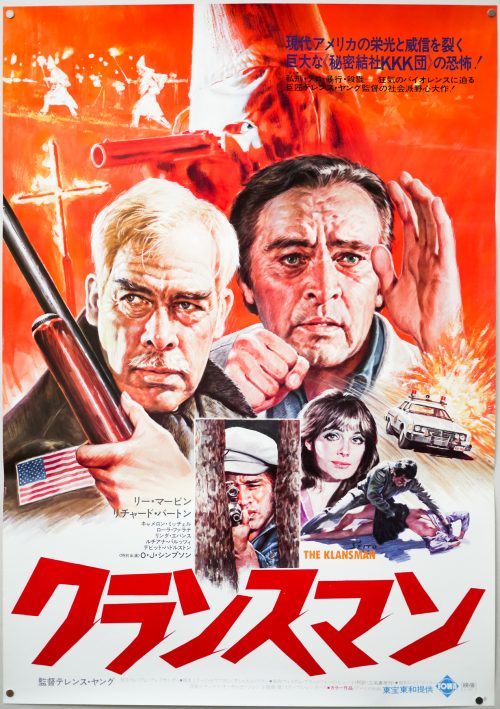
This is one of two Japanese B2 posters for the release of the 1974 drama The Klansman that marks a low point in the careers of the main participants involved and, in my opinion, deserves to be consigned to the dustbin of film history. British director Terence Young (best known for his work on the first two James Bond films and Thunderball) helms this tale of racial tension in a small Southern town that has a large Ku Klux Klan contingent. Lee Marvin plays the lone Sheriff of the town who has to deal with the fallout when a white woman is raped, apparently by a black man. Tensions are escalated when a lone gunman (played by O.J. Simpson) decides to stir things up with the Klan by shooting white townsfolk with a sniper rifle. Richard Burton plays a local landowner who has long opposed the views of the Klan and harboured black people on his land but he gets drawn into the conflict with deadly consequences.

There are many issues with the film, including a confusing script that was clearly trying to imbue the film with something of a social justice message but bungles it badly, and all scenes involving the Klan are cringeworthy and obviously massively politically incorrect. The performances from the two leads are also pretty terrible with Lee Marvin mumbling and drawling through all of his scenes looking like a man who wishes he was elsewhere. Richard Burton also phones his performance in, with an accent that attempts Southern American but ends up sounding altogether wrong, and he also affects a limp in some scenes that disappears in others. Legend has it that the two men were both drunk during the entire shoot and that might explain things. It also doesn’t help that the only version of the film available on home video has been badly cut to remove a lot of the violence and a pivotal rape scene.
This Japanese poster features artwork unique to the Japanese campaign. Seito is one of my favourite Japanese artists who was responsible for several fantastic illustrated posters during the 1970s and 1980s. Little is known about the man himself, even in his native country.
To see the other posters I’ve collected by Seito click here.

Meteor / B2 / Japan

01.06.15

Poster Poster

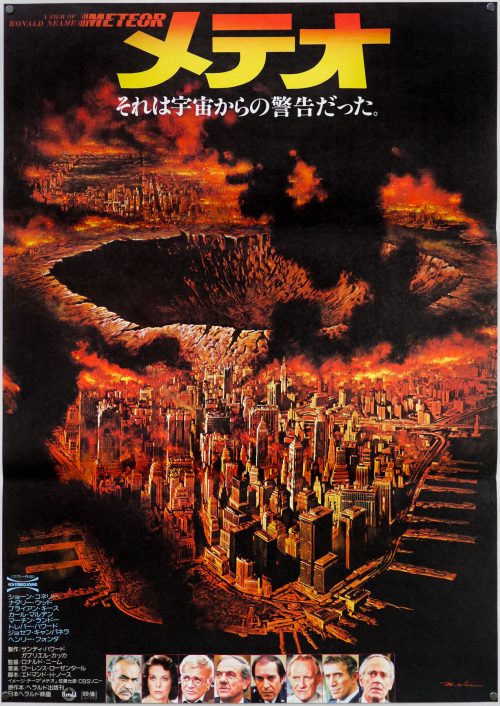
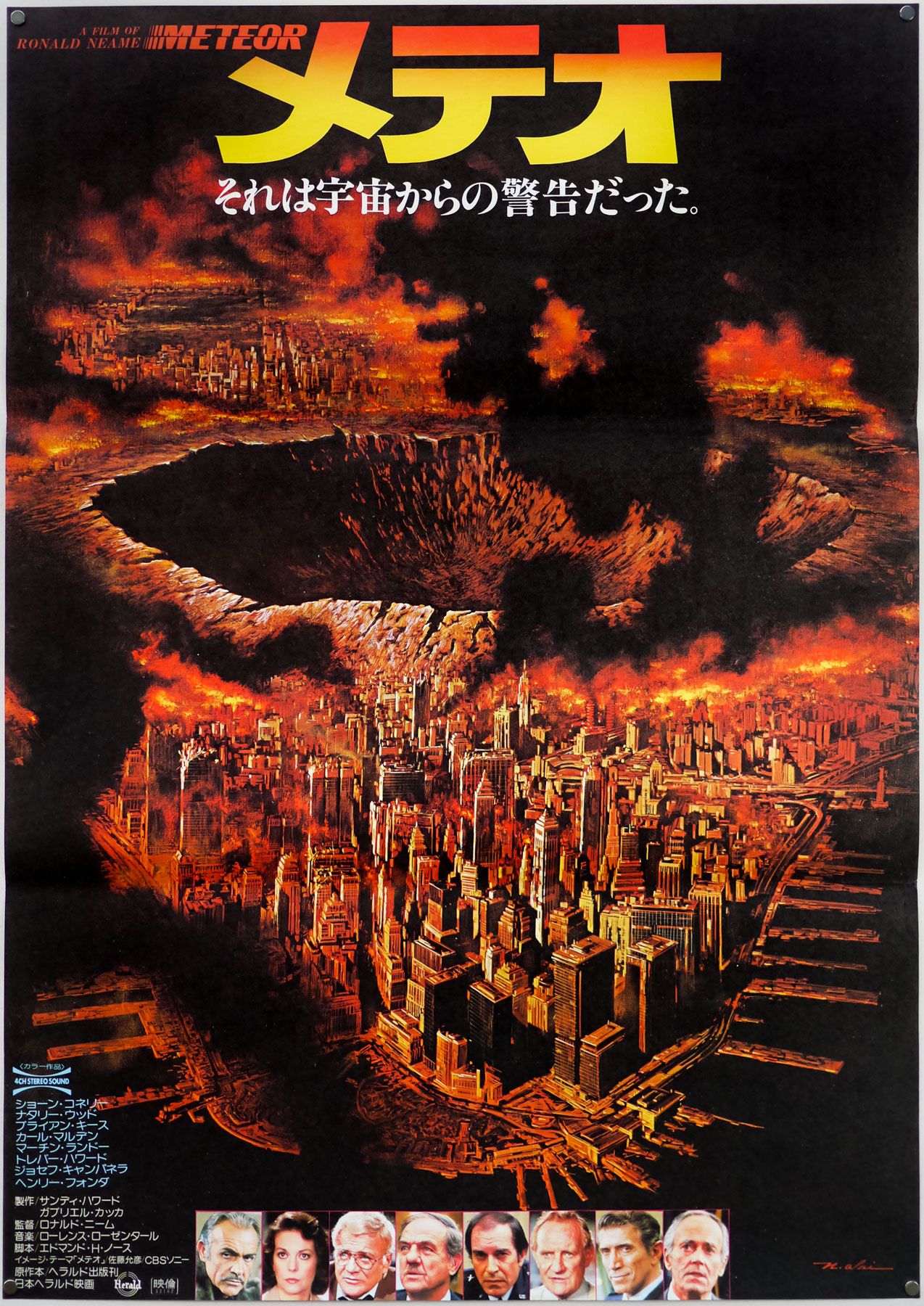
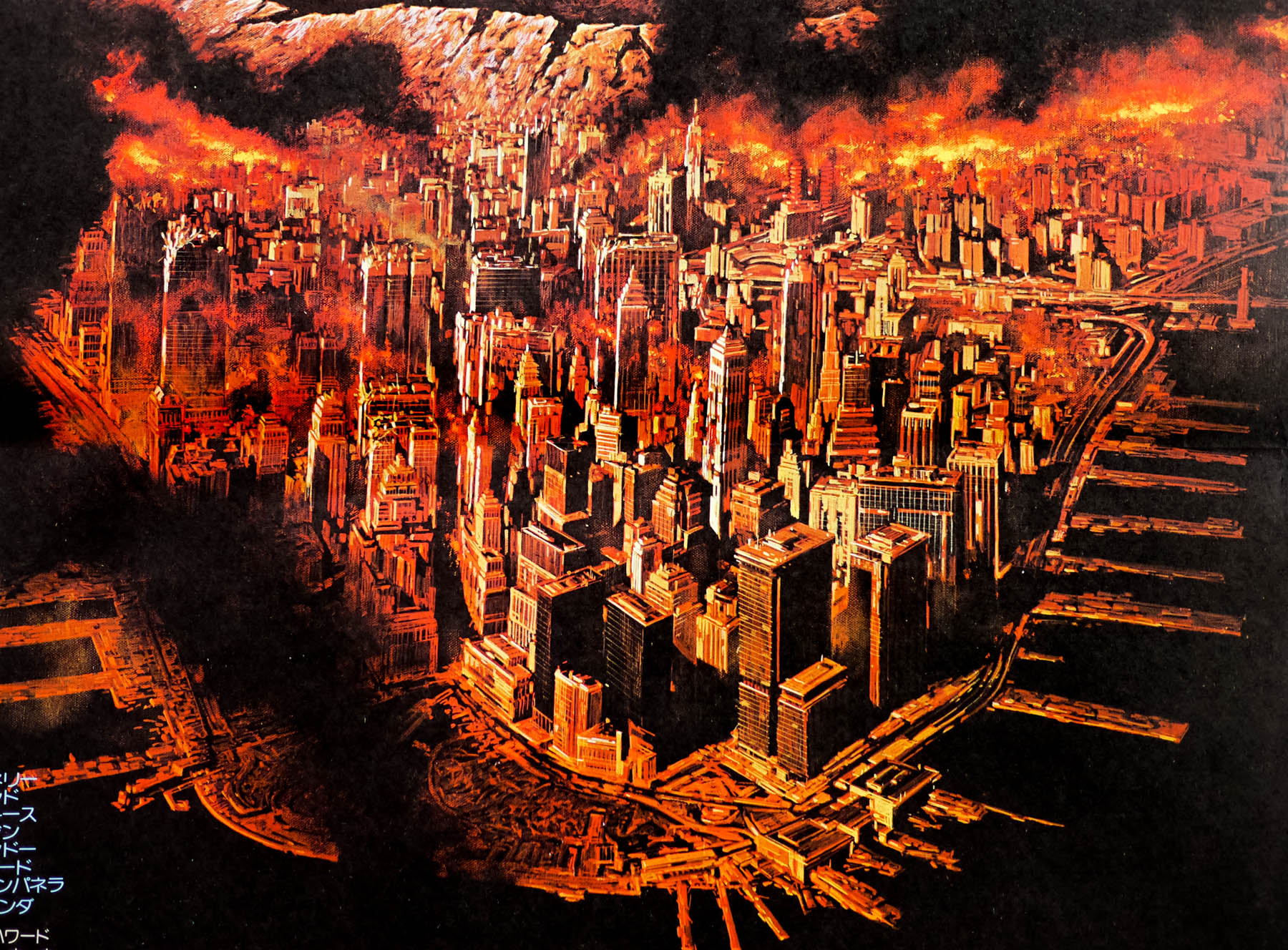
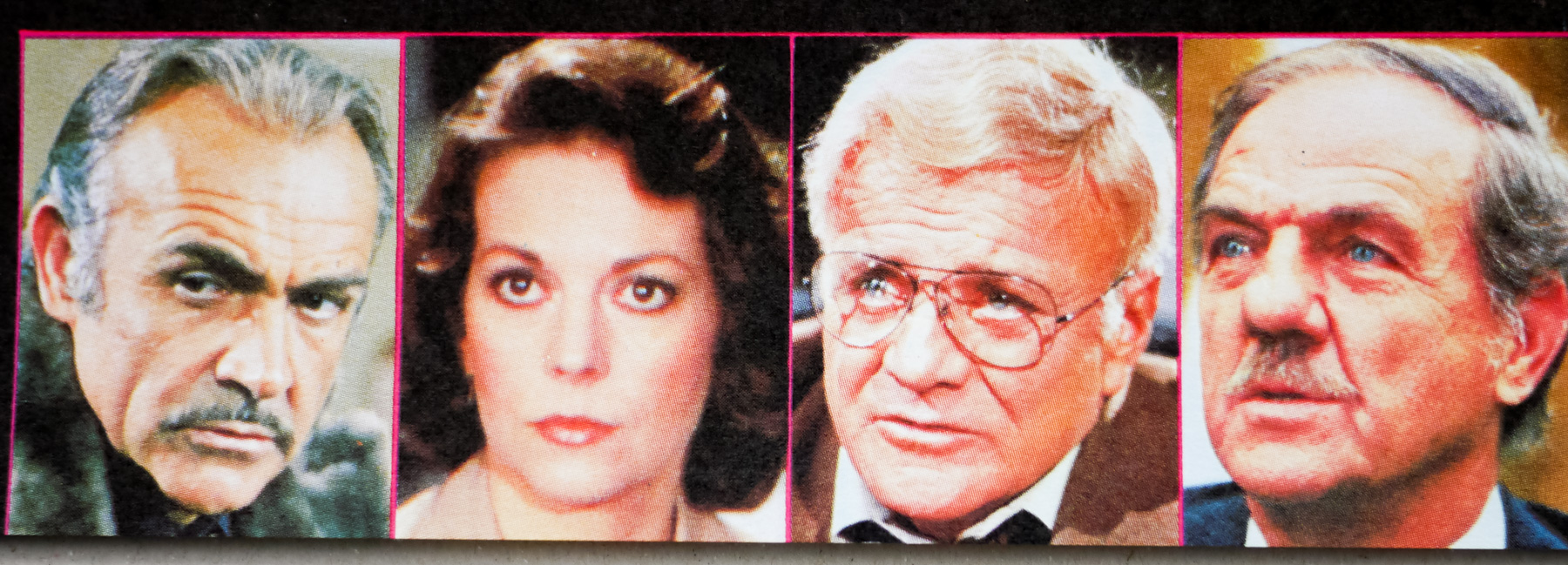
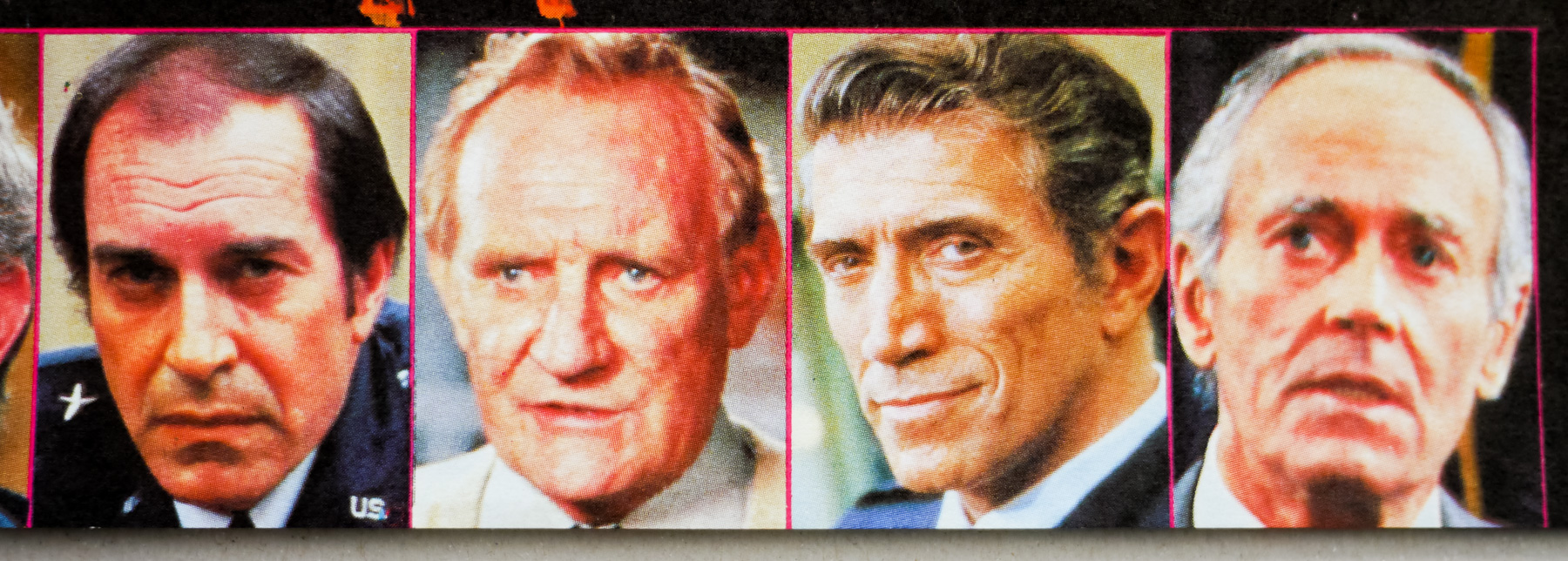
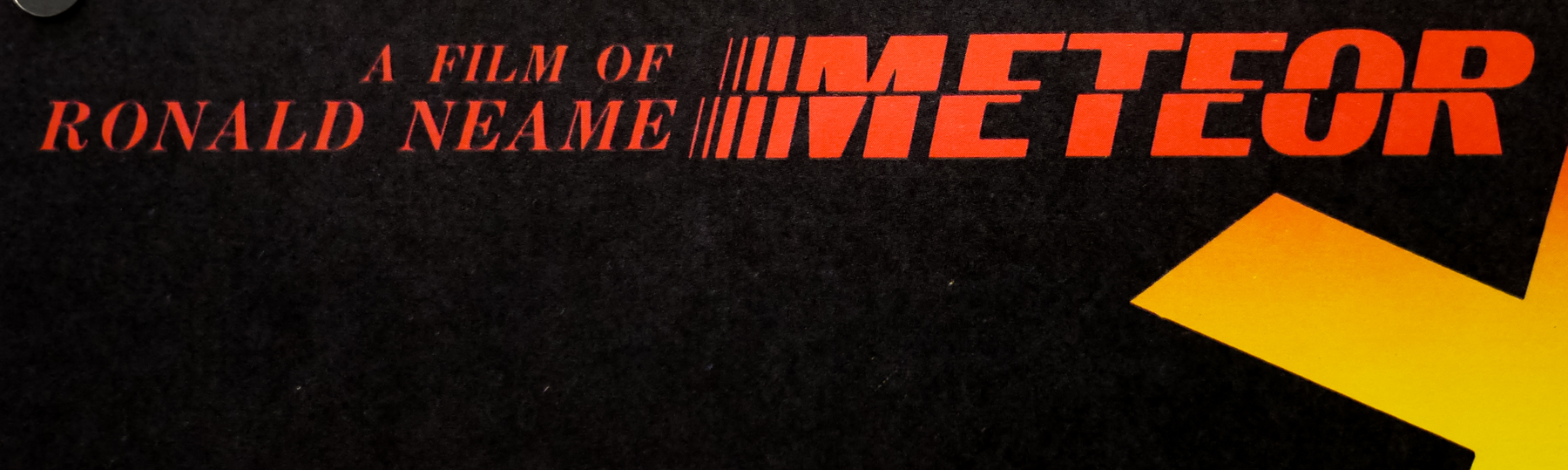
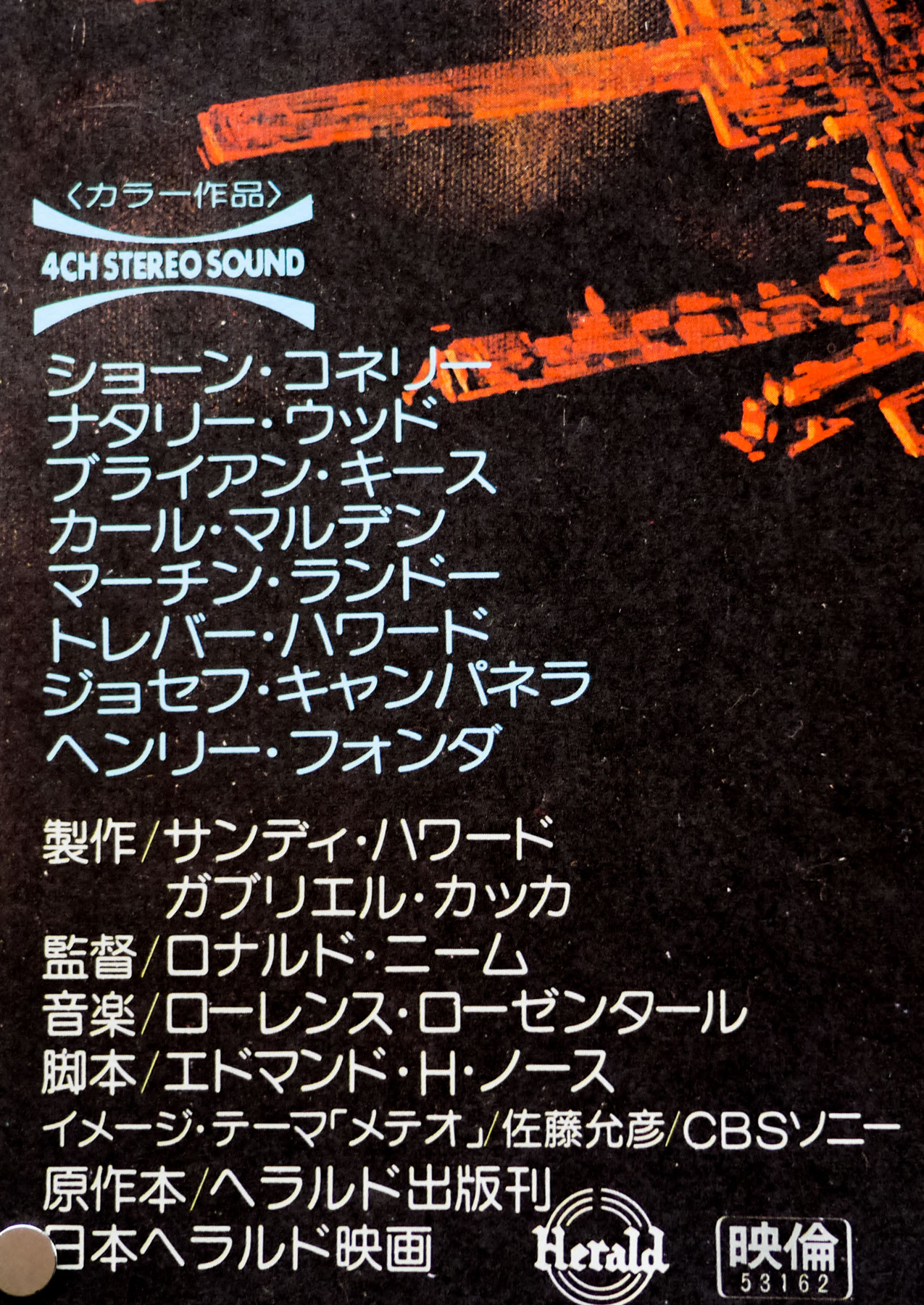
Arriving at the tail-end of the 1970s, a decade that saw the release of a number of successful disaster movies like The Towering Inferno and Earthquake, Meteor ended up as an all-star clunker and is easily one of the worst entries in the genre. Helmed by the British filmmaker Ronald Neame, who had seen success with 1972’s The Poseidon Adventure, the film focuses on the outcome of the eponymous lump of rock barrelling towards earth after being knocked off course by a comet. Sean Connery plays Paul Bradley, a scientist who masterminded the creation of a space-based weapon named Hercules that was originally intended to protect earth from such a threat, but was instead taken over by the military and aimed at the Soviet Union due to escalating Cold War tensions.
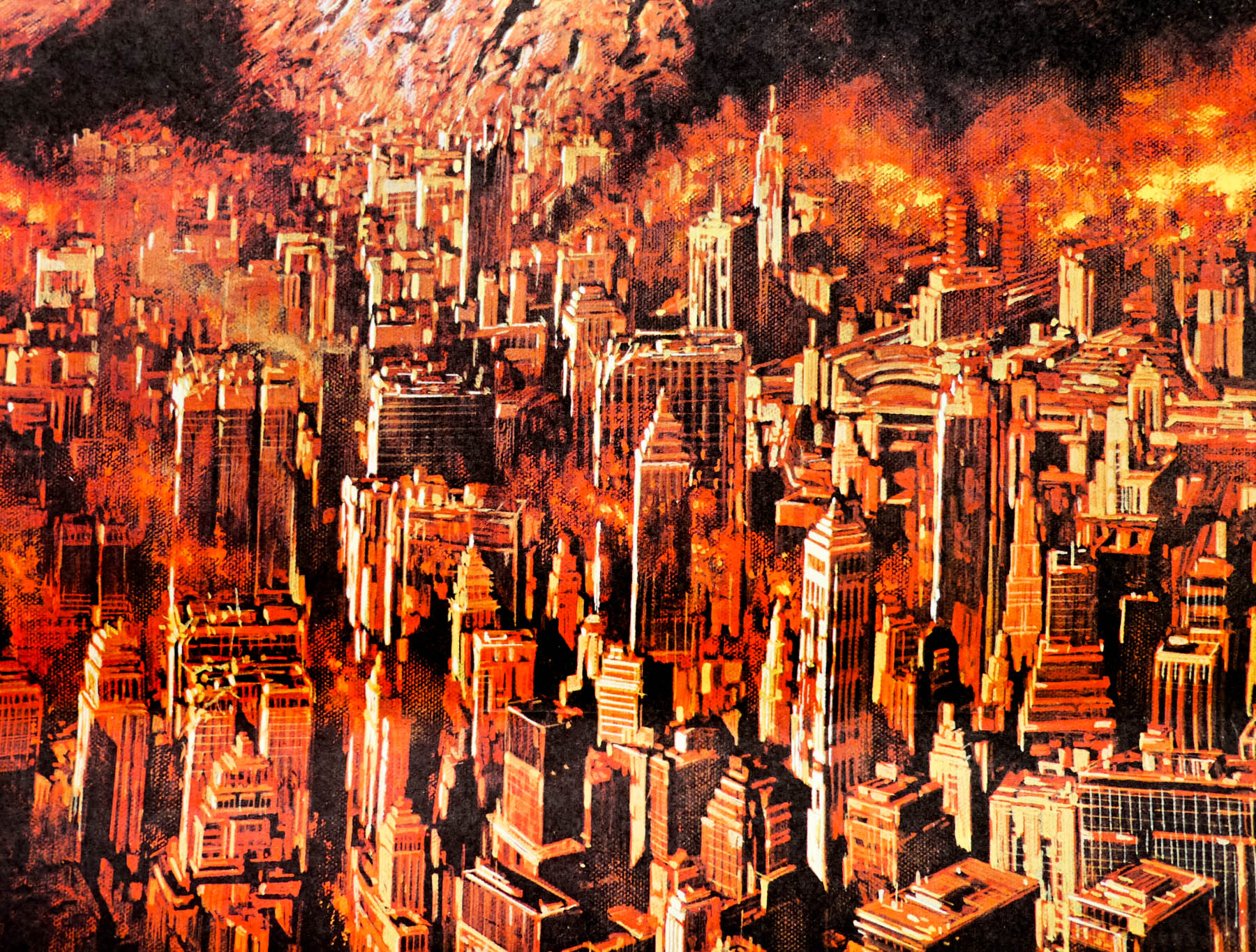
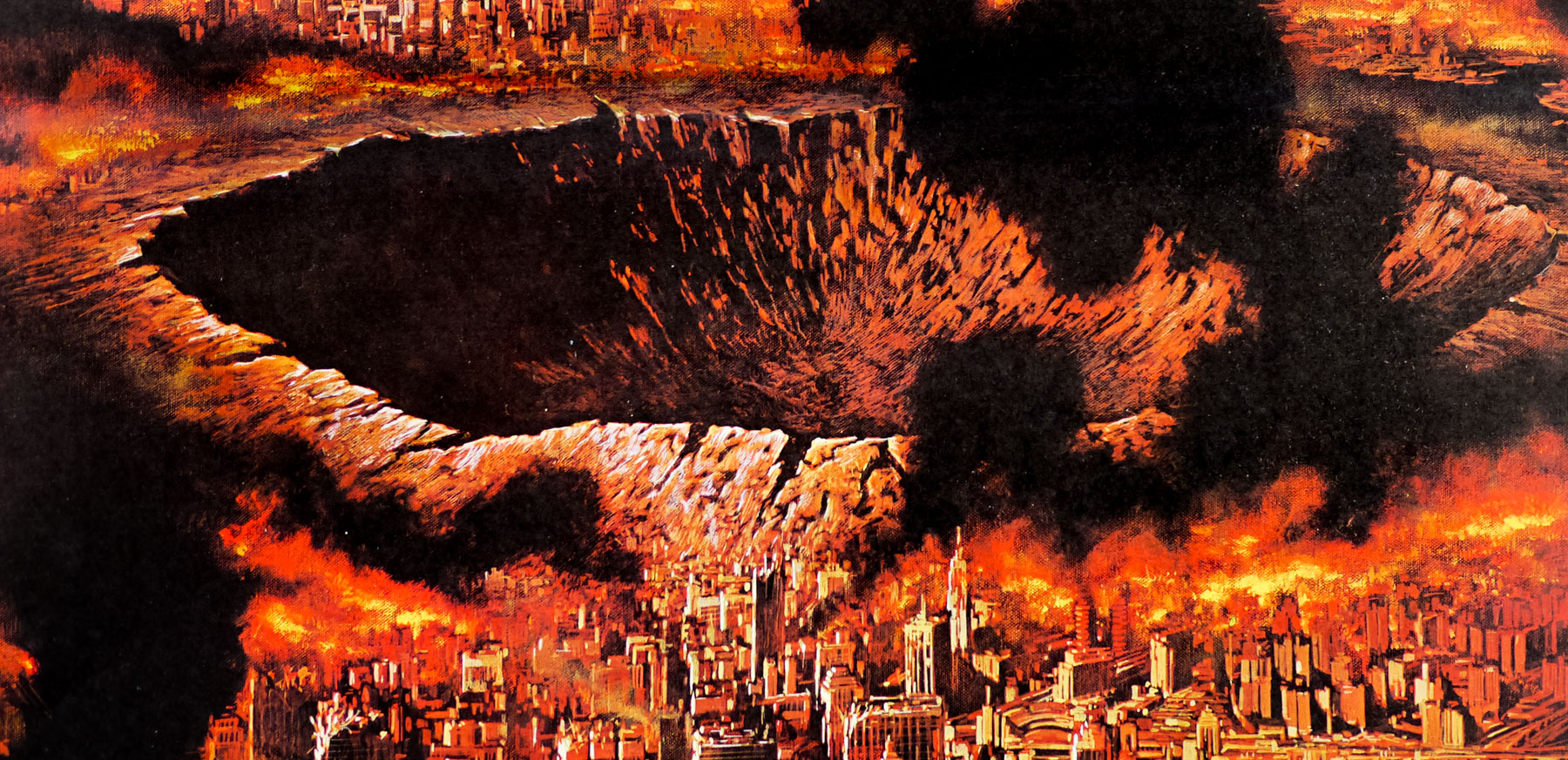
The plot sees the US and Russia agreeing to work together after much (dull) handwringing and Paul Bradley works with his opposite number from the CCCP Alexei Dubov (Brian Keith) to ensure the Russian’s own weapons platform can combine forces with Hercules and fire both payloads at the rock. Meanwhile, fragments of the asteroid begin hitting earth in some unconvincing sequences featuring uniformly awful special effects. Eventually, and improbably, a large chunk hits Manhattan, which just happens to be where Paul Bradley and most of the other characters are located, leading to some sequences of mild peril that end up with Connery covered in mud and a few dead background characters. The special effects are truly, inexcusably awful and I can’t think of one well-executed sequence. The rock hitting New York is mostly done with what is clearly red-tinted stock footage of buildings being knocked down by controlled demolition.
The biggest problem with the film is that most of the actors look bored and, with the exception of a crazy-eyed Martin Landau, like they’d rather be somewhere else. It doesn’t help that the Cold War machinations, whilst maybe more relevant in 1979, are totally boring today and way too much of the film is spent focused on discussions to try and resolve differences between the two nations.

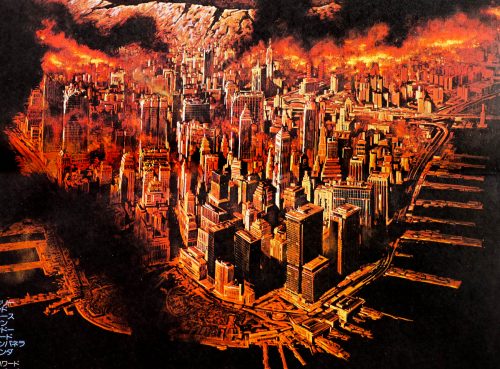
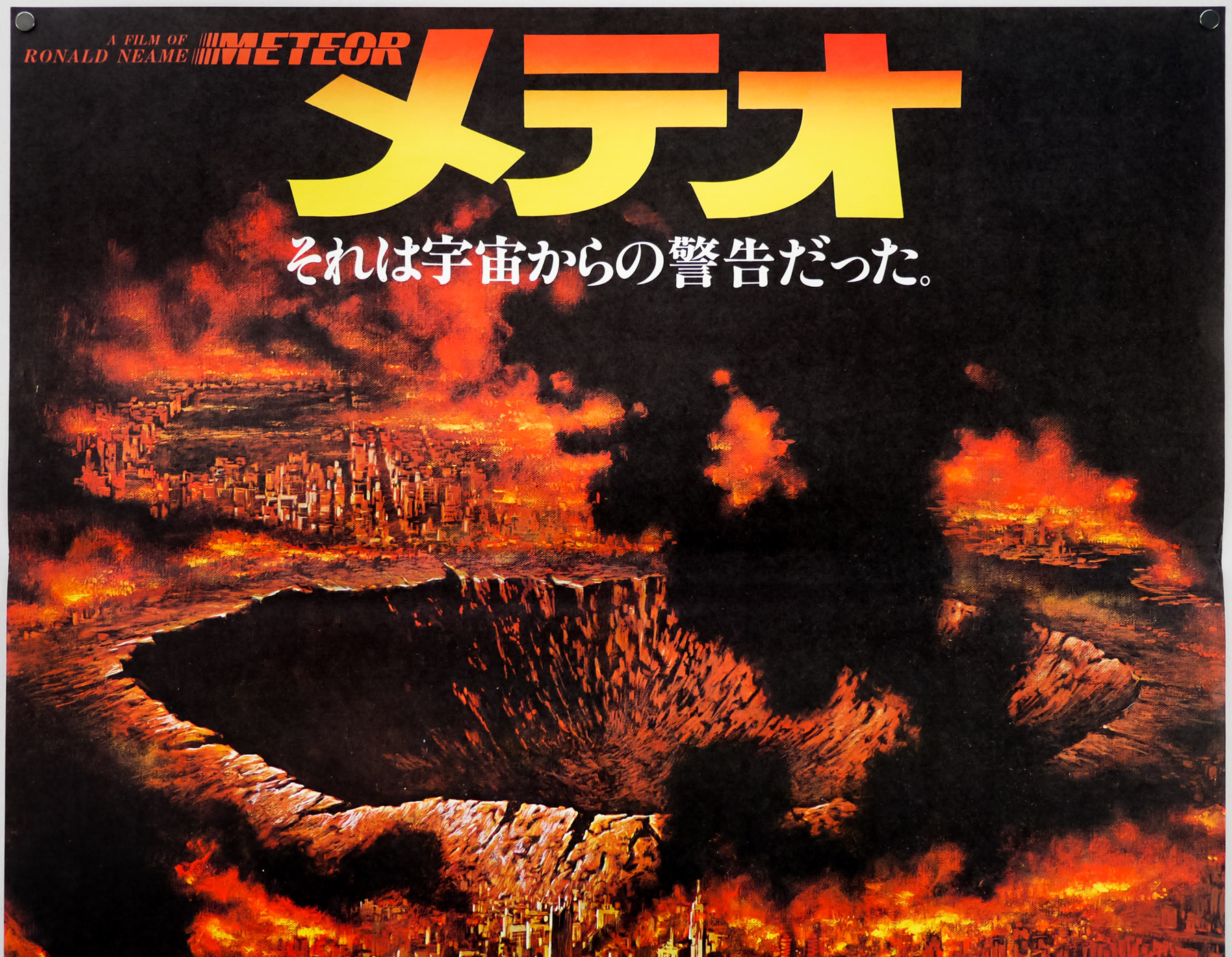
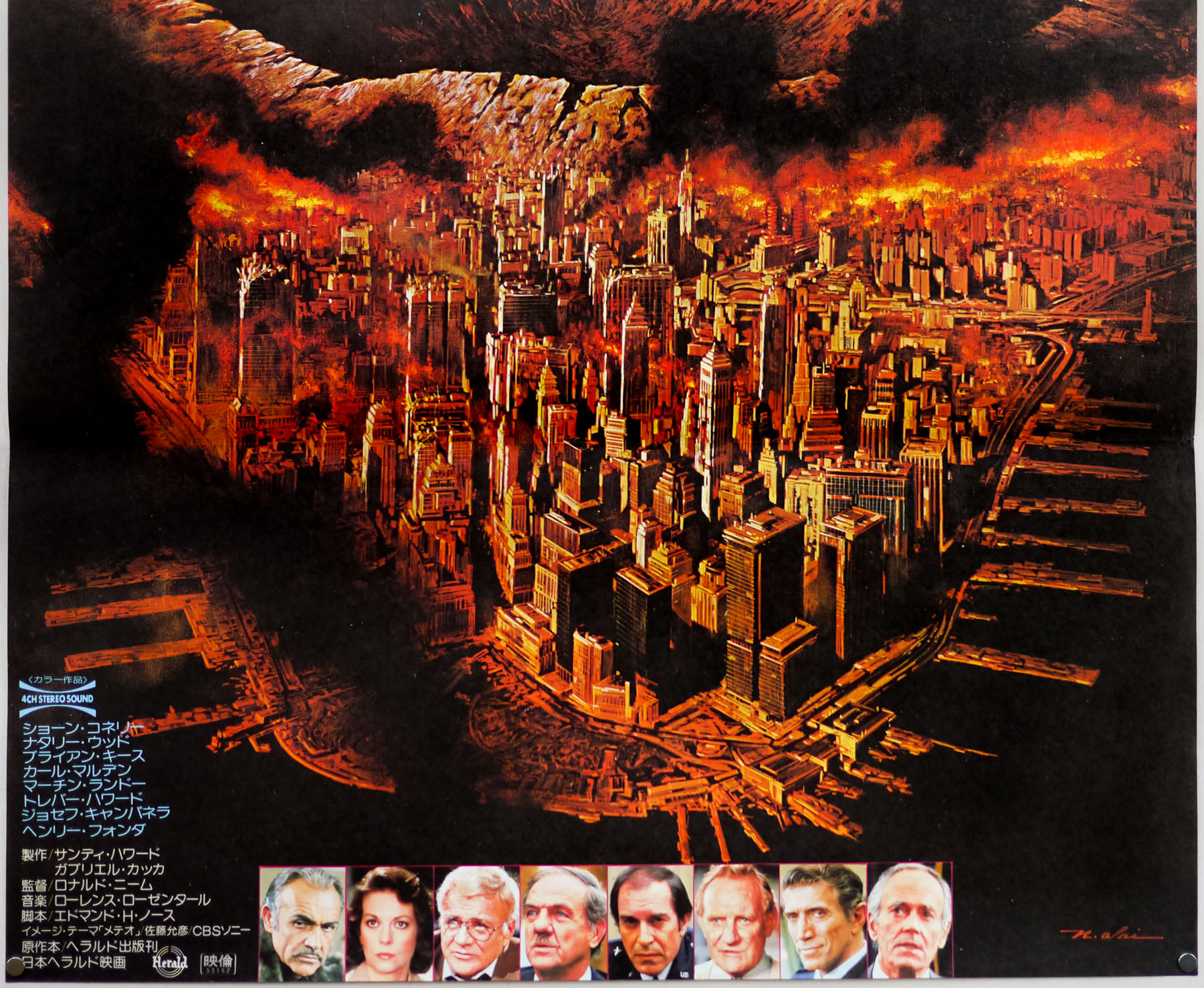
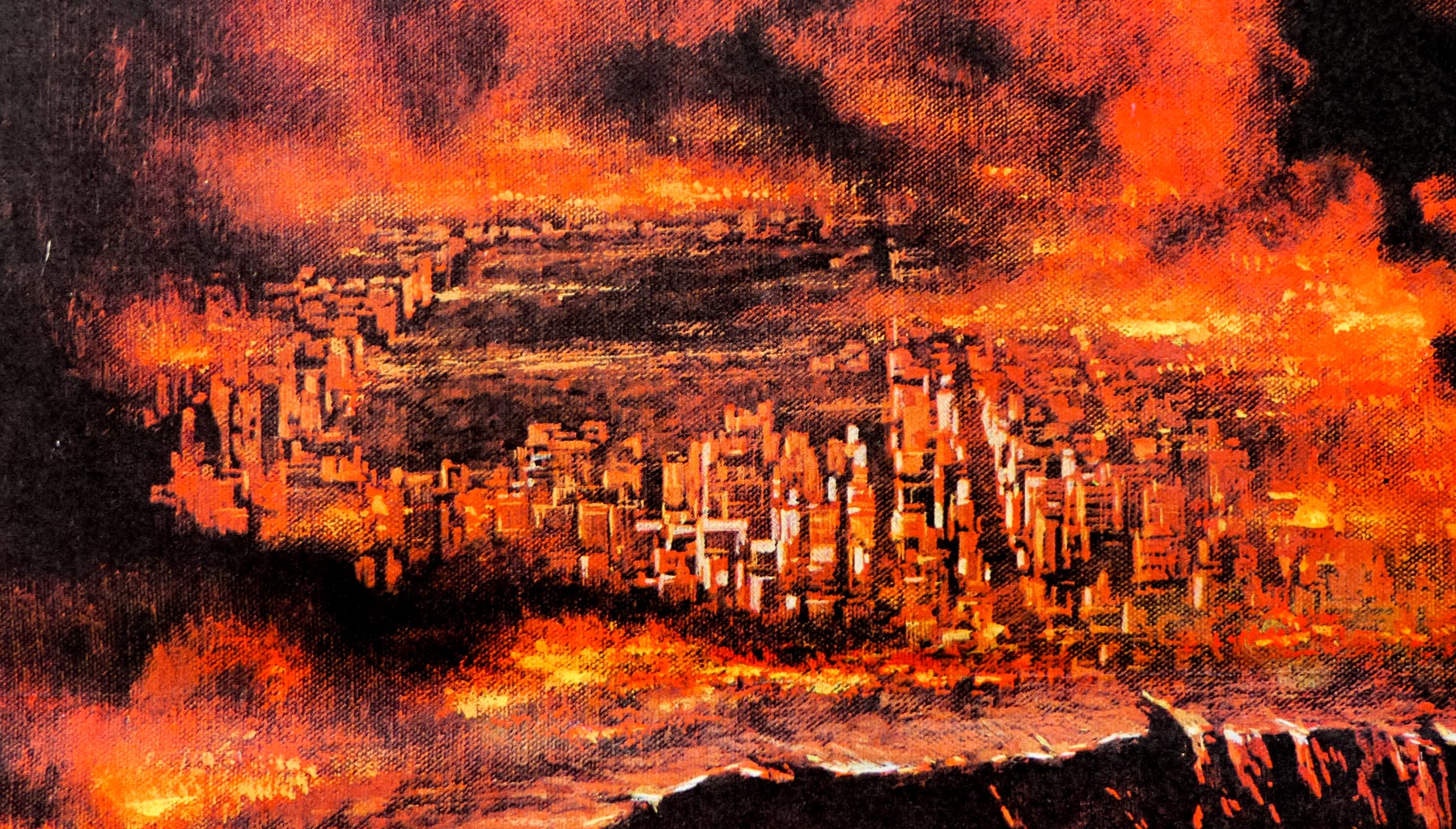
Whilst the film is a stinker, the same can’t be said for this moody artwork showing an obliterated Manhattan that was illustrated by Noriyoshi Ohrai, my favourite Japanese artist and certainly in my top five greatest film poster illustrators of all time. He’s responsible for a number of other posters in the Godzilla franchise, some of which can be seen here. He also worked on a number of Star Wars related posters, including this lovely 1982 B2 to celebrate the release of the Japanese dubbed version of the original film. In March 2014 a retrospective exhibition was held in Japan of Ohrai’s work and I made the trip over to Miyazaki to see the exhibition. I’m very glad I did as it featured most of his original artwork and a whole array of posters and book covers. A full report will follow soon.

The posters I’ve managed to collect by Noriyoshi Ohrai can be seen by clicking here.

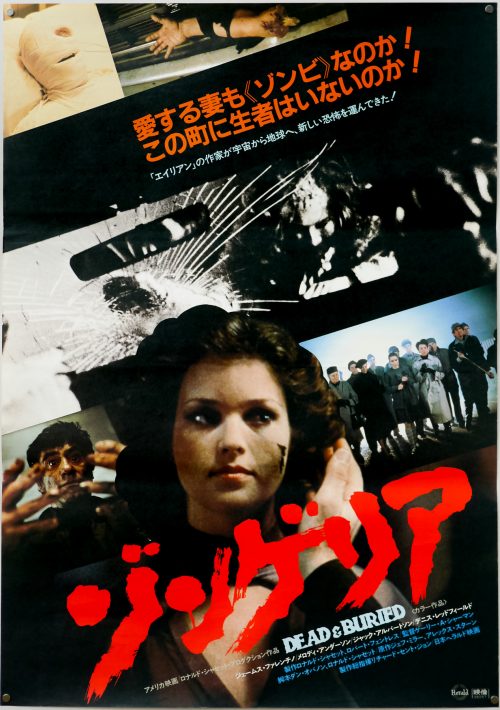
Dead and Buried / B2 / style B / Japan

24.06.15

Poster Poster
Title
Dead and Buried
AKA
Zongeria (Japan)
Year of Film
1981
Director
Gary Sherman
Starring
James Farentino, Melody Anderson, Jack Albertson, Dennis Redfield, Nancy Locke, Robert Englund
Origin of Film
USA
Genre(s) of Film
James Farentino, Melody Anderson, Jack Albertson, Dennis Redfield, Nancy Locke, Robert Englund,
Type of Poster
B2
Style of Poster
Style B
Origin of Poster
Japan
Year of Poster
1981
Designer
Unknown
Artist
--
Size (inches)
20 6/16" x 28 14/16"
SS or DS
SS
NSS #
--
Tagline
--

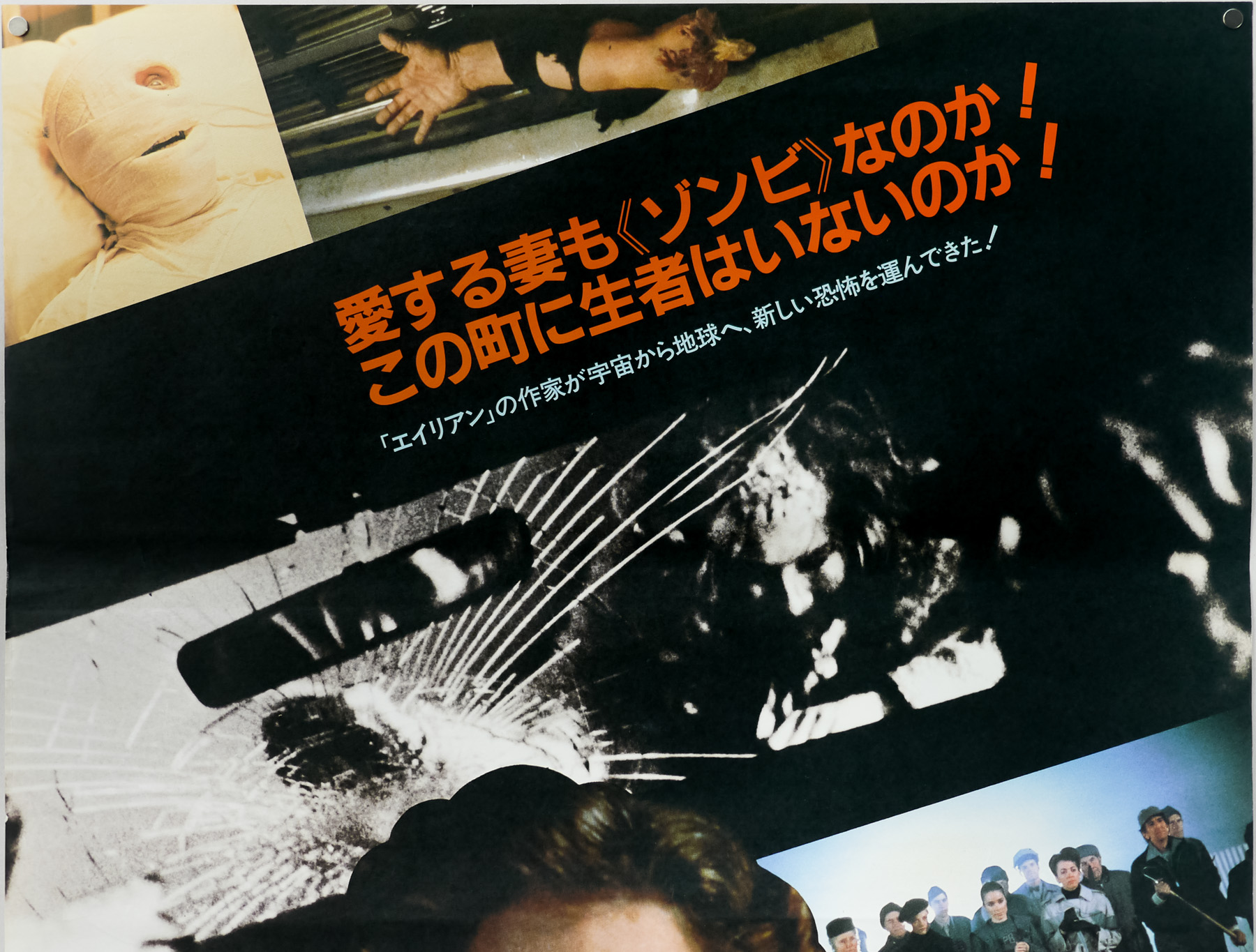
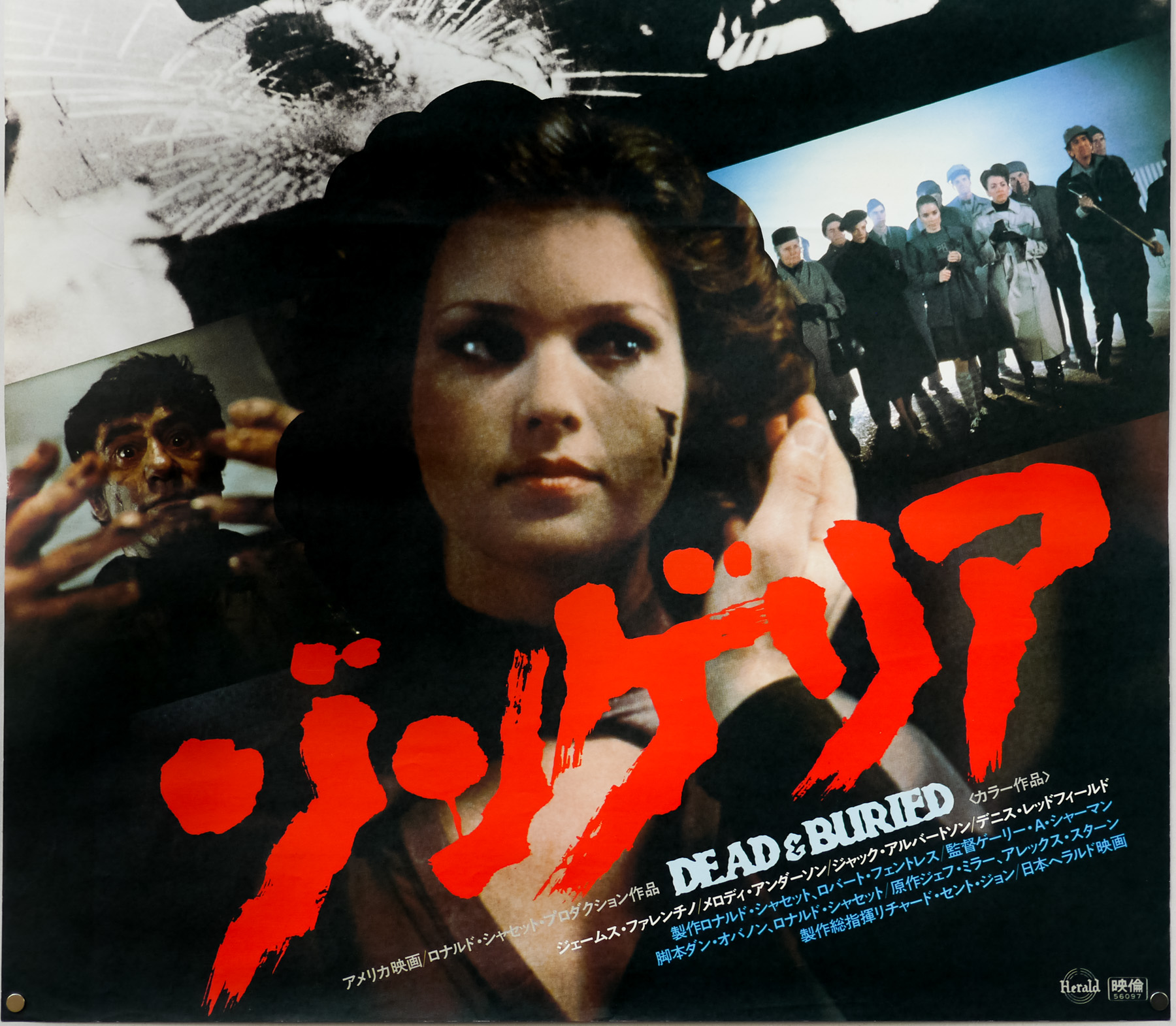
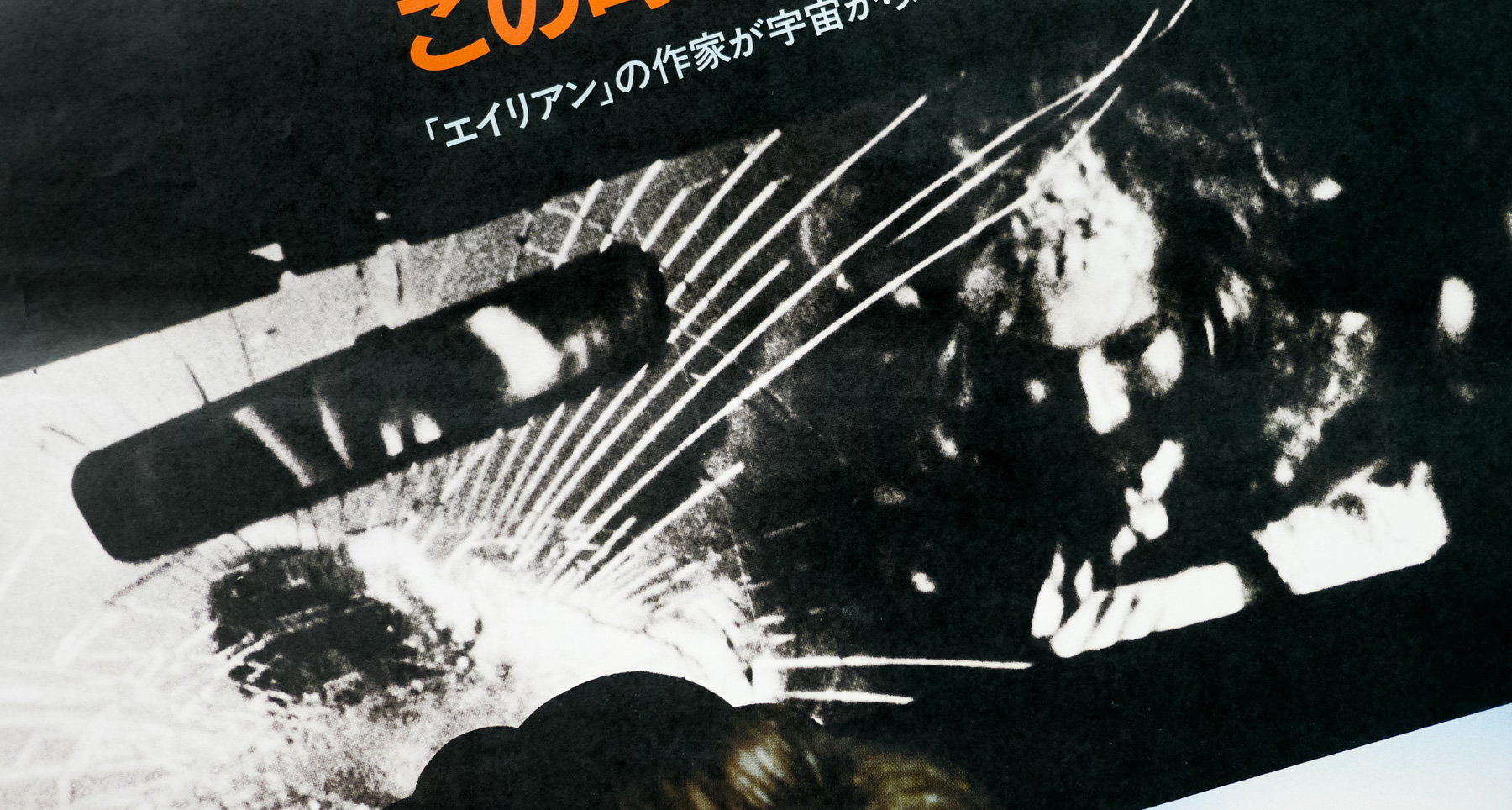
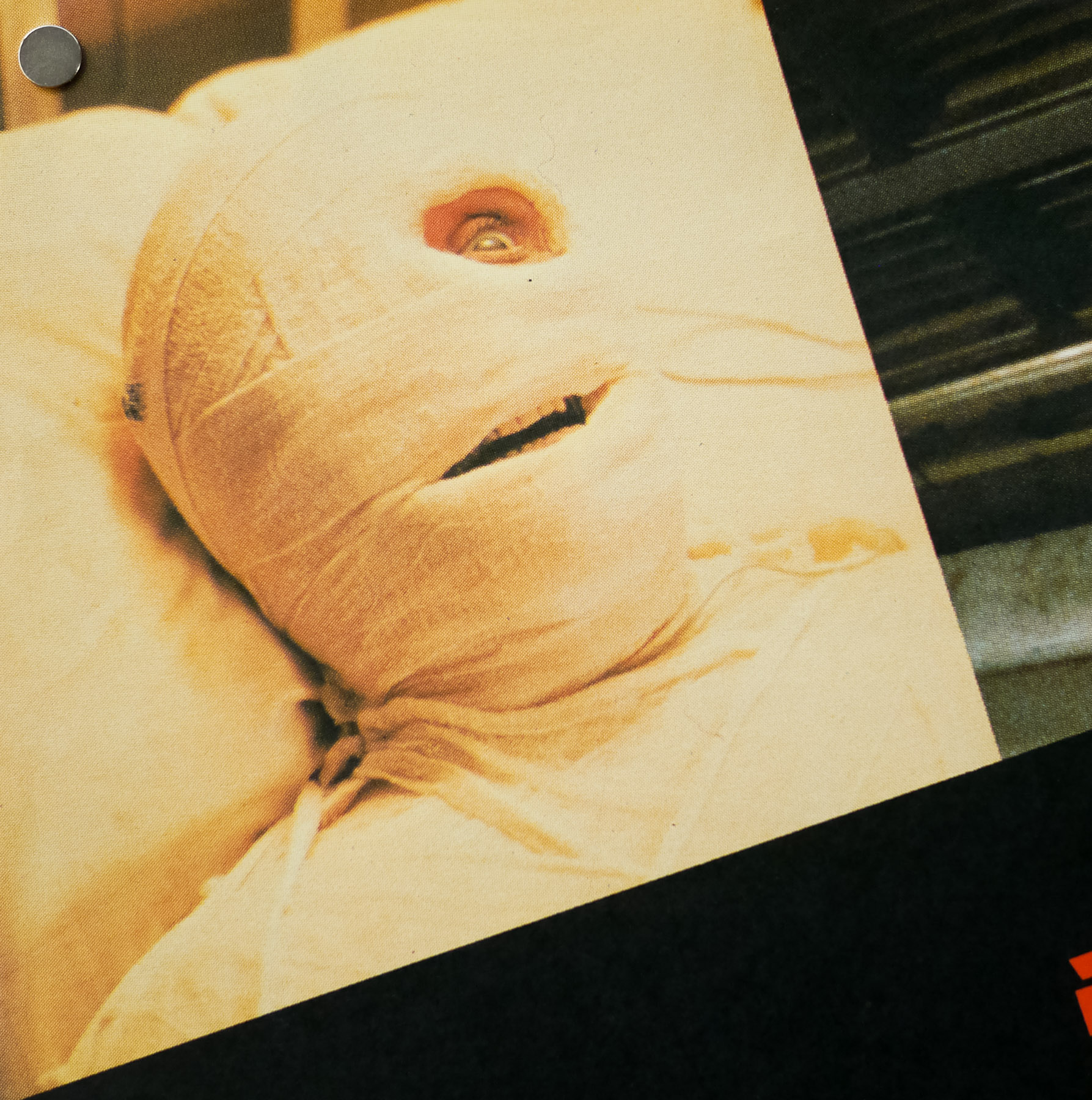
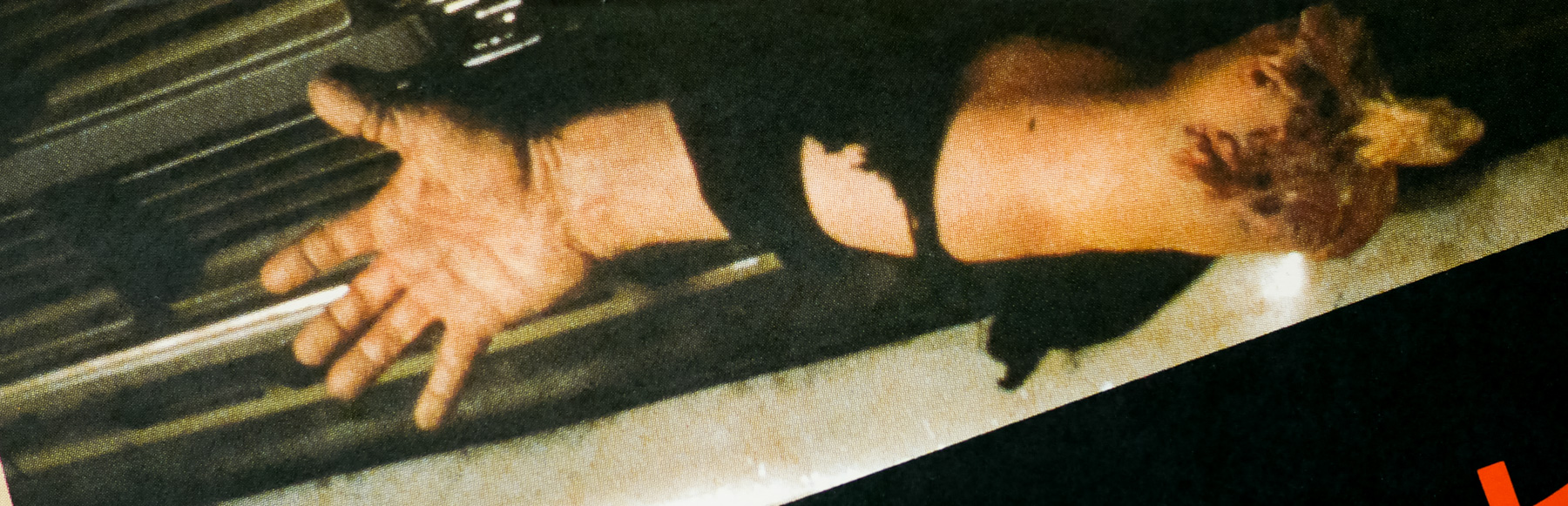
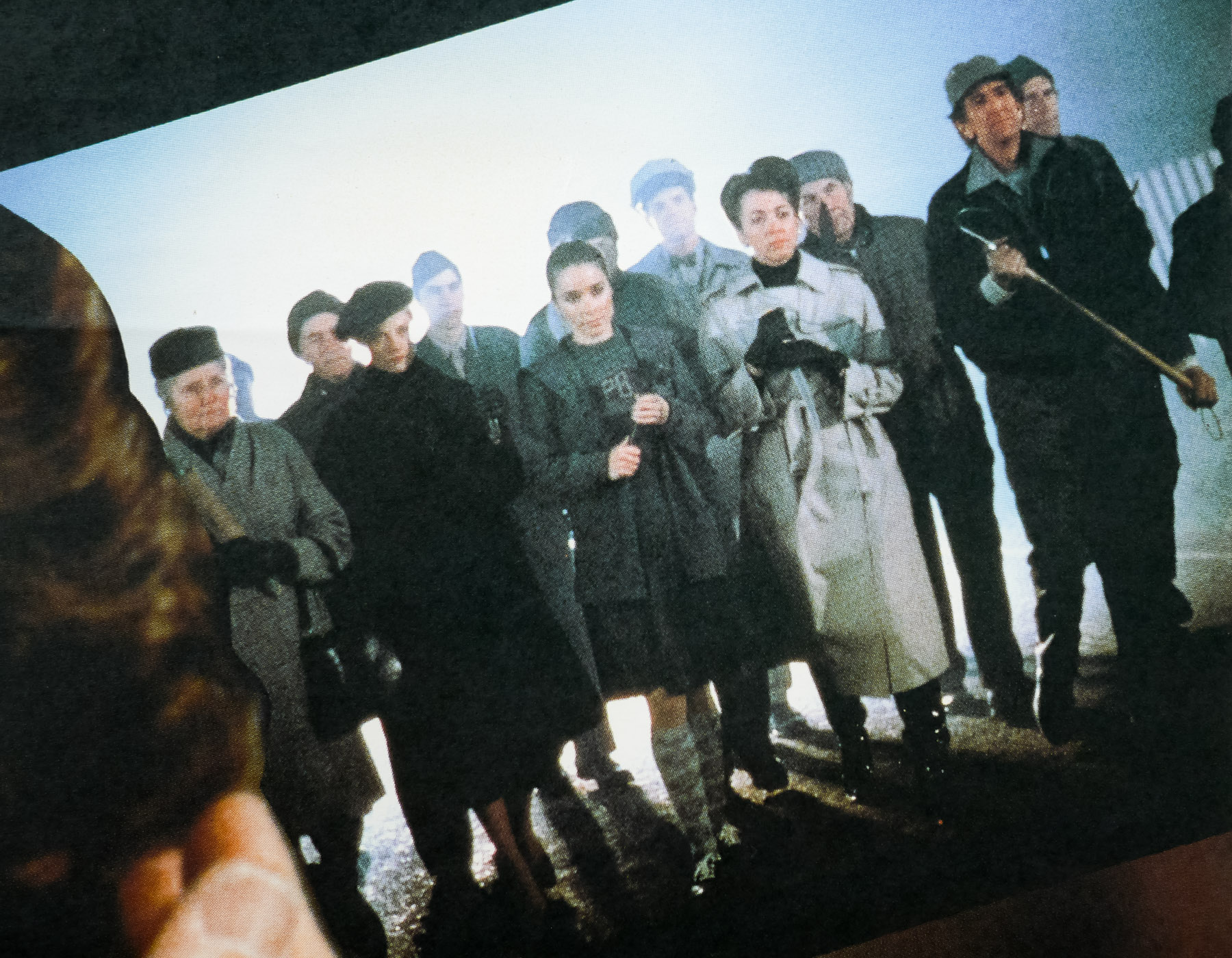
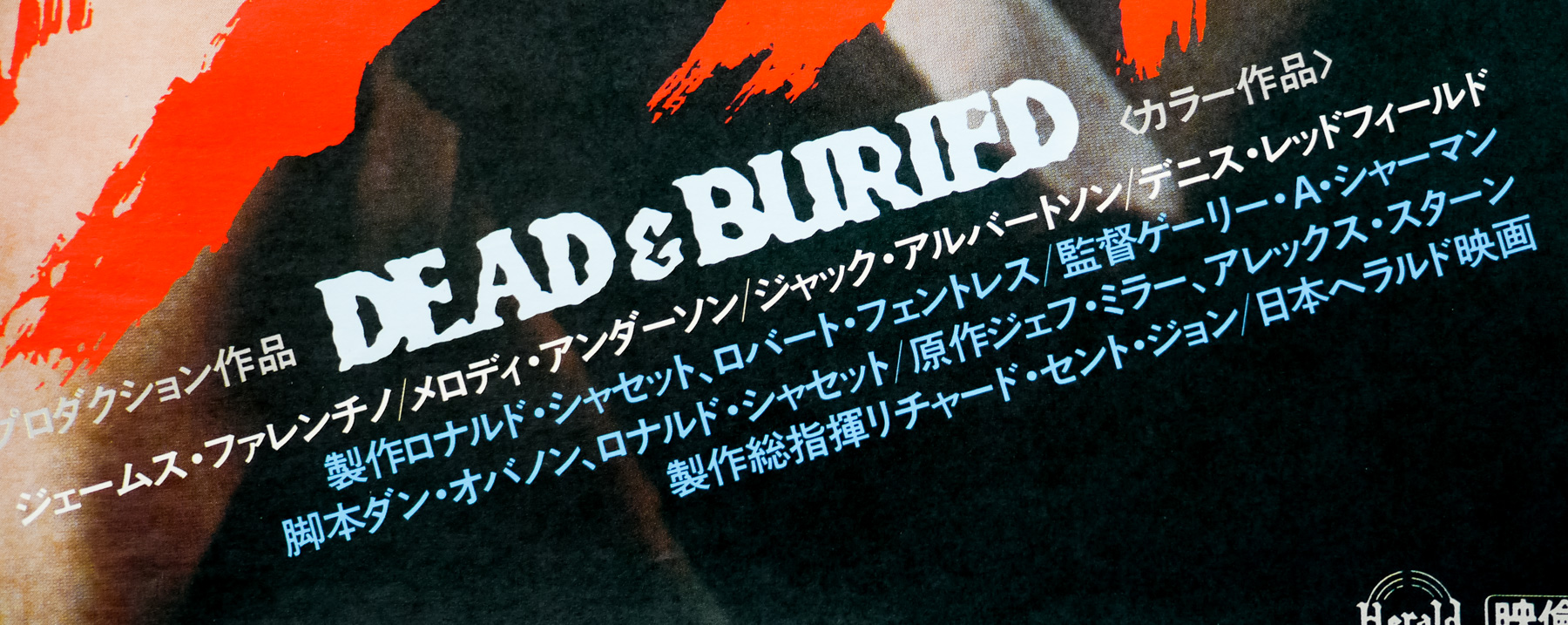
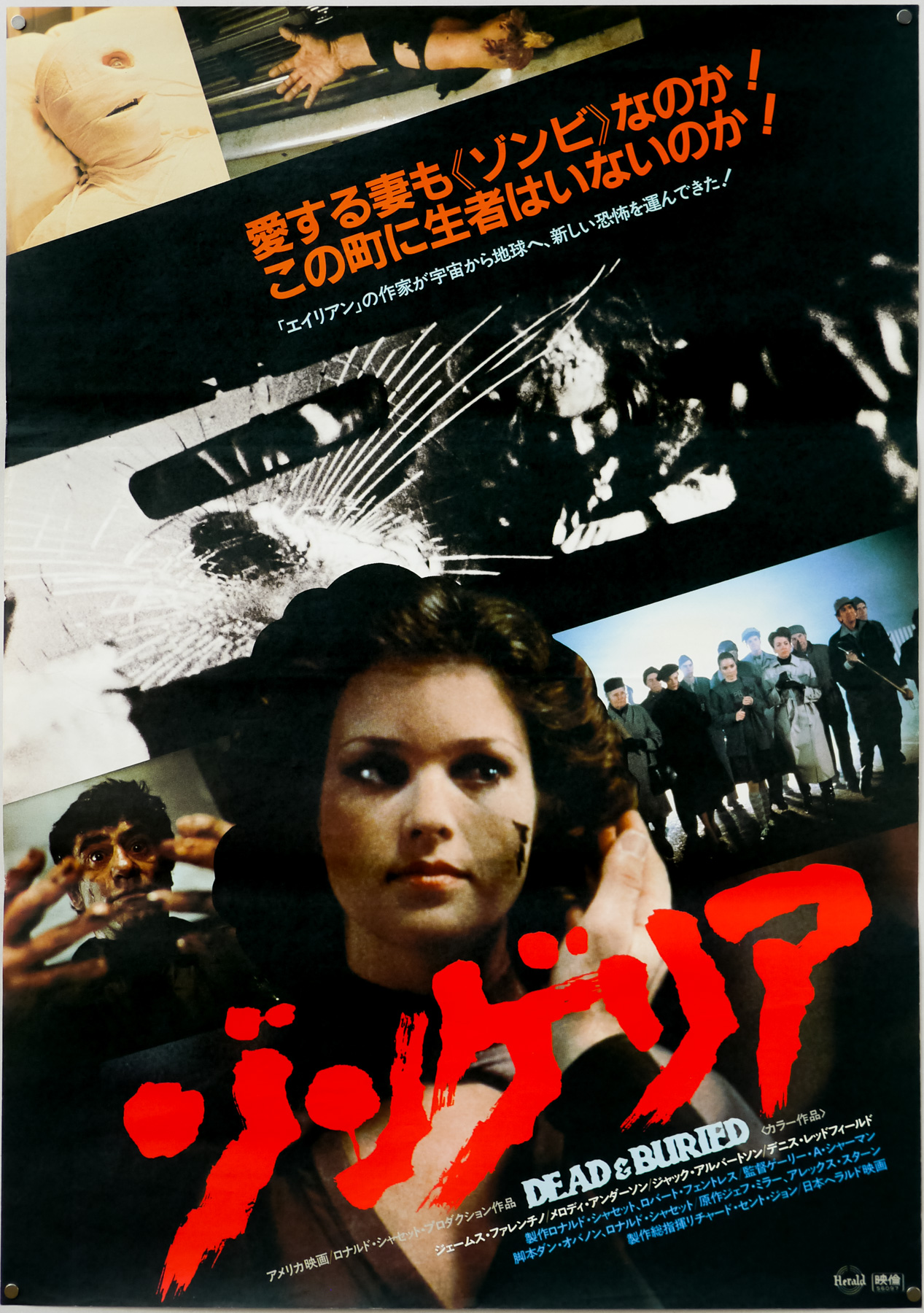
This is the style B B2 for the Japanese release of the American horror film Dead and Buried. The film was written by Ronald Shusett and Dan O’Bannon, the two screenwriters responsible for the 1979 sci-fi masterpiece Alien, and was directed by Gary Sherman whose previous film had been the creepy ‘cannibals on the London Underground’ horror Raw Meat (AKA Deathline) almost a decade earlier. The story is set in the seemingly normal New England seaside town of Potter’s Bluff and sees the local Sheriff Dan Gillis (James Farentino) investigating a series of mysterious disappearances of strangers visiting the area. The baffling thing for the sheriff is that the strangers are then reappearing some days later now seemingly a member of the community.

The viewer bears witness to a series of gruesome murders beginning with that of a photographer (Christopher Allport) who is seduced on the town beach before being attacked by several people from the town who beat him and burn him alive whilst taking photographs. It soon becomes clear that Potters Bluff’s eccentric mortician William G. Dobbs (Jack Albertson AKA Grandpa Joe from Willy Wonka and the Chocolate Factory) has been practicing some fairly unorthodox patient handling in his morgue and the sheriff sets out to put a stop to his plans.

Apparently, the film went through a number of edits at the request of one of the financiers and was moulded into more of a dark horror film than Gary Sherman had originally intended, with two additional killings inserted and filmed without the assistance of effects maestro Stan Winston (these are noticeably different in tone and quality of execution than the rest of the film). Despite this, Dead and Buried is a solid horror film with a creepy atmosphere, excellent production design and some memorable turns, particularly from Albertson and Melody Anderson as Dan Gillis’ wife who harbours a dark secret.

The film’s original trailer is on YouTube.

Cannonball / B2 / Japan

13.07.15

Poster Poster
Title
Cannonball
AKA
Carquake (UK) | Cannonball! (alt. title)
Year of Film
1976
Director
Paul Bartel
Starring
David Carradine, Bill McKinney, Veronica Hamel, Gerrit Graham, Robert Carradine, Belinda Balaski, Judy Canova, Archie Hahn, Carl Gottlieb, Dick Miller
Origin of Film
USA | Hong Kong
Genre(s) of Film
David Carradine, Bill McKinney, Veronica Hamel, Gerrit Graham, Robert Carradine, Belinda Balaski, Judy Canova, Archie Hahn, Carl Gottlieb, Dick Miller,
Type of Poster
B2
Style of Poster
--
Origin of Poster
Japan
Year of Poster
1977
Designer
Unknown
Artist
--
Size (inches)
20 4/16" x 28 13/16"
SS or DS
SS
Tagline
--

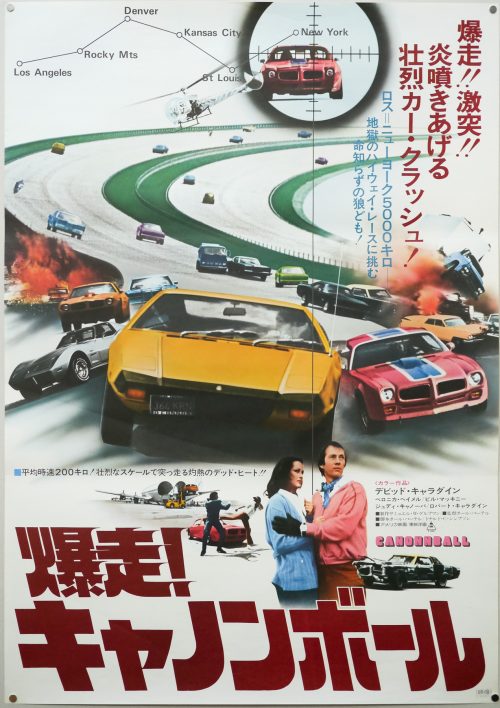
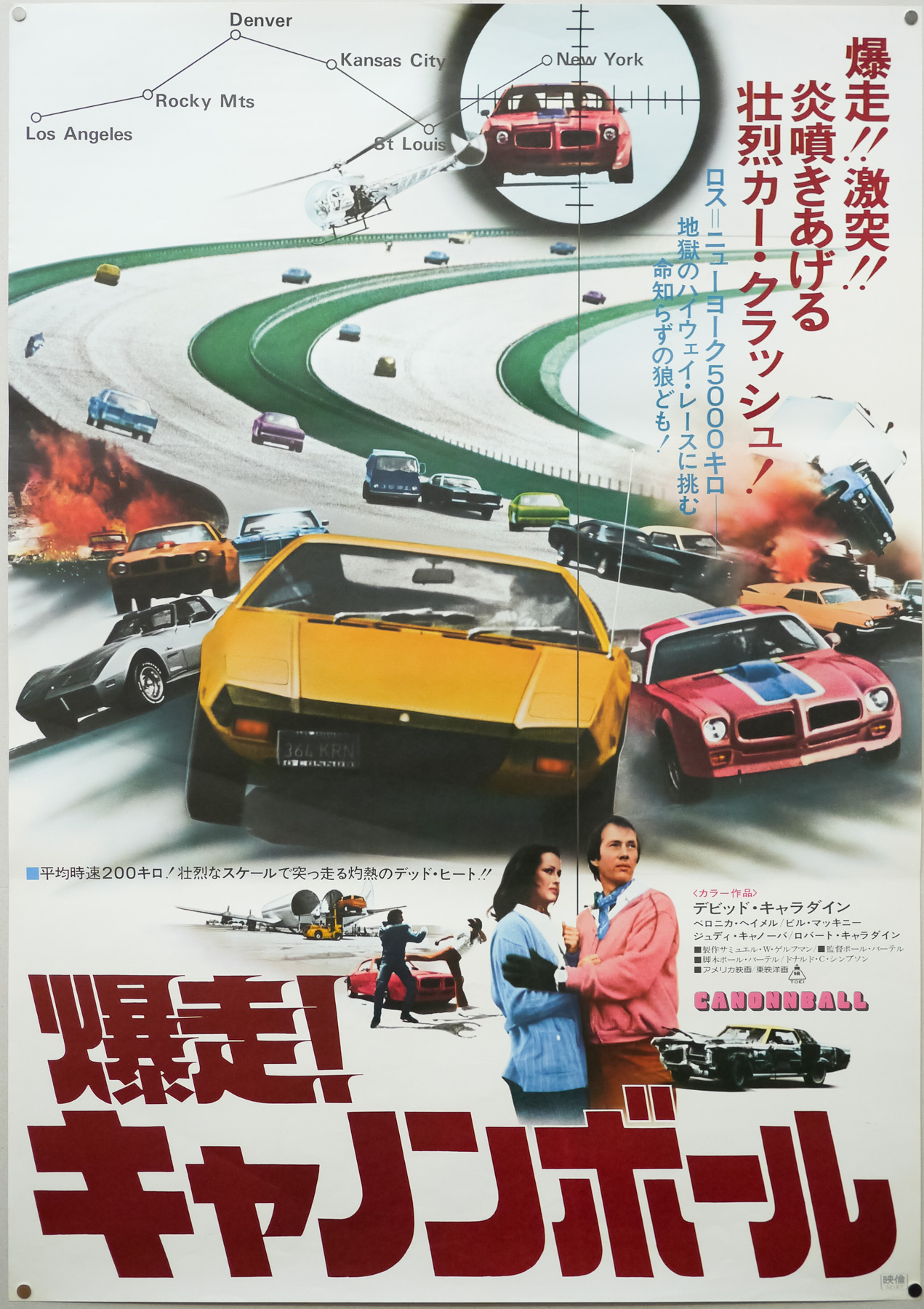
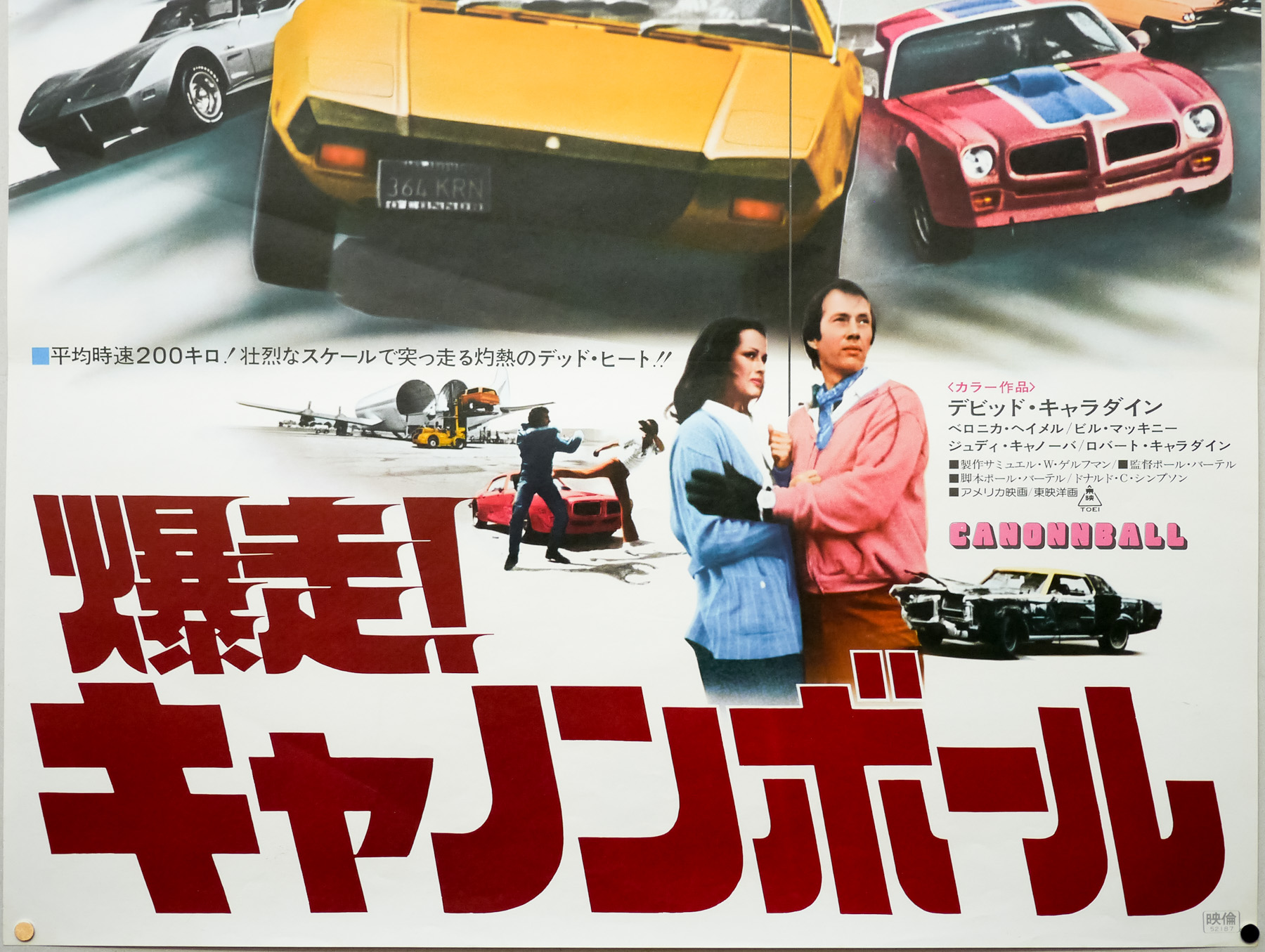
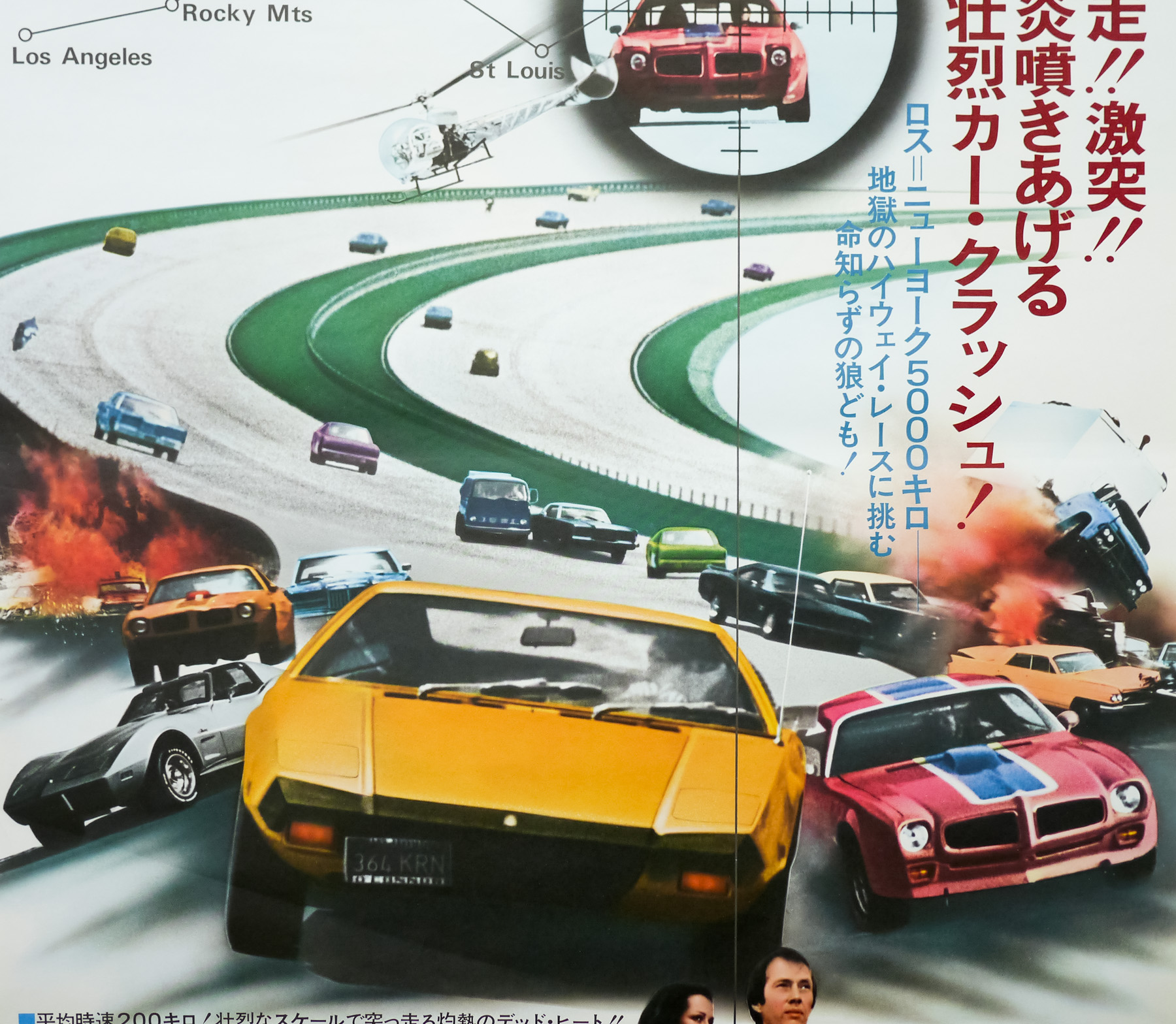
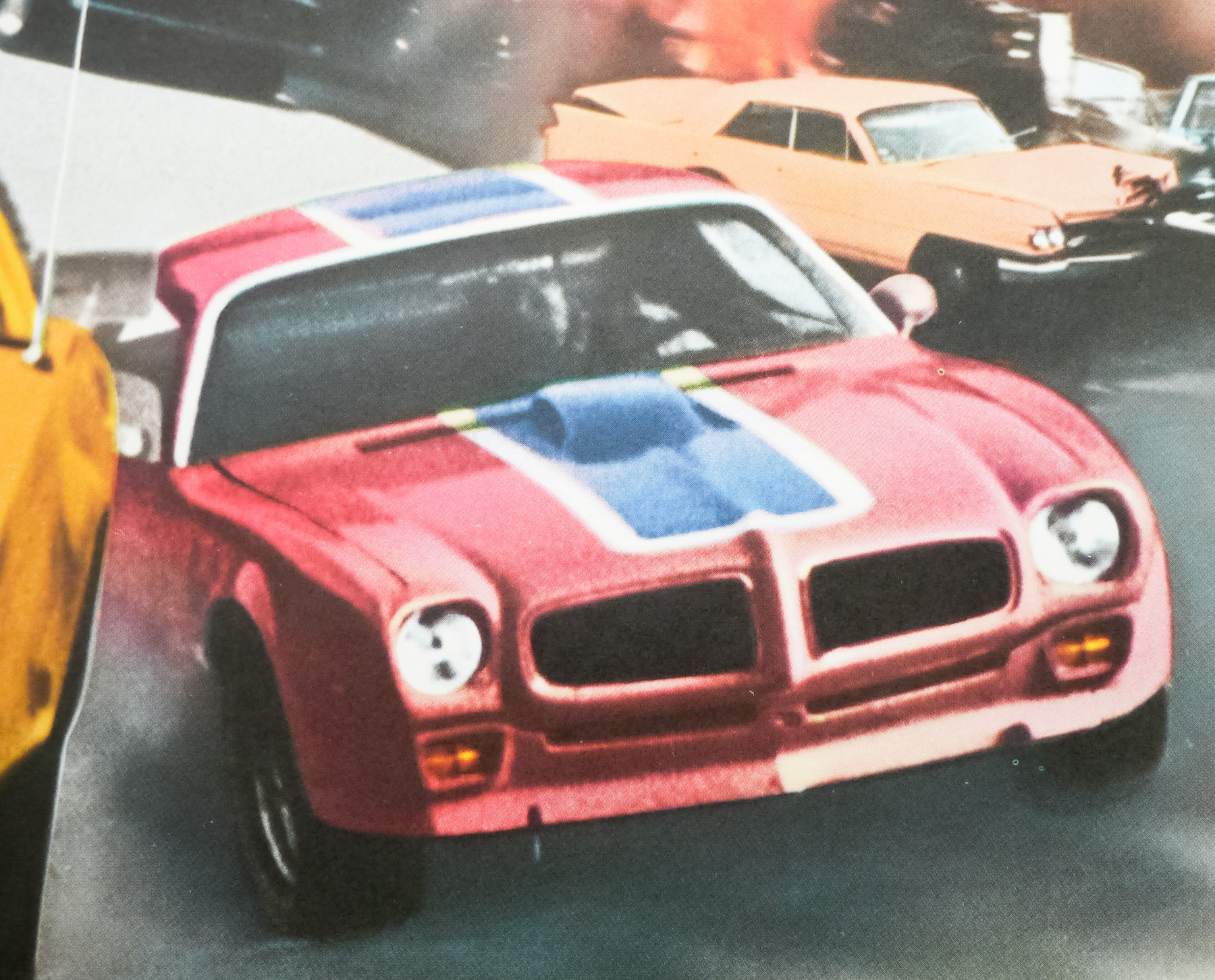
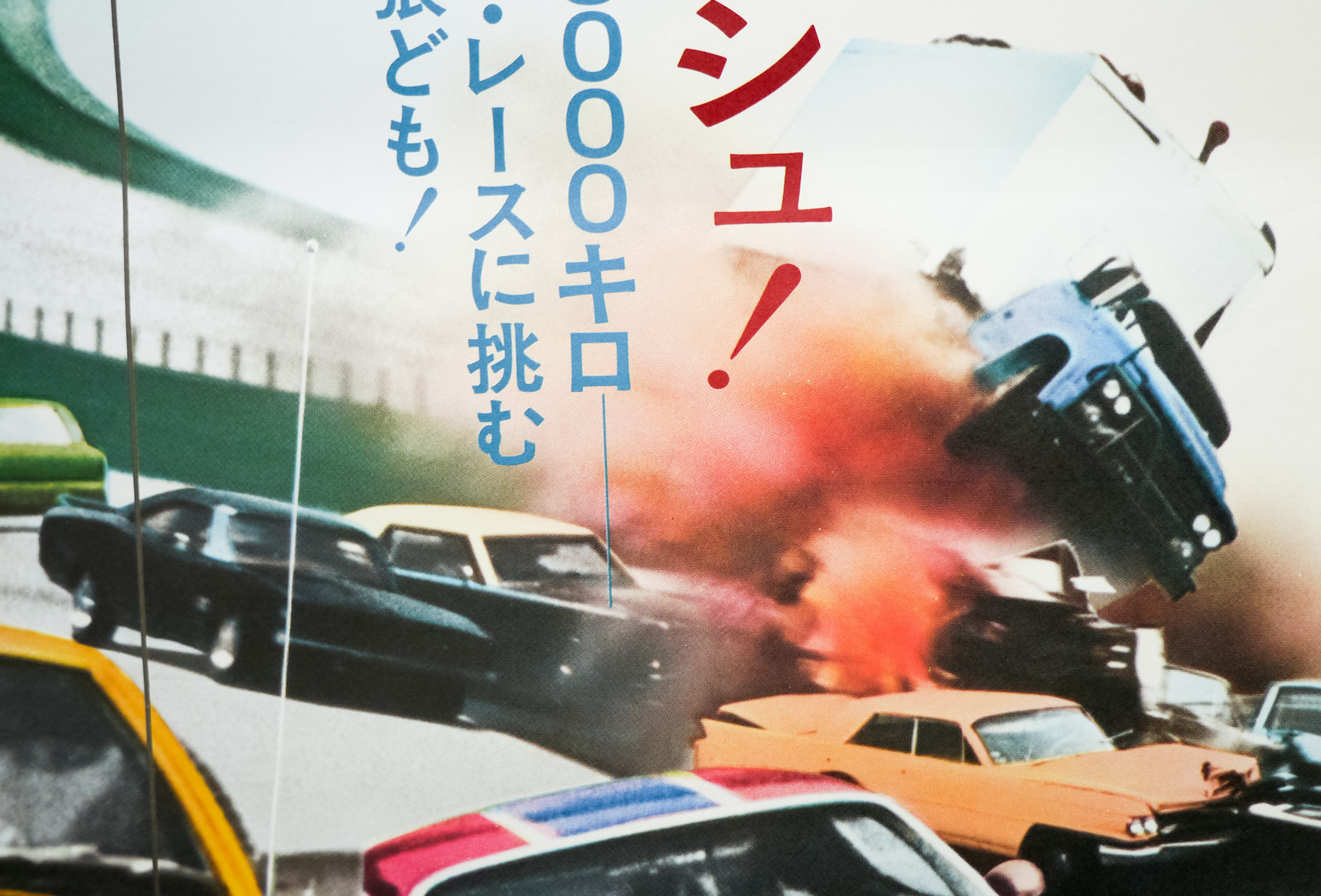
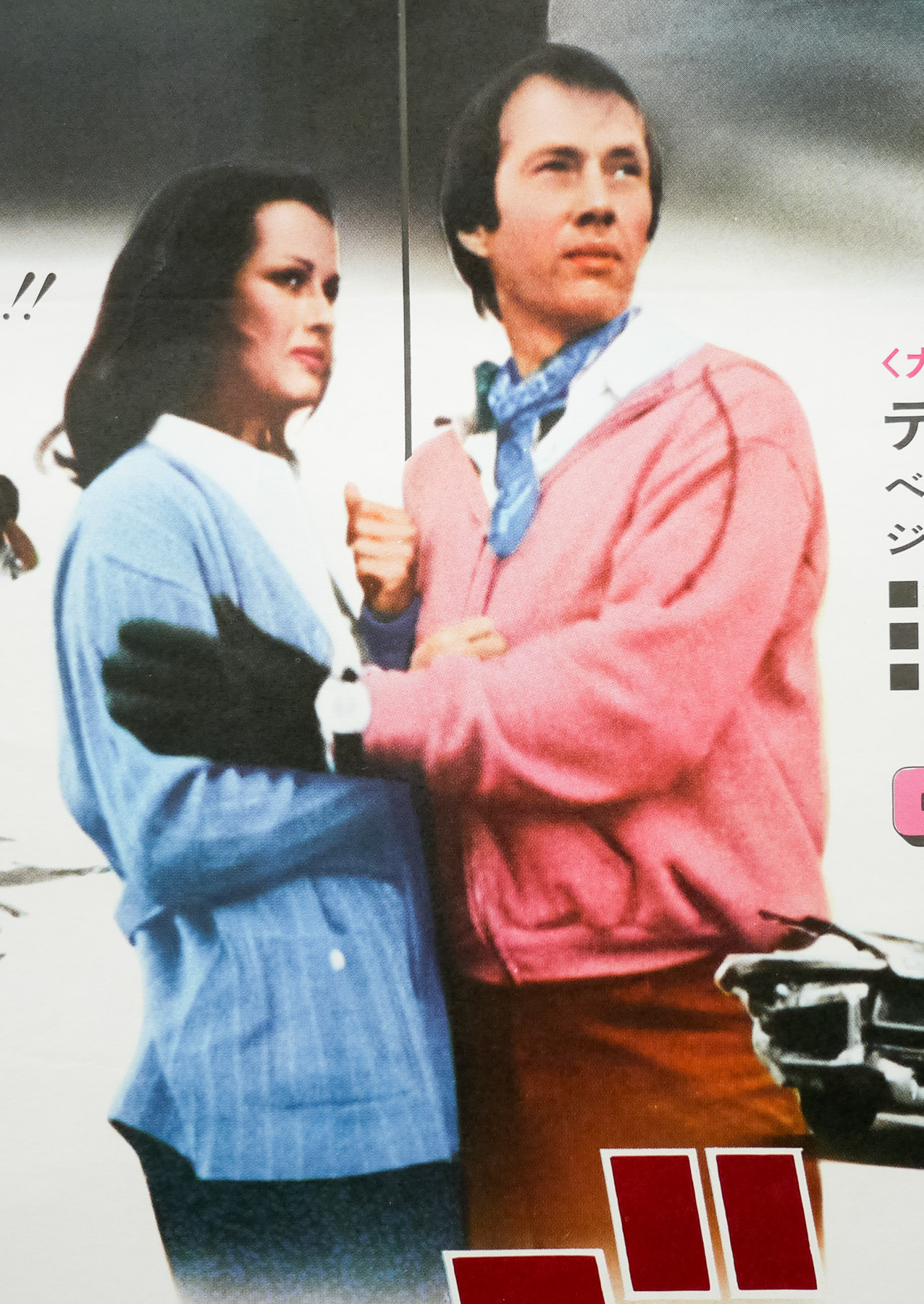
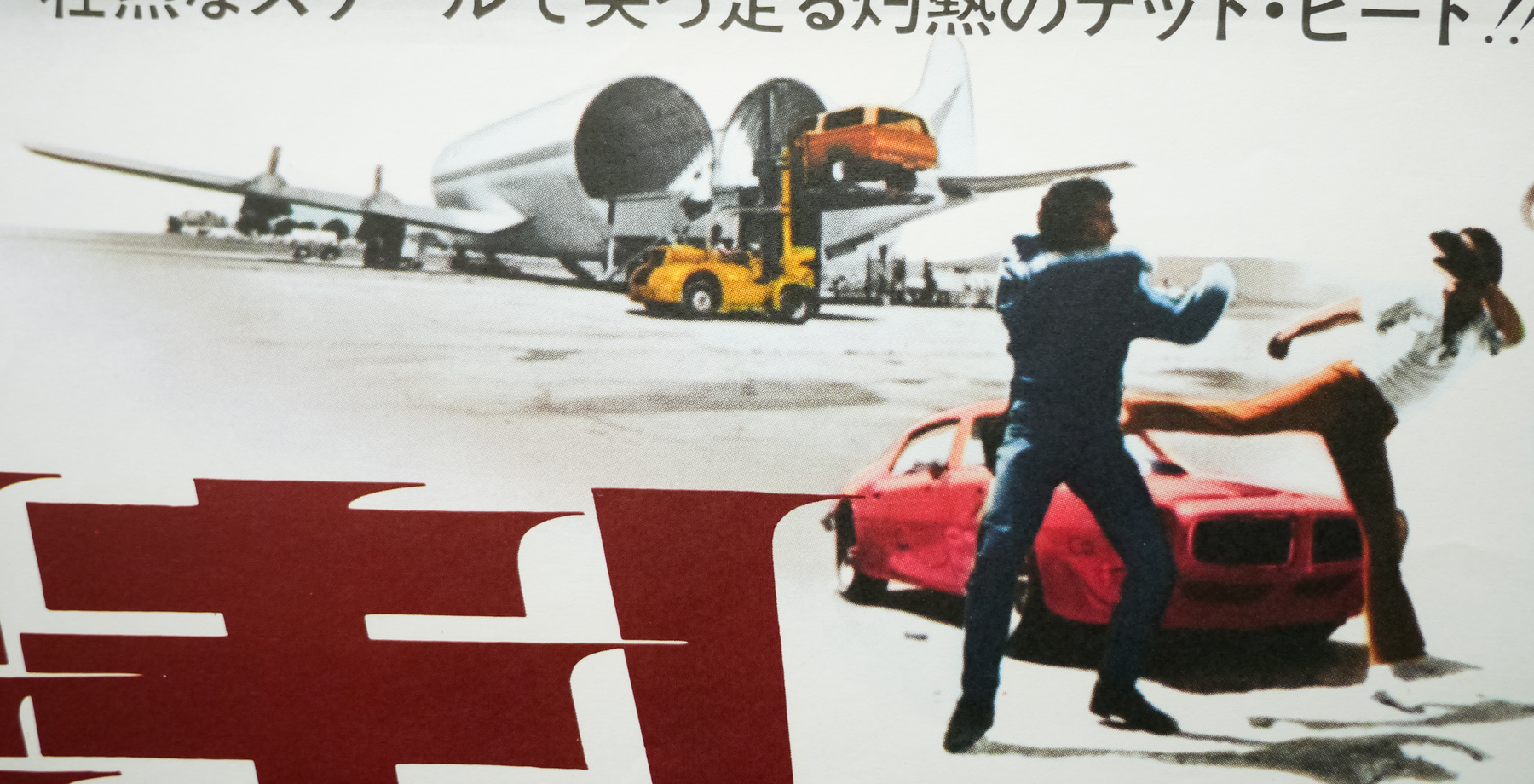
Paul Bartel, the late actor/director who was at the helm of the cult b-movie Death Race 2000 (released a year earlier), stuck with the cross-country car chase theme with this 1976 flick Cannonball, though he removed most of the gore that gave the former film its notoriety. The film and title are based on the exploits of Erwin G. “Cannon Ball” Baker, a legendary bike and car racer who made over 140 cross-country speed runs during his career and put his name to the Sea to Shining Sea Memorial Trophy Dash, an illegal cross-country race that was run five times during the 1970s. This was the first in a series of films that was based on the idea of illegal long-distance races, with The Gumball Rally seeing release the same year, and the more successful Cannonball Run and its sequel being released at the start of the 1980s.

Whilst perhaps not as star-studded as the later films, Cannonball still has a large ensemble cast with several cameos that are both credited and un-credited, including Martin Scorsese, Sylvester Stallone, Don Simpson and Roger Corman. David Carradine appears as Coy ‘Cannonball’ Buckman, a race driver who has recently been released from jail where he was sent for killing someone whilst driving drunk. He decides to enter the Trans-America Grand Prix, an illegal road race that travels between Los Angeles and New York City. The racing team Modern Motors has promised a contract to either Coy or his arch-rival Cade Redman (Bill McKinney) so he is determined to win.

Because the race crosses state lines Coy will be in violation of his parole conditions, his parole officer (Veronica Hamel) attempts to stop him and ends up being forced to come along for the ride. Two people who have offered to pay his race expenses are also passengers in his Dodge Charger and there are several other racers in the competition, including a surfer dude played by David’s brother Robert and his girlfriend (played by Belinda Balaski). The race soon descends into a violent destruction derby with many of the competitors meeting grizzly ends. Coy will be challenged in more ways than one and the first to cross the finish line isn’t who you might think. Later films in the genre would tone down the violence and deaths considerably.

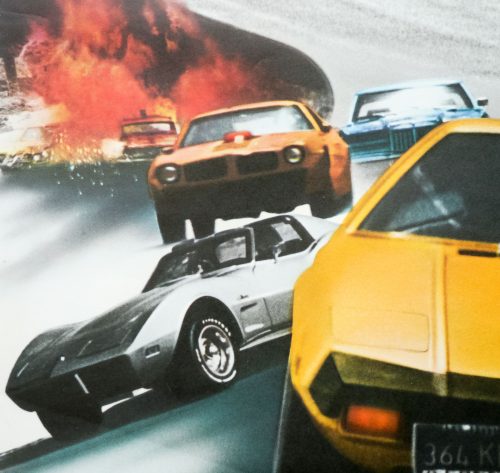
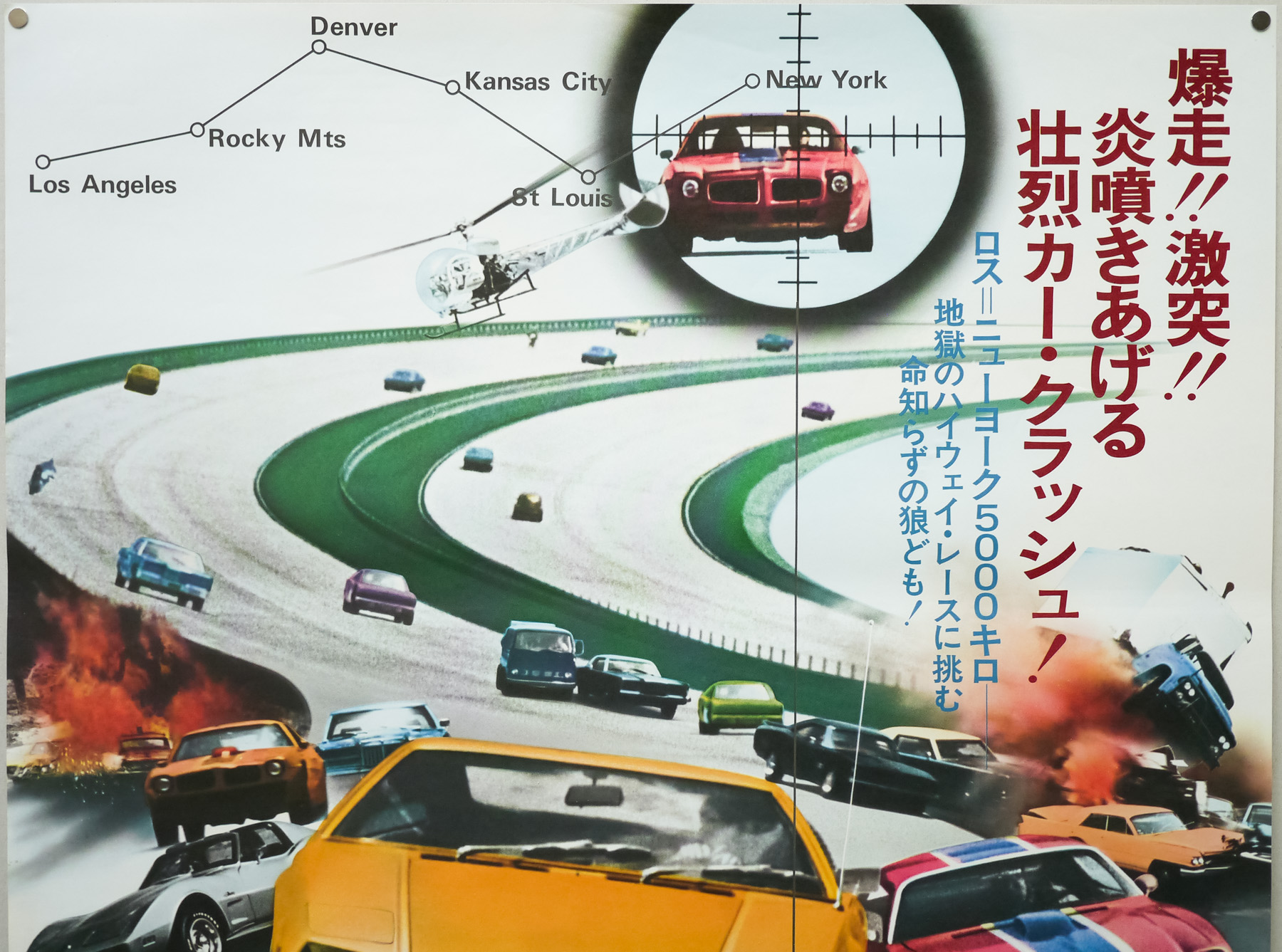
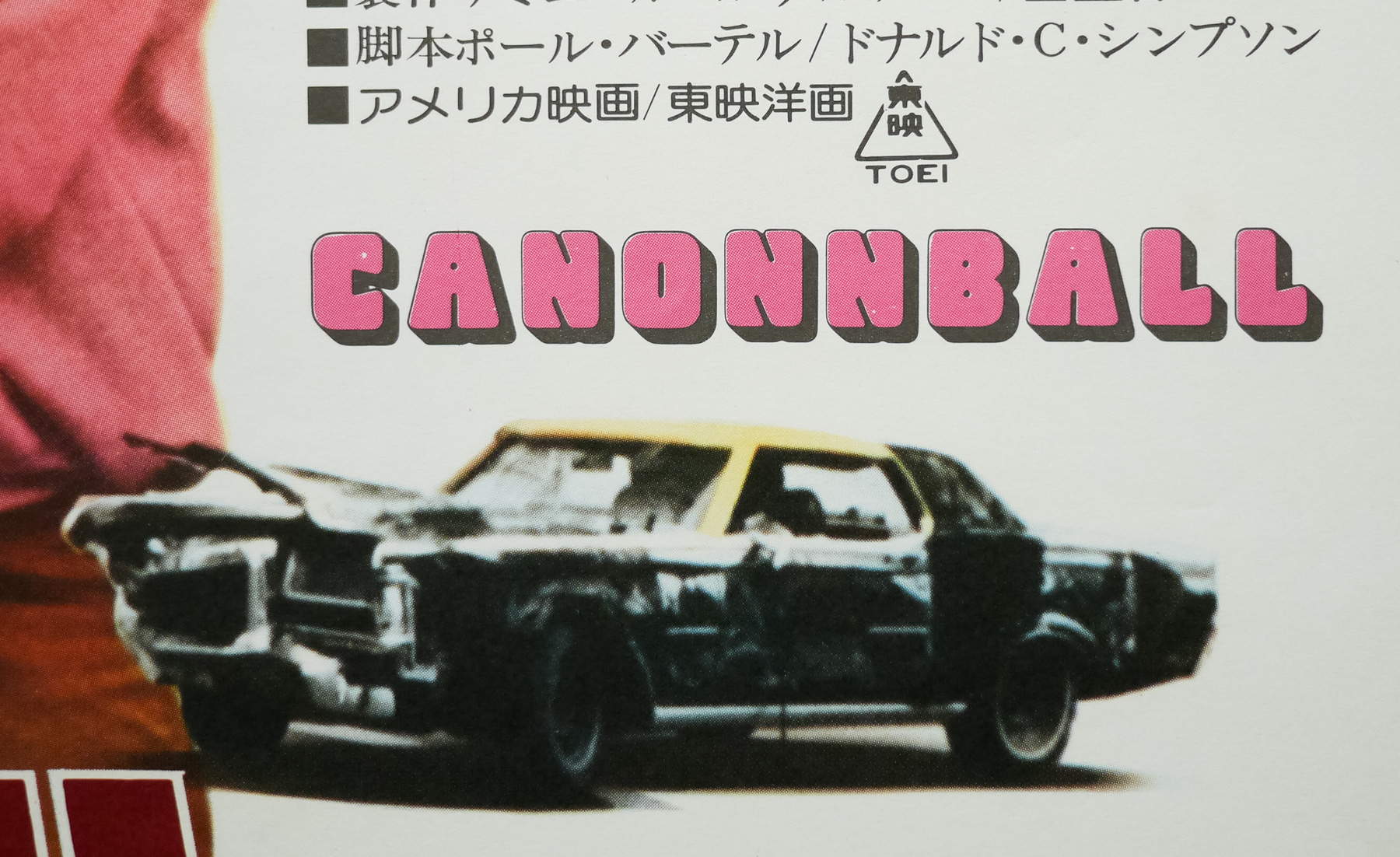
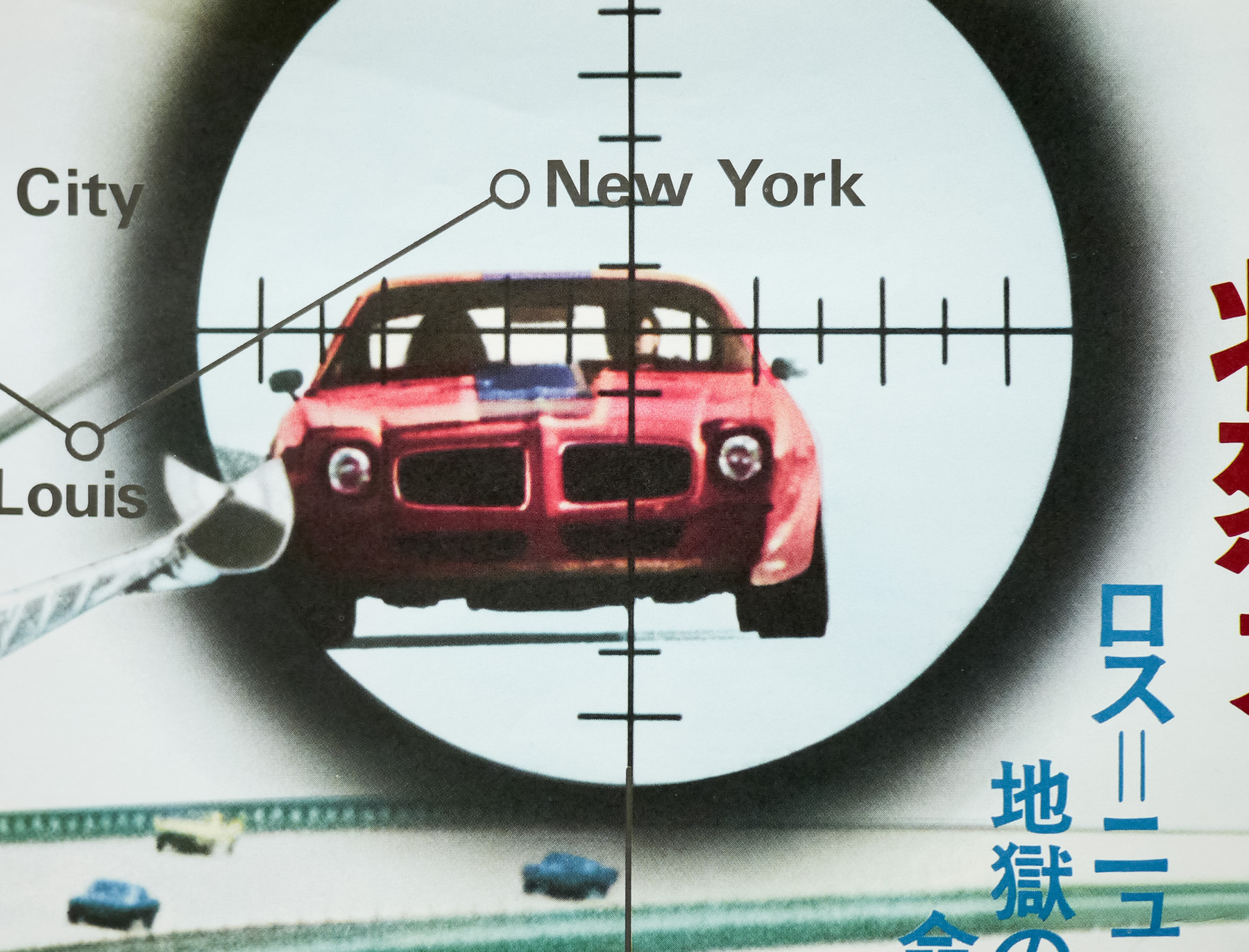
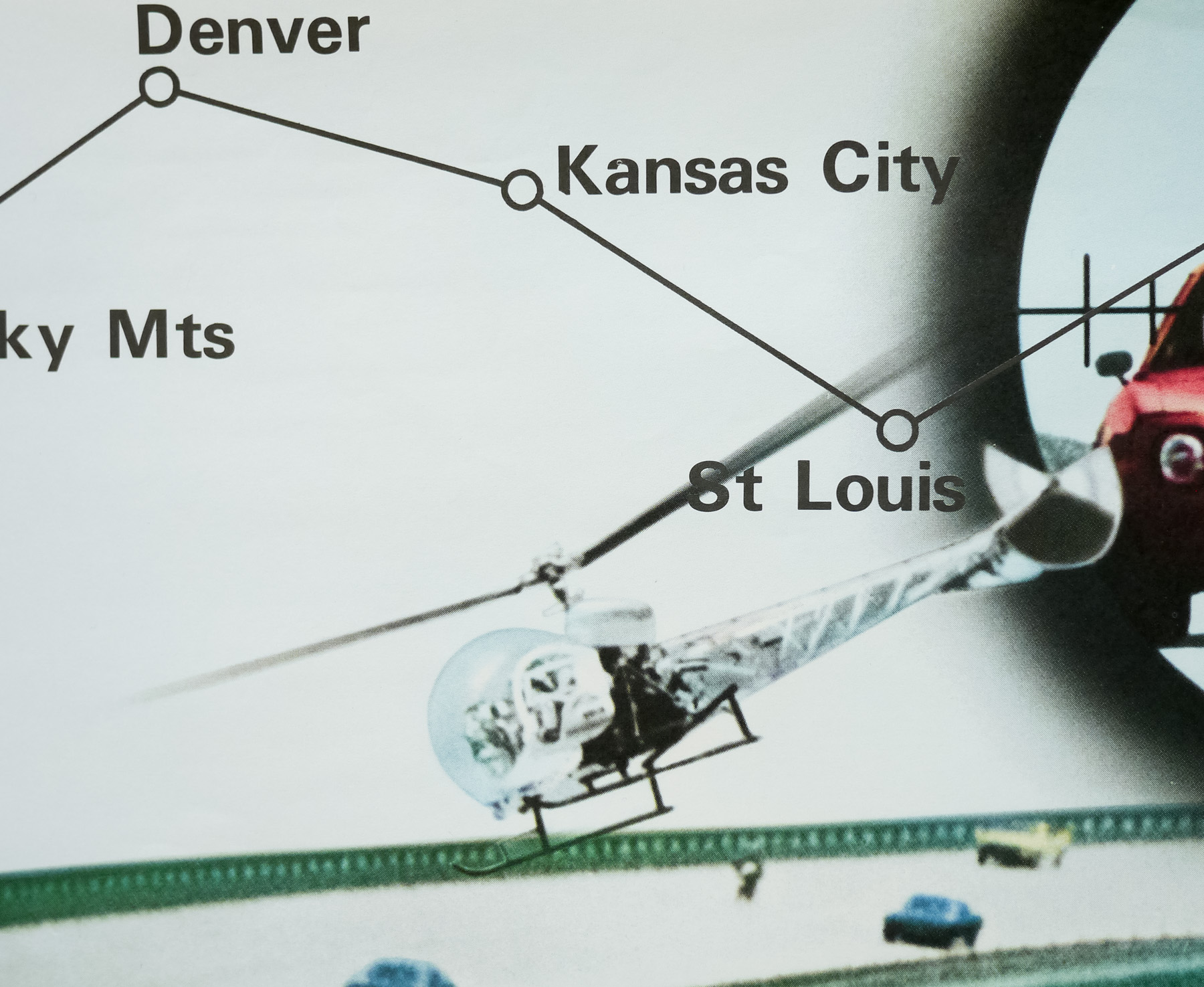
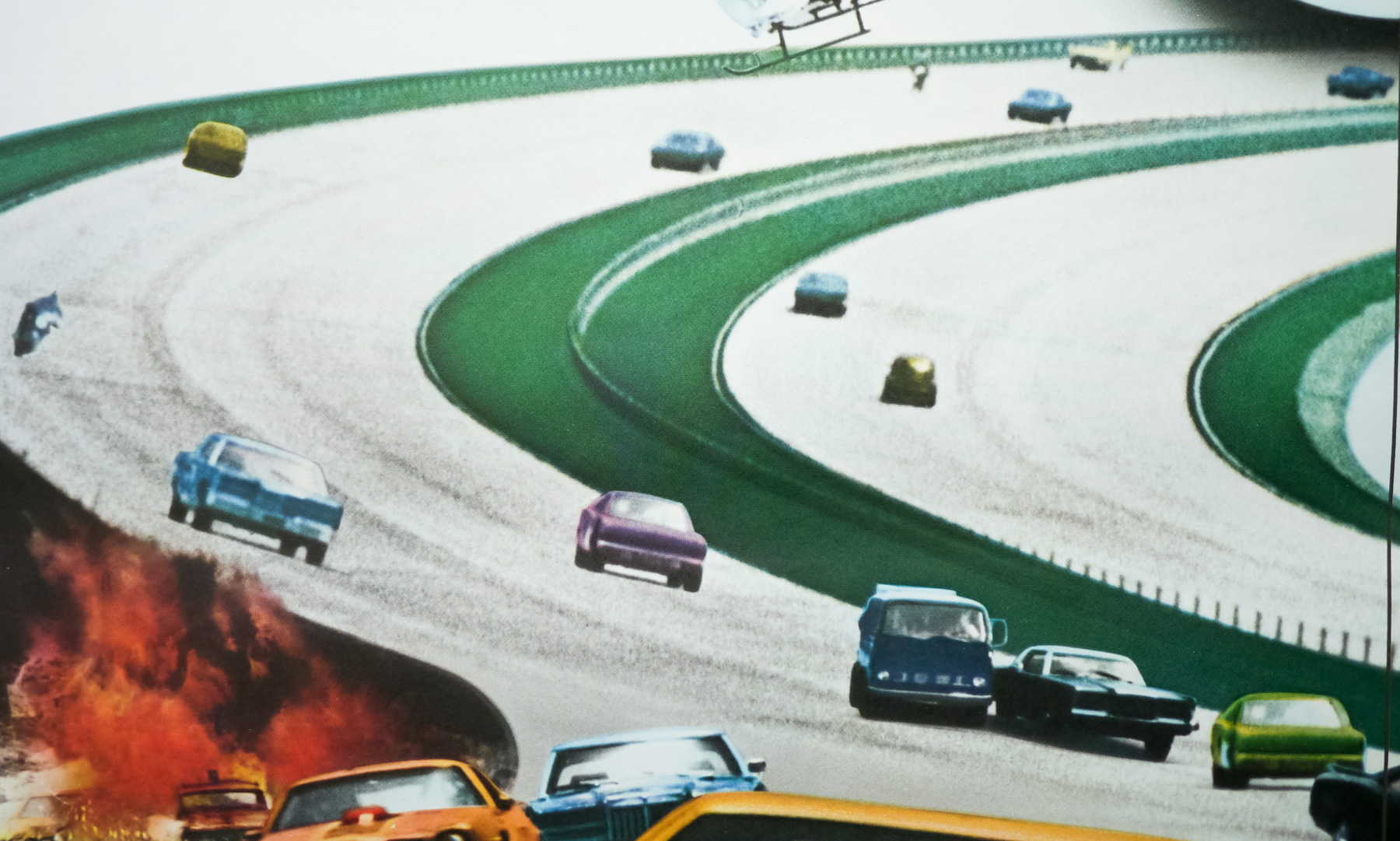
This Japanese B2 poster features a unique montage design and was printed for the film’s first release in the country in 1977. Note the miss-spelling of the title as ‘Canonnball’.


The Sea Wolves / B2 / Japan

17.08.15

Poster Poster
Title
The Sea Wolves
AKA
--
Year of Film
1980
Director
Andrew V. McLaglen
Starring
Gregory Peck, Roger Moore, David Niven, Trevor Howard, Barbara Kellerman, Patrick Macnee, Kenneth Griffith, Patrick Allen
Origin of Film
Switzerland | UK | USA
Genre(s) of Film
Gregory Peck, Roger Moore, David Niven, Trevor Howard, Barbara Kellerman, Patrick Macnee, Kenneth Griffith, Patrick Allen,
Type of Poster
B2
Style of Poster
--
Origin of Poster
Japan
Year of Poster
1981
Designer
Unknown
Artist
Seito
Size (inches)
20 5/16" x 28 13/16"
SS or DS
SS
Tagline
--

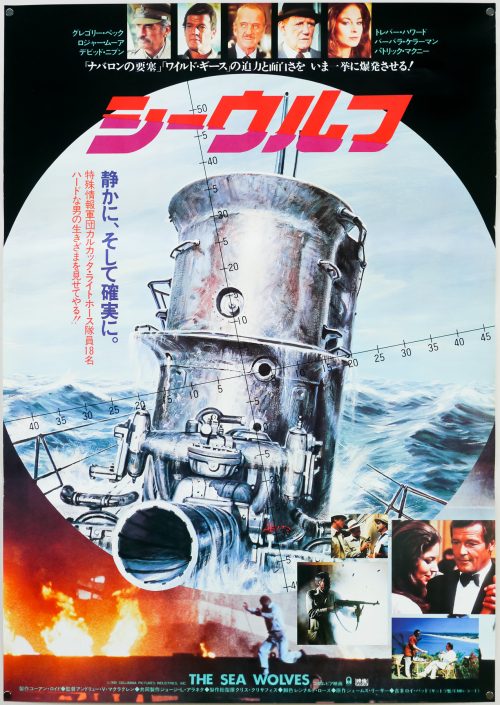
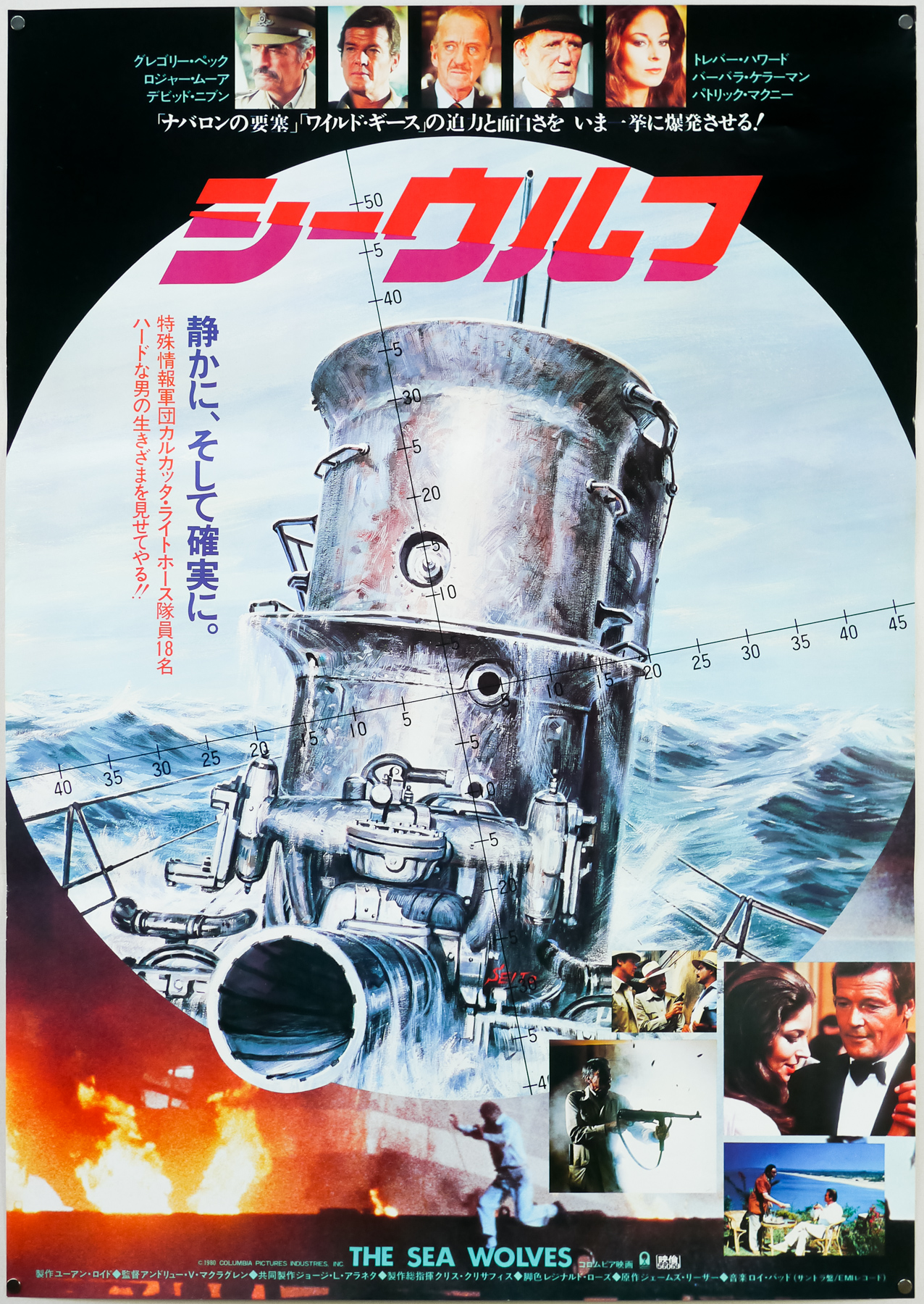
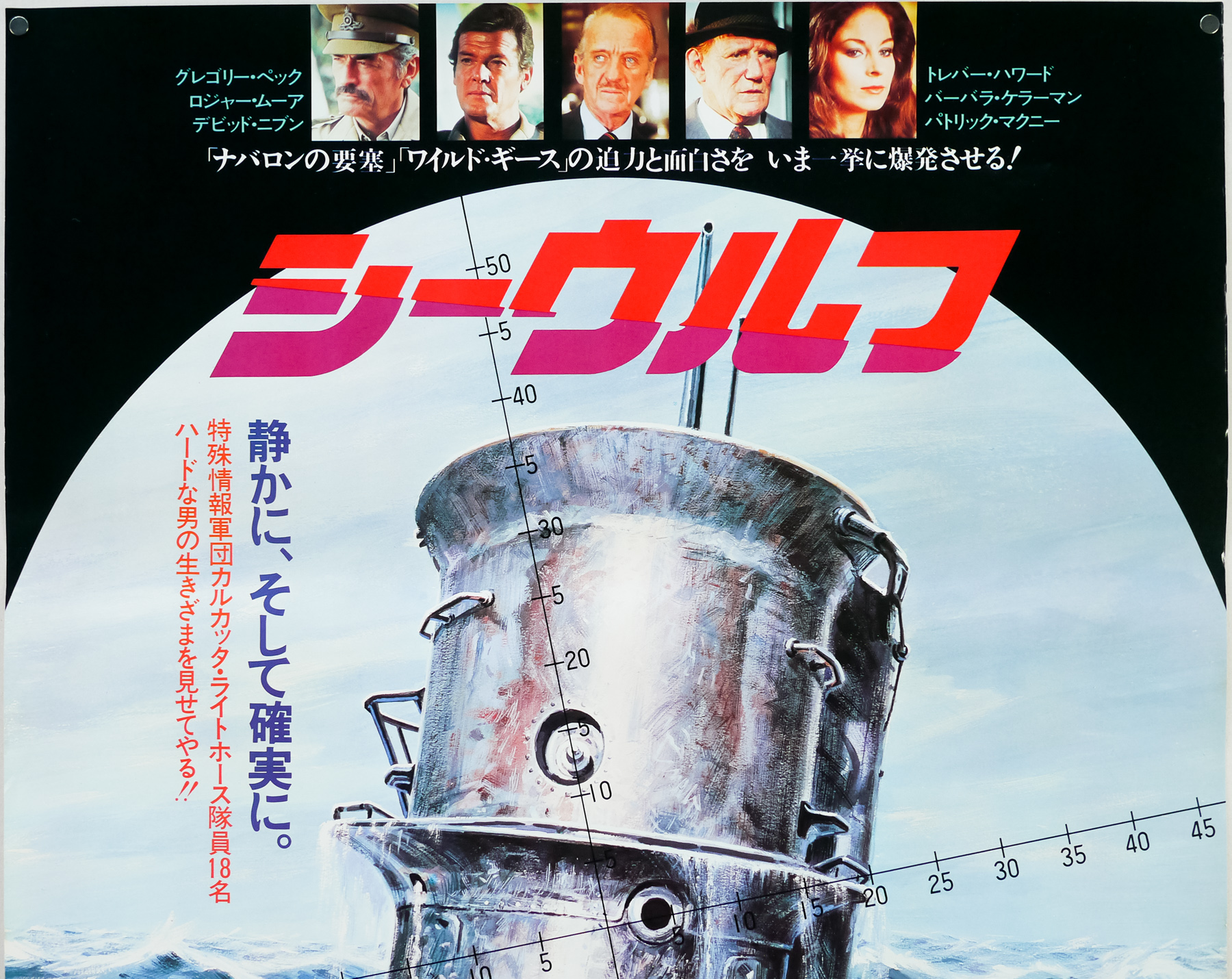
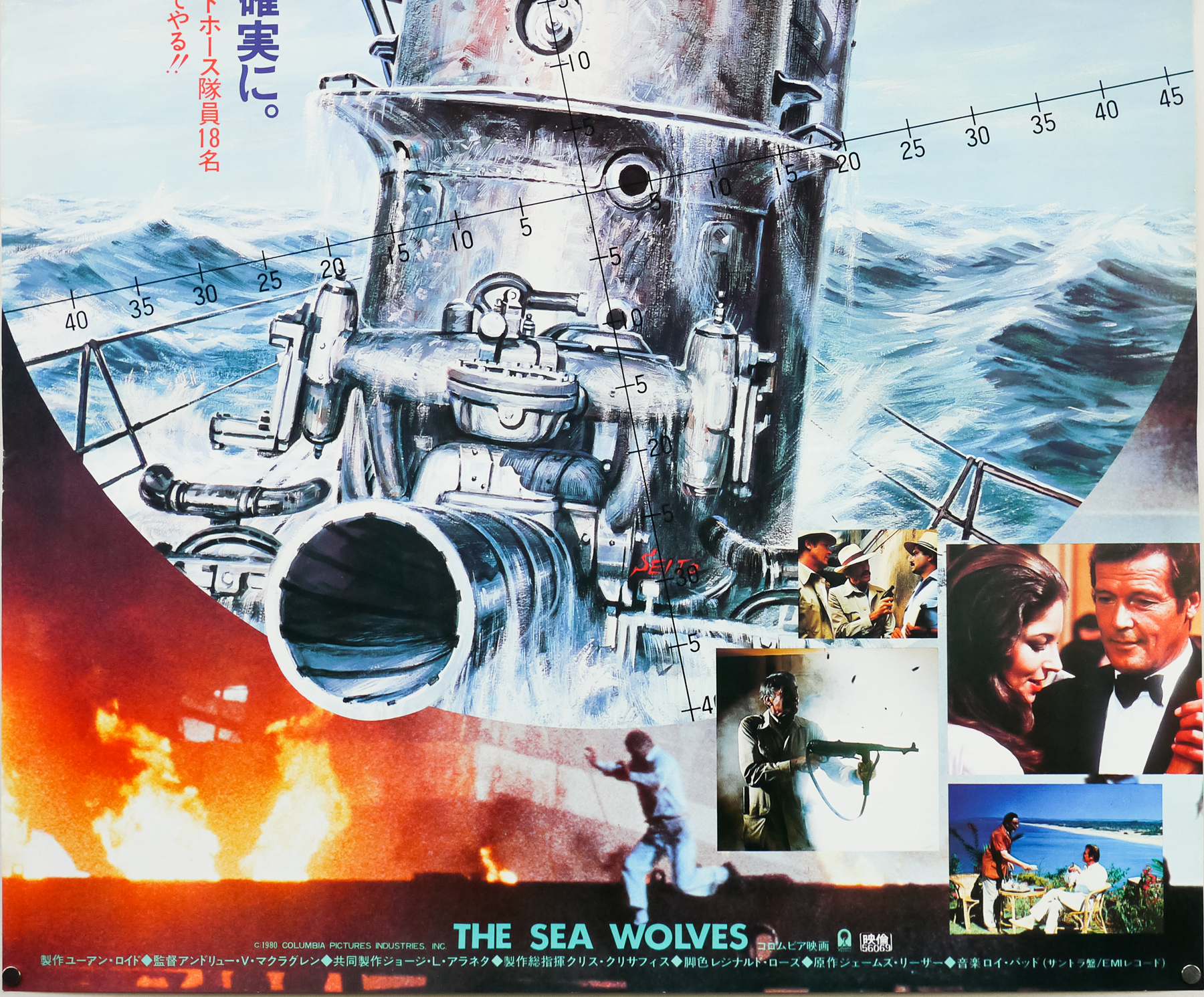
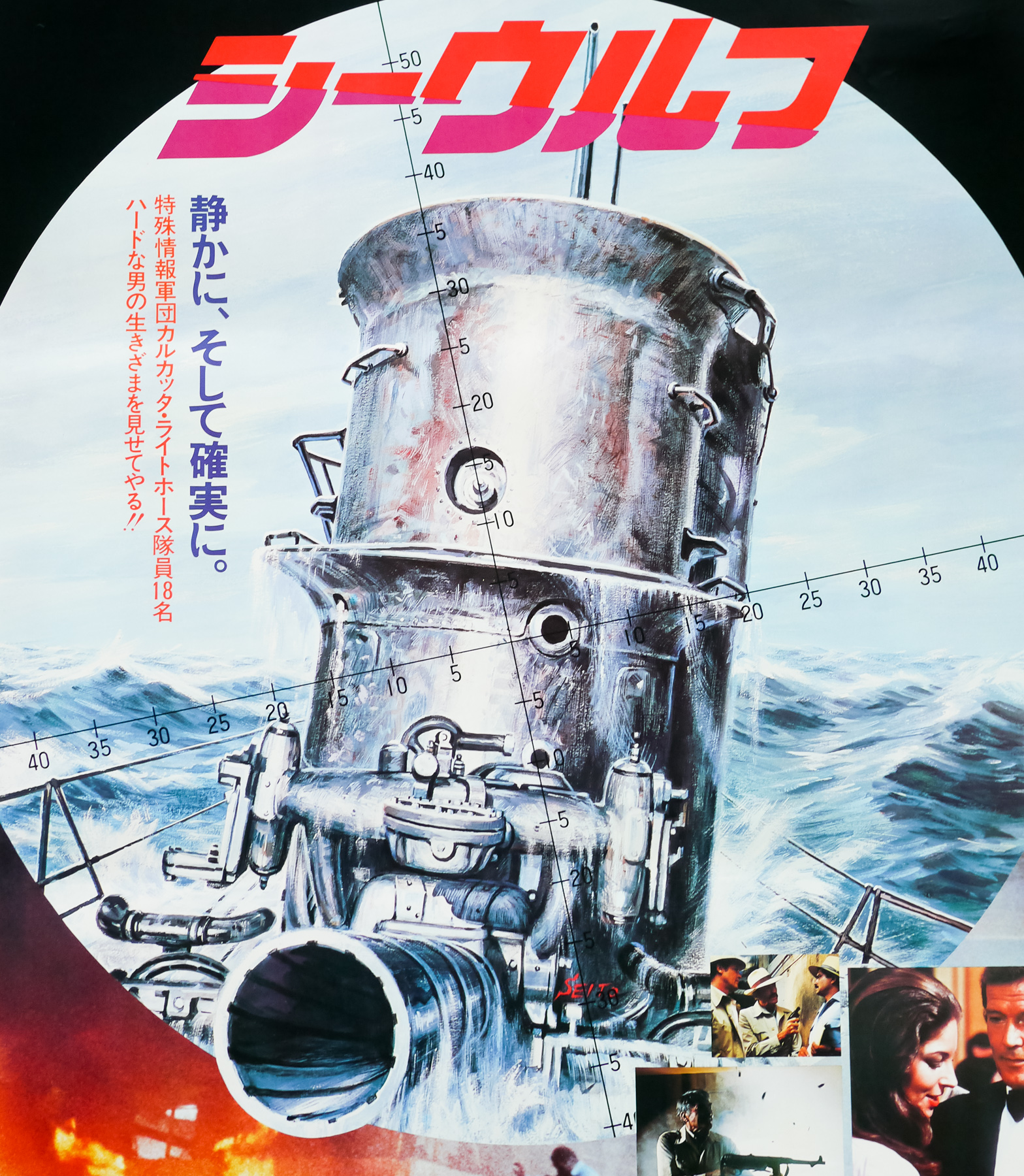
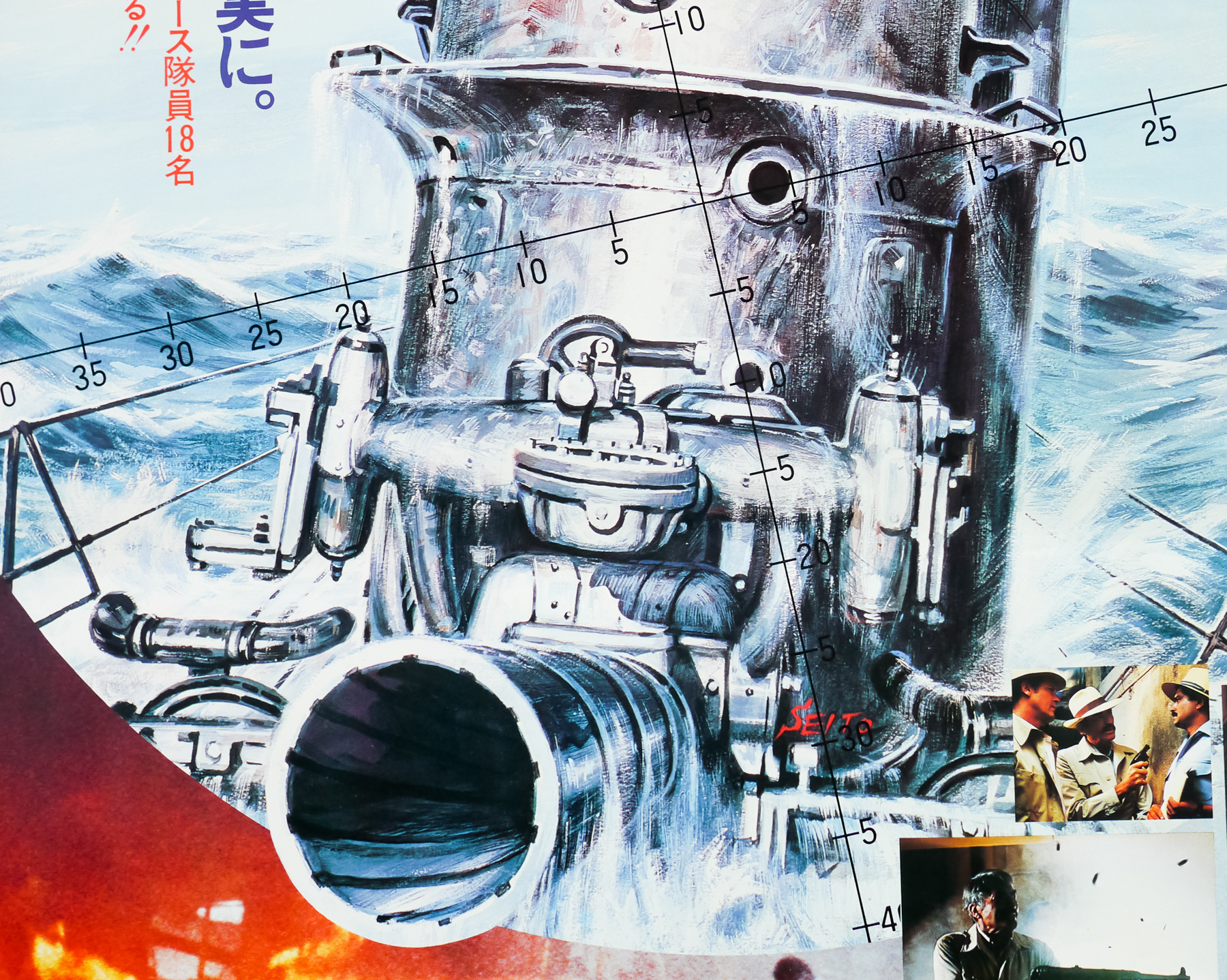
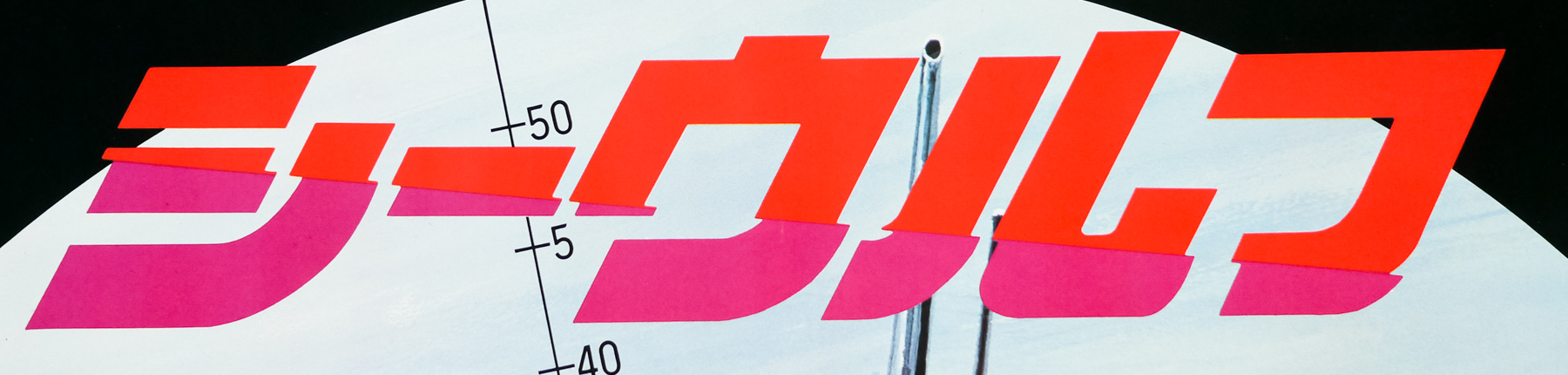
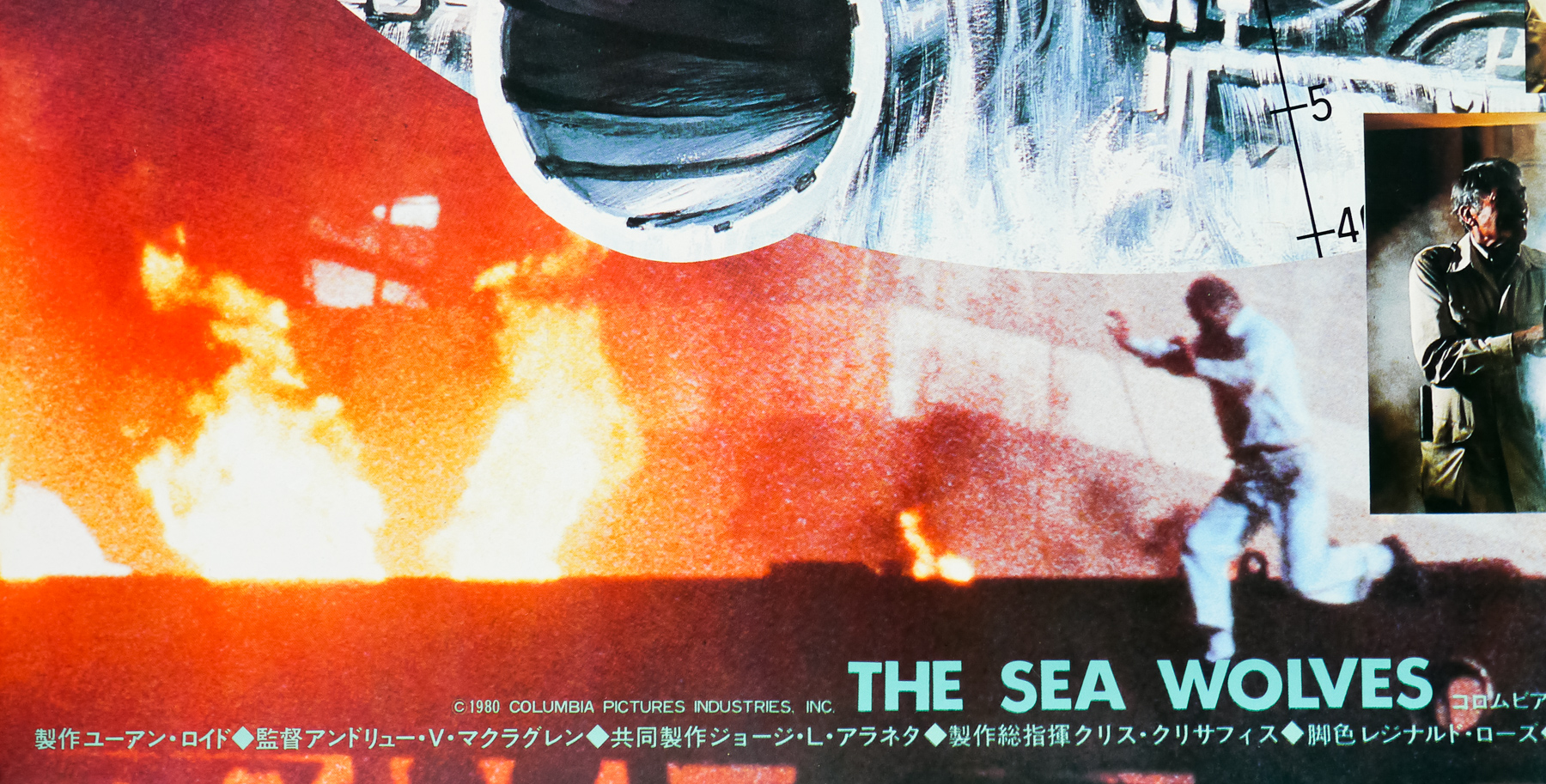
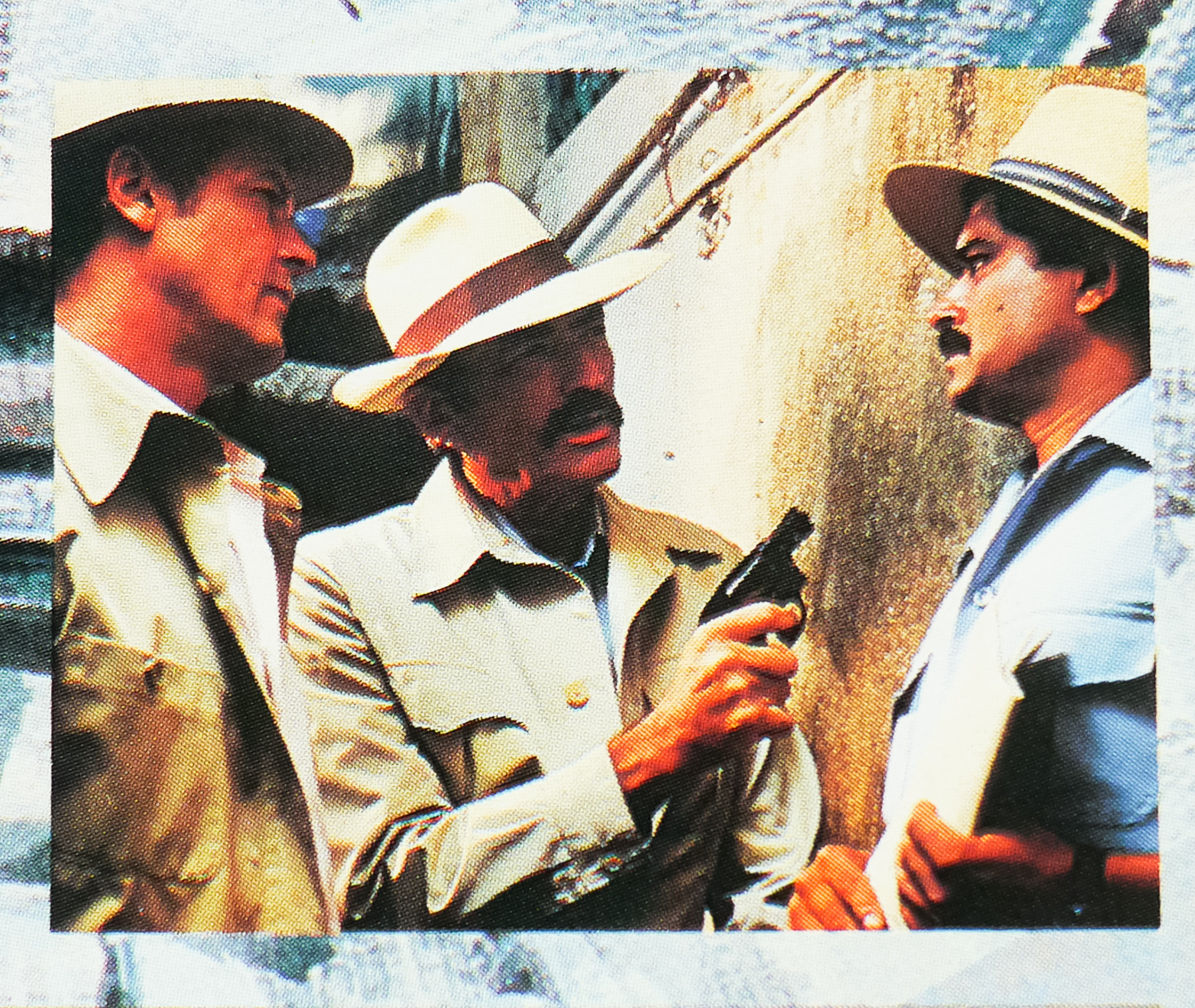
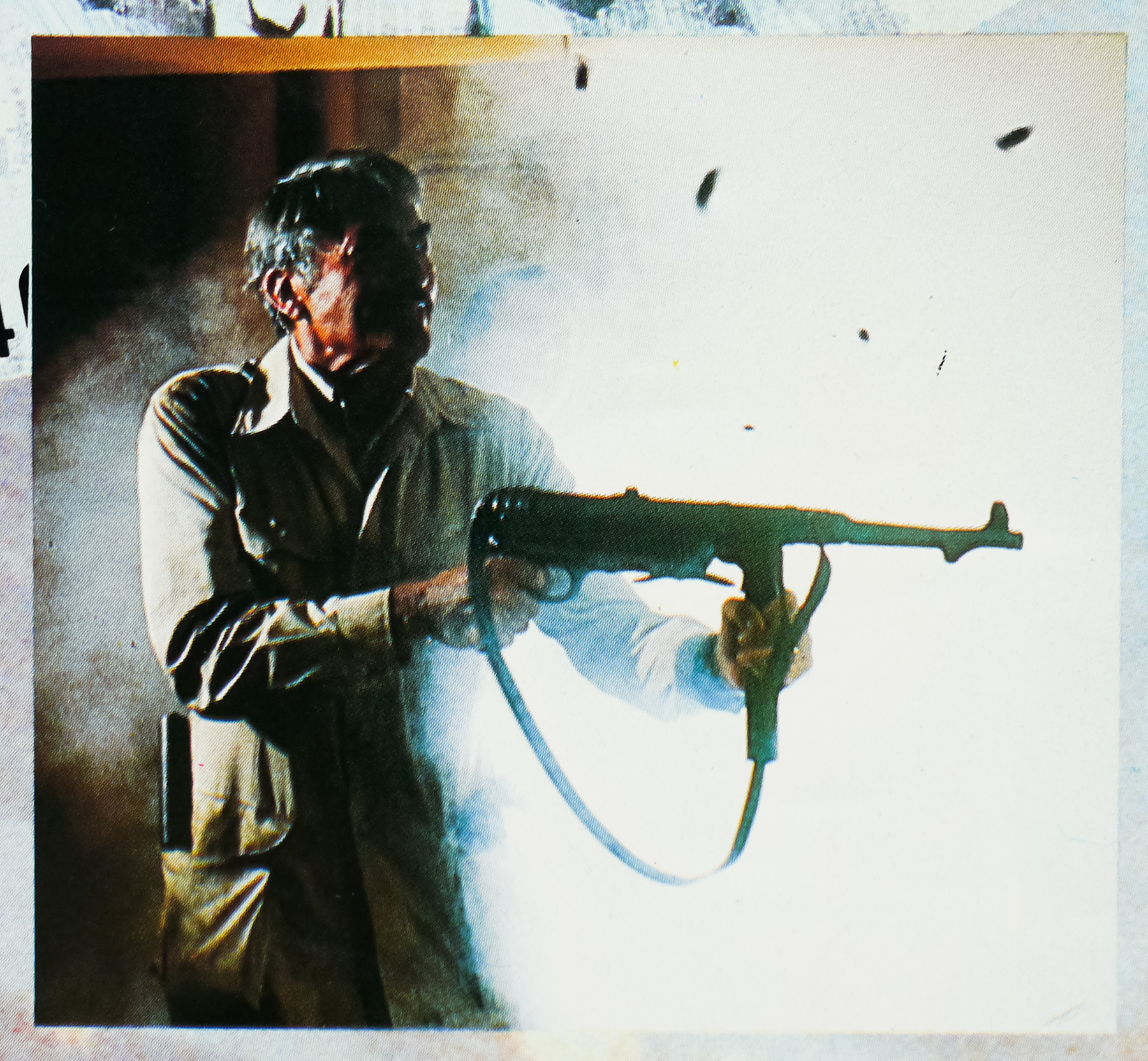
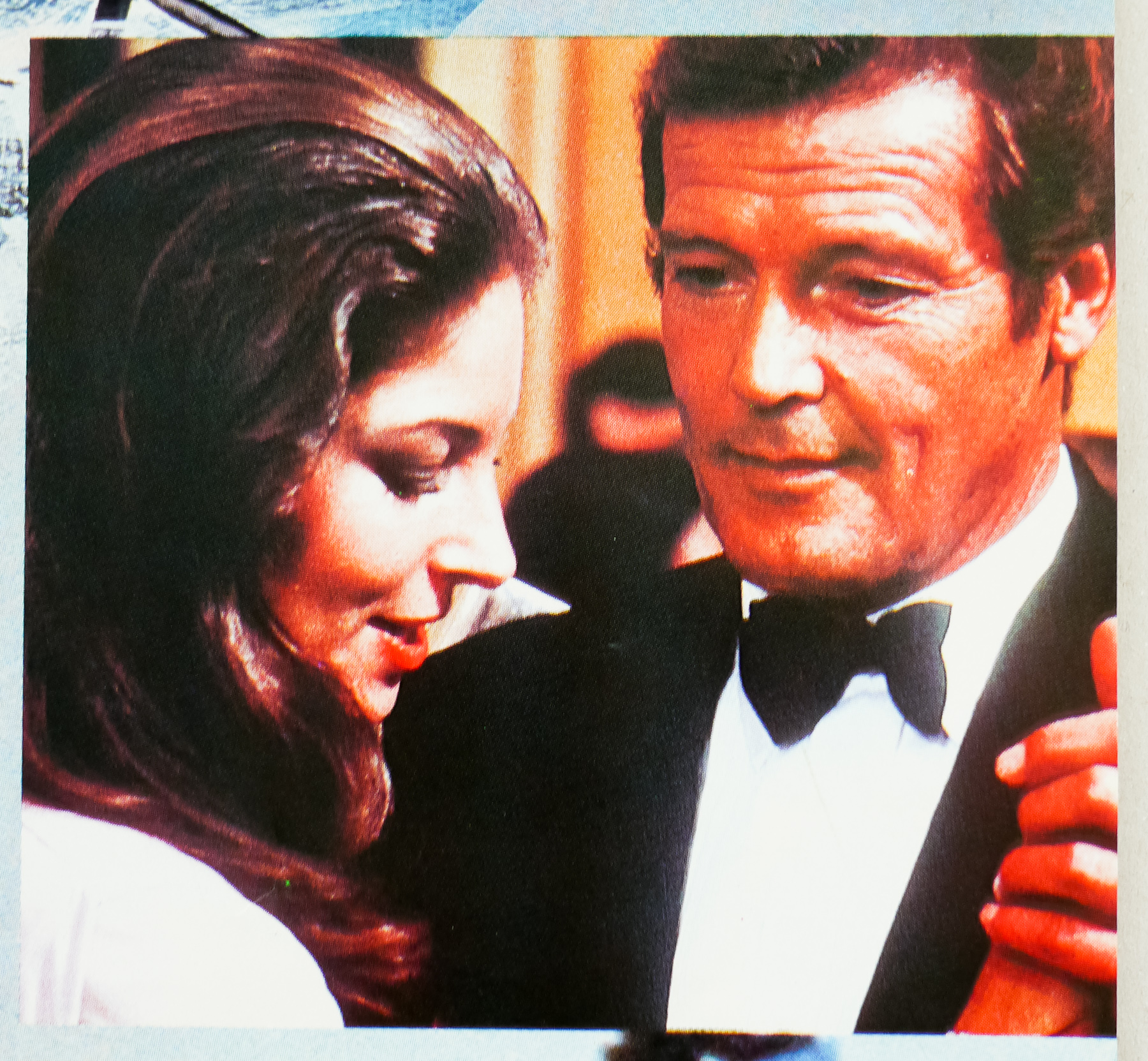
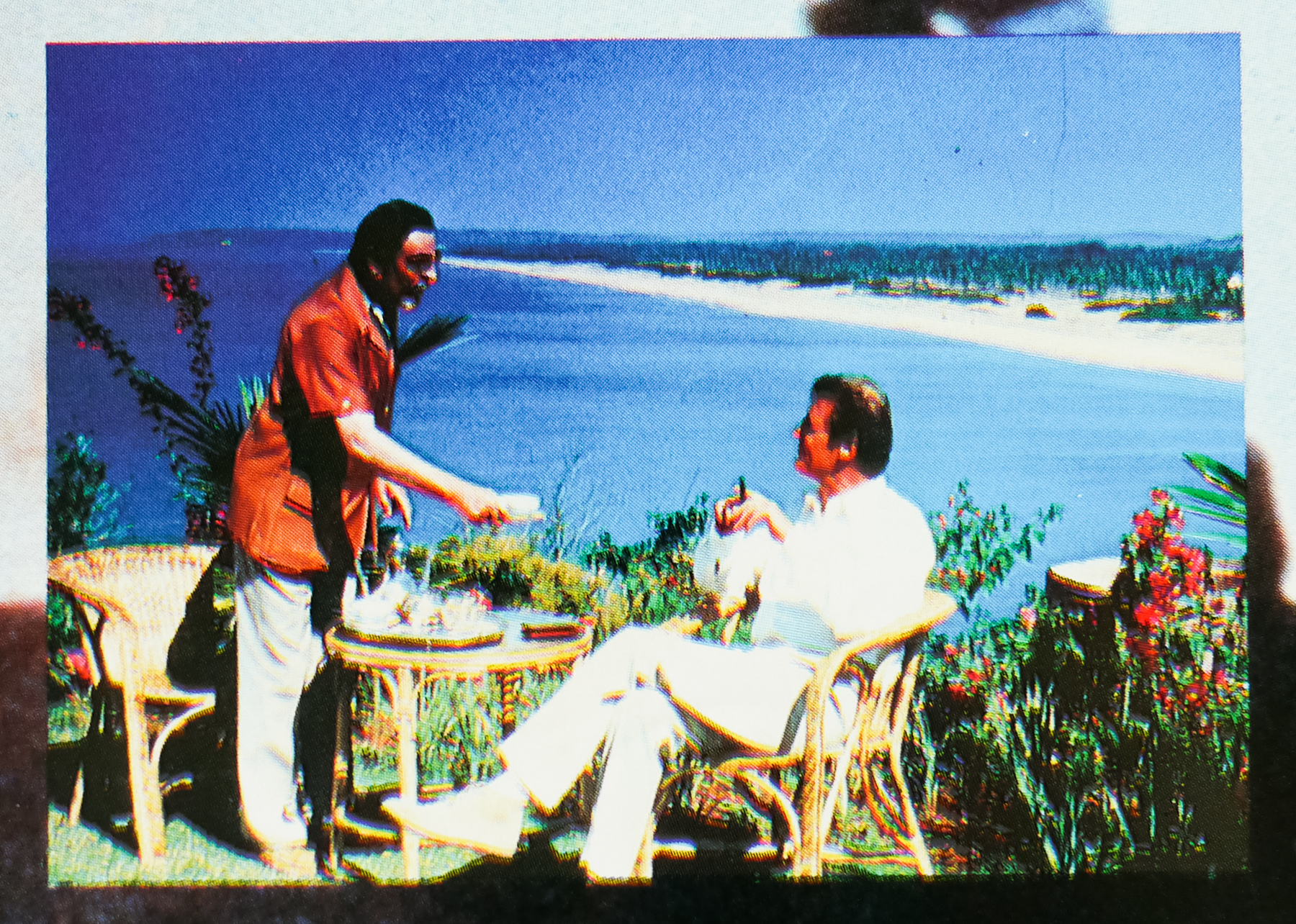
This is the art-style Japanese B2 for the 1980 action film The Sea Wolves, which is based on real events that occurred during the Second World War. The story is based on the exploits of ex-members of the Calcutta Light Horse, a cavalry regiment of the British Indian Army that was formed in 1872 and was disbanded a couple of years after the end of WWII. The plot sees British intelligence discovering that a Nazi radio ship is broadcasting the coordinates of allied ships from a harbour in Portuguese Goa, which was neutral during the war, so an all out assault cannot be launched by the Navy because of this.

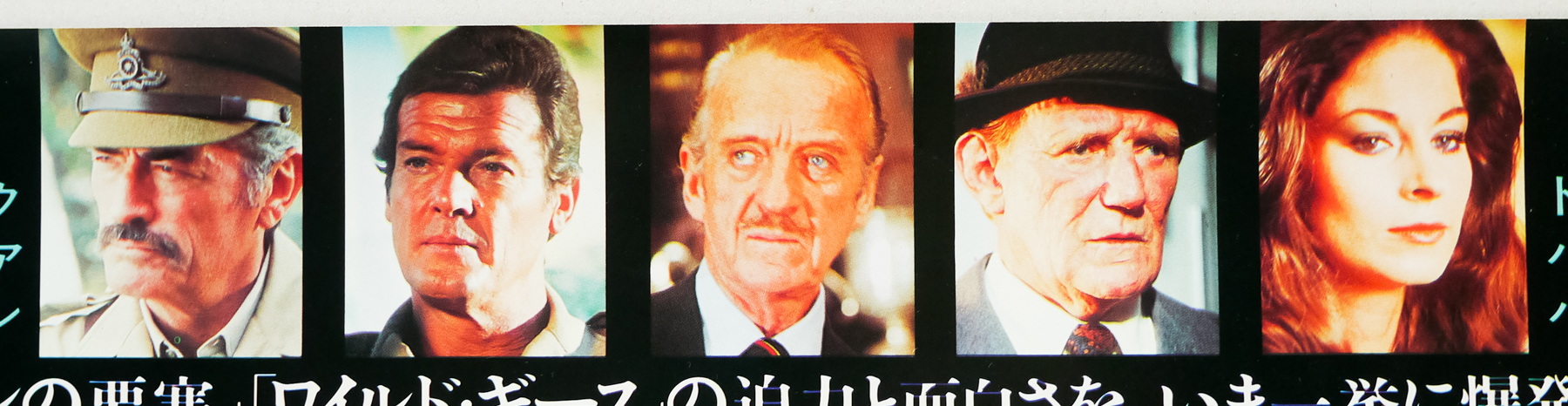
British Intelligence officers Col. Lewis Pugh (Gregory Peck) and Capt. Gavin Stewart (Roger Moore) lead the operation and covertly enlist retired officer Col. Bill Grice (David Niven) of the Calcutta Light Horse & some of his former soldiers. The gang sneak into Goa and arrange a diversion on the evening of a planned raid, before making their way to the radio ship carrying enough explosives to sink it and put a stop any more transmissions. The film reunited much of the creative team behind an earlier OAPs on a mission film, 1978’s The Wild Geese, including director Andrew V. McLaglen, screenwriter Reginald Rose, producer Euan Lloyd and several of the stars.

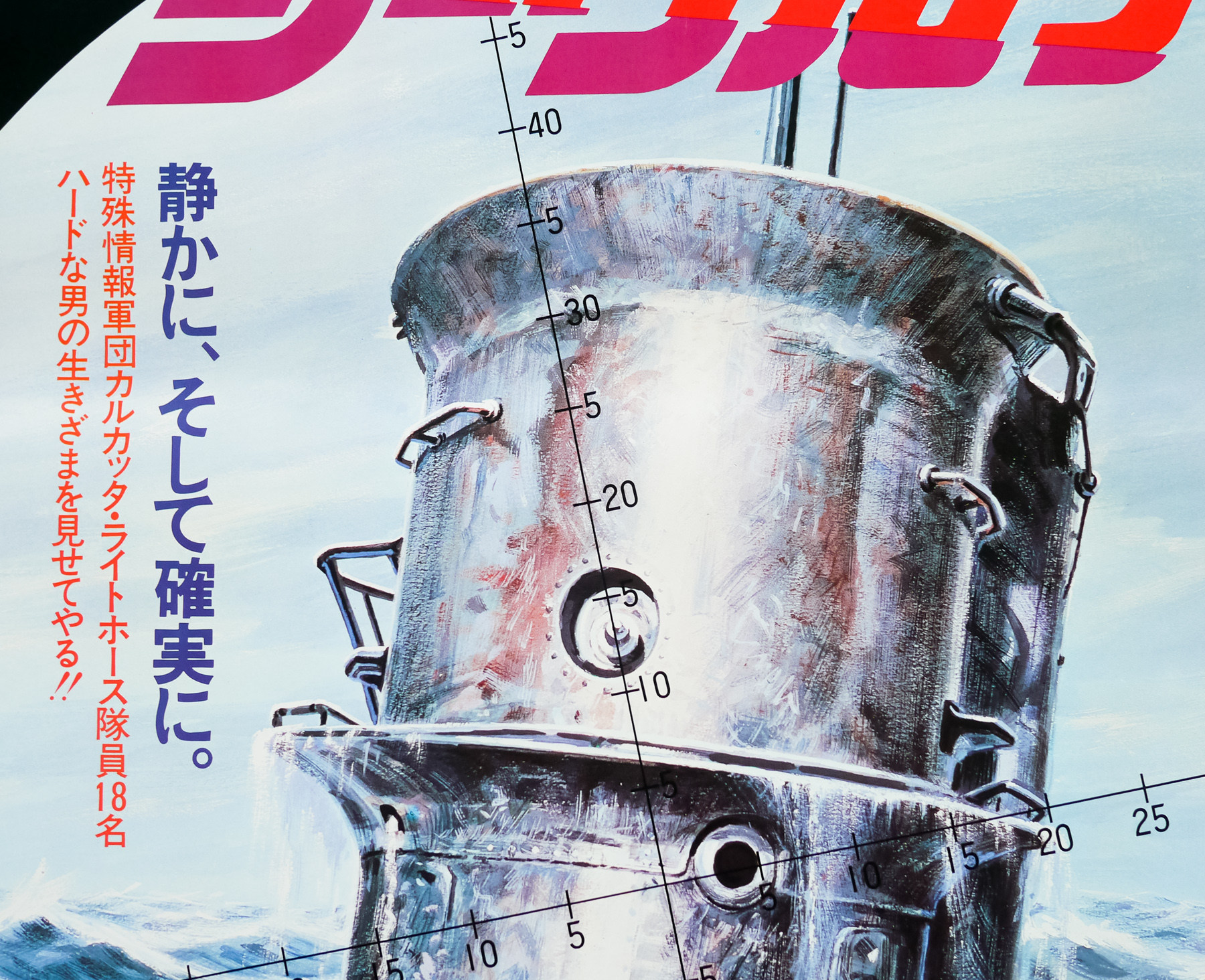
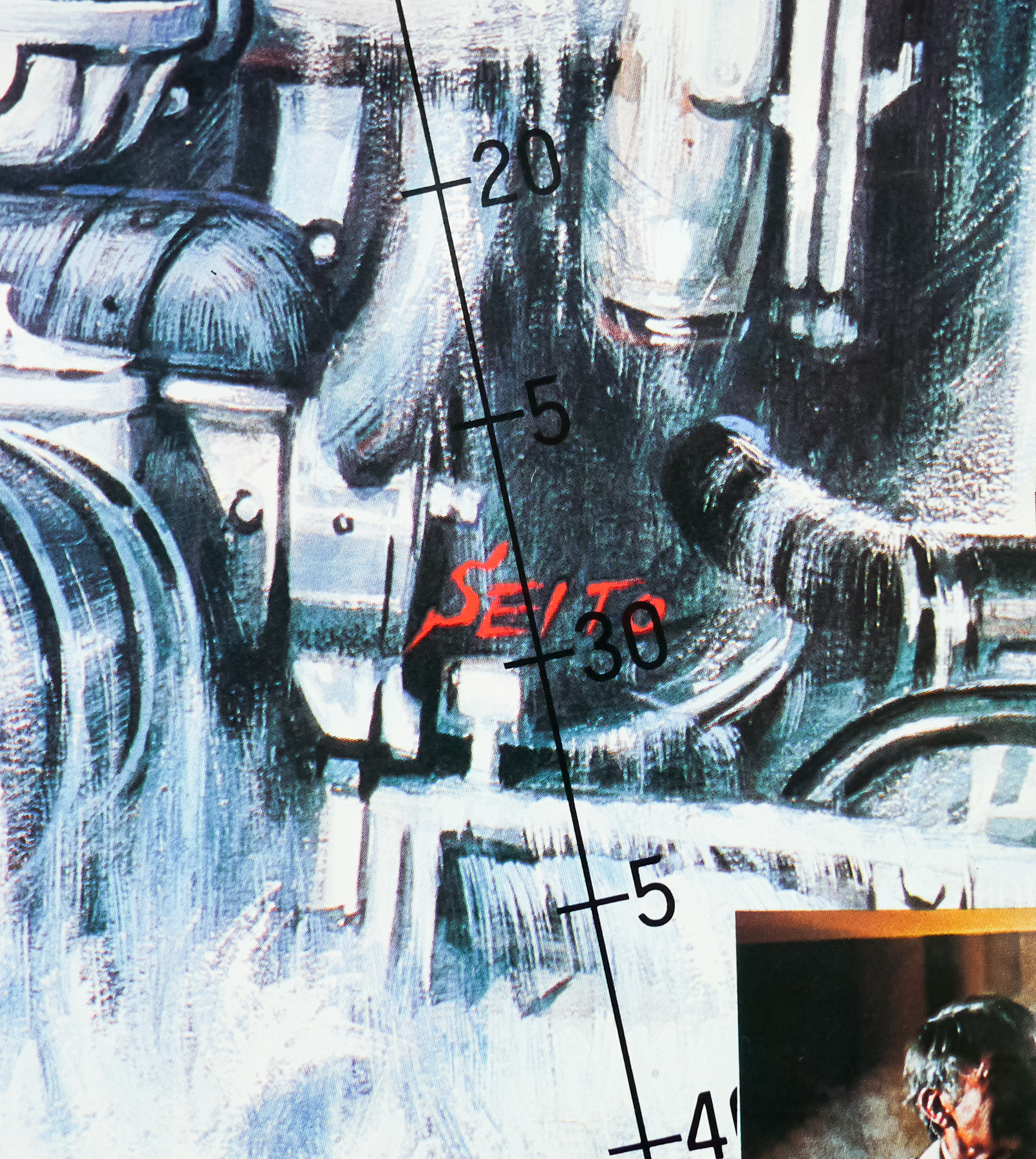
This Japanese poster features artwork painted by Seito that is unique to the Japanese campaign. Seito is one of my favourite Japanese artists who was responsible for several fantastic illustrated posters during the 1970s and 1980s. Little is known about the man himself, even in his native country.

To see the other posters I’ve collected by Seito click here.

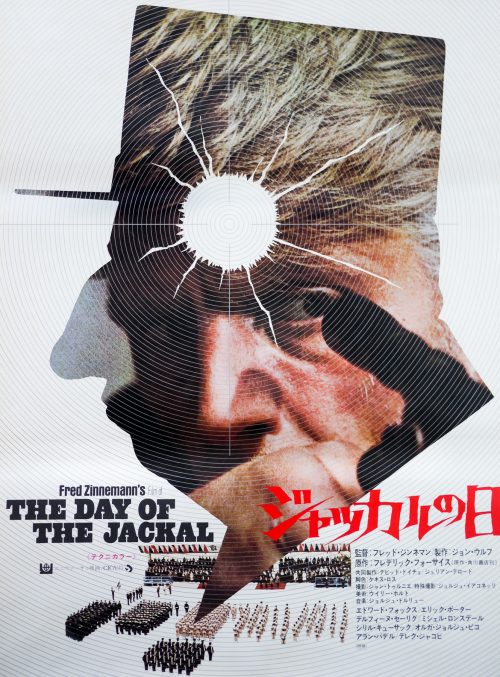
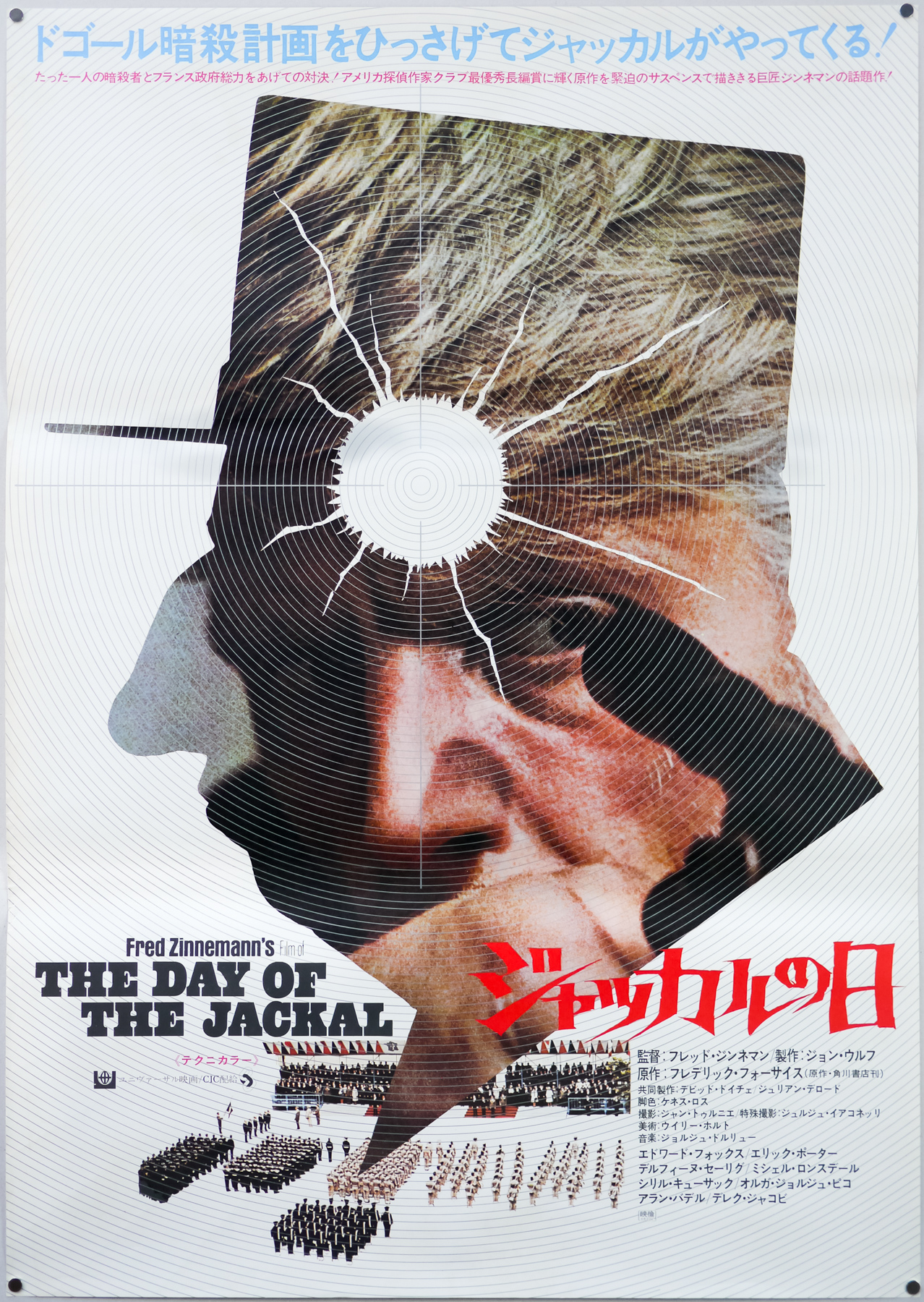
The Day Of The Jackal / B2 / target style / Japan

09.09.15

Poster Poster

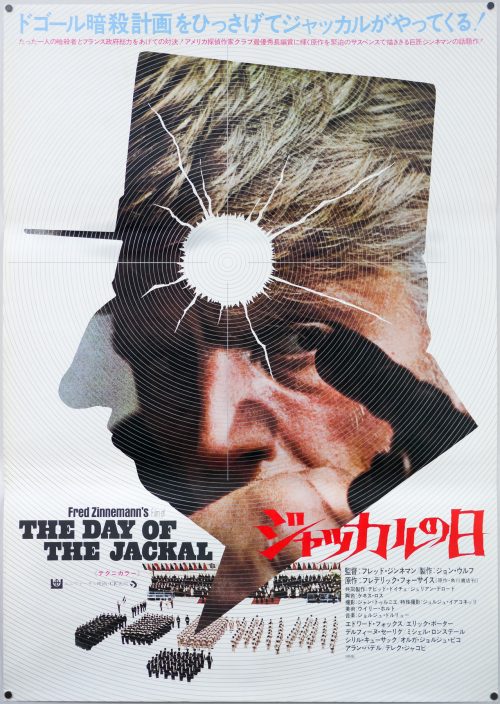
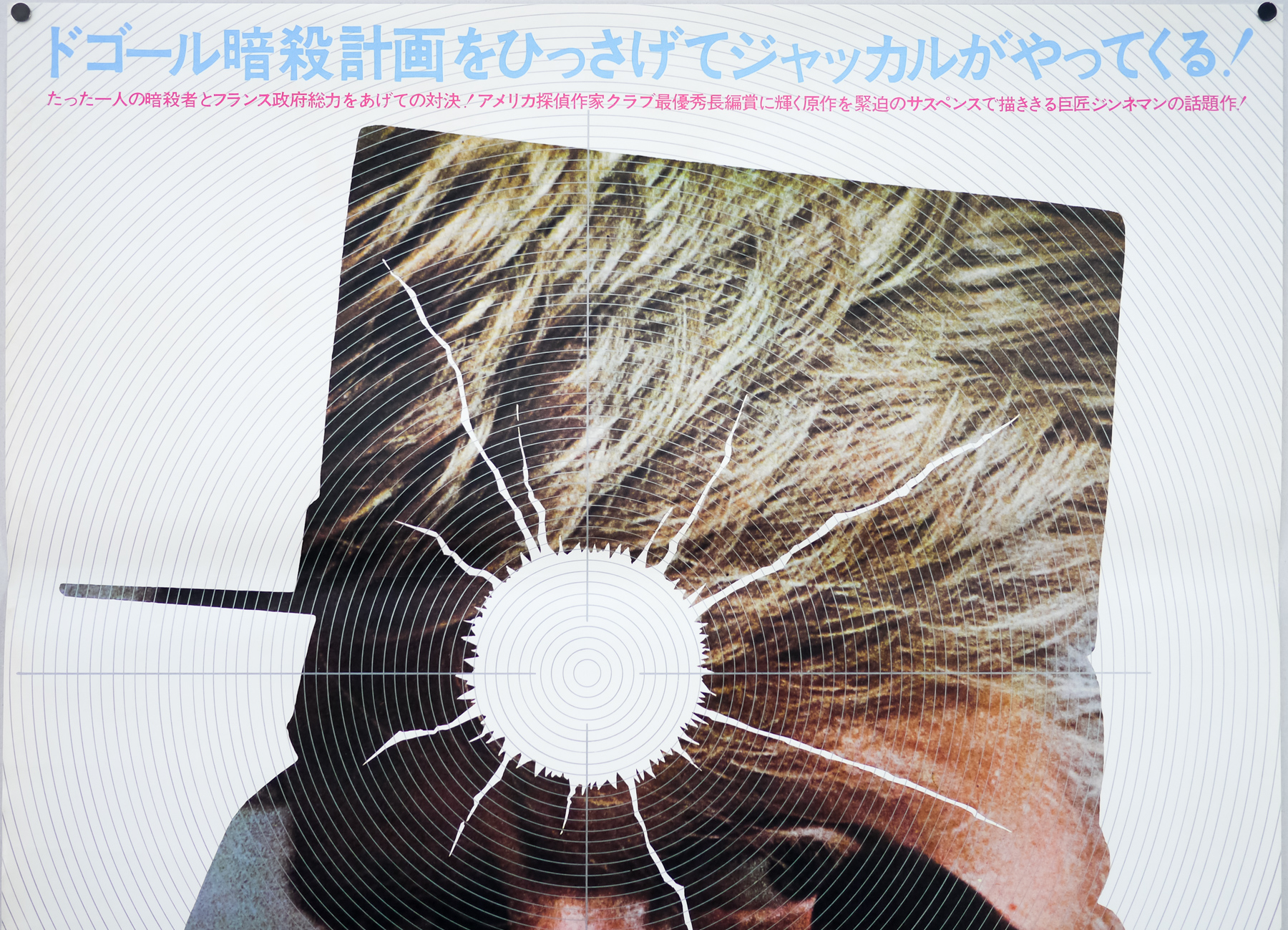
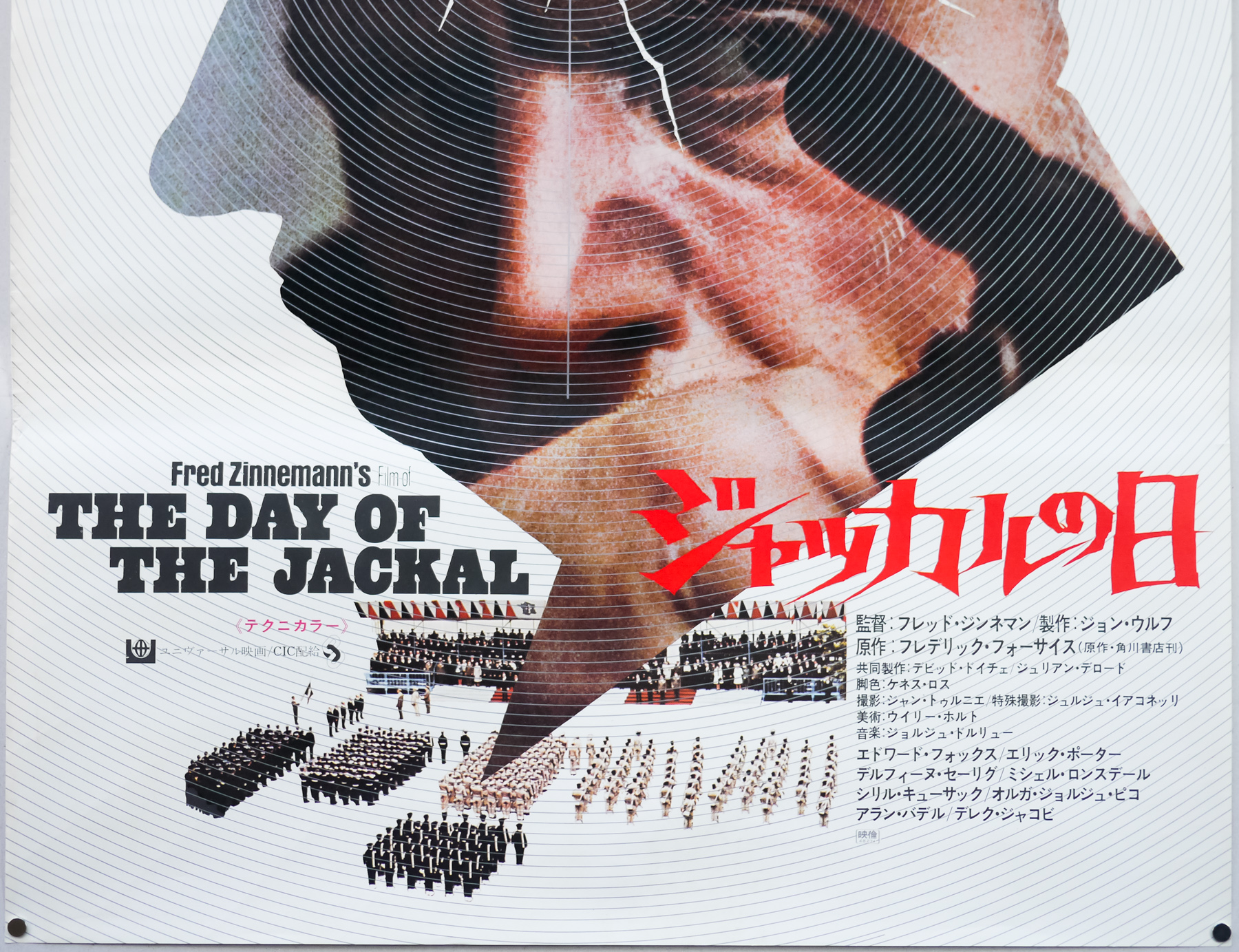
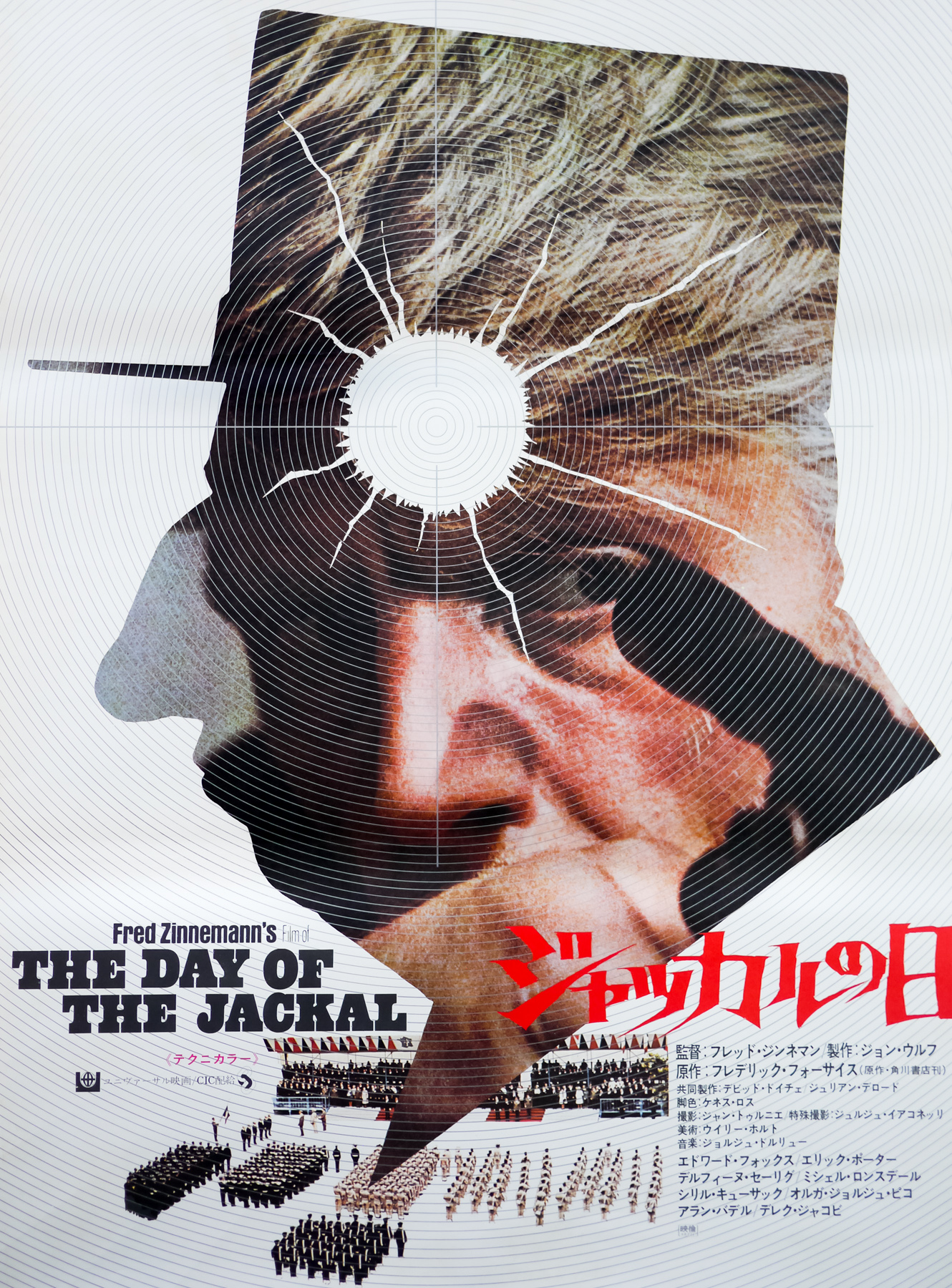
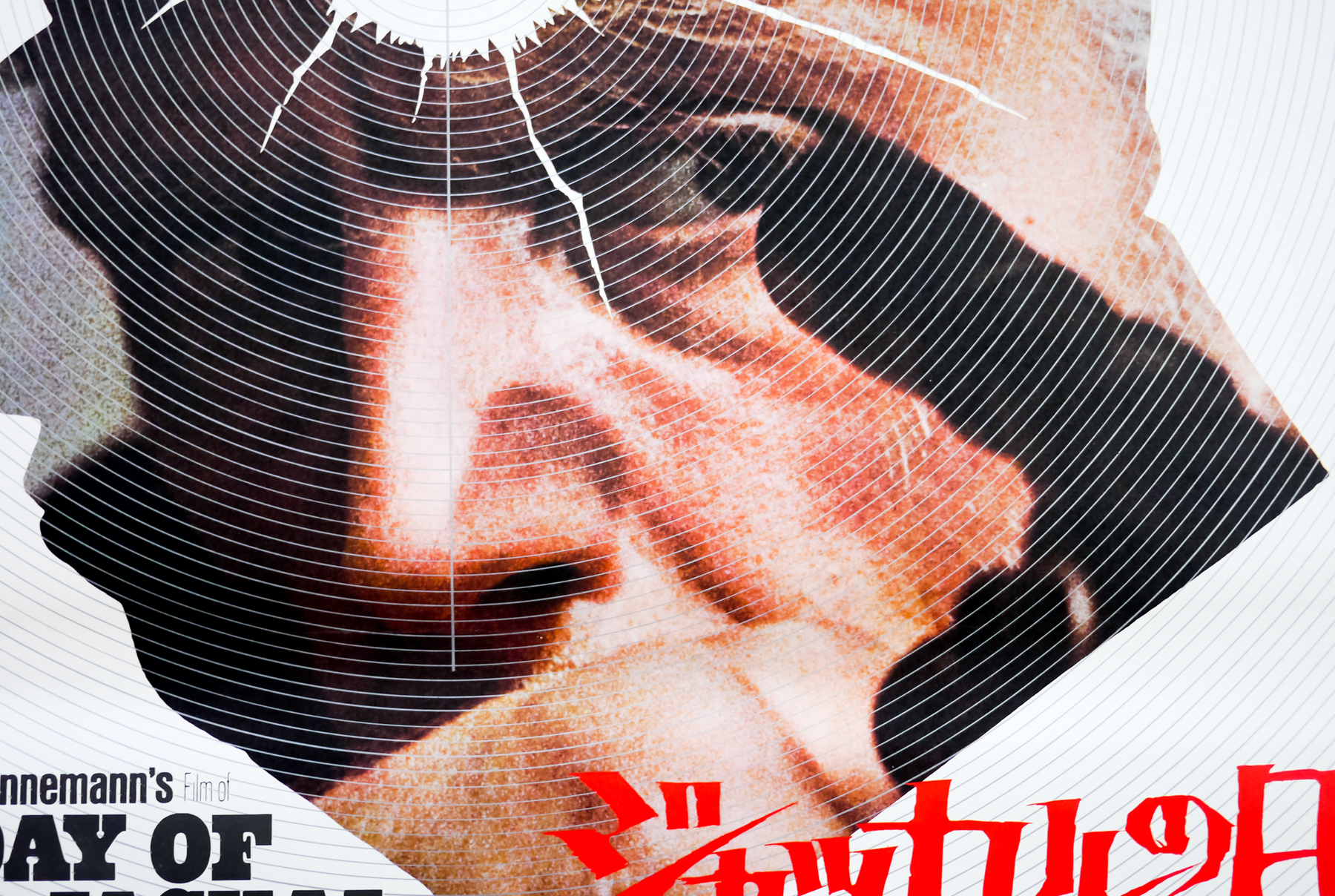
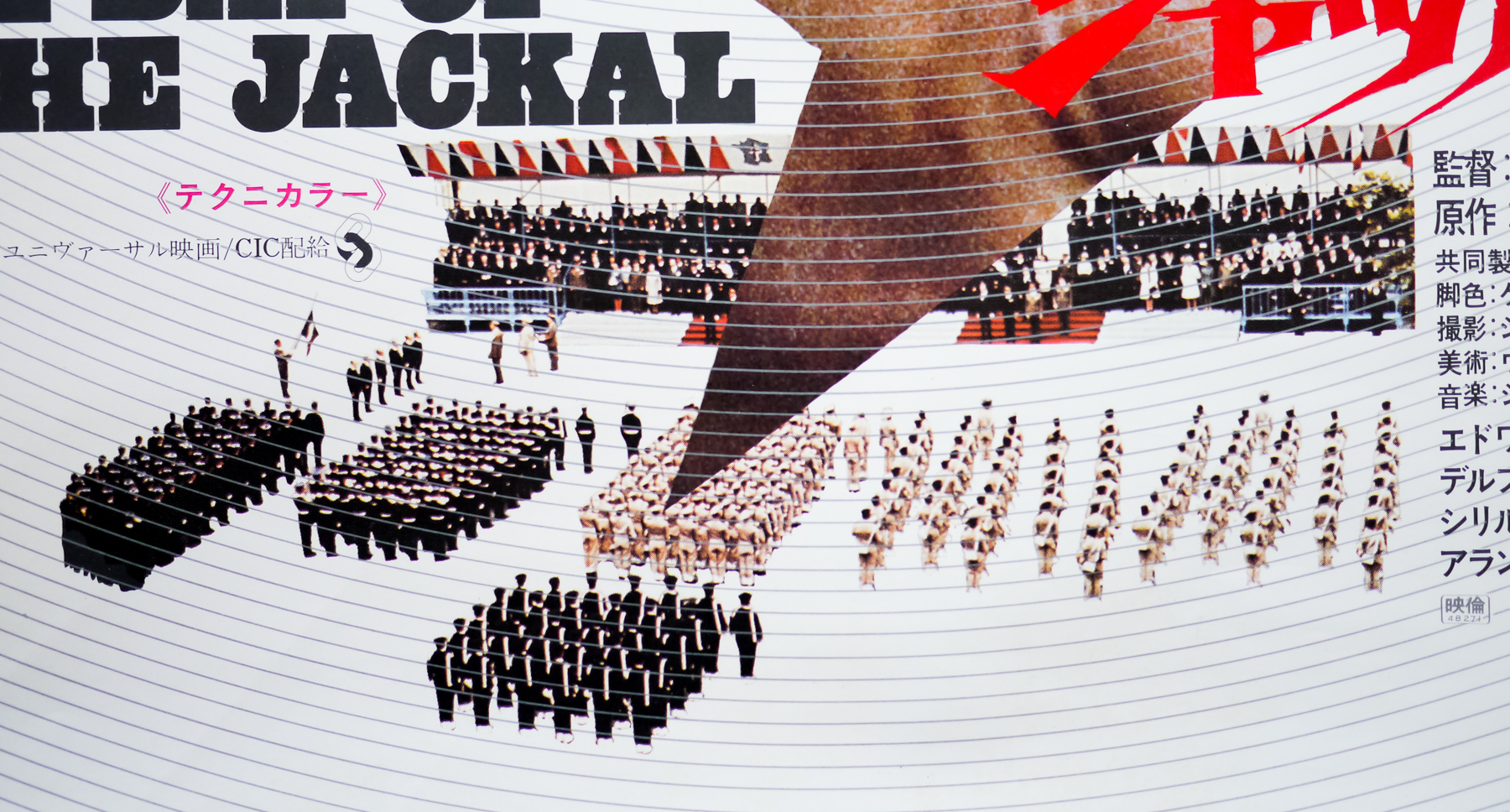
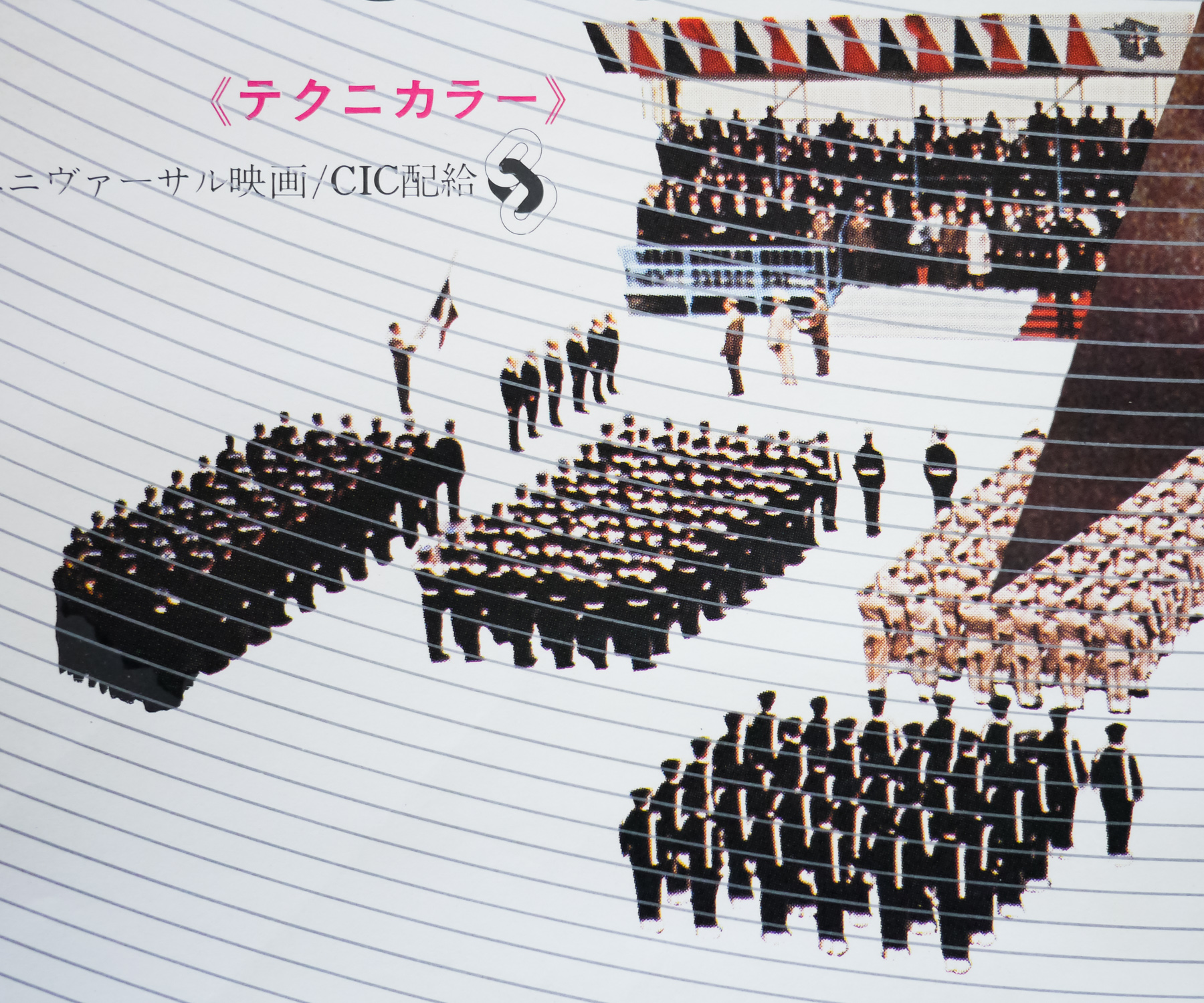
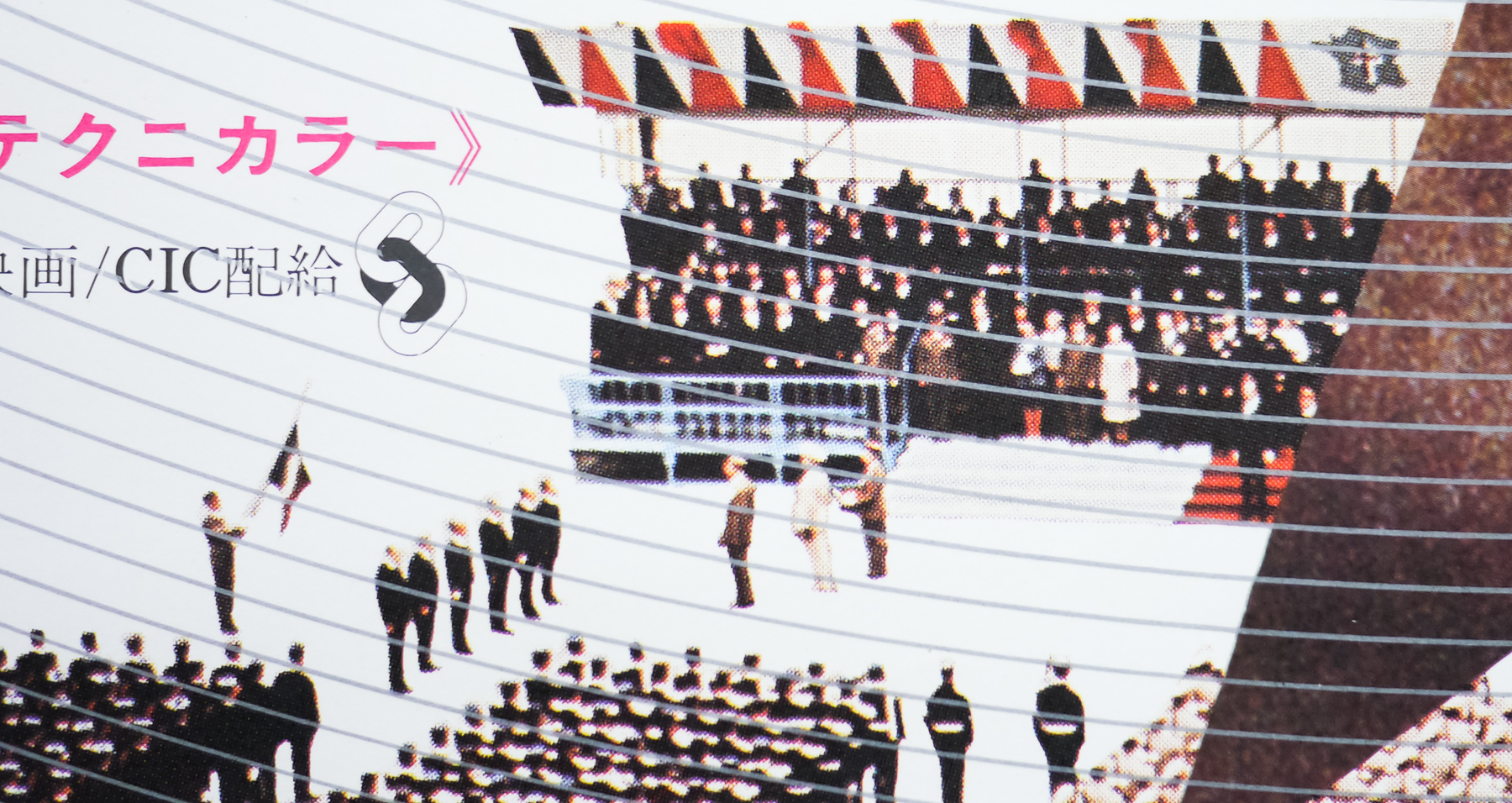
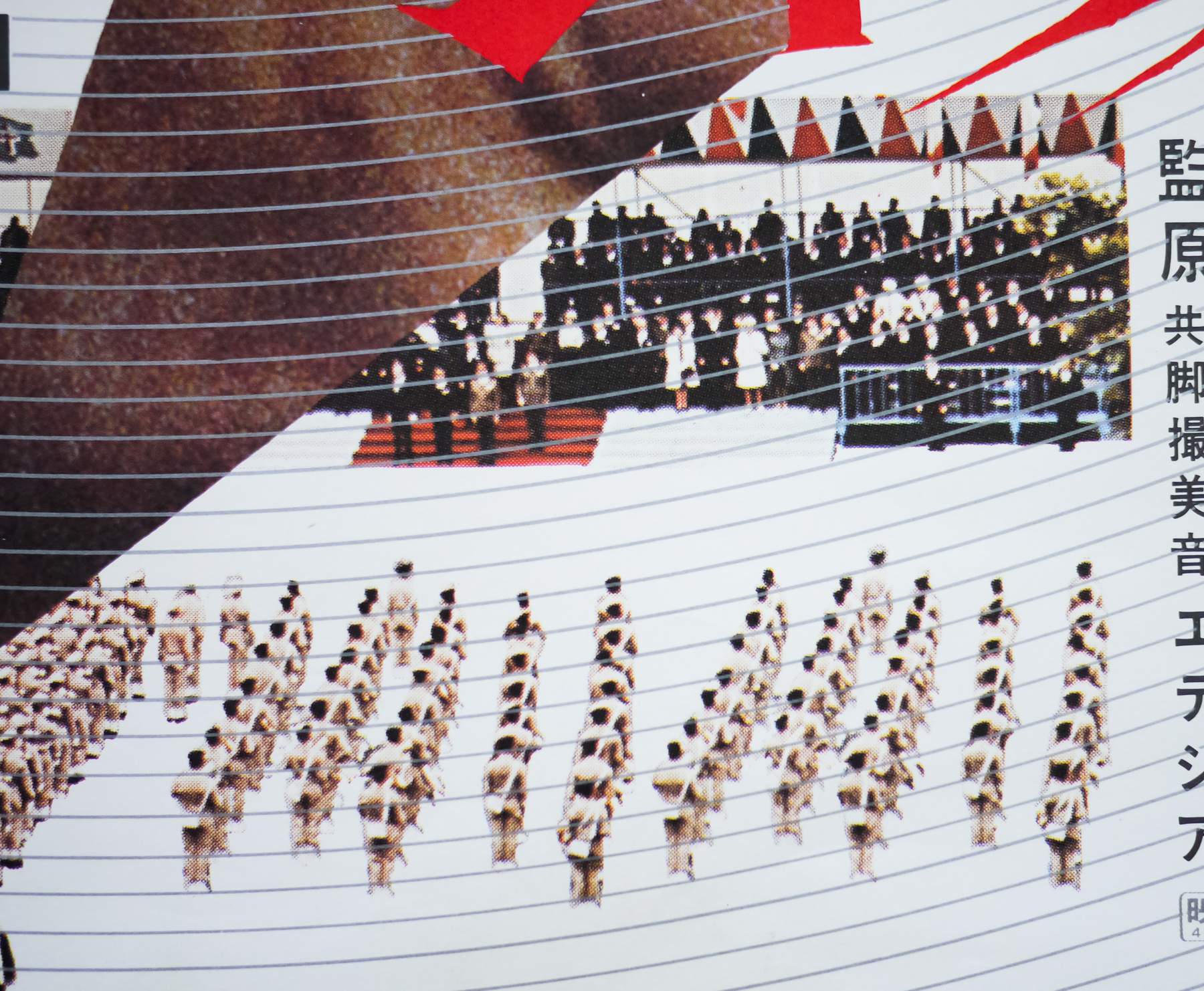
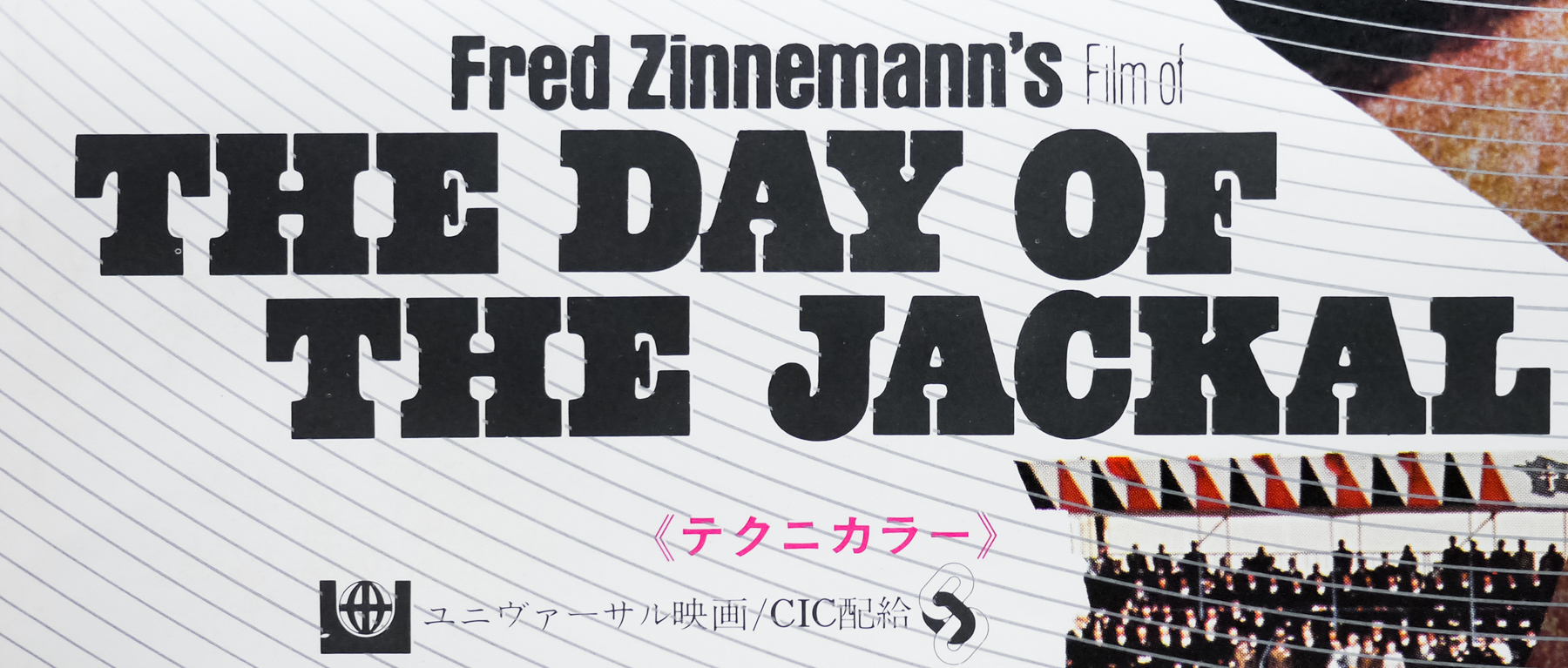
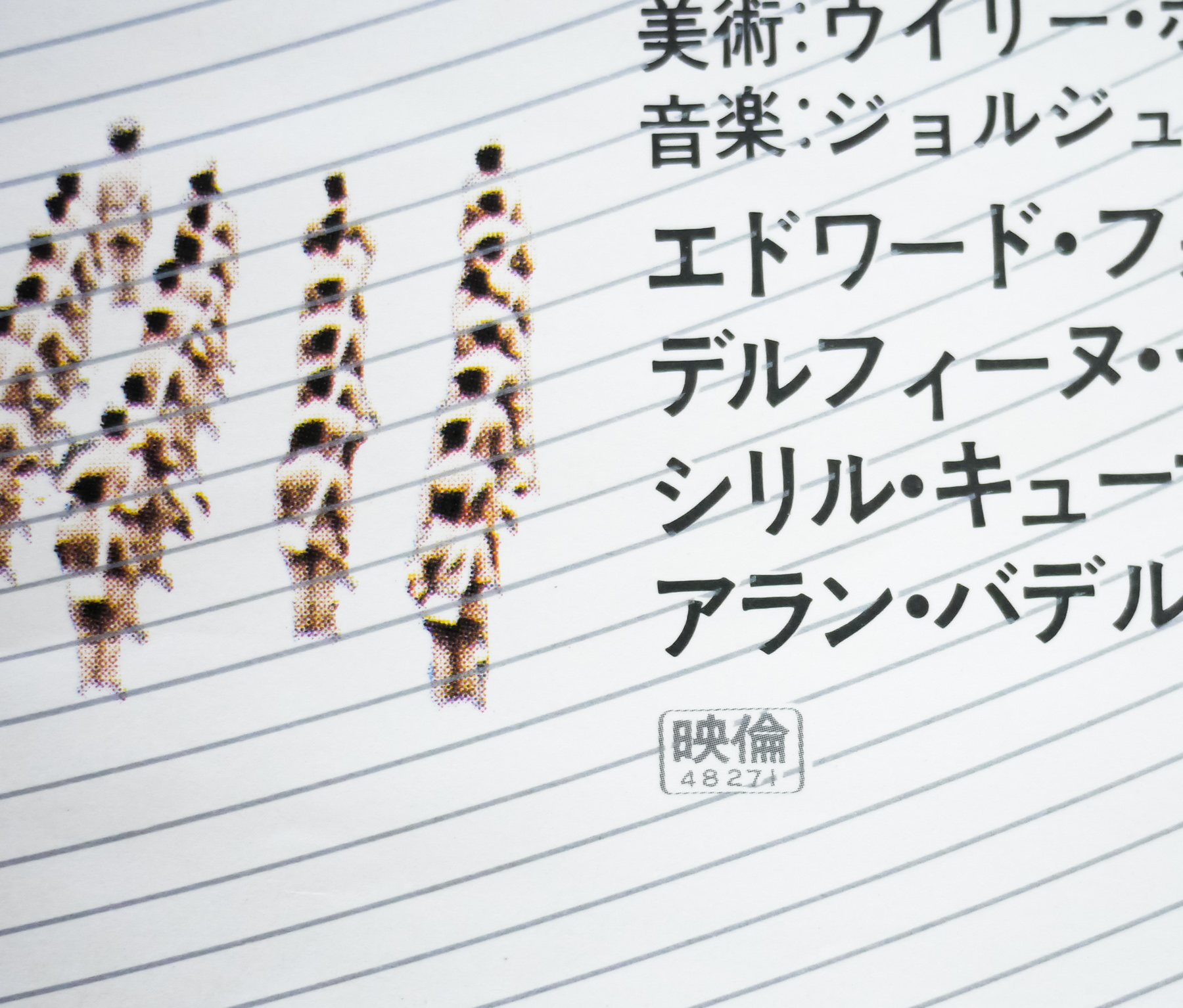
A striking design on this Japanese B2 for the release of the 1974 thriller The Day of the Jackal, which was based on the 1971 novel of the same name by the English author Frederick Forsyth. The story is set in 1962 and focuses on a fictional assassination attempt on France’s then president Charles de Gaulle who had angered many in his own country by deciding to grant independence to the French colony of Algeria. An underground resistance group called the OAS had formed to fight this decision and both the novel and the film start with a real incident in which de Gaulle’s car had been sprayed with machine gun fire, but he had miraculously survived unscathed. In the film the OAS decide to cut their losses and hire a professional assassin. They settle on an Englishman (played by Edward Foxwho decides on the call sign ‘Jackal’.

The film follows The Jackal as he prepares for the assassination by traveling all over Europe to procure identity documents, a special weapon, and other items necessary for the task. The French authorities become aware that someone has been hired for the job and appoint ‘France’s best detective, Lebel (Michael Lonsdale, best known for his role as the villain in Moonraker), to lead the hunt for him. Lebel calls in favours from all over Europe in the hunt and eventually they strike it lucky with enquiries by Scotland Yard in the UK. The film ratchets up the tension as the French authorities close in on The Jackal, but he manages to evade them long enough to line de Gaulle up in his sights. 

The film is almost two and a half hours long but maintains a brisk pace and is certainly thrilling throughout. It makes brilliant use of real locations and the Wikipedia page for the film points out some of the places the production visited. The film was very well critically acclaimed but failed to perform as spectacularly at the box-office as some had hoped, something later blamed on the fact that the lead was the then unknown Fox.

This is one of two styles of Japanese posters for the film and I also have the ‘face’ style, which can be seen here.

Once Upon a Time in China II / B2 / Japan

14.12.15

Poster Poster
Title
Once Upon a Time in China II
AKA
Wong Fei Hung II: Nam yee tung chi keung (Hong Kong - original title)
Year of Film
1992
Director
Tsui Hark
Starring
Jet Li, Rosamund Kwan, Siu Chung Mok, David Chiang, Donnie Yen, Tielin Zhang, Xin Xin Xiong, Paul Fonoroff, Shi-Kwan Yen, Ka-Kui Ho, Michael Miller, Dion Lam, Shu-Kei Chow
Origin of Film
Hong Kong
Genre(s) of Film
Jet Li, Rosamund Kwan, Siu Chung Mok, David Chiang, Donnie Yen, Tielin Zhang, Xin Xin Xiong, Paul Fonoroff, Shi-Kwan Yen, Ka-Kui Ho, Michael Miller, Dion Lam, Shu-Kei Chow,
Type of Poster
B2
Style of Poster
--
Origin of Poster
Japan
Year of Poster
1992
Designer
Unknown
Artist
M. Tsuchiya
Size (inches)
20 6/16" x 28 13/16"
SS or DS
SS
Tagline
--

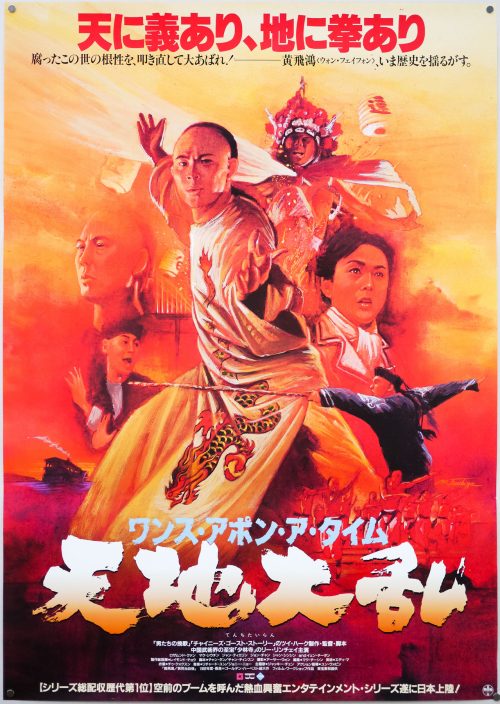
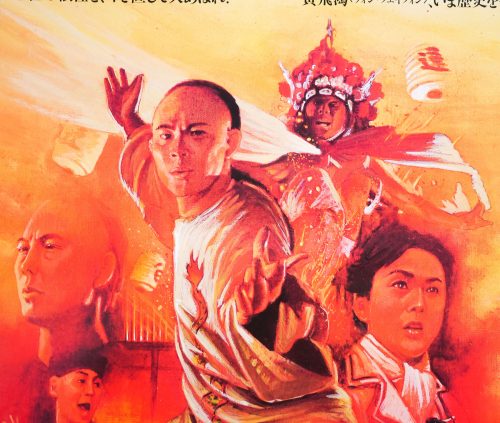
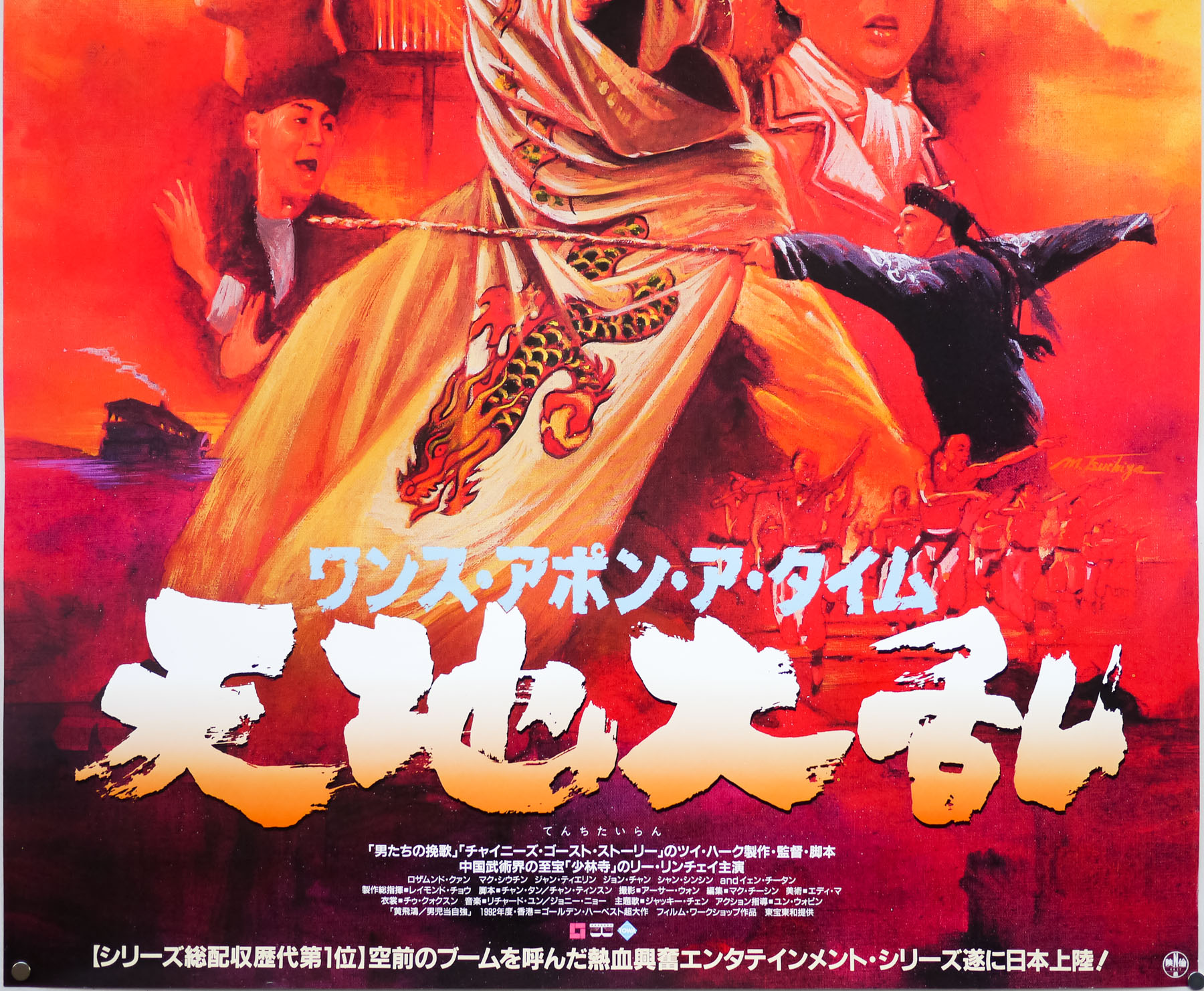
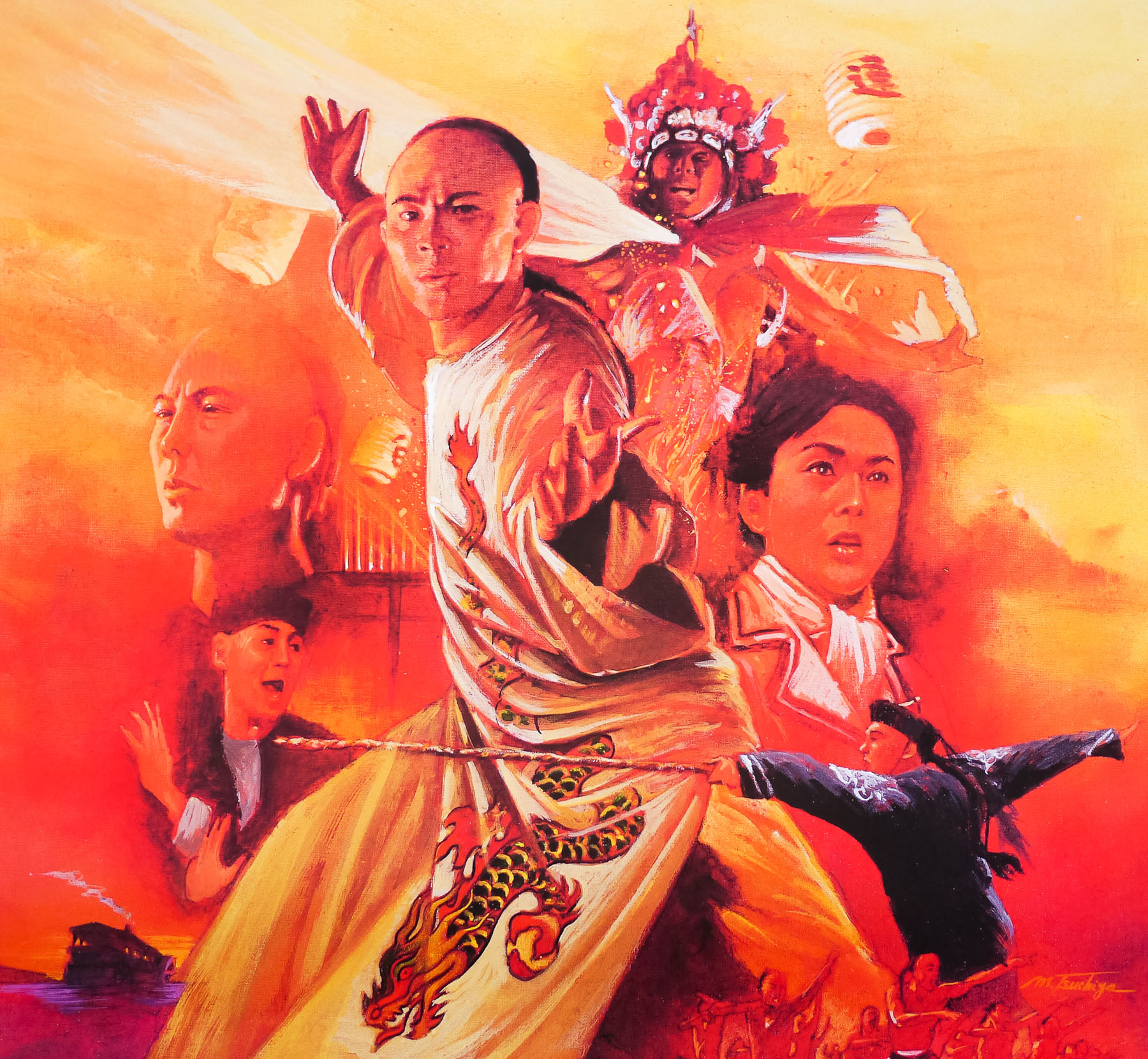
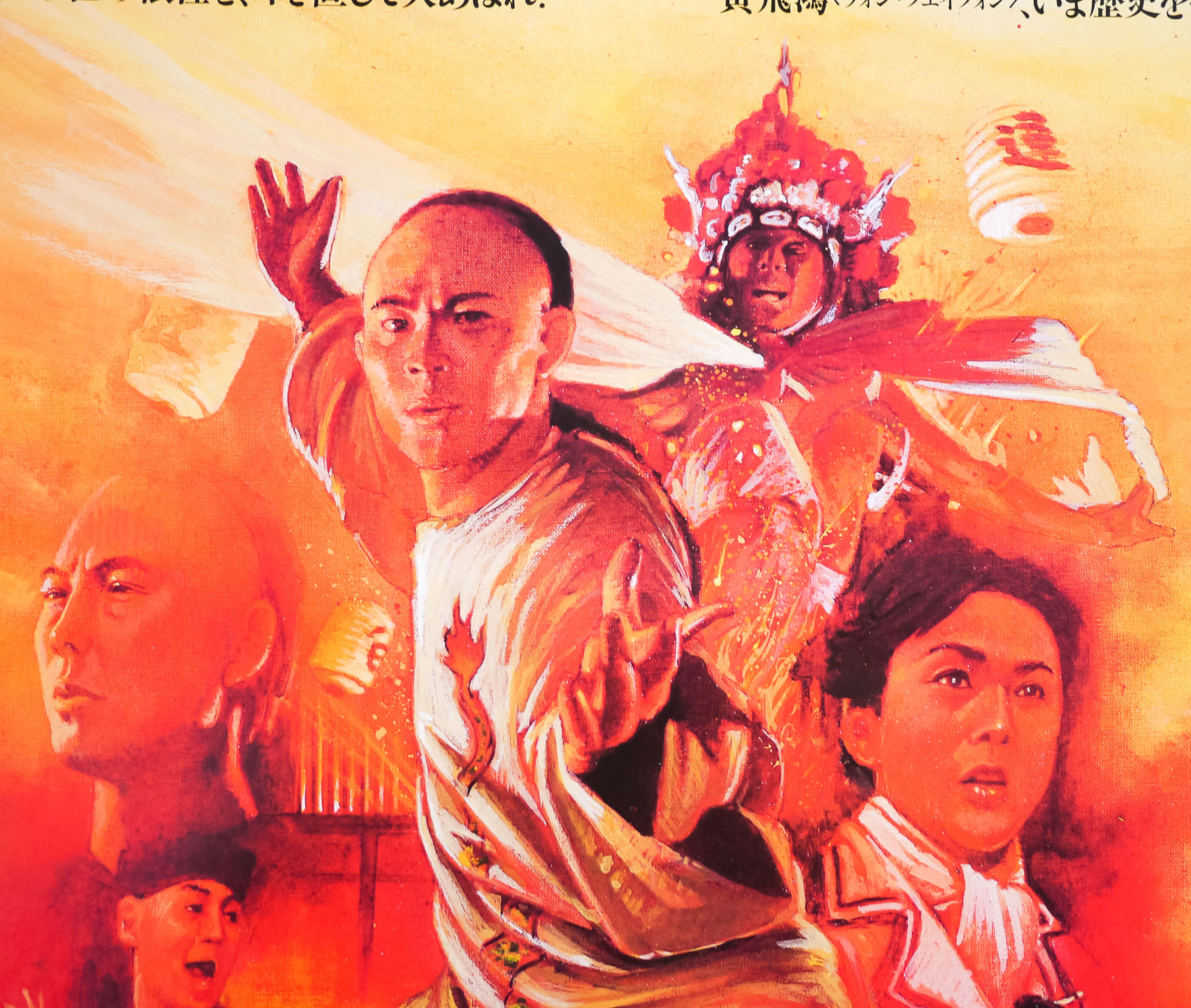
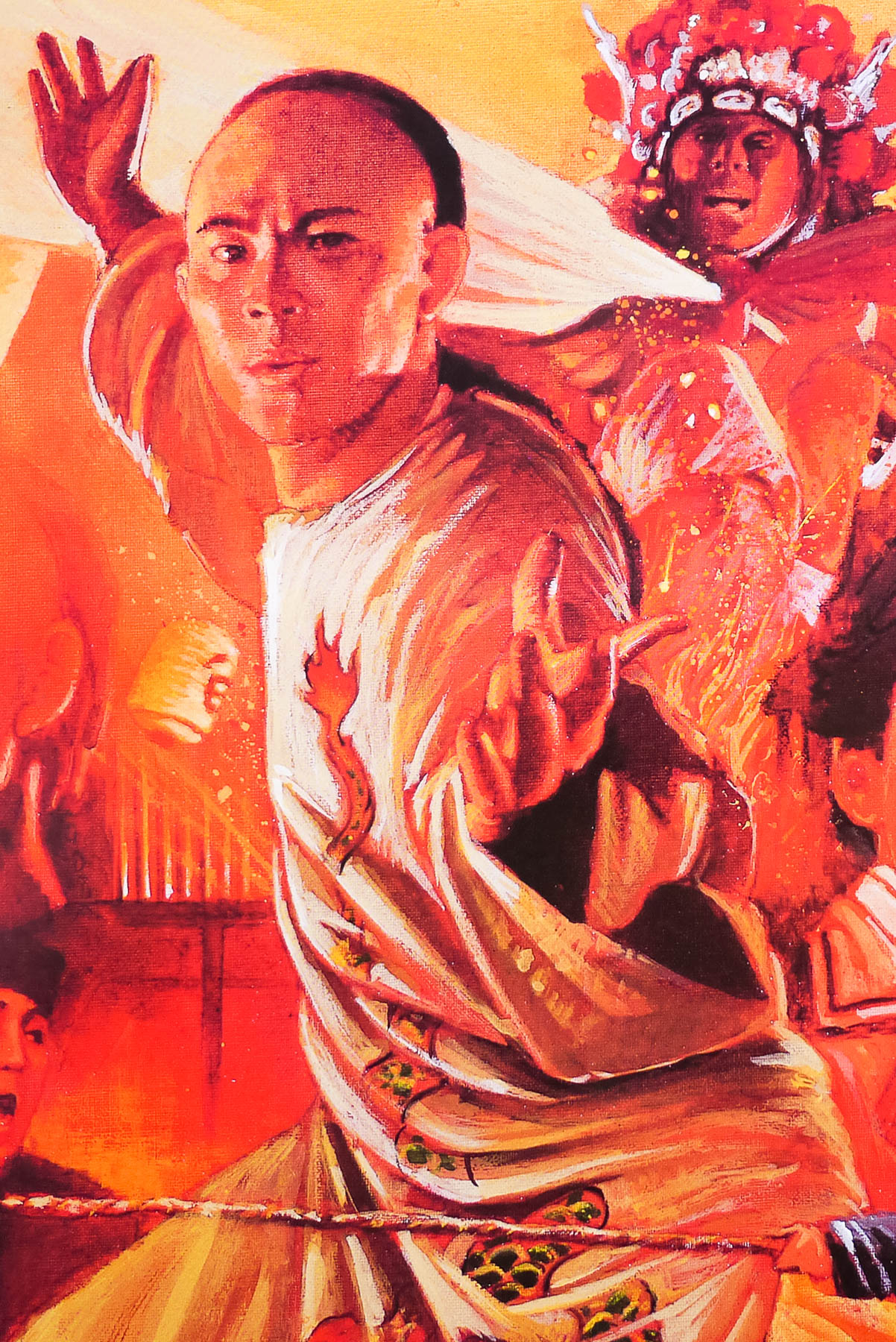
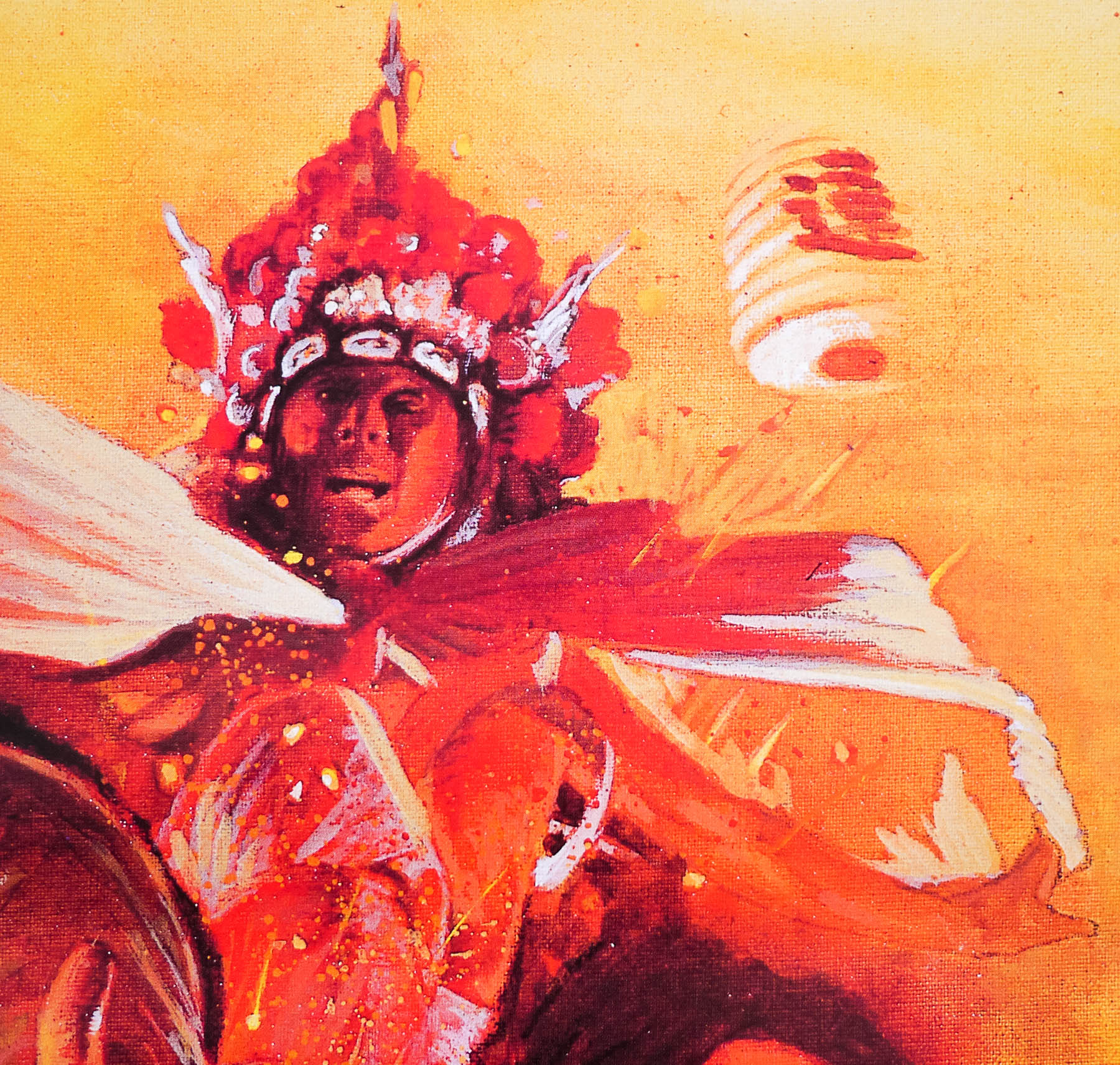
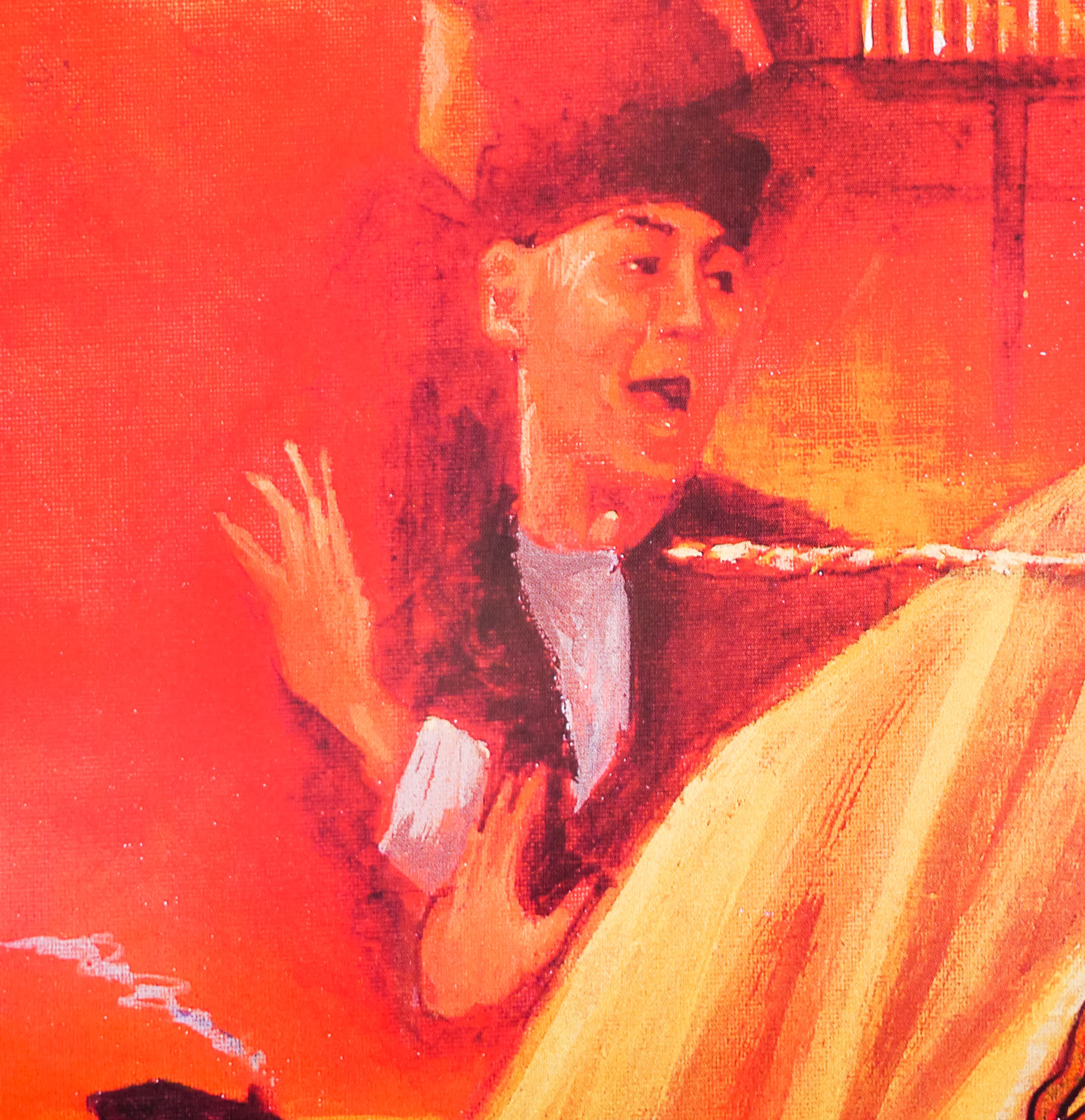
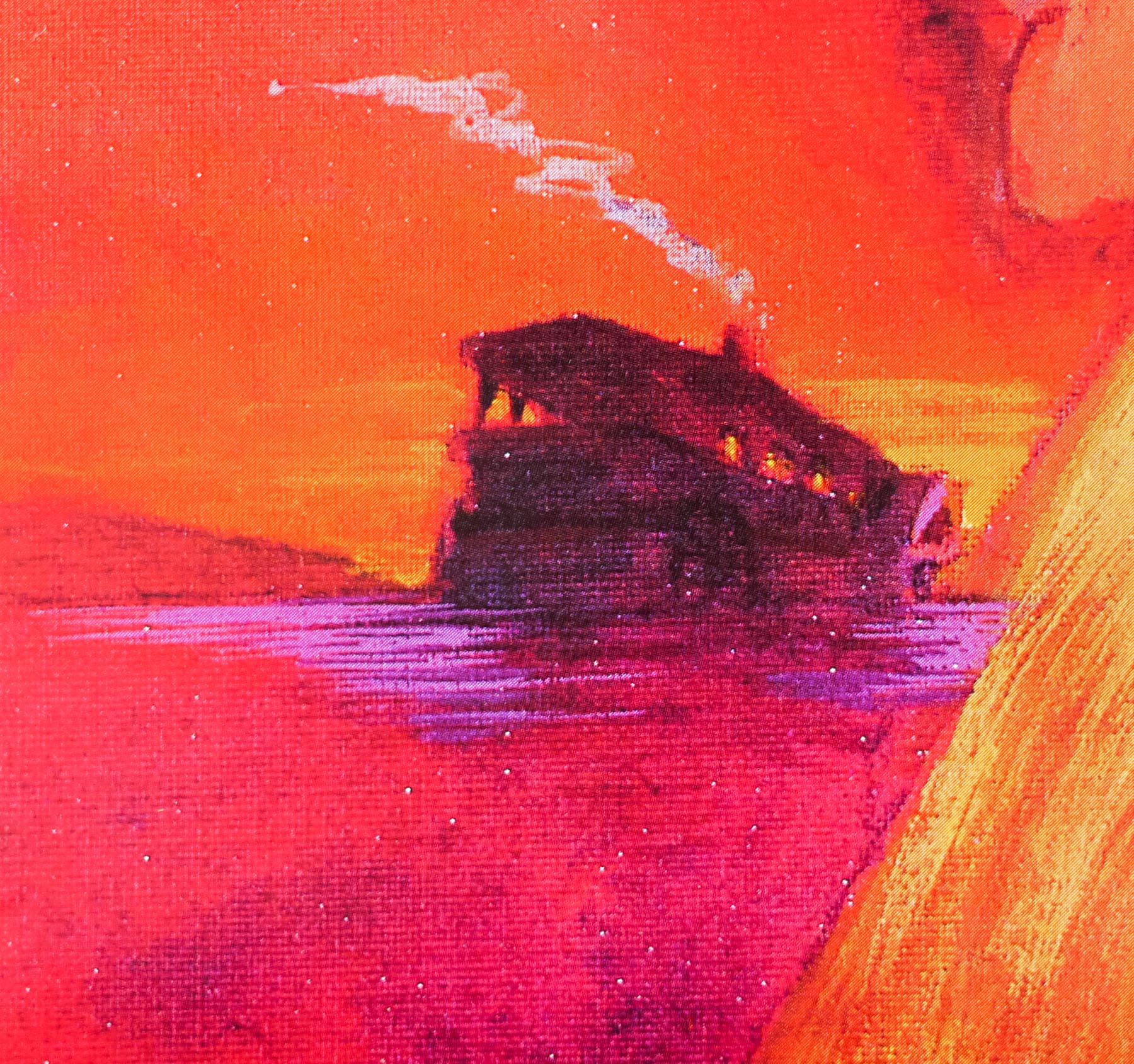
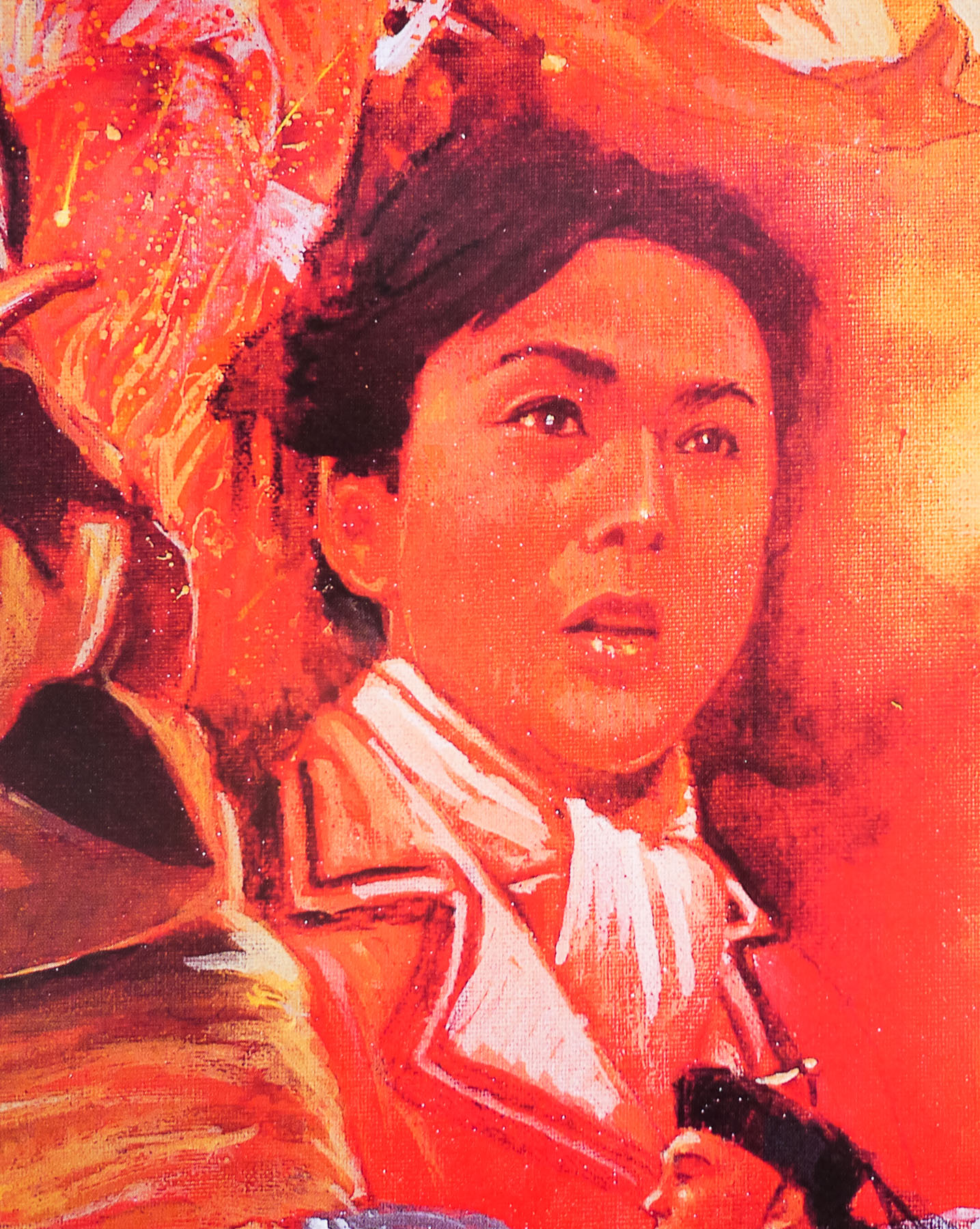
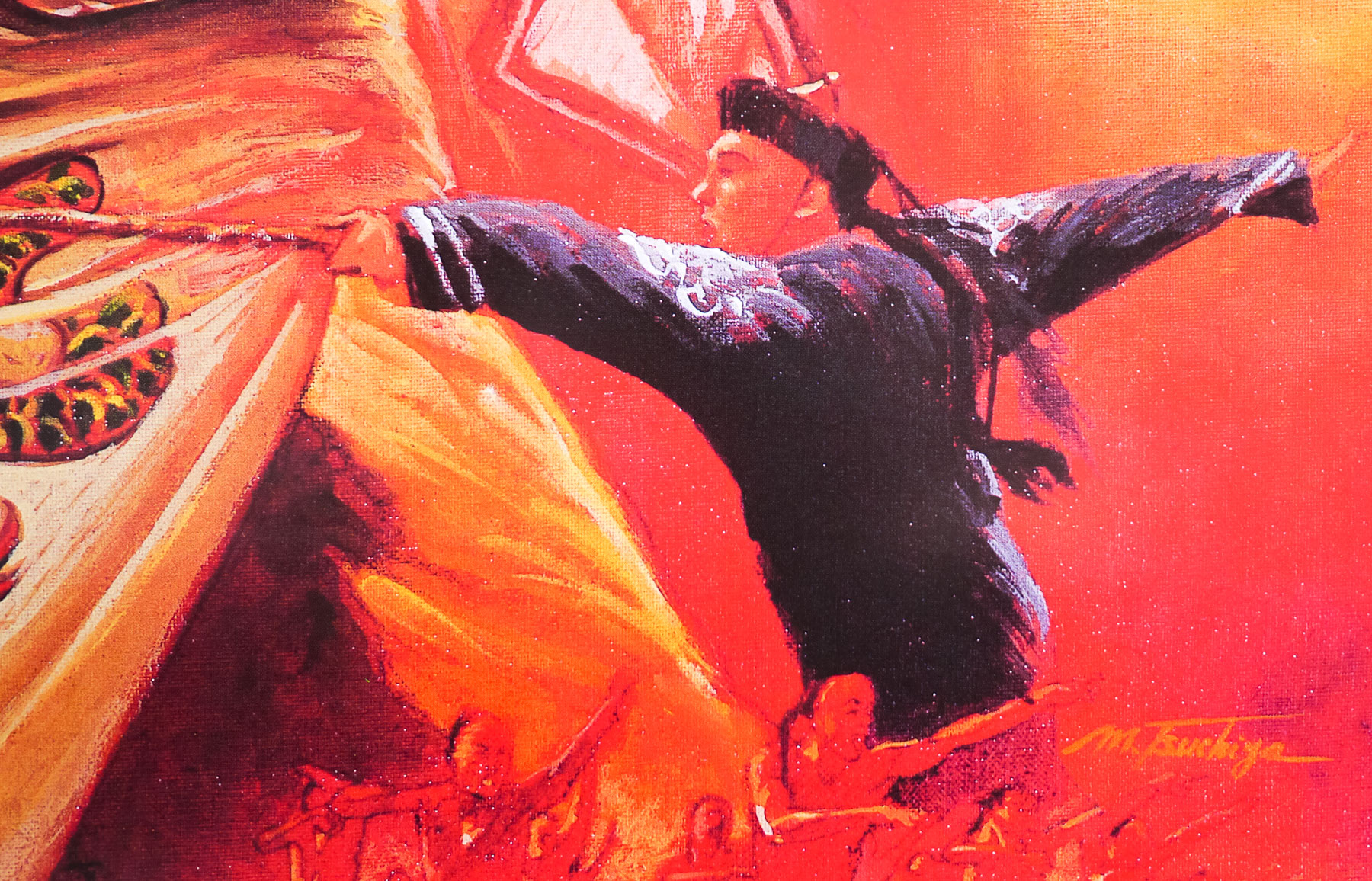
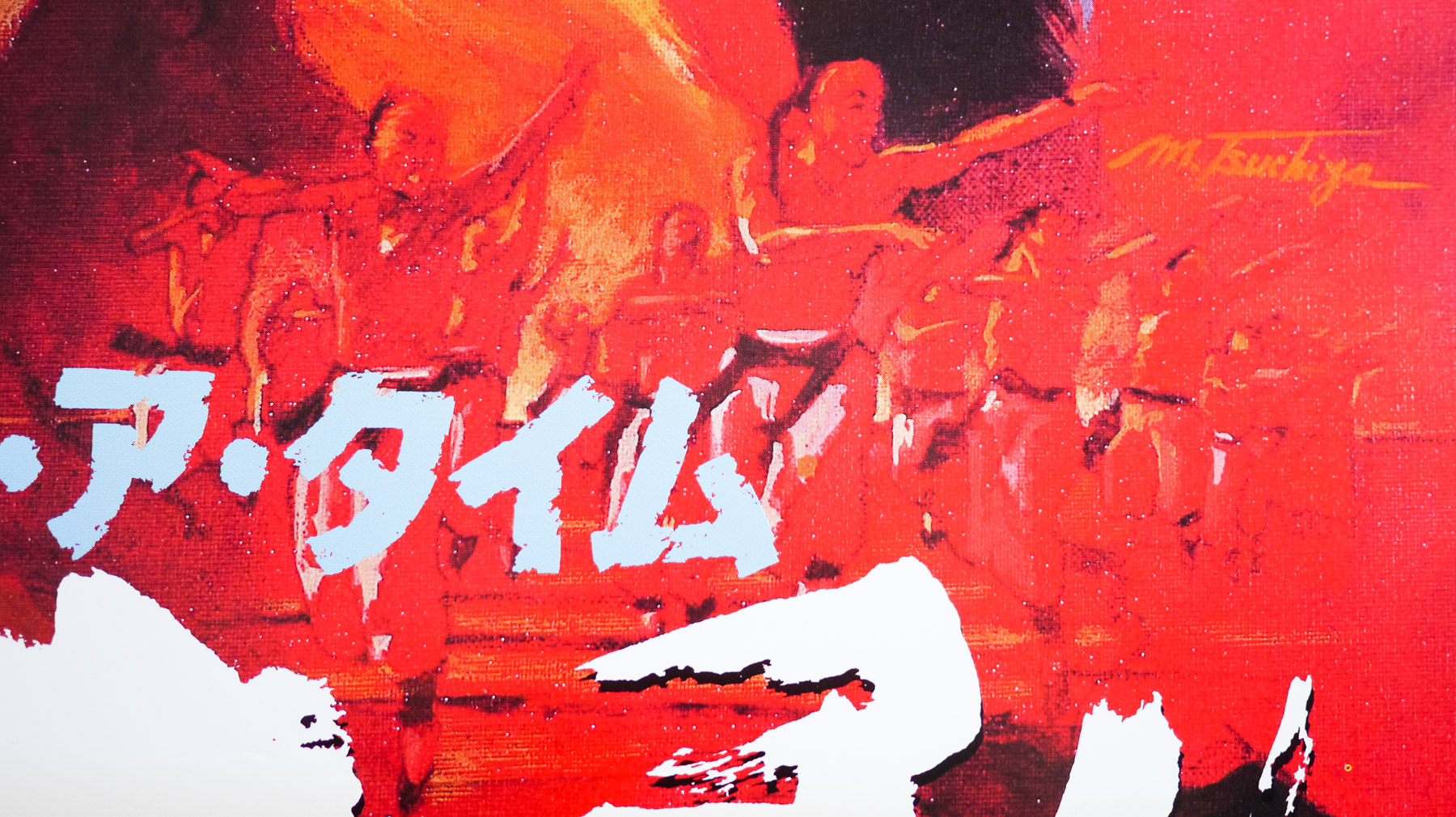
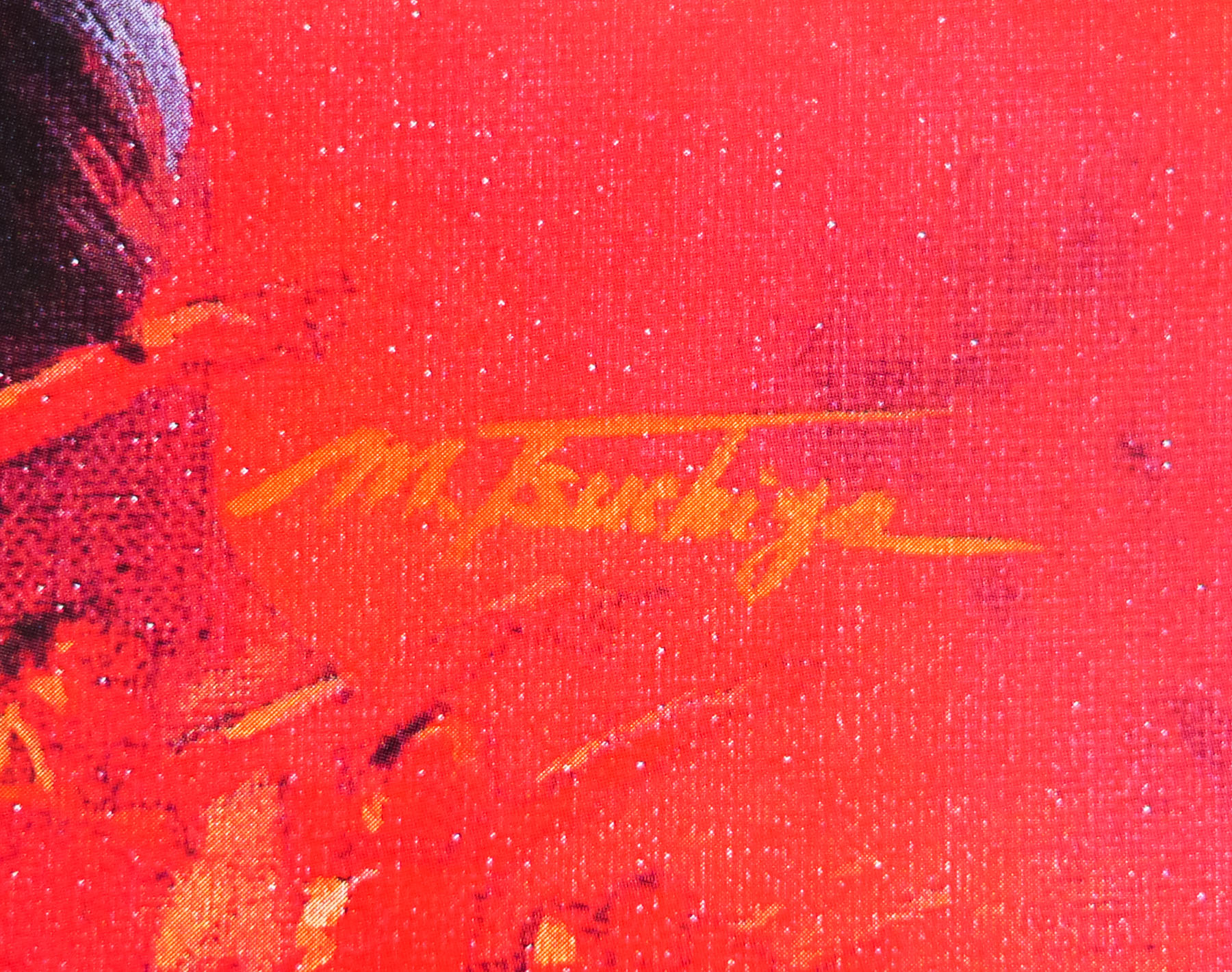
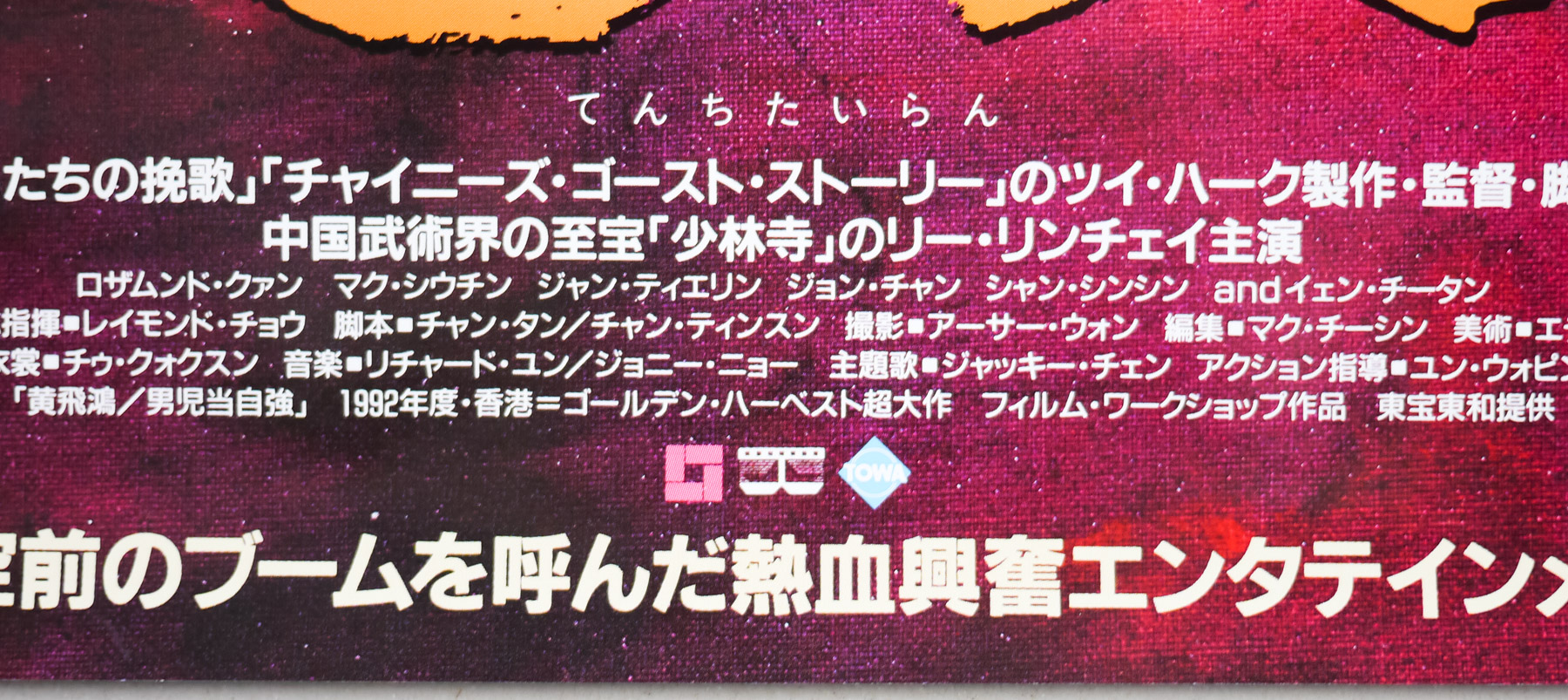
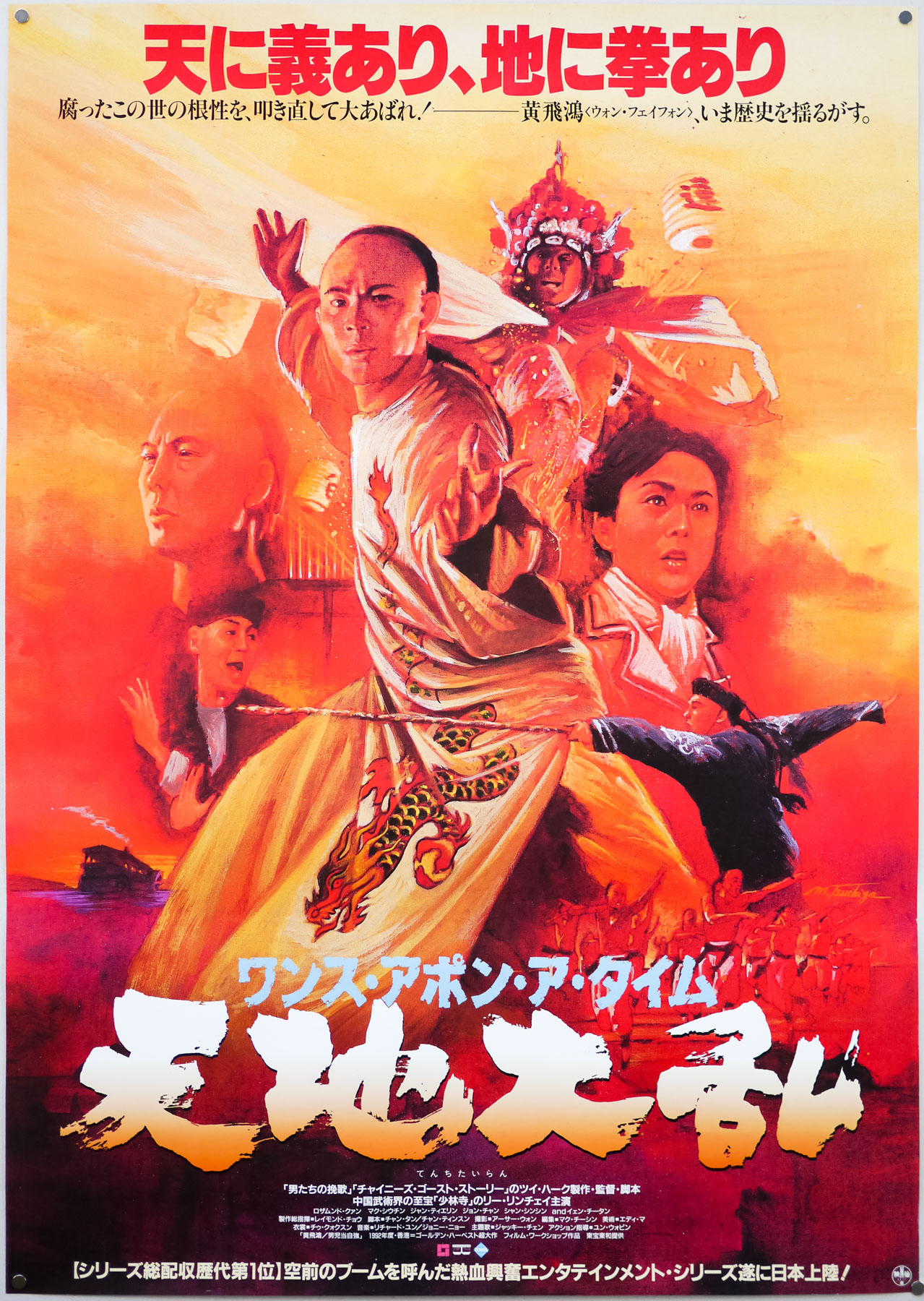
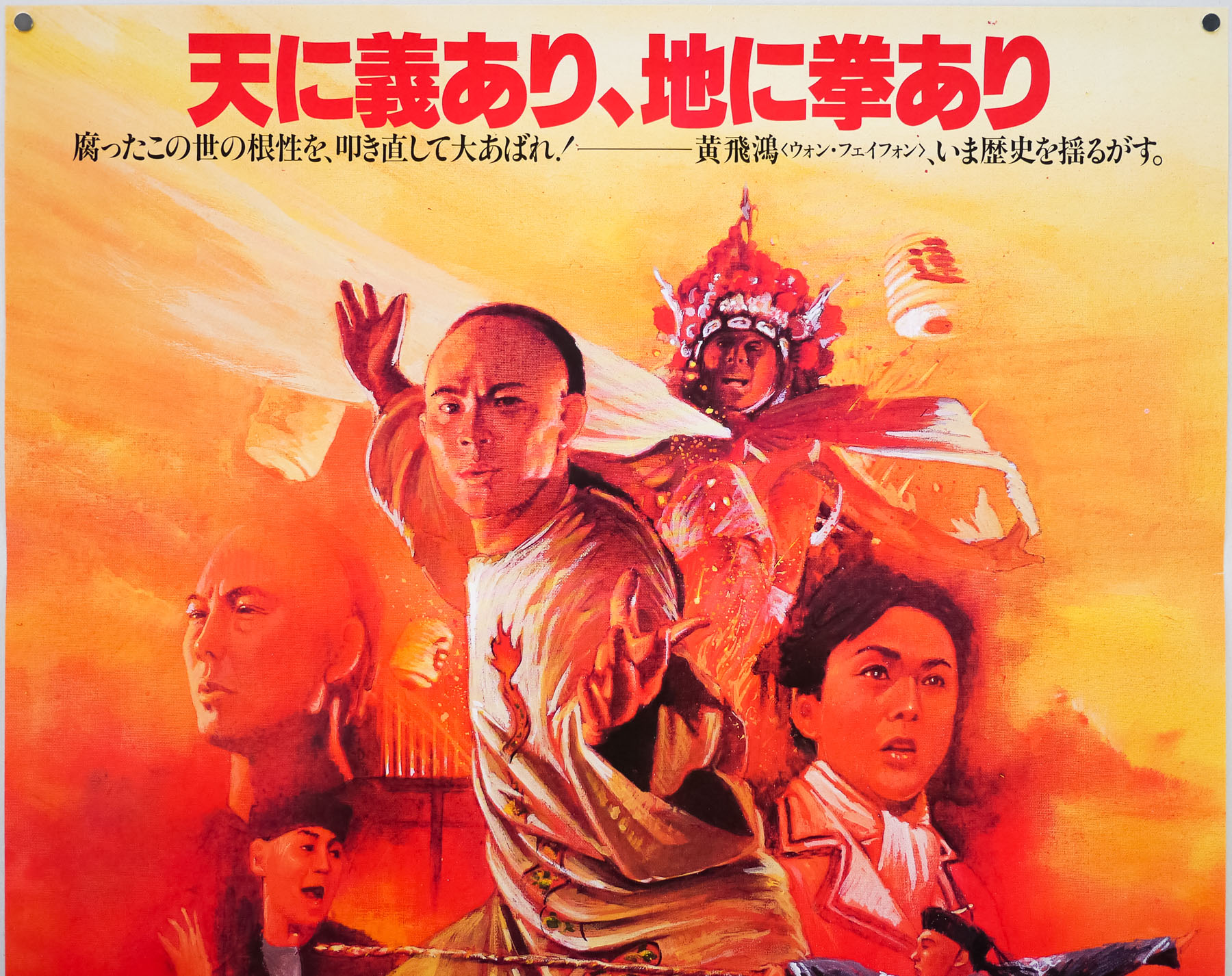
Great artwork by a Japanese artist who has signed the work ‘M. Tsuchiya’ features on this B2 for the release of the 1992 action-adventure sequel, Once Upon a Time in China II. Celebrated producer and director Tsui Hark (who also co-wrote the screenplay) would end up helming all 6 films in the OUATIC franchise that ended in 1997 with ‘Once Upon a Time in China and America’. The legendary martial artist Jet Li appeared once more as the Chinese folk hero Wong Fei-hung and Donnie Yen, another celebrated action star, plays one of the main bad guys in the film.

Set during the Qing dynasty at the end of the 19th century, the film sees Wong Fei-hung traveling to Guangzhou with his love interest ’13th Aunt’ (Rosamund Kwan) and apprentice Leung Foon (Siu Chung Mok) to attend a medical seminar. Whilst there he gets caught up in the troubles wrought by the White Lotus Sect an extremely xenophobic group who are against any form of Westernisation or influence in China and have been attacking foreigners and anyone allied to them.

After protecting 13th Aunt from kidnap, Wong then deals with an attack on the seminar, followed by one on a group of school children. Eventually he joins forces with a revolutionary group planning to overthrow the Qing dynasty, who count Westernised doctor Sun Yat-Sen (Tielin Zhang) amongst their number, and attack the White Lotus Sect’s base. Psychotic leader Gao Kung (Xin Xin Xiong) isn’t about to go down without a fight and this is before Wong and the others must confront Yen’s military Commander Nap-lan who is out to crush the revolution.

I’ve struggled to find anything of note about ‘M. Tsuchiya’ so if anyone knows anything about the artist please get in touch and I’ll add the details here.

The Streetfighter’s Last Revenge / B2 / Japan

06.01.16

Poster Poster
Title
The Streetfighter's Last Revenge
AKA
Gyakushû! Satsujin ken (Japan - original title) | Revenge! The Killing Fist (literal English title)
Year of Film
1974
Director
Shigehiro Ozawa
Starring
Shin'ichi Chiba (as Sonny Chiba), Reiko Ike, Kôji Wada, Tatsuo Endô, Akira Shioji, Tsuyoshi Ôtsuka, Frankie Black, Shingo Yamashiro, Masafumi Suzuki, Etsuko Shihomi
Origin of Film
Japan
Genre(s) of Film
Shin'ichi Chiba (as Sonny Chiba), Reiko Ike, Kôji Wada, Tatsuo Endô, Akira Shioji, Tsuyoshi Ôtsuka, Frankie Black, Shingo Yamashiro, Masafumi Suzuki, Etsuko Shihomi,
Type of Poster
B2
Style of Poster
--
Origin of Poster
Japan
Year of Poster
1974
Designer
Unknown
Artist
Unknown
Size (inches)
20 6/16" x 28 11/16"
SS or DS
SS
Tagline
--

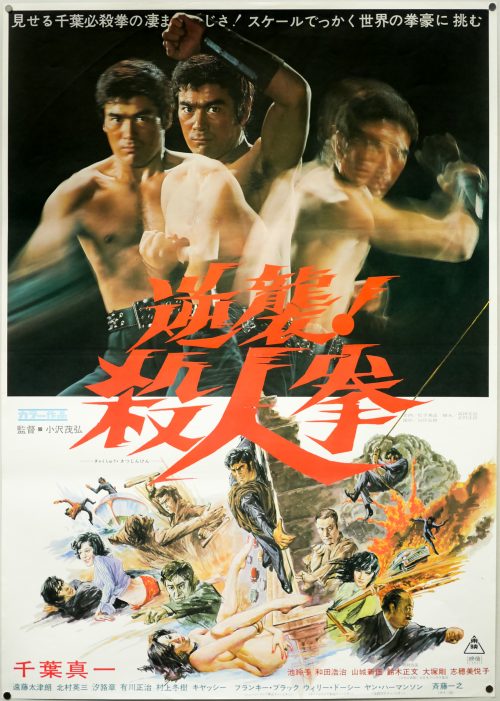
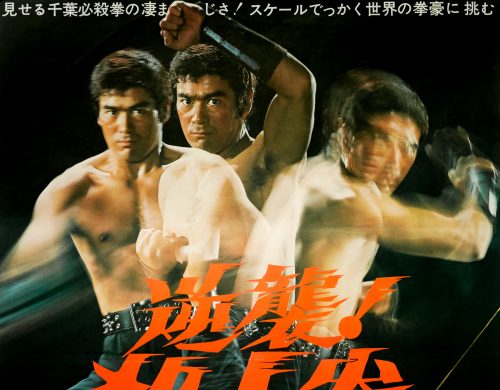
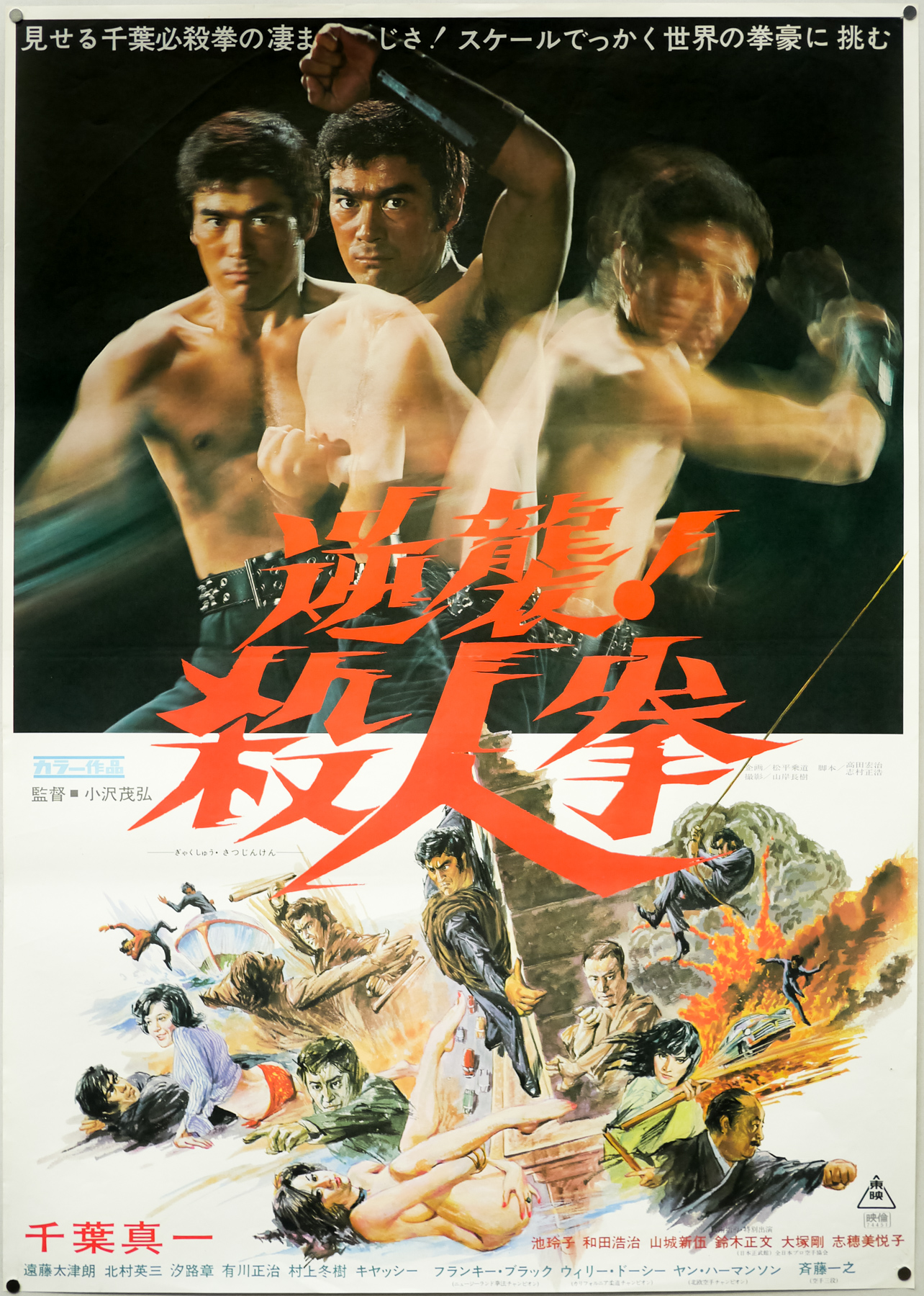
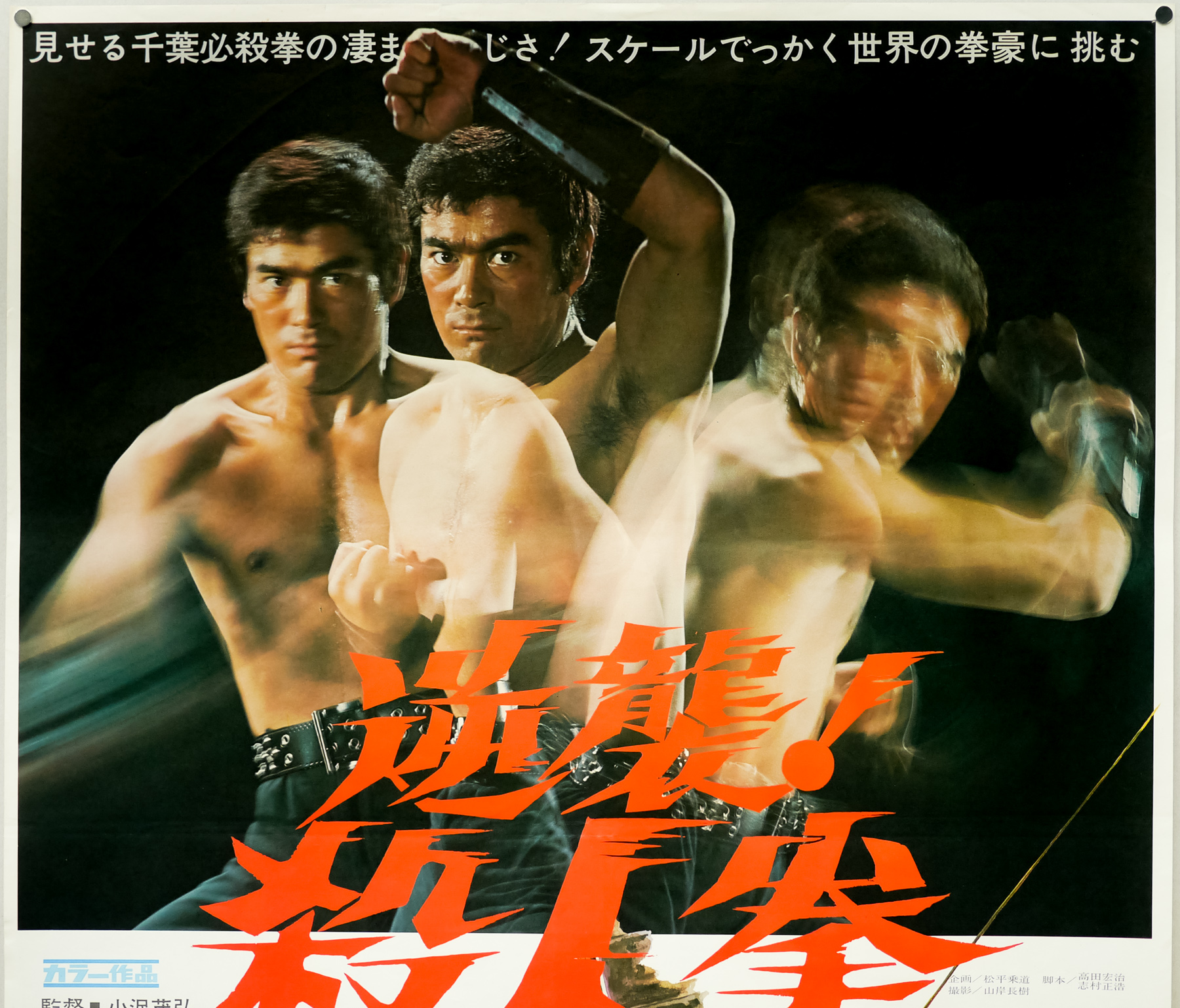
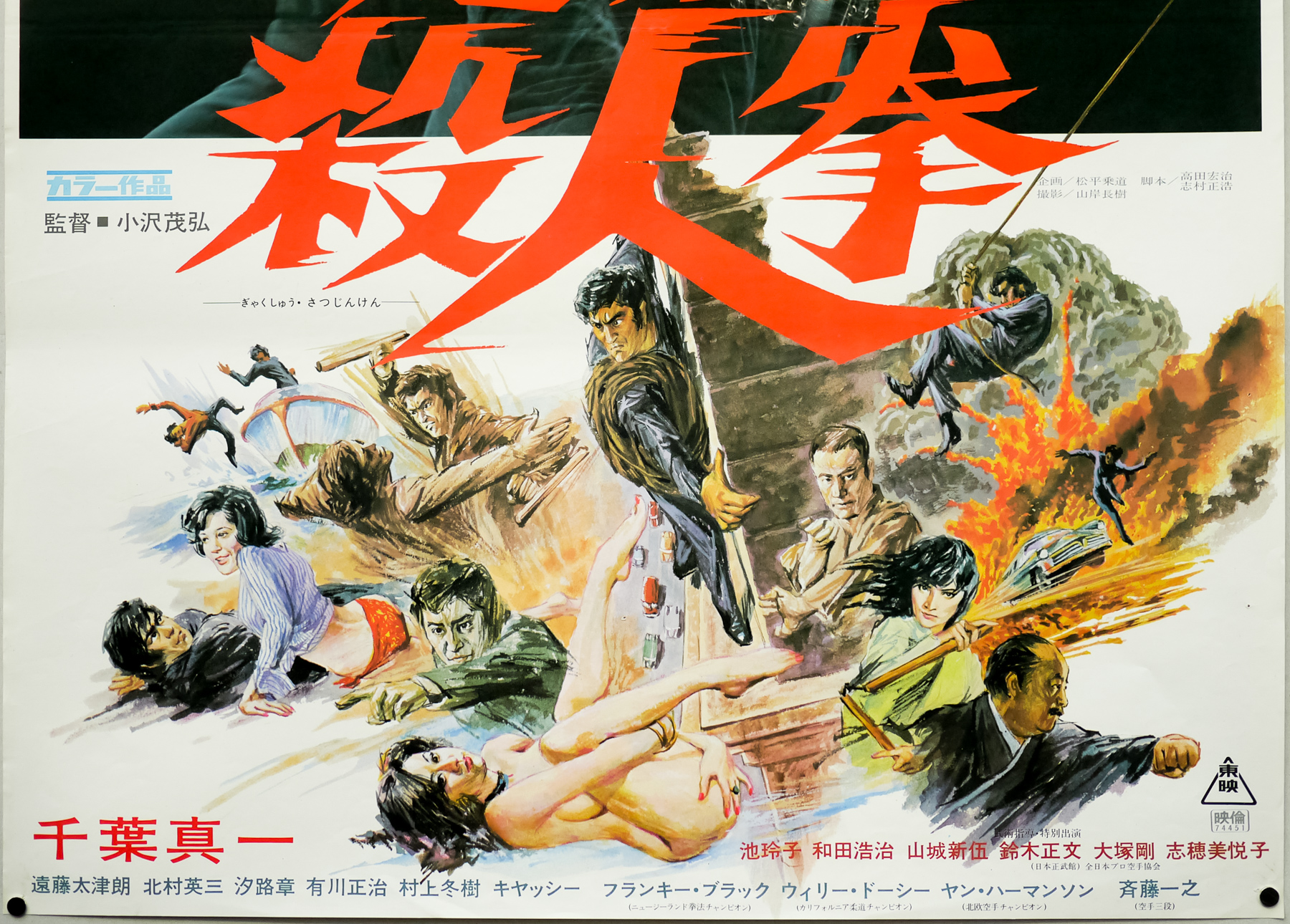
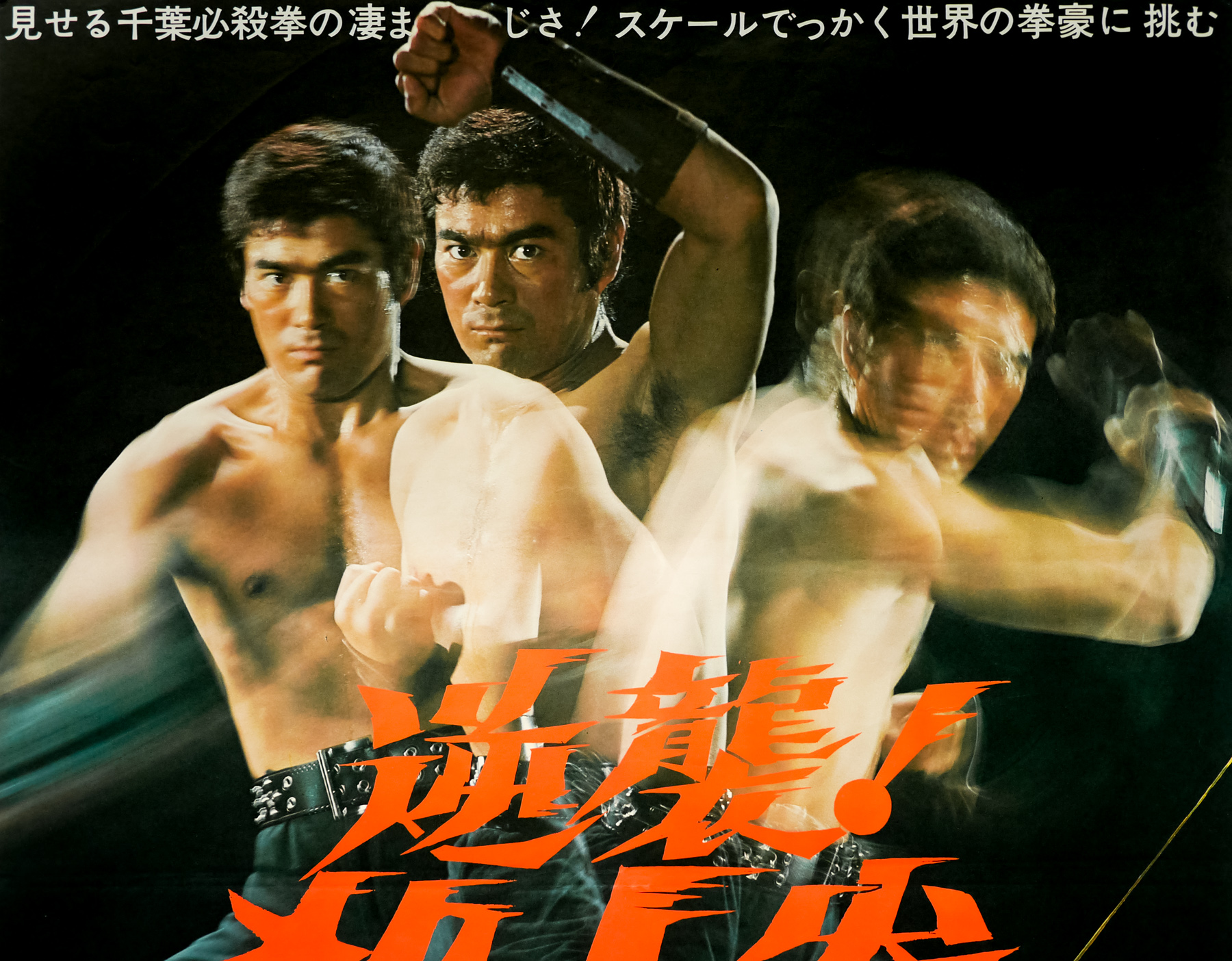
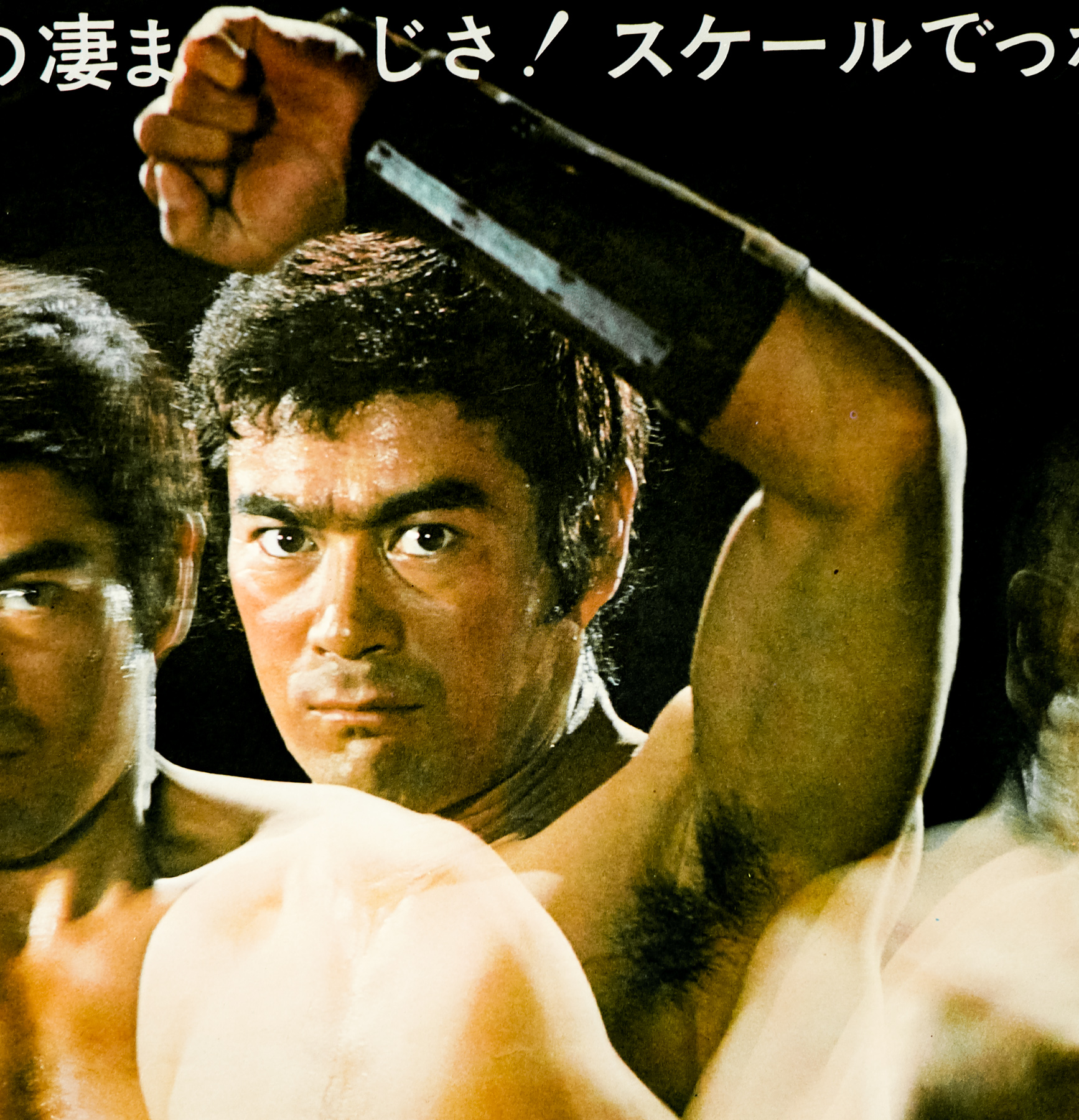
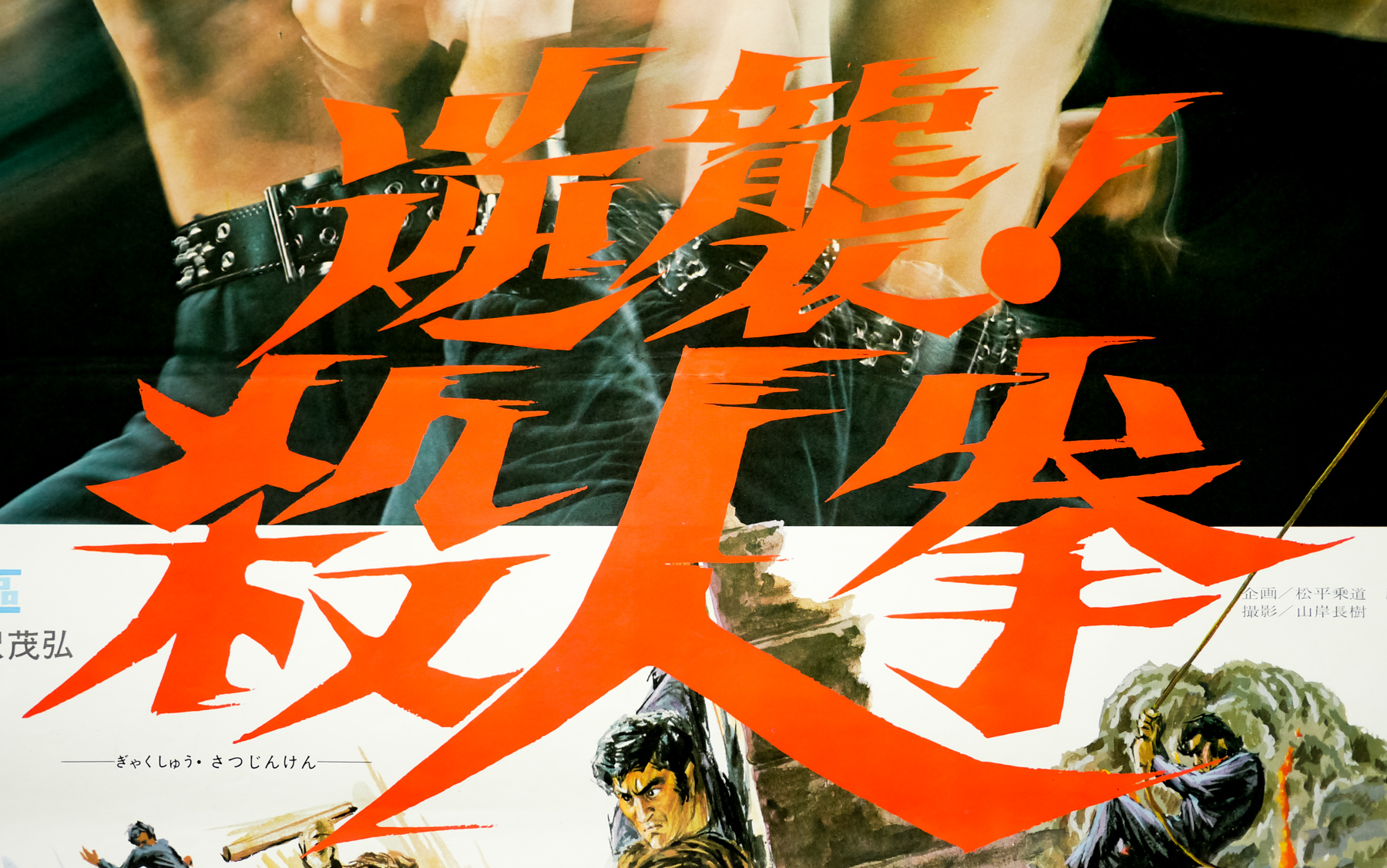
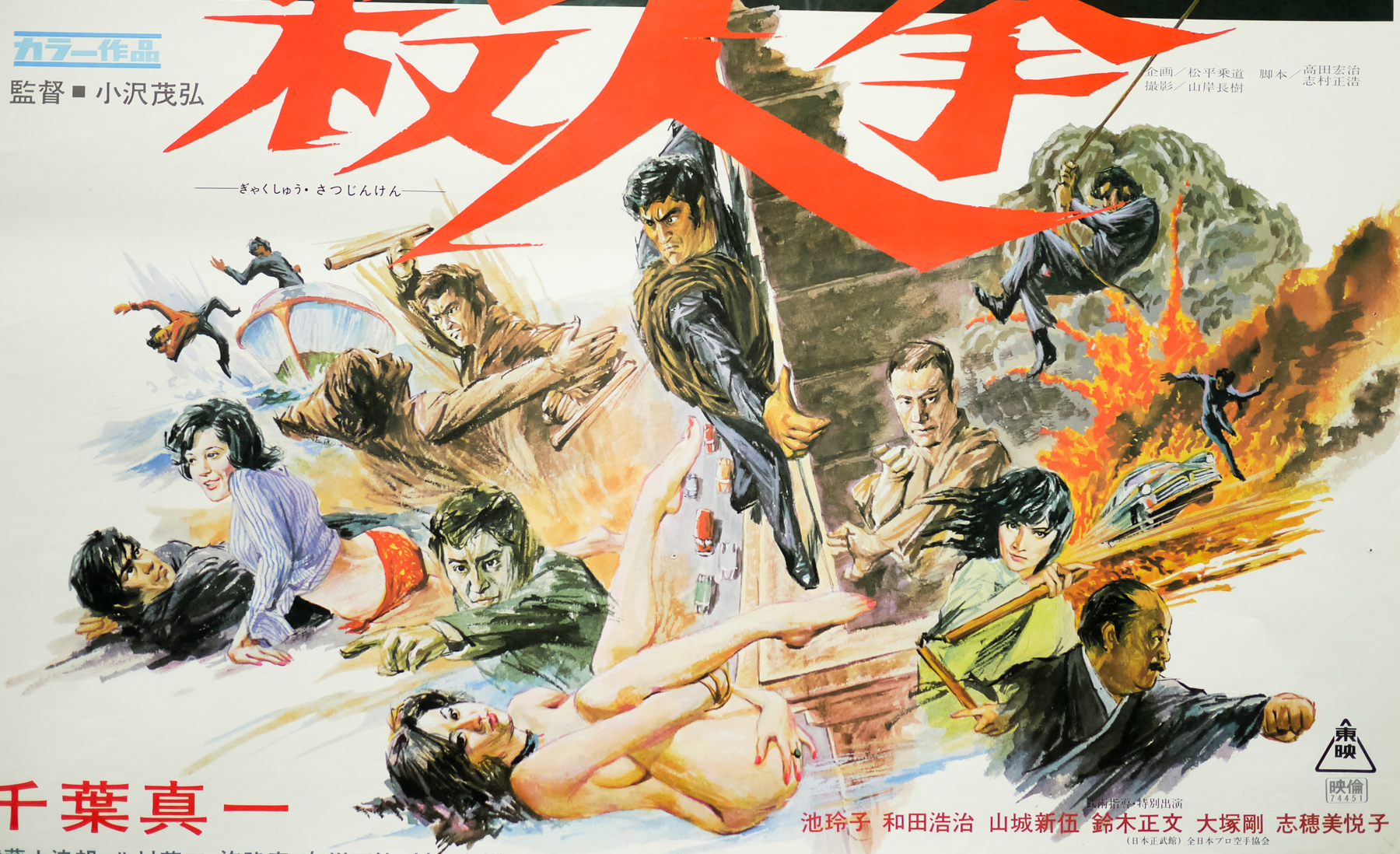
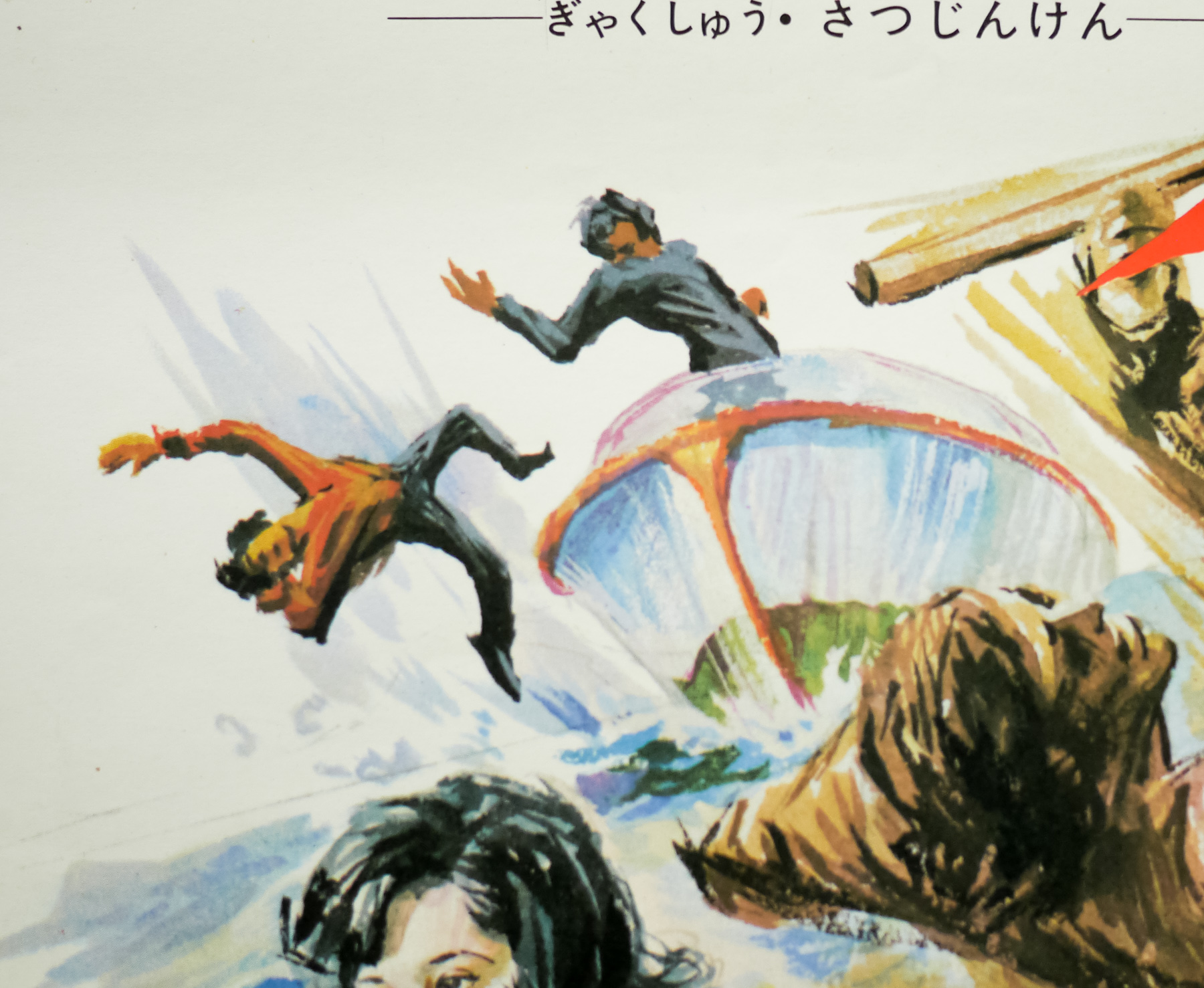
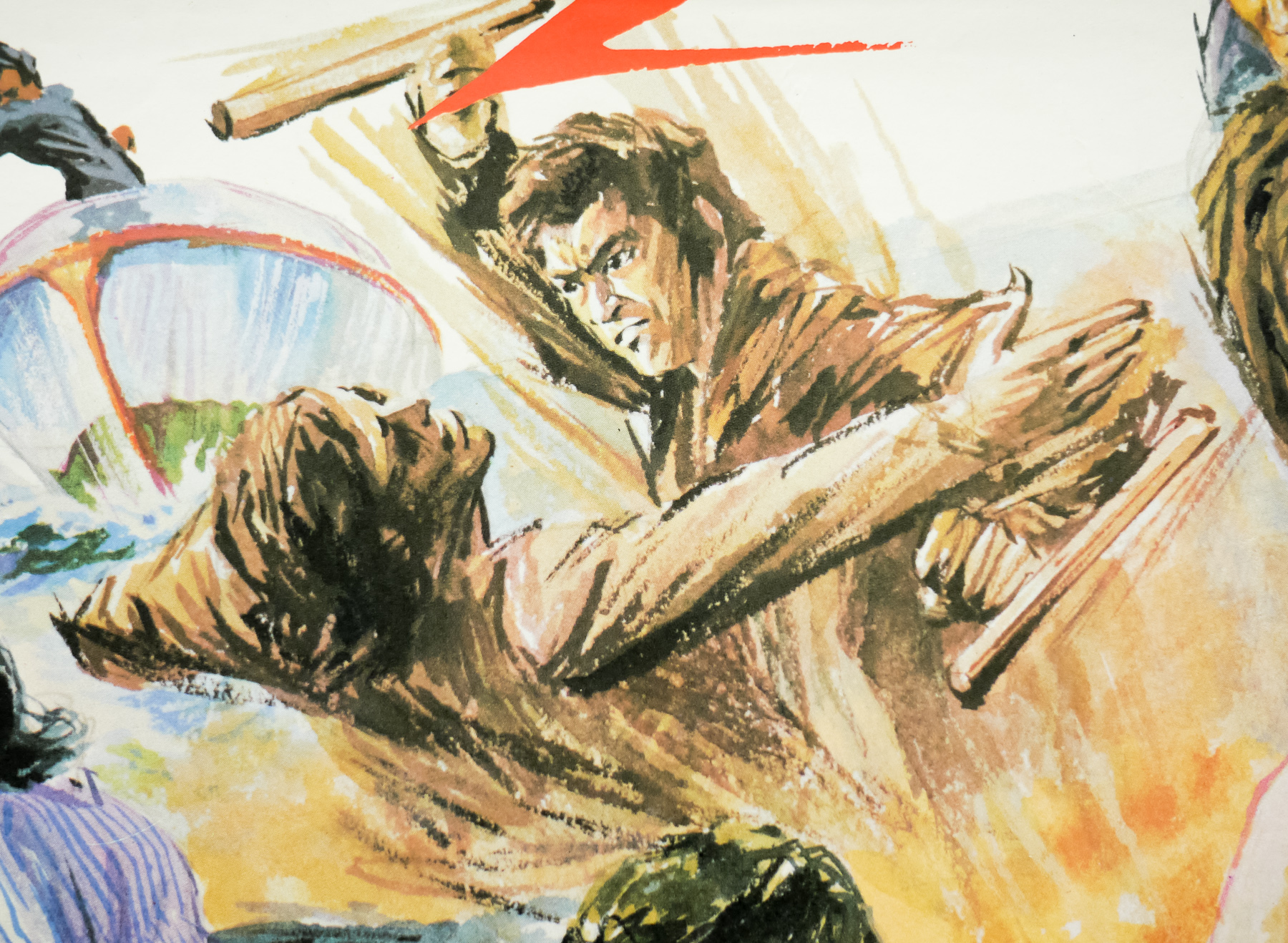
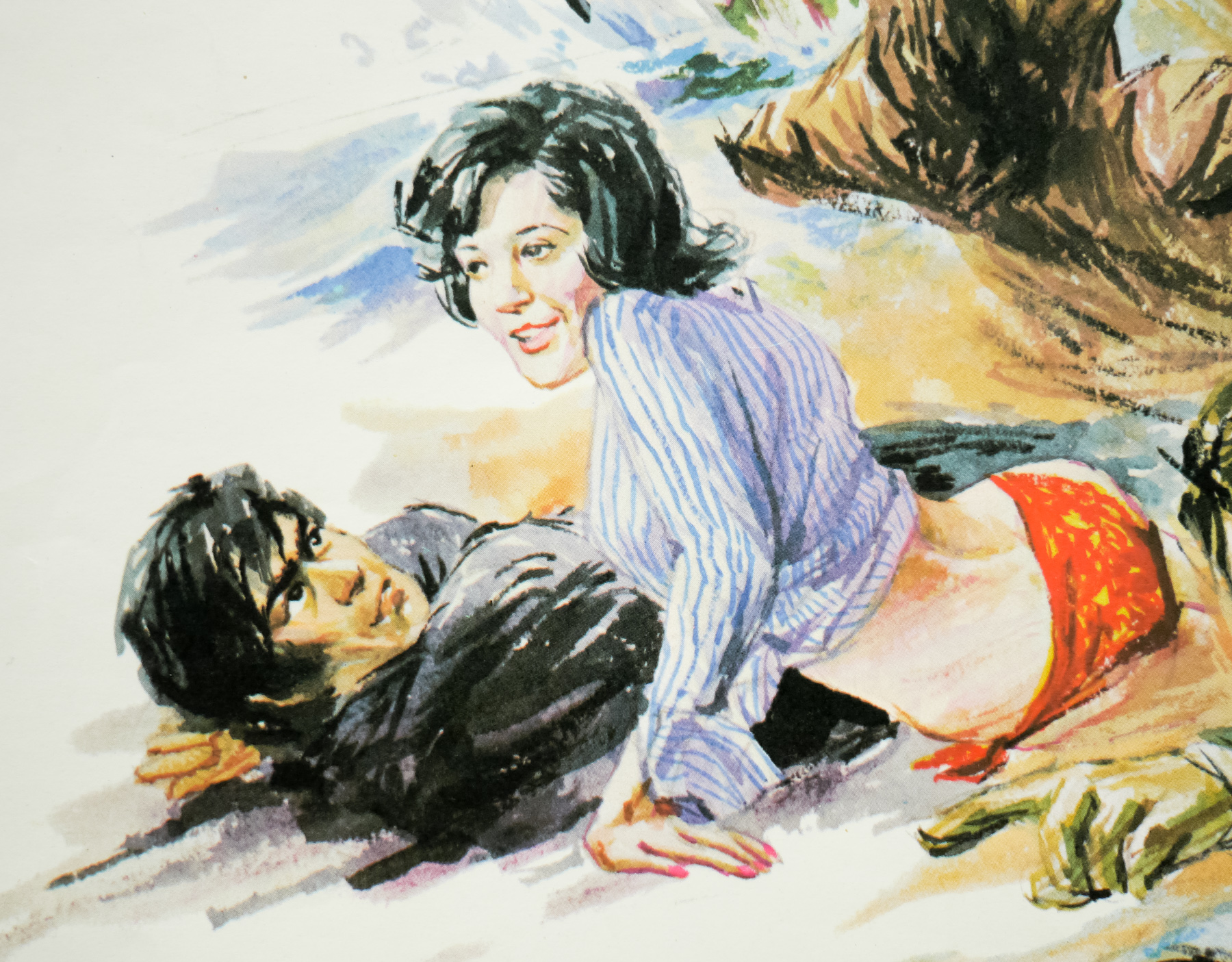
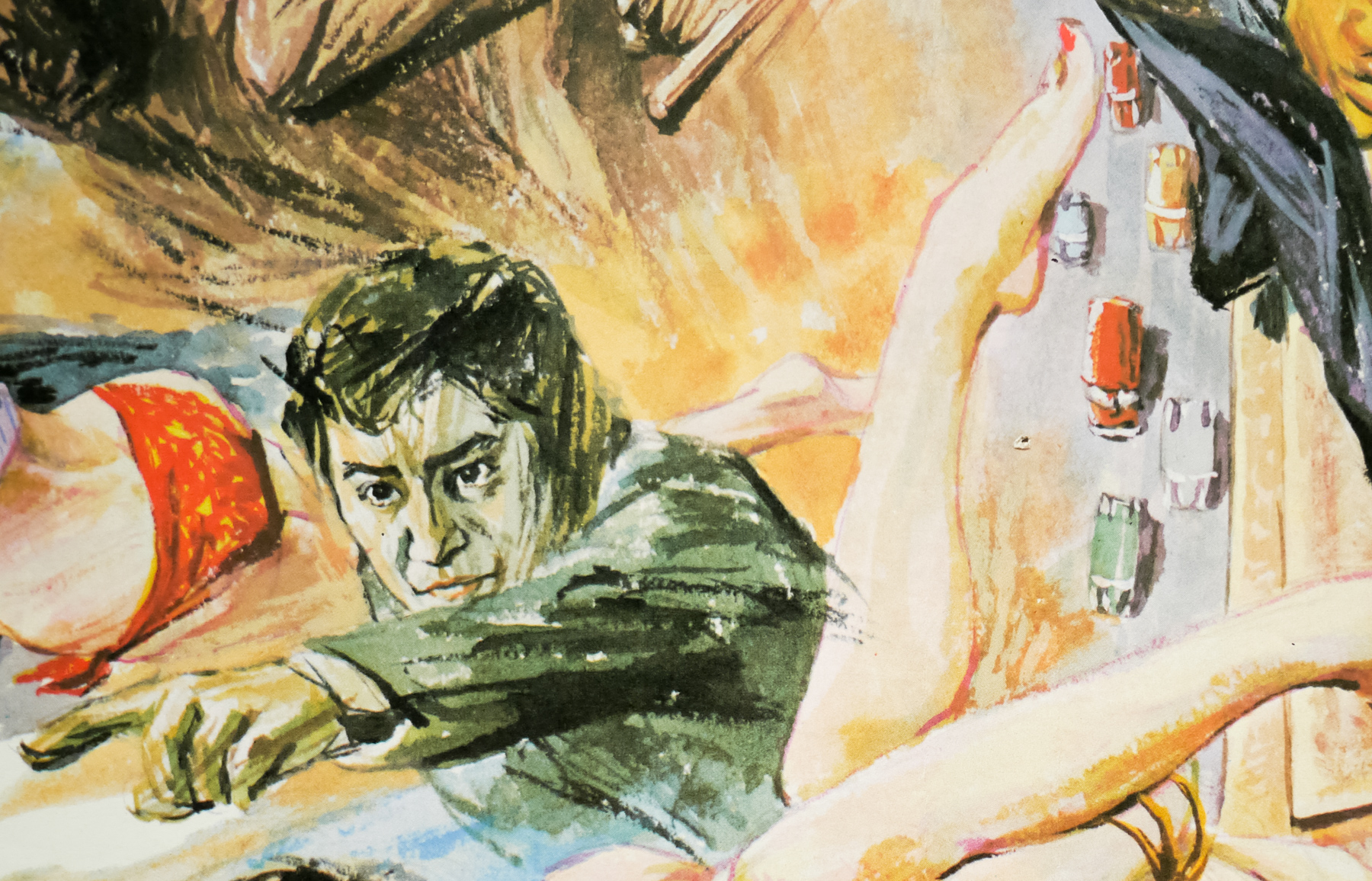
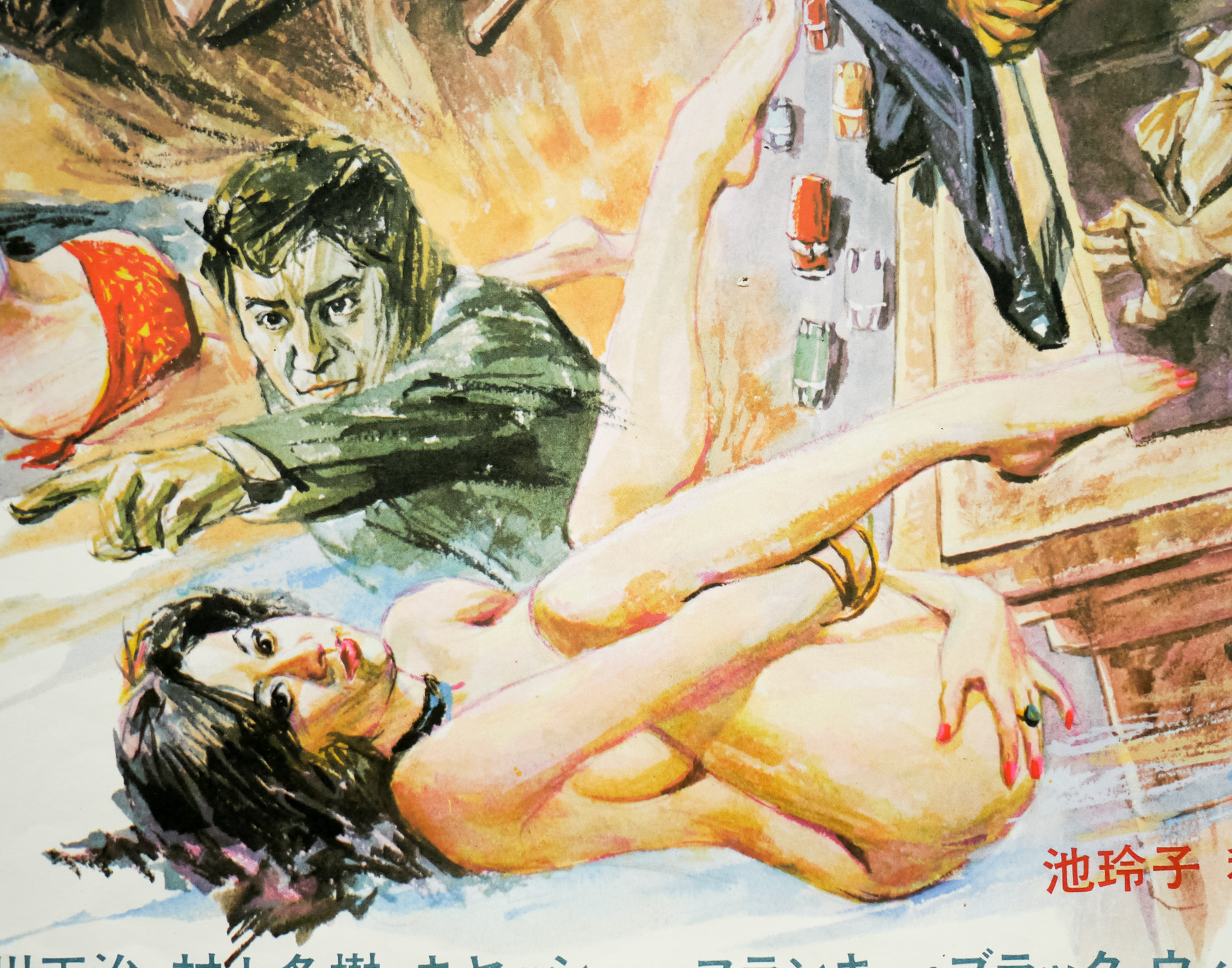
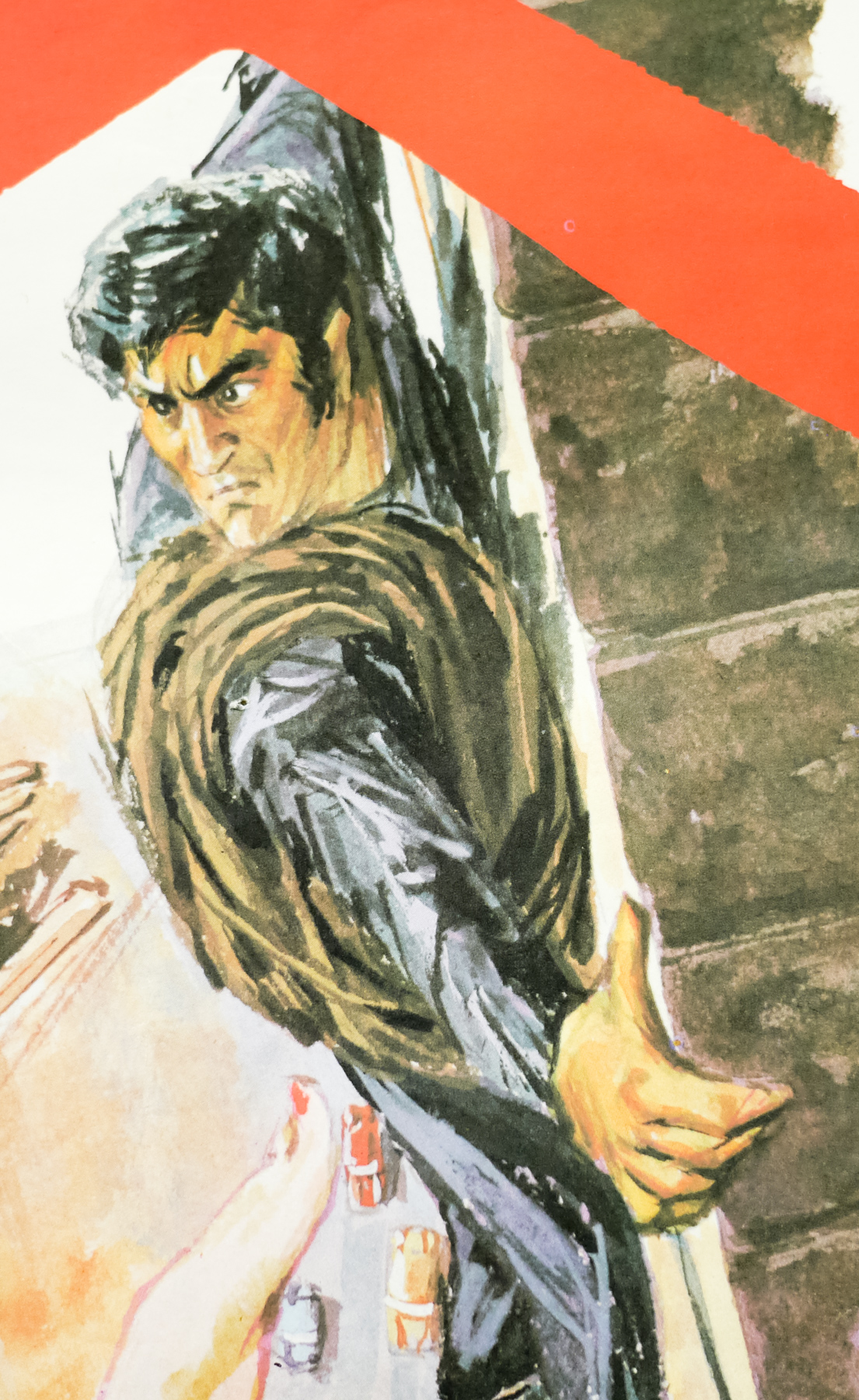
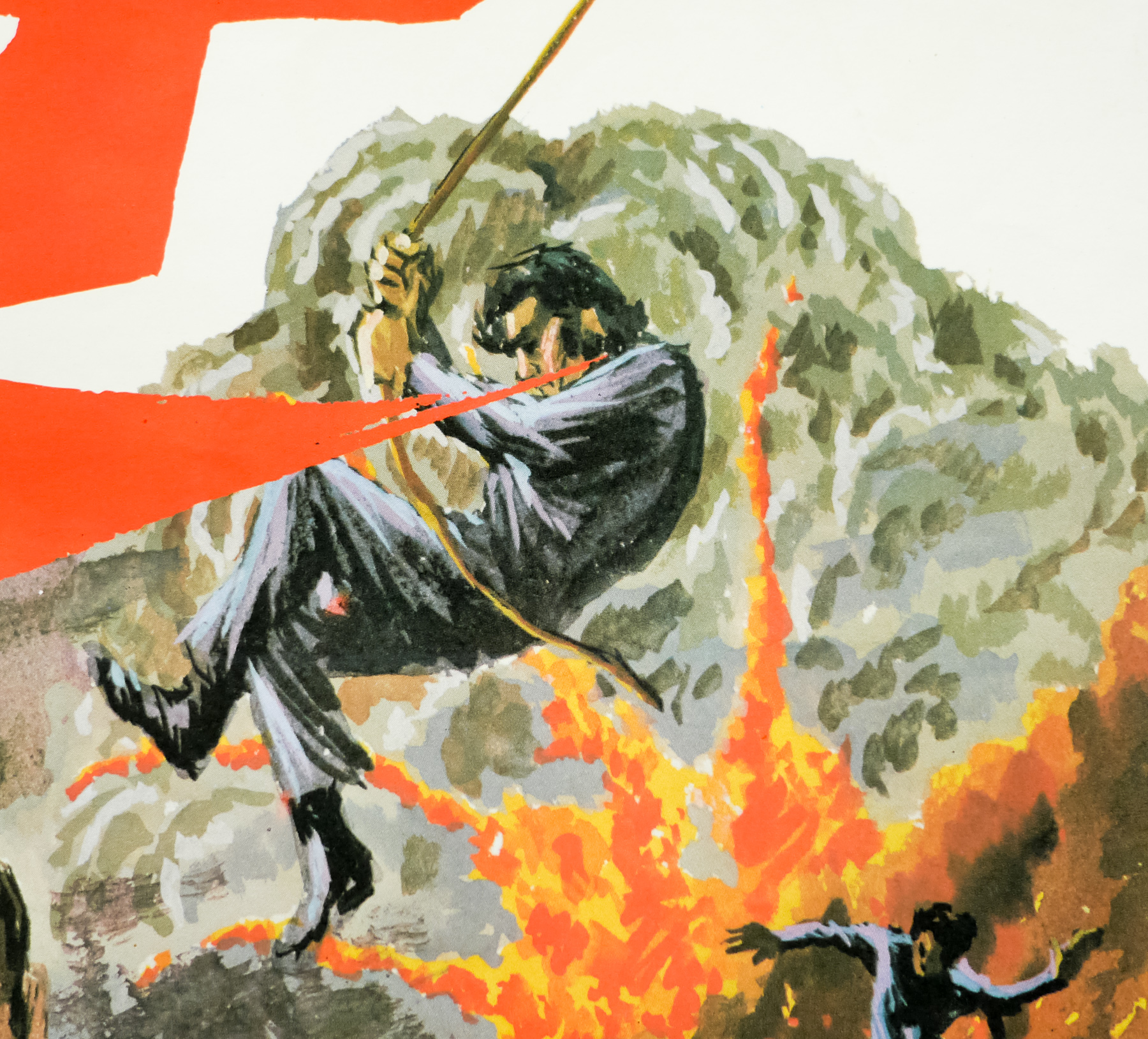
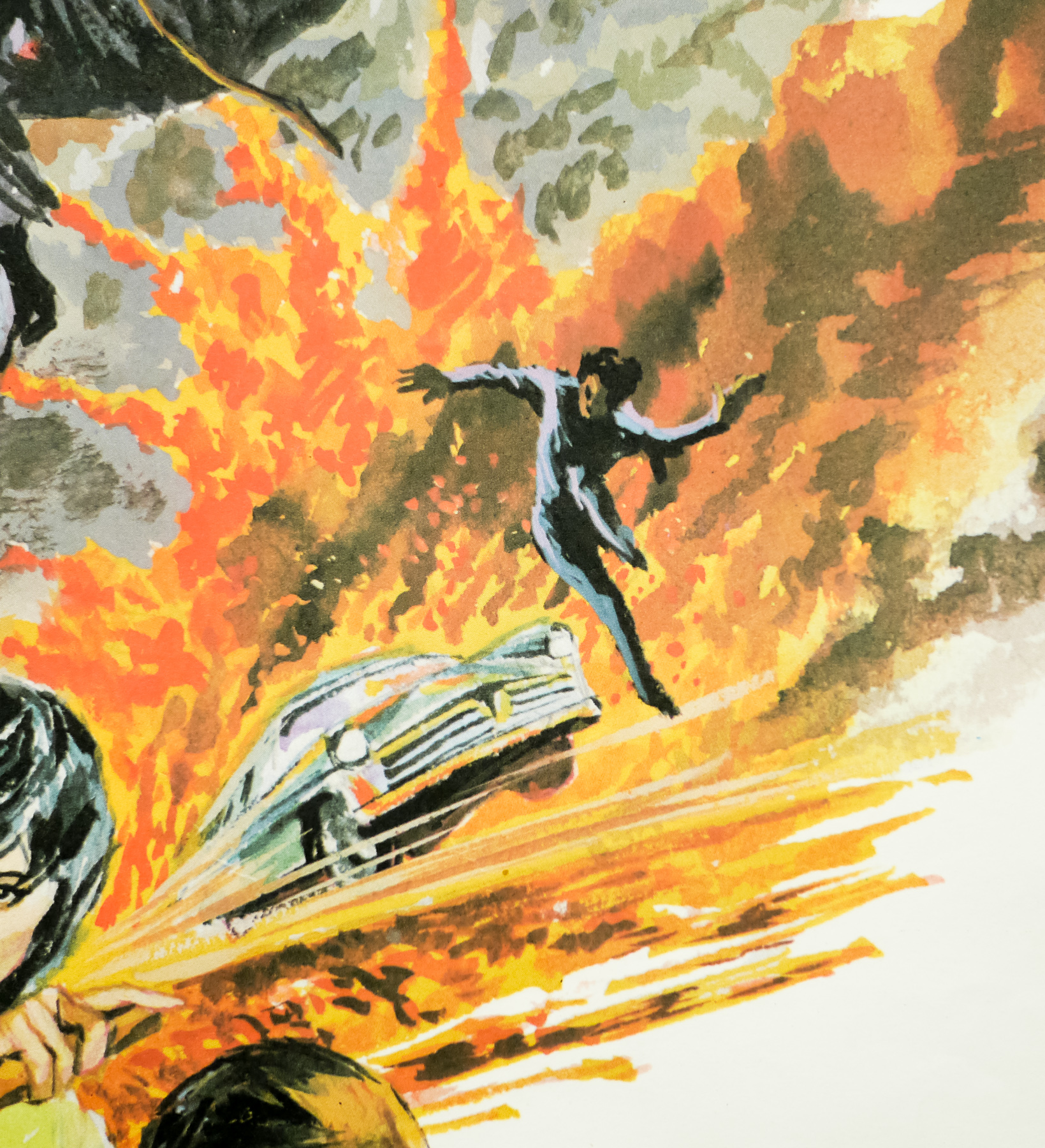
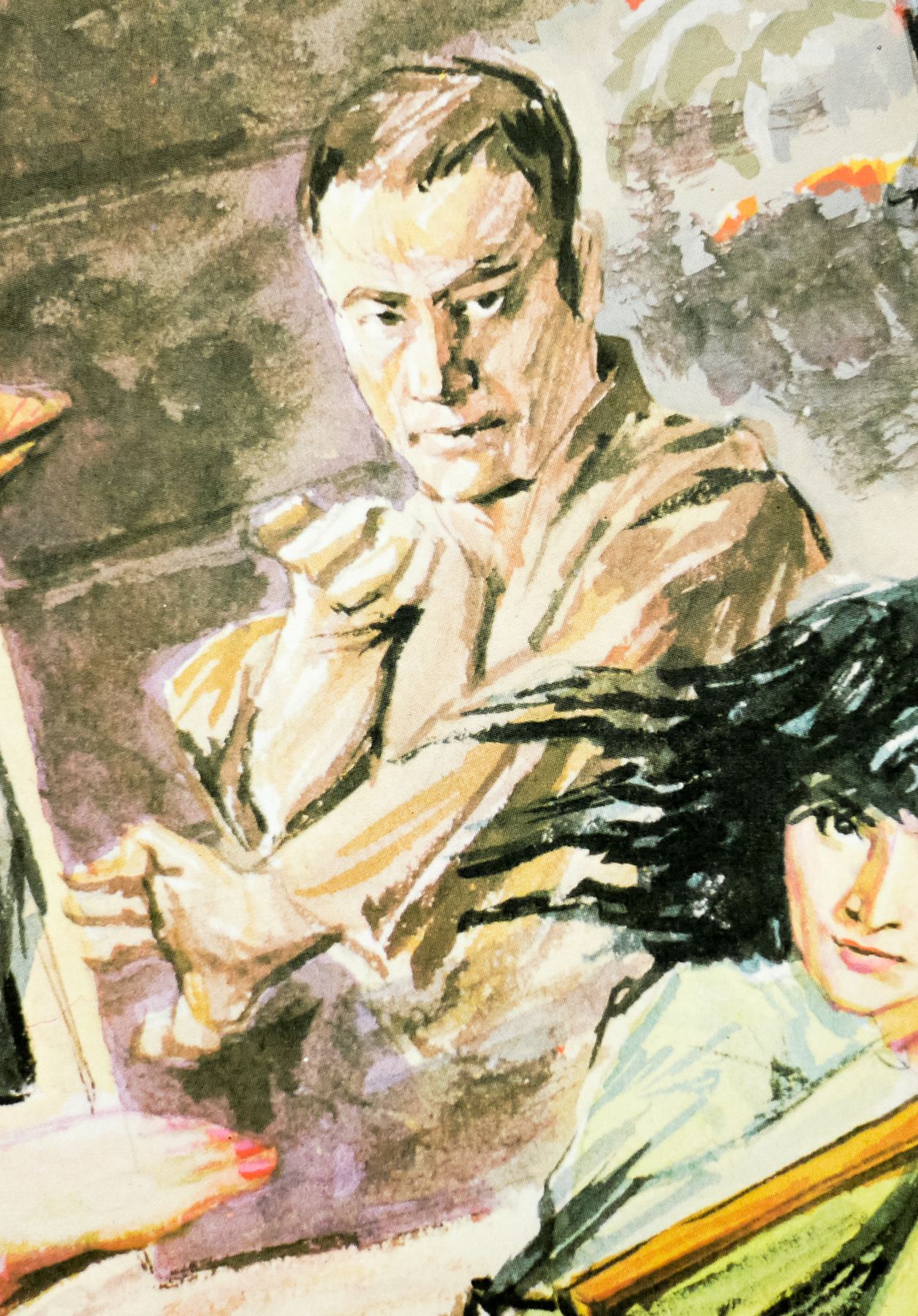
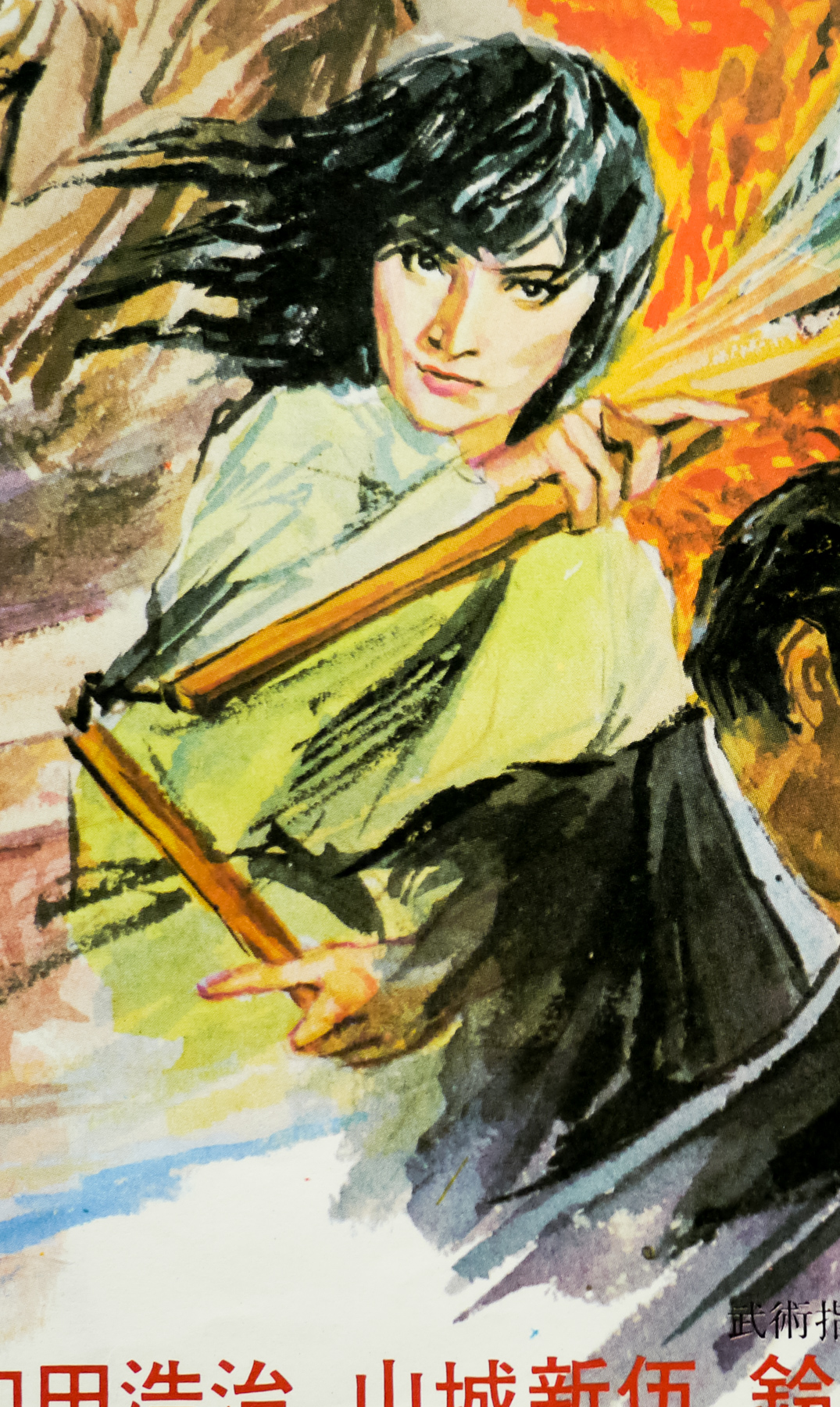
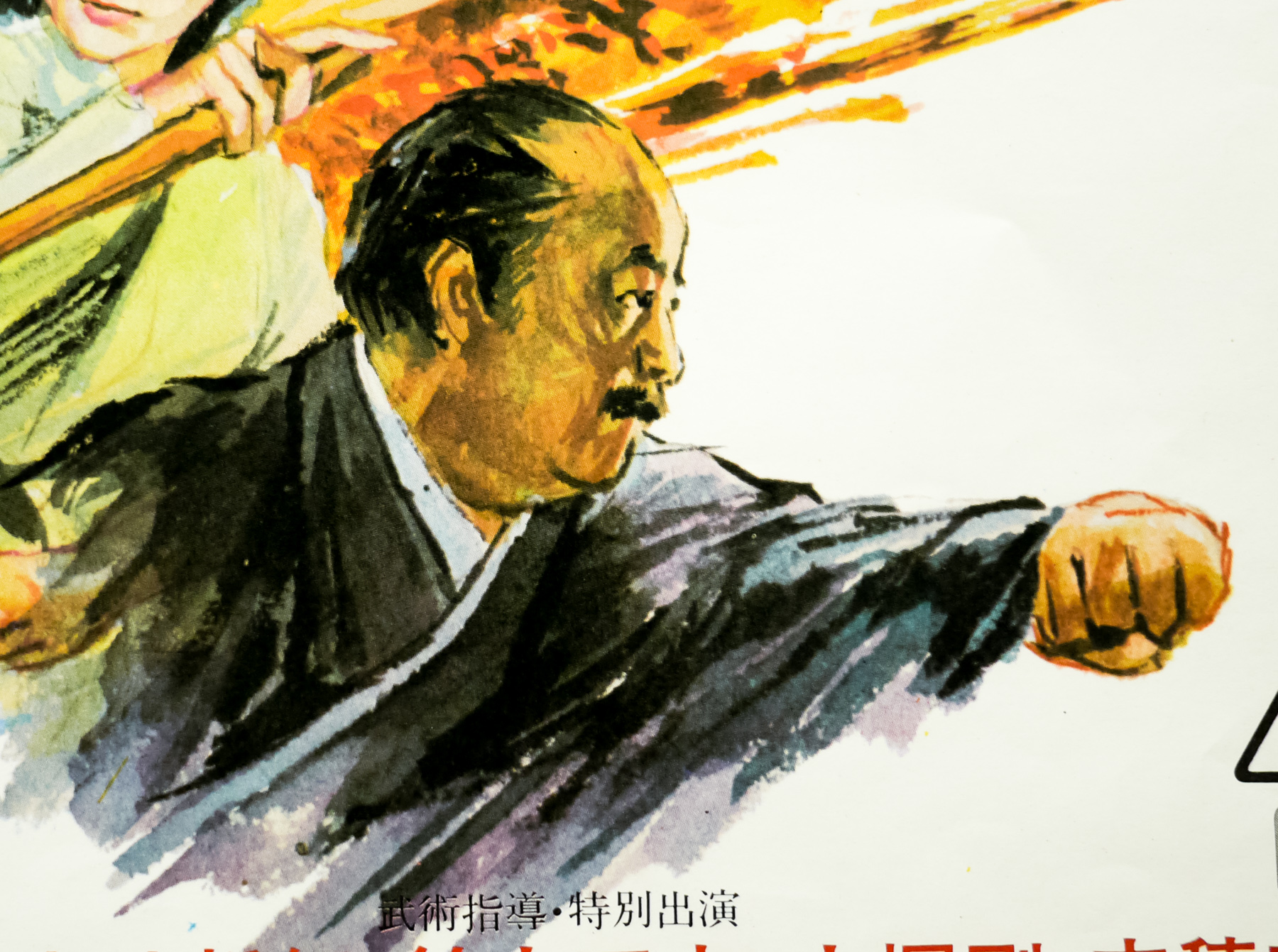
A rare mix of photography and artwork features on this Japanese B2 for the release of (what would later be re-titled) The Streetfighter’s Last Revenge. The final entry in a trilogy of films starring legendary Japanese martial artist Shin’ichi ‘Sonny’ Chiba, the film followed the original The Streetfighter and Return of the Street Fighter which were all produced in one year (1974). The original film was Chiba’s breakout international hit and was released in the USA and elsewhere in 1974, but this sequel would have to wait 5 years before it was given a cinema release in the States. When it did finally arrive it was significantly altered and had large amounts of violence removed.

The reason for the delayed release is likely to do with the drop in quality over the first two entries as this review (and several others) on IMDb testifies:

‘If you love THE STREET FIGHTER (and you probably do if you looked up this entry) don’t even bother with this final entry in the series. This one sucks out loud, and has only one decent fight scene which lasts for about a minute. Our hero now has taken on a more “MISSION: IMPOSSIBLE”-type persona since he now is a master of disguise (???). Skip this.’

This film and the others in the trilogy are now in the public domain (so can be streamed from multiple sources online). Director Quentin Tarantino is a big Chiba fan and these are the films that the character of Clarence (Christian Slater) is watching in a cinema triple-bill when he first meets Alabama (Patricia Arquette) in Tony Scott’s True Romance (Tarantino wrote the script).

I’ve struggled to find out who is responsible for the artwork on this poster so if anyone has an idea please get in touch. The US poster uses the same art and photograph, which was almost never the case, but I suspect that the distributor (New Line) was trying to save money by reusing as much as possible.

I Am Curious (Yellow) / B2 / black title style / Japan

21.01.16

Poster Poster
Title
I Am Curious (Yellow)
AKA
Jag är nyfiken - en film i gult (Sweden - original title)
Year of Film
1967
Director
Vilgot Sjöman
Starring
Lena Nyman, Vilgot Sjöman, Börje Ahlstedt, Peter Lindgren, Chris Wahlström, Marie Göranzon, Magnus Nilsson, Ulla Lyttkens
Origin of Film
Sweden
Genre(s) of Film
Lena Nyman, Vilgot Sjöman, Börje Ahlstedt, Peter Lindgren, Chris Wahlström, Marie Göranzon, Magnus Nilsson, Ulla Lyttkens,
Type of Poster
B2
Style of Poster
Black title style
Origin of Poster
Japan
Year of Poster
1971
Designer
Unknown
Artist
--
Size (inches)
20 3/16" x 28 11/16"
SS or DS
SS
Tagline
--

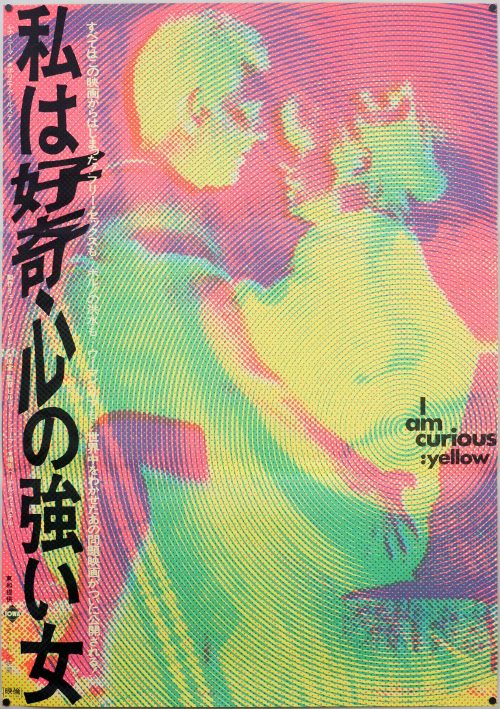
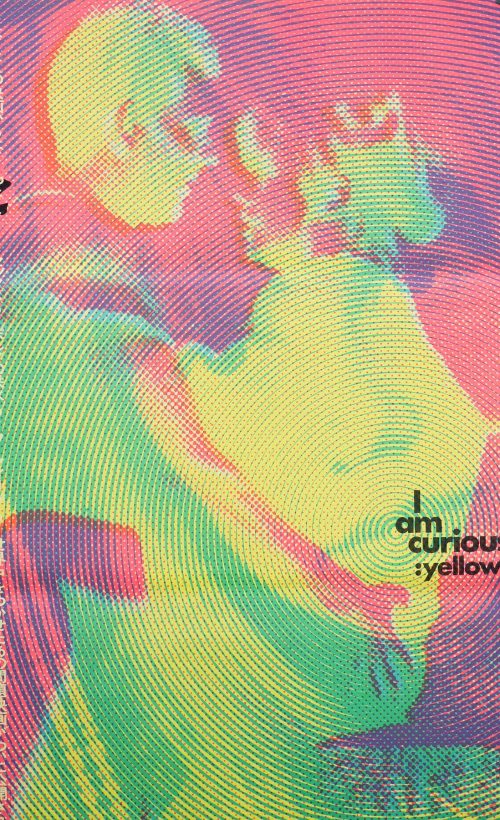
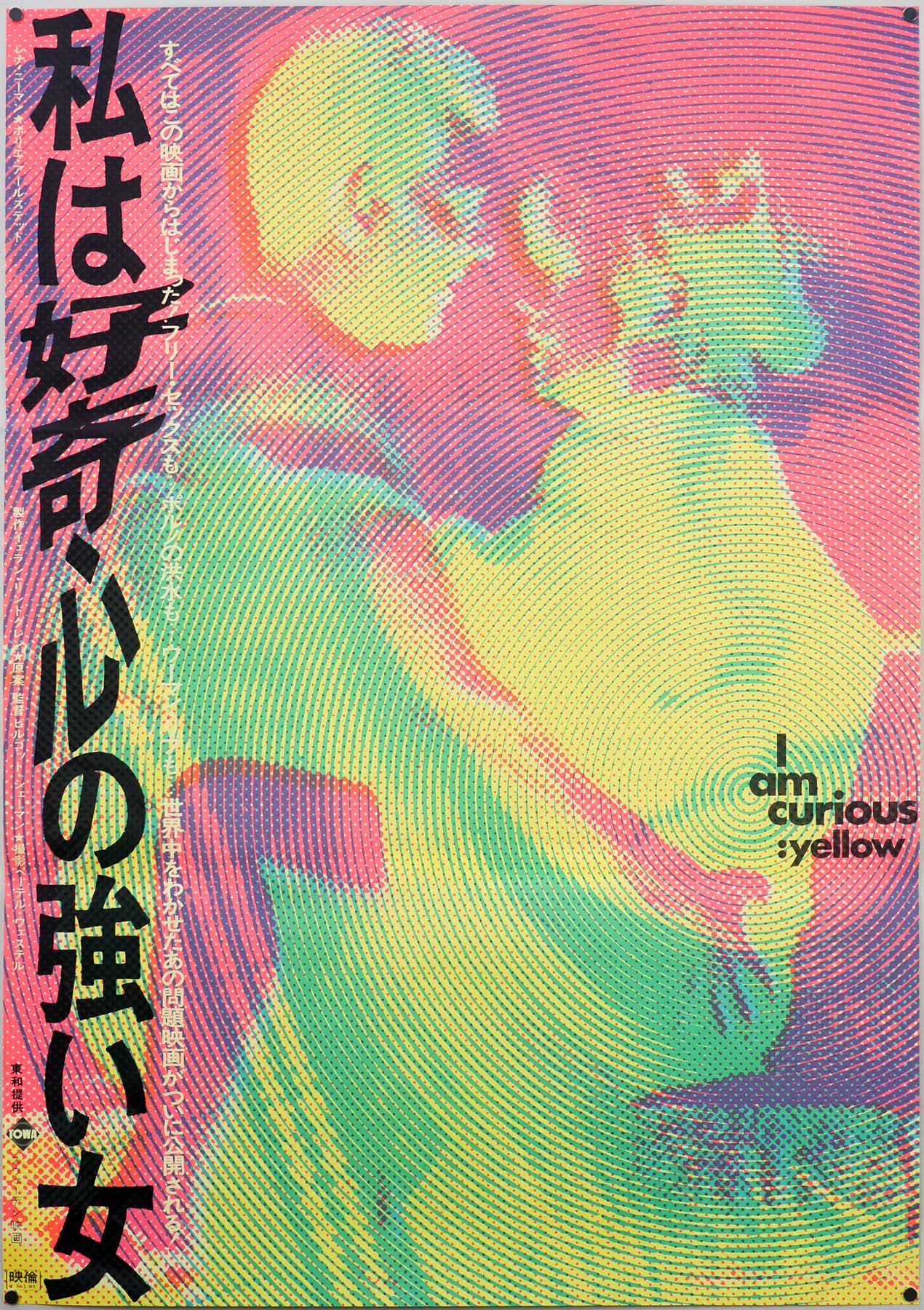
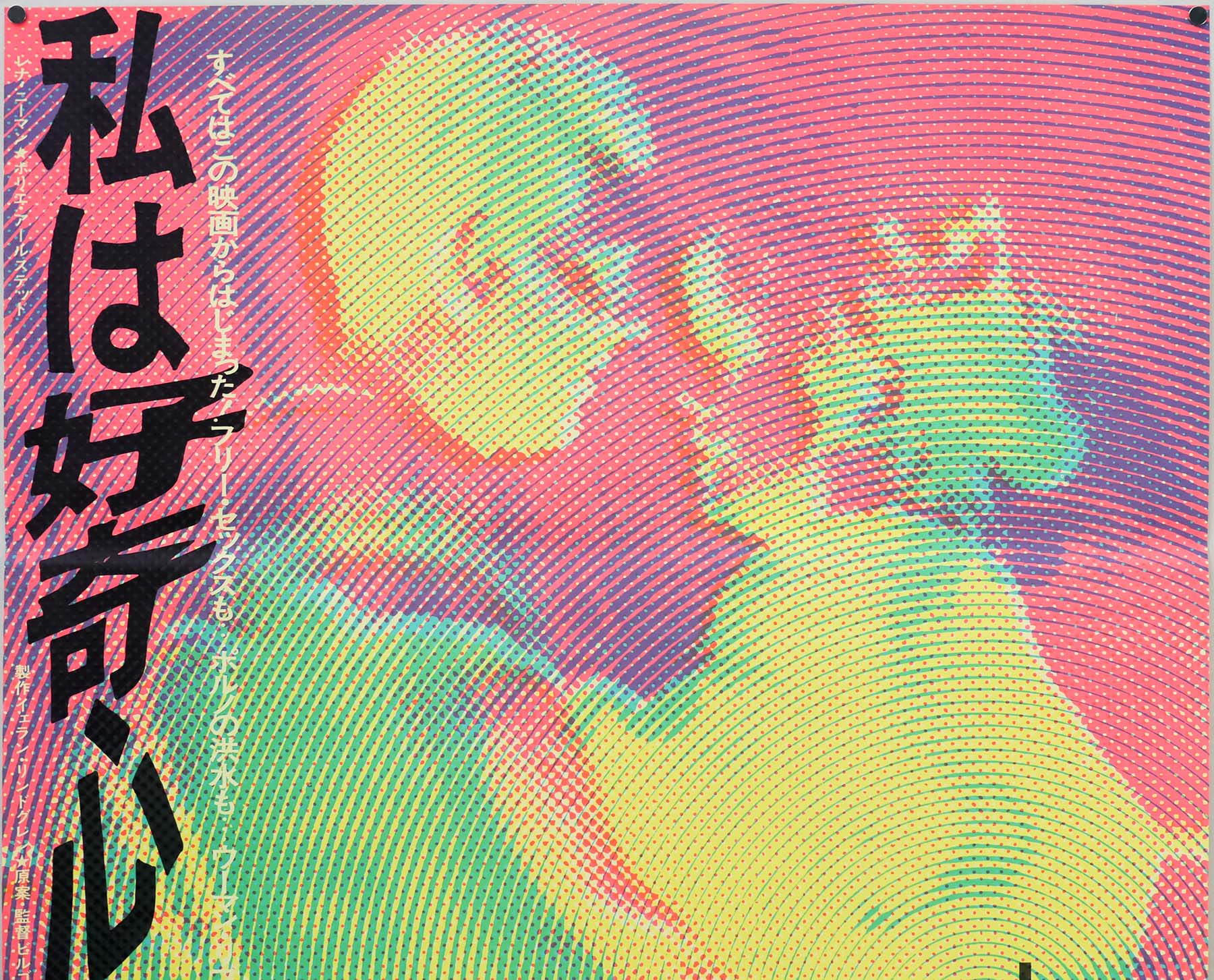
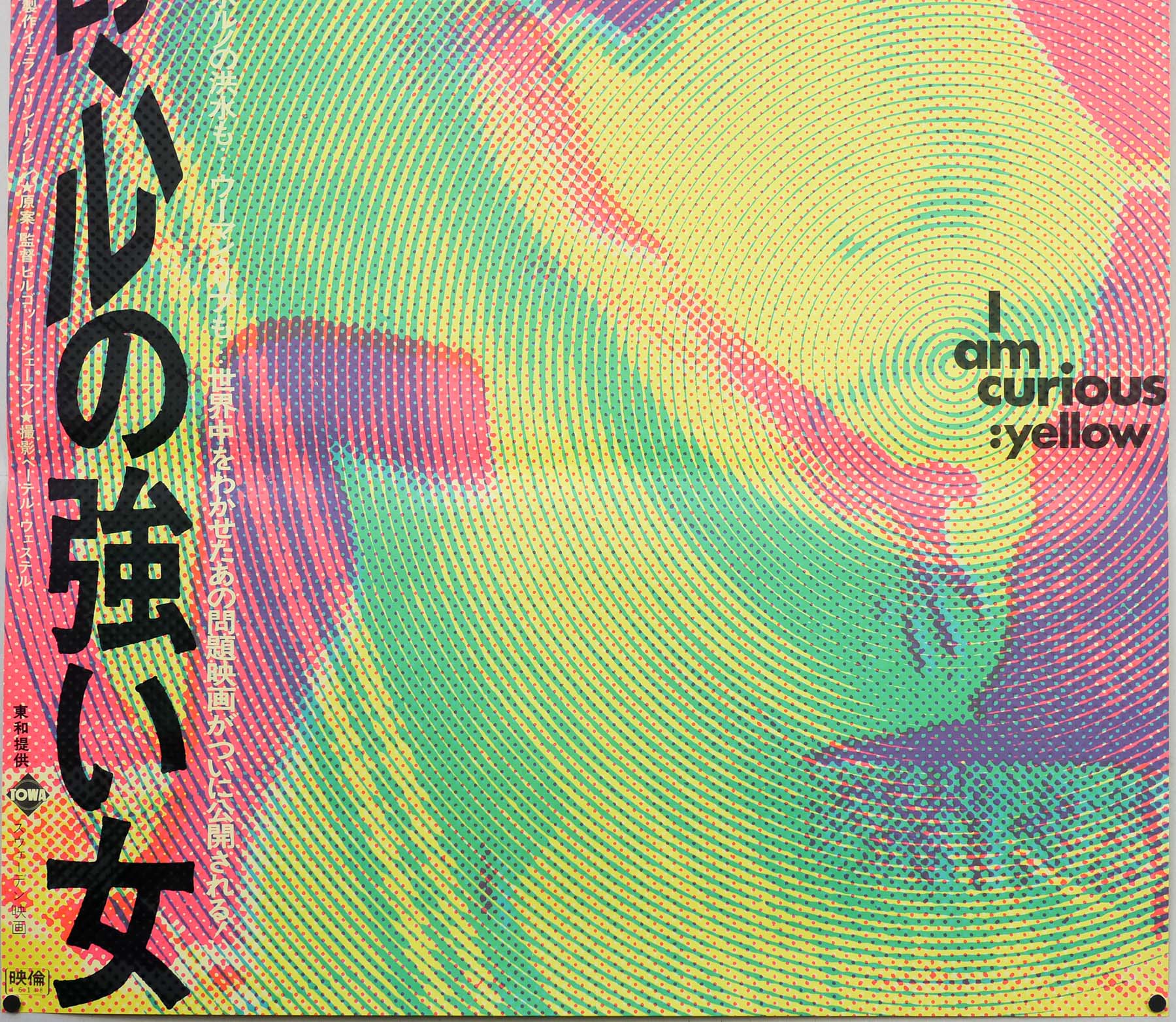
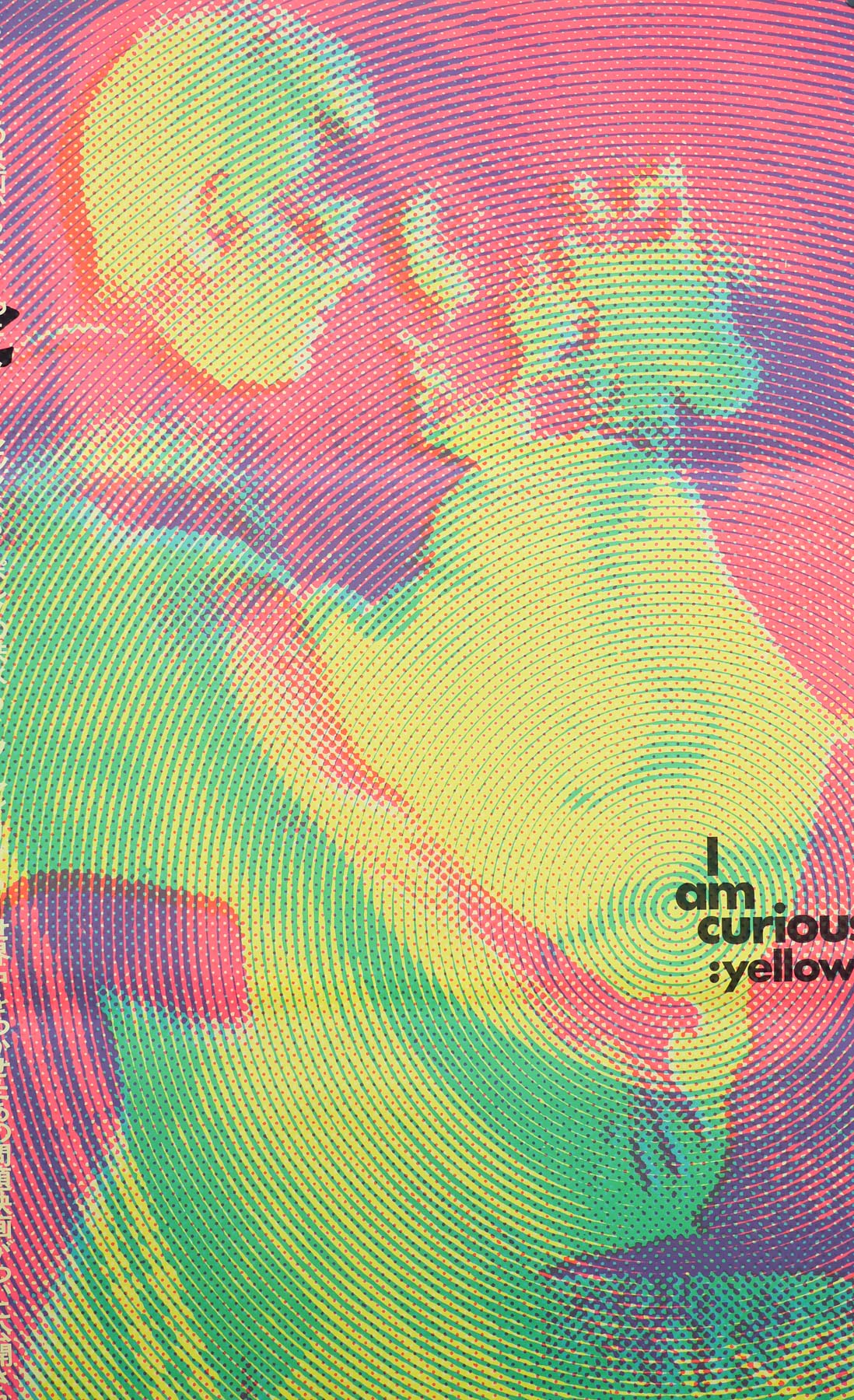
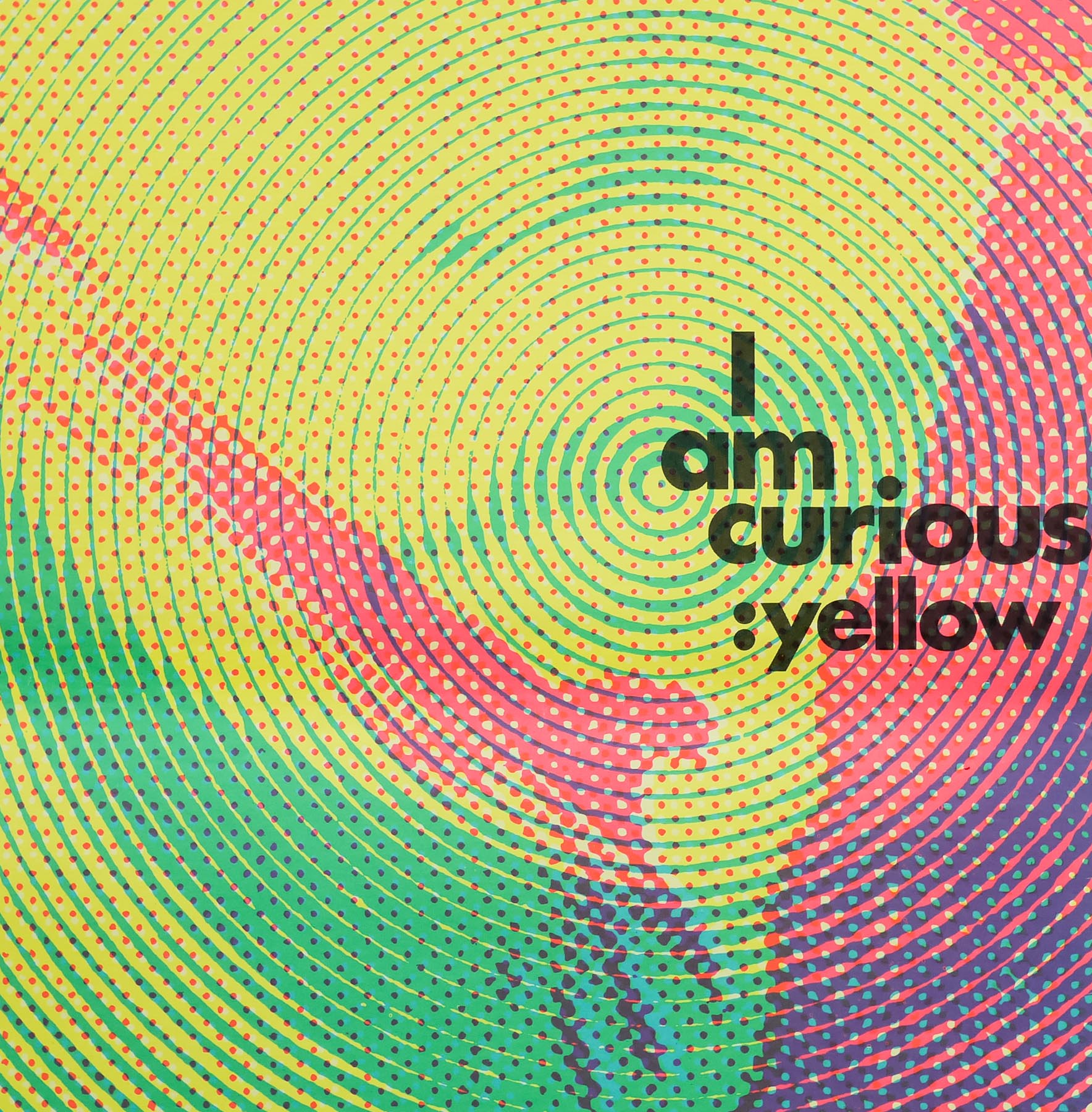
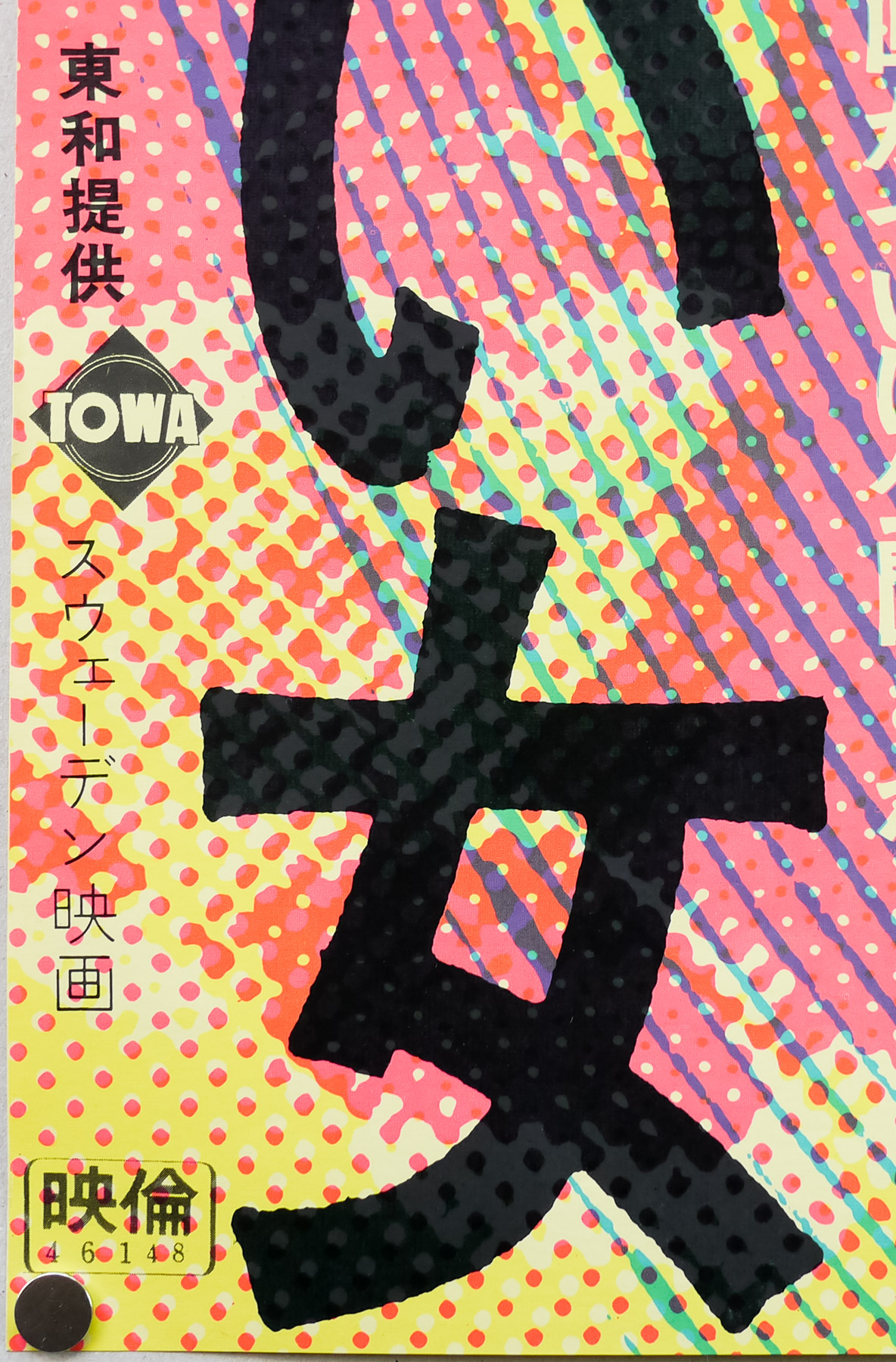
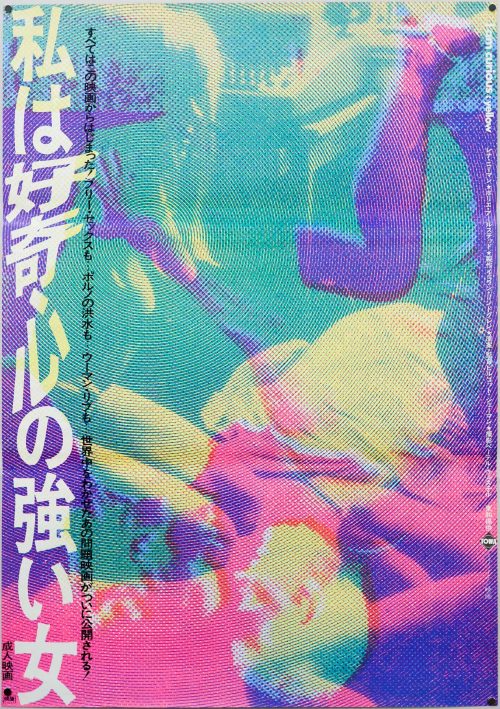
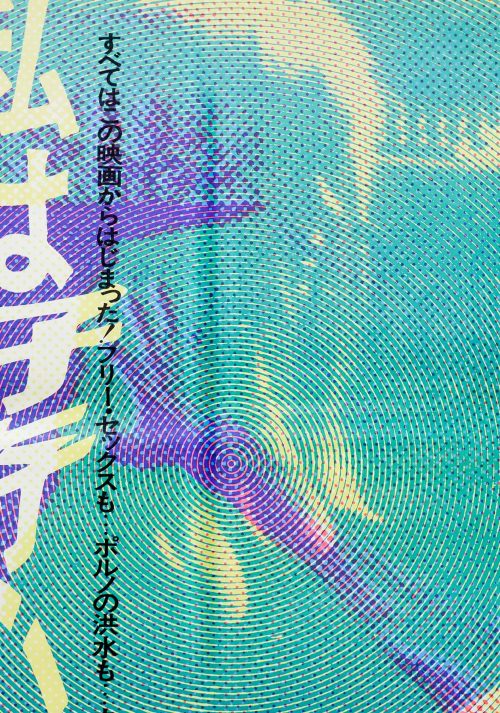
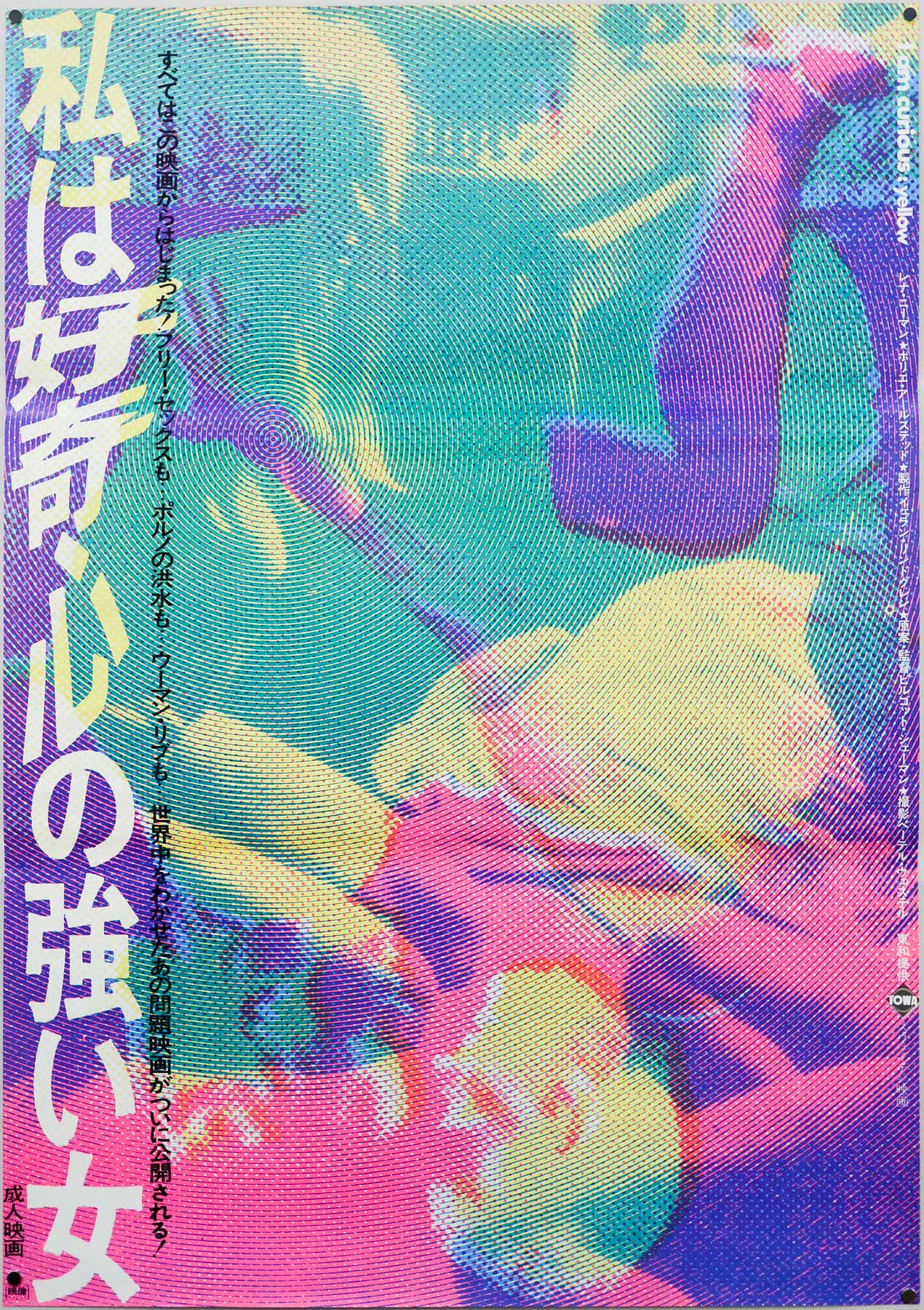
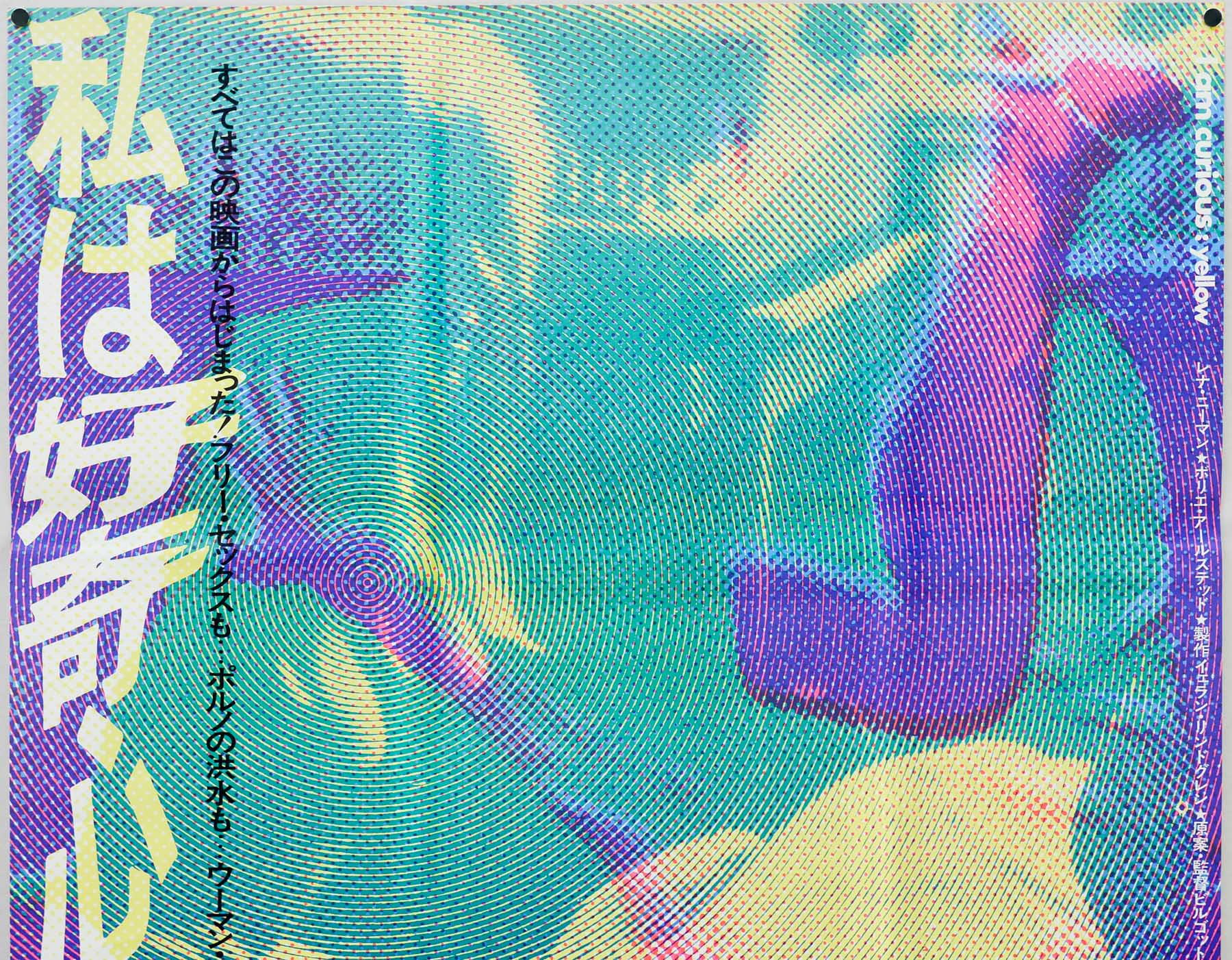
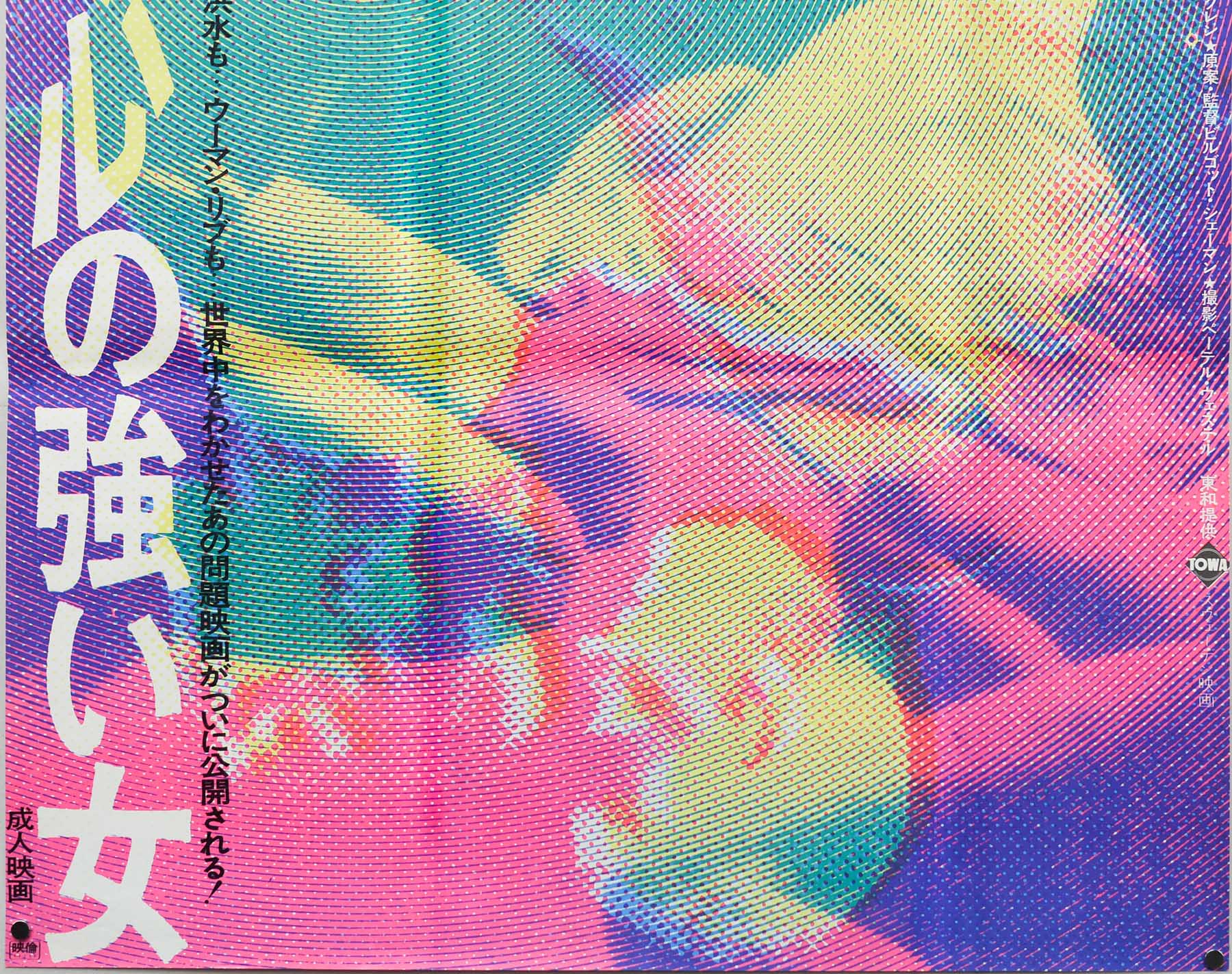
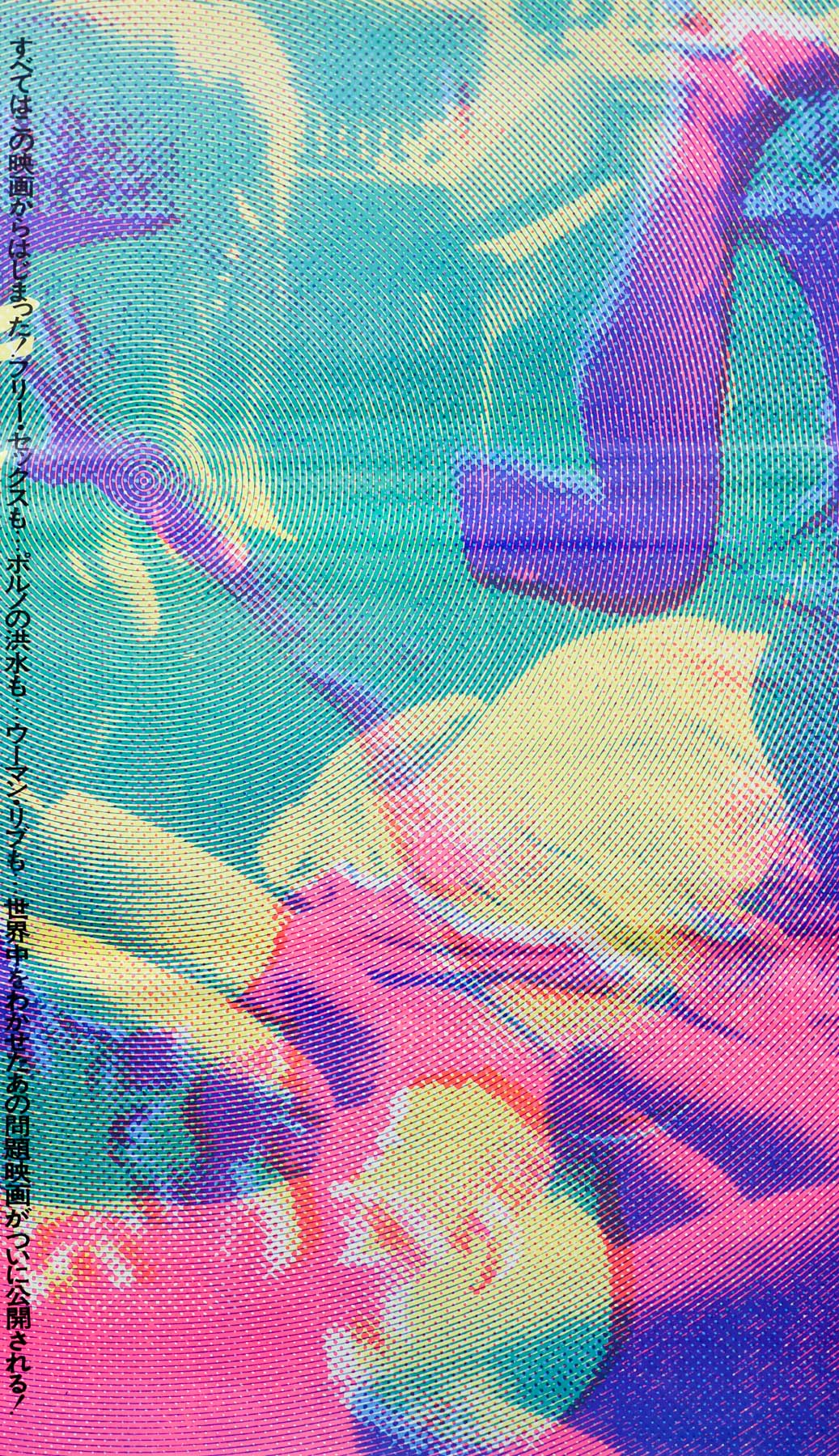
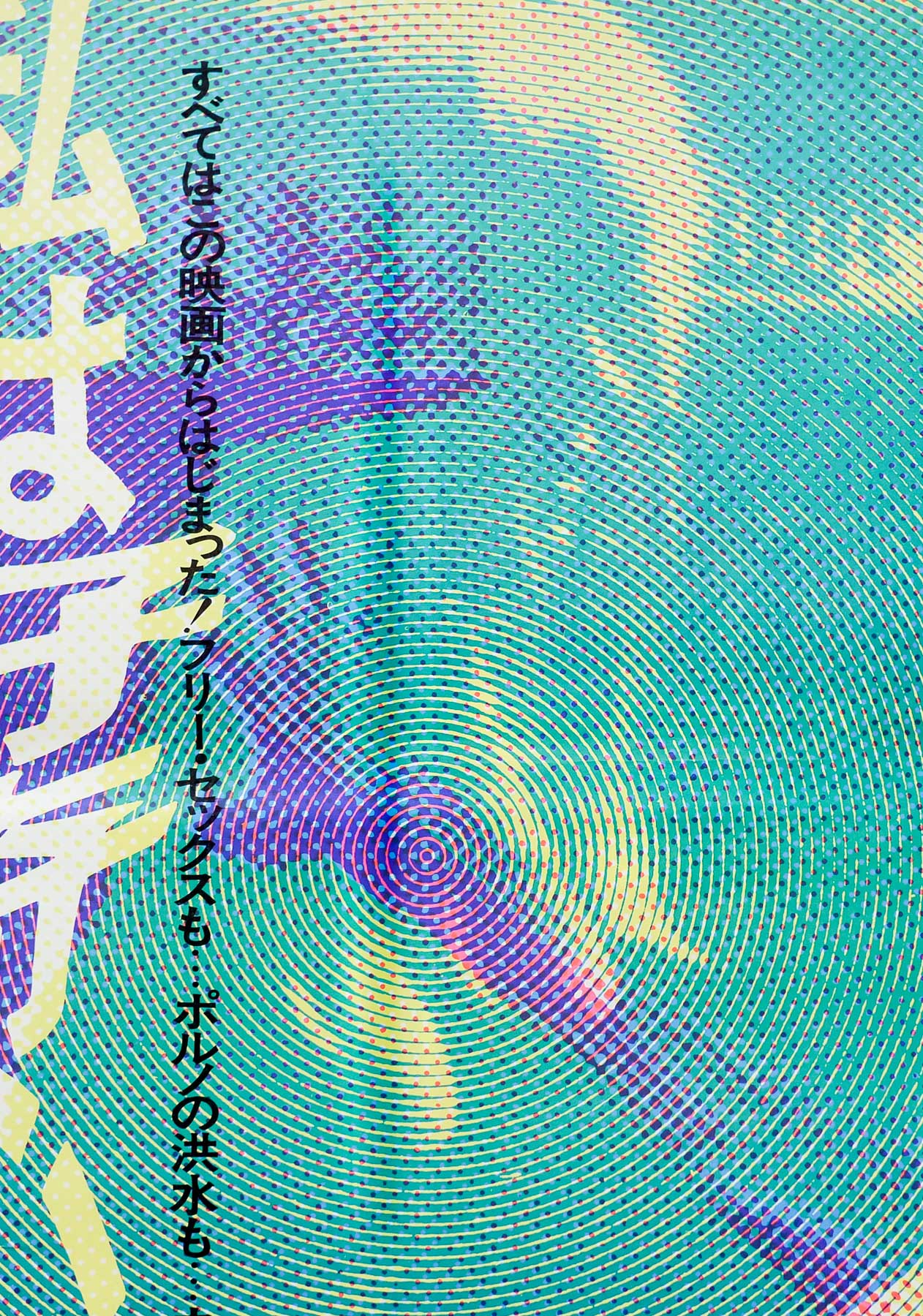
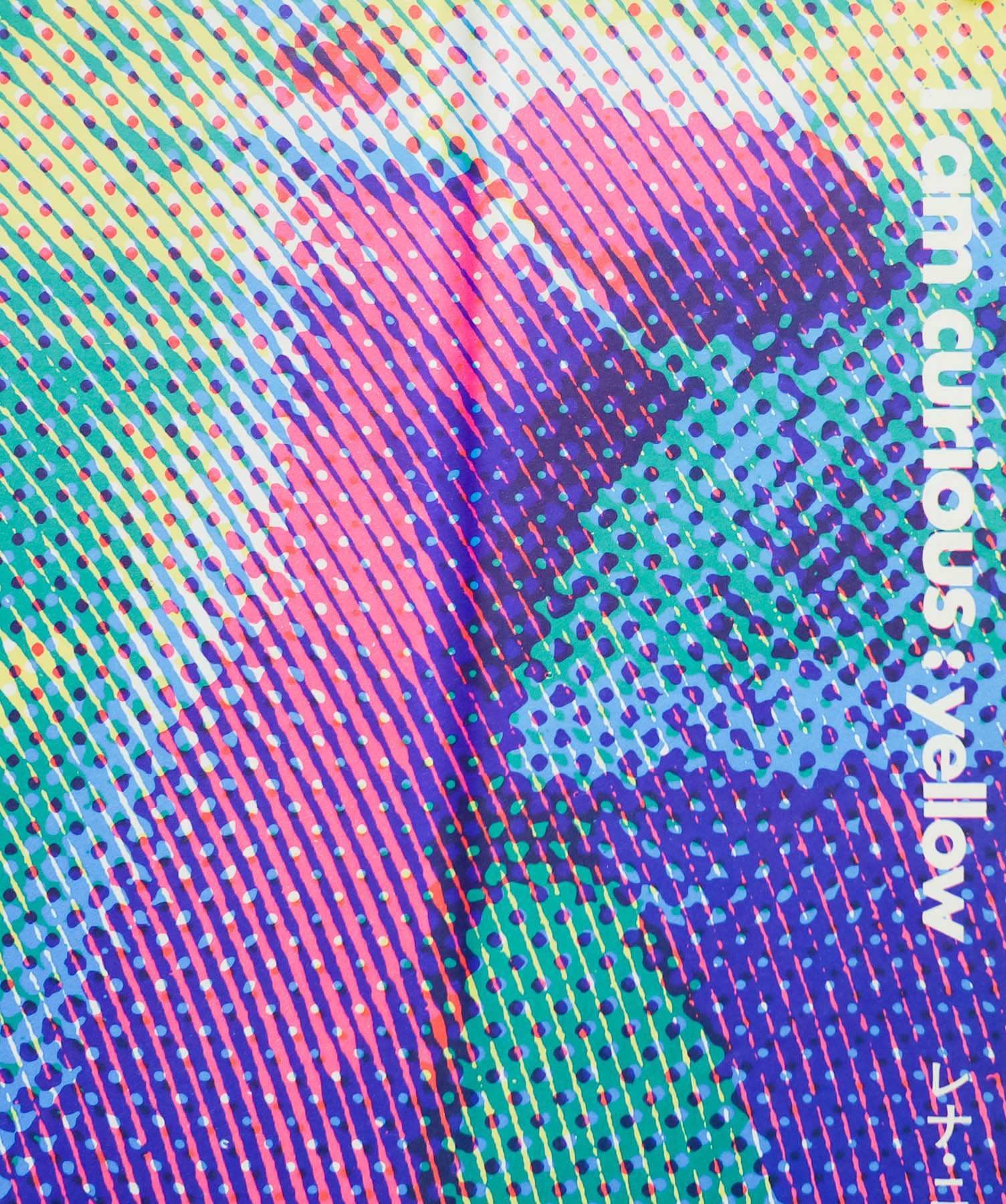
This is one of two Japanese B2 posters printed for the release (in 1971) of the landmark Swedish drama I Am Curious (Yellow) from the controversial director Vilgot Sjöman. Yellow is a companion film to I Am Curious (Blue) and the pair were originally meant to have been released as one 3.5 hour film. The colours in the titles refer to the Swedish flag. They were part of a series of left wing films that were made after the founding of the Swedish Film Institute in the early 1960s and the attempt, by prominent Swedish cultural figure Harry Schein, to start Sweden’s own flavour of New Wave cinema. 

Filmed in a pseudo-documentary, cinéma vérité style, the film sees Sjöman playing a version of himself, a director who decides to make a film starring his 22-year-old lover Lena Nyman (also playing herself) who is a theatre student interested in social issues. The film within the film is called ‘Lena on the Road’ and sees her leaving the flat she shares with her father and, when not getting involved in socio-political activism with a group of friends, she is shown traveling around Stockholm interviewing people she meets about issues including social classes and gender equality.

Later she meets another man called Börje who she begins a love-affair with but this becomes fraught when she discovers he has hidden the fact that he has another lover and a daughter. After traveling to a country retreat Lena begins meditating, practicing yoga and studying about non-violence, but her lover catches up with her and the pair continue their stormy relationship. Soon after the film within a film begins to break down as the ‘actors’ form a ‘real’ relationship that causes the ‘director’ to get jealous and wrap up shooting.

The film is most notable for its then ground-breaking use of full-frontal shots and scenes of (simulated) sexual intercourse that until then had been confined to sex films and not used in a dramatic context. The film was released in a cut form both in the US, UK and elsewhere but it was in the US that it attracted the most controversy with some states even going so far as banning the film outright on grounds of obscenity (Massachusetts in 1969, later overturned). As is the case with any censorship case brought against a film featuring sex and nudity, the box-office takings were helped greatly as punters flocked to see what the fuss was about. The film was the highest-grossing foreign film in the US for many years afterwards. This article on Vulture.com goes into more detail about the original release.

The other style of Japanese poster features a similarly colourful image but has white text down the side instead of black.

Ichi the Killer / B2 / style A / Japan

08.02.16

Poster Poster
Title
Ichi the Killer
AKA
Koroshiya 1 (Japan - English title - means 'Hitman')
Year of Film
2001
Director
Takashi Miike
Starring
Tadanobu Asano, Nao Ômori, Shin'ya Tsukamoto, Paulyn Sun, Susumu Terajima, Shun Sugata, Toru Tezuka, Yoshiki Arizono, Kiyohiko Shibukawa
Origin of Film
Japan
Genre(s) of Film
Tadanobu Asano, Nao Ômori, Shin'ya Tsukamoto, Paulyn Sun, Susumu Terajima, Shun Sugata, Toru Tezuka, Yoshiki Arizono, Kiyohiko Shibukawa,
Type of Poster
B2
Style of Poster
Style A
Origin of Poster
Japan
Year of Poster
2001
Designer
Unknown
Artist
--
Size (inches)
20 6/16" x 28 13/16"
SS or DS
SS
Tagline
--

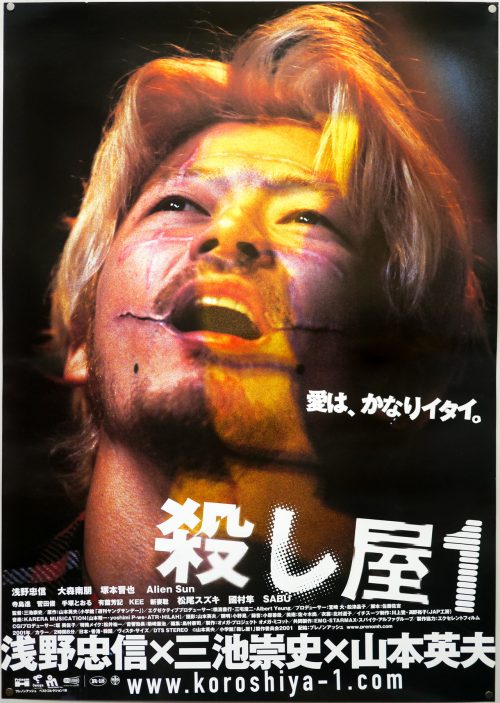
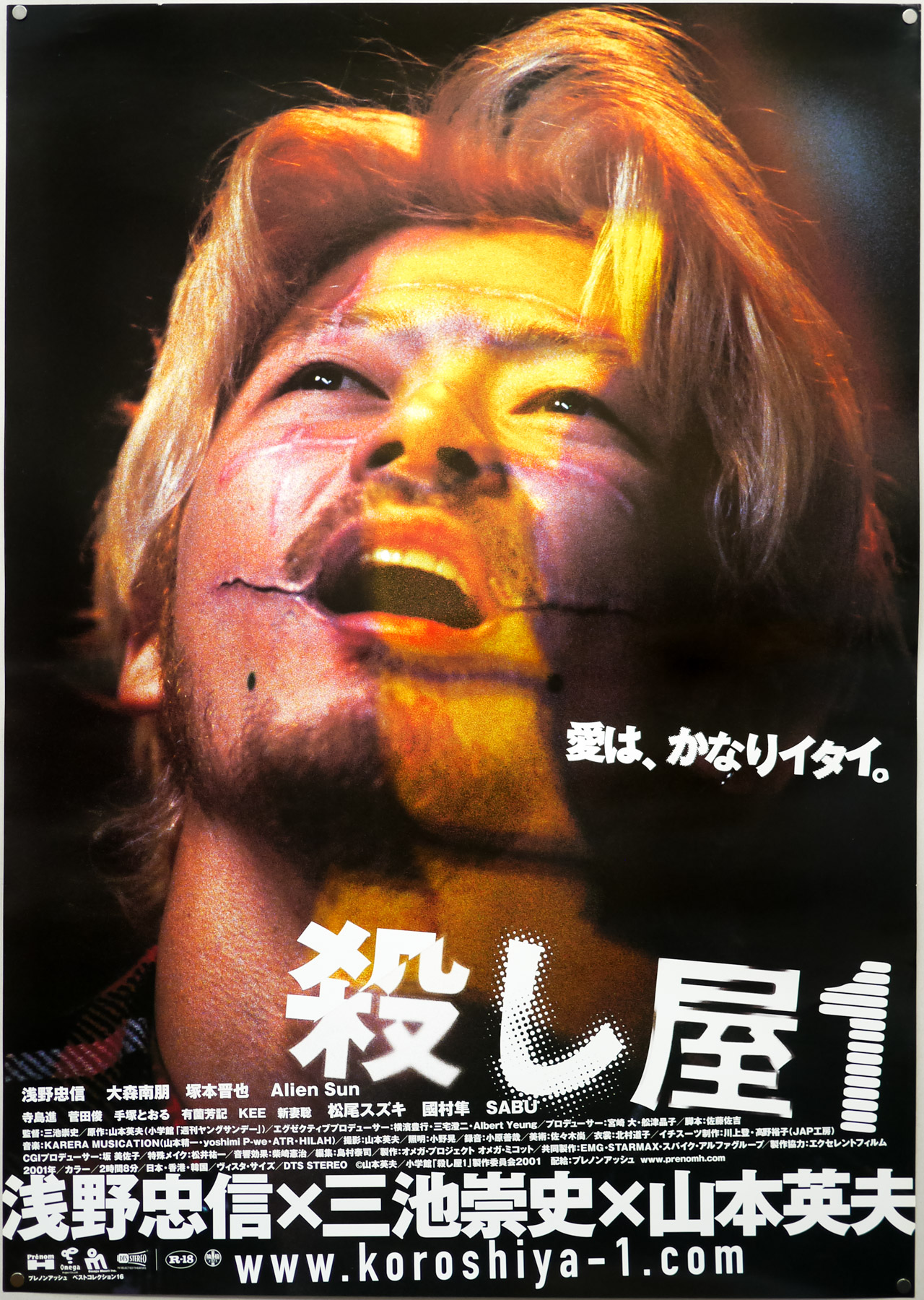
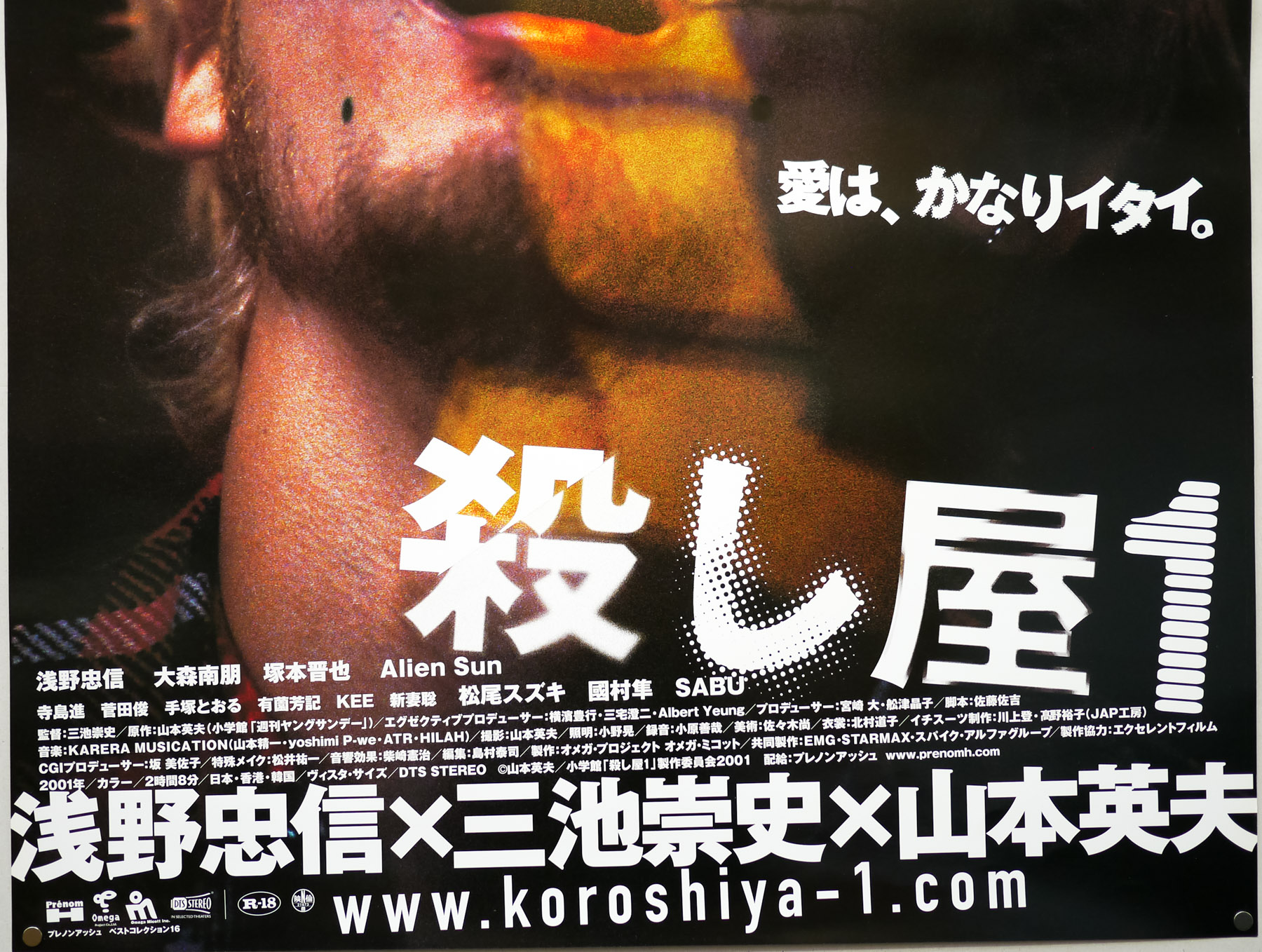
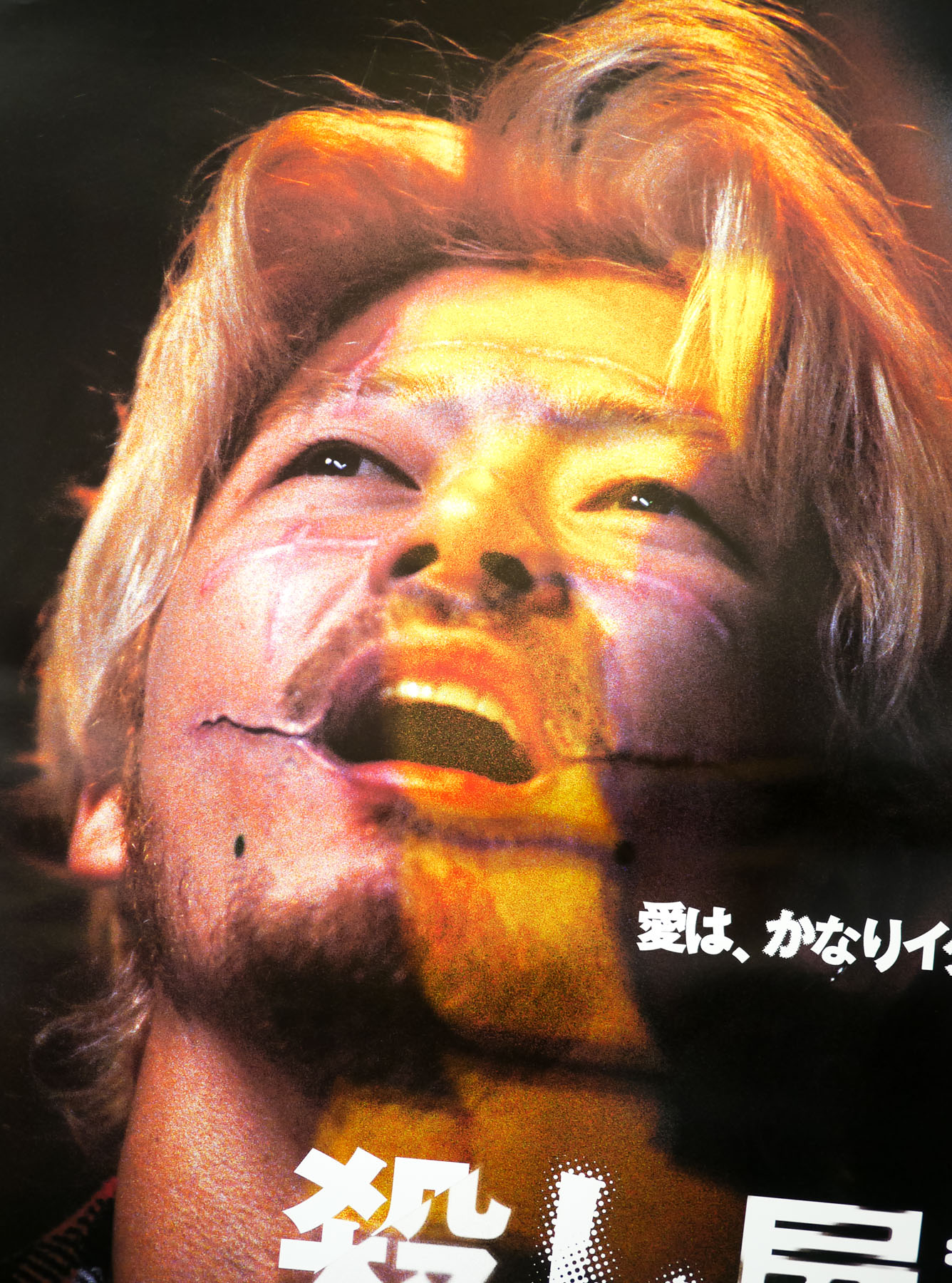
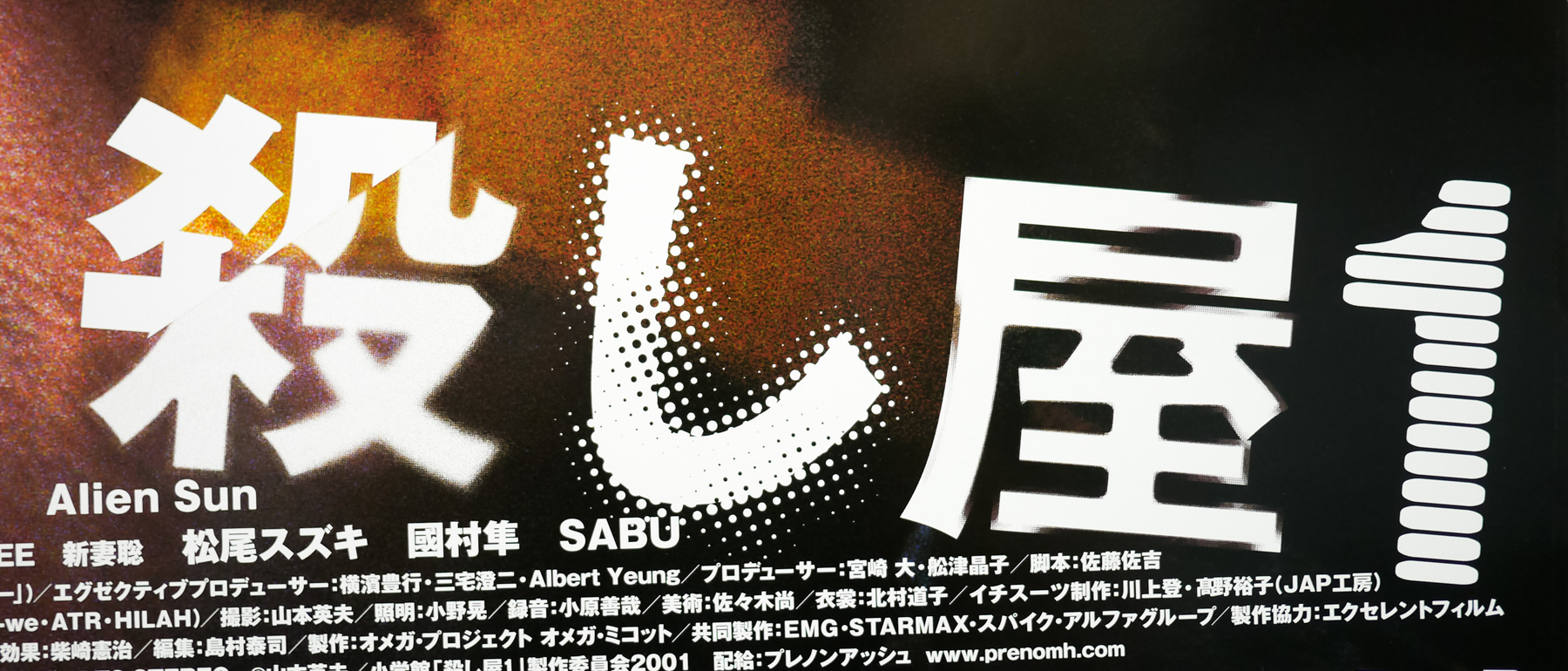
This is one of two styles of Japanese B2 posters printed for the release of director Takashi Miike‘s controversial 2001 film Ichi the Killer. A notably prolific director, Miike released 6 other films in the same year as Ichi alone, although it would be this one that would gain the most international notoriety. Based on the manga series of the same name by Hideo Yamamoto, the film focuses on the machinations of rival yakuza gangs within a crime syndicate and their interaction with Ichi (Nao Ômori), a shy and seemingly meek loner with a very dark side.

The film begins with the supposed disappearance of the gang boss Anjo, who vanishes from his apartment with millions of Yen, much to the confusion of his men. The audience sees the bloody aftermath of the fate that Anjo suffered at the hands of Ichi but a clean up crew led by Jijii (Shin’ya Tsukamoto) returns his apartment to a spotless state before his henchmen, led by the sadistic Kakihara (Tadanobu Asano) arrives.

The hunt for Anjo begins and Kakihara wastes no time in kidnapping a rival gang leader, Suzuki (Susumu Terajima) and hangs him from meat hooks to try and get him to confess. When it becomes clear he’s got the wrong culprit, Kakihara is forced to apologise and then cuts off his own tongue as a punishment. After being kicked out of the syndicate, the gang continues to hunt for Anjo. The audience learns that Jijii has been psychologically manipulating Ichi for years and has trained him in preparation to be used as a kind of weapon against whoever he decides to target. Suzuki has offered Jijii a large sum of money to take out Kakihara and his gang in revenge for their earlier attack and they must hunt for Ichi before he can get to them first.

It’s fair to say that, in true Miike style, the film doesn’t shy away from violence and sadistic torture and there are some truly brutal sequences. It’s not hard to see why it attracted controversy and was even banned outright in a few countries soon after its release. Despite some very ropey CGI there are several scenes that still shock today and Miike uses editing and sound design to great effect.

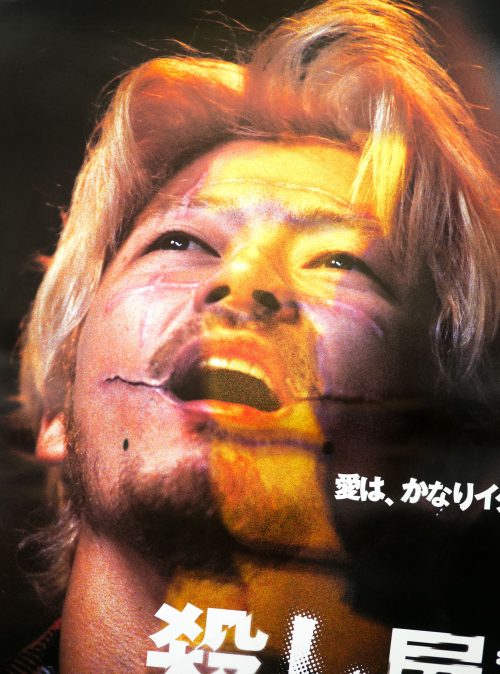
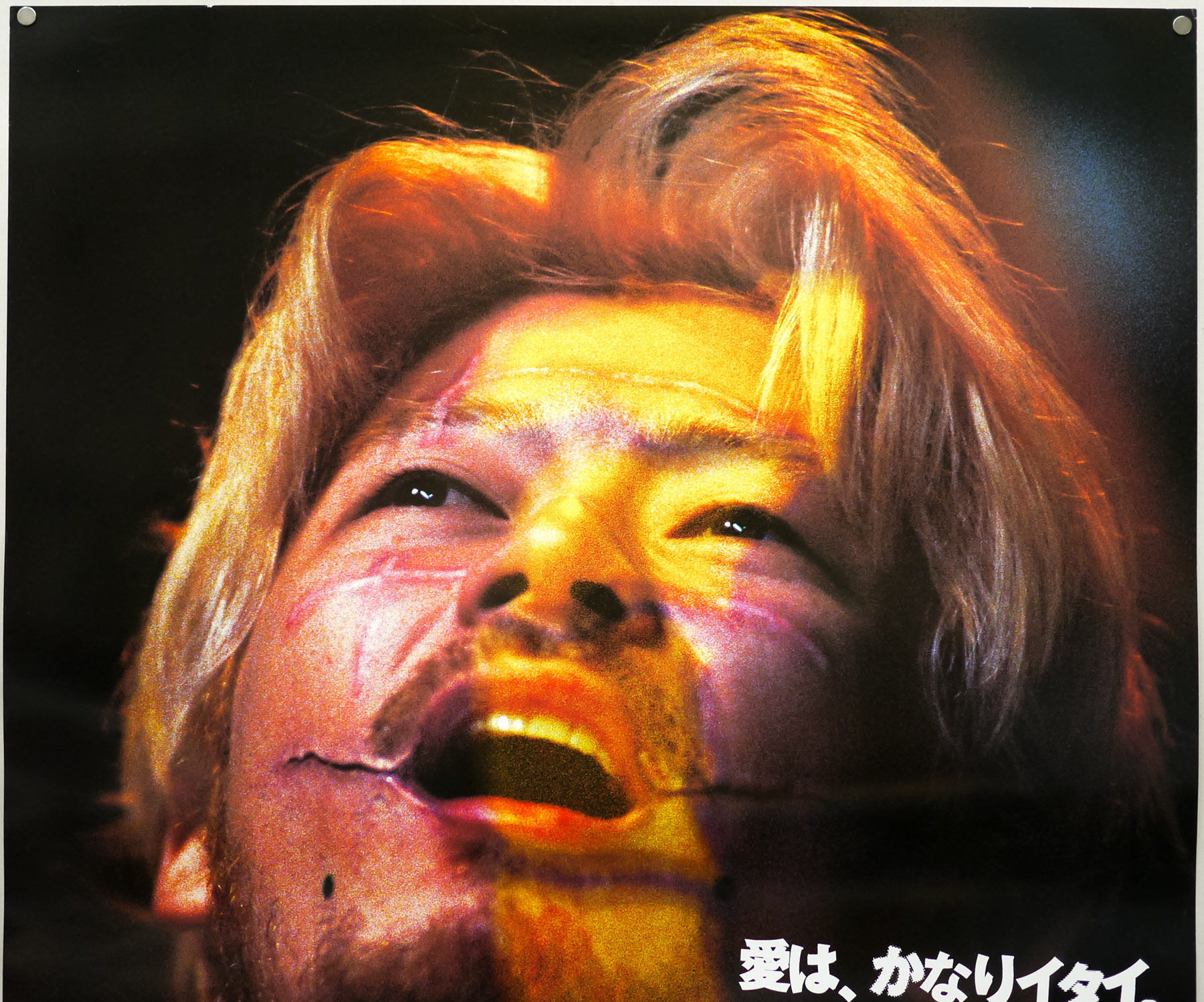
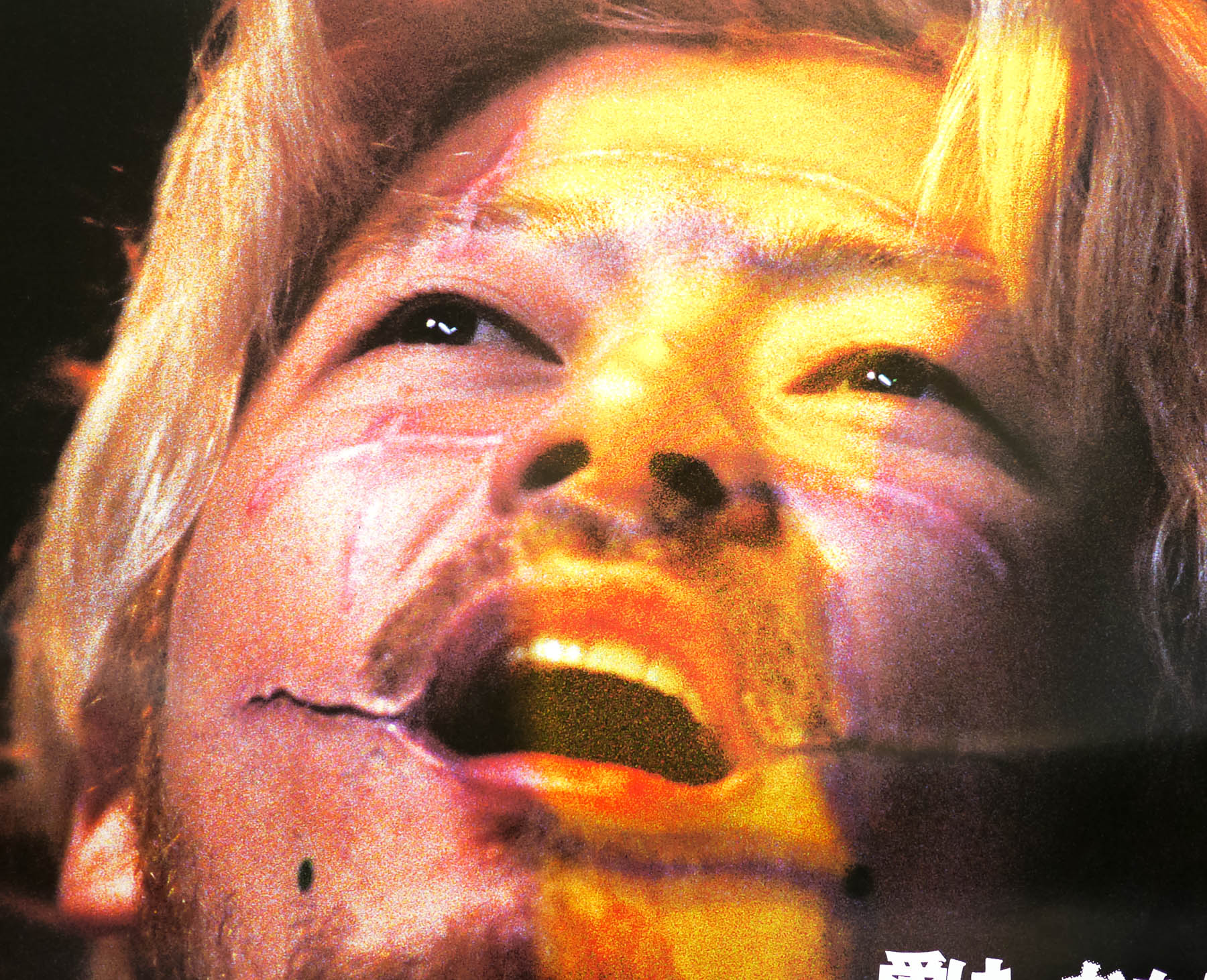
This poster, which I’ve named ‘Style A’ features the standout character of Kakihara (here with the number 1 seen on the back of Ichi’s killer’s outfit projected onto his face). The other style also features Kakihara but in a very different situation.

The Fuller Report / B2 / Japan

21.03.16

Poster Poster
Title
The Fuller Report
AKA
Rapporto Fuller, base Stoccolma (Italy - original title)
Year of Film
1968
Director
Sergio Grieco
Starring
Ken Clark, Beba Loncar, Lincoln Tate, Jess Hahn, Paolo Gozlino, Serge Marquand, Sarah Ross, Mirko Ellis, Claudio Biava, Gianni Brezza, Nicole Tessier
Origin of Film
Italy | France
Genre(s) of Film
Ken Clark, Beba Loncar, Lincoln Tate, Jess Hahn, Paolo Gozlino, Serge Marquand, Sarah Ross, Mirko Ellis, Claudio Biava, Gianni Brezza, Nicole Tessier,
Type of Poster
B2
Style of Poster
--
Origin of Poster
Japan
Year of Poster
1970
Designer
Unknown
Artist
--
Size (inches)
20 4/16" x 28 13/16"
SS or DS
SS
Tagline
--

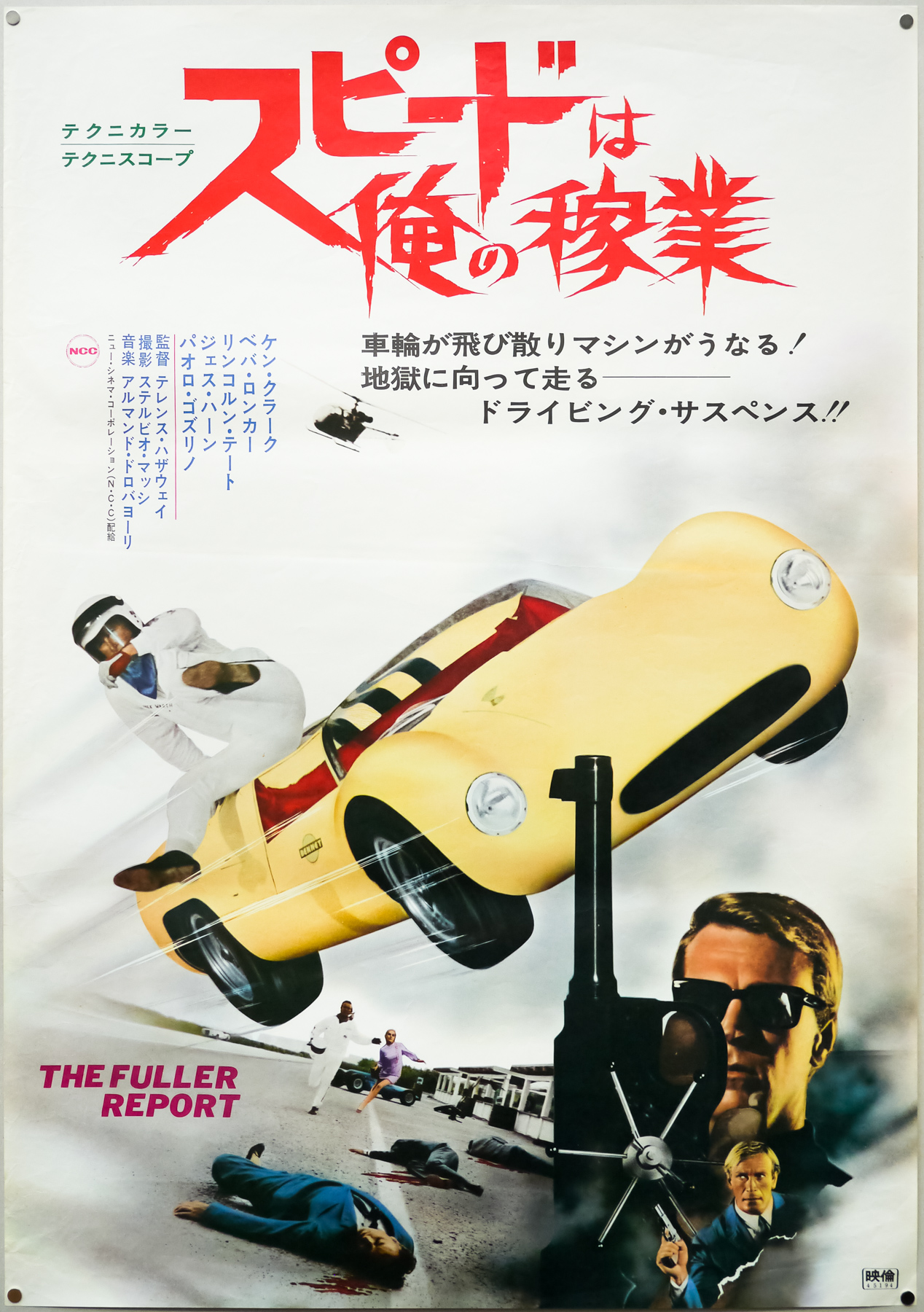
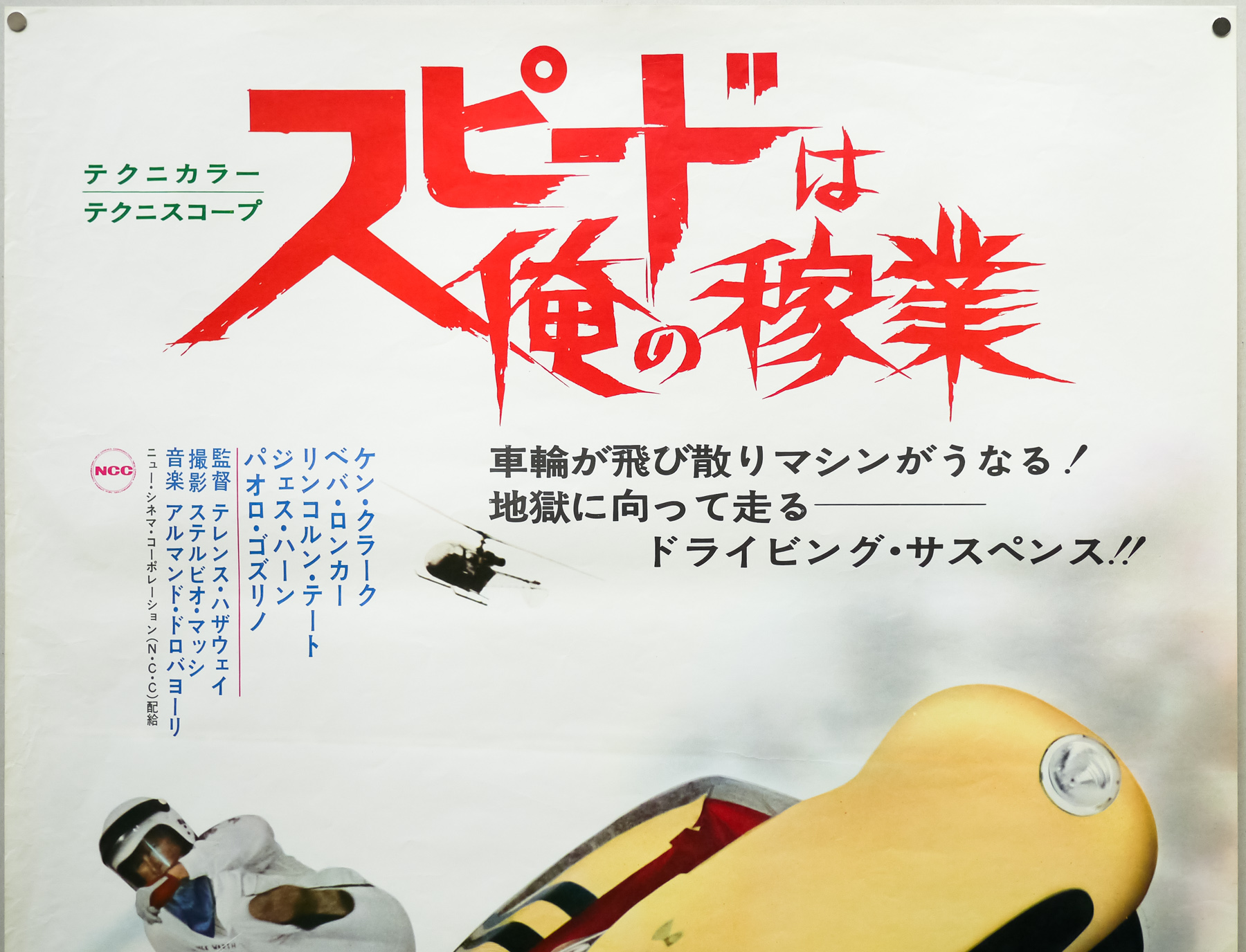
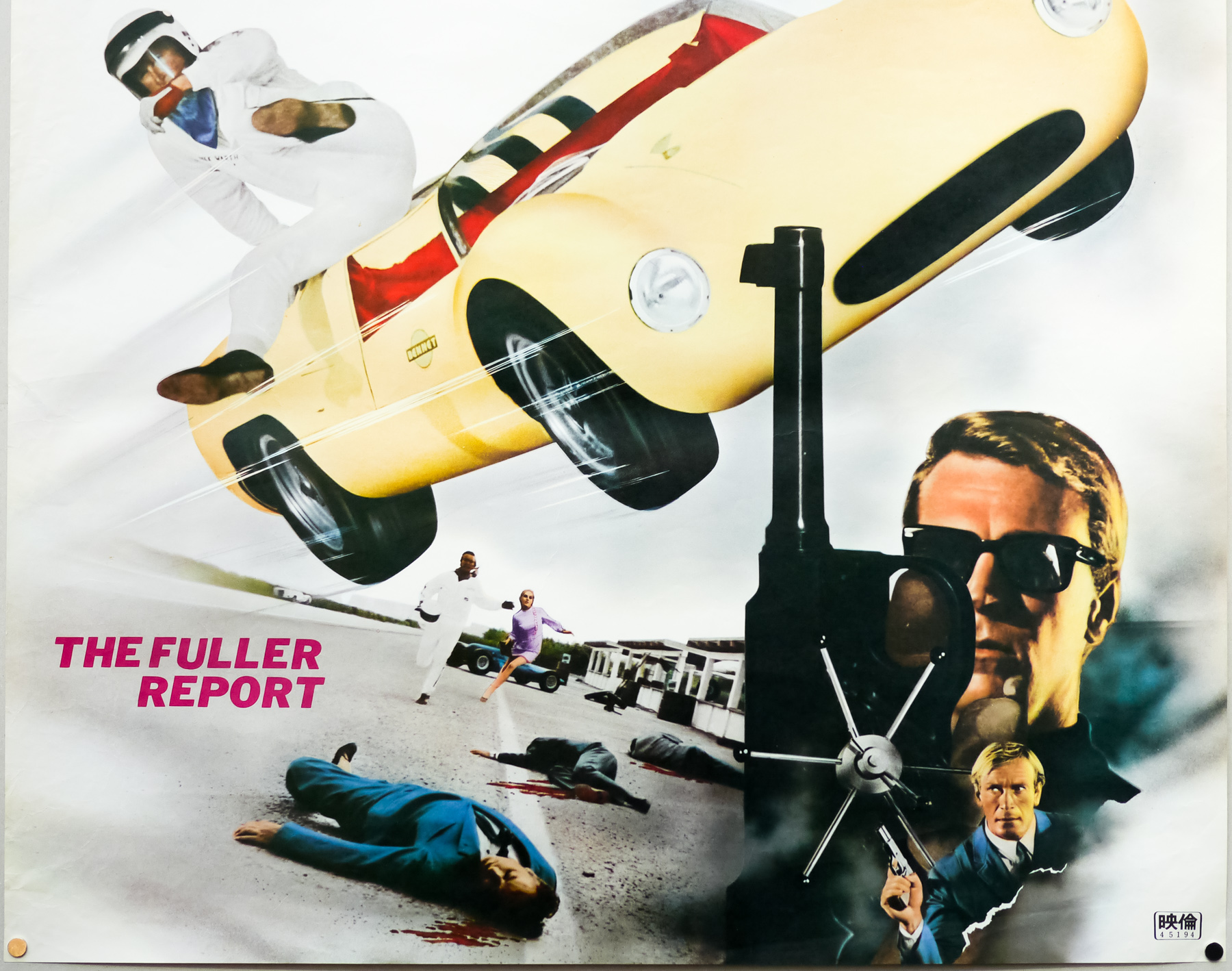
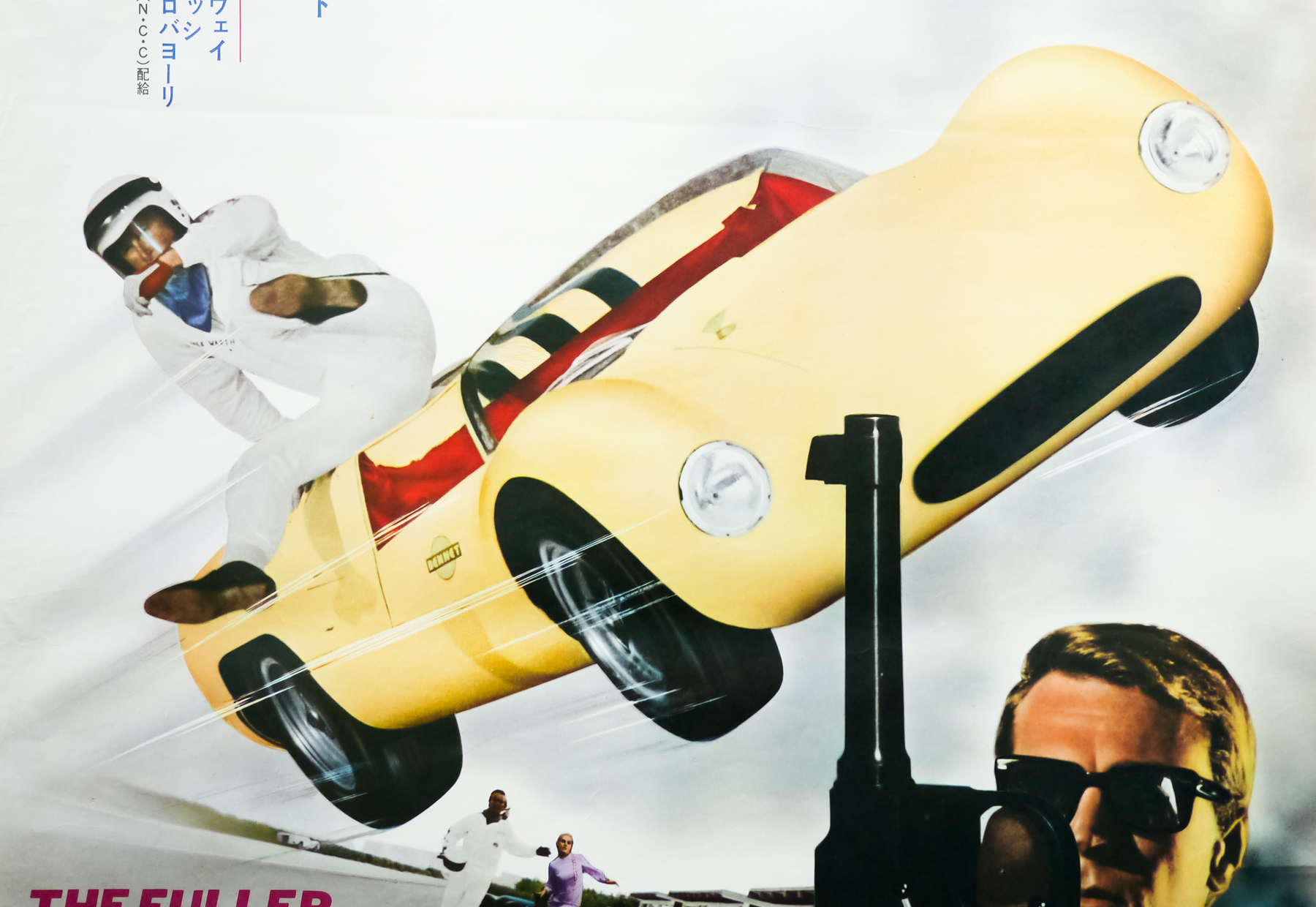
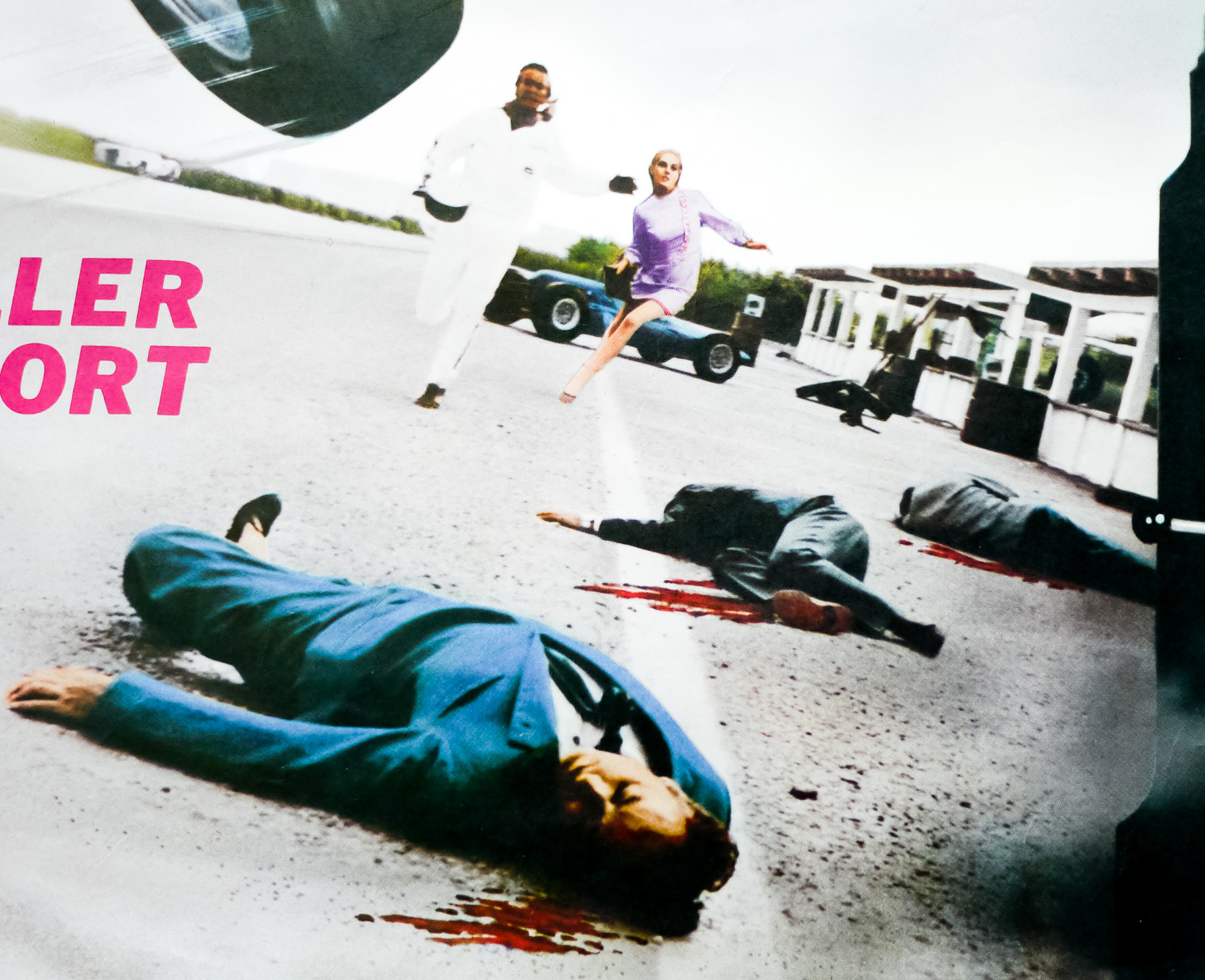
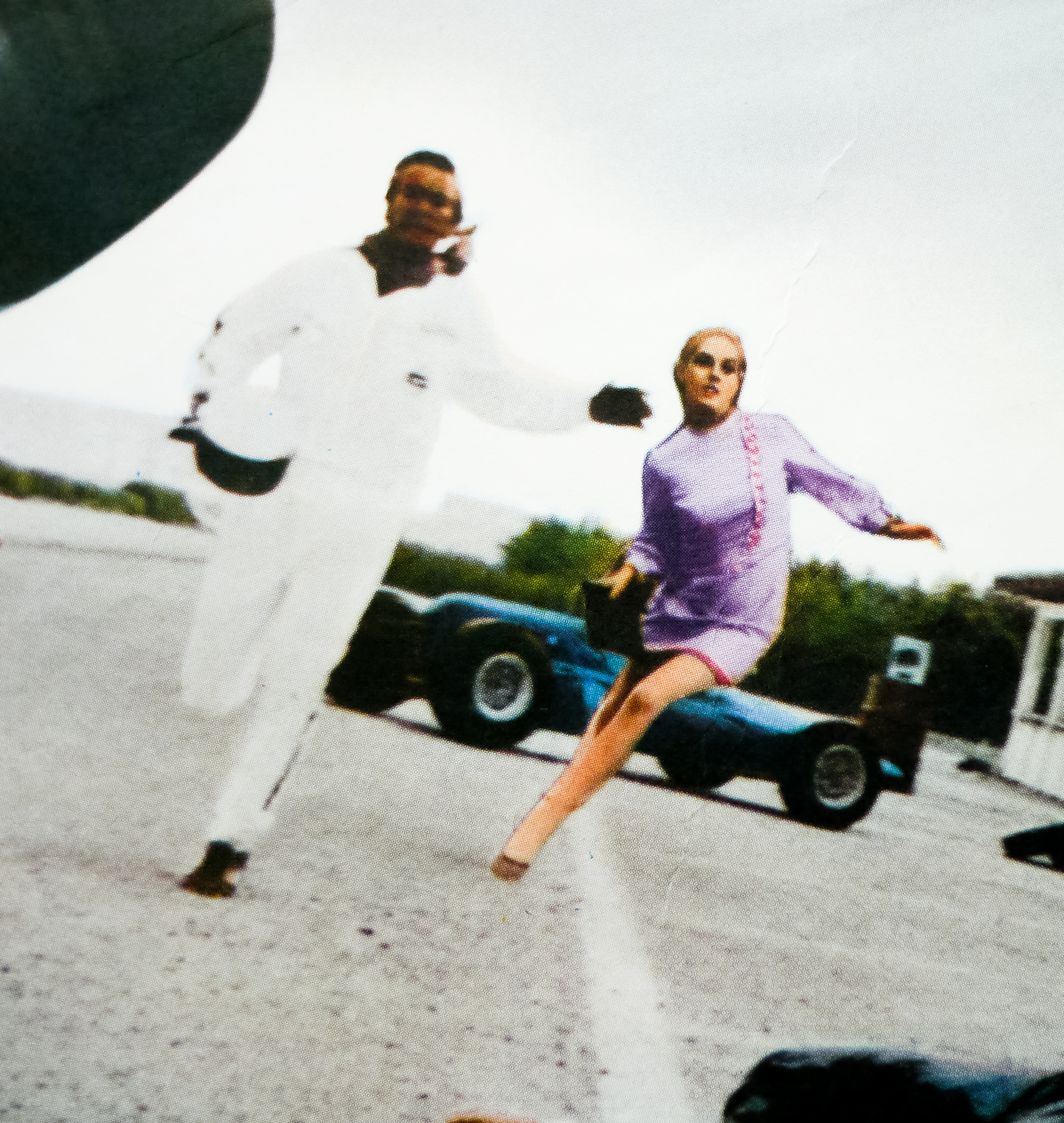
A dynamic photographic montage features on this Japanese B2 for the obscure 1968 action thriller, The Fuller Report. One of a number of films in the Eurospy genre, which were European co-productions (this is Italian and French) of espionage thrillers intended to capitalise on the huge success of the Bond films that began with Dr No in 1962. It’s estimated that there were over 50 films in the genre, with productions from all over Europe, including the UK. Some of the more famous films include those starring Dean Martin as the spy Matt Helm (four films including ‘The Silencers’) and France’s OSS 117 (8 films plus two homage spoofs in 2006 and 2009).

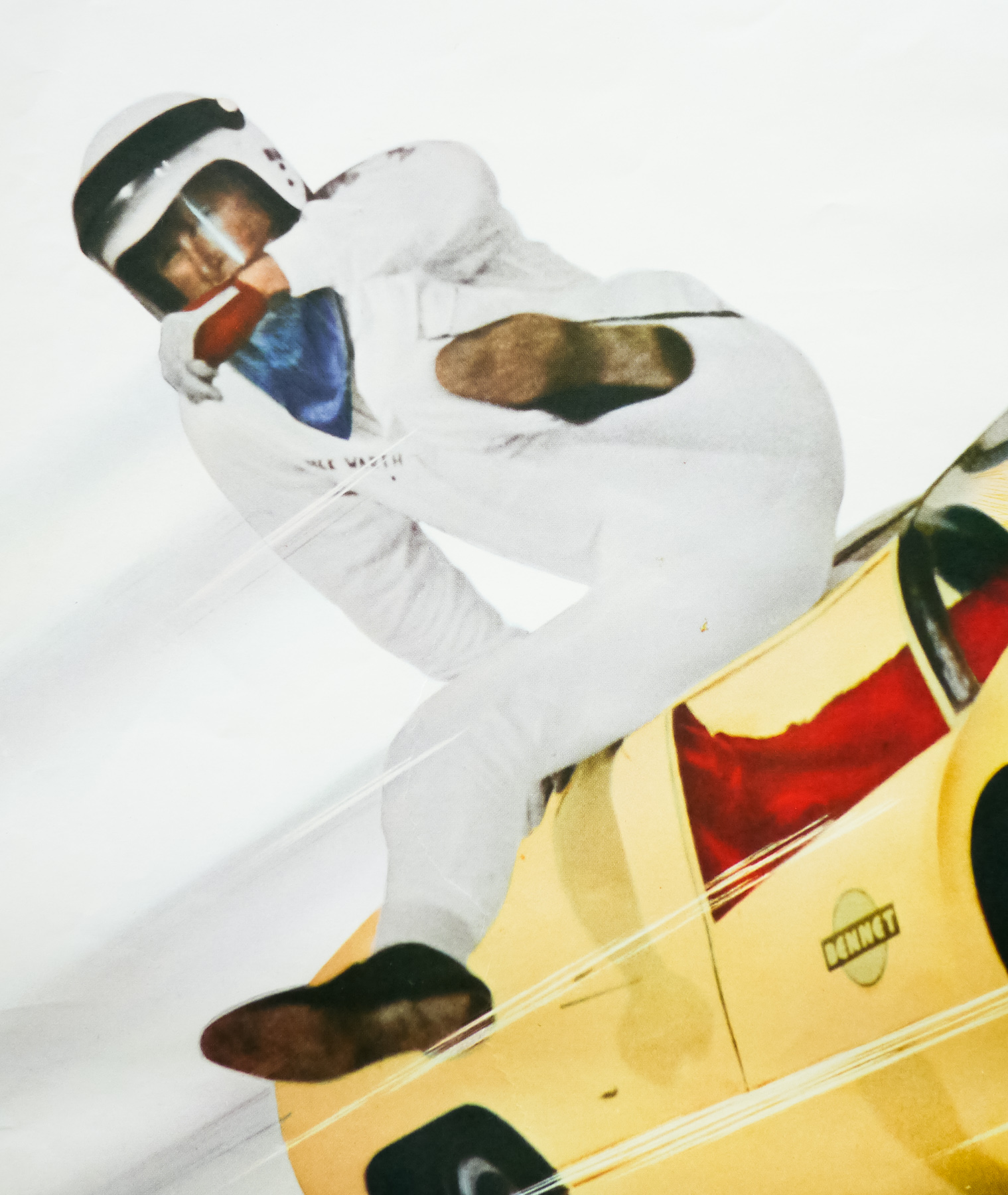
This film stars the American actor Ken Clark (perhaps best known as the character Stewpot in South Pacific) as Dick Worth, a skilled race driver who gets involved in an espionage plot. It’s IMDb page describes the plot thusly:

Ken Clark is a race car driver and a good one. Somehow, he becomes entangled in espionage involving a Russian Ballerina and a secret document called the Fuller Report. Not being any kind of a secret agent, Dick Worth [Clark] has to rely on his quick thinking, catlike reflexes and most of all, his luck to see him through. After all, the powers involved play only one way … for keeps!

The film takes in Stockholm, Zurich and London. Given the paucity of reviews on IMDb it appears to have disappeared from public availability and there are no obvious DVD or blu-ray releases of the film. However, it does seem to be available to stream on the American Amazon Instant service, should you want to see it.

The Mysterious Island of Captain Nemo / B2 / Japan

03.06.16

Poster Poster
Title
The Mysterious Island of Captain Nemo
AKA
La isla misteriosa (original title) | Jules Verne's Mysterious Island of Captain Nemo (alt. title) | The Mysterious Island (USA)
Year of Film
1973
Director
Juan Antonio Bardem, Henri Colpi
Starring
Omar Sharif, Ambroise Bia, Jess Hahn, Philippe Nicaud, Gérard Tichy, Gabriele Tinti, Rafael Bardem Jr., Mariano Vidal Molina, Rik Battaglia
Origin of Film
Spain | France | Italy | Cameroon
Genre(s) of Film
Omar Sharif, Ambroise Bia, Jess Hahn, Philippe Nicaud, Gérard Tichy, Gabriele Tinti, Rafael Bardem Jr., Mariano Vidal Molina, Rik Battaglia,
Type of Poster
B2
Style of Poster
--
Origin of Poster
Japan
Year of Poster
1975
Designer
Unknown
Artist
--
Size (inches)
20 5/16" x 28 14/16"
SS or DS
SS
Tagline
--

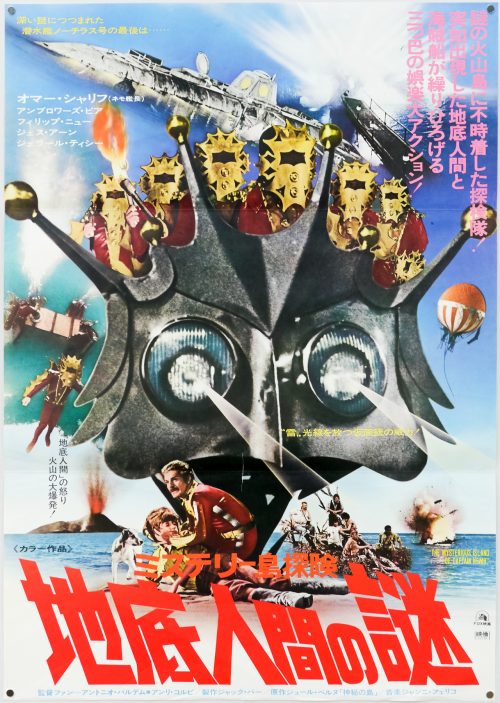
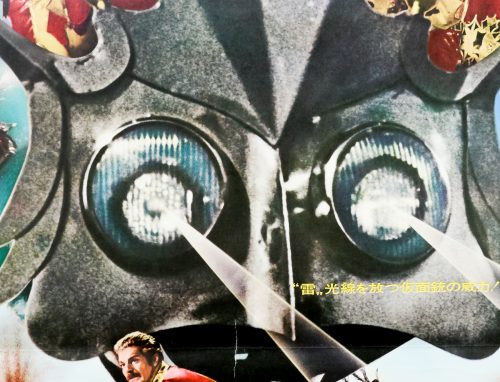
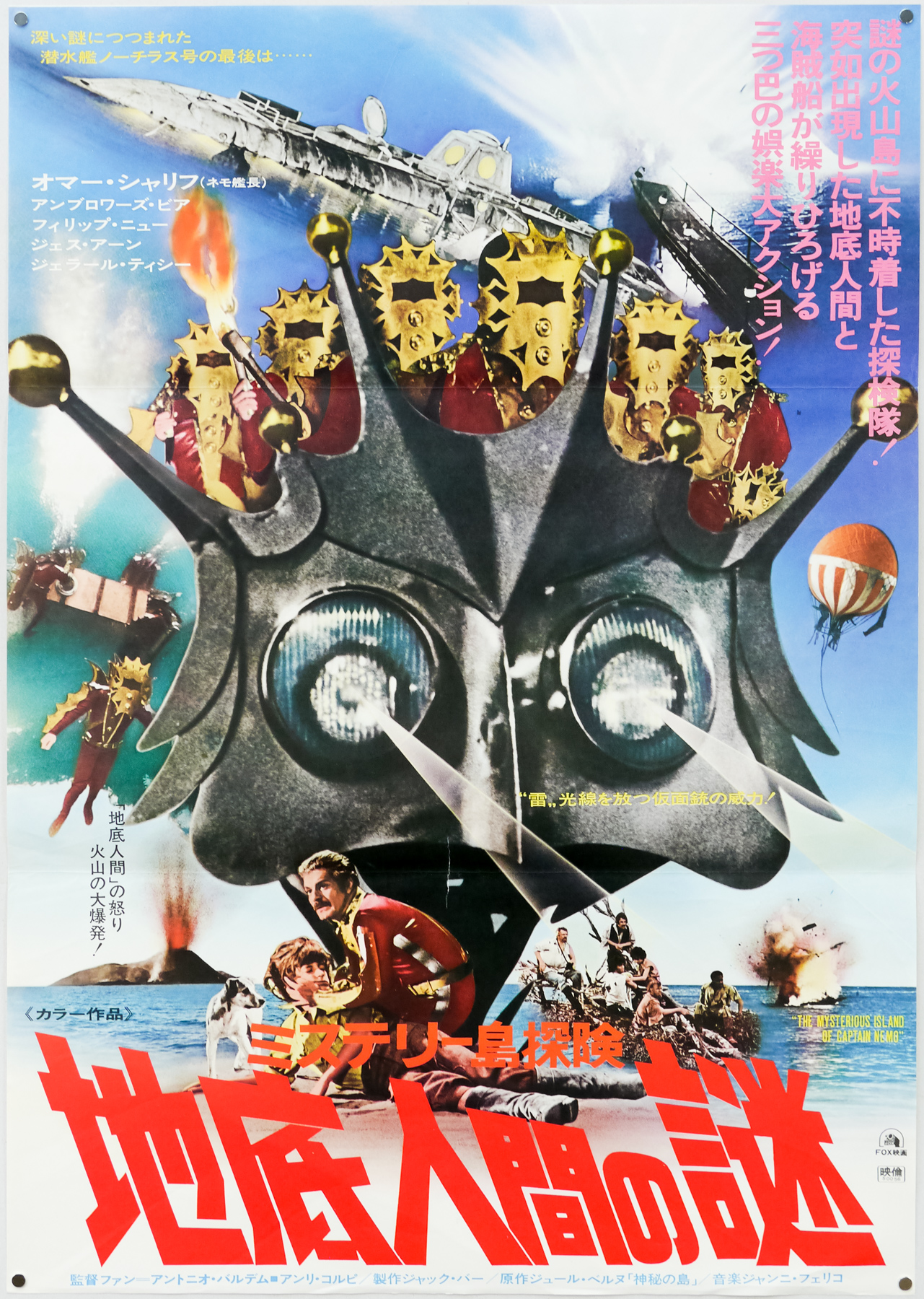
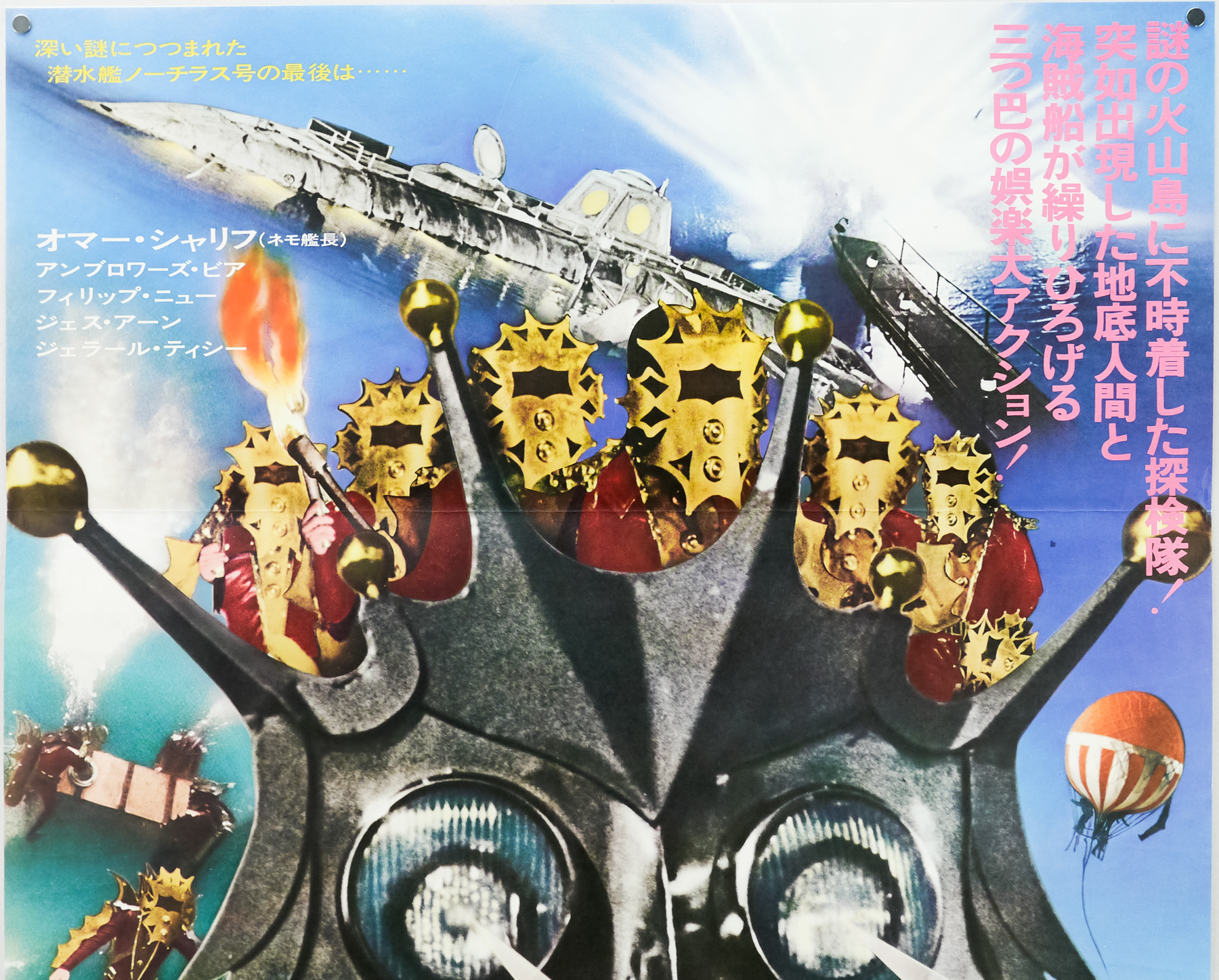
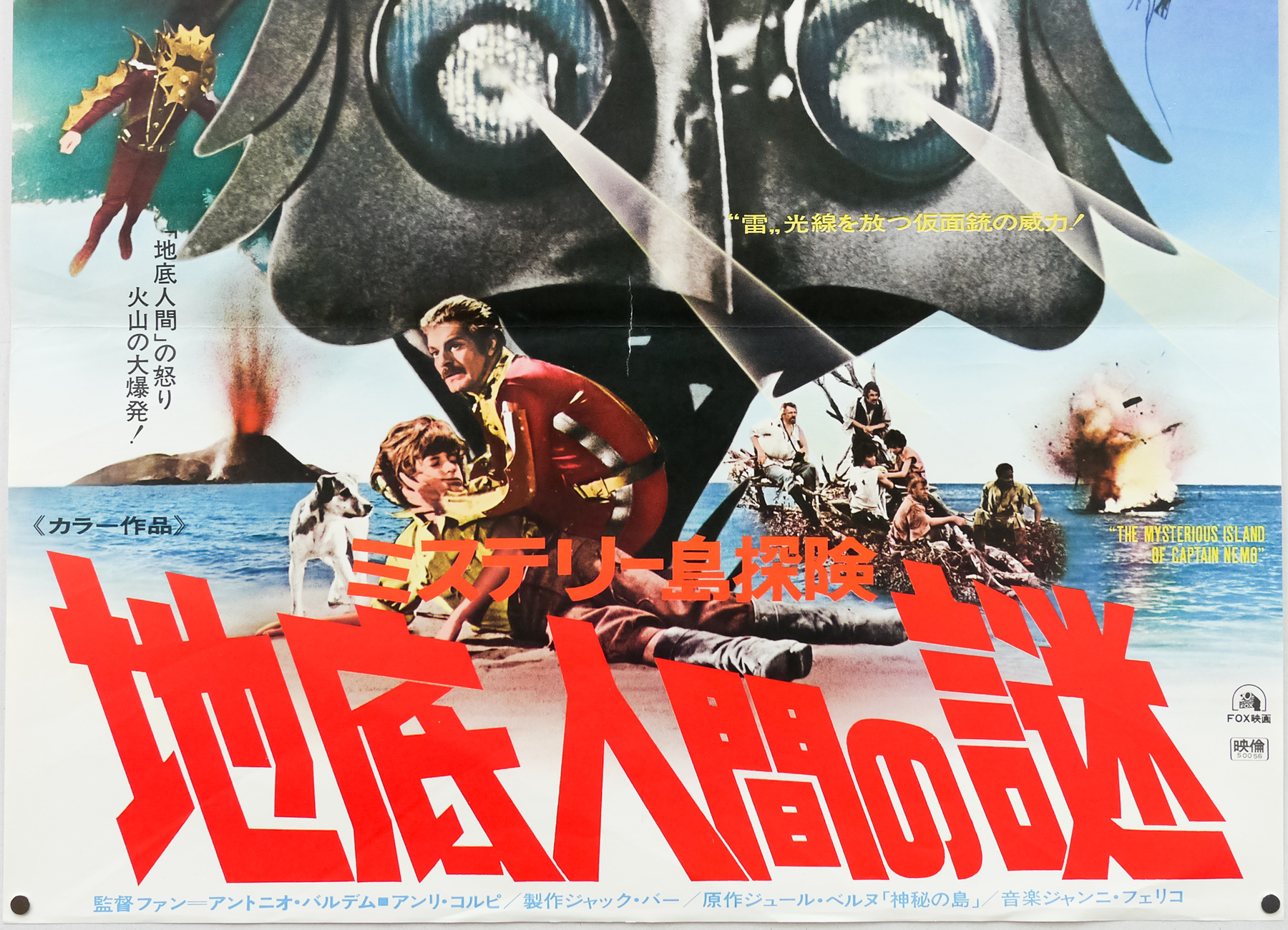
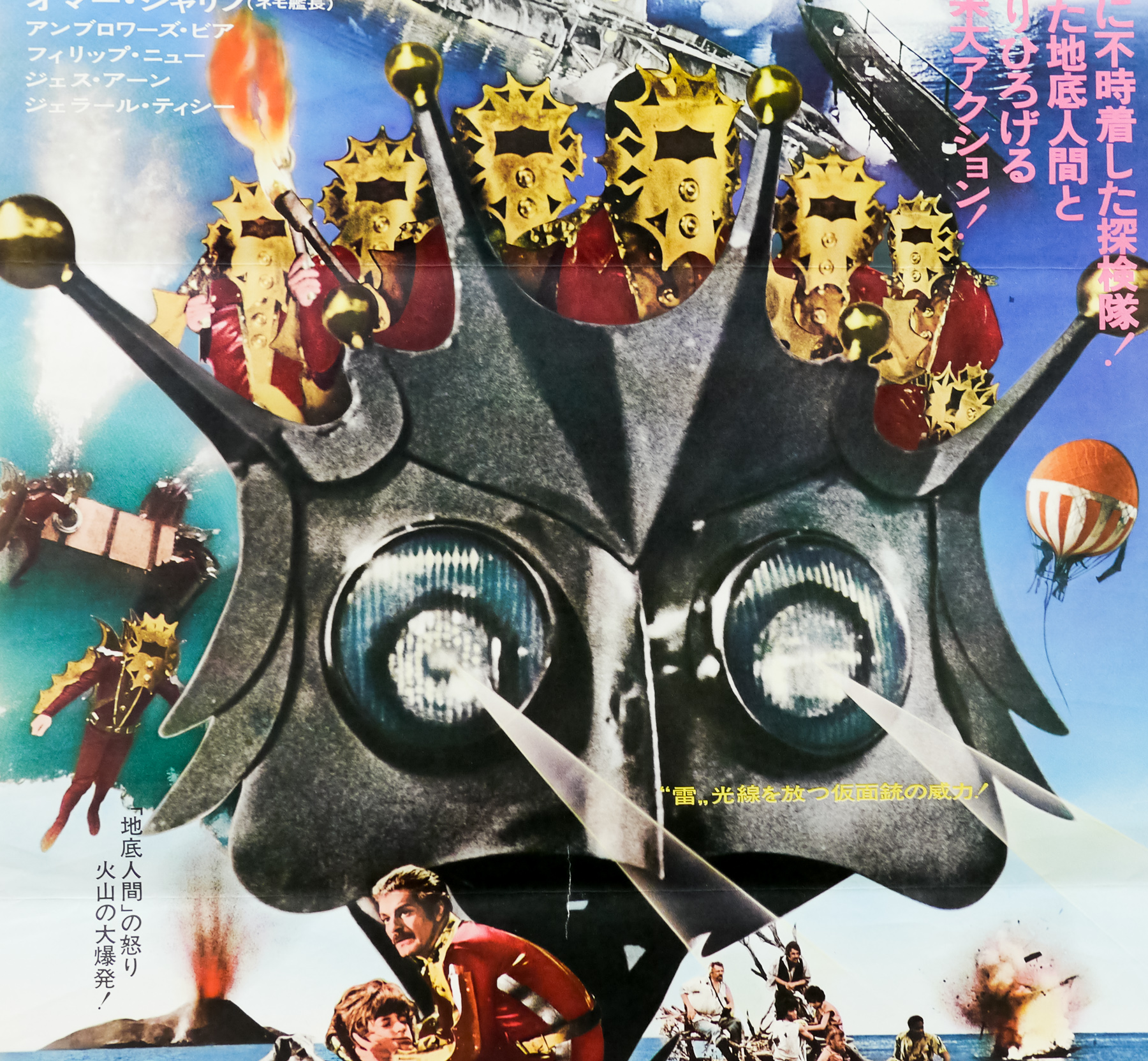
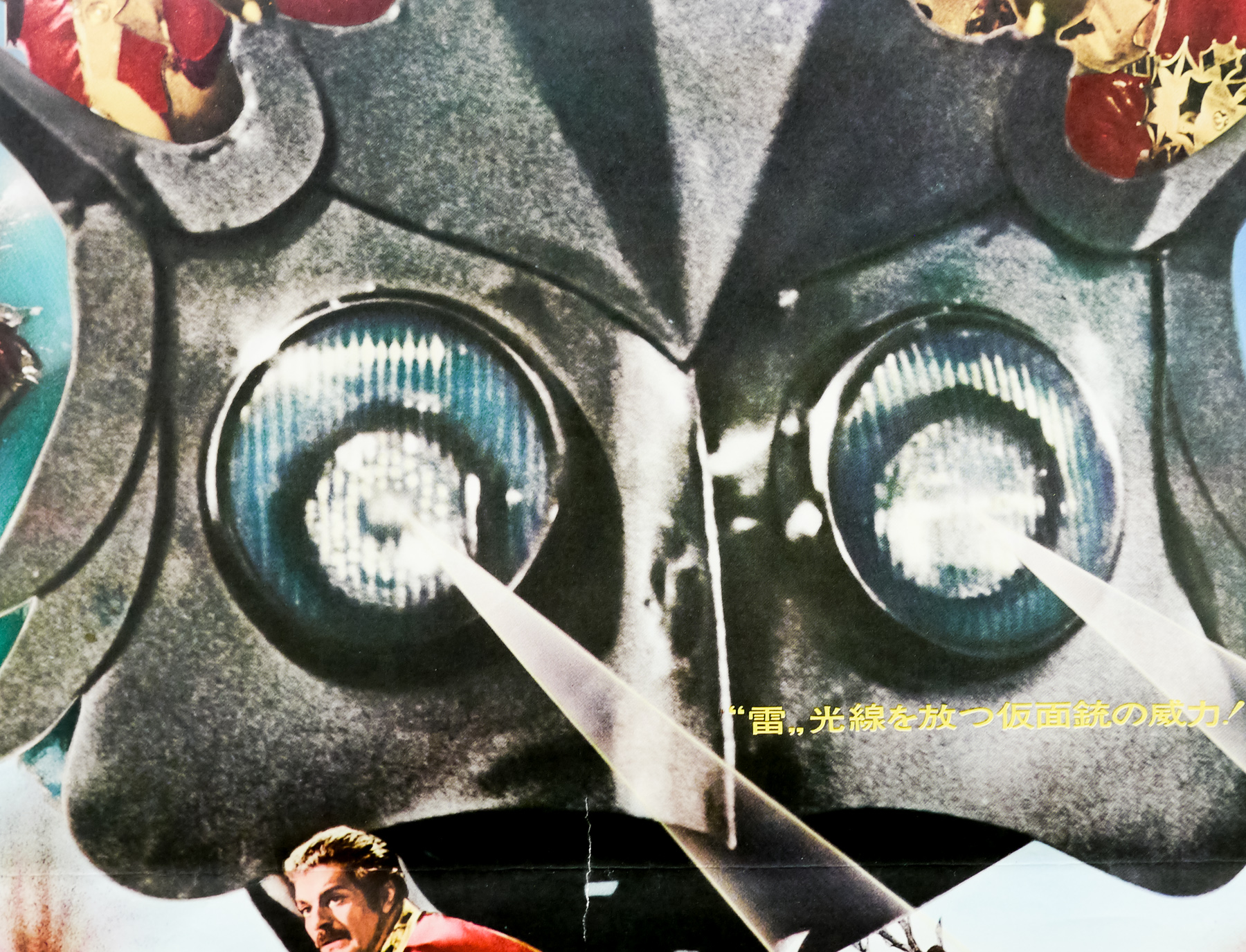
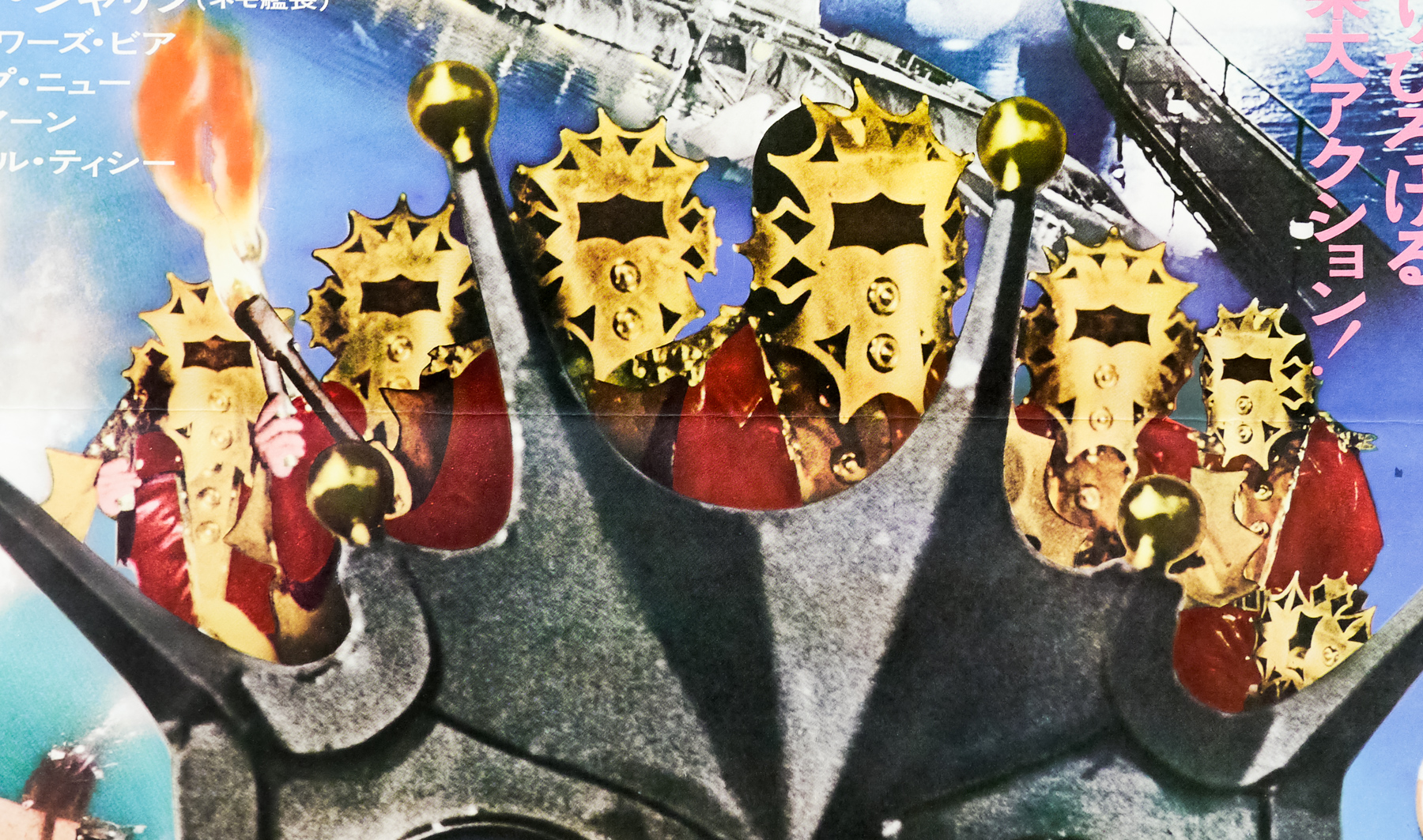
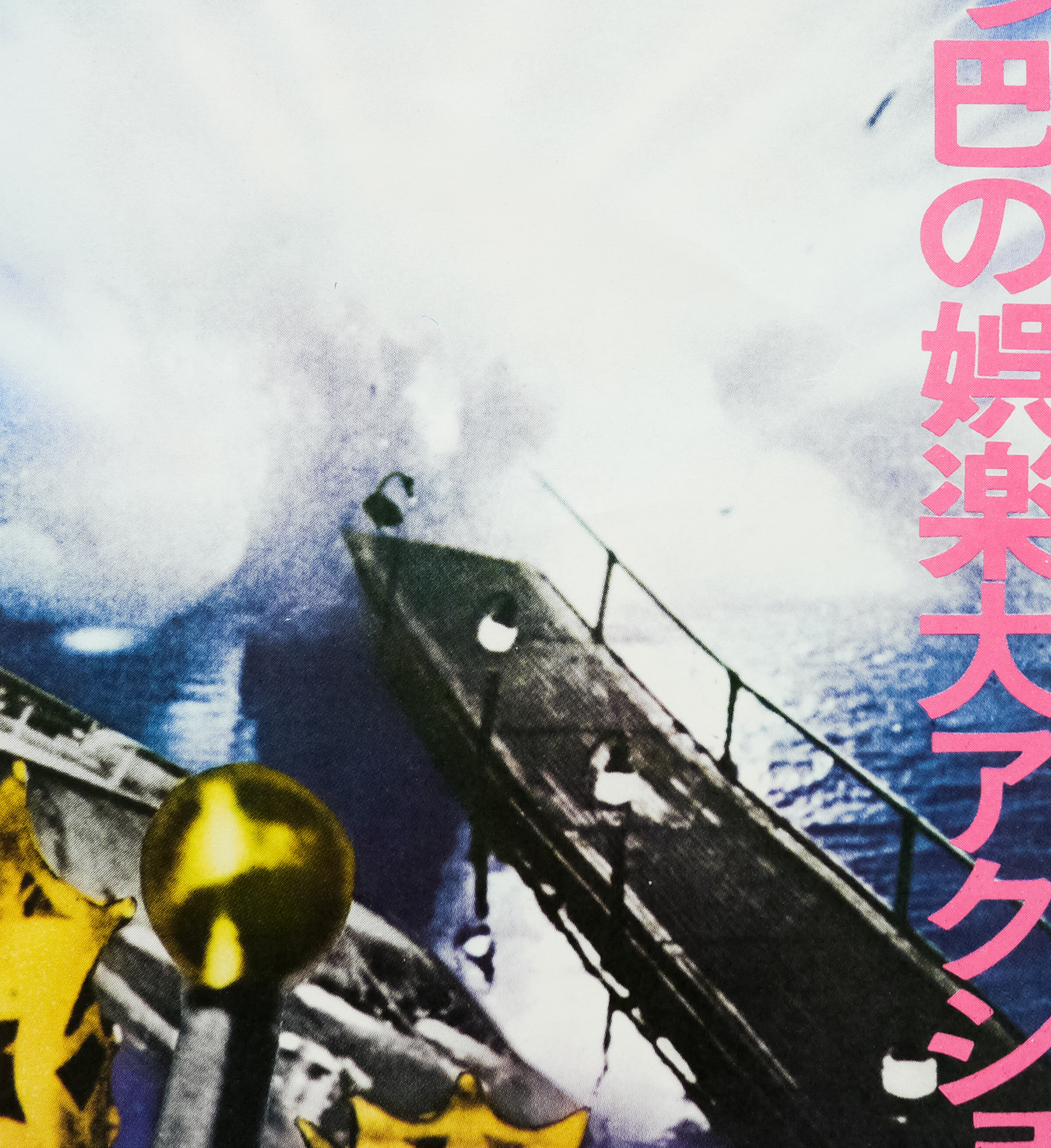
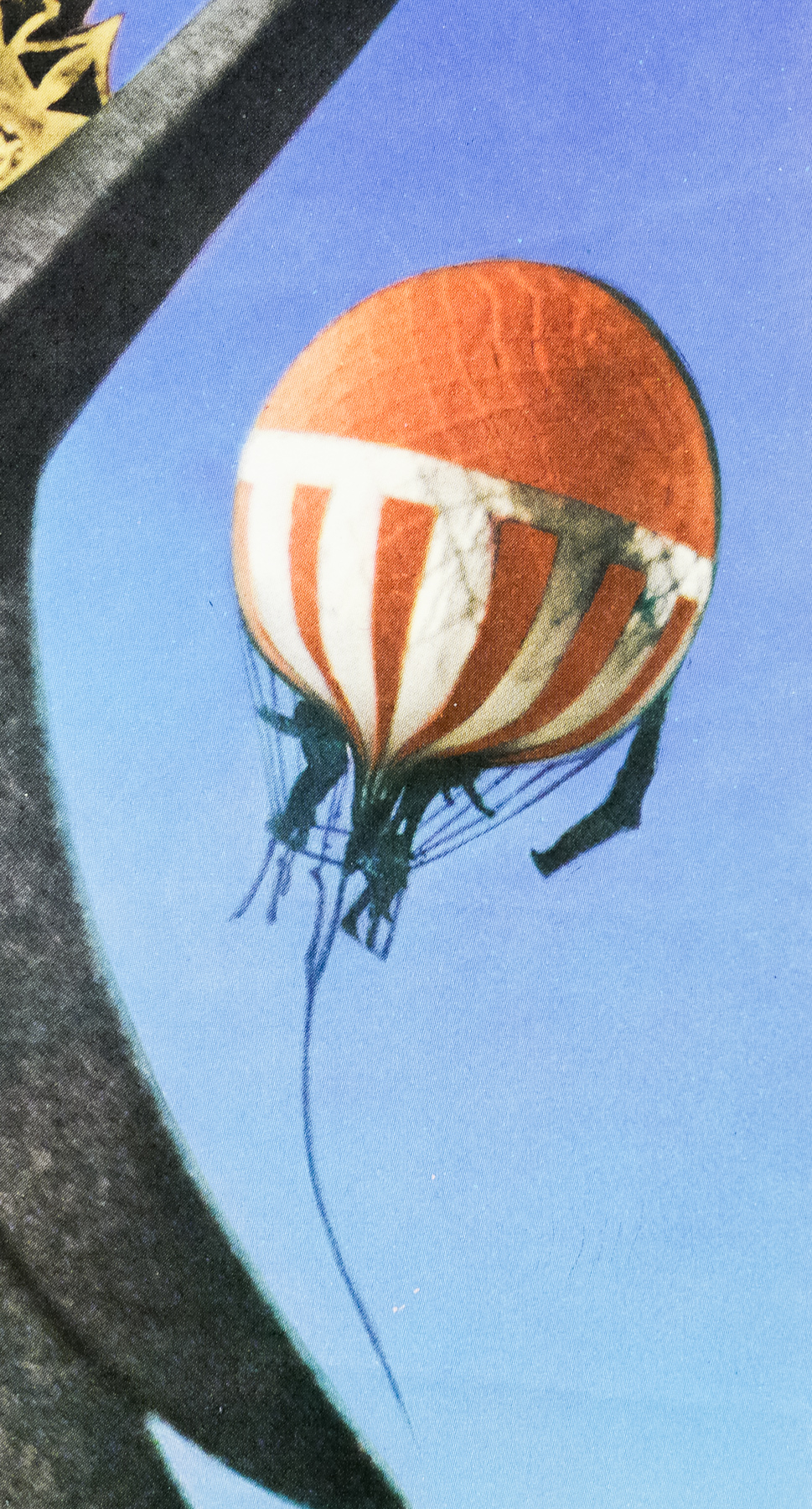
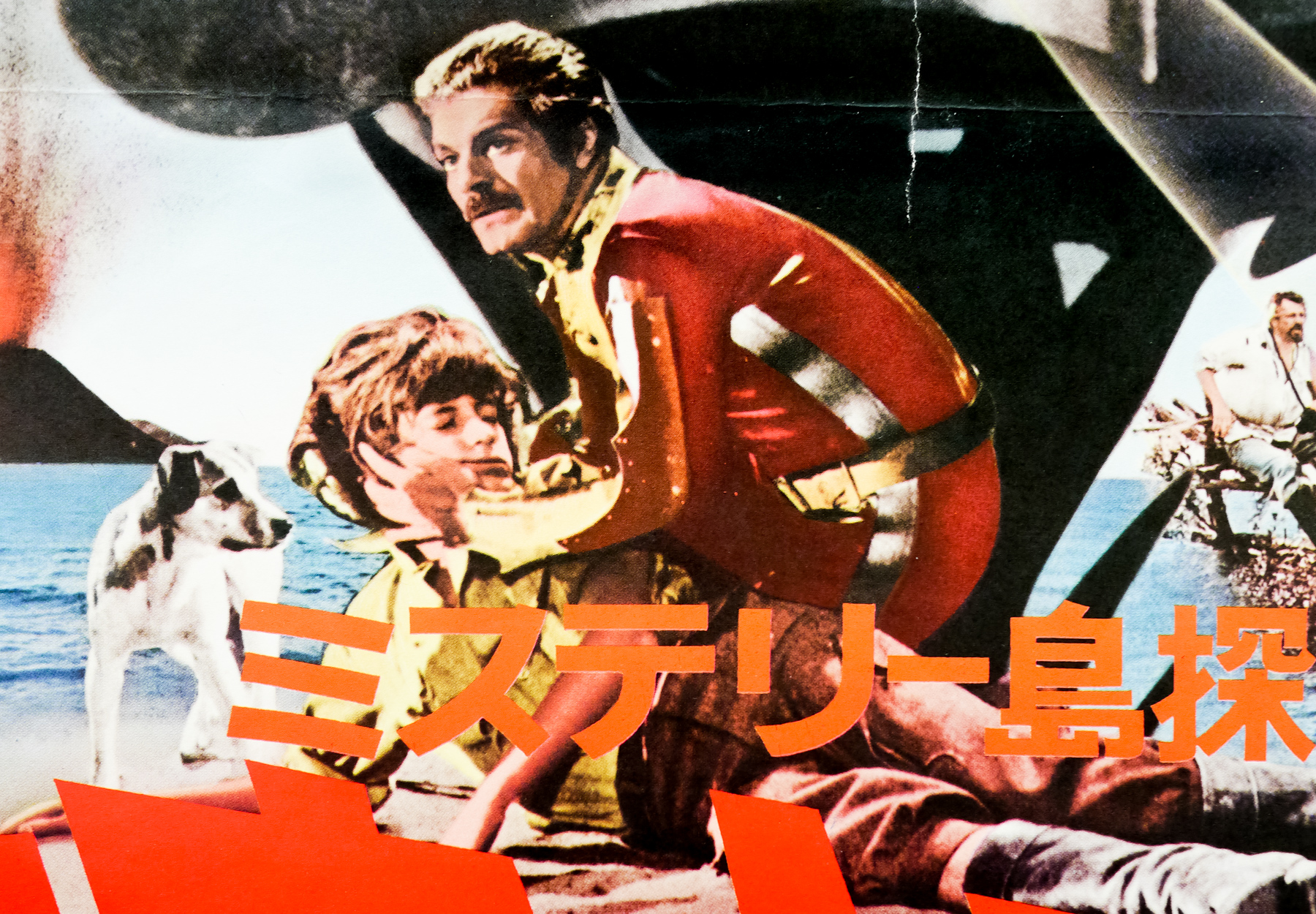
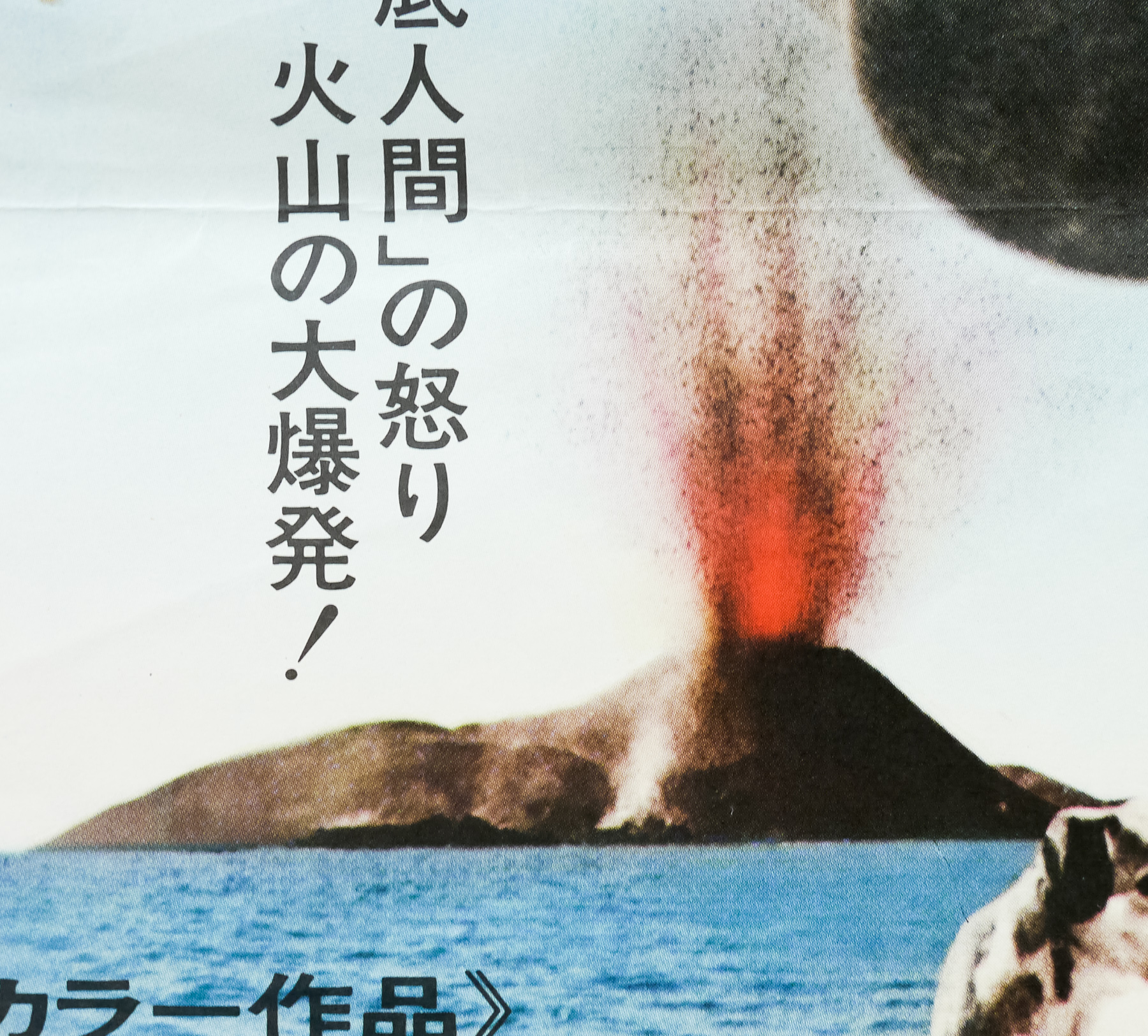
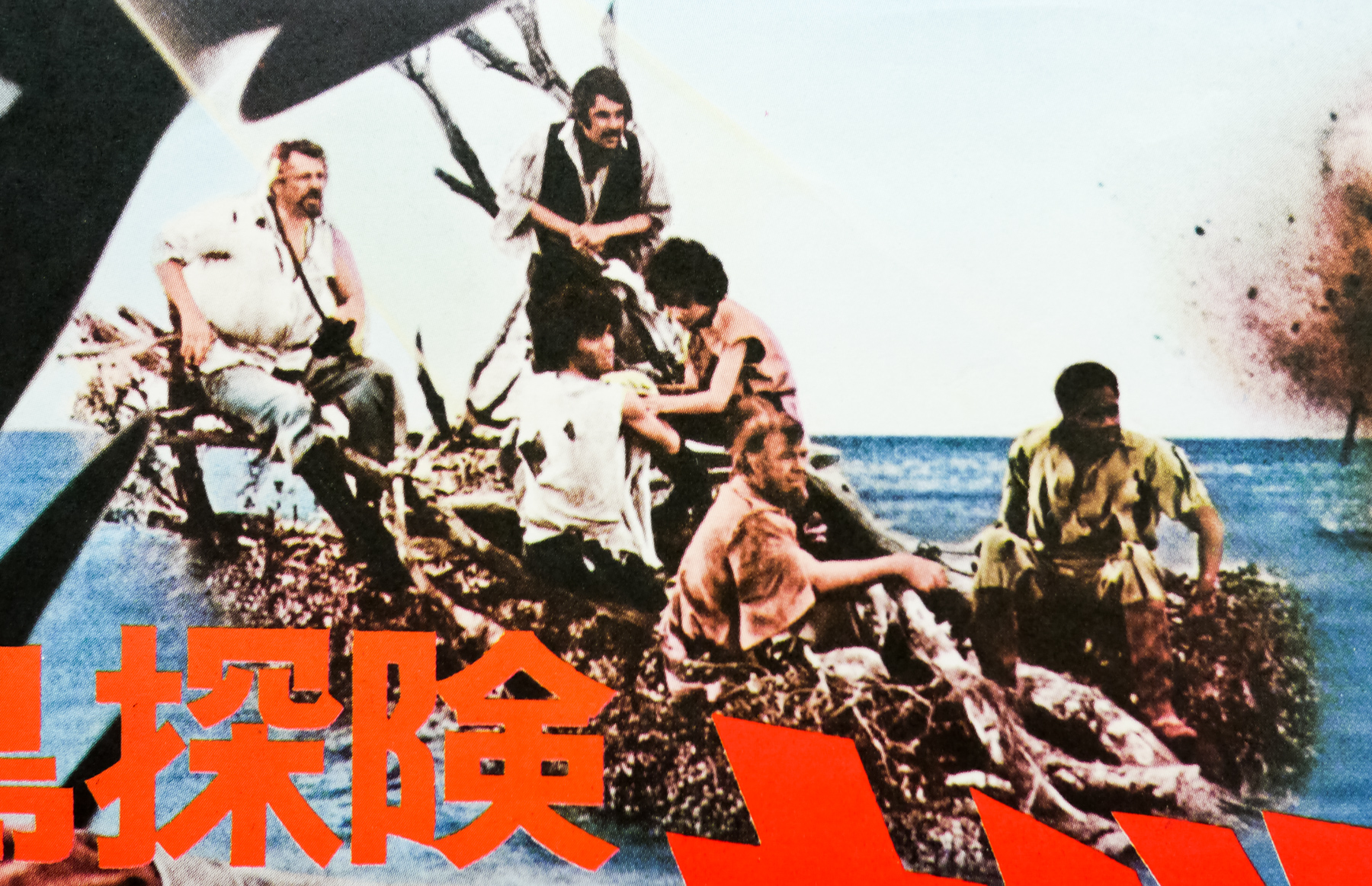
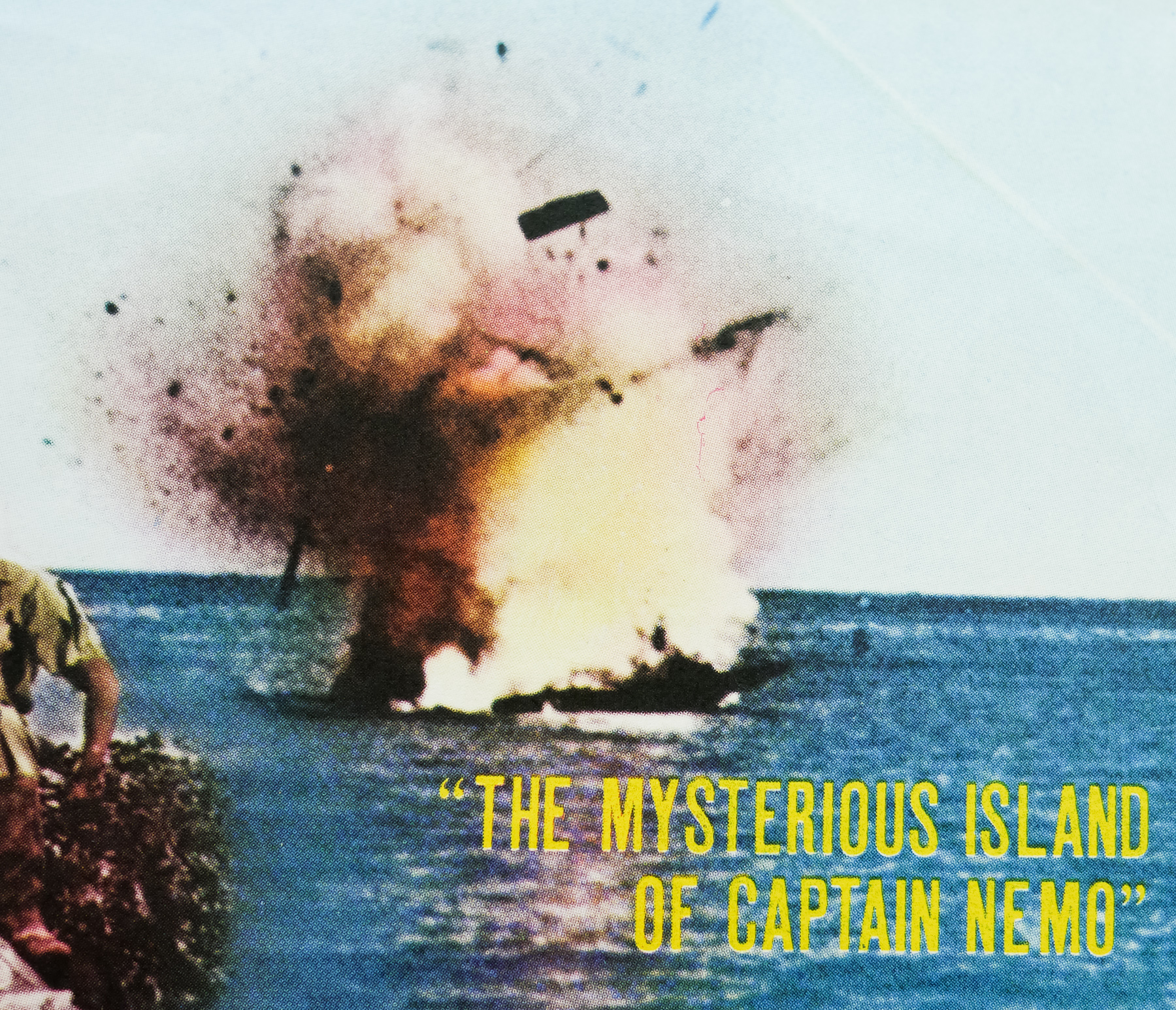
This is the Japanese B2 poster for the release of the 1973 adaptation of the French novelist Jules Verne’s The Mysterious Island (1874). A co-production between Spanish, French, Italian and Cameroonian companies, the film started out as a TV miniseries (300 minutes long) and was later adapted into a 96 minute feature that was released into cinemas in USA, Japan and other countries. Omar Sharif plays Captain Nemo, the enigmatic scientist that first appeared in Verne’s novel 20,000 Leagues Under the Sea, which was adapted numerous times over the past century (Mysterious Island has also seen numerous versions released).

Like the novel, this version is set during the time of the American Civil War and follows five prisoners of war who escape captivity by riding a hot air balloon. They are blown wildly off course and end up on a remote Pacific island where they must use their wits to survive. Eventually they meet Nemo who piloted the Nautilus submarine there following the events in the previous story.

The longer version appears to be almost impossible to find today, whilst the shorter version is also poorly served by home video releases.

Harry in Your Pocket / B2 / Japan

17.06.16

Poster Poster
Title
Harry in Your Pocket
AKA
--
Year of Film
1973
Director
Bruce Geller
Starring
James Coburn, Michael Sarrazin, Trish Van Devere, Walter Pidgeon, Michael C. Gwynne, Tony Giorgio, Michael Stearns, Susan Mullen
Origin of Film
USA
Genre(s) of Film
James Coburn, Michael Sarrazin, Trish Van Devere, Walter Pidgeon, Michael C. Gwynne, Tony Giorgio, Michael Stearns, Susan Mullen,
Type of Poster
B2
Style of Poster
--
Origin of Poster
Japan
Year of Poster
1973
Designer
Unknown
Artist
--
Size (inches)
20 6/16" x 28 14/16"
SS or DS
SS
Tagline
--

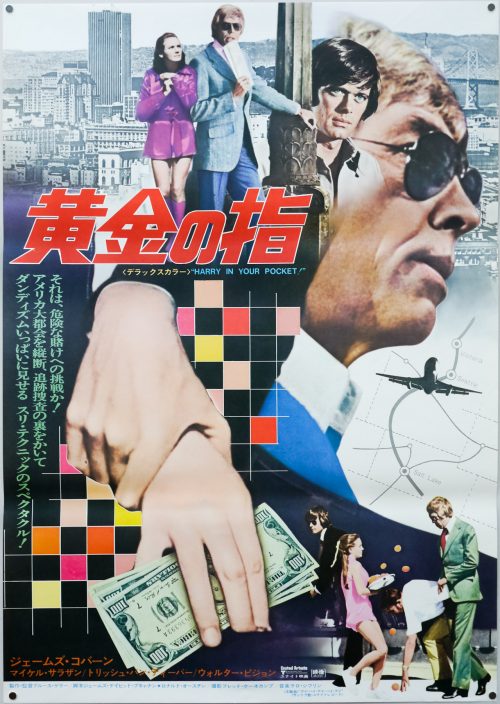
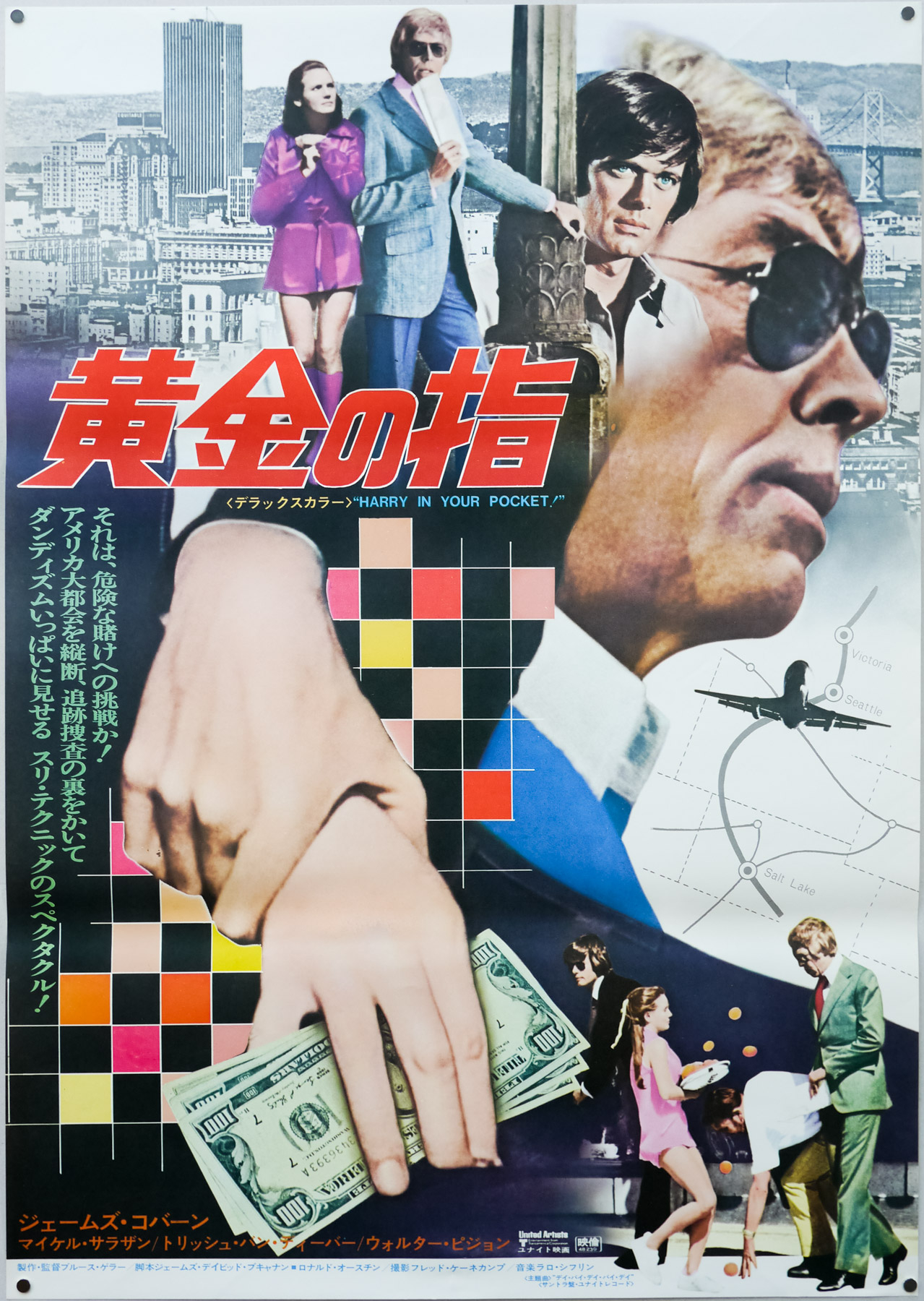
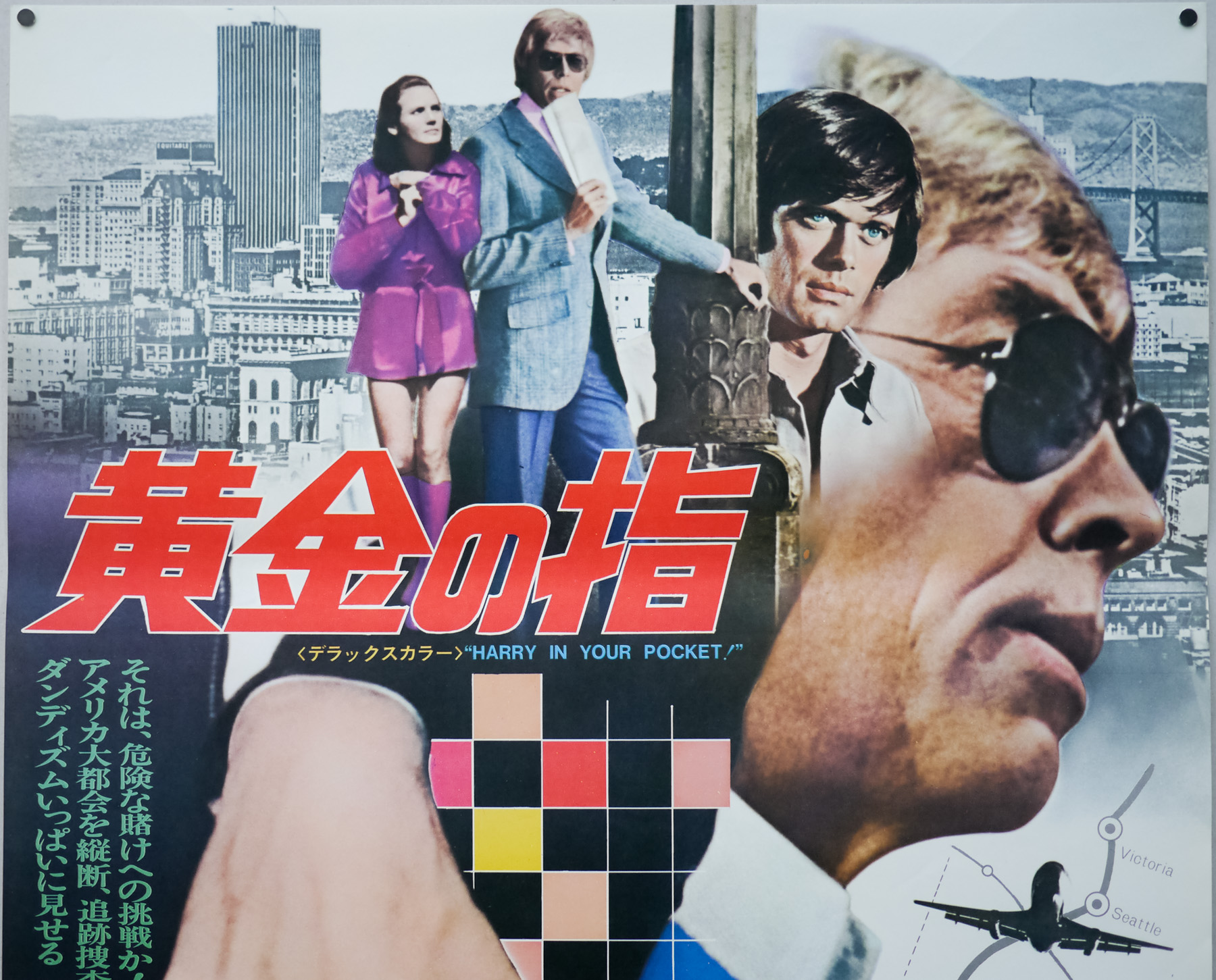
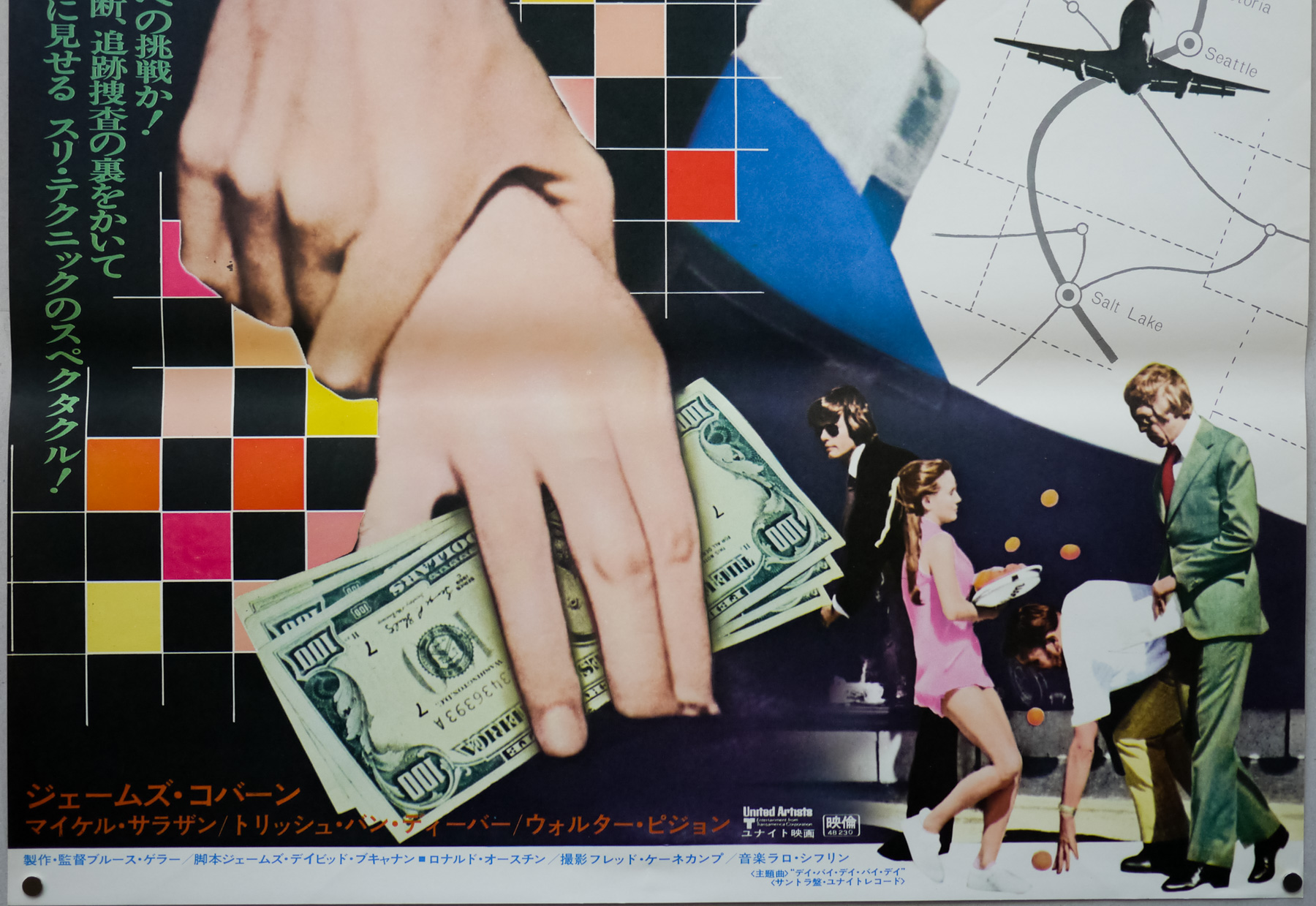
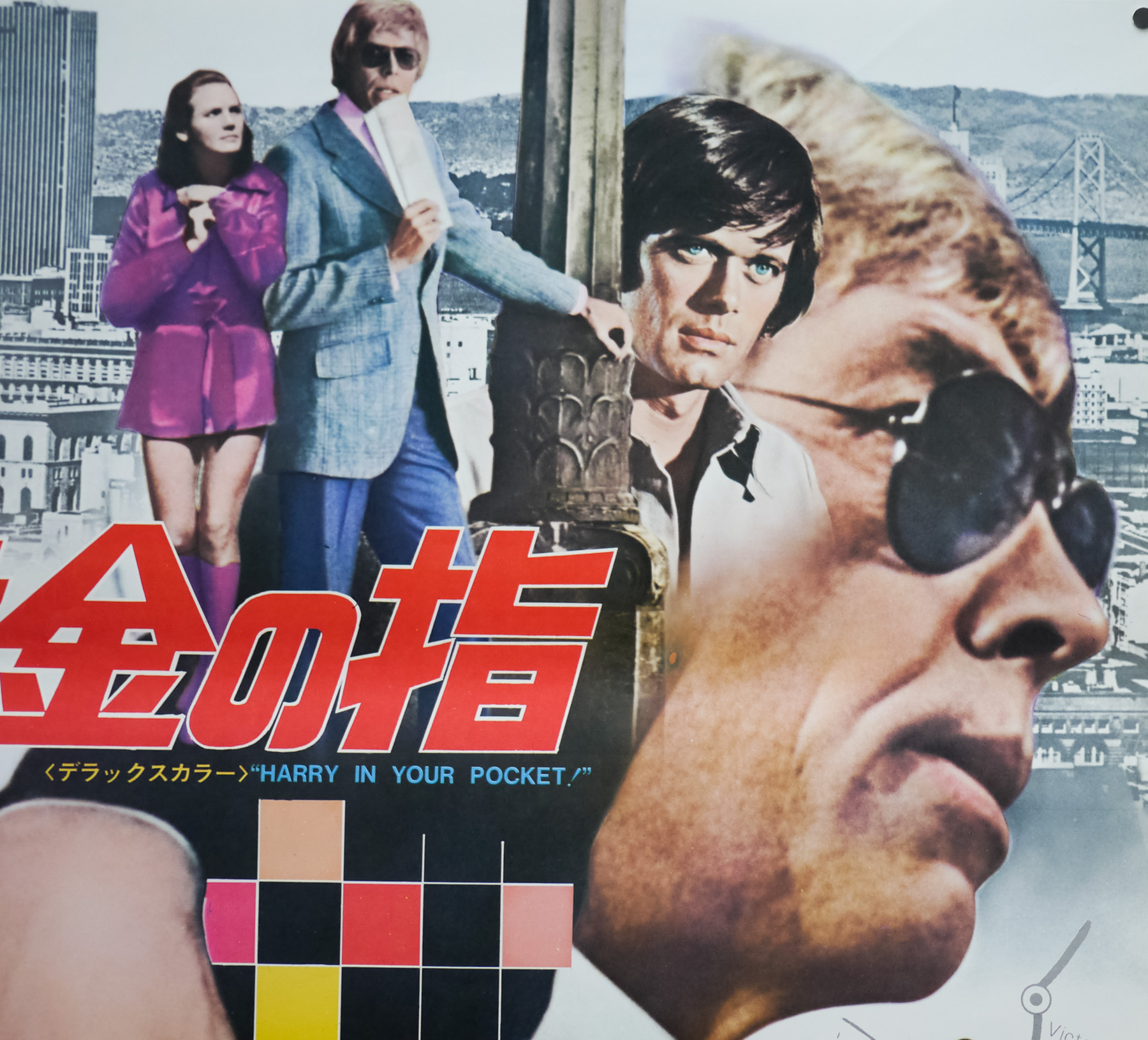
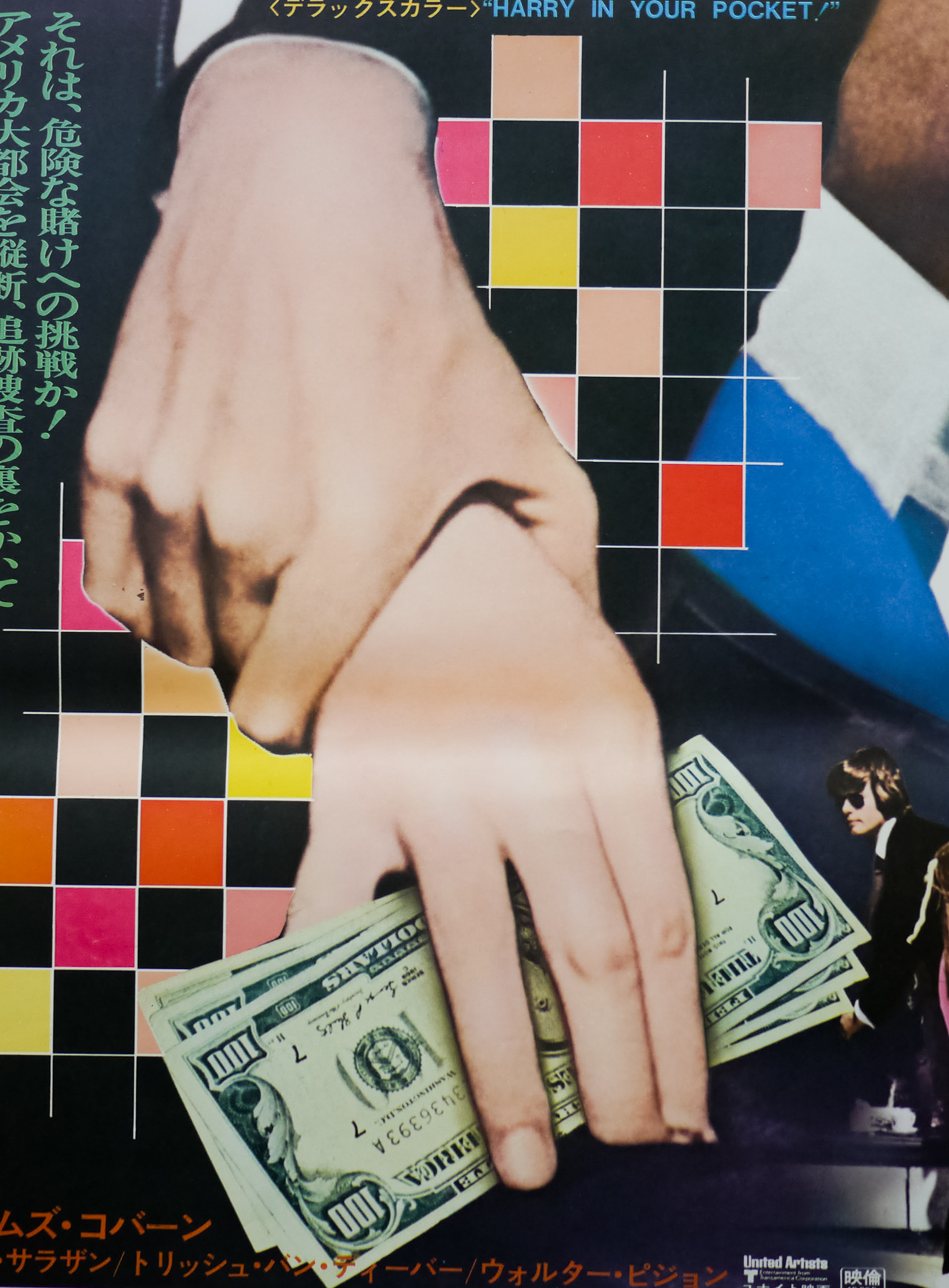
This is the Japanese B2 poster for the release of the 1973 crime caper Harry in Your Pocket, which marked the directorial debut of Bruce Geller. A man of many talents, Geller was at various points a screenwriter, producer, lyricist and director. He started out writing scripts for various TV shows during the 1950s and later worked as a co-producer on the successful cowboy series Rawhide. During this period he conceived of a series based around the world of espionage and developed it into what would become Mission Impossible, a TV series that Geller executive-produced (and even appeared in) to great success. The show lasted for seven seasons (though not all had Geller’s involvement) and was shown around the world from 1966 to 1973.

Harry in Your Pocket was Geller’s first feature film as director and The Savage Bees (1976) was his last, although technically that started life as a TV movie. Sadly he died aged 47 when his light aircraft crashed in fog near Santa Barbara, California.

The late James Coburn stars as the eponymous character, a professional pickpocket who works with an older man Casey (Walter Pidgeon) who has started to make mistakes due to excessive drug use. A younger man named Ray (Michael Sarrazin) yearns to be as good as Harry and when his girlfriend Sandy (Trish Van Devere) falls victim to the professional pair, Ray decides to track them down and persuade them to take him under their wing. Harry and Casey eventually agree to let the pair work with them as the ‘stalls’, which means their task is create as much of a distraction as possible so that Harry and Casey can get close to their marks and make ‘the dip’. However, when it becomes clear that Harry has an interest in Sandy, and Ray tires of being only a minor member of the team, the group’s allegiances are tested, putting them all in danger from the law.

A Nightmare on Elm Street 5: the Dream Child / B2 / photo style / Japan

18.07.16

Poster Poster

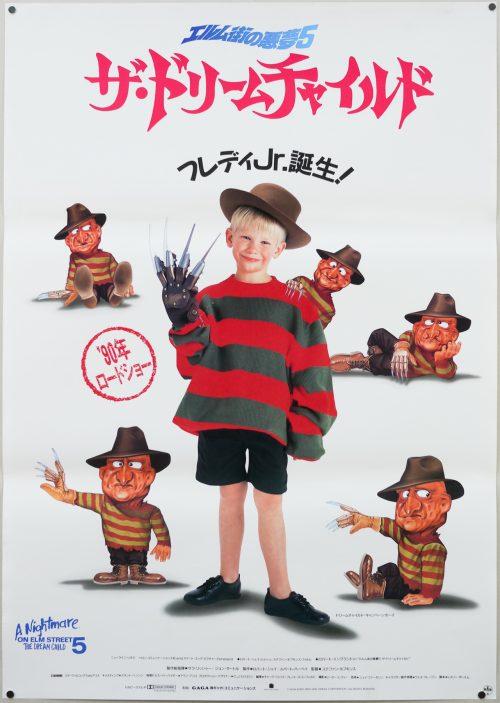
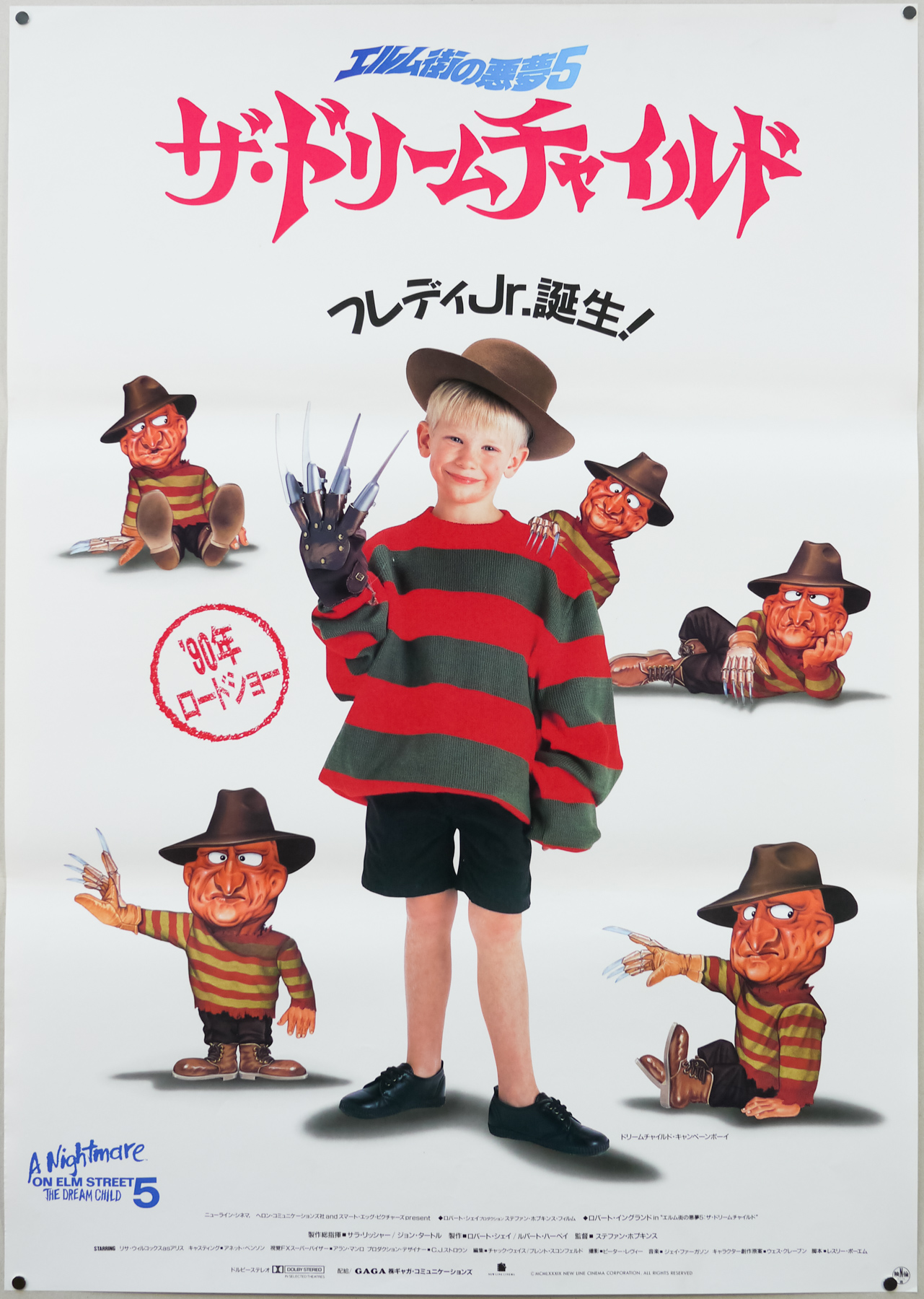
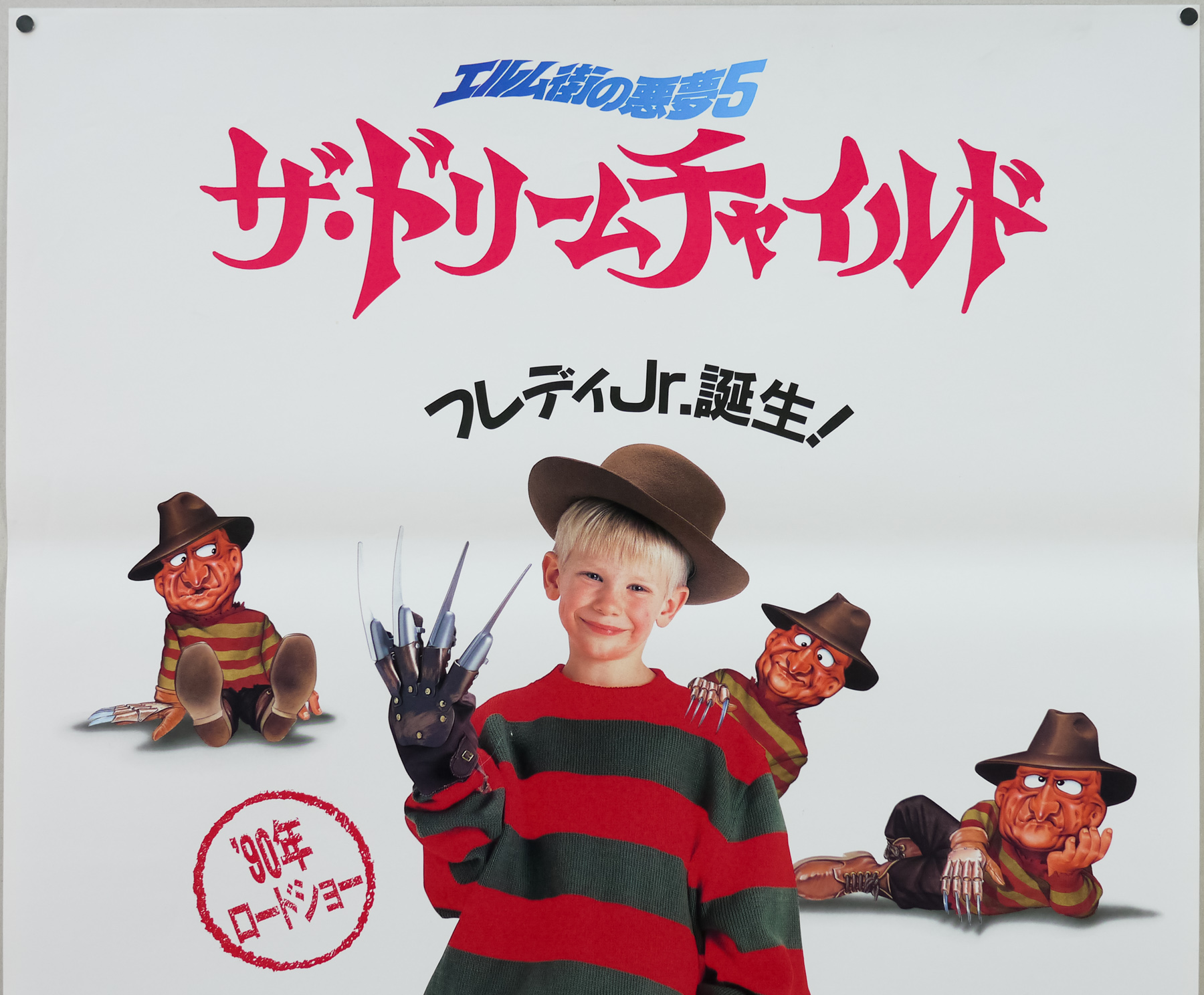
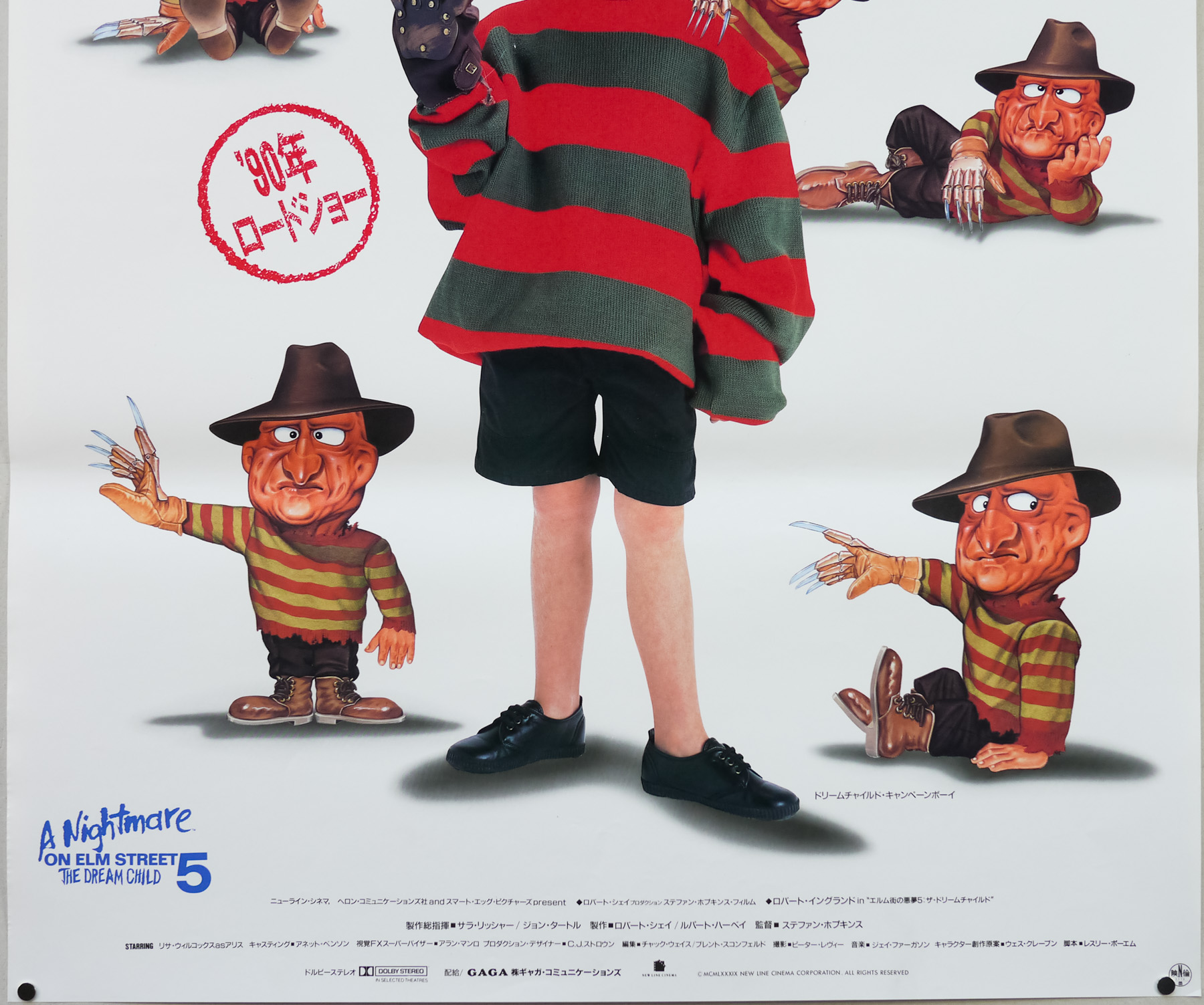
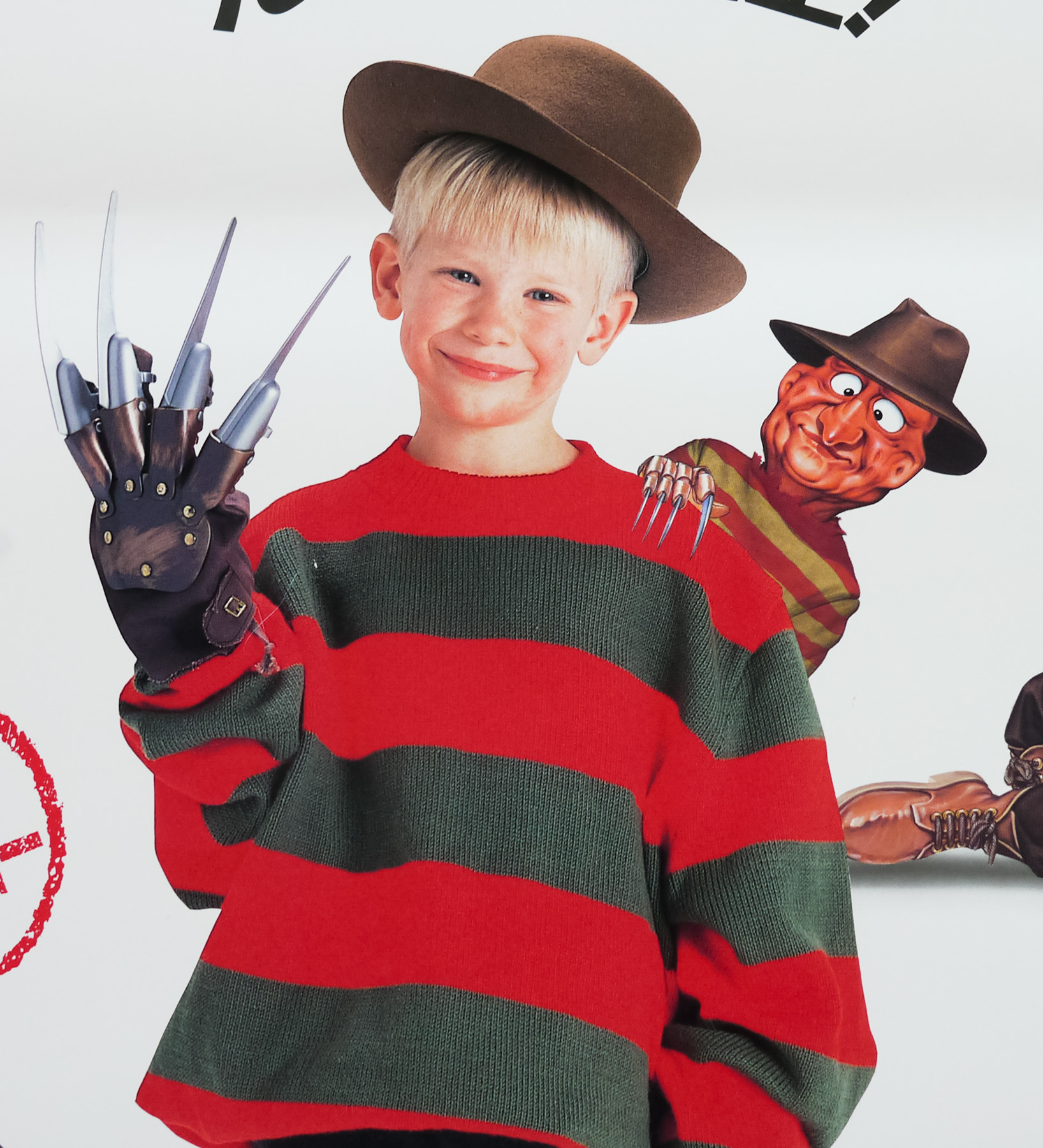
A bizarre design features on this Japanese B2 for the release of the fifth entry in the much-loved horror franchise, A Nightmare on Elm Street 5. The film’s subtitle ‘the Dream Child’ hints at the plot for the film, which sees Freddy attempting to return from hell by using the mind of an unborn baby. The child belongs to Alice (Lisa Wilcox) who was the main character in the previous film and the father is her boyfriend Dan (Danny Hassel) who also returns from Part 4. The Dream Child was only the second film directed by Stephen Hopkins, the Jamaican-born English-Australian director best known for helming Predator 2 and the 1998 reboot of Lost in Space.

Set a year after the previous film, the story sees Alice and her friends graduating from high school with Freddy Krueger seemingly vanquished for good. Alice begins to have strange dreams in which she finds herself in the asylum where Freddy’s mother, a nun named Amanda, was attacked and raped by the inmates. Later she has another dream in which she witnesses Amanda giving birth to a strange, deformed baby. The creature scuttles off and ends up in the church where Alice vanquished Freddy in Part 4 whereupon it grows into an adult Krueger. He immediately begins to taunt Alice, claiming he has found a way to return for good. When she wakes from the dream she immediately summons Dan to her but he falls asleep at the wheel of his motorbike and Freddy attacks and, during a gruesome sequence, melds him together with the bike before crashing him into a truck. Soon afterwards she learns that she is pregnant with Dan’s child and immediately begins to fear for its safety.

Alice and her friends must once again battle together with the spirit of Amanda Krueger to stop Freddy before he is able to return and take over the mind of Alice’s unborn son (Jacob). To be honest, the film gets very confusing and it’s hard to follow what’s happening most of the time, never mind how an unborn baby suddenly becomes a ten-year-old child in some of the sequences. The usual dream deaths are pretty dark and there are some gruesome moments for horror hounds, but the story barely hangs together, with choppy editing and hammy acting not helping at all. Although not a box-office disaster, the film failed to make anywhere near the box-office of Part 3 and 4 and audiences were certainly cooling towards the franchise by this point.

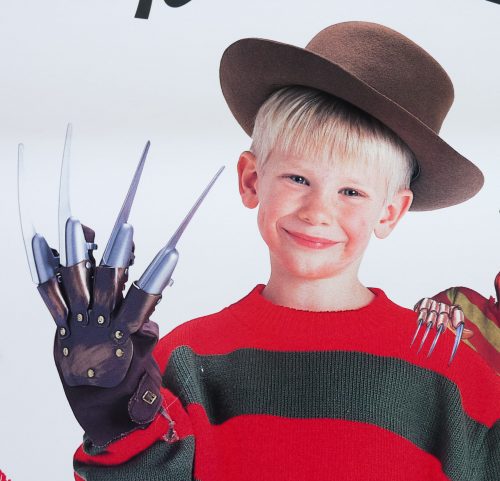
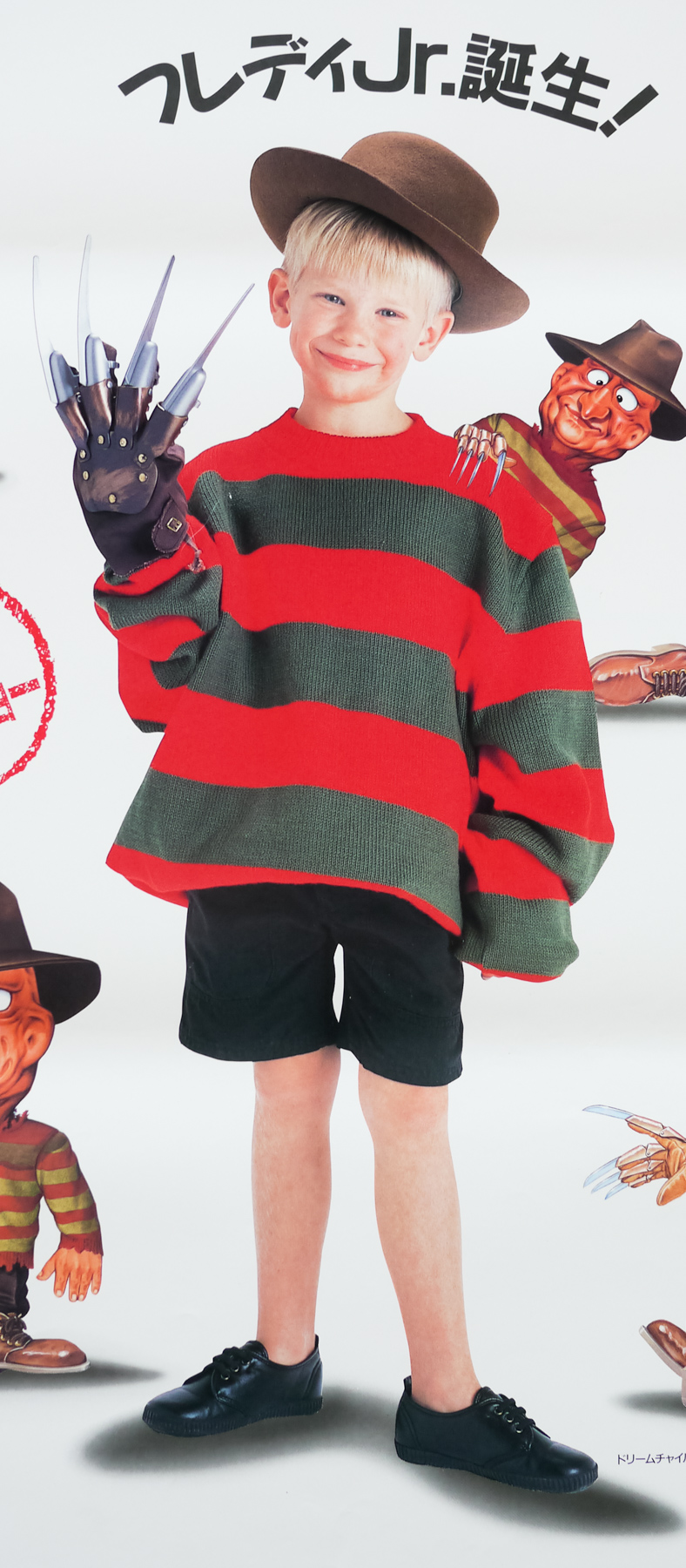
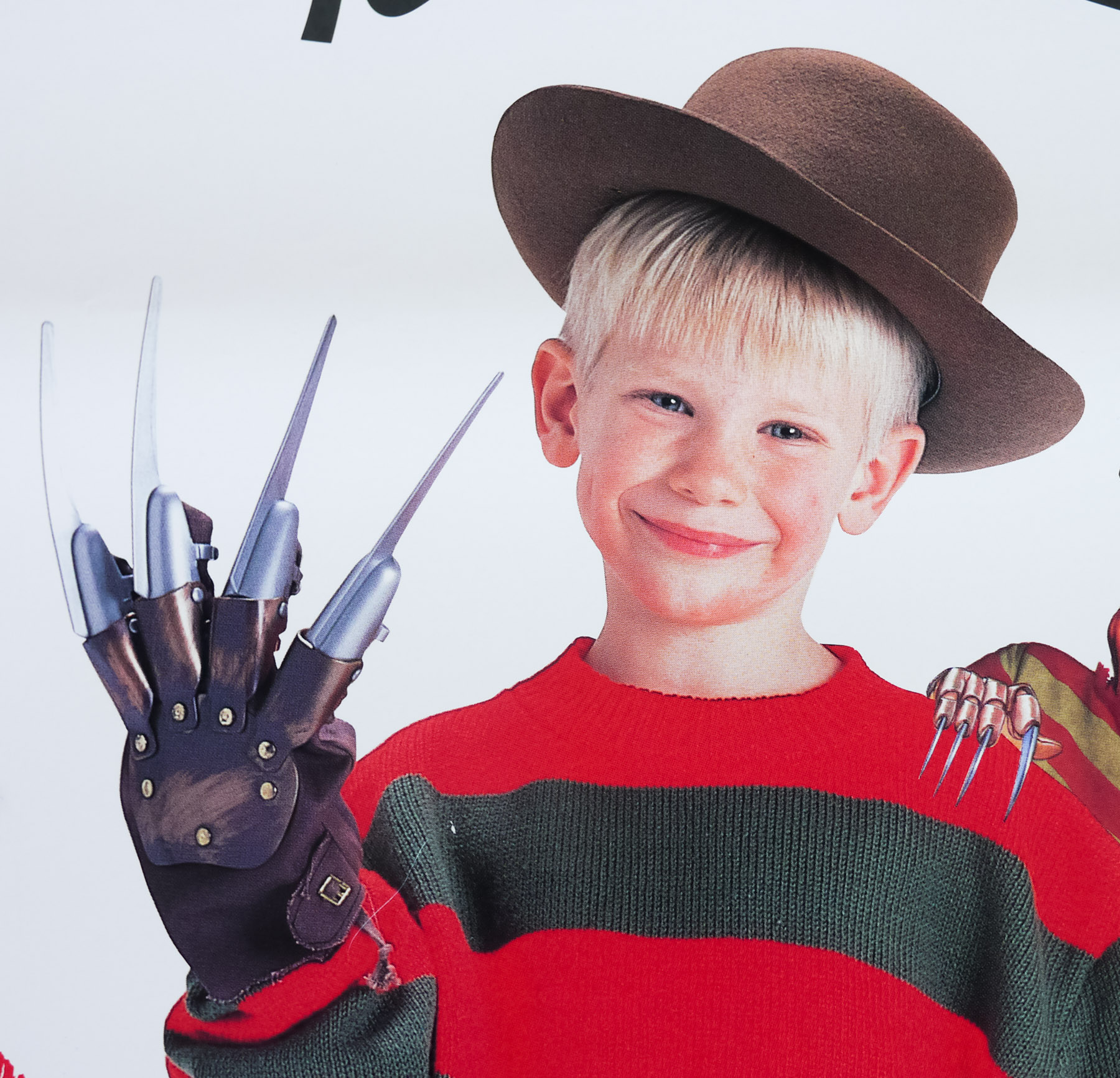
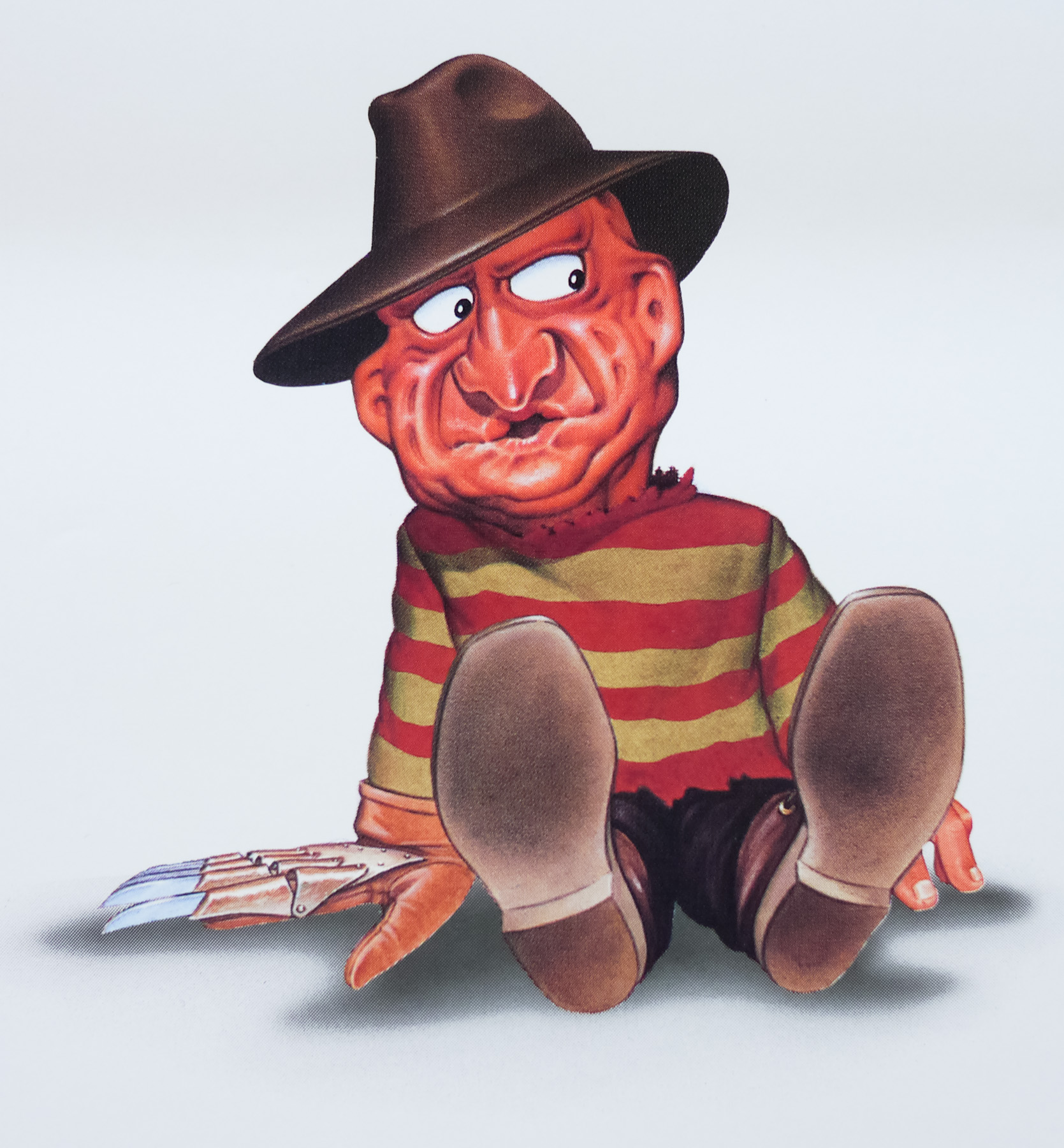
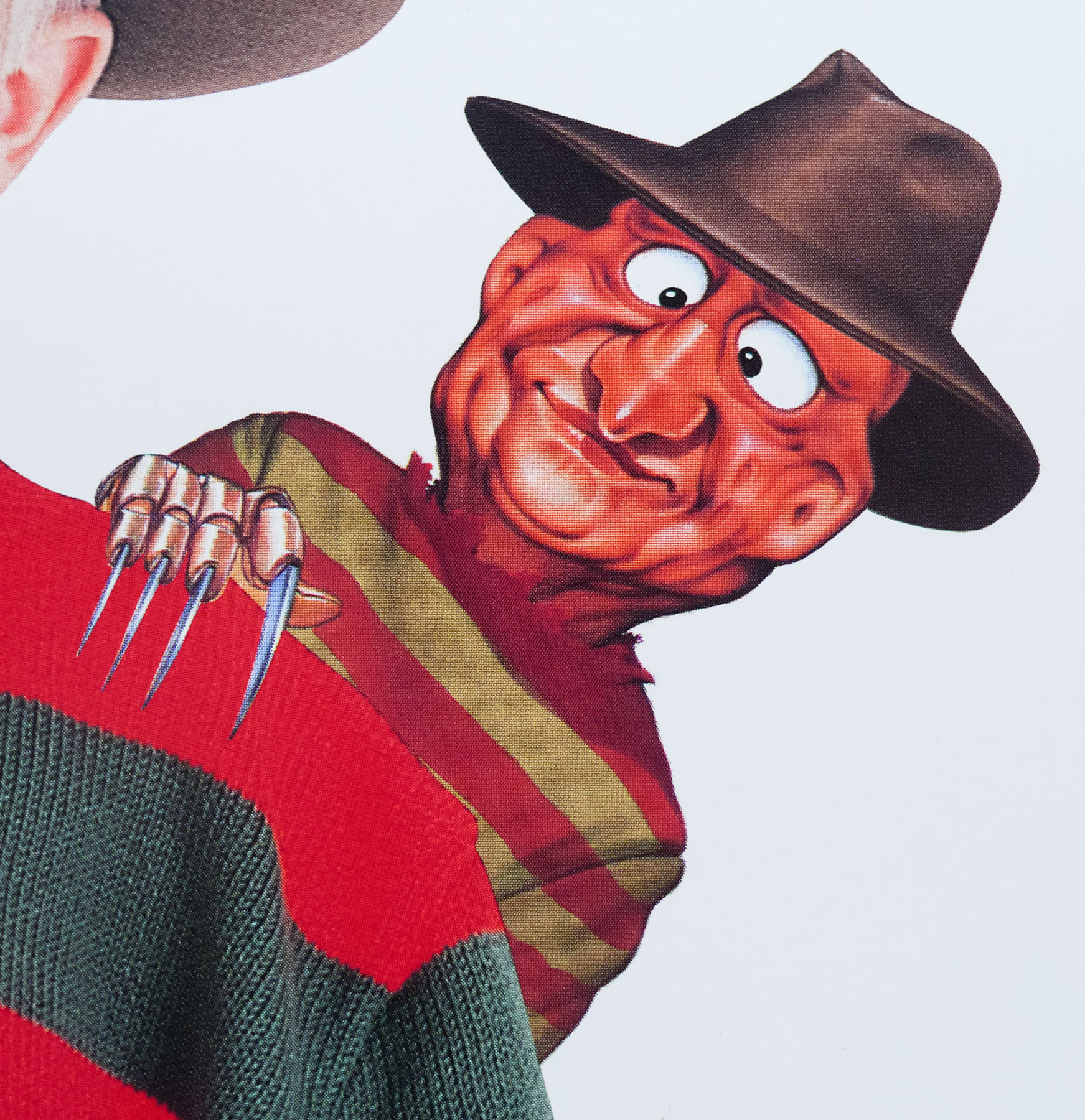
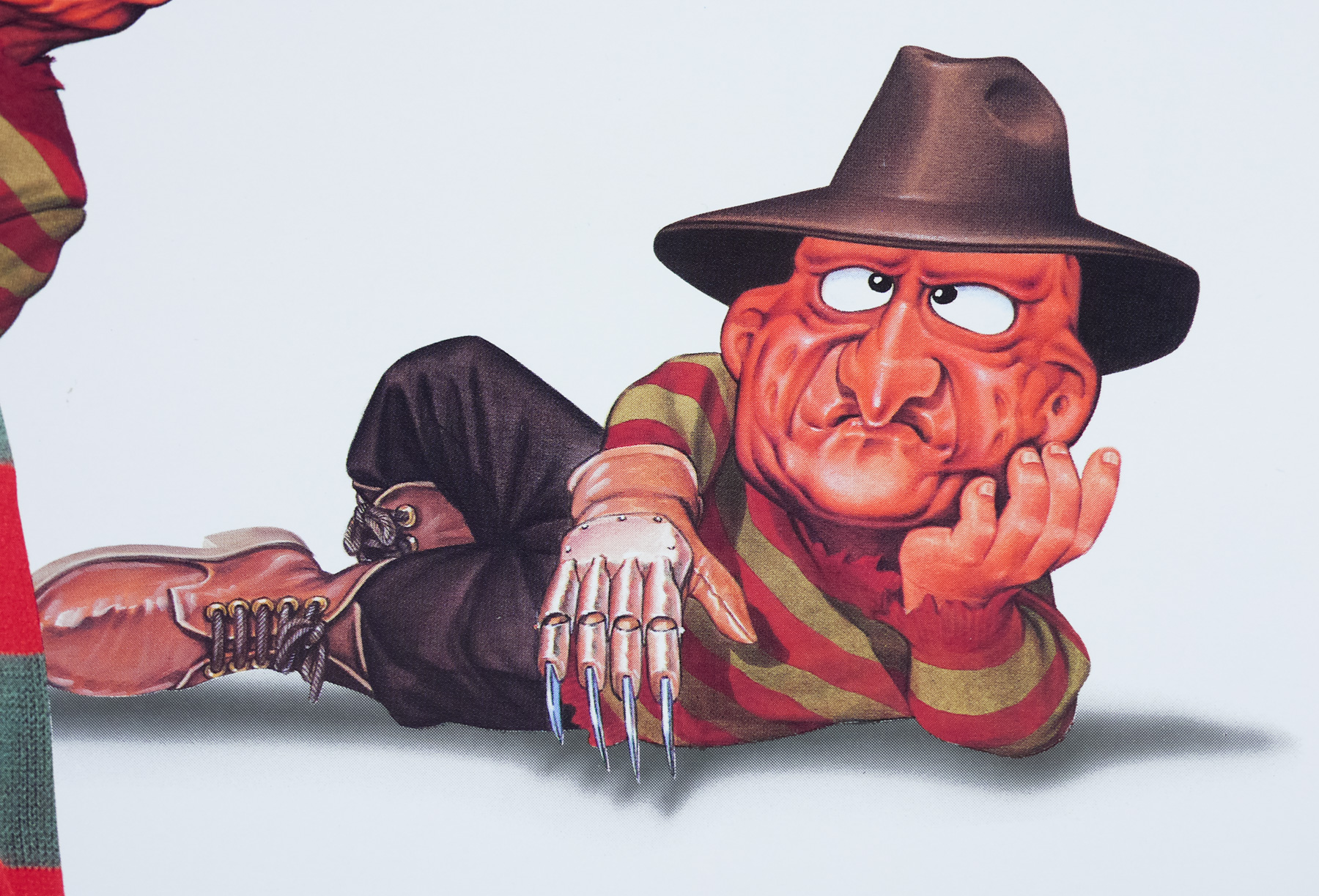
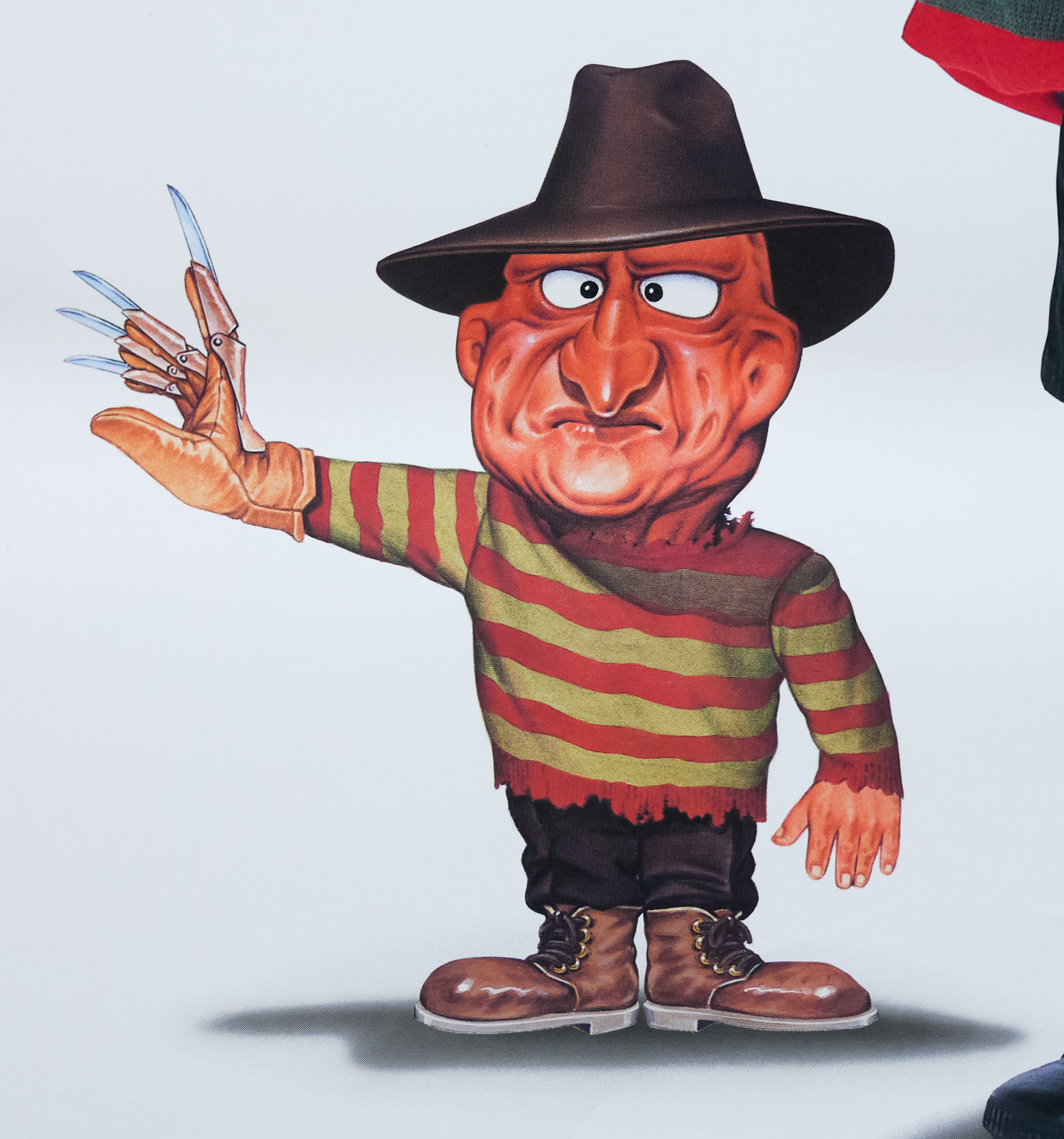
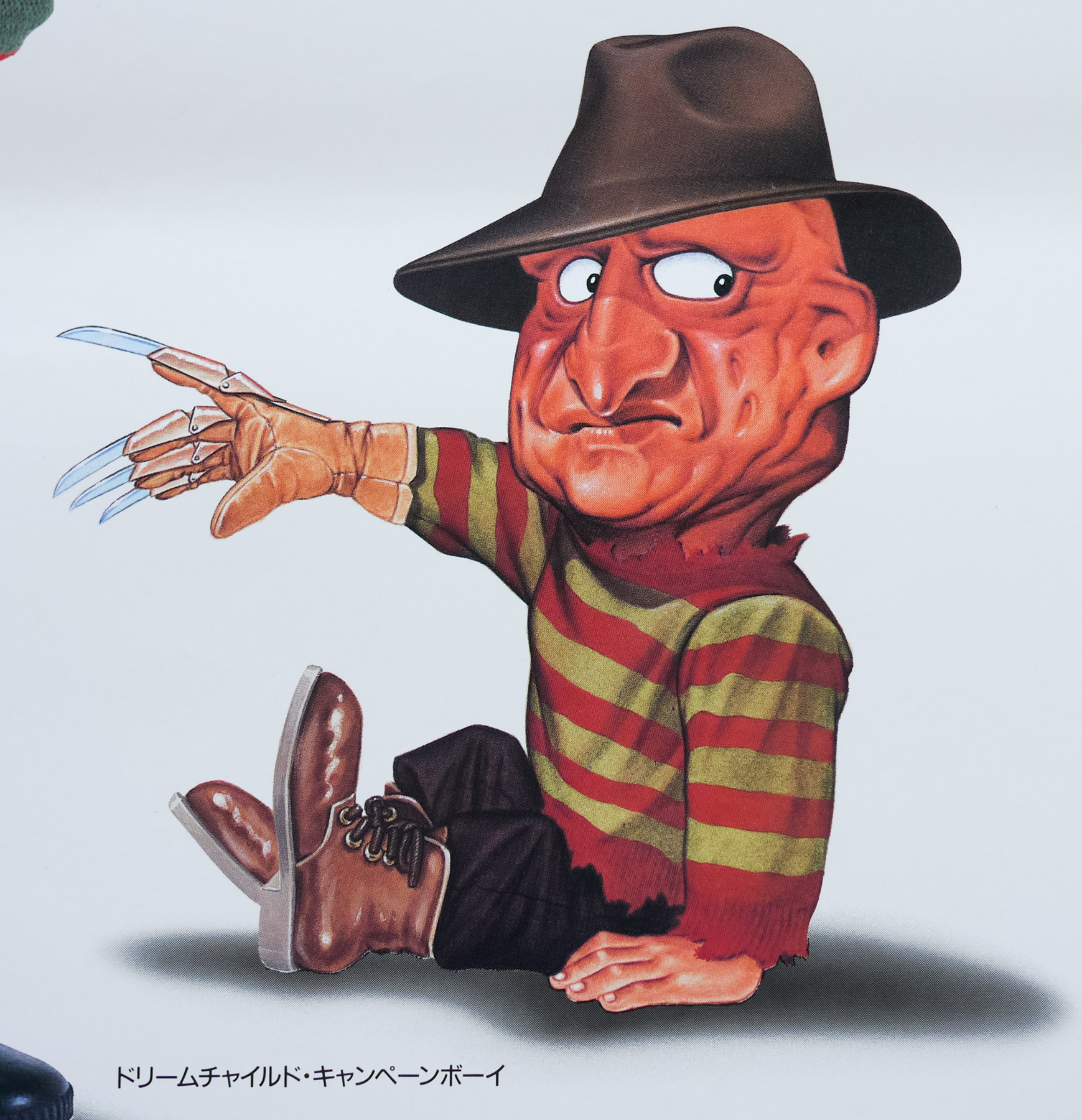
The smiling boy depicted on this poster doesn’t appear in the film and my guess is that he was chosen for a photoshoot by the poster’s designer. I’m not sure who was responsible for the artwork of the cartoon Freddy characters so if anyone has an idea please get in touch.

I Am Curious (Yellow) / B2 / white title style / Japan

03.08.16

Poster Poster
Title
I Am Curious (Yellow)
AKA
Jag är nyfiken - en film i gult (Sweden - original title)
Year of Film
1967
Director
Vilgot Sjöman
Starring
Lena Nyman, Vilgot Sjöman, Börje Ahlstedt, Peter Lindgren, Chris Wahlström, Marie Göranzon, Magnus Nilsson, Ulla Lyttkens
Origin of Film
Sweden
Genre(s) of Film
Lena Nyman, Vilgot Sjöman, Börje Ahlstedt, Peter Lindgren, Chris Wahlström, Marie Göranzon, Magnus Nilsson, Ulla Lyttkens,
Type of Poster
B2
Style of Poster
White title style
Origin of Poster
Japan
Year of Poster
1971
Designer
Unknown
Artist
--
Size (inches)
20 4/16" x 28 12/16"
SS or DS
SS
Tagline
--

This is one of two Japanese B2 posters printed for the release (in 1971) of the landmark Swedish drama I Am Curious (Yellow) from the controversial director Vilgot Sjöman. Yellow is a companion film to I Am Curious (Blue) and the pair were originally meant to have been released as one 3.5 hour film. The colours in the titles refer to the Swedish flag. They were part of a series of left wing films that were made after the founding of the Swedish Film Institute in the early 1960s and the attempt, by prominent Swedish cultural figure Harry Schein, to start Sweden’s own flavour of New Wave cinema. 

Filmed in a pseudo-documentary, cinéma vérité style, the film sees Sjöman playing a version of himself, a director who decides to make a film starring his 22-year-old lover Lena Nyman (also playing herself) who is a theatre student interested in social issues. The film within the film is called ‘Lena on the Road’ and sees her leaving the flat she shares with her father and, when not getting involved in socio-political activism with a group of friends, she is shown traveling around Stockholm interviewing people she meets about issues including social classes and gender equality.

Later she meets another man called Börje who she begins a love-affair with but this becomes fraught when she discovers he has hidden the fact that he has another lover and a daughter. After traveling to a country retreat Lena begins meditating, practicing yoga and studying about non-violence, but her lover catches up with her and the pair continue their stormy relationship. Soon after the film within a film begins to break down as the ‘actors’ form a ‘real’ relationship that causes the ‘director’ to get jealous and wrap up shooting.

The film is most notable for its then ground-breaking use of full-frontal shots and scenes of (simulated) sexual intercourse that until then had been confined to sex films and not used in a dramatic context. The film was released in a cut form both in the US, UK and elsewhere but it was in the US that it attracted the most controversy with some states even going so far as banning the film outright on grounds of obscenity (Massachusetts in 1969, later overturned). As is the case with any censorship case brought against a film featuring sex and nudity, the box-office takings were helped greatly as punters flocked to see what the fuss was about. The film was the highest-grossing foreign film in the US for many years afterwards. This article on Vulture.com goes into more detail about the original release.

The other style of Japanese poster features a similarly colourful image but has black text down the side instead of white – see here.

Cotton Comes to Harlem / B2 / Japan

30.08.16

Poster Poster

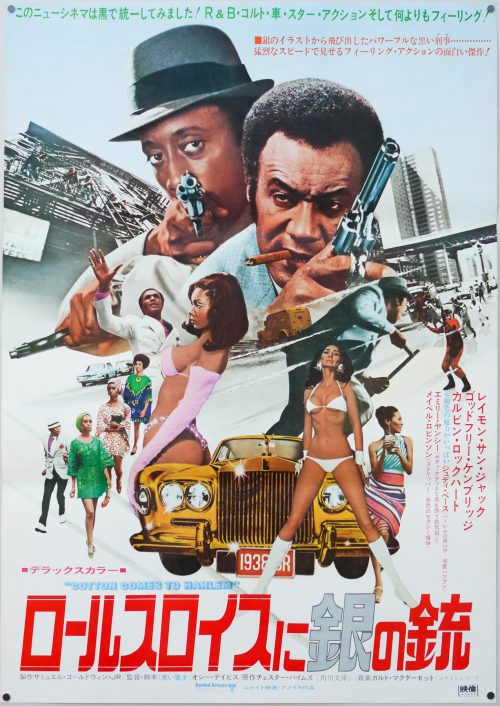
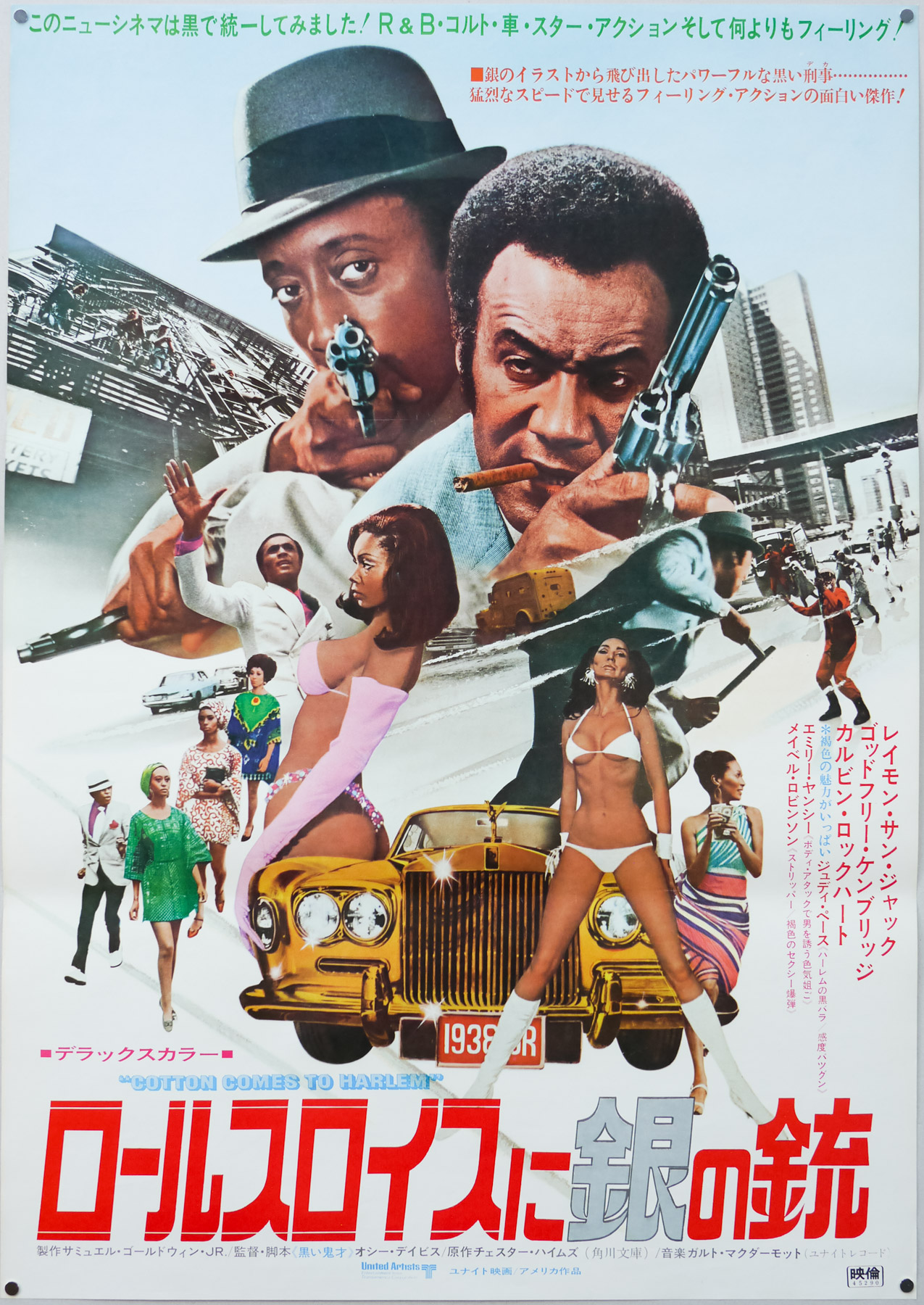
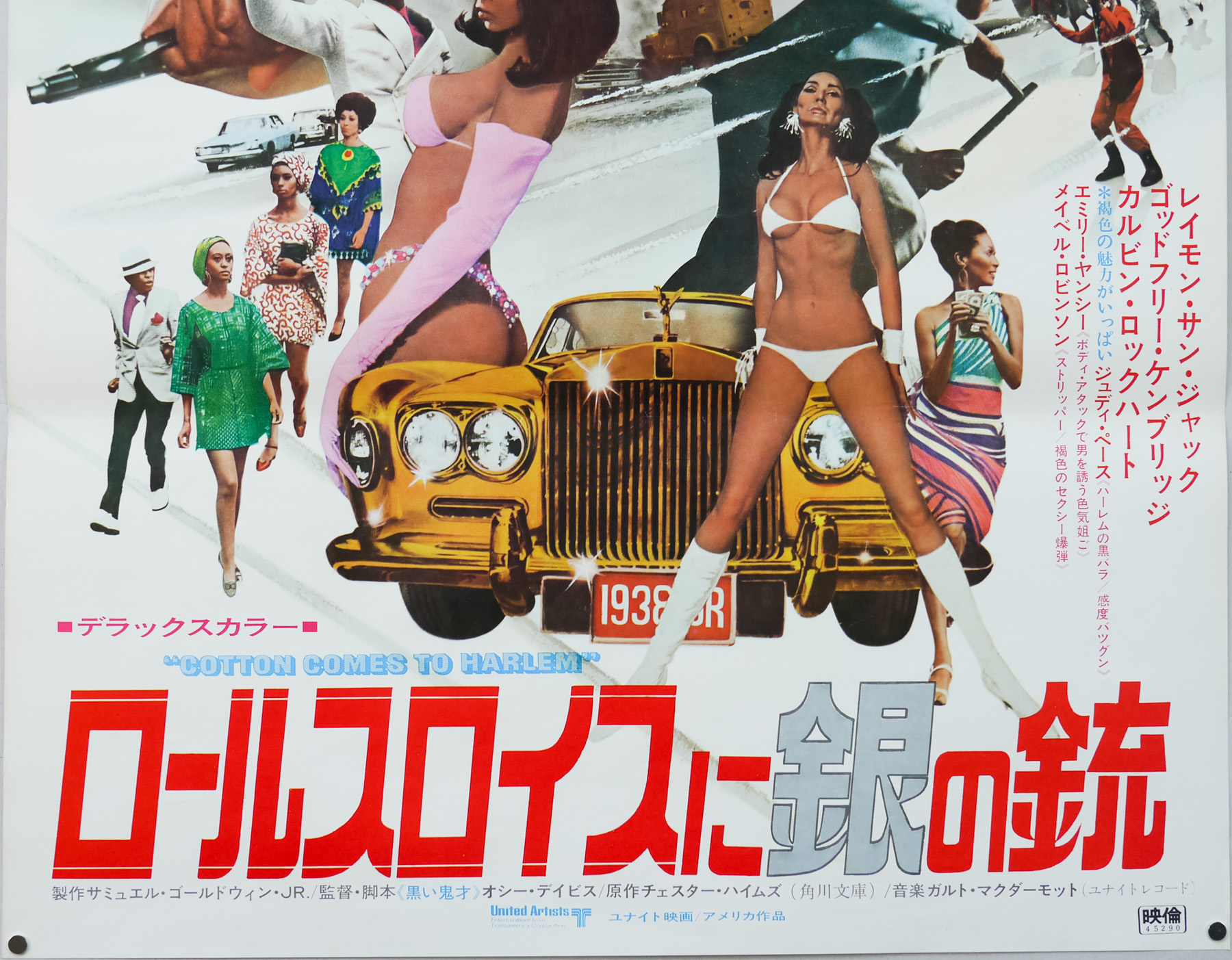
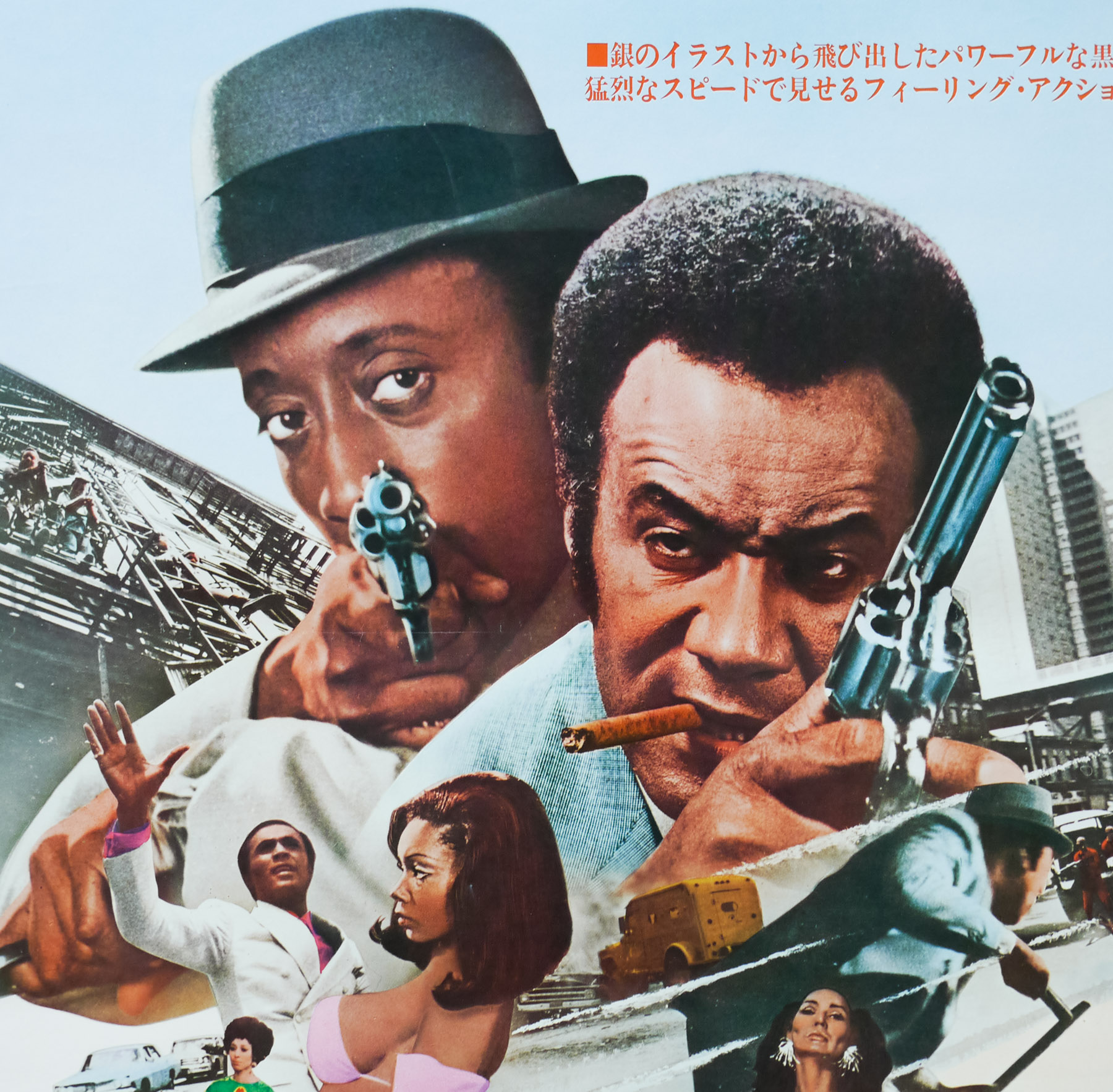
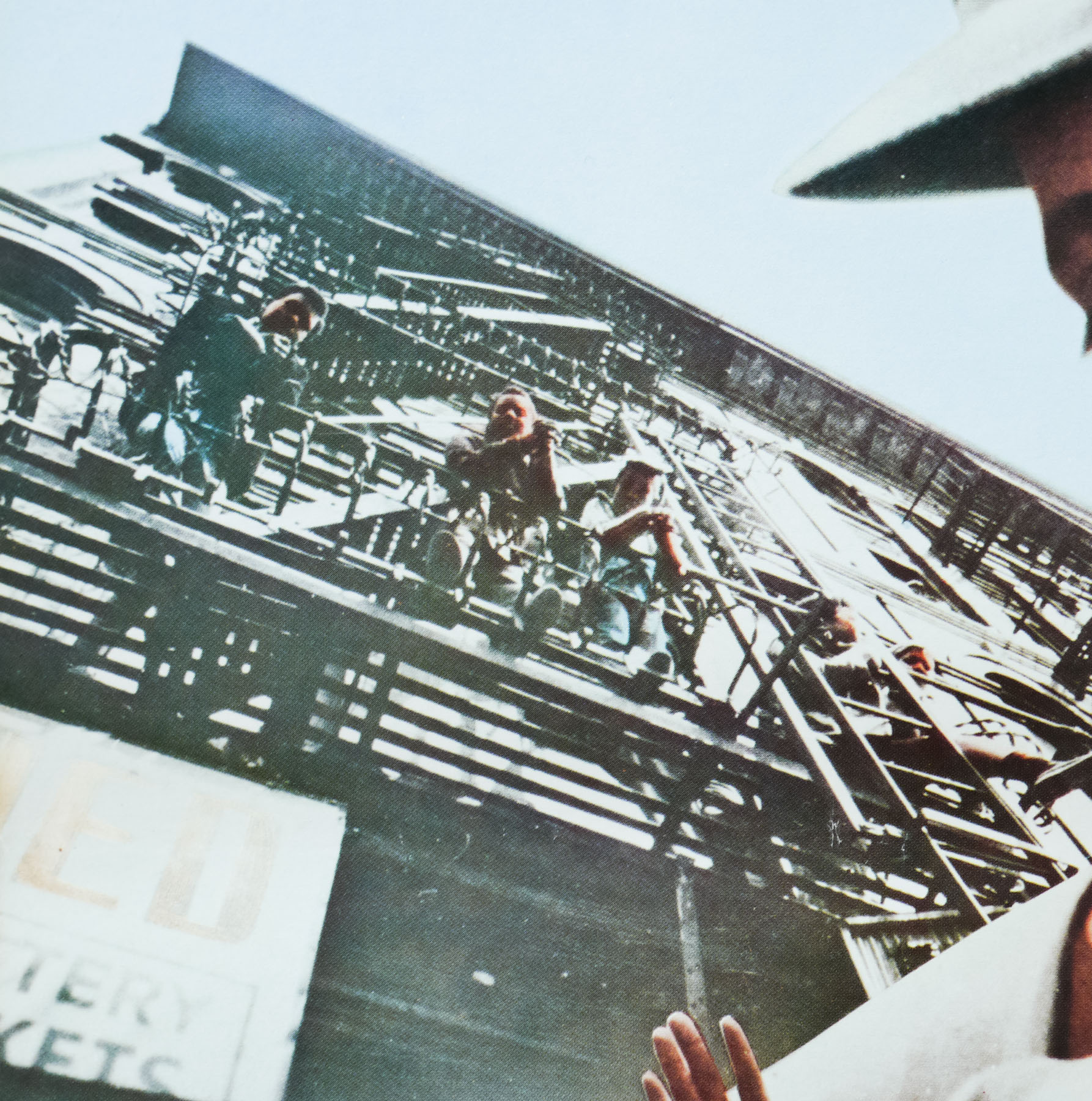
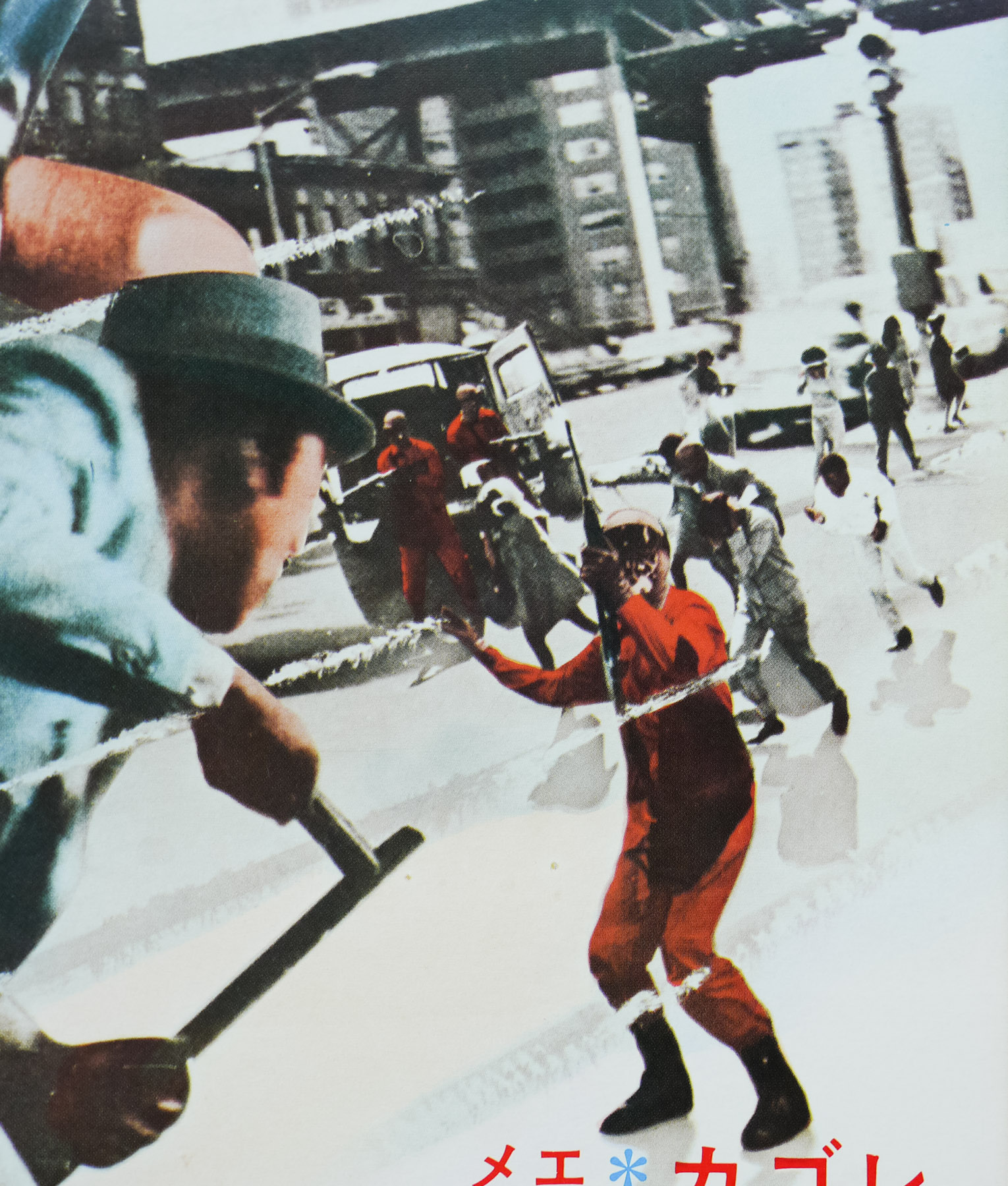
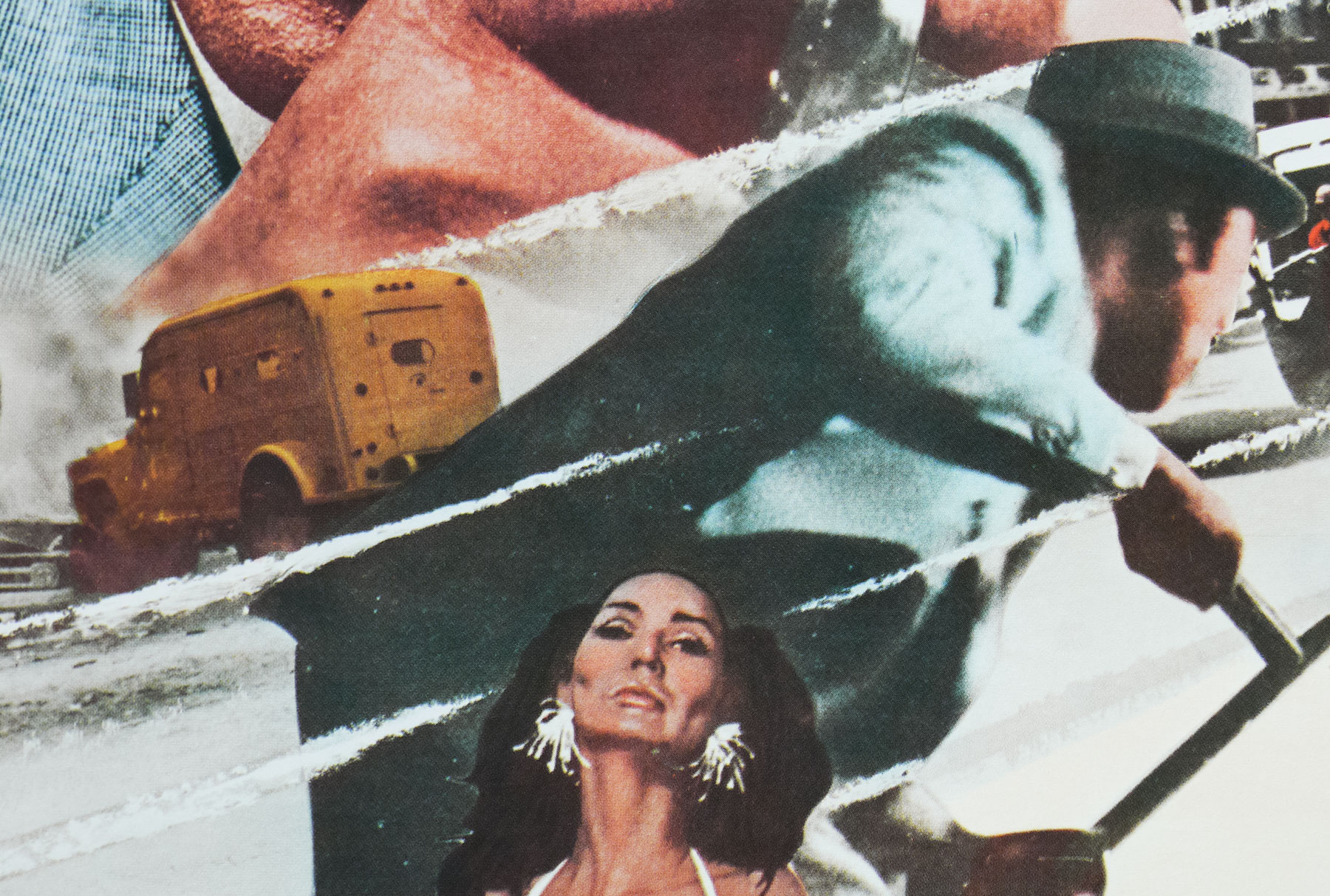
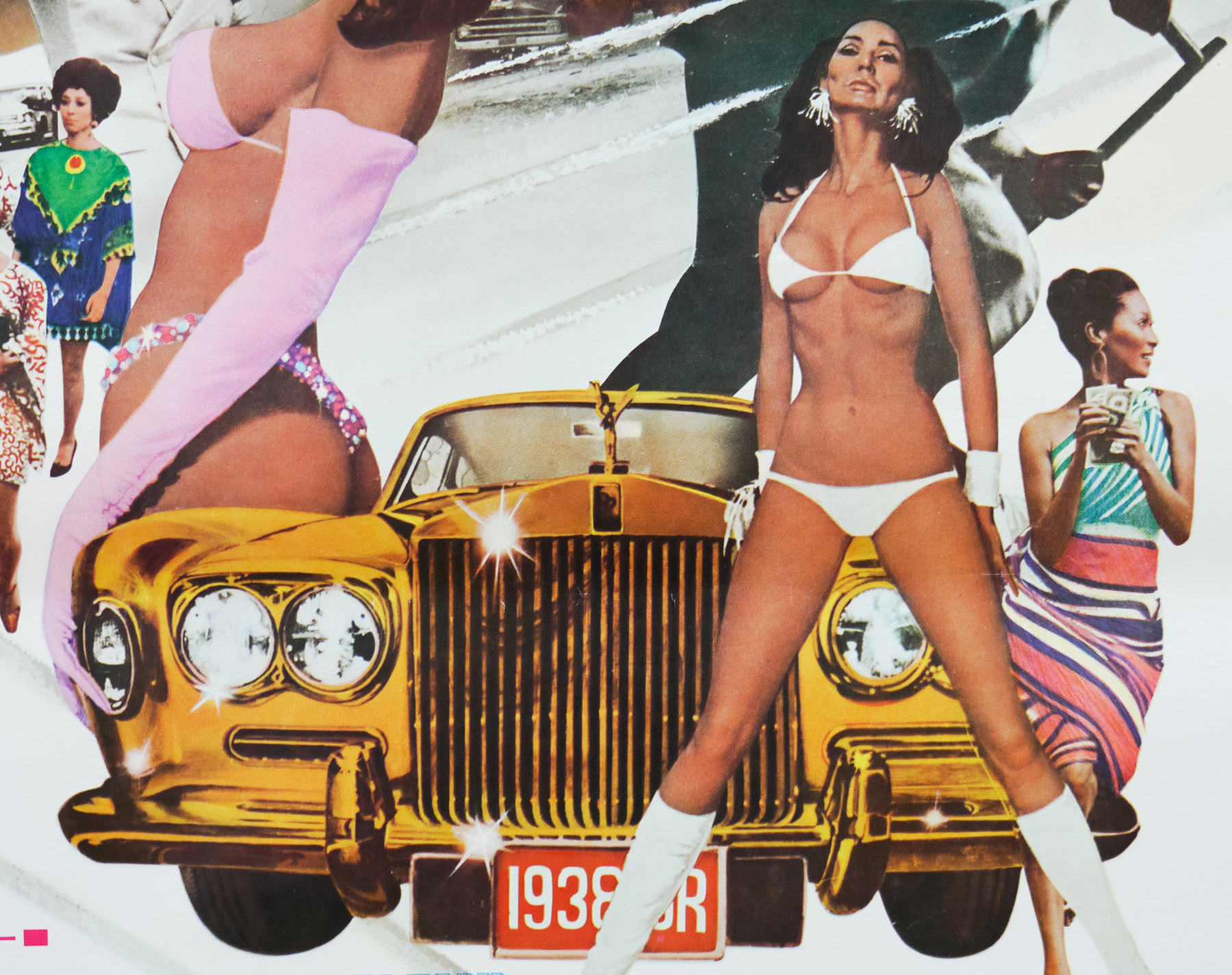
Cotton Comes to Harlem is often considered to be one of the first films in the so-called blaxploitation sub-genre of exploitation that was popular during the 1970s. The film was the second film to be directed by the late Ossie Davis, who was one of a handful of African-American actors to achieve commercial success in films without being stereotyped in films prior to 1970. Although best known as an actor, with roles in films like The Hill (1965) and The Scalphunters (1968), Davis tried his hand at directing, starting with the little-seen Kongi’s Harvest in 1970. The same year, ‘Cotton…’ proved to be a huge hit and saw him helm two other blaxploitation pictures, with Black Girl following in 1972 and then another hit with Gordon’s War a year later.

The film is based on the novel of the same name by Chester Himes and is set in the eponymous neighbourhood of Manhattan. Two detectives, Grave Digger Jones (Godfrey Cambridge, who died tragically aged 43) and Coffin Ed Johnson (Raymond St. Jacques) are assigned to investigate the apparent armed robbery of $87000 during a public rally. The gathering was being led by Reverend Deke O’Malley (Calvin Lockhart) who is fundraising for a Back-to-Africa movement ship to be called Black Beauty. A gang of thieves wearing masks appear at the event and steal the money from an armoured truck before making off. A chase ensues and the titular bale of cotton falls from the getaway van. The detectives soon realise that the stolen money was apparently stashed inside the bale and the hunt is on after it disappears from the street. O’Malley must fend off the angry mob of locals looking for their money, as well as a jealous girlfriend (Judy Pace) and the partner who he was in cahoots with to stage the robbery.

The film was a huge hit in cinemas, grossing over $5 million on a $1 million budget and triggering a rush to produce films in a similar vein. Arguably the sub-genre’s most famous film, Shaft, would follow a year later. ‘Cotton…’ was given a sequel called Come Back, Charleston Blue in 1972, but the second film wasn’t met with as much critical or audience adulation.

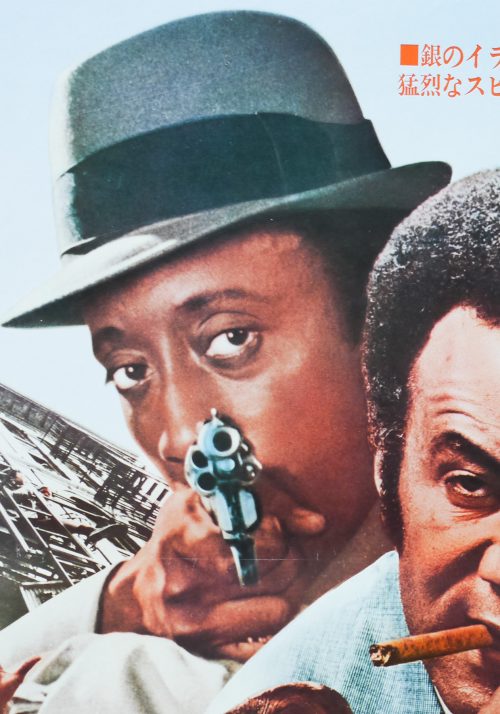
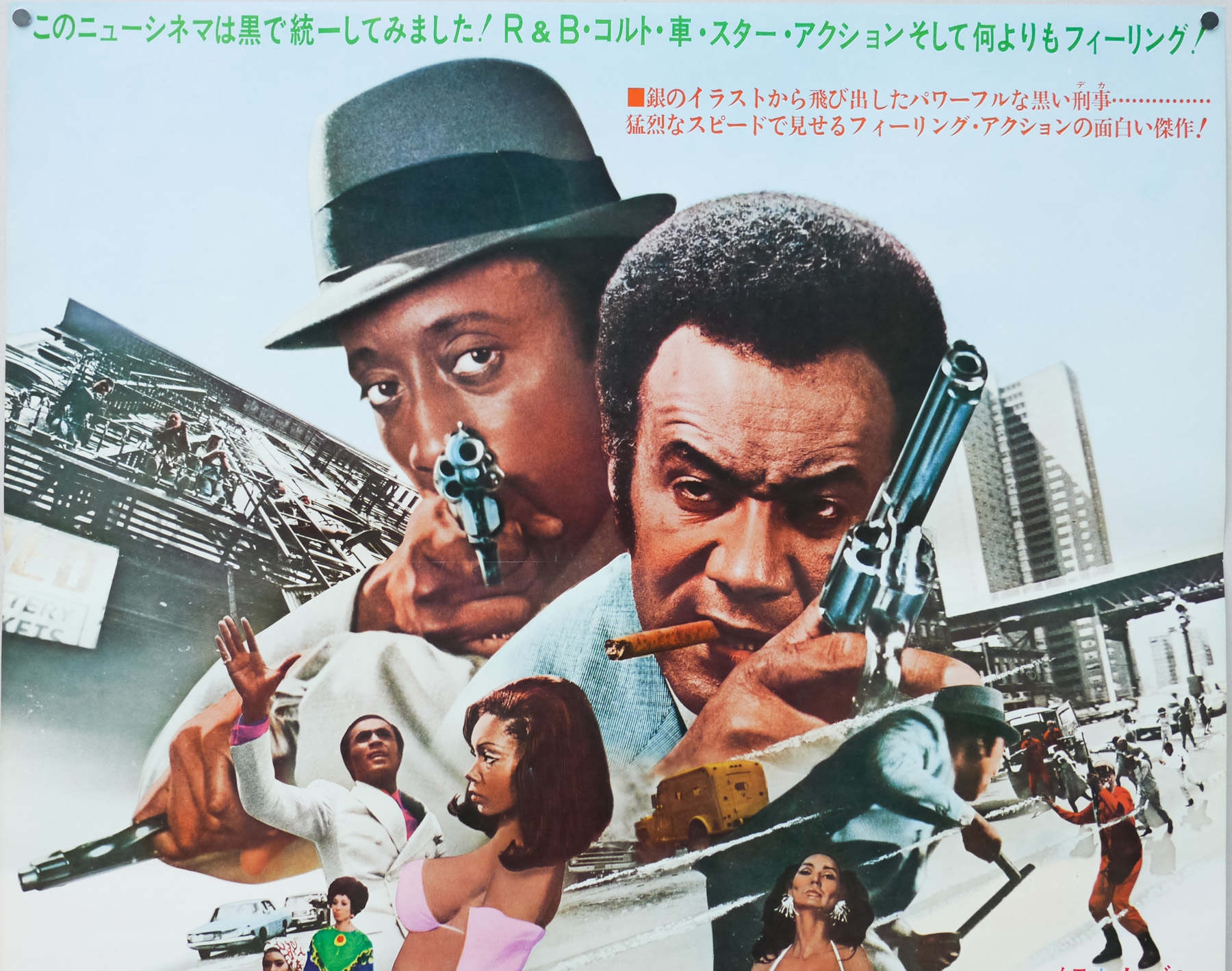
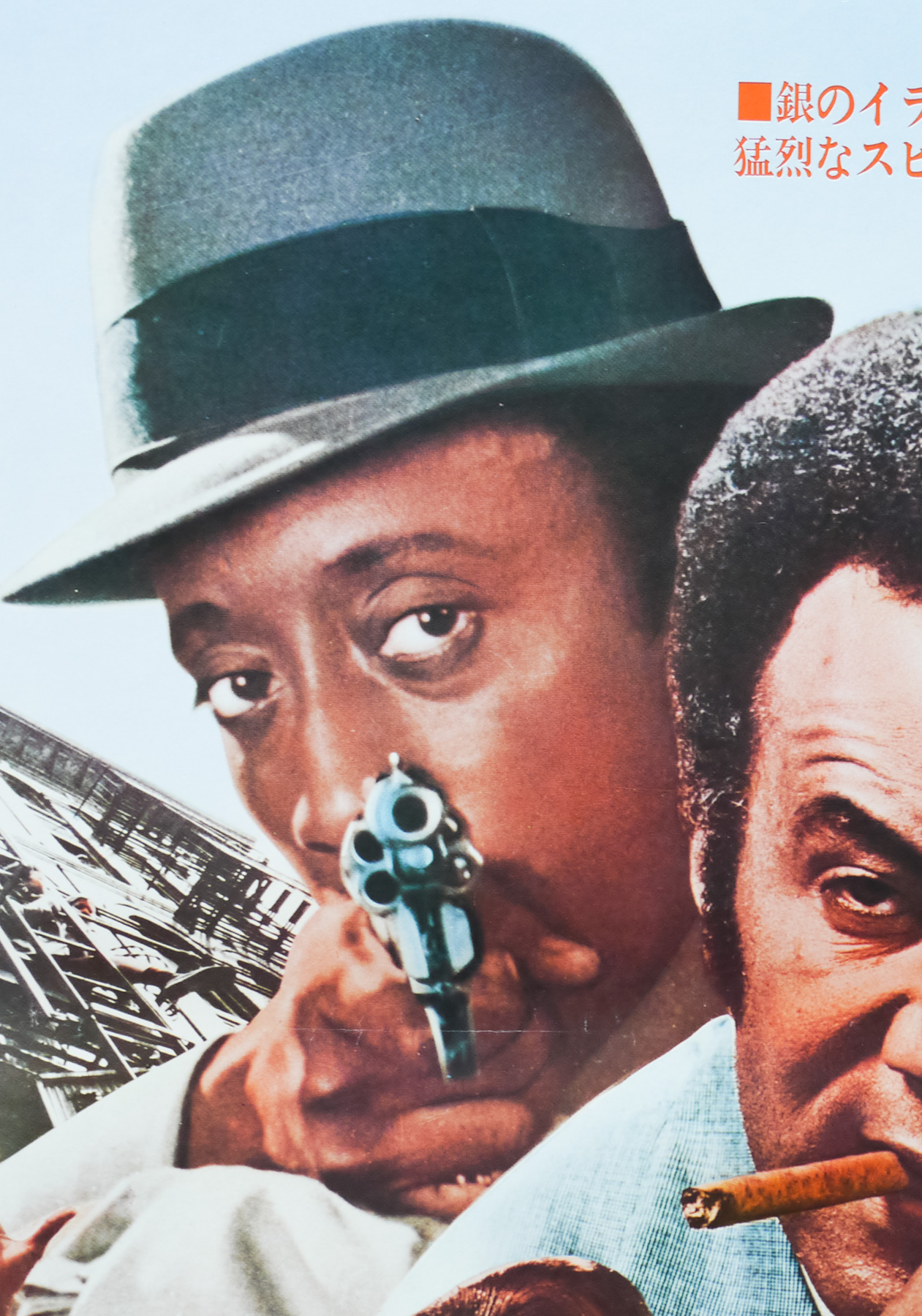
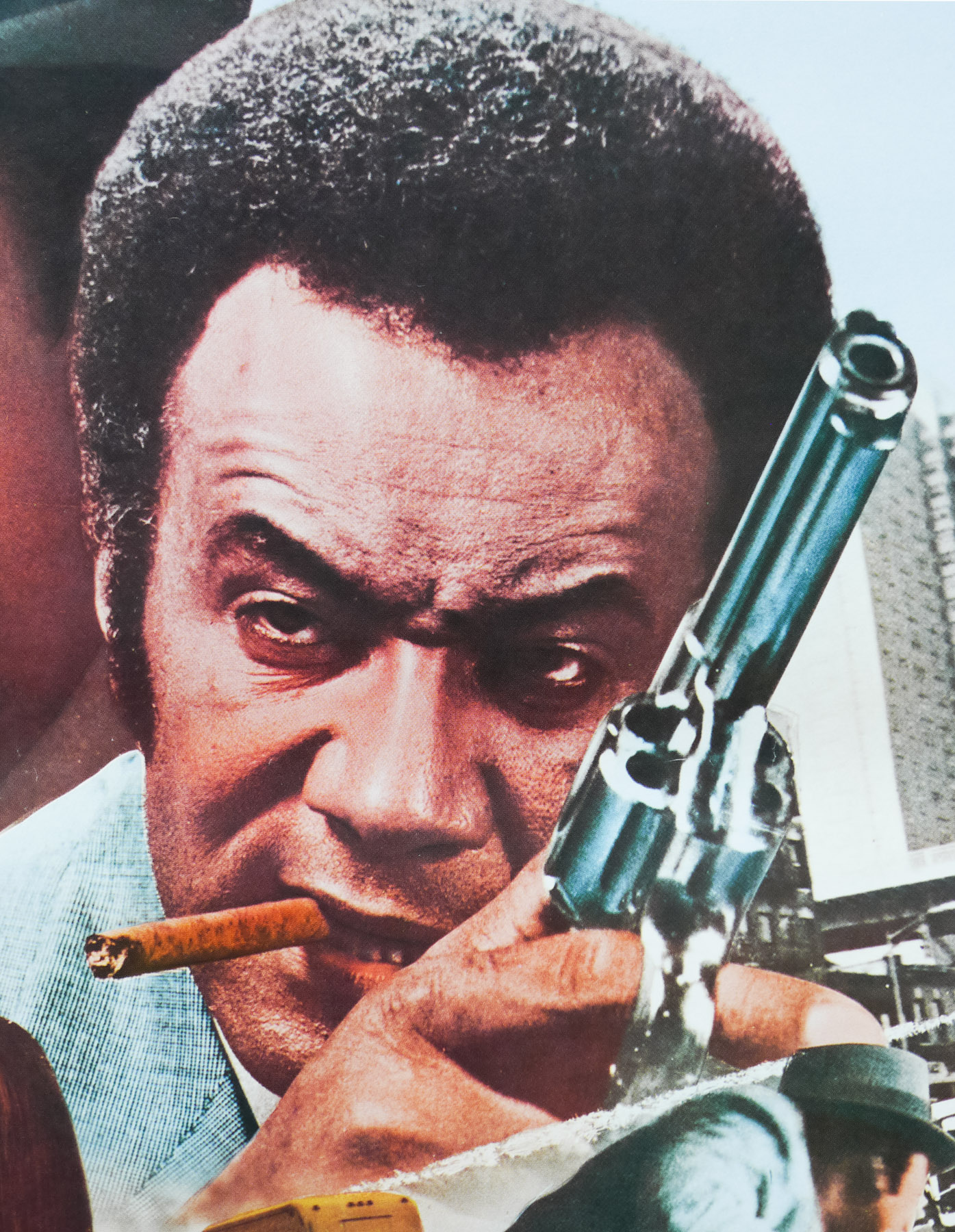
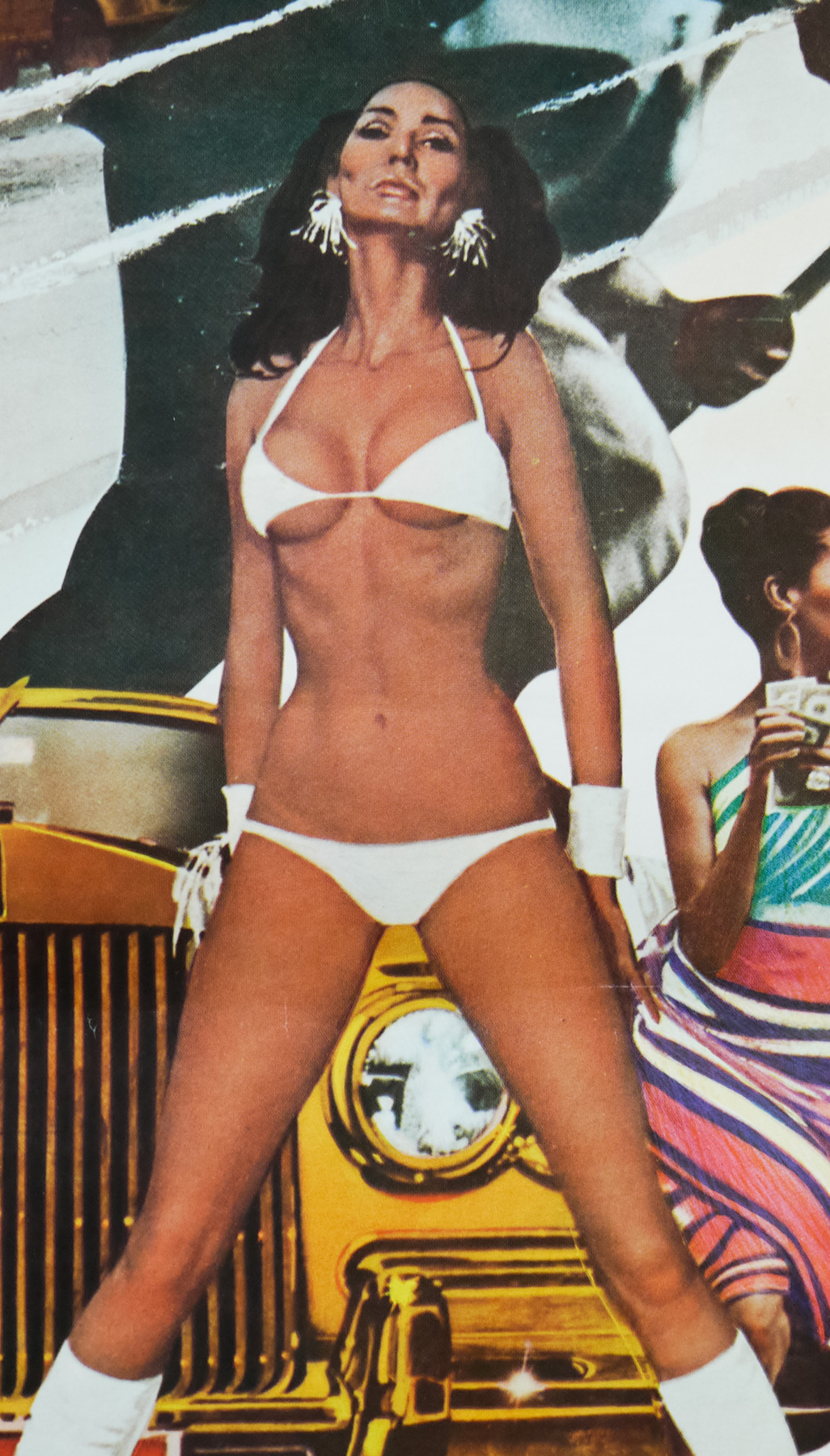
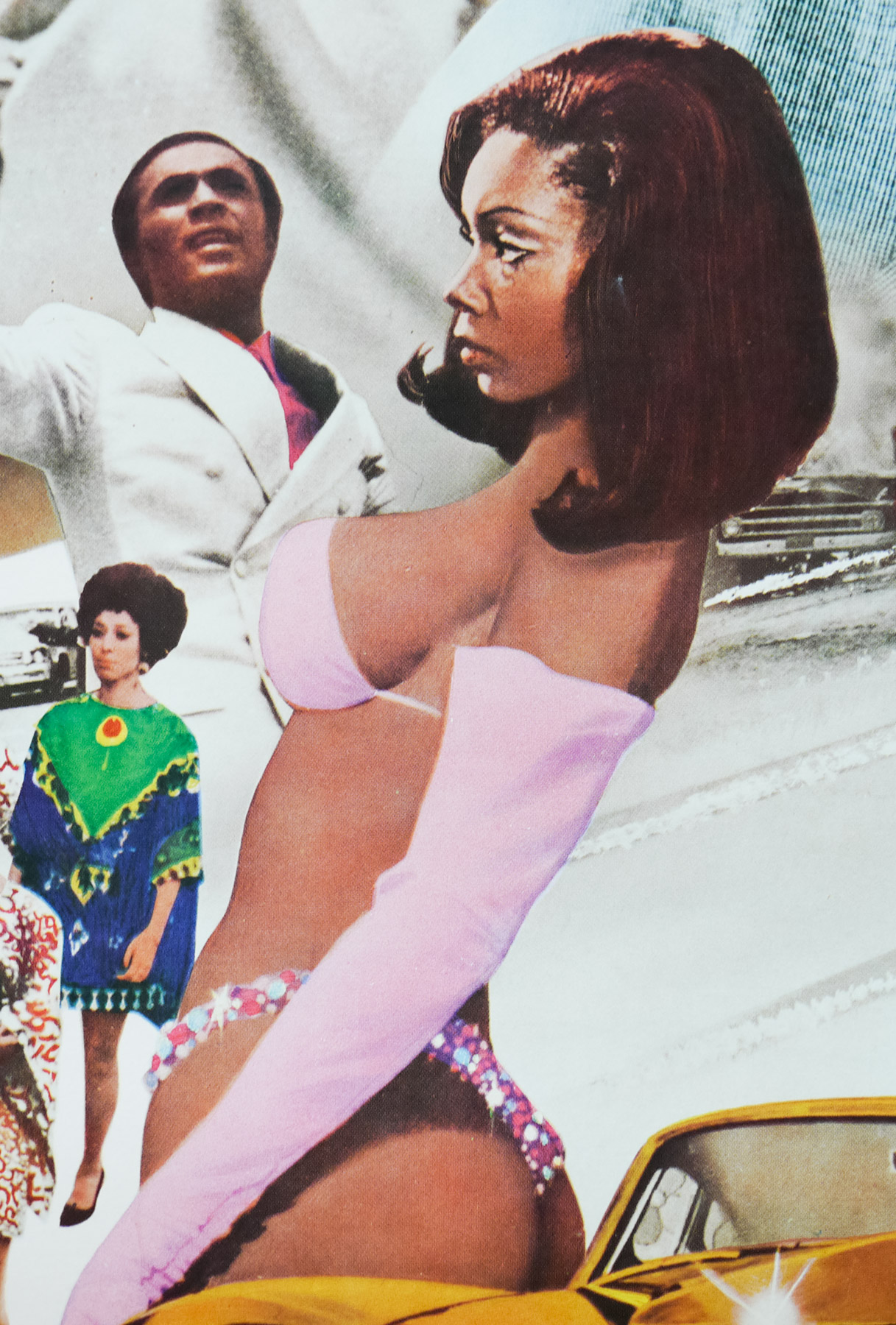
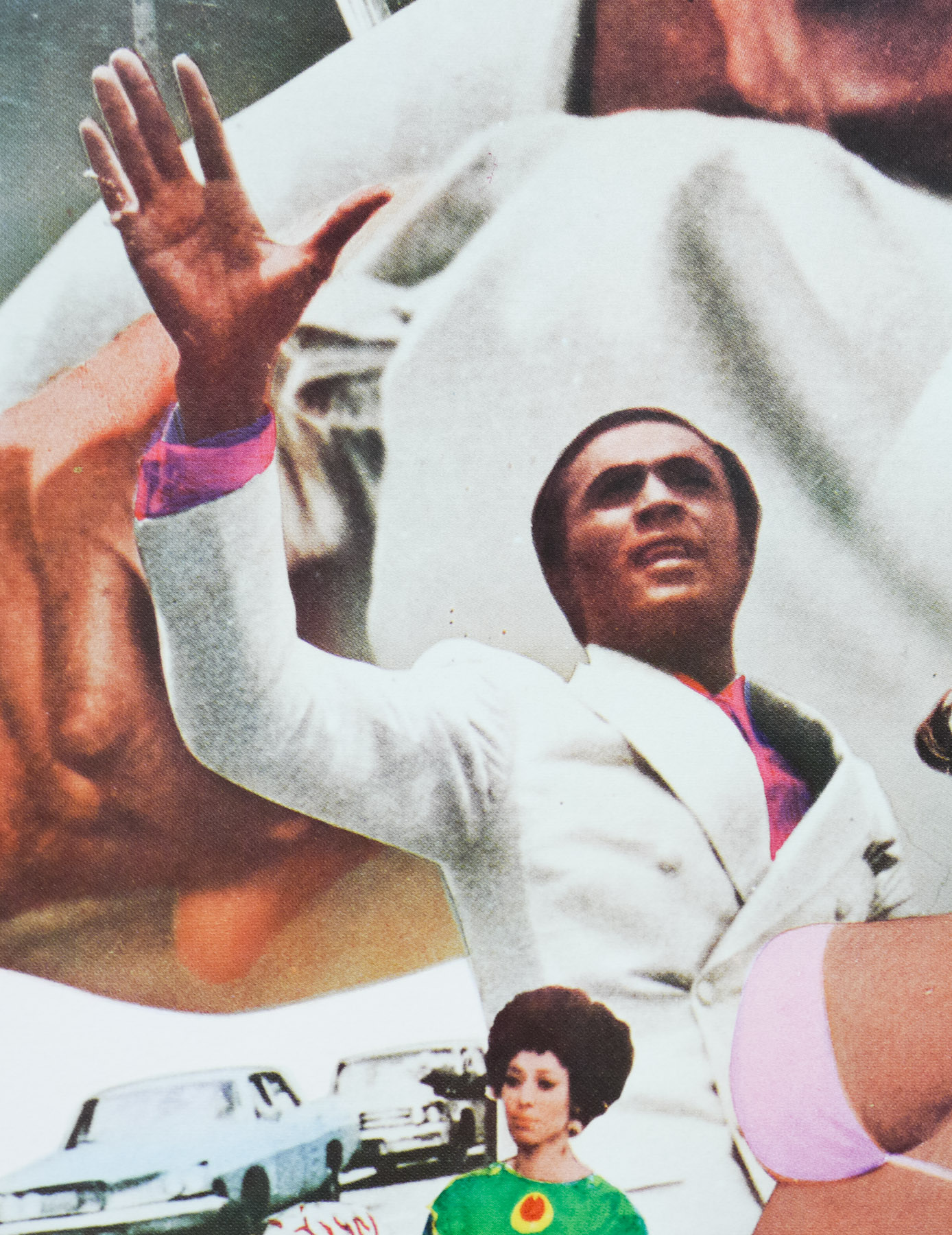
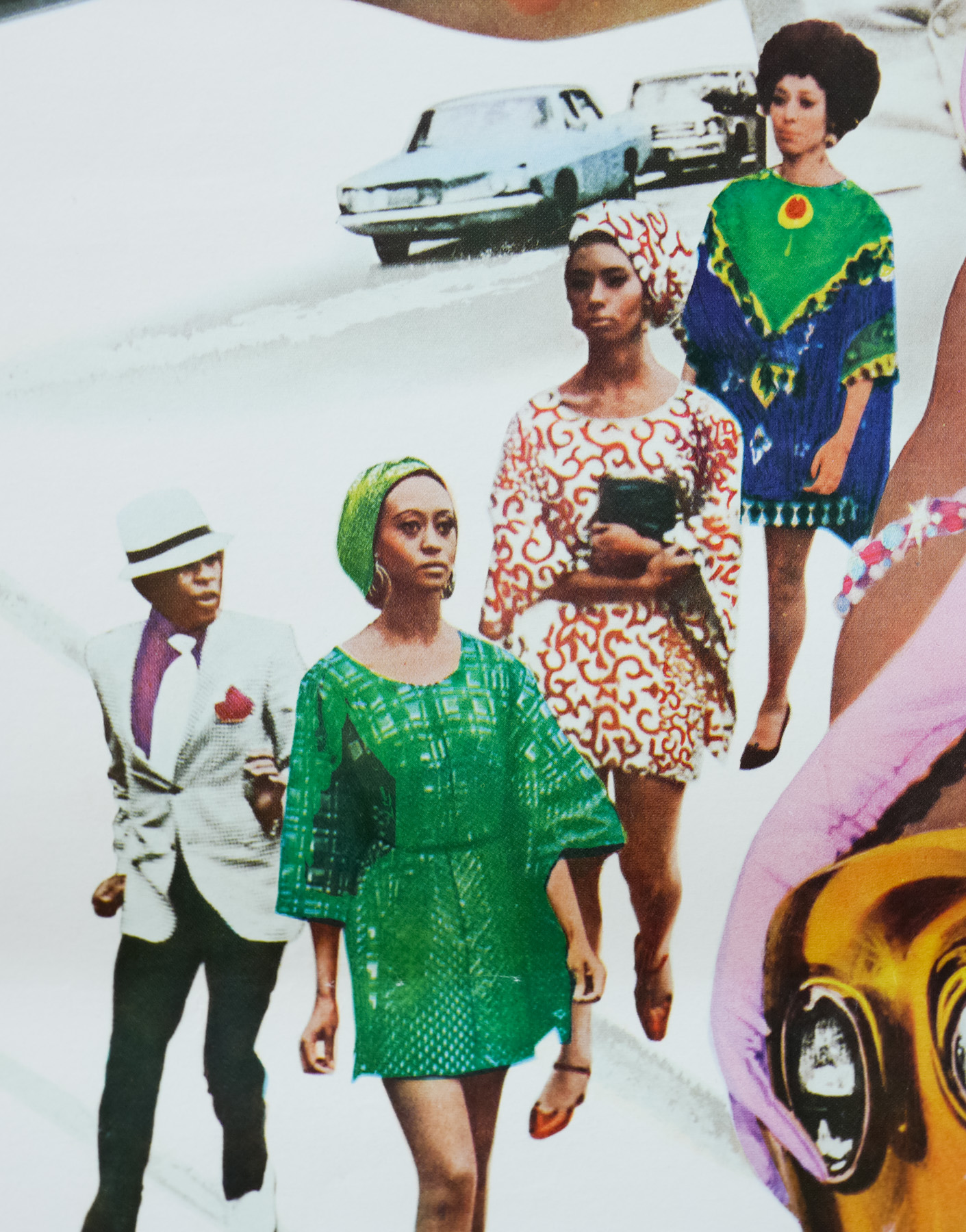
This Japanese B2 is a photo montage but at least part of it is inspired by the US theatrical poster, which had been painted by the artist Robert McGinnis and can be seen here.

Magic / B2 / Japan

12.12.16

Poster Poster
Title
Magic
AKA
--
Year of Film
1978
Director
Richard Attenborough
Starring
Anthony Hopkins, Ann-Margret, Burgess Meredith, Ed Lauter, David Ogden Stiers
Origin of Film
USA
Genre(s) of Film
Anthony Hopkins, Ann-Margret, Burgess Meredith, Ed Lauter, David Ogden Stiers,
Type of Poster
B2
Style of Poster
--
Origin of Poster
Japan
Year of Poster
1979
Designer
Unknown
Artist
Unknown
Size (inches)
20 6/16" x 28 14/16"
SS or DS
SS
Tagline
--

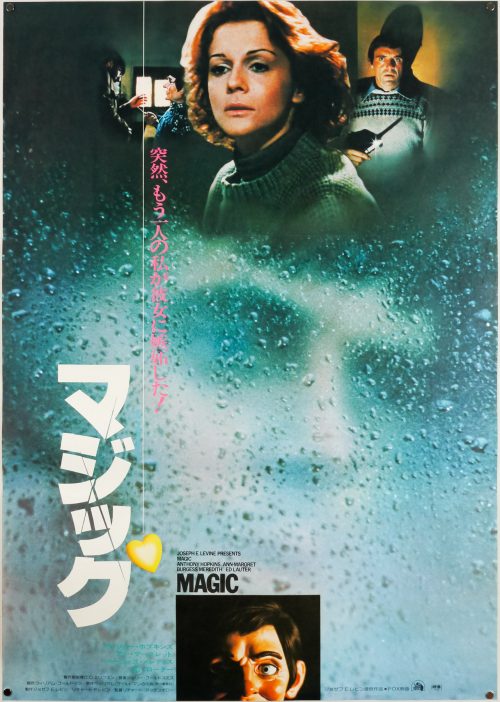
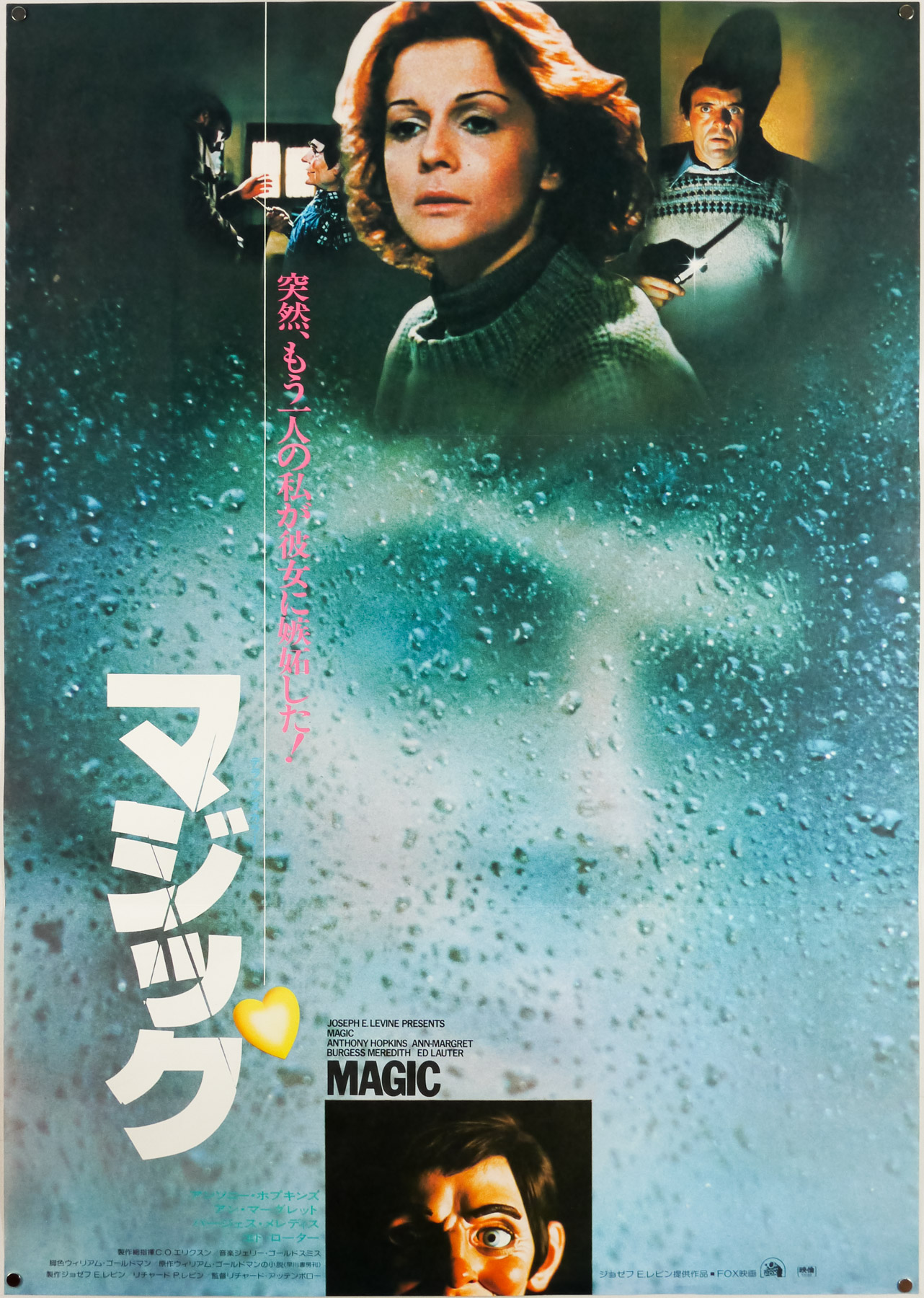
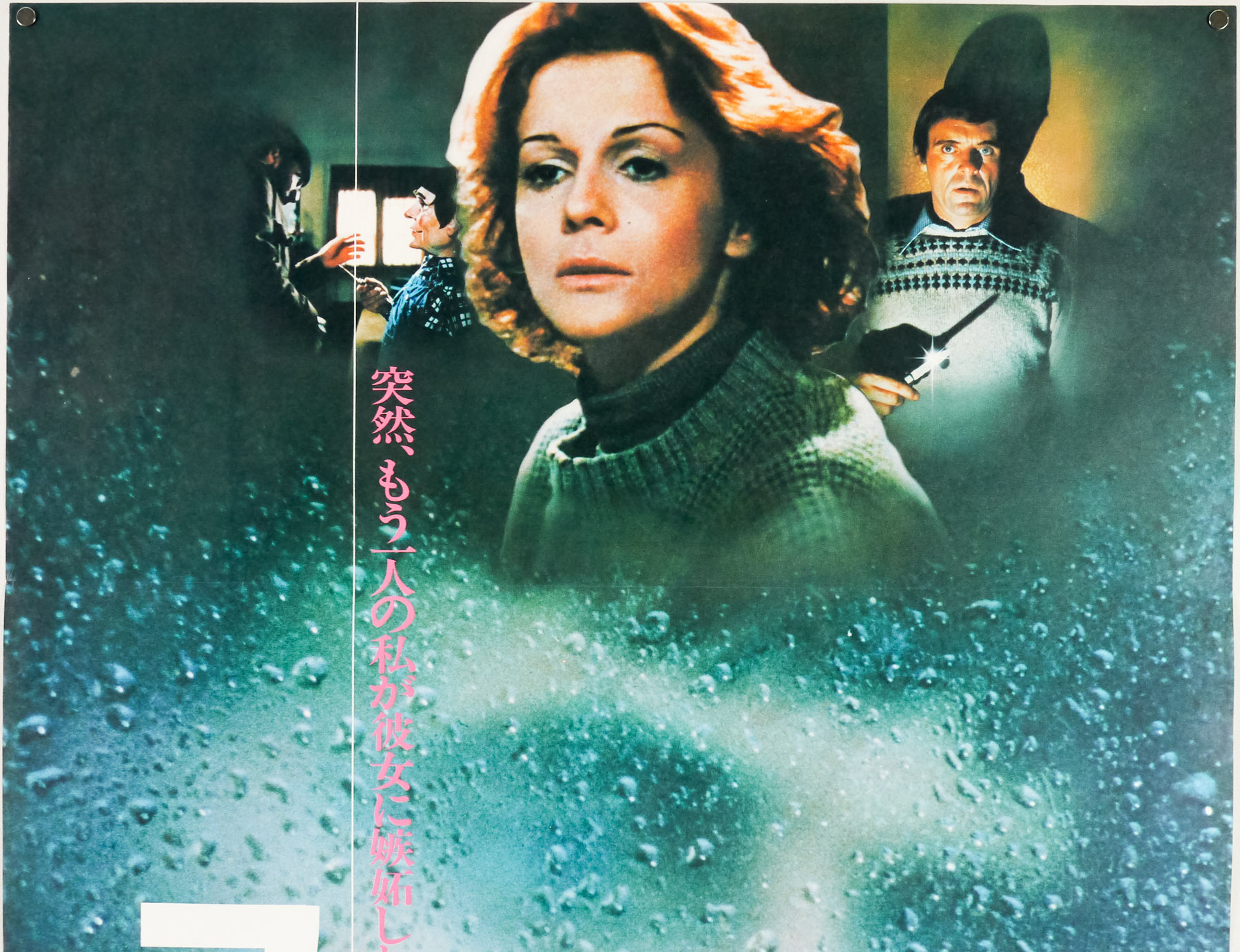
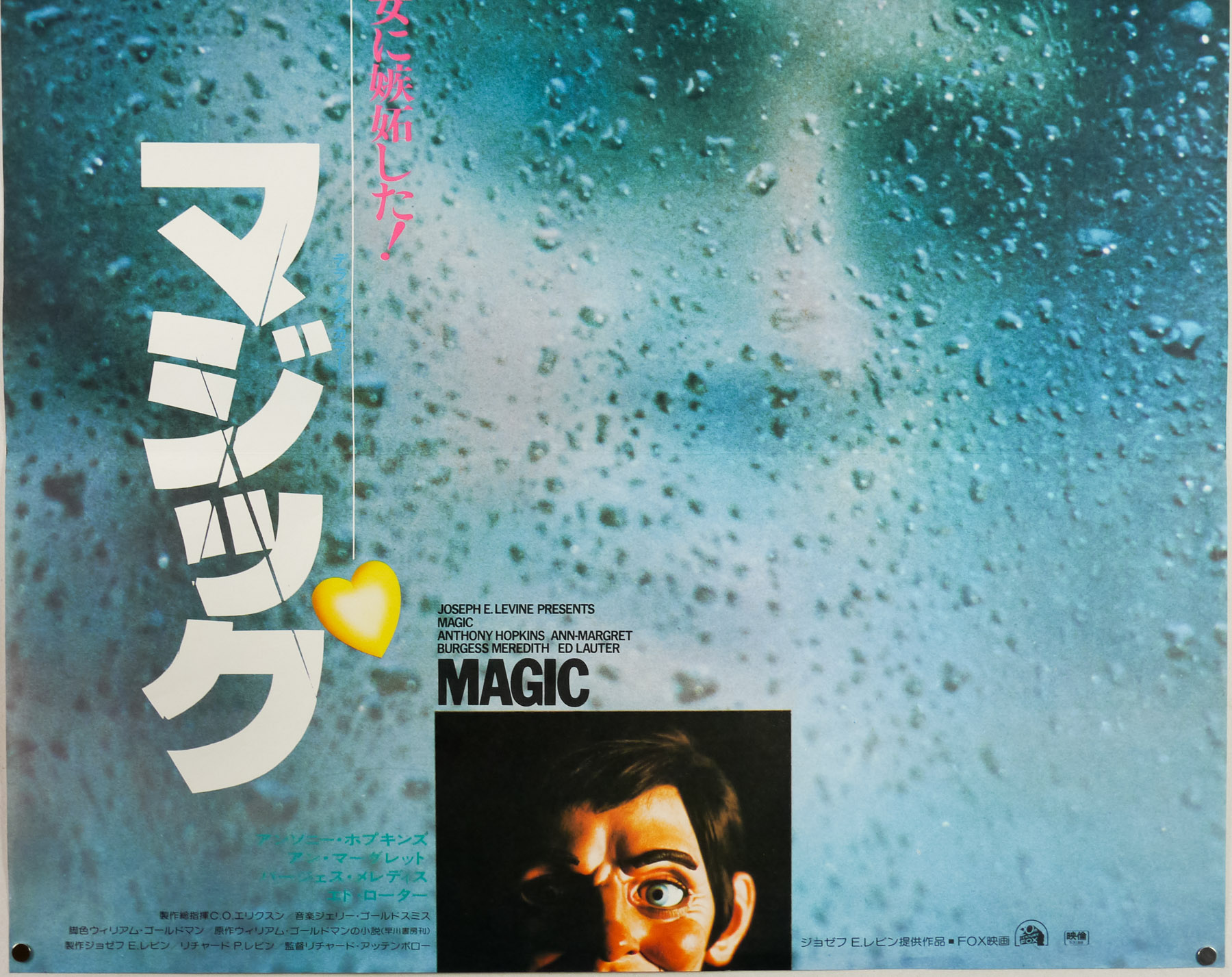
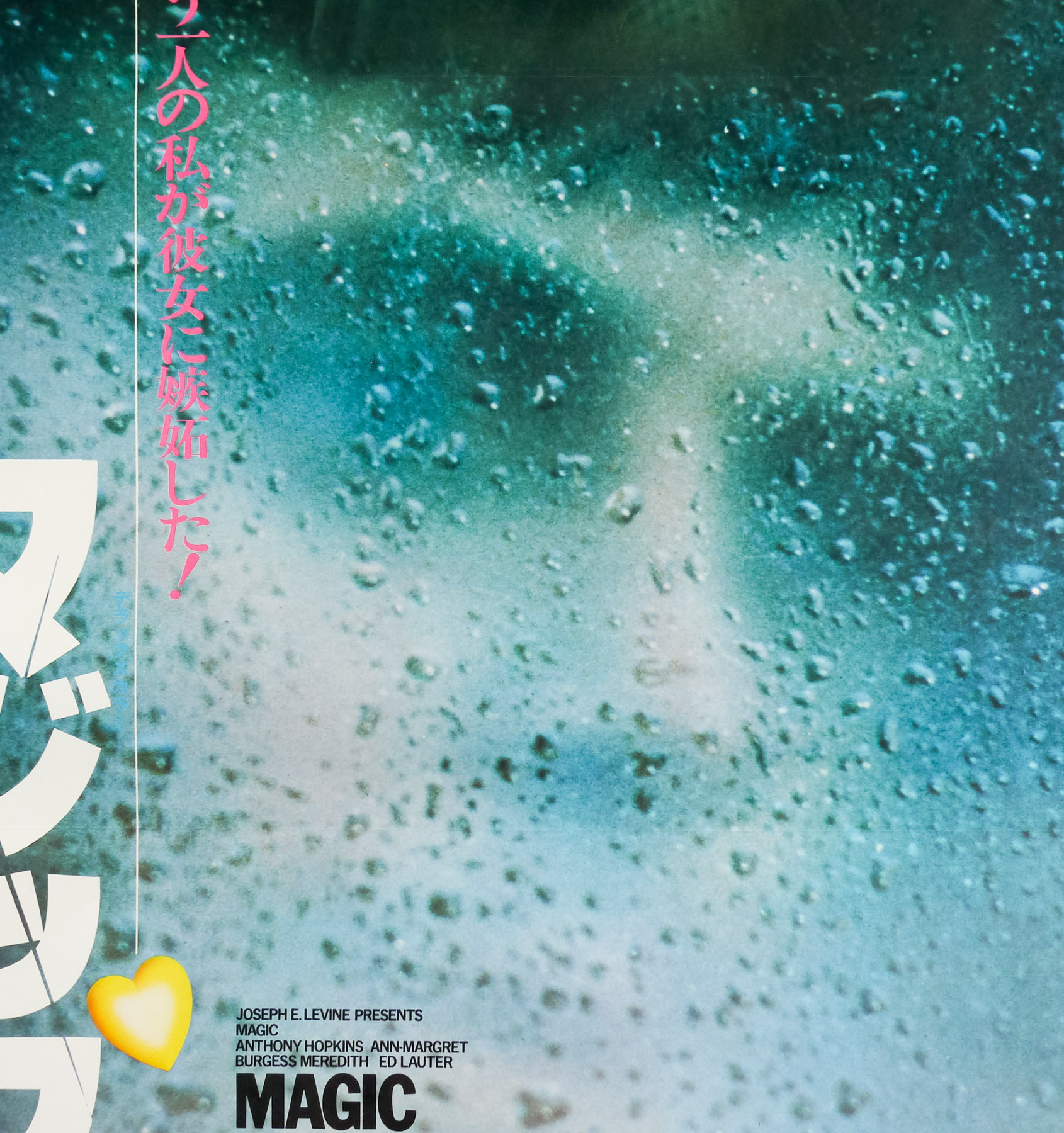
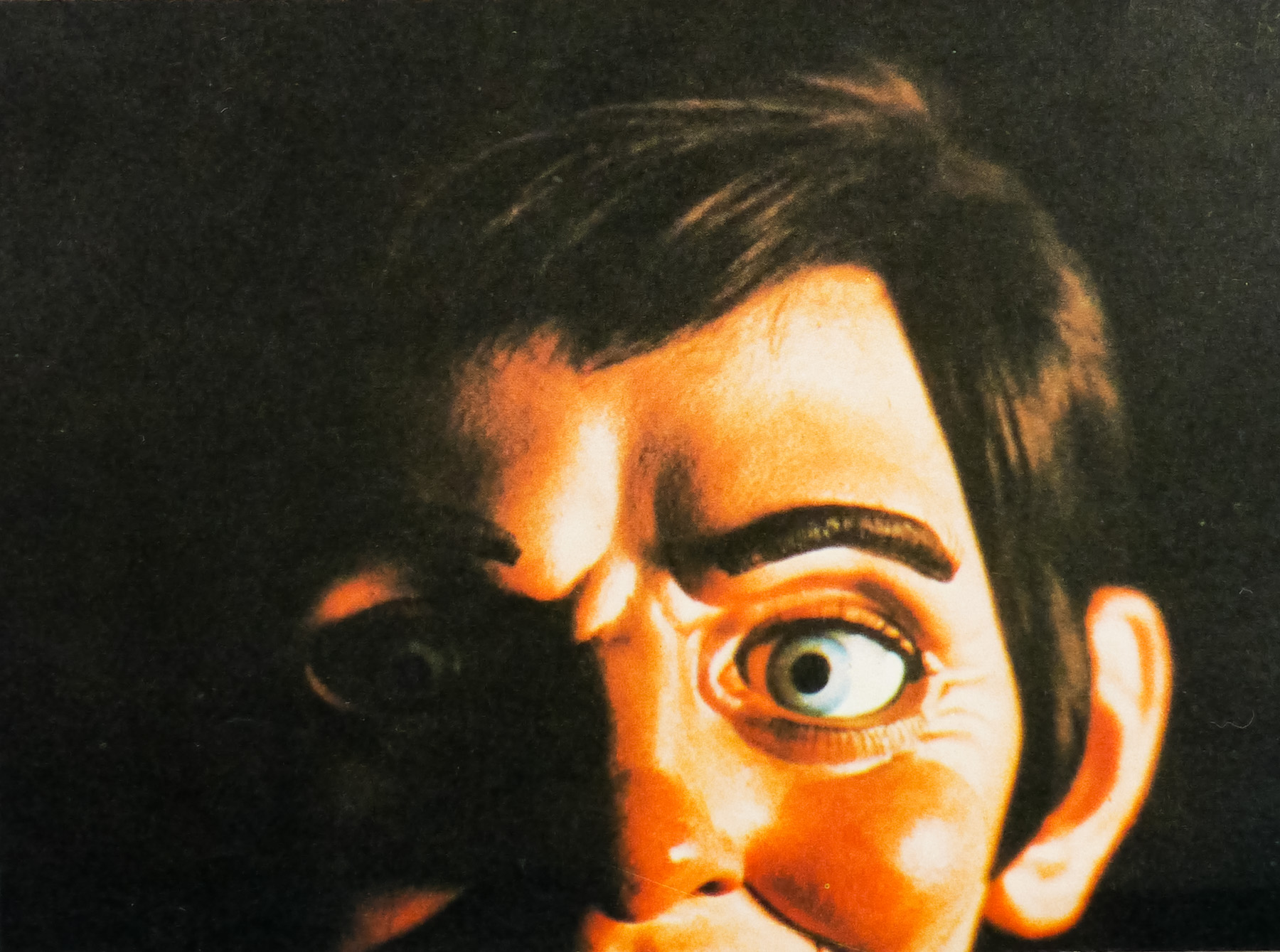
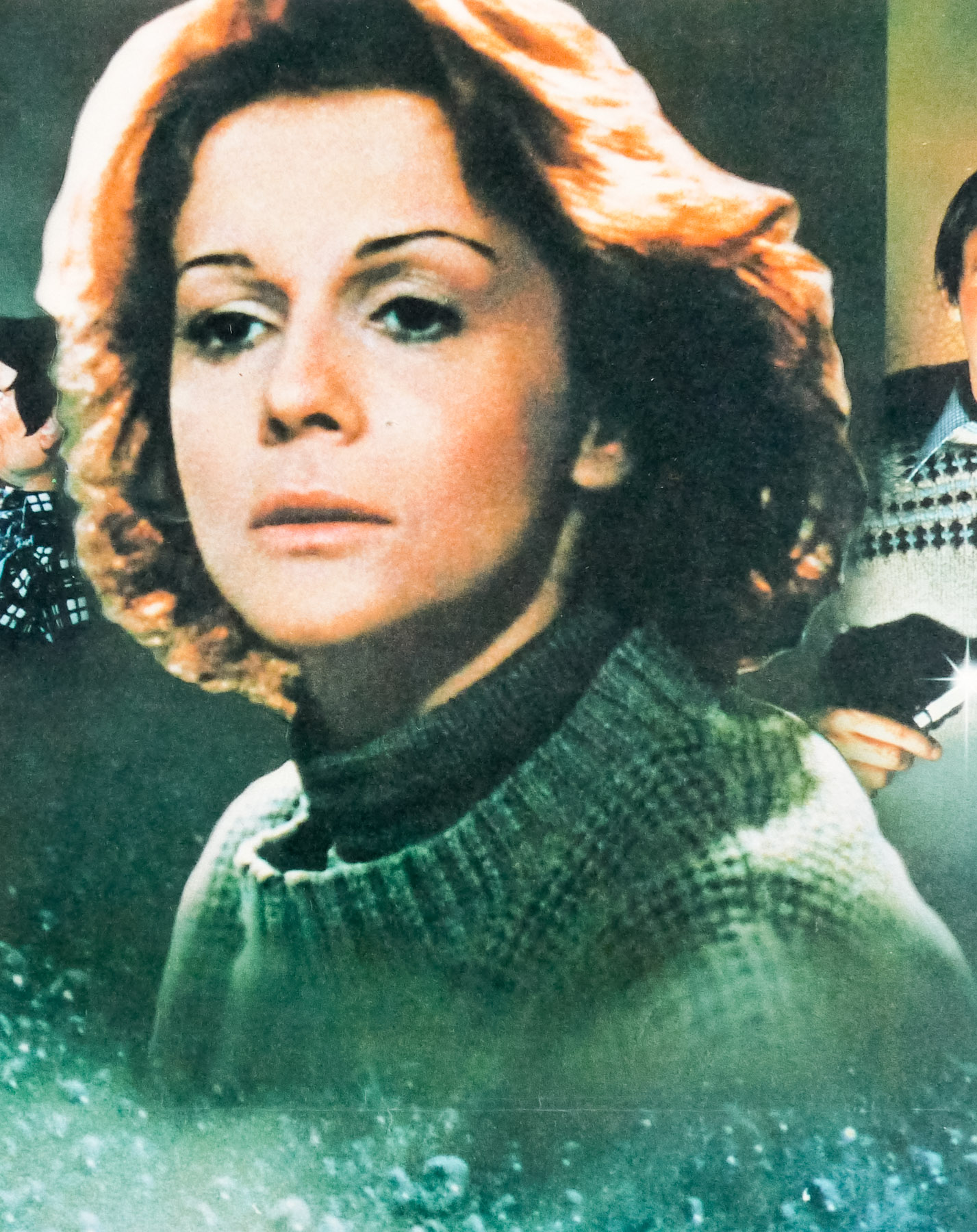
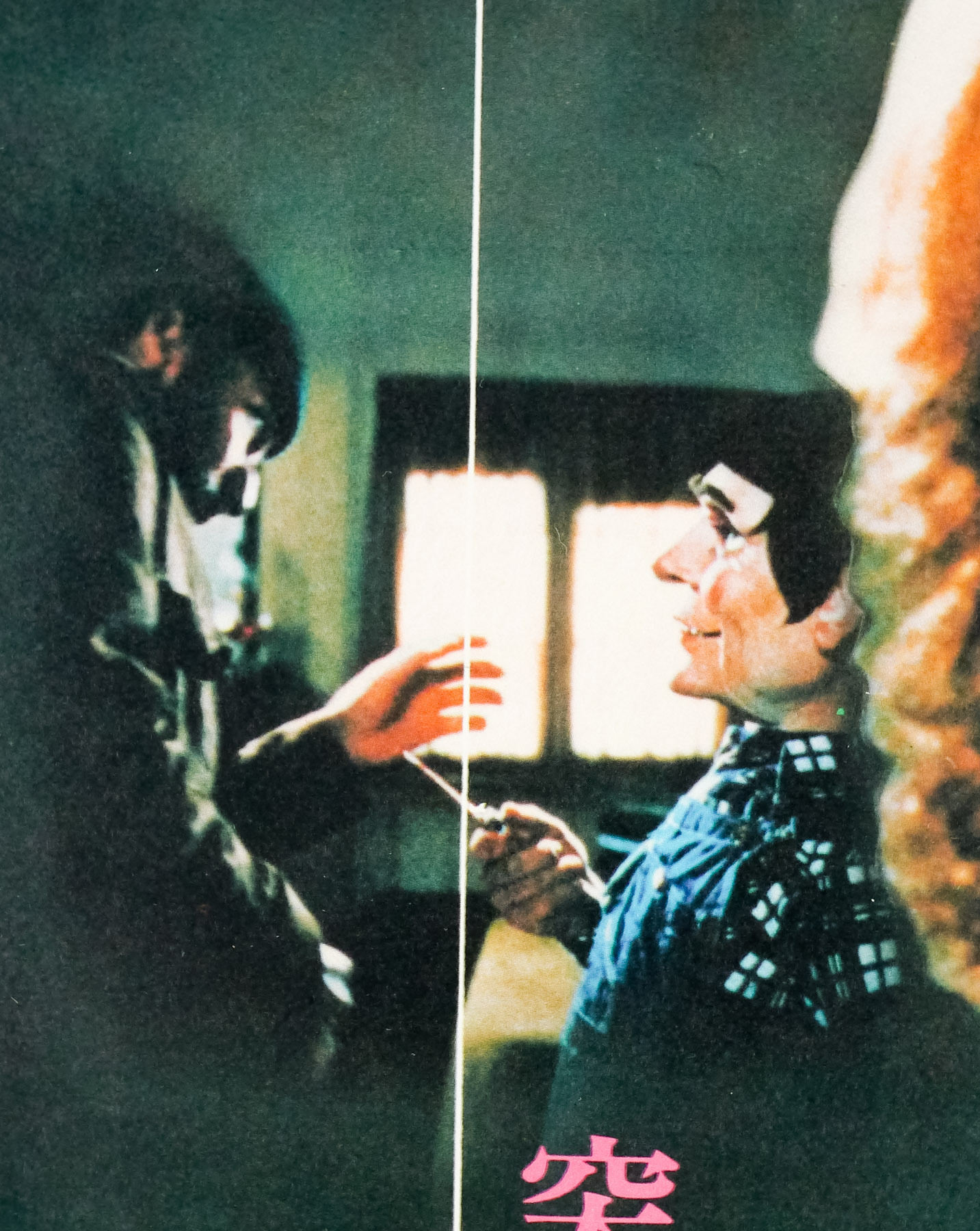
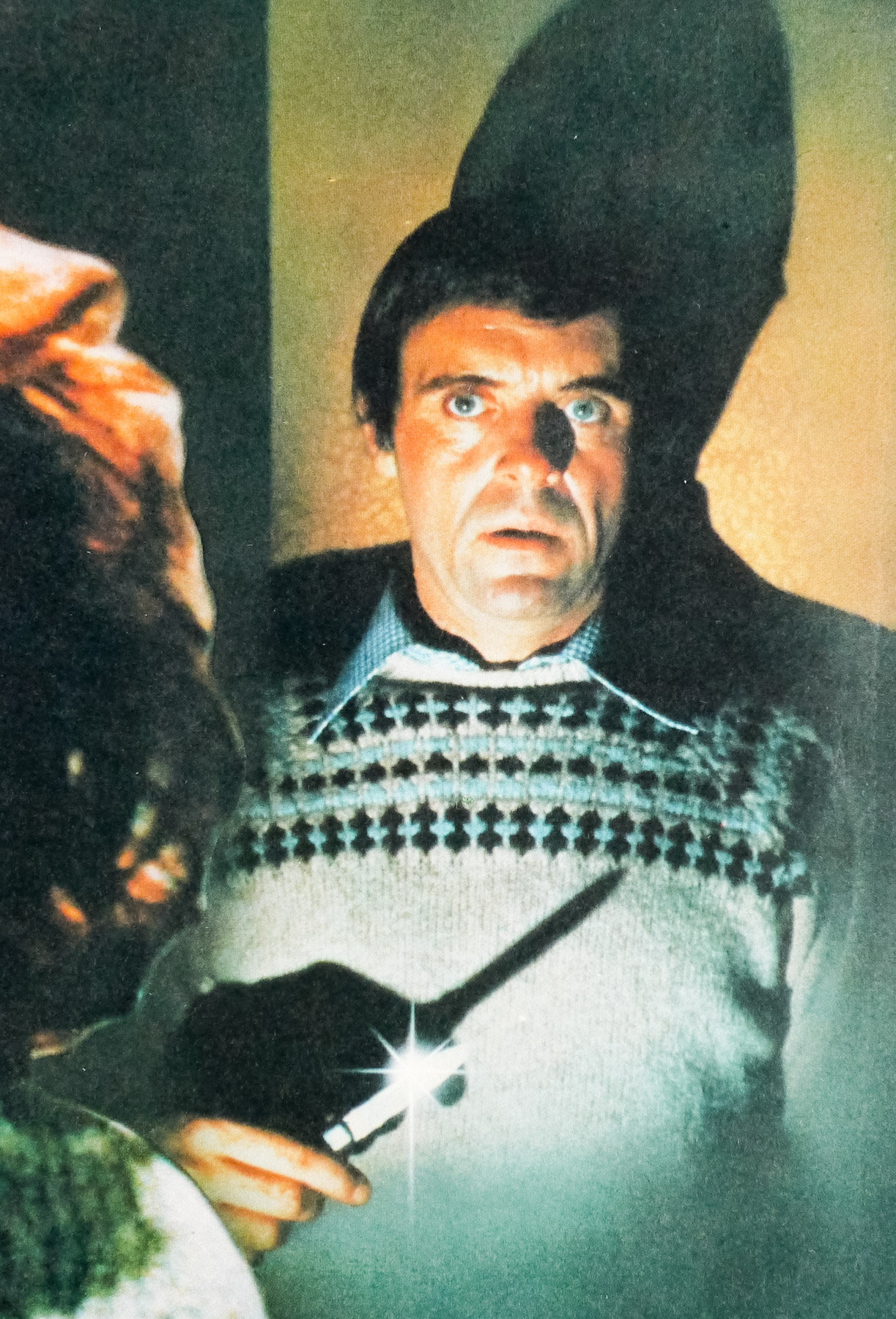
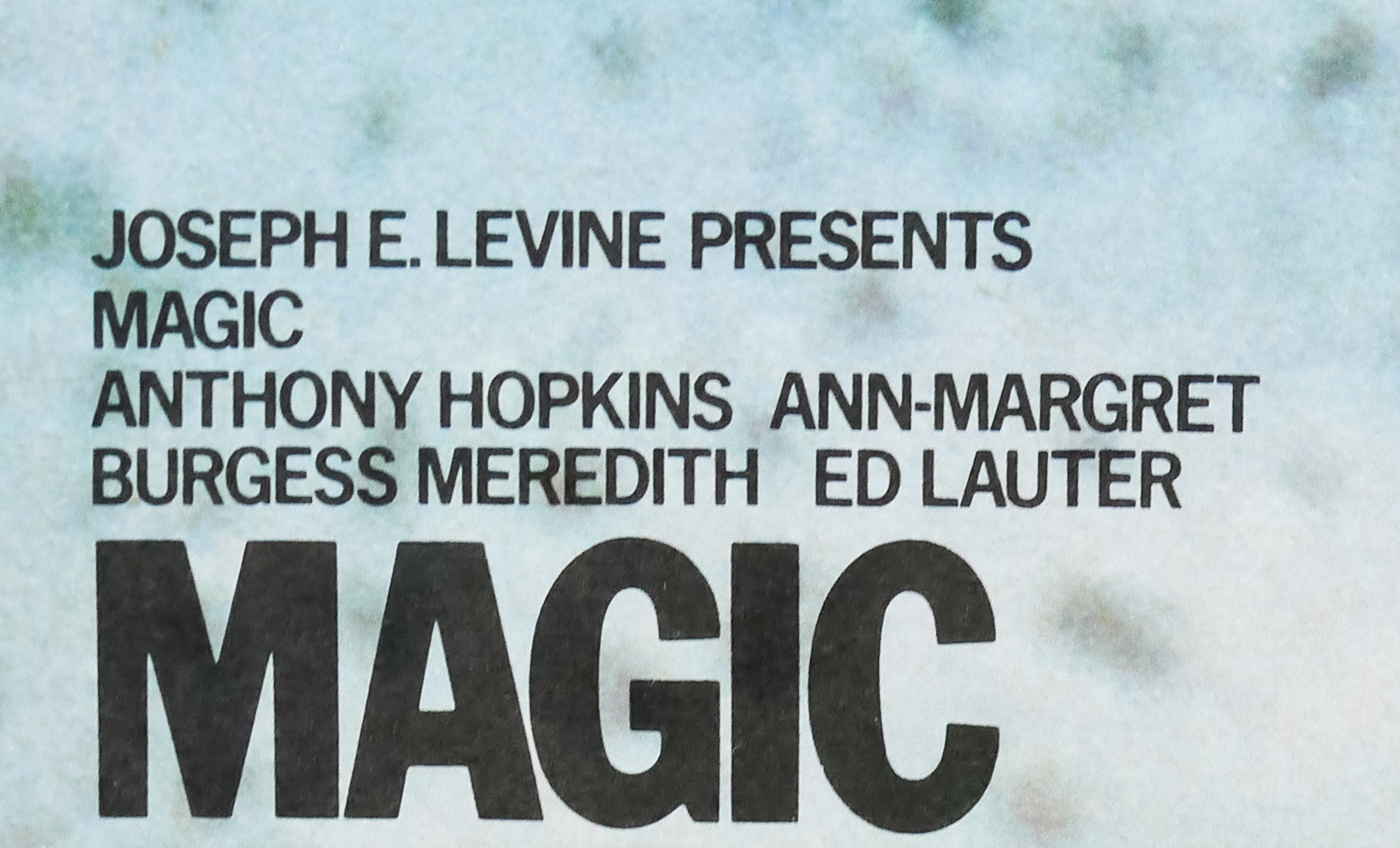
A striking design features on this Japanese B2 for the release of the 1978 psychological horror, Magic. The film’s screenplay was written by the celebrated novelist, playwright and screenwriter William Goldman. It’s based on the novel of the same name that Goldman had written and released two years earlier, and the producer Joseph E. Levine paid $1m for the rights. Levine hired Richard Attenborough to direct, with whom he’d just completed the war epic A Bridge Too Far. Then the actor Anthony Hopkins, a collaborator of both producer and director (including their last film), was brought onboard to play the lead character.

Hopkins plays Charles “Corky” Withers, a man determined to make a career out of being stage magician. We first see him flop with an act that involves card tricks performed in front of a disinterested audience. The film then jumps a year and Corky has found great success by involving a ventriloquist dummy into his act. A powerful agent called Ben Greene (Burgess Meredith) plans to make an even bigger success of Corky’s act by getting him a slot on prime time TV. However, no one realises that Corky is mentally unstable and his dummy, named Fats, is gaining control over his master.

When it’s suggested that he undergo a medical check to prepare for the TV show, Corky escapes the city and heads to the Catskills mountains where he grew up. There he rekindles a friendship he had with a high school crush called Peggy (Ann-Margret) who is trapped in a loveless marriage with Corky’s old friend Duke (Ed Lauter). Corky begins to relax and is relieved to be away from the pressure of his act, but when Greene appears to convince him to get help to treat his condition, things go awry and Fats acts to protect ‘himself’ with fatal consequences.

The film was a critical success and Hopkins received award nominations for his performance, whilst Goldman won an award for his screenplay in 1979.

The design on this poster is unique to the Japanese market and the B1 version of the poster is nearly identical. The close-up of Fats the dummy at the bottom of the poster was the main image used in the US and UK to promote the film.

Subway / B2 / Japan

30.01.17

Poster Poster

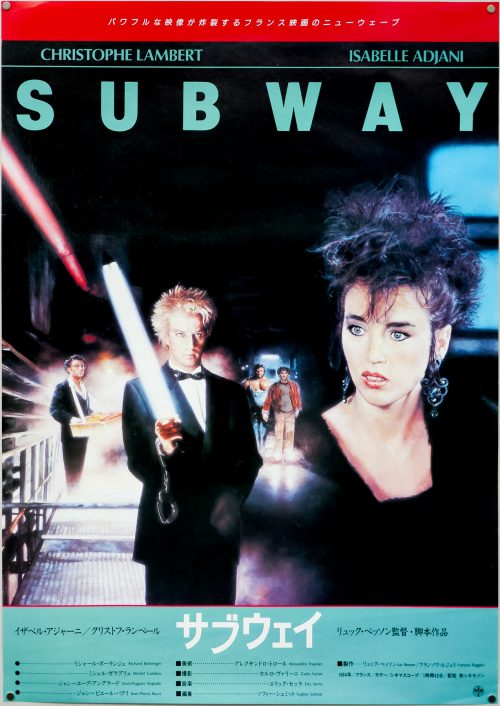
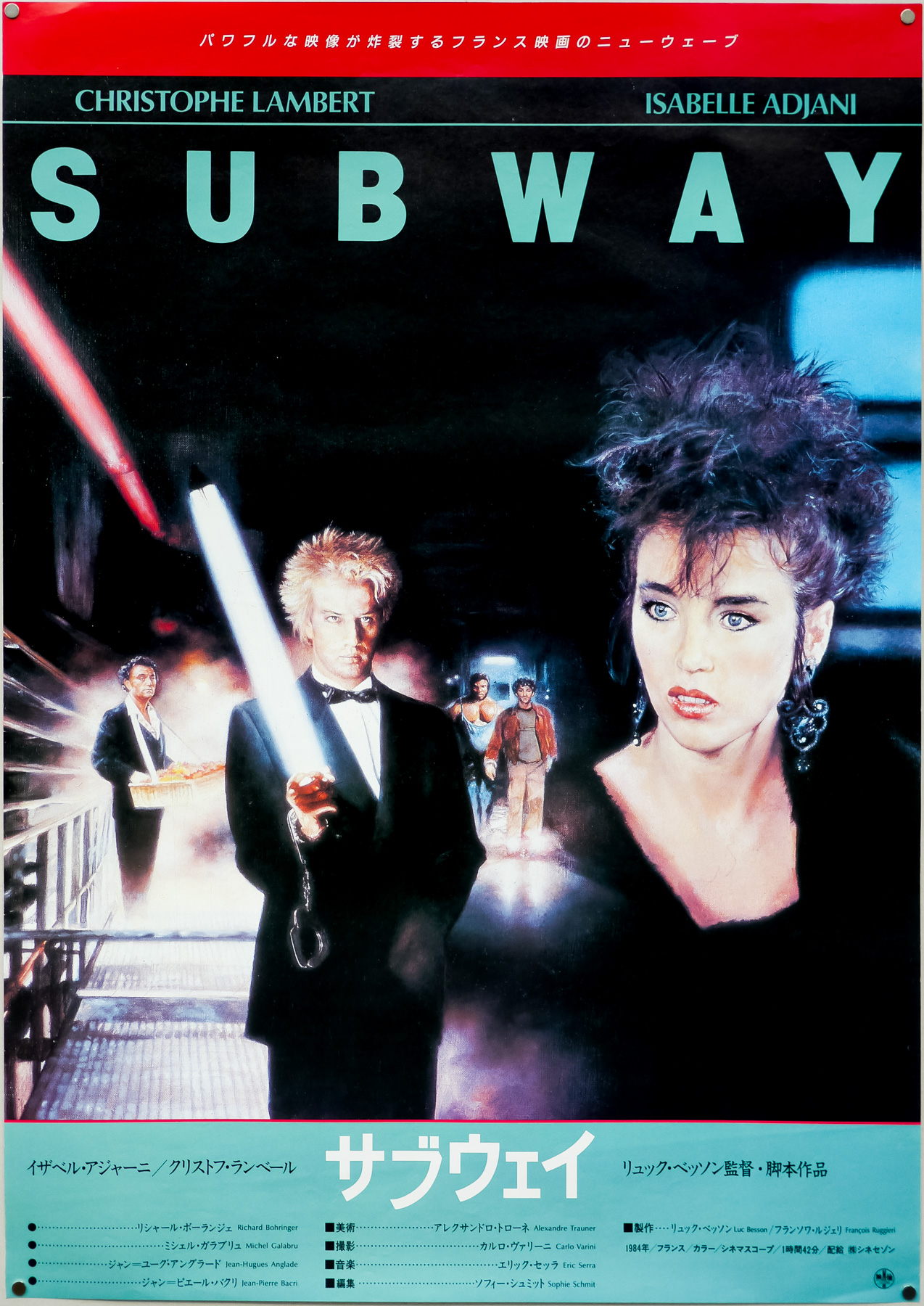
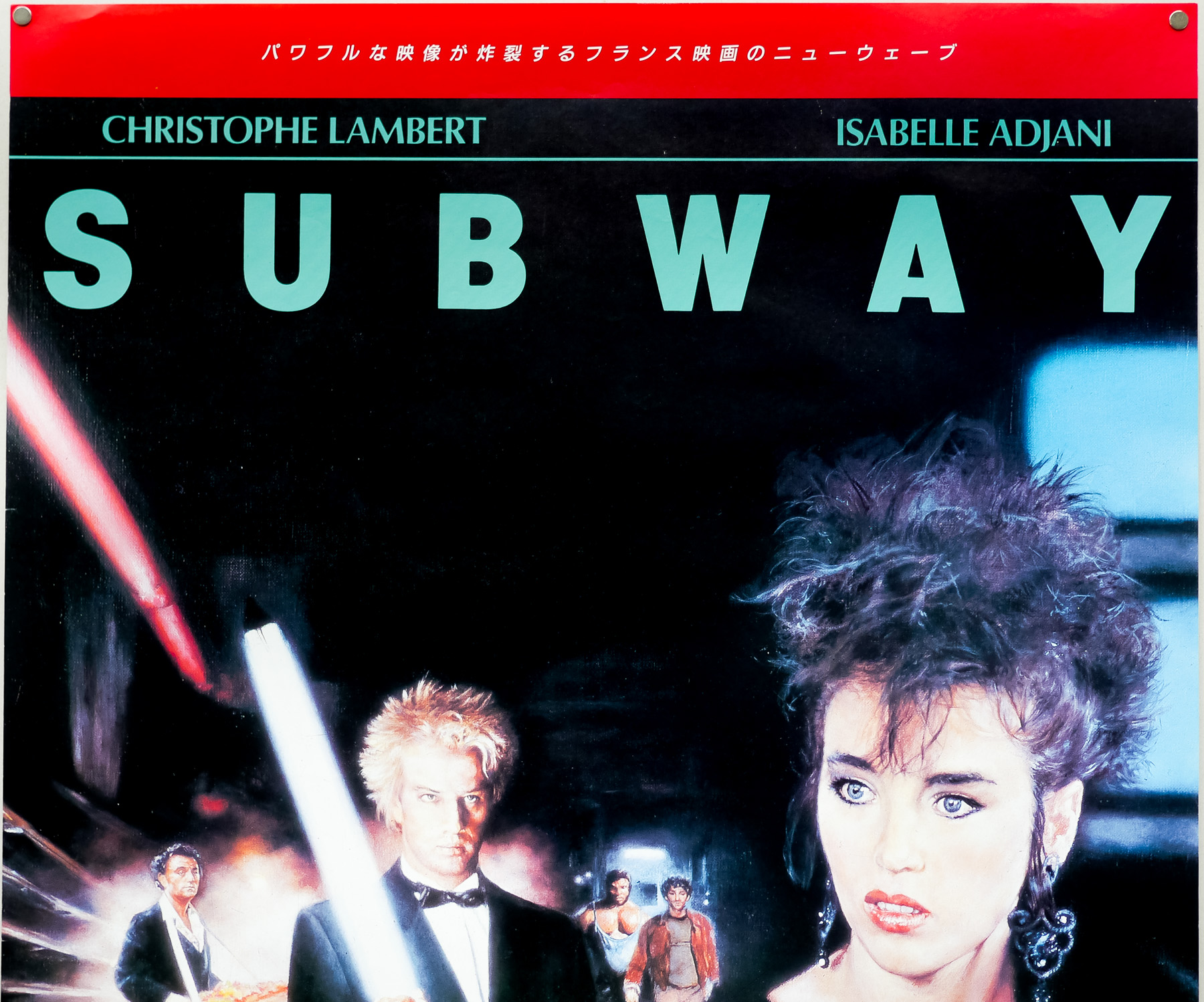
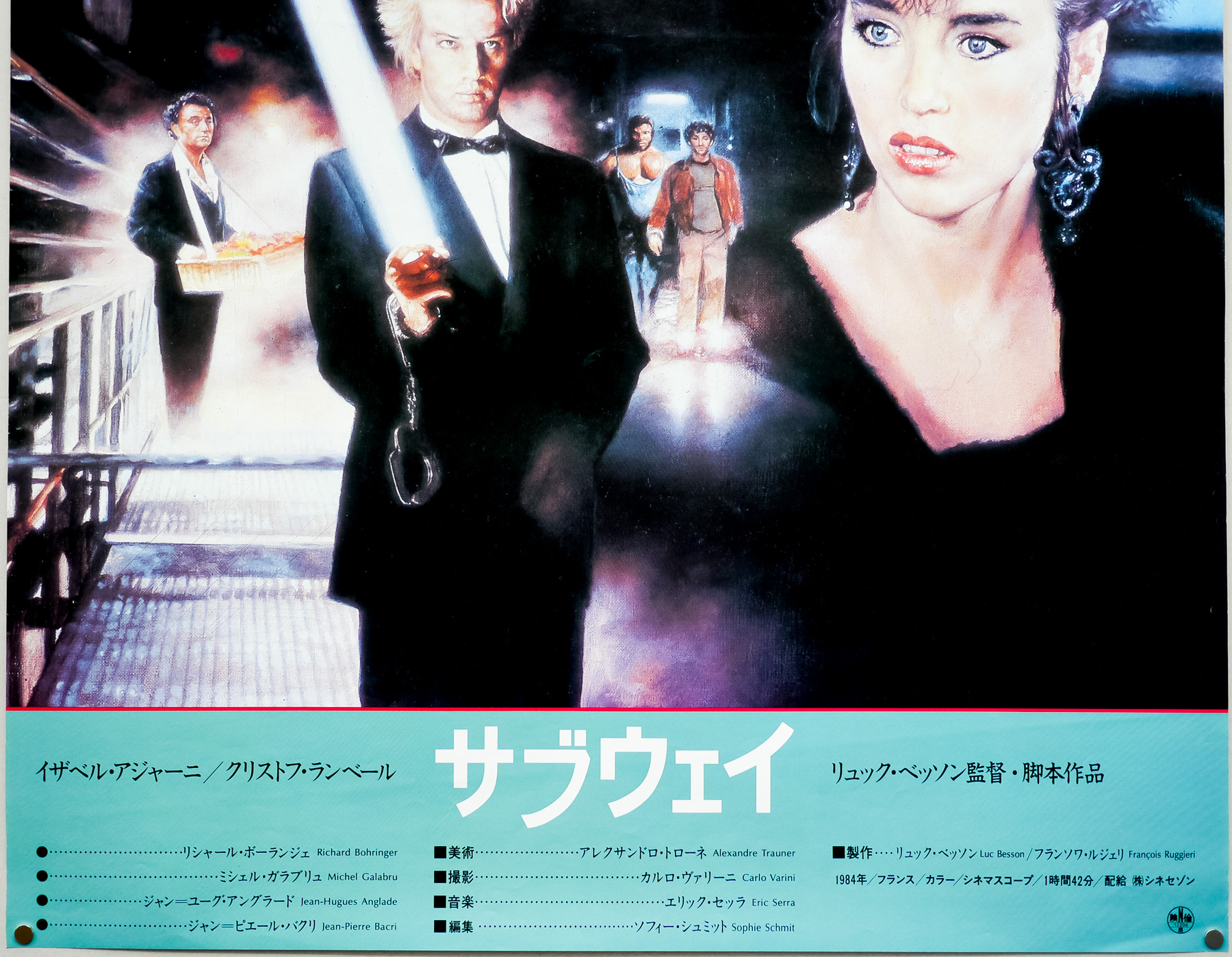
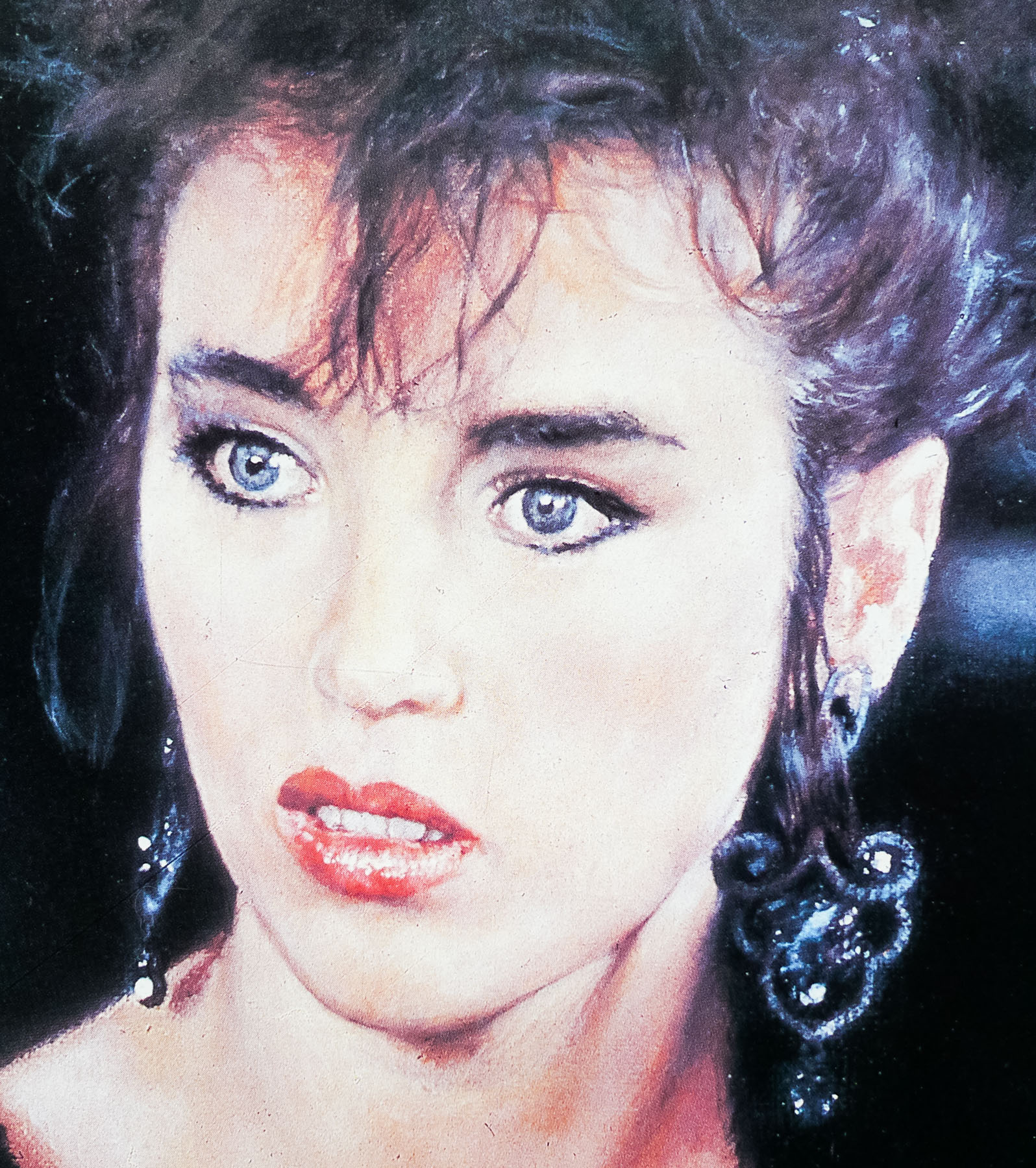
This is the Japanese B2 poster for the release of Luc Besson‘s 1985 comedy drama Subway. It followed on from the director’s first film, The Last Battle, which was released two years earlier. Subway reunited him with several of the actors and crew from that film, including Jean Reno, who who would go on to feature in many of Besson’s directorial efforts. French-American actor Christopher Lambert appears in the lead role of Fred, a grifter who steals documents from a rich businessman and escapes into the Paris Metro.

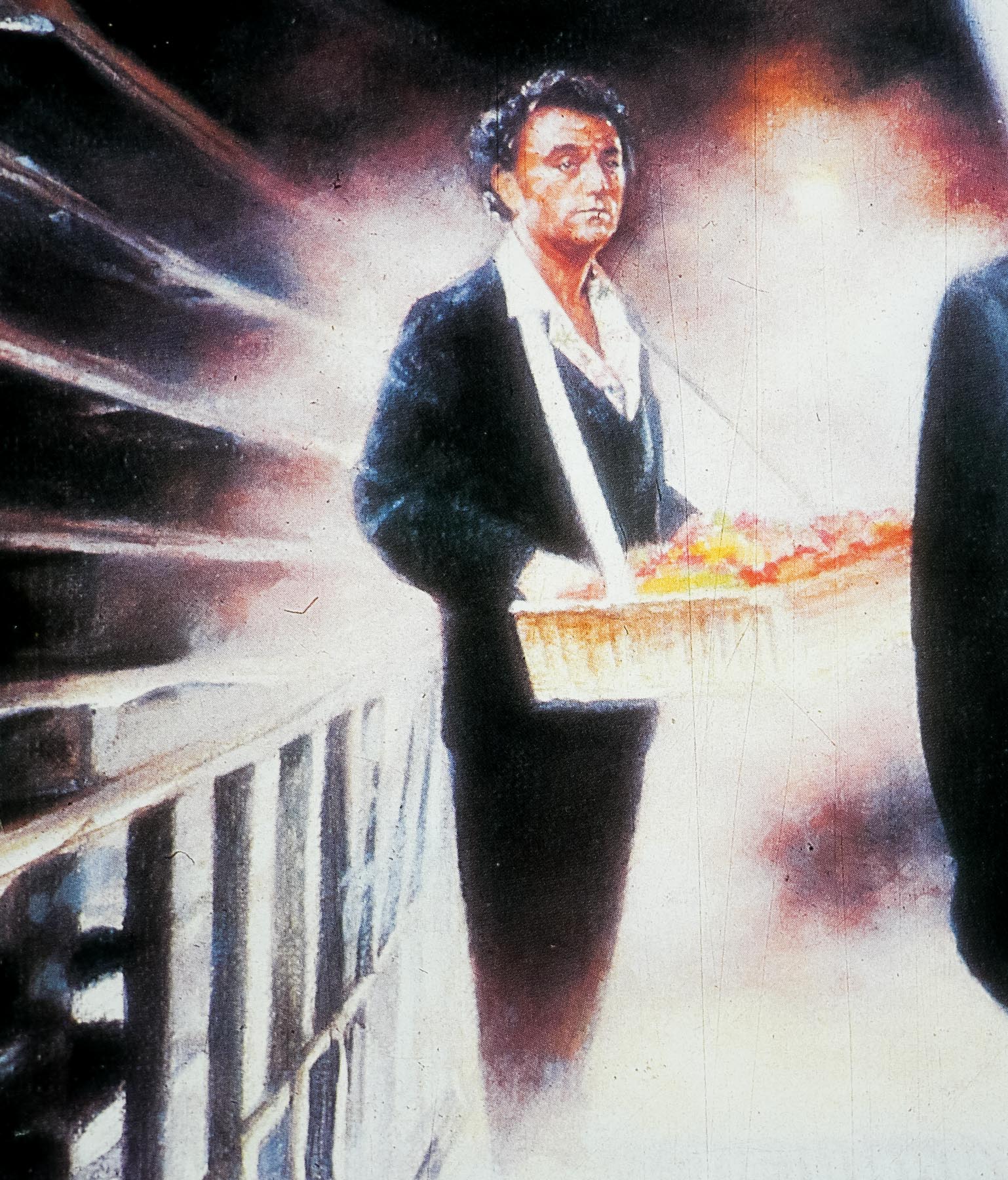
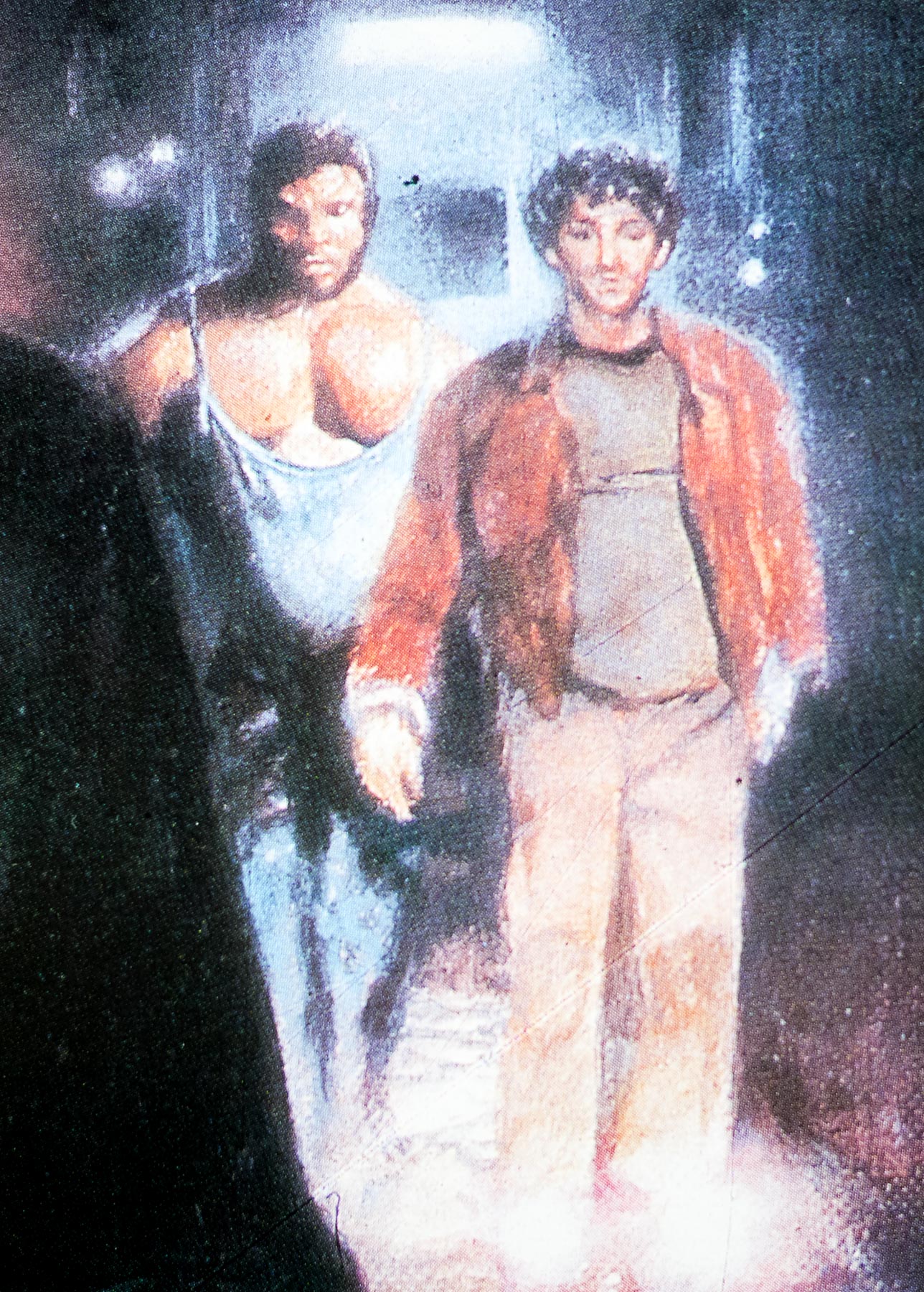
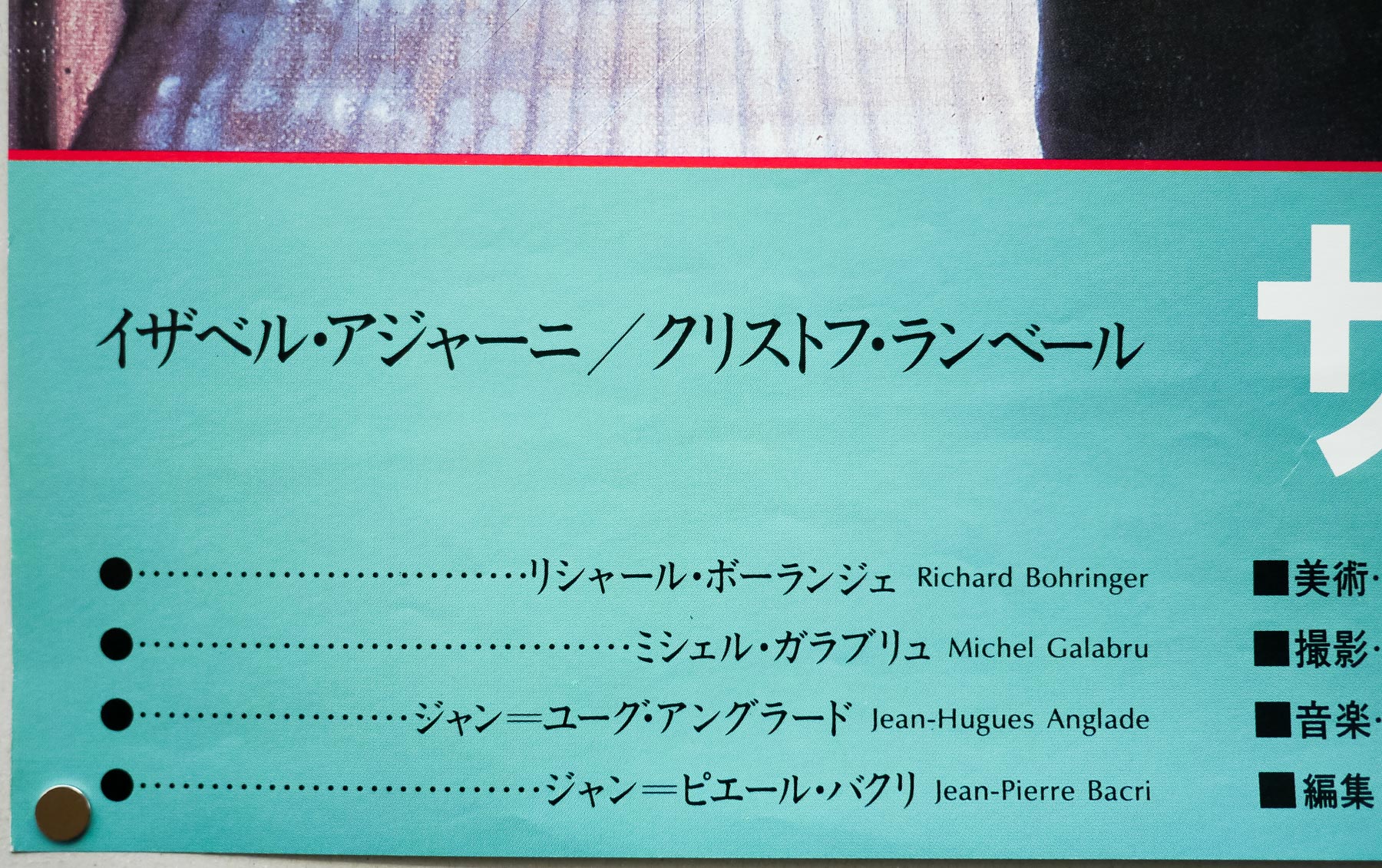
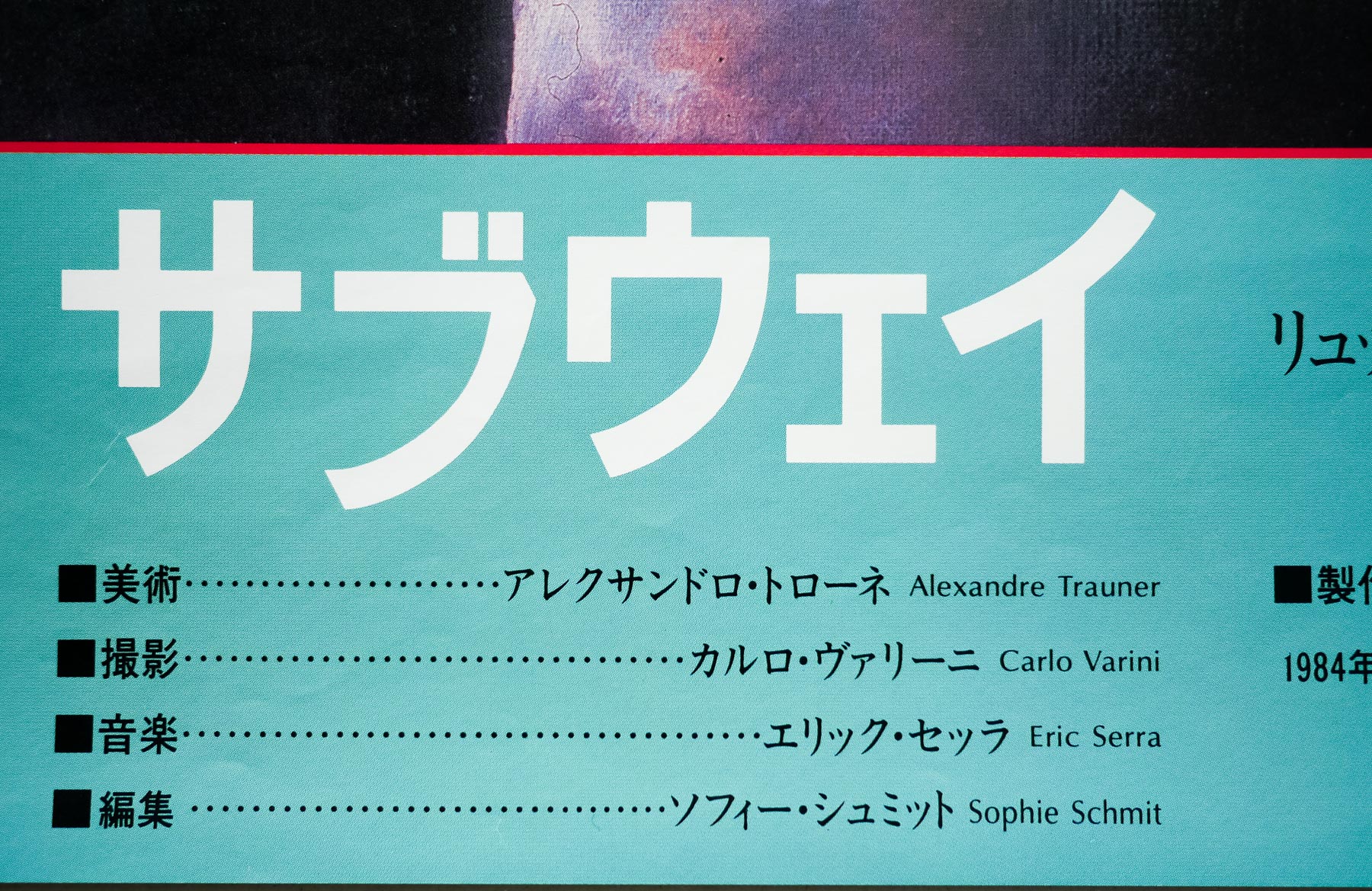
Lambert stars alongside Isabelle Adjani who appears as Héléna, the frustrated wife of the businessman from whom Fred has stolen the documents. The film is set largely on location in the Metro and makes great use of the halls, concourses and even the areas usually off-limits to the public. After being locked in overnight, Fred begins to explore and eventually meets Le Roller (Jean-Hugues Anglade), a petty thief who has made a home in an abandoned storage room. Le Roller introduces Fred to the other characters who called the underground their home, including the musclebound Big Bill (Christian Gomba) and The Florist (Richard Bohringer). 

The admittedly slight plot sees Fred continue to evade a bunch of hired goons sent by the businessman, as well as the subway police. The commissioner (a great performance by Michel Galabru) gets increasingly frustrated as his men, including one he’s nicknamed Batman (Jean-Pierre Bacri) fail to catch Le Roller time and time again. Héléna becomes increasingly infatuated with Fred, eventually realising his carefree attitude is the perfect antidote the marriage she feels trapped in. The film features a typically great score by regular Besson collaborator Éric Serra who also appears in the film as a member of a band that Fred brings together. The film was a success with critics as well as the French box-office. A year later Lambert would star in Highlander, a film that shot him to international stardom and lead to him winning multiple Hollywood roles.

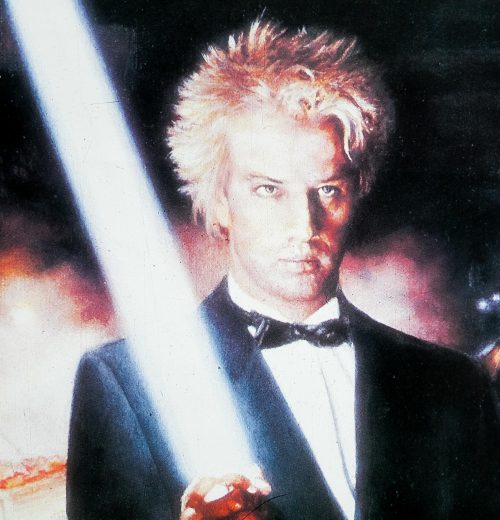
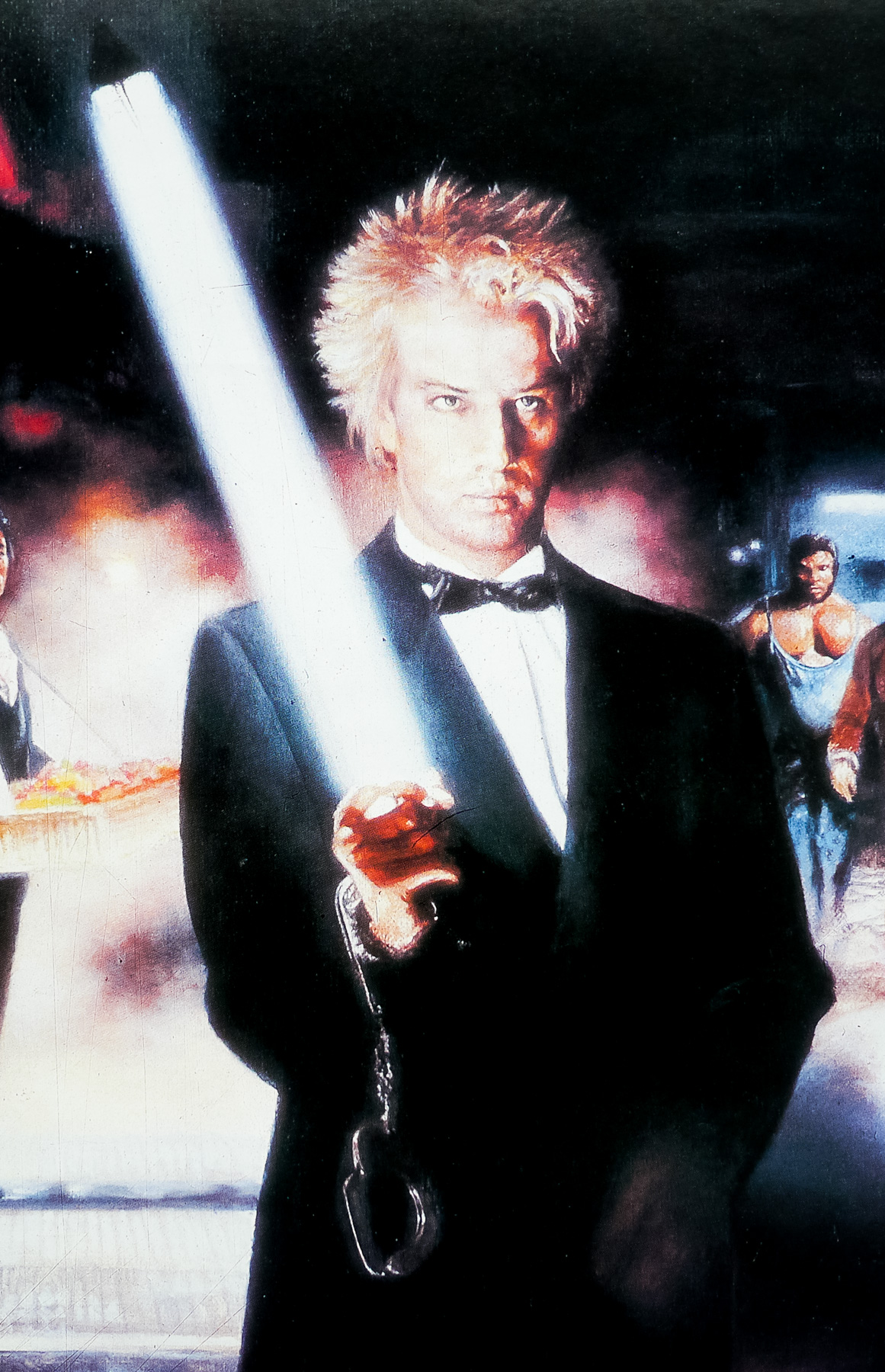
This Japanese poster features the same artwork that was used on the French poster. It appears that the Japanese designer simply took a copy of a French poster, including all the flaws which that particular copy had. If you look closely at some of the images you can see hairs, scratches and other blemishes that must have been present on the poster. The artwork is credited to an artist called Bernard Bernhardt about whom I’ve been able to discover very little. Some of his other film posters can be seen on Cinematerial. According to this translated interview he was born in Paris in 1950 and worked on posters for several famous directors, including Roman Polanski and Michael Mann, over a thirty year period.

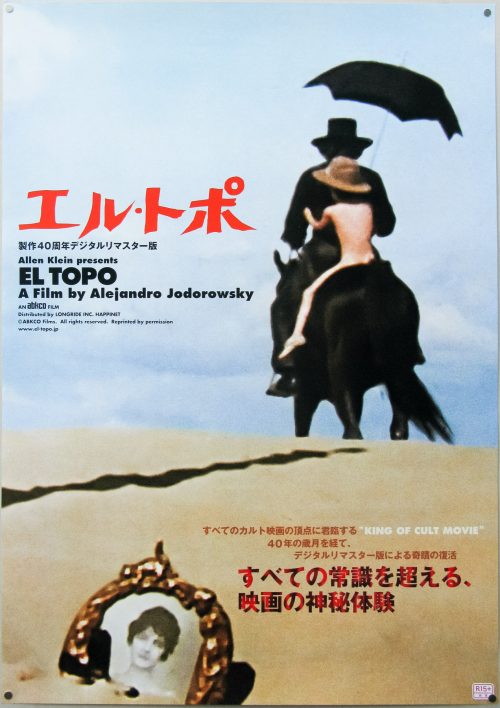
El Topo / B2 / 2010 re-release / Japan

02.07.12

Poster Poster

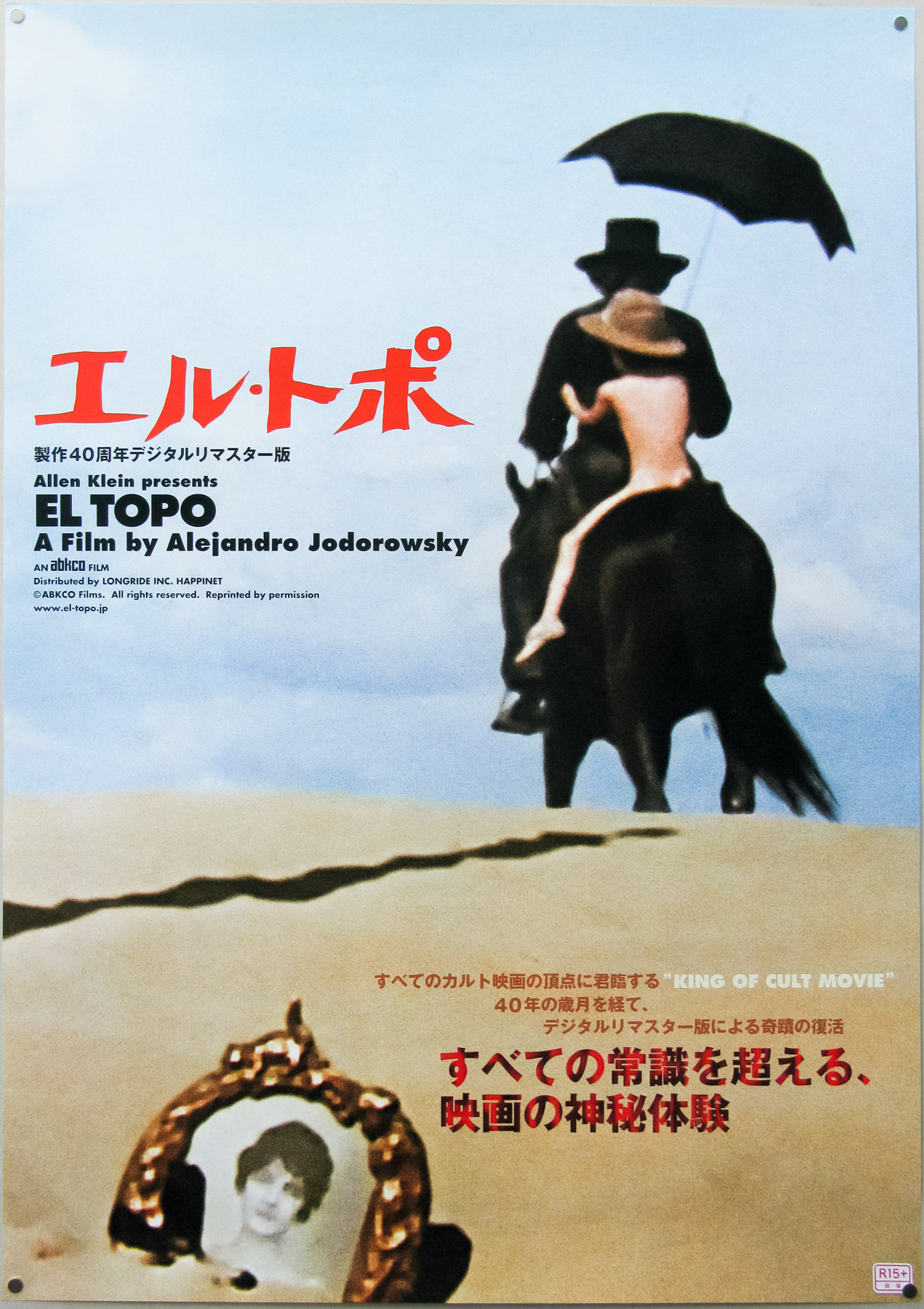
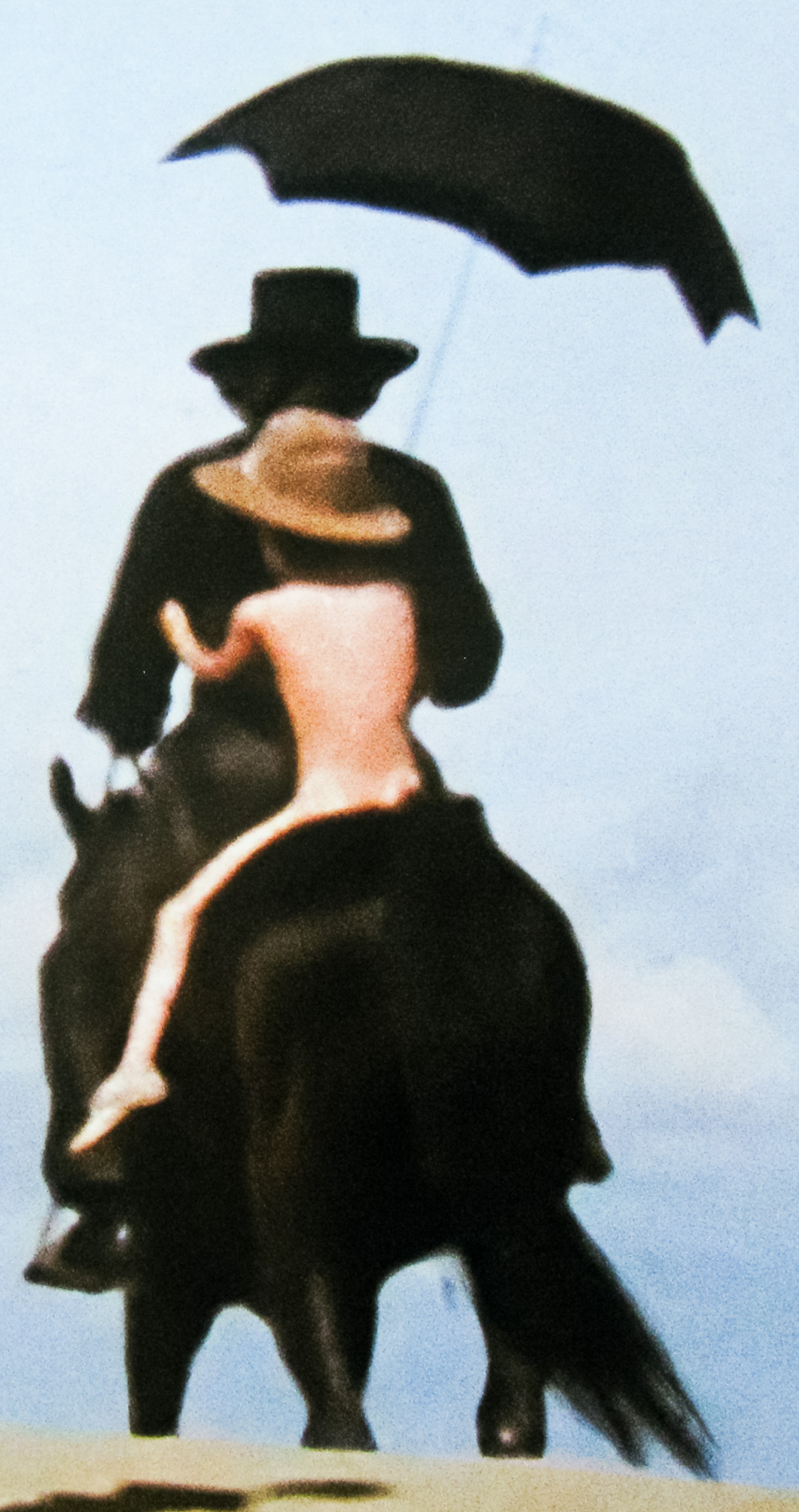
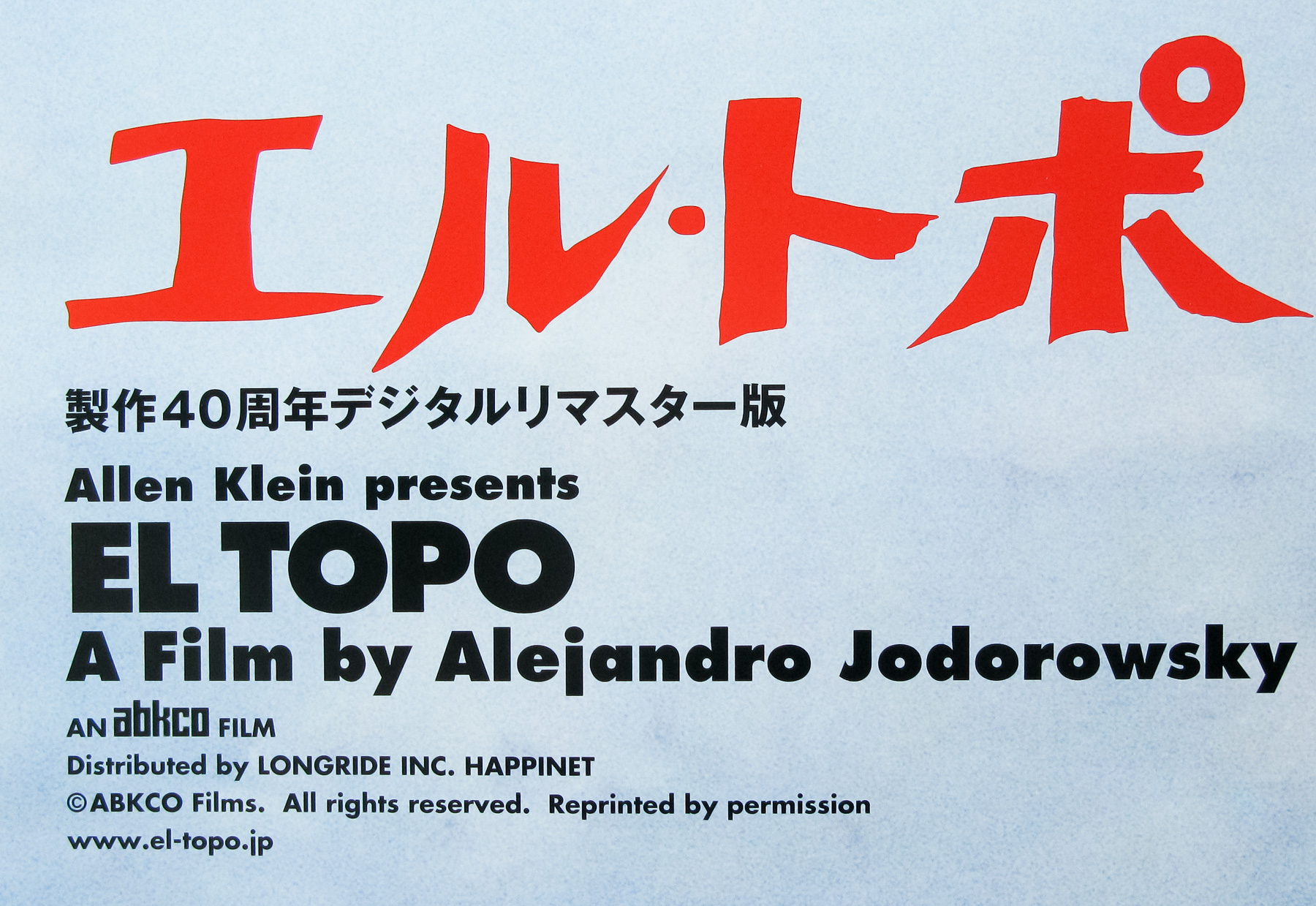
Legendary director Alejandro Jodorowsky’s El Topo (literally ‘The Mole’) is a true cult classic and one that has influenced countless film and TV shows since its release forty two years ago. The film tells the story of the eponymous black-clad cowboy (played by the director himself) who rides through the dessert with his six-year-old son (Brontis Jodorowsky) and arrives at a village where a massacre has recently occurred. El Topo seeks revenge on the bandits responsible and, after leaving his son with monks, he rides off into the desert with the woman who the bandit leader had kept as a slave.

The first part of the film sees the cowboy on a quest to kill four gun masters in order to become the greatest gunman in the land but, after El Topo is betrayed and left for dead, the second half takes place years later as he wakes in a sealed-up cave to find he is being treated as a god-like figure by a group of deformed outcasts. El Topo agrees to help the group escape the cave but must deal with a depraved gang of cultists in a local town and the arrival of his estranged son. The first part is likened to a Western, whilst the second is a love story of redemption and rebirth.

The film features scenes of surreal and religious imagery, coupled with brutal violence, disturbing sexuality and a host of bizarre characters, and El Topo was very controversial at the time of its release. It’s cult status was sealed after Ben Barenholtz, the owner of the infamous New York cinema The Elgin, saw a print of the film at the Museum of Modern Art and convinced the producer of the film to allow him to show El Topo as the first Midnight Movie. It ended up screening at The Elgin seven days a week for over six months. John Lennon was an avowed fan of the film and was instrumental in persuading Allen Klein, manager of The Beatles, to assist in giving the film a wider release across the USA. Klein would later go on to fund Jodorowsky’s next film, The Holy Mountain.

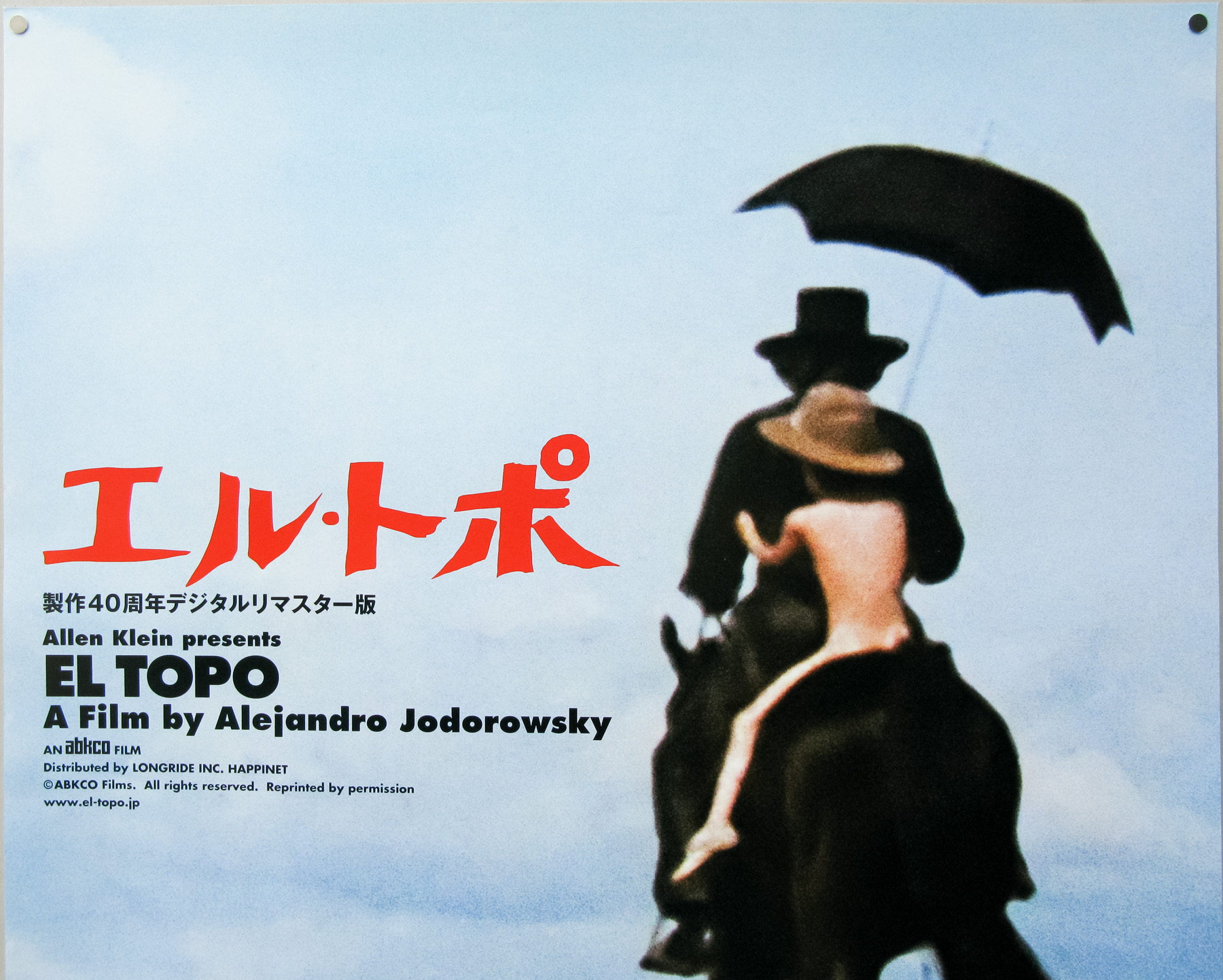
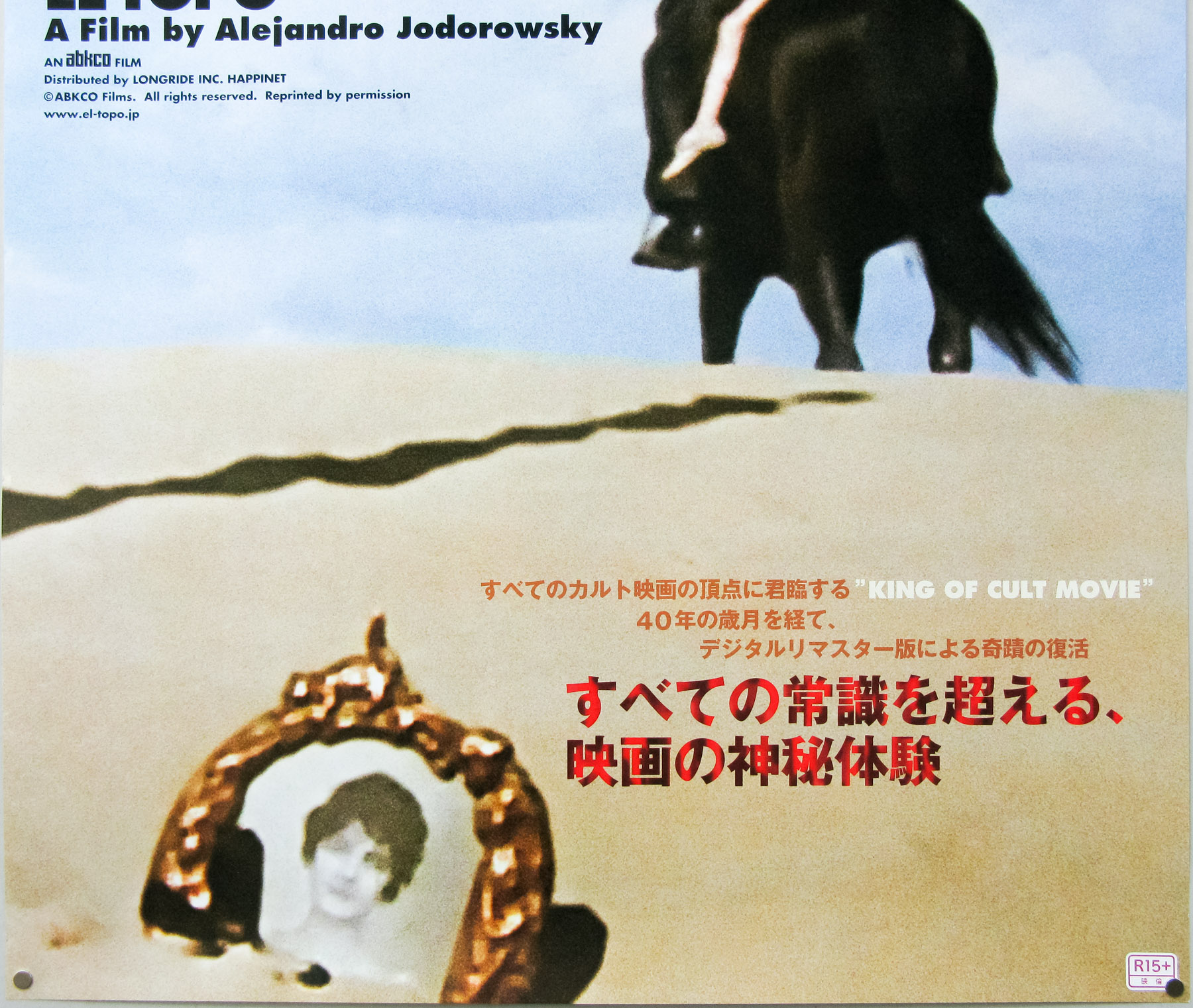
This Japanese poster features the same image seen on the American one sheet and is for the 2010 re-release of the film. I also have the 2010 re-release poster for The Holy Mountain.

The excellent trailer for the film is on YouTube.

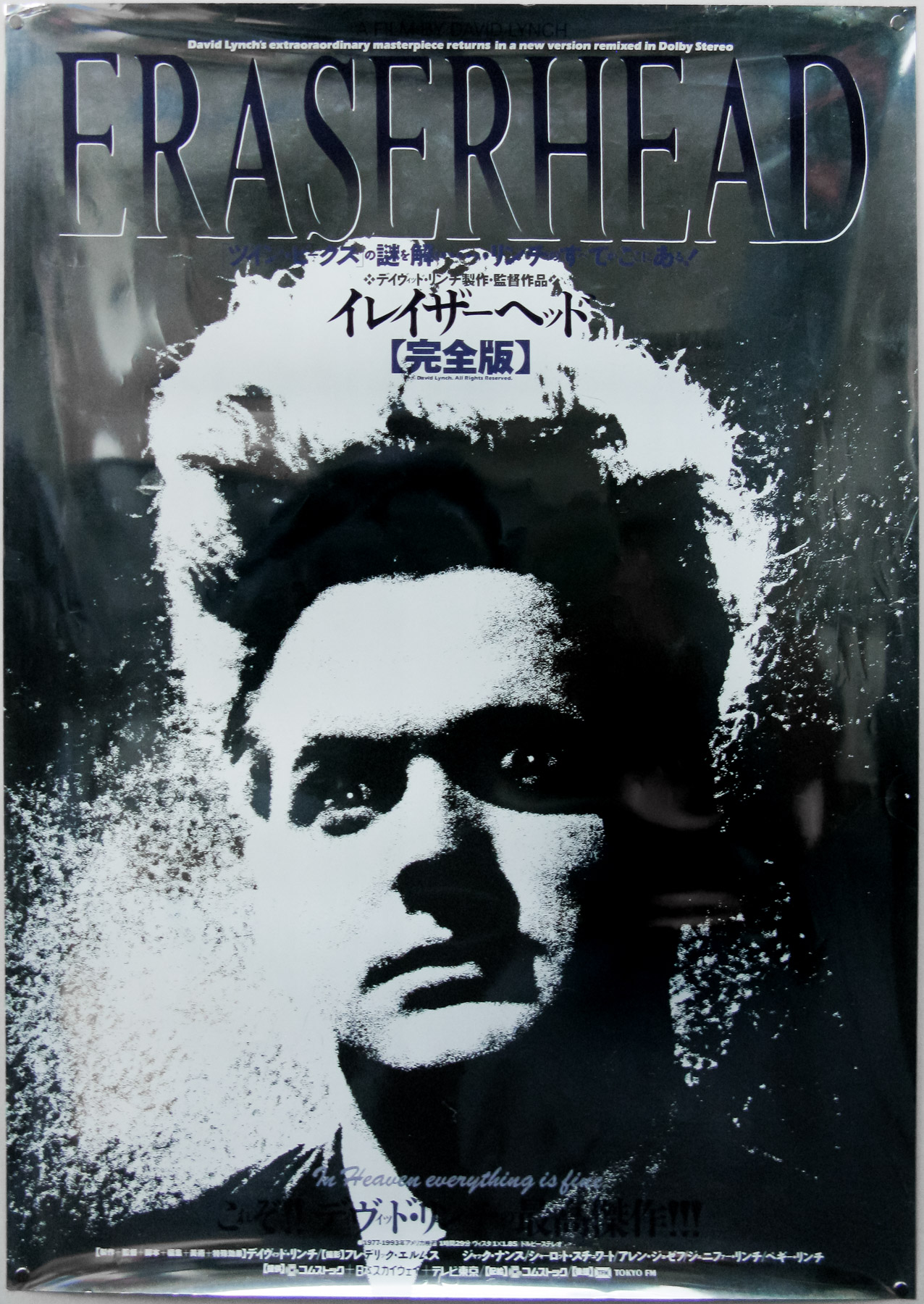
Eraserhead / B2 / 1993 re-release / Japan

09.07.12

Poster Poster
Title
Eraserhead
AKA
Labyrinth Man (France - reissue title)
Year of Film
1977
Director
David Lynch
Starring
Jack Nance, Charlotte Stewart, Allen Joseph, Jeanne Bates, Judith Roberts, Laurel Near, V. Phipps-Wilson, Jack Fisk, Jean Lange, Thomas Coulson, John Monez, Darwin Joston, T. Max Graham, Hal Landon Jr.
Origin of Film
USA
Genre(s) of Film
Jack Nance, Charlotte Stewart, Allen Joseph, Jeanne Bates, Judith Roberts, Laurel Near, V. Phipps-Wilson, Jack Fisk, Jean Lange, Thomas Coulson, John Monez, Darwin Joston, T. Max Graham, Hal Landon Jr.,
Type of Poster
B2
Style of Poster
Mylar re-release
Origin of Poster
Japan
Year of Poster
1993
Designer
Unknown
Artist
--
Size (inches)
20 7/16" x 28 15/16"
SS or DS
SS
Tagline
In Heaven Everything Is Fine.

Legendary director David Lynch‘s brilliant, surreal nightmare Eraserhead celebrates its 35th anniversary in 2012 and its fair to say cinema has seen nothing else quite like it in the years since it was released. Lynch’s first full-length feature was five years in the making and was begun whilst he worked at the American Film Institute school in Los Angeles. The initial grant of $10,000 given to the director quickly ran out and he was forced to spend the following years using money from odd jobs, as well as donations from friends and family to continue work on it.

Ben Barenholtz, the owner of Libra films saw the completed film at the Filmex Festival and, after declaring it was a ‘film of the future’, decided to help Lynch get the film into cinemas. The first screening took place at midnight on the 29th of September, 1977 and, like Jodorowsky’s El Topo before it, Eraserhead became a staple of Midnight Movie shows in Los Angeles, New York and London.

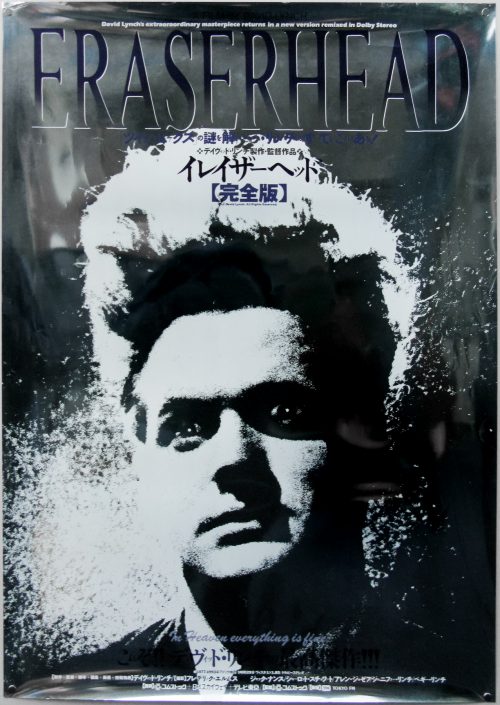
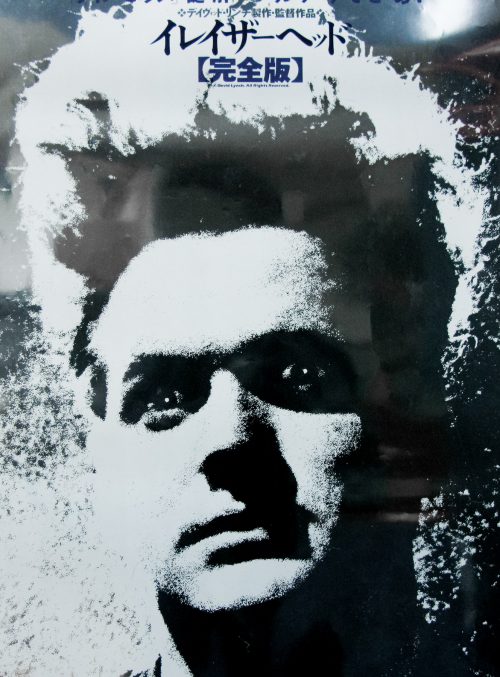
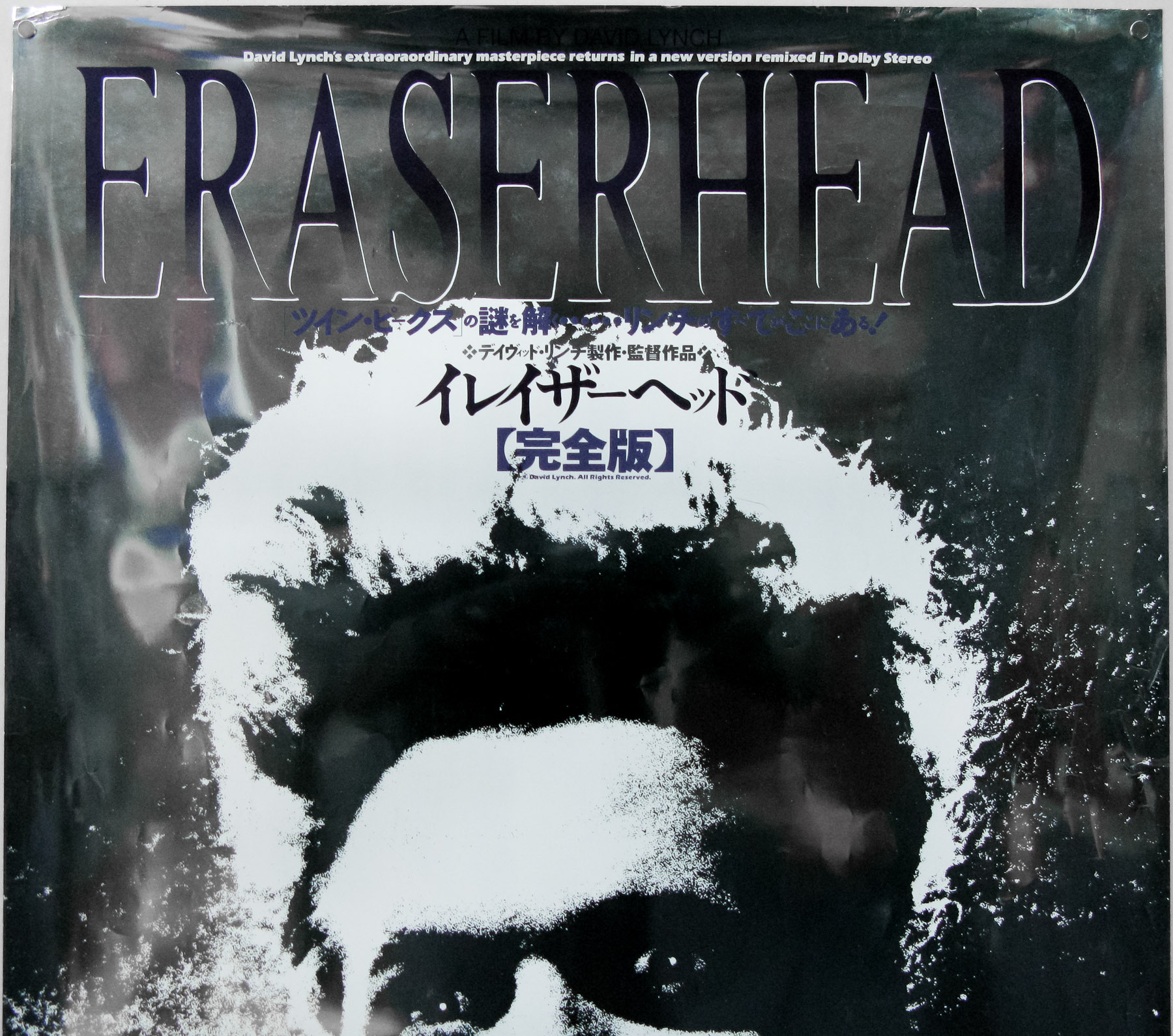
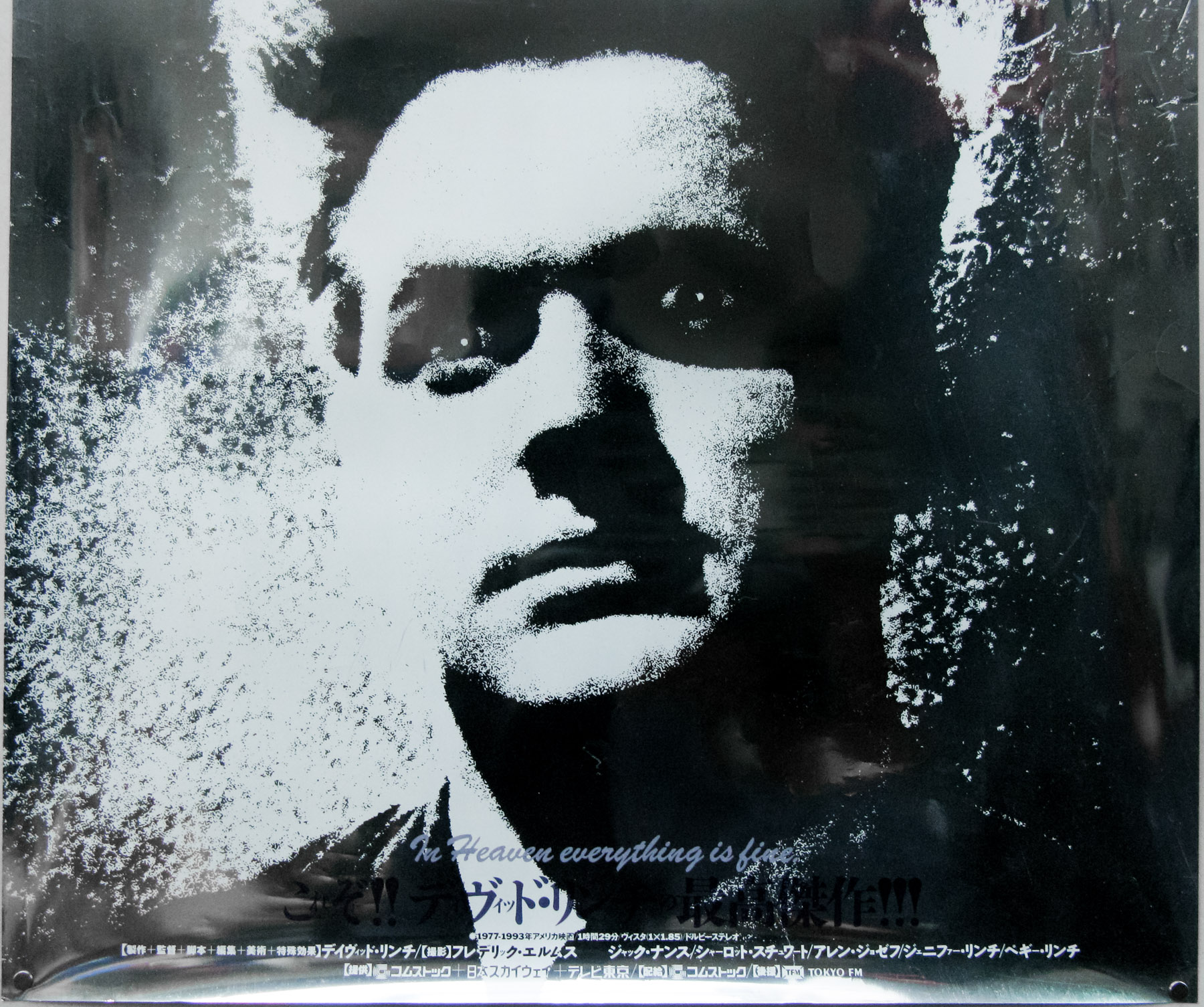
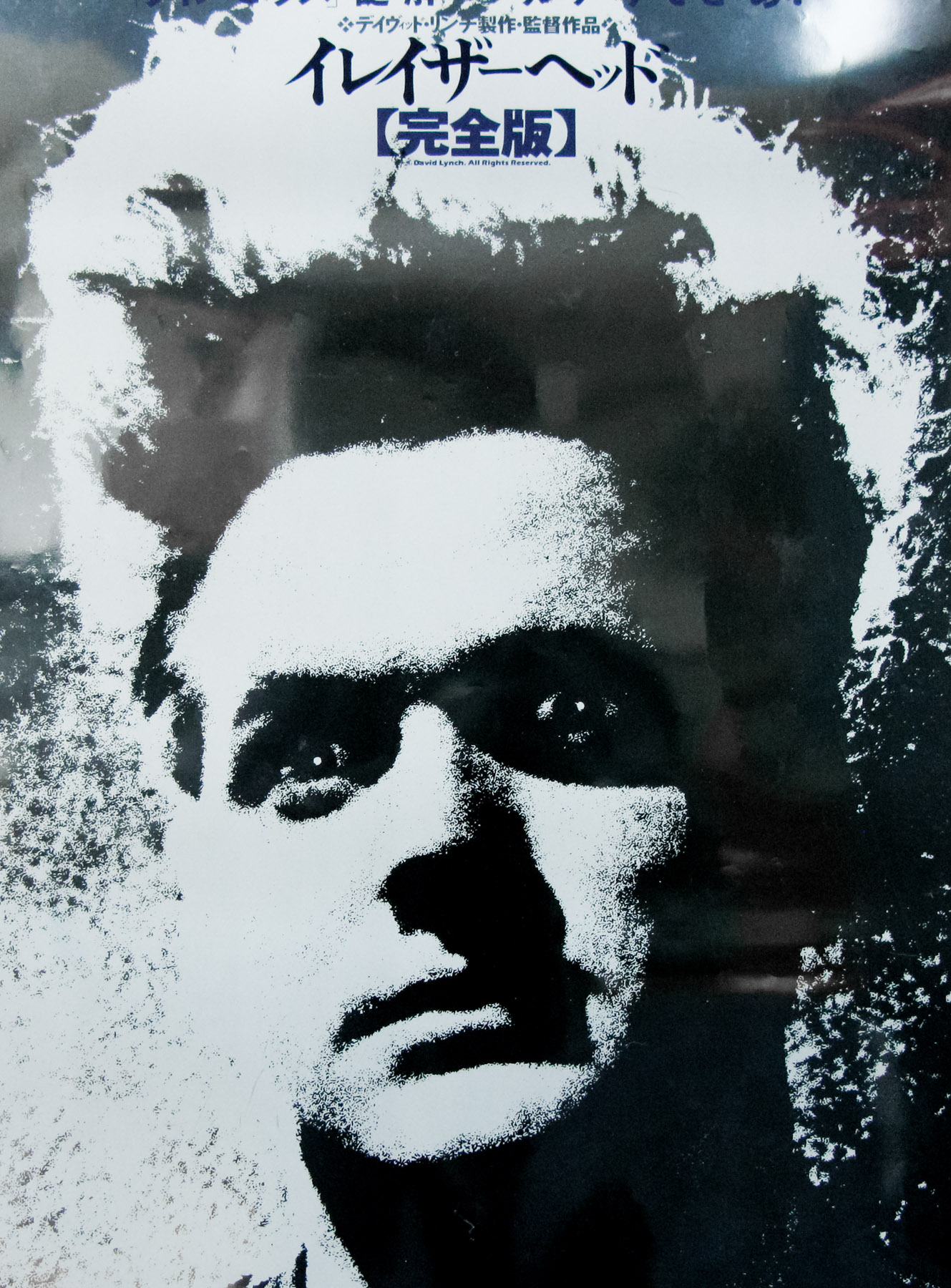
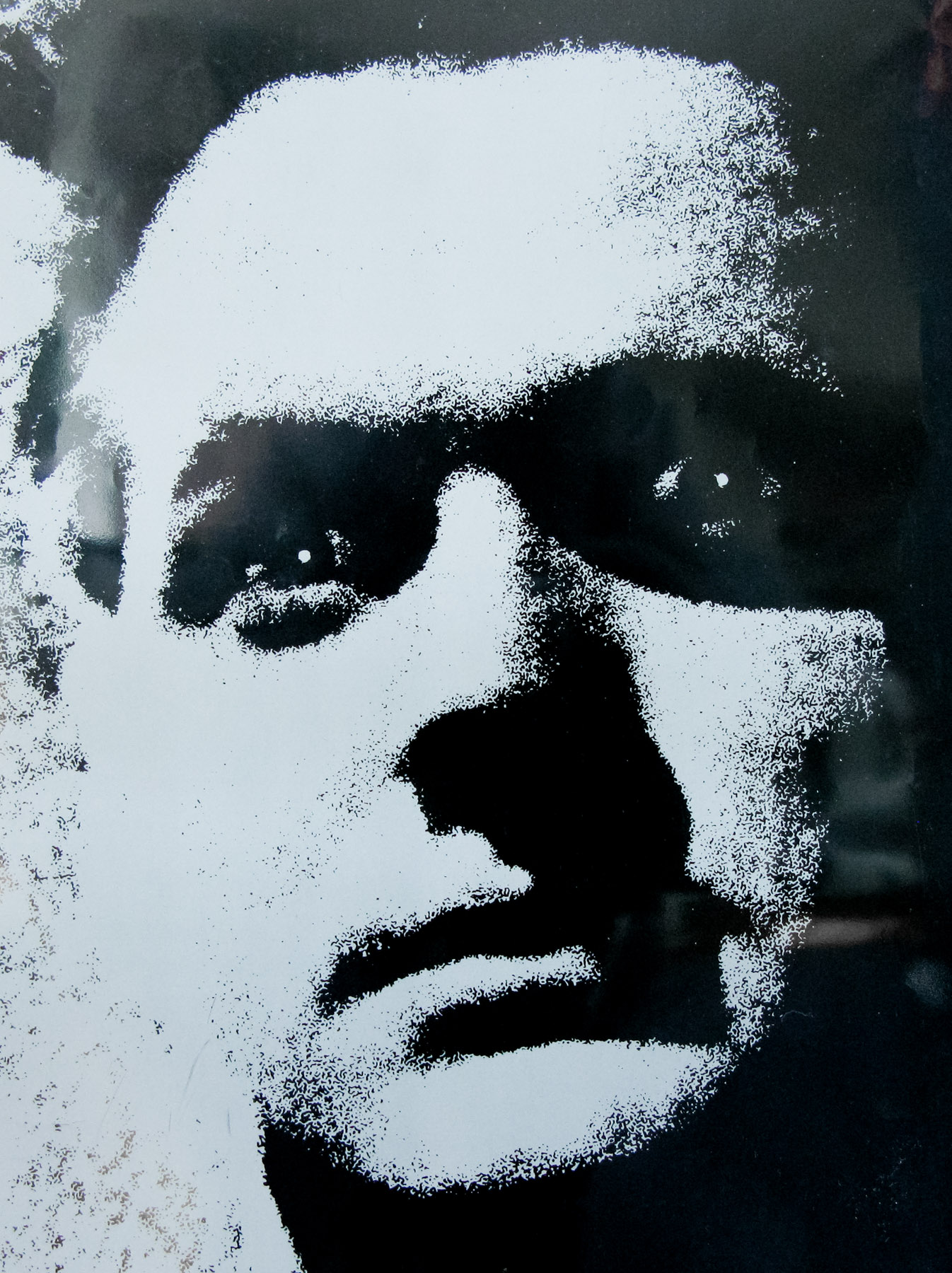
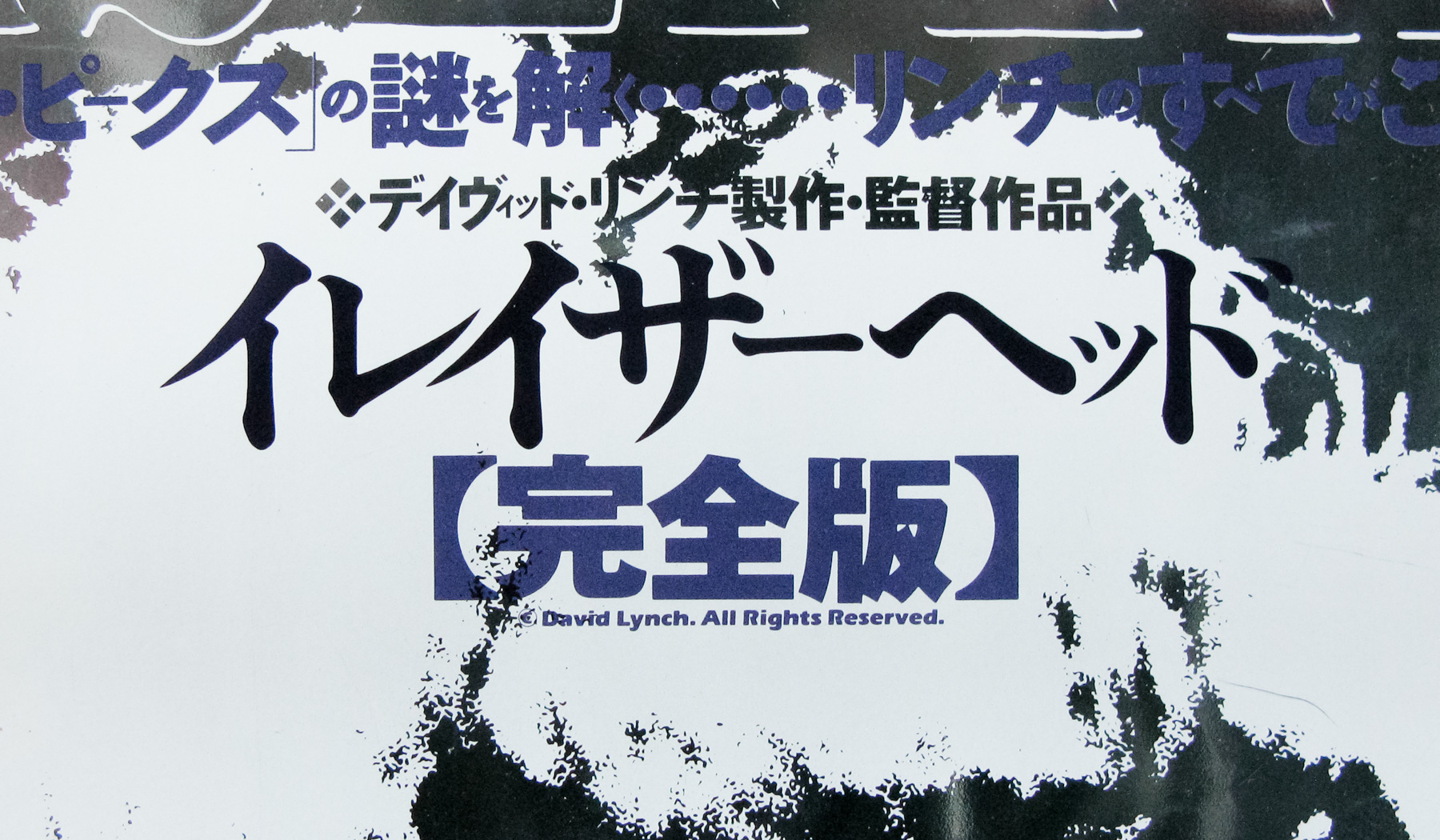
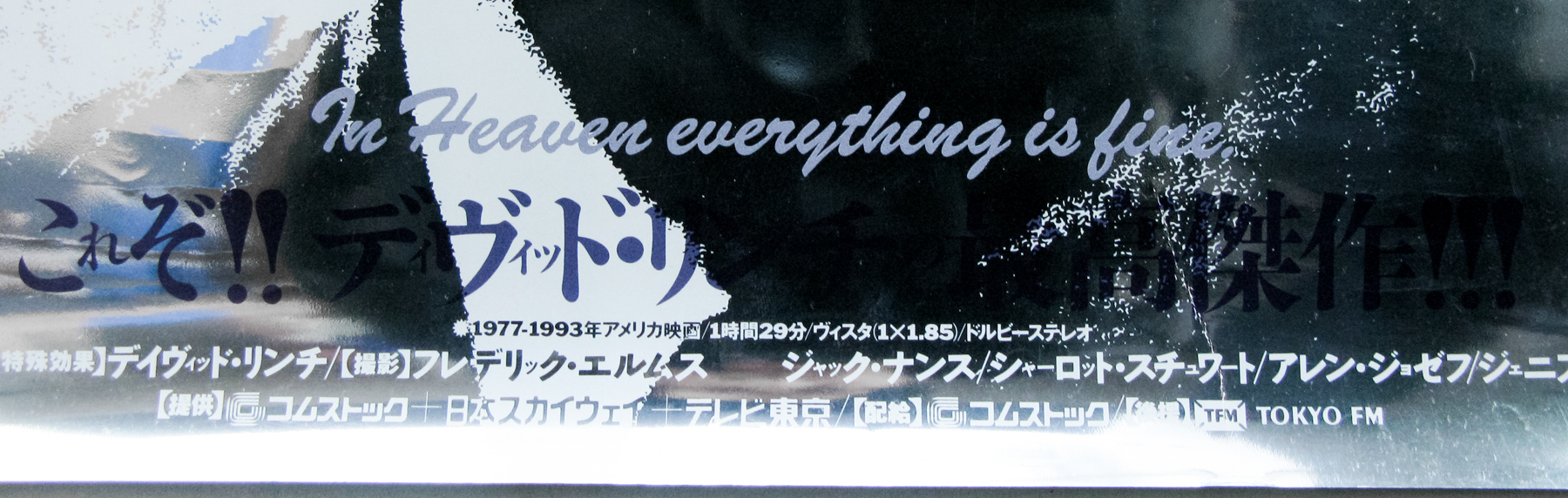
This Japanese poster is from a 1993 re-release of the film and features the classic shot of Henry (Jack Nance) with his worried stare and great shock of hair. The poster was printed on mirrored mylar paper and is therefore very hard to photograph without capturing lots of reflections.

Having just watched the recent UK blu-ray release of the film, which was apparently supervised by Lynch, I can highly recommend picking up a copy of it as the film has never looked or, perhaps more importantly, sounded as good.

The original trailer is on YouTube.

The Empire Strikes Back / B2 / photo style / Japan

27.08.12

Poster Poster
Title
The Empire Strikes Back
AKA
--
Year of Film
1980
Director
Irvin Kershner
Starring
Mark Hamill, Harrison Ford, Carrie Fisher, Billy Dee Williams, Anthony Daniels, David Prowse, Peter Mayhew, Kenny Baker, Frank Oz
Origin of Film
USA
Genre(s) of Film
Mark Hamill, Harrison Ford, Carrie Fisher, Billy Dee Williams, Anthony Daniels, David Prowse, Peter Mayhew, Kenny Baker, Frank Oz,
Type of Poster
B2
Style of Poster
Photo style
Origin of Poster
Japan
Year of Poster
1980
Designer
Unknown
Artist
--
Size (inches)
20 6/16" x 28 14/16"
SS or DS
SS
Tagline
--

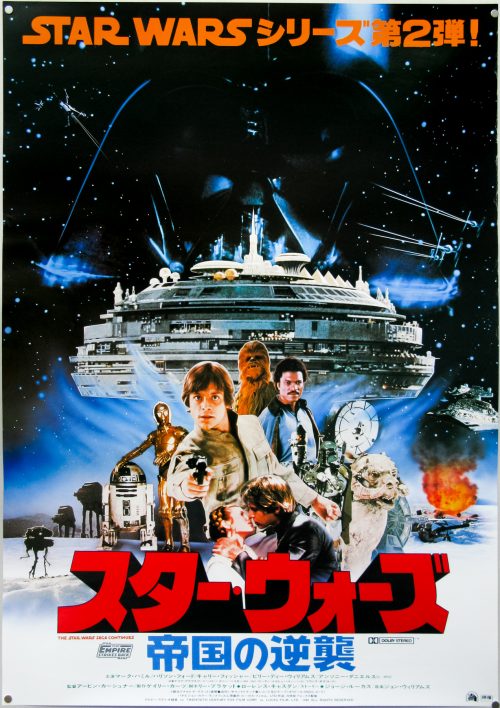
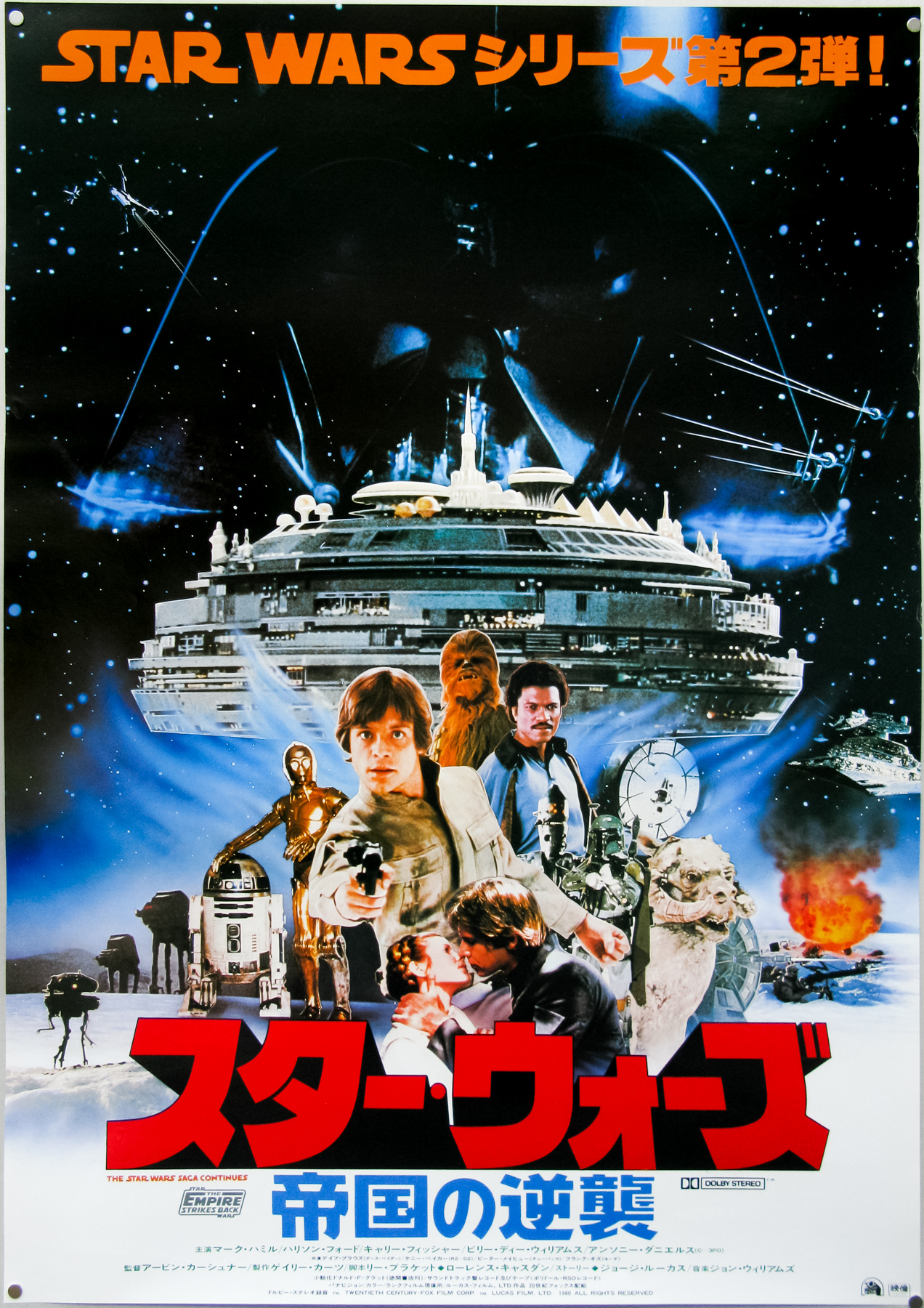
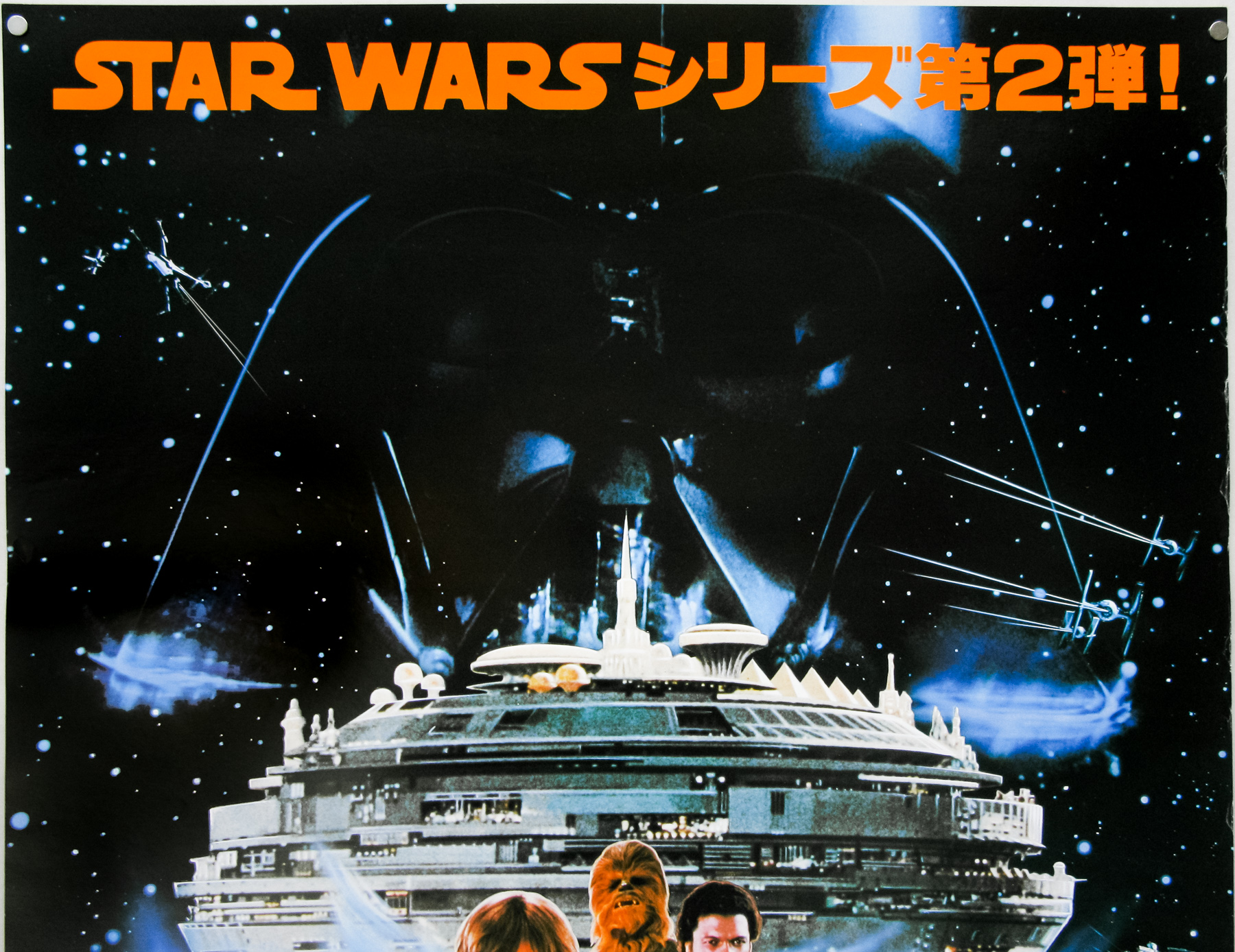
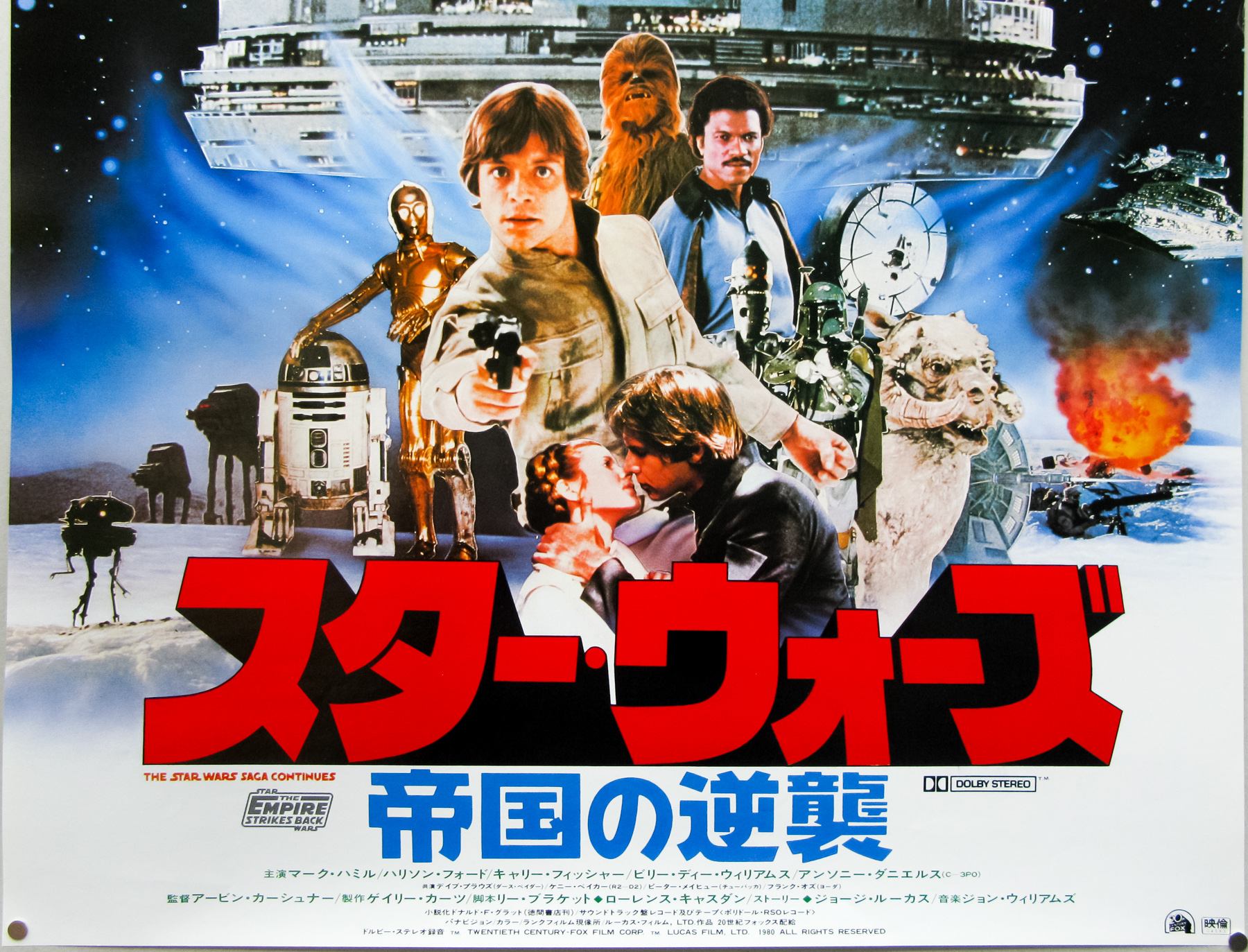
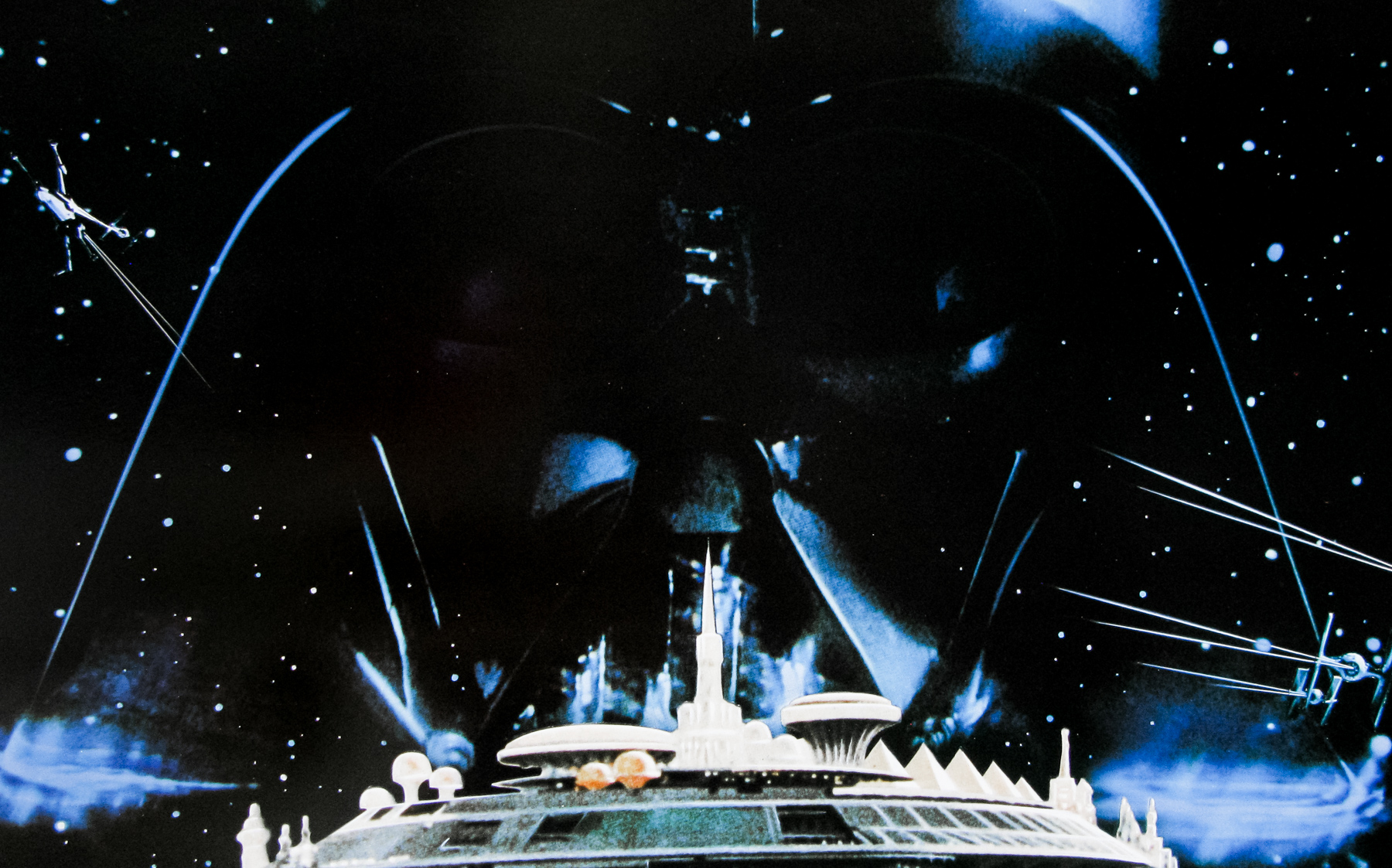
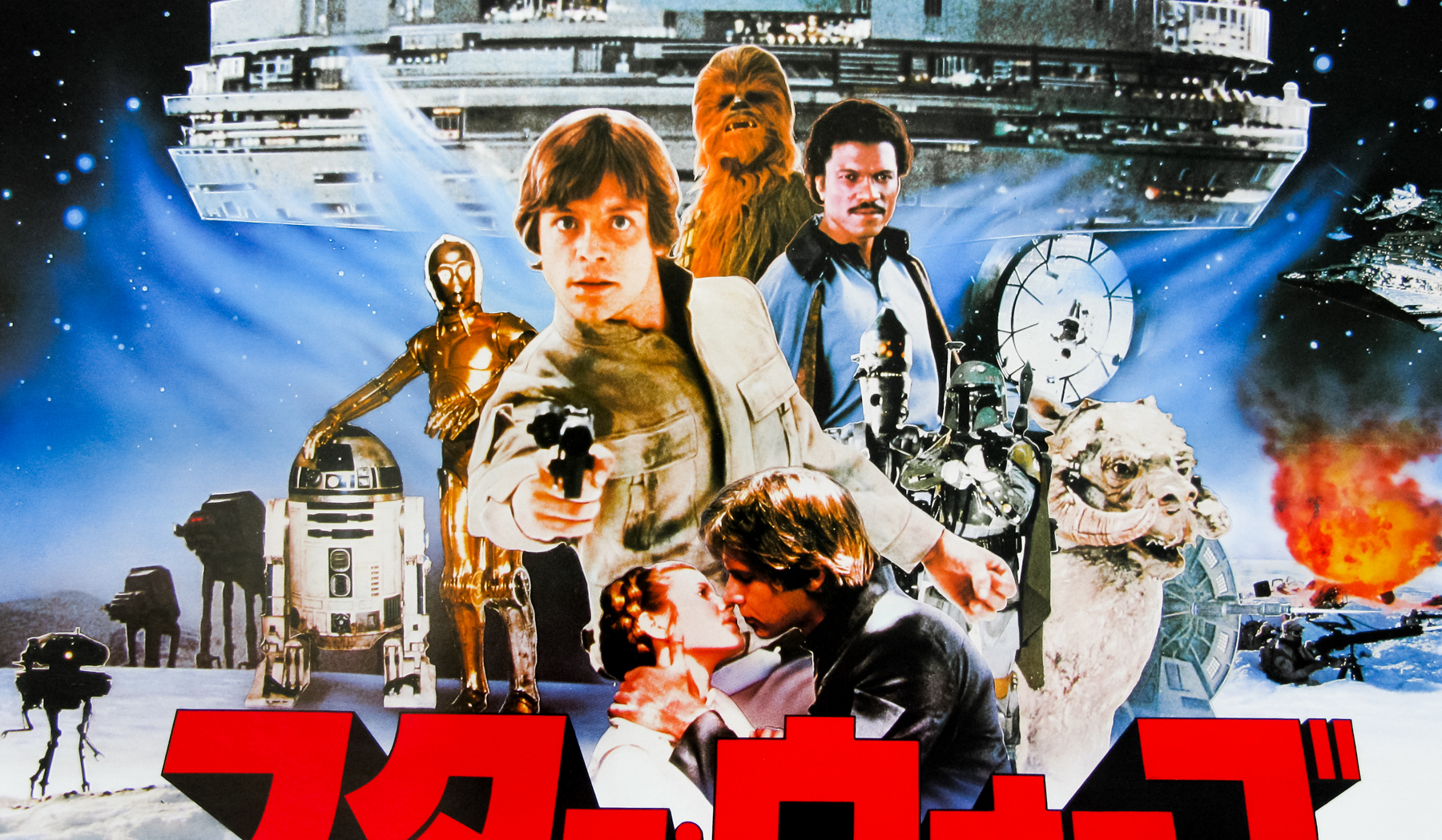
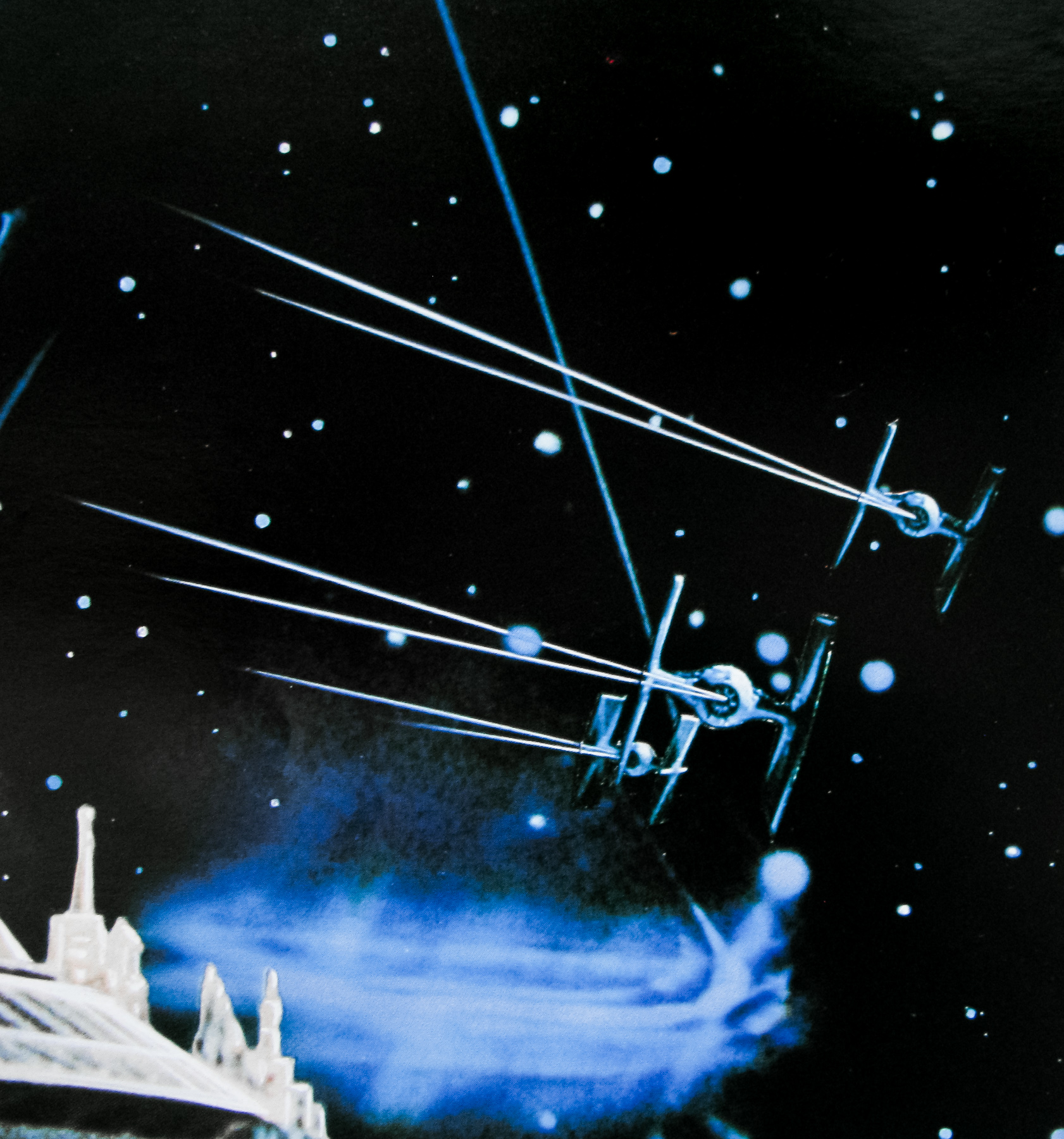
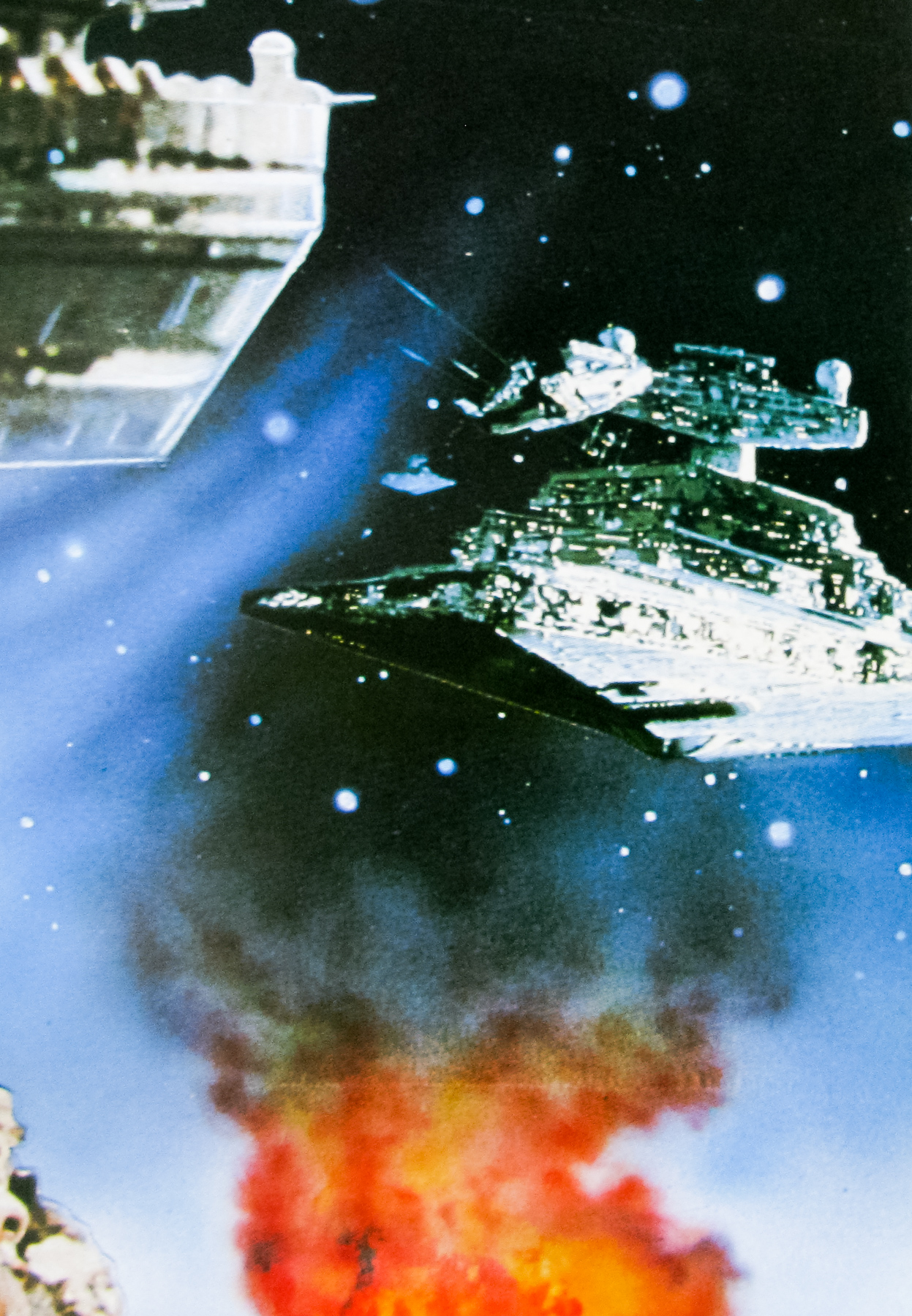
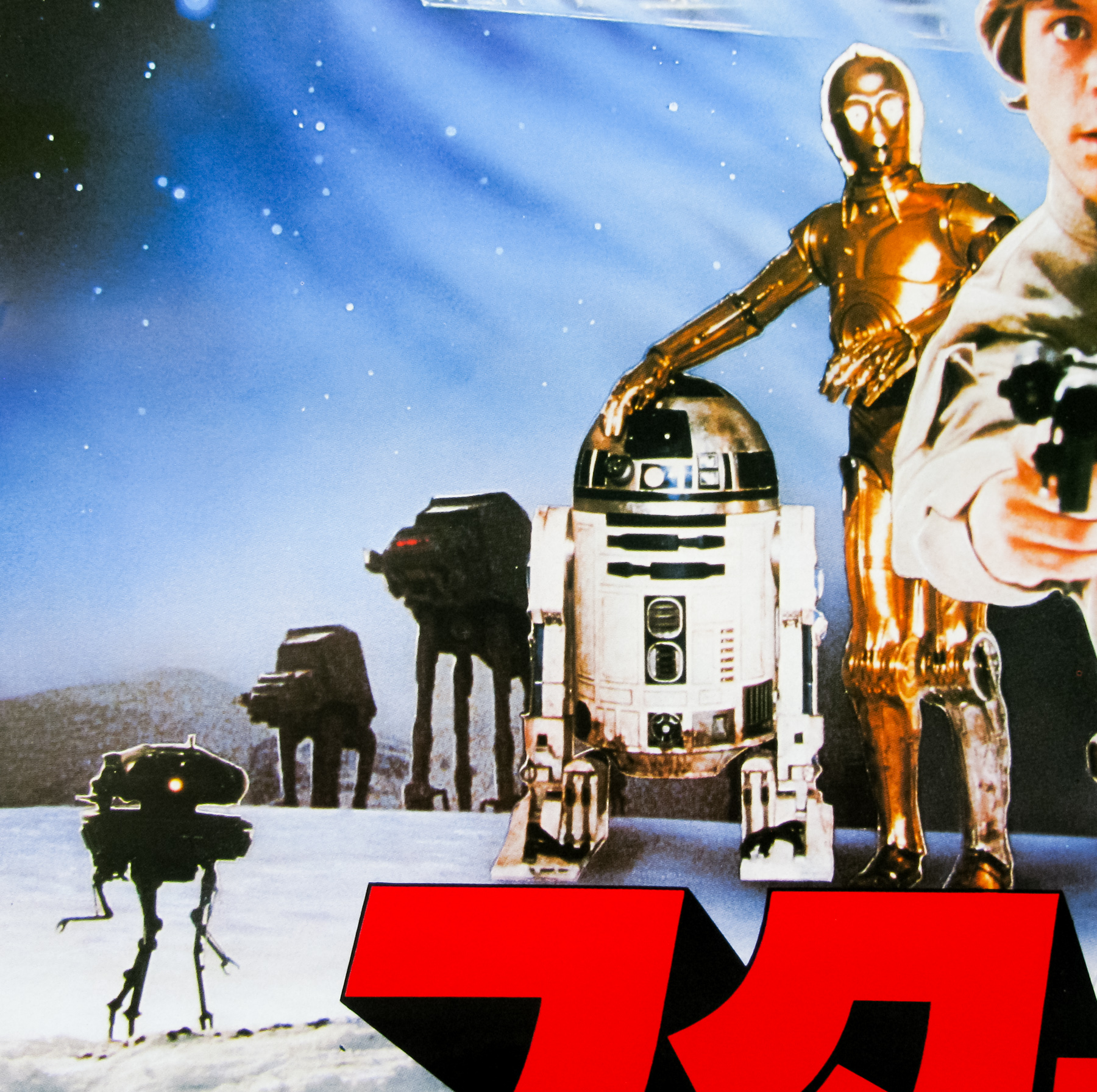
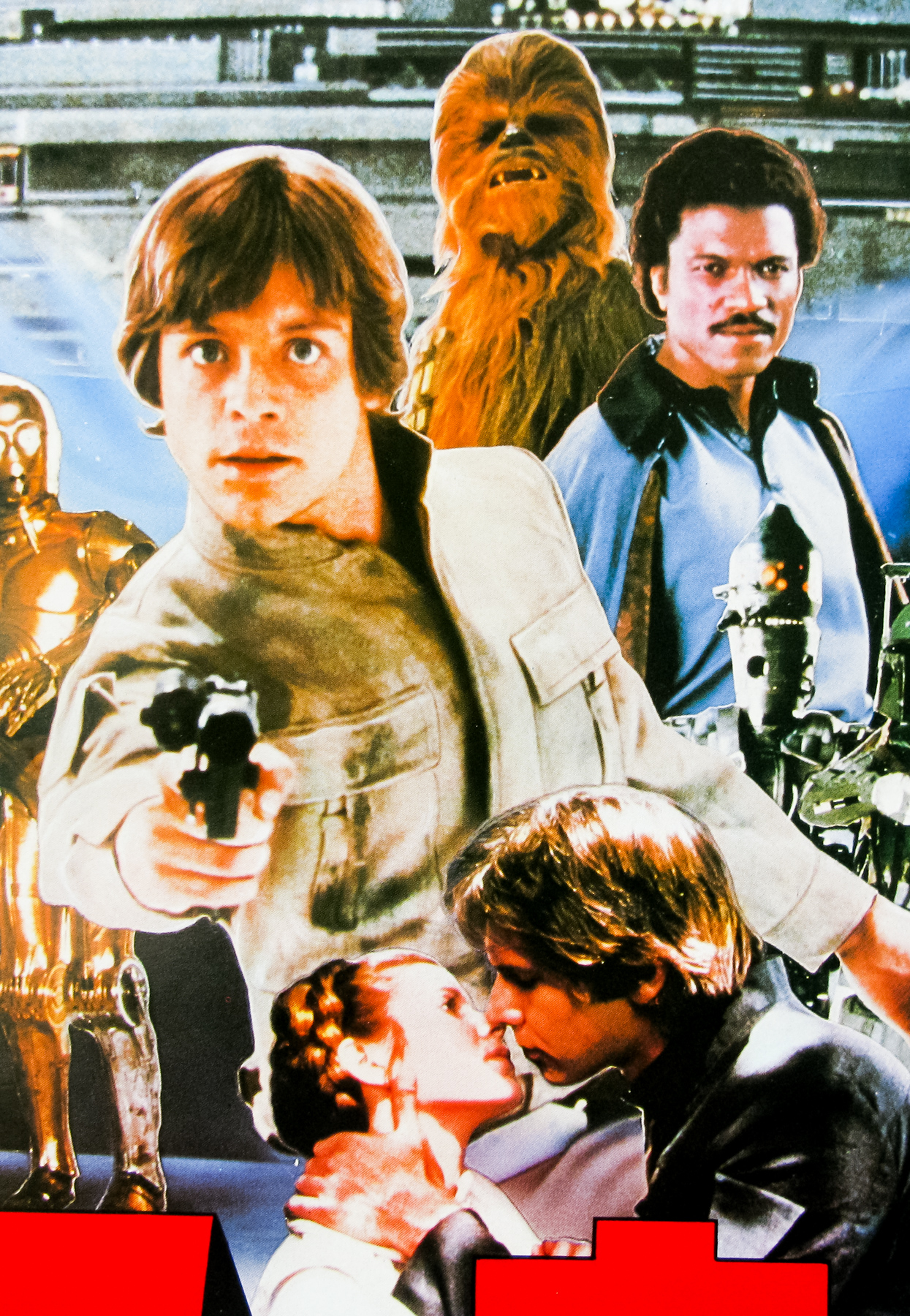
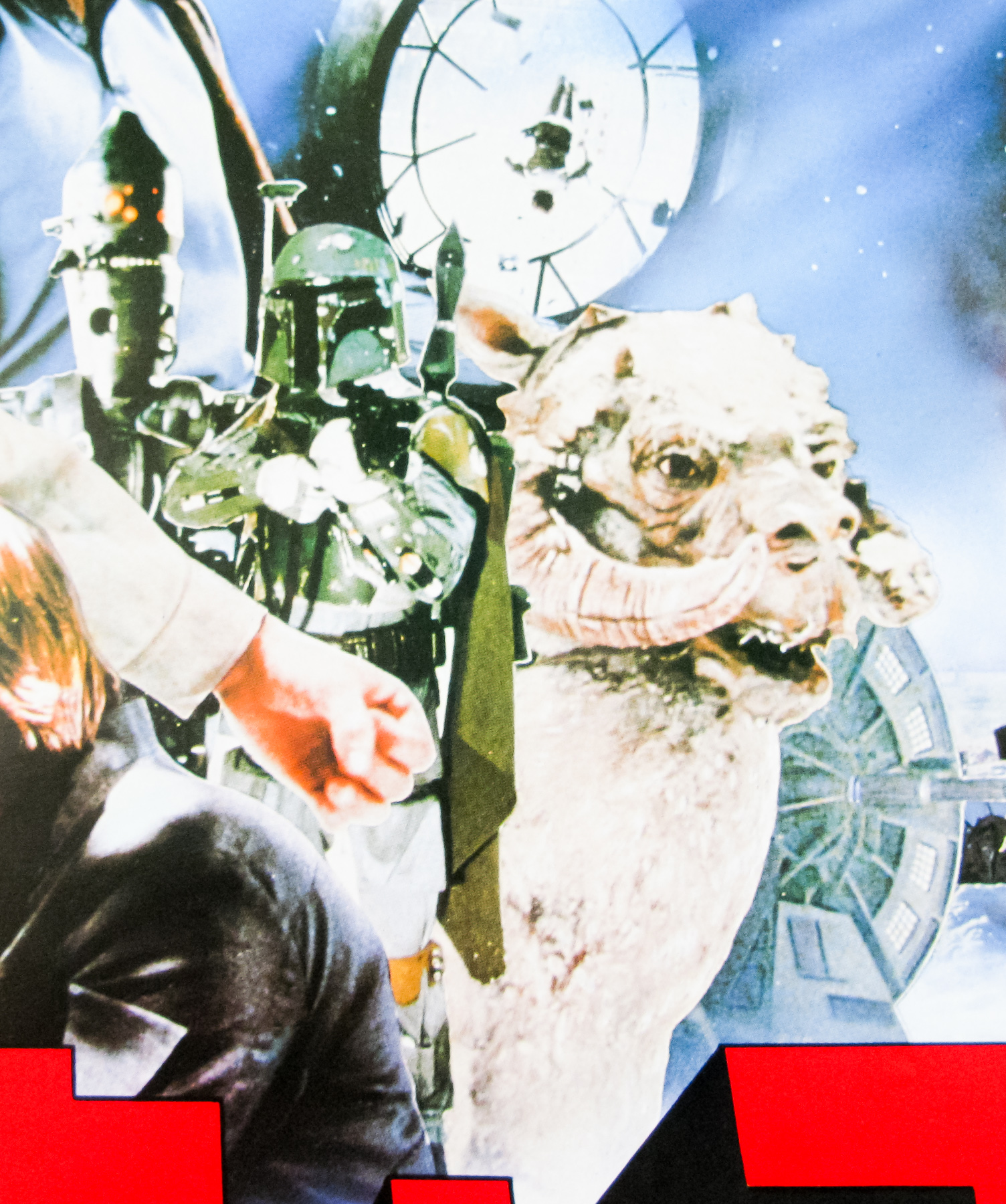
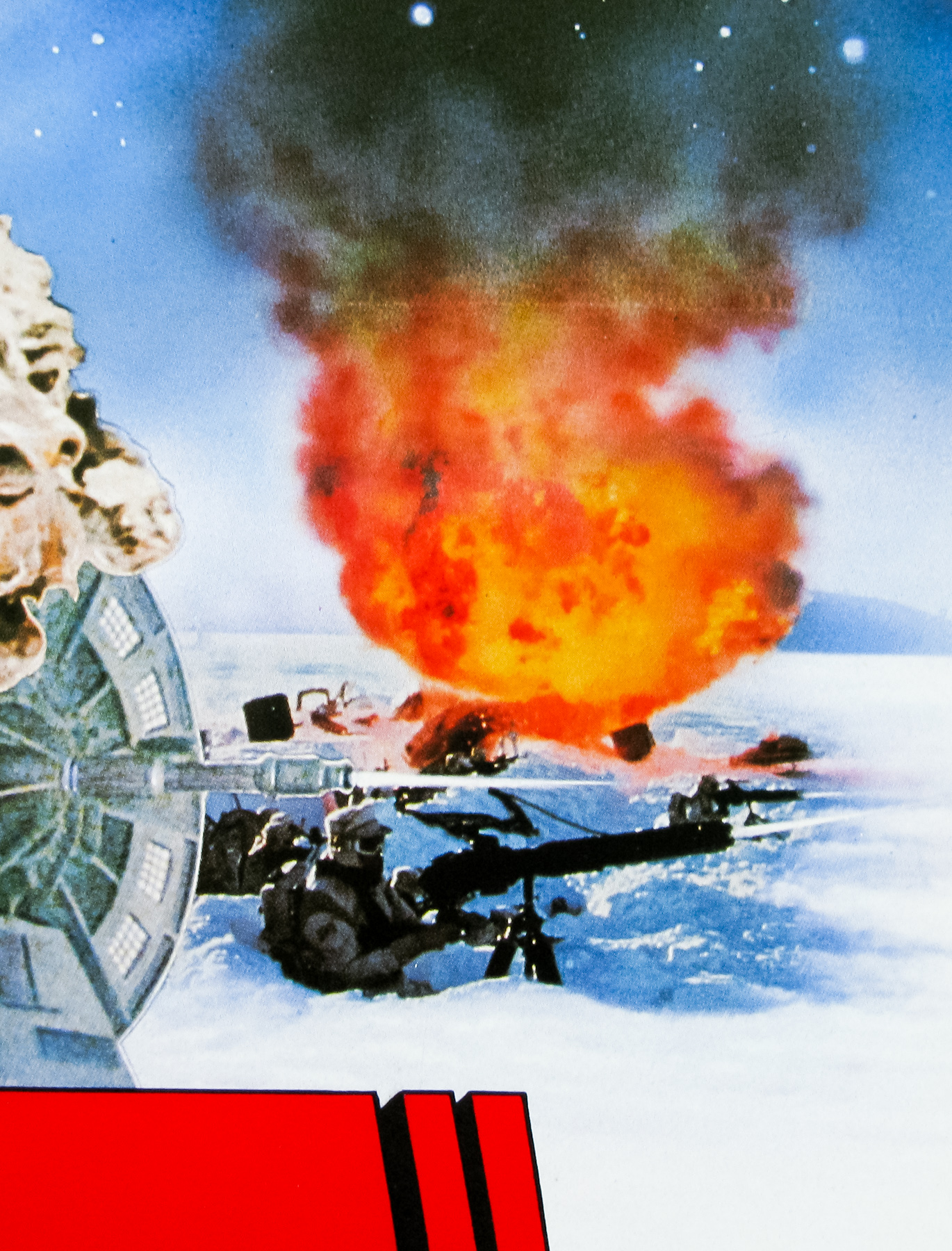
This is the photo montage style Japanese poster for the second (and best, IMO) film in the original Star Wars trilogy. Noriyoshi Ohrai was responsible for the artwork on the superb alternative style Japanese poster.

This version prominently features Cloud City, an outpost and gas mining colony floating above the planet Bespin, and the place to which Han Solo and Princess Leia flee after the battle of Hoth. Lando Calrissian (Billy Dee Williams) is the administrator of the city and an old friend of Han Solo who, unbeknownst to the crew of the Millennium Falcon, has cut a deal with Darth Vader to allow the rebels to be captured in return for continued autonomy from the Empire.

Rather brilliantly the character line-up features a Tauntaun, the bipedal reptomammal used by the rebel alliance as patrol mounts on their native planet of Hoth. Also in the line-up is the bounty hunter Boba Fett, many fans’ favourite character in the entire Star Wars universe.

King Kong Lives / B2 / style A / Japan

20.11.13

Poster Poster
Title
King Kong 2
AKA
King Kong Lives (USA / UK)
Year of Film
1986
Director
John Guillermin
Starring
Peter Elliott, George Yiasoumi, Brian Kerwin, Linda Hamilton, John Ashton, Peter Michael Goetz, Frank Maraden
Origin of Film
USA
Genre(s) of Film
Peter Elliott, George Yiasoumi, Brian Kerwin, Linda Hamilton, John Ashton, Peter Michael Goetz, Frank Maraden,
Type of Poster
B2
Style of Poster
Style A
Origin of Poster
Japan
Year of Poster
1986
Designer
Unknown
Artist
Unknown
Size (inches)
20 6/16" x 28 13/16"
SS or DS
SS
Tagline
--

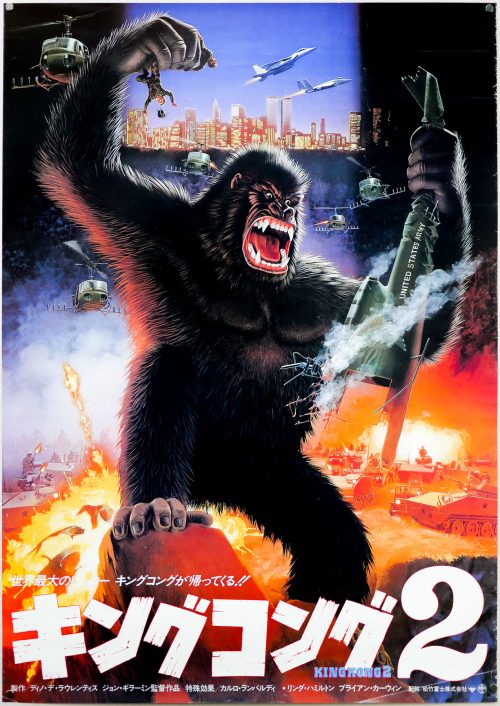
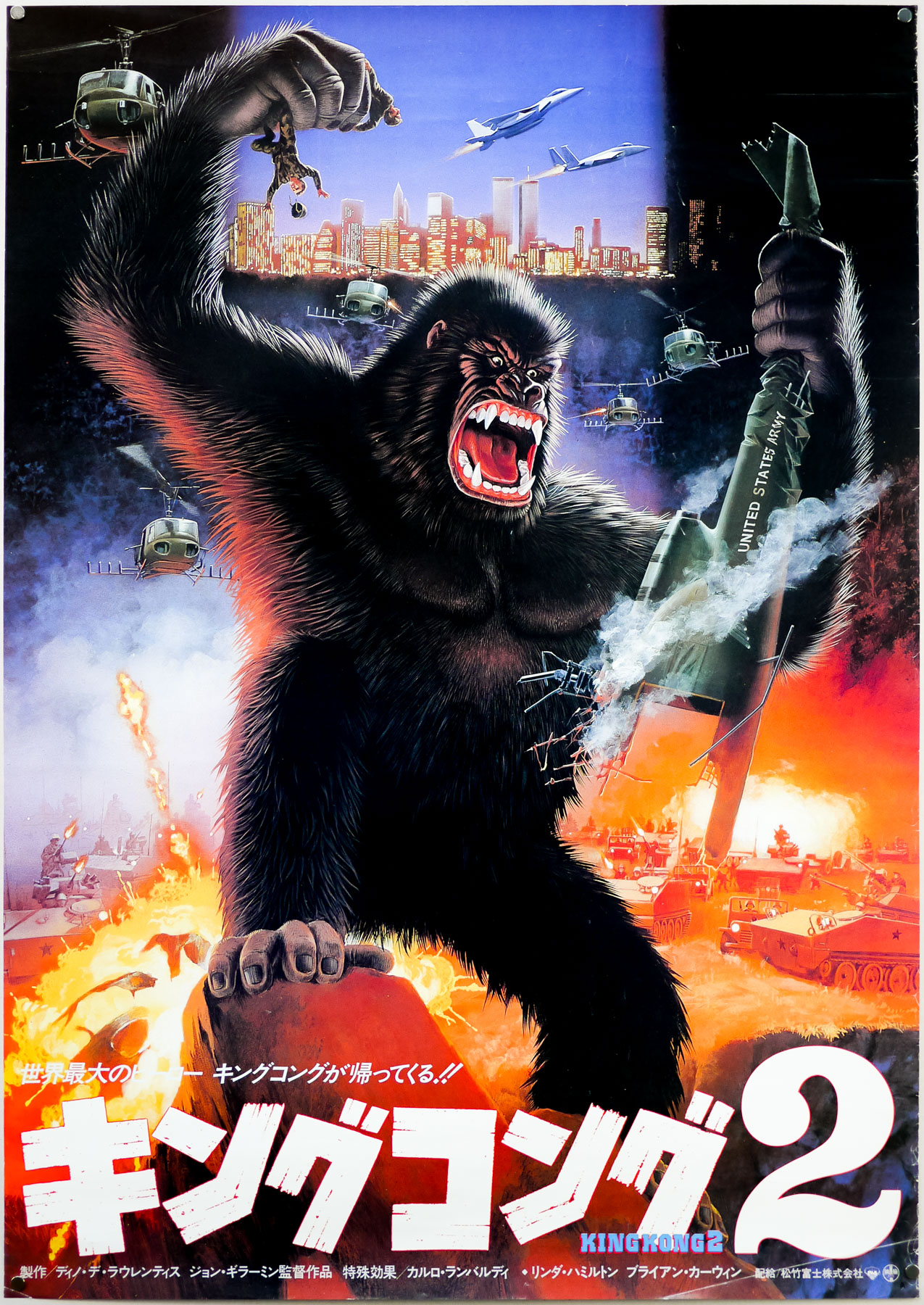
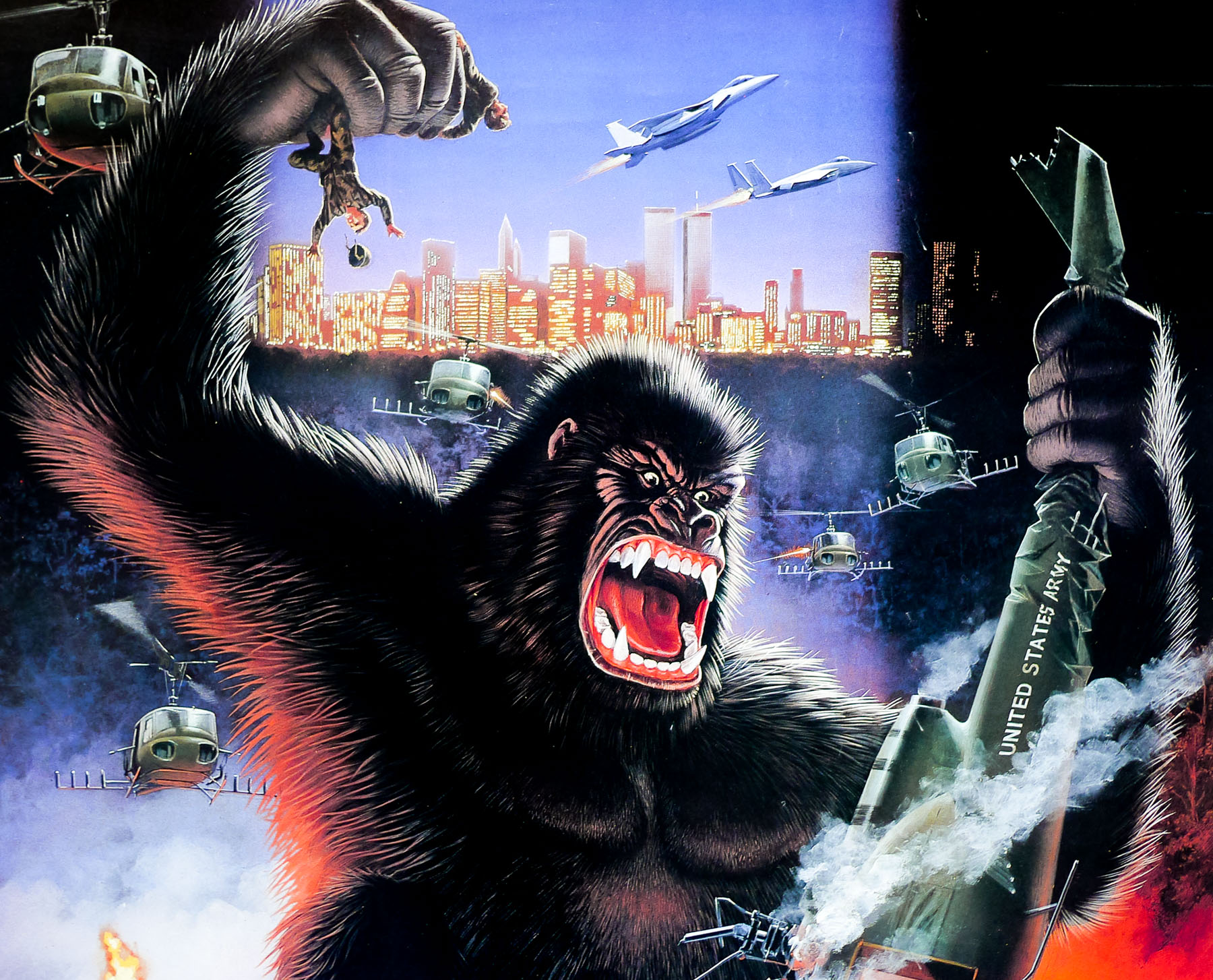
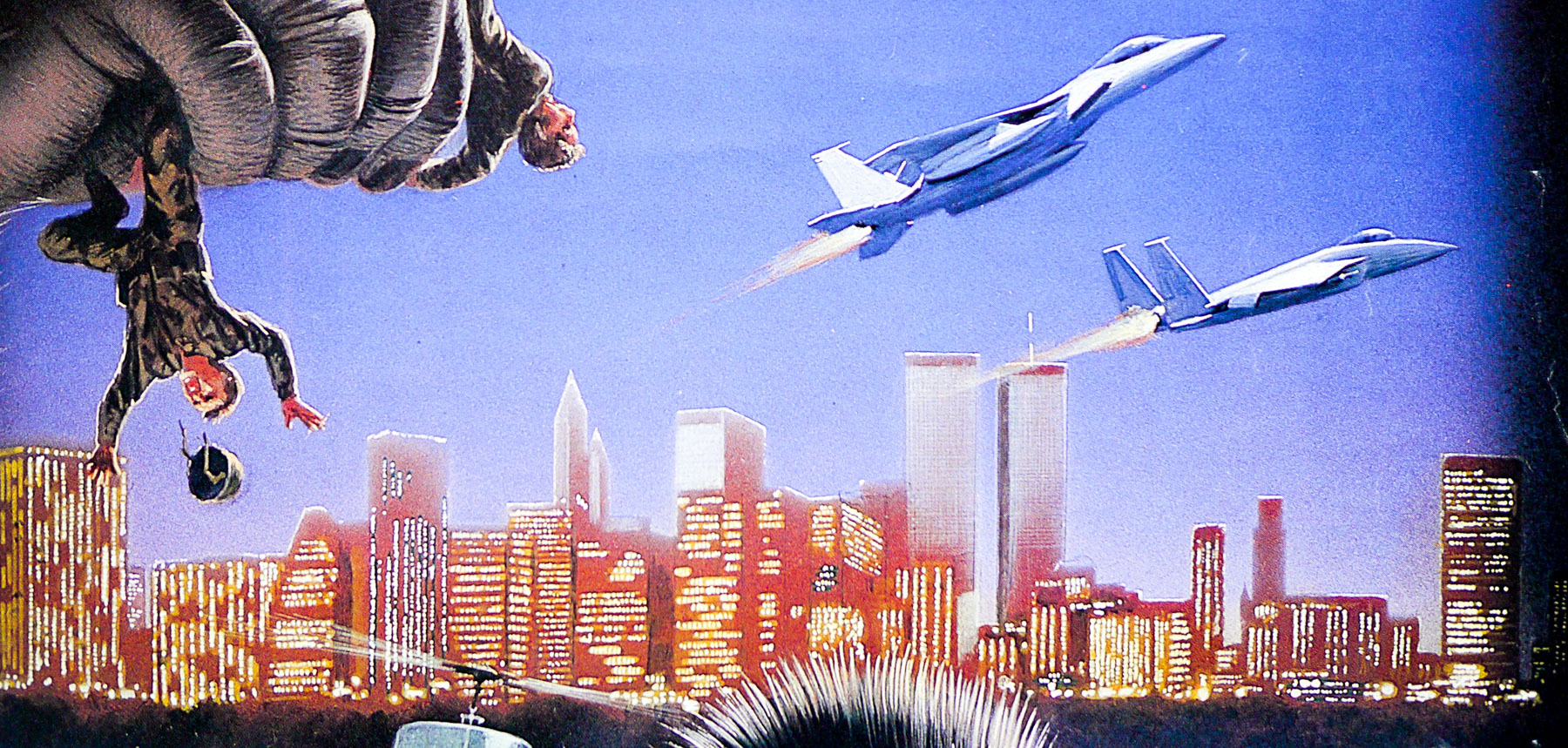
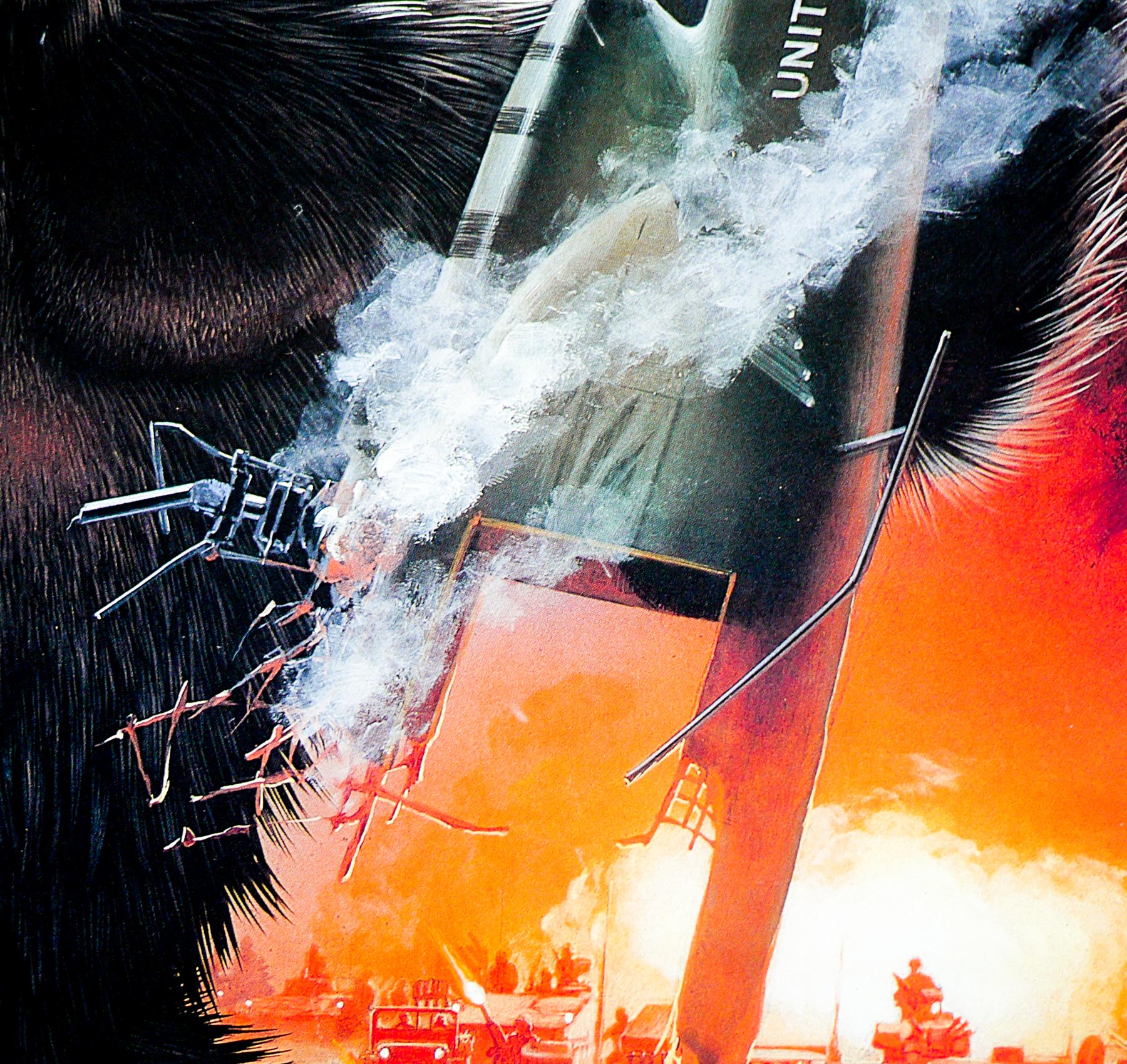
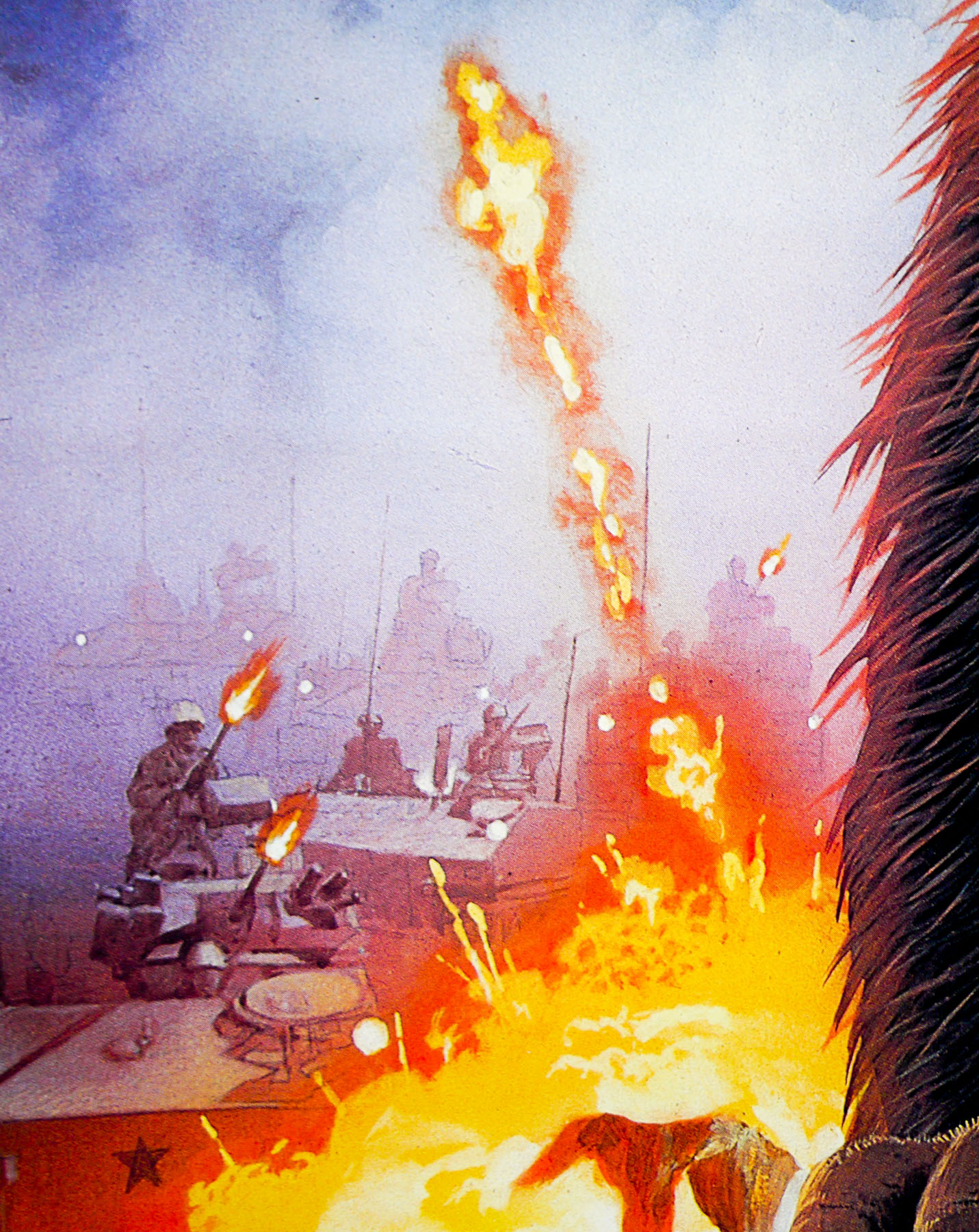
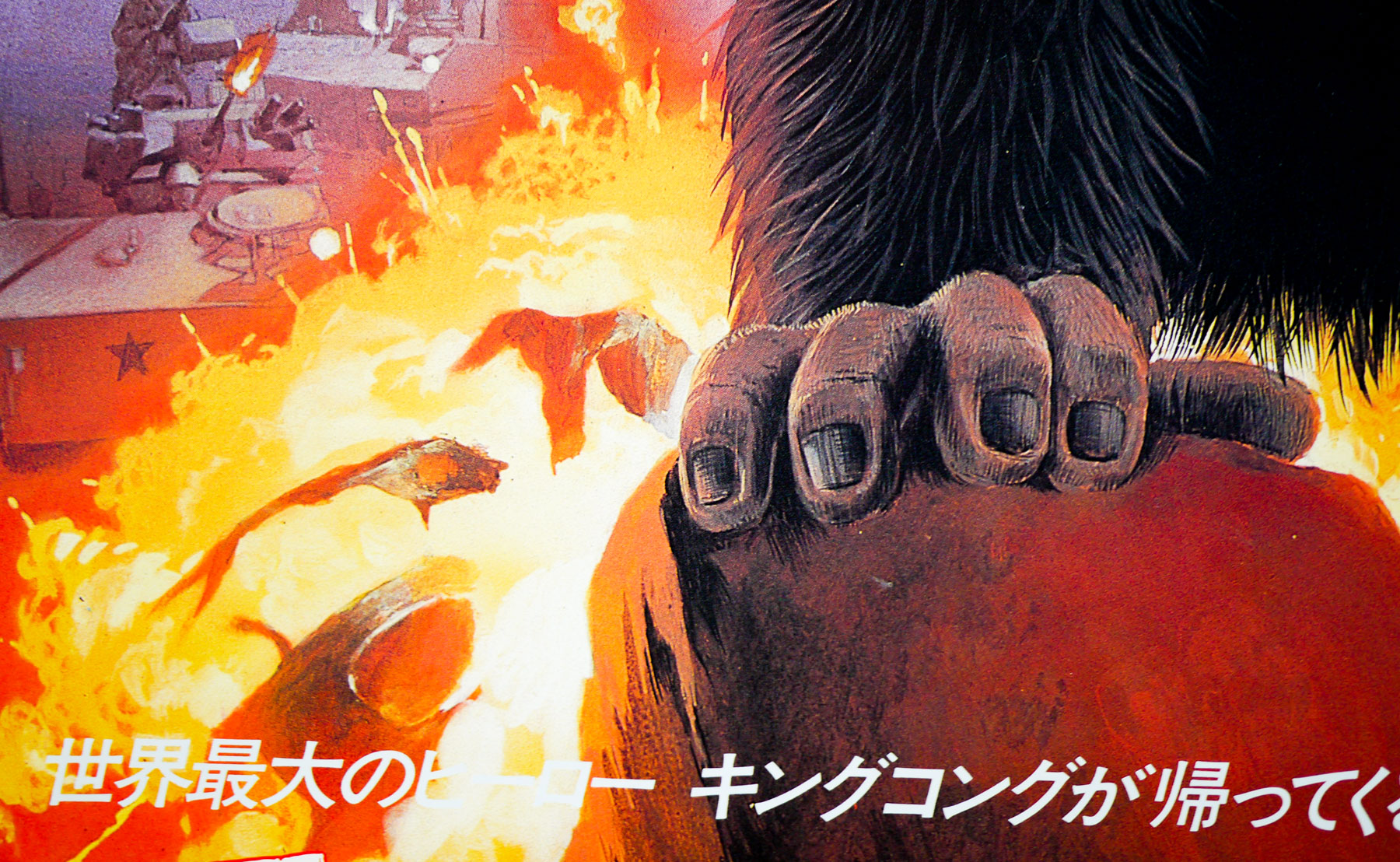
King Kong Lives is the critically-mauled and commercially disastrous sequel to the ill-advised 1976 remake of the classic big ape monster movie, which was shepherded into life by the legendary Italian producer Dino De Laurentiis. I’m not entirely sure why a decade passed before this sequel was put into production, but both De Laurentiis (or at least his company DEG) and director John Guillermin returned and definitely shouldn’t have bothered. The gap is explained in the film by having Kong in a 10 year coma following his fall from the World Trade Center at the end of the previous film.

Linda Hamilton (who should have known better) stars as Dr. Amy Franklin who is attempting to perform a heart transplant with an electronic replacement but Kong has lost too much blood for the operation to proceed. Luckily the adventurer Hank Mitchell (Brian Kerwin) finds and captures another giant ape in the jungles of Borneo and brings it to the US so that the operation can go ahead. It turns out that the new ape is a female and once Kong’s heart is replaced it’s not long before he escapes with ‘Lady Kong’ and chaos ensues. Unfortunately, despite the premise, the entire cast looks as if they’d rather be somewhere else and the shoddy effects can’t paper over the cracks.

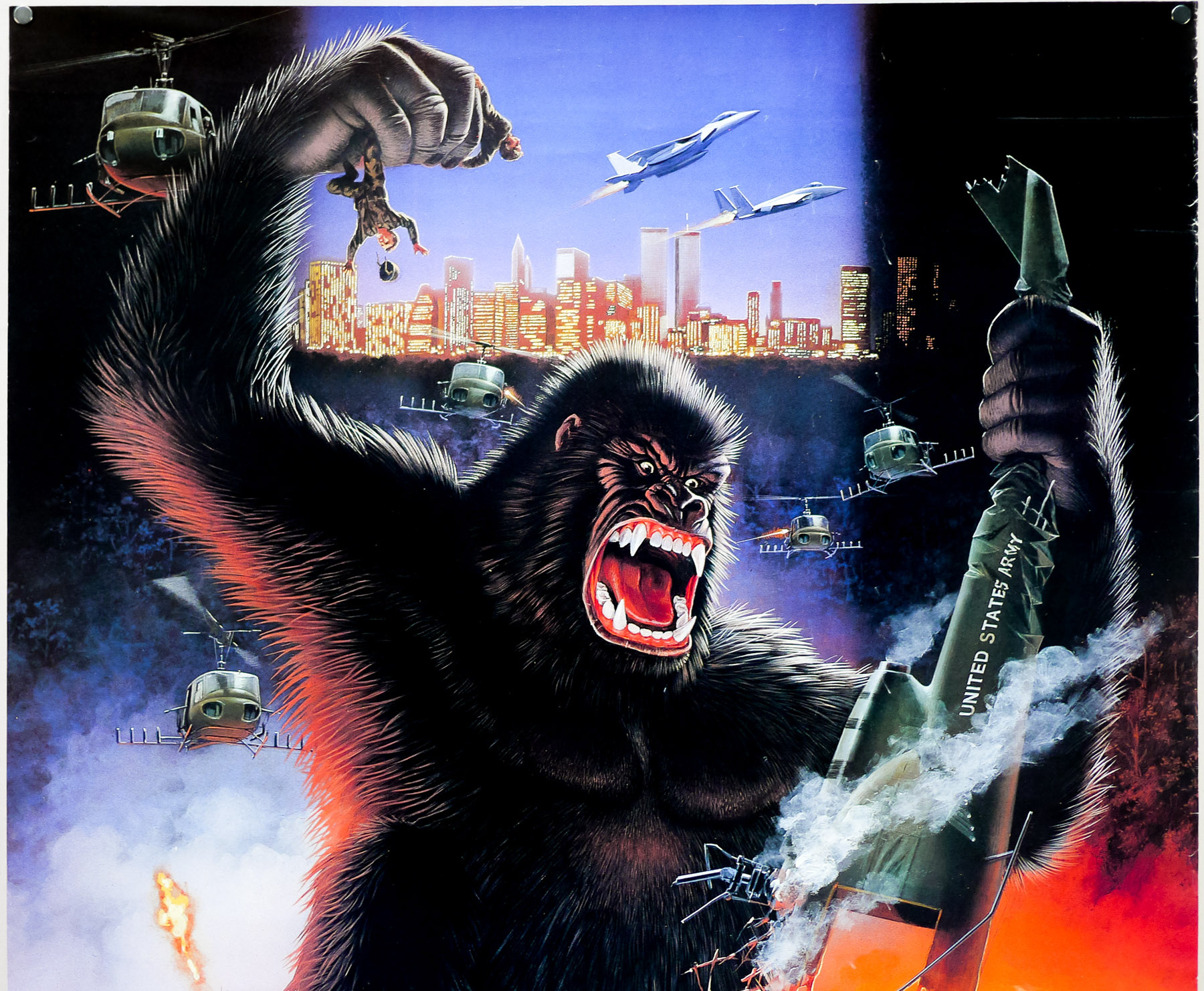
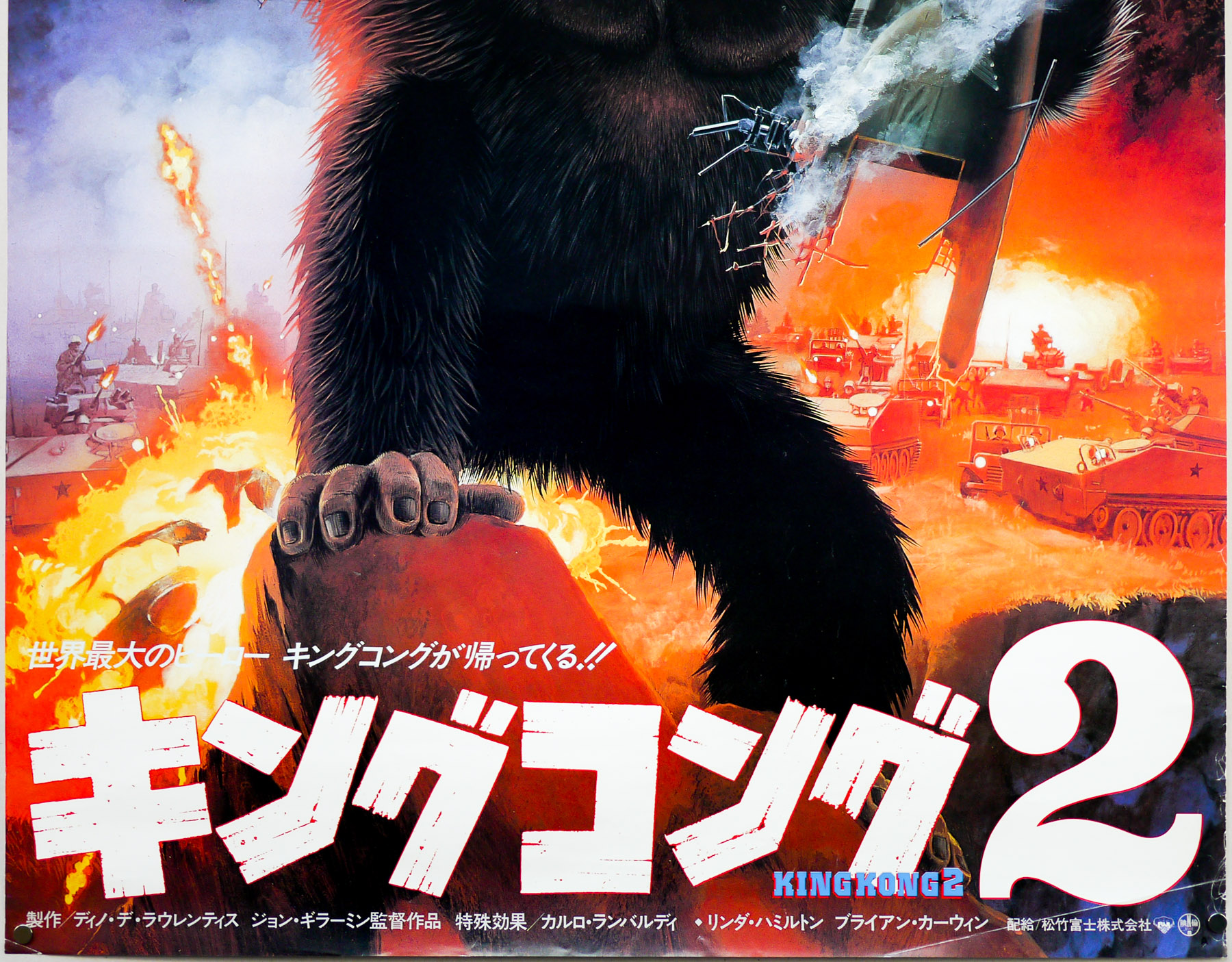
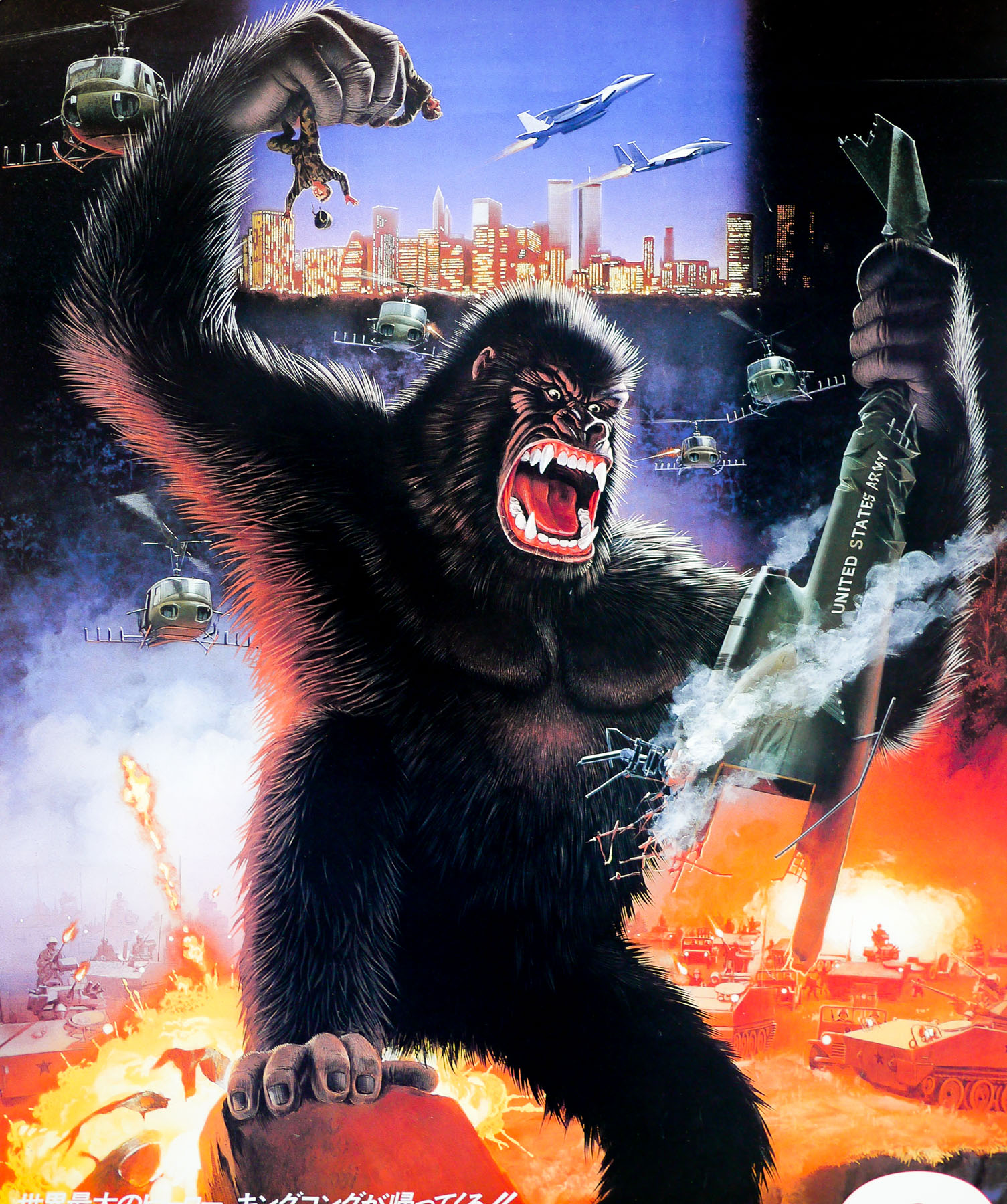
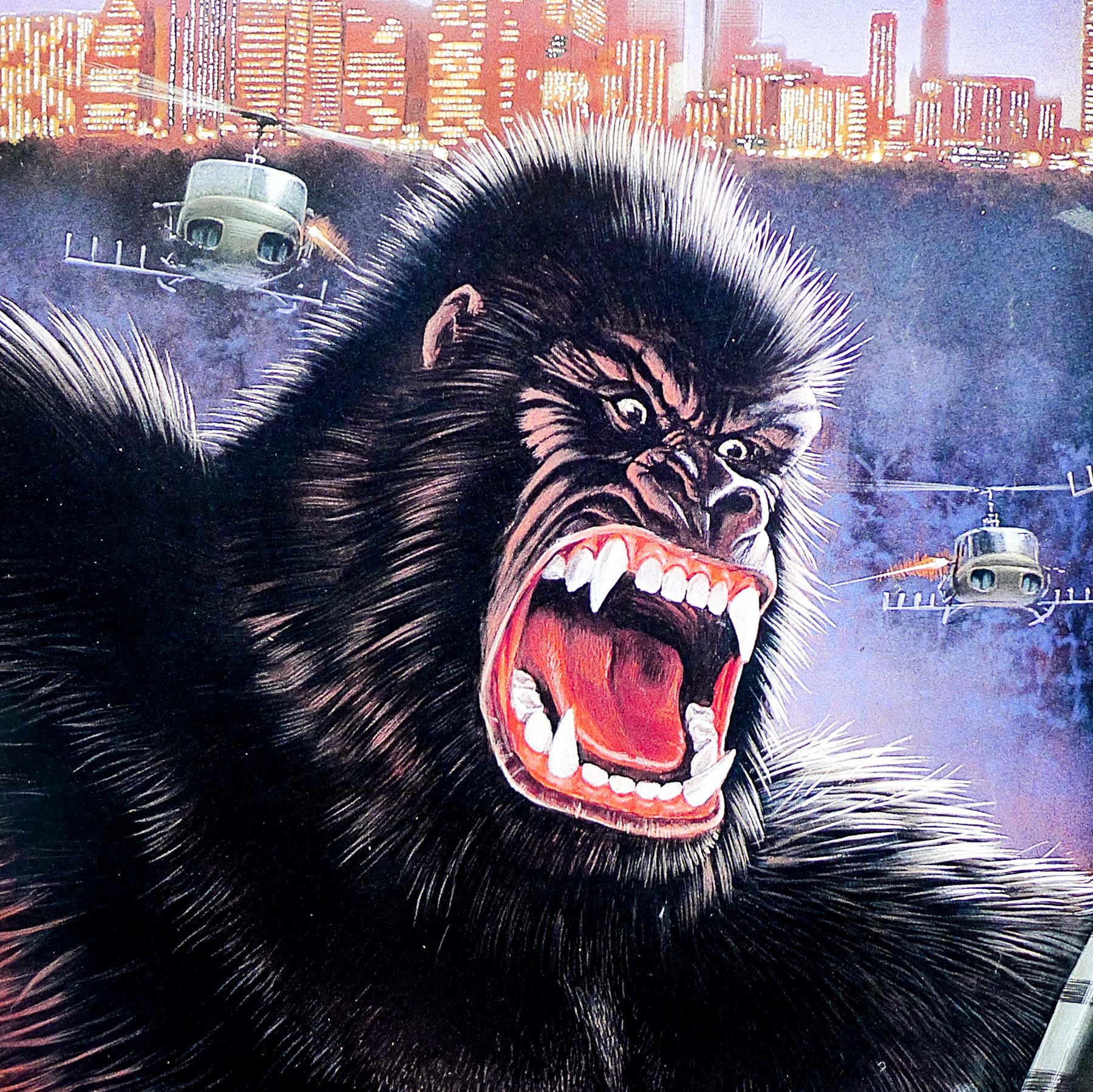
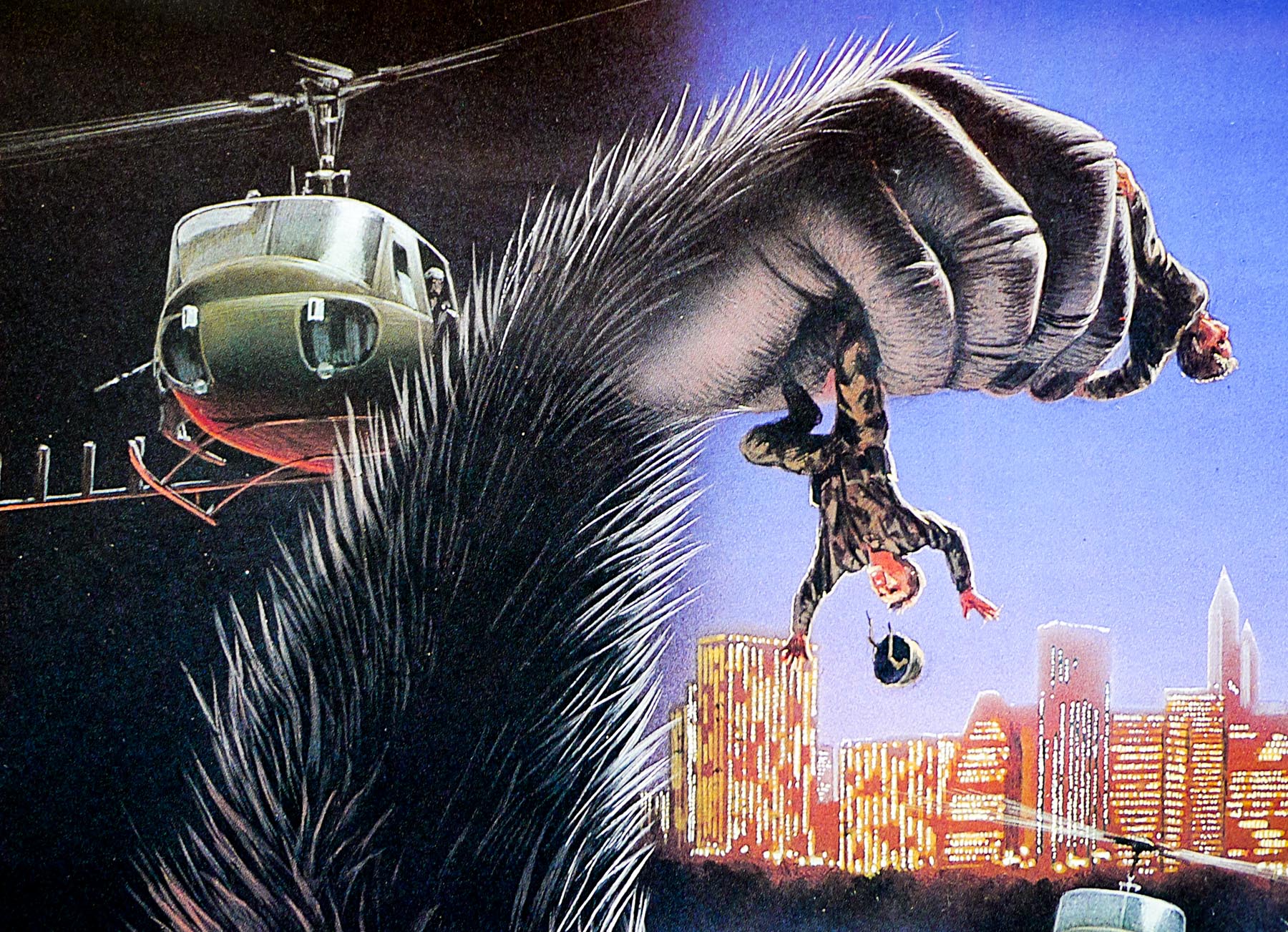
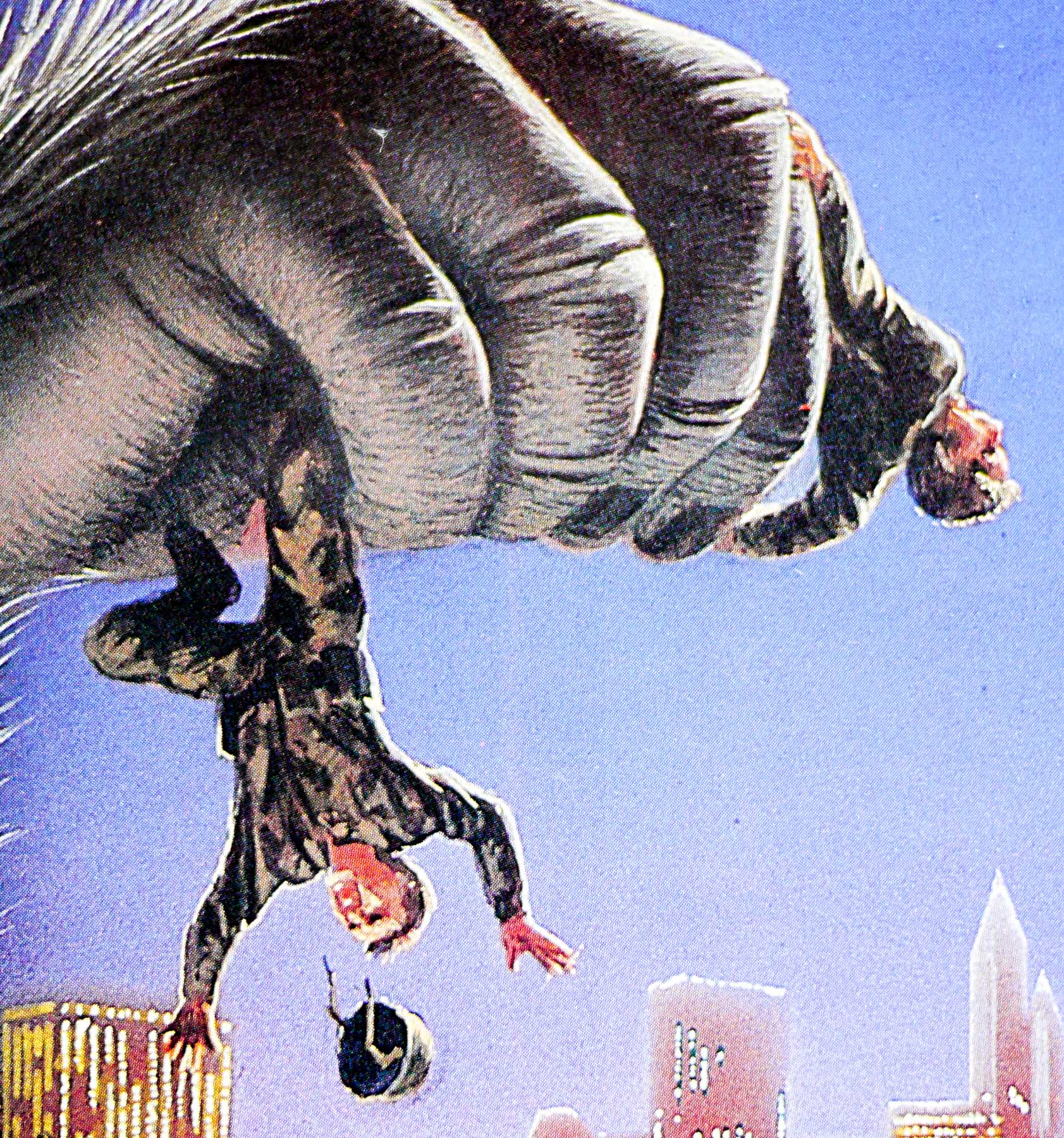
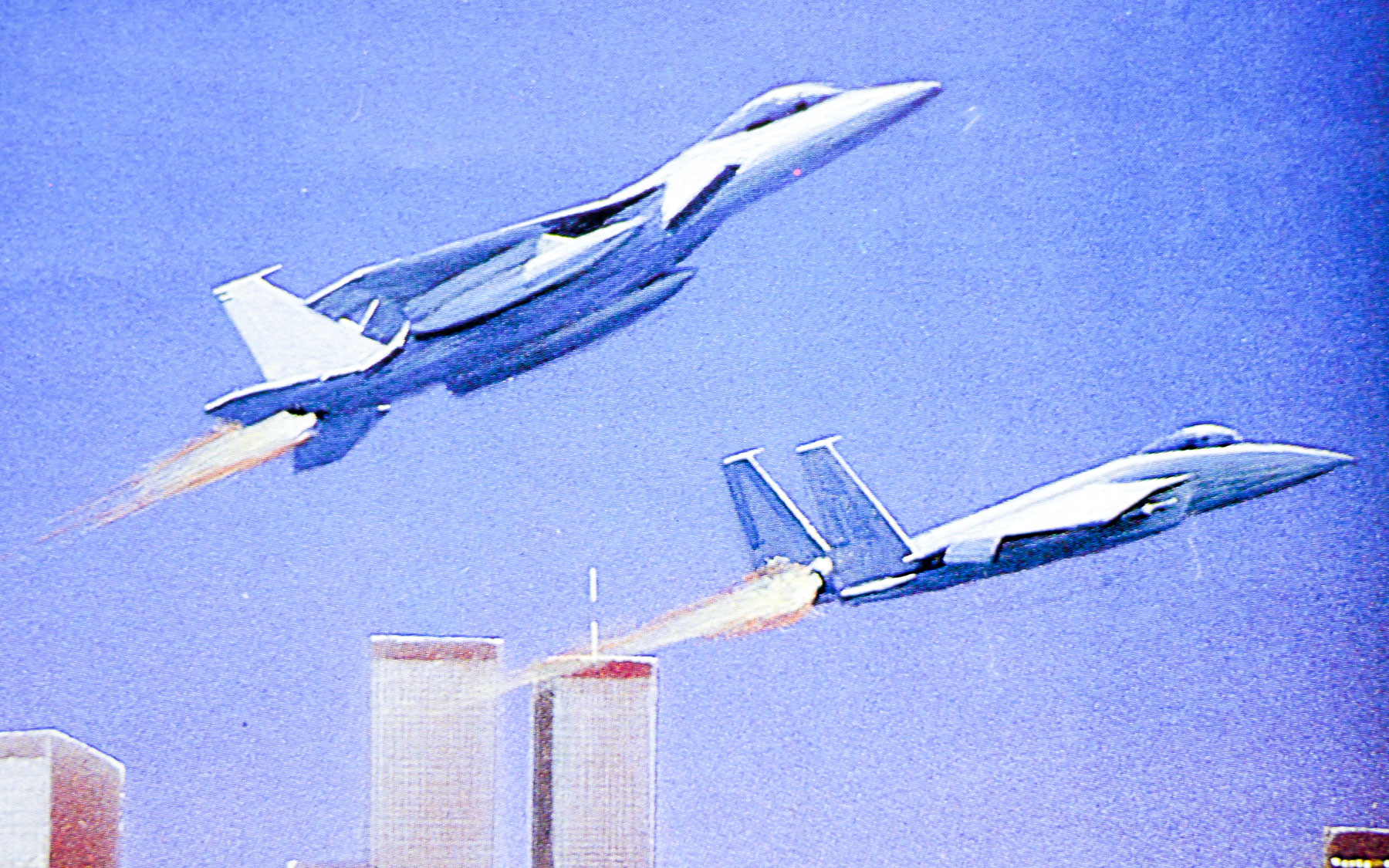
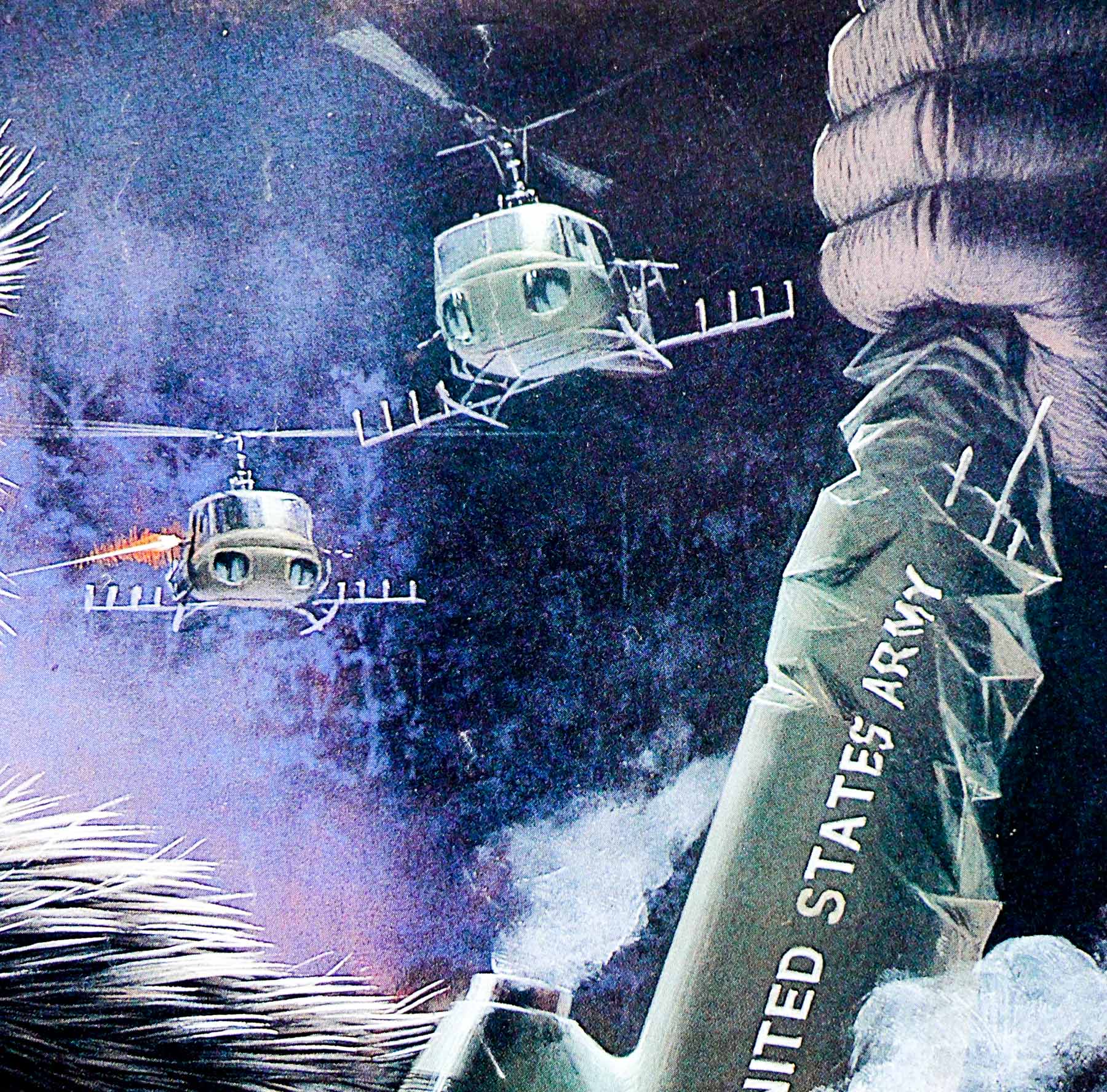
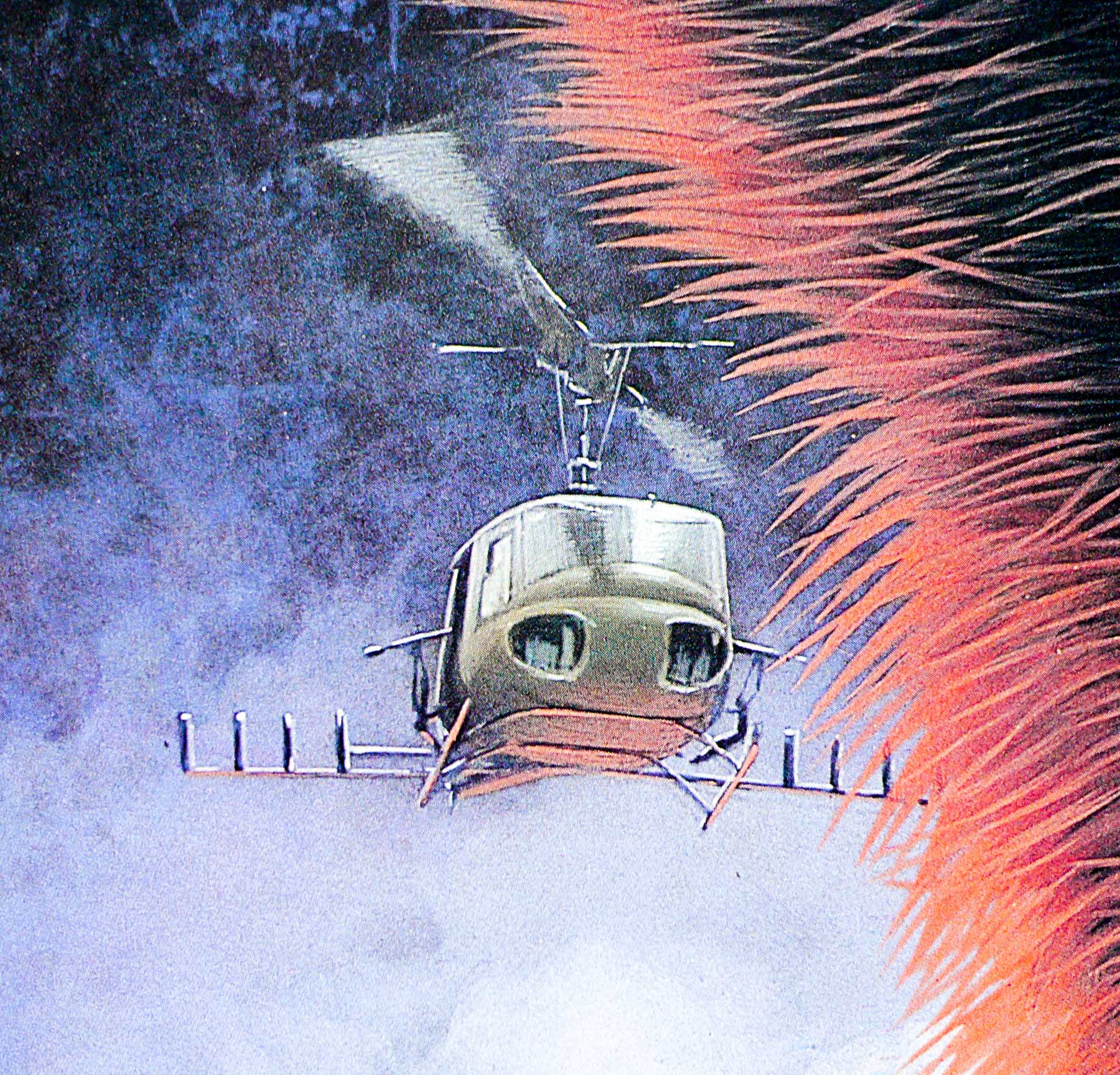
This artwork is exclusive to the style A Japanese poster but has some elements that are similar to the American one sheet. I’ve struggled to find out who the artist is for this poster so please get in touch if you have an idea. There is also a style B Japanese poster that was illustrated by the great Noriyoshi Ohrai that I also have in the collection and can be viewed here.

Eraserhead / B2 / Japan

09.07.12

Poster Poster

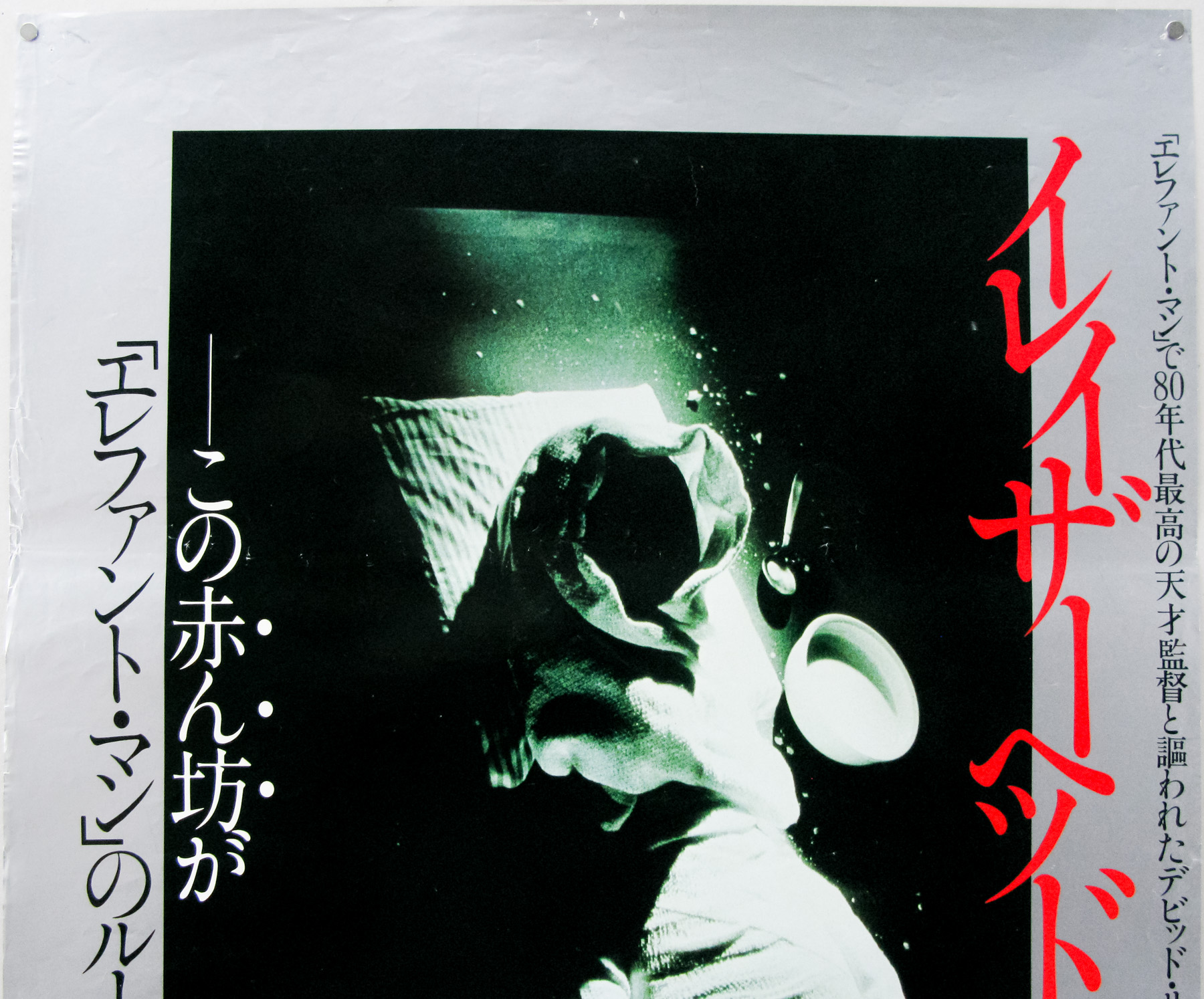
Legendary director David Lynch‘s surreal nightmare Eraserhead celebrates its 35th anniversary in 2012 and its fair to say cinema has seen nothing else quite like it in the years since it was released. Lynch’s first full-length feature was five years in the making and was begun whilst he worked at the American Film Institute school in Los Angeles. The initial grant of $10,000 given to the director quickly ran out and he was forced to spend the following years using money from odd jobs, as well as donations from friends and family to continue work on it.

Ben Barenholtz, the owner of Libra films saw the completed film at the Filmex Festival and, after declaring it was a ‘film of the future’, decided to help Lynch get the film into cinemas. The first screening took place at midnight on the 29th of September, 1977 and, like Jodorowsky’s El Topo before it, Eraserhead became a staple of Midnight Movie shows in Los Angeles, New York and London.

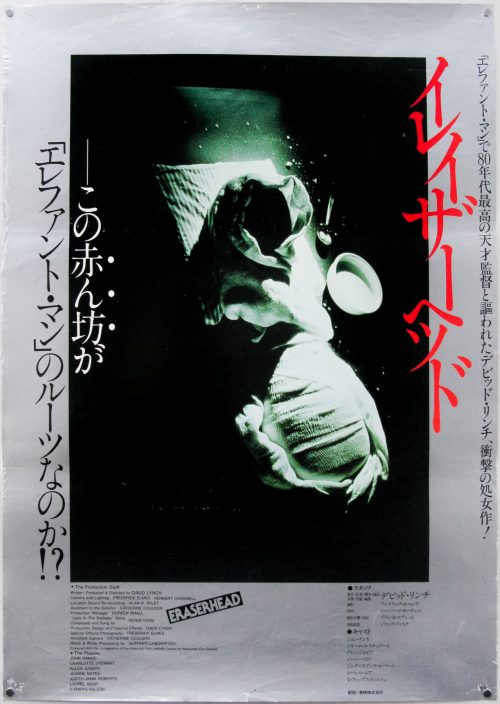
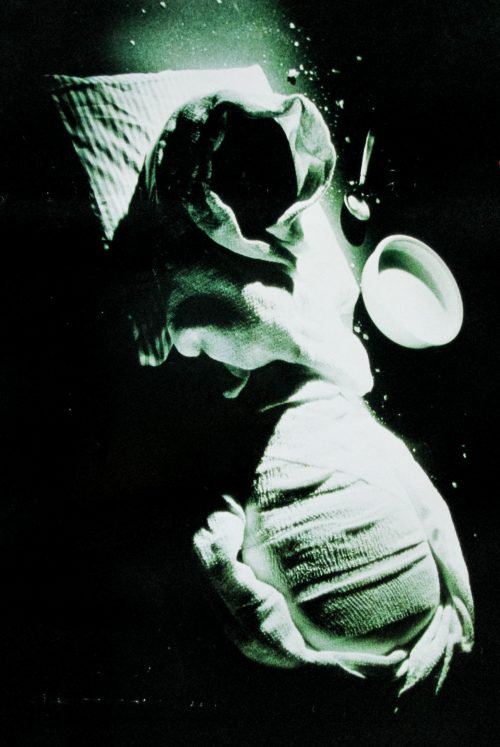
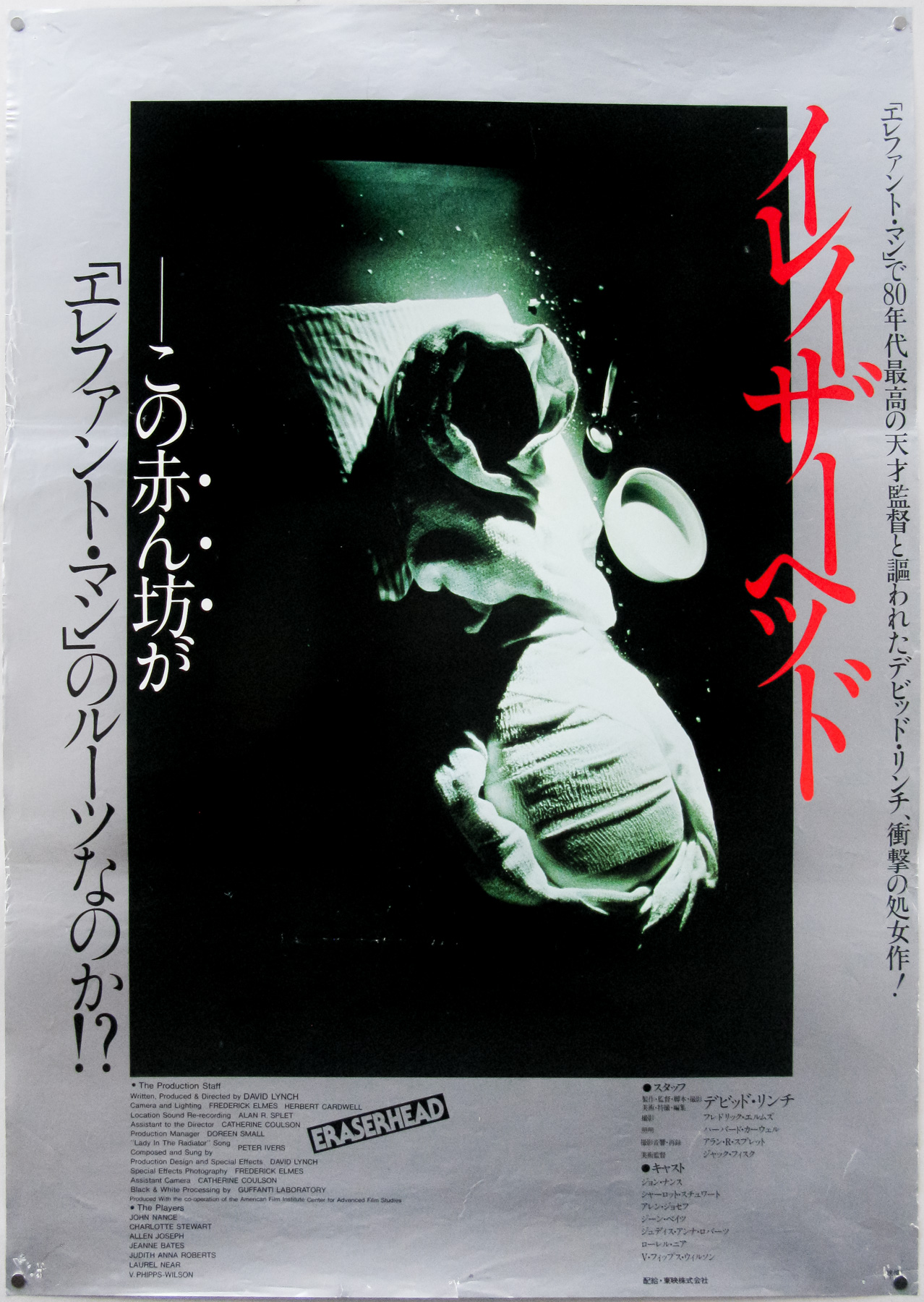
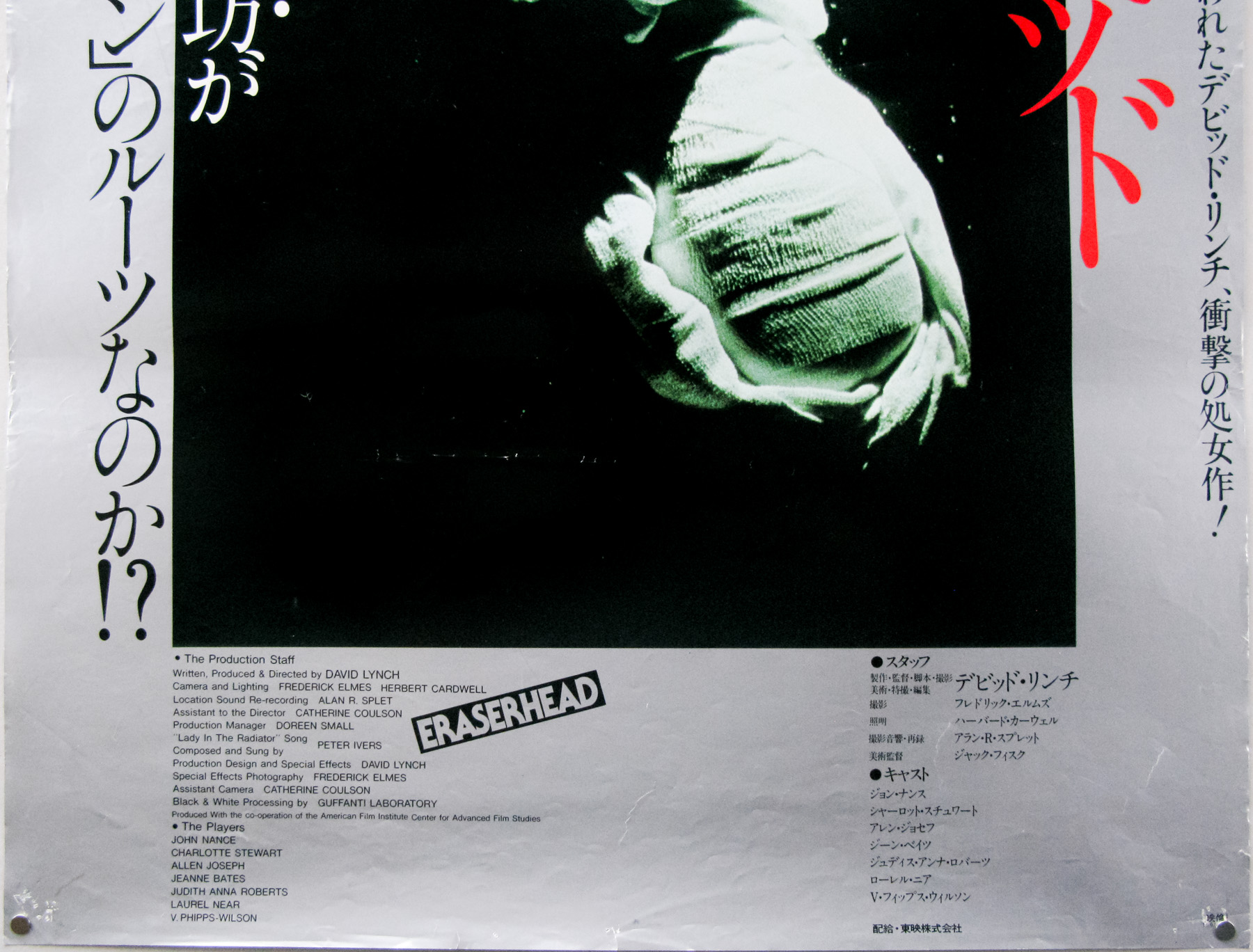
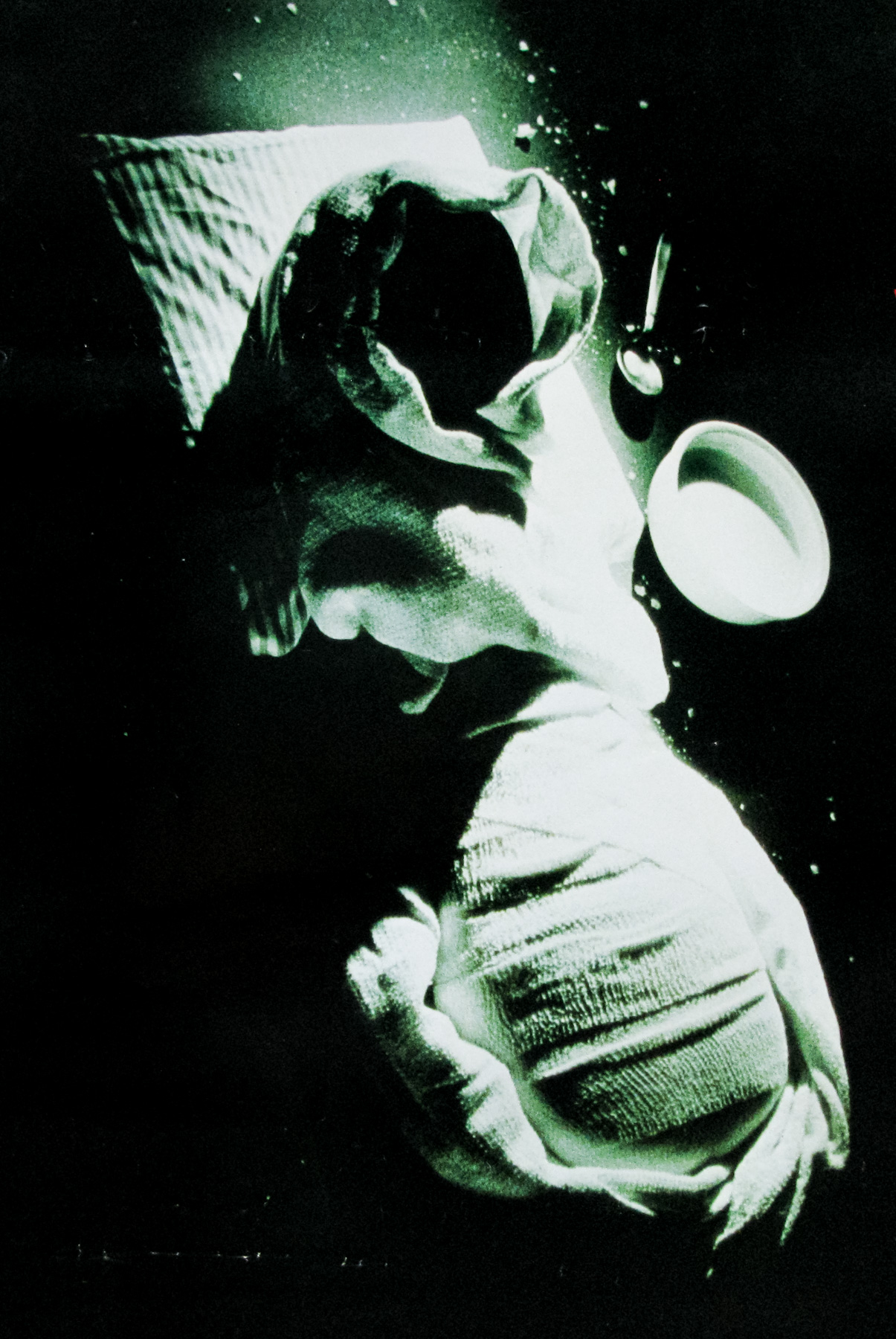
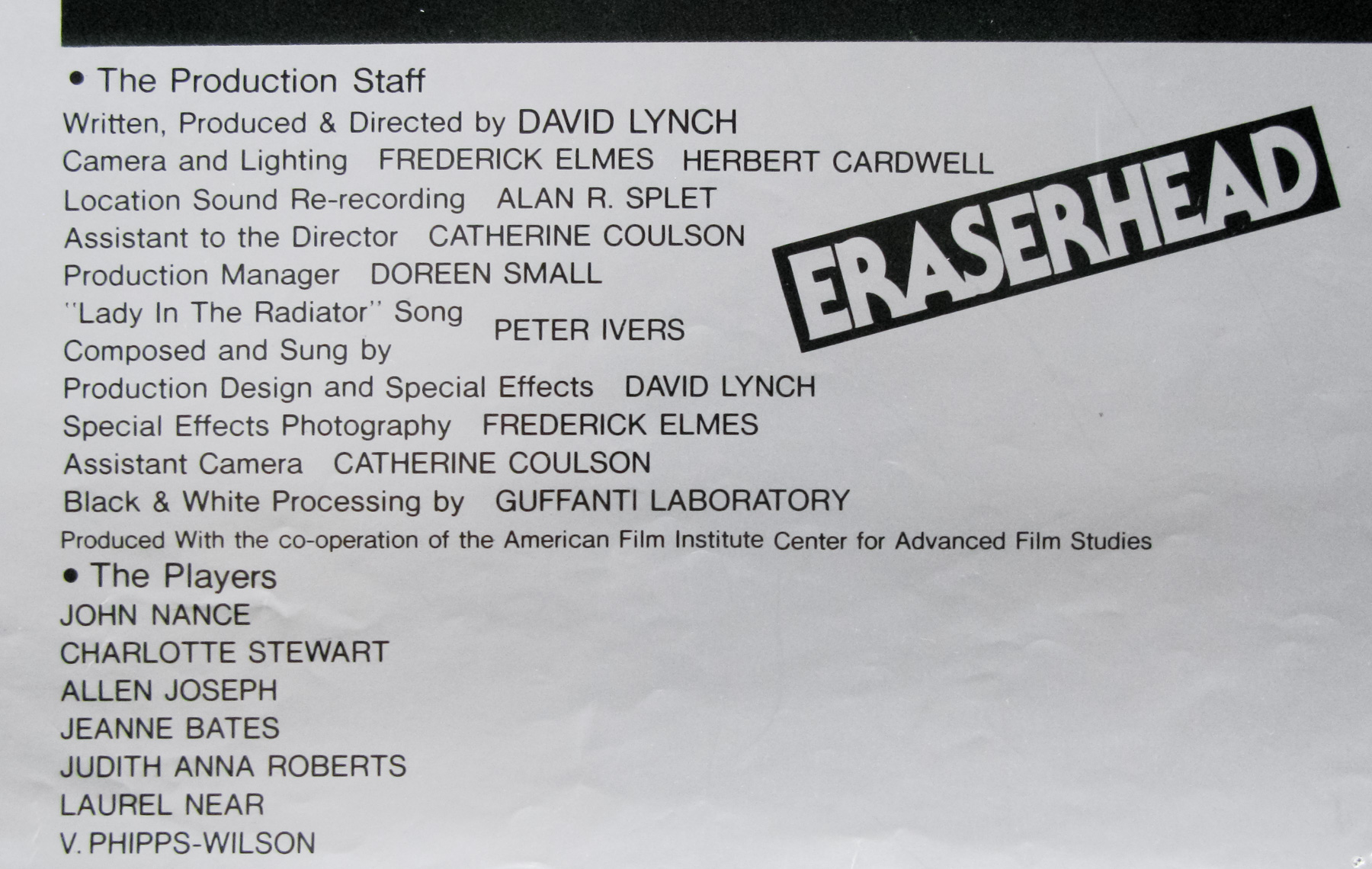
This Japanese poster is from the first release of the film, which took place in 1981, and features an image of the ‘baby’ with its head wrapped in bandages. This particular copy of the poster isn’t in the best of condition, as should be obvious from the pictures, but I think it quite suits the nature of the film.

Having just watched the recent UK blu-ray release of the film, which was apparently supervised by Lynch, I can highly recommend picking up a copy of it as the film has never looked or, perhaps more importantly, sounded as good.

The original trailer is on YouTube.

Easy Rider / B2 / blue version / Japan

01.08.12

Poster Poster
Title
Easy Rider
AKA
--
Year of Film
1969
Director
Dennis Hopper
Starring
Peter Fonda, Dennis Hopper, Jack Nicholson, Luke Askew, Phil Spector, Karen Black, Toni Basil, Antonio Mendoza, Mac Mashourian, Warren Finnerty
Origin of Film
USA
Genre(s) of Film
Peter Fonda, Dennis Hopper, Jack Nicholson, Luke Askew, Phil Spector, Karen Black, Toni Basil, Antonio Mendoza, Mac Mashourian, Warren Finnerty,
Type of Poster
B2
Style of Poster
Blue
Origin of Poster
Japan
Year of Poster
1969
Designer
Unknown
Artist
Unknown
Size (inches)
20 6/16" x 28 12/16"
SS or DS
SS
NSS #
--
Tagline
--

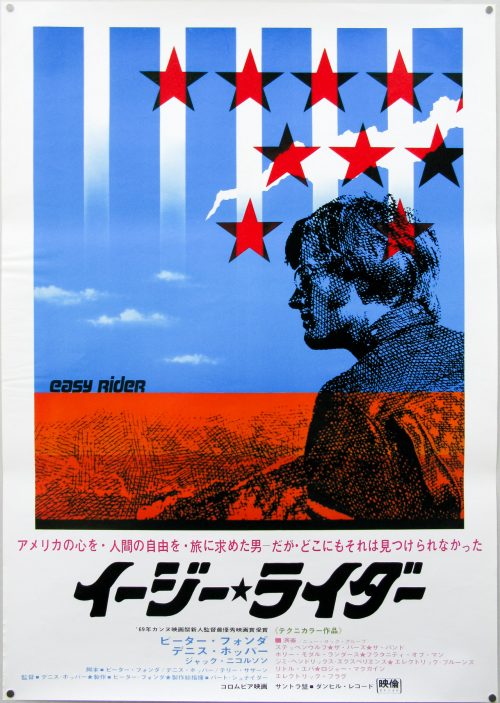
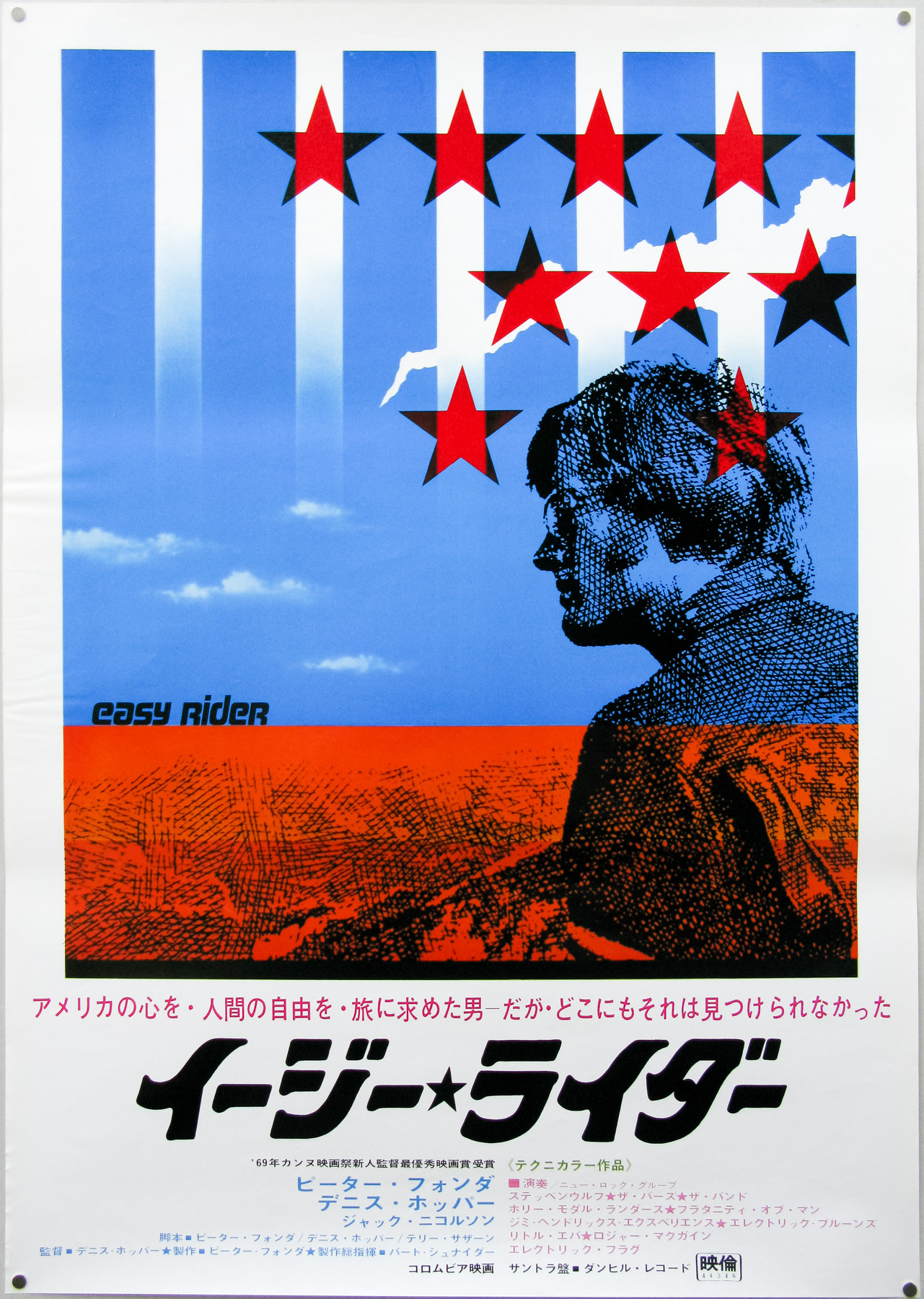
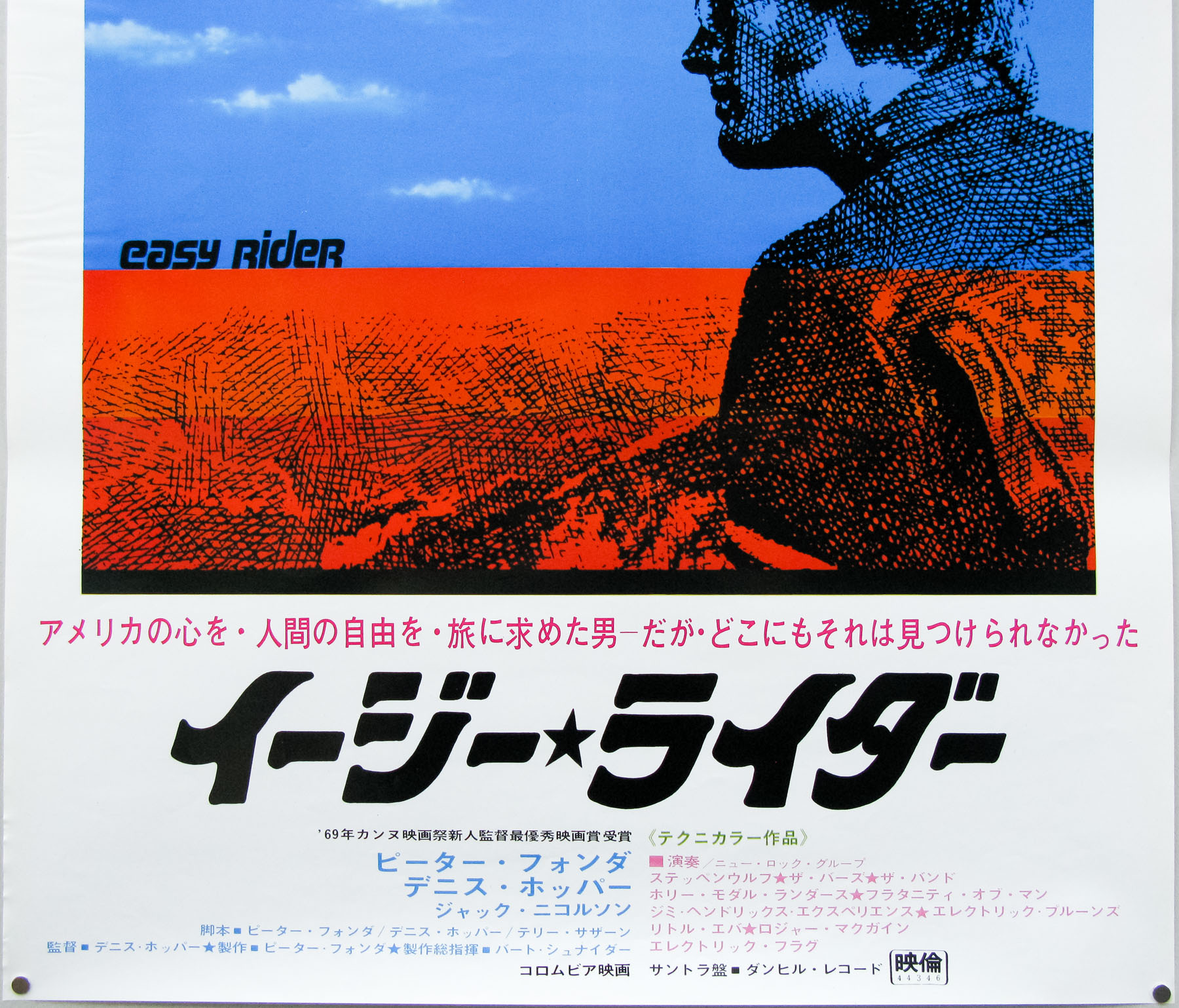
A landmark American film, Easy Rider defined a generation and was a touchstone of the counterculture movement of the 1960s. Directed, co-written by and starring the late Dennis Hopper, the film was produced by Peter Fonda, who also helped to write the screenplay and starred alongside Hopper as one of two bikers who set off on a cross-country trip through the Southern United States. At the beginning of the film Wyatt (Fonda) and Billy (Hopper) pull off a successful drug deal and decide to take their earnings and ride from Los Angeles to New Orleans to attend the forthcoming Mardi Gras festival.

Along the way the pair meet an assortment of unusual characters, including a hippie hitchhiker (Luke Askew) who takes them to a commune, drunken lawyer George (Jack Nicholson in a career-defining role) who helps them to escape jail and joins them on their trip, and a pair of prostitutes (Karen Black and Toni Basil). They also experience the hostility of the authorities and suspicious locals whose aggression towards the bikers leads them question if the halcyon days of the early 1960s are well and truly over. After one particular encounter George comments “You know, this used to be a helluva good country. I can’t understand what’s gone wrong with it.”

The film is infamous for its scenes featuring actual drug use (prominently marijuana) and, thanks to its incredible box-office success, Easy Rider is also credited with kickstarting a new era in Hollywood that saw a slew of low-budget films helmed by avant-garde directors being financed, particularly once studio heads realised the profits easily outweighed the initial production costs. Thanks to the success of the film Dennis Hopper was given carte-blanche for his next directorial effort, 1971’s The Last Movie; a film that saw woeful critical and commercial performance and effectively ended his career as a director for over a decade.

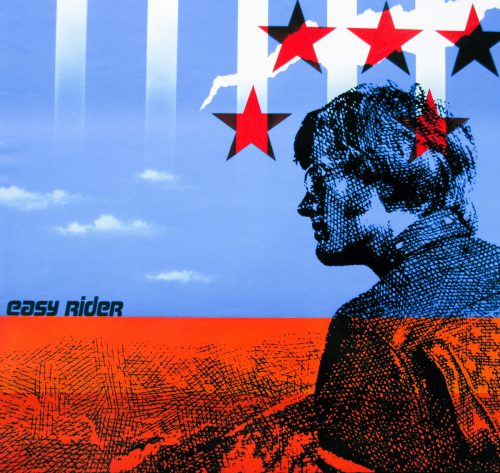
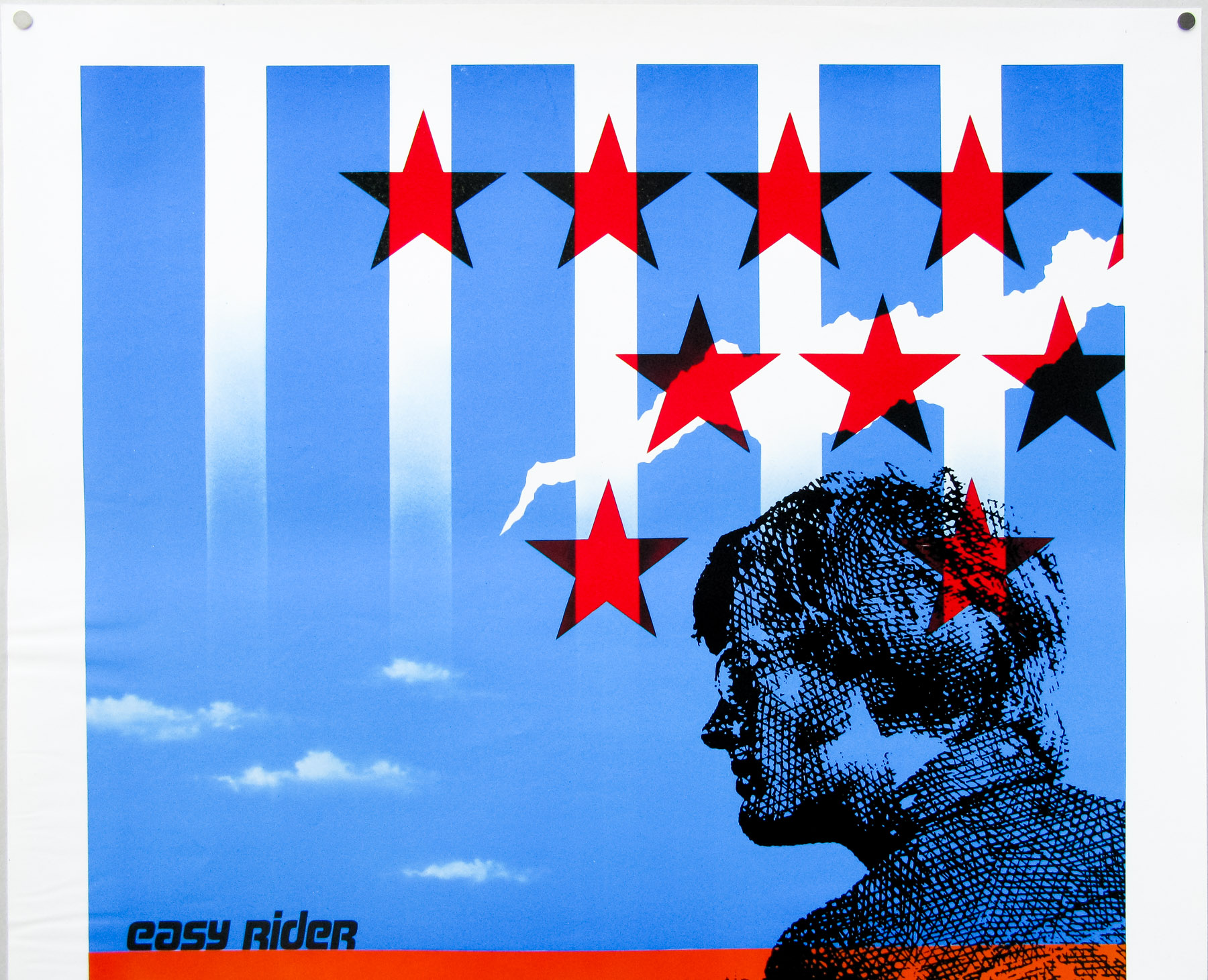
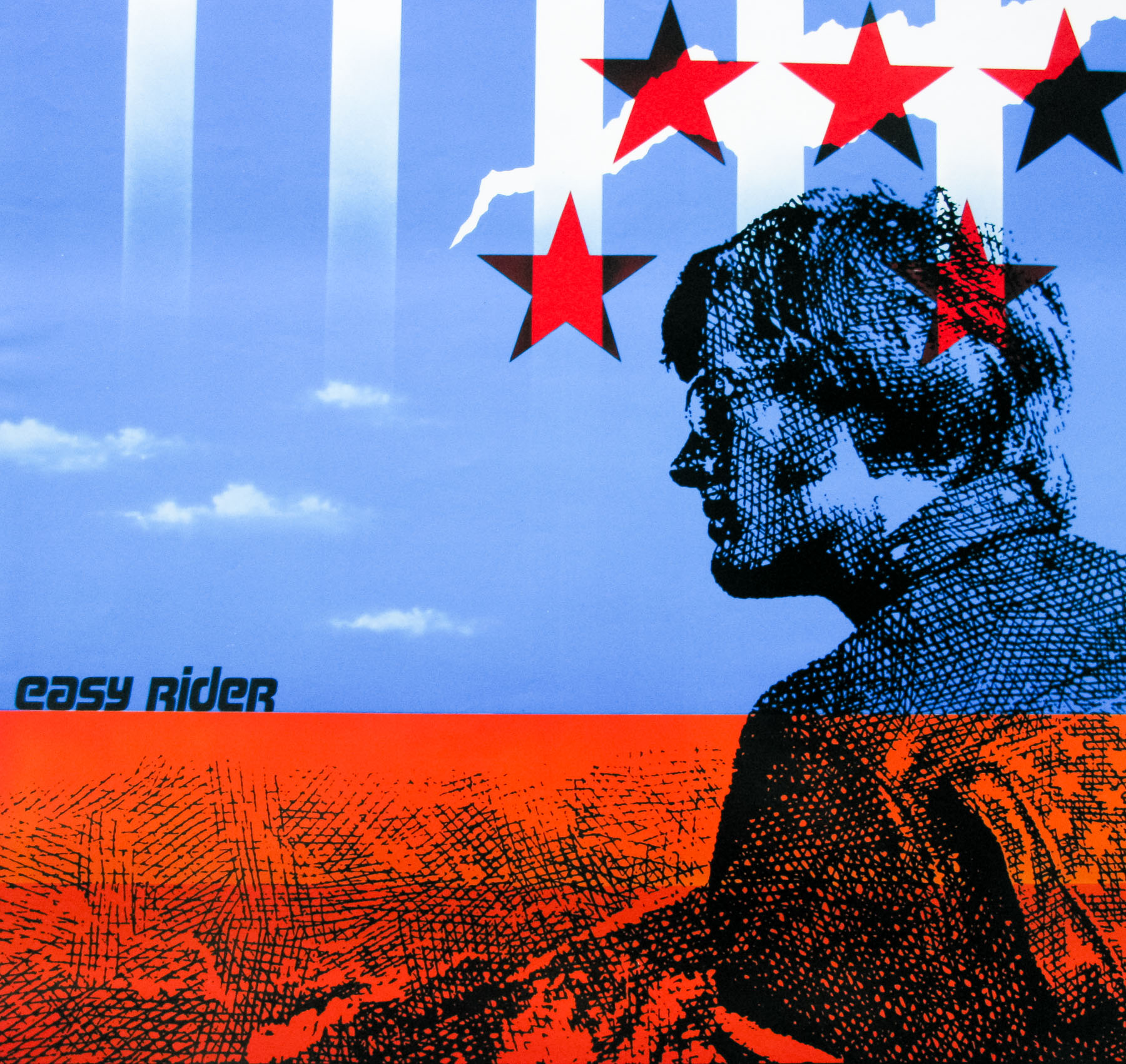
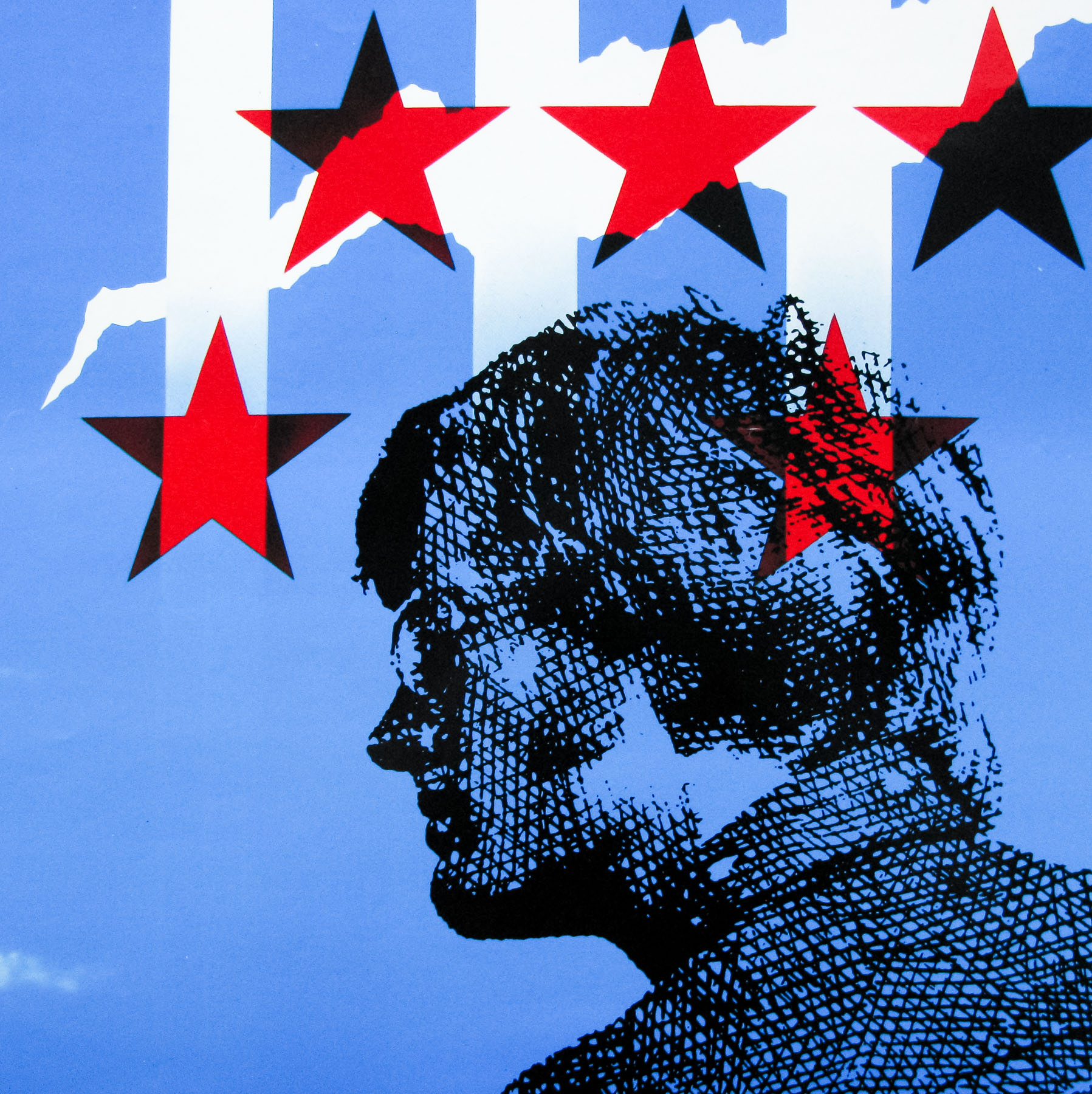
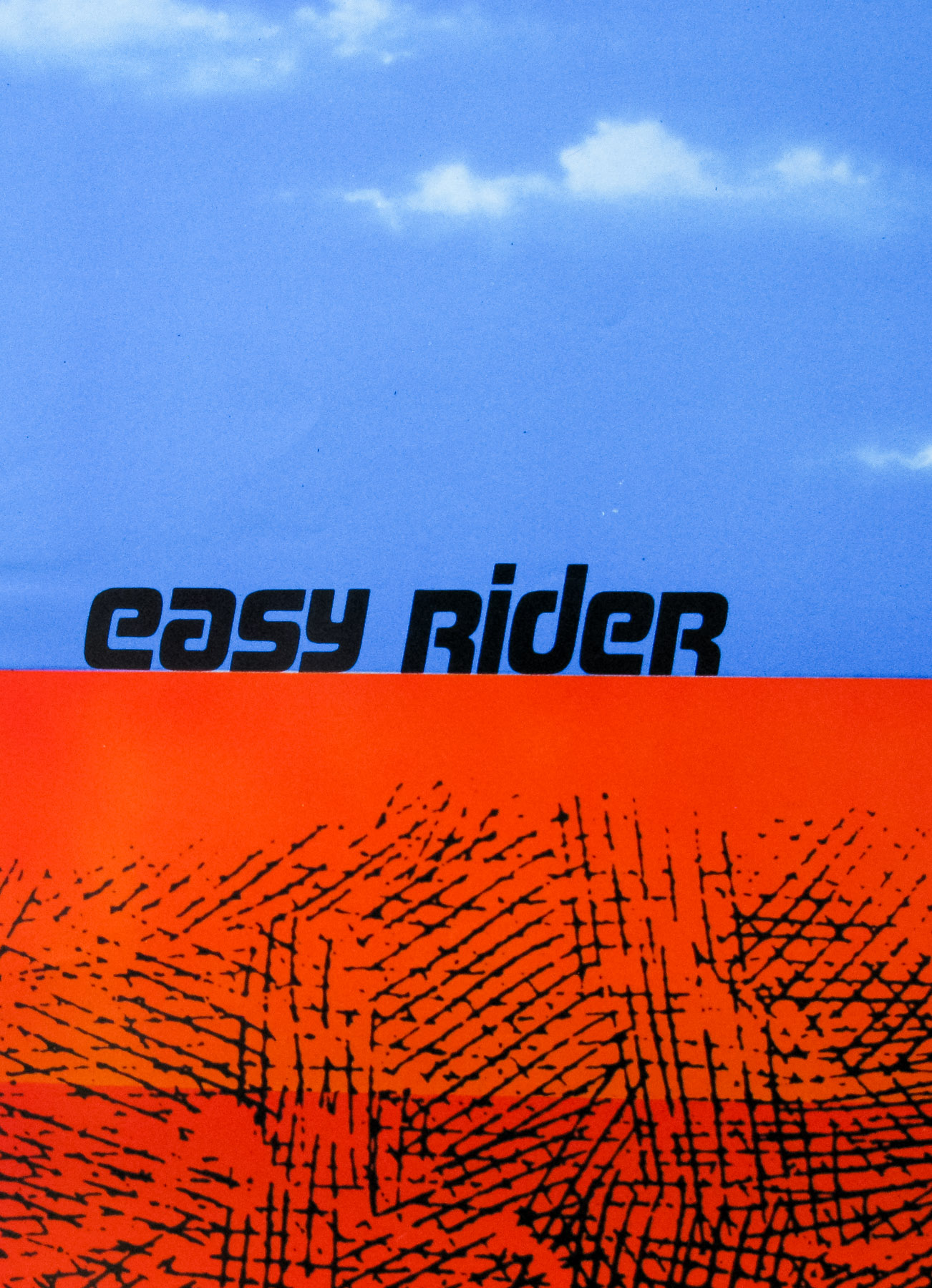
This is the Japanese poster for the film, which features the stylised portrait of Fonda, as featured on the American one sheets. The colour scheme and use of stars is unique to this poster and there is also an orange version featuring the same design, which I have in my collection.

The film’s original trailer is on YouTube.