




You searched for: Japan

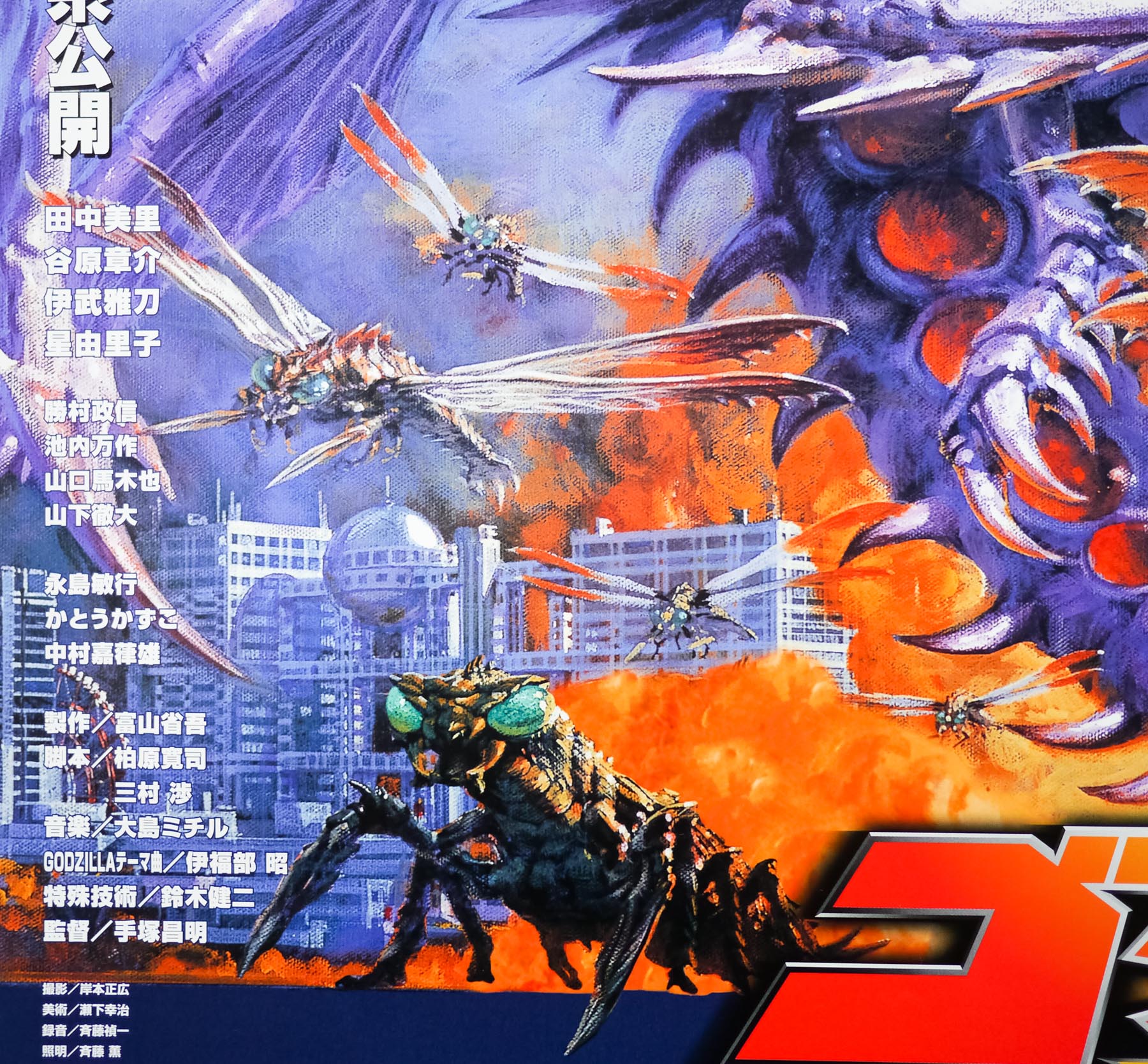
Godzilla Against Mechagodzilla / B1 / photo style / Japan

17.01.14

Poster Poster
Title
Godzilla Against Mechagodzilla
AKA
Gojira tai Mekagojira (Japan - original title)
Year of Film
2002
Director
Masaaki Tezuka
Starring
Yumiko Shaku, Shin Takuma, Kana Onodera, Kô Takasugi, Yûsuke Tomoi, Jun'ichi Mizuno, Akira Nakao, Kumi Mizuno, Takeo Nakahara, Yoshikazu Kanou, Kôichi Ueda
Origin of Film
Japan
Genre(s) of Film
Yumiko Shaku, Shin Takuma, Kana Onodera, Kô Takasugi, Yûsuke Tomoi, Jun'ichi Mizuno, Akira Nakao, Kumi Mizuno, Takeo Nakahara, Yoshikazu Kanou, Kôichi Ueda,
Type of Poster
B1
Style of Poster
Photo
Origin of Poster
Japan
Year of Poster
2002
Designer
Unknown
Artist
--
Size (inches)
28 12/16" x 40.5"
SS or DS
SS
Tagline
--

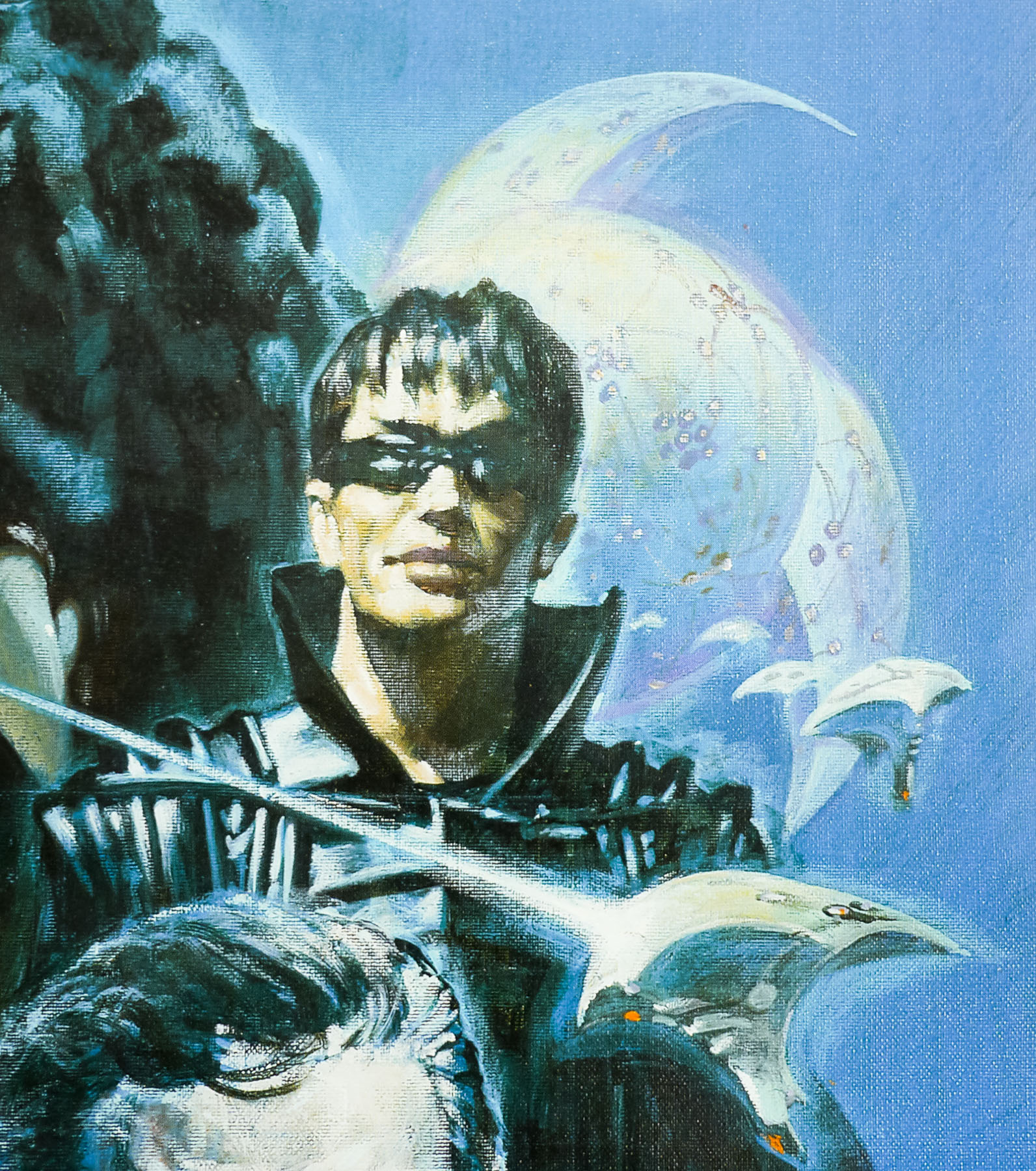
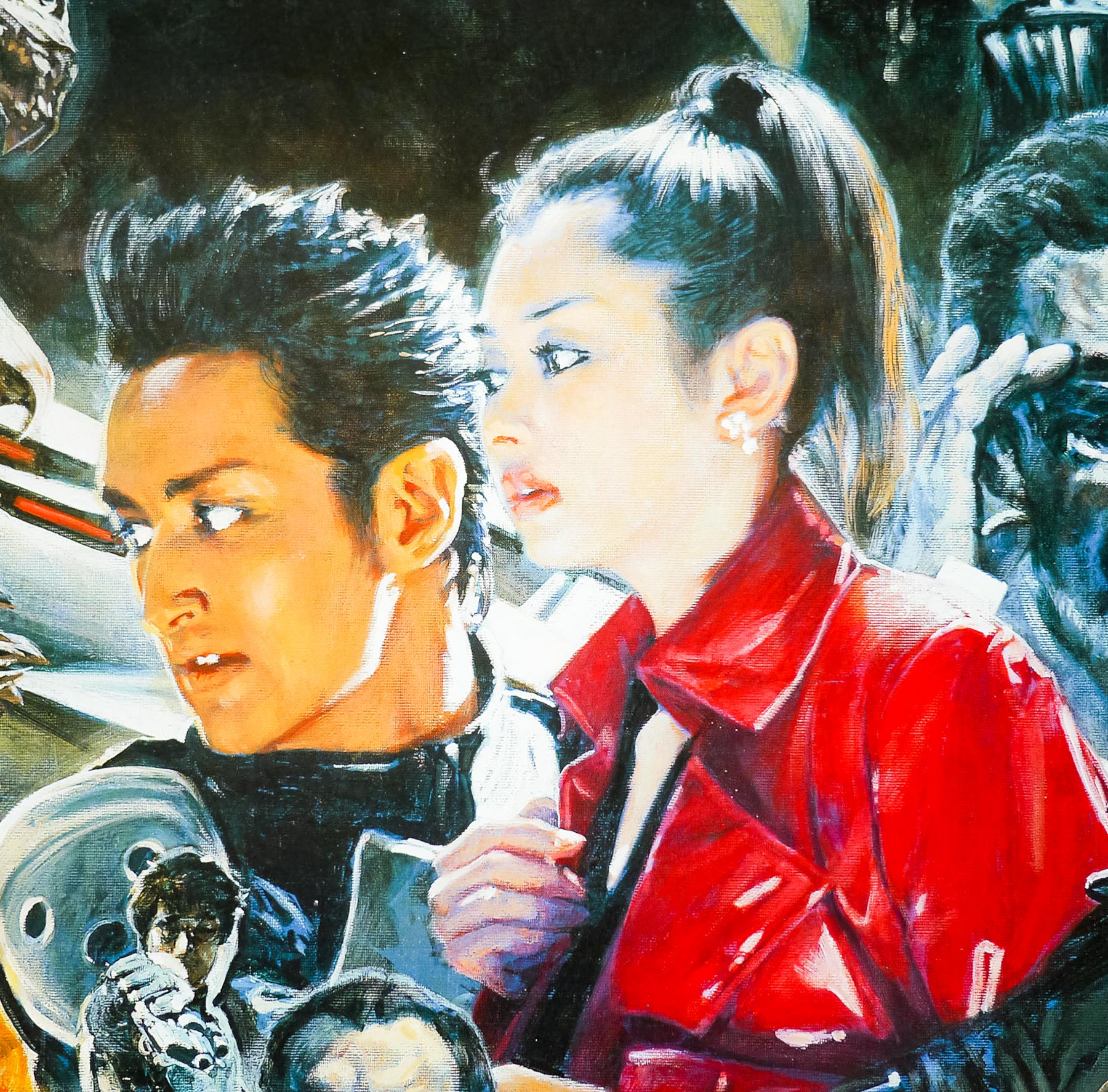
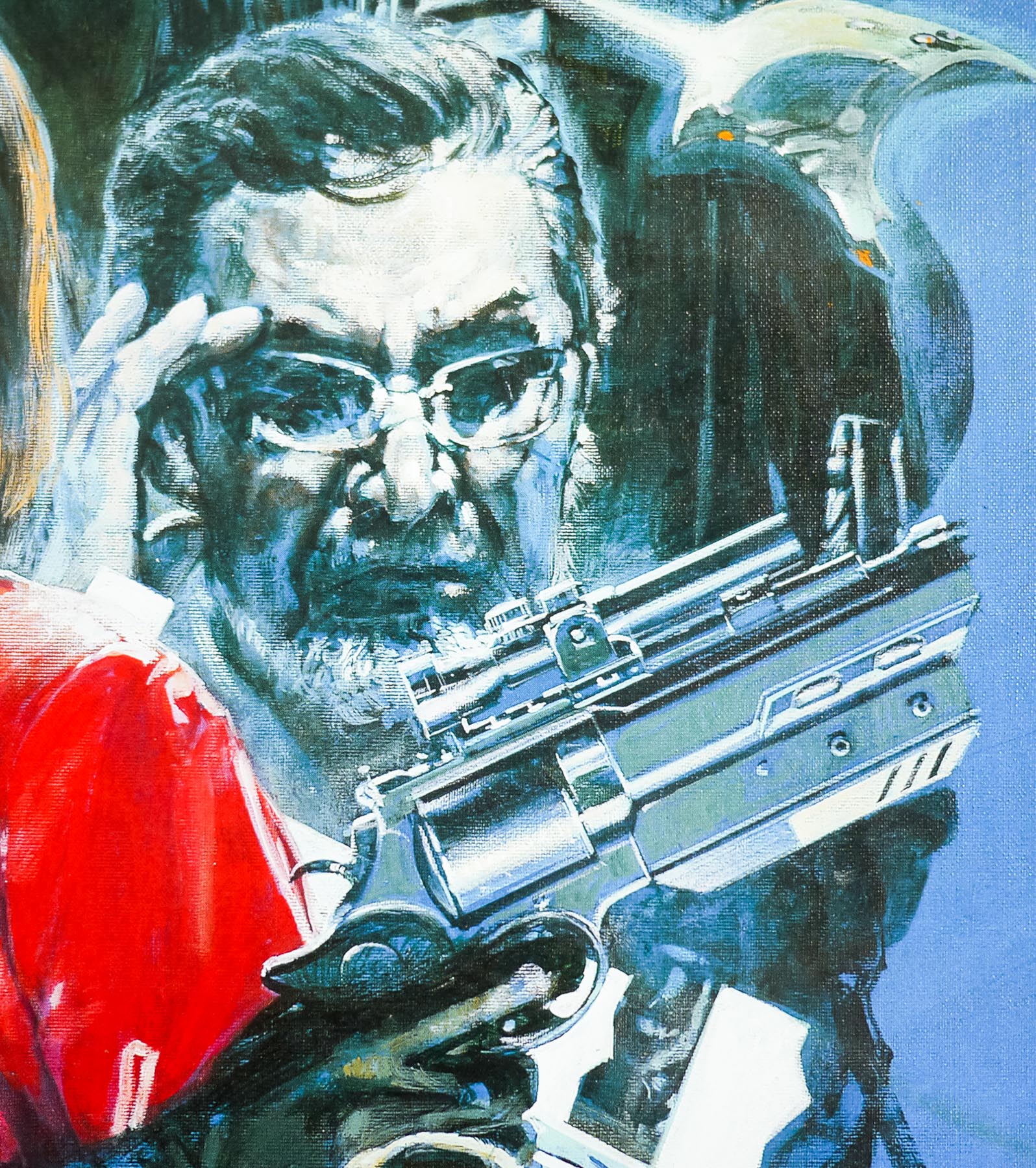
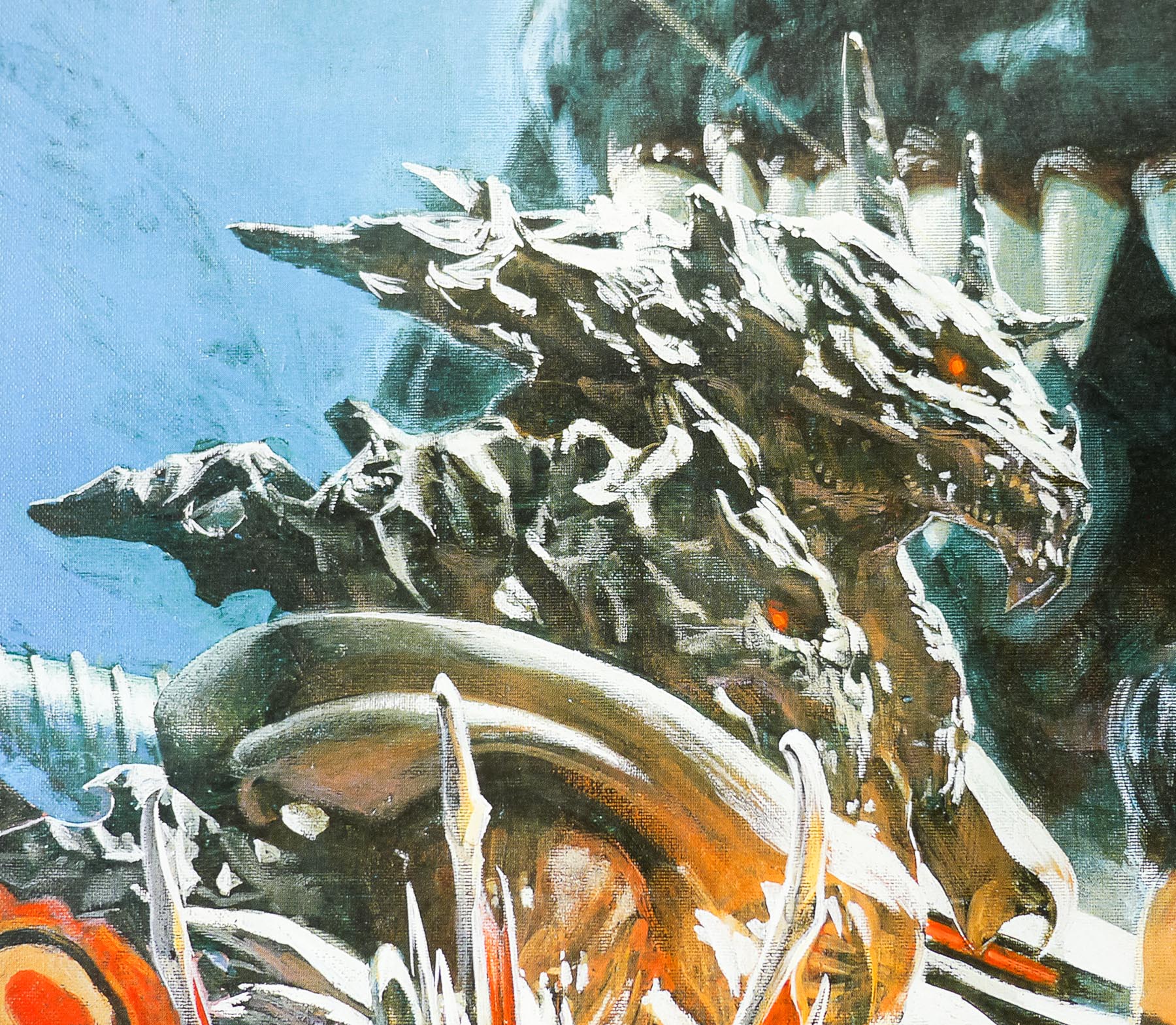
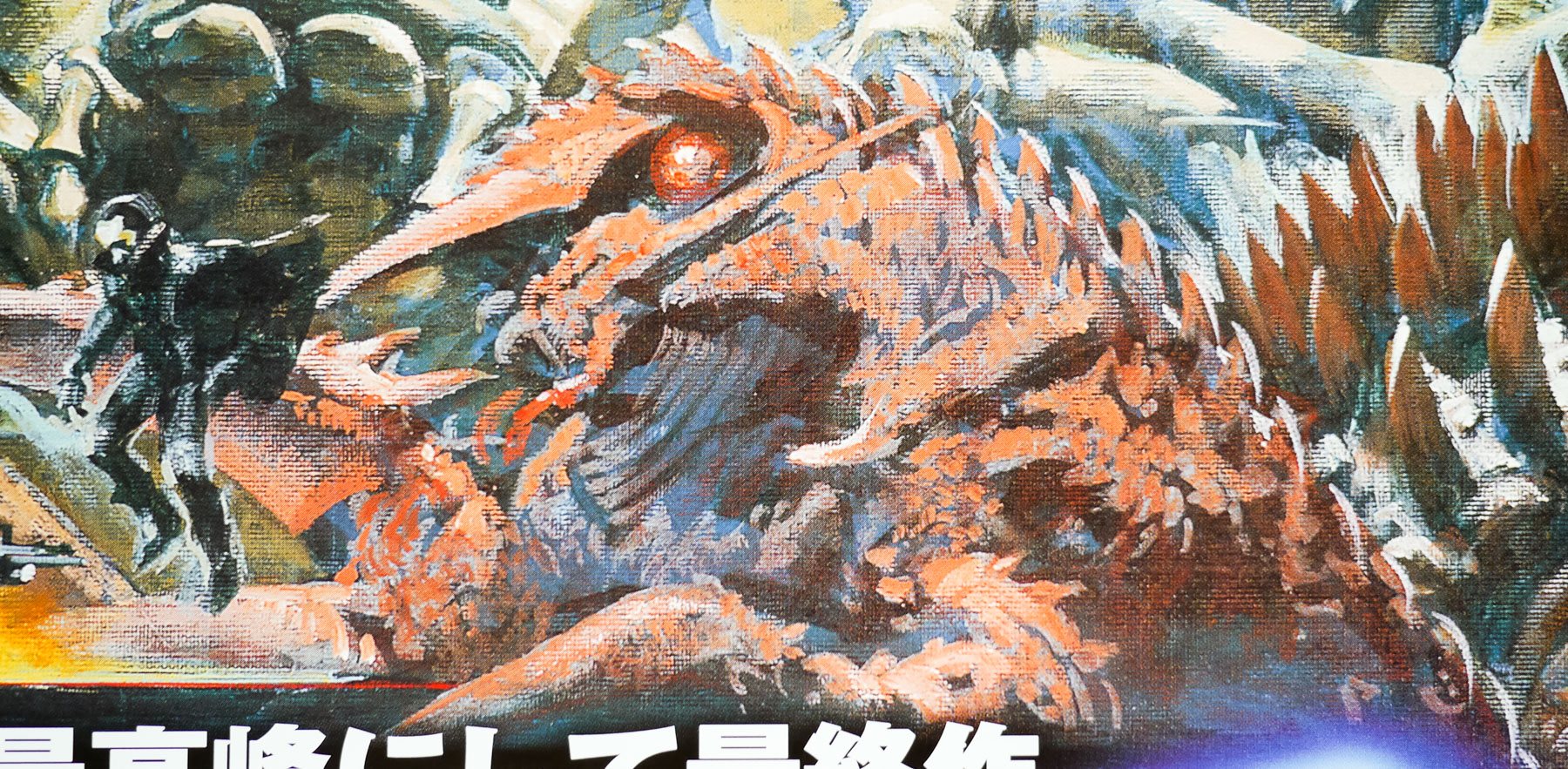
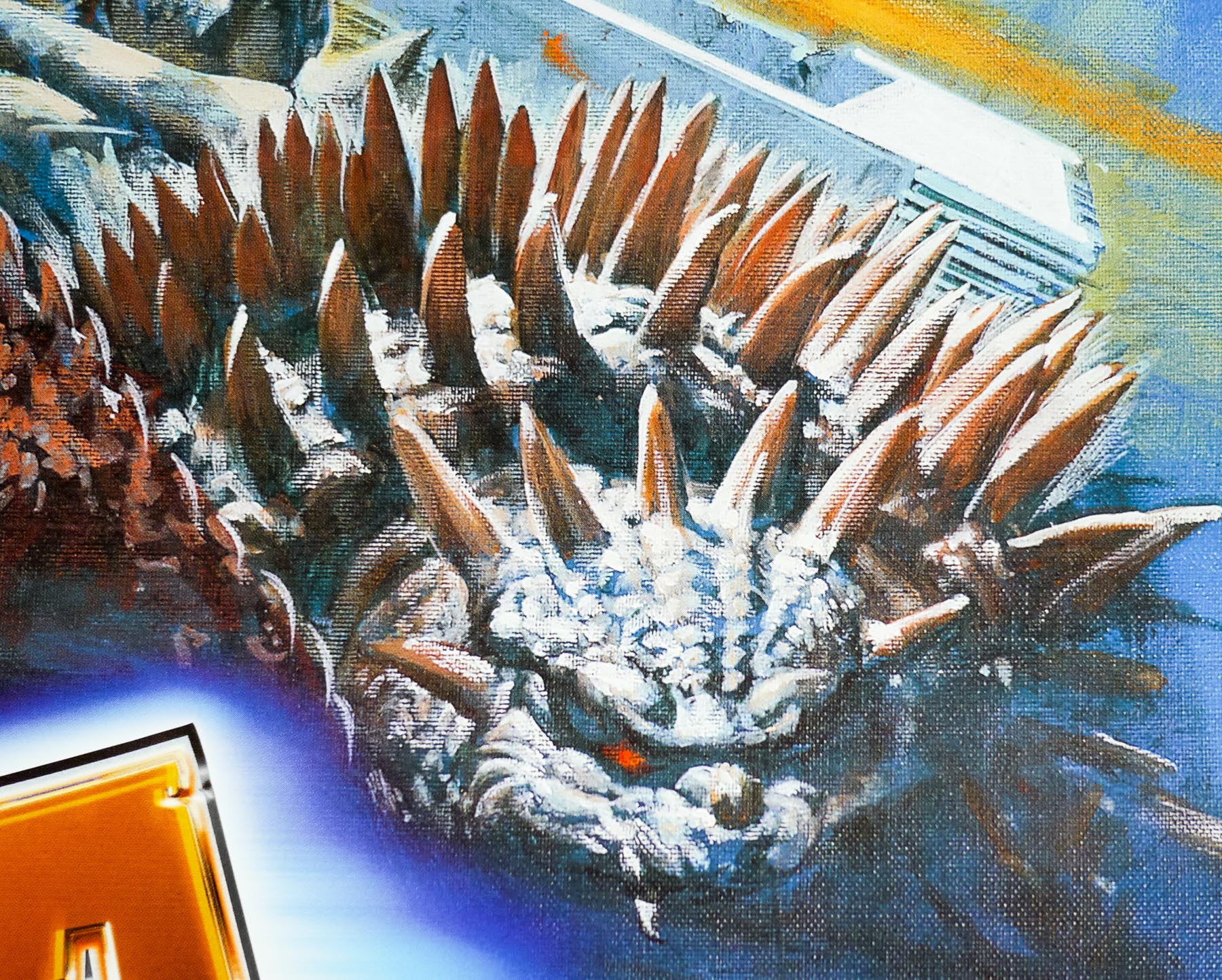
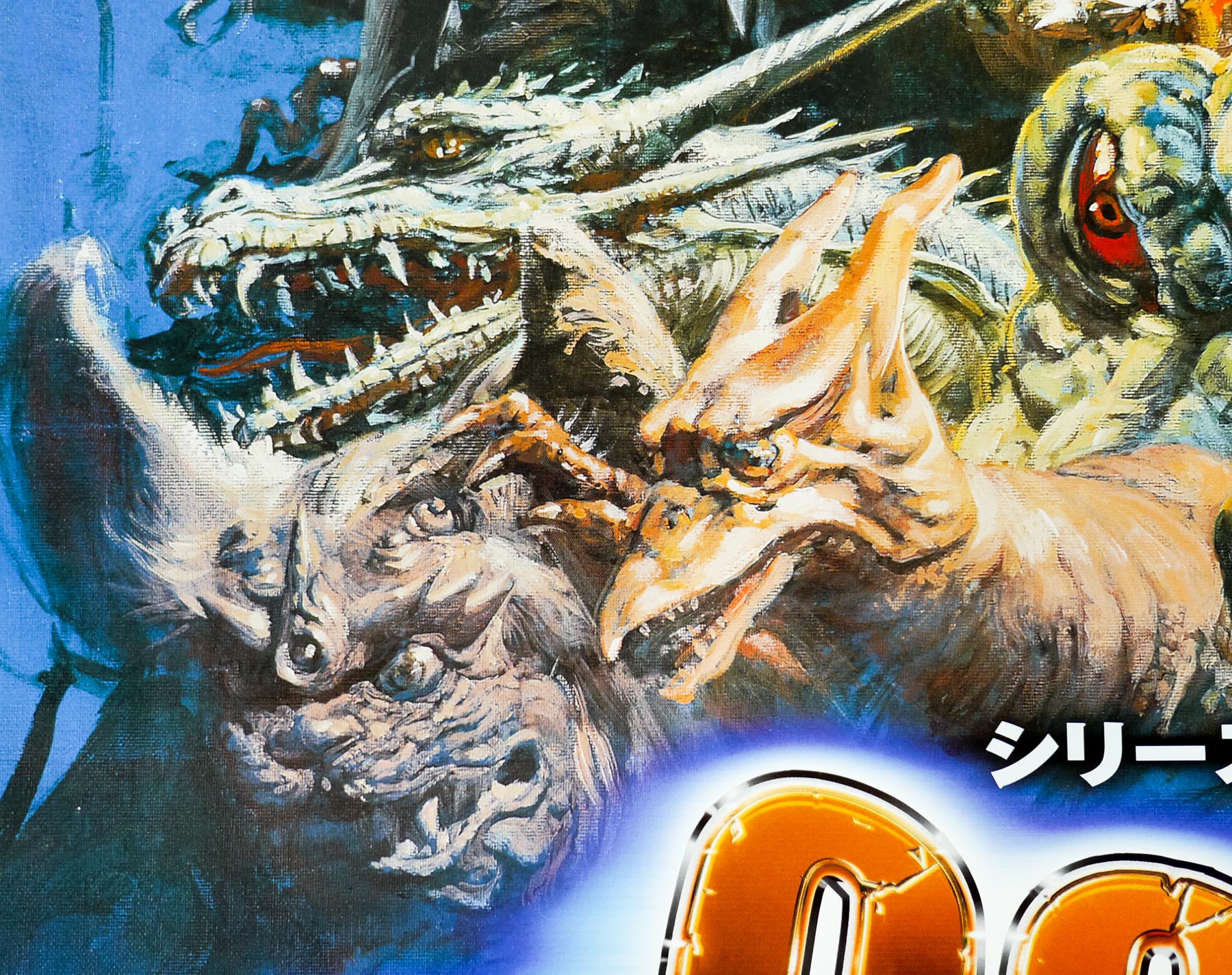
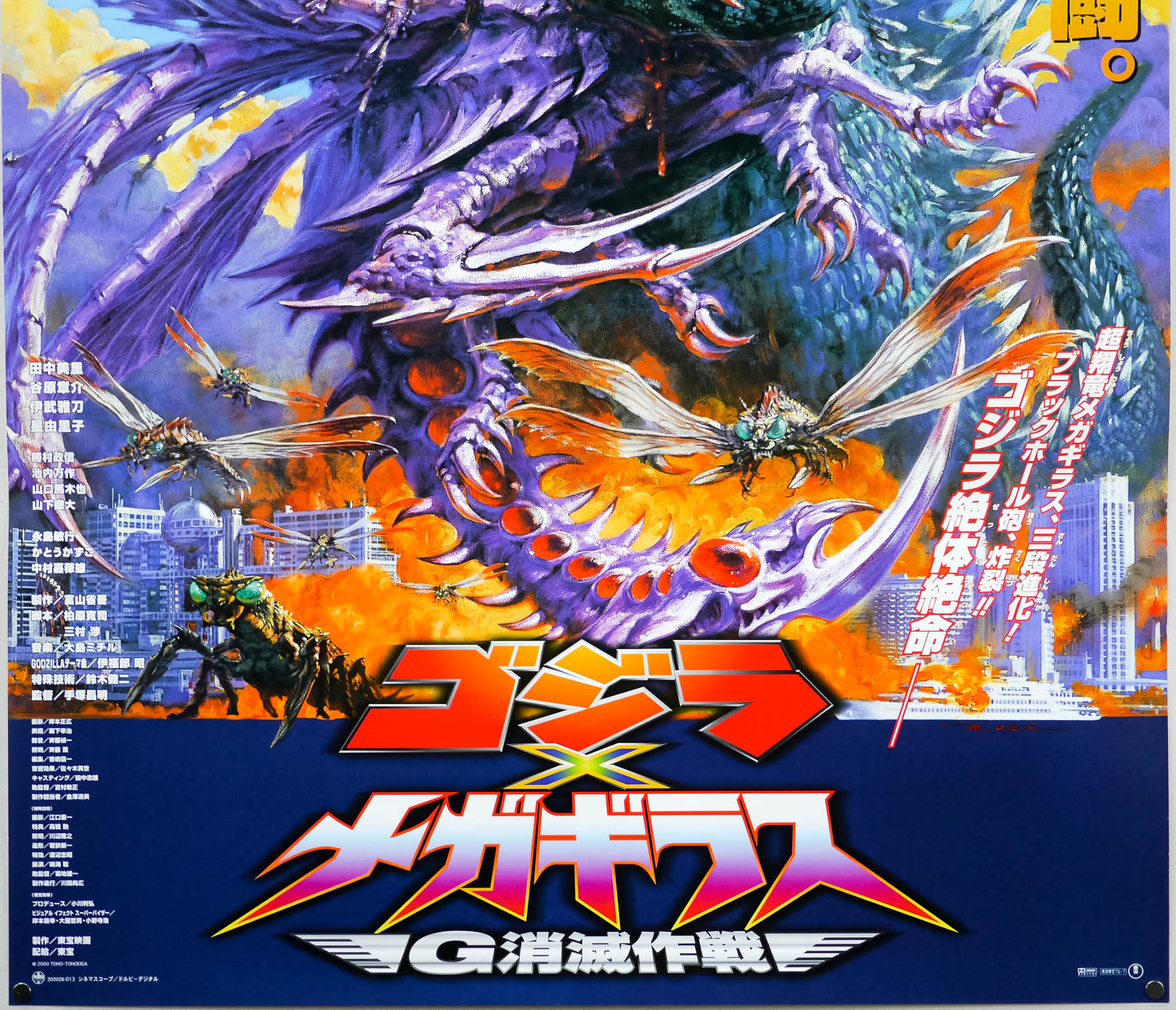
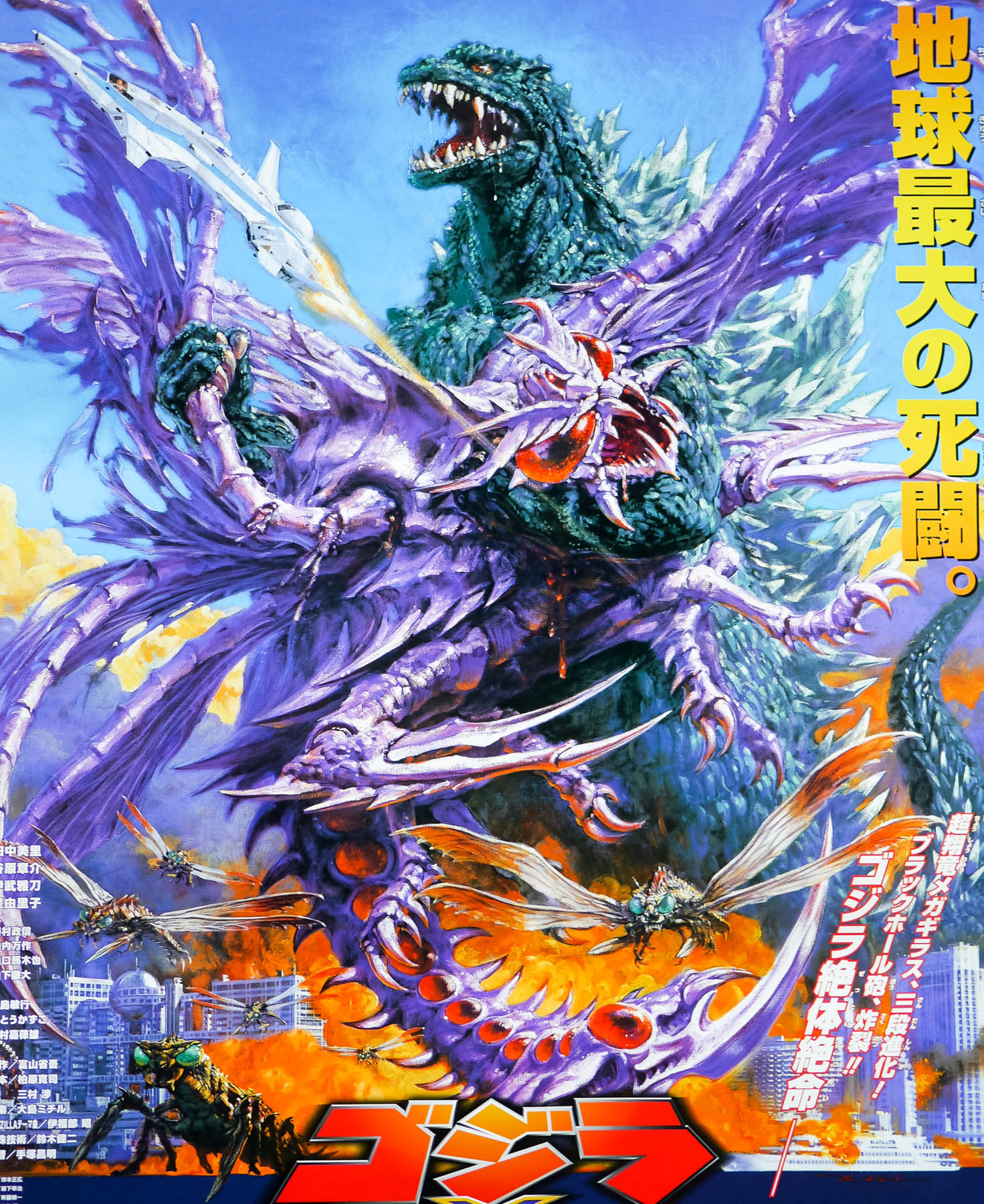
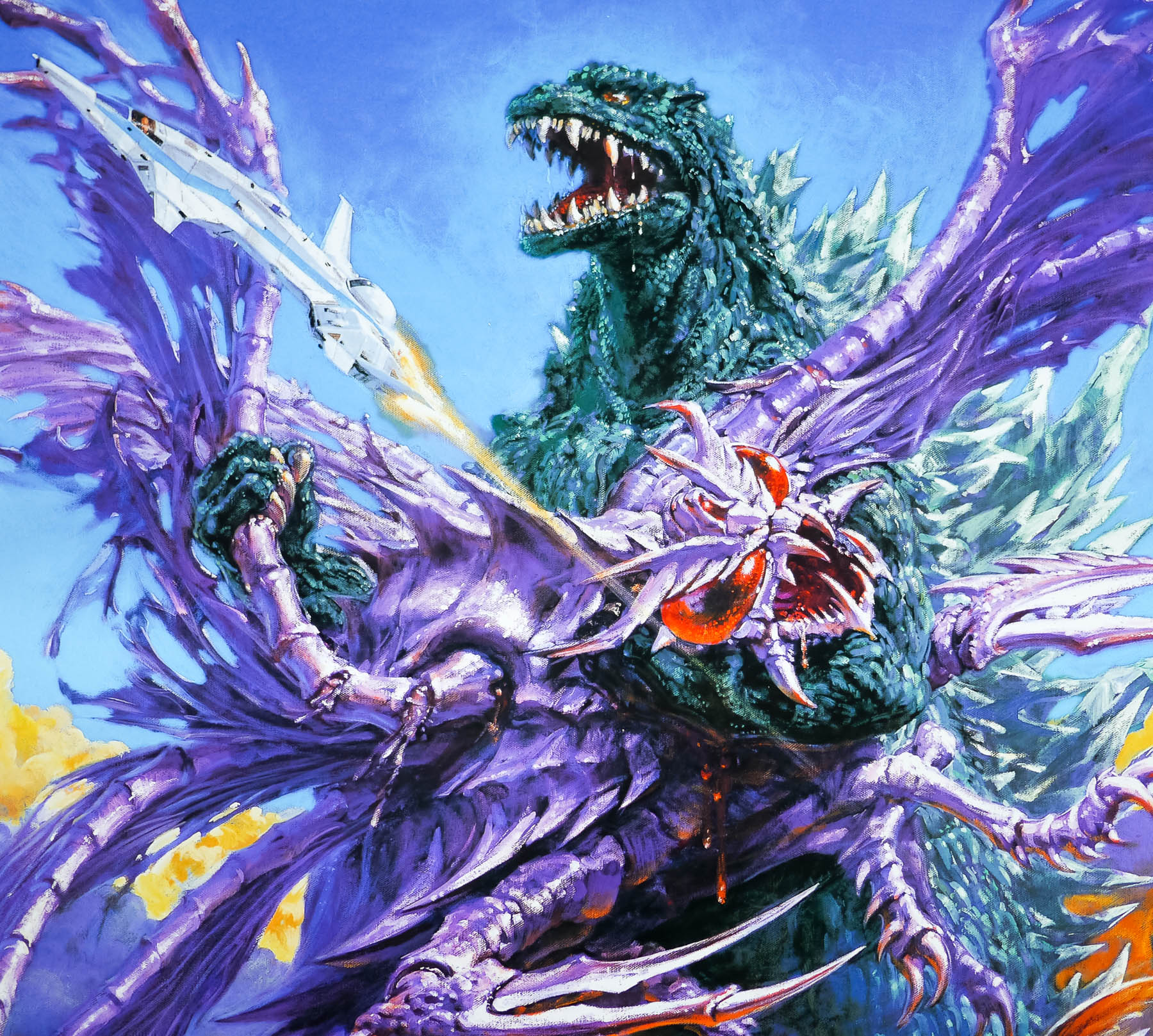
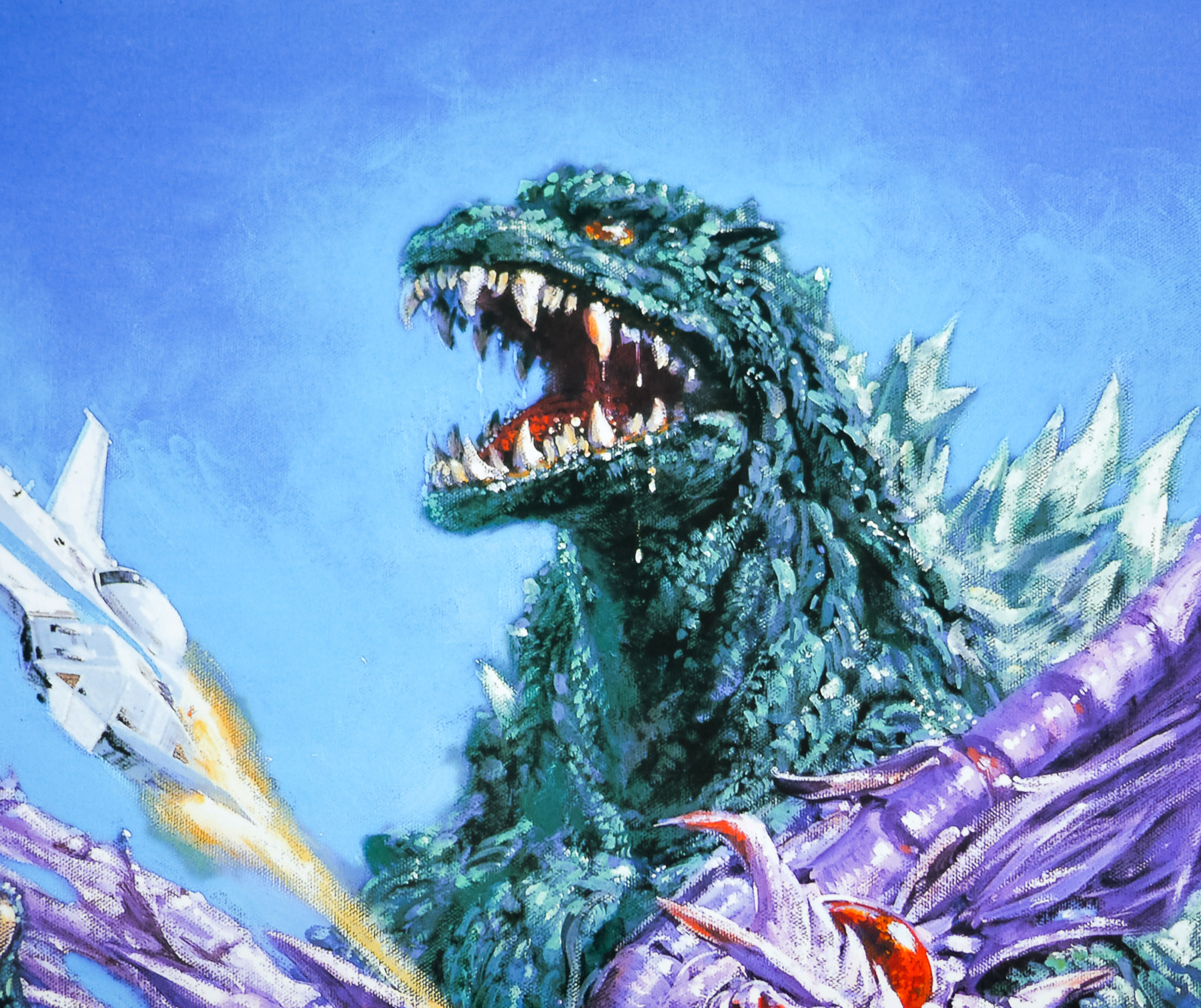
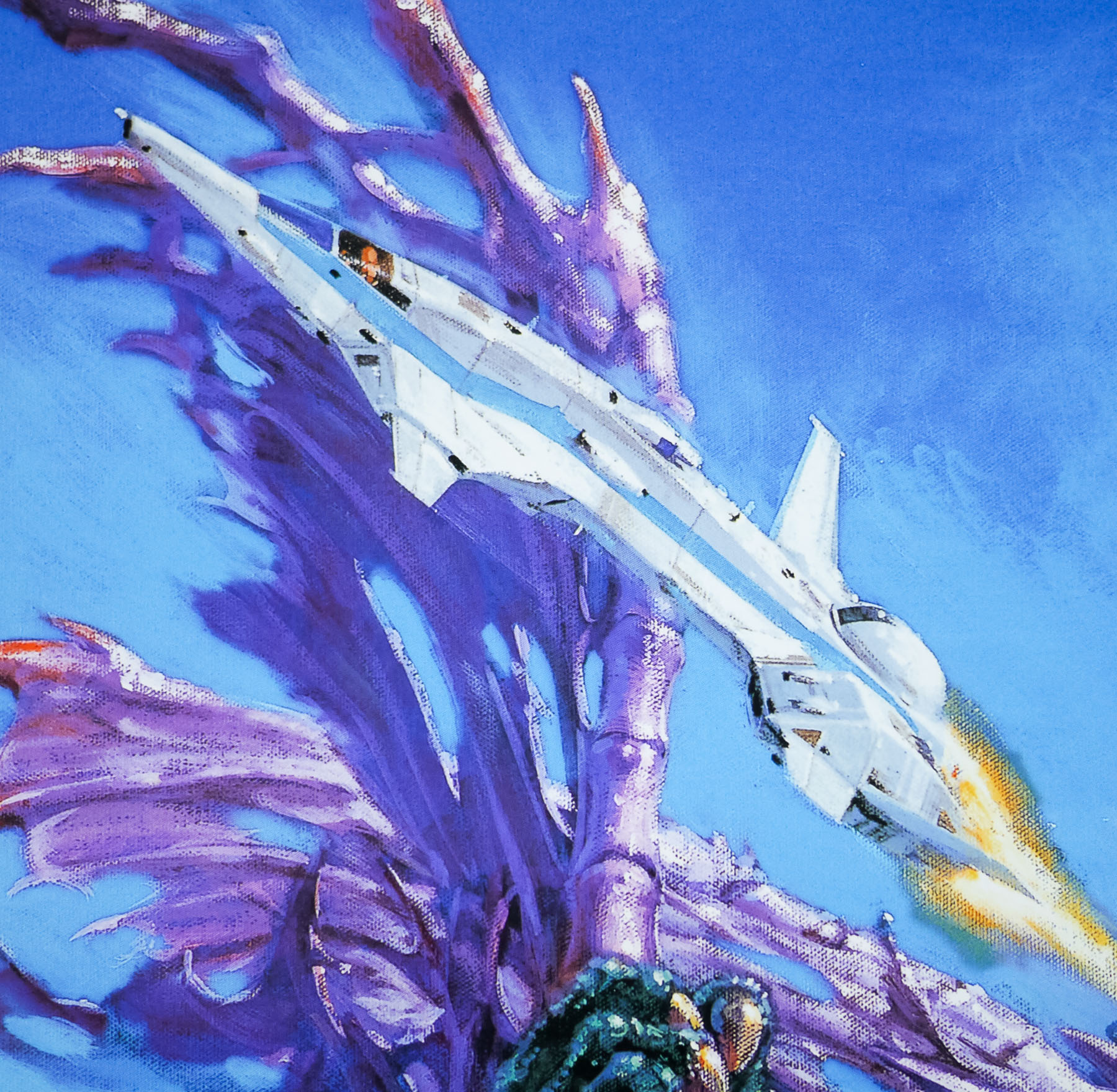
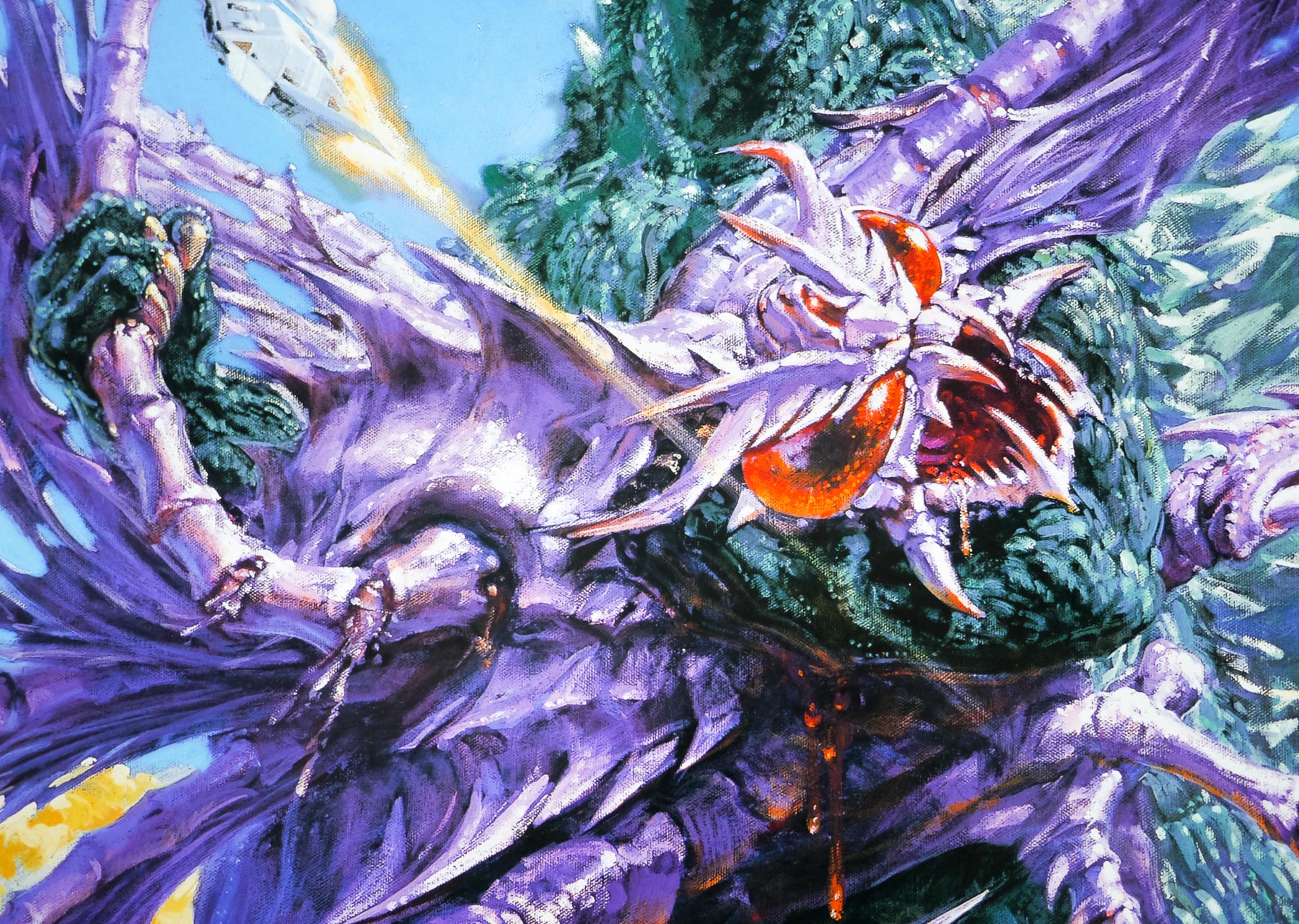
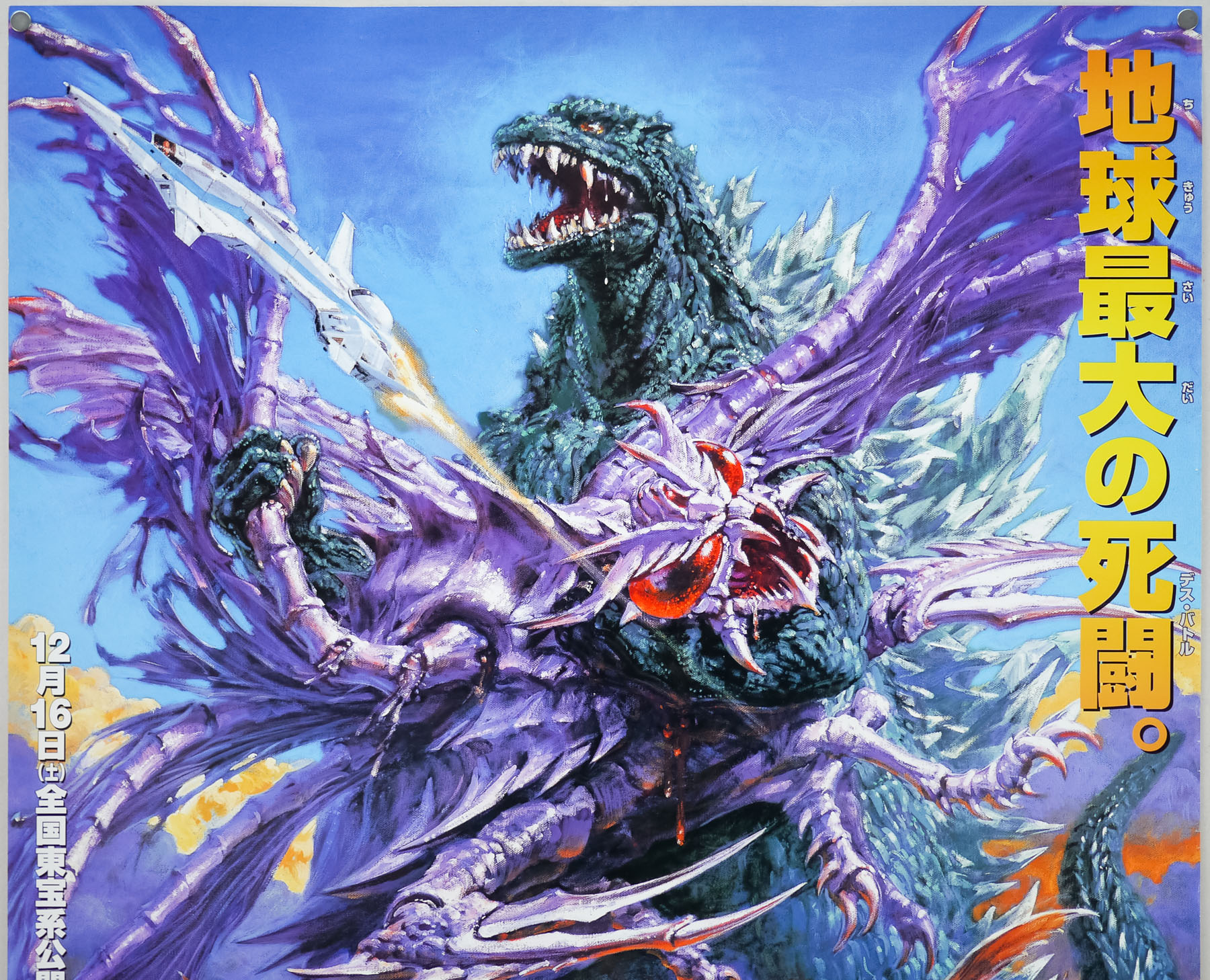
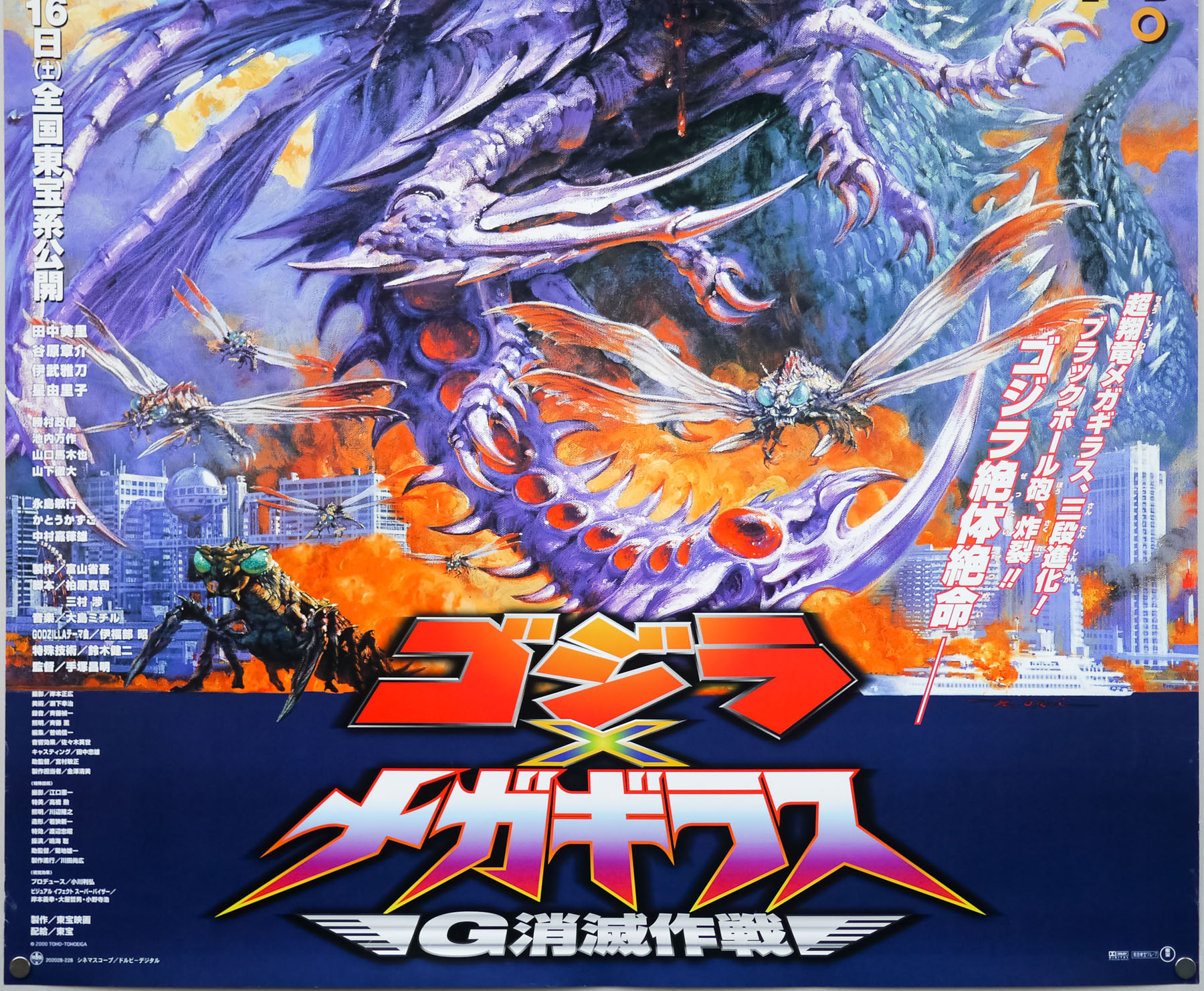
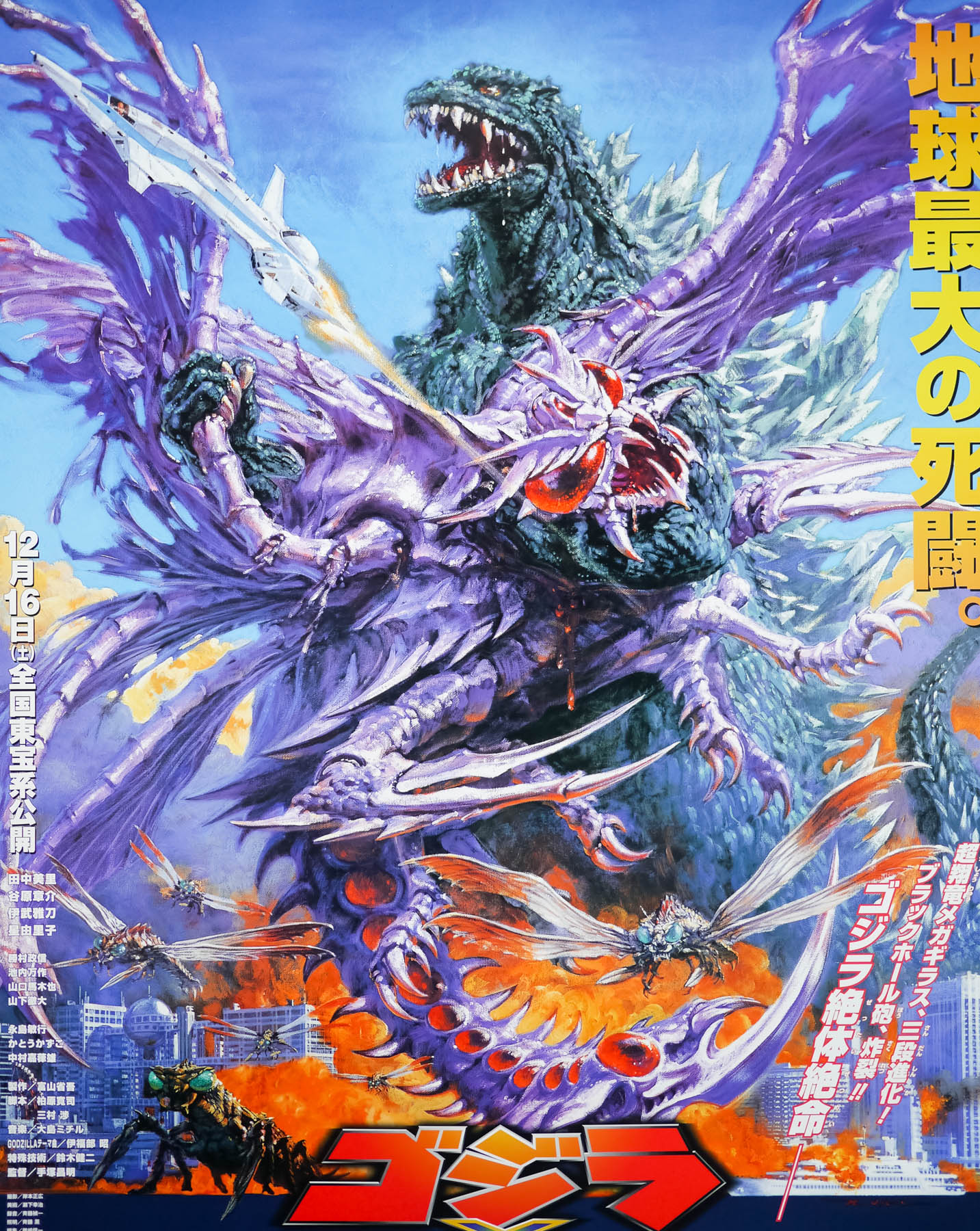
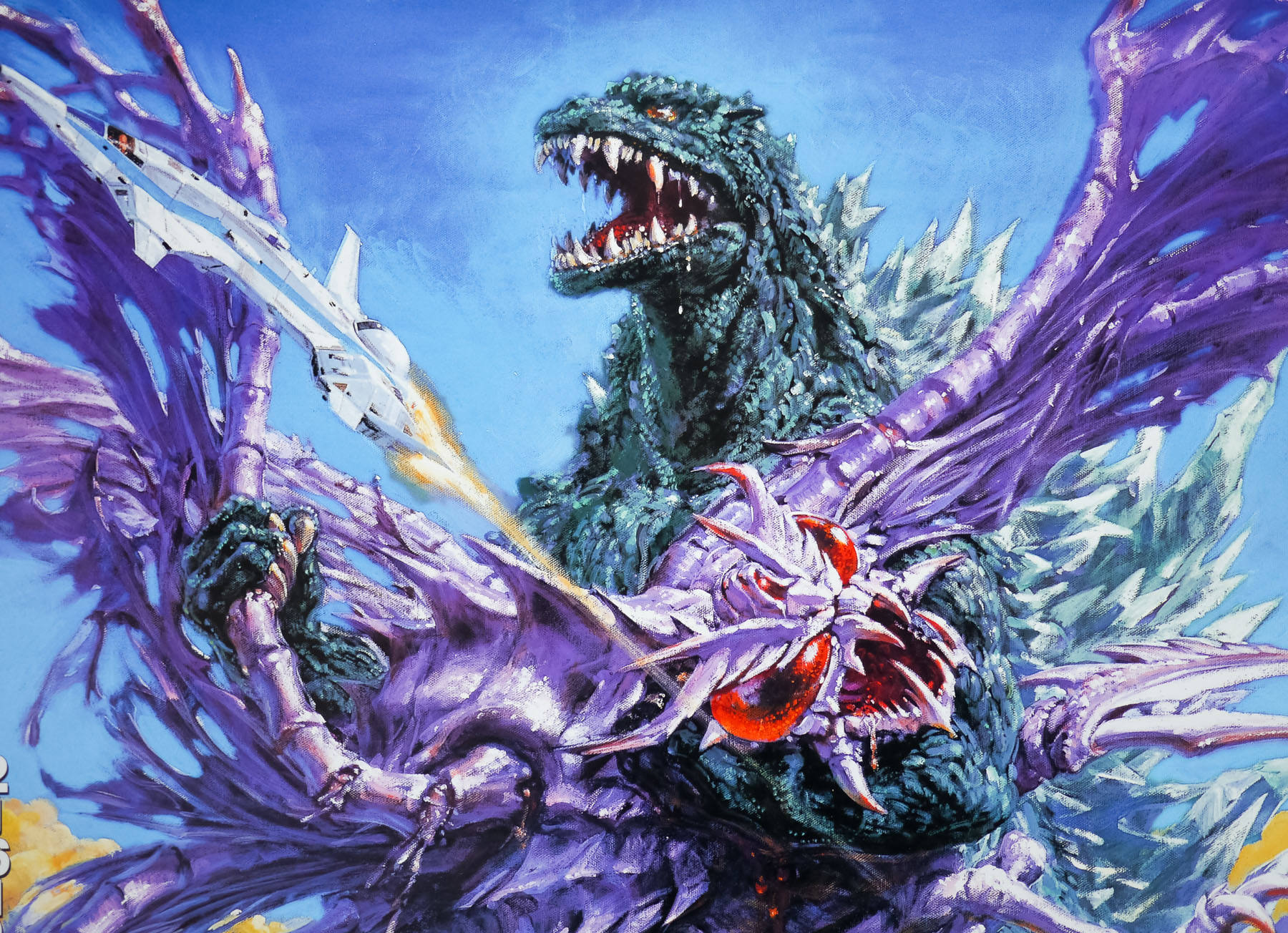
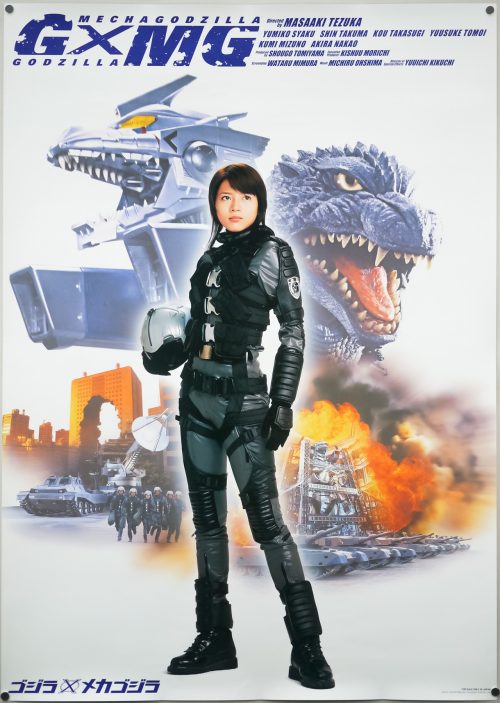
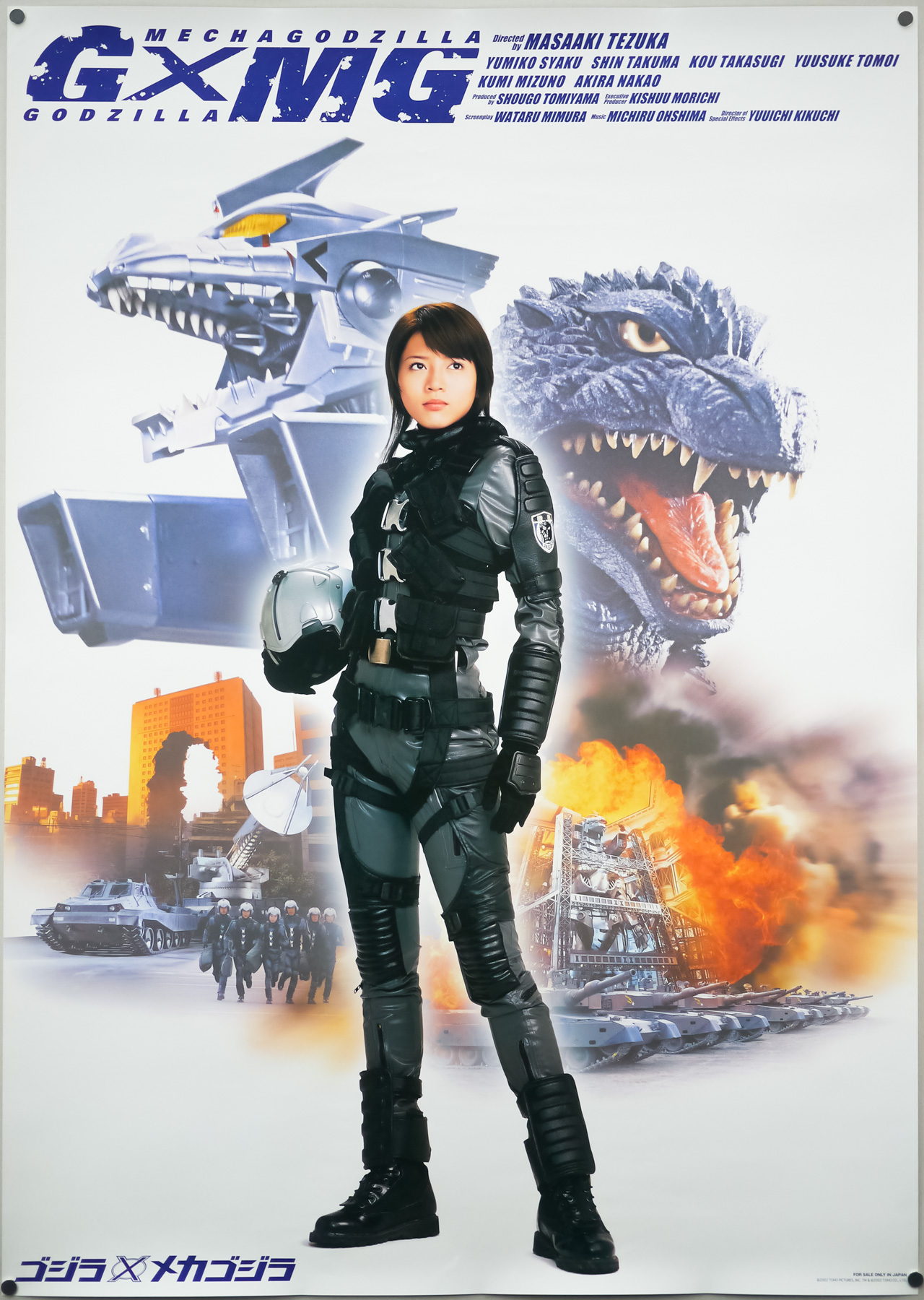
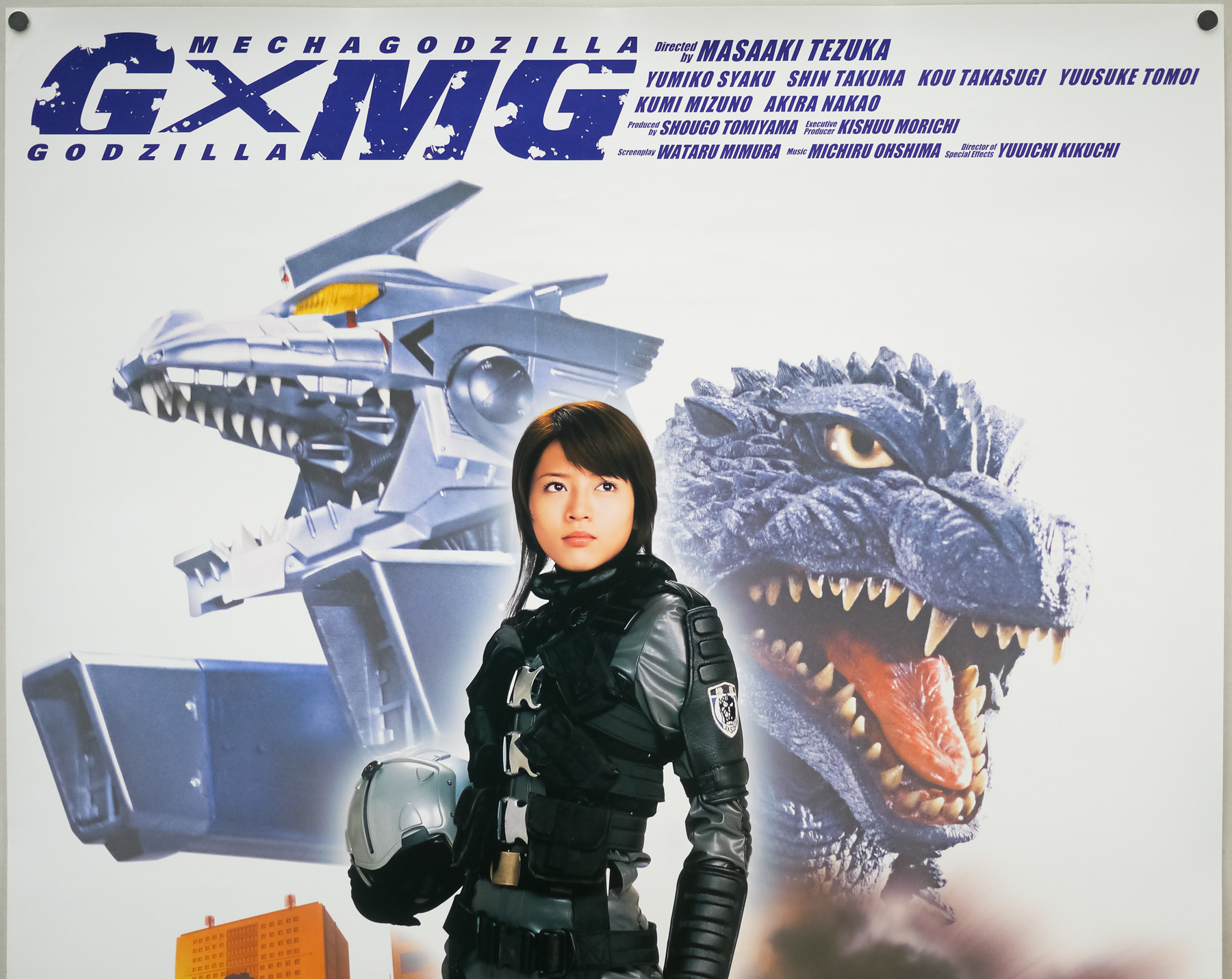
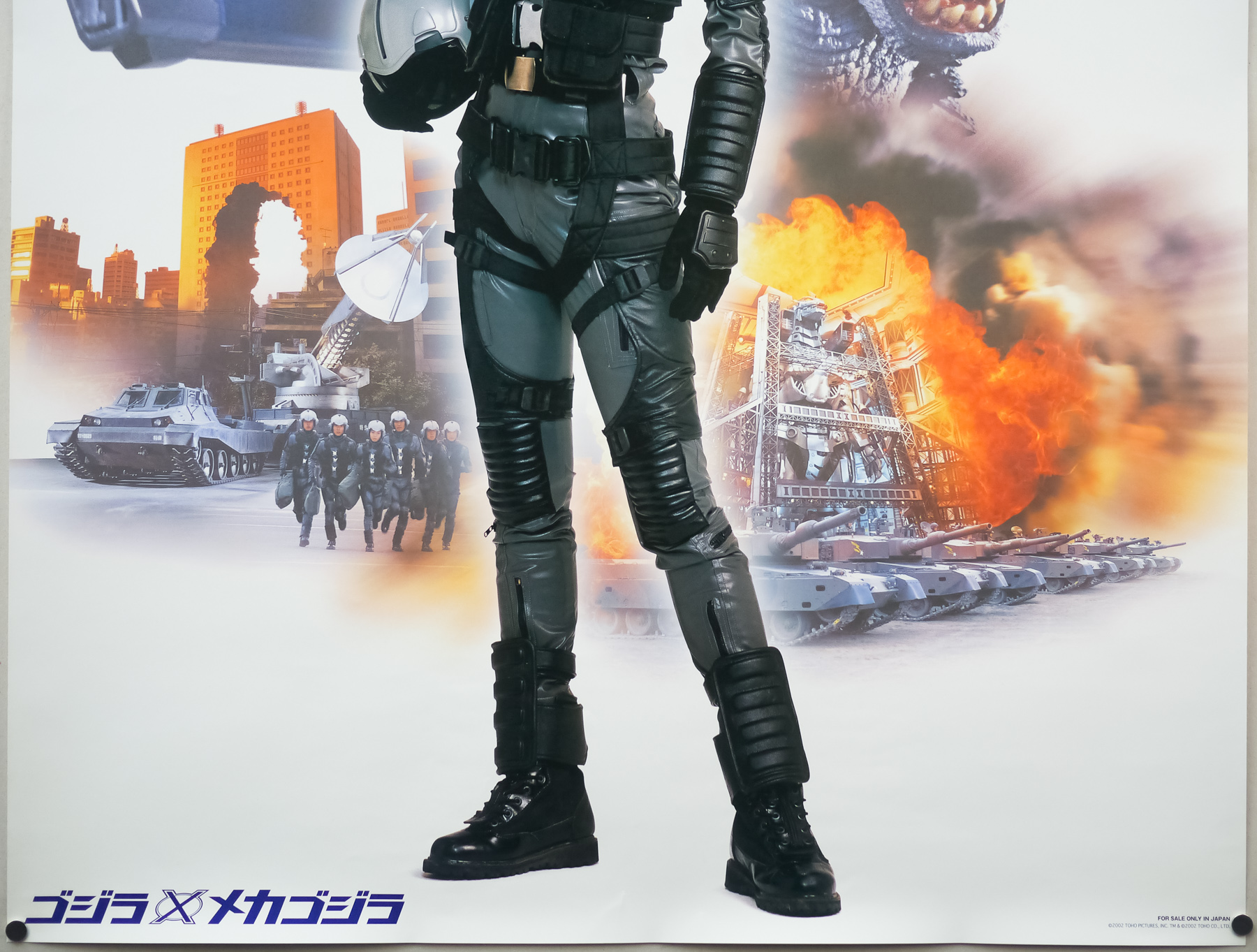
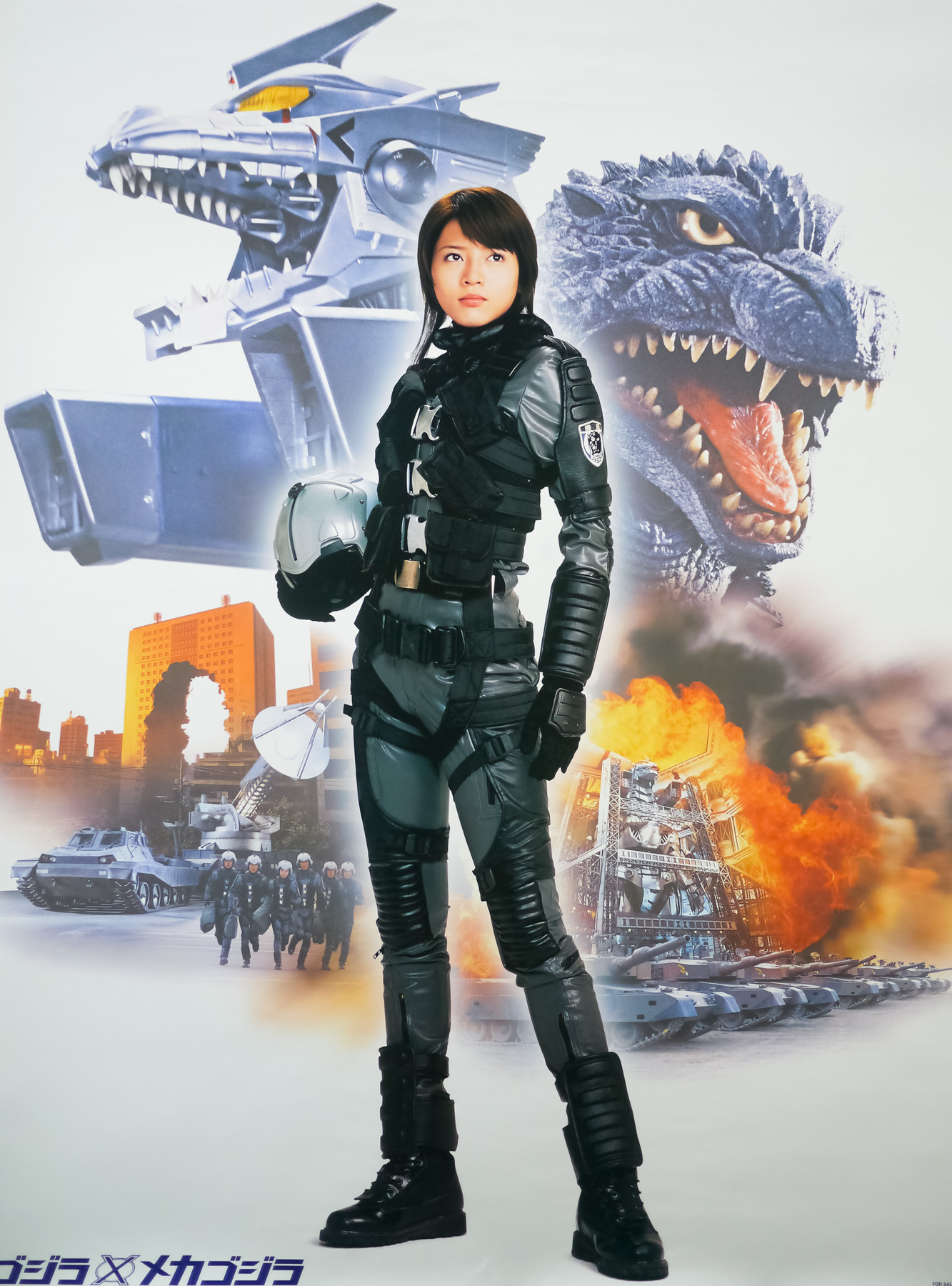
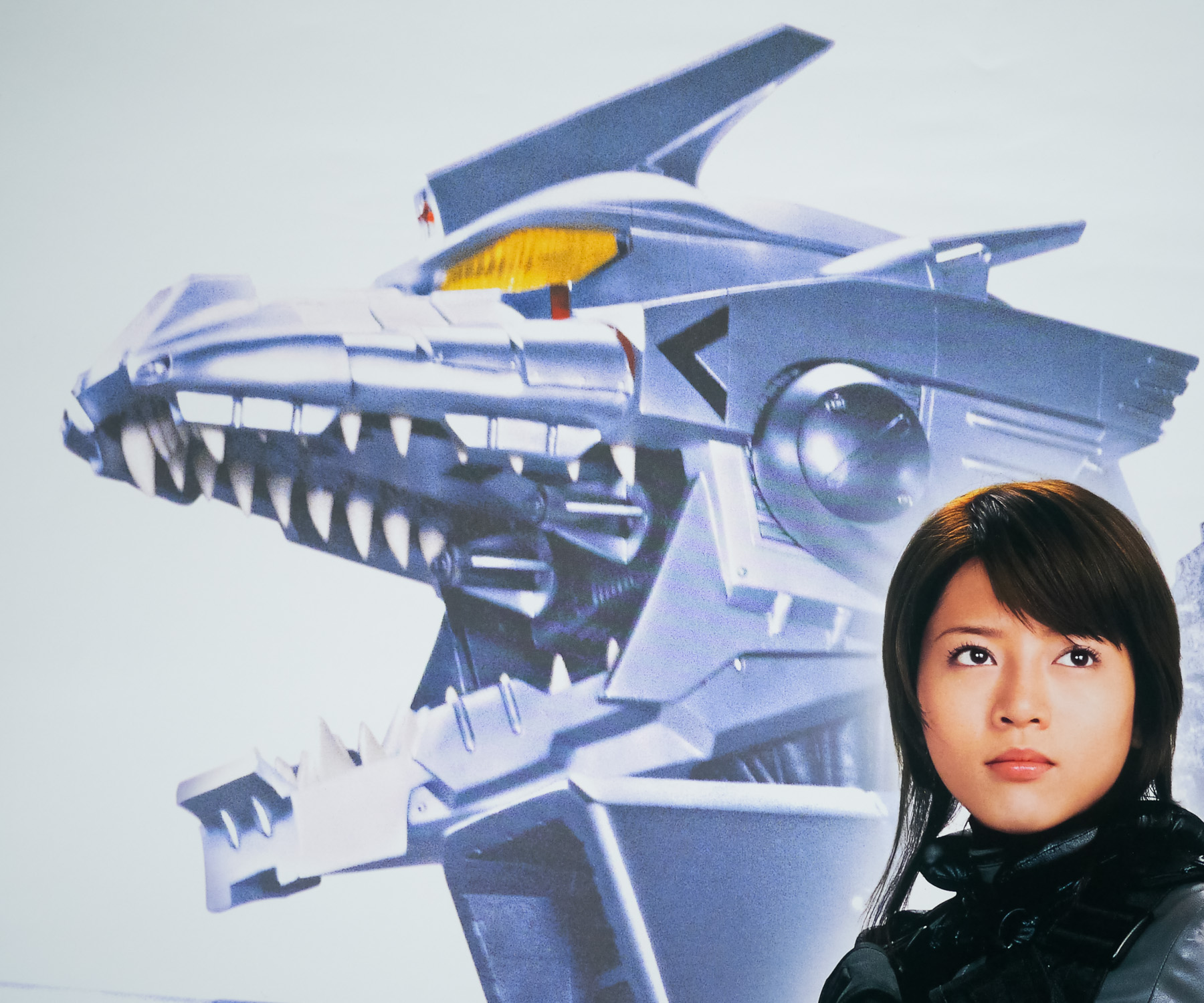
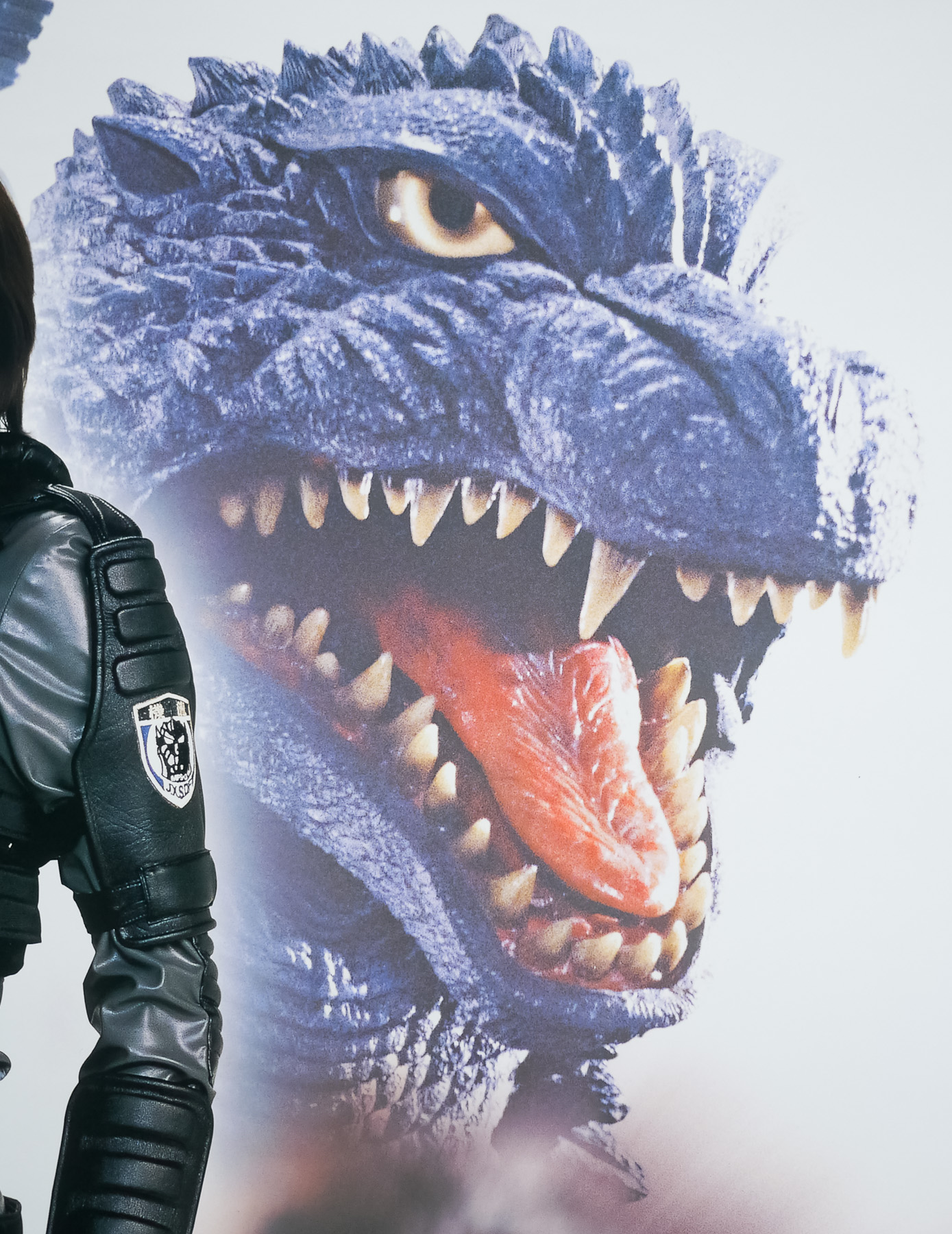
This is the photo style B1 poster for the release of Godzilla Against Mechagodzilla, which was the 26th film in the series featuring the King of the Kaiju (giant monsters). The film was also the fourth release in the third generation of Godzilla films, which is known as the Millenium Series, and it marked his fourth showdown with Mechagodzilla. Unlike the rest of the Millennium series, this film shares continuity with the earlier Toho productions, including the original Godzilla (1954).

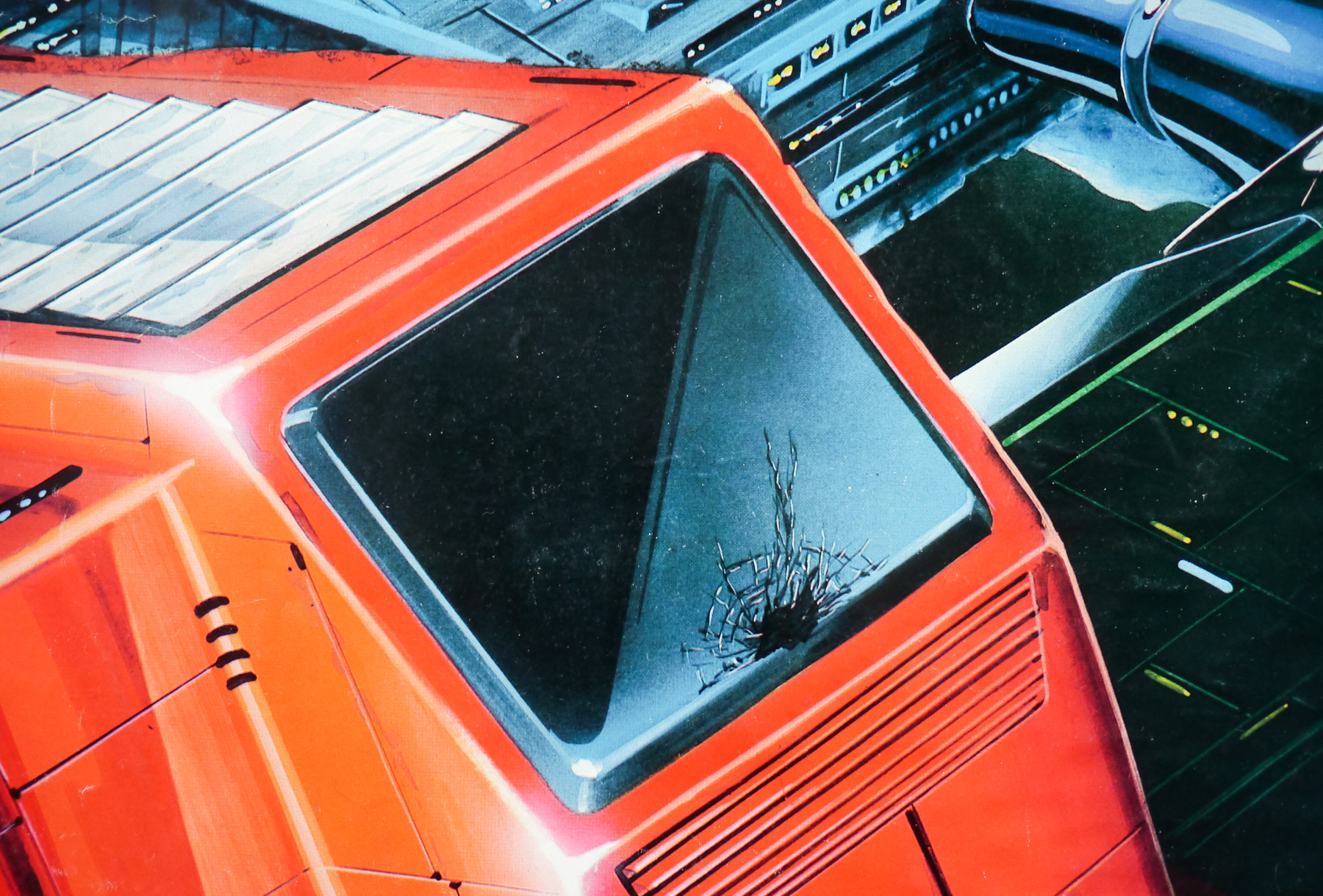
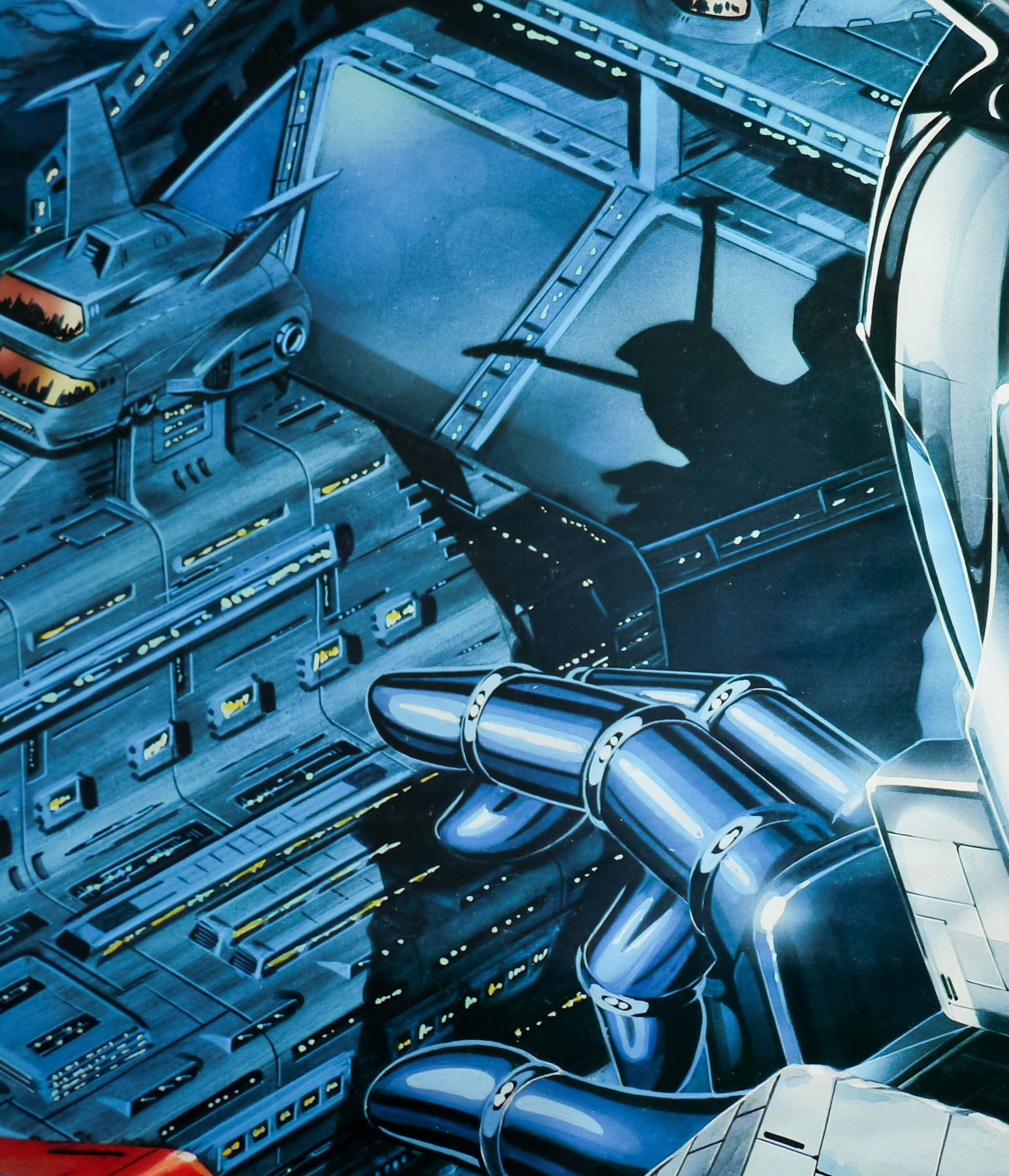
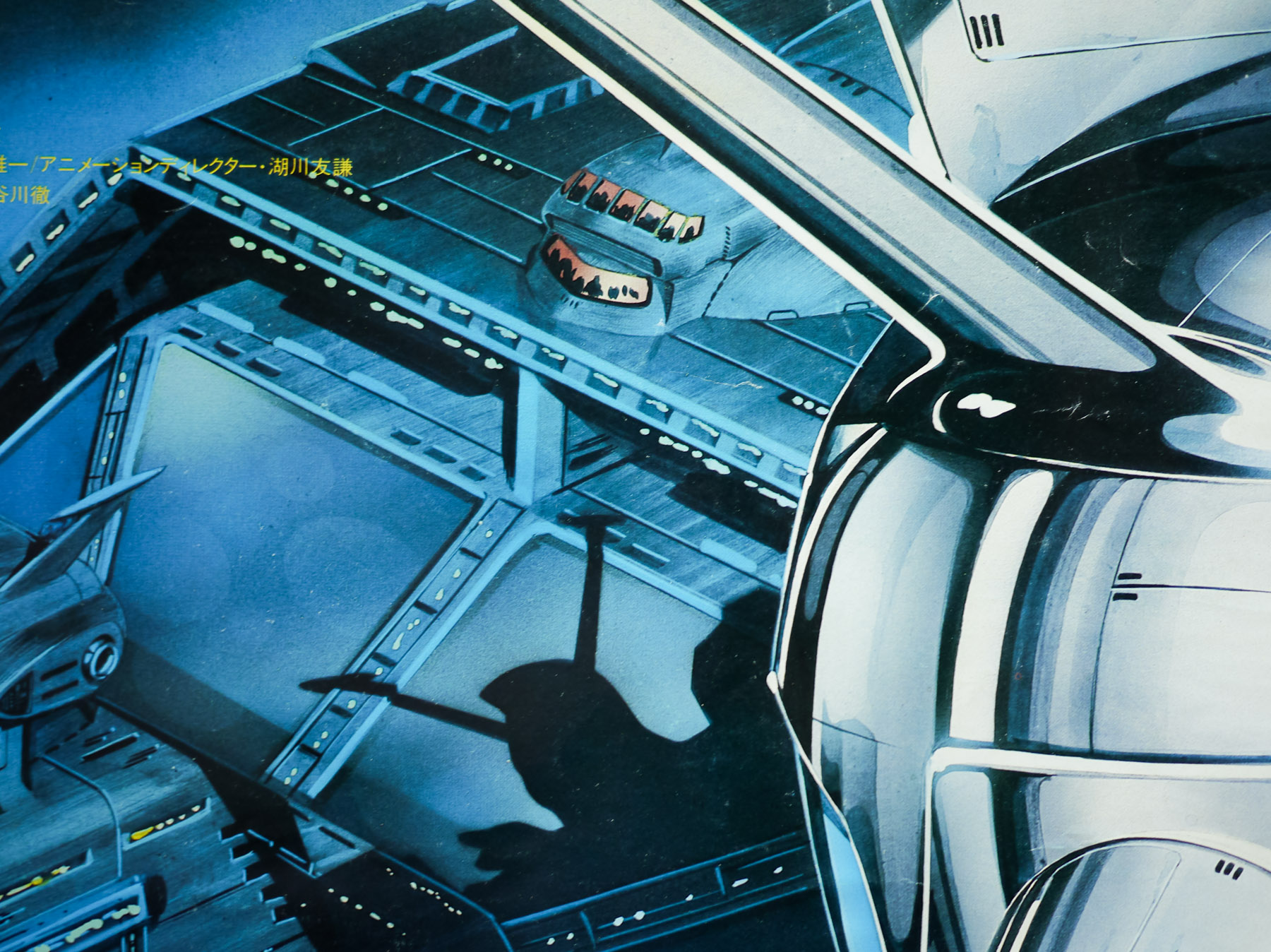
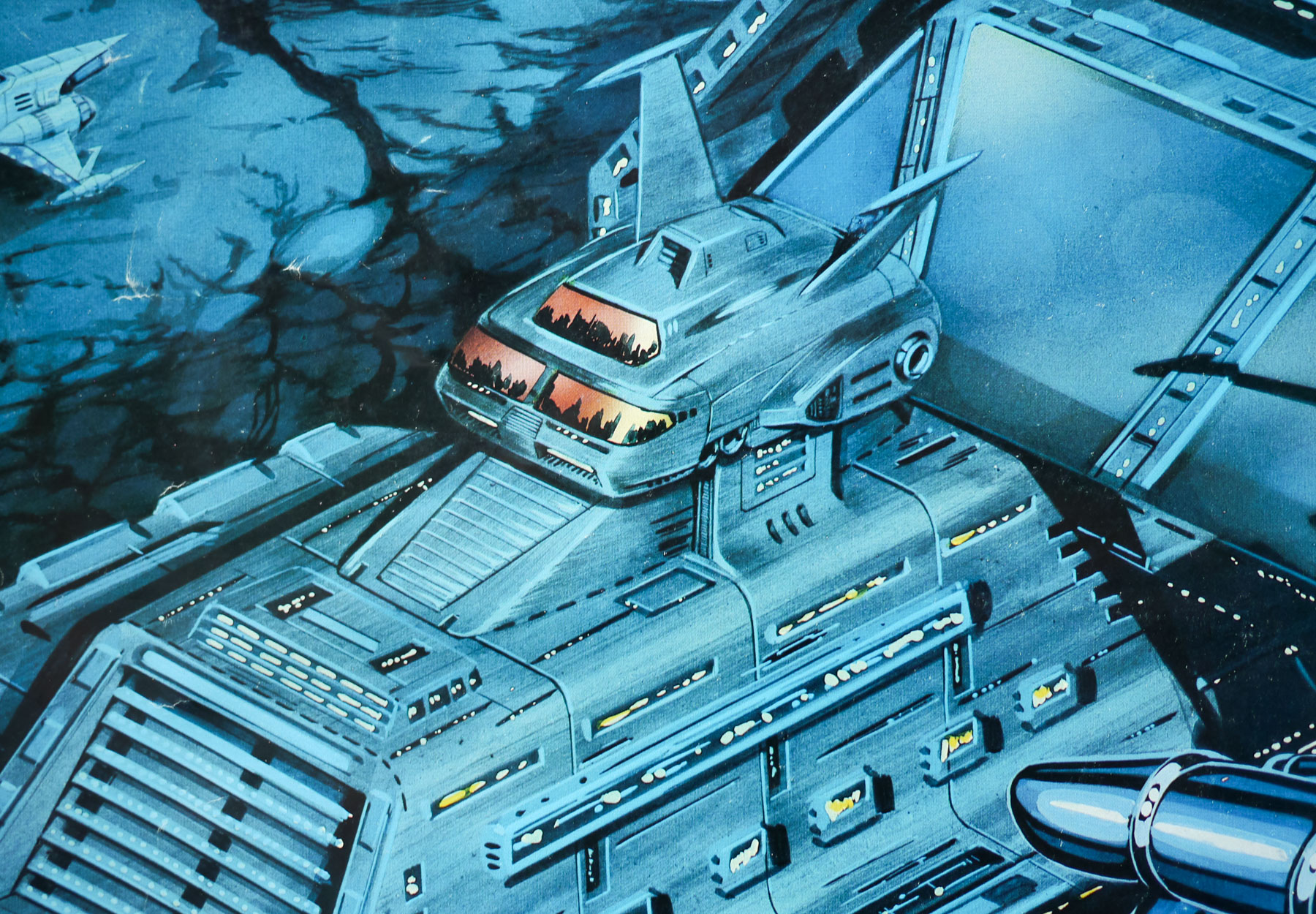
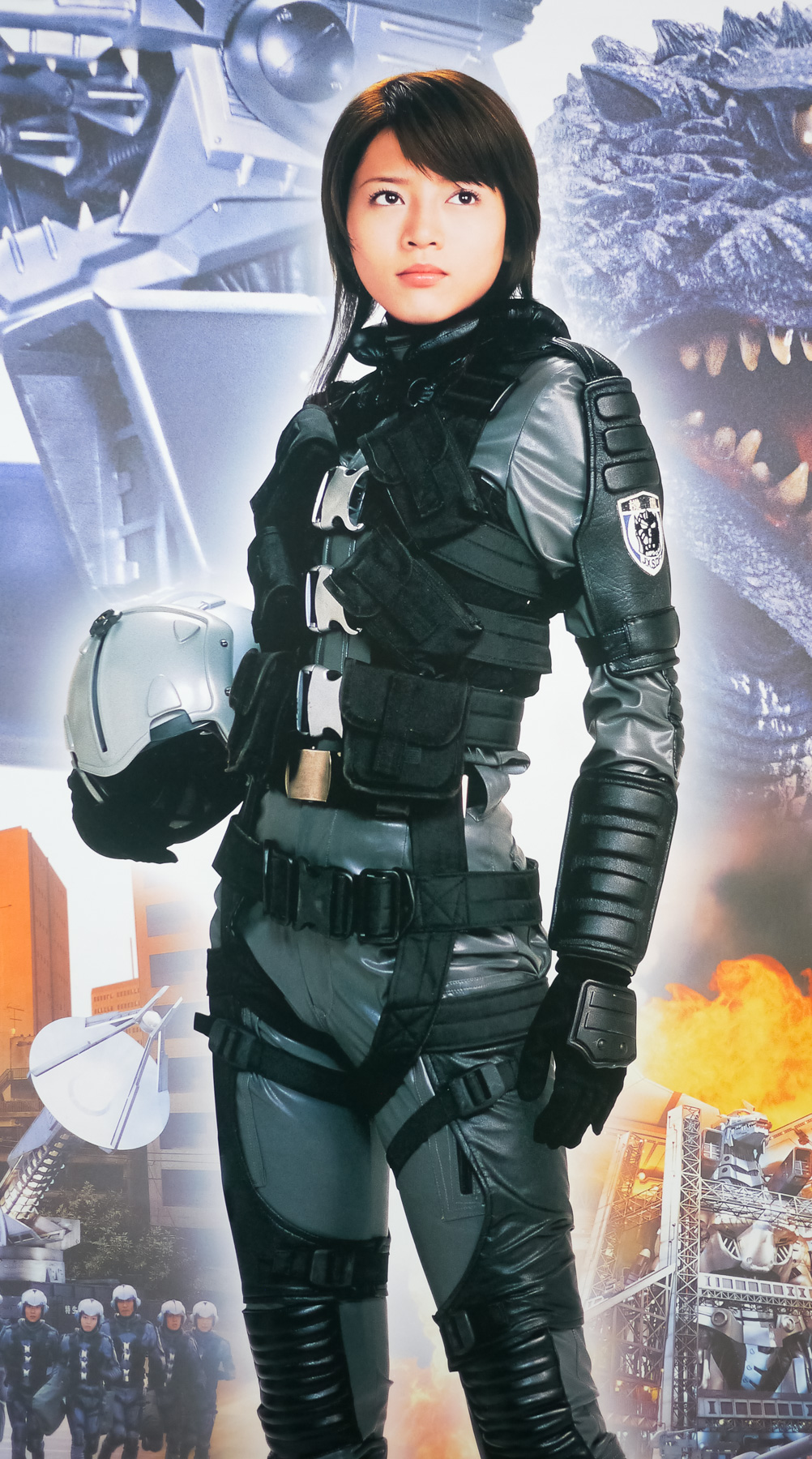
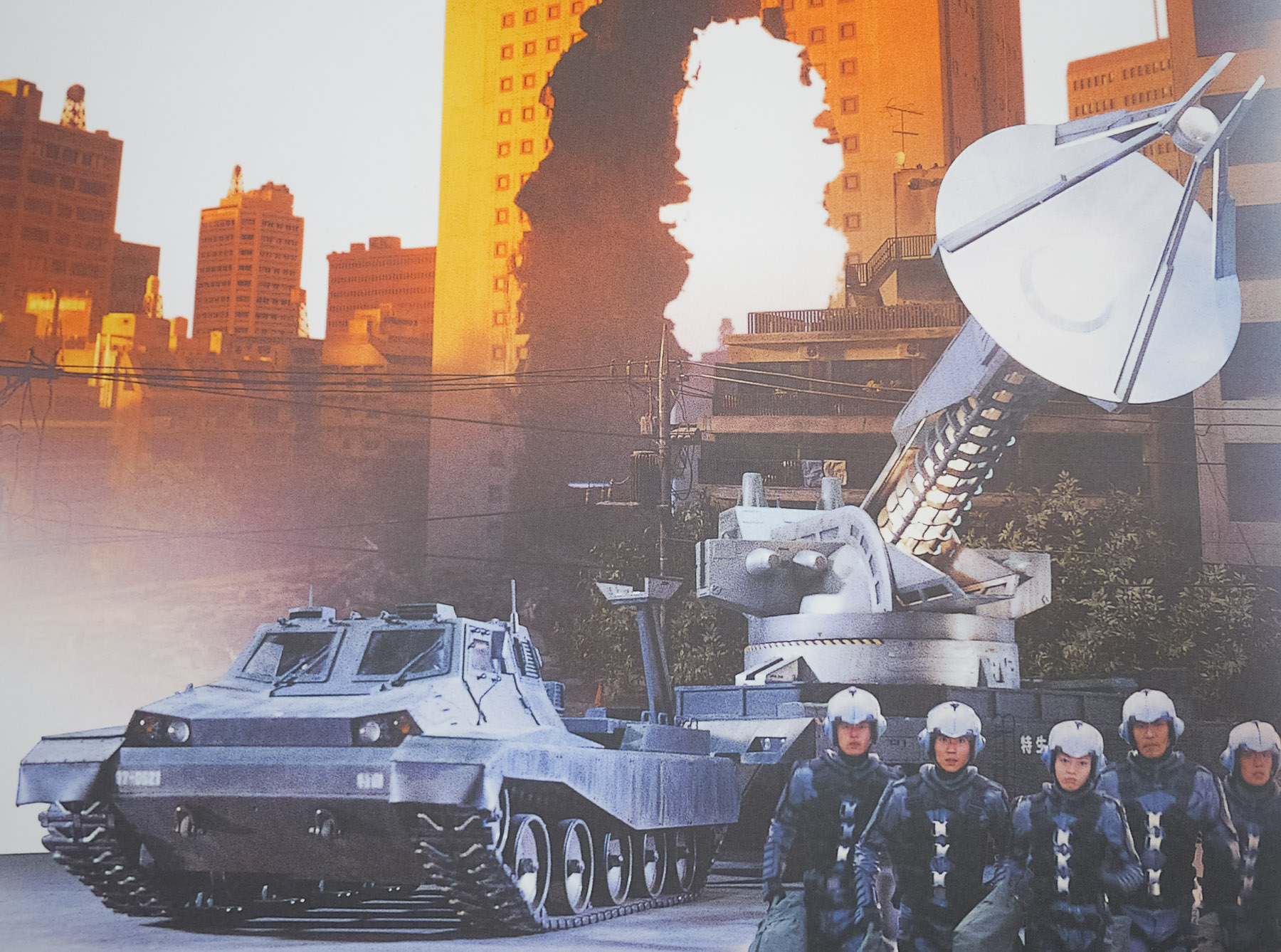
This poster features the Japanese Actress Yumiko Shaku who stars as Japanese Defence Force Lieutenant Akane Yashiro, a Maser Cannon operator who is made a scapegoat after her actions fail to stop a rampaging member of Godzilla’s species. During the same battle, scientists realise that Godzilla is now immune to Maser fire and, after the skirmish is over, they begin work on a new weapon to stop him in the future. Using the skeleton of the original Godzilla that was defeated back in 1954, scientists create a new cyborg Mechagodzilla that is inducted into the Defense Force and given human controllers as part of the new Kiryu squadron.

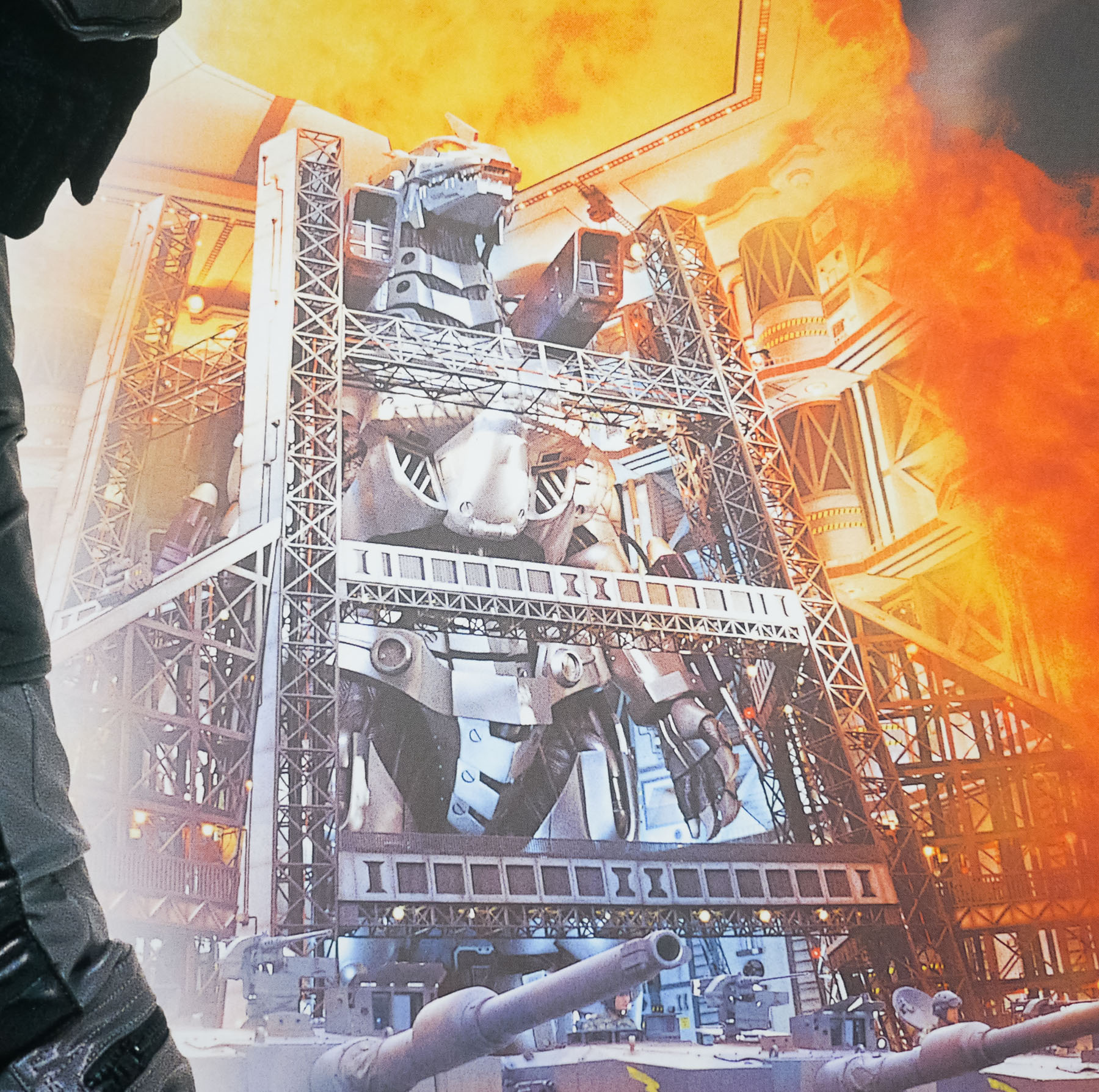
Akane is given a role as a pilot despite suspicion from some of her squad mates. The pilots are located in a giant VTOL plane that hovers above Mechagodzilla, relaying instructions to it. During the reveal of the new machine to the public, Godzilla appears and as the two start to battle, Godzillas roar apparently awakens something within the original skeleton of Mechagodzilla and the machine goes on a rampage, destroying much of the city around it, once Godzilla has retreated. After bringing the machine under control the Kiryu squadron continue to work on Mechagodzilla in preparation for the next monster attack. When Godzilla appears once more, another battle commences which sees the remote control technology damaged. Akane decides to risk a descent to earth, where she enters Mechagodzilla and pilots the machine from within.

The film was well received by Japanese audiences and, as can be seen from the description above, was clearly one of the films that had an influence on director Guillermo Del Toro’s recent monsters versus machines film Pacific Rim.

The original trailer can be watched on YouTube.
Porco Rosso / B1 / Japan

30.01.14

Poster Poster
Title
Porco Rosso
AKA
Kurenai no buta (Japan - original title)
Year of Film
1992
Director
Hayao Miyazaki
Starring
Shûichirô Moriyama, Tokiko Katô, Bunshi Katsura, Greg Ellis, Tsunehiko Kamijô, Akemi Okamura, Akio Ôtsuka, Hiroko Seki
Origin of Film
Japan
Genre(s) of Film
Shûichirô Moriyama, Tokiko Katô, Bunshi Katsura, Greg Ellis, Tsunehiko Kamijô, Akemi Okamura, Akio Ôtsuka, Hiroko Seki,
Type of Poster
B1
Style of Poster
--
Origin of Poster
Japan
Year of Poster
1992
Designer
Unknown
Artist
Studio Ghibli
Size (inches)
28 12/16" x 40 7/16"
SS or DS
SS
Tagline
--

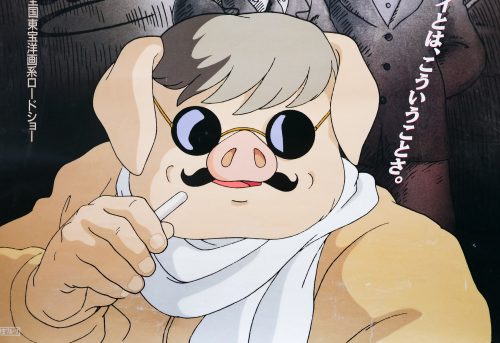
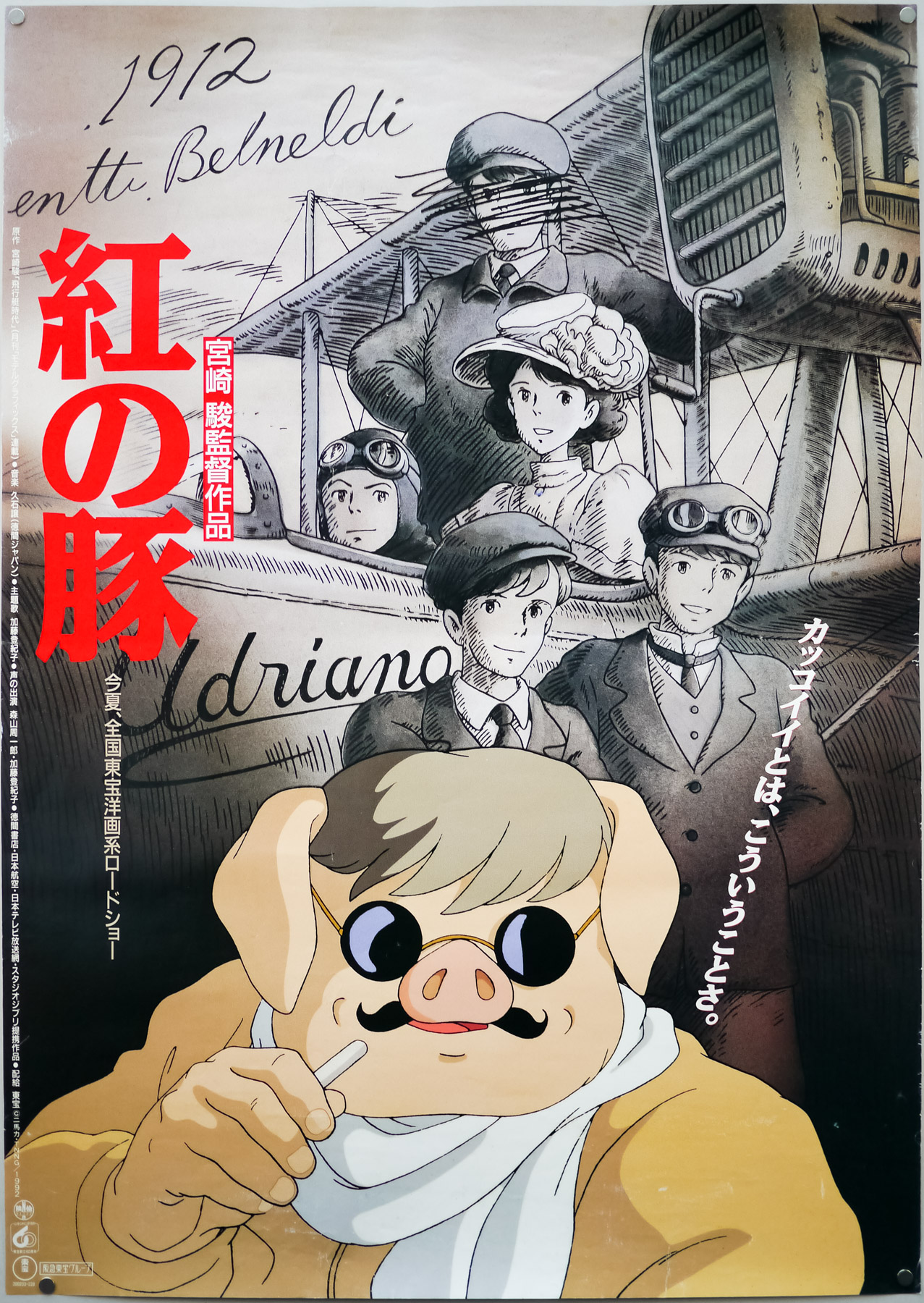
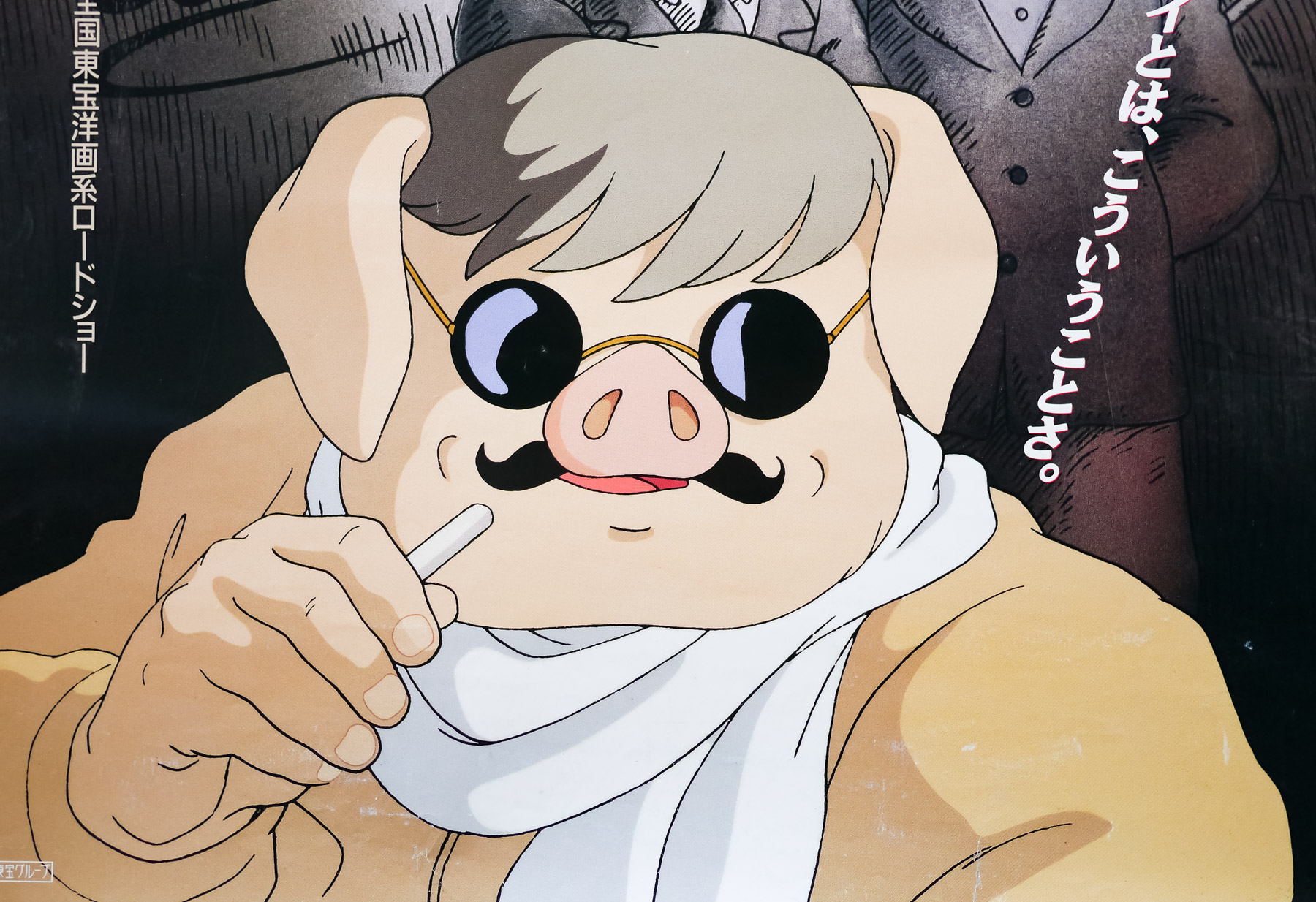
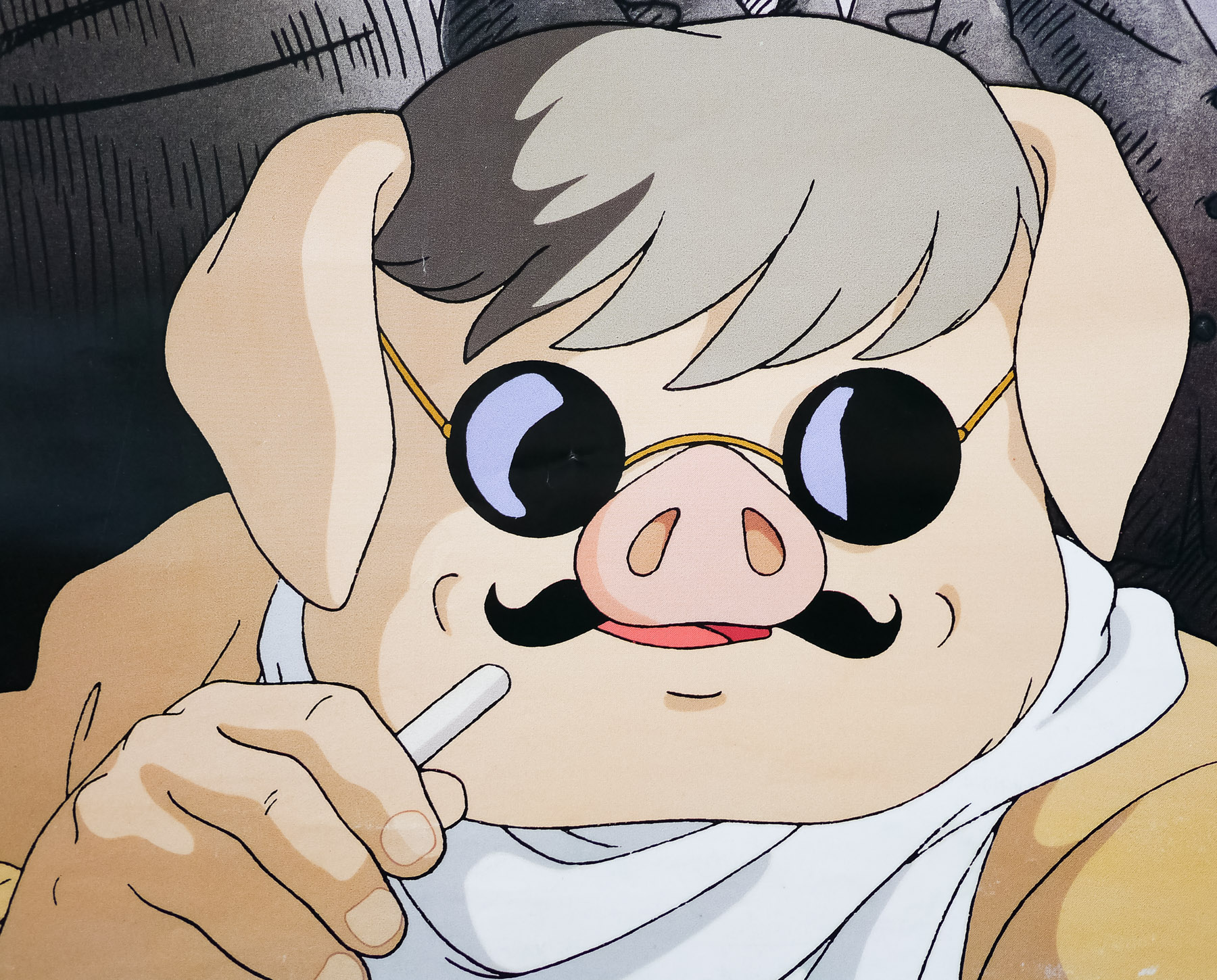
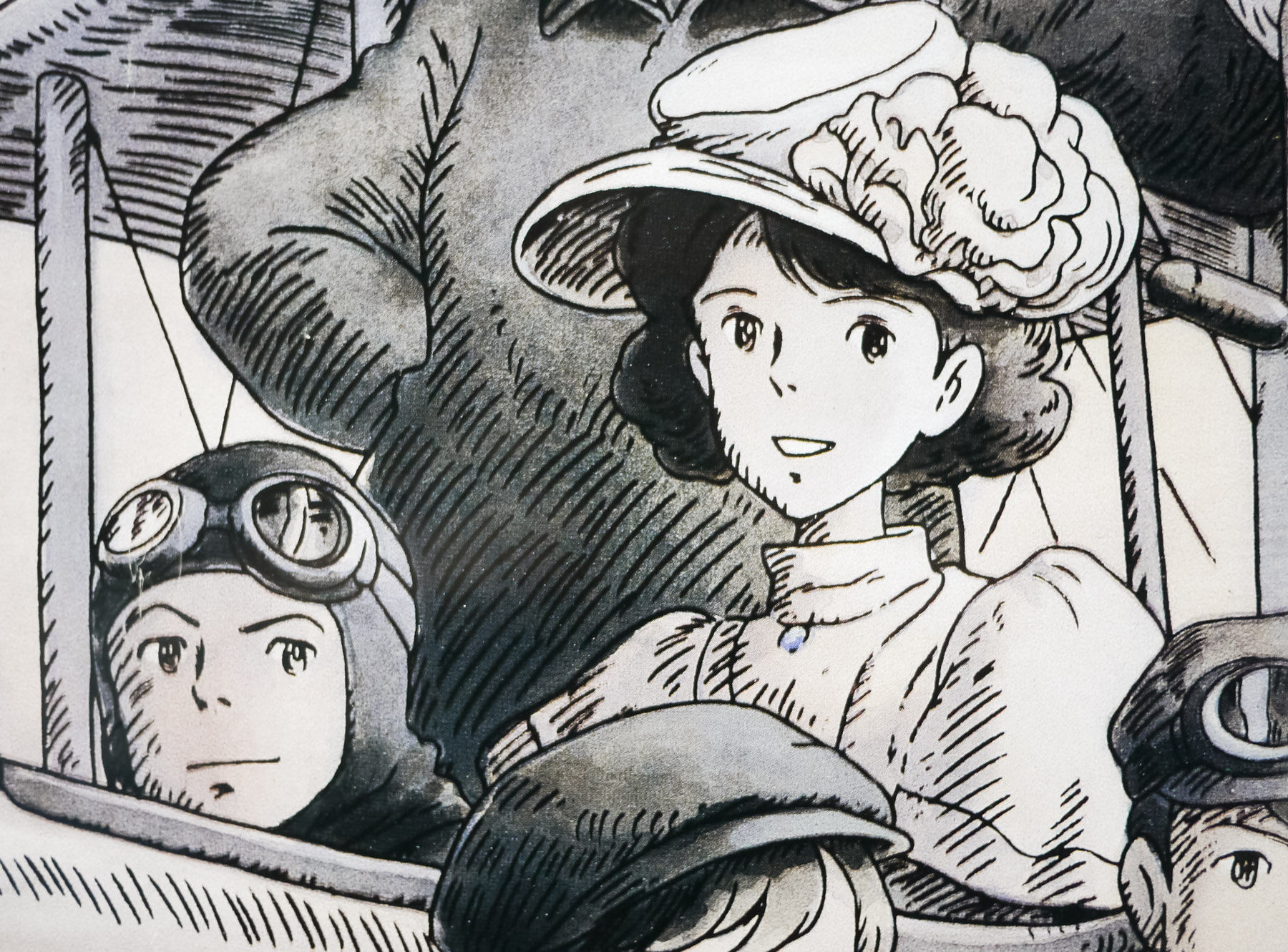
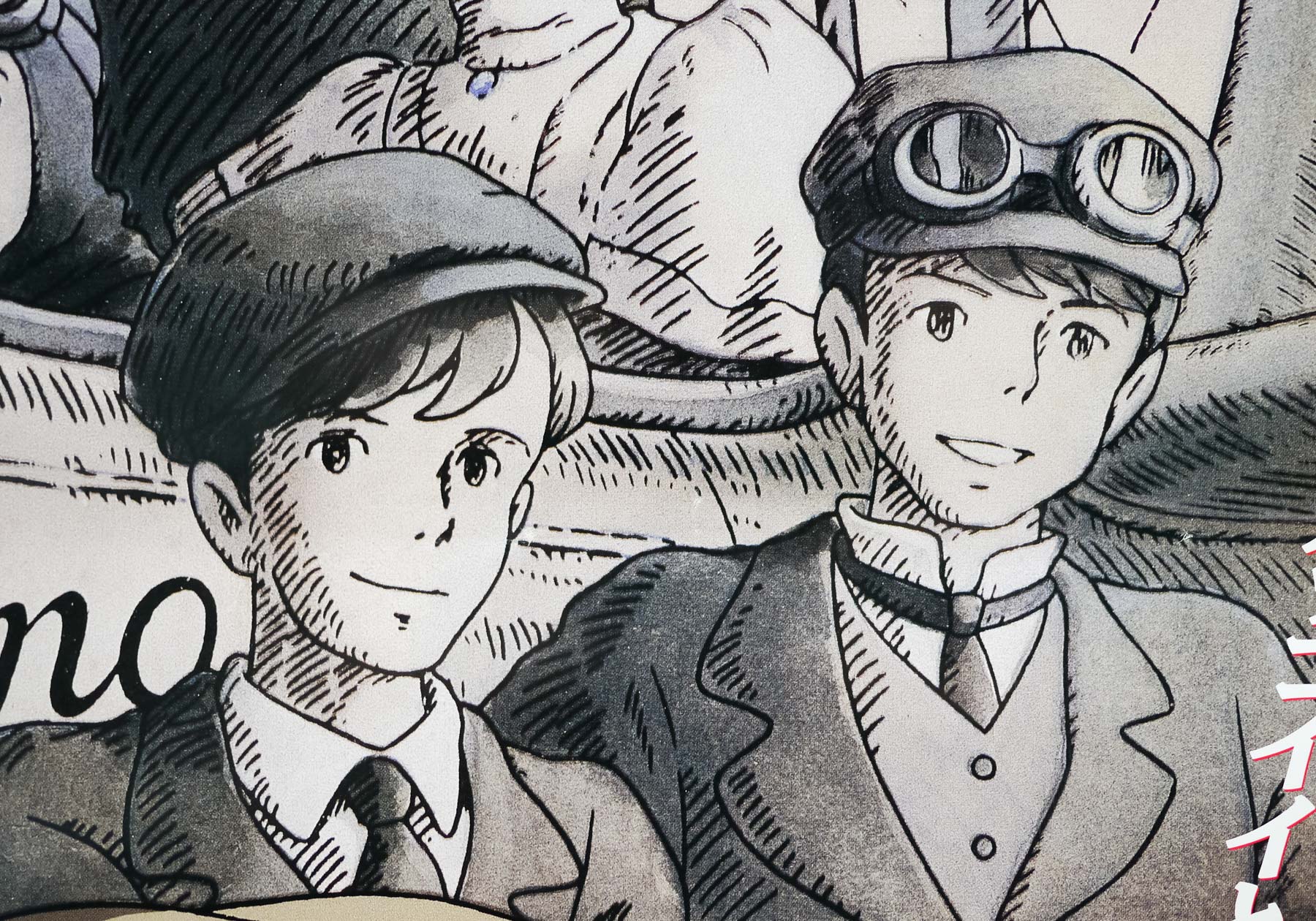
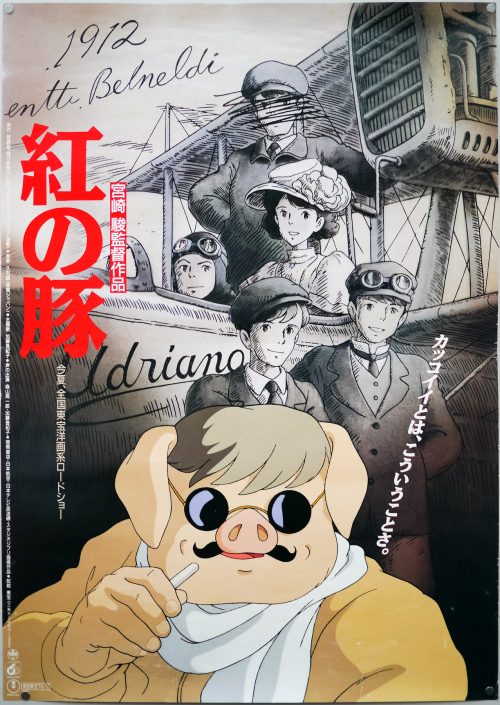
This is the scarce B1 size Japanese poster for the release of master animator Hayao Miyazaki‘s 1992 film Porco Rosso. Originally planned as a short feature to be played onboard Japanese Airlines flights, and based on Miyazaki’s manga The Age of the Flying Boat, the scope of the project changed and it was made into a full-length film. When compared to other Studio Ghibli films, Porco Rosso is set in more recognisable ‘real world’ locations, including islands off the Adriatic coast and the Italian city of Milan (even if it’s topographically inaccurate).

The film is set between the two World Wars and focuses on the story of the titular pig, actually named Marco, who pilots an armed flying boat which he uses to defend ships and other planes against bands of pirates who attack and steal valuables from unlucky travellers. A backstory explains that Marco was once a human pilot for the Italian airforce but it is intimated that he deserted from it at a certain point – one sequence sees him recalling an dogfight that saw all of his squadron killed – and for reasons that are never made clear he was turned into a pig (one character talks about a ‘curse’). When a cocky American pilot joins forces with the pirates he goes after Marco, shooting his plane down and then claims to have killed him. The pig survives the crash and transport his damaged aircraft to Milan where an engineer named Piccolo and his niece work to repair and improve it. When Marco and Piccolo’s niece return to the islands the stage is set for a dogfight between Curtis and the flying pig.

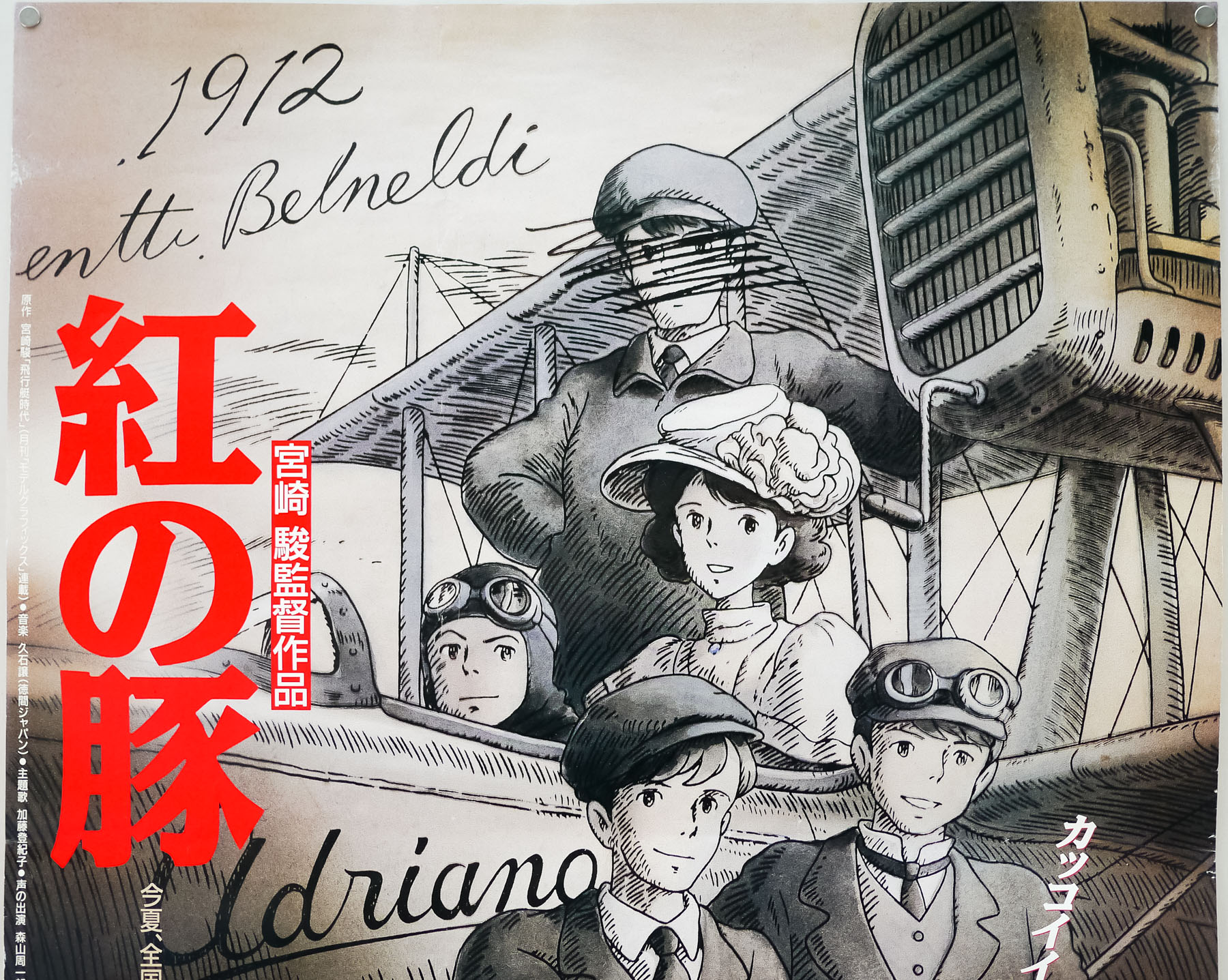
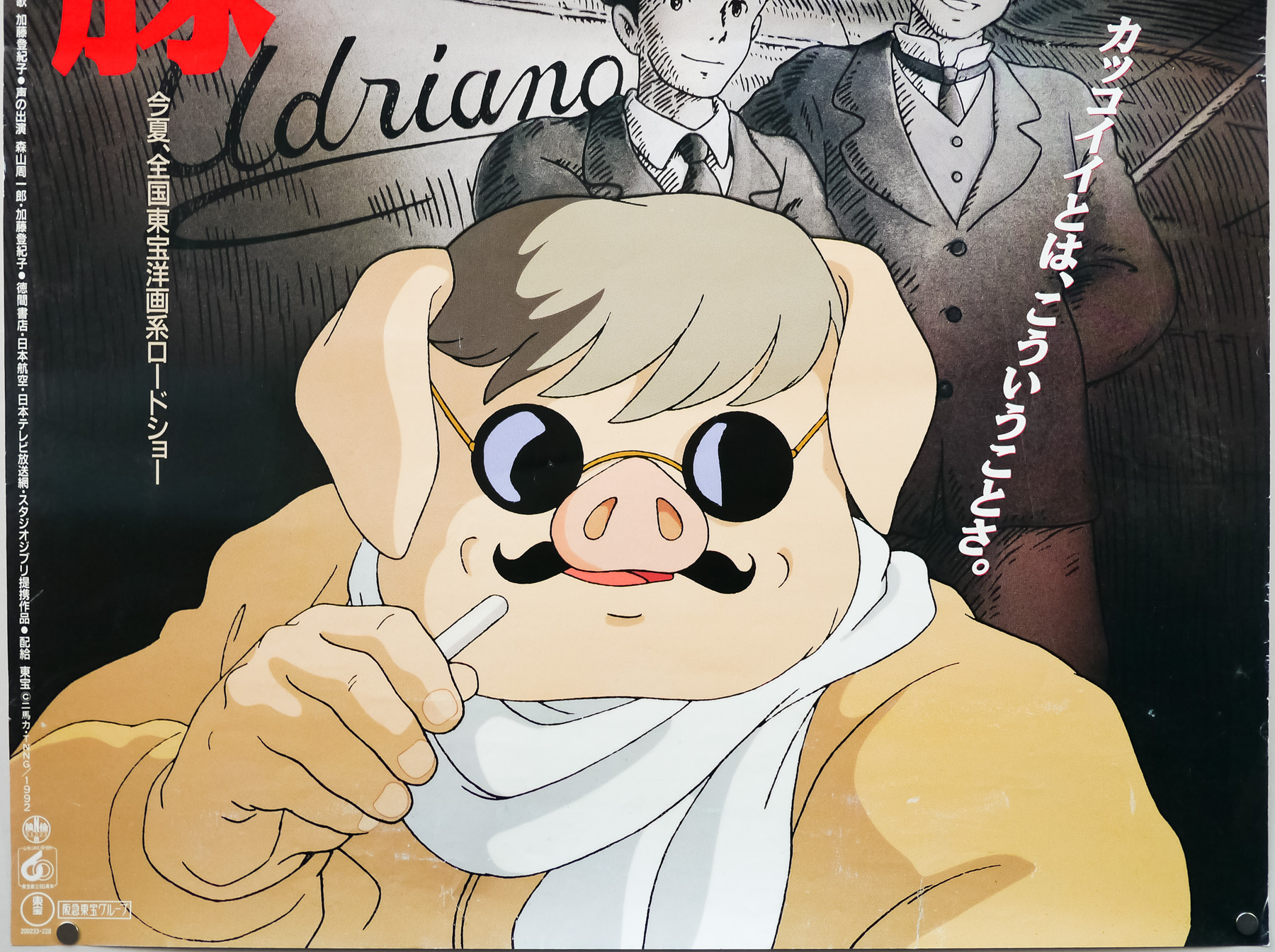
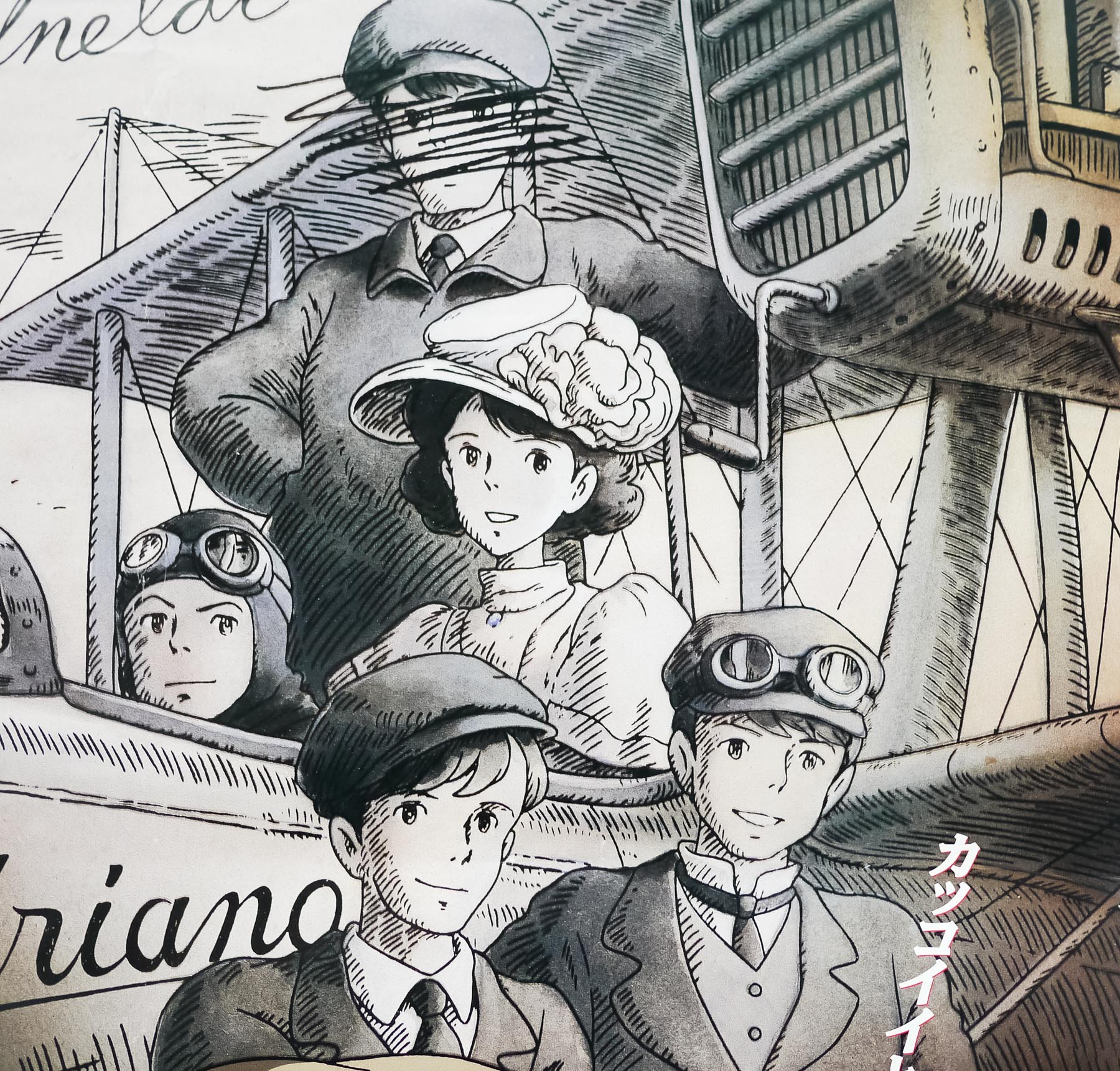
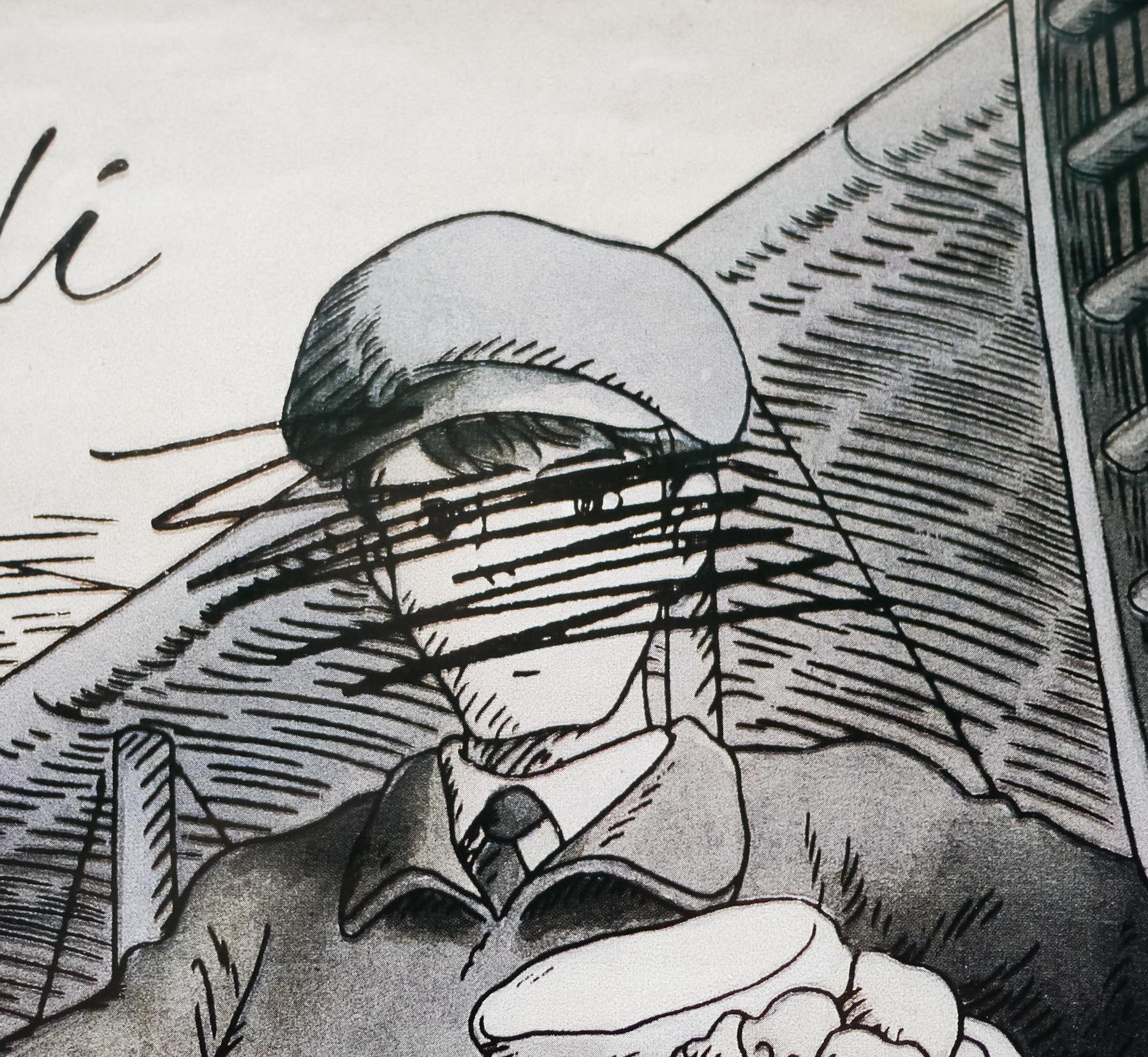
This B1 features an image of a photograph that is glimpsed in the film and explained by one character to be the last surviving photo of Marco as a human (the scribbled face at the top). There are several theories that fans of the film have posited about Marco’s appearance with some saying that it’s meant to be taken figuratively, that he sees himself as a pig and has taken that form in his mind, whereas others point to the fact that you glimpse him morphing into a human during one scene and another character apparently sees him change back to human at the end. Whatever the truth, he makes for an entertaining lead character and the film is another Studio Ghibli triumph.

Space Runaway Ideon: Be Invoked / B1 / Japan

16.03.15

Poster Poster
Title
Space Runaway Ideon: Be Invoked
AKA
Densetsu kyojin ideon: Hatsudou-hen (Japan - original title)
Year of Film
1982
Director
Yoshiyuki Tomino
Starring
Yôko Asagami, Yô Inoue, Yoku Shioya, Kaneto Shiozawa, Fuyumi Shiraishi, Hideyuki Tanaka, Nobuo Tanaka, Keiko Toda, Rumiko Ukai
Origin of Film
Japan
Genre(s) of Film
Yôko Asagami, Yô Inoue, Yoku Shioya, Kaneto Shiozawa, Fuyumi Shiraishi, Hideyuki Tanaka, Nobuo Tanaka, Keiko Toda, Rumiko Ukai,
Type of Poster
B1
Style of Poster
--
Origin of Poster
Japan
Year of Poster
1982
Designer
Unknown
Artist
Yuichi Higuchi
Size (inches)
28 11/16" x 40 6/16"
SS or DS
SS
Tagline
--

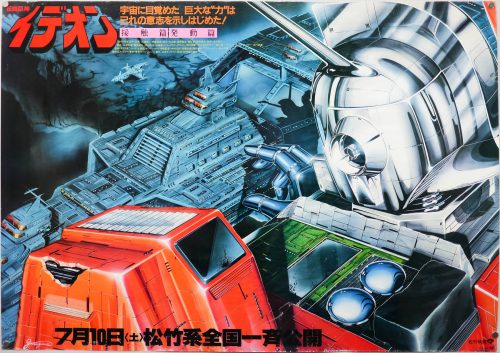
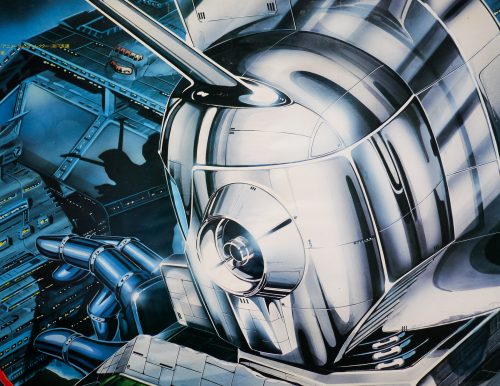
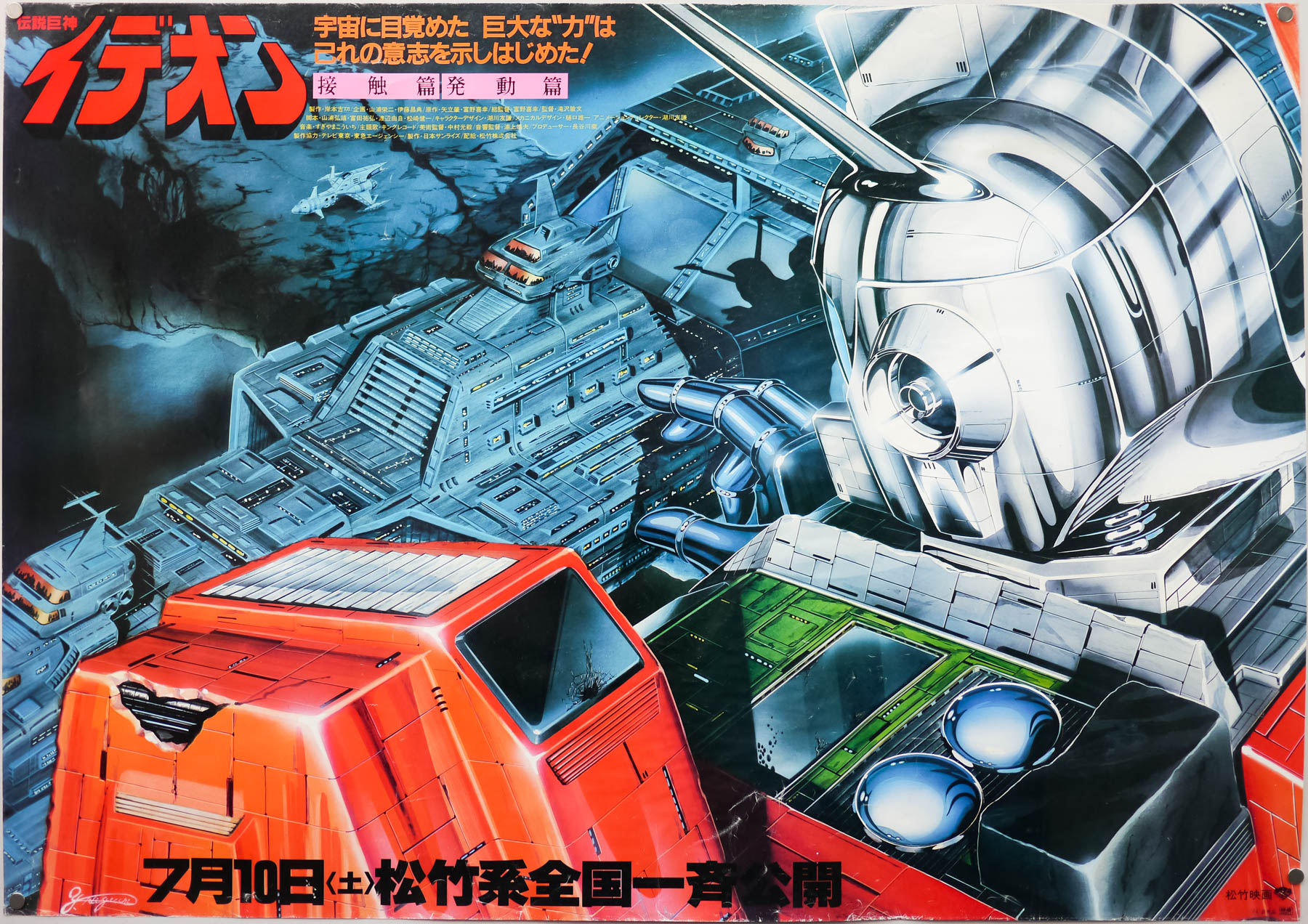
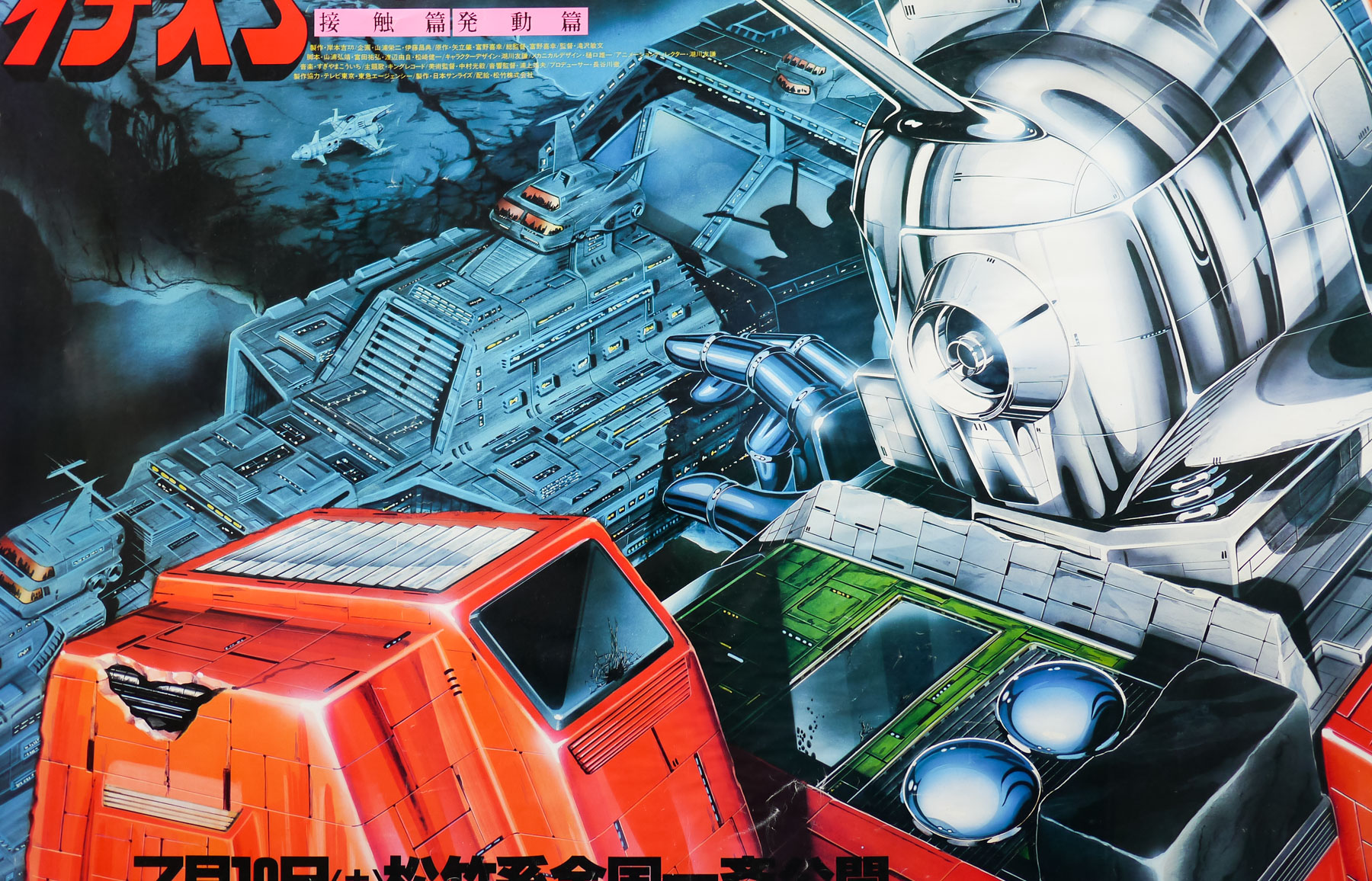
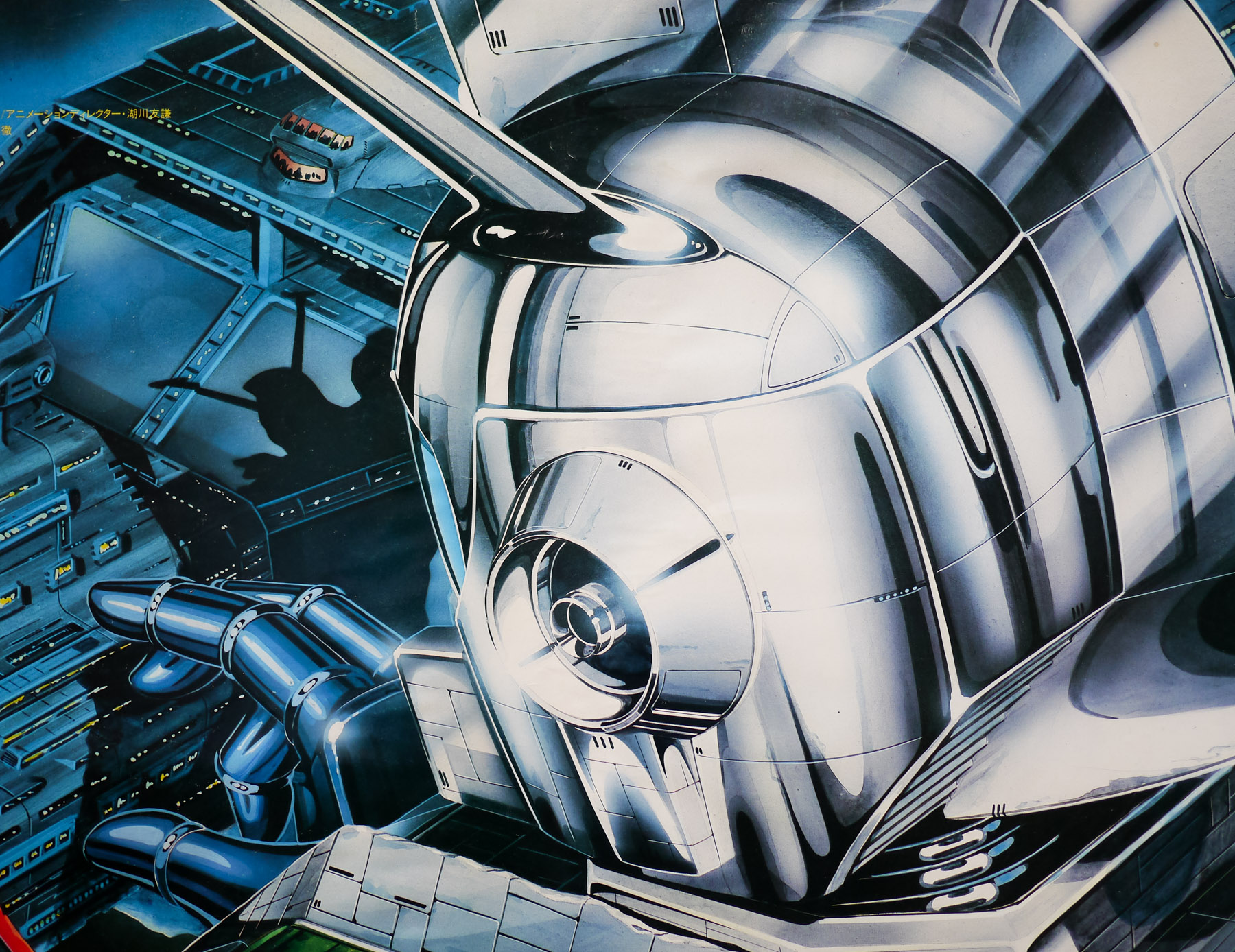
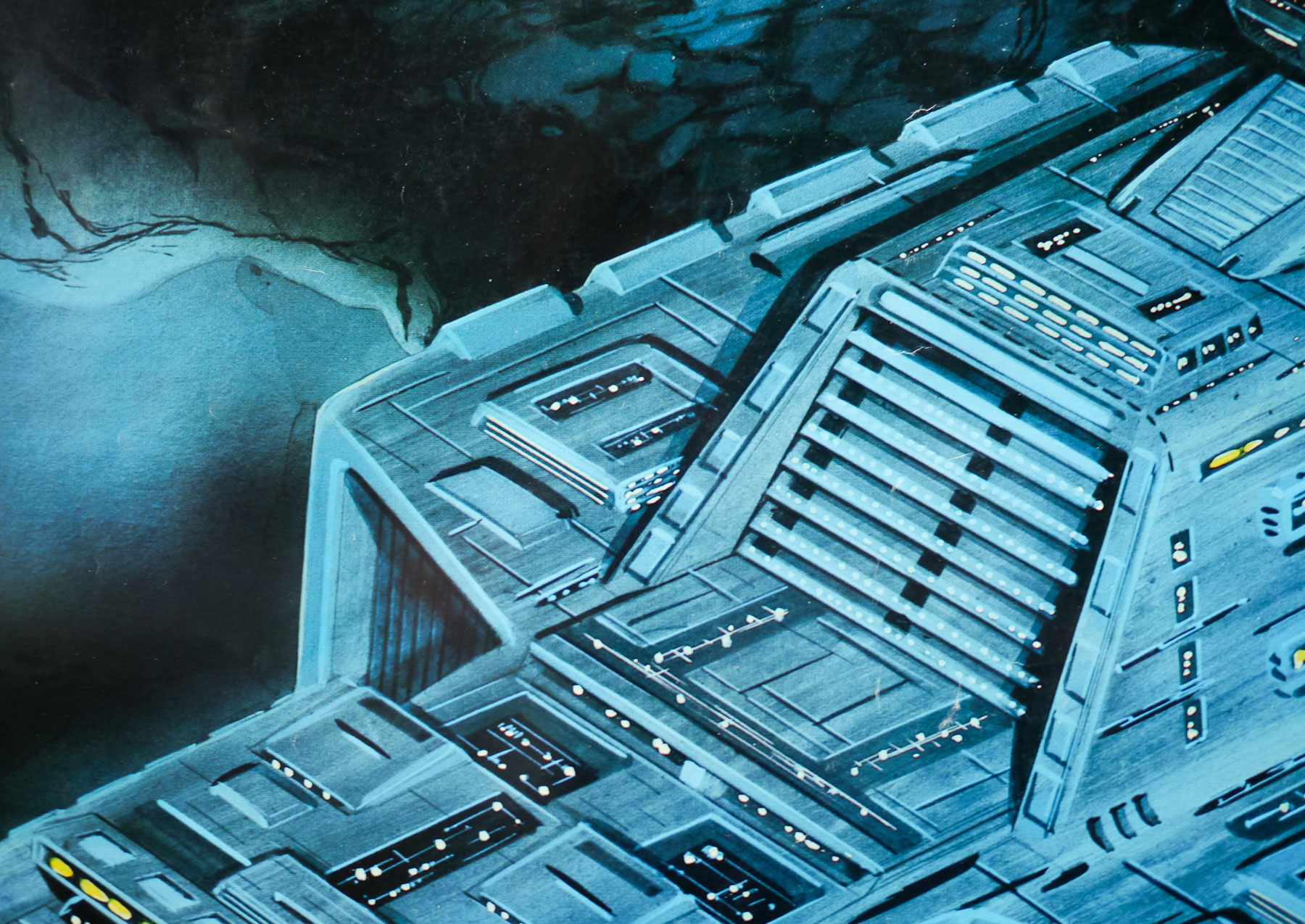
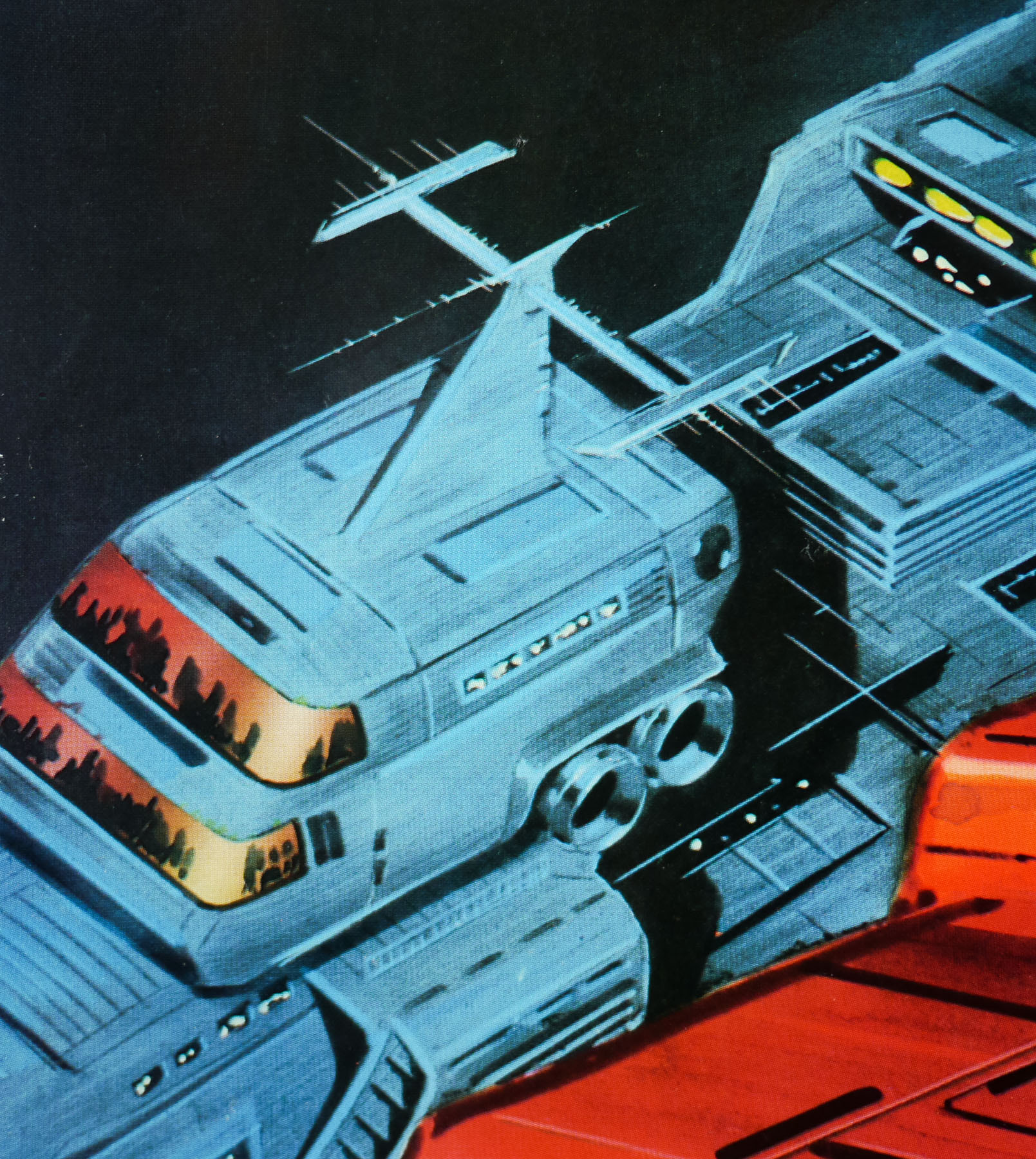
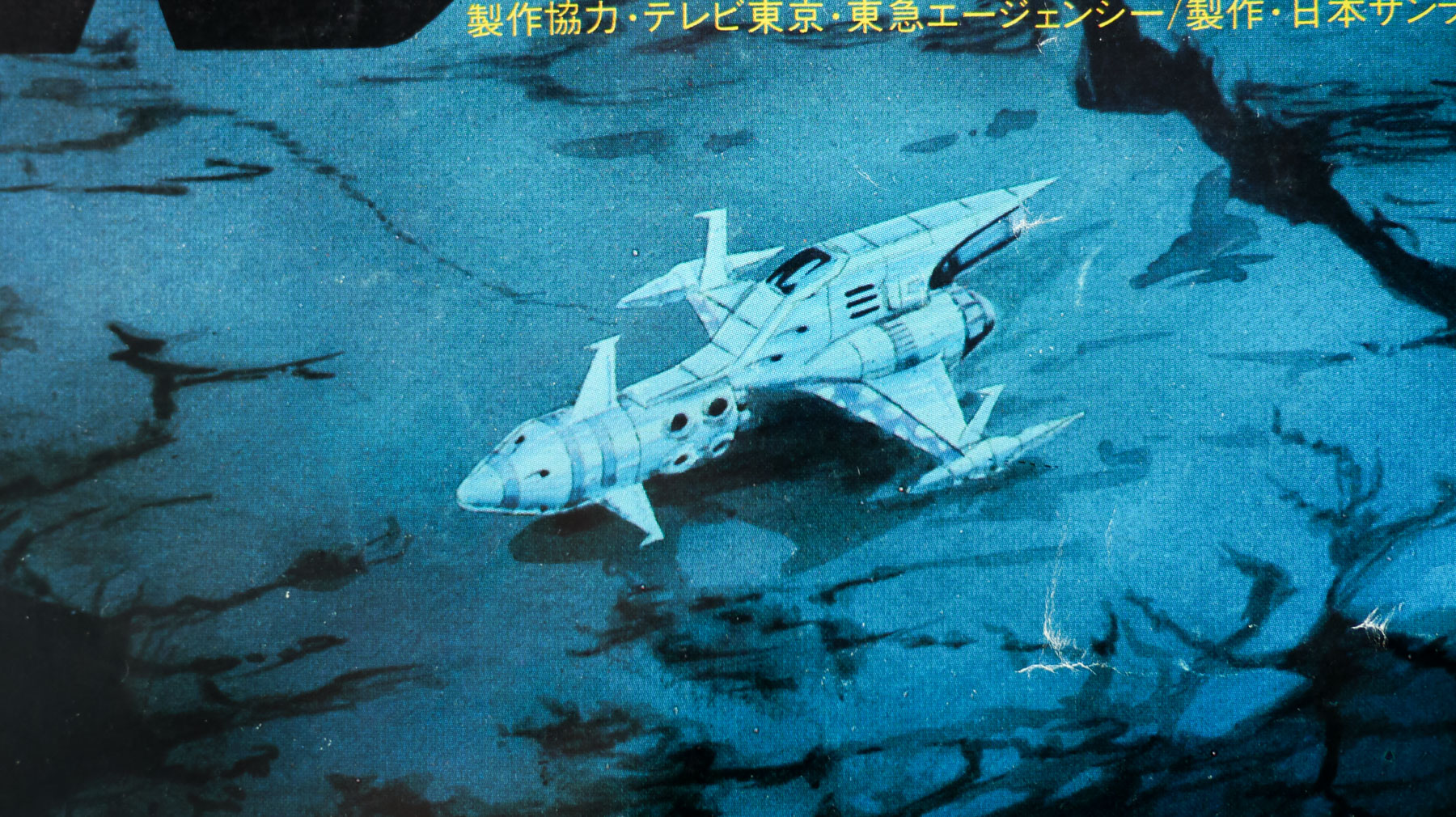
This is the Japanese B1 for the release of the second film based on the anime TV series Space Runaway Ideon that was created and directed by Yoshiyuki Tomino, who had previously  worked on the legendary anime Mobile Suit Gundam. Never given an official Western release (to the best of my knowledge) the series plot is summarised on its IMDb page:

It is the year 2300 and on the distant colony world of Solo, a team of archaeologists discover three alien vessels that, when formed together, become a giant fighting robot – The Ideon. However, they come into contact with an alien race known as the Buff Clan, who claim the Ideon’s energy source of Ide as their right. A simple case of fear and mistrust triggers an intergalactic war, with the Ide and the fate of the universe at stake.

According to the series’ Wikipedia page ‘the series originally met with rather low ratings and was cancelled after only 39 of its scheduled 43 episodes aired. As a result, the producers were forced to insert a short segment at the end of the final episode that ended the series in the middle of the action. Demand for a release of the final unaired episodes followed the show’s cancellation, and two movies were produced to end the series.

The two movies, A Contact and Be Invoked, were produced by both Sanrio and Sunrise and released as a double bill by Shochiku in 1982. A Contact featured clips from the first 32 episodes of the TV series interspersed with newly animated footage. In addition a few new scenes, the movie also created new death scenes for character such as Damido, Mayaya and Daram. Be Invoked featured a modified version of the final episode of the TV series (removing the ending sequence), in addition to those episodes that never aired, finishing off the Ideon saga once and for all.’

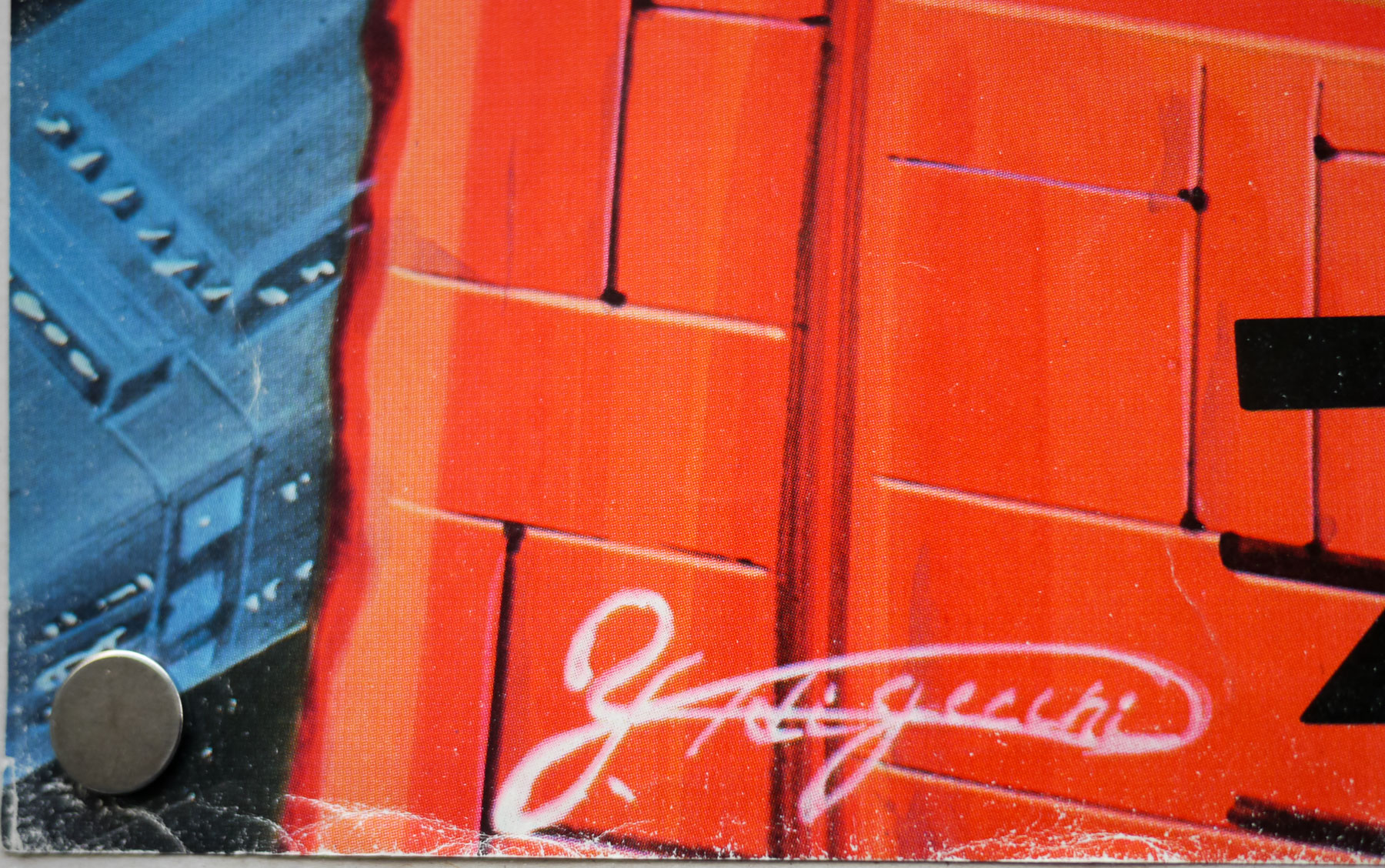
The artwork features the signature of the Japanese artist Yuichi Higuchi who was involved in the film’s art department and also worked on other anime films as artist.

Hidden Fortress: The Last Princess / B1 / Japan

28.09.15

Poster Poster
Title
Hidden Fortress: The Last Princess
AKA
Kakushi toride no san akunin (Japan - original title)
Year of Film
2008
Director
Shinji Higuchi
Starring
Jun Matsumoto, Daisuke Miyagawa, Kippei Shîna, Masami Nagasawa, Hiroshi Abe
Origin of Film
Japan
Genre(s) of Film
Jun Matsumoto, Daisuke Miyagawa, Kippei Shîna, Masami Nagasawa, Hiroshi Abe,
Type of Poster
B1
Style of Poster
--
Origin of Poster
Japan
Year of Poster
2008
Designer
Unknown
Artist
Takehiko Inoue
Size (inches)
28 11/16" x 40 9/16"
SS or DS
DS
Tagline
--

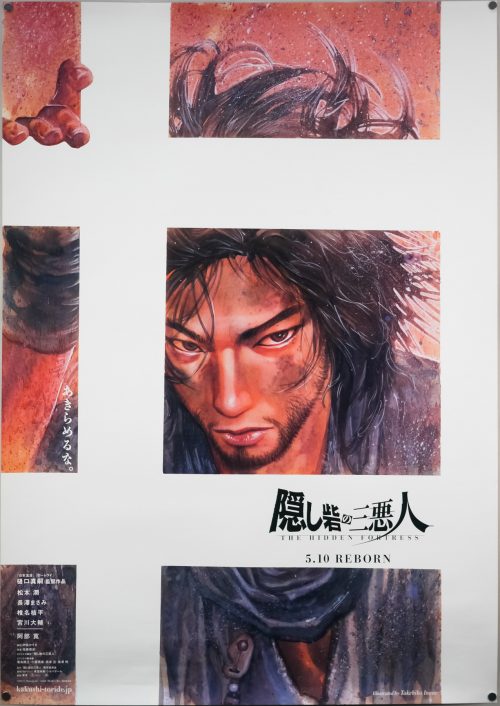
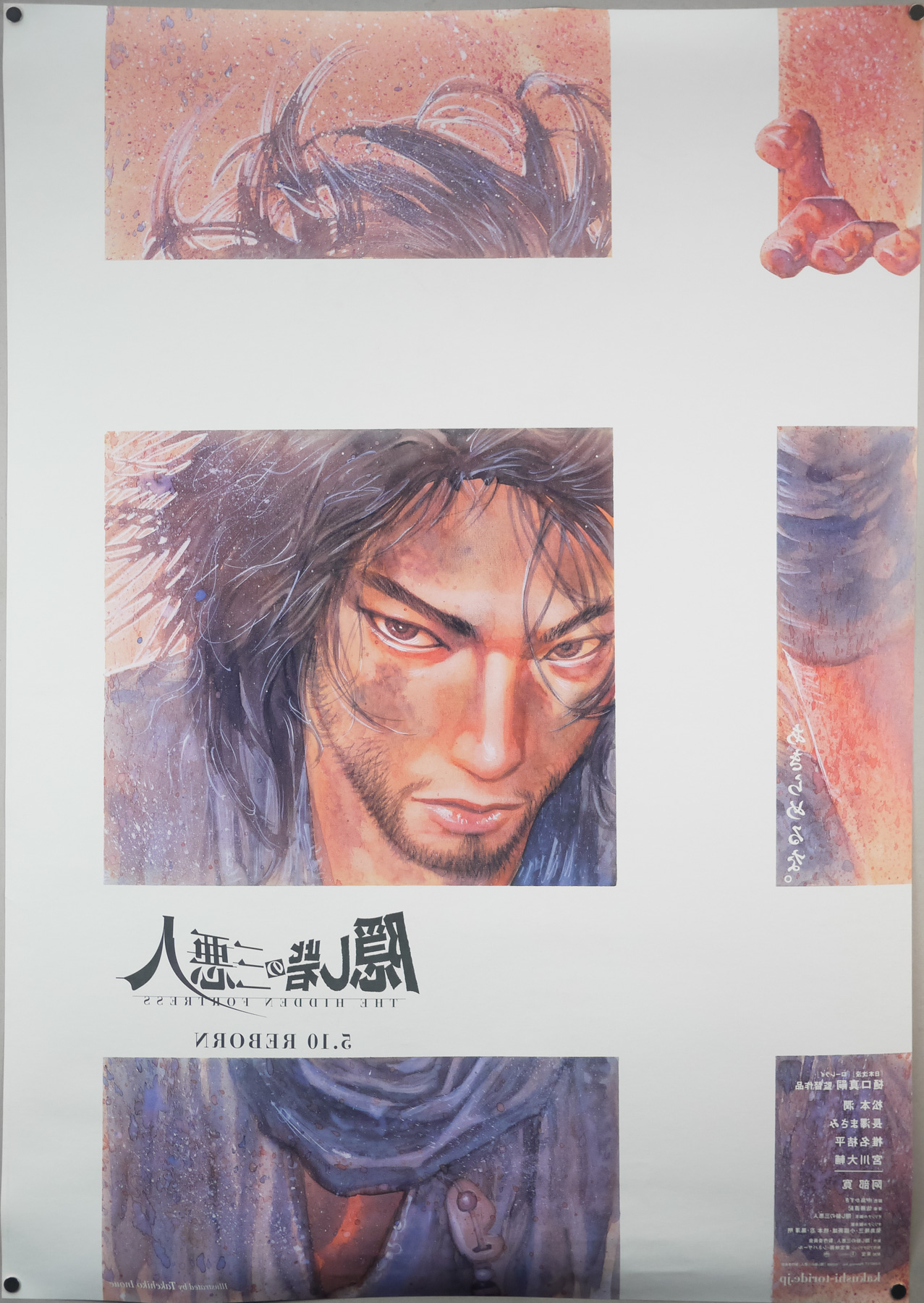
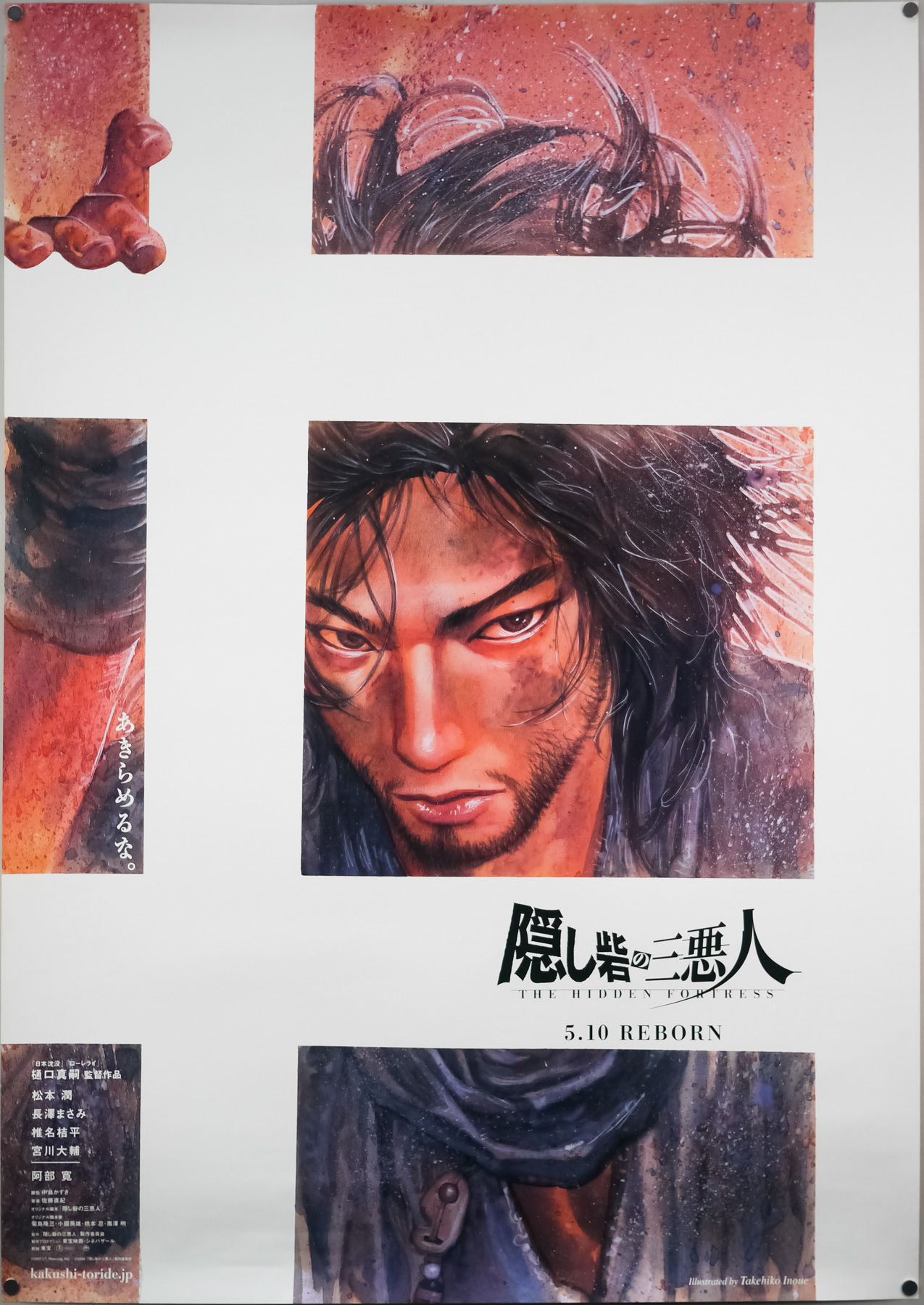
Hidden Fortress: The Last Princess is director Shinji Higuchi‘s take on Akira Kurosawa’s 1958 original classic The Hidden Fortress. By all accounts Higuchi ups the pace and gore levels significantly. The plot is described thusly:

Makabe Rokurota (Hiroshi Abe), the loyal retainer of Princess Yuki-hime of Akizuki (Masami Nagasawa), is moving the Princess and the prefecture’s ample treasury of gold bars safely to the politically stable Hayakawa area. They disguise themselves as humble firewood peddlers, hiding the gold bars inside the logs they are carrying, so as to pass safely through roadblocks, which are under the control of the local warlord. Along the way, Rokurota comes across Takezo (Jun Matsumoto) and Shimpachi (Daisuke Miyagawa), who have escaped from forced labour in a gold mine. They eventually agree to help out on this foolhardy mission in the hope of escaping Yamana’s oppression and cashing in on the gold reward Rokurota offers them.

The Takezo and Shimpachi characters (called Tahei and Matashichi in the original) were famously to serve as inspiration for George Lucas when he created Star Wars’ R2D2 and C3P0. The three reviews for this film that are on IMDb don’t exactly paint the film in a great light:

‘The two peasants are given more screen time and fleshed out more, but not to any productive effect. In the original they were the model for R2D2 and C3PO. In the updated version, they become Jar Jar Binks with sappy emotions.’

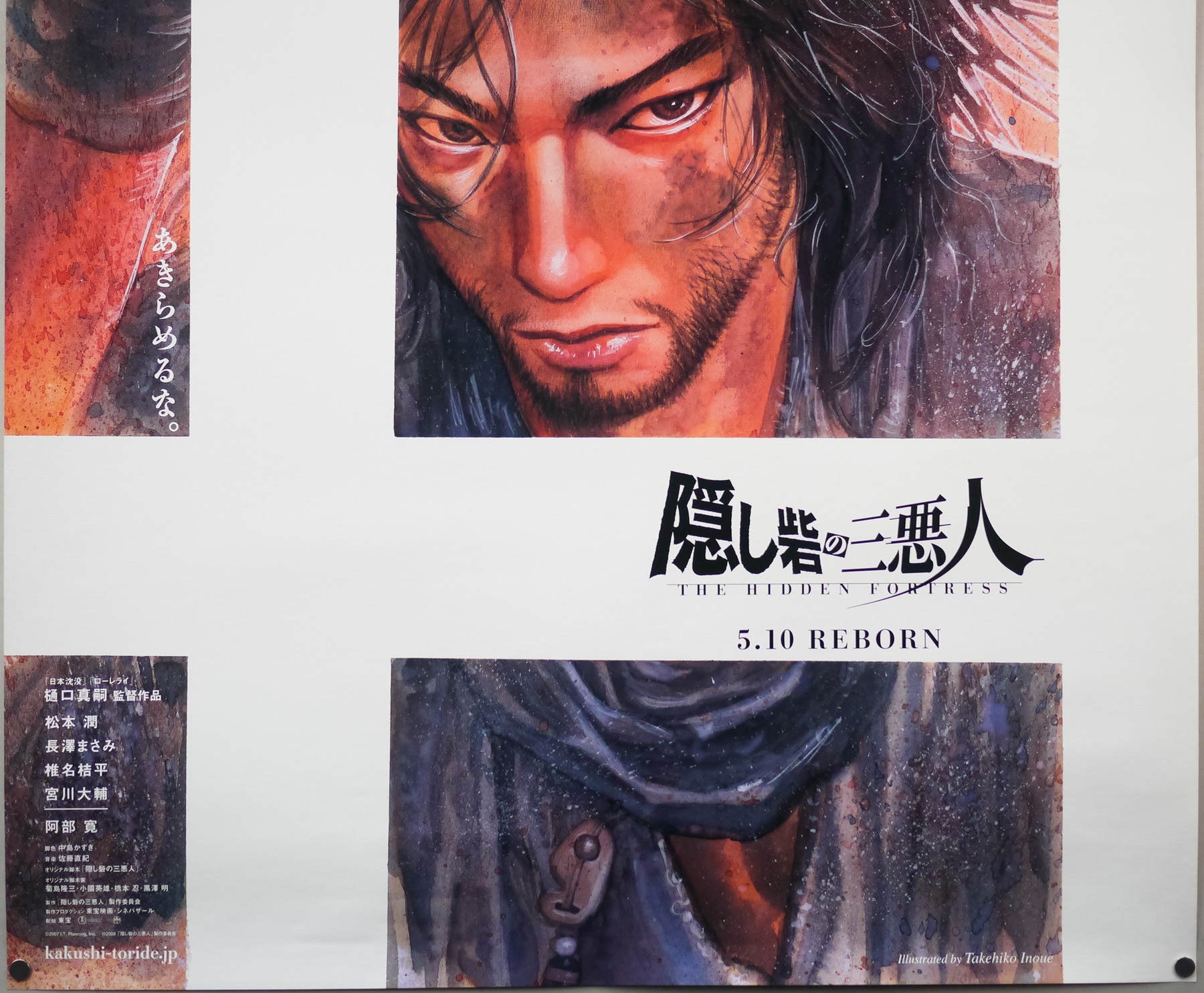
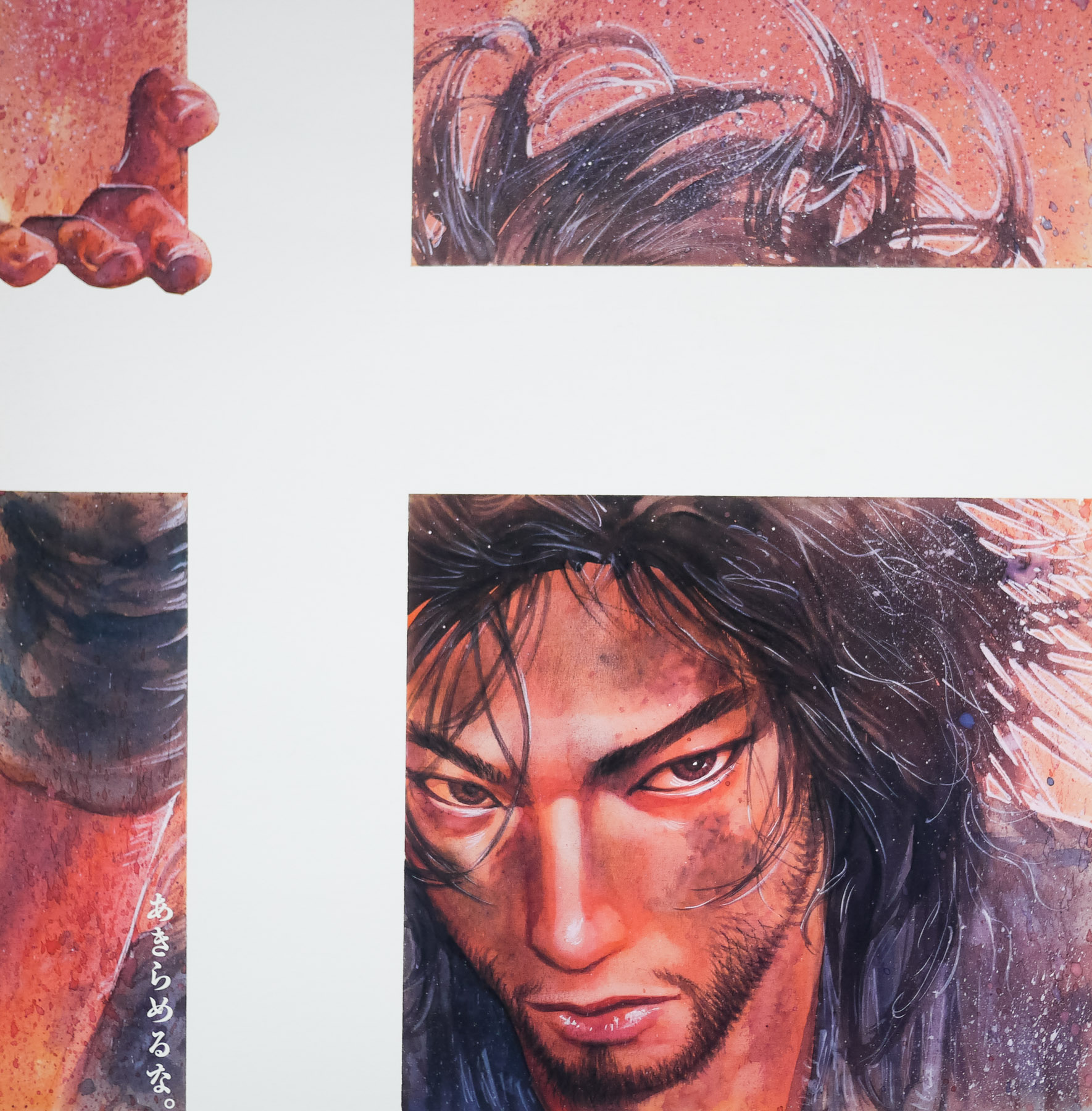
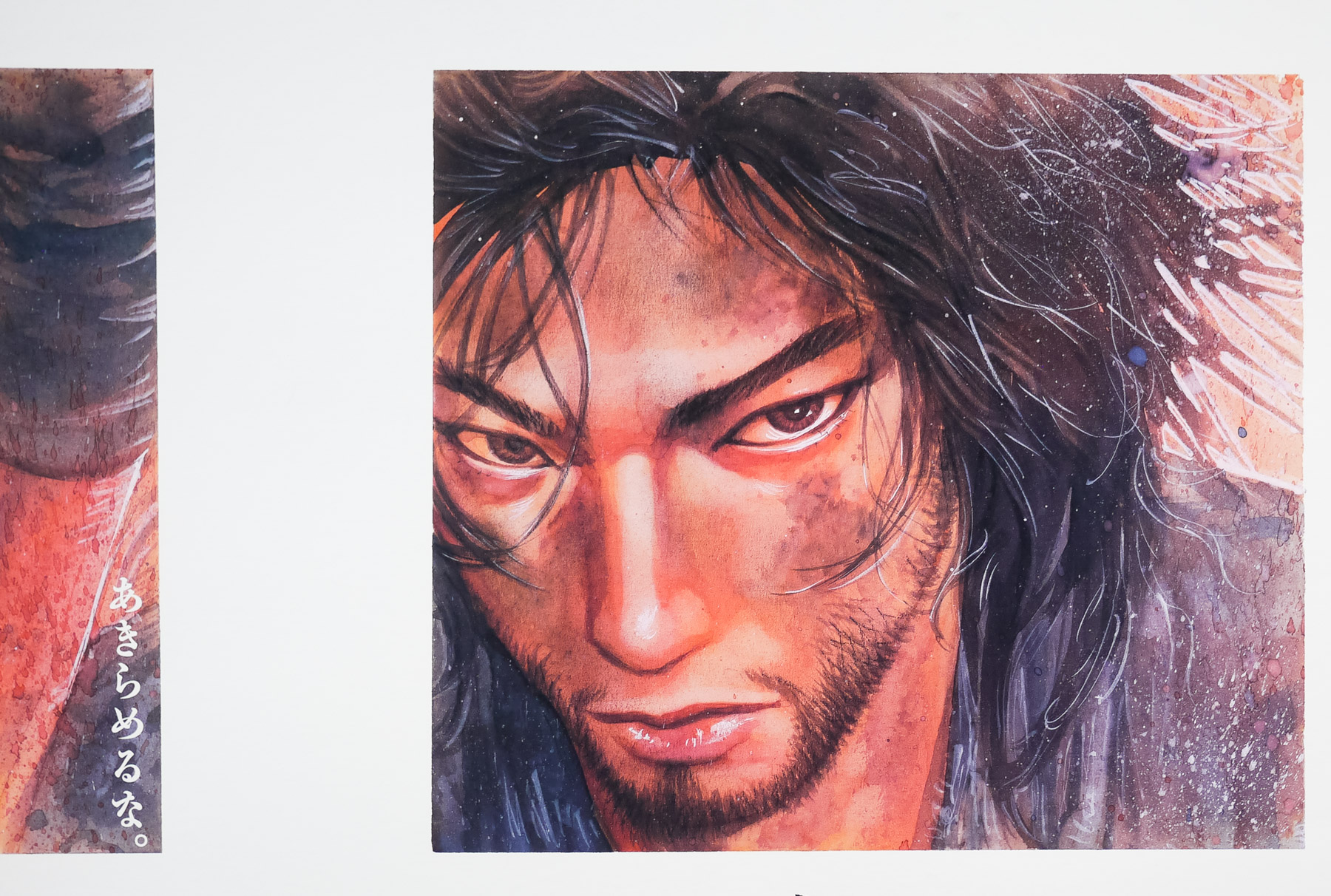
This poster has artwork that is credited to Takehiko Inoue who is a Japanese artist that was born in 1967 in Okuchi, Kagoshima and is best known for his work on manga, with two titles in particular, Slam Dunk and samurai tale Vagabond, that are popular across the globe. His Wikipedia page details a history of his work and also notes that he’s a huge fan of basketball and is a published sports writer. Inoue has also done design work for video games, including Lost Odyssey on the Xbox 360. I can’t find any record of any other film poster work but I can only assume he has done some.

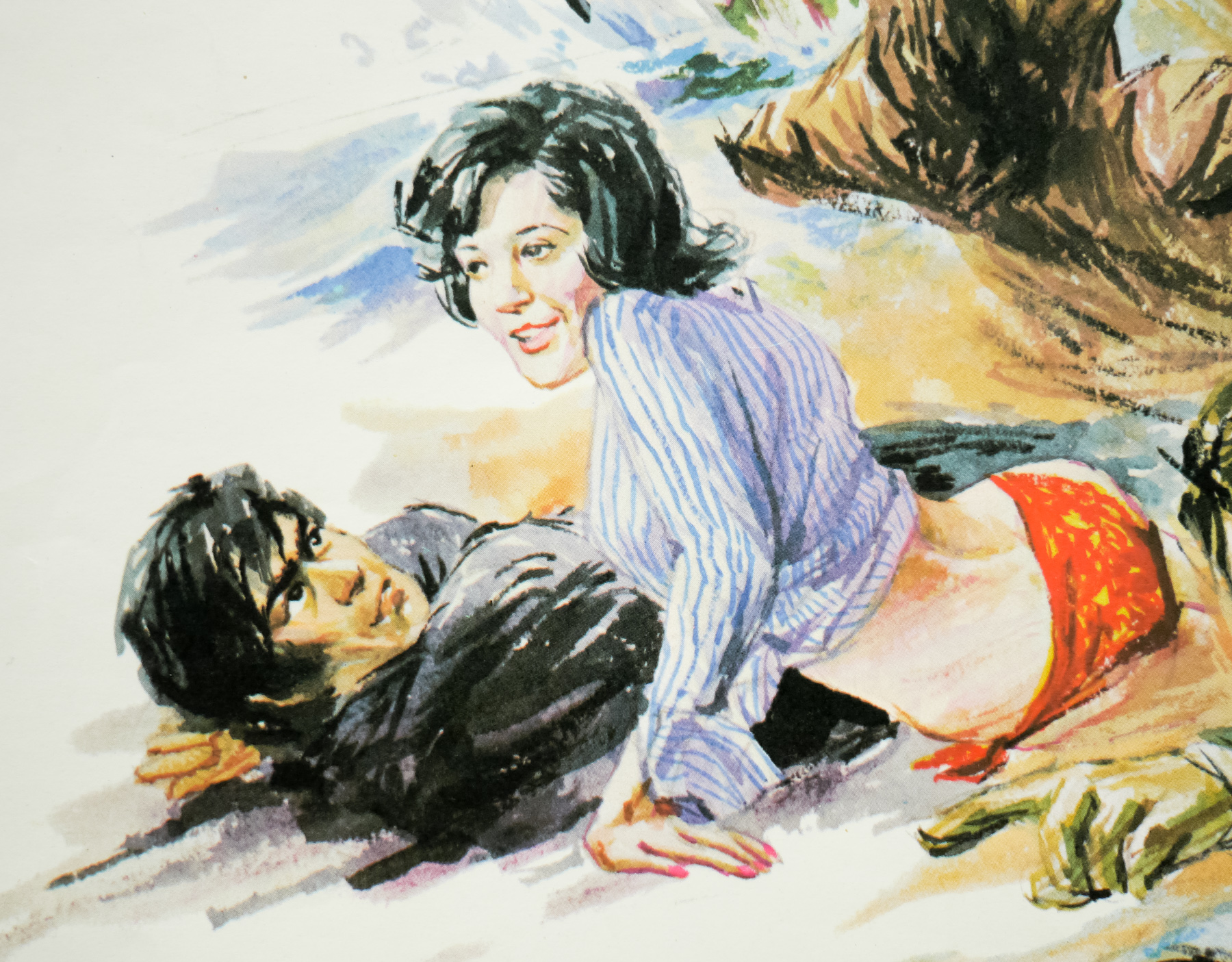
The Streetfighter’s Last Revenge / B2 / Japan

06.01.16

Poster Poster
Title
The Streetfighter's Last Revenge
AKA
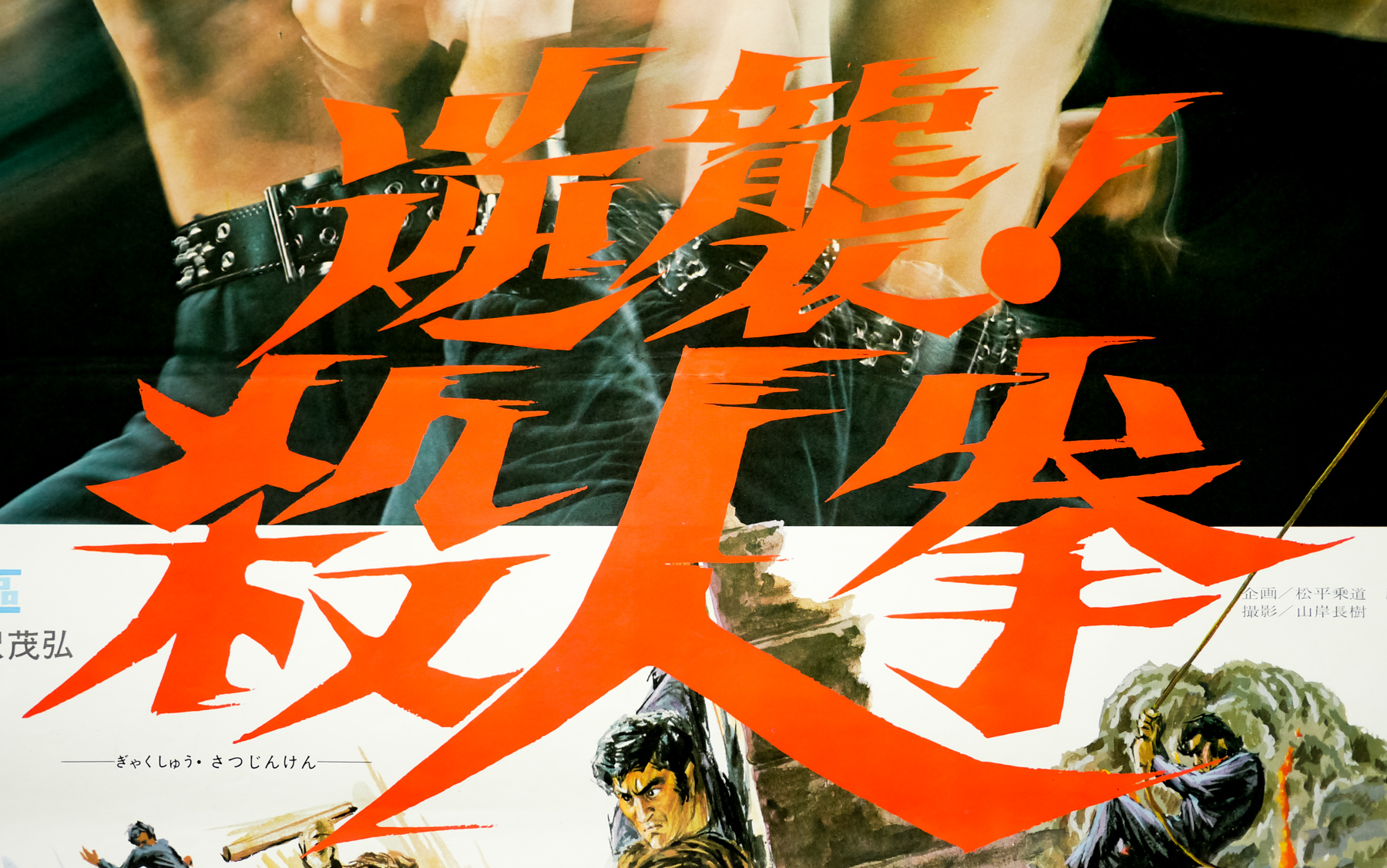
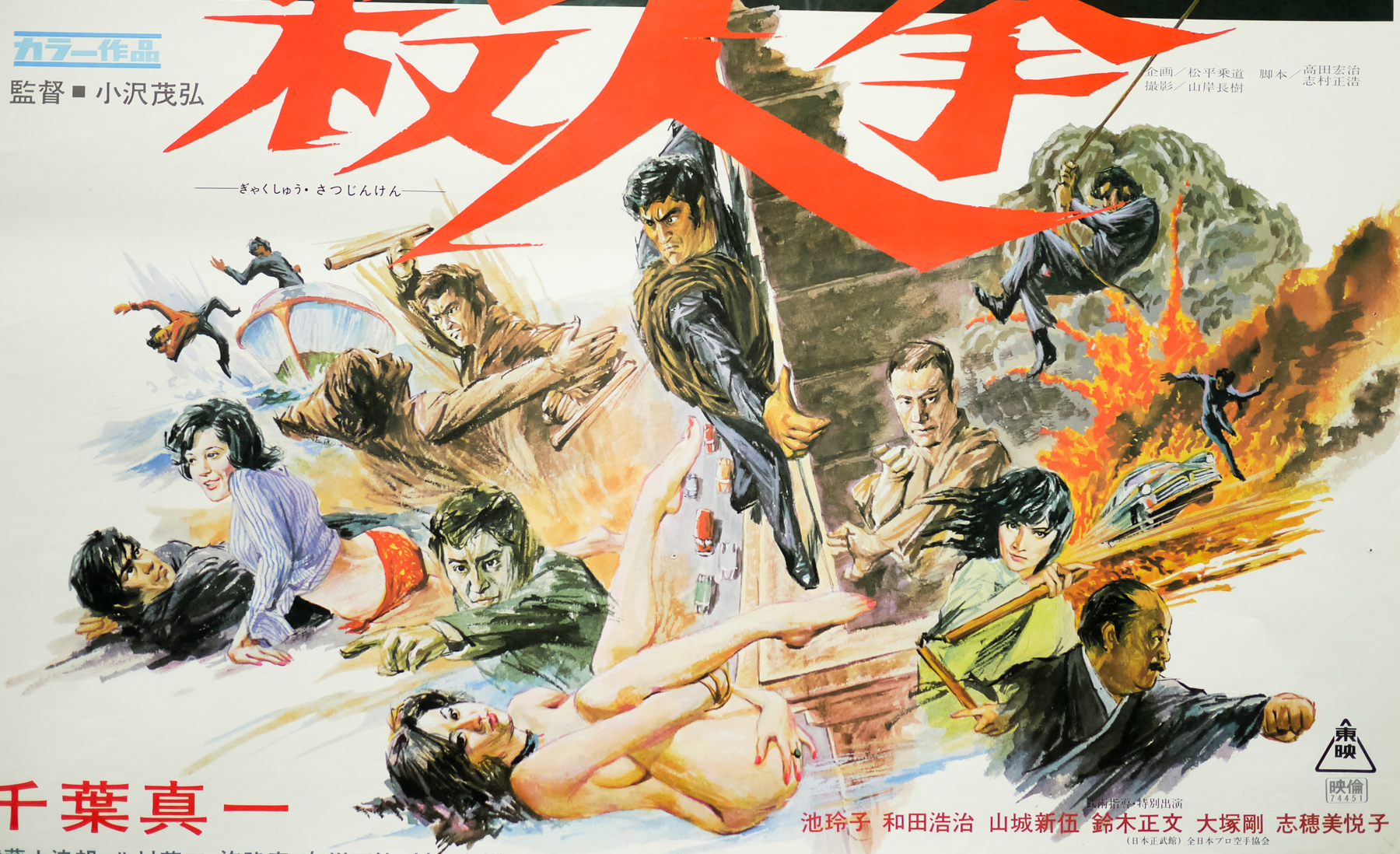
Gyakushû! Satsujin ken (Japan - original title) | Revenge! The Killing Fist (literal English title)
Year of Film
1974
Director
Shigehiro Ozawa
Starring
Shin'ichi Chiba (as Sonny Chiba), Reiko Ike, Kôji Wada, Tatsuo Endô, Akira Shioji, Tsuyoshi Ôtsuka, Frankie Black, Shingo Yamashiro, Masafumi Suzuki, Etsuko Shihomi
Origin of Film
Japan
Genre(s) of Film
Shin'ichi Chiba (as Sonny Chiba), Reiko Ike, Kôji Wada, Tatsuo Endô, Akira Shioji, Tsuyoshi Ôtsuka, Frankie Black, Shingo Yamashiro, Masafumi Suzuki, Etsuko Shihomi,
Type of Poster
B2
Style of Poster
--
Origin of Poster
Japan
Year of Poster
1974
Designer
Unknown
Artist
Unknown
Size (inches)
20 6/16" x 28 11/16"
SS or DS
SS
Tagline
--

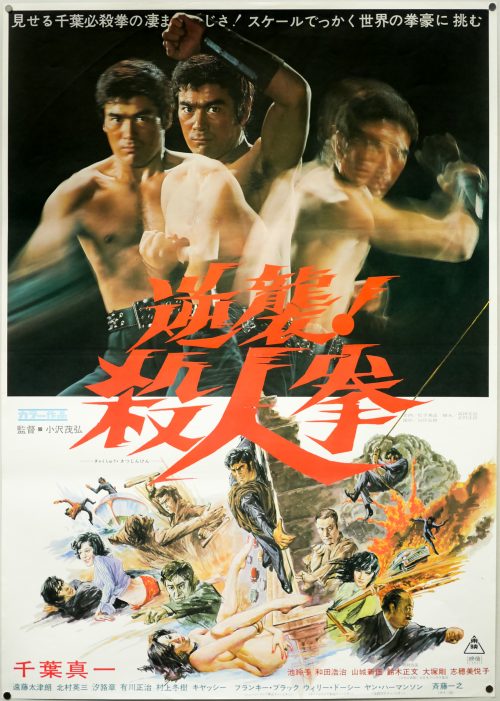
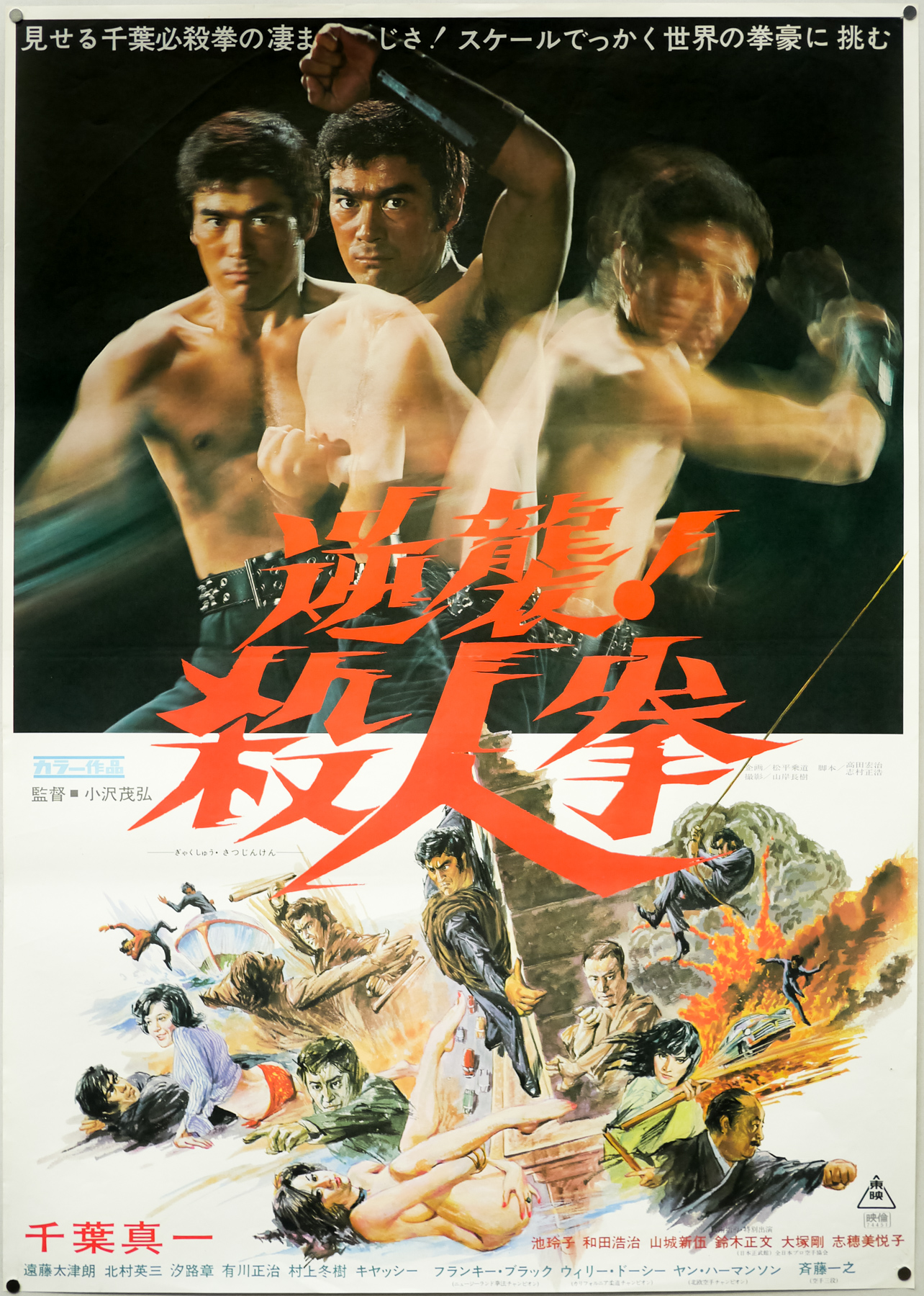
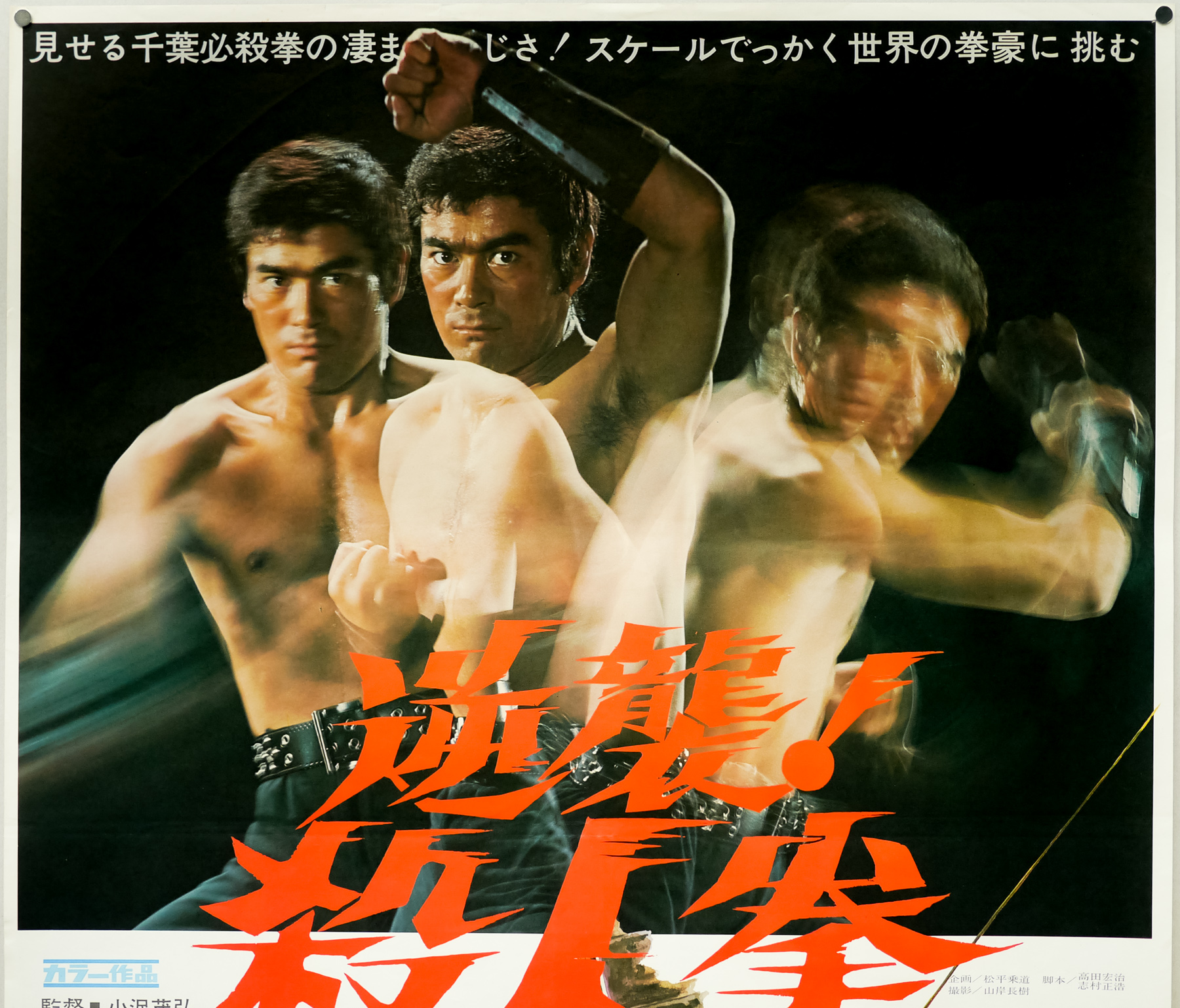
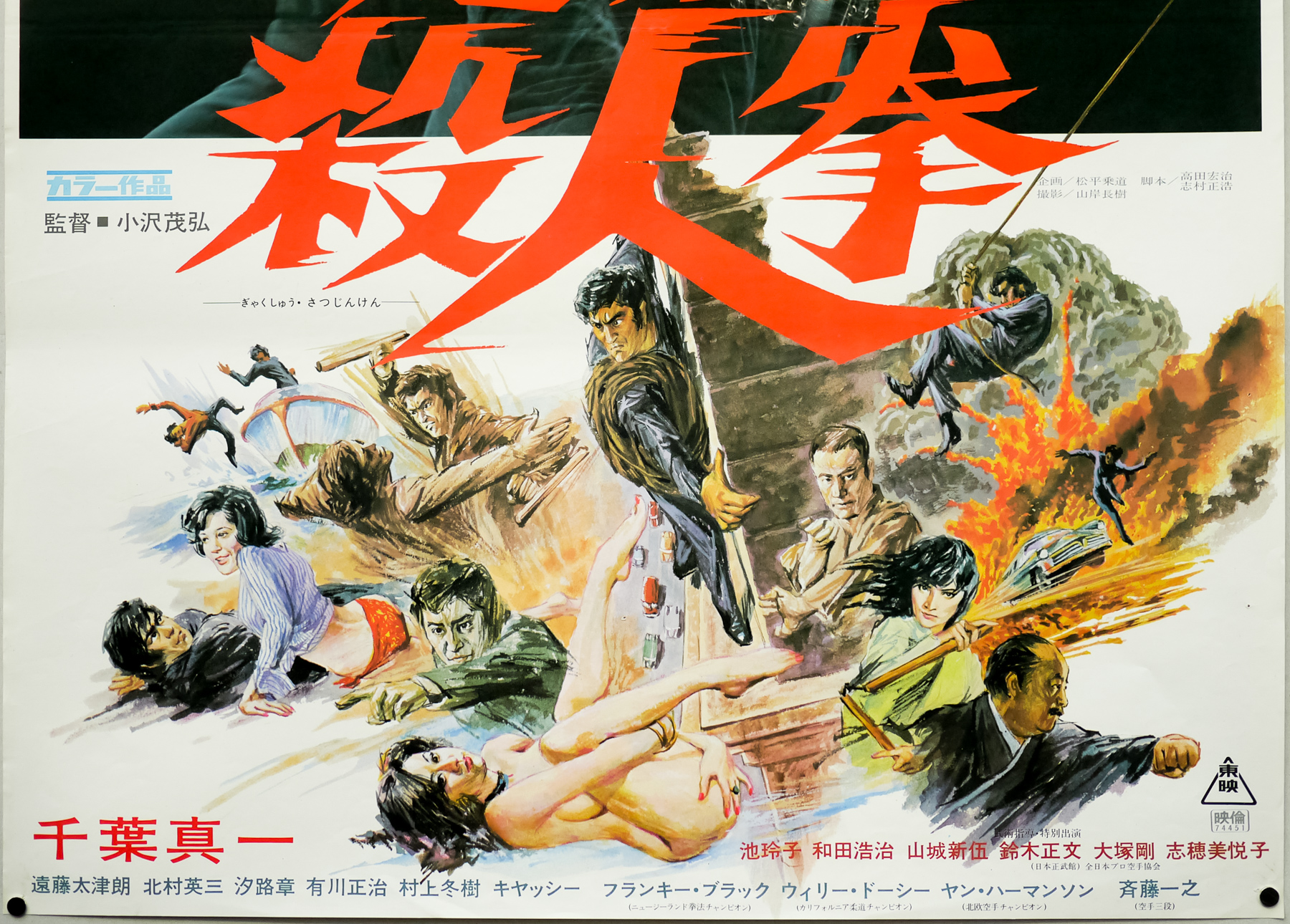
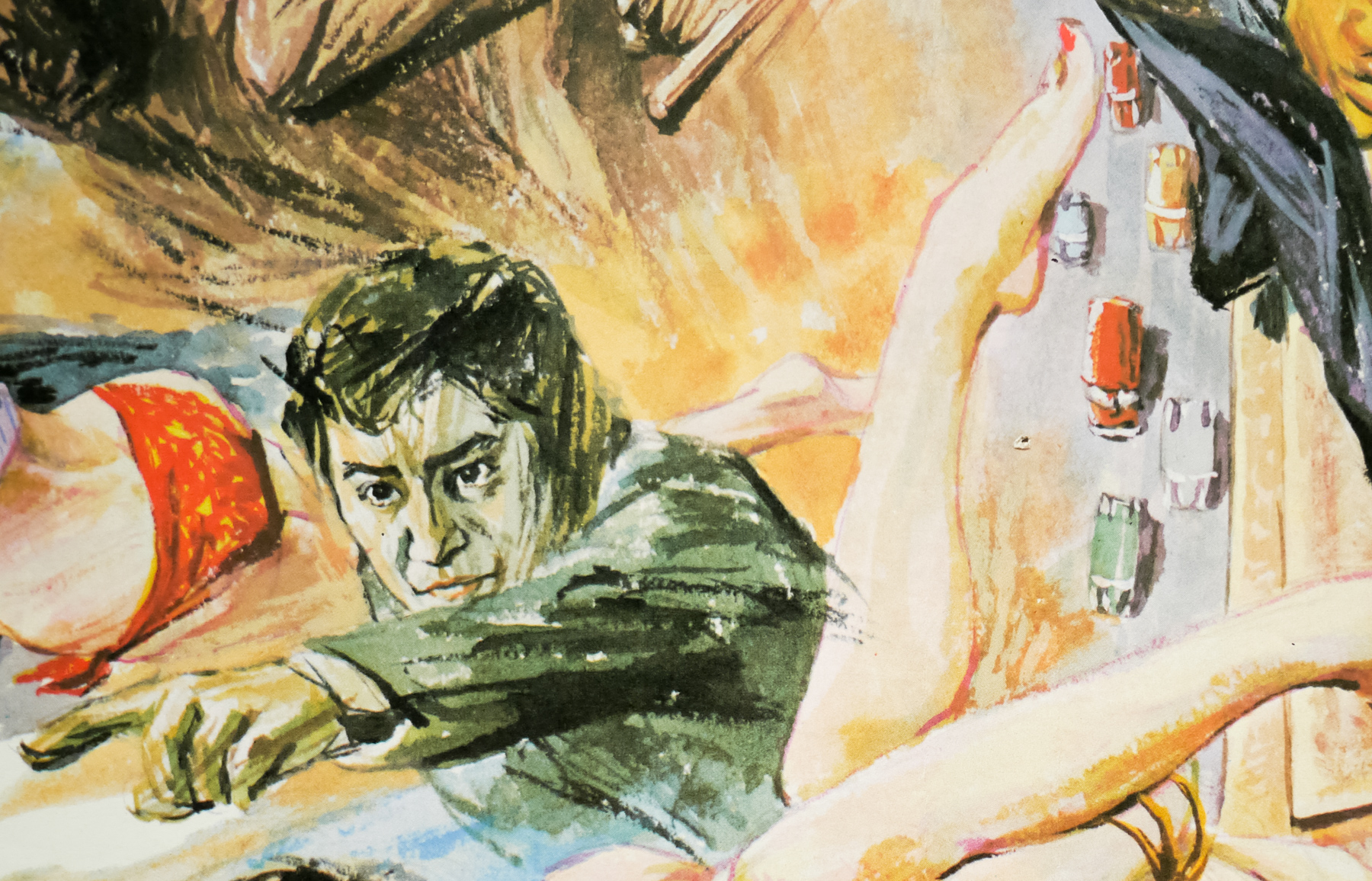
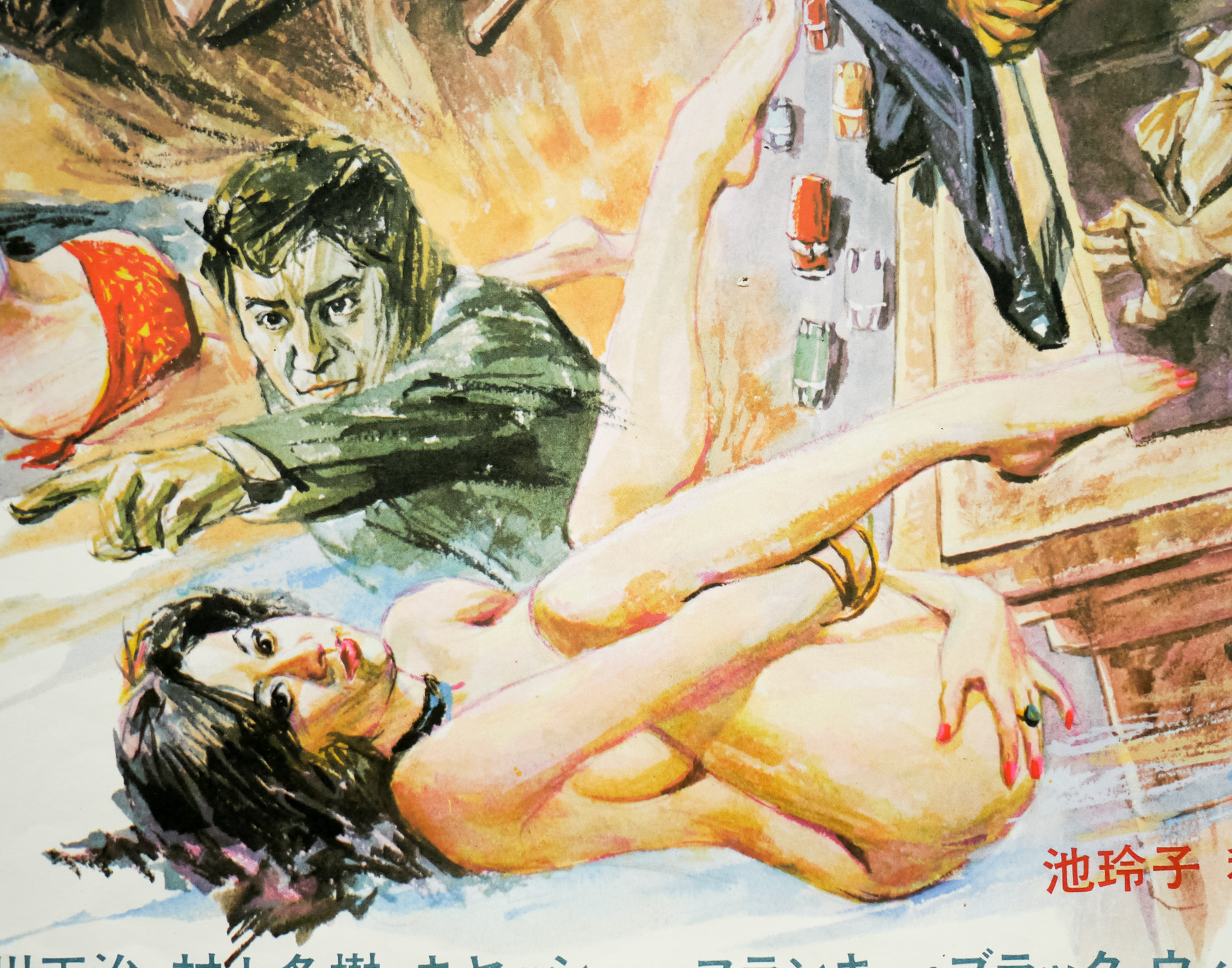
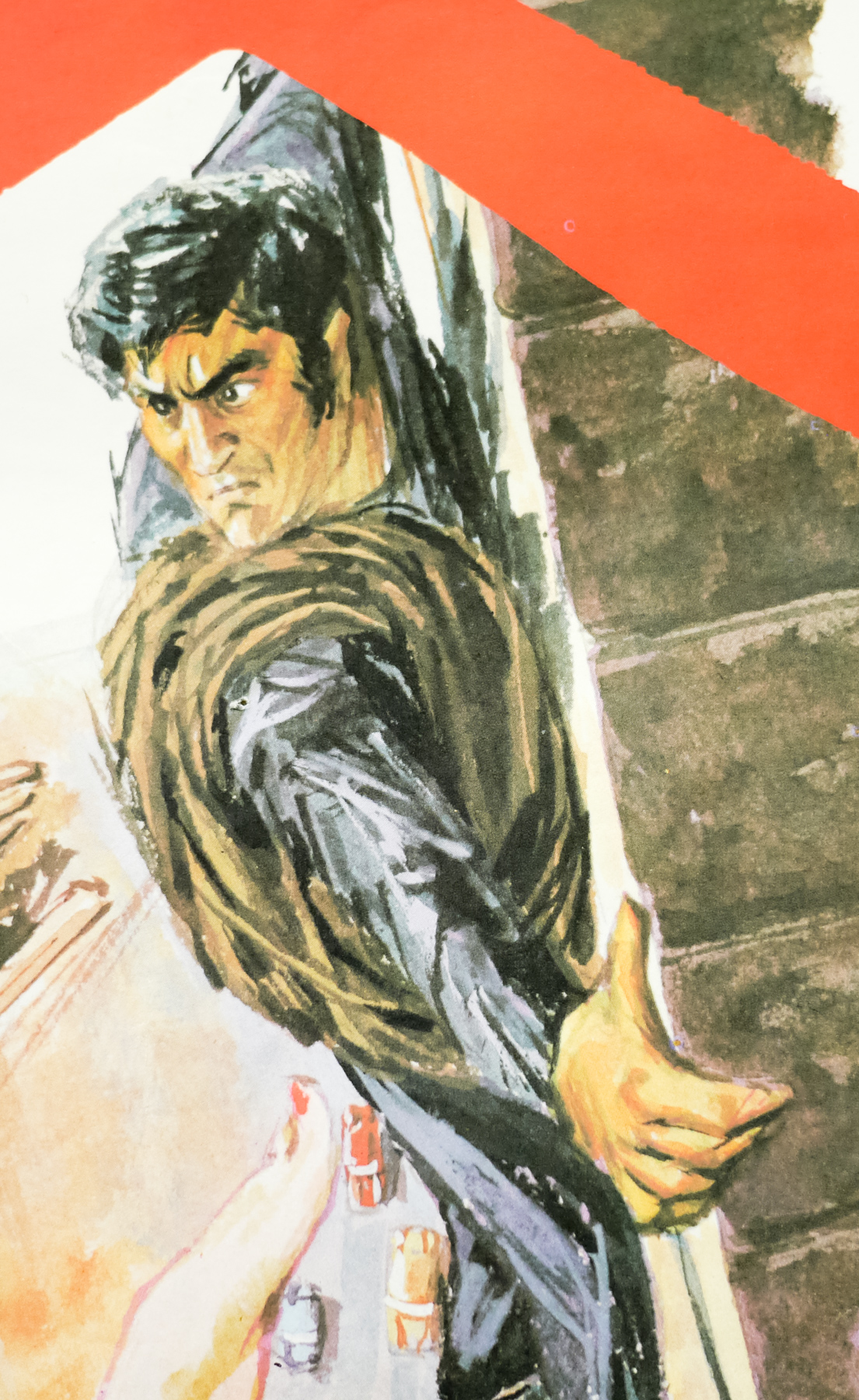
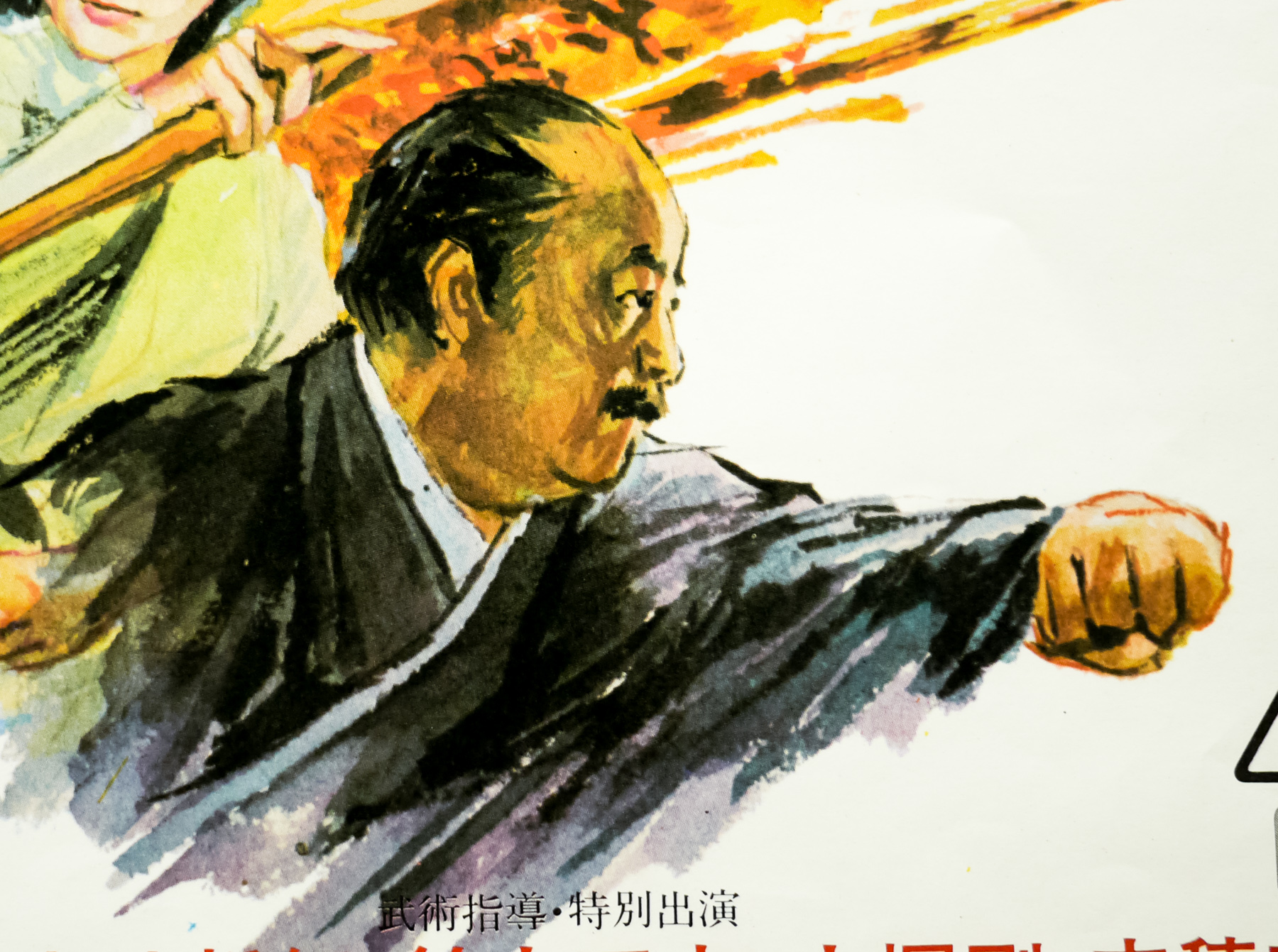
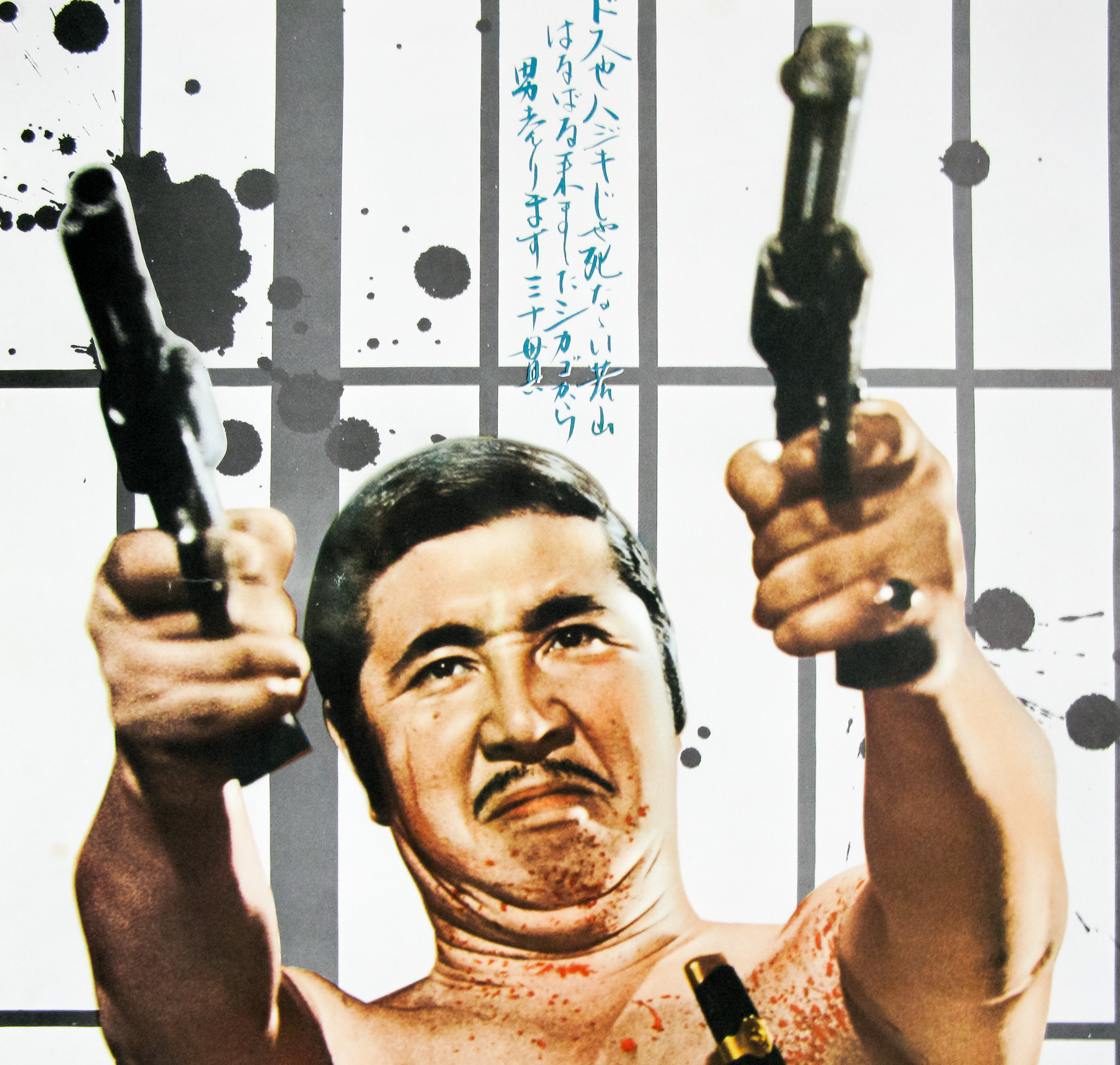
A rare mix of photography and artwork features on this Japanese B2 for the release of (what would later be re-titled) The Streetfighter’s Last Revenge. The final entry in a trilogy of films starring legendary Japanese martial artist Shin’ichi ‘Sonny’ Chiba, the film followed the original The Streetfighter and Return of the Street Fighter which were all produced in one year (1974). The original film was Chiba’s breakout international hit and was released in the USA and elsewhere in 1974, but this sequel would have to wait 5 years before it was given a cinema release in the States. When it did finally arrive it was significantly altered and had large amounts of violence removed.

The reason for the delayed release is likely to do with the drop in quality over the first two entries as this review (and several others) on IMDb testifies:

‘If you love THE STREET FIGHTER (and you probably do if you looked up this entry) don’t even bother with this final entry in the series. This one sucks out loud, and has only one decent fight scene which lasts for about a minute. Our hero now has taken on a more “MISSION: IMPOSSIBLE”-type persona since he now is a master of disguise (???). Skip this.’

This film and the others in the trilogy are now in the public domain (so can be streamed from multiple sources online). Director Quentin Tarantino is a big Chiba fan and these are the films that the character of Clarence (Christian Slater) is watching in a cinema triple-bill when he first meets Alabama (Patricia Arquette) in Tony Scott’s True Romance (Tarantino wrote the script).

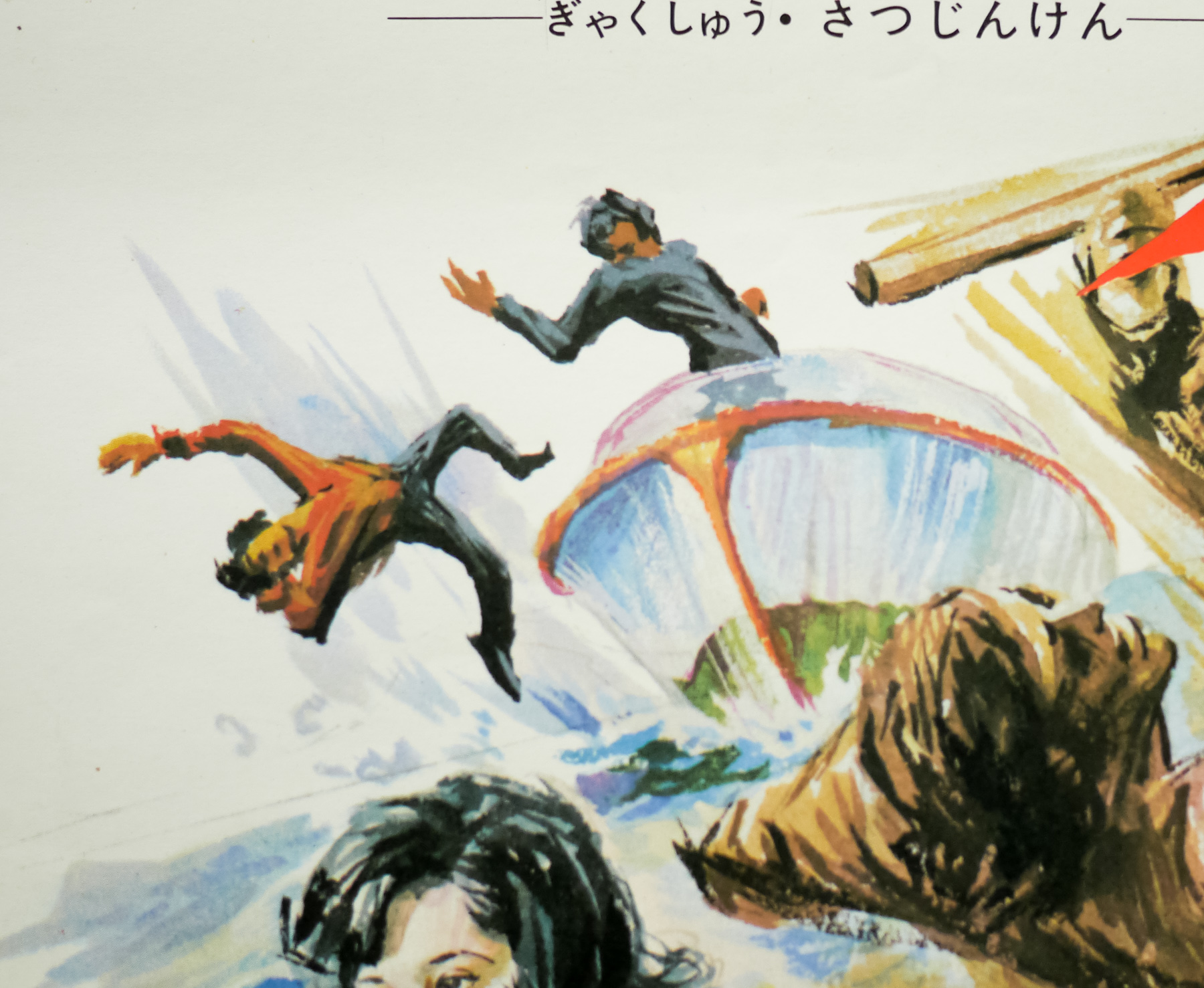
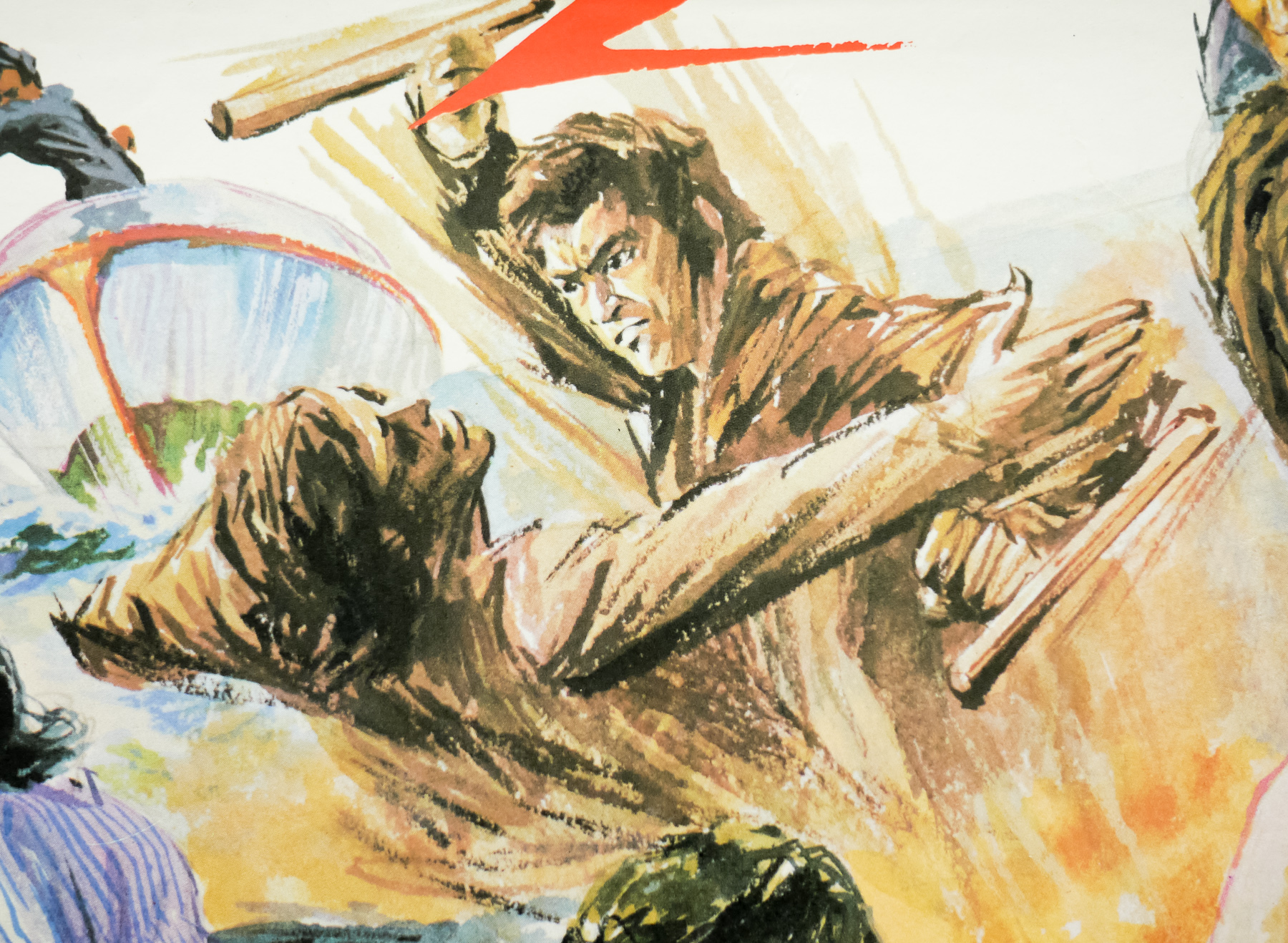
I’ve struggled to find out who is responsible for the artwork on this poster so if anyone has an idea please get in touch. The US poster uses the same art and photograph, which was almost never the case, but I suspect that the distributor (New Line) was trying to save money by reusing as much as possible.

Ichi the Killer / B2 / style A / Japan

08.02.16

Poster Poster
Title
Ichi the Killer
AKA
Koroshiya 1 (Japan - English title - means 'Hitman')
Year of Film
2001
Director
Takashi Miike
Starring
Tadanobu Asano, Nao Ômori, Shin'ya Tsukamoto, Paulyn Sun, Susumu Terajima, Shun Sugata, Toru Tezuka, Yoshiki Arizono, Kiyohiko Shibukawa
Origin of Film
Japan
Genre(s) of Film
Tadanobu Asano, Nao Ômori, Shin'ya Tsukamoto, Paulyn Sun, Susumu Terajima, Shun Sugata, Toru Tezuka, Yoshiki Arizono, Kiyohiko Shibukawa,
Type of Poster
B2
Style of Poster
Style A
Origin of Poster
Japan
Year of Poster
2001
Designer
Unknown
Artist
--
Size (inches)
20 6/16" x 28 13/16"
SS or DS
SS
Tagline
--

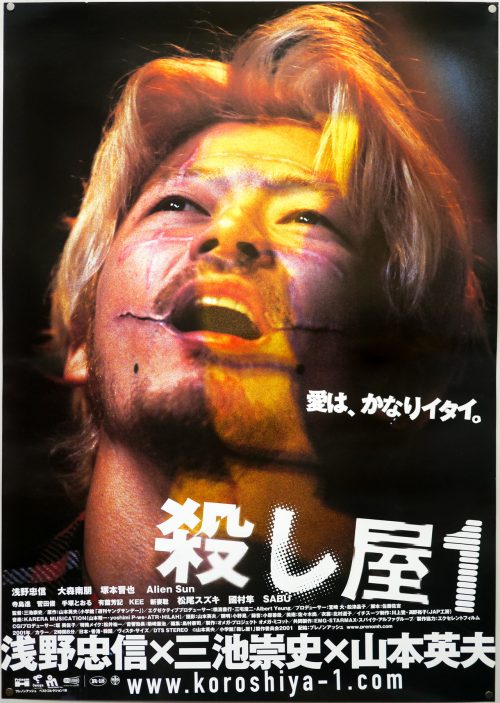
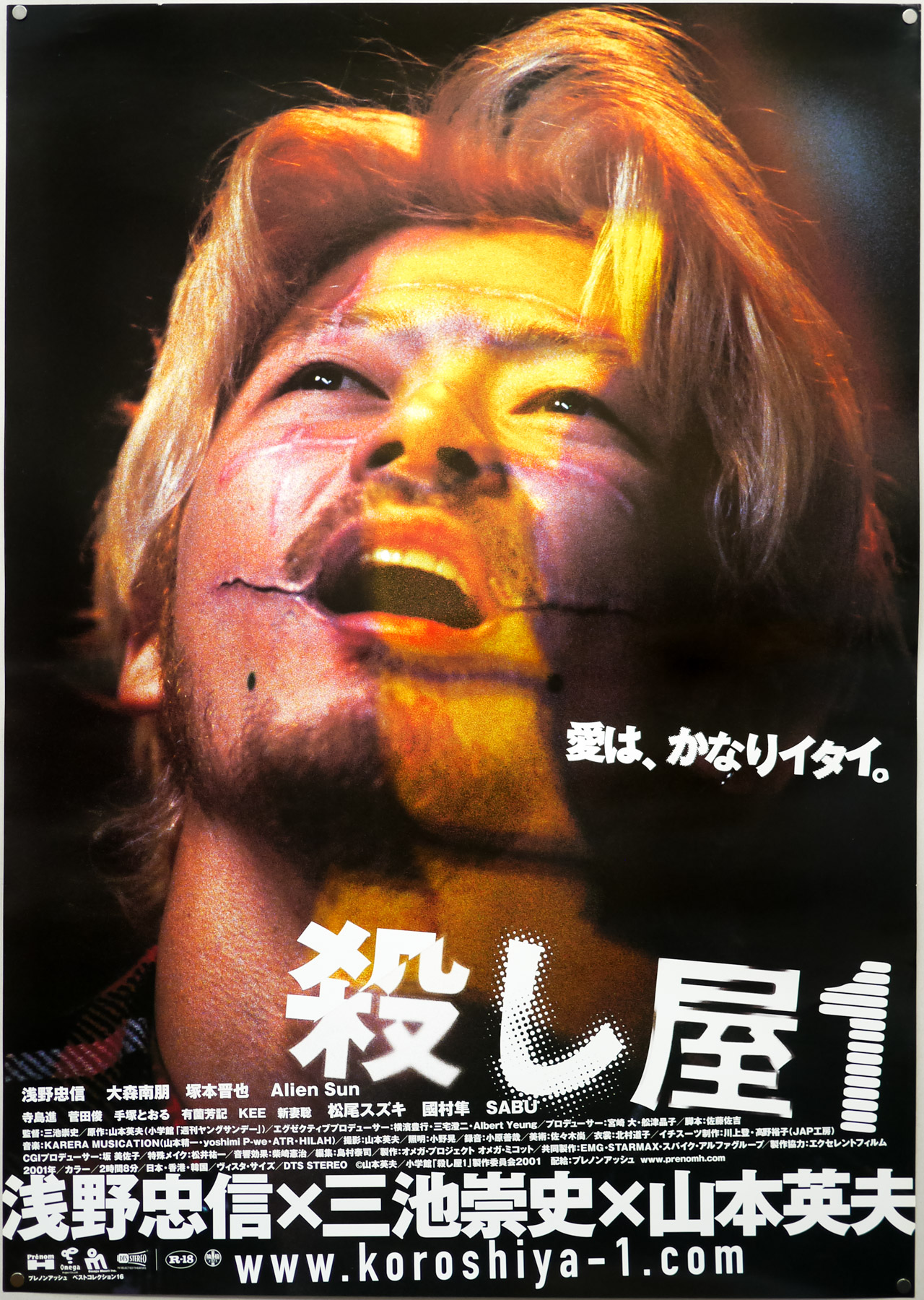
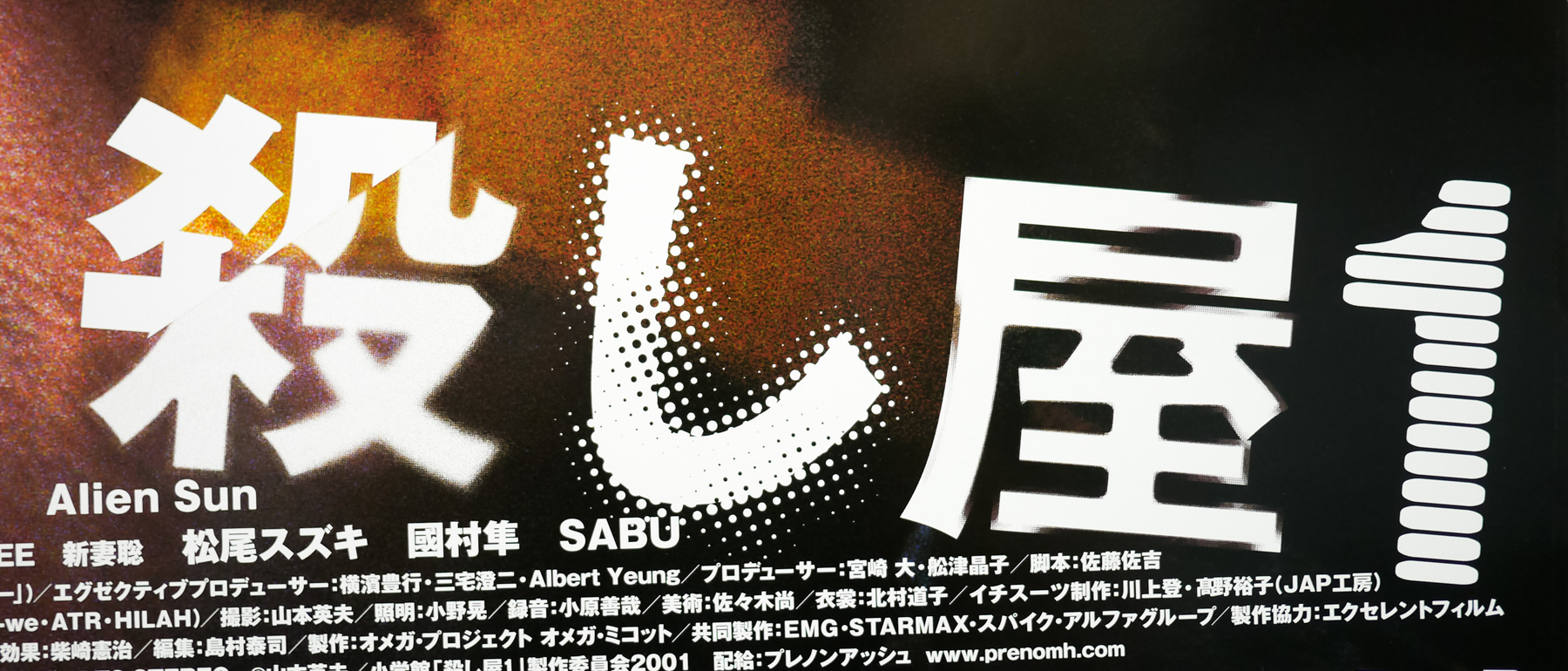
This is one of two styles of Japanese B2 posters printed for the release of director Takashi Miike‘s controversial 2001 film Ichi the Killer. A notably prolific director, Miike released 6 other films in the same year as Ichi alone, although it would be this one that would gain the most international notoriety. Based on the manga series of the same name by Hideo Yamamoto, the film focuses on the machinations of rival yakuza gangs within a crime syndicate and their interaction with Ichi (Nao Ômori), a shy and seemingly meek loner with a very dark side.

The film begins with the supposed disappearance of the gang boss Anjo, who vanishes from his apartment with millions of Yen, much to the confusion of his men. The audience sees the bloody aftermath of the fate that Anjo suffered at the hands of Ichi but a clean up crew led by Jijii (Shin’ya Tsukamoto) returns his apartment to a spotless state before his henchmen, led by the sadistic Kakihara (Tadanobu Asano) arrives.

The hunt for Anjo begins and Kakihara wastes no time in kidnapping a rival gang leader, Suzuki (Susumu Terajima) and hangs him from meat hooks to try and get him to confess. When it becomes clear he’s got the wrong culprit, Kakihara is forced to apologise and then cuts off his own tongue as a punishment. After being kicked out of the syndicate, the gang continues to hunt for Anjo. The audience learns that Jijii has been psychologically manipulating Ichi for years and has trained him in preparation to be used as a kind of weapon against whoever he decides to target. Suzuki has offered Jijii a large sum of money to take out Kakihara and his gang in revenge for their earlier attack and they must hunt for Ichi before he can get to them first.

It’s fair to say that, in true Miike style, the film doesn’t shy away from violence and sadistic torture and there are some truly brutal sequences. It’s not hard to see why it attracted controversy and was even banned outright in a few countries soon after its release. Despite some very ropey CGI there are several scenes that still shock today and Miike uses editing and sound design to great effect.

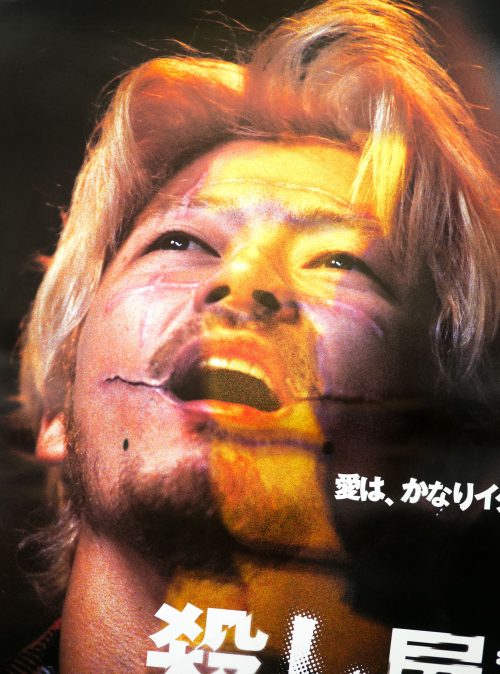
This poster, which I’ve named ‘Style A’ features the standout character of Kakihara (here with the number 1 seen on the back of Ichi’s killer’s outfit projected onto his face). The other style also features Kakihara but in a very different situation.

A Boss with the Samurai Spirit / B2 / Japan

30.06.11

Poster Poster
Title
A Boss with the Samurai Spirit
AKA
Kapone no shatei, yamato damashi (Japan - original title)
Year of Film
1971
Director
Takashi Harada
Starring
Tomisaburo Wakayama, Minoru Oki, Willy Dorcey, Seizaburô Kawazu, Ryôsuke Kagawa, Kikue Môri
Origin of Film
Japan
Genre(s) of Film
Tomisaburo Wakayama, Minoru Oki, Willy Dorcey, Seizaburô Kawazu, Ryôsuke Kagawa, Kikue Môri,
Type of Poster
B2
Style of Poster
--
Origin of Poster
Japan
Year of Poster
1971
Designer
Unknown
Artist
--
Size (inches)
20 5/16" x 28 11/16"
SS or DS
SS
Tagline
--

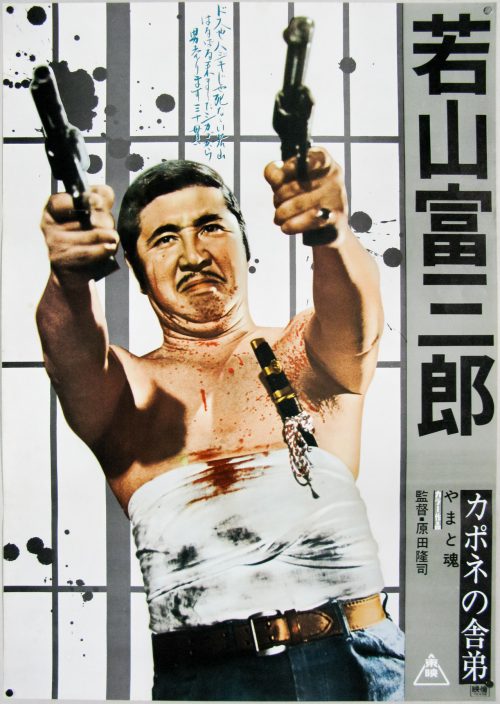
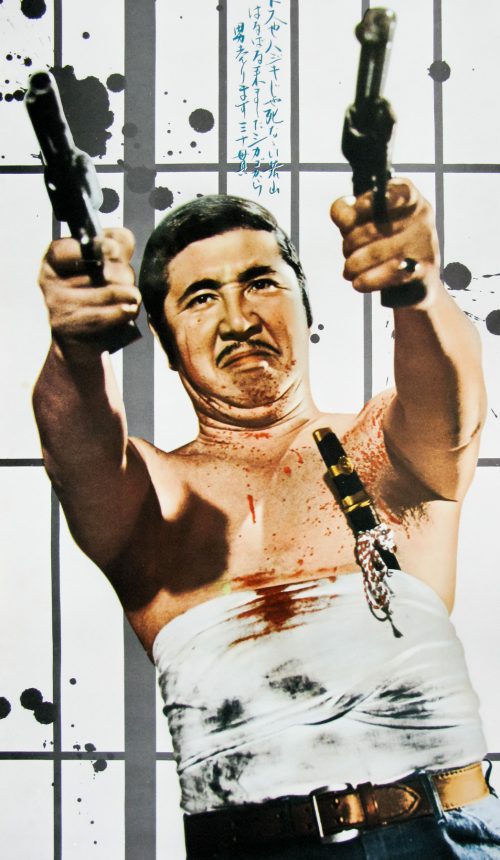
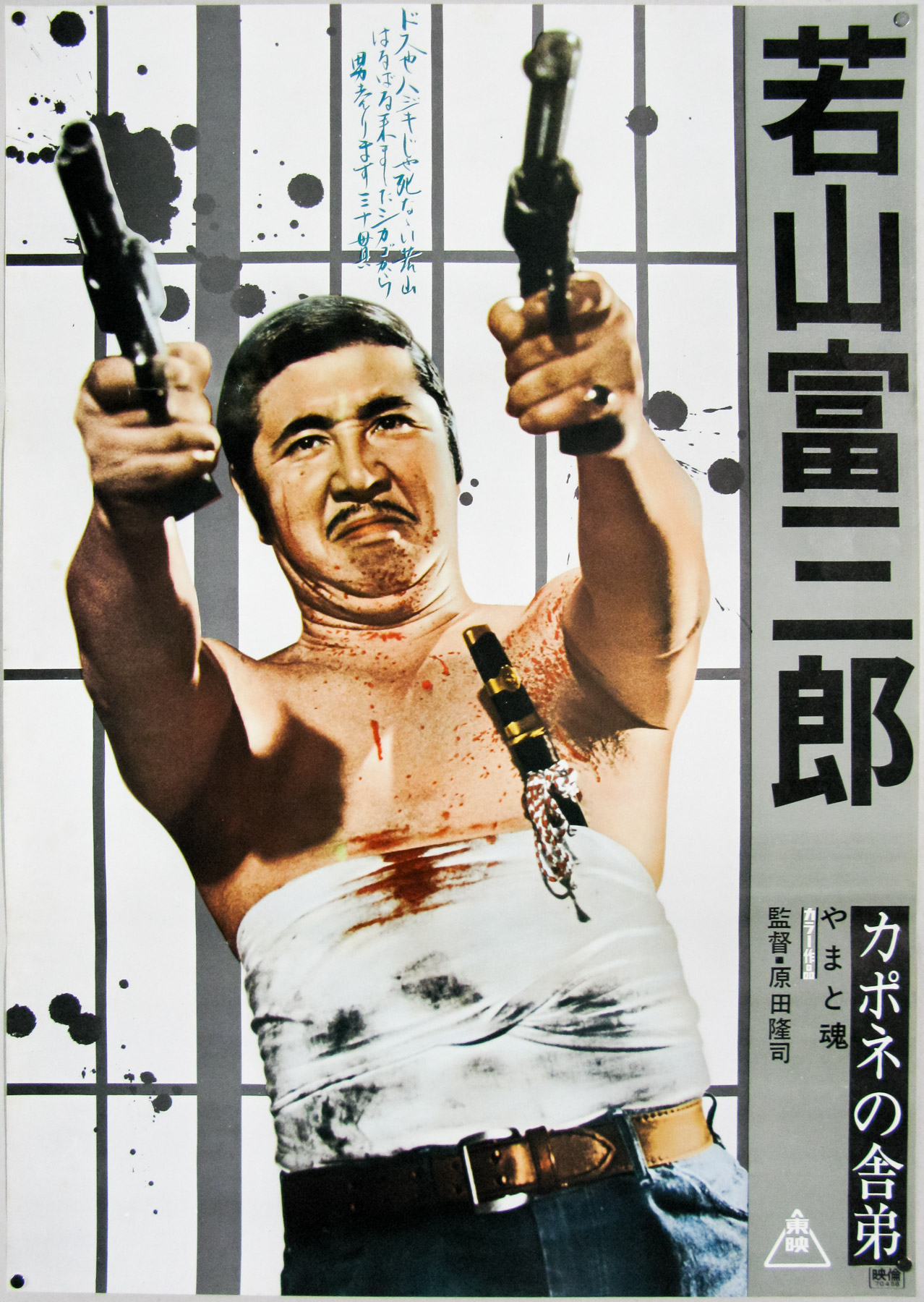
I’ve been unable to find out much about this film, other than this profile on IMDb, but it’s a really striking poster. It has a USA title so it must have been released outside of Japan at some point.

Godzilla vs Mothra / 1992 version / B1 / Japan

28.05.13

Poster Poster
Title
Godzilla vs. Mothra
AKA
Gojira vs. Mosura (Japan - original title) | Godzilla and Mothra: The Battle for Earth (USA - video title)
Year of Film
1992
Director
Takao Okawara
Starring
Tetsuya Bessho, Satomi Kobayashi, Takehiro Murata, Saburô Shinoda, Akiji Kobayashi, Akira Takarada, Makoto Ohtake, Keiko Imamura, Sayaka Osawa, Kenpachiro Satsuma, Hurricane Ryu' Hariken
Origin of Film
Japan
Genre(s) of Film
Tetsuya Bessho, Satomi Kobayashi, Takehiro Murata, Saburô Shinoda, Akiji Kobayashi, Akira Takarada, Makoto Ohtake, Keiko Imamura, Sayaka Osawa, Kenpachiro Satsuma, Hurricane Ryu' Hariken,
Type of Poster
B1
Style of Poster
Artwork
Origin of Poster
Japan
Year of Poster
1992
Designer
Unknown
Artist
Noriyoshi Ohrai
Size (inches)
28 12/16" x 40 7/16"
SS or DS
SS
Tagline
--

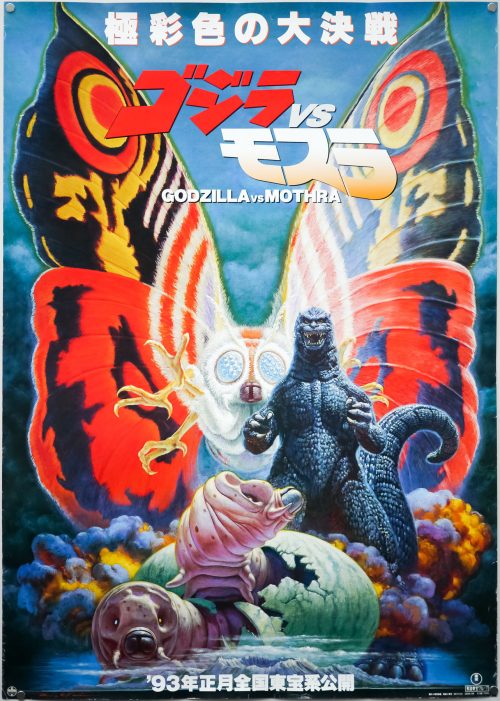
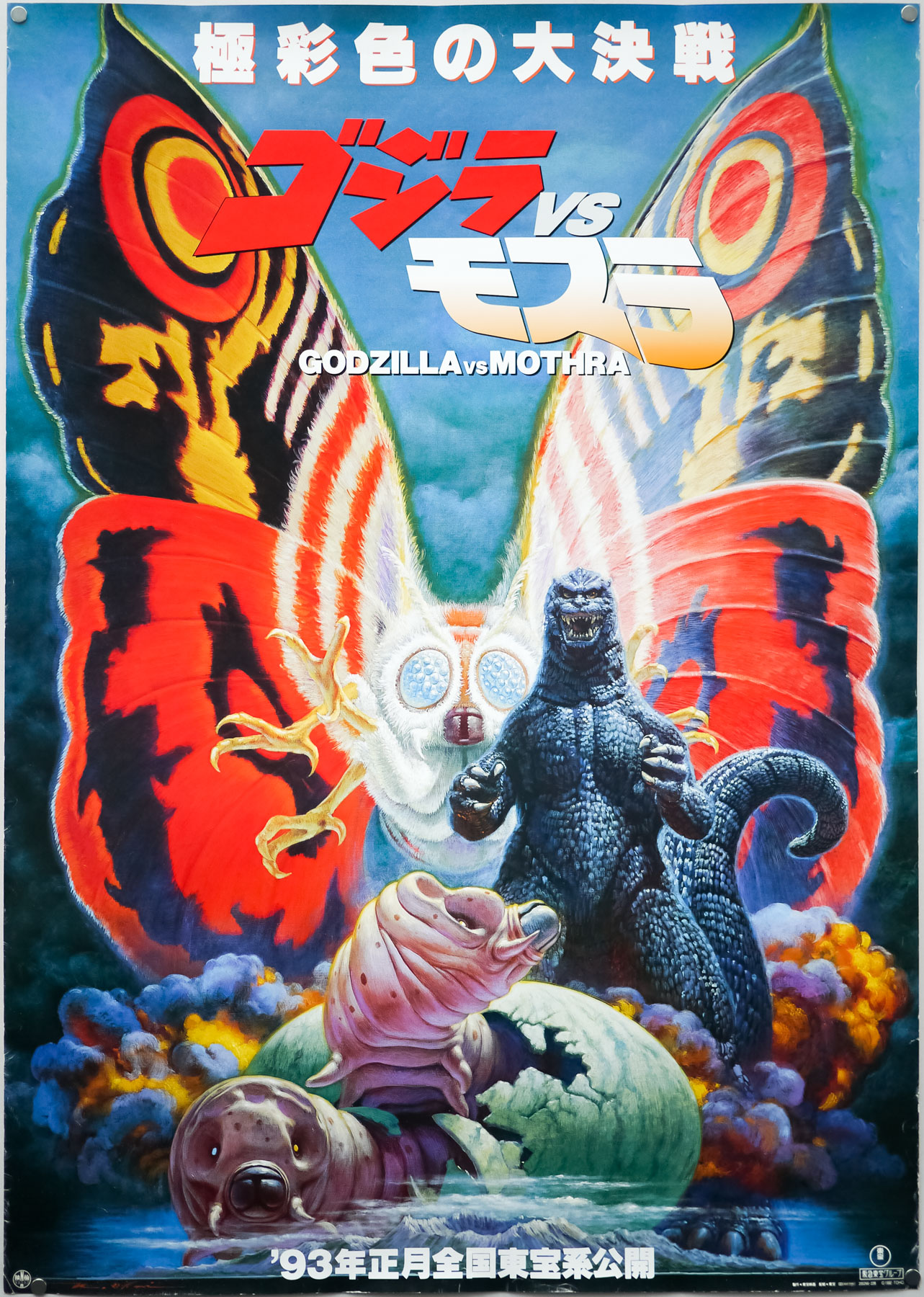
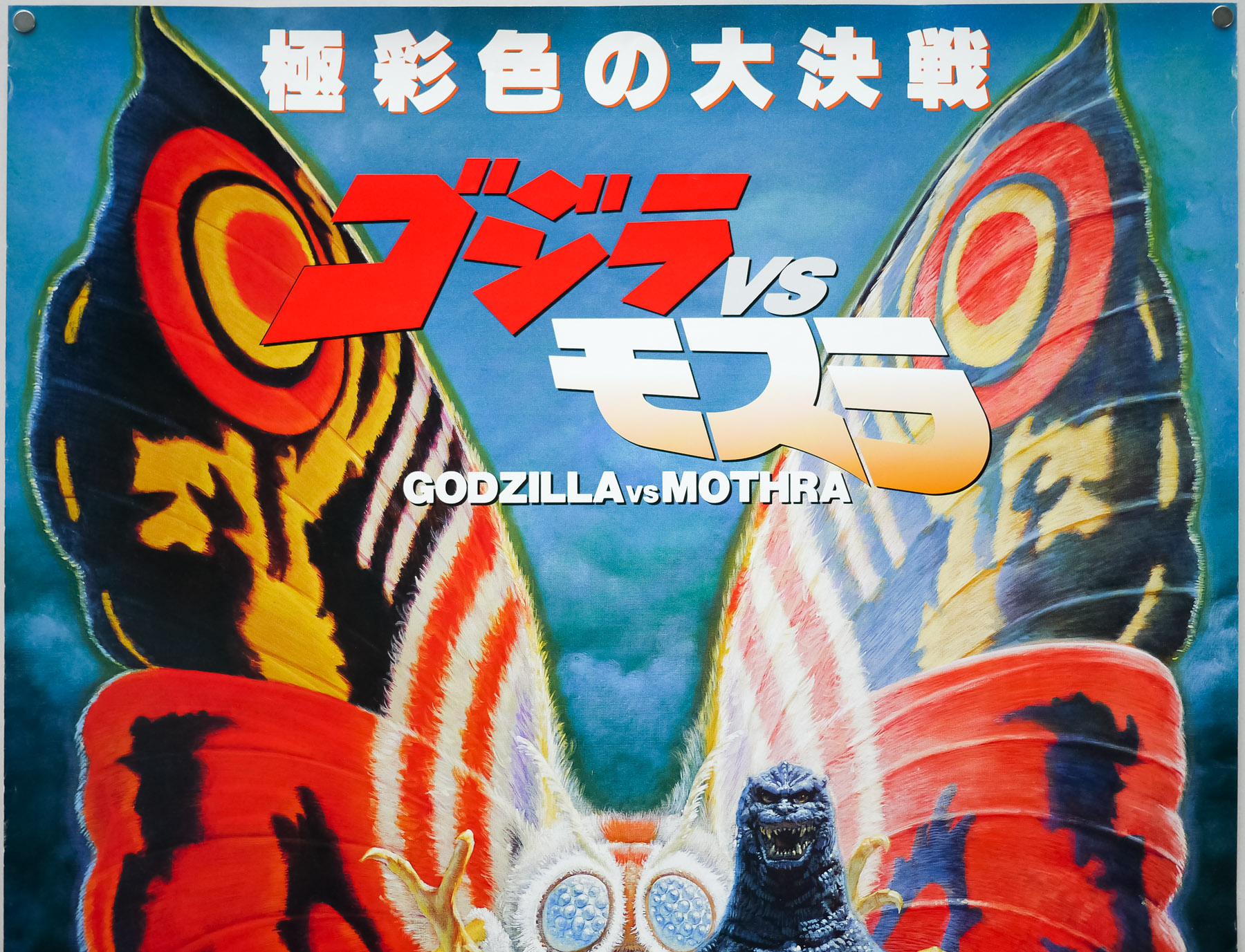
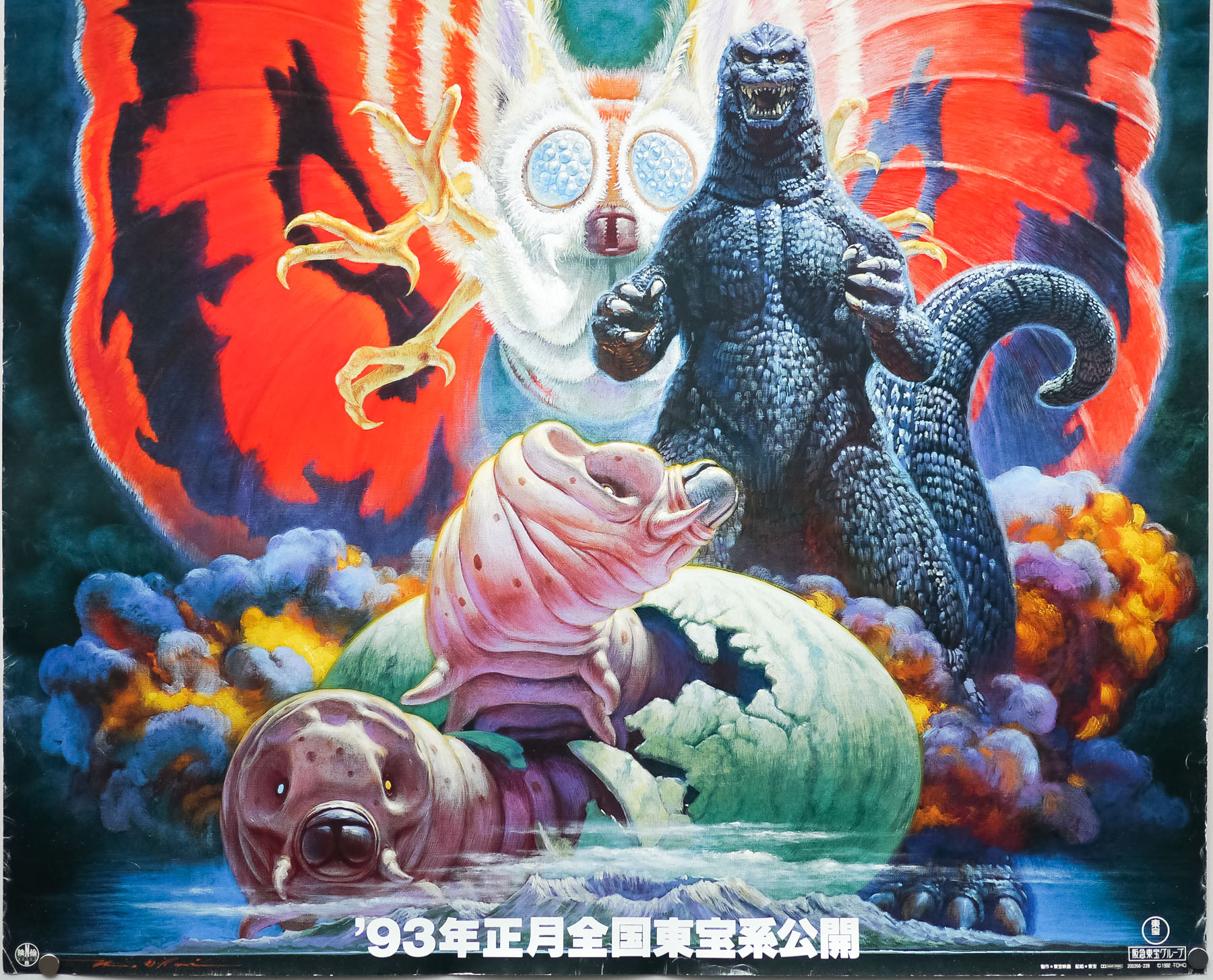
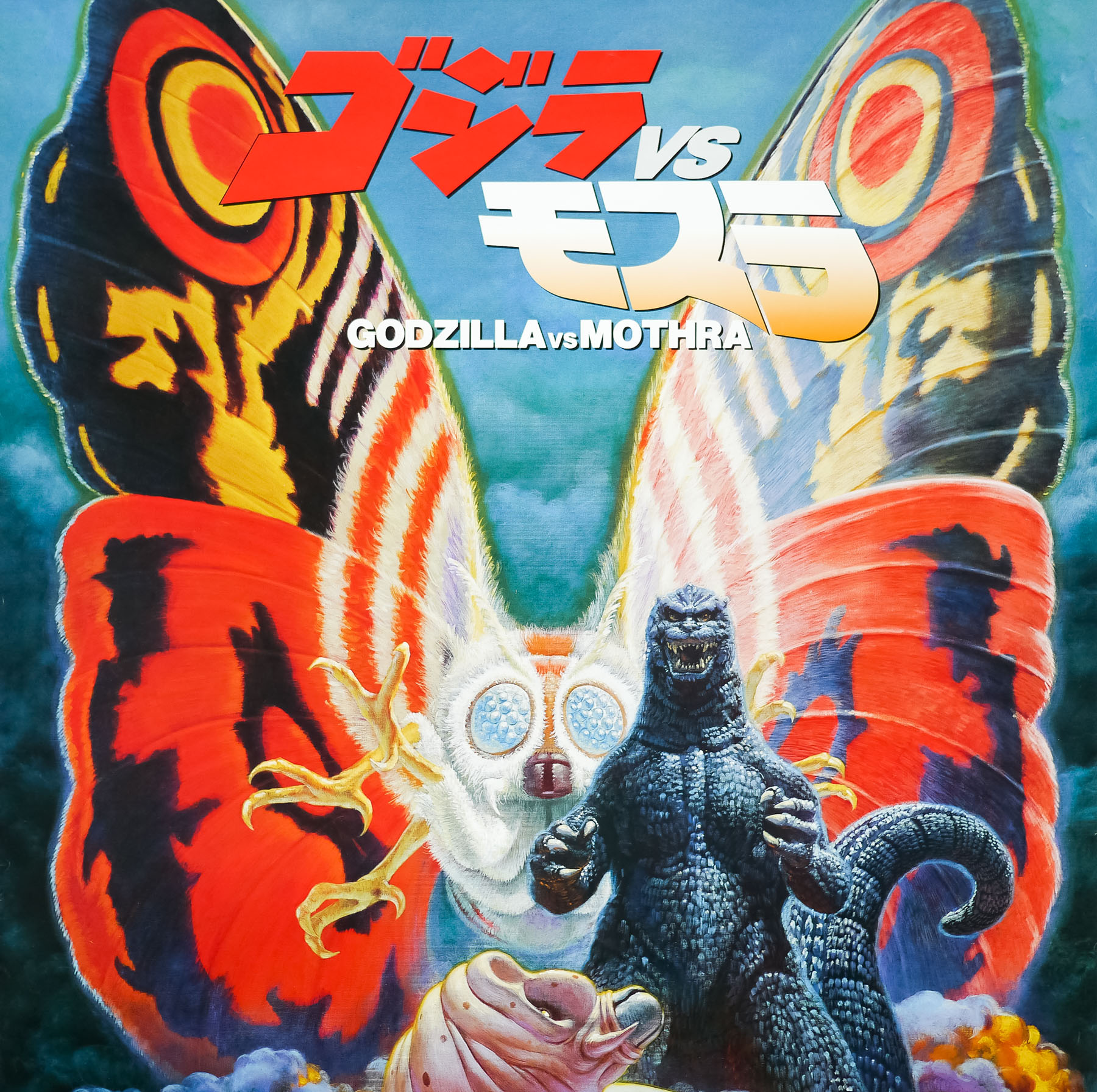
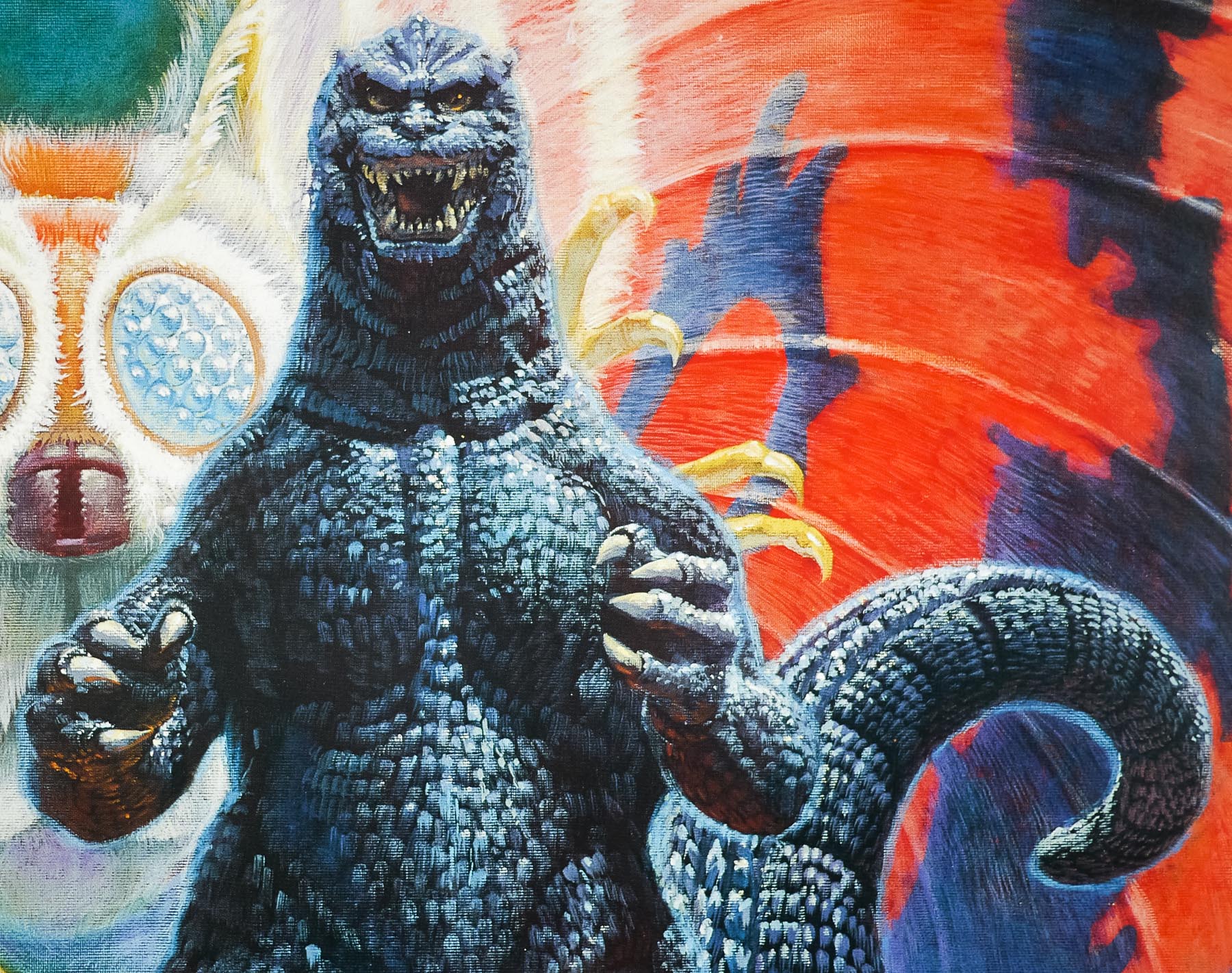
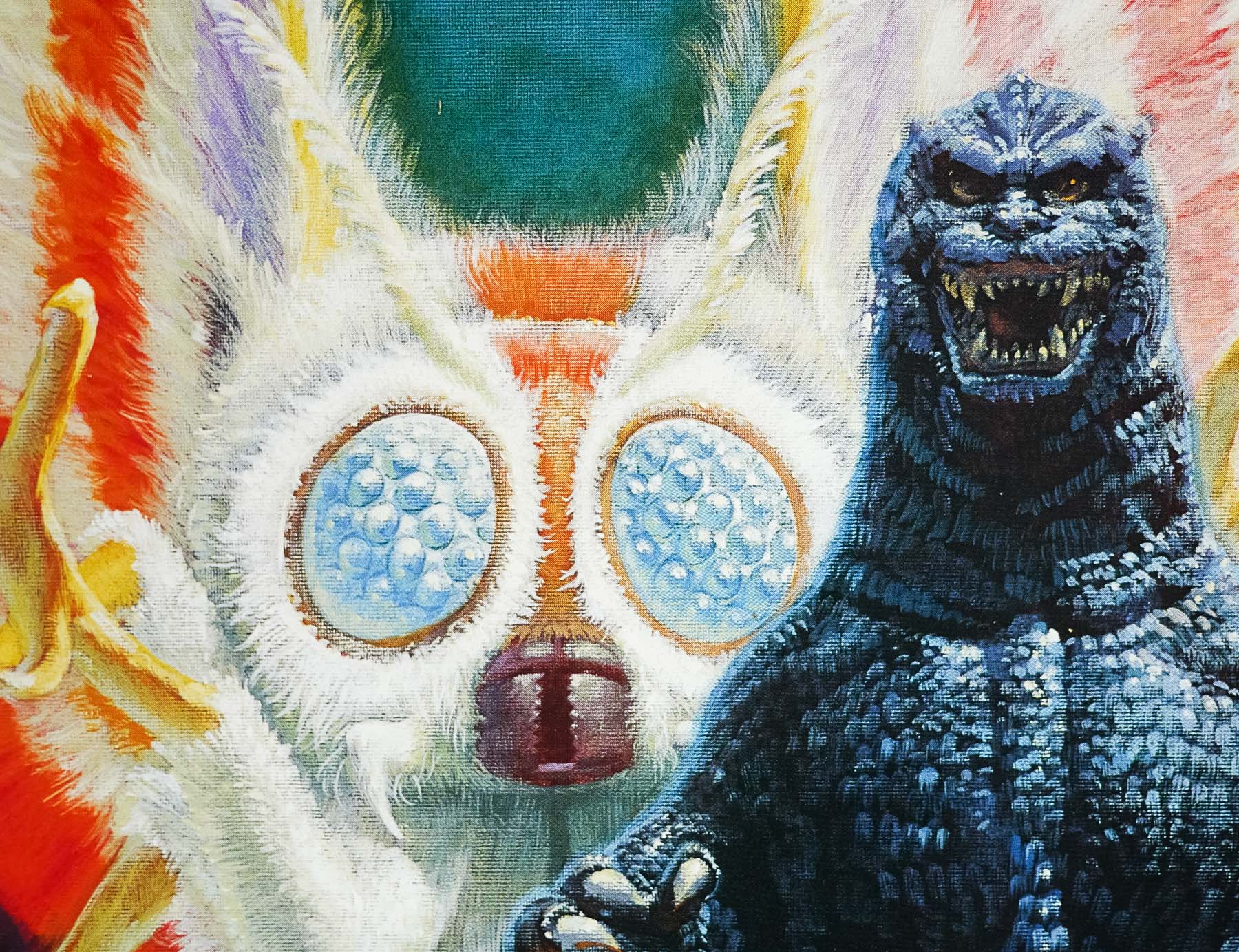
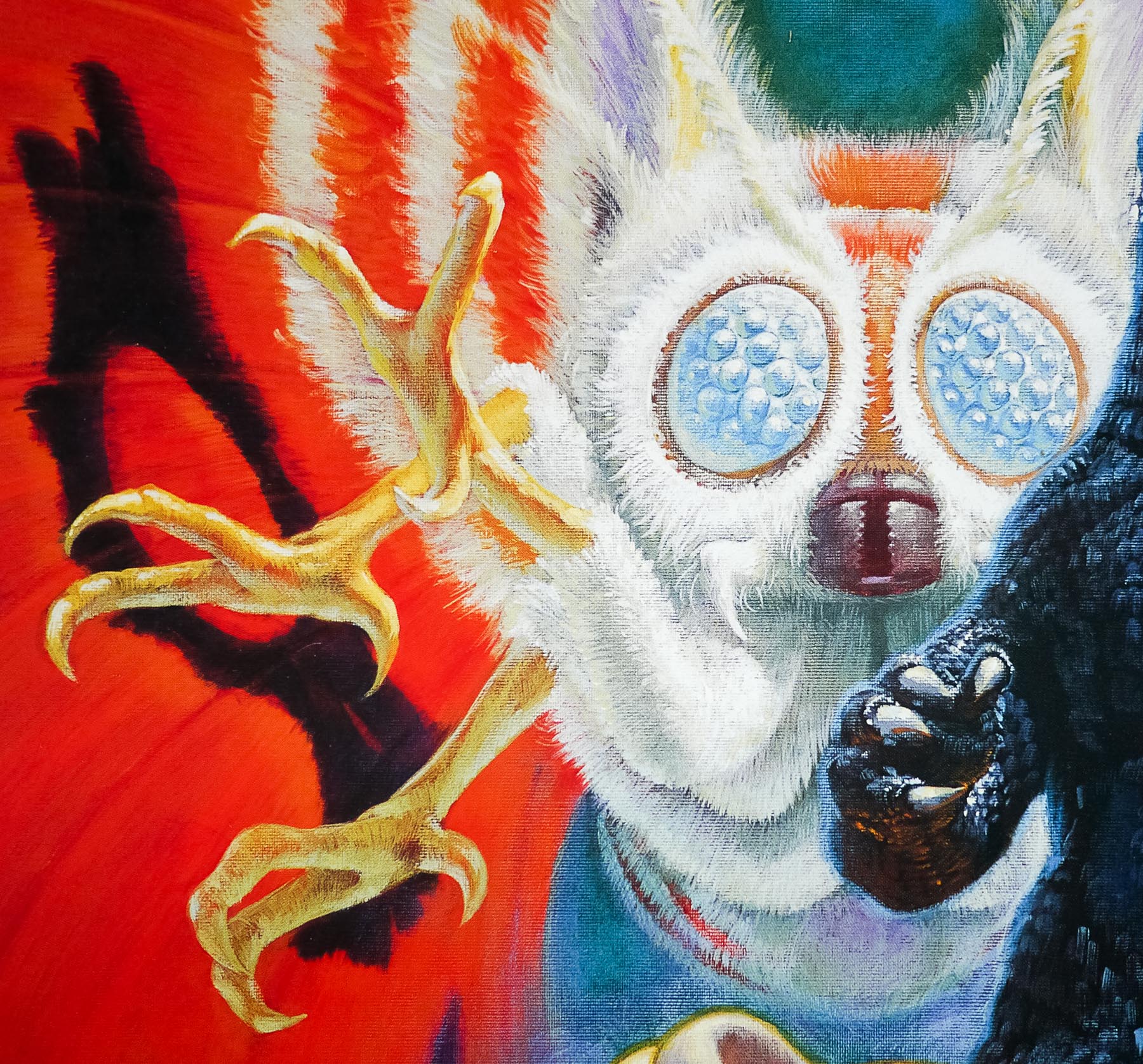
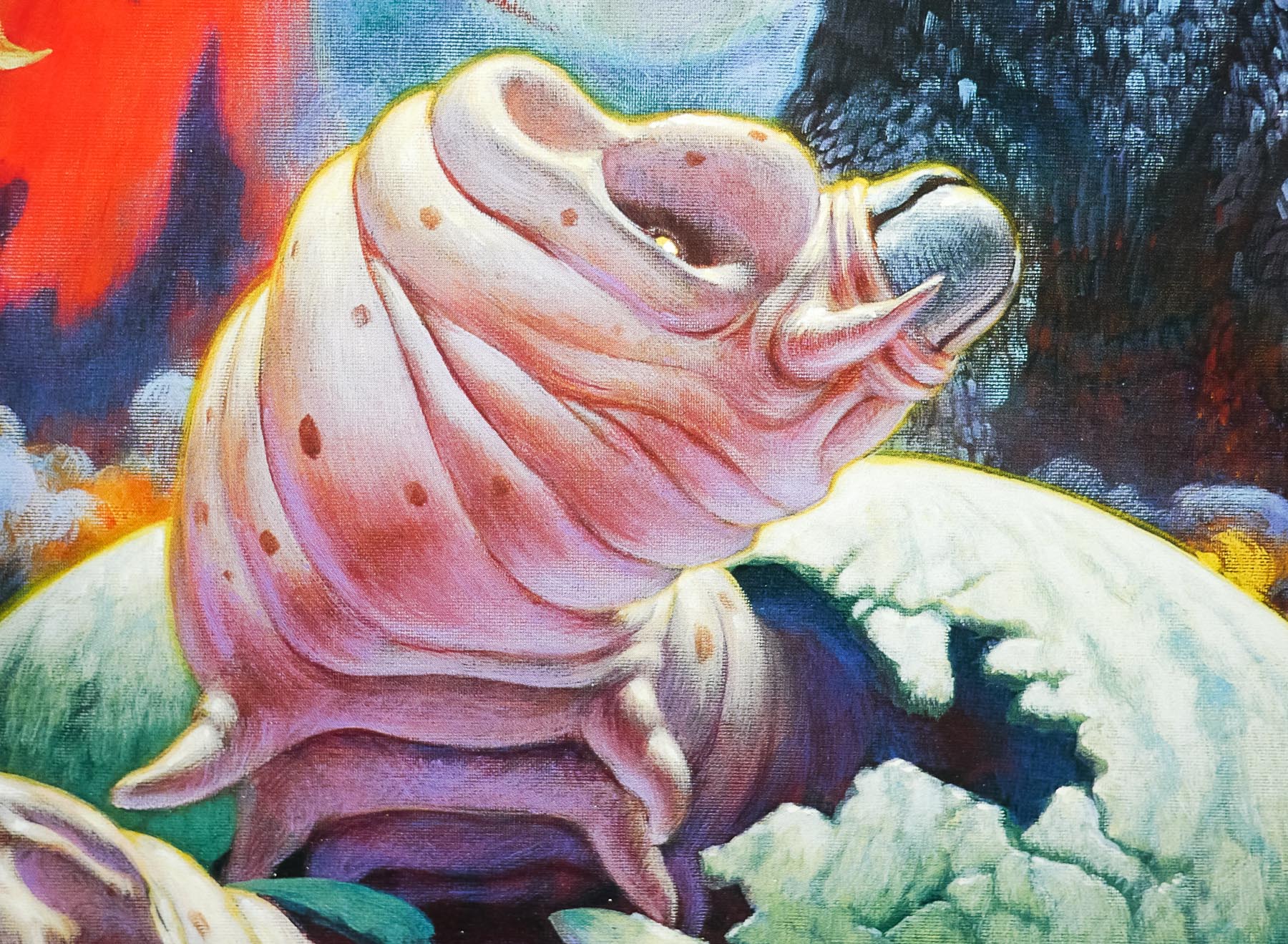
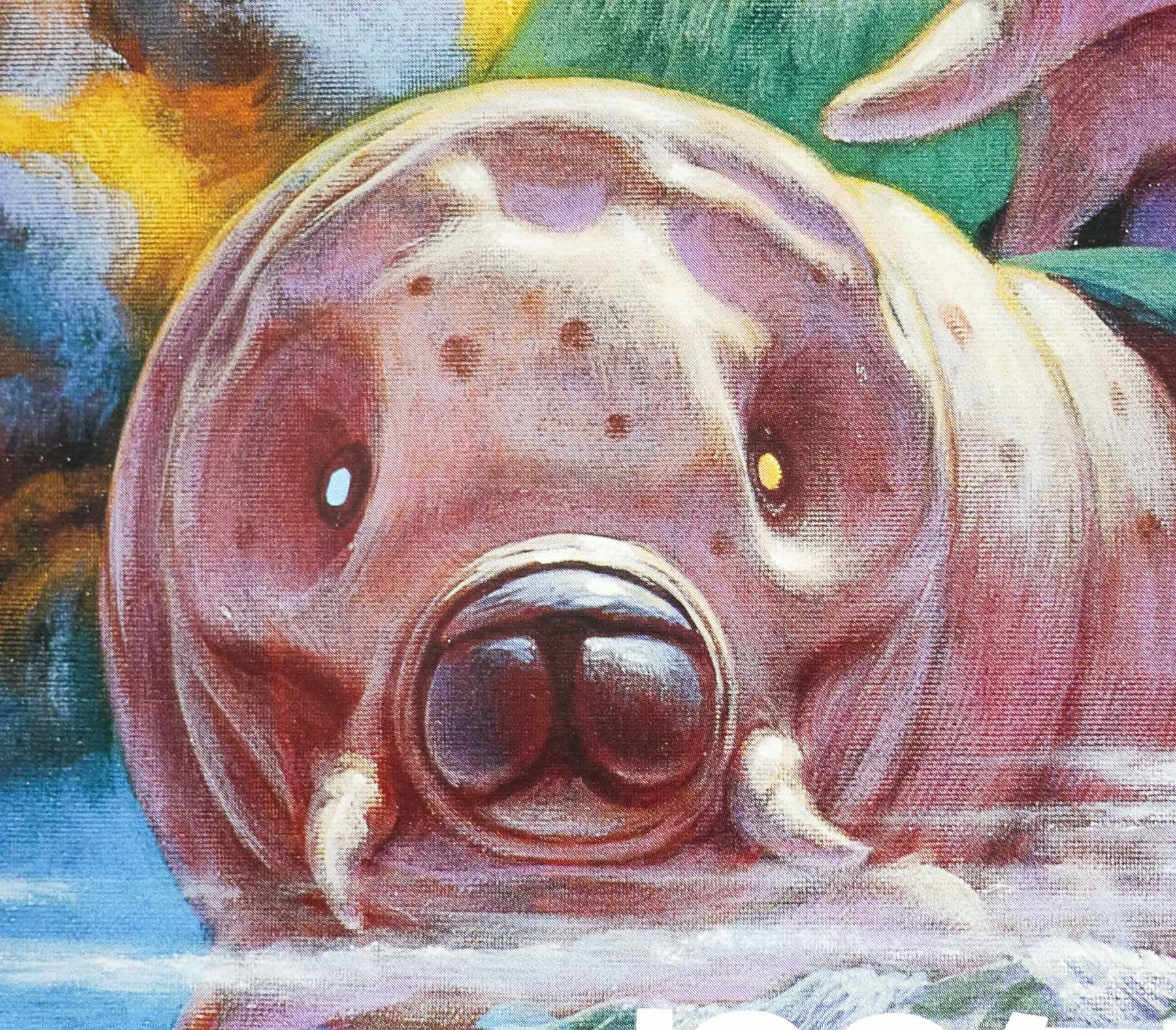
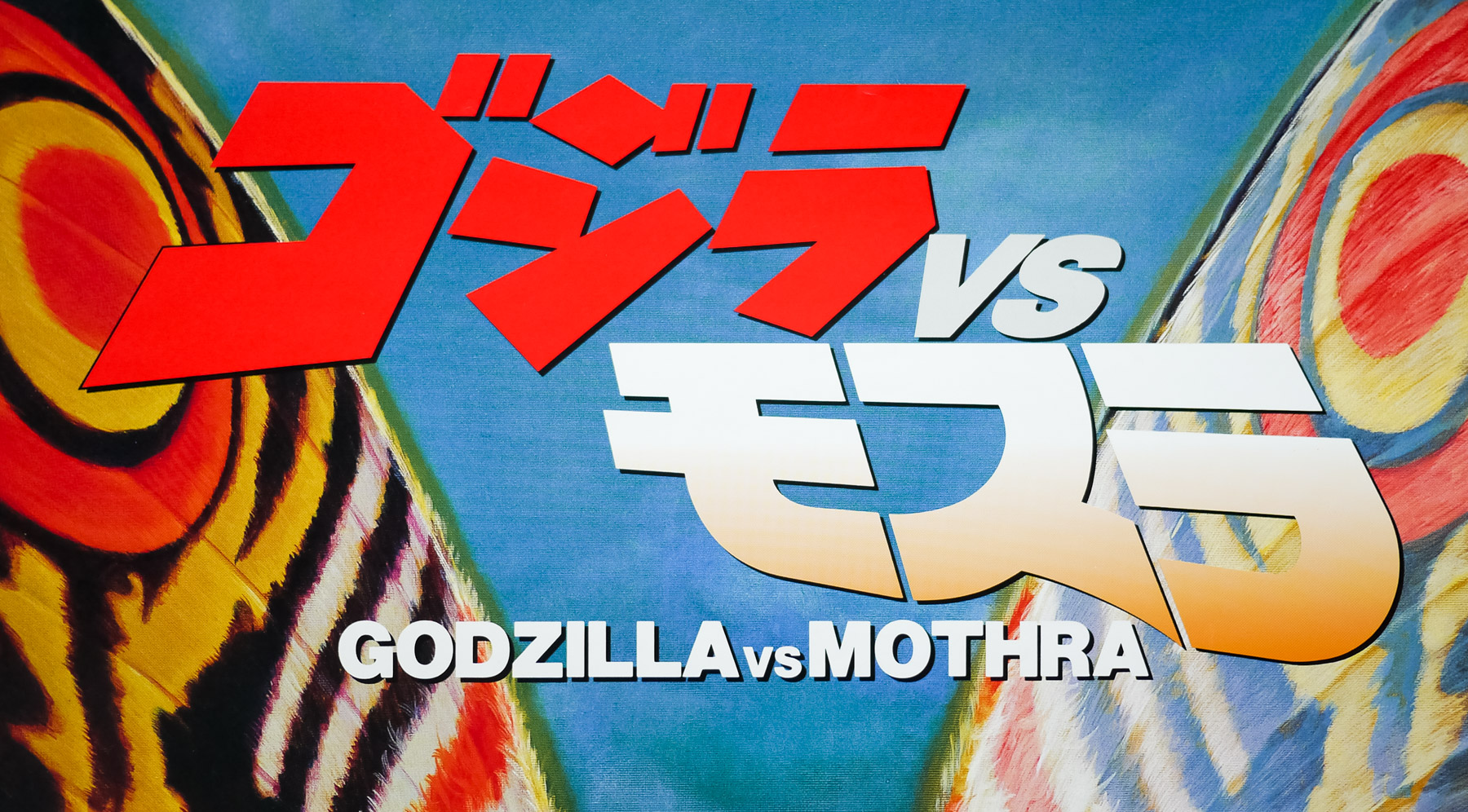
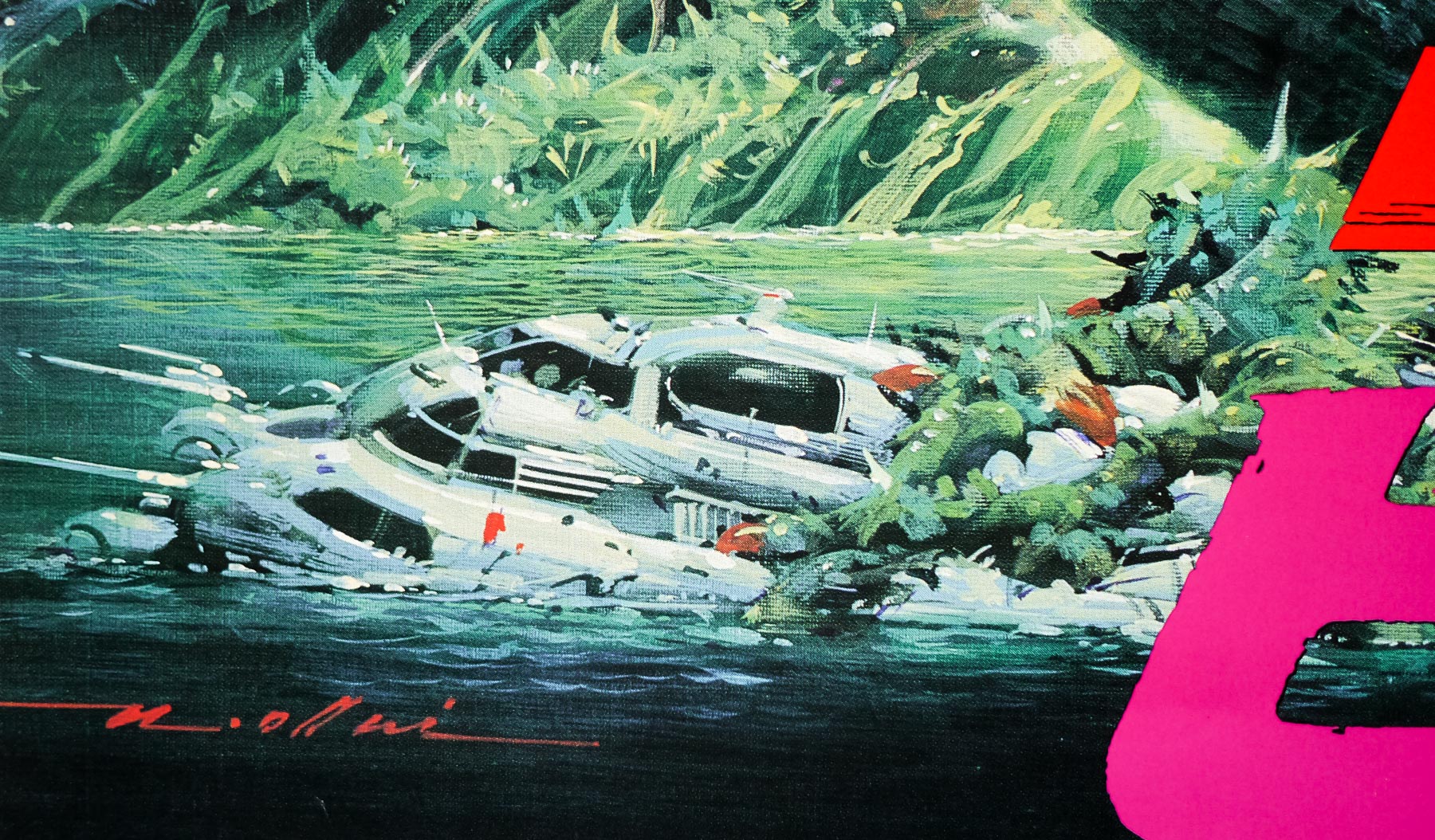
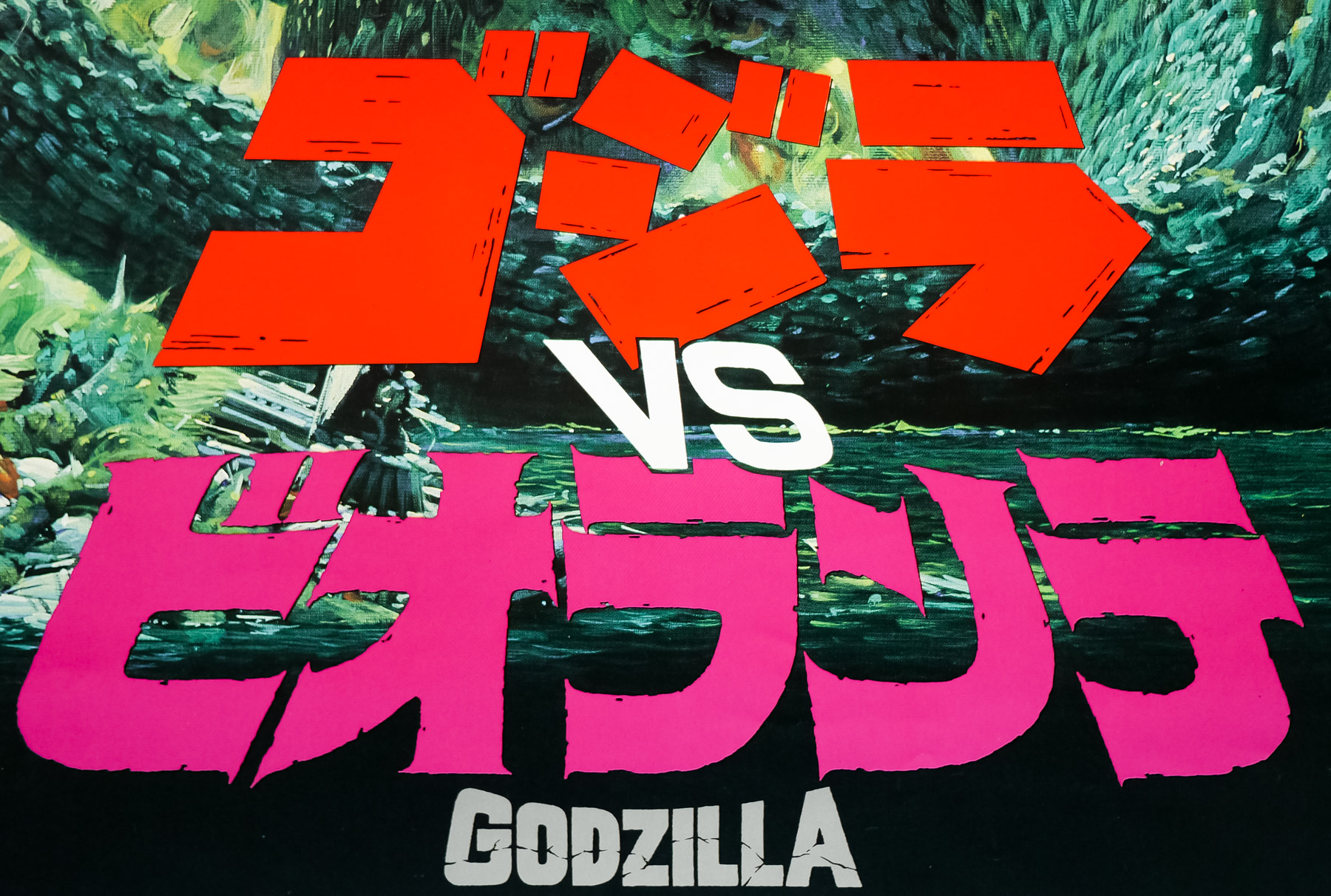
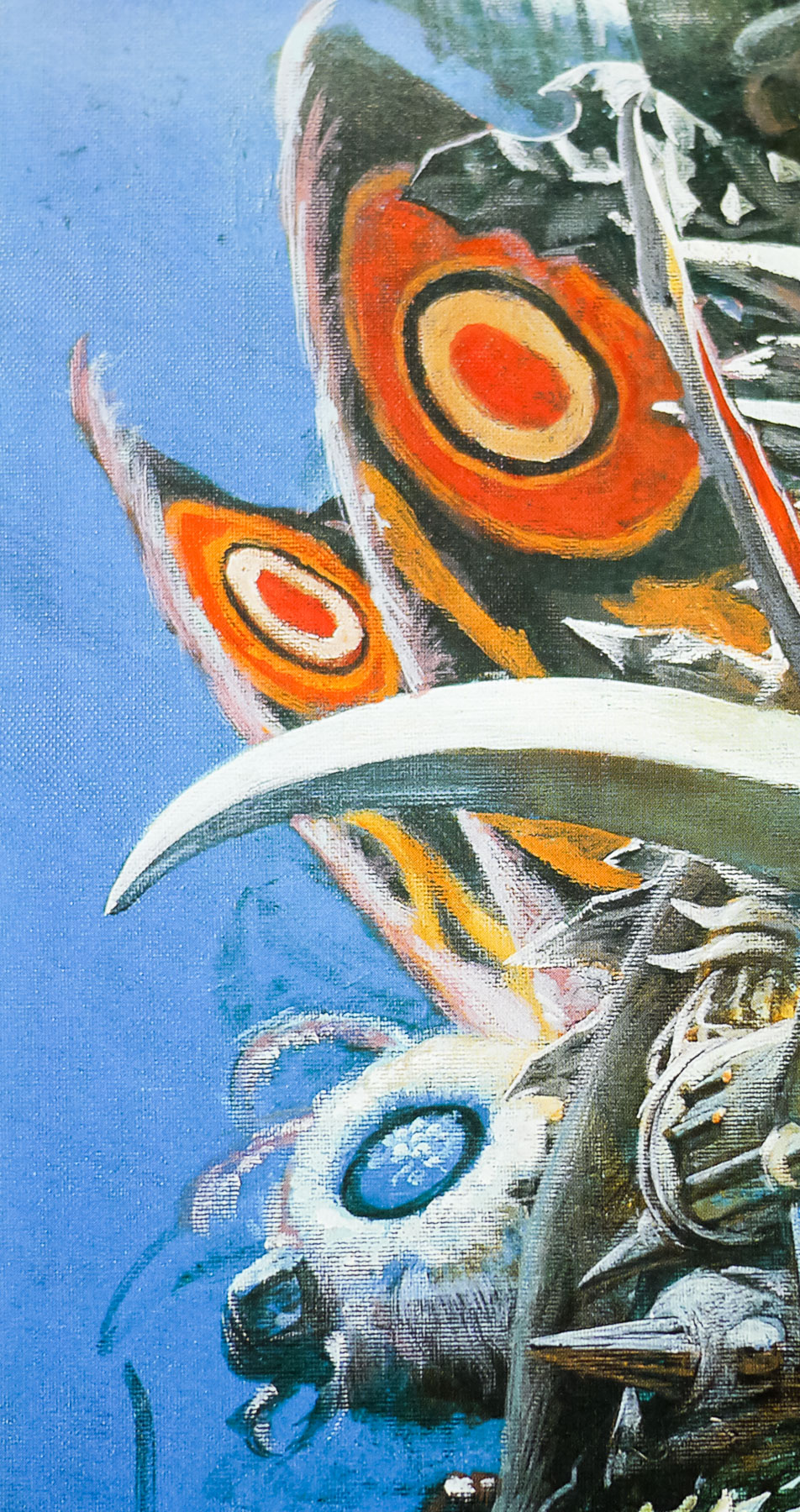
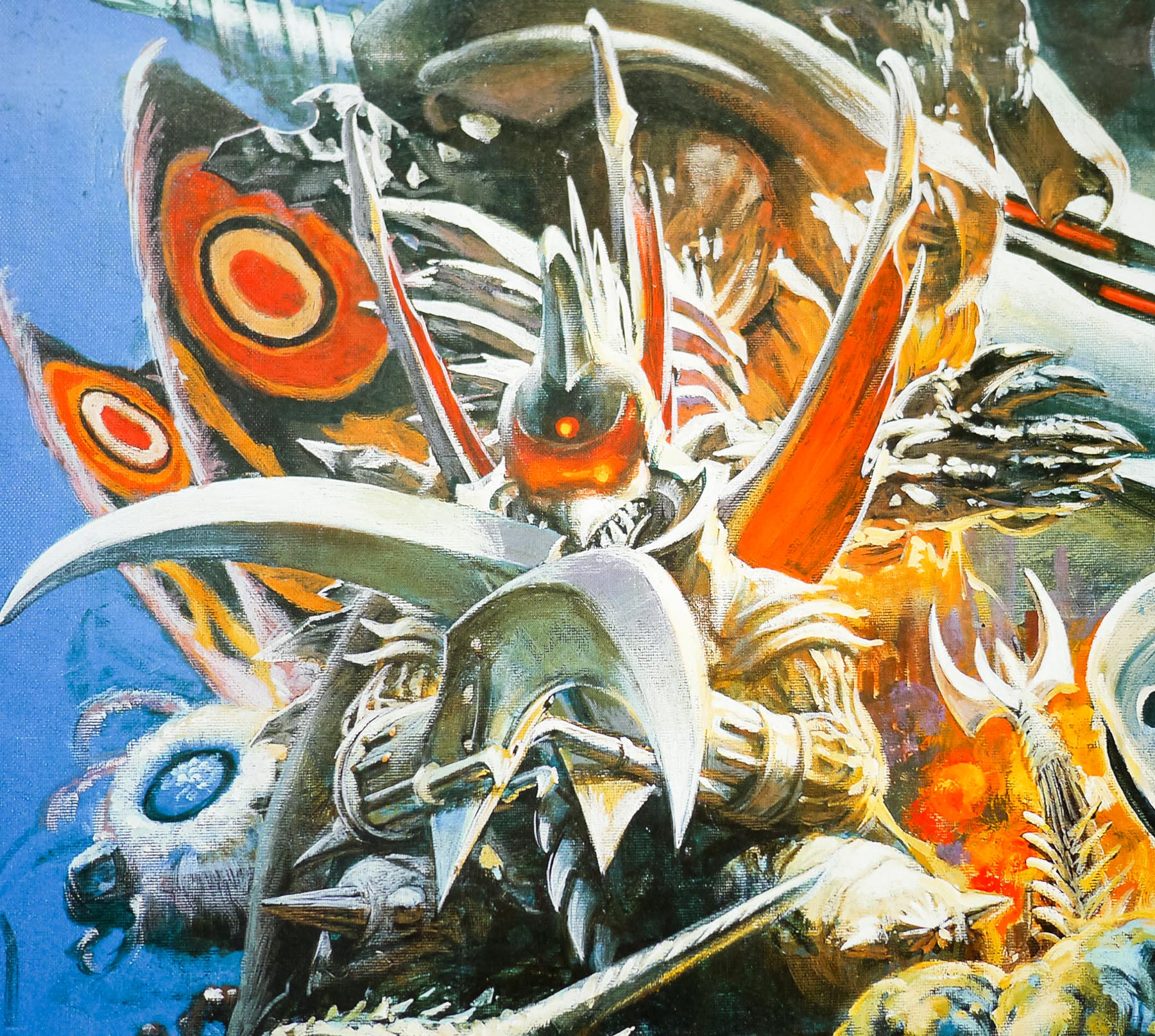
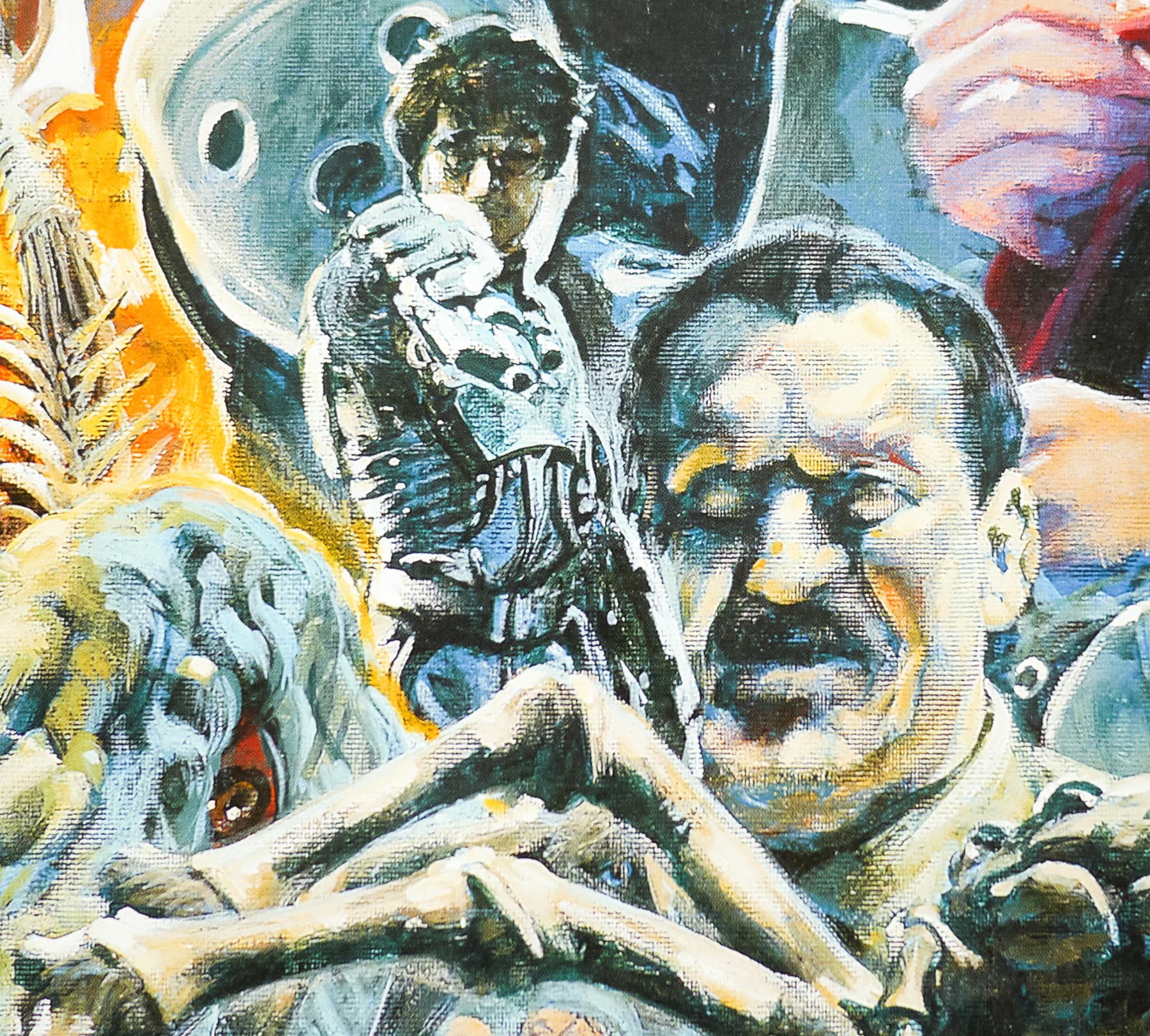
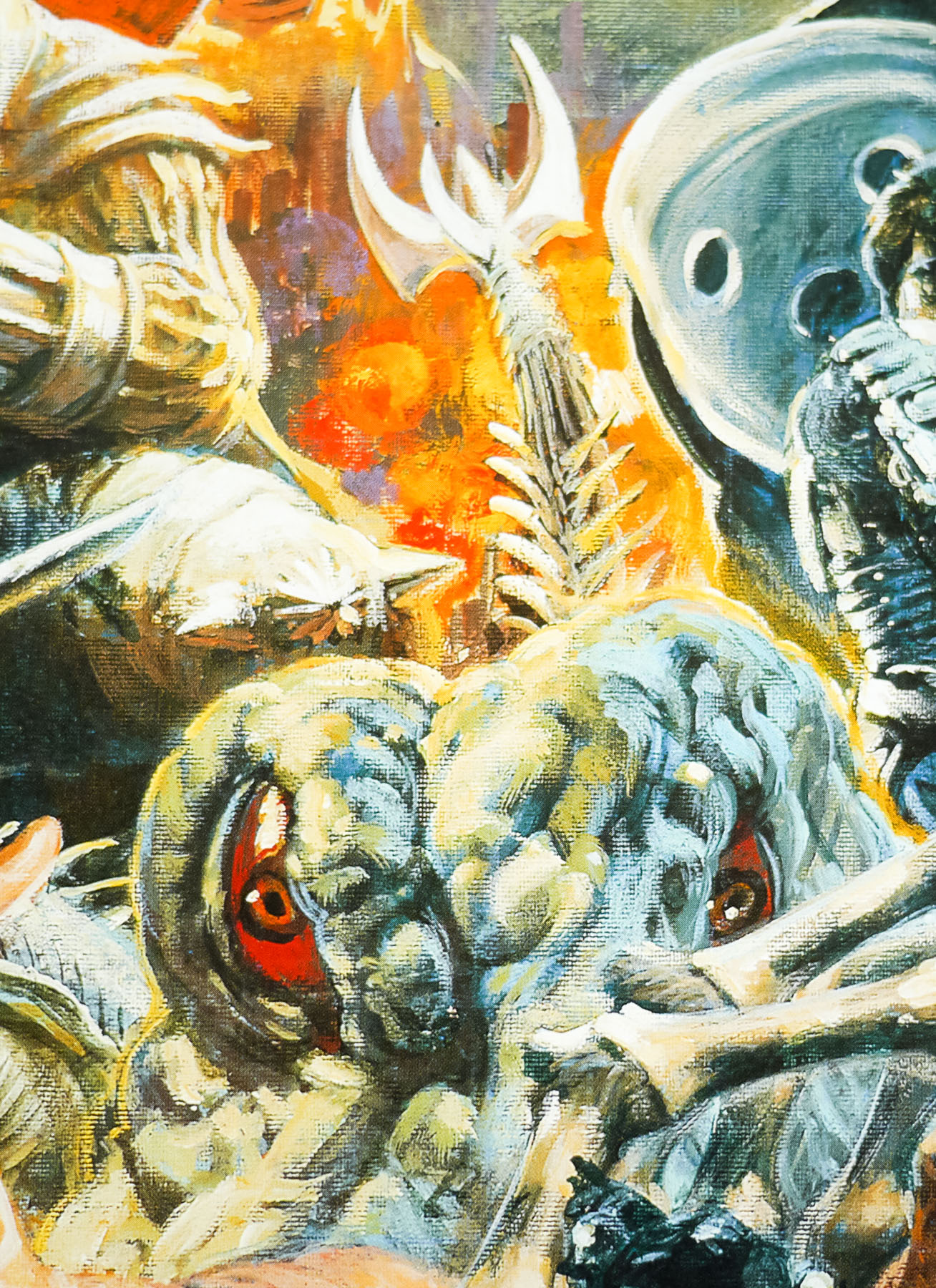
A colourful montage on this Japanese B1 poster for Godzilla vs Mothra, which was the 19th film in the series featuring the King of the Kaiju (giant monsters). The film was also the fourth release in the second generation of Godzilla films, which were part of the Heisei era of Japanese monster movies (daikaiju eiga). The eras are named after the Japanese emperor at the time, so the first generation of Godzilla films were part of the Shōwa era. There was an earlier film in the franchise called Mothra vs Godzilla (1964) but this film is not a remake of that story.

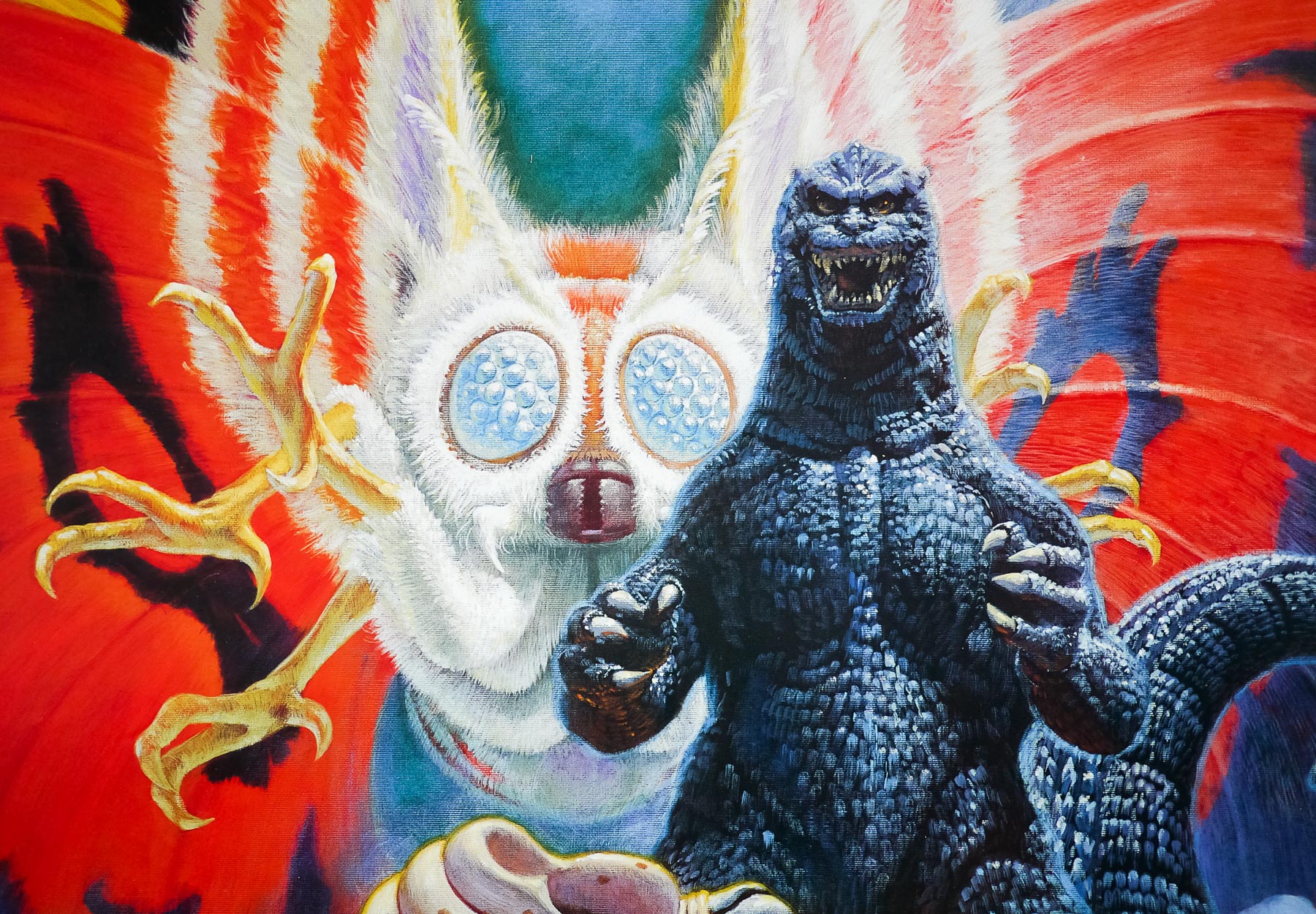
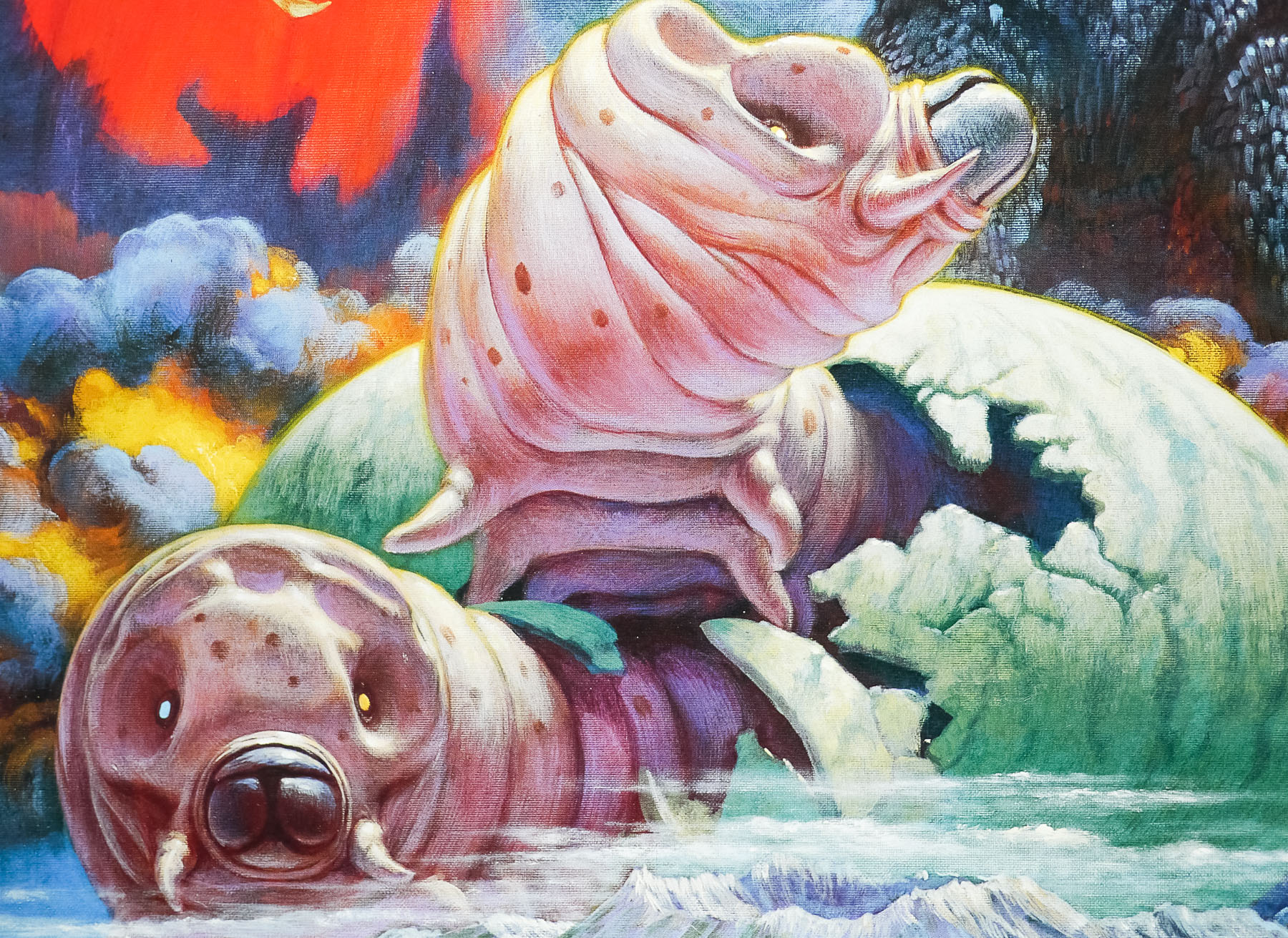
Godzilla vs Mothra is, adjusted for inflation, the most financially successful entry in the entire series. The story sees a meteor crashing to earth and awakening not only the legendary lizard but also uncovering an egg of the benevolent giant moth, plus an evil version of Mothra called Battra that was created by Earth’s ‘life force’ to protect the planet itself from threat. Godzilla sets off on one of his usual rampages and Battra attacks Tokyo in anger at the pollution that mankind has caused. The trio of monsters face-off against each other in several battles and there’s also a subplot involving an Indiana-Jones-like treasure hunter and ethereal creatures known as Cosmos who are involved in the bigger conflict.

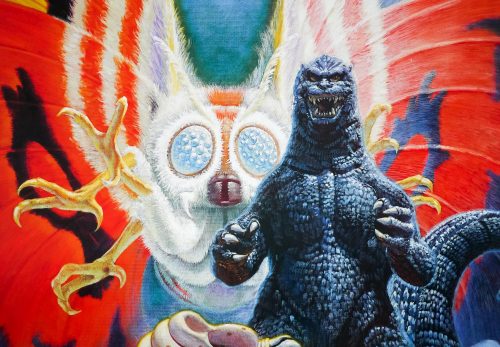
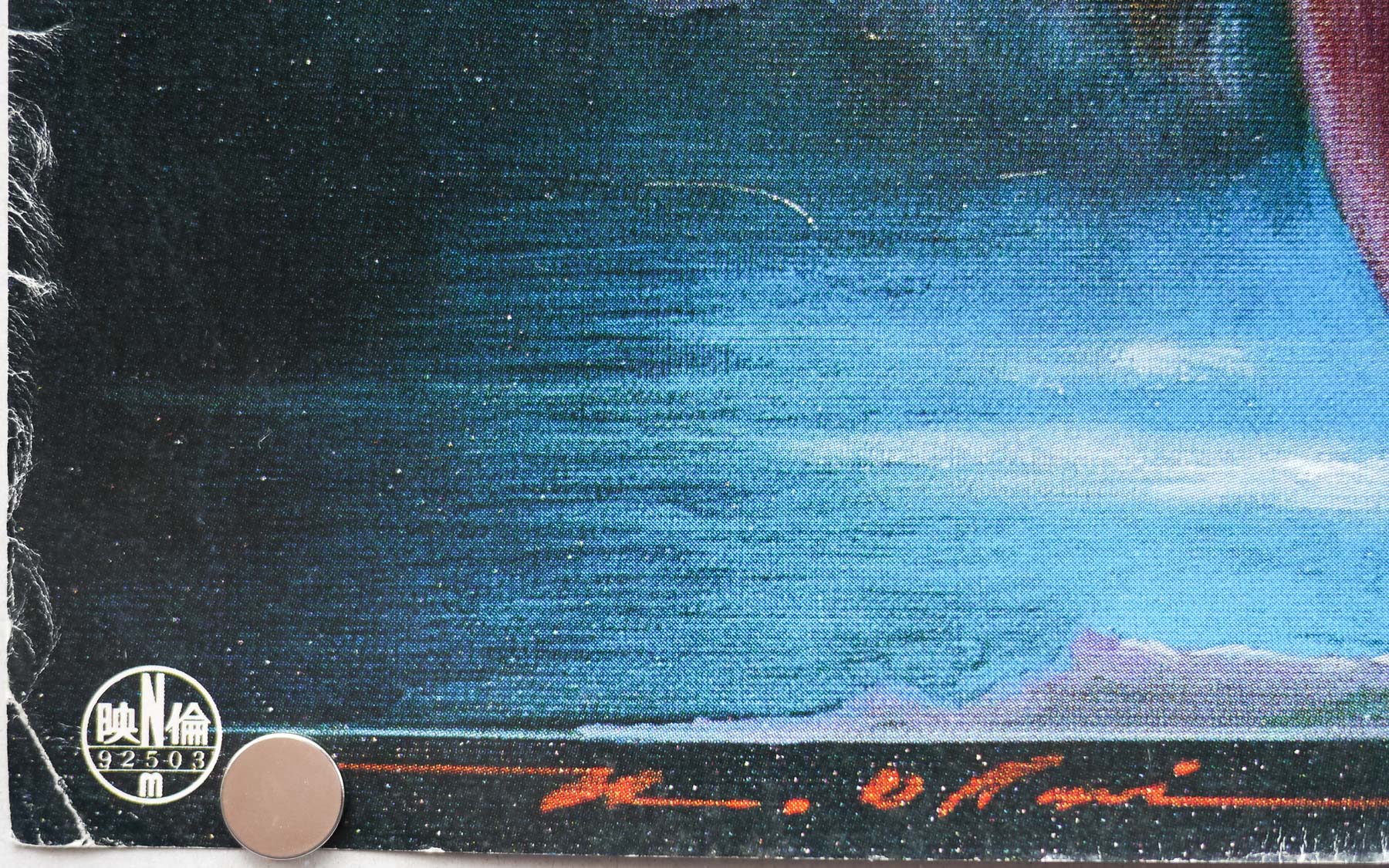
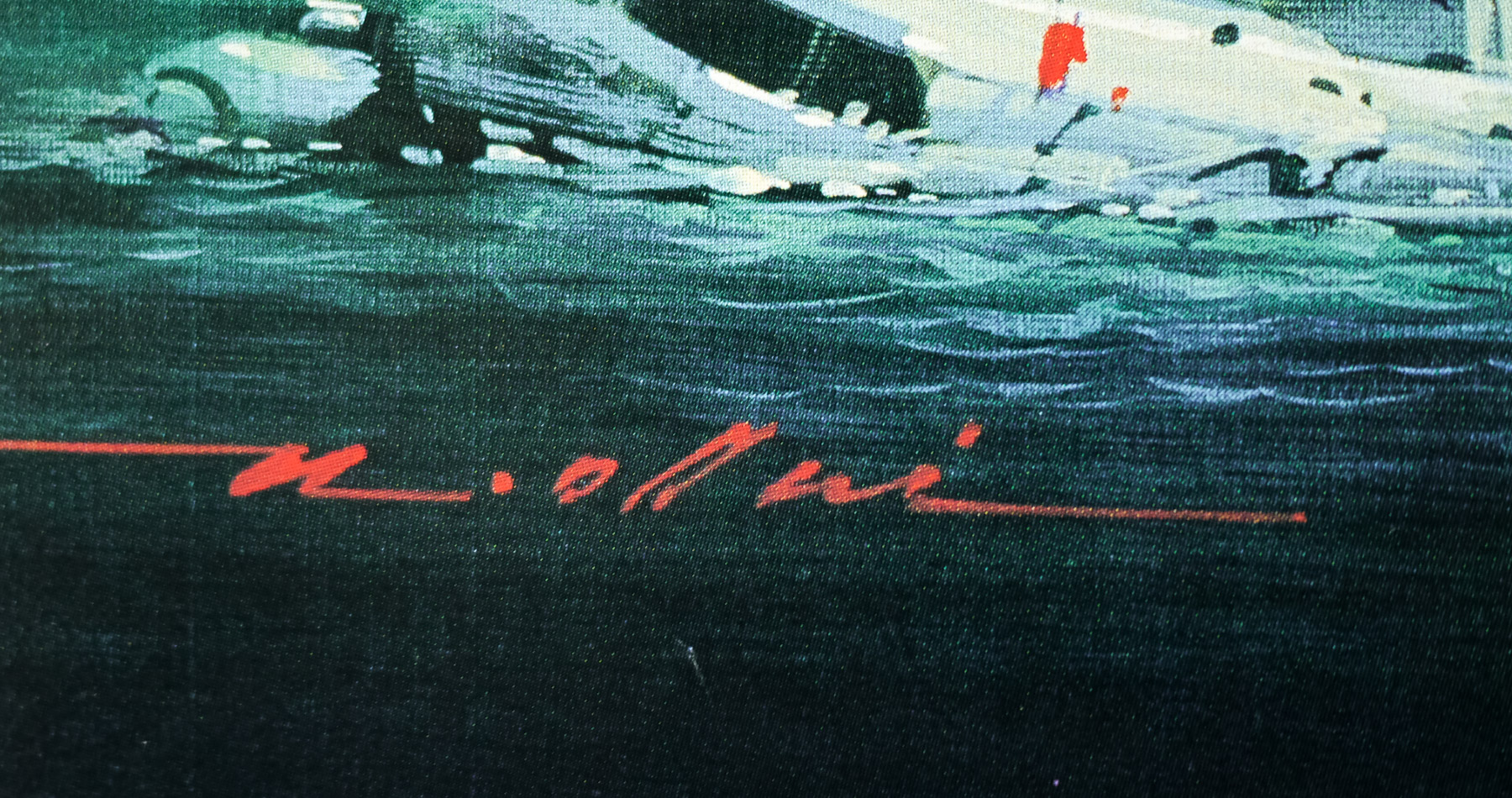
The artwork on the poster is by Noriyoshi Ohrai who is something of an enigma, even in his native Japan. I’ve been unable to find much about him beyond a few pages like this one on the Star Wars Wookiepedia. He’s responsible for a number of Star Wars posters, including this lovely 1982 B2 to celebrate the release of the Japanese dubbed version of the original film and the brilliant design for The Empire Strikes Back.

Ohrai painted a poster for each of the Heisei era of Godzilla films, which were always accompanied by a photographic-style poster. I will be adding more of the Ohrai Godzilla posters over the coming weeks.

The other Ohrai posters I’ve added to the site so far can be seen by clicking here.

Godzilla vs Biollante / B1 / Japan

18.07.13

Poster Poster

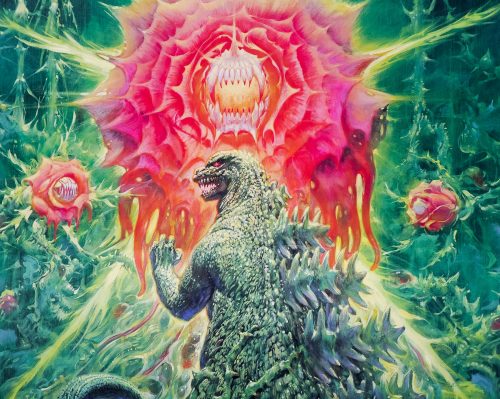
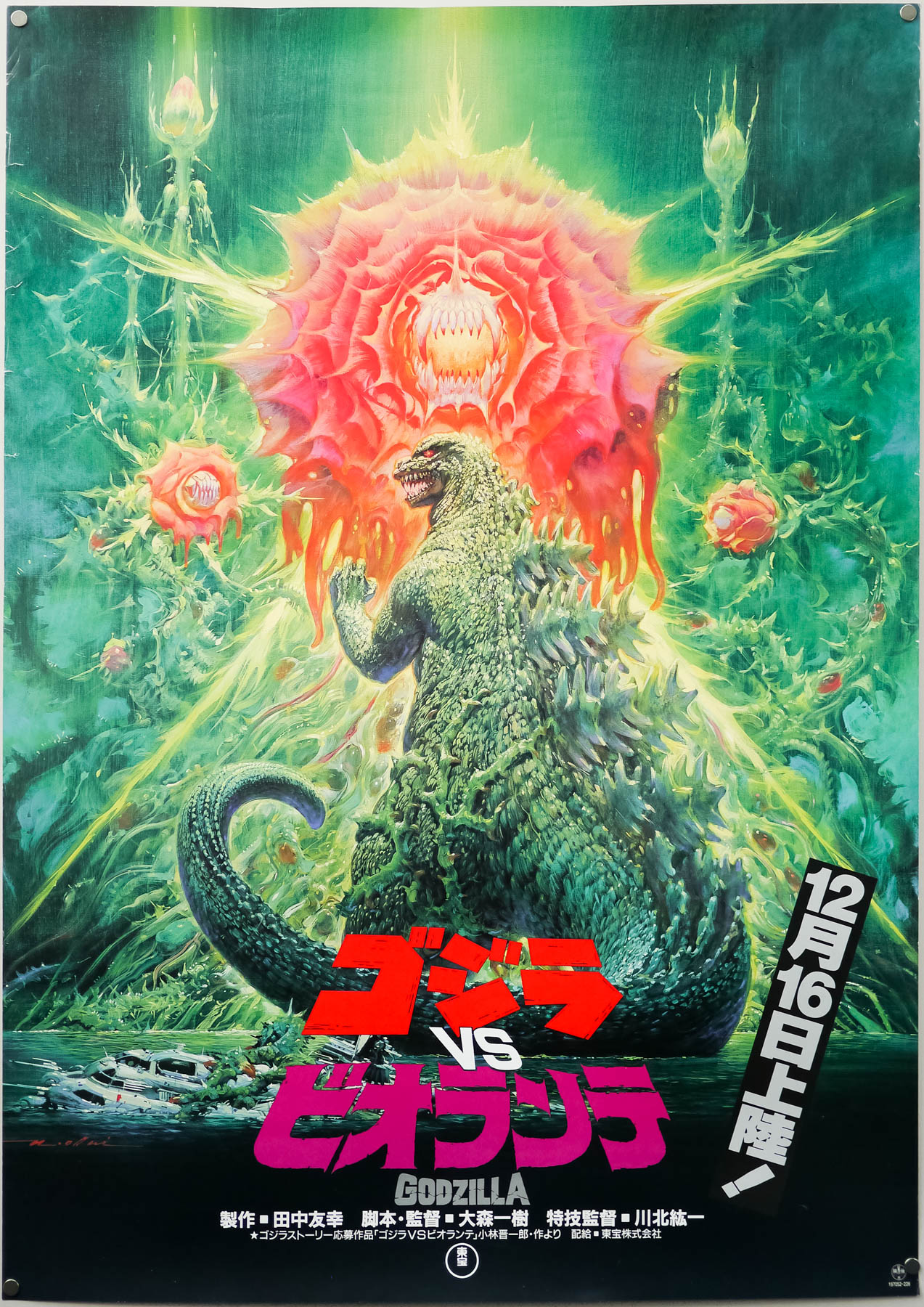
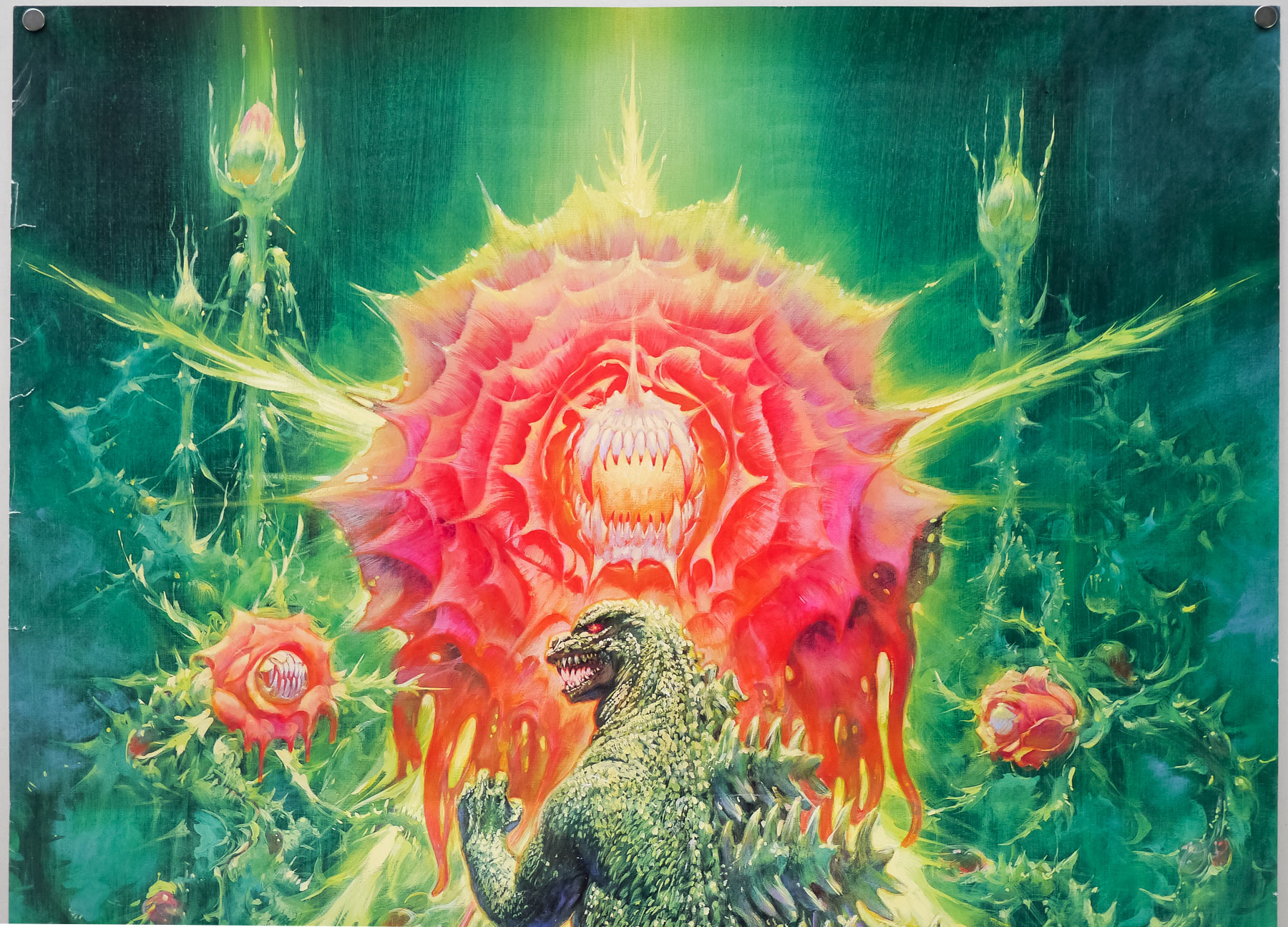
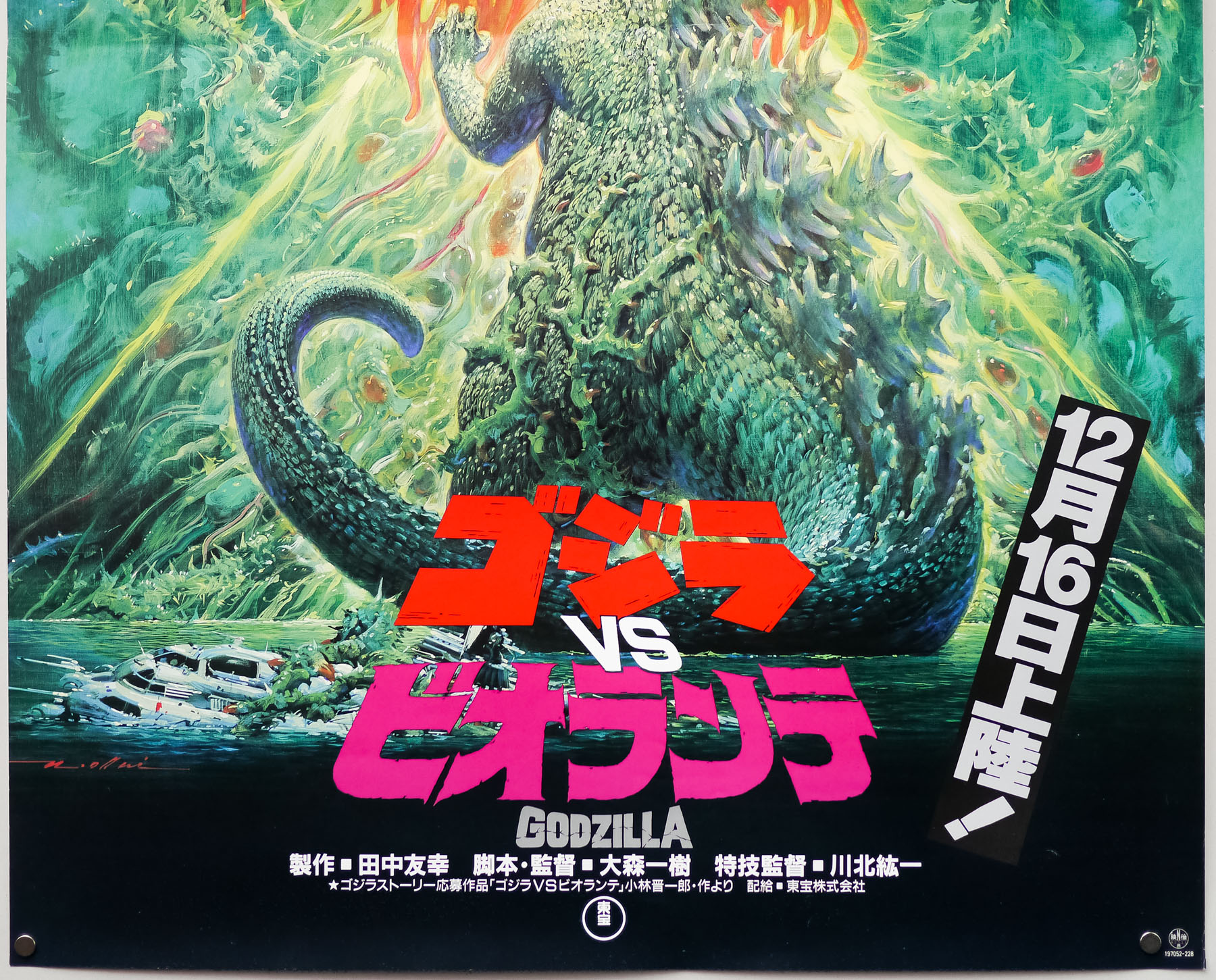
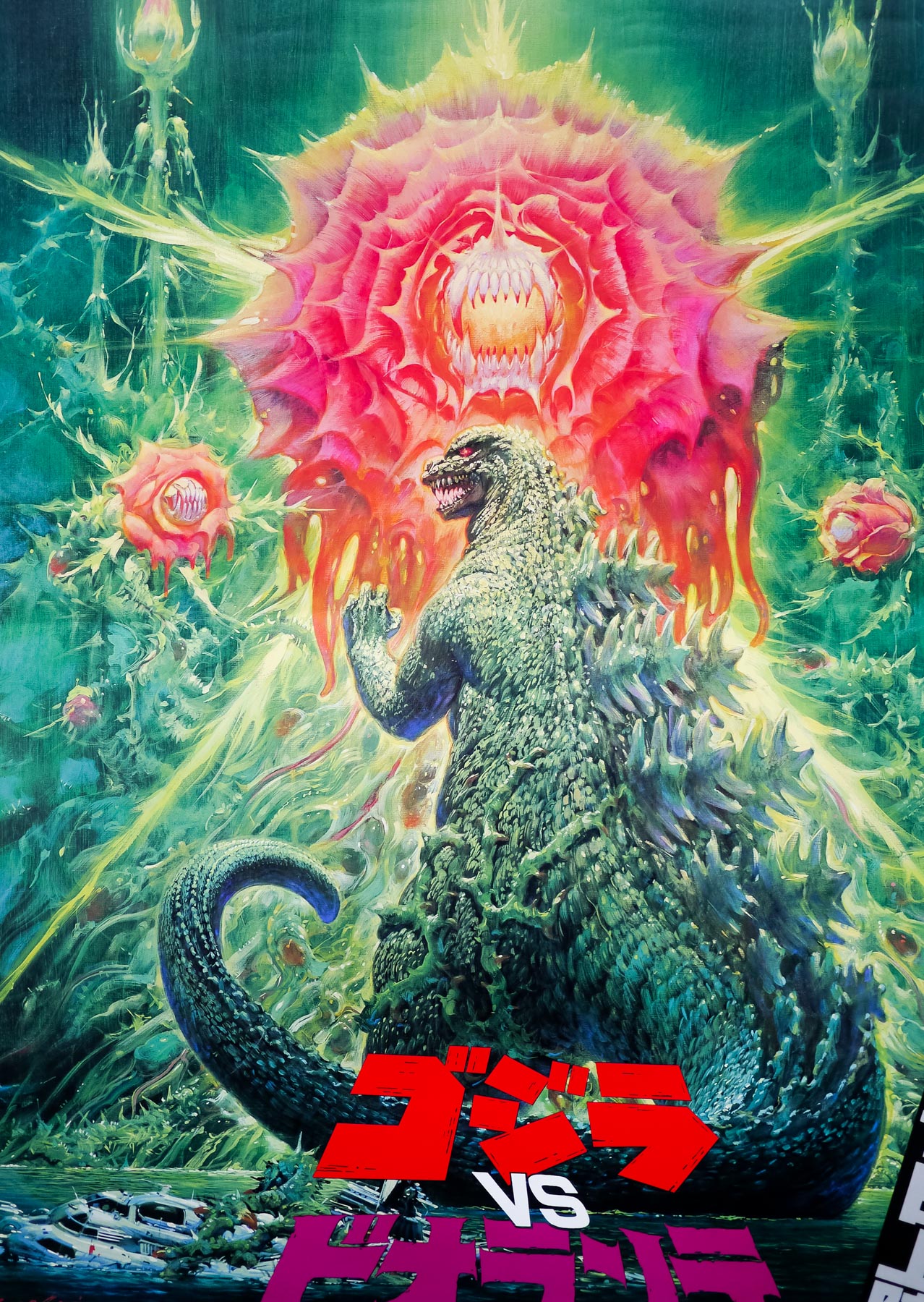
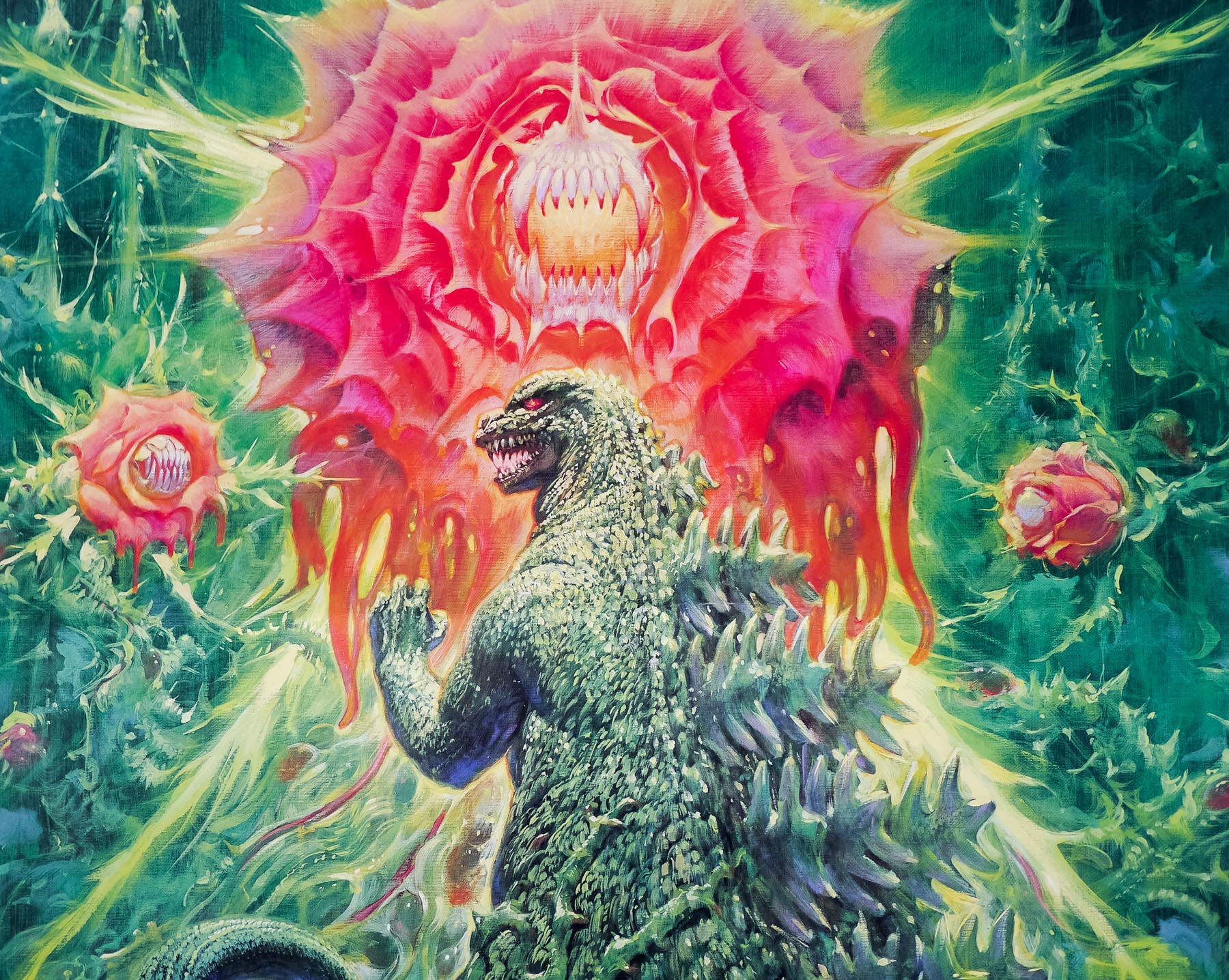
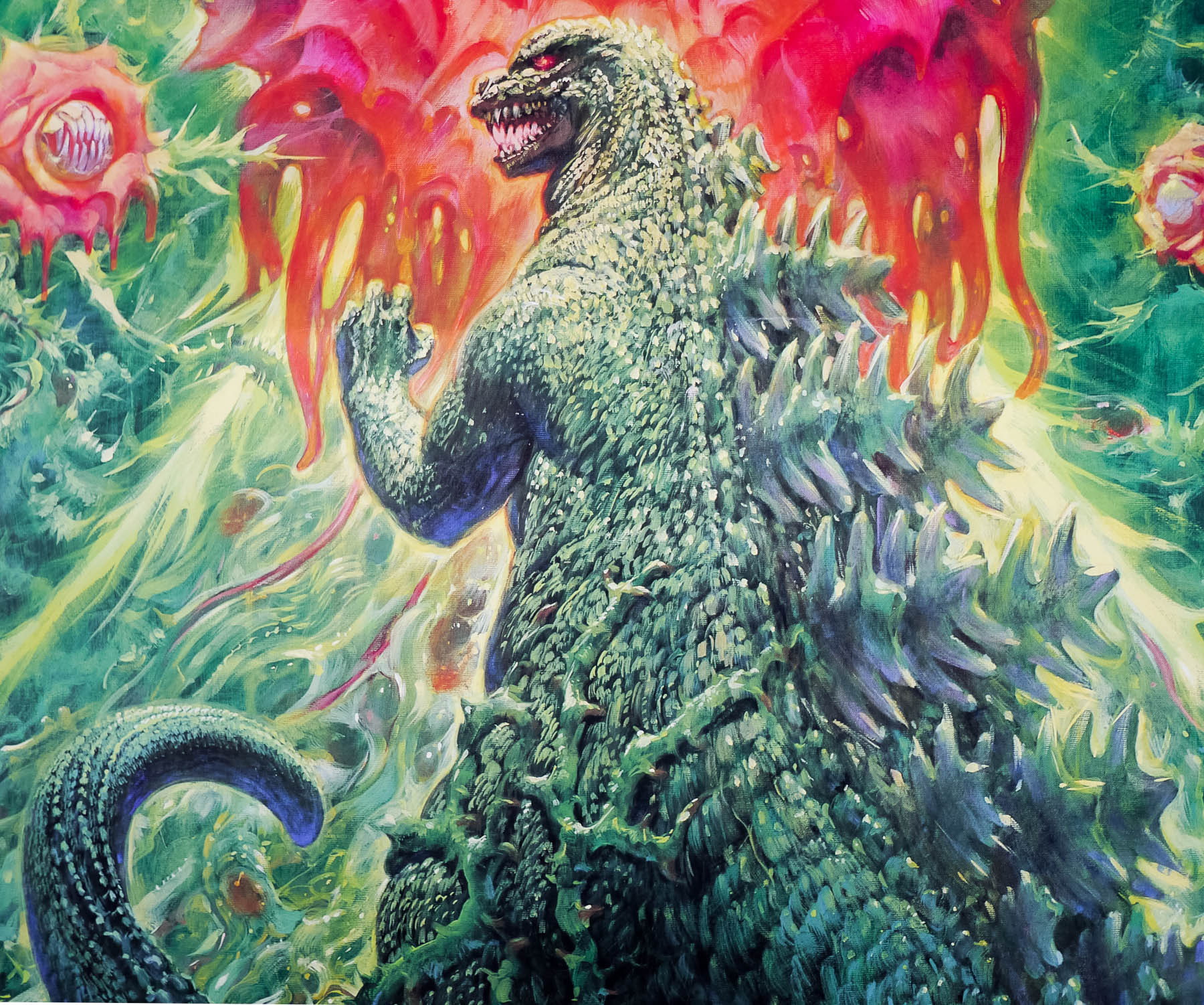
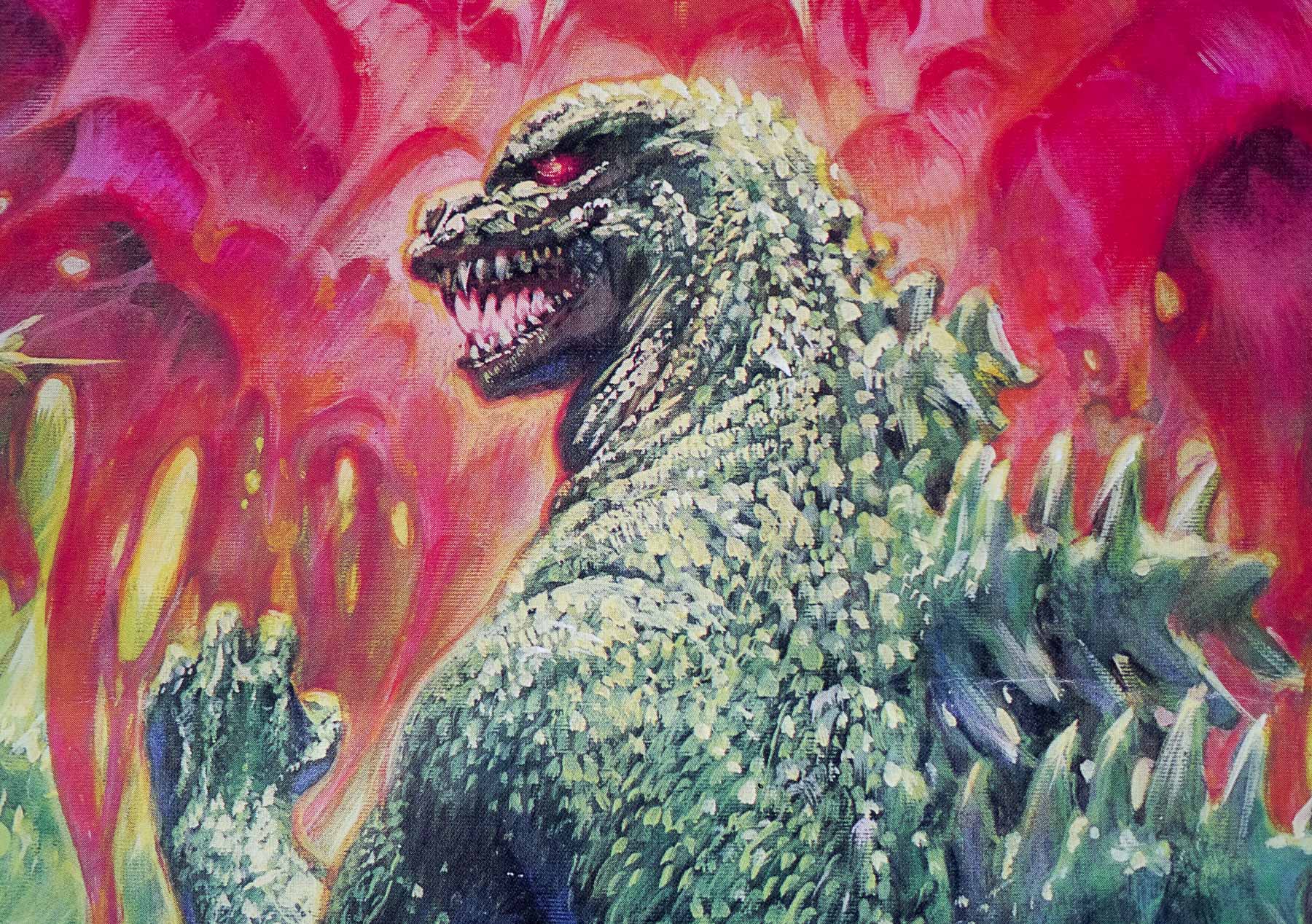
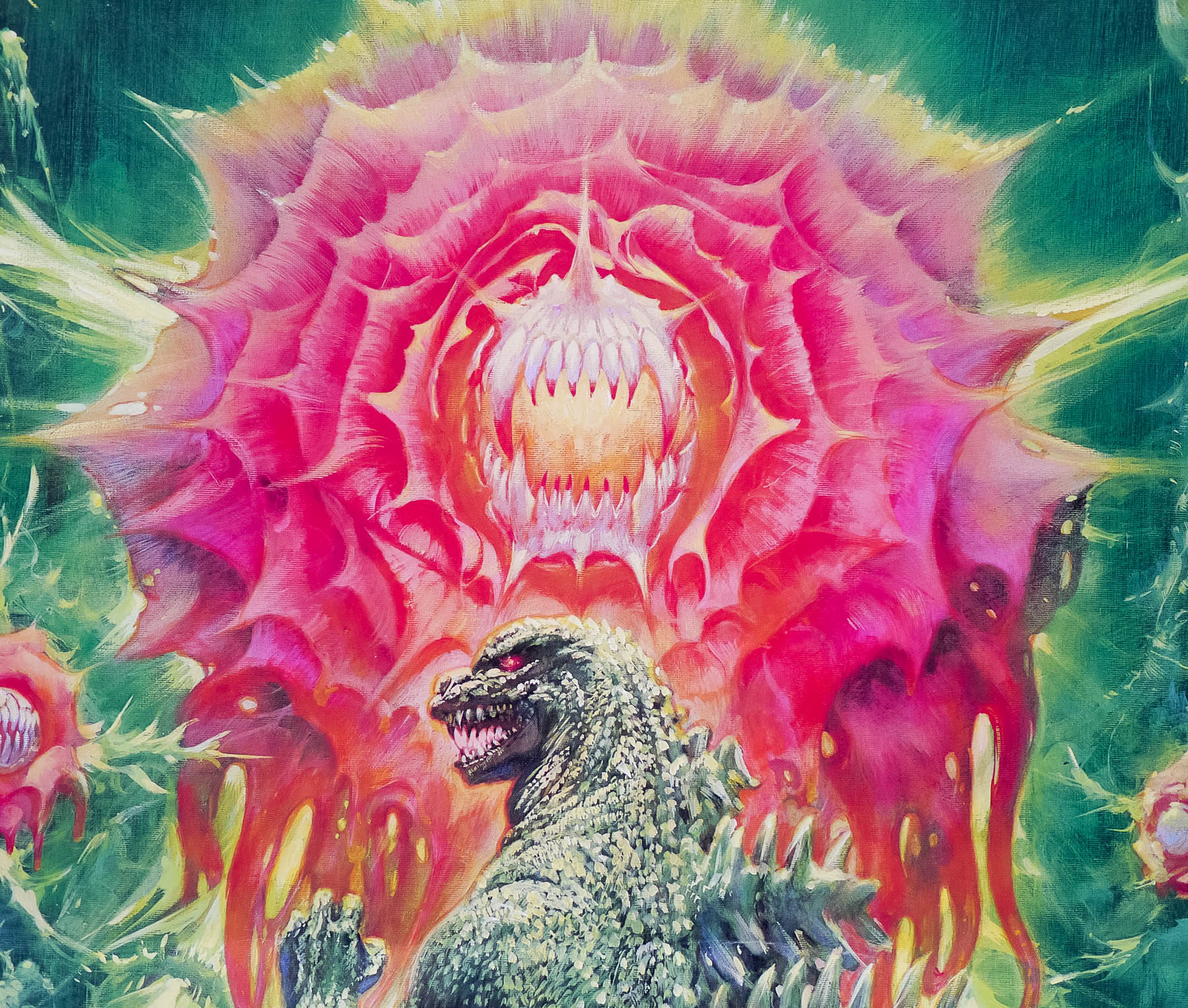
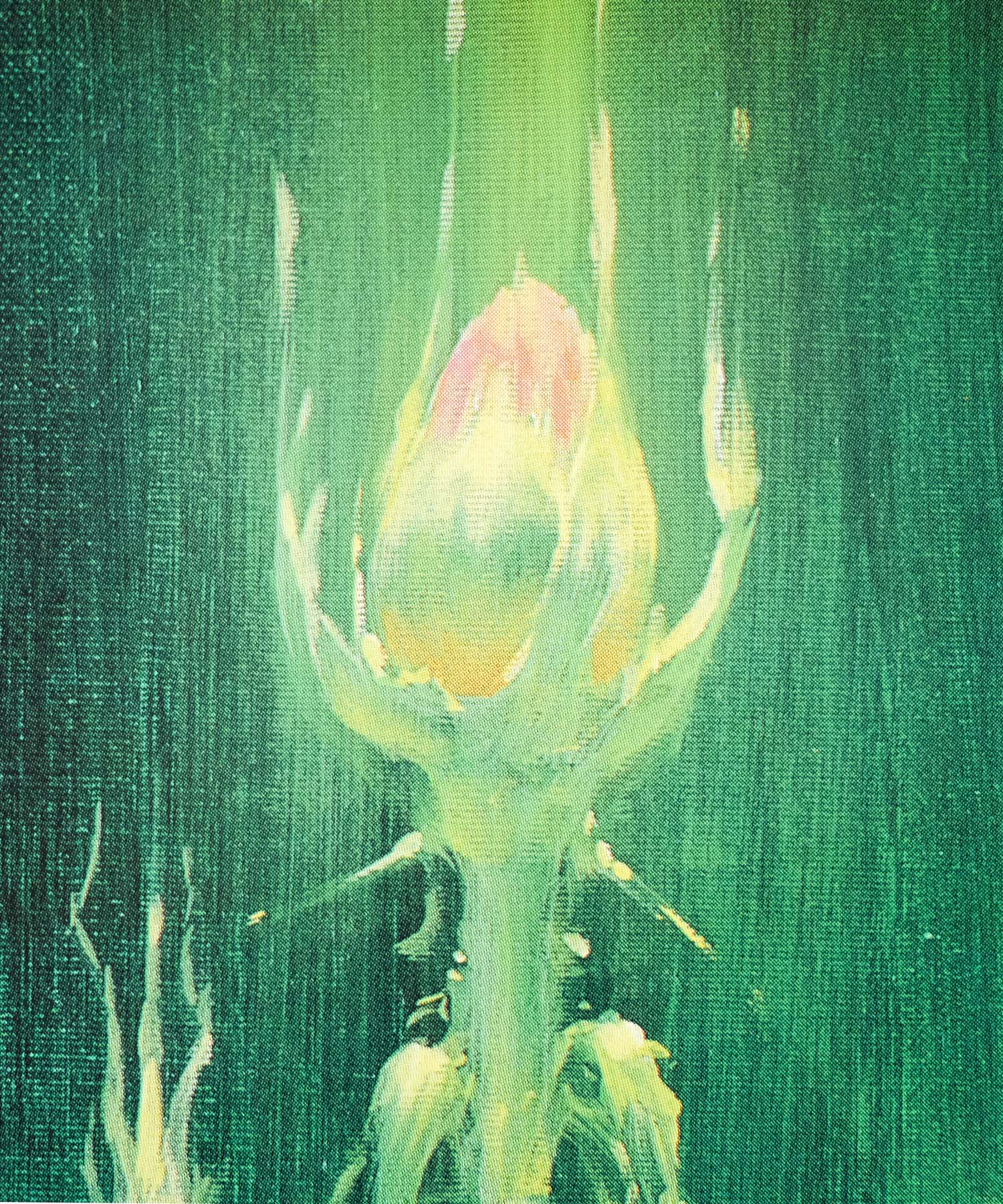
A colourful montage on this Japanese B1 poster for Godzilla vs Biollante, which was the 17th film in the series featuring the King of the Kaiju (giant monsters). The film was also the second release in the second generation of Godzilla films, which were part of the Heisei era of Japanese monster movies (daikaiju eiga). The eras are named after the Japanese emperor at the time, so the first generation of Godzilla films were part of the Shōwa era.

This film was the belated follow up to the 1984 series reboot, Return of Godzilla, and the concept for the film was actually the result of a fan competition to decide the plot, which had seen Shinichirô Kobayashi, a dentist and part-time scriptwriter, emerge as the winner. His script was heavily altered before filming began. Considered something of a box-office failure, Godzilla vs Biollante features the legendary beast facing off against a brand new foe that hadn’t featured in the franchise before and this was used to excuse its poor showing. Toho would return to familiar enemies in the films that followed in the franchise, such as 1991’s Godzilla vs King Ghidorah.

In this film, which follows on from events in ‘Return of…’, a team of American paramilitary soldiers working on behalf of a US genetics company attempt to collect material left over from Godzilla’s last attack on Tokyo. Whilst escaping with a sample, the team are attacked by a mysterious lone operative and the material is stolen. Meanwhile, Genshiro Shiragami, a Japanese scientist working in the Middle East, is about to return home with his beloved daughter Erika when a terrorist strike destroys his lab and kills Erika. Five years later, a grief stricken Shiragami is working on experiments for the government to try and develop a way to defeat Godzilla should he return. What his benefactors don’t realise is that Shiragami has also conducted a secret trial in which he combined the cells of Godzilla with those of a rose (the psychic energy of which he has also been studying) and the cells of Erika. The result is a creature he calls Biollante, and before long Godzilla is released from his volcano prison and heads straight for a confrontation with the new kaiju.

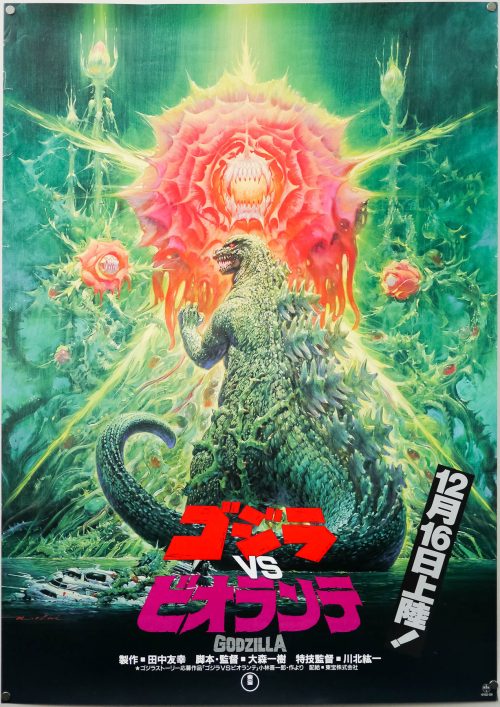
The artwork on the poster is by Noriyoshi Ohrai who is something of an enigma, even in his native Japan. I’ve been unable to find much about him beyond a few pages like this one on the Star Wars Wookiepedia. He’s responsible for a number of Star Wars posters, including this lovely 1982 B2 to celebrate the release of the Japanese dubbed version of the original film and the brilliant design for The Empire Strikes Back.

Ohrai painted a poster for each of the Heisei era of Godzilla films, which were always accompanied by a photographic-style poster. I will be adding more of the Ohrai Godzilla posters over the coming weeks.

The other Ohrai posters I’ve added to the site so far can be seen by clicking here.

Godzilla: Final Wars / B2 / montage style / Japan

08.05.14

Poster Poster

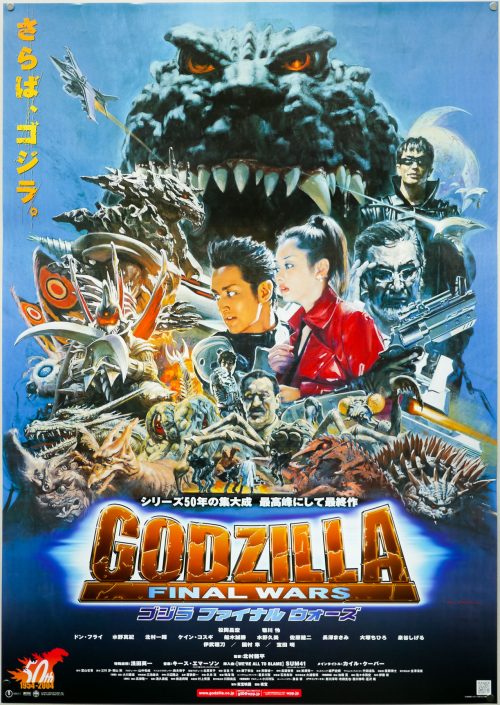
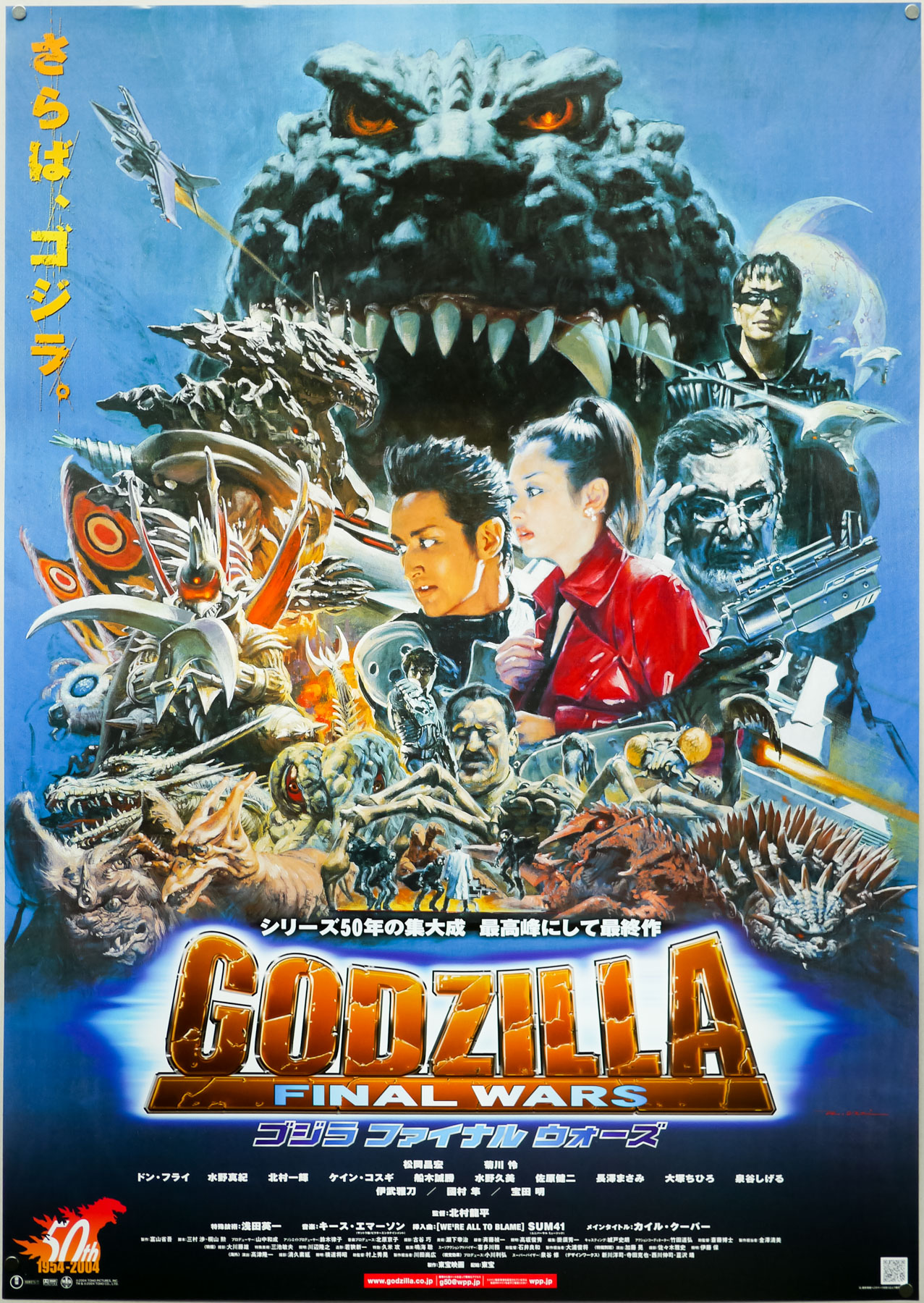
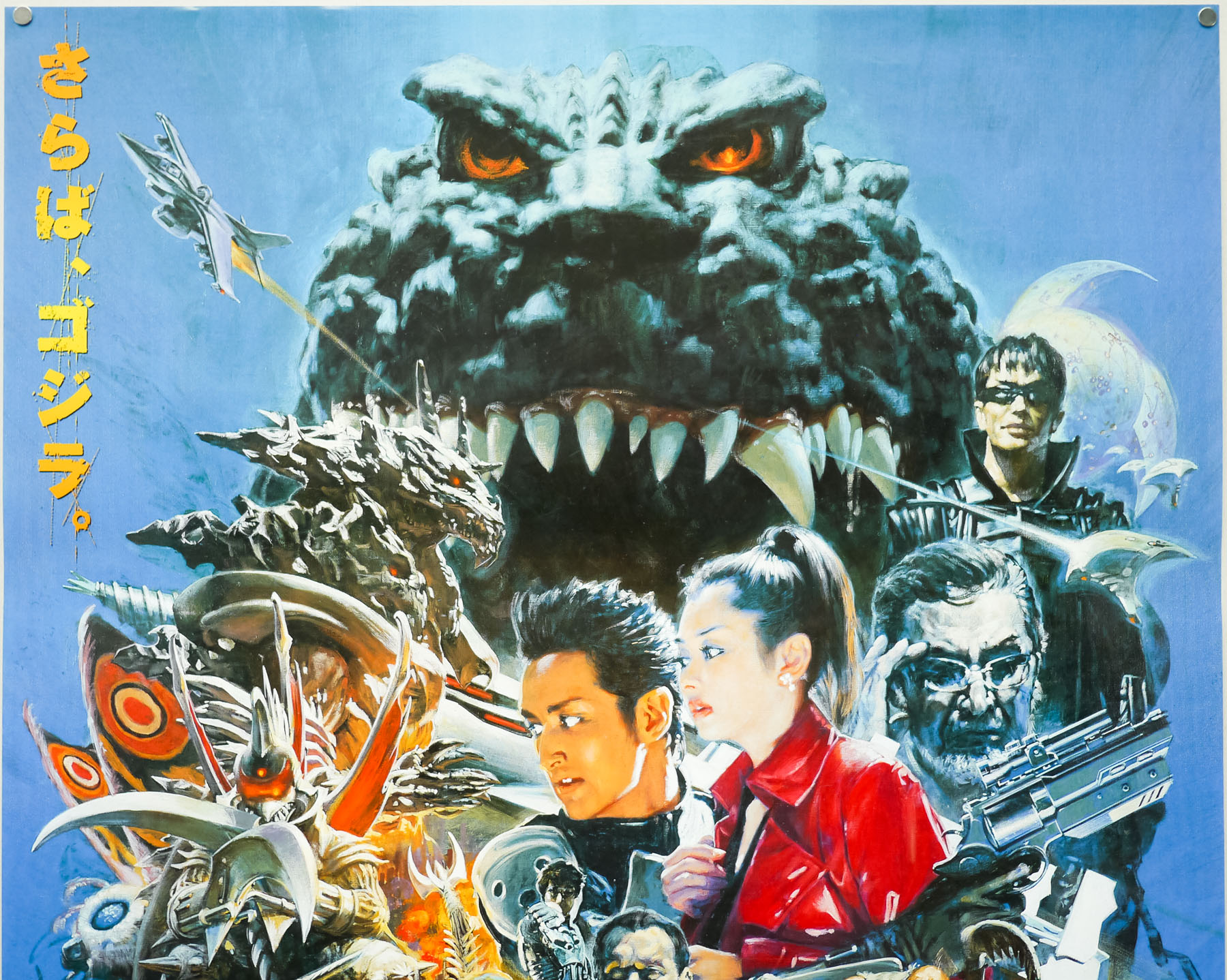
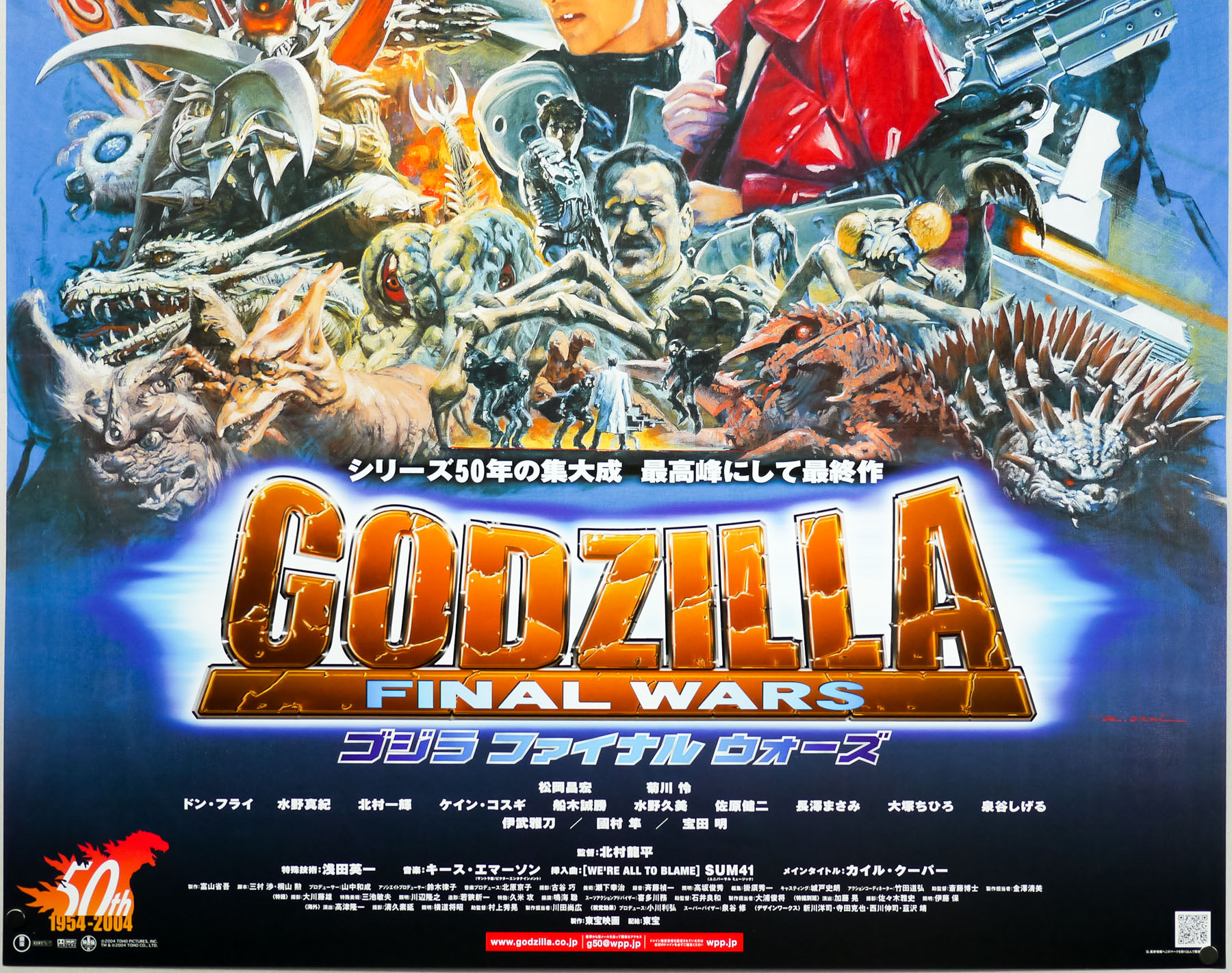
This is the B2 poster for the Japanese release of Godzilla: Final Wars, which was the 28th film in the long-running franchise featuring the King of the Kaiju (giant monsters). The film was also the sixth release in the third generation of Godzilla films (known as the Millennium Series). Final Wars was something of a milestone for the film’s production company Toho Company Ltd as it marked 50 years since the release of the original film that started it all and also marked a break in the production of Godzilla films, with Toho declaring they wouldn’t film another Japanese entry in the franchise for at least 10 years and then dismantling the stage used for most entries.

Final Wars is set in 2044 and sees the Earth Defence Force dealing with an alien threat in the from of the Xiliens who secretly unleash Kaiju across the planet, including Rodan, Ebirah and Anguirus. After cities like Sydney, Shanghai and Paris are almost destroyed the aliens remove the Kaiju in an act of supposed benevolence and warn the earth about an impending impact from an asteroid called Gorath. The UN is disbanded and an alliance called the Space Nations is formed to tackle the new threat. A few members of the Earth Defence Force distrust the aliens’ intentions and discover that they were responsible for unleashing the Kaiju and that they really intend to harvest humanity for food. The group hatch a plan to unleash Godzilla from his frozen tomb in Antarctica where he’s lain for 40 years to help them tackle the threat.

The film is something of a greatest hits compilation, featuring as it does monsters and human characters from the franchise’s past, and the montage nature of this poster suits it well. Toho spent almost $20 million producing the film, which was the highest budget in the franchise to date, but unfortunately the medley of monsters and anniversary tag didn’t help it’s critical or commercial performance. It’s eventual box-office takings totalled just $12 million and made it the worst performing film in the series for 27 years.

The artwork on this poster is by Noriyoshi Ohrai, my favourite Japanese artist and certainly in my top five greatest film poster illustrators of all time. He’s responsible for a number of other Star Wars related posters, including this lovely 1982 B2 to celebrate the release of the Japanese dubbed version of the original film. He also worked on other posters in the Godzilla franchise, some of which can be seen here. In March 2014 a retrospective exhibition was held in Japan of Ohrai’s work and I made the trip over to Miyazaki to see the exhibition. I’m very glad I did as it featured most of his original artwork and a whole array of posters and book covers. A full report will follow soon.

The posters I’ve managed to collect by Noriyoshi Ohrai can be seen by clicking here.

Godzilla vs. Megaguirus / B2 / artwork style / Japan

10.09.14

Poster Poster
Title
Godzilla vs. Megaguirus
AKA
Gojira tai Megagirasu: Jî shômetsu sakusen (Japan - original title)
Year of Film
2000
Director
Masaaki Tezuka
Starring
Misato Tanaka, Shôsuke Tanihara, Masatô Ibu, Yuriko Hoshi, Toshiyuki Nagashima, Kôichi Ueda, Kôichi Yamadera, Yûsaku Yara, Kôji Katô, Tsutomu Kitagawa, Minoru Watanabe
Origin of Film
Japan
Genre(s) of Film
Misato Tanaka, Shôsuke Tanihara, Masatô Ibu, Yuriko Hoshi, Toshiyuki Nagashima, Kôichi Ueda, Kôichi Yamadera, Yûsaku Yara, Kôji Katô, Tsutomu Kitagawa, Minoru Watanabe,
Type of Poster
B2
Style of Poster
Artwork
Origin of Poster
Japan
Year of Poster
2000
Designer
Unknown
Artist
Noriyoshi Ohrai
Size (inches)
20 6/16" x 28 13/16"
SS or DS
SS
Tagline
--

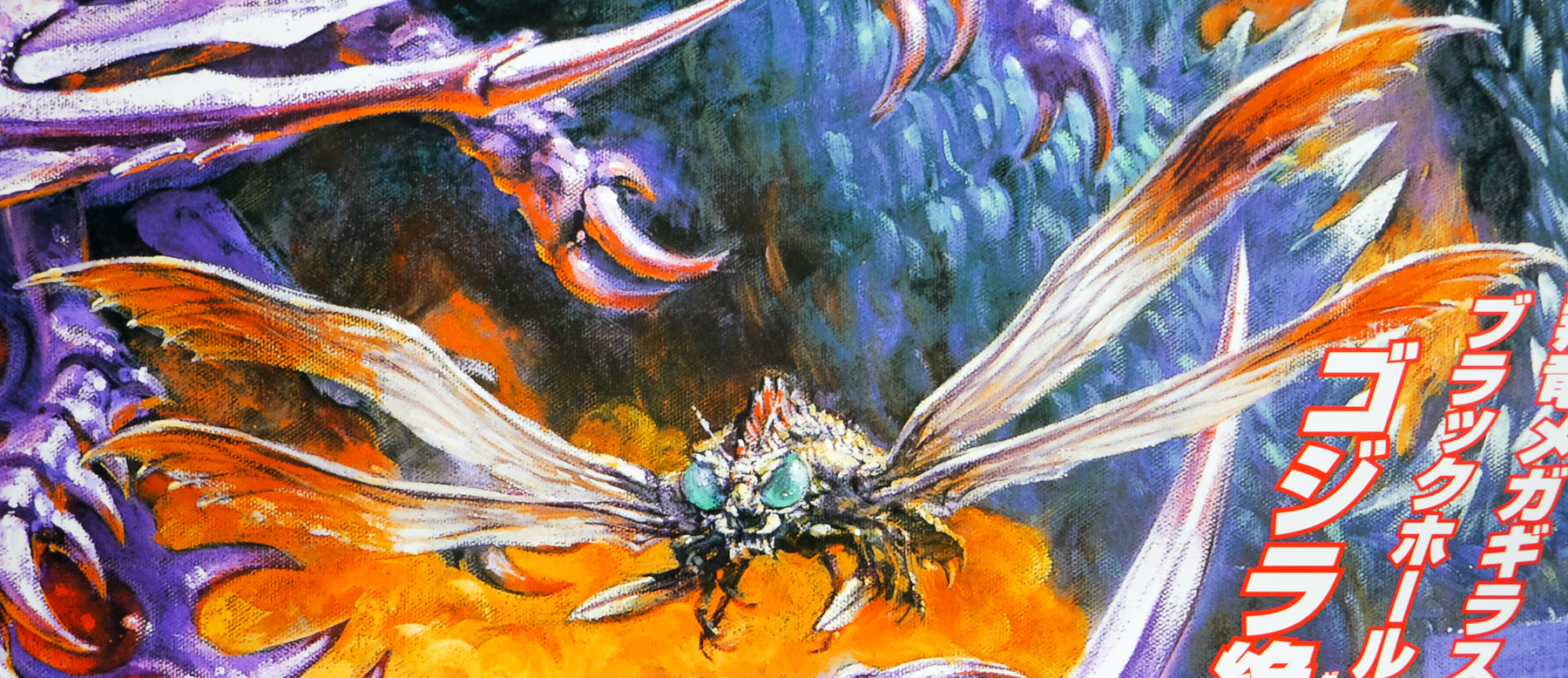
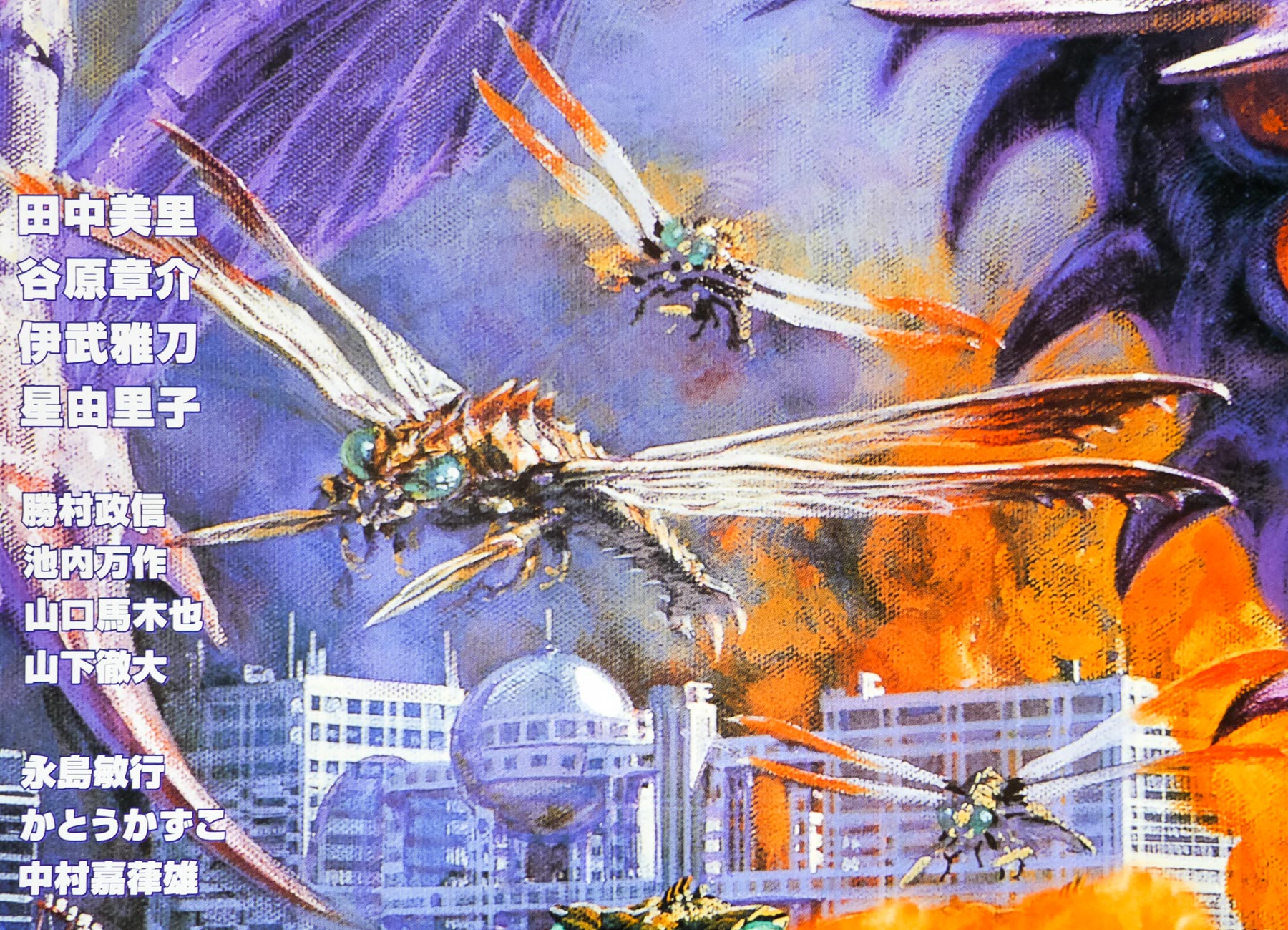
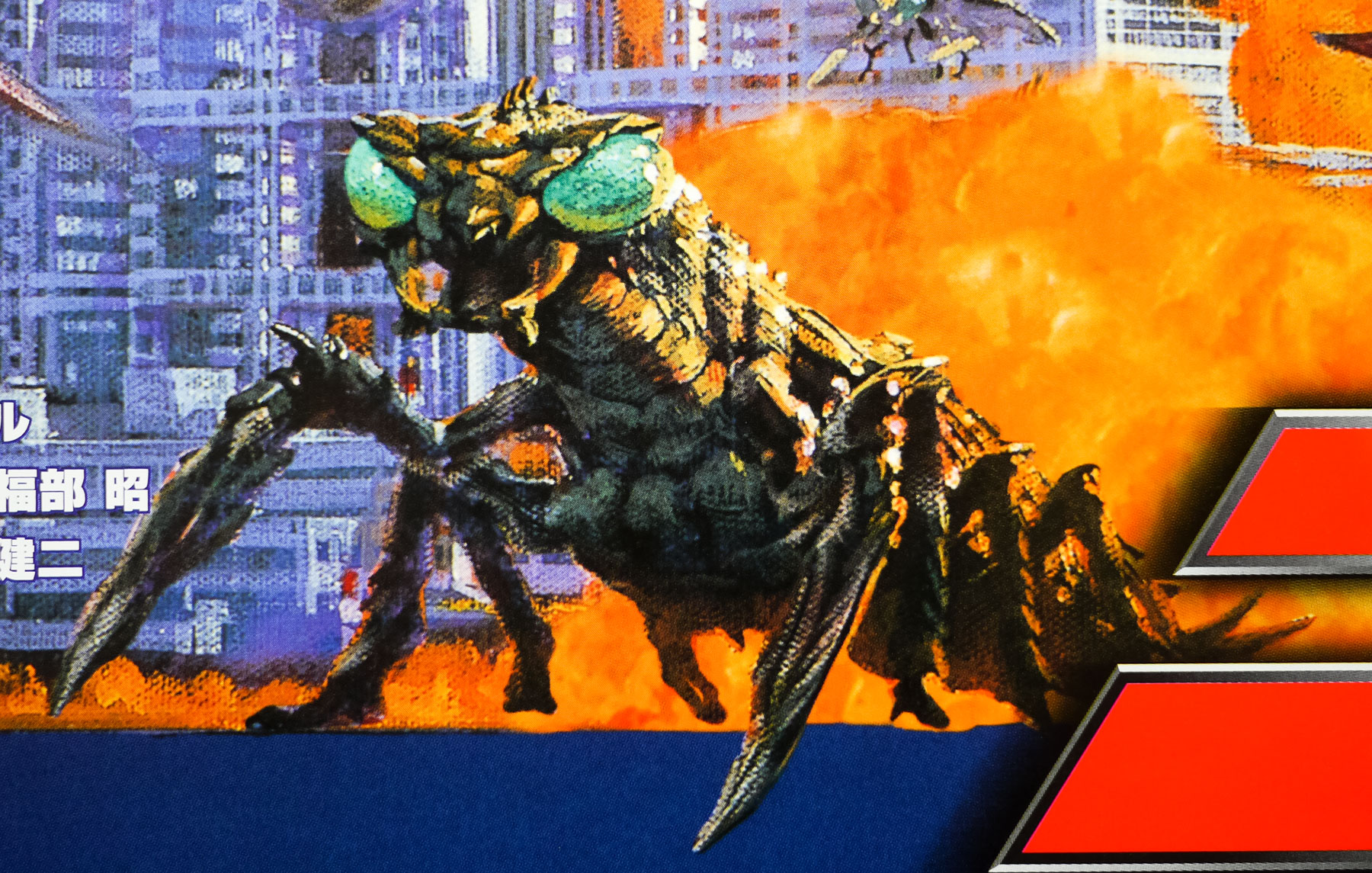
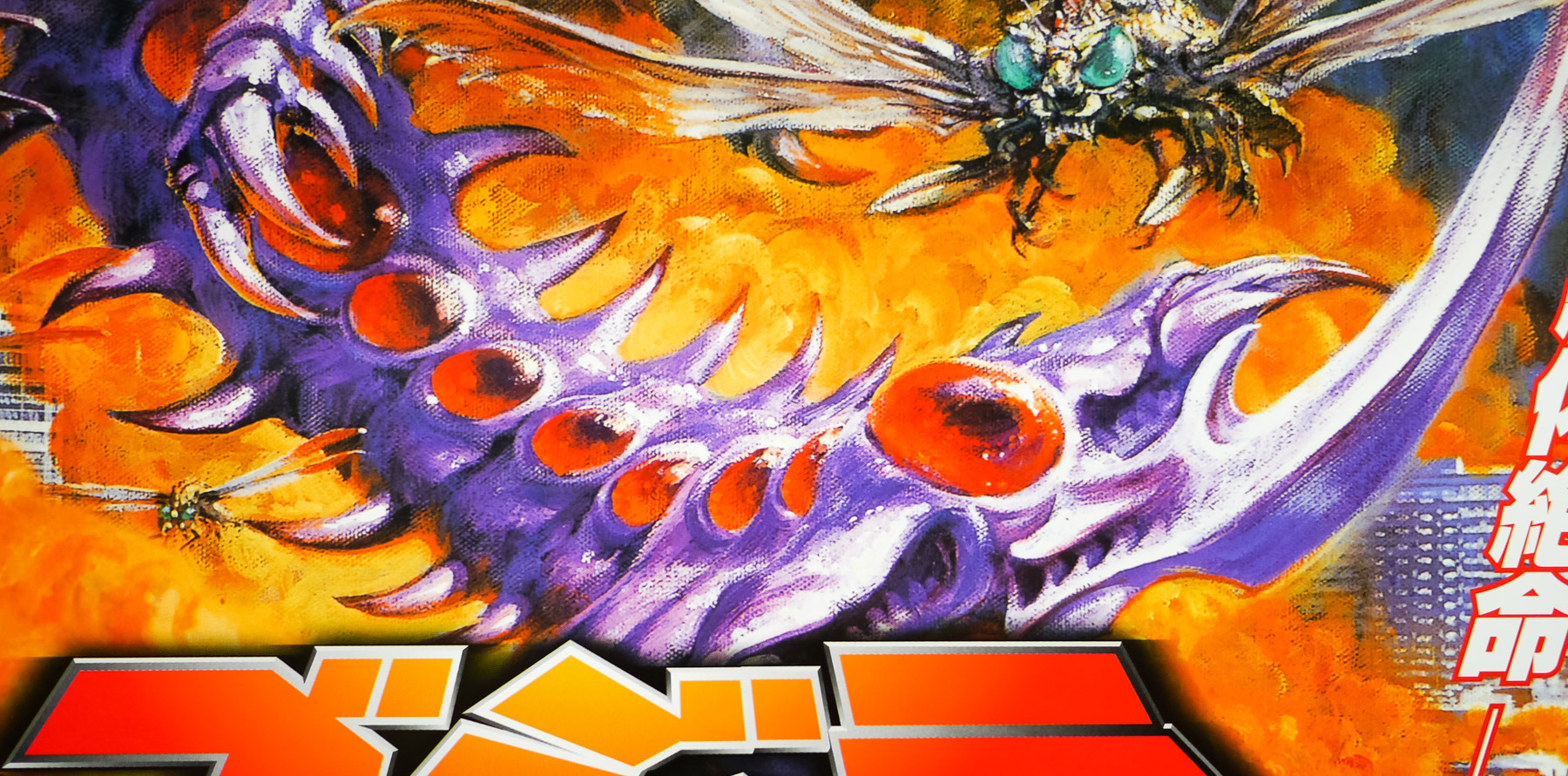
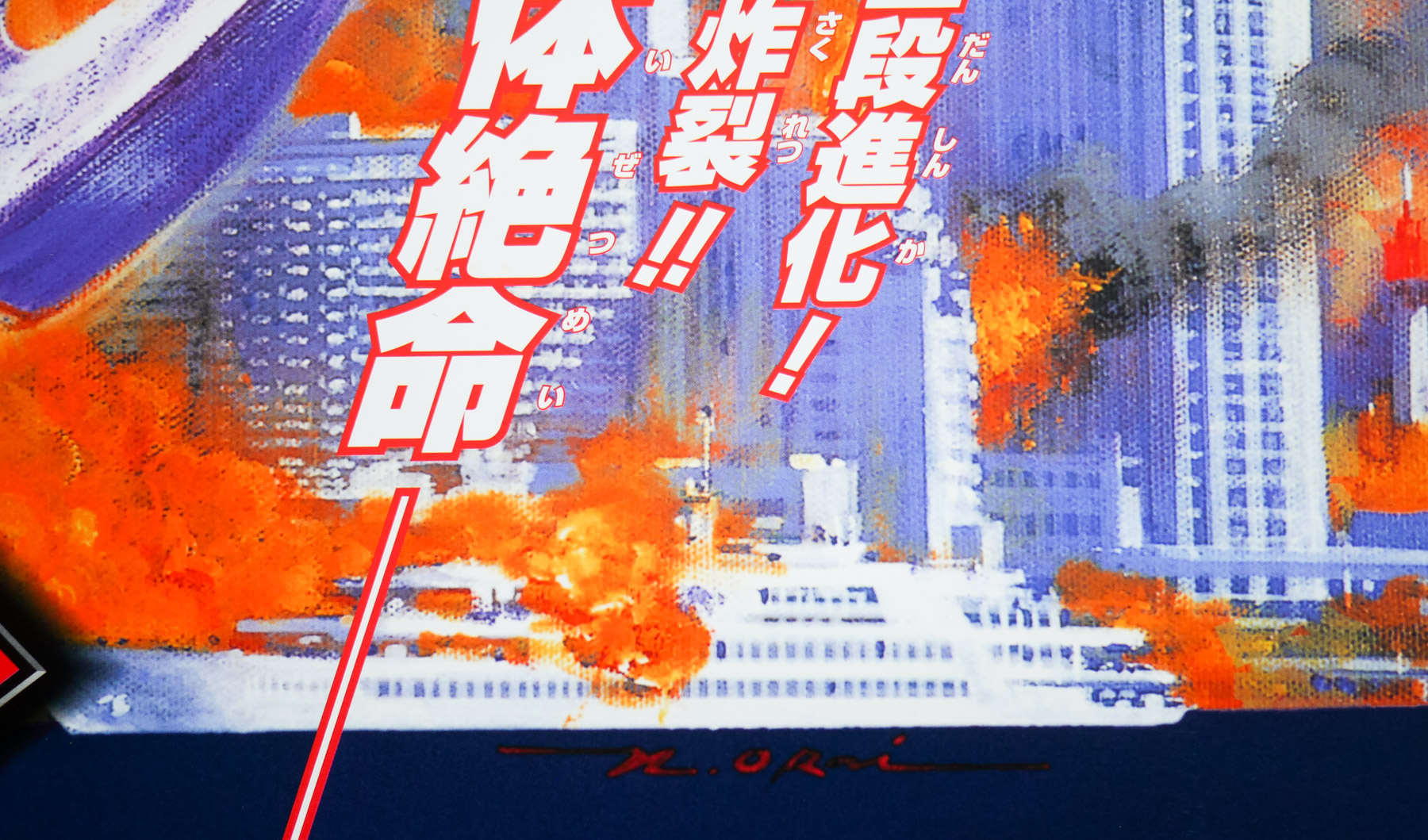
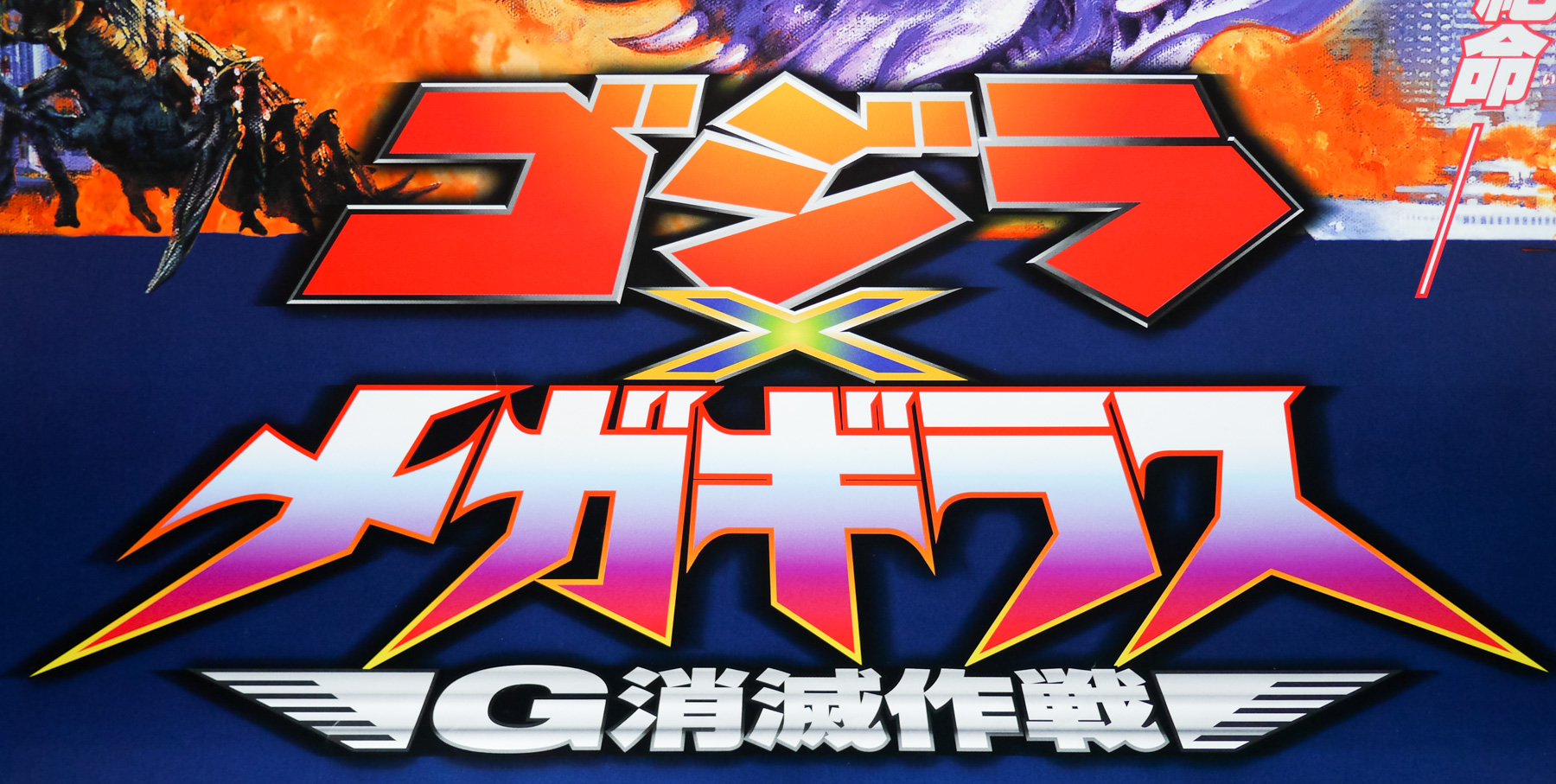
This is the B2 poster for the Japanese release of Godzilla vs. Megaguirus which was the 24th film in the long-running franchise featuring the King of the Kaiju (giant monsters). The film was also the second release in the third generation of Godzilla films (known as the Millennium Series), which are all standalone (with the exception of Godzilla: Tokyo SOS) and were mooted as ‘alternative universe’ stories. It ended up as the least financially successful film in the Millennium series, with the special effects director Kenji Suzuki apparently taking the blame. Referencing the first film, the story sets up a universe in Godzilla attacks the first Japanese nuclear power plant in 1966 which led to the formation of a section of the Japanese Self Defence Force called G-Graspers, dedicated to fighting Godzilla.

After nuclear energy is replaced by ‘plasma energy’ in 1996 it is hoped that the kaiju will no longer attack Japanese cities in search of nuclear energy, but the plan fails and plasma energy is also eventually outlawed. Later in 2001 an experimental satellite weapon called the Dimension Tide is fired and opens up a wormhole through which a prehistoric dragonfly appears, lays an egg and disappears back through the wormhole. A young boy discovers the egg and takes it with him when he moves to Tokyo, but when the egg starts oozing a strange liquid the boy throws it into the sewers. The egg is actually hundreds of smaller eggs which start to grow on contact with water and evolve into large dragonfly larvae which soon hatch and become adult Meganulon.

When Godzilla attacks Tokyo once more, the dragonflies are attracted to his energy and engage him in battle, but they are no match for the kaiju’s power and are almost all obliterated. Those that survive return to the sewers and, with an amount of energy taken from Godzilla, they inject a large cocoon that hatches as Megaguirus, queen of the Meganulon, and she immediately heads towards Godzilla, ready for an epic showdown.

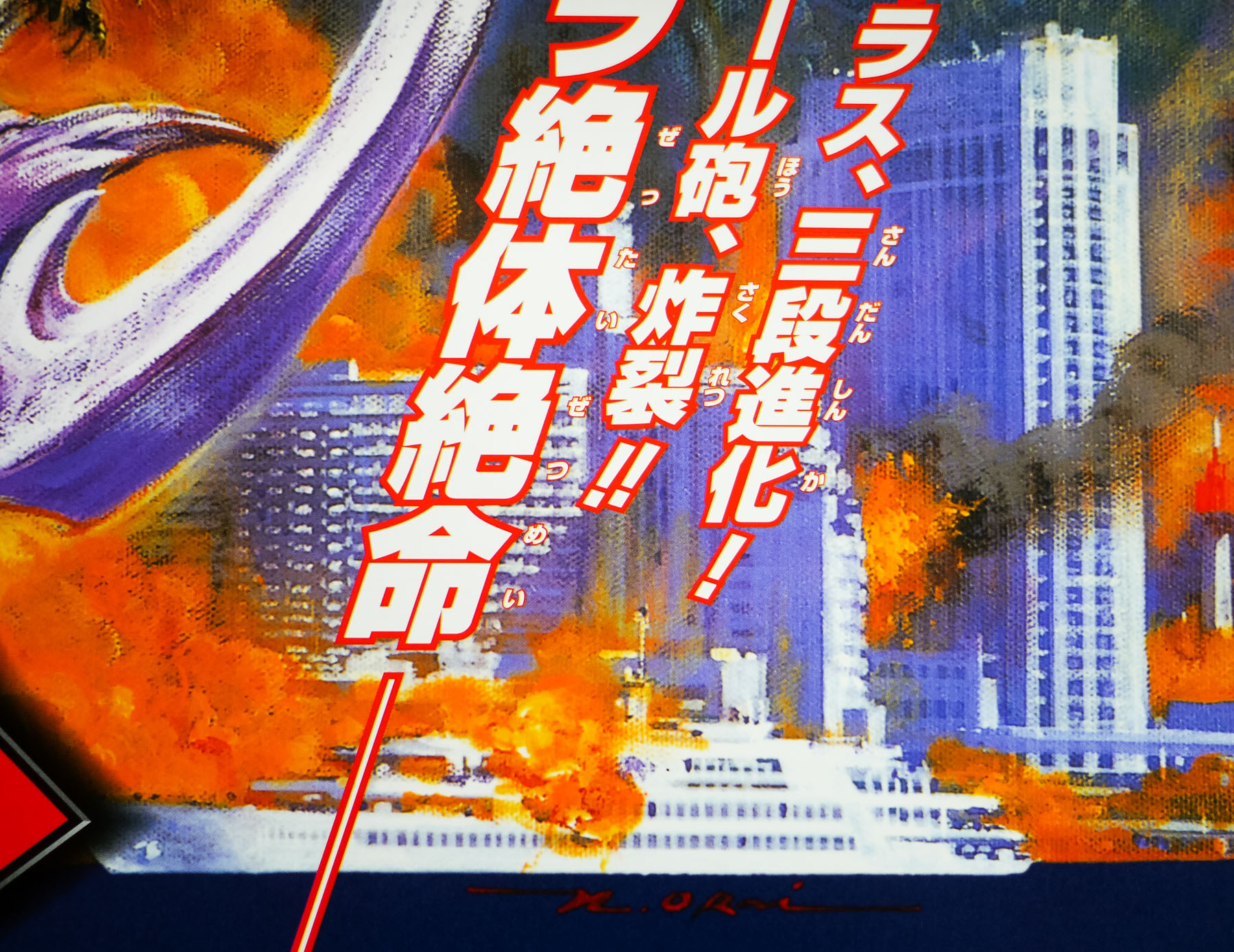
The artwork on this poster is by Noriyoshi Ohrai, my favourite Japanese artist and certainly in my top five greatest film poster illustrators of all time. He’s responsible for a number of other posters in the Godzilla franchise, some of which can be seen here. He also worked on a number of Star Wars related posters, including this lovely 1982 B2 to celebrate the release of the Japanese dubbed version of the original film. In March 2014 a retrospective exhibition was held in Japan of Ohrai’s work and I made the trip over to Miyazaki to see the exhibition. I’m very glad I did as it featured most of his original artwork and a whole array of posters and book covers. A full report will follow soon.

The posters I’ve managed to collect by Noriyoshi Ohrai can be seen by clicking here.

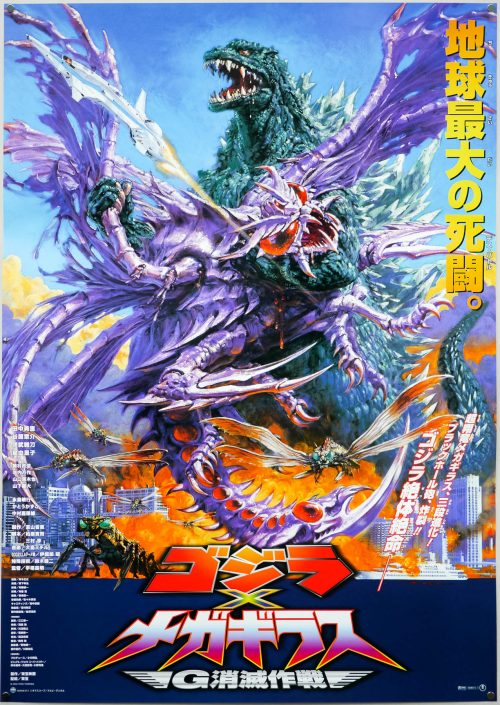
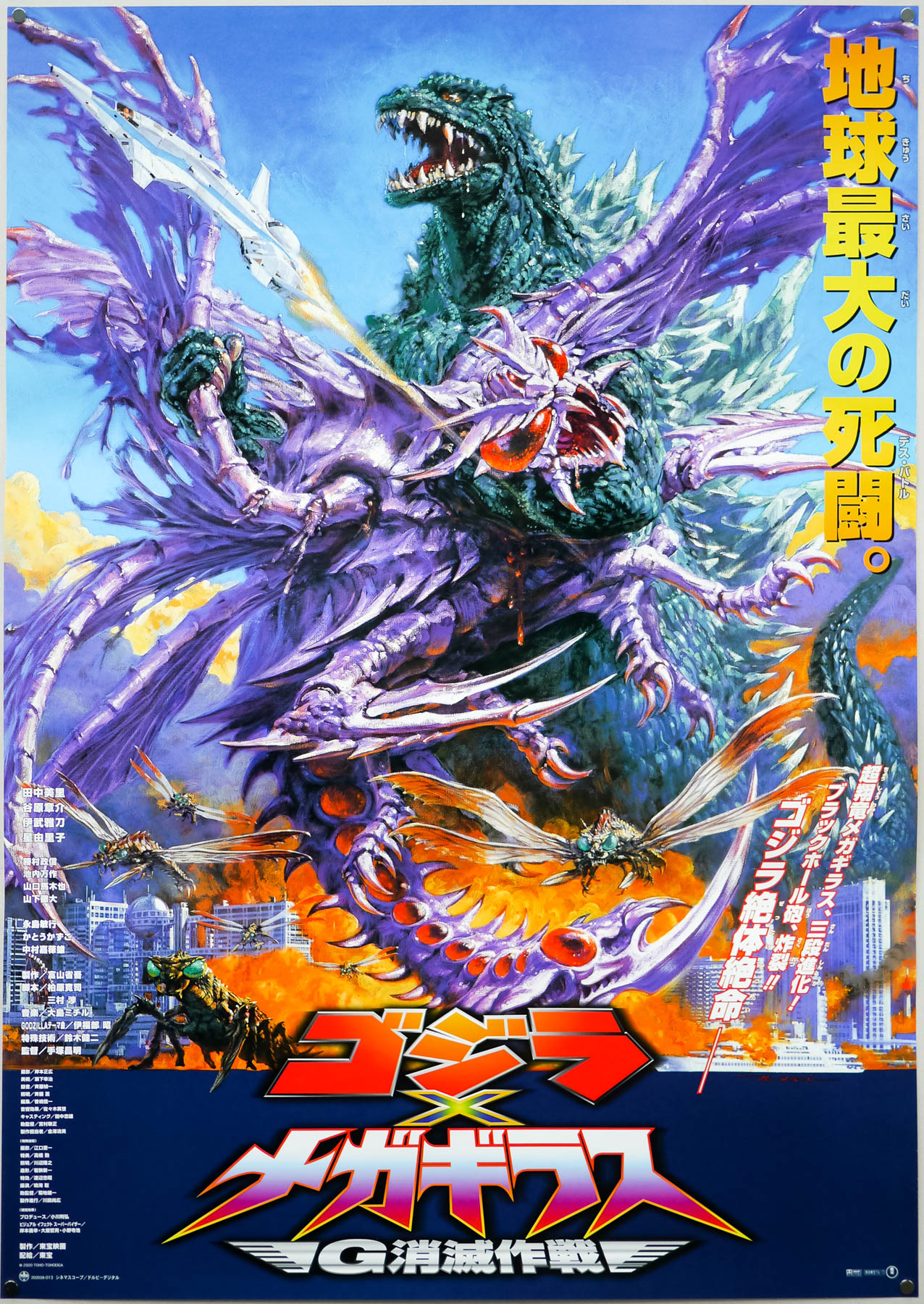
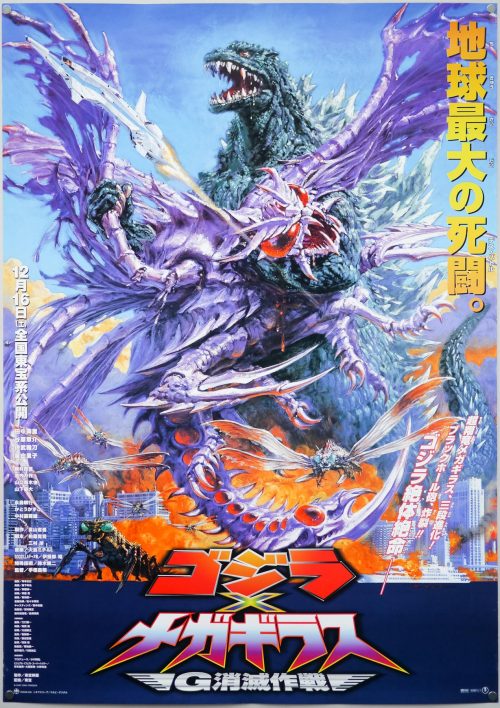
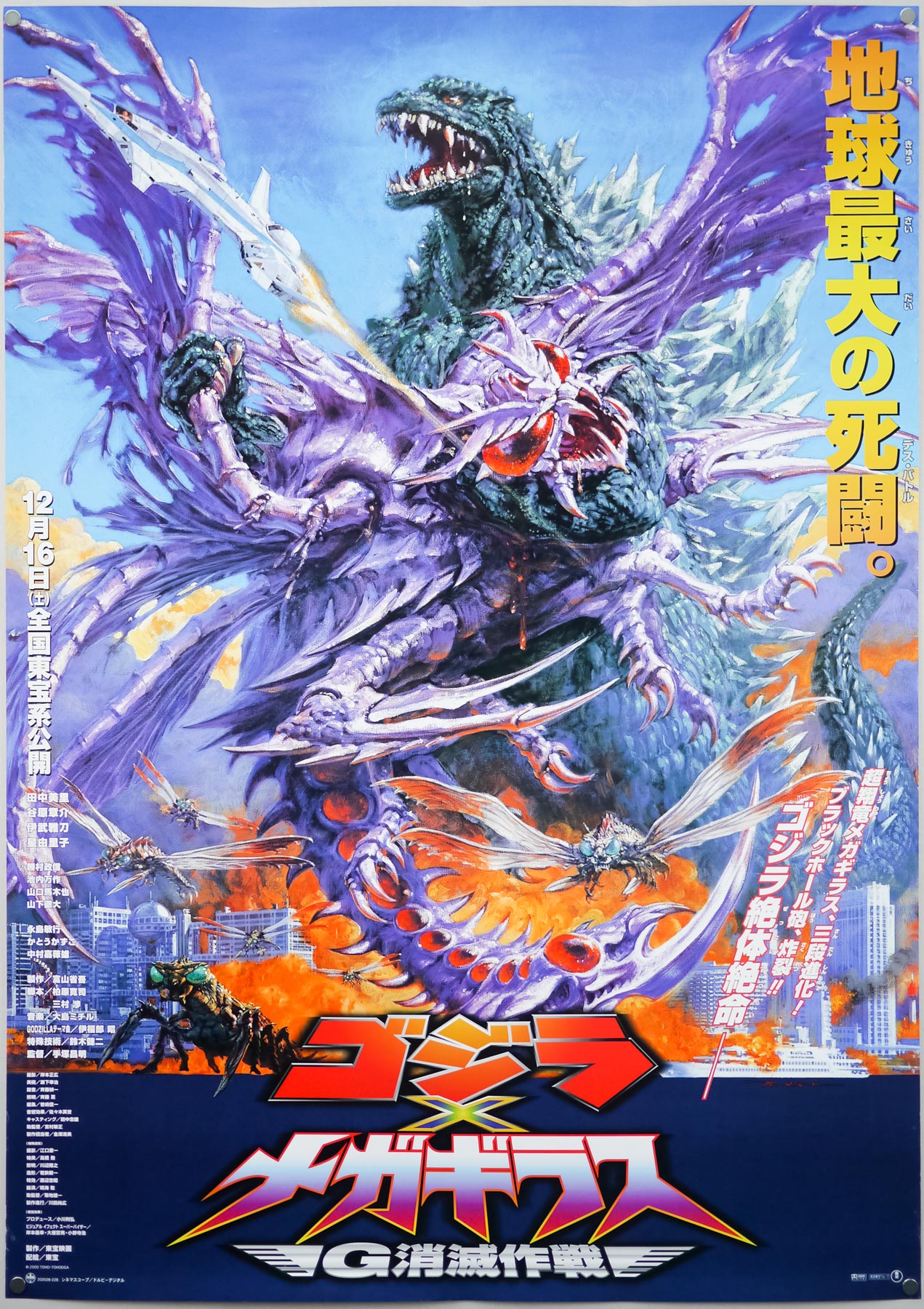
Godzilla vs. Megaguirus / B1 / Japan

01.05.15

Poster Poster
Title
Godzilla vs. Megaguirus
AKA
Gojira tai Megagirasu: Jî shômetsu sakusen (Japan - original title)
Year of Film
2000
Director
Masaaki Tezuka
Starring
Misato Tanaka, Shôsuke Tanihara, Masatô Ibu, Yuriko Hoshi, Toshiyuki Nagashima, Kôichi Ueda, Kôichi Yamadera, Yûsaku Yara, Kôji Katô, Tsutomu Kitagawa, Minoru Watanabe
Origin of Film
Japan
Genre(s) of Film
Misato Tanaka, Shôsuke Tanihara, Masatô Ibu, Yuriko Hoshi, Toshiyuki Nagashima, Kôichi Ueda, Kôichi Yamadera, Yûsaku Yara, Kôji Katô, Tsutomu Kitagawa, Minoru Watanabe,
Type of Poster
B1
Style of Poster
artwork
Origin of Poster
Japan
Year of Poster
2000
Designer
Unknown
Artist
Noriyoshi Ohrai
Size (inches)
28 12/16" x 40 7/16"
SS or DS
SS
Tagline
--

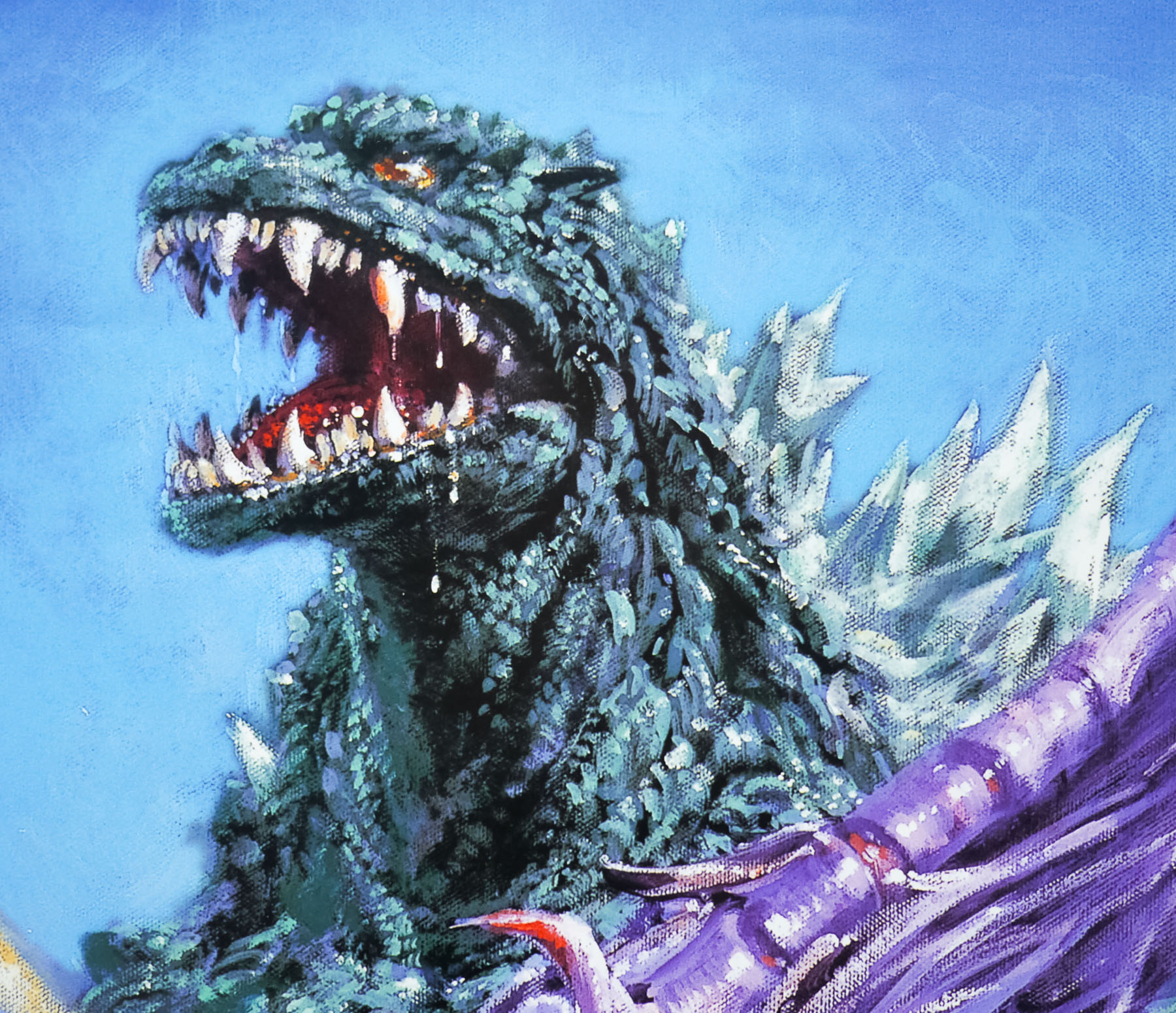
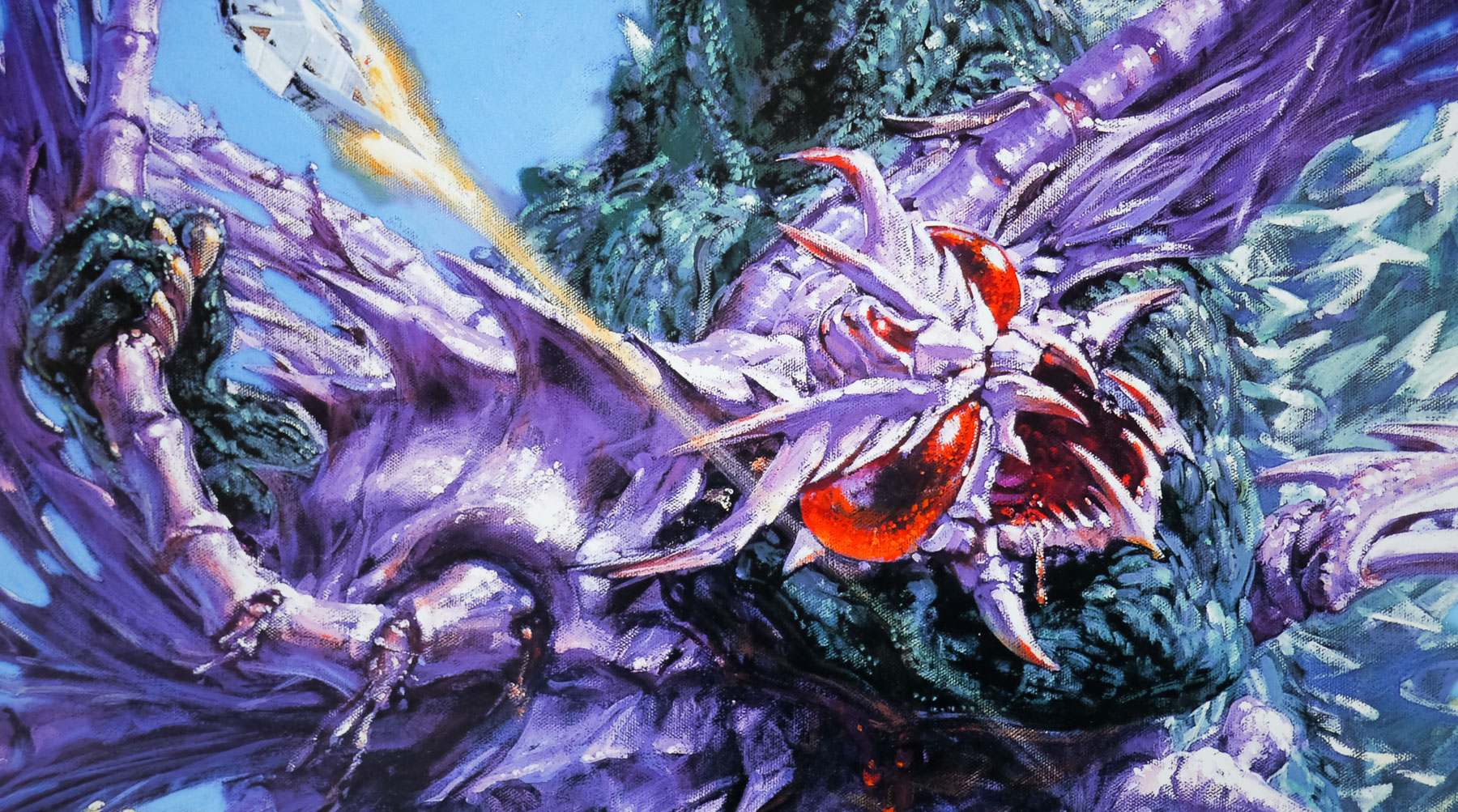
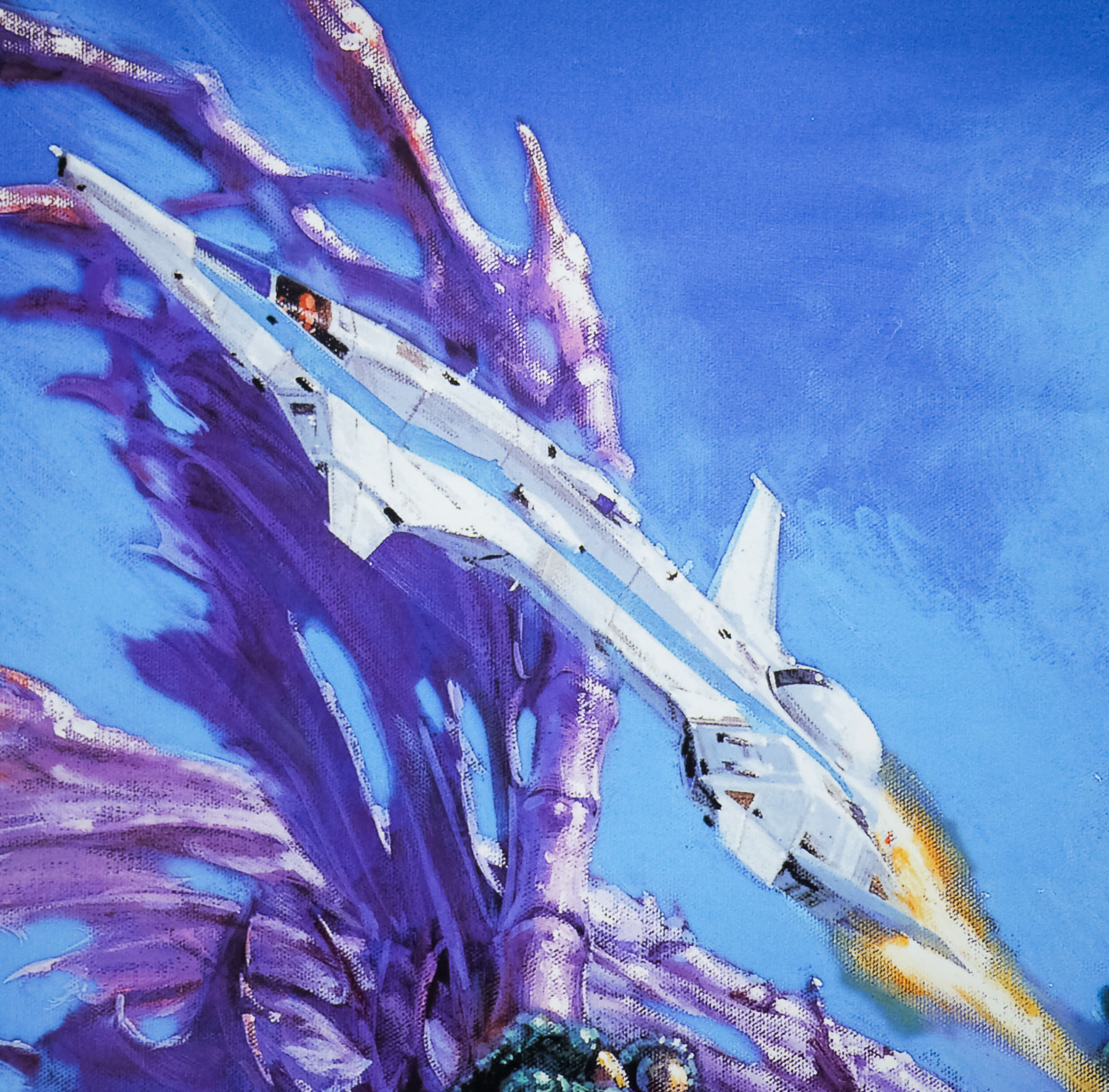
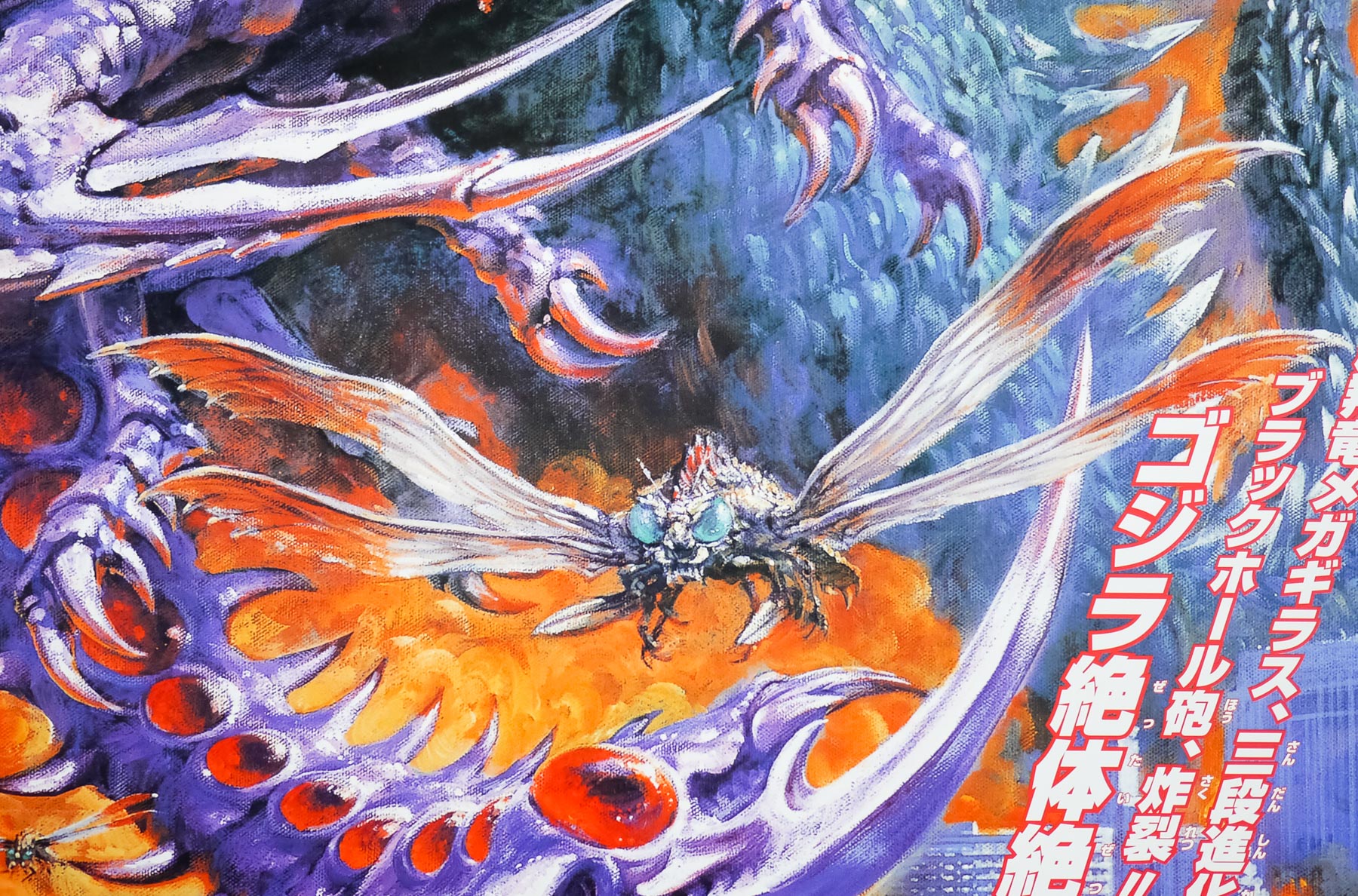
This is the B1 poster for the Japanese release of Godzilla vs. Megaguirus which was the 24th film in the long-running franchise featuring the King of the Kaiju (giant monsters). The film was also the second release in the third generation of Godzilla films (known as the Millennium Series), which are all standalone (with the exception of Godzilla: Tokyo SOS) and were mooted as ‘alternative universe’ stories. It ended up as the least financially successful film in the Millennium series, with the special effects director Kenji Suzuki apparently taking the blame. Referencing the first film, the story sets up a universe in Godzilla attacks the first Japanese nuclear power plant in 1966 which led to the formation of a section of the Japanese Self Defence Force called G-Graspers, dedicated to fighting Godzilla.

After nuclear energy is replaced by ‘plasma energy’ in 1996 it is hoped that the kaiju will no longer attack Japanese cities in search of nuclear energy, but the plan fails and plasma energy is also eventually outlawed. Later in 2001 an experimental satellite weapon called the Dimension Tide is fired and opens up a wormhole through which a prehistoric dragonfly appears, lays an egg and disappears back through the wormhole. A young boy discovers the egg and takes it with him when he moves to Tokyo, but when the egg starts oozing a strange liquid the boy throws it into the sewers. The egg is actually hundreds of smaller eggs which start to grow on contact with water and evolve into large dragonfly larvae which soon hatch and become adult Meganulon.

When Godzilla attacks Tokyo once more, the dragonflies are attracted to his energy and engage him in battle, but they are no match for the kaiju’s power and are almost all obliterated. Those that survive return to the sewers and, with an amount of energy taken from Godzilla, they inject a large cocoon that hatches as Megaguirus, queen of the Meganulon, and she immediately heads towards Godzilla, ready for an epic showdown.

The artwork on this poster is by Noriyoshi Ohrai, my favourite Japanese artist and certainly in my top five greatest film poster illustrators of all time. He’s responsible for a number of other posters in the Godzilla franchise, some of which can be seen here. He also worked on a number of Star Wars related posters, including this lovely 1982 B2 to celebrate the release of the Japanese dubbed version of the original film. In March 2014 a retrospective exhibition was held in Japan of Ohrai’s work and I made the trip over to Miyazaki to see the exhibition. I’m very glad I did as it featured most of his original artwork and a whole array of posters and book covers. A full report will follow soon.

The posters I’ve managed to collect by Noriyoshi Ohrai can be seen by clicking here.

Gamera 2: Attack of the Legion / B1 / Japan

06.07.15

Poster Poster
Title
Gamera 2: Attack of the Legion
AKA
Gamera 2: Region shurai (Japan - original English title)
Year of Film
1996
Director
Shûsuke Kaneko
Starring
Toshiyuki Nagashima, Miki Mizuno, Tamotsu Ishibashi, Mitsuru Fukikoshi, Ayako Fujitani, Hiroyuki Okita, Yûsuke Kawazu, Yukijirô Hotaru, Hatsunori Hasegawa
Origin of Film
Japan
Genre(s) of Film
Toshiyuki Nagashima, Miki Mizuno, Tamotsu Ishibashi, Mitsuru Fukikoshi, Ayako Fujitani, Hiroyuki Okita, Yûsuke Kawazu, Yukijirô Hotaru, Hatsunori Hasegawa,
Type of Poster
B1
Style of Poster
--
Origin of Poster
Japan
Year of Poster
1996
Designer
Unknown
Artist
Unknown
Size (inches)
28 12/16" x 40 7/16"
SS or DS
SS
Tagline
--

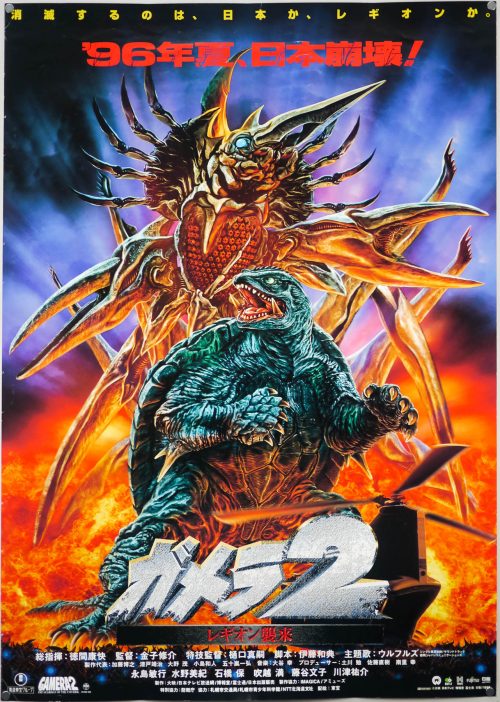
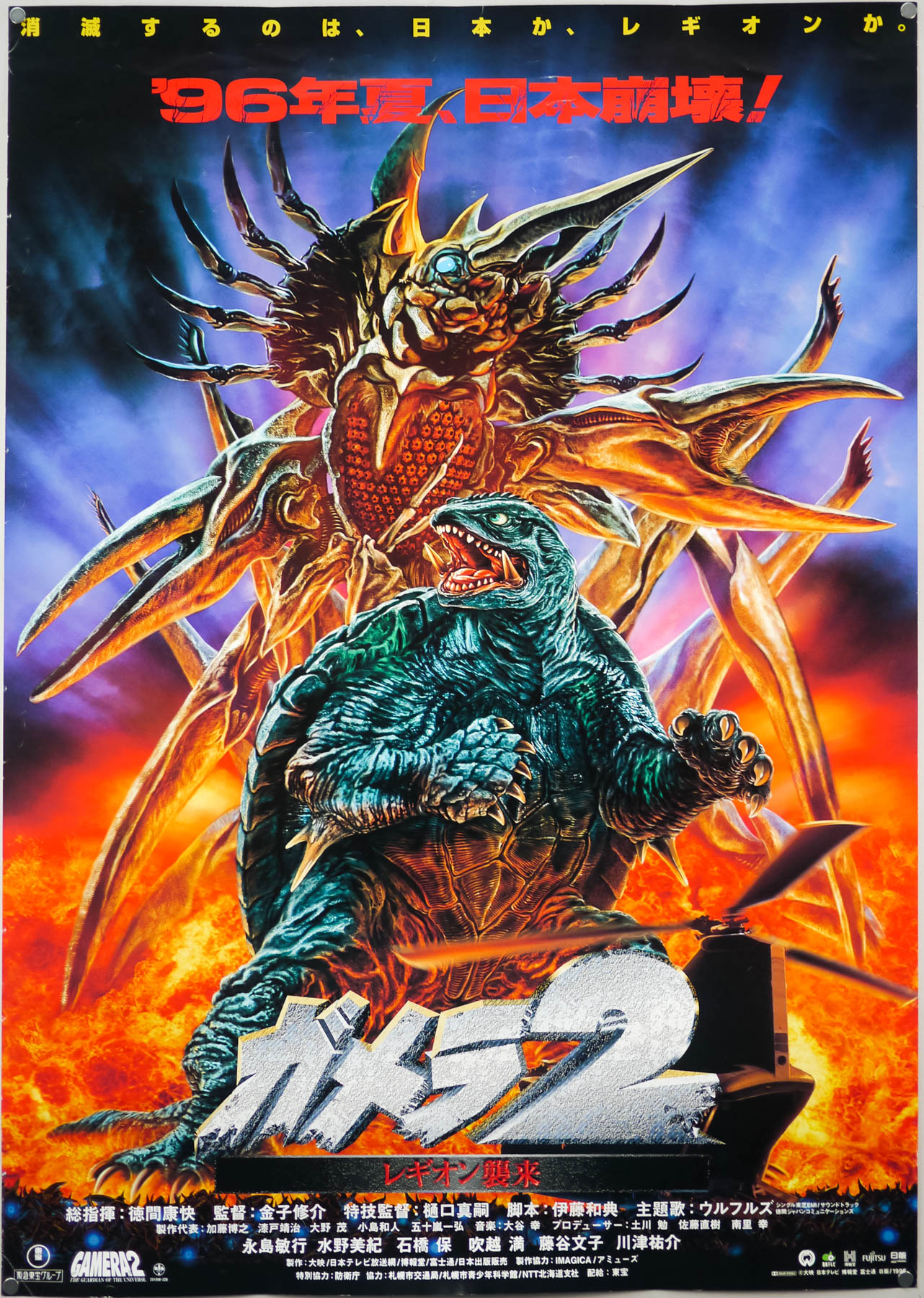
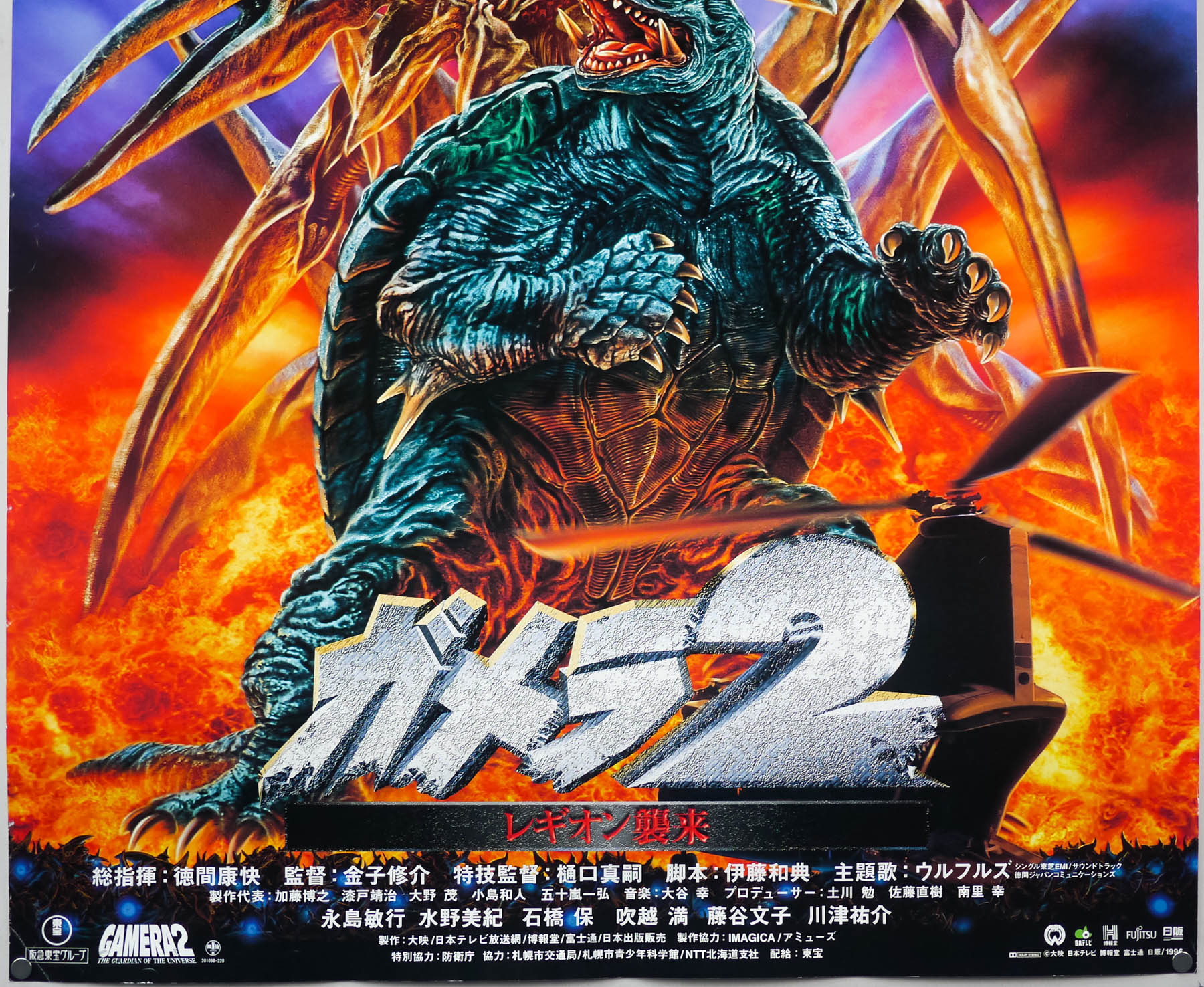
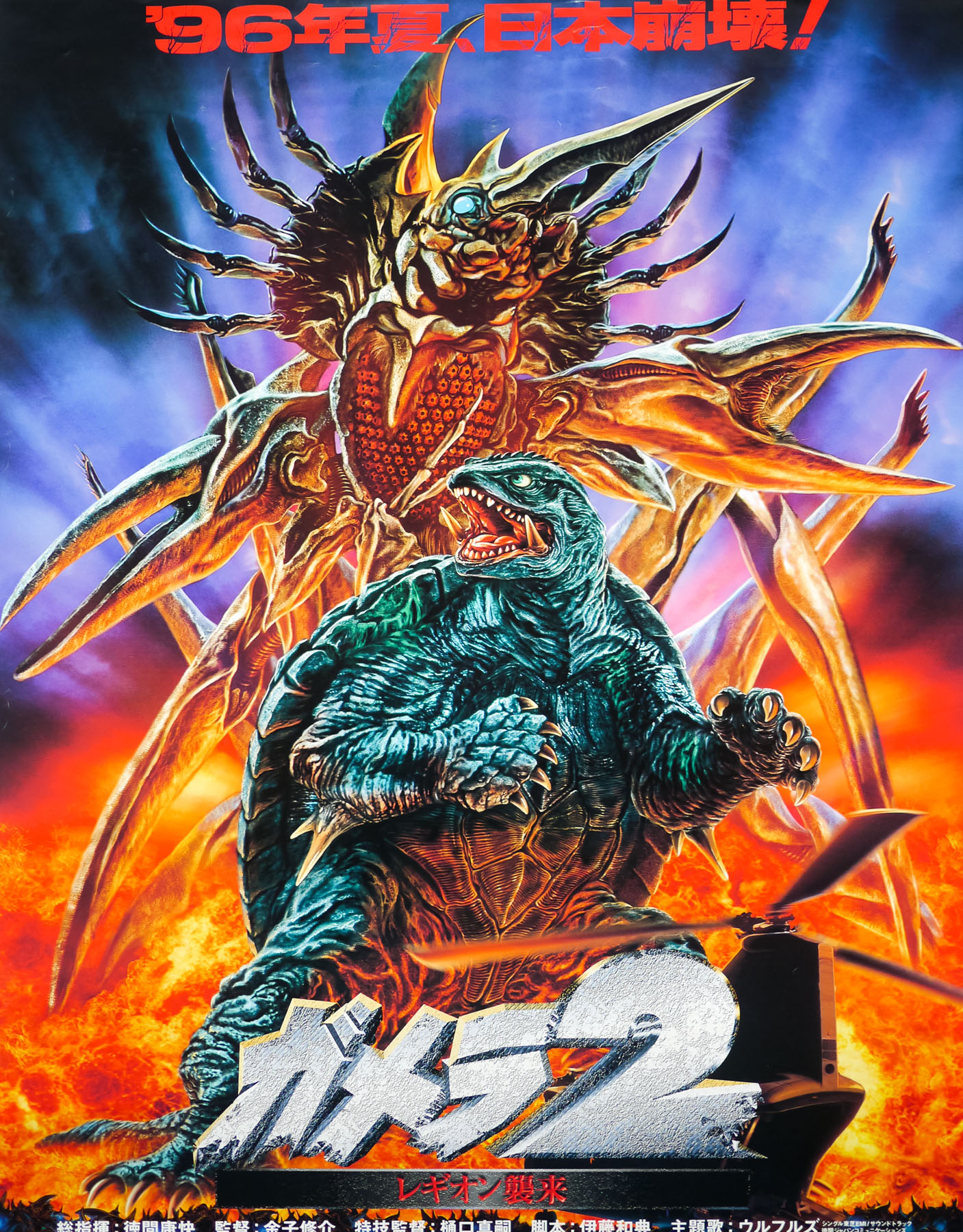
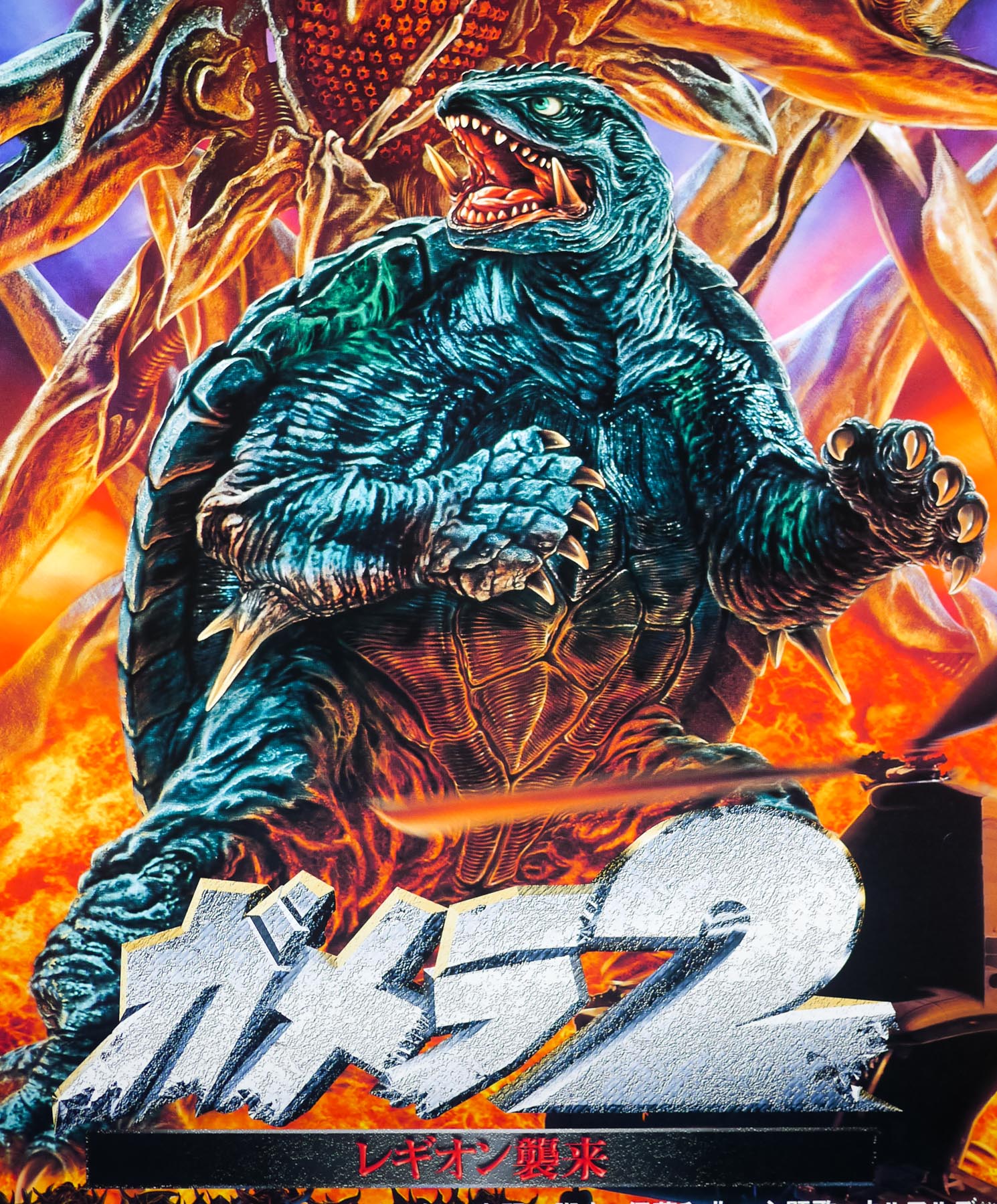
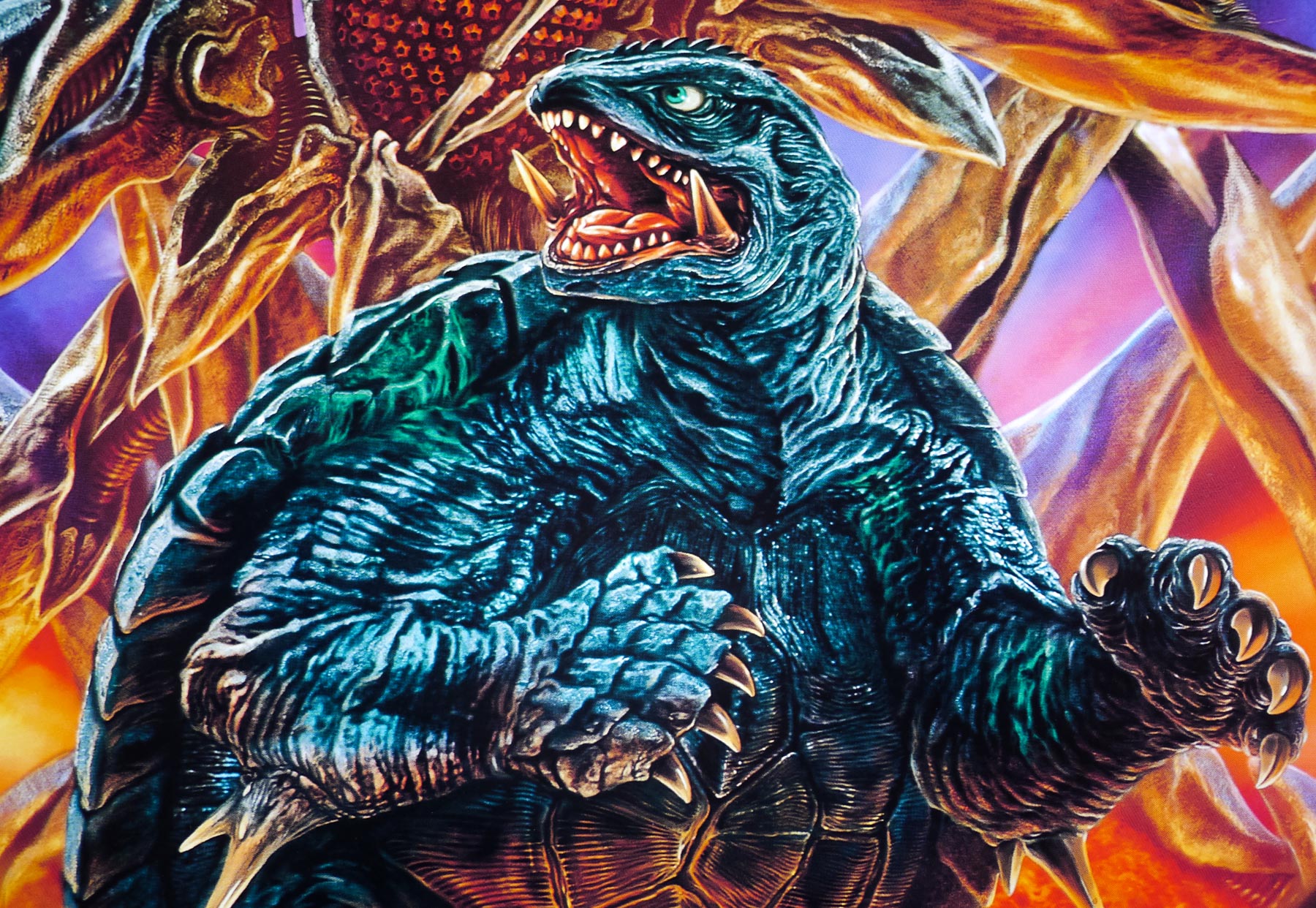
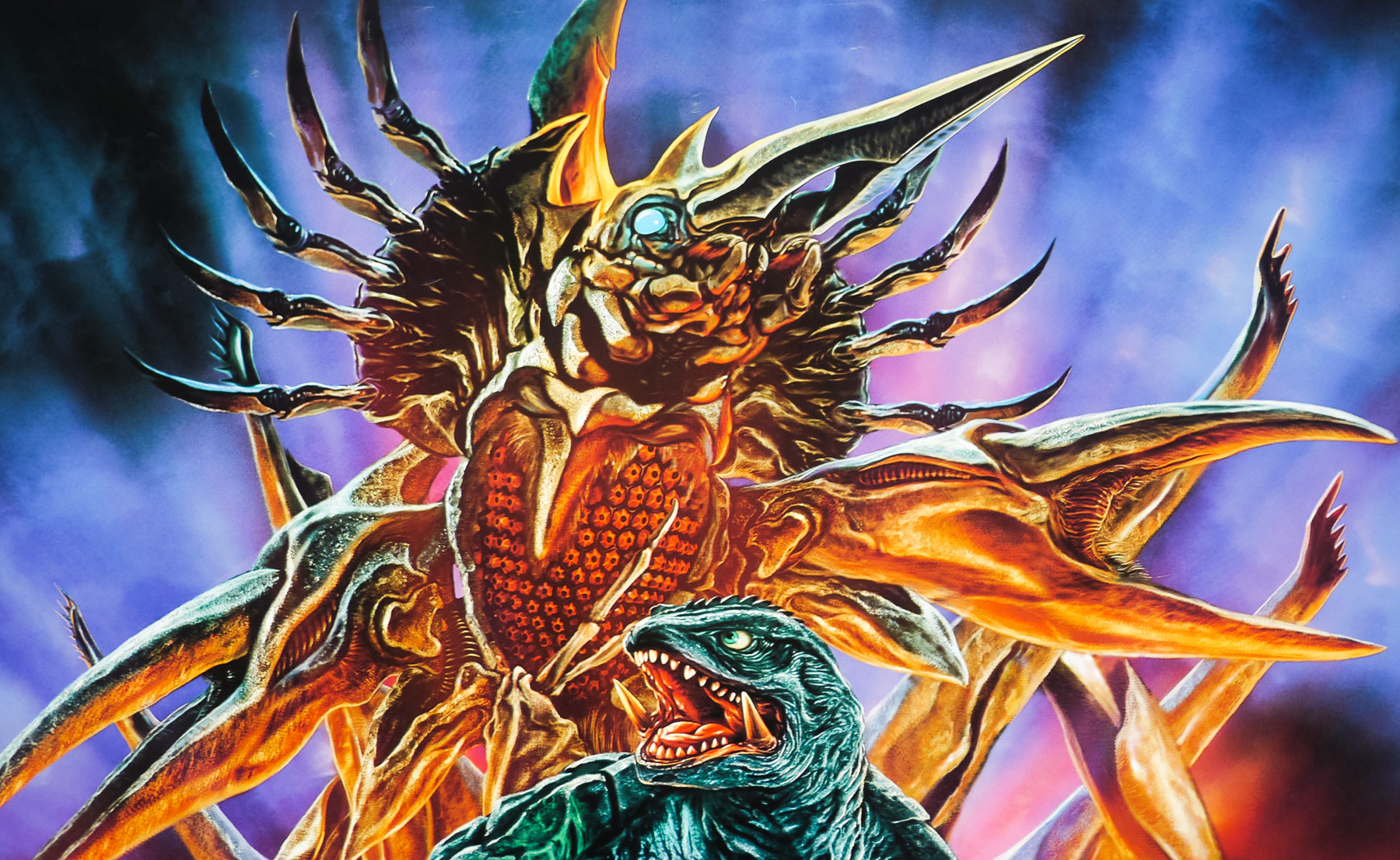
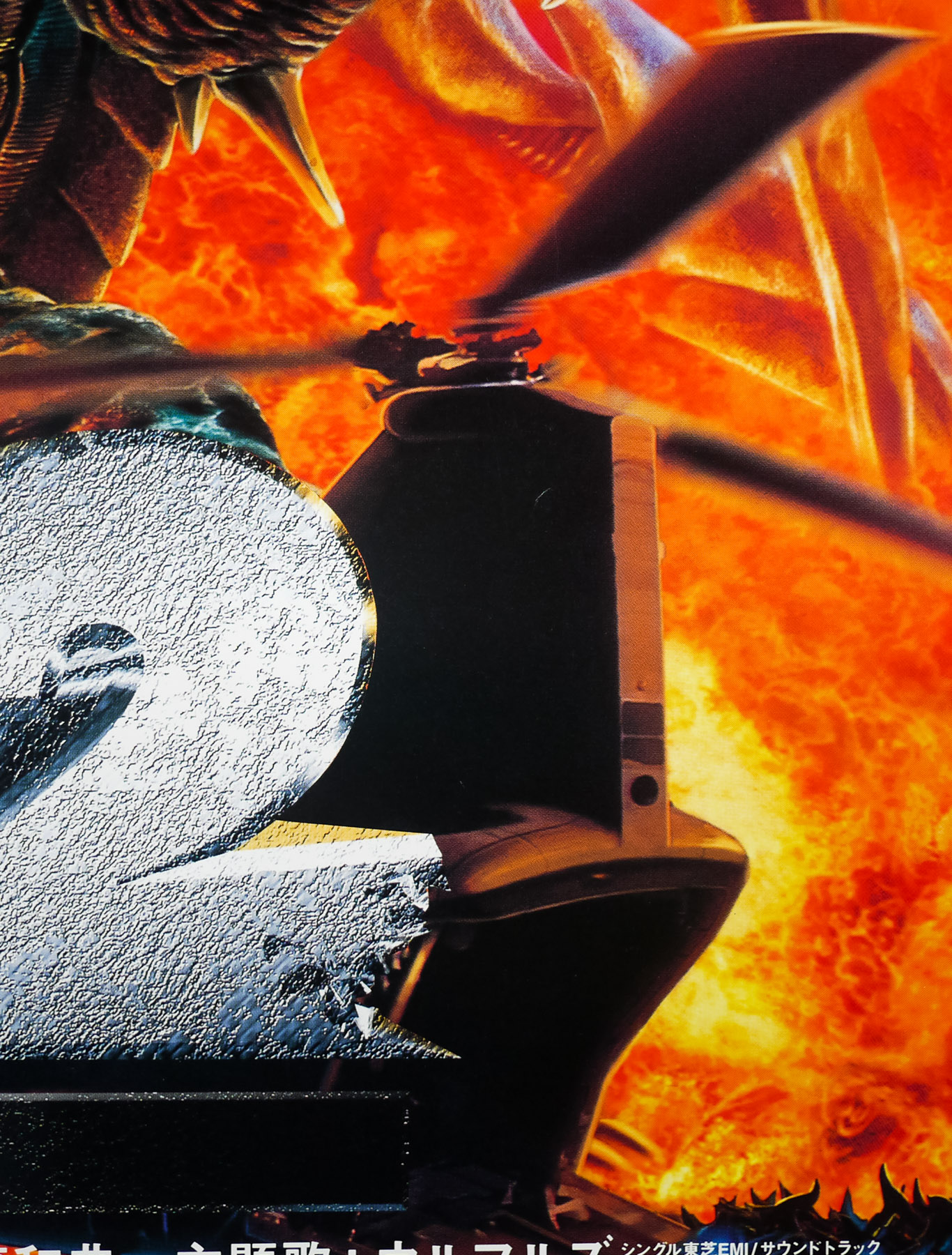
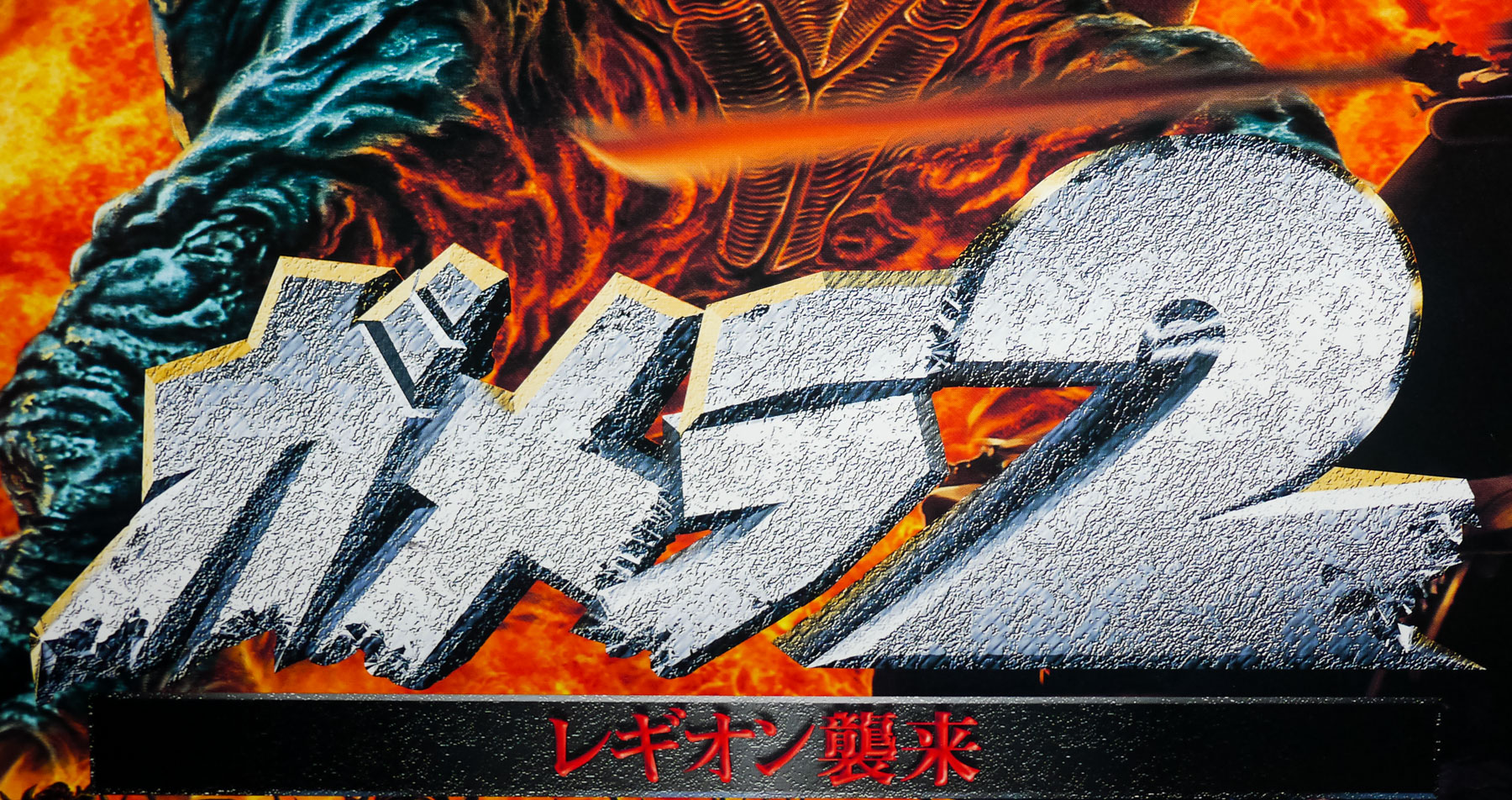
Gamera 2: Attack of the Legion is actually the 10th film to star the turtle-esque daikaiju (giant monster). The first film in the Showa period, entitled simply Gamera, was filmed in black and white in 1965 and released a year later in the US as ‘Gammera the Invincible’. Subsequent films during the Showa period were all ‘Gamera vs…’ a different kaiju and ended with Gamera: Super Monster. Fifteen years later the series was rebooted during the current Heisei period with Gamera: Guardian of the Universe.  Attack of the Legion is set a year after the events of the last film and begins with a meteor crashing into a mountainside that is carrying swarms of an insect-like extraterrestrial.

Soon after the city of Sapporo is covered with strange plants and it becomes clear that the creatures are nesting underneath the city and encouraging them to grow into a giant flower in order to form a kind of launchpad for another meteor-like spore to be blasted into space so they can colonise another world. Just before the creatures are able to trigger a launch explosion that would flatten the city, Gamera flies in and tears the flower out by its roots. Soon he is battling the smaller creatures, which a soldier nicknames Legion (after the Biblical demon army), as well as a gigantic queen which bursts out of the ground and flies off to try and create a nest in another city. Before long Tokyo is being threatened by the creatures and Gamera is all that stands in the way.

The film was a critical success in Japan and was followed in 1999 by a sequel called Gamera 3: Awakening of Irys.

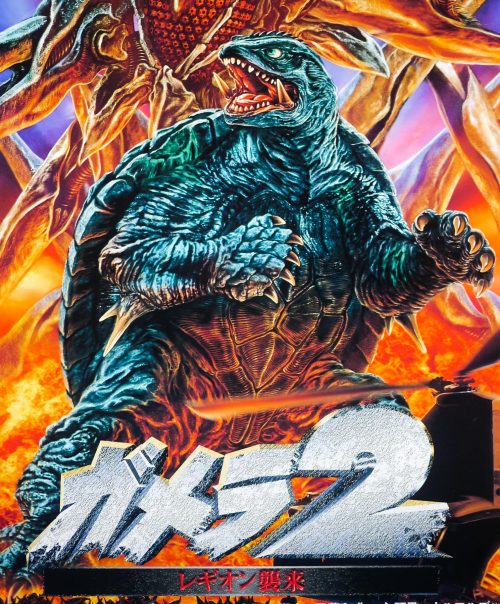
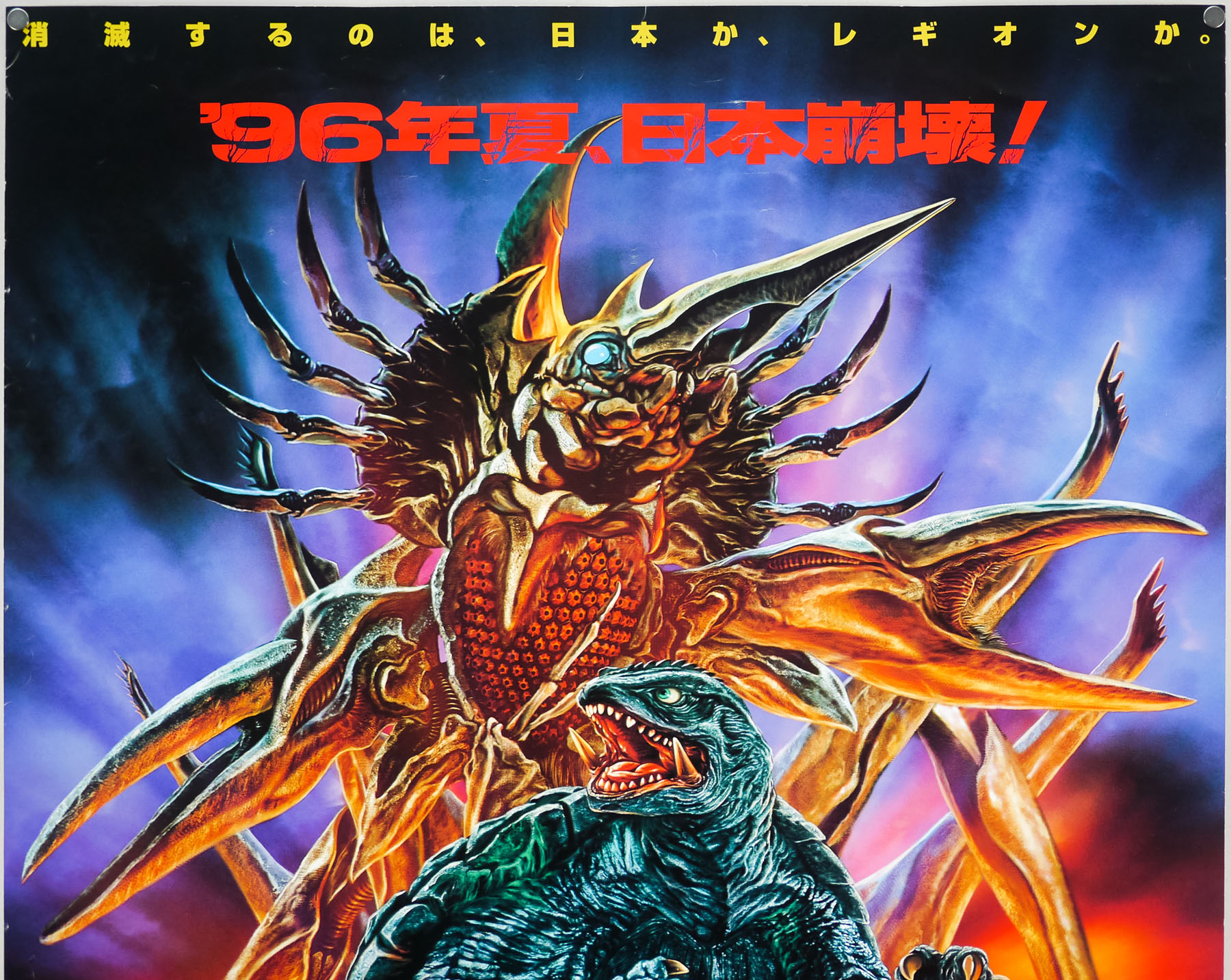
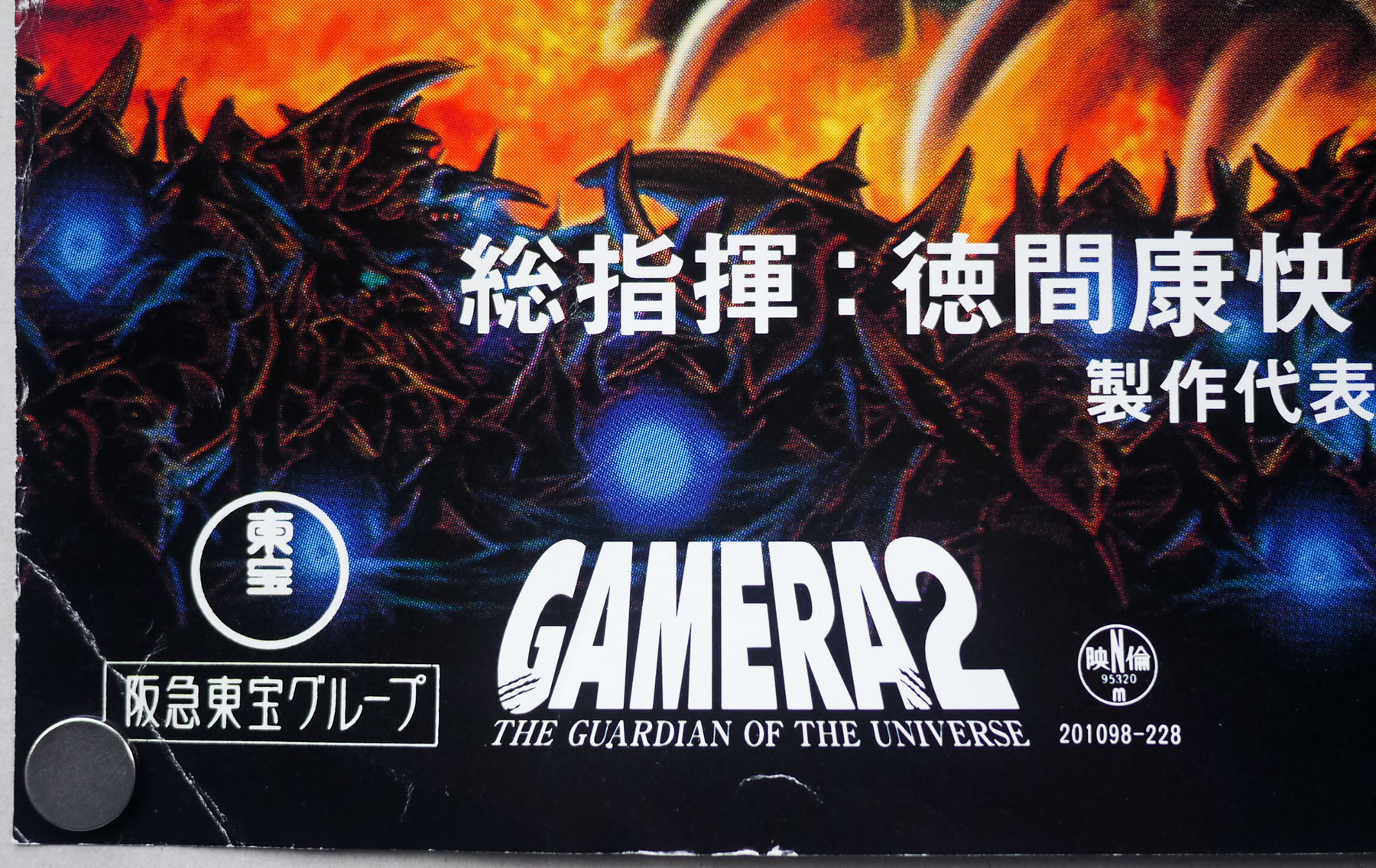
I’m unsure who is responsible for this artwork but I’m confident that it’s not Noriyoshi Ohrai, who painted several fantastic Godzilla posters. If anyone has any ideas please get in touch.


Blazing Magnum / B2 / Japan

13.03.12

Poster Poster
Title
Blazing Magnum
AKA
Una Magnum Special per Tony Saitta [A Special Magnum for Tony Saitta] (Italy - original title) | Shadows in an Empty Room (USA) | Big Magnum 77 (Japan - English title)
Year of Film
1976
Director
Alberto De Martino
Starring
Stuart Whitman, John Saxon, Martin Landau, Tisa Farrow, Carole Laure, Jean LeClerc, Gayle Hunnicutt
Origin of Film
Italy | Canada | Panama
Genre(s) of Film
Stuart Whitman, John Saxon, Martin Landau, Tisa Farrow, Carole Laure, Jean LeClerc, Gayle Hunnicutt,
Type of Poster
B2
Style of Poster
--
Origin of Poster
Japan
Year of Poster
1977
Designer
Unknown
Artist
Seito
Size (inches)
20 5/16" x 28 14/16"
SS or DS
SS
Tagline
--

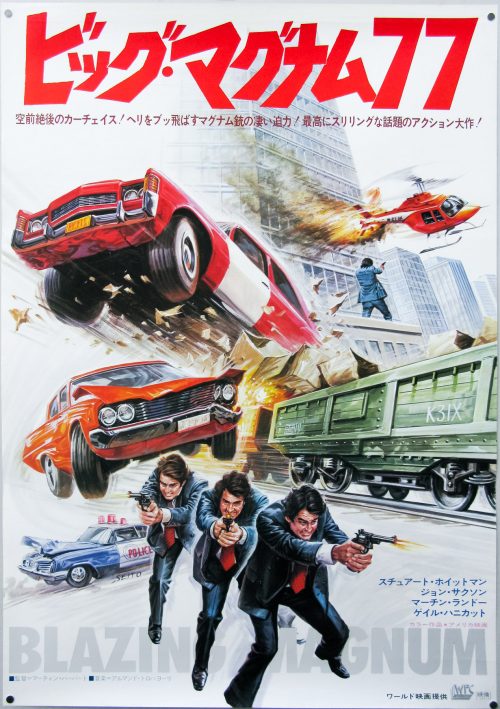
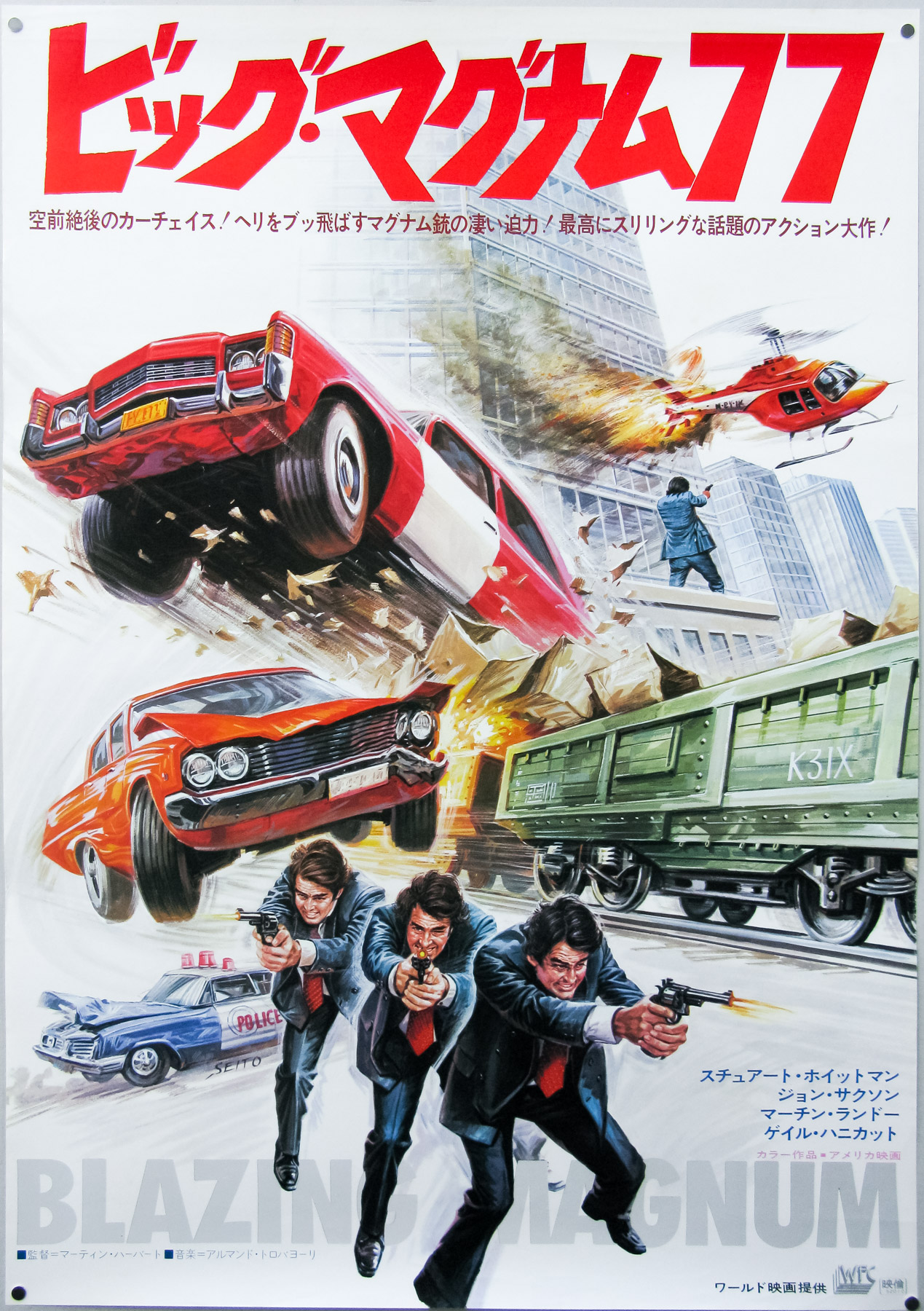
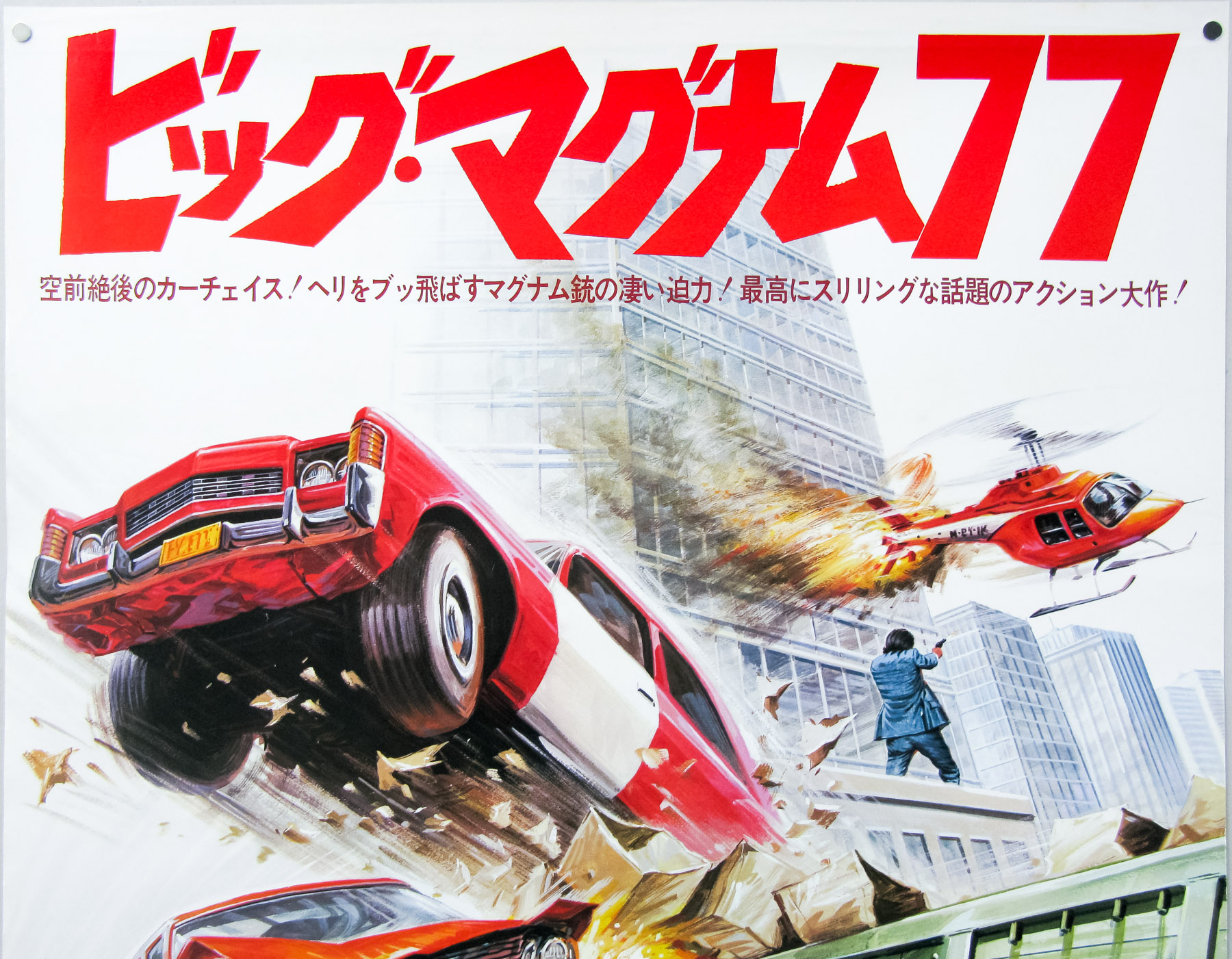
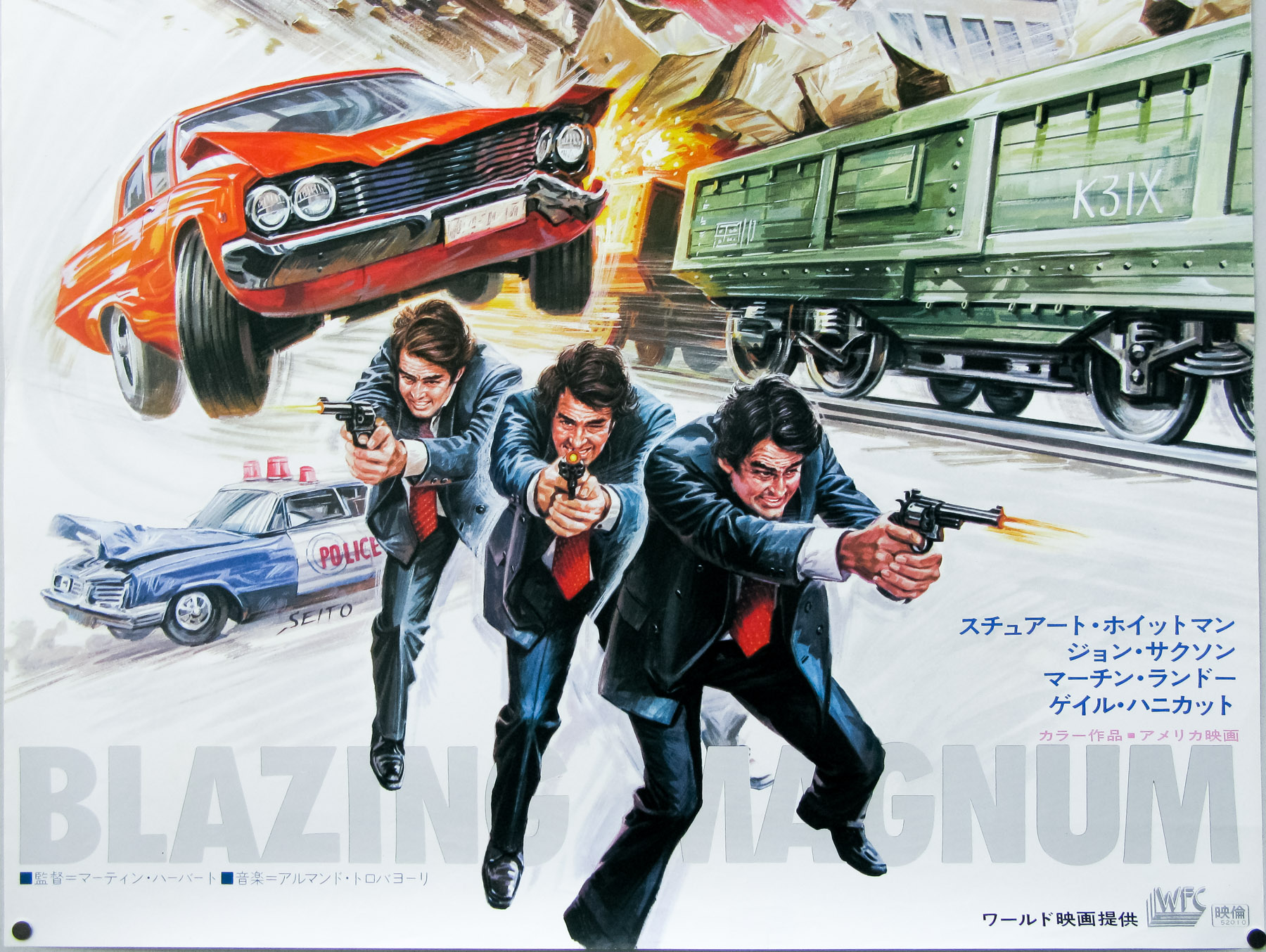
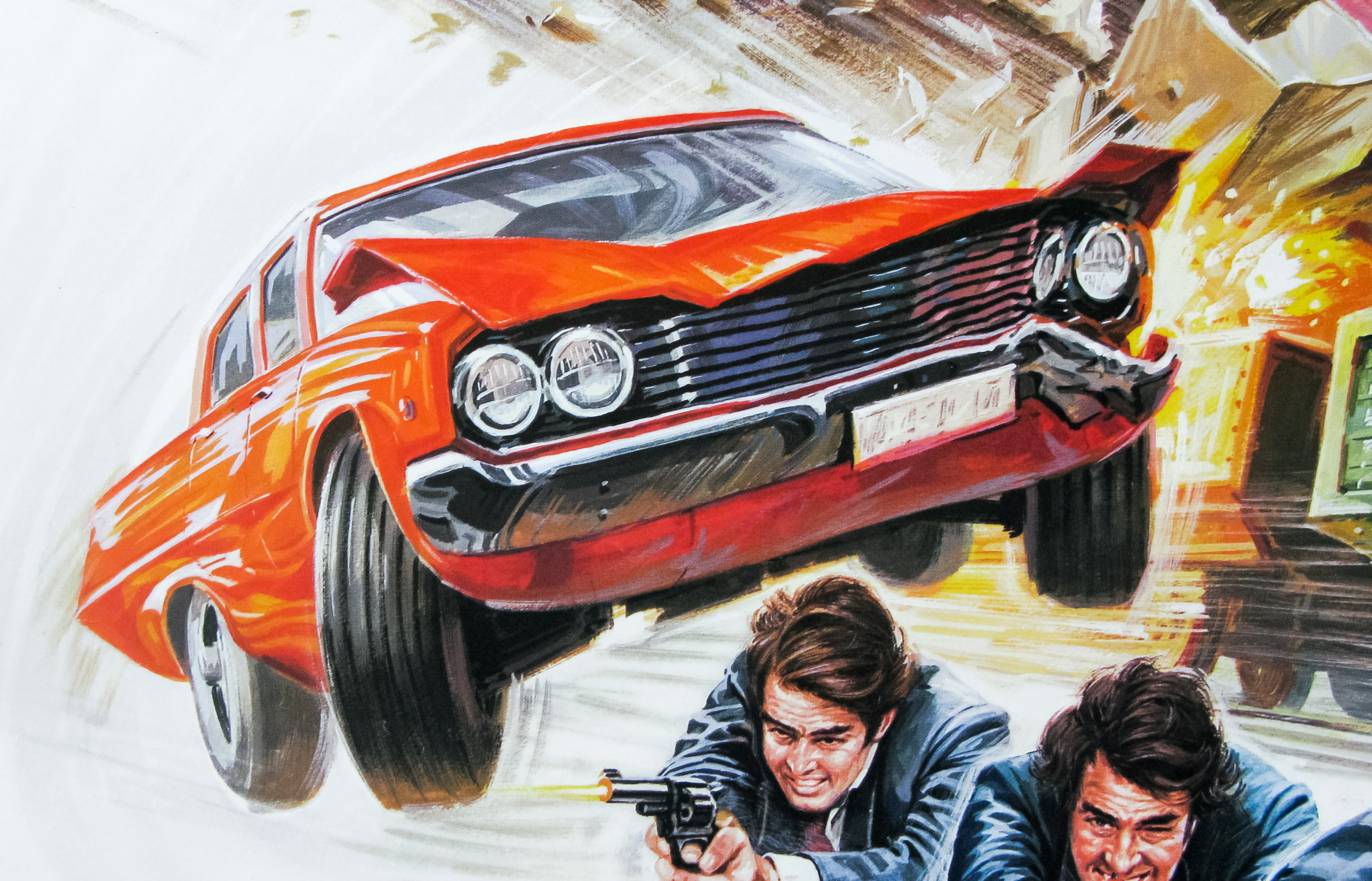
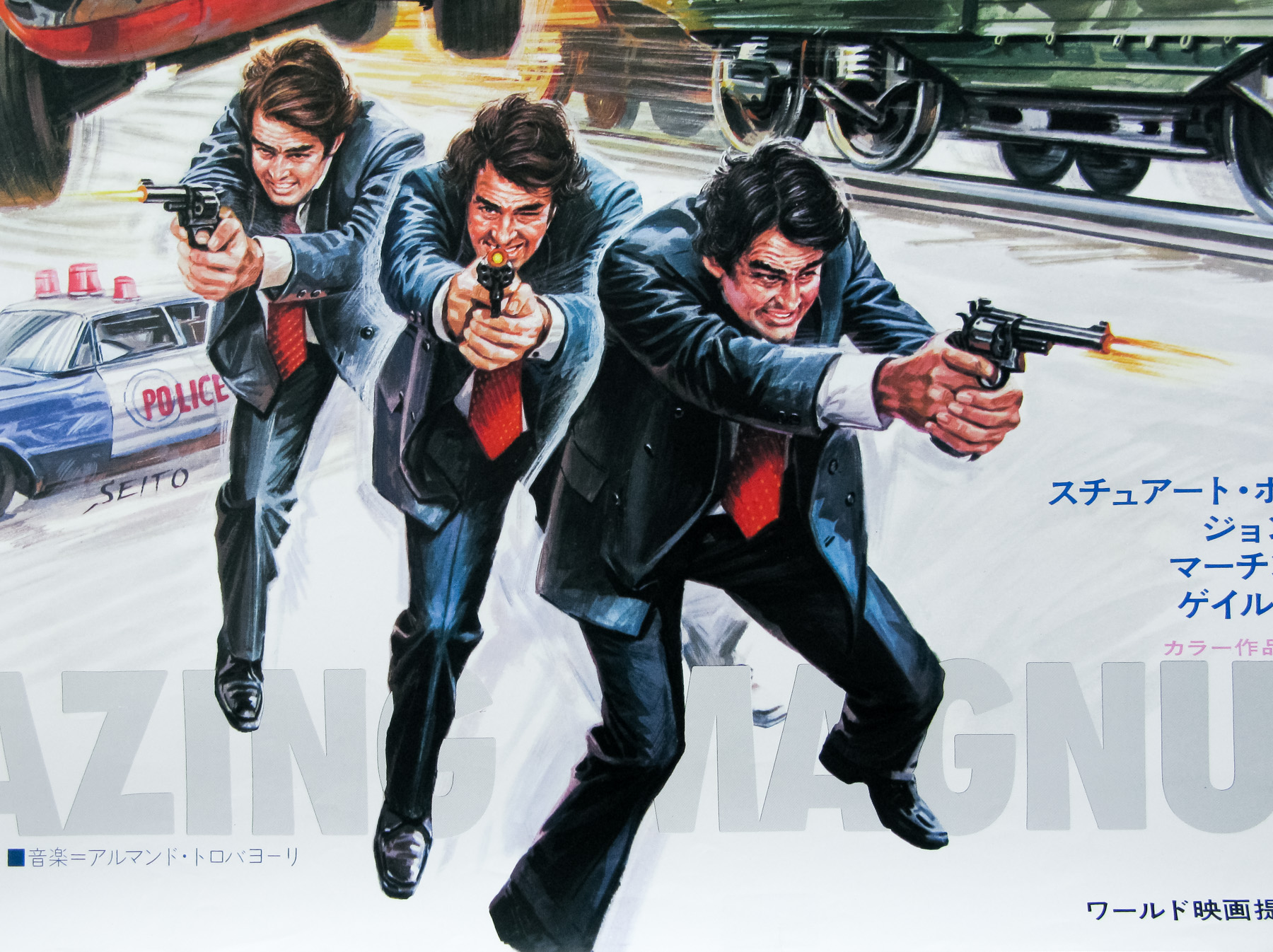
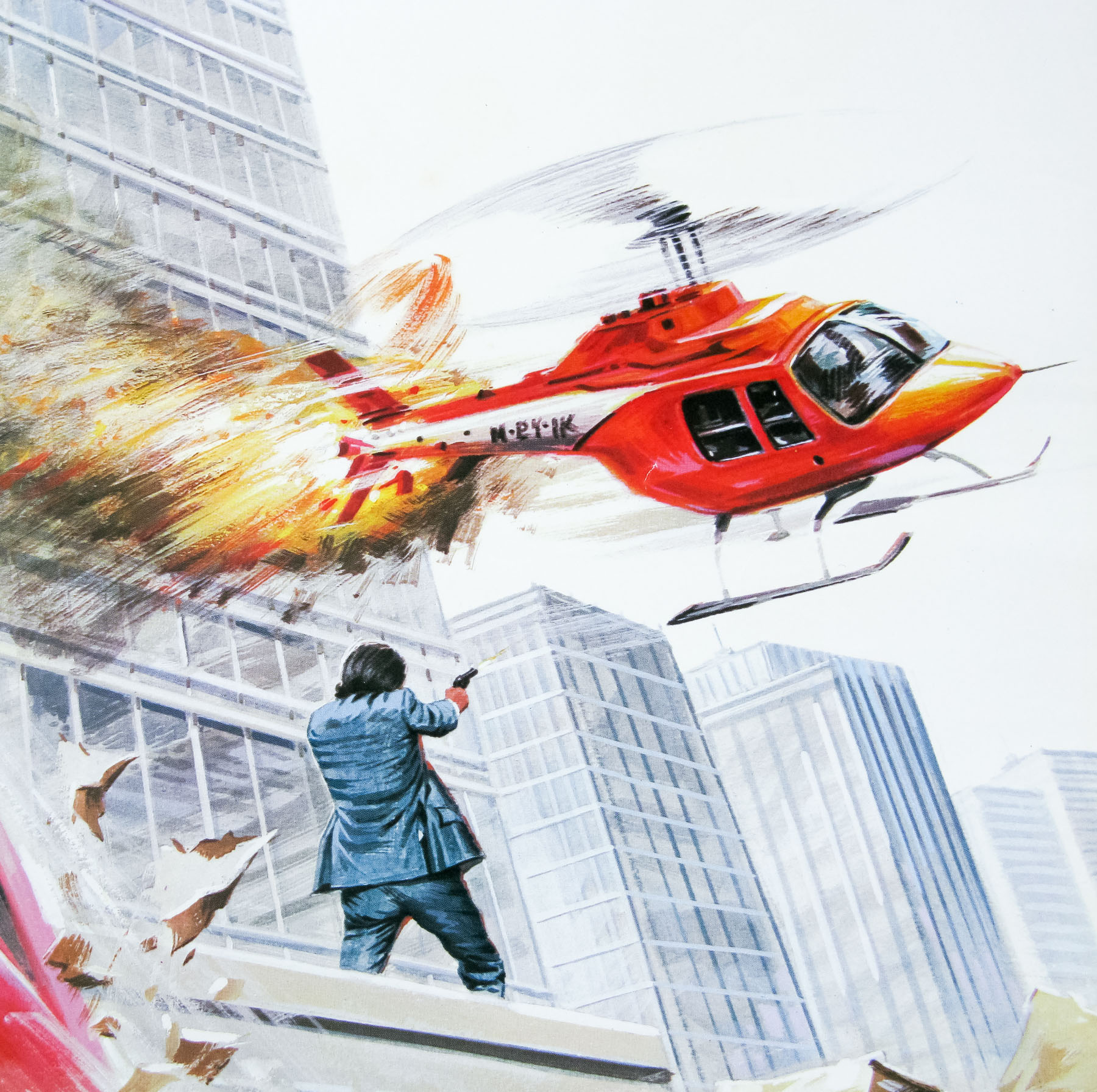
Filmed in Canada by an Italian director (Alberto De Martino under the pseudonym Martin Herbert), Blazing Magnum has multiple alternative titles, including Shadows in an Empty Room, and is an entry into the poliziottesco genre of cinema. The story sees tough Ottawan police captain Tony Saitta (Stuart Whitman) travel to Montreal to investigate the untimely death of his sister at a party. Before long more bodies start to appear, the list of suspects grows and Saitta teams up with Sergeant Ned Matthews (genre stalwart John Saxon) to crack the case.

The film is perhaps best known for it’s insane, nine minute car chase around the streets of Montreal, which was filmed without permits and staged by legendary stunt performer Rémy Julienne, whose work includes six James Bond films and the original Italian Job. The chase can be watched in all its glory on YouTube – it definitely rivals other legendary cinematic car pursuits! It also features a giallo-esque scene in which a murder is committed in the same room as a blind girl, Saitta fighting a bunch of drag queens and a dwarf gangster.

Check out this Motion Picture Purgatory entry on DreadCentral.com.

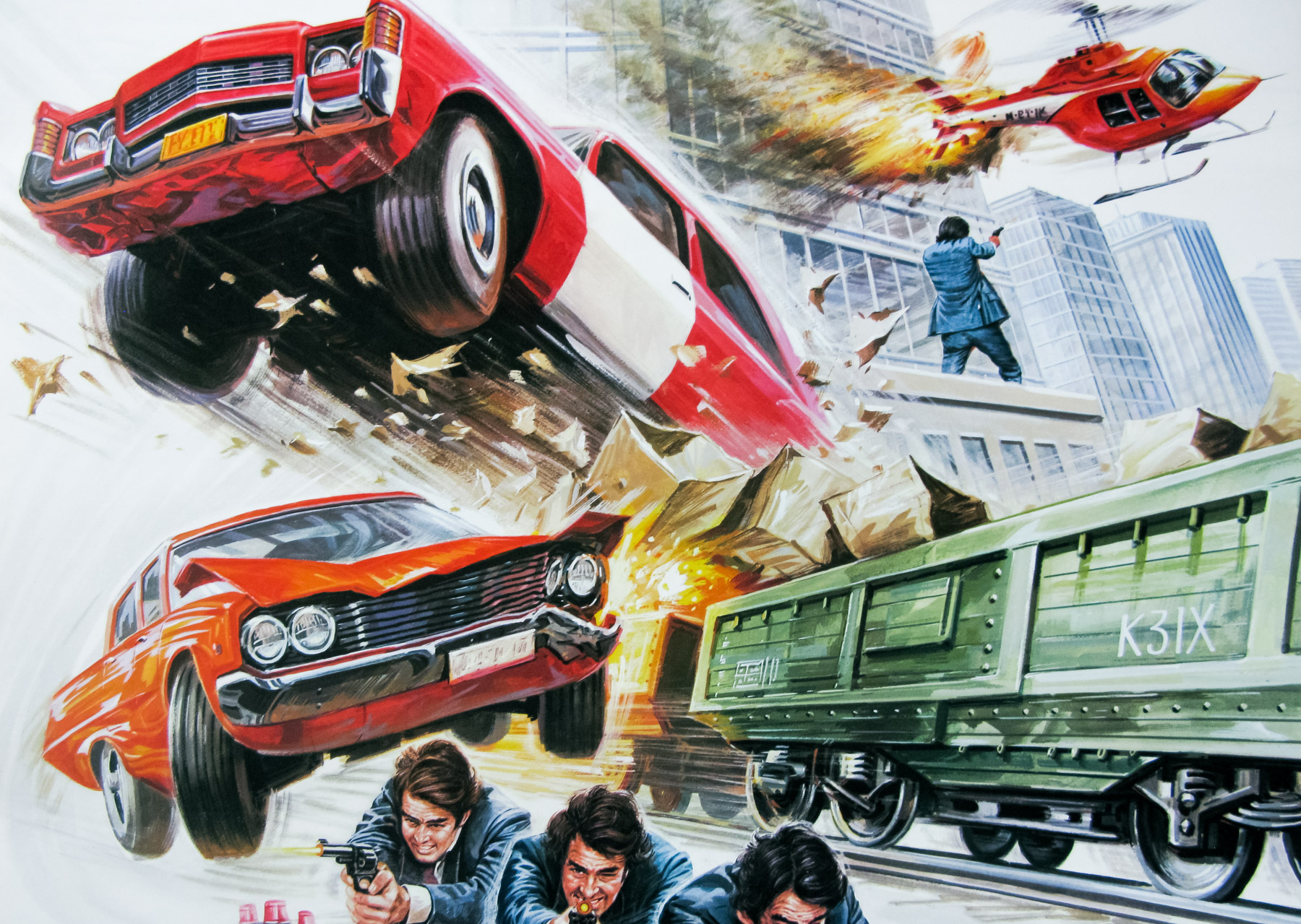
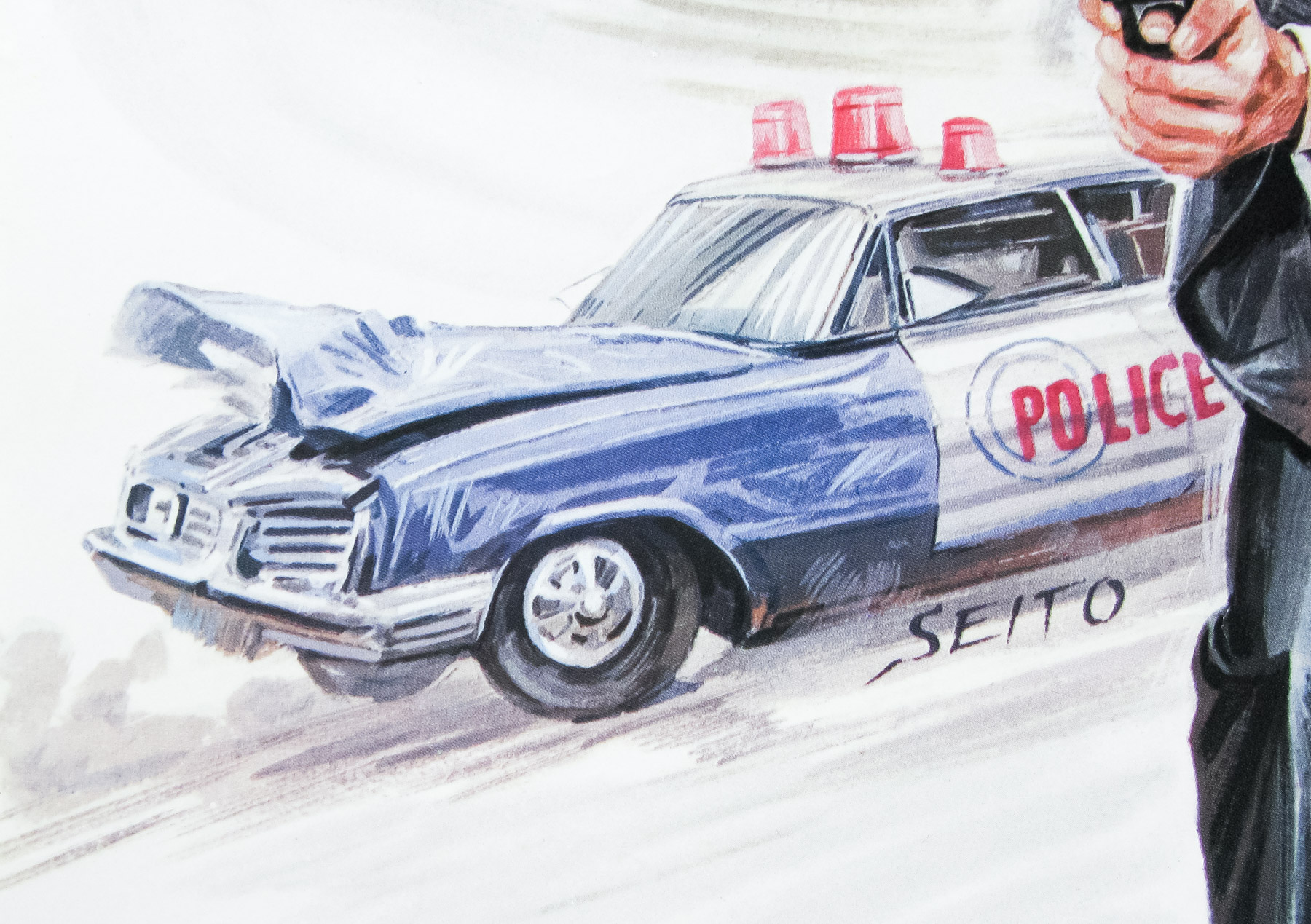
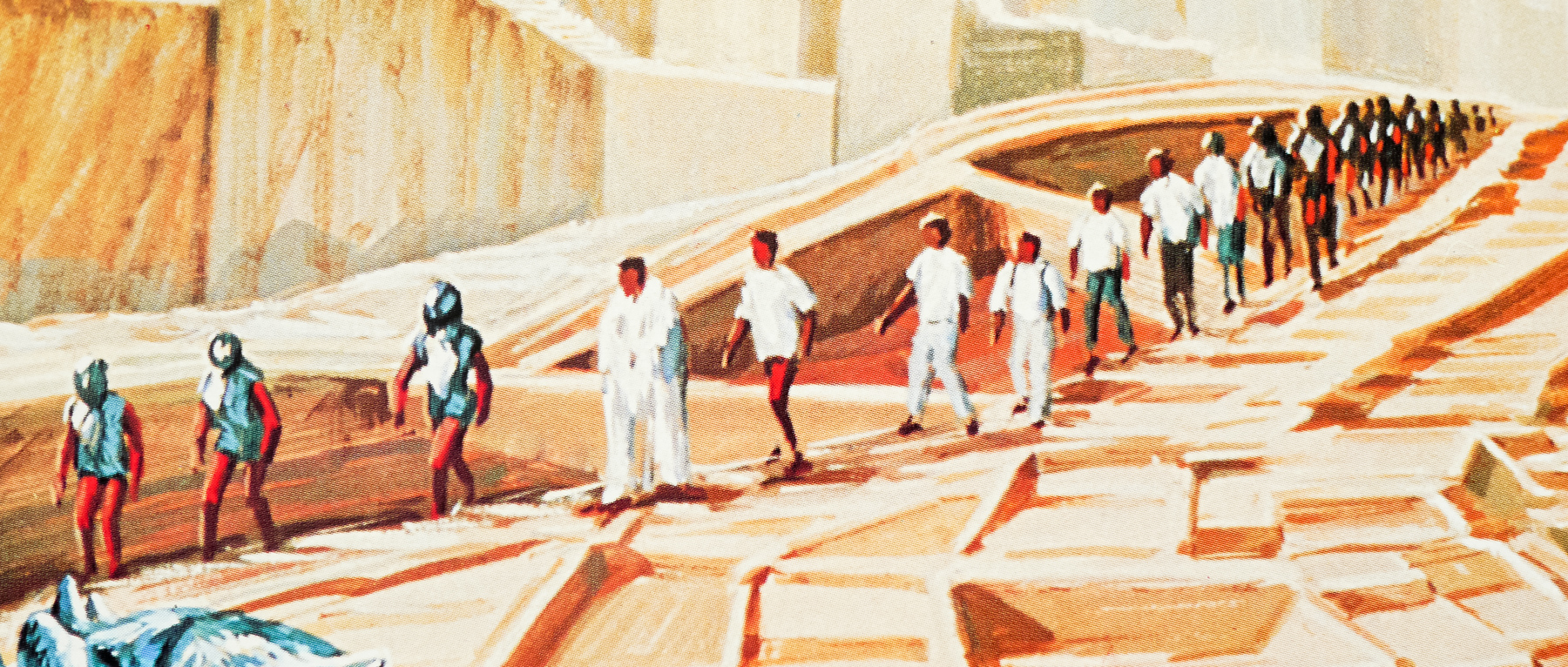
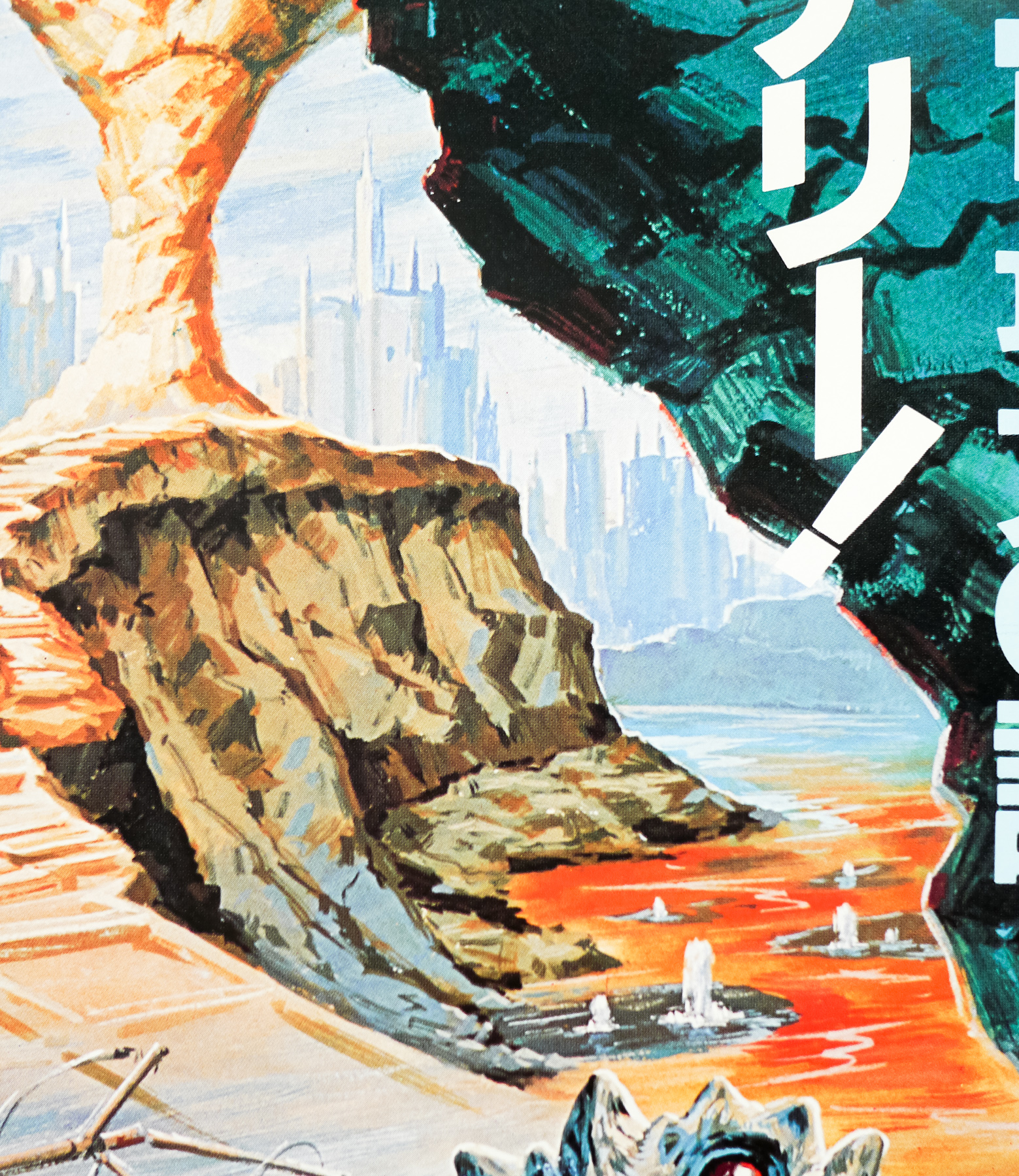
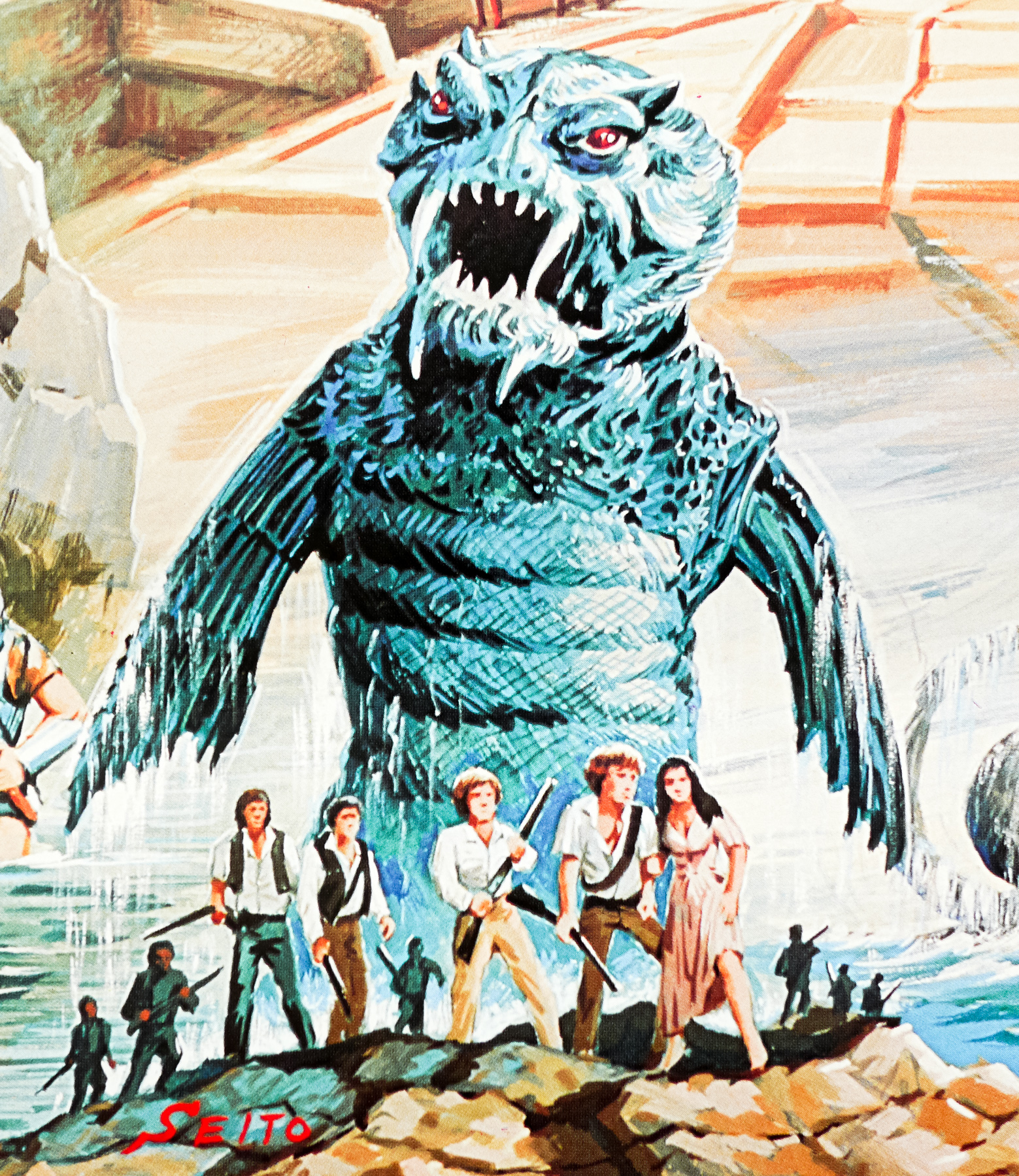
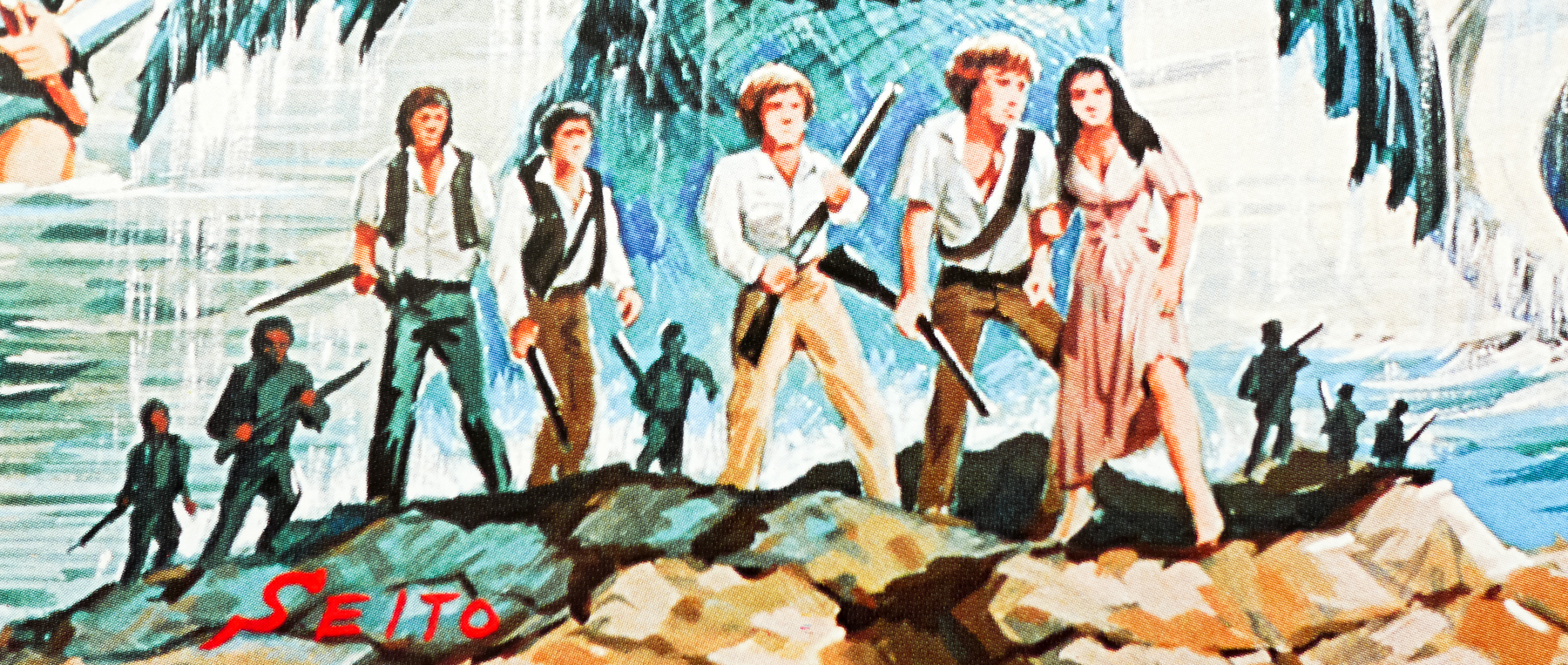
The artwork on this Japanese poster is by one of my favourite artists, the mysterious Seito. It appears on the Italian poster (image taken from emovieposter.com), as well as others, so it’s likely that Seito may have adapted another illustrator’s work for this B2, unless the other countries used his illustration? The American one sheet is markedly different and plays up the murder mystery side of the plot.

The trailer can be viewed on YouTube.
Dead and Buried / B2 / style A / Japan

27.11.14

Poster Poster
Title
Dead and Buried
AKA
Zongeria (Japan)
Year of Film
1981
Director
Gary Sherman
Starring
James Farentino, Melody Anderson, Jack Albertson, Dennis Redfield, Nancy Locke, Robert Englund
Origin of Film
USA
Genre(s) of Film
James Farentino, Melody Anderson, Jack Albertson, Dennis Redfield, Nancy Locke, Robert Englund,
Type of Poster
B2
Style of Poster
Style A
Origin of Poster
Japan
Year of Poster
1981
Designer
Unknown
Artist
--
Size (inches)
20 6/16" x 28 14/16"
SS or DS
SS
NSS #
--
Tagline
--

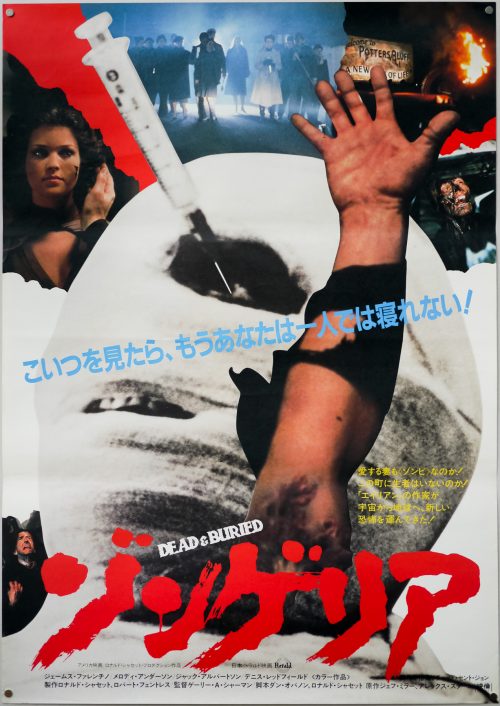
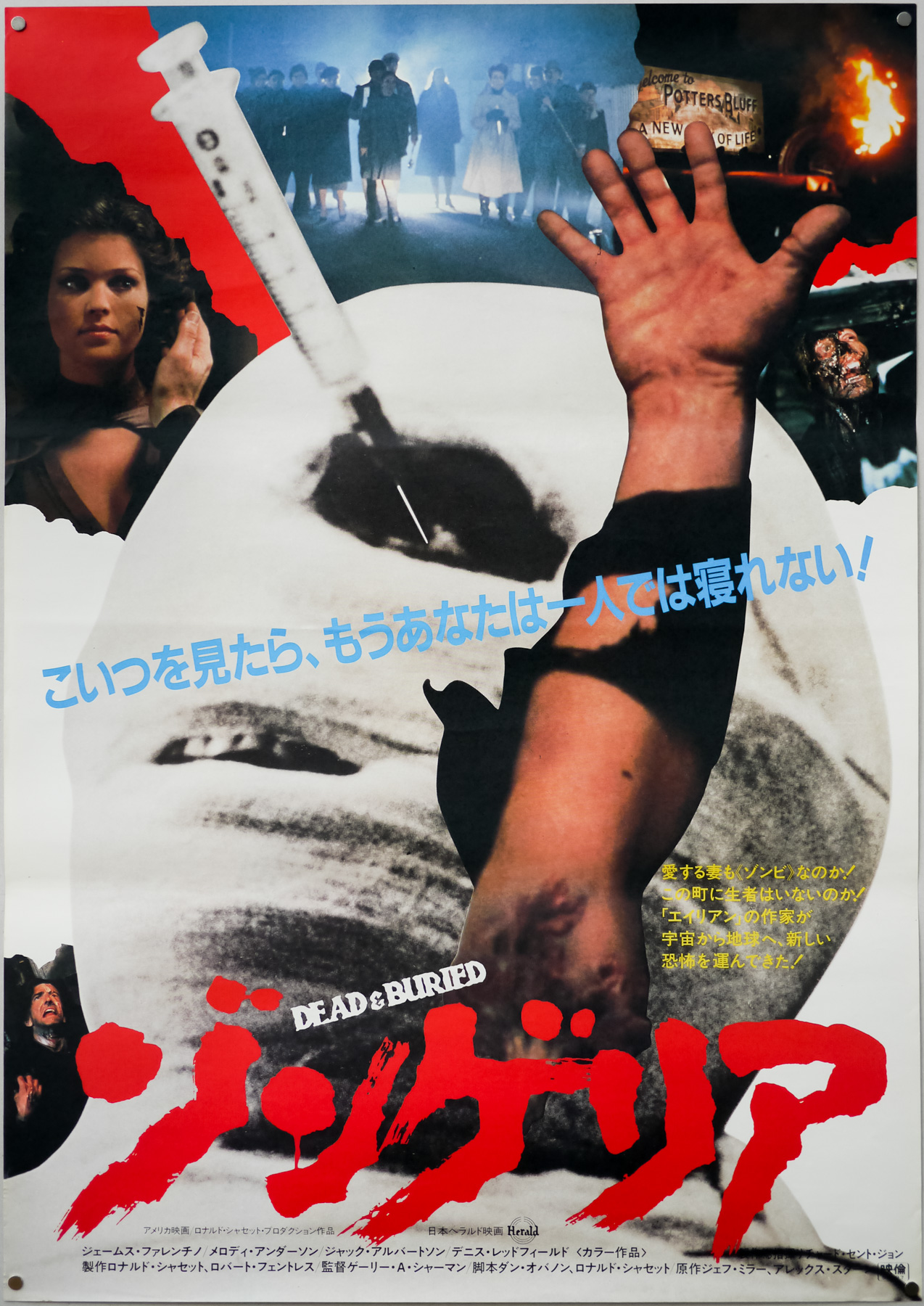
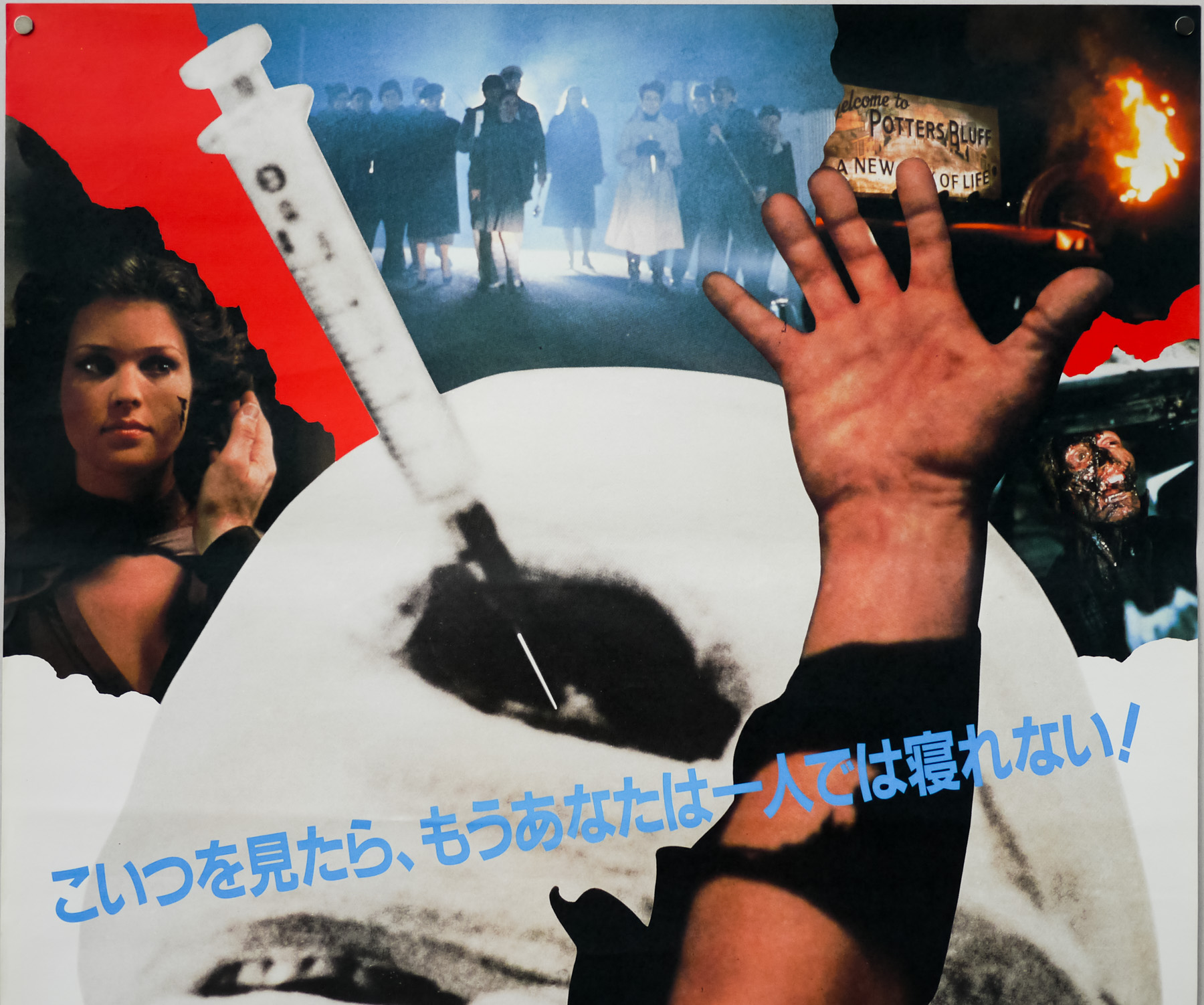
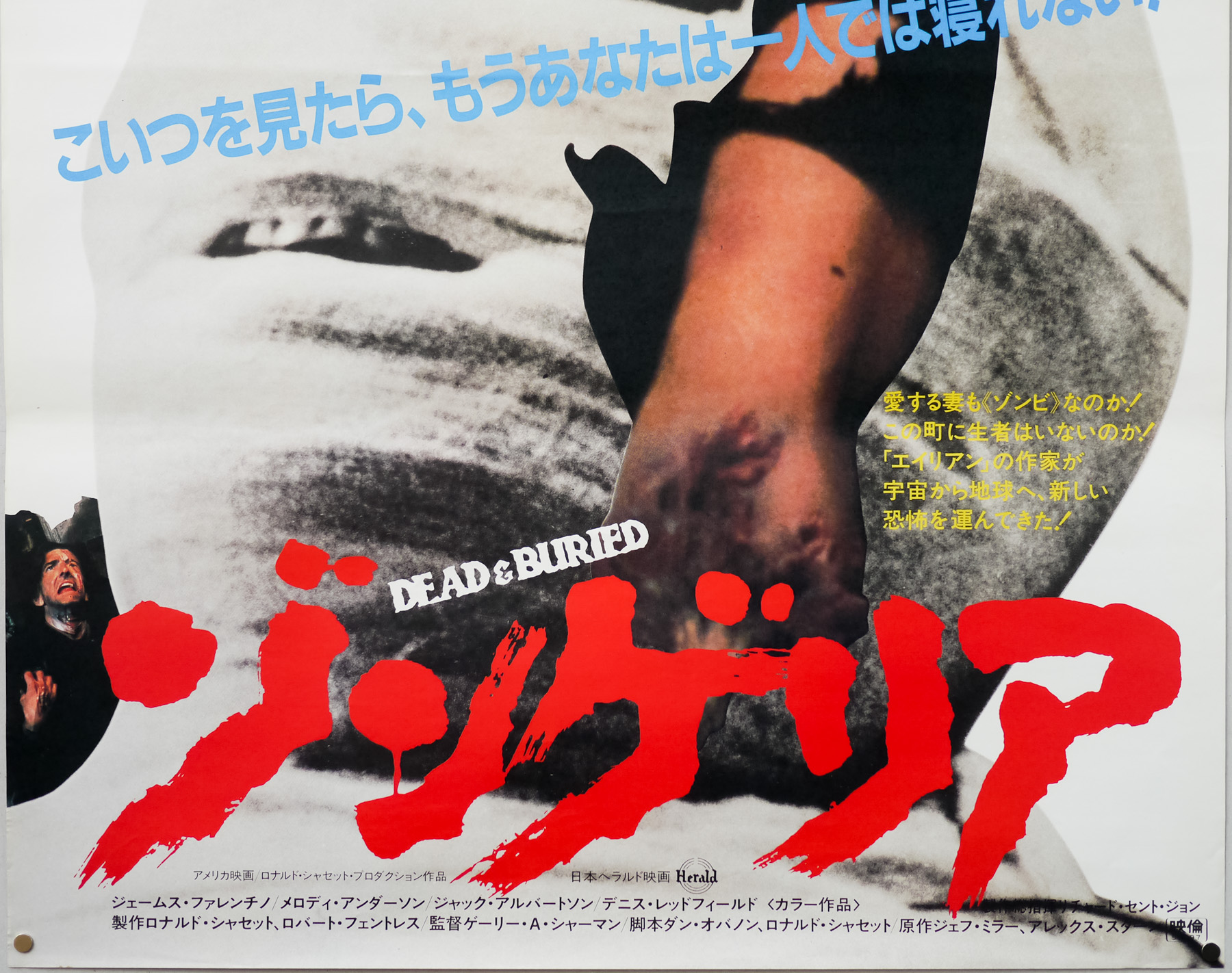
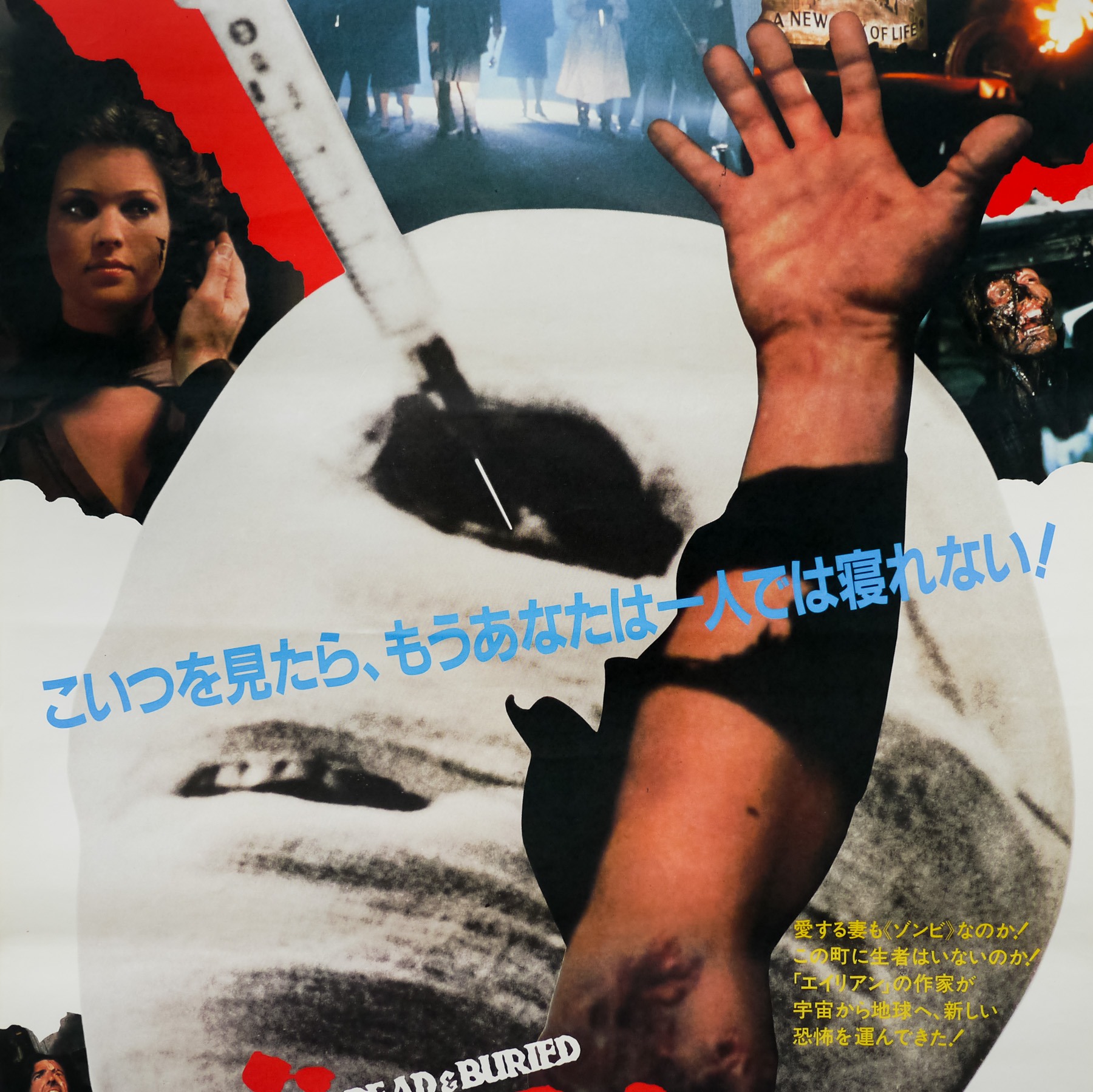
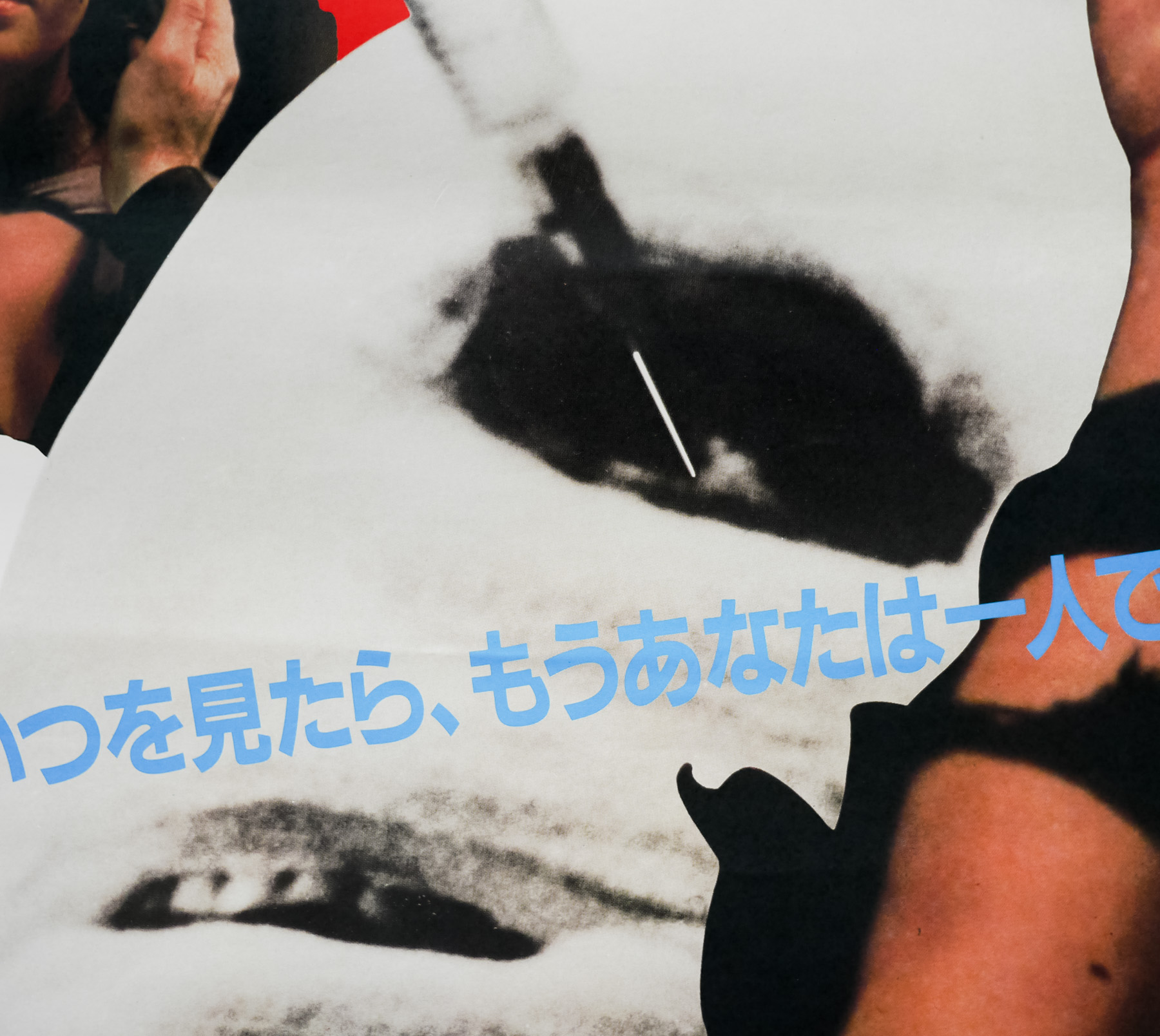
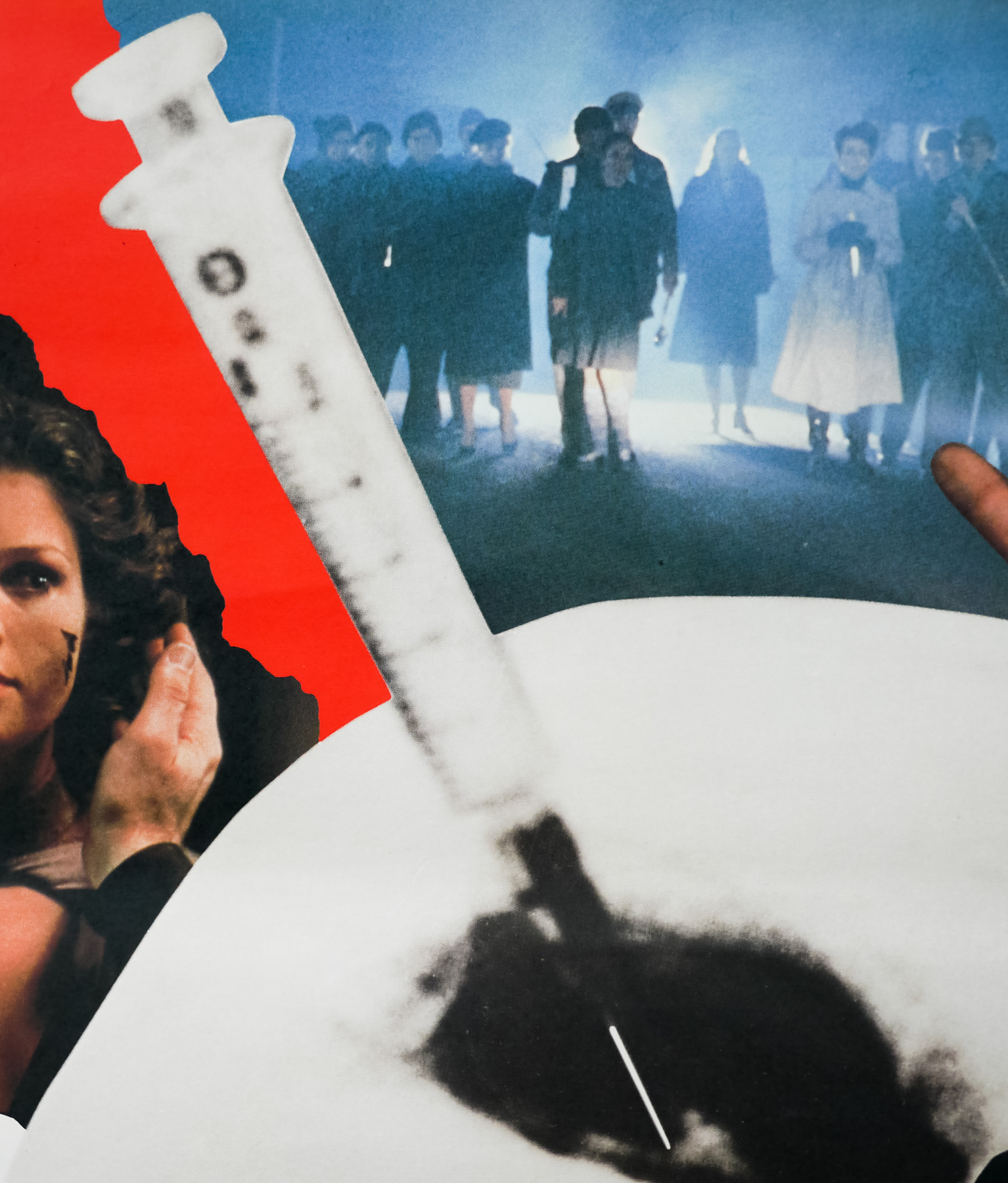
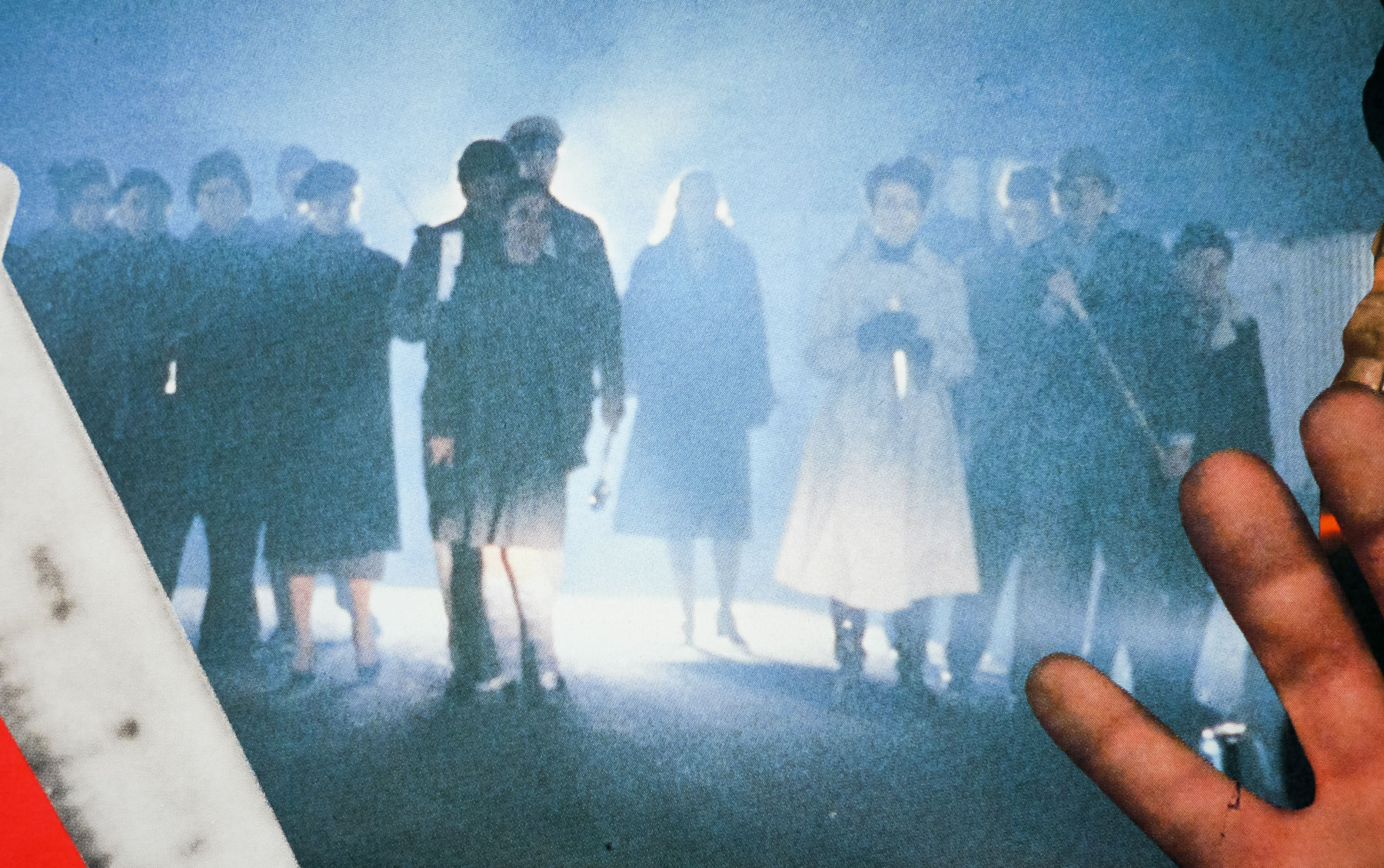
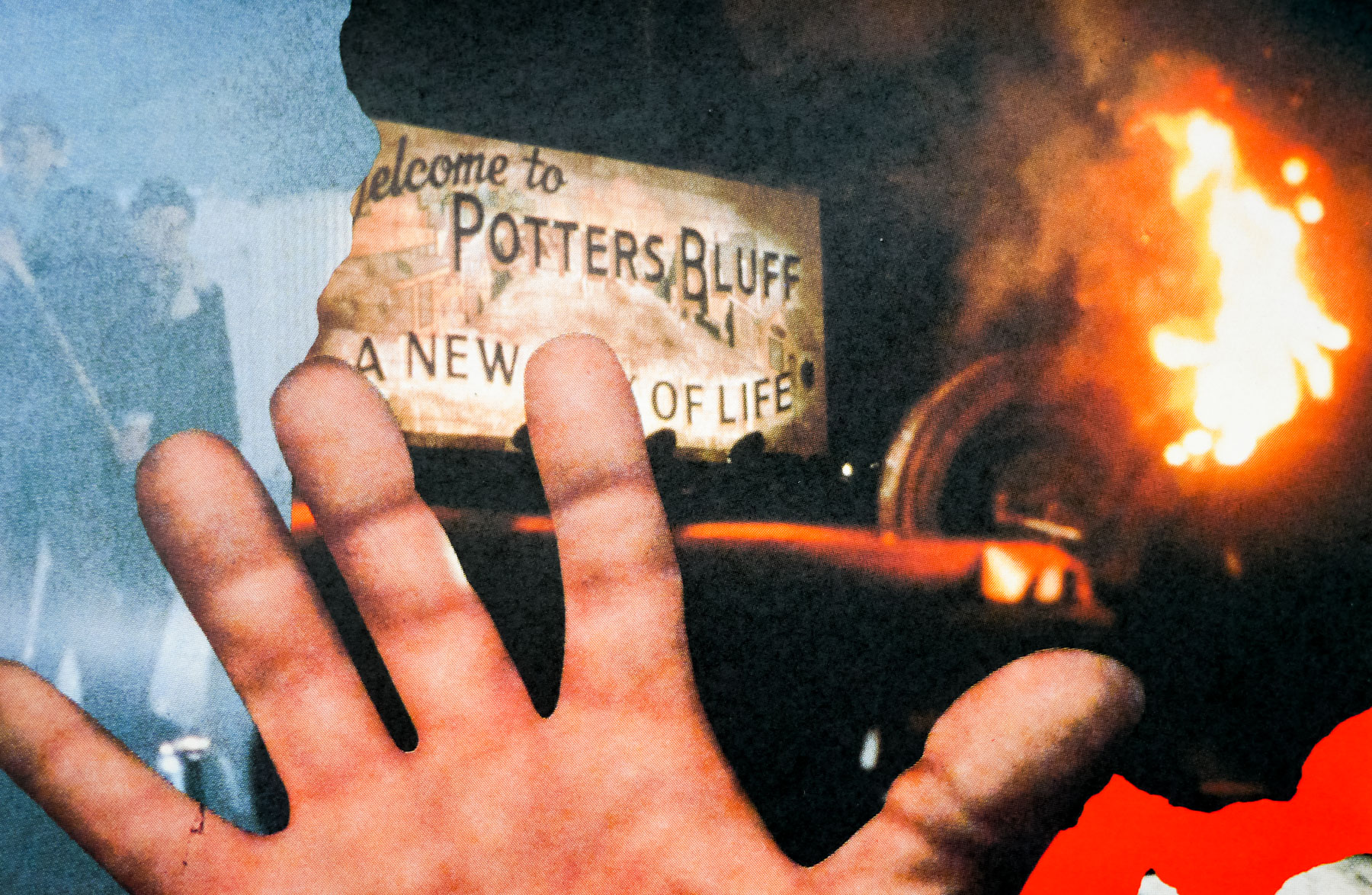
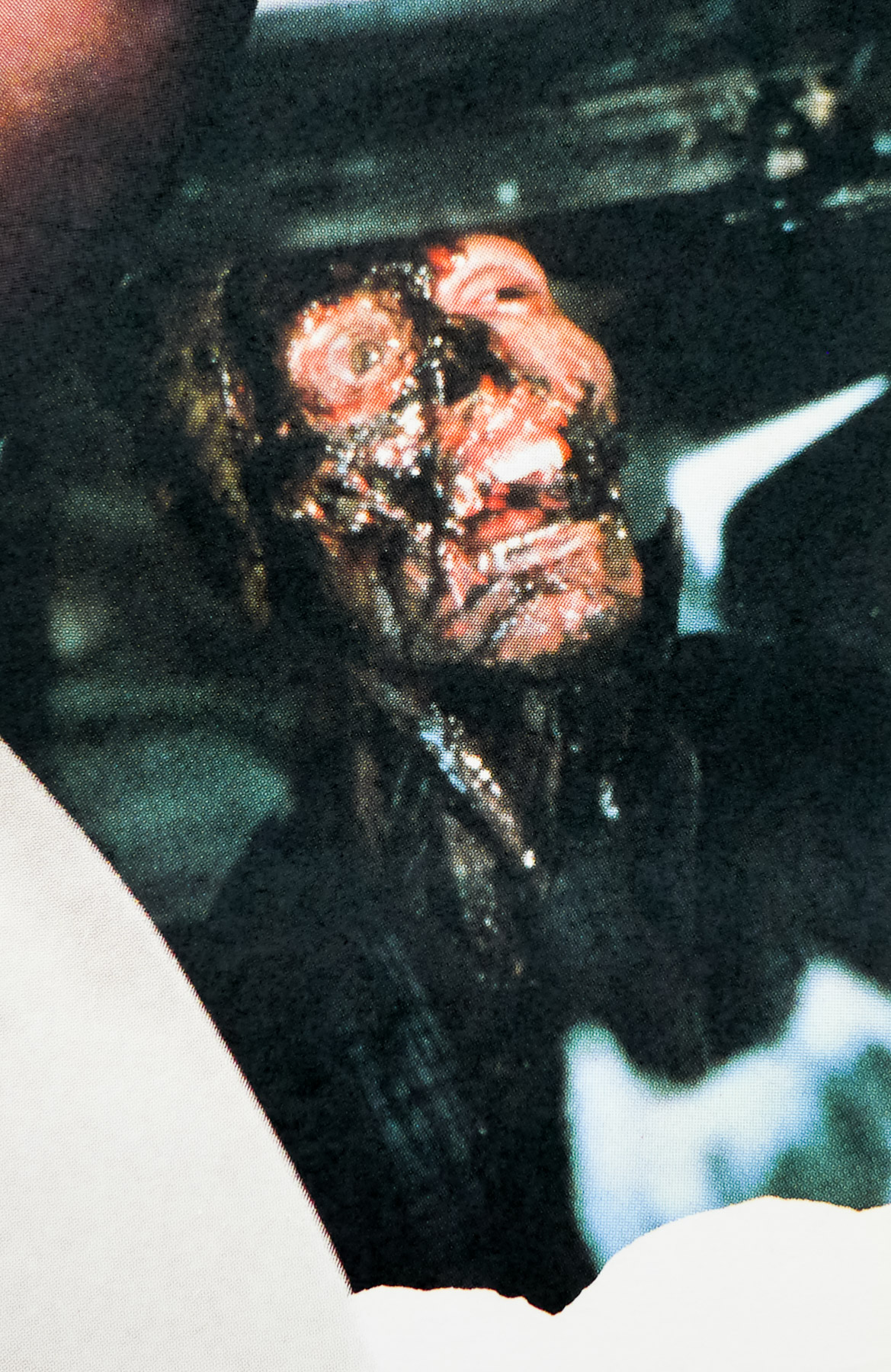
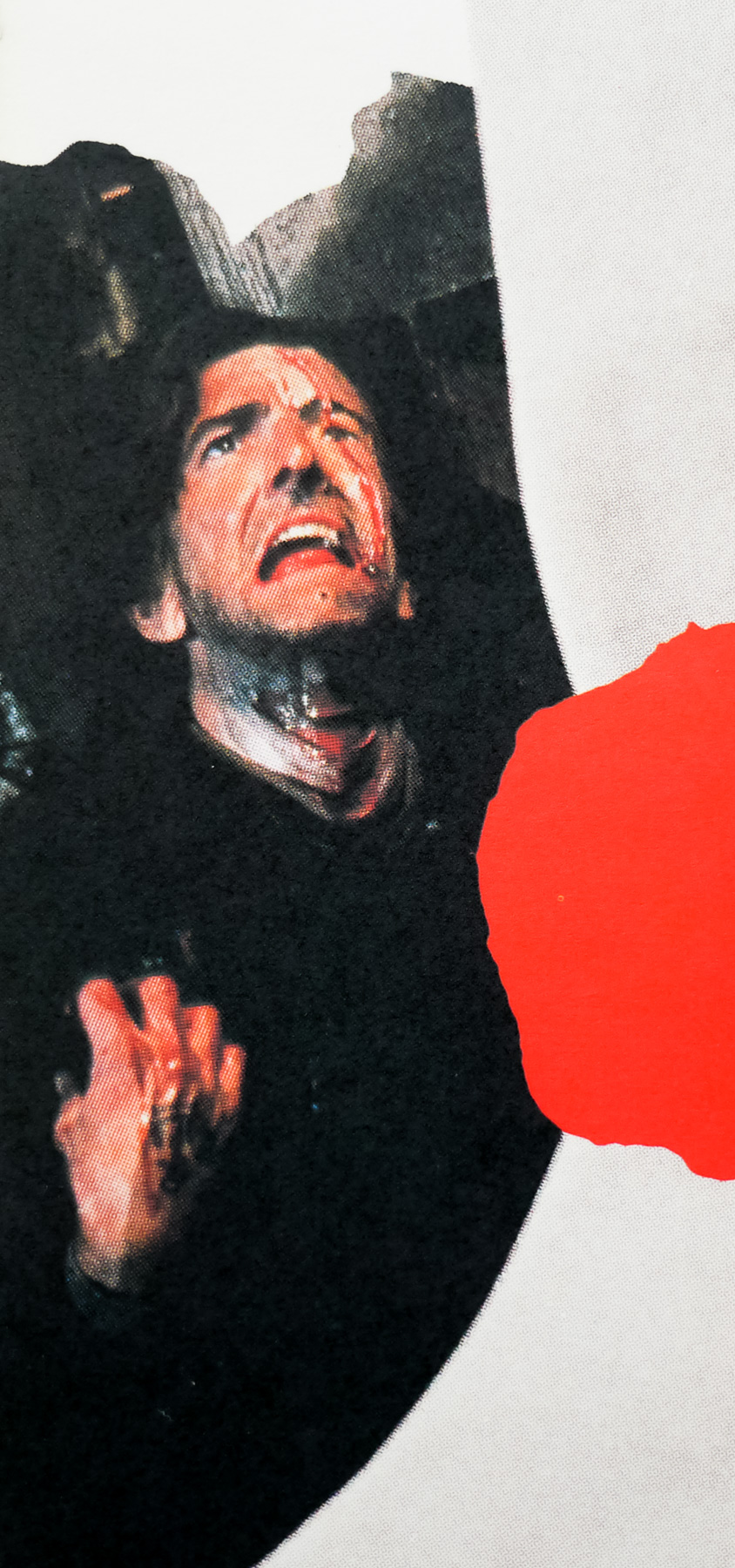
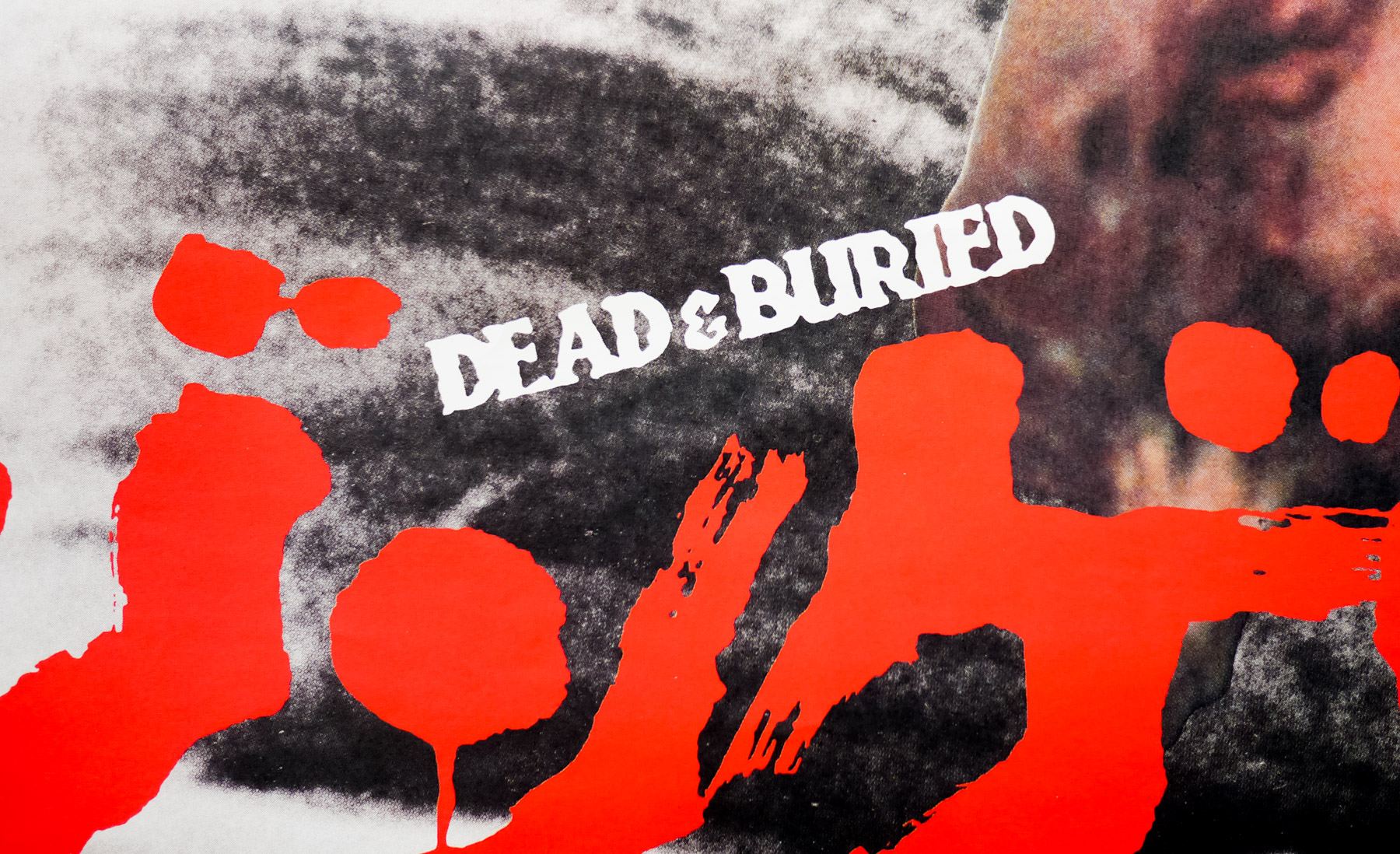
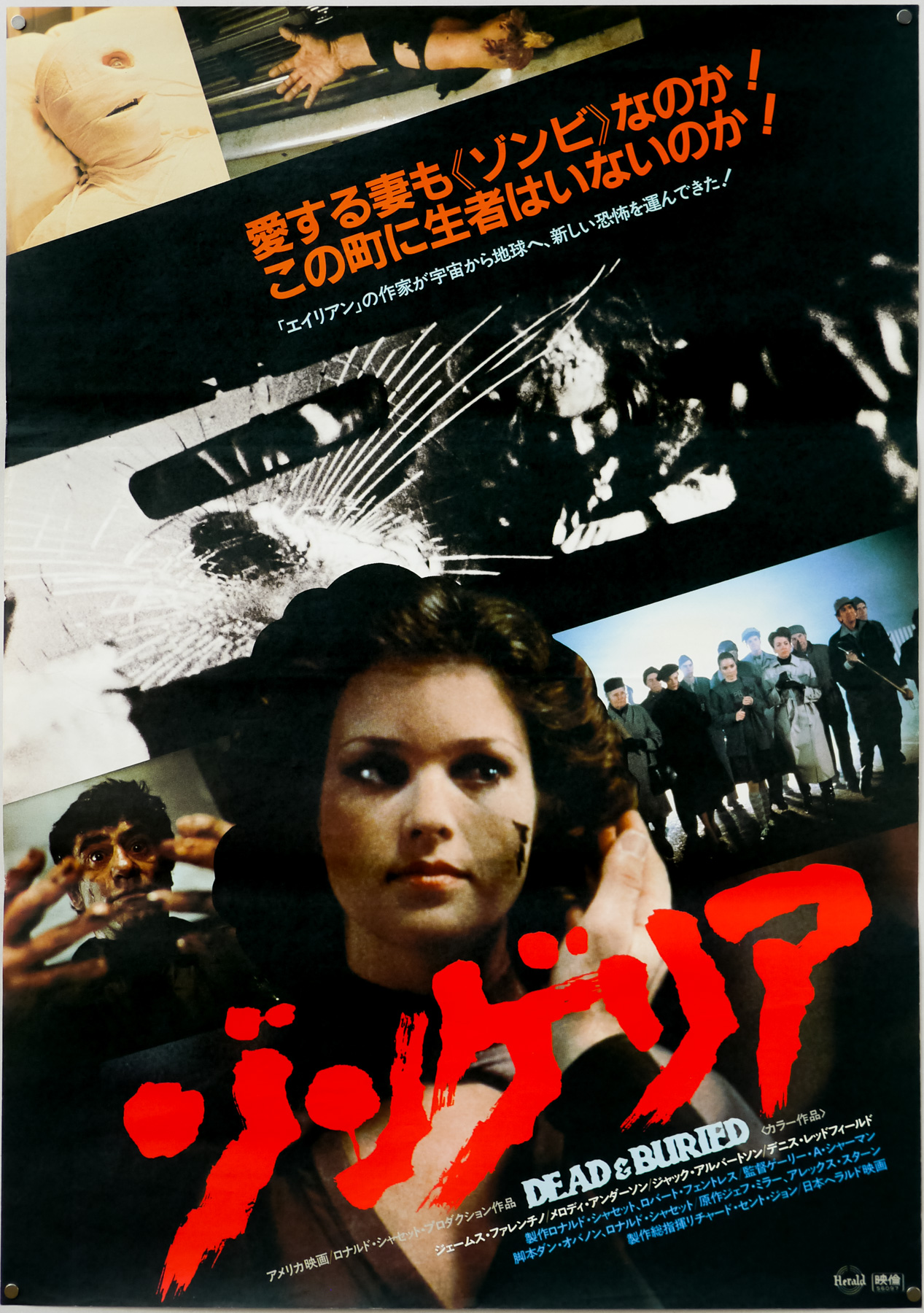
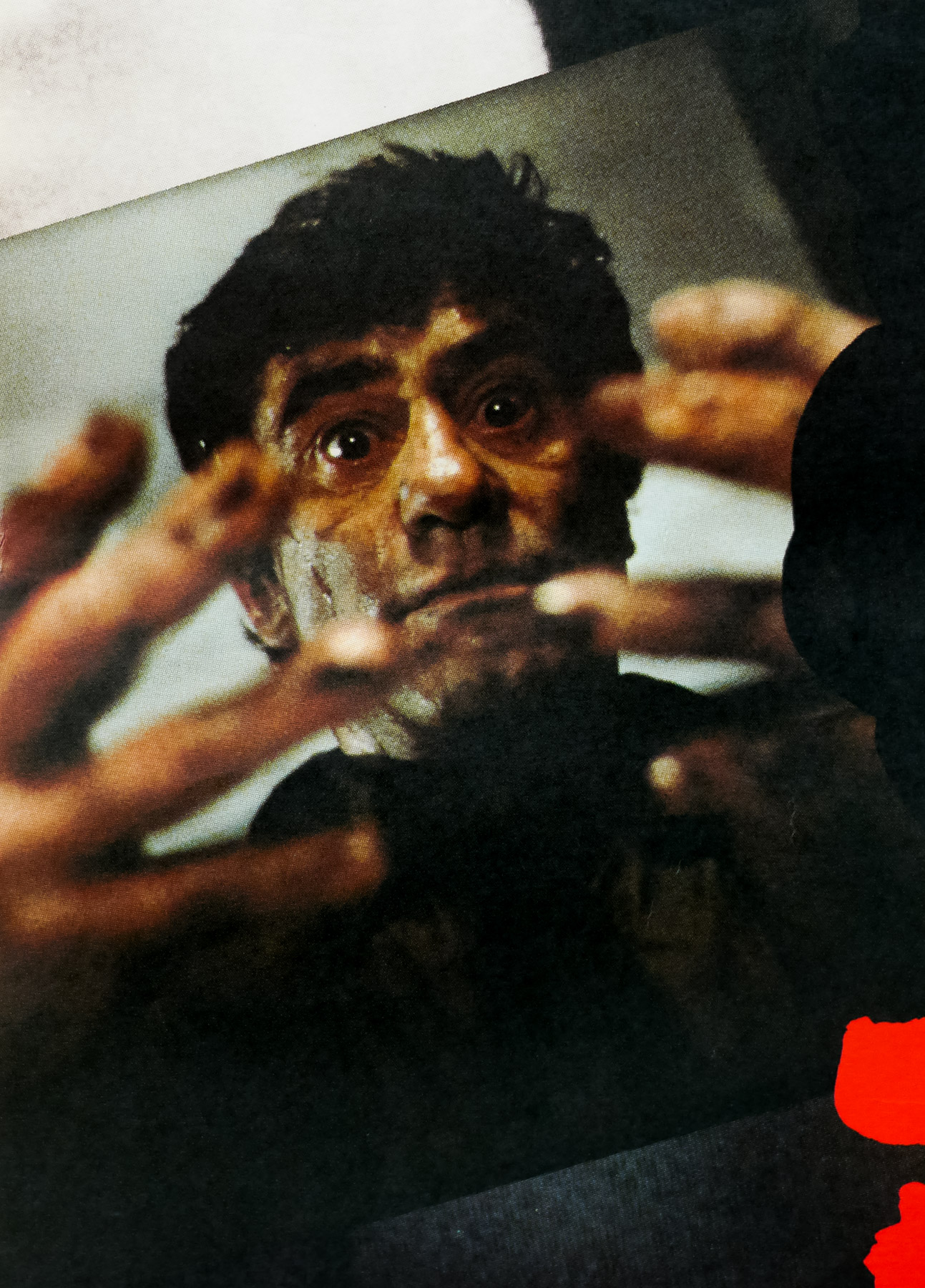
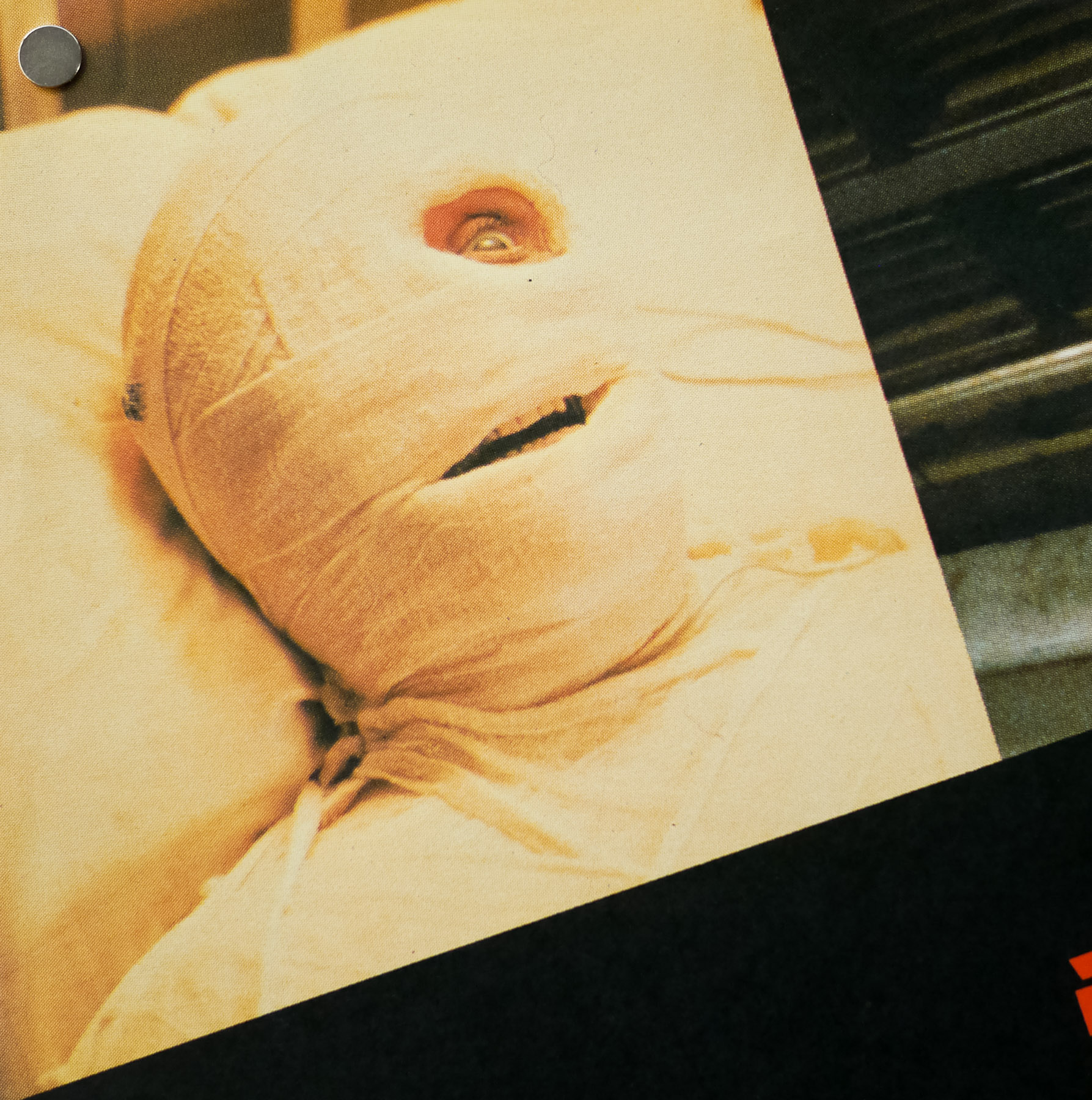
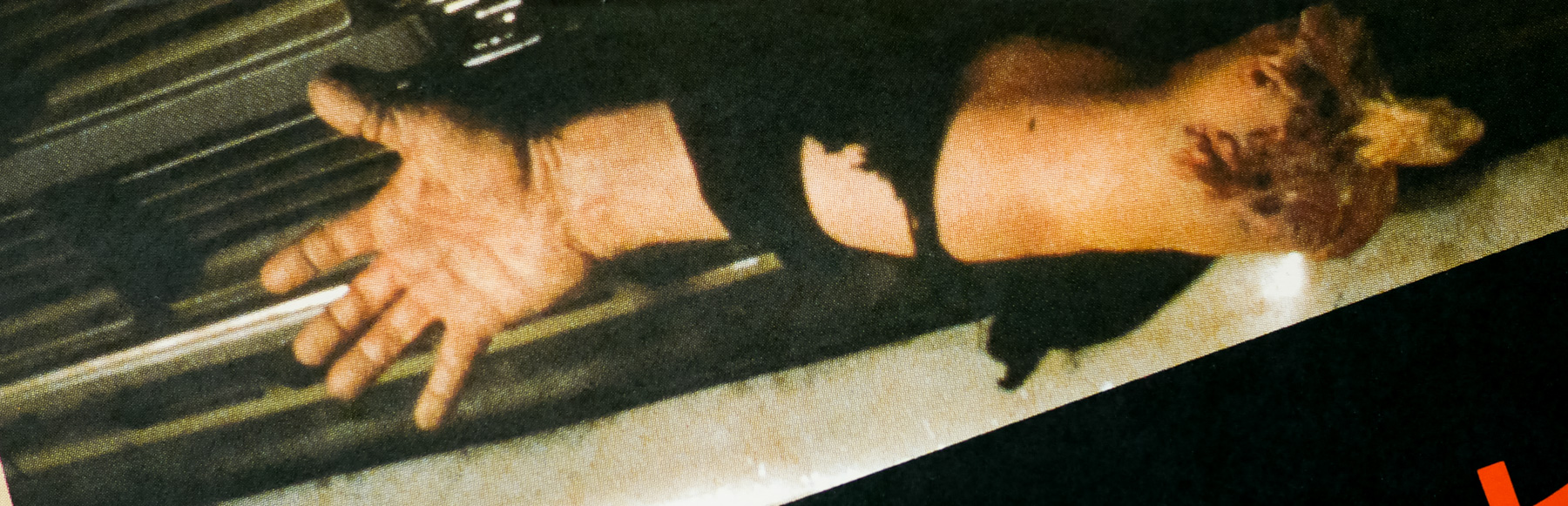
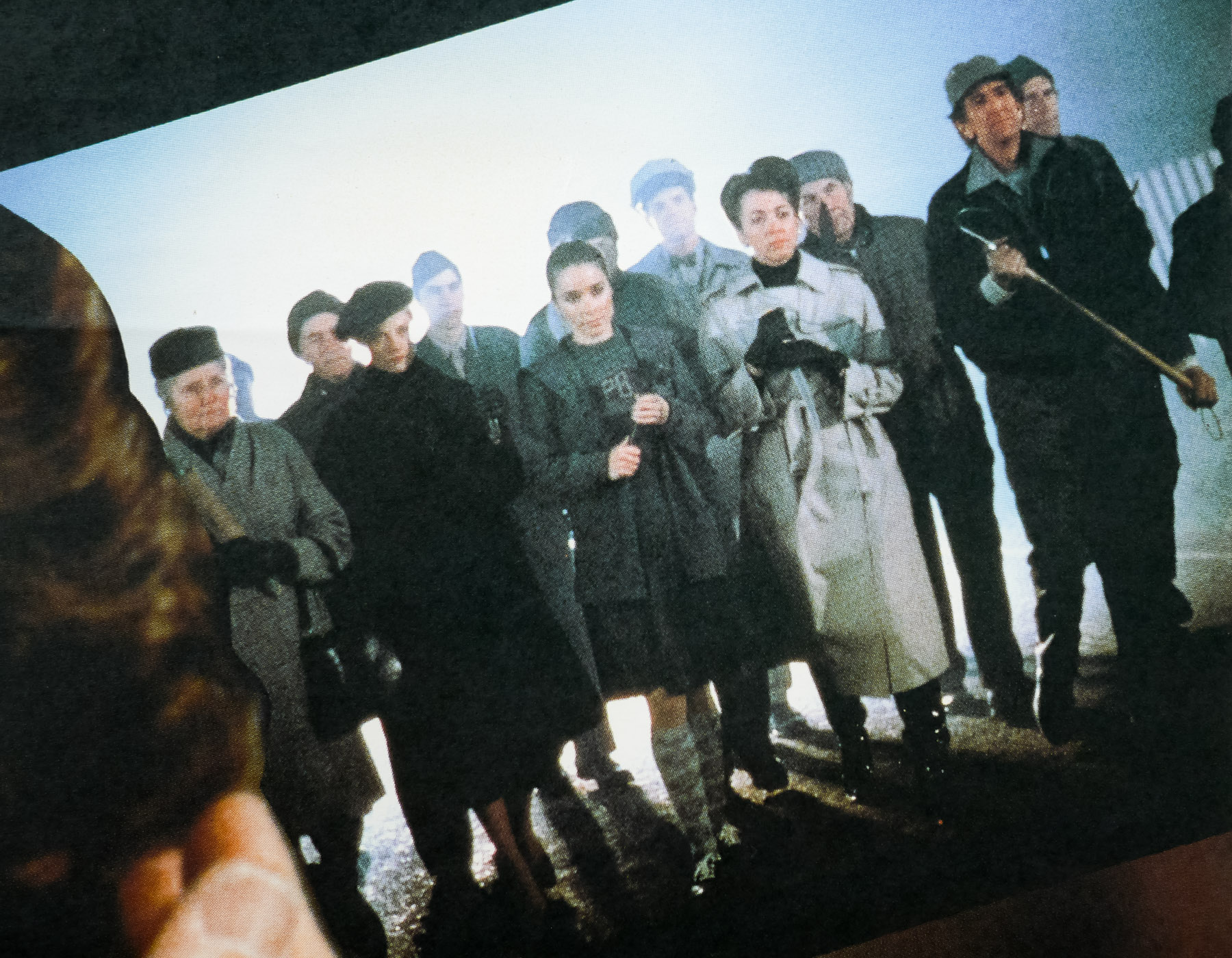
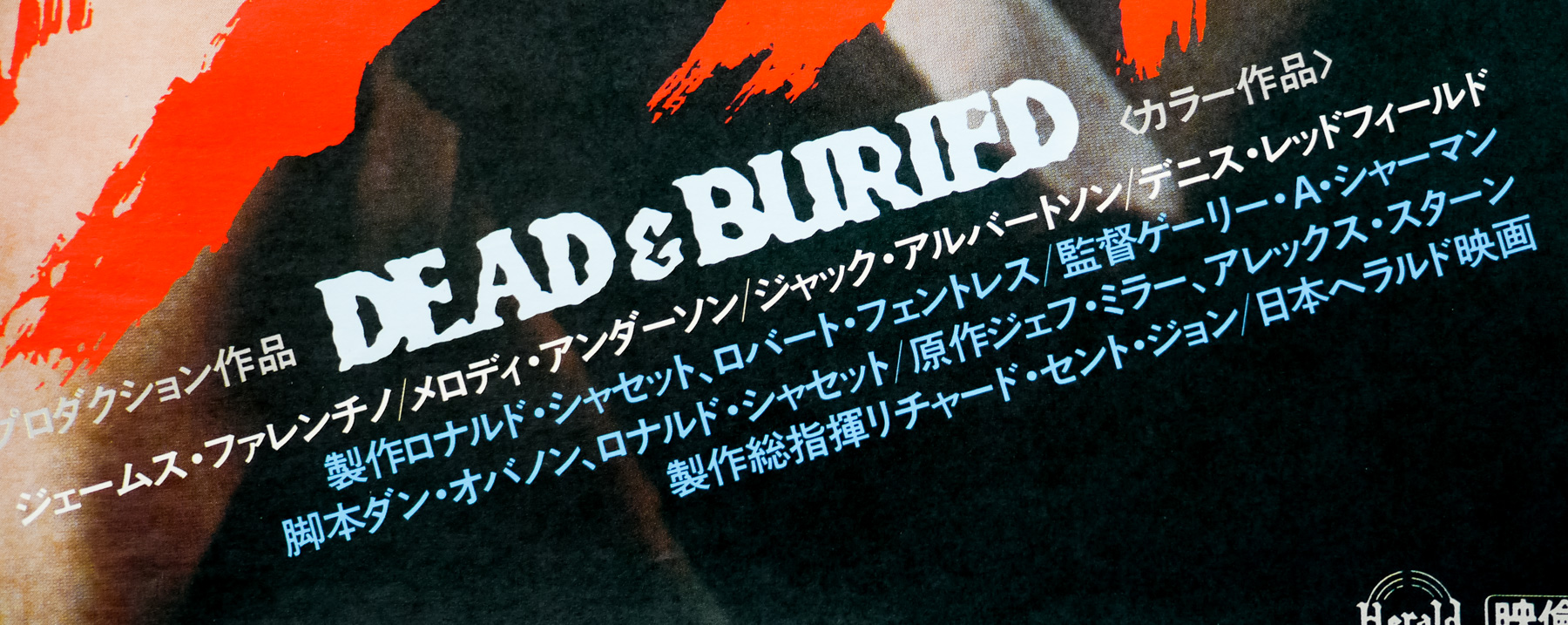
This is the style A B2 for the Japanese release of the American horror film Dead and Buried. The film was written by Ronald Shusett and Dan O’Bannon, the two screenwriters responsible for the 1979 sci-fi masterpiece Alien, and was directed by Gary Sherman whose previous film had been the creepy ‘cannibals on the London Underground’ horror Raw Meat (AKA Deathline) almost a decade earlier. The story is set in the seemingly normal New England seaside town of Potter’s Bluff and sees the local Sheriff Dan Gillis (James Farentino) investigating a series of mysterious disappearances of strangers visiting the area. The baffling thing for the sheriff is that the strangers are then reappearing some days later now seemingly a member of the community.

The viewer bears witness to a series of gruesome murders beginning with that of a photographer (Christopher Allport) who is seduced on the town beach before being attacked by several people from the town who beat him and burn him alive whilst taking photographs. It soon becomes clear that Potters Bluff’s eccentric mortician William G. Dobbs (Jack Albertson AKA Grandpa Joe from Willy Wonka and the Chocolate Factory) has been practicing some fairly unorthodox patient handling in his morgue and the sheriff sets out to put a stop to his plans.

Apparently, the film went through a number of edits at the request of one of the financiers and was moulded into more of a dark horror film than Gary Sherman had originally intended, with two additional killings inserted and filmed without the assistance of effects maestro Stan Winston (these are noticeably different in tone and quality of execution than the rest of the film). Despite this, Dead and Buried is a solid horror film with a creepy atmosphere, excellent production design and some memorable turns, particularly from Albertson and Melody Anderson as Dan Gillis’ wife who harbours a dark secret.

The film’s original trailer is on YouTube.
The Brown Bunny / B2 / Japan

21.05.12

Poster Poster
Title
The Brown Bunny
AKA
--
Year of Film
2003
Director
Vincent Gallo
Starring
Vincent Gallo, Chloë Sevigny, Cheryl Tiegs, Elizabeth Blake, Anna Vareschi, Mary Morasky
Origin of Film
USA | Japan | France
Genre(s) of Film
Vincent Gallo, Chloë Sevigny, Cheryl Tiegs, Elizabeth Blake, Anna Vareschi, Mary Morasky,
Type of Poster
B2
Style of Poster
--
Origin of Poster
Japan
Year of Poster
2003
Designer
Unknown
Artist
--
Size (inches)
20 6/16" x 28 13/16"
SS or DS
SS
NSS #
--
Tagline
--

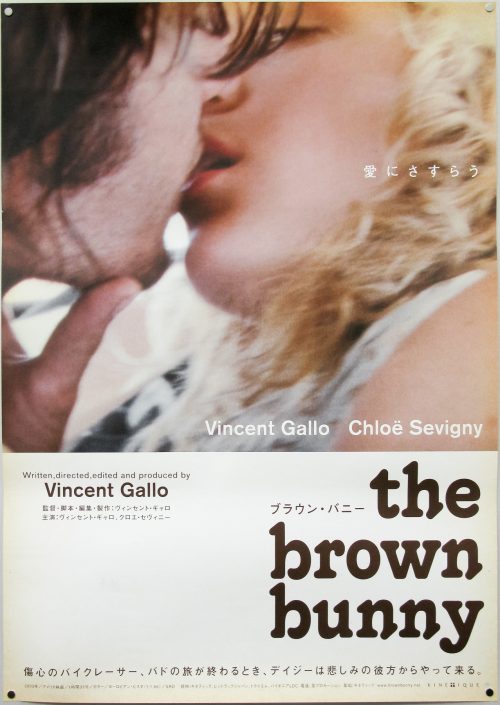
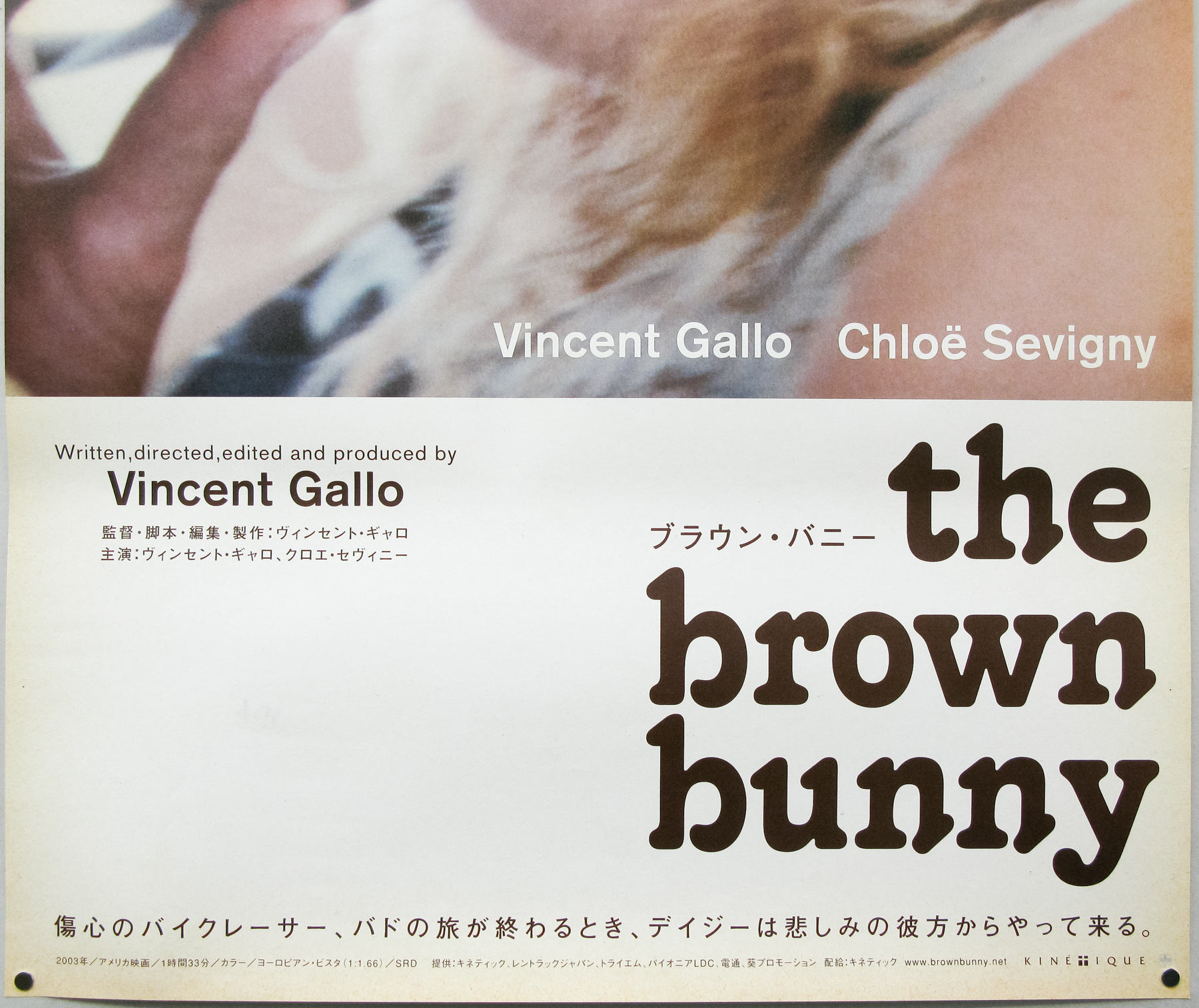
Yes, this is the film where Vincent Gallo drives a motorbike around looking glum, crying occasionally and meeting random women before receiving an un-simulated blowjob from Chloë Sevigny. Gallo plays racer Bud Clay who is on a cross country trip to a track in California and is trying to repress memories of his one true love, Daisy (Sevigny), by meeting different women along the way. The actor was also the film’s director, screenwriter, editor and took care of almost all of the other technical details.

The film’s first cut was roughly 25 minutes longer than the one that was eventually released worldwide. Its re-editing was as a result of the savaging it received at the Cannes Film Festival. Legendary critic Roger Ebert declared the film to be the worst in the history of the festival, which saw him and Gallo enter into a war of words, with the director calling Ebert a ‘fat pig with the physique of a slave trader.’ The critic responded by paraphrasing a statement attributed to Winston Churchill, saying that ‘one day I will be thin, but Vincent Gallo will always be the director of The Brown Bunny.’ When the new cut was released in the US Ebert surprised many by giving it his signature thumbs up.

For a cool $1,000,000 you can actually purchase the main man’s little swimmers, should you want to birth the next generation Gallo, whilst $50,000 will net you a night with him (ladies only).

This Japanese poster features a still from the infamous sex scene and the yellowing around the edge is part of the design.

The Enforcer / B2 / style B / Japan

23.10.13

Poster Poster
Title
The Enforcer
AKA
Dirty Harry 3 (Japan - English title) | Cielo di piombo, ispettore Callaghan [Lead sky, Inspector Callaghan] (Italy)
Year of Film
1976
Director
James Fargo
Starring
Clint Eastwood, Harry Guardino, Bradford Dillman, Tyne Daly, DeVeren Bookwalter
Origin of Film
USA
Genre(s) of Film
Clint Eastwood, Harry Guardino, Bradford Dillman, Tyne Daly, DeVeren Bookwalter,
Type of Poster
B2
Style of Poster
Style B
Origin of Poster
Japan
Year of Poster
1976
Designer
Unknown
Artist
--
Size (inches)
20 4/16" x 28 12/16"
SS or DS
SS
Tagline
--

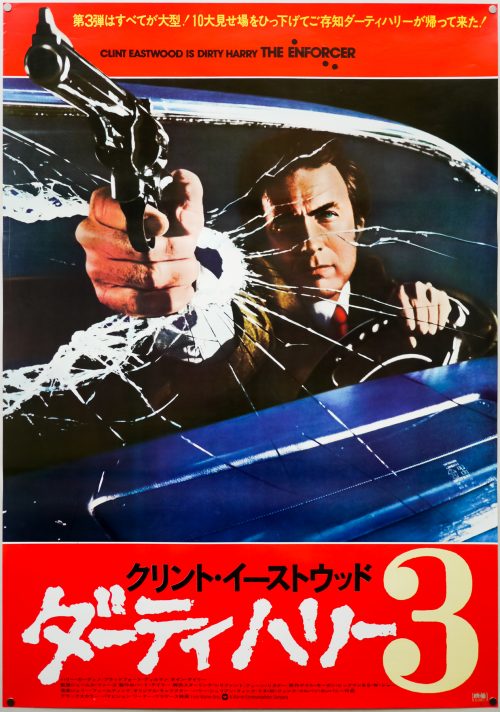
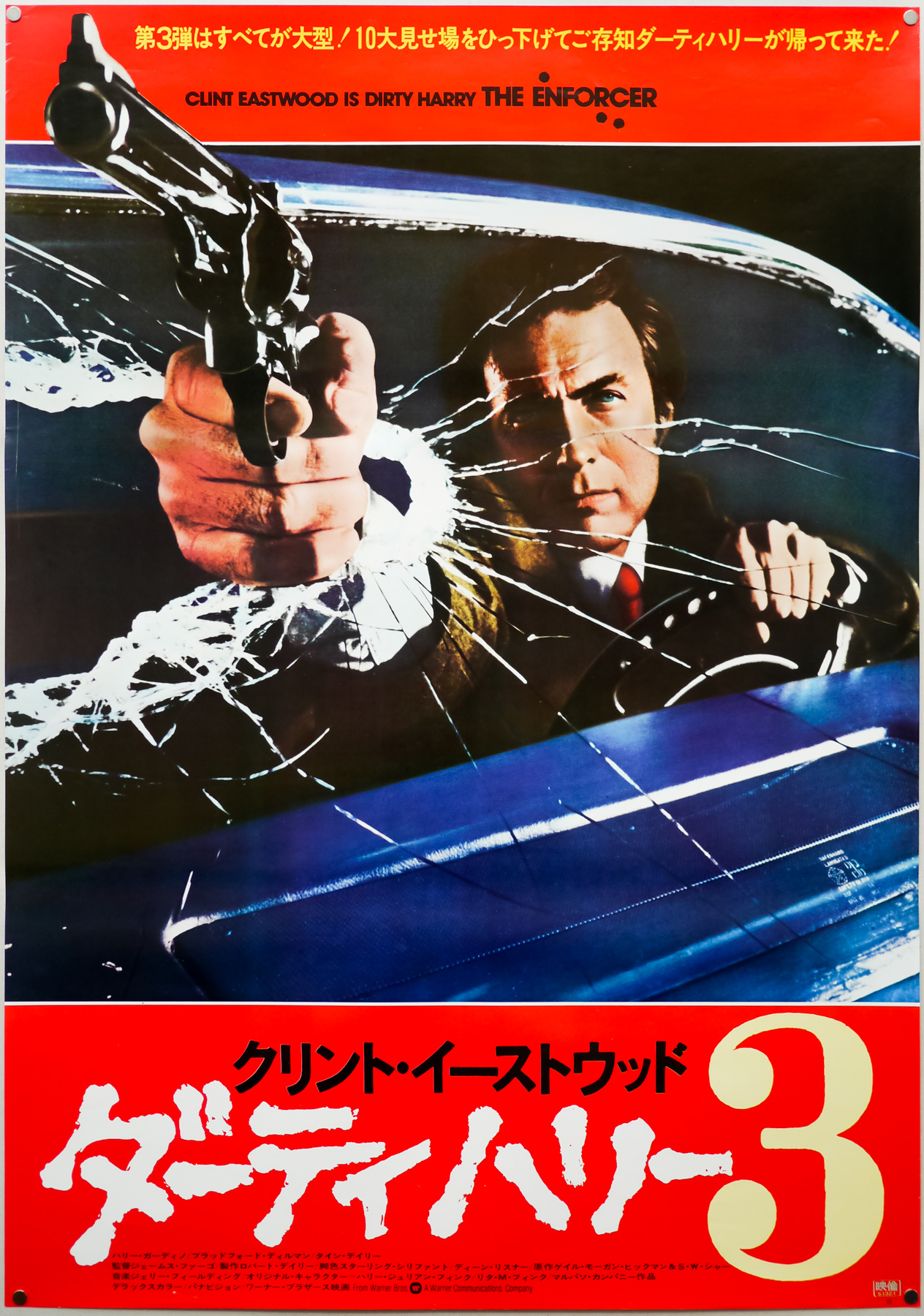
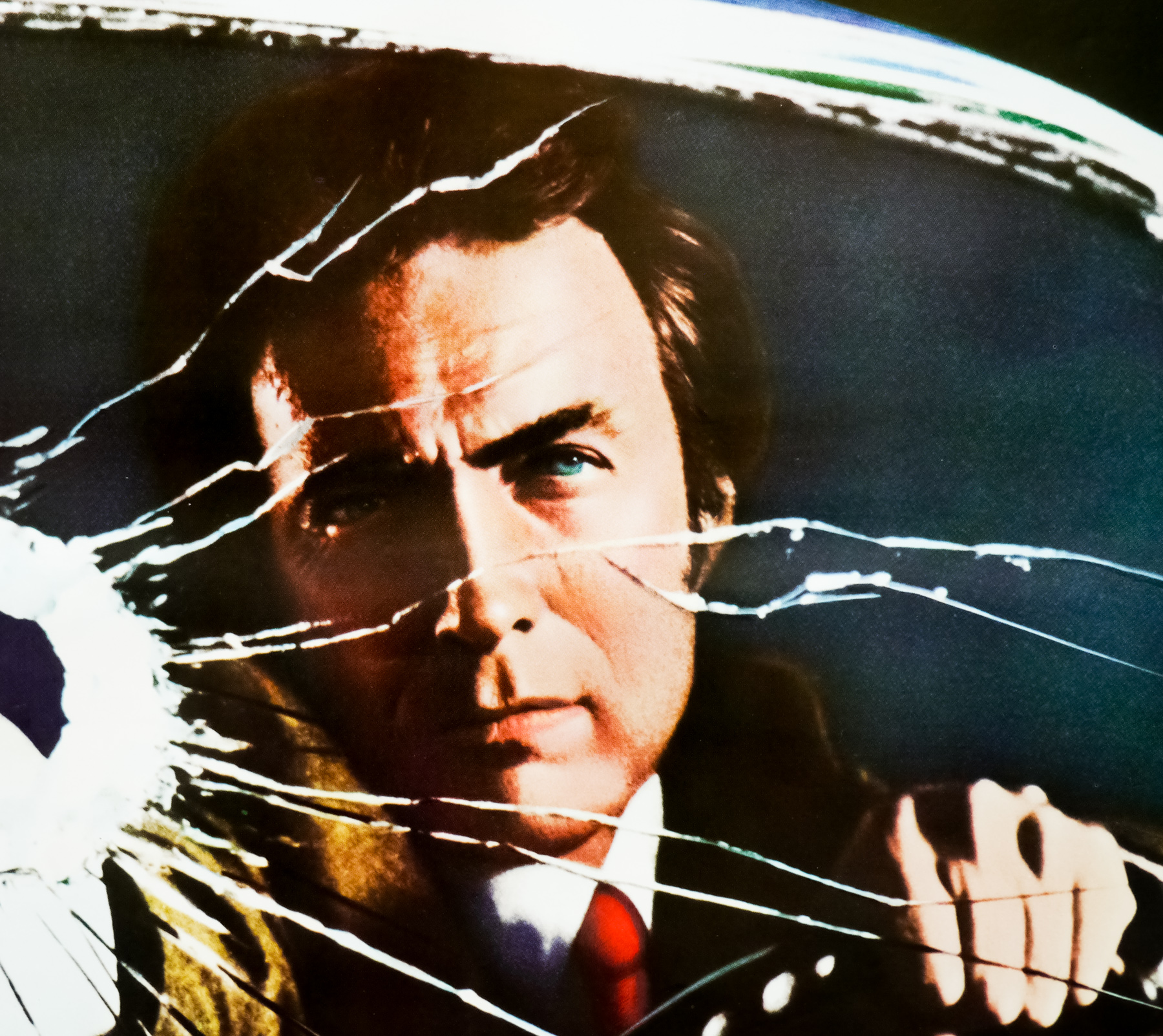
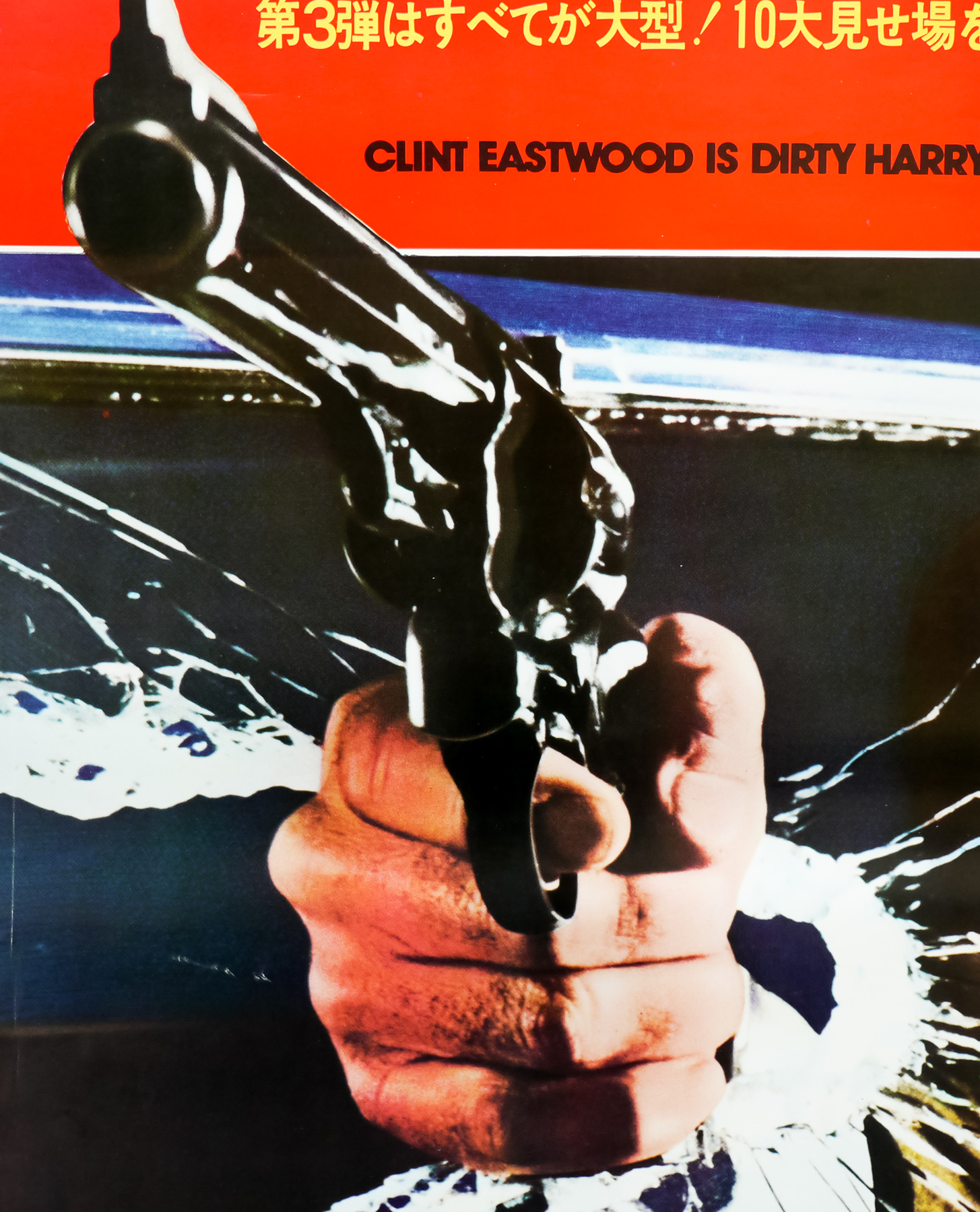
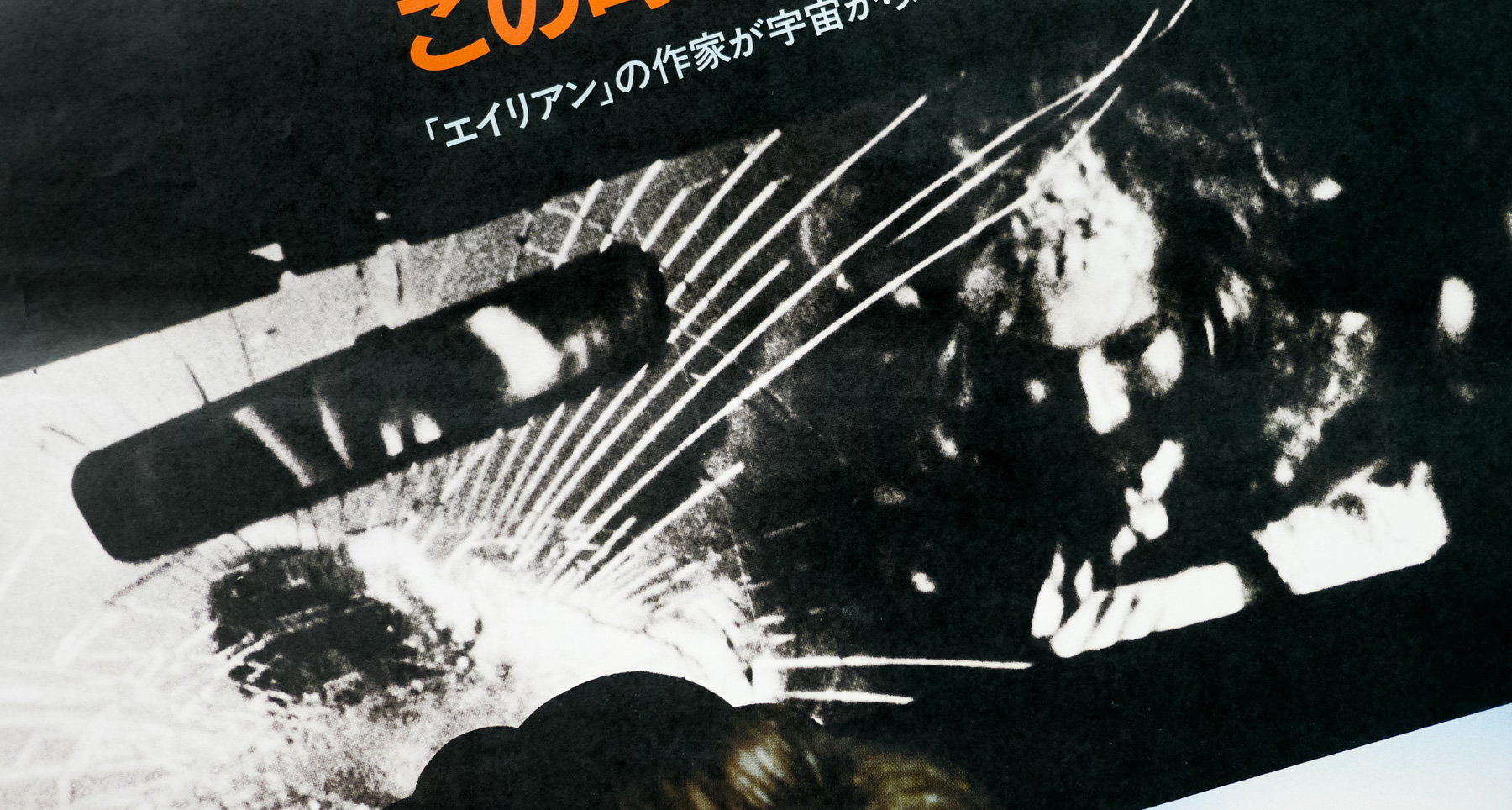
A classic image of Clint Eastwood brandishing his giant magnum pistol as detective Harold ‘Dirty Harry’ Callahan in The Enforcer, the third instalment of the series that was instrumental, along with his roles in a series of westerns, in cementing the actors position as a movie megastar. Set three years after the events in Magnum Force, the story sees Harry taken off detective duties following his decision to end a liquor store robbery by driving his car through the front window before shooting the protagonists. Whilst working for personnel and interviewing prospective recruits to enter the detective division he learns that three new detectives will be women, including Kate Moore (Tyne Daly), much to his bemusement (he is a 1970s, misogynist dinosaur let’s not forget)

When a terrorist group calling themselves the People’s Revolutionary Strike Force (PRSF) start a rampage of robbery and bombings, one of which sees his old partner killed in action, Harry is allowed back into the field and is reluctantly paired with Detective Moore to try and put a stop to the group’s actions. After stealing several arms caches, the PRSF then boldly kidnaps San Francisco’s mayor and demands a $2 million ransom, but the detectives are quickly onto their location and the scene is set for a final, explosive showdown.

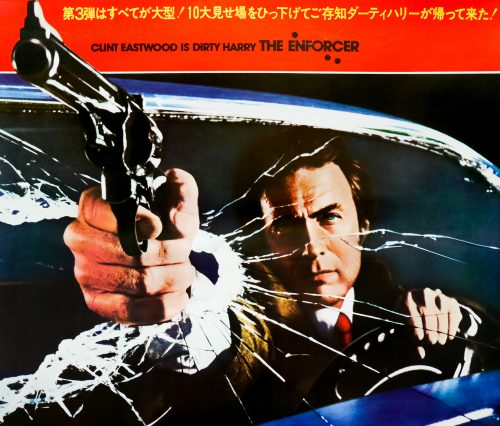
This image of the smashed car window was photographed especially for the marketing campaign and ended up being used for posters around the world, including the American half sheet, the British quad and this Japanese B2. There is also a style A B2 that can be viewed here.

Shikoku / B2 / Japan

30.10.12

Poster Poster
Title
Shikoku
Year of Film
1999
Director
Shunichi Nagasaki
Starring
Yui Natsukawa, Michitaka Tsutsui, Chiaki Kuriyama, Toshie Negishi, Ren Ohsugi, Makoto Satô, Tarô Suwa, Tomoko Ôtakara, Hazuki Kôzu
Origin of Film
Japan
Genre(s) of Film
Yui Natsukawa, Michitaka Tsutsui, Chiaki Kuriyama, Toshie Negishi, Ren Ohsugi, Makoto Satô, Tarô Suwa, Tomoko Ôtakara, Hazuki Kôzu,
Type of Poster
B2
Style of Poster
--
Origin of Poster
Japan
Year of Poster
1999
Designer
Unknown
Artist
--
Size (inches)
20 6/16" x 28 13/16"
SS or DS
SS
Tagline
--

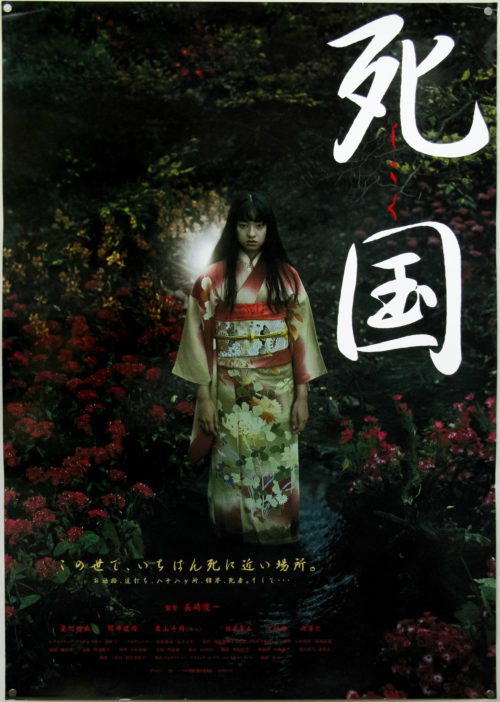
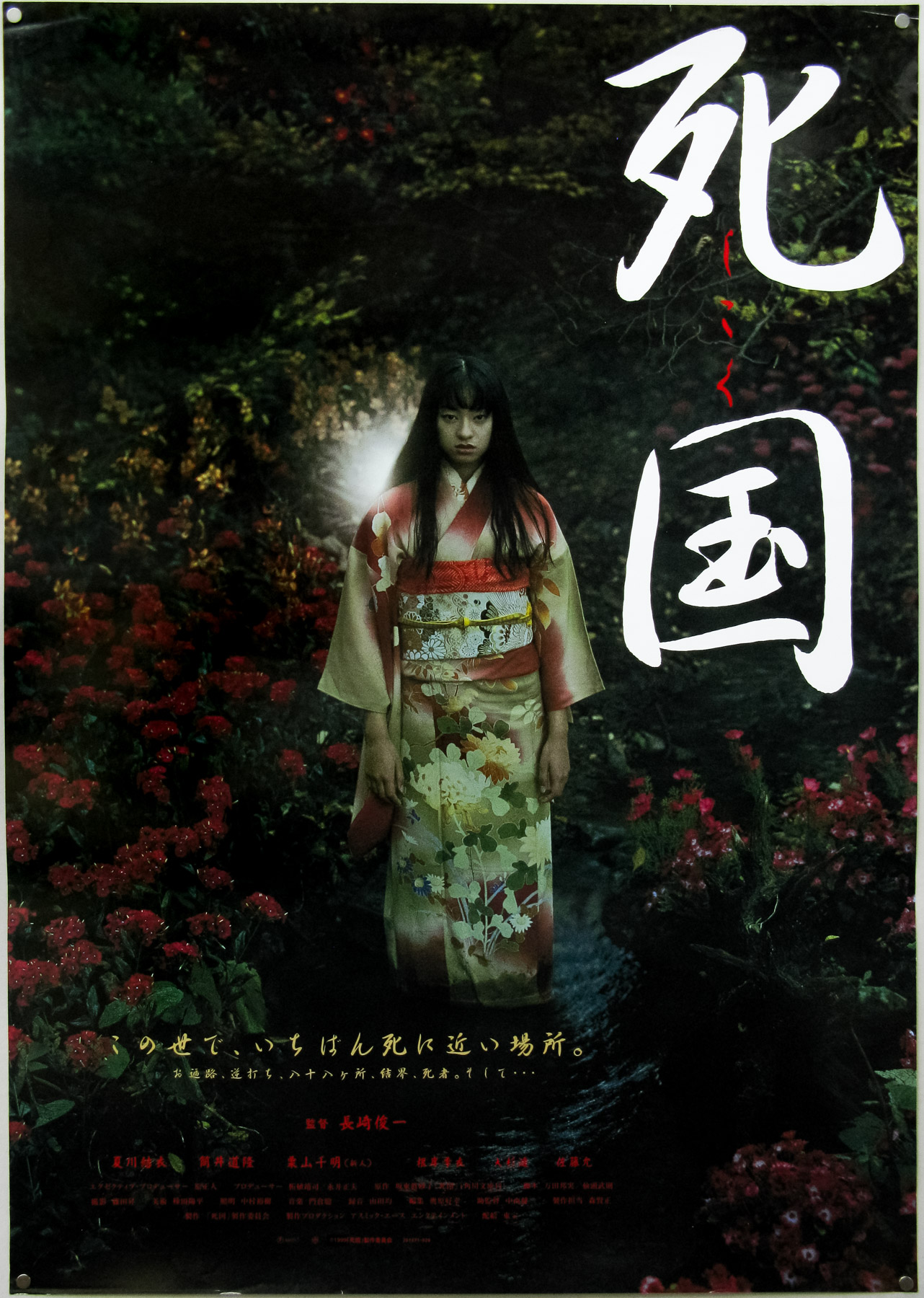
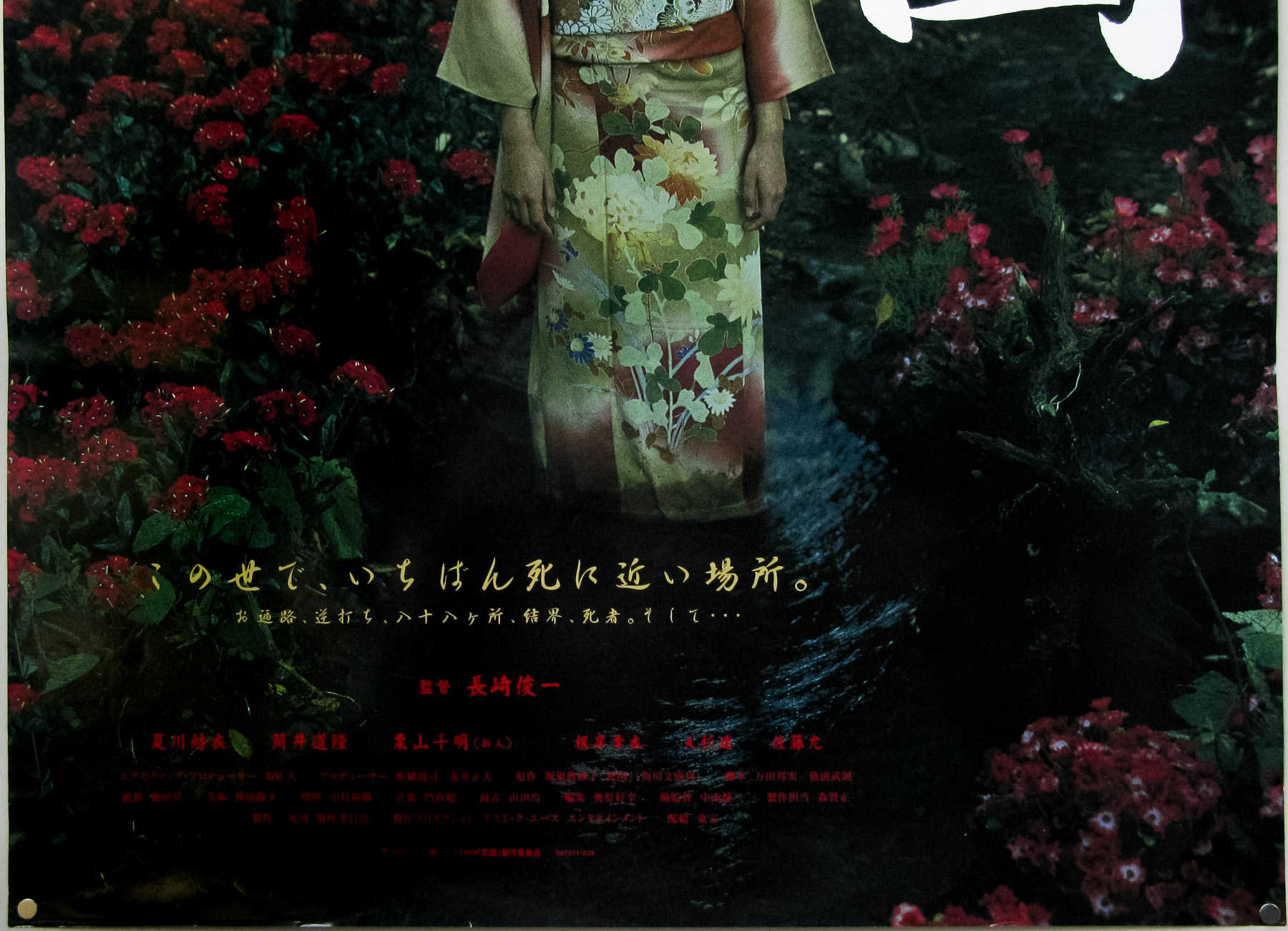
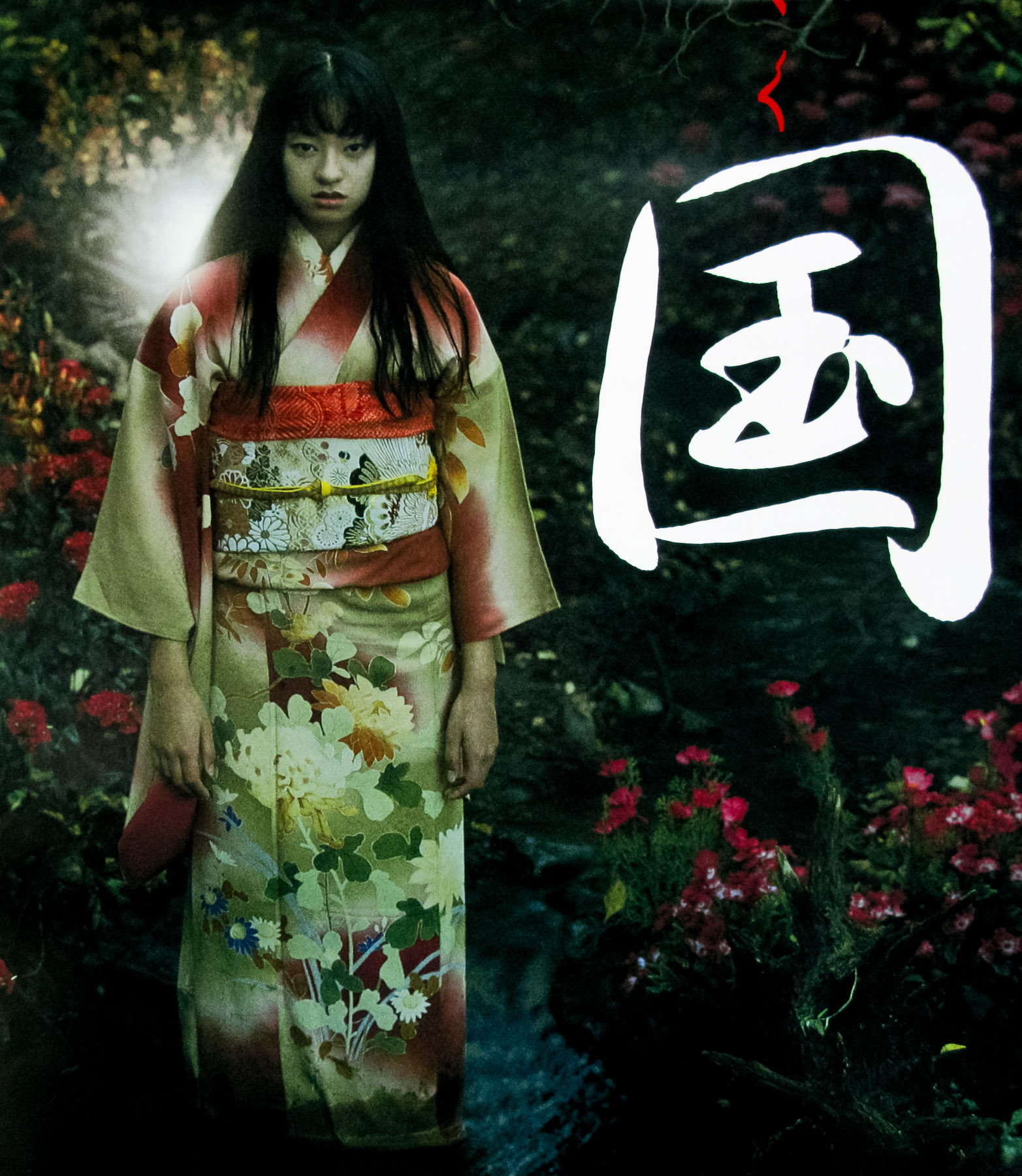
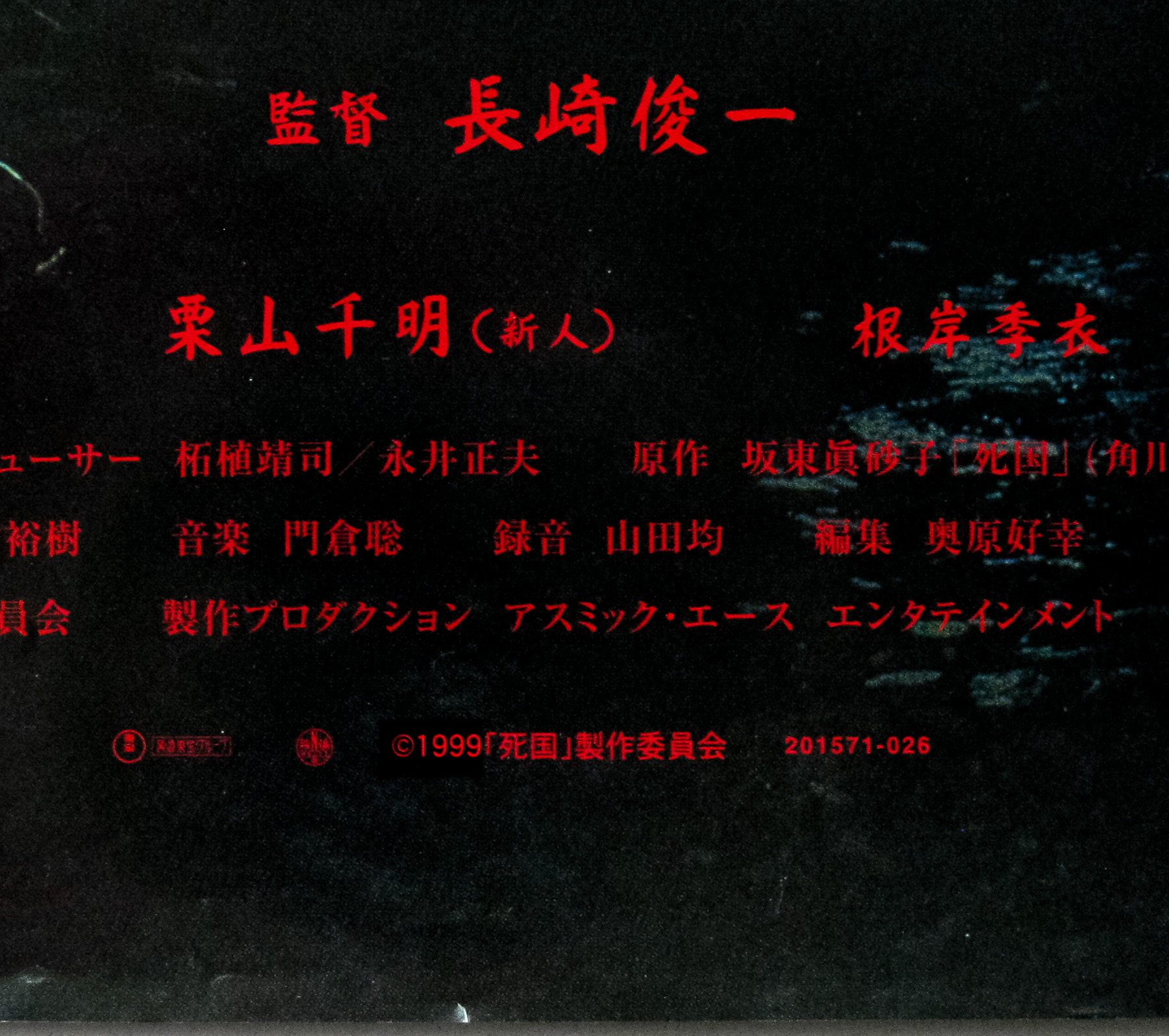
An arresting design on this poster for the release of Shikoku, a Japanese psychological horror film released in 1999. The story sees Hinako (Yui Natsukawa) return to the village she grew up in on the island of Shikoku after spending several years in Tokyo. She discovers that her childhood friend Sayori (Chiaki Kuriyama) died when she was sixteen under mysterious circumstances and, after Hinako sees the spirit of her friend, it becomes clear that Sayori’s grieving mother has spent the past few years attempting to bring her daughter back from the dead.

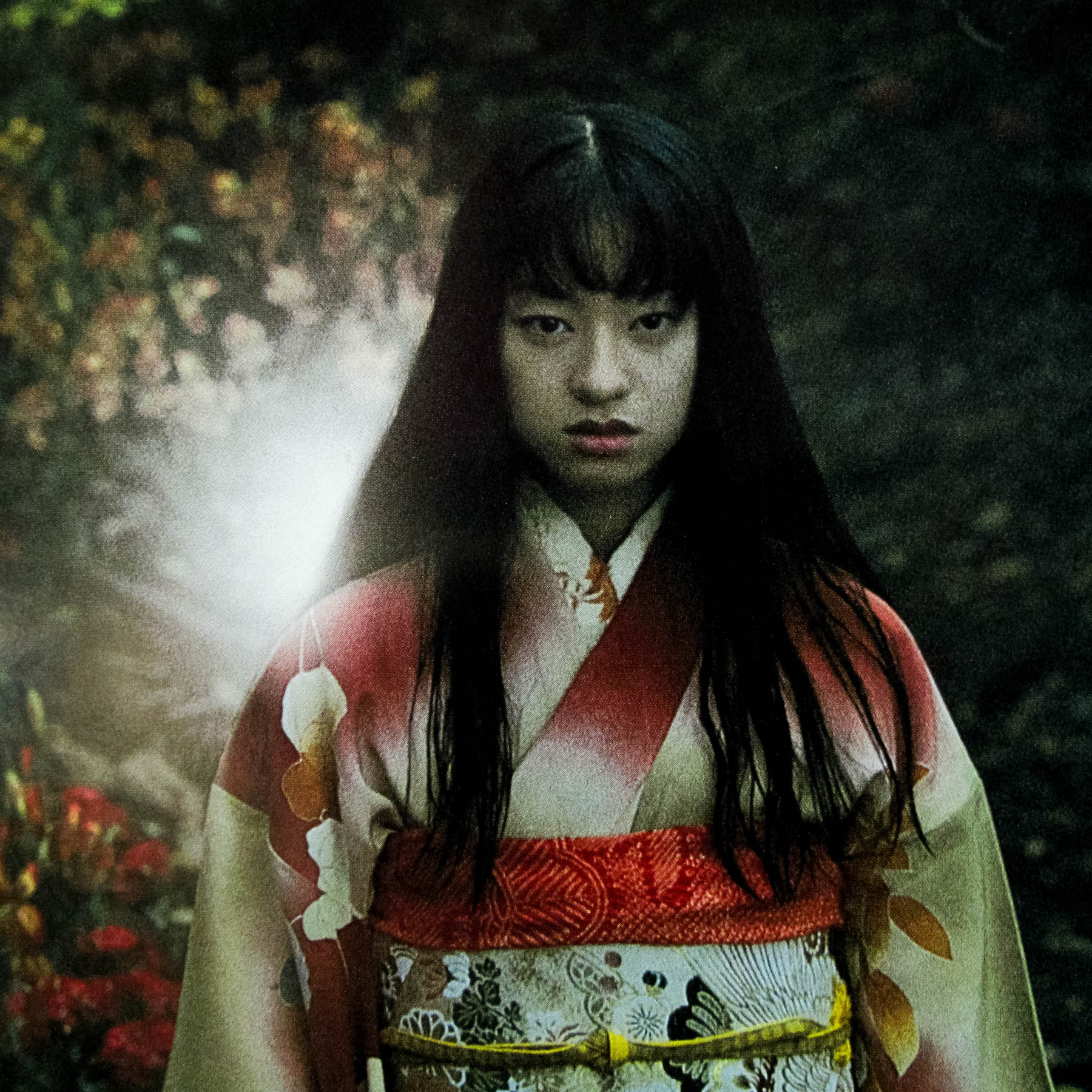
Chiaki Kuriyama, who features on the poster,  is best known for her role as mace-wielding Gogo Yubari in Quentin Tarantino’s Kill Bill. The film was released on DVD in several countries but the UK disc seems to be currently out of print.


Akira / B1 / Japan

17.01.13

Poster Poster
Title
Akira
AKA
--
Year of Film
1988
Director
Katsuhiro Ôtomo
Starring
Mitsuo Iwata, Nozomu Sasaki, Mami Koyama
Origin of Film
Japan
Genre(s) of Film
Mitsuo Iwata, Nozomu Sasaki, Mami Koyama,
Type of Poster
B1
Style of Poster
--
Origin of Poster
Japan
Year of Poster
1988
Designer
Unknown
Artist
Katsuhiro Ôtomo
Size (inches)
28 12/16" x 40 7/16"
SS or DS
SS
Tagline
--

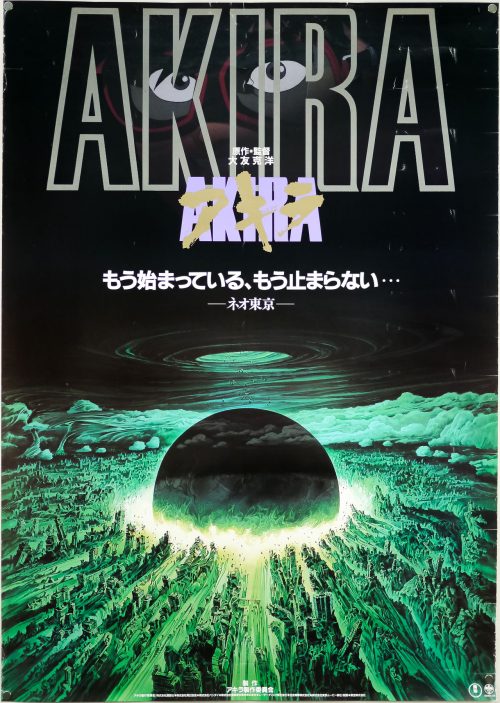
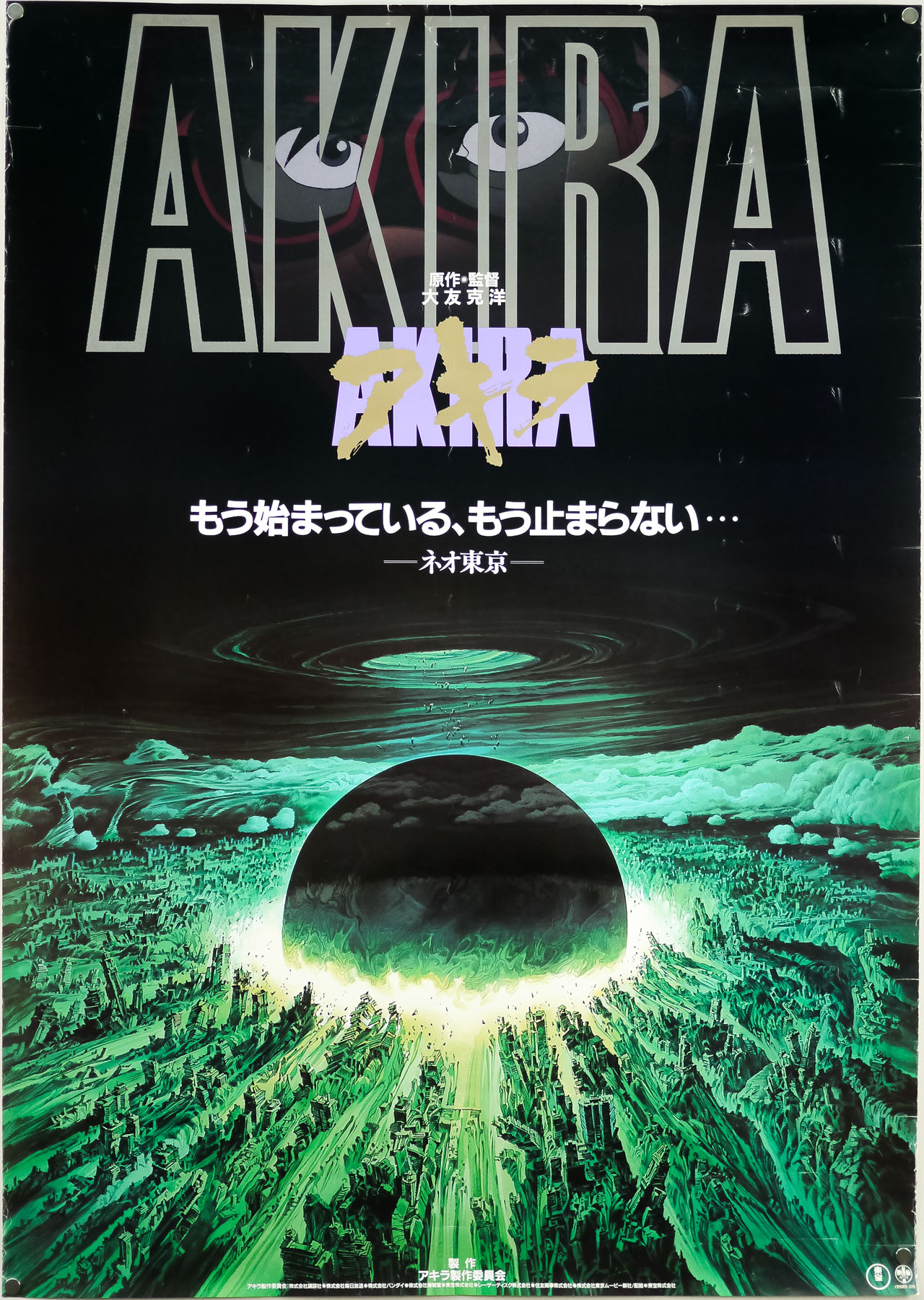
Katsuhiro Ôtomo‘s landmark manga series Akira was adapted into a feature-length anime film in 1988 and directed by Ôtomo himself. Akira had a huge impact on me when it was shown on the UK’s Channel 4 sometime in the early 1990s. I’d never seen anything quite like it and it opened my eyes to the world of anime films that were slowly being released in the UK, including the likes of Ninja ScrollGhost in the Shell and the great work of Hayao Miyazaki and his Studio Ghibli.

The film was recently released on blu-ray and the lossless Japanese soundtrack is astonishingly good. There’s still talk of a live-action remake which fills me, and countless other fans of the anime, with great dread. I really hope it doesn’t happen!

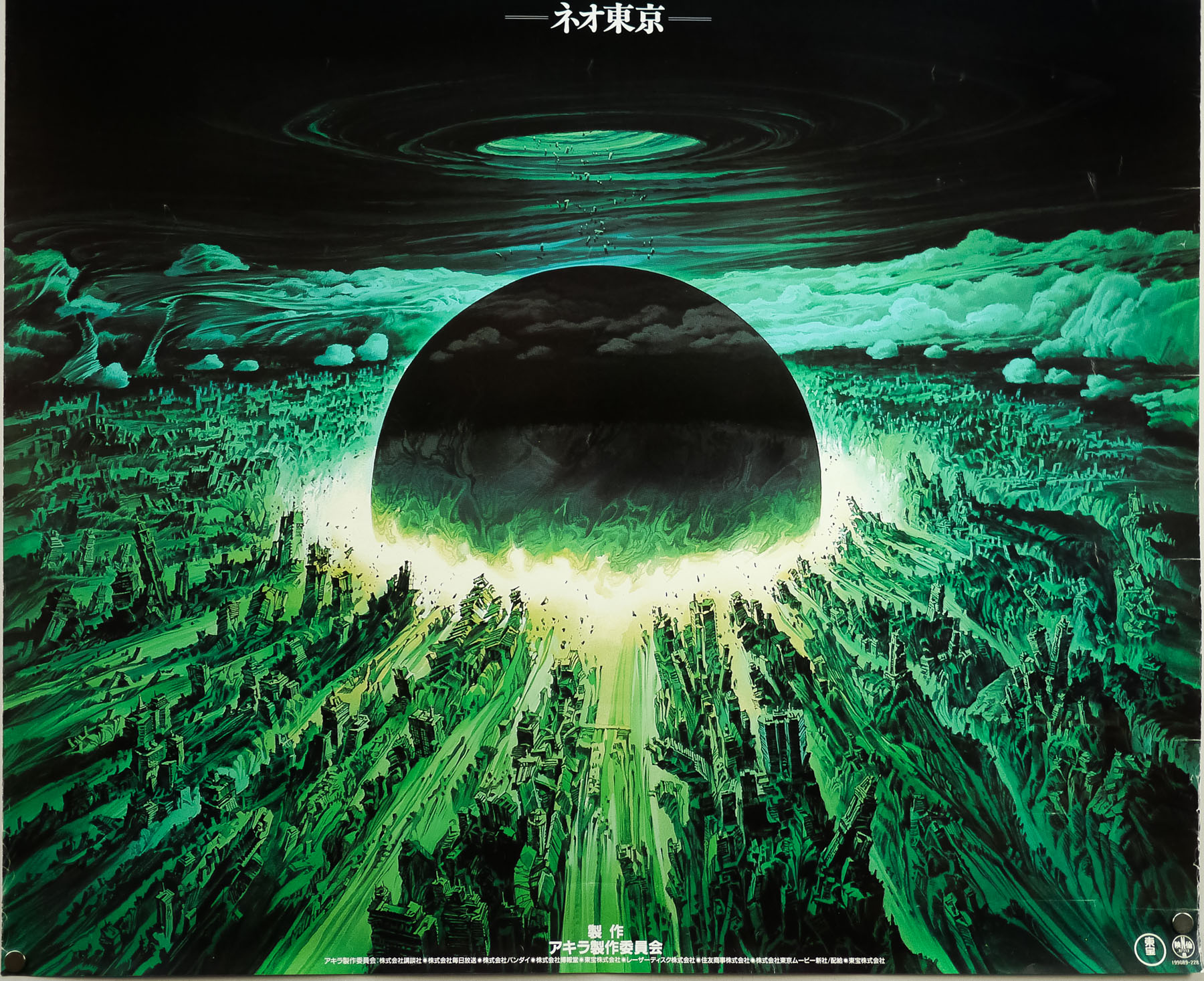
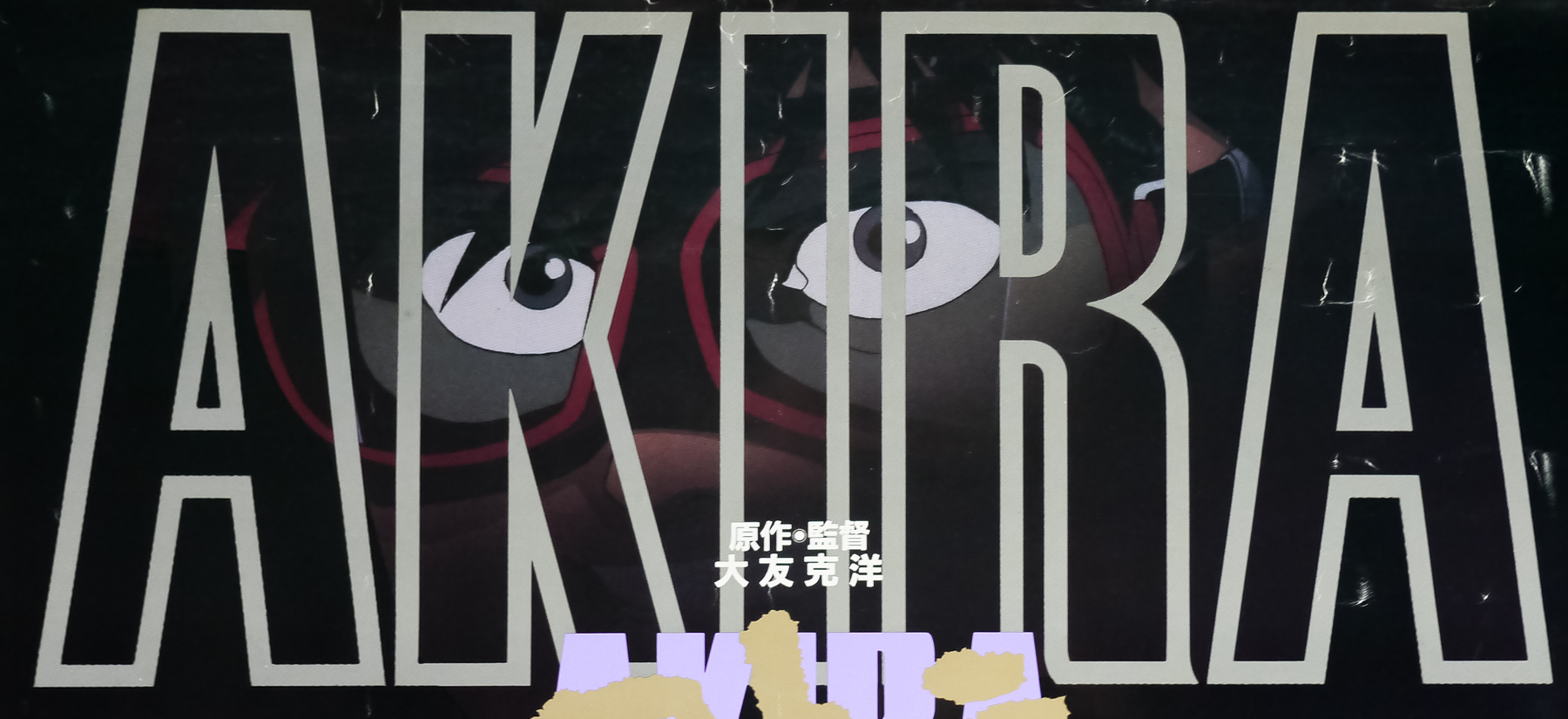
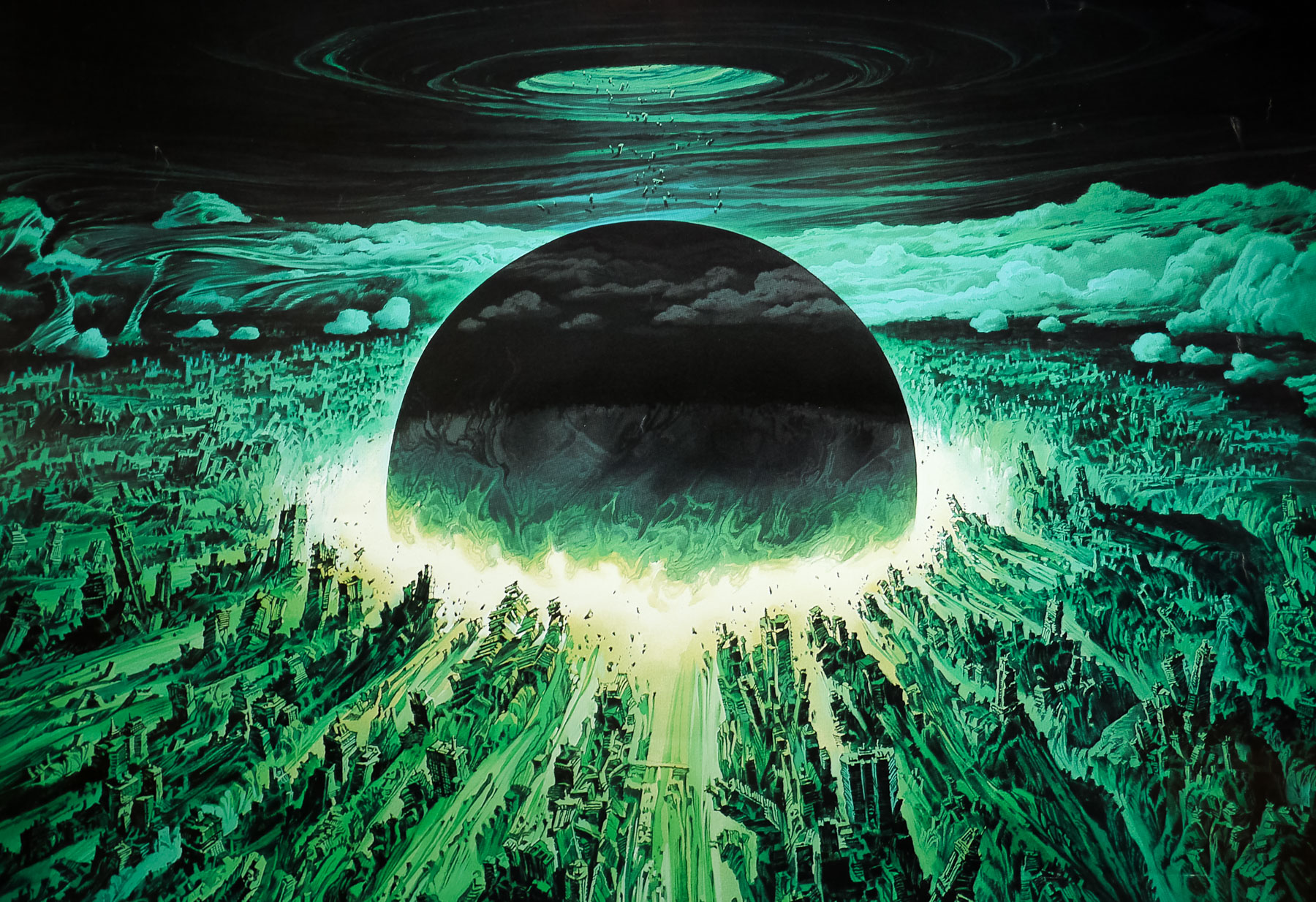
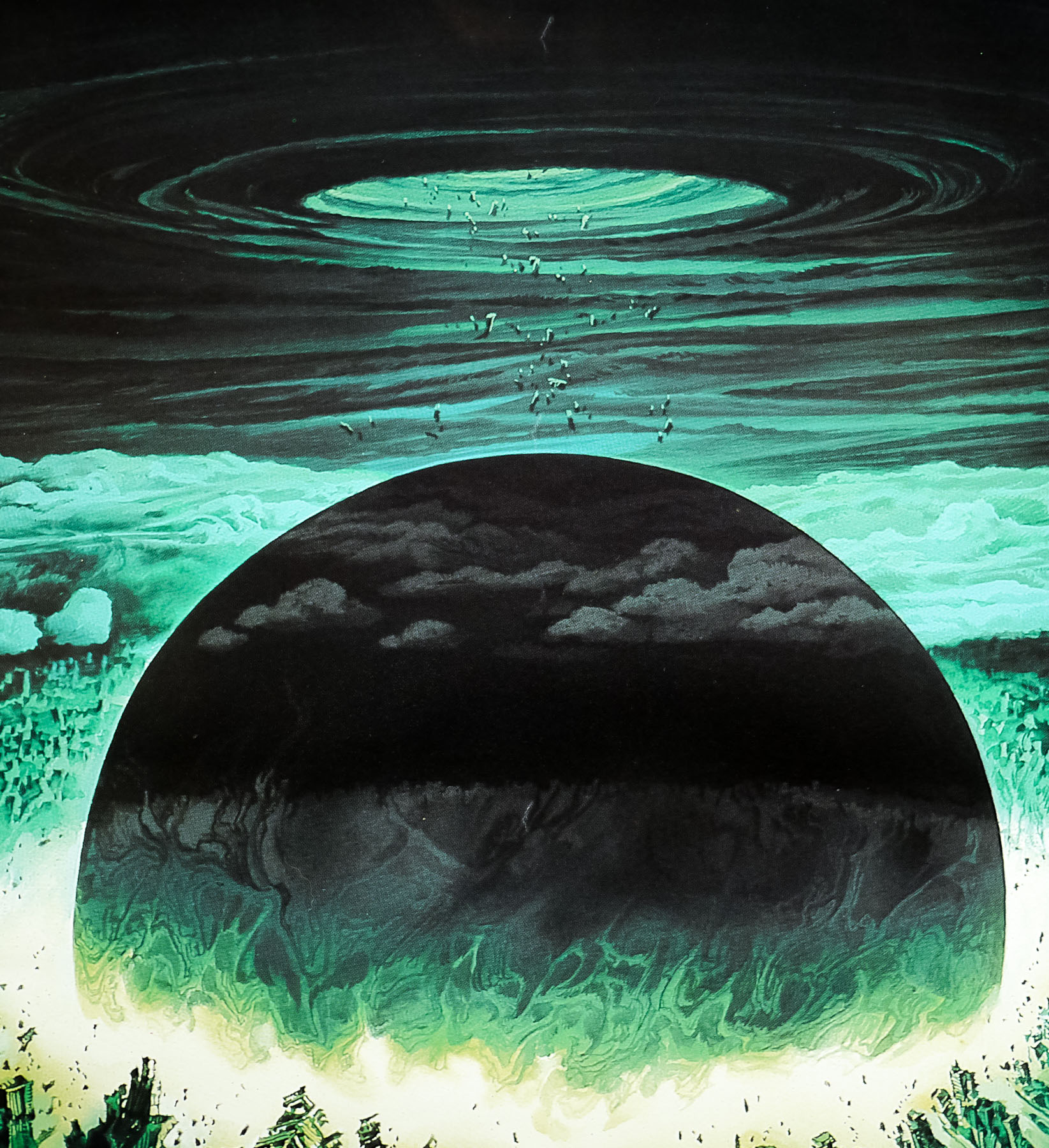
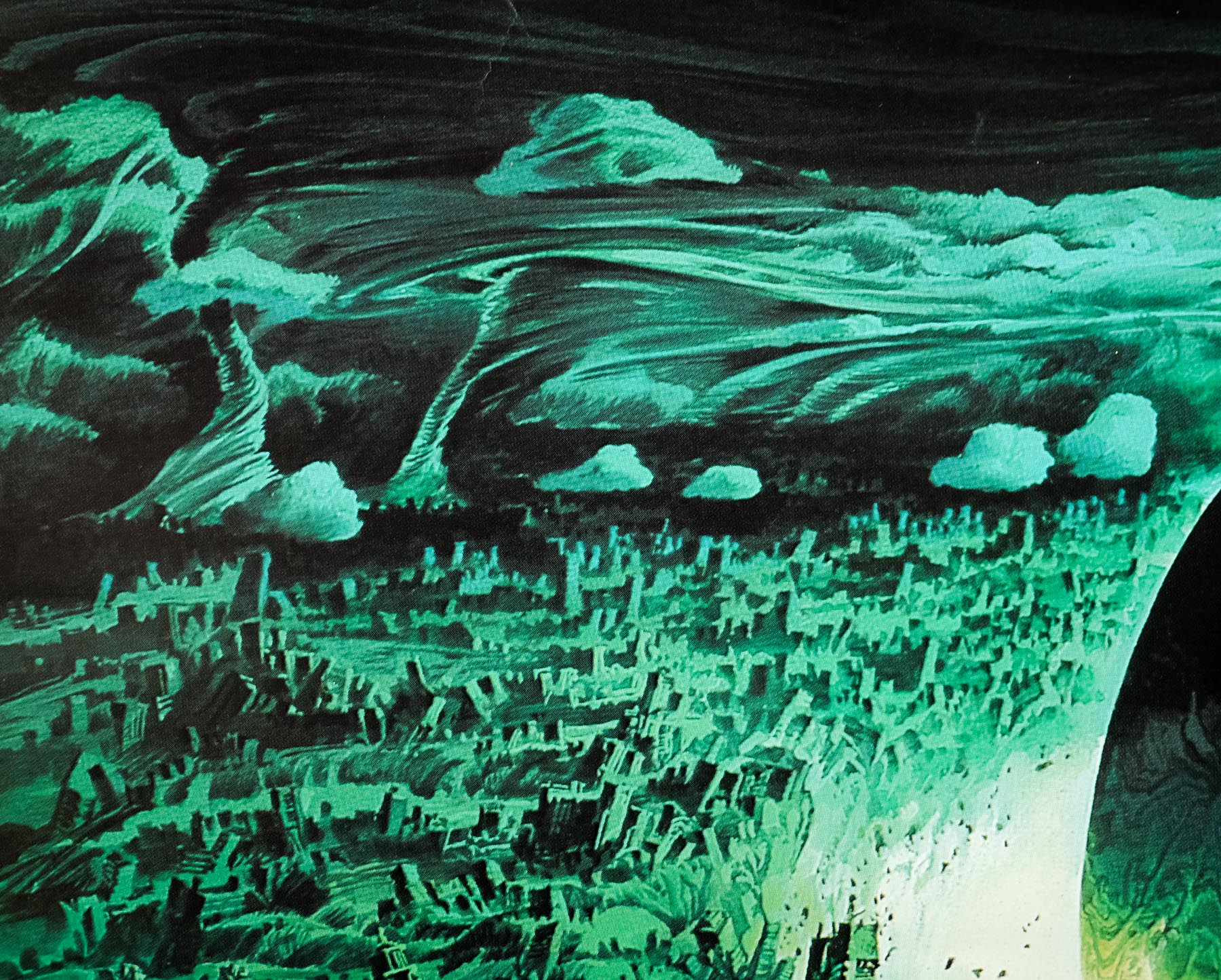
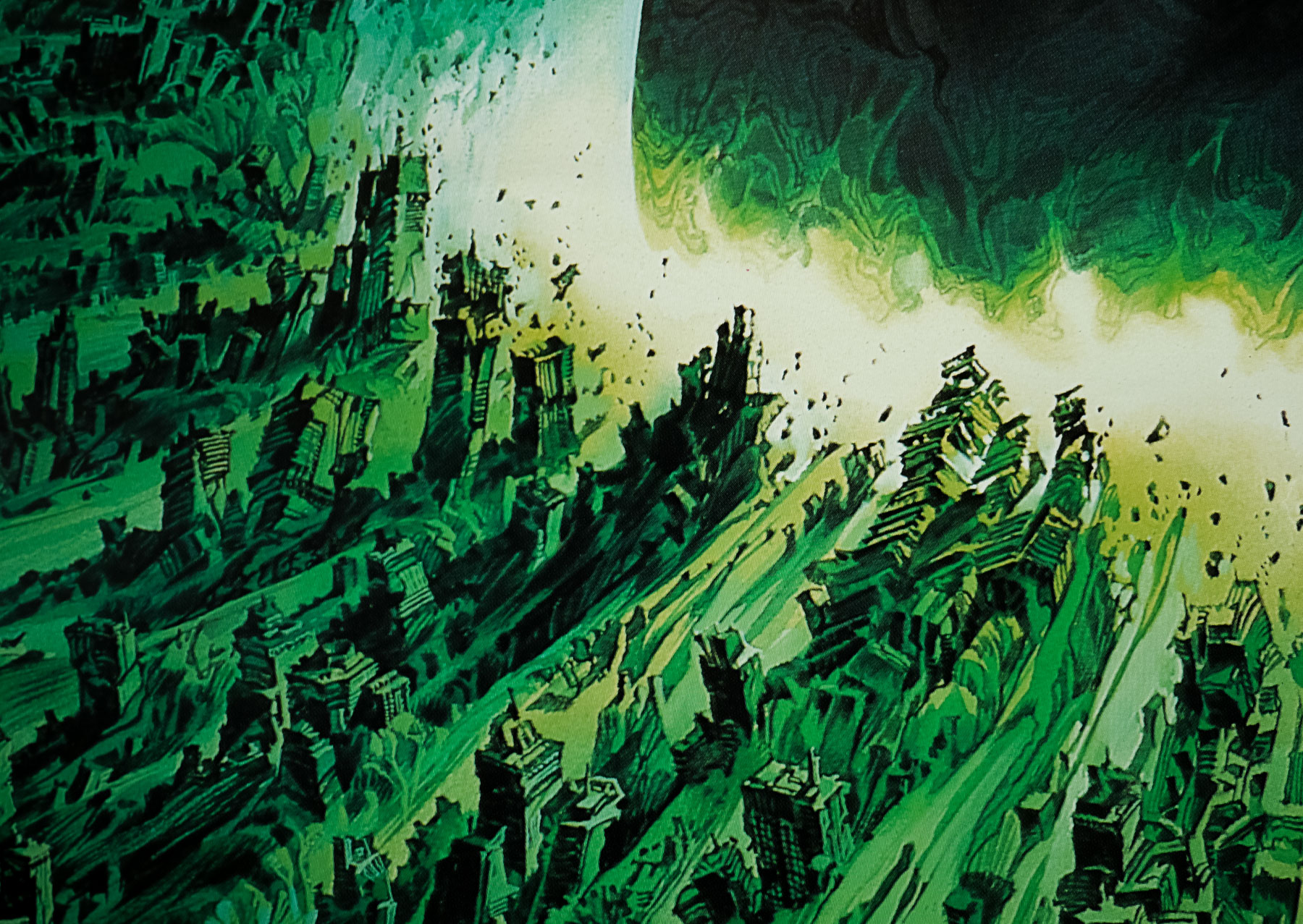
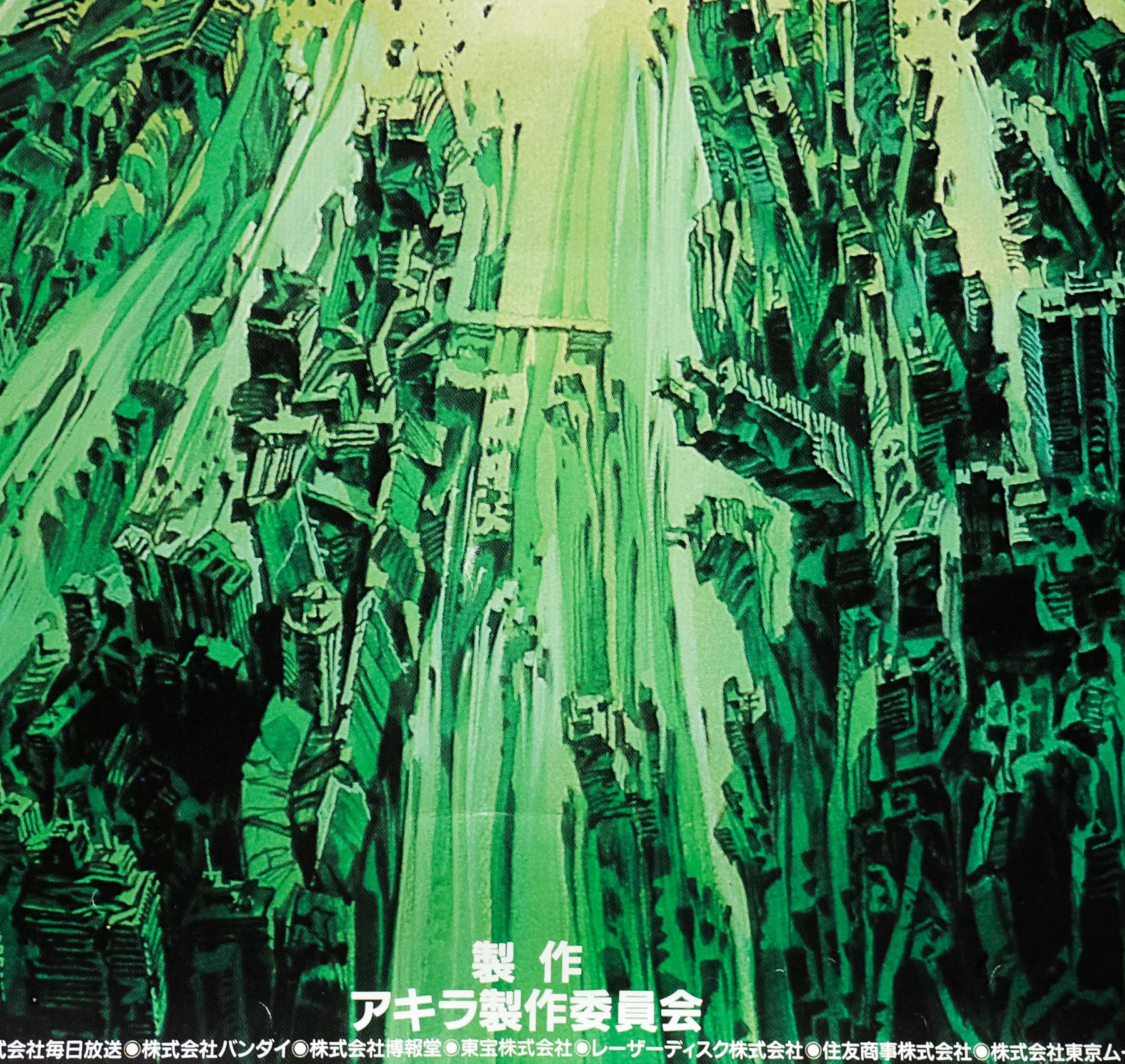
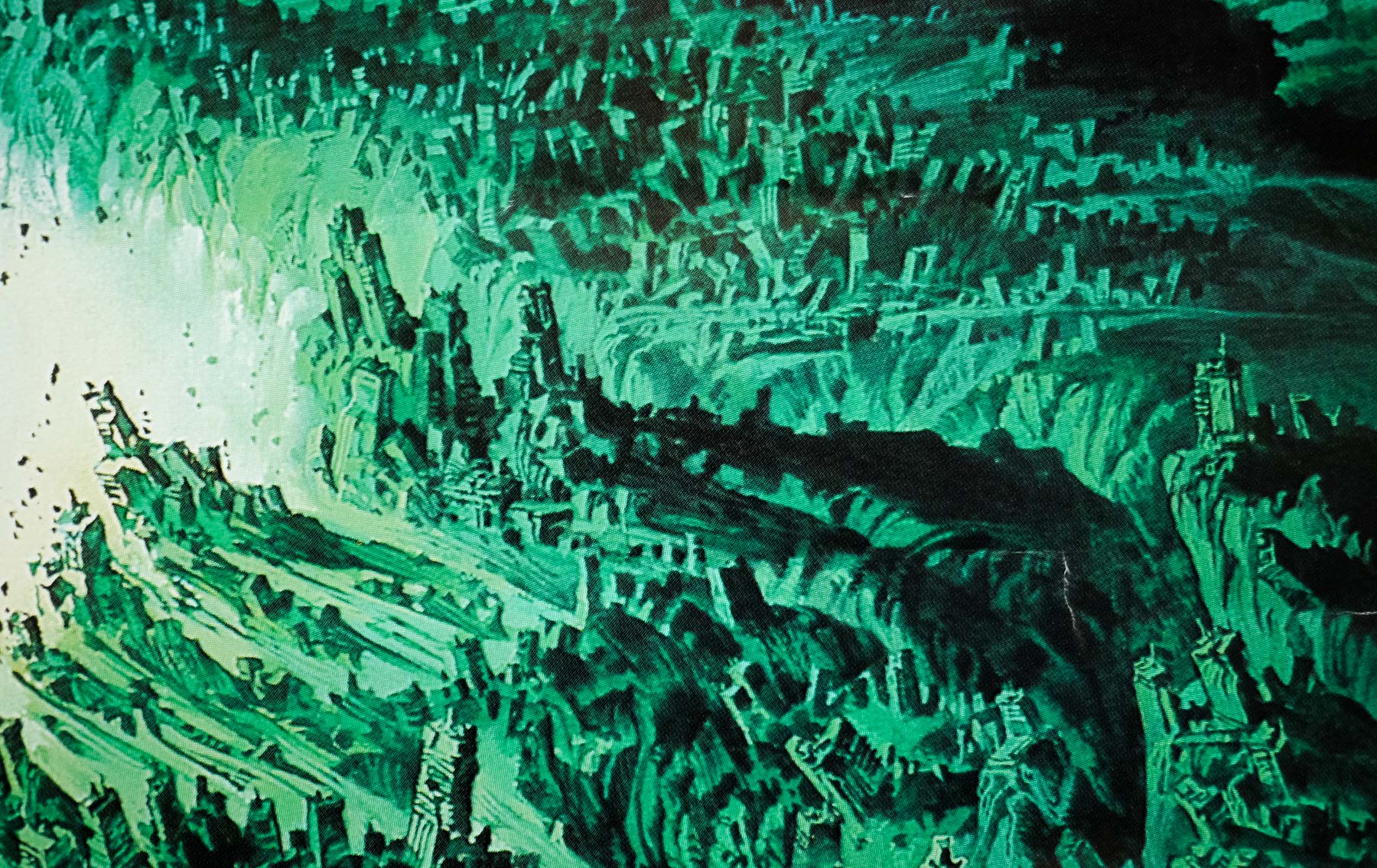
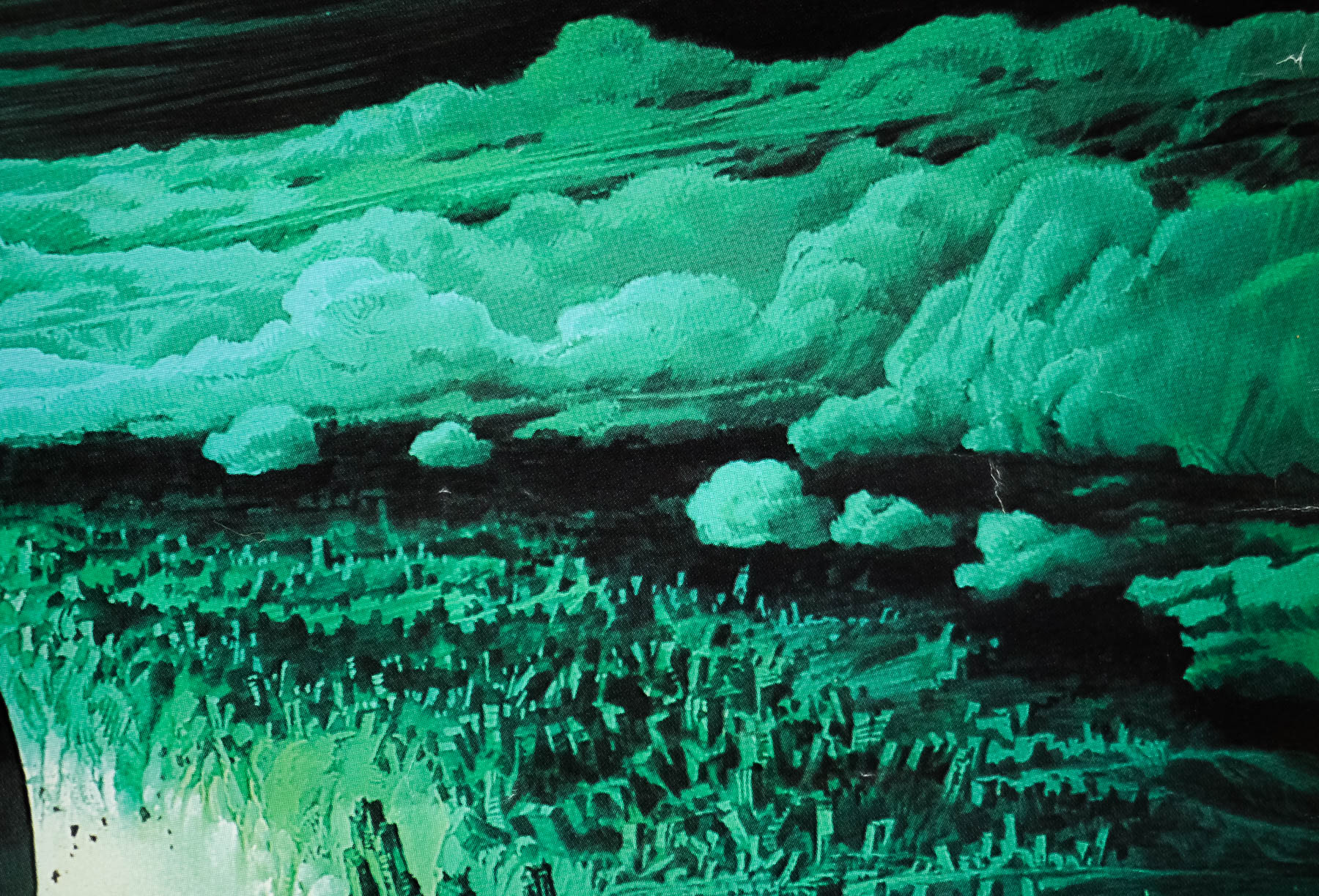
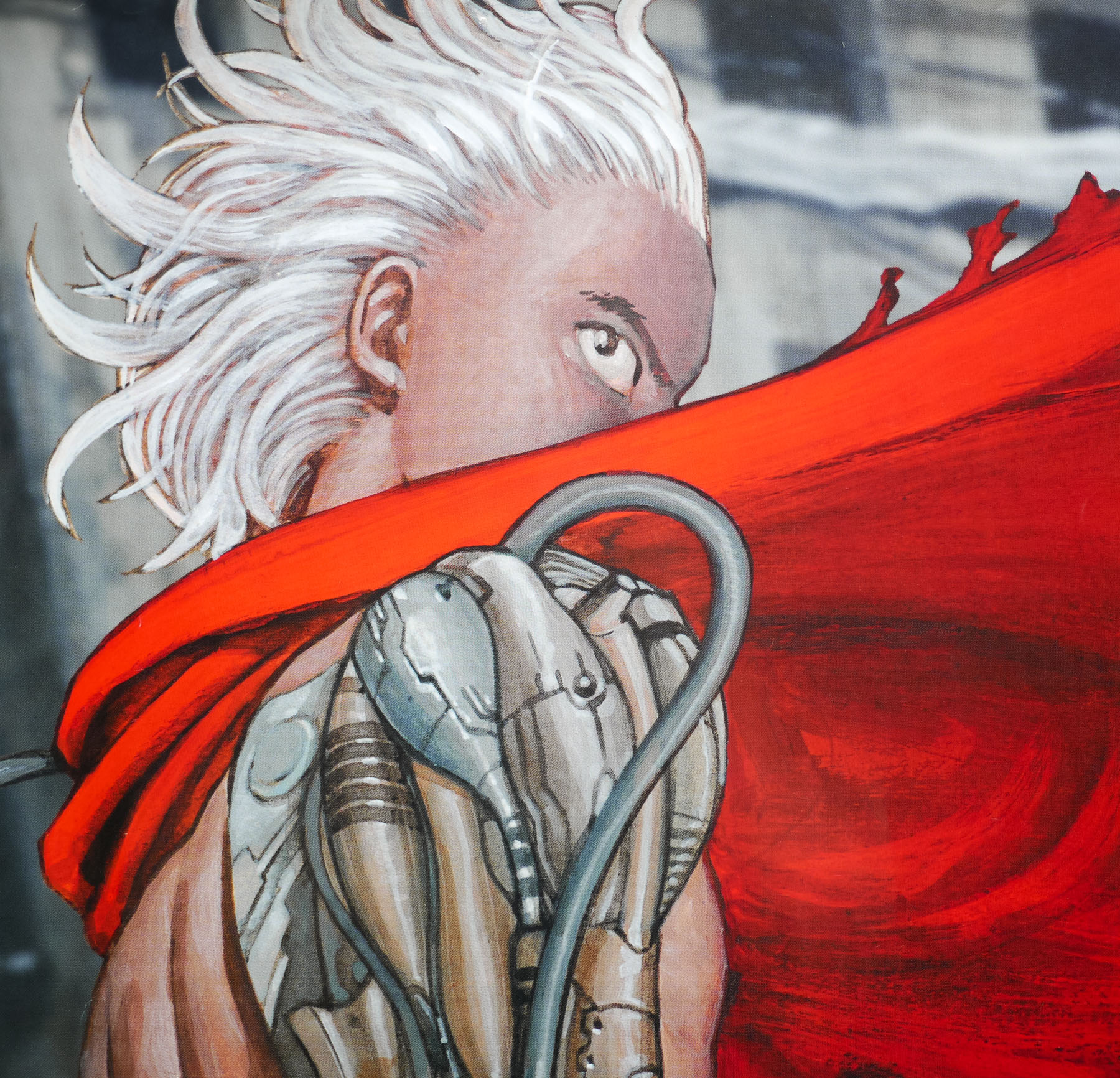
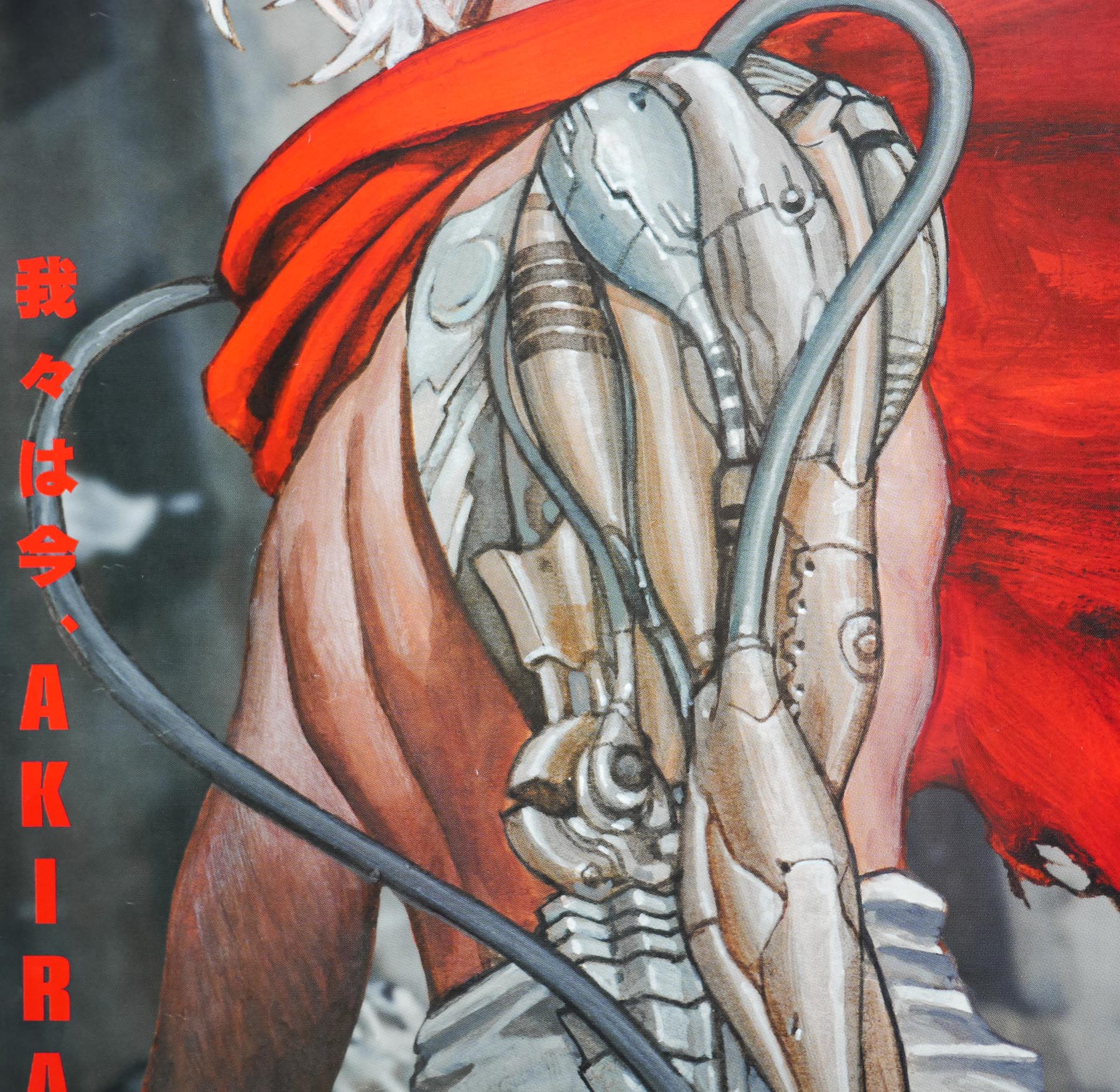
This is the rarely seen Japanese B1 poster that features a coloured adaptation of the moment in the original manga that Tokyo is destroyed by Akira’s out of control psychic powers. It’s not in perfect condition but I was really happy to find it at a poster shop on my first visit to Tokyo in April 2012. During the same trip I had the great fortune to be able to visit a retrospective exhibition of Ôtomo’s work called Genga (A Japanese animation term for keyframes, literally ‘original pictures’), which featured hundreds of pieces of his artwork and the original hand-drawn pages for the Akira manga. I was also able to wear Kaneda’s jacket and sit on the legendary red bike!

I also have two Japanese B2 posters for the film; style A and style B, as well as the American one sheet and ace illustrator Tyler Stout’s take on the film.

Warlords of Atlantis / B2 / style B / Japan

10.01.14

Poster Poster
Title
Warlords of Atlantis
AKA
7 Cities to Atlantis (Japan - English title) | Warlords of the Deep (USA)
Year of Film
1978
Director
Kevin Connor
Starring
Doug McClure, Peter Gilmore, Shane Rimmer, Lea Brodie, Michael Gothard, Hal Galili, John Ratzenberger, Derry Power, Donald Bisset
Origin of Film
UK
Genre(s) of Film
Doug McClure, Peter Gilmore, Shane Rimmer, Lea Brodie, Michael Gothard, Hal Galili, John Ratzenberger, Derry Power, Donald Bisset,
Type of Poster
B2
Style of Poster
Style B
Origin of Poster
Japan
Year of Poster
1978
Designer
Unknown
Artist
Seito
Size (inches)
20.5" x 29"
SS or DS
SS

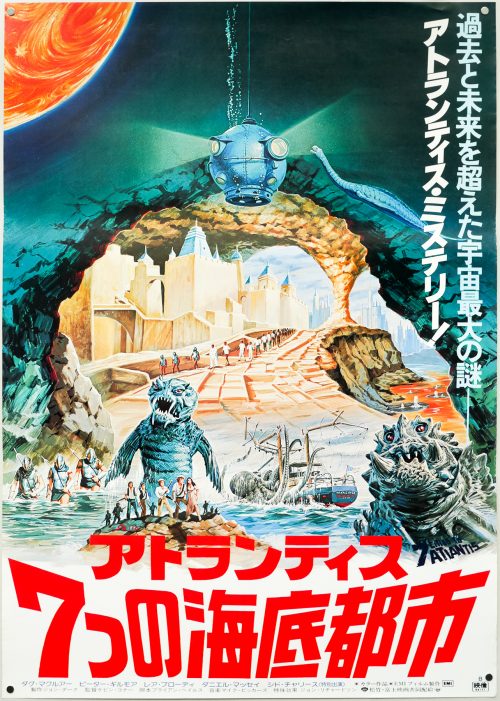
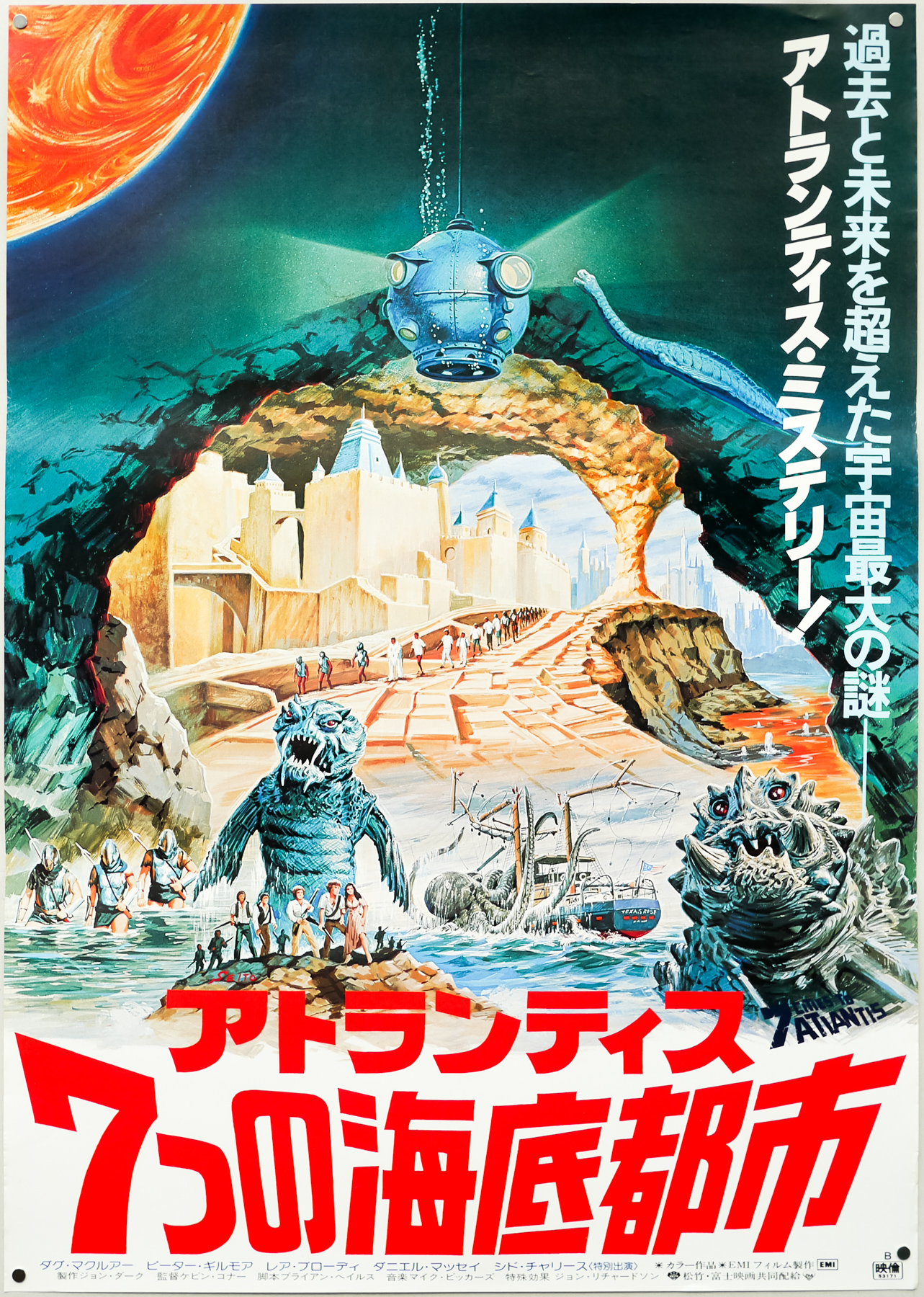
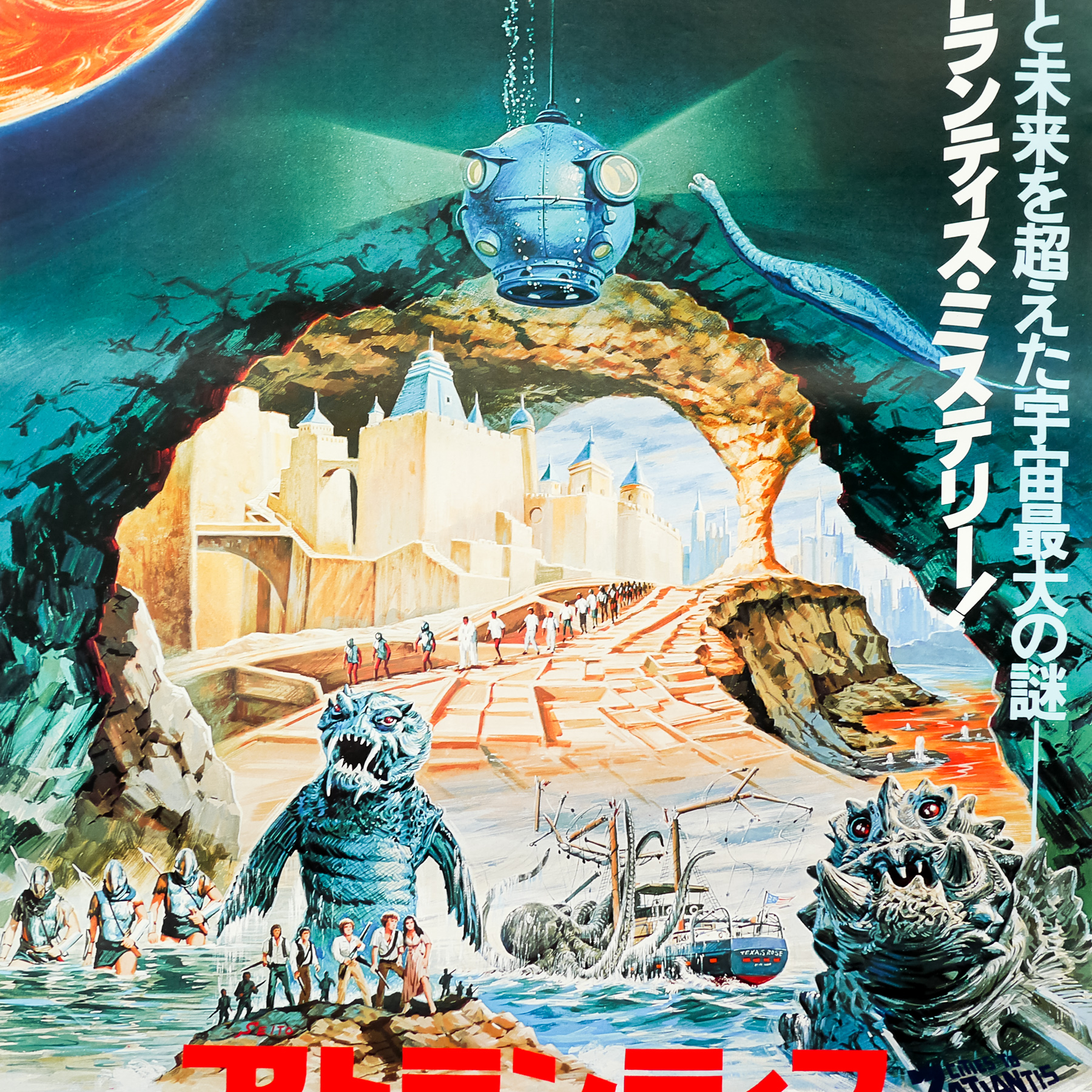
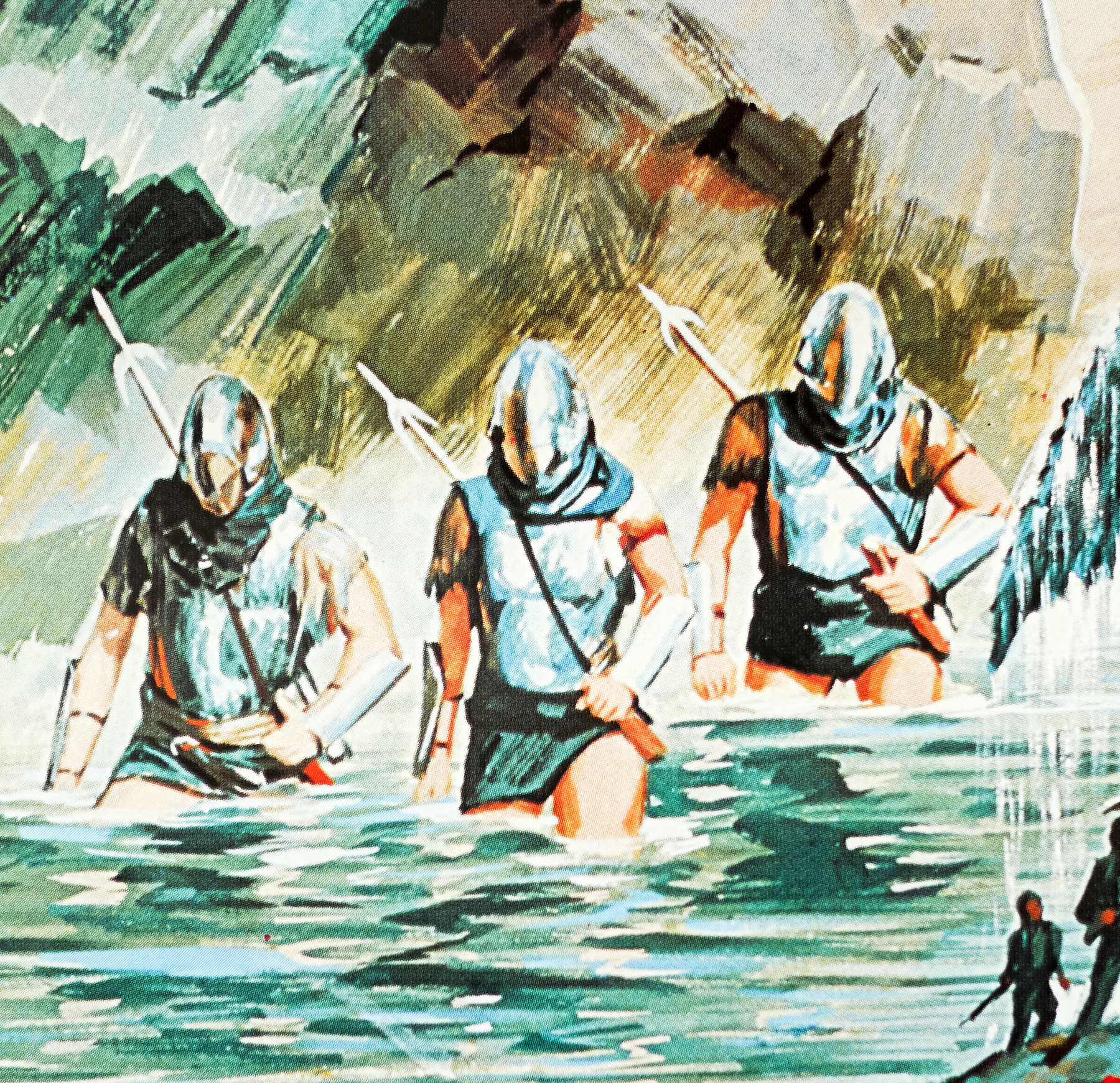
Warlords of Atlantis was the fourth and final entry in a series of British sci-fi/fantasy b-movies that were directed by Kevin Connor and starred the prolific American actor Doug McClure, known for his hammy leading man performances (McClure was one of the inspirations for The Simpsons’ Troy ‘You may remember me from…’ McClure). The series began with The Land That Time Forgot in 1975 and continued with At the Earth’s Core (1976) and The People That Time Forgot (1977). The initial three were shepherded through production by Max Rosenberg and Milton Subotsky’s Amicus Productions, which was based at Shepperton studios and is perhaps best remembered for its series of portmanteau horror films. By the time Warlords of Atlantis was released the company was almost defunct and so EMI Films stepped in and produced it, utilising many of the same cast and crew as the previous films.

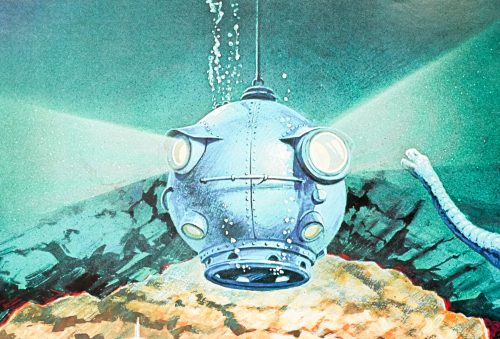
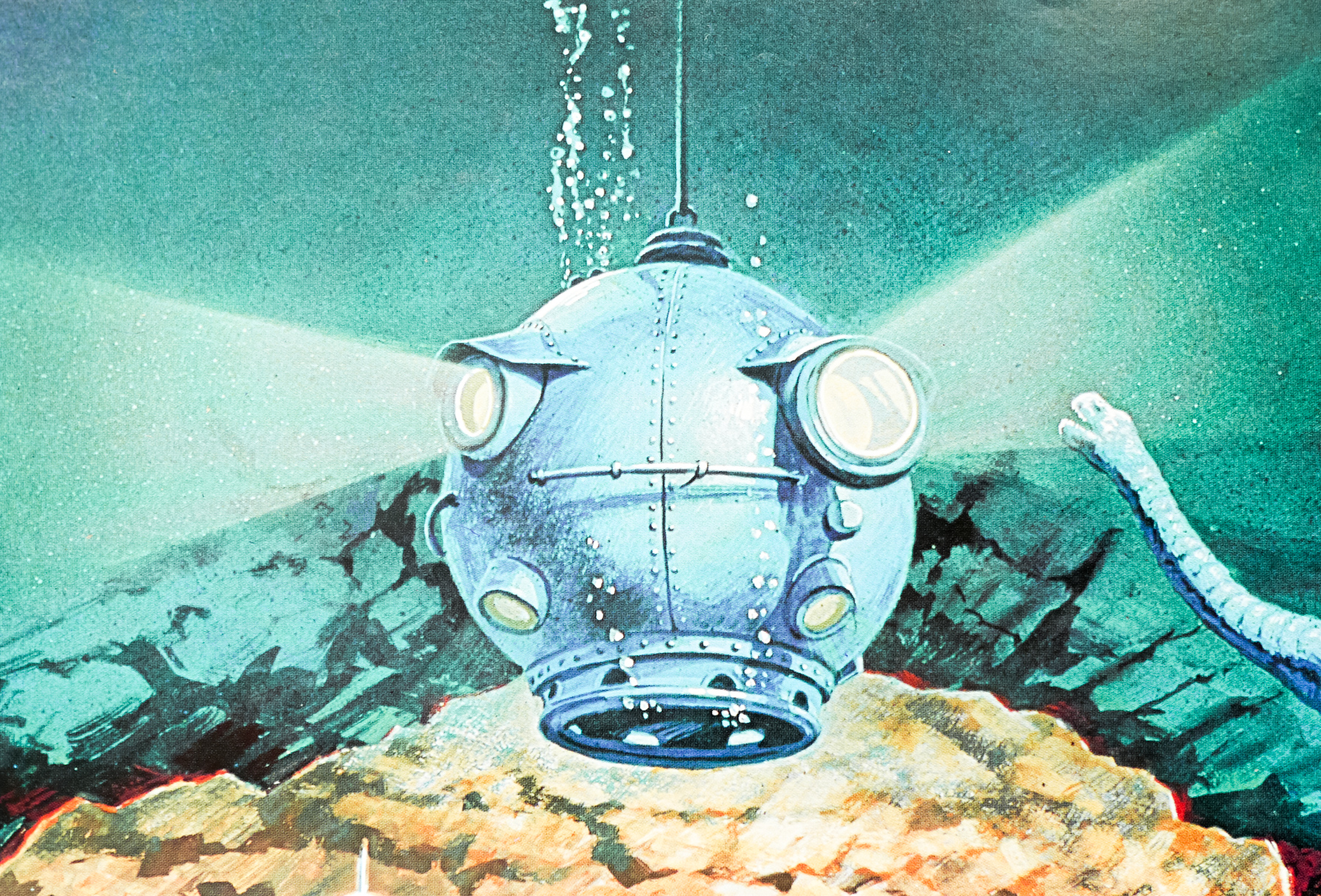
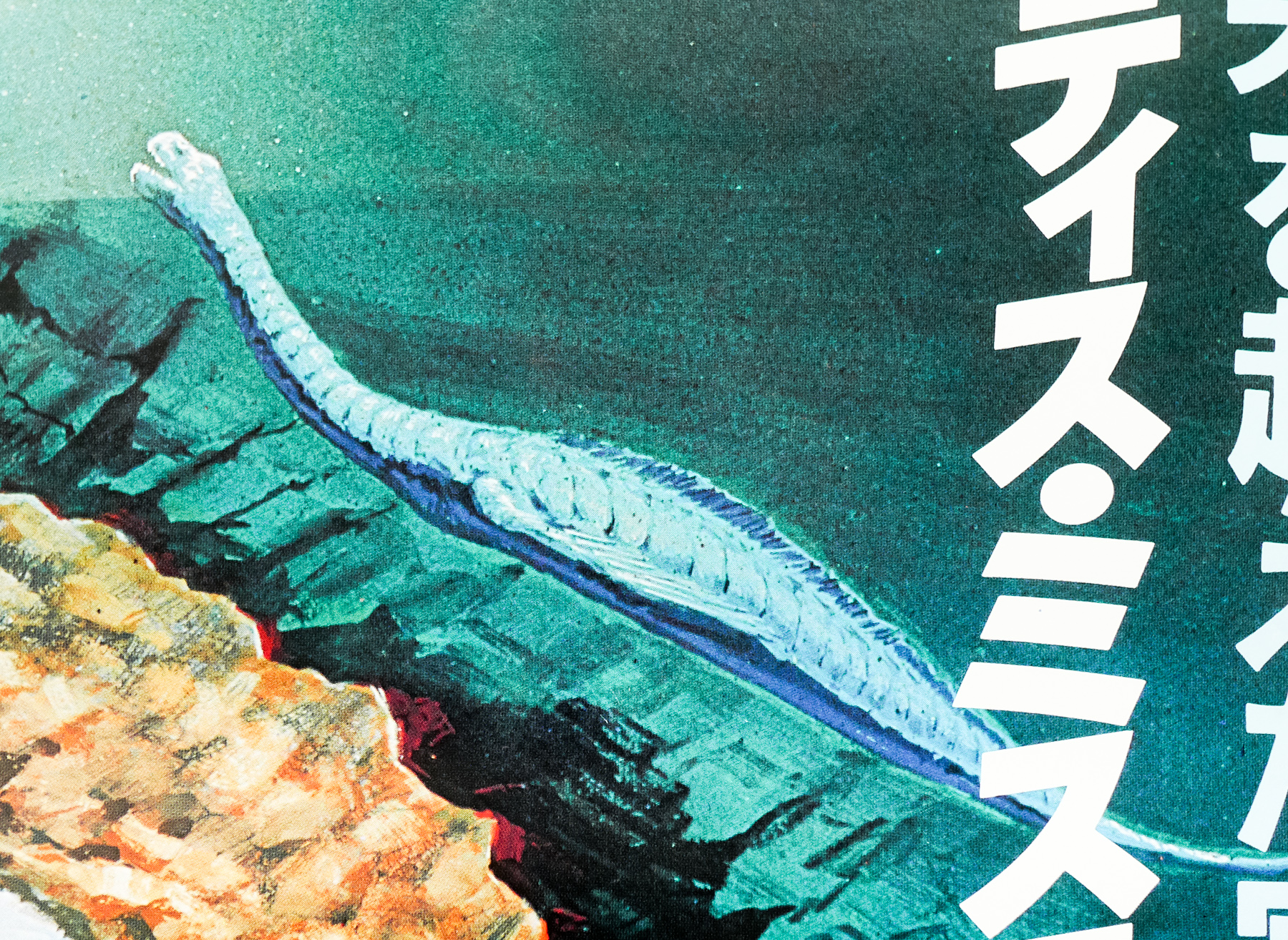
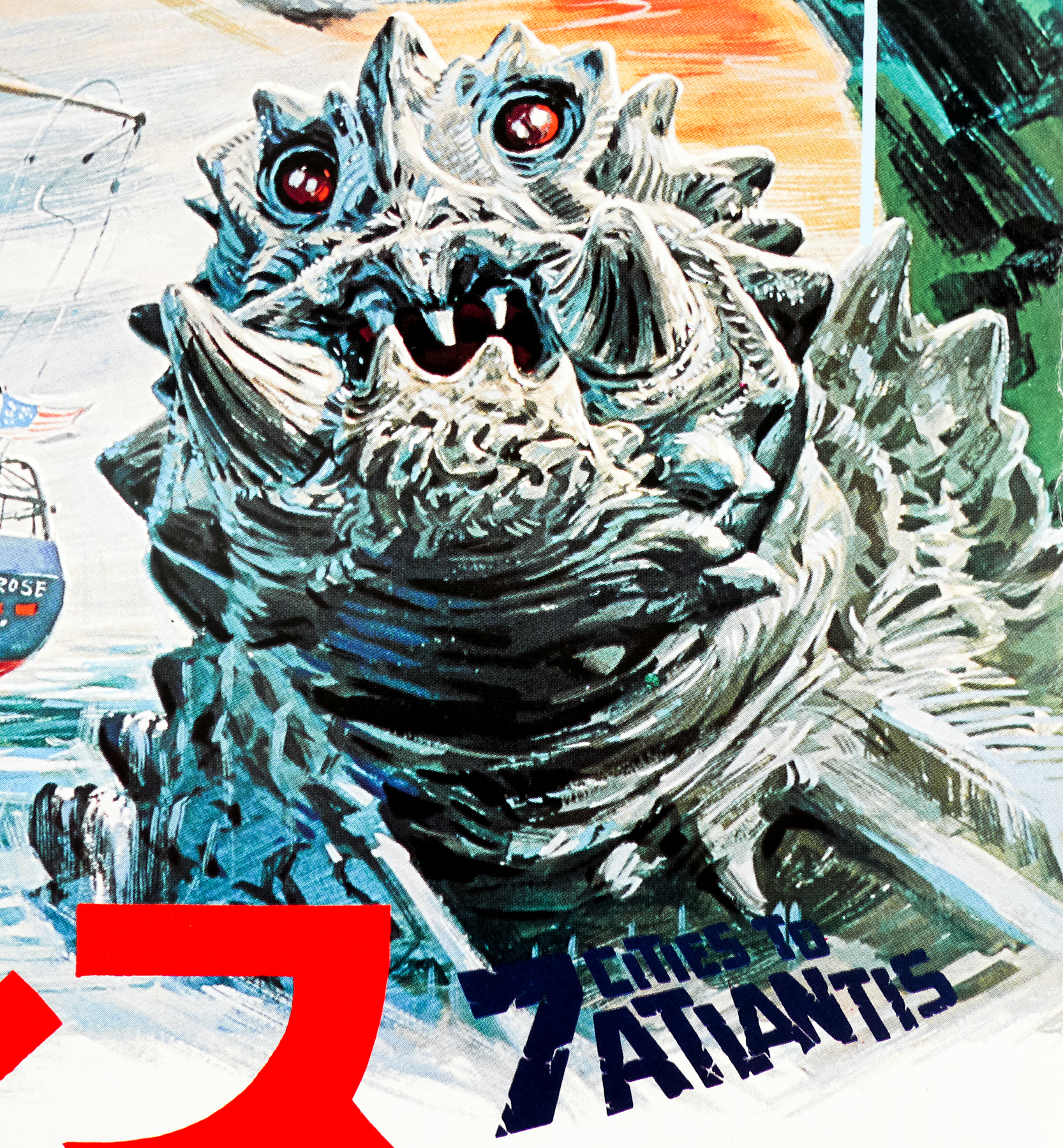
The story is typically ludicrous and the film begins with a red hot meteorite crashing into the earth’s ocean during the title sequence. The film then moves to a large boat floating out at sea at the end of the 19th century with an English archaeologist Professor Aitken (Donald Bisset) and his son Charles (Peter Gilmore) onboard. The pair have chartered a crew, led by engineer Greg Collinson (McClure), to take them out to a spot in the ocean where they plan to use a diving bell to explore the ocean floor for reasons unclear. When Charles and Greg travel below the surface the craft is attacked by a (very rubbery) prehistoric sea monster, which they manage to fight off before discovering a strange gold statue.

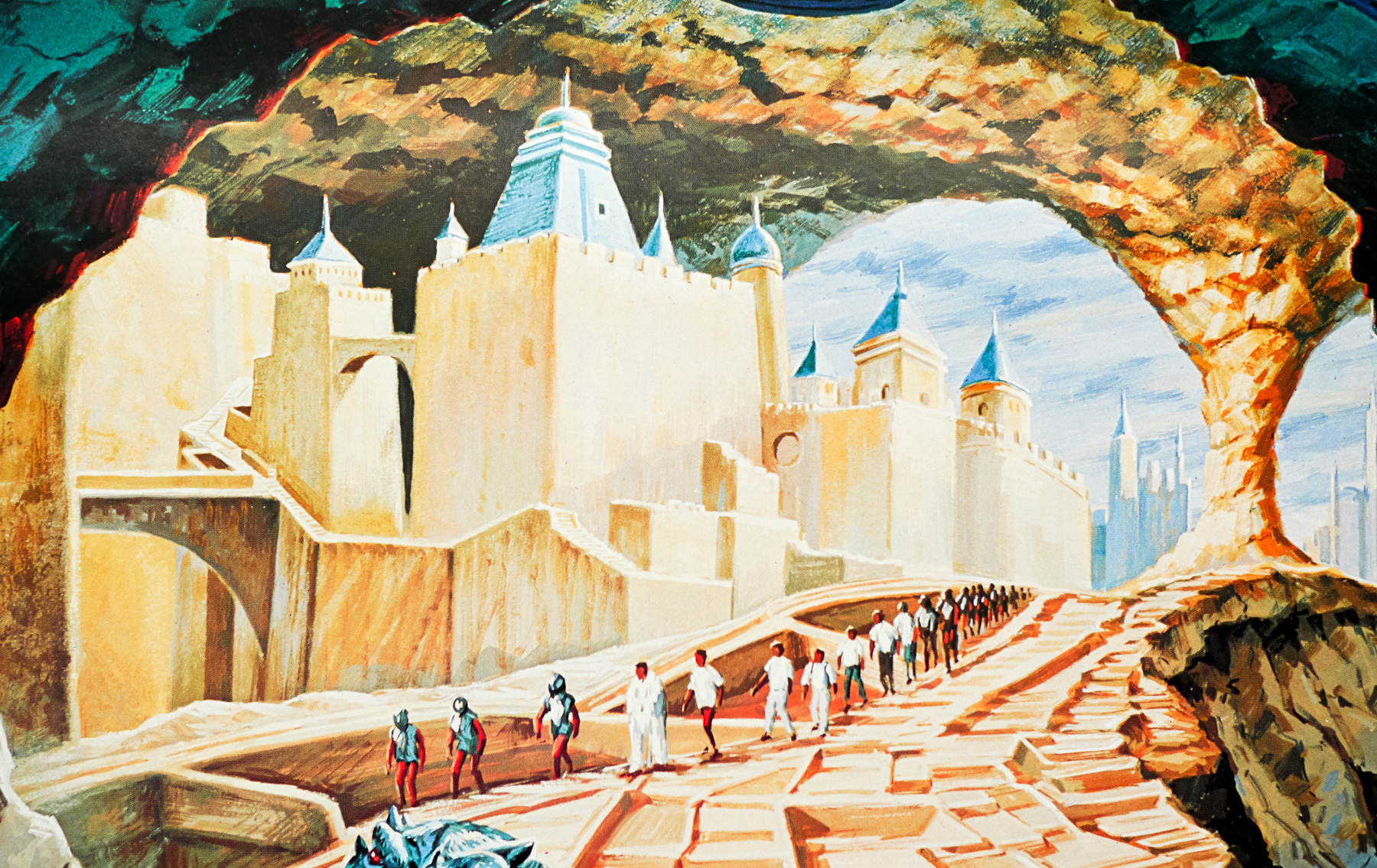
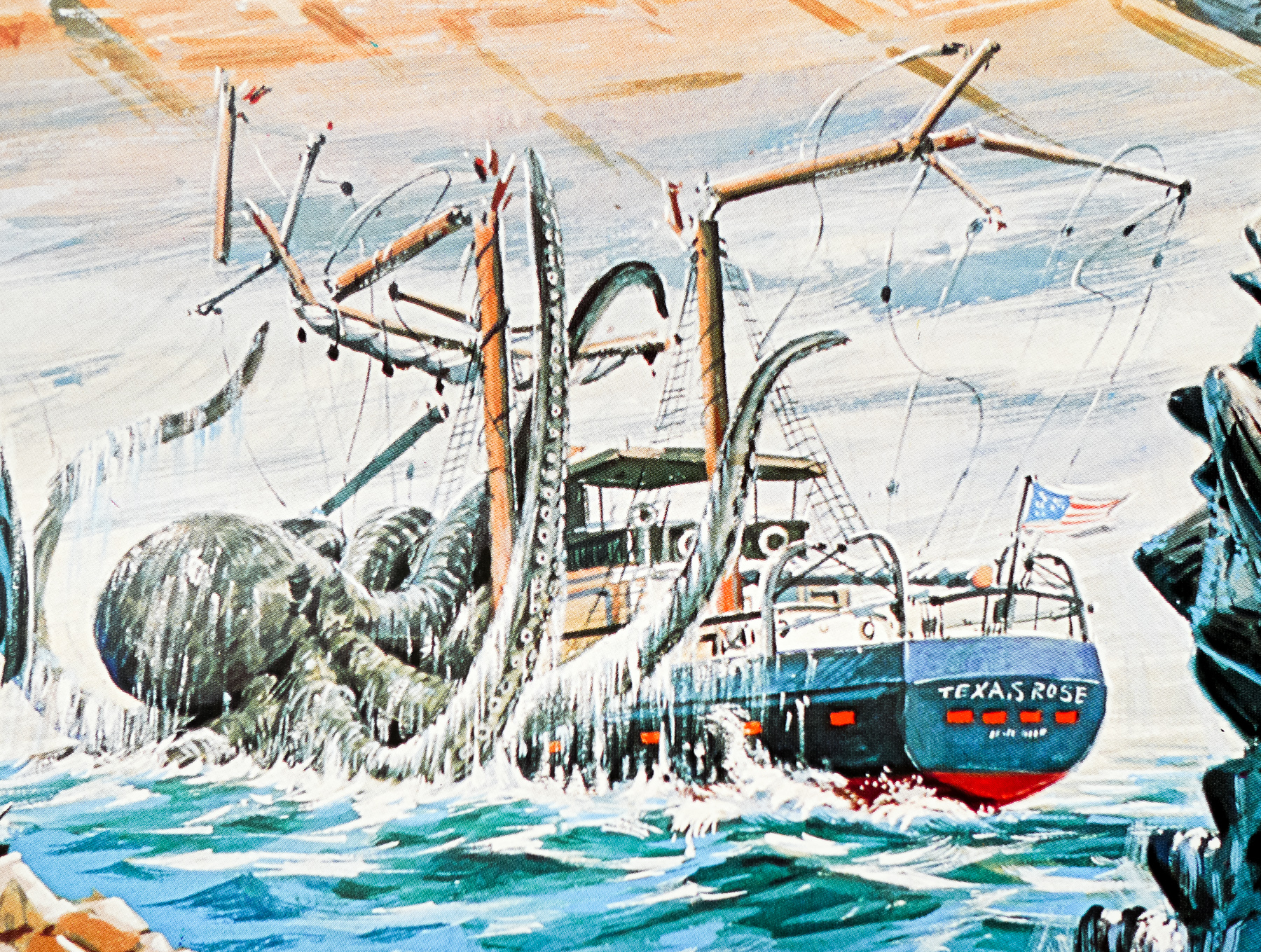
After the statue is sent up to the ship, three of the crew members decide they want to keep it for themselves and set about sabotaging the mission by cutting the line to the diving bell and shooting the professor. Suddenly a giant octopus attacks the ship, grabbing the crew members and dragging them under, before collecting the diving bell and depositing them all in a mysterious undersea chamber. The group are greeted by Atmir (Michael Gothard looking like an electro-band reject) who explains that Atlantis is not a myth and that it is in fact comprised of seven cities, some of which are crumbling ruins thanks to attacks from huge creatures. After leading the group to the fourth city Vaar, most of the crew are thrown in to prisons but Charles is granted an audience with the Atlantean king and queen, which is where their true origins and intentions are revealed.

Whilst everything moves with a decent pace the story is more than a bit garbled and the low-budget is stretched to breaking point in several scenes with some terrible matte paintings illustrating the point. The creature work in particular is mostly of the low-grade variety, although the giant octopus scenes are relatively well done and some elements of the production design are very successful (the diving bell is great, for example). The acting is mostly good, whilst obviously of the b-movie variety, with McClure and Gilmore both being eminently watchable and the score by Michael Vickers deserves special mention. Despite its obvious shortcomings, Warlords of Atlantis is still a very enjoyable film and marked a decent end to the run of films from Connor and McClure.

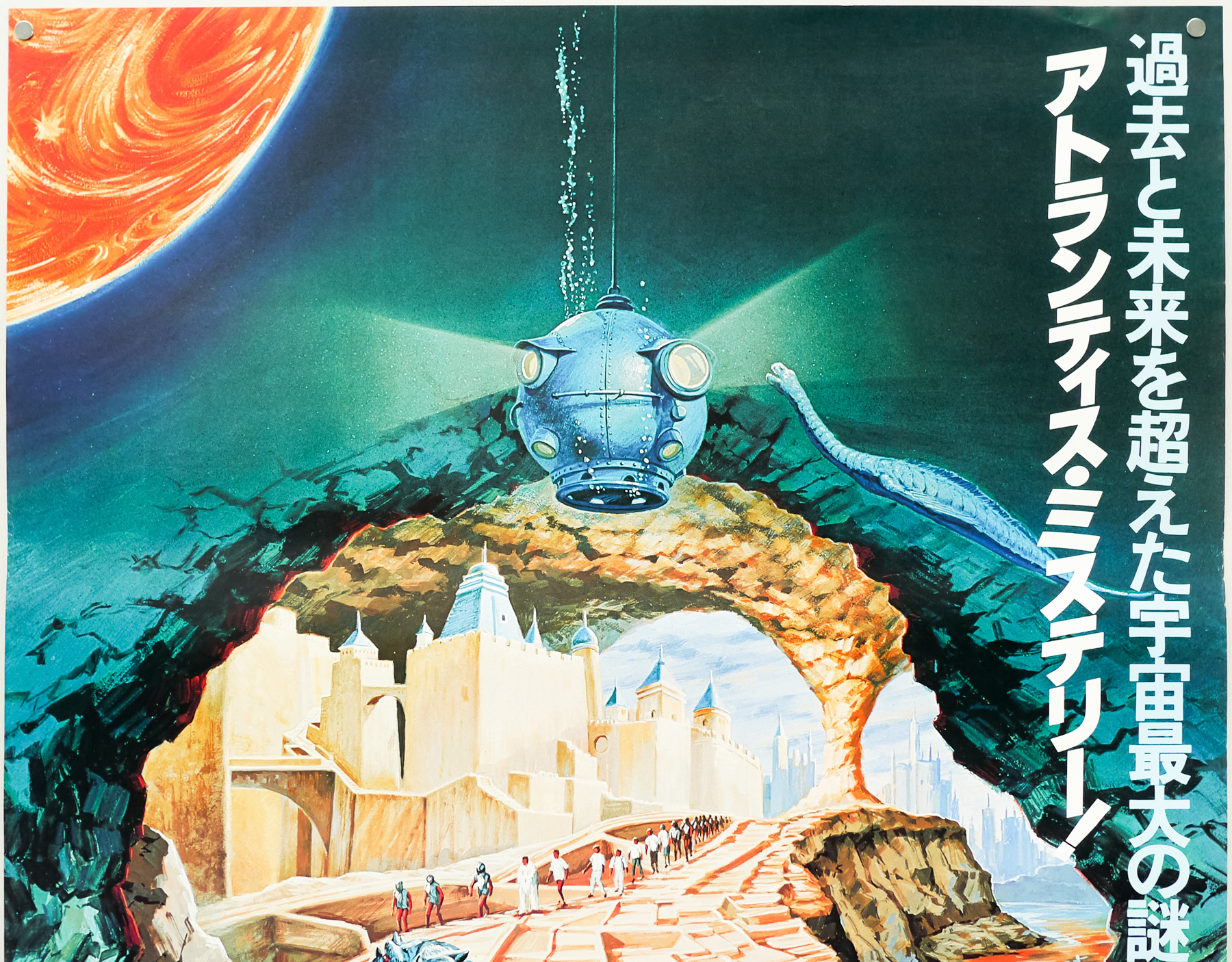
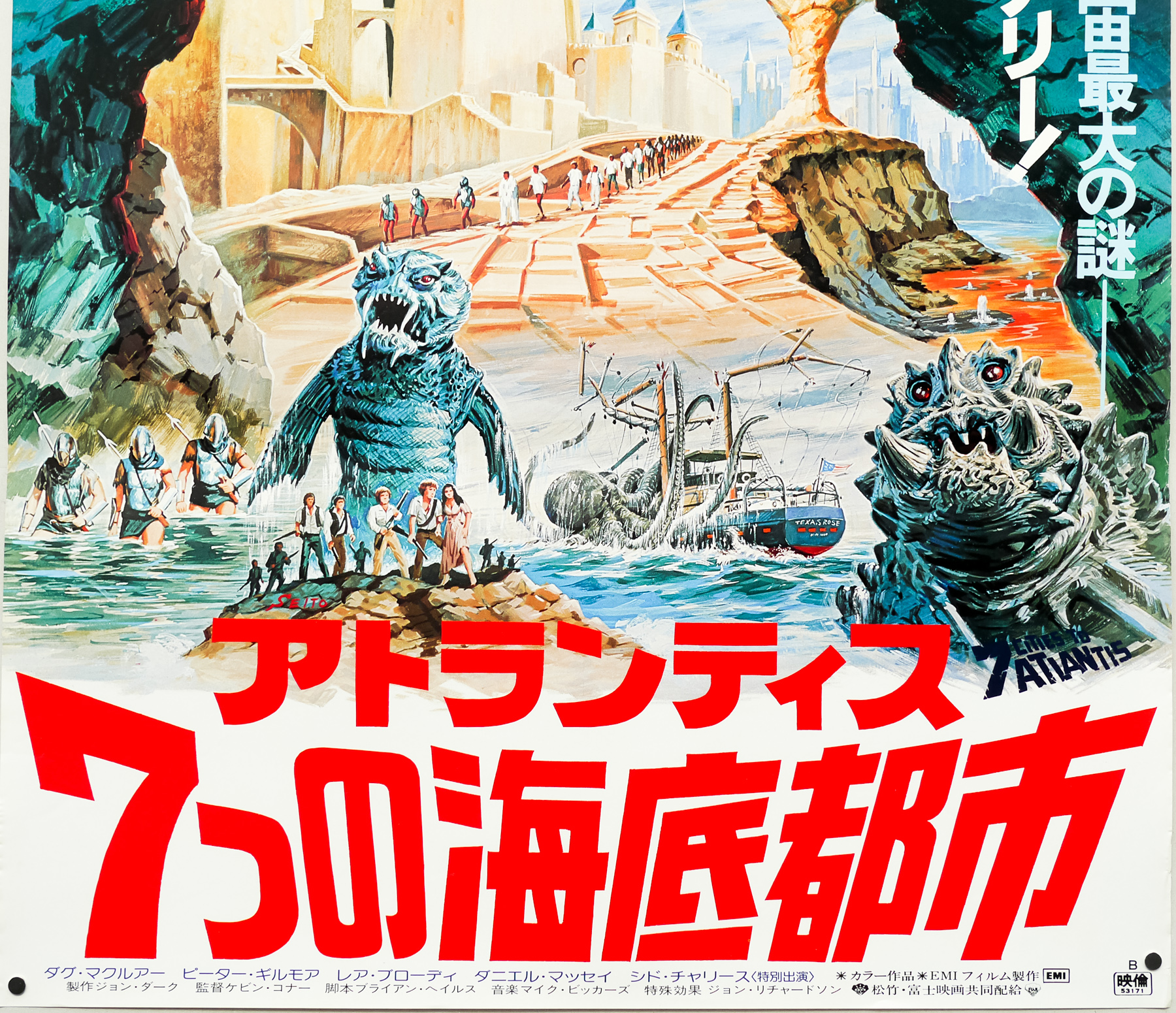
The artwork on this Japanese B2 is by Seito, one of my favourite Japanese artists who was responsible for several fantastic illustrated posters during the 1970s and 1980s. Little is known about the man himself, even in his native country. To see the other posters I’ve collected by him click here.

Dead and Buried / B2 / style B / Japan

24.06.15

Poster Poster
Title
Dead and Buried
AKA
Zongeria (Japan)
Year of Film
1981
Director
Gary Sherman
Starring
James Farentino, Melody Anderson, Jack Albertson, Dennis Redfield, Nancy Locke, Robert Englund
Origin of Film
USA
Genre(s) of Film
James Farentino, Melody Anderson, Jack Albertson, Dennis Redfield, Nancy Locke, Robert Englund,
Type of Poster
B2
Style of Poster
Style B
Origin of Poster
Japan
Year of Poster
1981
Designer
Unknown
Artist
--
Size (inches)
20 6/16" x 28 14/16"
SS or DS
SS
NSS #
--
Tagline
--

This is the style B B2 for the Japanese release of the American horror film Dead and Buried. The film was written by Ronald Shusett and Dan O’Bannon, the two screenwriters responsible for the 1979 sci-fi masterpiece Alien, and was directed by Gary Sherman whose previous film had been the creepy ‘cannibals on the London Underground’ horror Raw Meat (AKA Deathline) almost a decade earlier. The story is set in the seemingly normal New England seaside town of Potter’s Bluff and sees the local Sheriff Dan Gillis (James Farentino) investigating a series of mysterious disappearances of strangers visiting the area. The baffling thing for the sheriff is that the strangers are then reappearing some days later now seemingly a member of the community.

The viewer bears witness to a series of gruesome murders beginning with that of a photographer (Christopher Allport) who is seduced on the town beach before being attacked by several people from the town who beat him and burn him alive whilst taking photographs. It soon becomes clear that Potters Bluff’s eccentric mortician William G. Dobbs (Jack Albertson AKA Grandpa Joe from Willy Wonka and the Chocolate Factory) has been practicing some fairly unorthodox patient handling in his morgue and the sheriff sets out to put a stop to his plans.

Apparently, the film went through a number of edits at the request of one of the financiers and was moulded into more of a dark horror film than Gary Sherman had originally intended, with two additional killings inserted and filmed without the assistance of effects maestro Stan Winston (these are noticeably different in tone and quality of execution than the rest of the film). Despite this, Dead and Buried is a solid horror film with a creepy atmosphere, excellent production design and some memorable turns, particularly from Albertson and Melody Anderson as Dan Gillis’ wife who harbours a dark secret.

The film’s original trailer is on YouTube.
Airplane! / B1 / Japan

05.07.17

Poster Poster

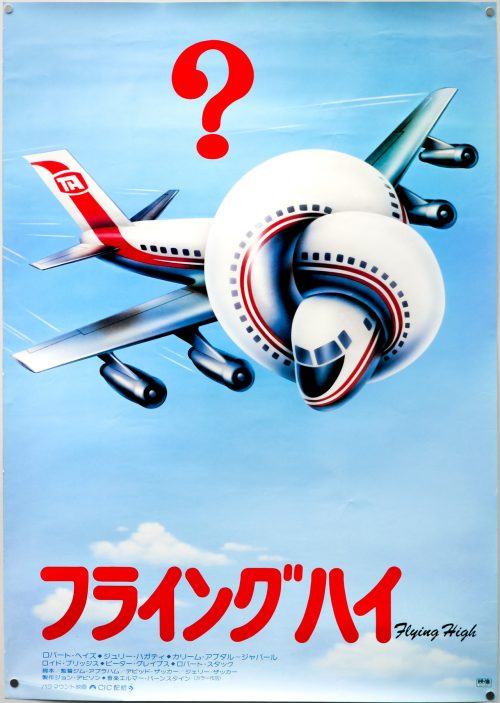
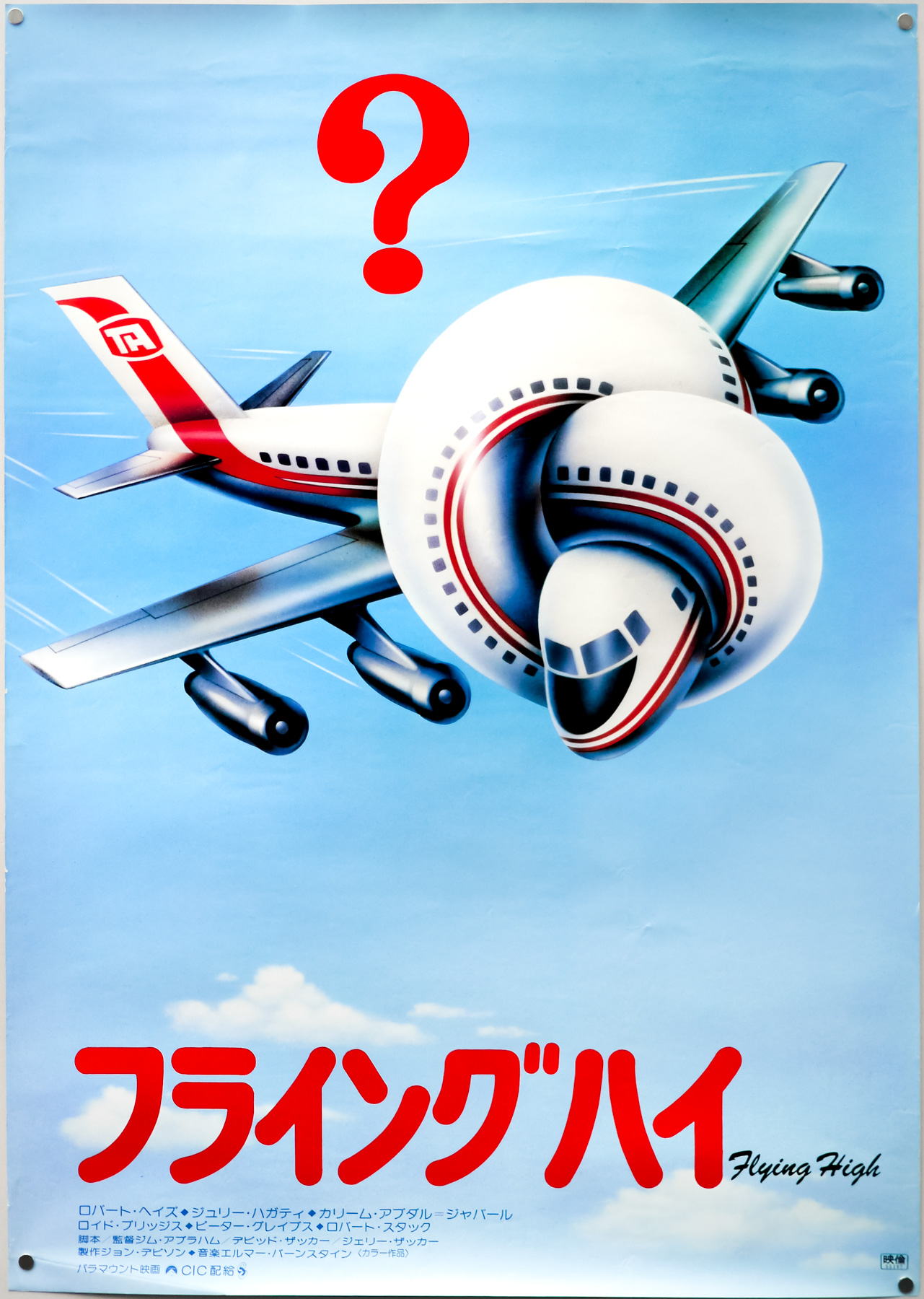
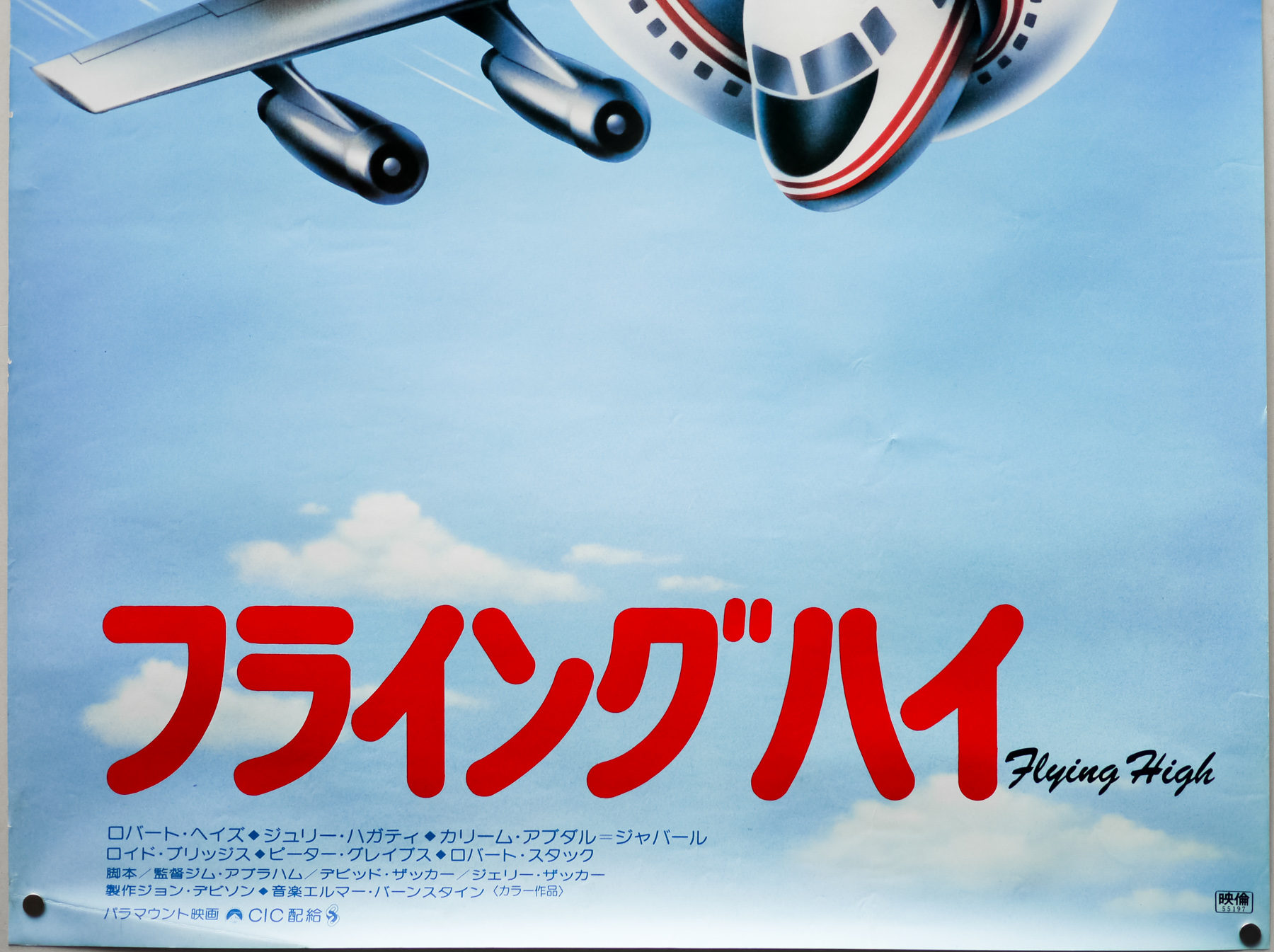
Featuring the same artwork from the US one sheet, this is the Japanese B1 poster for one of the funniest films of all time, Airplane! The film was the creation of the celebrated writers Jerry ZuckerJim Abrahams, and David Zucker (collectively known as ZAZ) who had garnered critical acclaim for their small theatre productions as the Kentucky Fried Theatre, which they formed in 1971. The idea for the film was arrived at after the trio saw the 1957 disaster movie Zero Hour! and realised it had the perfect structure to be adapted into a comedy film. A script was written and completed in 1975 but the trio had little experience in filmmaking so it was shelved for a while as they pulled together a script based on their theatre sketches. This was filmed and released as The Kentucky Fried Movie in 1978, directed by John Landis. Ultimately it gave them the necessary experience to feel confident enough to direct Airplane!

As well as riffing on Zero Hour!, the film is a send-up of disaster movies of the seventies such as Airplane (1975) and takes place on board a stricken passenger jet. Robert Hays stars as Ted Striker, an ex-Navy pilot who was traumatised during the War and has a pathological fear of flying. Desperate to win back his ex-girlfriend Elaine Dickinson (Julie Hagerty) Striker follows her onto a Trans American flight from Los Angeles to Chicago on which she is working as a flight attendant. Determined to speak to Elaine, he makes several attempts to get her attention but nothing works until food poisoning strikes both passengers and crew. Attention falls on Striker as the aircrafts best hope for survival and he must overcome his psychological aversion to sitting behind the controls.

In Airplane! the jokes come thick and fast and are both spoken and visual (sight gags). Several actors were playing against type, notably Lloyd Bridges, Robert Stack and Leslie Nielsen. The latter’s career was to skyrocket following this film with starring roles in the ZAZ TV show Police Squad! as well as the trilogy of films based on the series, Naked Gun. Airplane! was both a critical and commercial success and would go on to earn over $83m on a $3.5m budget. It cemented ZAZ’s reputation as reliable comedy writers and directors and, as well as Police Squad! and Naked Gun, the 1980s and early 1990s saw the release of Top Secret!, Ruthless People and Hot Shots! (1 & Deux). Airplane! was also both multi-award winning and hugely influential on budding comedy performers and directors.

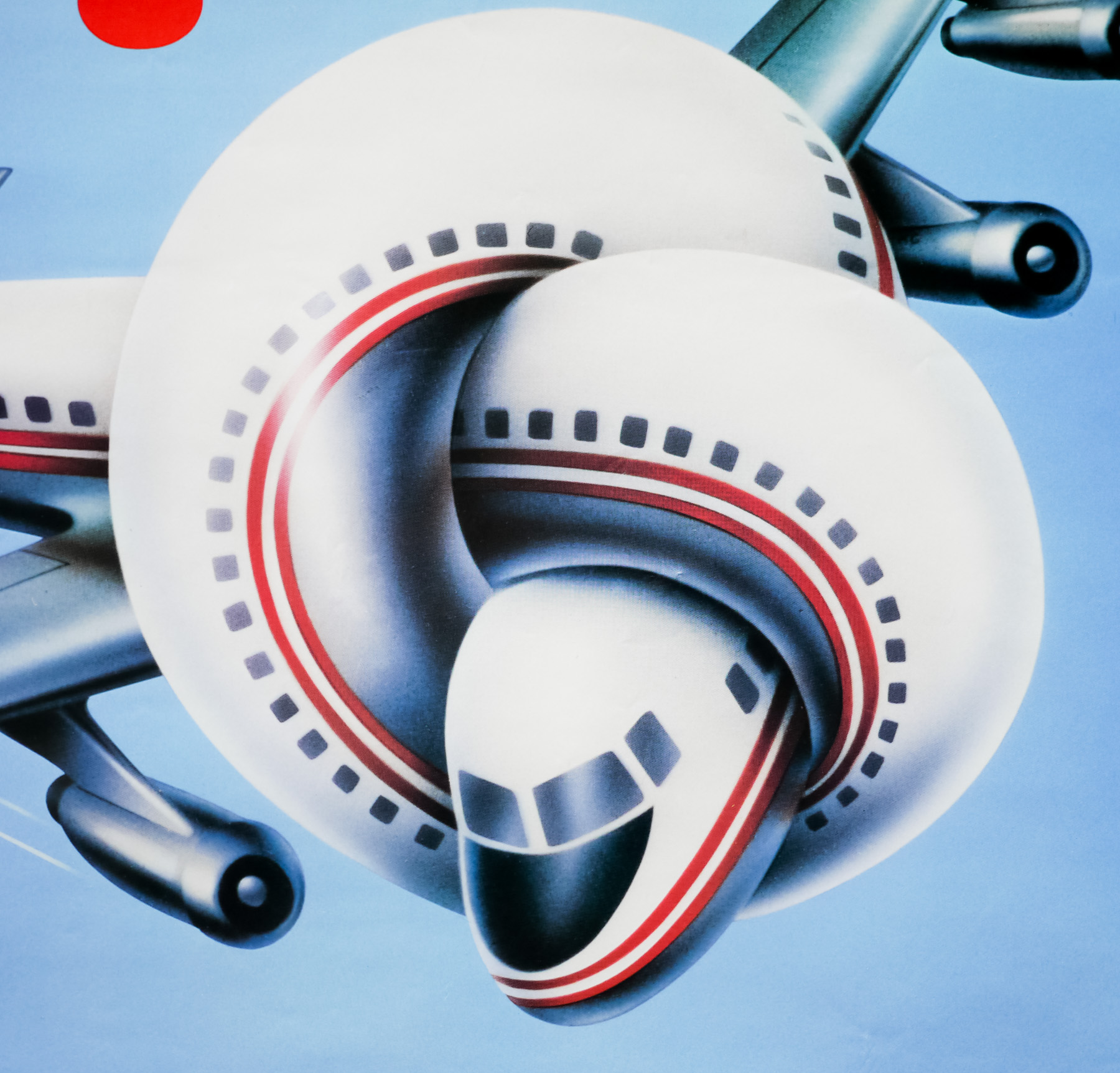
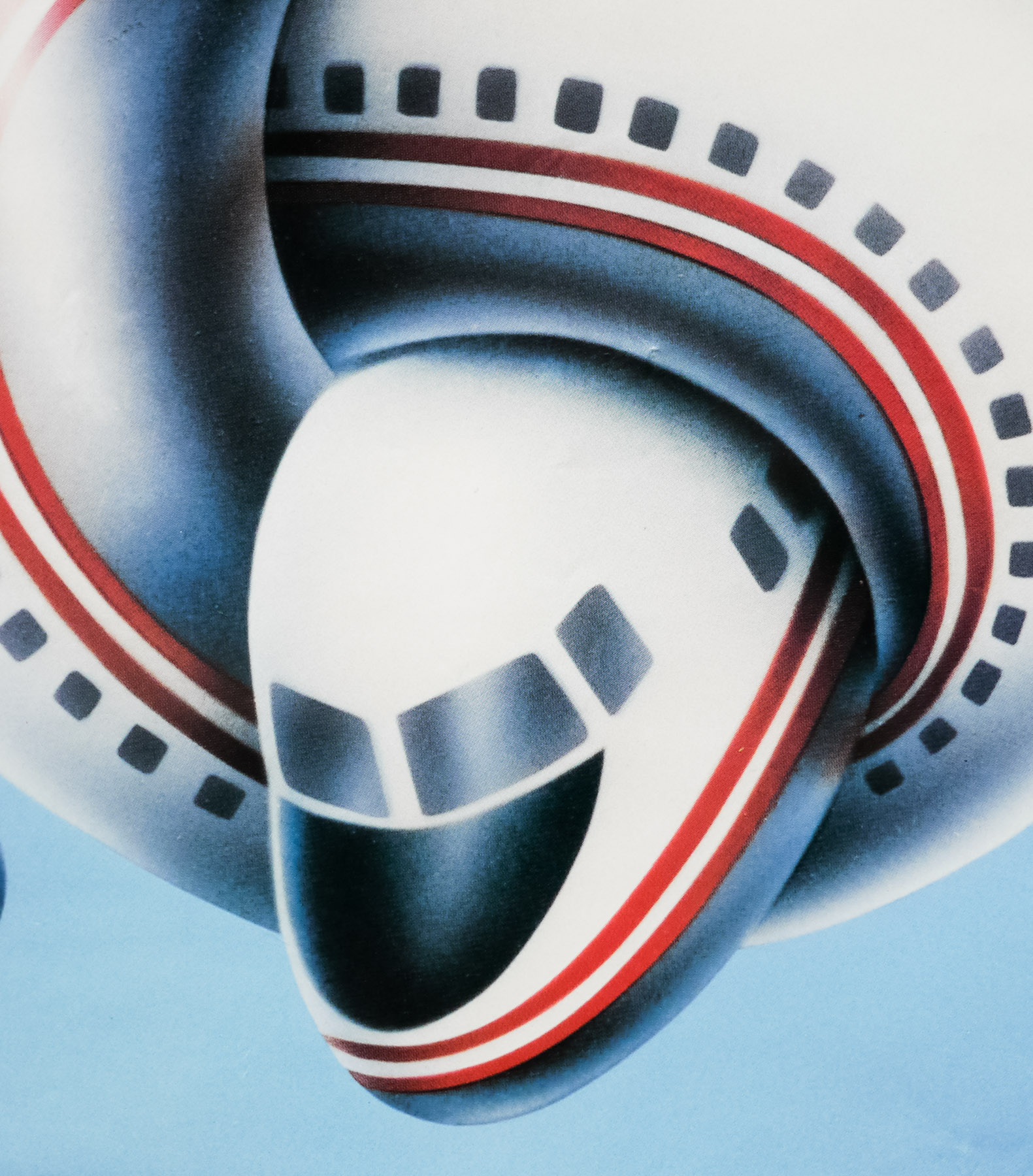
The artwork of the twisted plane featured on posters for the film across the world and was painted by the celebrated artist, filmmaker and author Robert Grossman. Born in New York City in 1940, he received his earliest training from his father who was a display painter. He would go on to study at Yale University and graduated with a BA in Fine Arts in 1961. Two years later Grossman began a freelance career that would see him working for the next 50 years. His work has appeared over 500 times on the covers of various national publications such as Time, Newsweek, Rolling Stone and Esquire. In addition to magazine and newspapers, his illustrations have also graced children’s books and record sleeves for the likes of Columbia and Warner Bros. The Airplane! illustration is one of his most famous pieces of work. As far as I can tell Grossman only worked on a painting for two other film posters during his career, both of which can be seen here. His official website is here and a gallery of his work can be seen here.

Akira / B0 / 2001 DVD release / Japan

15.05.15

Poster Poster
Title
Akira
AKA
--
Year of Film
1988
Director
Katsuhiro Ôtomo
Starring
Mitsuo Iwata, Nozomu Sasaki, Mami Koyama
Origin of Film
Japan
Genre(s) of Film
Mitsuo Iwata, Nozomu Sasaki, Mami Koyama,
Type of Poster
B0
Style of Poster
DVD release
Origin of Poster
Japan
Year of Poster
2001
Designer
Toshiaki Uesugi (AKA Mach55Go!)
Artist
Katsuhiro Ôtomo
Size (inches)
39 6/16" x 55 9/16"
SS or DS
SS
Tagline
--

Katsuhiro Ôtomo‘s landmark manga series Akira was adapted into a feature-length anime film in 1988 and directed by Ôtomo himself. Akira had a huge impact on me when it was shown on the UK’s Channel 4 sometime in the early 1990s. I’d never seen anything quite like it and it opened my eyes to the world of anime films that were slowly being released in the UK, including the likes of Ninja ScrollGhost in the Shell and the great work of Hayao Miyazaki and his Studio Ghibli.

The film was recently released on blu-ray and the lossless Japanese soundtrack is astonishingly good. There’s still talk of a live-action remake which fills me, and countless other fans of the anime, with great dread. I really hope it doesn’t happen!

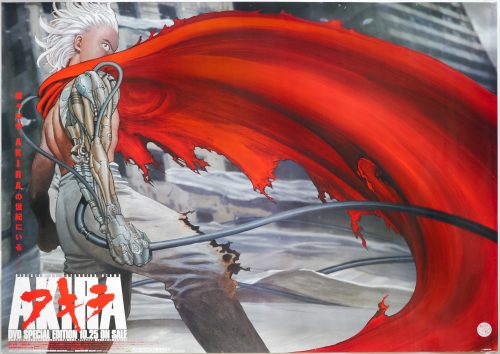
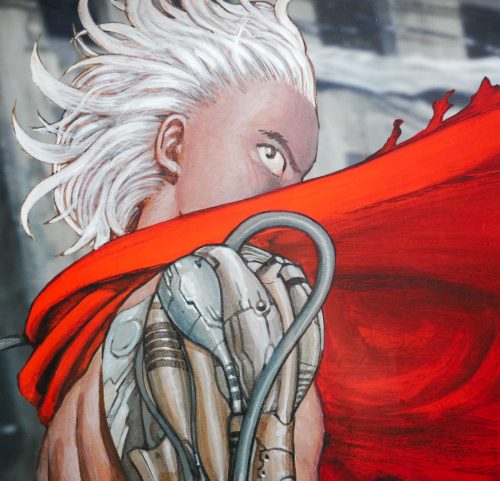
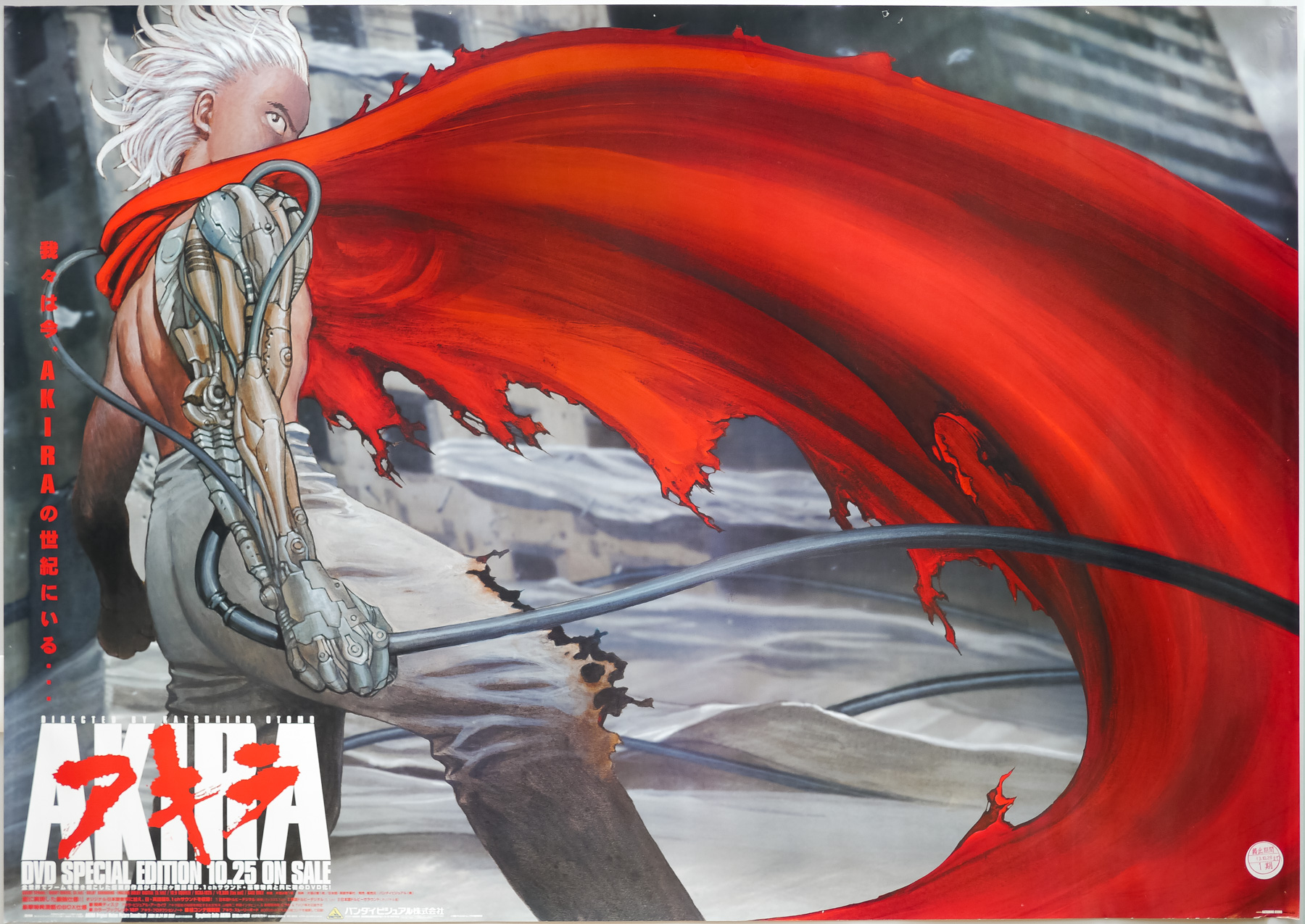
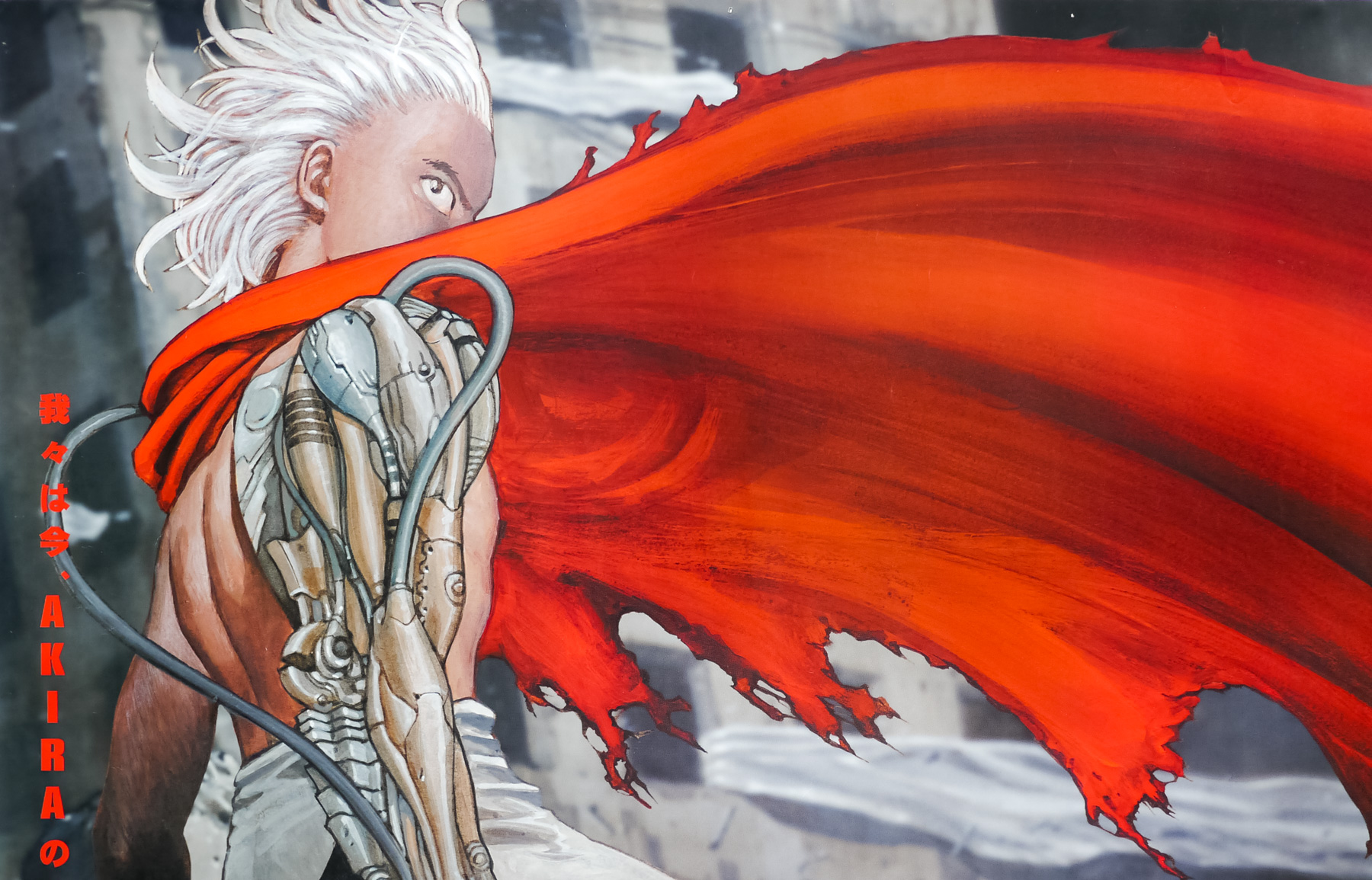
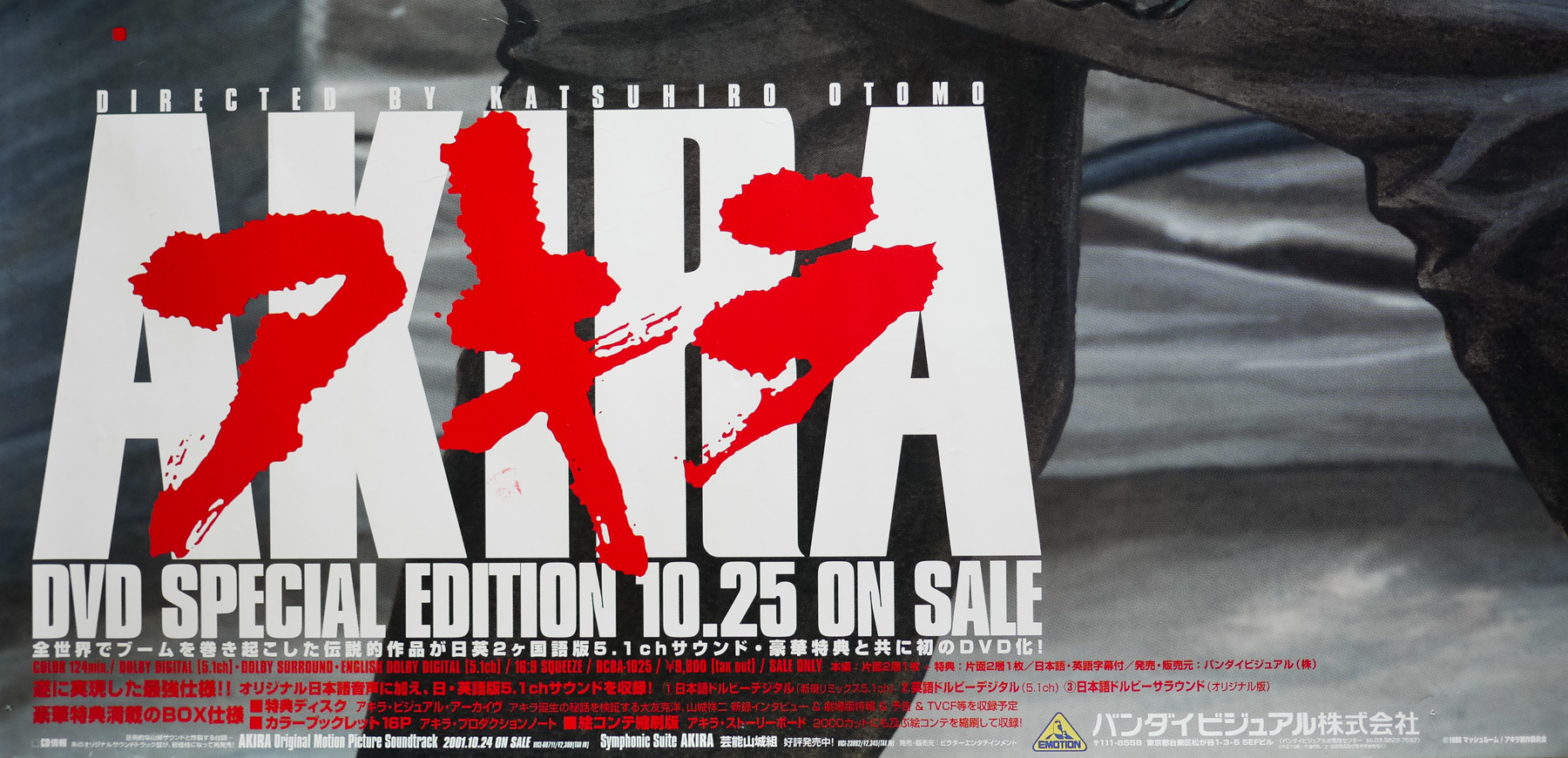
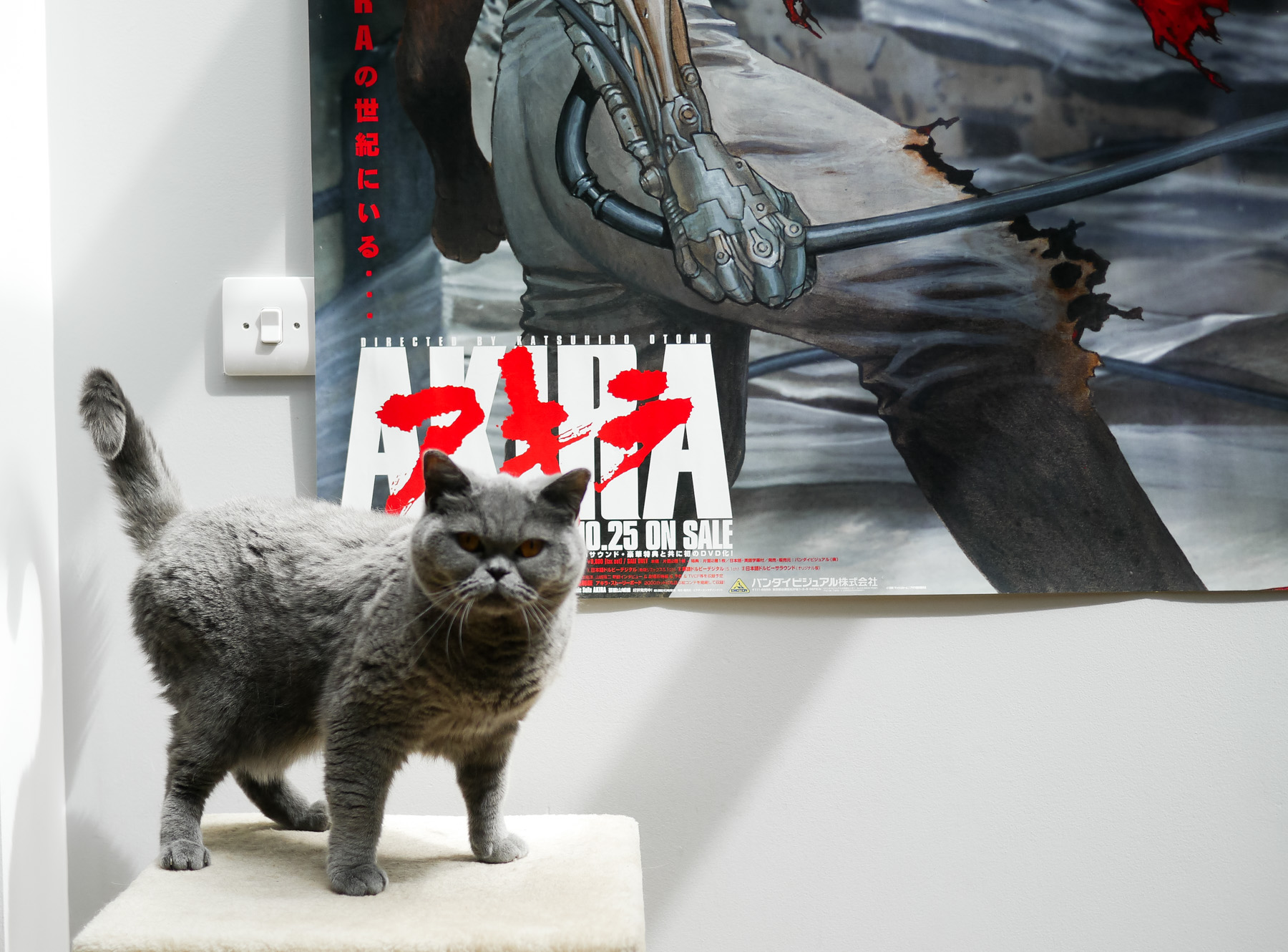
This is an incredibly scarce B0 poster that was printed to promote a 2001 DVD release of the film in Japan. It features an illustration of Tetsuo from towards the end of the film by Otomo himself. It was designed by Toshiaki Uesugi, a graphic designer and musician who has regularly collaborated with Otomo, and who is also known as Mach55Go! for his musical work. Uesugi’s official site is here and is significantly out of date, but this page features a list of his work, which includes other Otomo collaborations as well as his work on anime like Cowboy Bebop and Macross.

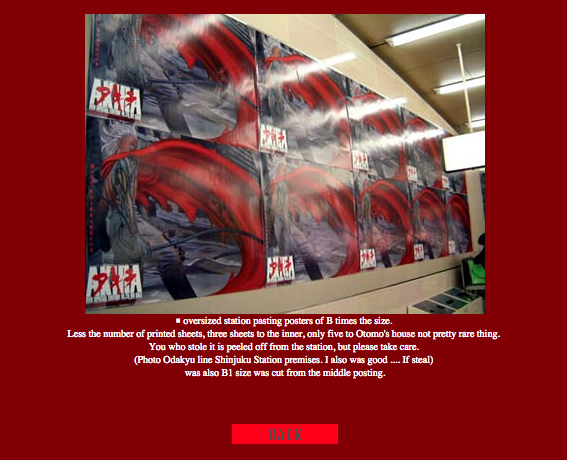
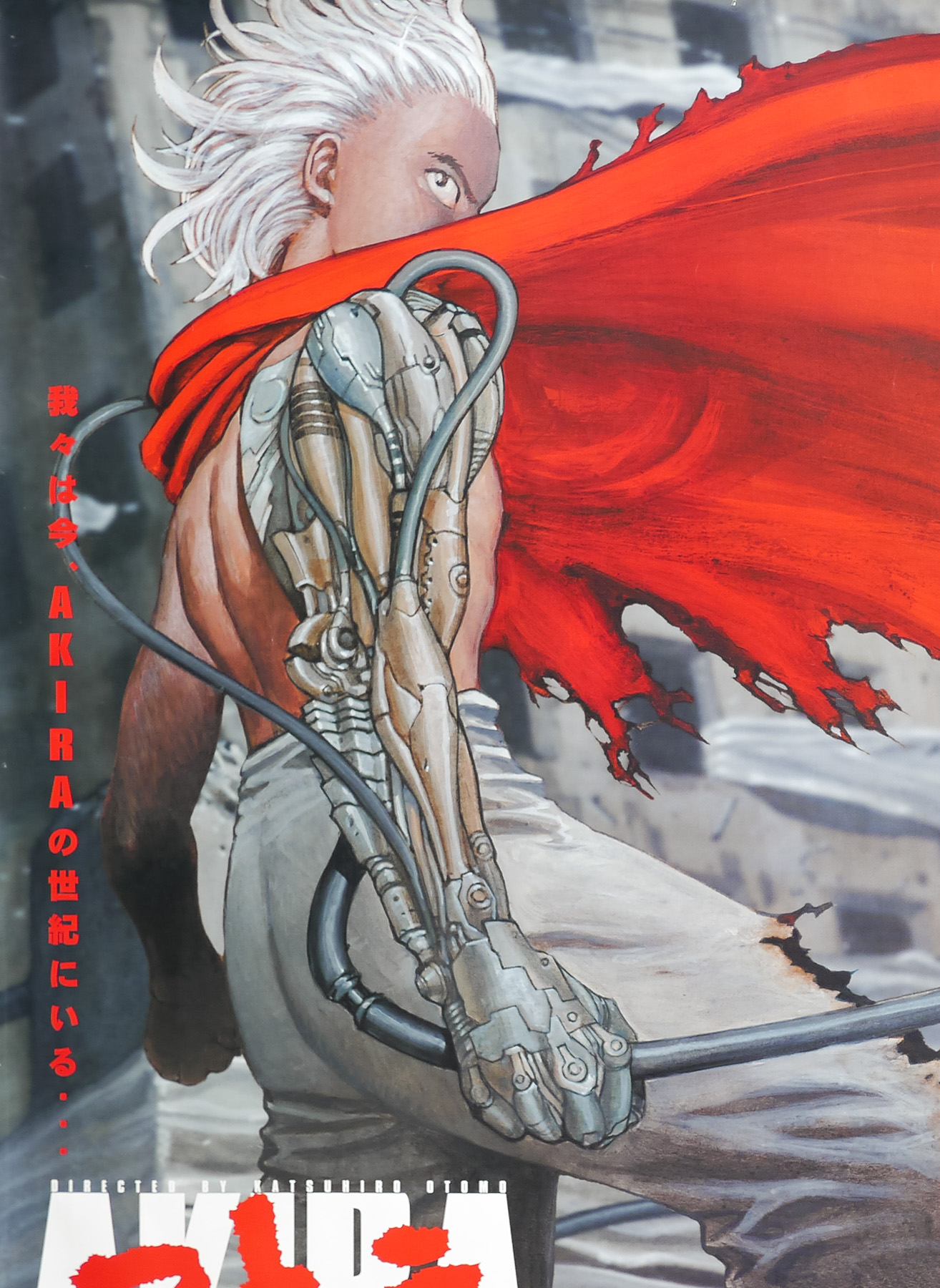
This page has links to a lot of his work, including the items created for this DVD release, which featured the box packaging as well as a number of posters of different sizes. If you click through to the page for this poster (and select the small ‘next’ button) it takes you to a page with a picture of six copies of it on display in Tokyo’s Shinjuku Metro station and says that any copies that ended up in collectors’ hands were stolen from stations. It also says Otomo himself has 5 copies in his possession. A B1 portrait poster was apparently printed and featured just the left-hand side of the artwork. This collector site says that it’s thought that only 100 copies of the B0 were printed.

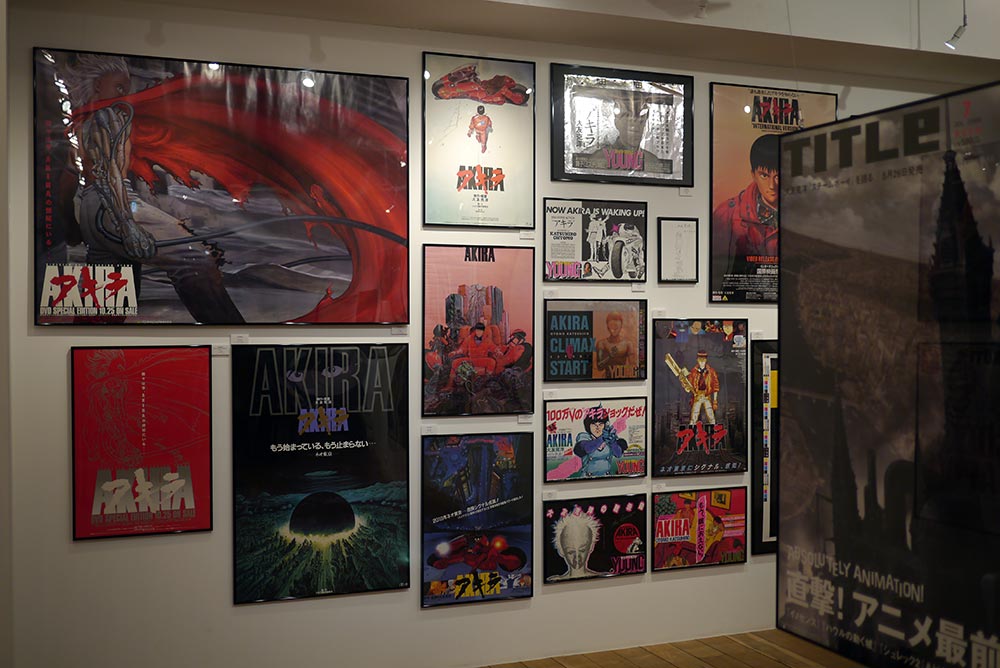
During a 2014 trip to Japan I was lucky enough to be able to visit an exhibition that was dedicated to Otomo’s poster design and I first saw this poster there (here’s a picture). I assumed I would never get the chance to add it to the collection but almost a year later the poster appeared on Yahoo auctions Japan and I was lucky to win the auction with the help of a Japanese friend. The white sticker on the bottom right corner was placed there in 2001 by the company that controls advertising on the Tokyo Metro and details when it should be taken down from display.

During a 2012 visit to Tokyo I went to a retrospective exhibition of Otomo’s work called Genga (a Japanese animation term for keyframes, literally ‘original pictures’), which featured hundreds of pieces of his artwork and the original hand-drawn pages for the Akira manga. I was also able to wear Kaneda’s jacket and sit on the legendary red bike!

I also have two Japanese B2 posters for the film; style A and style B, the Japanese B1 poster, as well as the American one sheet, and ace illustrator Tyler Stout’s take on the film.

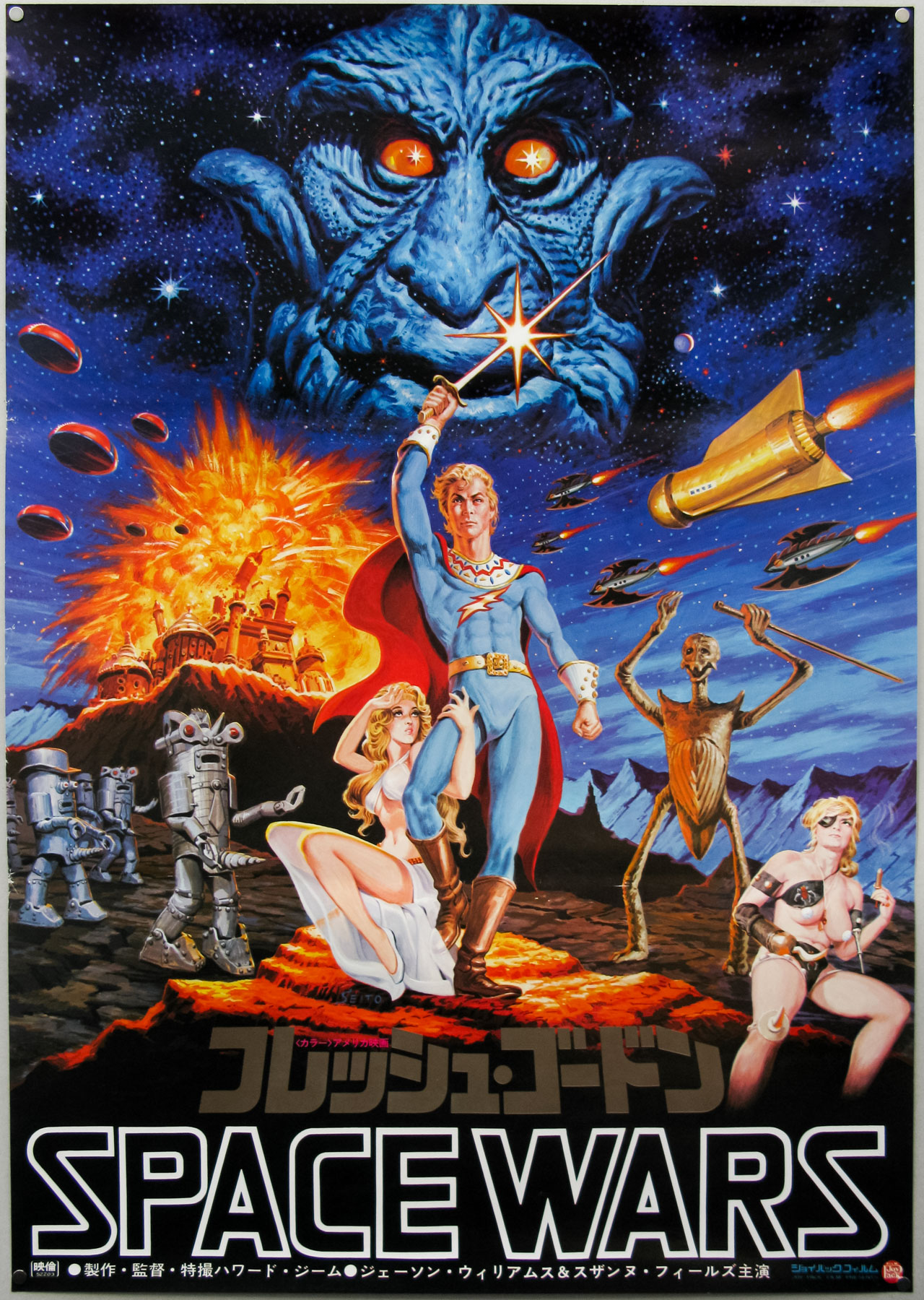
Flesh Gordon / B2 / Japan

08.06.12

Poster Poster
Title
Flesh Gordon
AKA
Space Wars (Japan - English title)
Year of Film
1974
Director
Michael Benveniste, Howard Ziehm
Starring
Jason Williams, Suzanne Fields, Joseph Hudgins, William Dennis Hunt, Candy Samples, Mycle Brandy, Steve Grumette
Origin of Film
USA
Genre(s) of Film
Jason Williams, Suzanne Fields, Joseph Hudgins, William Dennis Hunt, Candy Samples, Mycle Brandy, Steve Grumette,
Type of Poster
B2
Style of Poster
--
Origin of Poster
Japan
Year of Poster
1977
Designer
Unknown
Artist
Seito
Size (inches)
20 4/16" x 28 12/16"
SS or DS
SS
Tagline
--

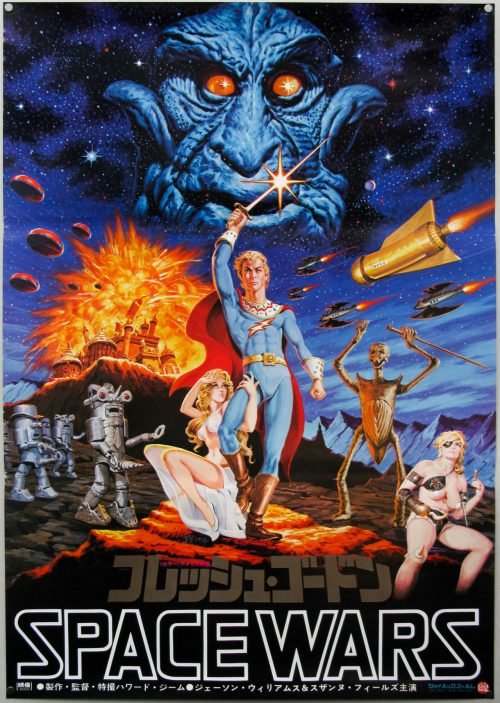
The sex-spoof Flesh Gordon was released within a few months of Star Wars in Japan and that probably accounts for the name change to a title so similar there can be no doubting the canny local distributors were hoping to cash in on some of the success of George Lucas’ sci-fi classic. Based on the original Buster Crabbe-starring Flash Gordon film serials of the 1930s, which were themselves based on a comic strip created by Alex Raymond, the film parodies many of the names and situations seen in the originals.

In this version Emperor Wang the Perverted, the leader of the planet Porno, points his mighty ‘Sex Ray’ towards Earth, turning everyone into sex-crazed lunatics. Only one man can save the planet; football player Flesh Gordon. Along with his girlfriend Dale Ardor and the (brilliantly named) mad Professor Flexi-Jerkoff, they set off towards the source of the Sex Ray determined to put a stop to Wang.

Entertaining and unremittingly trashy, the film does an excellent job of being just reverential enough to the original source material whilst adding it’s own brand of madcap humour interspersed with sex scenes. The effects are particularly decent for such a low-budget film and that’s because several of the effects specialists who worked on it were either established experts or men who would later go on to become leading artists in the field, including Mike MinorGreg Jein, and Rick Baker (An American Werewolf in London).

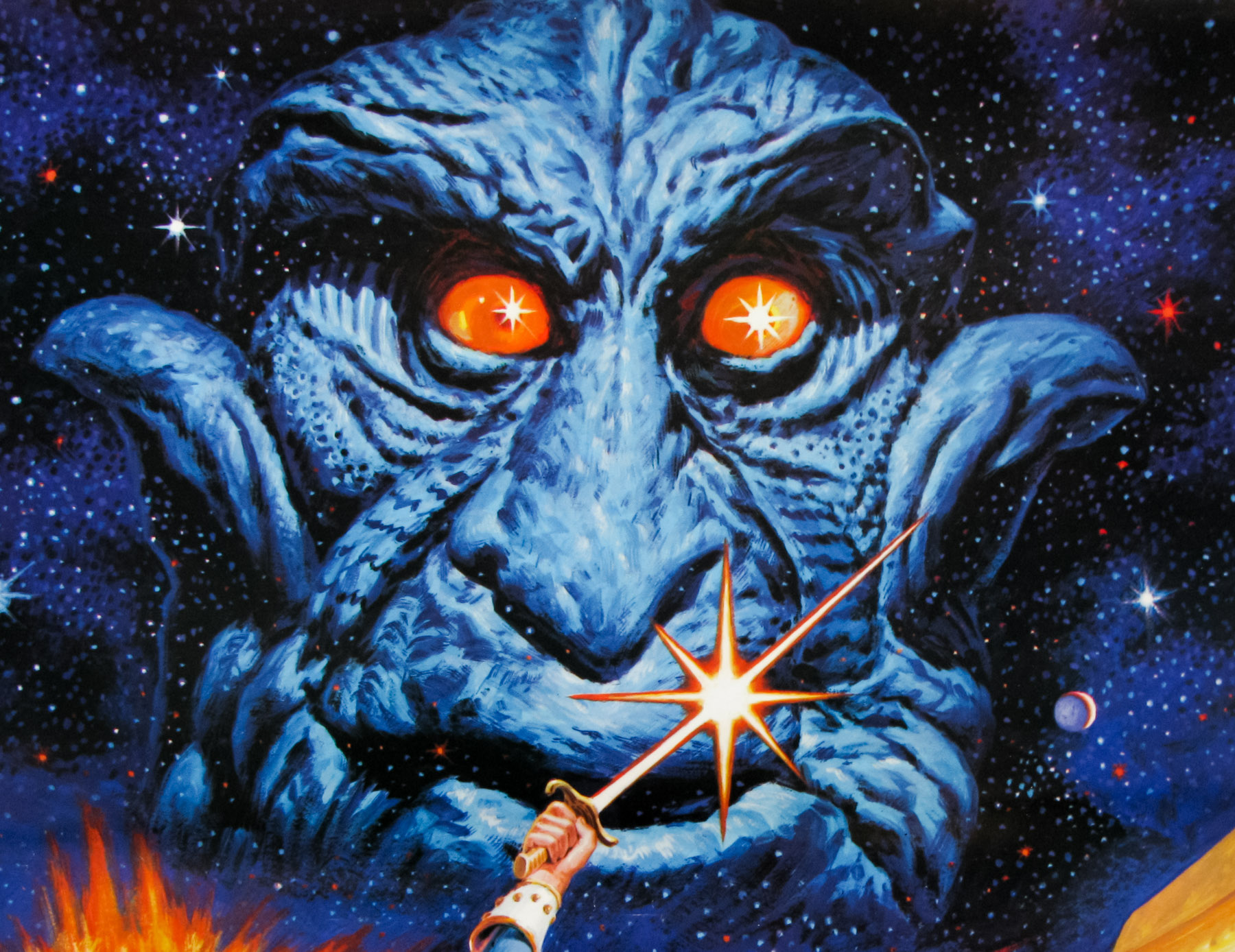
For the large monster seen towards the end of the film the production utilised the talents of Jim Danforth and Dave Allen who are both now recognised as two of the leading figures in the world of stop-motion animation. The monster was given the name ‘Nesuahyrrah’, which is ‘Harryhausen’ spelled backwards, the surname of likely the greatest stop-motion animator of all time, Ray Harryhausen.

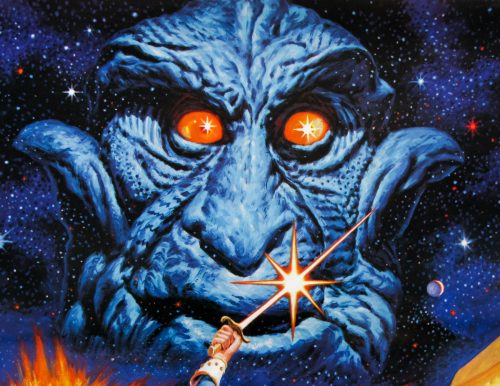
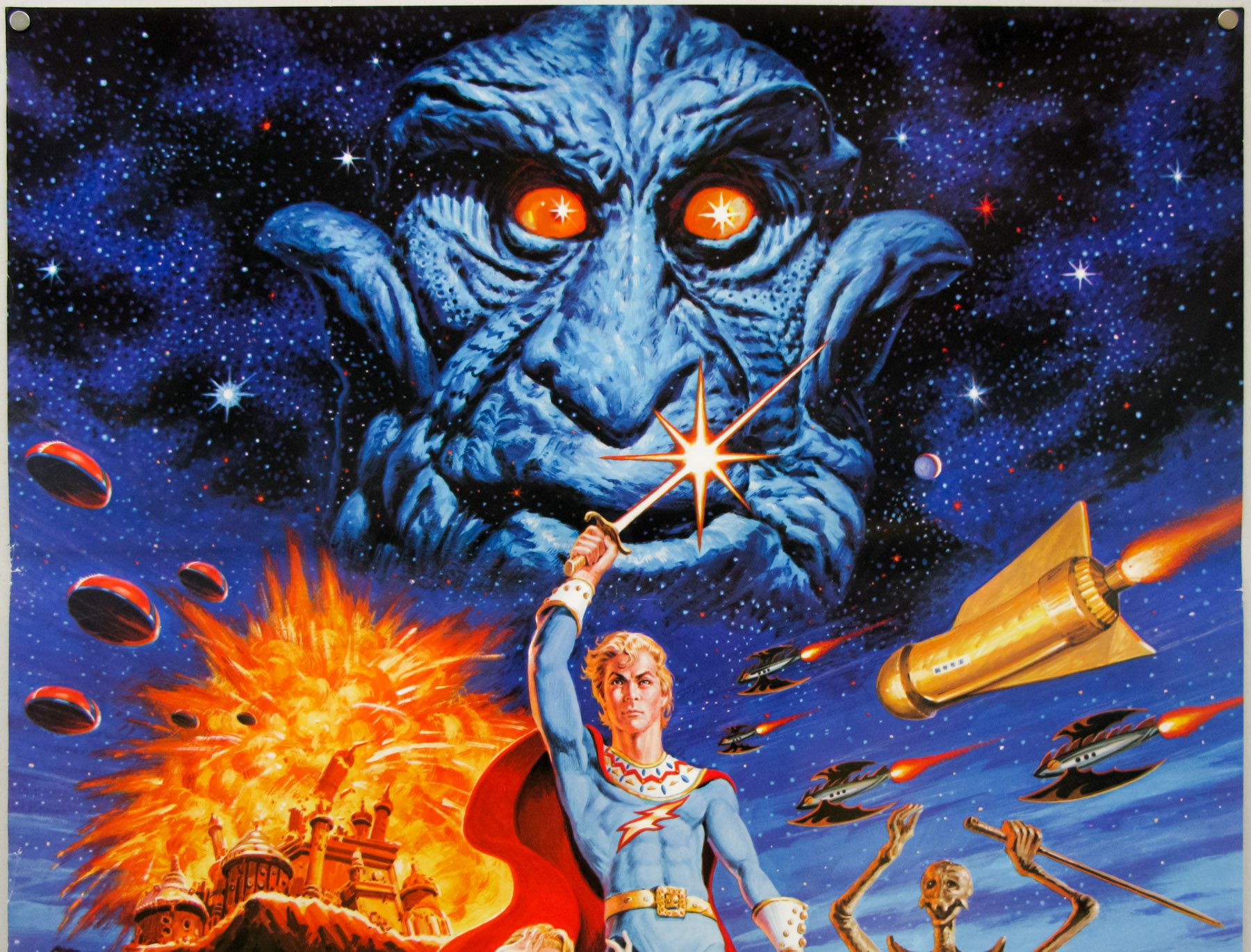
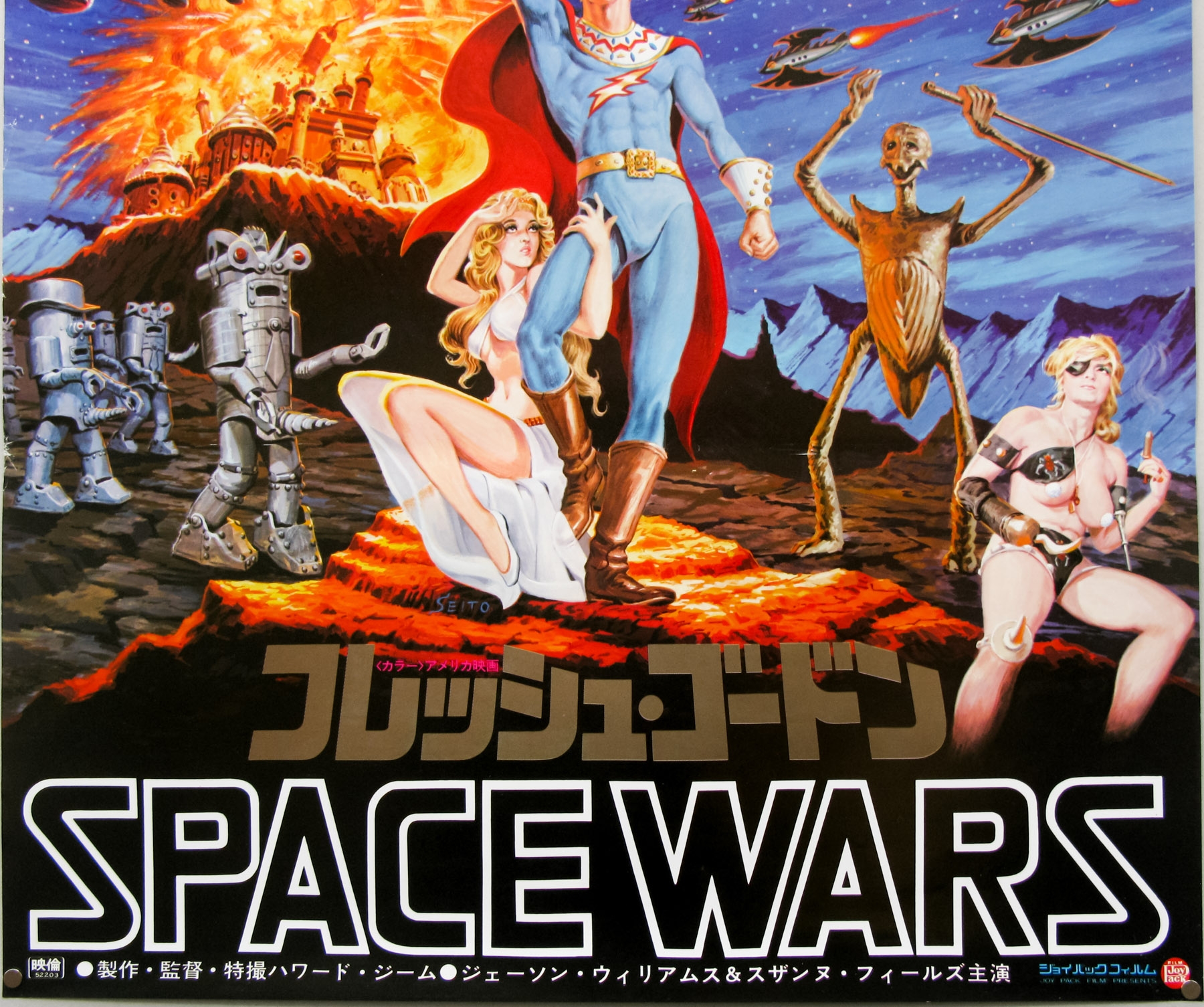
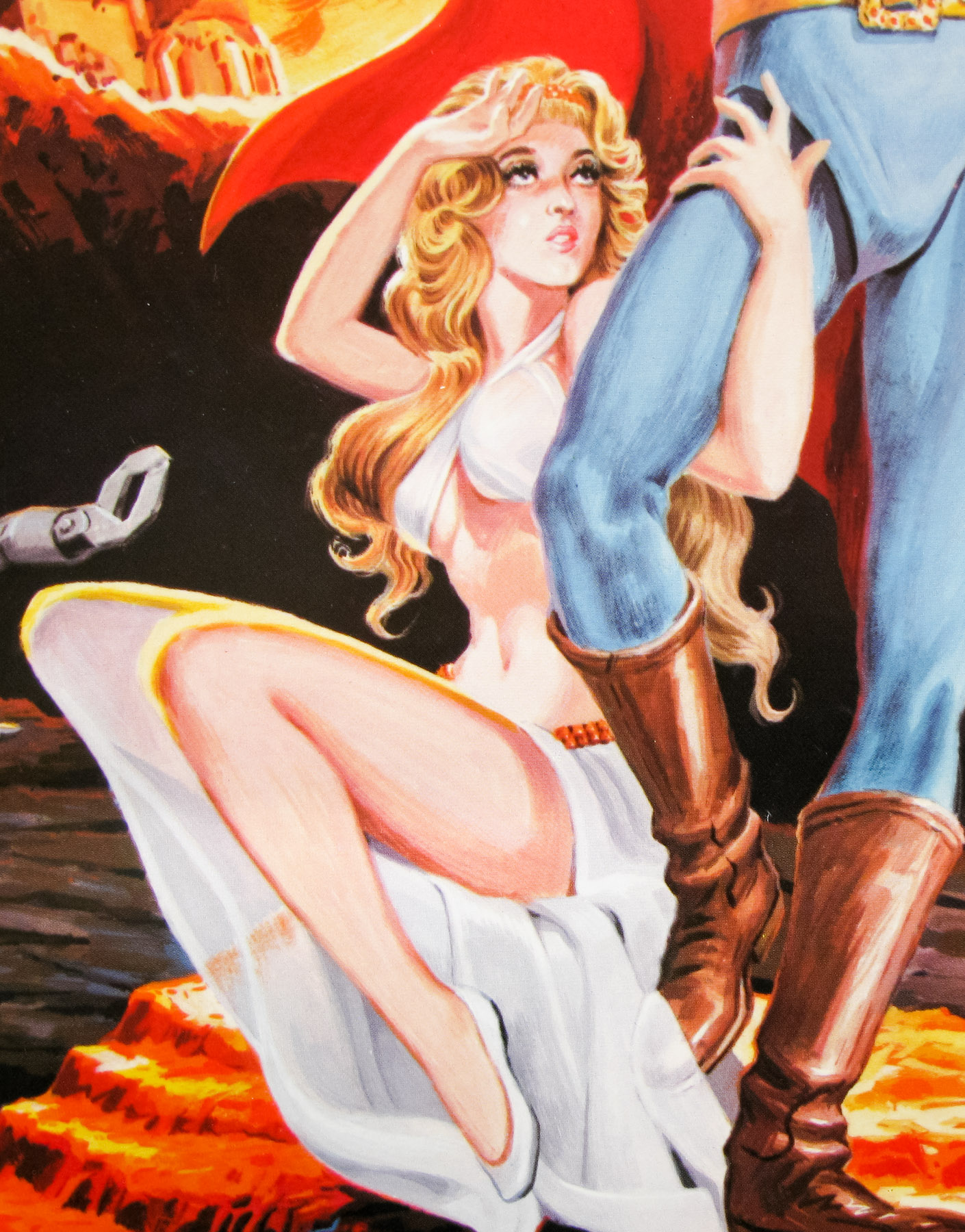
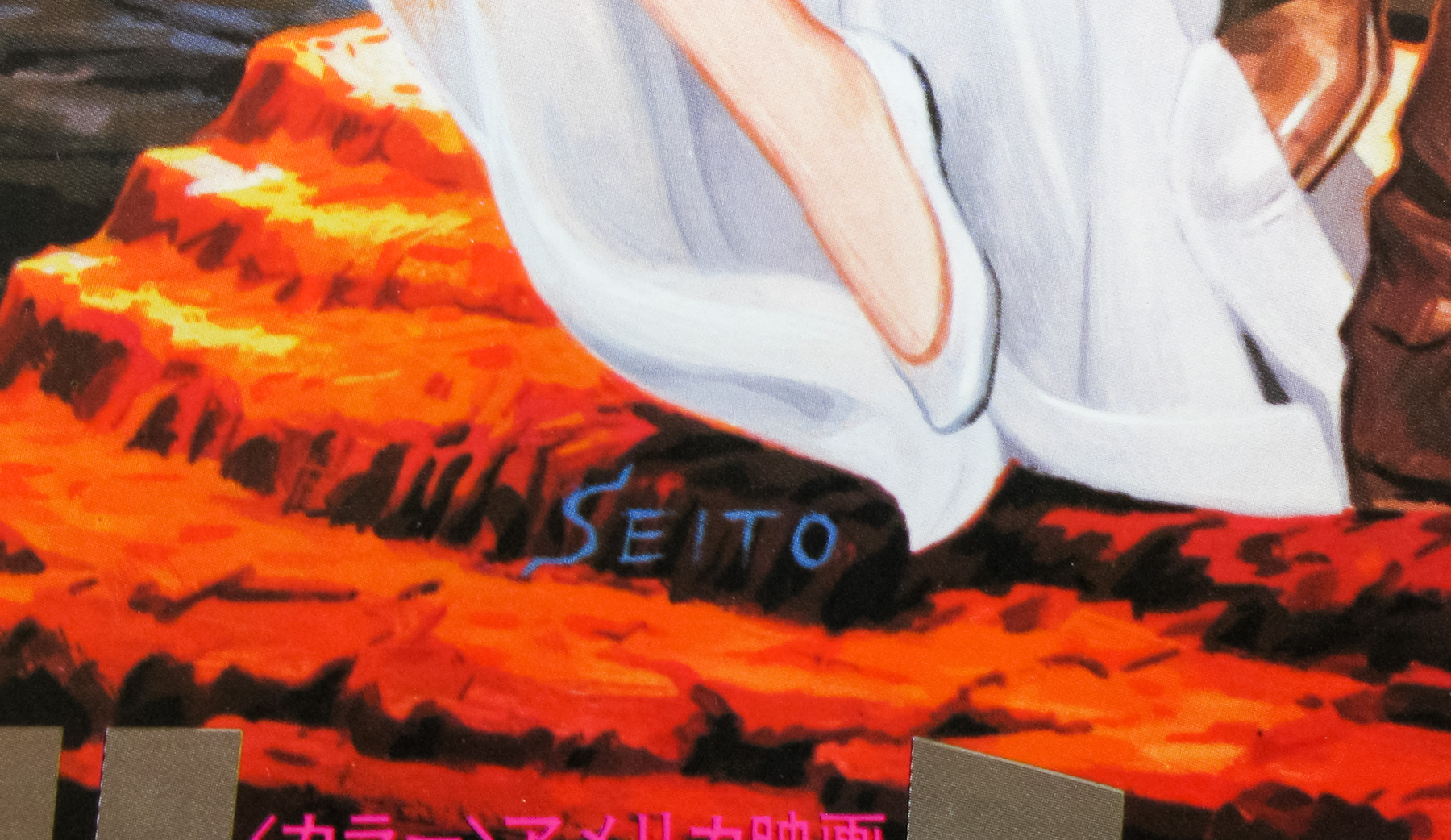
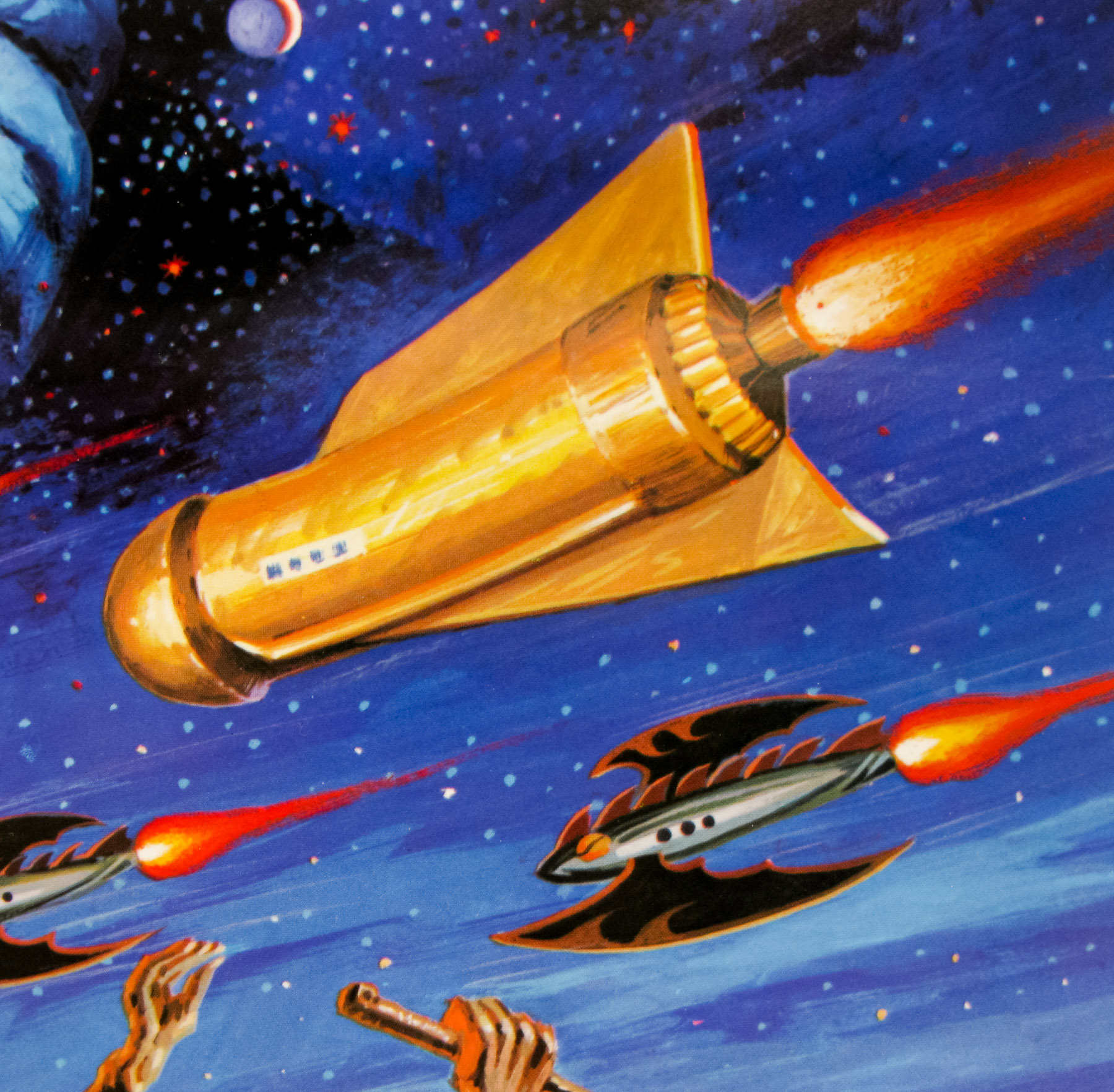
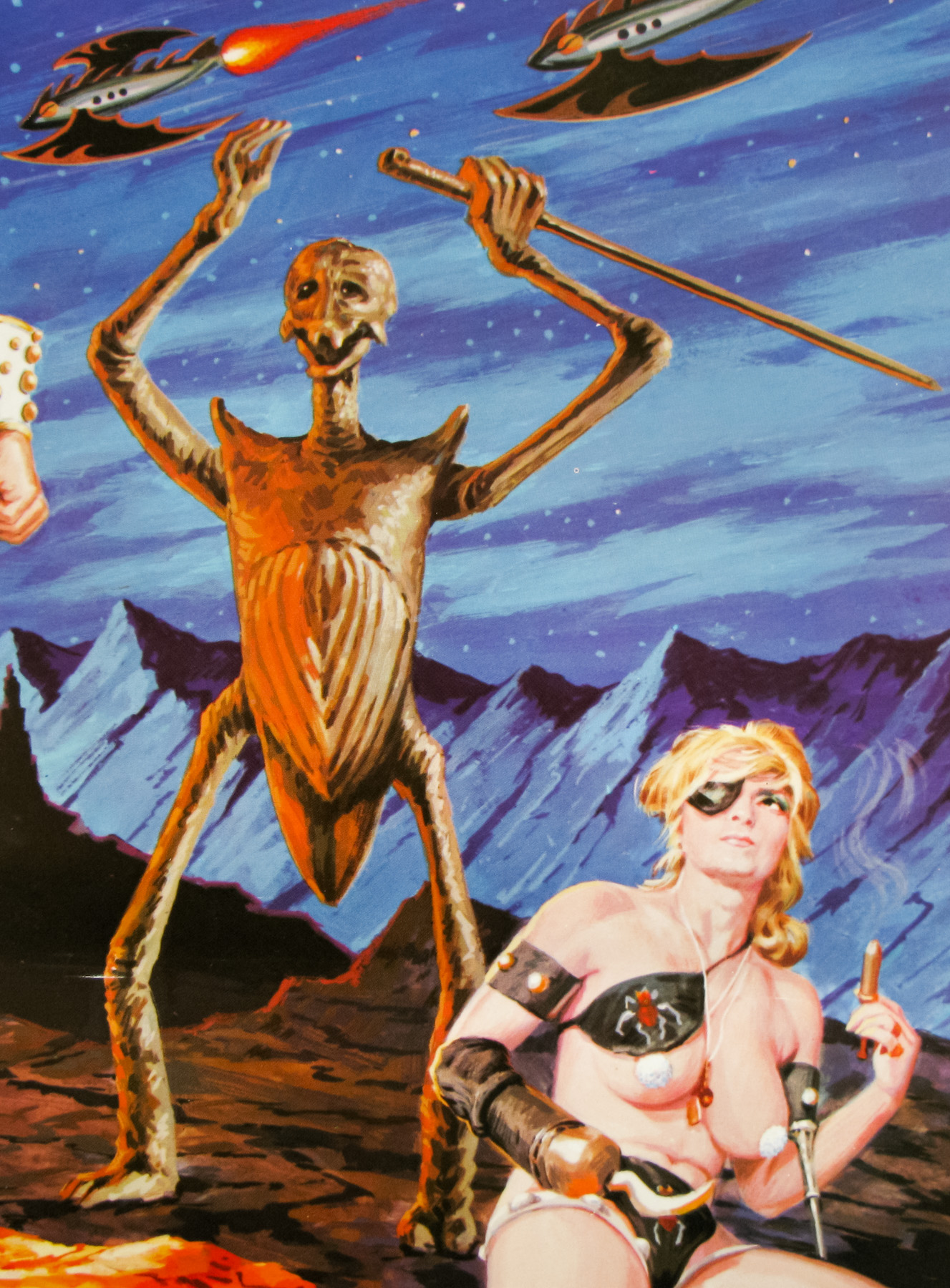
The poster artwork is by one of my favourite Japanese artists, Seito, and is unique to this B2. To see the other posters I’ve collected by the artist click here.

The original trailer is on YouTube.
Gremlins / B2 / Sun-star / Japan

24.01.14

Poster Poster

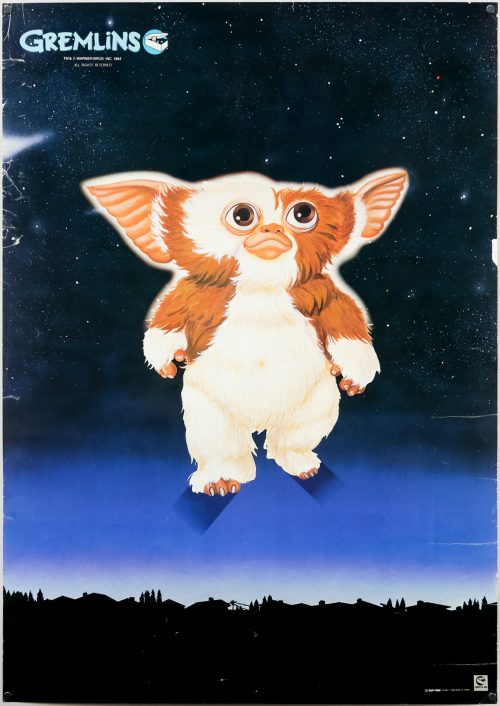
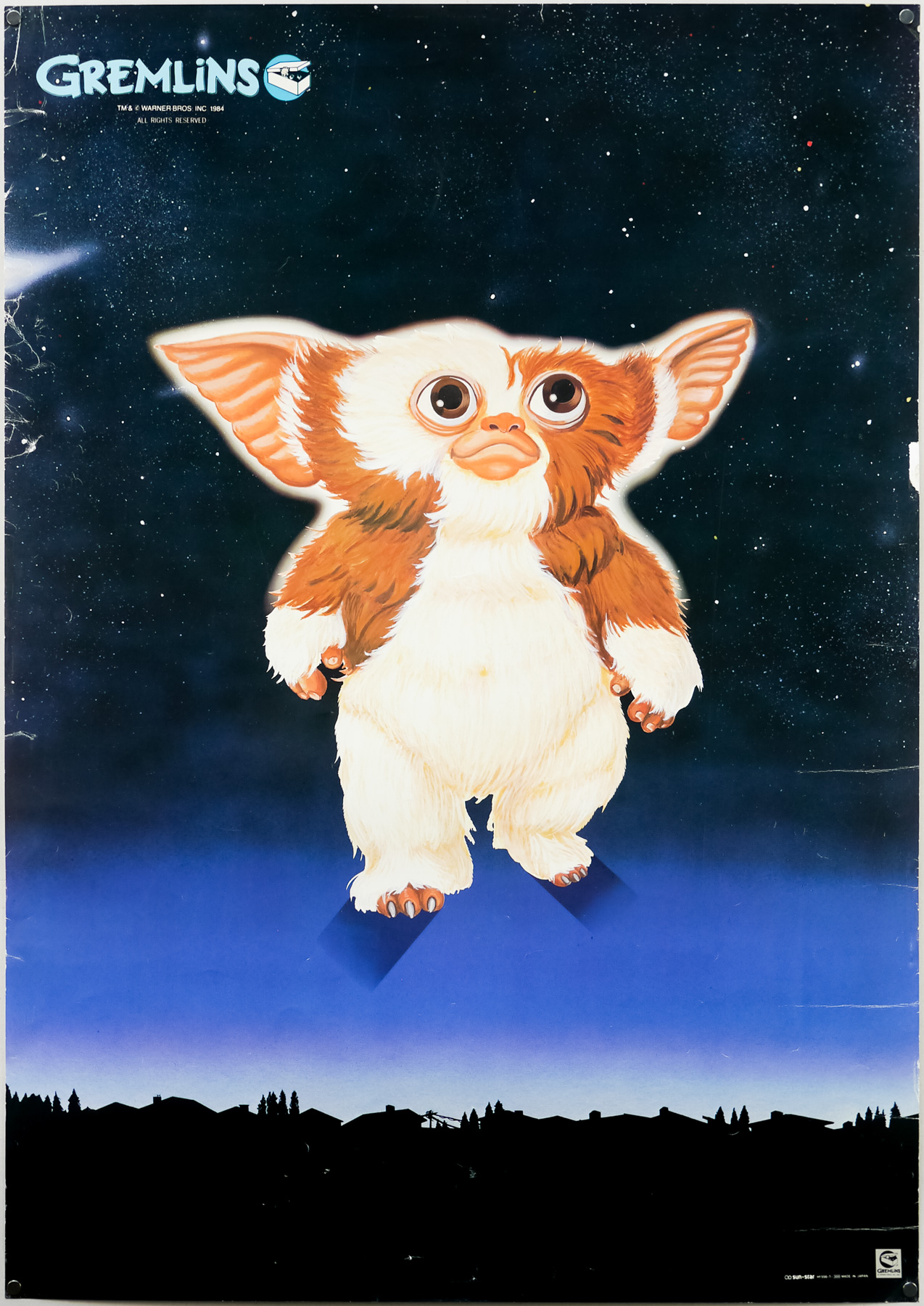
Gremlins, director Joe Dante‘s classic horror comedy, was one of the biggest box-office hits of the 1980s and this tale of small, malevolent creatures attacking the residents of a small town spawned countless imitations, including Critters, Ghoulies and Troll, none of which were able to match the quality of the film they were attempting to emulate. The film was produced by Steven Spielberg through his Amblin Entertainment company and it definitely features some unmistakable Spielbergian qualities.
Thanks to several violent scenes, the film is credited, along with Indiana Jones and the Temple of Doom, for the introduction of the PG-13 rating in America, which was intended to be applied to films that fell into the gap between the PG (Parental Guidance, but safe for children) and R-rated (intended for over 17-year olds). The equivalent in the UK is the 12A rating, which was introduced in 2002 and replaced the 12 rating that had been instigated at the end of the 1980s (for Tim Burtons’s Batman).

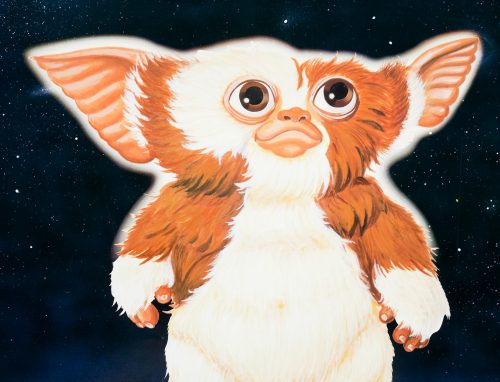
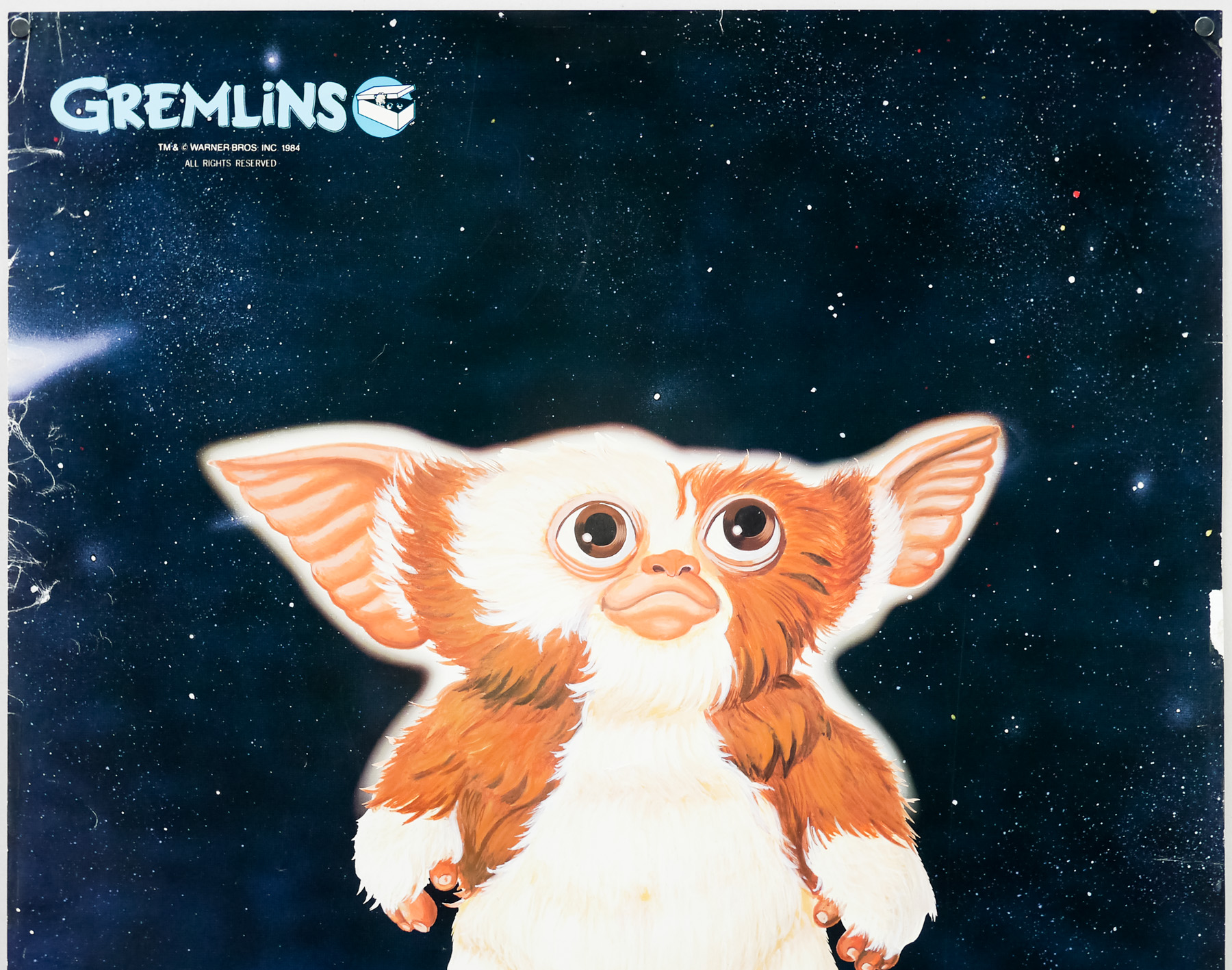
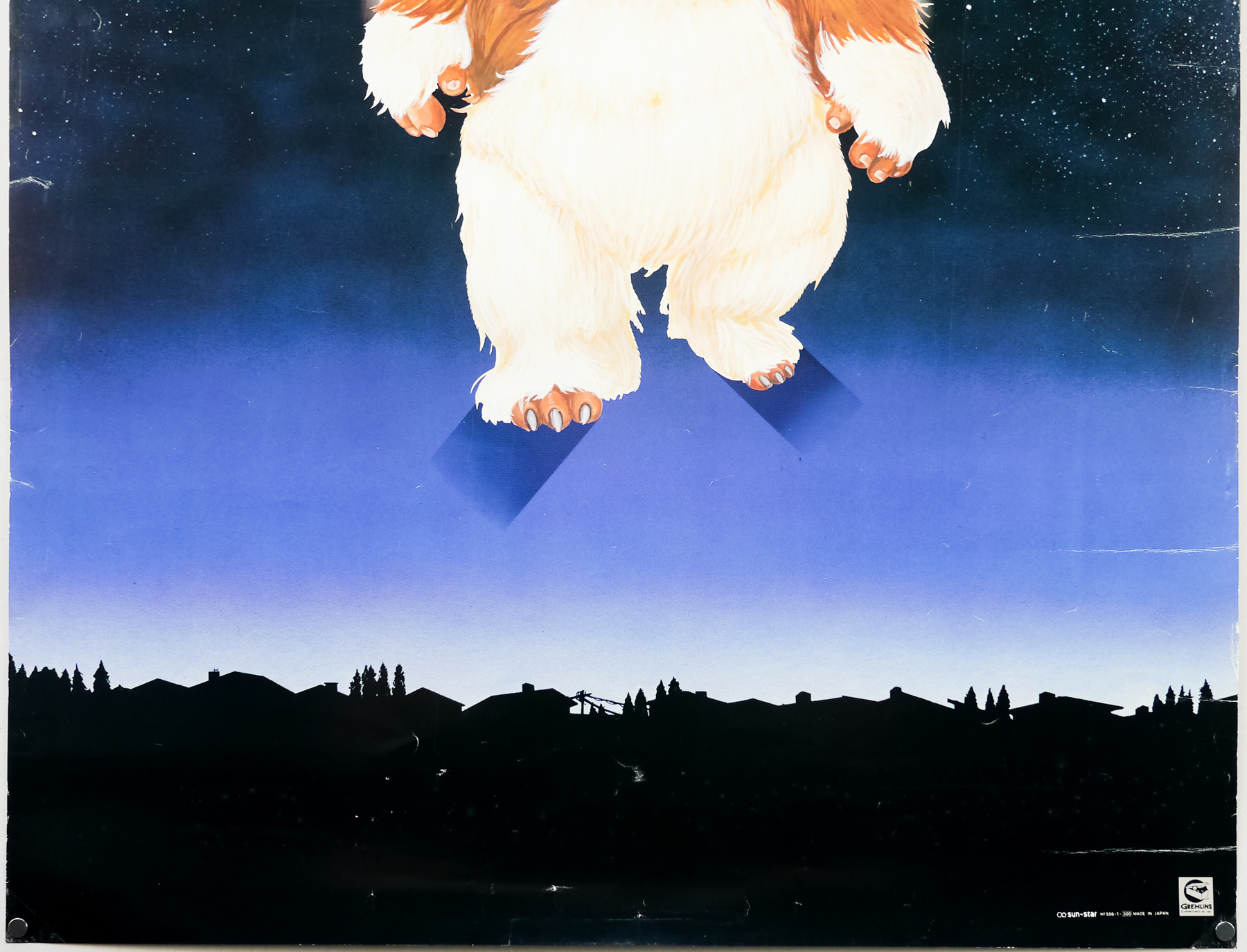
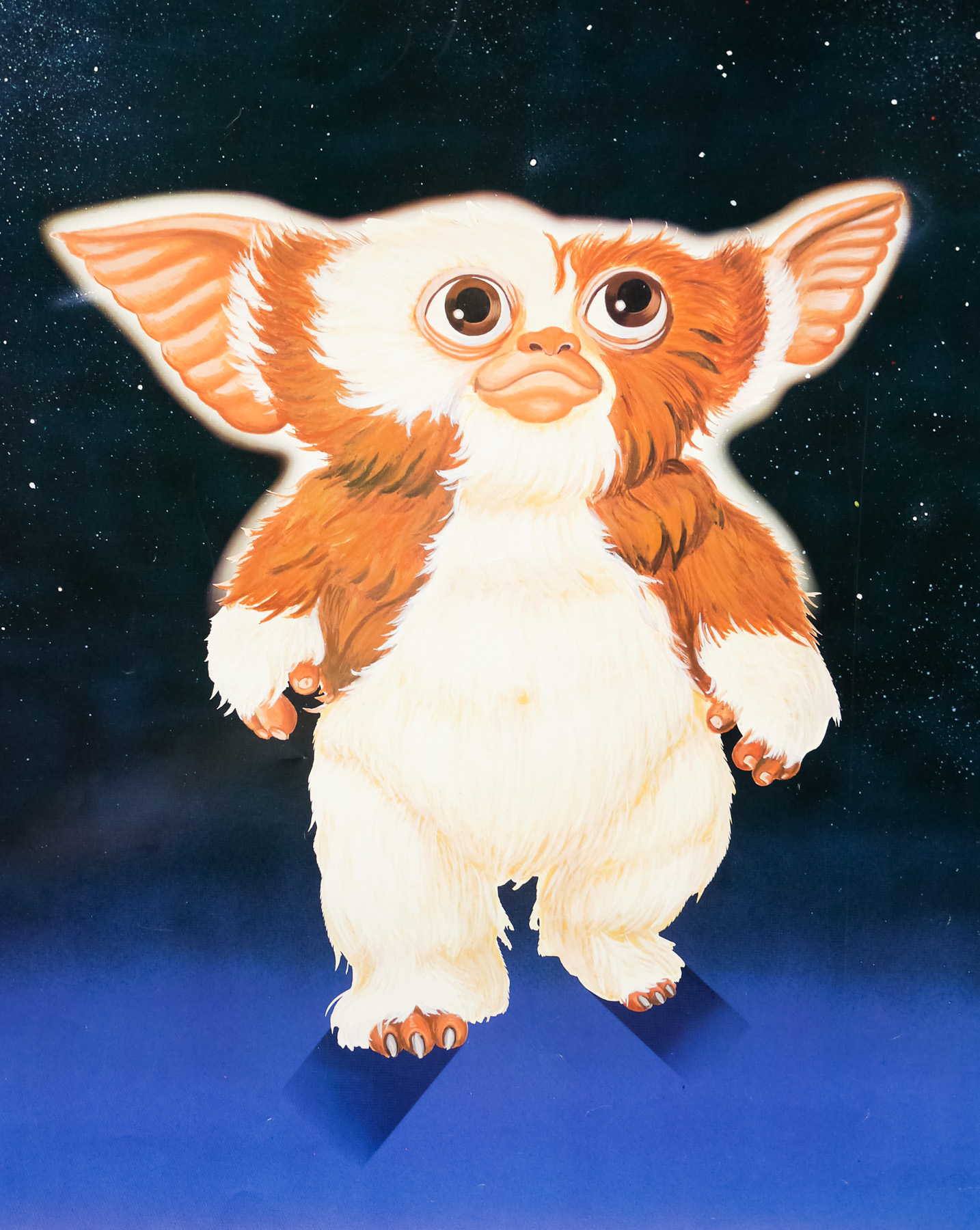
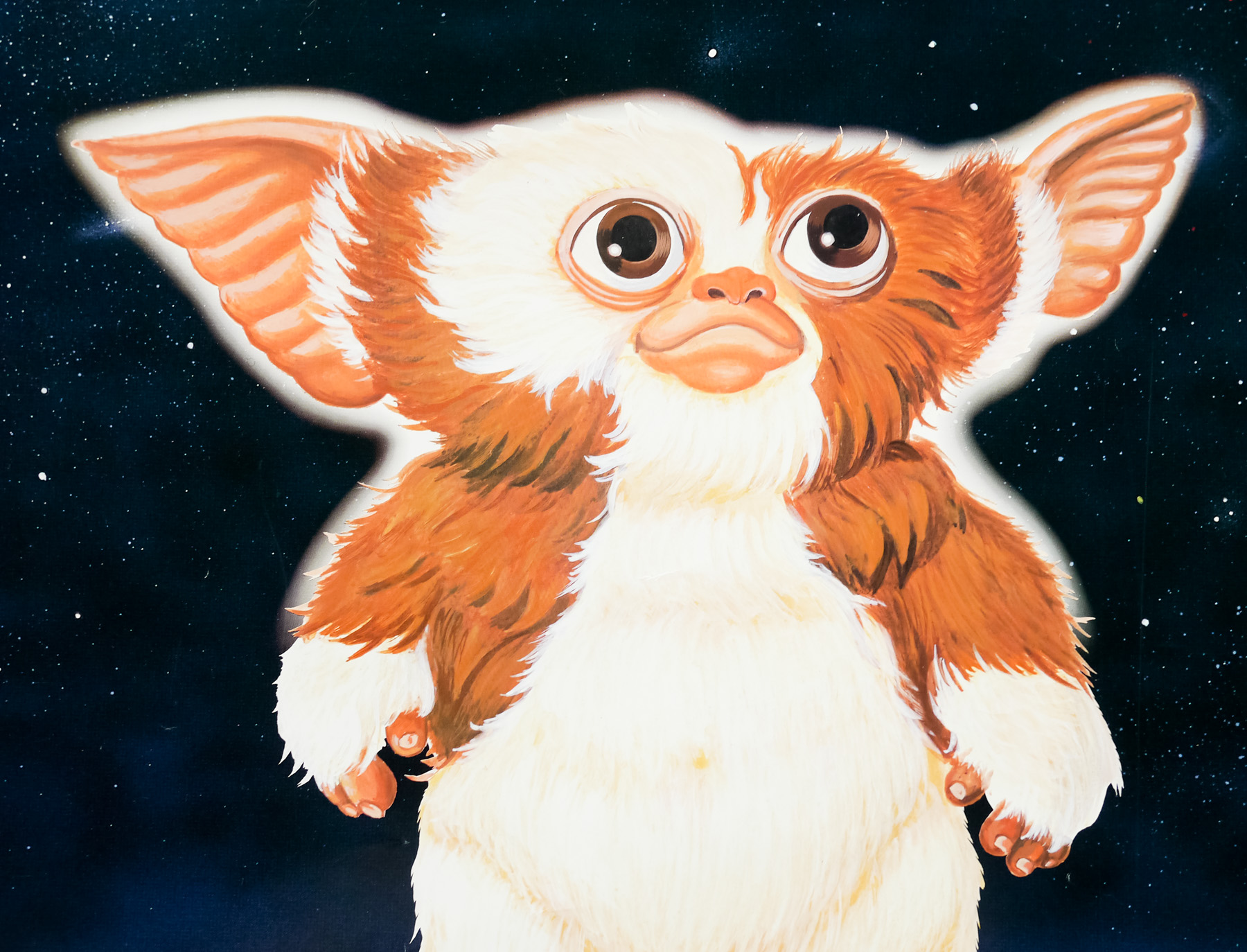
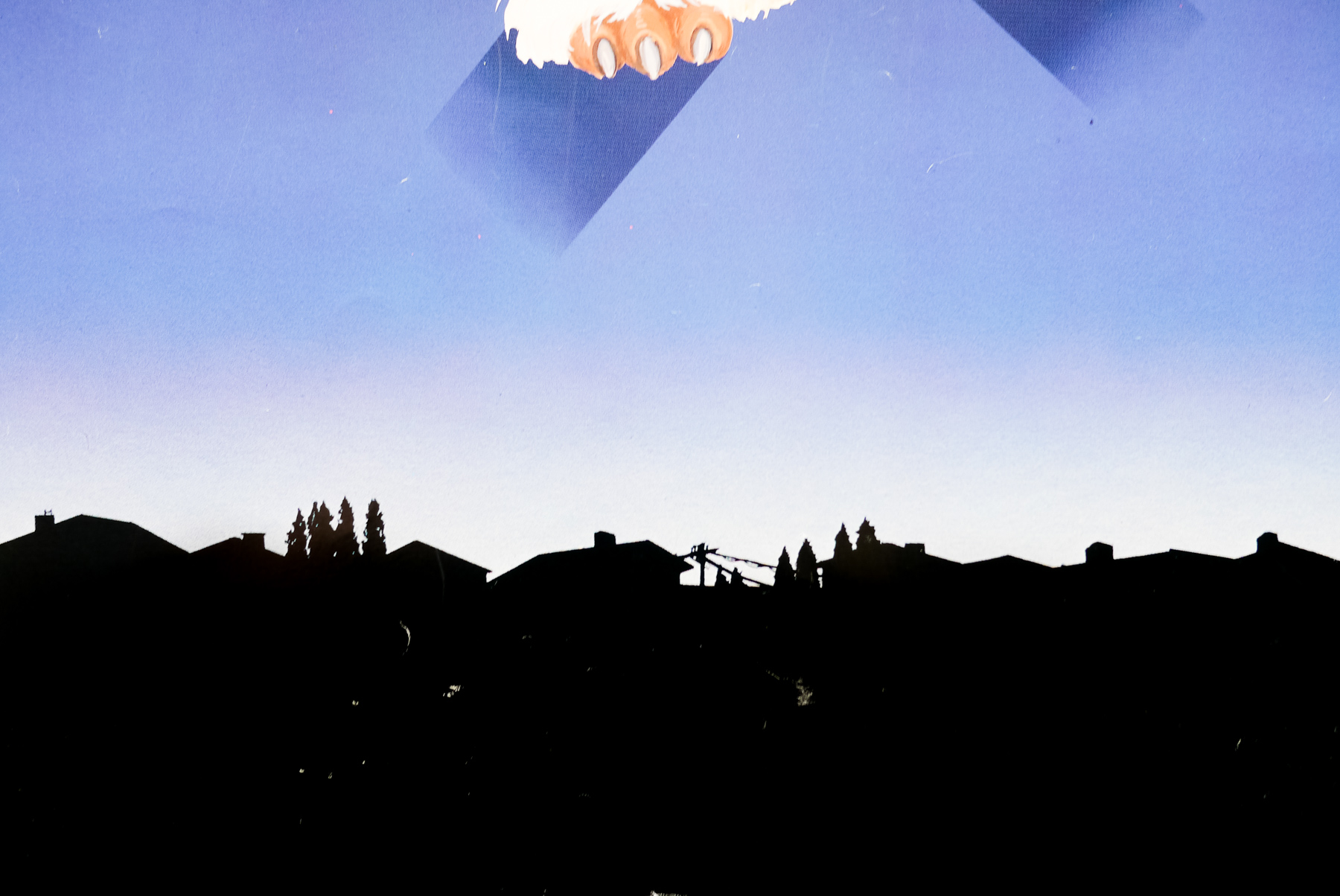
This is an unusual Japanese B2 featuring an illustration of Mogwai that was printed by a company called Sun-star. I picked it up whilst on a trip to Japan in 2012 and my best guess is that it was a poster created to be commercially sold at the time of release (or soon after). According to the English language version of the Sun-star website, they are a company whose products are ‘Stationery for office home use, Stationery featuring Disney characters’, and it’s entirely likely that they had a licensing tie-in with Warner Bros to print posters like this, perhaps to be sold at screenings of the film. If I find out any more information I’ll update this page.
I’m unsure who the artist responsible is so please get in touch if you have an idea.