You searched for: %2520UK

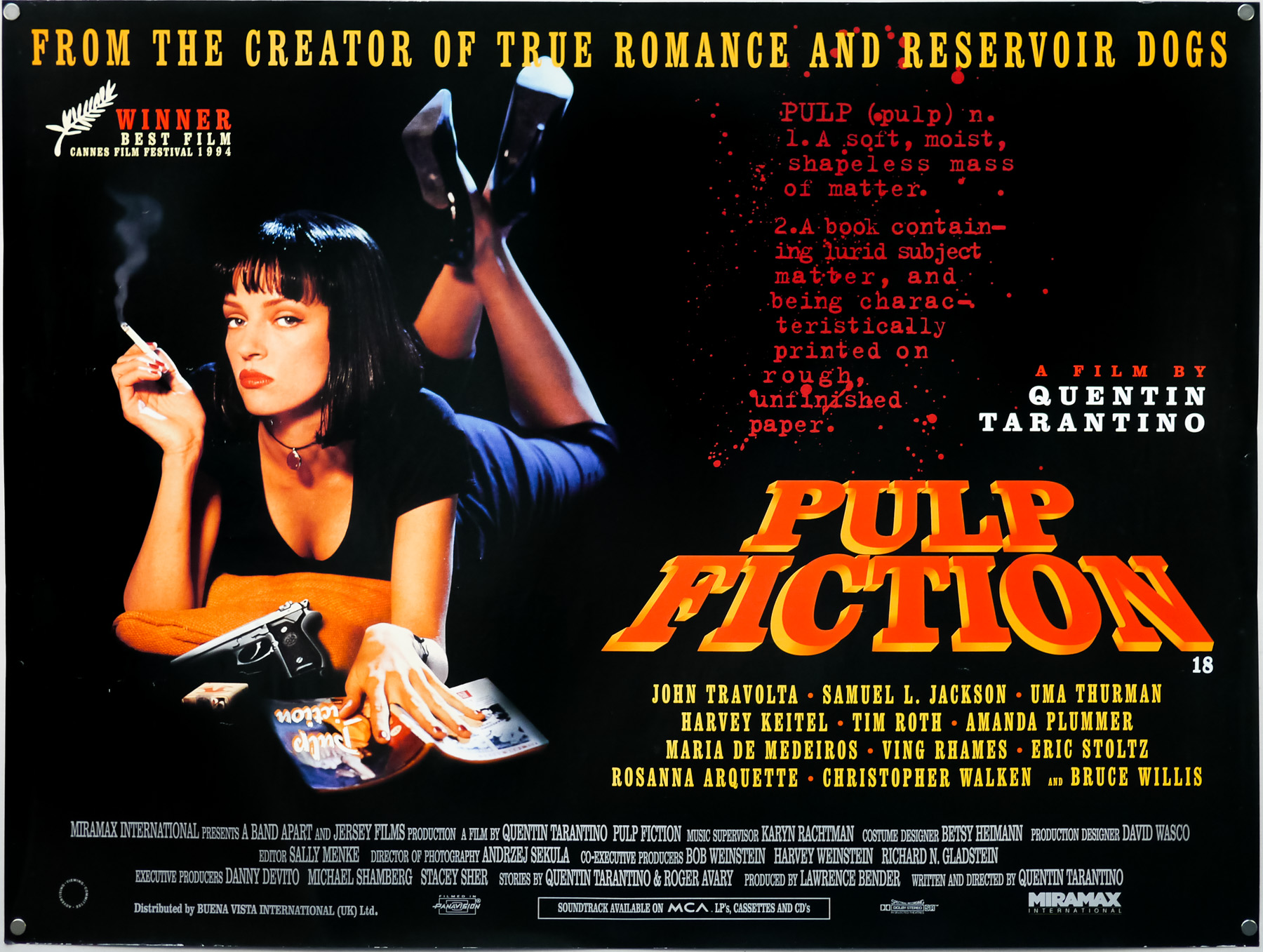
Pulp Fiction / quad / UK

08.01.14

Poster Poster

It’s hard to believe but Quentin Tarantino’s masterpiece Pulp Fiction celebrates its 20th anniversary this year and it’s easy to forget just what an impact it has had on cinema since its release. Whilst certainly not the first film to use a nonlinear, fractured narrative, Pulp Fiction arguably introduced the idea to a wide audience and did it with incredible bravado. Few films (pre-Reservoir Dogs) had characters speaking in such rapid-fire, pop culture-aware dialogue as Tarantino’s creations and few had mixed humour and violence as casually (and cleverly) as this. Blessed with deft editing and a killer soundtrack, all the ingredients combined together to make for a worldwide critical and commercial success, and cemented Tarantino’s reputation as an auteur filmmaker.

The film marked a watershed moment for independent cinema, particularly in the way it was financed and distributed. After Tarantino and screenwriting partner Roger Avary agreed a deal with Jersey Films (the production company part-owned by Danny DeVito) which was beneficial for all parties, the team initially attempted to produce the film with Columbia Tristar. After the script was eventually rejected by them for a litany of reasons, Harvey Weinstein’s Miramax, newly acquired by Disney, stepped in and agreed to finance it. Tarantino’s producing partner Lawrence Bender had the canny idea of paying each of the main actors the same amount per week, no matter their status. Part of the film’s success was in its superb casting of familiar faces playing against type, including Bruce Willis as an amoral boxer, John Travolta as an ageing hitman (Travolta’s career saw a huge boost on the back of this film) and Uma Thurman as a drug-taking wife of a mob boss.

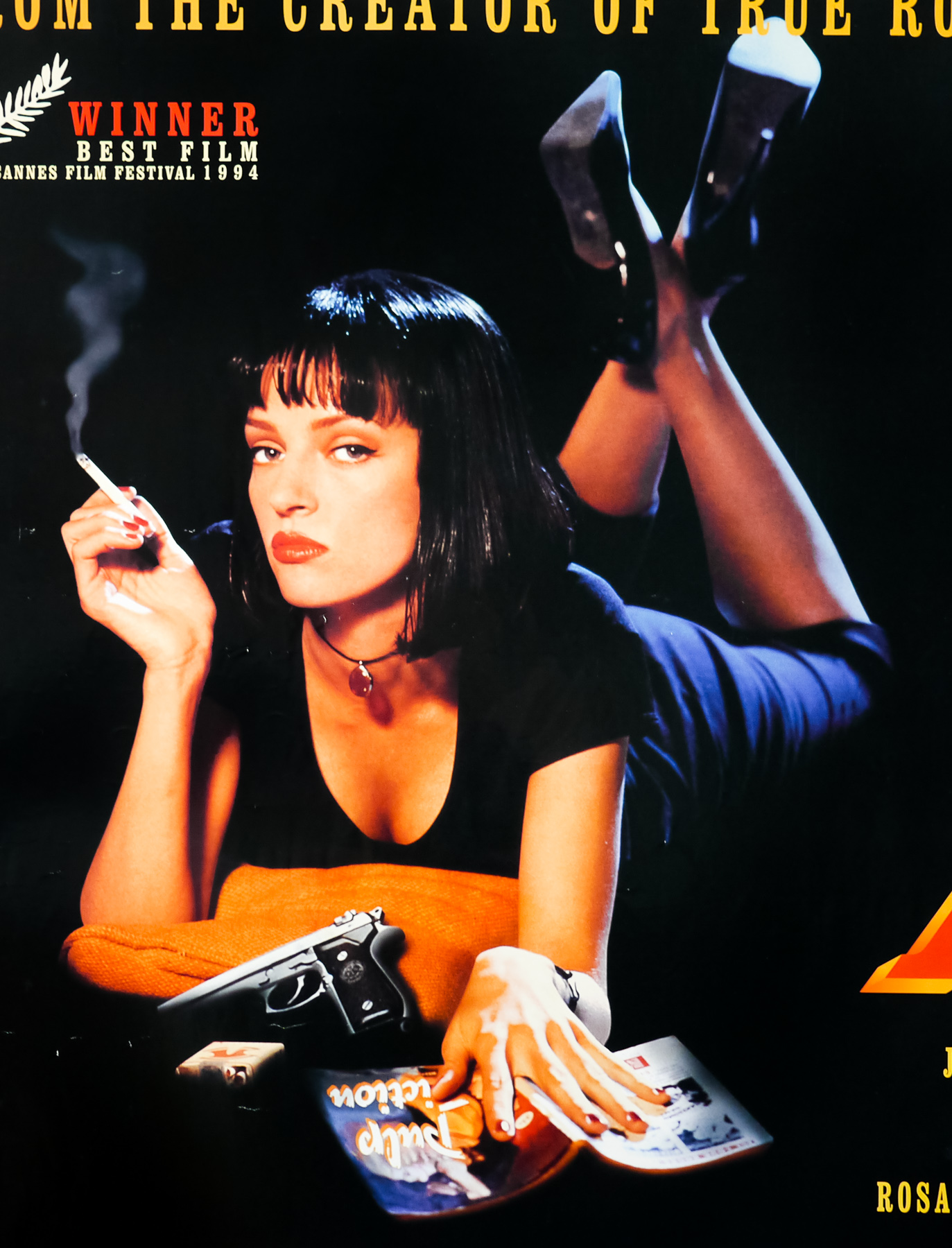
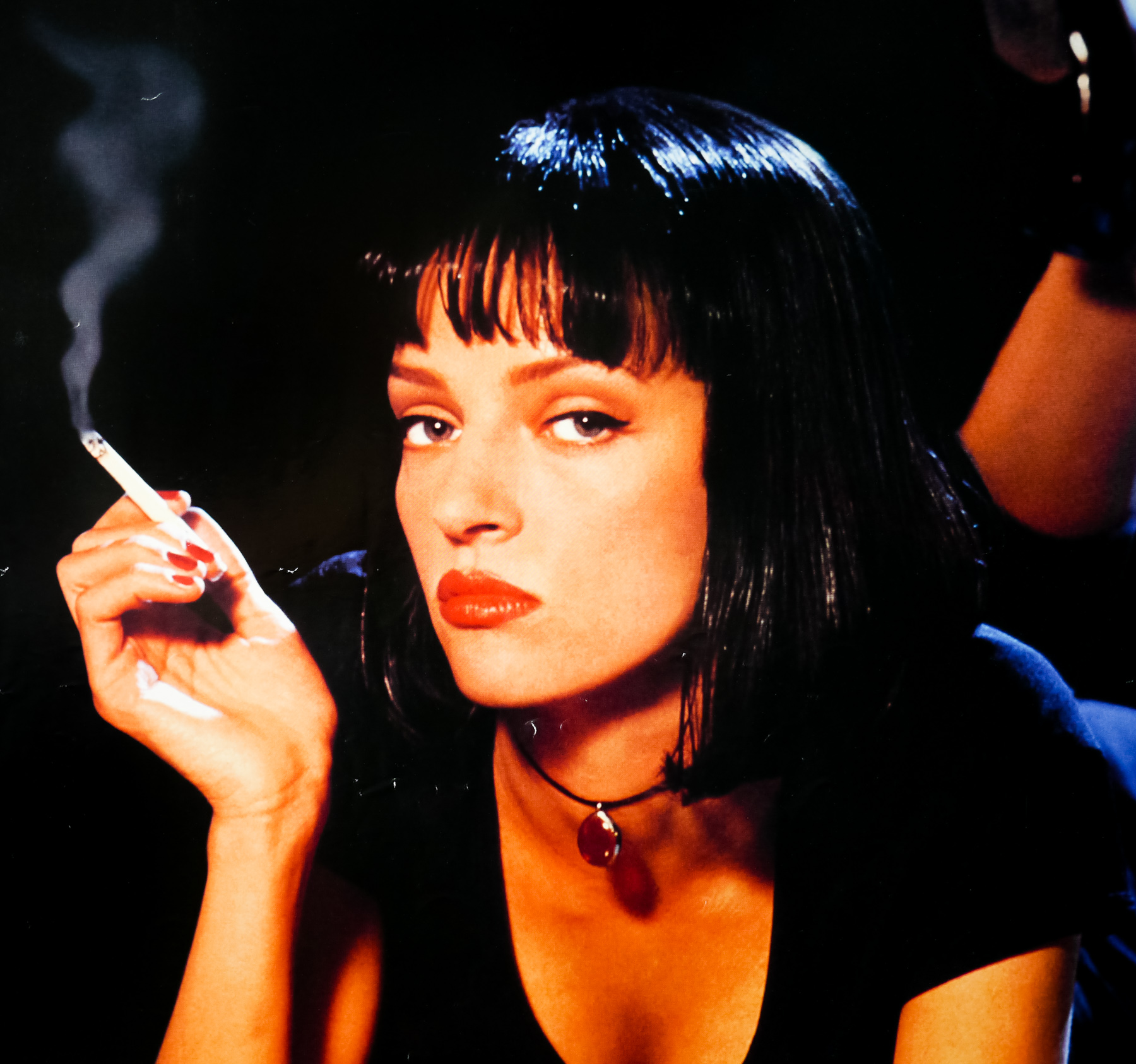
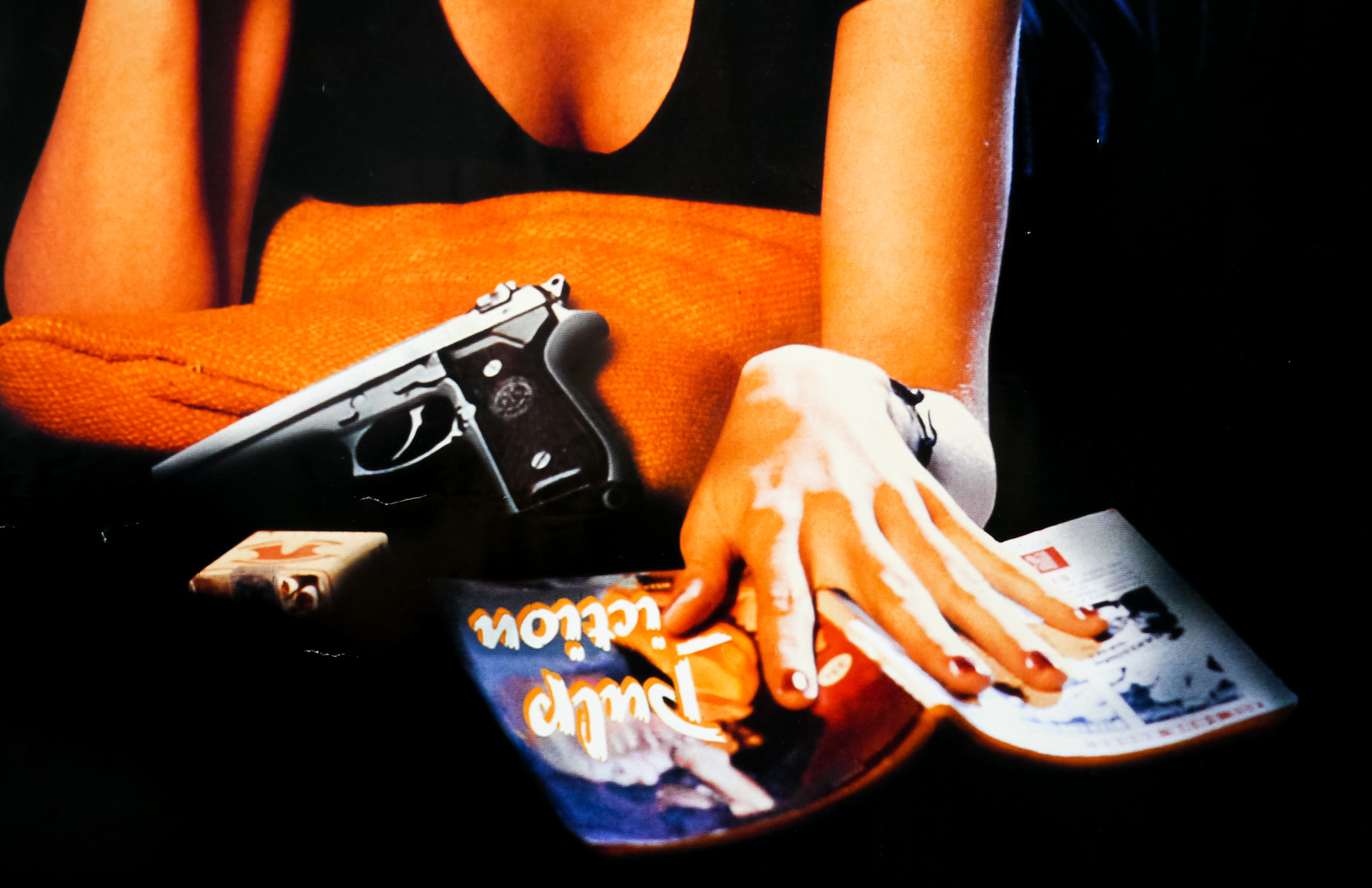
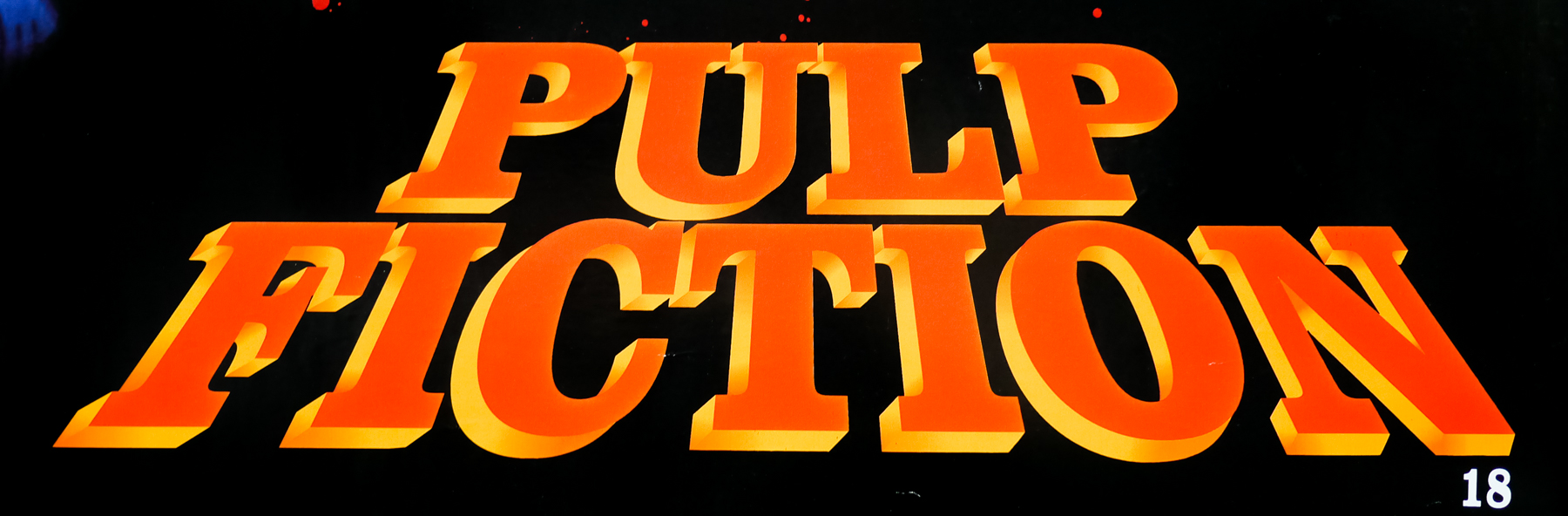
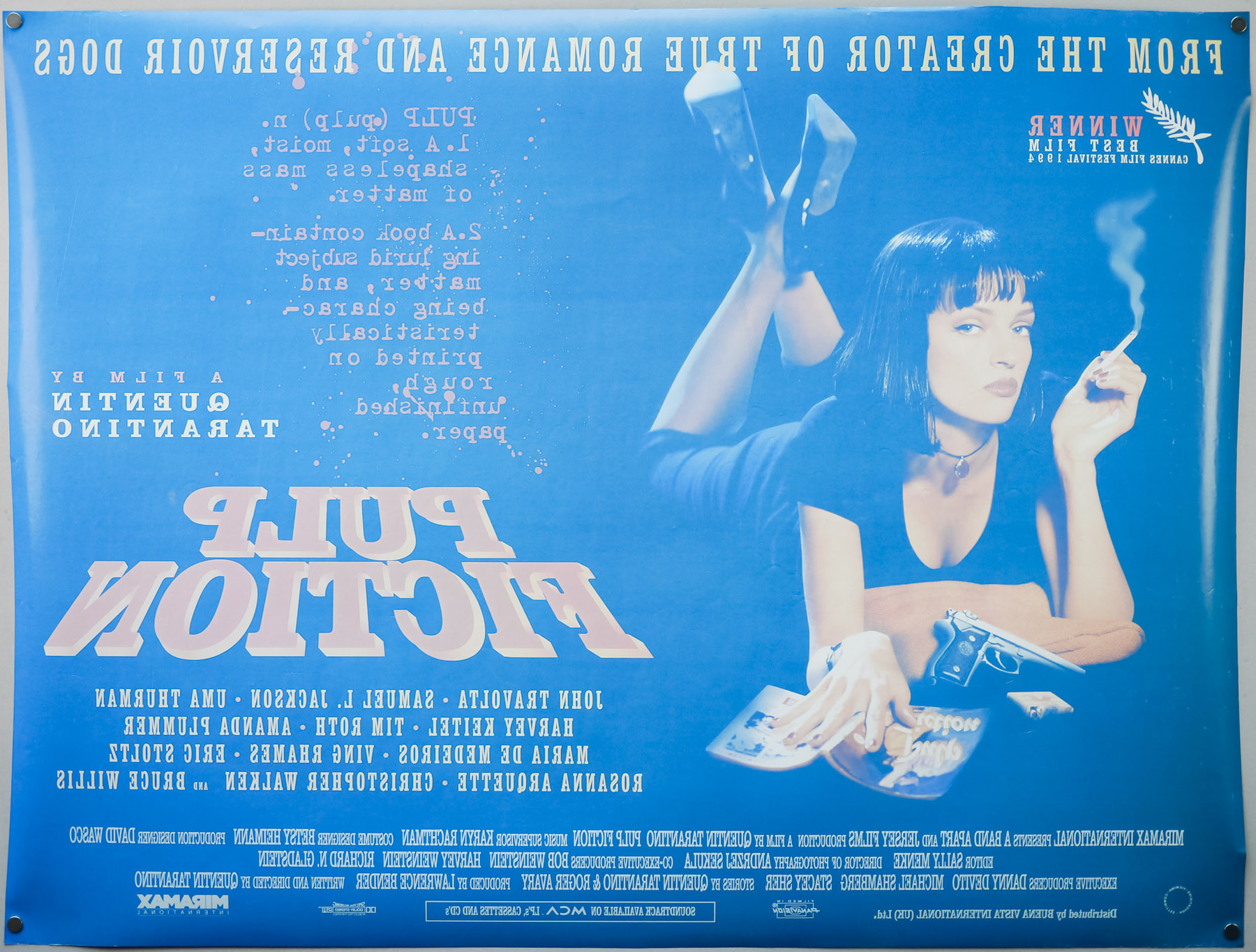
It was an image of a sultry, raven-haired Uma Thurman that was used in (virtually) every market around the world and made for one of the most iconic one sheets of the 1990s (in both teaser and final style formats). For its hugely successful release in the UK, Miramax decided to use the same image of Thurman but adapted it to the landscape format, created a unique title design and also incorporated the dictionary definitions of Pulp and Fiction seen at the start of the film. Note that the packet of Lucky Strikes which had caused the teaser one sheet to be infamously withdrawn (after the cigarette manufacturer complained about its inclusion) has been digitally manipulated to obscure the logo as it was on the final one sheet.

Escape to Victory / quad / UK

13.06.14

Poster Poster

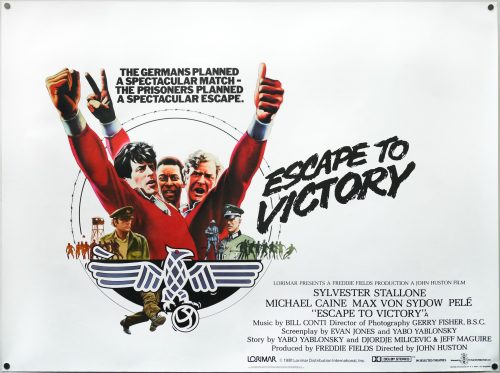
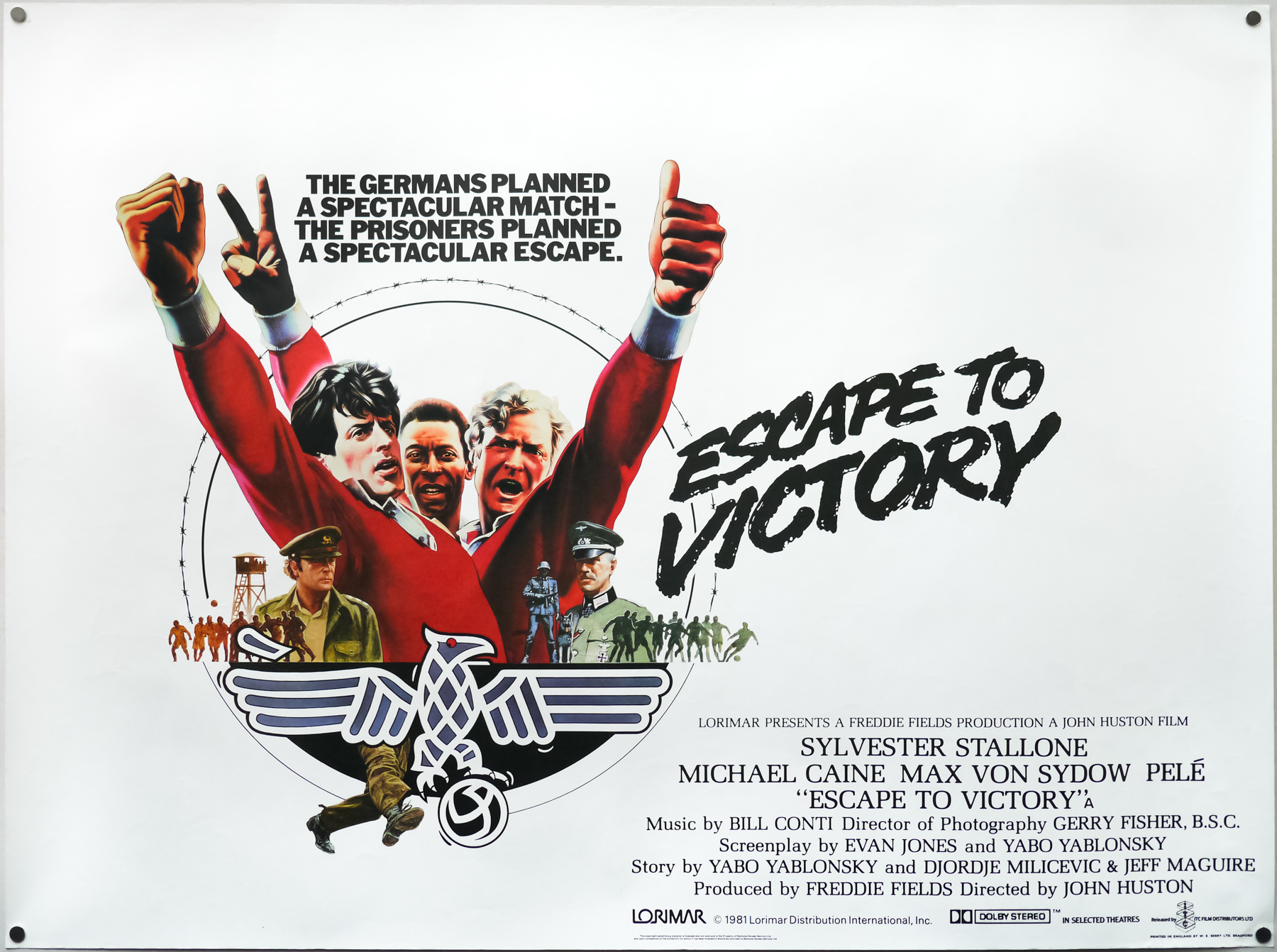
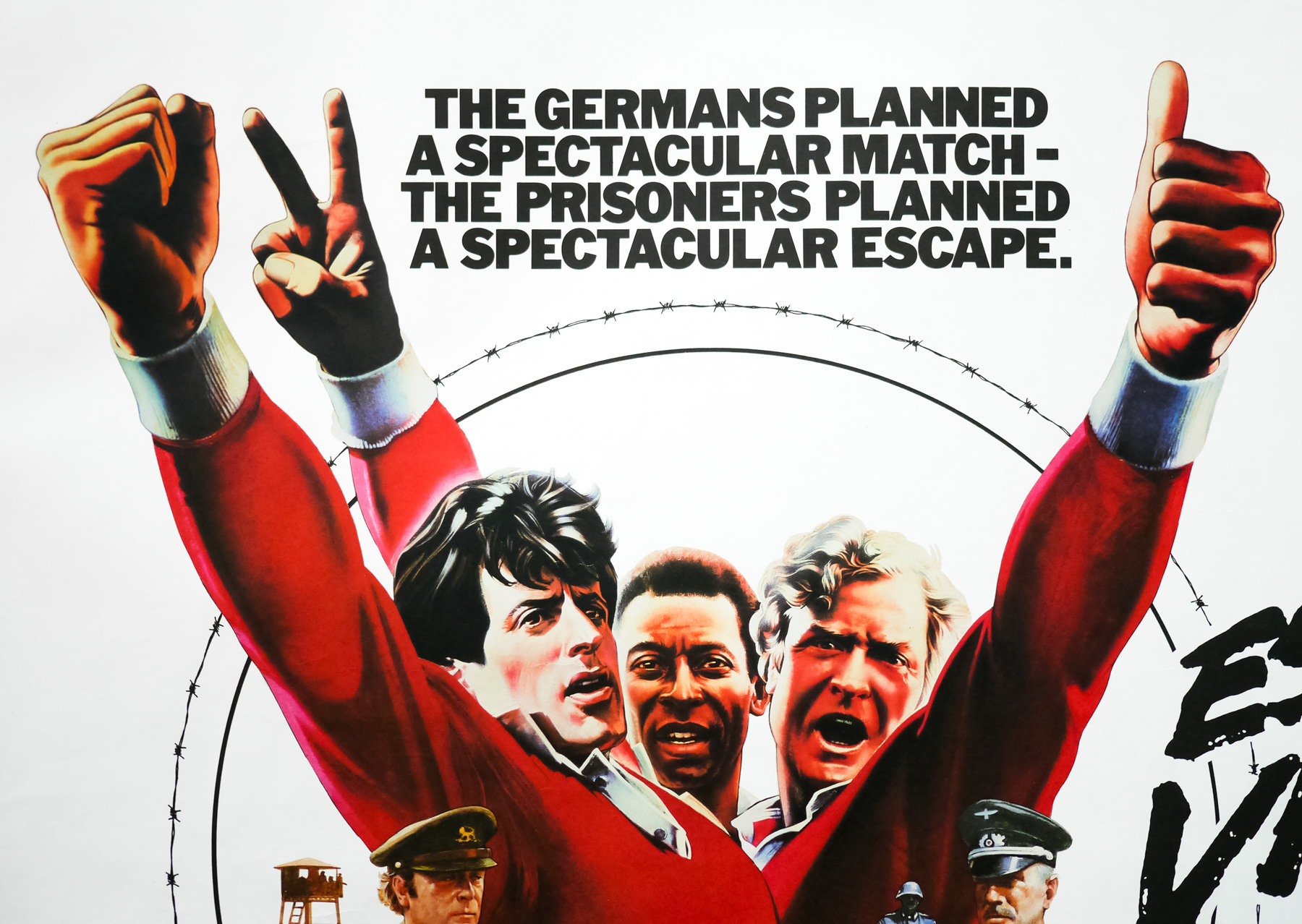
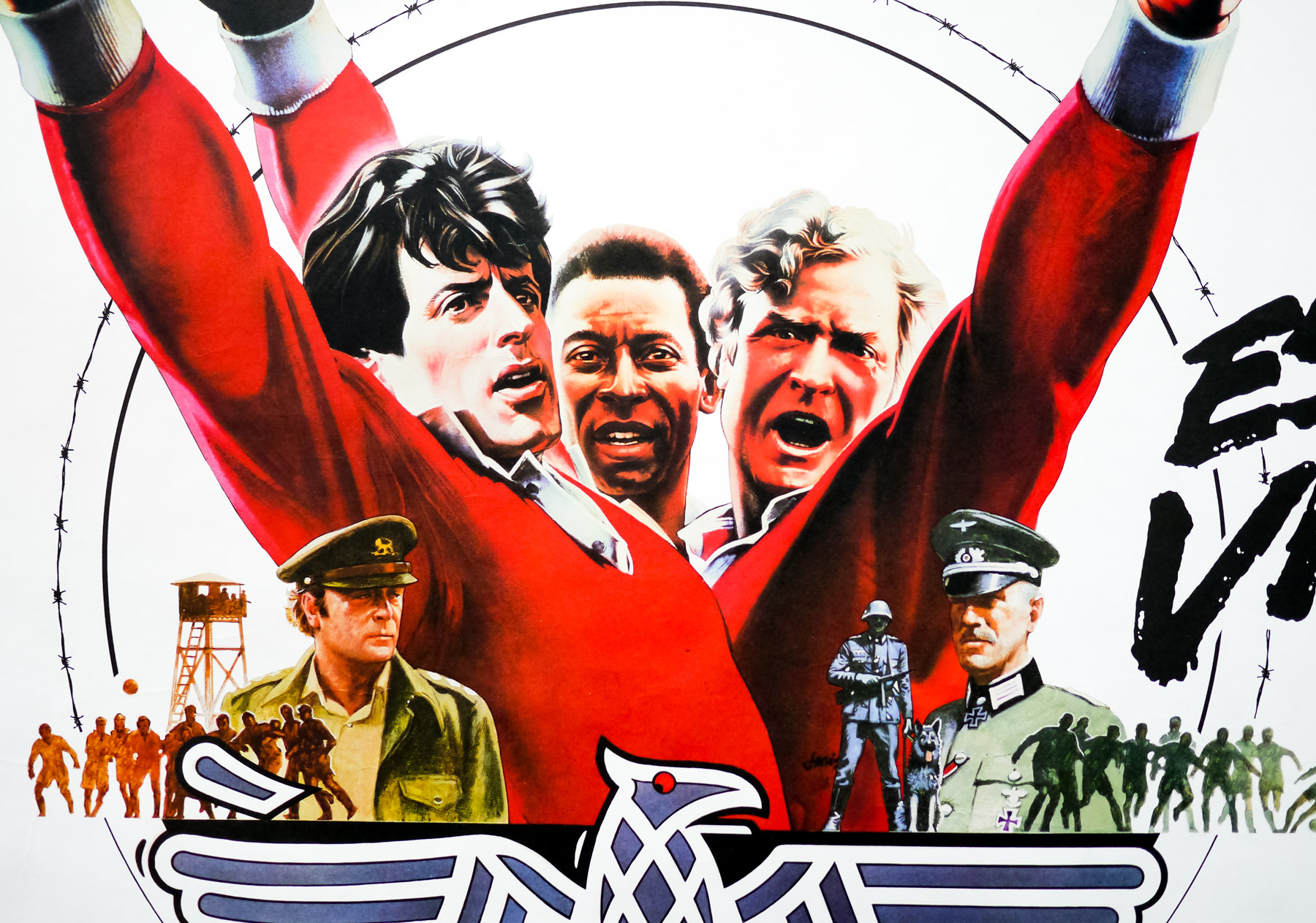
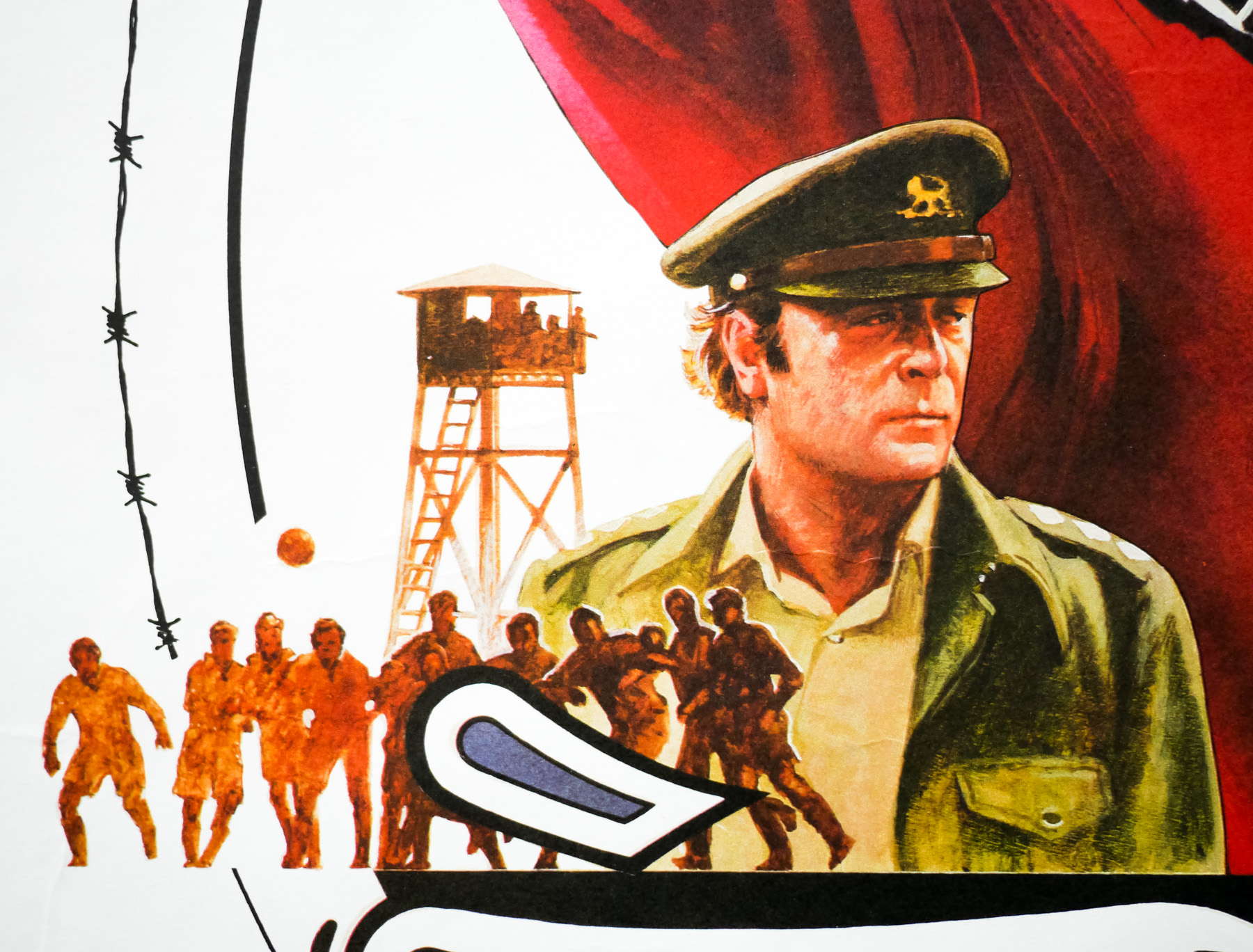
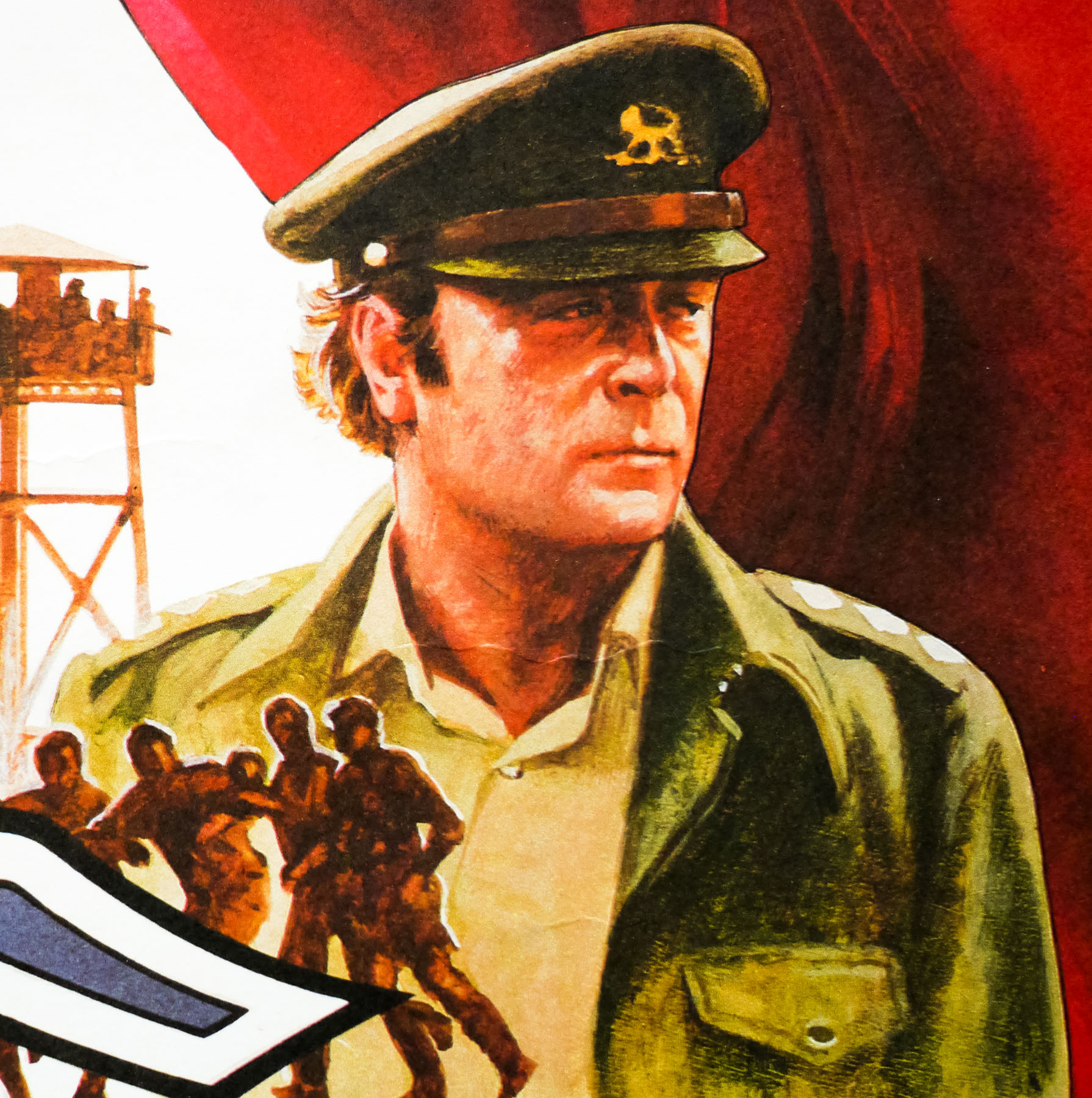
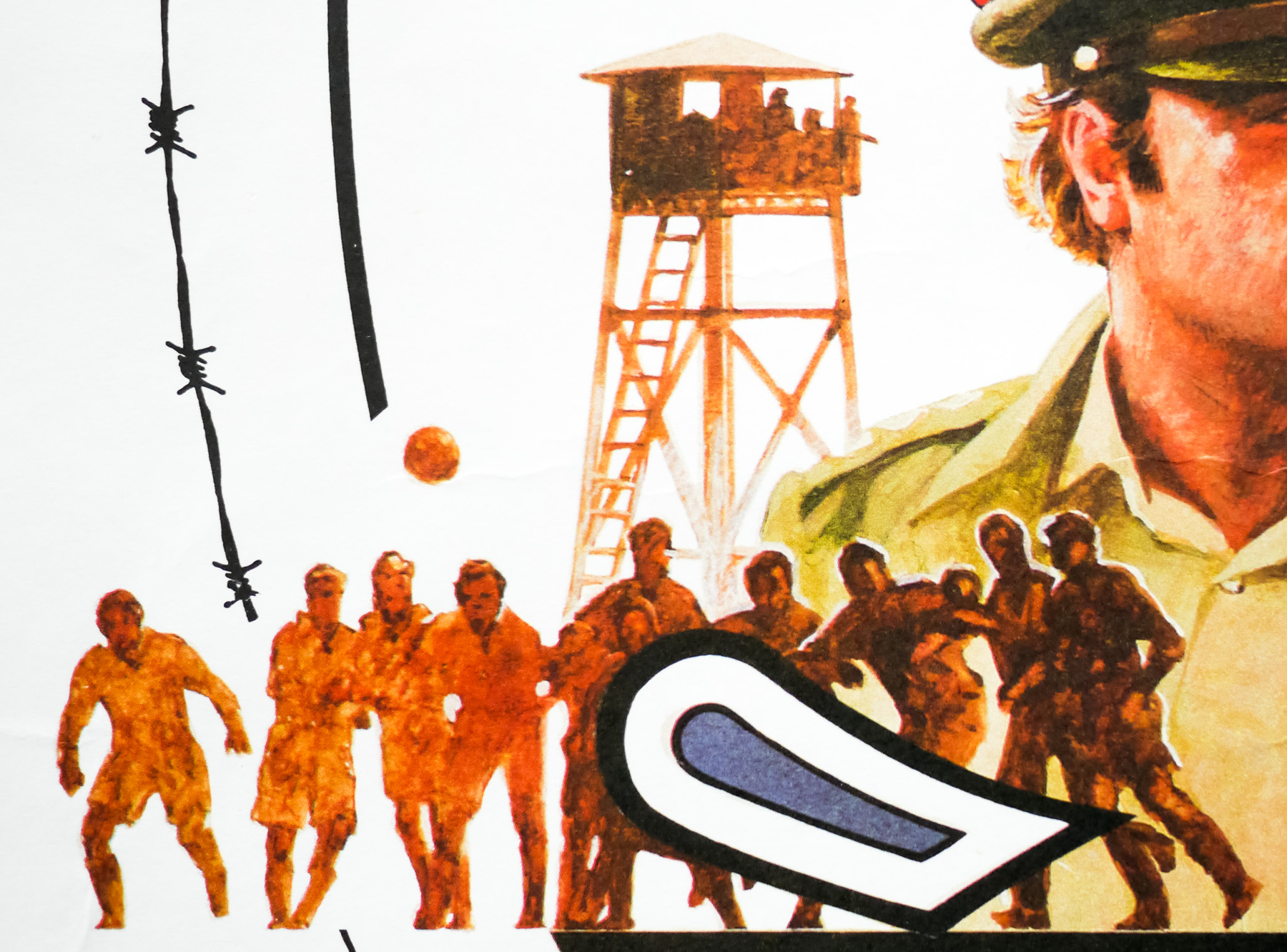
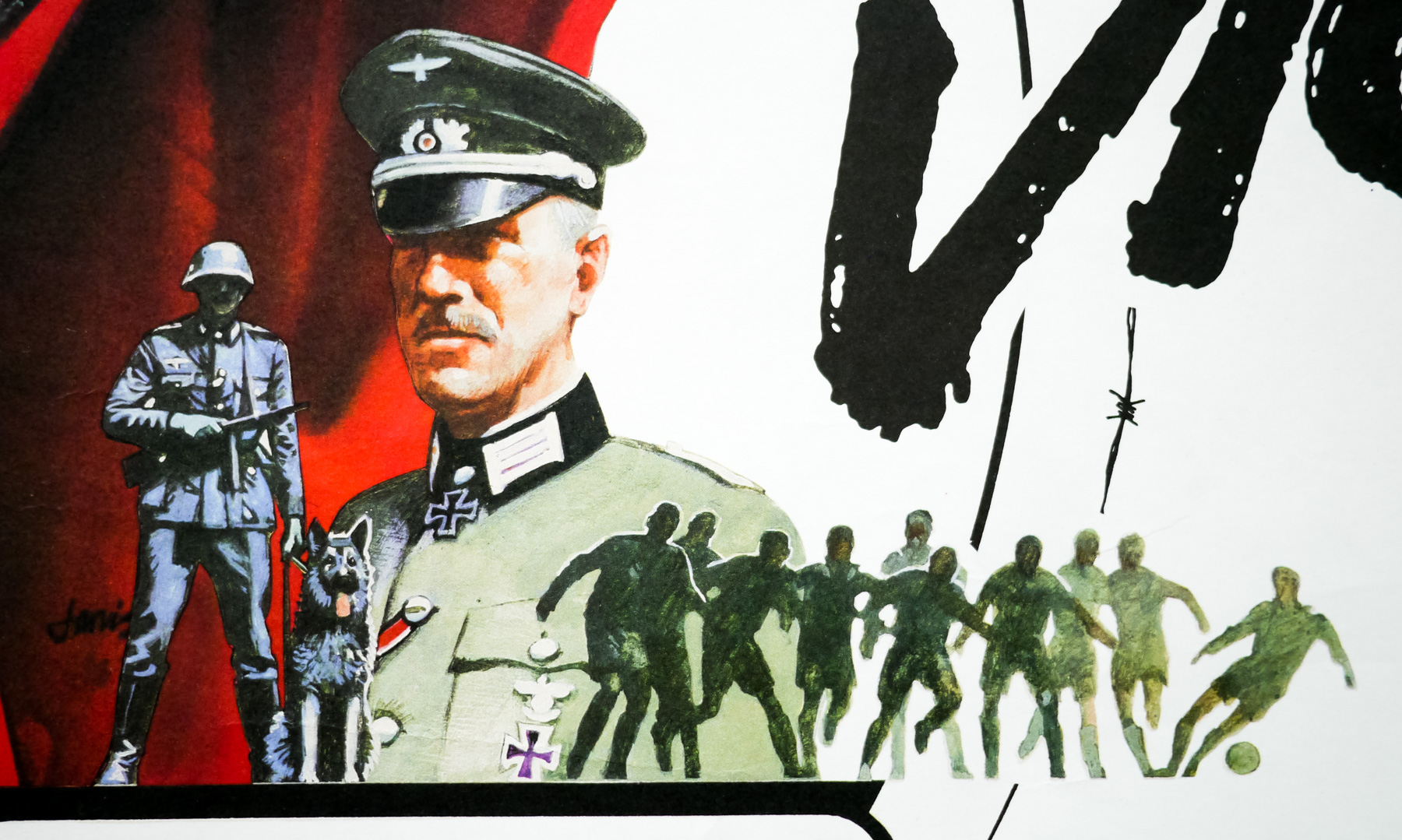
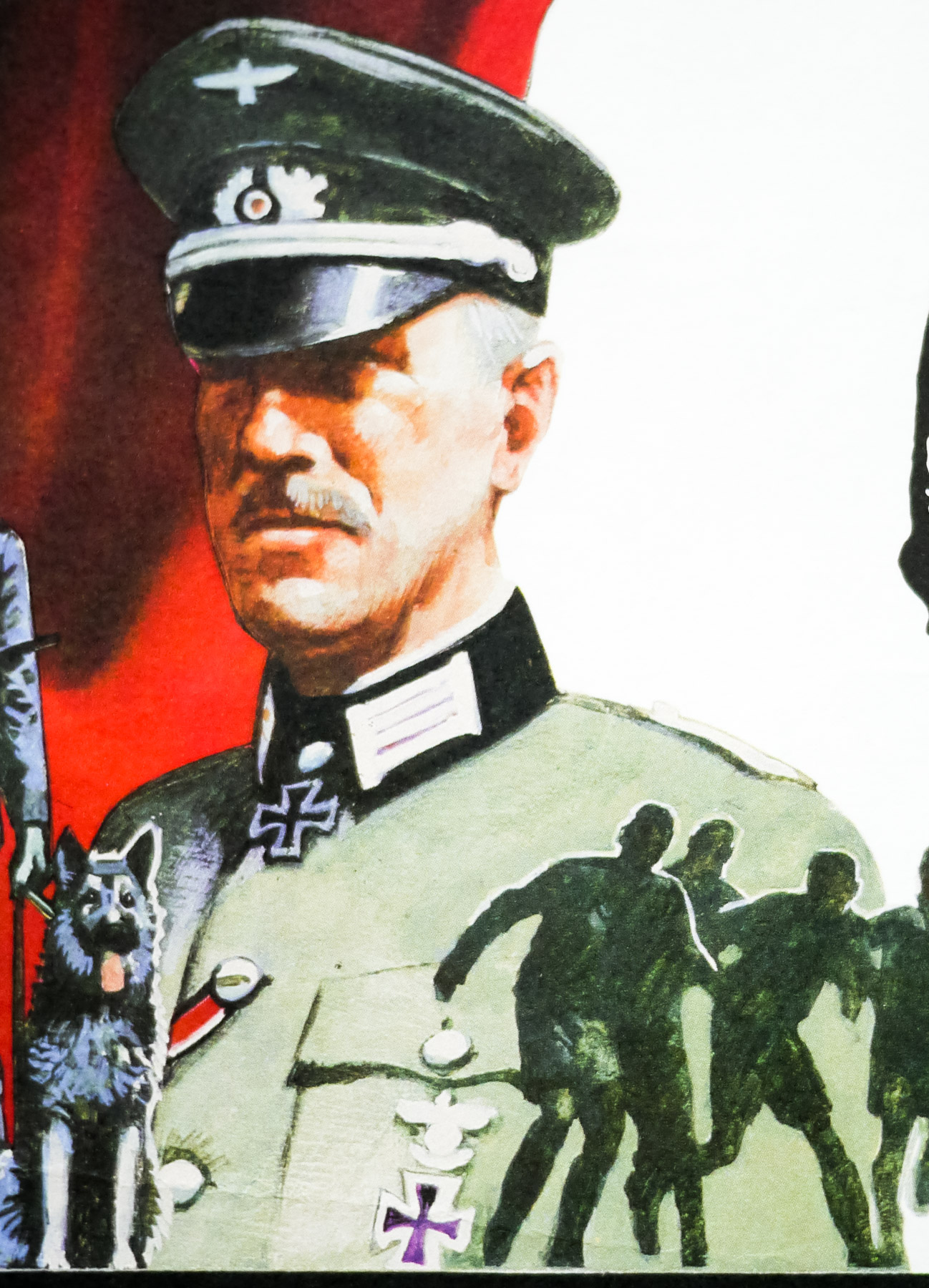
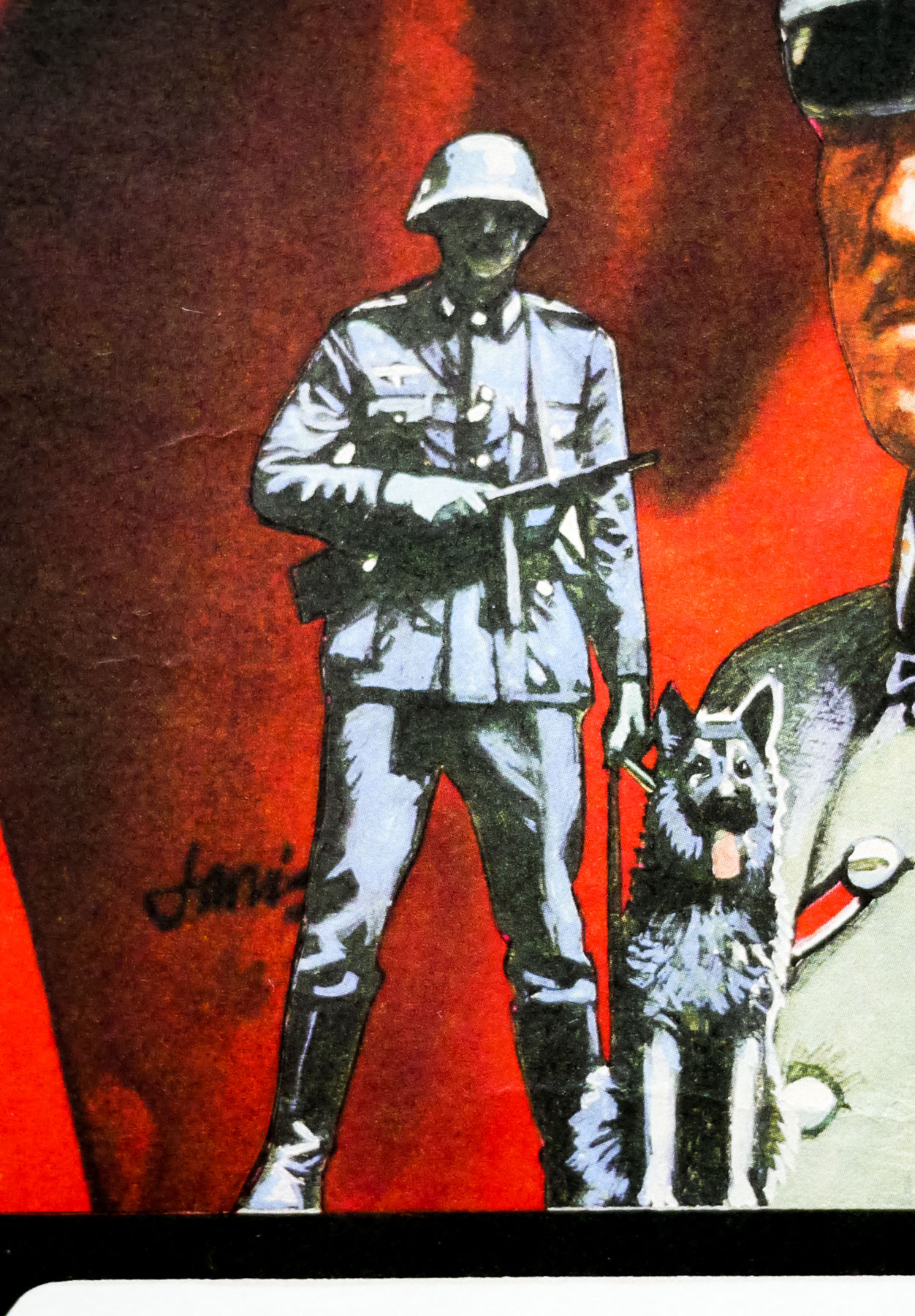
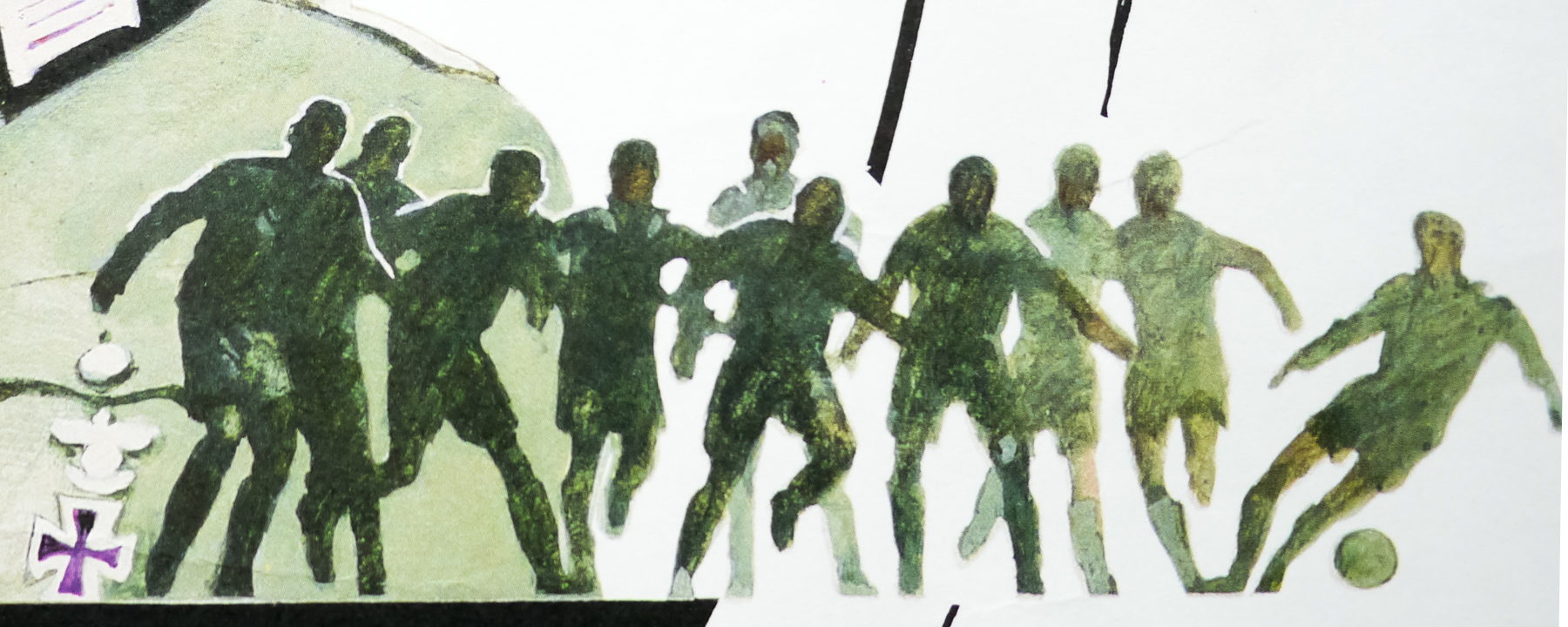
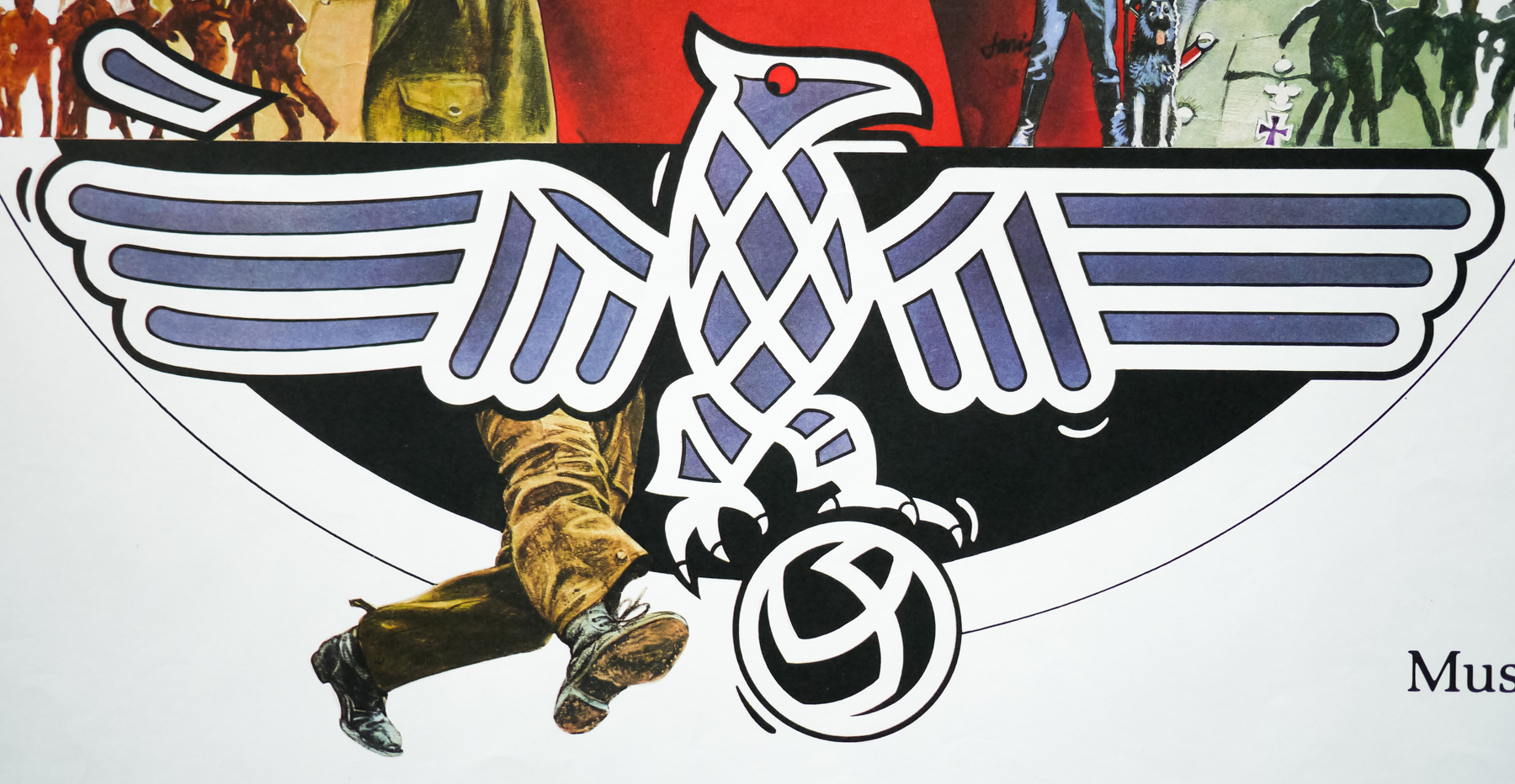
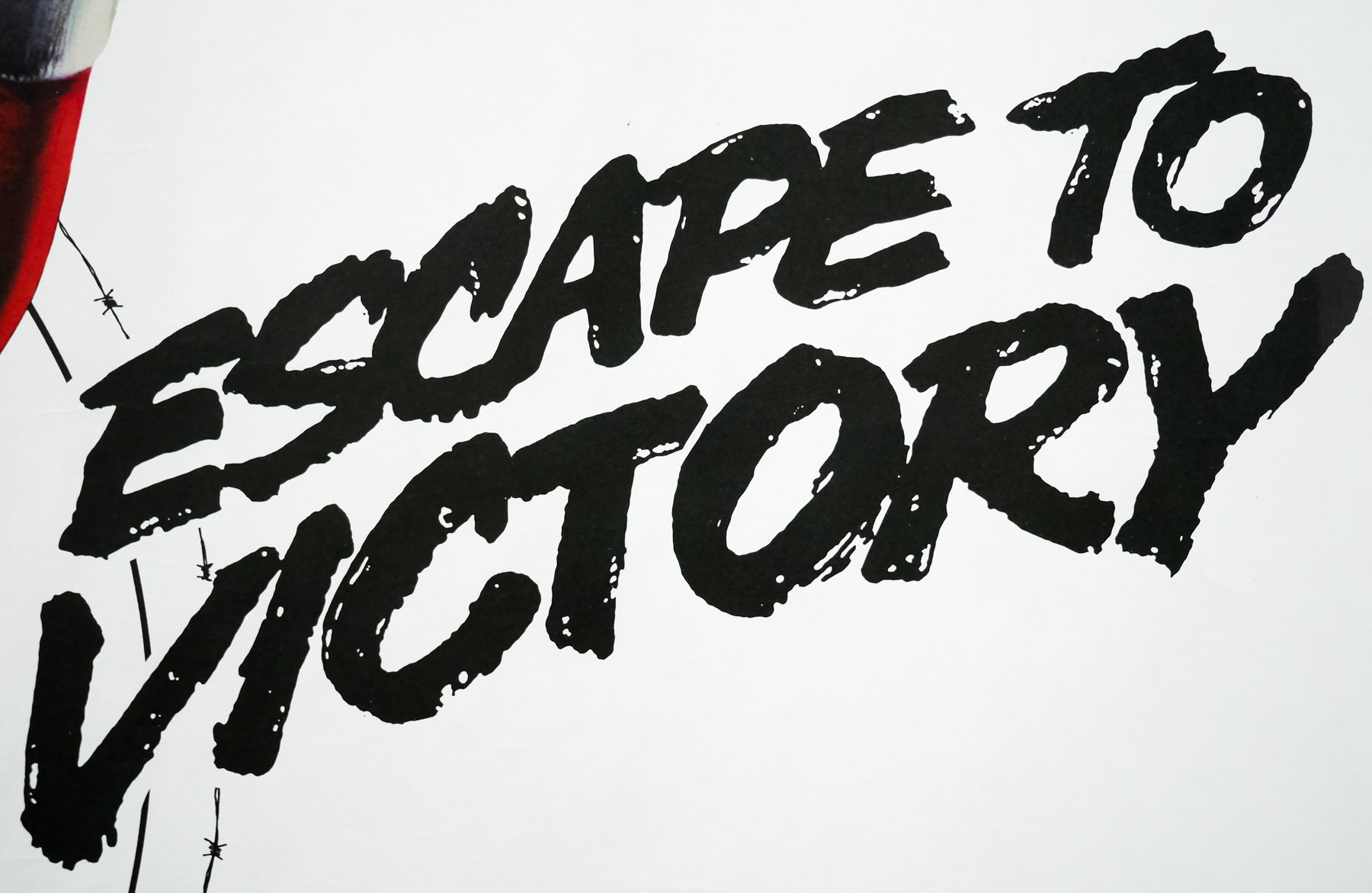
Something of a cult classic, Escape to Victory is arguably the most famous film to revolve around The Beautiful Game. Based on 1962 Hungarian film called Két félidő a pokolban by director Zoltán Fábri the film, which is set during WWII, tells the story of a football match played in Paris by a team of Prisoners of War against a German side, seen as a propaganda event. The team is led by John Colby (Michael Caine) who is determined to win the game despite the distraction of other POWs who want to use the cover of the game to escape. Sylvester Stallone plays Hatch, an American POW who is at the vanguard of the escape attempt and actually manages to get out of the camp prior to the game to meet up with resistance leaders in Paris. After planning the big breakout, Hatch must get recaptured and returned to the POW camp in order to communicate the plans to the others. When the big day arrives, Hatch is put into goal and Colby persuades the team to see the match through to the final whistle before they make their escape.

The film notoriously features a host of real life professional footballers who were involved in the game and doubled for the actors or played on the German team, including the Brazilian superstar PeléBobby MooreOsvaldo Ardiles and a whole host of players from the English team Ipswich Town, who were one of the most successful British sides at the time of the film’s release. English goalkeeping legend Gordon Banks, who played during the 1966 world cup that England won, worked behind the scenes and coached Stallone to ensure his scenes in goal were realistic enough for the film’s audience.

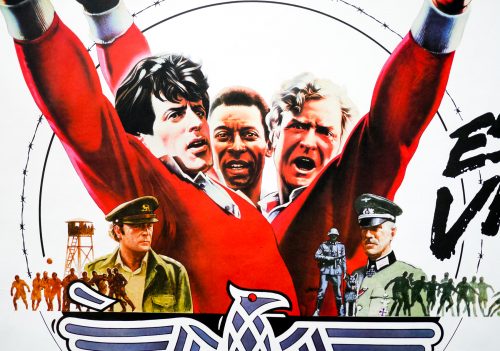
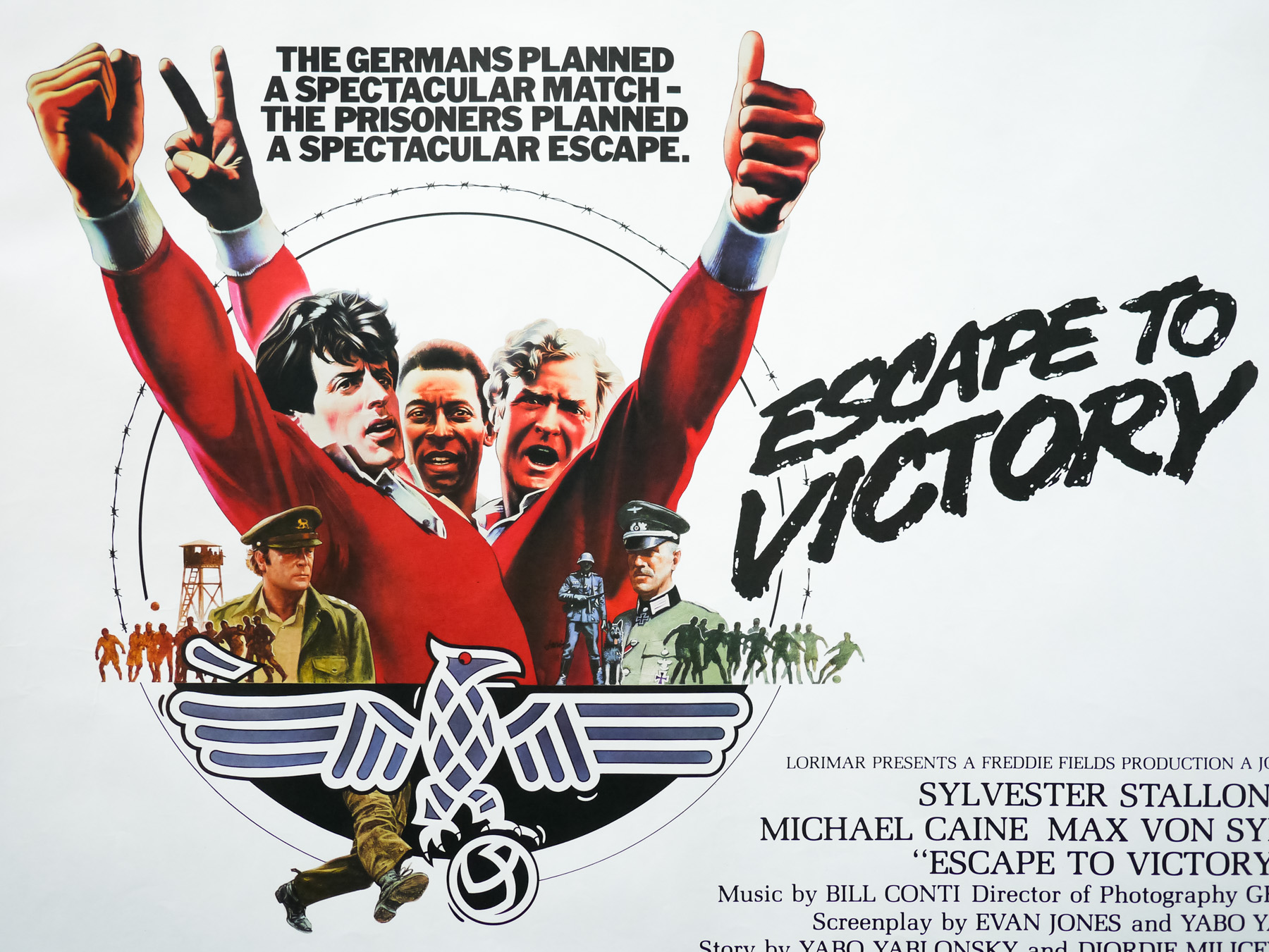
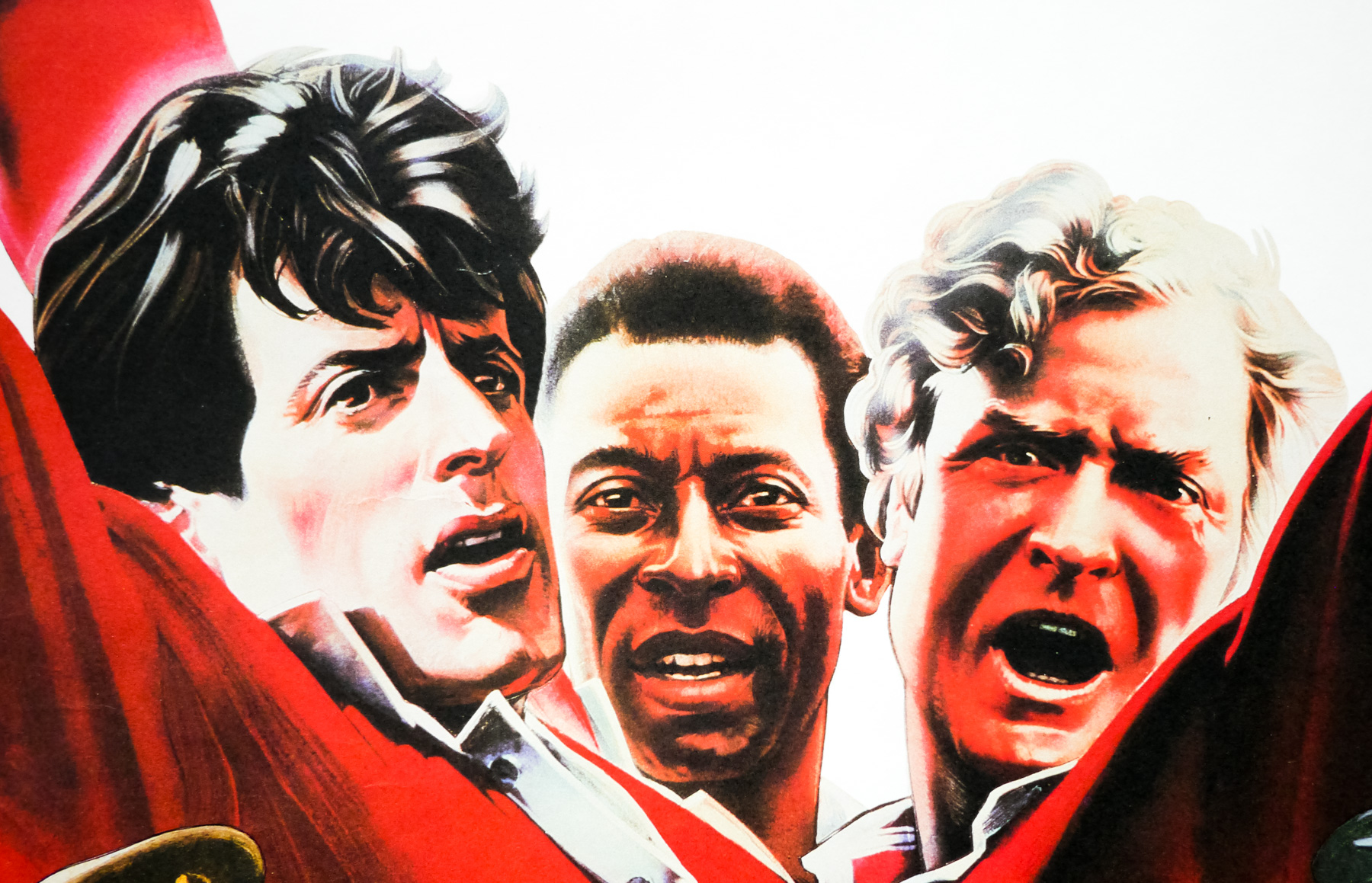
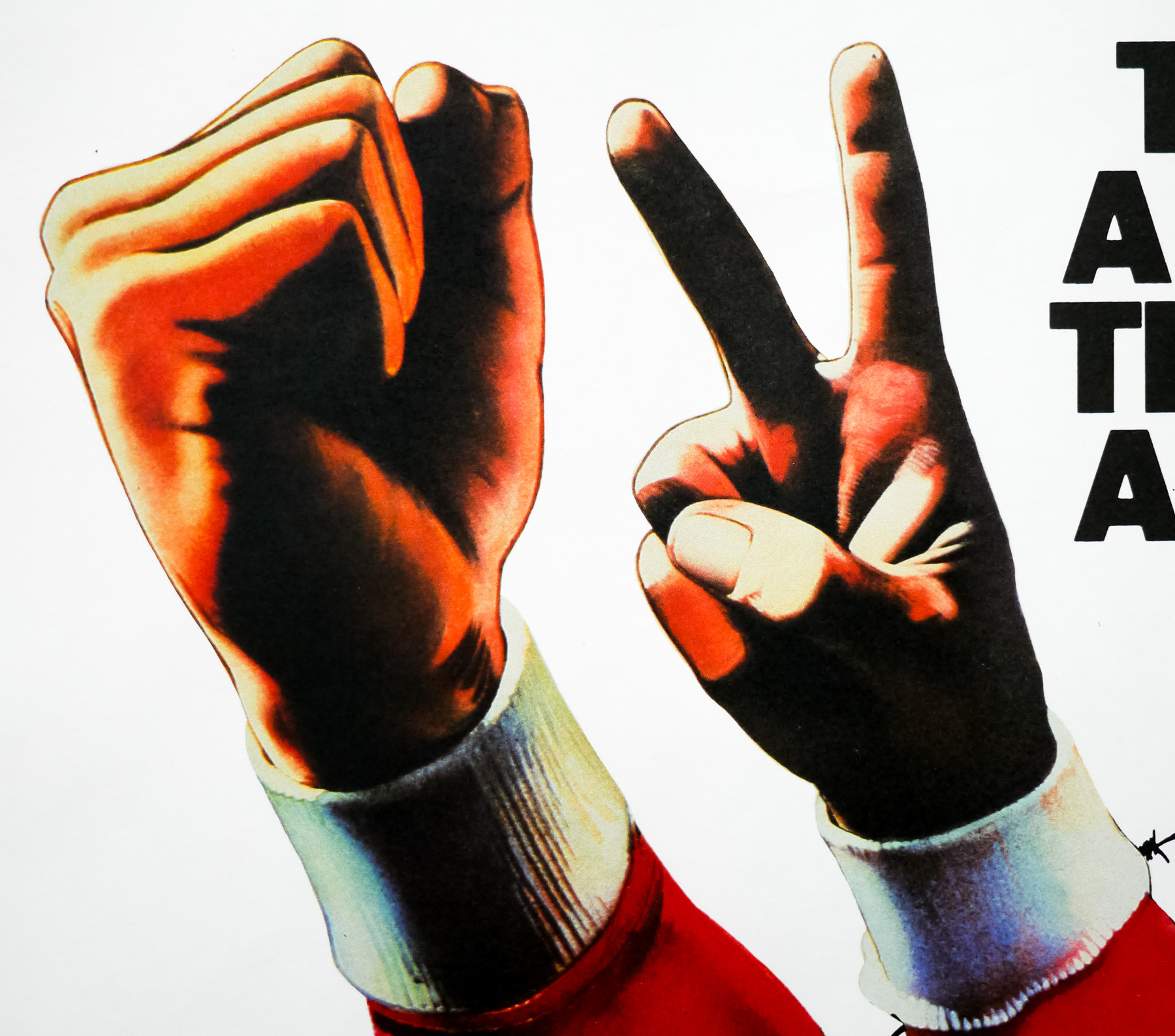
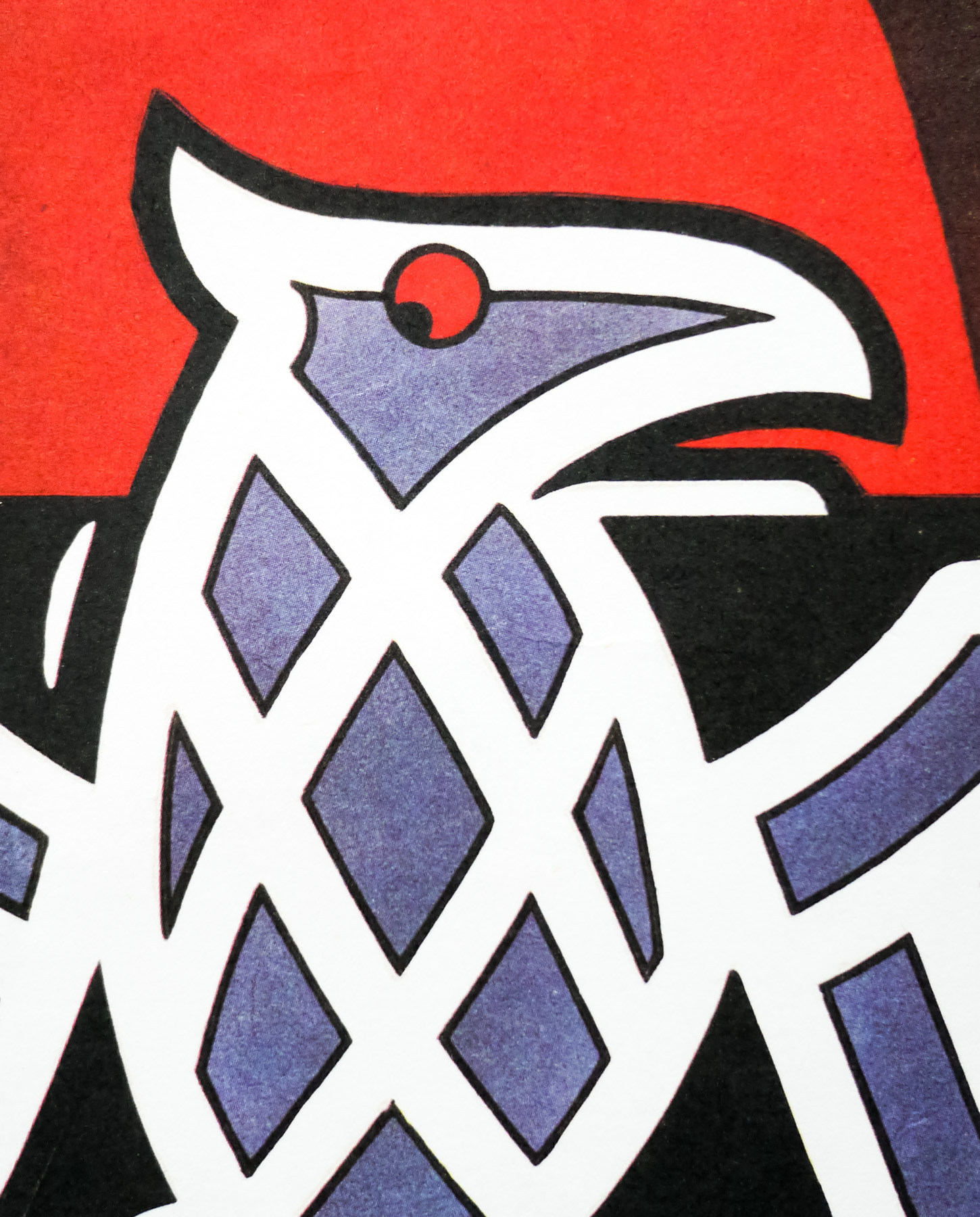
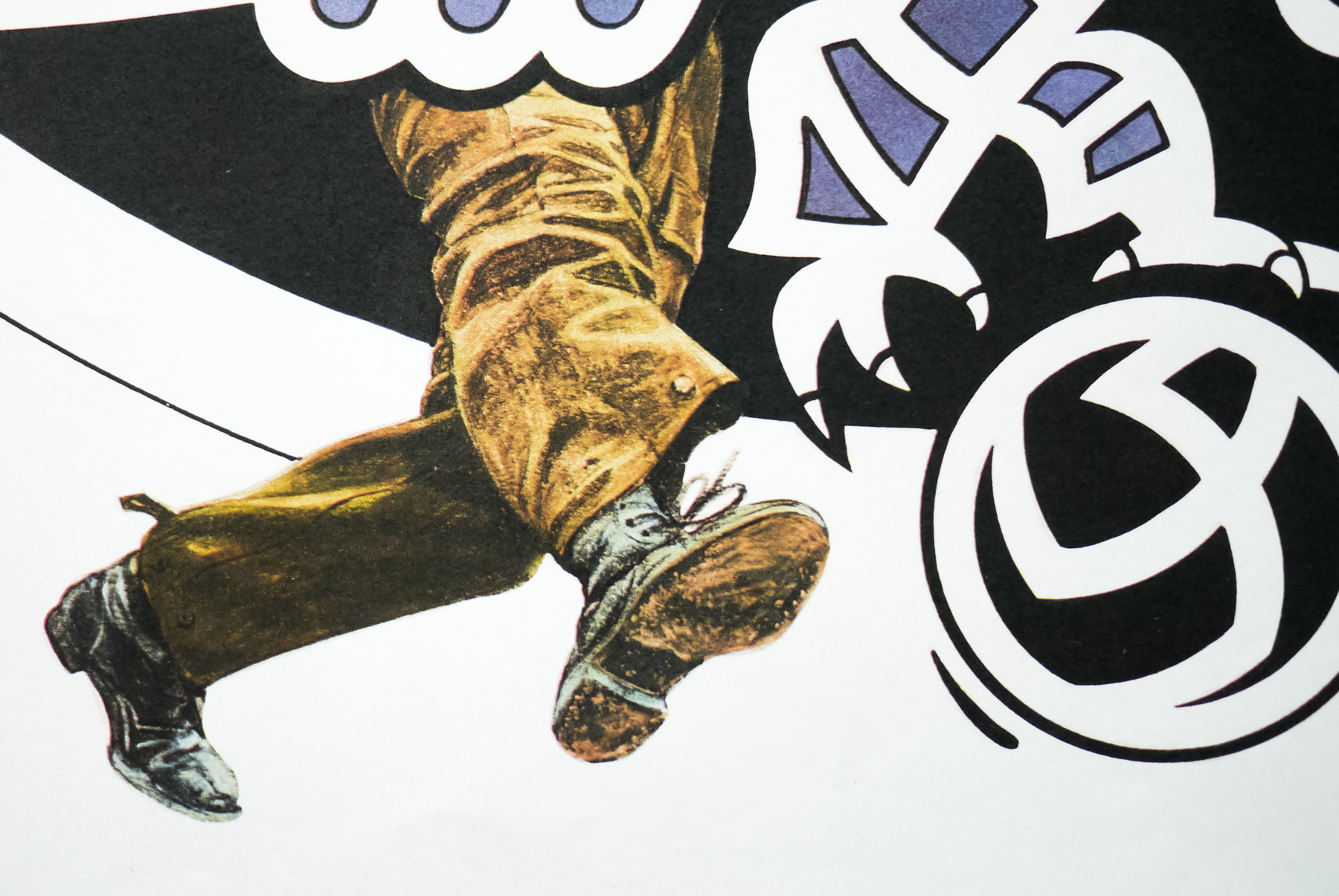
This UK quad takes the central figures from the US one sheet (where the film was titled simply Victory) that were painted by the artist David Jarvis and adds a montage that was illustrated by the British designer Vic Fair, who also designed the poster. Jarvis is perhaps best known for his illustration on the US one sheet for Walter Hill’s The Warriors. Having completed a degree in illustration at the Los Angeles Art Center College of Design, Jarvis went on to work as a freelance illustrator producing over thirty designs for film posters, as well as record sleeves, magazine covers and more. He also worked as an artist for Disney studios on the films Mulan and Tarzan. The other posters I’ve collected by him can be seen here.

One of the most important designer/artists ever to work on British film marketing, Vic Fair is responsible for several iconic posters, including The Man Who Fell To Earth, posters for Hammer horrors like Vampire Circus, and the withdrawn advance one sheet for A View to a Kill. I interviewed the artist for this site and that article can be viewed by clicking here.

Brainstorm / quad / UK

22.09.14

Poster Poster
Title
Brainstorm
AKA
--
Year of Film
1983
Director
Douglas Trumbull
Starring
Christopher Walken, Natalie Wood, Louise Fletcher, Cliff Robertson, Jordan Christopher, Donald Hotton, Alan Fudge, Joe Dorsey, Bill Morey, Jason Lively
Origin of Film
USA
Genre(s) of Film
Christopher Walken, Natalie Wood, Louise Fletcher, Cliff Robertson, Jordan Christopher, Donald Hotton, Alan Fudge, Joe Dorsey, Bill Morey, Jason Lively,
Type of Poster
Quad
Style of Poster
--
Origin of Poster
UK
Year of Poster
1983
Designer
Marcus Silversides
Artist
Brian Bysouth
Size (inches)
30" x 40"
SS or DS
SS
Tagline
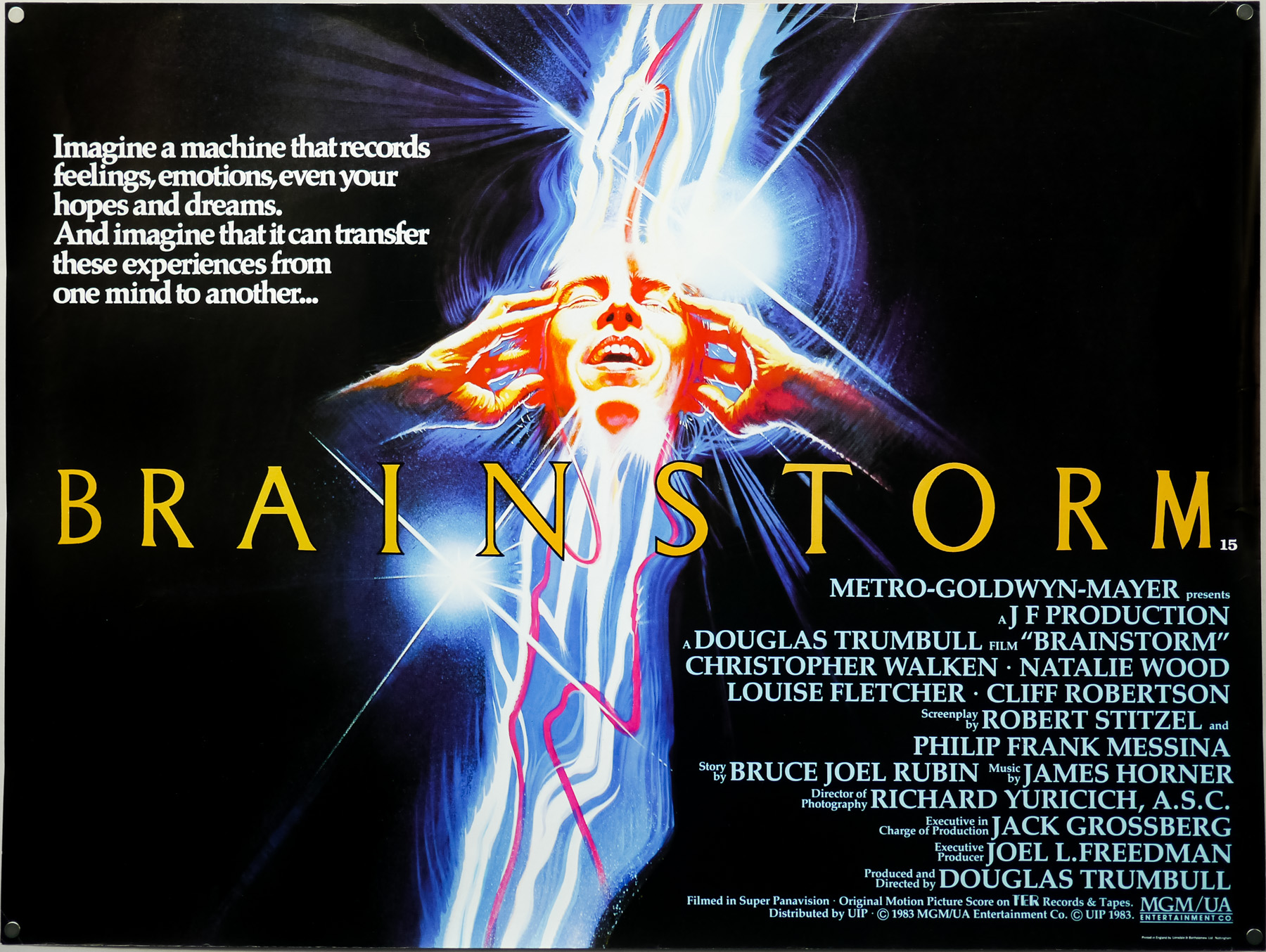
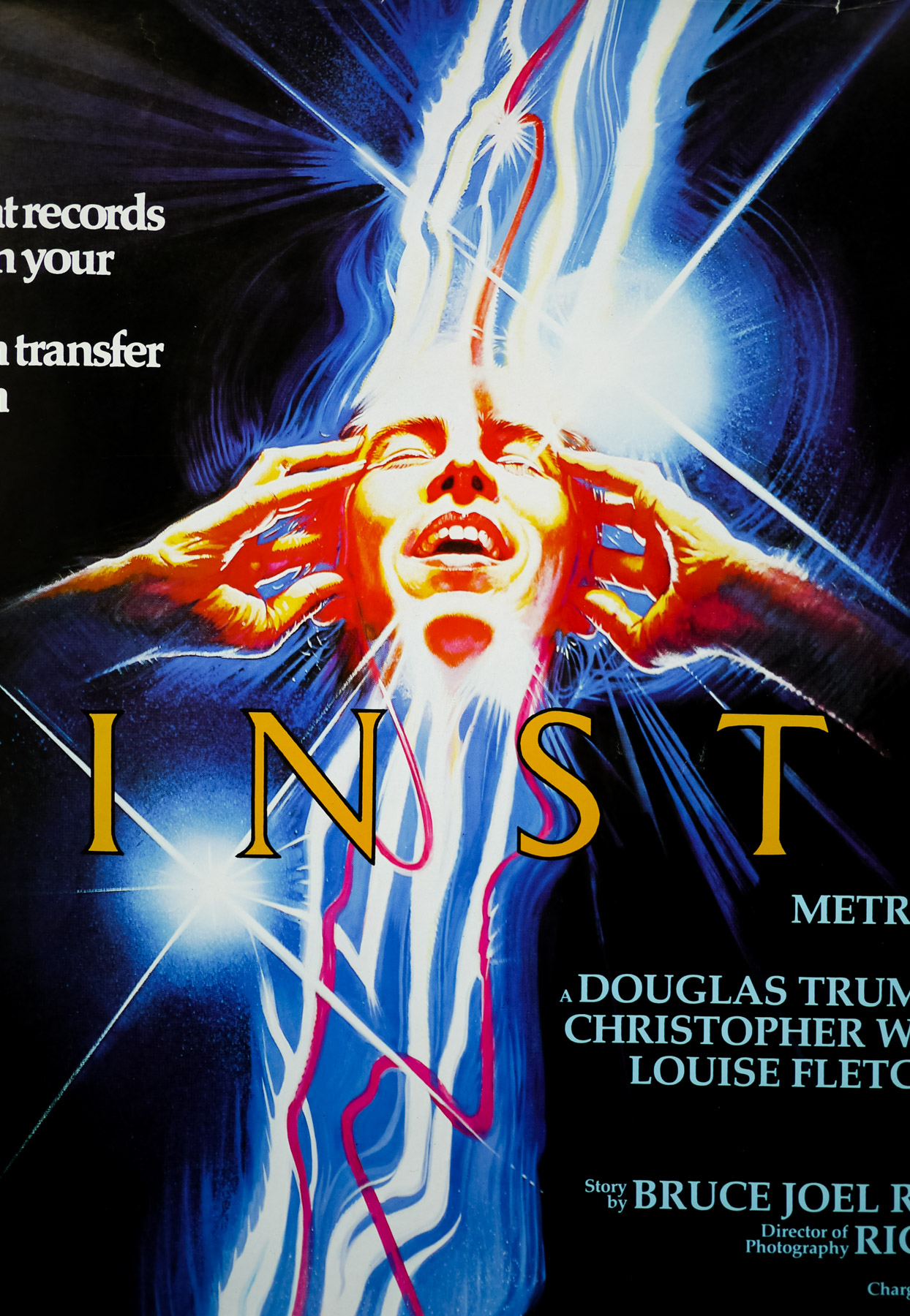
Imagine a machine that records feelings, emotions, even your dreams. And imagine that it can transfer these experiences from one mind to another...

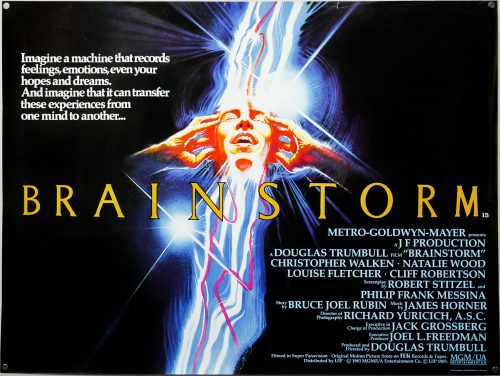
This is the UK quad for the release of the science-fiction film Brainstorm, which was the second and final directorial effort from Douglas Trumbull who is best known for his pioneering work in the field of special effects. Trumbull had worked with Stanley Kubrick on 2001: A Space Odyssey and created the iconic ‘Star Gate’ sequence at the end of the film. He would go on to create special effects sequences for films including Close Encounters of the Third Kind, Star Trek: The Motion Picture and Blade Runner. The first film he directed was the cult classic Silent Running (1974) which was a critical success but a box-office failure and it would be eight years before Trumbull would once again sit in the director’s chair.

The film stars Christopher Walken as Michael Brace, a scientist working as part of a pioneering research team that has discovered a method of recording the sensory and emotional feelings of a person onto tape, allowing them to be viewed by others. His estranged wife Karen (Natalie Wood) also works with him and Michael realises he can use the system to reconcile their feelings for each other and show her his true emotions. Unfortunately not all of the scientists use it for good with one recording a sexual encounter which he then shares with several of his colleagues, leading to his eventual dismissal. 

Lillian Reynolds (Louise Fletcher) one of the lead scientists is fiercely protective of the team’s work and is angry when the company forces the team to involve military advisors in their plans. When she suffers a heart attack in the lab and is unable to call for help, she records the experience of death into the system. The tape is viewed by another scientist and the sensory experience causes him to also have a heart attack so the company locks the tape away. Lillian’s fears about the nefarious plans of the military are borne out when Michael discovers they plan to use the system for torture and brainwashing but his protestations see him get fired from the program. He and Karen decide to shut down the system to prevent it being used for negative means but Michael is also determined to view Lillian’s ‘death’ tape, despite Karen’s protestations.

Trumbull used the production to work on a new effects process which he called Showscan that allowed for 70mm film to be projected at 60fps (standard film is 24fps) and create a hyperreal feeling to the footage. MGM backed out of plans to create prints in the new format but Trumbull did film the virtual reality sequences in the larger Super Panavision 70 format and the ‘normal’ sequences in the conventional 35mm format so that it changes throughout the film whenever the scientists use their machines. The film was shown at special 70mm cinemas during its initial run.

The film’s production was unfortunately overshadowed by the mysterious death of Natalie Wood who drowned whilst on a boat trip with Walken and her husband Robert Wagner. MGM shut down the production and were planning to write it off and claim insurance on the money already spent. Trumbull and others argued with the studio that Wood had already completed most of her key scenes and the insurers realised that the film was salvageable. They agreed to finance the completion of production for a cut of any profits but by then things were getting very acrimonious between the director and MGM.

Trumbull was allowed to finish the film by rewriting several scenes and using a body double for Wood in some scenes but the experience critically damaged his desire to work inside the Hollywood system again. In 1983 he stated, “I have no interest…in doing another Hollywood feature film…Absolutely none. The movie business is so totally screwed-up that I just don’t have the energy to invest three or four years in a feature film. Moviemaking is like waging war. It destroys your personal life, too.” Sadly Brainstorm under-performed in cinemas despite strong critical notices and failed to recoup most of its final budget.

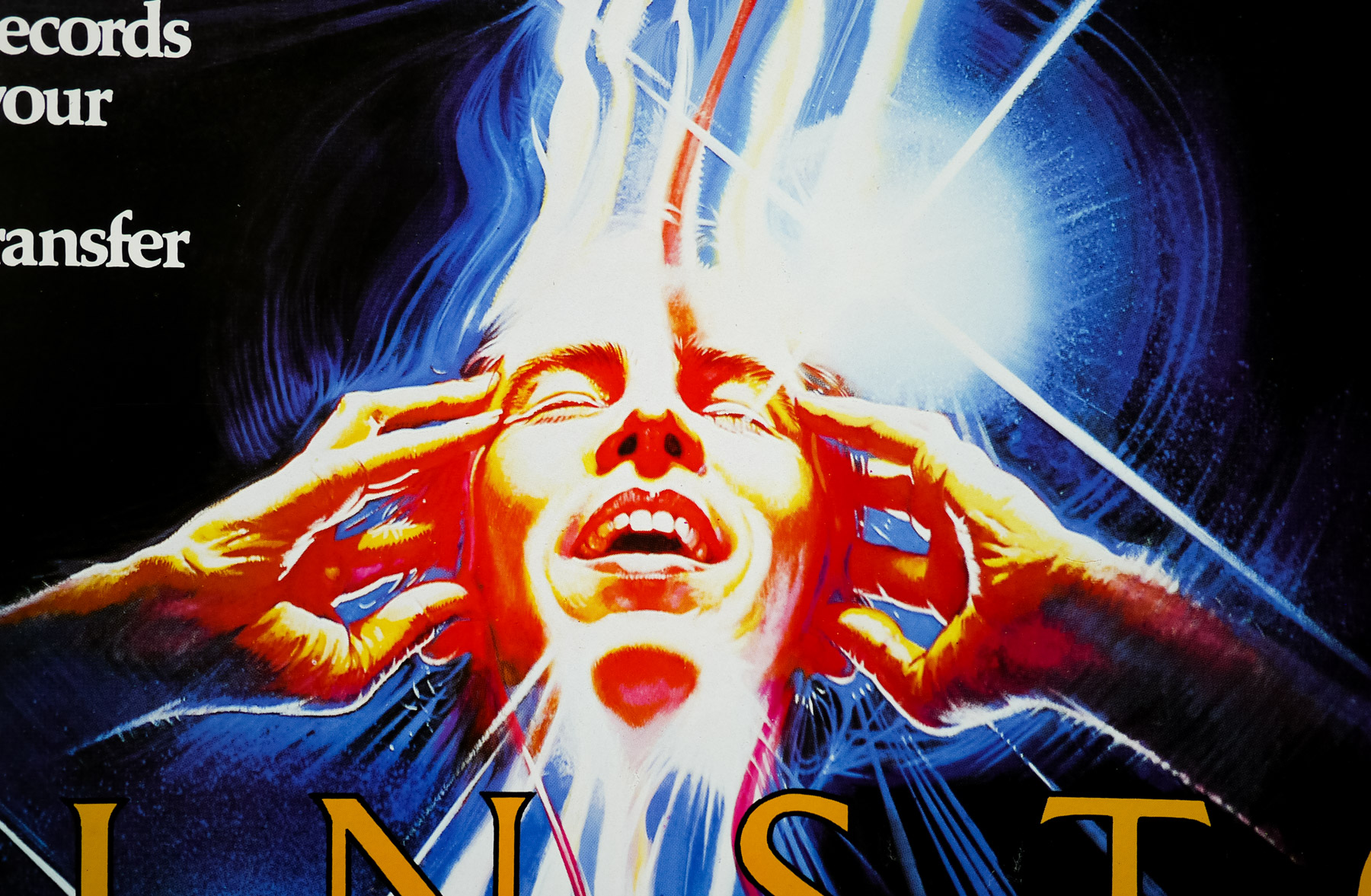
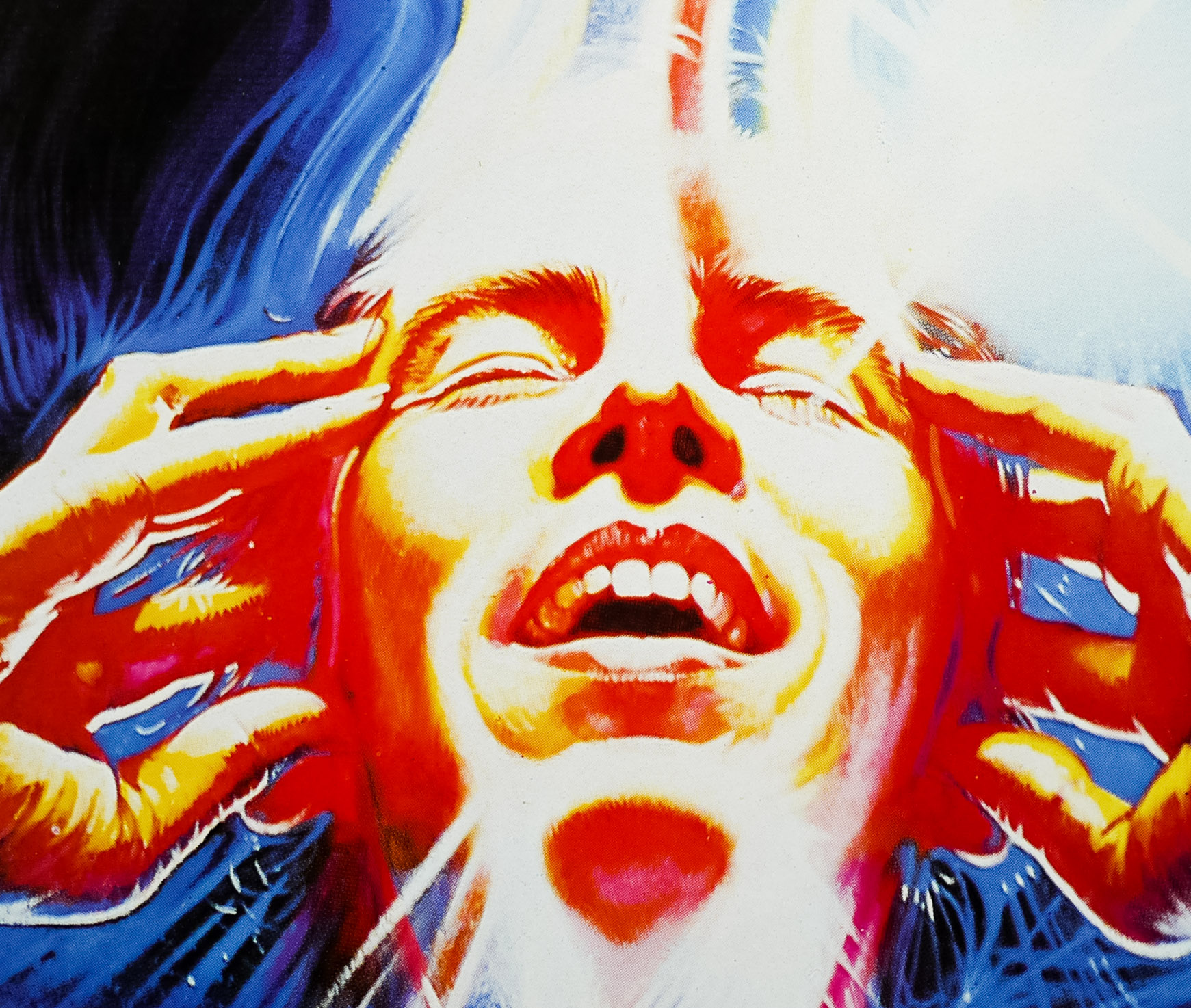
This quad features unique artwork that was painted by the British artist Brian Bysouth, based on a design by fellow designer and artist Marcus Silversides. The figure is actually based on Silversides himself whose reference shot was provided to Bysouth as he painted the artwork. You can read my extensive interview with the artist by clicking here. The other posters I’ve collected by him can be seen by clicking here.

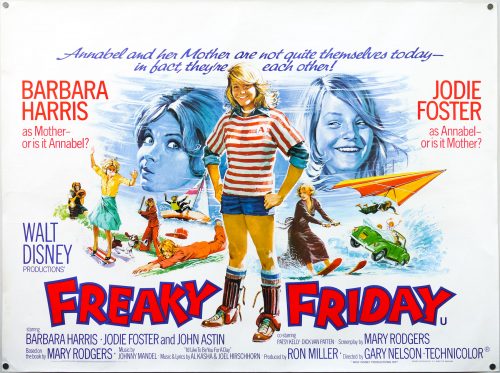
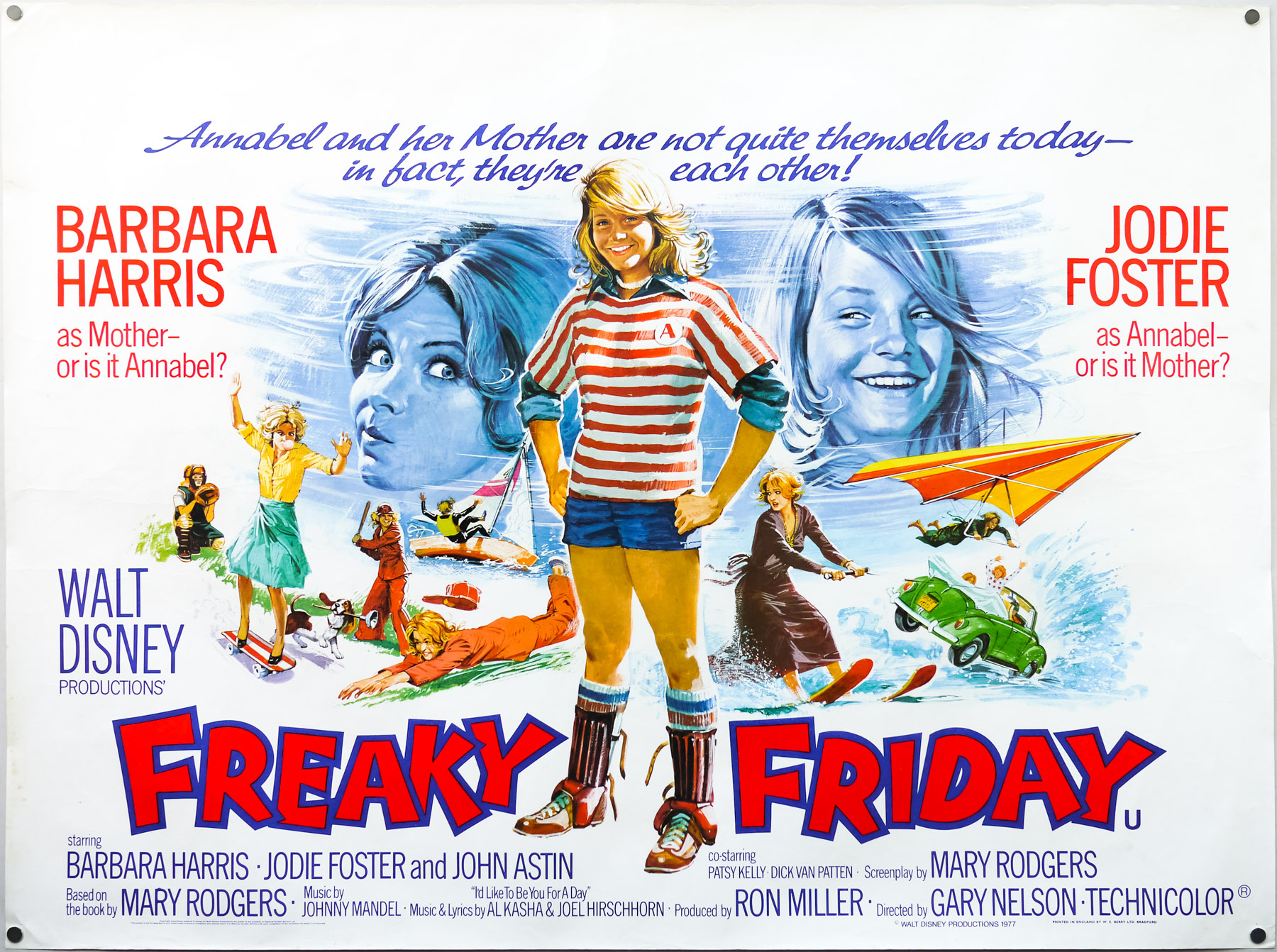
Freaky Friday / quad / UK

15.10.14

Poster Poster
Title
Freaky Friday
AKA
--
Year of Film
1976
Director
Gary Nelson
Starring
Barbara Harris, Jodie Foster, John Astin, Patsy Kelly, Dick Van Patten, Vicki Schreck, Sorrell Booke, Alan Oppenheimer, Ruth Buzzi, Kaye Ballard, Marc McClure, Marie Windsor
Origin of Film
USA
Genre(s) of Film
Barbara Harris, Jodie Foster, John Astin, Patsy Kelly, Dick Van Patten, Vicki Schreck, Sorrell Booke, Alan Oppenheimer, Ruth Buzzi, Kaye Ballard, Marc McClure, Marie Windsor,
Type of Poster
Quad
Style of Poster
--
Origin of Poster
UK
Year of Poster
1976
Designer
Brian Bysouth
Artist
Brian Bysouth
Size (inches)
30" x 40 2/16"
SS or DS
SS
Tagline
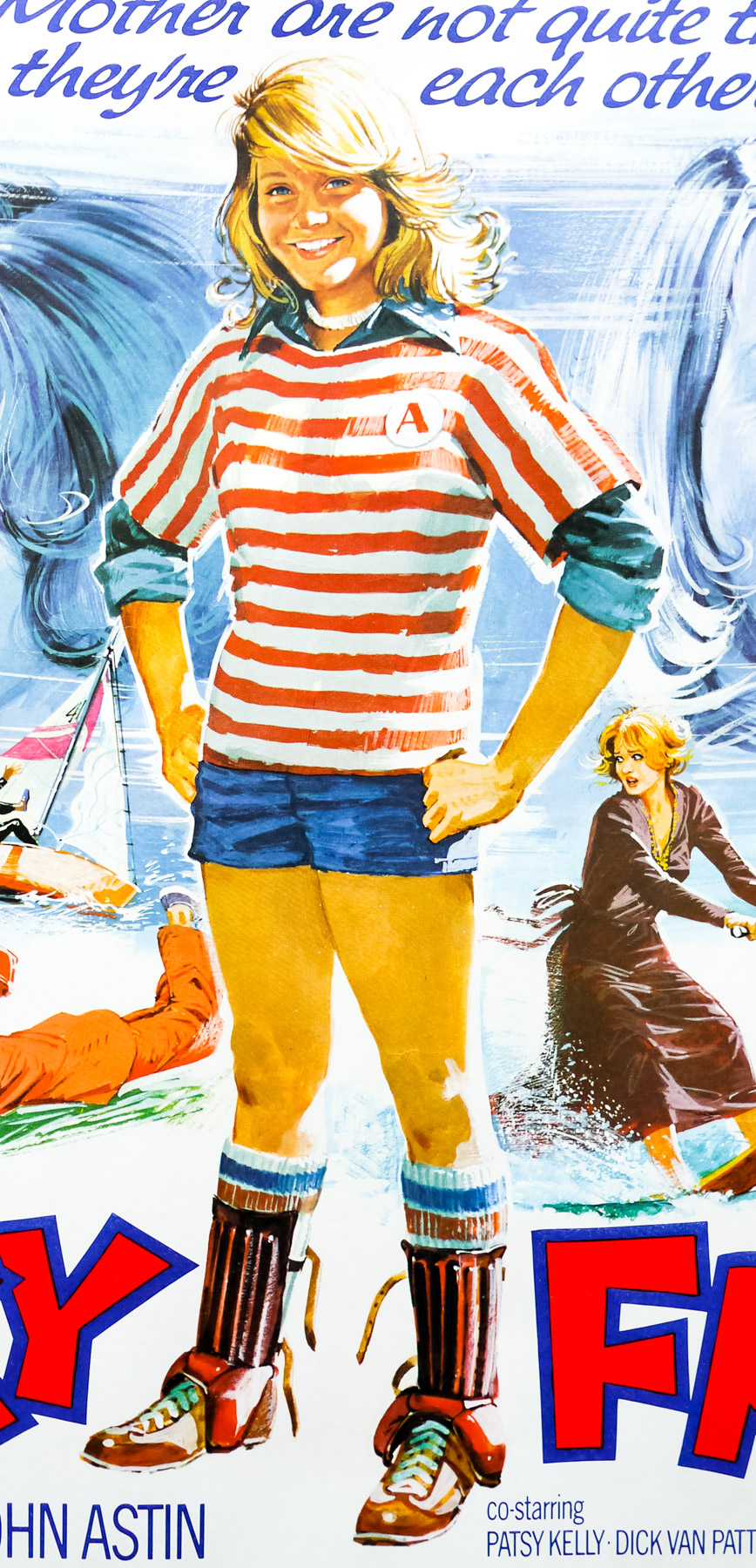
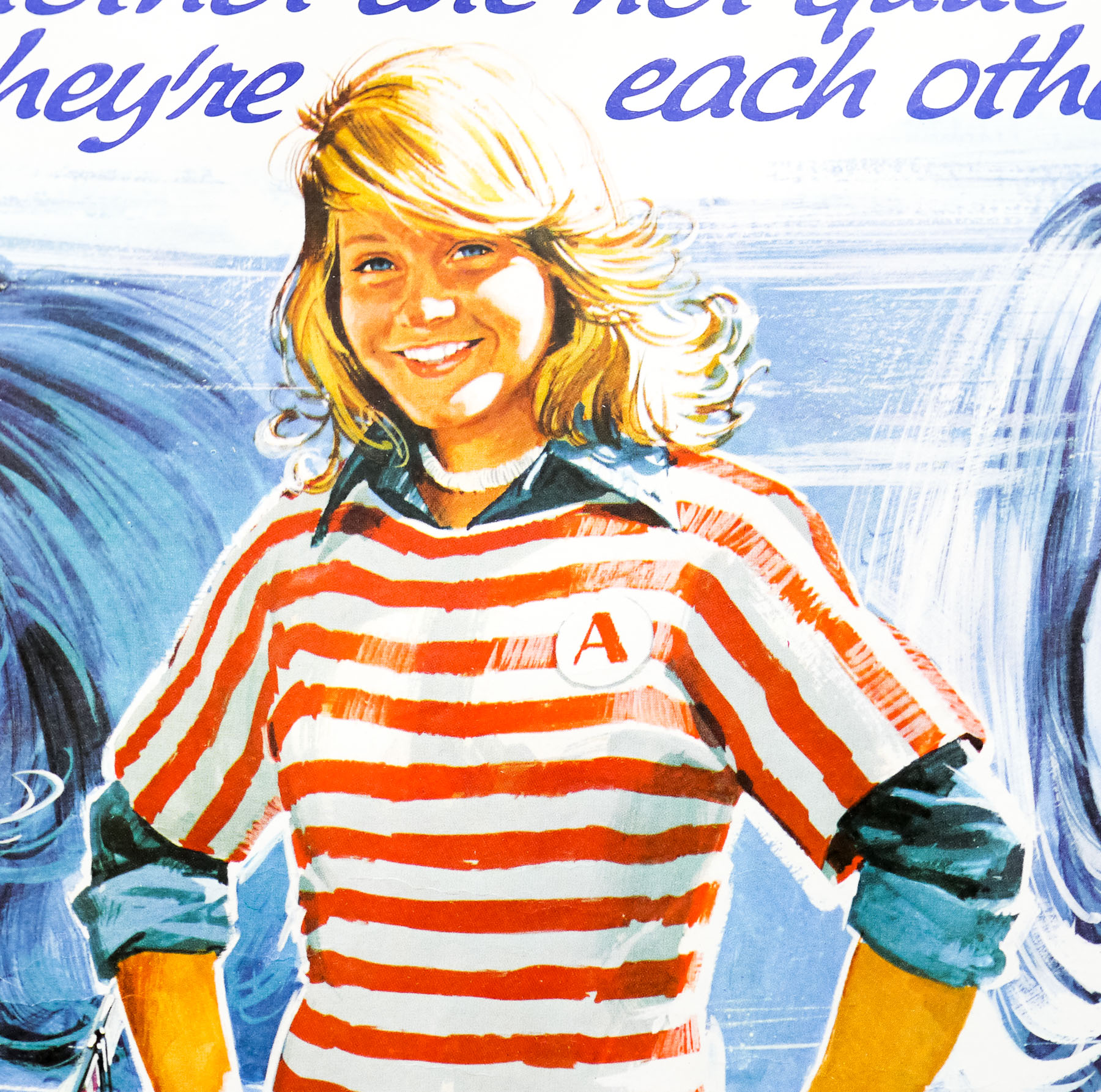
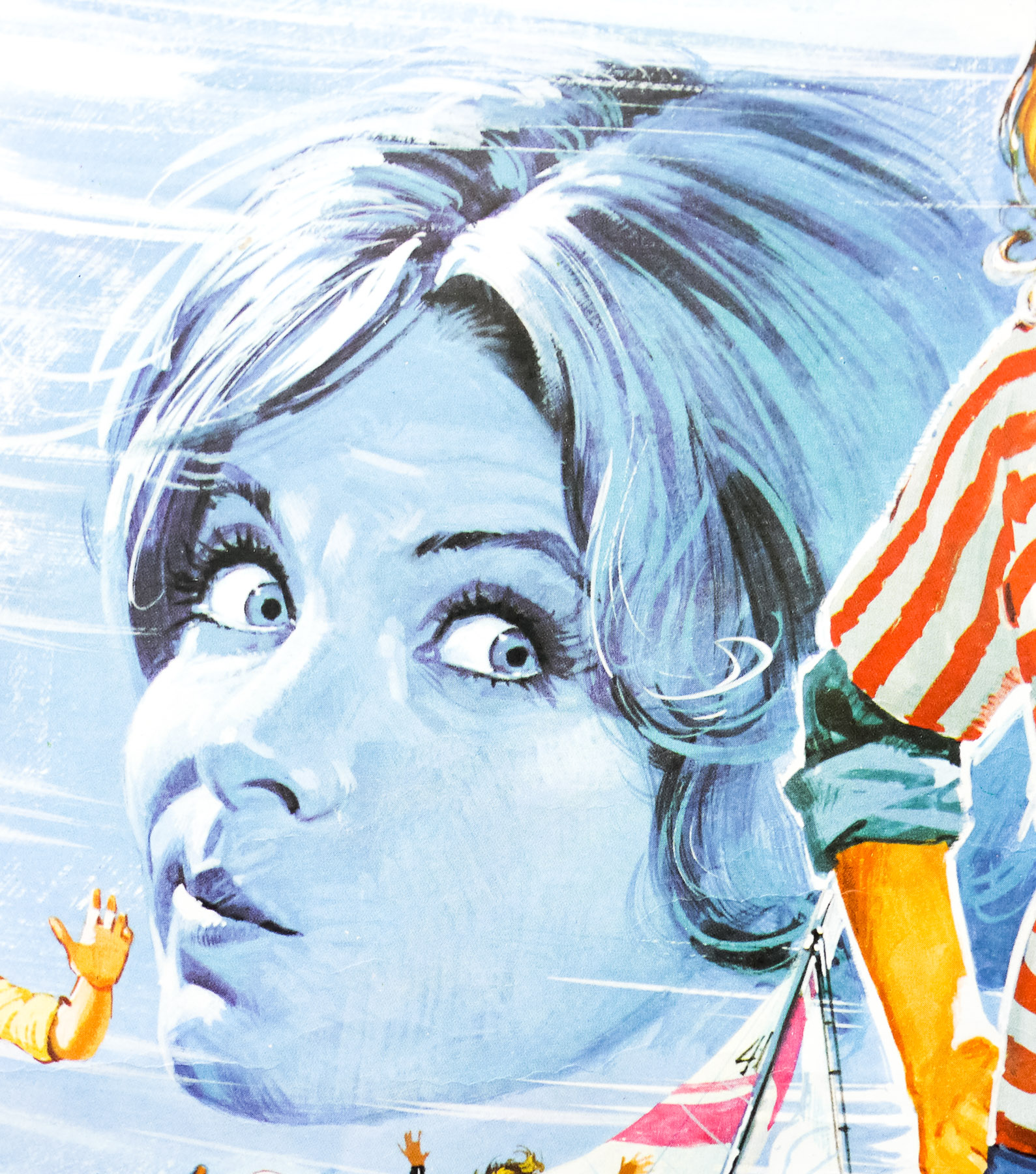
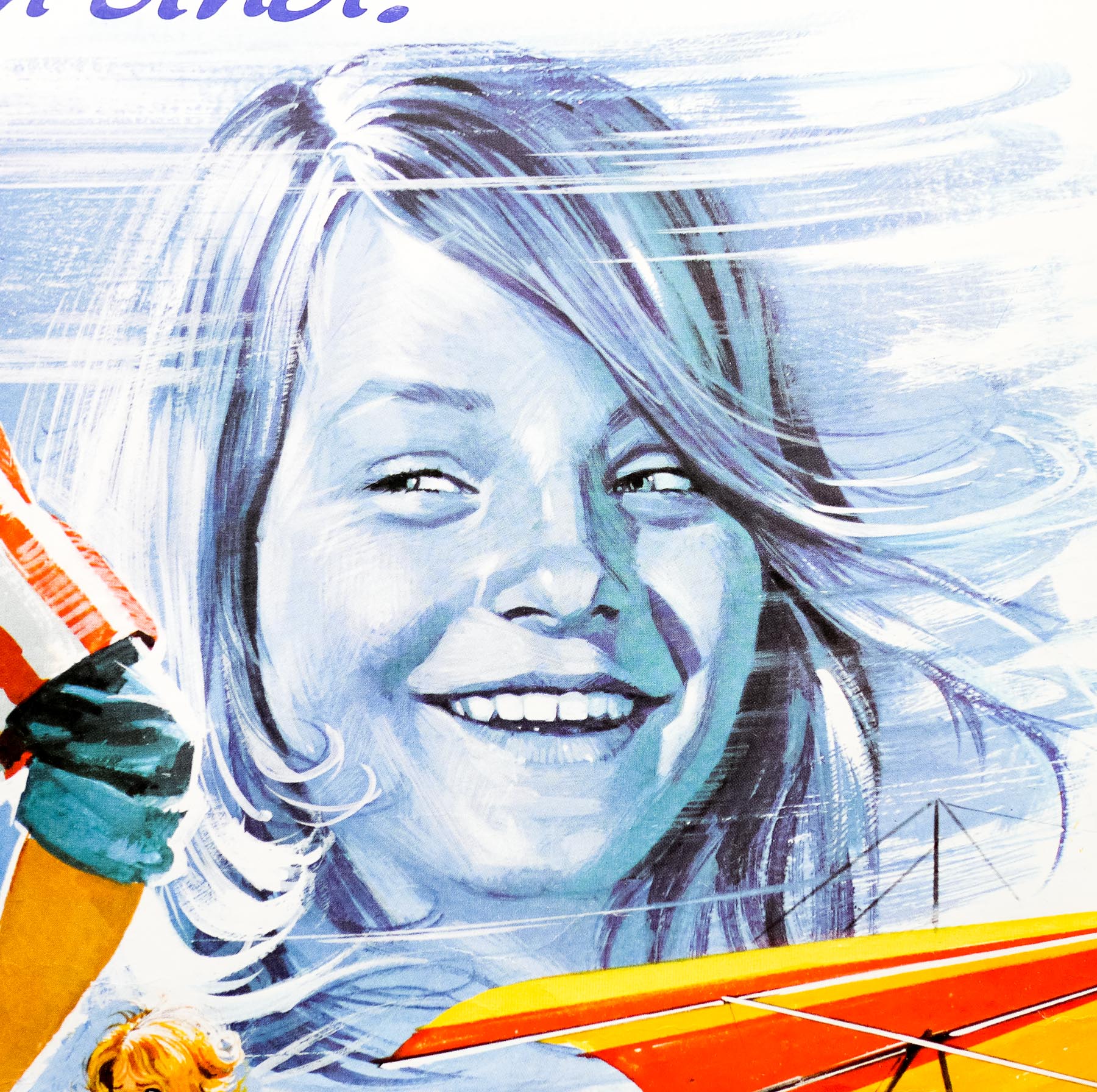
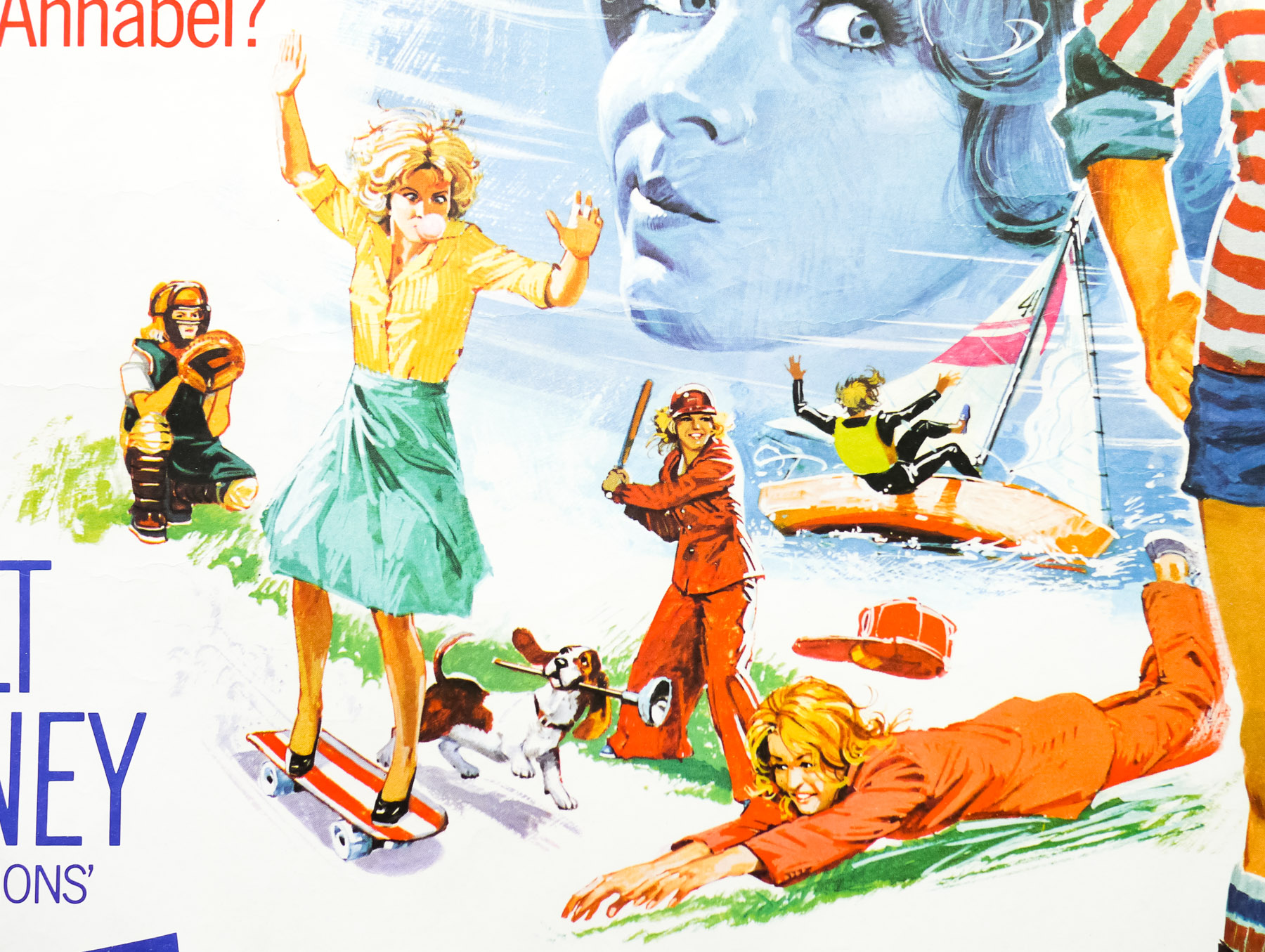
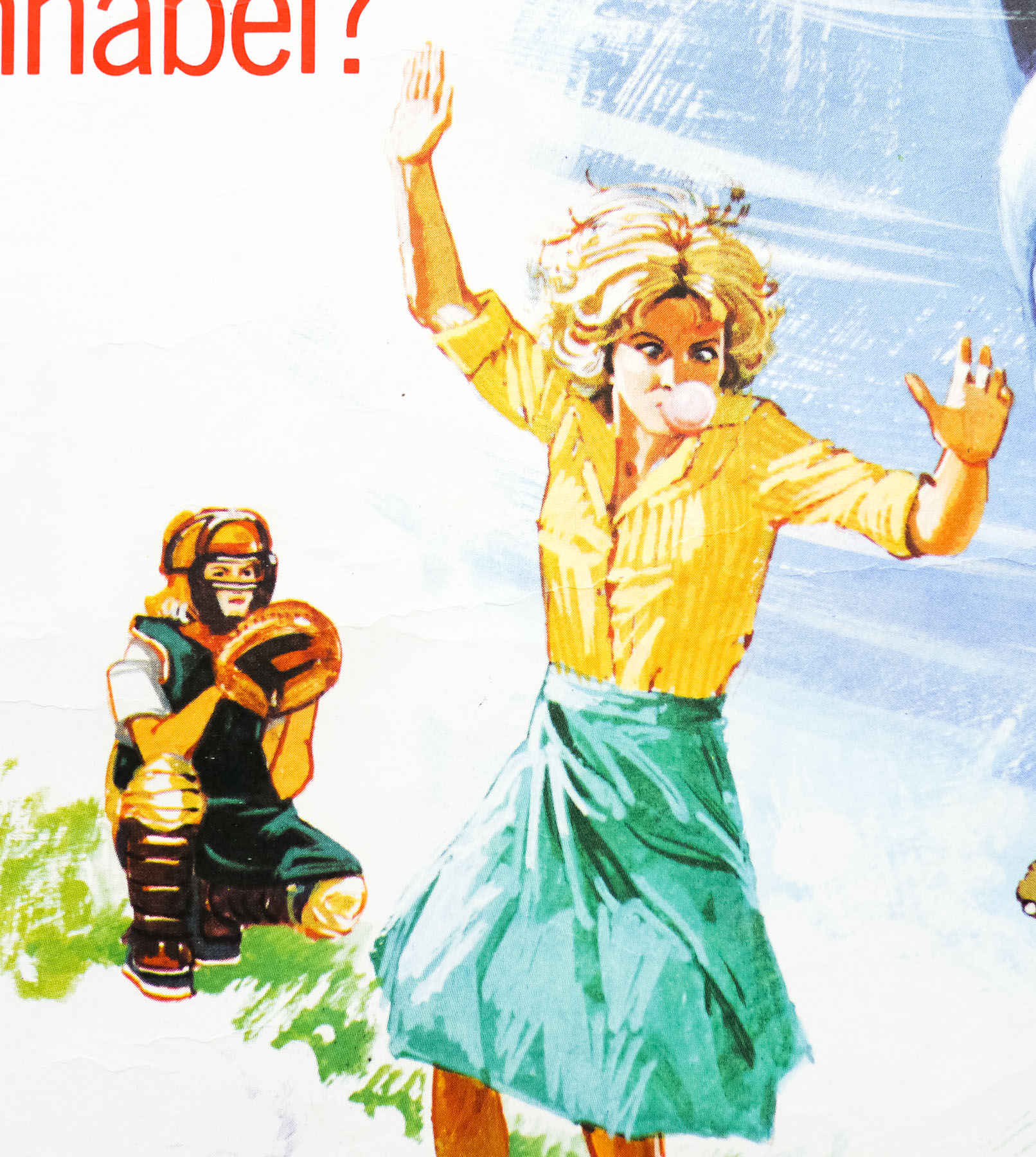
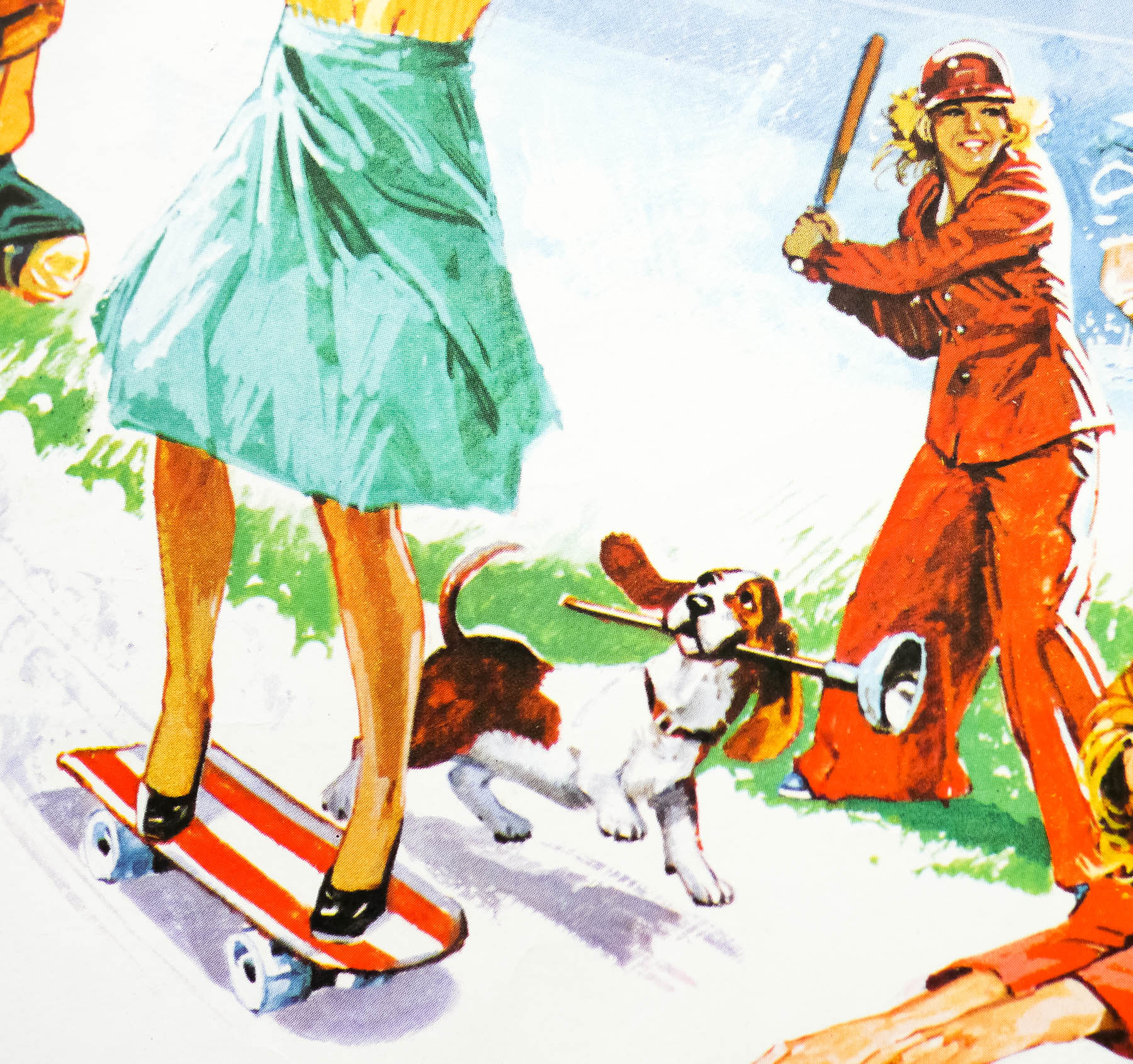
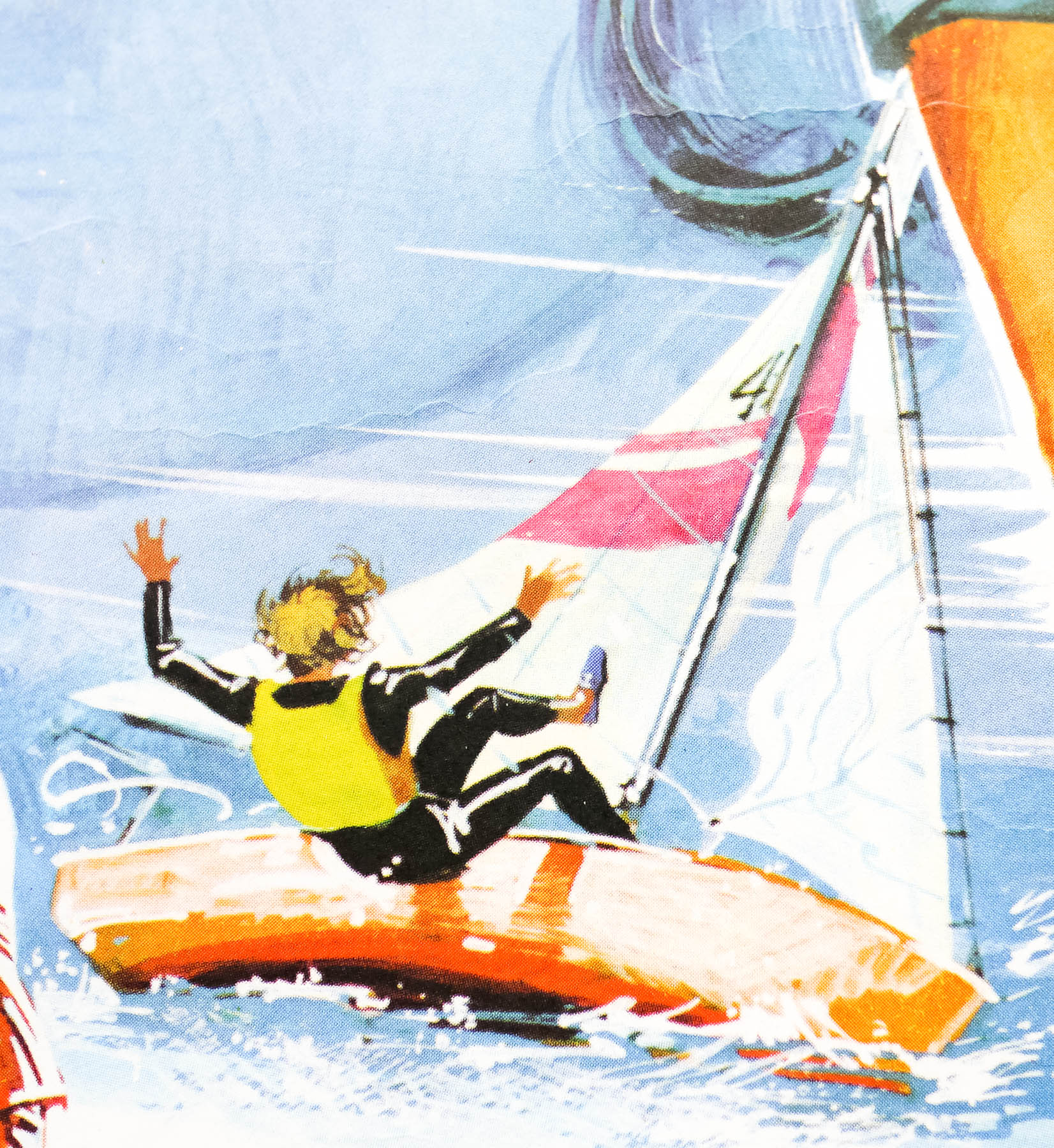
Annabel and her mother are not quite themselves today - in fact, they're each other!

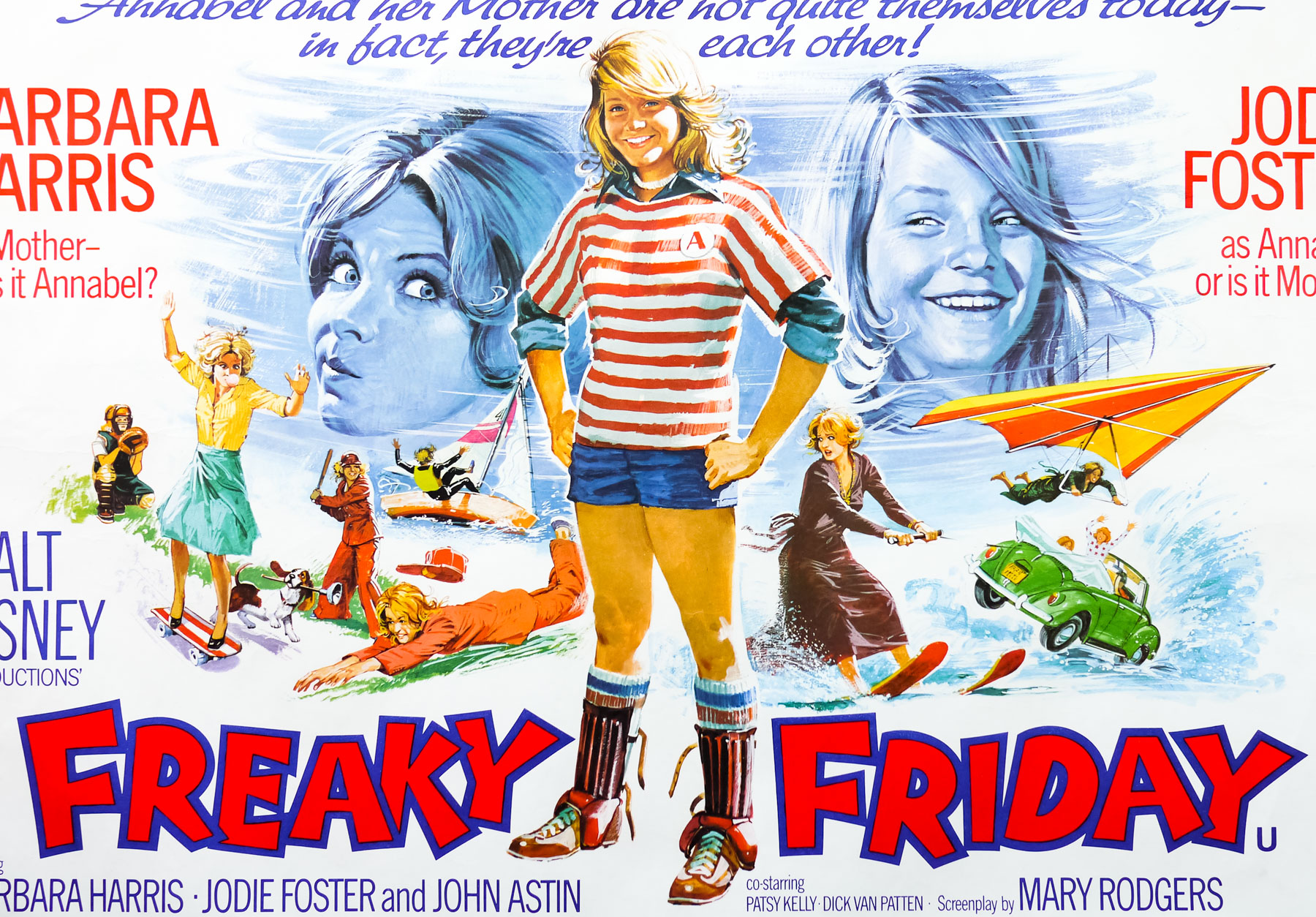
Unique artwork features on this UK quad for the release of the 1976 version of the Disney comedy Freaky Friday. Based on the novel of the same name by Mary Rodgers (who also wrote the screenplay), the film focuses on the Andrews family in which the mother and daughter (played memorably by Barbara Harris and Jodie Foster) are constantly at odds with each other and struggle to understand why they behave the way they do to each other. On Friday the 13th they both happen to say “I wish I could switch places with her for just one day” at the same time and their wishes come true as their minds swap places. The pair then must cope with being in each other’s bodies as they realise the pressures and expectations they both have on them.

Mr Andrews (John Astin) is a real-estate developer preparing for an important launch in which mother and daughter are meant to be playing their different parts and hilarity ensues as the pair attempt to cope with the situation. The film is classic Disney family entertainment and definitely harkens back to a more innocent time. Both Harris and Foster bring a great energy to their parts and it’s easy to see why the latter would go on to catch the eye of many a Hollywood casting director.

This quad was created by the British designer and artist Brian Bysouth who I interviewed for this site in 2012. He is one of my favourite artists and worked on multiple classic posters from the 1960s to the 1980s, including the final painted poster for a James Bond film, The Living Daylights. The other posters I’ve collected by Brian can be seen by clicking here.

Willow / one sheet / UK

14.01.15

Poster Poster
Title
Willow
AKA
--
Year of Film
1988
Director
Ron Howard
Starring
Warwick Davis, Val Kilmer, Joanne Whalley, Jean Marsh, Patricia Hayes, Billy Barty, Pat Roach
Origin of Film
USA
Genre(s) of Film
Warwick Davis, Val Kilmer, Joanne Whalley, Jean Marsh, Patricia Hayes, Billy Barty, Pat Roach,
Type of Poster
One sheet
Style of Poster
--
Origin of Poster
UK
Year of Poster
1988
Designer
Brian Bysouth
Artist
Brian Bysouth
Size (inches)
27" x 39 12/16"
SS or DS
SS
NSS #
--
Tagline
A world where heroes come in all sizes and adventure is the greatest magic of all.

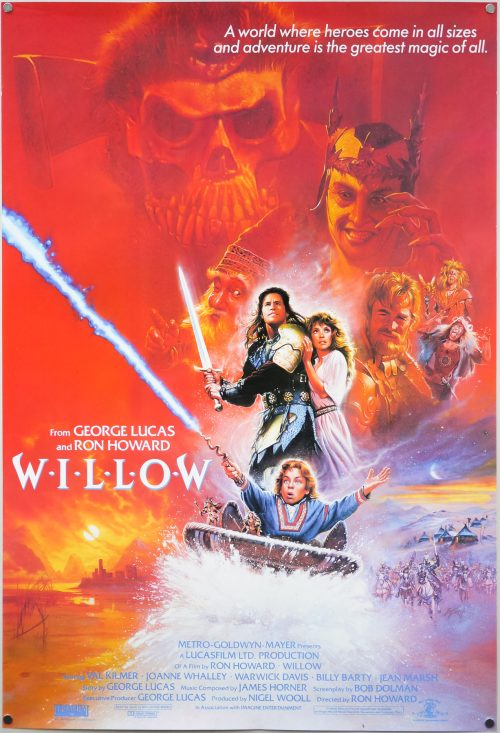
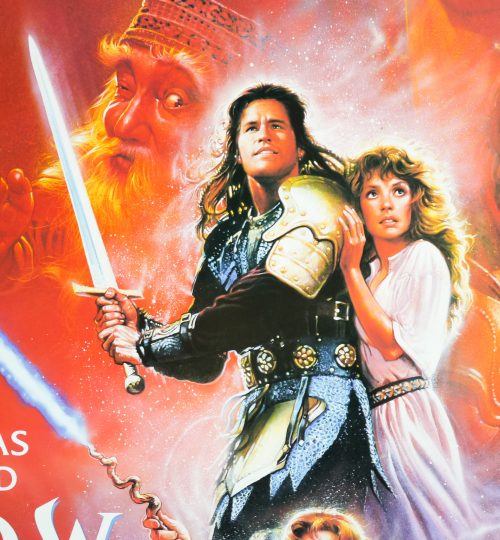
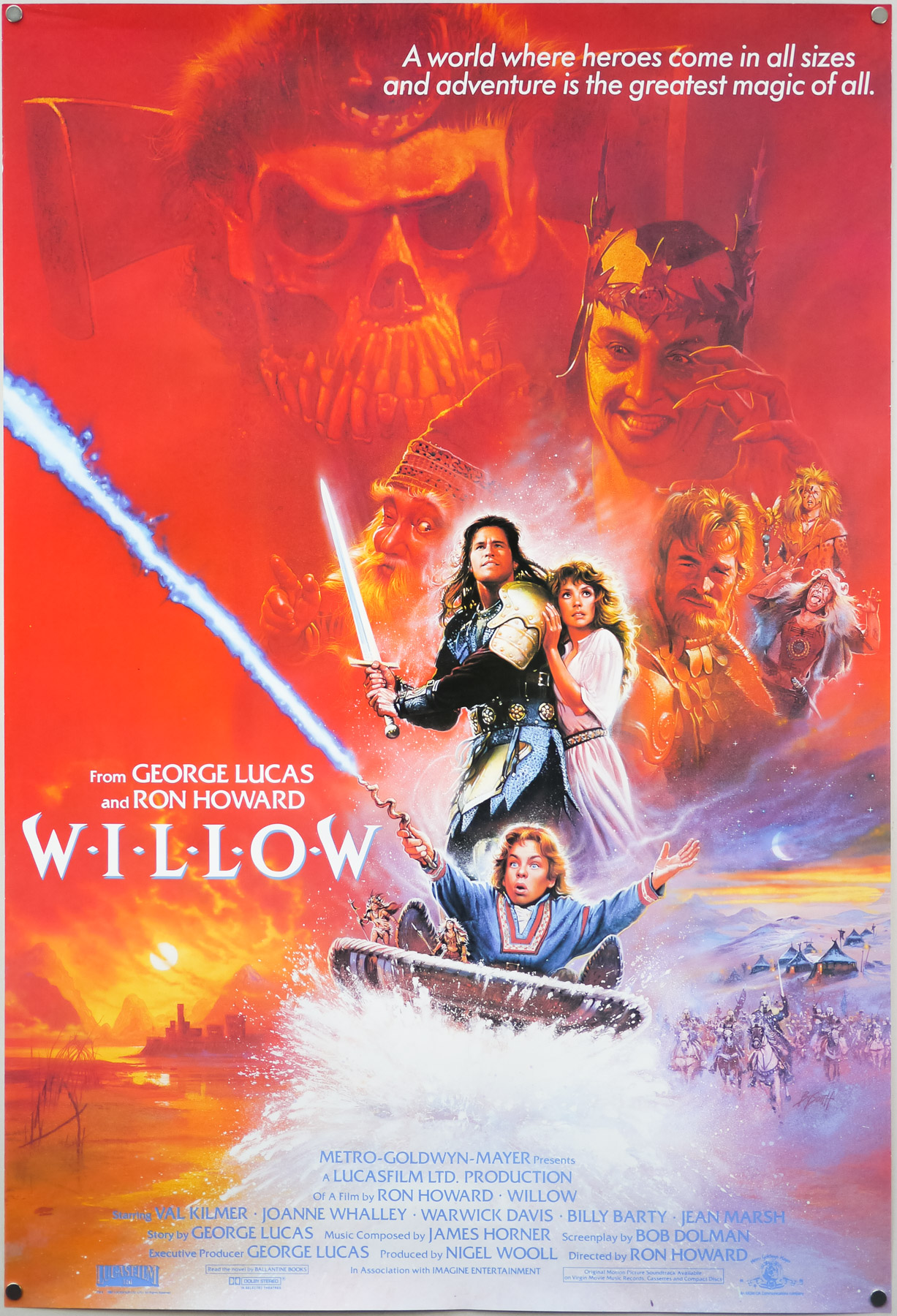
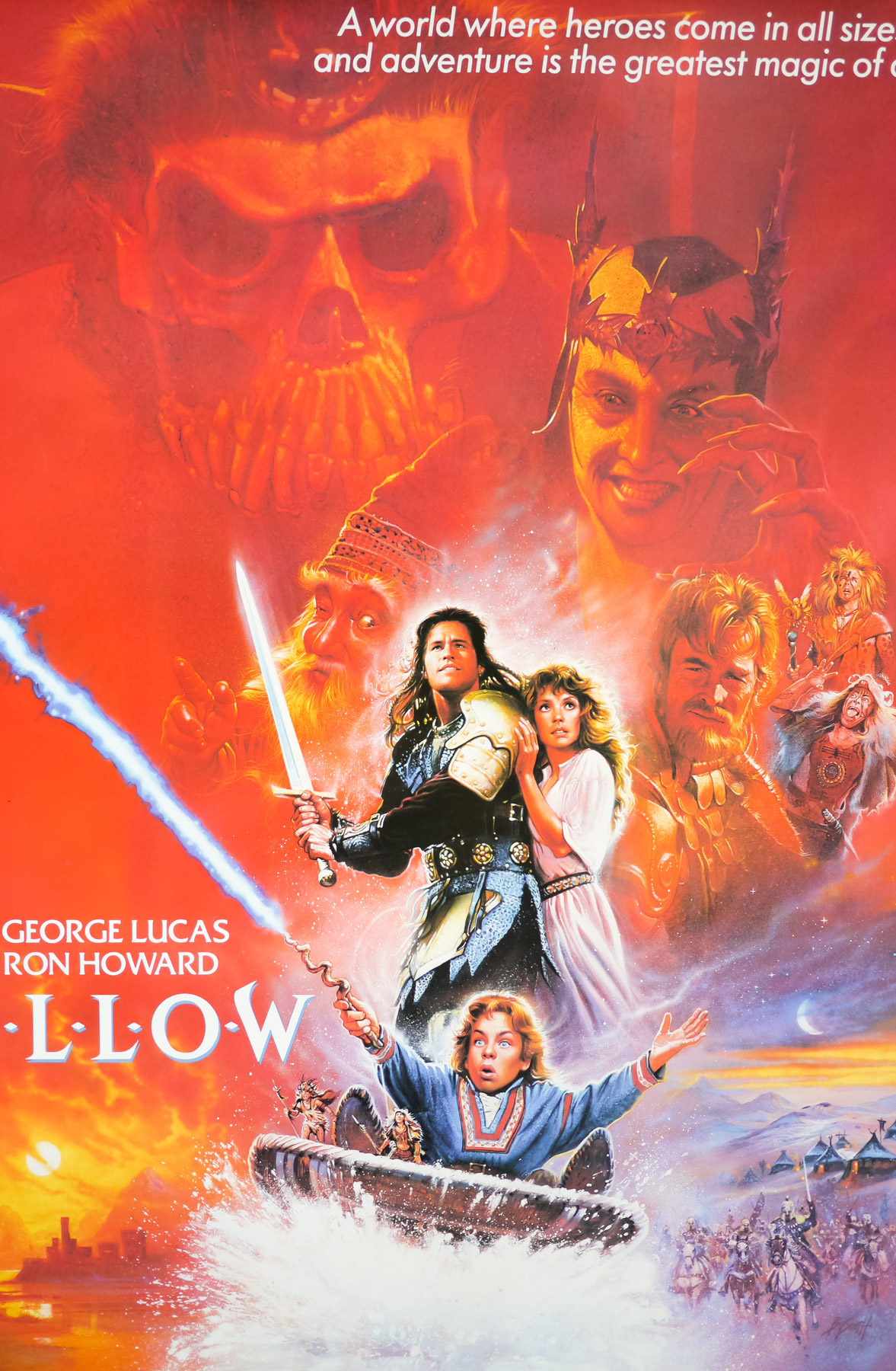
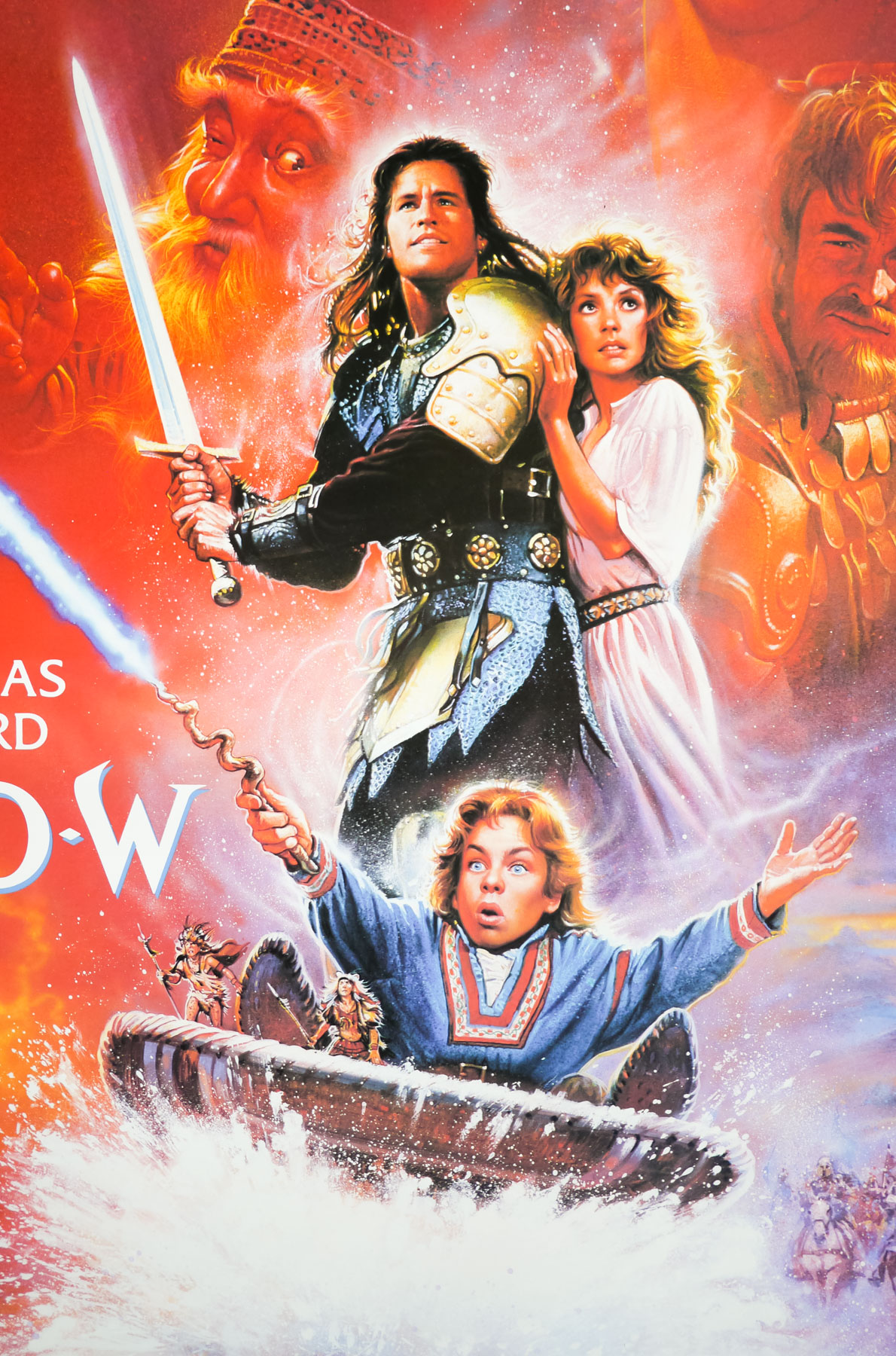
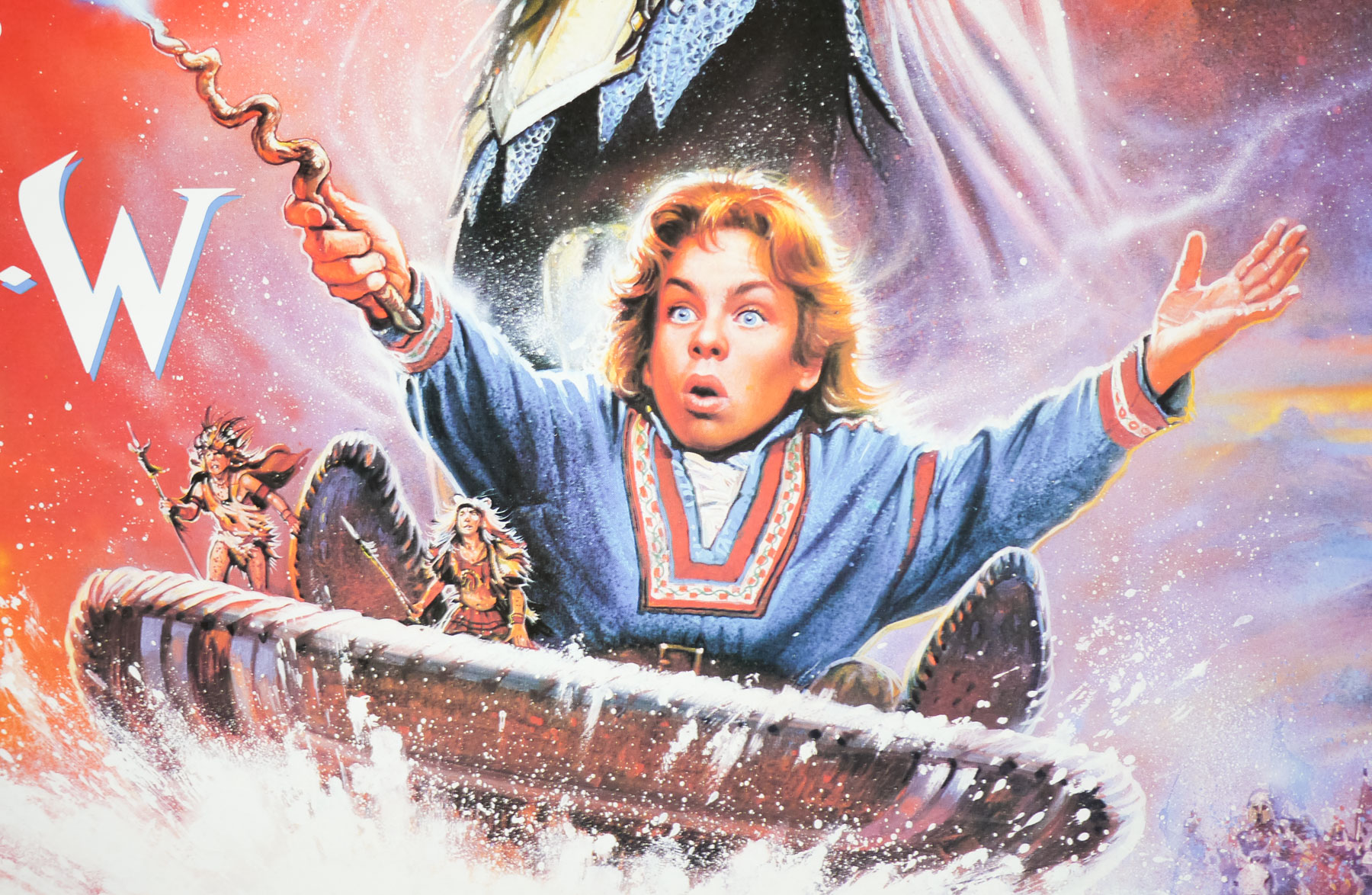
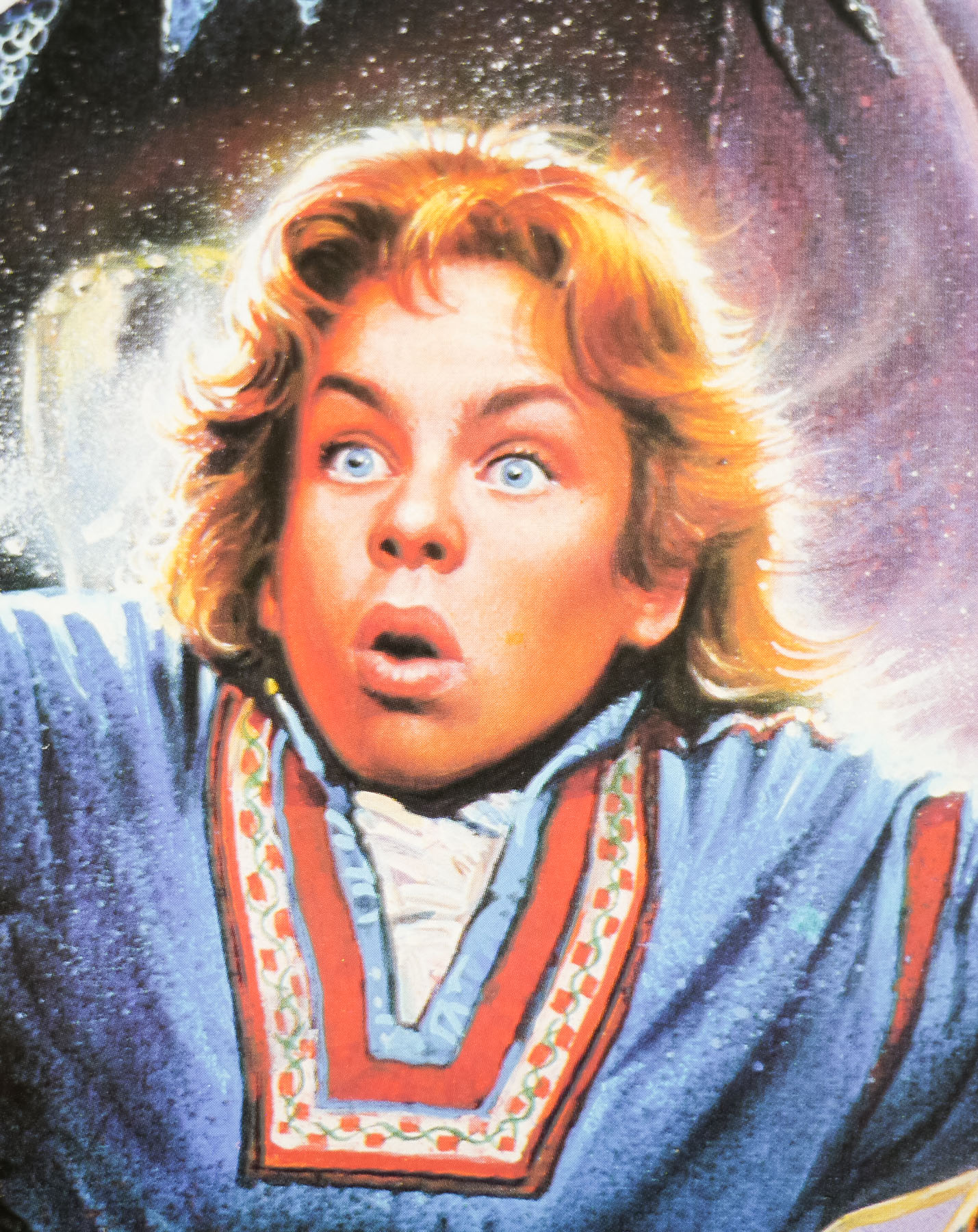
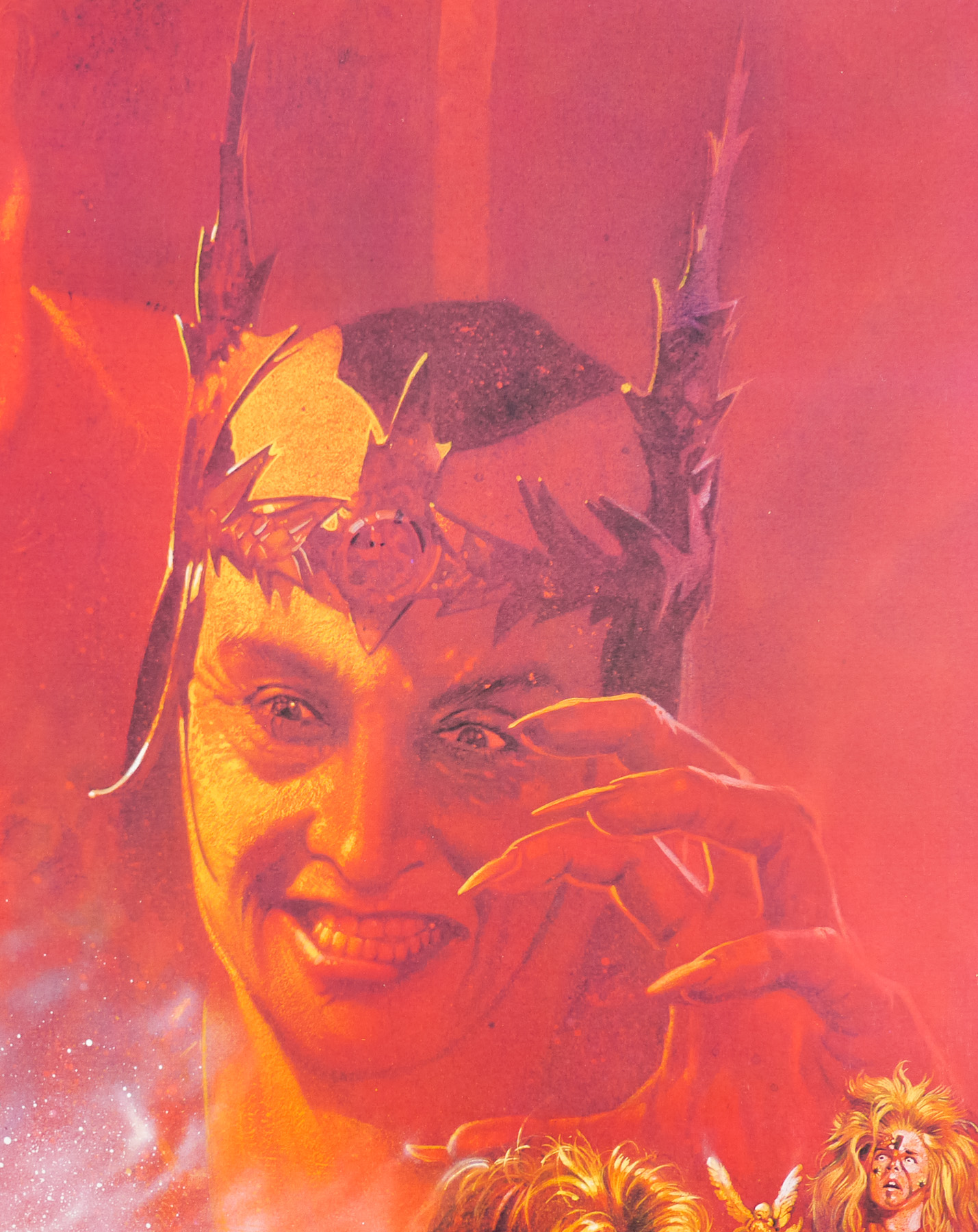
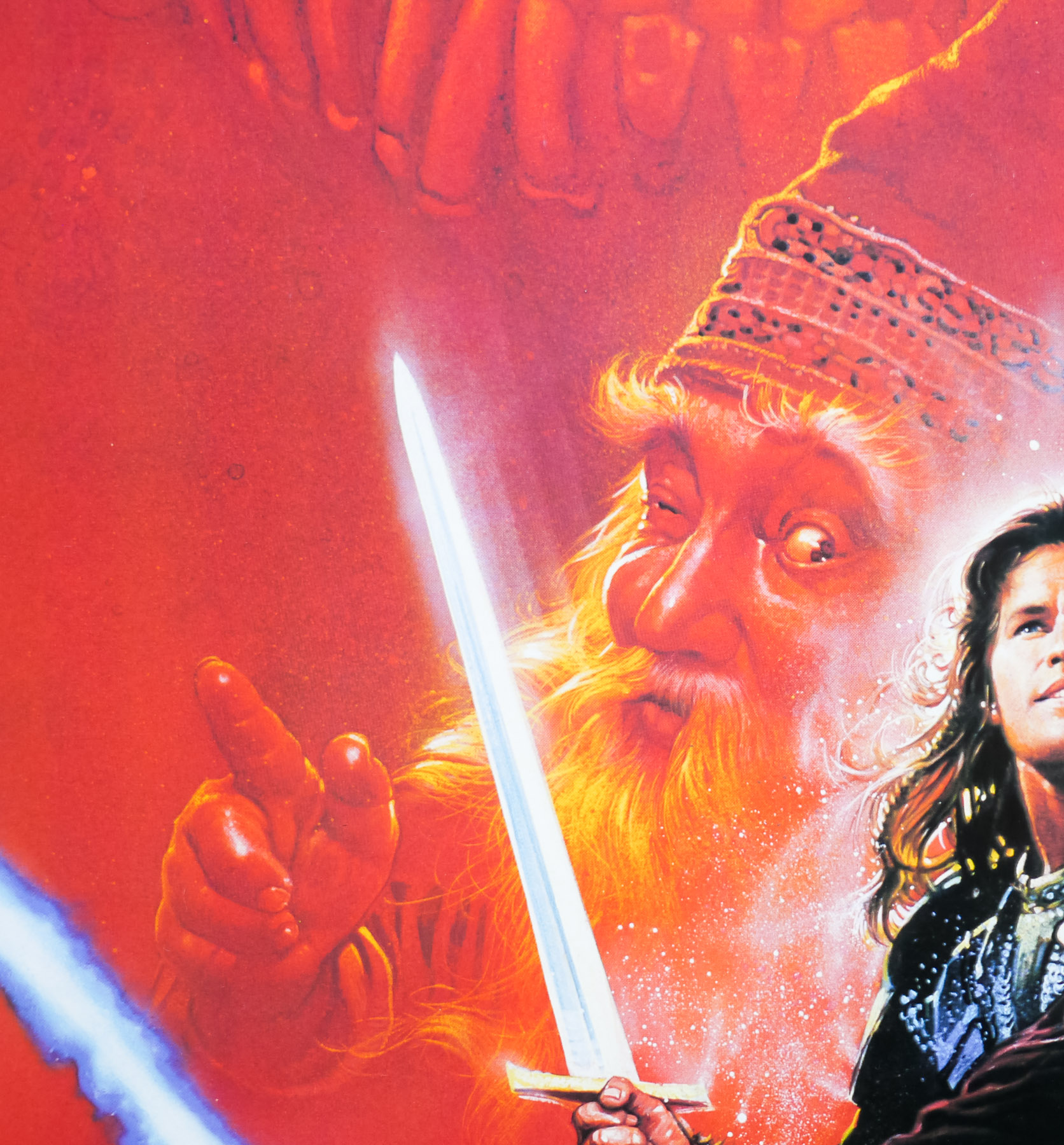
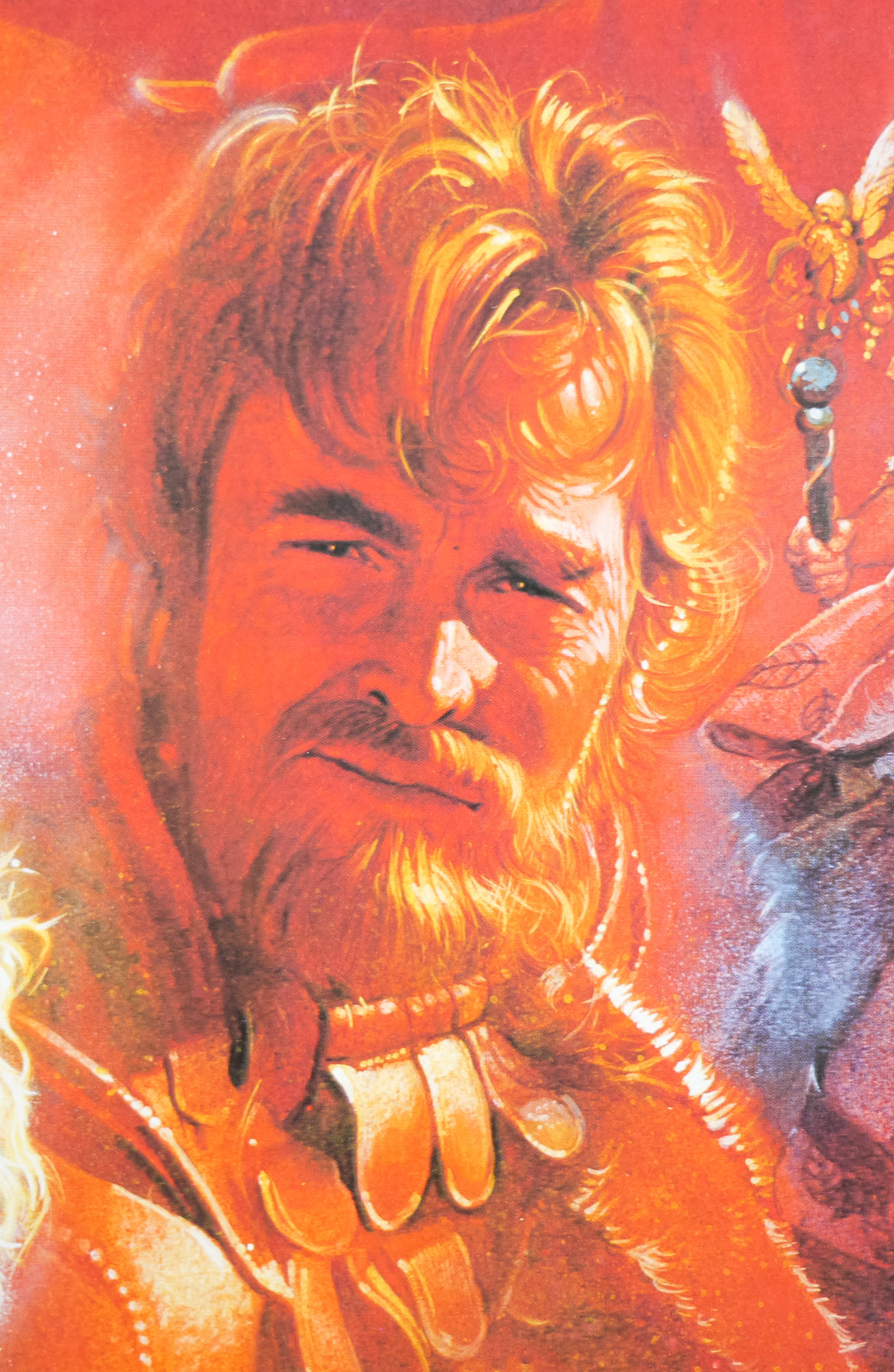
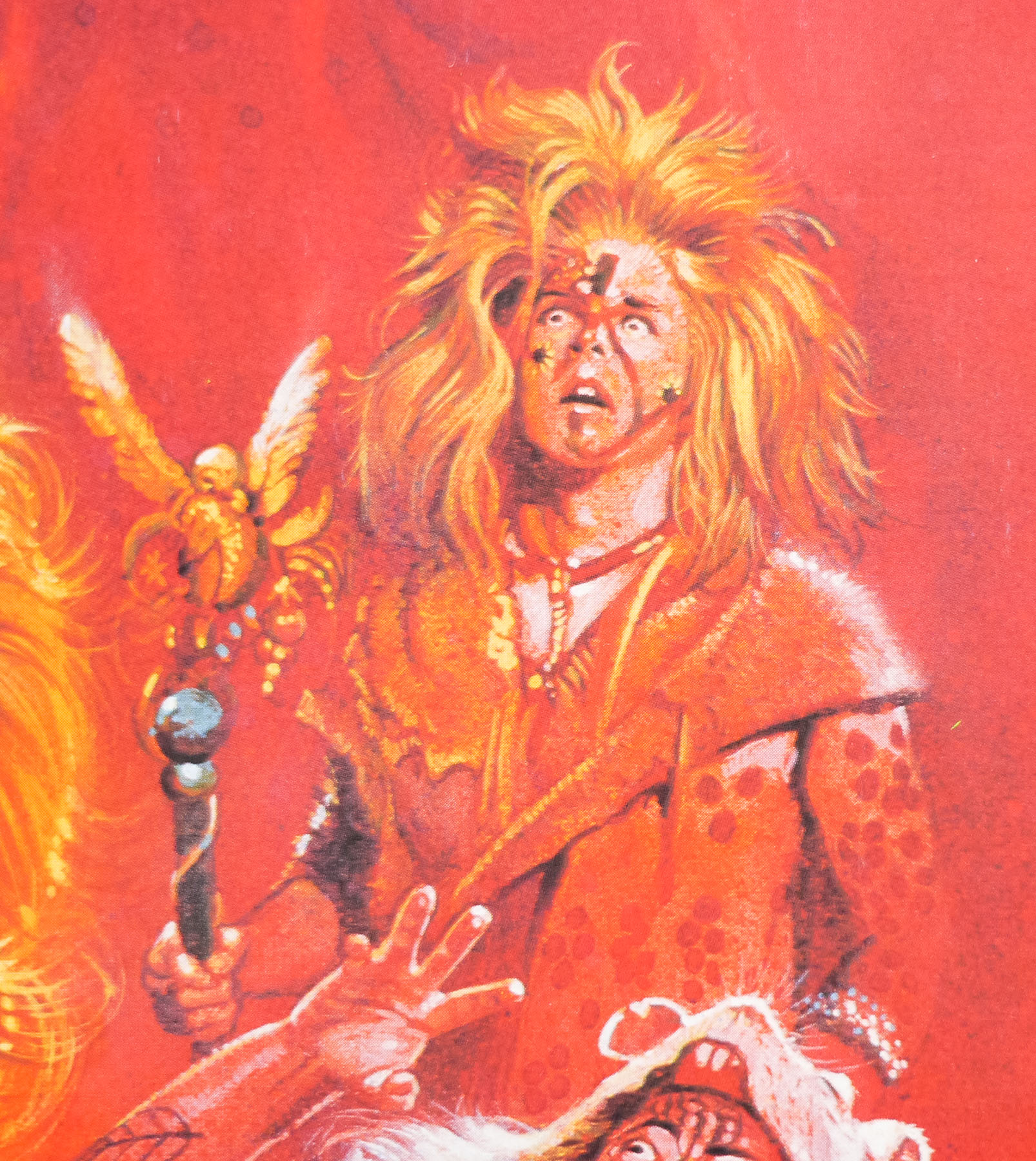
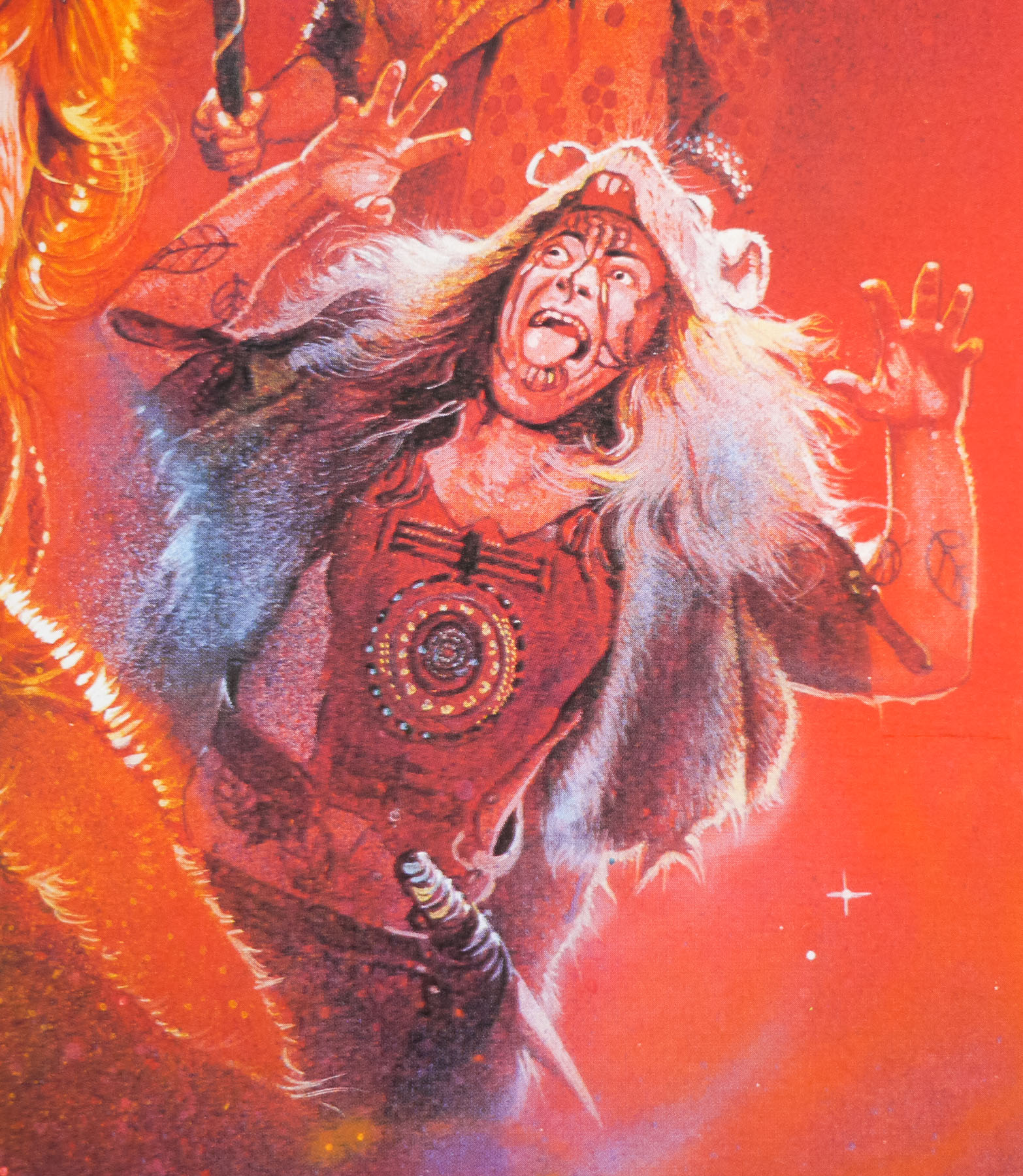
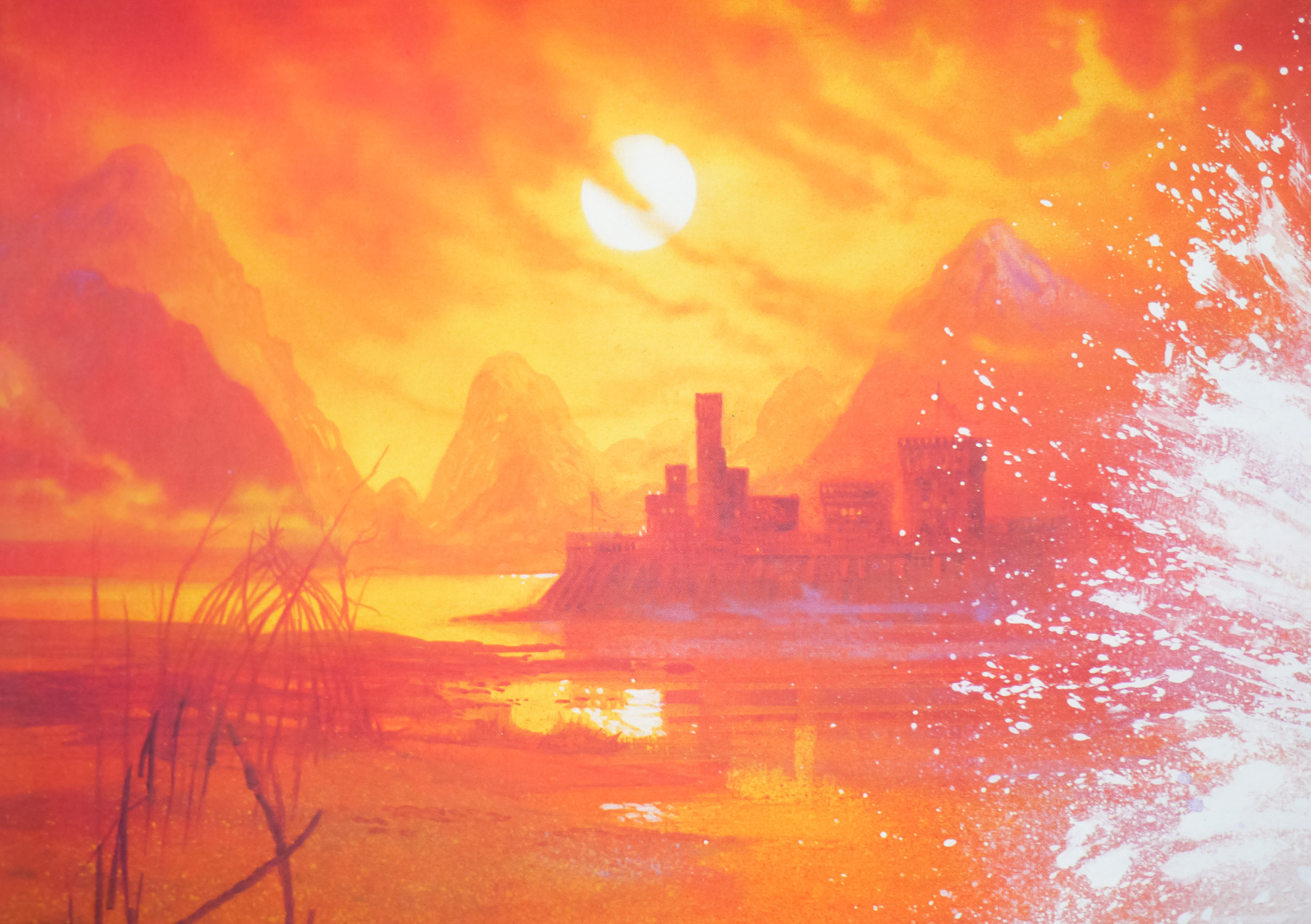
Excellent artwork on this UK one sheet for the release of Ron Howard‘s 1988 fantasy film Willow, which was conceived of by George Lucas. British actor Warwick Davis features as the eponymous hero and the part had been written specifically with him in mind after he appeared as an Ewok in Lucas’ Return of the Jedi. The story begins as the evil Queen Bavmorda (Jean Marsh) hears of a prophecy that a newborn child will bring about her downfall and sets about imprisoning all pregnant women in her castle’s dungeon.

When a child is born and identified as the one in the prophecy, the child’s mother manages to convince the mid-wife to secret her daughter out of the castle. When Queen Bavmorda discovers what has happened she sends her daughter Sorsha (Joanne Whalley) and leader of her army General Kael in pursuit. Before being caught, the midwife manages to put the child on a raft on a river and the child ends up being found by Willow Ufgood (Davis) a a member of a race of hobbit-like people called the Nelwyns. Initially caring for the baby with his wife, Willow is persuaded to take it away from their village and back to the Daikinis (humans) when it becomes clear that there are people hunting for it. As the adventure begins, Willow and his companions soon realise they’re in for more than they bargained for.

Featuring a great performance by Val Kilmer as a selfish, reluctant hero the film still stands up today as a fun and engaging fantasy adventure with several memorable sequences and a brilliant score by James Horner. Despite being critically derided on release and not fairing too well at the box- office it has nevertheless grown something of a cult following and is notable for its use of ground-breaking special effects by Industrial Light and Magic that were used for a sequence involving a morph between several animals and a human.

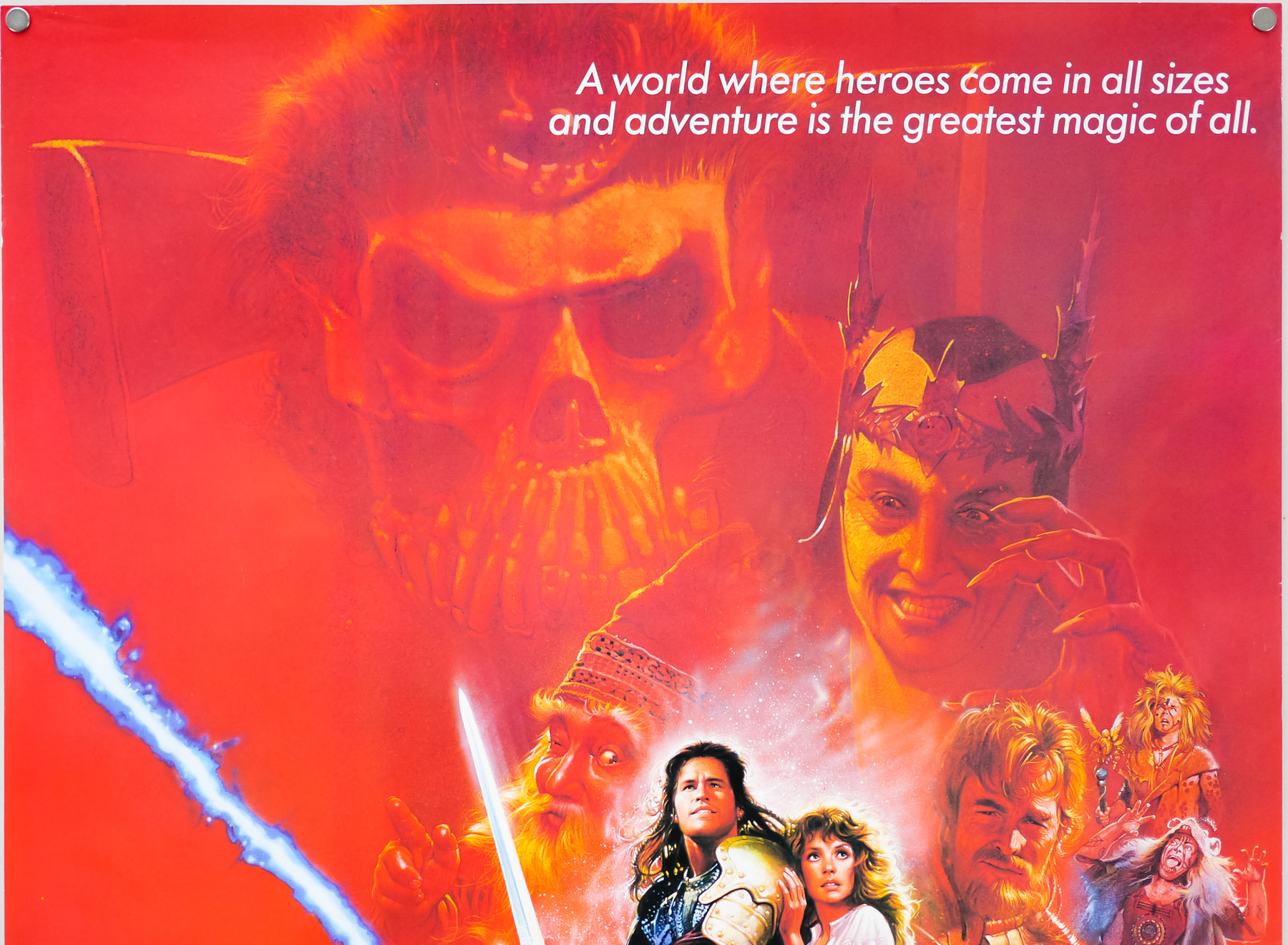
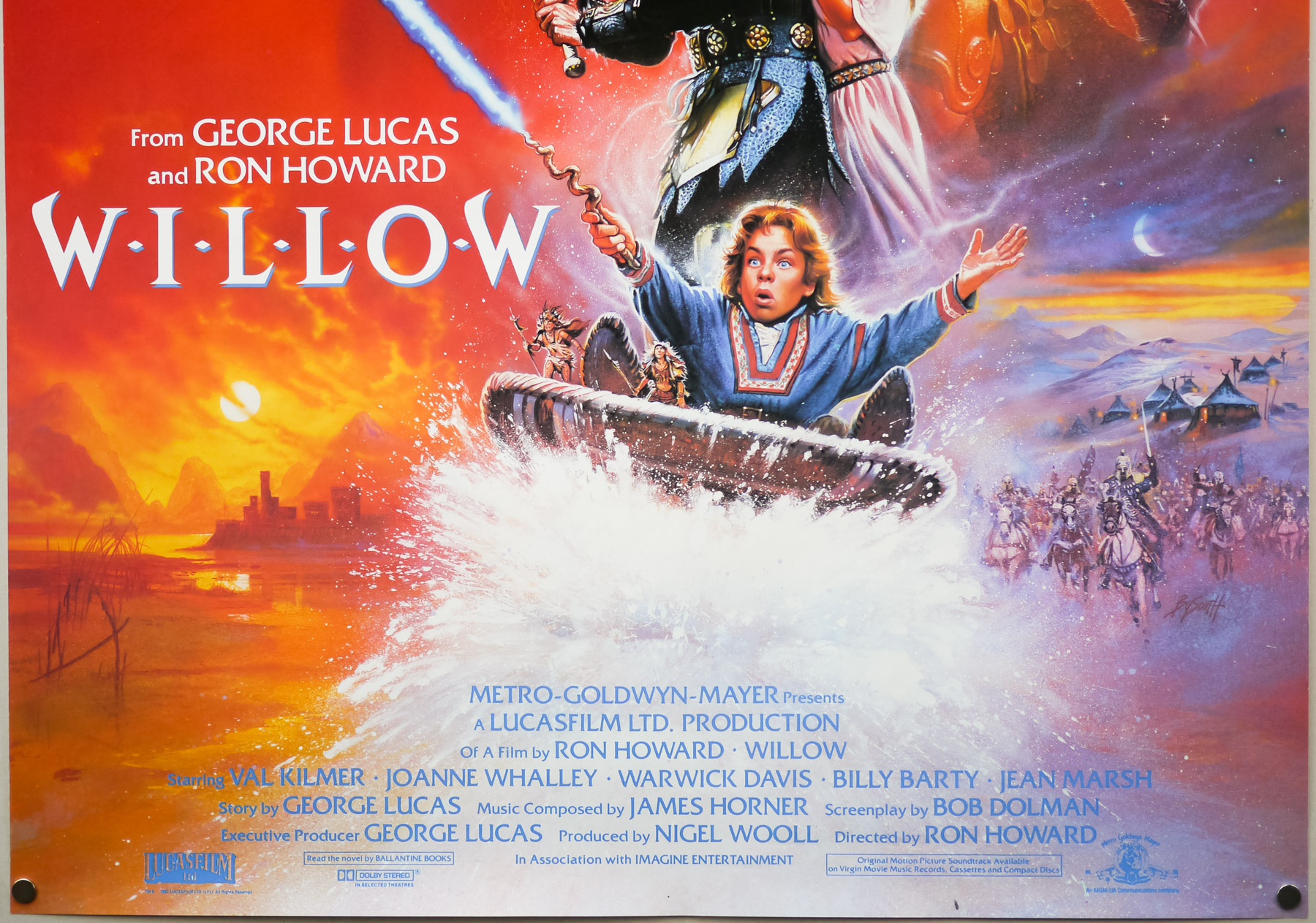
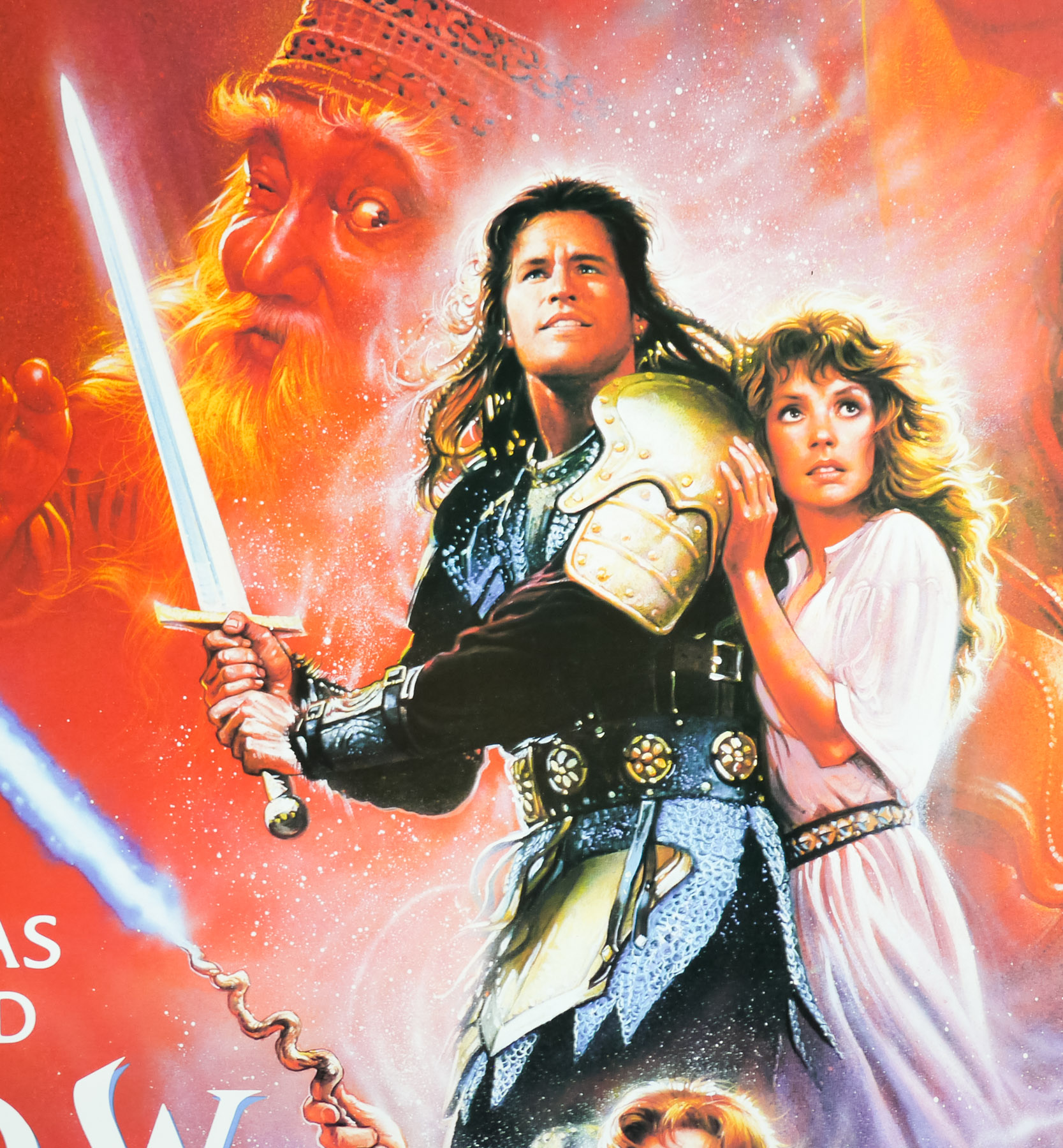
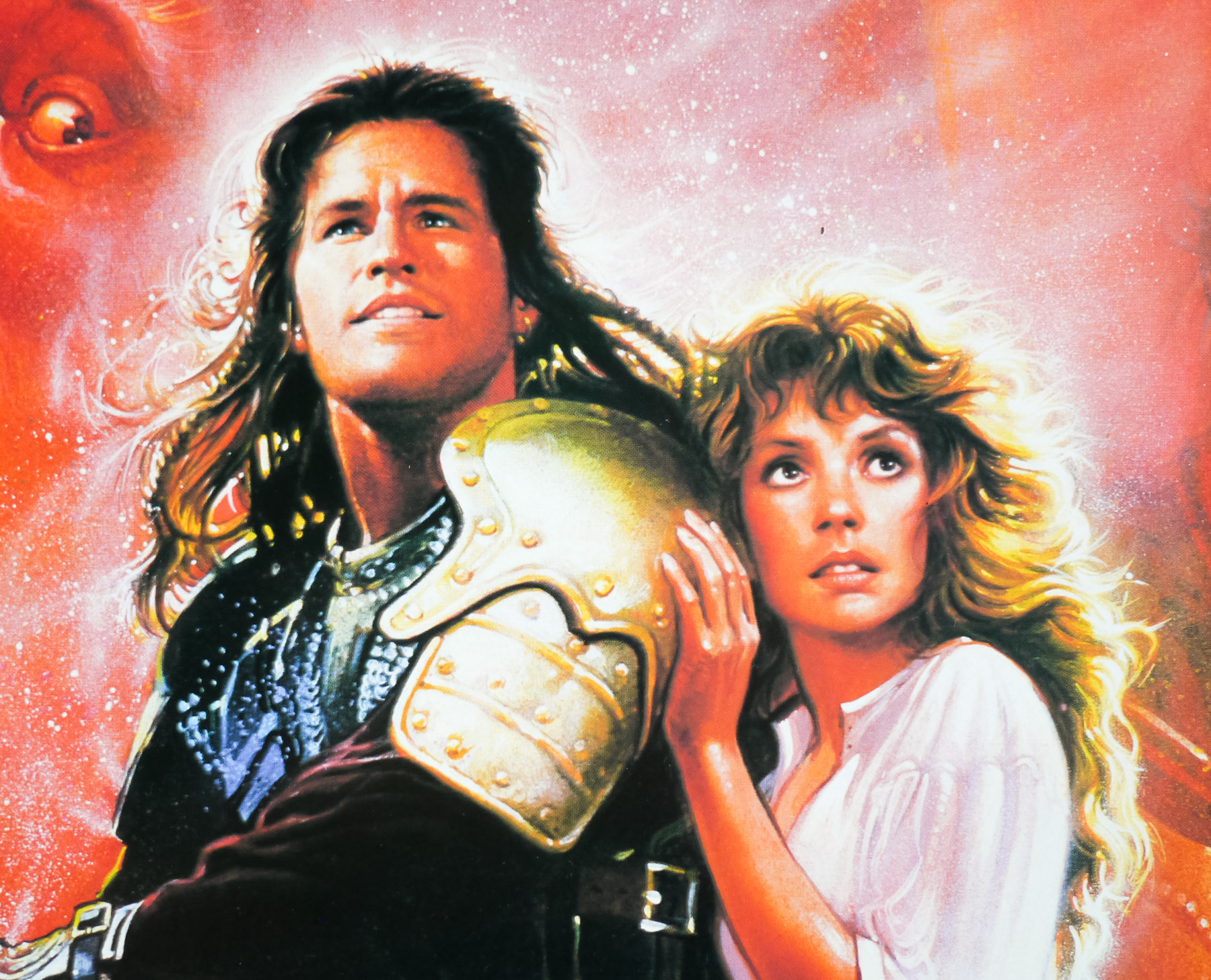
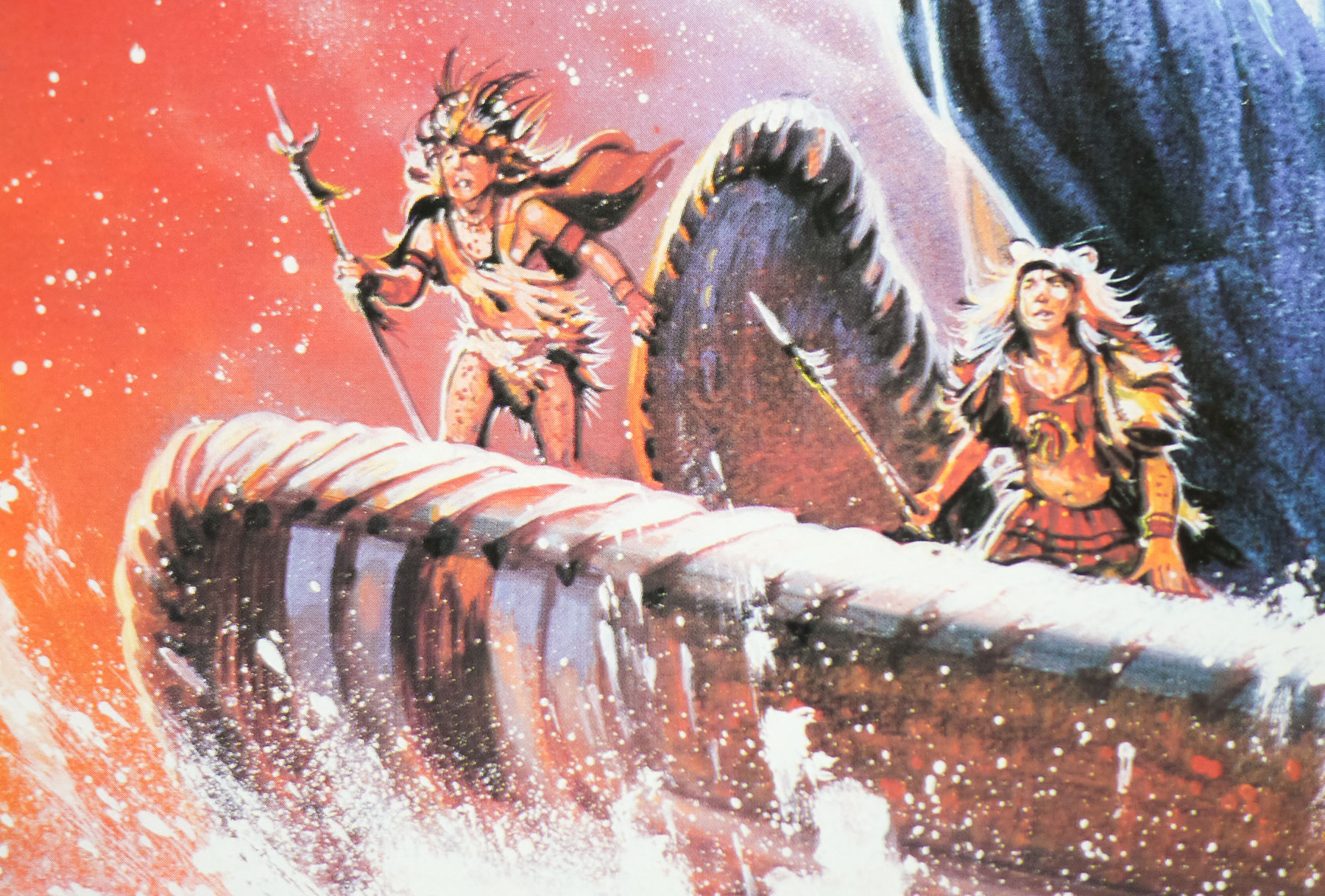
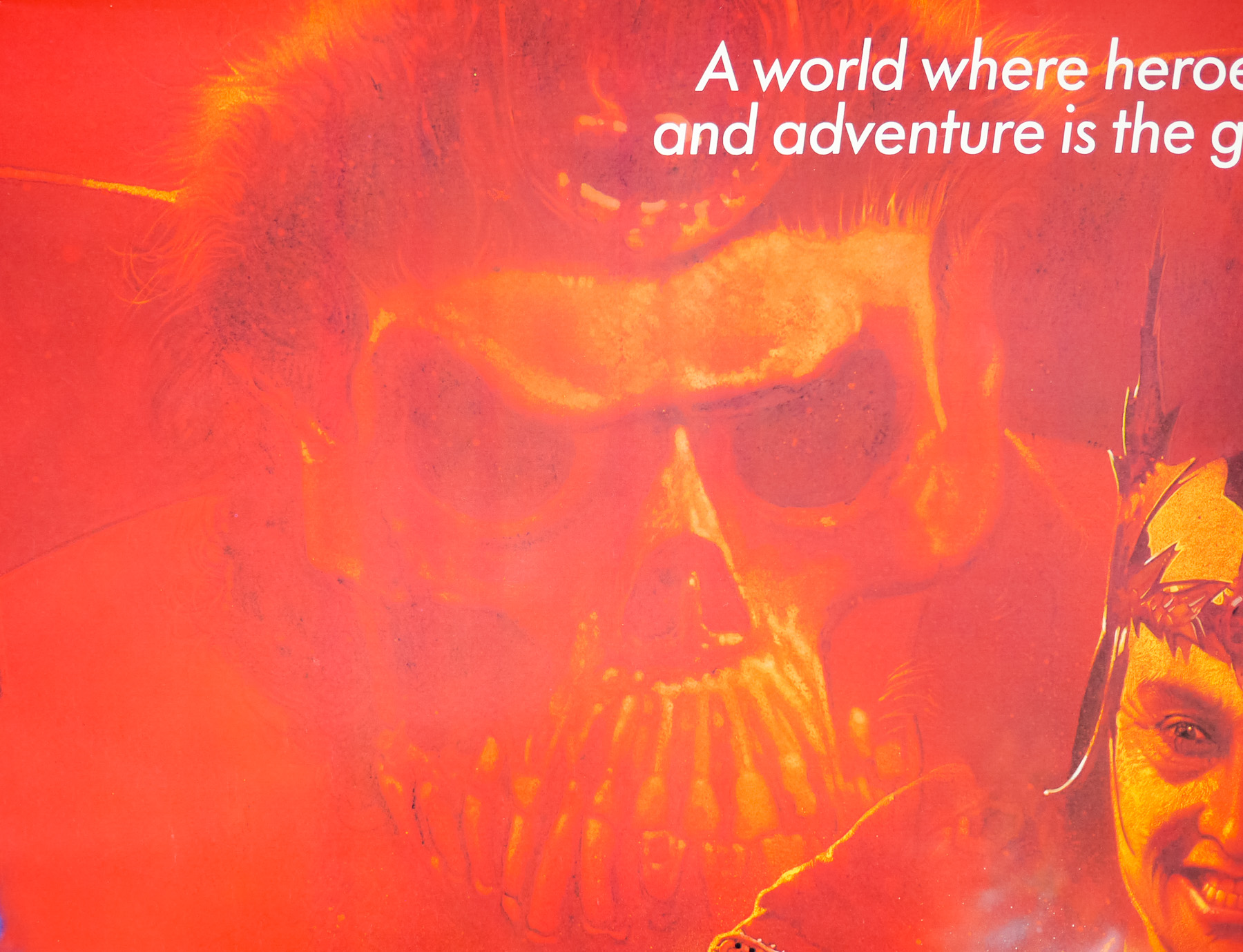
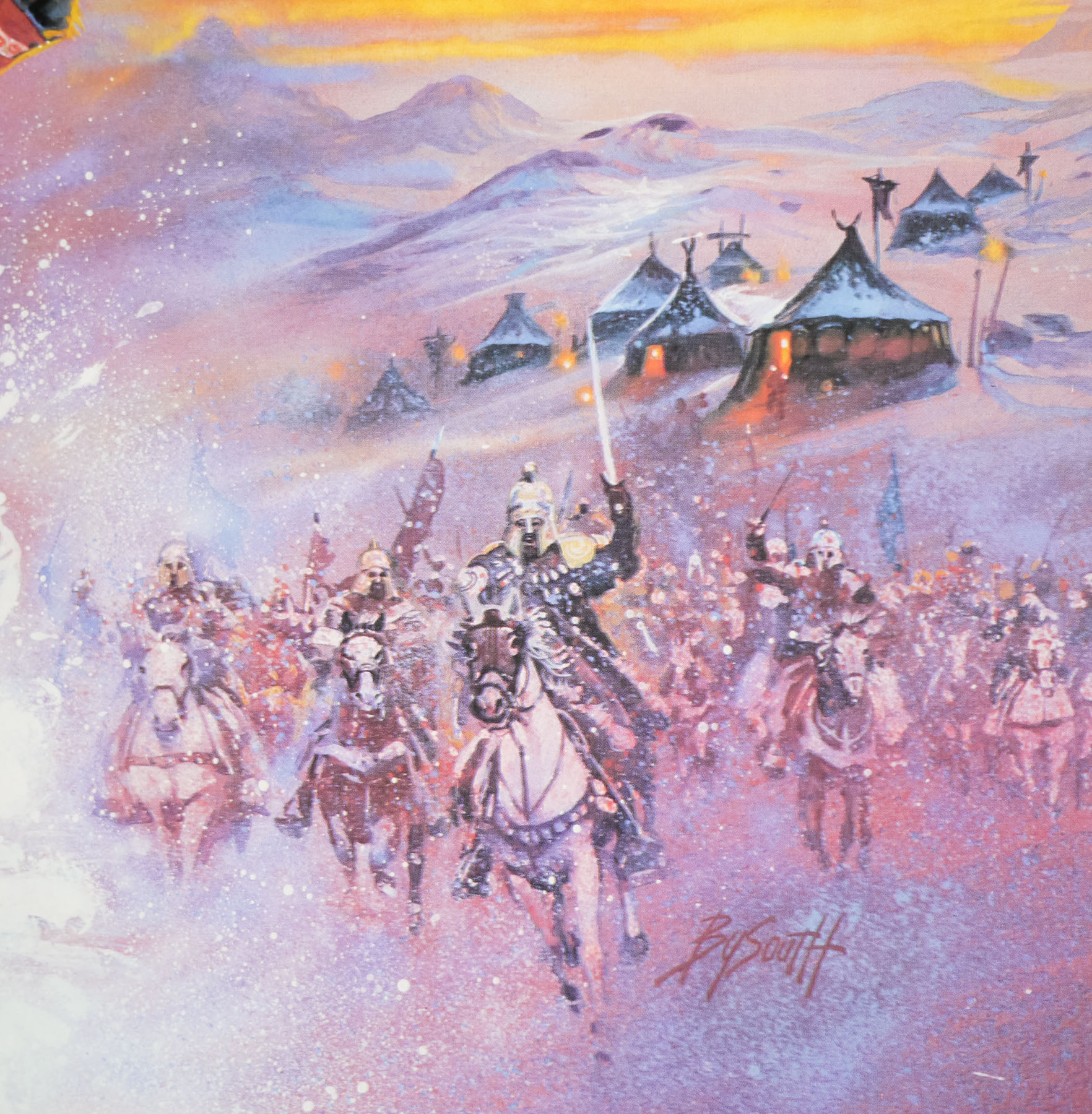
This one sheet was created by the British designer and artist Brian Bysouth who I interviewed for this site in 2012, There is also a quad for Willow featuring the same artwork. Brian is one of my favourite artists and worked on multiple classic posters from the 1960s to the 1980s, including the final painted poster for a James Bond film, The Living Daylights. The other posters I’ve collected by Brian can be seen by clicking here.

The Princess Bride / quad / UK

31.03.15

Poster Poster
Title
The Princess Bride
AKA
Princess Bride Story (Japan - English title) | La storia fantastica [The fantastic story] Italy
Year of Film
1987
Director
Rob Reiner
Starring
Cary Elwes, Robin Wright, Mandy Patinkin, Chris Sarandon, André the Giant, Christopher Guest, Peter Falk, Fred Savage, Wallace Shawn, Billy Crystal, Carol Kane
Origin of Film
USA
Genre(s) of Film
Cary Elwes, Robin Wright, Mandy Patinkin, Chris Sarandon, André the Giant, Christopher Guest, Peter Falk, Fred Savage, Wallace Shawn, Billy Crystal, Carol Kane,
Type of Poster
Quad
Style of Poster
--
Origin of Poster
UK
Year of Poster
1988
Designer
Hat Art Ltd.
Artist
Steve Crisp
Size (inches)
30" x 39 15/16"
SS or DS
SS
NSS #
--
Tagline
Heroes. Giants. Villains. Wizards. True Love. Not just your basic, average, everyday, ordinary, run-of-the-mill, ho-hum fairy tale.

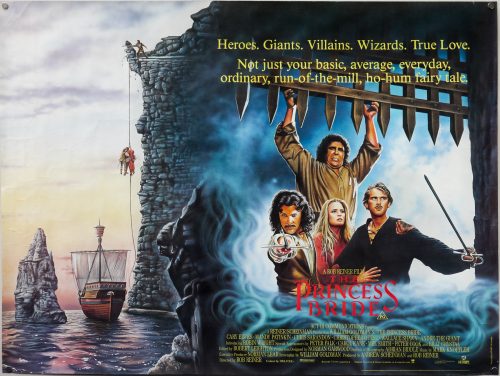
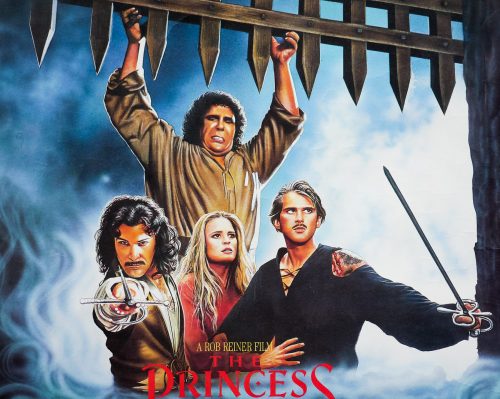
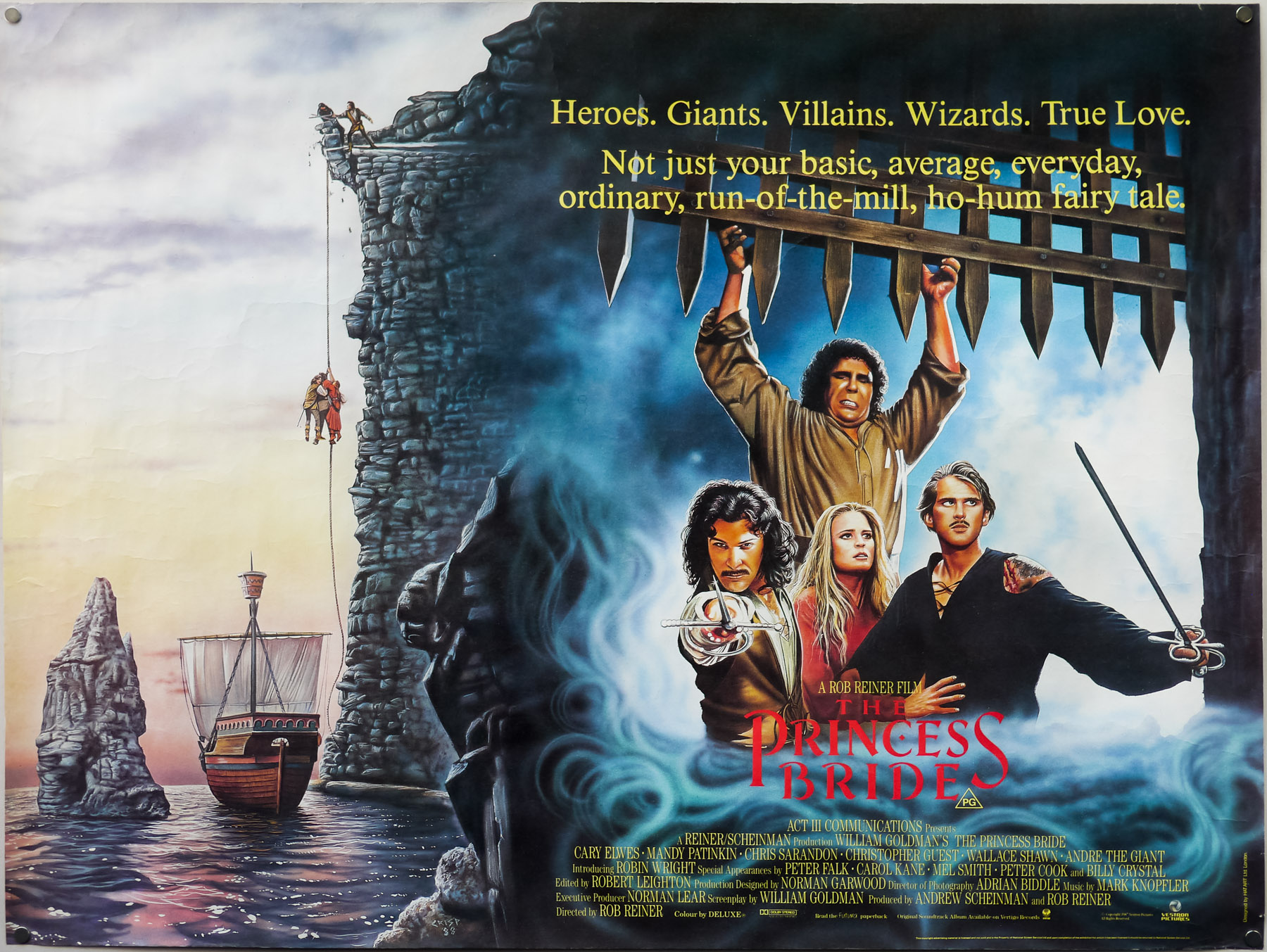
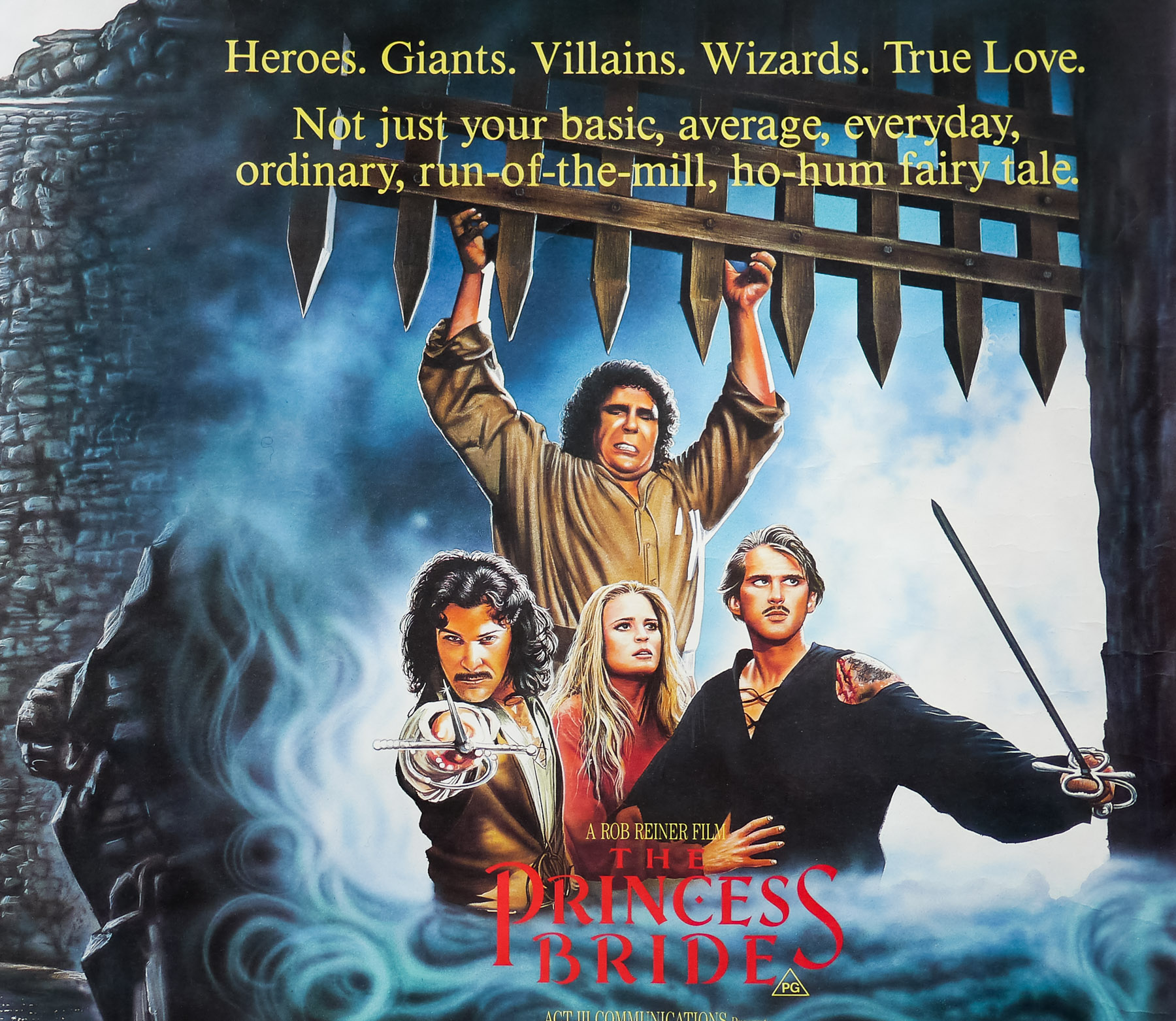
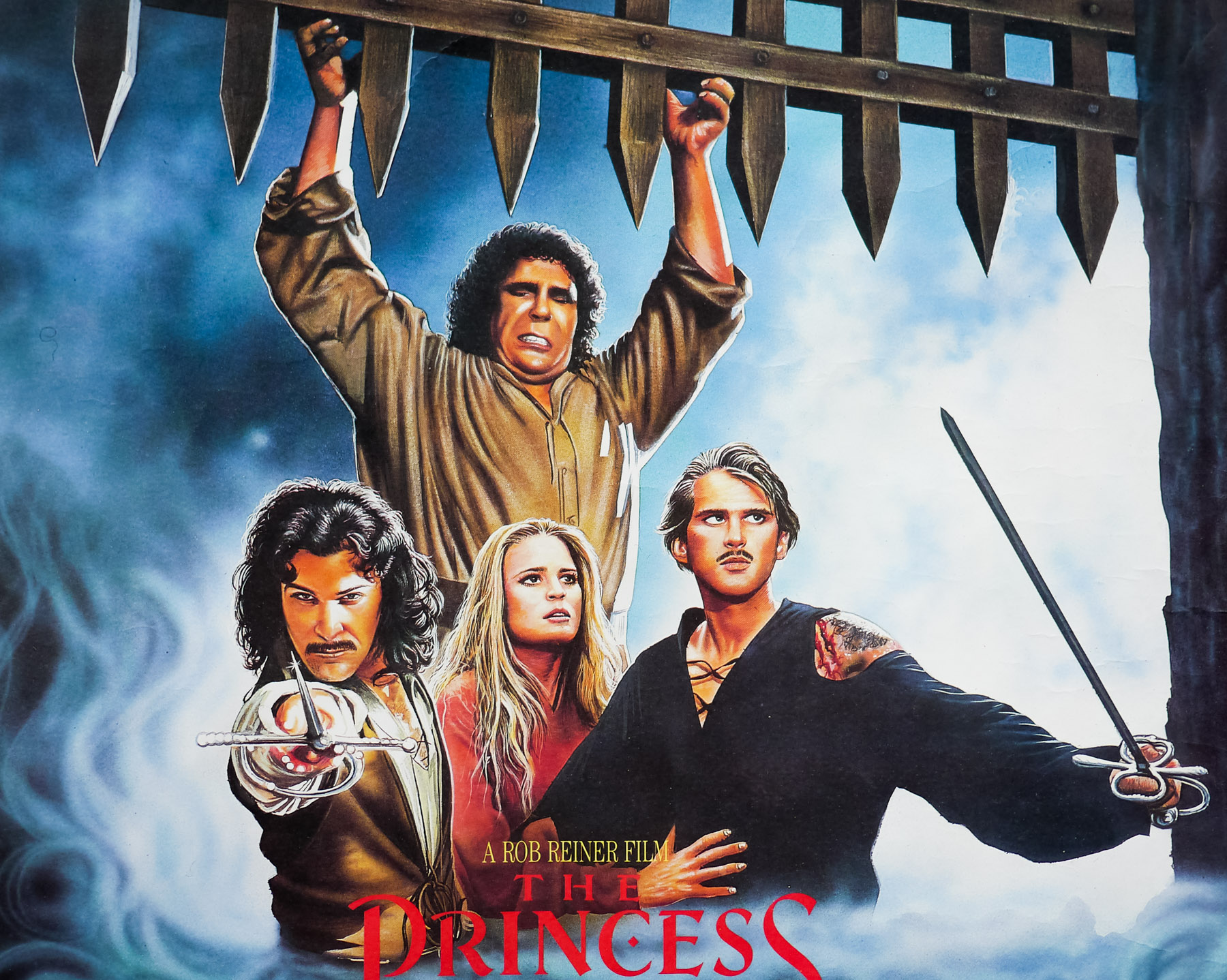
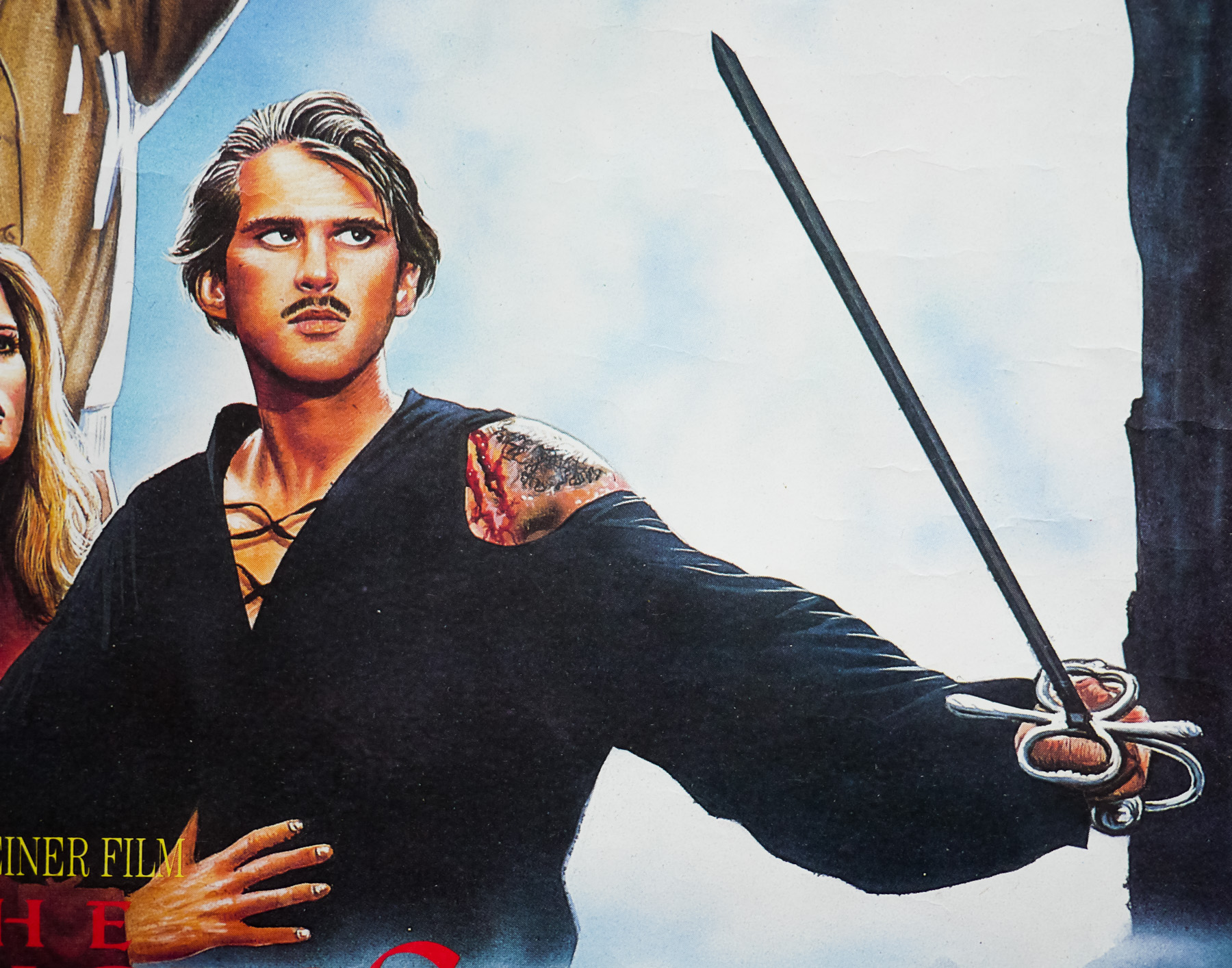
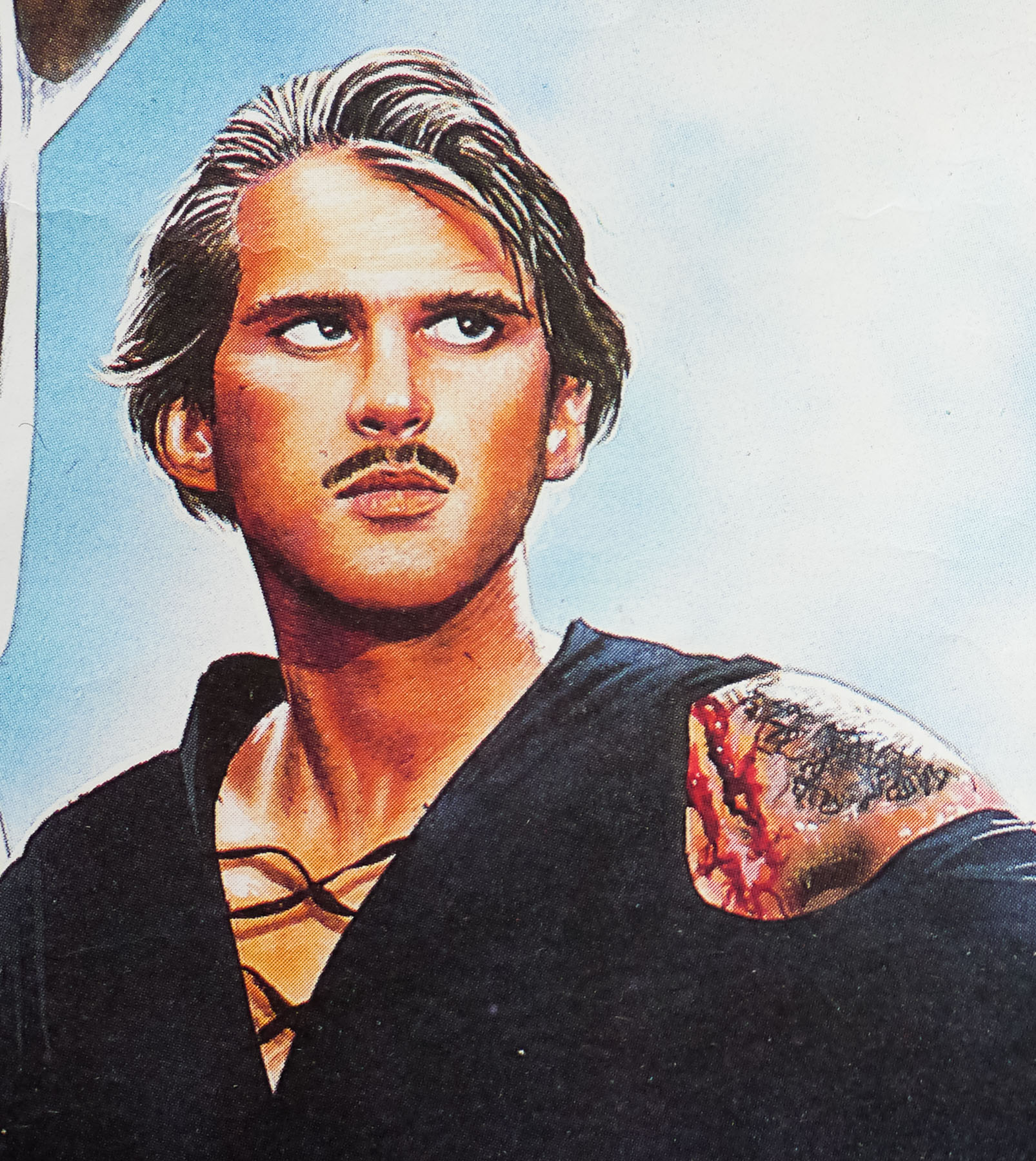
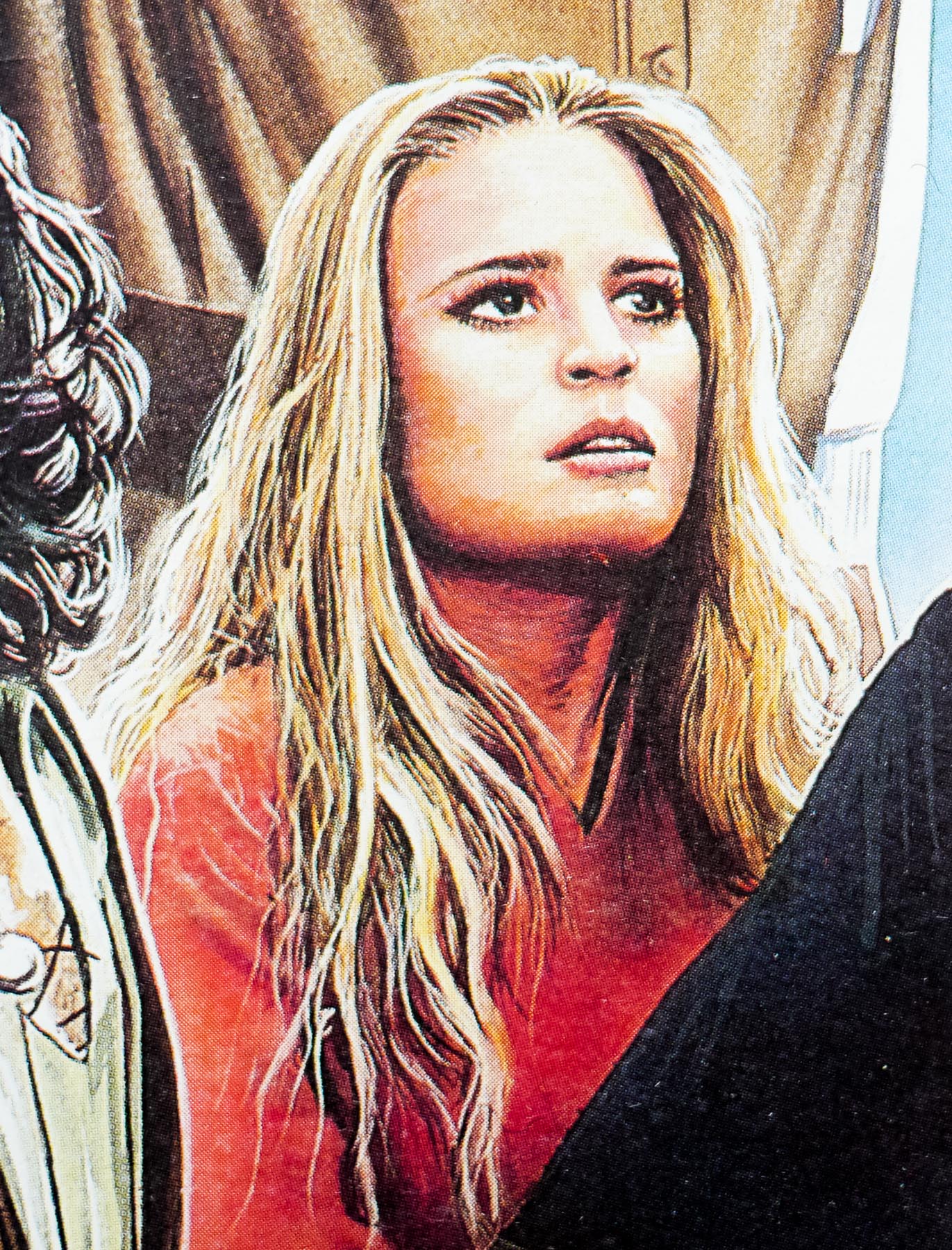
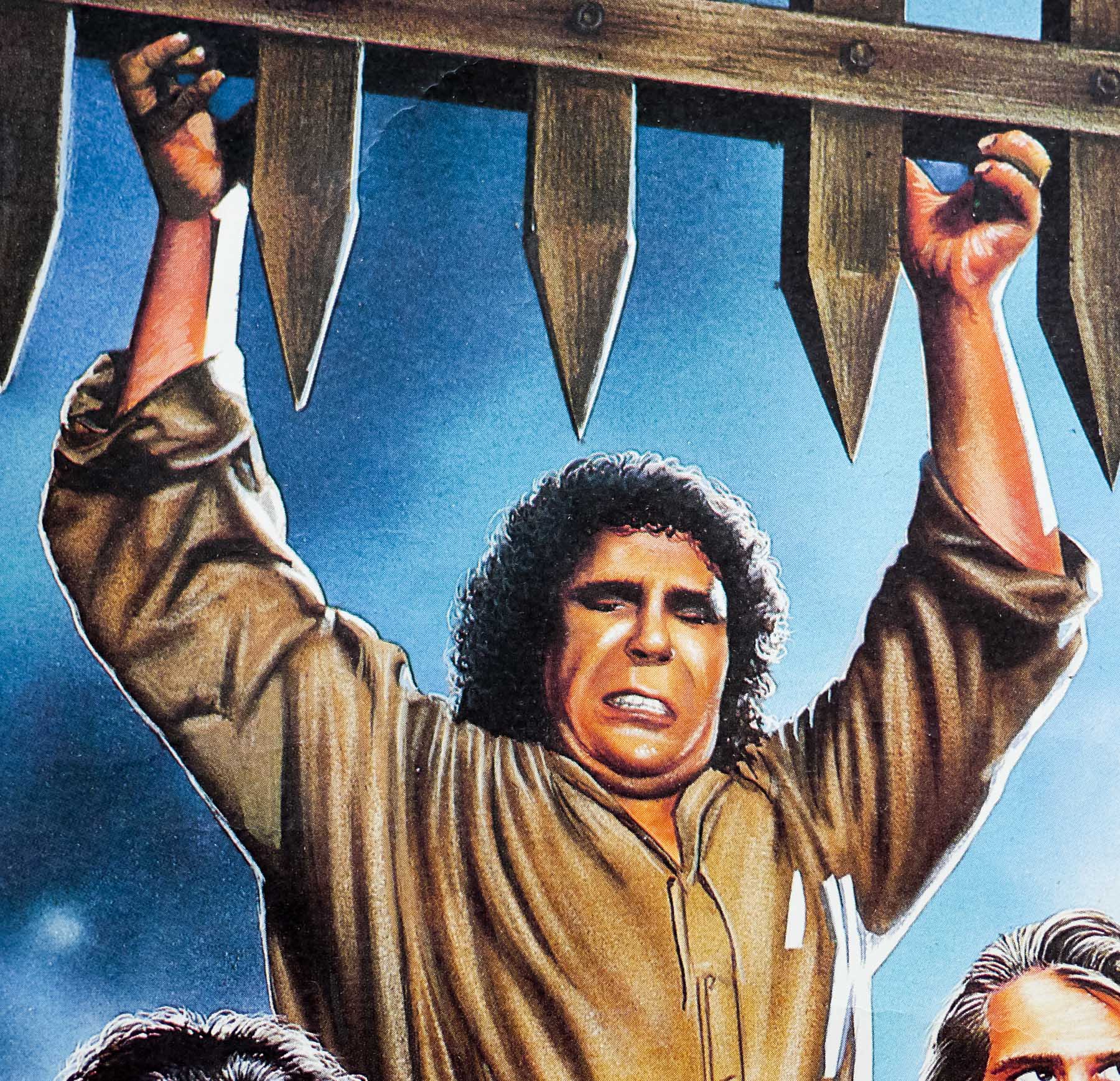
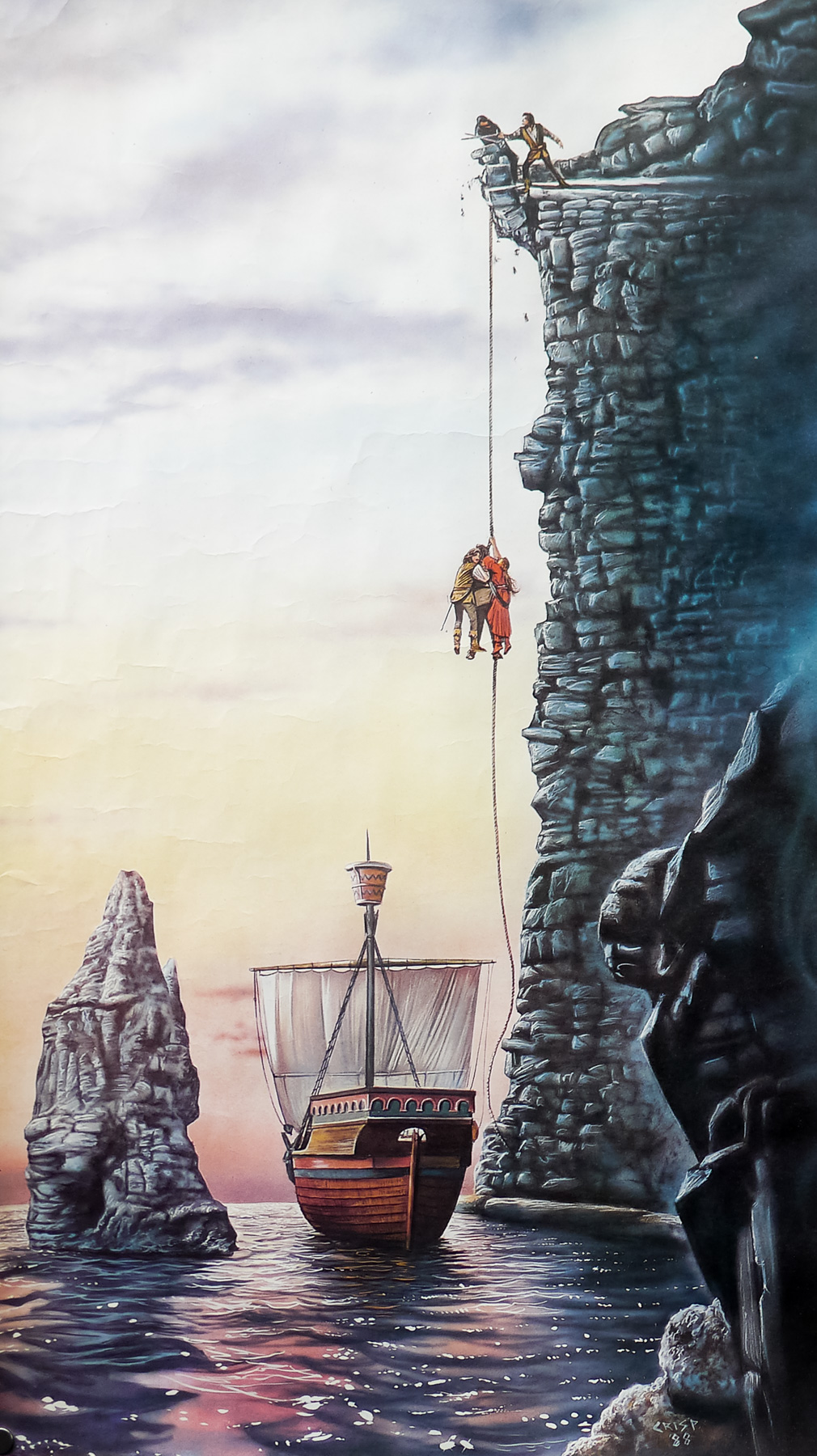
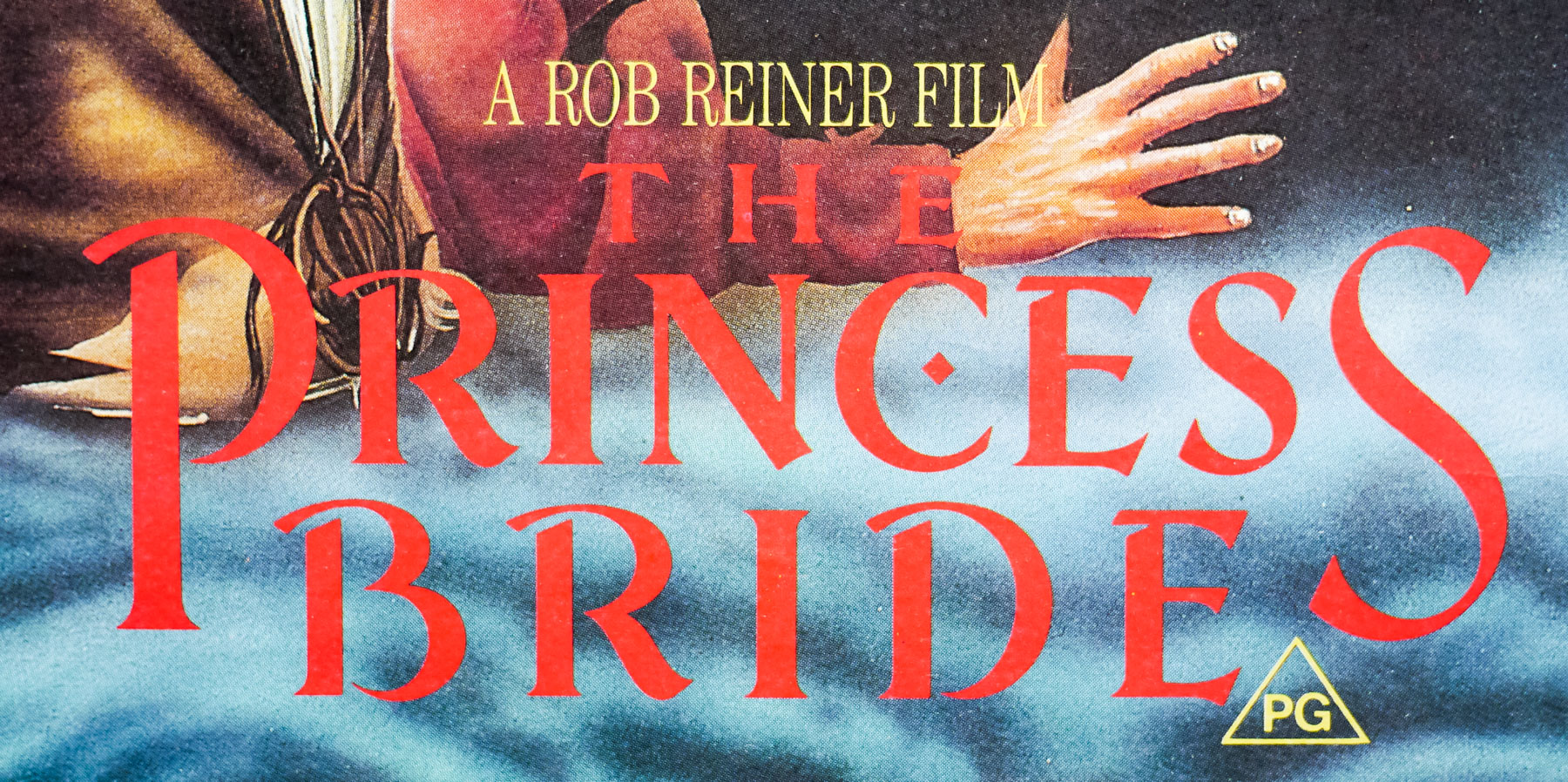
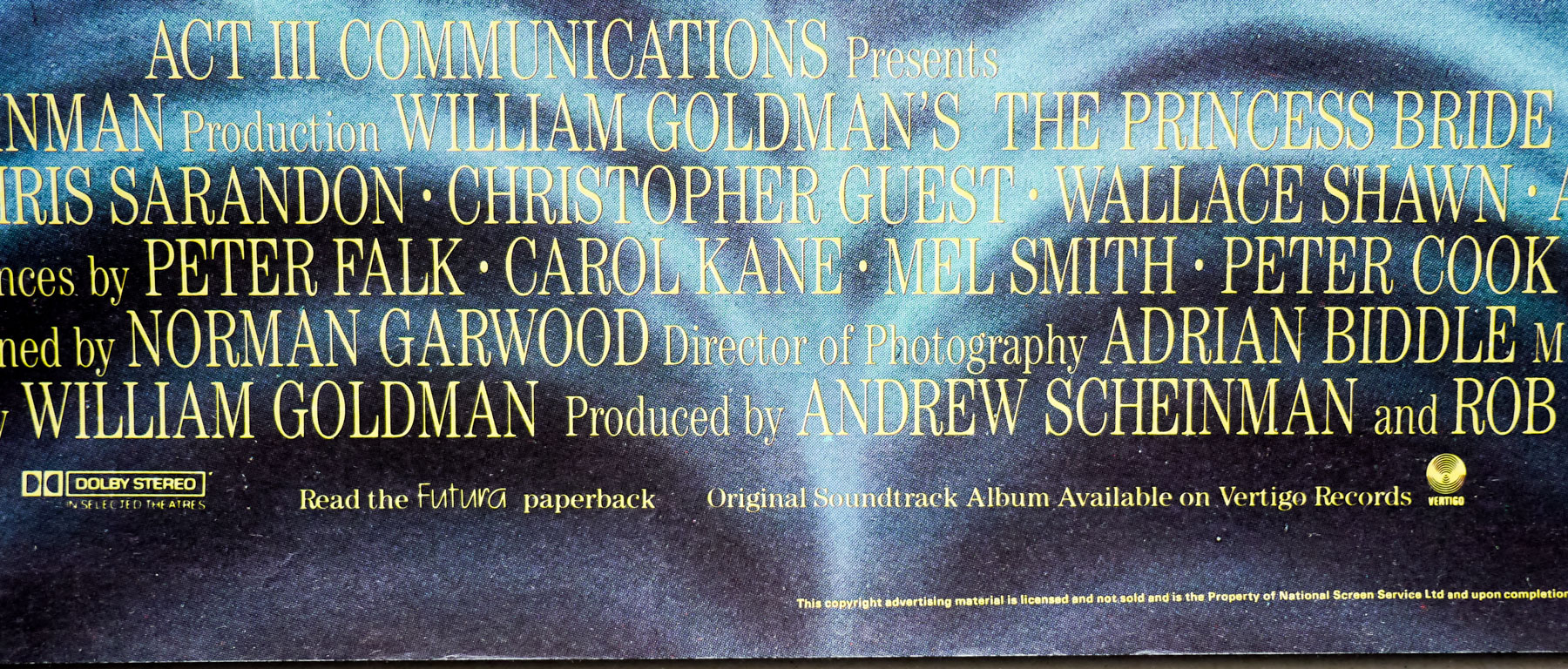
This is the UK quad for the 1987 fantasy-adventure film The Princess Bride, featuring artwork unique to the British advertising campaign. Helmed by actor-director Rob Reiner, who was also behind the 80s classics This is Spinal Tap and Stand By Me, the film is based on the 1973 book by legendary author, playwright and screenwriter William Goldman (who also adapted the screenplay). The main story is framed by present day scenes in which an old grandfather (Peter Falk) reads a book to his Nintendo-playing grandson, who is suspicious of being read an old dusty book at first but soon gets into the story. 

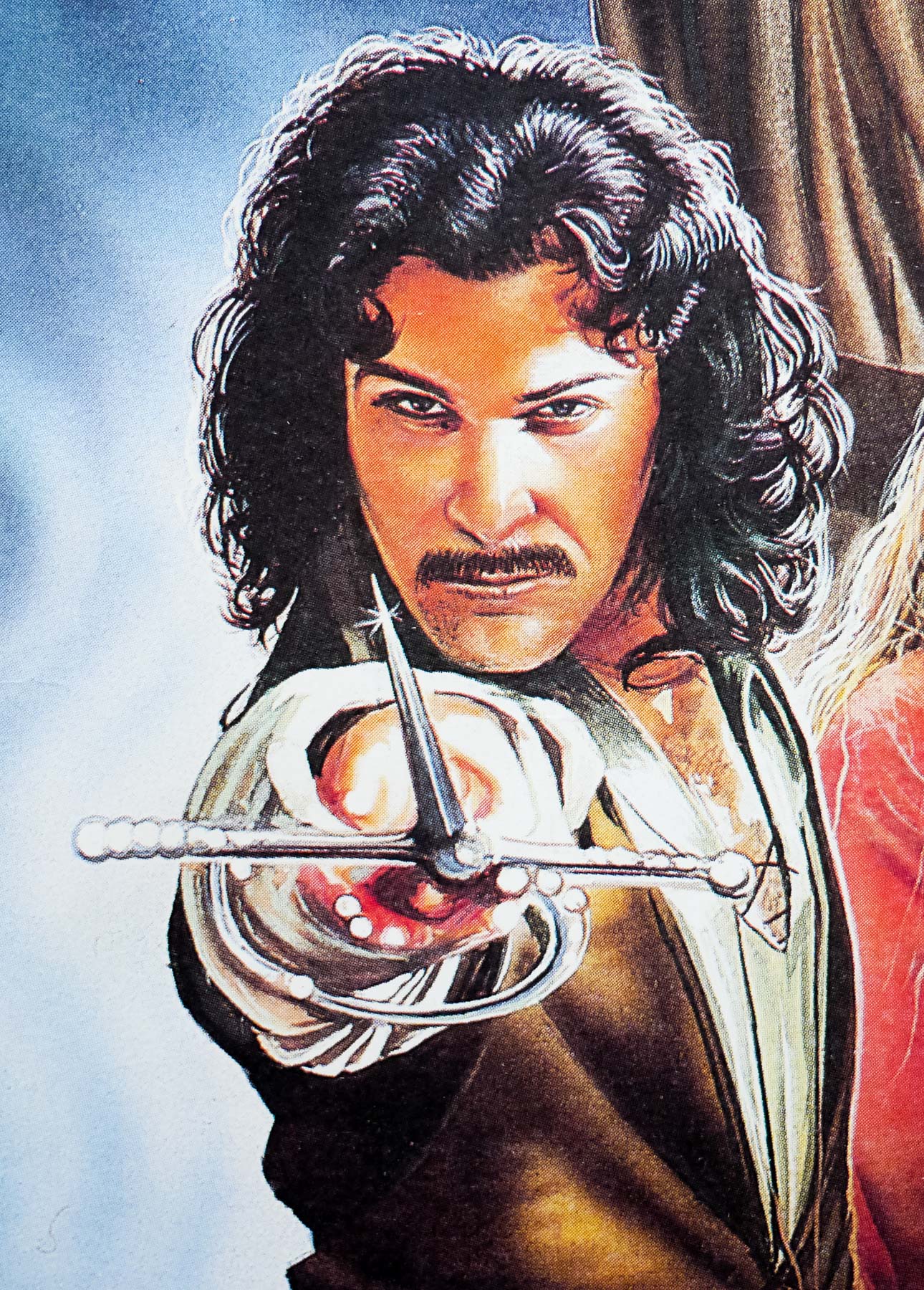
Ostensibly a classic fairy tale adventure, the film is based in the Renaissance-era fictional country of Florin in which a beautiful princess named Buttercup (Robin Wright) is set to marry the odious Prince Humperdinck (Chris Sarandon). One day she is kidnapped by a oddly-matched trio of petty criminals, including diminutive gang boss Vizzini (Wallace Shawn), Spanish master fencer Inigo Montoya (Mandy Patinkin) and the giant Fezzik (legendary wrestler André the Giant) who have been hired to start a war between two nations by killing Buttercup and leaving her body on the shore of rival country Guilder.

The trio haven’t counted on the actions of the mysterious Dread Pirate Roberts (Cary Elwes) who pursues them across the sea, eventually freeing Buttercup from the gang. Buttercup discovers that the pirate is in fact her long lost love Westley who disappeared five years earlier whilst on a voyage. Before long, Humperdinck and his nefarious, six-fingered sidekick Count Rugen (Christopher Guest) catches up with the lovers and promises Buttercup that he’ll let Westley go if she’ll return to Florin and marry him. She reluctantly agrees but the prince doesn’t stick to his word and Rugen traps Westley in the underground ‘Pit of Despair’. It’s up to Inigo Montoya, who has a grudge to settle with Rugen, and Fezzik to free Westley and break into the prince’s castle before it’s too late.

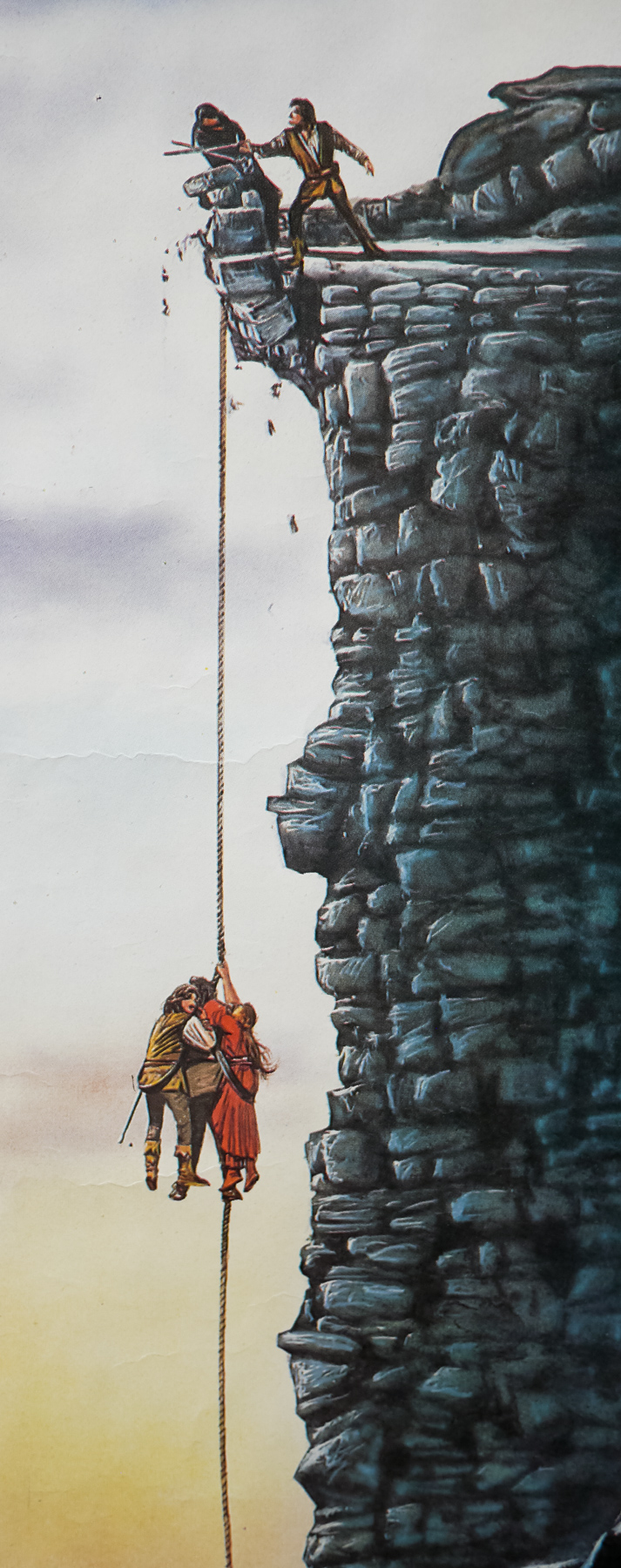
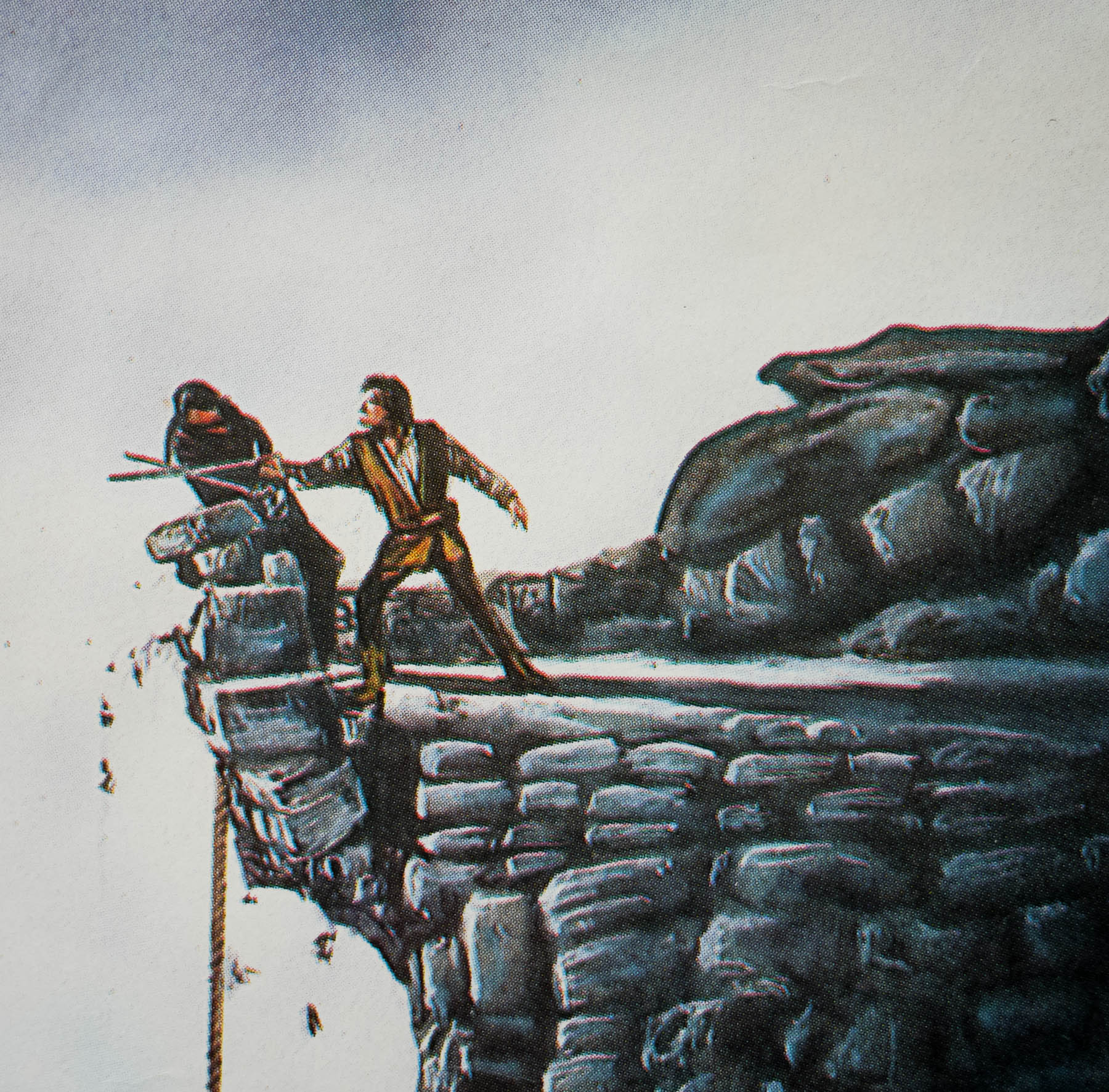
The film has a genuinely funny script that is elevated further by some classic performances from Elwes, Patinkin and Guest, with a brilliant cameo from Billy Crystal. It has a pitch-perfect mix of non-cheesy romance, with exciting action and adventure, including an epic swordfight atop a cliff. The Princess Bride has been embraced by generations of film fans and continues to be loved by audiences of all ages, with several of the most quoted lines entering the cultural lexicon.

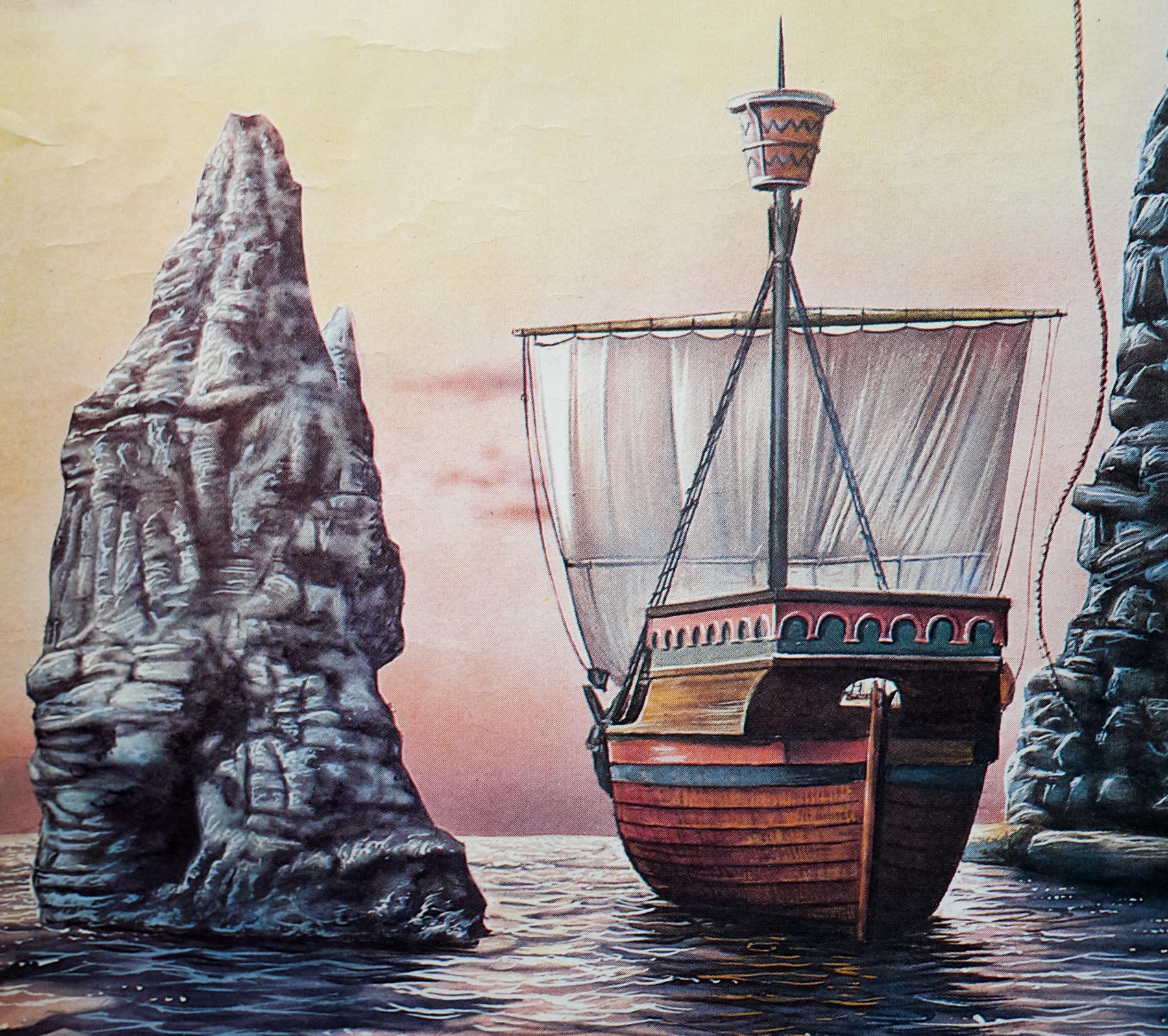
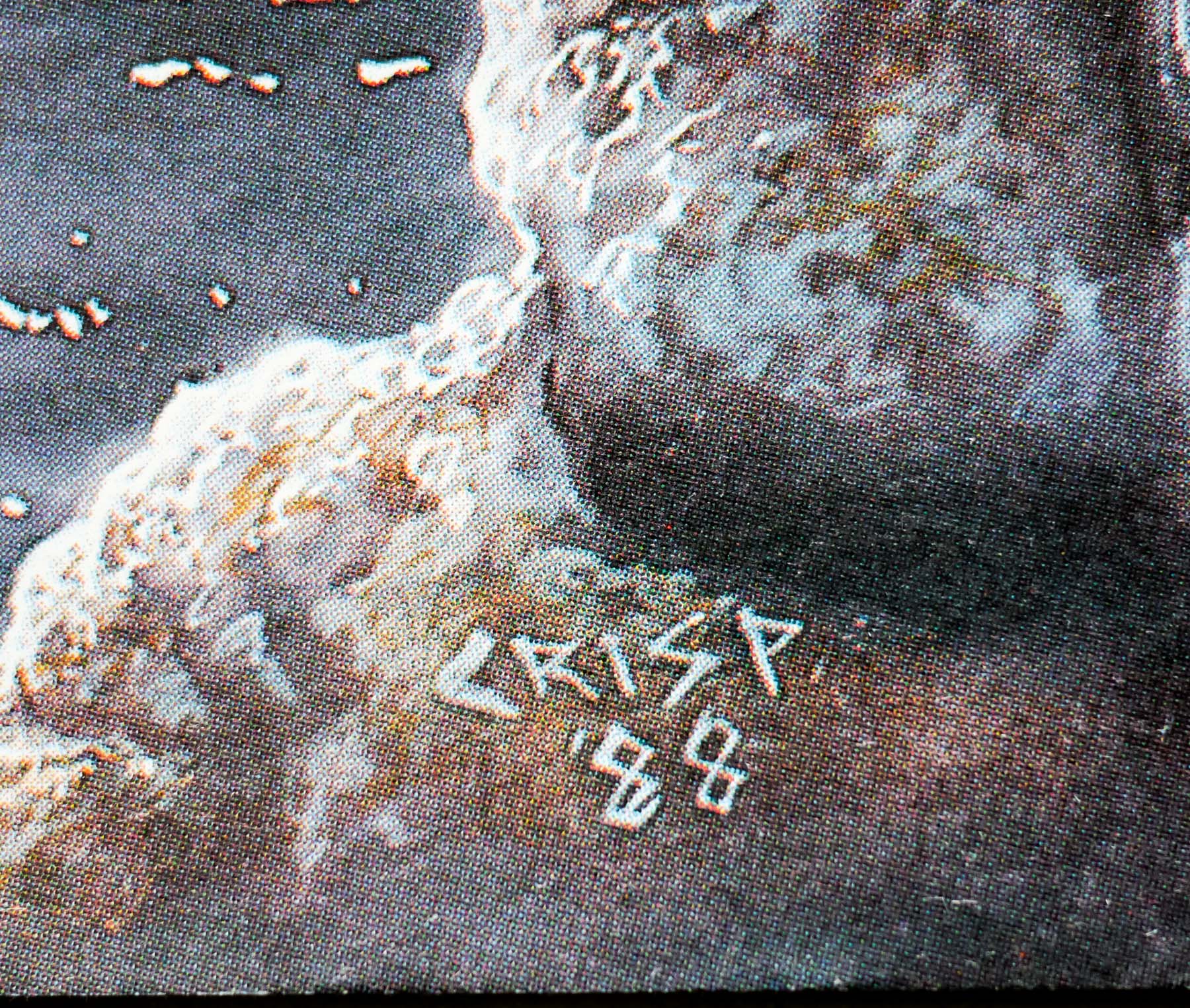
The design of the poster is credited (in the bottom right) to a company called Hat Art Ltd about whom I’ve been able to discover next to nothing, so if anyone has any information about them please get in touch. The artwork bears a signature of ‘Crisp’, which is short for the British artist Steve Crisp. According to the artist’s profile on a now defunct art website, Crisp was born in Kent in 1955 and started painting as early as 5 years old. He studied at the noted St Martins School of Art in London in the 70s and for the past 30 years has worked on book covers for the likes of Stephen King (11 in total), Ray Bradbury and James Herbert, as well as film posters like this one and home video covers for films like Mad Max.

He’s also noted for his work on illustrated jigsaws and the Jigsaw Junkies website interviewed him in 2016. The resultant article can be read here.

Certain Fury / quad / UK

27.05.15

Poster Poster
Title
Certain Fury
AKA
--
Year of Film
1985
Director
Stephen Gyllenhaal
Starring
Tatum O'Neal, Irene Cara, Nicholas Campbell, George Murdock, Moses Gunn, Peter Fonda, Rodney Gage, Jonathon Pallone, David Longworth
Origin of Film
USA
Genre(s) of Film
Tatum O'Neal, Irene Cara, Nicholas Campbell, George Murdock, Moses Gunn, Peter Fonda, Rodney Gage, Jonathon Pallone, David Longworth,
Type of Poster
Quad
Style of Poster
--
Origin of Poster
UK
Year of Poster
1985
Designer
Unknown
Artist
Renato Casaro
Size (inches)
30" x 39 15/16"
SS or DS
SS
Tagline
Two Academy Award winning stars... in the one motion picture that hurtles them from innocence - to fear - to rage!

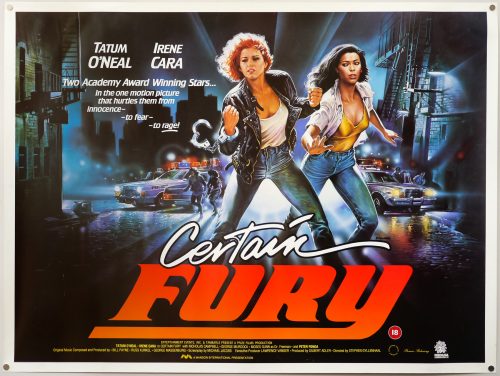
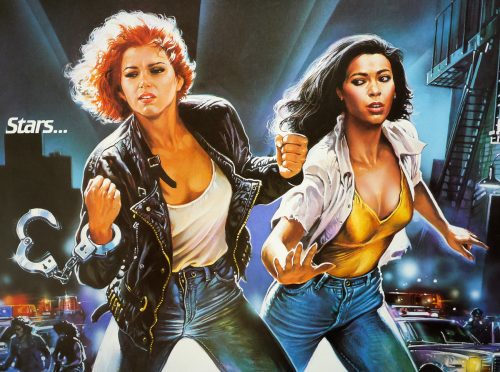
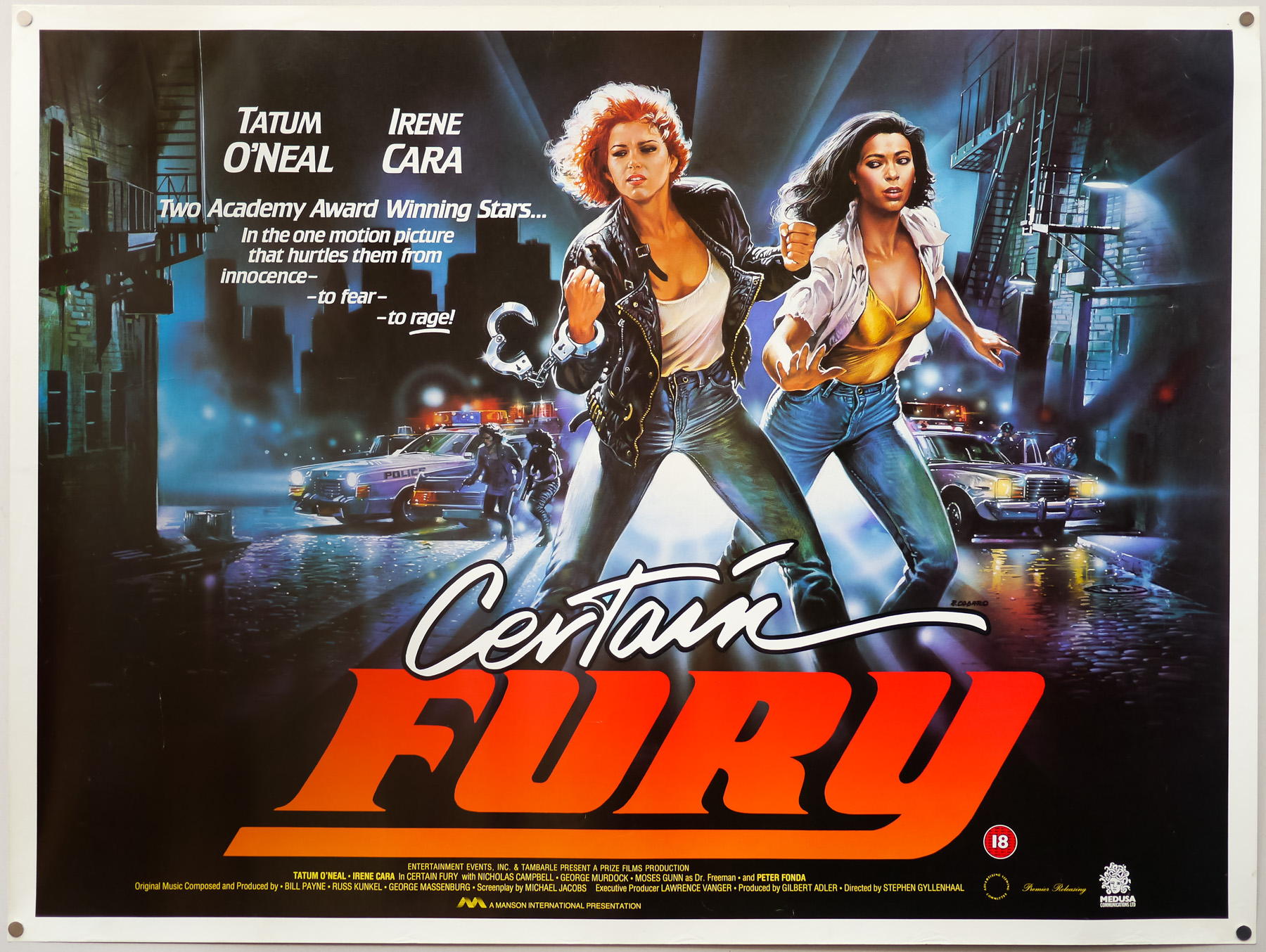
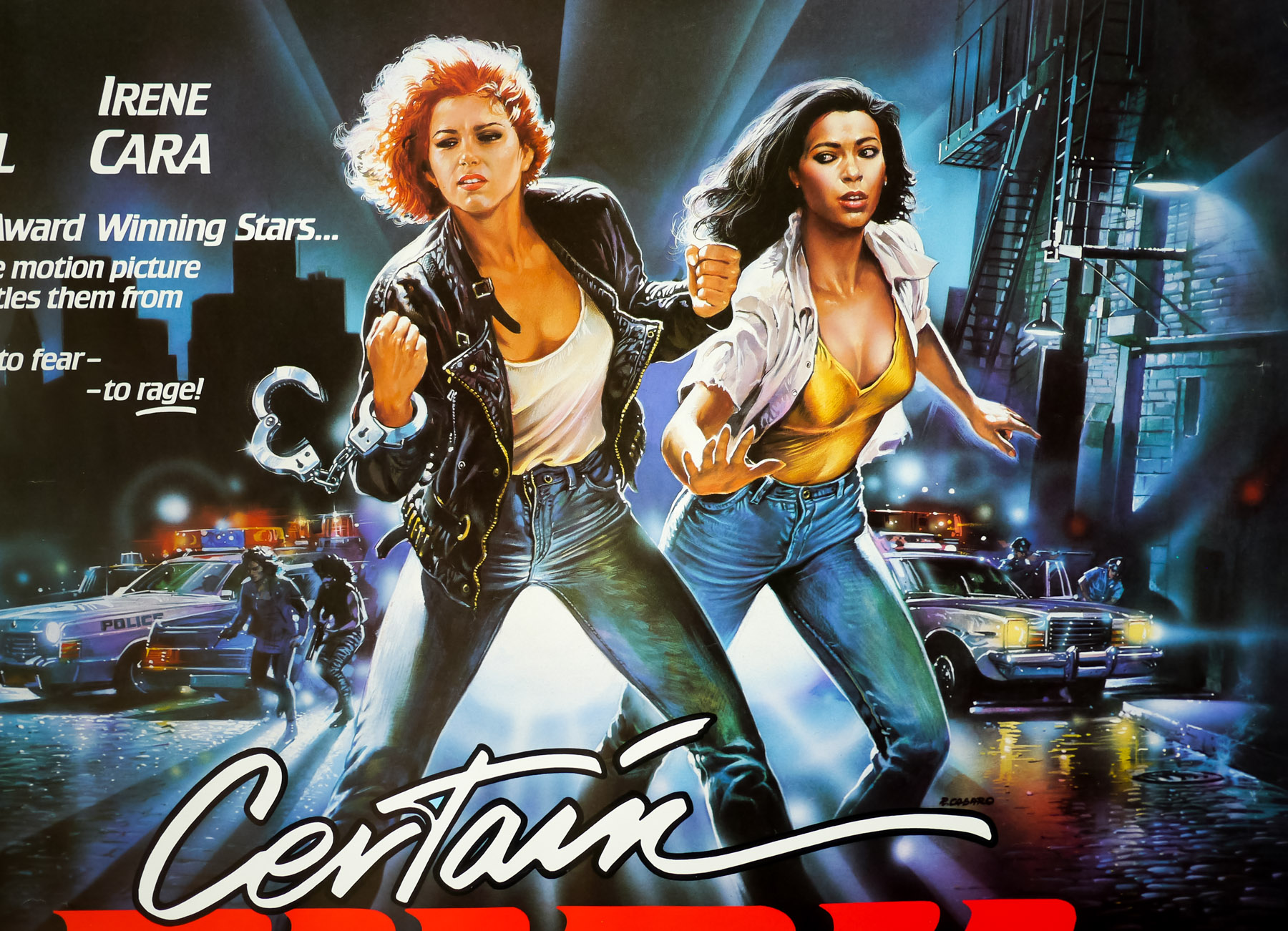
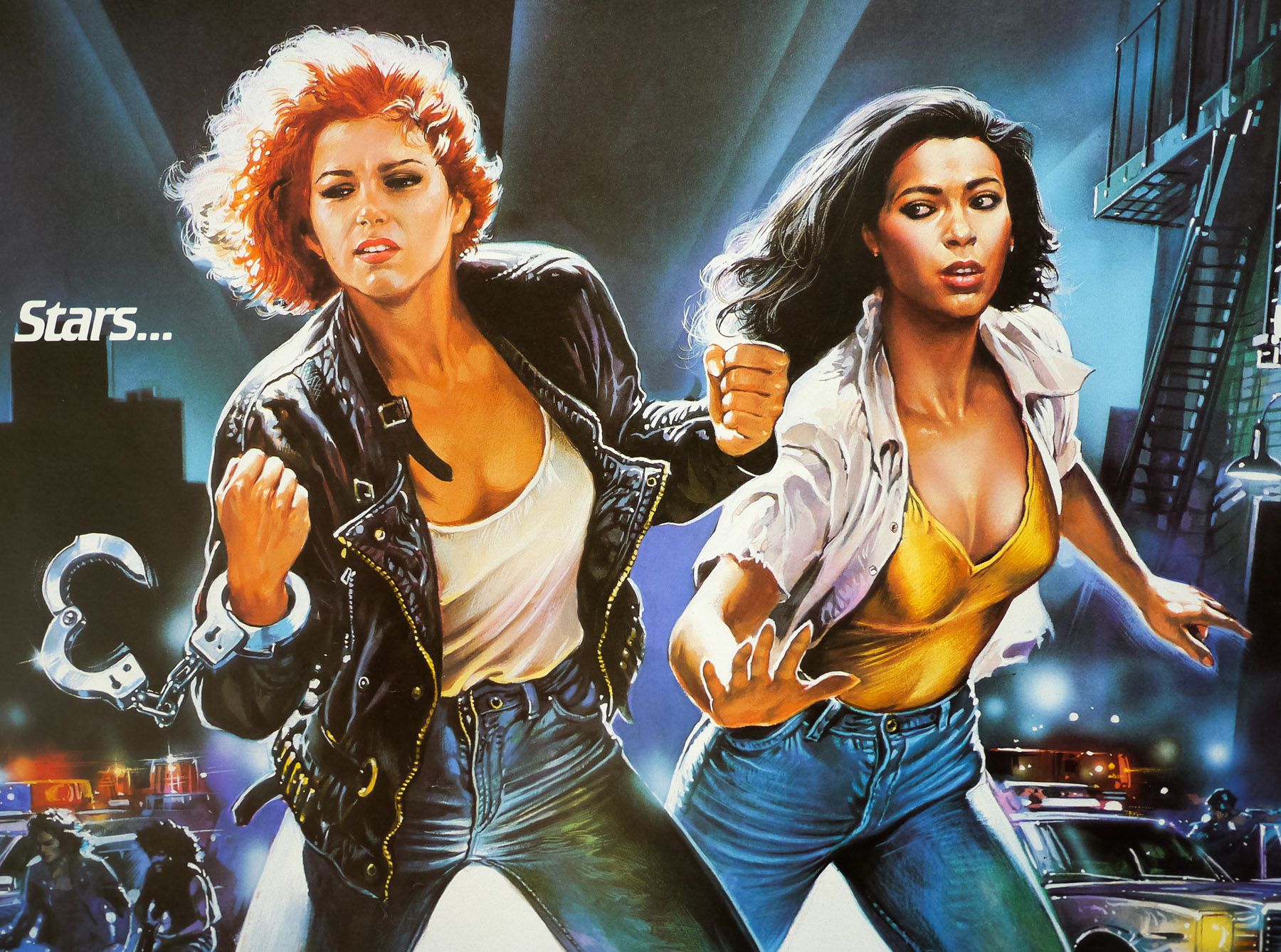
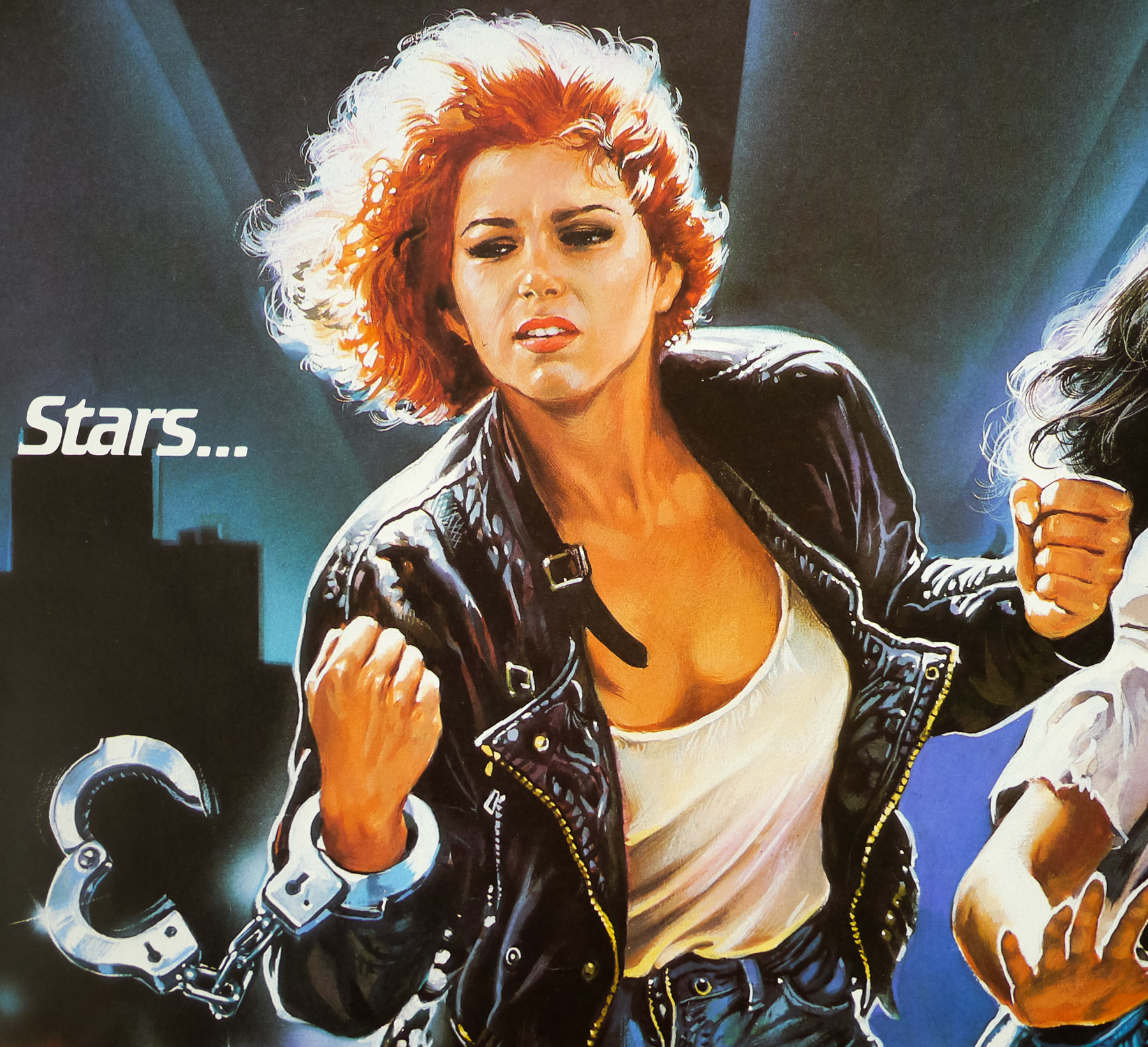
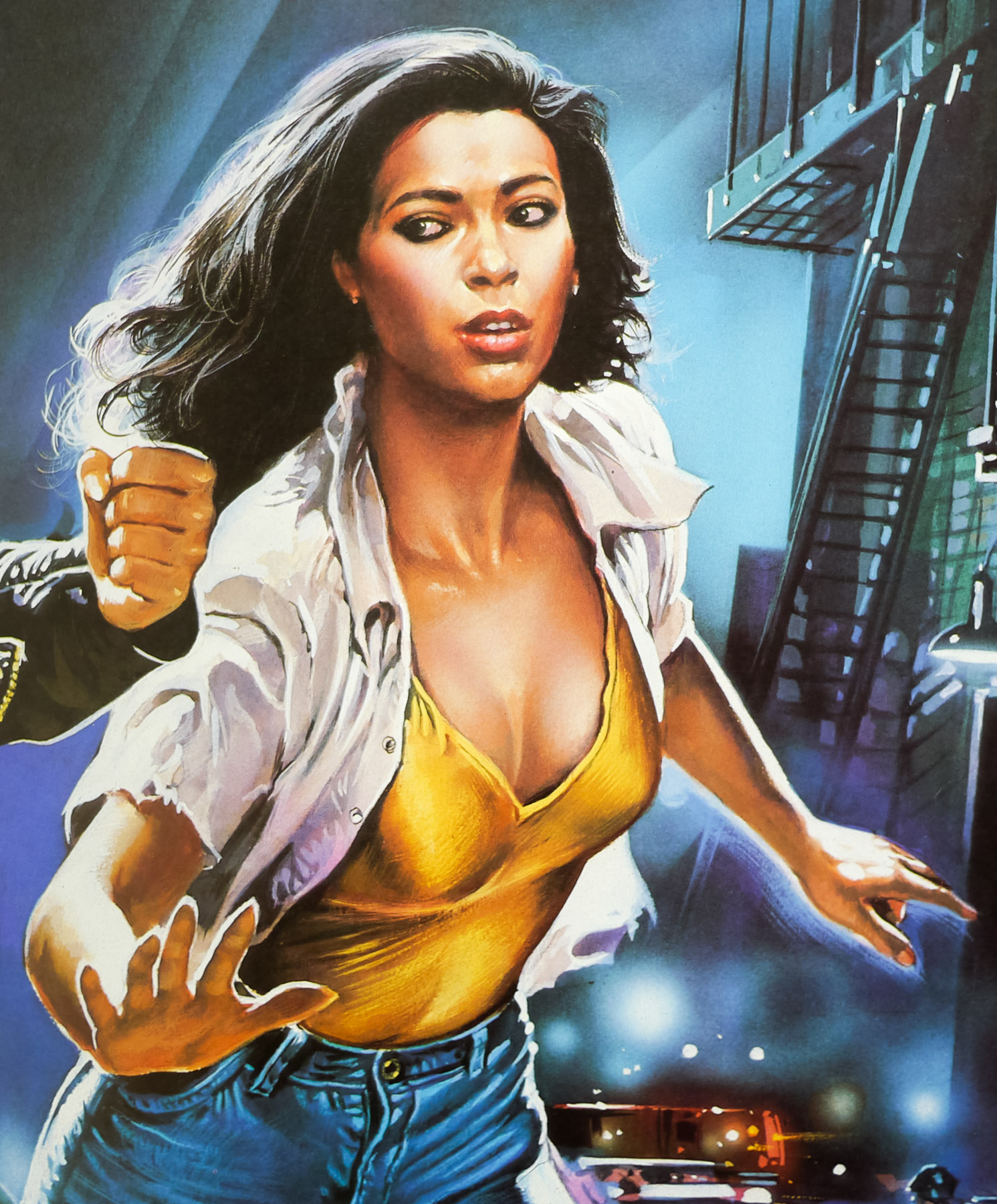
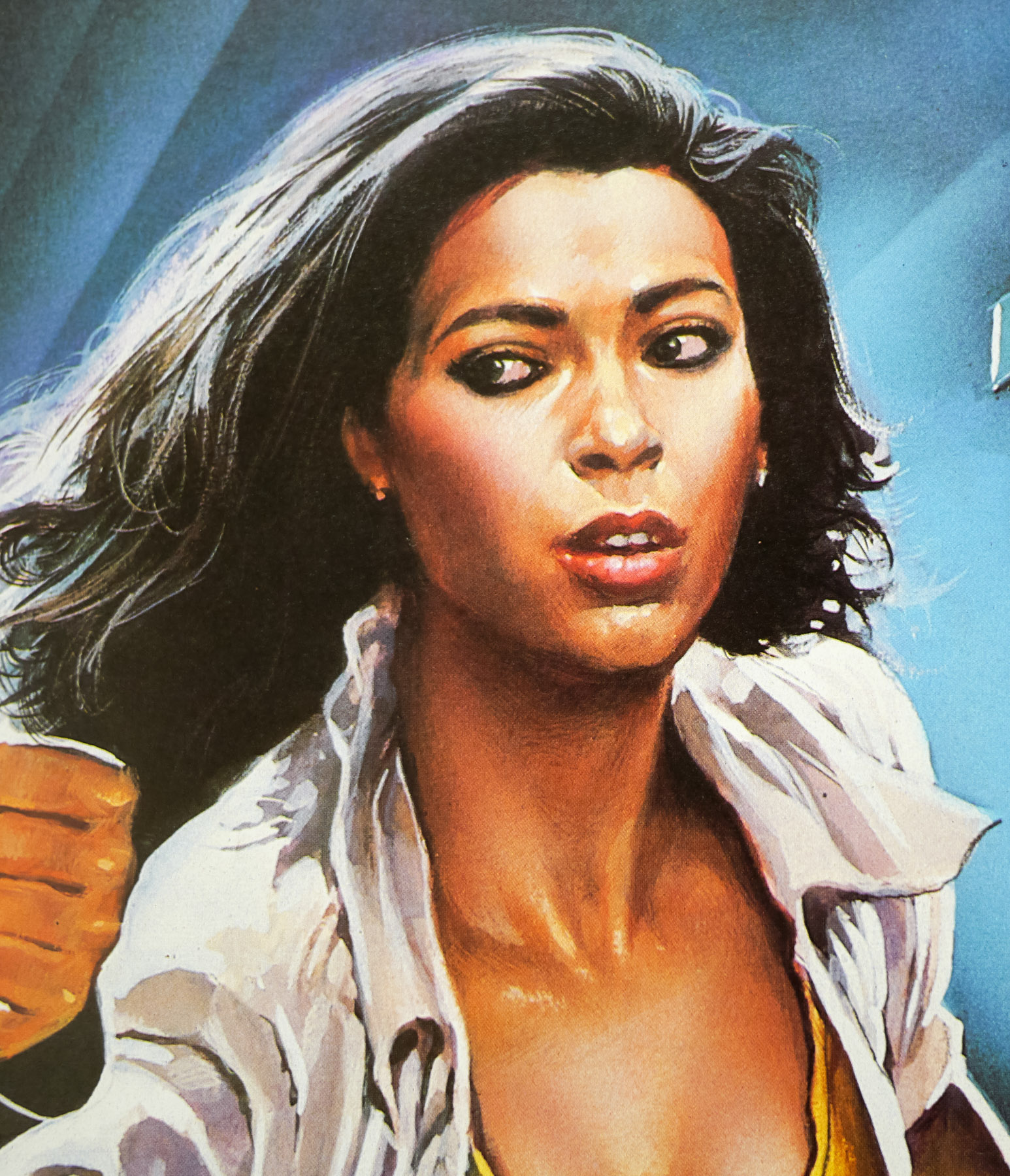
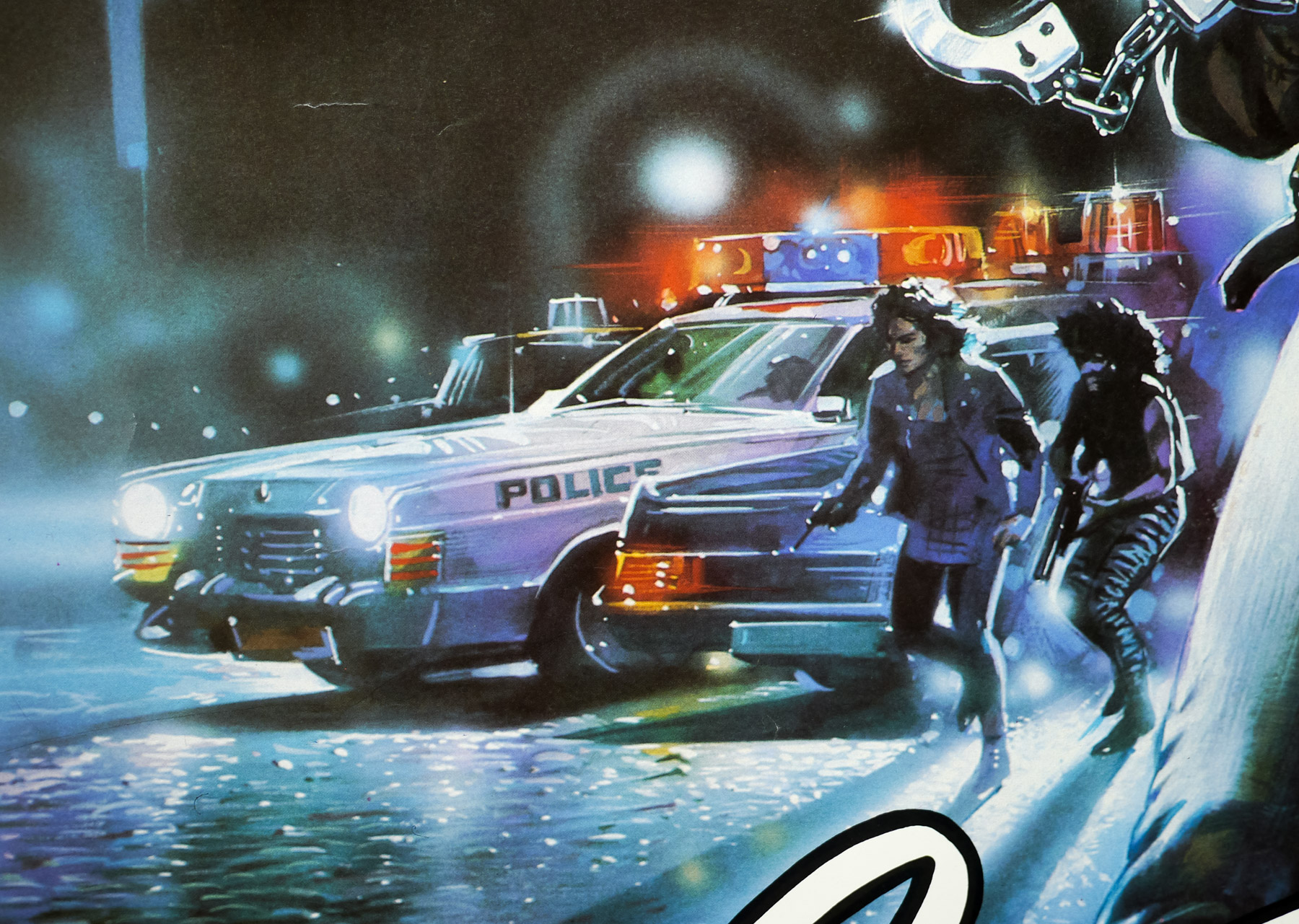
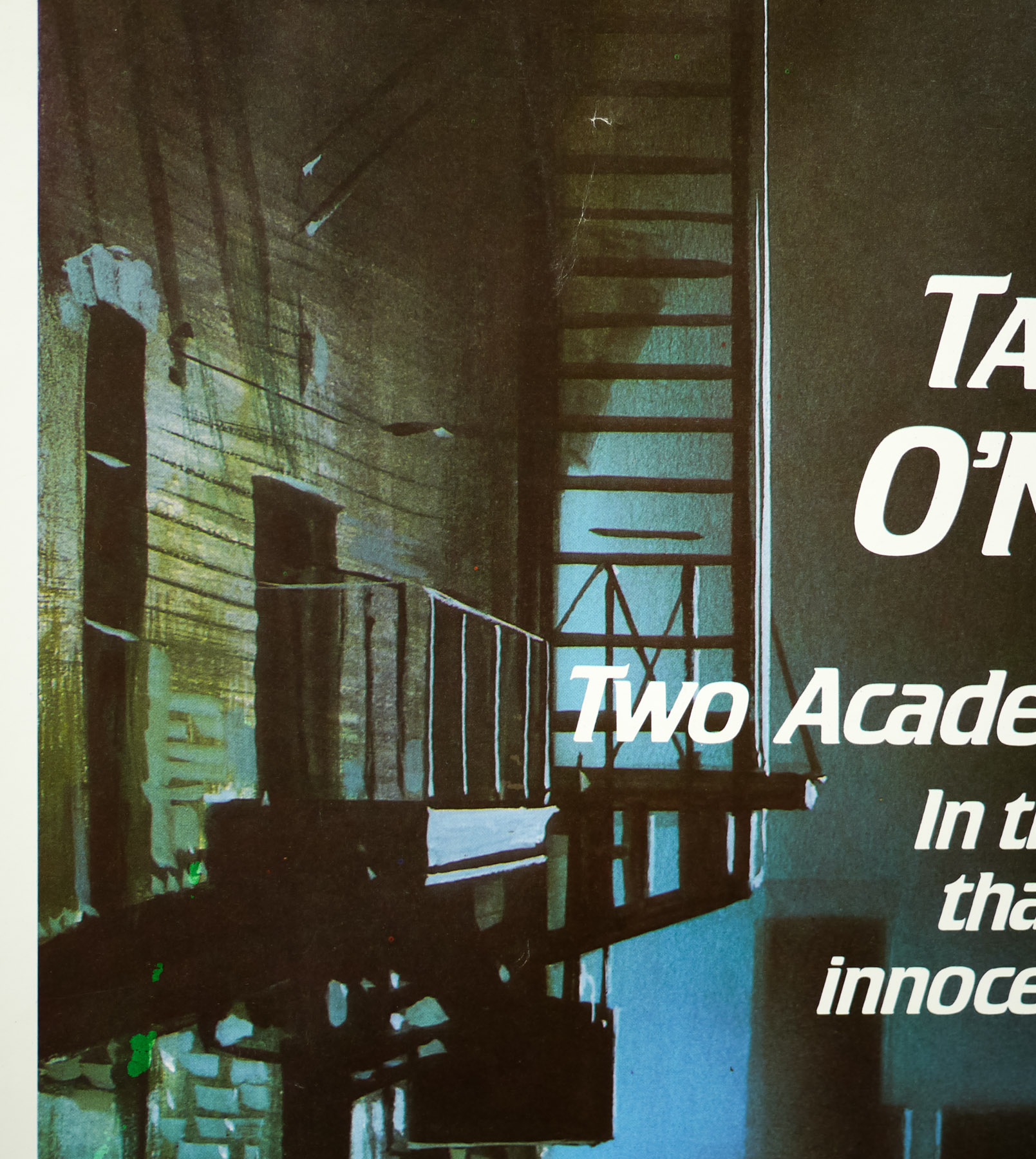
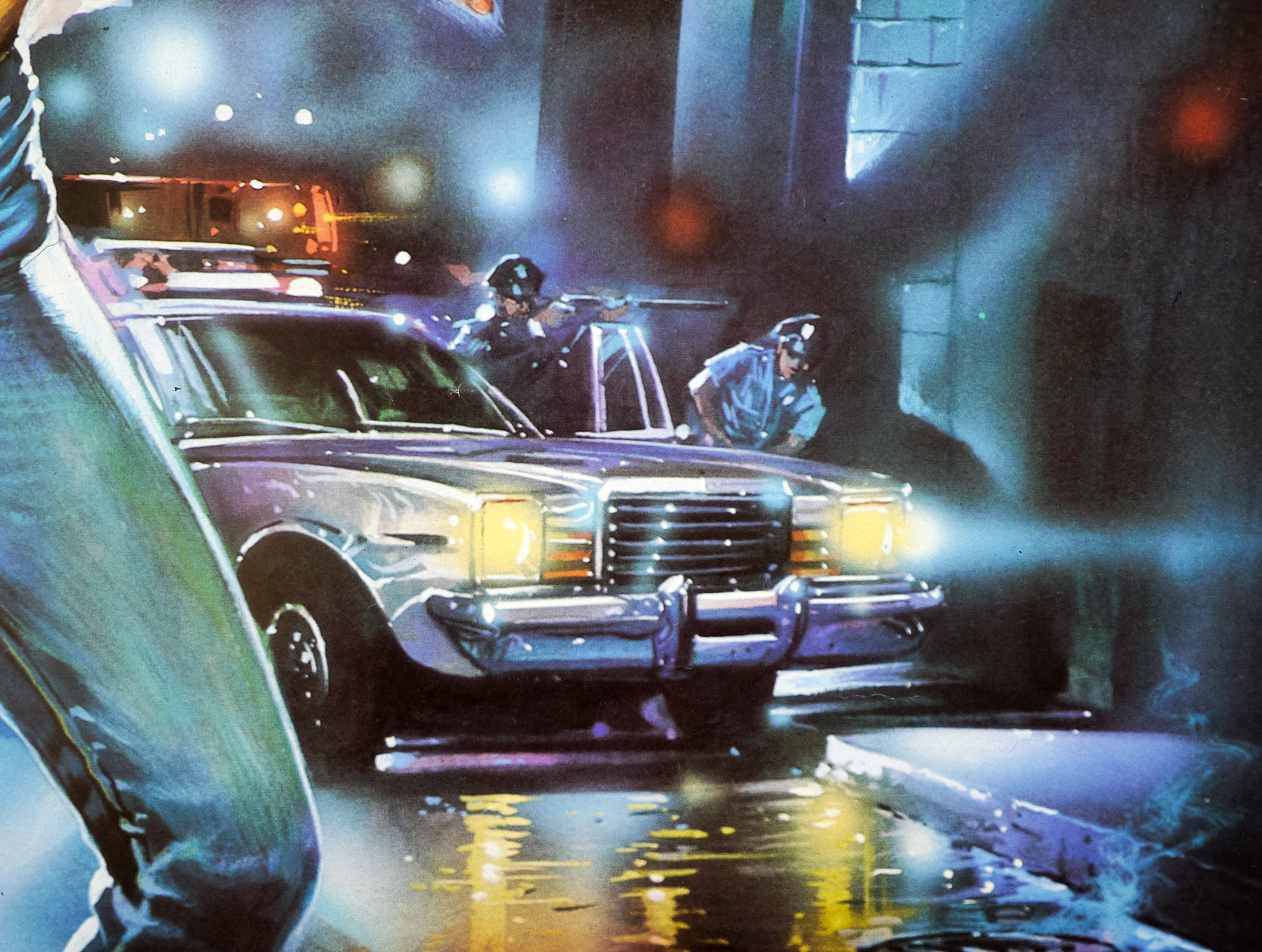
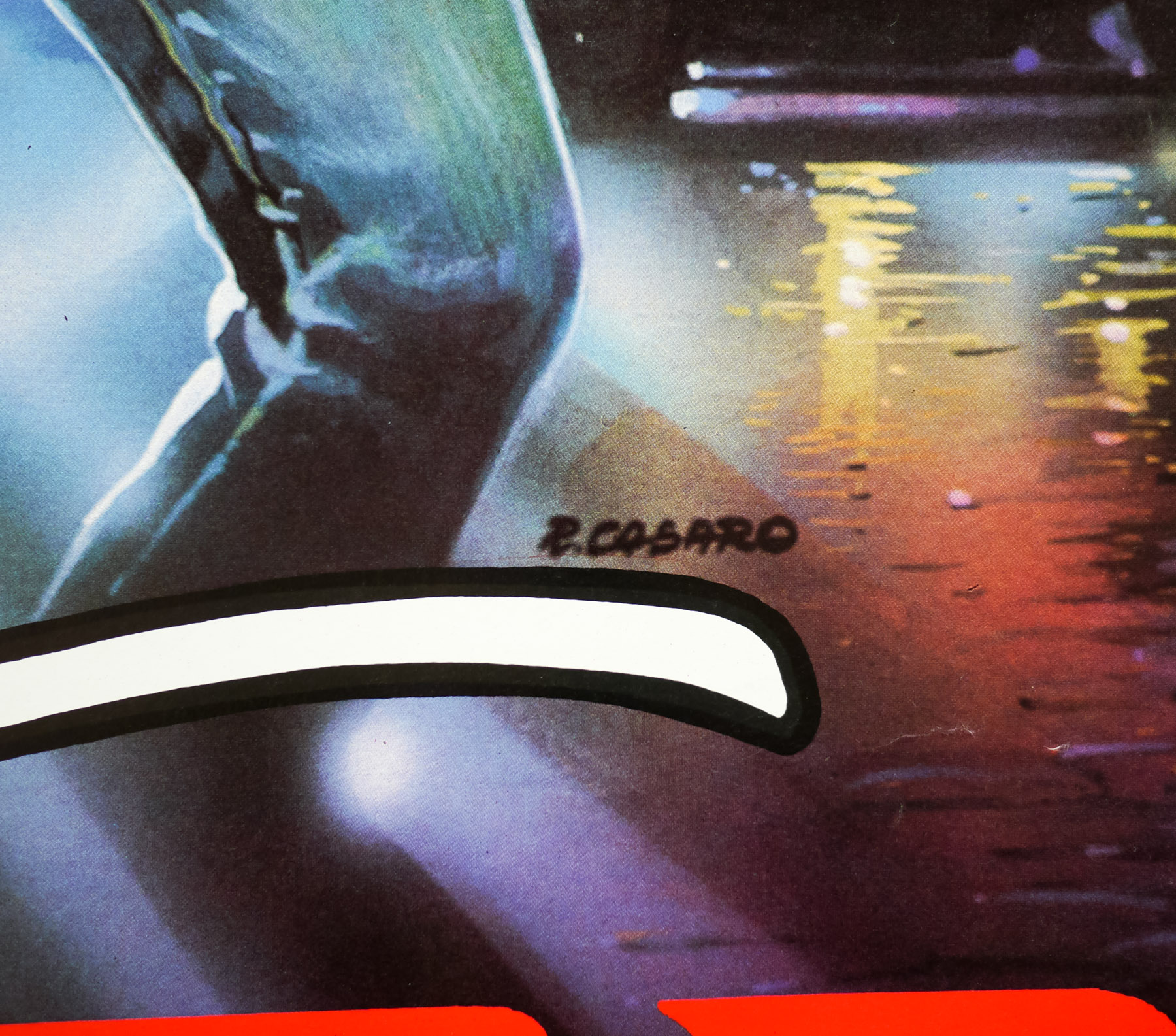
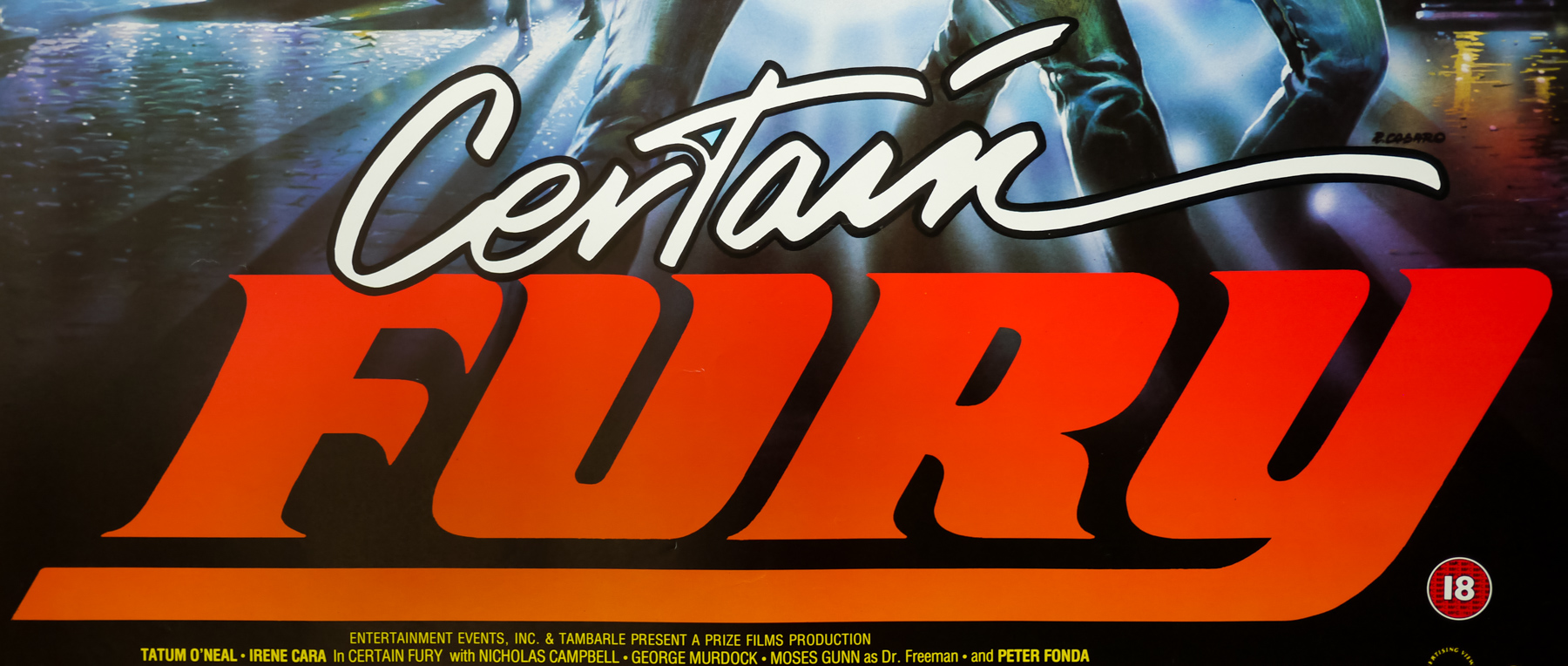
Great artwork by Renato Casaro features on this UK quad for the release of the largely forgotten 1985 b-movie Certain Fury. As this poster is keen to point out, the film stars two young award-winning actresses, Tatum O’Neal (daughter of Ryan) and Irene Cara, a singer-songwriter who had won awards for her work on Fame and Flashdance. Tatum plays Scarlet, a tough, young delinquent who supports herself with prostitution and drug-dealing and Irene is Tracy, the daughter of a doctor, who has been arrested for drug possession and resisting arrest. The pair first meet in a courtroom and are waiting to be seen by the judge when other defendants begin attacking the court staff and police, leading to a deadly shootout. Scarlet and Tracy manage to escape the carnage and enter into the city’s sewers whilst being pursued by the police who believe they were part of the shootout. Soon the accidental death of a policeman is blamed on their actions and they have most of the force after them as well as various criminals who Scarlet asks for help before they turn on her and Tracy.

The film was poorly reviewed at the time and hardly set the box-office on fire. It’s never been released on home video since the days of VHS and, if the IMDb reviews are anything to go by, there’s probably a good reason. It sounds like a film that’s not even ‘so bad it’s good’ and this seems like one of those cases where the poster art is the best thing about the film!

One of my favourite artists, Renato Casaro is an Italian with a prolific movie poster output that lasted over 35 years. He began his career in 1953, aged 19, at the famous Studio Favalli in Rome and would go on to design and paint posters for many of the biggest directors in the world. His skill at accurately portraying actors and his brilliant use of colour and composition saw him much in demand from studios and actors alike. His artwork has featured on posters used in multiple countries, including Japan, Germany, USA as well as in his native Italy.

Check out the incredible amount of work on his official website here, which also features a biography of the artist. In March 2014 I published an exclusive interview with Renato and it can be read by clicking here. The other posters I’ve collected by Renato Casaro are here.

A Nightmare on Elm Street 4: The Dream Master / double crown / UK

17.06.15

Poster Poster

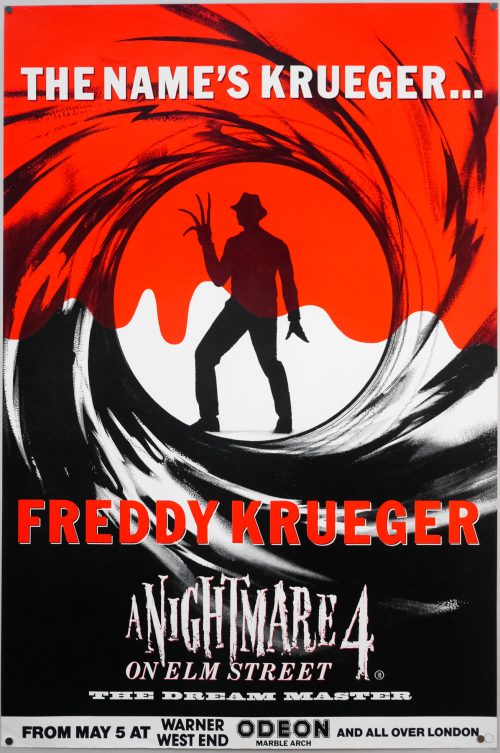
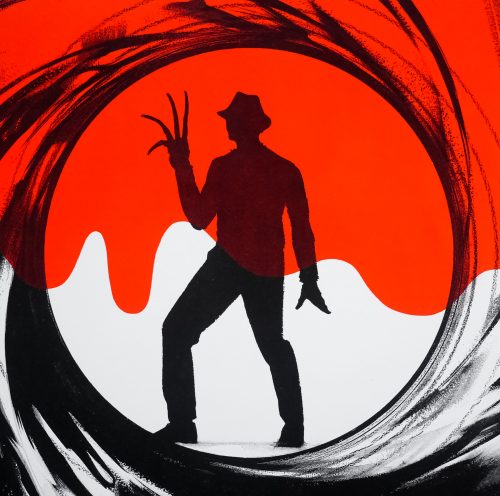
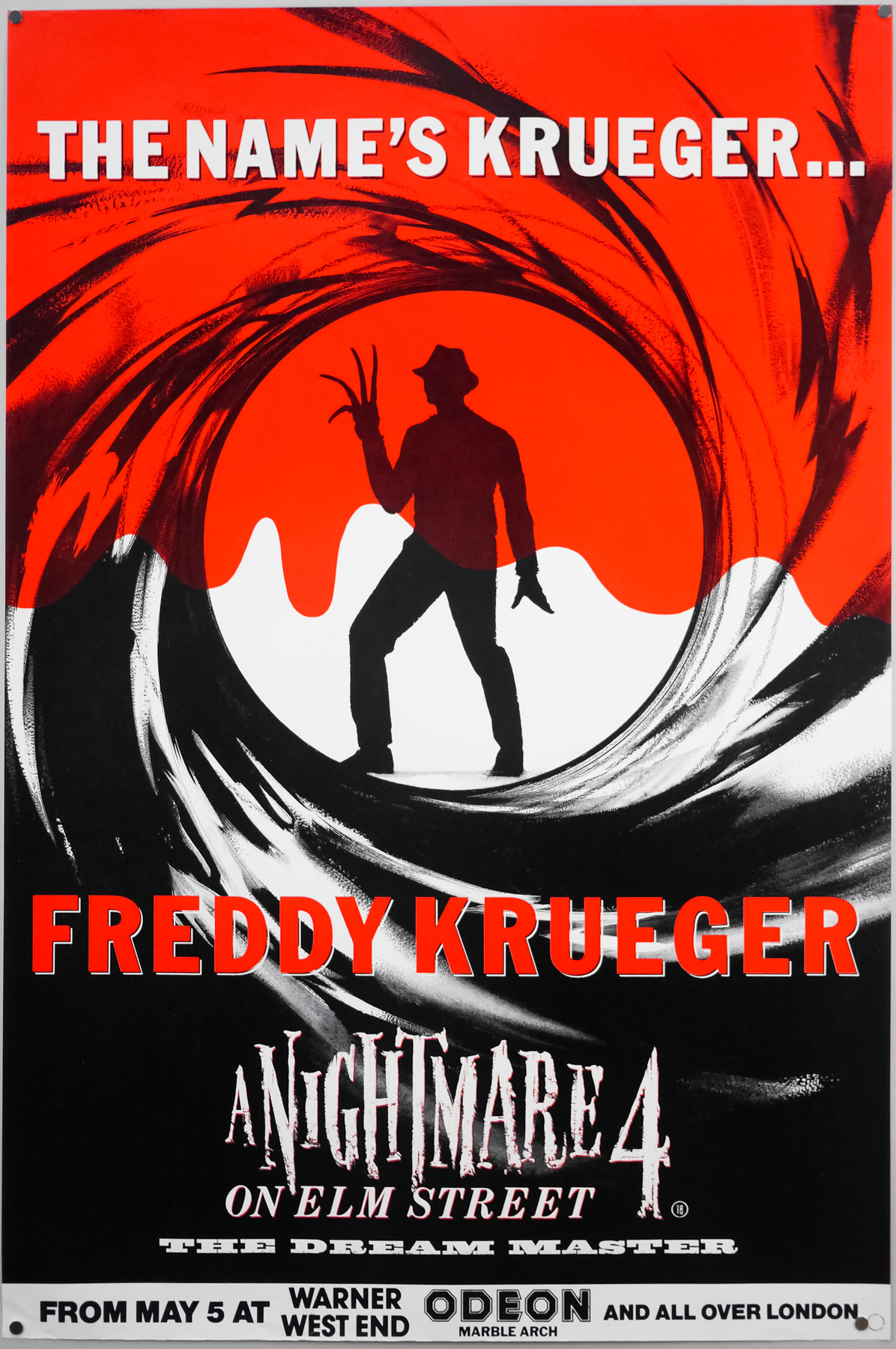
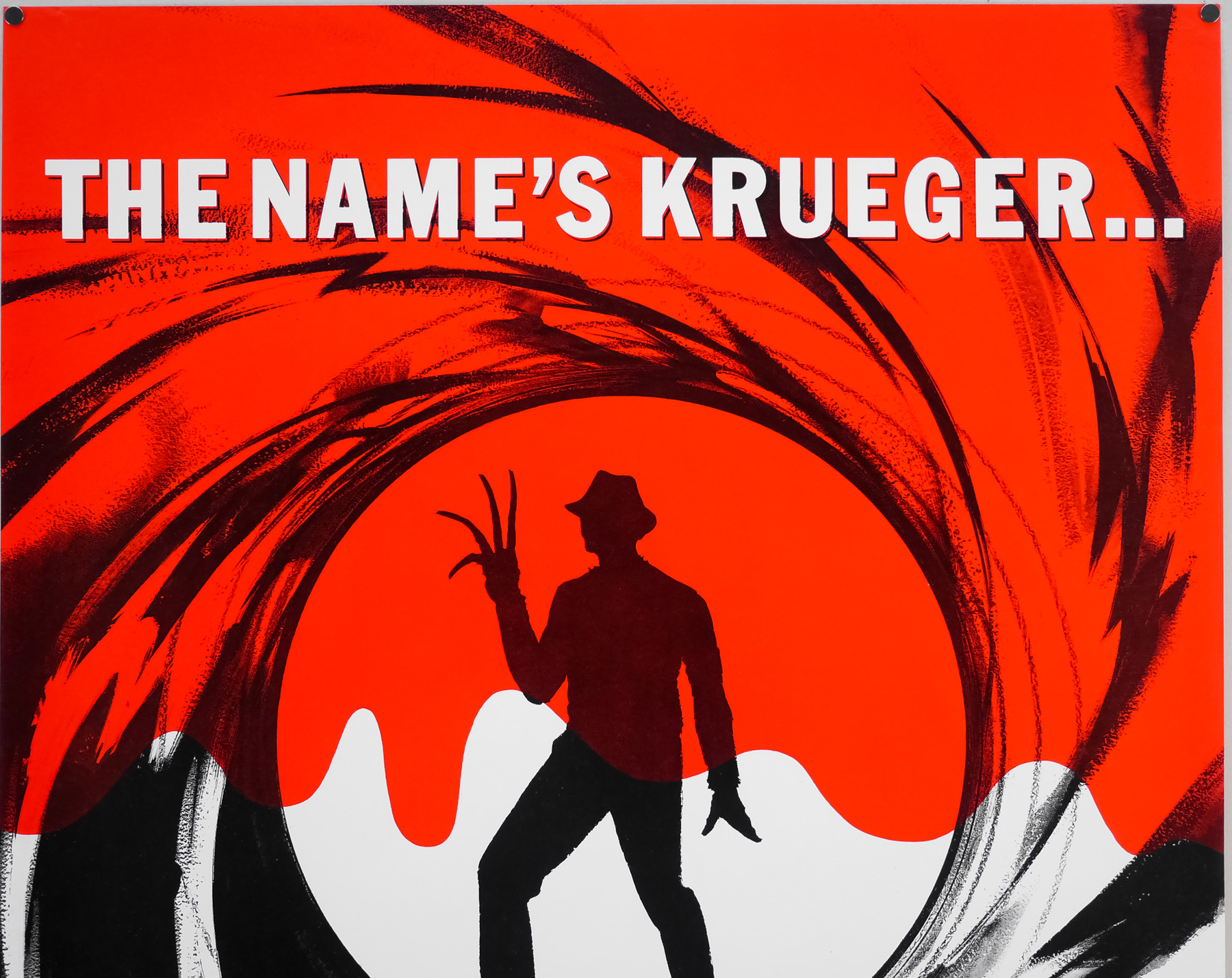
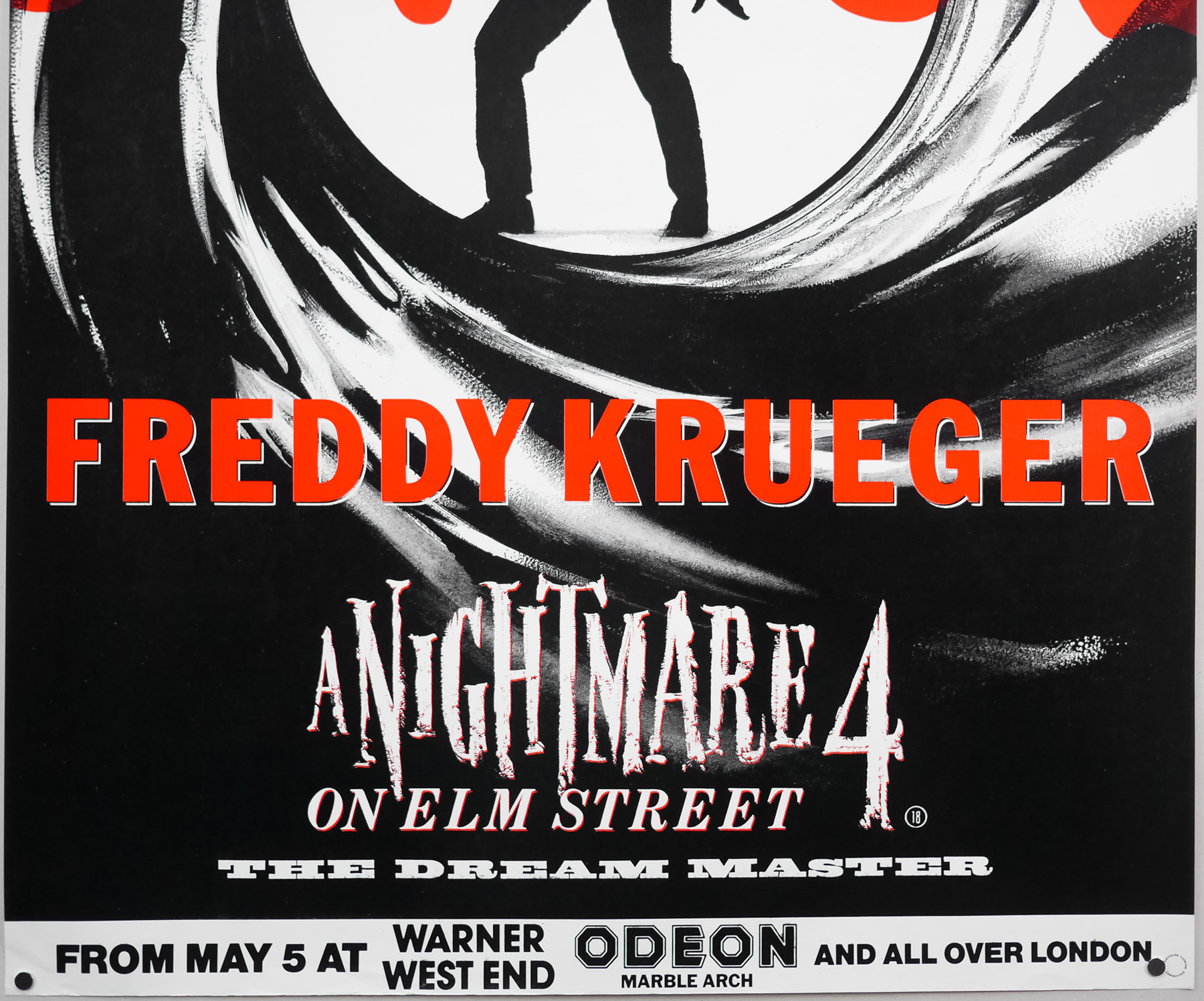
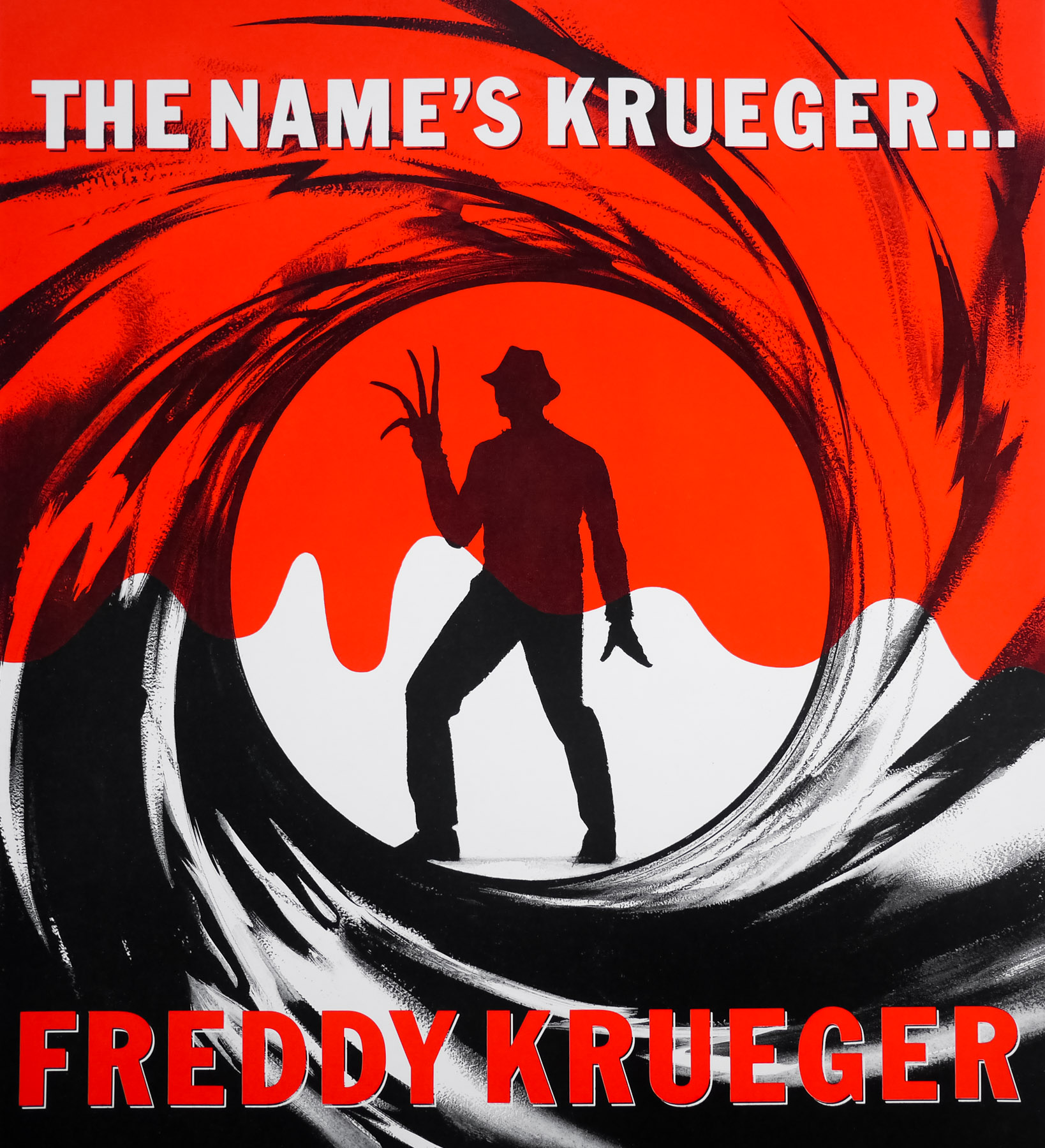
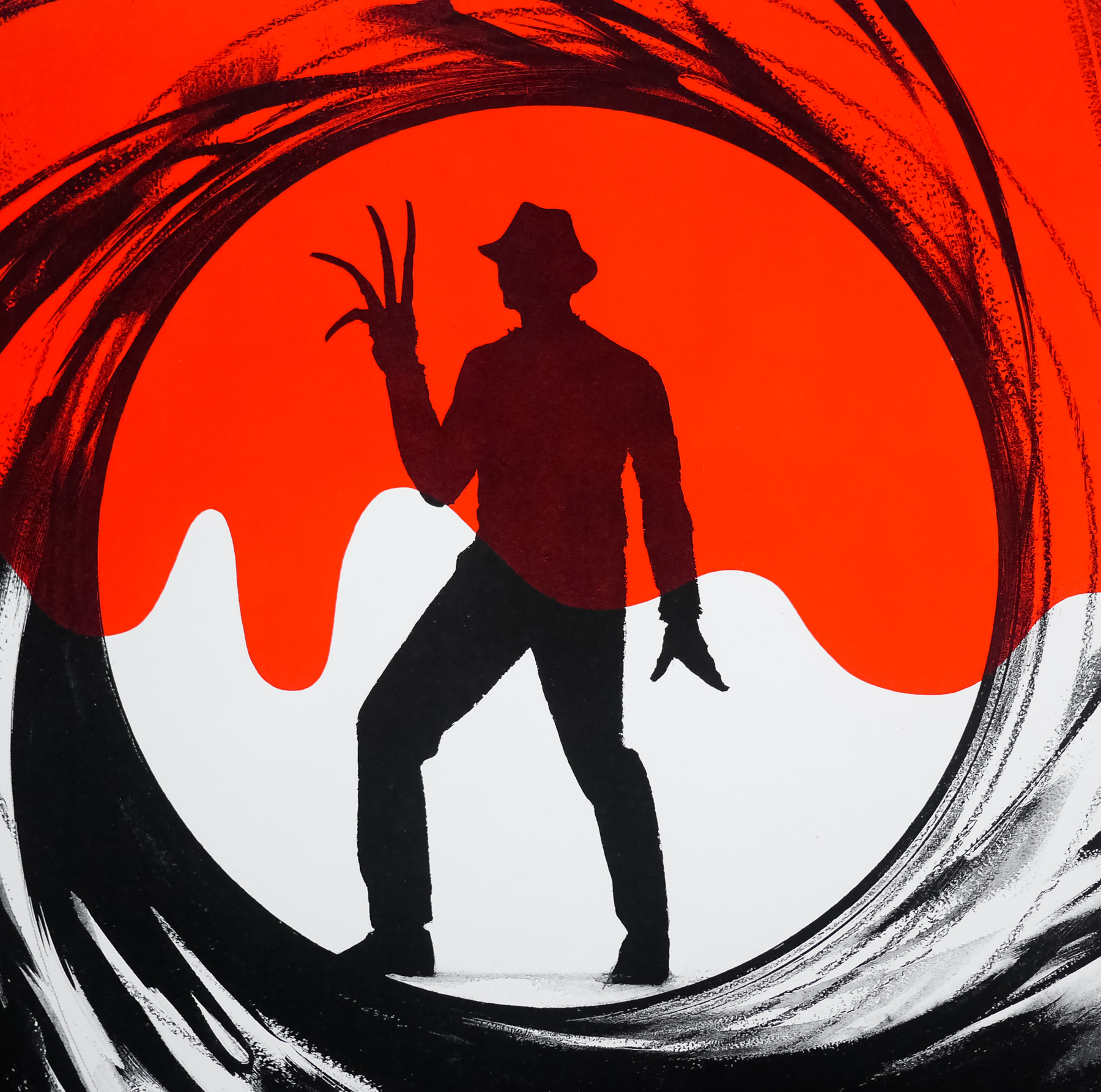
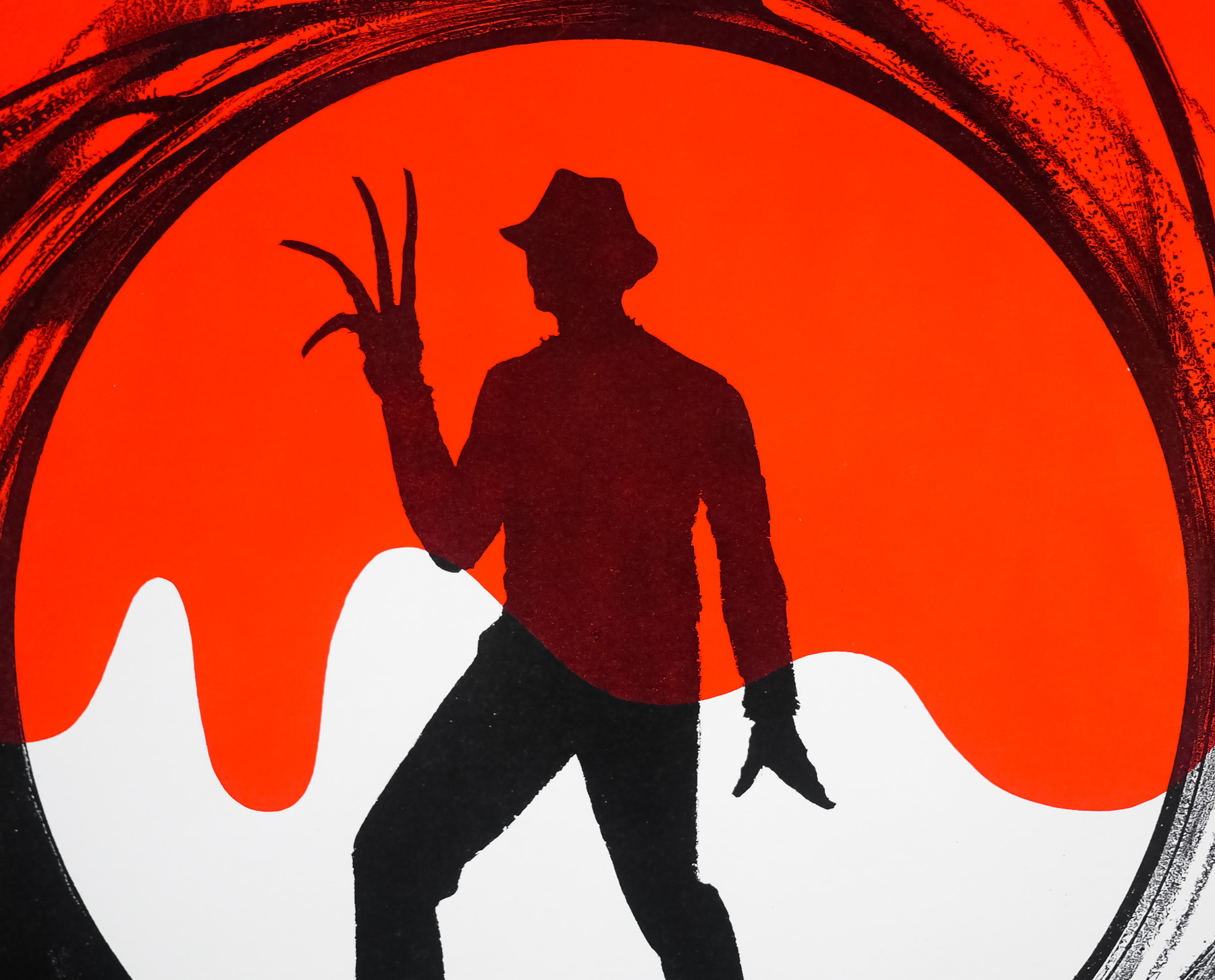
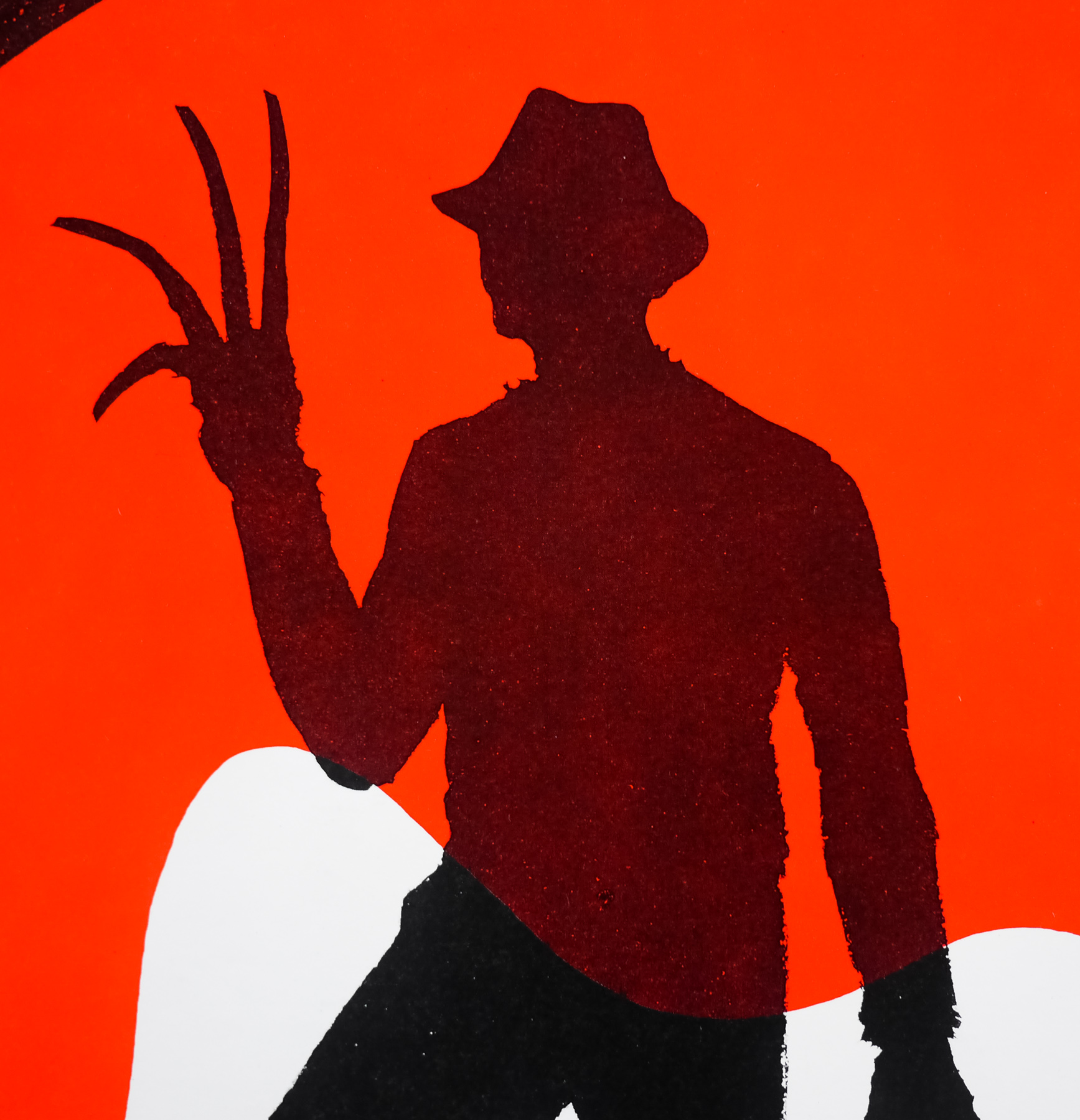
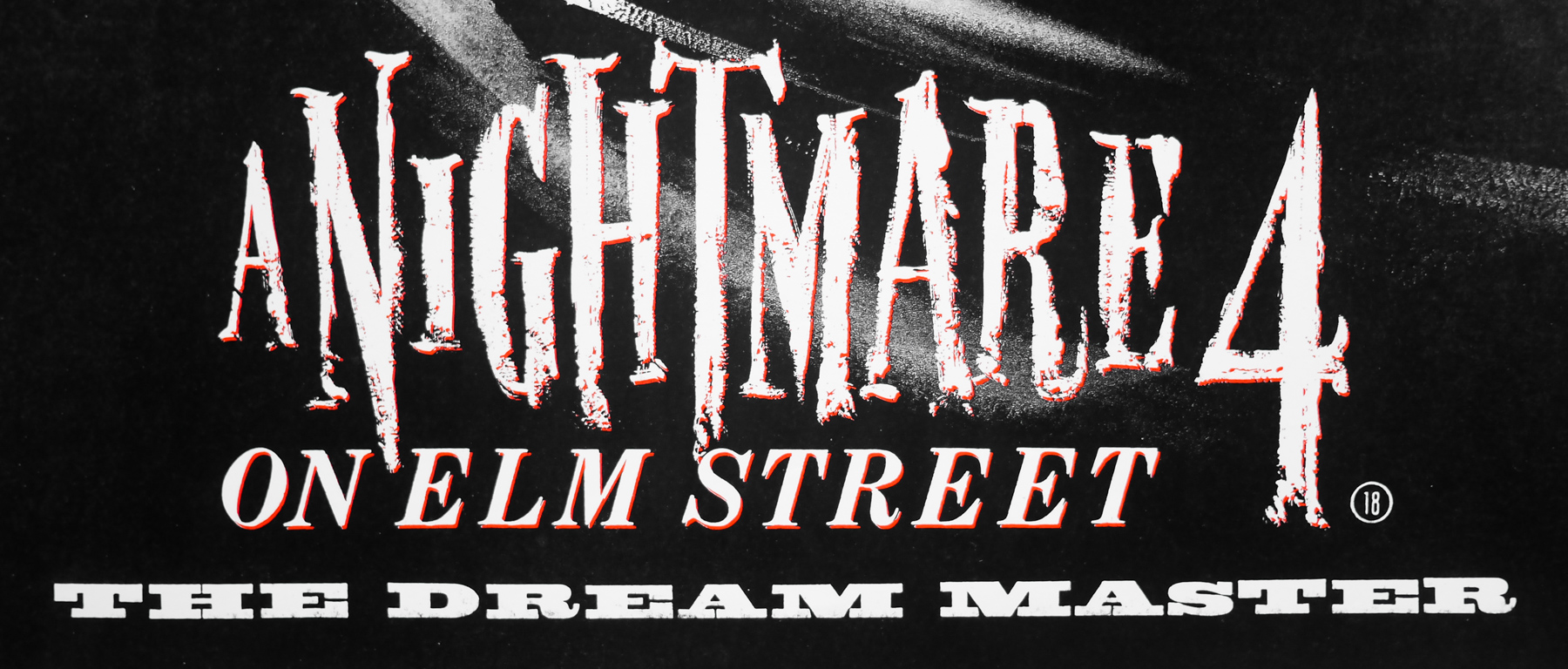
When the fourth film in the ‘A Nightmare on Elm Street’ franchise (subtitled The Dream Master) was released in the UK it happened to be up against the latest James Bond entry, Licence to Kill, at the box office. Palace Pictures had been handling the British distribution of the horror franchise since the first film and had worked with the same artist, Graham Humphreys, to produce unique poster designs for the market. When it came to promoting The Dream Master Graham produced a unique quad for use in cinema lobbies and on billboards, but he also had the idea of creating a small run of double crowns that spoofed the iconic James Bond gun barrel opening sequence created by Maurice Binder and first seen in Dr No (1962).

When I interviewed Graham in 2011 for this site he explained how that came about and where the poster was used. Here’s an excerpt:

—————-

So it was often the case that you wouldn’t know what it was going to look like until you printed it?
No, everything was an experiment. This poster could have been so much different as well though. The stained glass from the final scene in the church was good for me because it was a lovely device that meant I could use the large silhouette [of Freddy]. I also thought it was interesting because at that point the face was so familiar so we could take it dark again; we know who he is. We also did the cheeky James Bond spoof poster.

Ah, you were involved with that?
I was, it was my idea.

For folks who haven’t seen it it’s the classic James Bond silhouette from the title sequence where he shoots and the blood drips down, but with Freddy in Bond’s place. The tag-line is ‘The name’s Krueger…Freddy Krueger’. There was some talk of that poster being withdrawn?
It was, within a week. The new James Bond film was about to come out and that was why we did it anyway. They’re very protective of that image, of course, and they said they’d sue if we didn’t take it down. It was fly-posted on the underground for a little while. I’d gone to the folks at Palace and said I’ve got this great idea for a teaser for Elm Street 4 and brought along a VHS tape [of a Bond film] which I put on and freeze-framed at that moment where he turns around and fires the gun. They said ‘great!’ and that was that.

Was that always the case with Palace, that they’d be happy to try things like that?
Oh yes, completely.

———–

To see the other posters I’ve collected by Graham click here and read the exclusive interview with the artist here.

Swiss Family Robinson / quad / 1976 re-release / UK

10.08.15

Poster Poster

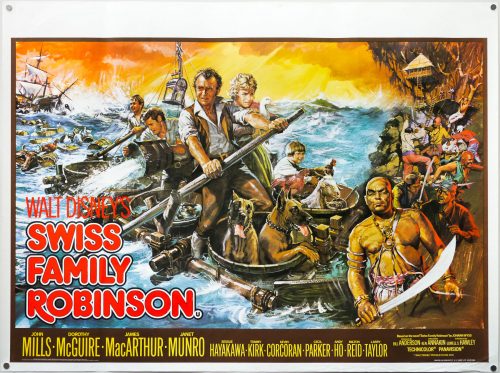
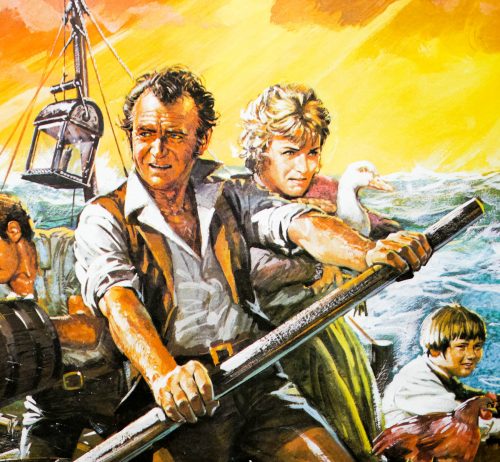
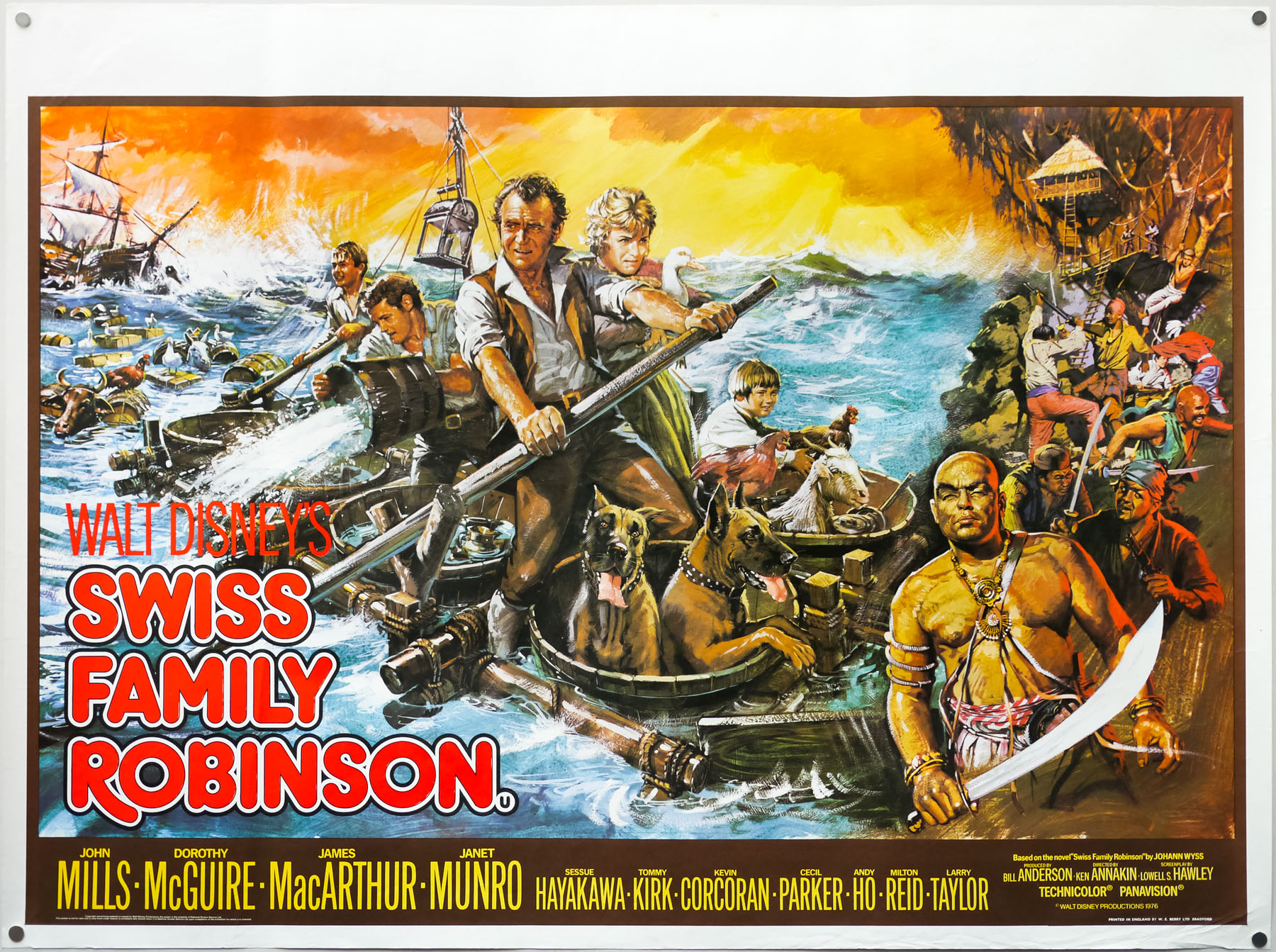
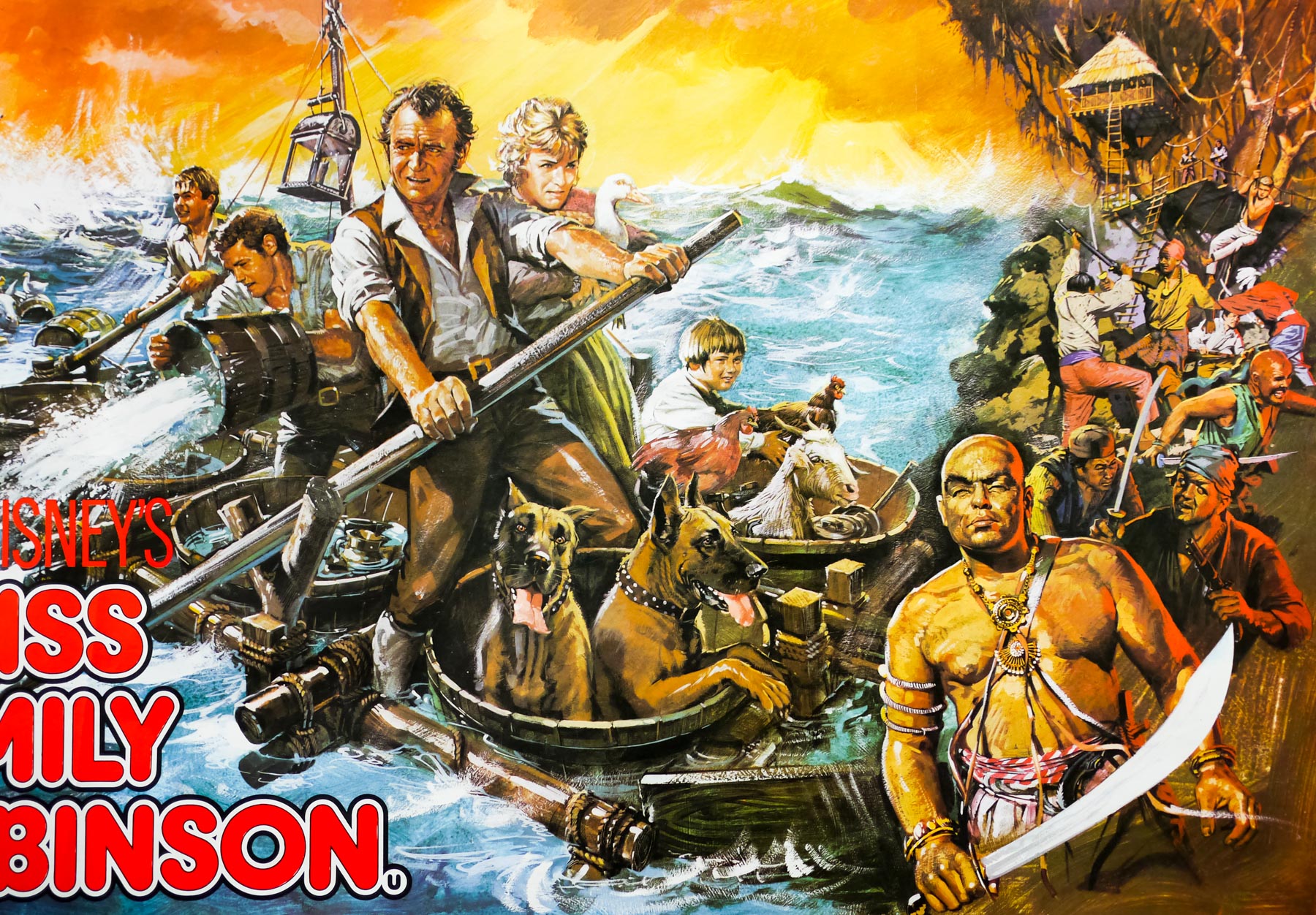
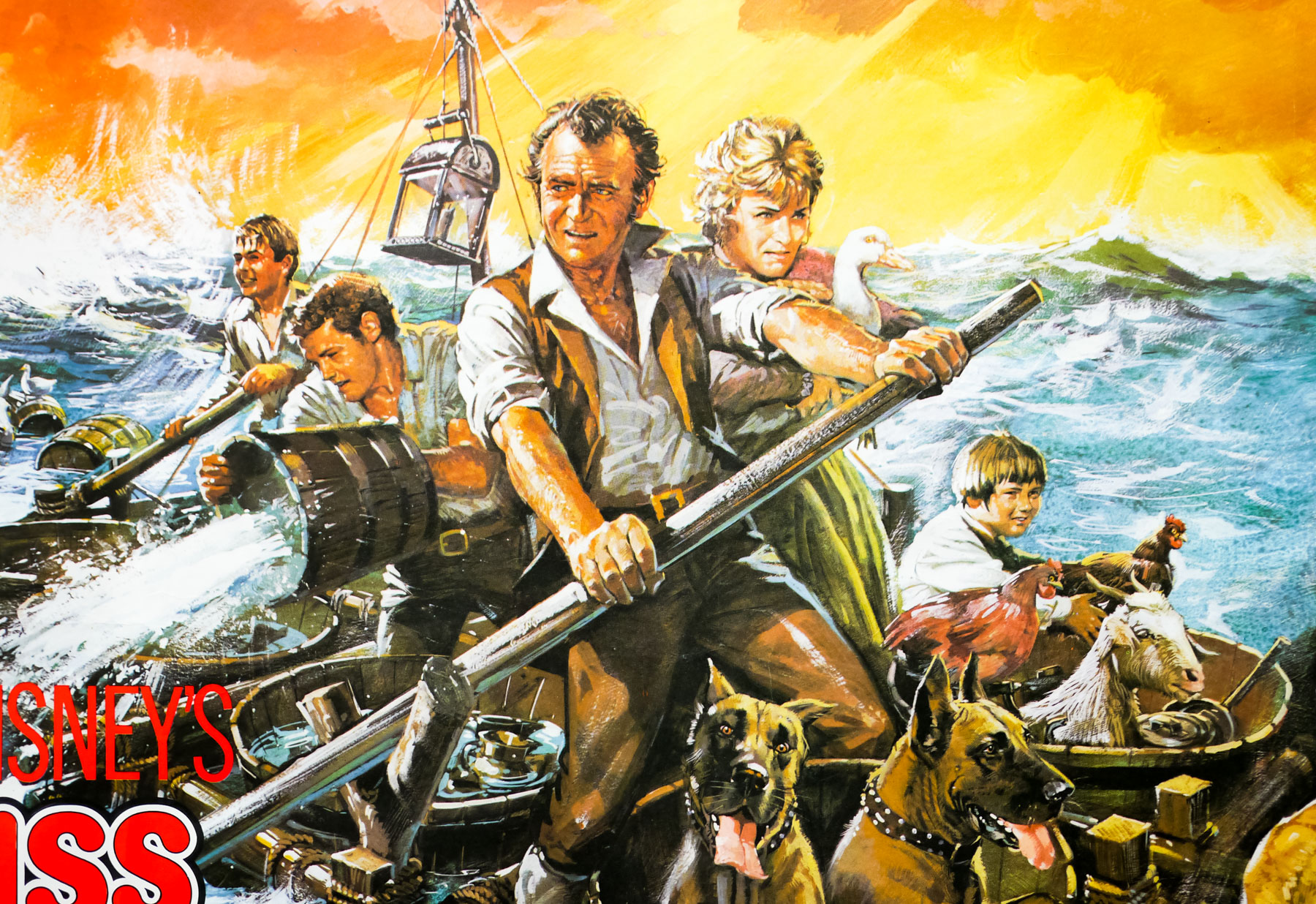
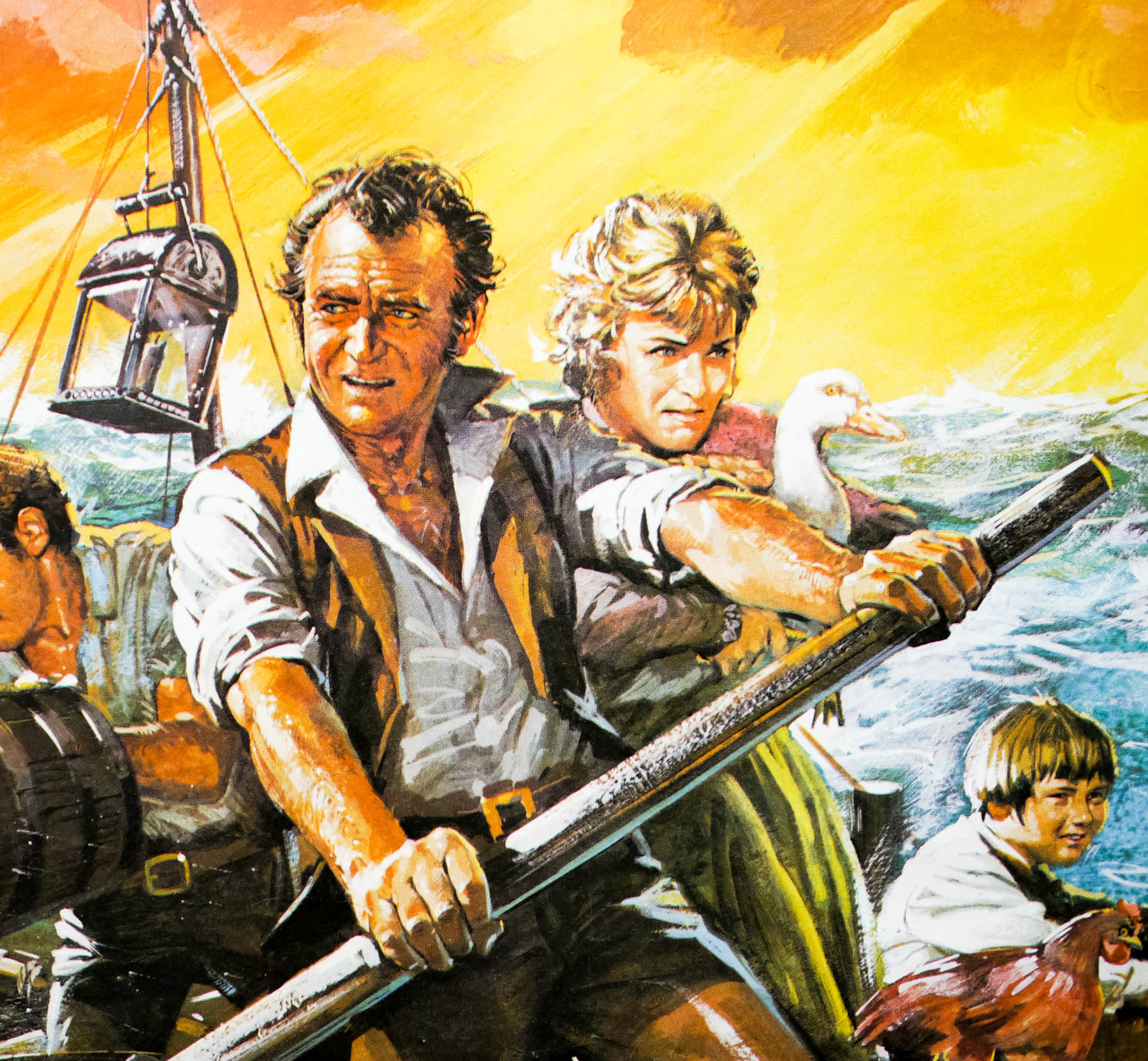
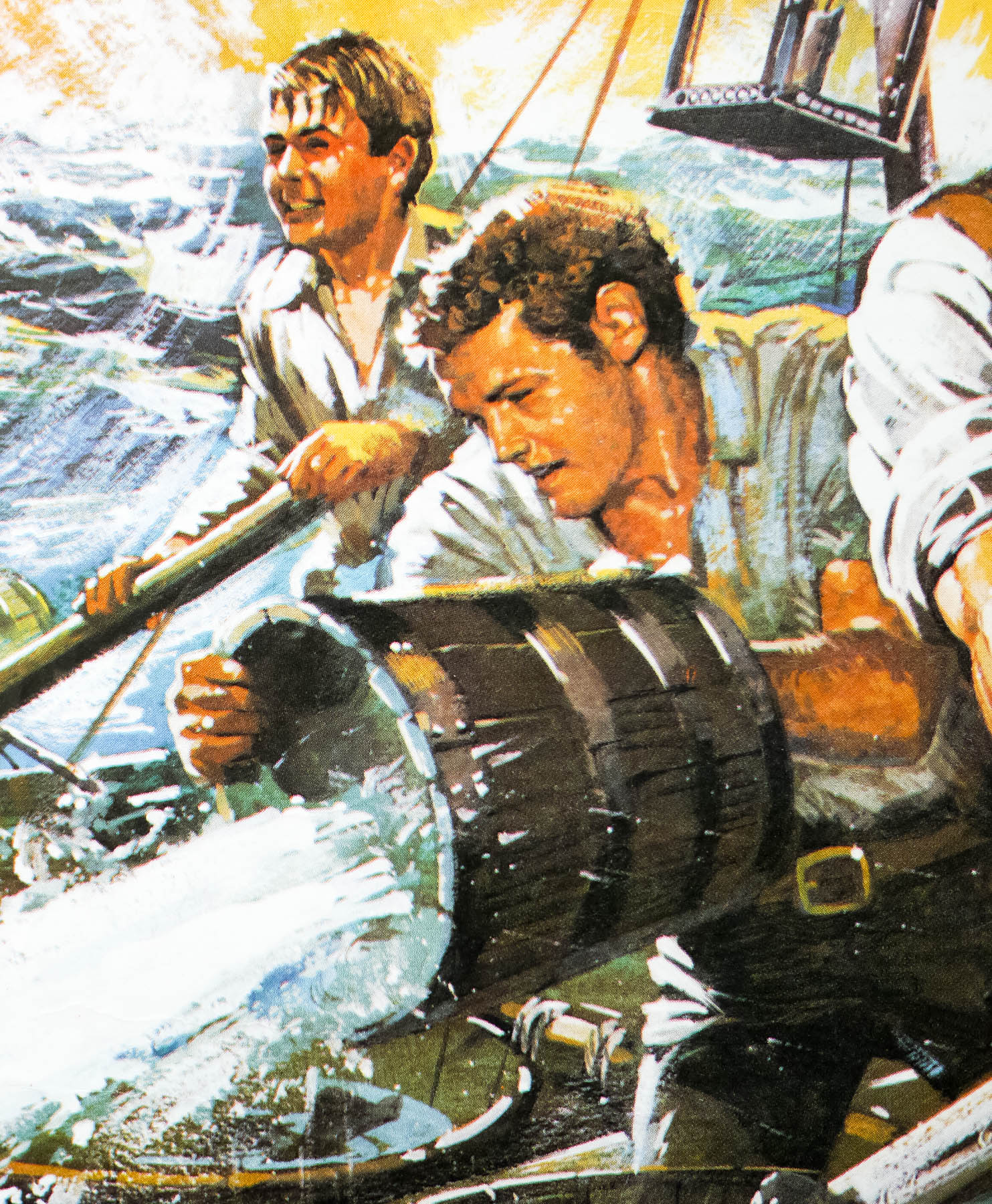
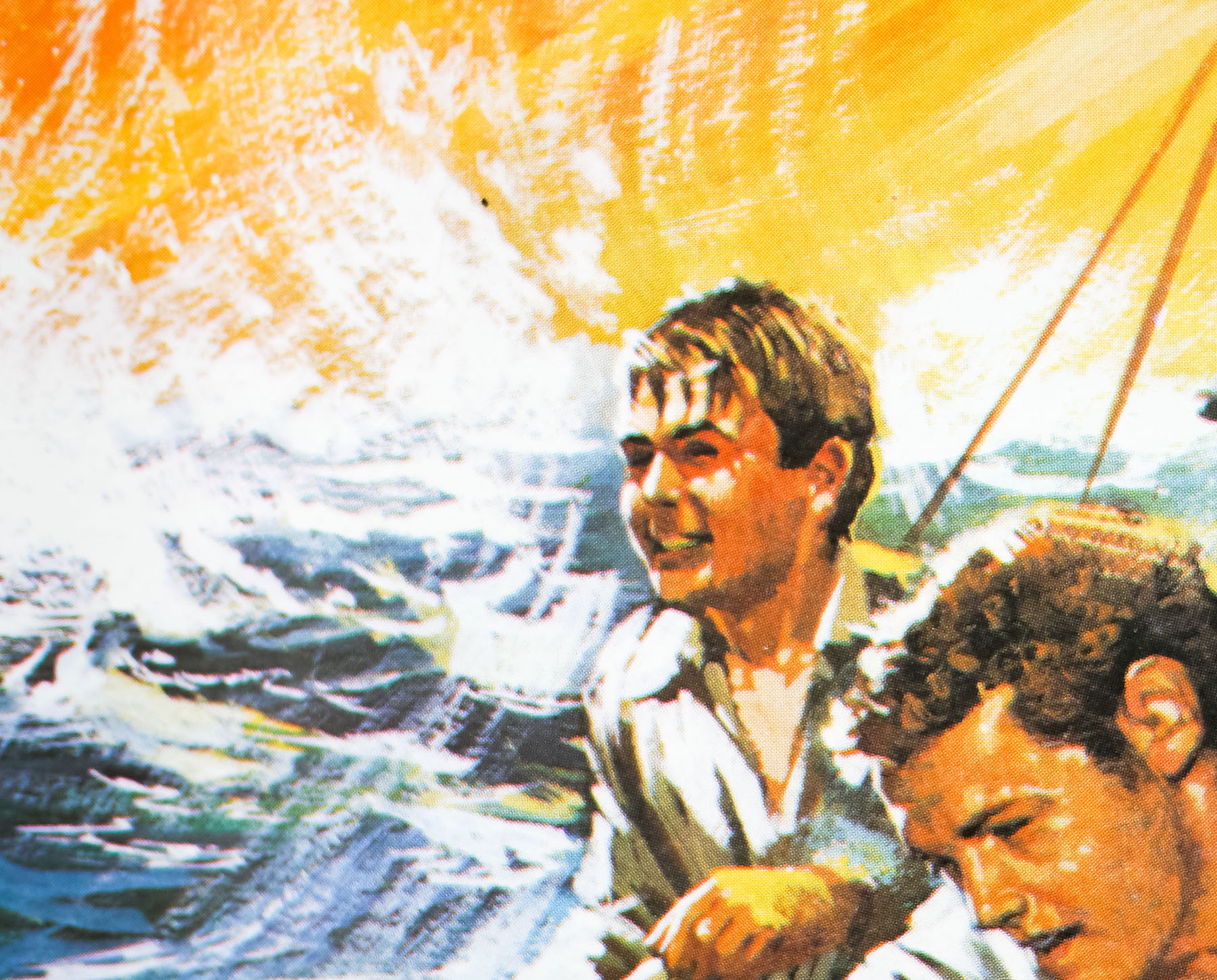
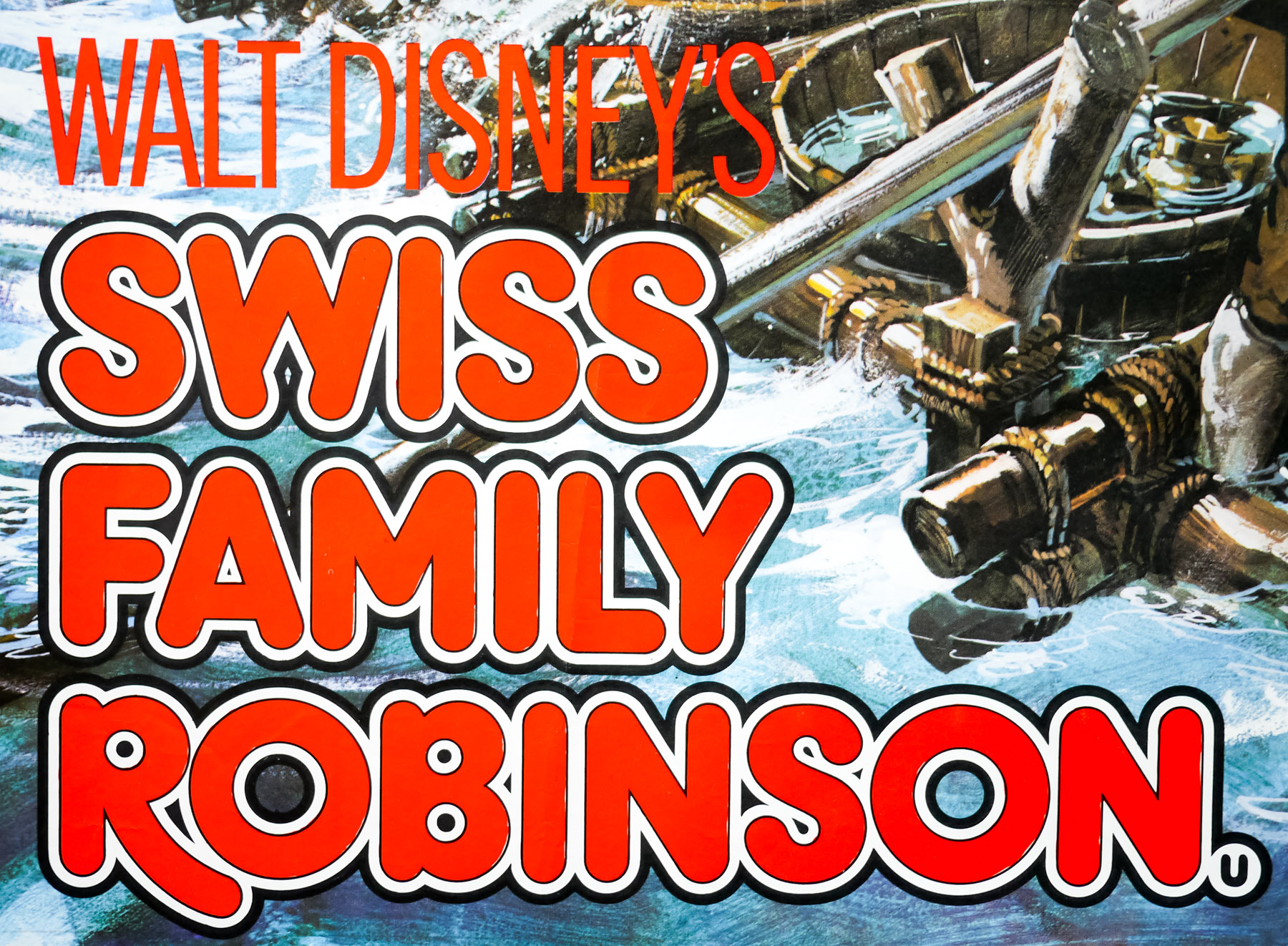
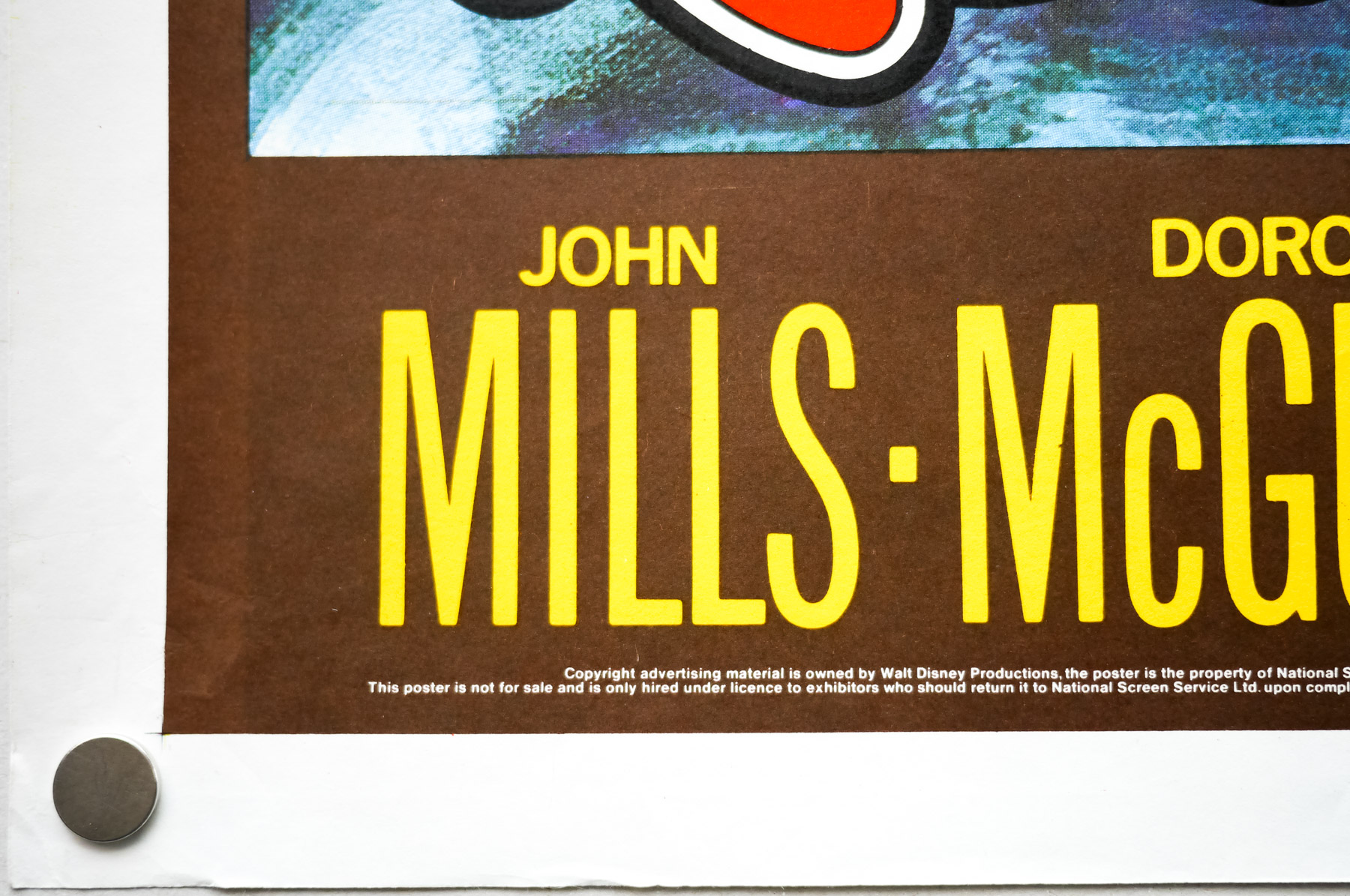
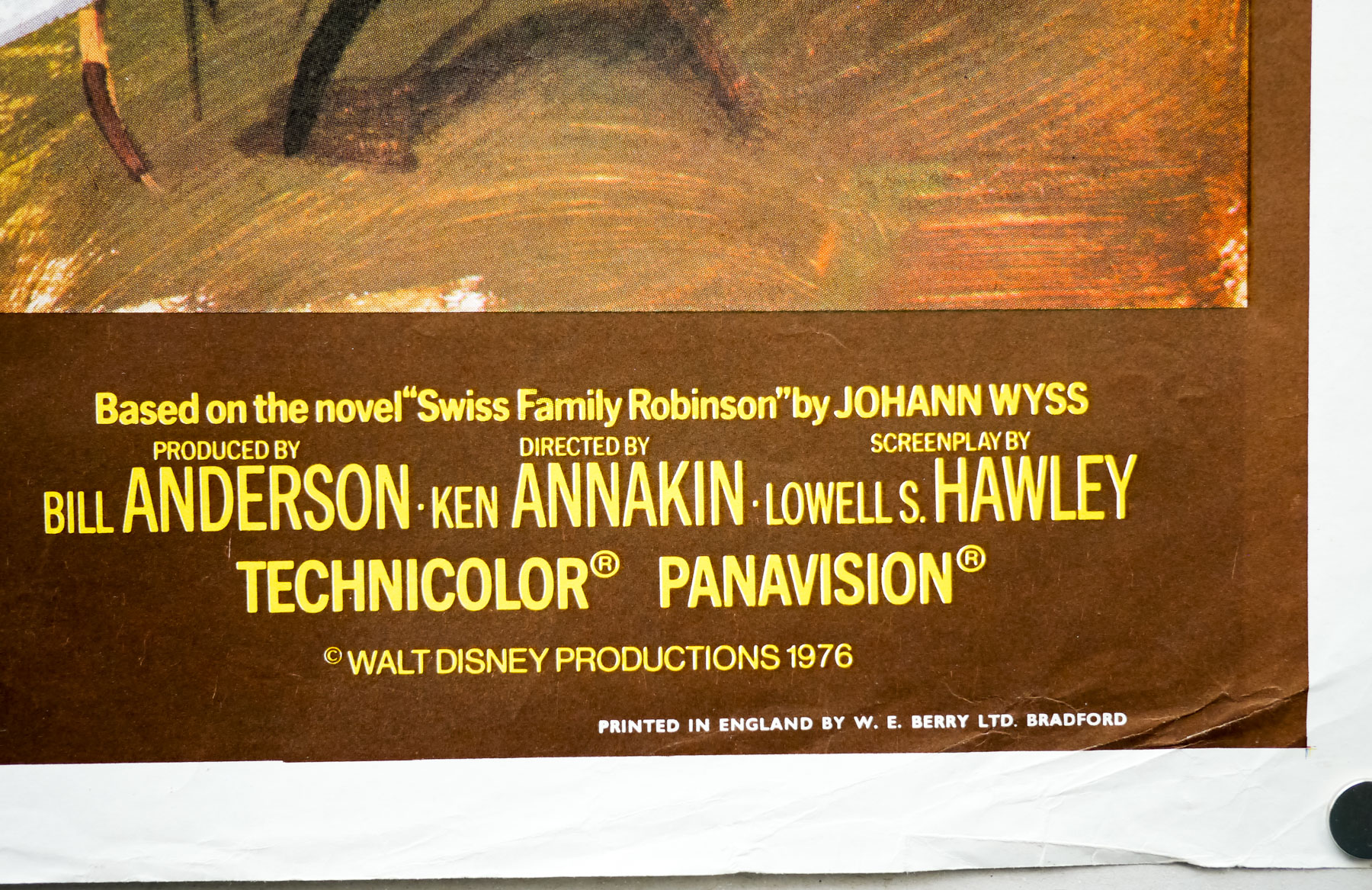
A typically detailed and action-packed illustration by Brian Byouth on this 1976 re-release poster for the 1960 Disney adaptation of the 1812 novel The Swiss Robinson by Johann David Wyss. The story had already been filmed once by RKO pictures in 1940 and was a commercial success so another adaptation was considered a sure bet. Filmed on location in Tobago as well as at Pinewood studios in the UK, the film was directed by the late British director Ken Annakin who worked with Disney on a number of pictures. Legendary Brit actor John Mills plays the father of a family that is shipwrecked on a remote tropical island whilst en-route to New Guinea and the film deals with their adventures as they make a new home and try to cope with marauding pirates who are roaming the waters around the island and are causing havoc for ships that enter its waters.

The film differs significantly from the novel and the changes are detailed on the Wikiepdia page for the film. Happily for all involved it was well received by critics and audiences and went on to be the highest earning film of 1960 (beating Hitchcock’s Psycho and Kubrick’s Spartacus). Adjusted for inflation the film made over $427 million which makes it one of the biggest hits of all time. 

British artist Brian Bysouth worked on many Disney posters during the 1970s and early 1980s, including several for re-releases of earlier films from the 1950s and 60s like this one. Brian is one of my favourite artists and worked on many classic posters from the 1960s to the 1980s, including the final painted poster for a James Bond film, The Living Daylights. In 2012 I was fortunate to meet and interview Brian for this site and the article can be read here. The other posters I’ve collected by Brian can be seen by clicking here.

Ghoulies / quad / UK

24.08.15

Poster Poster
Title
Ghoulies
AKA
--
Year of Film
1984
Director
Luca Bercovici
Starring
Peter Liapis, Lisa Pelikan, Michael Des Barres, Jack Nance, Peter Risch, Tamara De Treaux, Scott Thomson, Ralph Seymour, Mariska Hargitay, Keith Joe Dick
Origin of Film
USA
Genre(s) of Film
Peter Liapis, Lisa Pelikan, Michael Des Barres, Jack Nance, Peter Risch, Tamara De Treaux, Scott Thomson, Ralph Seymour, Mariska Hargitay, Keith Joe Dick,
Type of Poster
Quad
Style of Poster
--
Origin of Poster
UK
Year of Poster
1984
Designer
Unknown
Artist
--
Size (inches)
30 1/16" x 40"
SS or DS
SS
Tagline
They'll get you in the end!

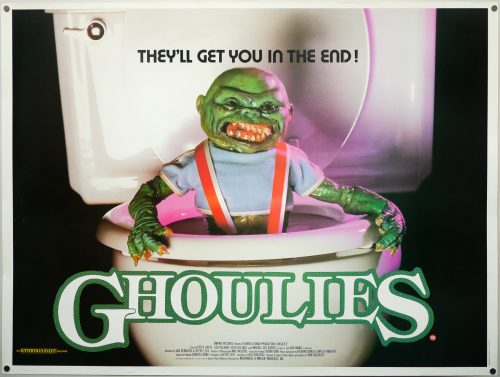
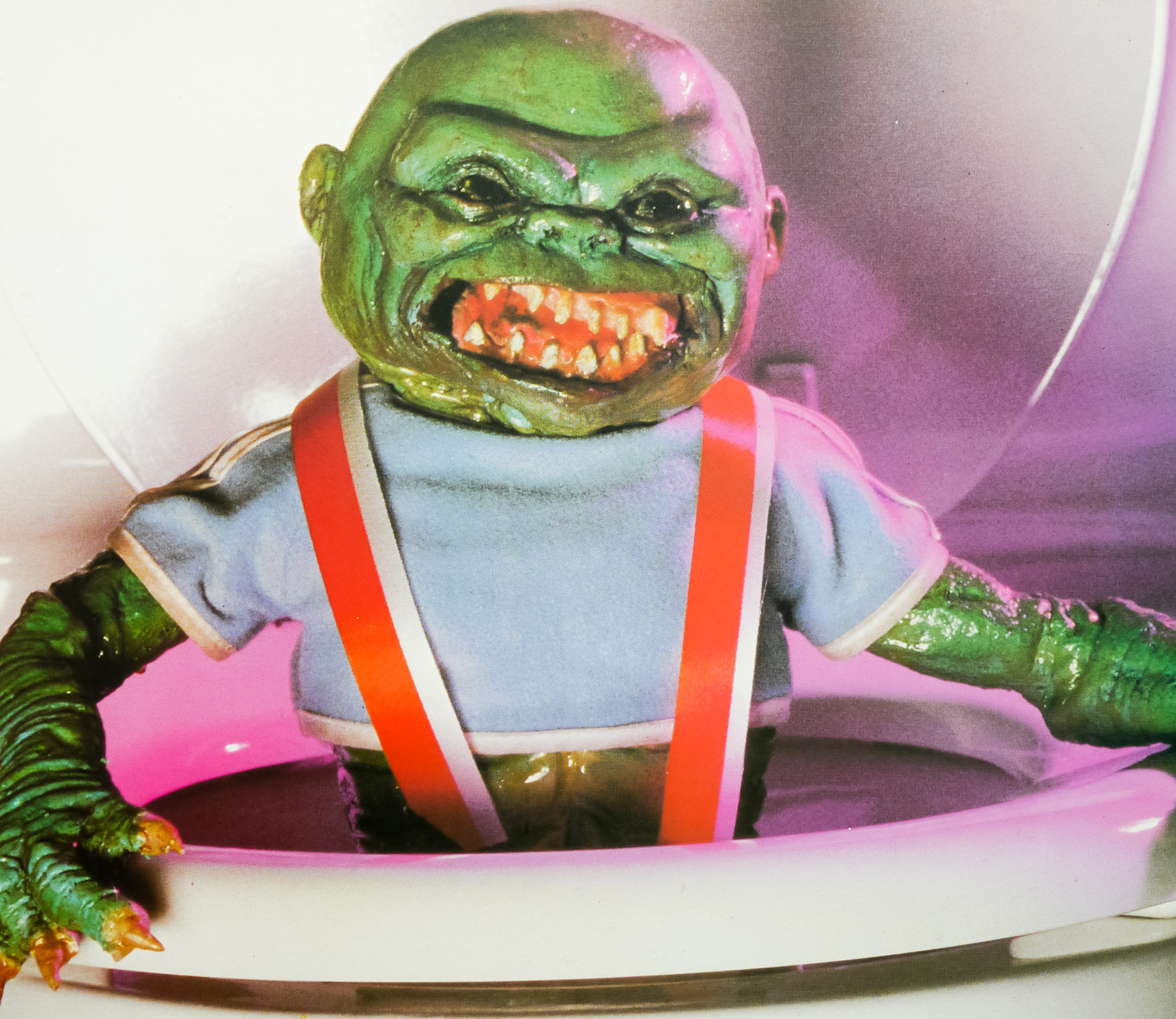
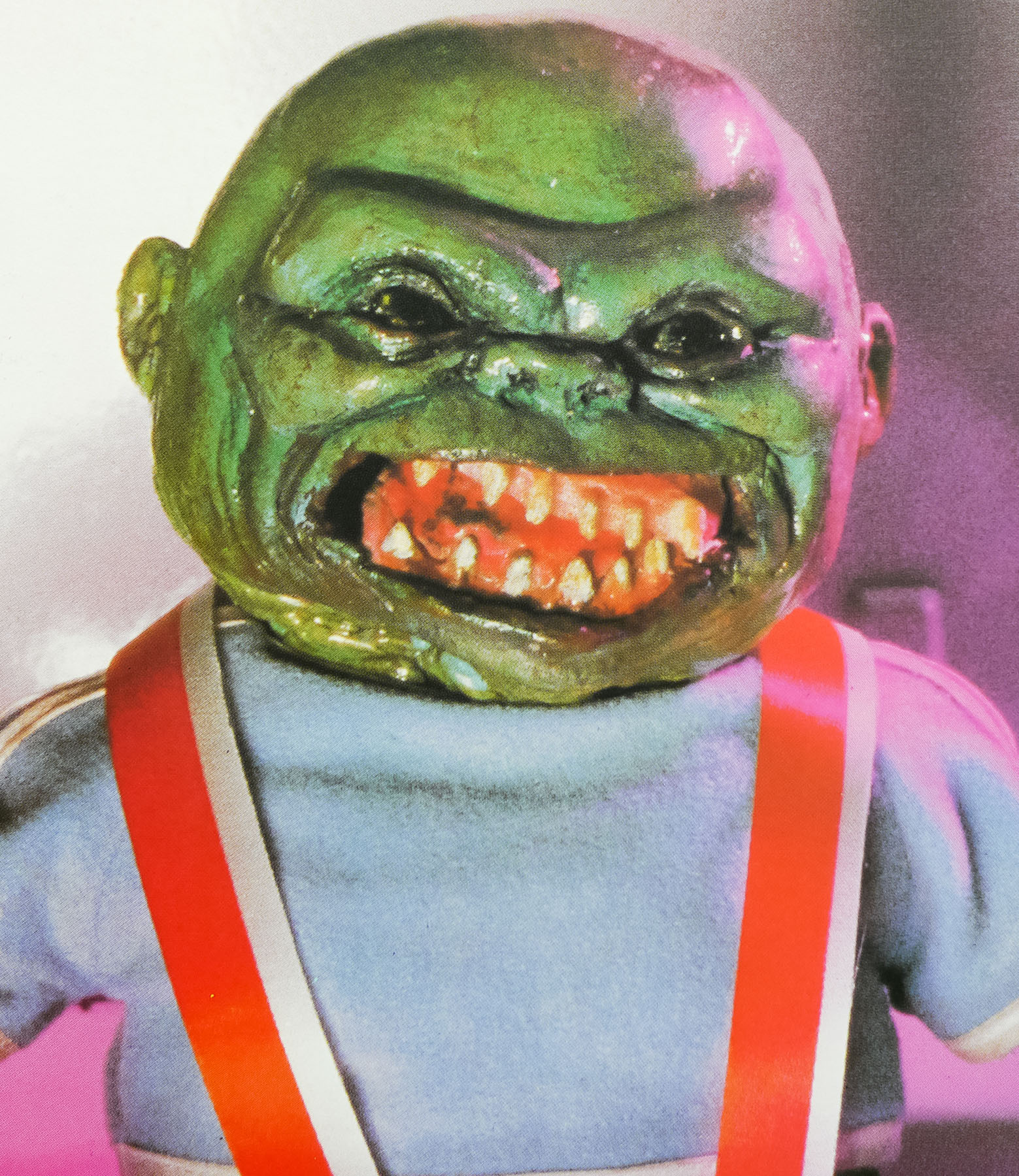
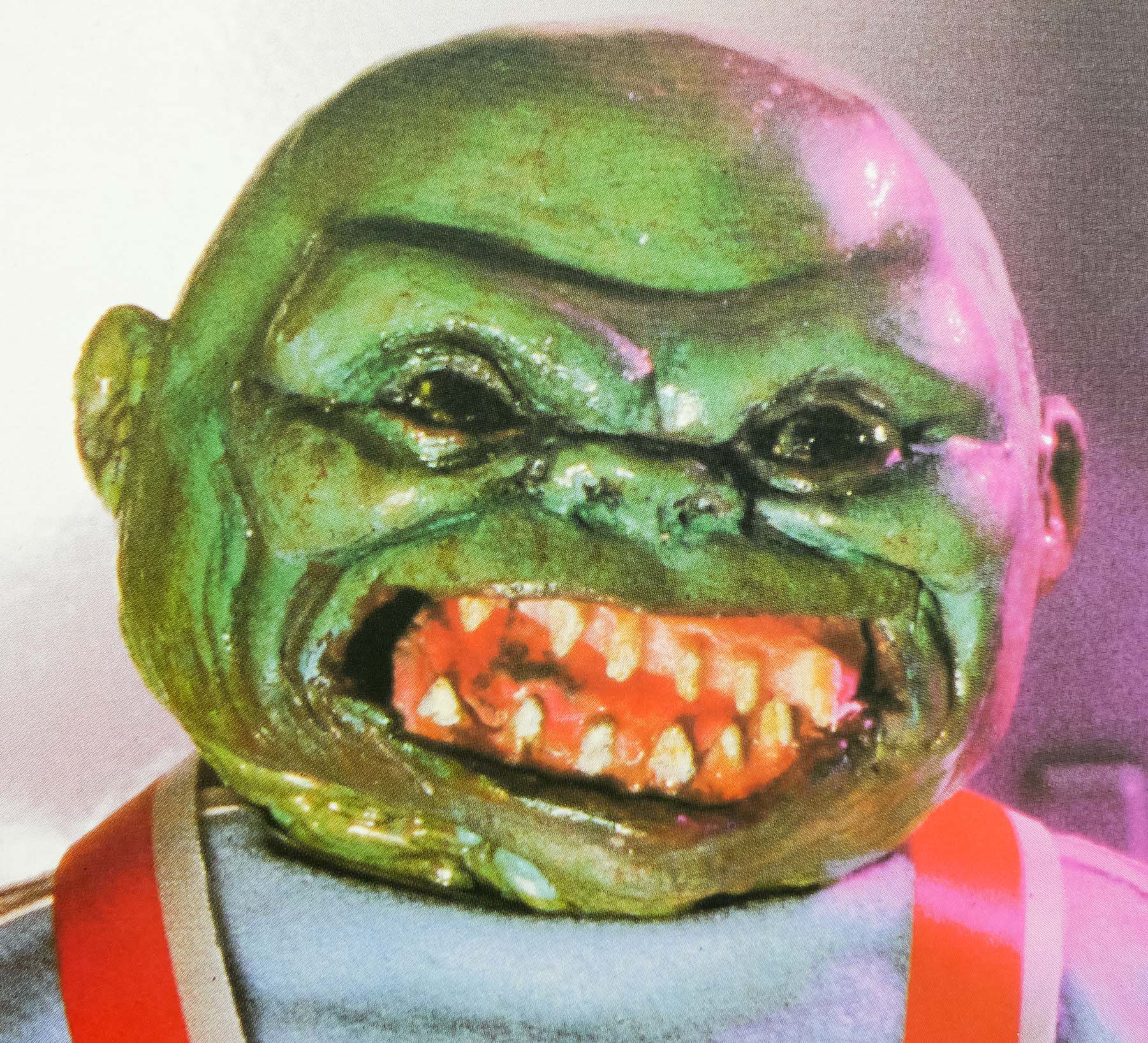
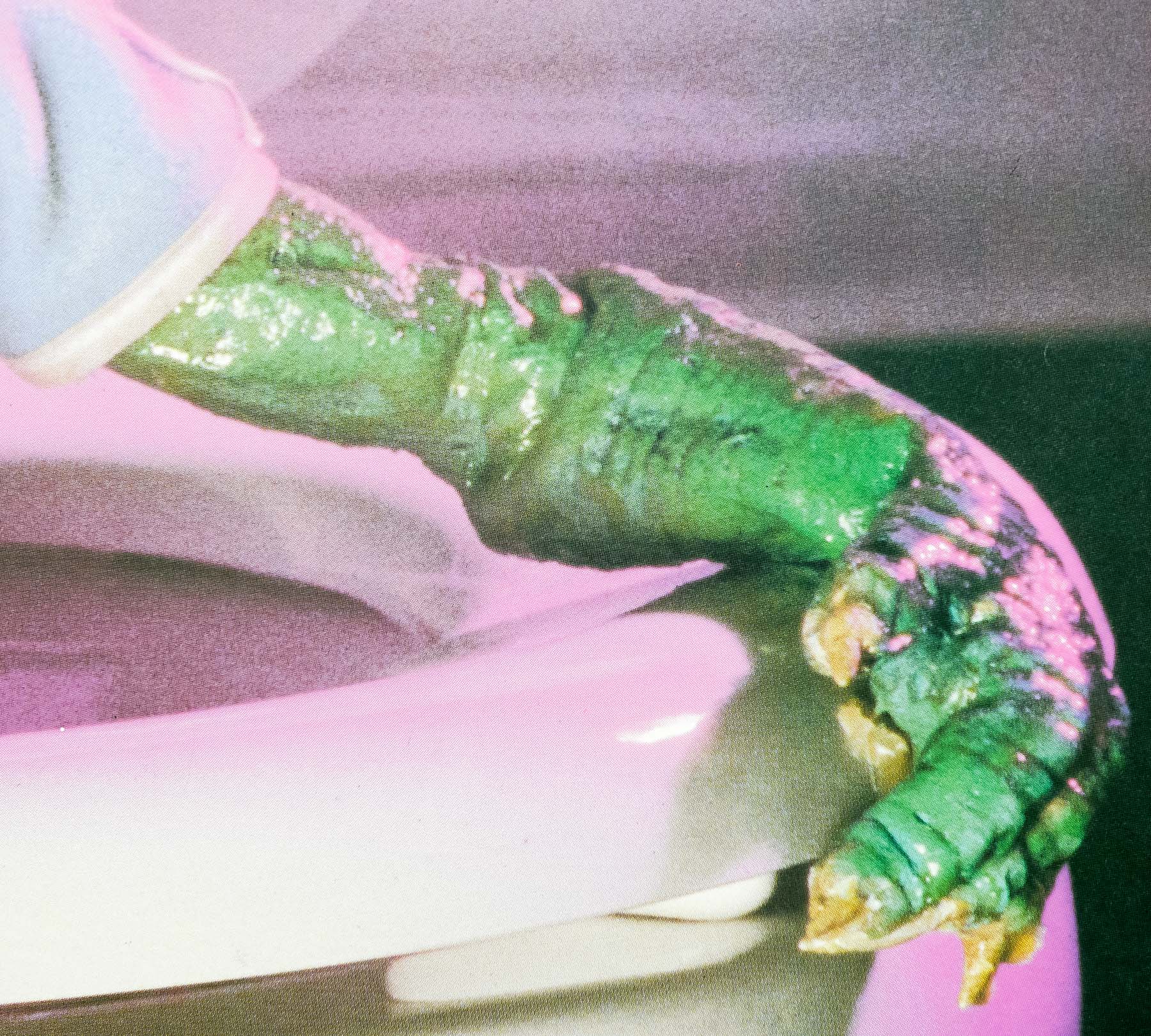
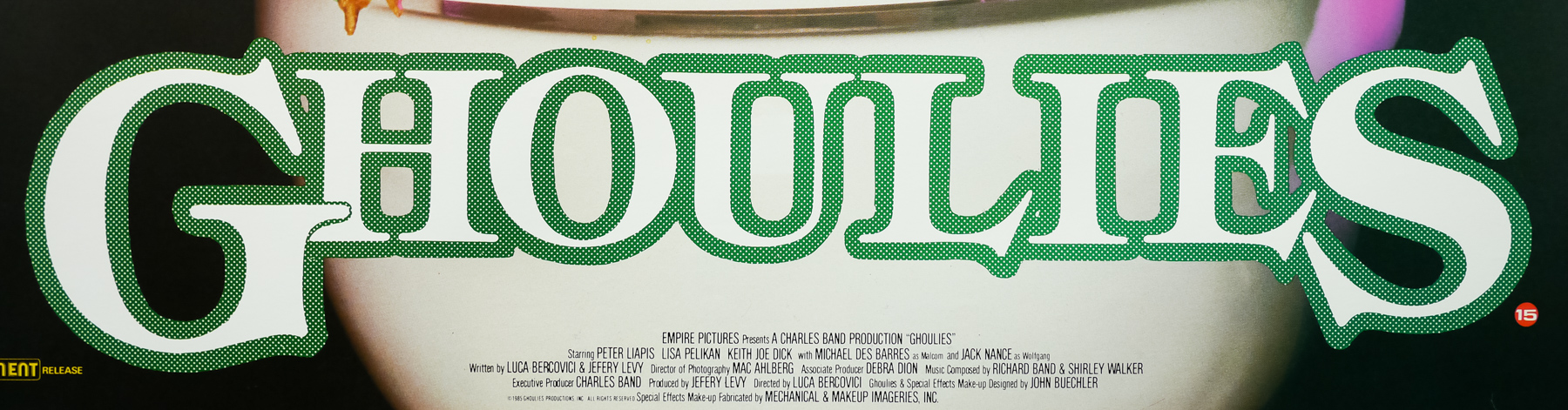
This photographic image advertising the 1984 schlock-horror Ghoulies is absolutely seared into my memory from visits to video rental stores as a youngster where I would see the then forbidden fruits of the horror section. Illustrated covers by artist Graham Humphreys for titles like Evil Dead and Kindred sat alongside photographic designs that hinted at the horrors contained within. This photo of a small green creature bursting out of a toilet, coupled with a title that in UK slang is another word for testicles, sparked plenty of imagined atrocities committed against unsuspecting male victims who’ve just gone for a nice sit down on the porcelain throne.

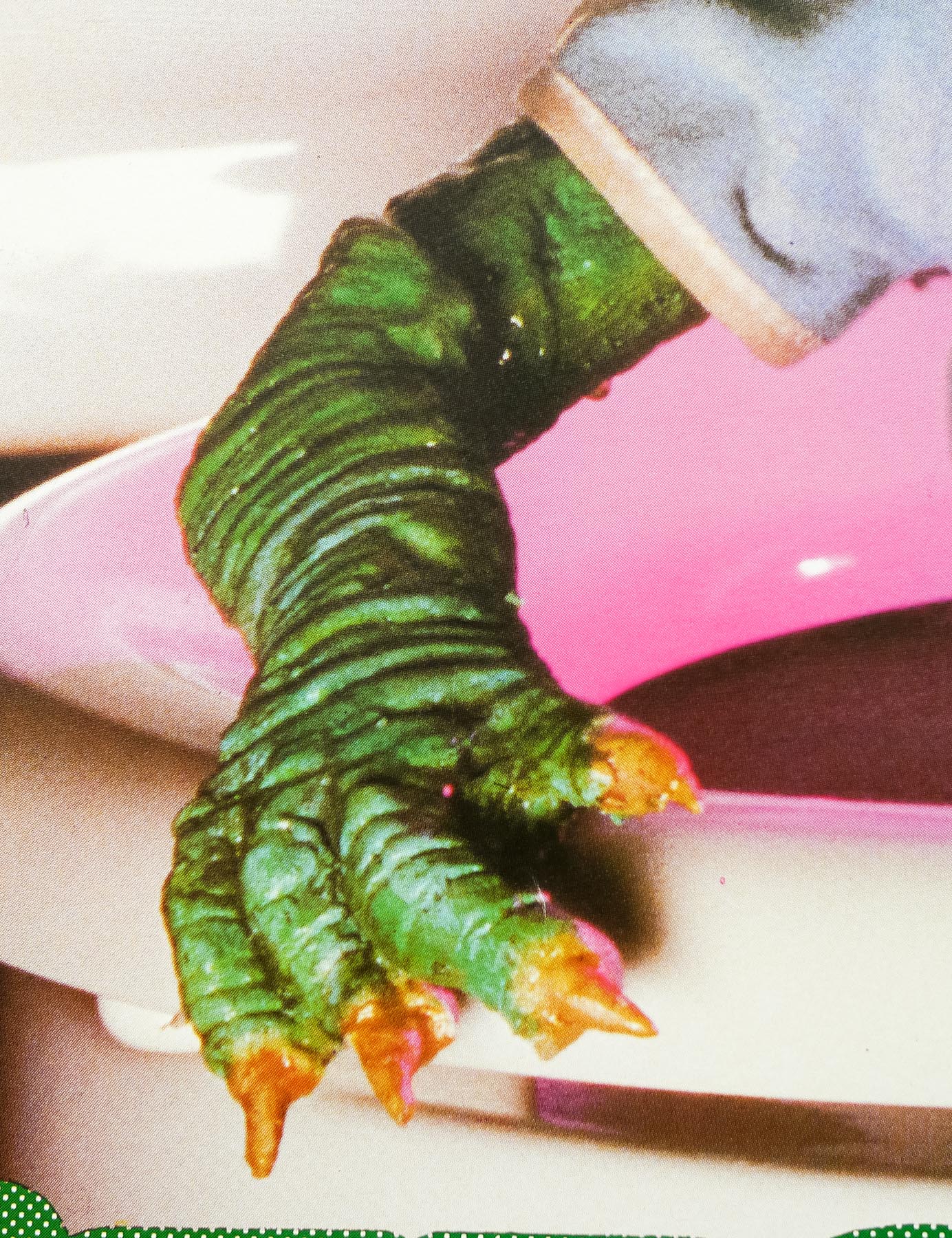
The reality is that this image was a complete fabrication that was created for the marketing campaign and used around the globe to market the film. The green Ghoulie does pop up from a toilet during the film but it’s a blink and you’ll miss it moment, it’s also not wearing any clothes (as is depicted here), and there’s certainly no obvious harm done to any genitals during the film. According to the Wikipedia article on the film, producer Charles Band had some involvement in creating the image, although it’s a bit confusing:

According to stories Charles Band tells on his Full Moon Horror Road Show, he was tasked to come up with a great campaign to promote the film. During a brainstorming session he came up with the idea to have the Ghoulie popping up from the toilet. The idea was a huge success and the scene was then shot for the film after the fact. According to Band’s 2012 audio commentary for 88Films Blu-ray of Puppetmaster 2, someone else came up with the idea of the Ghoulie popping out of the toilet. Band actually thought it was a bad idea at first.

The film itself is hardly a classic of the genre but it has aged better than some of the other ‘malevolent creature’ films released around the same time. With that said, most of the effects haven’t held up well, particularly the creatures themselves which are poorly put together and unconvincing, especially in comparison to the creatures seen in Joe Dante’s Gremlins that was released the same year. The film is chiefly set in an old mansion that is inherited by student Jonathan Graves (Peter Liapis) after the death of his father Malcolm (Michael Des Barres giving it all he’s got). Unbeknownst to Jonathan, his mother was actually killed during a satanic ritual carried out by his father in which he was meant to be sacrificed as a baby. When a protective amulet prevented the murder being carried out, Malcolm decided to sacrifice his wife instead. Wolfgang (Jack Nance), a member of the cult, takes Jonathan away and raises him so he’s unaware of the situation with his parents.

The film opens with the ritual in which we see the group of small evil creatures (they’re never exactly referred to as Ghoulies in the film) reacting with glee, the film then jumps to a few years later when Jonathan has just moved into the mansion. He soon finds the occult paraphernalia that his father left behind and, for reasons that aren’t clearly explained, decides he wants to continue his father’s satanic practices. His friends and girlfriend Rebecca (Lisa Pelikan) get caught up in the new rituals and before long the Ghoulies have returned and his father has been resurrected from the grave. All does not go exactly to plan for Jonathan, but Wolfgang is still around and his vow to protect the boy holds strong.

I’m unsure who is responsible for the design of this quad so if you have any ideas please get in touch.

Buffalo 66 / quad / UK

01.10.15

Poster Poster
Title
Buffalo 66
AKA
--
Year of Film
1998
Director
Vincent Gallo
Starring
Vincent Gallo, Christina Ricci, Anjelica Huston, Ben Gazzara, Kevin Corrigan, Mickey Rourke, Rosanna Arquette, Jan-Michael Vincent
Origin of Film
USA
Genre(s) of Film
Vincent Gallo, Christina Ricci, Anjelica Huston, Ben Gazzara, Kevin Corrigan, Mickey Rourke, Rosanna Arquette, Jan-Michael Vincent,
Type of Poster
Quad
Style of Poster
--
Origin of Poster
UK
Year of Poster
1998
Designer
Empire Design
Artist
--
Size (inches)
30 1/16" x 39 15/16"
SS or DS
SS
NSS #
--
Tagline
--

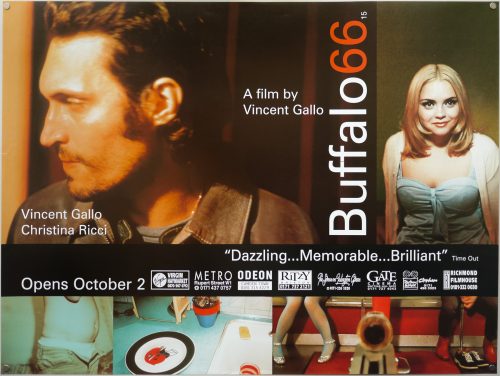
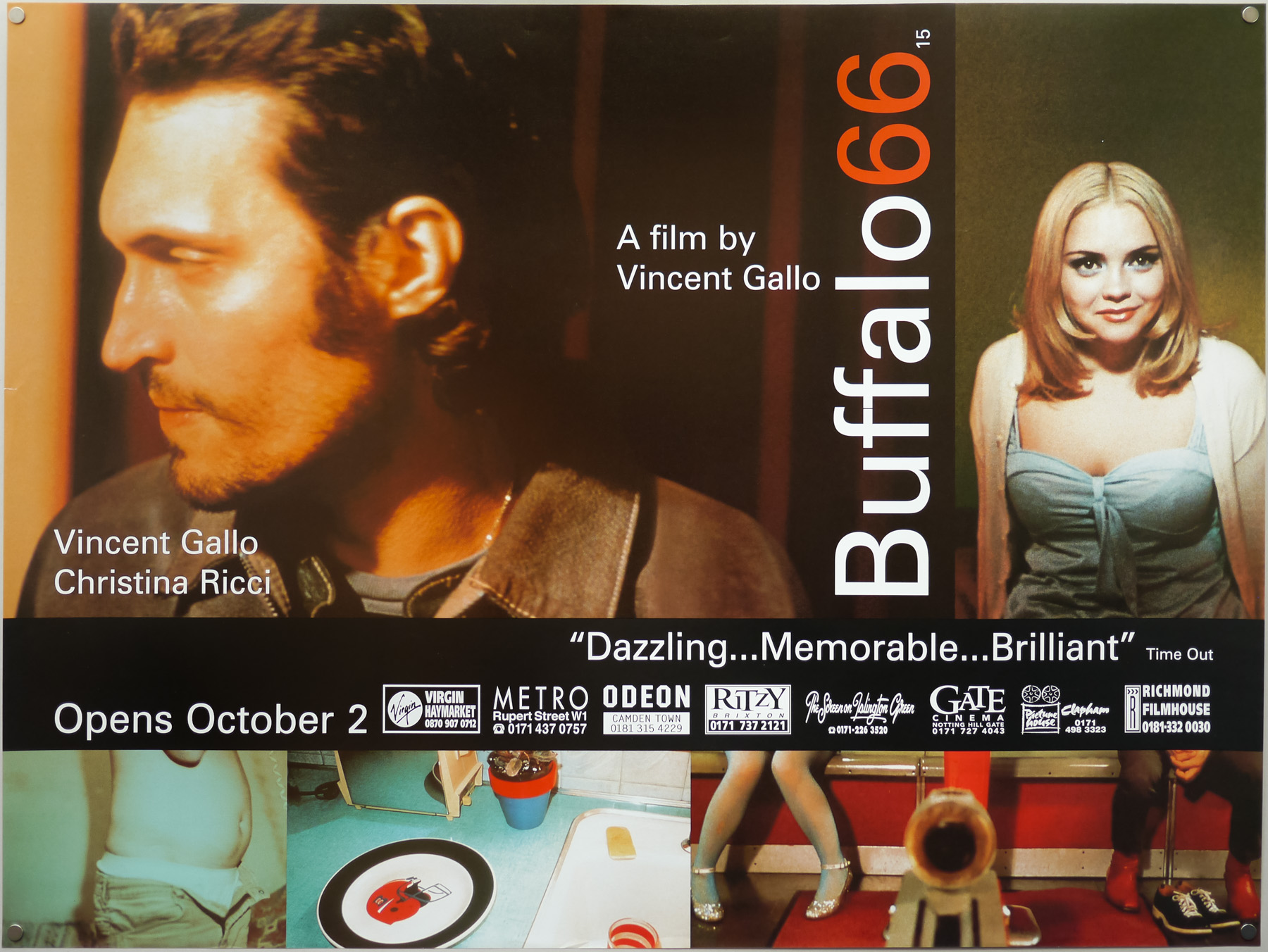
This is the UK quad for the release of actor/director/model/musician Vincent Gallo and was the first full-length feature film he directed. The film has an impressive cast with Gallo starring alongside Christina Ricci and supporting turns from the likes of Ben GazzaraMickey Rourke and Anjelica Huston. Gallo plays Billy Brown who has just been released from prison after serving a five year sentence for a crime he didn’t commit. On the way to visit his parents, who actually think he’s a successful (and married) businessman after he wrote them fictional letters from jail, he comes across a young tap-dancer called Layla (Ricci) and decides to kidnap her and force her to pretend to be his wife. Layla is clearly attracted to Billy and goes along with his plans but his own inner demons wrestle for his attention.

The film was well-reviewed on release and was a reasonable box-office success. It has since turned into a true cult film with many fans across the globe who are attracted to the offbeat romance between Billy and Layla, as well as the interesting way the film was shot by cinematographer Lance Acord. A gentle reminder that for a cool $1,000,000 you can actually purchase the main man’s little swimmers, should you want to birth the next generation Gallo, whilst $50,000 will net you a night with him (ladies only).

This quad, featuring a unique design, was put together by the British firm Empire Design who have been working on posters and other film marketing material for 18 years, including for the James Bond films since Casino Royale (2006). To see the other posters that were designed by Empire in the Film on Paper collection click here.

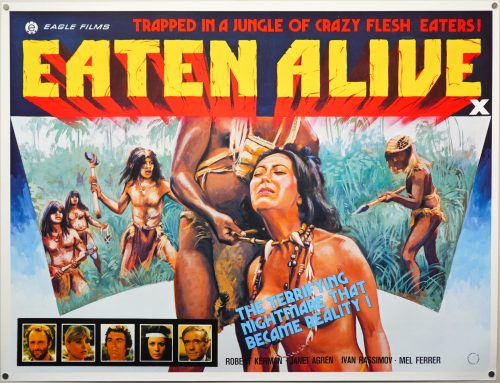
Eaten Alive / quad / UK

19.02.16

Poster Poster
Title
Eaten Alive
AKA
Mangiati vivi! (Italy - original title) | Doomed to Die (USA) | The Emerald Jungle (USA - video)
Year of Film
1980
Director
Umberto Lenzi
Starring
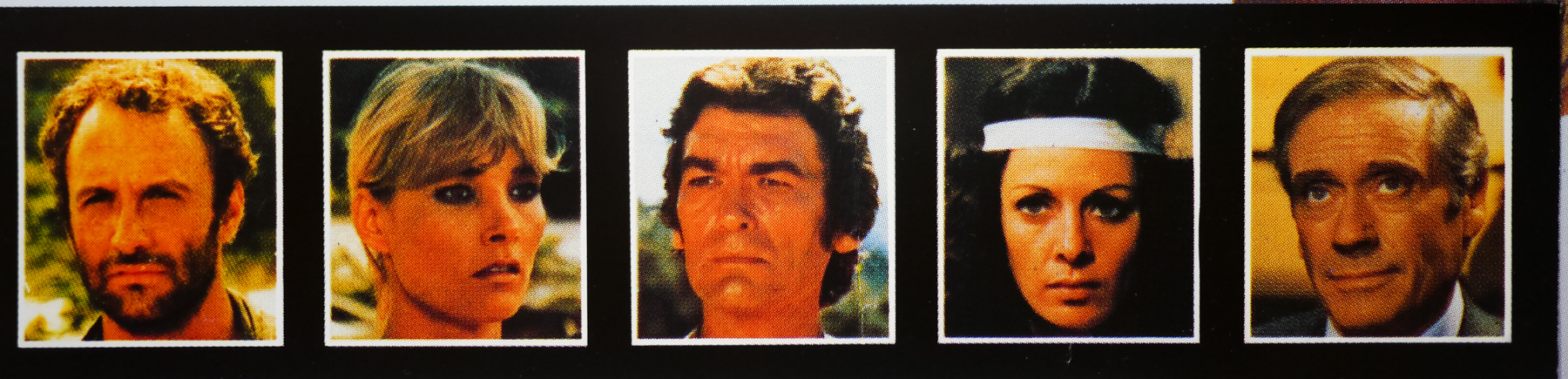
Robert Kerman, Janet Agren, Ivan Rassimov, Paola Senatore, Me Me Lai, Fiamma Maglione, Franco Fantasia, Franco Coduti, Alfred Joseph Berry, Michele Schmiegelm, Mel Ferrer
Origin of Film
Italy
Genre(s) of Film
Robert Kerman, Janet Agren, Ivan Rassimov, Paola Senatore, Me Me Lai, Fiamma Maglione, Franco Fantasia, Franco Coduti, Alfred Joseph Berry, Michele Schmiegelm, Mel Ferrer,
Type of Poster
Quad
Style of Poster
--
Origin of Poster
UK
Year of Poster
1981
Designer
Tom Chantrell
Artist
Tom Chantrell
Size (inches)
30 5/16" x 39 11/16"
SS or DS
SS
Tagline
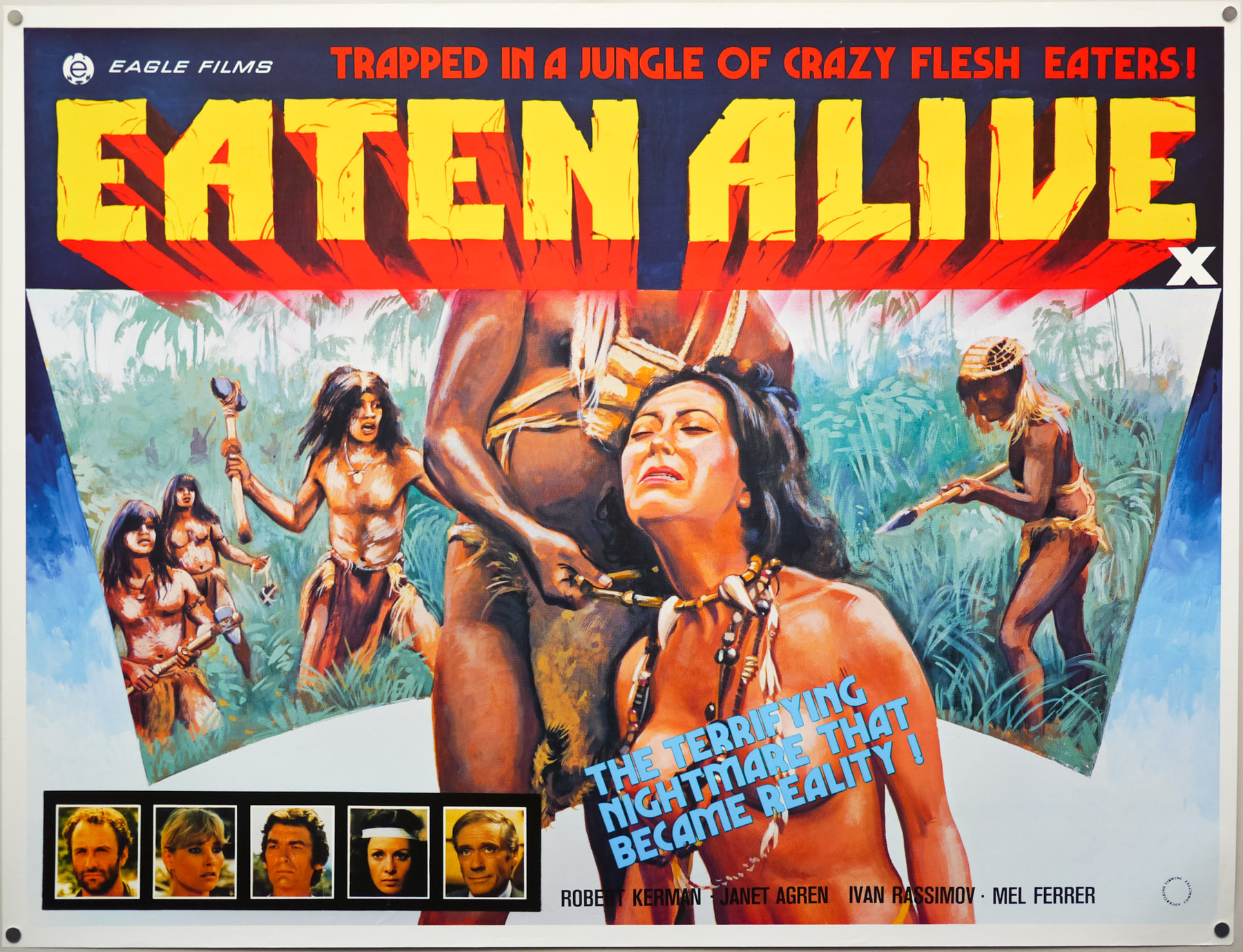
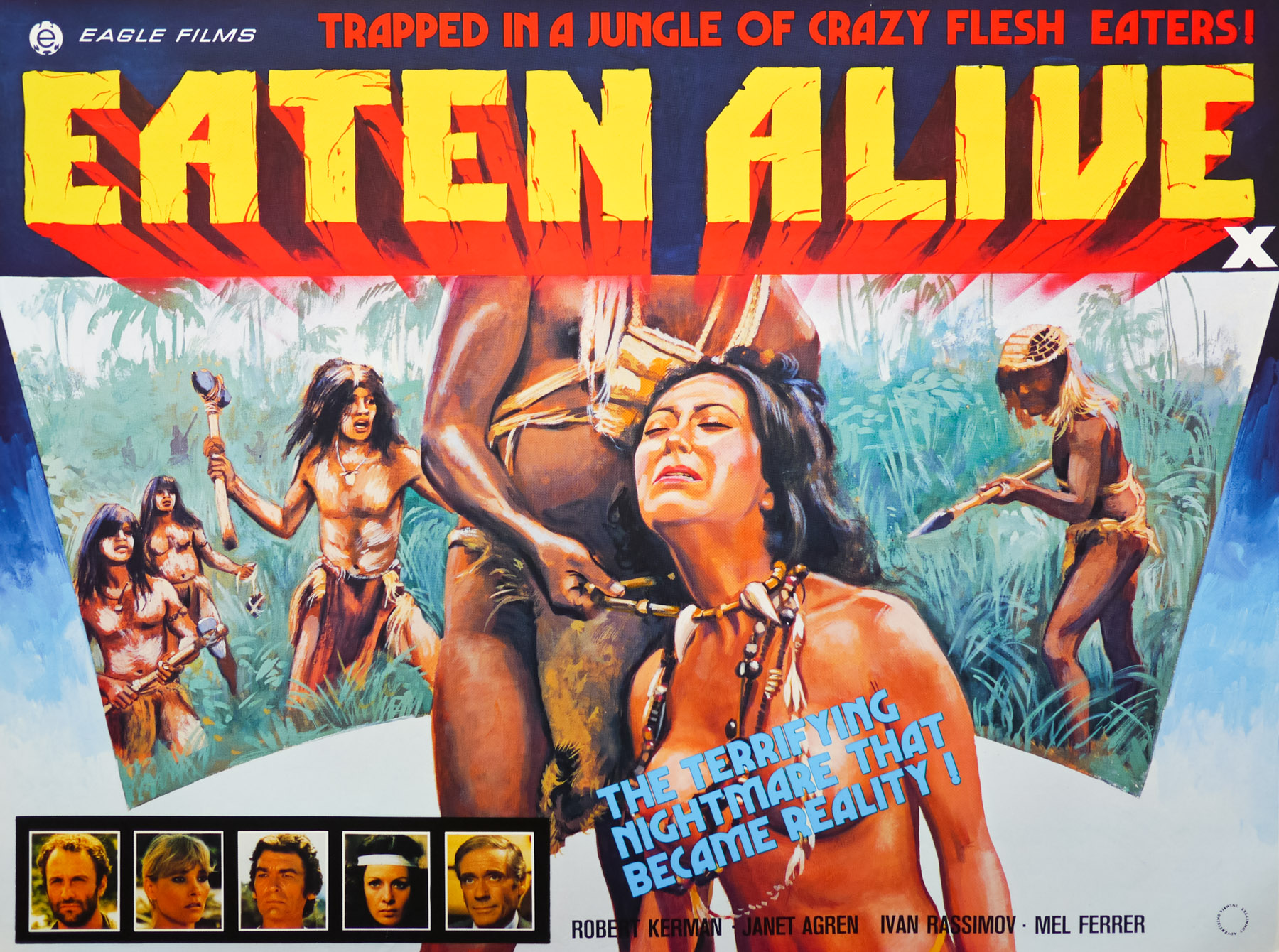
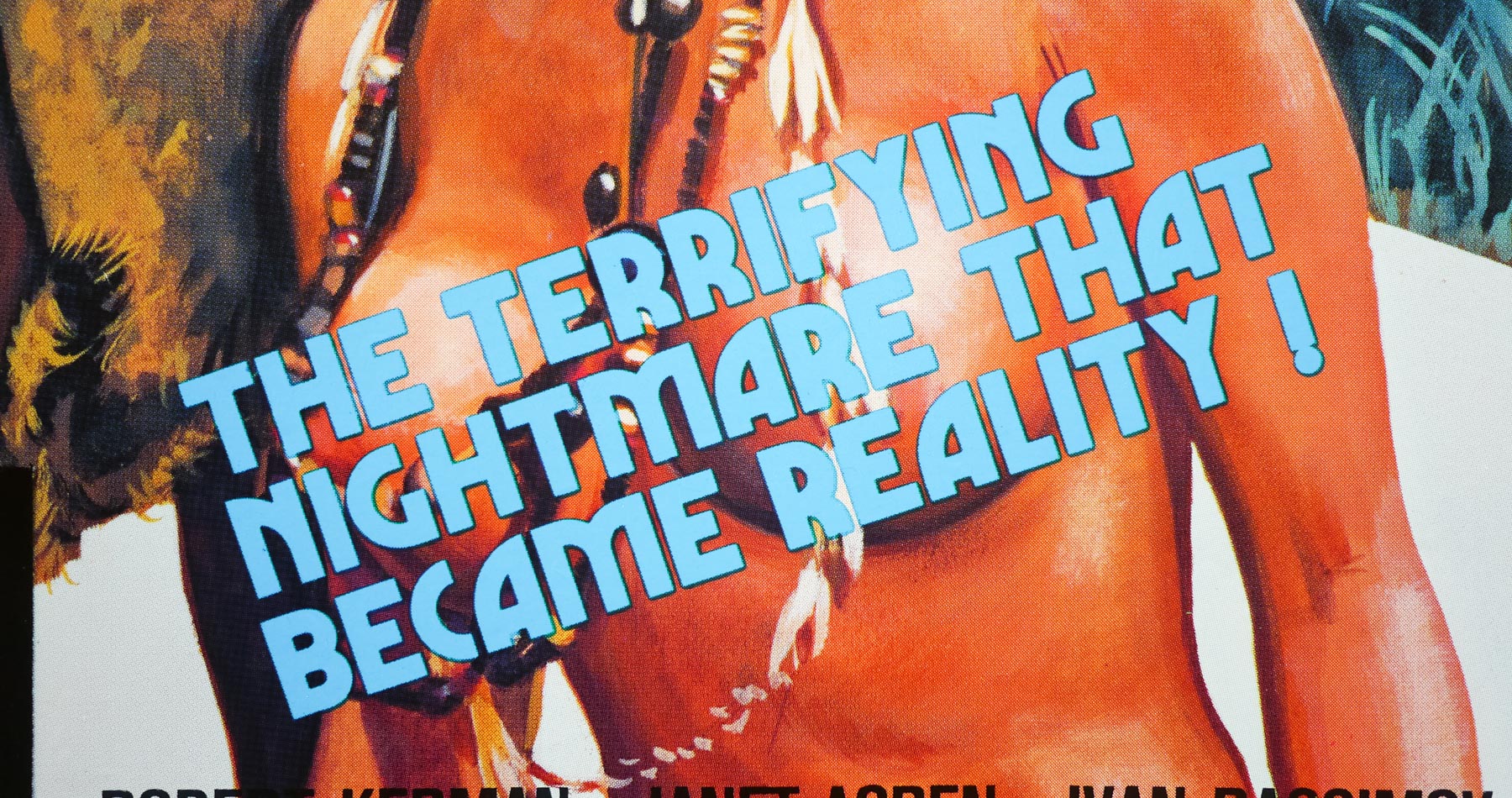
Trapped in a jungle of crazy flesh eaters! | The terrifying nightmare that became a reality!

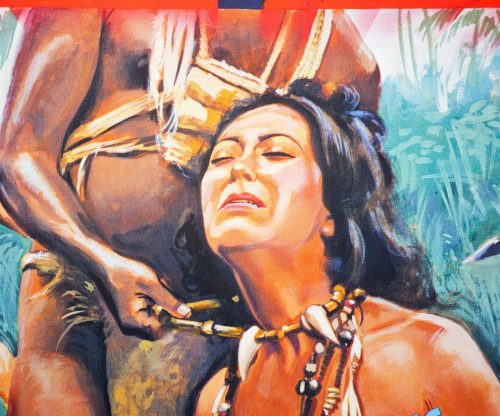
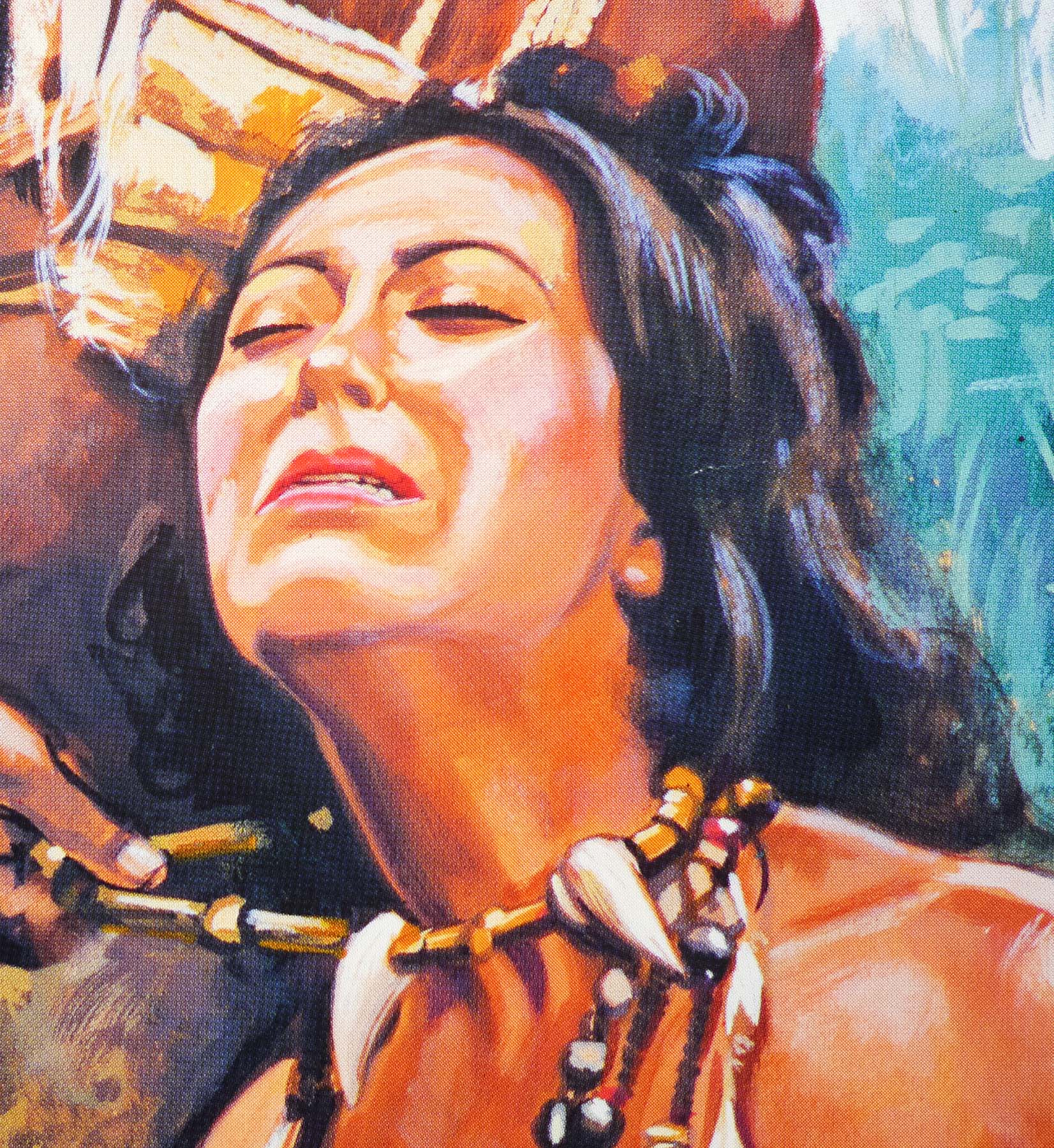
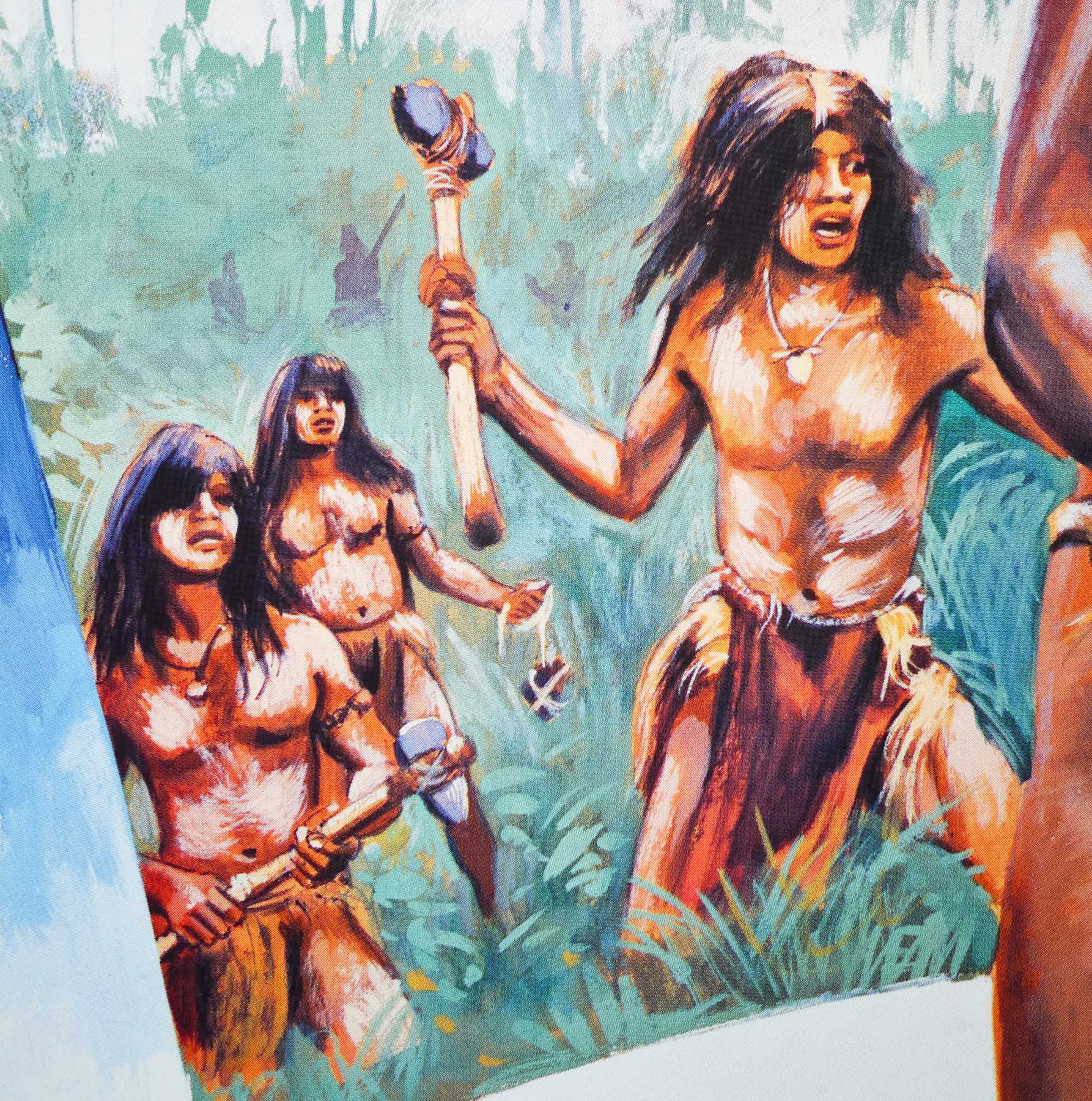
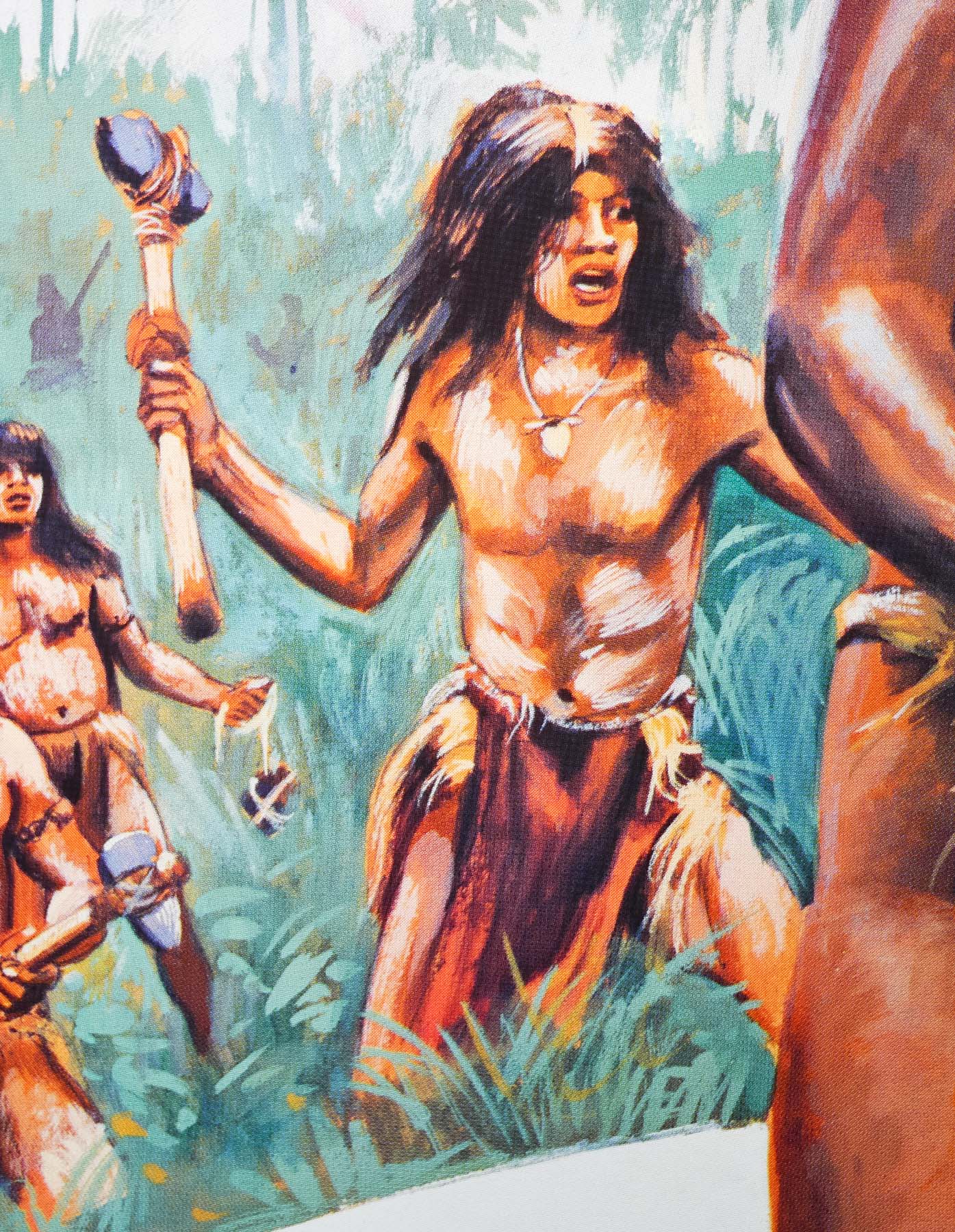
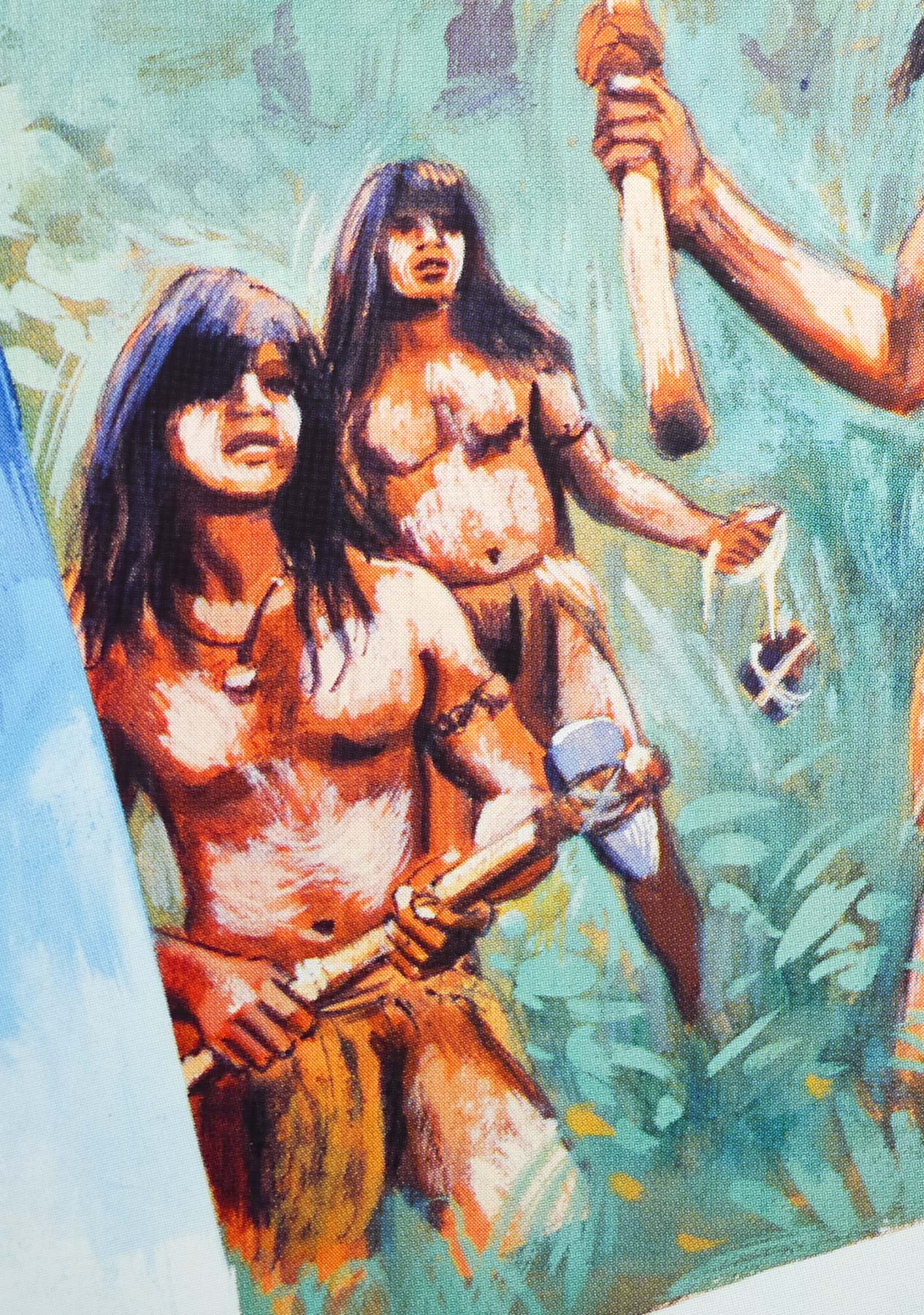
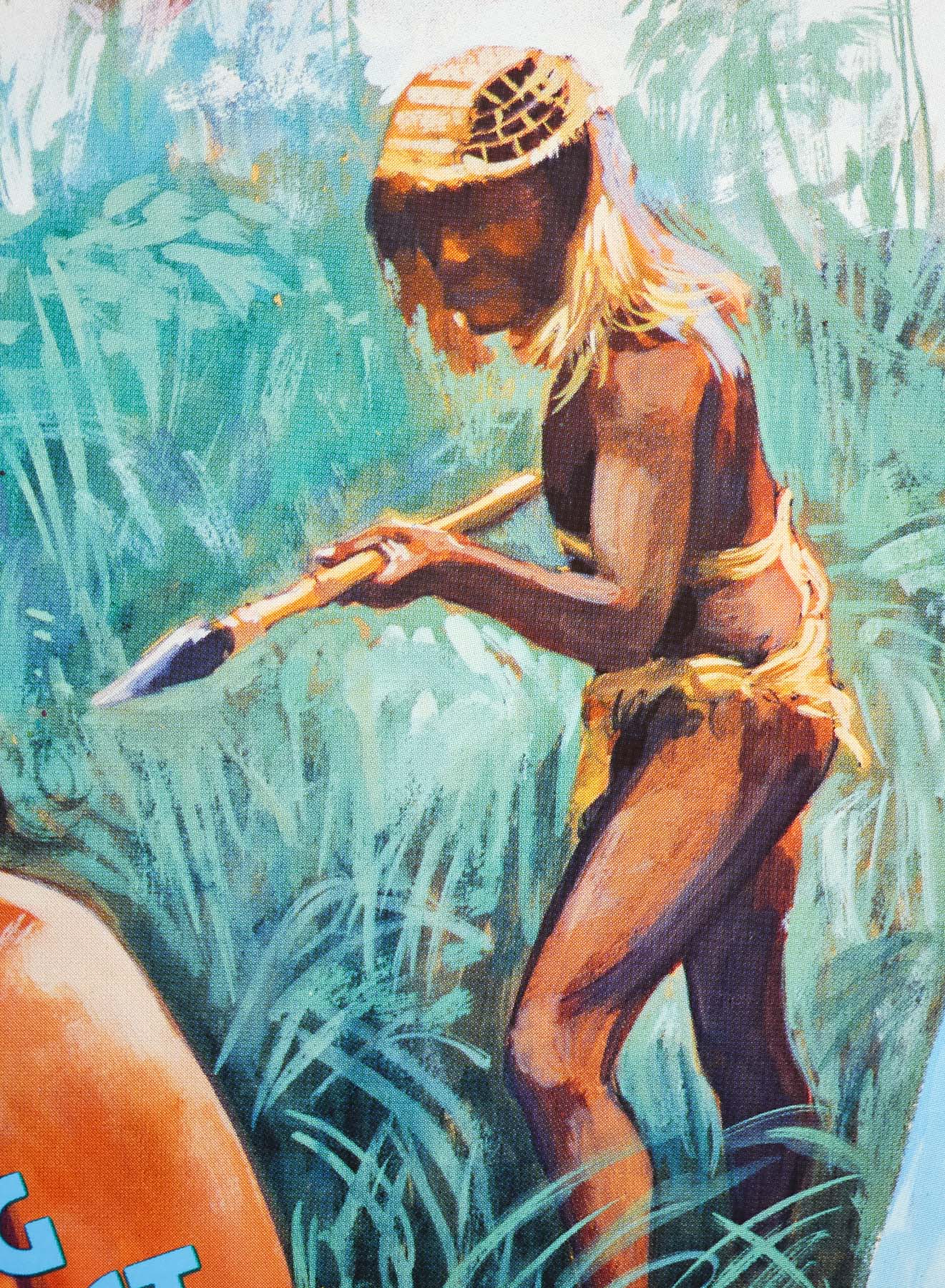
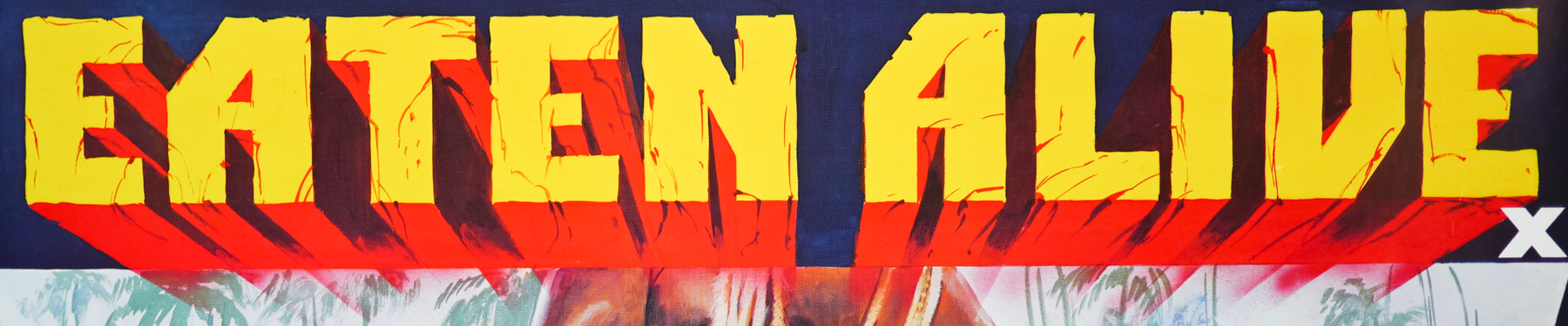
Lurid artwork by the late, great Tom Chantrell on this UK quad for the release of Italian director Umberto Lenzi‘s 1980 entry into the then burgeoning cannibal subgenre of horror, Eaten Alive! (here just Eaten Alive). This is not to be confused with Tobe Hooper’s 1976 film of the same name about a redneck killer with a pet alligator. Eaten Alive wasn’t Lenzi’s first foray into the subgenre and the director is regularly credited with kickstarting it all with his film Deep River Savages (AKA Sacrifice!) in 1972. This film was released the same year as Cannibal Holocaust, directed by fellow countryman Ruggero Deodato, which is today considered to be the pinnacle of the genre and remains notorious to this day. Not to be outdone, Lenzi filmed one of the subgenre’s most unapologetically nasty entries, Cannibal Ferox, only a year after this film was released, but by that point the subgenre was beginning to fade and only a few more obscurities were made during the 1980s.

Unlike Ferox and Holocaust, Eaten Alive is more of a jungle adventure film and isn’t told in the pseudo-documentary, mondo style of the other films. Not only did Lenzi utilise stars from other cannibal films, including the American pornstar-turned-actor Robert Kerman (who appeared in Holocaust and Ferox) but he also borrowed footage from other films such as his own Deep River Savages and The Mountain of the Cannibal God. Like other entries it also depicts scenes of real animal torture and killings which have always proved controversial and are deeply uncomfortable to sit through today (at least for this viewer). Eaten Alive sees an American woman called Sheila (Swedish actress Janet Agren) who travels to remote New Guinea in search of her missing sister Diana (Paola Senatoreaccompanied by Vietnam veteran Mark (Kerman). They discover that Diana has joined a cult deep in the jungle which is being led by a Jim Jones-style guru called Jonas (cannibal flick regular Ivan Rassimov) who rules over his subjects and the local natives using physical and sexual abuse. Sheila, Mark and Diana attempt to escape from the cult’s clutches and there follows several scenes featuring all manner of barbarities.

Today Eaten Alive is considered one of the lesser cannibal films, certainly compared to Holocaust and Ferox, but it’s not without merit for gorehounds looking for a slice of sleazy entertainment. It’s arguably worth a watch as a curio of a film that would never be made today, not least because of the animal cruelty and breathtaking levels of misogyny on display.

Tom Chantrell was a celebrated British artist whose dynamic and colourful work featured on hundreds of posters over a forty year period. His official website features a great biography written by Sim Branaghan, author of the must-own British Film Posters. Chantrell illustrated many classic poster designs, including several Hammer posters such as the brilliant quad for ‘One Million Years B.C.’, and was also responsible for the iconic Star Wars quad, the artwork of which ended up being used around the globe. I have a number of other designs by him on this site. The chunky title treatment is one of the artist’s specialties and features on several of his posters, which can be seen on his official site.

A Nightmare on Elm Street 3: Dream Warriors / quad / video / UK

16.05.16

Poster Poster
Title
A Nightmare on Elm Street 3: Dream Warriors
AKA
--
Year of Film
1987
Director
Chuck Russell
Starring
Heather Langenkamp, Patricia Arquette, Craig, Wasson, Robert Englund
Origin of Film
USA
Genre(s) of Film
Heather Langenkamp, Patricia Arquette, Craig, Wasson, Robert Englund,
Type of Poster
Quad
Style of Poster
Video
Origin of Poster
UK
Year of Poster
1987
Designer
Graham Humphreys
Artist
--
Size (inches)
30" x 40"
SS or DS
SS
Tagline
--

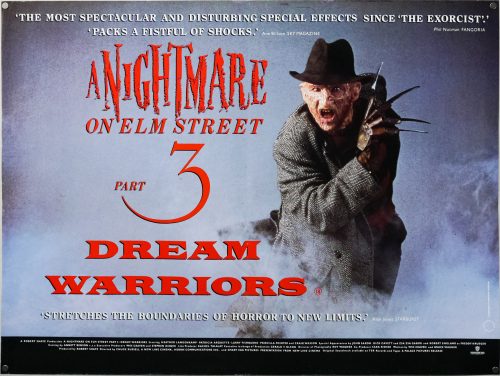
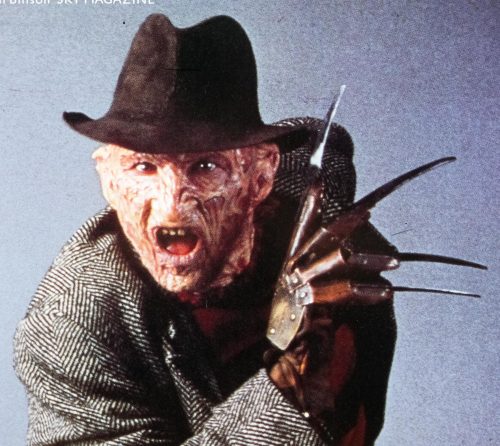
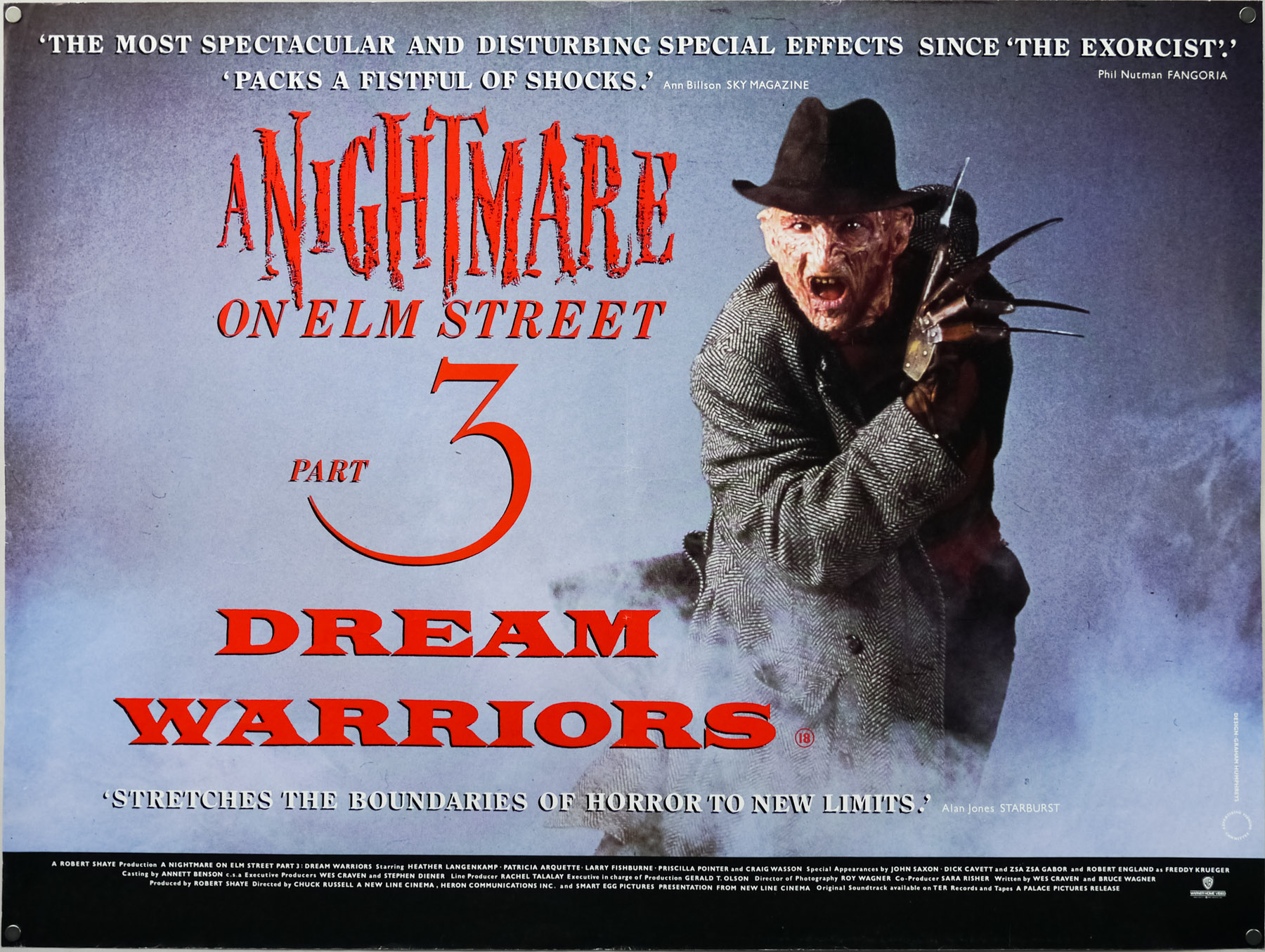
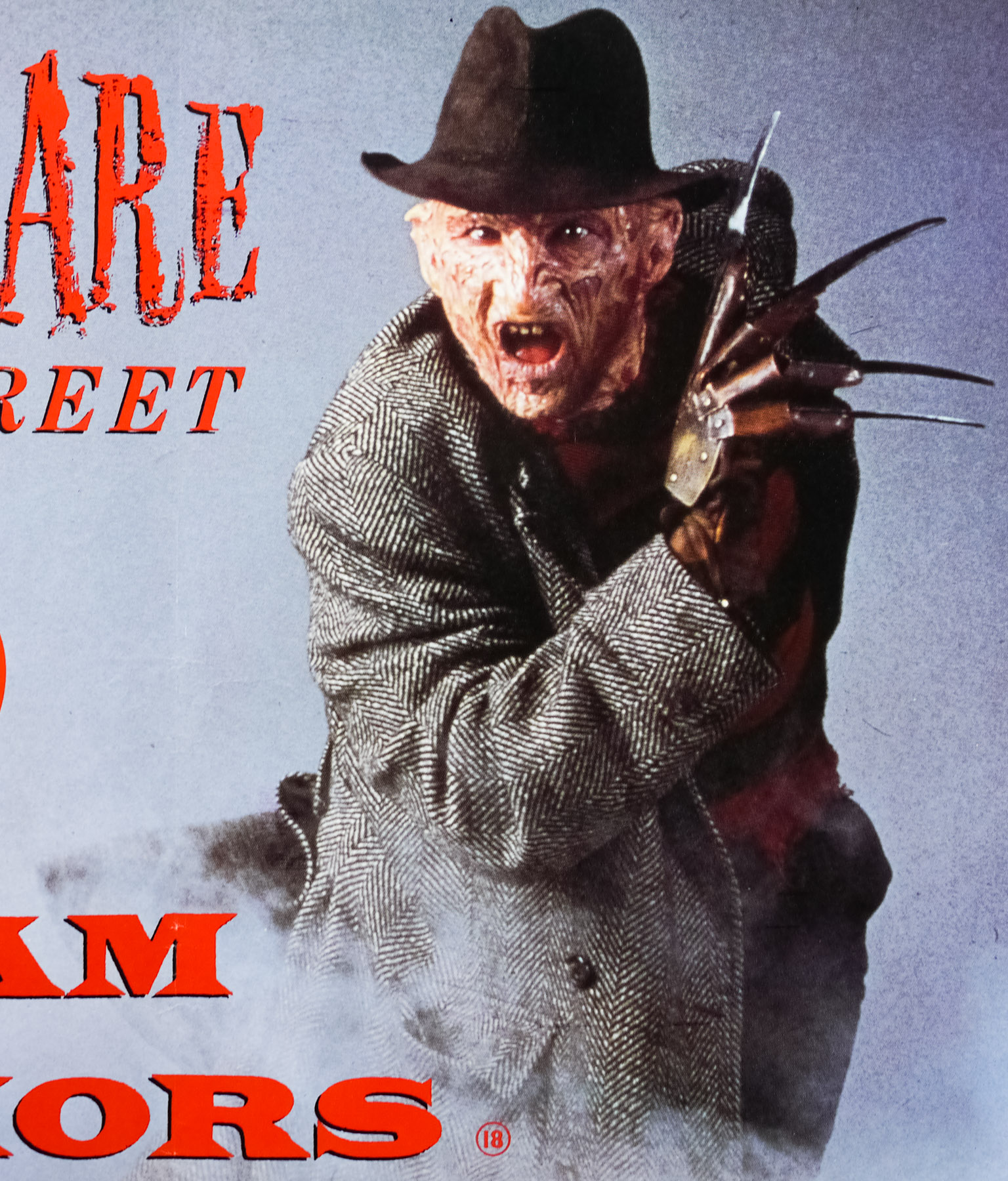
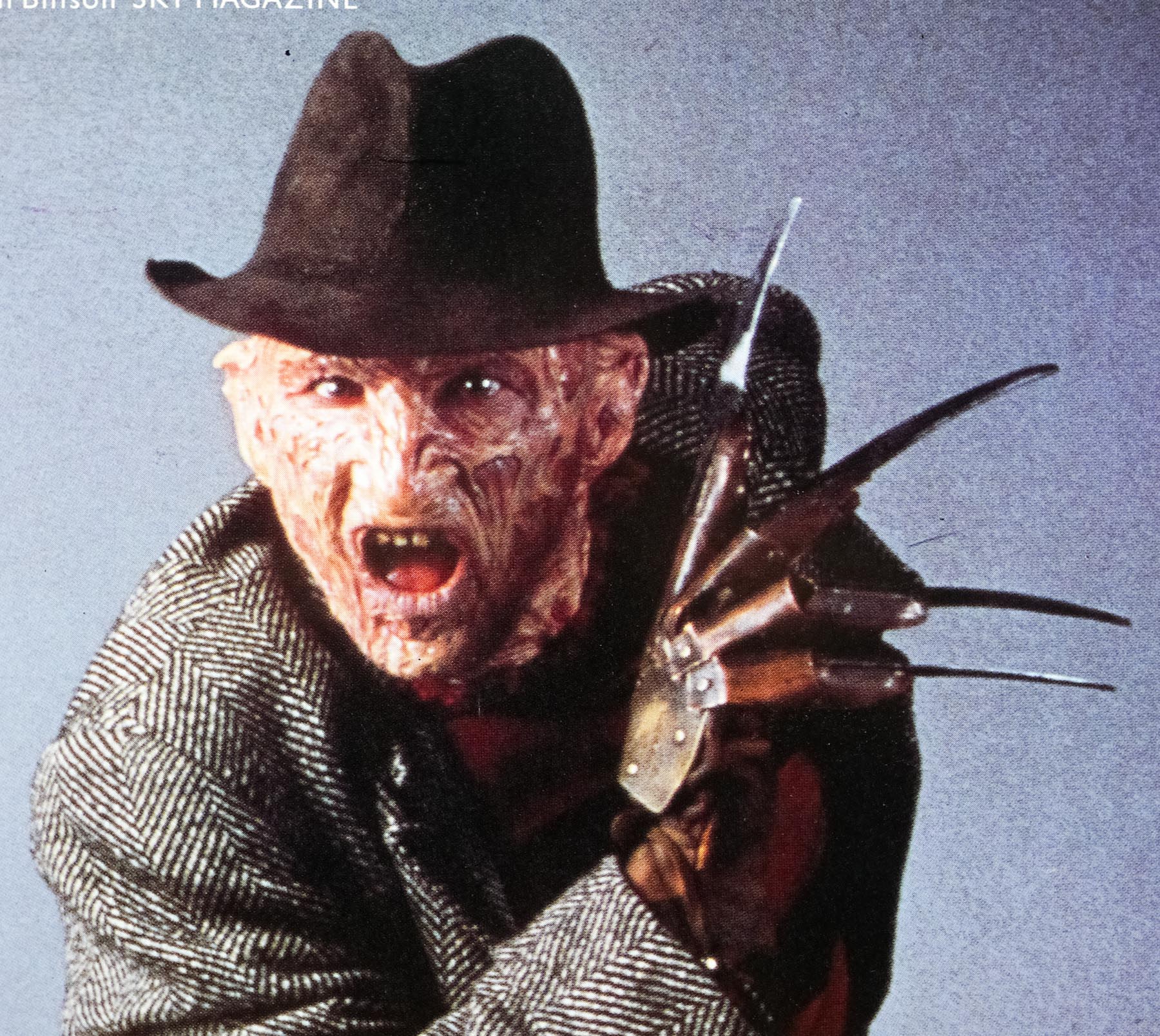
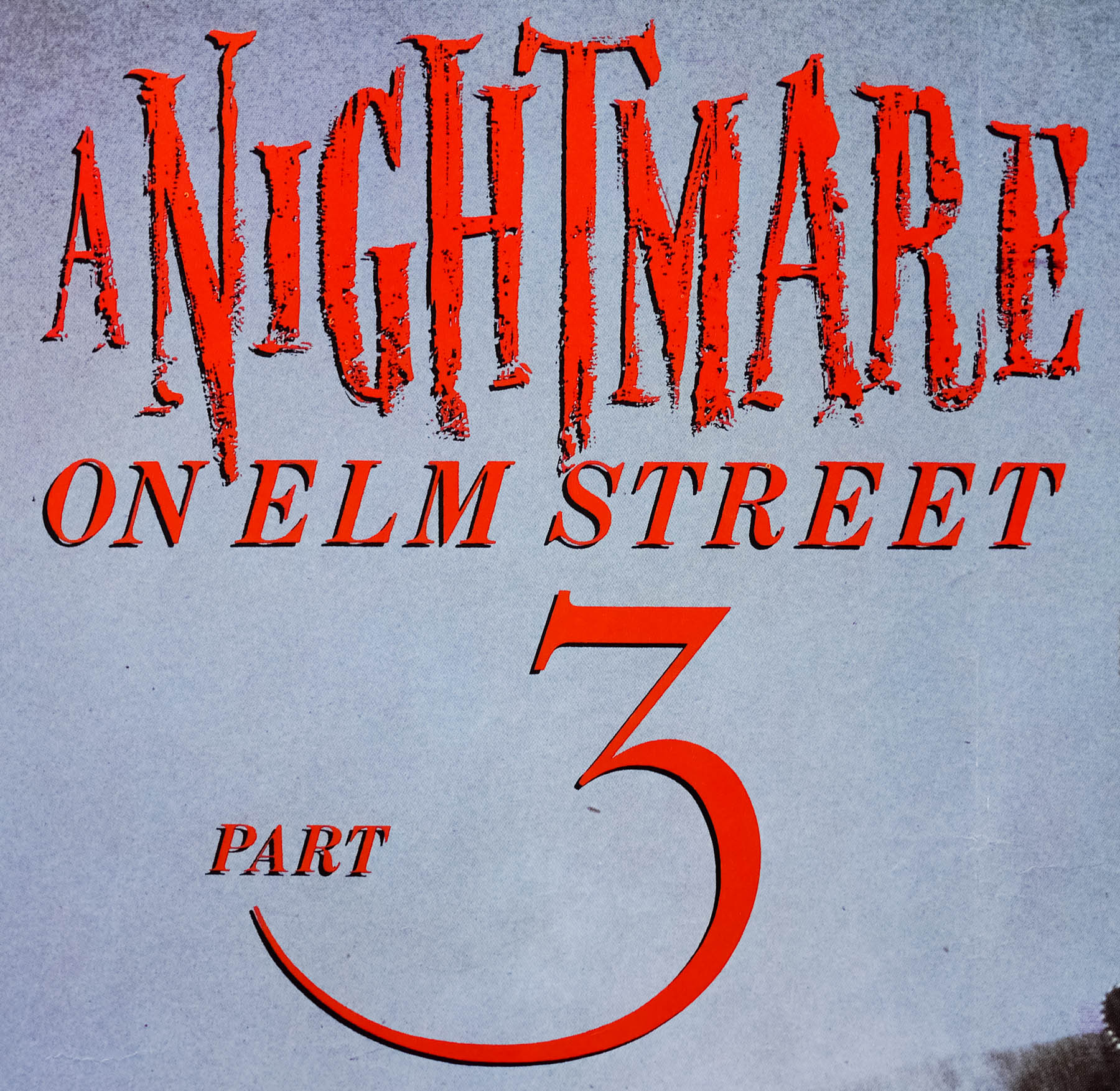
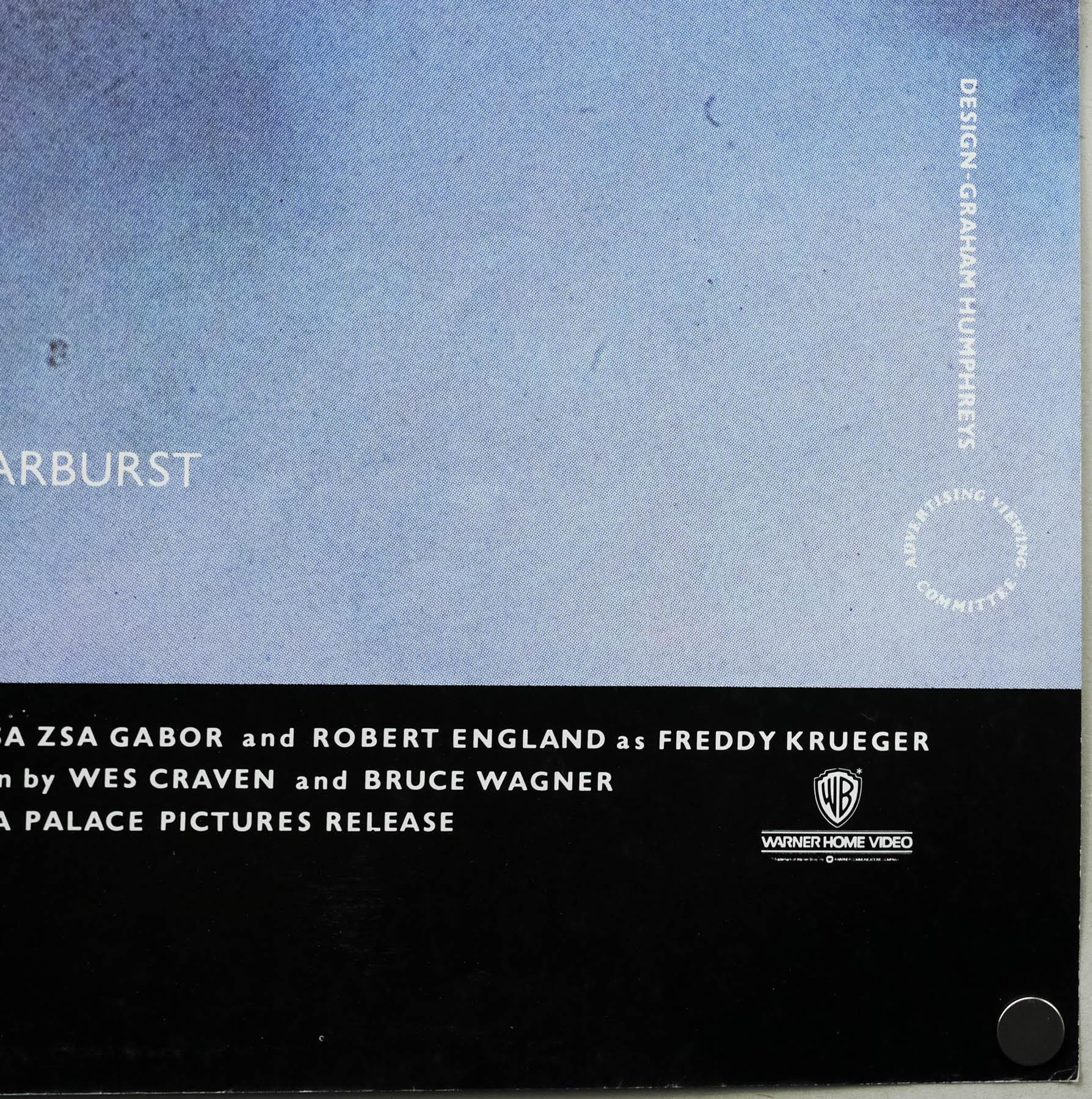
This is the UK video poster for the third entry in one of the most beloved horror franchises, A Nightmare on Elm Street 3 (subtitled Dream Warriors). It’s a full-size quad (30″ x 40″) and the only way to tell that it’s a video poster is the ‘Warner Home Video’ logo (they handled the home video release) in the bottom right corner. As you can see on this image from emovieposter.com it’s otherwise identical to the Palace Pictures cinema release quad which has their logo in the bottom right.

The third film, whilst not as great as the original, was nevertheless a significant return to form following the very lacklustre part 2 that had been released a year earlier to reasonable box-office returns but poor critical reception. Both Wes Craven and Heather Langenkamp (Nancy) had been absent from the first sequel but were persuaded to return for Part 3, with Wes providing drafts of the screenplay and being instrumental in getting Langenkamp onboard. The story went through several iterations with Wes and Bruce Wagner both writing a series of initial drafts and then Frank Darabont (of Shawshank Redemption fame) and the film’s director Chuck Russell completing the screenplay.

Part of the film’s success is that they return to what made the original much scarier than part 2, which is the concept of the evil Freddy Krueger only having his power in the dreams of the kids he’s attacking. This is what made the first film so effective and allowed Freddy to be much more inventive with the way he attacks his victims. In part 2 there are several sequences where Freddy is in the ‘real world’ and he simply becomes a standard slasher antagonist, losing his uniqueness as a villain in the process. Aside from one sequence involving a Ray Harryhausen-esque skeleton, all of the Freddy scenes take place in the dream world of his teenage victims.

The concept for the third one, hinted at with the film’s subtitle, is that the characters are able to enter each other’s dreams in order to try and defeat Freddy. Patricia Arquette (in her film debut) plays Kirsten Walker, a teenager who has been suffering terrible nightmares at the hands of Freddy. After an attack that leaves her wrist slashed, her mother has Kirsten taken to a secure psychiatric hospital and there she meets a number of other teens all suffering from the same nightmares, with the adult carers at a loss to explain it. Dr Neil Gordon (Craig Wasson) is the only one who begins to believe the group and he’s helped when Nancy begins working at the hospital as an intern.

After two of the gang die following a Krueger attack, ruled as suicides by the hospital bosses, Gordon and Nancy realise the key to defeating him is using Kirsten’s gift of being able to bring other people into her own dreams. They also discover that each of the remaining kids has a particular gift when they’re in their dreams. Having multiple characters in one dream allows Chuck Russell and the special effects crew to stage a number of memorable sequences, filled with inventive gore coupled with a much more interesting script for Robert Englund (Freddy) to have fun with. There are a number of moments in the film that are ingrained in my memory from the first time I saw it almost 20 years ago and it’s definitely a fan favourite sequel. The film was a hit at the box-office and ensured Freddy’s return in part 4 only a year later.

The celebrated British designer and artist Graham Humphreys was chosen by Palace to work on the posters for the first five A Nightmare on Elm Street films. This poster for part 3 is notable for being the only one of the five that’s photographic, rather than illustrated, and when I interviewed Graham in 2011 for this site he explained how that came about:

——————

For A Nightmare on Elm Street 3 they went with a photographic image and you designed the poster. Was there a reason they didn’t have an illustration?
No idea at all. They might have been cheap-skating. I think they thought the photographs were quite good from the session they’d had so why not use one of them. I redid the logo and drew the number 3, which took ages!

How easy was it working with photographs at this time, before computers?
Well given a computer this poster would have been so different. I mean I would have used the same photograph but so much more could have been done to make it more sinister and far more exciting. In those days all I could do was play around with the lettering.

Did you actually ask if you could do an illustration or suggest an idea for one?
No, the decision was made that it would be a photo and that was that.

———–——

To see the other posters I’ve collected by Graham click here and read the exclusive interview with the artist here.

Where the Green Ants Dream / quad / UK

12.09.16

Poster Poster
Title
Where the Green Ants Dream
AKA
Wo die grünen Ameisen träumen (Germany - original title)
Year of Film
1984
Director
Werner Herzog
Starring
Bruce Spence, Wandjuk Marika, Roy Marika, Ray Barrett, Norman Kaye, Ralph Cotterill, Nick Lathouris, Basil Clarke, Ray Marshall
Origin of Film
West Germany | Australia
Genre(s) of Film
Bruce Spence, Wandjuk Marika, Roy Marika, Ray Barrett, Norman Kaye, Ralph Cotterill, Nick Lathouris, Basil Clarke, Ray Marshall,
Type of Poster
Quad
Style of Poster
--
Origin of Poster
UK
Year of Poster
1984
Designer
Paul Derrick
Artist
--
Size (inches)
30 4/16" x 40 2/16"
SS or DS
SS
Tagline
--

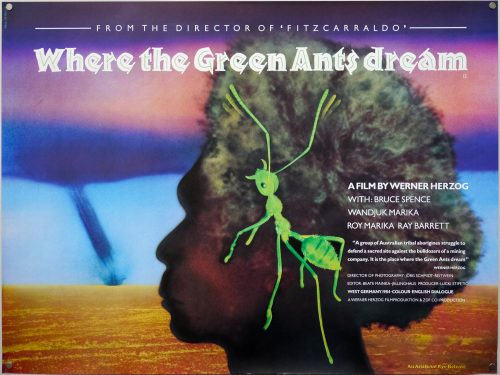
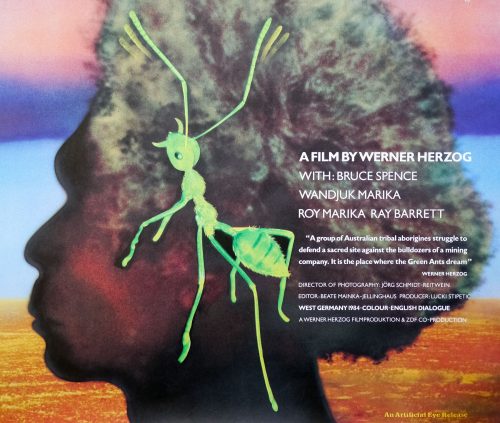
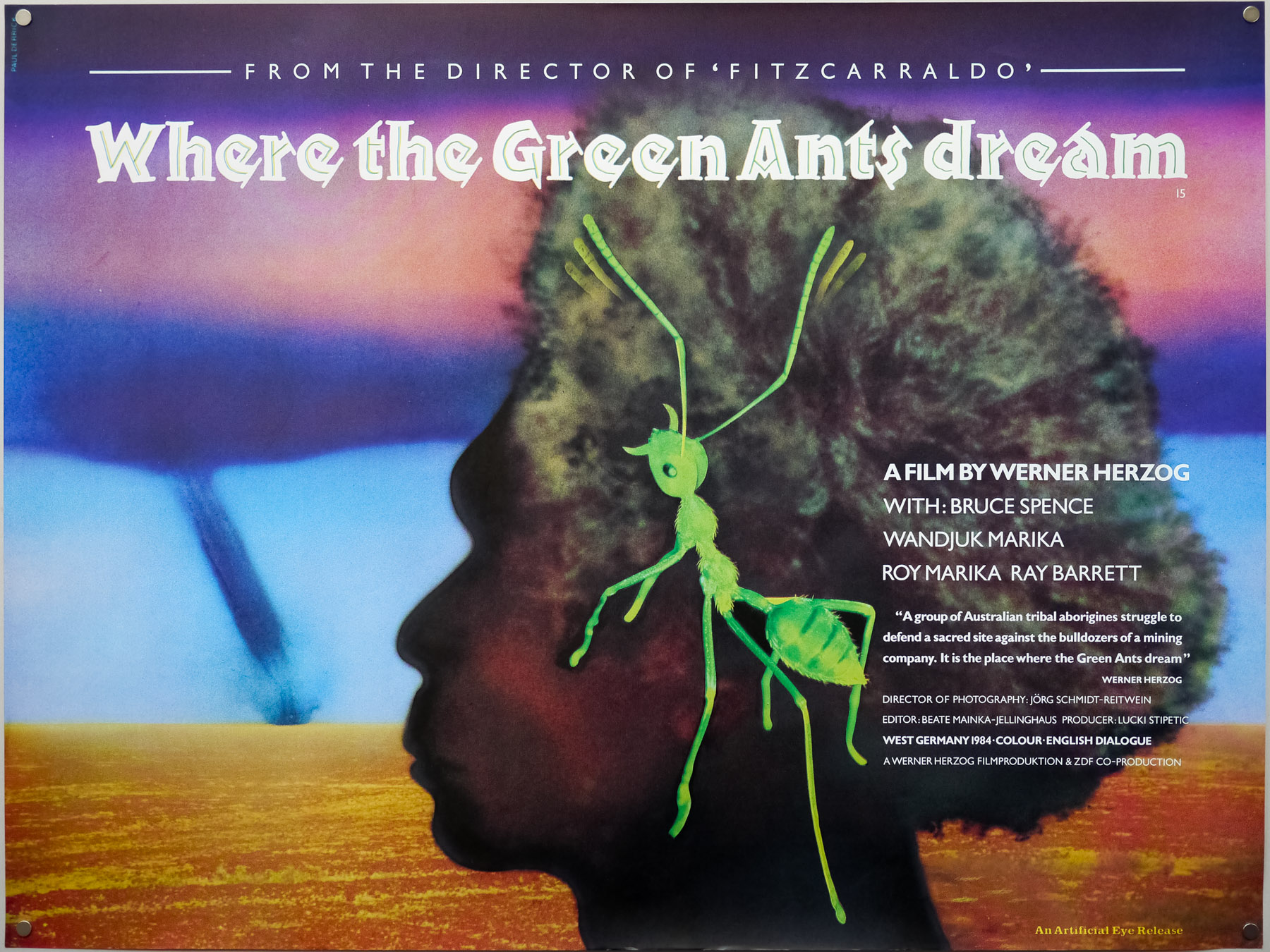
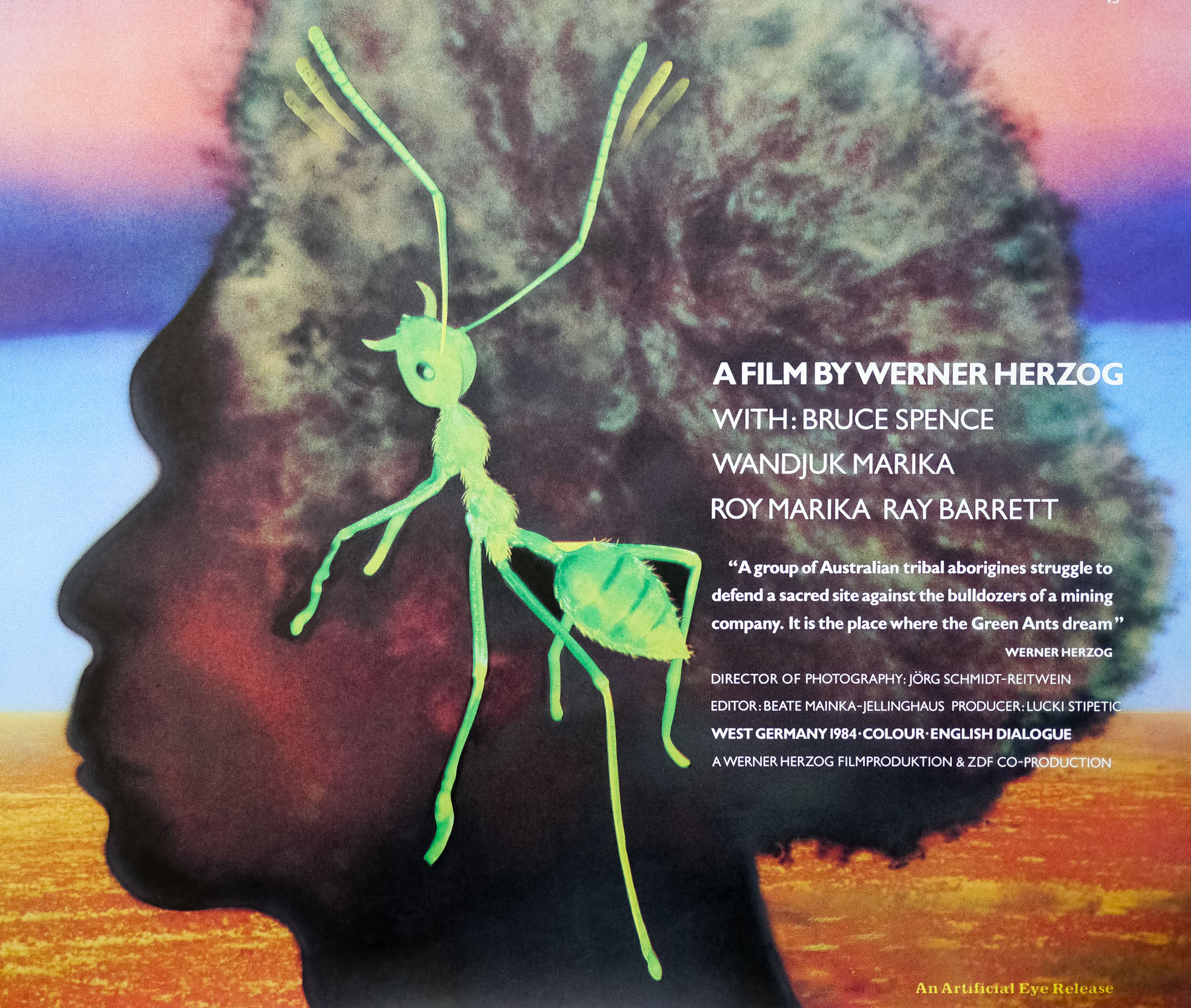
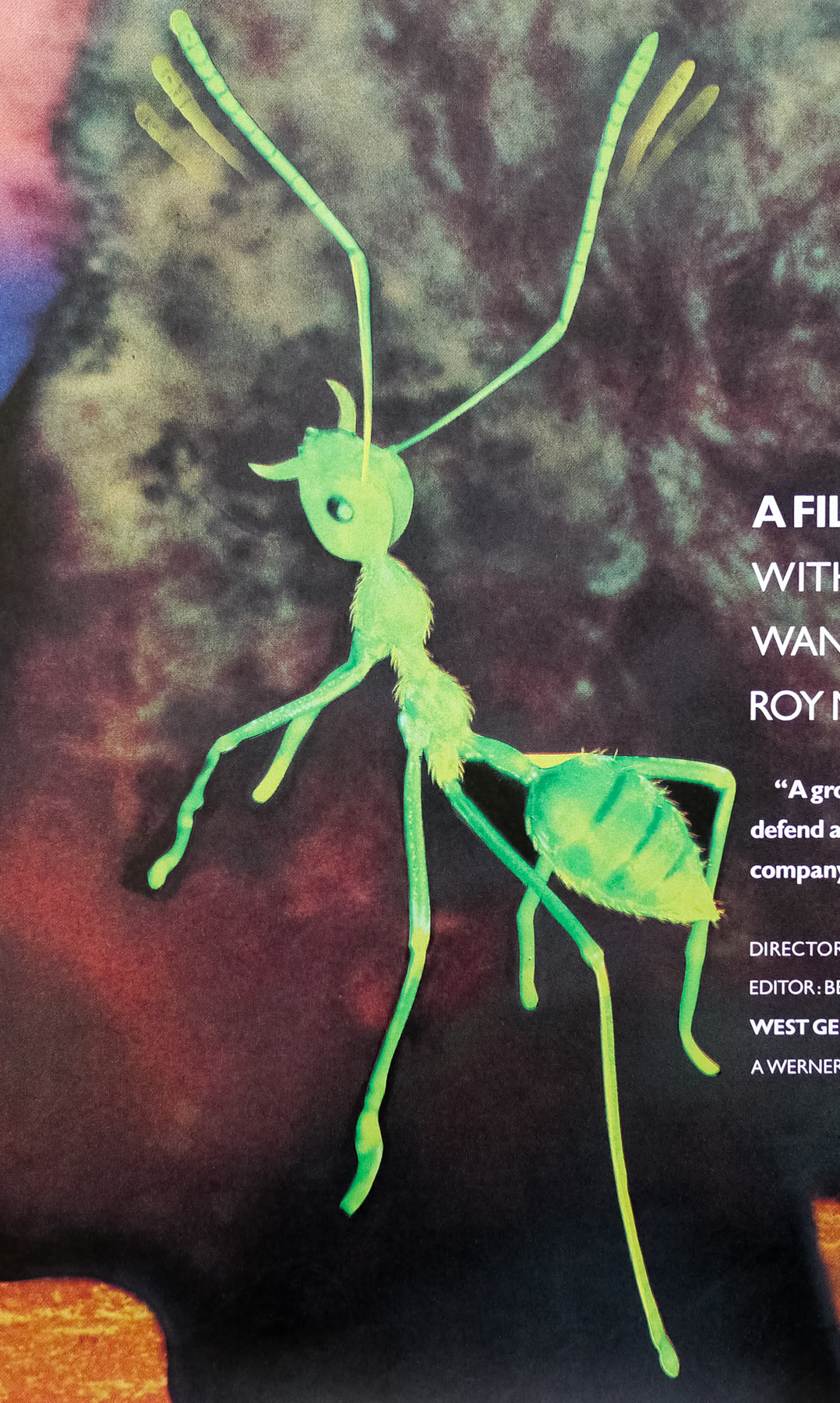
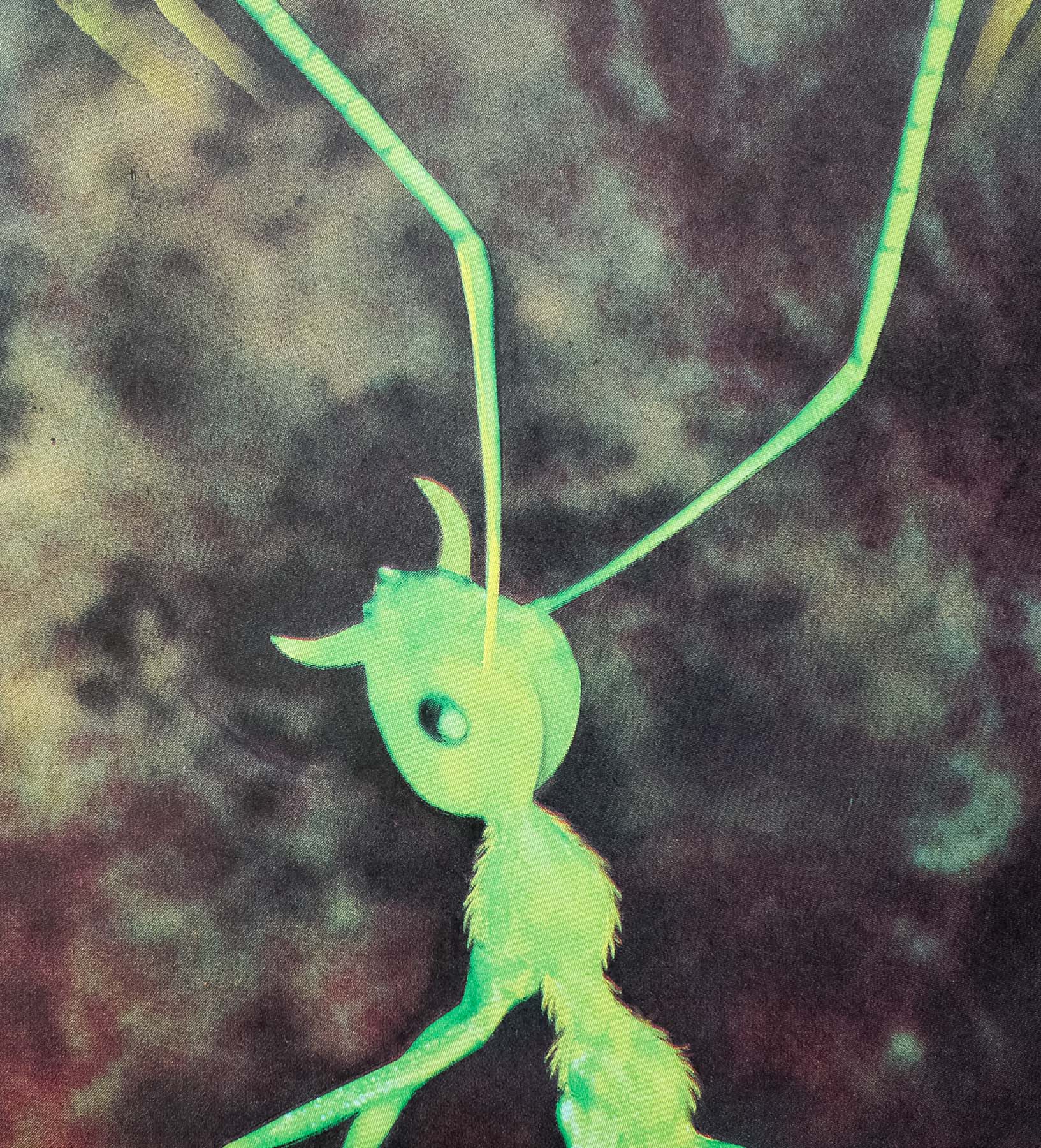
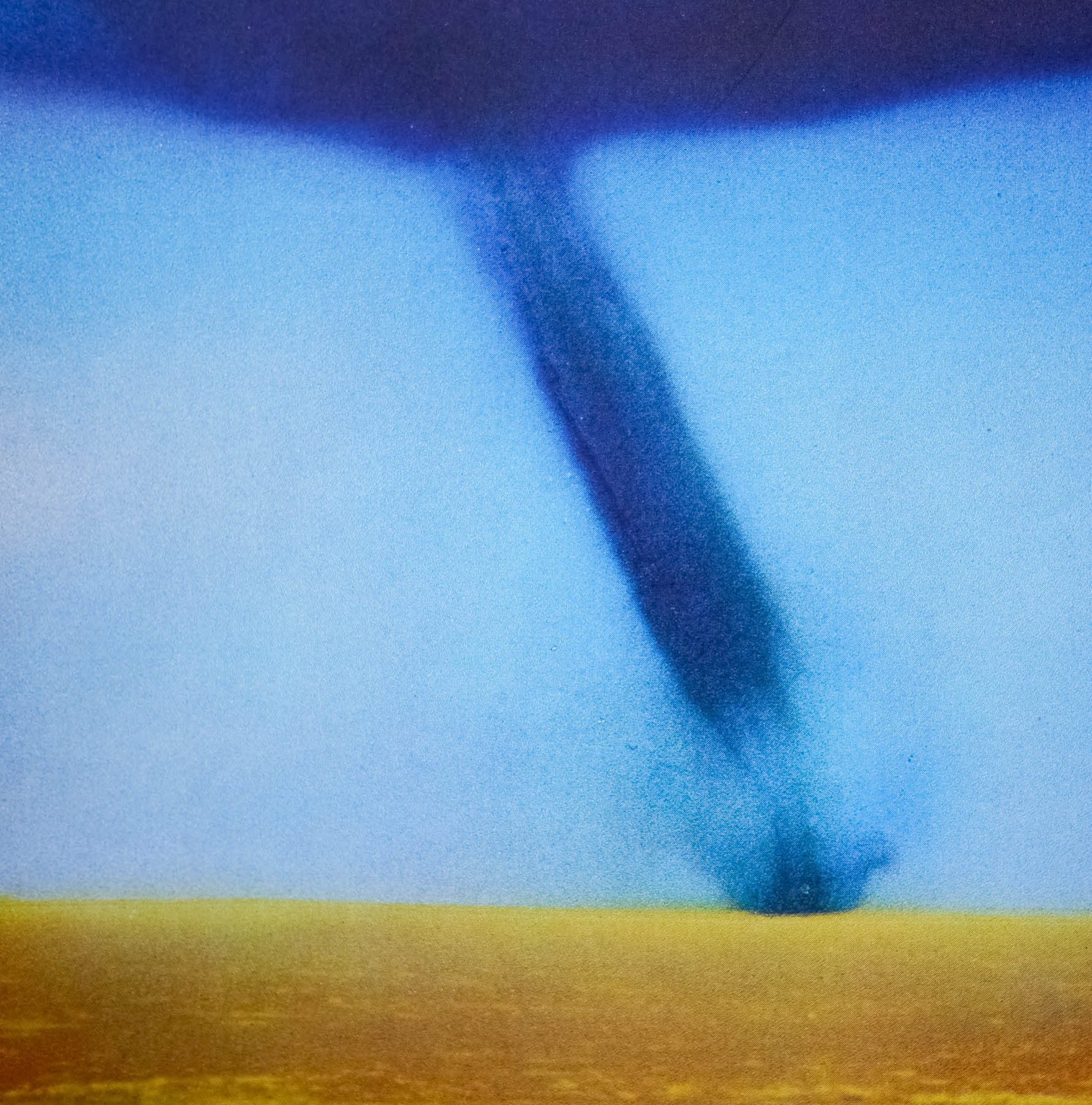
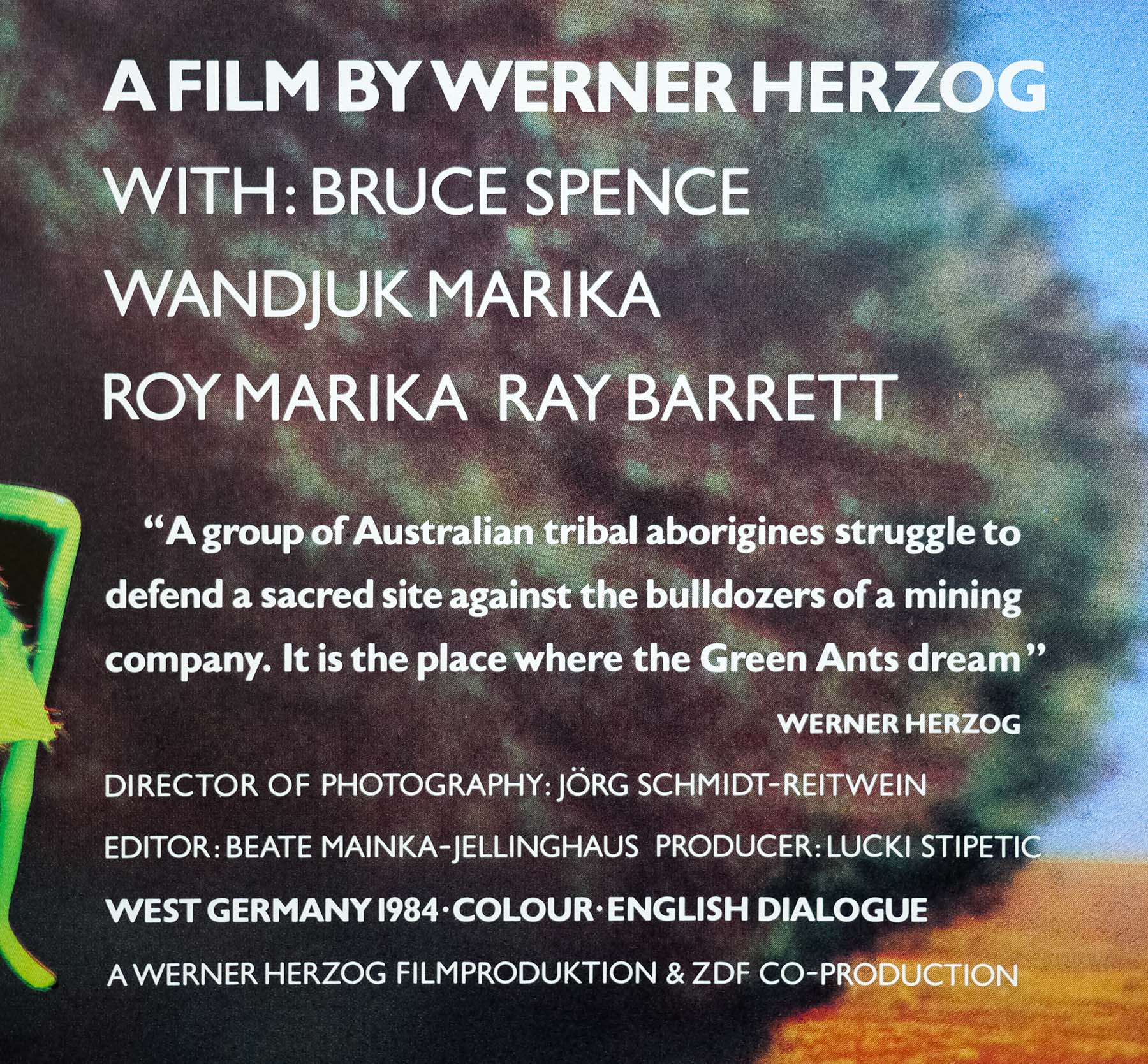
A striking image by the British designer Paul Derrick features on this UK quad for the release of maverick director Werner Herzog‘s 1984 drama Where the Green Ants Dream. The film was the directorial follow up to what many consider to be Herzog’s masterpiece, Fitzcarraldo, and is set in the Australian outback. Co-written with the Australian screenwriter Bob Ellis, the film deals with the contentious issue of aboriginal land rights that has existed ever since the British established a settlement there in the 18th Century. A mix of facts and fiction, the film features a number of aboriginal activists who had been involved in a real-life court case

Bruce Spence, who is best known as the Gyro Captain from Mad Max 2, plays Lance Hackett, a geologist working for a mining company that is carrying out a series of tests on some land that they intend to mine for Uranium. The title refers to the insects that the aborigines believe to be sacred and they fear will be disturbed by the blasting and drilling. One of the tribal elders, as featured on this poster, explains that this disturbance could bring about the end of the world. Lance is instructed to spend time with the activists and try and work out a deal with them so that the mining company can carry on their testing. When that eventually fails, even after they are given a large army plane as part of an attempted deal, the case goes to the courts. 

Paul Derrick’s official website can be viewed here and, according to the short biography on the site, he has been working for many years on publishing and visual identity projects for a wide range of clients, including arts and educational organisations as well as government clients. He also says that he is ‘experienced in undertaking, and art directing, documentary photography to create visual narratives and storytelling.’ There are a few examples of posters he worked on and the British distribution company Artificial Eye is listed in the projects section.

The Lighthorsemen / one sheet / UK

09.01.17

Poster Poster
Title
The Lighthorsemen
AKA
--
Year of Film
1987
Director
Simon Wincer
Starring
Jon Blake, Peter Phelps, Tony Bonner, Bill Kerr, John Walton, Gary Sweet, Tim McKenzie, Sigrid Thornton, Anthony Andrews
Origin of Film
Australia
Genre(s) of Film
Jon Blake, Peter Phelps, Tony Bonner, Bill Kerr, John Walton, Gary Sweet, Tim McKenzie, Sigrid Thornton, Anthony Andrews,
Type of Poster
One sheet
Style of Poster
--
Origin of Poster
UK
Year of Poster
1987
Designer
Brian Bysouth
Artist
Brian Bysouth
Size (inches)
27" x 39.5"
SS or DS
SS
NSS #
--
Tagline
At last... the true and epic story... of triumph, love, courage and adventure.

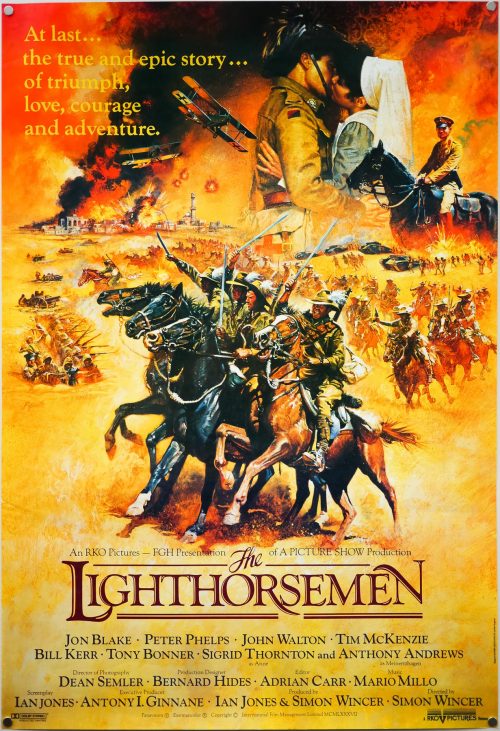
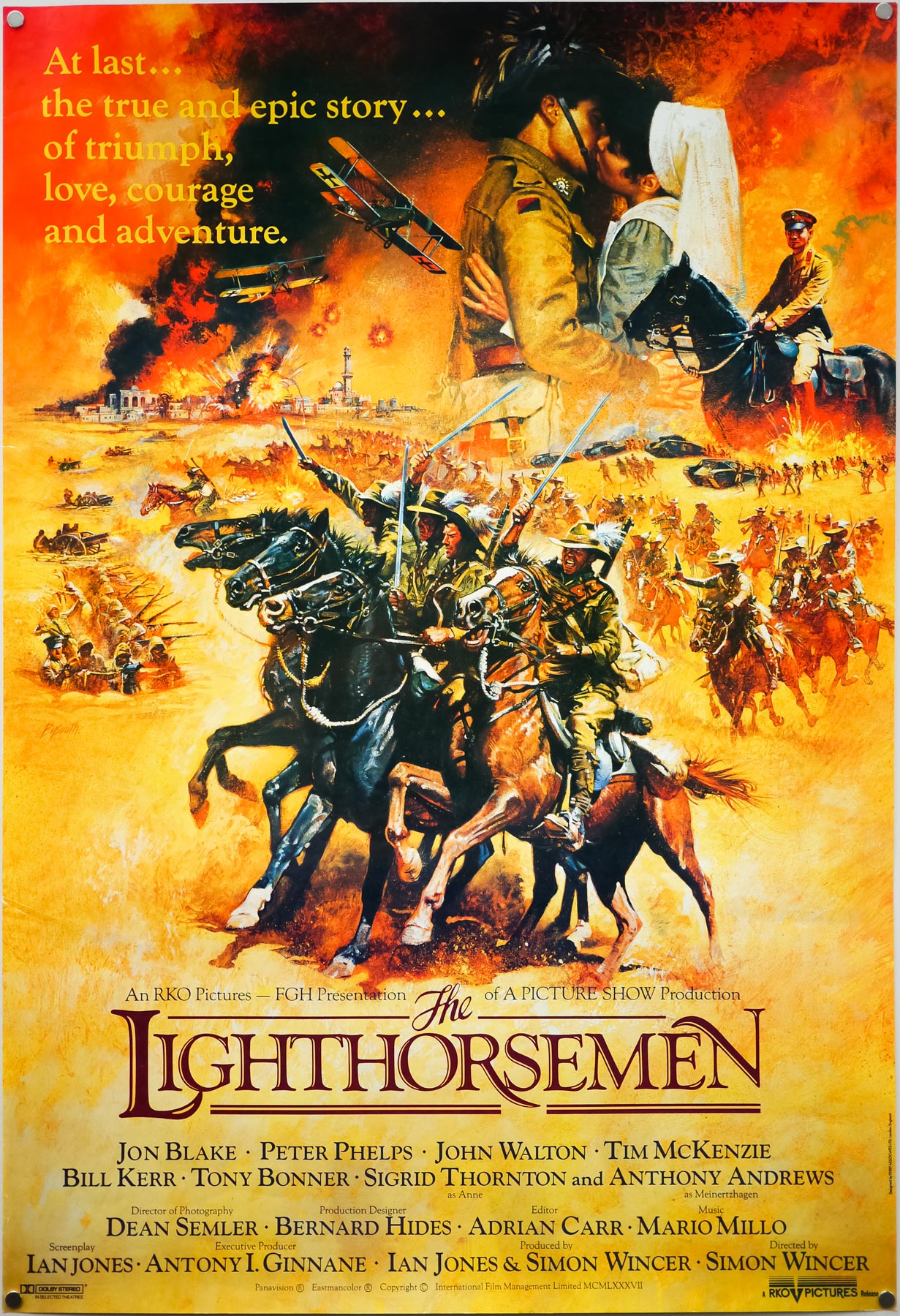
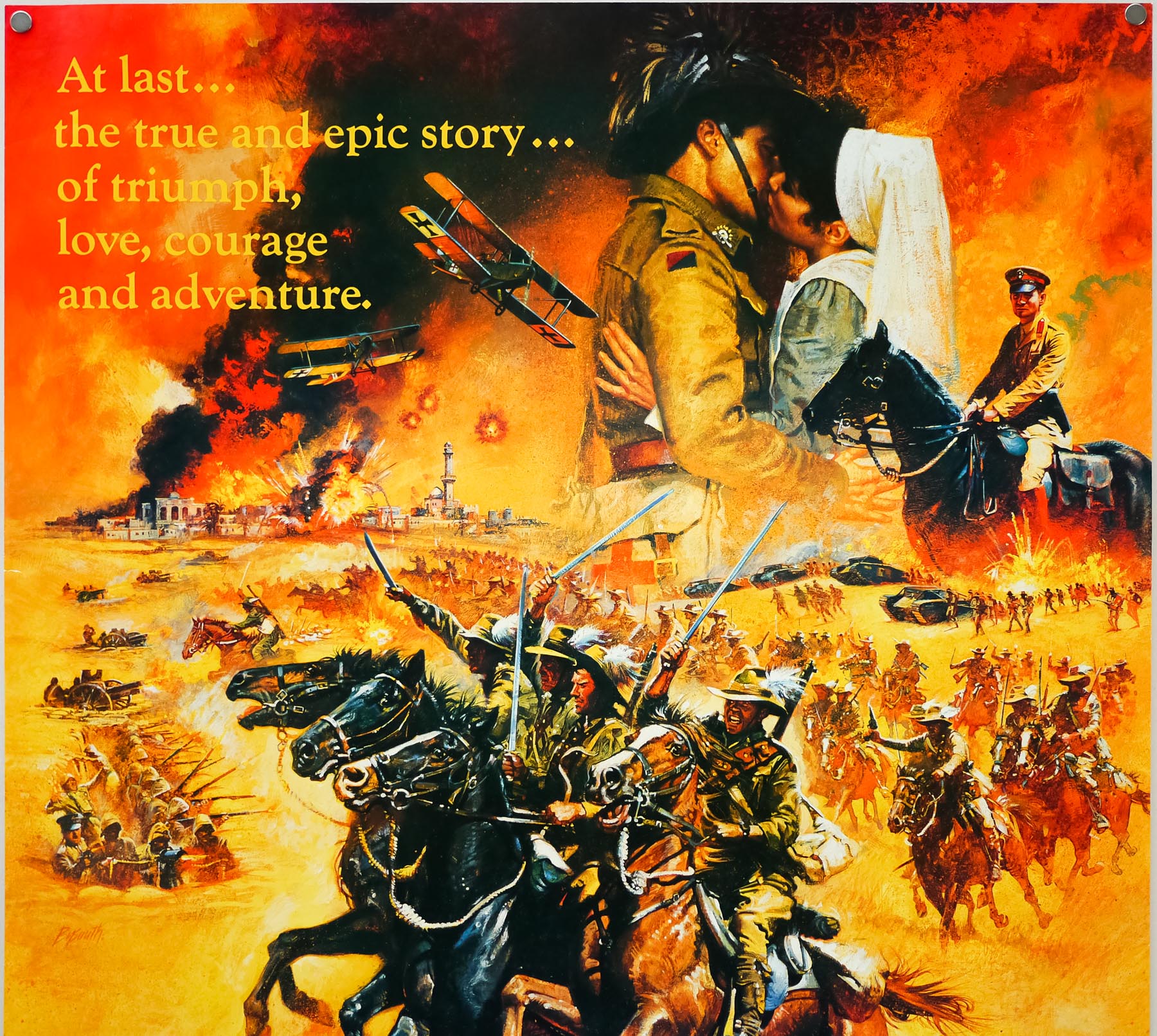
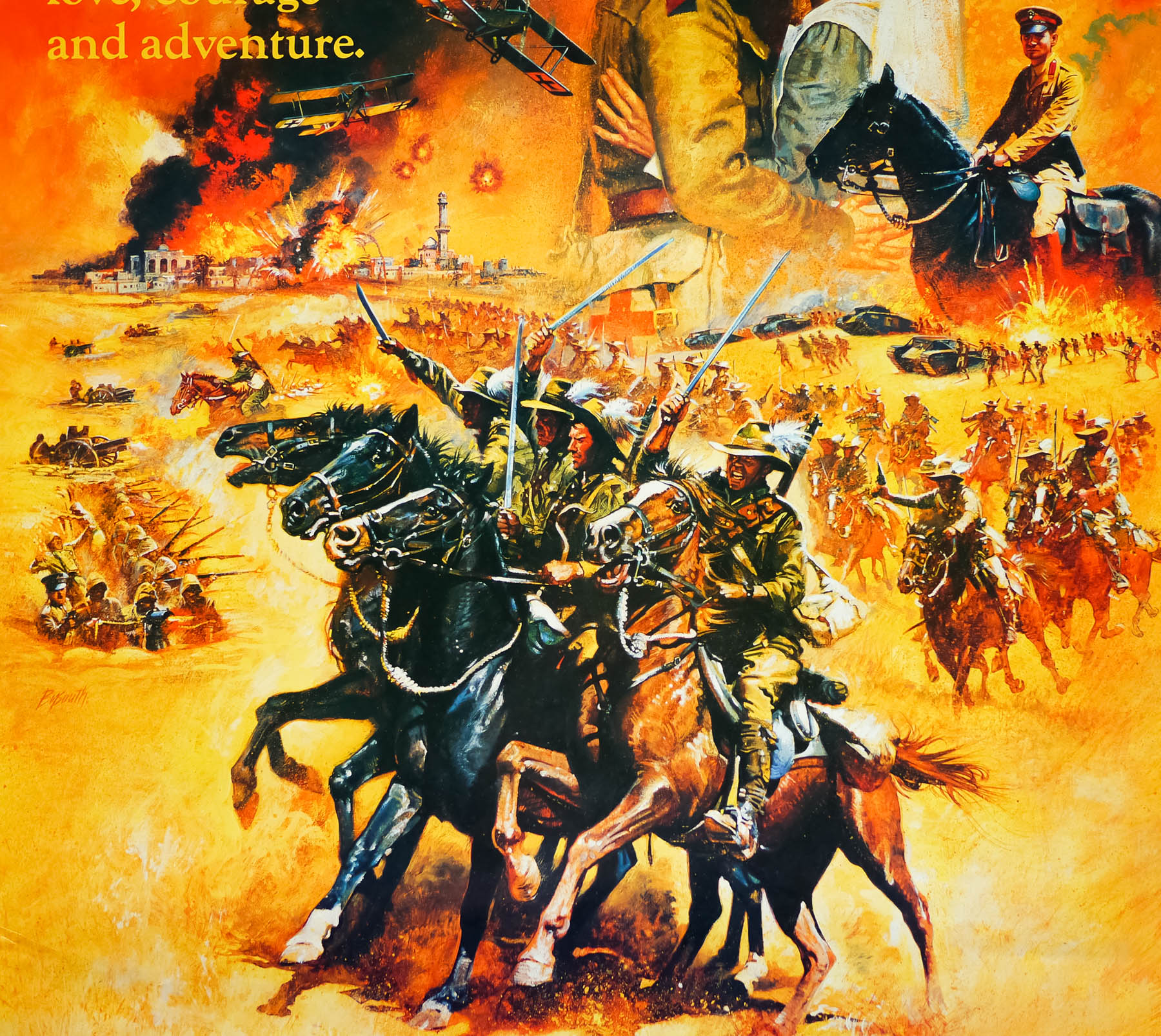
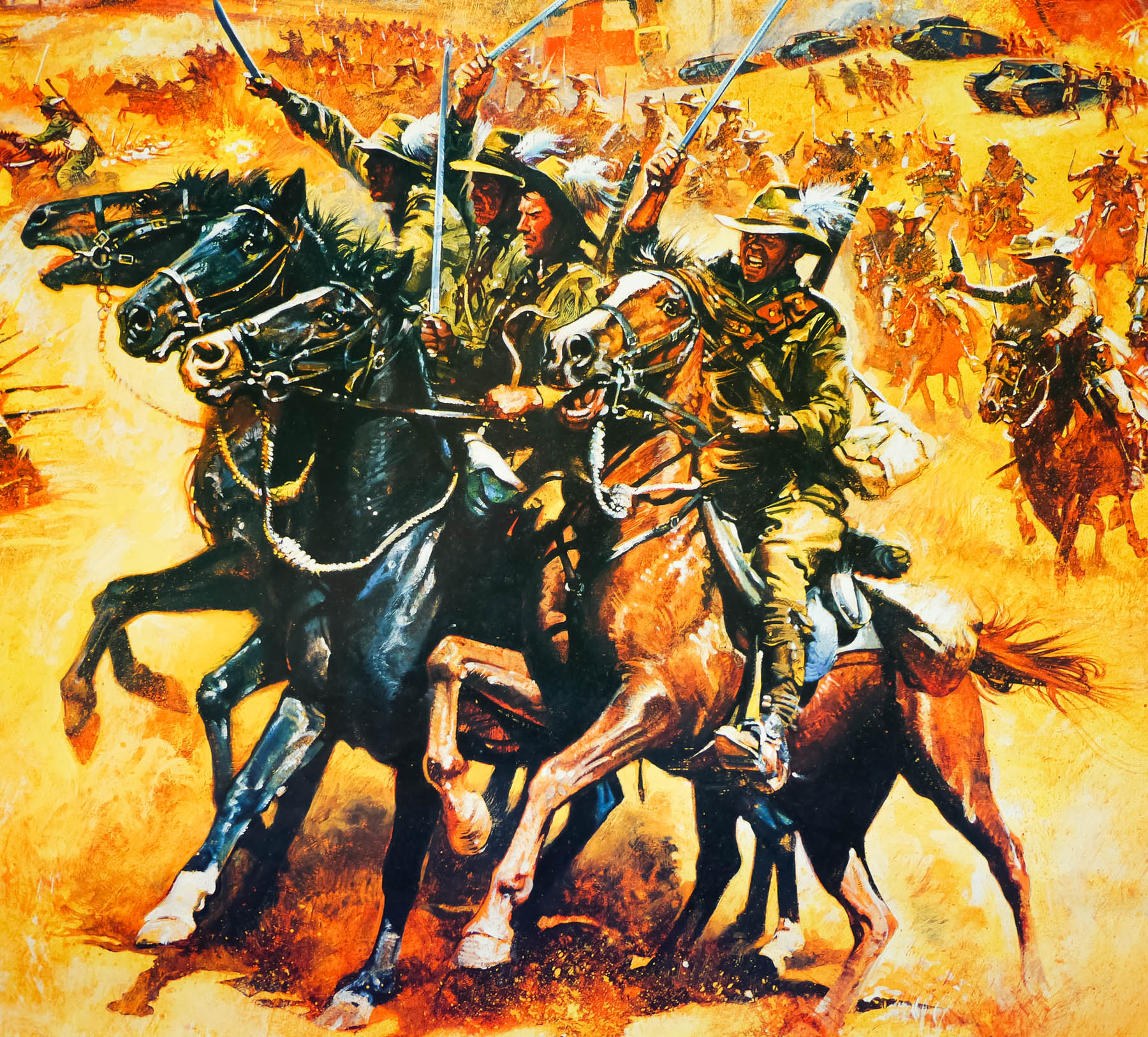
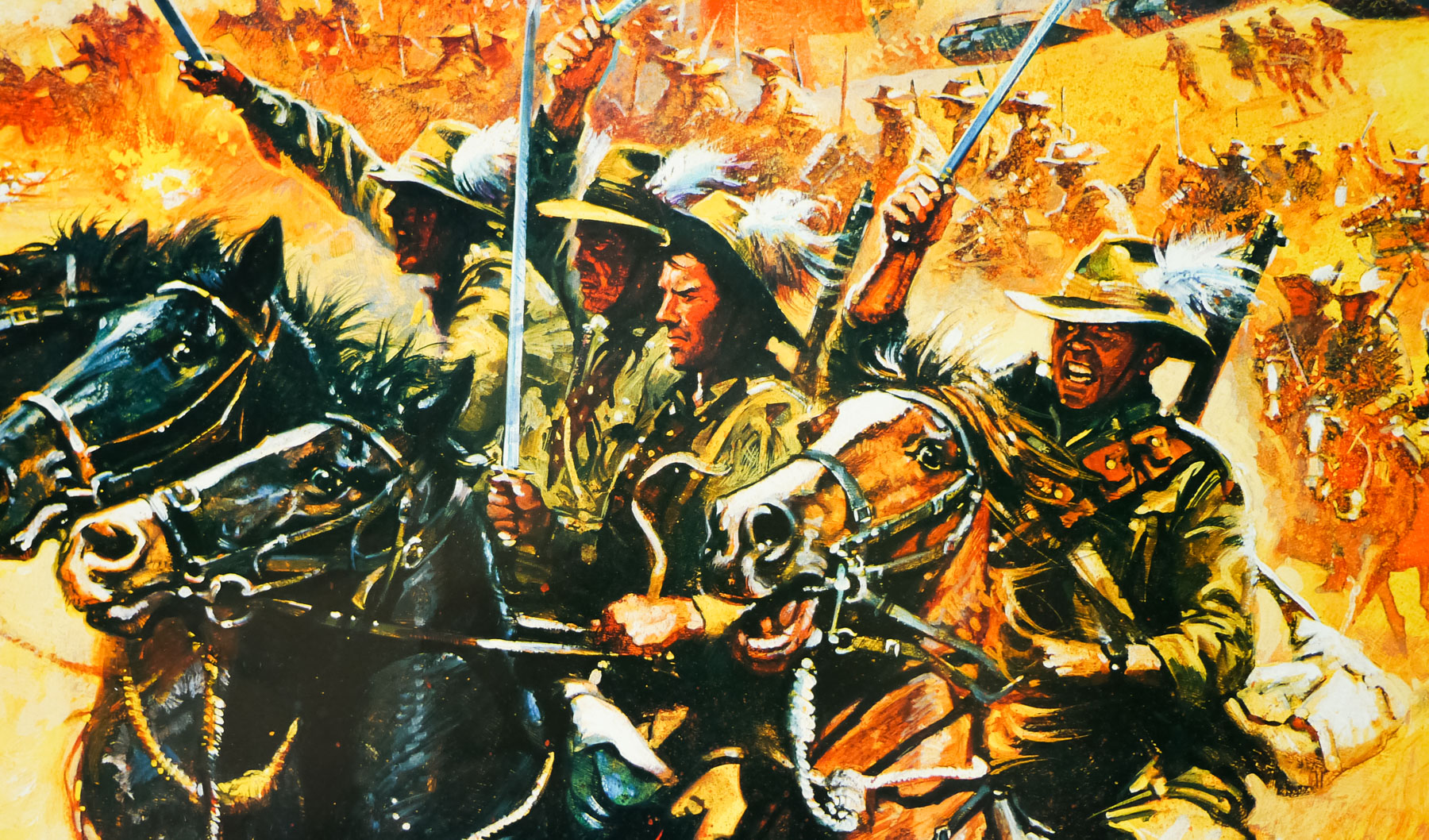
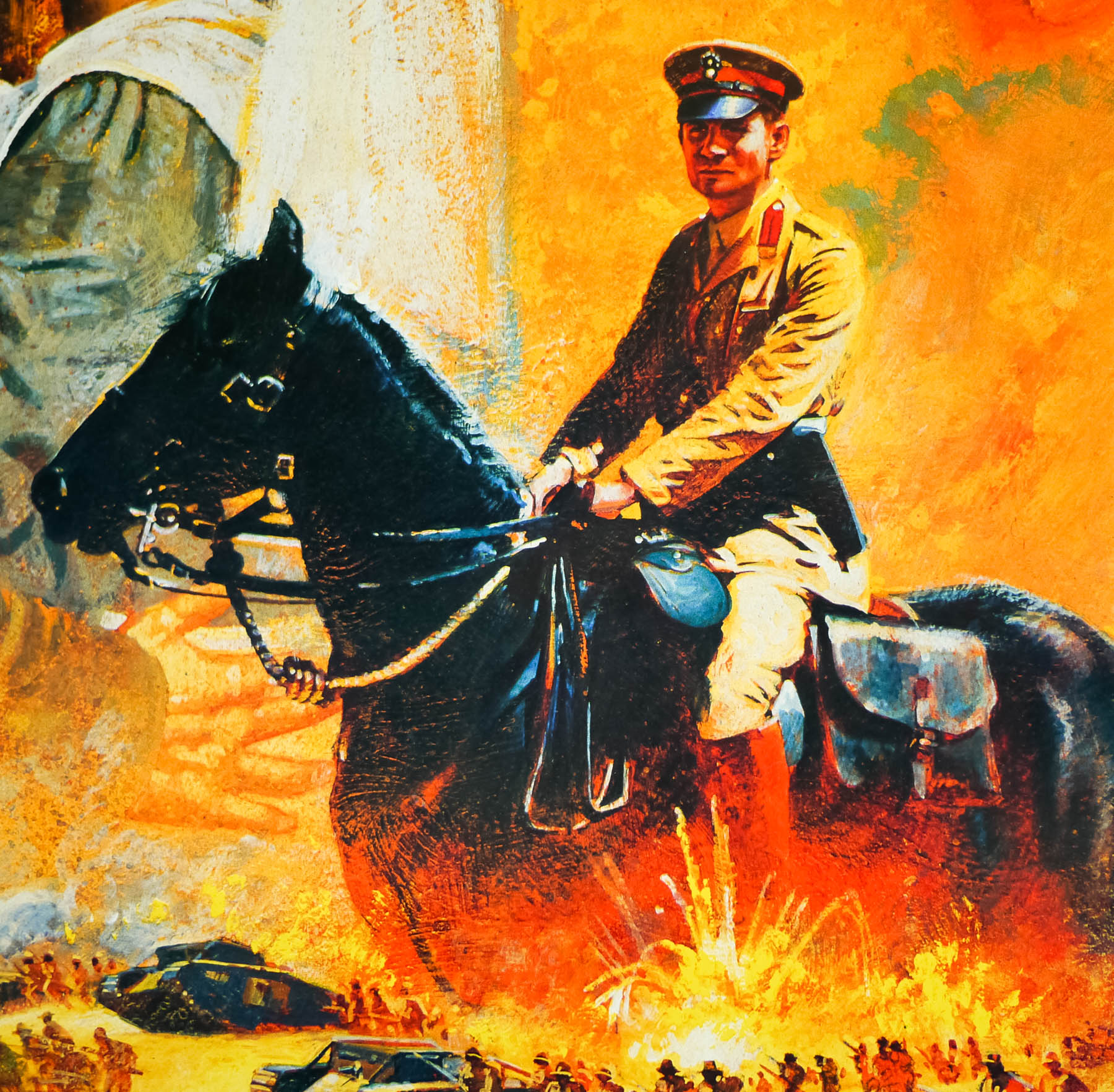
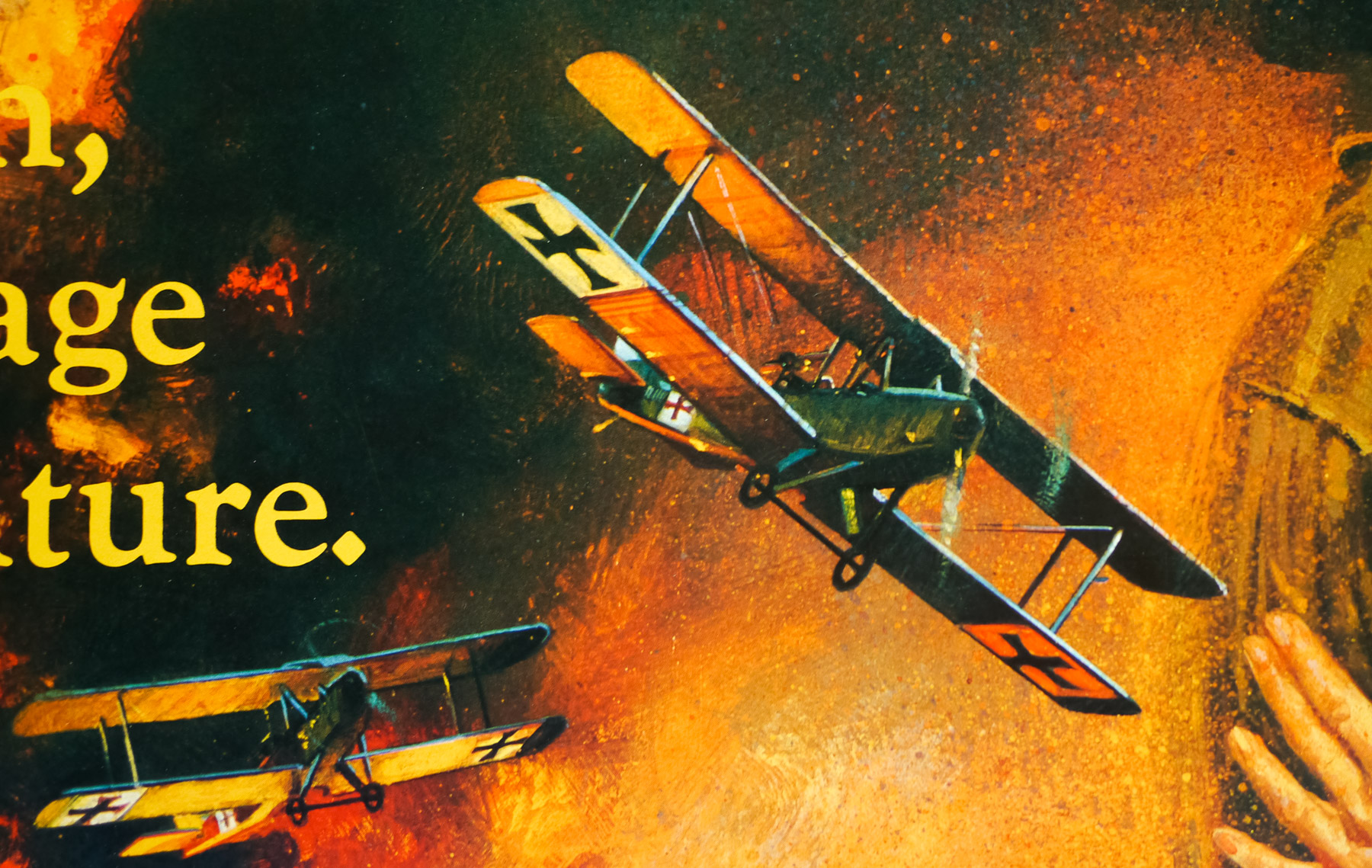
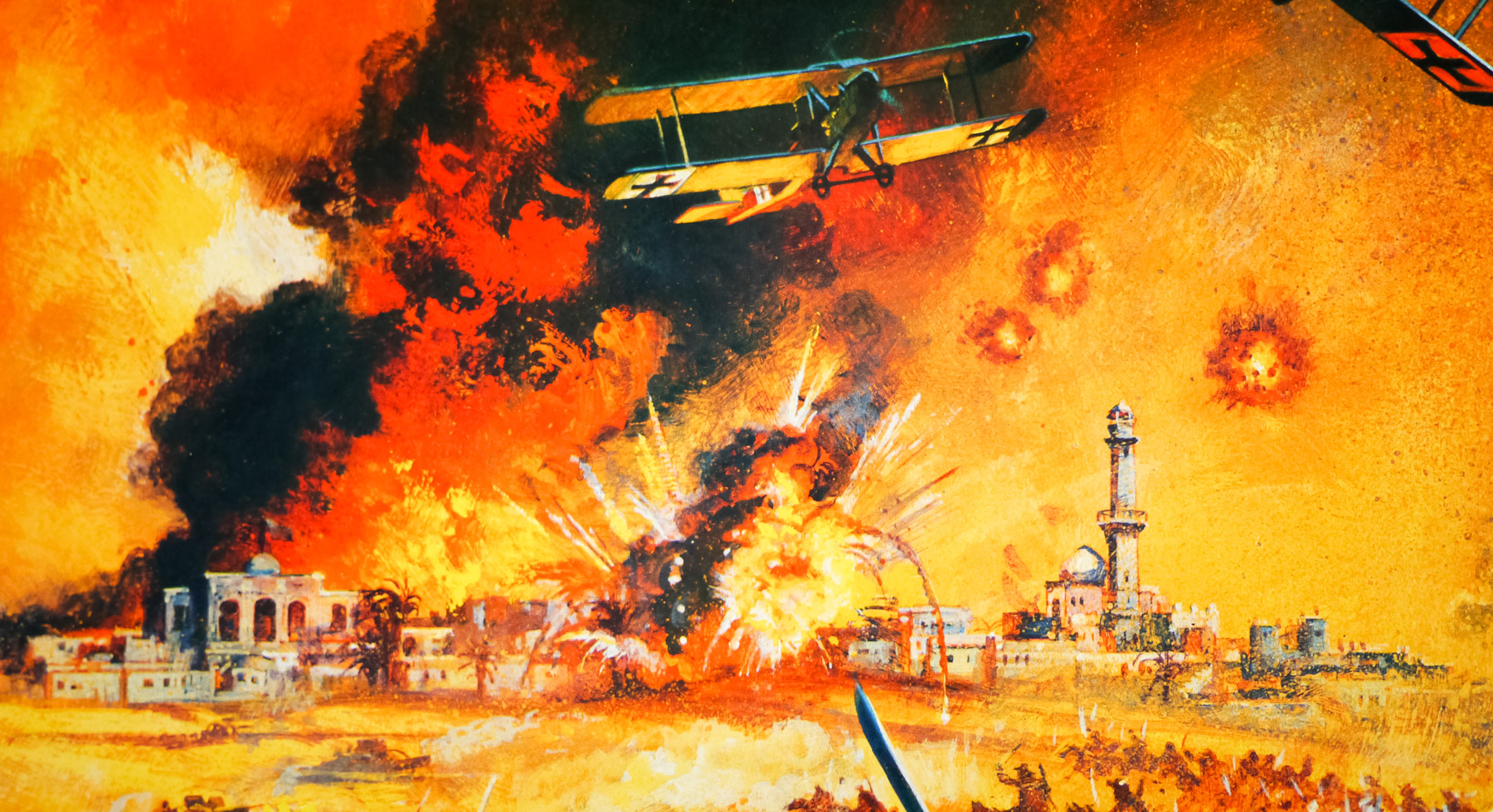
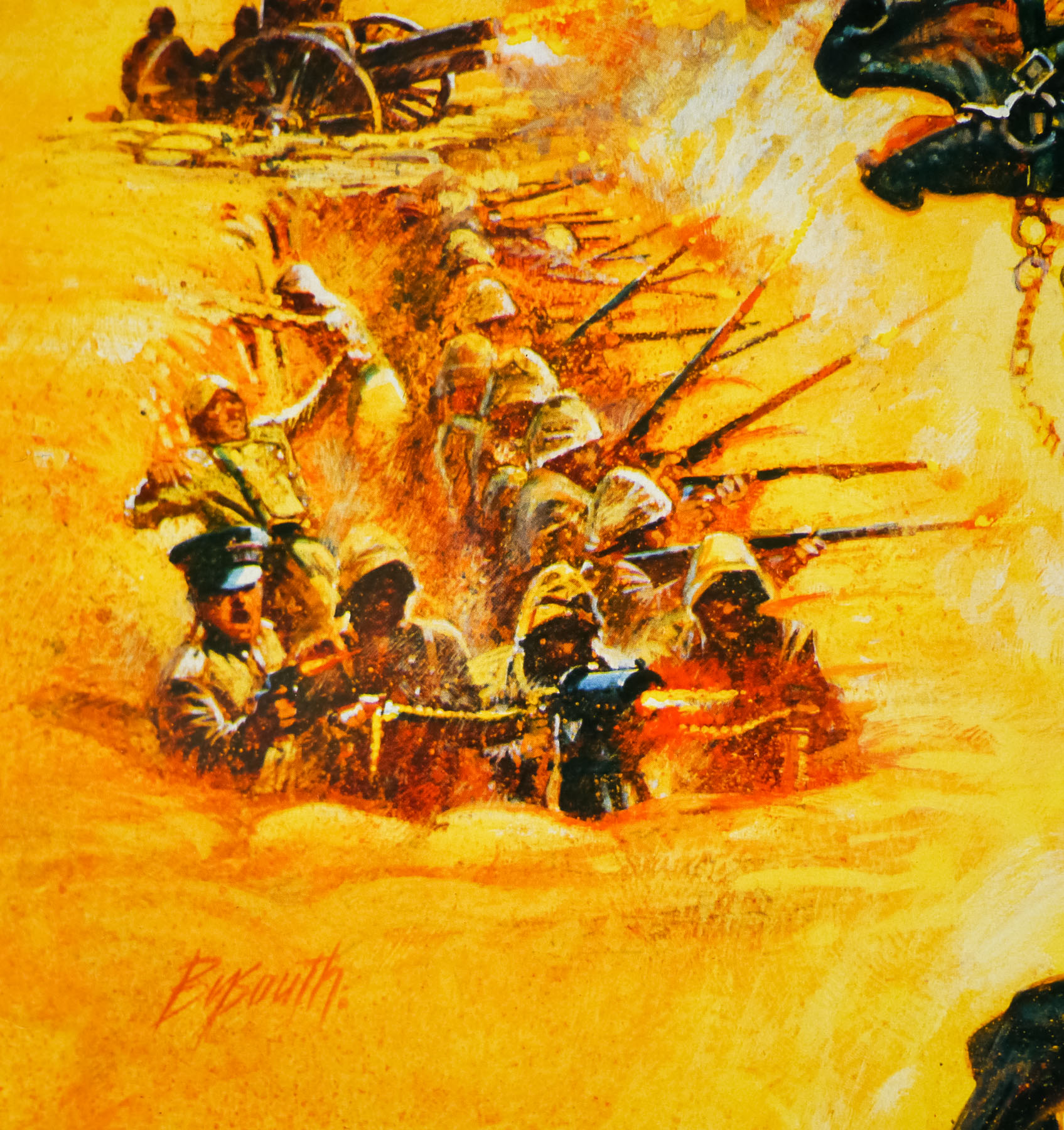
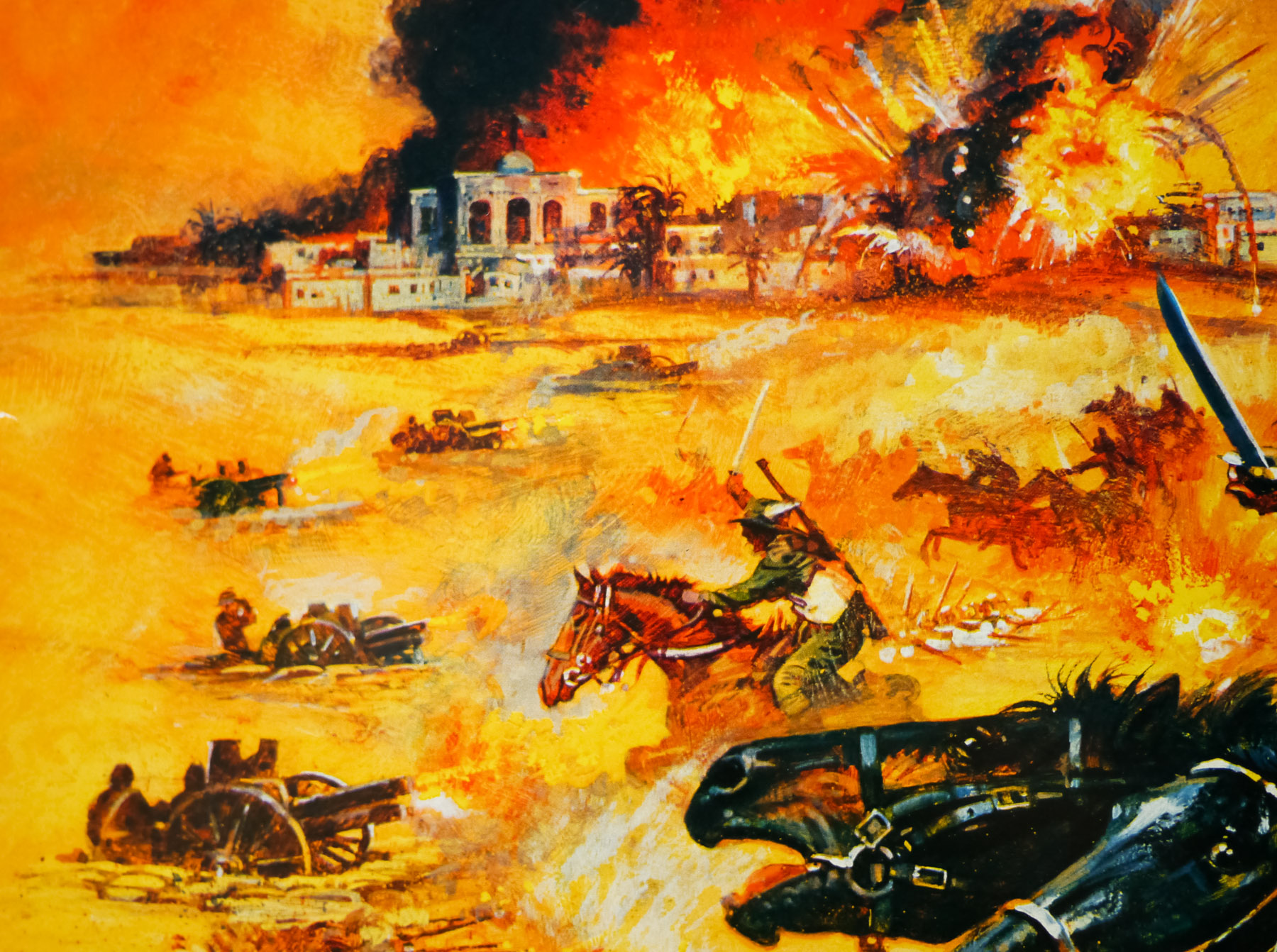
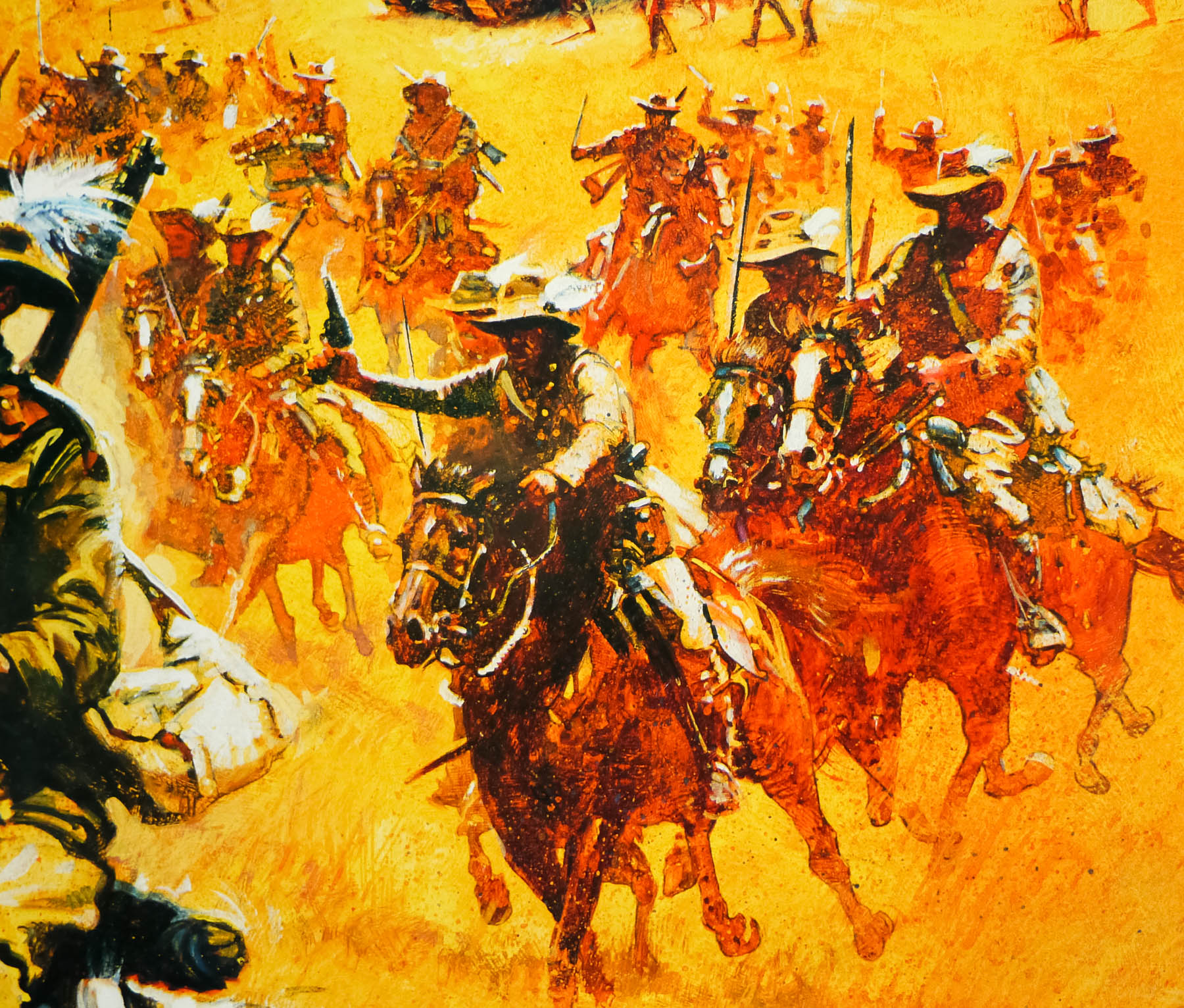
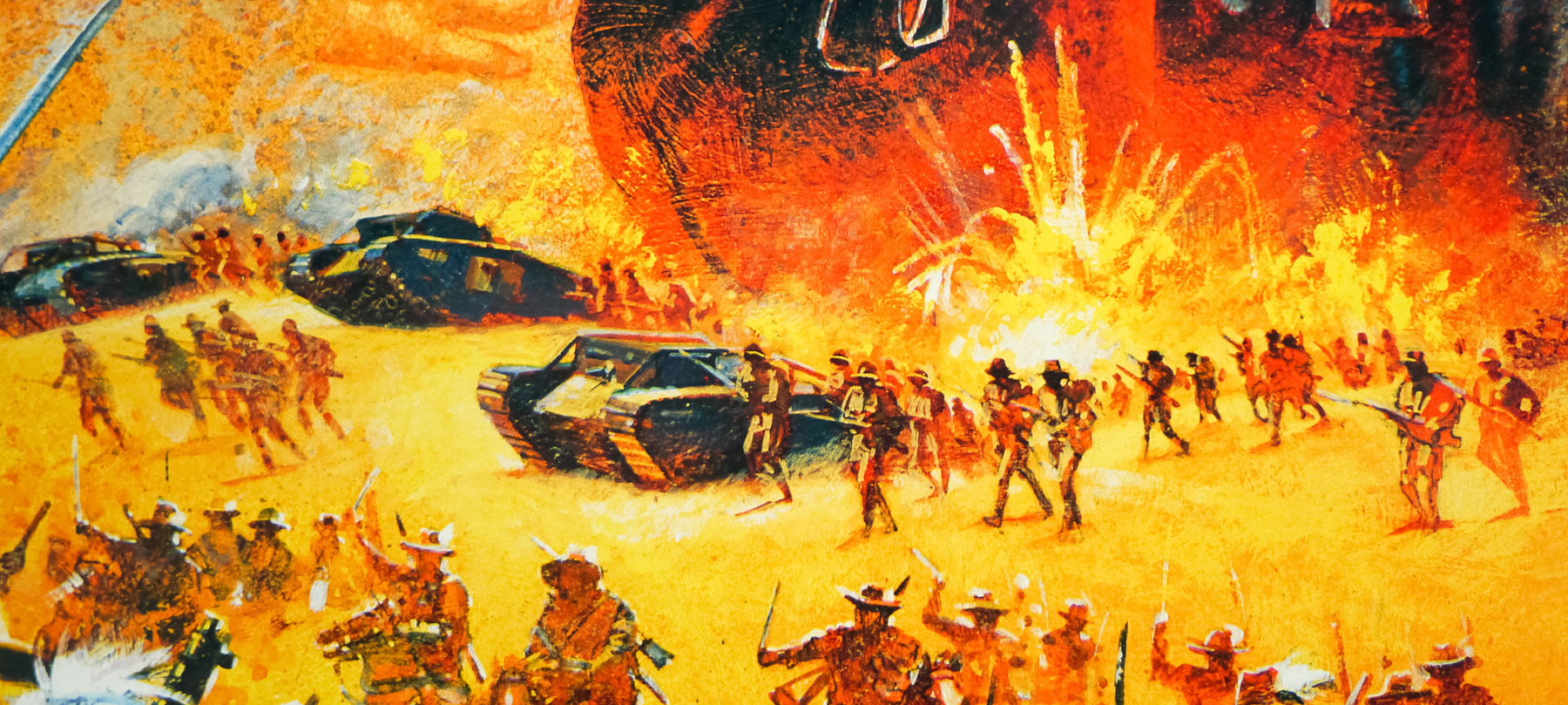
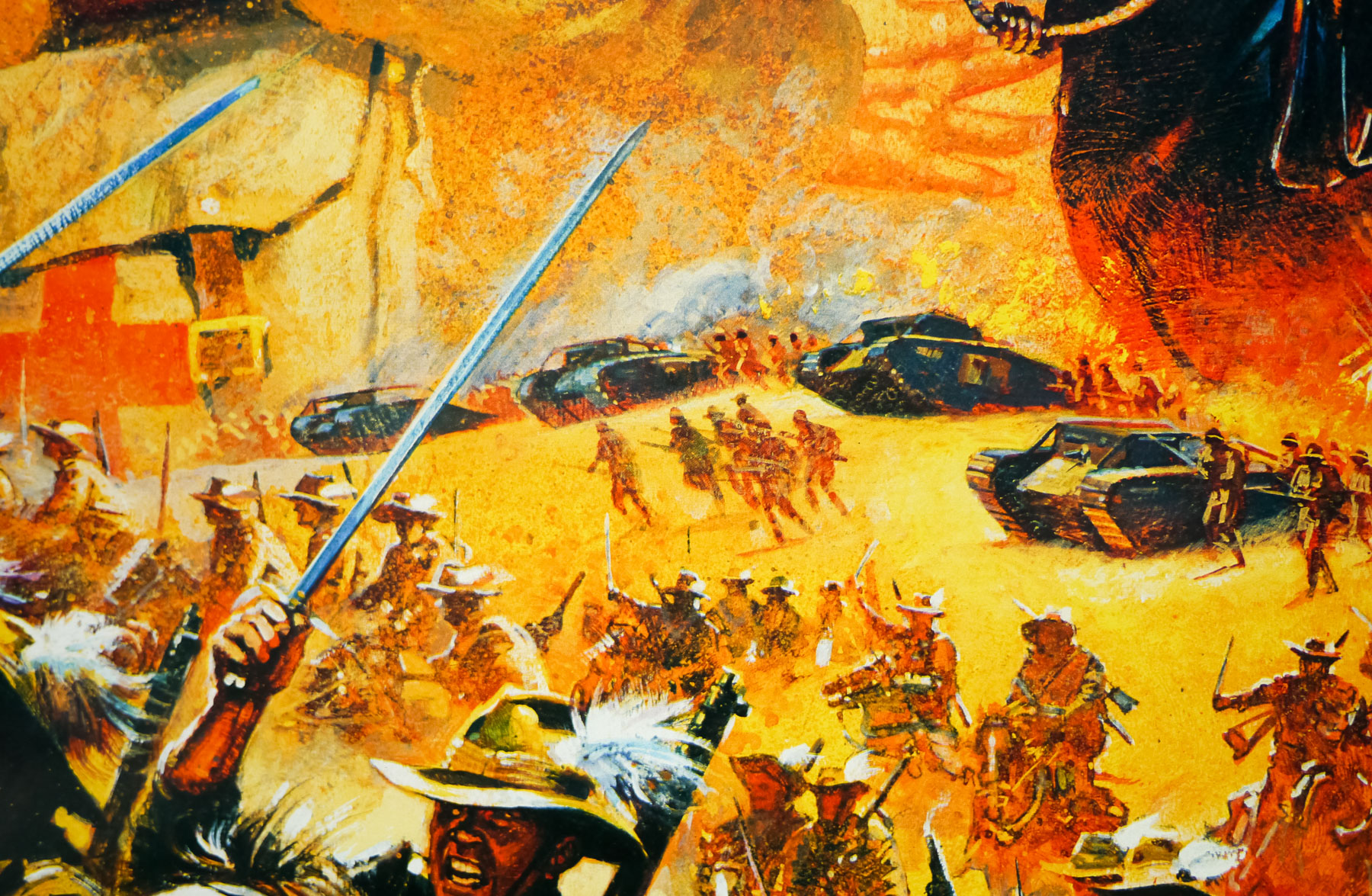
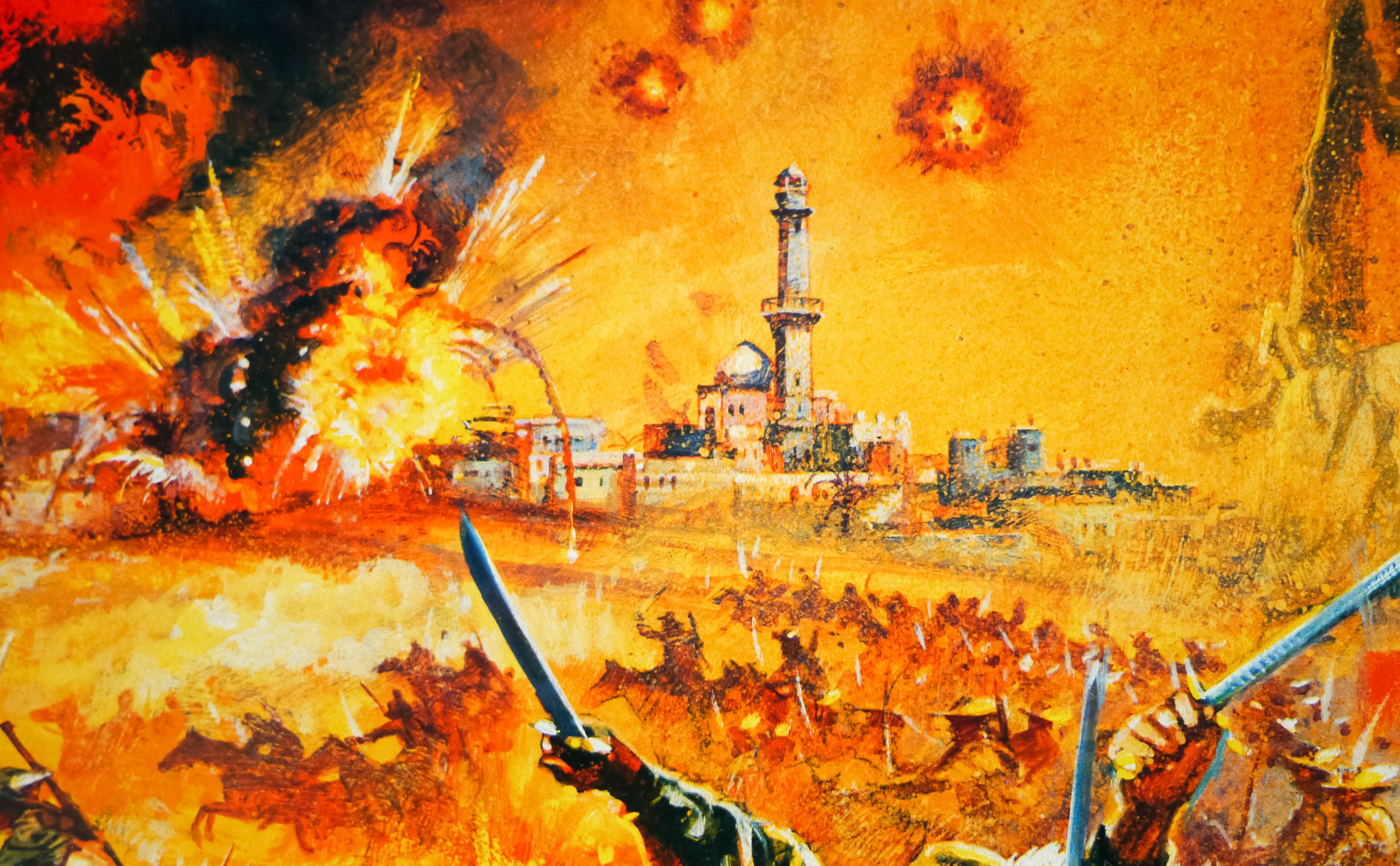
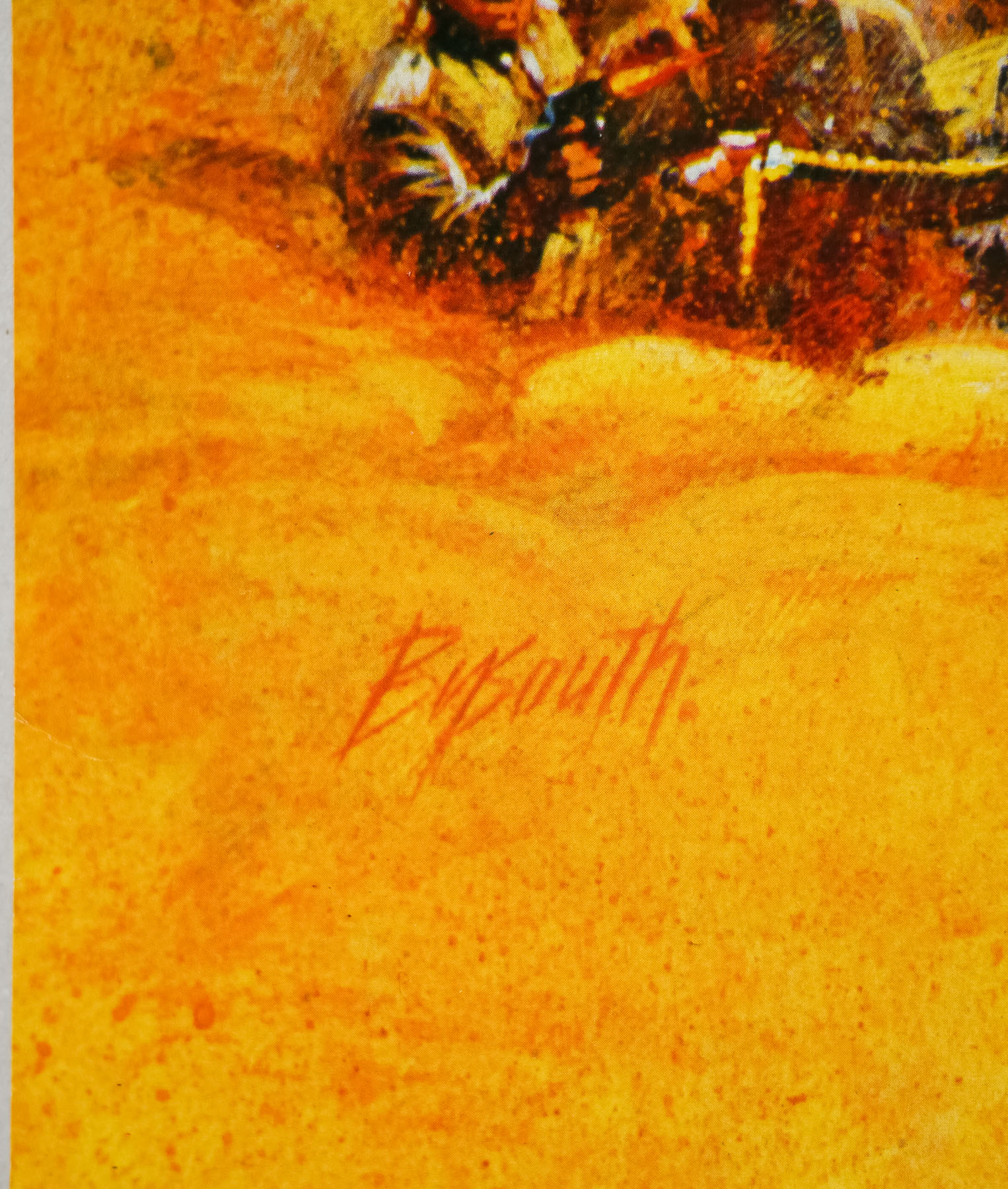
Typically detailed and action-packed artwork by the British artist Brian Bysouth features on this UK one sheet for the release of The Lighthorsemen. The film is an Australian production helmed by Simon Wincer, a director best known for films such as Free Willy and D.A.R.Y.L.. It tells the true story of the heroism of an Australian light horse unit in the first World War. Featuring largely unknown actors, the story leads up to a famous incident at the Battle of Beersheeba in Palestine, 1917.

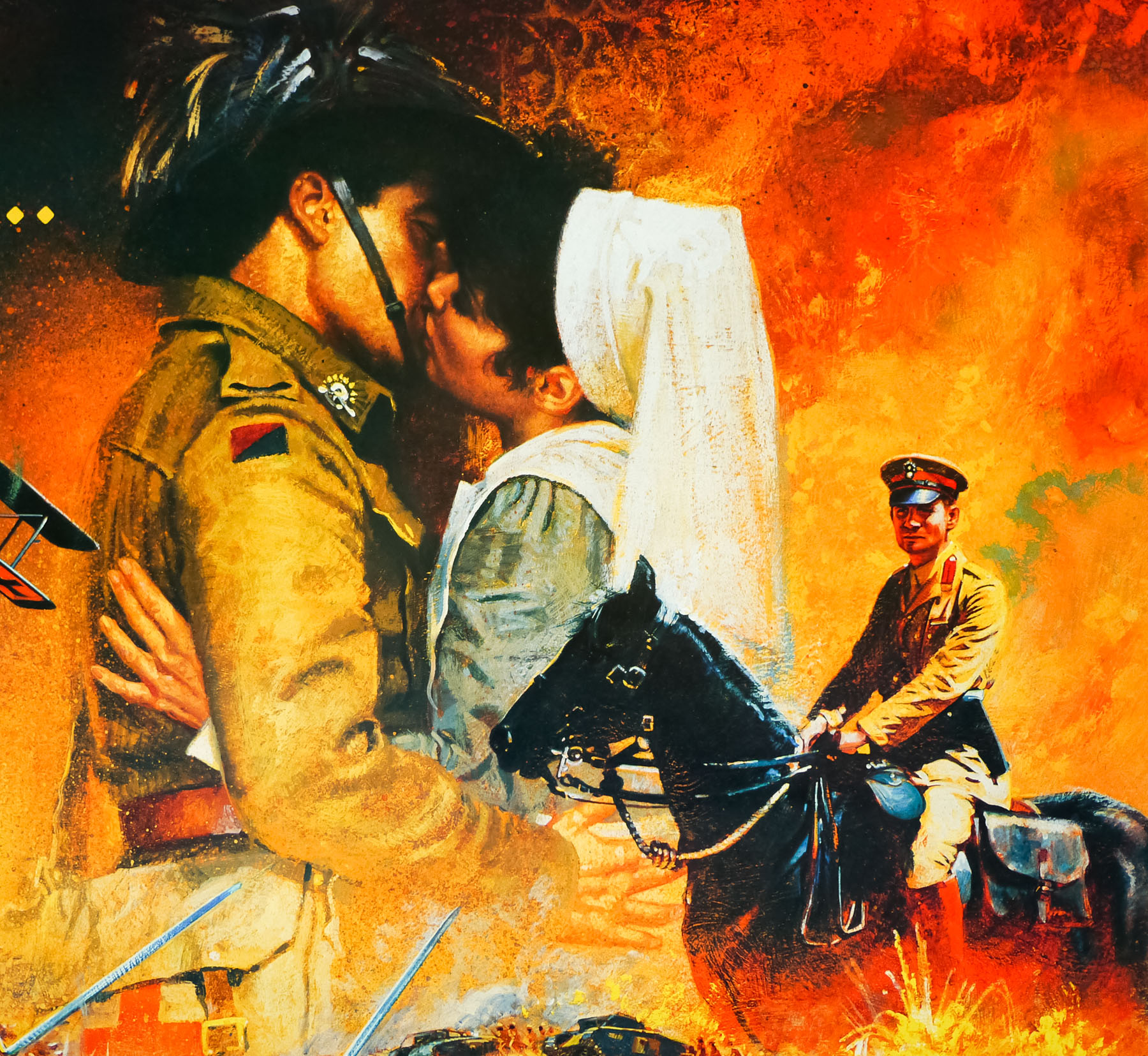
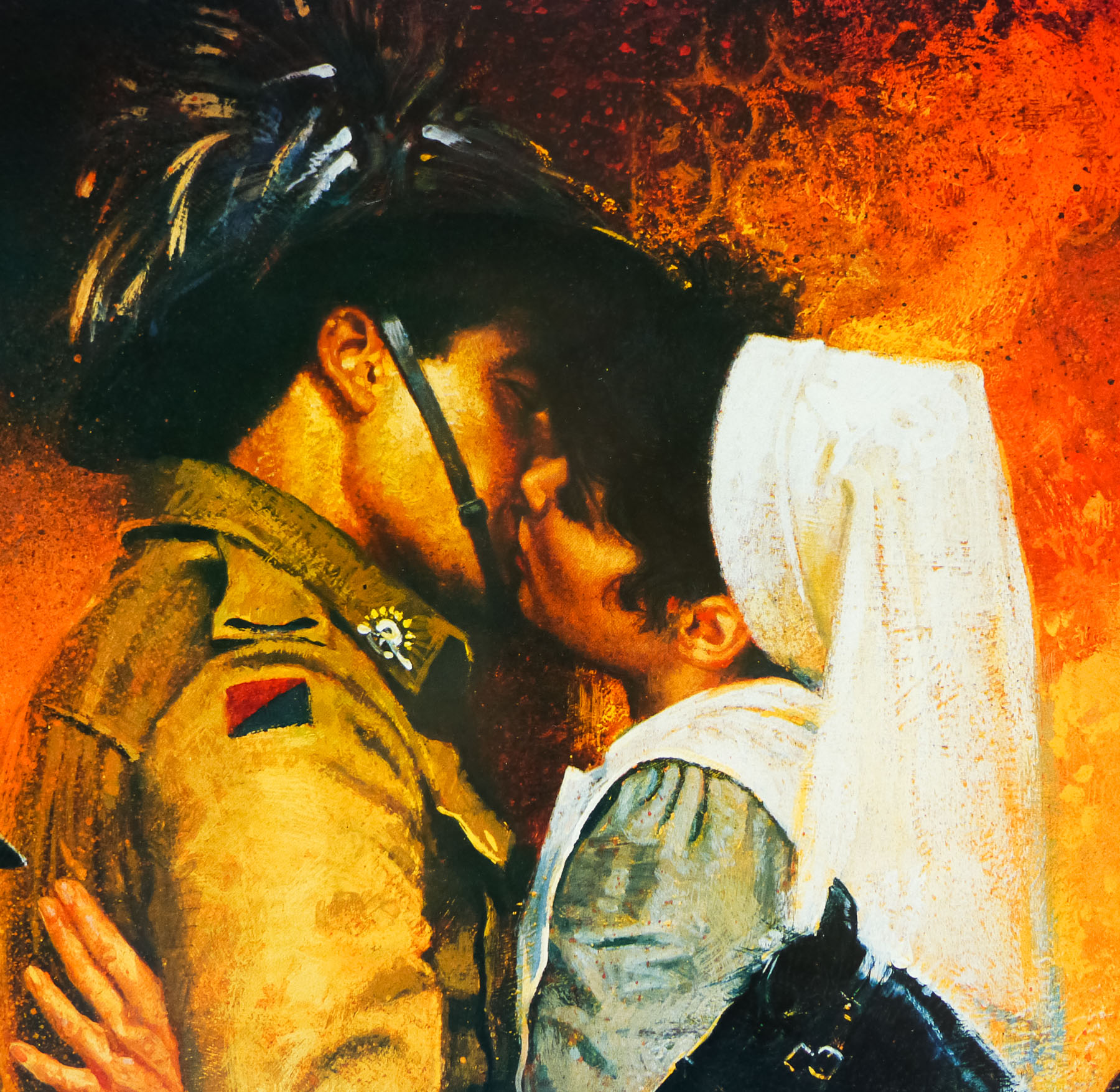
The plot focuses on a group of friends in the unit and in particular a soldier called Dave Mitchell (Peter Phelps) who proves himself in various skirmishes before being injured in a bi-plane attack. Whilst in hospital he meets and falls in love with an army nurse called Anne (Sigrid Thornton). The pair are featured in the top right of the artwork. The film also shows how the Australian and British army worked together to fool the Turks and Germans who were controlling towns in Palestine, including Gaza.

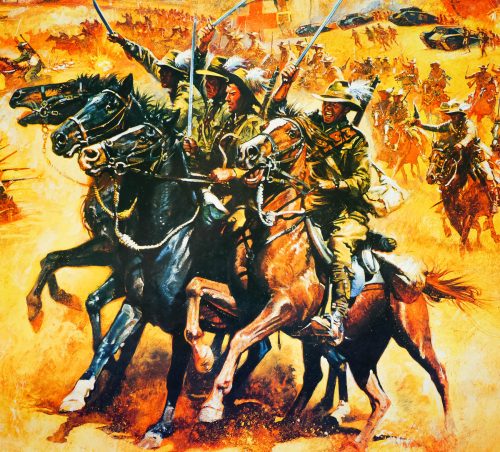
Using a secret scheme involving faked papers and personal letters, they managed to convince the opposition that an attack would take place on Gaza and not the strategically important settlement of Bersheeba. The film climaxes with an incredible charge by the Lighthorsemen as they run towards the Turkish cannons and guns. The mind boggles at the bravery of the real soldiers who faced down terrifying odds. The film was critically well-received and saw good returns at the box-office in Australia, in particular.

Brian Bysouth is one of my favourite poster artists and he was responsible for many classic posters from the 1960s to the 1980s, including the final painted poster for a James Bond film, The Living Daylights. In 2012 I was fortunate to meet and interview Brian for this site and the article can be read here.

The other posters I’ve collected by Brian can be seen by clicking here.

Note that there is a British quad for the film and it features the same artwork in the centre but is surrounded by photographs of the cast members.

Nightbreed / quad / UK

22.02.17

Poster Poster
Title
Nightbreed
AKA
Cabal (France, Italy)
Year of Film
1990
Director
Clive Barker
Starring
Craig Sheffer, Anne Bobby, David Cronenberg, Charles Haid, Hugh Quarshie, Hugh Ross, Doug Bradley, Catherine Chevalier, Malcolm Smith, Bob Sessions, Oliver Parker
Origin of Film
USA
Genre(s) of Film
Craig Sheffer, Anne Bobby, David Cronenberg, Charles Haid, Hugh Quarshie, Hugh Ross, Doug Bradley, Catherine Chevalier, Malcolm Smith, Bob Sessions, Oliver Parker,
Type of Poster
Quad
Style of Poster
--
Origin of Poster
UK
Year of Poster
1990
Designer
Unknown
Artist
--
Size (inches)
30 3/16" x 40 1/16"
SS or DS
SS
Tagline
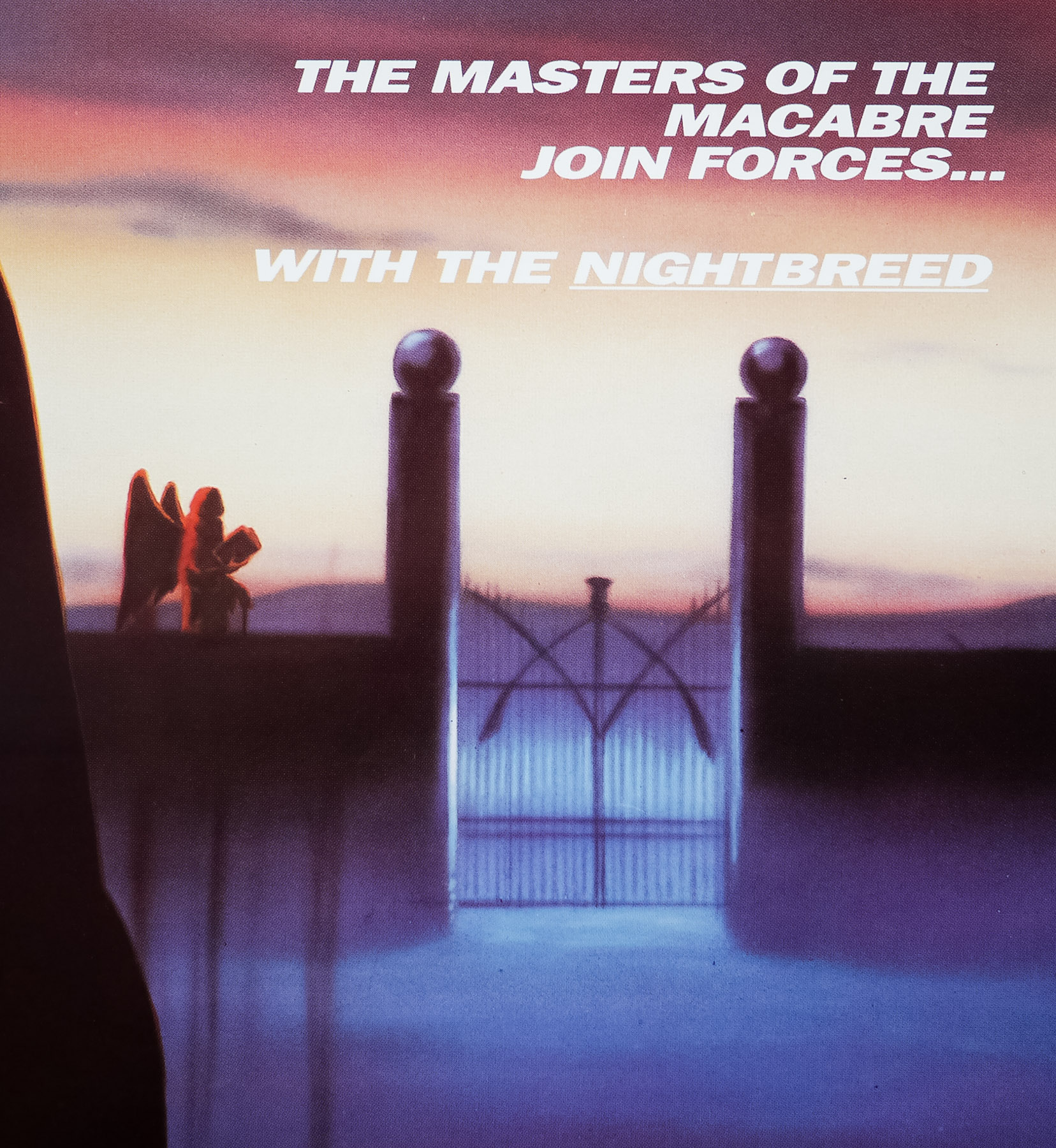
The masters of the macabre join forces... with the Nightbreed

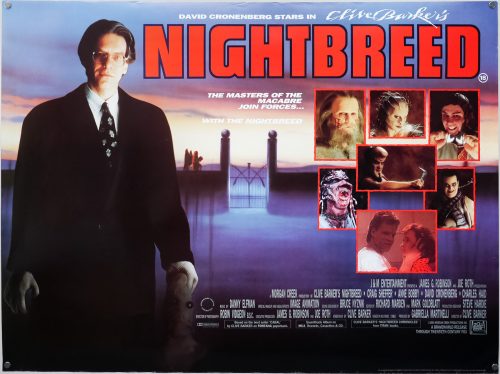
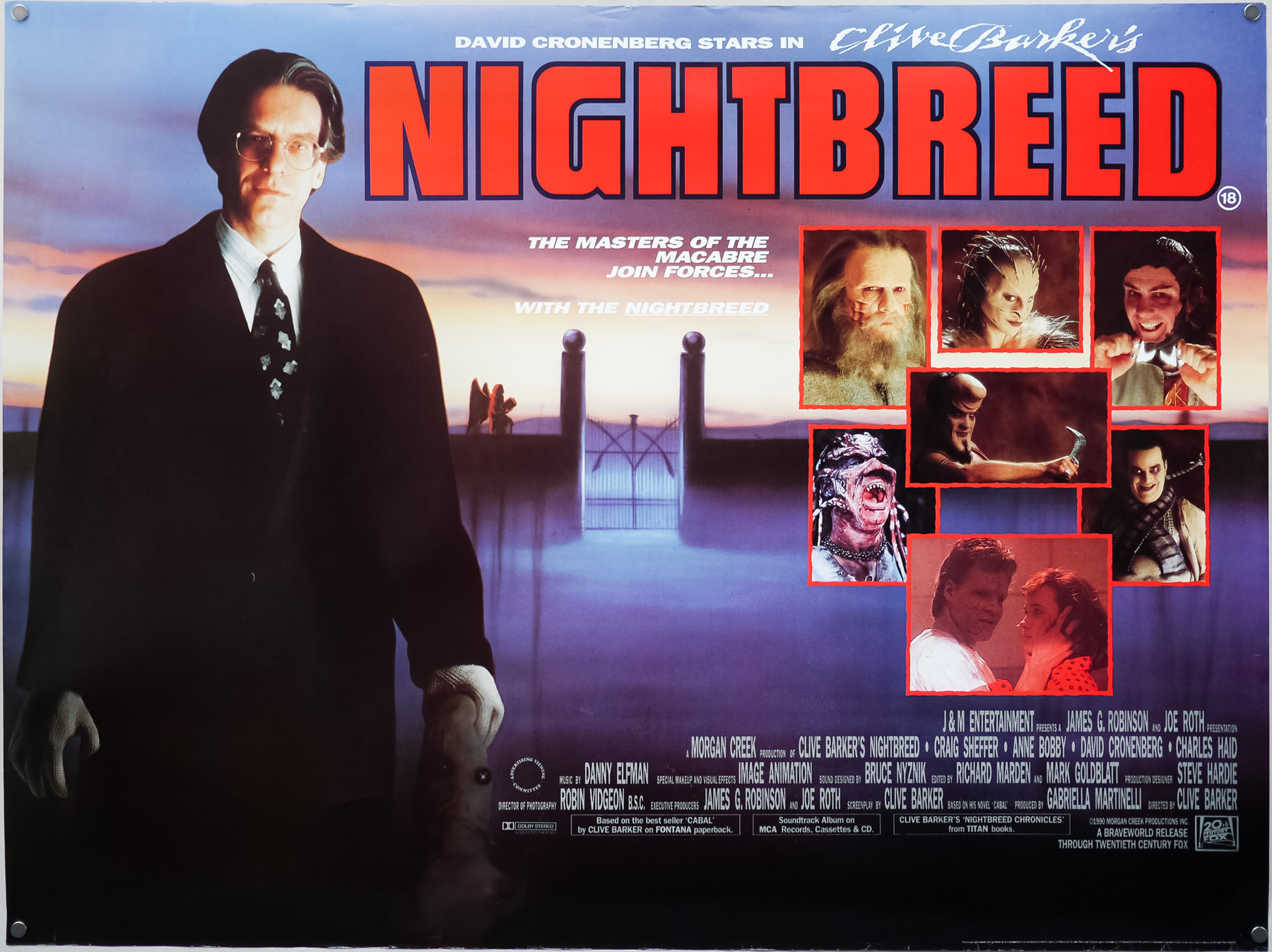
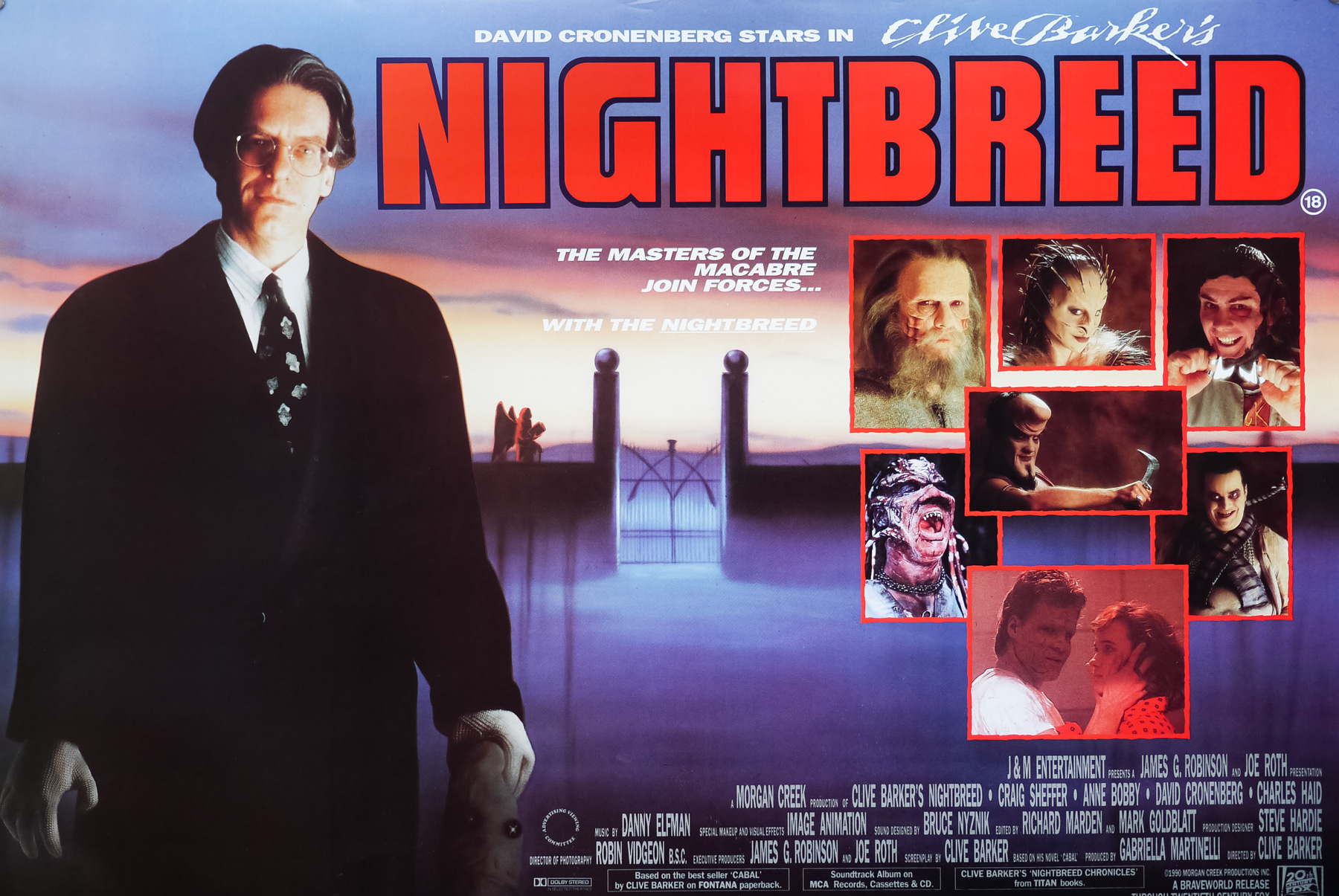
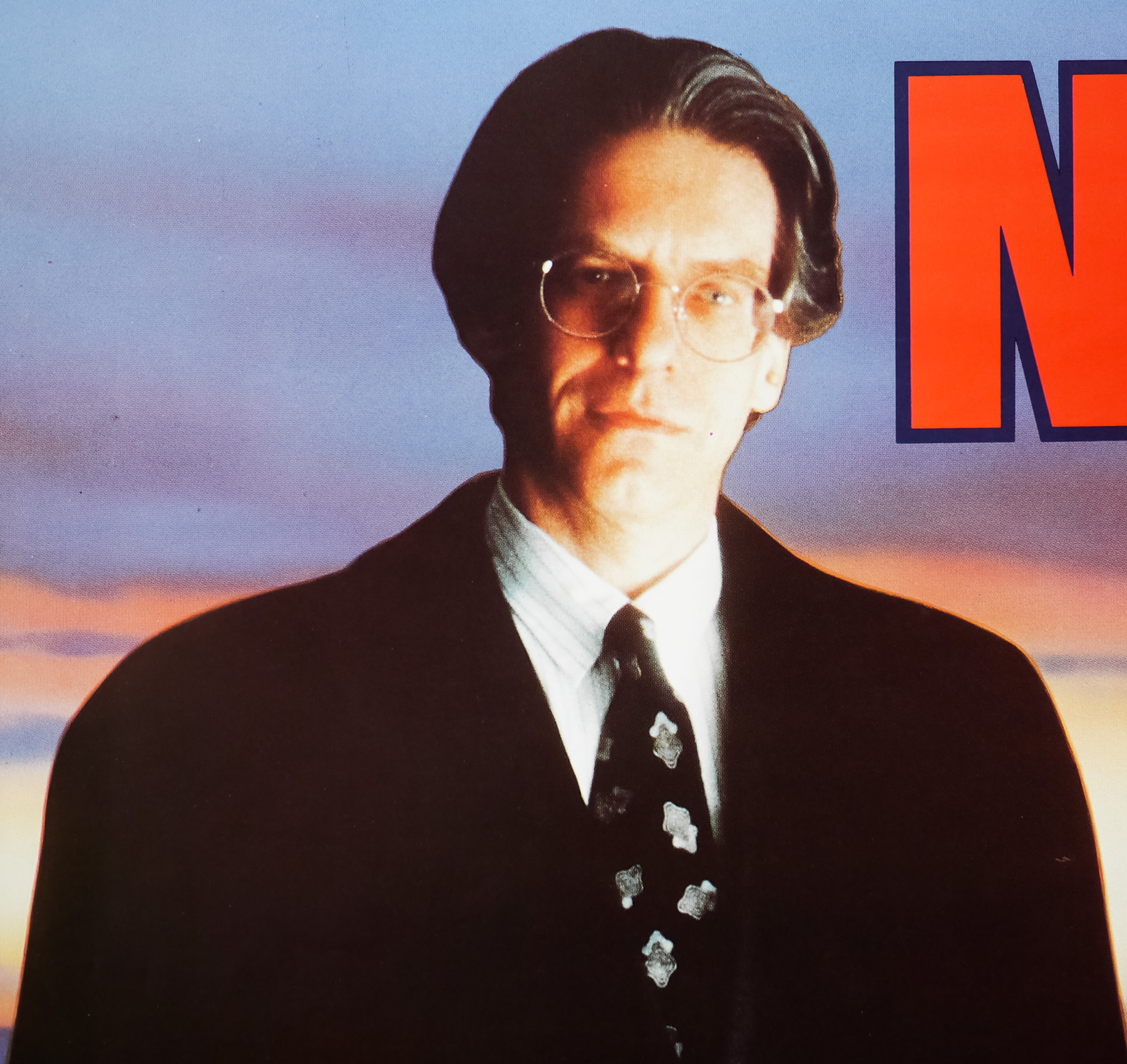
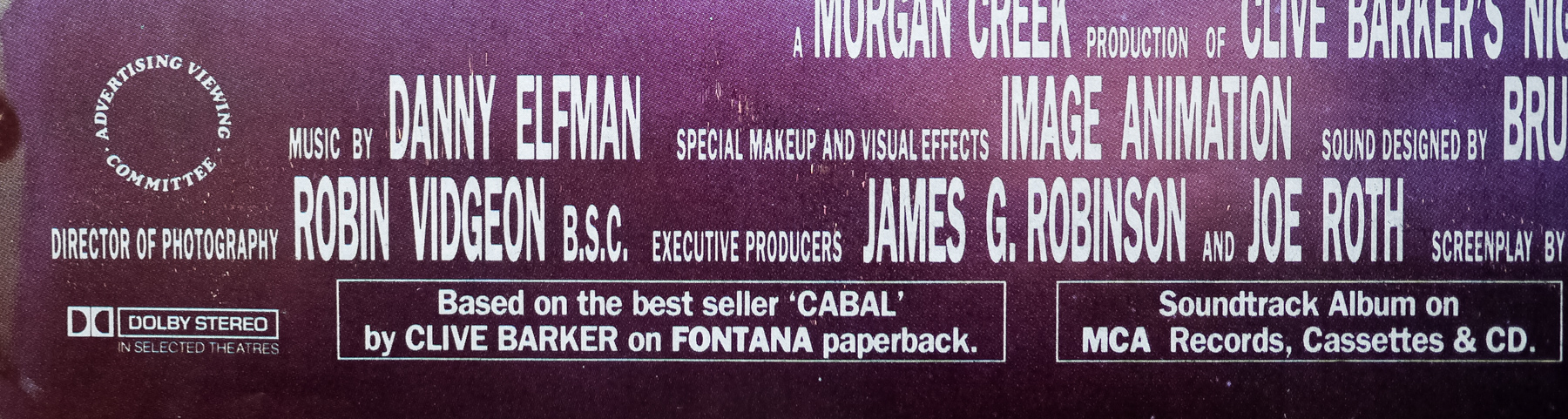
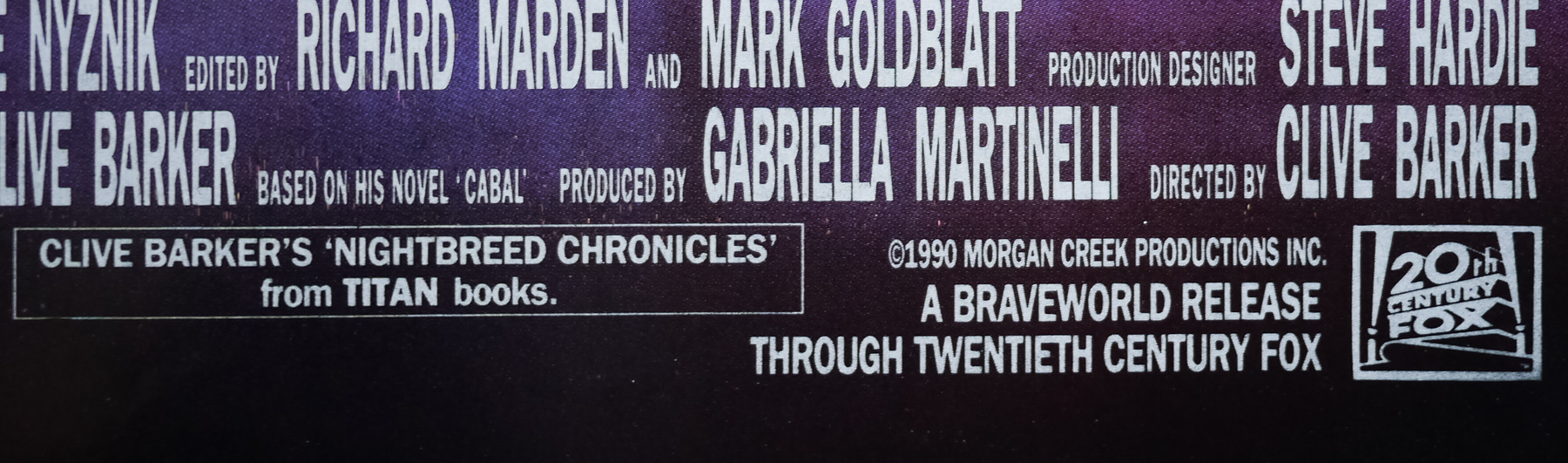
This is the UK quad for the original release of ace British writer/director Clive Barker‘s 1990 film Nightbreed. Based on Barker’s own 1988 novel Cabal, which was the sixth and final entry in his celebrated series ‘Books of Blood‘, the film was notoriously a flop upon its original release. The director has been candid in the years following its release and maintains that studio interference and a lack of understanding of how to market the film ultimately hampered its release. Having scored a hit with Hellraiser (1986) on a budget of just under $1m, 20th Century Fox gave Barker over 10 times that for Nightbreed, but with it they took away the freedom he had on the previous film. Ultimately the studio made extensive cuts to the film just before release without Barker’s input and marketed it as a slasher film, which was far from accurate.

The story focuses on a man named Aaron Boone (Craig Sheffer) who has been having vivid dreams about a city called Midian where monsters are accepted and live peacefully with each other. We learn that his girlfriend Lori (Anne Bobby) has encouraged him to see a psychologist named Dr. Phillip Decker (the cult Canadian director David Cronenberg). Decker tells Boone that he’s been suffering from a type of psychosis, is responsible for multiple murders and that he should turn himself into the police. In reality, it’s Decker who is a serial killer and he’s attempting to use Boone as a shill to cover his crimes. After being hit by a truck on his way home, Boone wakes in hospital where he meets a man named Narcisse who talks about accessing Midian before mutilating himself with a pair of blades. 

Boone follows Narcisse’s instructions and makes his way to an old cemetery in the middle of nowhere (the film is set in Canada). Once there he is confronted by a pair of monsters, Peloquin (Oliver Parker) and Kinski (Nicholas Vince), who block his request to enter Midian. Peloquin attempts to eat Boone, biting his shoulder before the latter breaks free and escapes the cemetery. Outside he is confronted by Decker and a squad of police officers and when Decker falsely shouts that Boone has a gun, he is gunned down by the squad. After Lori visits the morgue to identify Boone’s body, the bite given by Peloquin causes him to reanimate. He returns to Midian where he meets a whole host of monsters who call the city home. This time he is accepted into the city after being touched by the blood of their deity Baphomet. Meanwhile, Lori wants to understand why Boone traveled to Midian. She is eventually allowed into the city and discovers that it is a refuge for monsters after centuries of them being hunted to near extinction by humans. Unfortunately Decker has tracked her down and he plans to destroy the city and the monsters within.

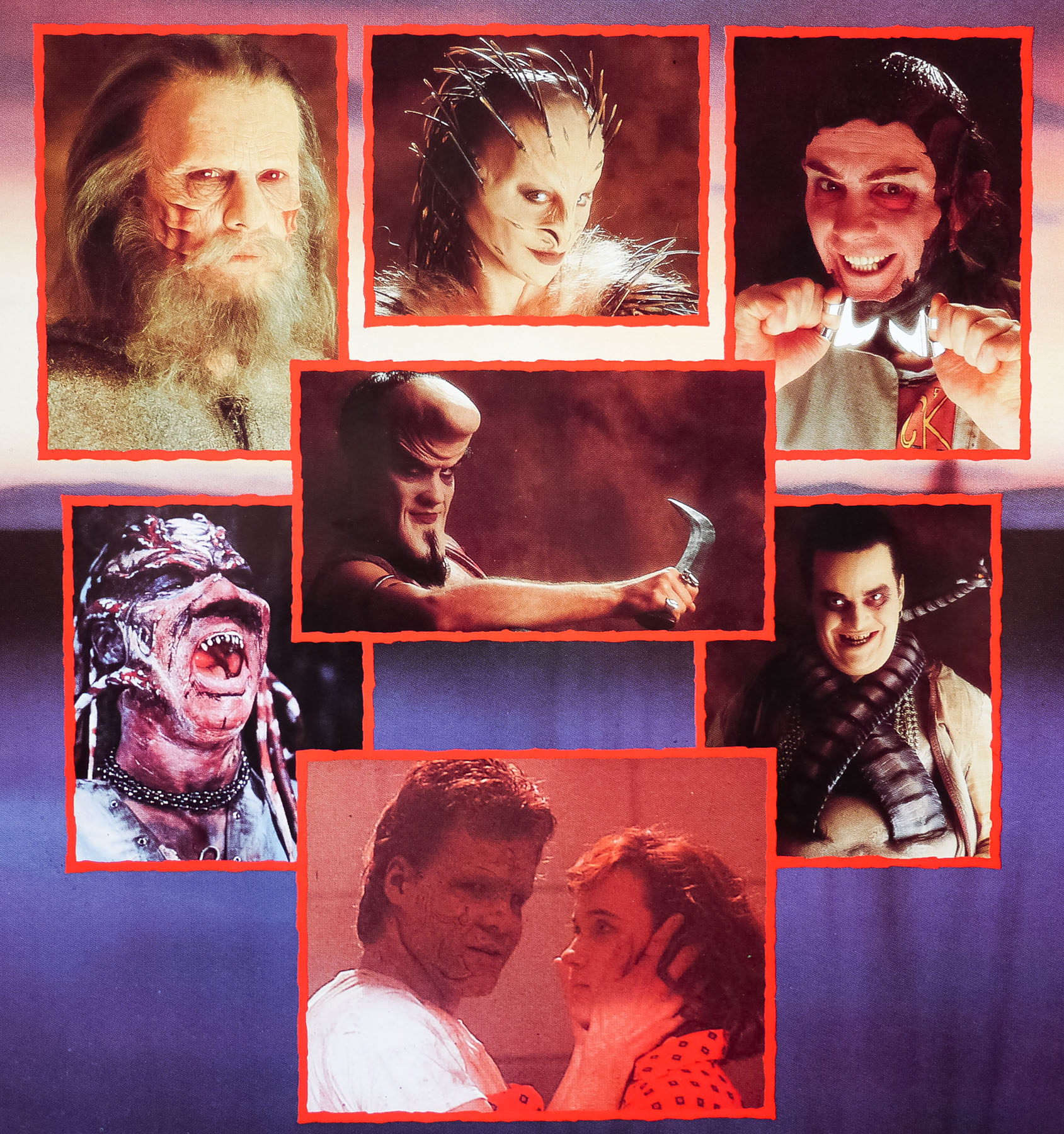
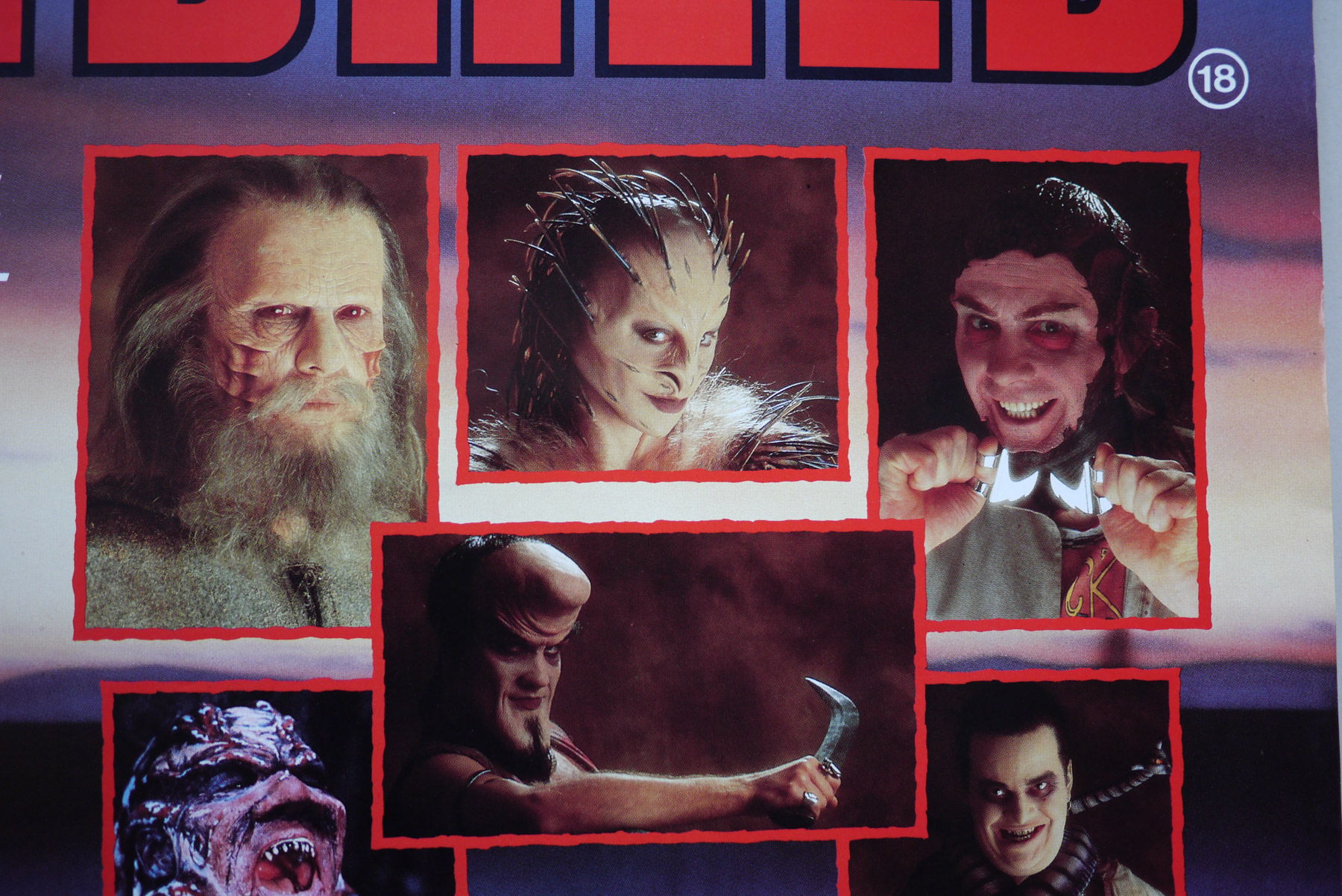
One of the things that the studio struggled with is that the monsters are ultimately depicted as being the ‘good guys’ and this was obviously something of a departure from standard horror film tropes. The film has incredible production design and make-up effects, particularly the look of the various monsters in Midian. Despite critical and commercial failure in 1990, Nightbreed quickly garnered a cult following and for many years fans had been calling for the release of the longer cut that Barker had promised existed. An unofficial ‘Cabal cut’ was compiled using VHS-quality material a few years ago but in 2015 the original film elements were found and a special director’s cut released by the American video label Scream Factory, much to the delight of horror fans around the world.

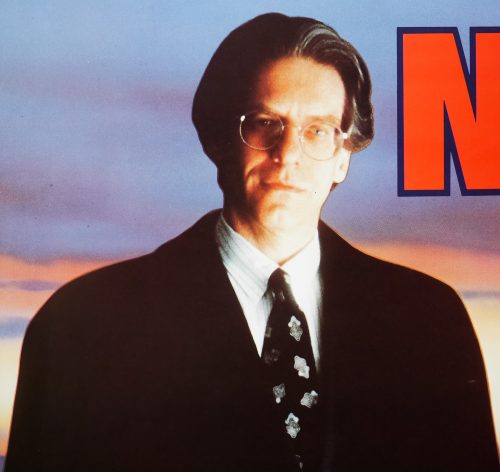
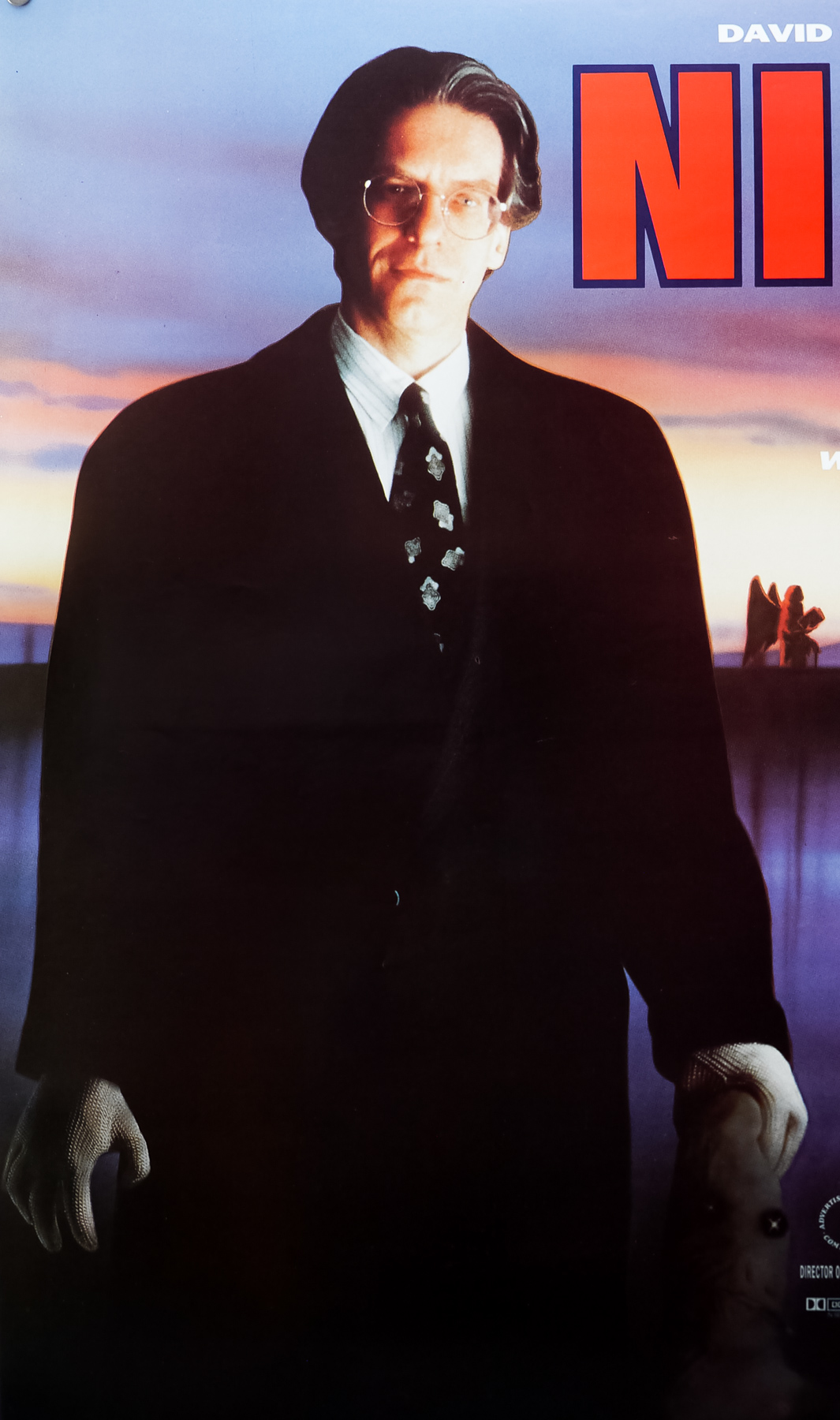
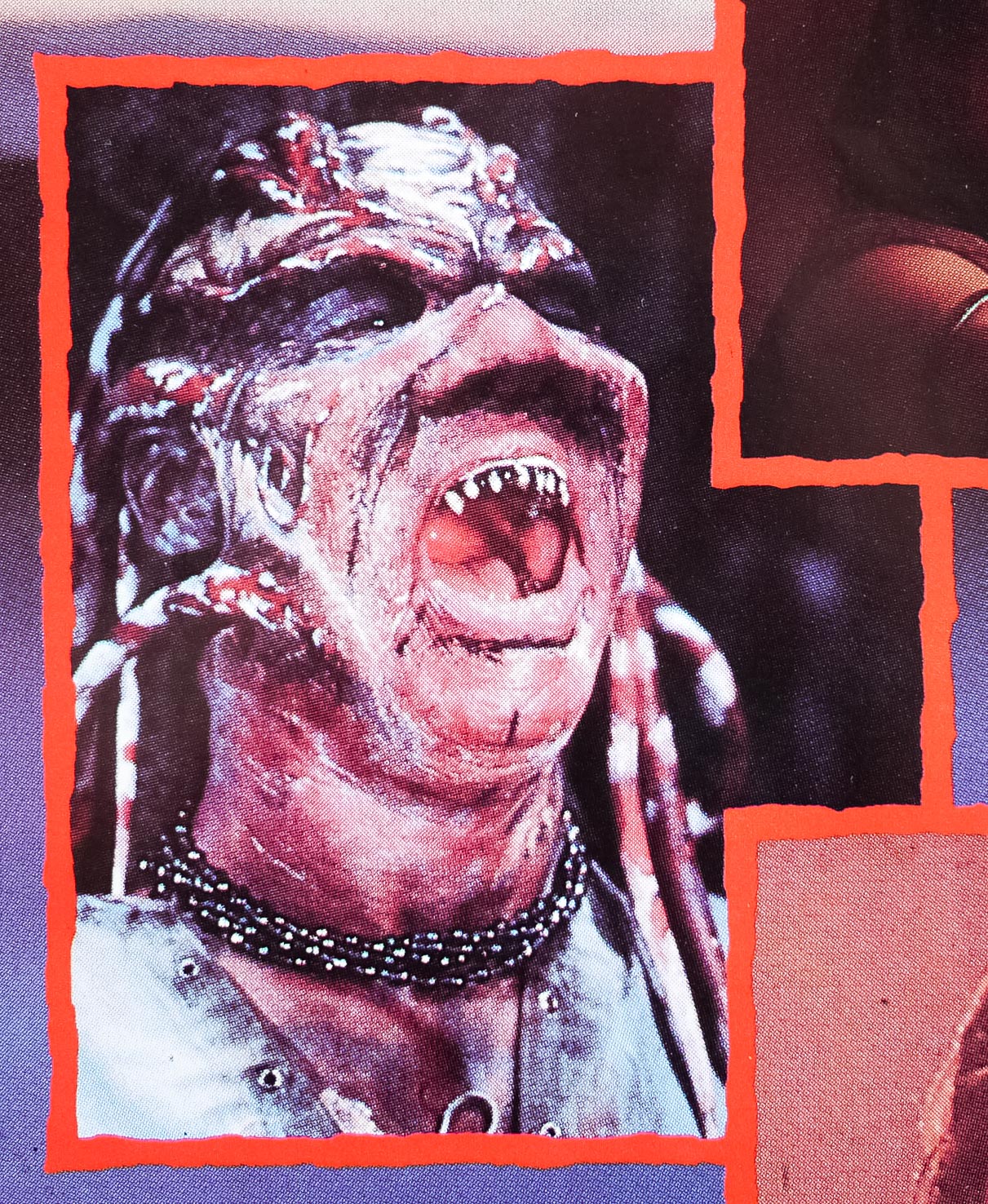
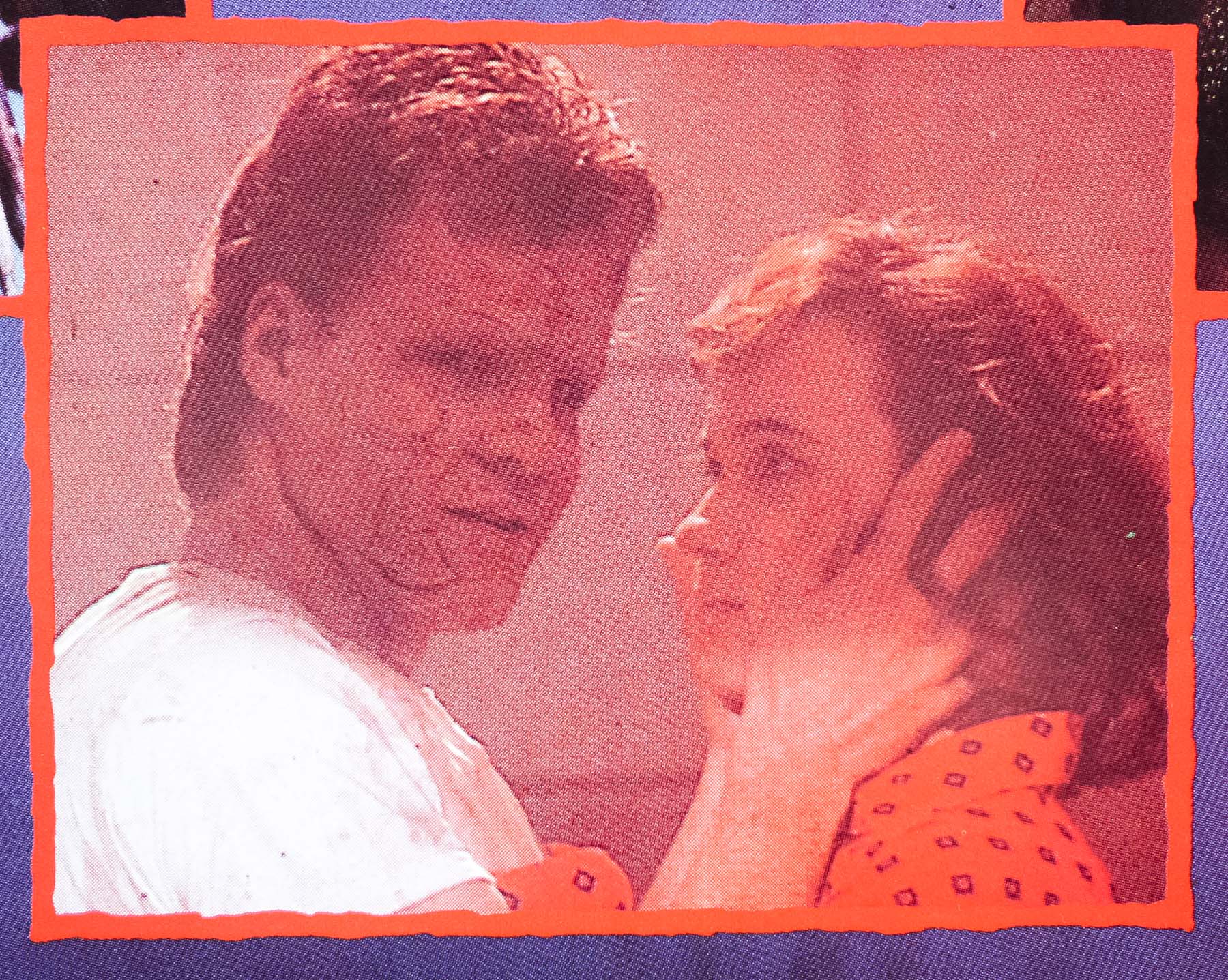
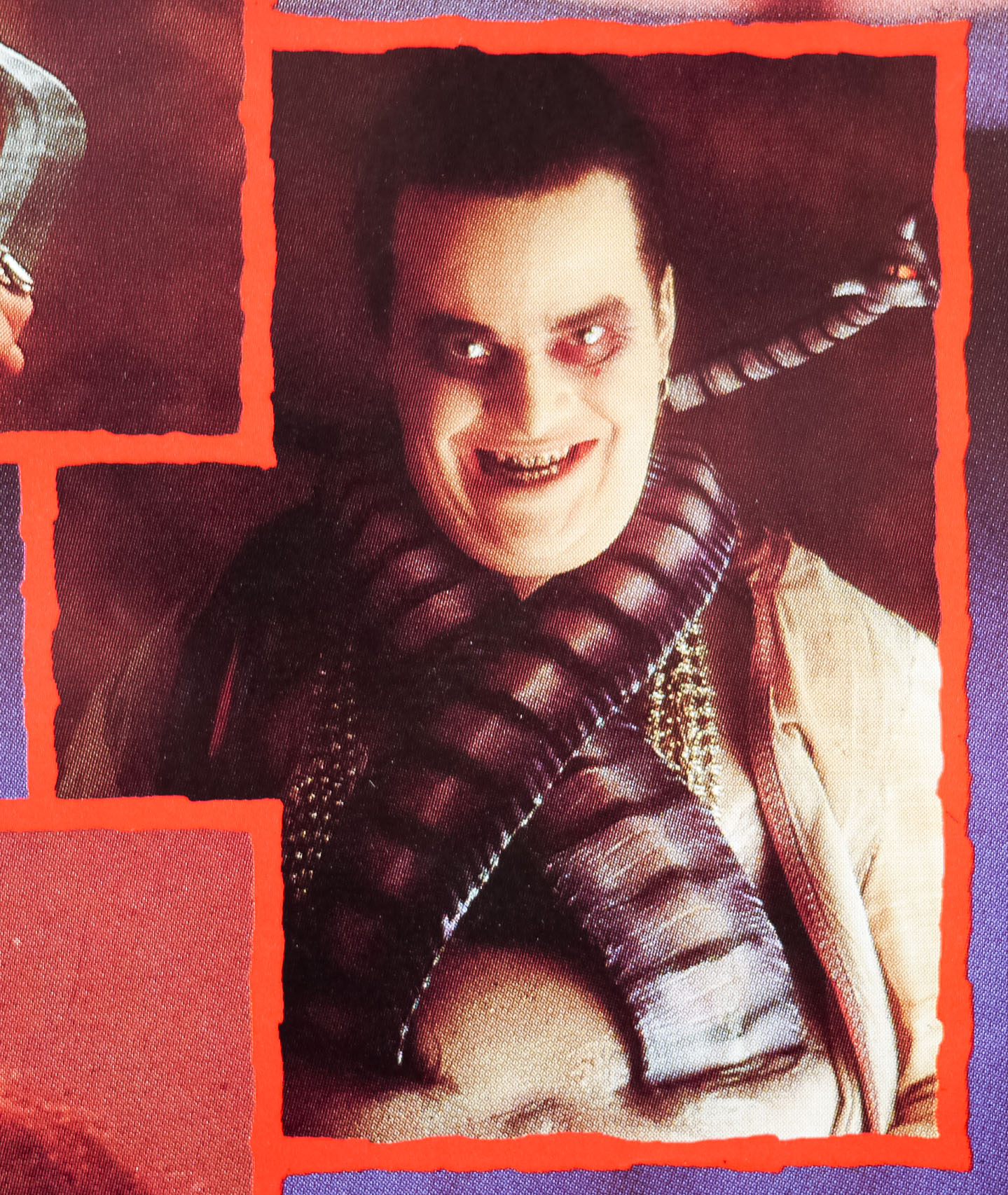
This British quad differs greatly from the disappointing American one sheet and includes several photographs of the Nightbreed and is dominated by an image of David Cronenberg. The minor spoiler (for those that were yet to view the film) that he is the masked killer obviously didn’t bother the distributors! The tagline also makes a deal of the fact that Cronenberg and Barker were working together, perhaps understandably.

Escape From New York / press kit / UK

27.03.17

Poster Poster
Title
Escape From New York
AKA
New York 1997 ( France / Japan - English title) | John Carpenter's Die Klapper-Schlange [Rattlesnake] (Germany)
Year of Film
1981
Director
John Carpenter
Starring
Kurt Russell, Lee Van Cleef, Ernest Borgnine, Donald Pleasence, Isaac Hayes, Harry Dean Stanton, Adrienne Barbeau, Season Hubley, Tom Atkins
Origin of Film
USA
Genre(s) of Film
Kurt Russell, Lee Van Cleef, Ernest Borgnine, Donald Pleasence, Isaac Hayes, Harry Dean Stanton, Adrienne Barbeau, Season Hubley, Tom Atkins,
Type of Poster
Press kit
Style of Poster
--
Origin of Poster
UK
Year of Poster
1981
Designer
Unknown
Artist
--
Size (inches)
8" x 11"
SS or DS
--
Tagline
--

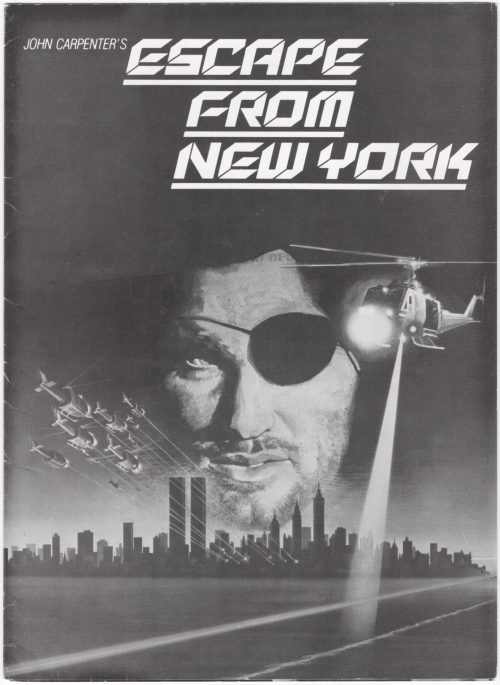
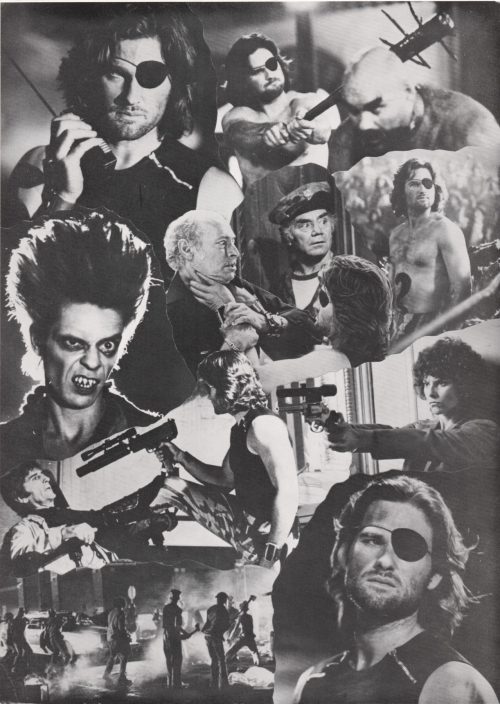
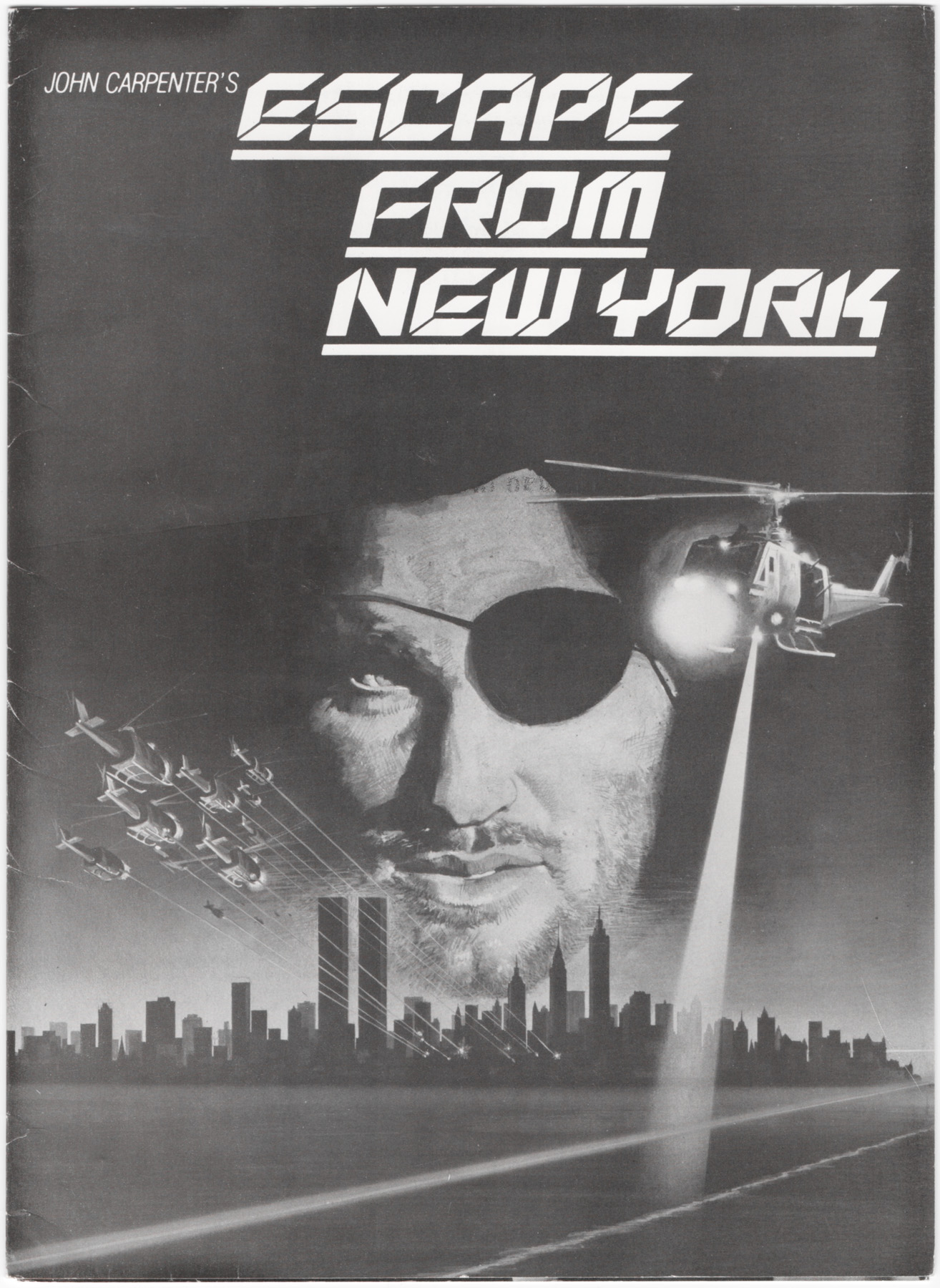
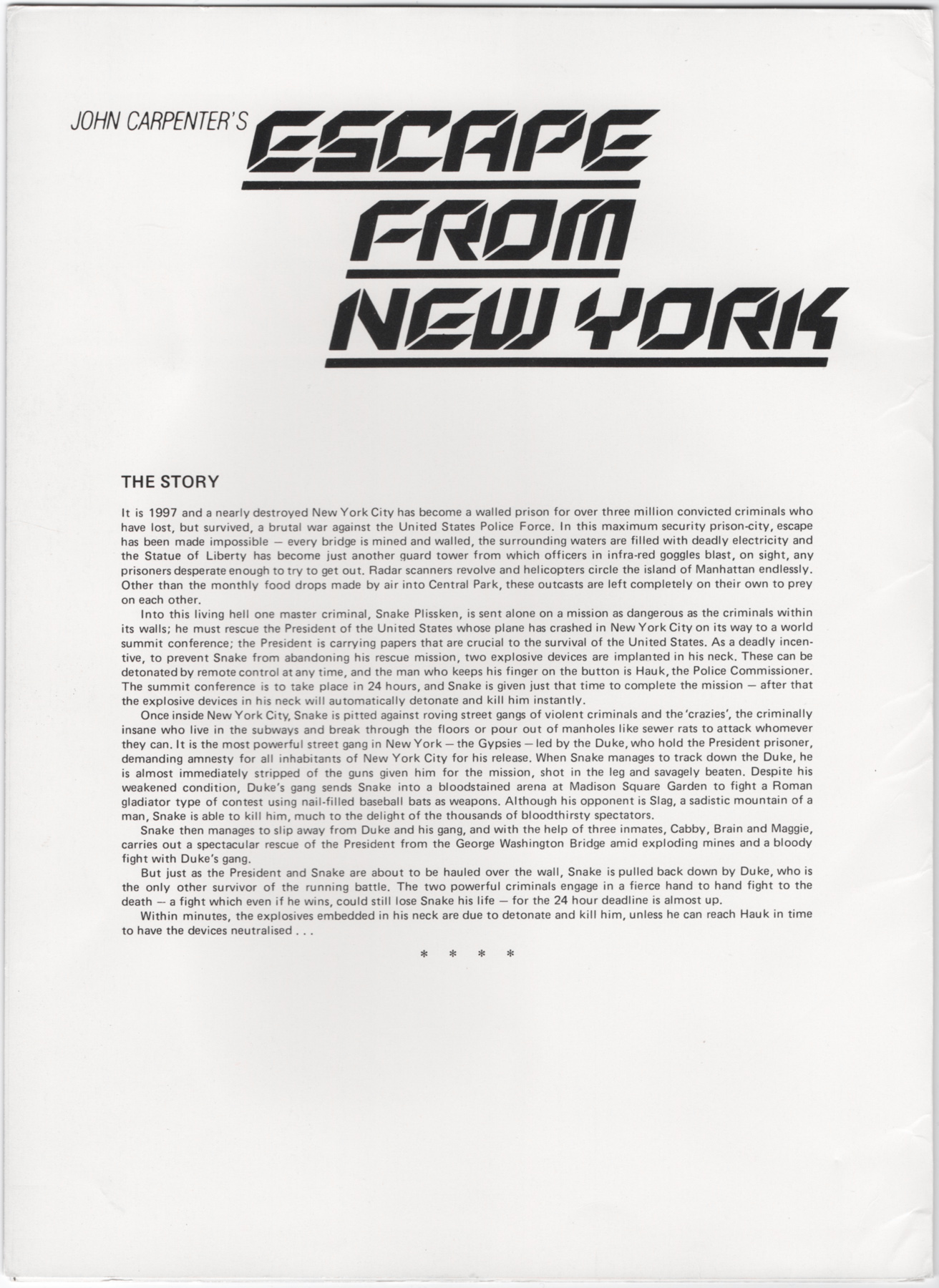
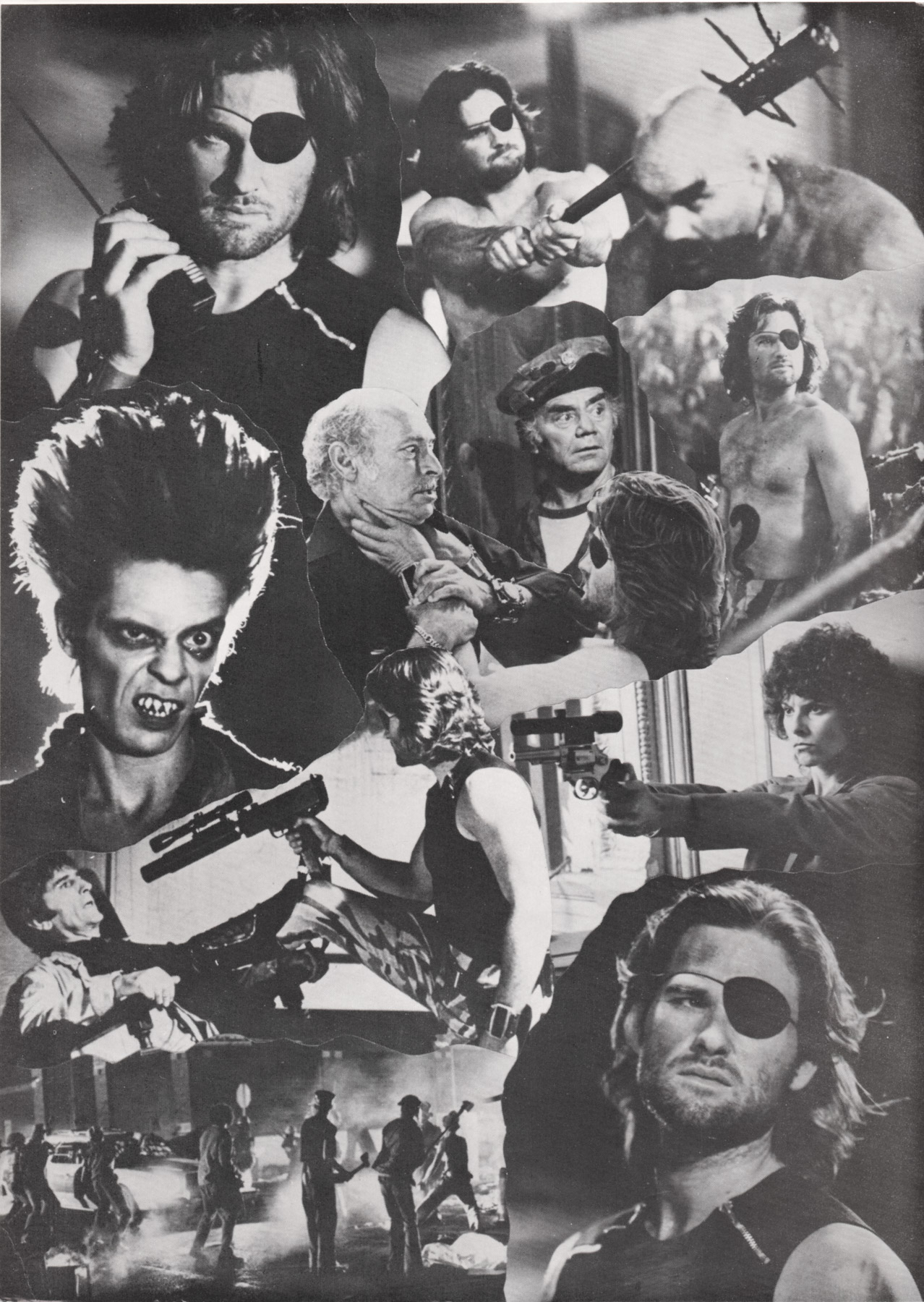
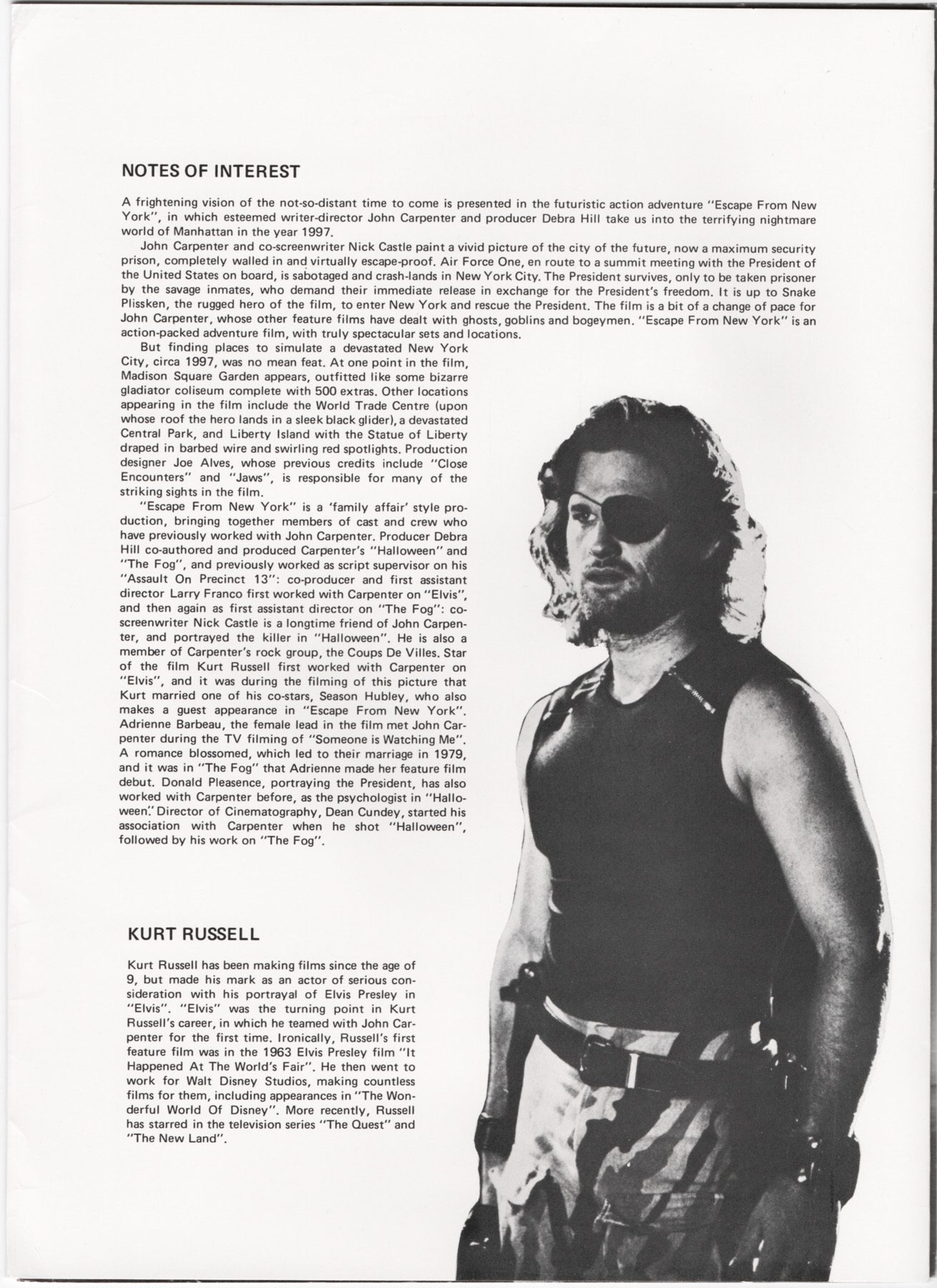
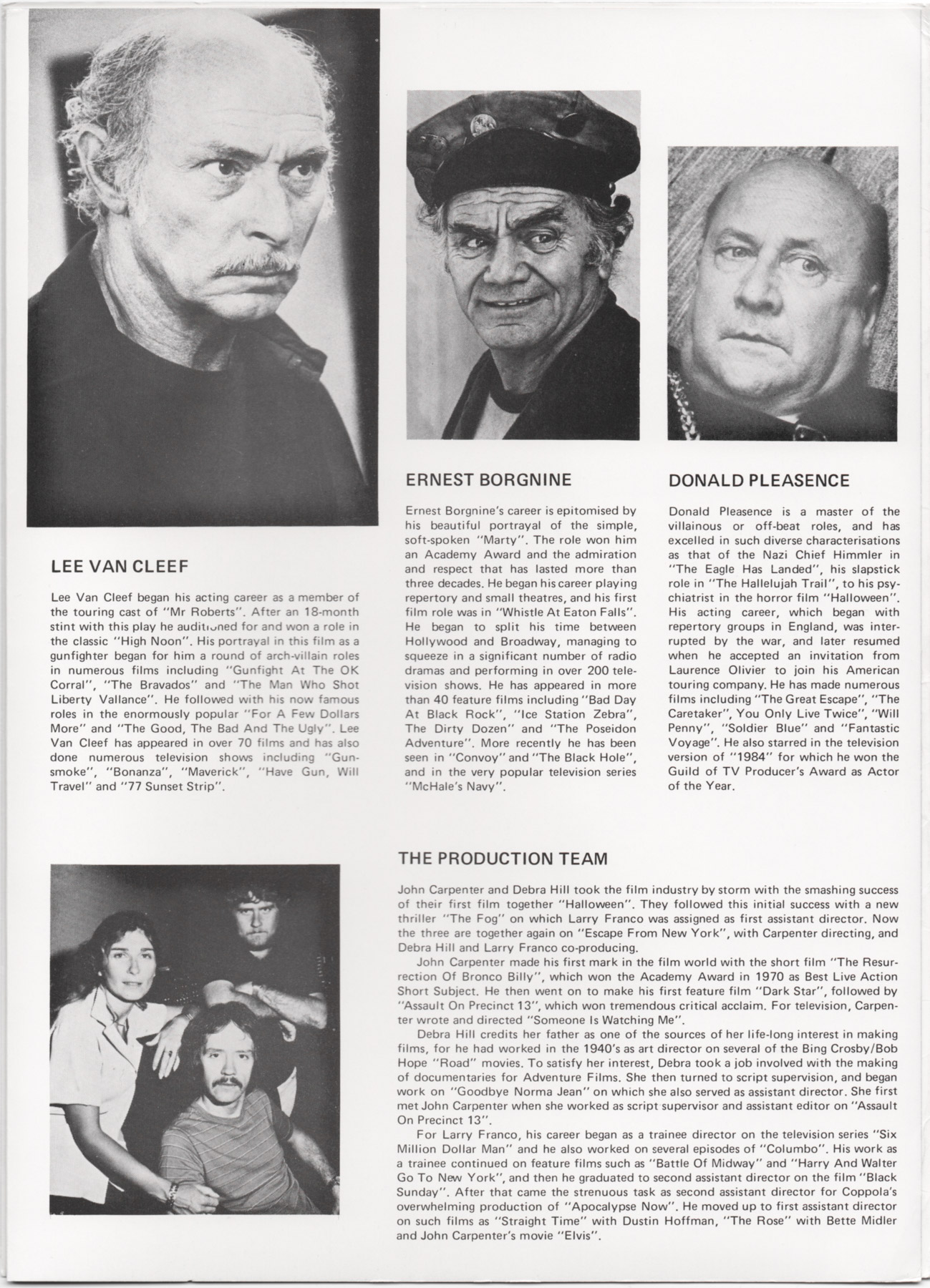
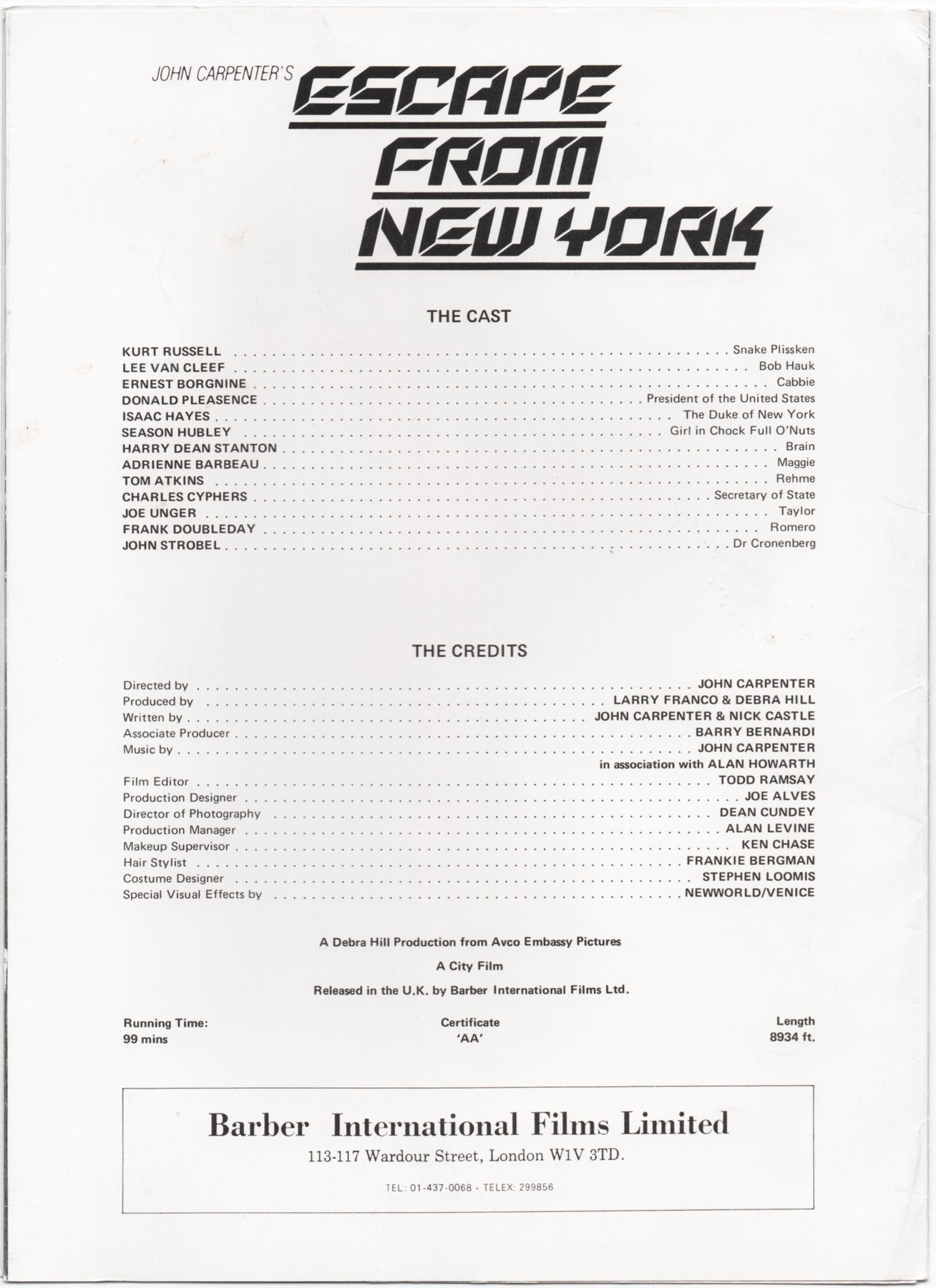
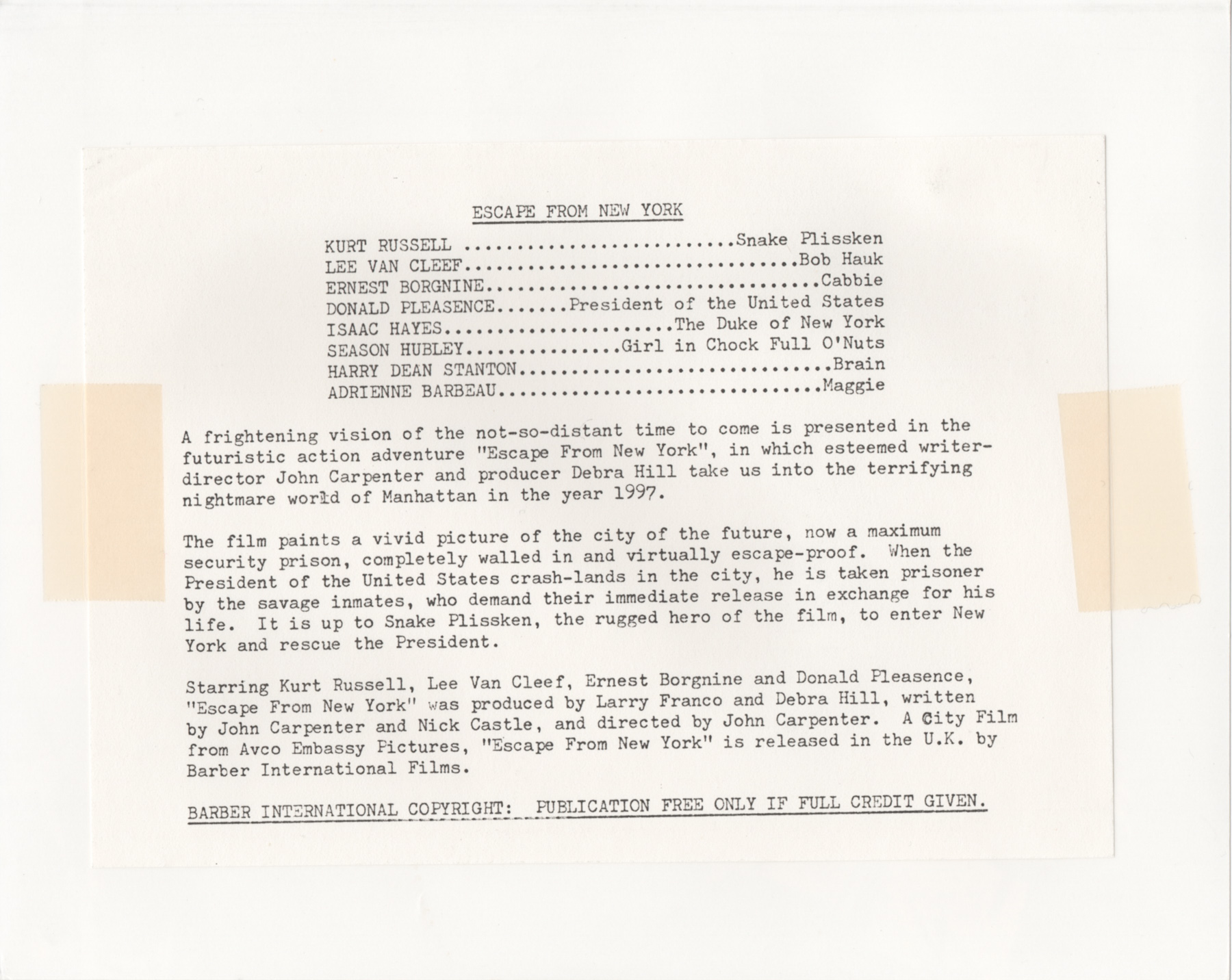
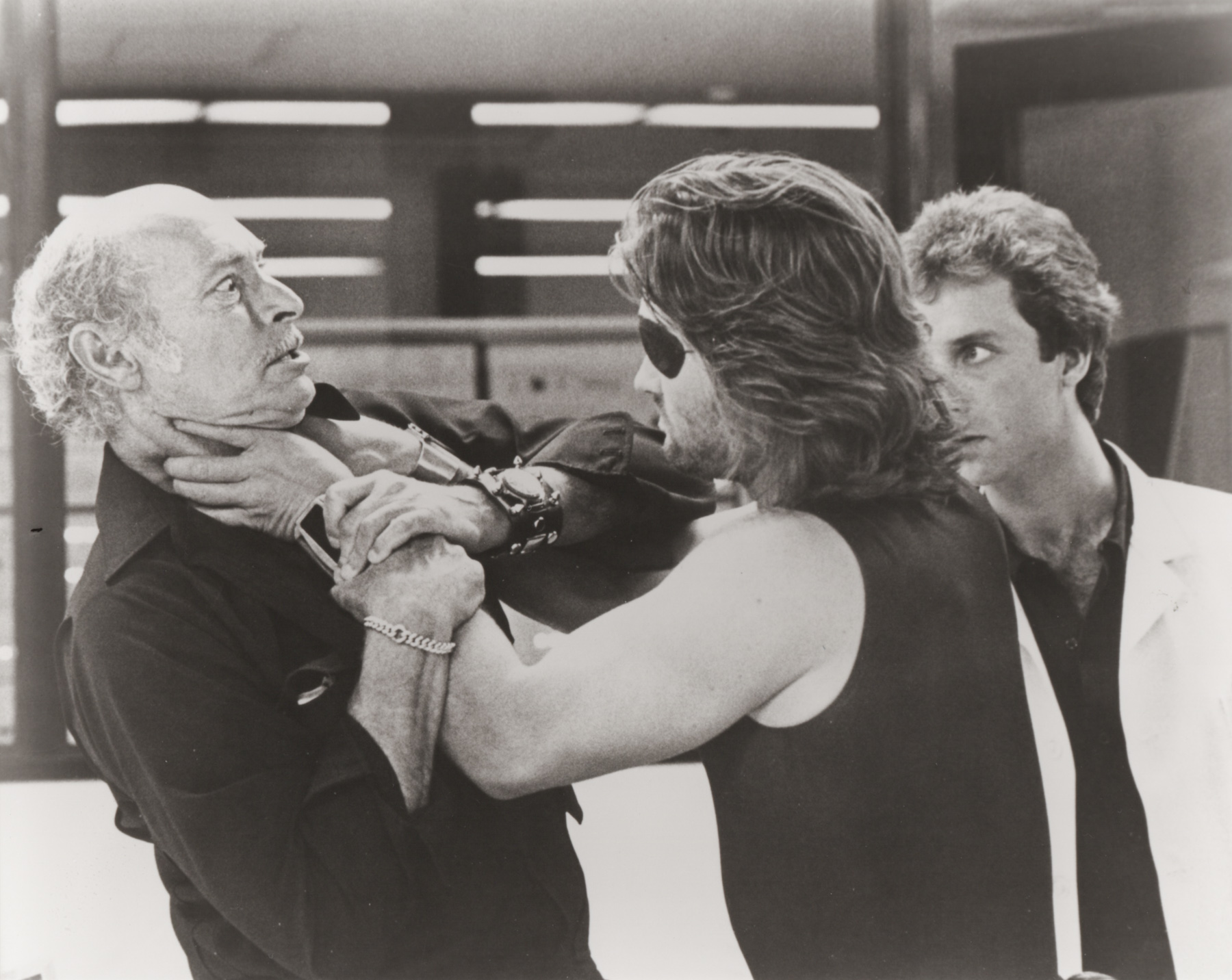
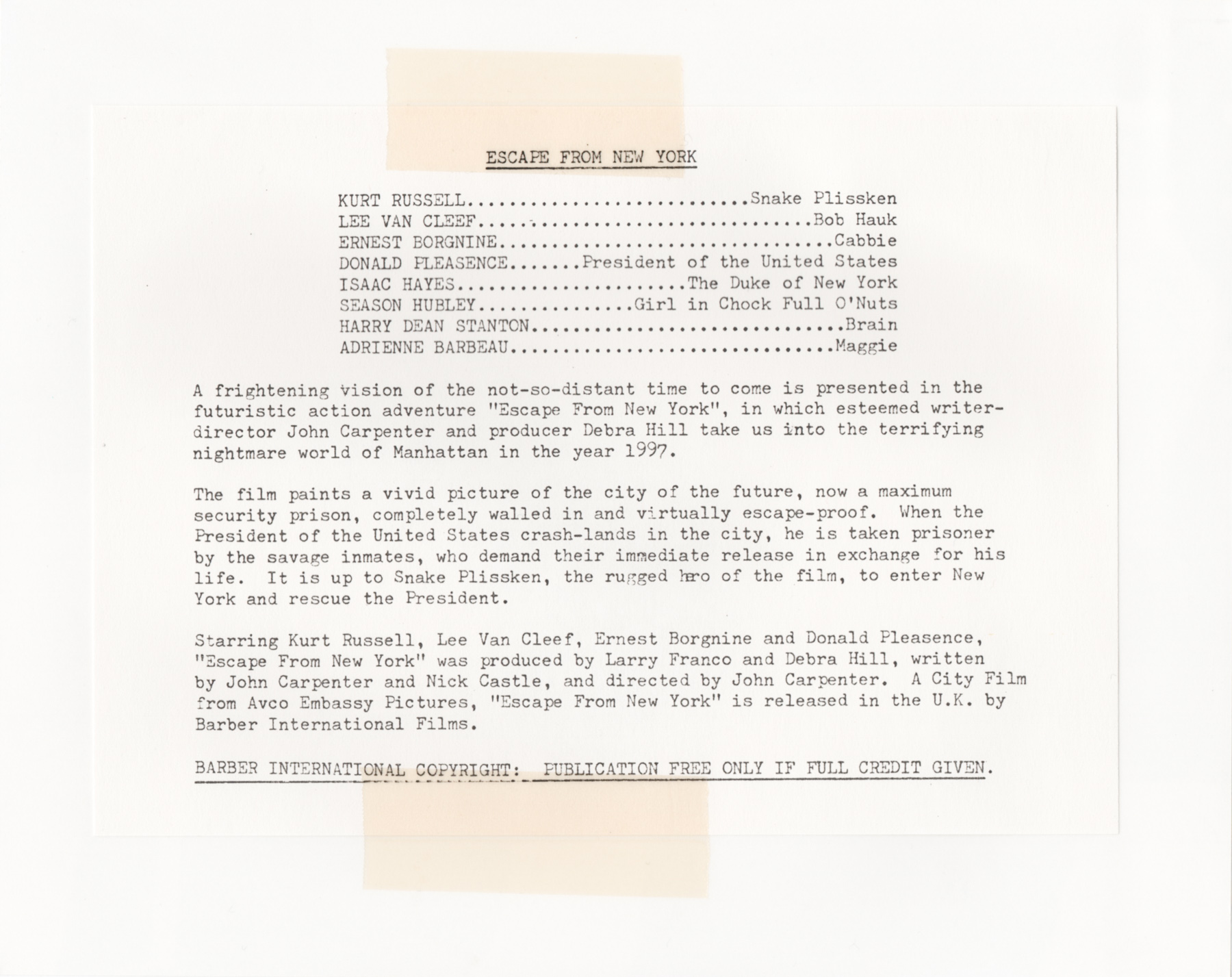
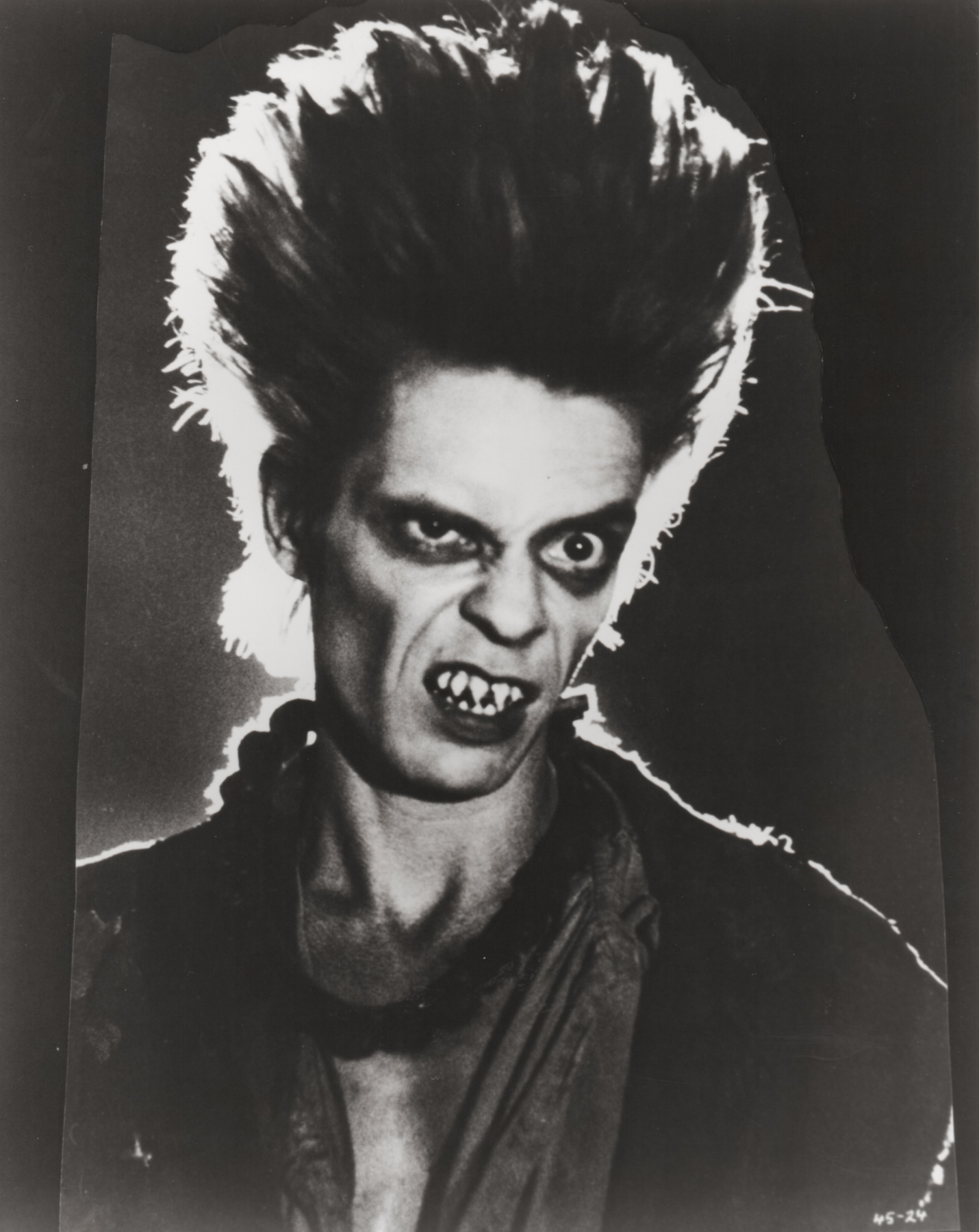
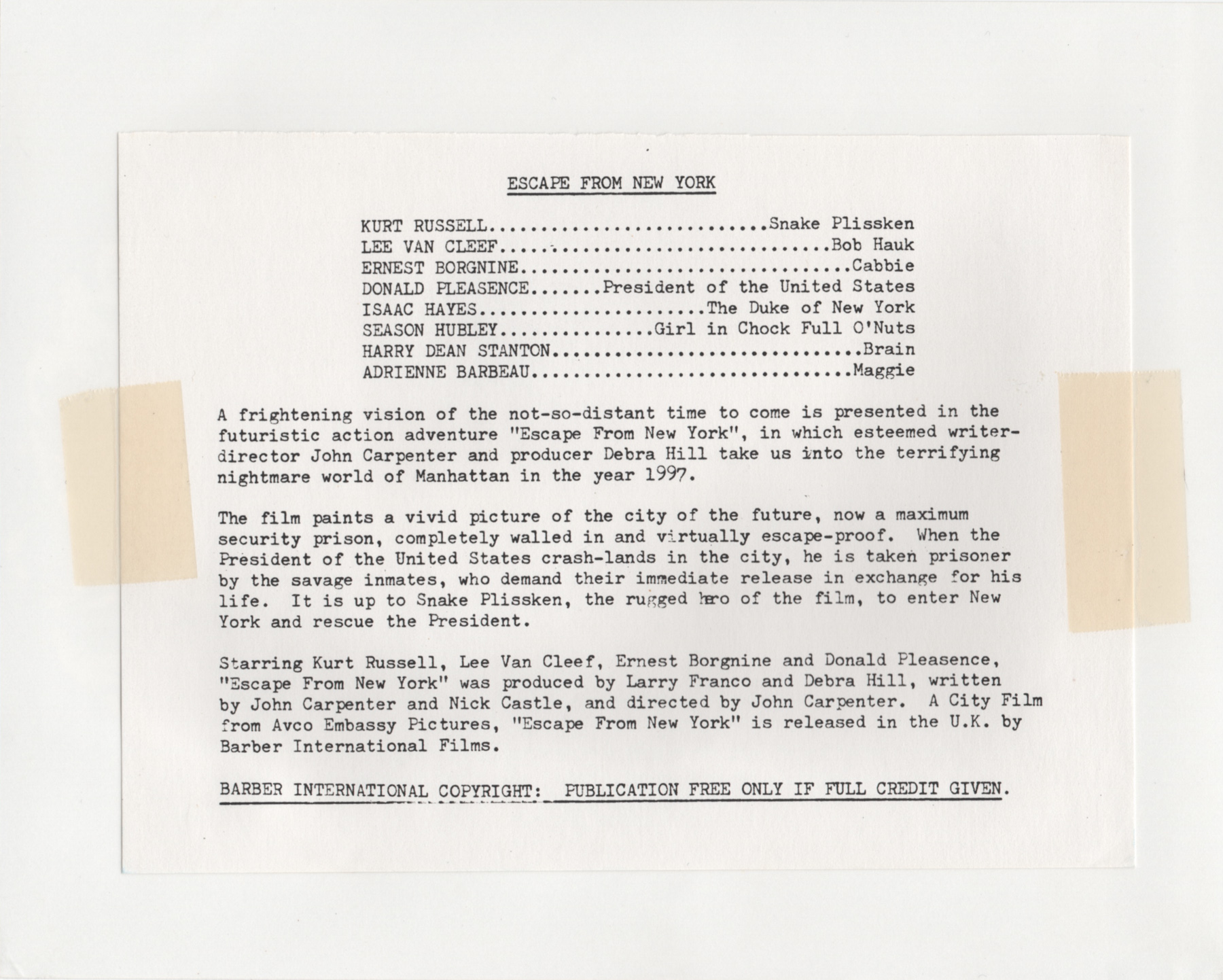
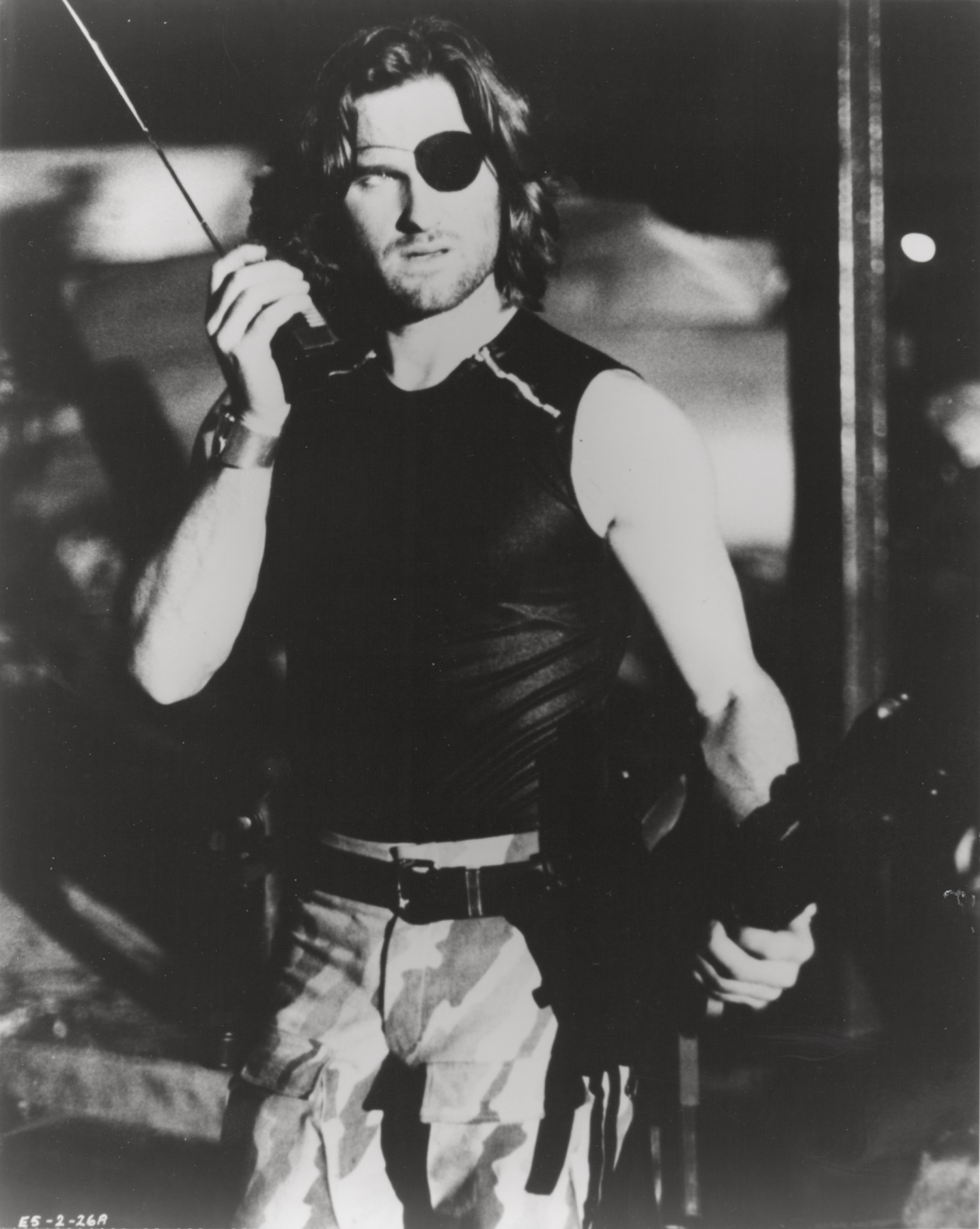
This is the original UK press kit for the release of John Carpenter’s sci-fi classic Escape From New York. I’d have a hard time choosing my favourite of the three (fictional) characters Carpenter and Kurt Russell created together; R.J. MacReady (The Thing), Jack Burton (Big Trouble in Little China) and Snake Plissken (EFNY). The latter is the gruff former war hero and convicted bank robber who is sent onto the island of Manhattan of an alternative 1997, which has been sealed-off as a lawless prison, in search of the American President whose plane crashed there after a terrorist attack. He’s arguably the coolest of the three and is a character much imitated in other lesser films featuring a reluctant hero.

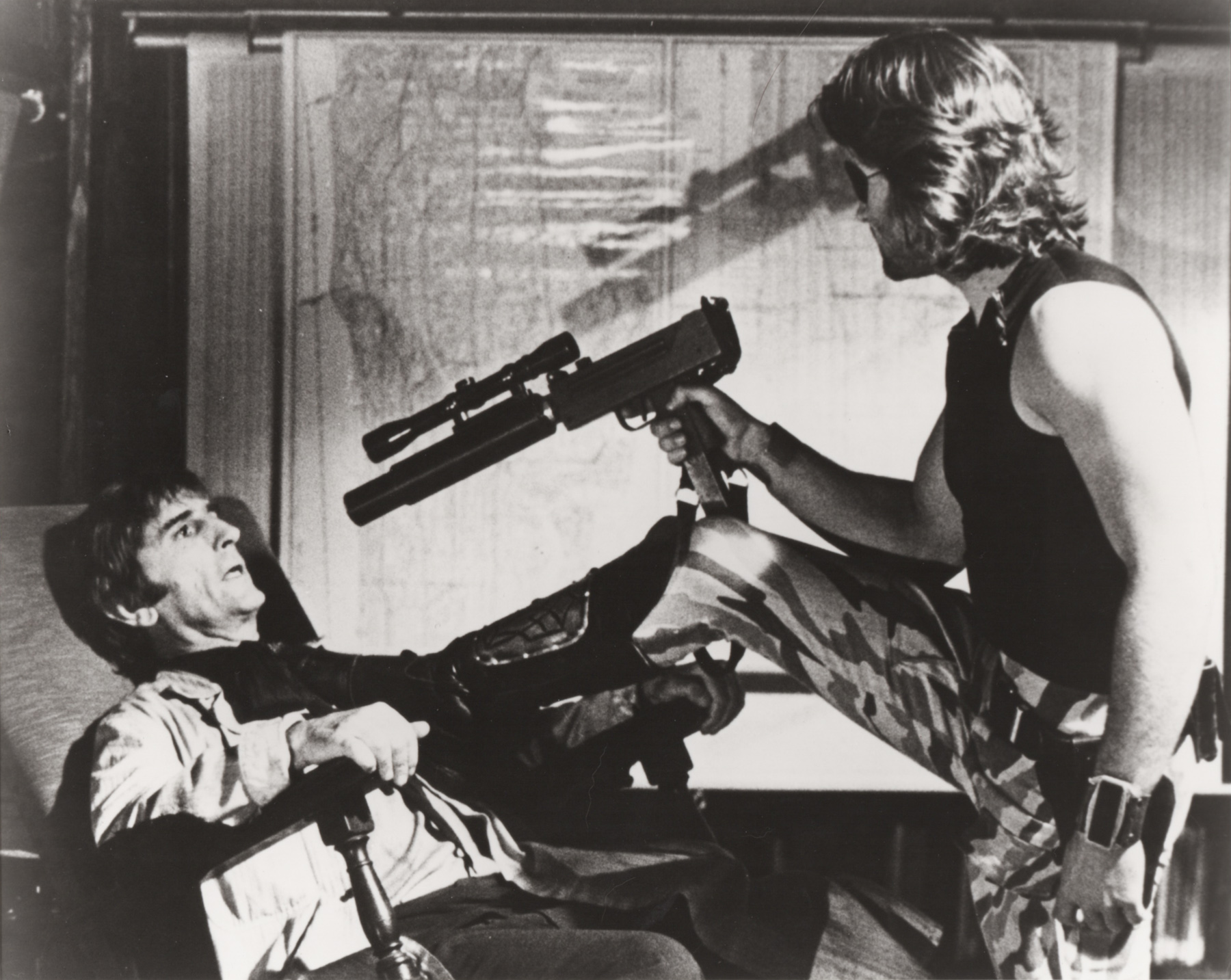
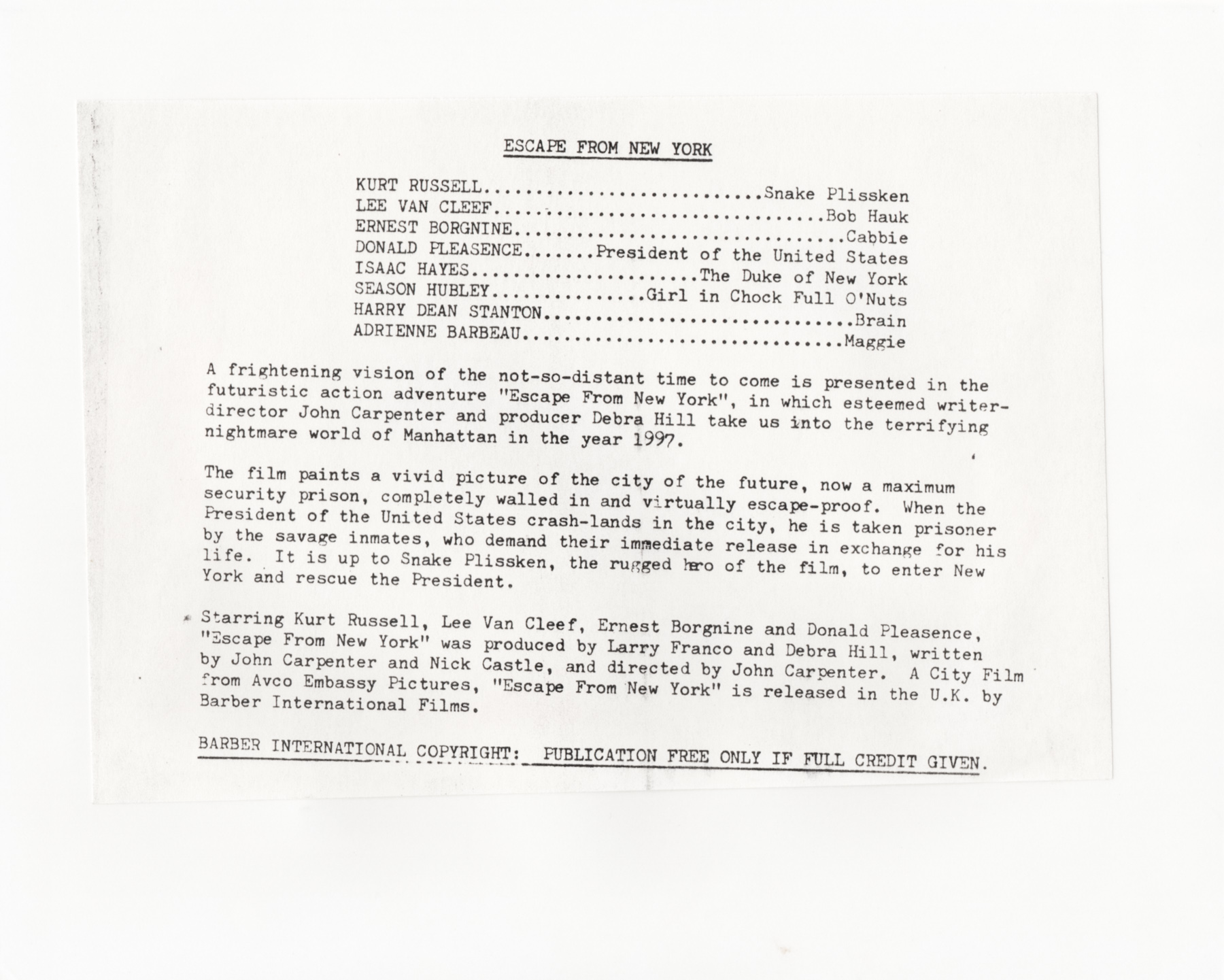
As the name suggests, a press kit was supplied by the film’s distributors to members of the press for the purpose of promoting the release. It offers an outline of the story along with details of the cast and filmmakers involved. This kit also included four 8×10″ stills from the film, with each one having a short cast list and synopsis taped to the back. Some press kits are significantly larger and more detailed than this one so I suspect there may have been other parts to it, but I’m not certain.


The rest of the John Carpenter posters I’ve collected can be seen by clicking here.

Spaced Invaders / quad / teaser / UK

22.05.17

Poster Poster
Title
Spaced Invaders
AKA
--
Year of Film
1990
Director
Patrick Read Johnson
Starring
Douglas Barr, Royal Dano, Ariana Richards, J.J. Anderson, Gregg Berger, Wayne Alexander, Fred Applegate, Patrika Darbo, Tonya Williams
Origin of Film
USA
Genre(s) of Film
Douglas Barr, Royal Dano, Ariana Richards, J.J. Anderson, Gregg Berger, Wayne Alexander, Fred Applegate, Patrika Darbo, Tonya Williams,
Type of Poster
Quad
Style of Poster
Teaser
Origin of Poster
UK
Year of Poster
1990
Designer
Unknown
Artist
Renato Casaro
Size (inches)
30 1/16" x 40"
SS or DS
SS
Tagline
Crash landing here soon

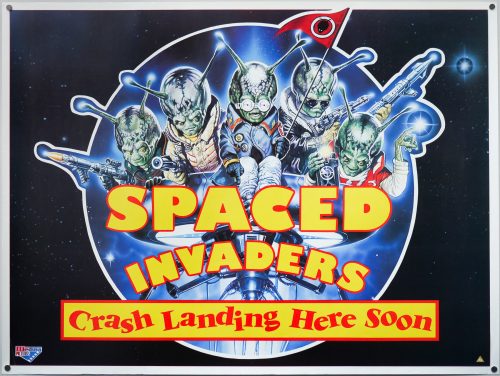
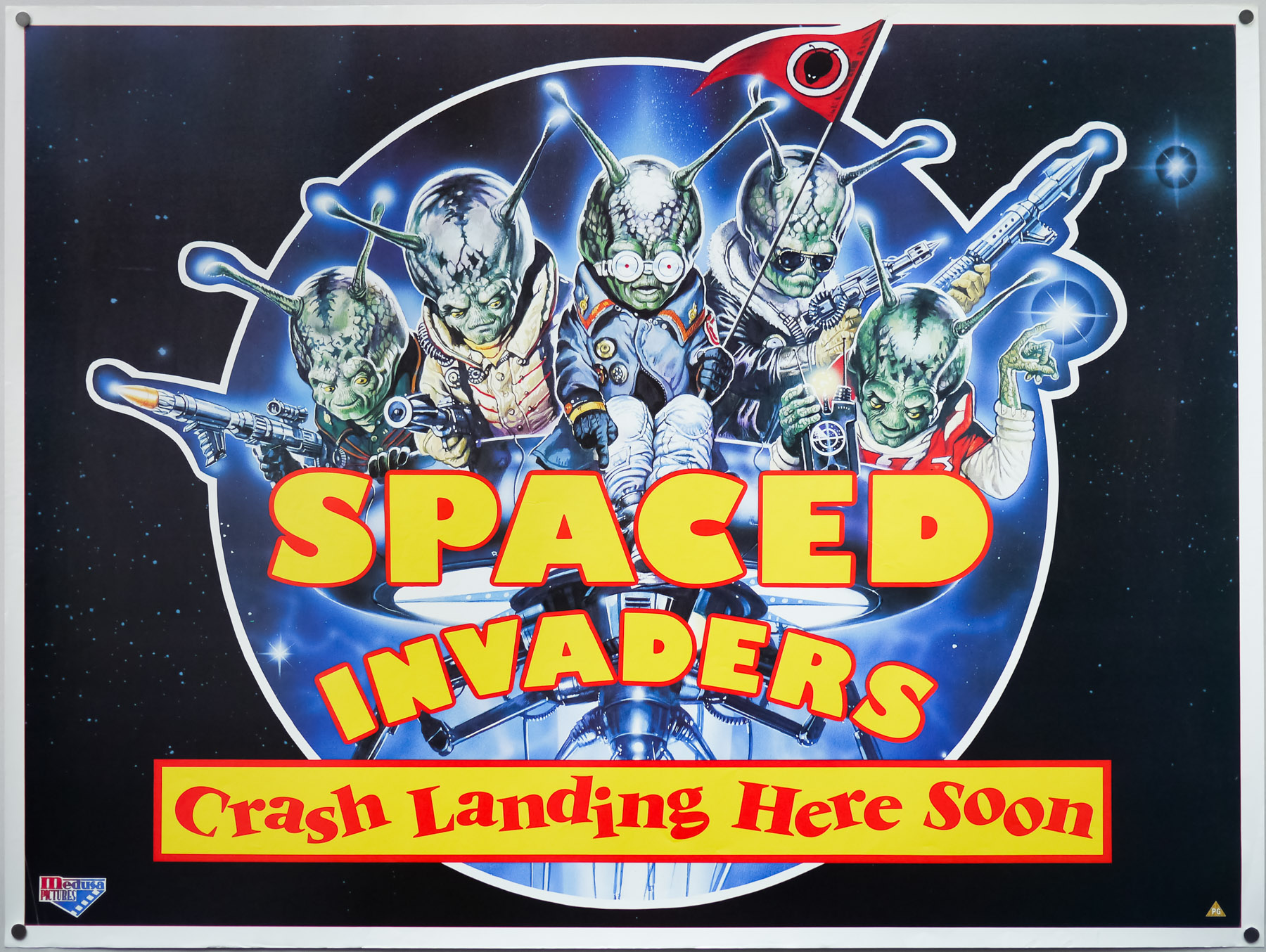
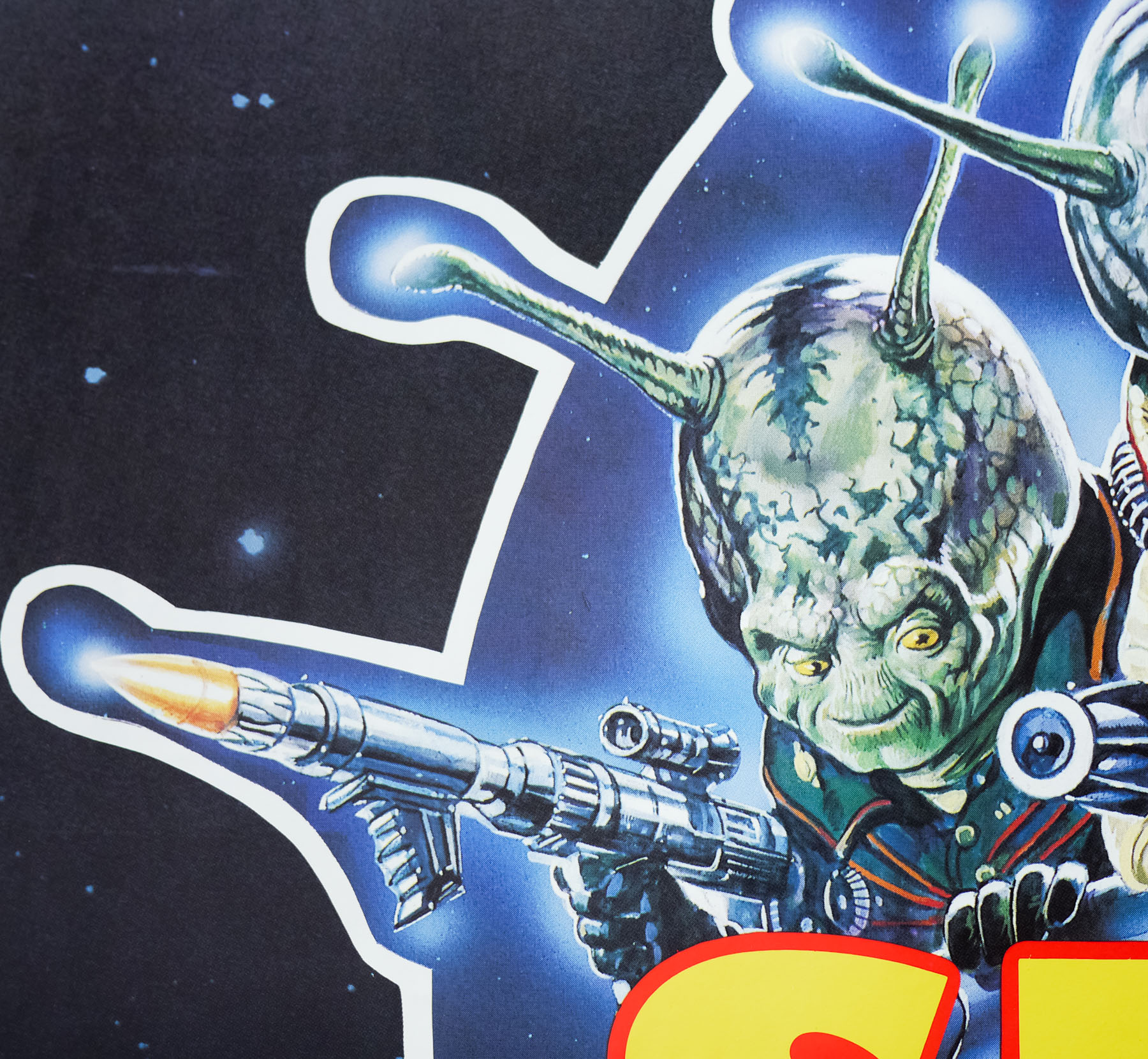
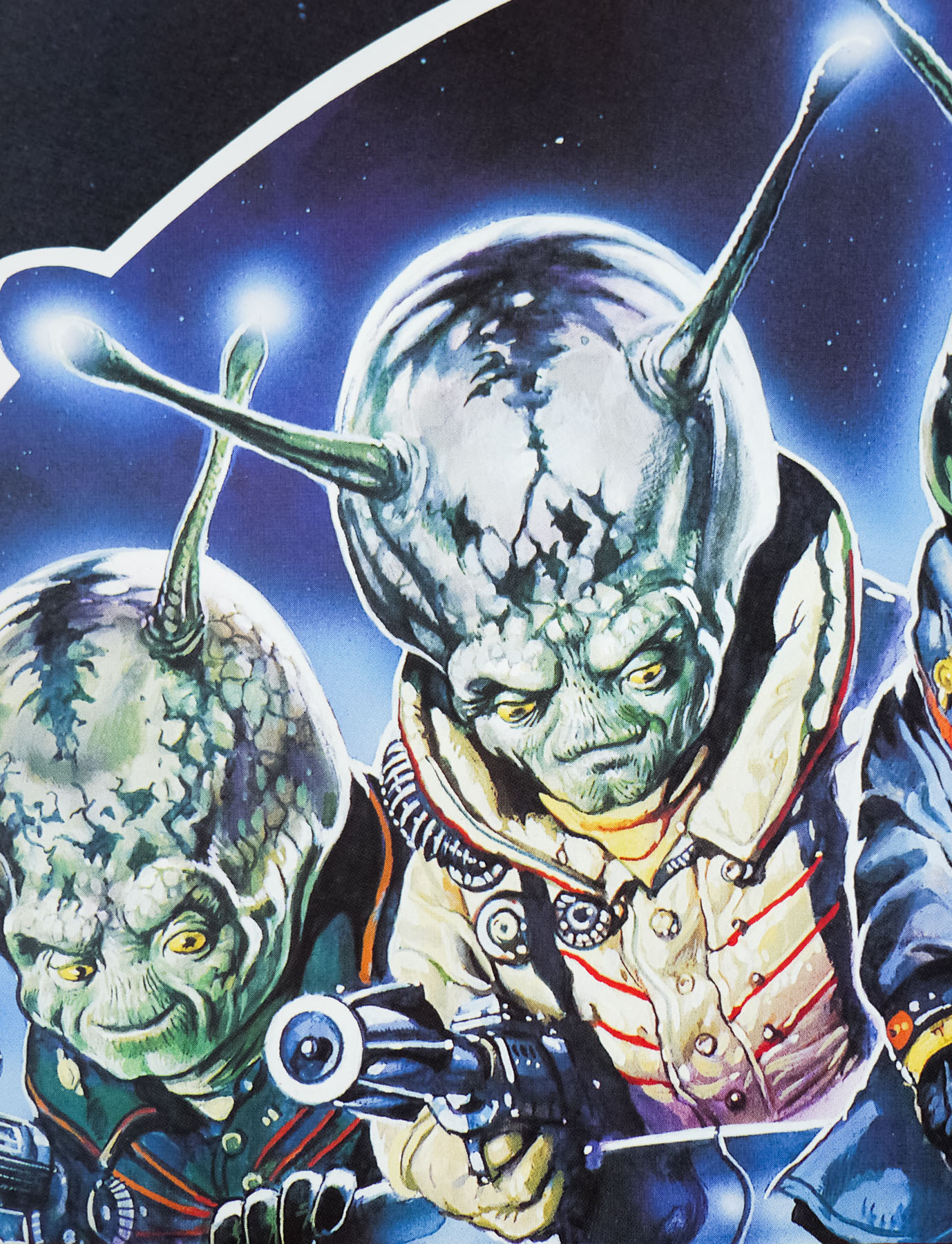
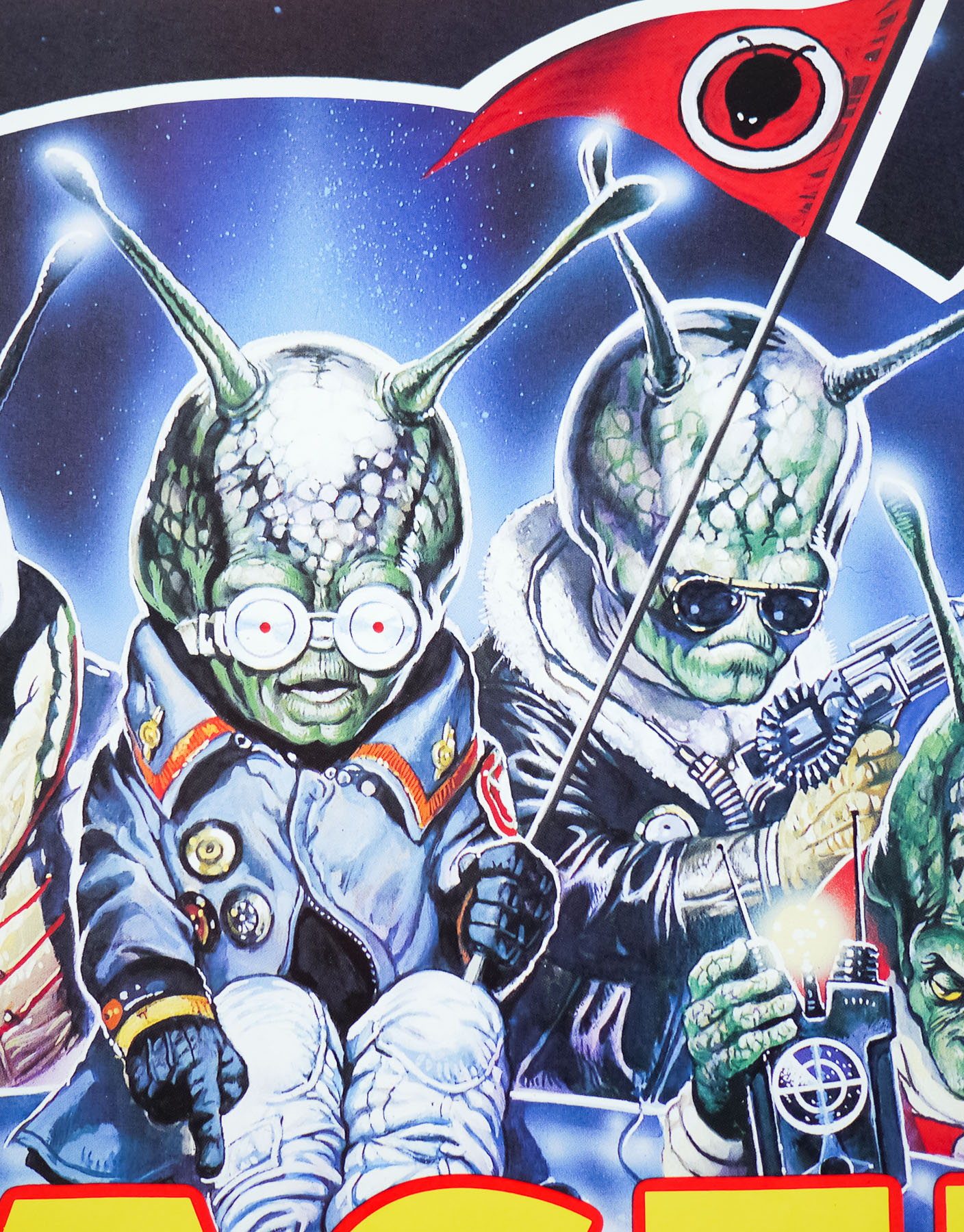
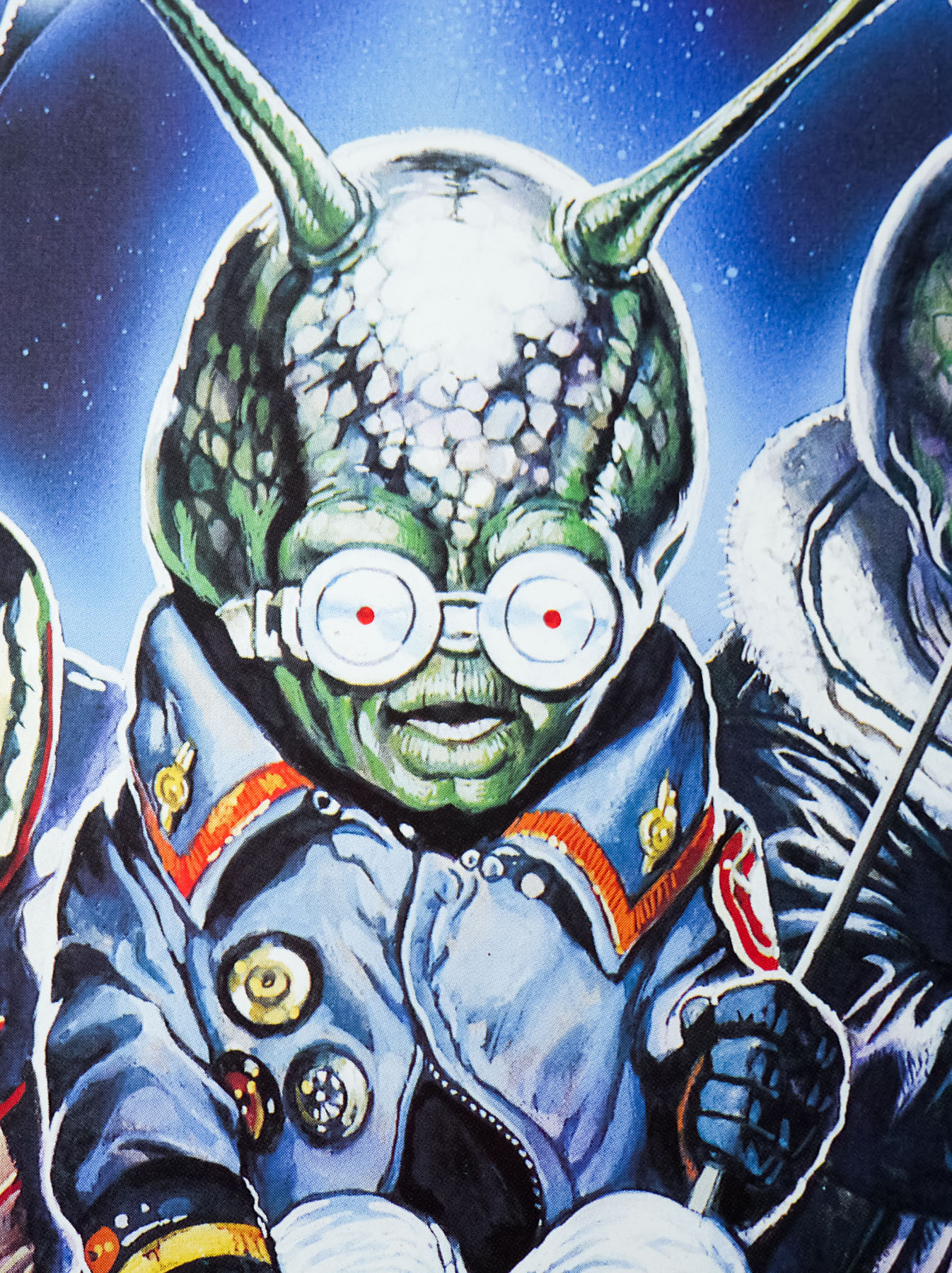
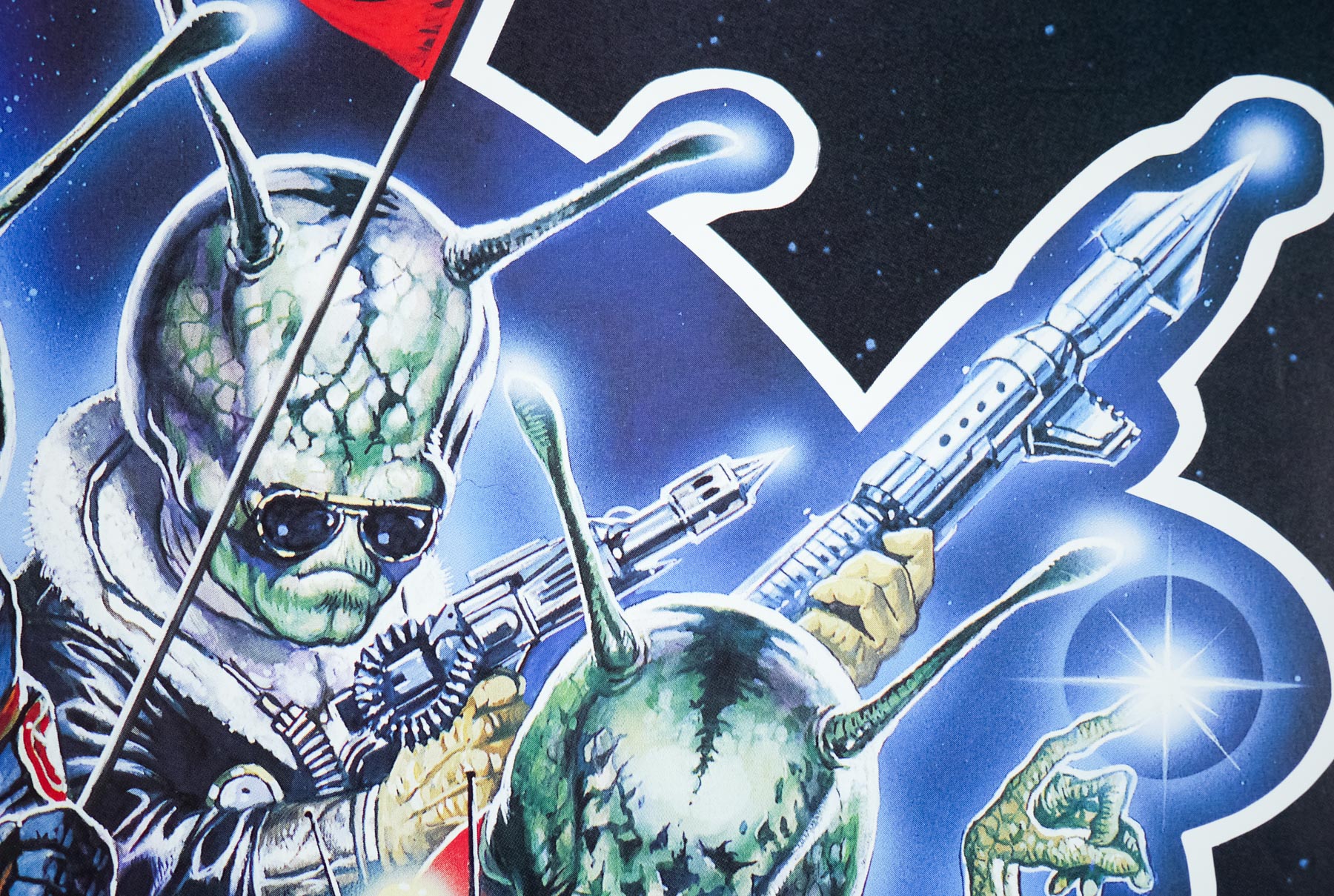
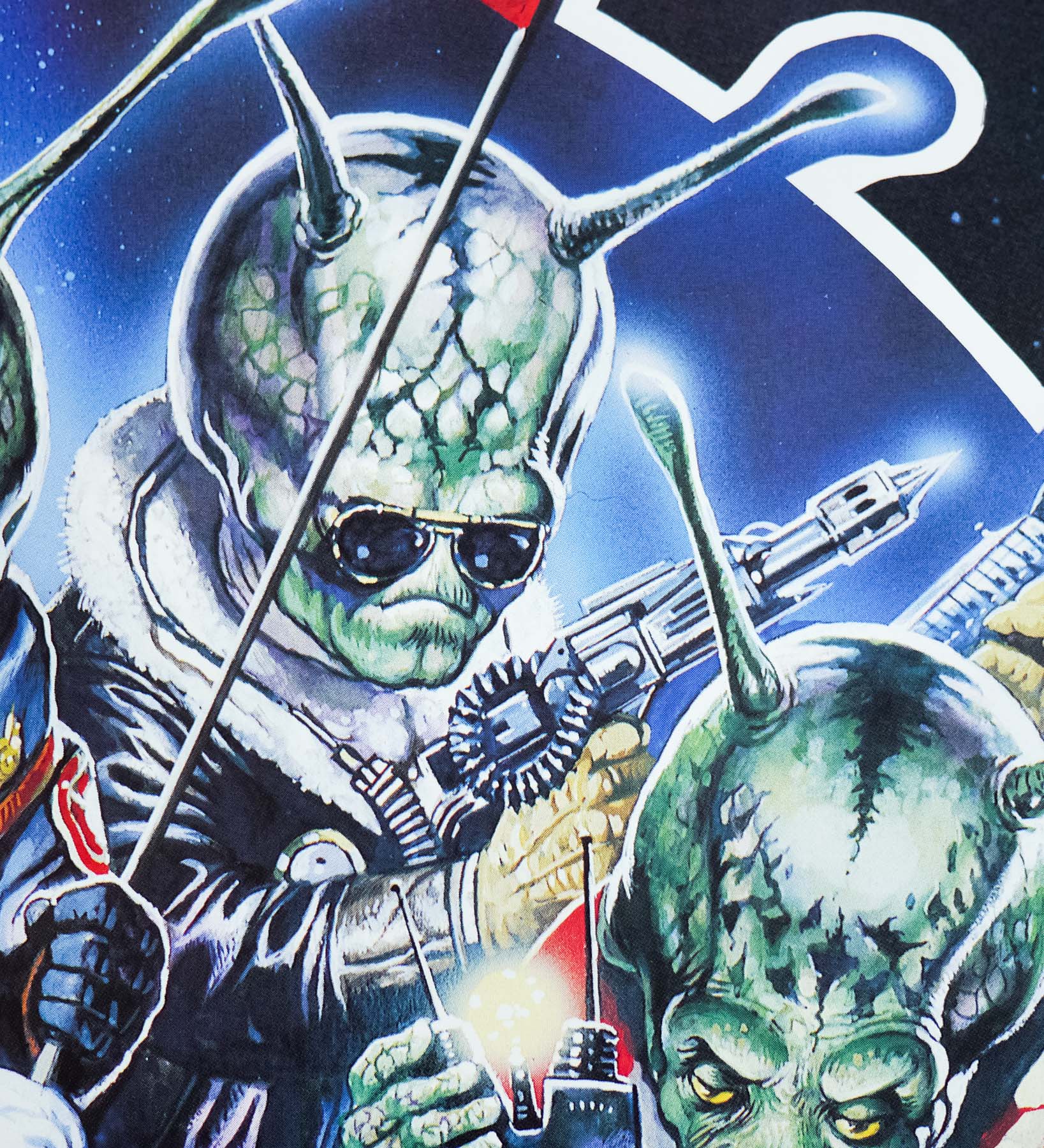
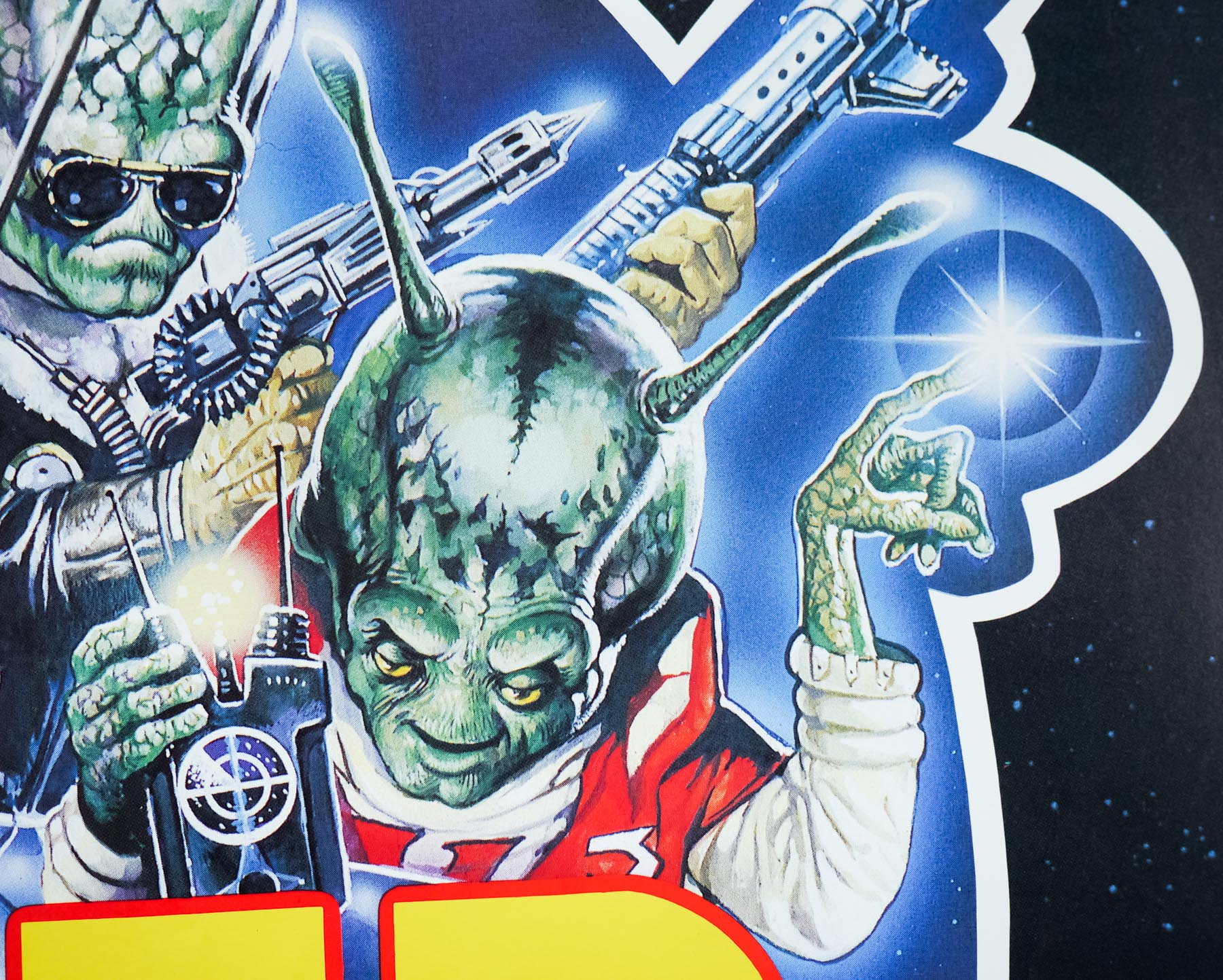
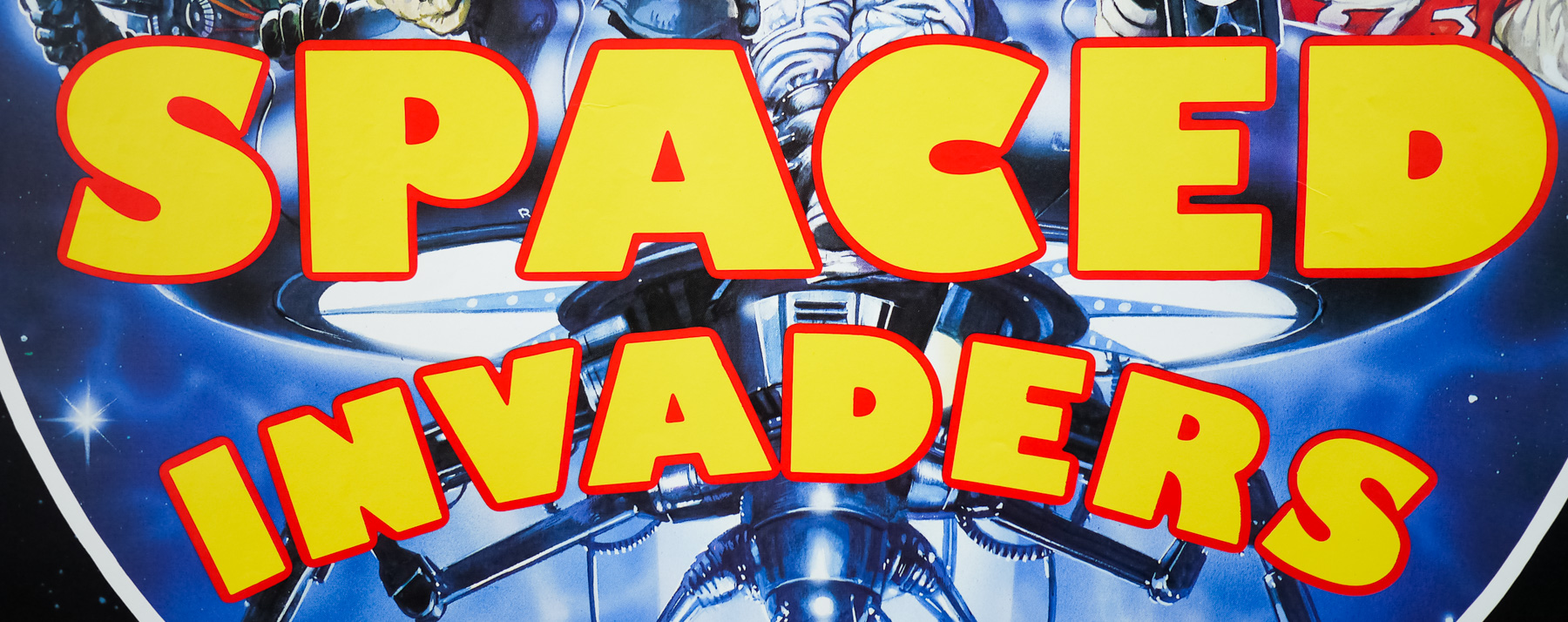
Colourful artwork by the artist Renato Casaro features on this UK quad for the release of the 1990 sci-fi comedy Spaced Invaders. It was one of a number of kid-friendly sci-fi films made in the wake of the release of Spielberg’s E.T. the Extra Terrestrial, such as ‘Flight of the Navigator’ and ‘Mac and Me’. The film was the directorial debut of Patrick Read Johnson who would later direct Baby’s Day Out (1994) and Angus (1995), as well as provide the story for the Sean Connery-starring fantasy Dragonheart.

The wafer thin plot sees a spaceship full of diminutive Martians, who all inexplicably speak English in a variety of ‘hilarious’ accents and dress like characters from distinct human tropes (nerd, jock, fighter pilot), mistakenly head to earth after they intercept a small-town radio station’s transmission of Orson Welles’ famous War of the Worlds radio play. After they crash land in a barn the bumbling crew declare their intention to be the advance attack party of the Martian fleet. Unfortunately they’ve timed their attack with Halloween and are instantly mistaken for children in trick or treat costumes.

Despite their attempts to be taken seriously, they fail to intimidate the local populace. Two children, Kathy (Ariana Richards of Jurassic Park fame) and Brian (J.J. Anderson) realise that they really are Martian invaders. After initially attempting to expose them to the other townspeople, the pair soon realise the Martians need help to escape from the commands of the enforcer droid that traveled to Earth with them. The film just about hangs together but the genuine laughs are few and far between and the ‘wacky’ Martians quickly begin to grate. The special effects and production design are at least decent enough for the time, but it’s a largely forgettable affair.

One of my favourite artists, Renato Casaro is an Italian with a prolific movie poster output that lasted over 35 years. He began his career in 1953, aged 19, at the famous Studio Favalli in Rome and would go on to design and paint posters for many of the biggest directors in the world. His skill at accurately portraying actors and his brilliant use of colour and composition saw him much in demand from studios and actors alike. His artwork has featured on posters used in multiple countries, including Japan, Germany, USA as well as in his native Italy.

Check out the incredible amount of work on his official website here, which also features a biography of the artist. In March 2014 I published an exclusive interview with Renato and it can be read by clicking here. The other posters I’ve collected by Renato Casaro are here.

Note that Casaro’s signature is just visible under the ‘A’ of Spaced – only the R of ‘R. Casaro’ can be seen.

The Fly / video / UK

14.08.17

Poster Poster
Title
The Fly
AKA
--
Year of Film
1986
Director
David Cronenberg
Starring
Jeff Goldblum, Geena Davis, John Getz
Origin of Film
USA
Genre(s) of Film
Jeff Goldblum, Geena Davis, John Getz,
Type of Poster
Video
Style of Poster
--
Origin of Poster
UK
Year of Poster
1986
Designer
Unknown
Artist
Richard Mahon (pod artwork)
Size (inches)
23 7/16" x 33"
SS or DS
SS
Tagline
--

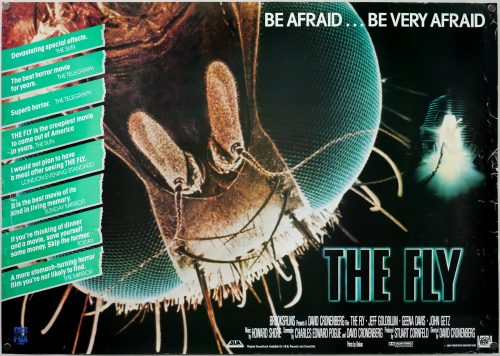
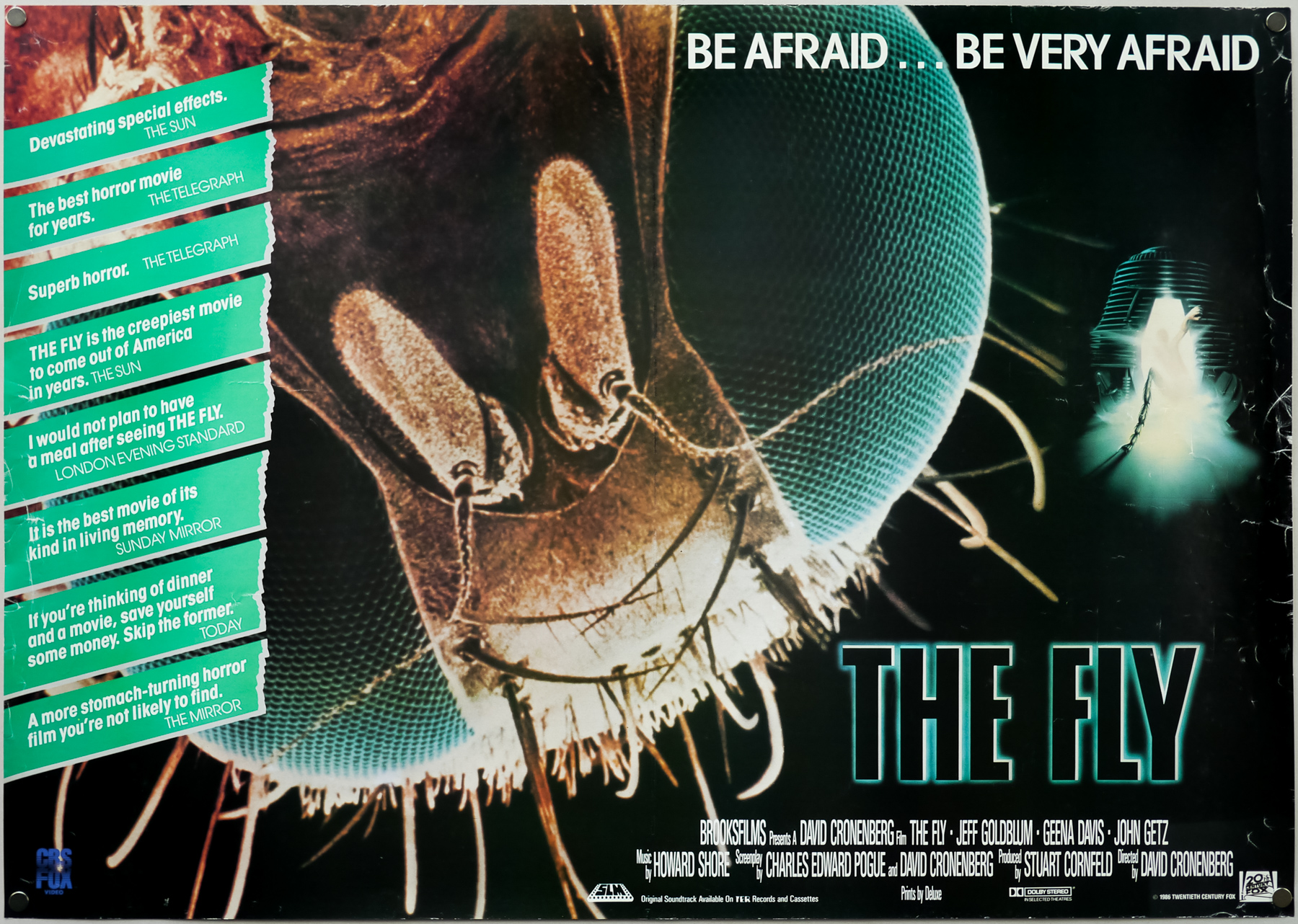
A unique design features on this UK poster for the video release of David Cronenberg‘s sci-fi classic, The Fly. Loosely based on a 1957 short story of the same name by George Langelaan, which was first adapted for the big screen in 1958, the screenplay was written by Cronenberg himself and based on an initial draft by Charles Edward Pogue. The director rewrote most of the characters and dialogue and added themes of identity, sexuality and body horror with which he’d become synonymous.

Cronenberg cast Jeff Goldblum as the gifted but eccentric scientist Seth Brundle who has secretly been working on teleportation of objects from one place to another instantly. He works for Bartok Science Industries but has been working on a pair of ‘telepods’ at his home laboratory. When he’s introduced to the journalist Veronica Quaife (Geena Davis) at a ‘meet the press’ event he decides to risk taking her to see his work, which he demonstrates by teleporting inanimate objects. Impressed, Veronica agrees to keep quiet in return for exclusive rights to the story.

Soon afterwards the pair start a romantic relationship as Brundle continues to work on the pods. He decides that he wants to have the pods teleport living tissue and eventually manages to do so successfully with a baboon he’s borrowed from his company. Flushed with success Brundle begins drinking and starts to get paranoid that Veronica has rekindled her relationship with her editor and former lover Stathis Borans John Getz. He decides to try teleporting himself but unbeknownst to him a housefly gets inside the pod with him.

He emerges in the other pod seemingly fine and initially feels he’s come out of the pod an ‘improved’ human with higher strength and stamina. However over the following weeks Brundle’s mood becomes highly erratic and he begins a bodily transformation that starts out with unwanted hairs and fingernails falling out but begins to progress into something much more destructive as he realises his pod had been contaminated. The transformation into ‘Brundlefly’ sees the scientist scrambling for a cure before it’s too late, desperately imploring a pregnant Veronica to help him.

Goldblum’s performance was rightly celebrated and it remains one of his most memorable roles to date. The special effects depicting Brundle’s deterioration were executed by Chris Walas‘ company and ended up rightfully winning an Academy Award. The film is as impressive as it was 30 years ago and is definitely one of Cronenberg’s best.

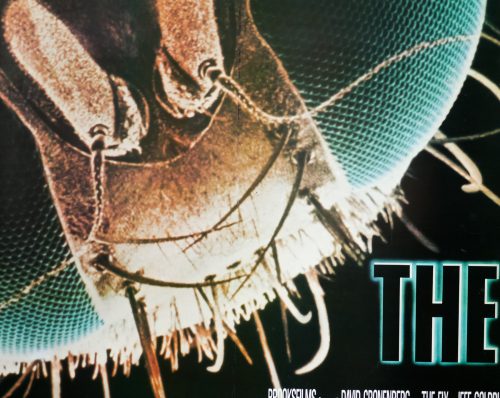
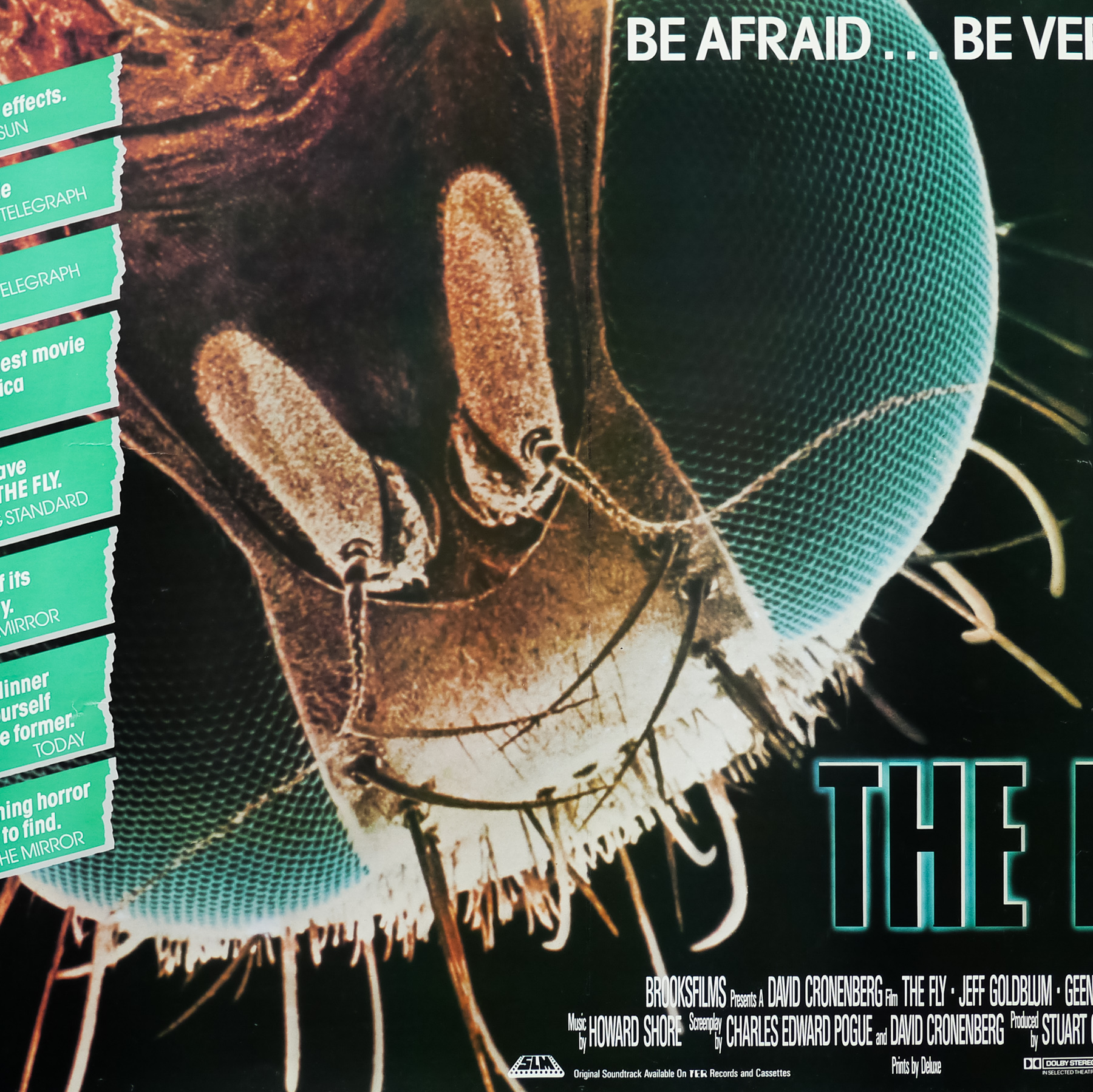
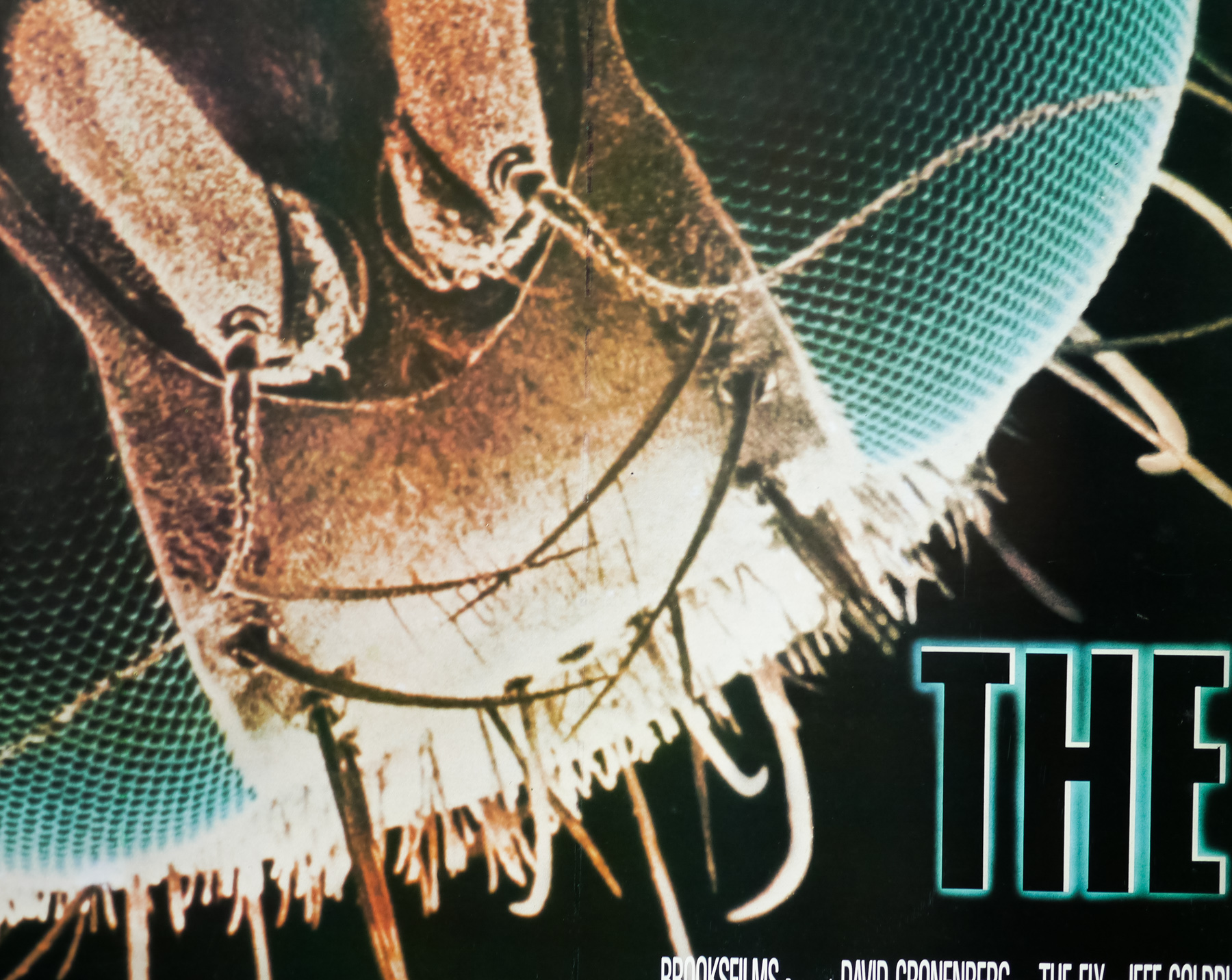
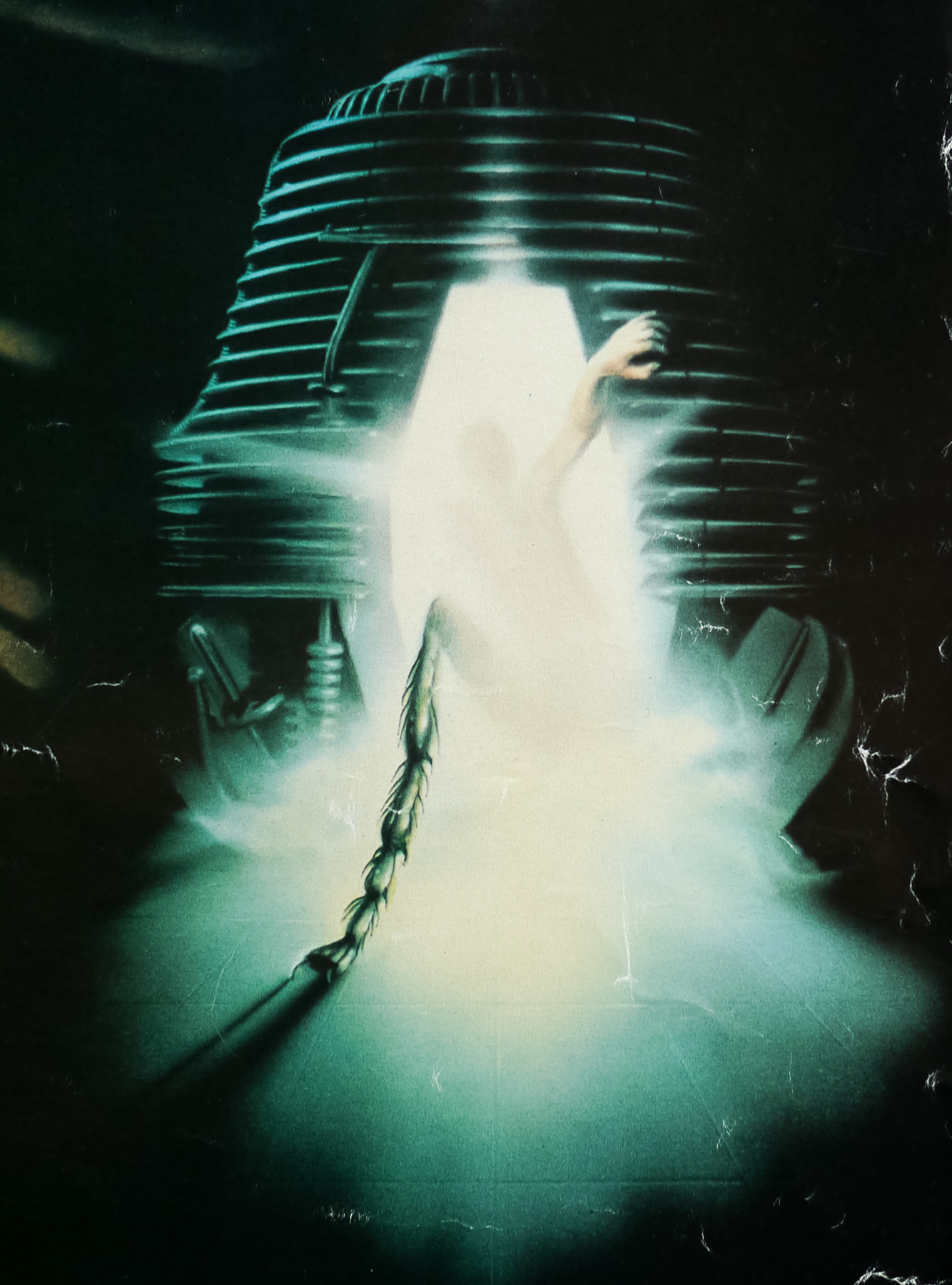
The close-up image of a fly’s eyes is, I believe, unique to this poster but note that it also features the illustrated telepod that appeared on the US one sheet, which was painted by Richard Mahon. The logo is also the same one seen on the American poster and British quad.

Here’s the film’s original trailer.

Metropolis / quad / 1984 re-release / UK

20.01.12

Poster Poster
Title
Metropolis
AKA
--
Year of Film
1927
Director
Fritz Lang
Starring
Alfred Abel, Brigitte Helm, Gustav Fröhlich, Rudolf Klein-Rogge
Origin of Film
Germany
Genre(s) of Film
Alfred Abel, Brigitte Helm, Gustav Fröhlich, Rudolf Klein-Rogge,
Type of Poster
Quad
Style of Poster
Re-release
Origin of Poster
UK
Year of Poster
1984
Designer
Unknown
Artist
Unknown
Size (inches)
30" x 39 15/16"
SS or DS
SS
Tagline
--

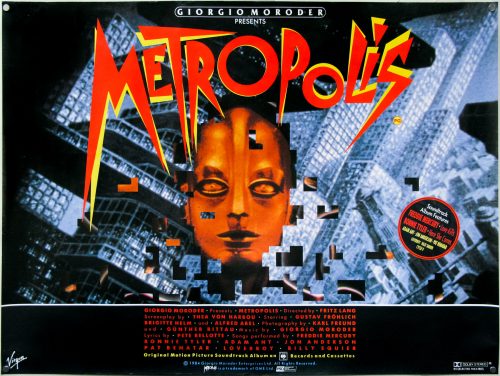
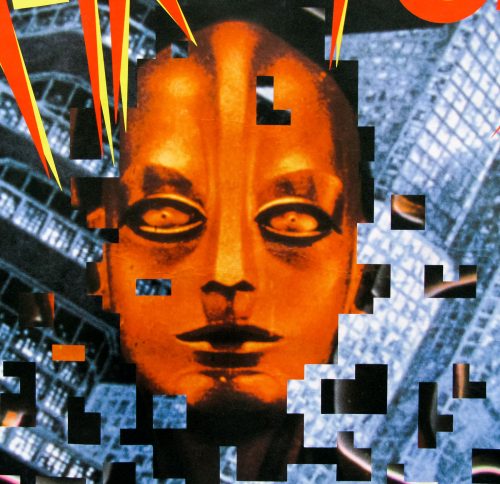
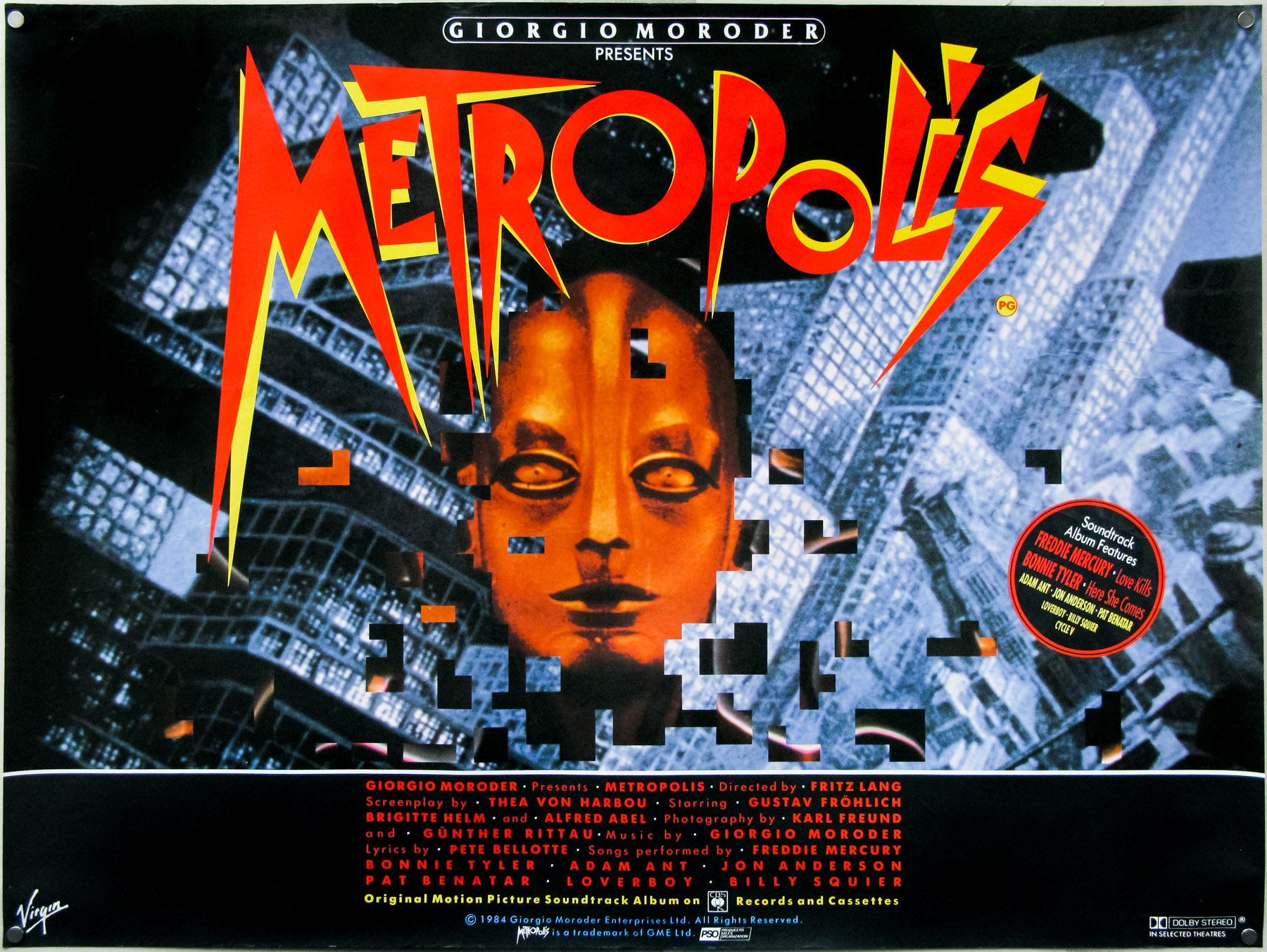
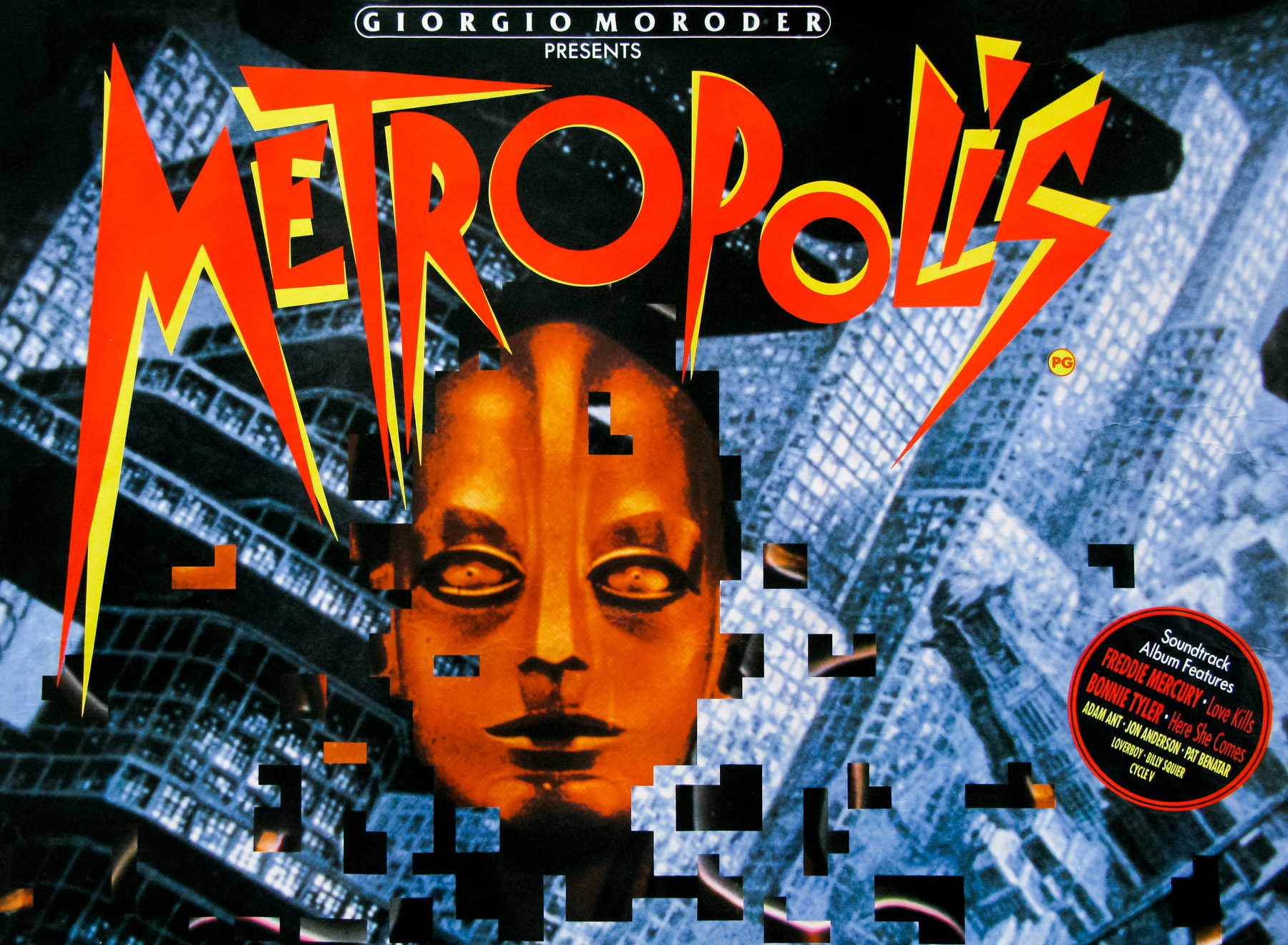
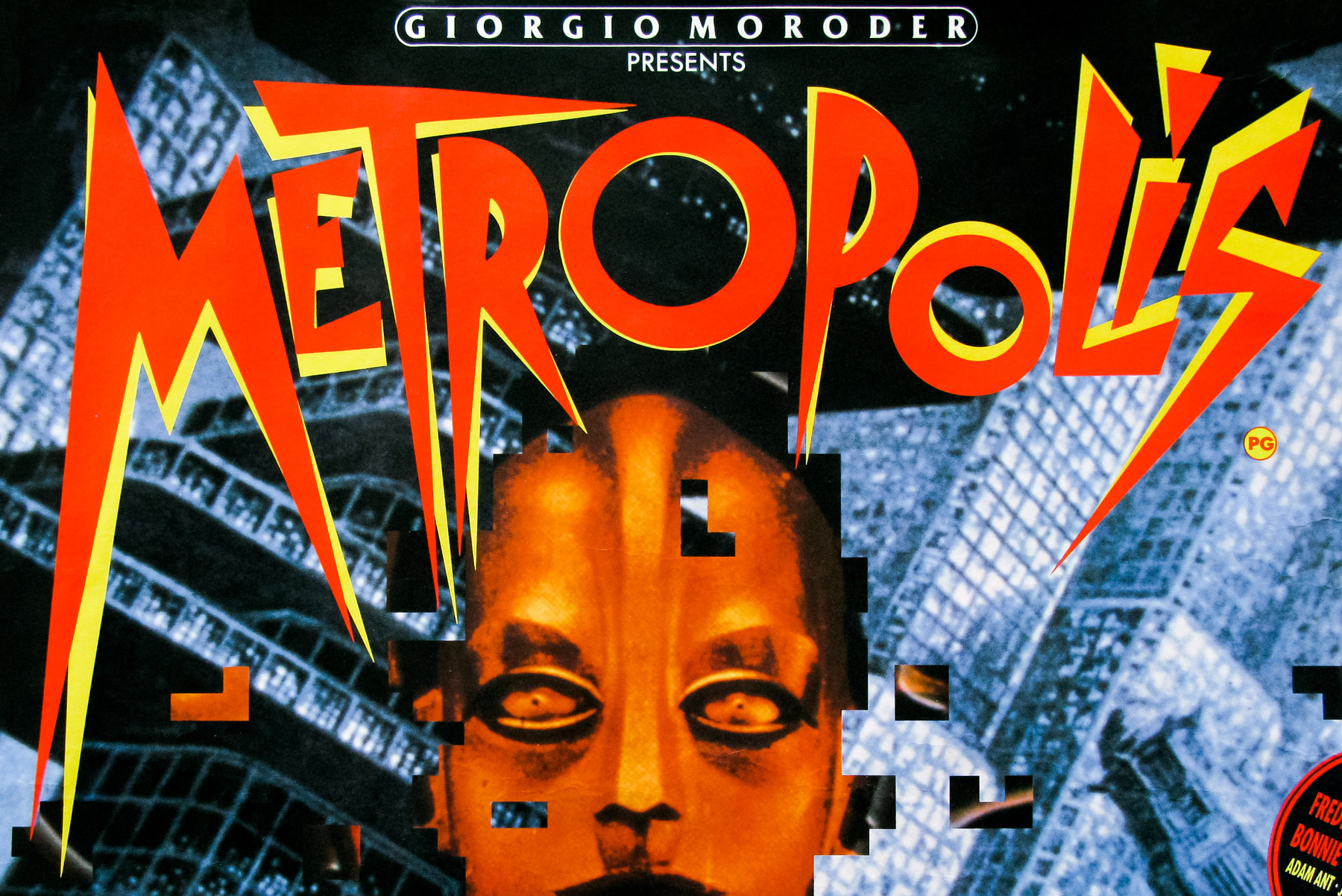
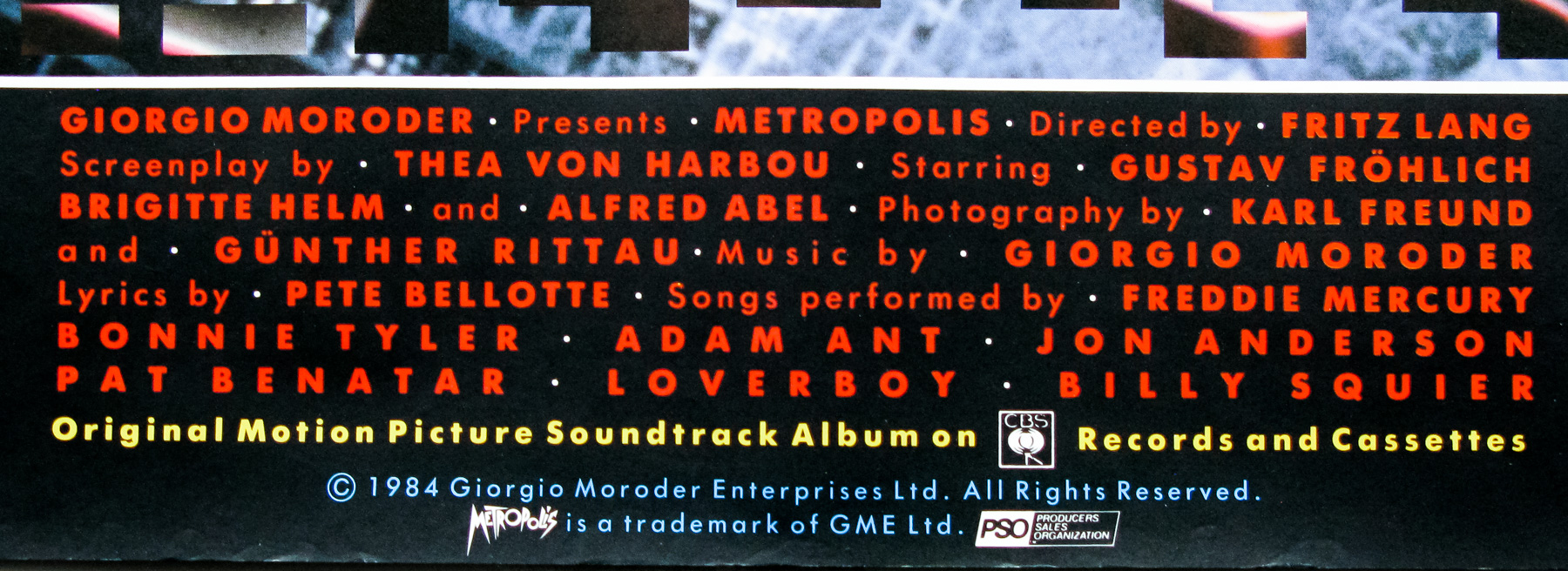
Fritz Lang’s 1927 sci-fi masterpiece Metropolis was given a cinema re-release in 2010 after missing scenes, long thought lost, were discovered in an Argentinian museum and reintegrated back into the film. 26 years earlier, music producer Giorgio Moroder produced and released an alternative version of the film which was restored and had various scenes that were missing from the first US release reinserted back in.

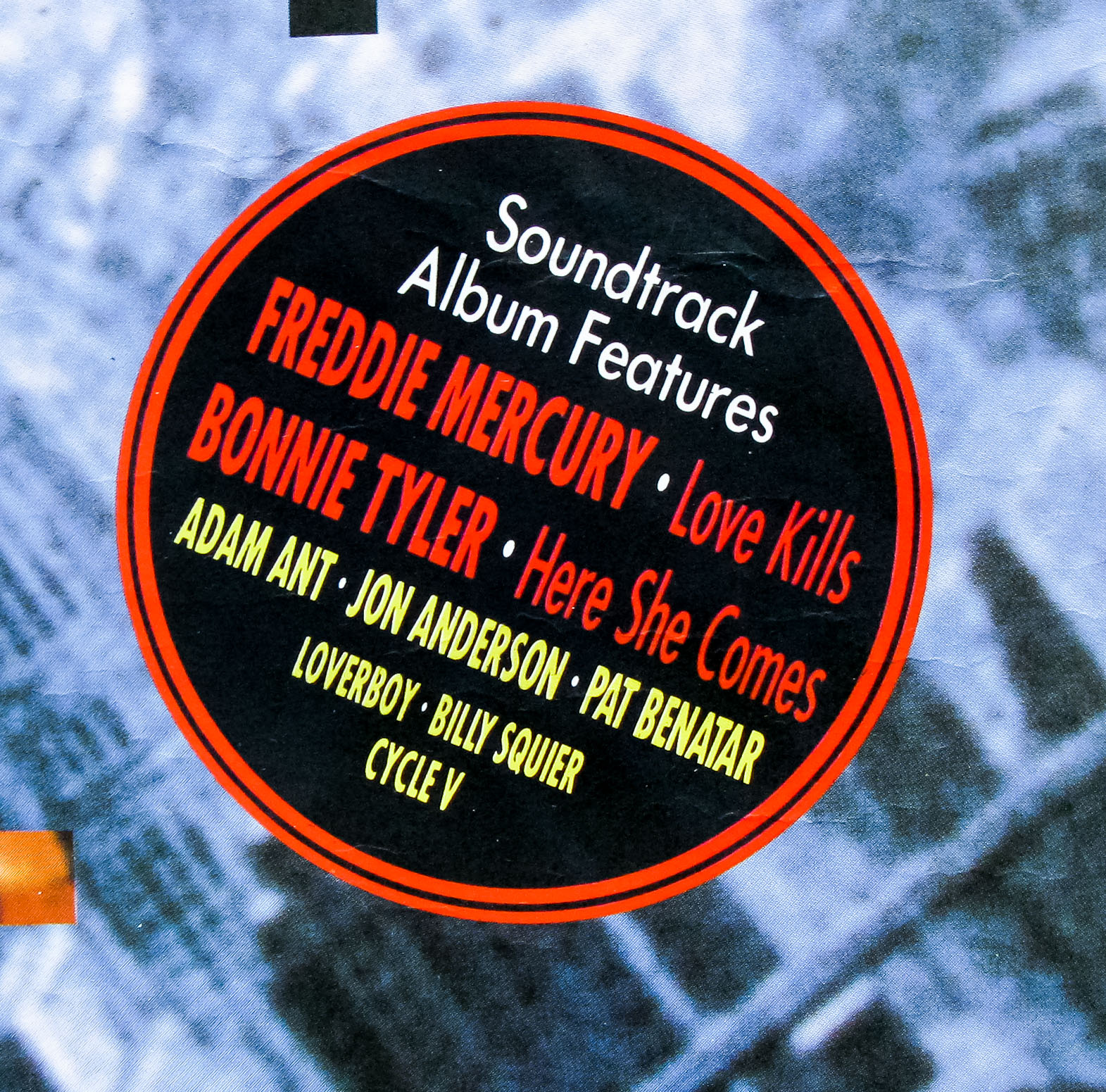
Controversially, Moroder also replaced the original orchestral score by Gottfried Huppertz with contemporary rock and pop music from the likes of Pat BenatarBonnie TylerAdam Ant and Freddie Mercury. Despite the heated debate that this re-release provoked it did have the benefit of bringing the film back into the public consciousness and led to further restorations over the following years. The discovery of the lost footage in 2008 was a complete revelation and brought the film very close to its original release version, which many feared was lost forever.

Queen’s music video for their song ‘Radio Ga Ga’ was released at the same time and featured footage for the film.

As well as the original restored film, the Moroder version was released on blu-ray in 2011.

The original trailer for this version is on YouTube.

The Terminator / quad / UK

29.08.12

Poster Poster
Title
The Terminator
AKA
O Exterminador do Futuro (Brazil)
Year of Film
1984
Director
James Cameron
Starring
Arnold Schwarzenegger, Michael Biehn, Linda Hamilton, Paul Winfield, Lance Henriksen, Bess Motta, Earl Boen, Rick Rossovich, Dick Miller, Shawn Schepps, Bruce M. Kerner, Franco Columbu,, Bill Paxton, Brad Rearden, Brian Thompson
Origin of Film
UK | USA
Genre(s) of Film
Arnold Schwarzenegger, Michael Biehn, Linda Hamilton, Paul Winfield, Lance Henriksen, Bess Motta, Earl Boen, Rick Rossovich, Dick Miller, Shawn Schepps, Bruce M. Kerner, Franco Columbu,, Bill Paxton, Brad Rearden, Brian Thompson,
Type of Poster
Quad
Style of Poster
--
Origin of Poster
USA
Year of Poster
1985
Designer
Unknown
Artist
Mike Francis
Size (inches)
30 2/16 x 40"
SS or DS
SS
NSS #
--
Tagline
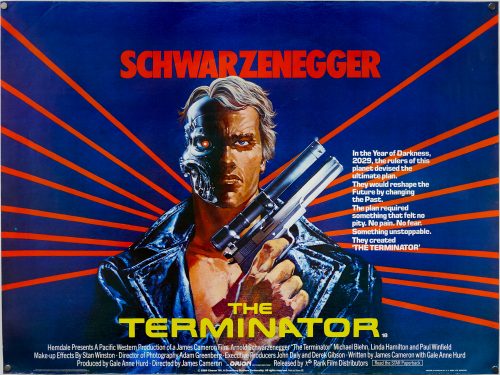
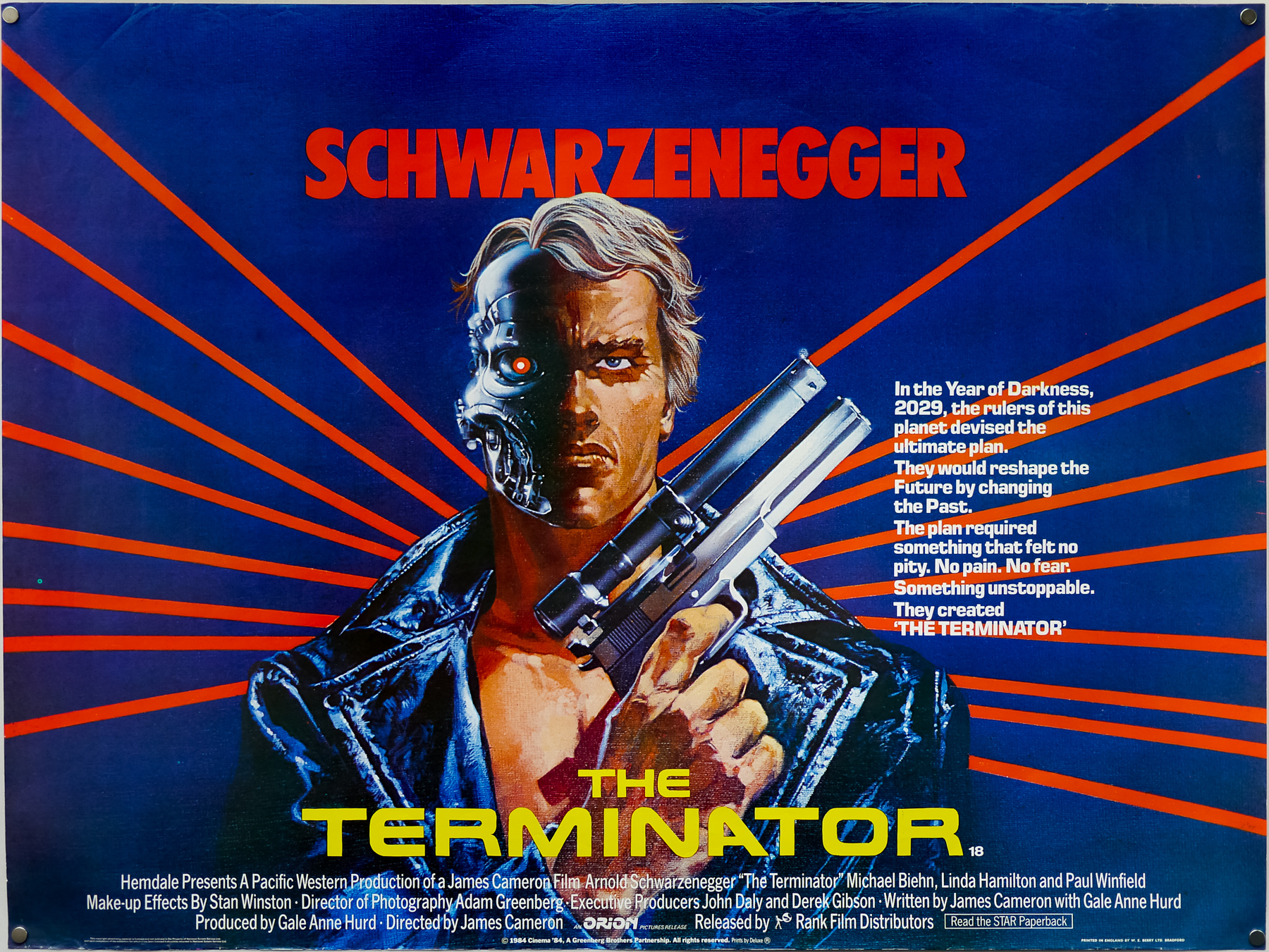
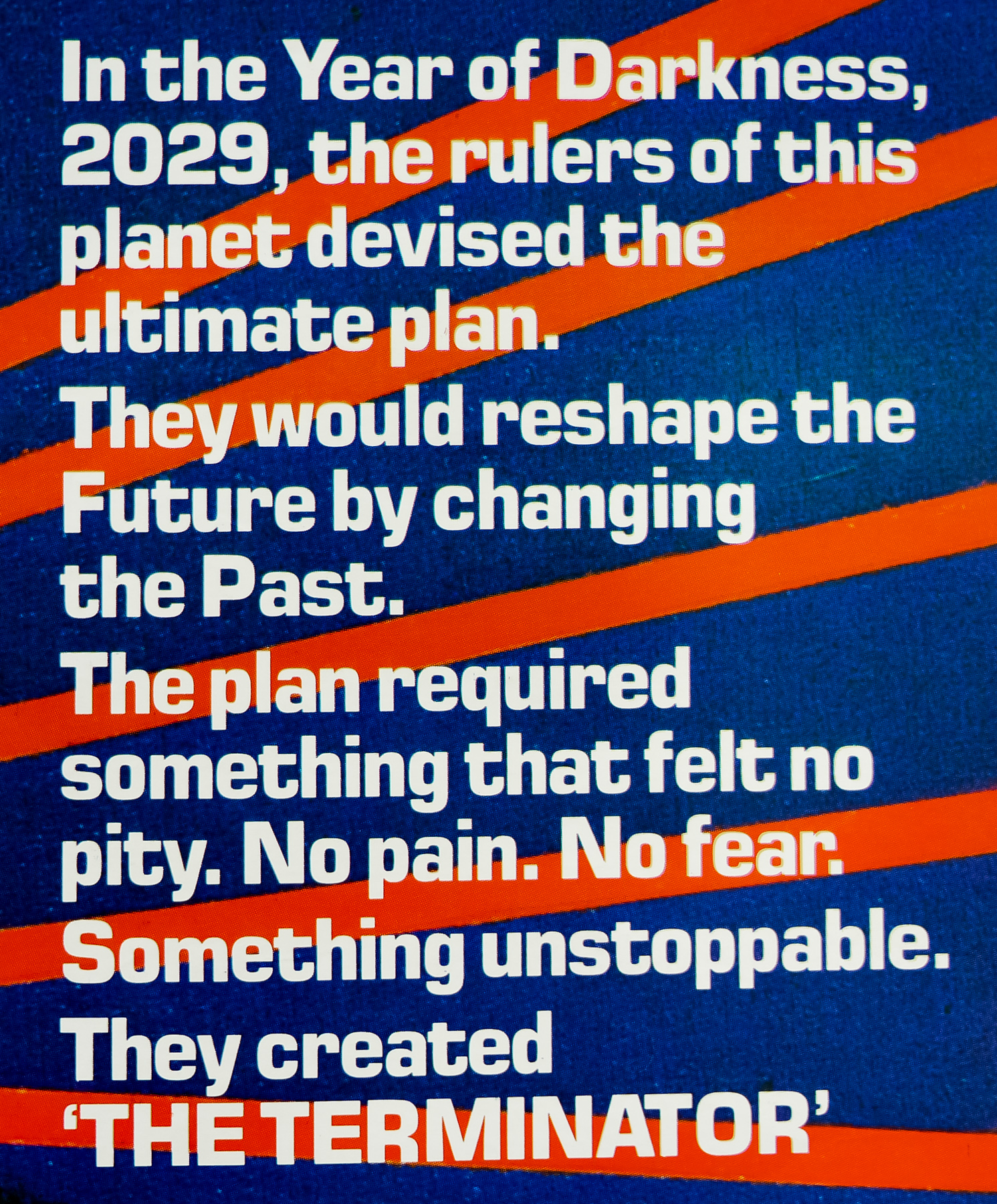
In the Year of Darkness, 2029, the rulers of this planet devised the ultimate plan. They would reshape the Future by changing the Past. The plan required something that felt no pity. No pain. No fear. Something unstoppable. They created 'THE TERMINATOR'

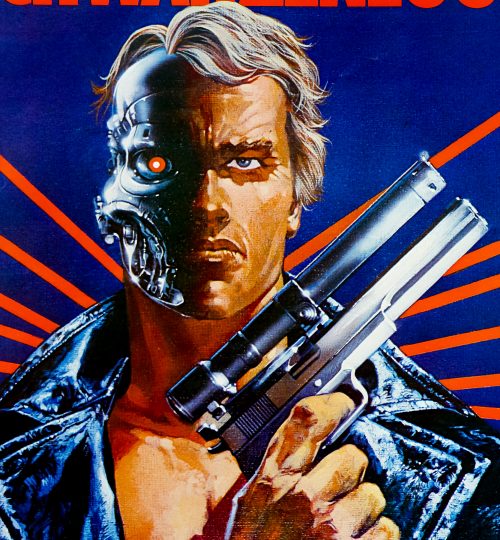
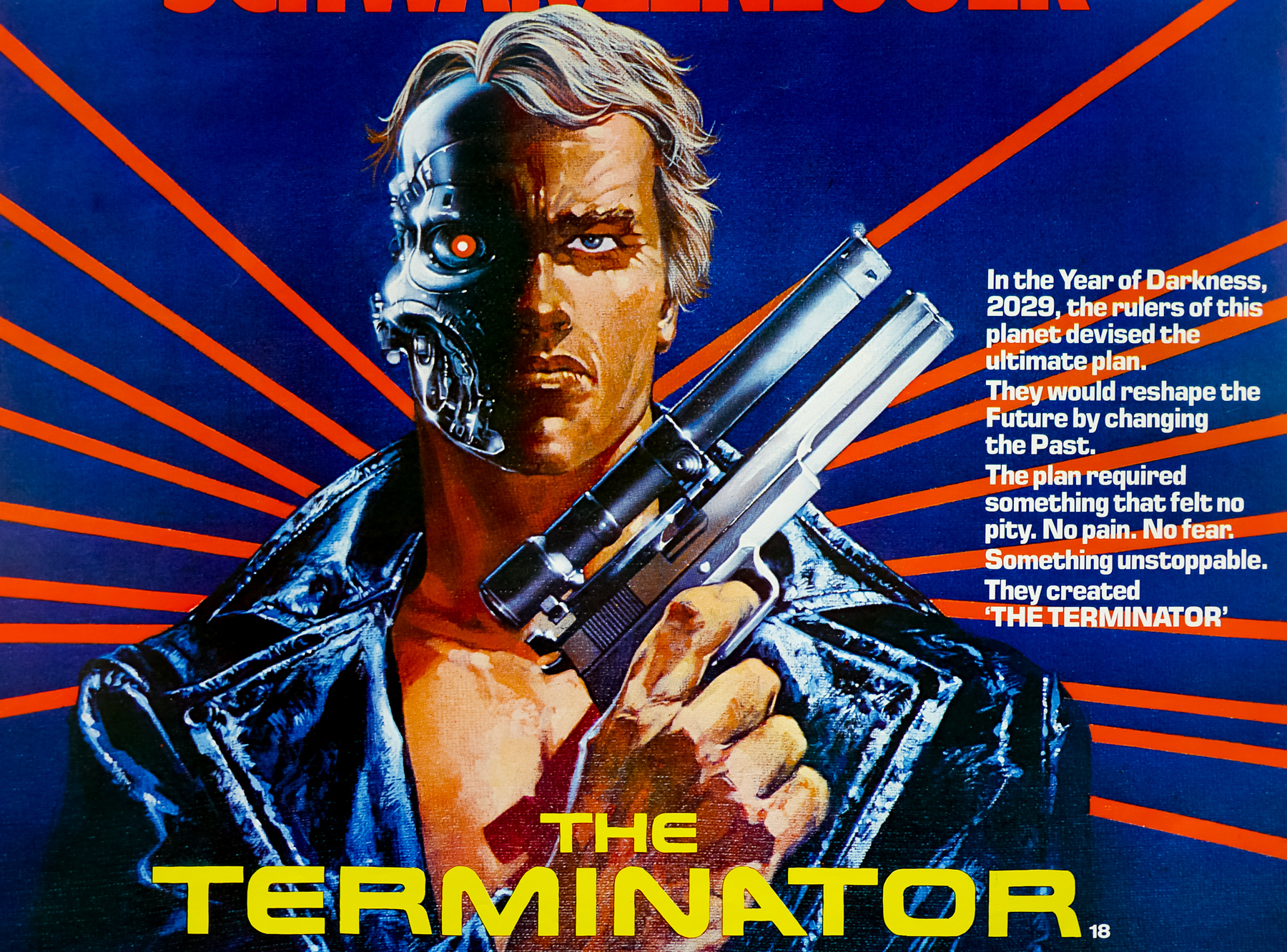
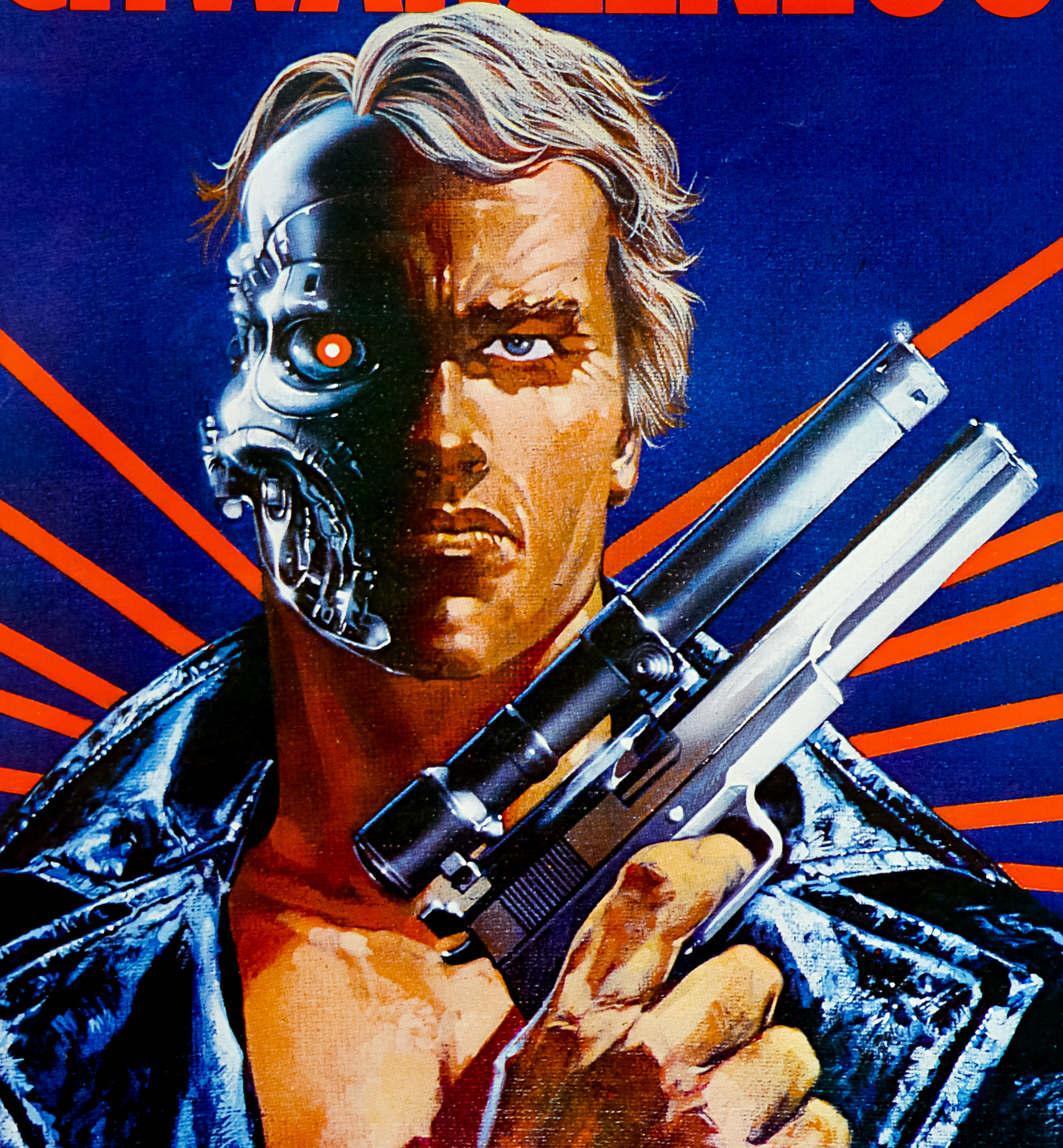
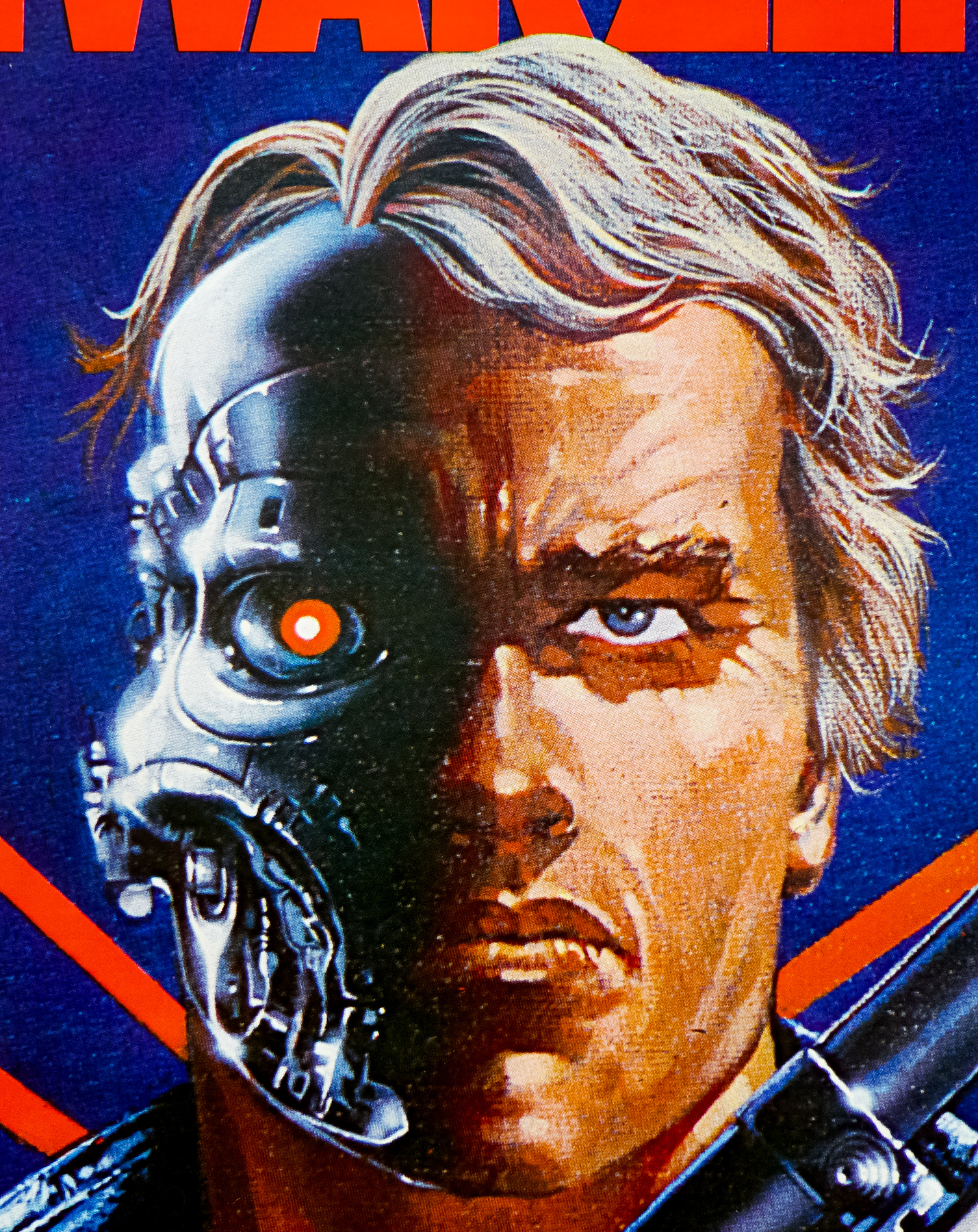
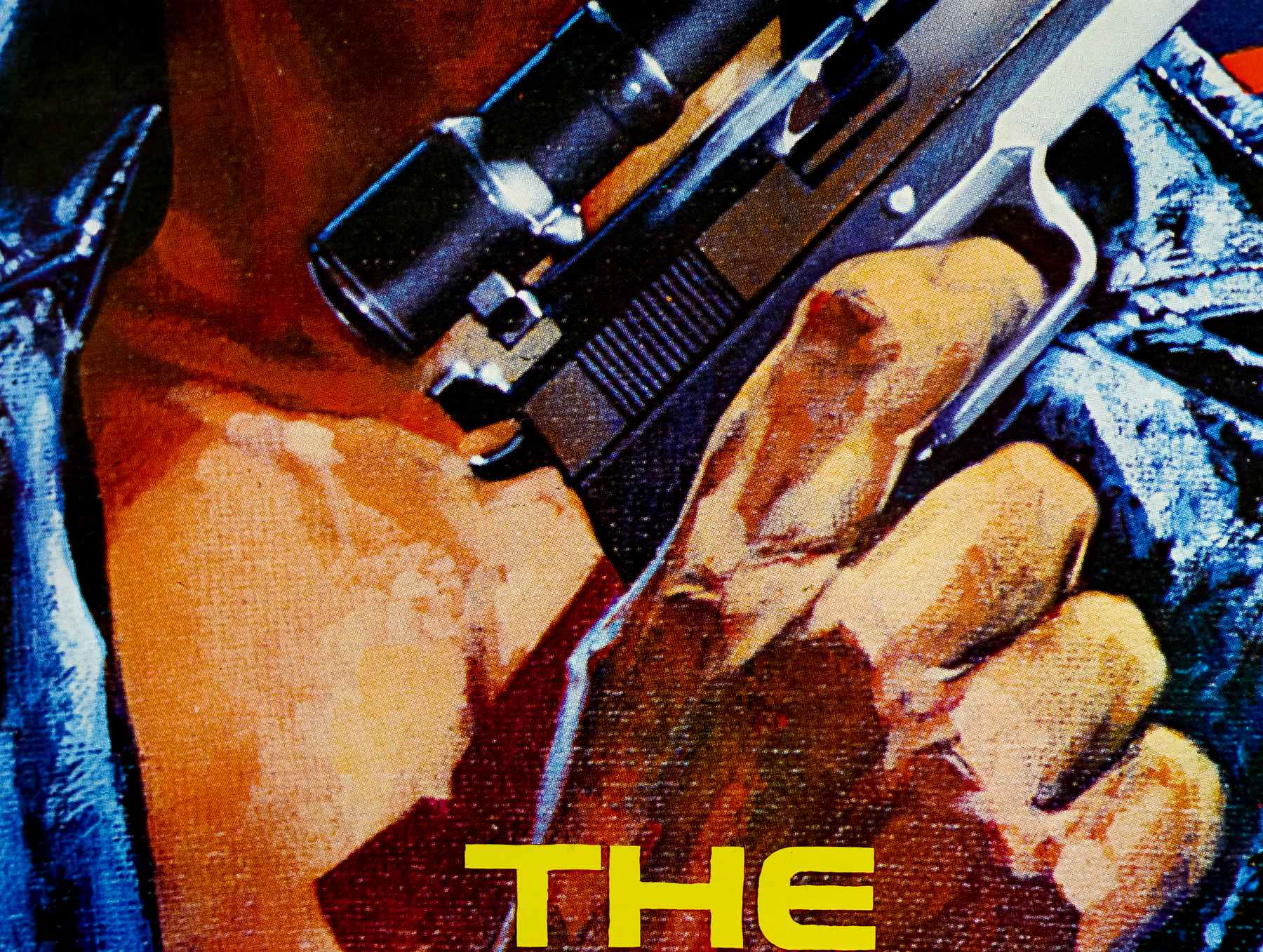
James Cameron’s seminal sci-fi classic The Terminator was given a unique poster design when it was released on these shores in January 1985. The US poster had featured the iconic photograph of Arnold Schwarzenegger alongside the lengthy tagline (that also appears on this quad), but the decision was taken to go with a painted portrait of the actor, which also features a depiction of the robotic endoskeleton underneath the Arnie exterior.

The person responsible for the image on this quad was the British artist Mike Francis. Whilst putting together the must-own book British Film Posters, Sim Branaghan met and spoke to Francis about his life and career and, as always, I heartily recommend picking up the book to read the section in full. Born in Surrey in 1938, Francis got his first job in commerical art in the early 1950s at the Rome Studios in Soho, London. Starting out as a messenger boy he began to be given illustration jobs and after a stint as a National Serviceman he returned to the studio in 1958 to a welcome pay raise and an increase in illustration work.

Mike stayed with Rome Studios until 1970 when he left to join Illustrators of London on Great Marlborough Street and this is where he was given his first film posters to work on. His first quad was for the 1971 version of Black Beauty and he also worked on posters for Hammer and other independent companies. In 1974 Francis won the National Gallery’s 150th Anniversary Award, and with the prize money he took the decision to go freelance. Although film posters were only a small part of his overall output (he estimates he was doing a couple per year) he continued to paint for film-related studios such as Downtons and some of his other quads include The Karate Kid (1984), Not Quite Jerusalem (1985) and The Holocroft Covenant (1985).

By about 1990 the illustration work had dried up completely but Francis had been painting highly finished photorealist work for many years and this side of his career had taken off significantly with high-profile exhibitions and celebrity clients. However, in terms of film work there’s no question that this painting for The Terminator is the artist’s most iconic work.

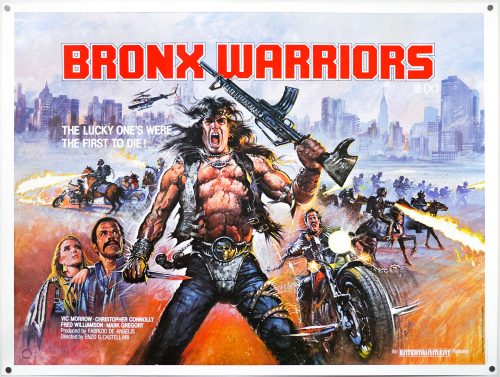
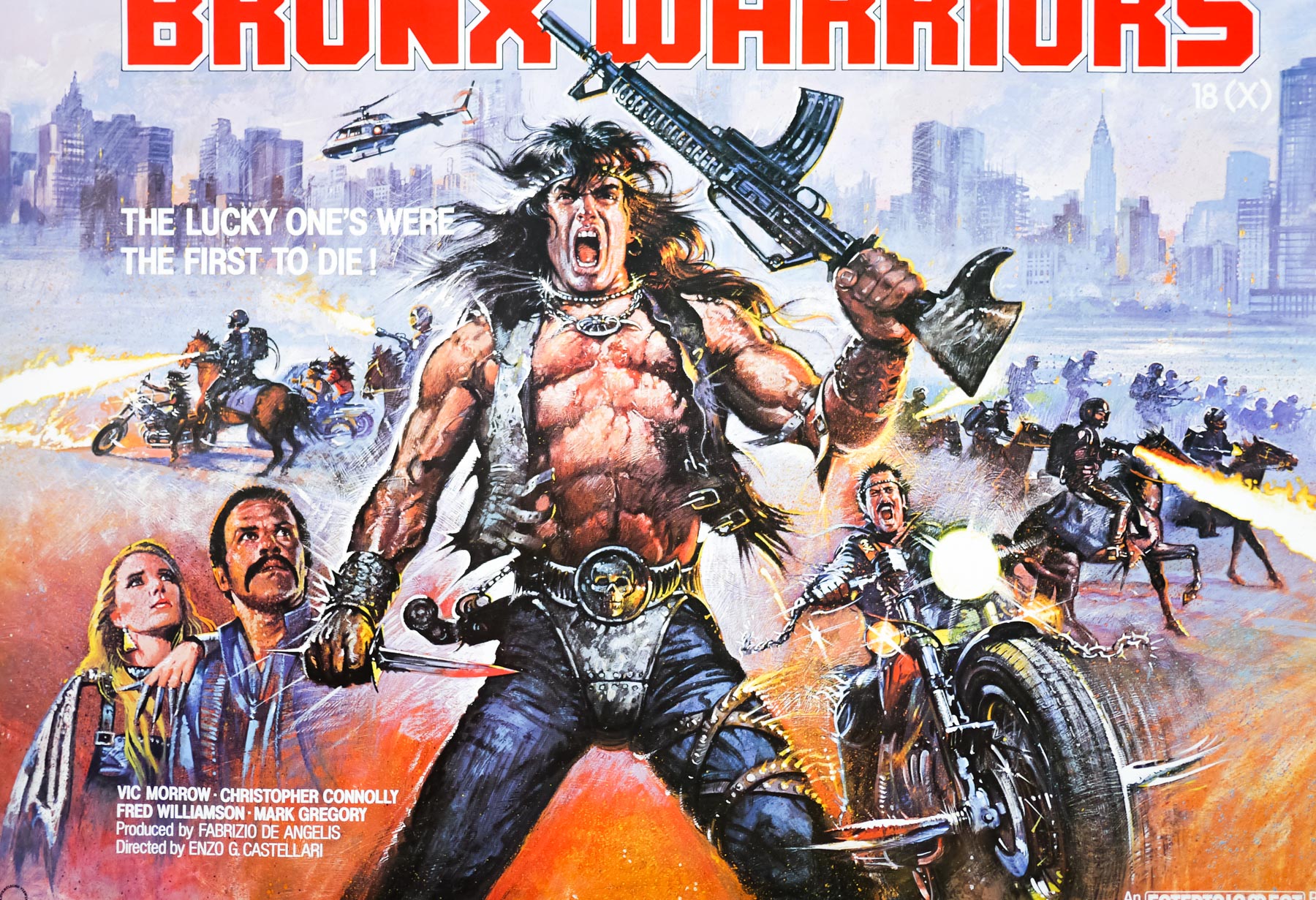
Bronx Warriors / quad / UK

13.09.12

Poster Poster
Title
Bronx Warriors
AKA
1990: I guerrieri del Bronx (Italy - original title)
Year of Film
1982
Director
Enzo G. Castellari
Starring
Vic Morrow, Christopher Connelly, Fred Williamson, Mark Gregory, Stefania Girolami Goodwin, Ennio Girolami, George Eastman, Joshua Sinclair, Betty Dessy, Rocco Lerro
Origin of Film
Italy
Genre(s) of Film
Vic Morrow, Christopher Connelly, Fred Williamson, Mark Gregory, Stefania Girolami Goodwin, Ennio Girolami, George Eastman, Joshua Sinclair, Betty Dessy, Rocco Lerro,
Type of Poster
Quad
Style of Poster
--
Origin of Poster
UK
Year of Poster
1982
Designer
Brian Bysouth
Artist
Brian Bysouth
Size (inches)
30 2/16 x 40"
SS or DS
SS
NSS #
--
Tagline
The lucky ones were the first to die!

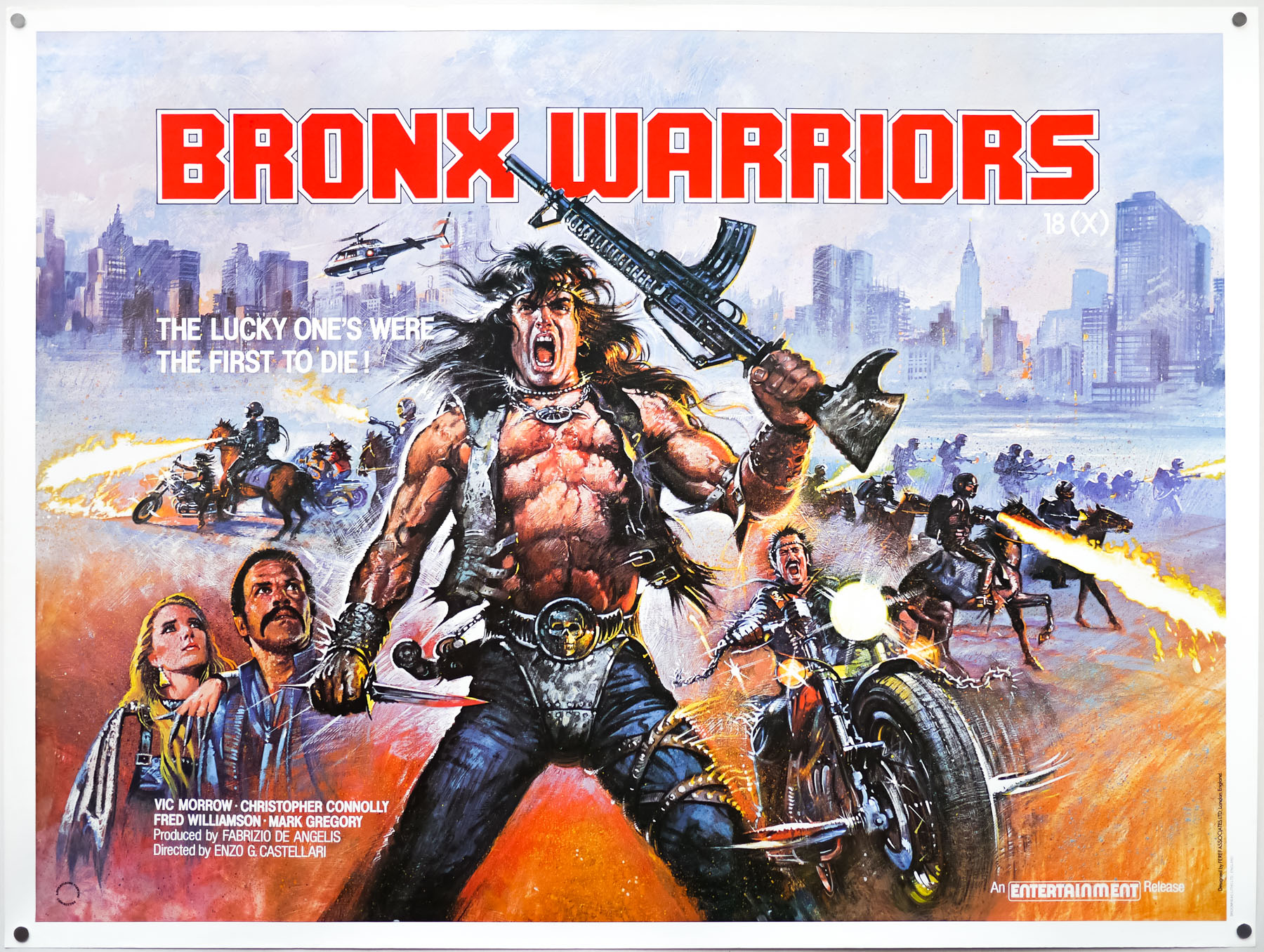
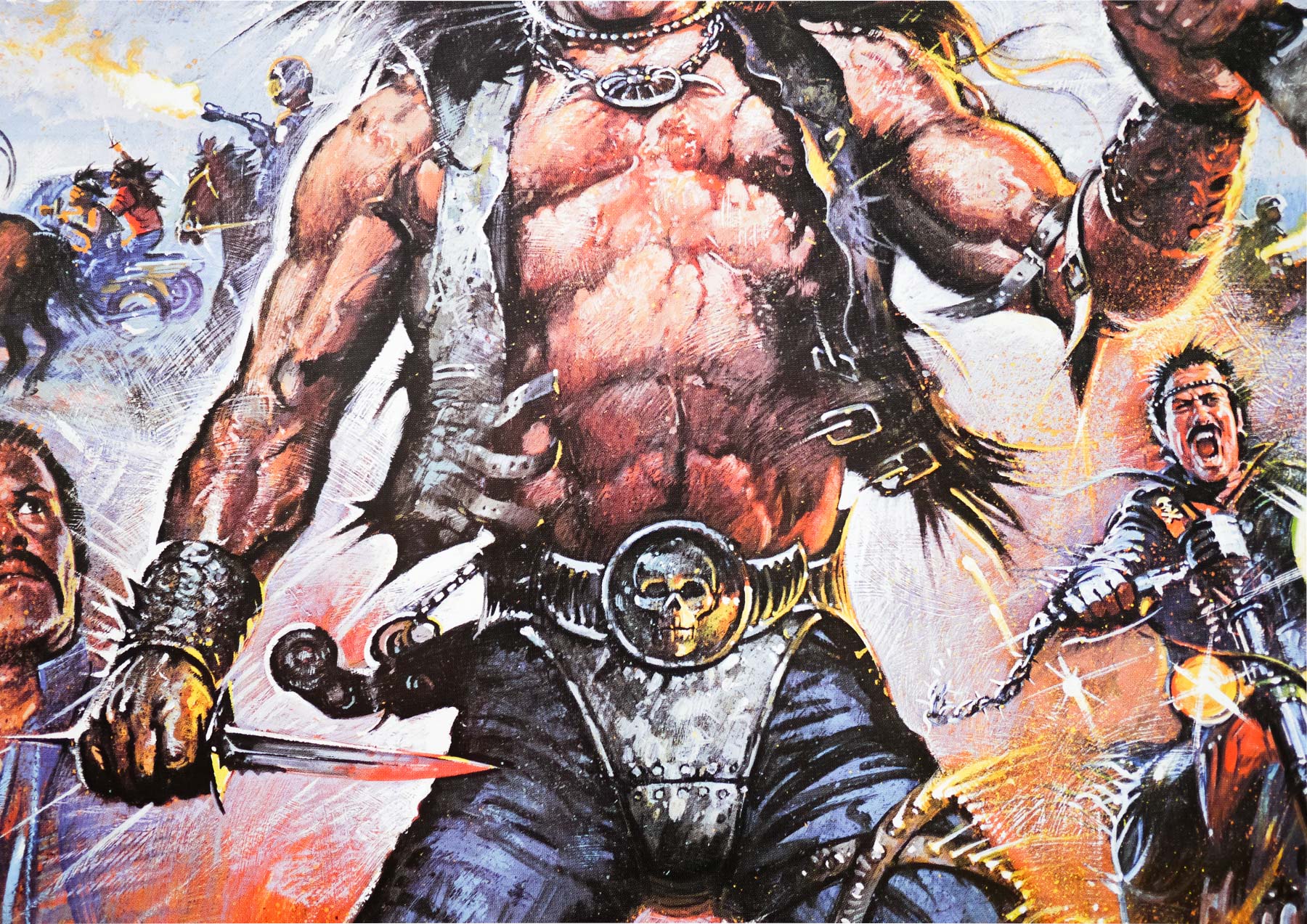
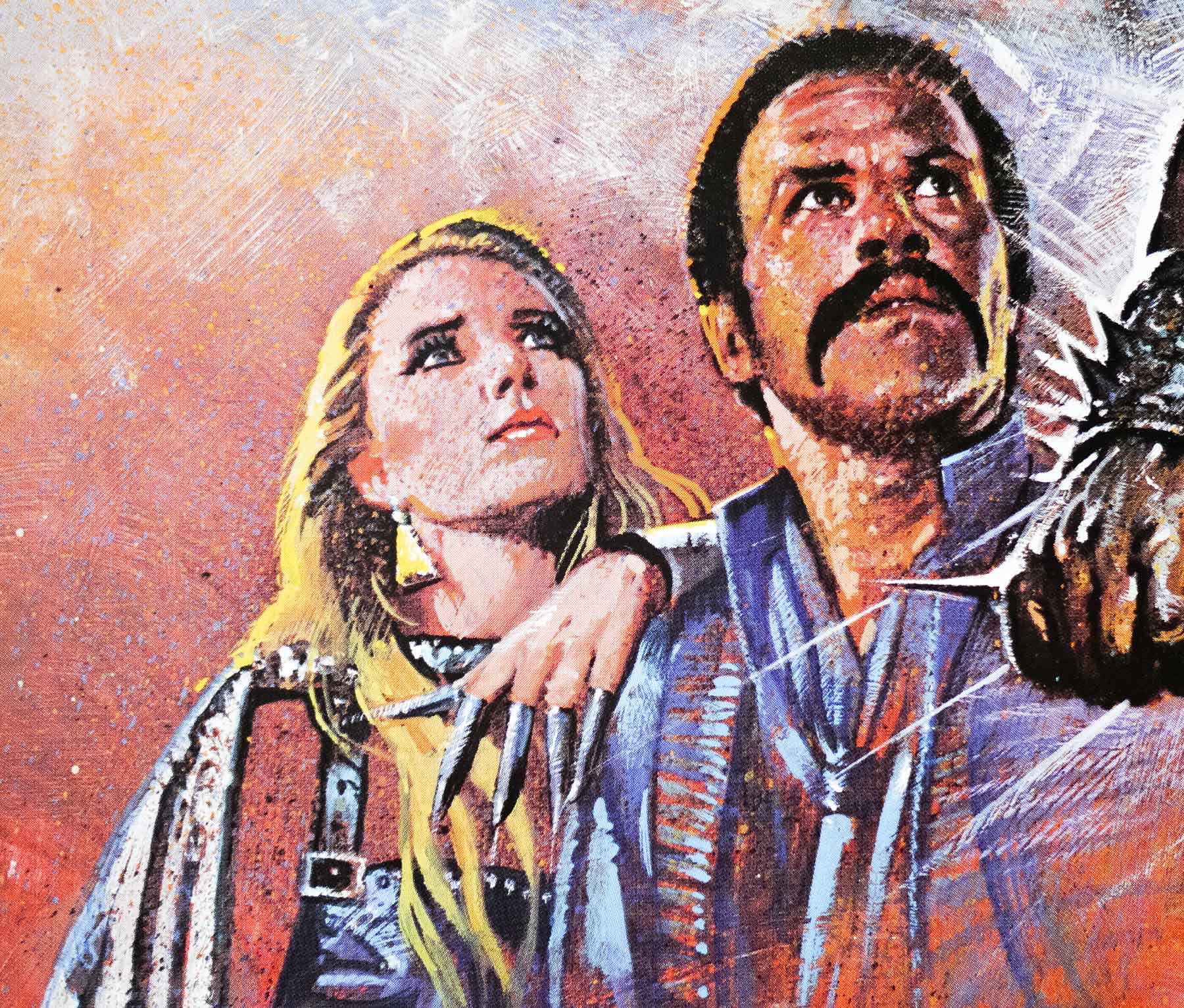
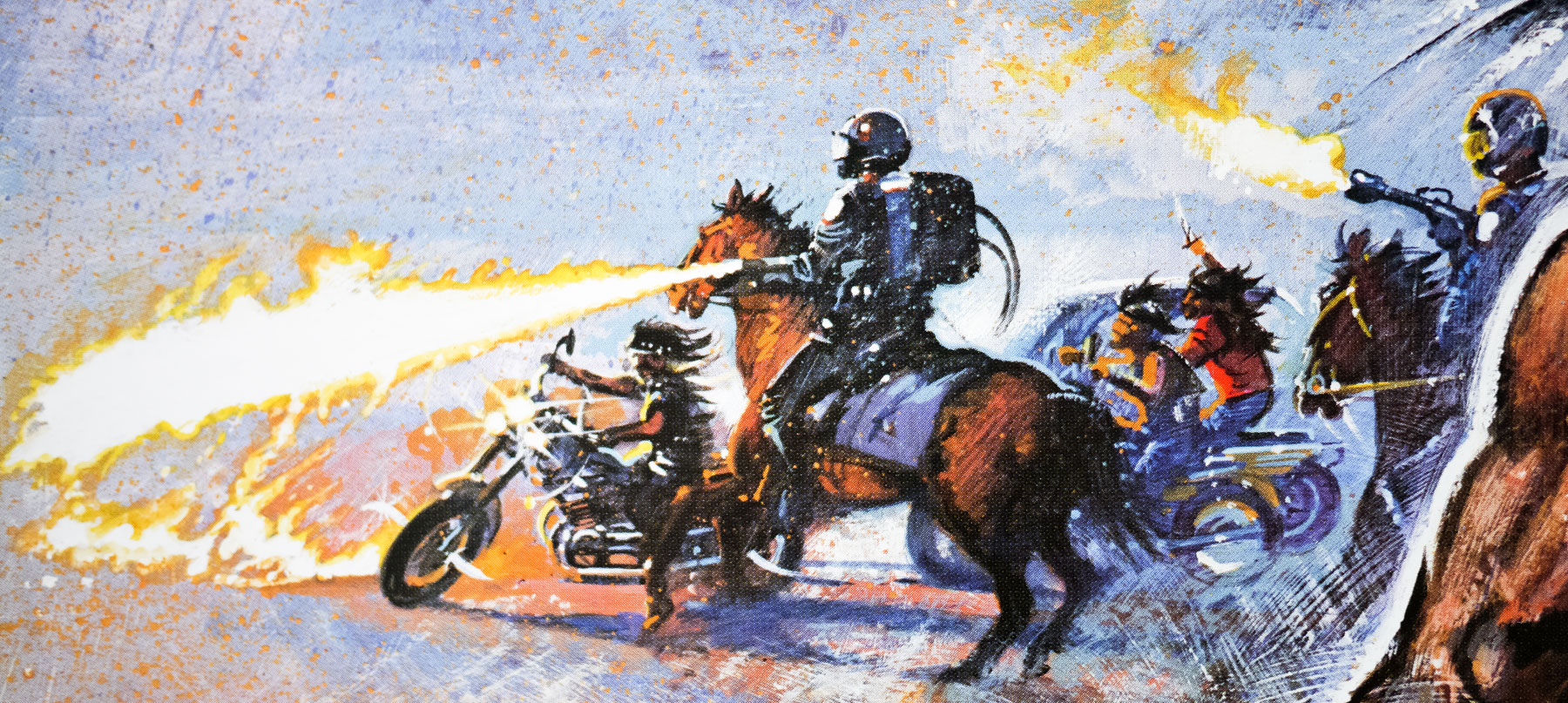
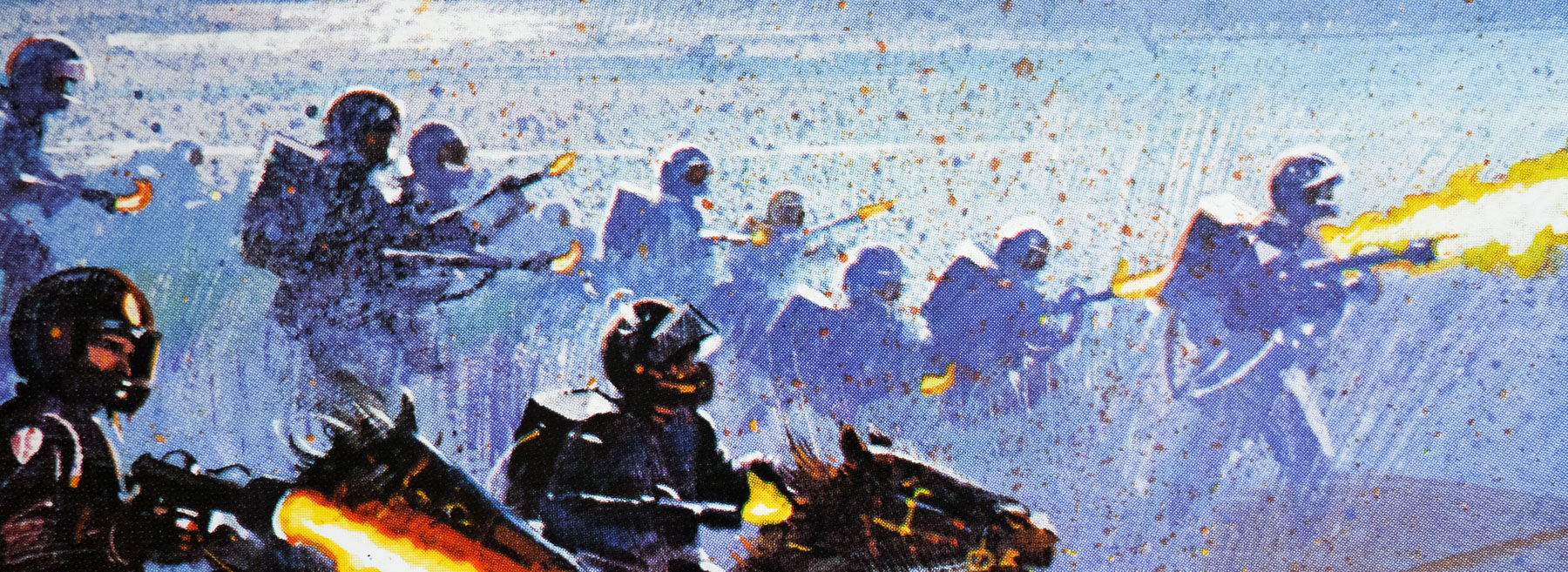
Prolific Italian director Enzo G Castellari was behind a string of low-budget rip-offs homages of successful American productions during the 1980s. Having directed Great White in 1980 (pulled from release after a successful lawsuit by Universal Pictures), there’s no question that his 1983 post-apocalyptic film Bronx Warriors owes a lot to John Carpenter’s classic Escape From New York, with a generous dash of Walter Hill’s The Warriors (1979)

To be fair to Castellari he was a pioneer in the Poliziotteschi (Italian crime film) genre in the 1970s, with La Polizia Incrimina la Legge Assolve (AKA High Crimes – 1973) and Il Grande Racket (The Big Racket – 1976) being particular standouts. He was also behind the war films La battaglia d’Inghilterra (Eagles over London – 1969) and the original Inglorious Bastards (Quel maledetto treno blindato – 1978). By the 1980s the director was churning out a series of B-movies, including Bronx Warriors and The New Barbarians (1983) and would eventually move into directing TV movies during the 1990s and 2000s.

Bronx Warriors follows the plight of 17-year-old Ann (Stefania Girolami Goodwin), the heiress to a questionable arms company (The Manhattan Corporation) who runs away into the lawless wasteland of a post-apocalyptic Bronx and is attacked by a gang of roller skaters (!) called The Zombies. She’s rescued by The Riders, another gang who are led by Trash – played by Mark Gregory (actually Marco de Gregorio, a non-actor Castellari had met in the gym) – who take Ann under their protection. The corporation dispatches the ruthless psychopath Hammer (Vic Morrow in his penultimate role before his untimely death during the filming of Twilight Zone the Movie) to disrupt the gangs and return Ann safely.

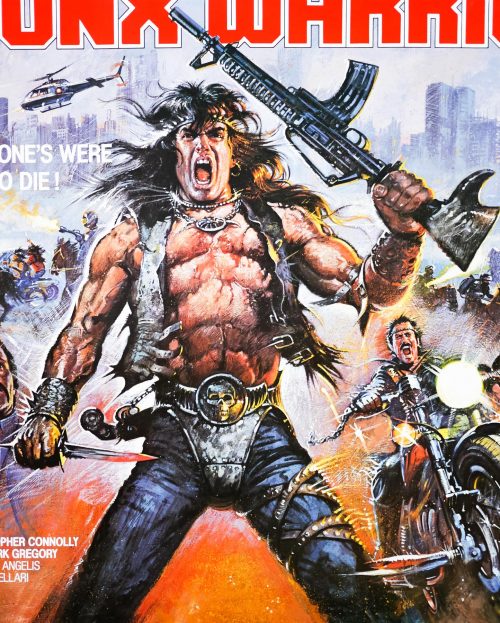
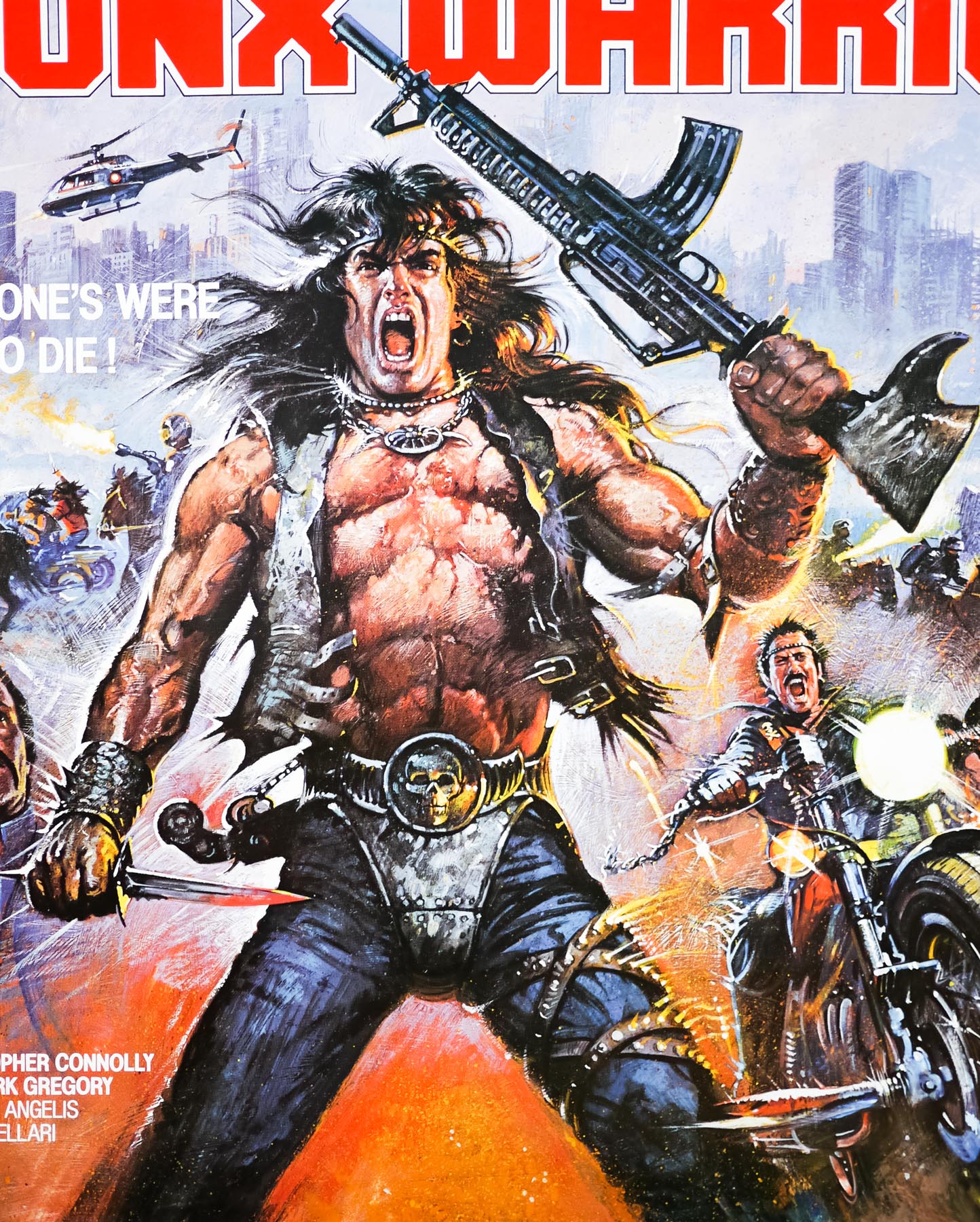
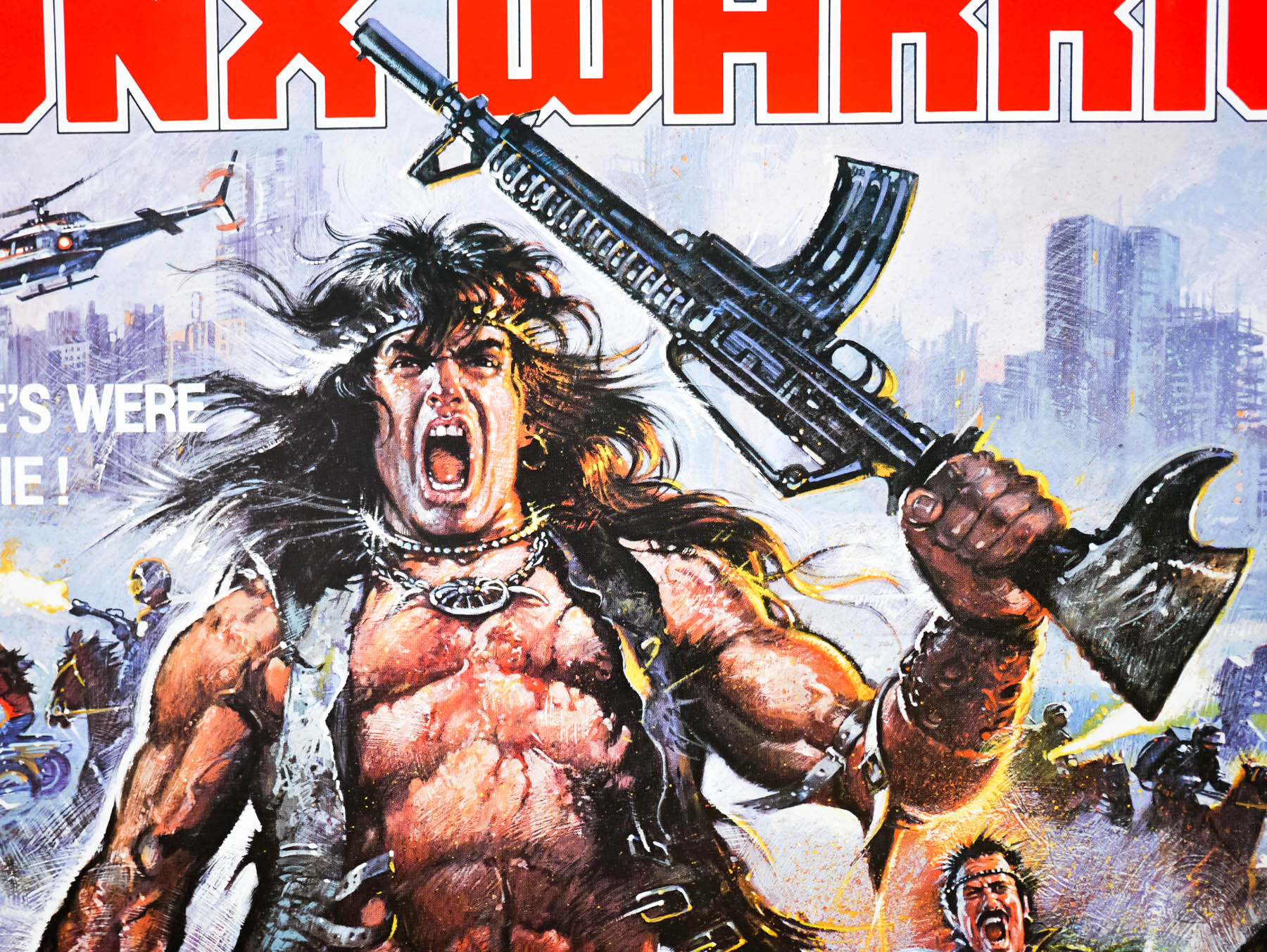
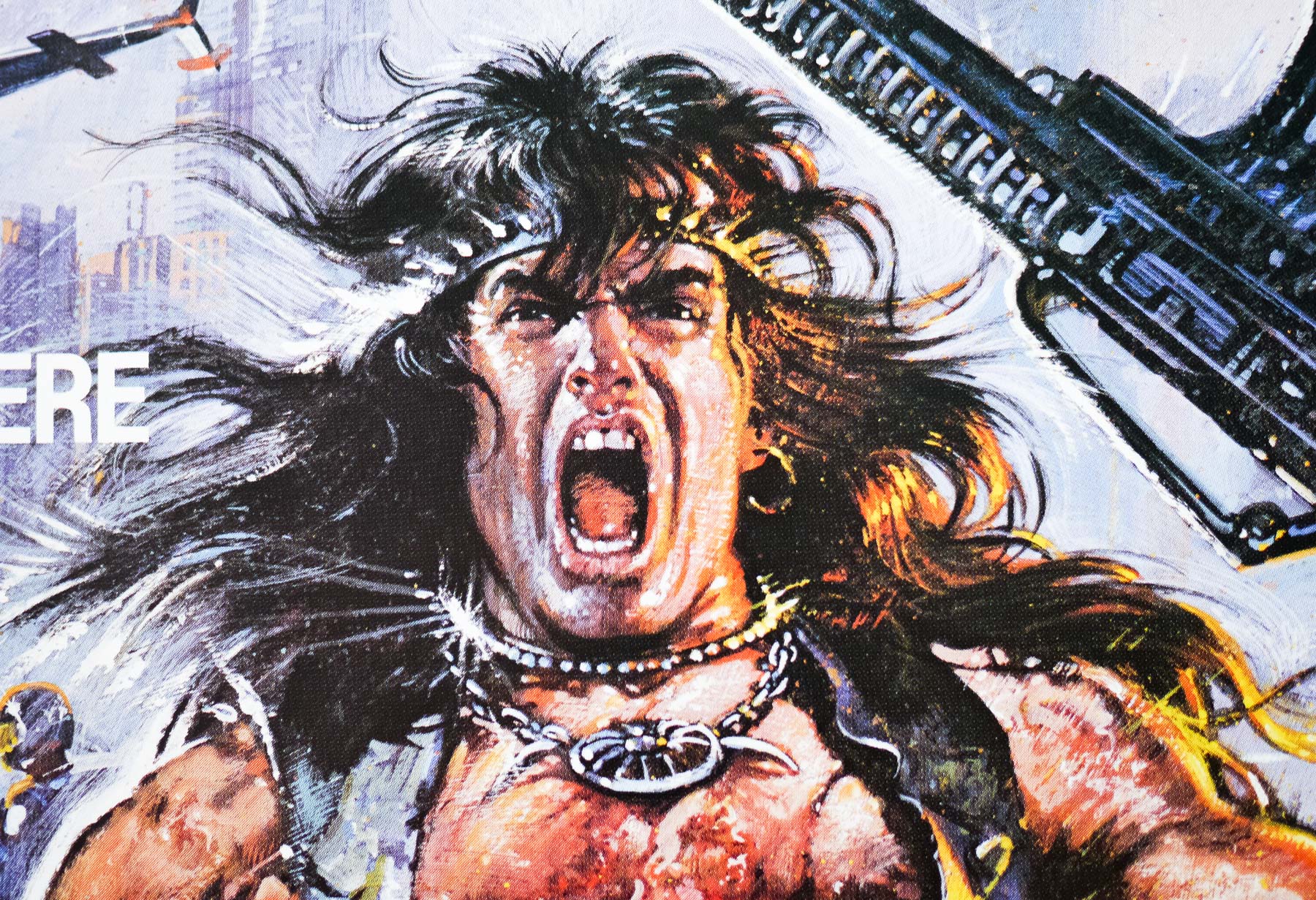
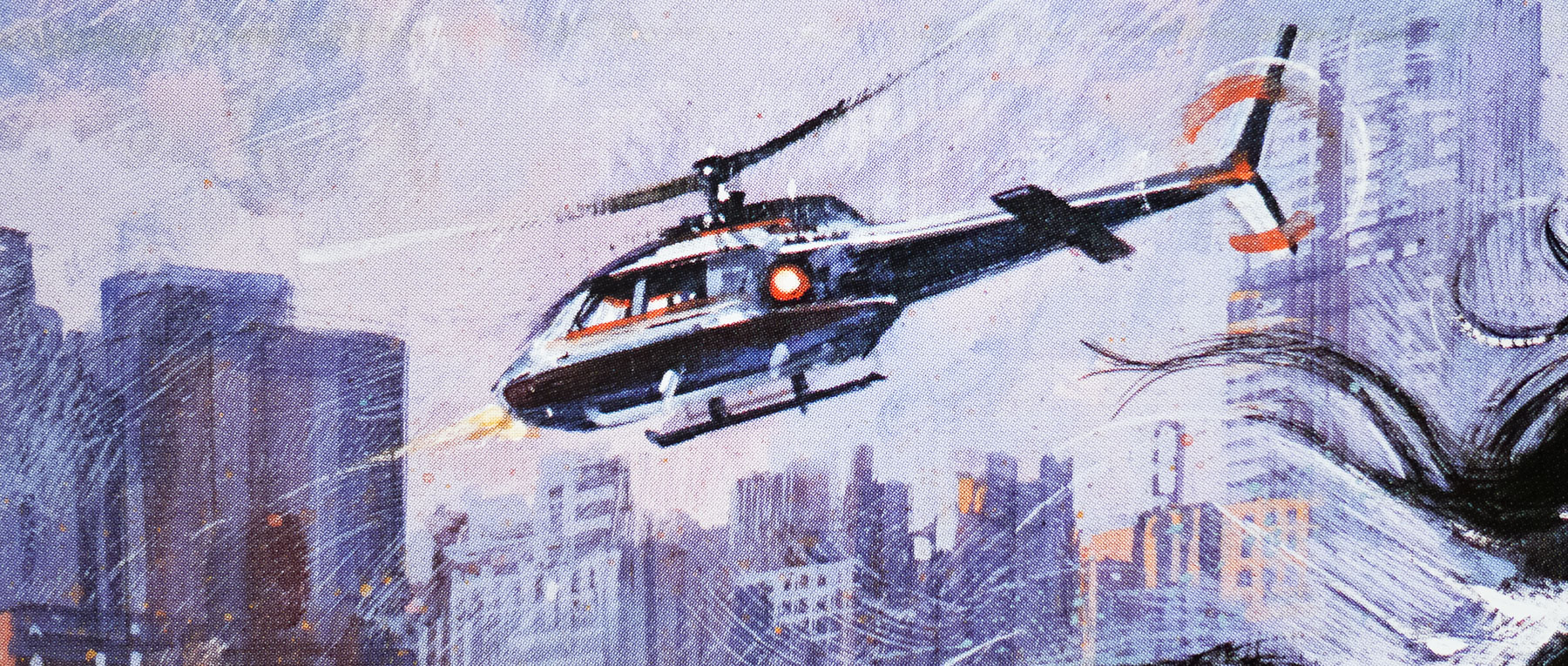
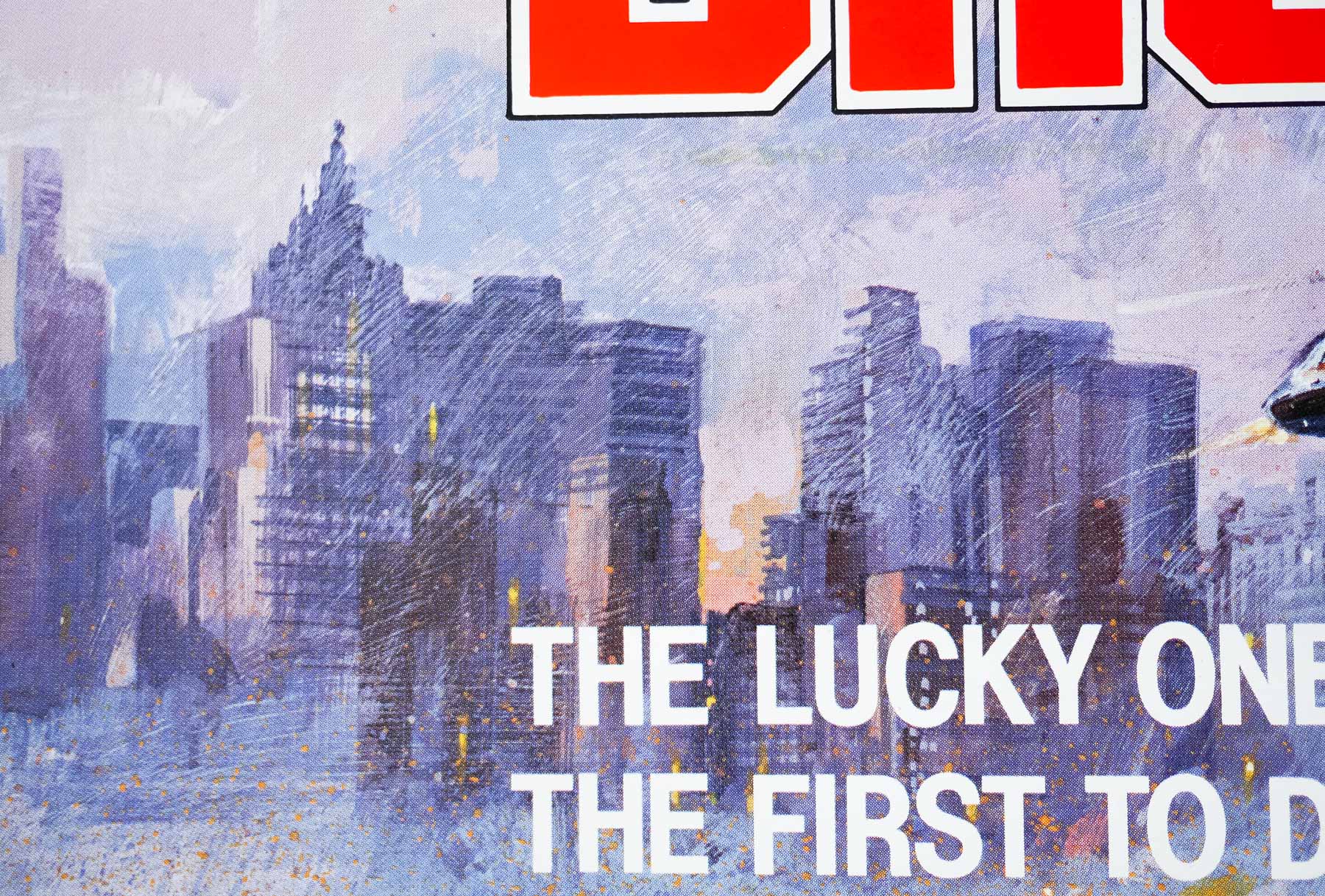
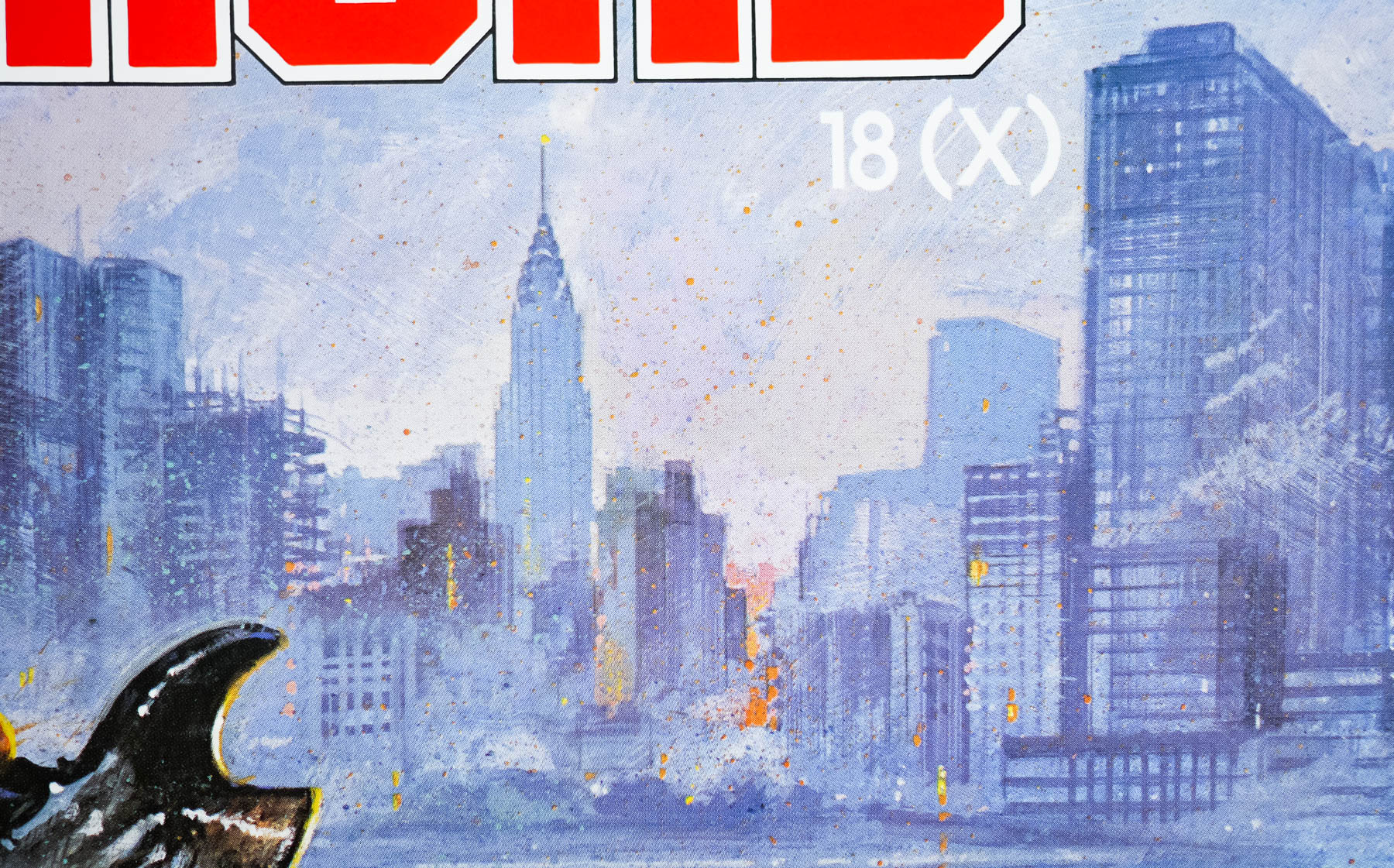
The artwork on this quad is by the brilliant British artist Brian Bysouth, whose wonderfully detailed illustrations featured on hundreds of posters over three decades. His most famous designs and artwork include the withdrawn one sheet for A View to a Kill, Highlander, Big Trouble in Little China and The Living Daylights. Bysouth would work on the quad for the sequel to this film, Escape 2000 (AKA Fuga Dal Bronx), one year later.

In 2012 I interviewed Brian Bysouth and the resulting article can be read here.

The international trailer is on YouTube.

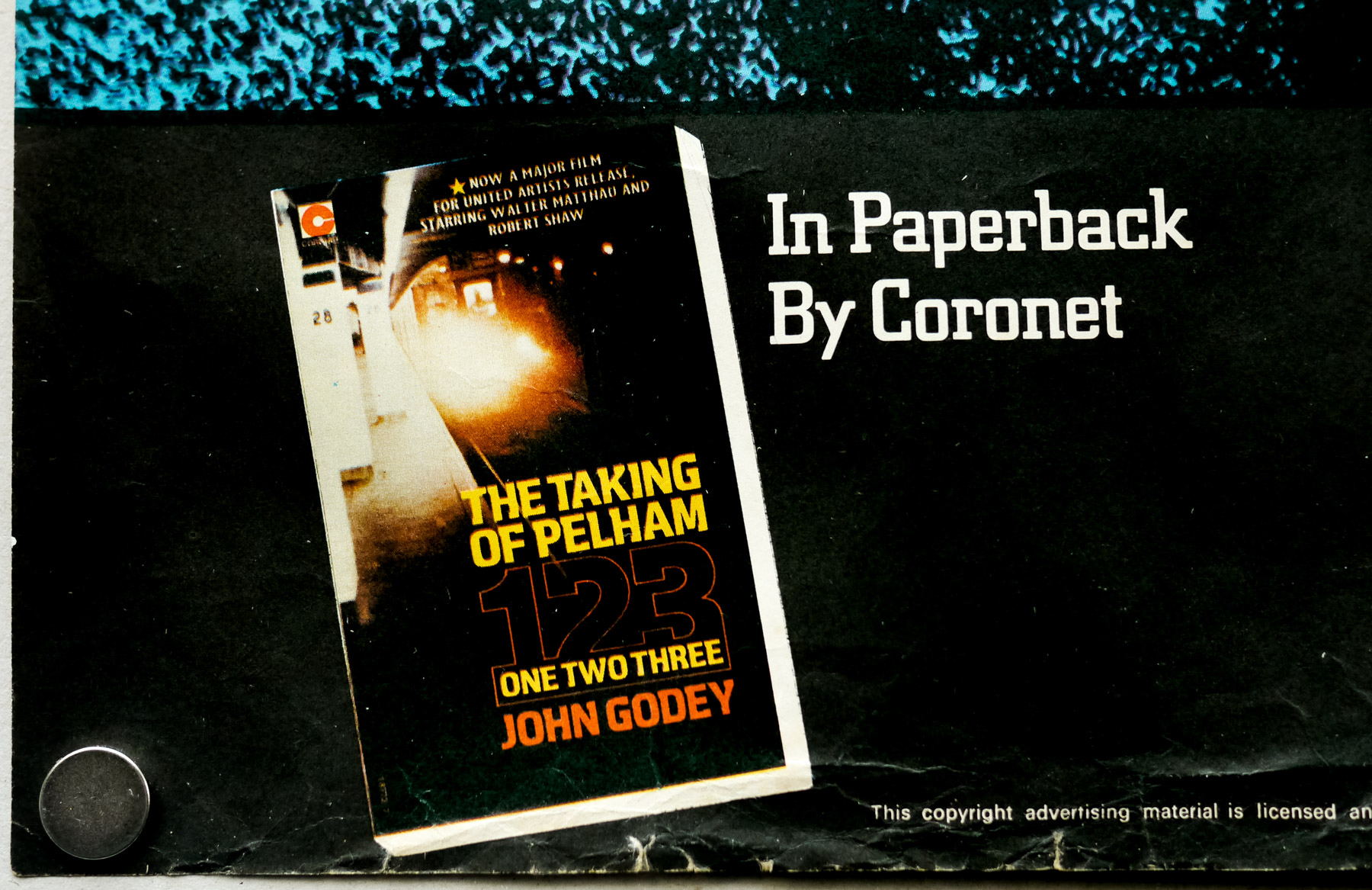
The Taking of Pelham 123 / quad / UK

23.11.12

Poster Poster
Title
The Taking of Pelham 123
AKA
The Taking of Pelham One Two Three (alternative title) | Il colpo della metropolitana - un ostaggio al minuto [The underground hit - one hostage a minute] (Italy)
Year of Film
1974
Director
Joseph Sargent
Starring
Walter Matthau, Robert Shaw, Martin Balsam, Jerry Stiller, Hector Elizondo, Dick O'Neill, Earl Hindman
Origin of Film
USA
Genre(s) of Film
Walter Matthau, Robert Shaw, Martin Balsam, Jerry Stiller, Hector Elizondo, Dick O'Neill, Earl Hindman,
Type of Poster
Quad
Style of Poster
--
Origin of Poster
UK
Year of Poster
1974
Designer
Unknown
Artist
Unknown
Size (inches)
29 14/16" x 39 14/16"
SS or DS
SS
Tagline
Before this train reaches the next station it will become the scene of the most spectacular hijack ever attempted

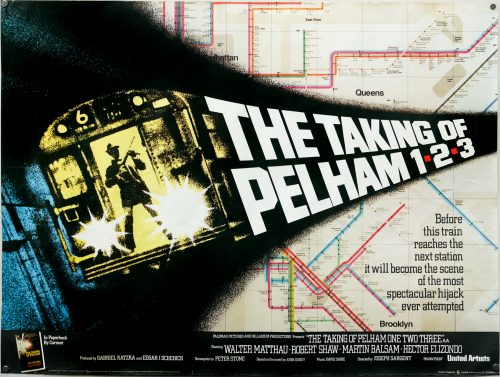
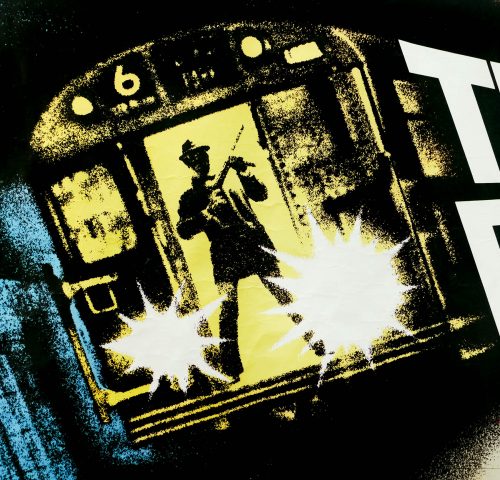
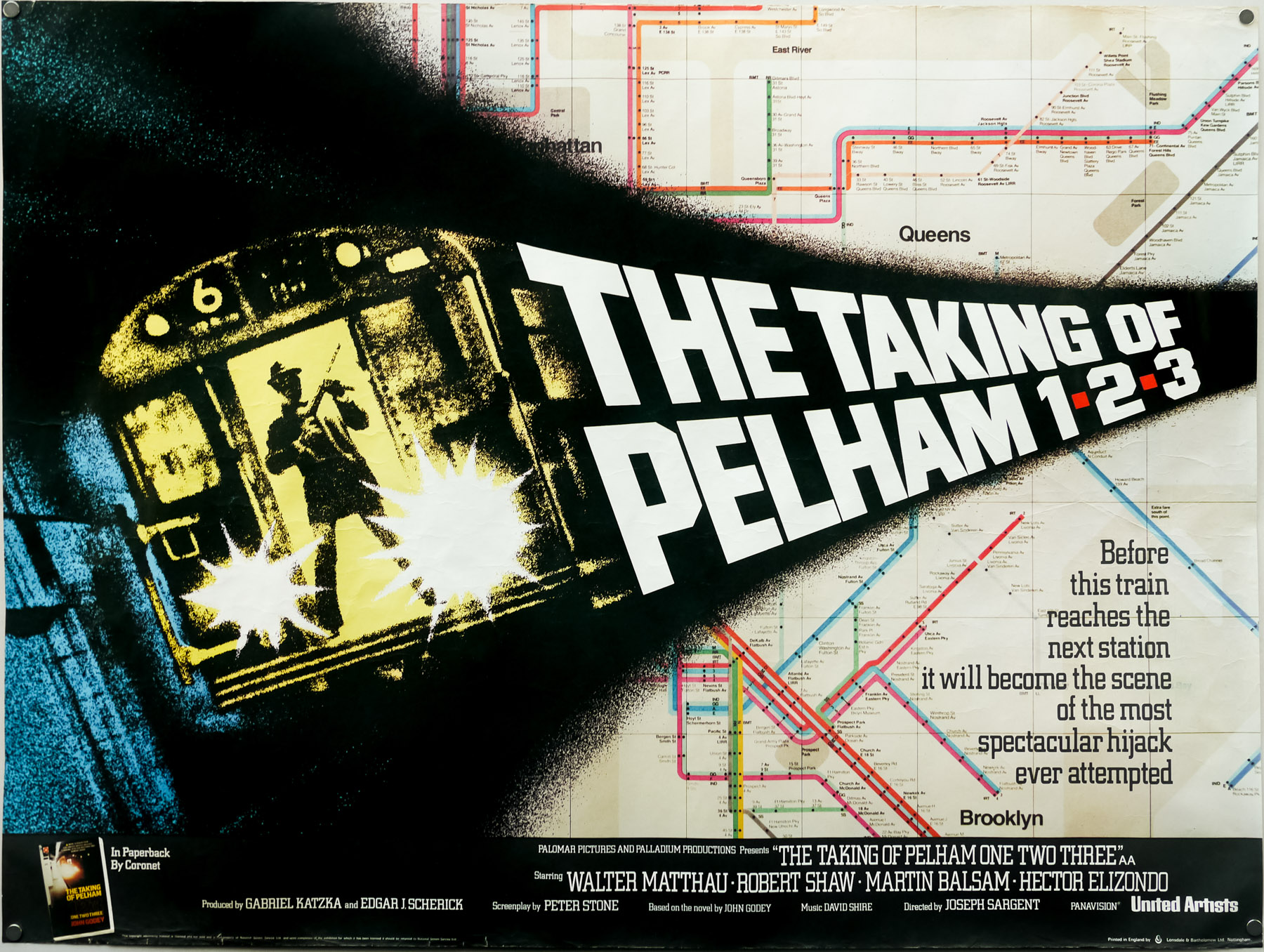
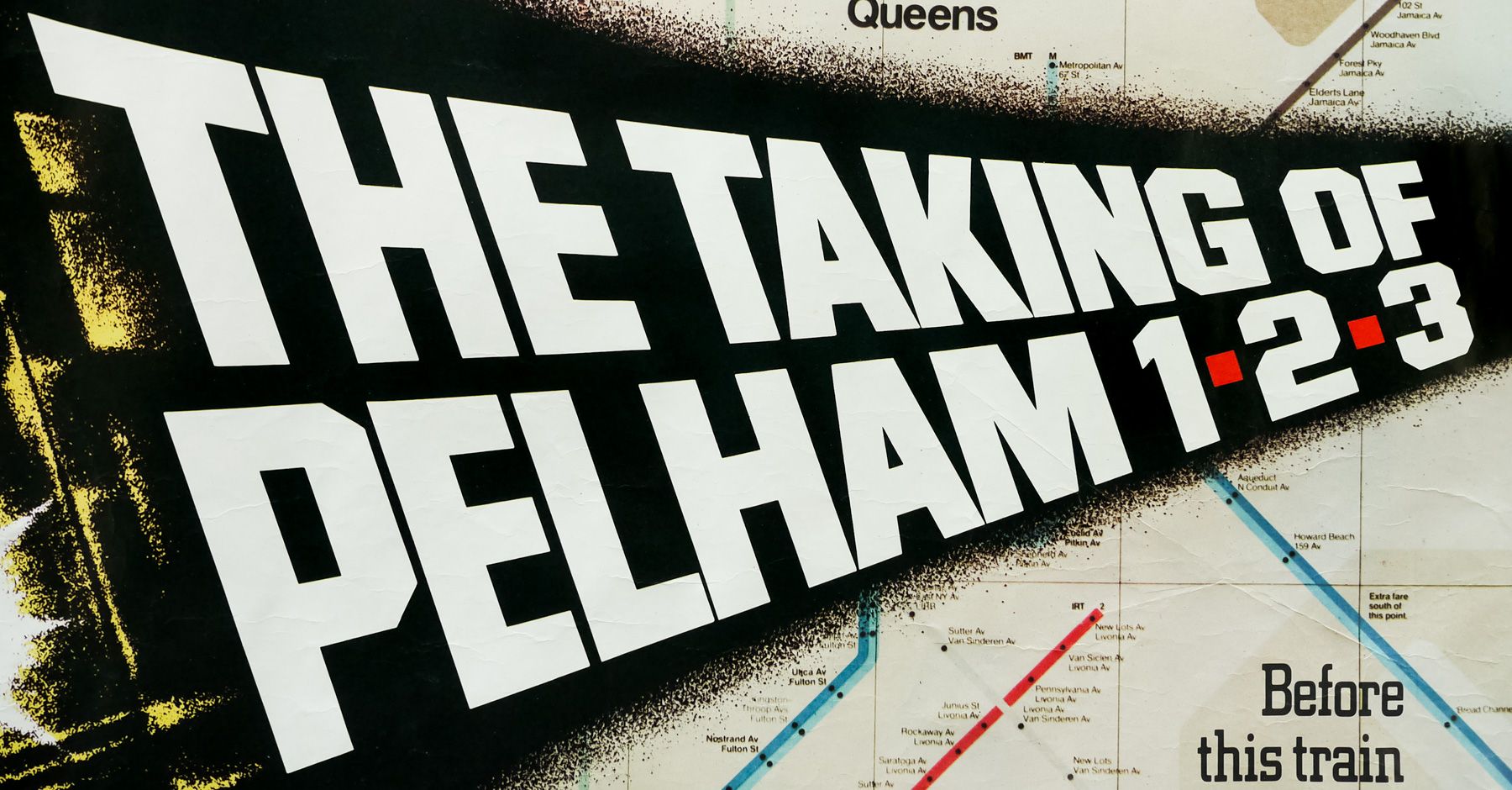
A really striking design on this British quad for the release of the original New York subway-based action thriller, The Taking of Pelham 123. Directed by Joseph Sargent, whose career seems to have consisted mostly of TV movies, the film stars the late Robert Shaw as the psychotic leader of a gang of criminals who board and hijack a subway train. The gang demand a ransom of $1million and threaten to execute a passenger for every minute over the deadline.

Walter Matthau plays a world-weary New York City Transit Authority police lieutenant who ends up being the chief negotiator between the gang, working to try and foil their plans. Famously the gang have colour-based nicknames, which they use instead of their real names (Robert Shaw is blue, for example). Director Quentin Tarantino would later use this idea for his film debut Reservoir Dogs. This film was remade by the late Tony Scott in 2009

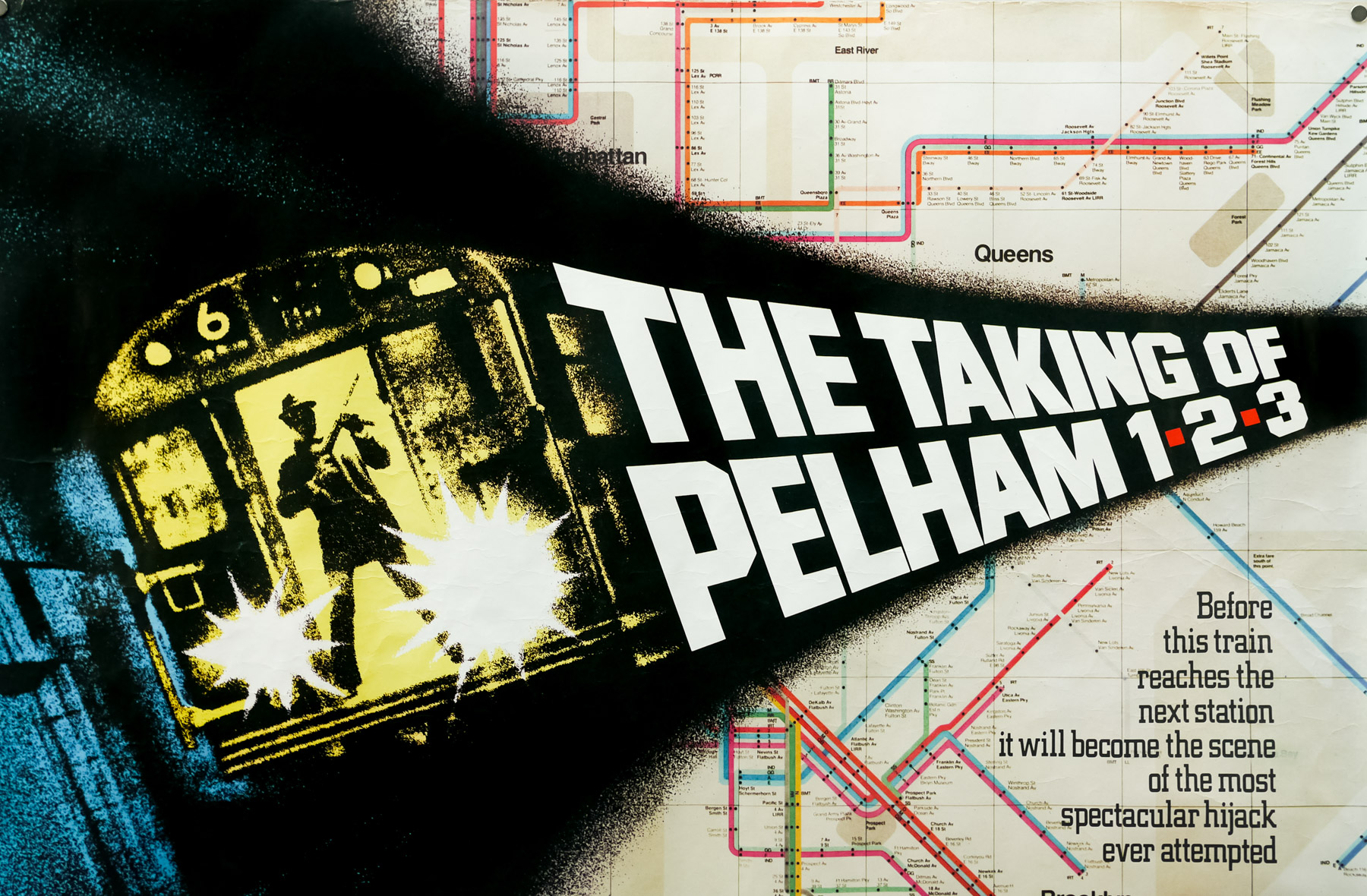
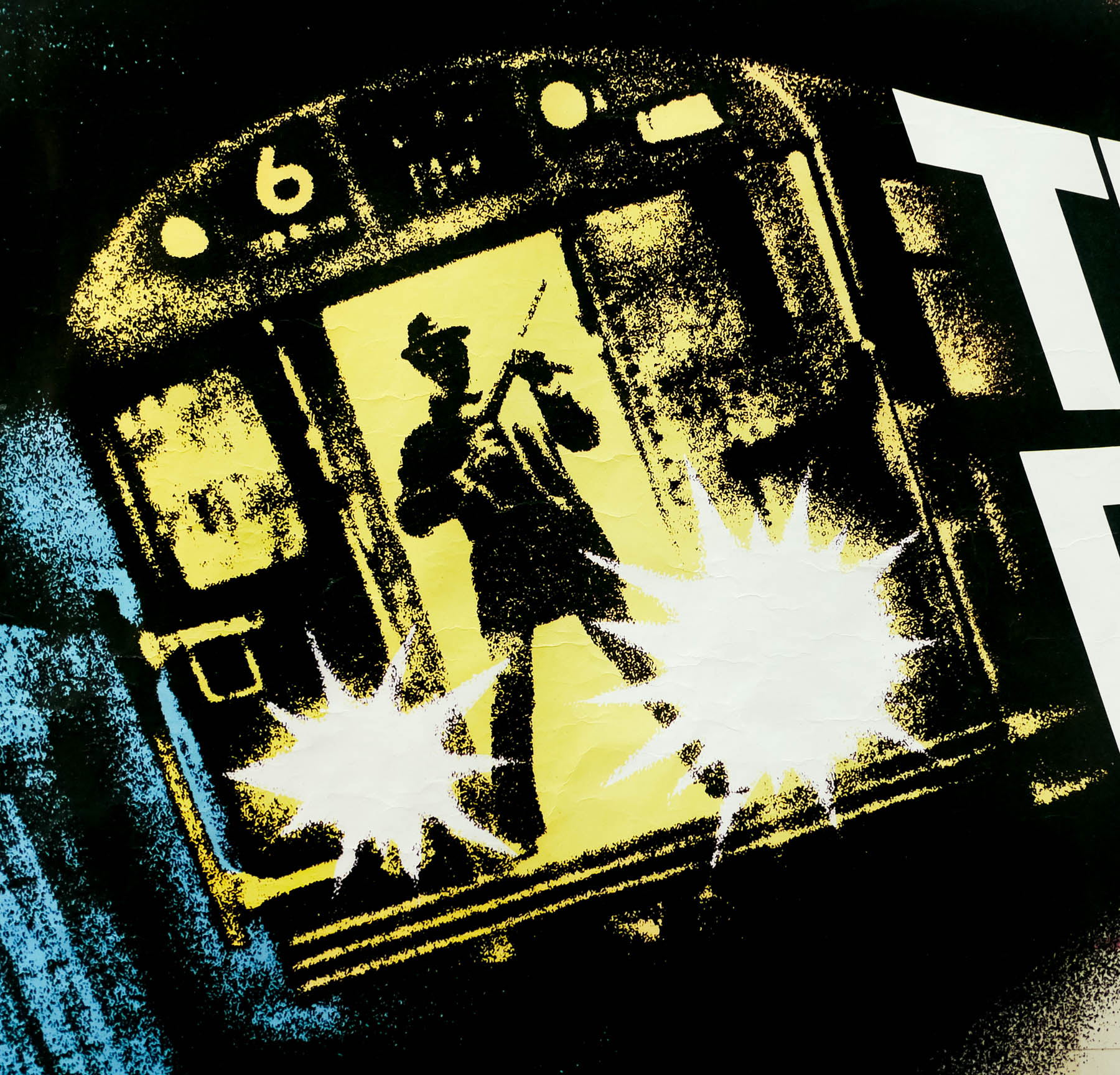
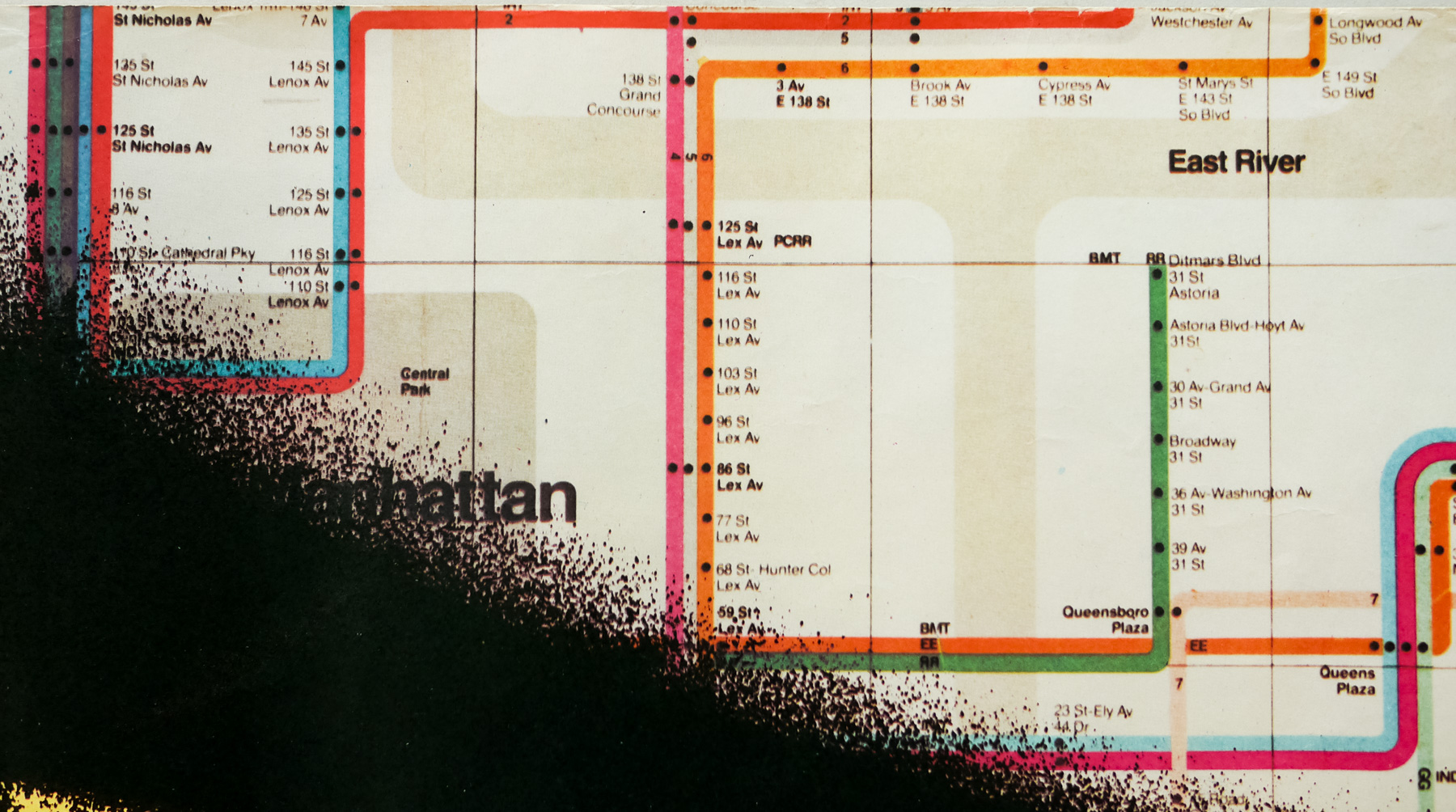
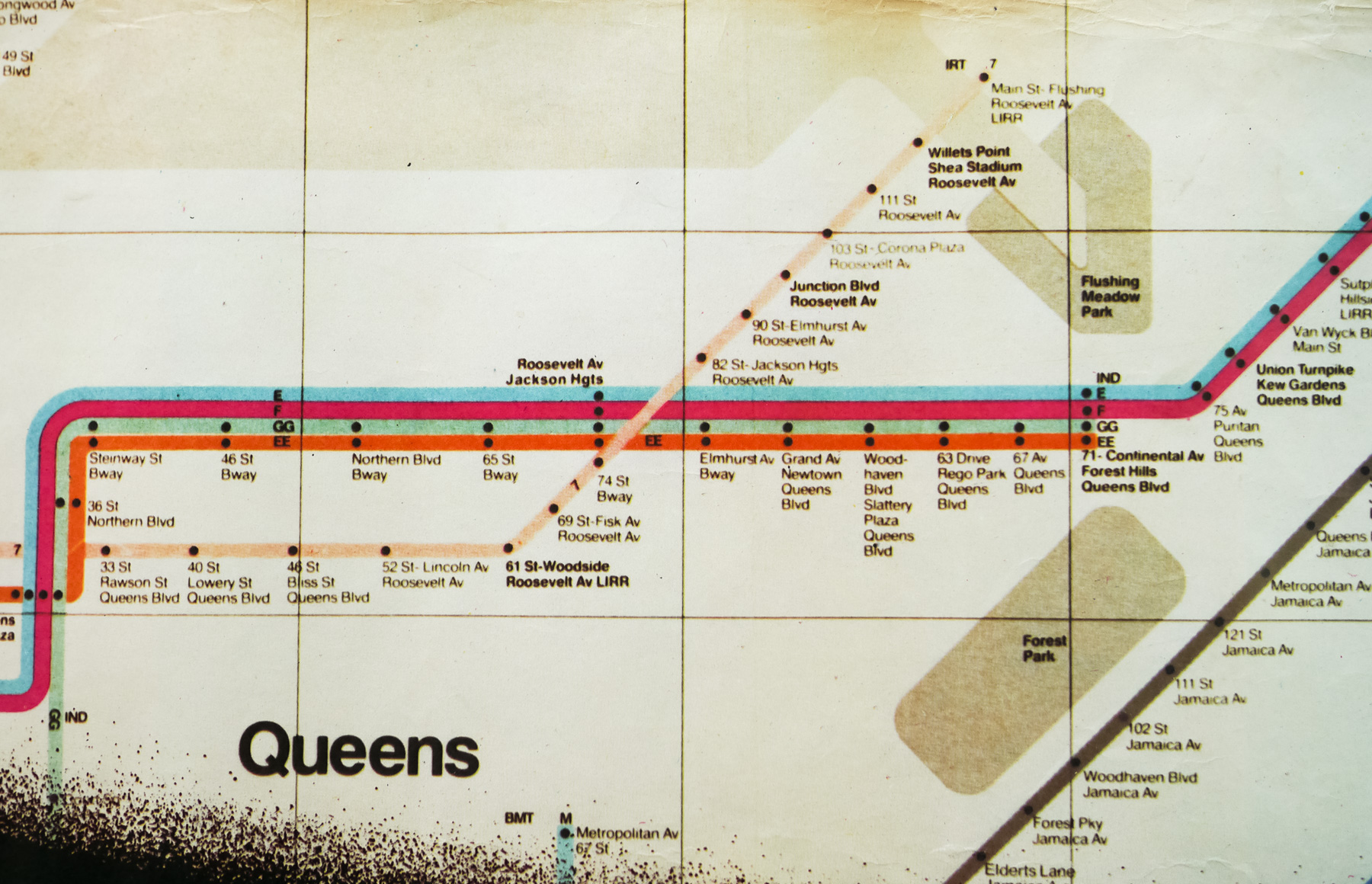
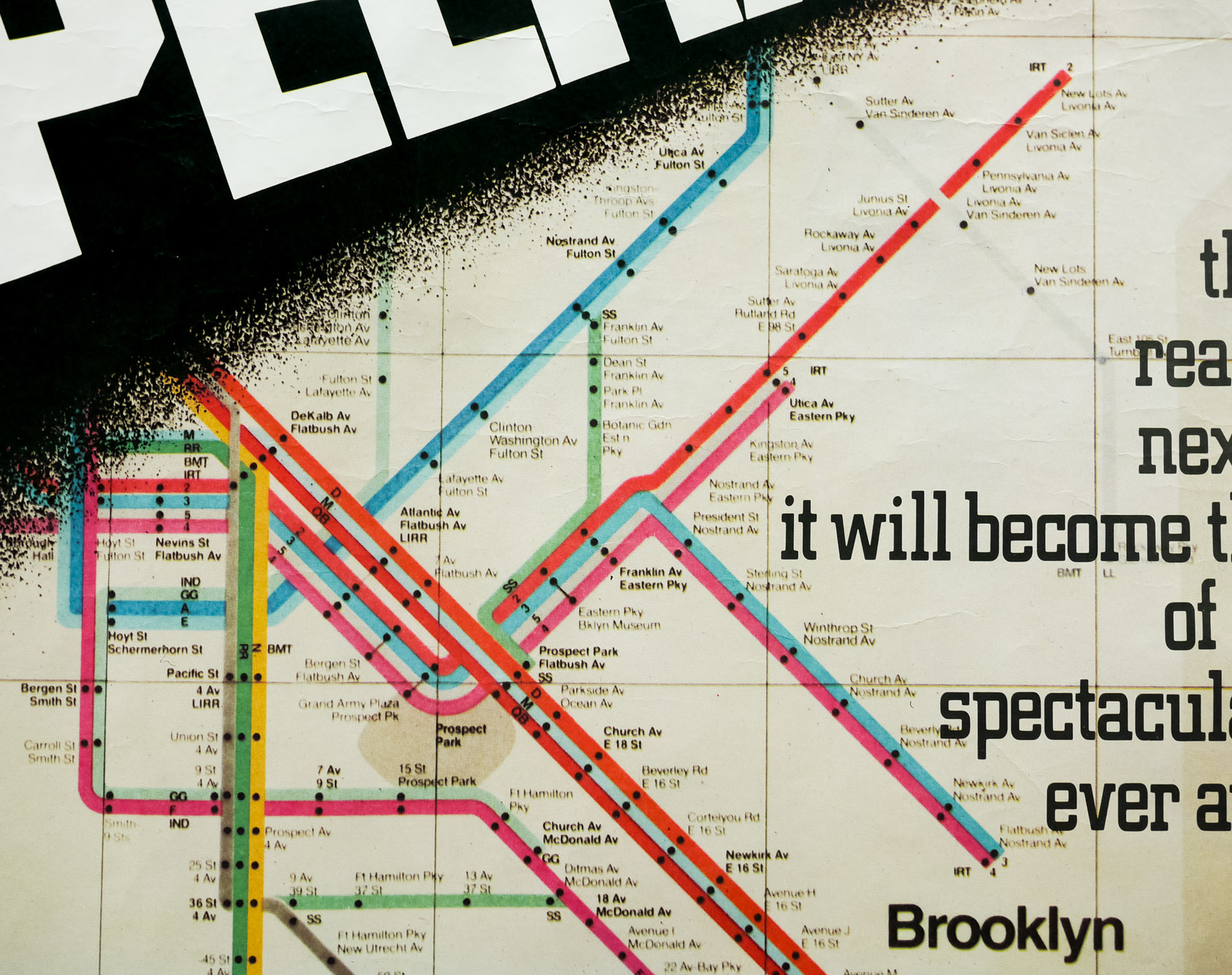
This design is unique to the British quad and brilliantly uses the colourful lines of the real New York subway map designed by Massimo Vignelli as the background to the sweeping train made from the title of the film. The front element of the shadowy figure standing in the door is actually taken from the American advance one sheet, which can be seen here. I’m unsure who is responsible for the design of the quad so if you have any ideas please get in touch.

I had been hunting for a rolled copy of this quad for over a decade after seeing it in the book ‘Film Posters of the 1970s’ and I was thrilled to finally track down a copy as I consider it to be one of the best British posters ever printed.

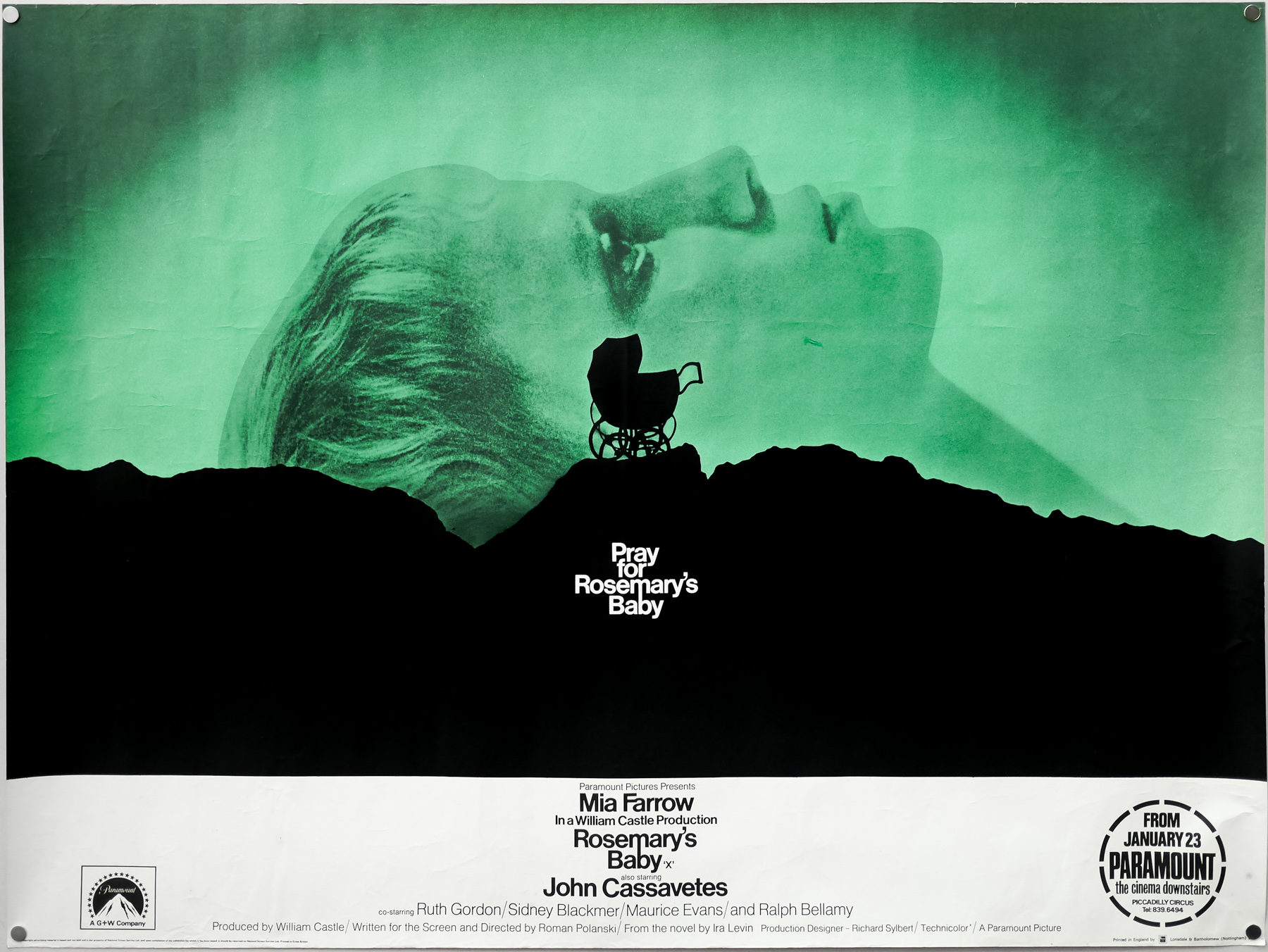
Rosemary’s Baby / quad / UK

07.12.12

Poster Poster

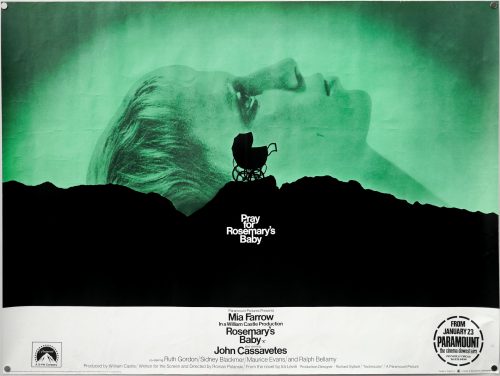
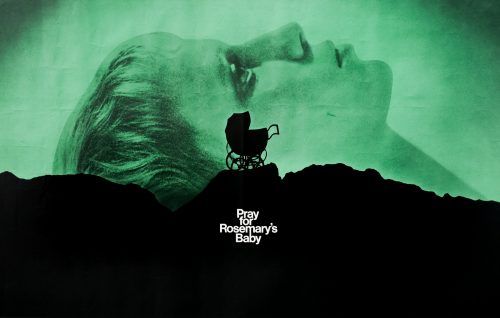
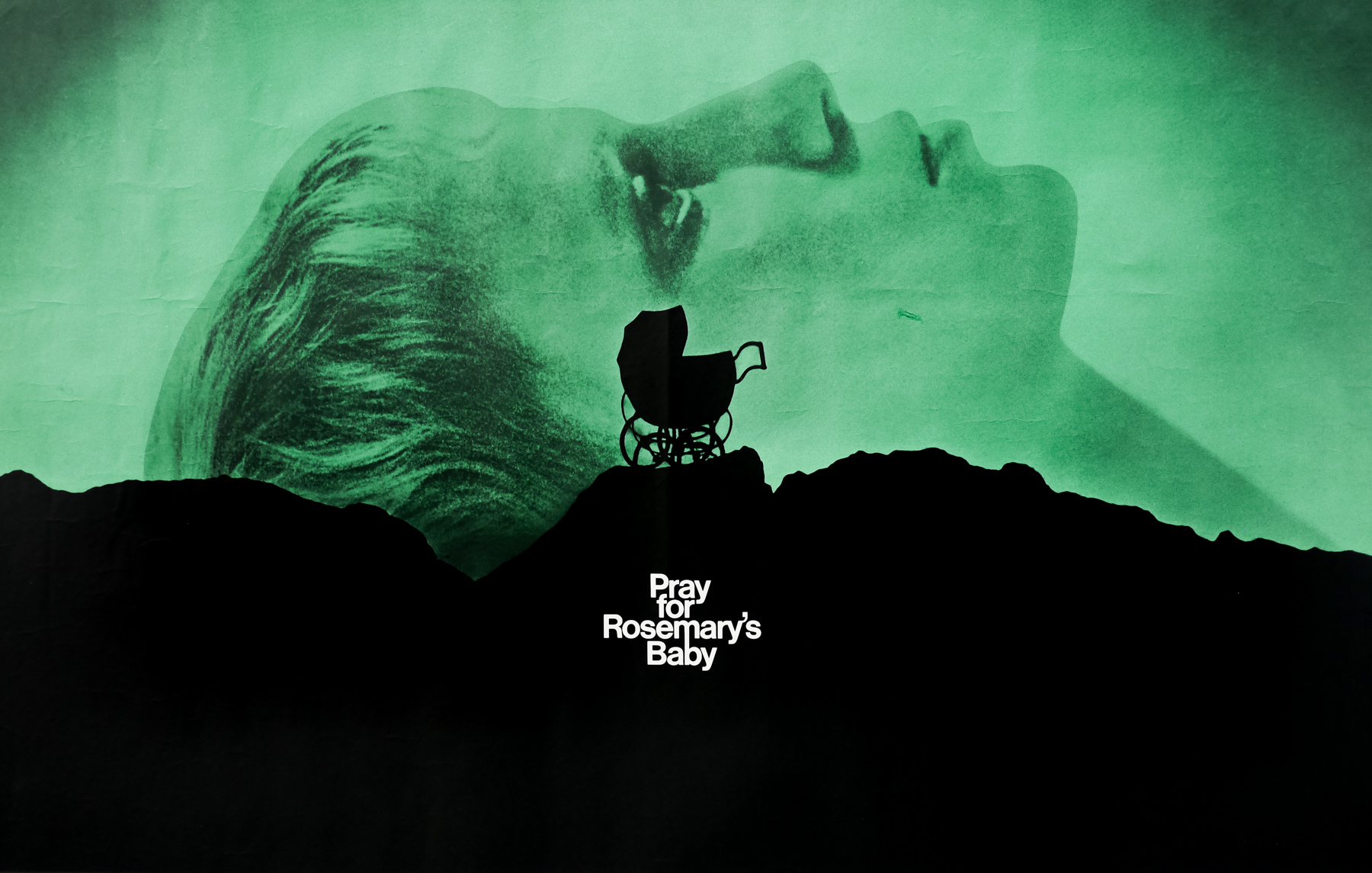
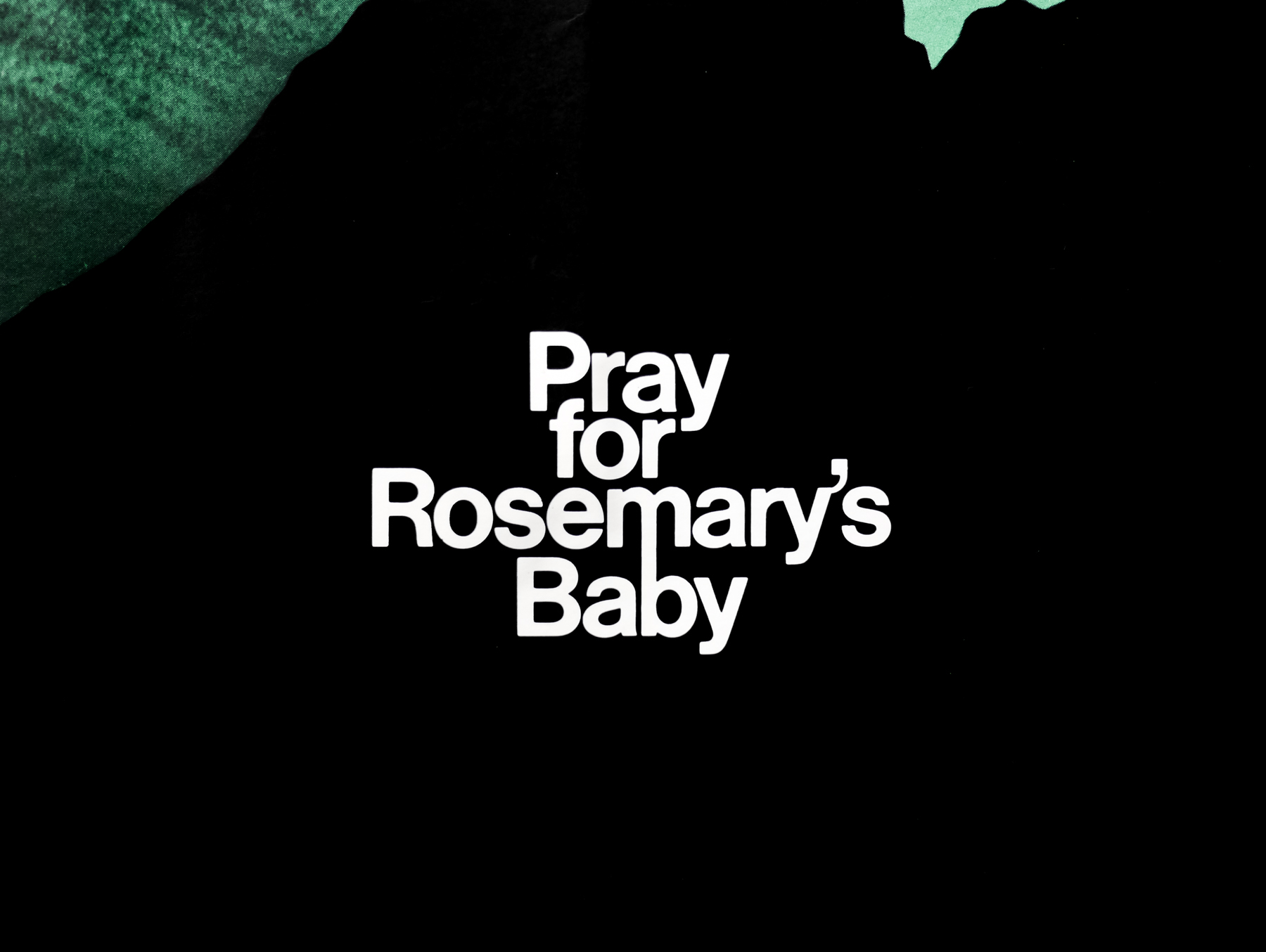
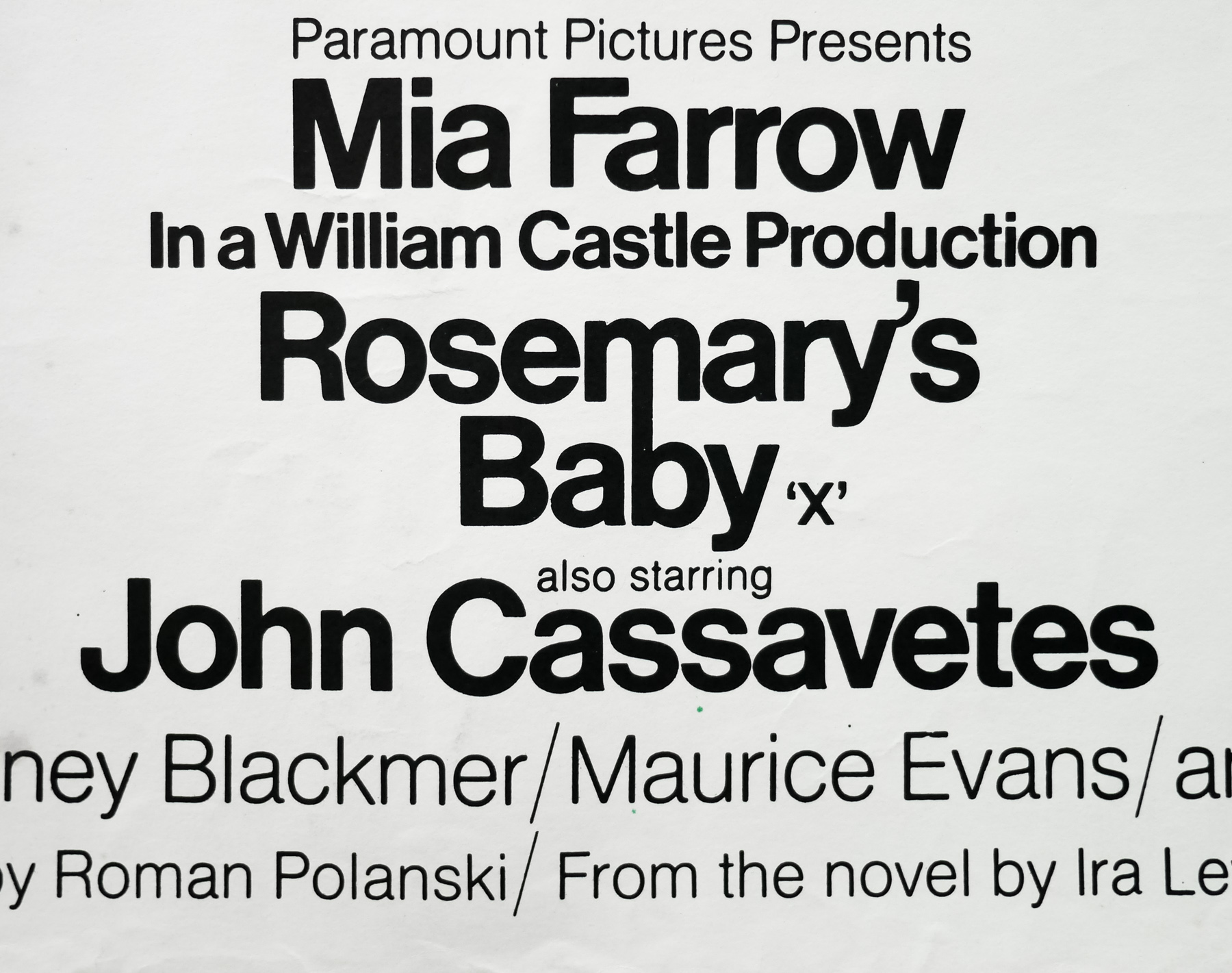
Roman Polanski’s 1968 horror masterpiece Rosemary’s Baby was released with one of the most iconic posters of all time that, like many of the most memorable designs, features a striking image in conjunction with an intriguing tagline. There is a fascinating, newly-filmed documentary on the recently released Criterion blu-ray of the film, which features many of the people involved in its making, including the legendary producer Robert Evans who recounts the story of how this poster came to be:

“When we finished the film the front office [of Paramount], which was in New York at the time, didn’t want to release it. They didn’t know how to sell it. I went to a friend of mine [Stephen Frankfurt] who was president at Young & Rubicam, a very large advertising agency, and I told him my problem; I can’t release the movie because the whole of our advertising team doesn’t know how to sell it, and the picture’s brilliant! He goes to see it and then he said to be ‘Bob, I’m going to tell it you straight; it’s not an easy picture to sell and I’m not going to take one dime from you to give you a whole campaign for it.’ He then said ‘But if you buy what I give you I want one hundred thousand dollars’.

I walked in to the chairman of the board Charles Bluhdorn‘s office and said ‘take a look at this and you tell me if you want to write a cheque for one hundred thousand dollars’ and I turned the artboard around and there it is; there’s a mountain and a carriage and it says ‘Pray for Rosemary’s Baby’, that’s all. And he looks at it and he becomes so pale that he’s as white as these shoes that I’m wearing and he said ‘I have to pay him one hundred thousand dollars for three [four] words?!’ and I said that’s right, and he did! Pray for Rosemary’s Baby became the ad of the year. It made the picture and without that image people wouldn’t know what it is and they still didn’t know but they were intrigued. It opened to the biggest business Paramount had done in years.”

After a bit of research it seems that although Stephen Frankfurt should be credited as the creative director for the poster, it was actually designed by Philip Gips in conjunction with Richard Danne. I’ve been attempting to figure out exactly where each of these designers worked and I have to confess it has left me slightly confused. Stephen Frankfurt is profiled in this excellent piece by Adrian Curry on Mubi.com that details his involvement in several seminal film posters of the 1960s and 70s, including Downhill Racer and the first Emmanuelle movie. He also worked on opening titles (To Kill a Mockingbird) and trailers for several films, including the one for Rosemary’s Baby. According to the article Frankfurt’s thing ‘was to see the packaging of movies as a totality—designing the titles, posters, trailers and ads with one common look and theme.’ The article also notes that the baby carriage on the crag was shot on the outcrops of rocks in Manhattan’s Central Park.

Frankfurt died earlier this year and in this article in Adweek it mentions that he was also a partner in an agency he set up with Philip Gips and Aubrey Balkind (named simply Frankfurt Gips Balkind), where he worked on over 55 film marketing campaigns. It’s not totally clear but I believe that he must have worked on this poster whilst also serving as president at Young and Rubicam, hence the fact that Robert Evans mentions the larger agency in the interview above.

Note that in the comments of that article someone with the username ‘Villafranca’ writes the following:
“In the mid-90’s, I worked for Philip Gips’s the small agency that he started after he left Frankfurt, Gips Balkind. In his office, he had framed prints of both the “Rosemary’s Baby” and “Alien” posters hanging in his office because, well, he designed them. And one other small tidbit: his wife, Barbara, wrote the line “In space no one can hear you scream” (not Stephen Frankfurt). Phil told me this personally.”

Further on in the comments another poster called ‘danagips’ writes:
“This should absolutely be retitled the movie posters of Phil Gips. And my mother did indeed write, ‘In Space No One Can Hear You Scream’ for Alien.”

In addition to this, the website of AIGA (American Institute of Graphic Arts) features a page on the poster that also credits Richard Danne as a co-designer of the poster. Danne appears to have had a lengthy and lauded career in the New York advertising industry and his official website features a biography that indicates he served as president of AIGA as well as a several other organisations. The Rosemary’s Baby poster features on his website where another agency ‘Gips and Danne’ is mentioned (the AIGA website has examples of that agency’s work).

The agency for the poster is credited as Gips and Danne so does that mean that Philip Gips was also working as a partner in a second design firm in addition to the one he founded with Frankurt and Balkind? Was this job given to Gips and Richard Danne’s firm by Frankfurt who was working for Paramount? I intend to contact Richard Danne to try and clarify but I’d appreciate any other information that people may have so I can accurately credit the poster.

This is the original British quad for the release of the film over here and I was utterly thrilled to find it in excellent, rolled condition. Note the circular snipe in the bottom corner which ties it to the Paramount cinema in London’s Piccadilly Circus. The building was opened in 1921 as the large and luxurious cinema known as the Plaza Theatre that was designed and built for Paramount Pictures to be their showcase venue in London. The Arthur Lloyd ‘music hall and theatre history’ website features a page on the cinema that details its history and has several excellent pictures included. Finally, I’m unsure who will have done the design work to adapt the original portrait one sheet design to the landscape quad format.
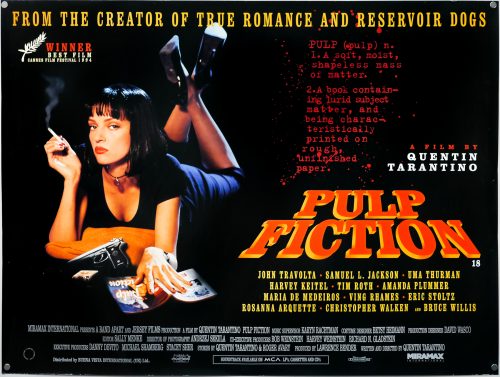
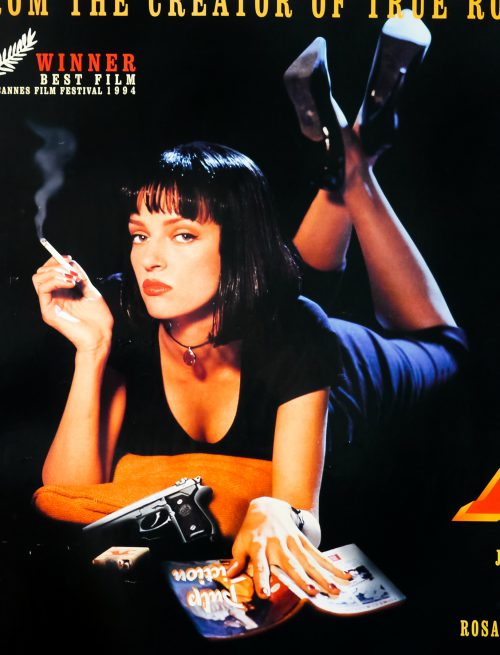
Creepshow / quad / UK

25.01.13

Poster Poster

Director George A. Romero was hired to direct this horror anthology and was paired with legendary horror author Stephen King who was on screen-writing duties (hence the top tagline). The film is an homage to boys’ comics of the 1950s, including Tales from the Crypt and The Vault of Horror, and features five short stories that are bookended by scenes featuring a young boy (played Joe King, son of Stephen) who is berated by his abusive father for reading those ‘crap’ comics and who later takes deadly revenge on his father. As with any anthology some of the stories are stronger than others and arguably the best is the one called ‘The Crate’ that sees an ancient creature unleashed from its titular prison, whilst ‘Something to Tide You Over’ a seriously creepy tale of revenge starring Ted Danson and a villainous Leslie Nielsen.

Romero once again collaborated with the special effects guru Tom Savini whose work on Creepshow definitely stands up as amongst the finest of his career. His cockroach-wrangling during the final story ‘They’re Creeping Up On You’ deserves special mention. The director assembled a very impressive cast that includes the likes of Ed HarrisHal Holbrook and genre-favourite Adrienne Barbeau. Stephen King himself even makes an (overblown, hammy) appearance as an unlucky yokel who gets more than he bargained for after discovering a strange meteorite.

The artwork is unique to this British quad but is based on artwork (source) by the American artist Bernie Wrightson that was painted for the title page of the tie-in comic book adaptation. The artwork has recently (July 2013) been confirmed as having been painted by the British poster art stalwart Tom Chantrell. Confirmation was made after the job books of Alan Wheatley, the design agency account handler for the distributor Alpha Films Ltd, were checked and Chantrell’s name was assigned to it. The poster’s artist identity had previously been unknown, although Chantrell’s name had been put forward despite the lack of his usual signature.
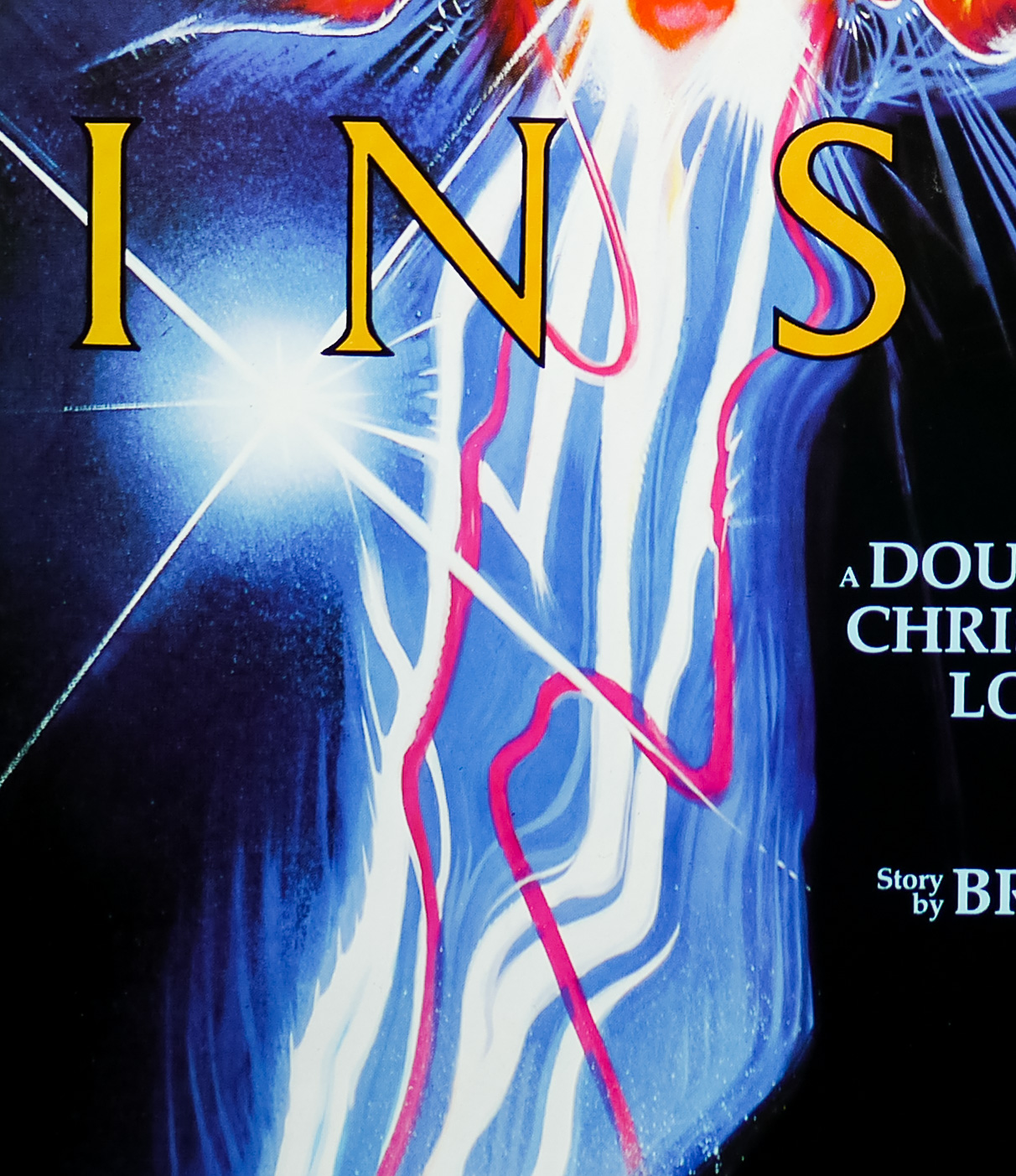
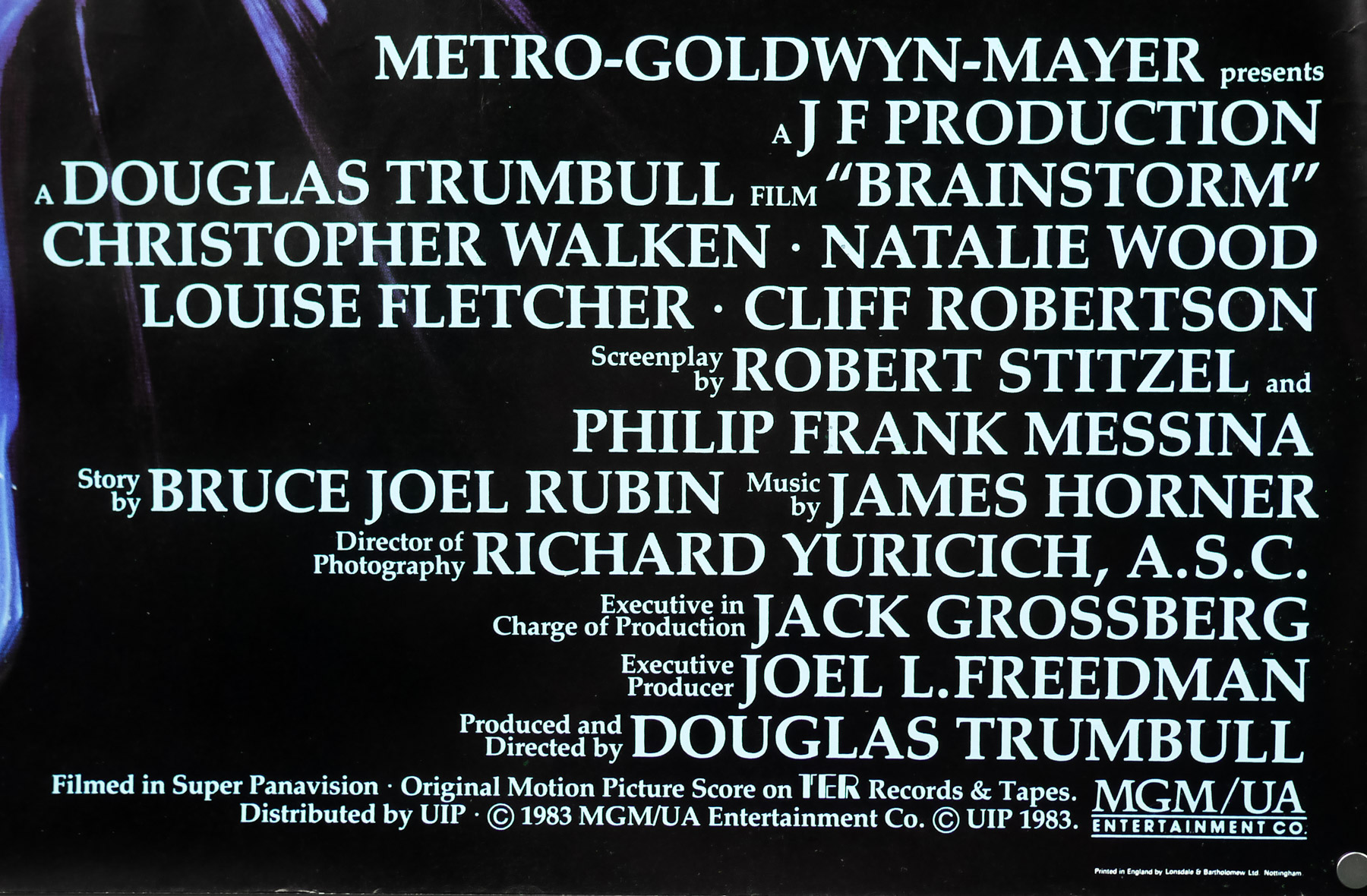
Note that there is a printed code upside down on the top left edge of the poster (see last picture). I’m not sure why this was added but it’s possibly to do with it being part of a poster dealer’s inventory – someone cataloguing posters may stamp them with a number to keep track of them – but why stamp it on the front? I know of at least one other copy of the poster with the number on the top so it’s a bit of a mystery.
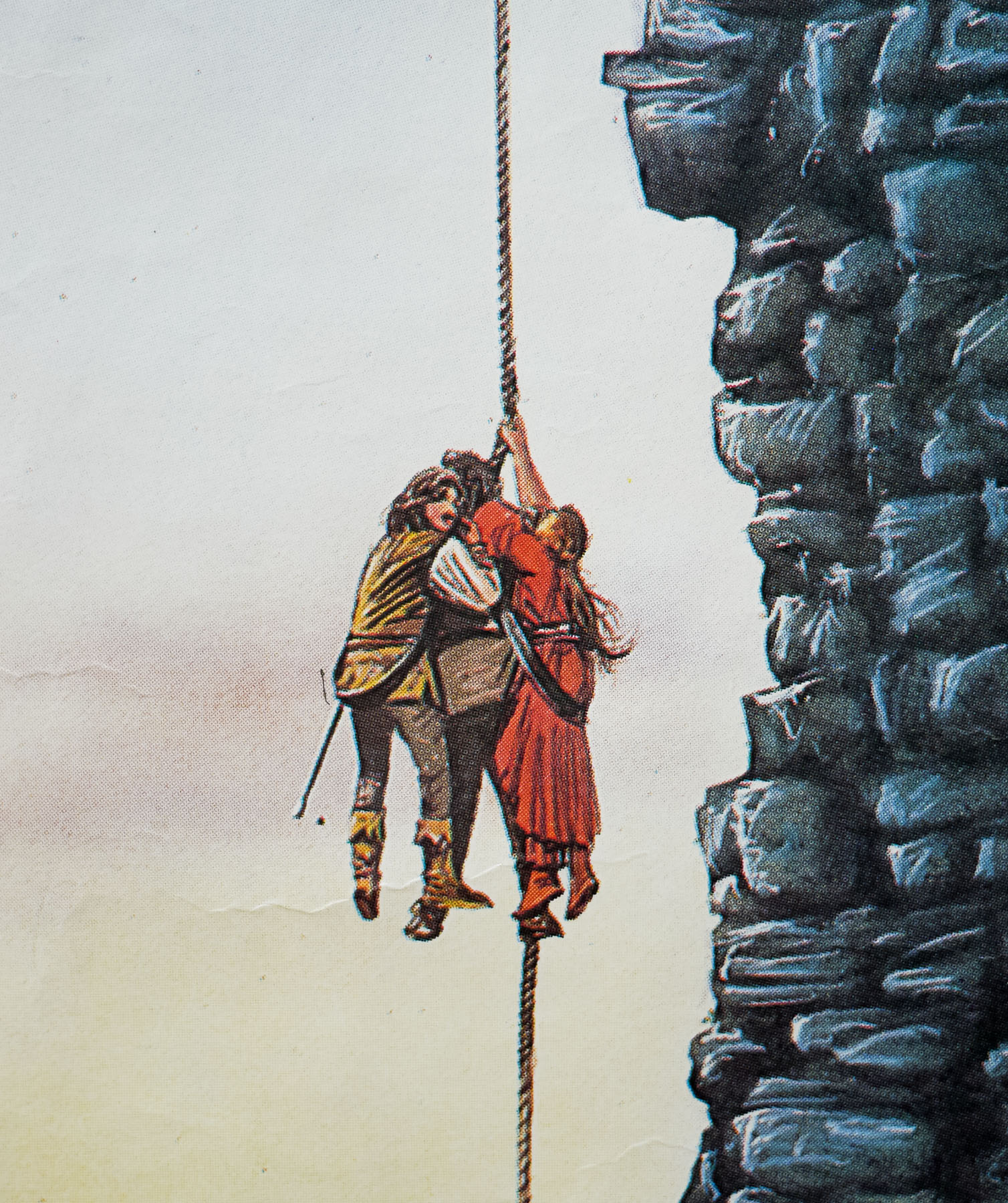
The character of The Creep depicted on the poster also features on both the excellent advance one sheet and the final version, as well as the Japanese B2.