You searched for: One%2Bsheet

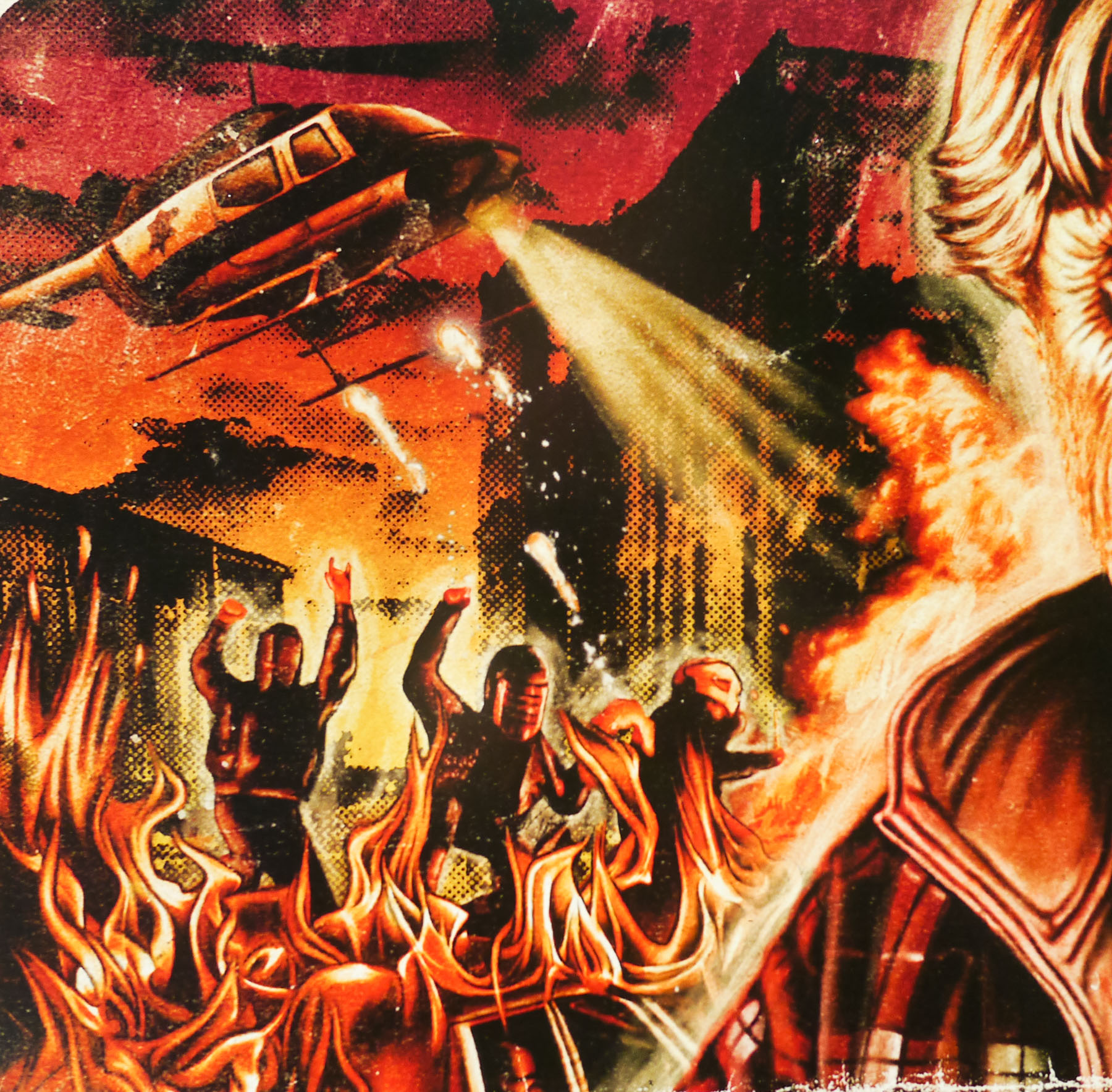
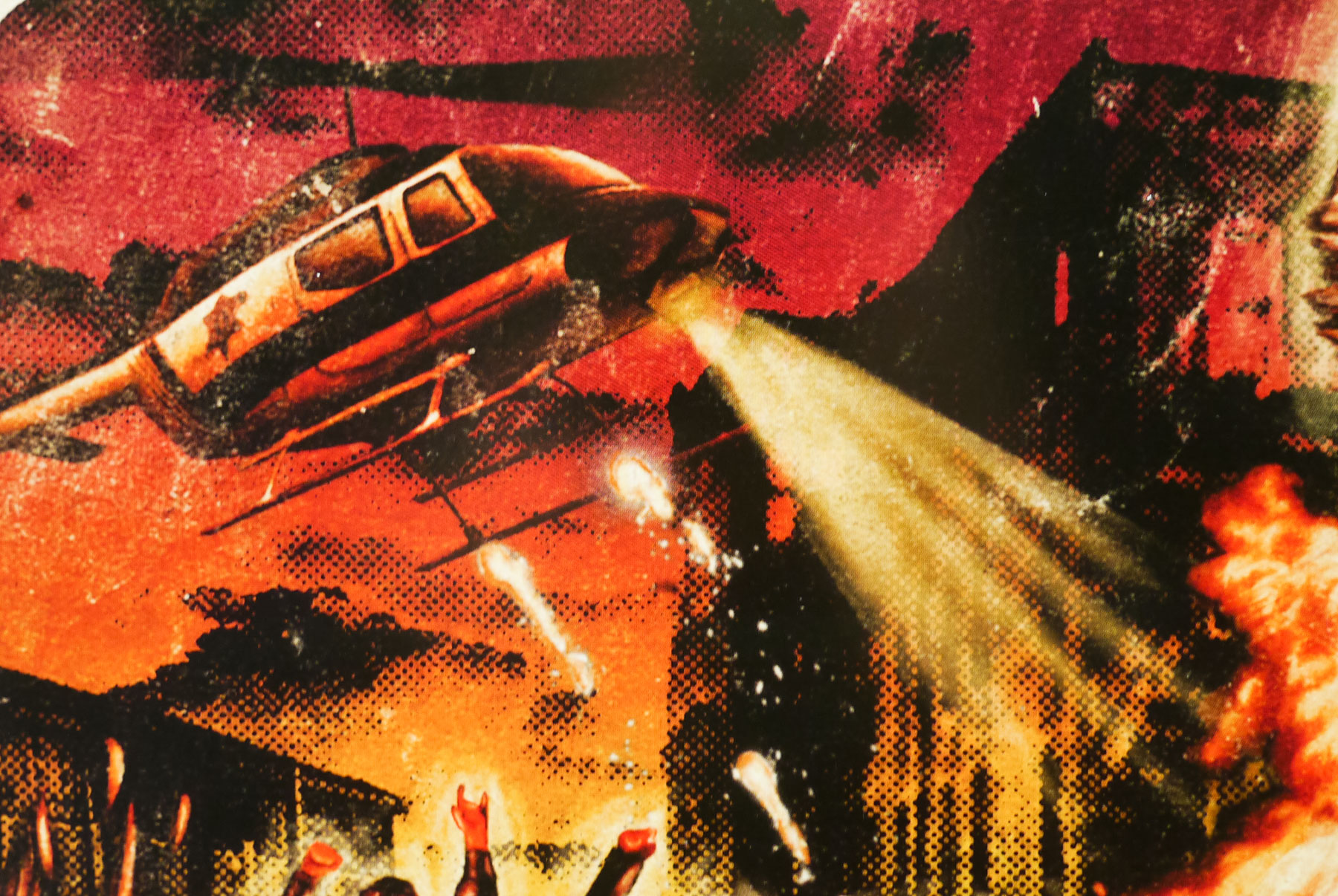
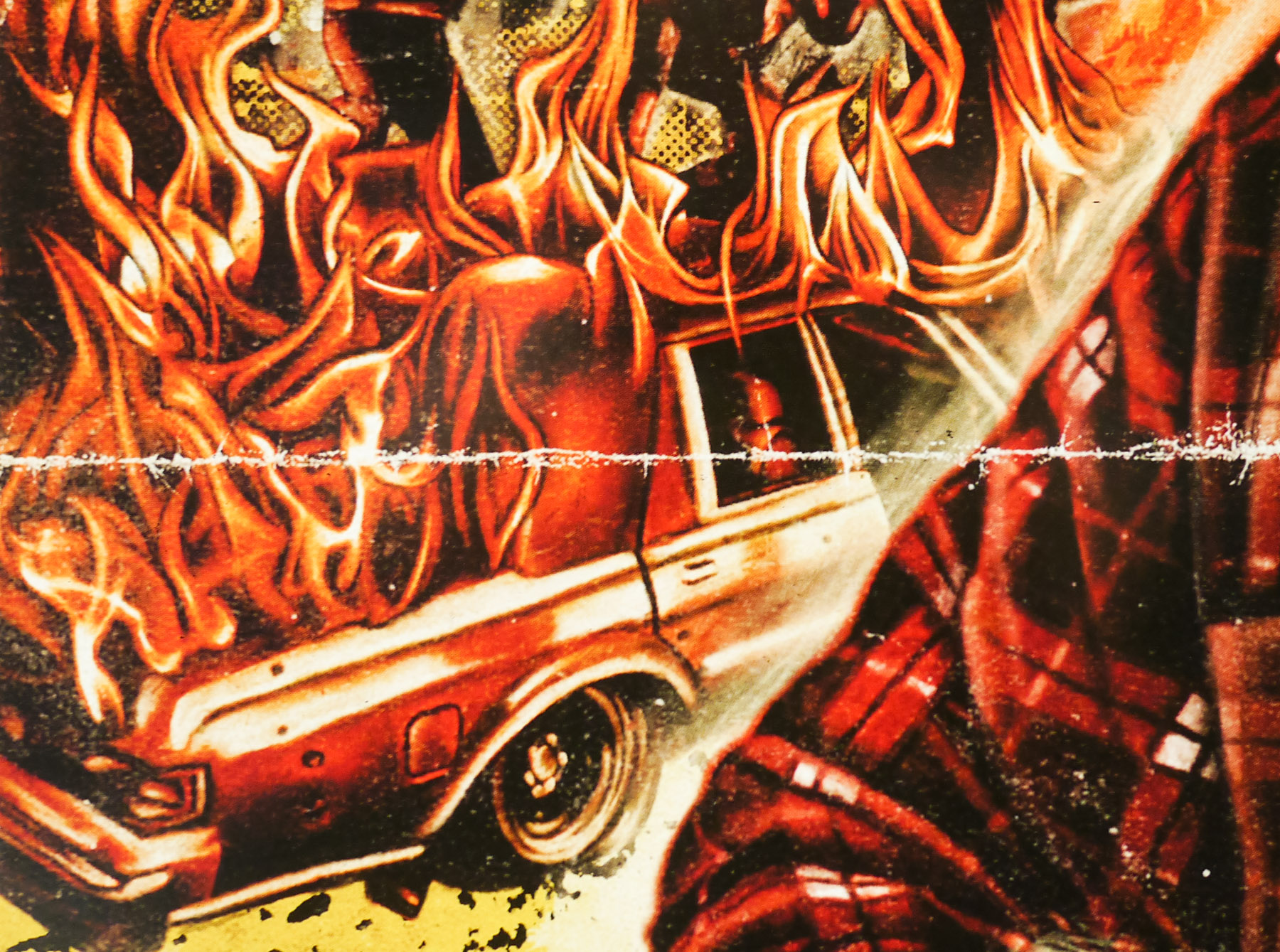
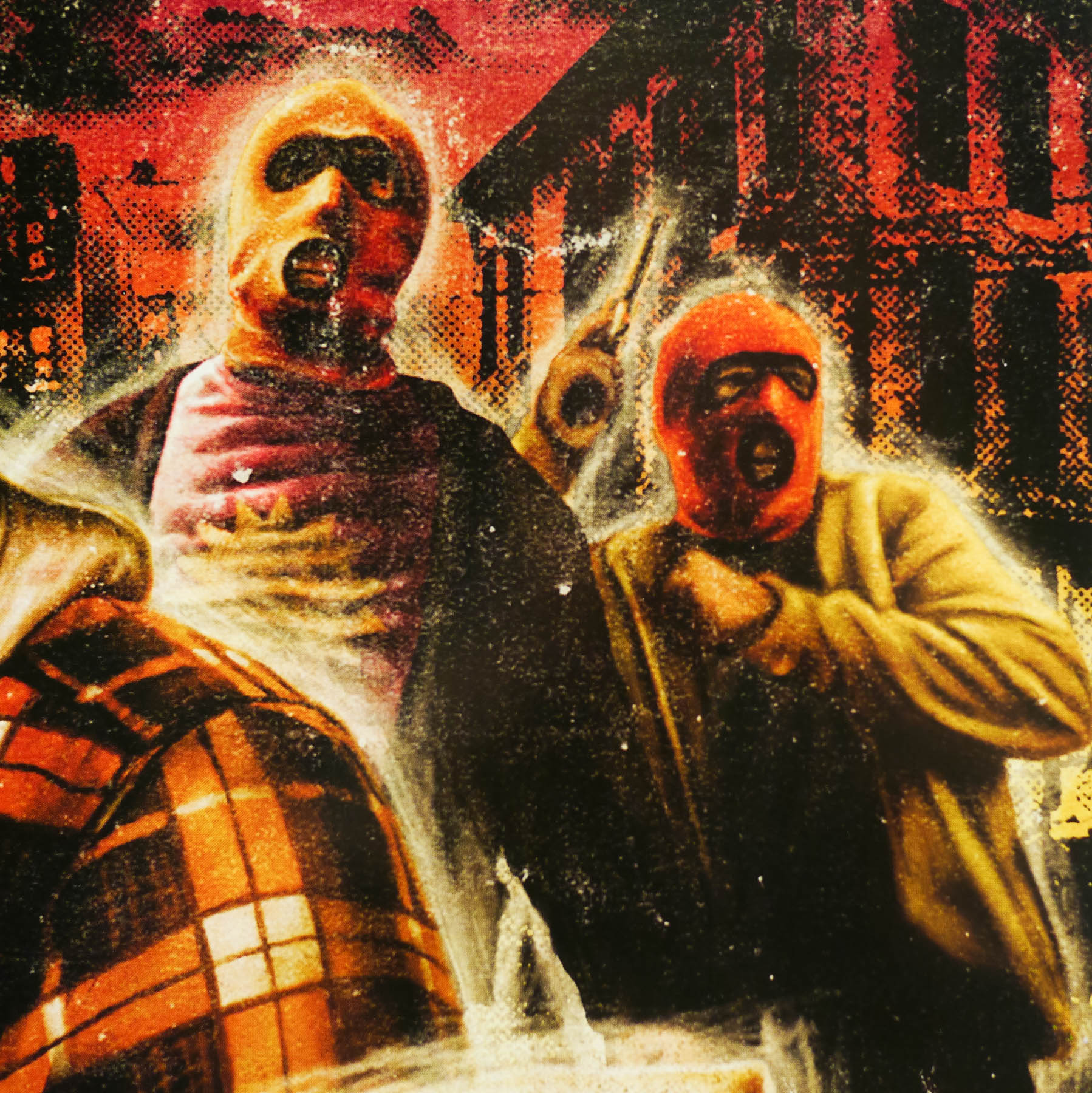
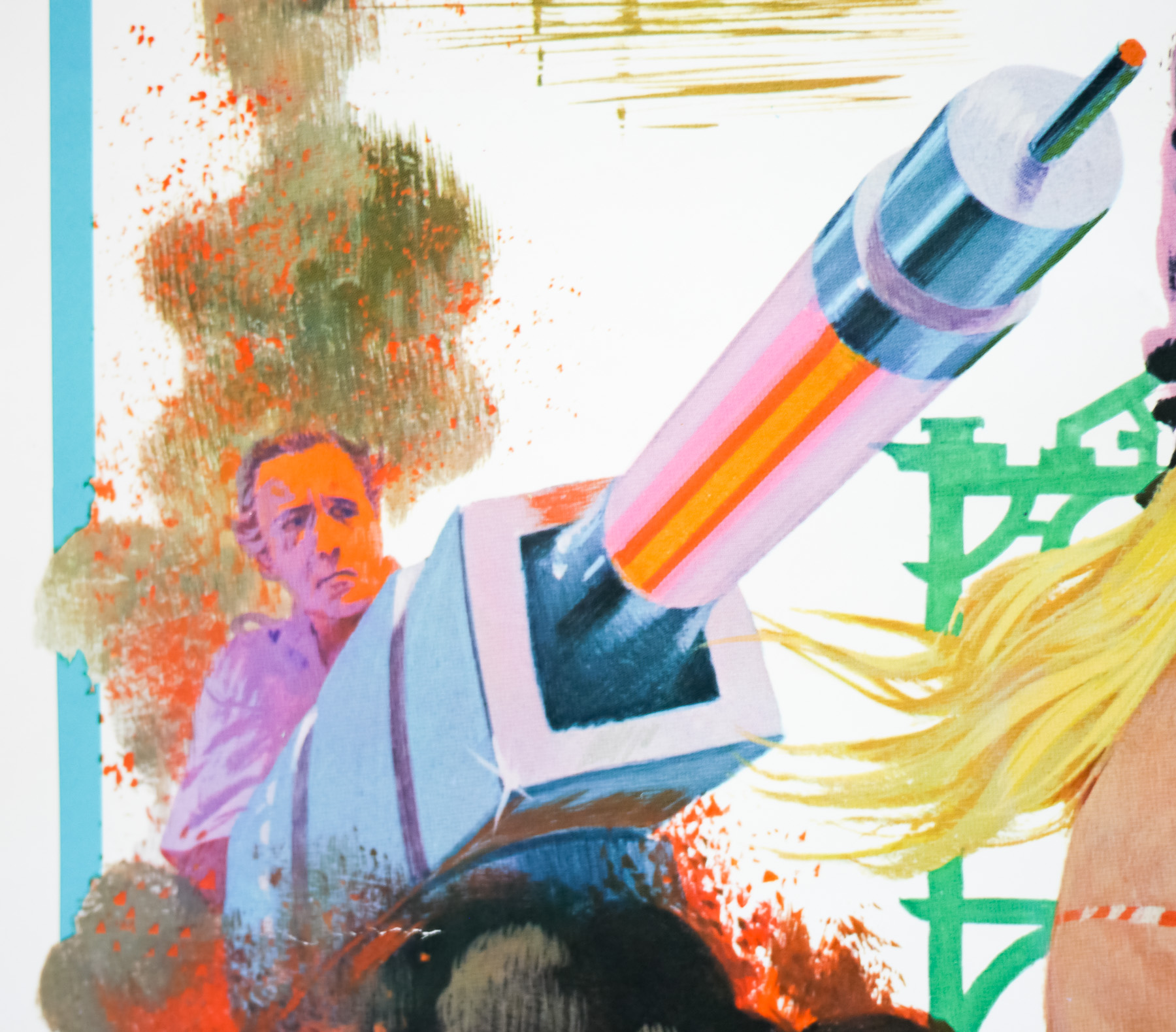
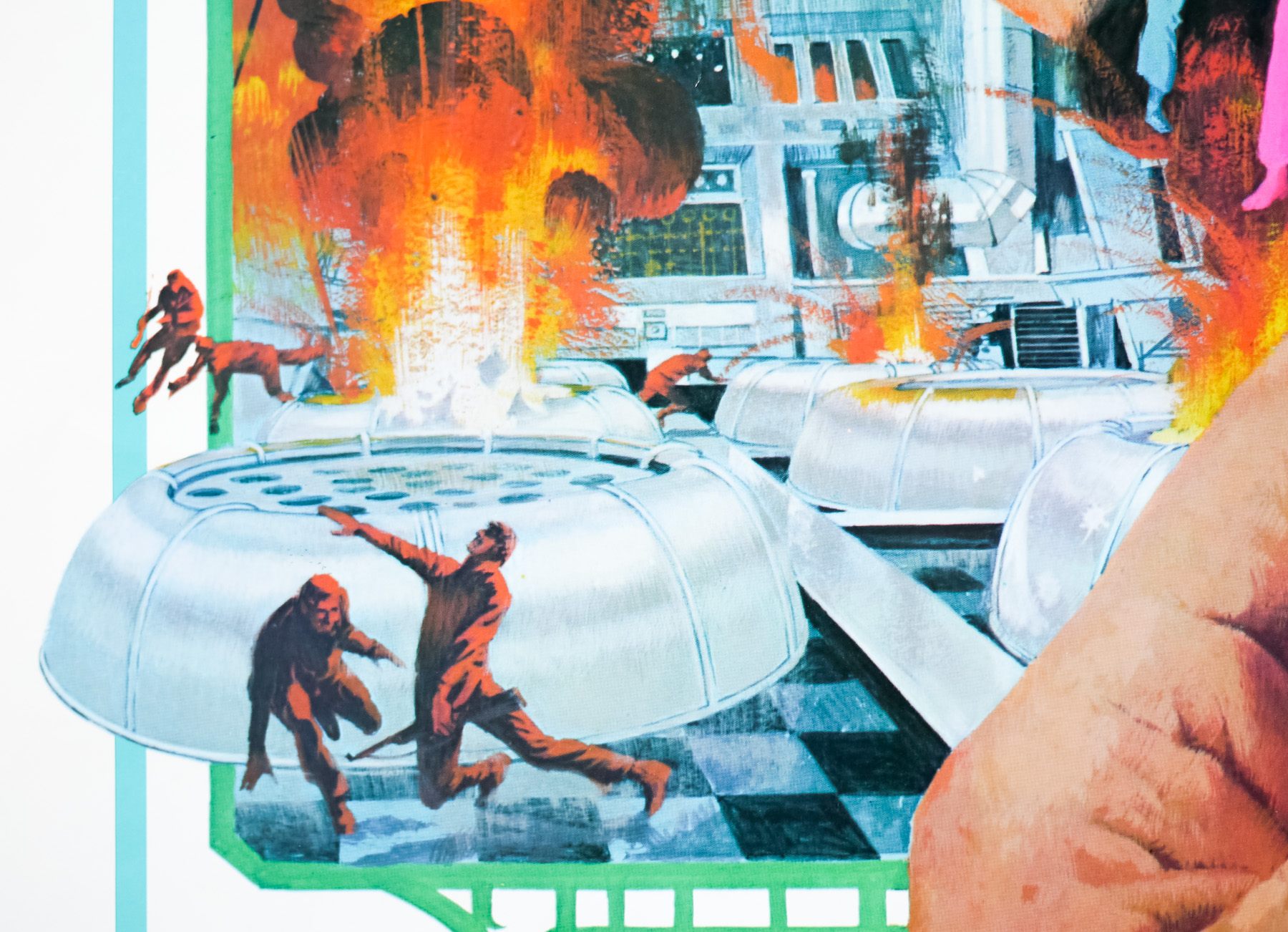
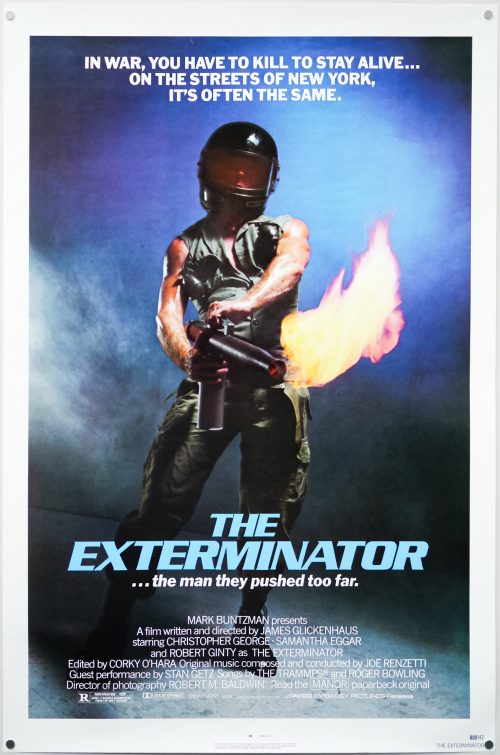
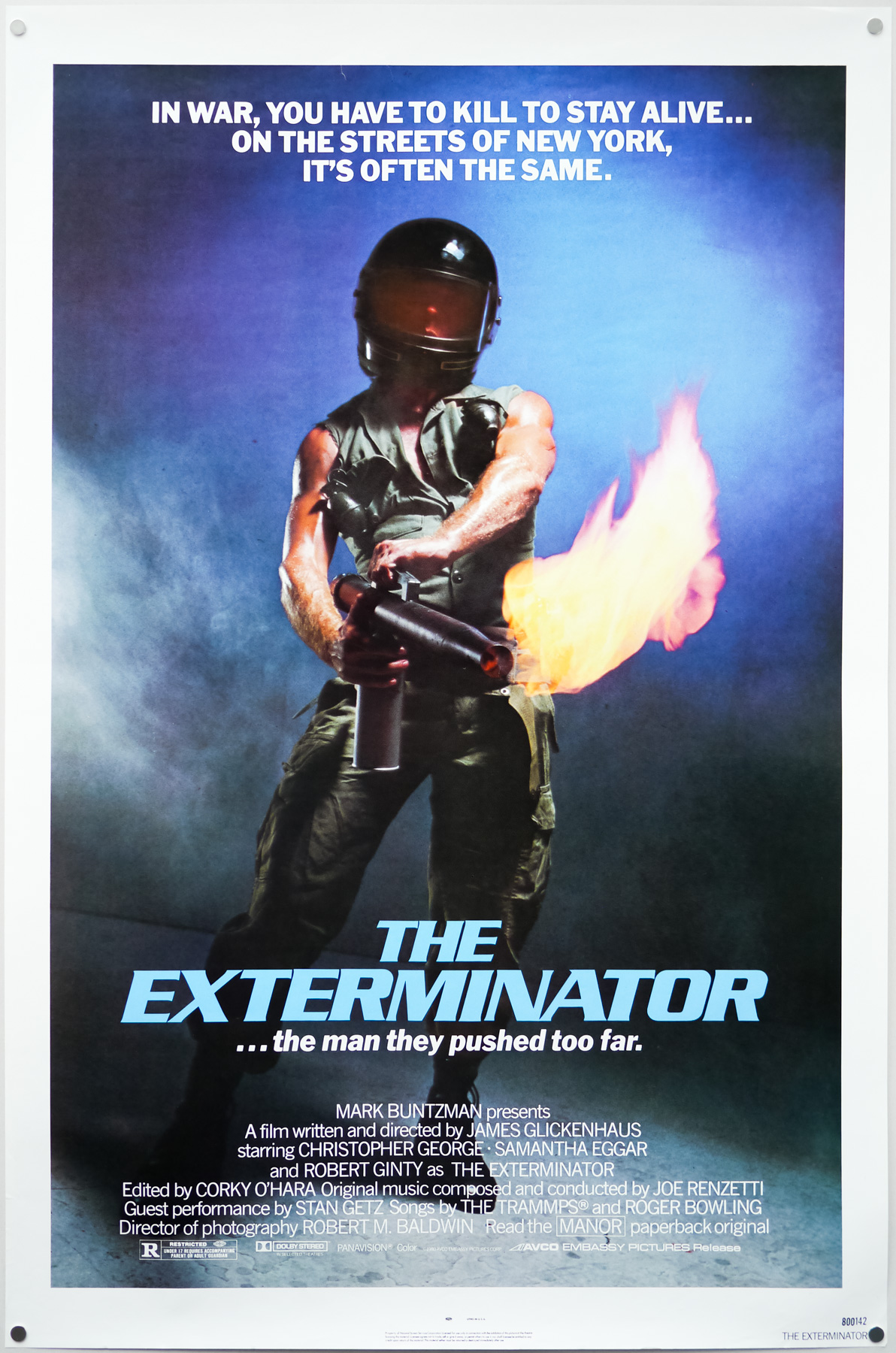
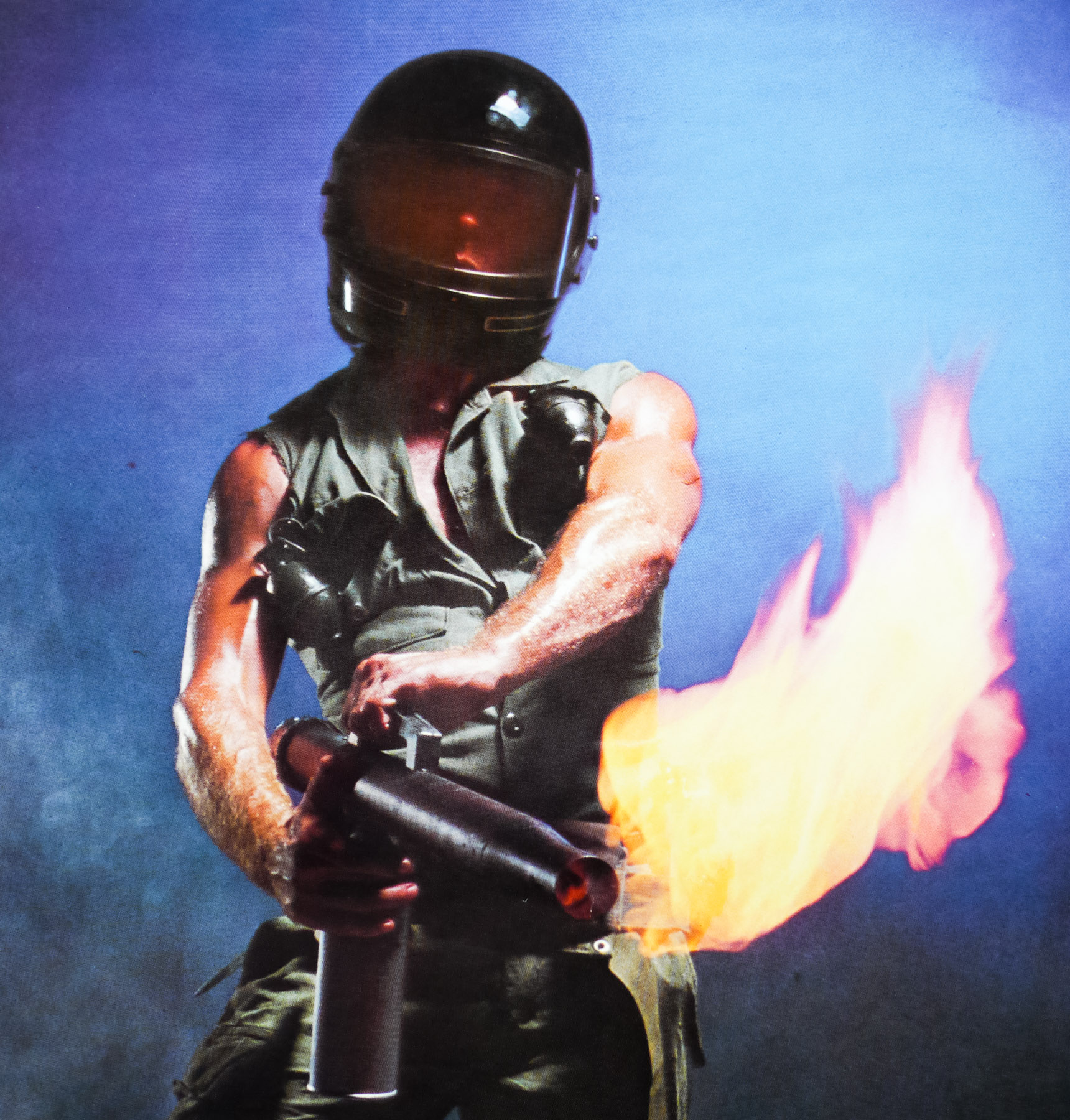
The Exterminator / one sheet / USA

16.05.14

Poster Poster
Title
The Exterminator
AKA
--
Year of Film
1980
Director
James Glickenhaus
Starring
Christopher George, Samantha Eggar, Robert Ginty, Steve James, Tony DiBenedetto, Dick Boccelli, Patrick Farrelly, Michele Harrell
Origin of Film
USA
Genre(s) of Film
Christopher George, Samantha Eggar, Robert Ginty, Steve James, Tony DiBenedetto, Dick Boccelli, Patrick Farrelly, Michele Harrell,
Type of Poster
One sheet
Style of Poster
--
Origin of Poster
USA
Year of Poster
1980
Designer
B.D. Fox Independent
Artist
--
Size (inches)
27 1/16" x 41 1/16"
SS or DS
SS
NSS #
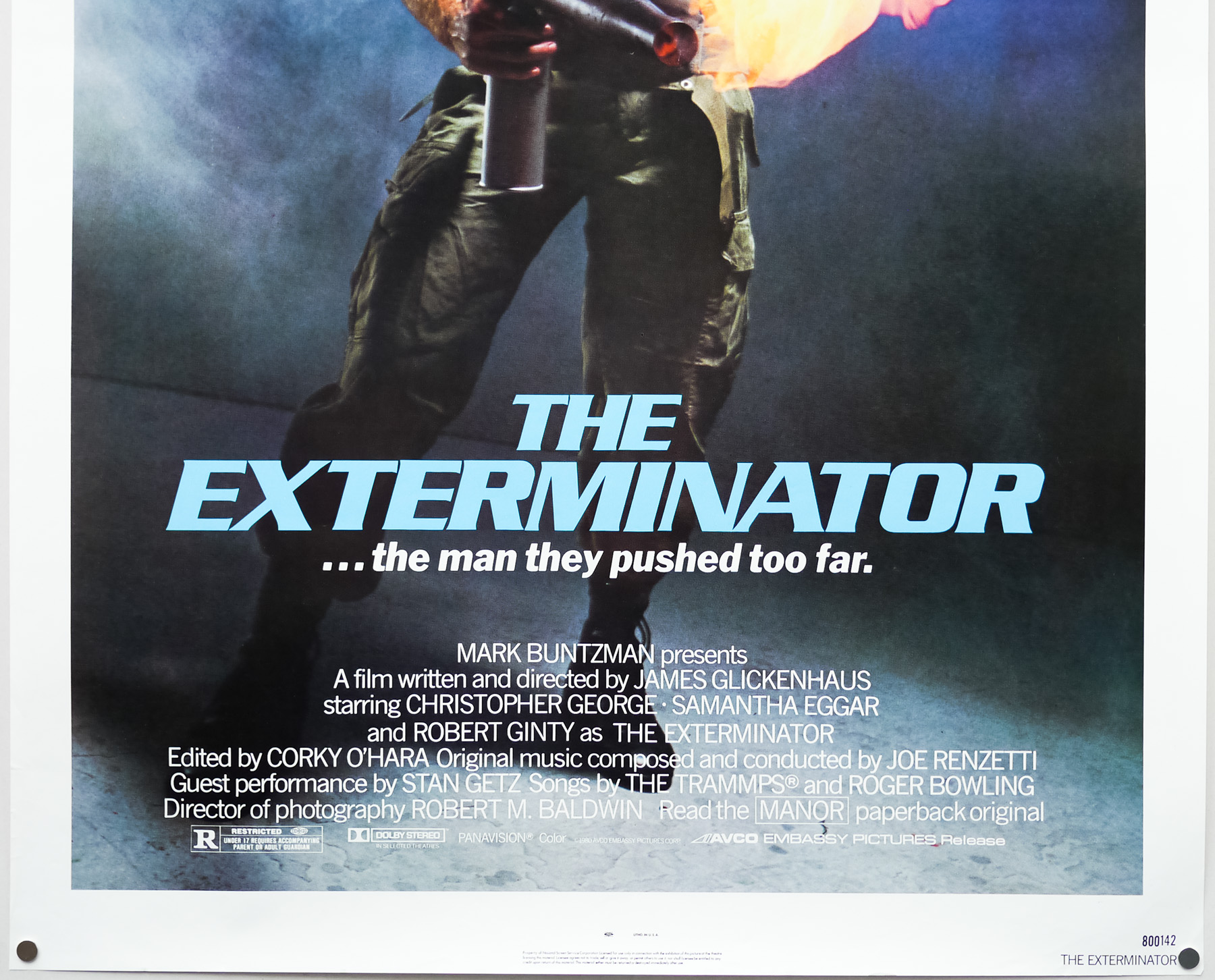
800142
Tagline
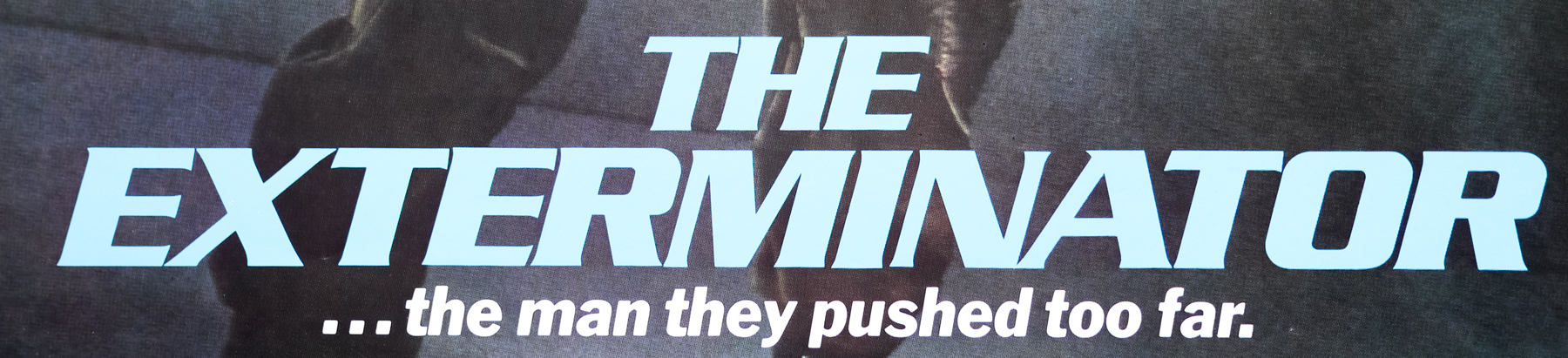
In war, you have to kill to stay alive... on the streets of New York, it's often the same. | ...the man they pushed too far.

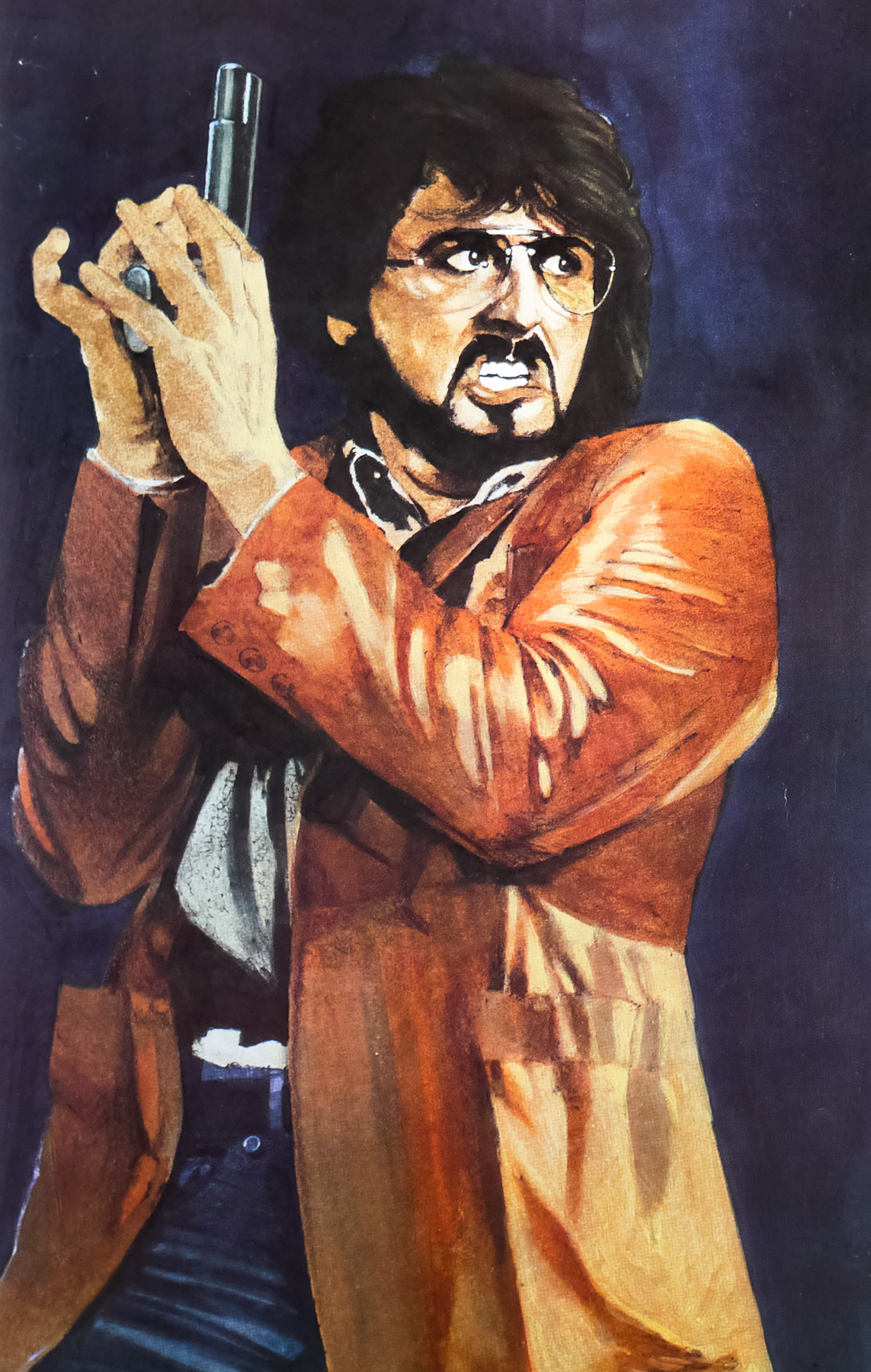
The Exterminator is a 1980 vigilante b-movie that was written and directed by James Glickenhaus and set in New York. Opening with a commendably over-the-top sequence in war-torn Vietnam, we’re introduced to John Eastland (Robert Ginty) and his friend Michael Jefferson (Steve James) who are captured by the Vietcong and forced to watch as a fellow soldier is beheaded (achieved courtesy of Stan Winston special effects). After being rescued the pair return to their lives in New York but when Michael is attacked and paralysed by street thugs, John sets out for revenge with an army machine gun and images of the atrocities he saw in Vietnam playing over in his head. Before long, he’s attacking and killing various underworld characters who he sees as a blight on society. It’s not long before he comes to the attention of a police detective (Christopher George) and shady elements within the CIA.

The film has a gritty atmosphere, helped no end by the fact that several scenes were set (and filmed) around New York’s 42nd street (Times Square) back when it wasn’t the family-friendly tourist trap it is today. Although Glickenhaus wanted John to be a normal, non-macho kind of guy, Robert Ginty takes it a little too far and at times is barely audible as he mumbles along with dead-eyed stare – he’s very hard to root for during each of the violent encounters. Despite a critical drubbing the film was a box-office success in the States, quickly expanding to more cinemas in the weeks following its opening. A sequel would be made a few years later without Glickenhaus’ involvement.

In an interview on the blu-ray release of the film from Arrow Video, the director talks briefly about the promotion of the film, mentioning the poster:

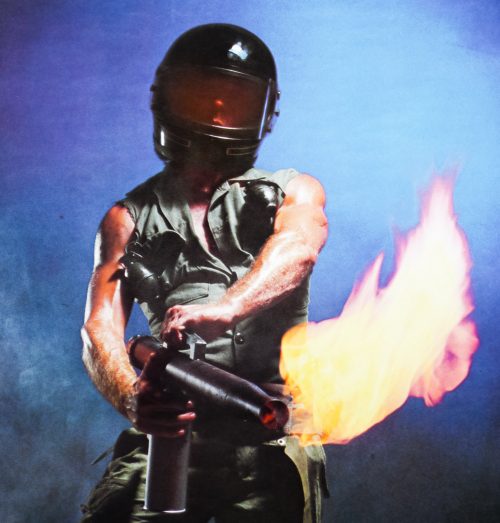
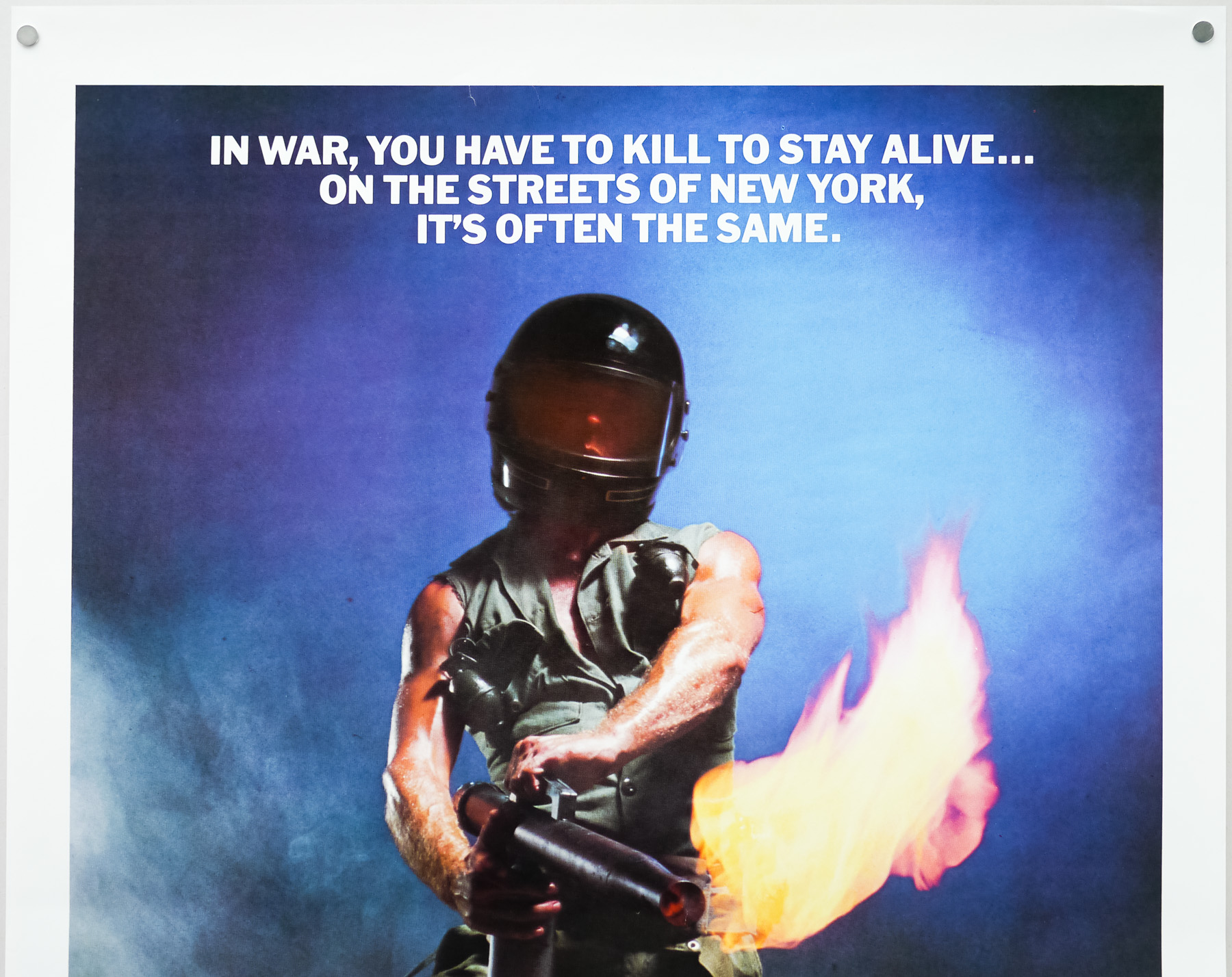
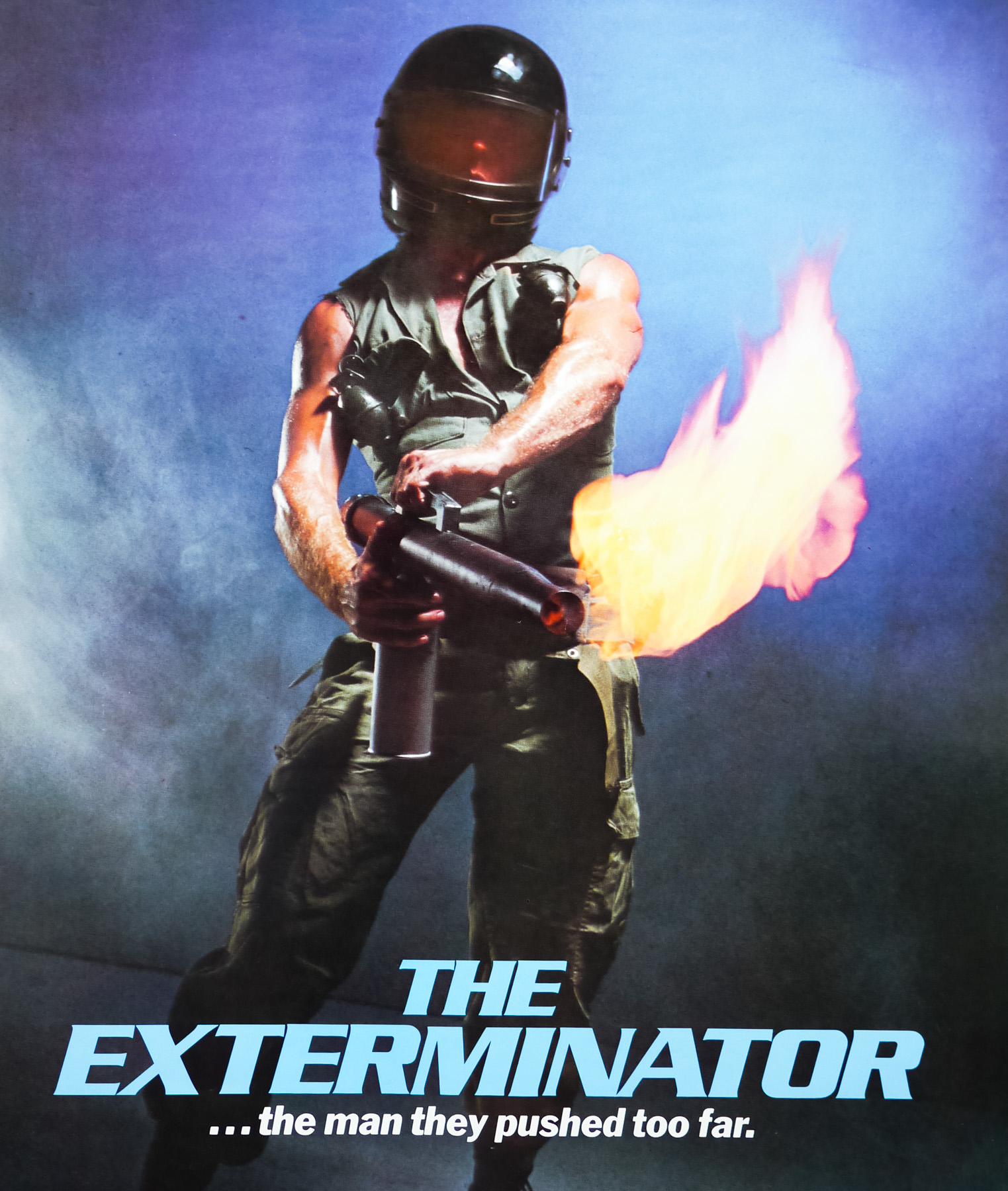
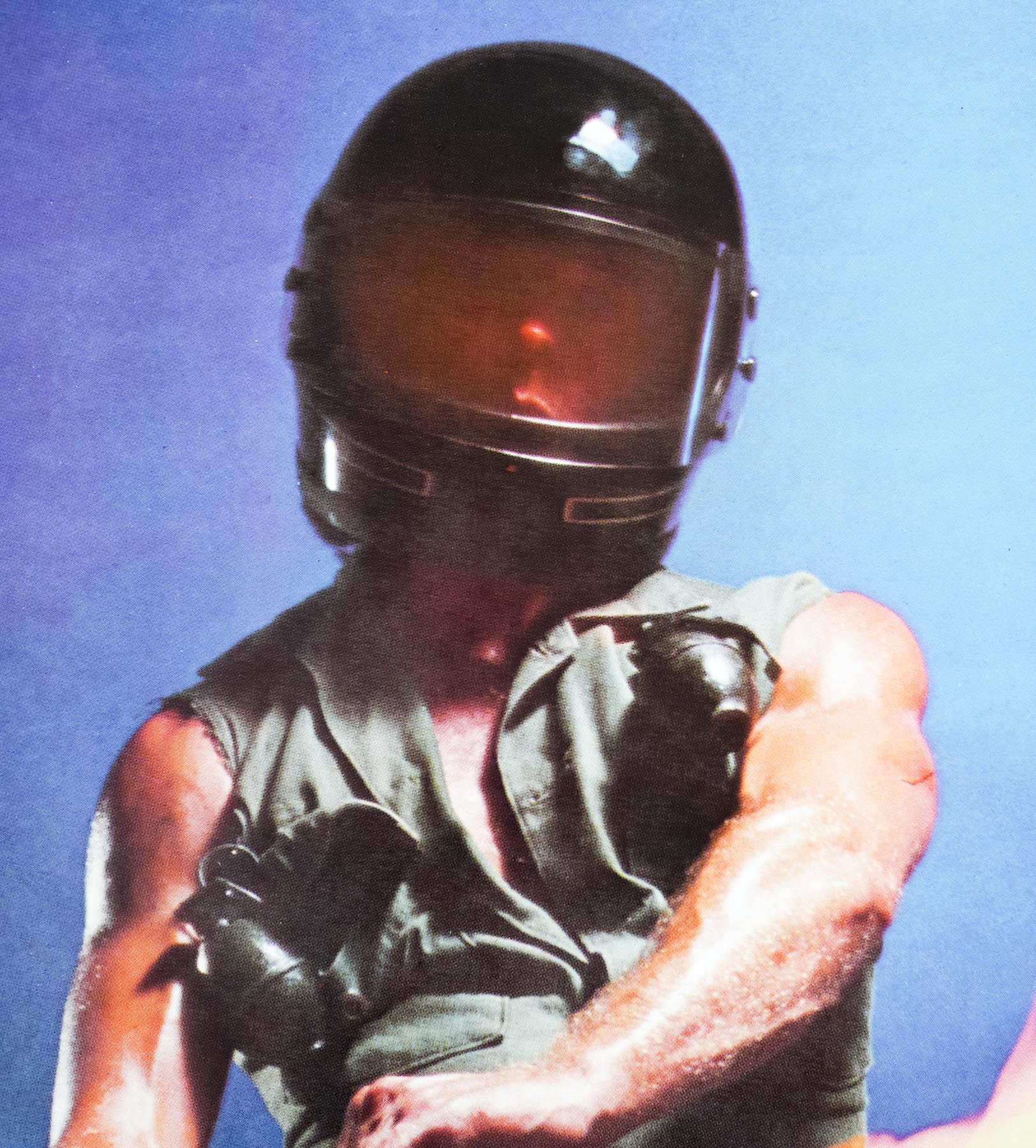
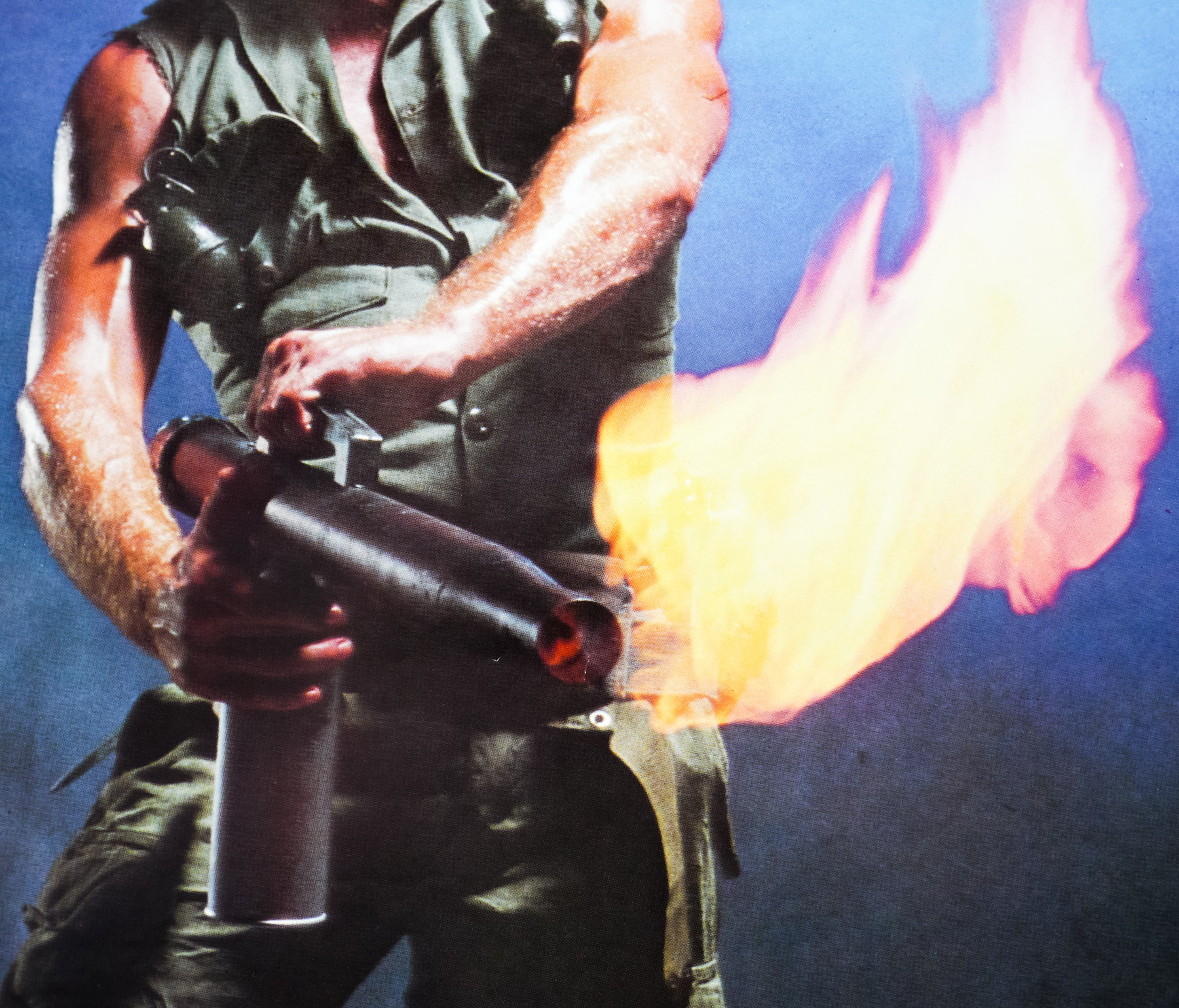
‘Avco Embassy came up with that idea and asked me and I thought it would be an interesting thing. I think they made it a little bit mysterious with the motorcycle helmet and what-not but it did become an iconic image and was copied more than a few times, including for a porno film called The Penetrator. They had a naked guy with a flame-thrower standing there, which is what it is. But it [the Exterminator poster] got people to the box-office so it worked.’
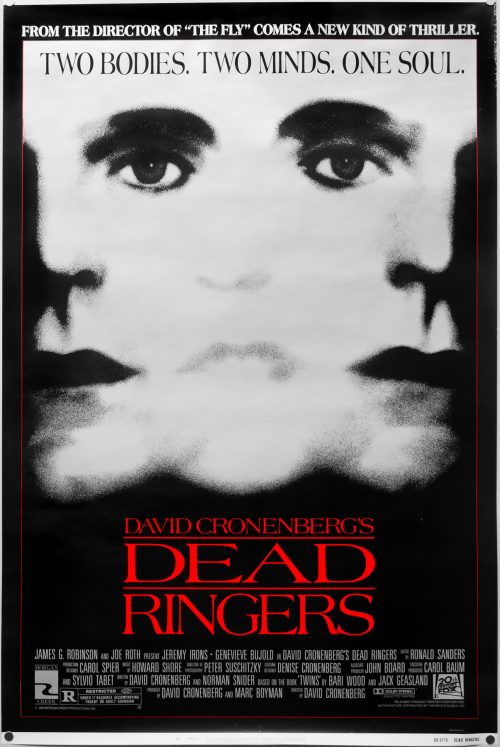
Dead Ringers / one sheet / USA

15.12.14

Poster Poster
Title
Dead Ringers
AKA
Inseparables (Spain)
Year of Film
1988
Director
David Cronenberg
Starring
Jeremy Irons, Geneviève Bujold, Heidi von Palleske, Barbara Gordon, Shirley Douglas, Stephen Lack, Nick Nichols, Lynne Cormack, Damir Andrei, Miriam Newhouse
Origin of Film
Canada | USA
Genre(s) of Film
Jeremy Irons, Geneviève Bujold, Heidi von Palleske, Barbara Gordon, Shirley Douglas, Stephen Lack, Nick Nichols, Lynne Cormack, Damir Andrei, Miriam Newhouse,
Type of Poster
One sheet
Style of Poster
--
Origin of Poster
USA
Year of Poster
1988
Designer
Spiros Angelikas
Artist
Spiros Angelikas
Size (inches)
27 2/16" x 40 15/16"
SS or DS
SS
NSS #
880119
Tagline
From the director of "The Fly" comes a new kind of thriller. | Two bodies. Two minds. One soul.

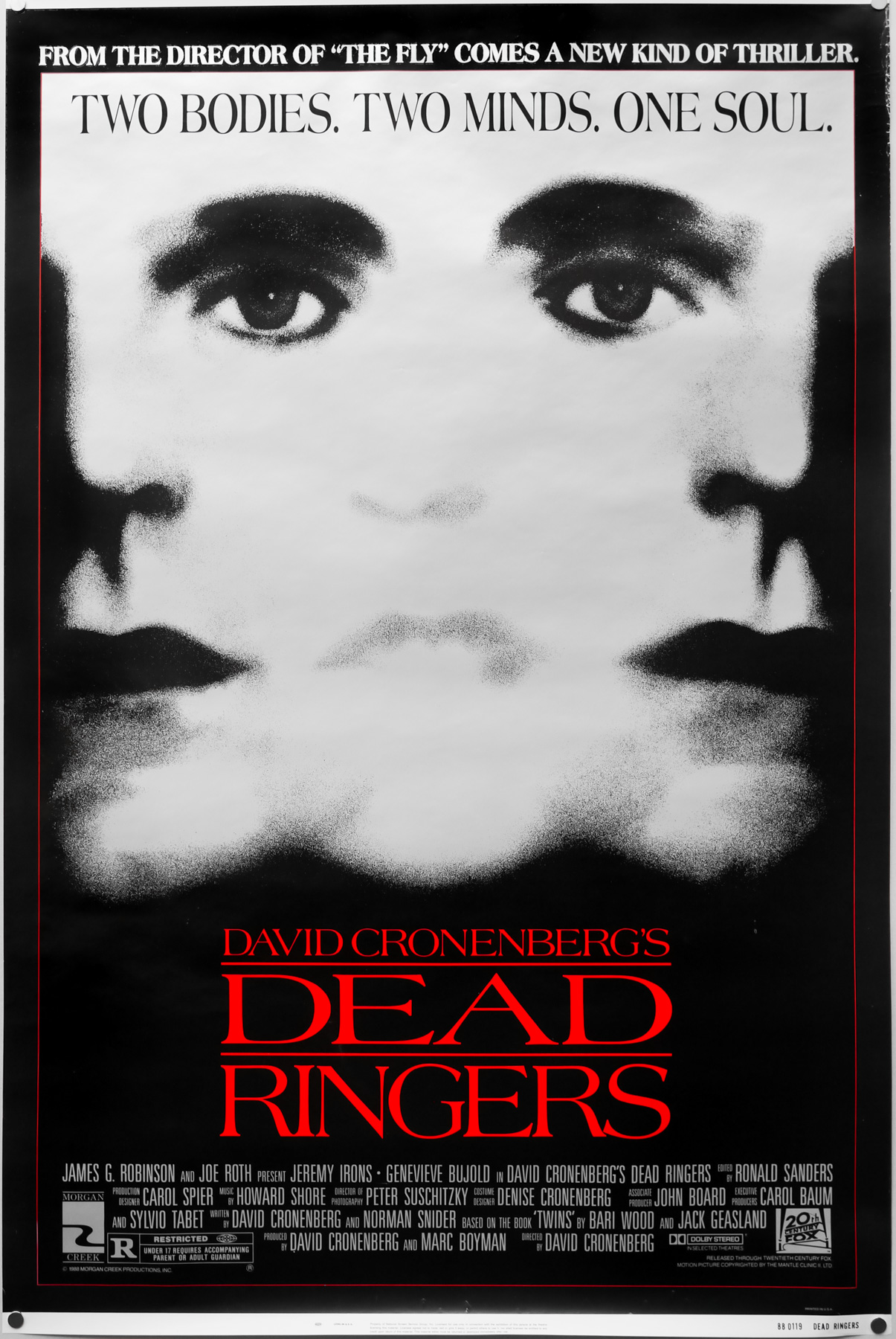
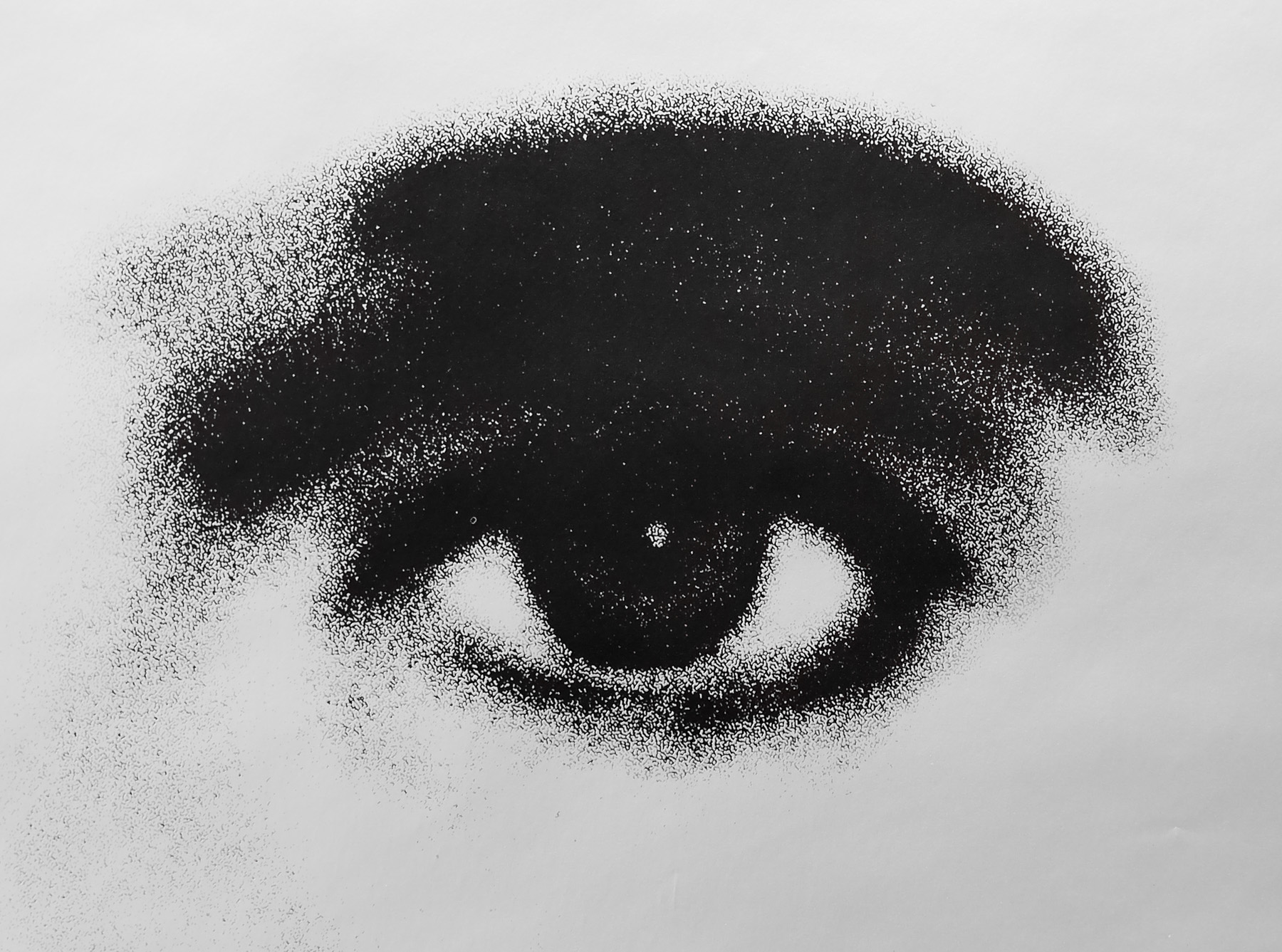
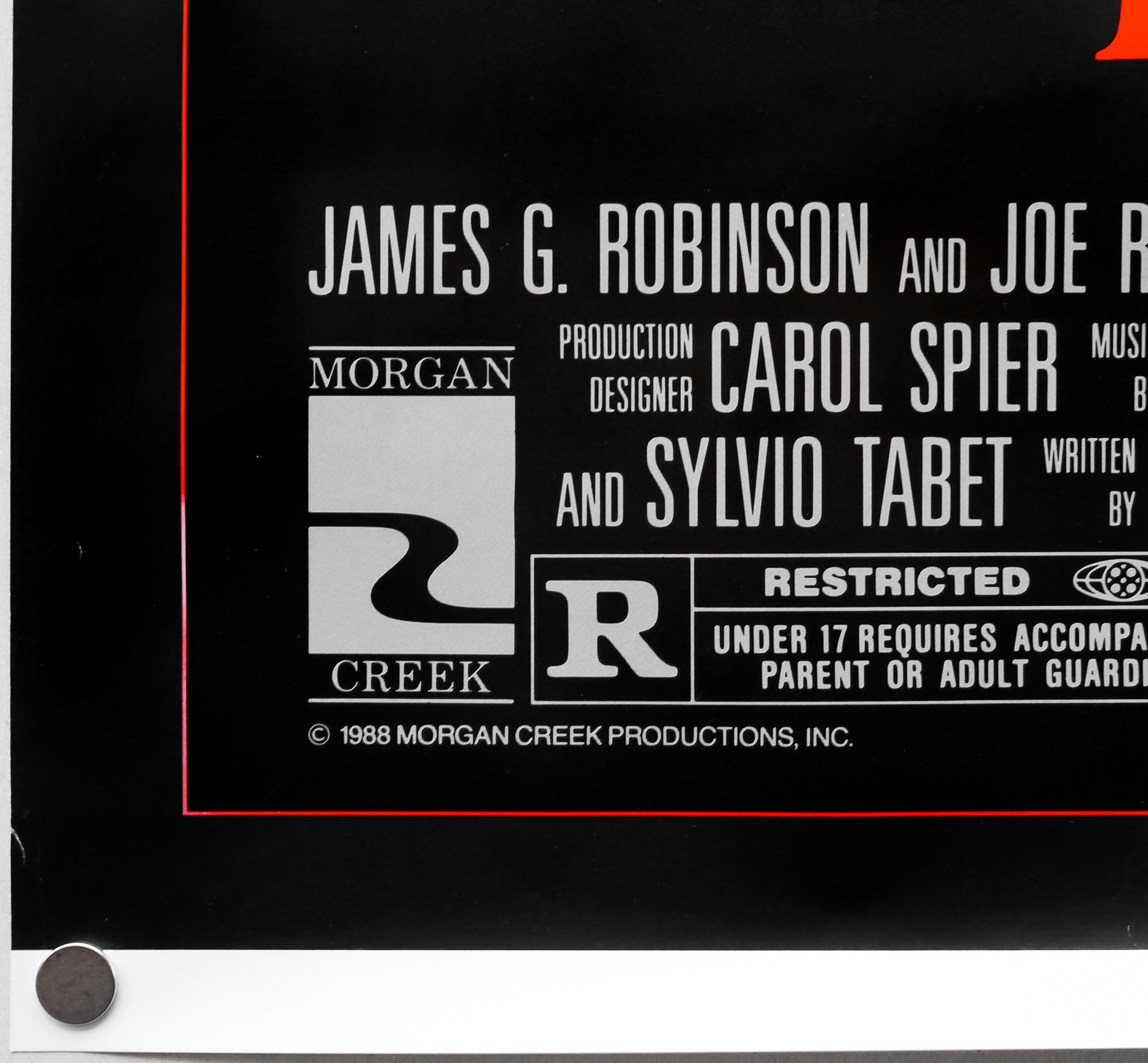
Upon its release in 1988, Dead Ringers was arguably Canadian director David Cronenberg‘s most mainstream release to date (as close as he’d come at least) and it was his first psychological thriller following a slew of horrors, including Scanners (1981) and The Fly (1986). Based on the novel ‘Twins’ by Bari Wood and Jack Geasland, the film was also influenced by the real life case of Stewart and Cyril Marcus and focuses on twin gynaecologists Beverly and Elliot Mantle (both played by Jeremy Irons) who practice in a Toronto clinic dealing with fertility problems. For years they have operated a system where the more confident Elliot seduces women who visit the clinic and then passes them onto the shy Beverly when he’s bored of them, with the women usually not noticing the deception.
One day troubled actress Claire Niveau (Geneviève Bujold) visits the clinic and Elliot does his usual seduction trick. Beverly then becomes infatuated with her, leading to a destabilising of the relationship between the brothers and, after Beverly begins taking the prescription drugs that Claire is addicted to, things take a turn for the worse. Soon paranoid delusions of ‘mutant women’ lead Beverly to purchasing a series of bizarre tools from a metallurgical artist. When he later attacks a patient at the clinic the twins are suspended from practice and set in motion a chain of events with a deadly conclusion.
Although more drama focused, the film still gave Cronenberg plenty of scope for his usual body horror tricks and although it’s not as bloody as previous efforts the film is no less disturbing. Irons impresses with his performance and the actor would win a few awards during the year of release.

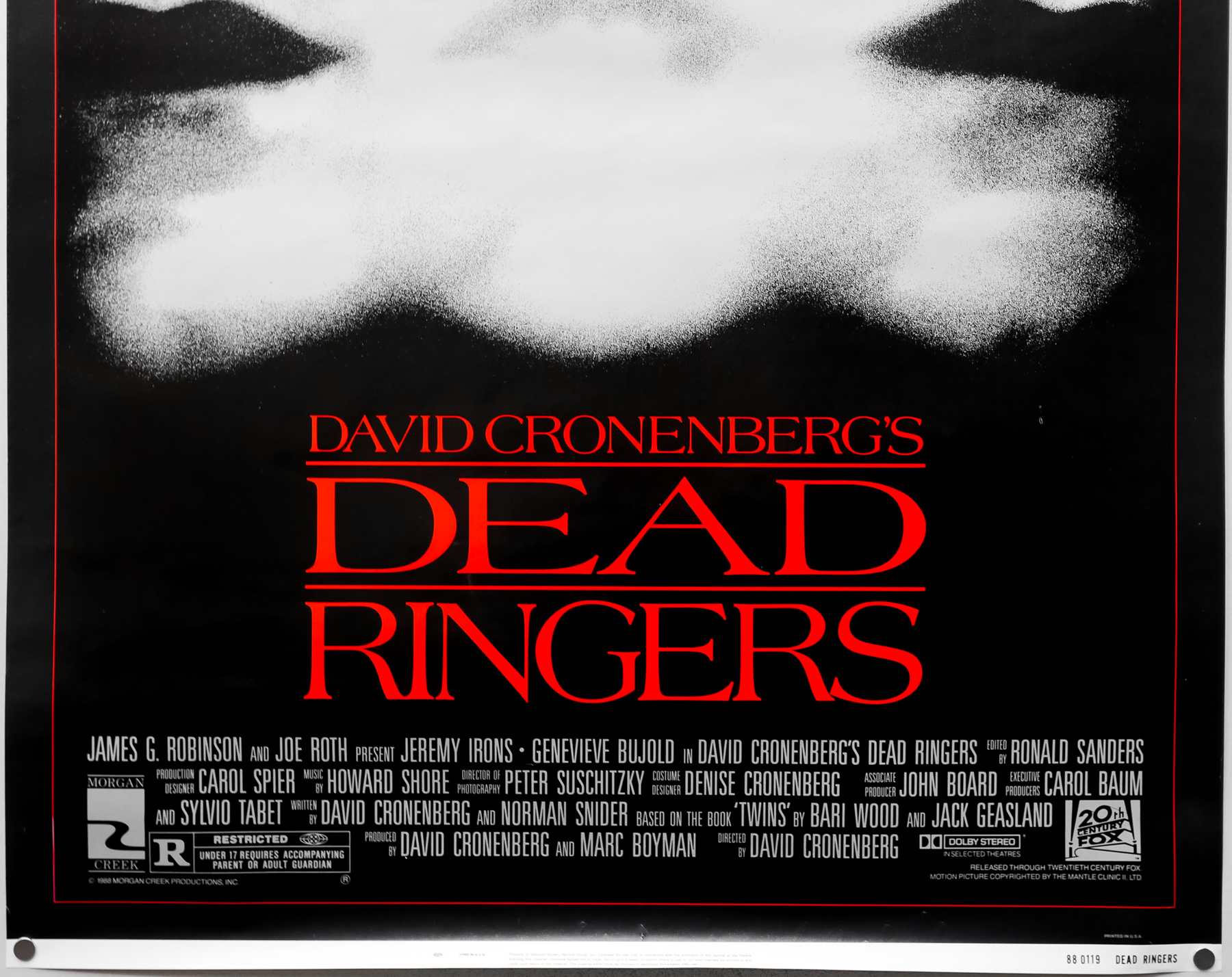
The poster was designed by Spiros Angelikas who was a prolific designer and artist of film posters during the 1970s and 1980s. He owned a design agency called Spiros Associates. Some of his most famous work includes the poster he designed for Friday the 13th, with artist Alex Ebel, and for his collaborations with the legendary artist Richard Amsel. They worked on Raiders of the Lost Ark and Nijinsky together and there’s a great article on the late artist’s website about their efforts. He also worked on several of the posters for the original Star Trek films, including the gorgeous Bob Peak original. There’s an interesting article by Angelikas’ son Harry on the Trek Core website which has photographs of concepts for the posters by Spiros that never made it to the print stage.

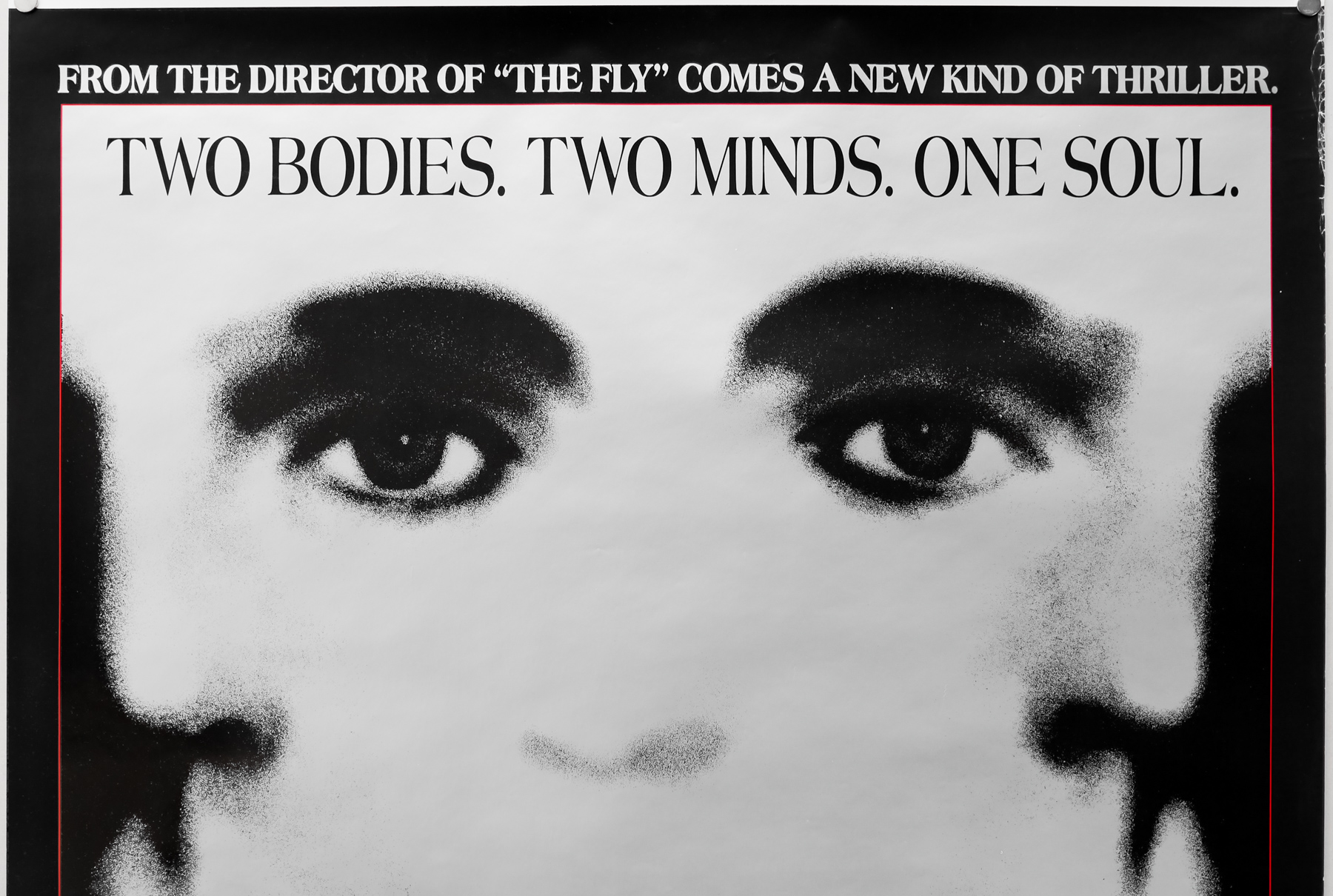
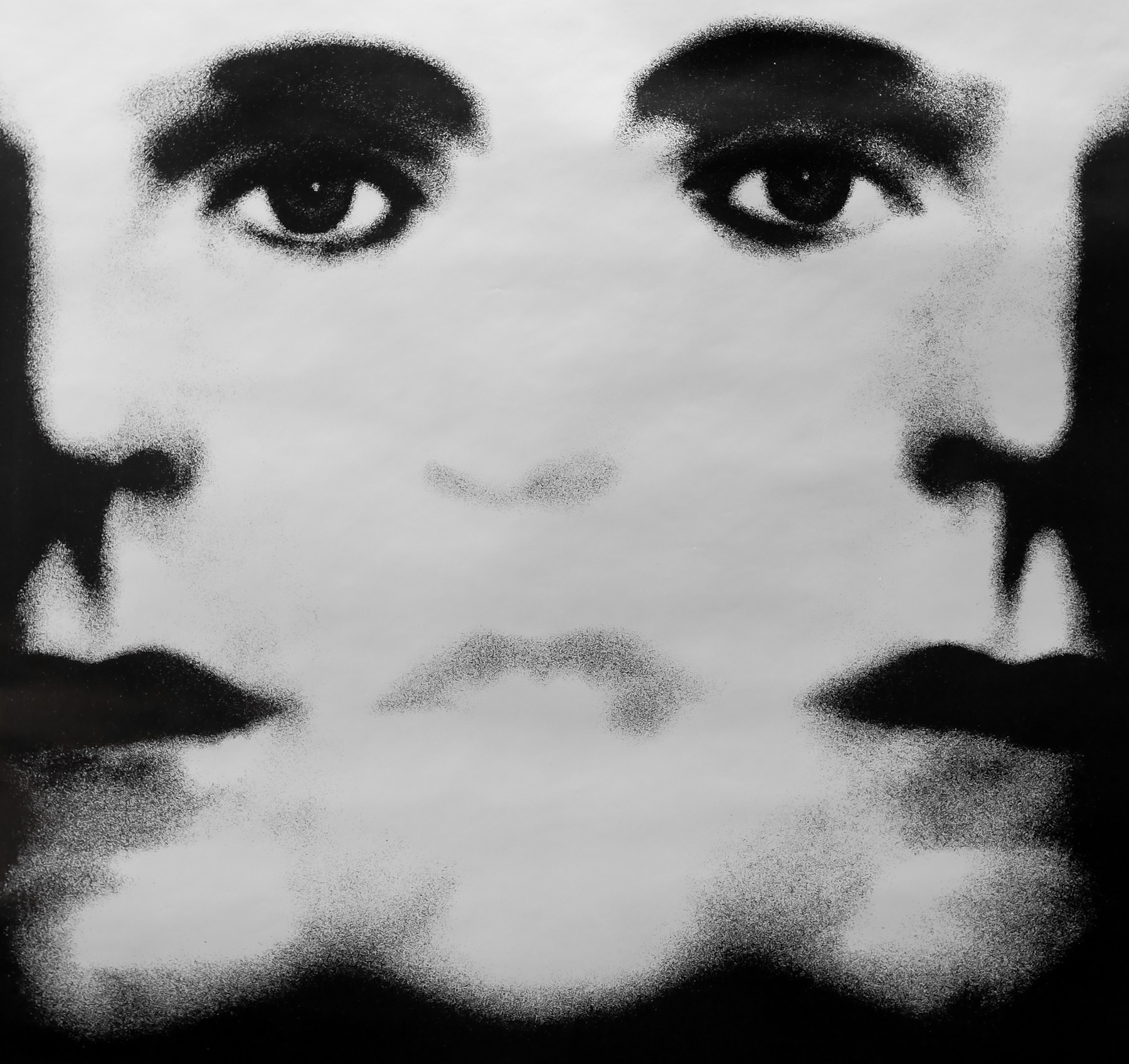
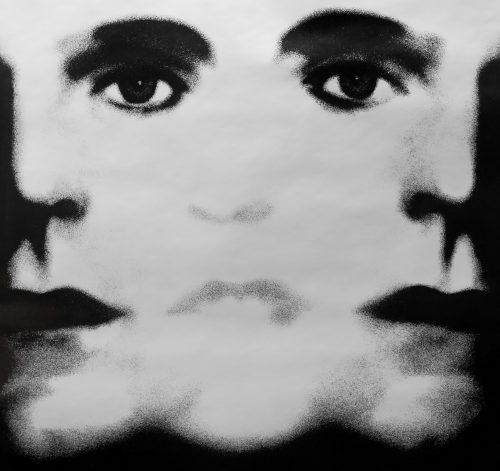
For this poster, not only did Spiros design the layout and type but he also put together the photo montage used for the central image of the melded faces.

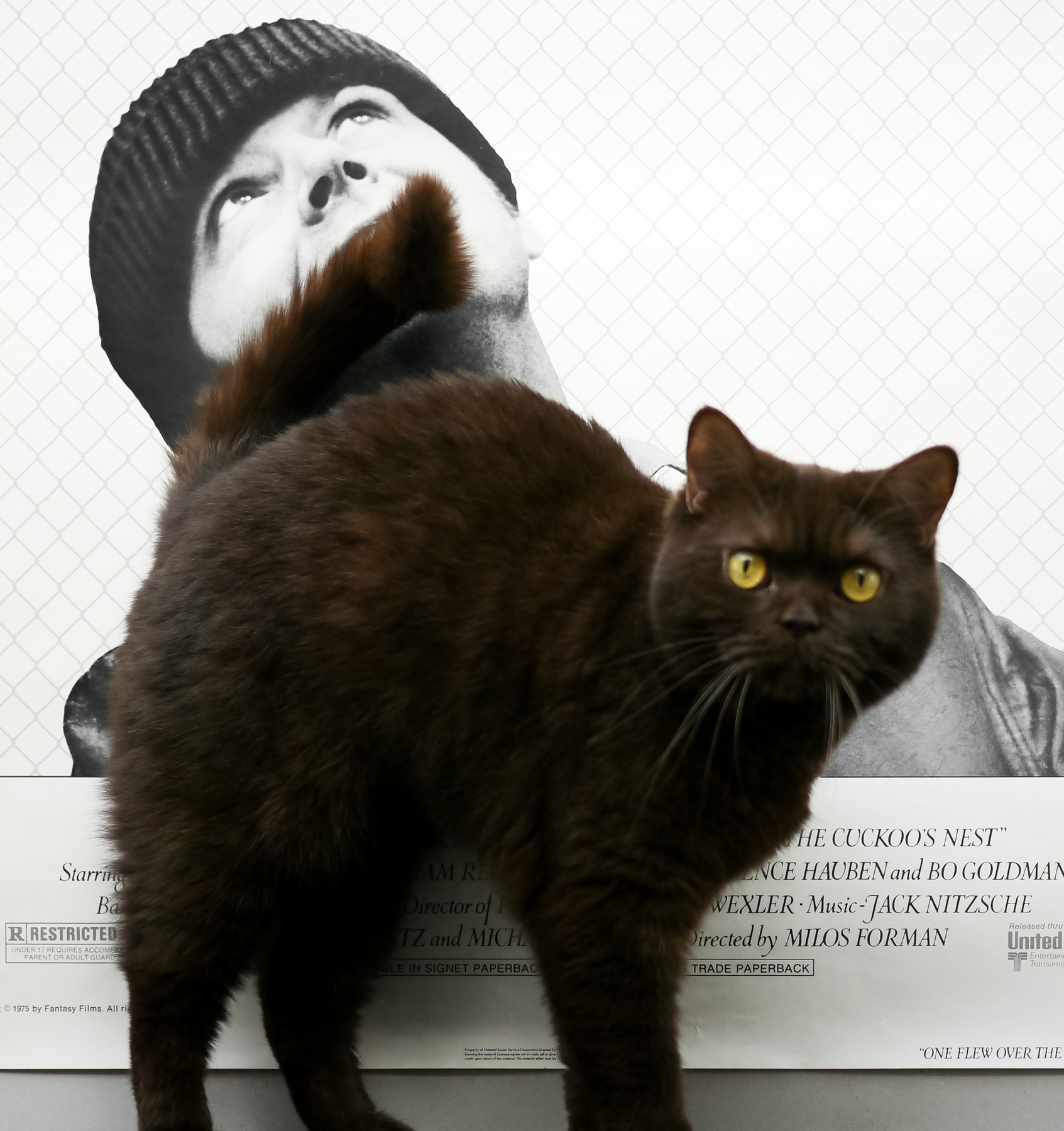
One Flew Over the Cuckoo’s Nest / one sheet / USA

20.02.15

Poster Poster
Title
One Flew Over the Cuckoo's Nest
AKA
Gökboet (Sweden)
Year of Film
1975
Director
Miloš Forman
Starring
Jack Nicholson, Louise Fletcher, William Redfield, Brad Dourif, Will Sampson, Danny DeVito, Scatman Crothers, Christopher Lloyd
Origin of Film
USA
Genre(s) of Film
Jack Nicholson, Louise Fletcher, William Redfield, Brad Dourif, Will Sampson, Danny DeVito, Scatman Crothers, Christopher Lloyd,
Type of Poster
One sheet
Style of Poster
--
Origin of Poster
USA
Year of Poster
1975
Designer
Unknown
Artist
--
Size (inches)
27 2/16" x 41"
SS or DS
SS
NSS #
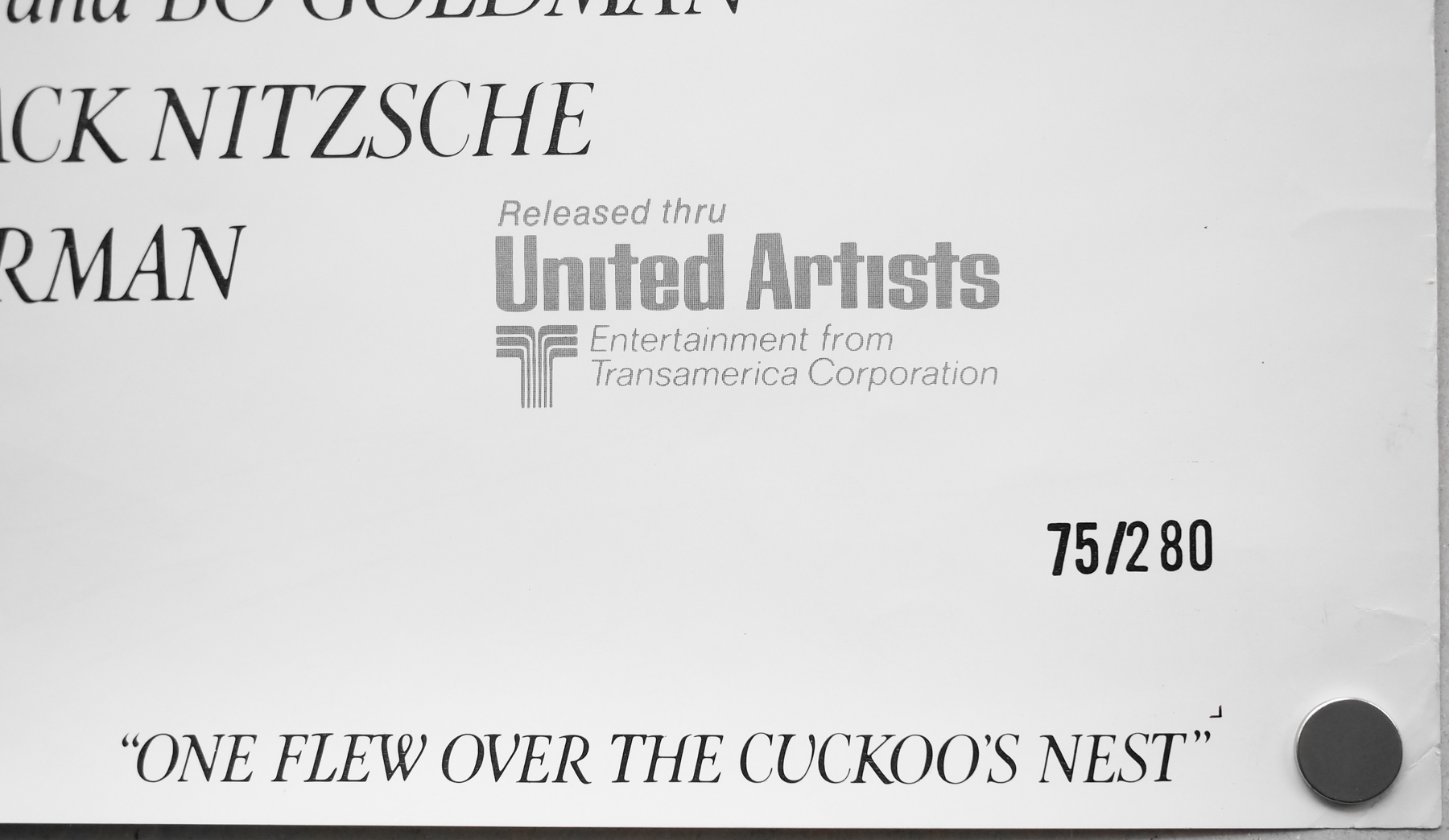
75/280
Tagline
--

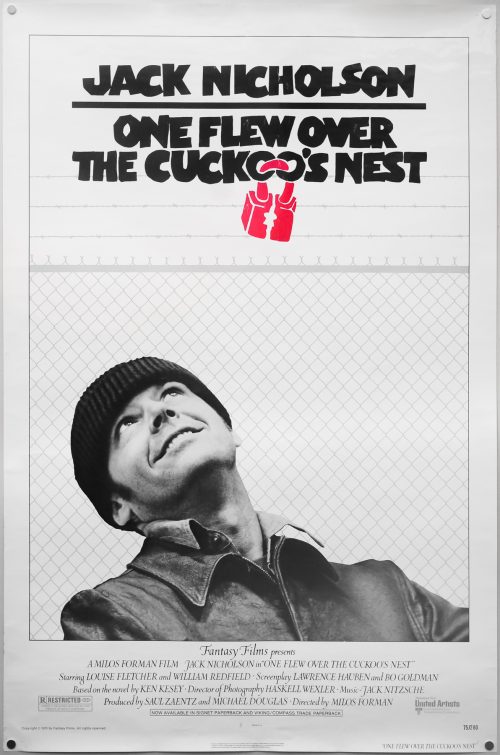
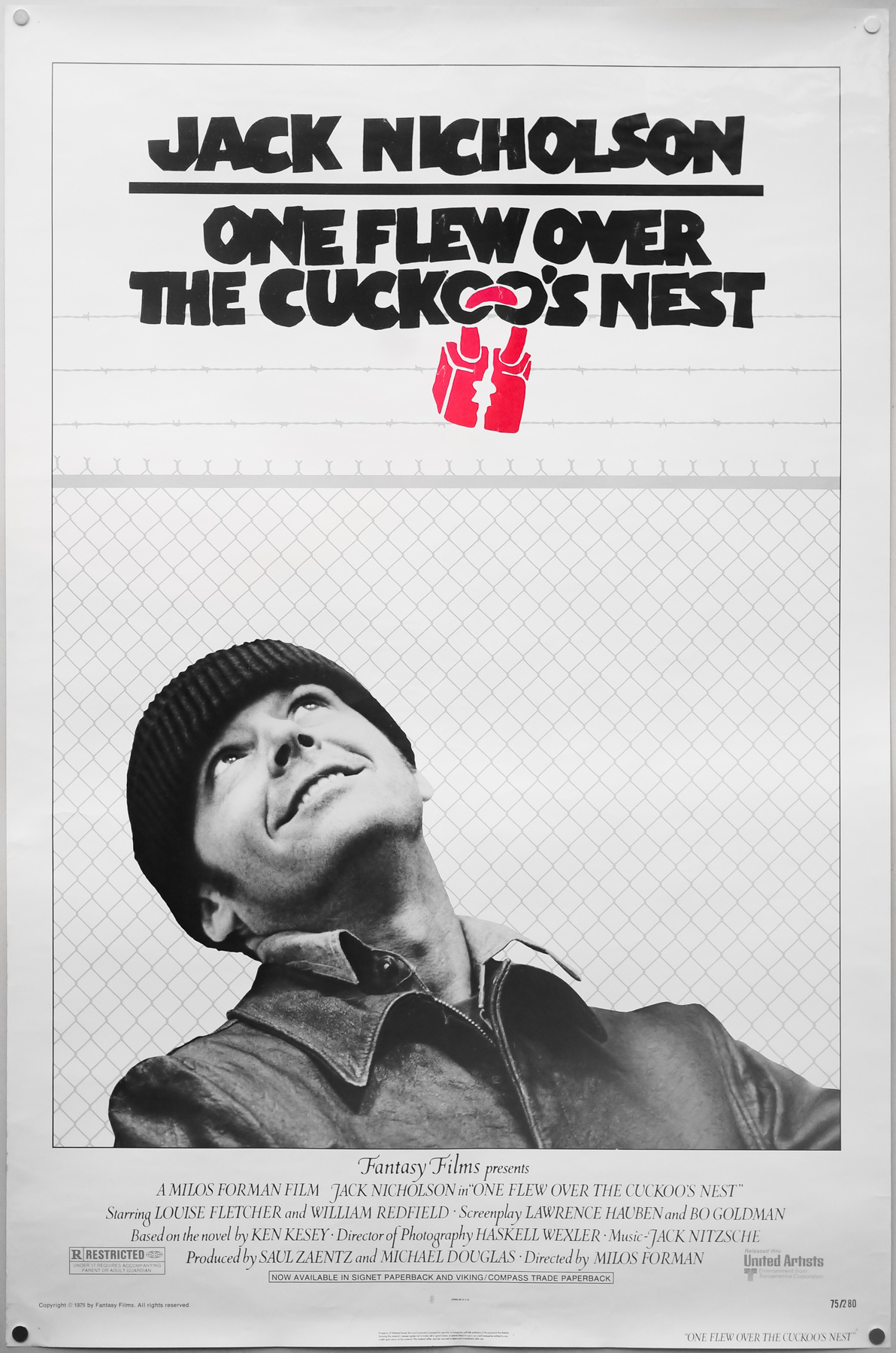
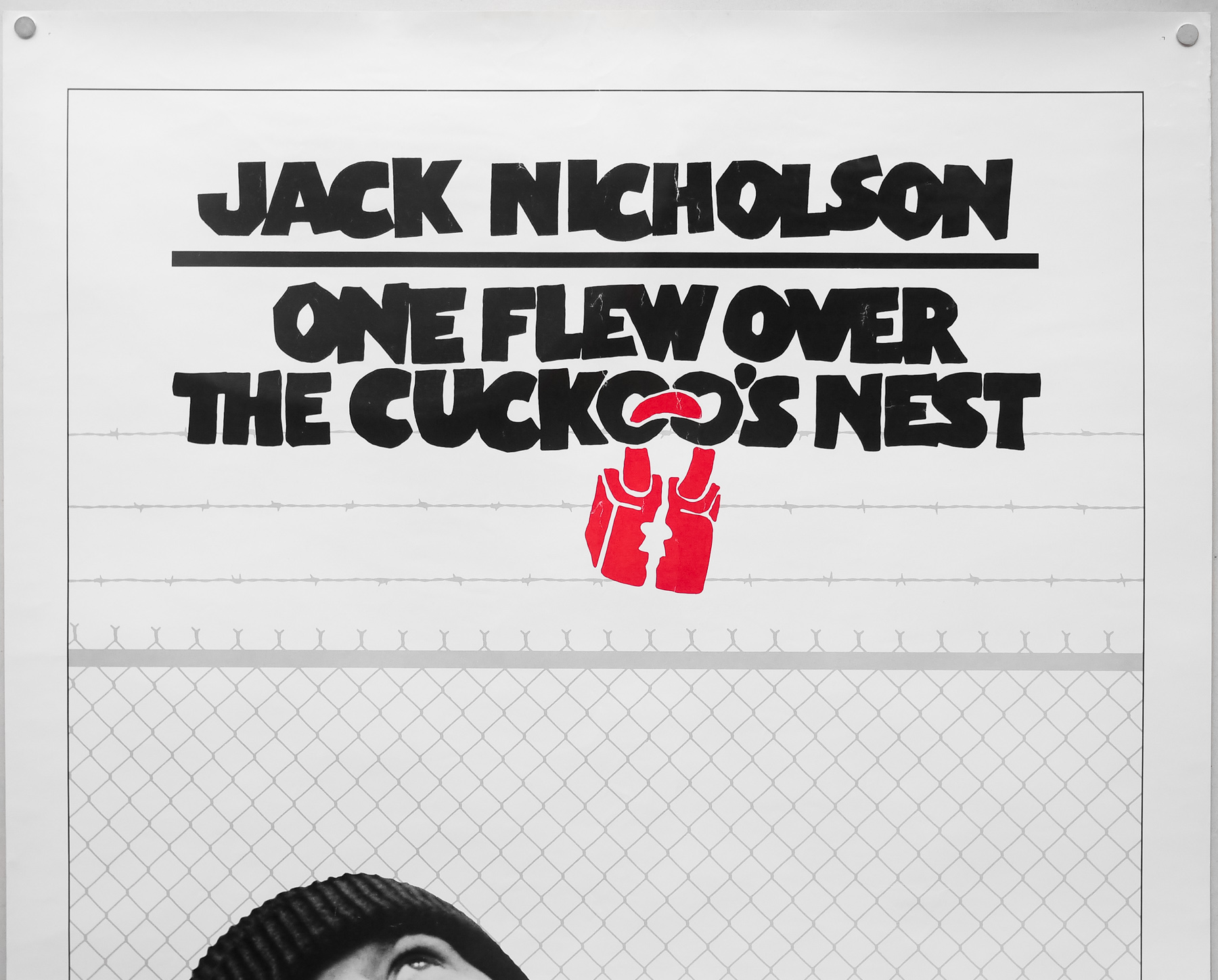
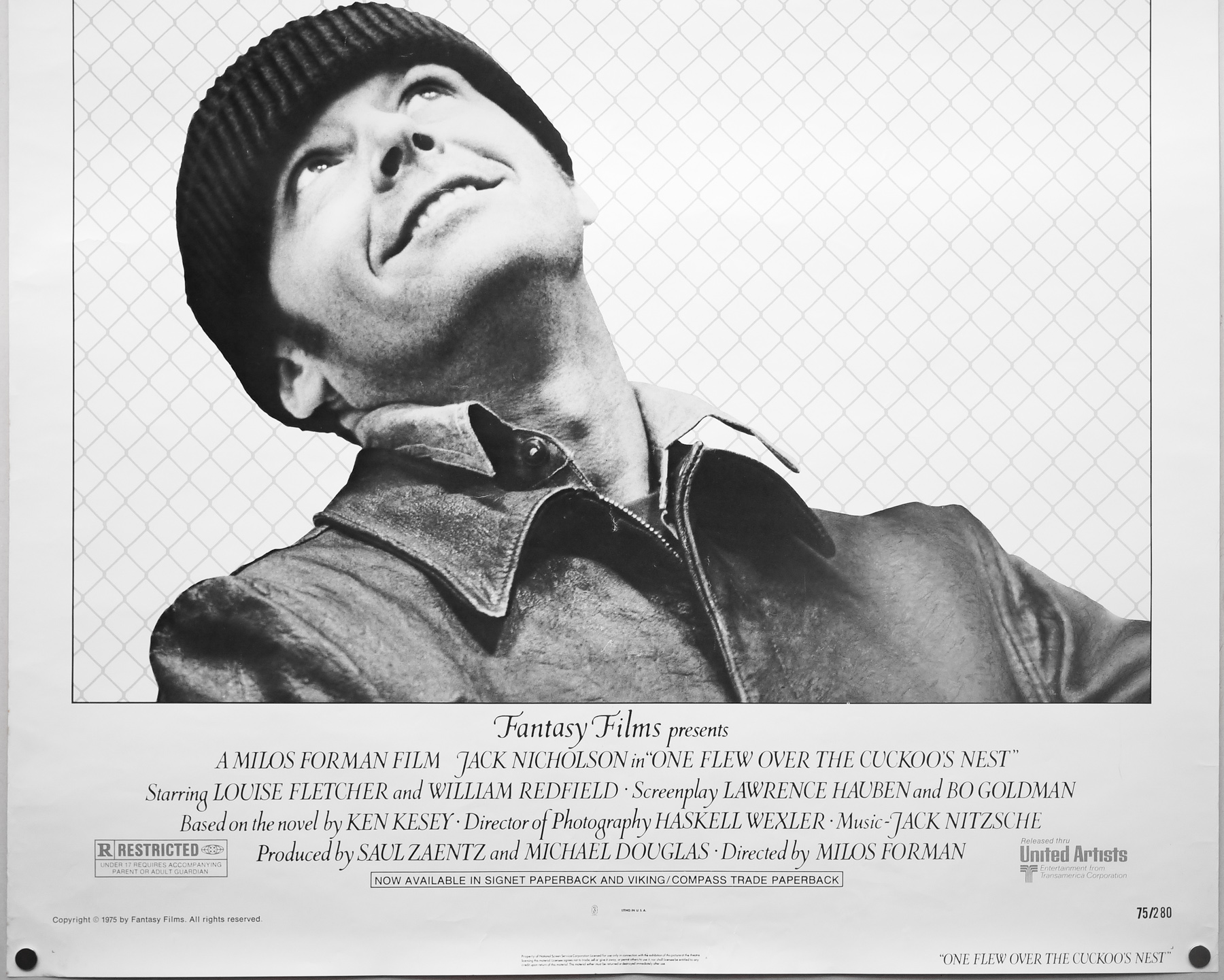
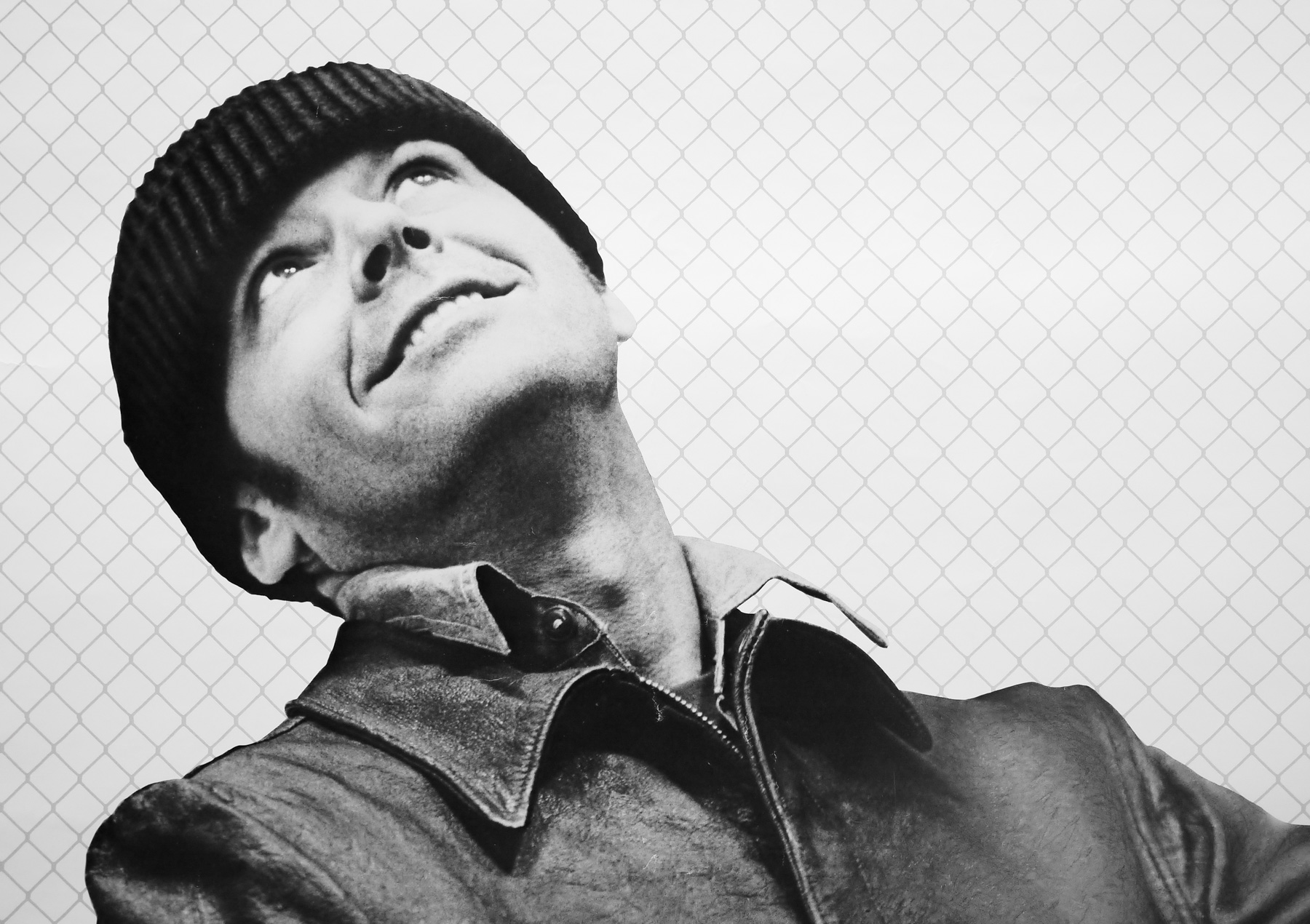
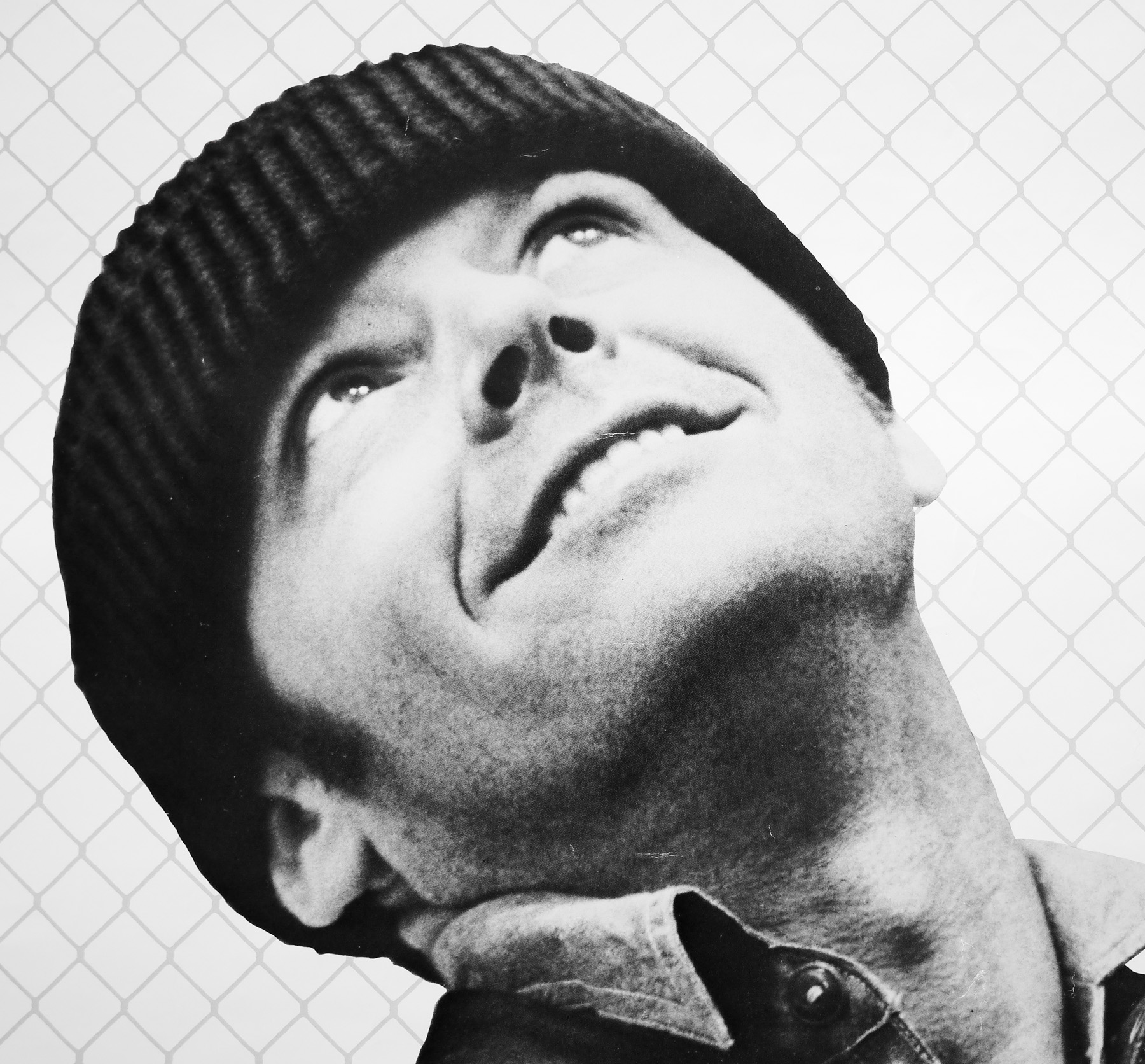
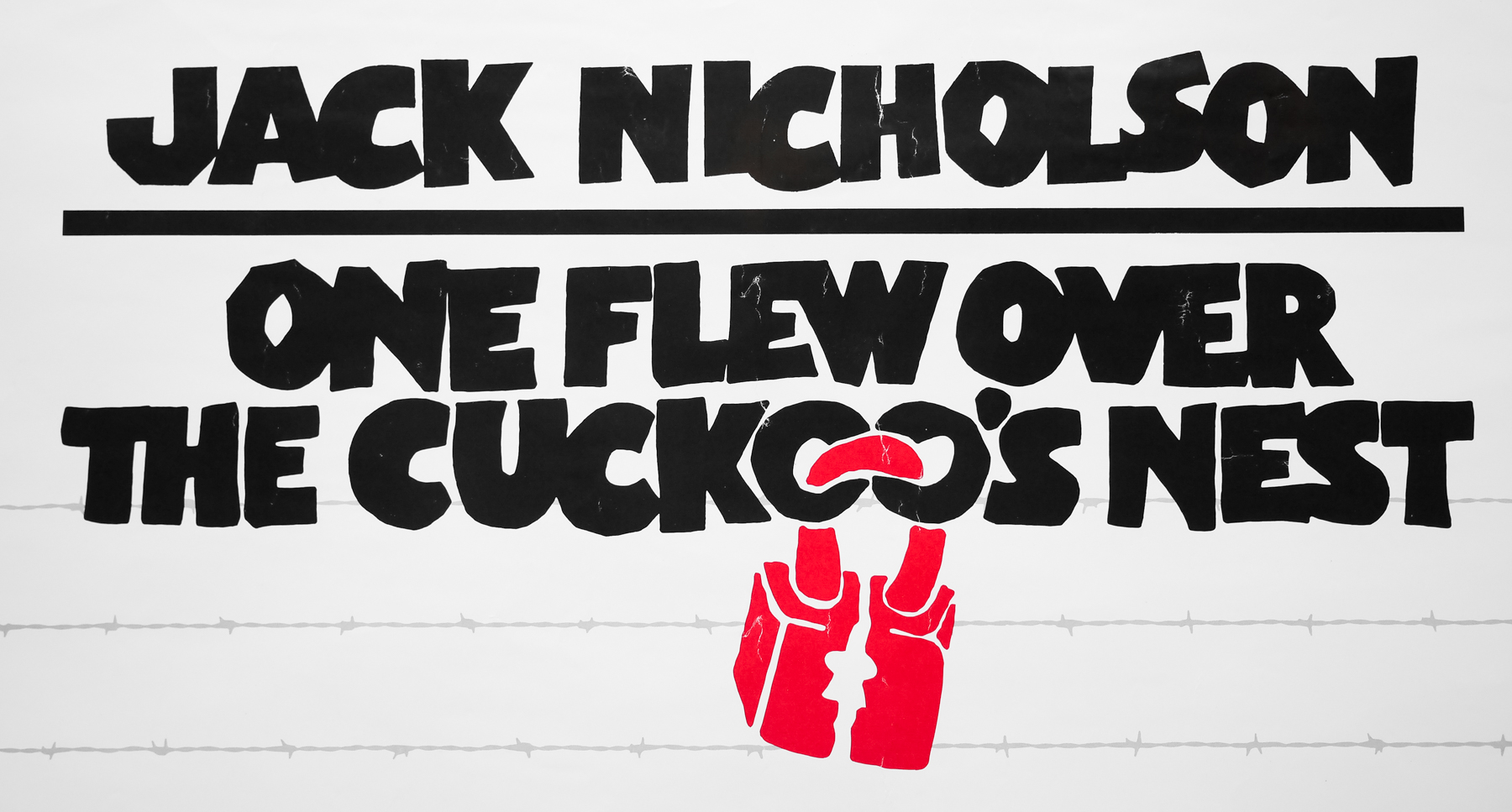
Arguably Jack Nicholson‘s finest performance (not an easy choice when there are films like Chinatown), One Flew Over the Cuckoo’s Nest is one of only three films that have won all five major Academy Awards (Best Picture, Actor in Lead Role, Actress in Lead Role, Director, and Screenplay), with the others being It Happened One Night (1934) and The Silence of the Lambs (1991). Based on the 1962 novel of the same name by Ken Kesey, the film focuses on goings on inside Oregon State Mental Hospital, which is where the book is set and, fortuitously, production was able to take place.

Nicholson plays Randall McMurphy a lifelong petty criminal who is sent to the mental hospital for evaluation after he fakes insanity in order to try and avoid a prison sentence in a traditional jail. After adjusting to life among genuinely disturbed characters including Billy Bibbit (Brad Dourif) and Martini (Danny DeVito) and Taber (Christopher Lloyd) he starts to lead a small rebellion agains the authorities in the hospital and gains a cult status amongst the patients. But McMurphy hasn’t reckoned on the determination of the cruel Nurse Ratched (an unforgettable Louise Fletcher) who realises how much of a threat he is to life at the hospital and the tension between them escalates until a shocking ending that hasn’t lost it’s power 40 years on.

The film was a huge box-office and critical success with the Academy Awards being only some of the many accolades the film would garner. The film has been oft parodied in the years since with several elements of the story entering the cultural lexicon, such as uncompromising authoritarian figures often being referred to as being Ratched-like.

I’m unsure who’s responsible for the design of this poster so if anyone has any ideas please get in touch.

Hobo With A Shotgun / one sheet / USA

08.05.15

Poster Poster
Title
Hobo With a Shotgun
AKA
--
Year of Film
2011
Director
Jason Eisener
Starring
Rutger Hauer, Pasha Ebrahimi, Robb Wells, Brian Downey, Gregory Smith, Nick Bateman, Drew O'Hara, Molly Dunsworth, Jeremy Akerman
Origin of Film
Canada
Genre(s) of Film
Rutger Hauer, Pasha Ebrahimi, Robb Wells, Brian Downey, Gregory Smith, Nick Bateman, Drew O'Hara, Molly Dunsworth, Jeremy Akerman,
Type of Poster
One sheet
Style of Poster
--
Origin of Poster
USA
Year of Poster
2011
Designer
Tom Hodge AKA The Dude Designs
Artist
Tom Hodge AKA The Dude Designs
Size (inches)
27 1/16" x 39 13/16"
SS or DS
SS
Tagline
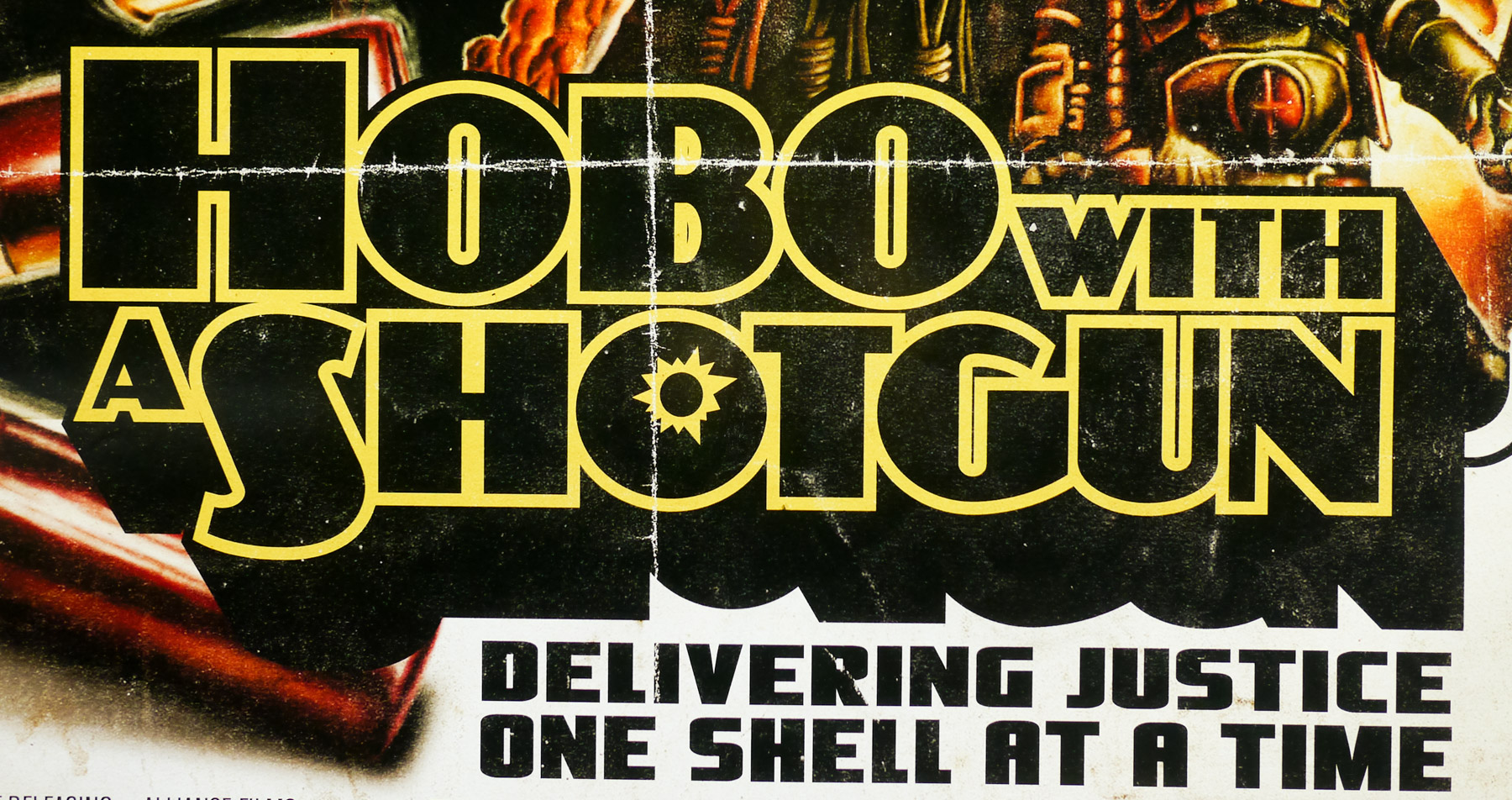
Delivering justice one shell at a time

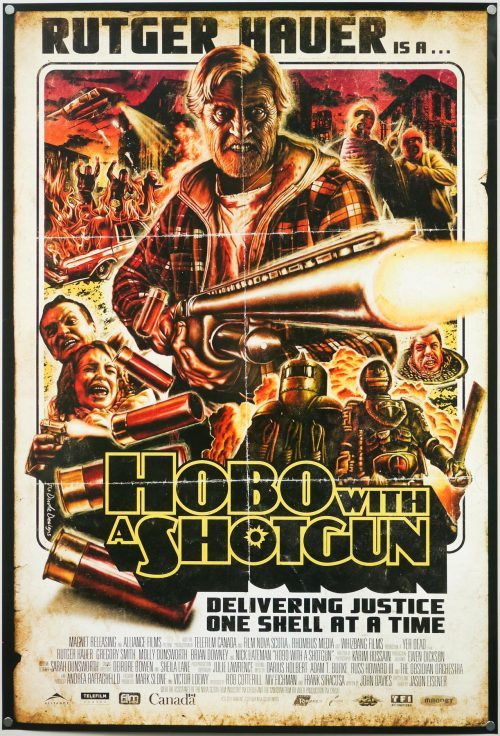
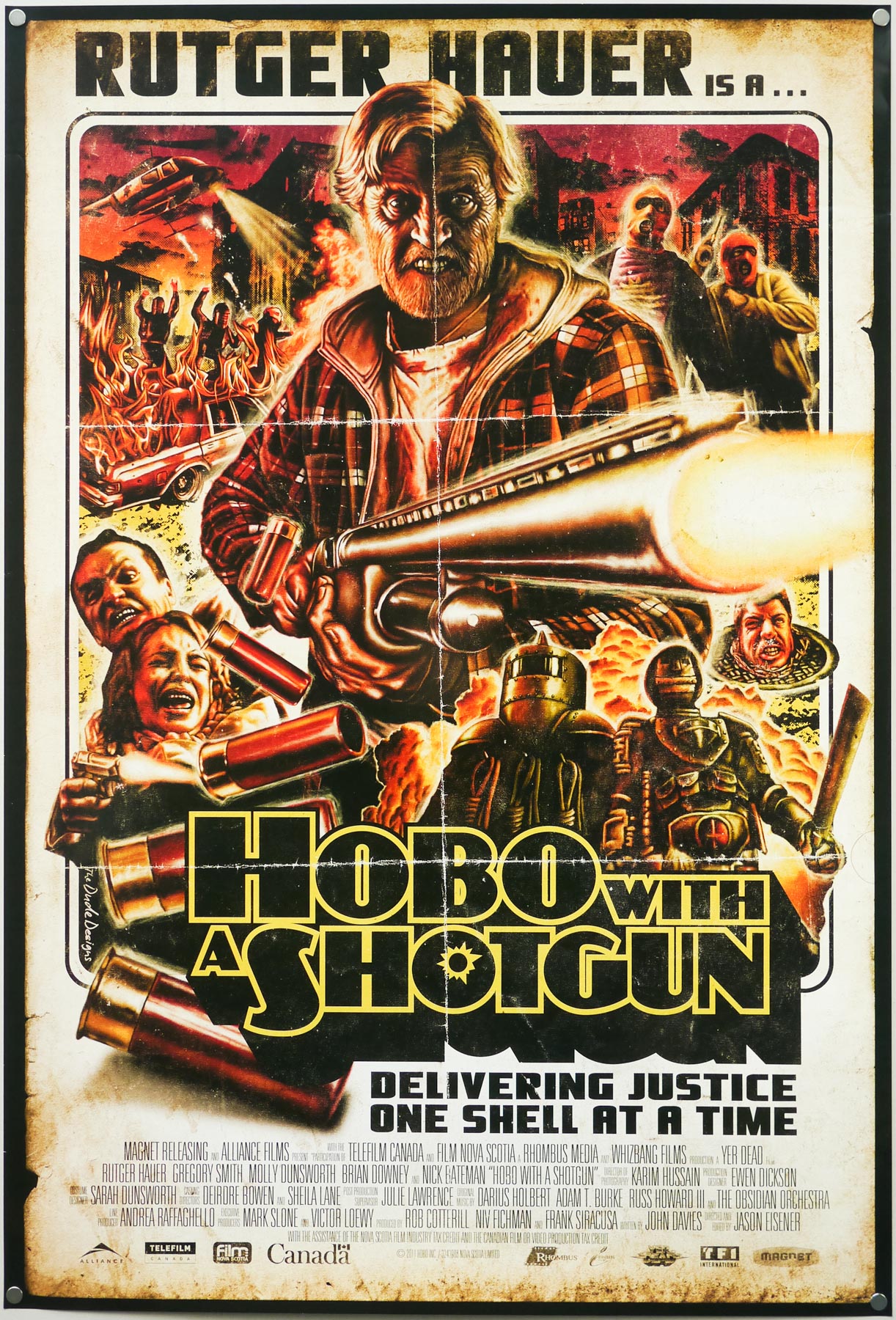
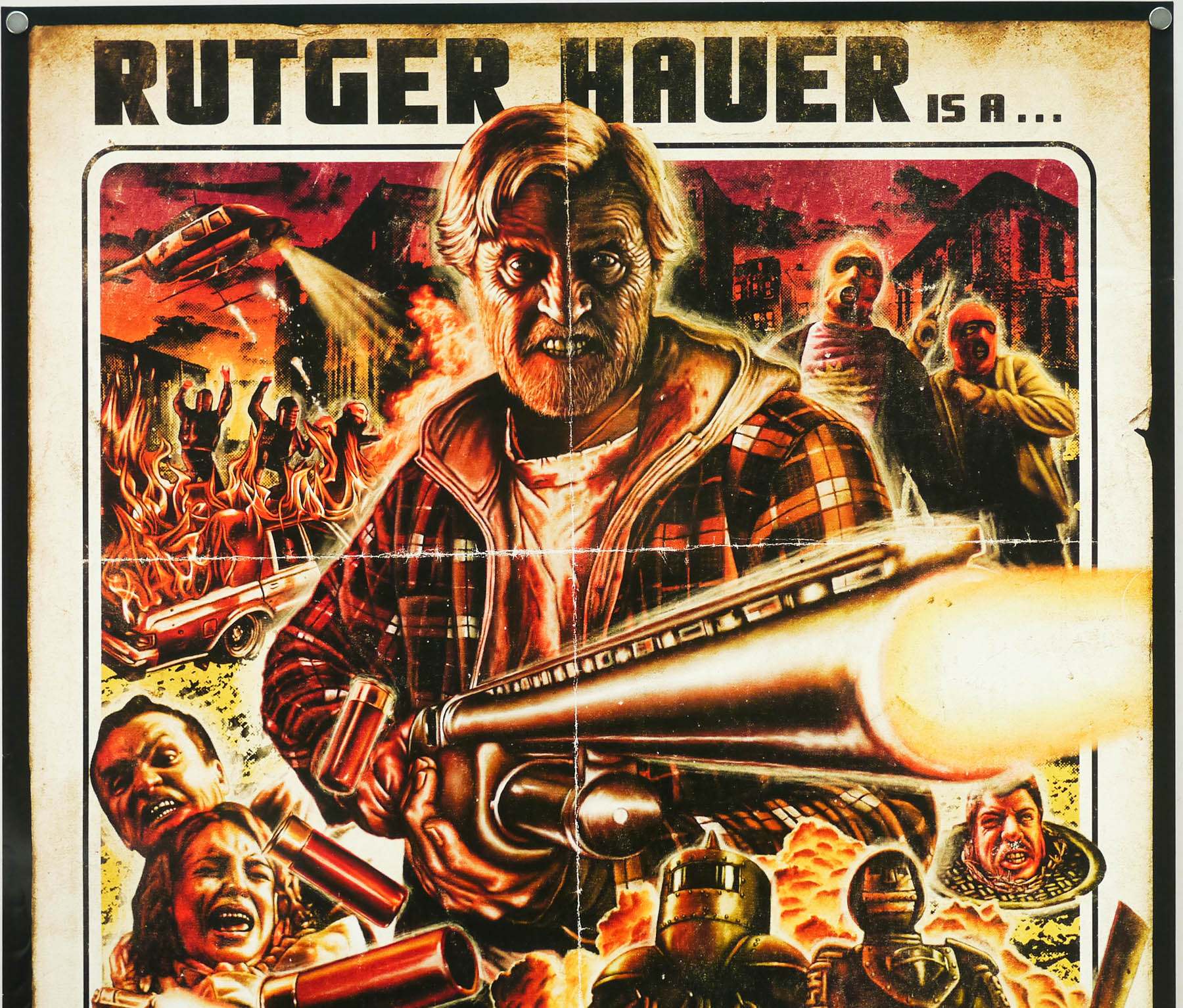
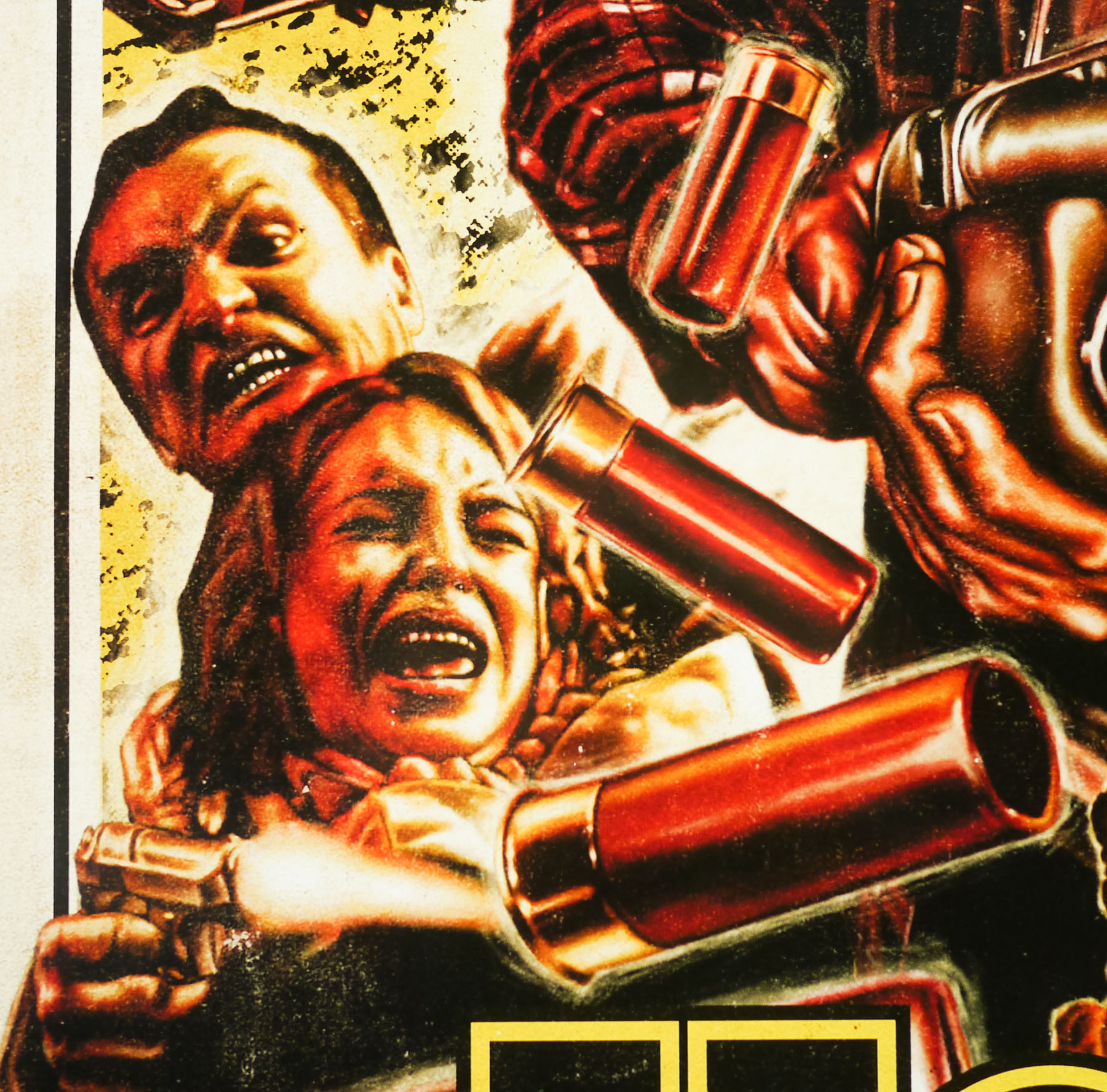
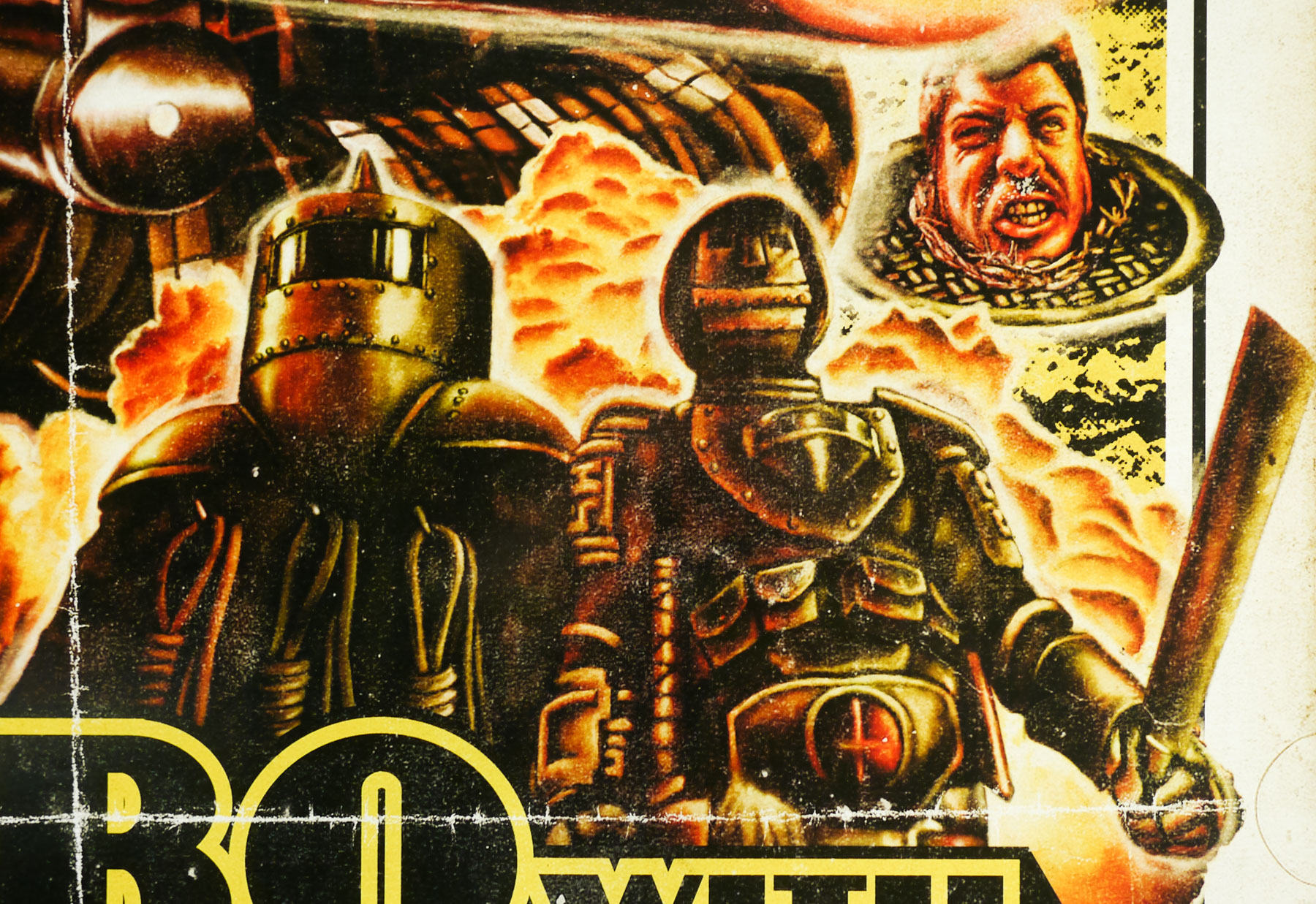
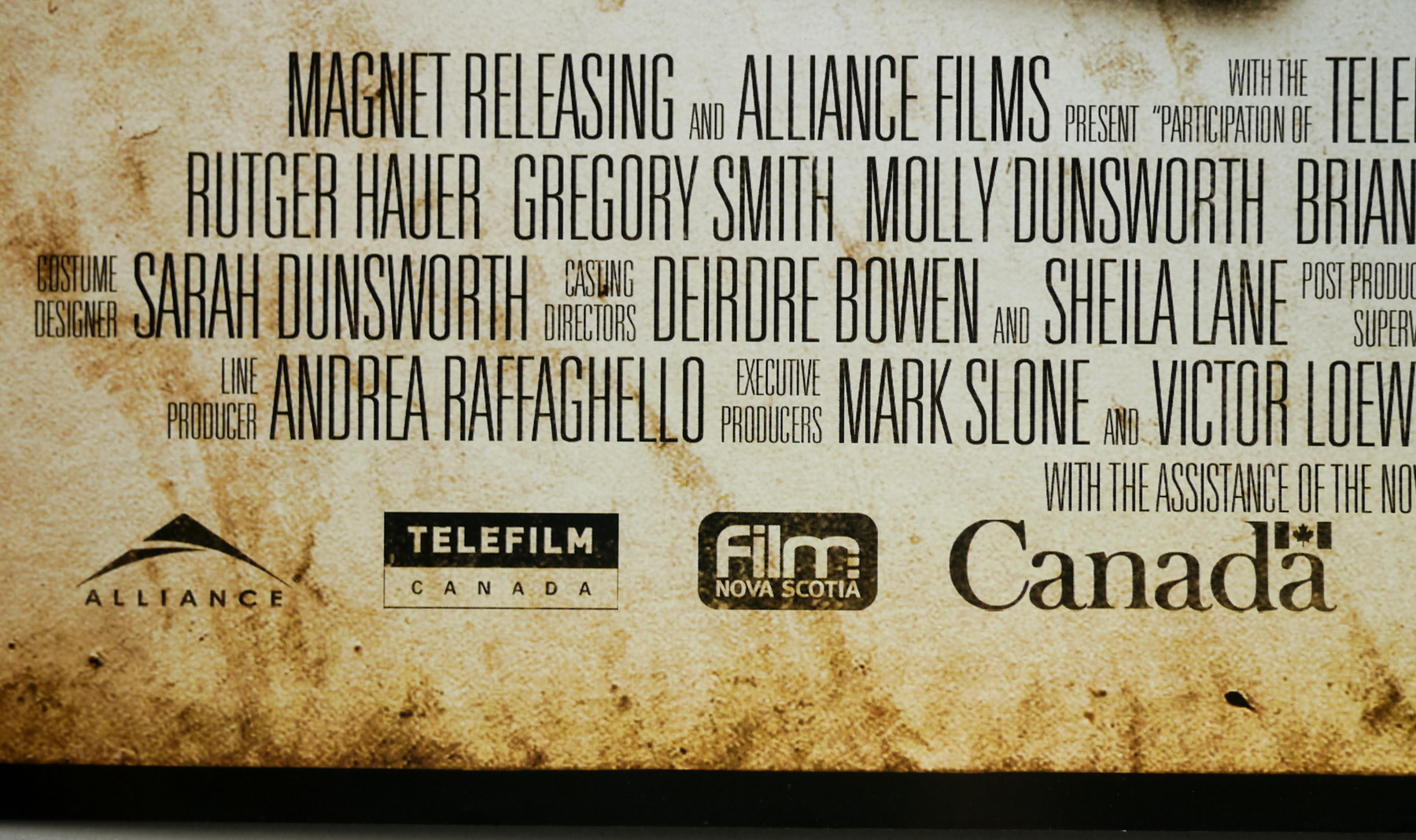
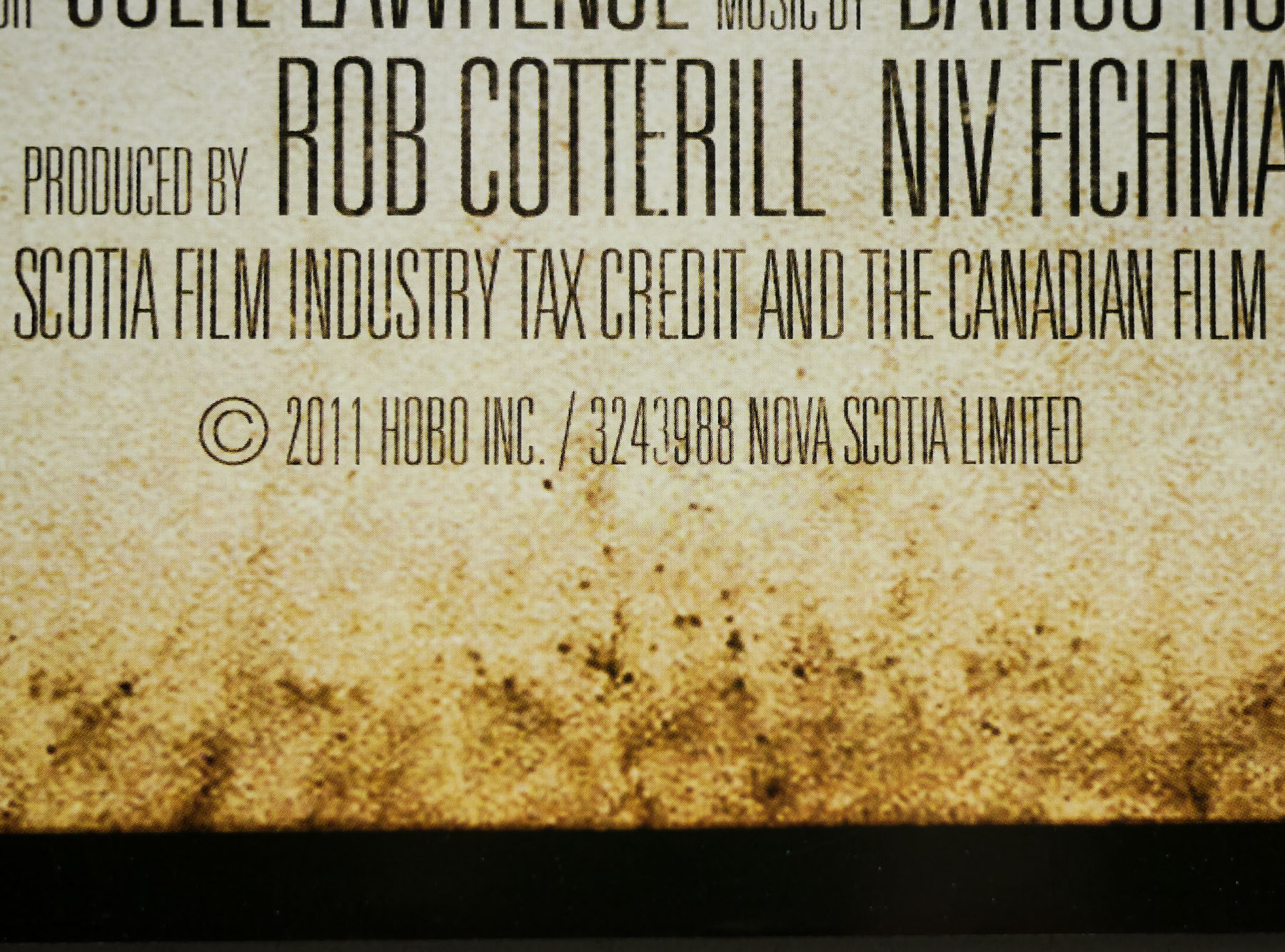
Hobo With a Shotgun is a Canadian exploitation action film which started out as a fake trailer that was the winning entry in a competition held as part of the promotion of Quentin Tarantino and Robert Rodriguez’s Grindhouse. Prior to the 2007 South By Southwest festival (held annually in Austin, Texas) Rodriguez challenged budding filmmakers to create a trailer that celebrated exploitation and horror films, which would then be shown as part of a panel on Grindhouse cinema.

This CinemaBlend article describes the event and confirms that the trailer by Nova Scotians Jason Eisener, John Davies, and Rob Cotterill was the winner. When Grindhouse was shown in cinemas in the US there were several fake trailers shown around the two main features, shot by the likes of Edgar Wright and Rob Zombie, and the Hobo With a Shotgun was shown alongside them in several Canadian cinemas. In 2010 Rodriguez turned his fake Grindhouse trailer for a film called Machete, starring long-time collaborator Danny Trejo, into a feature-length release and Jason Eisener then followed suit with a full-length version of Hobo in 2011.

The film stars Rutger Hauer as the titular homeless man who arrives in the fictional Hope Town only to discover it is now known as Scum Town and is ruled over by crime boss Drake and his psychotic sons Ivan and Slick. The family have a stranglehold over the town and the hobo witnesses robberies, brutal violence and prostitution as he wanders the streets. Although he initially dreams of buying a lawnmower from a pawnshop to earn money through landscaping, an encounter with Slick and Ivan steels his resolve to do something about the injustice he’s seen. The same pawnshop has shotguns for sale and so the hobo sets out to clean up the streets, delivering justice one shell at a time!

The film absolutely nails the grindhouse aesthetic and has clearly been made by someone with genuine reverence for the films that defined the genre. The production design is top notch throughout with Dartmouth and Halifax in Nova Scotia turned convincingly into the crime-ridden Scum Town. It’s also filled with excellent performances from actors who are clearly enjoying delivering the outlandish lines that John Davies’ script contains, but Hauer steals the show with his enjoyment of playing the vengeful hobo clear to see. The soundtrack is also notably excellent and perfectly suits the action on screen.

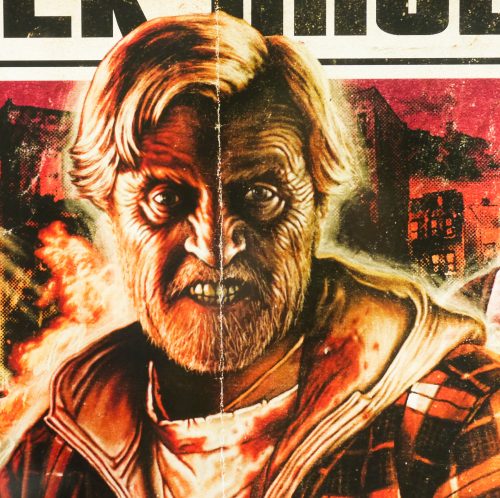
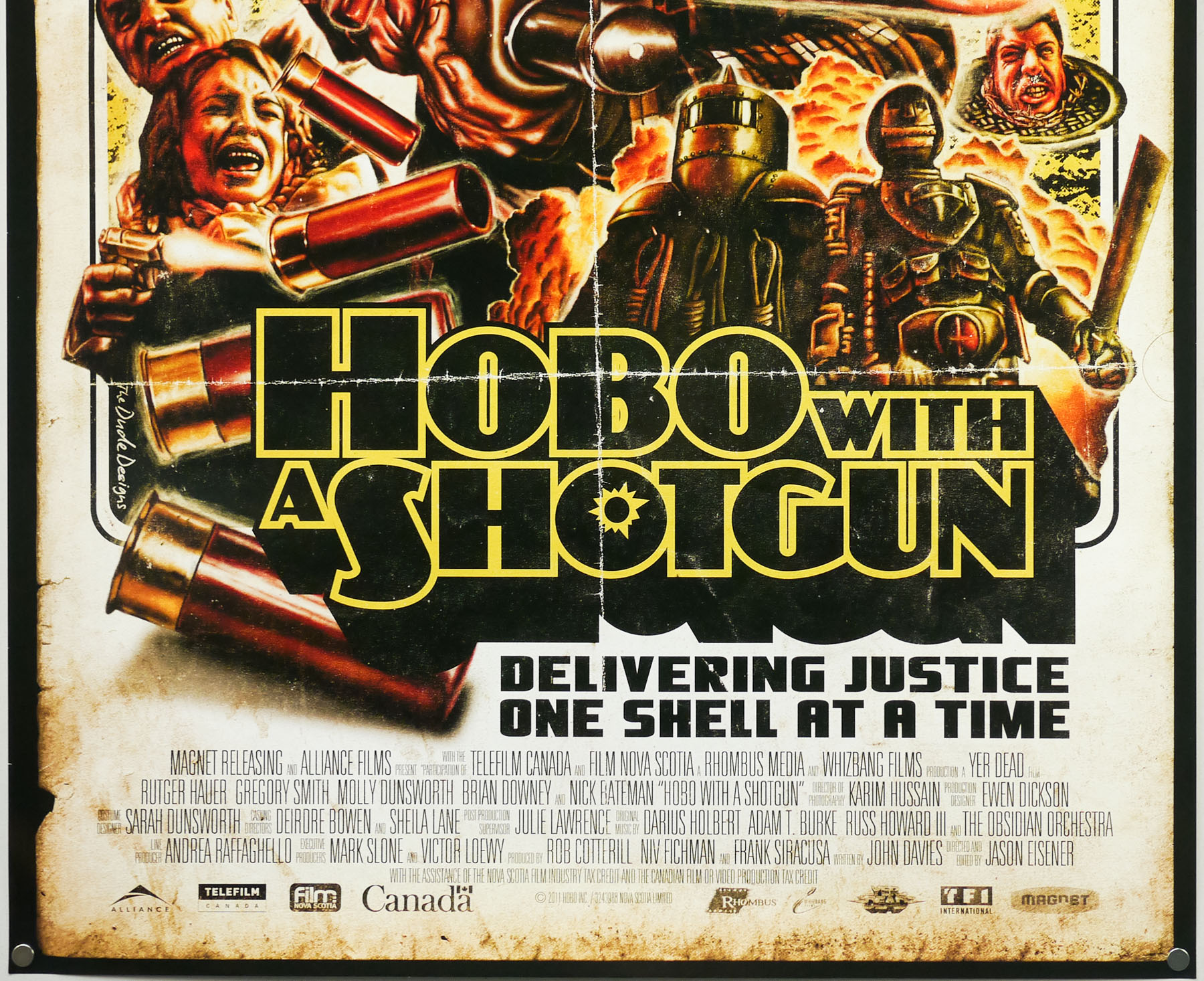
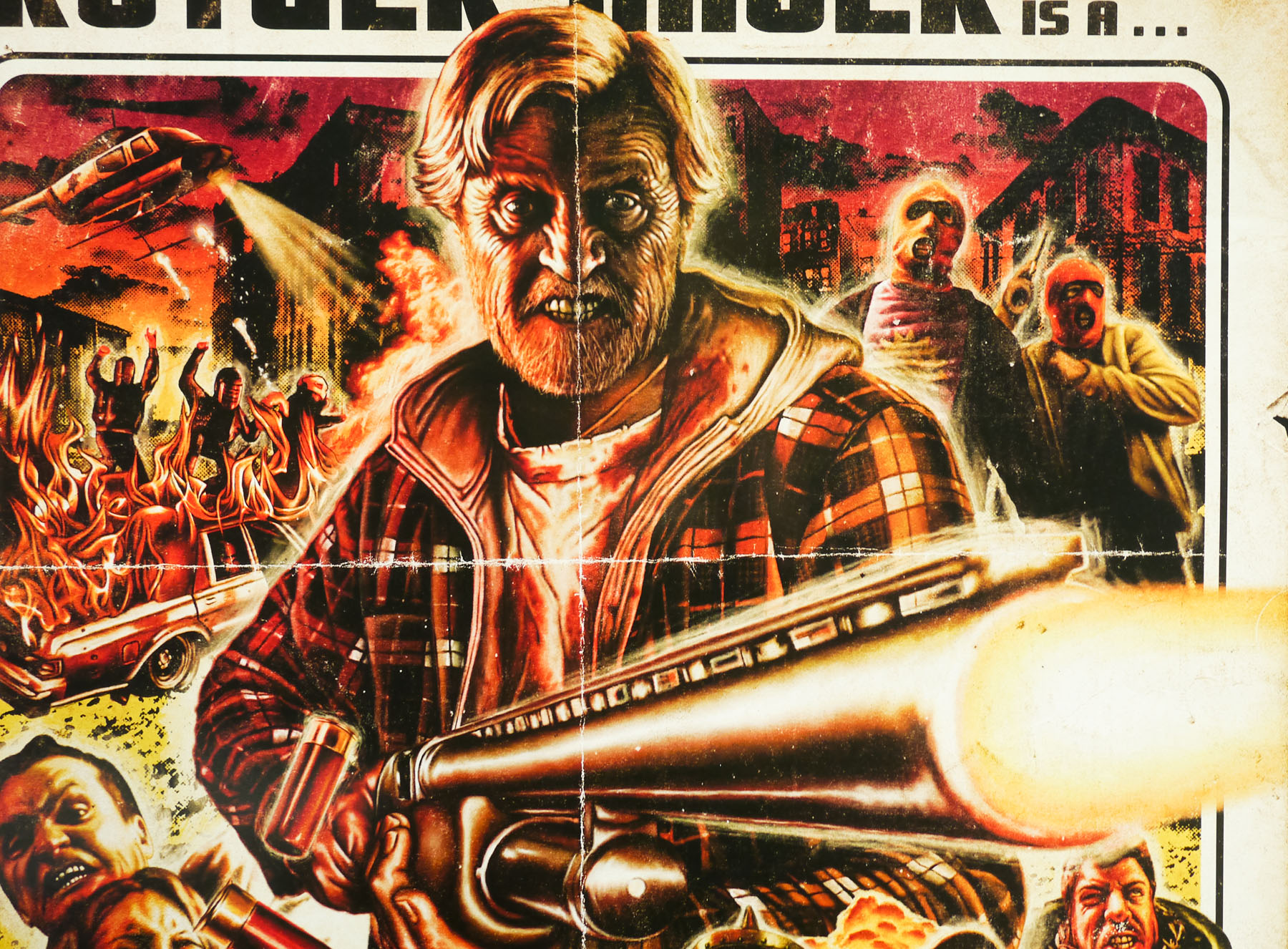
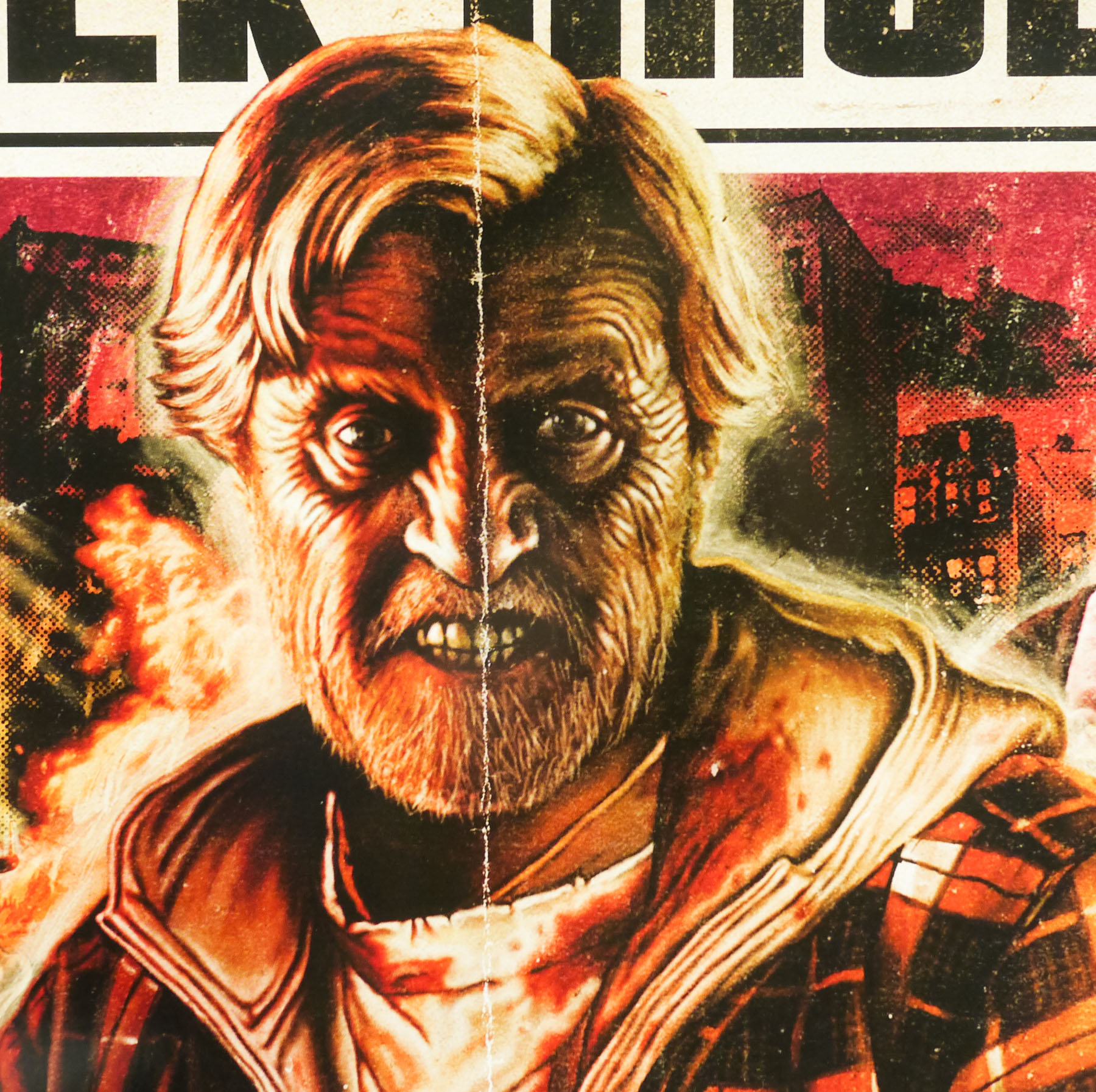
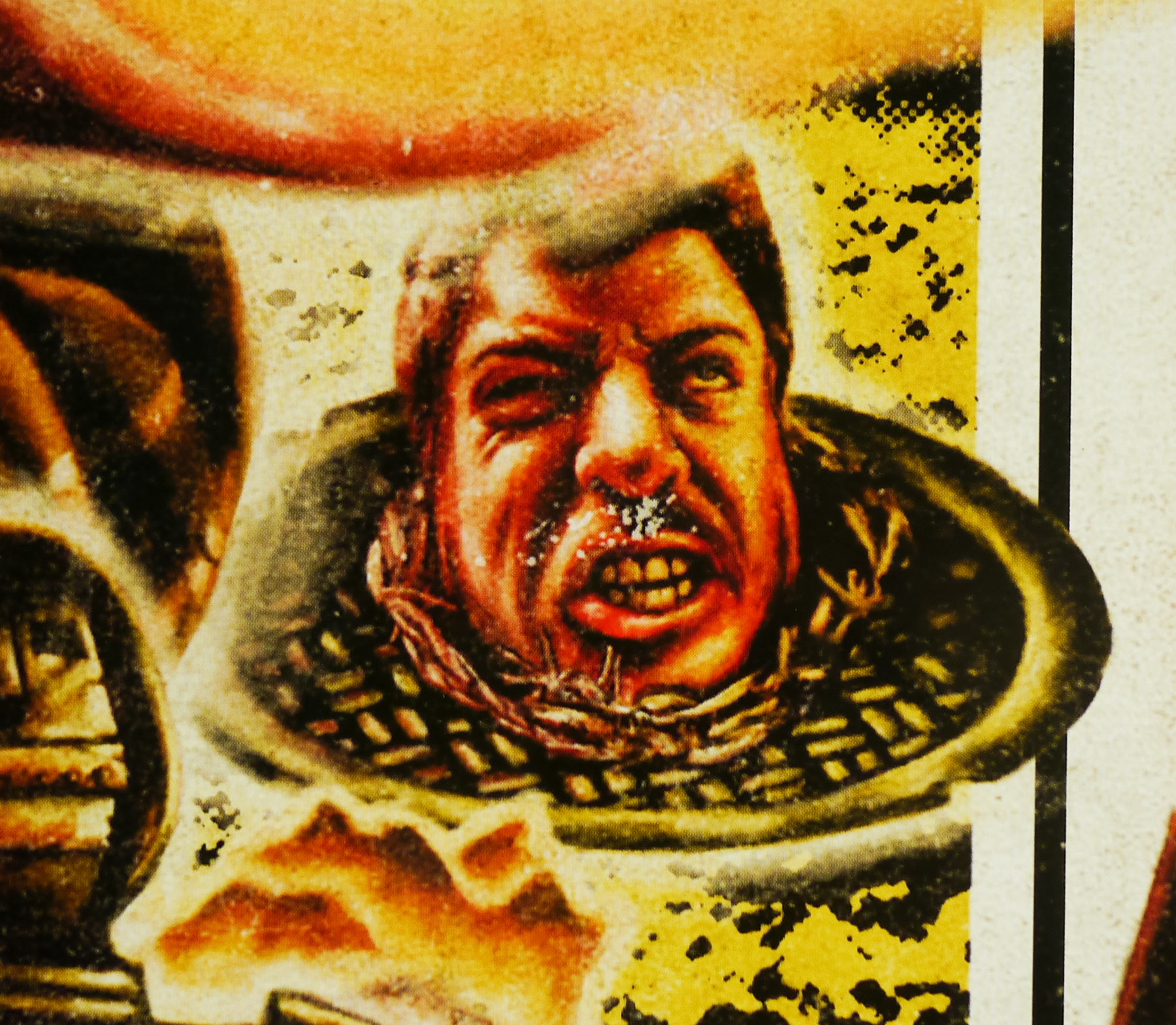
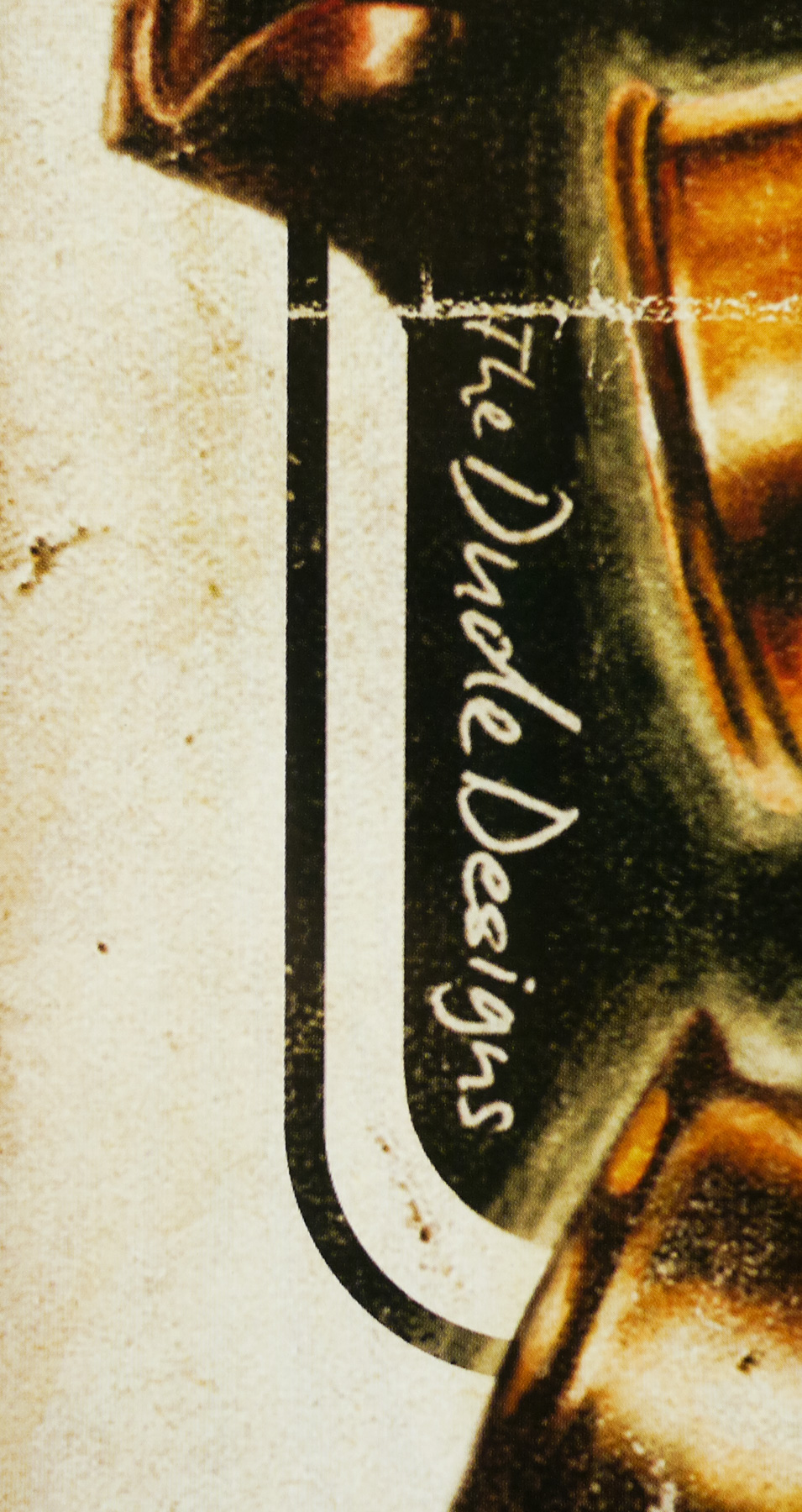
This poster was designed and illustrated by Tom Hodge AKA The Dude Designs, a Brit who has worked for over 12 years creating advertising materials for films and games, and is a big proponent of continuing the use of painted artwork over computer-generated montages. The about page on his official site details several of the companies he’s provided illustrations for, which includes Mondo, Arrow Video and Death Waltz Records (he created their logo, amongst other projects). The site also includes galleries of his work, which includes this great cover for the Shout Factory release of John Carpenter’s They Live. It’s my belief that this poster for Hobo was the first one of his to be printed and used around the world to advertise the film.

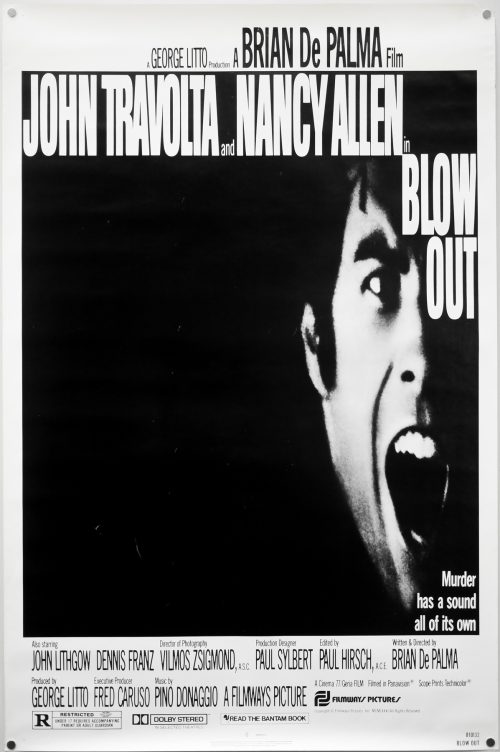
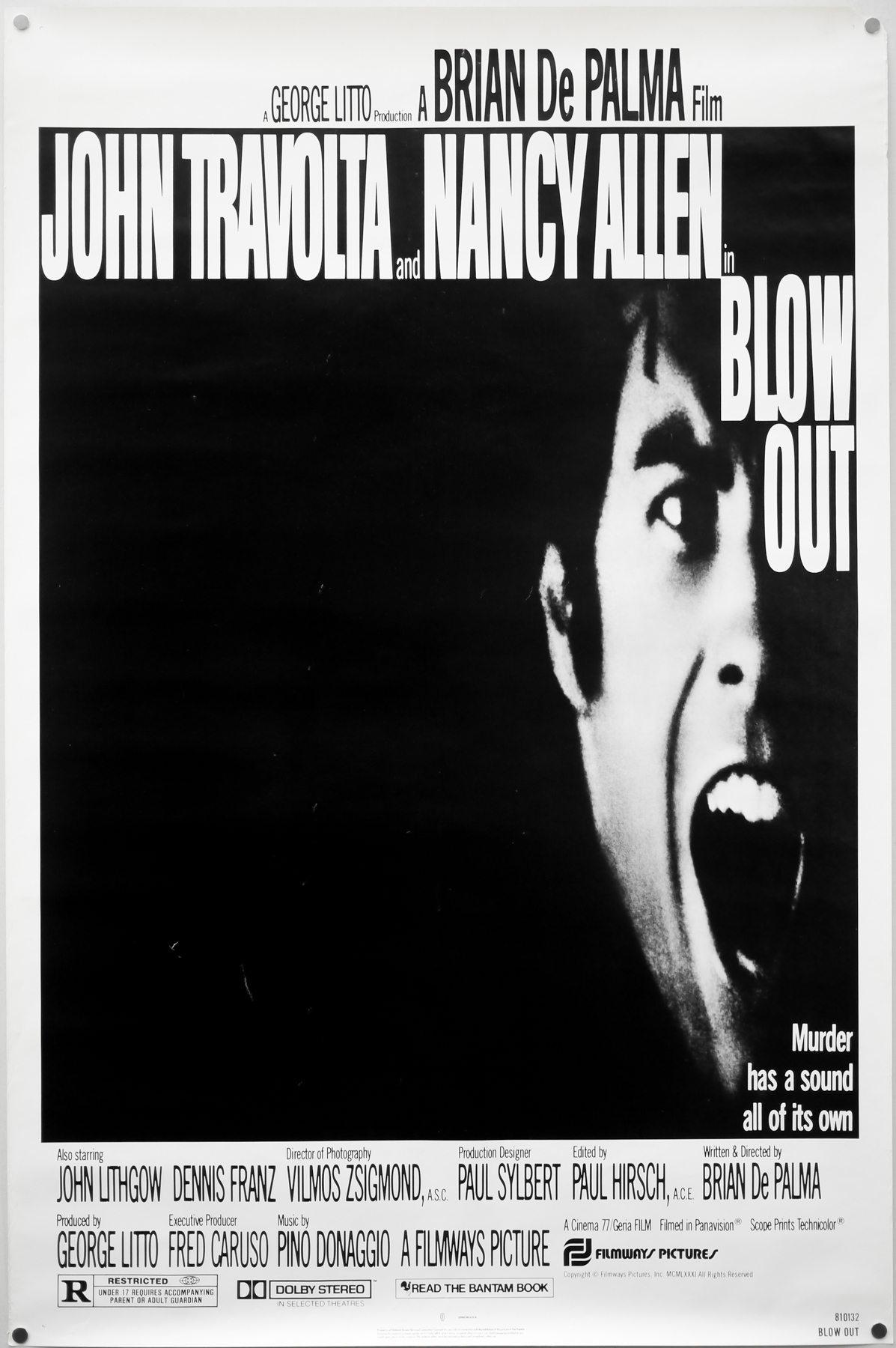
Blow Out / one sheet / USA

18.05.15

Poster Poster
Title
Blow Out
AKA
--
Year of Film
1981
Director
Brian De Palma
Starring
John Travolta, Nancy Allen, John Lithgow, Dennis Franz, Peter Boyden, Curt May, John Aquino, John McMartin
Origin of Film
USA
Genre(s) of Film
John Travolta, Nancy Allen, John Lithgow, Dennis Franz, Peter Boyden, Curt May, John Aquino, John McMartin,
Type of Poster
One sheet
Style of Poster
--
Origin of Poster
USA
Year of Poster
1981
Designer
Unknown
Artist
--
Size (inches)
27 1/16" x 41"
SS or DS
SS
NSS #
810132
Tagline
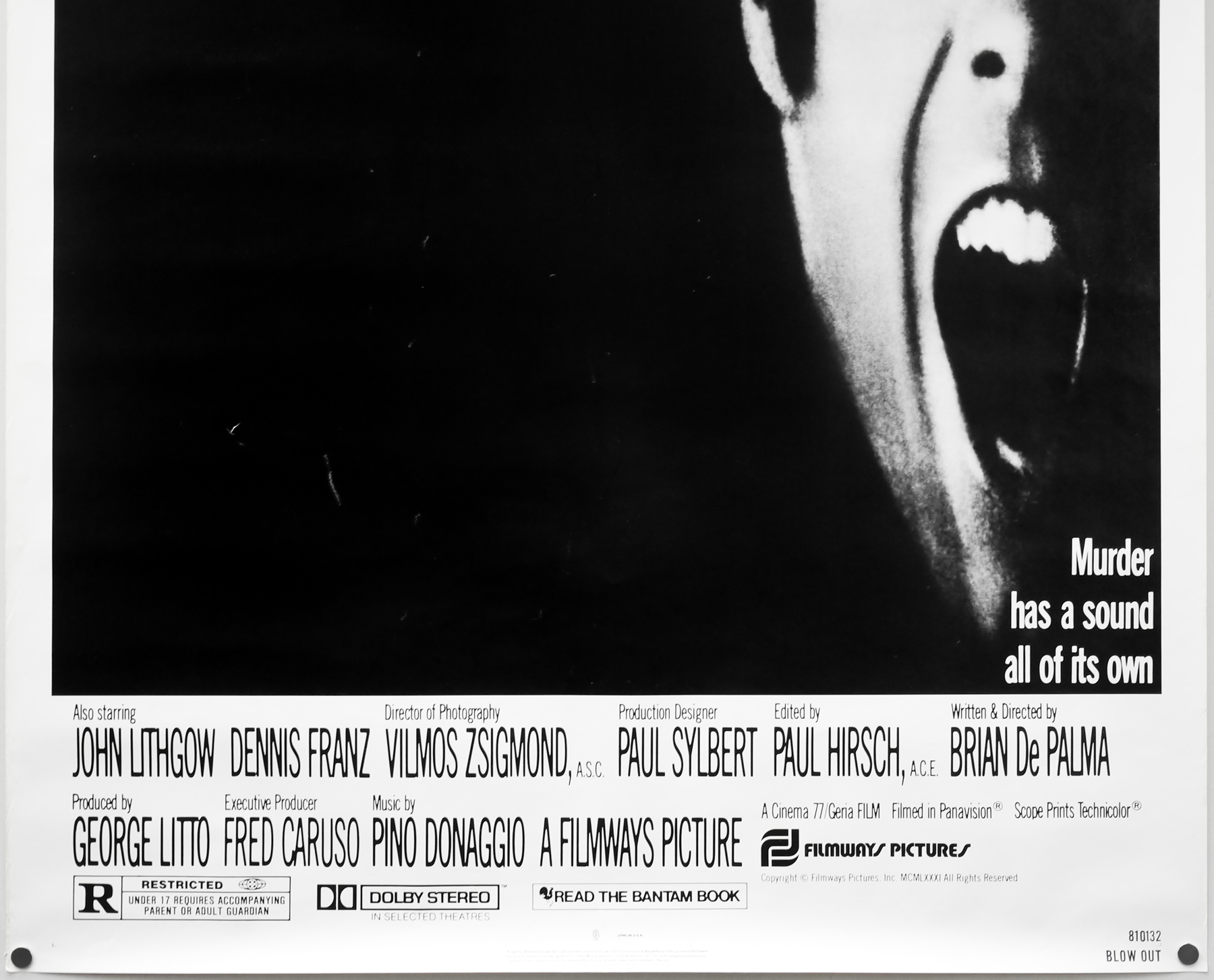
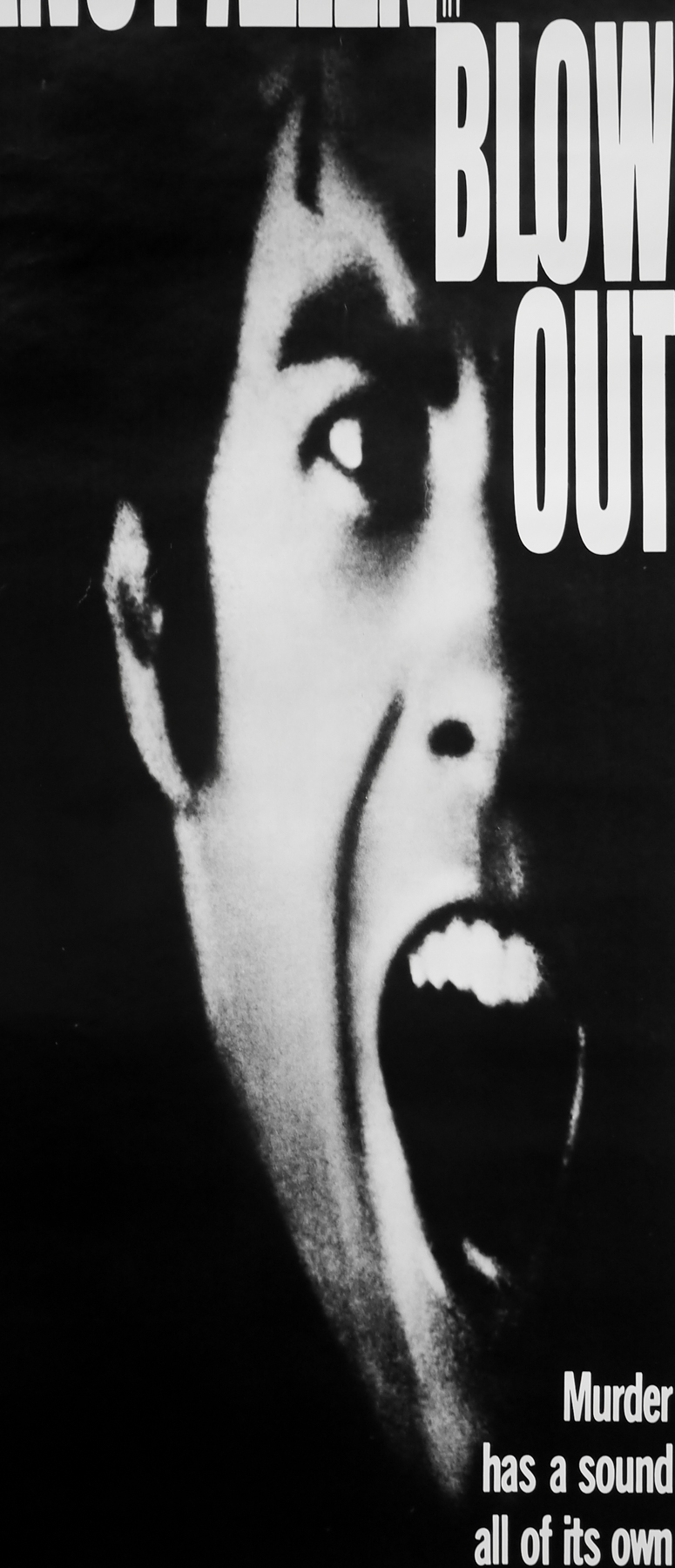
Murder has a sound all of its own

Following the poor reception of 1980’s Dressed to Kill, director Brian De Palma decided to develop an idea he’d had during production that was based on Antonioni’s 1966 thriller Blow Up, swapping photography for sound recording. The resultant film, with a screenplay by De Palma, was named Blow Out and released almost exactly a year after Dressed to Kill. John Travolta stars as Jack Terry, a sound technician who is working on a low-budget exploitation film and is tasked by a producer to set out and record a better scream for a pivotal scene as well as some ambient noises. Jack travels to a local park at night to record but whilst there he witnesses a limousine crash off a road and into a lake.

After diving in to see if there are any survivors Jack discovers the driver dead and a young woman alive but trapped in the back of the car. After rescuing her and pulling her to safety, Jack discovers that the driver was a governor and presidential candidate and the woman is Sally (De Palma’s then wife Nancy Allen), an escort. The governor’s associates persuade Jack to cover up the fact that Sally was in the car and whilst listening to the recordings he made that night he begins to suspect that the crash wasn’t an accident as people are being led to believe. When he discovers that an amateur cameraman was also recording in the park that night he works with Sally to get a copy of the film, and when spliced together it becomes clear that a single gunshot was fired before the car smashes into the lake. It soon becomes clear that Jack has inadvertently involved himself in a deepening conspiracy and that he and Sally are in grave danger, with the gunman Burke (John Lithgow) still at large and keen to tie up loose ends.

As expected, the film is visually stylish and features several of De Palma’s trademark bravura sequences, with one towards the end of the film featuring a parade and a fireworks display that is particularly memorable. The leads all give excellent performances, with Travolta’s low-key depiction of an ordinary man in over his head is in stark contrast to his breakout role in 1977’s Saturday Night Fever. The score by regular De Palma collaborator Pino Donaggio is also superb and serves the film perfectly.

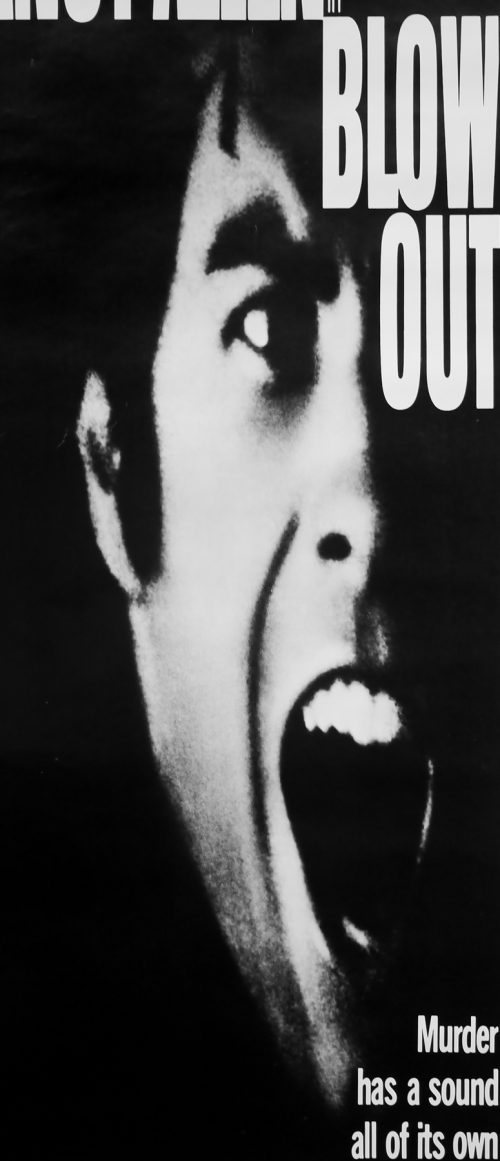
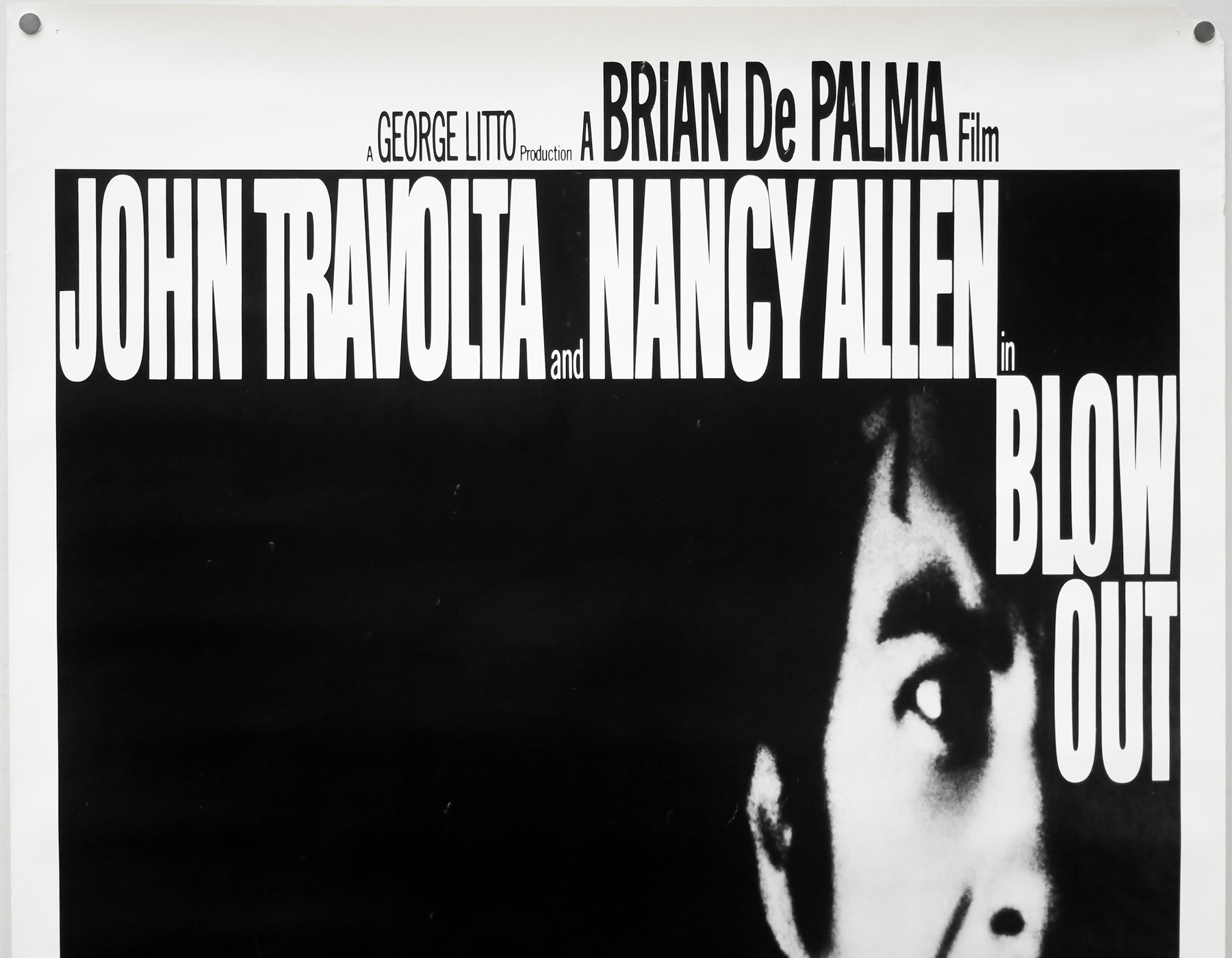
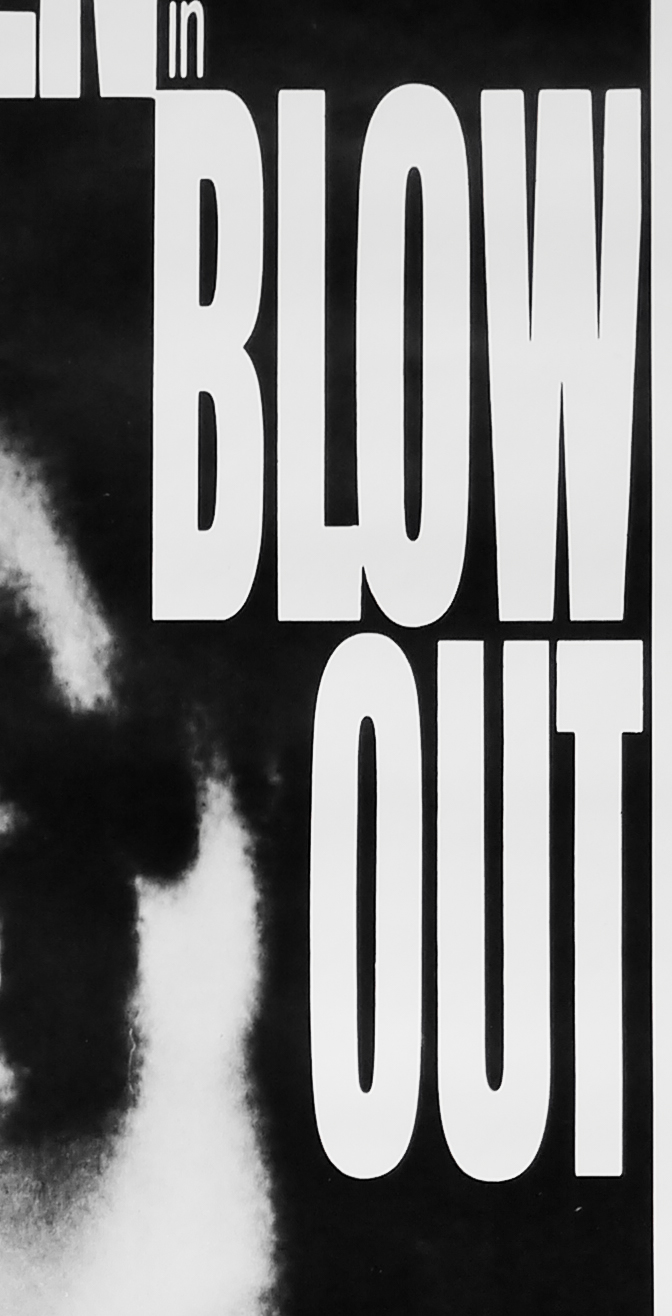
Although it received several rave reviews from the likes of Pauline Kael and Roger Ebert, the film failed to take off at the box-office and only found cult success years after its initial release. The home video label Criterion released the film on blu-ray in 2011 and during a making-of documentary Nancy Allen mentions the marketing for the film, and this poster, as not helping the film’s box-office performance. It’s a very simple image and perhaps didn’t say enough about the film to entice potential film-goers. It’s also thought that word of mouth about the notoriously downbeat ending probably didn’t help either.

If anyone has any ideas who designed this poster please get in touch.

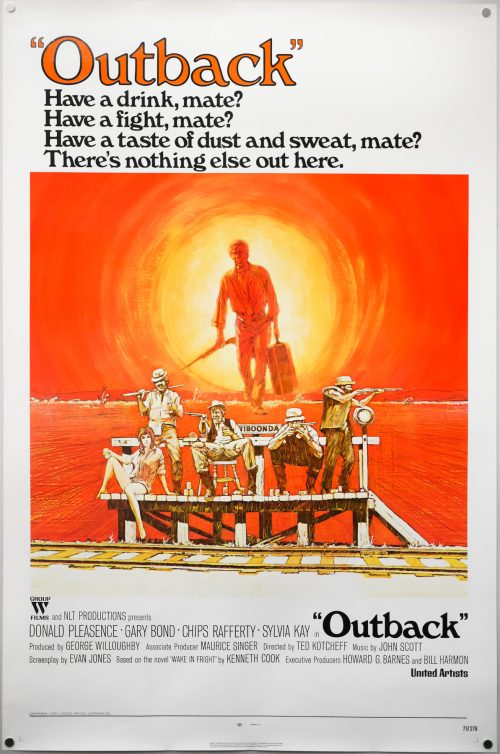
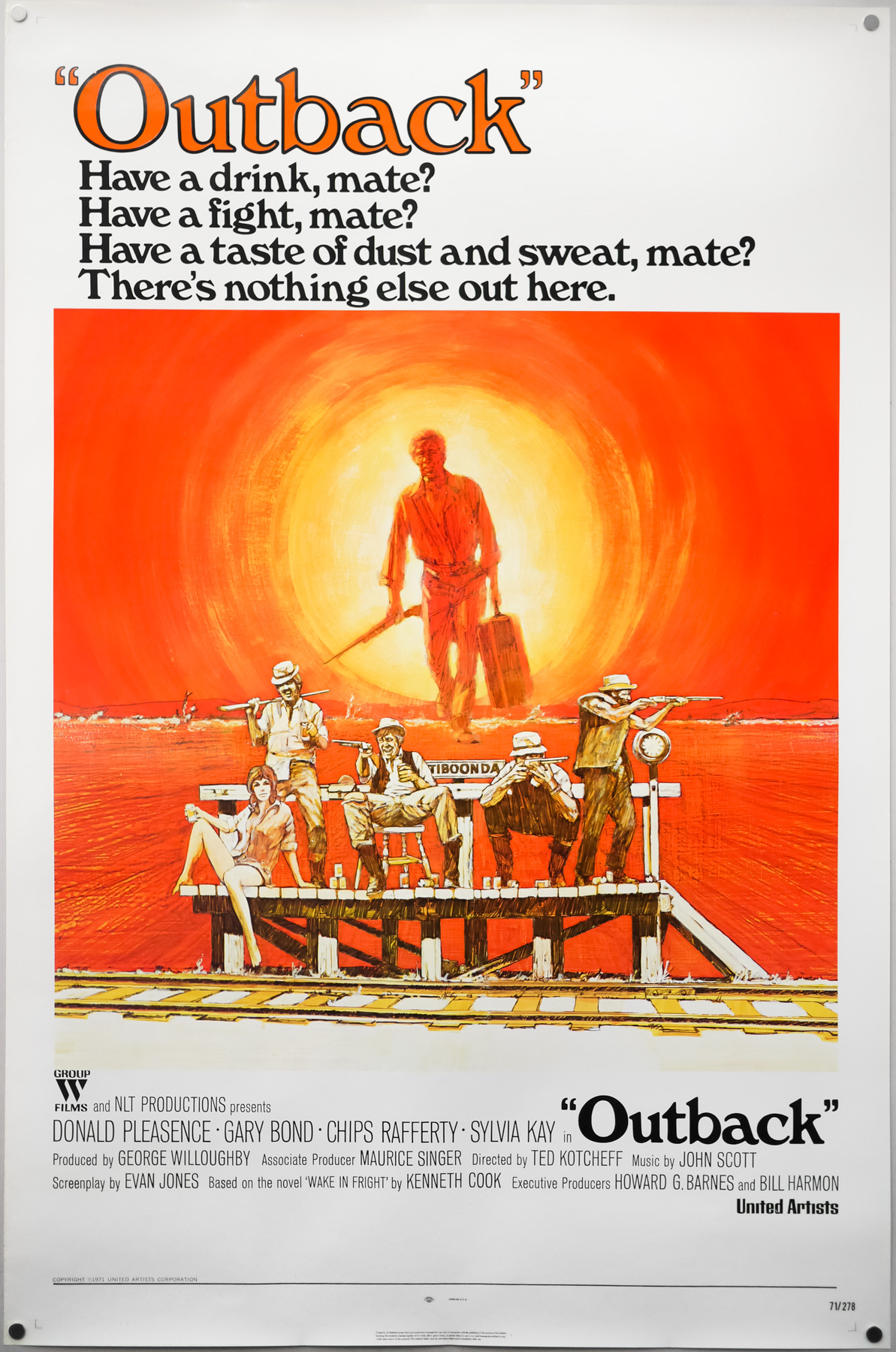
Outback / one sheet / USA

03.06.15

Poster Poster
Title
Outback
AKA
Wake in Fright
Year of Film
1971
Director
Ted Kotcheff
Starring
Donald Pleasence, Gary Bond, Chips Rafferty, Sylvia Kay, Jack Thompson, Peter Whittle, Al Thomas, John Meillon, John Armstrong
Origin of Film
Australia | USA
Genre(s) of Film
Donald Pleasence, Gary Bond, Chips Rafferty, Sylvia Kay, Jack Thompson, Peter Whittle, Al Thomas, John Meillon, John Armstrong,
Type of Poster
One sheet
Style of Poster
--
Origin of Poster
USA
Year of Poster
1971
Designer
Unknown
Artist
Unknown
Size (inches)
27 2/16" x 41"
SS or DS
SS
NSS #
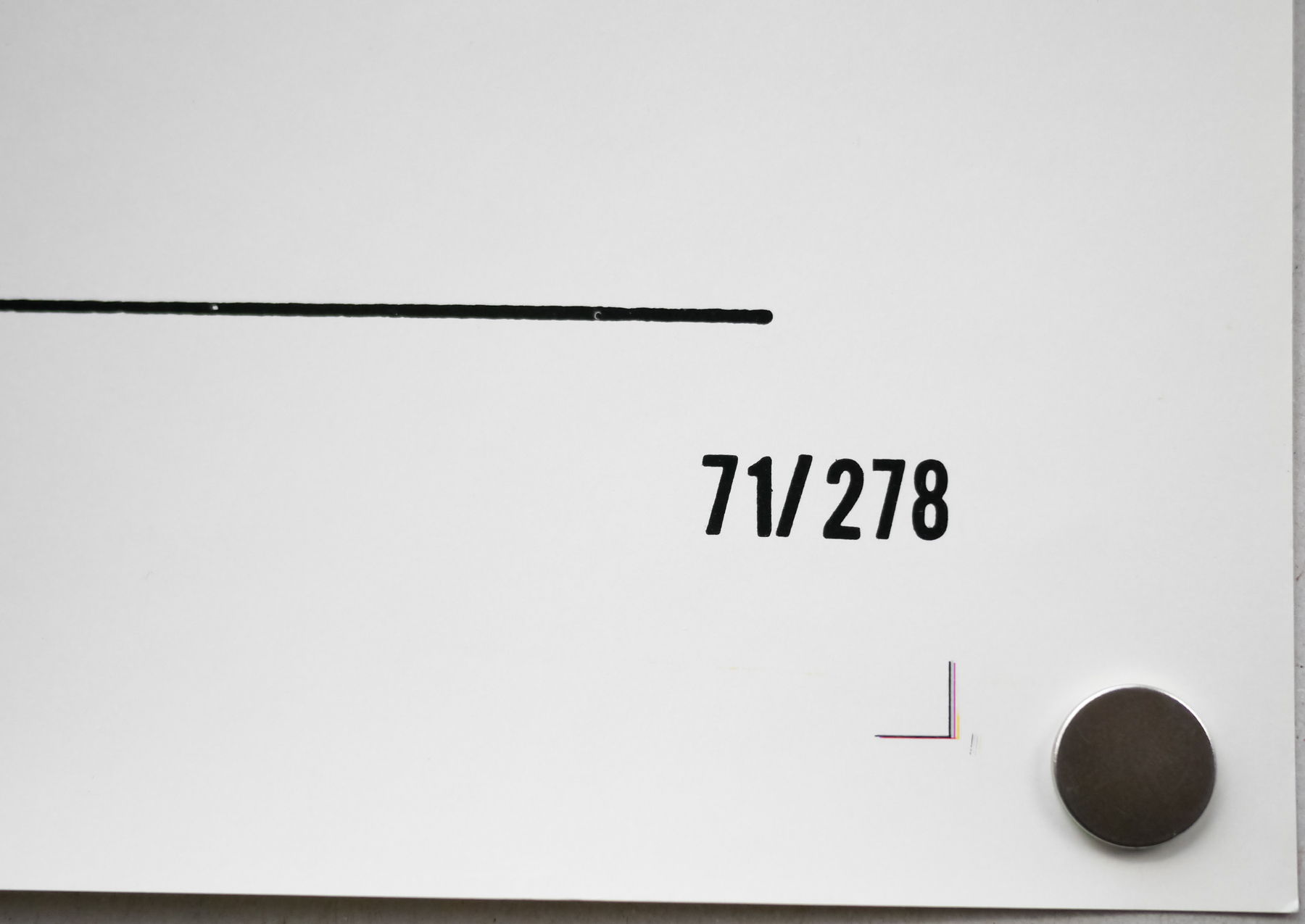
71/278
Tagline
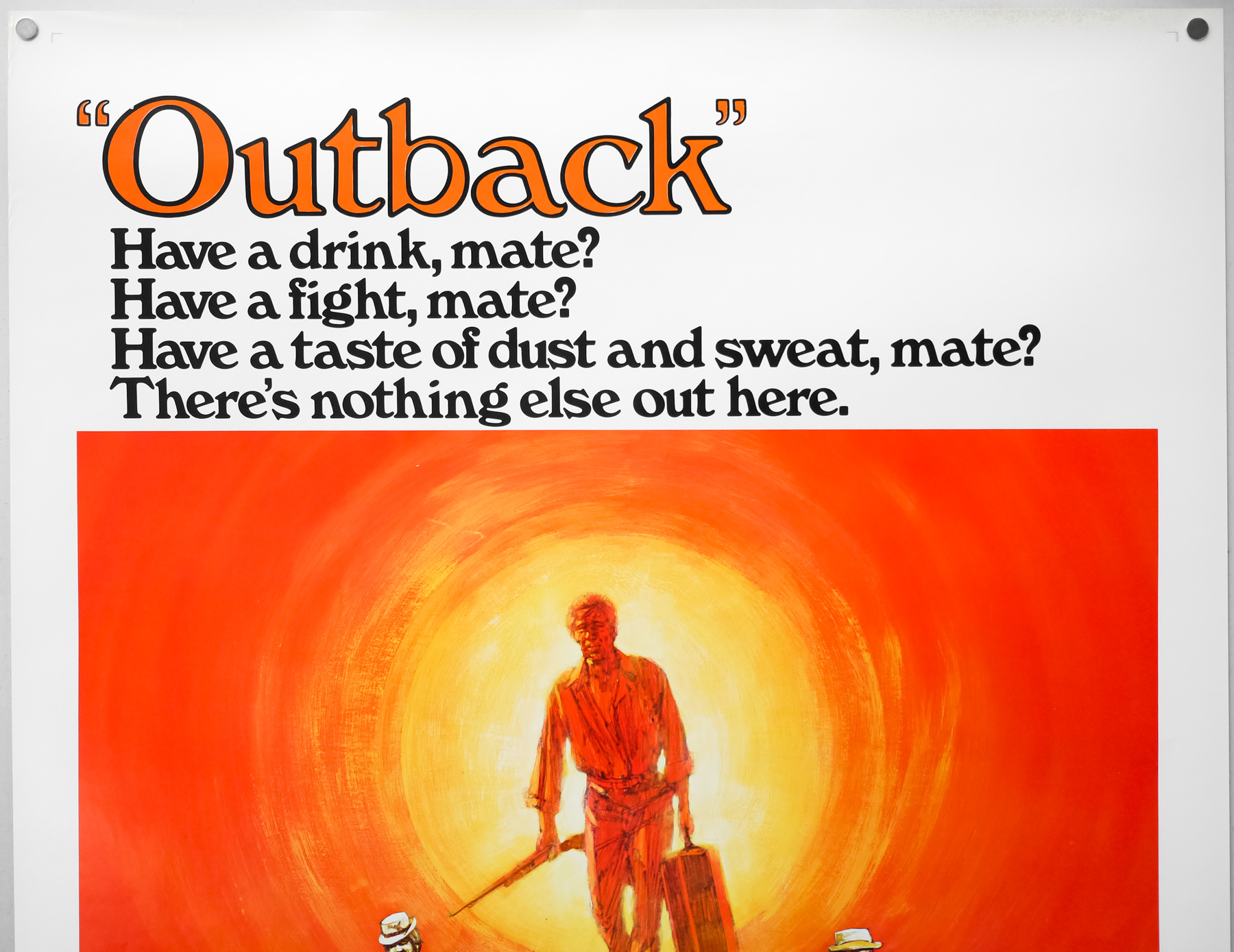
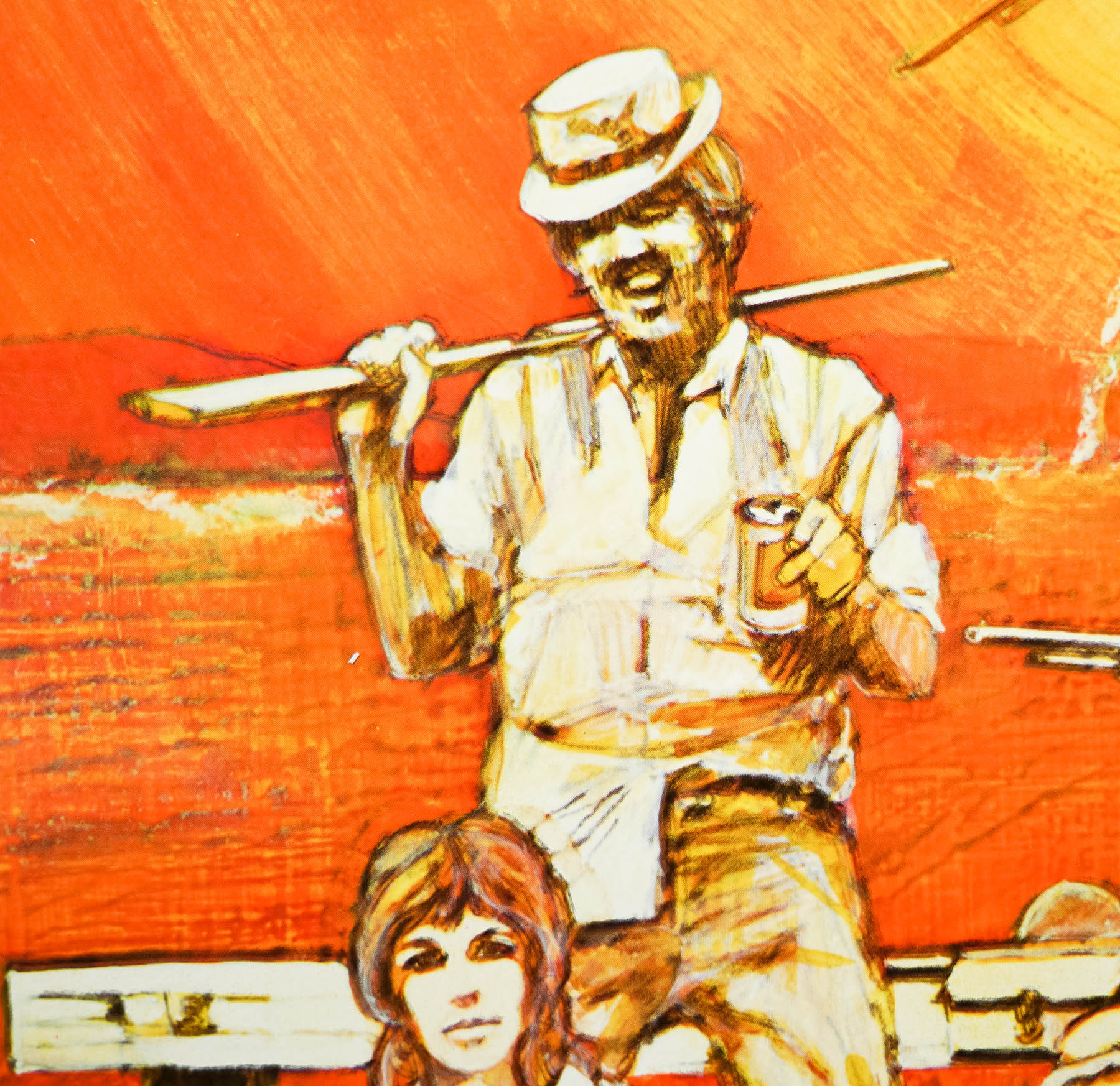
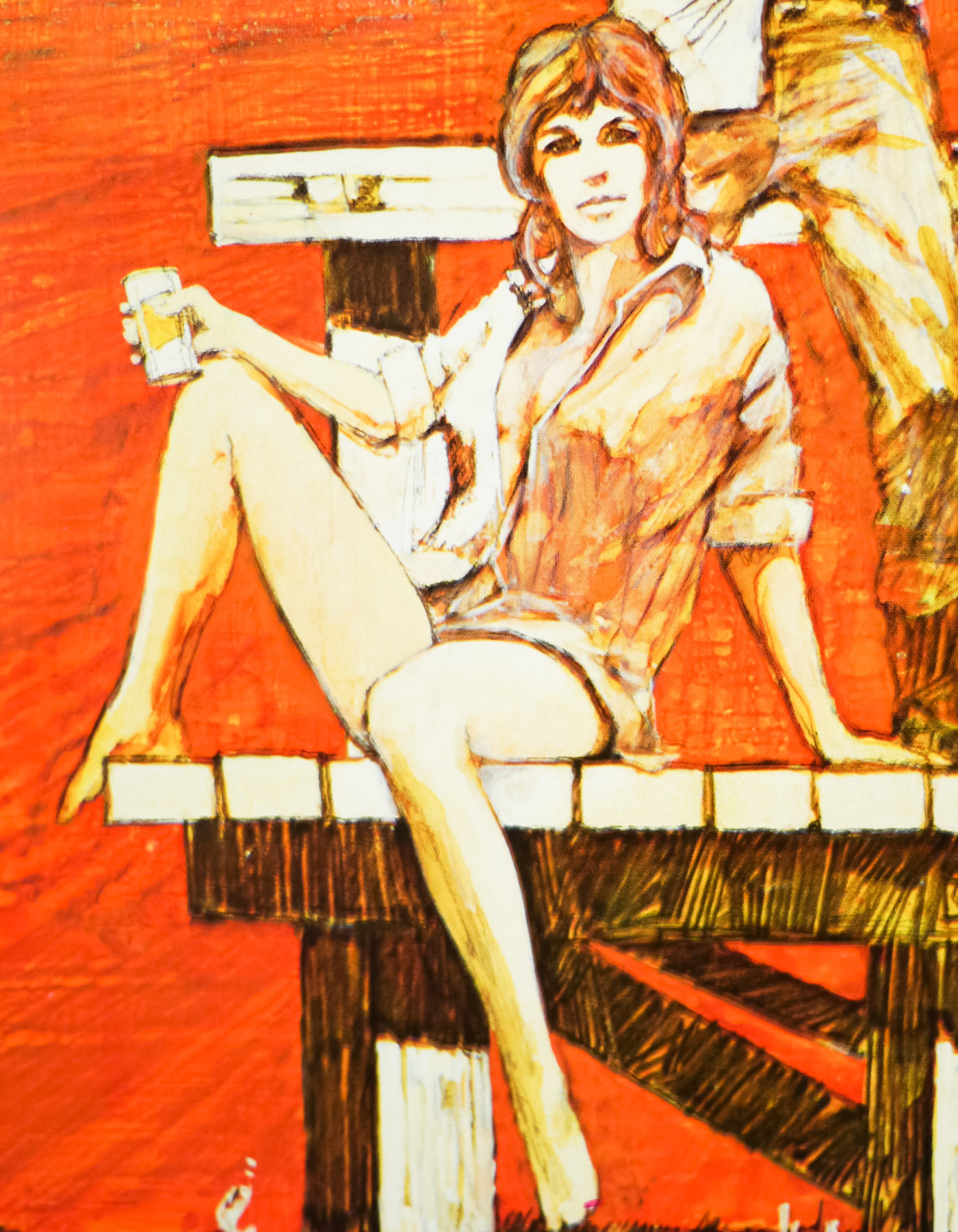
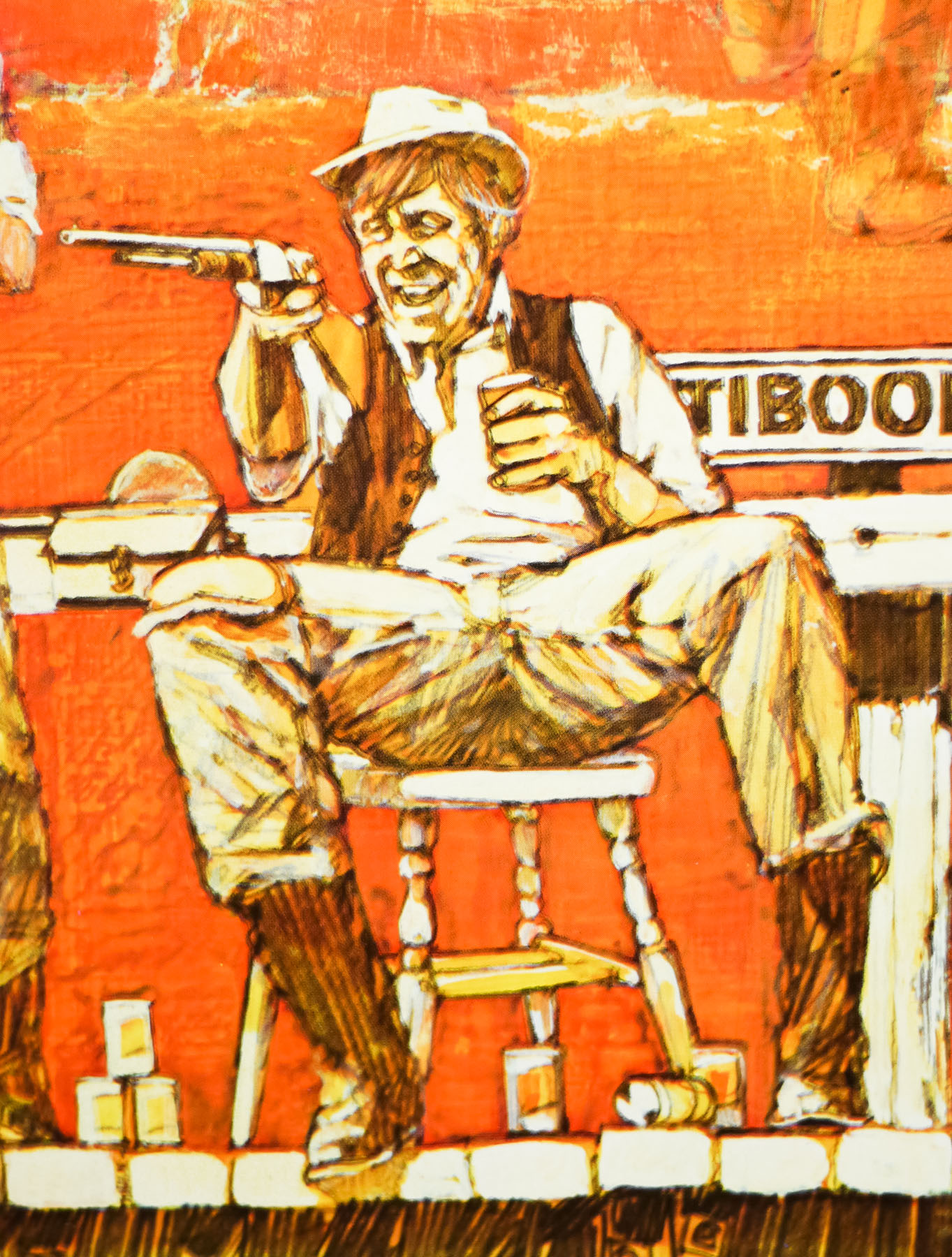
Have a drink, mate? Have a fight, mate? Have some dust and sweat, mate? There's nothing else out here.

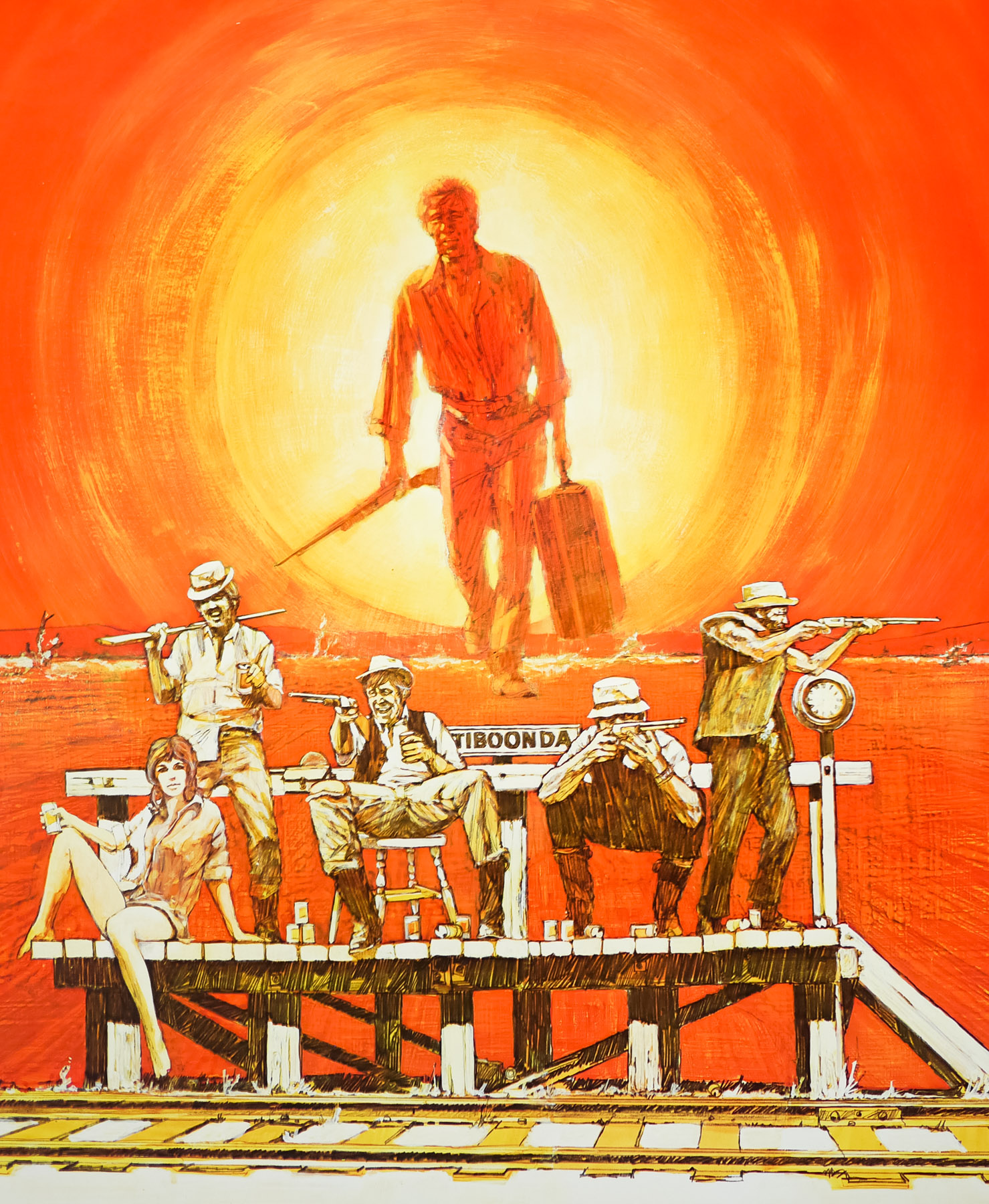
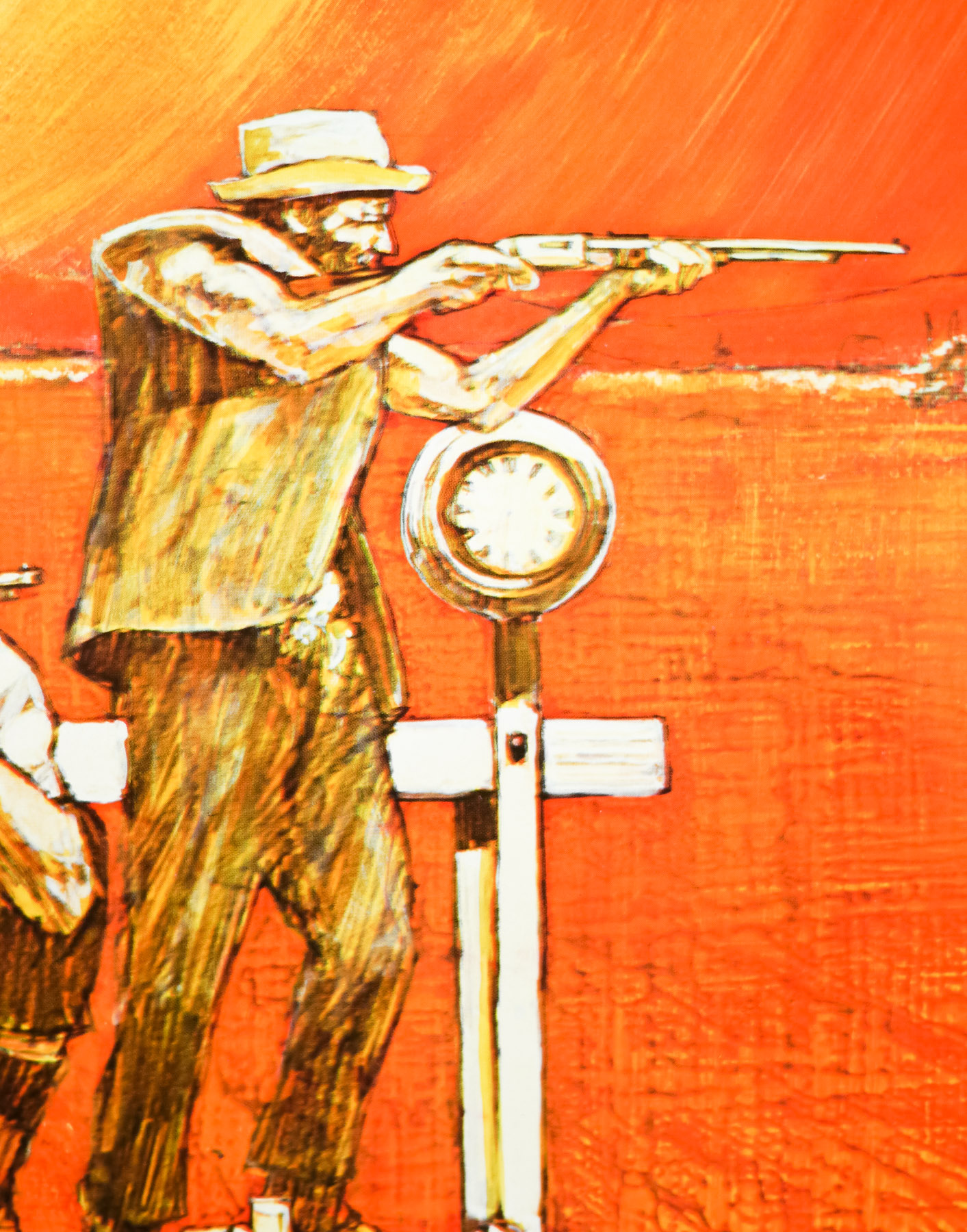
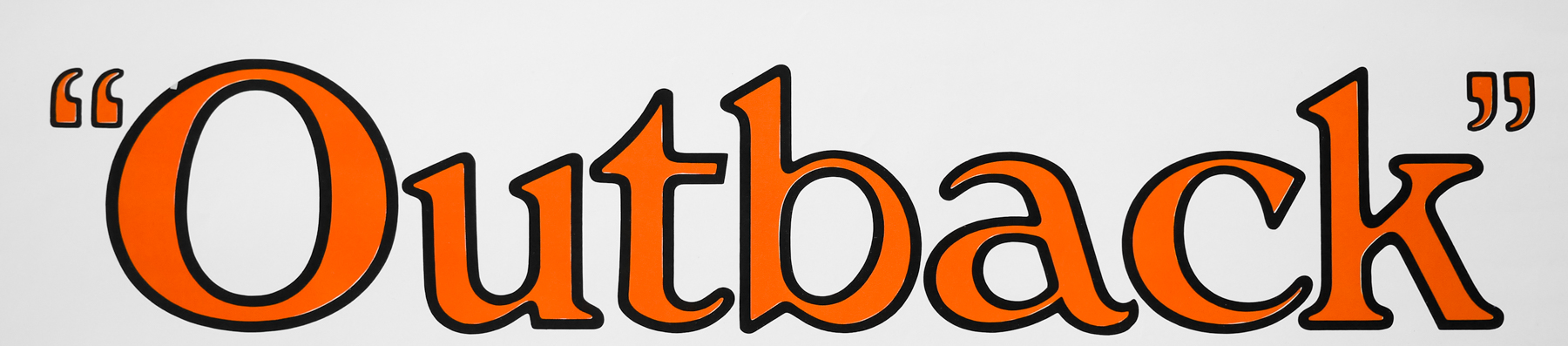
Outback (AKA Wake in Fright) was originally released in 1971 to a strong critical reception and decent box-office figures in countries like the UK, but it was almost a lost film by turn of the century. Only released in a few markets during the early 1970s, the film was seemingly forgotten about by the end of the decade and when Anthony Buckley, the editor of the film began looking for the original materials in 1996 it would be six years before he finally tracked them down to a warehouse in Pittsburgh. He was just in time since they were due to be destroyed only a week later. A full restoration was instigated and the results were screened at the 2009 Cannes Film Festival to great acclaim. The film was given a worldwide release shortly after and was put out on the blu-ray format at the same time.

An Australian-American co-production, the film was based on Australian author Kenneth Cook‘s 1961 novel Wake in Fright, which was the title it would be released with in Australia (and re-christened for its recent release everywhere). The film’s rights were acquired soon after the book was released but it would be several years before producers from NLT and Group W got involved and invited the Canadian director Ted Kotcheff (First Blood) to helm the adaptation. Kotcheff had never been to Australia before then and now admits to having known little about the outback and the situations he would go on to portray, but he immersed himself in the culture whilst filming on location and the results are clear to see on screen.

The late British actor Gary Bond plays John Grant, a teacher from Sydney who has agreed to the terms of a financial bond with the Australian government that guarantees him a tertiary eduction but means he has to take a teaching job in a remote outback township called Tiboonda. At the start of the Christmas holidays he sets off on a journey back to Sydney to see his girlfriend, which takes him via the mining town of Bundanyabba, known as The Yabba. He visits a bar where he meets a friendly but eccentric policeman (played by Chips Rafferty in his final role) who introduces him to the local gambling obsession of two-up. After winning a few rounds John gets carried away and decides to bet all his winnings to try and escape from the government bond. Unfortunately, luck is not on his side and he’s soon stuck in The Yabba, relying on the kindness of strangers to keep him afloat.

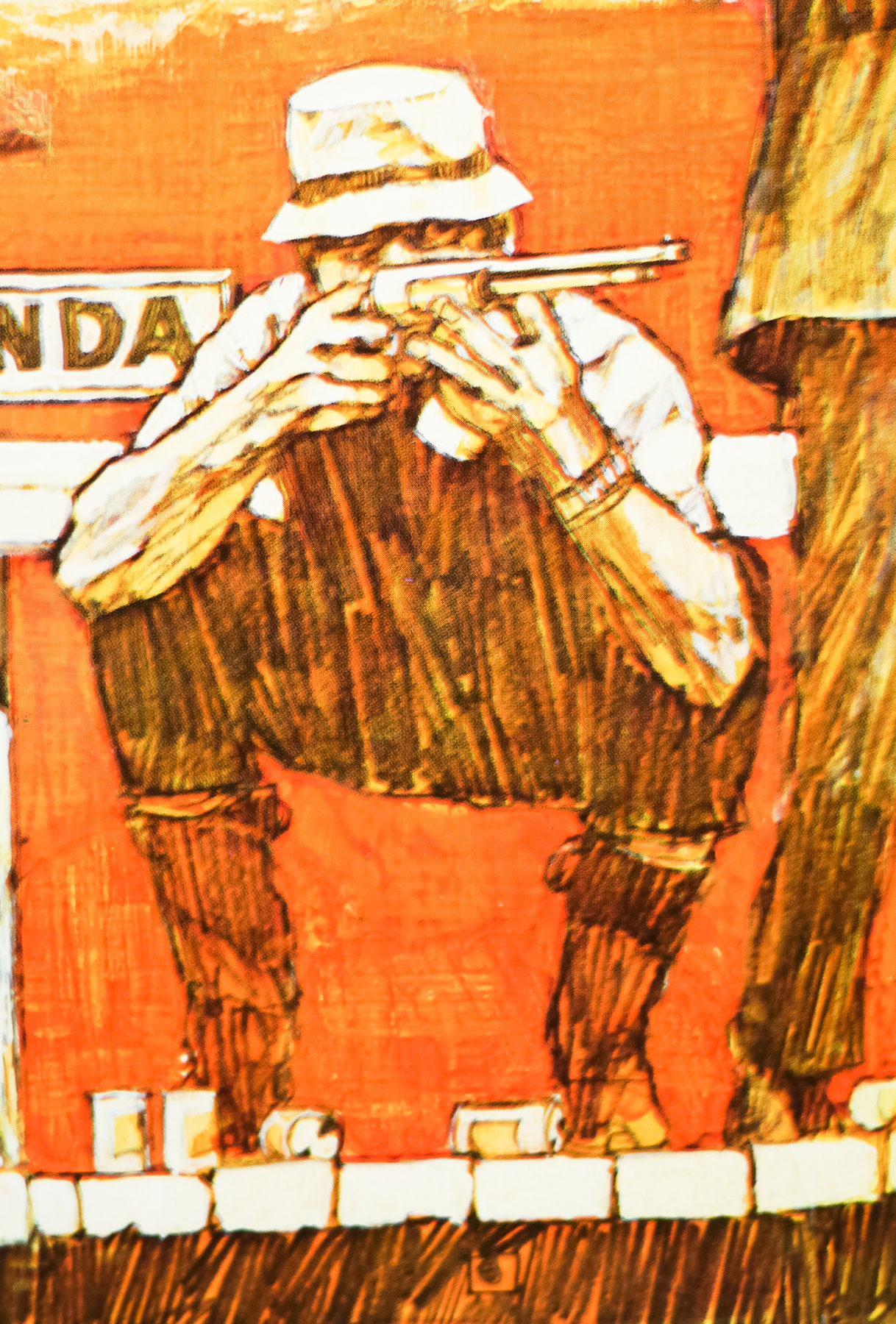
At another bar he meets a local called Tim Hynes (Al Thomas) who invites John back to his home. There he meets Tim’s daughter Jeanette and a bunch of his friends. Things take a dark turn from there as John is drawn into sordid events and descends into a drunken stupor with the aid of the gang of local men, led by alcoholic doctor Doc Tydon (played by a memorably wild-eyed Donald Pleasence). John eventually takes part in a horrific night-time kangaroo hunt that sees the men drunkenly shooting at the poor beasts before John is forced to stab an injured young kangaroo to death. Despite attempting to escape The Yabba via hitch-hiking, he soon finds himself back in the town carrying only a loaded rifle.

The film has a distinctly menacing atmosphere and you can’t help but put yourself in the shoes of John Grant, a man out of place, trapped in an oppressively hot and sticky environment. At some points you can practically taste the dust and sweat. The film attracted controversy for the kangaroo hunting scene, which featured graphic footage shot by Kotcheff and a camera crew after they’d joined a real kangaroo hunt during which the men with the rifles got progressively drunker whilst the night wore on. It’s still deeply unsettling to watch to this day, much like similar footage of animal cruelty in films like Cannibal Holocaust.

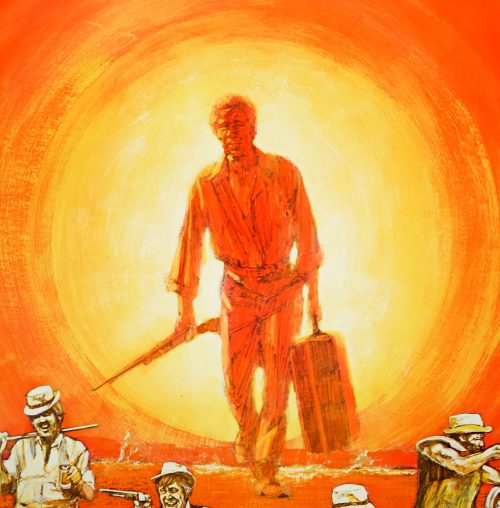
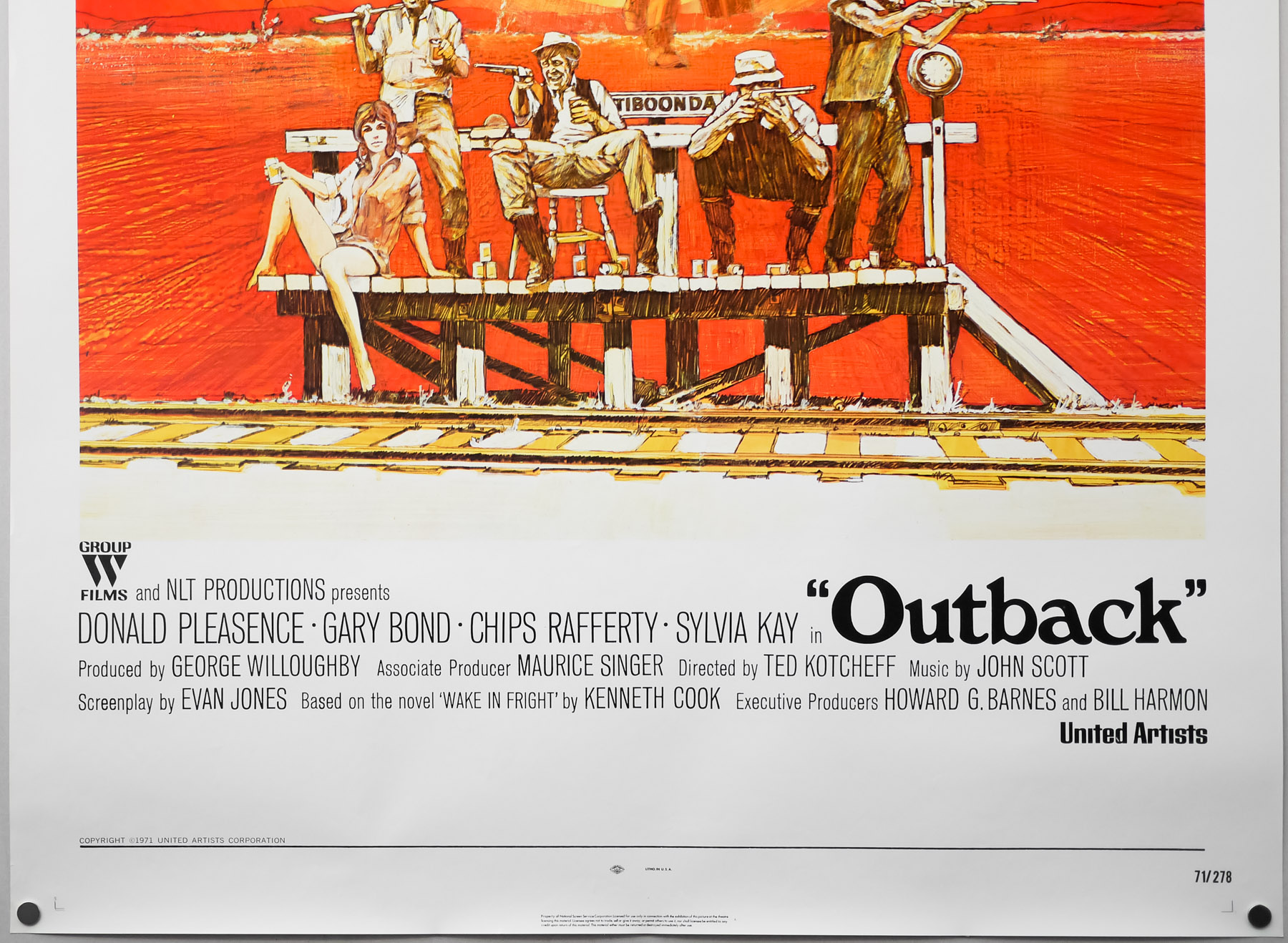
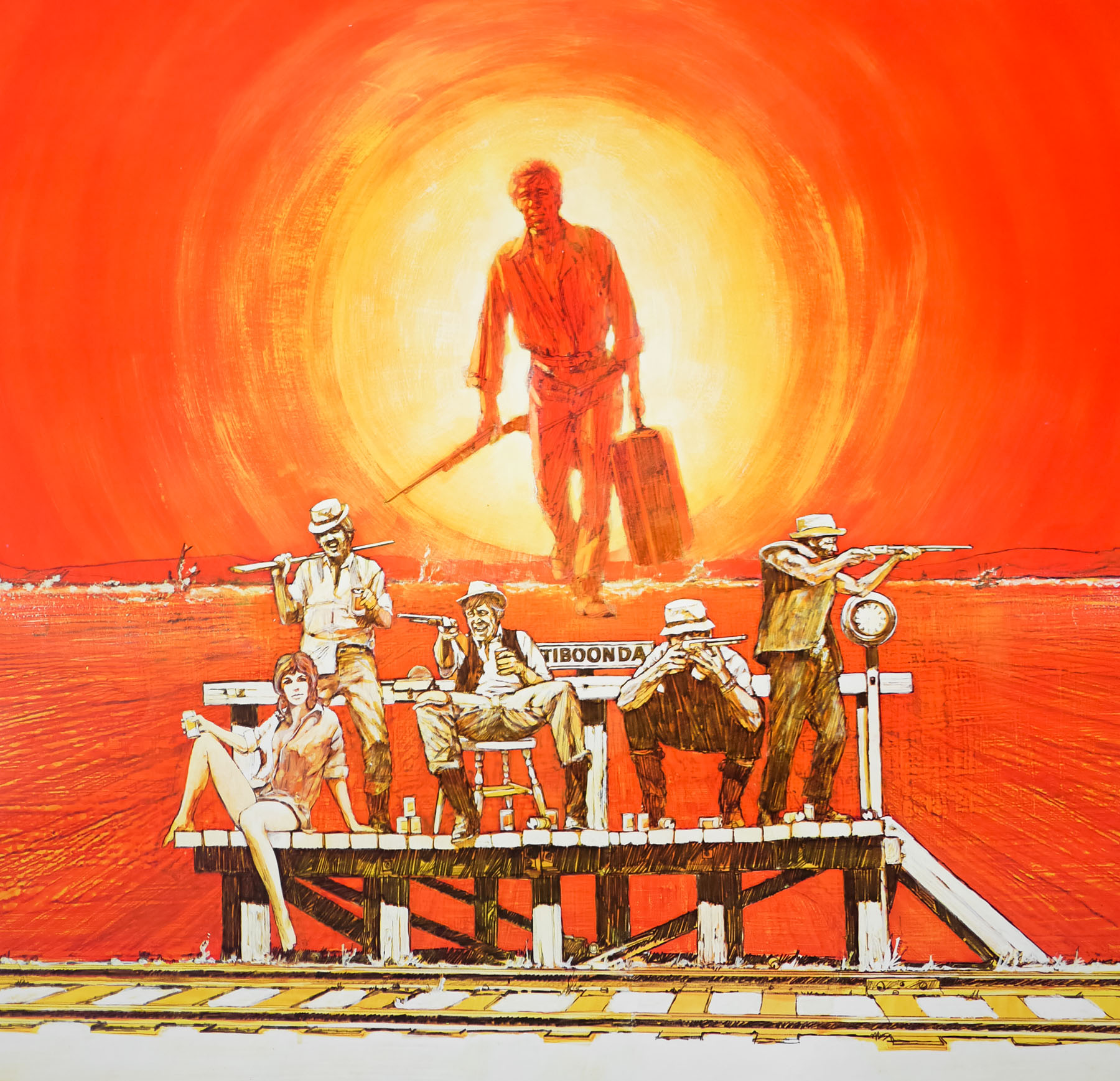
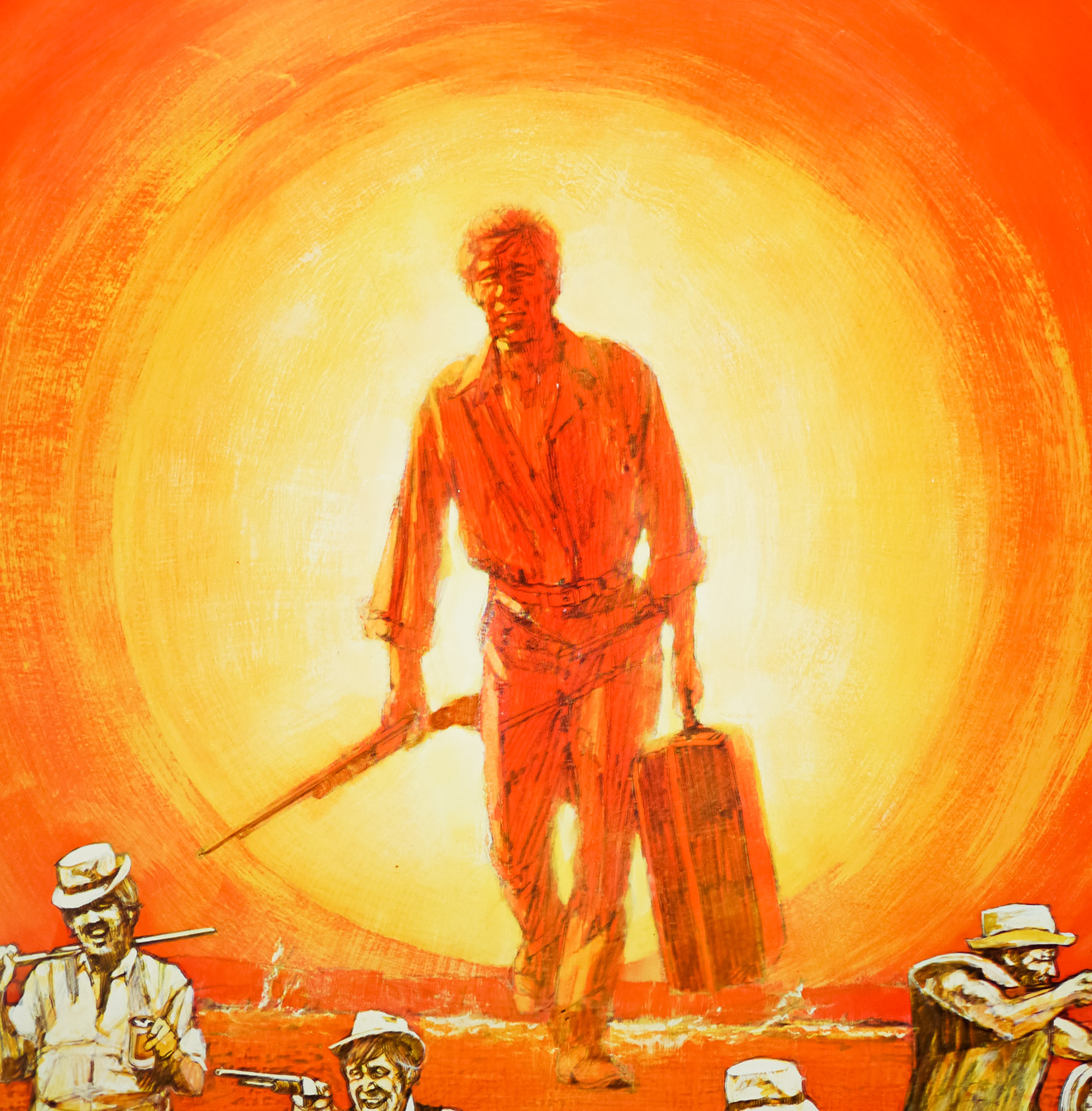
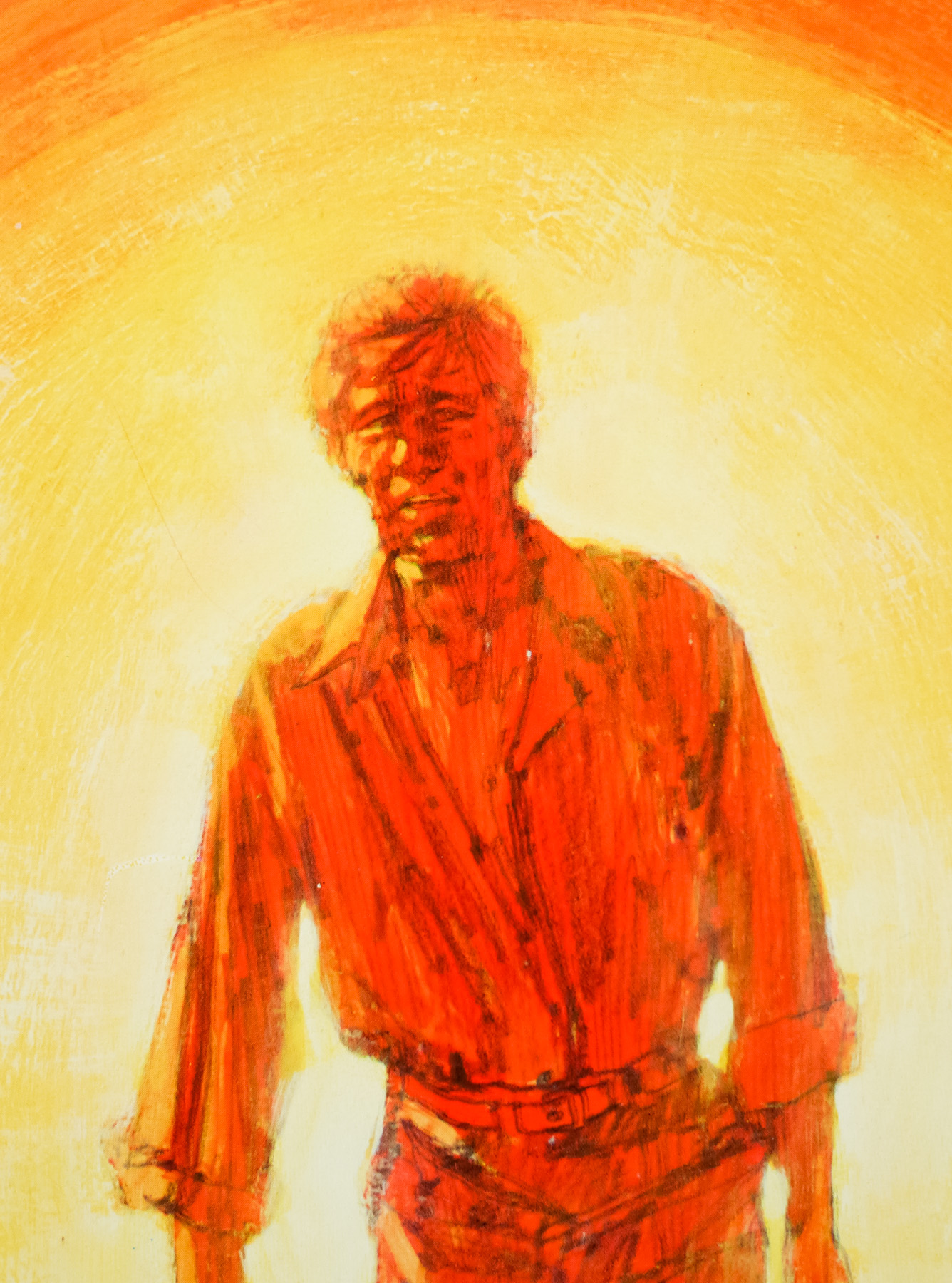
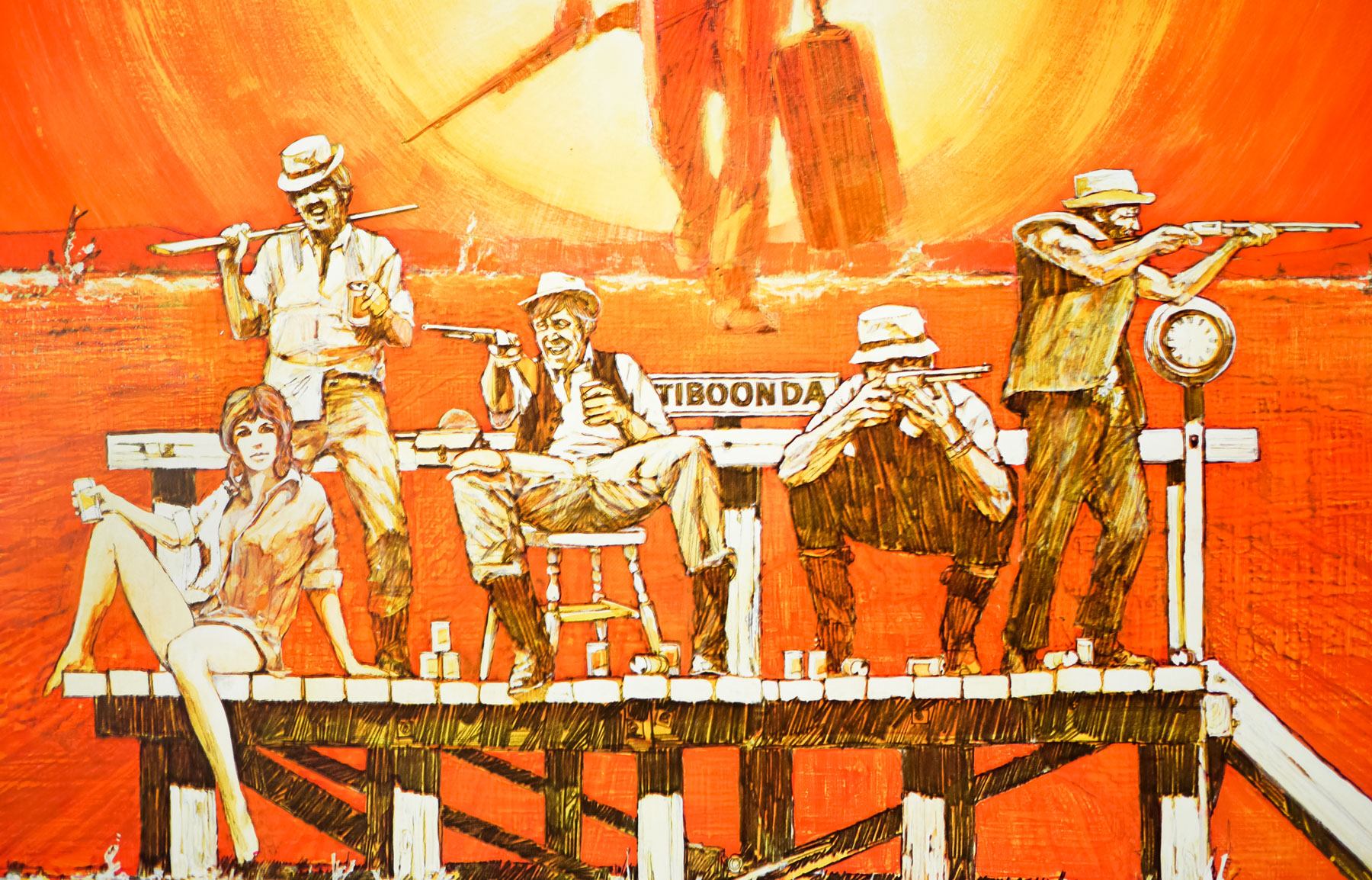
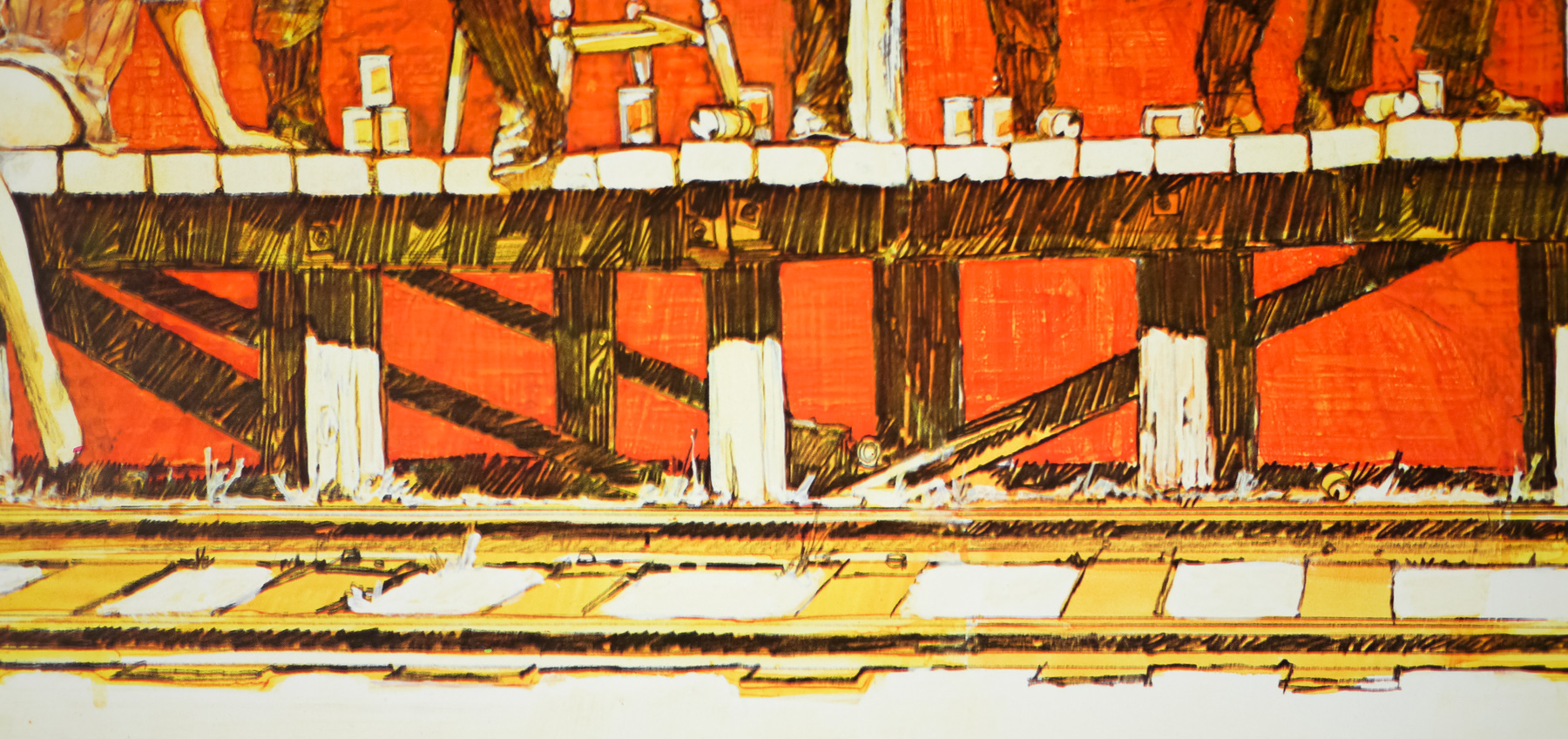
This artwork was used for the American marketing campaign and I think it was an adaptation of the Australian art (the two are very similar but there are a few notable differences). I’ve been unable to determine the name of the artist so if anyone has an idea please get in touch.

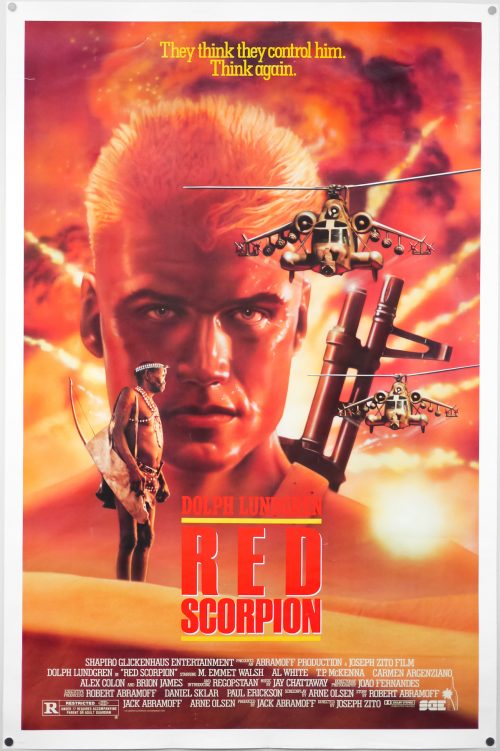
Red Scorpion / one sheet / USA

15.07.15

Poster Poster
Title
Red Scorpion
AKA
--
Year of Film
1988
Director
Joseph Zito
Starring
Dolph Lundgren, M. Emmet Walsh, Al White, T.P. McKenna, Carmen Argenziano, Alex Colon, Brion James, Ruben Nthodi
Origin of Film
South Africa | USA | Namibia
Genre(s) of Film
Dolph Lundgren, M. Emmet Walsh, Al White, T.P. McKenna, Carmen Argenziano, Alex Colon, Brion James, Ruben Nthodi,
Type of Poster
One sheet
Style of Poster
--
Origin of Poster
USA
Year of Poster
1988
Designer
Kaiser Creative
Artist
Unknown
Size (inches)
27 1/16" x 40 14/16"
SS or DS
SS
NSS #
--
Tagline
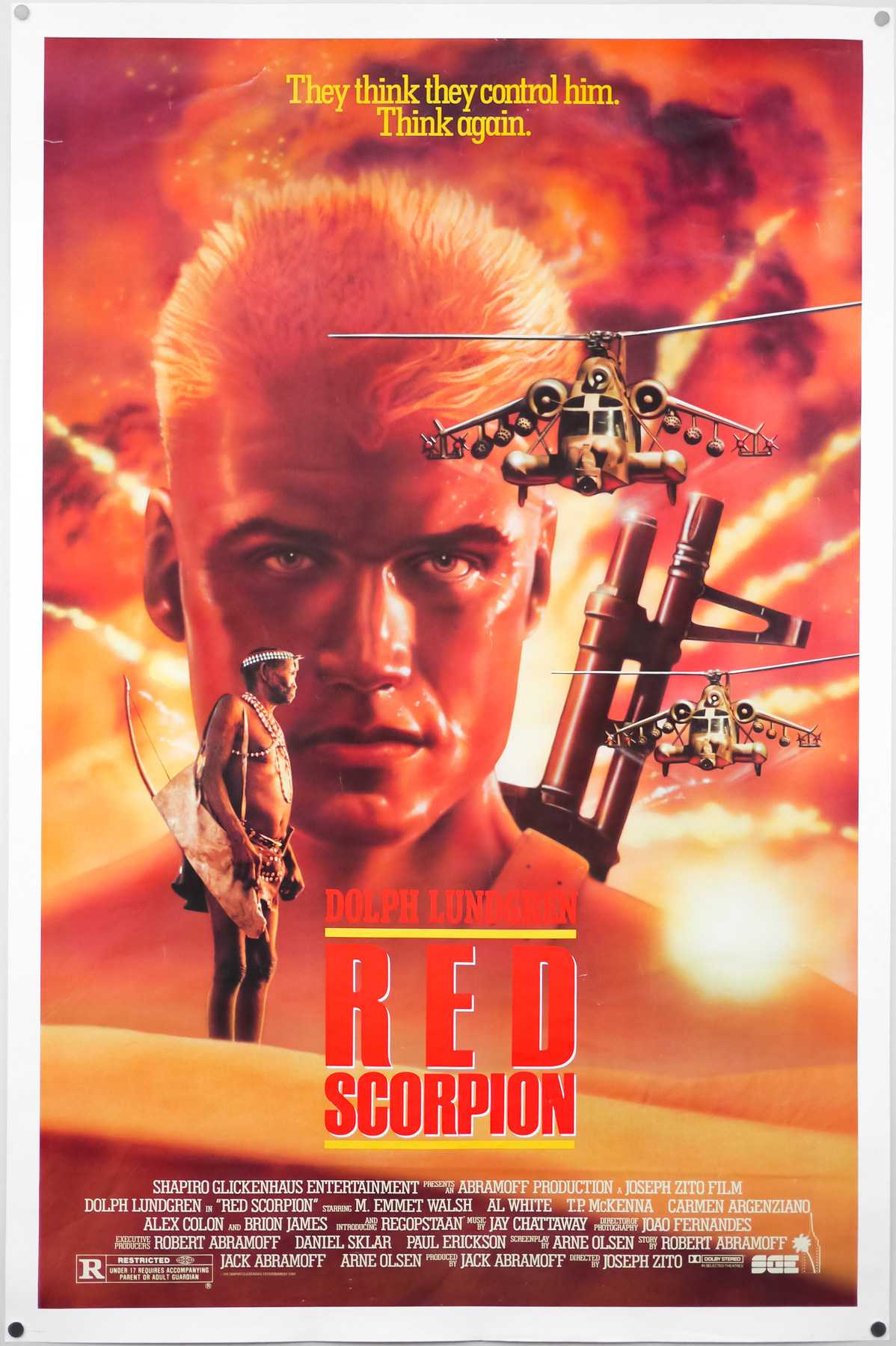
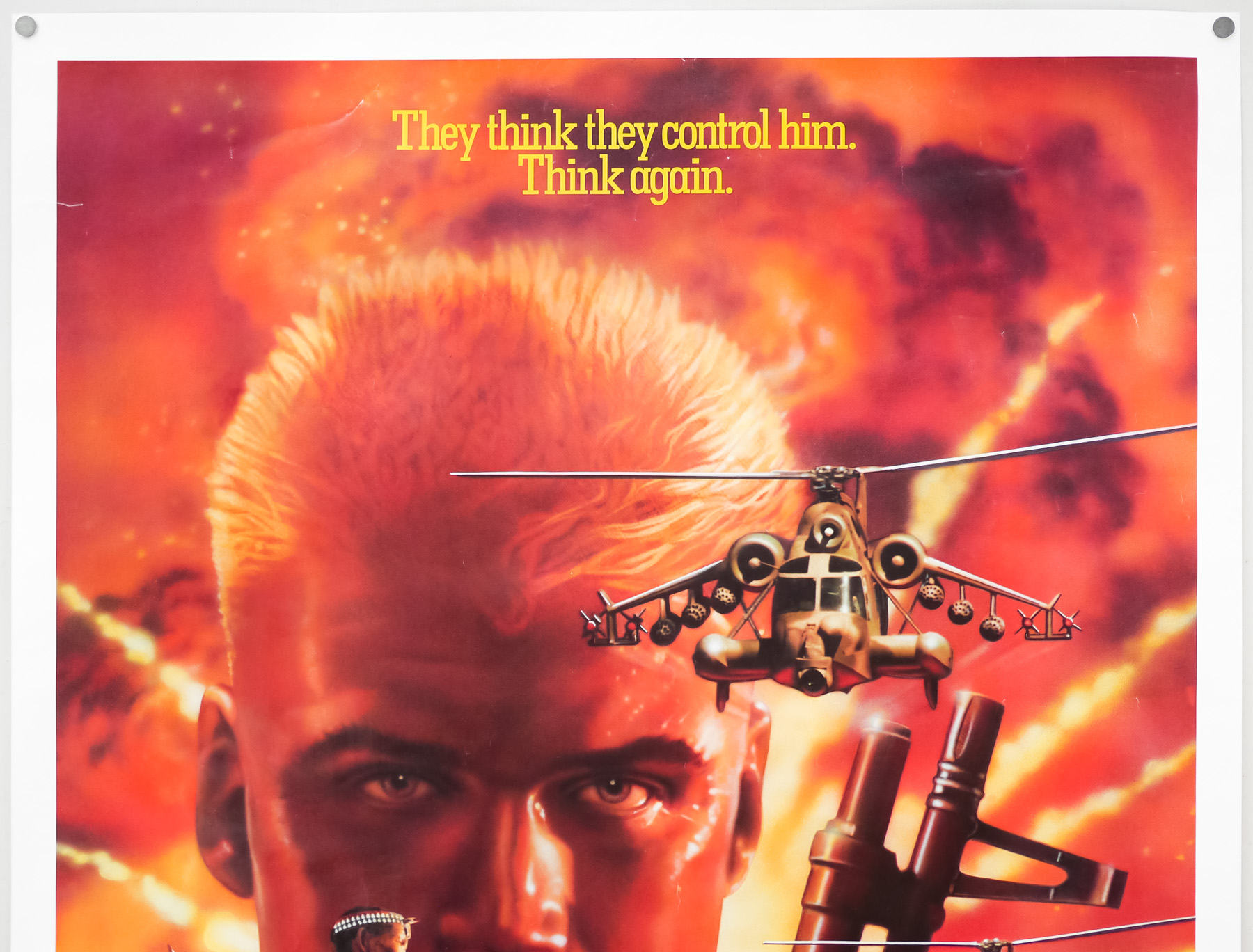
They think they control him. Think again.

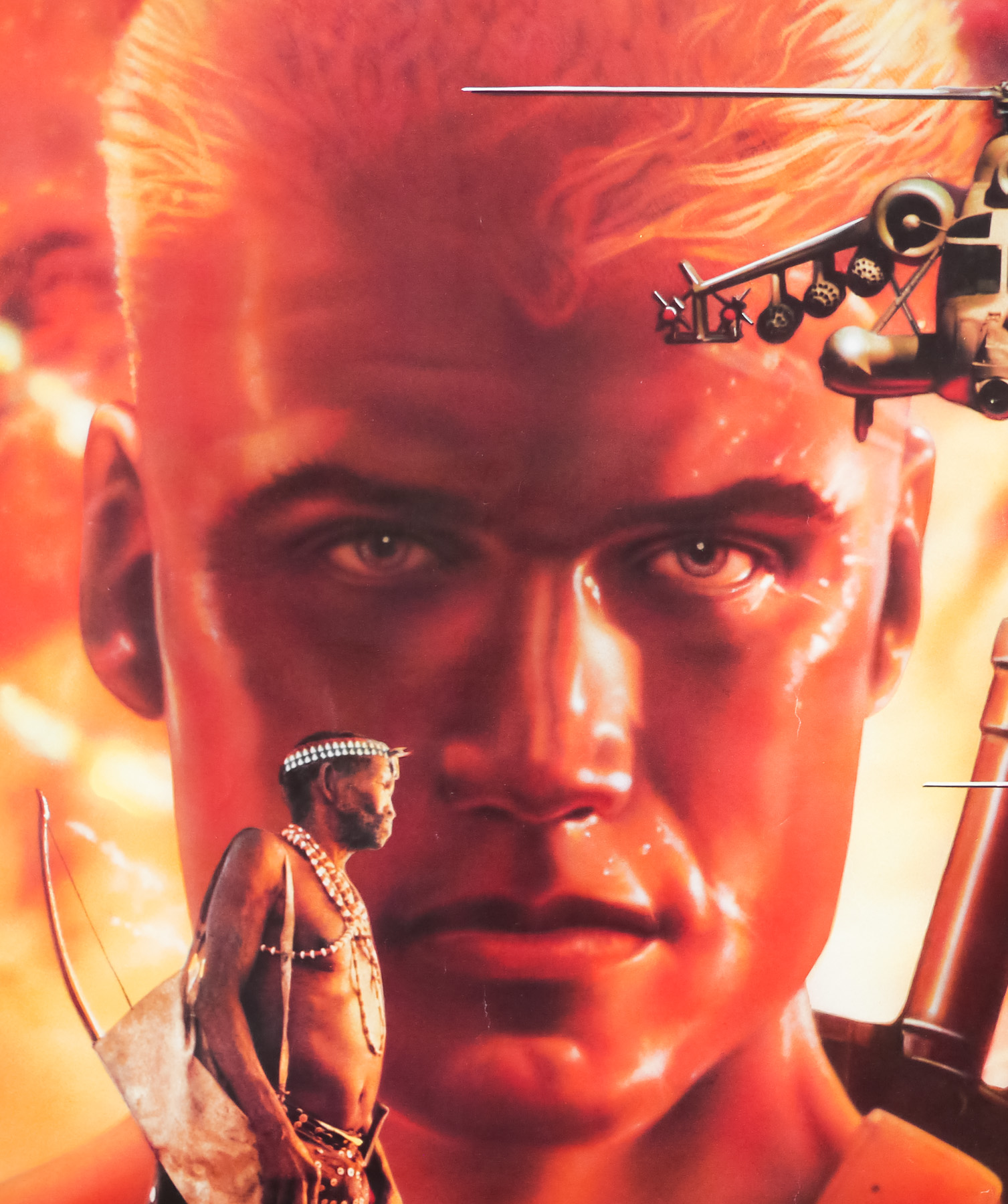
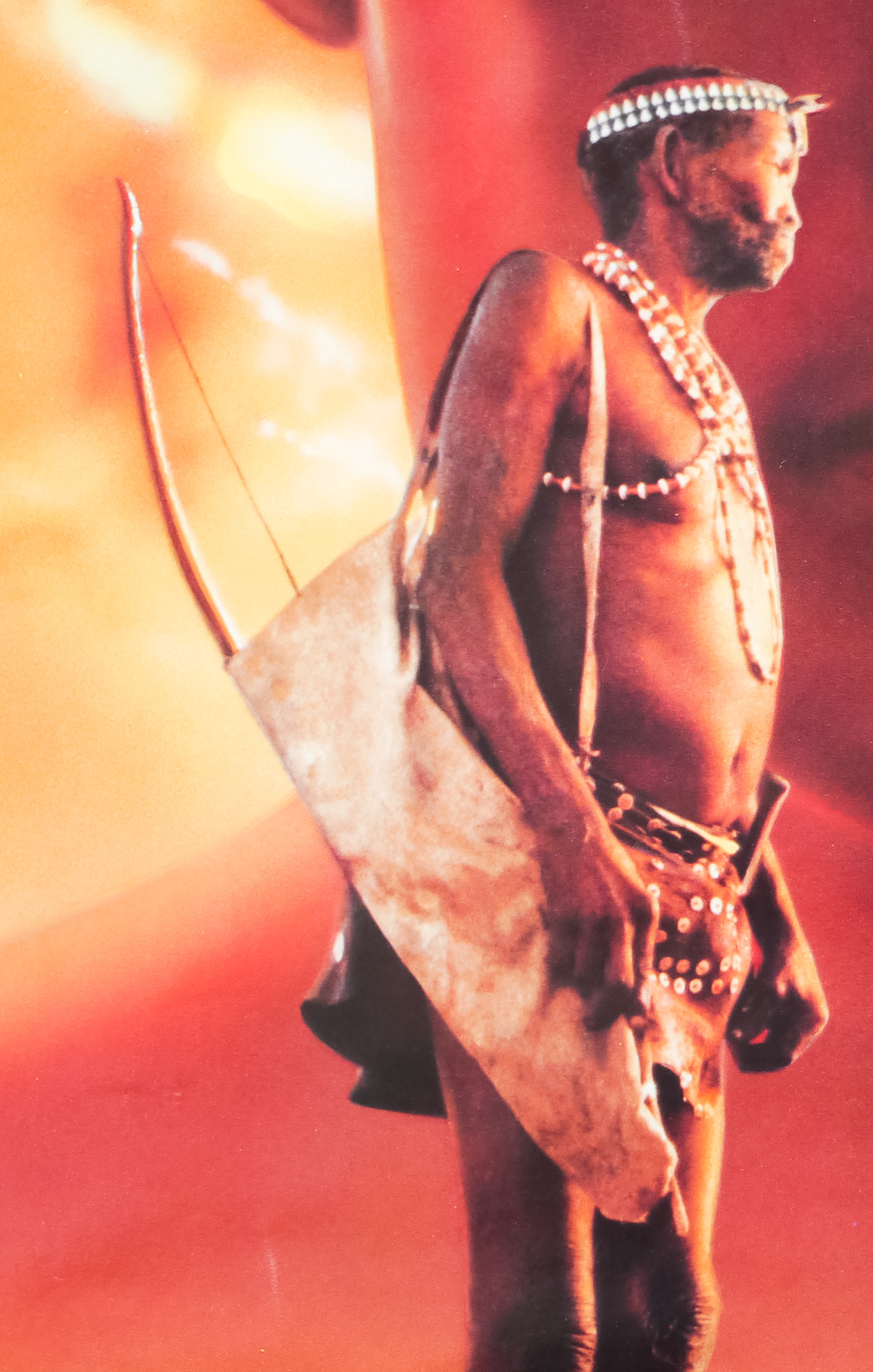
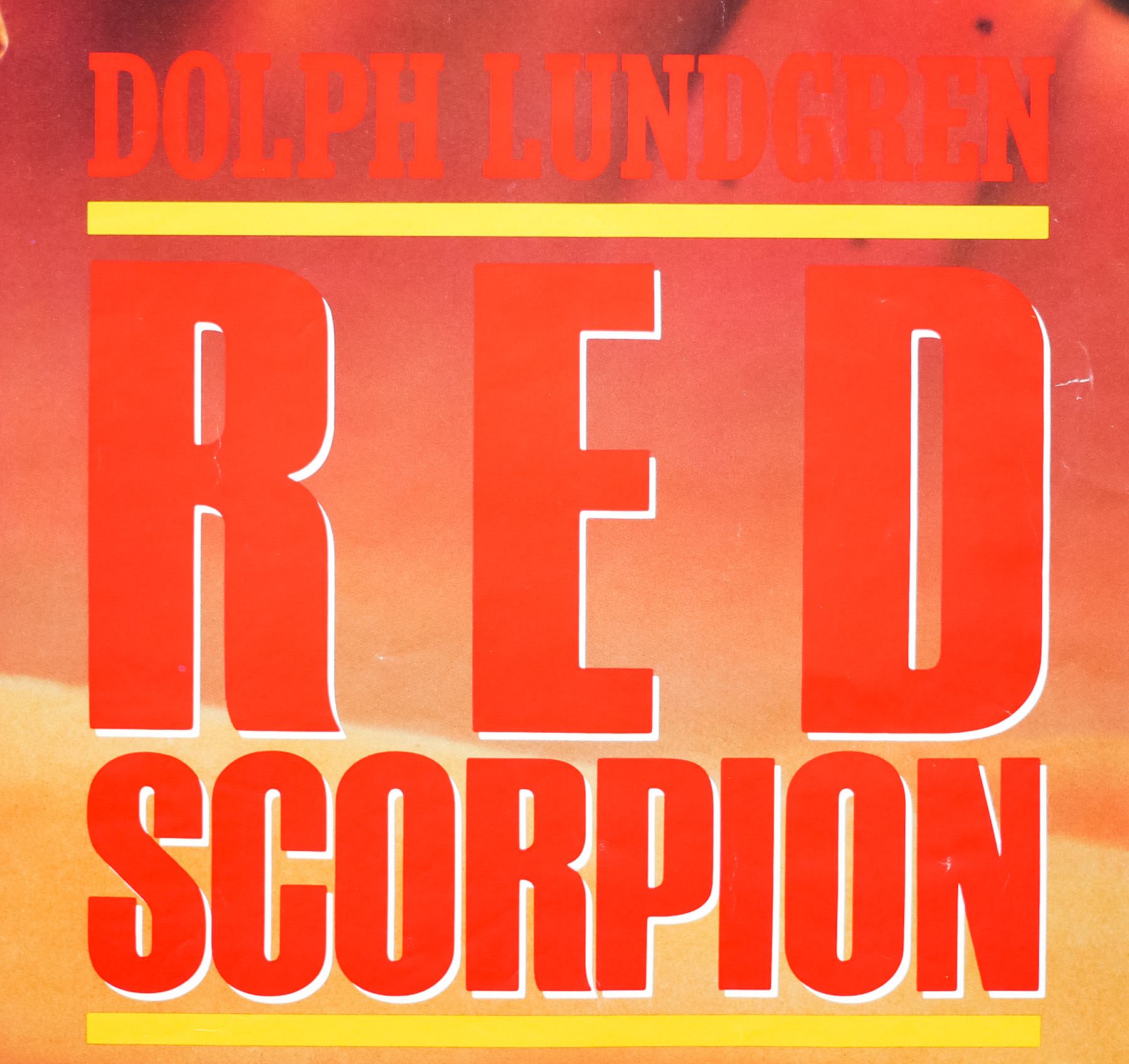
Directed by Joseph Zito, a man with only 9 films under his belt, including a couple of Chuck Norris titles and the notorious slasher The Prowler, Red Scorpion was the second film to be headlined by the Swedish action star Dolph Lundgren. After earning degrees in chemical engineering, Lundgren won a couple of European championships in the martial art of Karate and eventually landed a job as a bodyguard for the singer and actress Grace Jones. The pair soon began a relationship and when he accompanied Jones during the filming of A View to a Kill she suggested he try out for a minor role in the film. This appearance helped him land the memorable role of the Russian boxer Ivan Drago in Rocky IV and then in 1987 he played He-Man in the ill-advised live-action film Masters of the Universe. Since then he has featured in over 60 films, mostly in the action genre.

Red Scorpion was produced by the disgraced former American lobbyist Jack Abramoff who was sentenced to jail in 2006 for mail fraud, conspiracy to bribe public officials, and tax evasion, all related to his involvement in lobbying for American Indian tribes and casinos. Before his career as a lobbyist, Abramoff spent 10 years in Hollywood as a producer and developed the screenplay for Red Scorpion along with his brother Robert, a more prolific producer who is still working in the industry today. Red Scorpion was filmed in Swaziland and the production became embroiled in the South African apartheid situation at the time, allegedly receiving some funding from the government as part of efforts to undermine the movement. The film suffered multiple delays and ultimately ended up about 8 million dollars over budget.

Dolph appears as Nikolai Petrovitch Radchenko, a Soviet Spetsnaz agent who is sent to a fictional African country to assassinate the leader of a large anti-communist rebel group. In order to get near to his target he gets involved in a bar brawl and is arrested and placed in a cell with a rebel commander. After gaining the man’s trust, the pair escape and end up at the rebel’s main hideout. He is met with distrust by most of the group and his attempt to assassinate the leader during the night results in his capture. After he ends up back in Soviet hands he is tortured and disgraced by his commanders, but manages to escape from an interrogation chamber and ends up in the desert where he is rescued by native bushmen. He learns about their customs and way of life, discovering that the peaceful tribe continues to be attacked by the Soviet forces. Radchenko is later given a ceremonial brand in the shape of a scorpion. Eventually he joins the rebel forces for an attack on the base where the corrupt Soviet commanders are based.

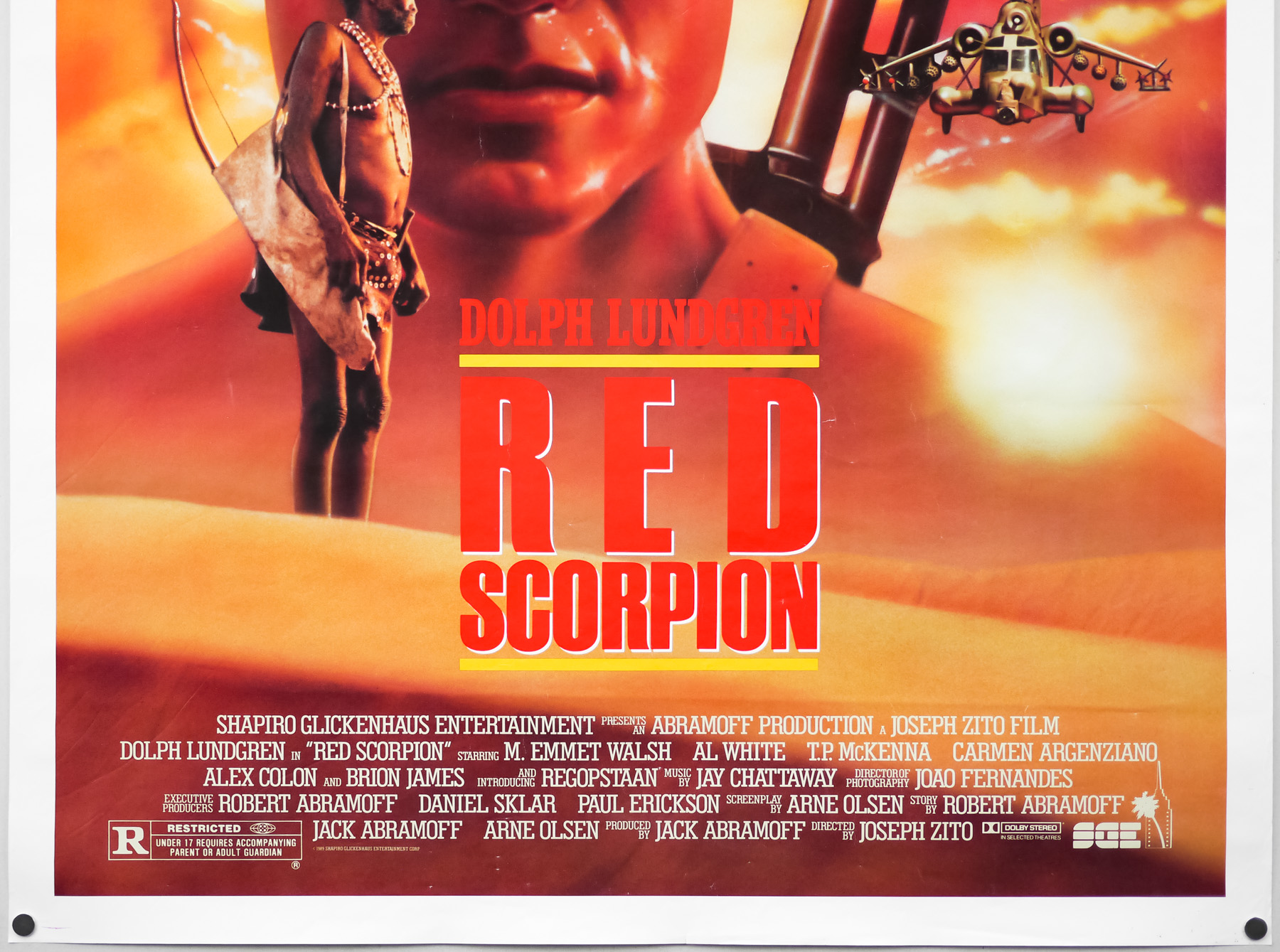
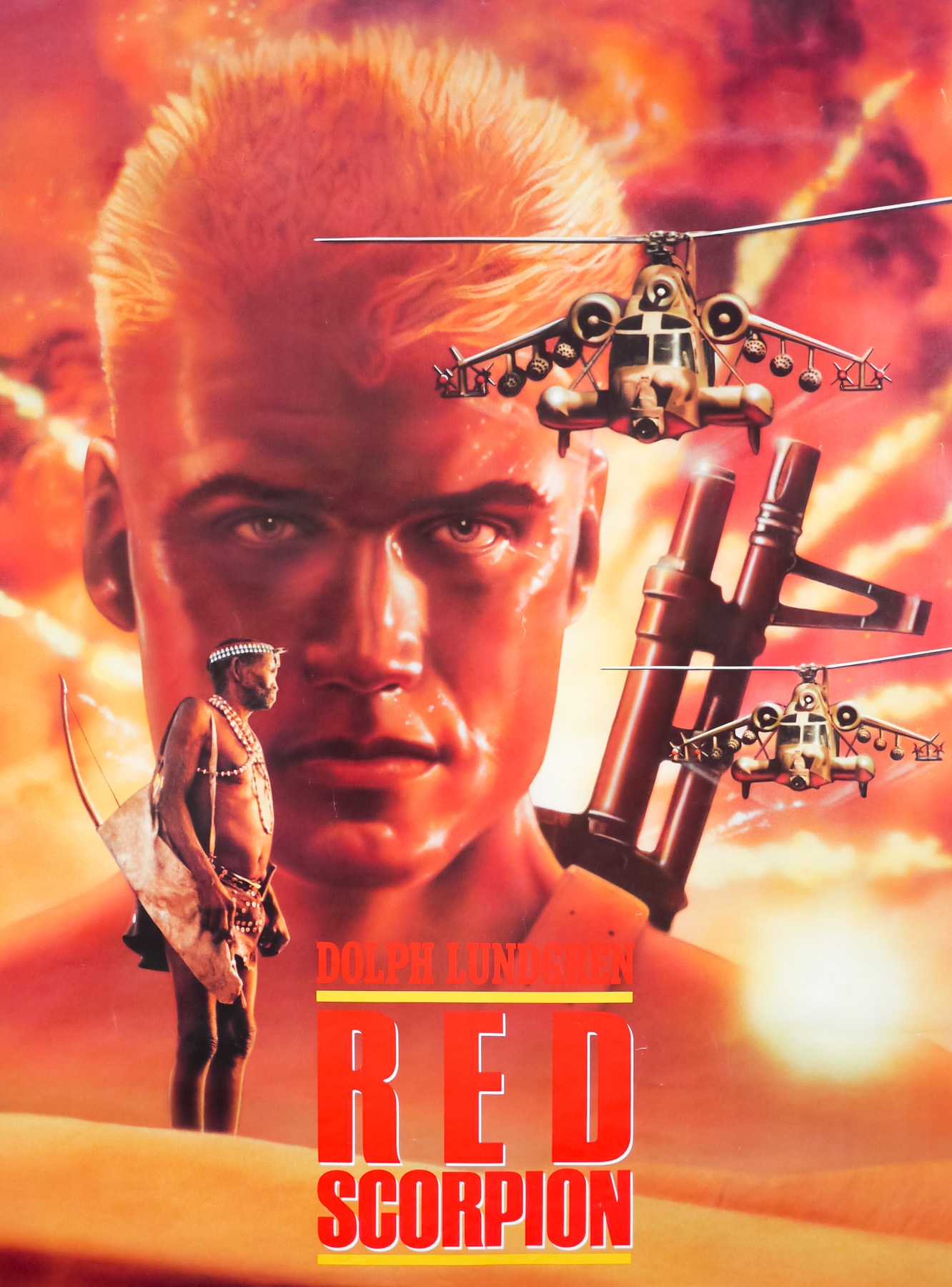
This poster was designed by the Los Angeles-based Kaiser Creative who worked on a number of film posters over the years. IMPAwards has a gallery of many of their posters. I’ve been unable to determine who is responsible for the artwork so if anyone has any ideas please get in touch.

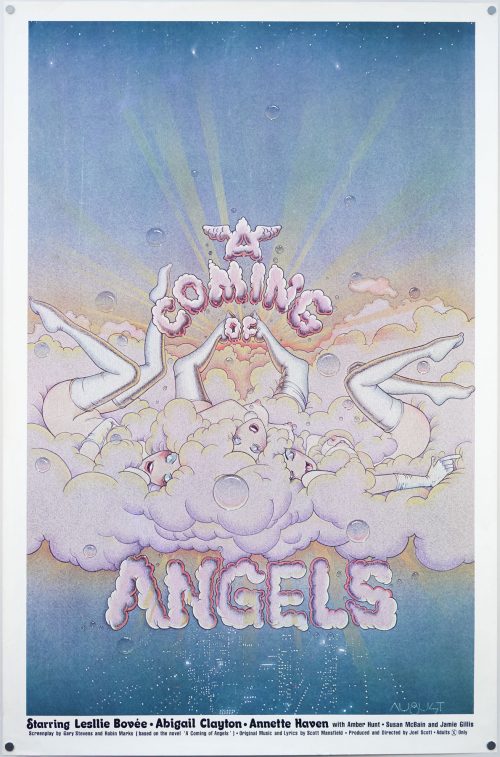
A Coming of Angels / one sheet / USA

22.07.15

Poster Poster
Title
A Coming of Angels
AKA
Momento Supremo (Brazil)
Year of Film
1977
Director
Joel Scott
Starring
Lesllie Bovee, Abigail Clayton, Annette Haven, Jamie Gillis, Amber Hunt, Susan McBain, John Leslie, Eric Edwards
Origin of Film
USA
Genre(s) of Film
Lesllie Bovee, Abigail Clayton, Annette Haven, Jamie Gillis, Amber Hunt, Susan McBain, John Leslie, Eric Edwards,
Type of Poster
One sheet
Style of Poster
--
Origin of Poster
USA
Year of Poster
1977
Designer
Unknown
Artist
August
Size (inches)
27 1/16" x 41 1/16"
SS or DS
SS
NSS #
--
Tagline
--

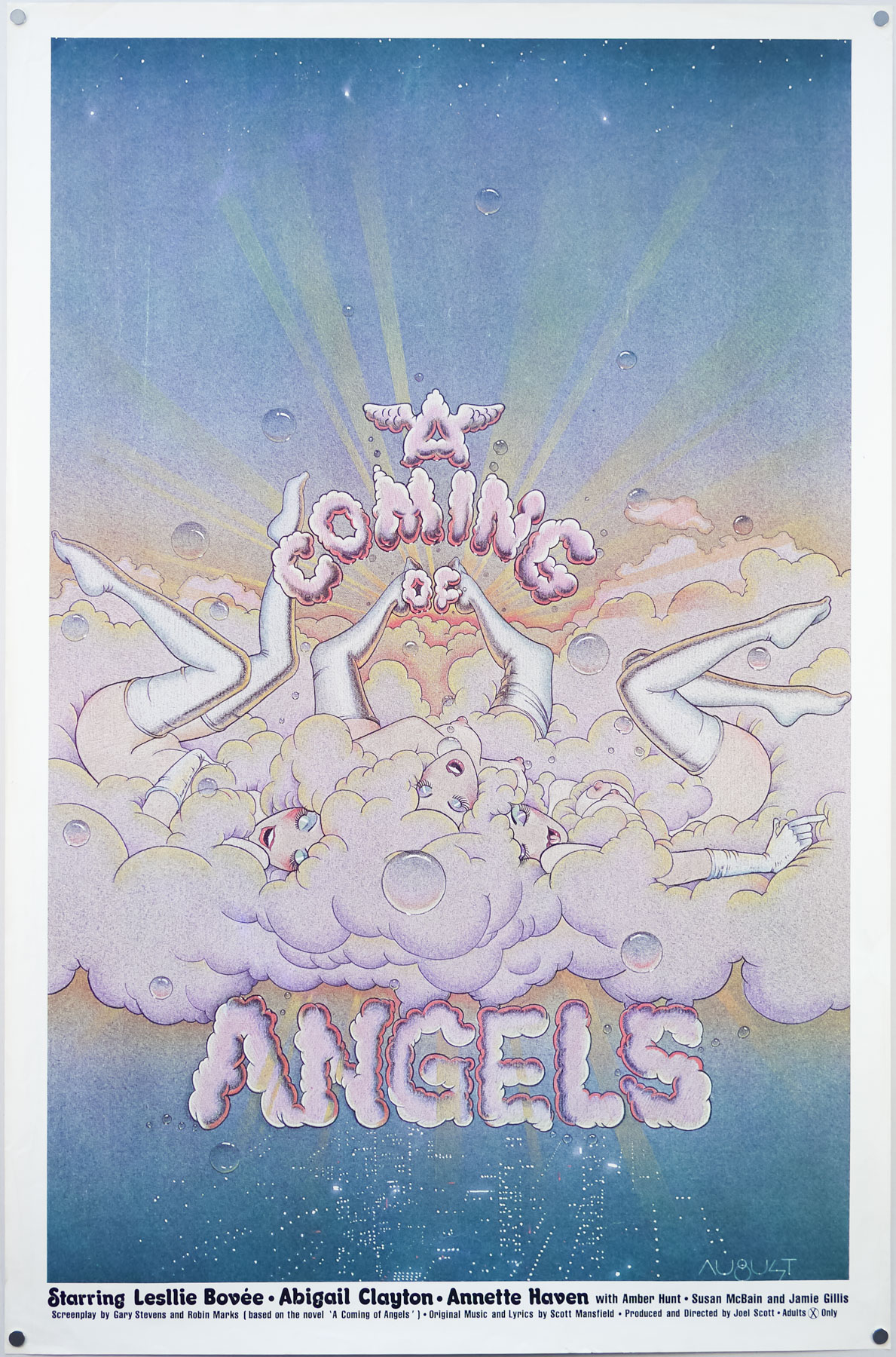
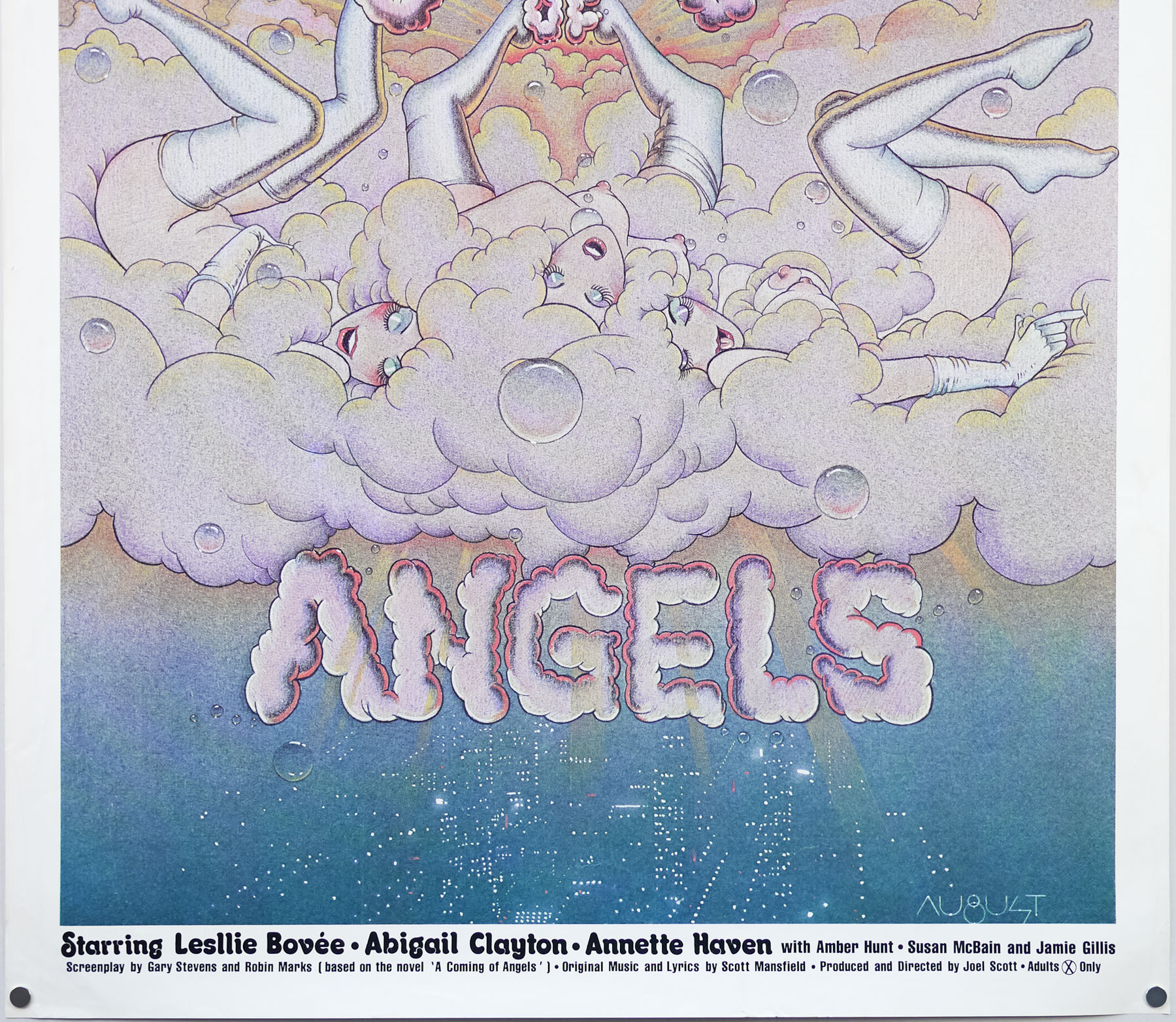
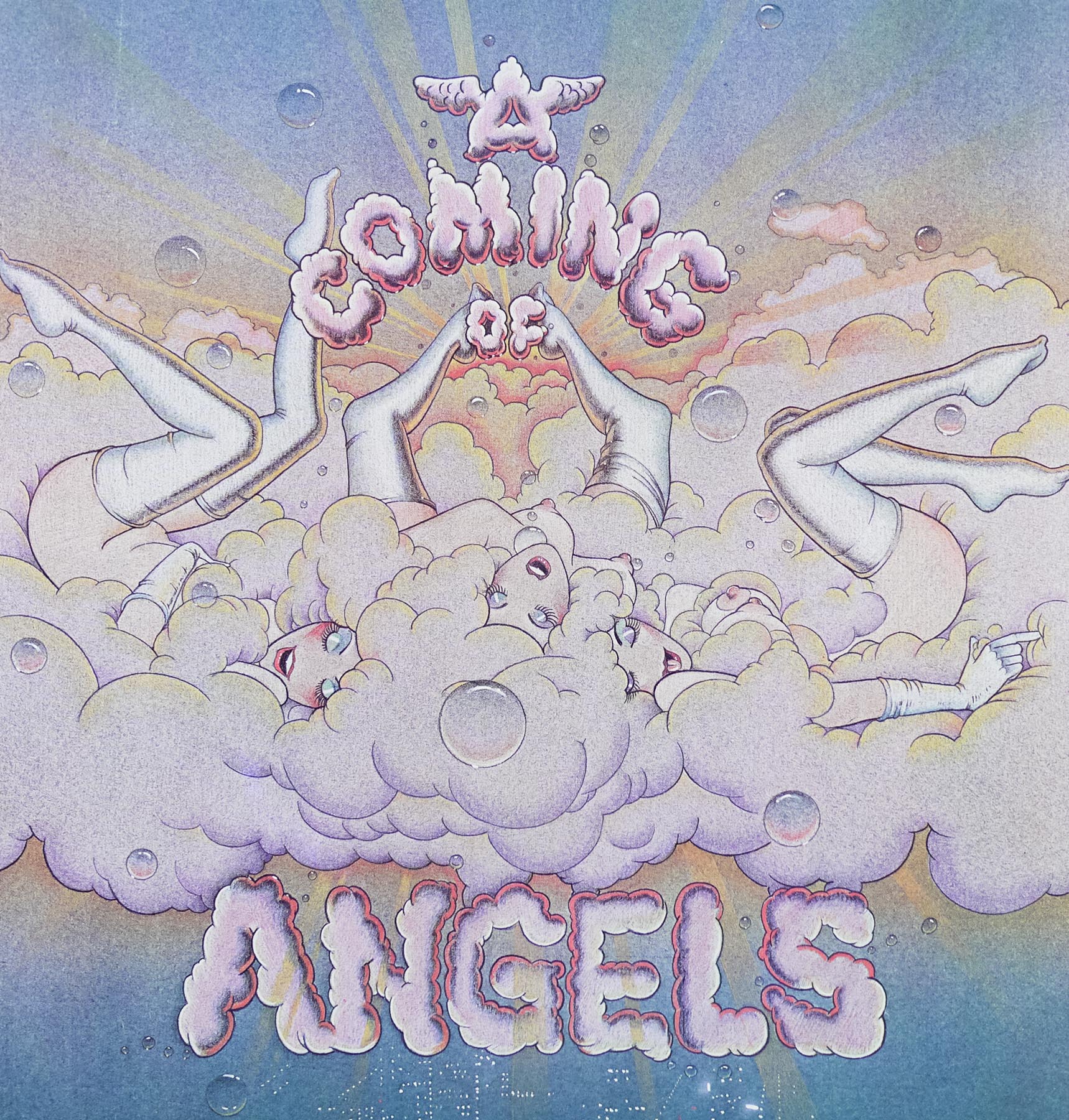
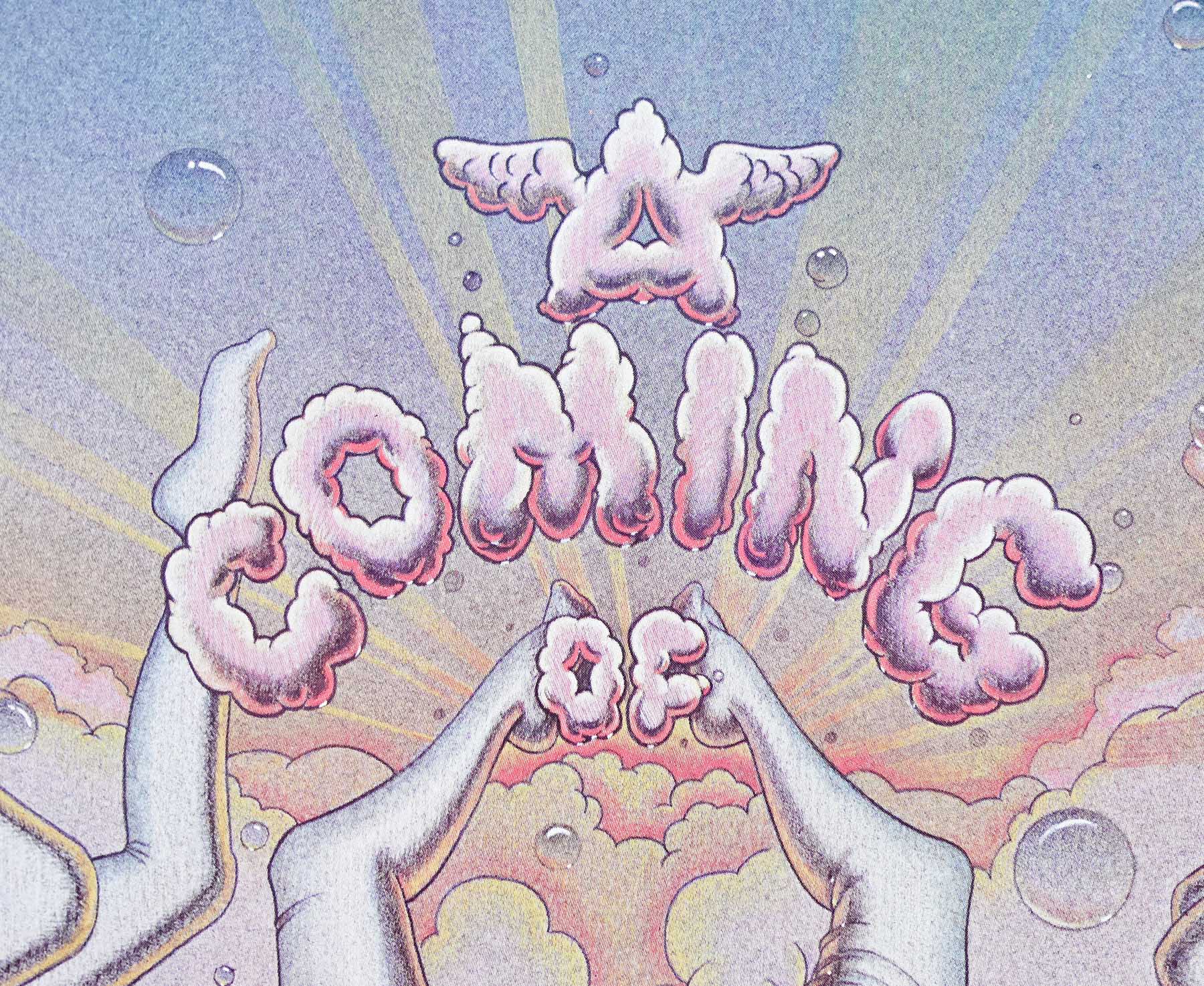
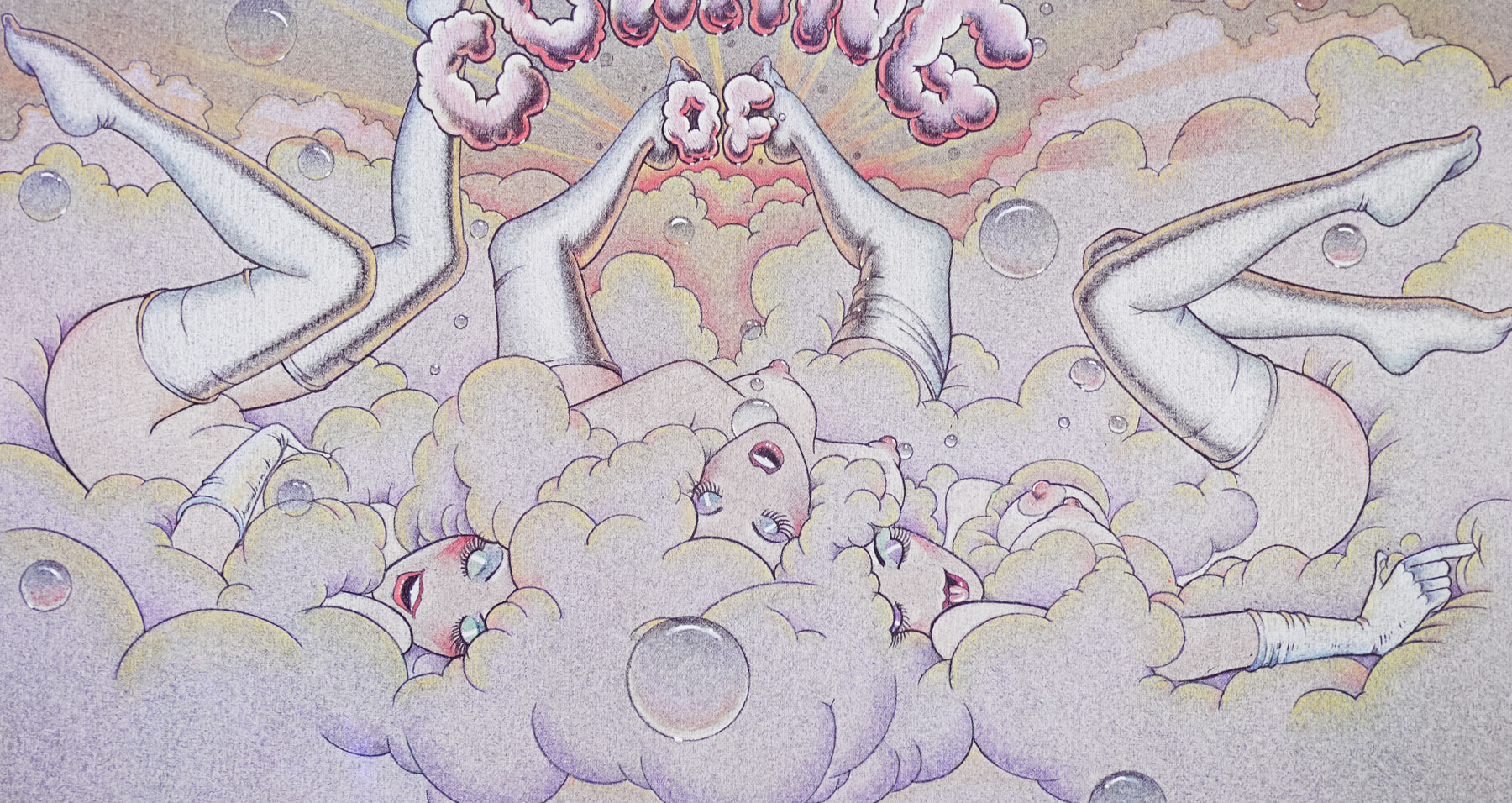
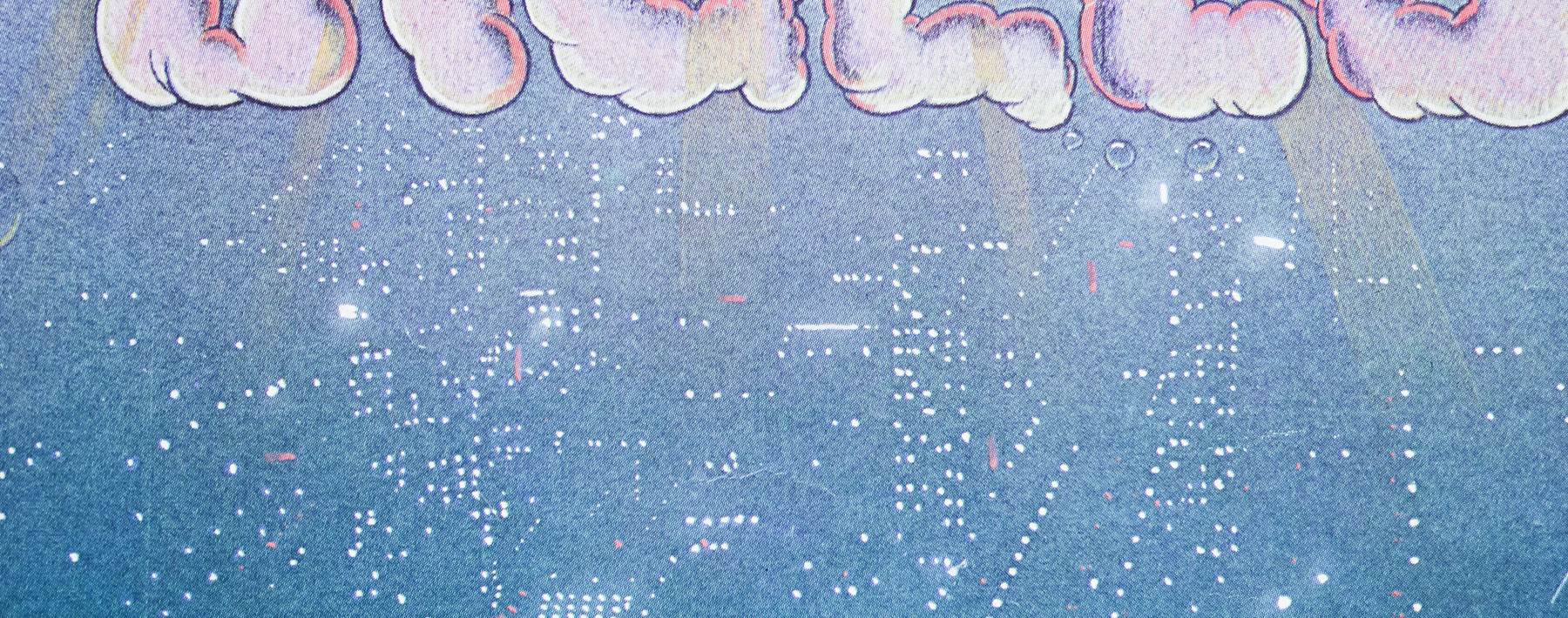
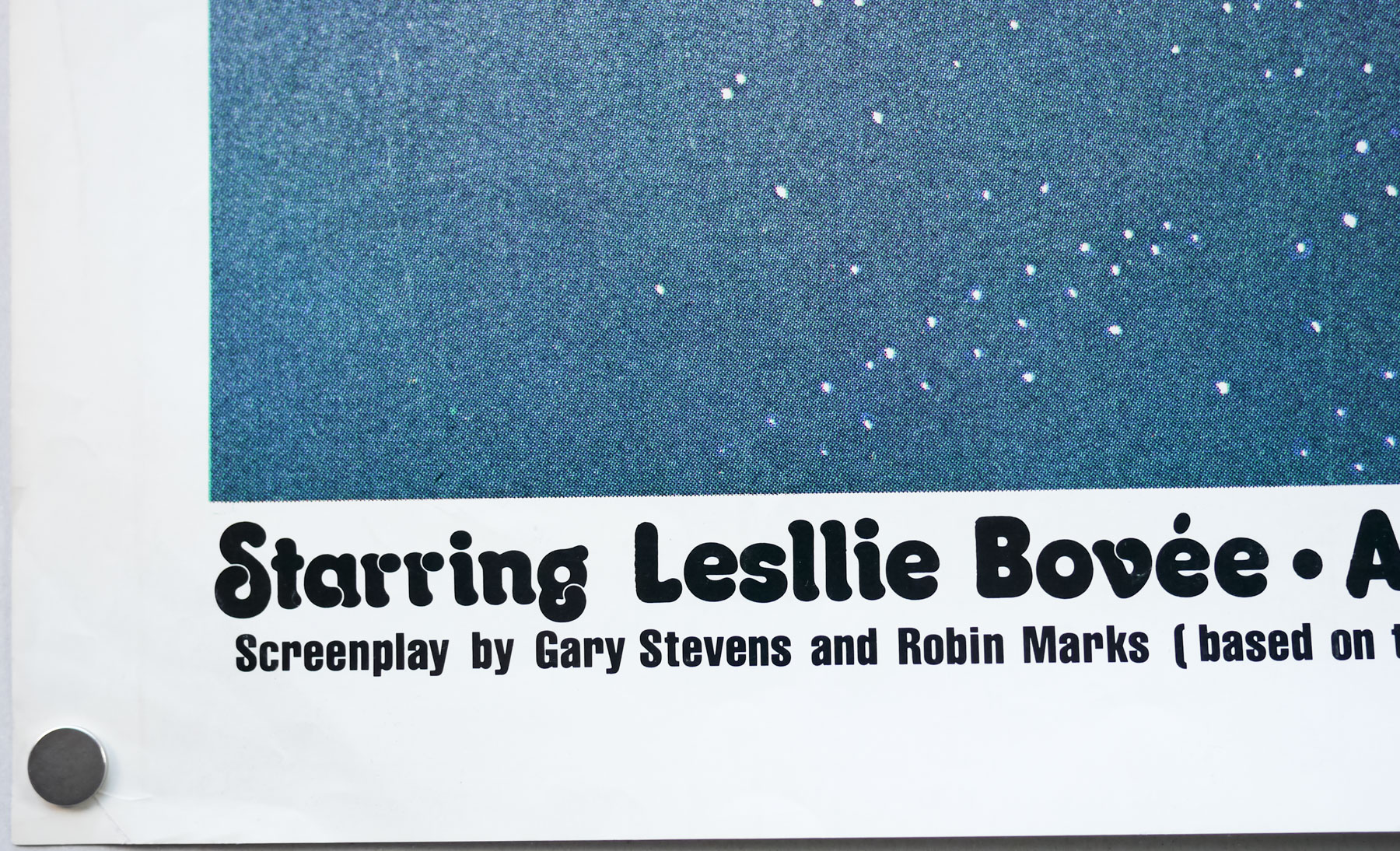
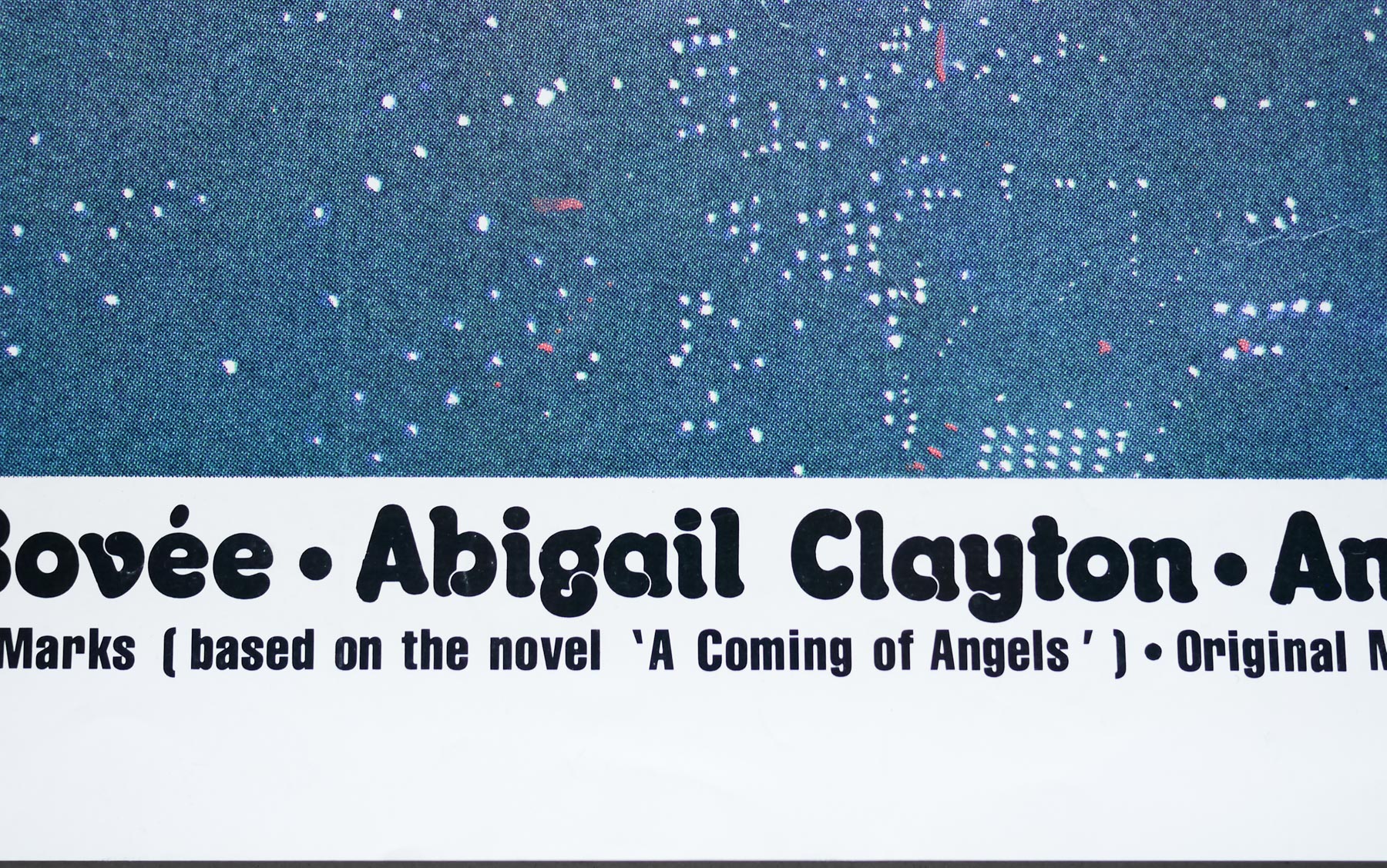
A Coming of Angels, released in select US cinemas in 1977, is an X-rated homage to the original Charlie’s Angels TV show and proves that pornographic spoofs of popular films and TV series is not a recent phenomenon. This is the only film that Joel Scott ever directed but he managed to assemble a cast of now legendary adult stars, including the late Jamie Gillis who starred in over 400 adult pictures as well as John Leslie and Eric Edwards who were actors in over 300 titles each. There are only 6 reviews for the title on IMDb, but there’s a lengthy one by someone called Dries Vermeulen who goes into detail about the background of the film and the action it contains.

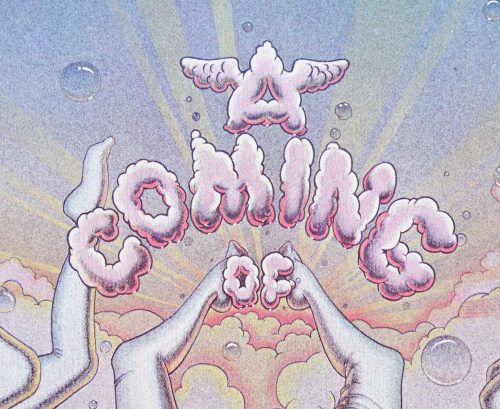
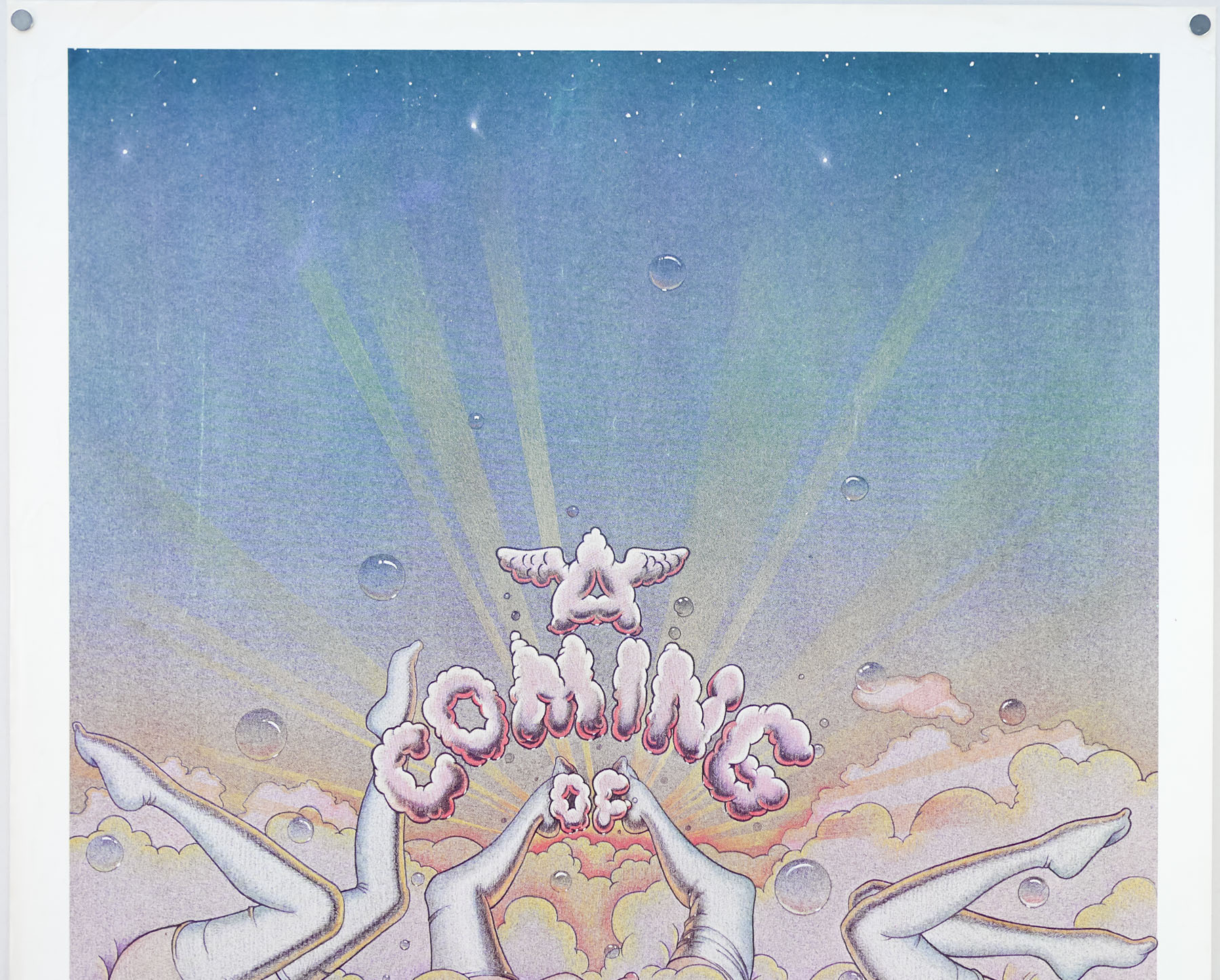
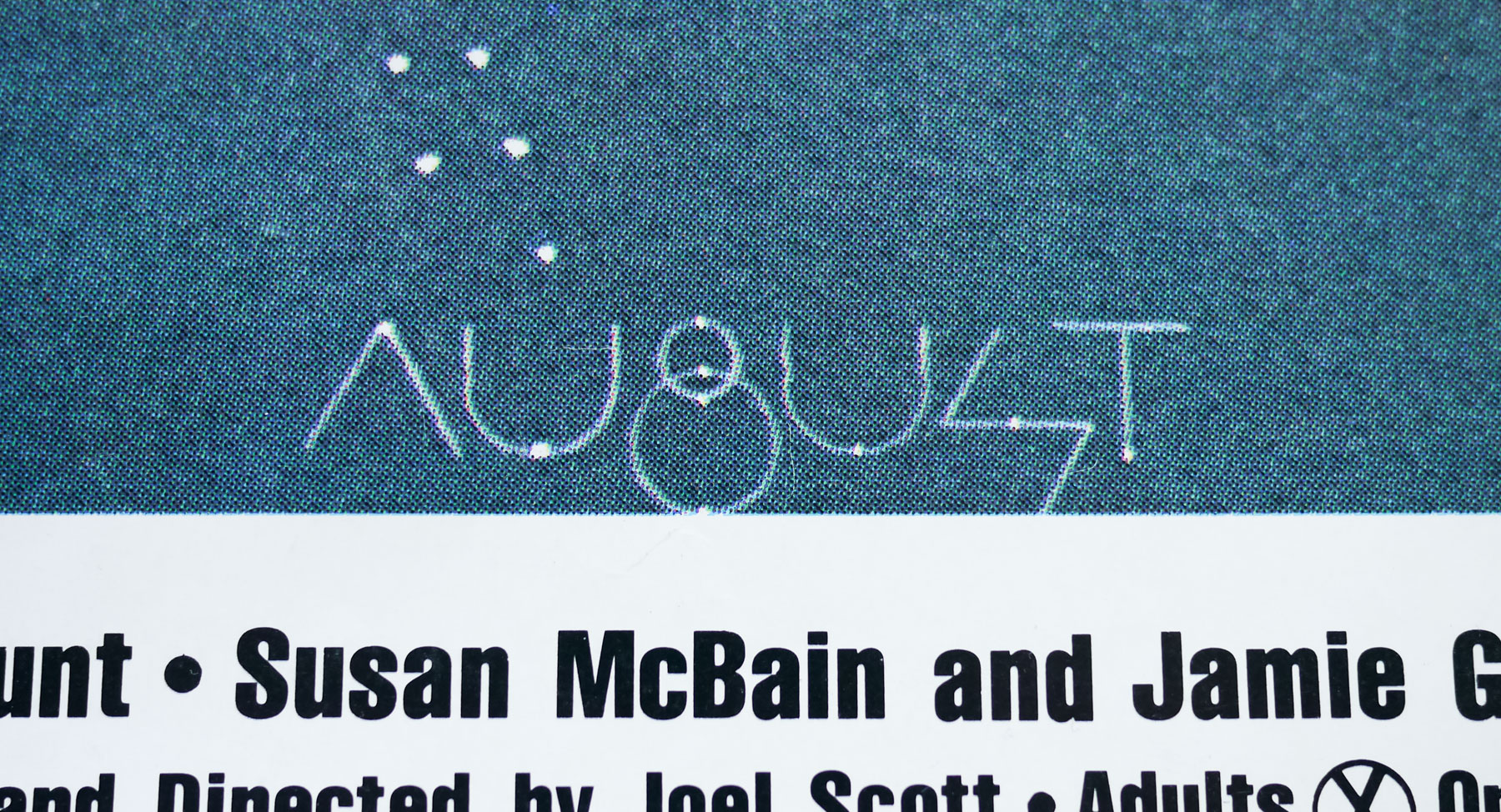
The artwork features the signature ‘August’ but I’ve been unable to determine who this belongs to and Robin Bougie, the author of the excellent Graphic Thrills (a book about adult movie posters) was also unable to track the artist down. If anyone has any ideas please get in touch.

Silver Streak / one sheet / style A / USA

31.05.16

Poster Poster
Title
Silver Streak
AKA
--
Year of Film
1976
Director
Arthur Hiller
Starring
Gene Wilder, Jill Clayburgh, Richard Pryor, Patrick McGoohan, Ned Beatty, Clifton James, Ray Walston, Stefan Gierasch, Len Birman, Valerie Curtin, Lucille Benson, Scatman Crothers, Richard Kiel, Fred Willard
Origin of Film
USA
Genre(s) of Film
Gene Wilder, Jill Clayburgh, Richard Pryor, Patrick McGoohan, Ned Beatty, Clifton James, Ray Walston, Stefan Gierasch, Len Birman, Valerie Curtin, Lucille Benson, Scatman Crothers, Richard Kiel, Fred Willard,
Type of Poster
One sheet
Style of Poster
Style A
Origin of Poster
USA
Year of Poster
1976
Designer
Unknown
Artist
George Gross
Size (inches)
27 2/16" x 41"
SS or DS
SS
NSS #
76/200
Tagline
By plane, by train, by the edge of your seat, it's the most hilarious suspense ride of your life!

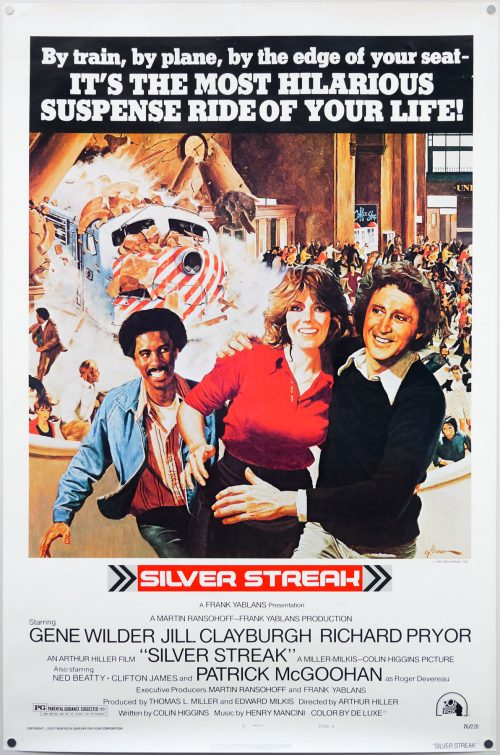
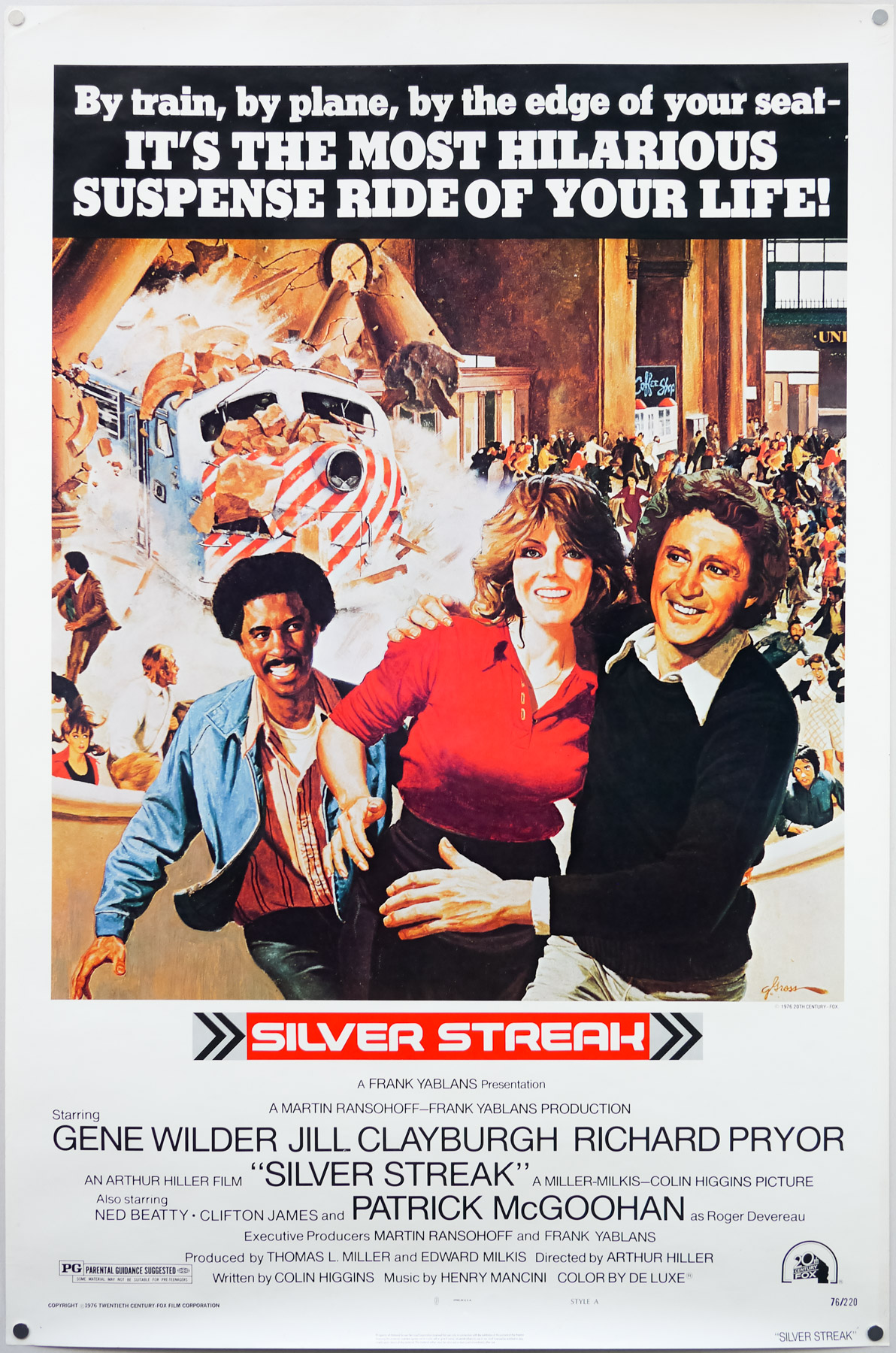
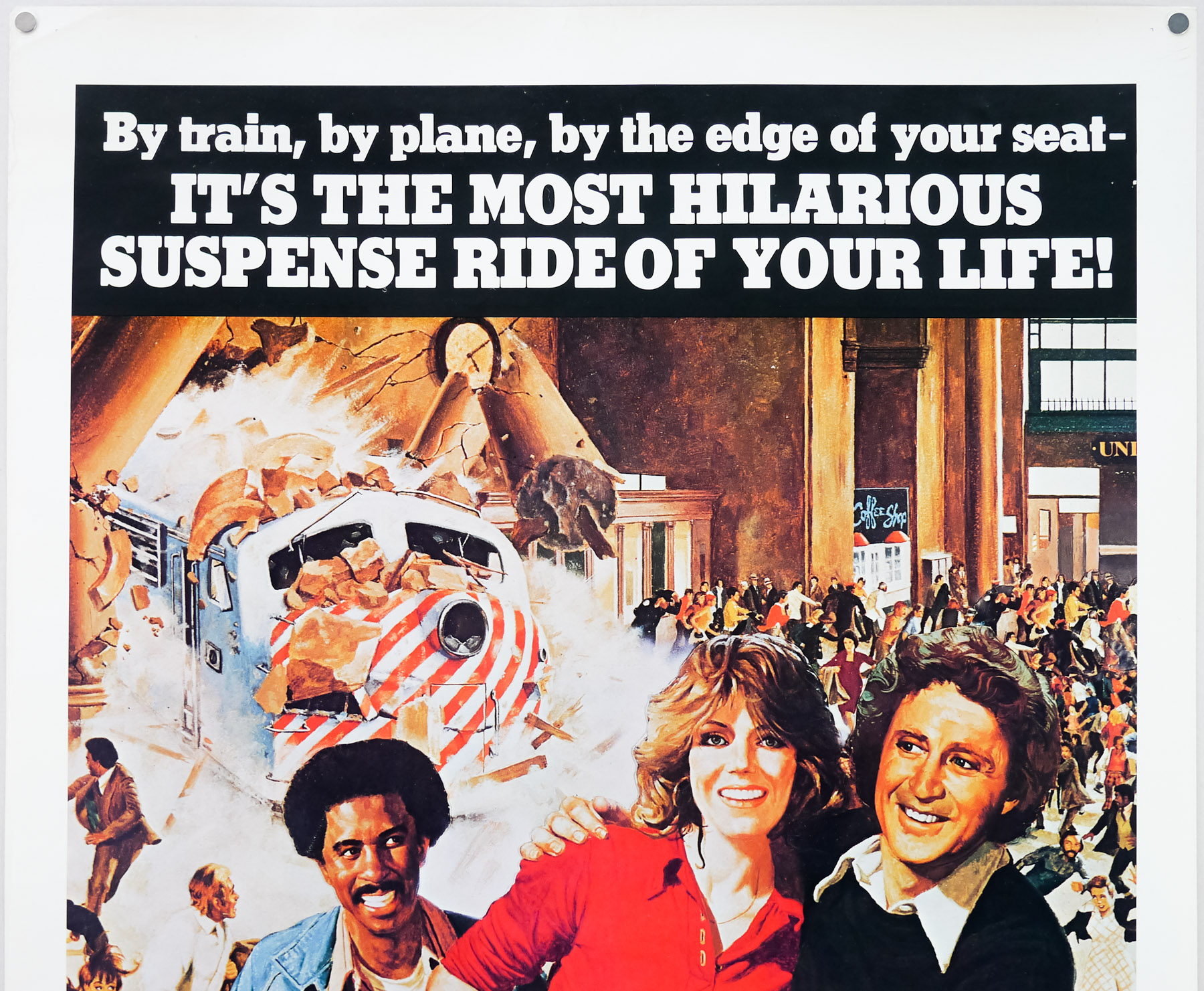
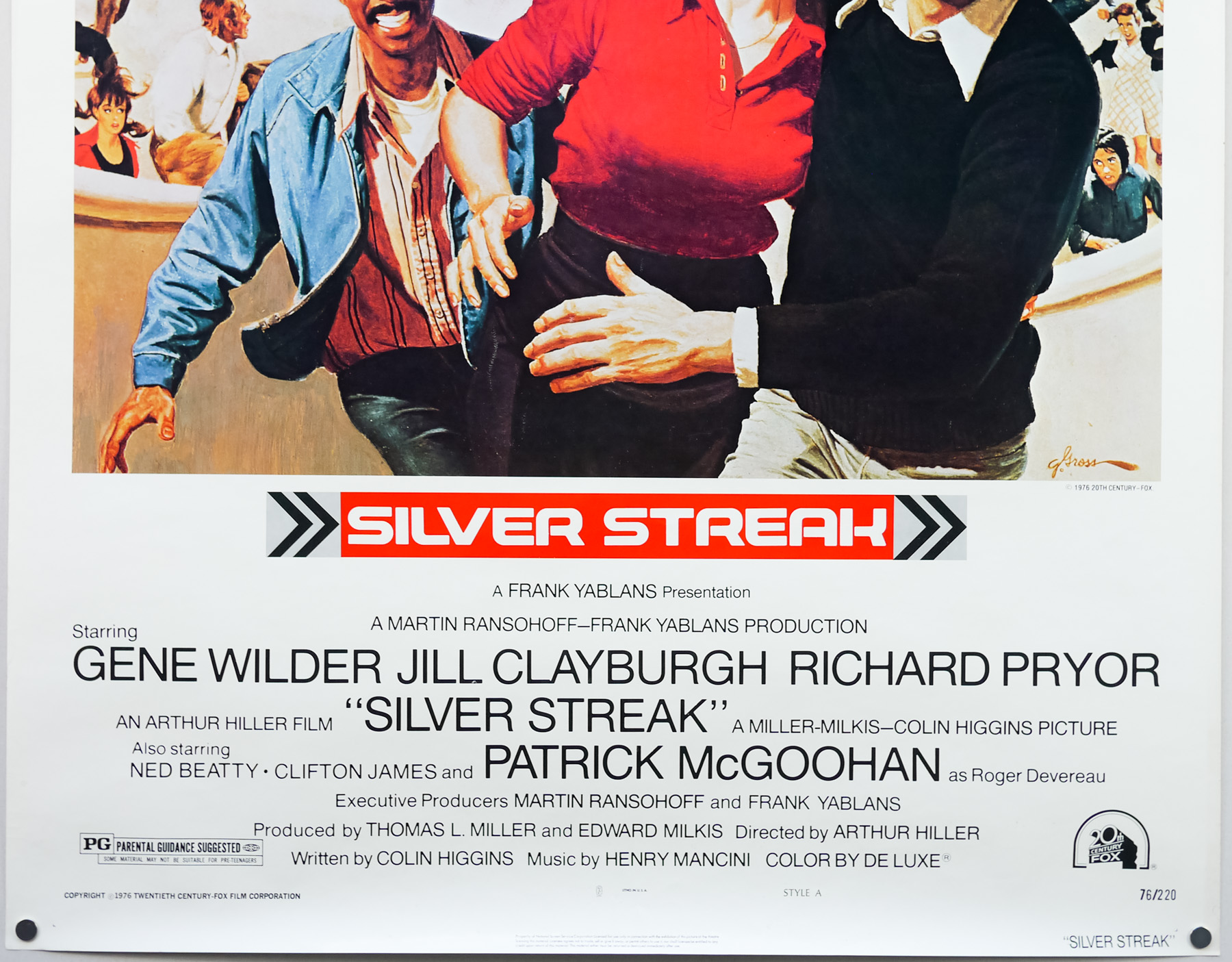
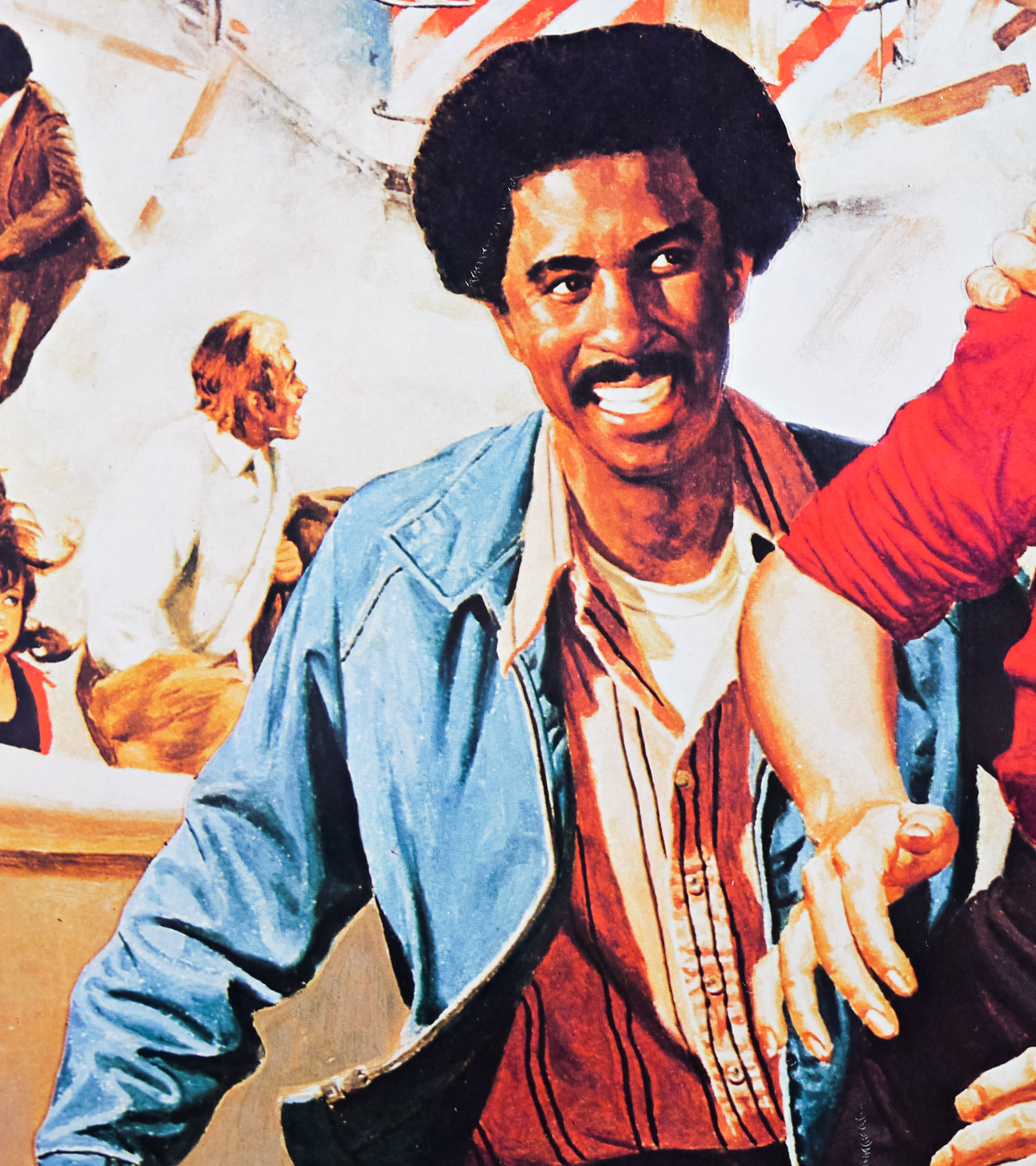
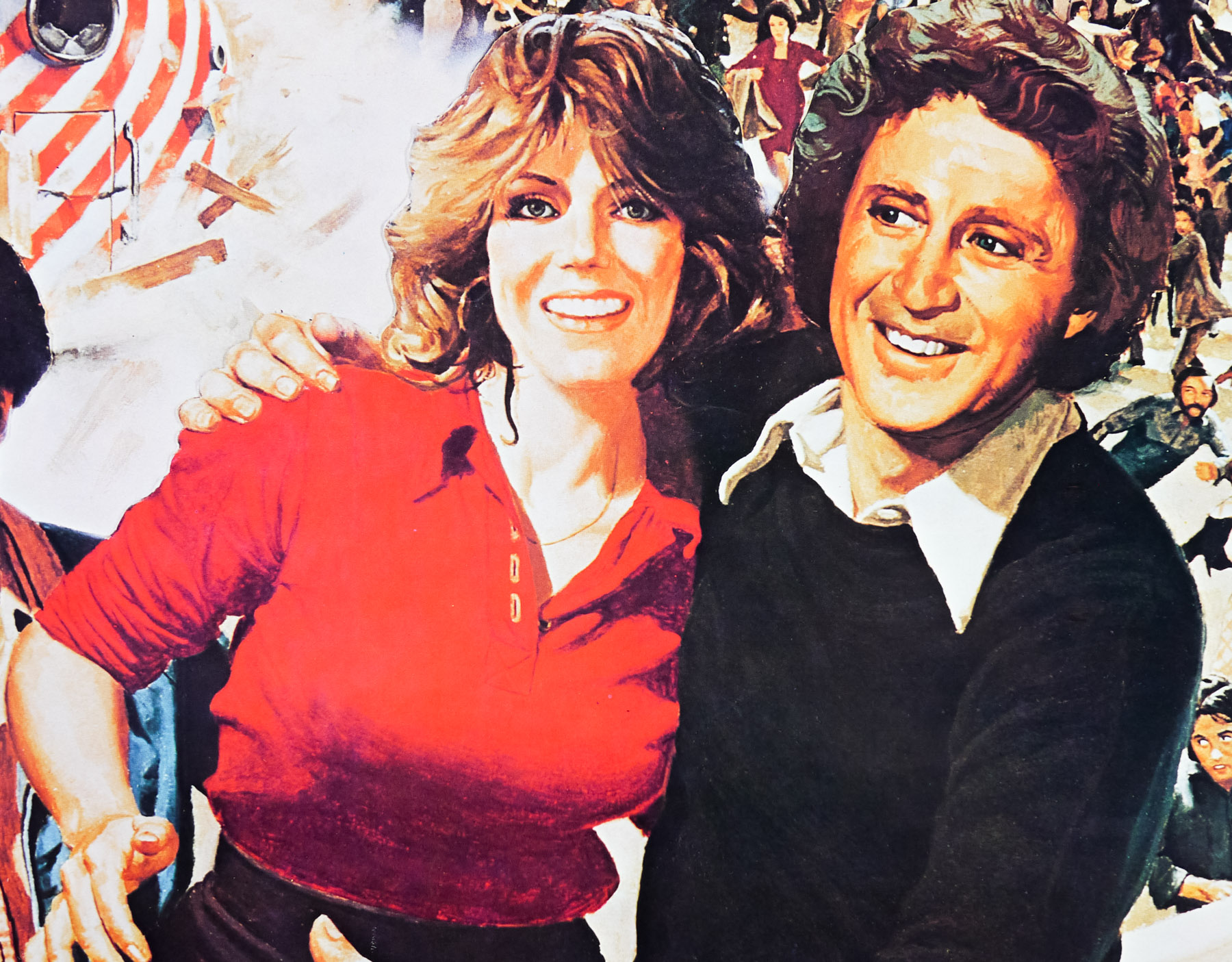
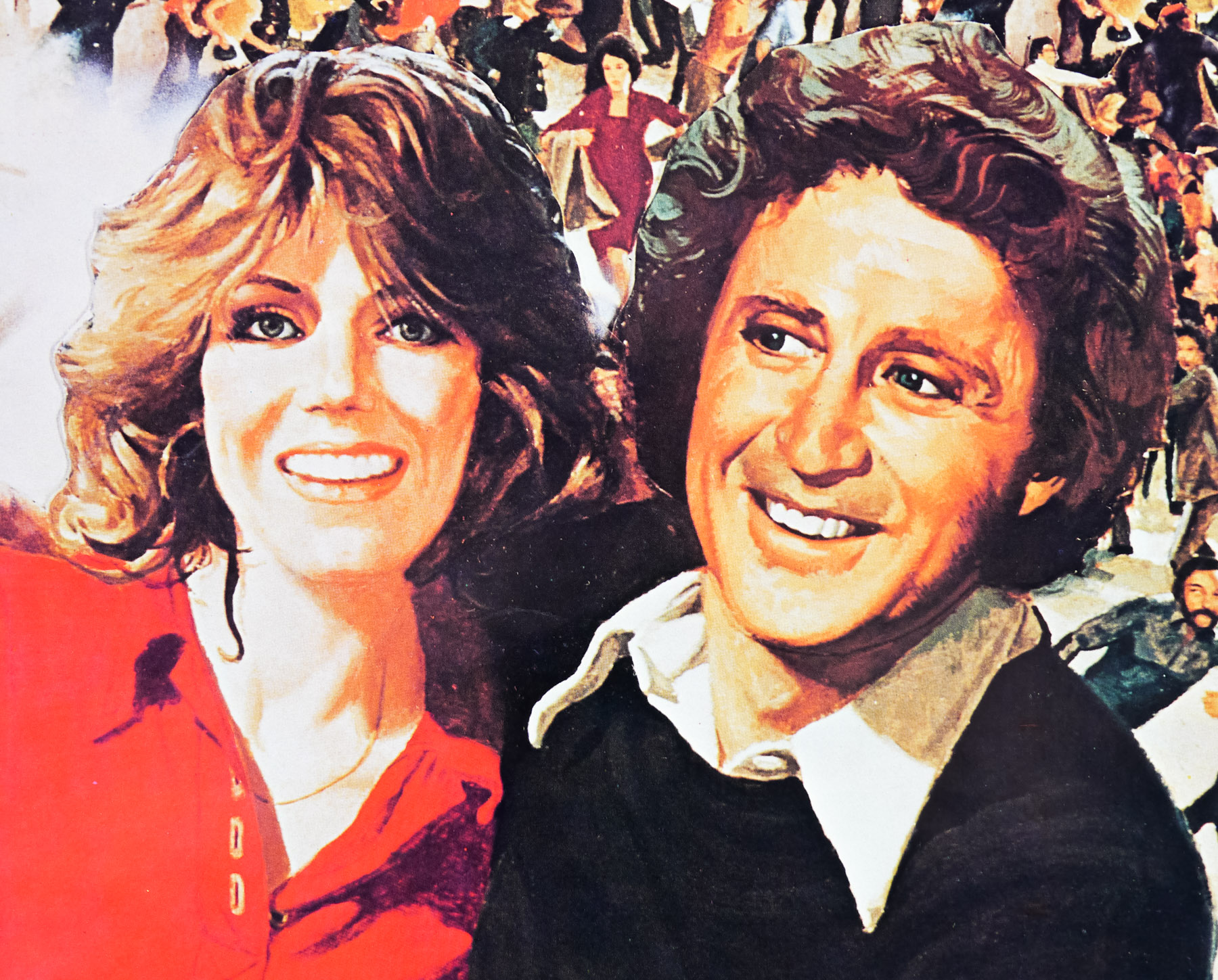
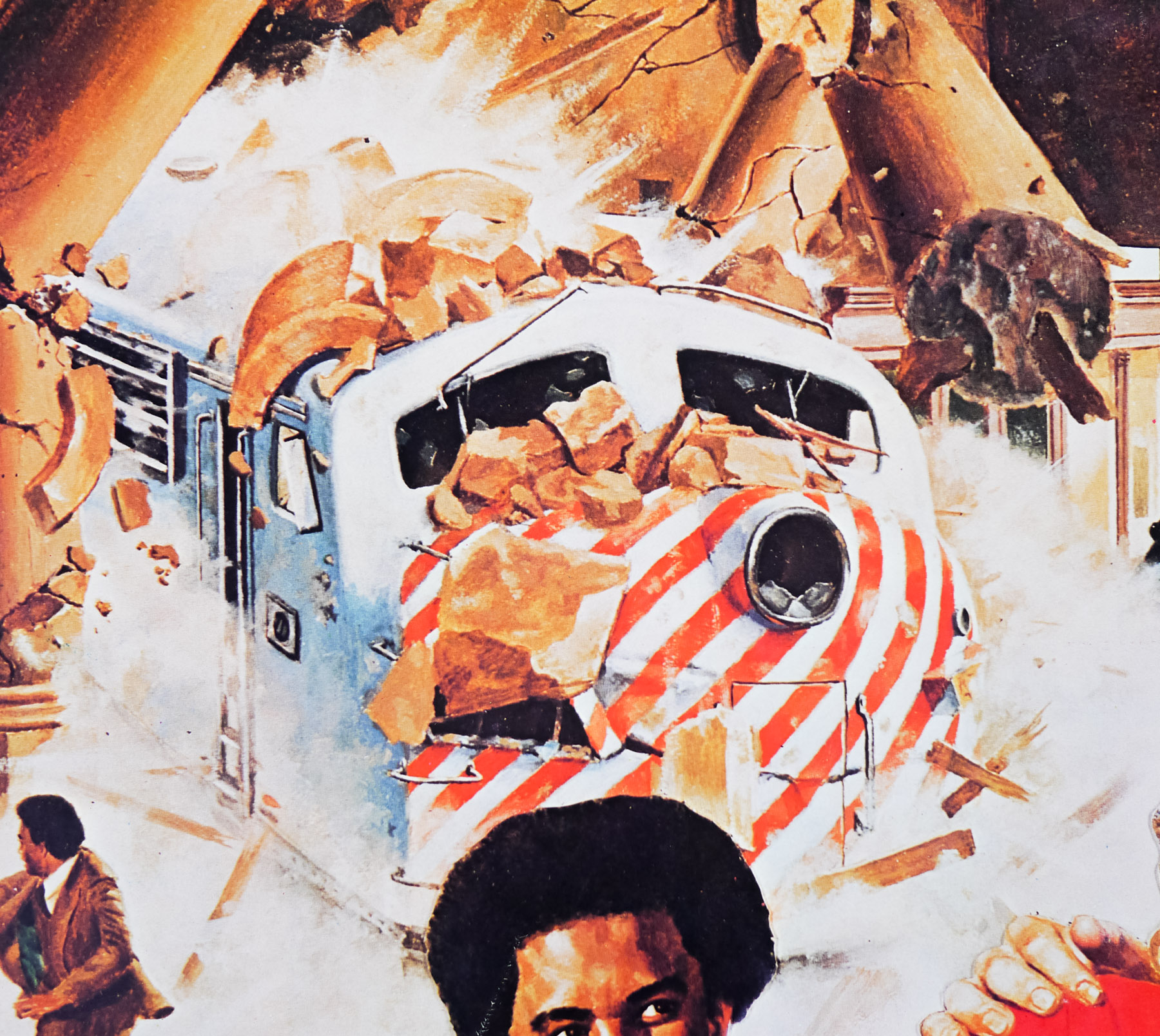
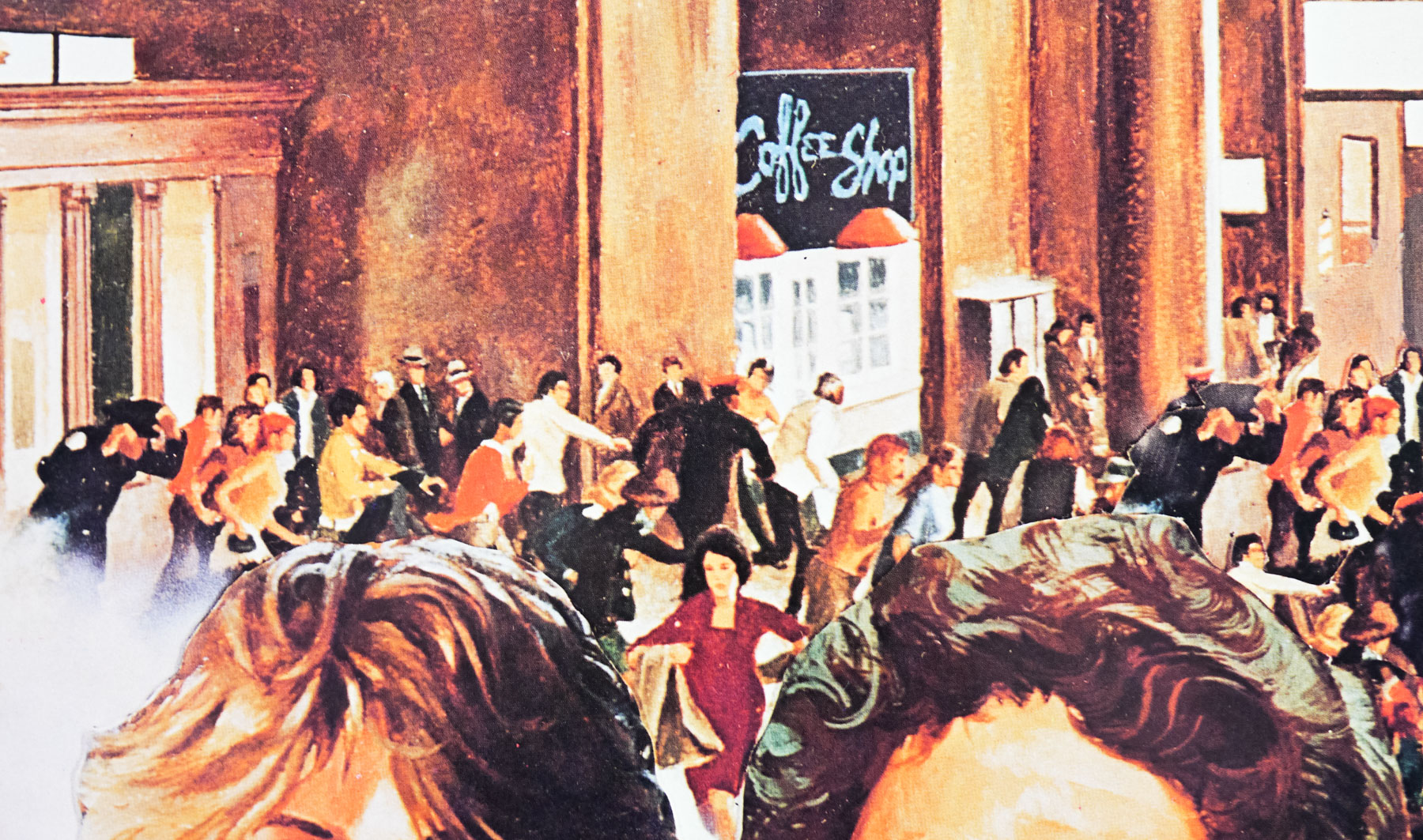
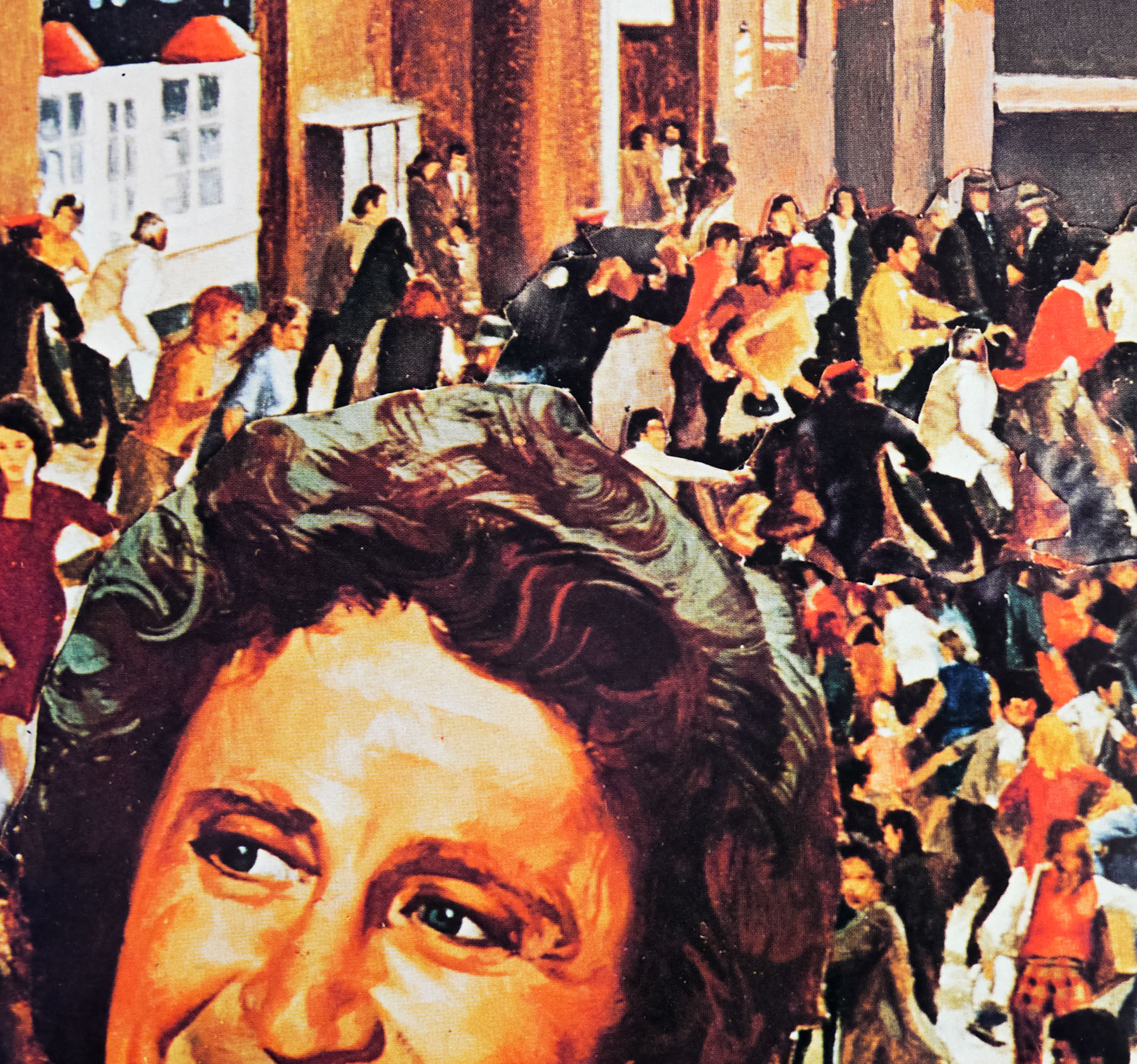
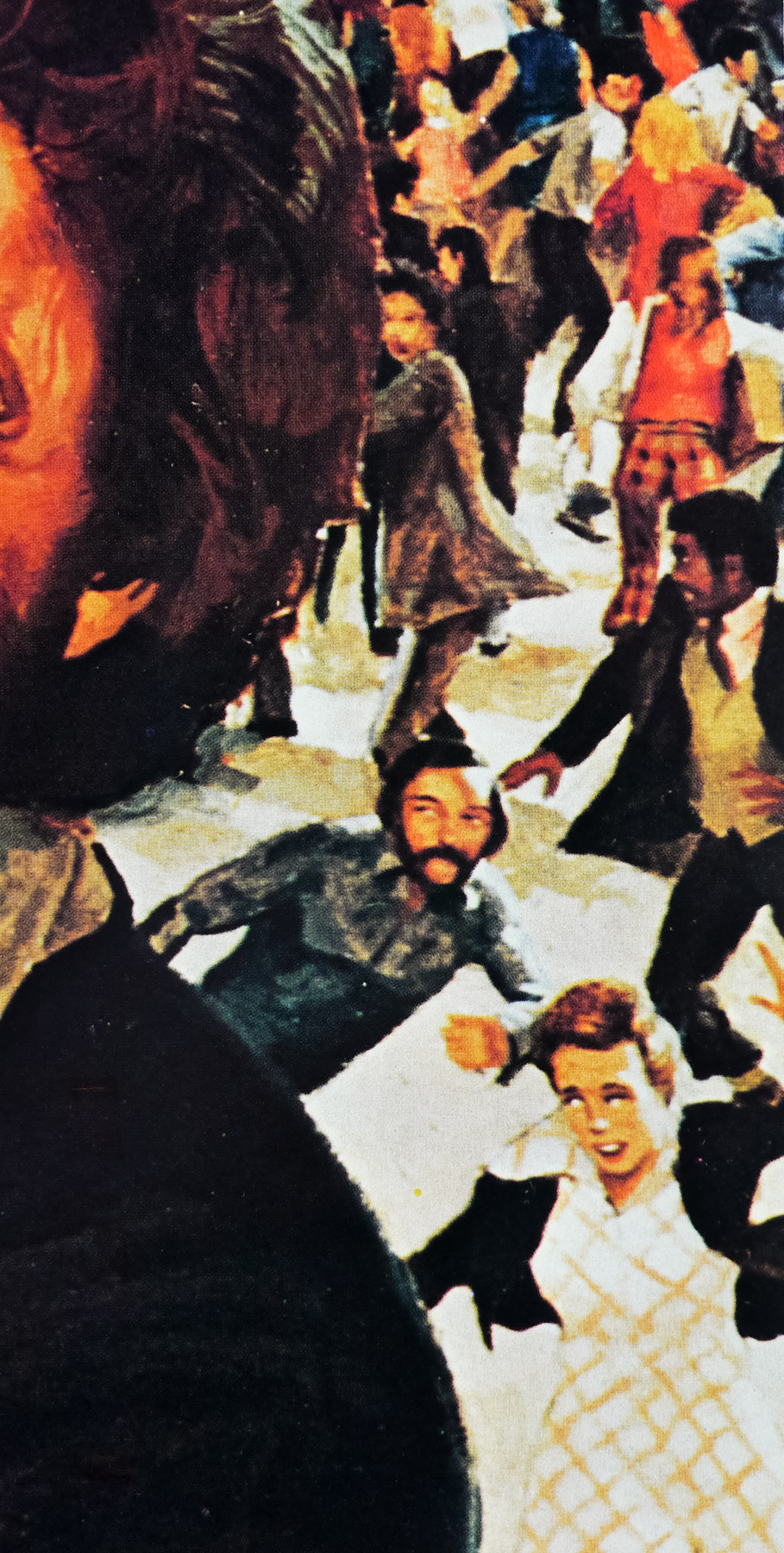
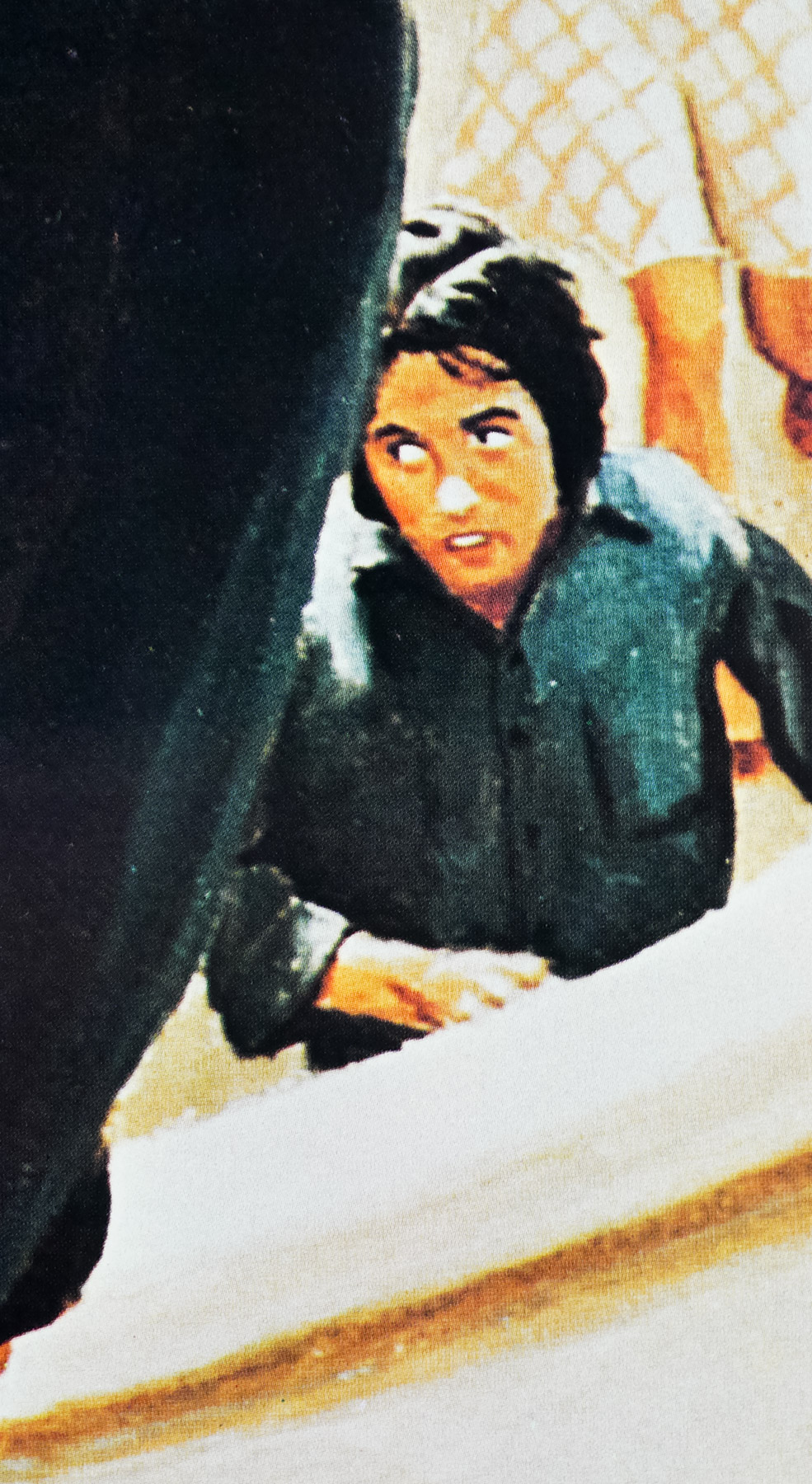
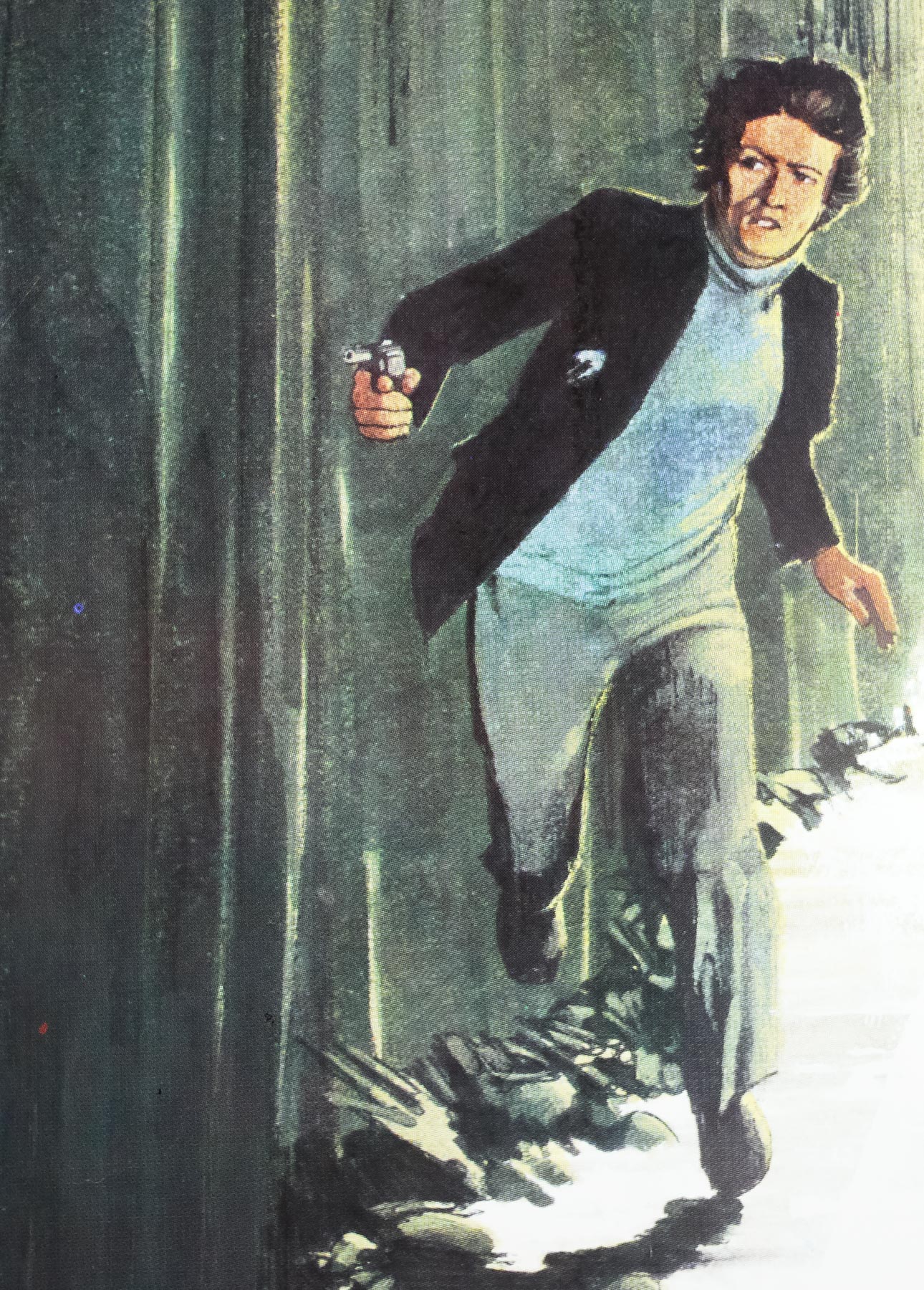
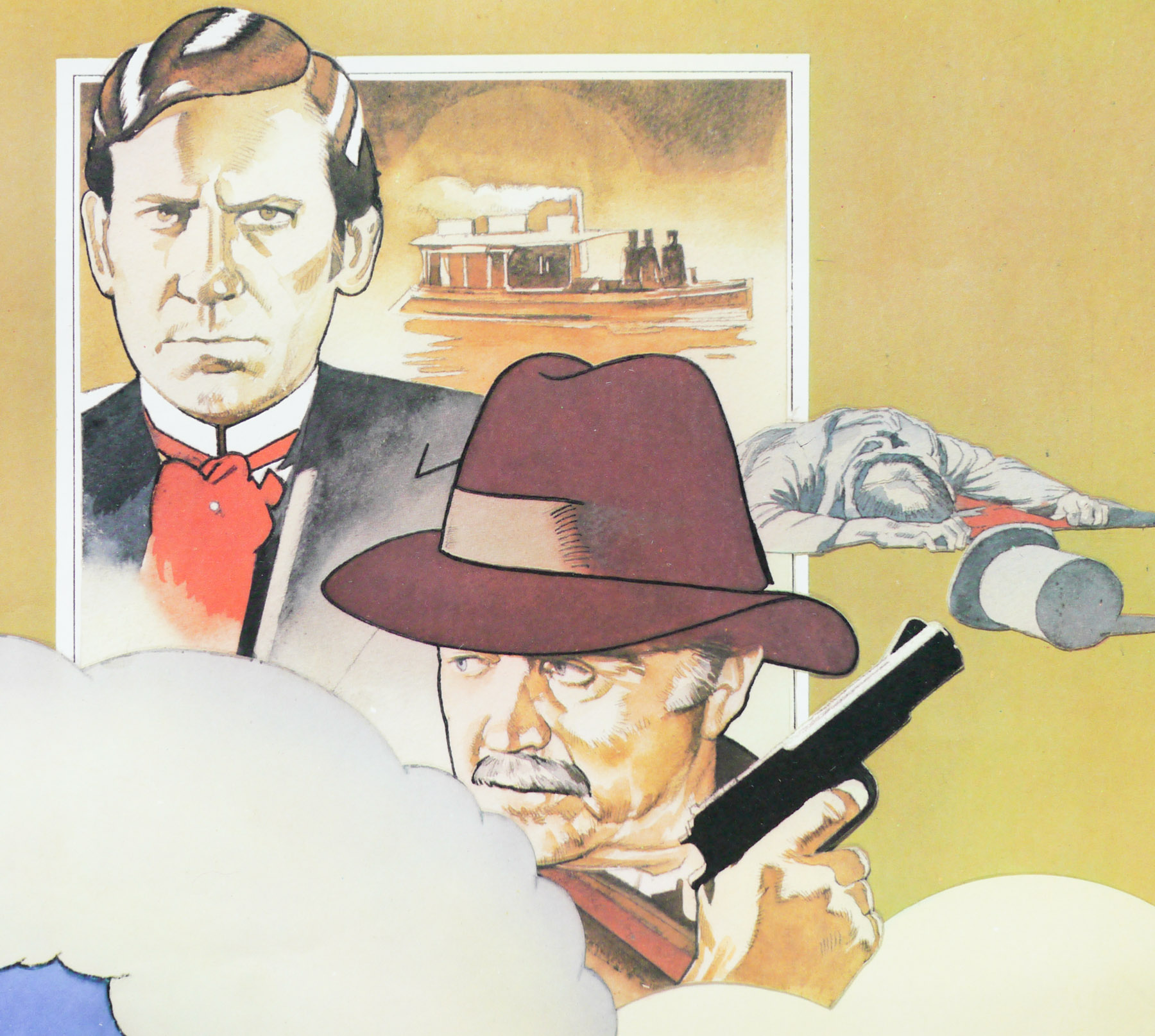
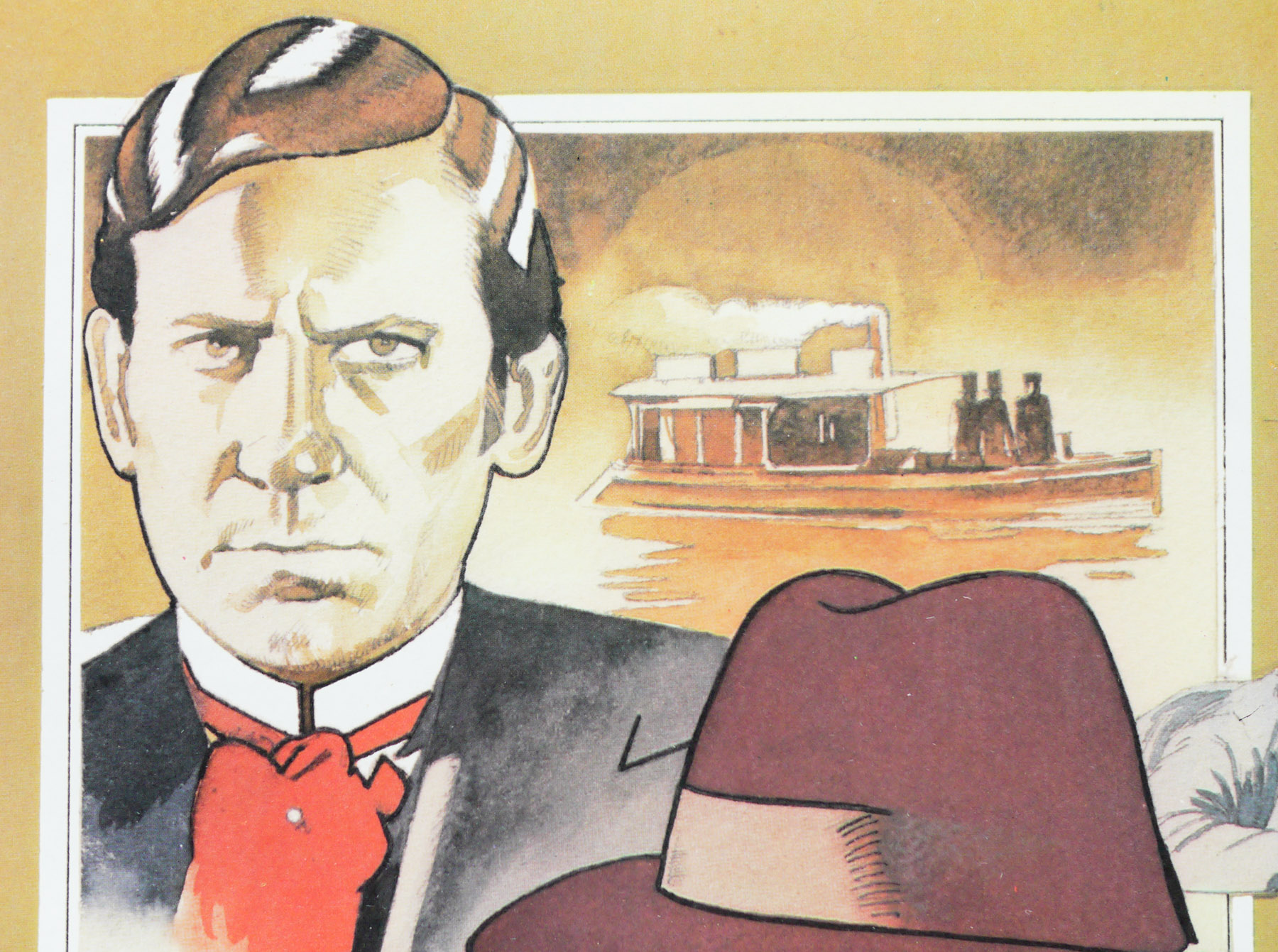
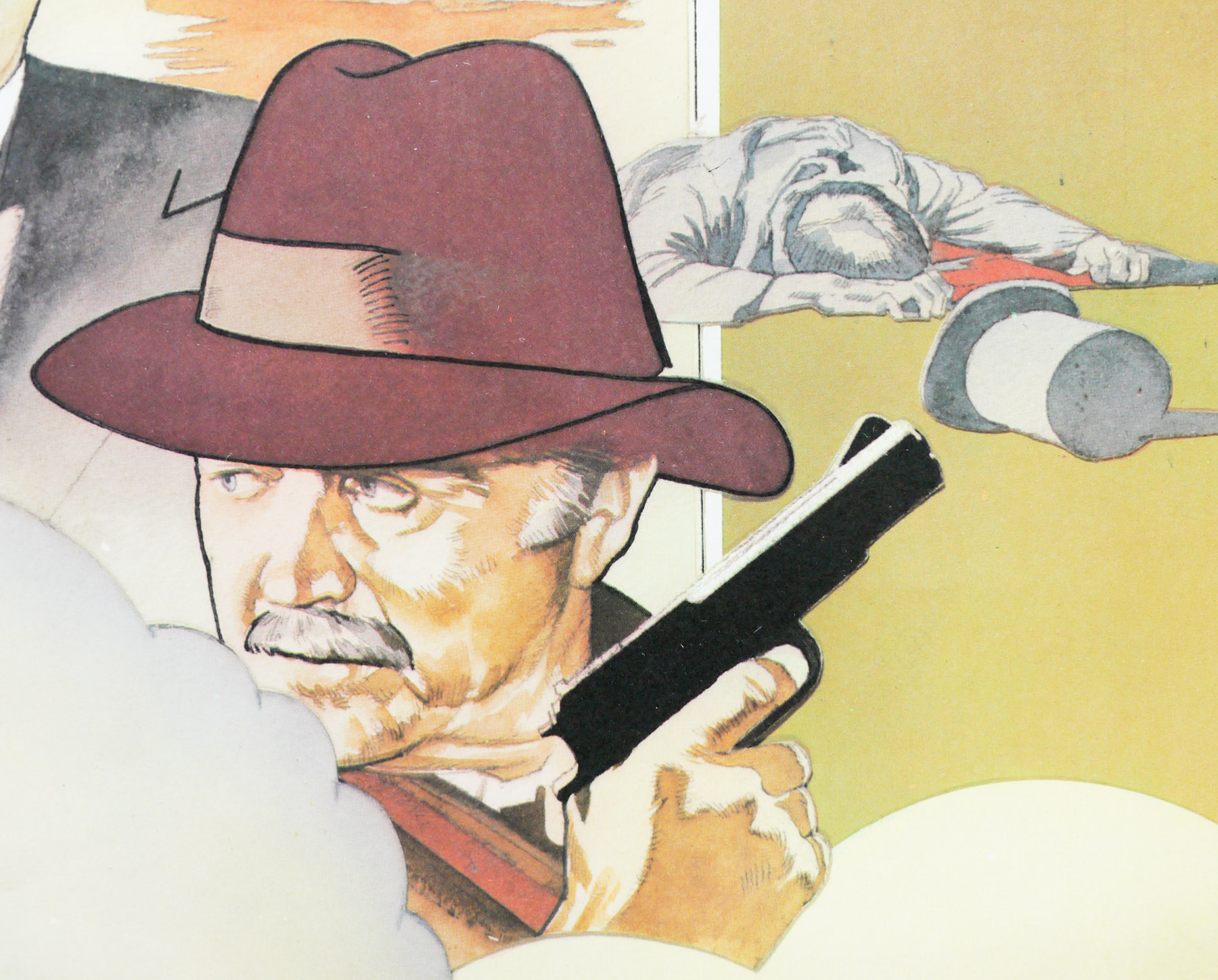
Silver Streak, a 1976 comedy thriller, marked the first time that the celebrated comic actors Gene Wilder and Richard Pryor would appear together in a film and there would be a further three pairings following this one. Directed by Arthur Hiller, who would helm See No Evil, Hear No Evil starring Wilder and Pryor 13 years later, the film is mostly set onboard the eponymous long distance train. Wilder plays George Caldwell a book editor who is traveling from Los Angeles to Chicago for his sister’s wedding. Whilst onboard he meets Hilly (Jill Clayburgh) and the pair strike up a romance, but soon George is battling to stay alive after he witnesses the murder of an art historian and attracts the attention of the killers.

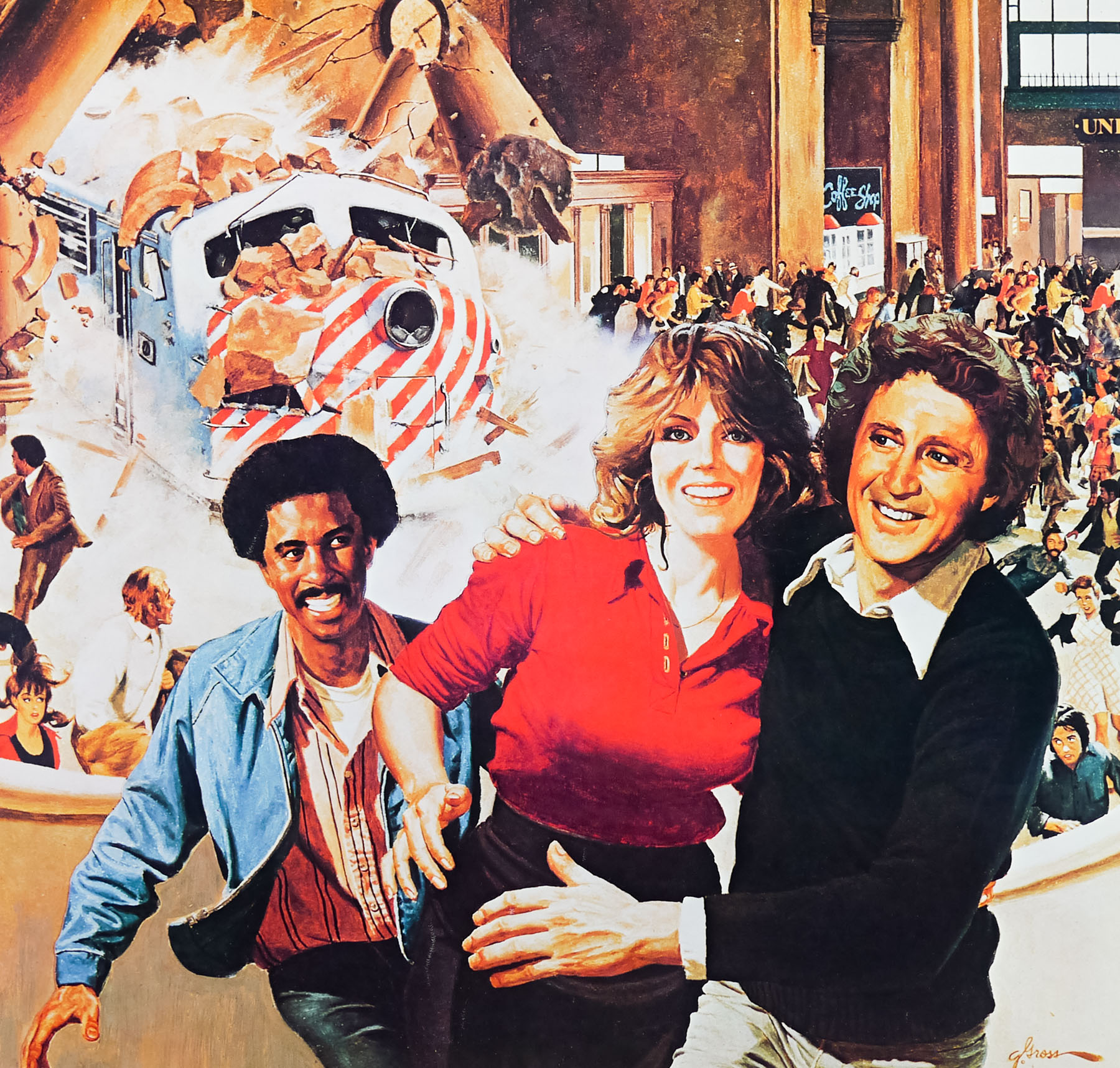
The gang plan to impersonate the dead historian in order to pass of a pair of forged Rembrandt paintings as original. George is forcefully removed from the train several times and it’s during one of these escapades that he meets the criminal Grover T. Muldoon (Pryor) who he enlists in helping him reach the train to climb back onboard and bring the conspiracy to light. As this poster artwork suggests, the film ends in a spectacular train crash.

The artwork is by George Gross, an American who is best known as an artist of pulp book covers but, as this short biography details, he also worked on magazine illustrations and covers for popular novels. The artist was born in 1909 in Brooklyn and he followed his father into the area of commercial illustration, with both of his siblings eventually making it a proper family affair. This site has a gallery of his pulp covers. I’ve been unable to determine if he painted any other film posters so please get in touch if you know of any others.

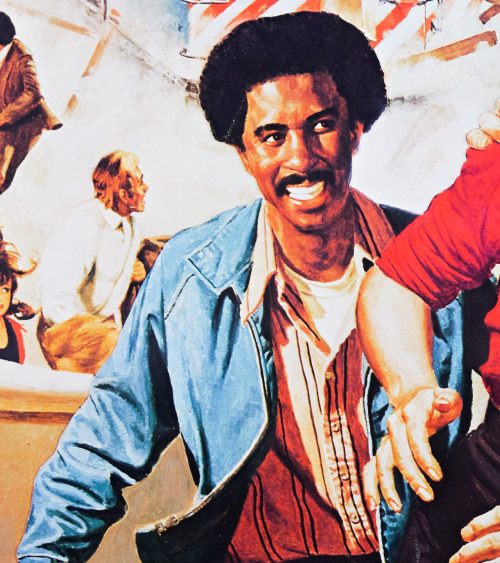
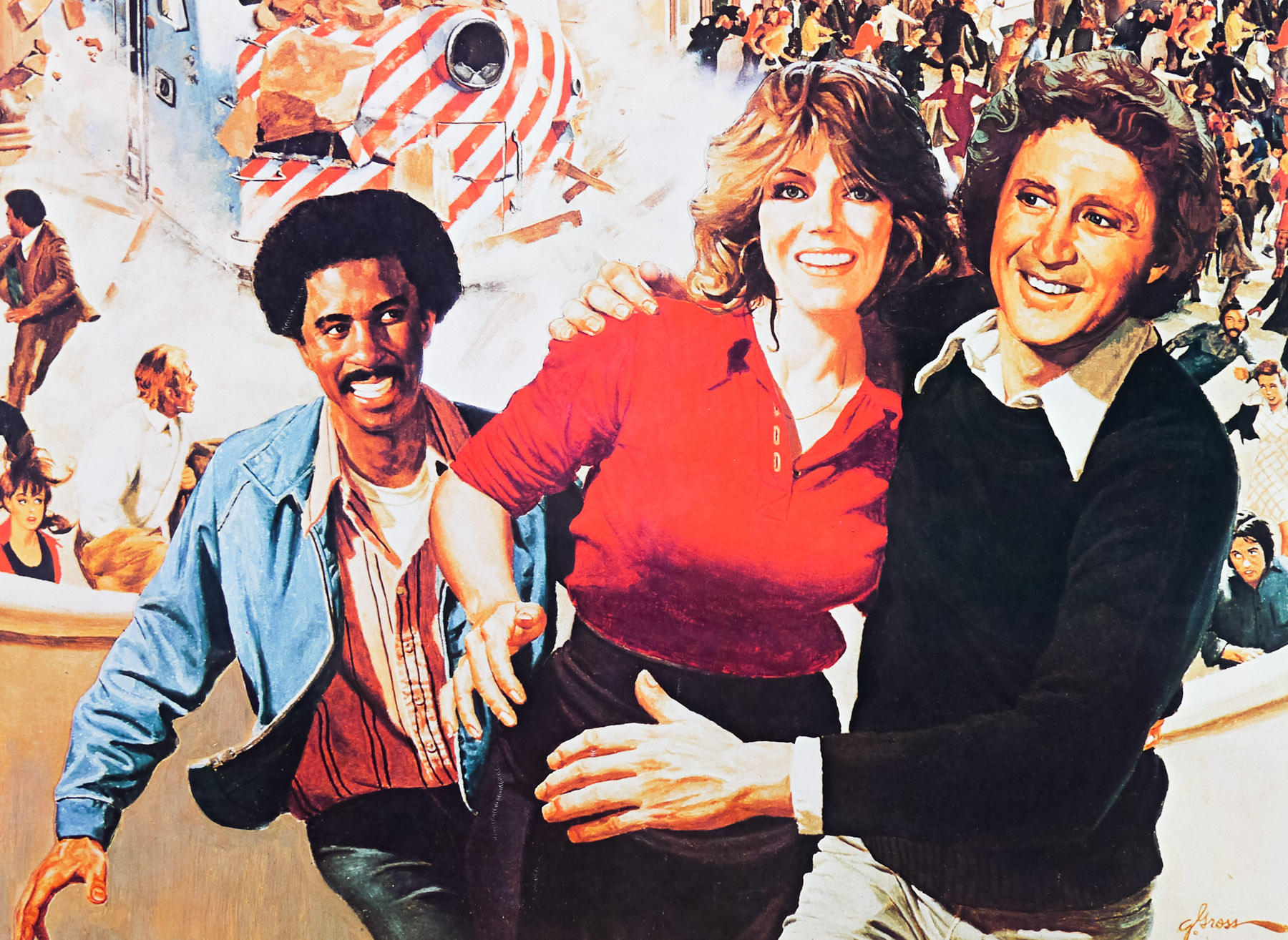
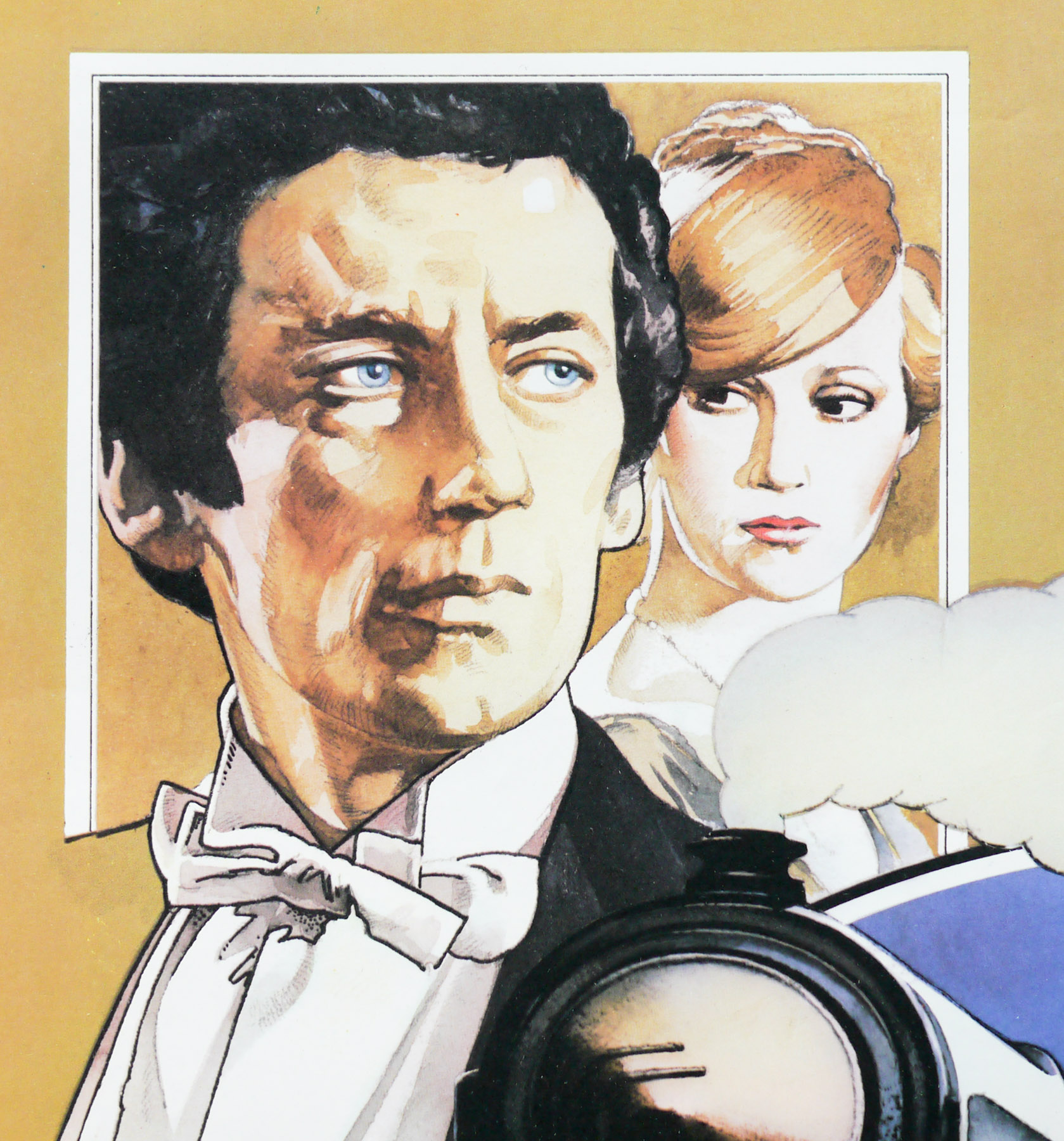
It’s worth noting that the central figures have been rather crudely cut out and placed over the background scenes, which have also been cut up in places (see if you can spot the replicated policeman).

Anguish / one sheet / USA

22.03.17

Poster Poster
Title
Anguish
AKA
Angustia (Spain - original title)
Year of Film
1987
Director
Bigas Luna
Starring
Zelda Rubinstein, Michael Lerner, Talia Paul, Àngel Jové, Clara Pastor, Isabel García Lorca
Origin of Film
Spain
Genre(s) of Film
Zelda Rubinstein, Michael Lerner, Talia Paul, Àngel Jové, Clara Pastor, Isabel García Lorca,
Type of Poster
One sheet
Style of Poster
--
Origin of Poster
USA
Year of Poster
1988
Designer
Unknown
Artist
--
Size (inches)
27 2/16" x 41"
SS or DS
SS
NSS #
--
Tagline
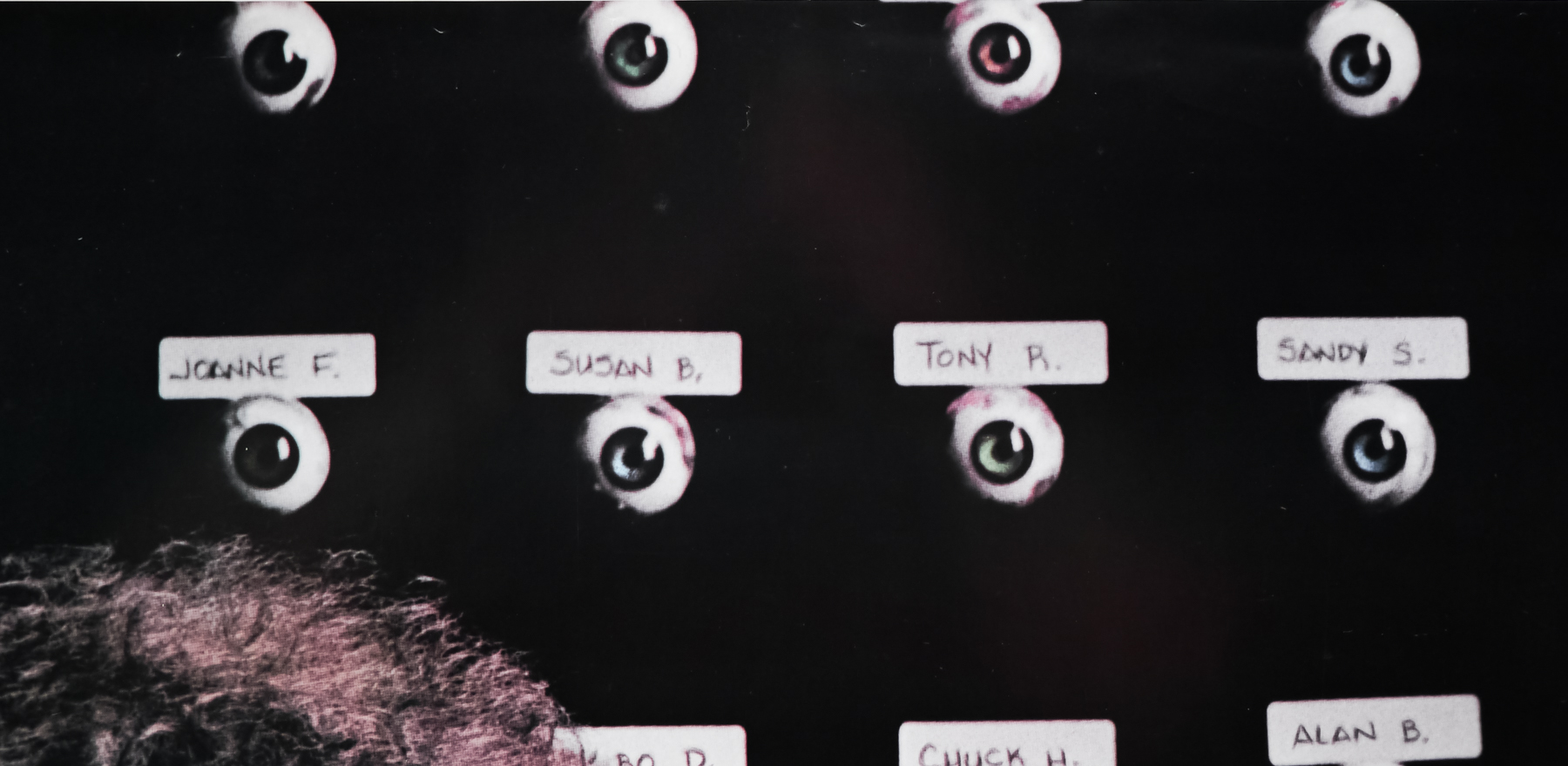
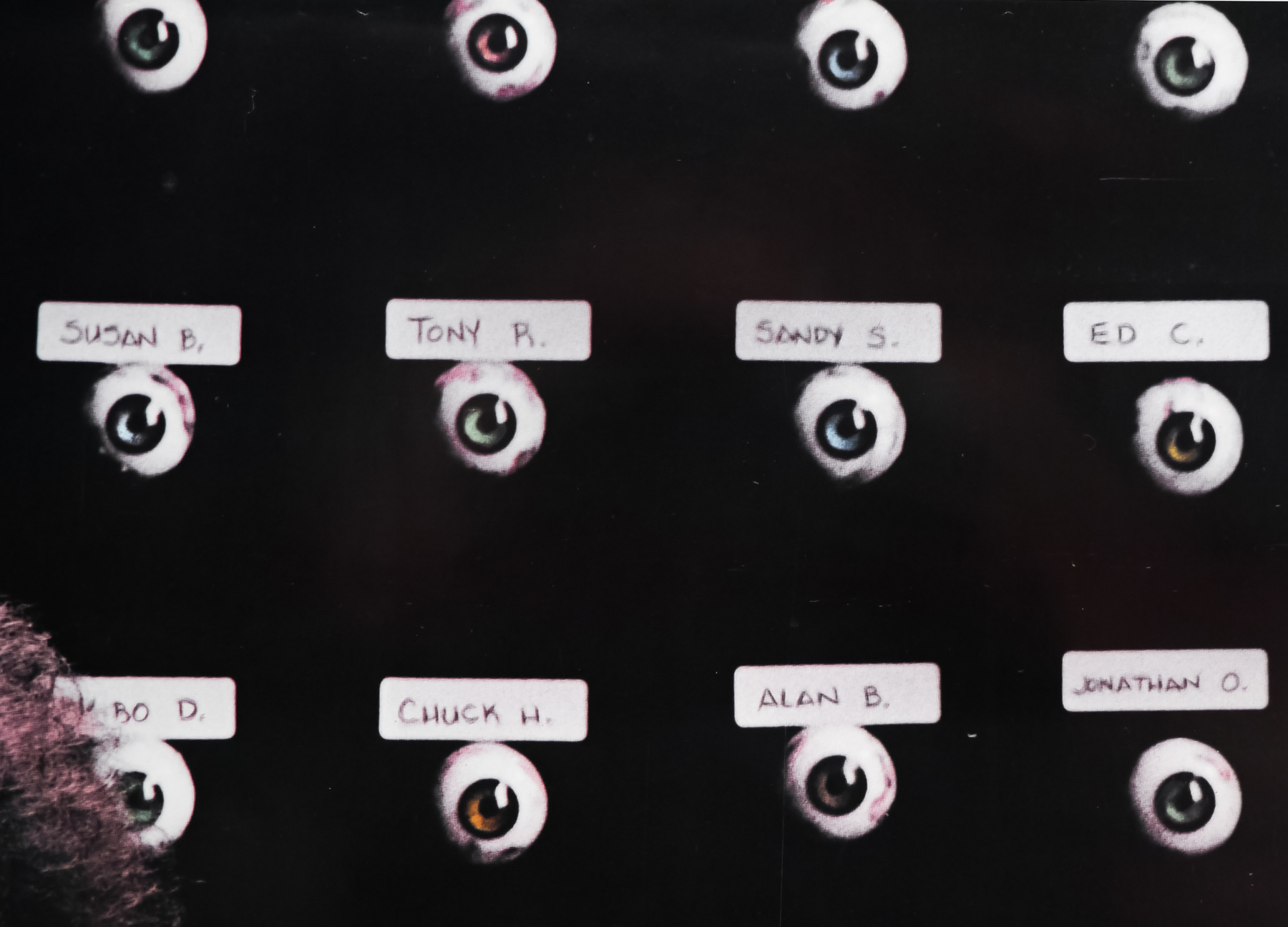
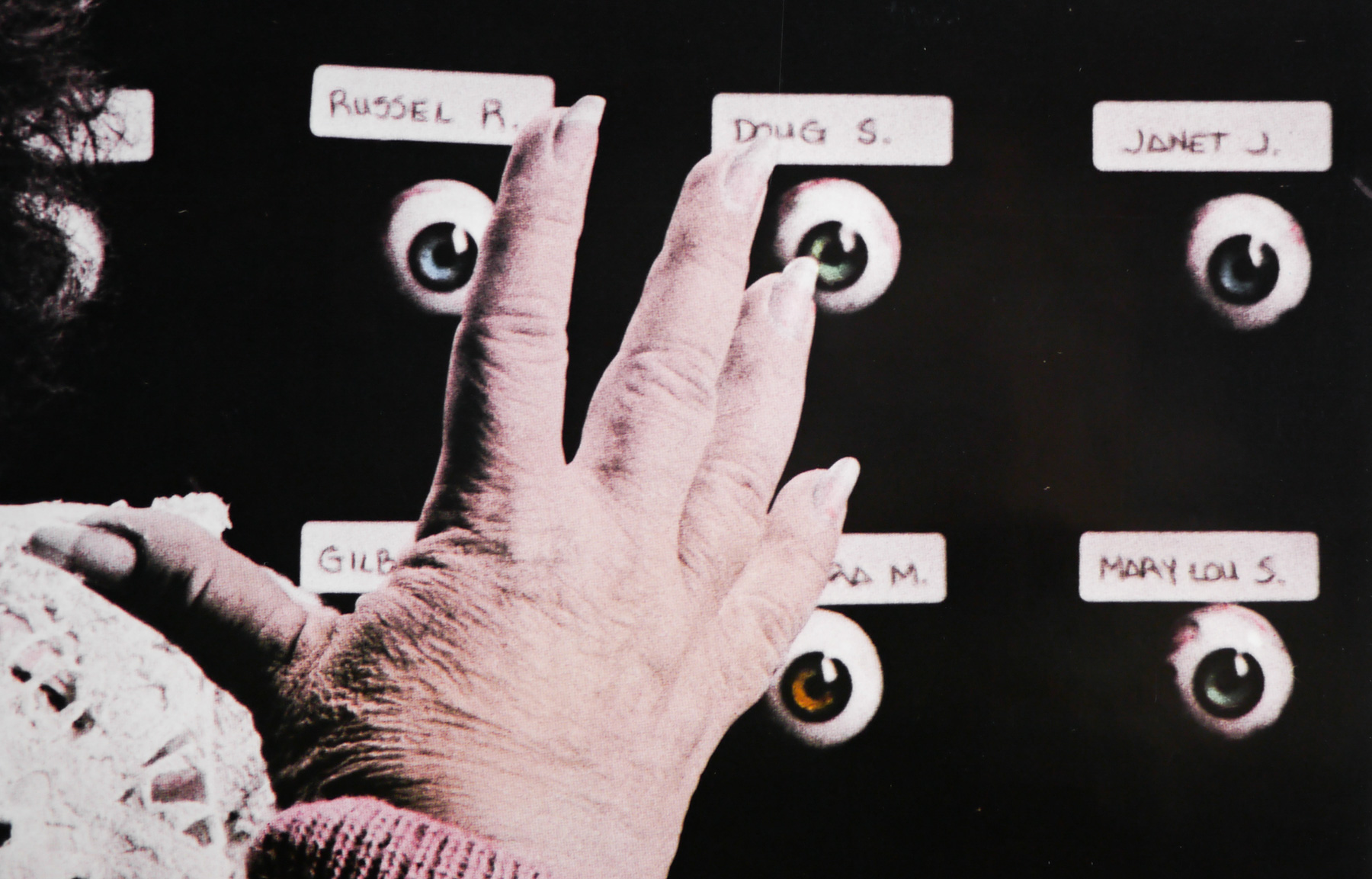
"The eyes of the city are mine"

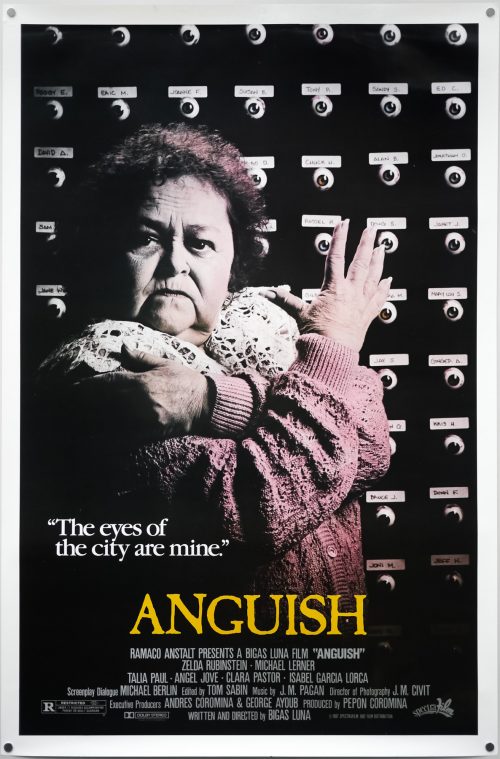
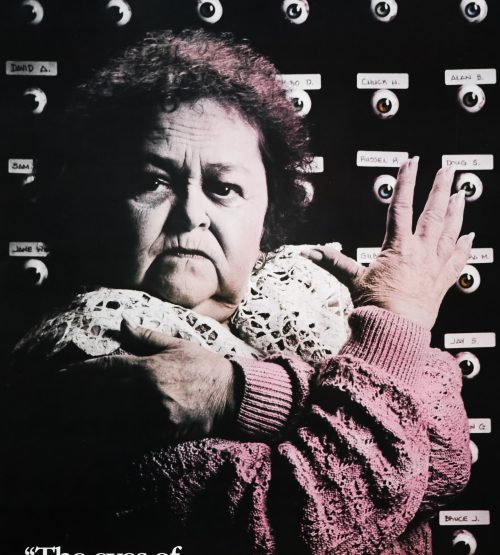
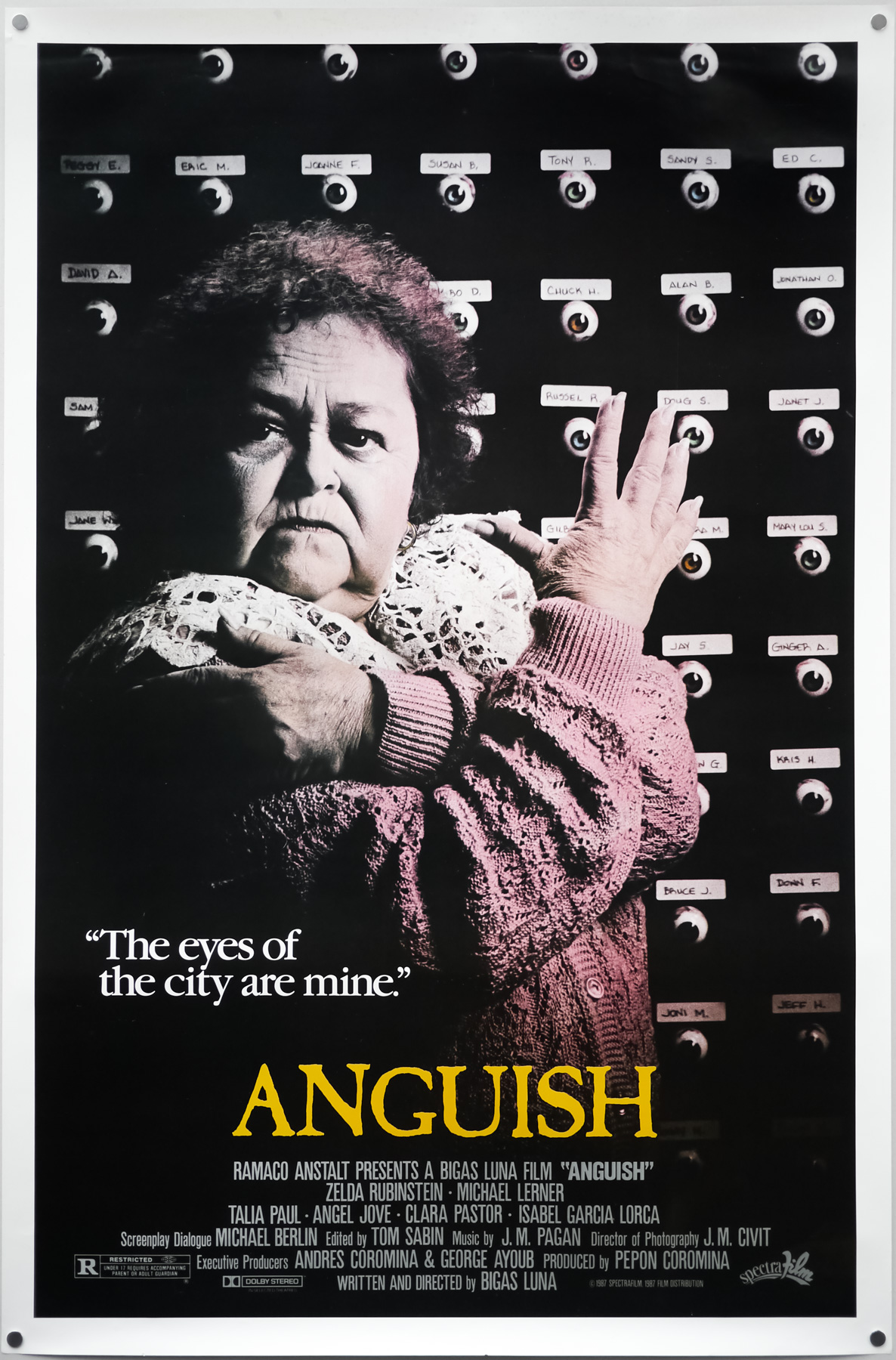
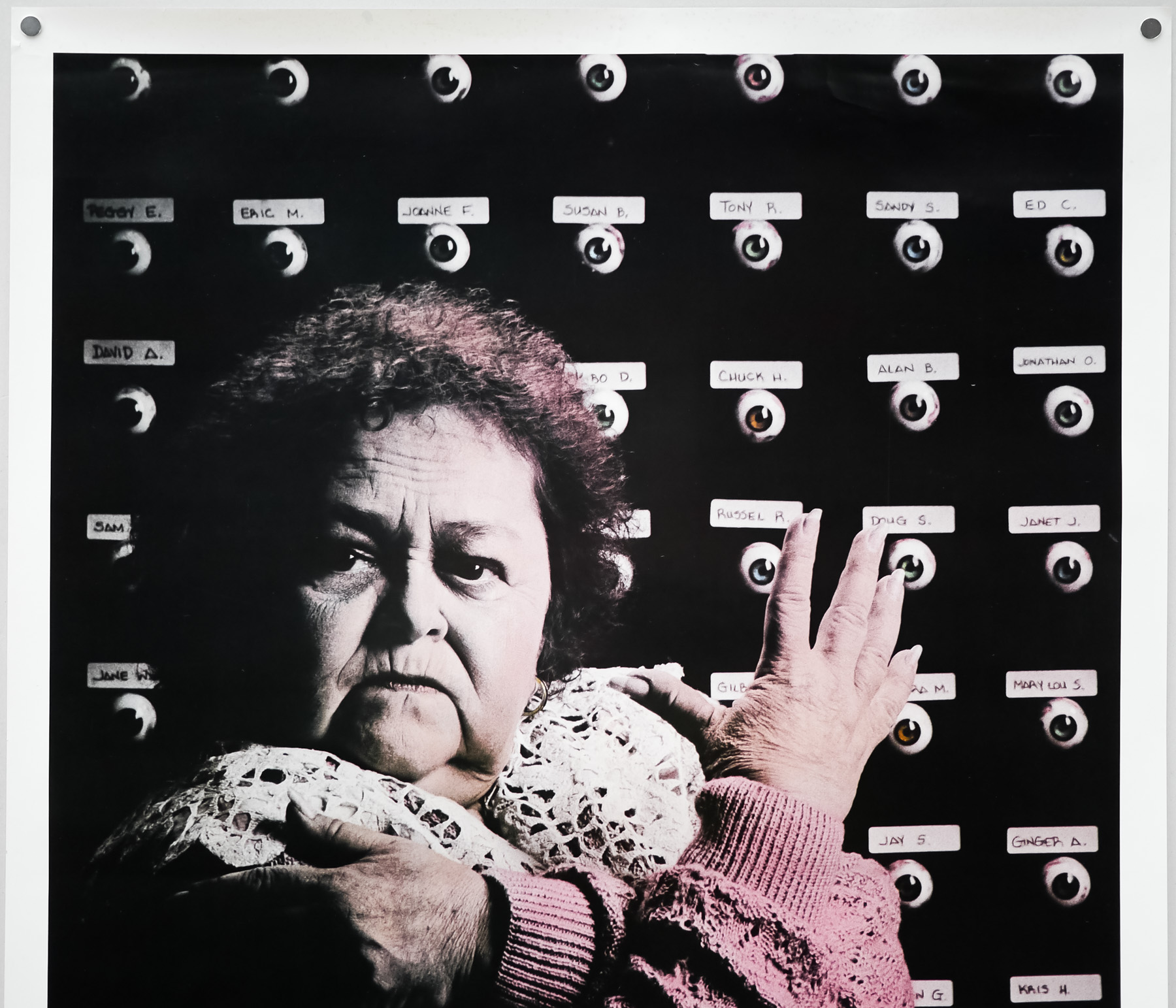
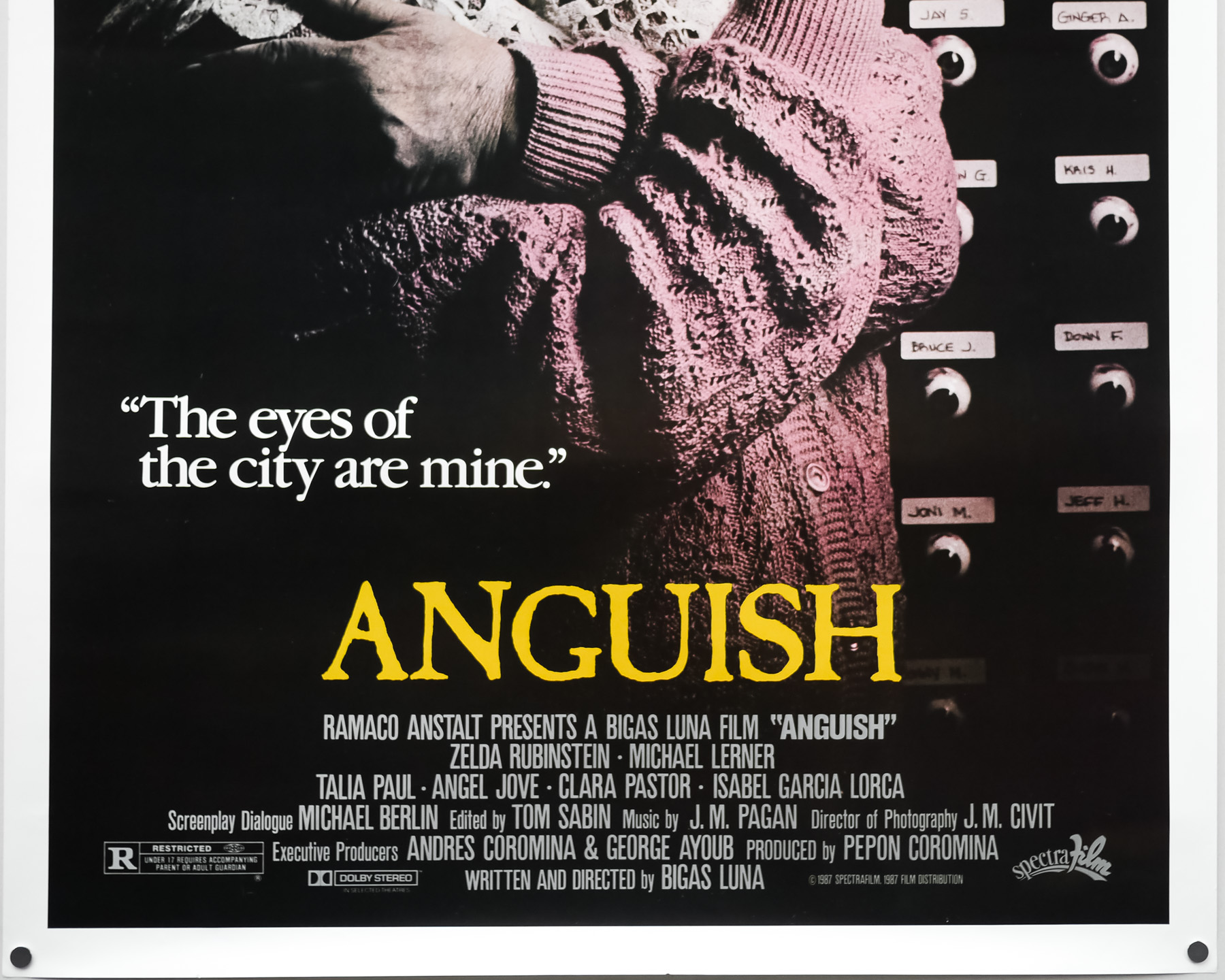
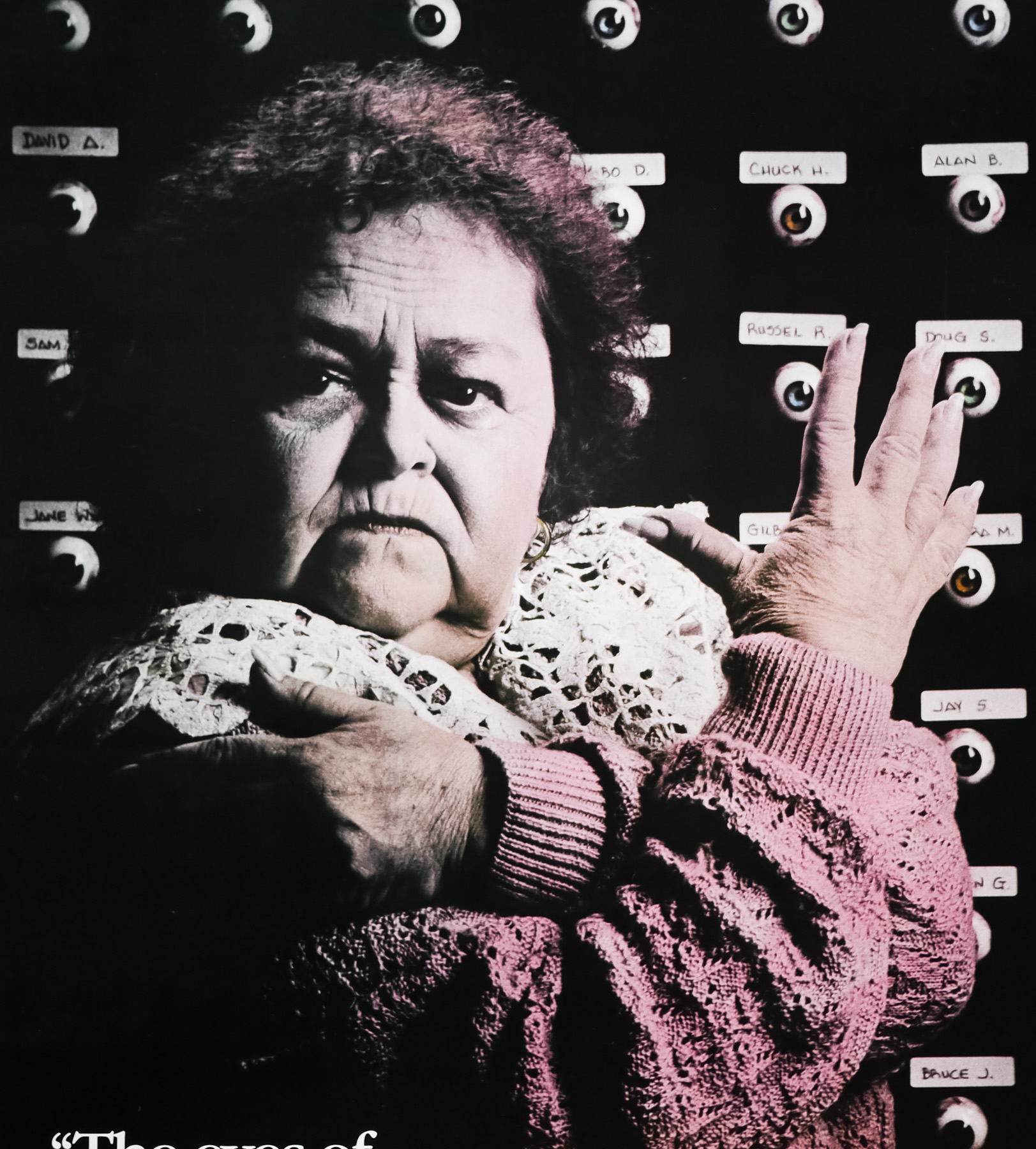
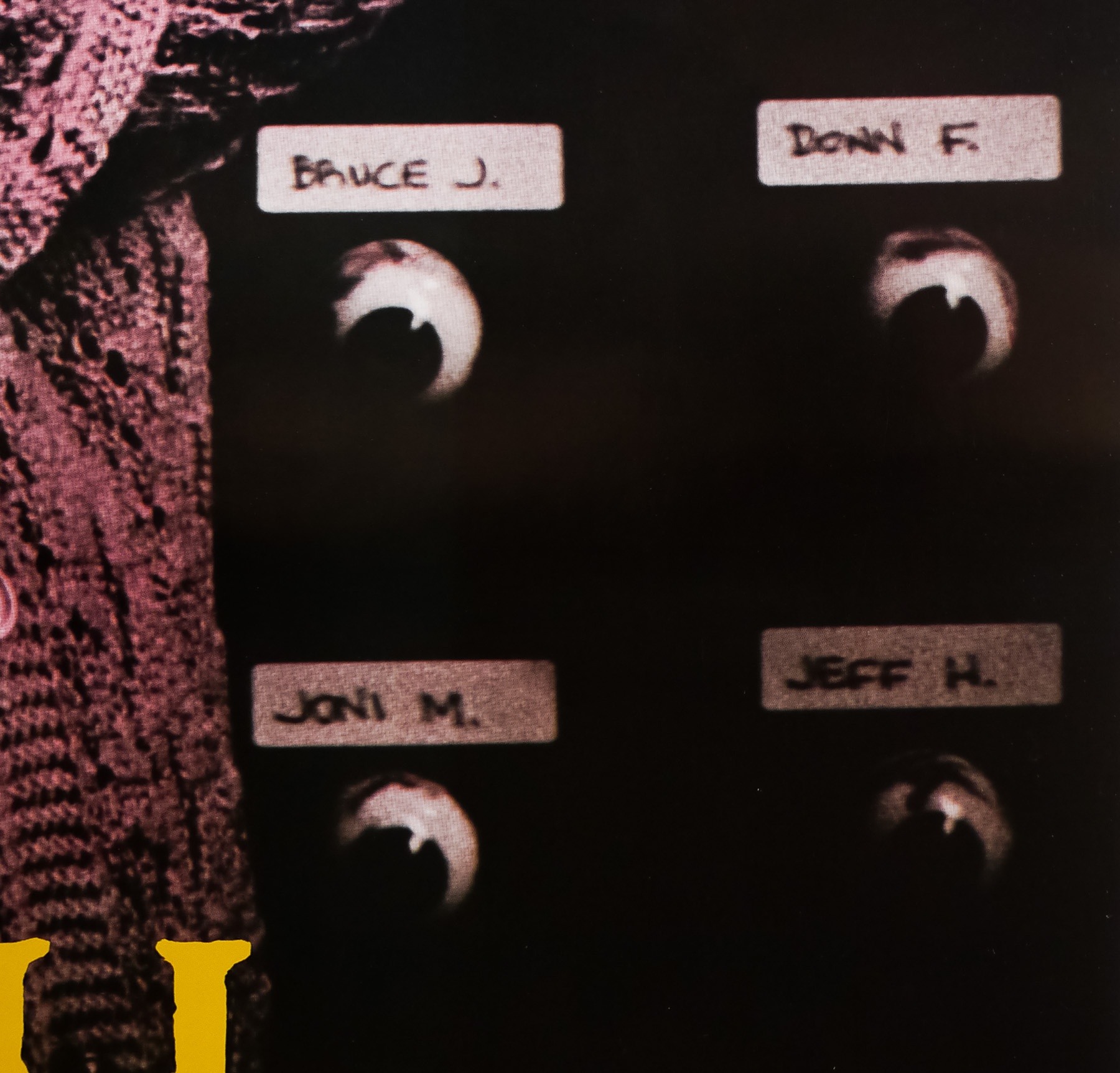
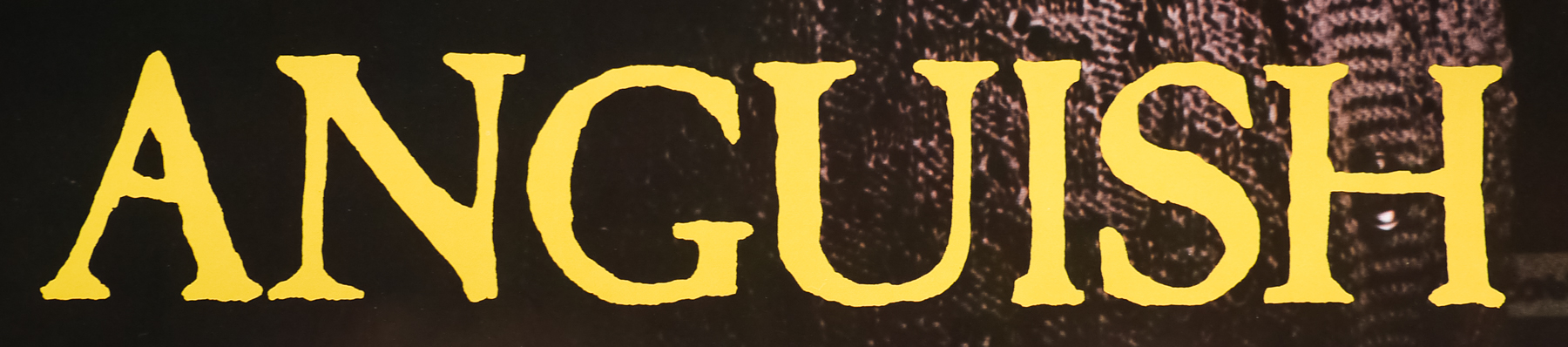
A striking image of actress Zelda Rubinstein (best known for her appearance in 1982’s Poltergeist) for the 1987 horror, Anguish. The film was directed by the Spaniard Bigas Luna (best known for Jamón, Jamón, 1992) and was filmed in his native country. As well as Rubinstein, the film also features the American actor Michael Lerner, but the majority of the cast are Spanish actors playing American. Written by Luna, the film has a fairly original concept which sees a film within a film, featuring Rubinstein and Lerner, unfold in front of a Los Angeles cinema audience. They are then subjected to their own horror attack, seemingly influenced by the film they are watching.

Rubinstein plays the character of Mother in the projected film, which is called The Mommy. For reasons that aren’t exactly clear, she uses hypnotism to control her loner son John (Lerner) and coerce him into killing people then removing their eyeballs. The Mommy features a frankly bonkers hypnotism sequence which apparently has an effect on some of the audience in the Los Angeles cinema. John is shown to visit a cinema showing the classic film The Lost World where he proceeds to attack staff and audience members. At the same time, an agitated man in the LA cinema kills two women working at the front desk before entering the auditorium and shooting at the audience. Eventually the police are called and a hostage scene develops. All the while The Mommy continues to play on the screen.

Anguish doesn’t hold back on the gore and there are a few shocking scenes which serve to keep the audience on edge. Although the concept of a film within a film is not new, the way Luna edits and develops the story gives it a unique feel. It’s certainly worth a watch, despite it’s clearly low budget origins.

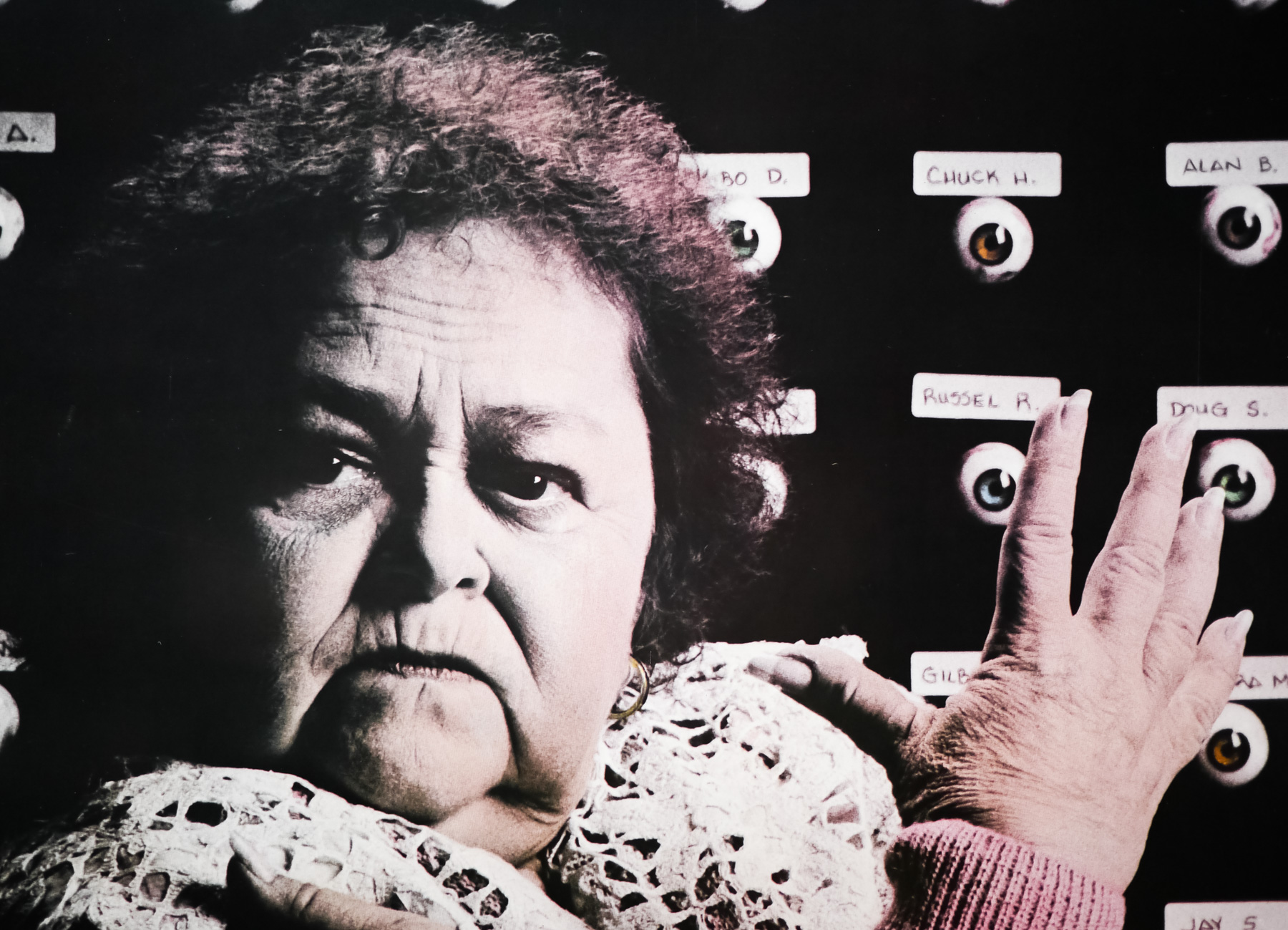
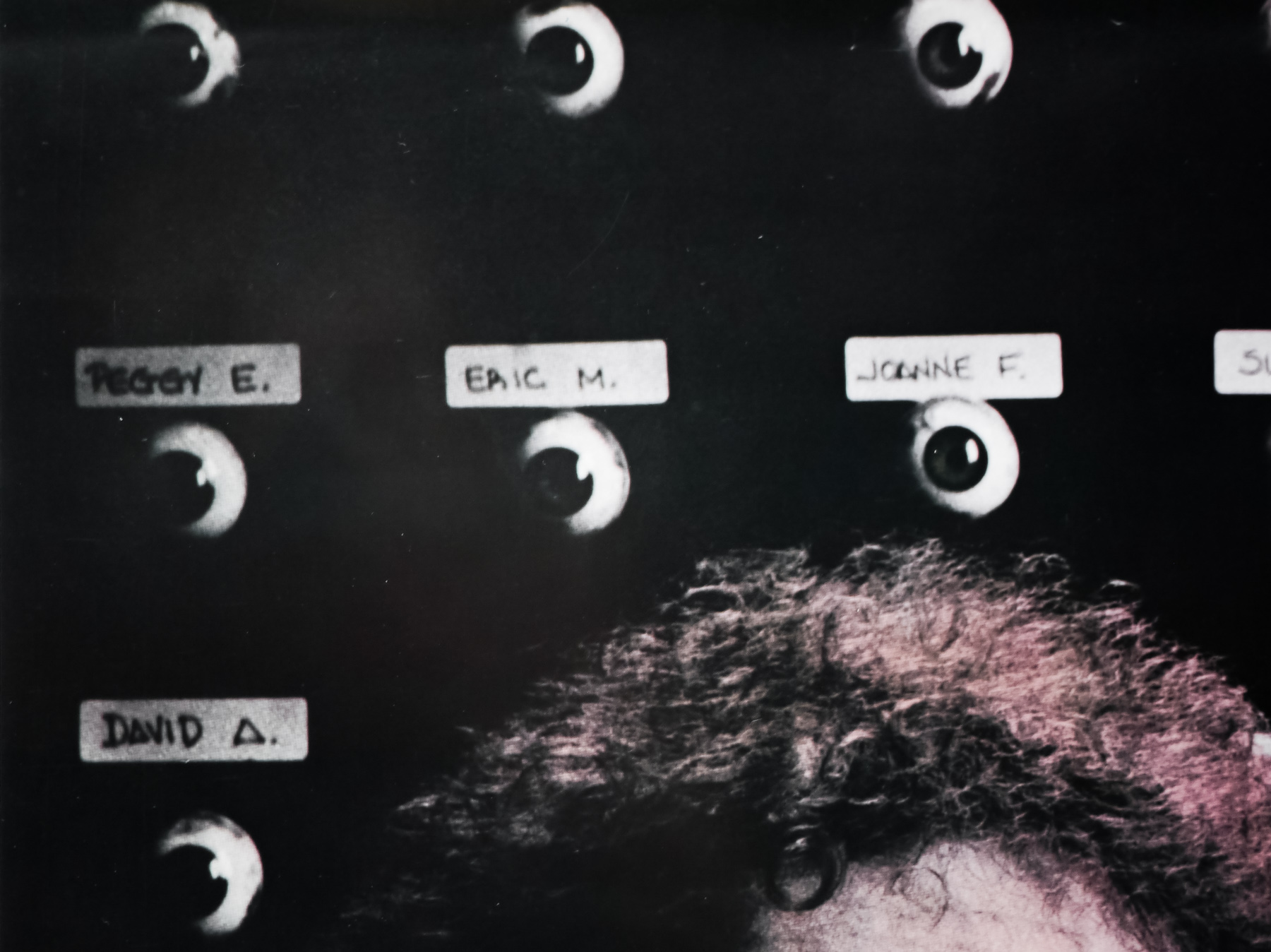
The image of Rubinstein in front of a wall of eyes must have been mocked up for this poster as I watched it recently and didn’t see anything like this. It’s possible that there was a deleted scene with it in but it feels too mocked up for that.

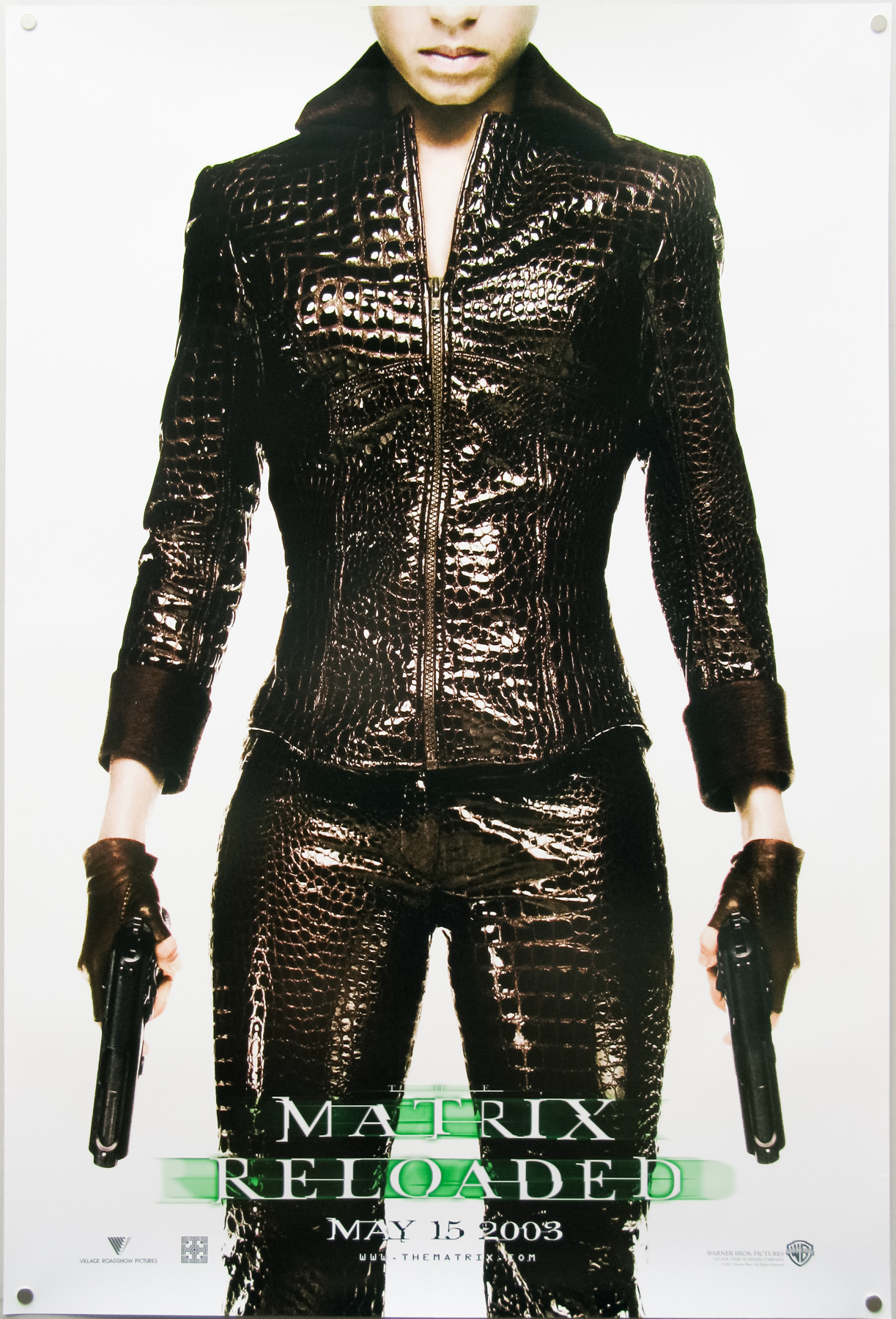
The Matrix Reloaded / one sheet / teaser / Niobe / USA

17.05.11

Poster Poster

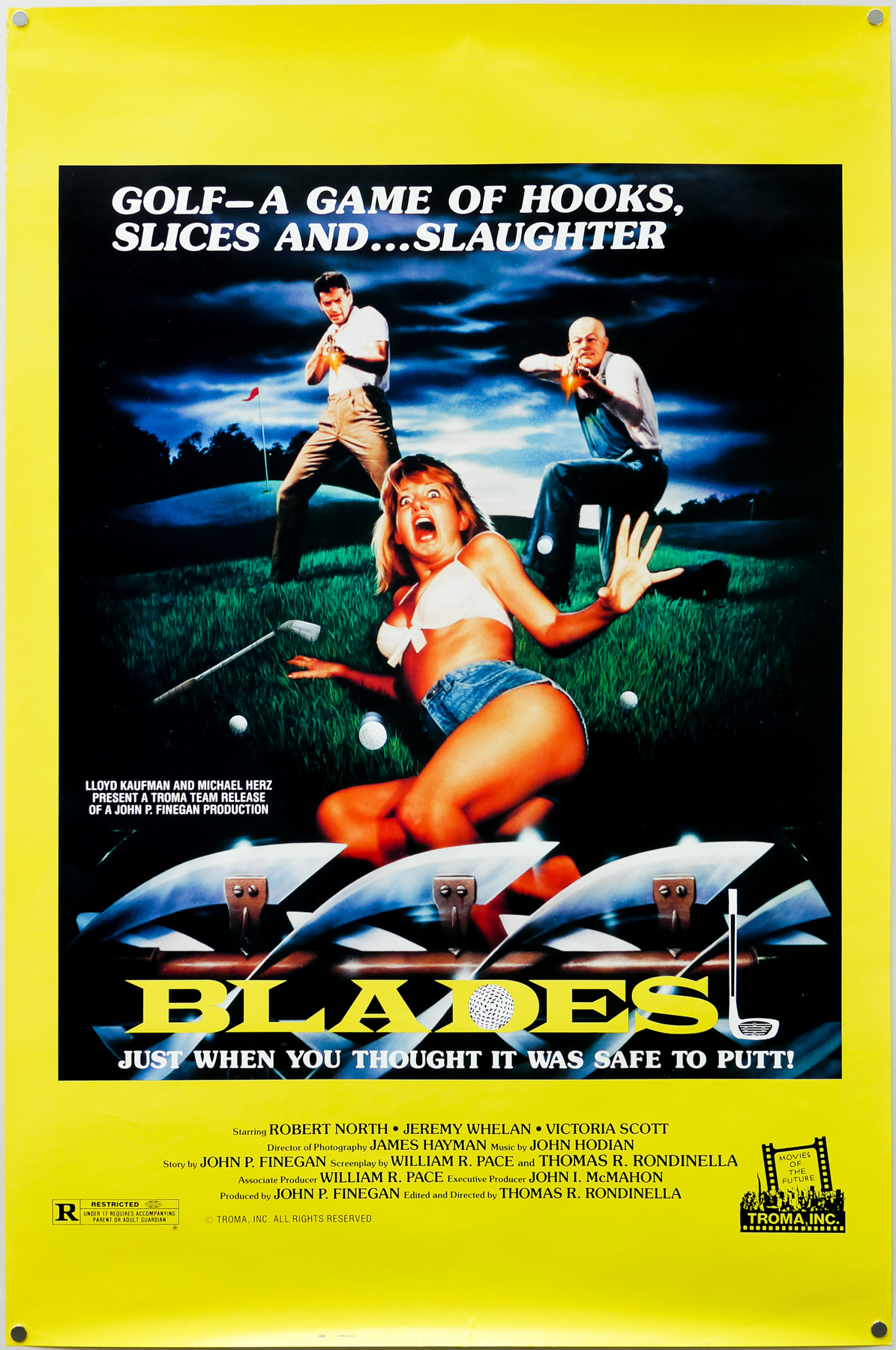
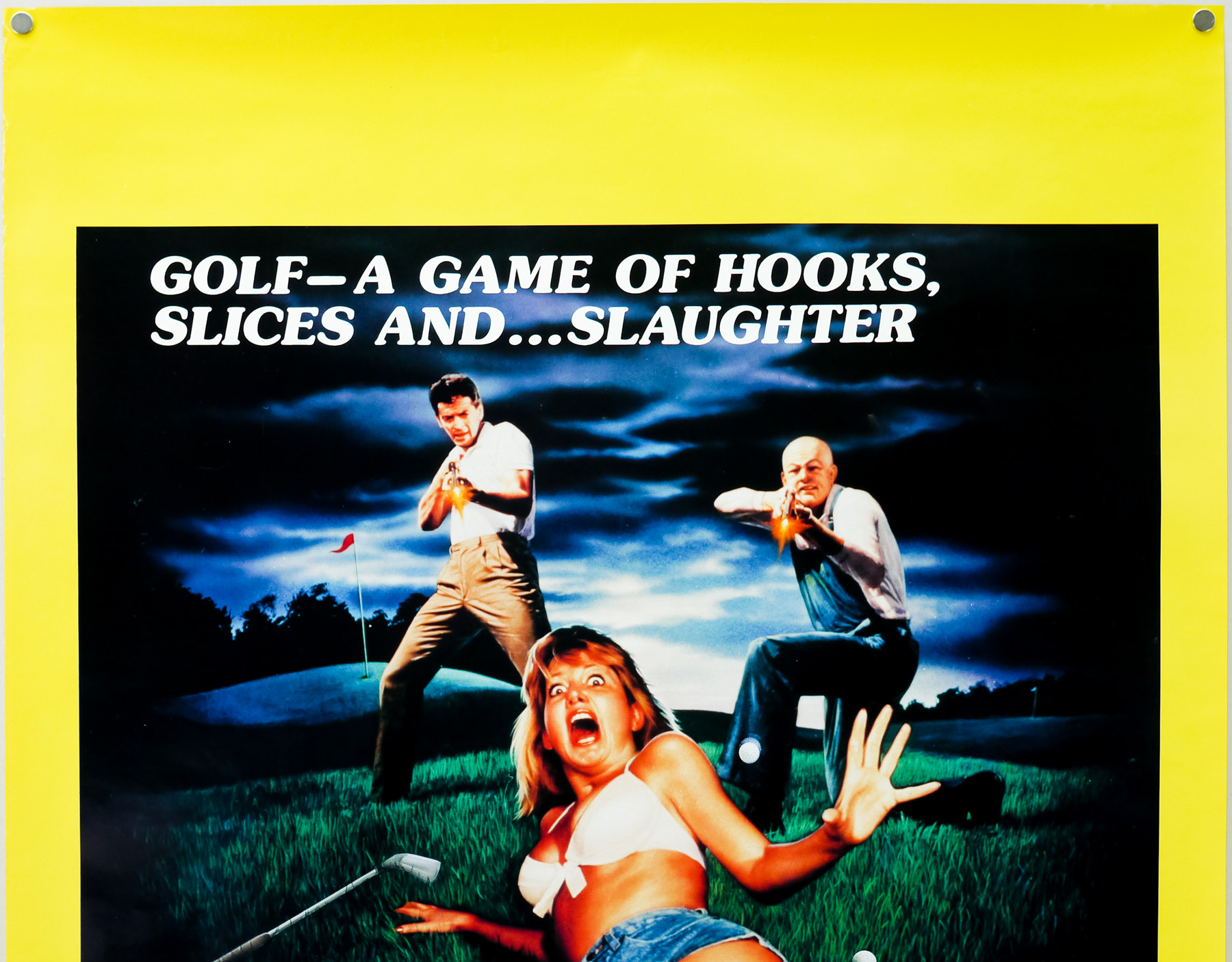
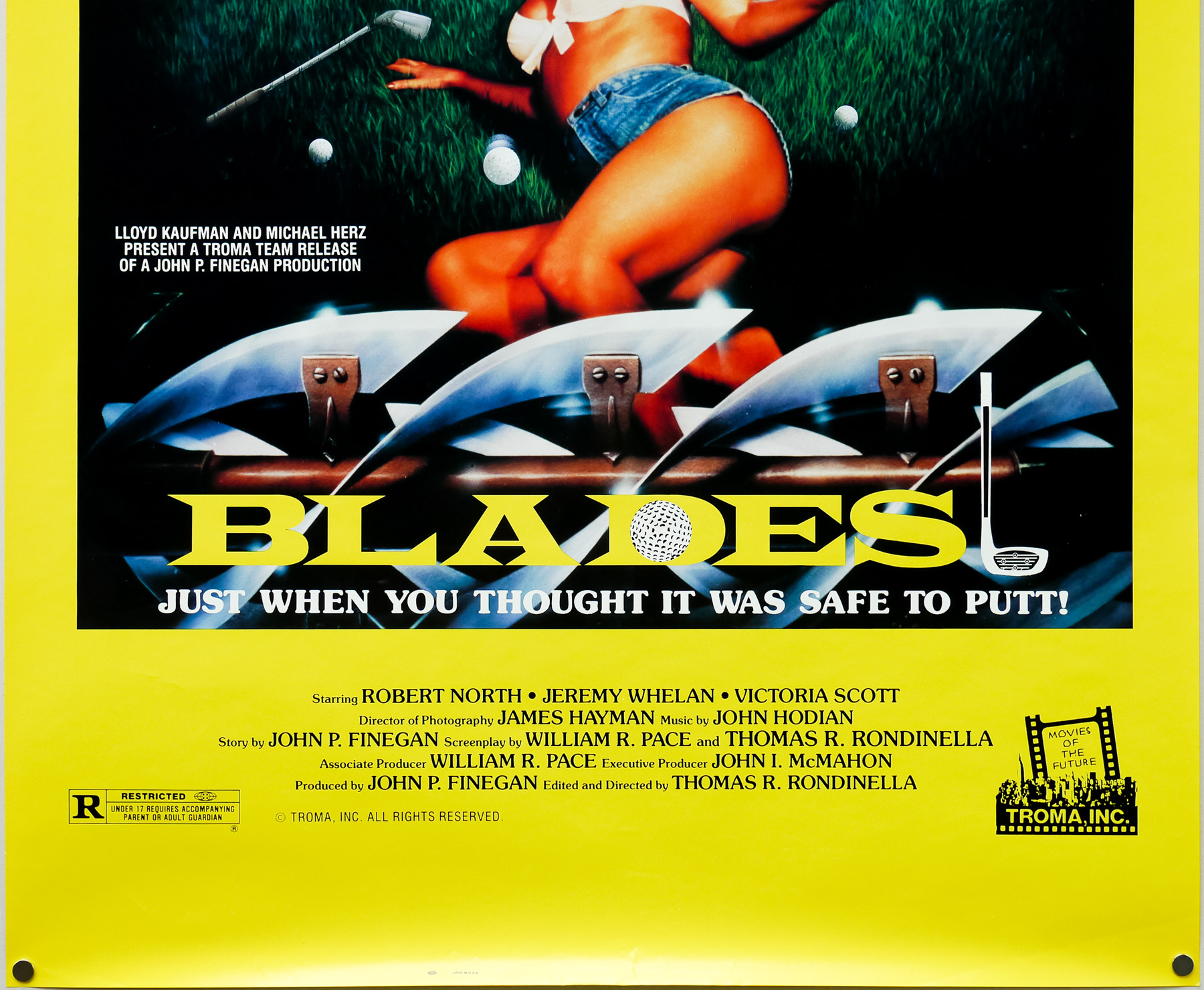
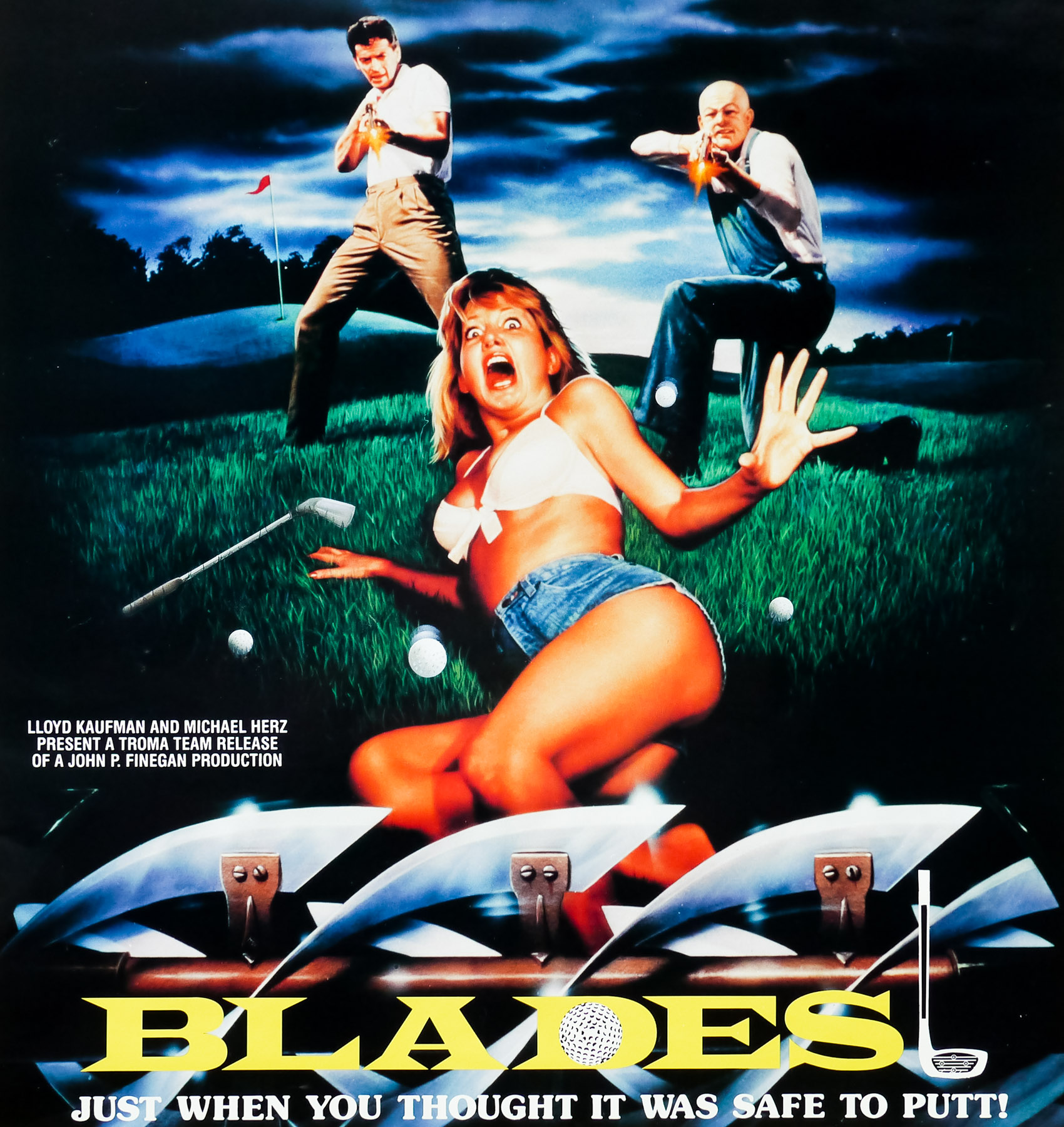
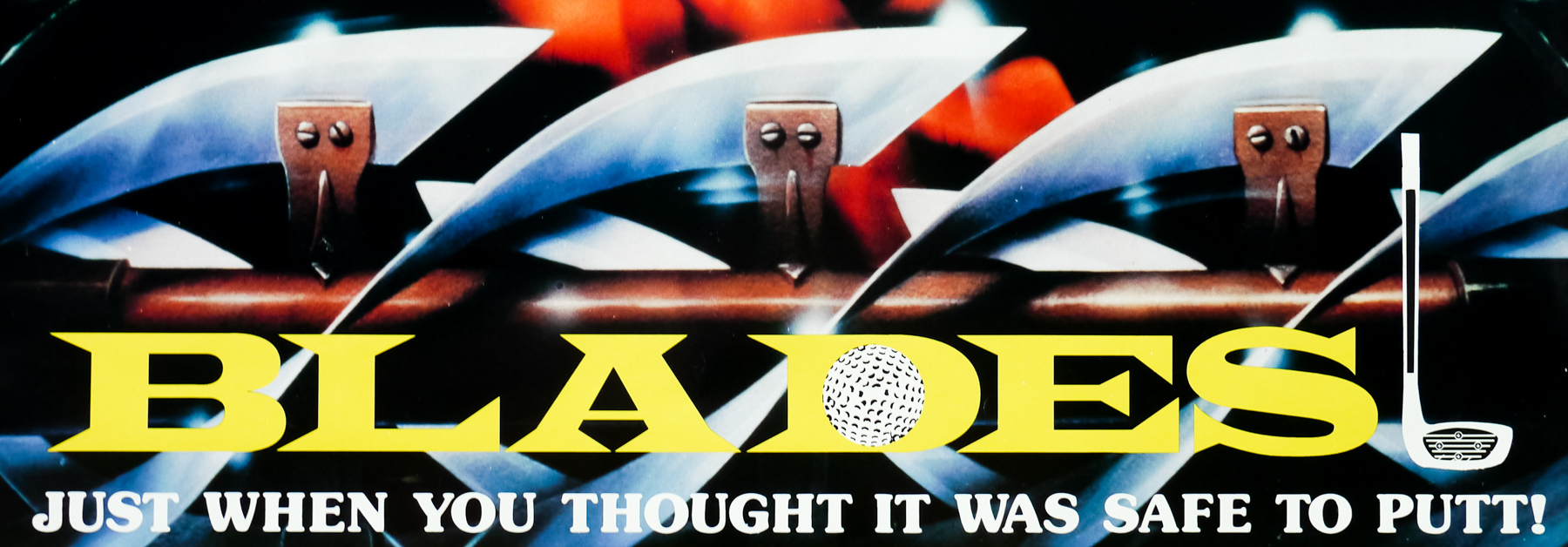
Blades / one sheet / USA

05.01.18

Poster Poster
Title
Blades
AKA
--
Year of Film
1989
Director
Thomas R. Rondinella
Starring
Robert North, Jeremy Whelan, Victoria Scott, Holly Stevenson, William Towner, Peter Wray, Charlie Quinn, Bruce Katlin, Lee Devin, Bill Kimble, Donald Jackson
Origin of Film
USA
Genre(s) of Film
Robert North, Jeremy Whelan, Victoria Scott, Holly Stevenson, William Towner, Peter Wray, Charlie Quinn, Bruce Katlin, Lee Devin, Bill Kimble, Donald Jackson,
Type of Poster
One sheet
Style of Poster
--
Origin of Poster
USA
Year of Poster
1989
Designer
Unknown
Artist
--
Size (inches)
27 2/16" x 40 15/16"
SS or DS
SS
NSS #
--
Tagline
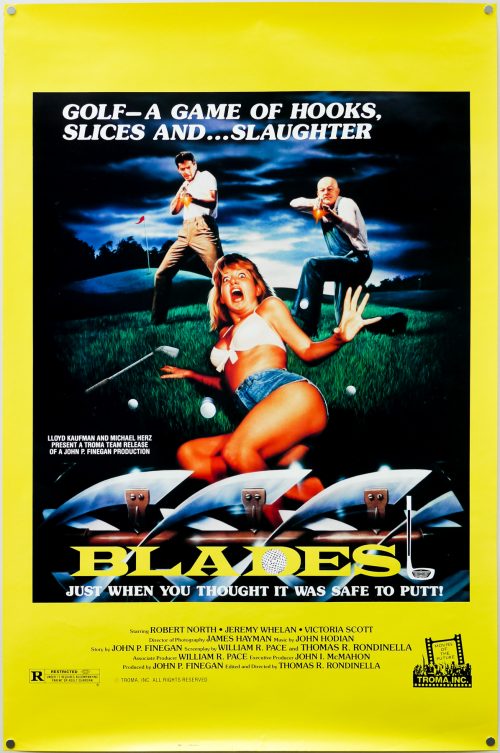
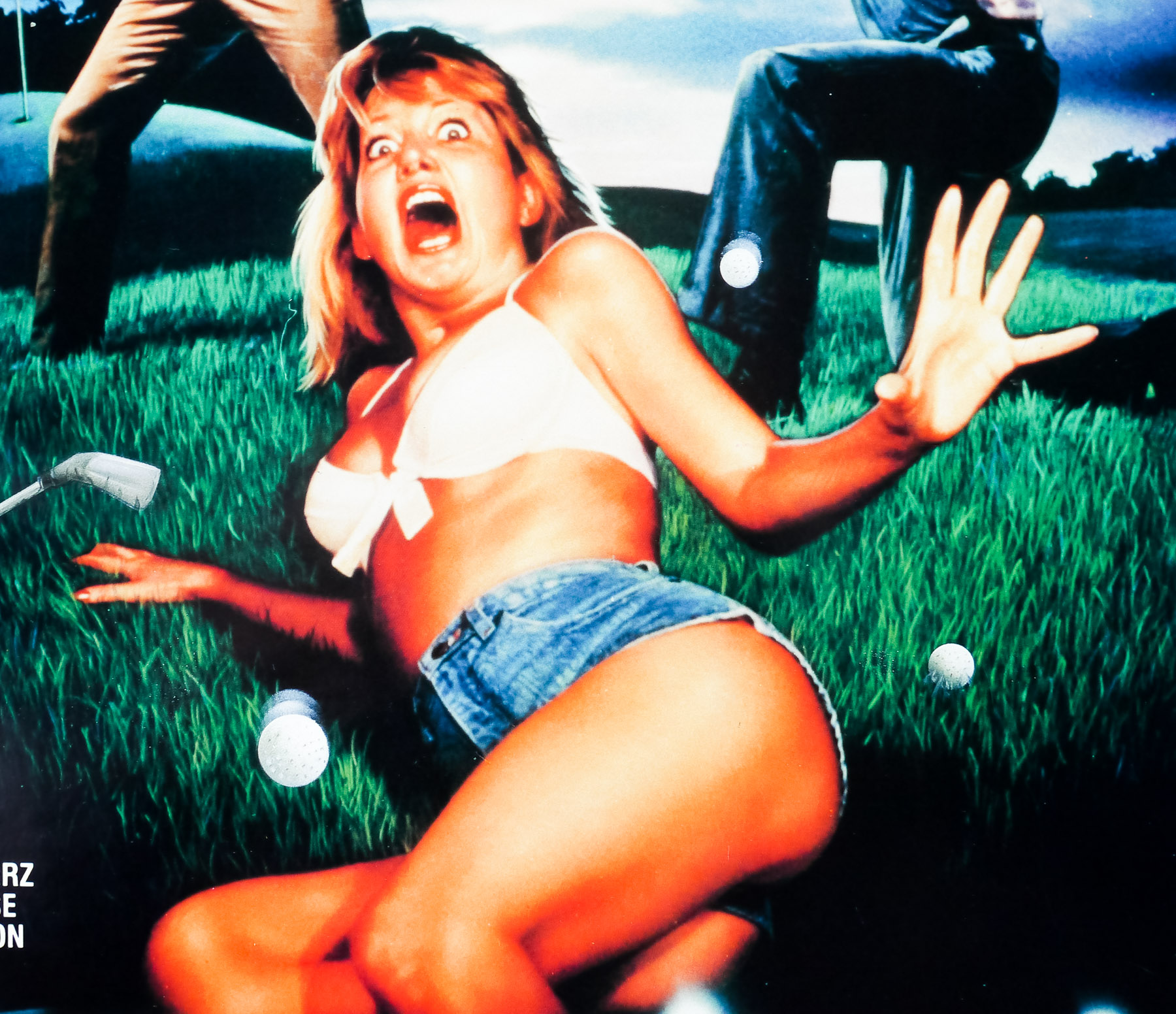
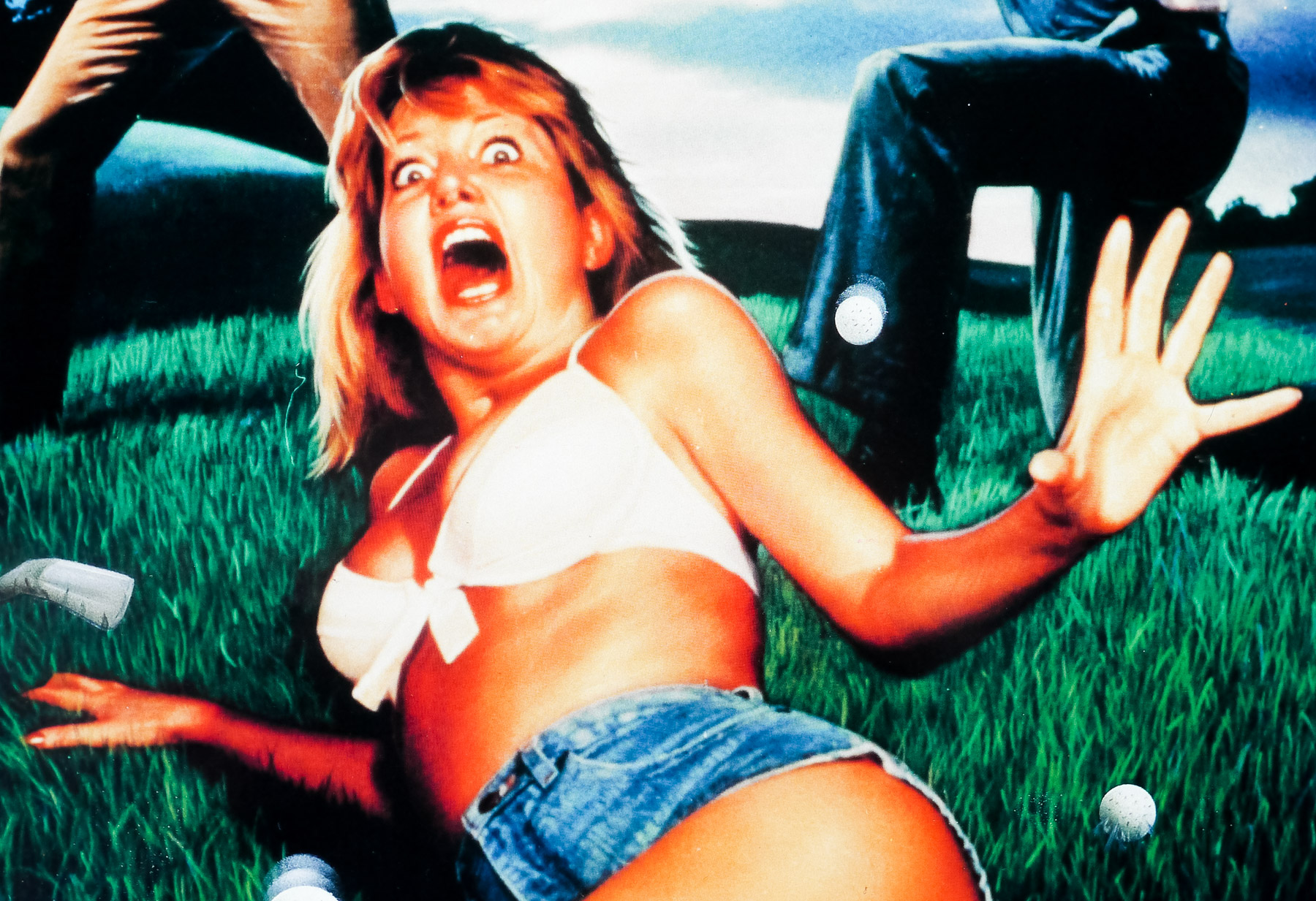
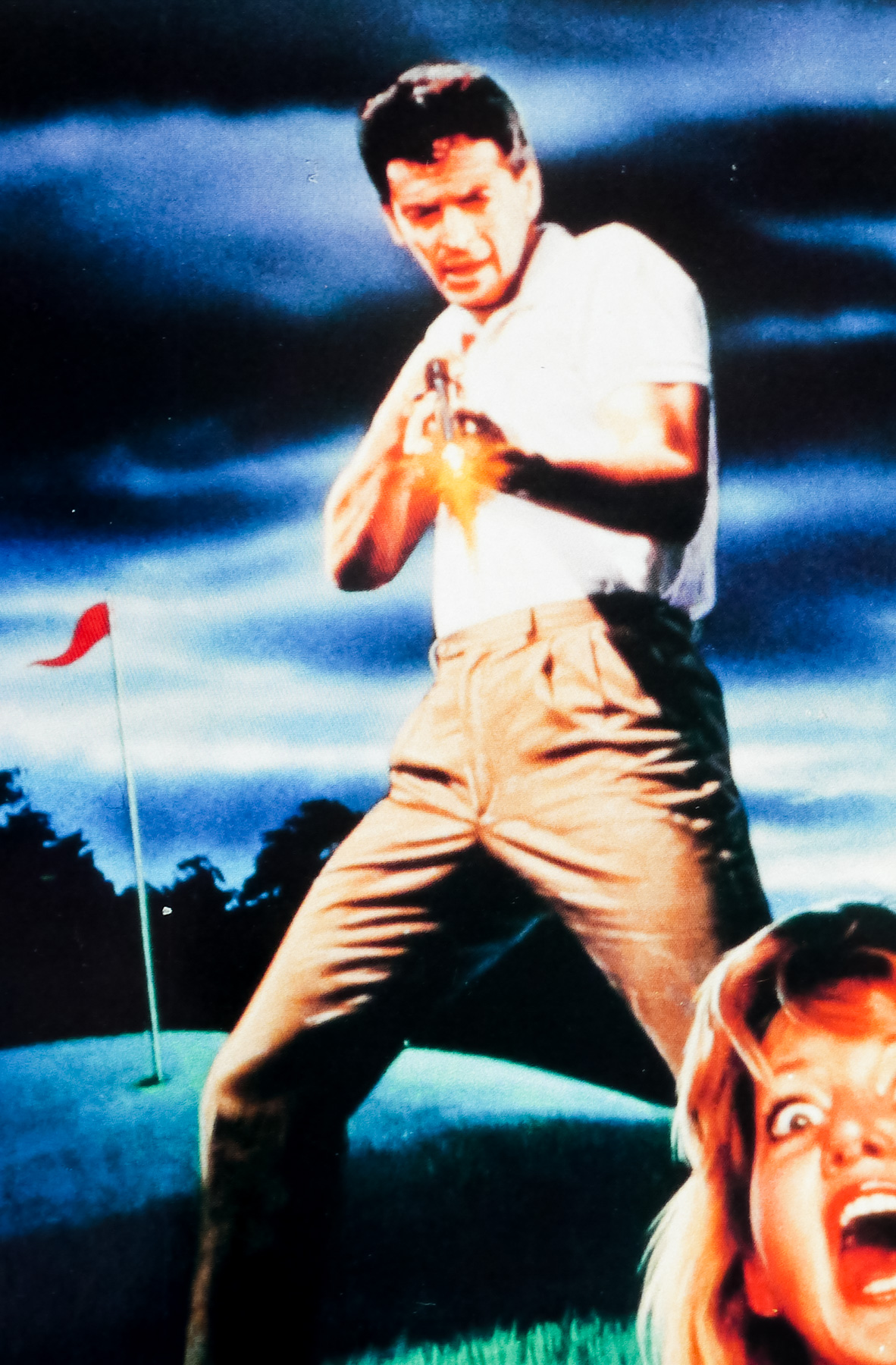
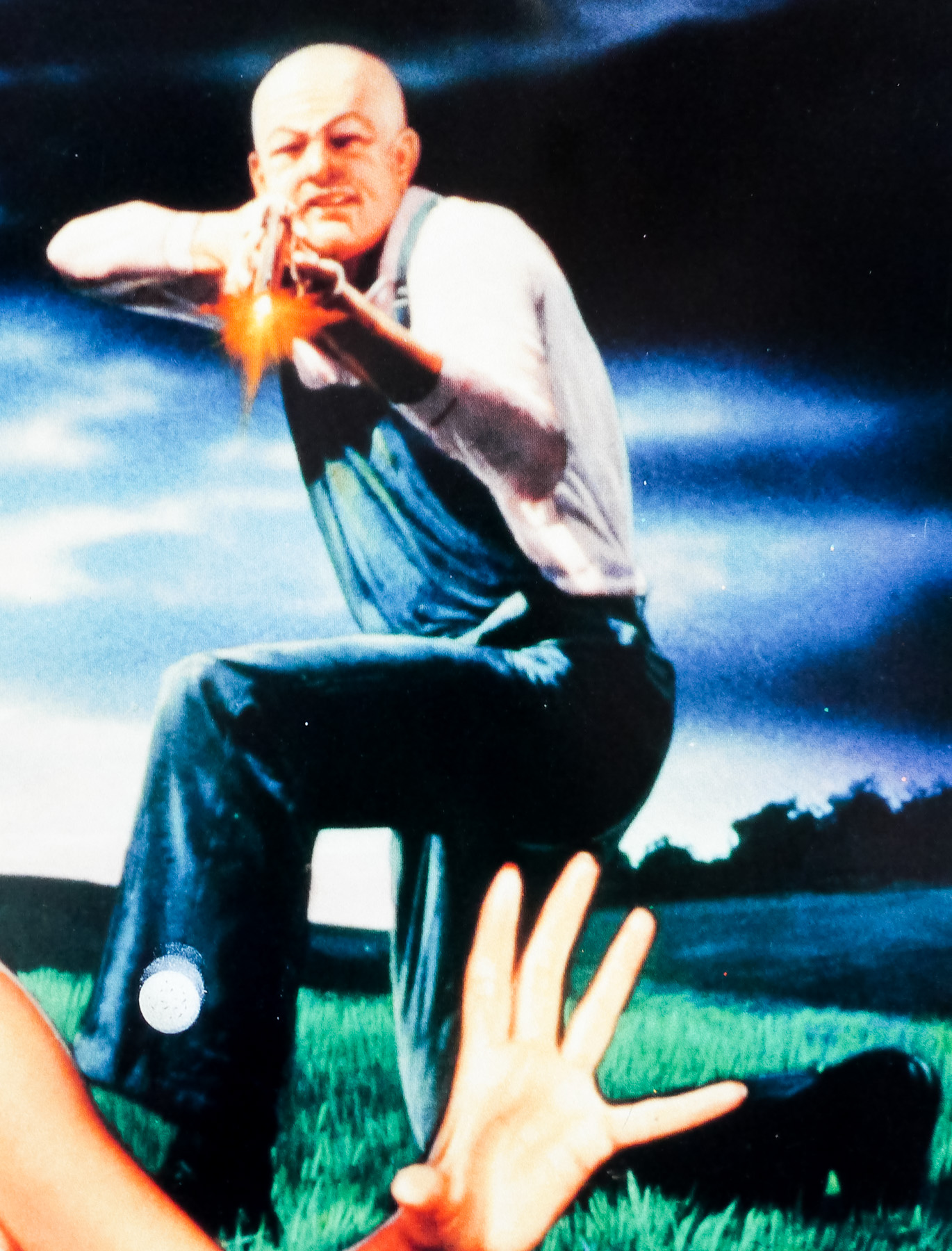
Golf - A Game of Hooks, Slices and ... Slaughter | Just When You Thought It Was Safe To Putt

The notorious schlockmeisters Troma, headed by Lloyd Kaufman and Michael Herz, were behind what must surely be one of the only golfing-related horror films ever made (unless you count the clubs wielded by the killers in Michael Haneke’s Funny Games), 1989’s Blades. The film was directed by Thomas R. Rondinella and is his only cinema-released feature to date and, as is typical with most Troma productions, the cast is mostly made up of jobbing b-movie actors. As the second tagline alludes to, the film is apparently a pastiche of Jaws with the shark replaced with a killer lawnmower wielded by a mysterious killer (and often show from the blades’ point of view).

The plot is described thusly on IMDb:

People are showing up sliced and diced at Tall Grass Country Club. Norman, the owner of the club, wants to avoid undue publicity on the eve of the televised pro-am tournament, and encourages new pro Roy to get to the bottom of the killings quietly. Roy has a history of alcohol problems since he choked while playing a big tournament years before, and Kelly, who feels she should have been hired as the new pro, isn’t making the situation easier for him, insisting they cancel the tournament until the killer can be stopped. After a seedy character named Deke Slater is arrested, the owner relaxes, but Roy and Kelly begin to feel that Deke’s rantings about a runaway lawnmower aren’t so far-fetched after all, and after Deke is released the three of them prepare for a battle to the death out on the uncharted fairways.

The film was apparently only released in a small handful of US cinemas before heading to video and HBO soon afterwards. I may be wrong but I don’t believe it ever saw release over here in the UK.

Monsters / one sheet / teaser / USA

12.03.12

Poster Poster
Title
Monsters
AKA
--
Year of Film
2010
Director
Gareth Edwards
Starring
Scoot McNairy, Whitney Able, Mario Zuniga Benavides, Annalee Jefferies
Origin of Film
UK
Genre(s) of Film
Scoot McNairy, Whitney Able, Mario Zuniga Benavides, Annalee Jefferies,
Type of Poster
One sheet
Style of Poster
Teaser
Origin of Poster
USA
Year of Poster
2010
Designer
Gravillis Inc.
Artist
--
Size (inches)
27" x 39 13/16"
SS or DS
DS
NSS #
--
Tagline
It's our turn to adapt

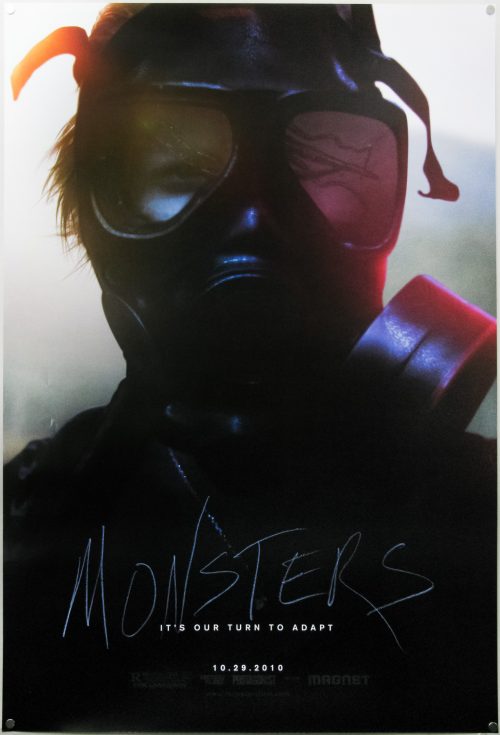
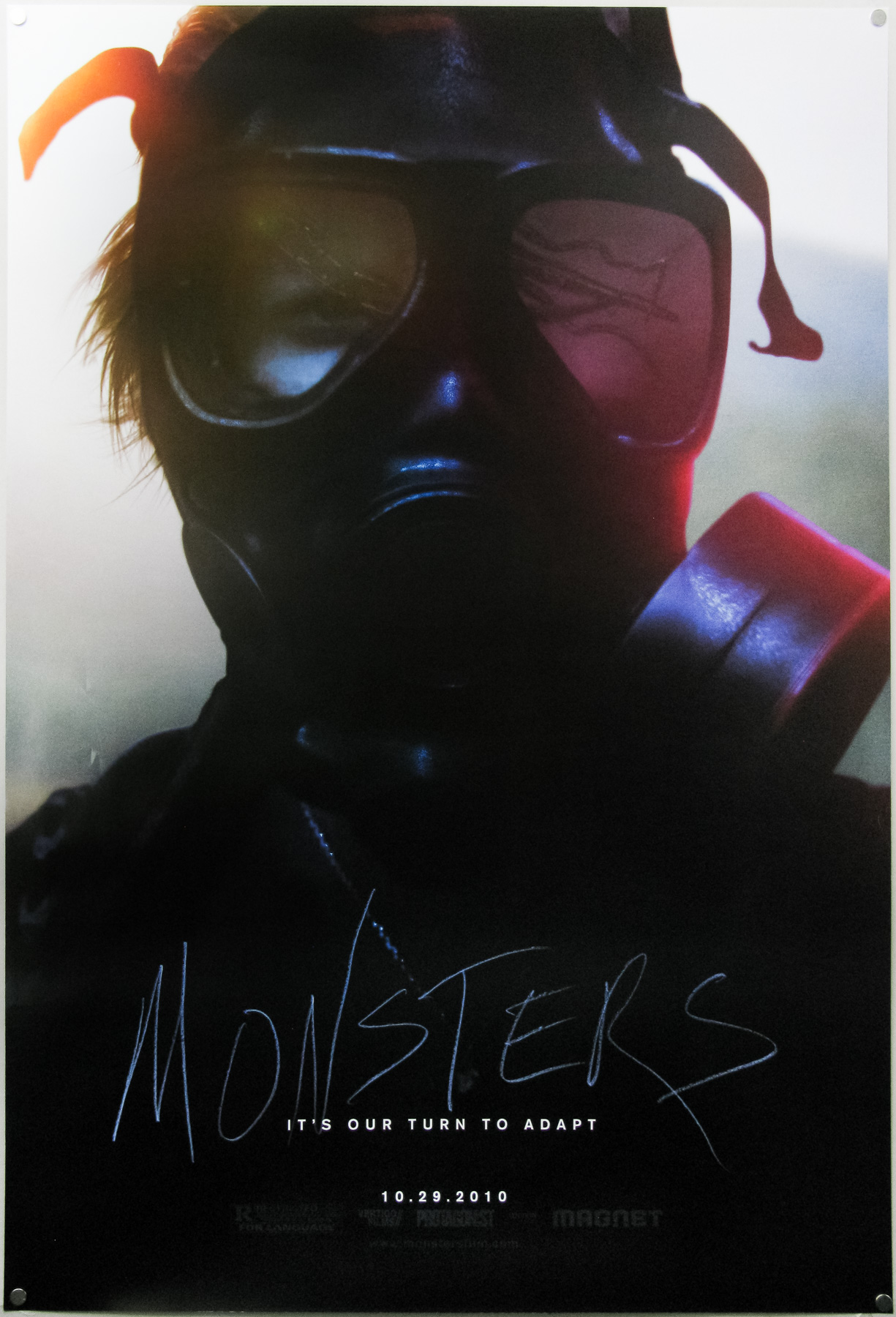
British director Gareth Edwards’ excellent Monsters was one of the best films released in 2010 and transcended a micro-budget to become one of the freshest entries in the sci-fi genre for several years. The film is set slightly in the future and several years after a NASA probe crashed back to earth infected with alien life. Half of Mexico had to be quarantined off as the creatures grew and took over the area, and the US military patrols the borders. Andrew Kaulder (Scoot McNairy) is a US photojournalist who is hired by his boss to escort his daughter Samantha Wynden (Whitney Able) from the safe part of Mexico back to the States. The pair are forced to head through the quarantined zone despite the threat of the creatures who are moving across the country on their yearly ‘migration’.

The film was shot entirely on location by a tiny crew, using prosumer cameras and, aside from the two leads, the majority of the characters were played by non-actors. The dialogue was improvised around a loose scene outline and the results were edited whilst the crew was on the road. Gareth Edwards had previously worked as a special effects editor and spent four months designing and creating all of the effects himself, once again using off the shelf equipment and software. It’s a superb achievement and well worth a watch, but don’t go in expecting some kind of fast-paced, gory creature-feature as some cinema-goers were, back in 2010.

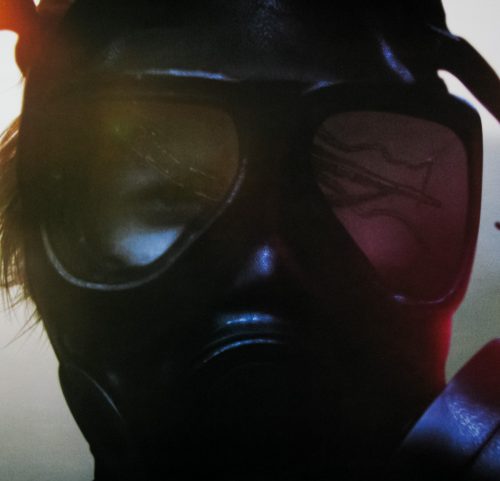
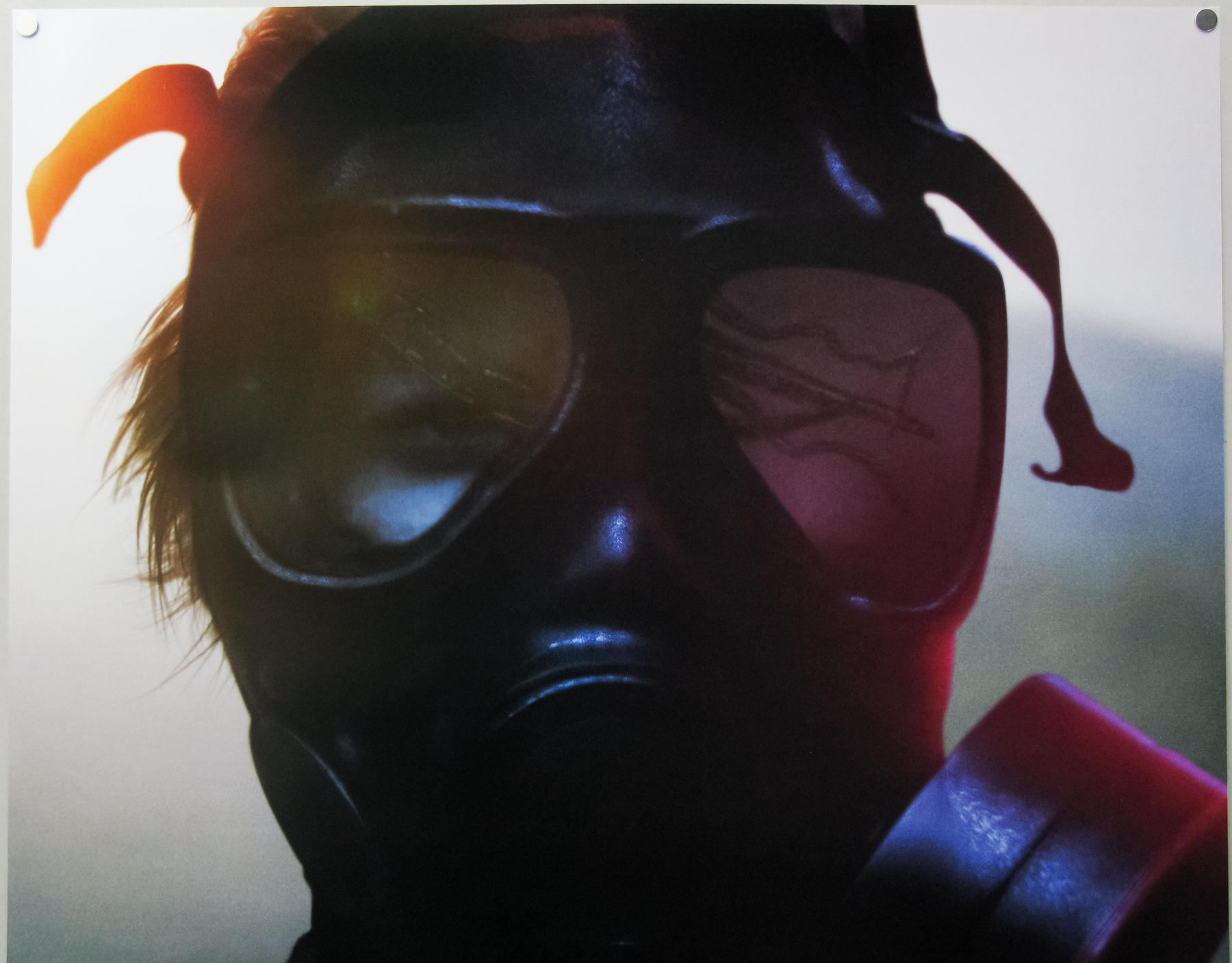
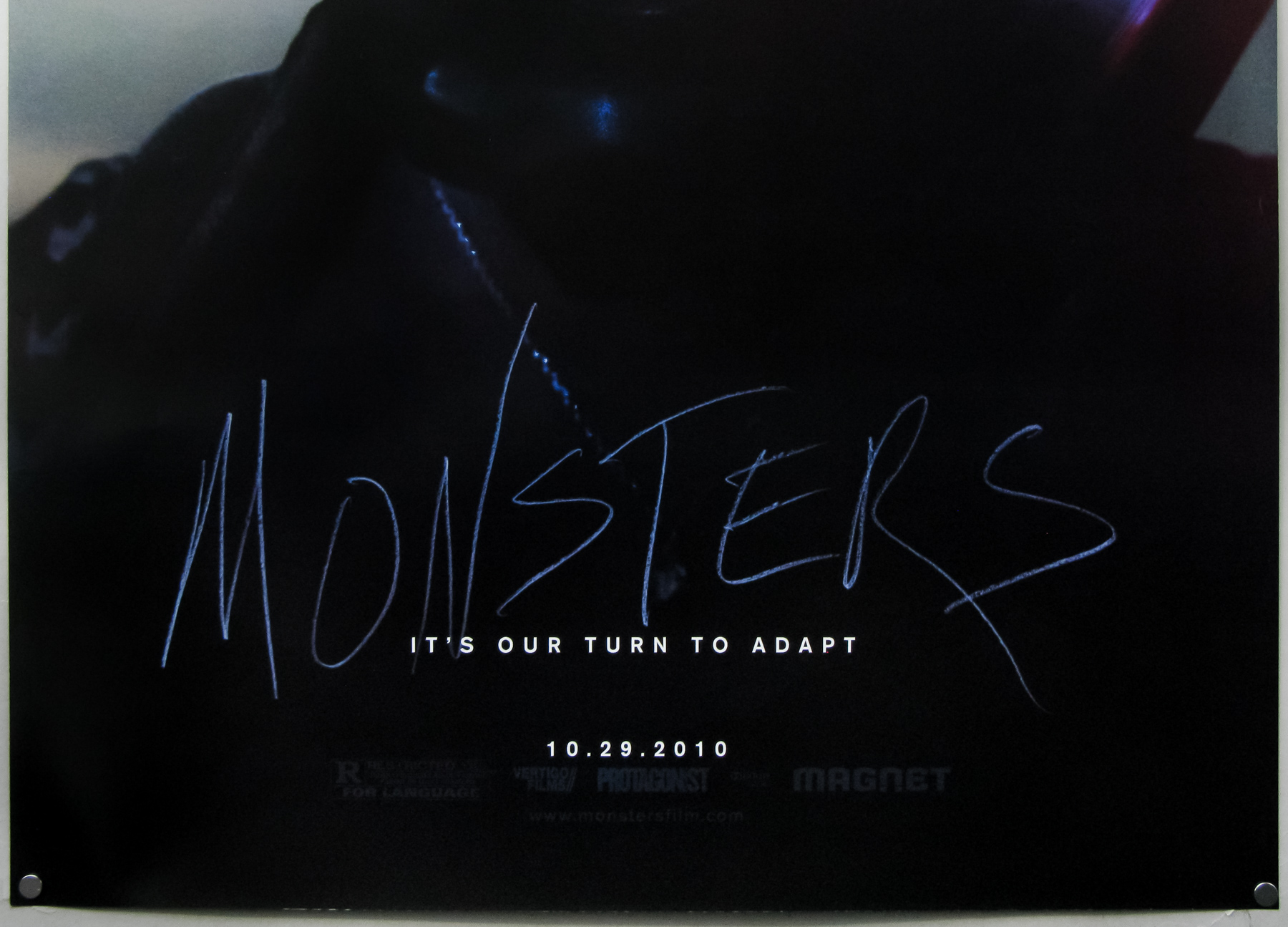
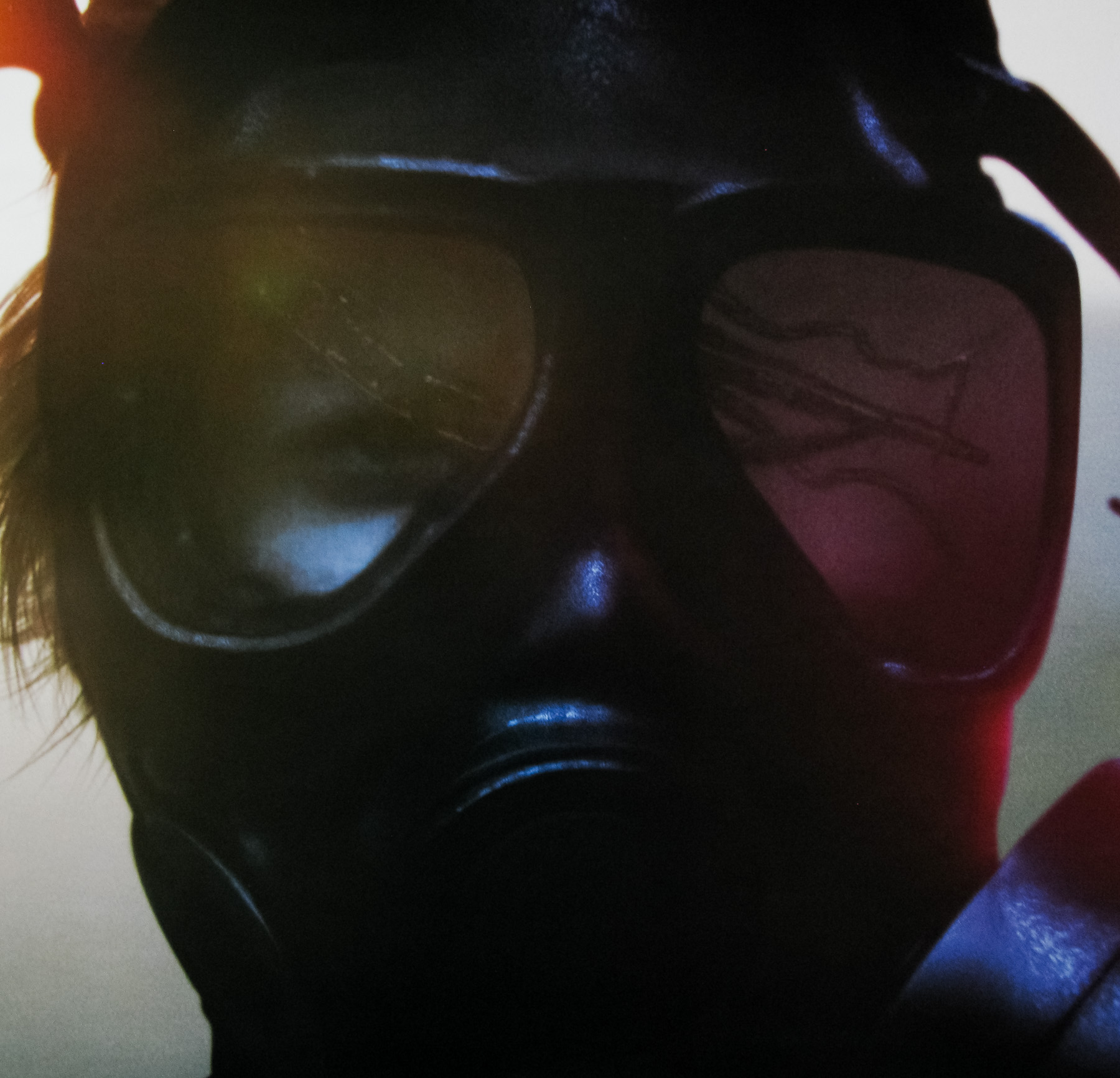
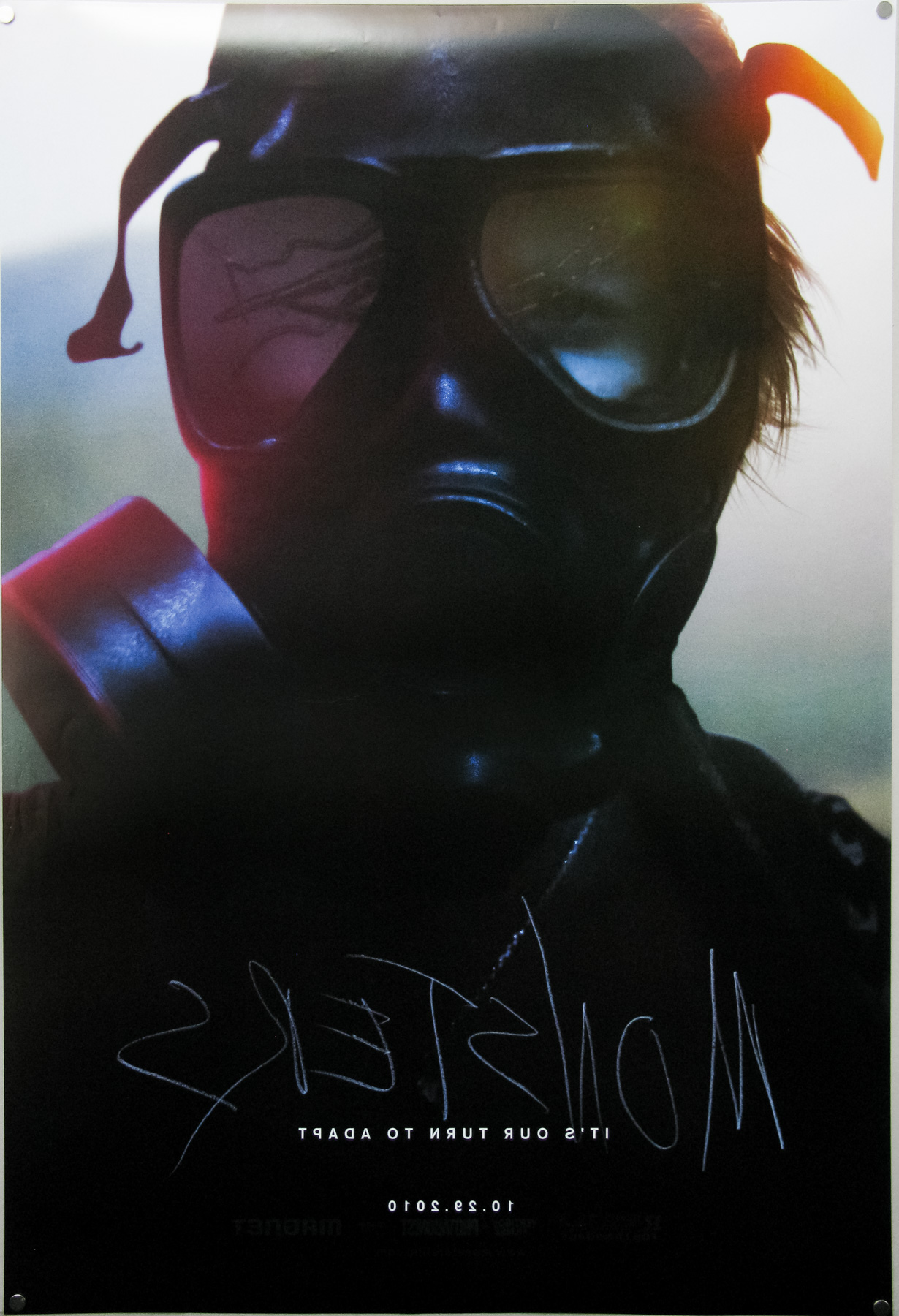
This striking US one sheet teaser was designed by Gravillis Inc. and features Whitney Able in a gas mask with a reflection of one of the creatures in the visor. Because the poster is so dark it’s hard to photograph without losing some of the details so check out the original digital file here.

The original trailer is on YouTube.

Damnation Alley / one sheet / teaser / USA

01.12.14

Poster Poster
Title
Damnation Alley
AKA
Survival Run (International / Japan)
Year of Film
1977
Director
Jack Smight
Starring
Jan-Michael Vincent, George Peppard, Dominique Sanda, Paul Winfield, Jackie Earle Haley, Kip Niven, Robert Donner, Seamon Glass, Trent Dolan, Mark L. Taylor, Bob Hackman, Erik Cord
Origin of Film
USA
Genre(s) of Film
Jan-Michael Vincent, George Peppard, Dominique Sanda, Paul Winfield, Jackie Earle Haley, Kip Niven, Robert Donner, Seamon Glass, Trent Dolan, Mark L. Taylor, Bob Hackman, Erik Cord,
Type of Poster
One sheet
Style of Poster
Teaser - printer's proof
Origin of Poster
USA
Year of Poster
1977
Designer
Unknown
Artist
Paul Lehr
Size (inches)
28 2/16" x 41"
SS or DS
SS
NSS #
77/152
Tagline
You have seen great adventures. You are about to live one. | More than a movie. An adventure you'll never forget.

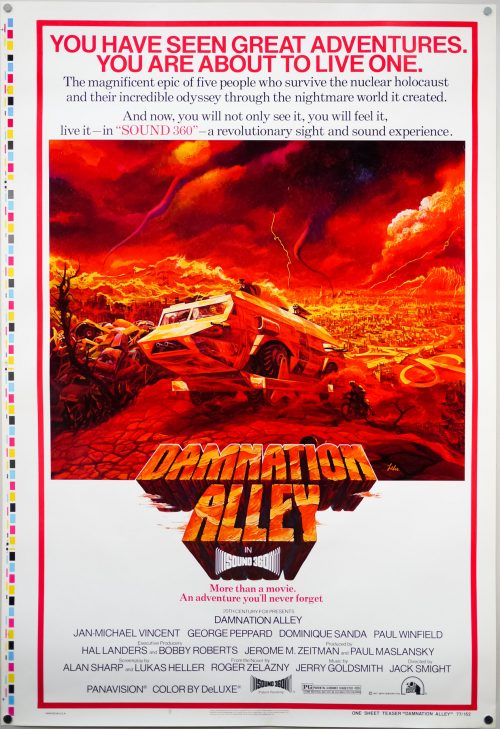
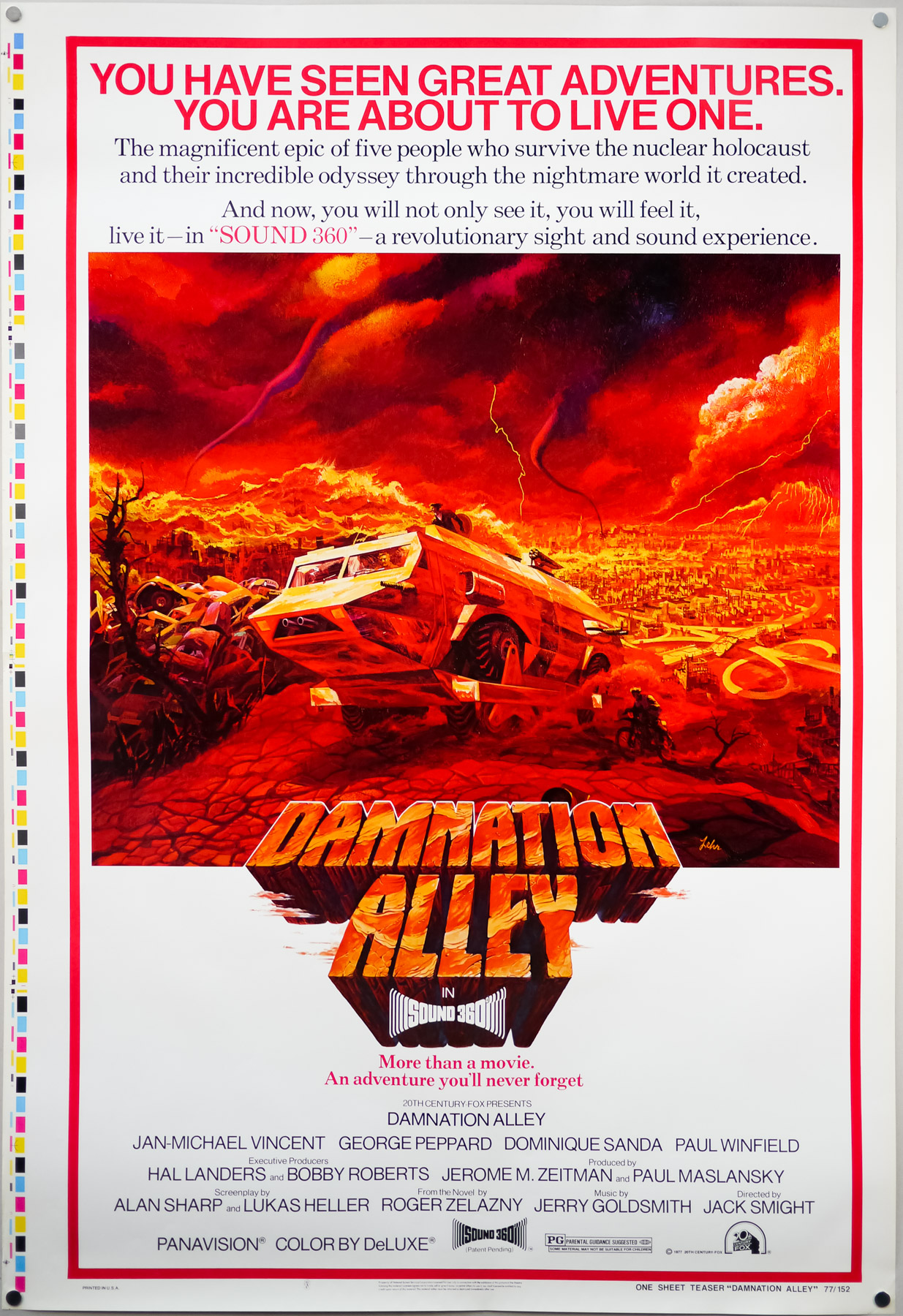
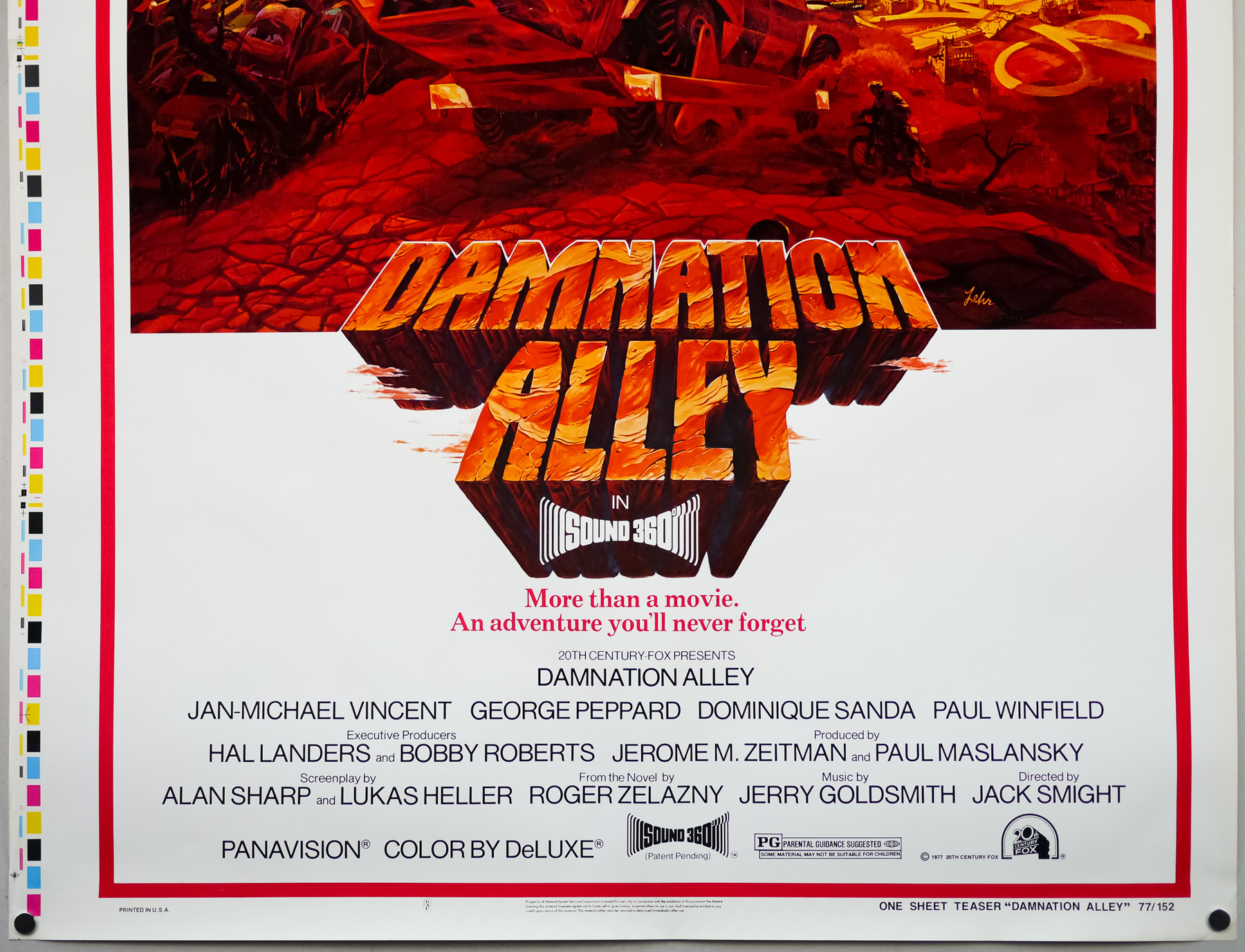
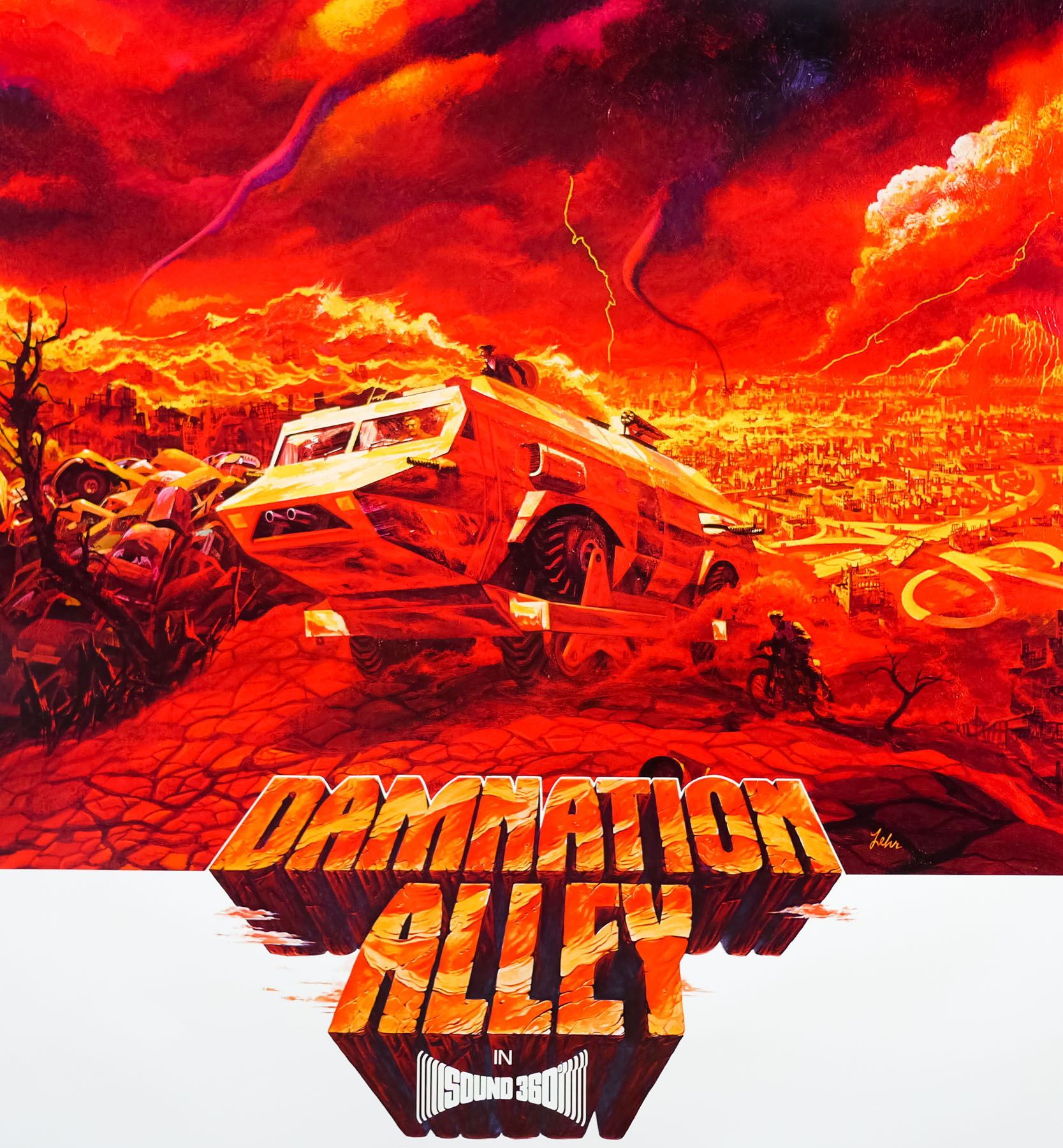
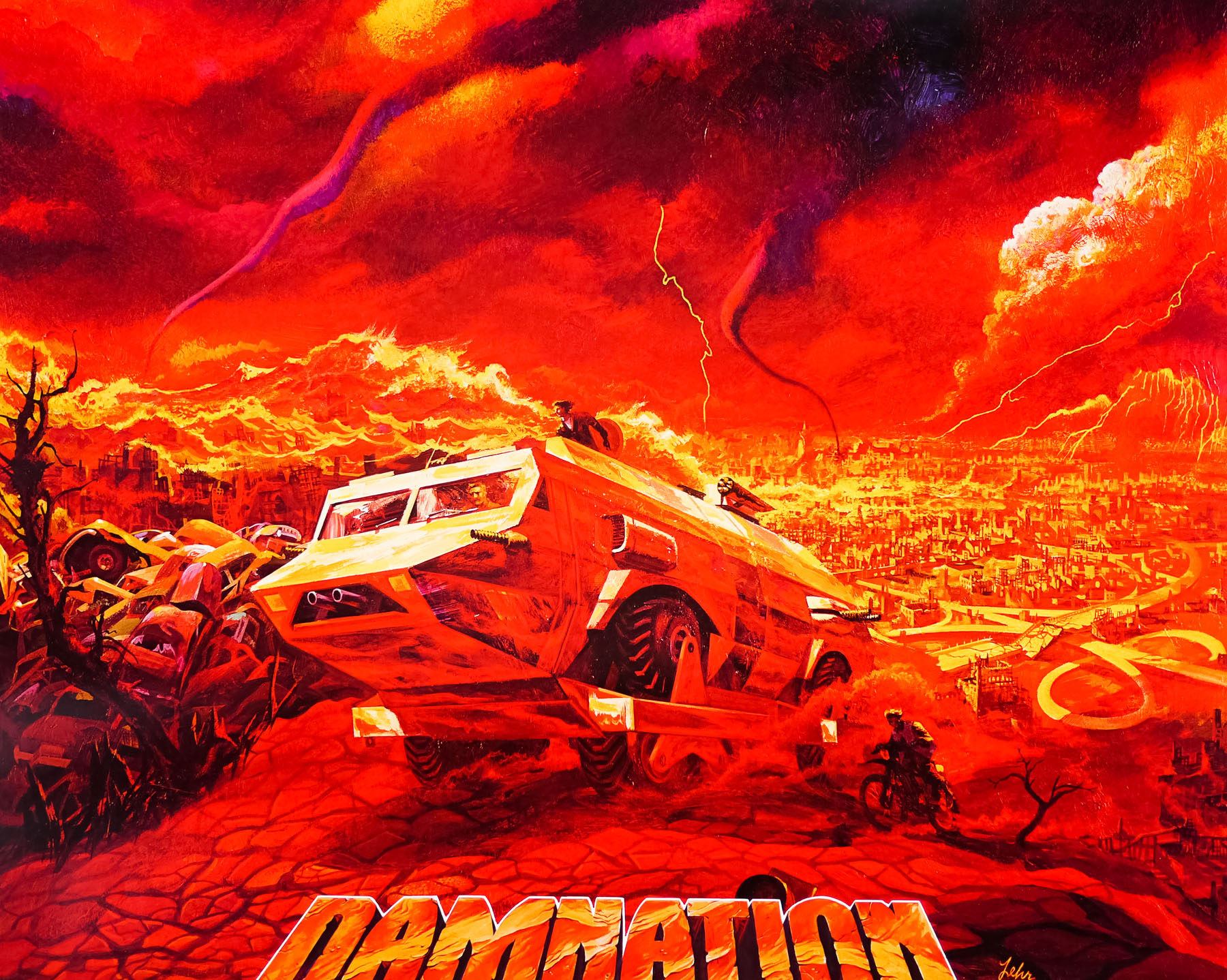
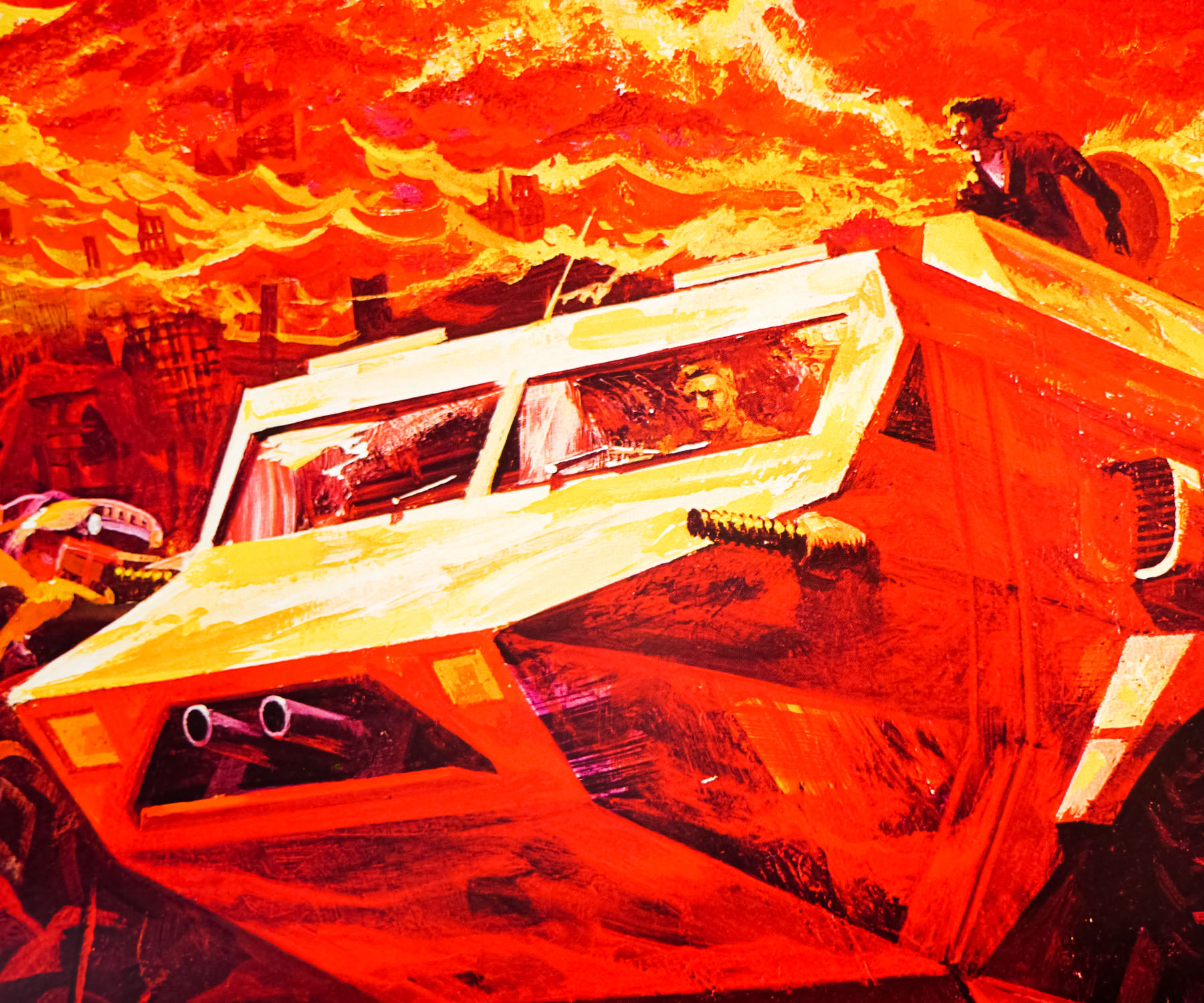
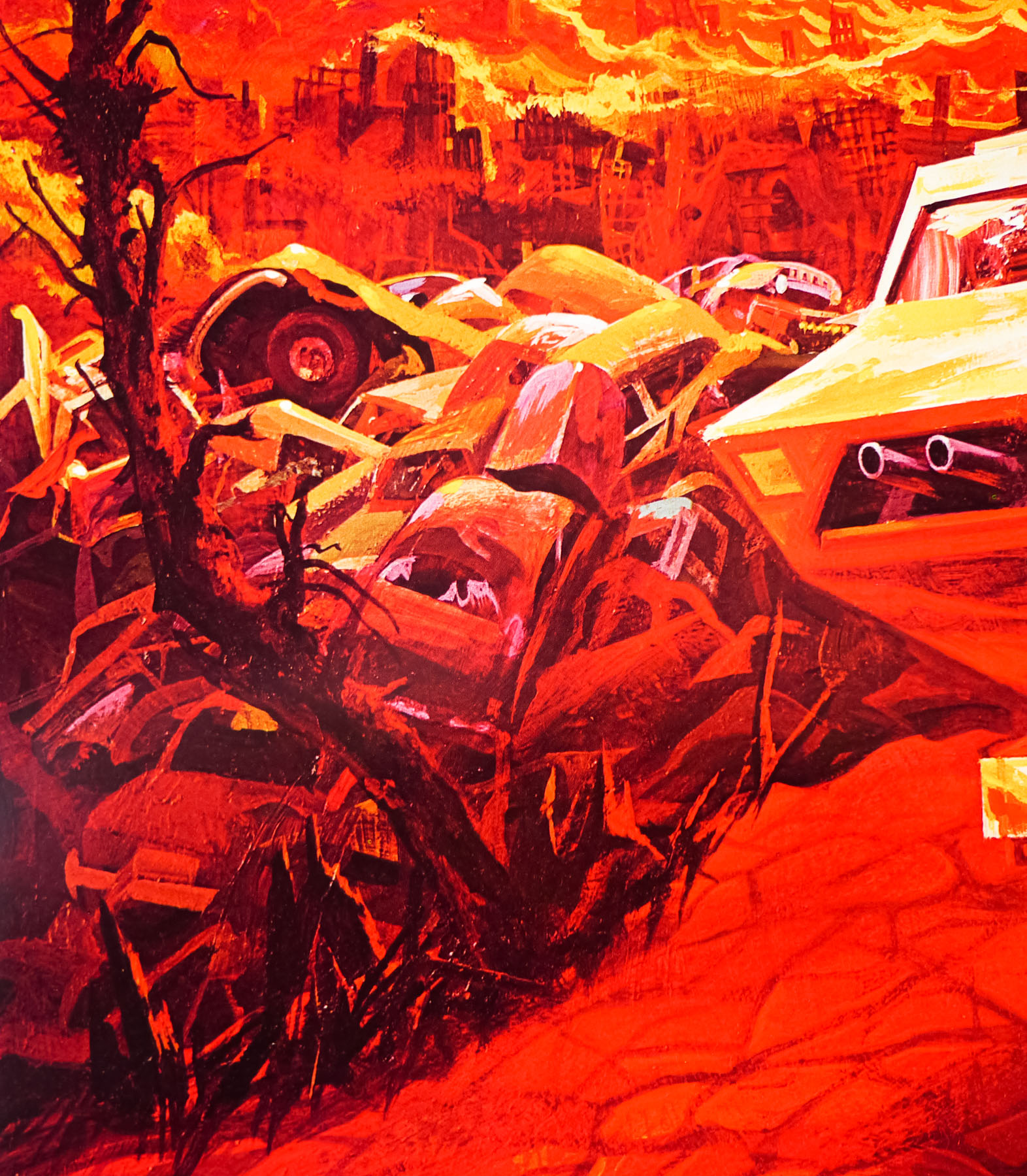
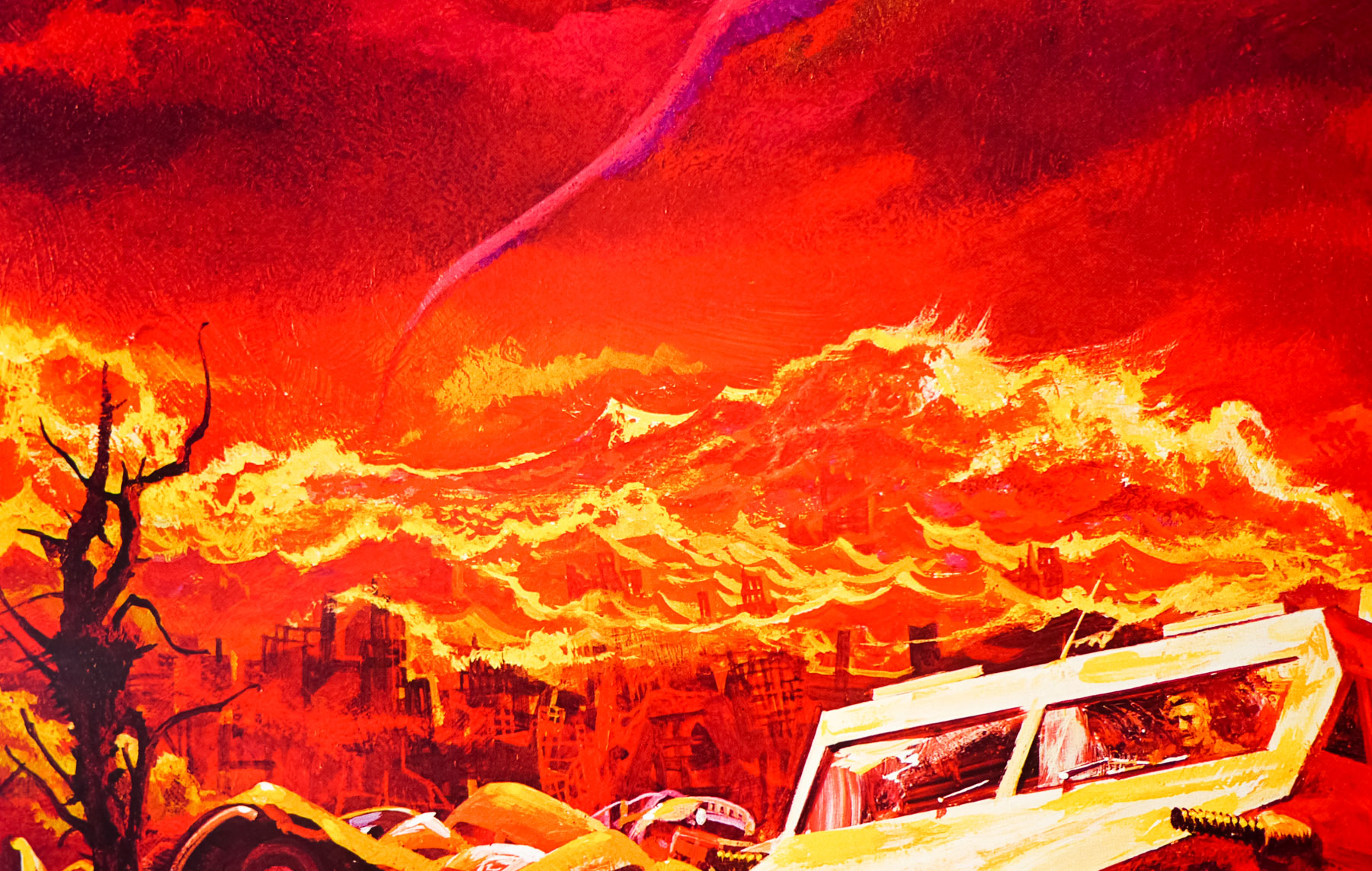
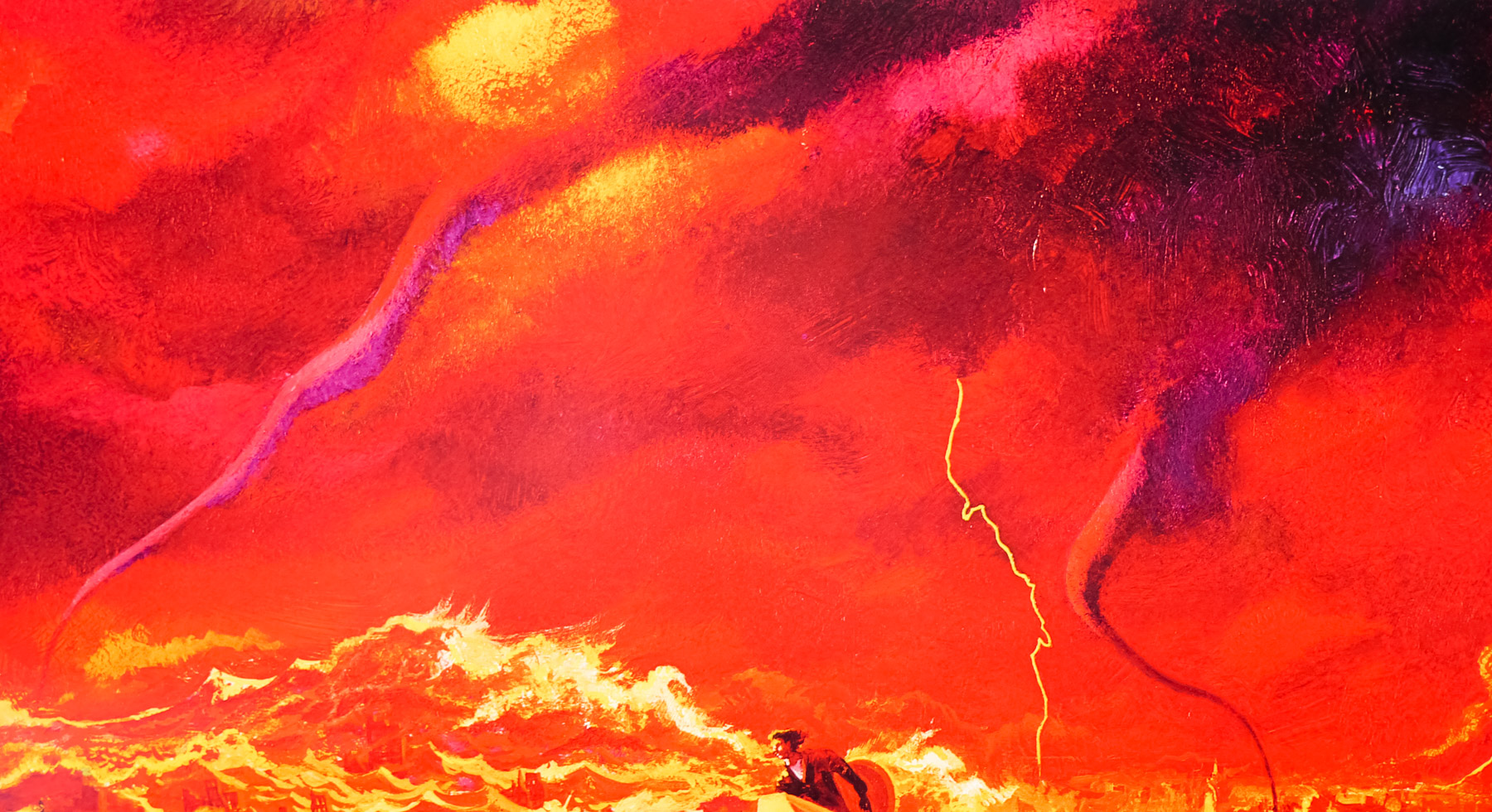
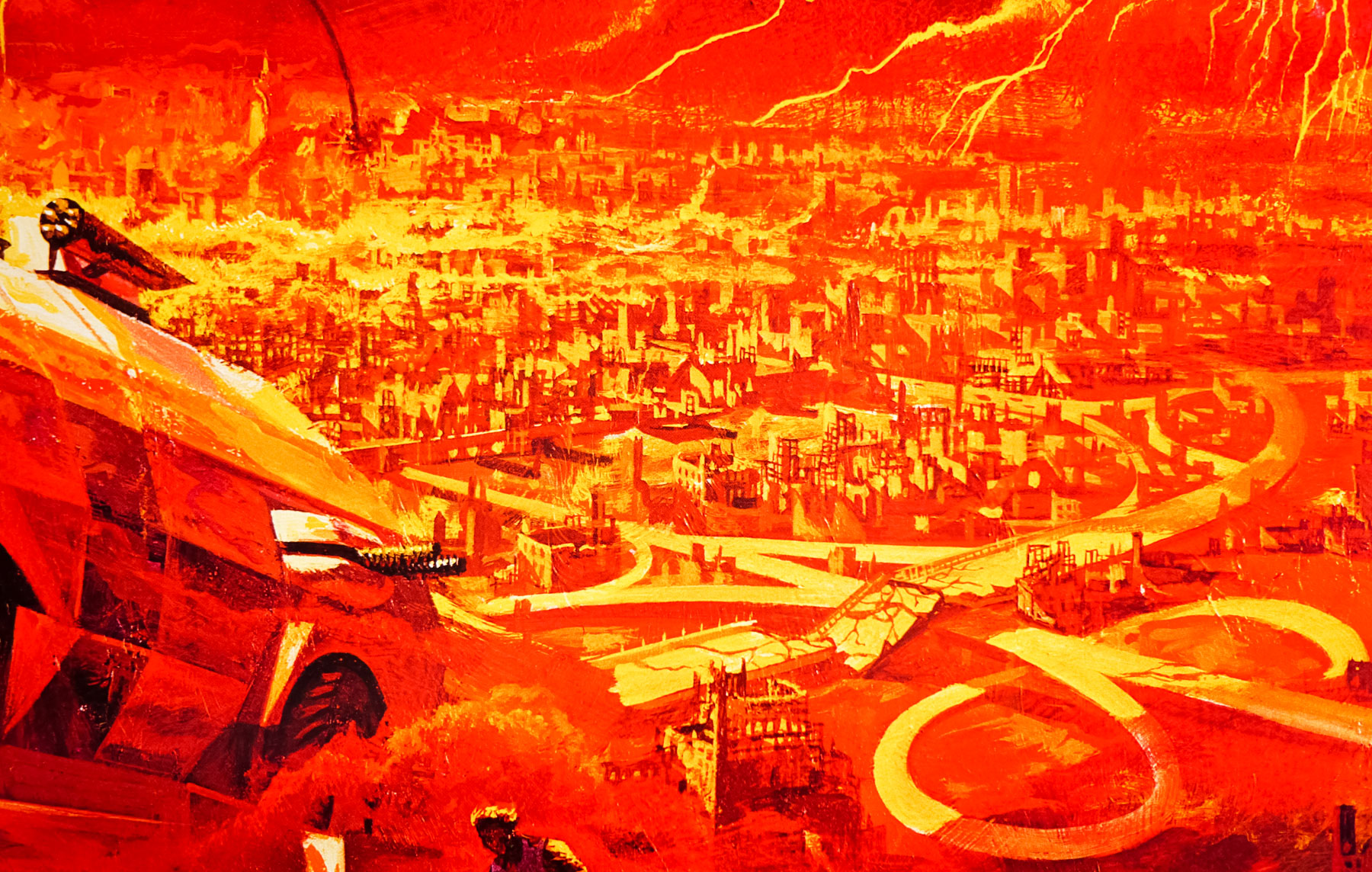
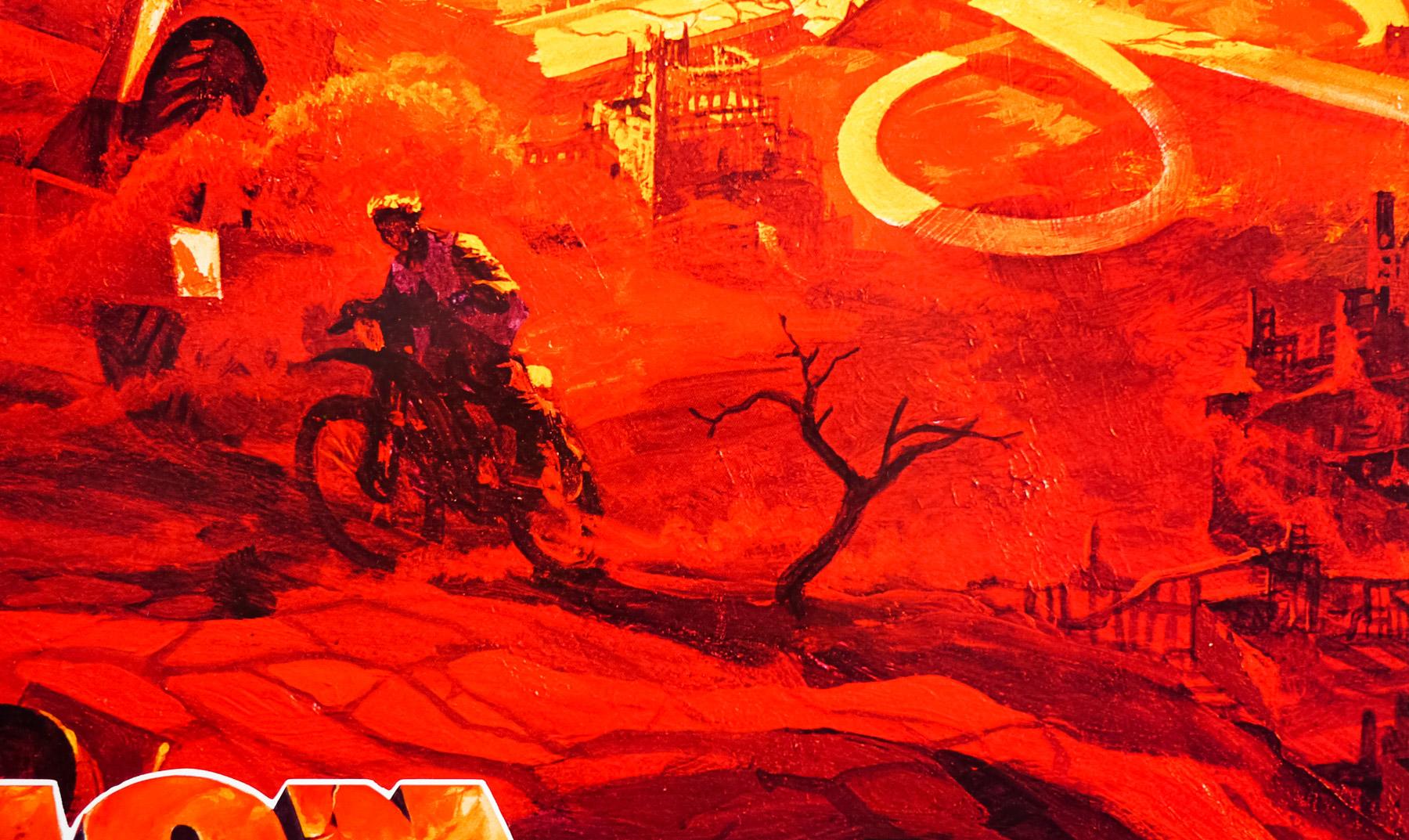
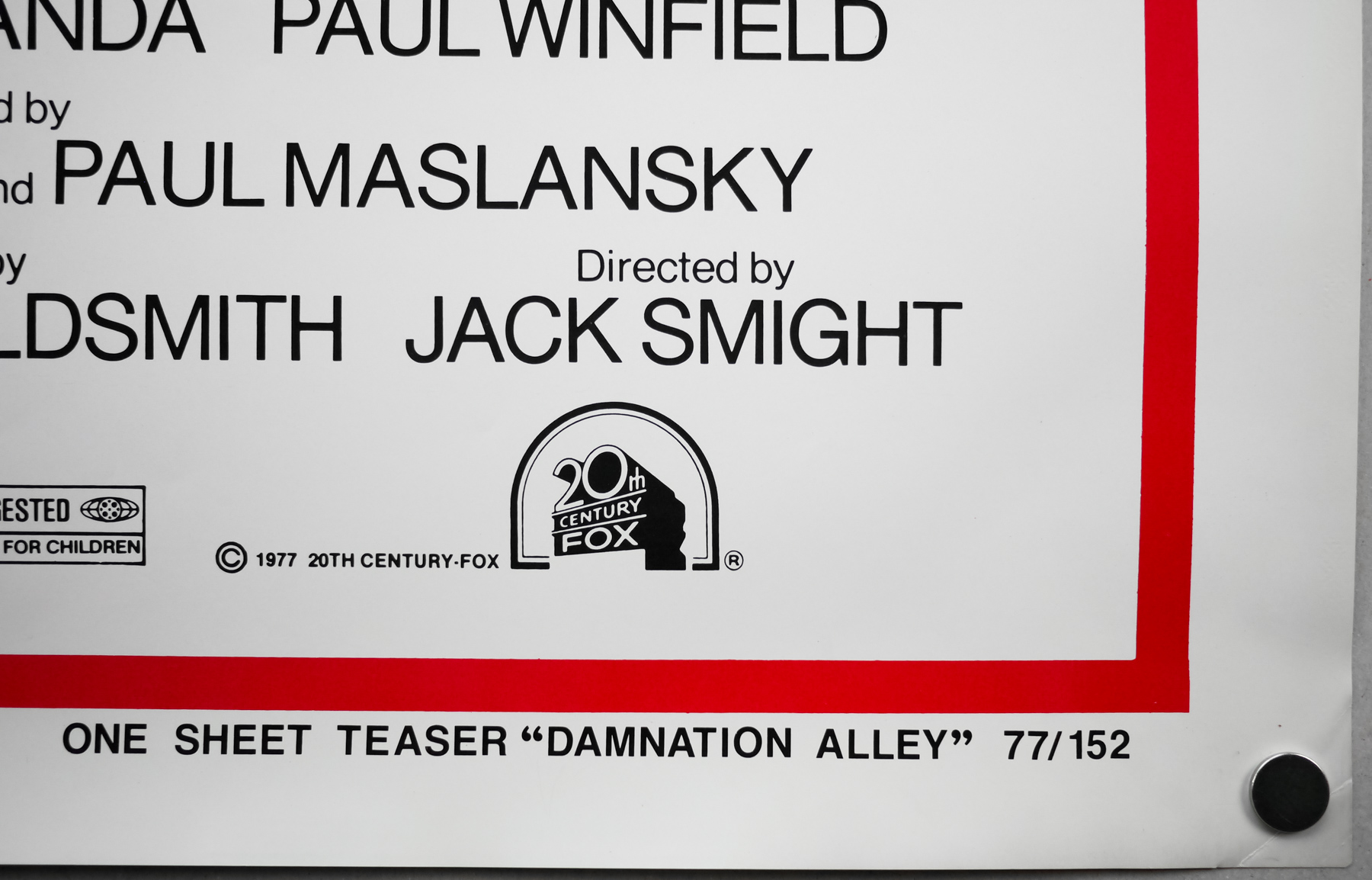
Damnation Alley, released internationally as Survival Run, is a dystopian sci-fi adventure (set after the nuclear destruction of World War 3) that pretty much disappeared at the box office, but later gained something of a cult status. It’s interesting to note that the studio, 20th Century Fox, were making two sci-fi films in 1977 and saw this as their big hope for a box-office blockbuster. The studio suits didn’t have much faith in the other project, a little film called Star Wars…

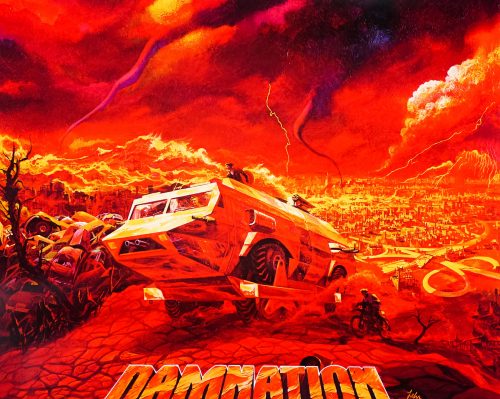
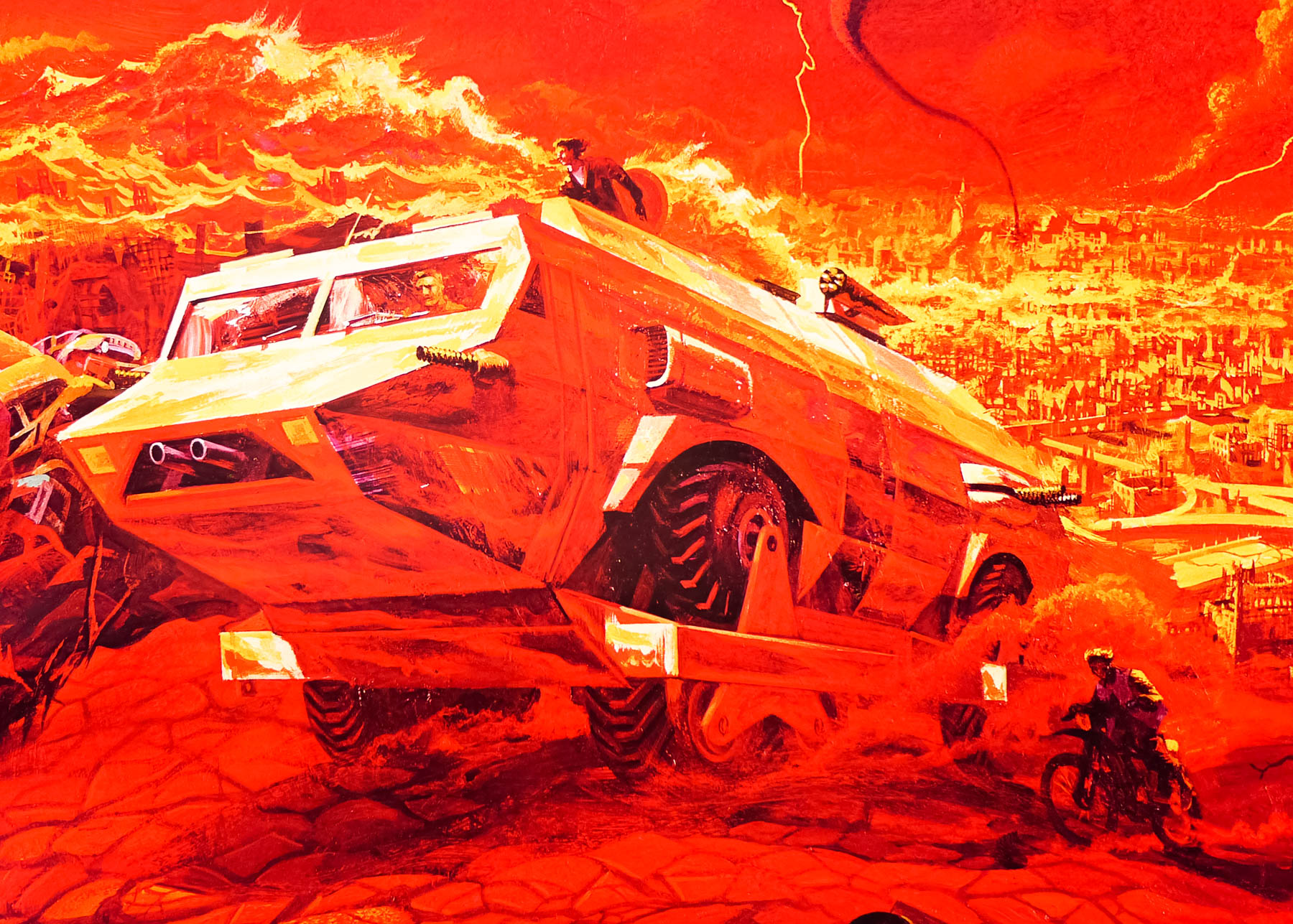
The film features a couple of infamous scenes with mutated creatures, including ‘giant’ scorpions (terribly composited using the blue screen process) and killer cockroaches. It also featured an interesting vehicle known as The Landmaster.

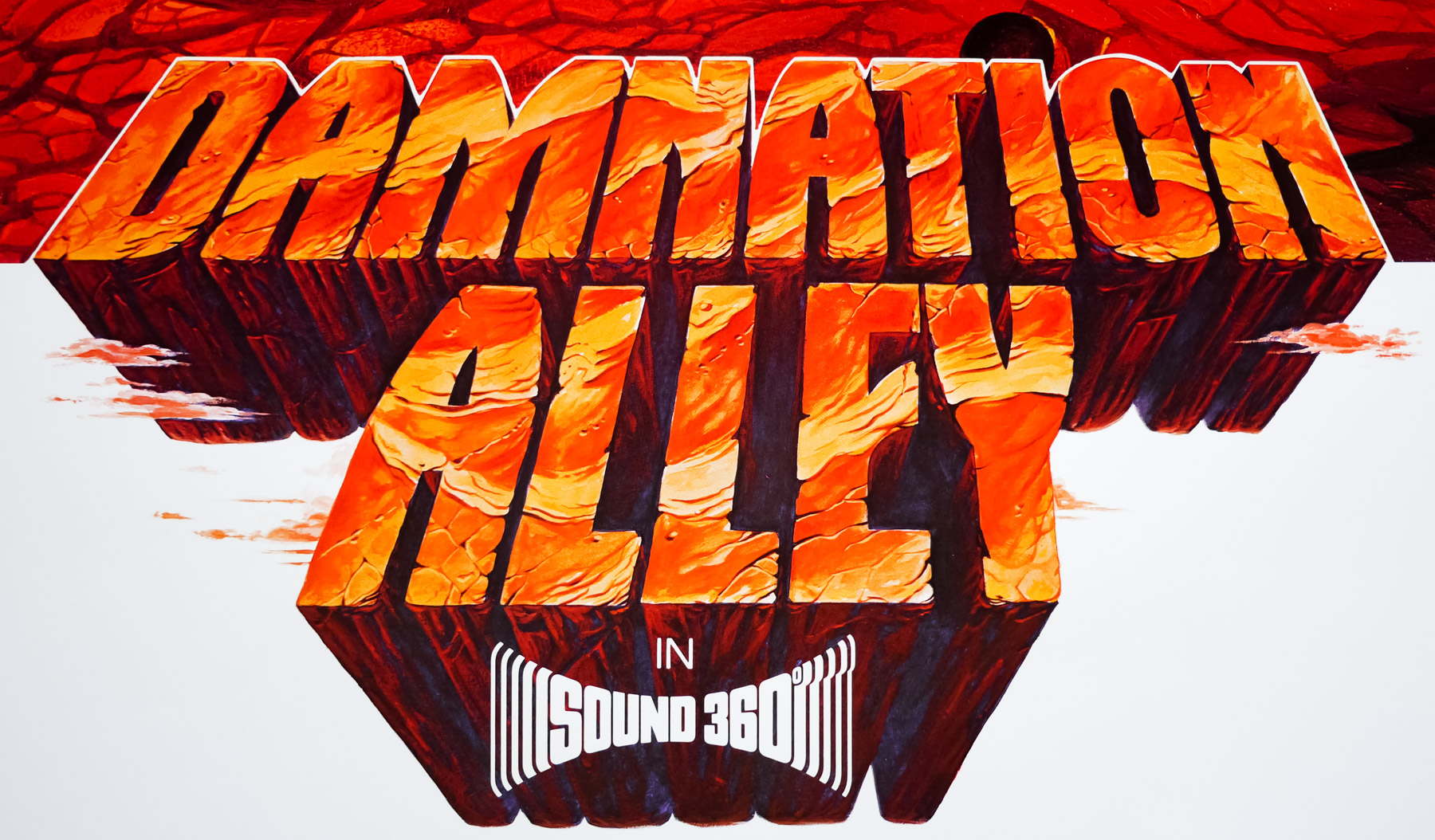
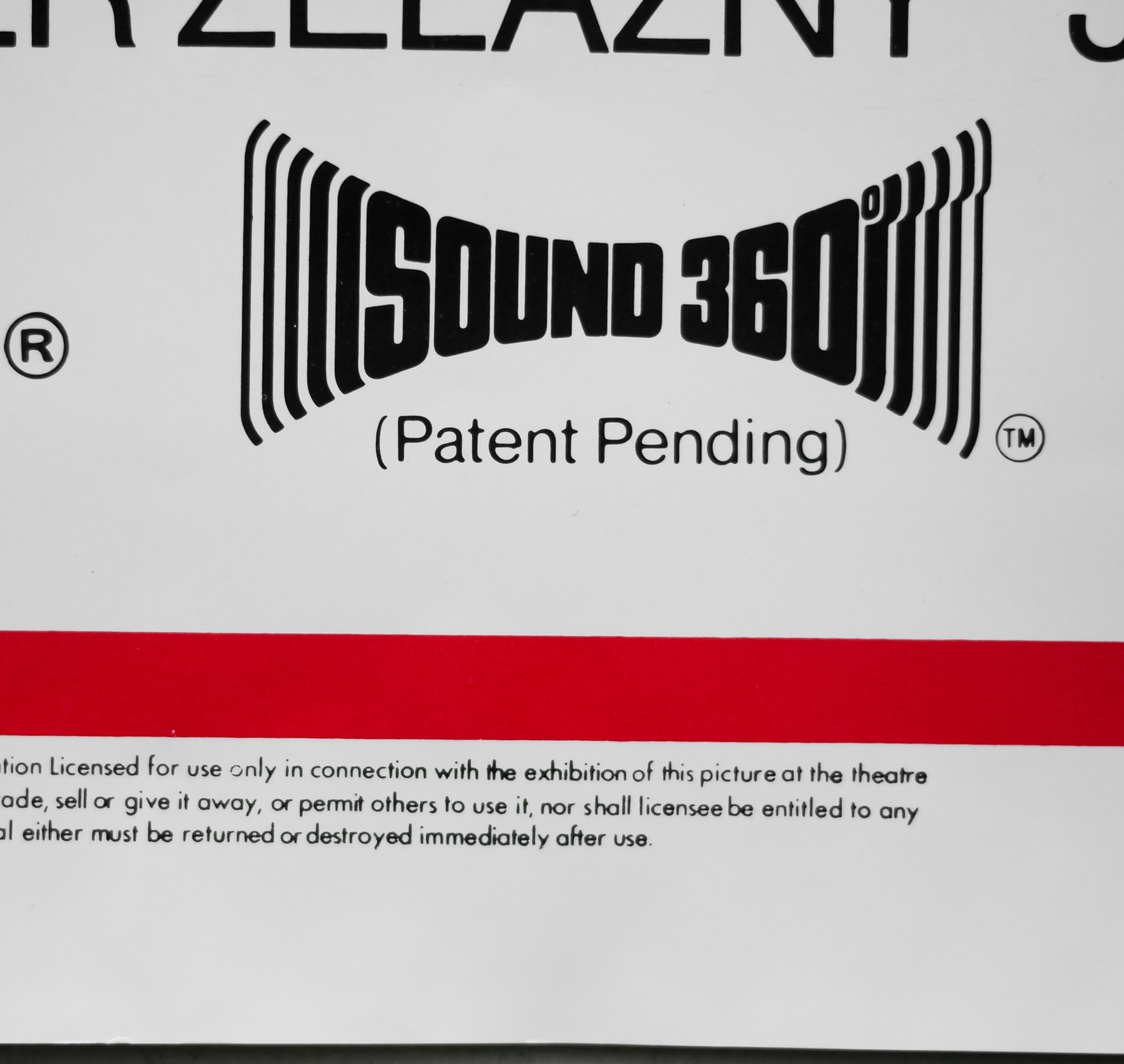
In some cinemas the film was shown with something called Sound 360°. From IMDb:

20th Century-Fox developed a rival to Universal’s gimmicky ‘Sensurround’ sound process (popularized in the theatrical release of Earthquake (1974)) that was only used for the theatrical release of “Damnation Alley” called Sound 360°. This process was basically a variation of Magnetic-Optical Stereo sound. This technical advancement/gimmick in sound did not last past “Damnation Alley” although it was planned for Walter Hill‘s The Driver (1978) and Damien: Omen II (1978). If you look at the one sheet of “Damnation Alley” the “Sound 360°” declaration and logo are prominent at the bottom.

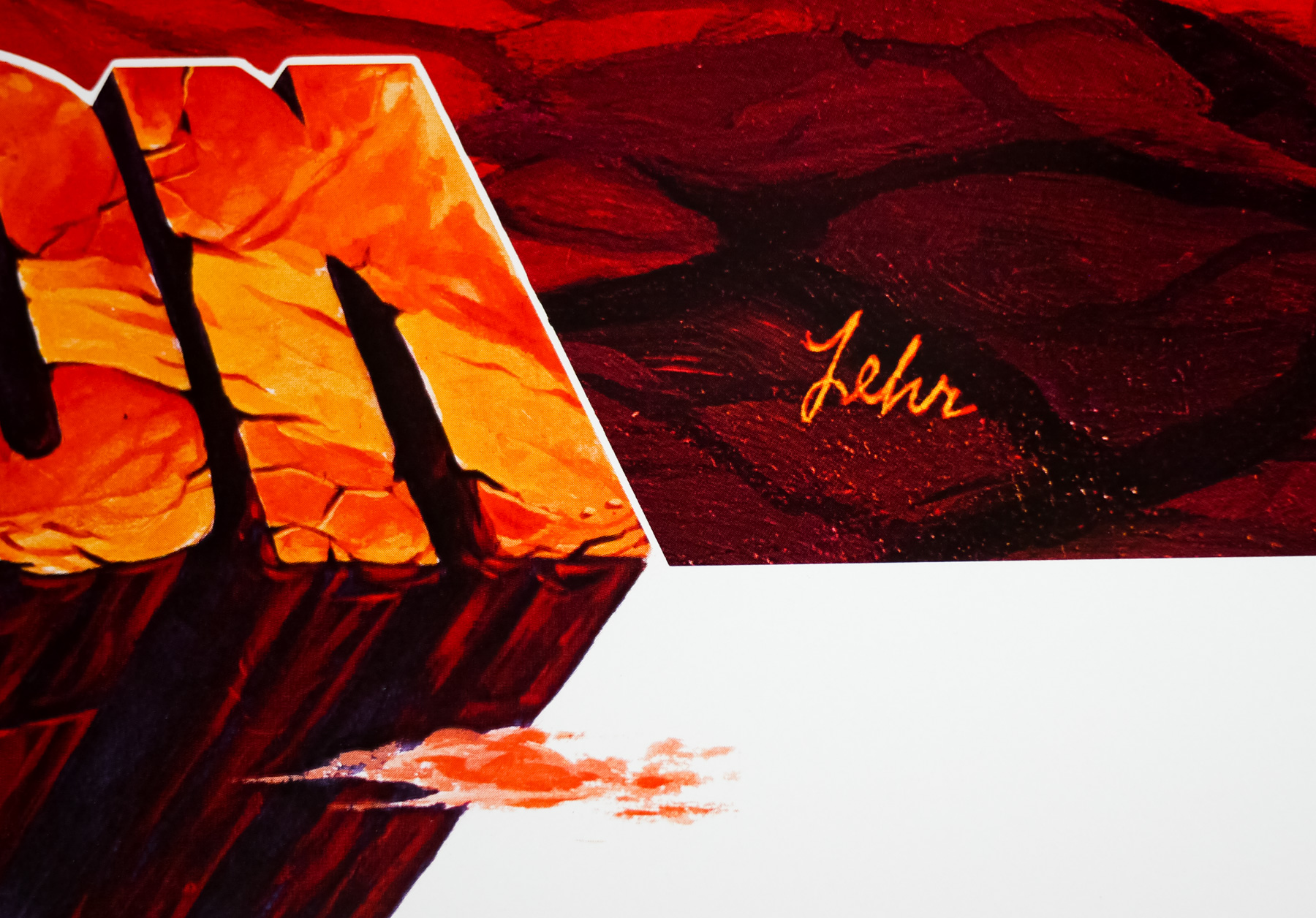
This teaser one sheet was painted by noted American sci-fi illustrator Paul Lehr who was born in 1930 and studied at the prestigious Pratt Institute before beginning a career that would last up until his death in 1998. He painted hundreds of celebrated book covers for authors including John Wyndham, HG Wells and Frank Herbert and also contributed to several notable specialist magazines including Omni and Weird Tales. In addition he worked on content for more mainstream publications such as Time, Fortune and Playboy. The Encyclopaedia of Science Fiction has an entry on him which can be read here. Check out a gallery of his work here.

There’s an international style one sheet that can be seen on IMPAwards and was apparently also painted by Lehr. The Japanese poster was a repaint of the one sheet by the artist Seito. Lehr also worked on the one sheet for Prophecy (1979).

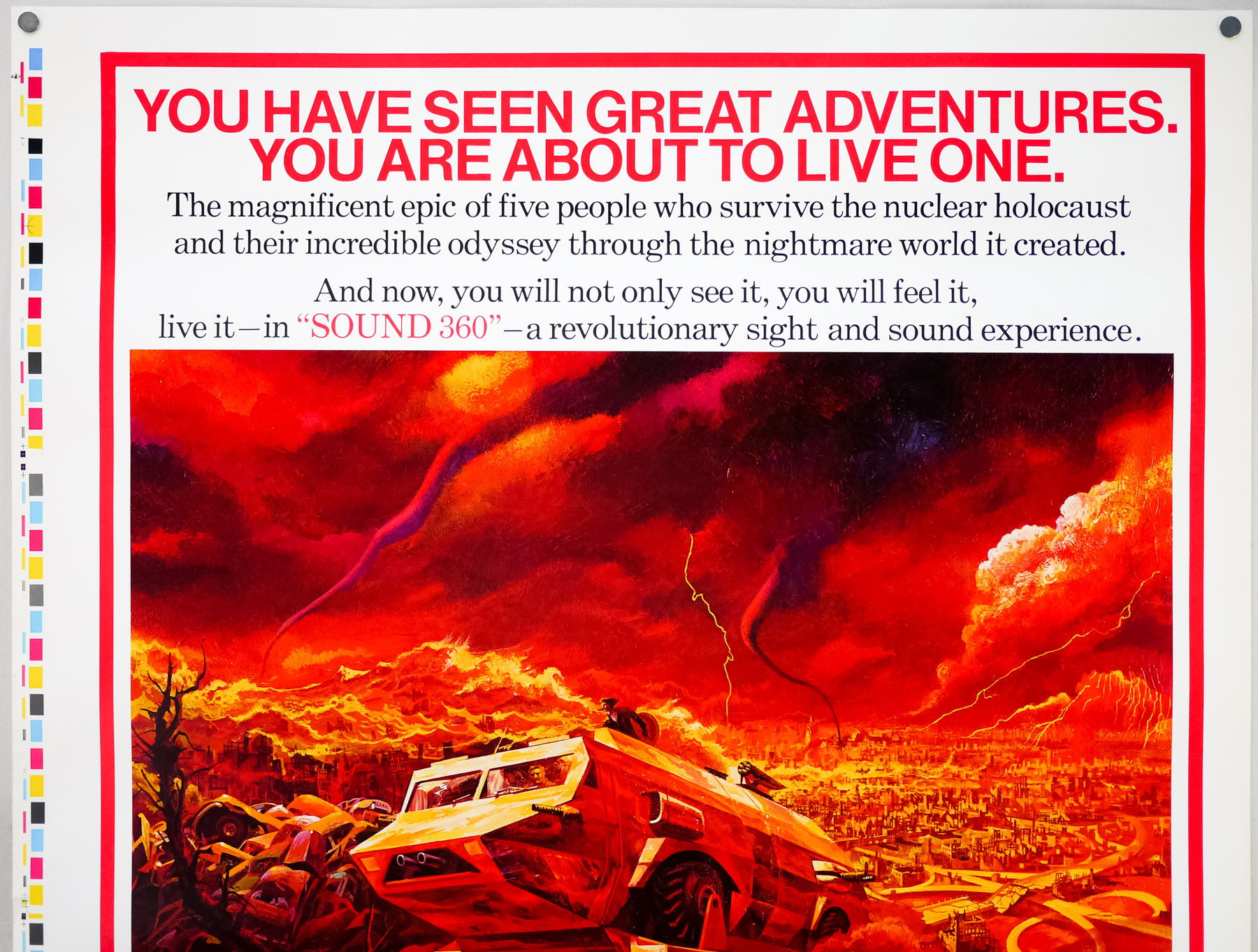
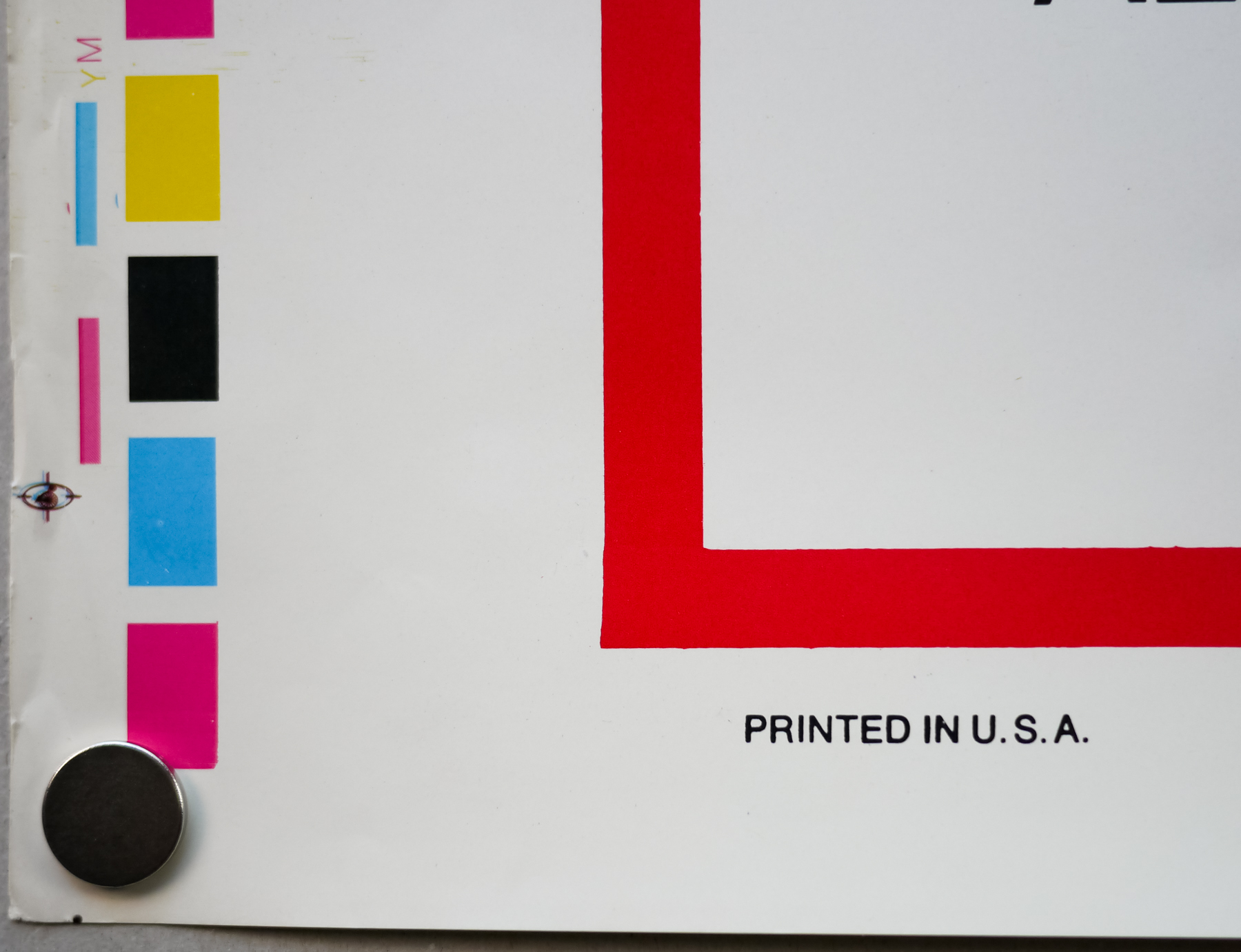
Note the colour bars on the left of the poster which indicate that this is an untrimmed printers proof one sheet. Proofs were used by the printing house to check that the colours and other details were correct. The final ready one sheets would have been trimmed down to the correct size. A handful of printers proofs have survived for a few different one sheets.

The film was recently released on blu-ray (in the correct aspect ratio) and a trailer for that can be watched here.


Platoon / one sheet / international

10.07.15

Poster Poster
Title
Platoon
AKA
--
Year of Film
1987
Director
Oliver Stone
Starring
Charlie Sheen, Willem Dafoe, Tom Berenger, Richard Edson, Keith David, Forest Whitaker, Kevin Dillon, Johnny Depp
Origin of Film
USA
Genre(s) of Film
Charlie Sheen, Willem Dafoe, Tom Berenger, Richard Edson, Keith David, Forest Whitaker, Kevin Dillon, Johnny Depp,
Type of Poster
One sheet
Style of Poster
--
Origin of Poster
International
Year of Poster
1986
Designer
Unknown
Artist
Mike Bryan
Size (inches)
27 2/16" x 41"
SS or DS
SS
NSS #
--
Tagline
--

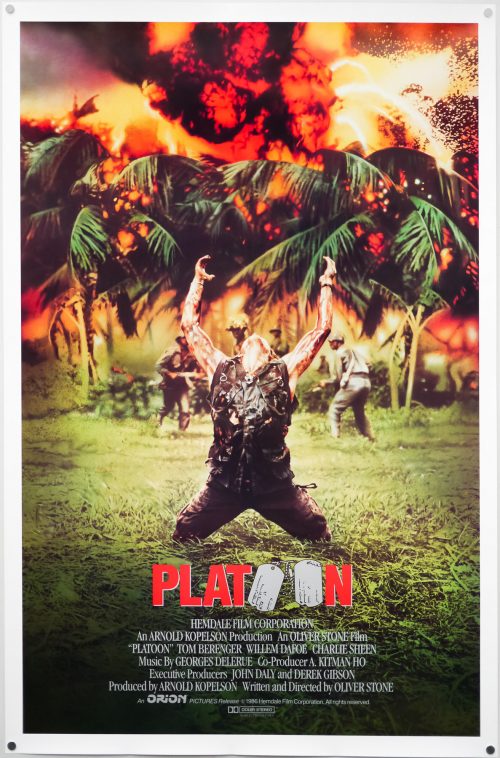
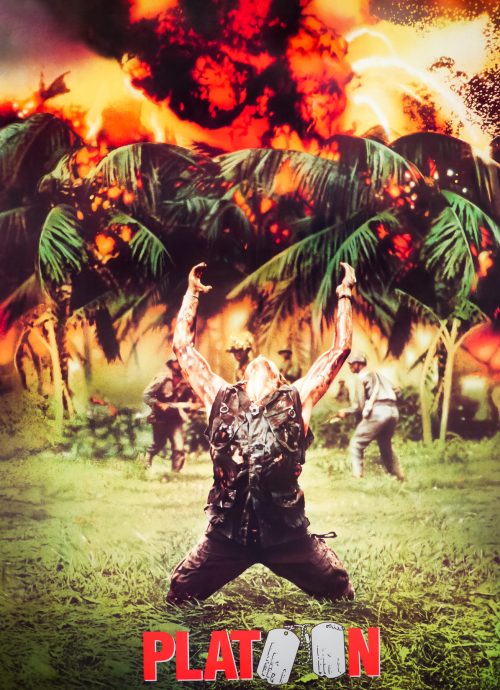
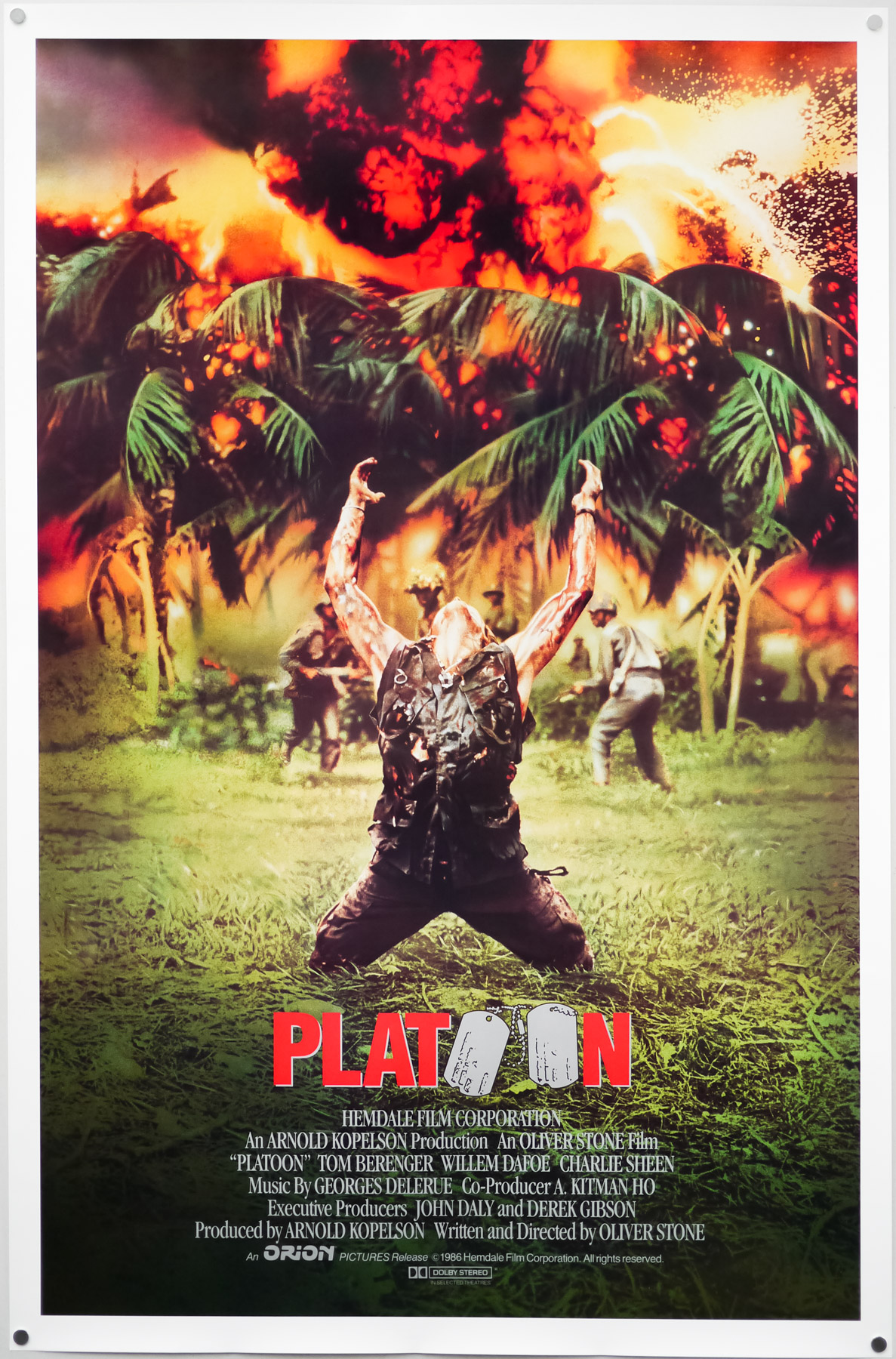
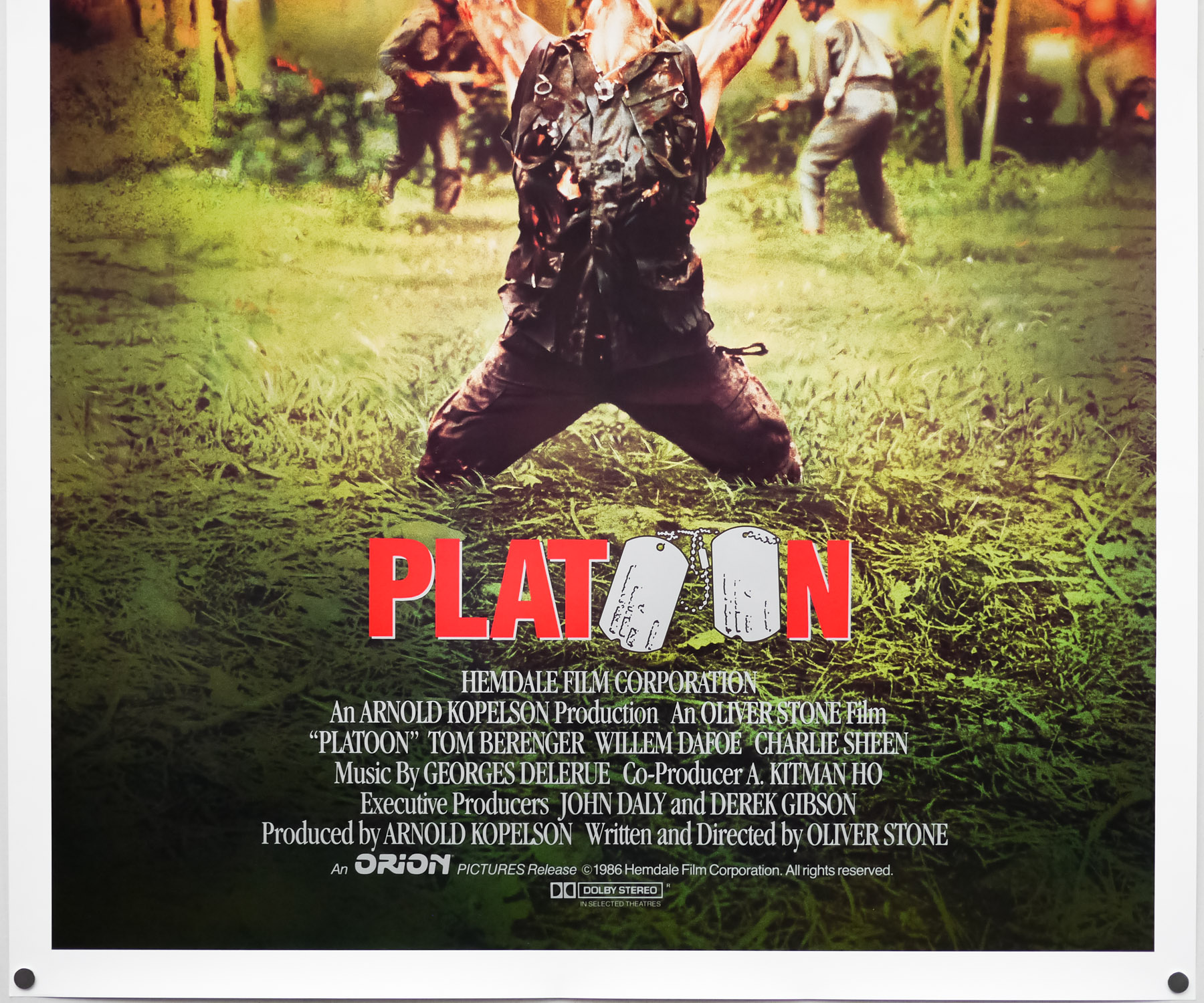
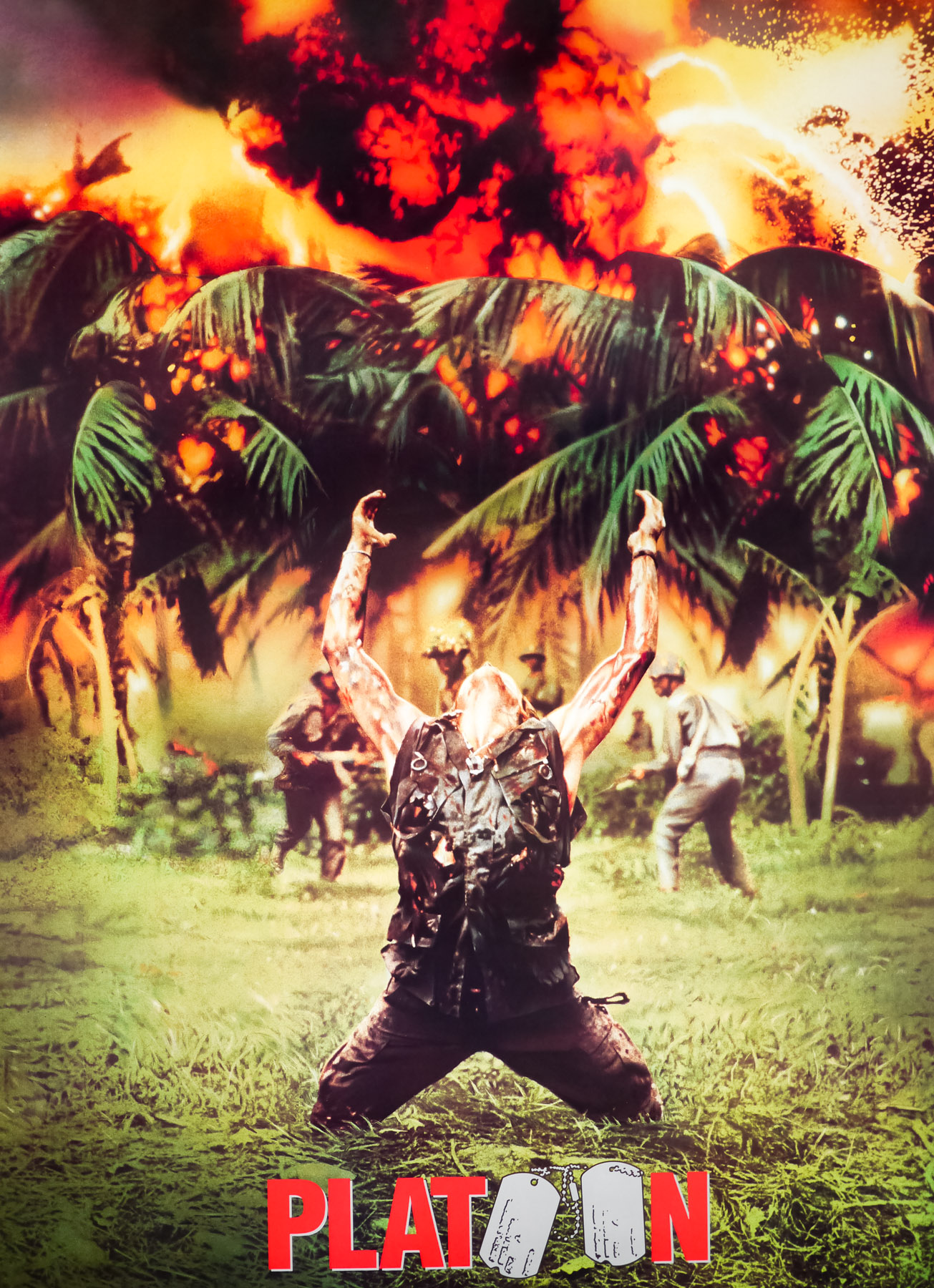
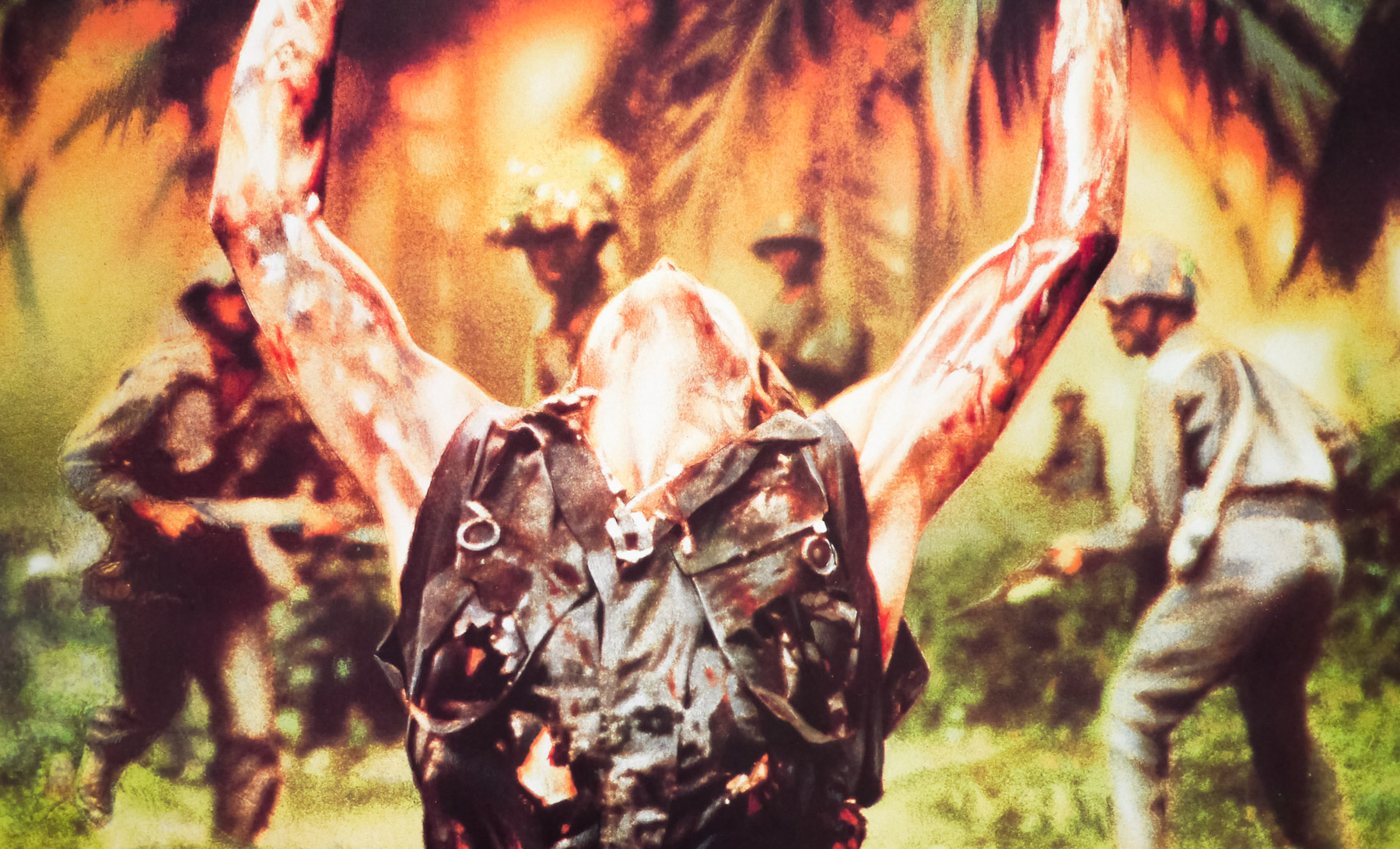
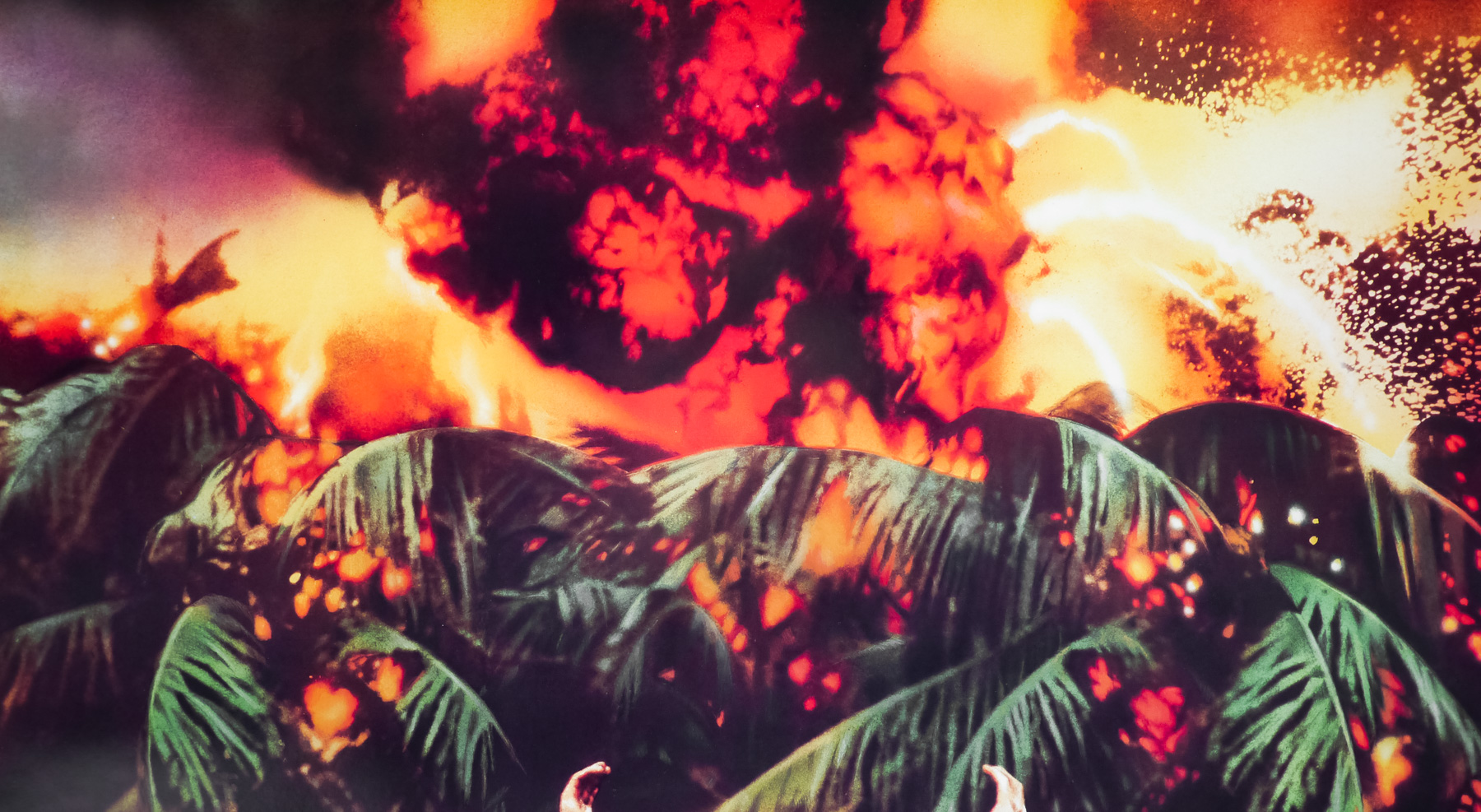
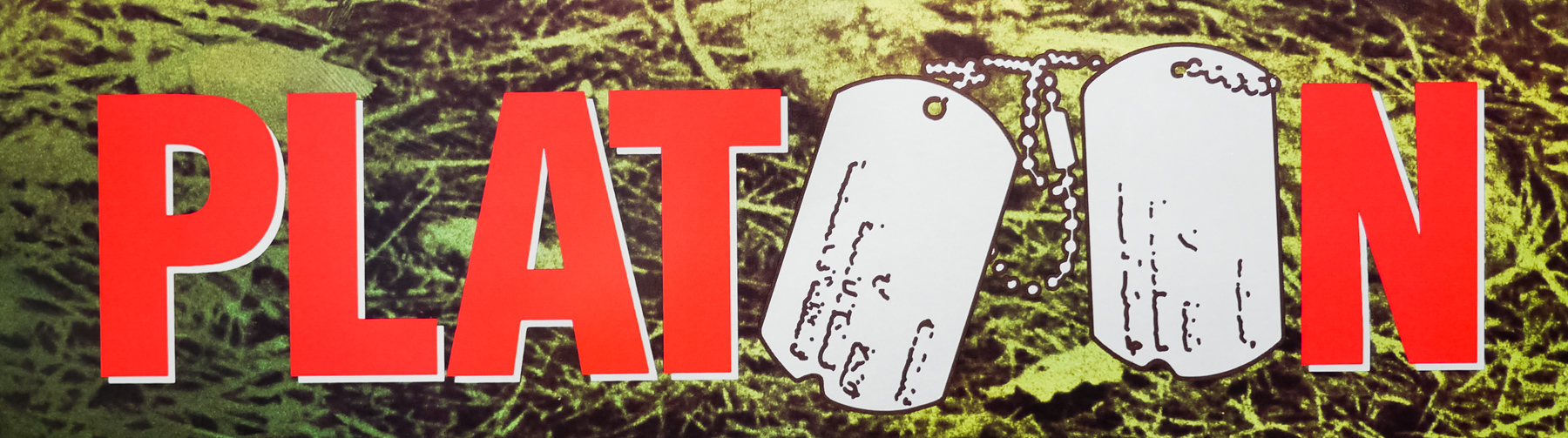
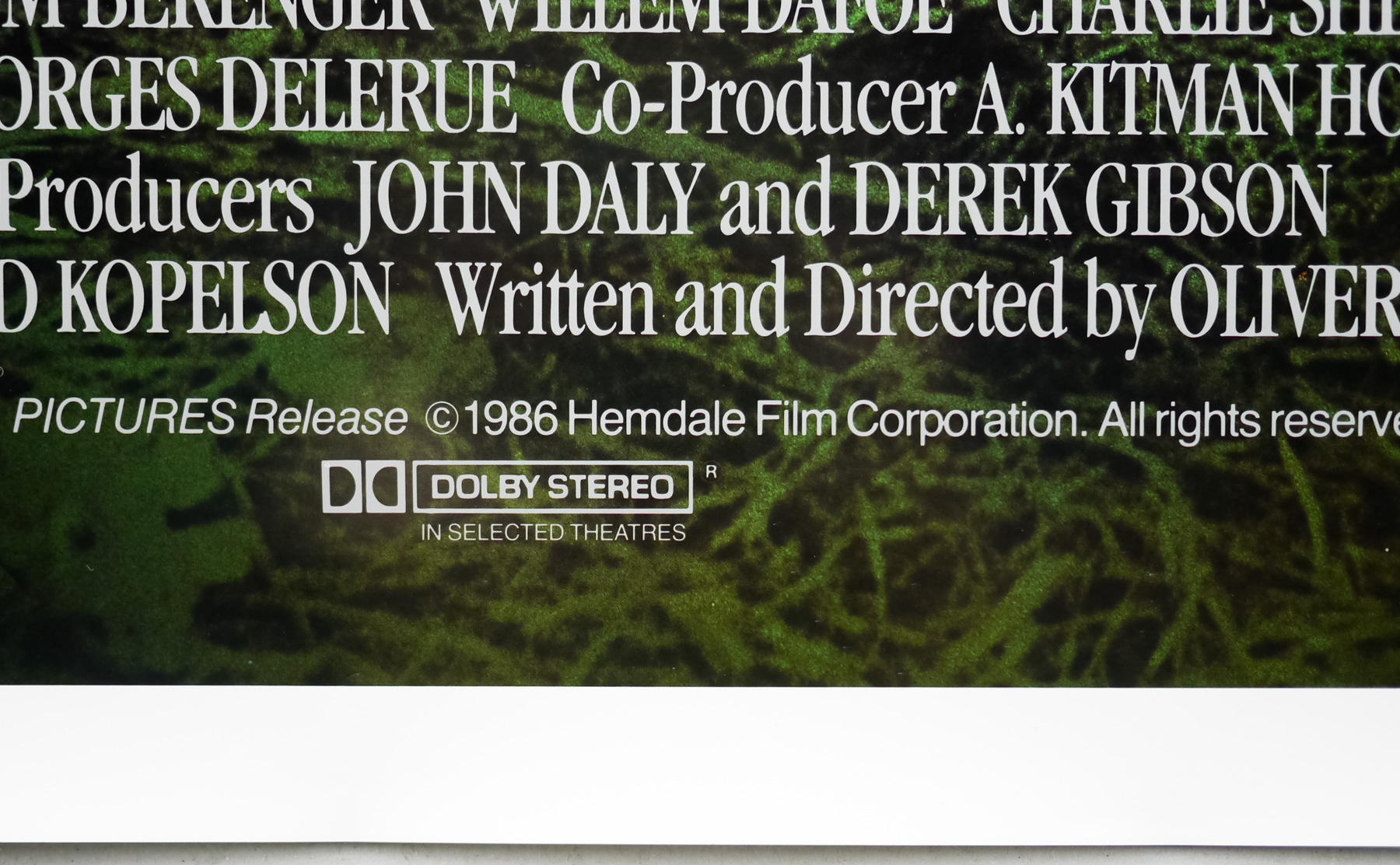
An iconic image on this one sheet for the release of Oliver Stone‘s Academy Award-winning Vietnam war classic, Platoon, one of a three films that the director made on the subject (the others being Born on the Fourth of July and Heaven & Earth). The script, which was written by Stone, is based on his own experiences as an infantryman who served in tours of duty during the Vietnam war. He had signed up in 1967 after dropping out of Yale University and specifically requested to see combat in the war that had seen the first ground troops sent to the country two years earlier. Stone served in two different divisions for over a year and was wounded twice,  receiving several medals, including a Purple Heart.

The film follows Charlie Sheen‘s army grunt Chris Taylor (a proxy for Stone) who is serving as part of Bravo Company, 25th Infantry Division near the Cambodian Border. Taylor is fresh into the field and is treated with disdain by the more experienced soldiers (an incredible ensemble of acting talent, including Willem Dafoe, Tom Berenger, Keith David and Forest Whitaker) who have all been in country for months, and he is quickly made aware that his presence is inconsequential. After a few skirmishes in which some members of the division are killed, Taylor is eventually accepted into the group and discovers the grinding boredom and rampant drug use amongst his fellow soldiers. Tensions between two sergeants, the ill-tempered, battle-scarred Barnes (Berenger) and the pleasant, more reasonable Elias (Dafoe) reach breaking point following an incident involving innocent villagers. Upon returning to base, the issue of a court-martial for illegal killing is raised and when the division is sent out on their next patrol, things reach boiling point, leaving Taylor fighting to survive against the enemy as well as members of his own team.

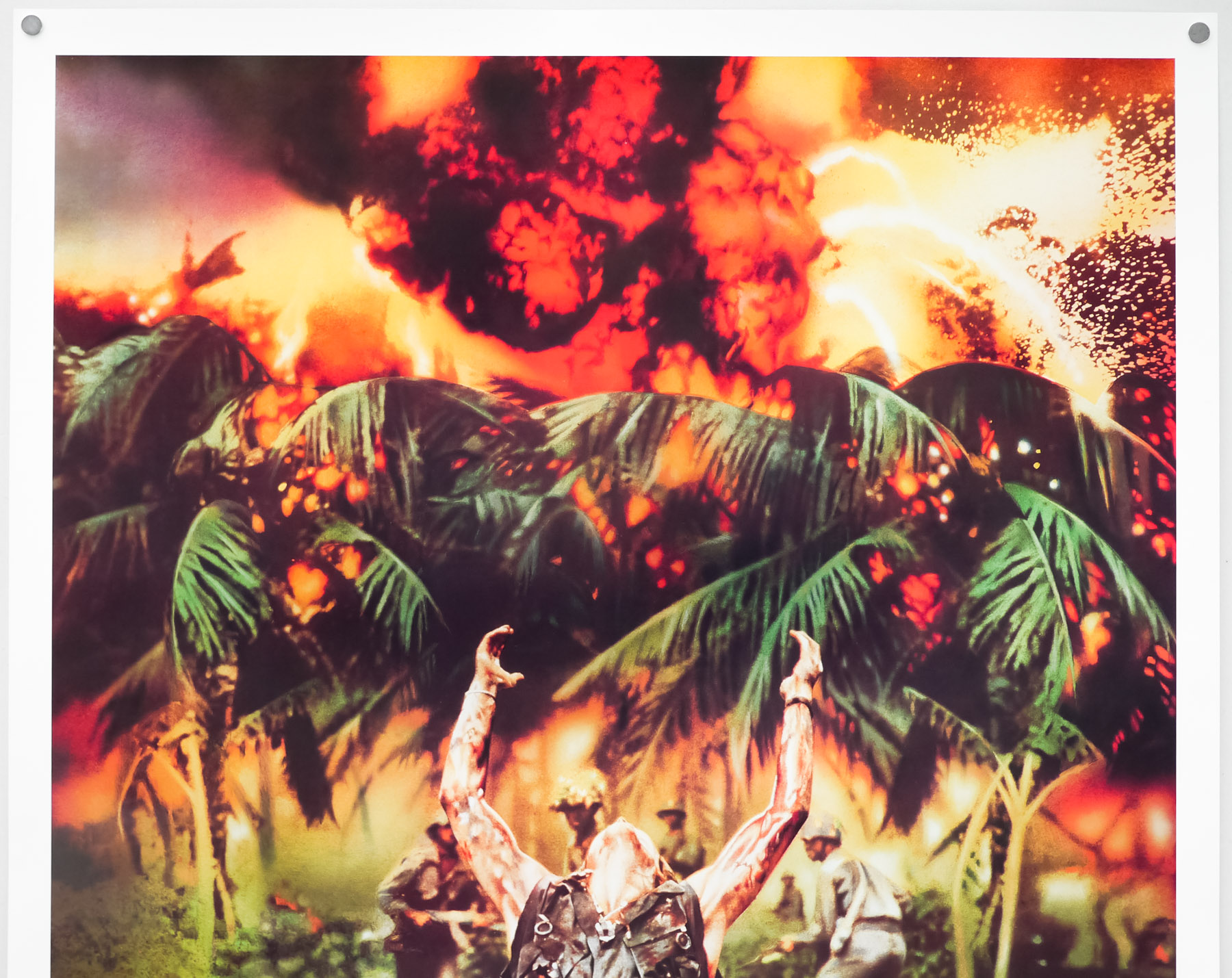
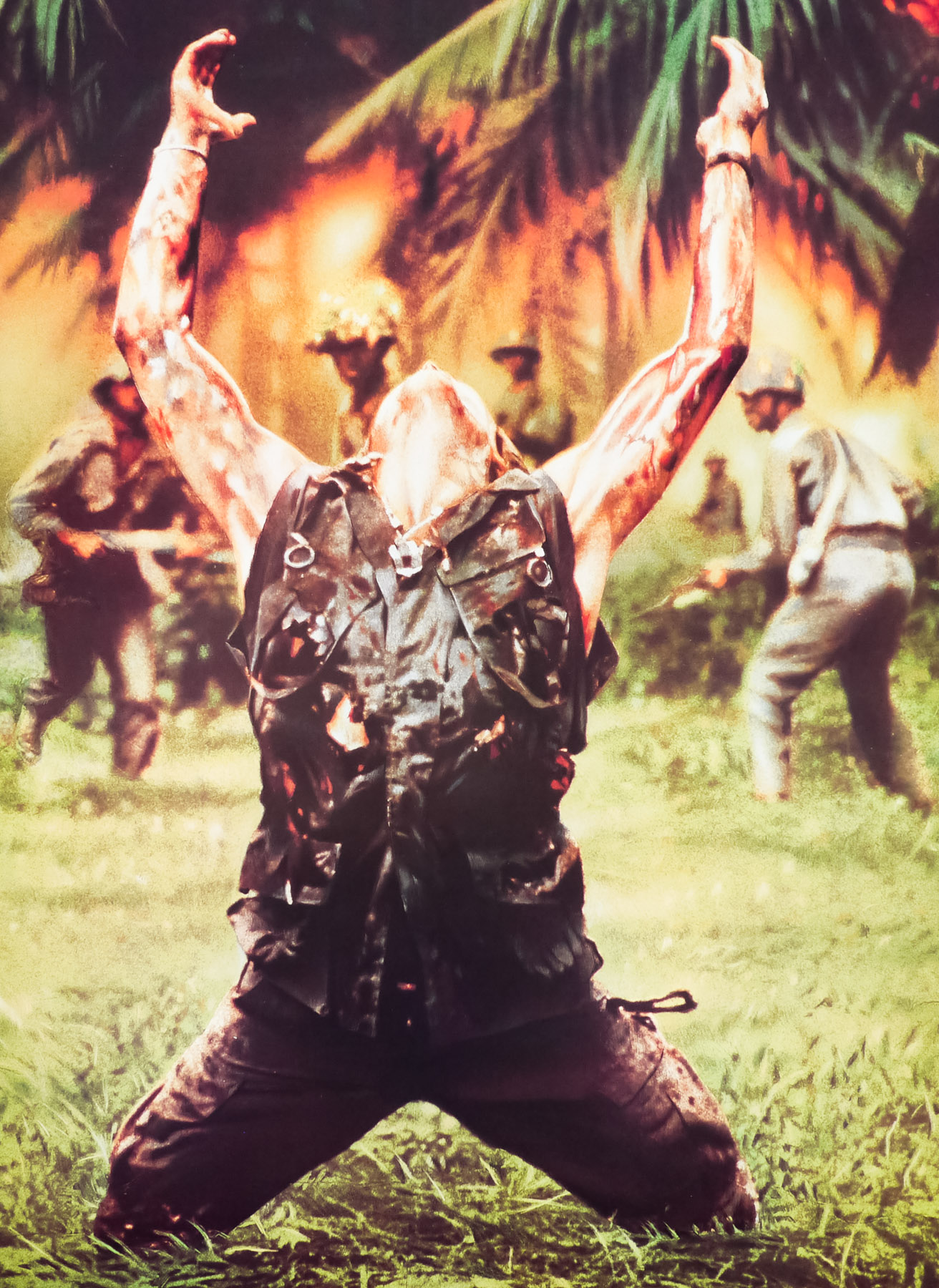
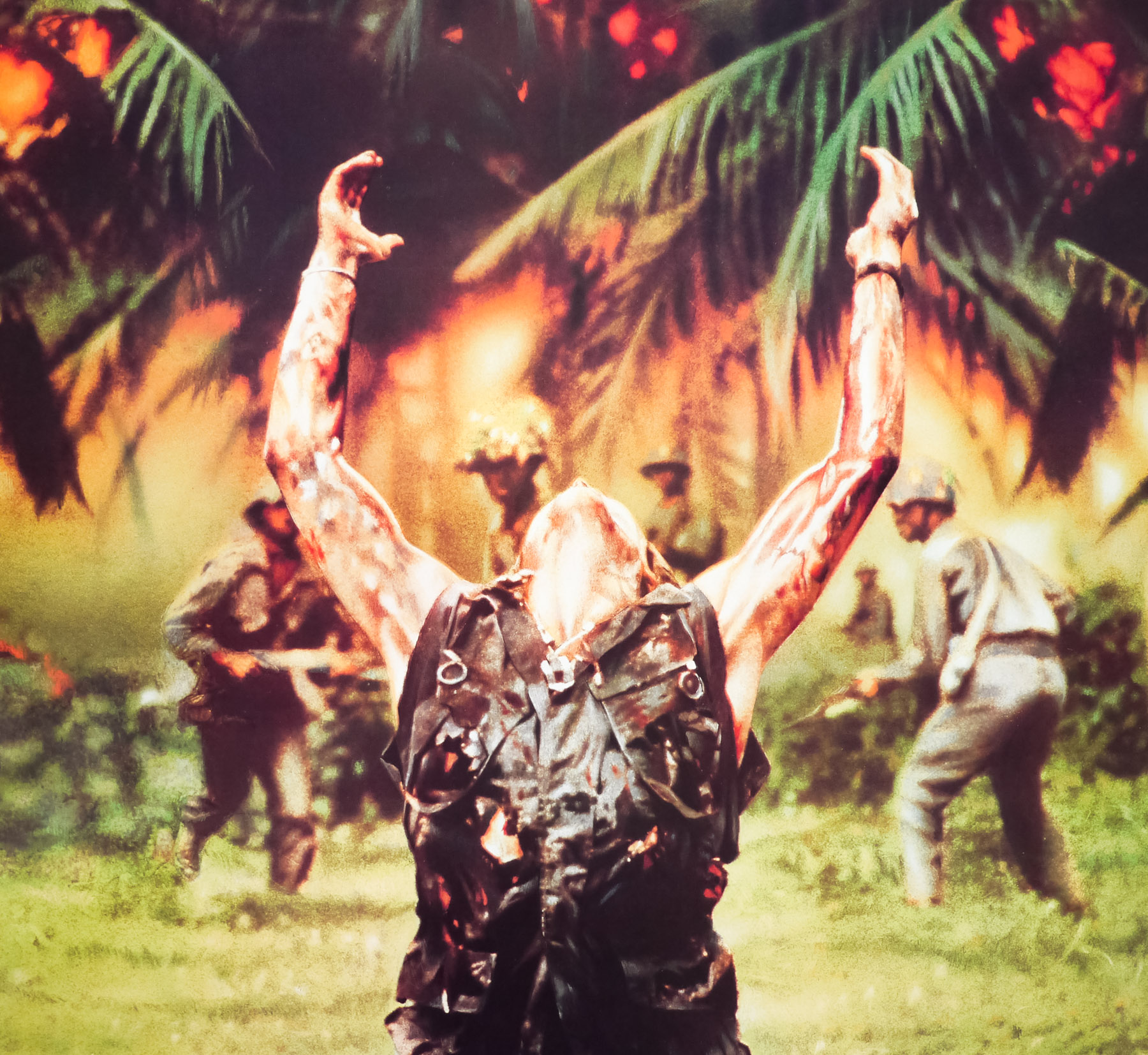
This one sheet features a shot from a pivotal scene in the film where Elias is left behind during an evacuation to escape from advancing Vietcong troops. The shot was used on most posters for the film’s release across the board, but not on the US one sheet. This poster is in fact a one sheet printed for use in English-speaking international countries (note the lack of MPAA rating). It most commonly appears without the white border and measuring 25″ x 39″ but this is the full-size 27″ x 41″ bordered version.

I had always assumed the image was a photograph but I only recently discovered it’s the work of the American artist Mike Bryan who also painted the fantastic and iconic Robocop one sheet. Heritage auction house sold the original paintings for both posters in March 2014 and included with each was a note from Bryan himself. The platoon one can be read here.

Nighthawks / one sheet / UK

16.10.13

Poster Poster
Title
Nighthawks
Year of Film
1981
Director
Bruce Malmuth
Starring
Sylvester Stallone, Billy Dee Williams, Lindsay Wagner, Persis Khambatta, Nigel Davenport, Rutger Hauer, Hilary Thompson, Joe Spinell, Walter Mathews
Origin of Film
USA
Genre(s) of Film
Sylvester Stallone, Billy Dee Williams, Lindsay Wagner, Persis Khambatta, Nigel Davenport, Rutger Hauer, Hilary Thompson, Joe Spinell, Walter Mathews,
Type of Poster
One sheet
Style of Poster
--
Origin of Poster
UK
Year of Poster
1981
Designer
Unknown
Artist
Ron Fenton (unconfirmed)
Size (inches)
27 2/16" x 39 14/16"
SS or DS
SS
Tagline
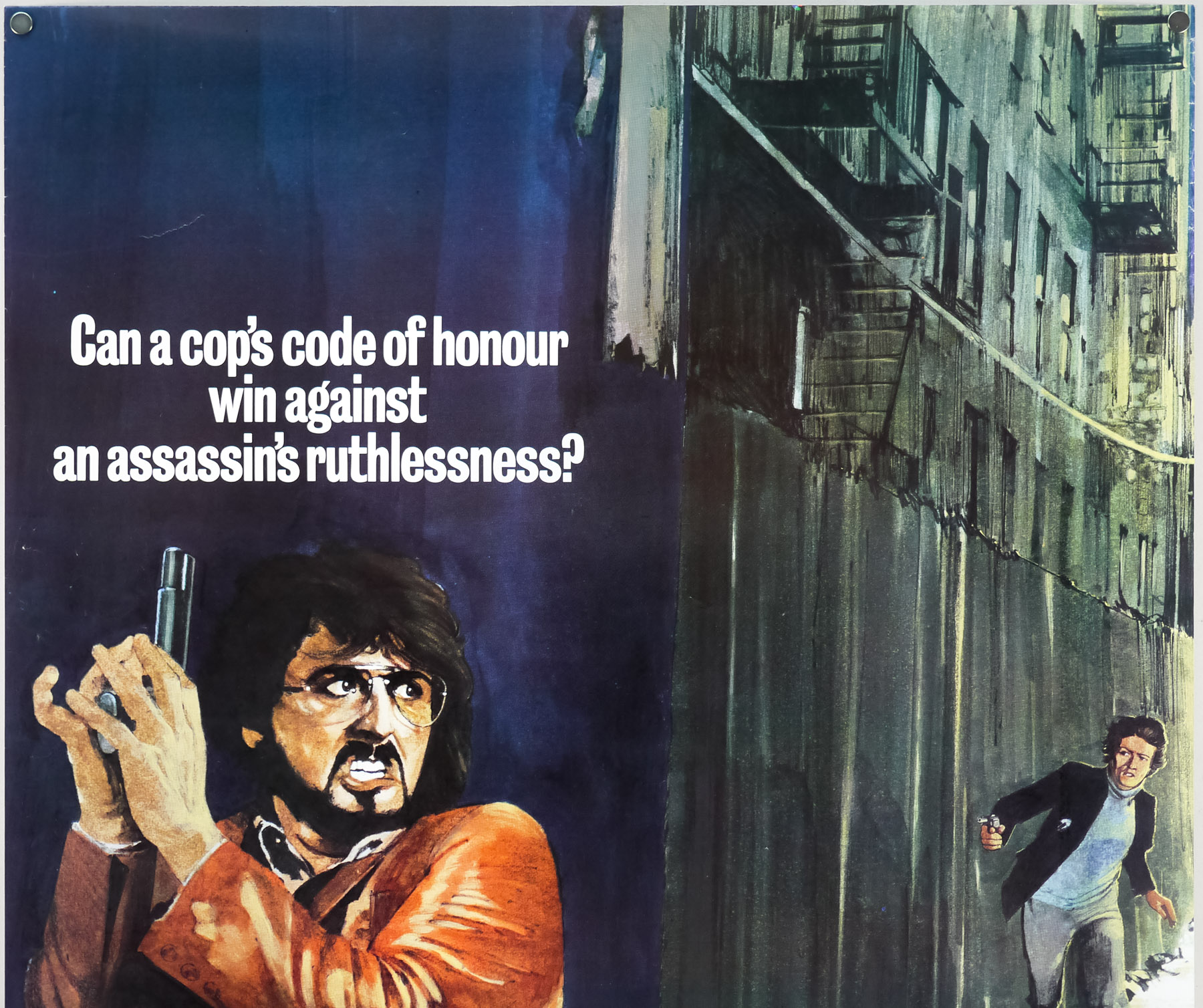
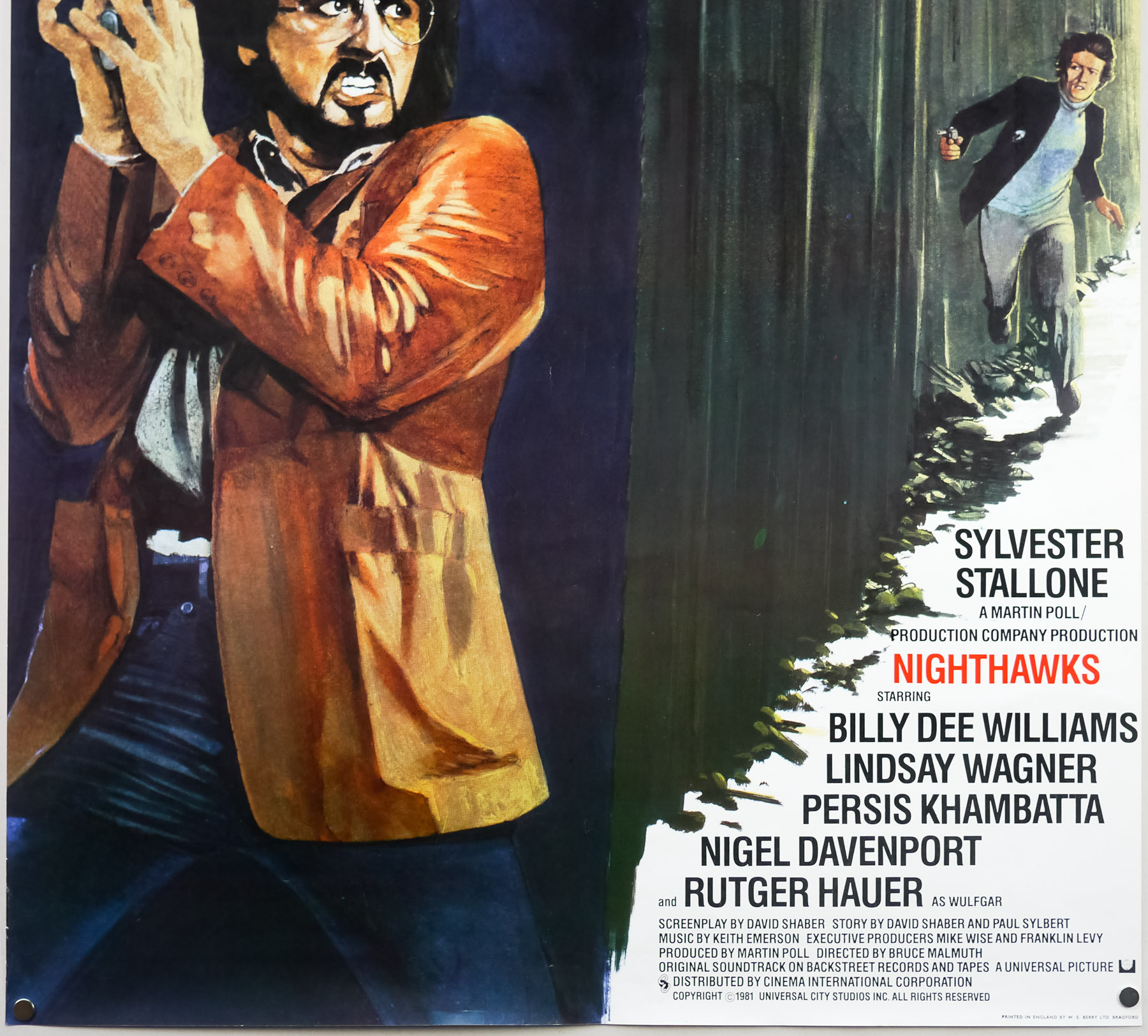
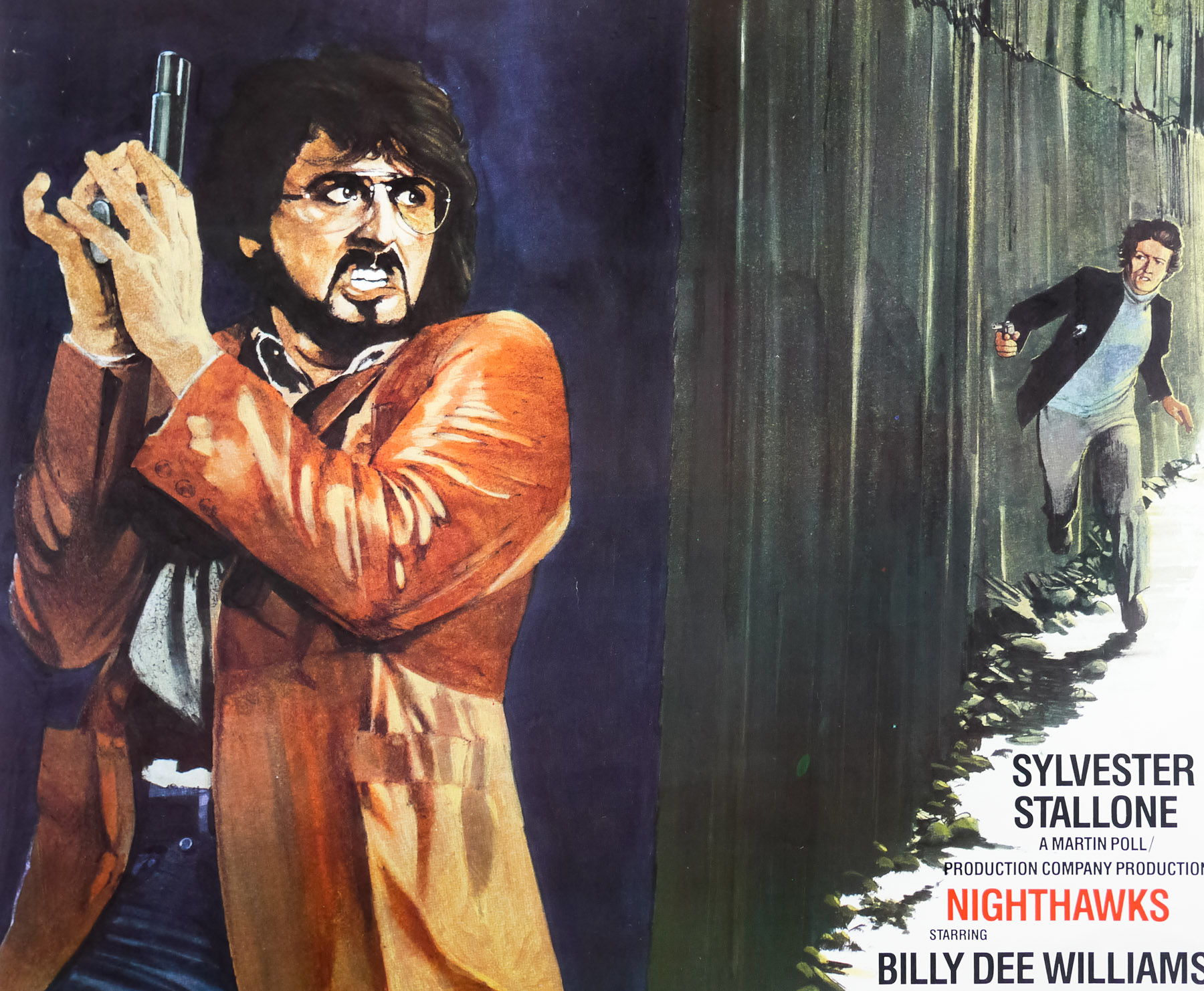
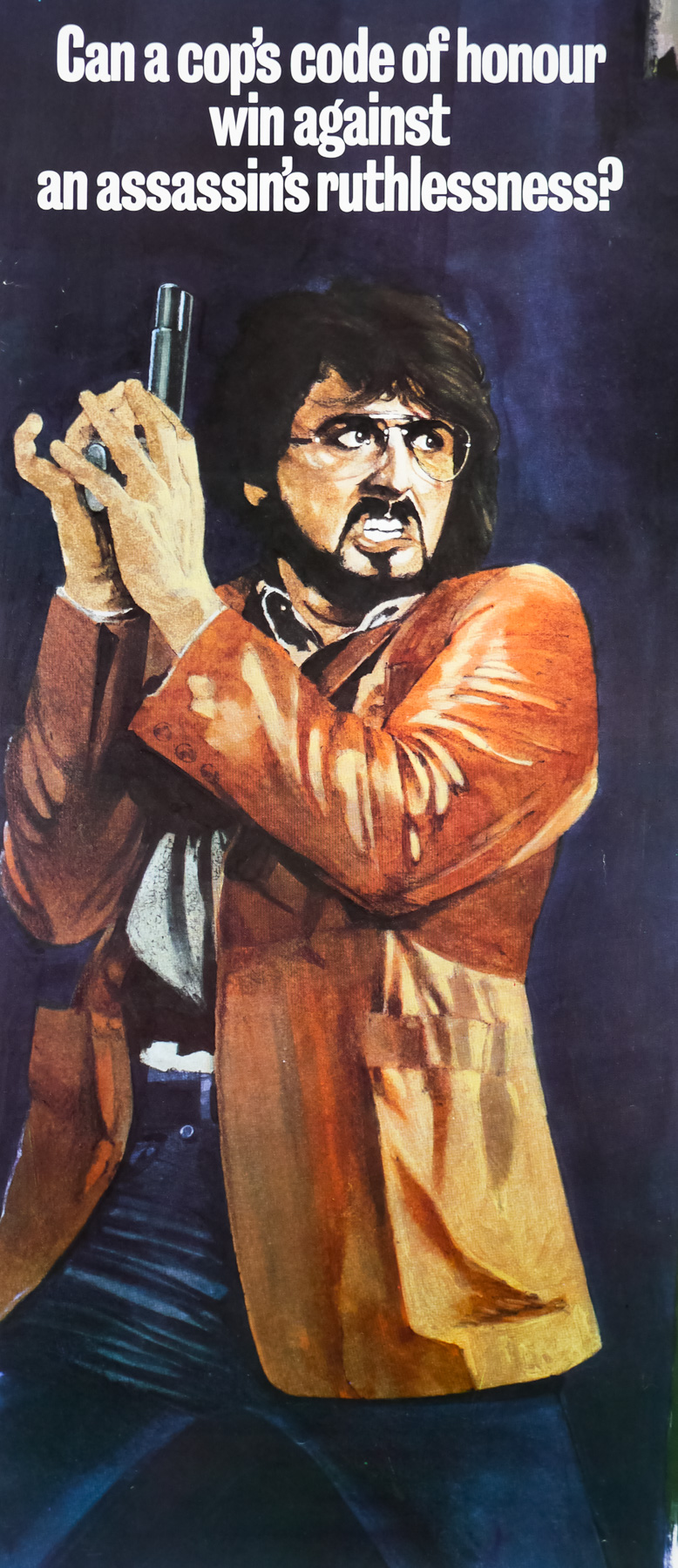
Can a cop's code of honour win against an assassin's ruthlessness?

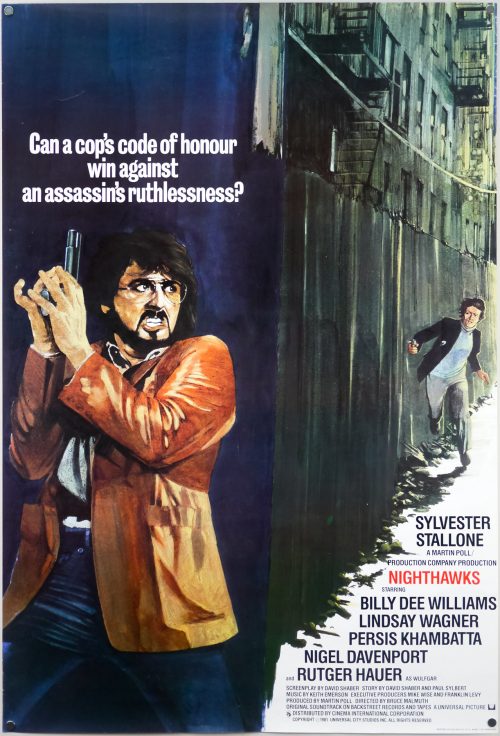
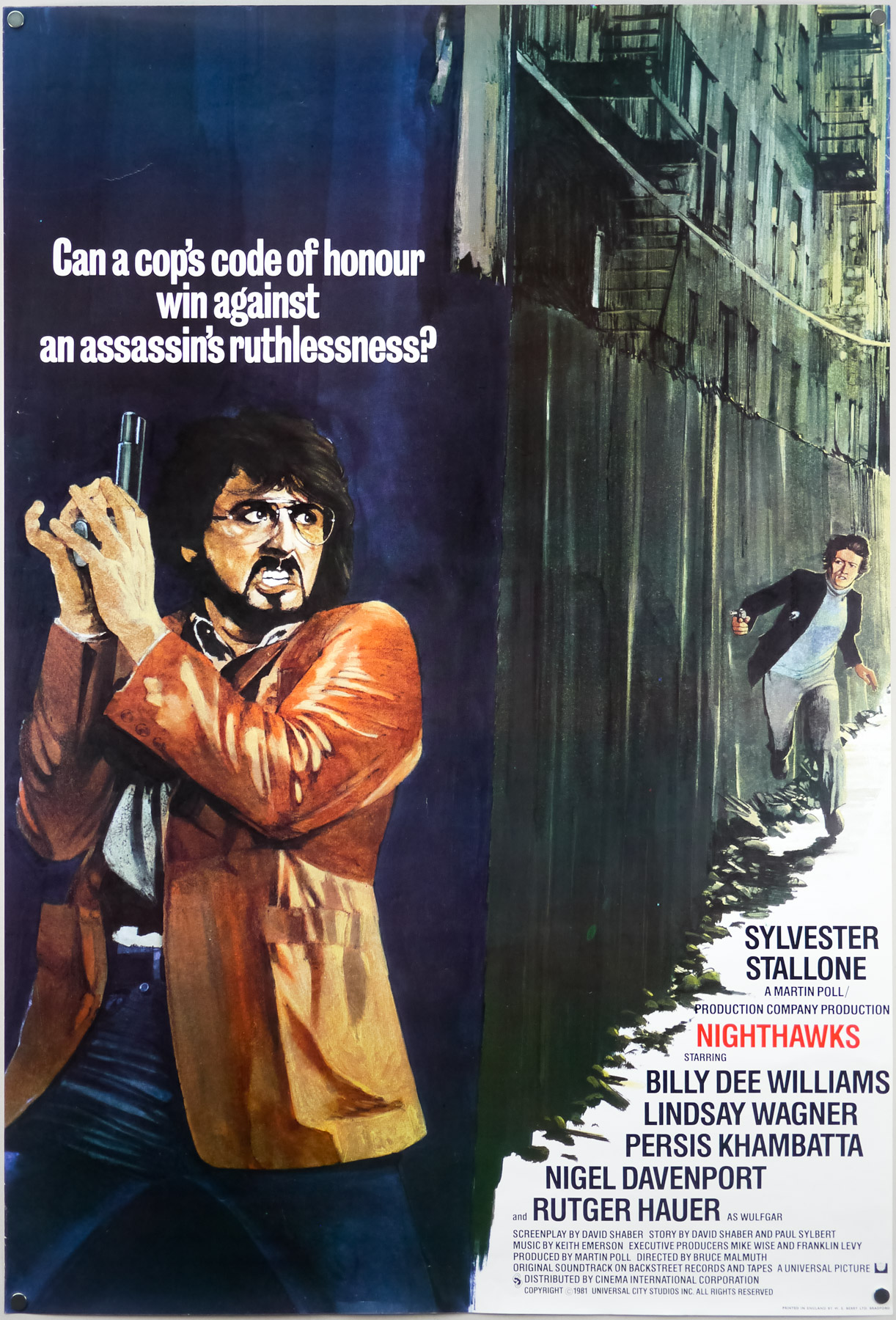
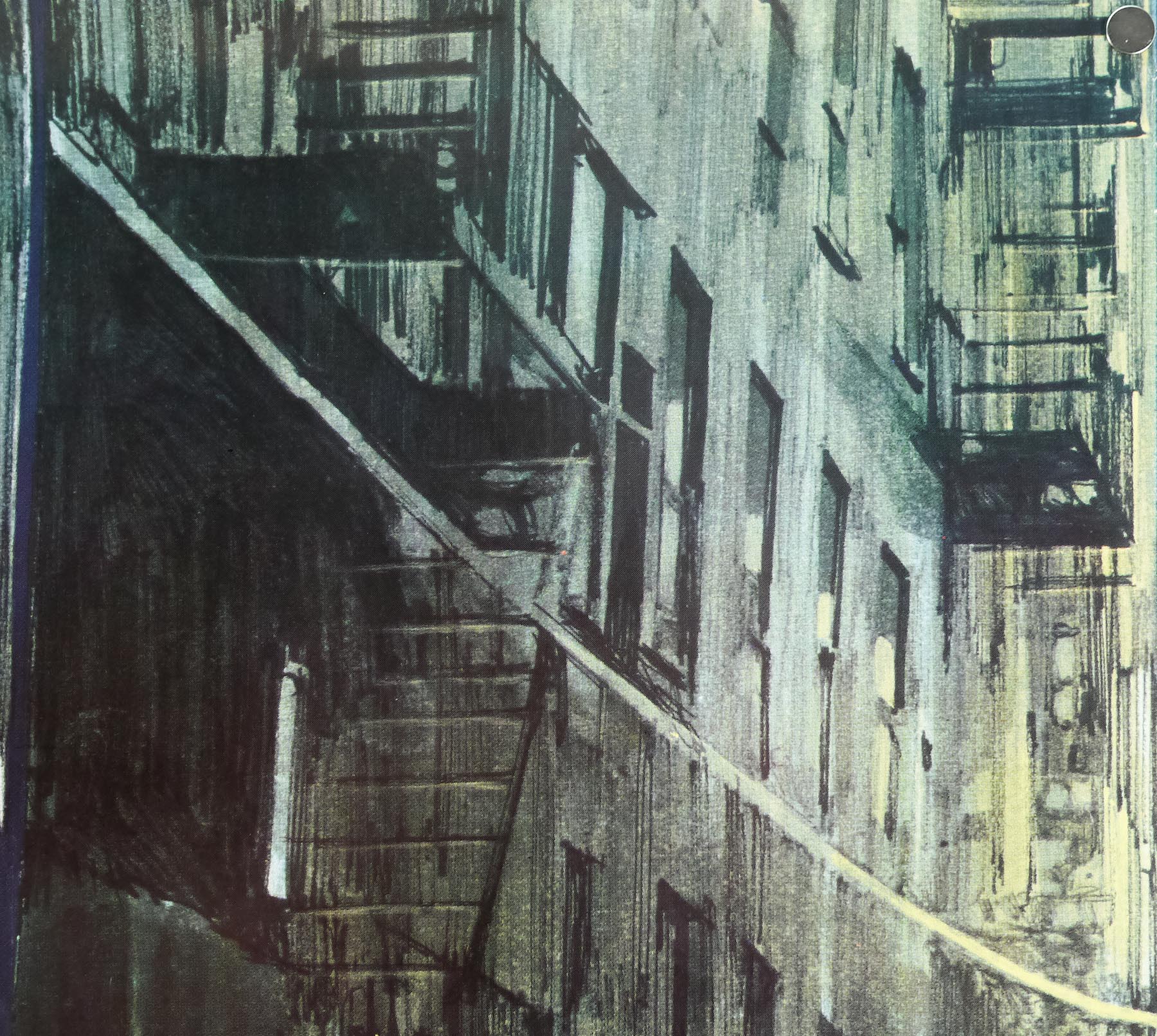
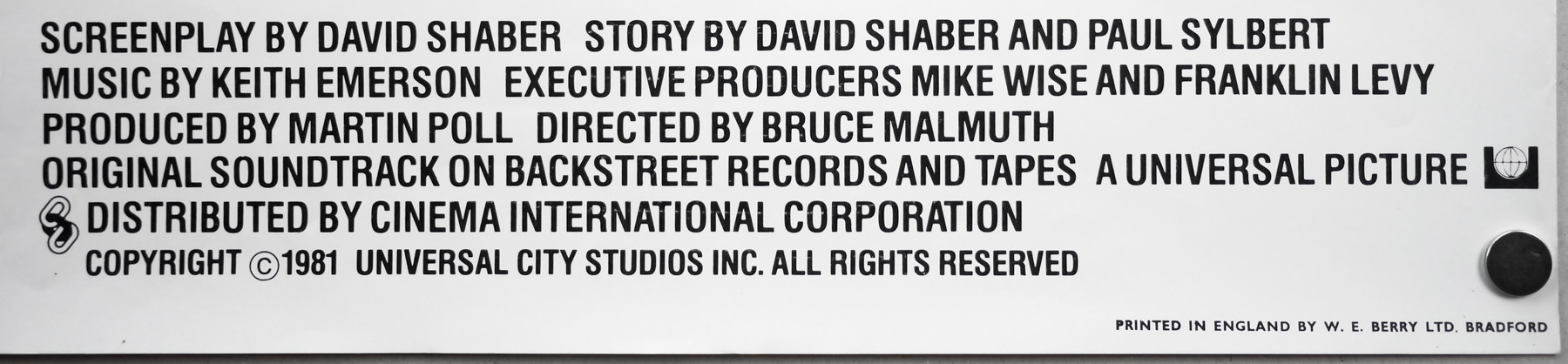
This is the scarce UK one sheet for the release of the little-seen 1981 thriller Nighthawks, which stars Sylvester Stallone as a New York City detective who, along with partner Billy Dee Williams, is assigned to a team charged with apprehending an international terrorist played by Rutger Hauer. This is arguably Stallone’s last starring role where he was playing a ‘normal’ man, rather than the invincible tough guys he would later be most associated with – First Blood (Rambo) would be released a year after this film. Nighthawks also marked the first Hollywood role for Hauer following a run of Paul Verhoeven directed features in his native Holland – only a year later he would be starring in arguably his most iconic role as the replicant Roy Batty in Blade Runner.

Nighthawks starts with a bang as Hauer’s international terrorist Wulfgar Reinhardt blows up a department store in London (a scene actually filmed on location in Clapham, I believe) in what is implied to be a job for the IRA. When the bomb causes more carnage than his employers desired – several children are killed – Wulfgar decides to travel to New York City where he plans to carry out a series of attacks to advertise his skills to potential future benefactors. Stallone’s brilliantly named detective Deke DeSilva and his partner Matthew Fox (Dee Williams) are taken off their usual street work and given to the task force charged with hunting down and ‘terminating’ Wulfgar.

What follows is a very solid thriller featuring several well-staged chases and a tense showdown centred around a cable car. The film makes excellent use of real locations and features some great stunt work, particularly from Stallone who apparently did all of his own without the use of a double. It’s certainly an impressive debut feature from director Bruce Malmuth and Hauer, Stallone and Billy Dee Williams give very solid performances that make up for some weaknesses in the supporting cast.

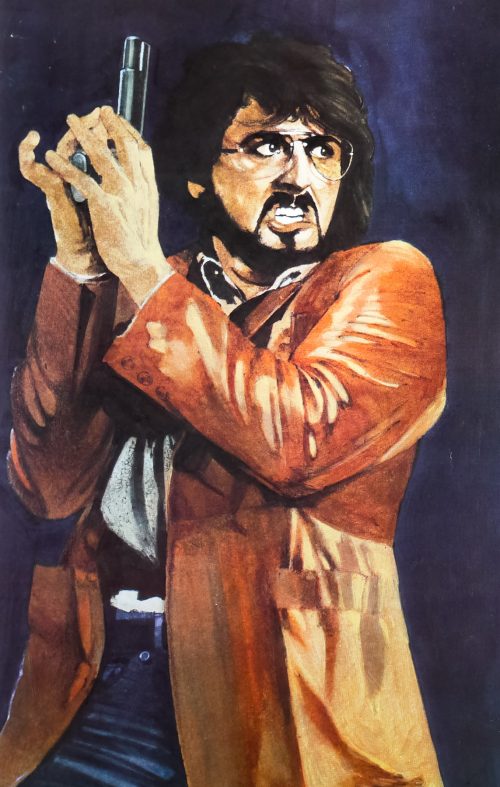
This one sheet features UK-exclusive artwork that was also used on the quad. I’m not 100% certain but I believe it to be the work of an artist called Ron Fenton who also worked on the one sheet for The Long Good Friday that was printed only a year before. Check out the pictures on this page to see the similarities. The only thing is that Nighthawks is missing the signature that Fenton scrawled on the LGF one sheet. If anyone knows for sure that Fenton can be credited with the poster please get in touch.

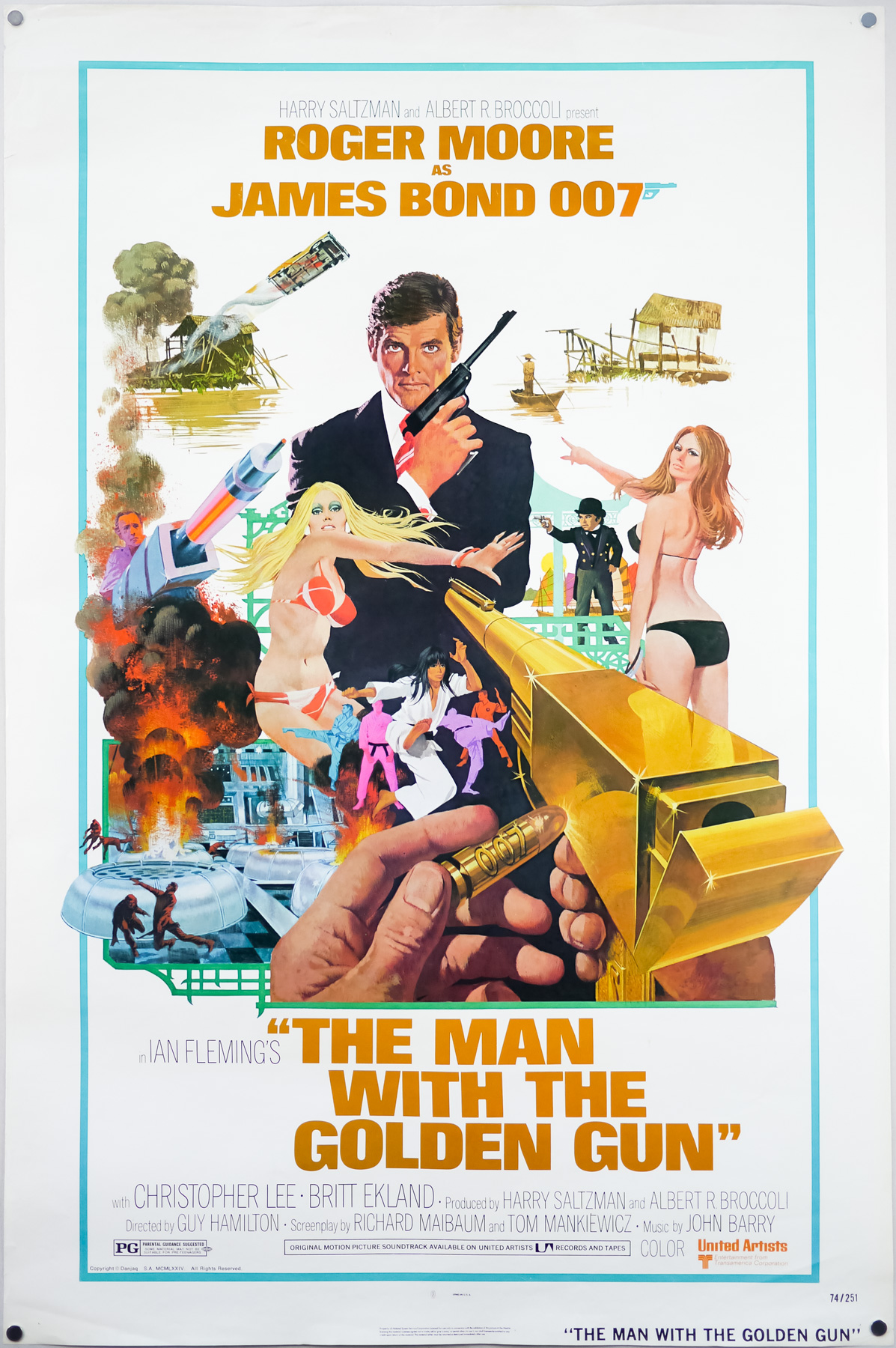
The Man With The Golden Gun / one sheet / USA

17.12.14

Poster Poster

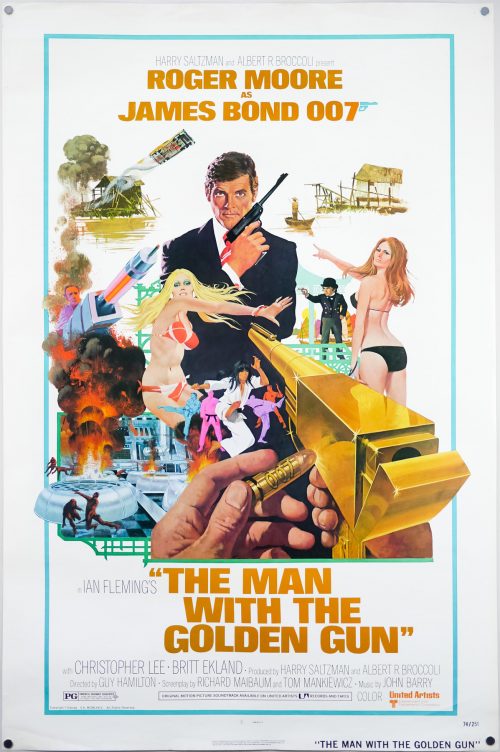
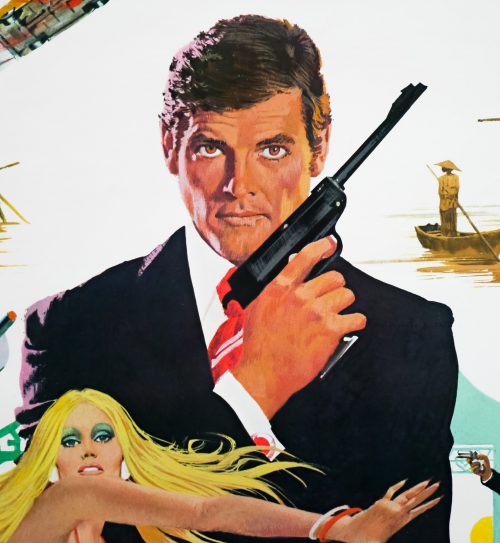
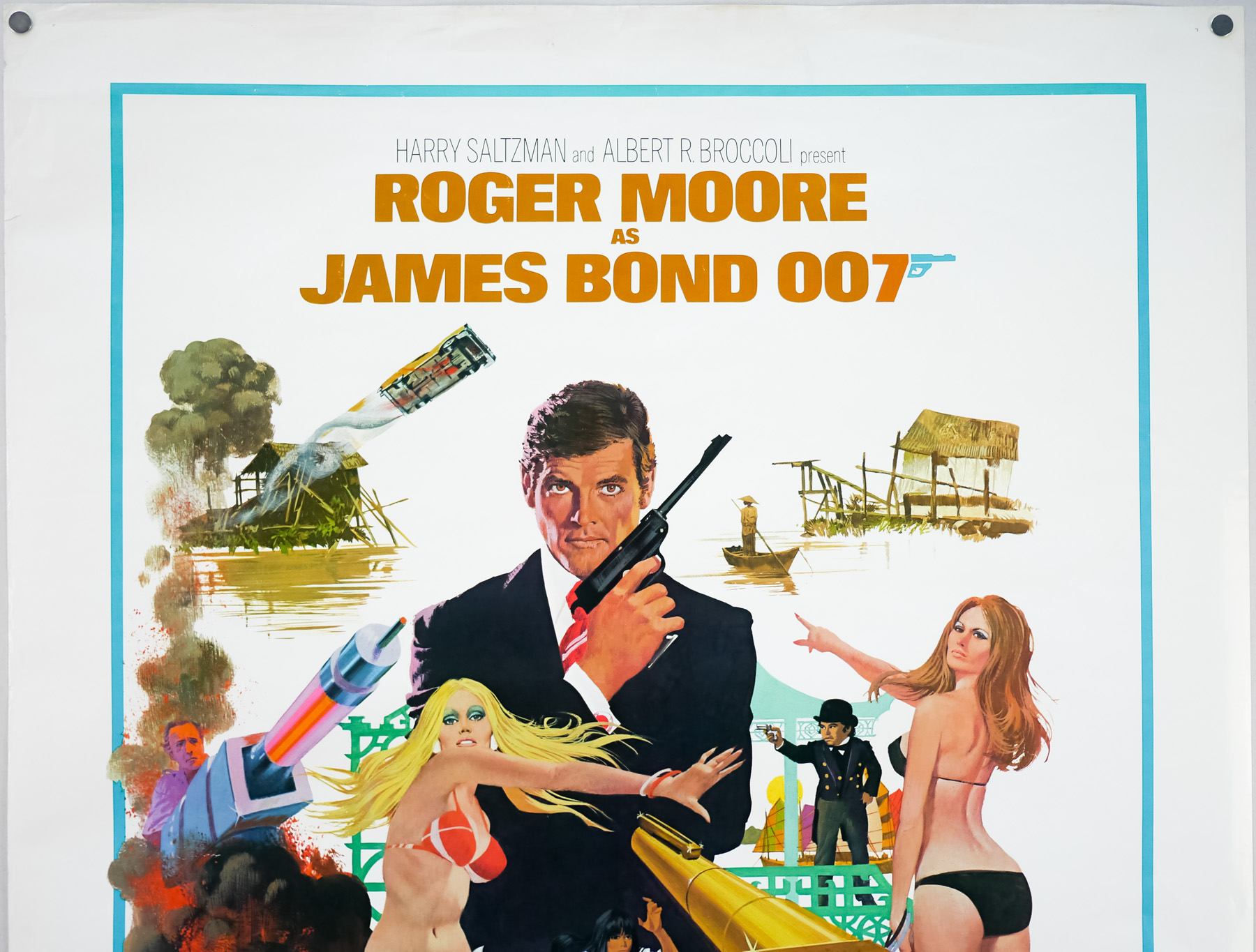
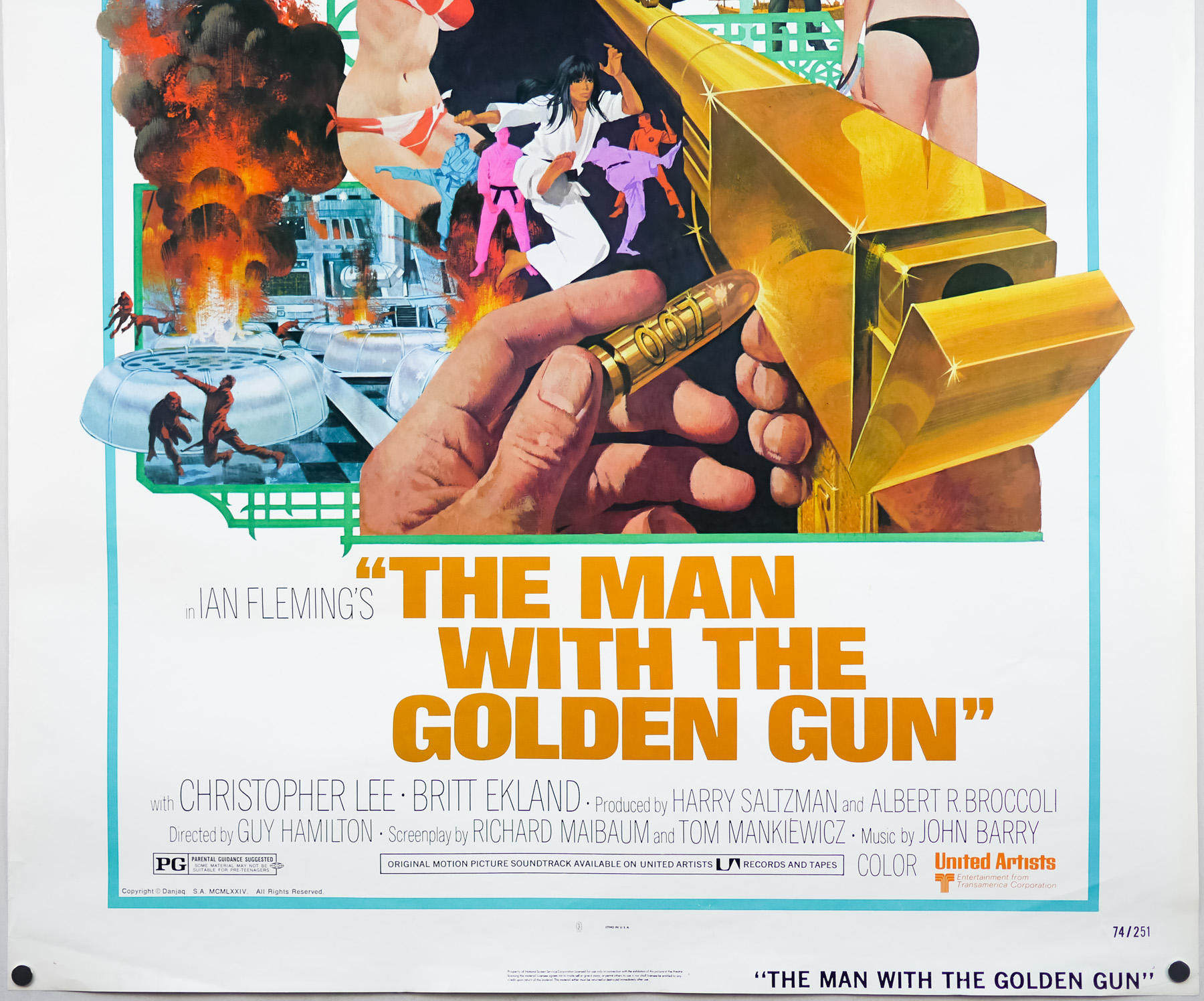
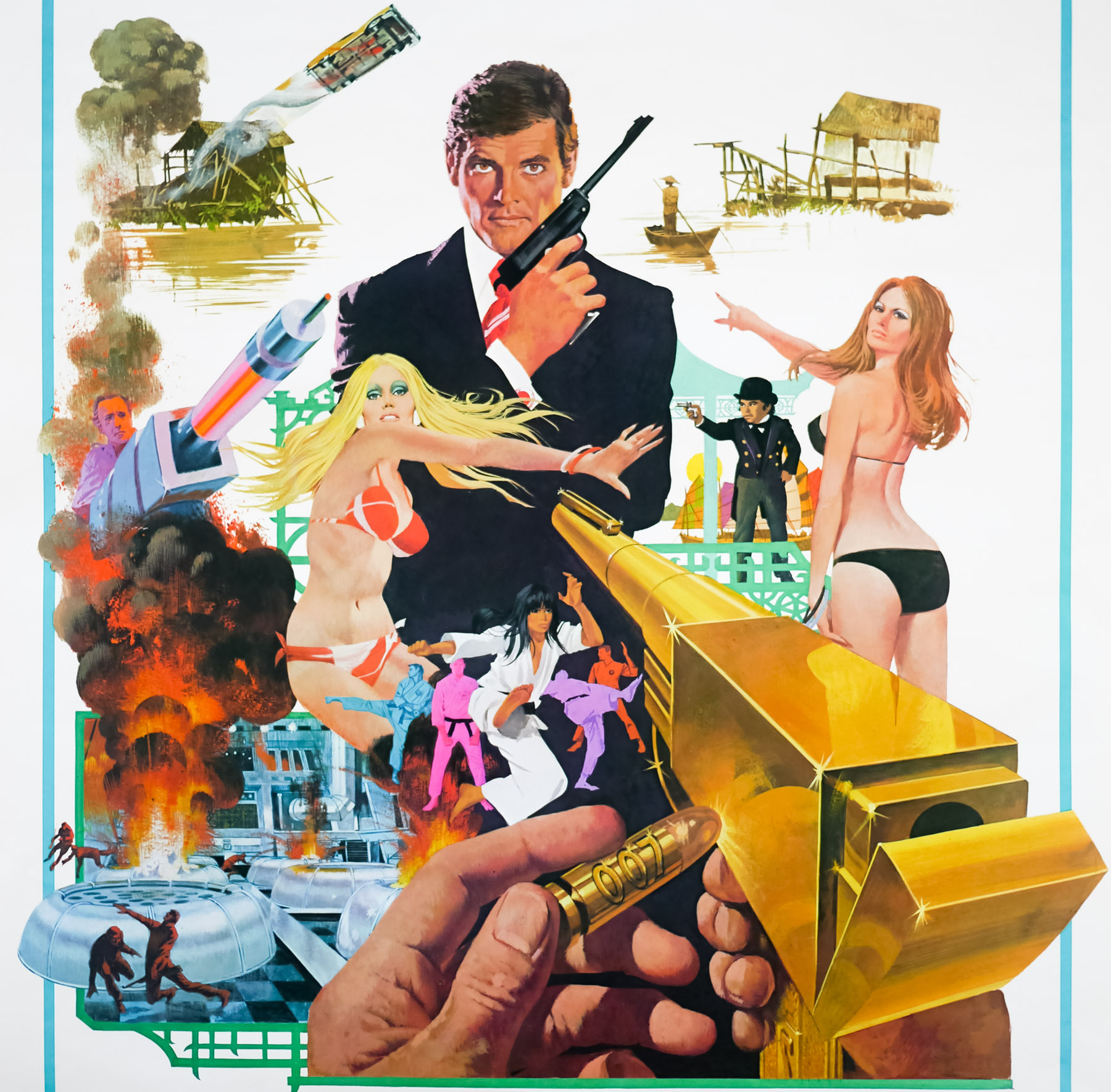
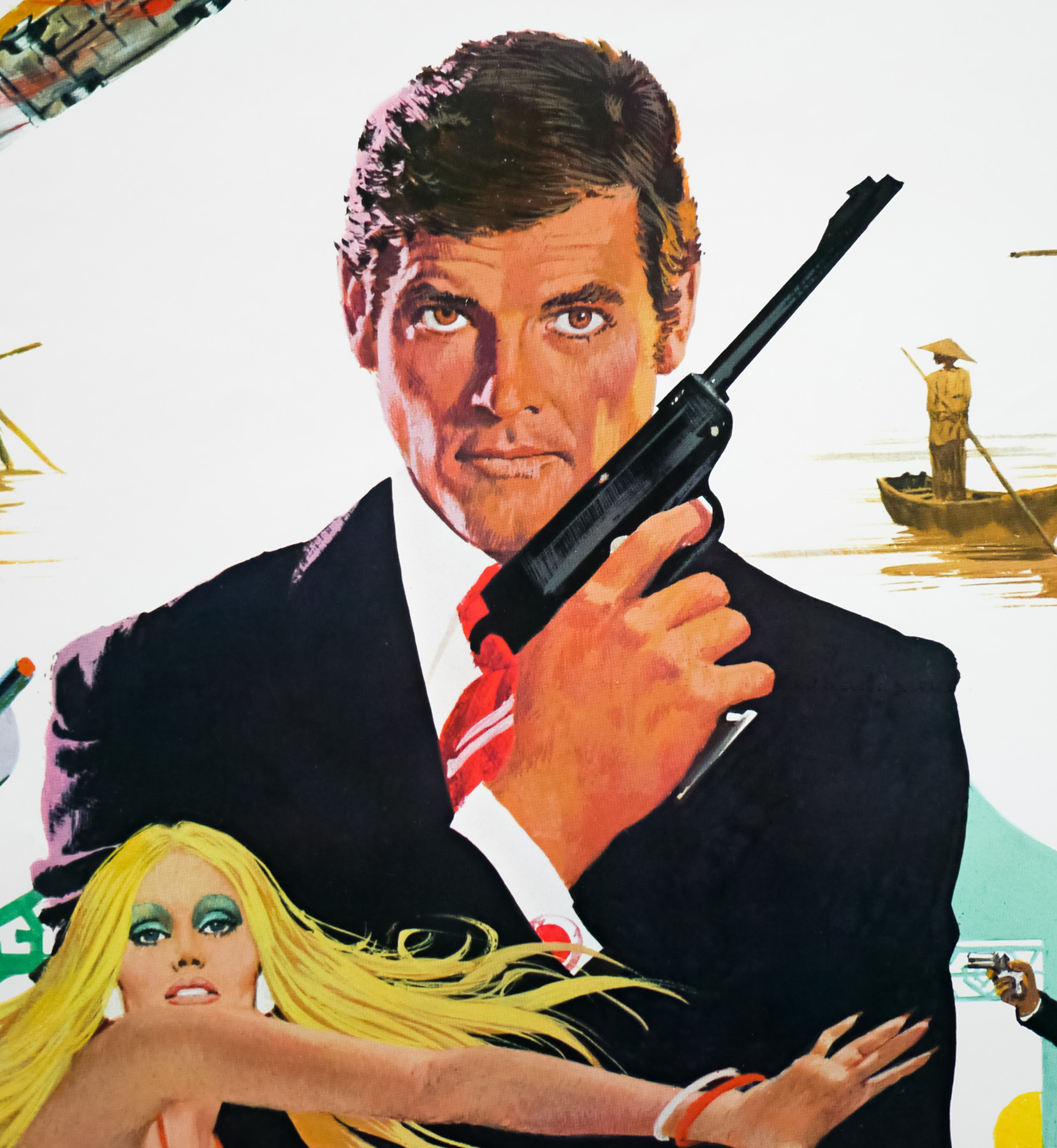
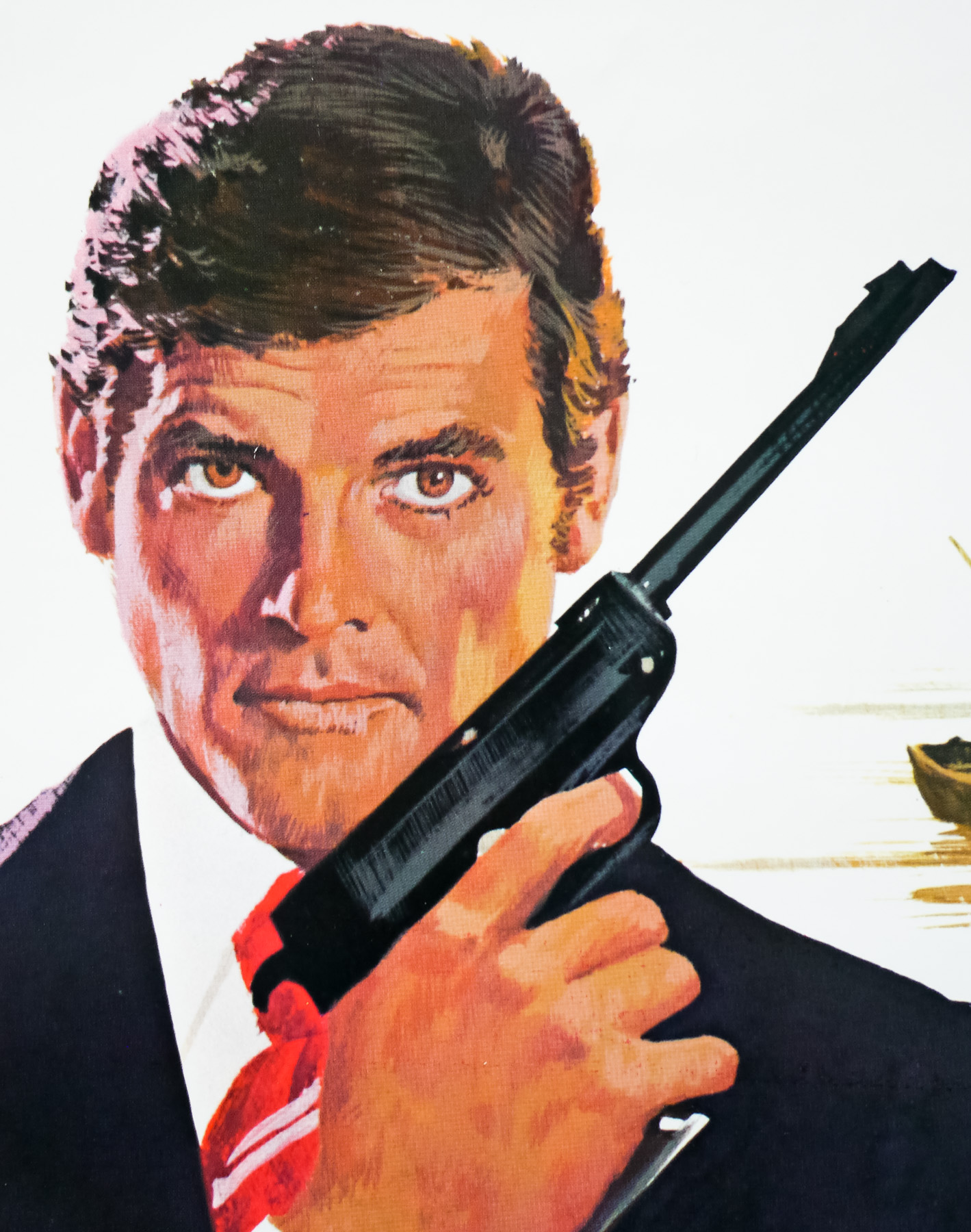
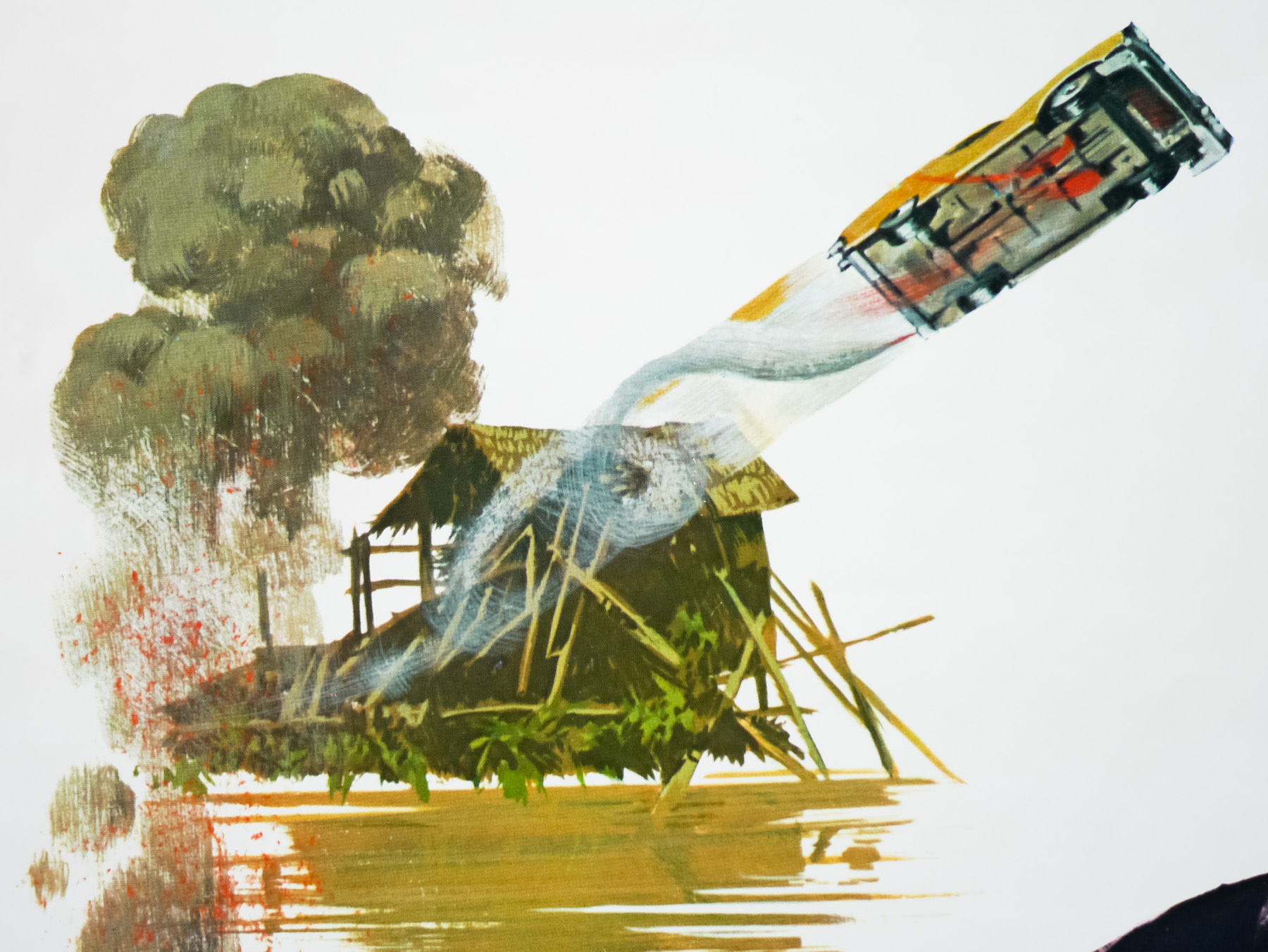
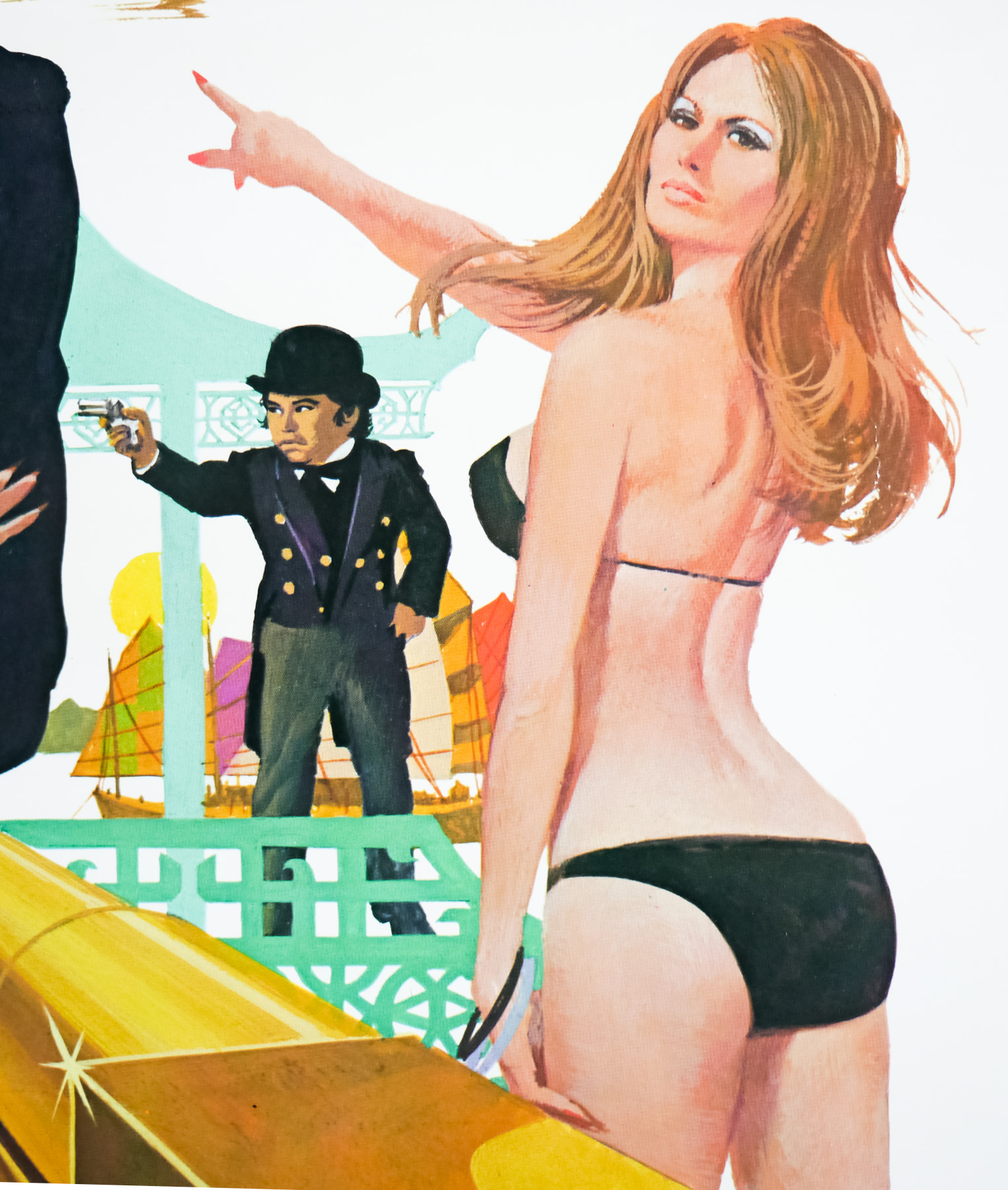
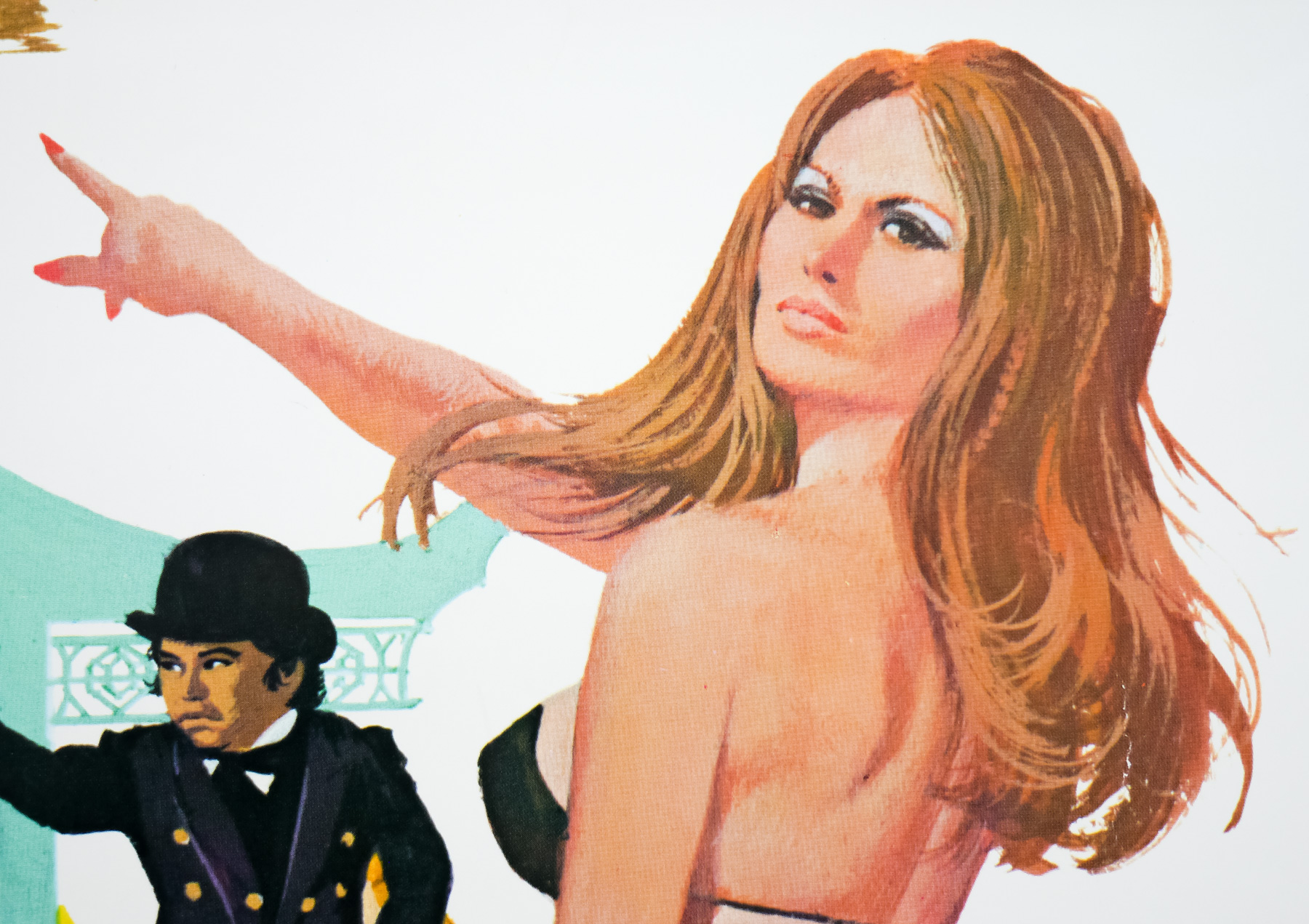
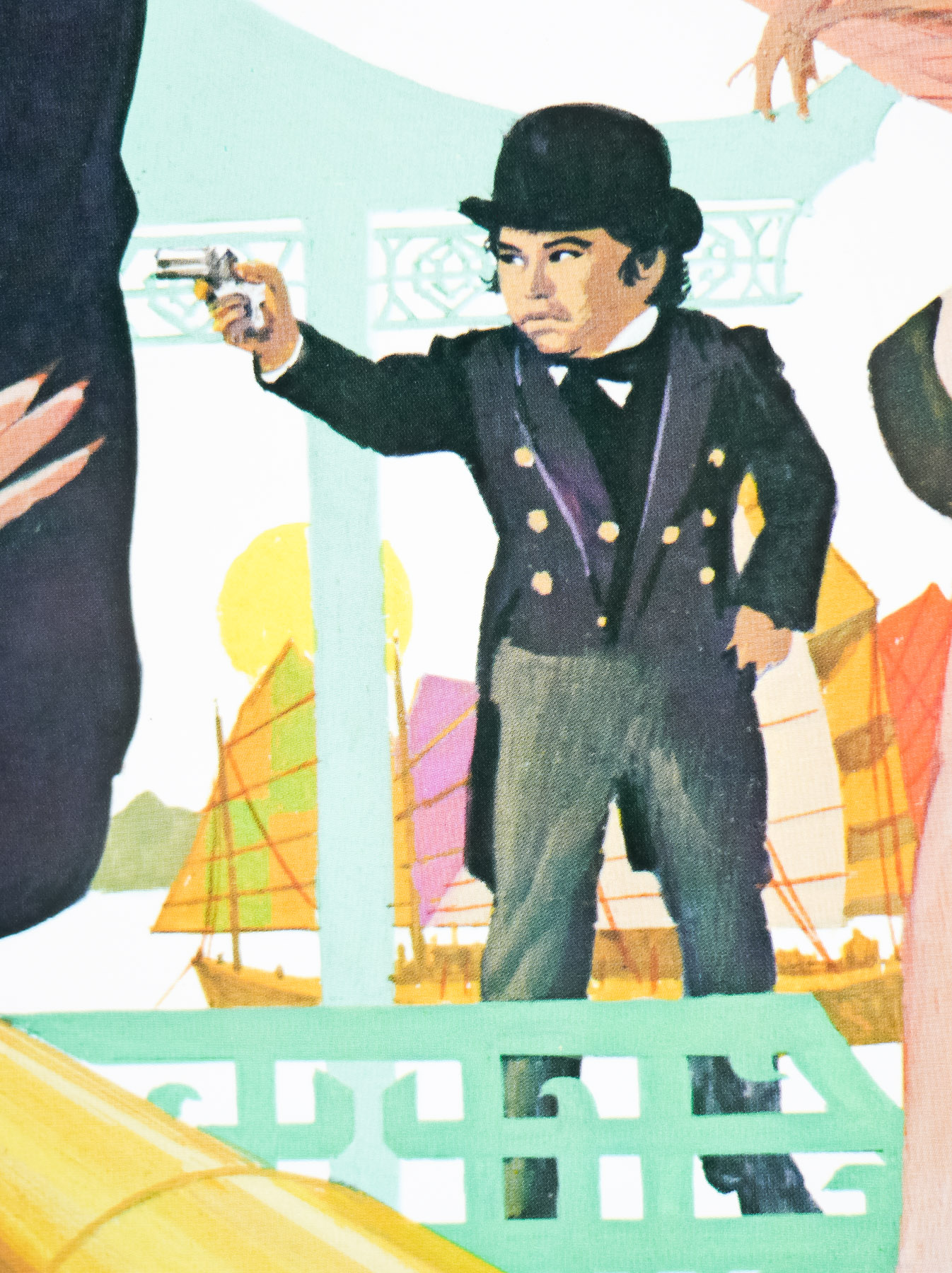
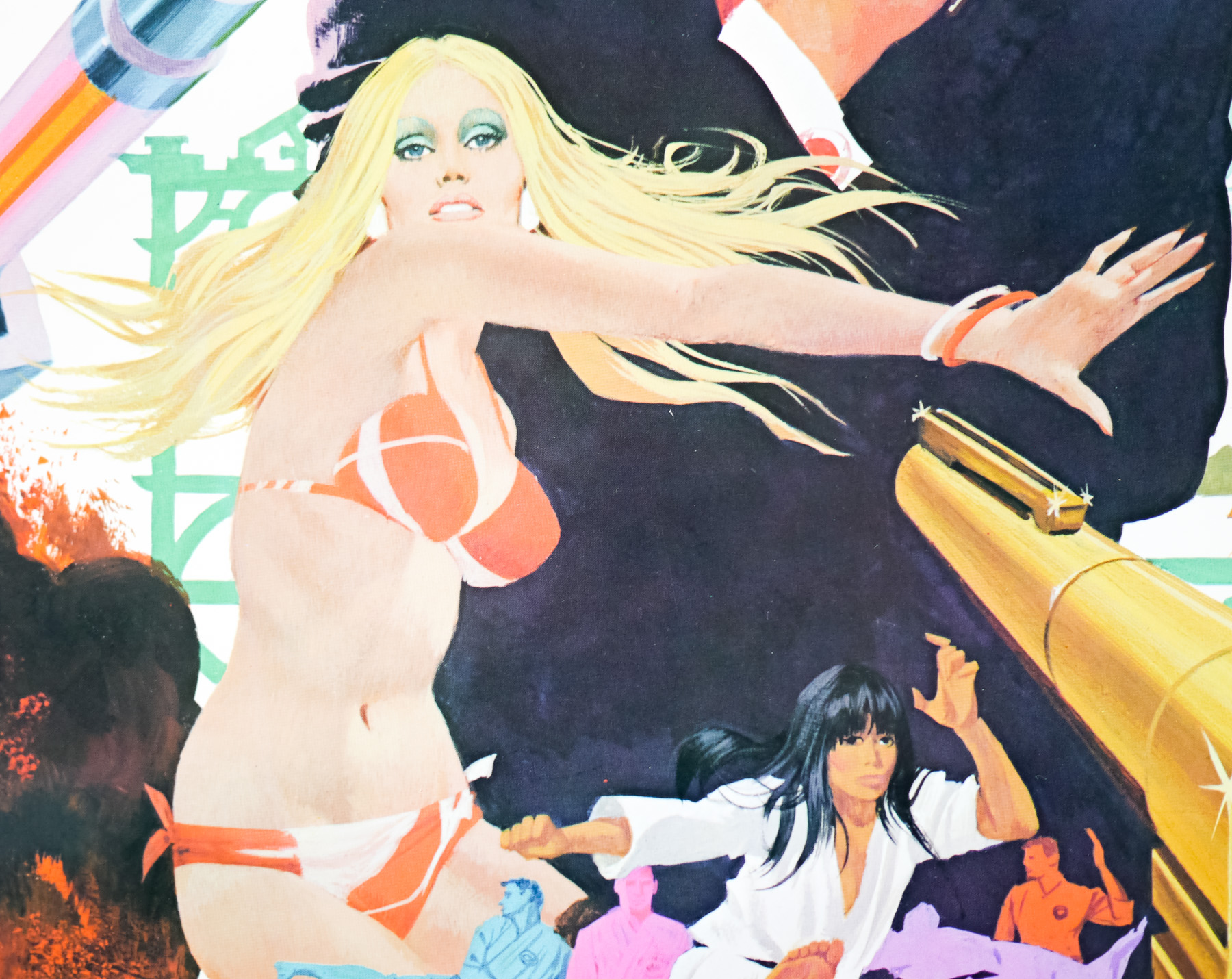
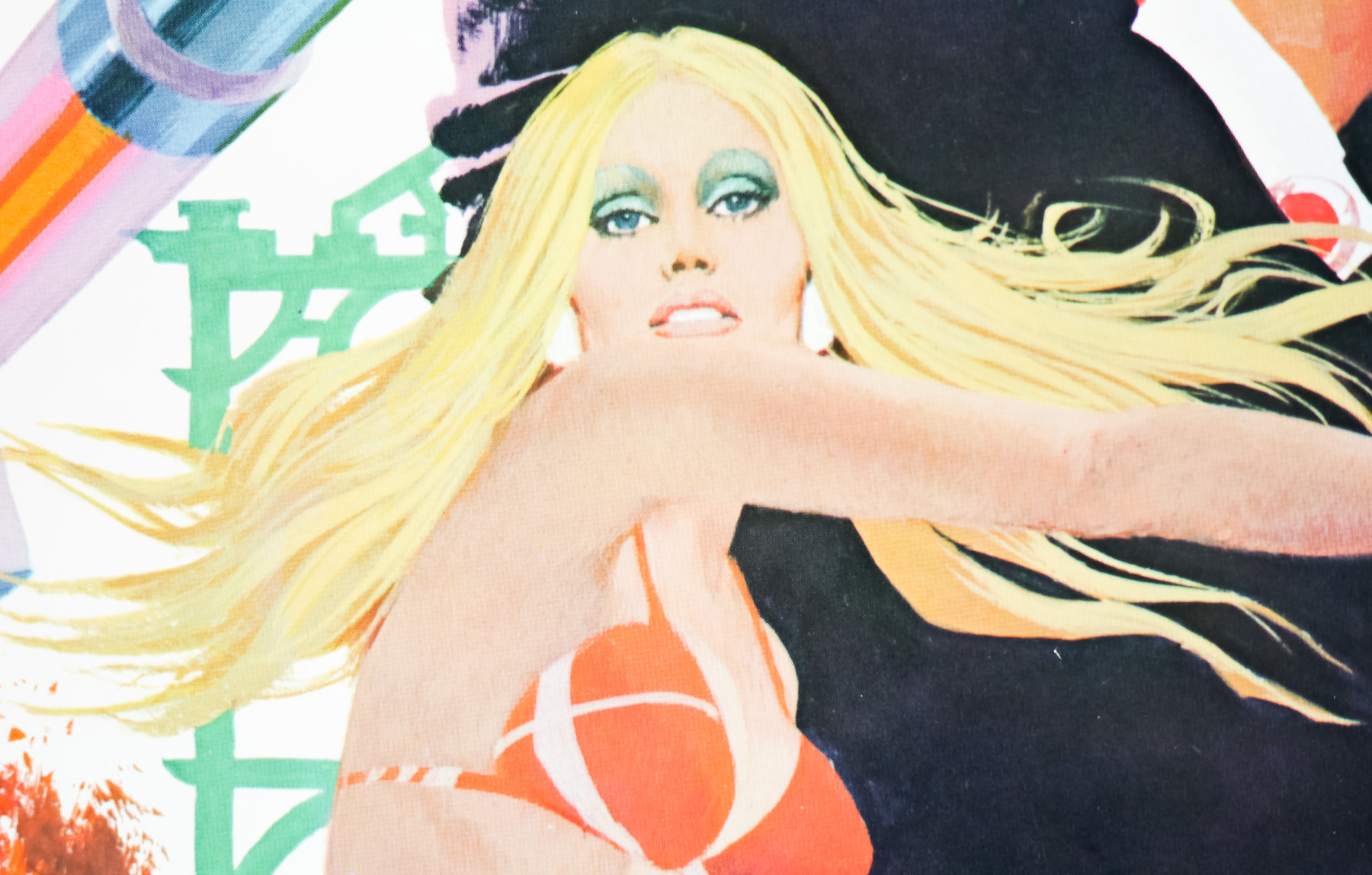
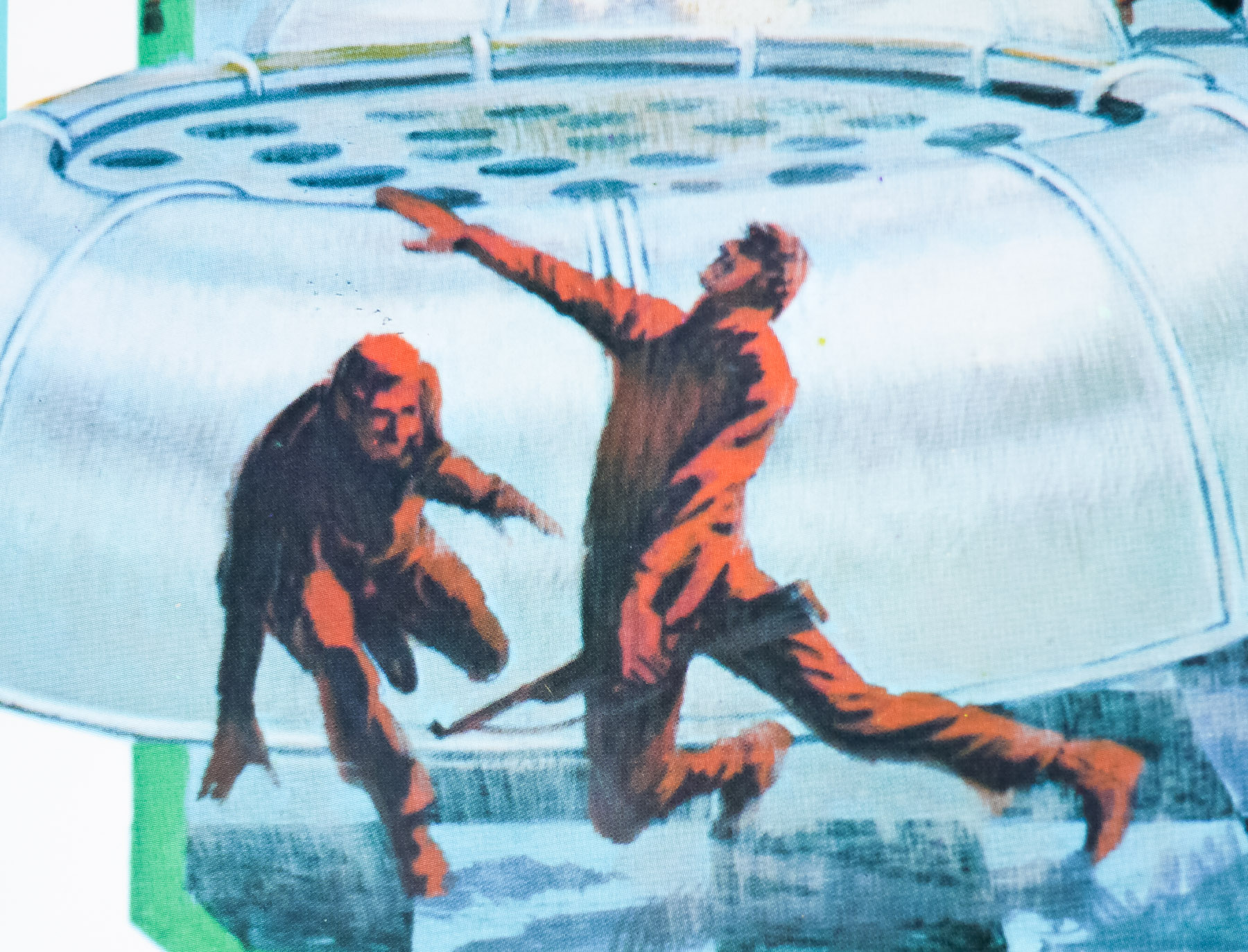
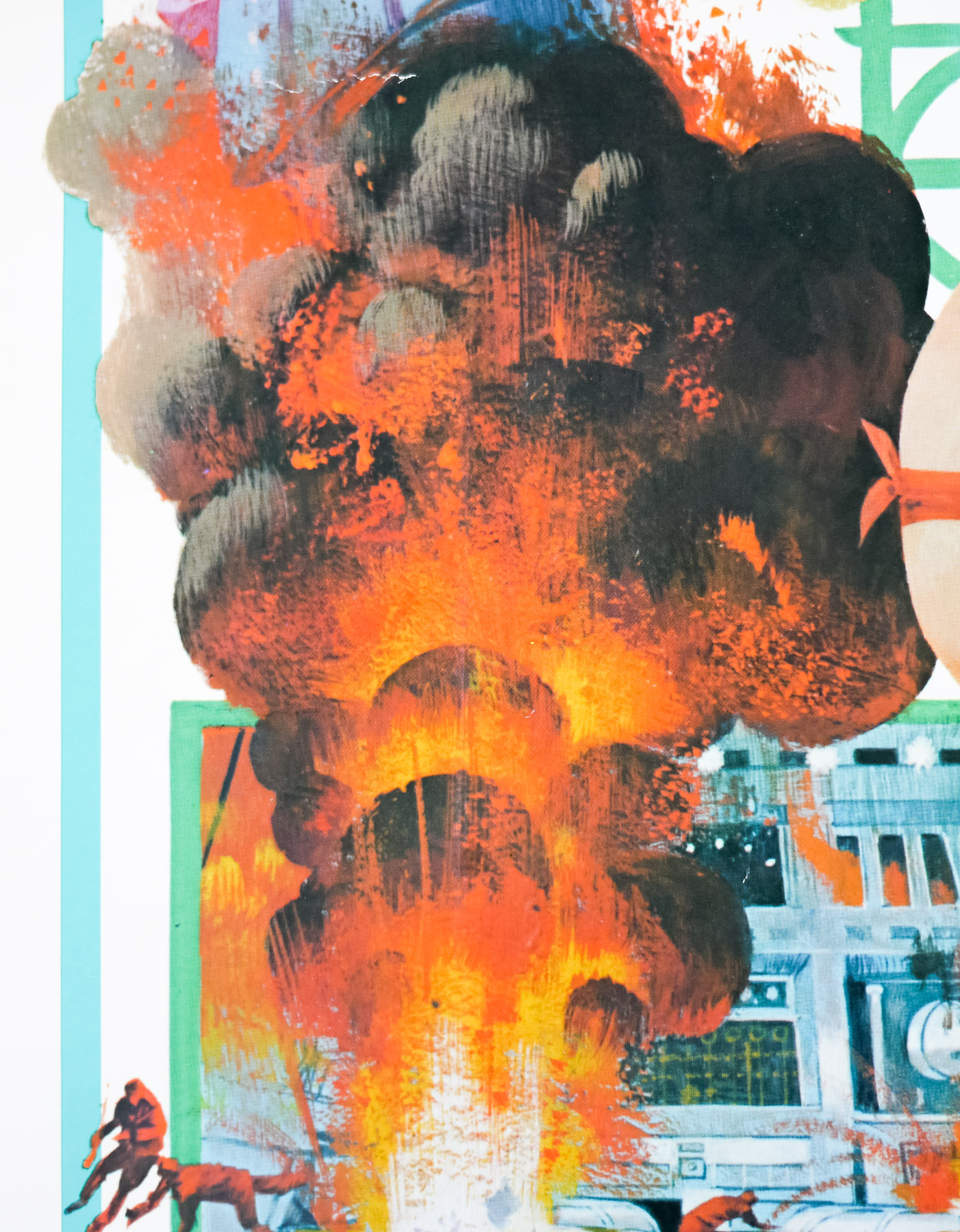
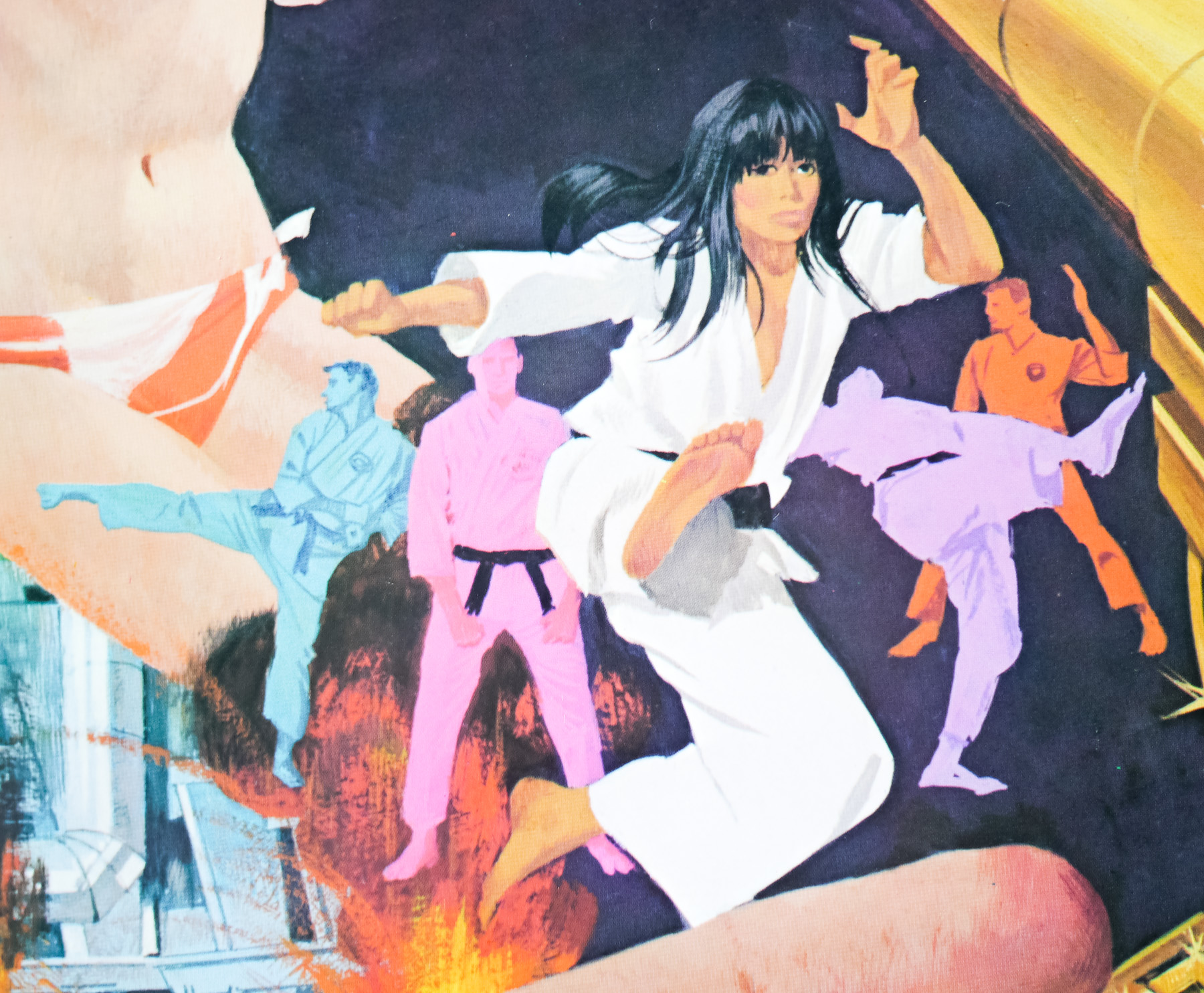
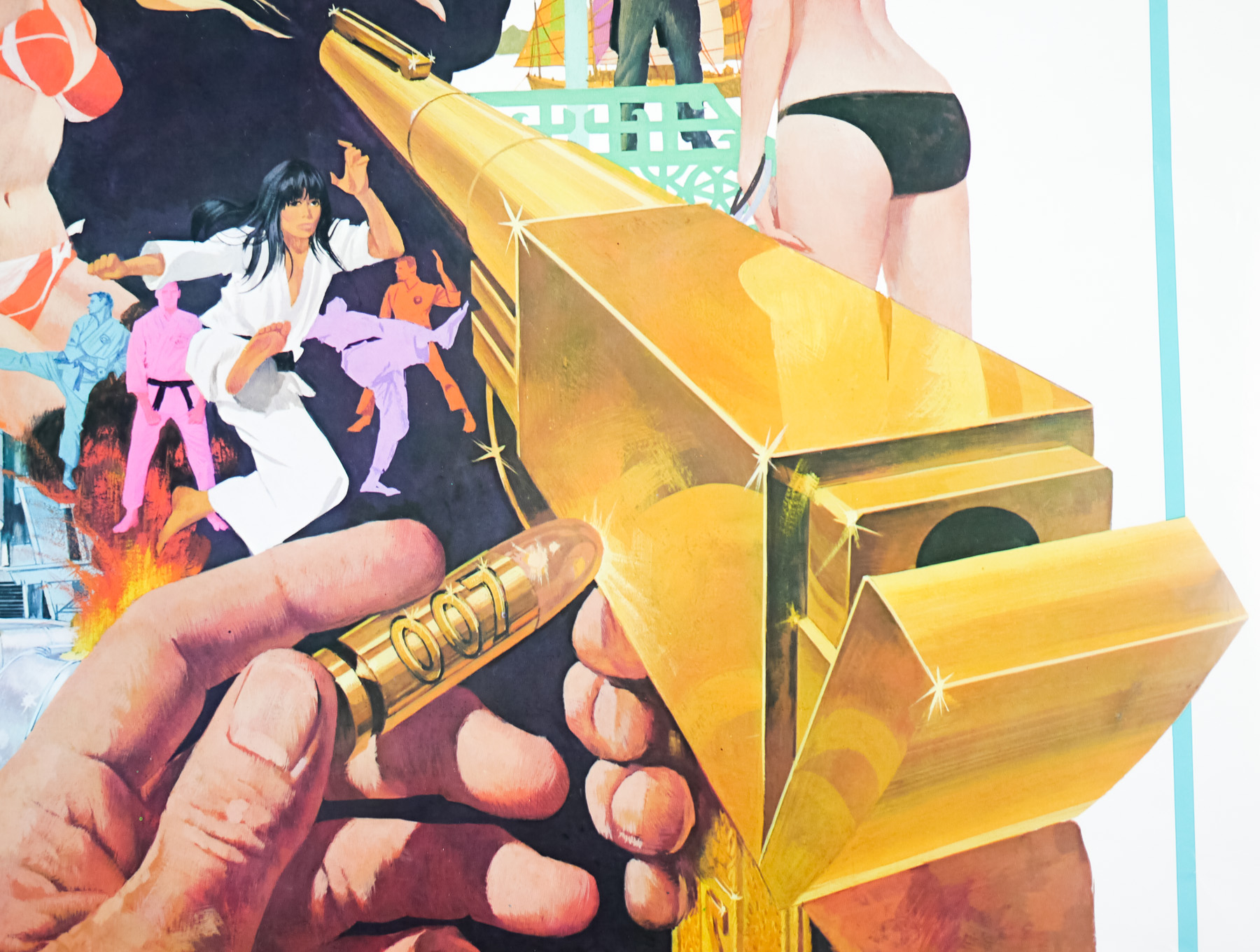
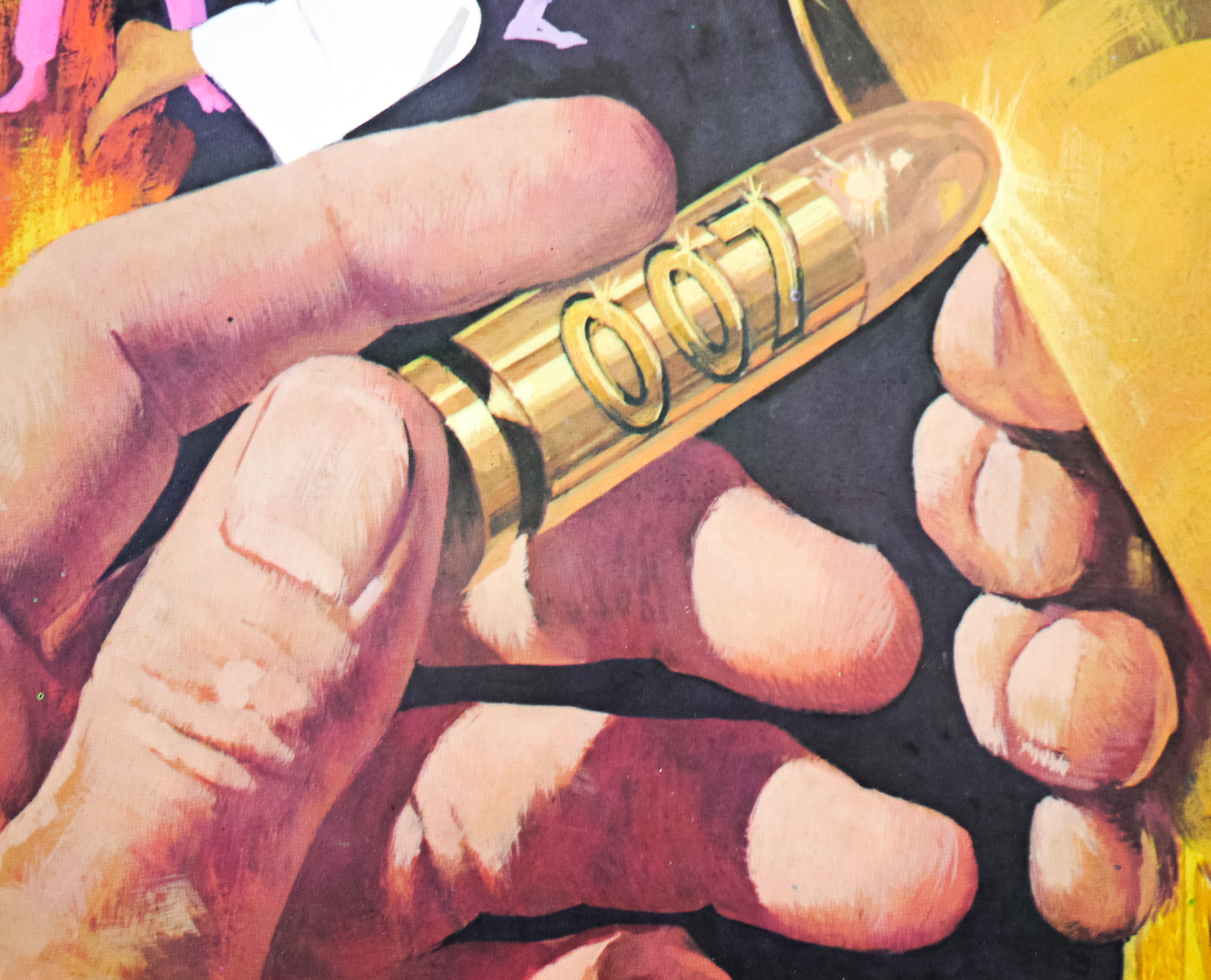
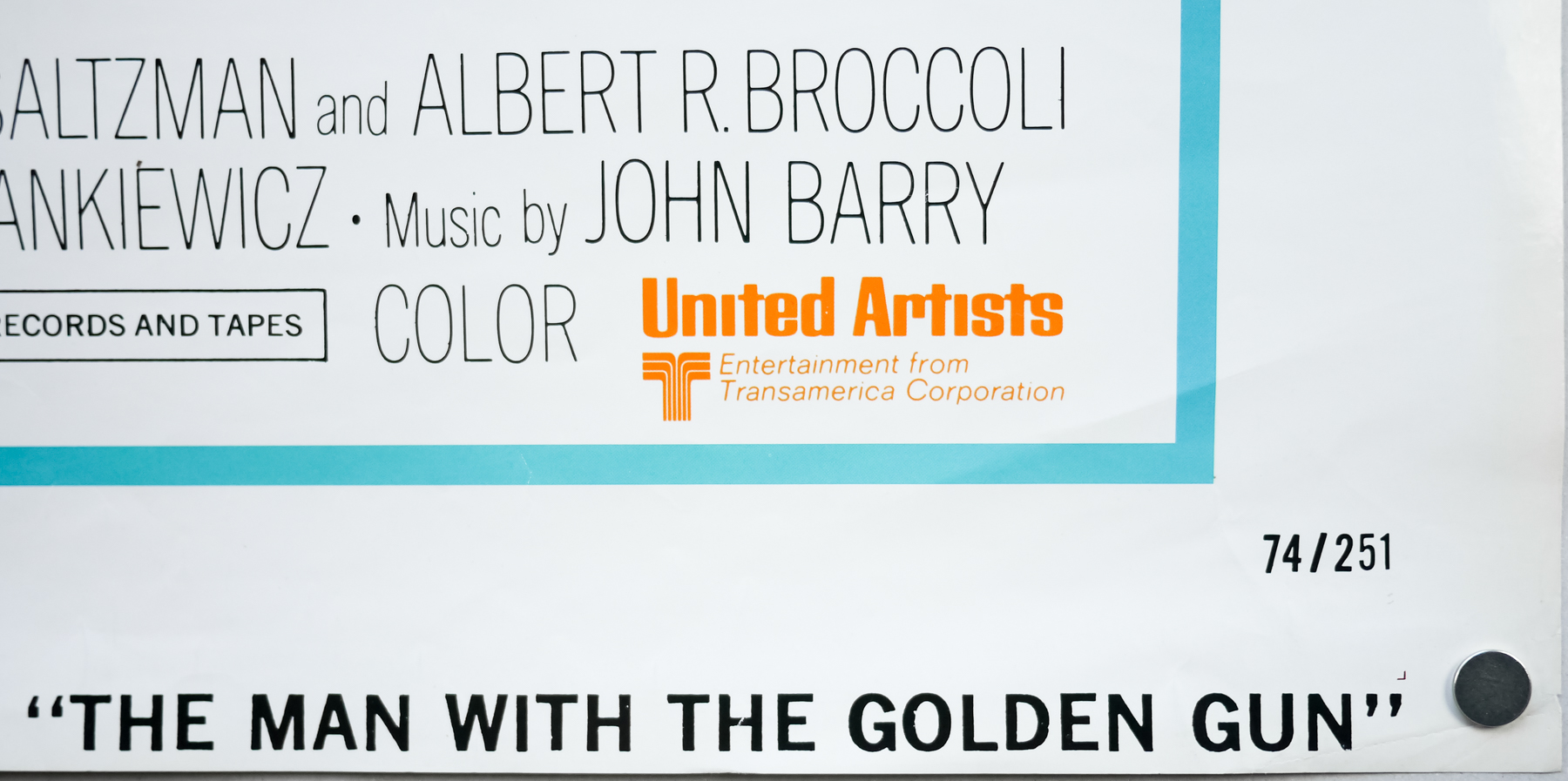
This is the original US one sheet for the release of The Man With the Golden Gun, the ninth James Bond film and the second to star Roger Moore as the legendary secret agent. It’s definitely one of the weaker films in the long-running series and certainly not Moore’s finest hour, but it has several elements that make it worth watching, including a host of interesting far-eastern locales, strong production design and a very memorable bad guy in the shape of Christopher Lee‘s Scaramanga. Guy Hamilton returned as director for the fourth and last time in the series and the script, written by Richard Maibaum and Tom Mankiewicz, takes place amidst the climate of energy worries that followed the 1973 oil crisis. It also reflected the then craze for martial arts movies that followed the release of films like Bruce Lee’s Enter the Dragon with several kung-fu sequences and exotic locations.

The story starts as MI6 receive a golden bullet with 007 etched into it, leading them to believe that Bond’s life is at threat from the notorious international assassin Scaramanga so they decide to remove him from active duty. The agent was on the trail of a scientist who it is thought could help with the energy crisis and he is frustrated to have been stopped in his pursuit so he sets off to find Scaramanga without official approval. Bond follows a trail of assassinations which lead him from Macau to Bangkok and eventually to Scaramanga’s private island hideout where he discovers that the master assassin has an interest in solar power. Soon Bond is challenged to a duel to the death and he must use his wits to survive the traps set around Scaramanga’s hideout. Dwarf actor Hervé Villechaize has a memorable role as the assassin’s servant Nick Nack, and Clifton James returns as the (perhaps ill-advised) comic relief figure of Sheriff J.W. Pepper, as featured in Live and Let Die.

The artwork on this poster also features on the US one sheet and was painted by Robert McGinnis who is responsible for some of the best James Bond posters, including Thunderball, Live and Let Die and Diamonds are Forever as well as multiple other classic posters from the 60s, 70s and 80s. He was born in Cincinatti, Ohio in 1926 and was given an apprenticeship at Walt Disney studios before studying fine art at Ohio State University. After serving in the Merchant Marines during World War II, he started work in the advertising industry and later moved into painting book jackets for several notable authors, as well as editorial artwork for the likes of Good Housekeeping, TIME and The Saturday Evening Post. McGinnis’ first film poster was the now iconic one sheet for Breakfast at Tiffany’s, painted in 1962, and he went on to paint over 40 others during his career, including one for The Incredibles in 2004.

One interesting thing about this particular poster is that it missing the ‘East/West Hemi’ text that appears on most copies of this poster and on a few other Bond posters of the era, including the Live and Let Die one sheet that’s in the Film on Paper collection. This page on Learn About Movie Posters explains what the significance of that text is. An excerpt:

[Albert] Broccoli met with [Harry] Saltzman and tried to acquire the rights but Saltzman refused to sell. They instead decided to co-produce them. [….] After some success they decided to divide the production credits and entered into a contractual agreement for top billing and so was created the Hemi’s. [….] They divided the world into hemispheres. Harry took the East Hemisphere and Albert took the West Hemisphere. So Saltzman would get the European countries and Broccoli would get the Americas.

I’m not sure why it’s missing on this copy but I’ve heard of other examples like this turning up and I’m confident it’s an original. If anyone has any ideas please get in touch.

To see the other posters I’ve collected that were painted by McGinnis click here and to see the other James Bond posters in the Film on Paper collection click here.

American Psycho / one sheet / USA

02.03.15

Poster Poster
Title
American Psycho
AKA
--
Year of Film
2000
Director
Mary Harron
Starring
Christian Bale, Willem Dafoe, Reese Witherspoon, Chloë Sevigny, Jared Leto, Justin Theroux, Josh Lucas, Cara Seymour, Samantha Mathis
Origin of Film
USA
Genre(s) of Film
Christian Bale, Willem Dafoe, Reese Witherspoon, Chloë Sevigny, Jared Leto, Justin Theroux, Josh Lucas, Cara Seymour, Samantha Mathis,
Type of Poster
One sheet
Style of Poster
Final
Origin of Poster
USA
Year of Poster
2000
Designer
Indika Entertainment Advertising
Artist
--
Size (inches)
27" x 39 14/16"
SS or DS
SS
Tagline
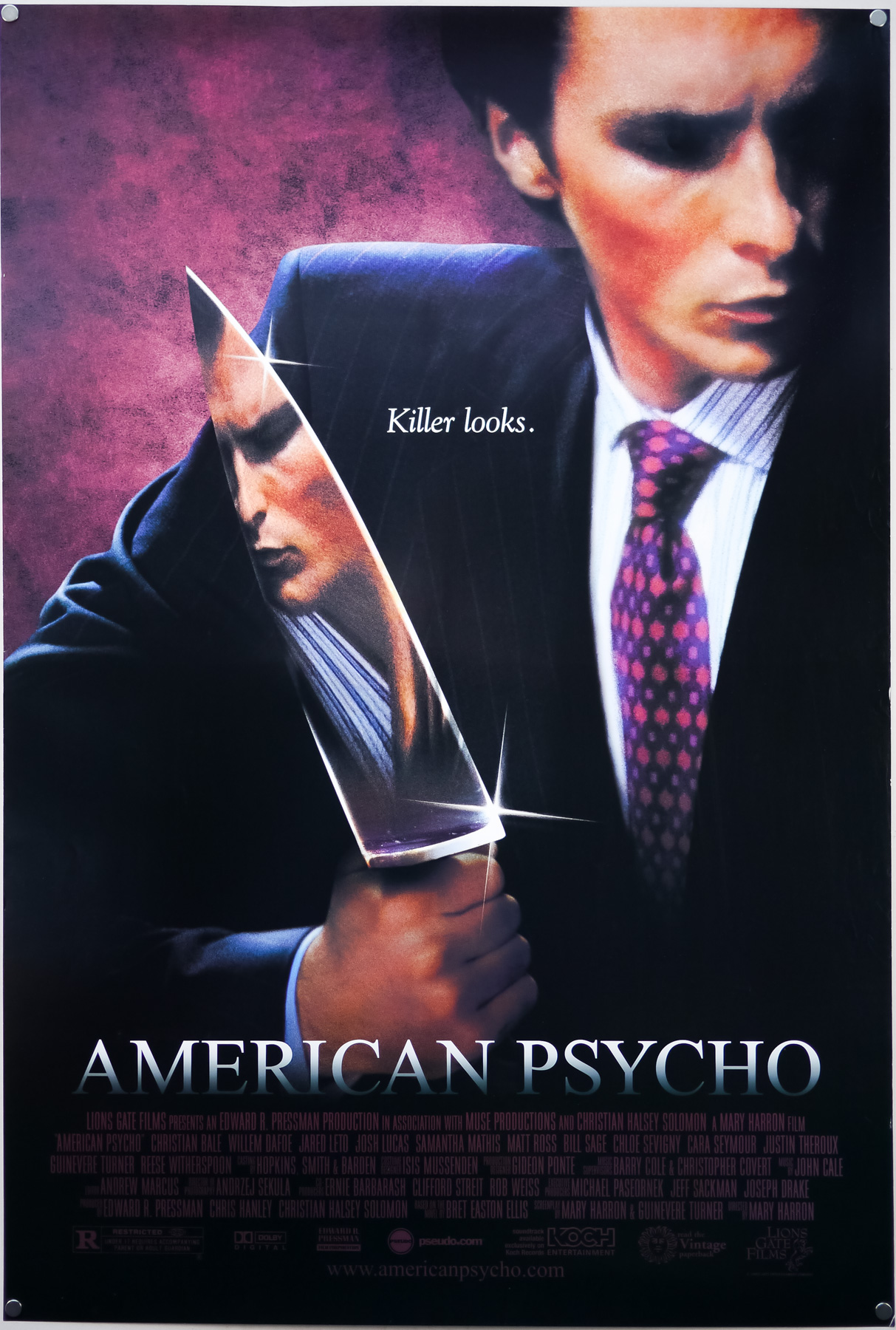
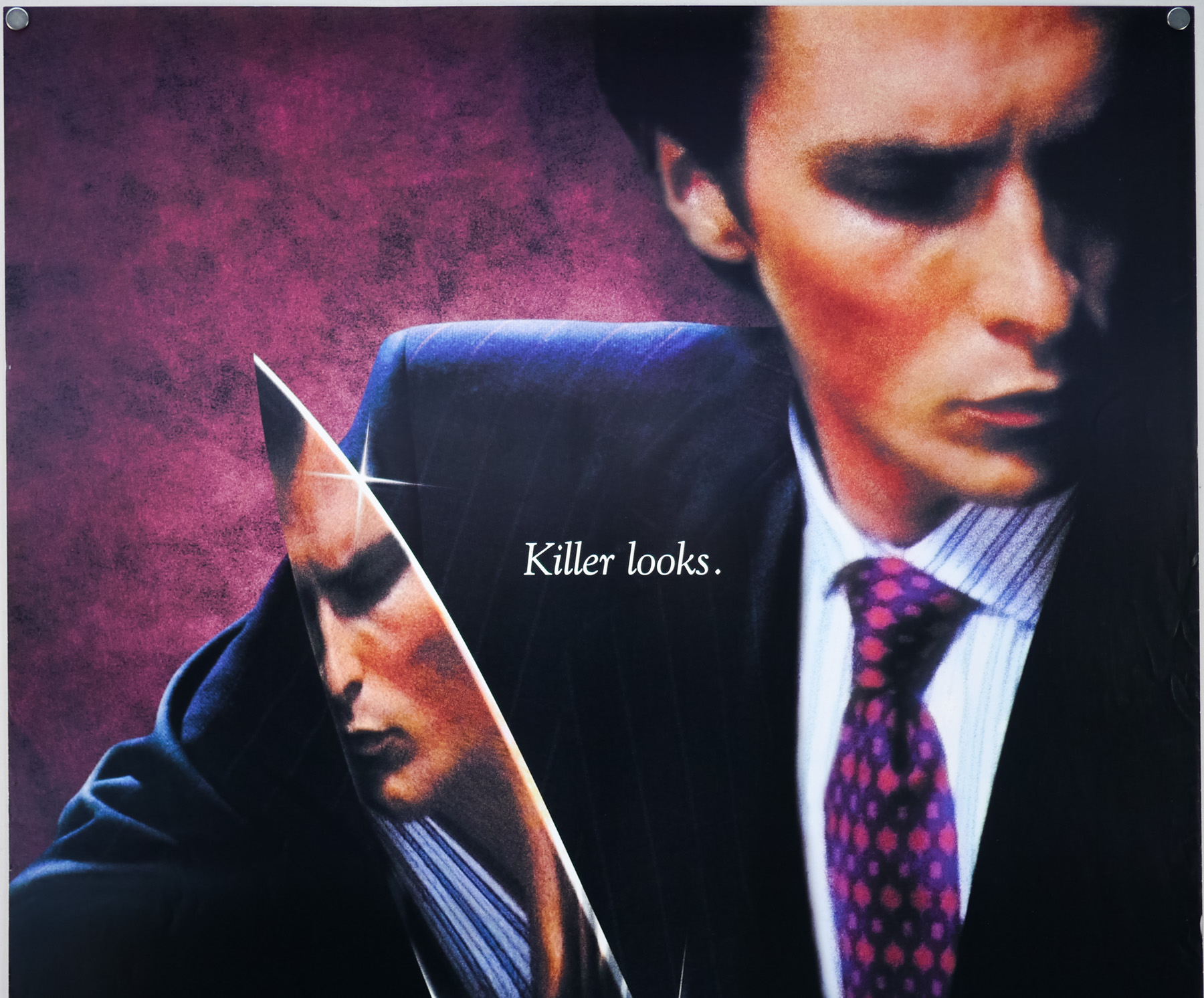
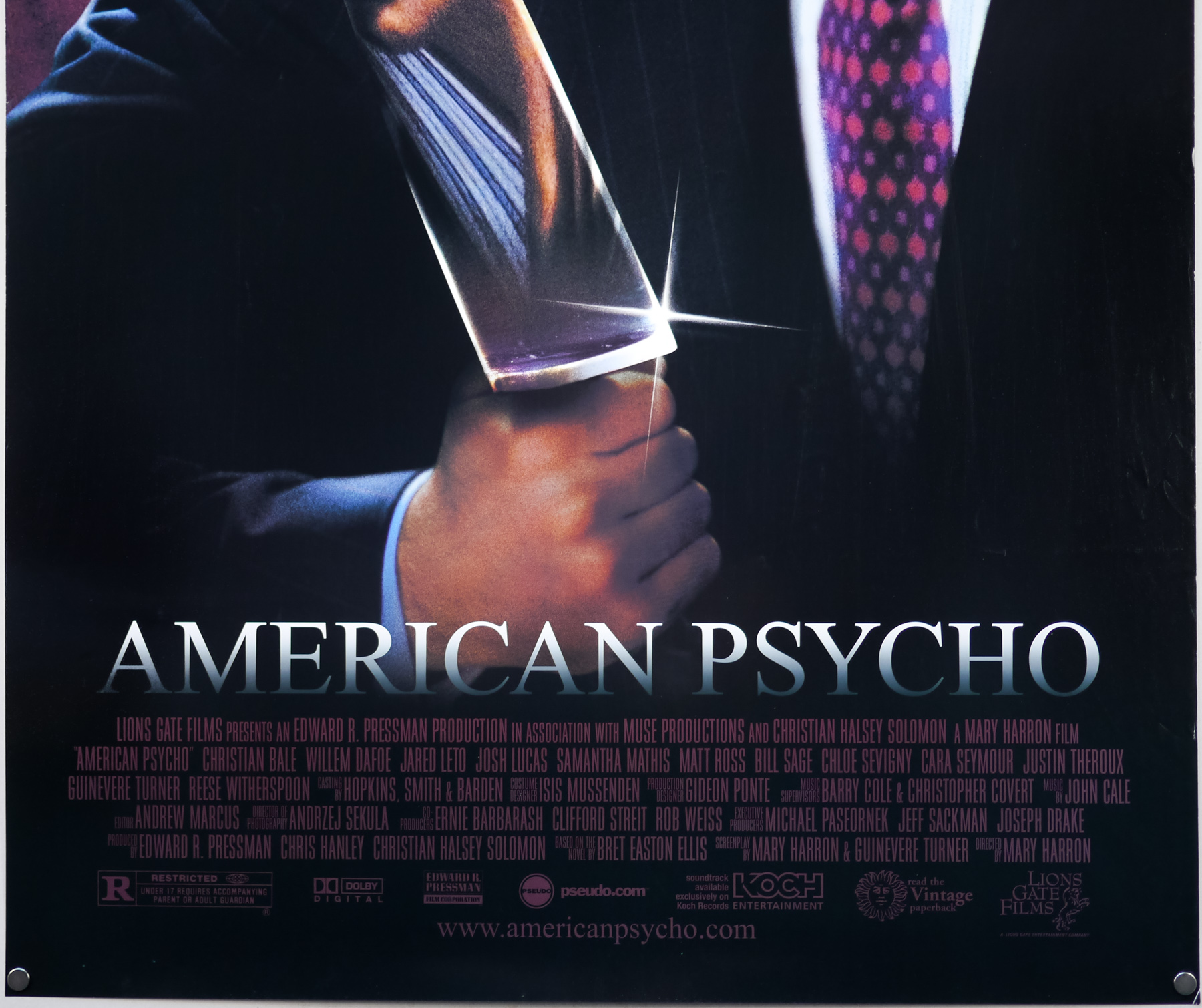
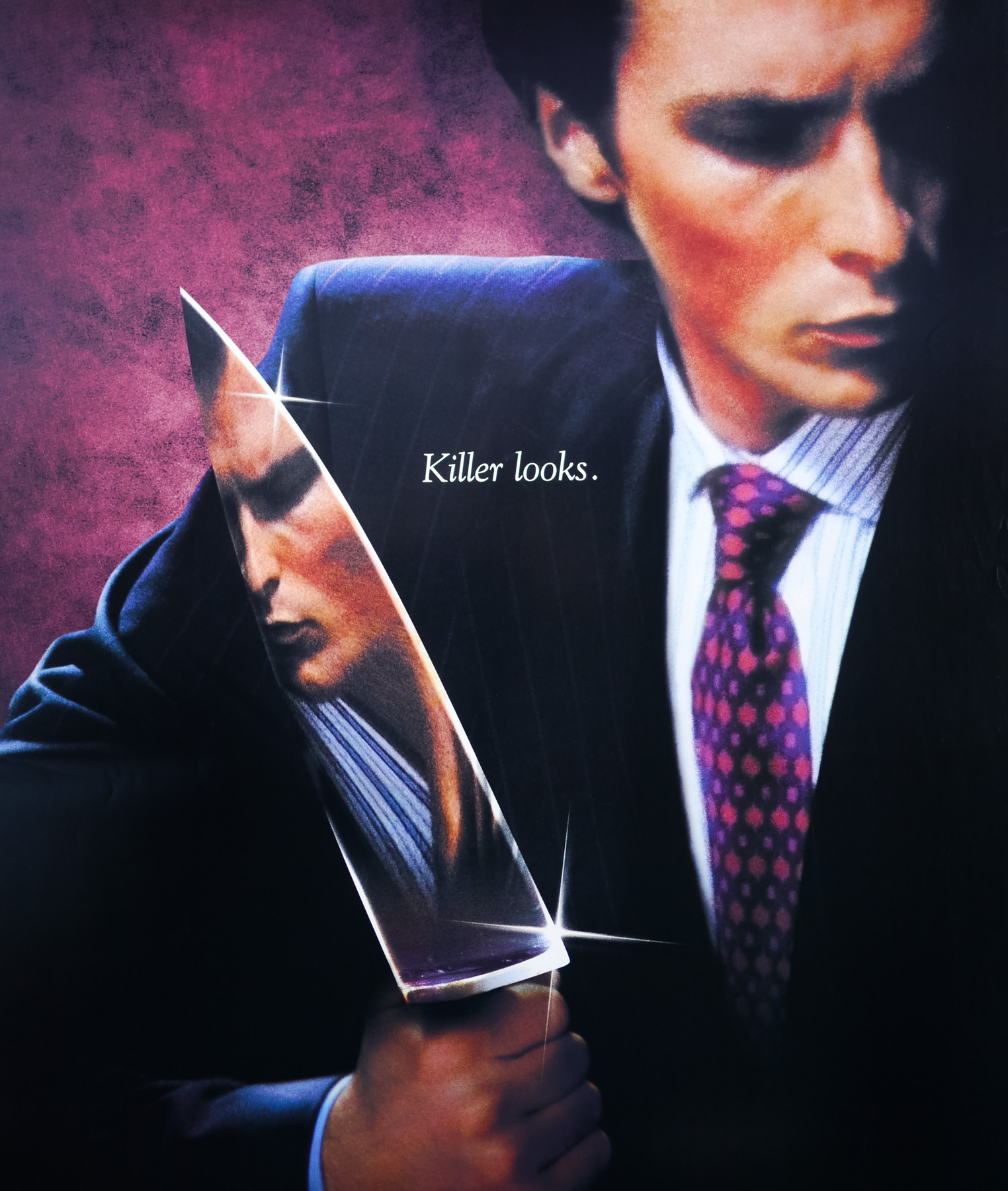
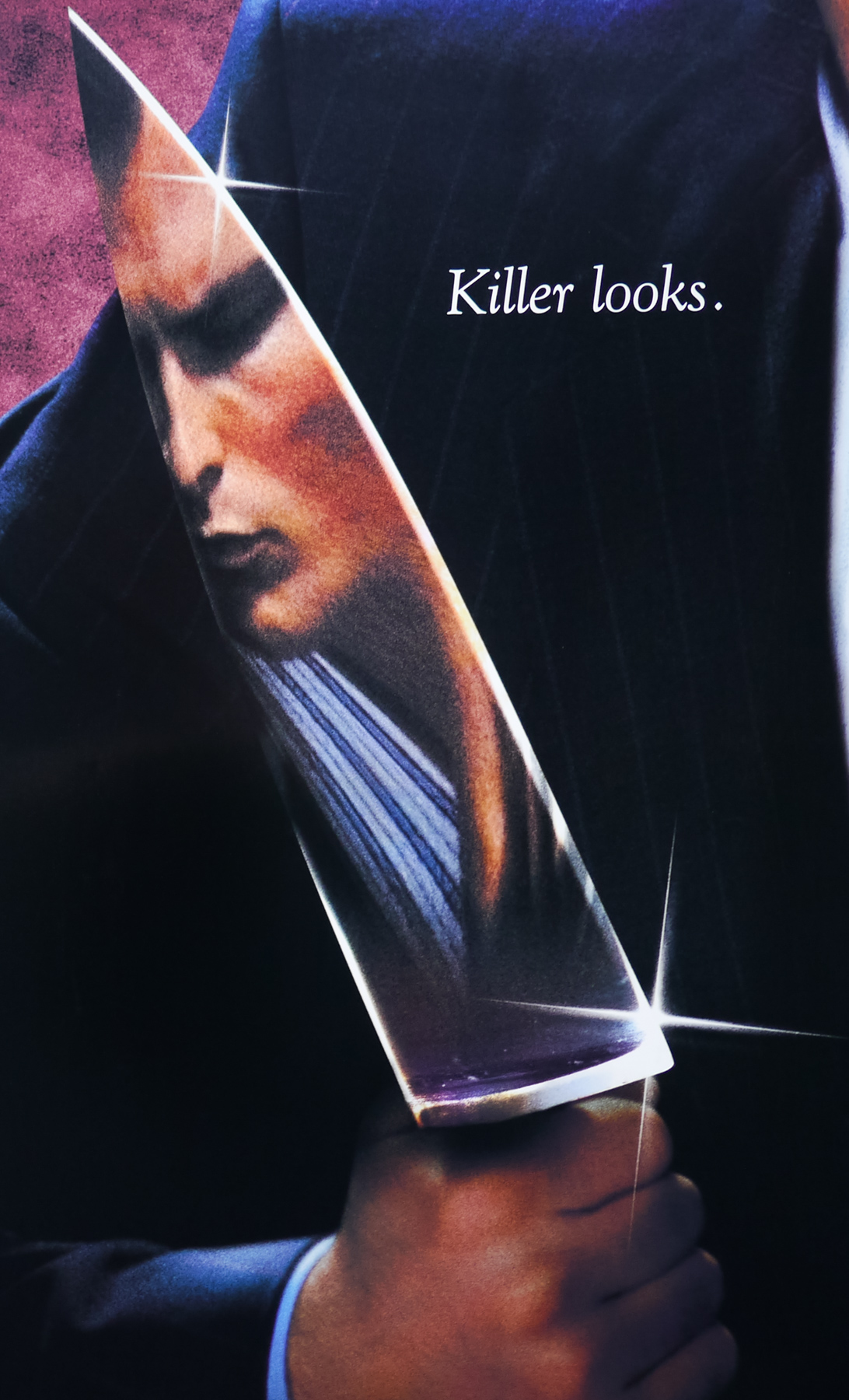
Killer looks.

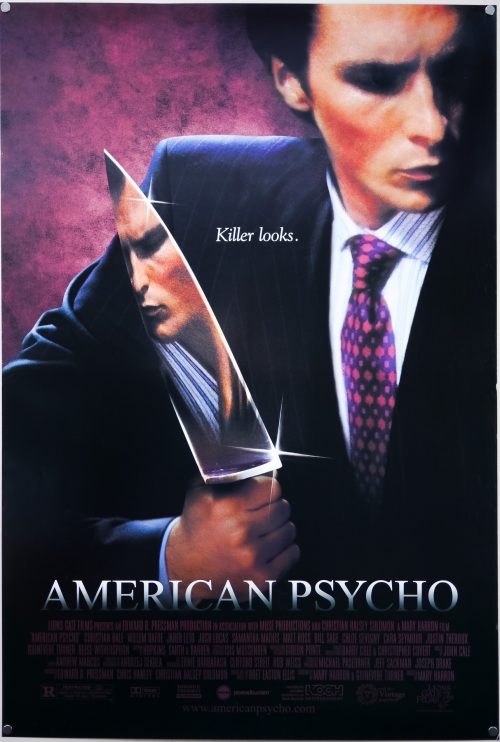
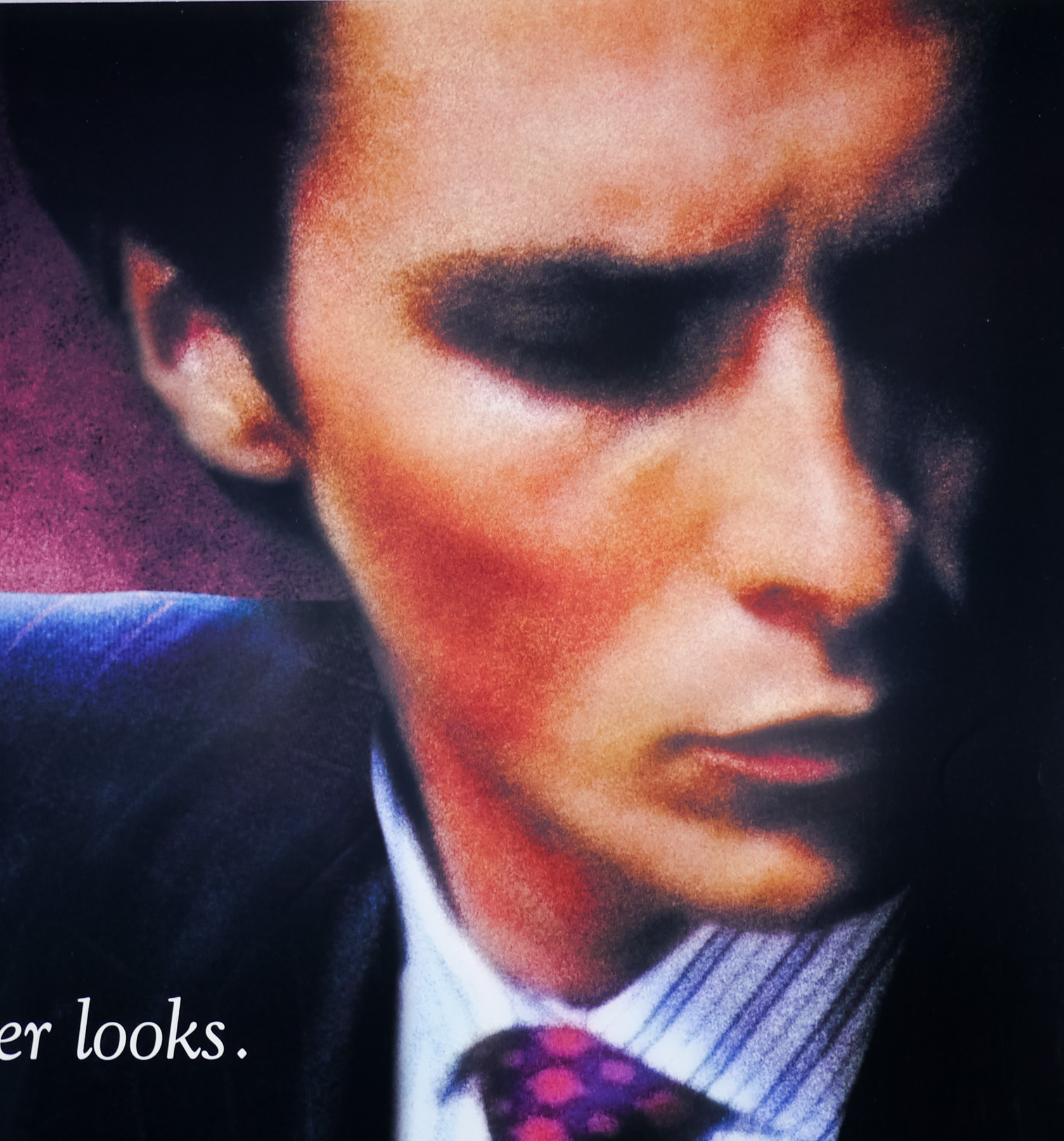
An iconic image of Christian Bale as Patrick Bateman features on this US one sheet for the release of the adaptation of Bret Easton Ellis‘s novel American Psycho. Although Bale had been appearing in films since the 1980s, with his lead role as the young boy in Spielberg’s 1987 film Empire of the Sun a notable highlight, it was American Psycho that was a real breakout role and ultimately led to his casting as Batman in Christopher Nolan’s Dark Knight trilogy (and subsequent global megastar status).

The story focuses on Bateman, a wealthy young banking executive who works at his father’s financial firm on Wall Street and spends his time materially competing with co-workers and dining at expensive restaurants in order to keep up appearances with friends and his fiancee Evelyn. Bateman is also a psychopath who spends his evenings indulging in acts of violence and ill-advised liaisons with prostitutes. A series of events see him murdering a colleague and entering into a series of violent encounters that nearly lead to his apprehension, but is all as it seems?

Bale is notorious for his use of method acting and the portrayal of Bateman was given his full attention. Apparently ‘the actor spent months tanning himself and working out in order to achieve the look of Bateman’s perfectly sculpted body’. The actor recalls: “I started going swimming on Sundays, and here was me, with this white English body, emerging with a stripy arse; not such a good look.”

This one sheet was created by the American design agency Indika Entertainment Advertising, which was founded in 1994 by James Verdesoto and Vivek Mathur and is based in New York City. They work on print and web campaigns for films, TV shows and home entertainment and have won multiple awards for their work over the years. One of their most iconic posters is the teaser one sheet for Pulp Fiction. They also designed the teaser one sheet for American Psycho.

Breakout / one sheet / style A / USA

11.03.16

Poster Poster
Title
Breakout
AKA
Dieci secondi per fuggire [Ten seconds to escape] (Italy)
Year of Film
1975
Director
Tom Gries
Starring
Charles Bronson, Robert Duvall, Jill Ireland
Origin of Film
USA
Genre(s) of Film
Charles Bronson, Robert Duvall, Jill Ireland,
Type of Poster
One sheet
Style of Poster
Style A
Origin of Poster
USA
Year of Poster
1975
Designer
Unknown
Artist
Weezer
Size (inches)
27" x 41 1/8"
SS or DS
SS
NSS #
75/52
Tagline
Sentenced to 28 years in prison for a crime he never committed. Only two things can get him out - A lot of money and Charles Bronson!

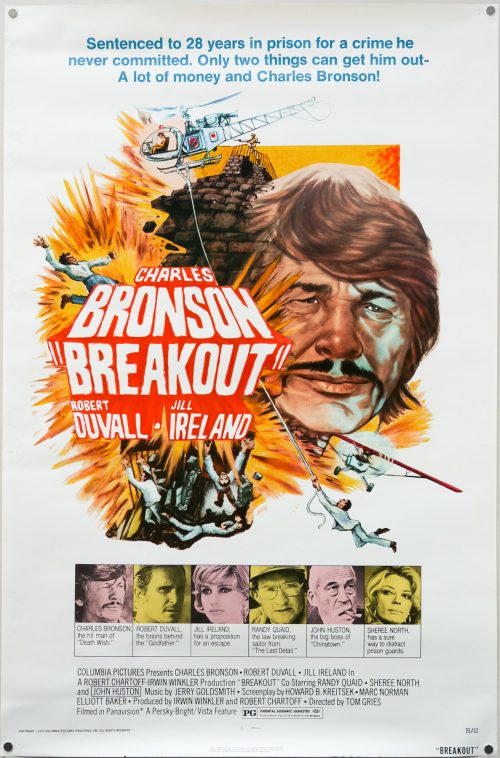
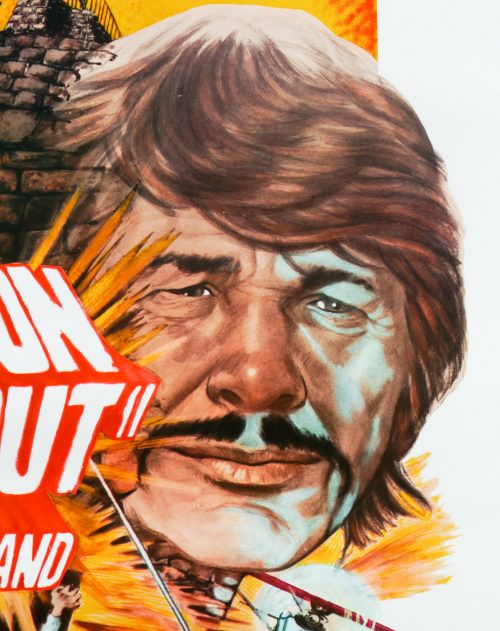
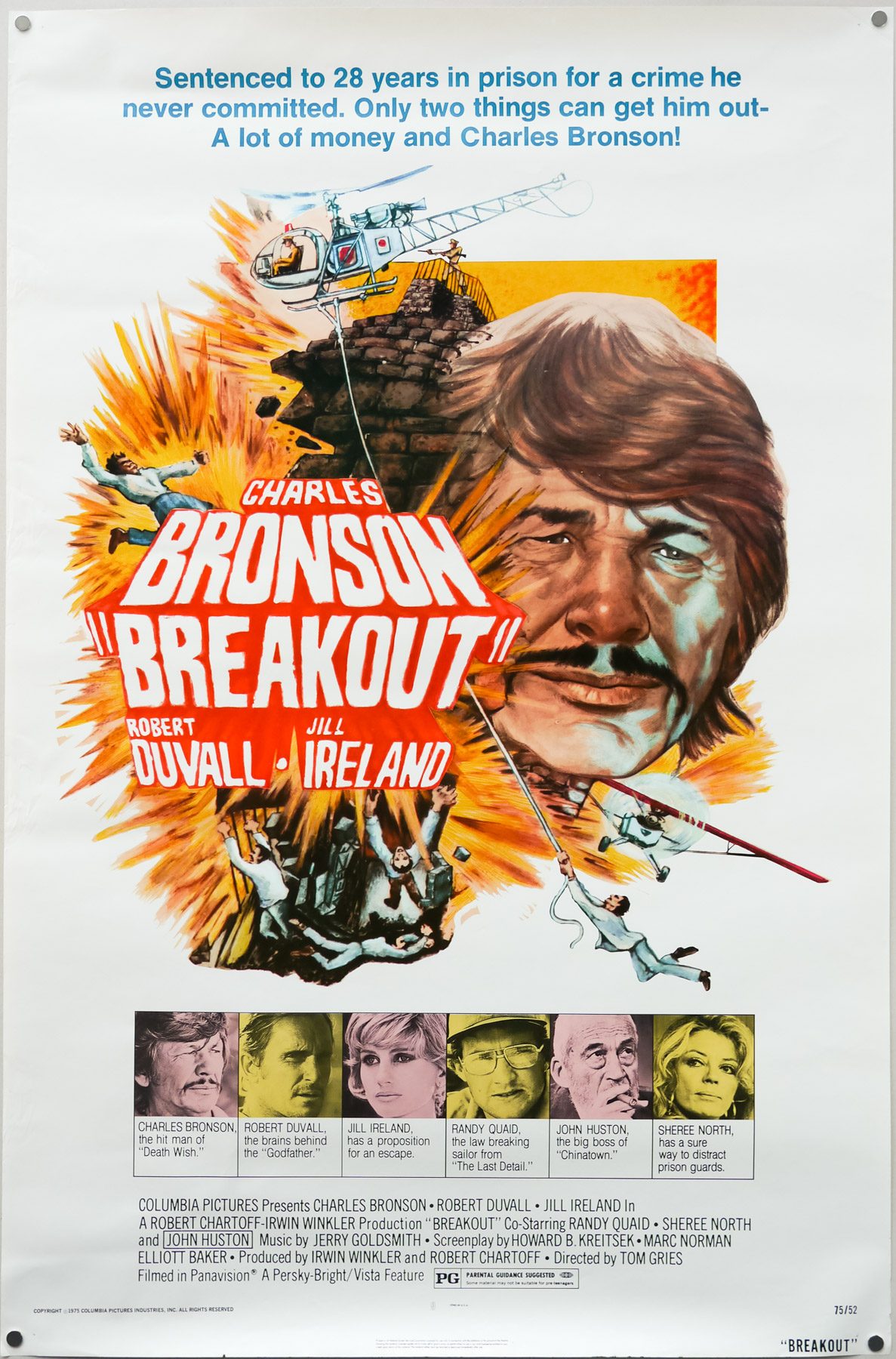
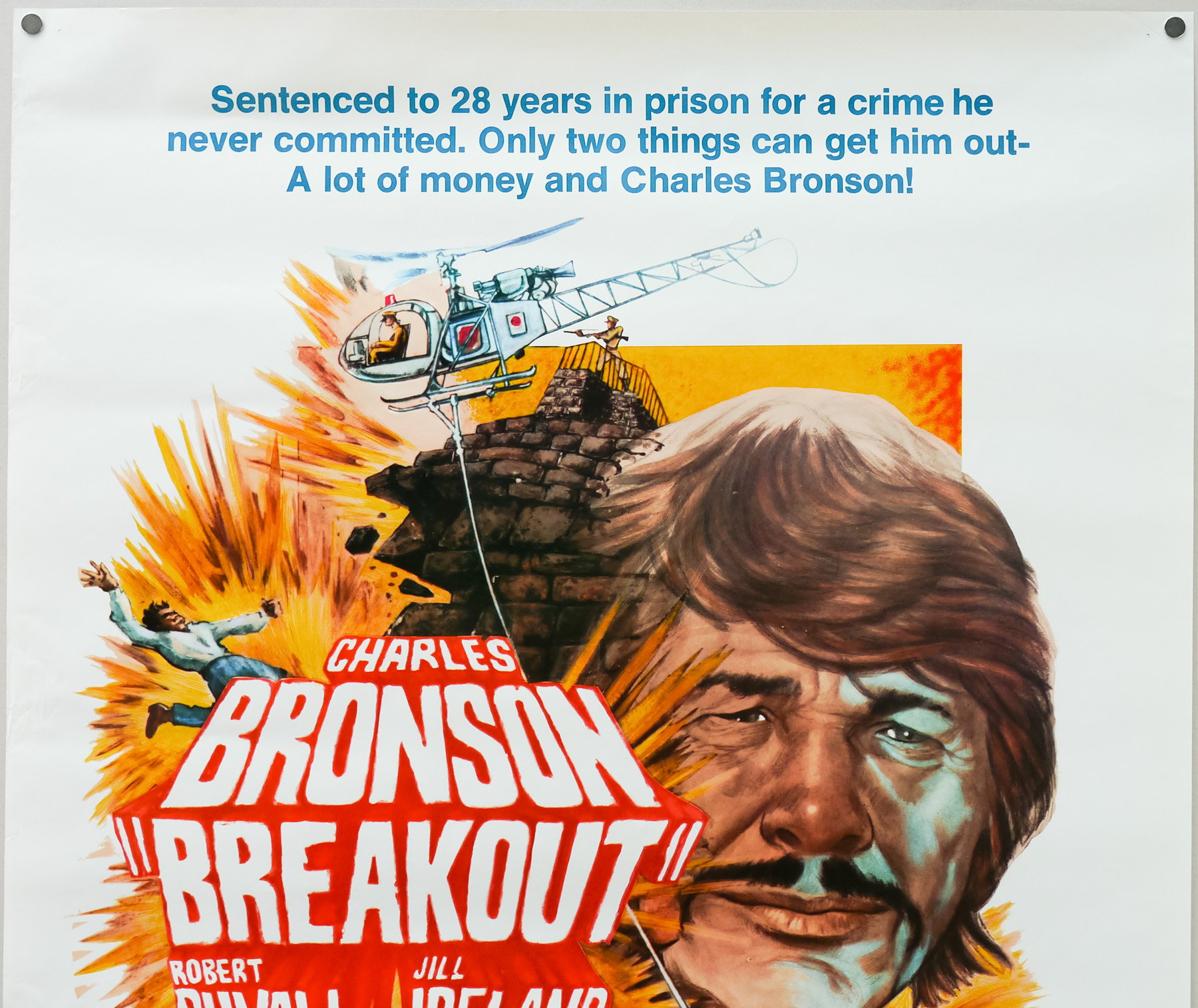
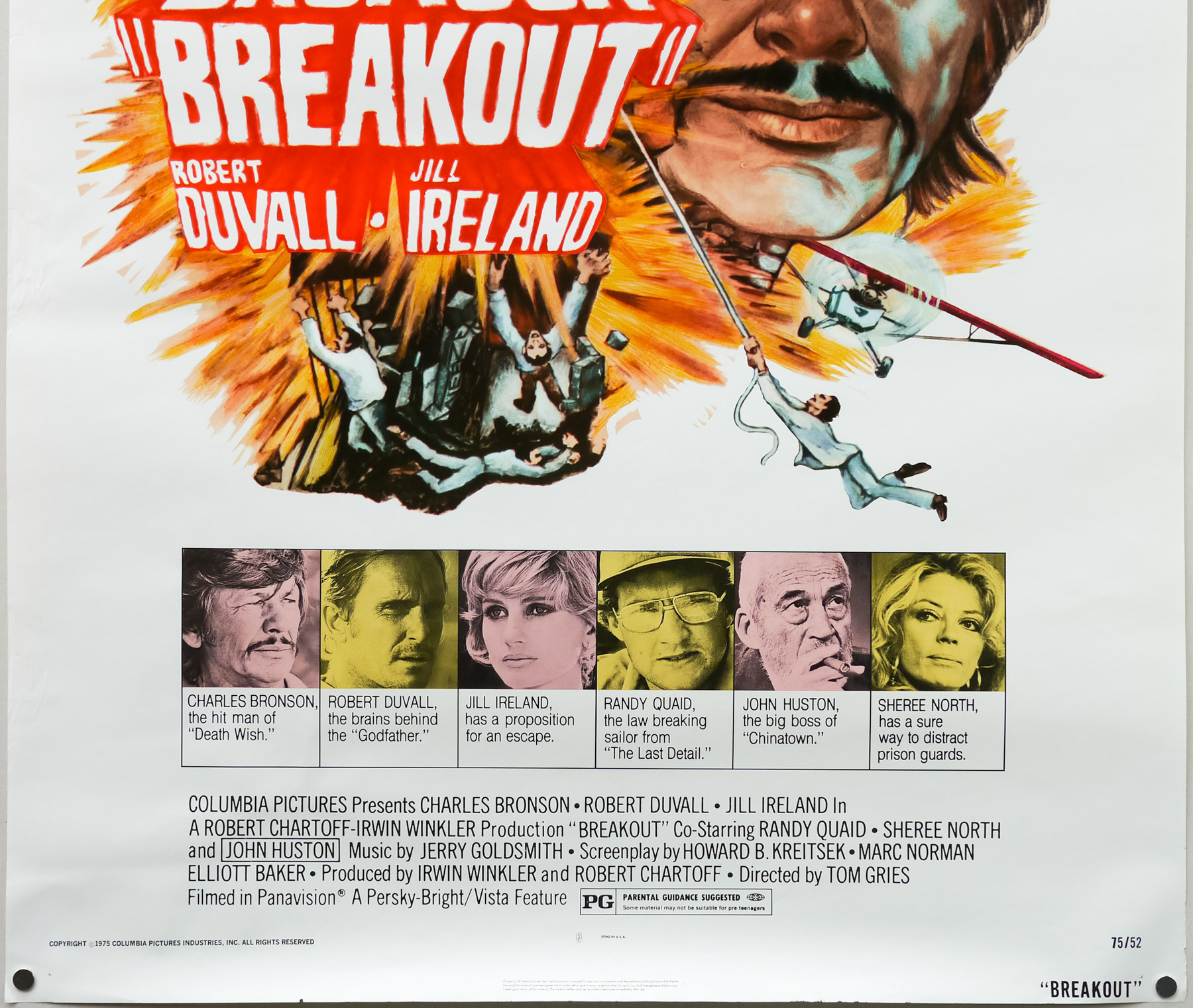
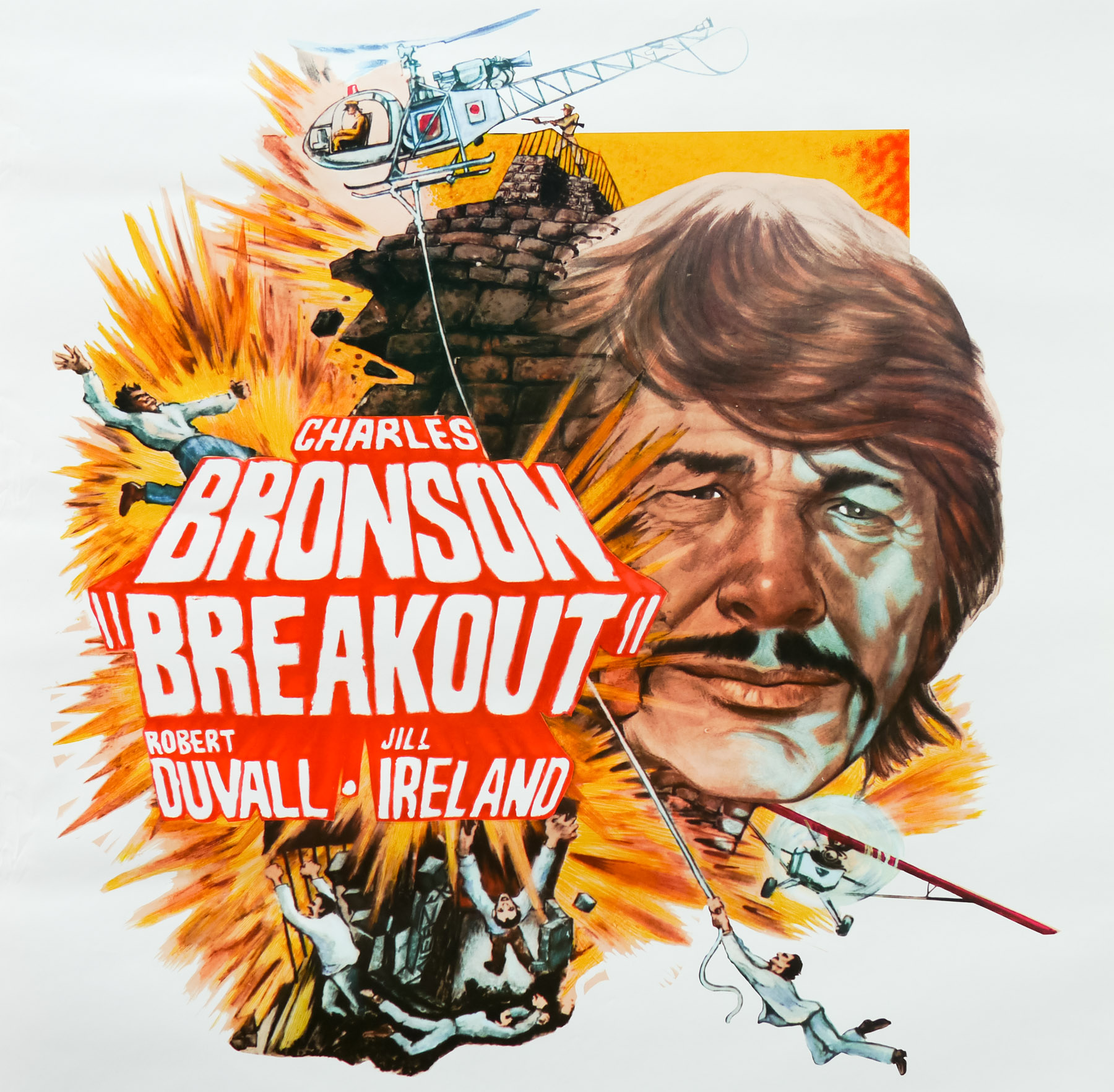
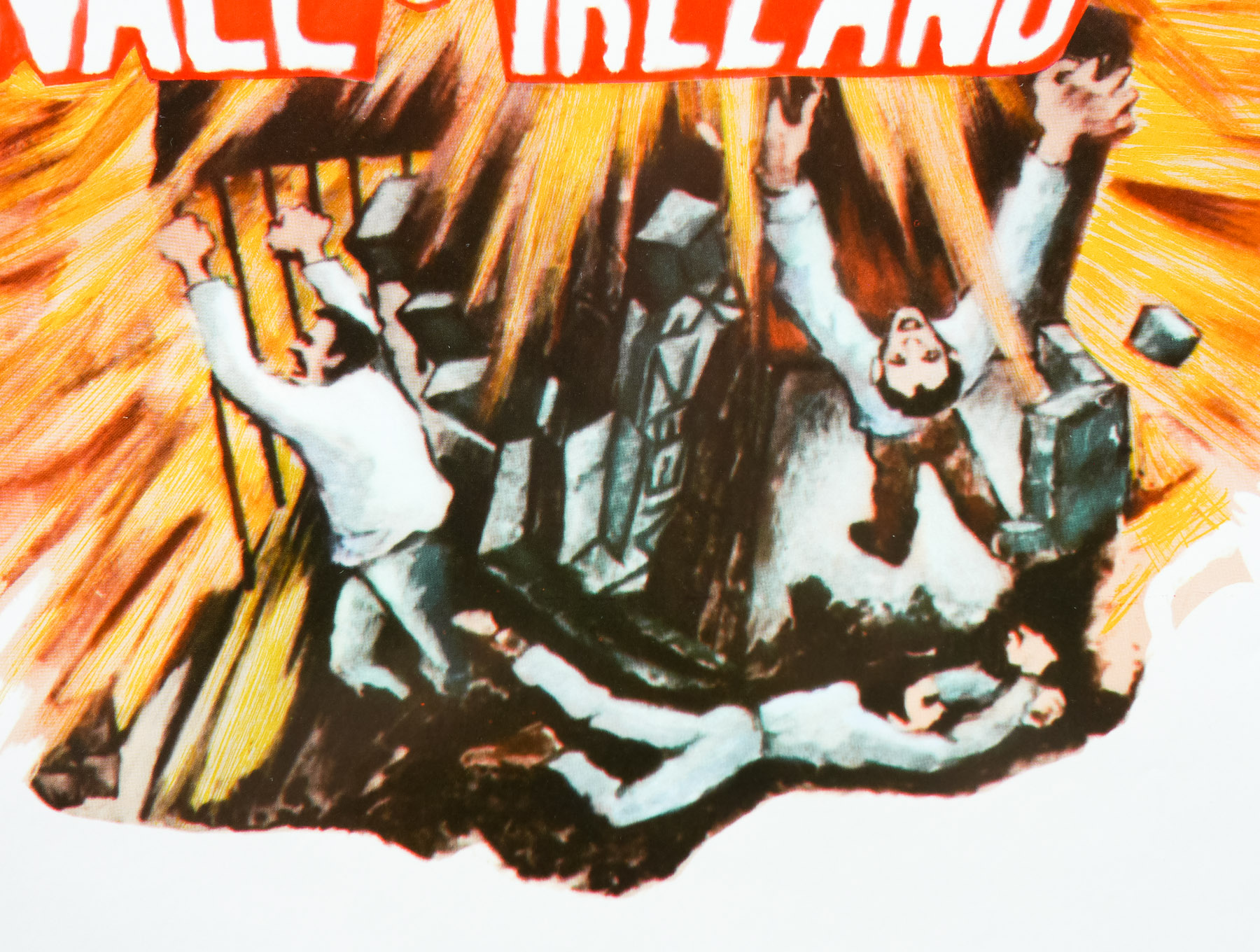
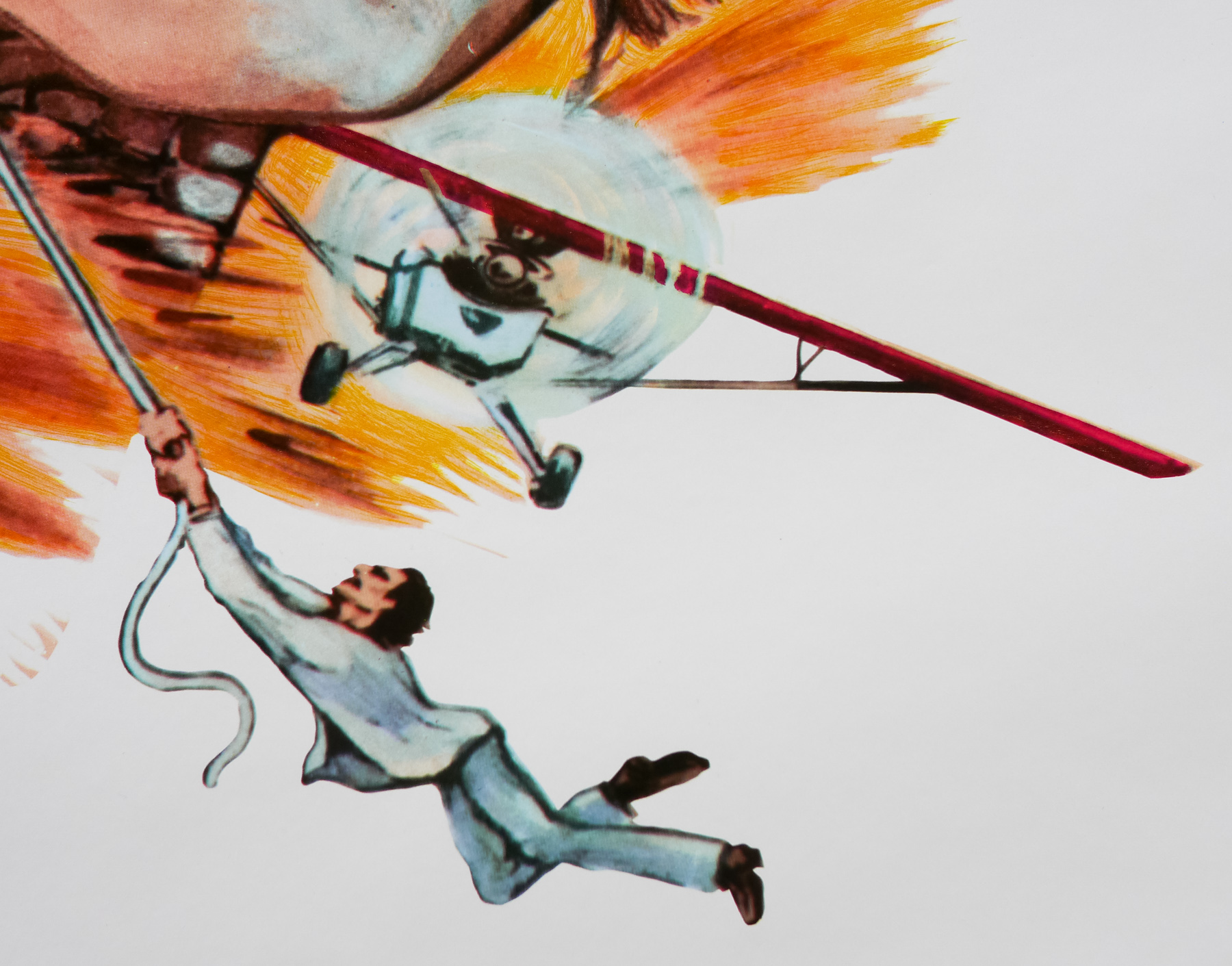
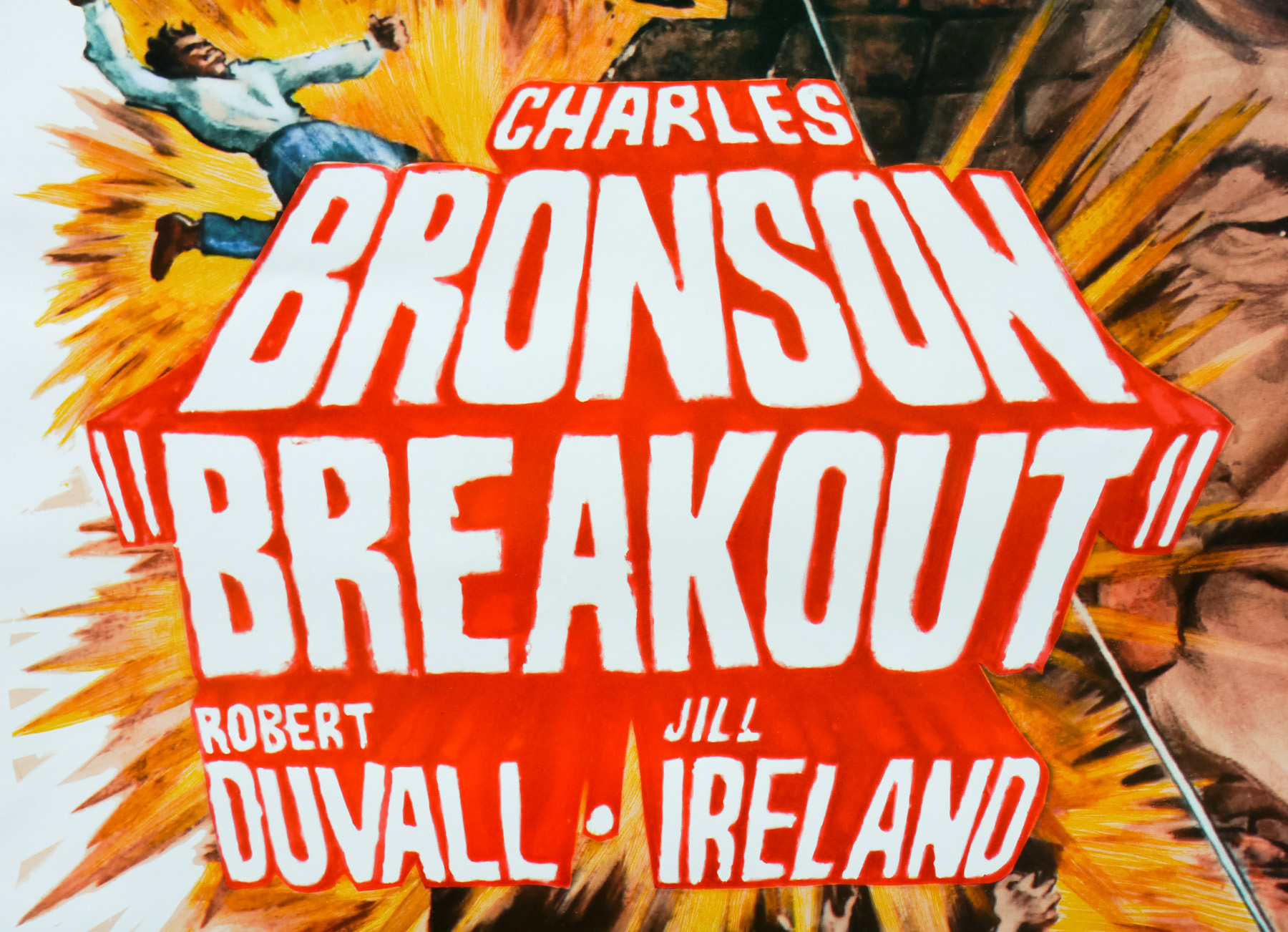
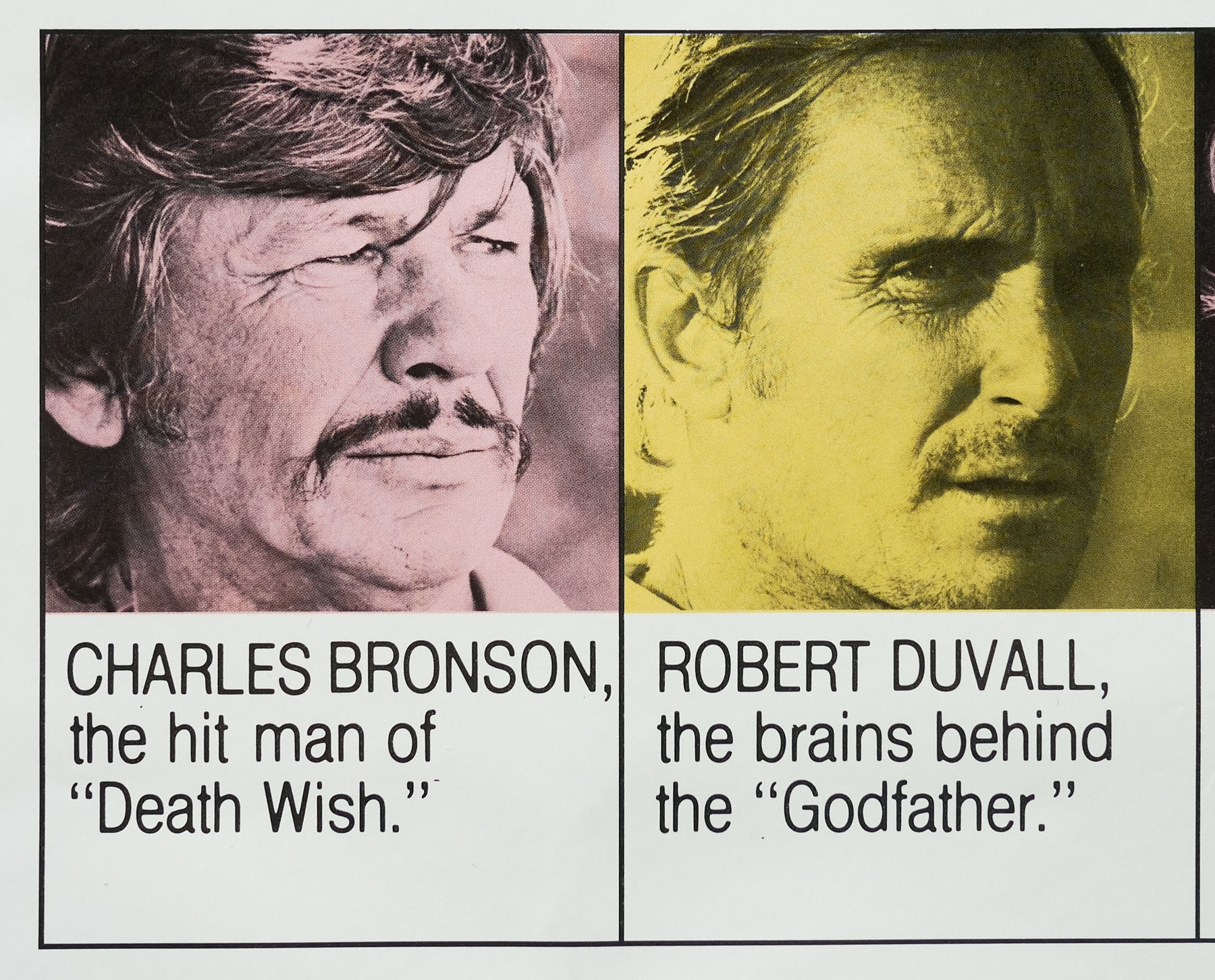
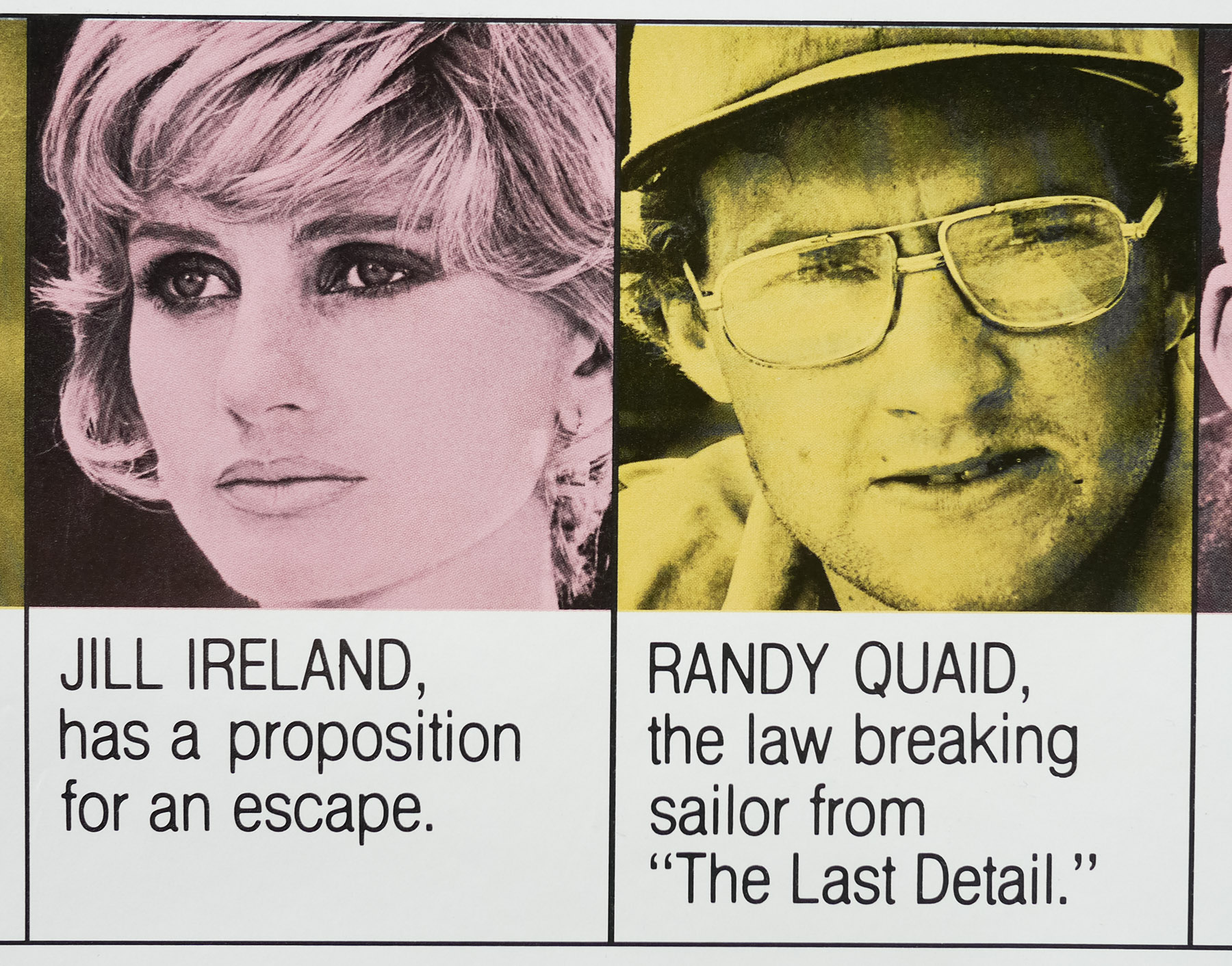
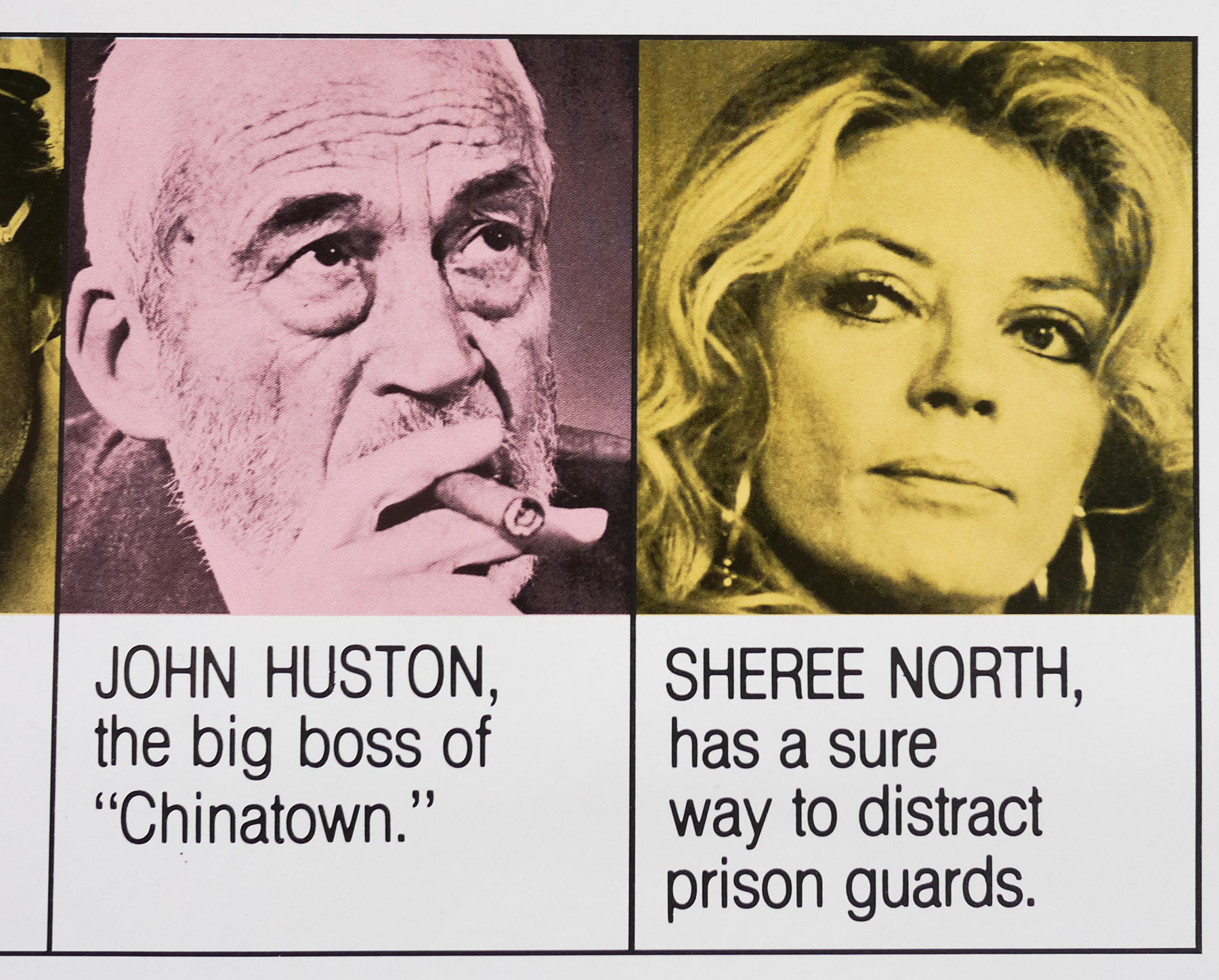
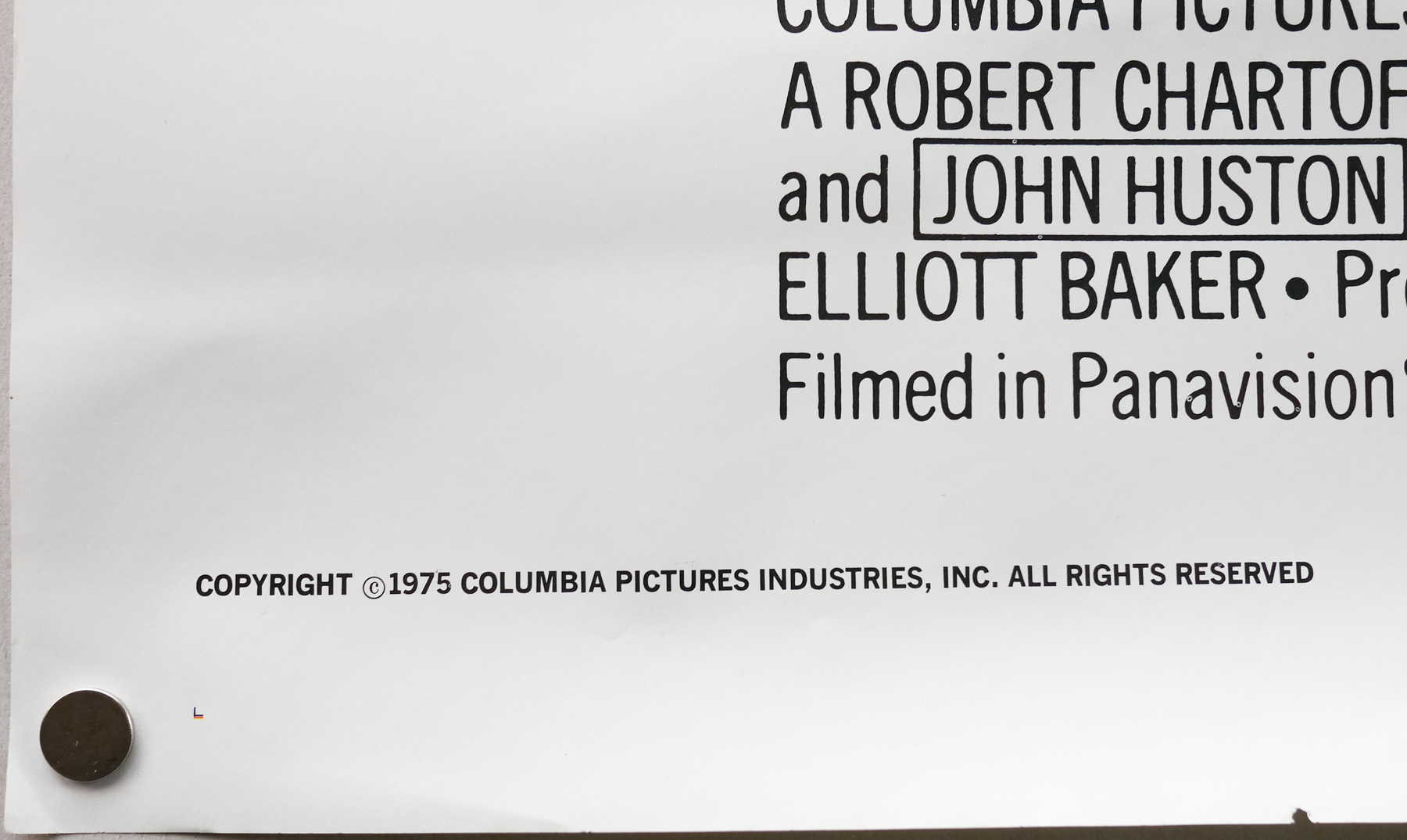
This one sheet for the 1975 action film Breakout features one of those classic taglines that manages to sum up the plot of the film in a couple of sentences. Charles Bronson, flush from the international success of the 1974 thriller Death Wish, leads a star-studded cast, including Robert Duvall, Bronson’s then wife Jill Ireland and a young Randy Quaid. It was helmed by Tom Gries who had started out in television and eventually moved into features, including several westerns such as ‘100 Rifles’. Gries sadly passed away from a heart attack in 1977 but not before he’d worked with Bronson again for Breakheart Pass (also in 1975). The film is loosely based on a real even that’s detailed on the film’s Wikipedia page.

Duvall plays Jay Wagner who is arrested for a crime he didn’t commit that happened in Mexico, 2000 miles away from where he was at the time. Tried by a kangaroo court he is thrown in a grim Mexican jail after being sentenced to 28 years. When his wife Ann (Ireland) learns what’s happened she vows to break him out of the prison and decides to hire wily bush pilot Nick Colton (Bronson) and his improbably named partner Hawk Hawkins (Quaid). The pair make one attempt involving Quad dressing in drag that fails and decide to return with a helicopter. Unfortunately Ann has told Jay’s grandfather, the wealthy businessman Harris Wagner (legendary actor John Huston), their plans without realising that he’s behind Jay’s imprisonment due to an issue with some business deals. Nick and Hawk have to work hard to pull off the escape and avoid being busted by an agent called Cable who Harris sends after them.

Bronson plays his character with an atypical comedic edge, very unlike the roles that had made him a star. The film was a box-office hit, largely due to Columbia trying the then new method of saturation booking where 1300 cinemas across the US were sent prints of the film simultaneously, coupled with plenty of advertising. After it proved a success, Universal then used the method with Jaws the same year and, after the incredible blockbusting results of that release, film releasing tactics were changed forever.

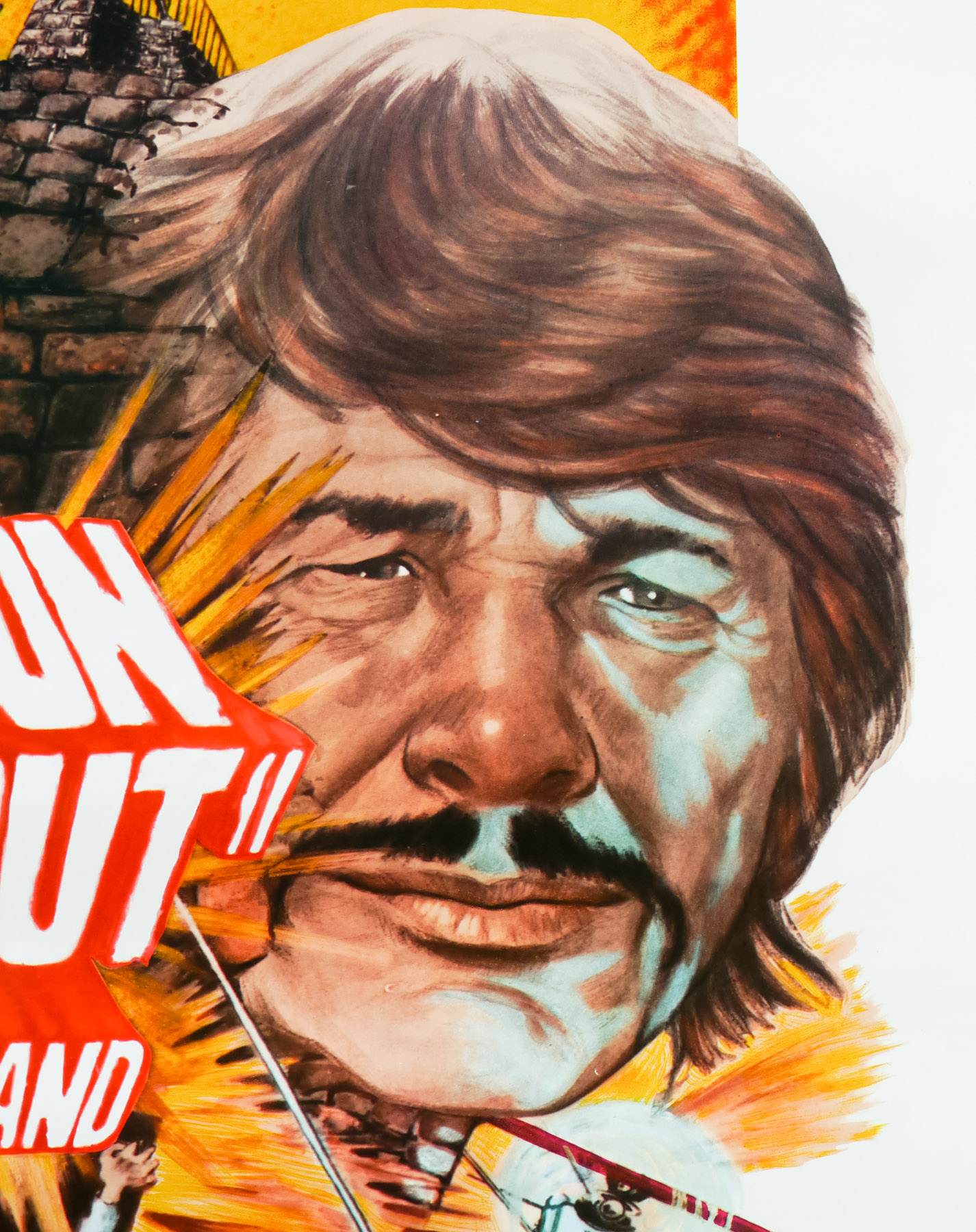
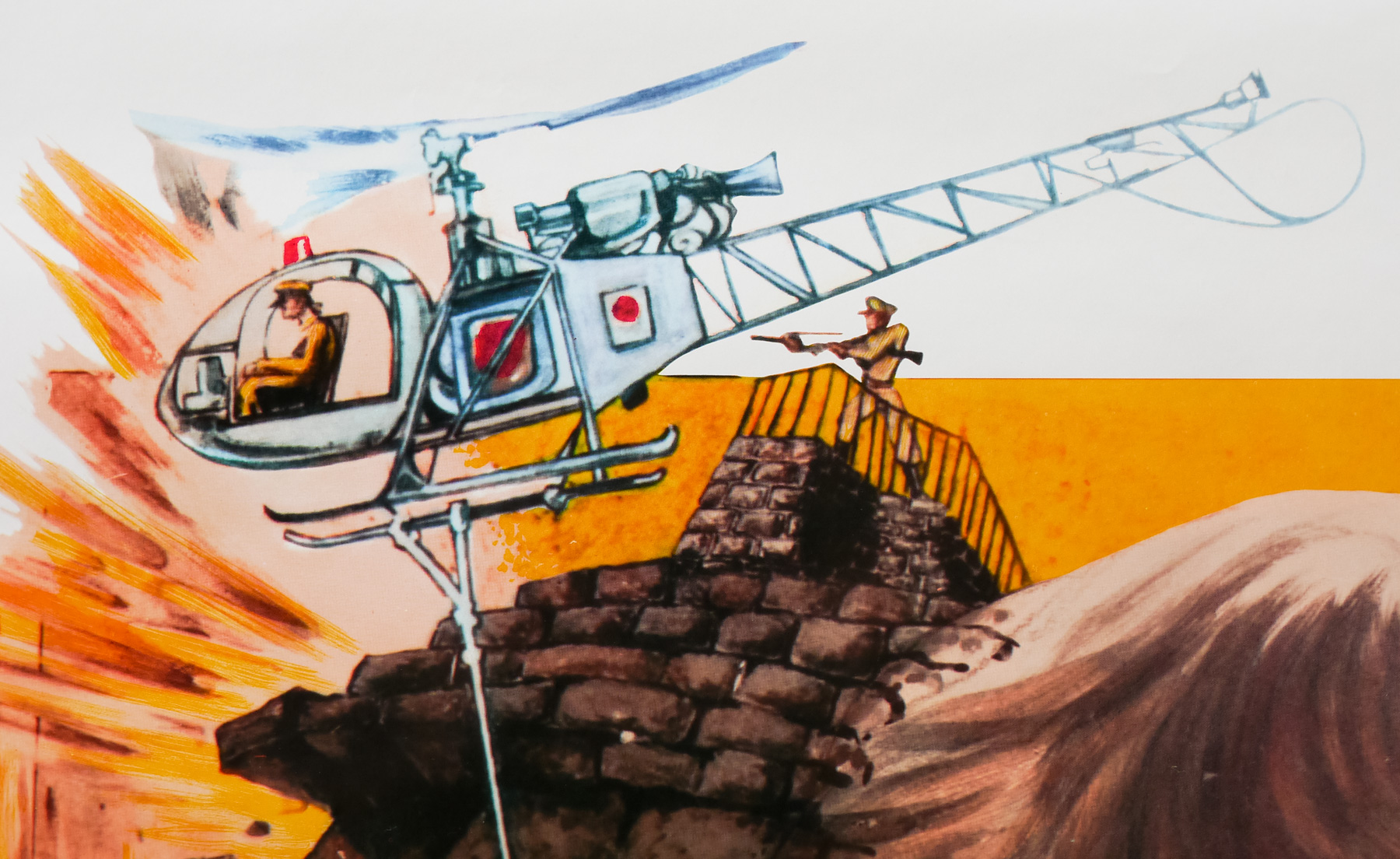
This one sheet is the style A one sheet for the film and features the signature of an artist called Weezer, about whom I’ve been able to discover no information. If anyone has any details about them please get in touch. There’s also a style B one sheet for the film which has similar artwork by a different artist that can be seen here. It’s strange that both posters are so similar in layout and I’m not sure why the studio bothered.

Fish Tank / one sheet / USA

23.01.17

Poster Poster

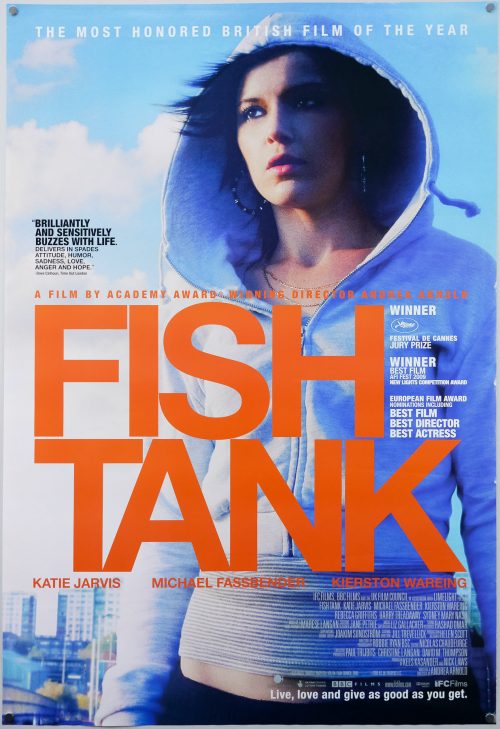
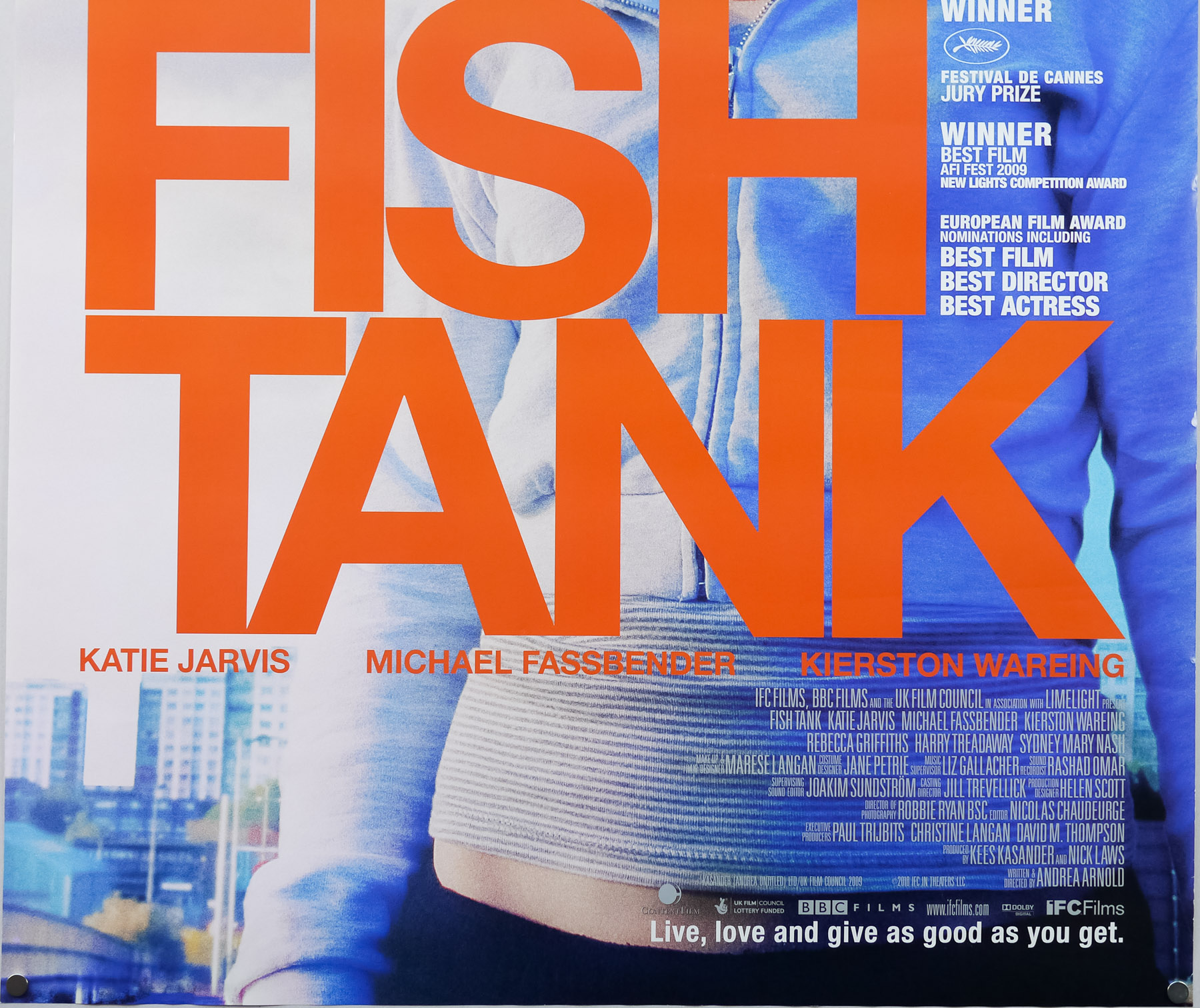
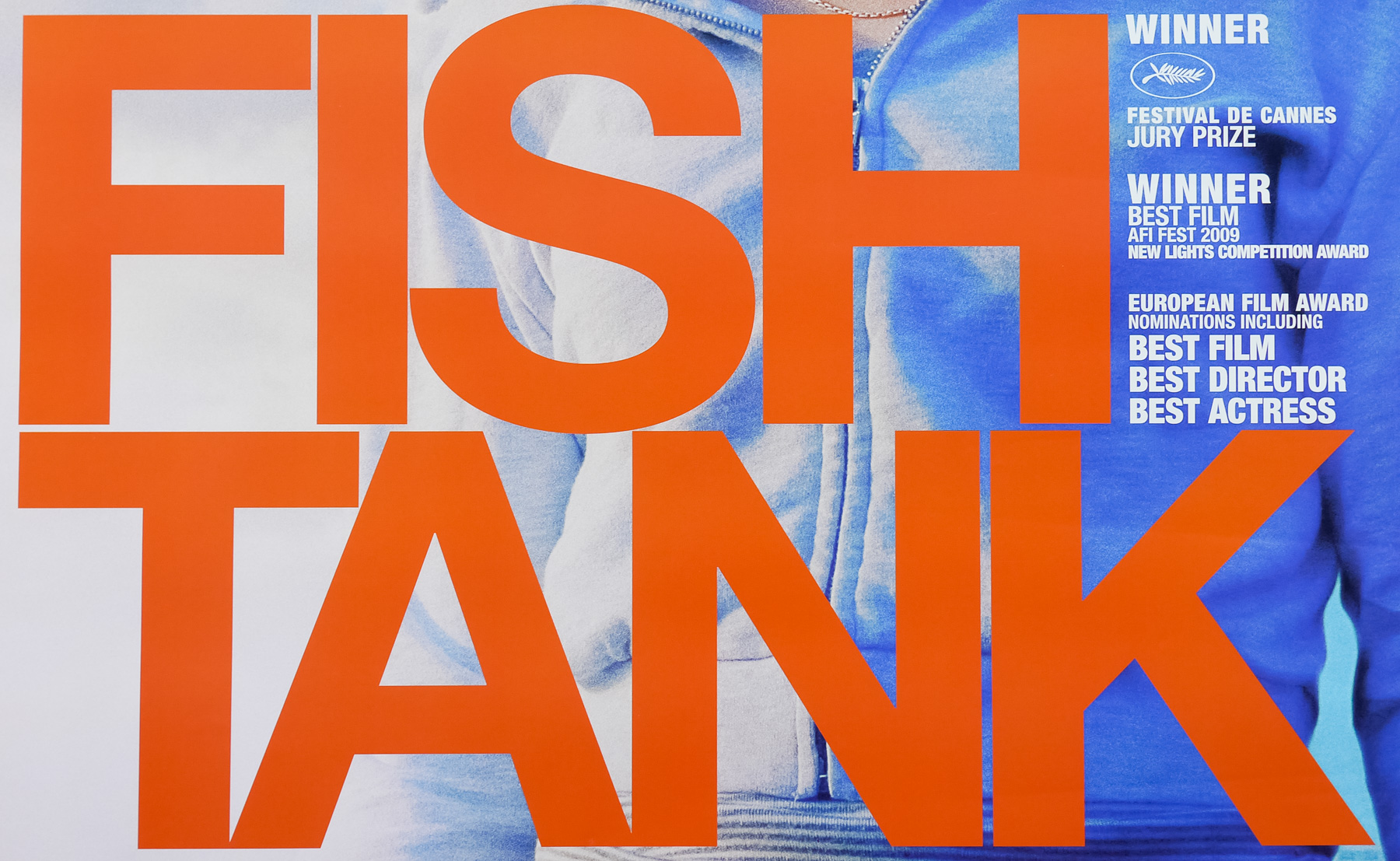
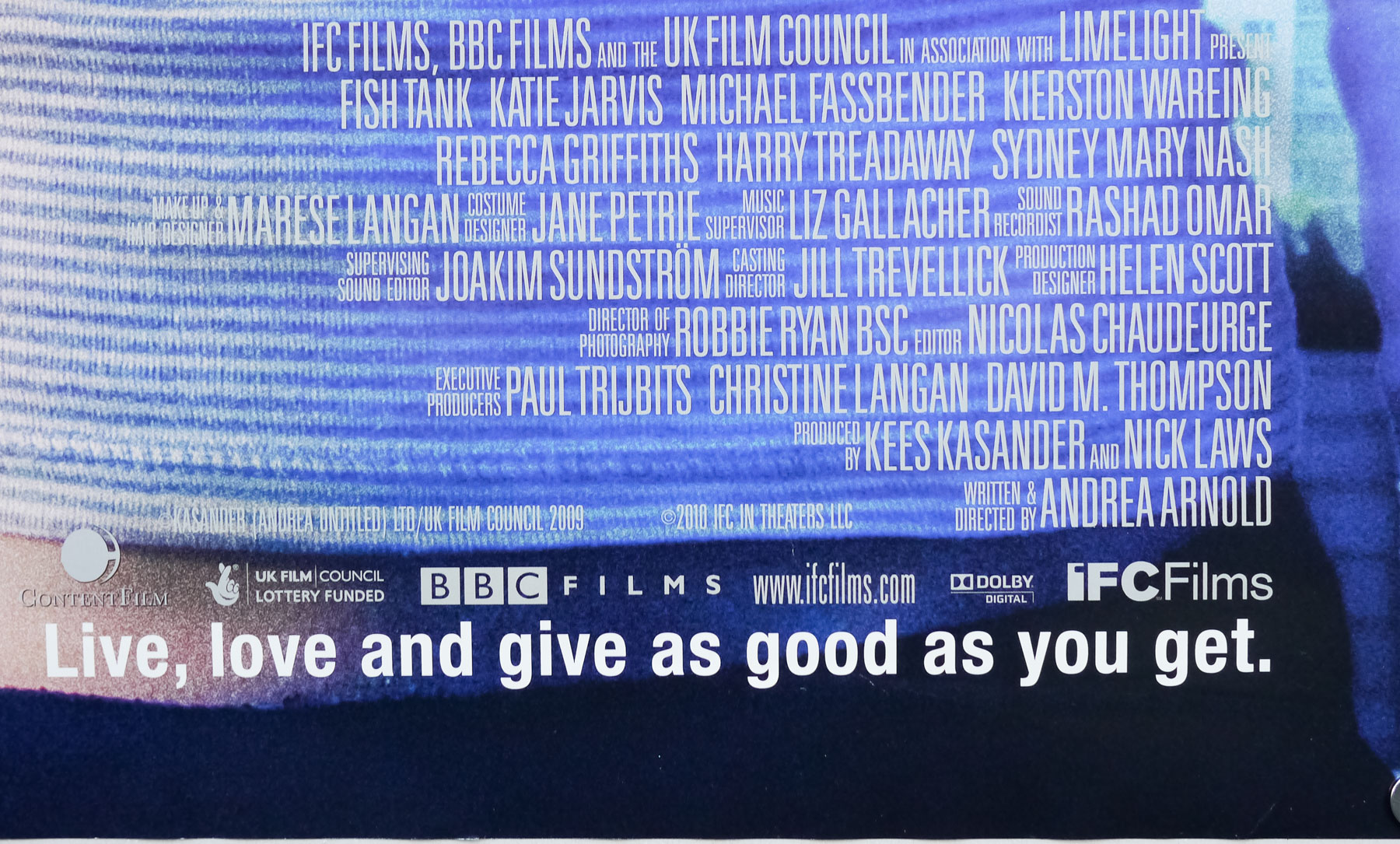
This is the American one sheet for the release of director Andrea Arnold‘s 2009 film Fish Tank. The British director won an Oscar for her short film Wasp in 2003 and her first feature-length film, Red Road, was released three years later. Like her first film, Fish Tank is a slice of gritty British realism focusing on a female protagonist. The location has changed, however, with East London replacing Glasgow.

Katie Jarvis plays the main character, 15-year-old Mia. Jarvis was a first-time actress who was cast after one of the film’s casting assistants saw her arguing with her boyfriend in public. Mia is a troubled teen who has been expelled from school multiple times. She lives with her mum Joanne (longtime Eastenders actress Kierston Wareing) and her younger sister on a council estate. She’s also a bit of a loner and has recently fallen out with her friend Keeley. Mia dreams of pursuing a career as a dancer and practices her moves in an empty flat on the estate. The arrival of her mum’s new boyfriend Connor (Michael Fassbender, just on the cusp of superstardom) into their home unsettles Mia. Although events quickly spiral out of control, Connor will prove to have a profound effect on the direction Mia’s life takes.

This one sheet was created by the American design agency Indika Entertainment Advertising, which was founded in 1994 by James Verdesoto and Vivek Mathur and is based in New York City. They work on print and web campaigns for films, TV shows and home entertainment and have won multiple awards for their work over the years. One of their most iconic posters is the teaser one sheet for Pulp Fiction. They also designed the teaser one sheet for American Psycho.

Prime Cut / one sheet / style A / USA

27.06.17

Poster Poster
Title
Prime Cut
AKA
Carnage (France)
Year of Film
1972
Director
Michael Ritchie
Starring
Lee Marvin, Gene Hackman, Angel Tompkins, Gregory Walcott, Sissy Spacek, Janit Baldwin, William Morey, Clint Ellison, Howard Platt, Les Lannom
Origin of Film
USA
Genre(s) of Film
Lee Marvin, Gene Hackman, Angel Tompkins, Gregory Walcott, Sissy Spacek, Janit Baldwin, William Morey, Clint Ellison, Howard Platt, Les Lannom,
Type of Poster
One sheet
Style of Poster
Style B
Origin of Poster
USA
Year of Poster
1972
Designer
Tom Jung
Artist
Tom Jung
Size (inches)
27 3/16" x 41"
SS or DS
SS
NSS #
72/57
Tagline
Together They're Murder In...

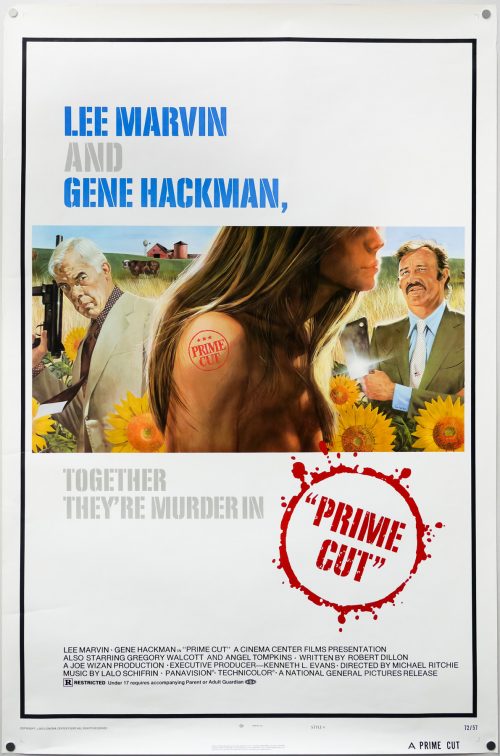
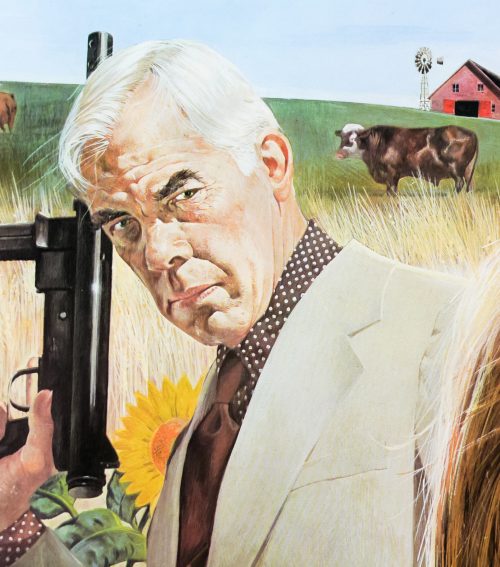
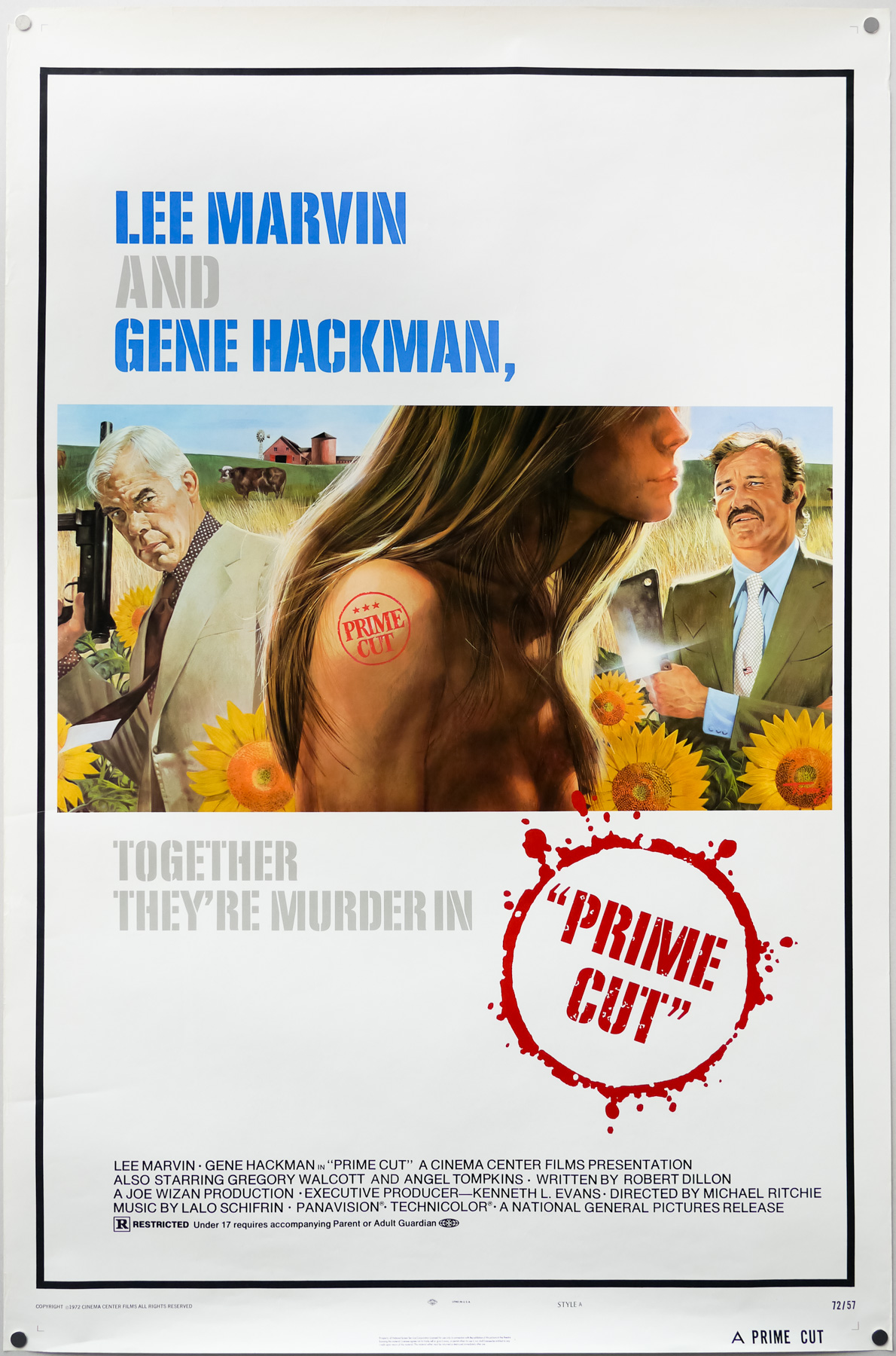
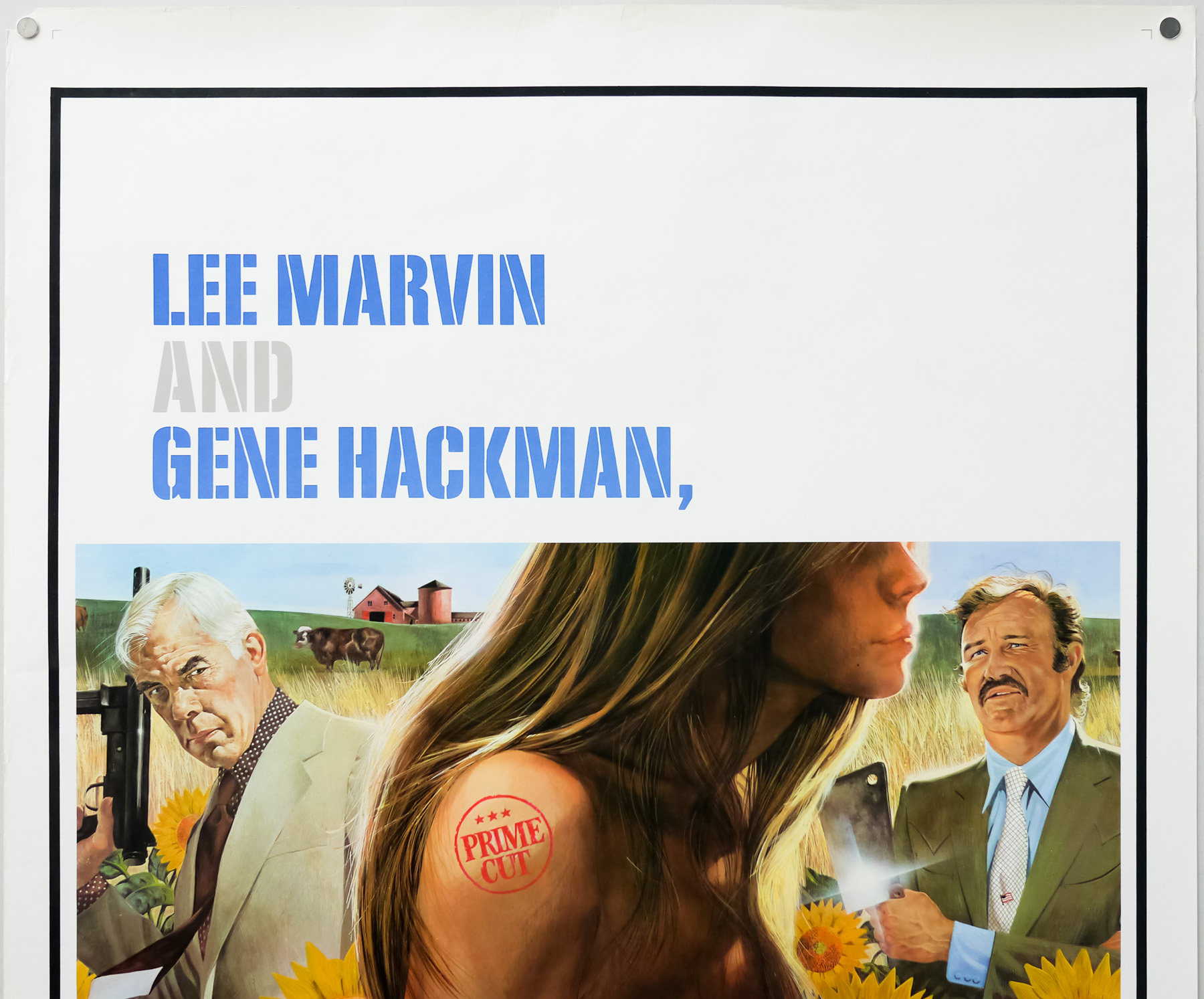
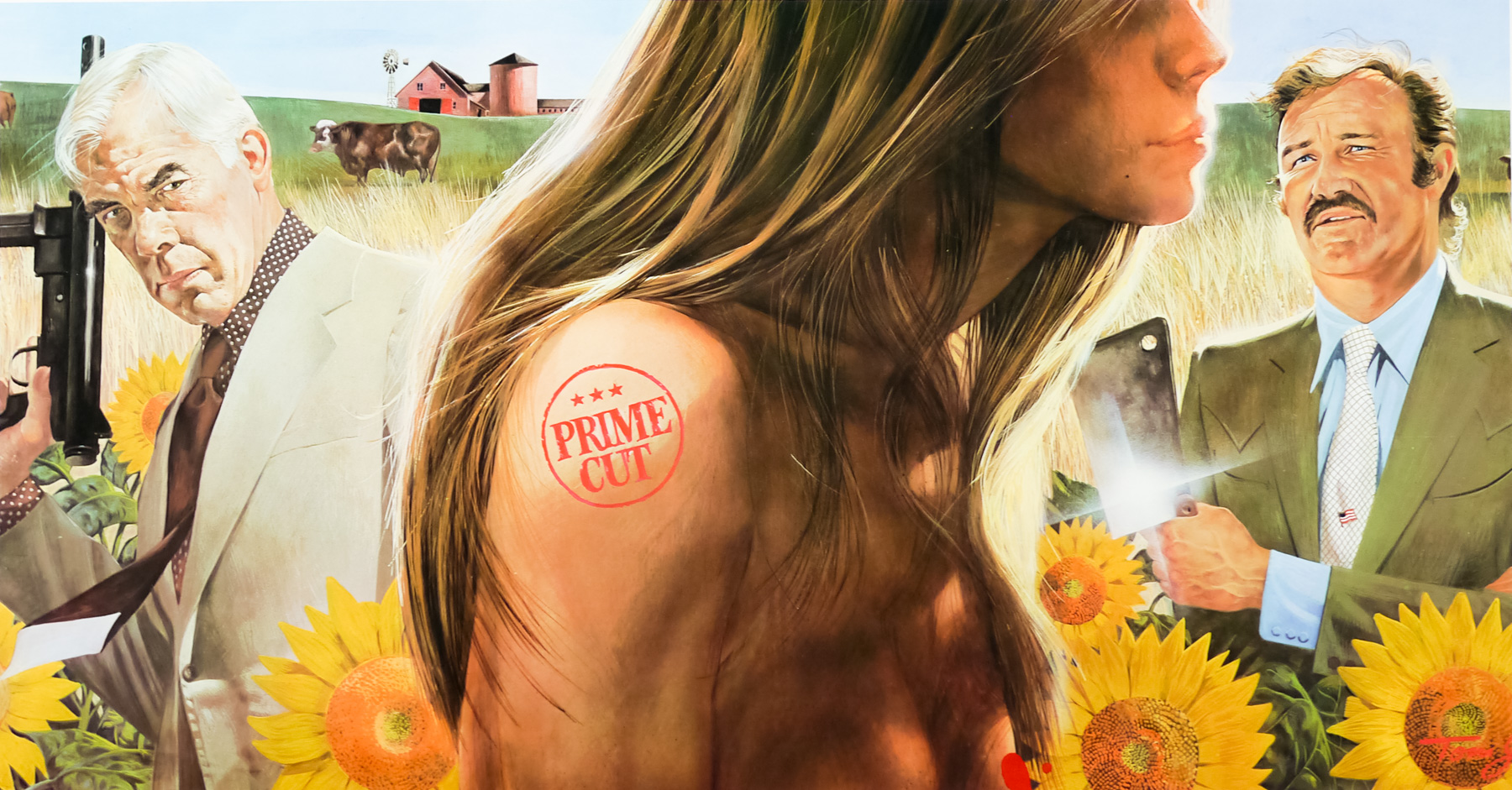
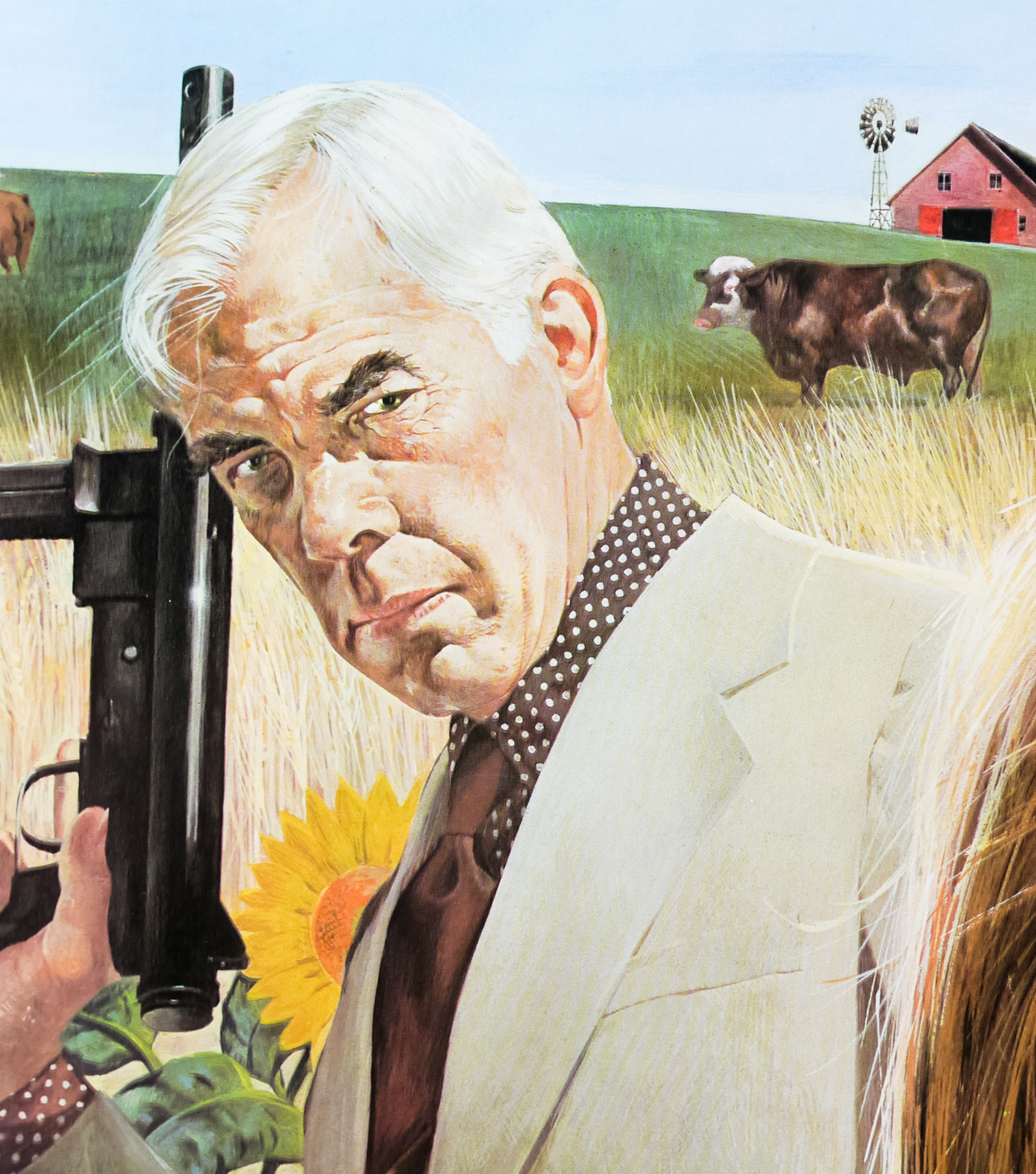
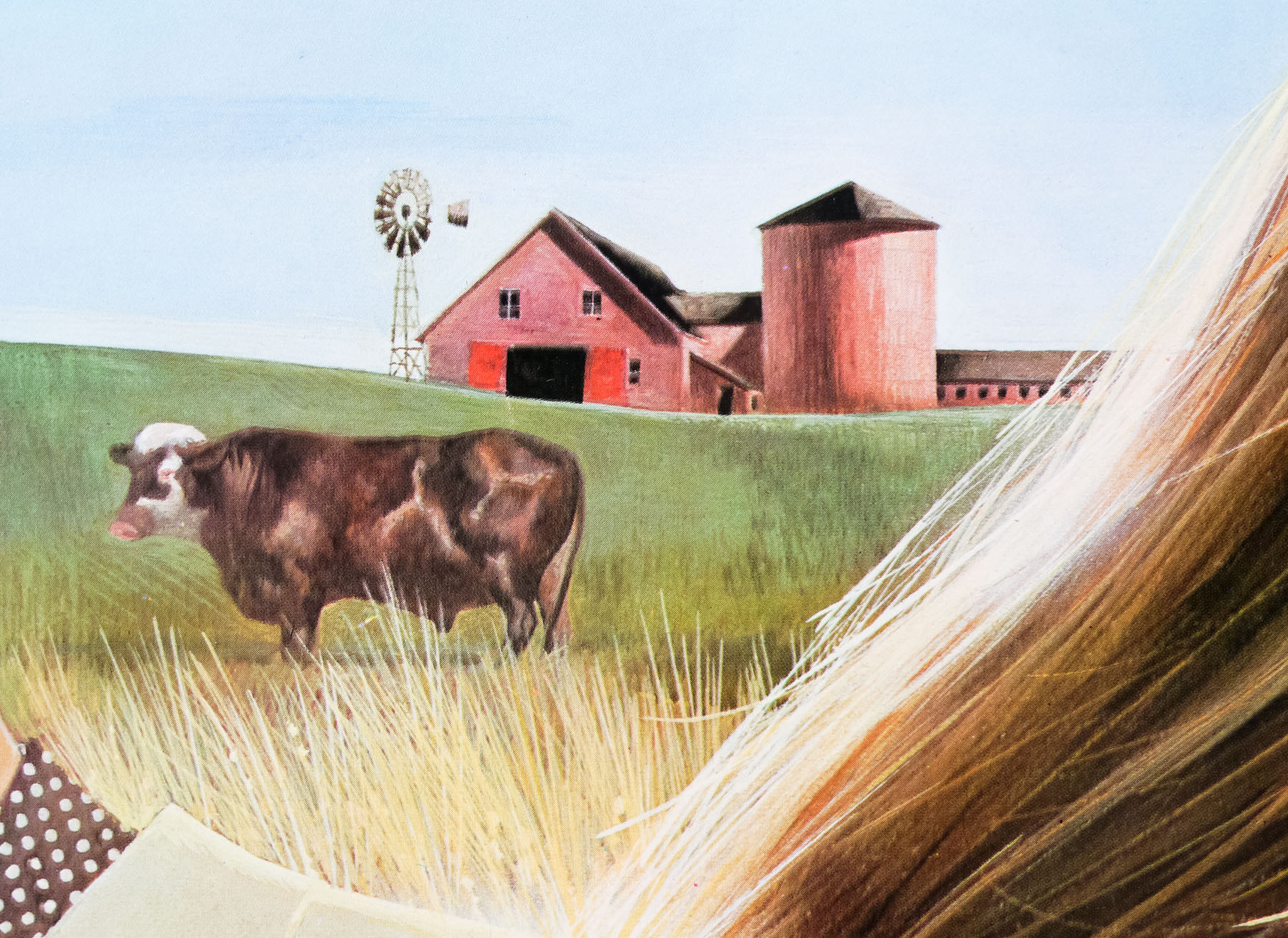
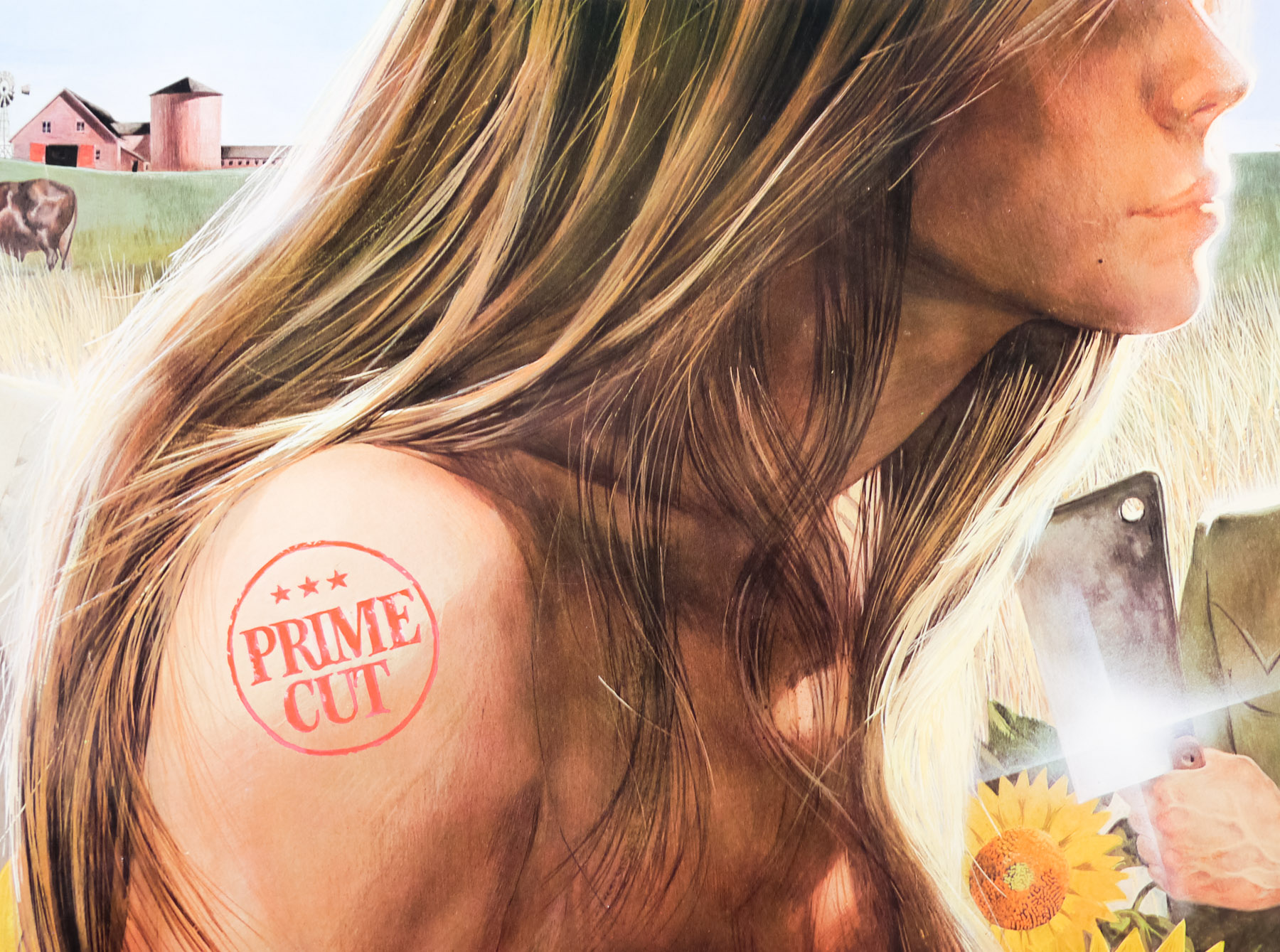
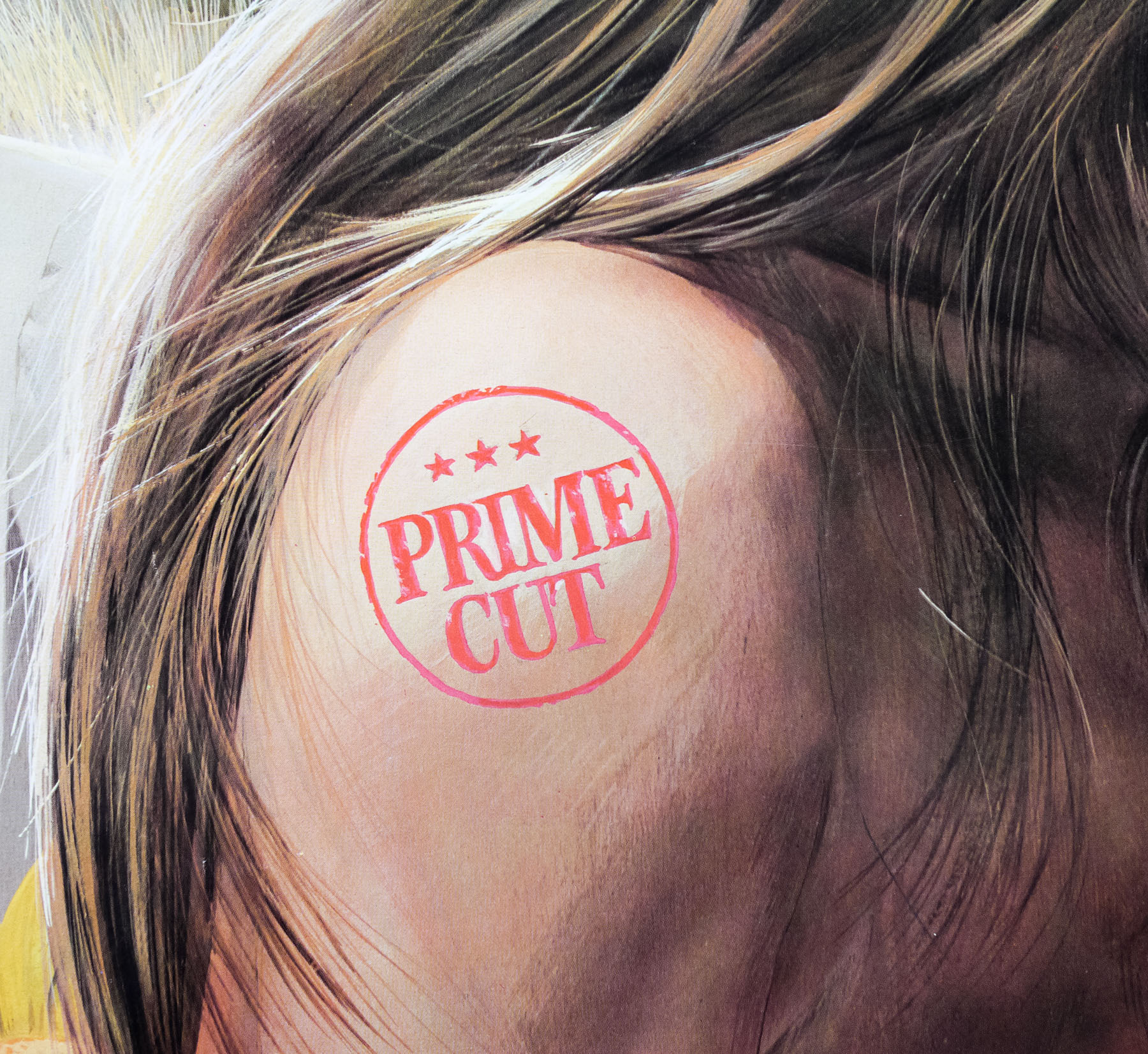
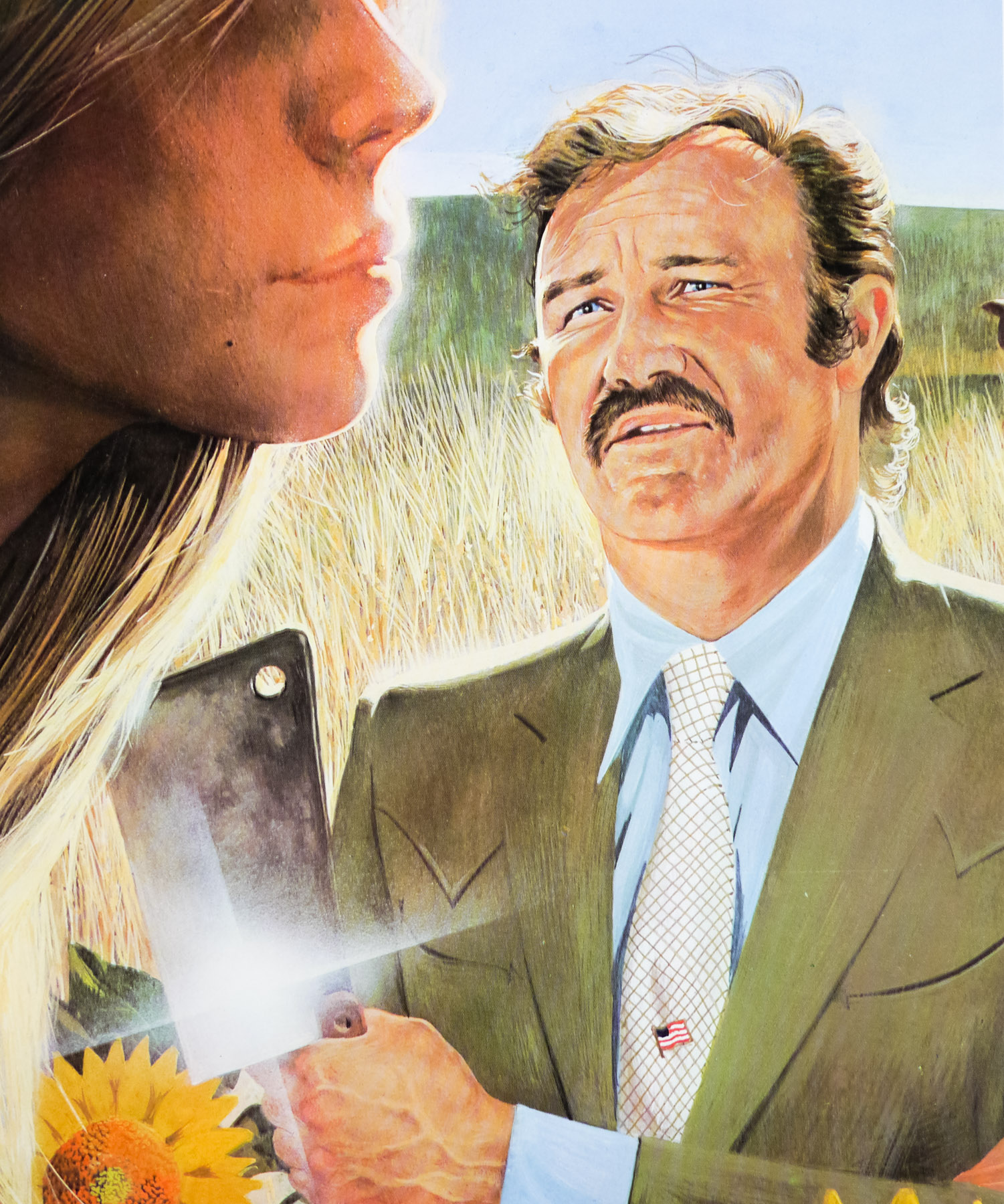
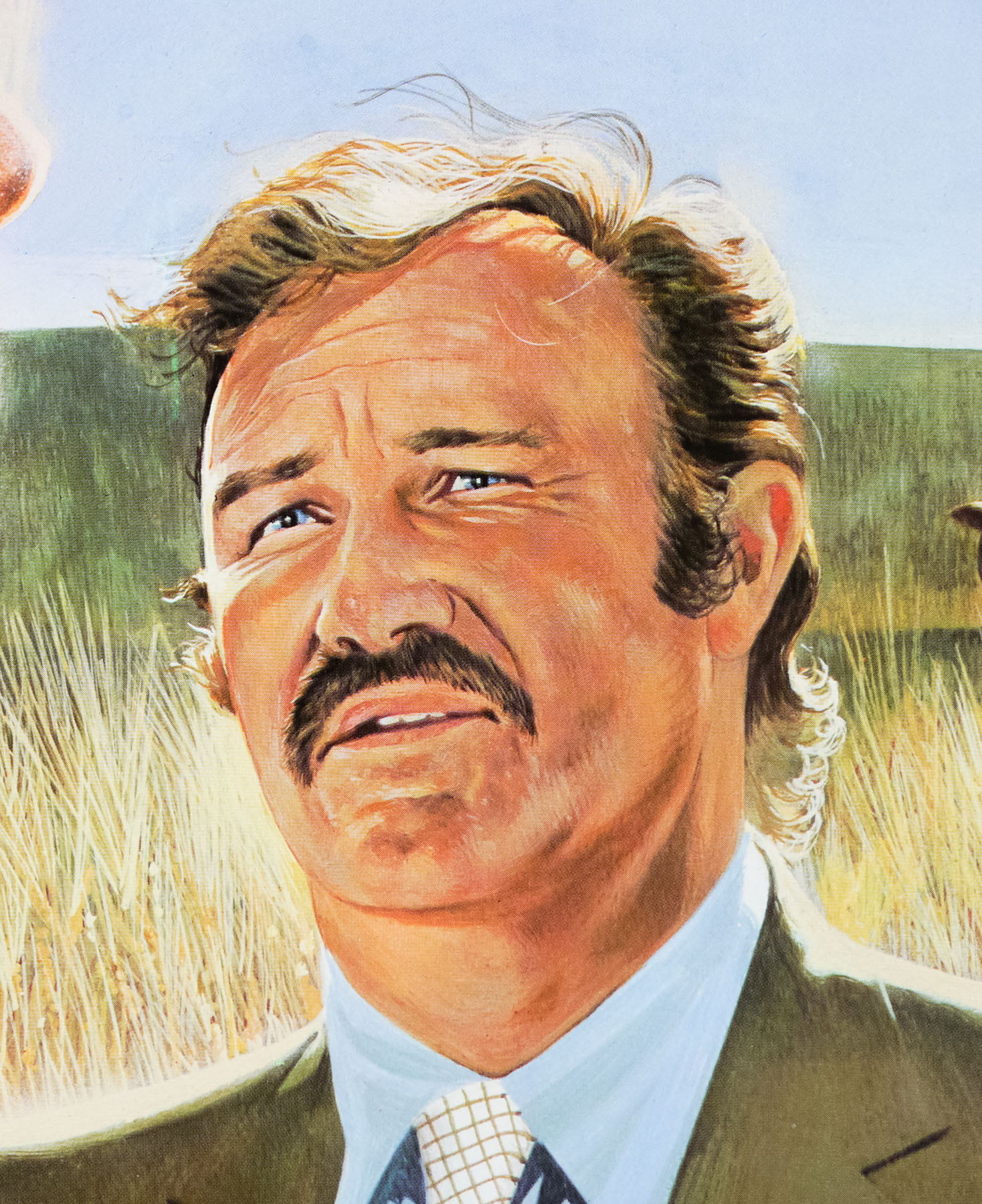
A painting by the American artist Tom Jung, who is best known for his work on the style A poster for the release of the first Star Wars film, features on this one sheet for the 1972 crime-drama, Prime Cut. The film was directed by the late Michael Ritchie (Fletch, Downhill Racer) and stars two heavyweight actors of the time in Lee Marvin and Gene Hackman. The former had a string of box-office hits playing tough guys in films such as Point Blank and The Dirty Dozen, and the latter had just starred in the unforgettable The French Connection and was to appear in The Poseidon Adventure in the same year as Prime Cut. It also marked the acting debut of Sissy Spacek who would appear in her most famous role four years later in Brian De Palma’s Carrie.

The plot sees Nick Devlin (Marvin), a Chicago mob enforcer, sent with a crew of men to Kansas City to track down Mary Ann (Hackman) and recover a $500,000 debt. Previous men sent by the mob have disappeared and we witness one being ‘processed’ through Mary Ann’s meat factory, ending up as the filling in a string of sausages that are then sent to the mob boss as a taunt. After driving to Kansas, Devlin first attacks Mary Ann’s brother and warns him that the group are there to collect the debt. The following day they find Mary Ann in a barn where he is the ringleader of a white-slave auction in which young girls are being auctioned off to older men. The women are kept naked in pens like livestock and drugged up so they don’t try to escape. Devlin threatens Mary Ann and rescues one of the women called Poppy (Spacek) “on account”. The rest of the film sees him attempting to secure the missing money and avoiding Mary Ann’s gang of denim-wearing, shotgun-toting farm boys.

The film is fairly brisk at just under 90 minutes and both leads are entertaining to watch throughout. Spacek is also excellent as Poppy and it’s not hard to see why her career took off quickly following her appearance in Prime Cut. There are several memorable scenes in the film, including one faintly ridiculous one where Devlin and Poppy are chased through a wheatfield by a combine harvester, which then goes onto chew up an entire car!

As well as the iconic one sheet for Star Wars, Tom Jung is also known for the style B one sheet for The Empire Strikes Back. He was a prolific designer and illustrator for film campaigns from the 1950s through to the 1980s. IMPAwards features a gallery of his work and his Wikipedia article has a selected list of the many posters he worked on. Rather unusually, at least in comparison to other film poster artists, Jung was also a designer of his posters as well as the artist. The other posters I’ve collected by him can be seen here.

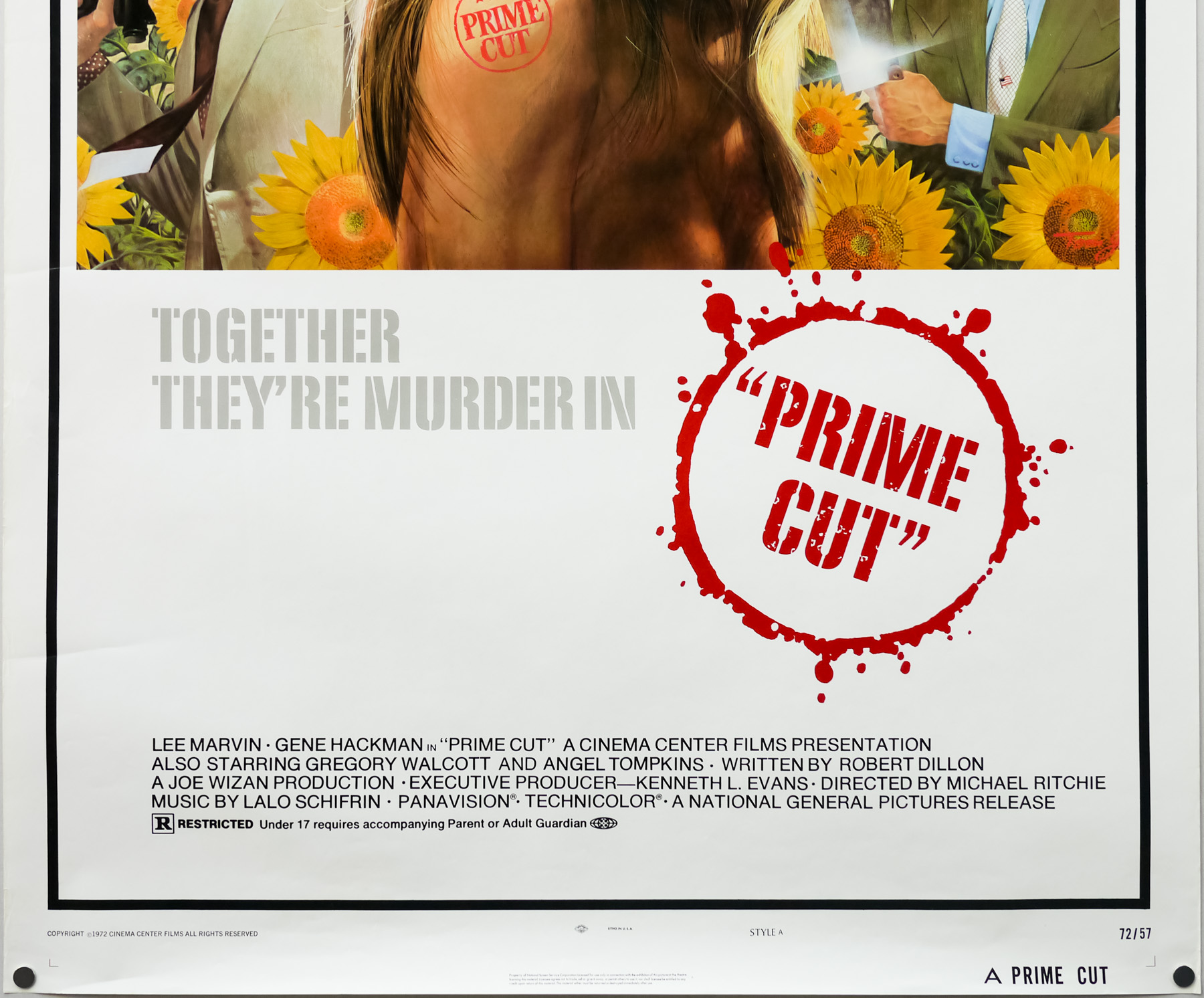
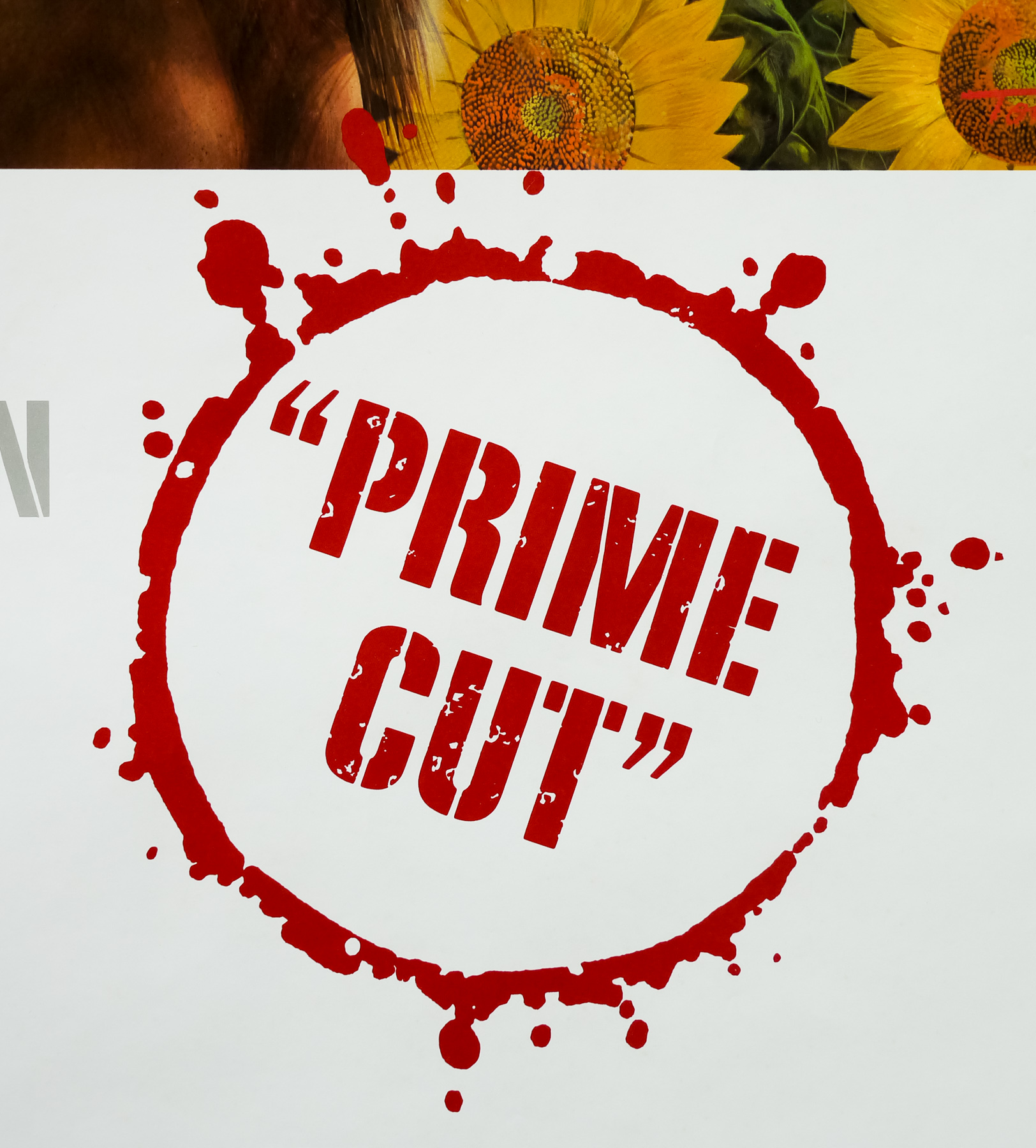
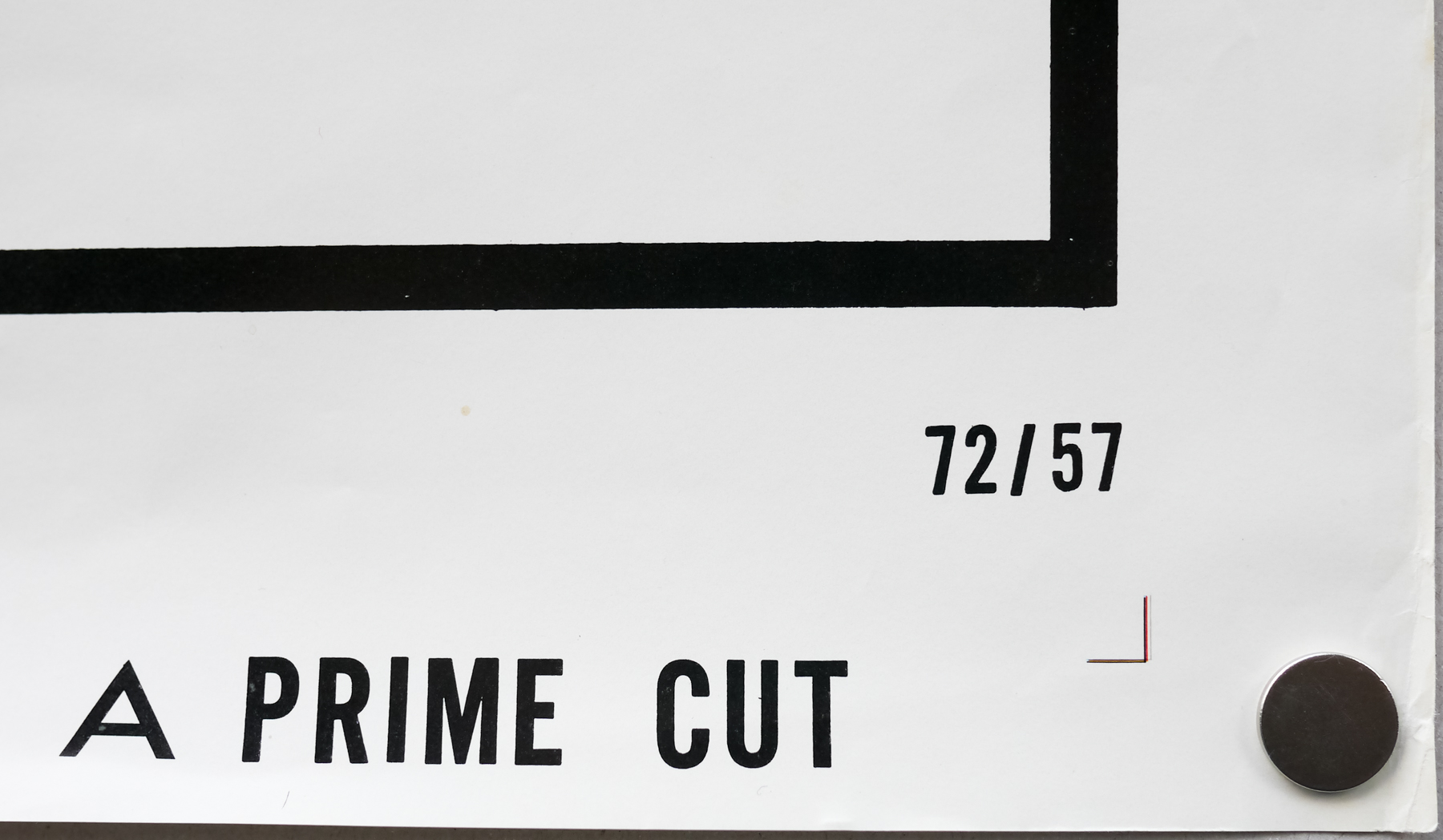
Note that this is the Style A one sheet and style B is photographic. Rather unusually, the decision was taken to insert ‘A’ in next to the title at the bottom of the poster which makes it look like the title is ‘A Prime Cut’.

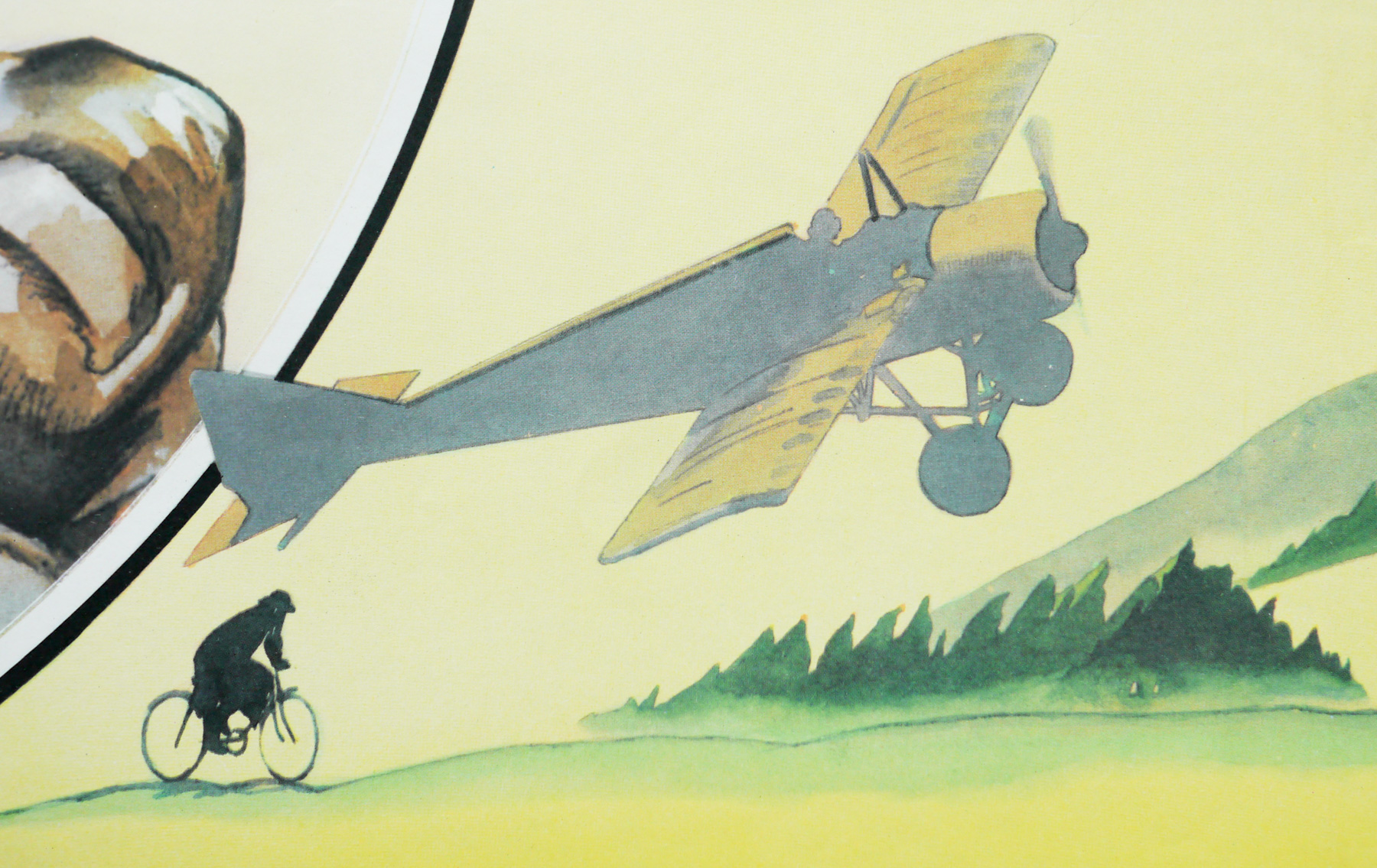
The Thirty-Nine Steps / 1978 / one sheet / UK

03.11.17

Poster Poster

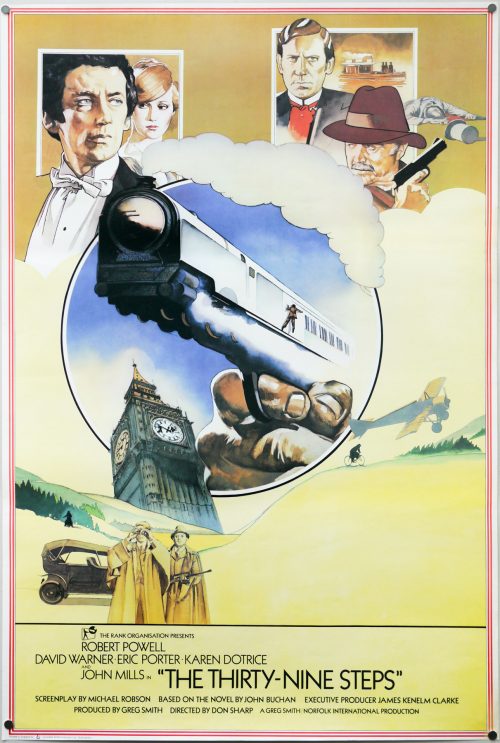
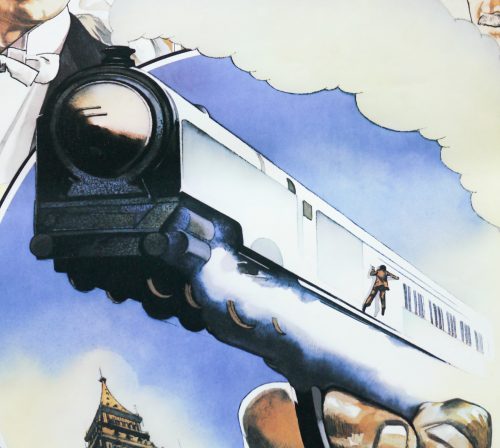
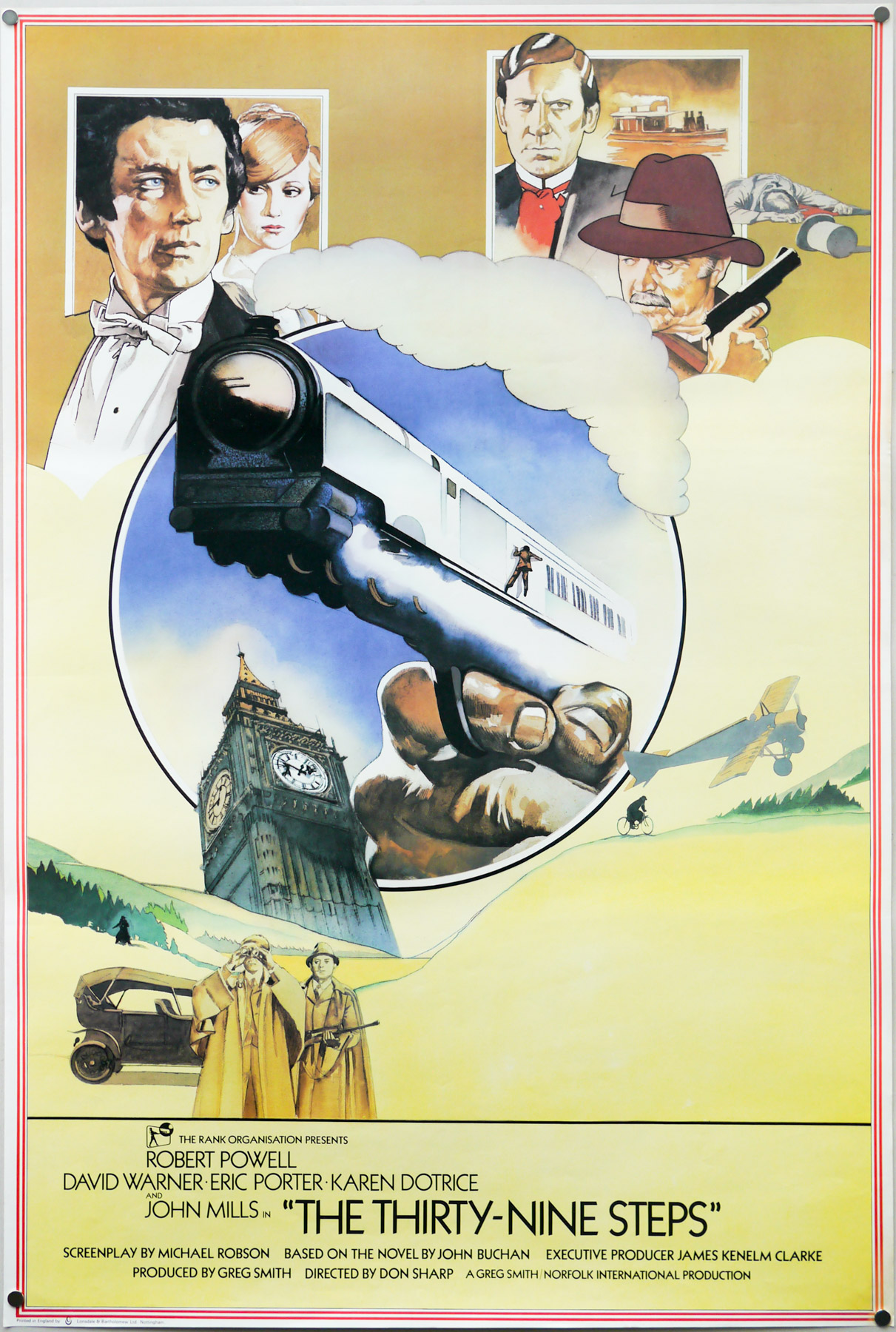
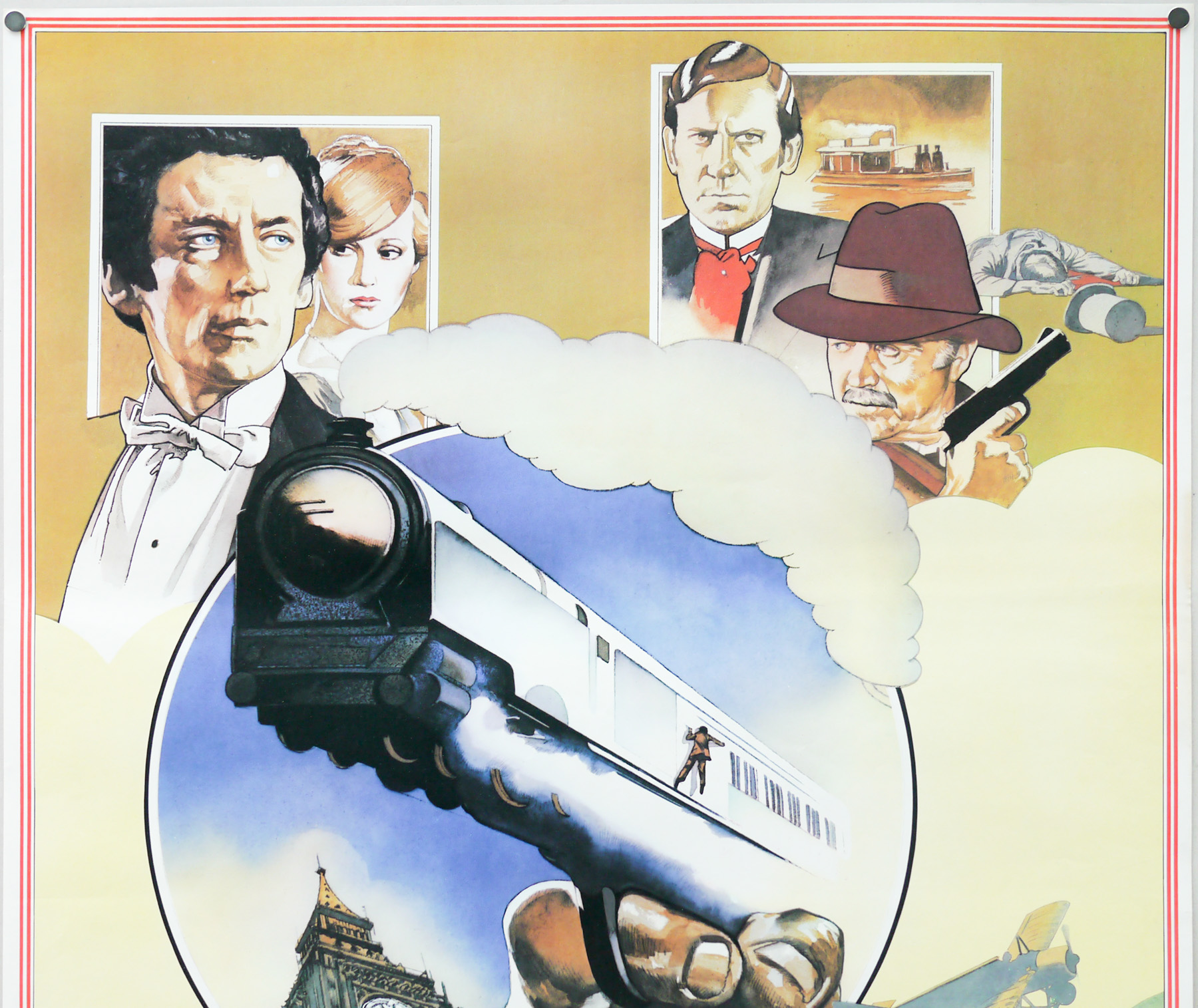
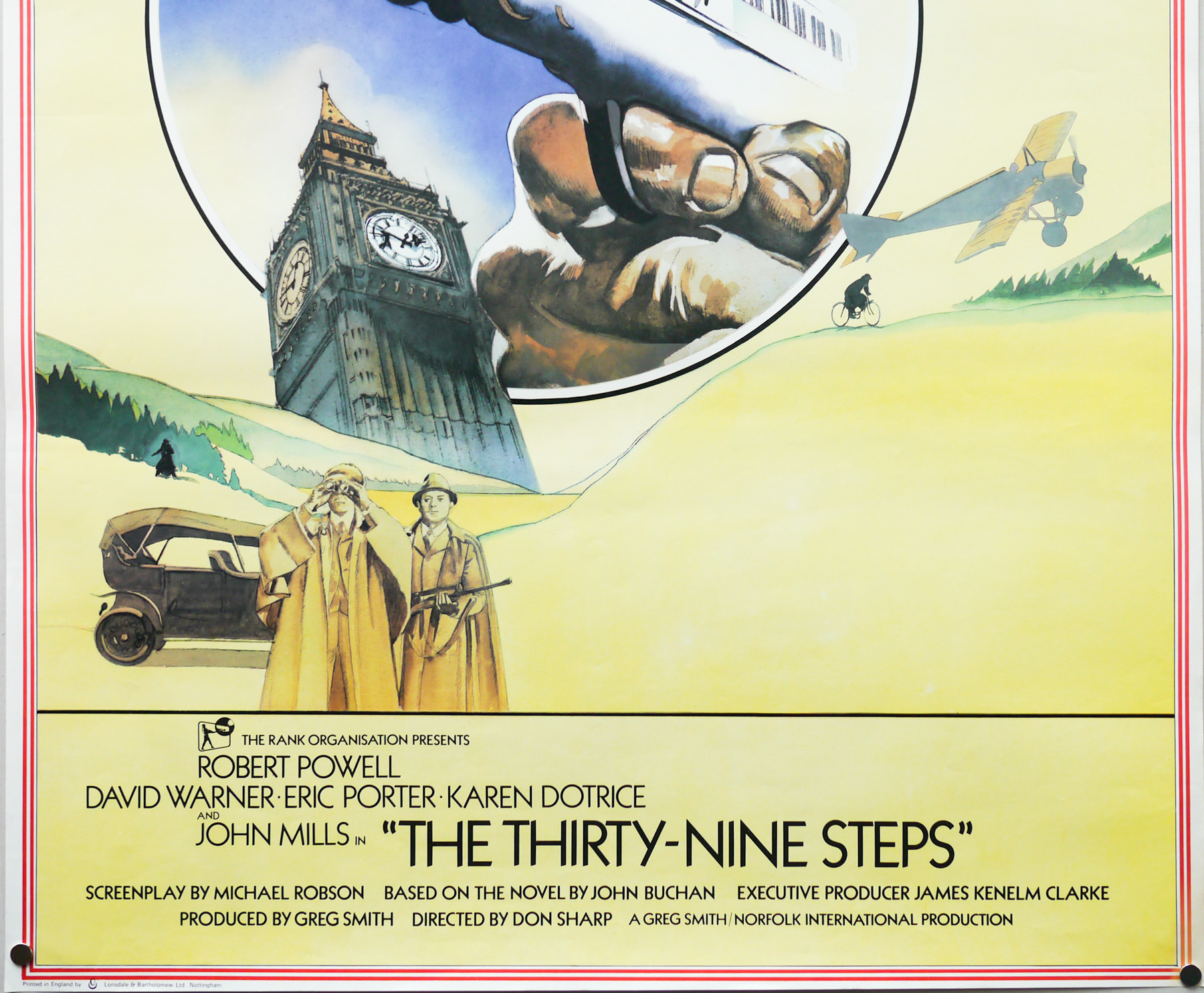
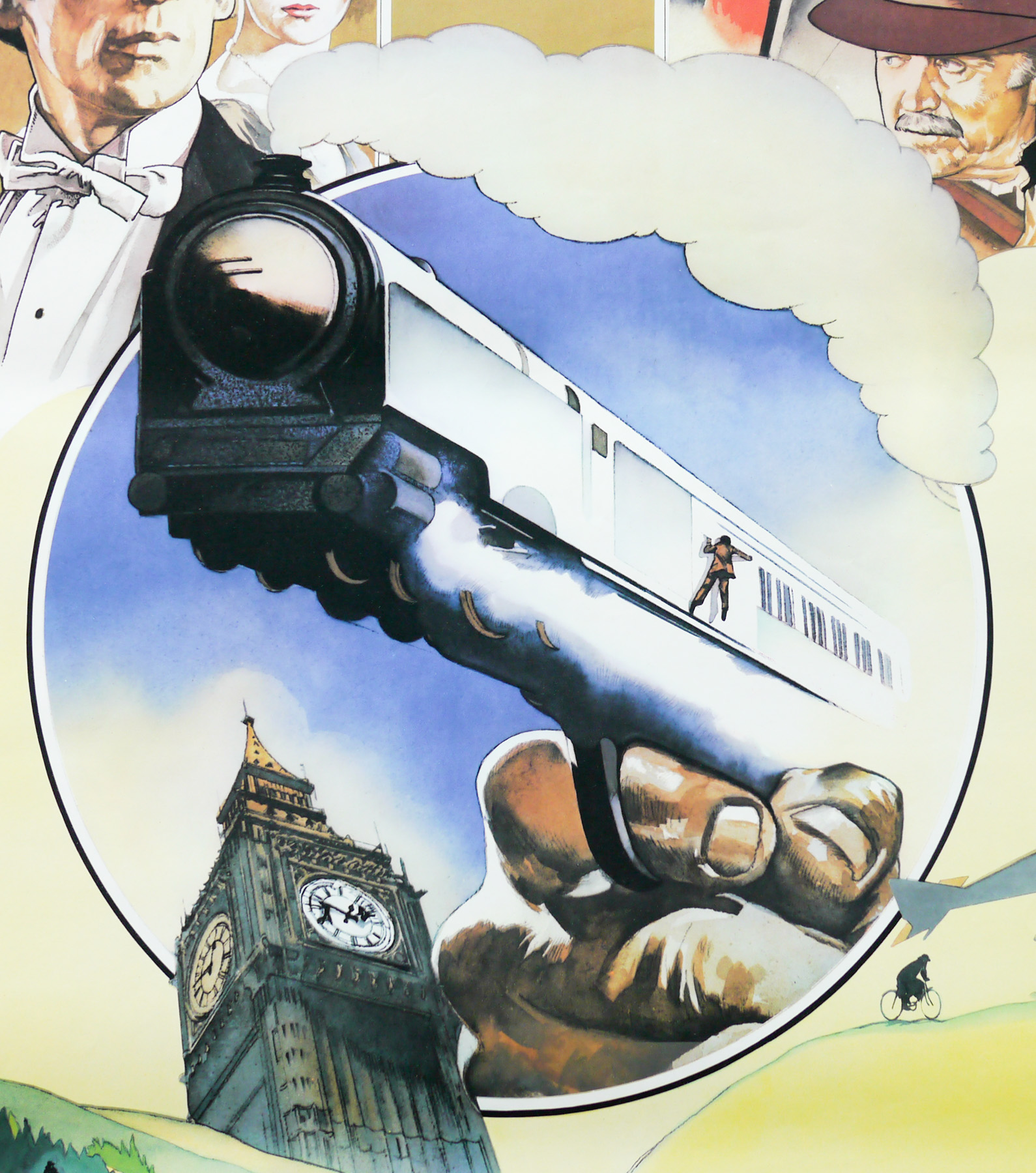
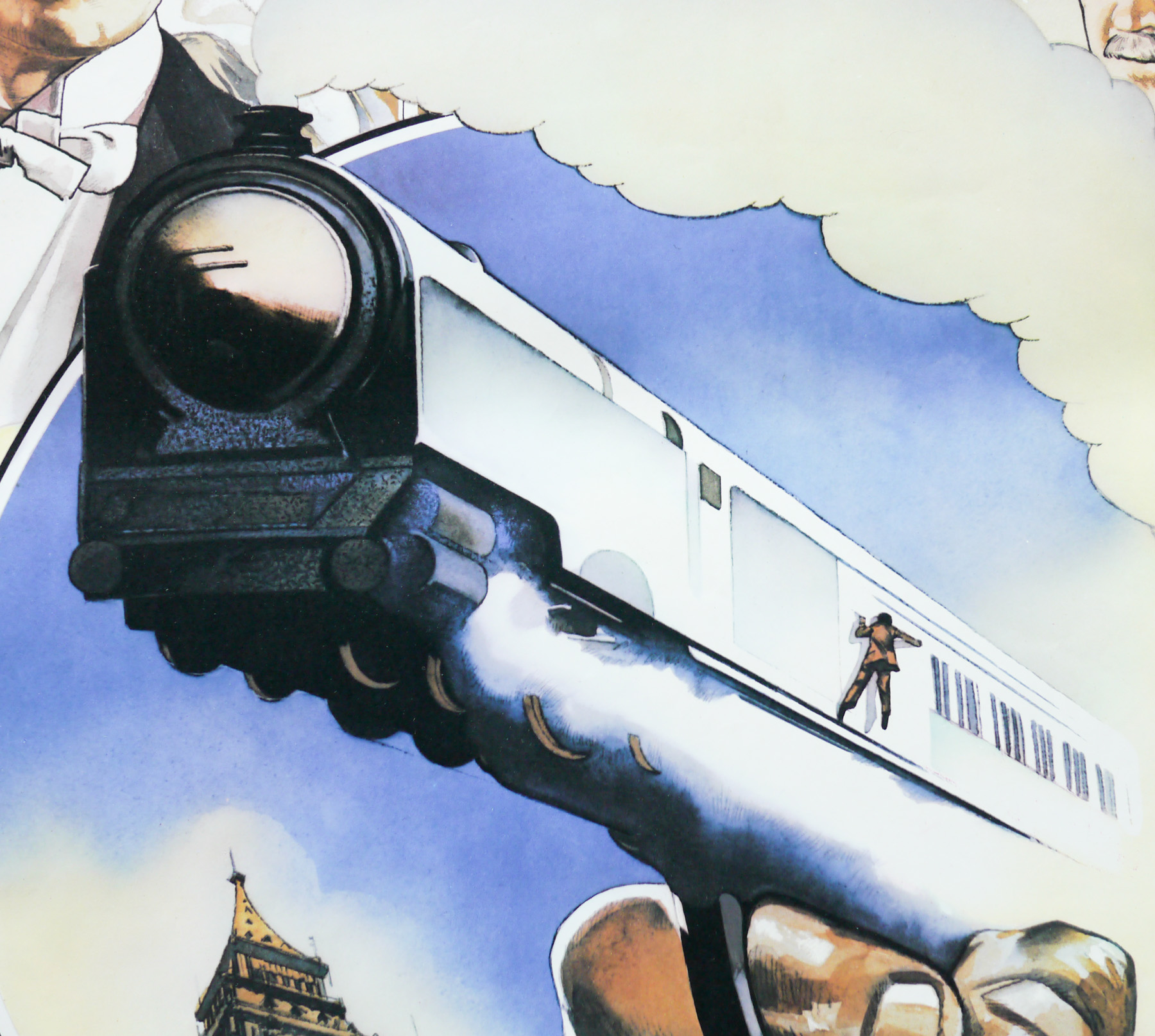
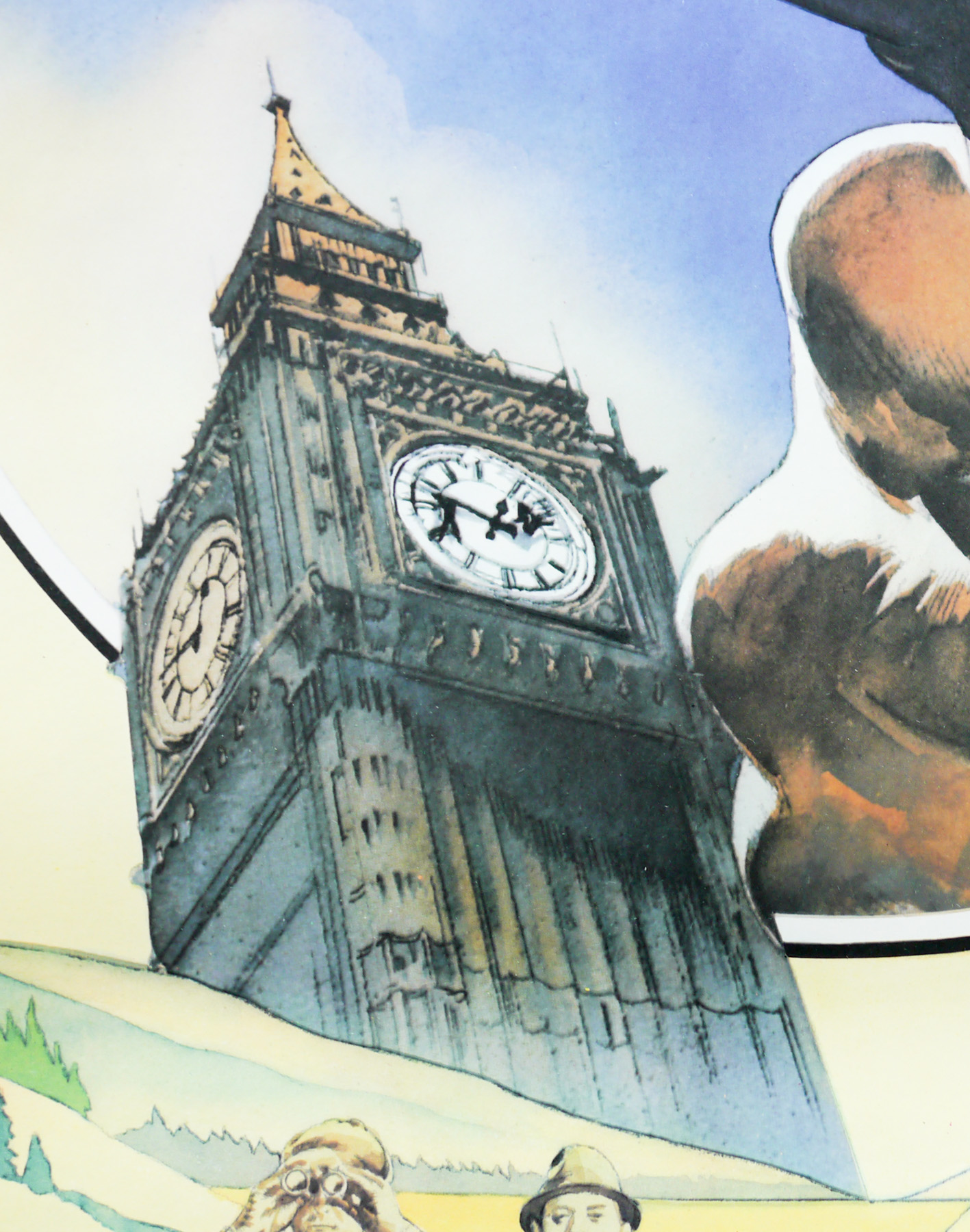
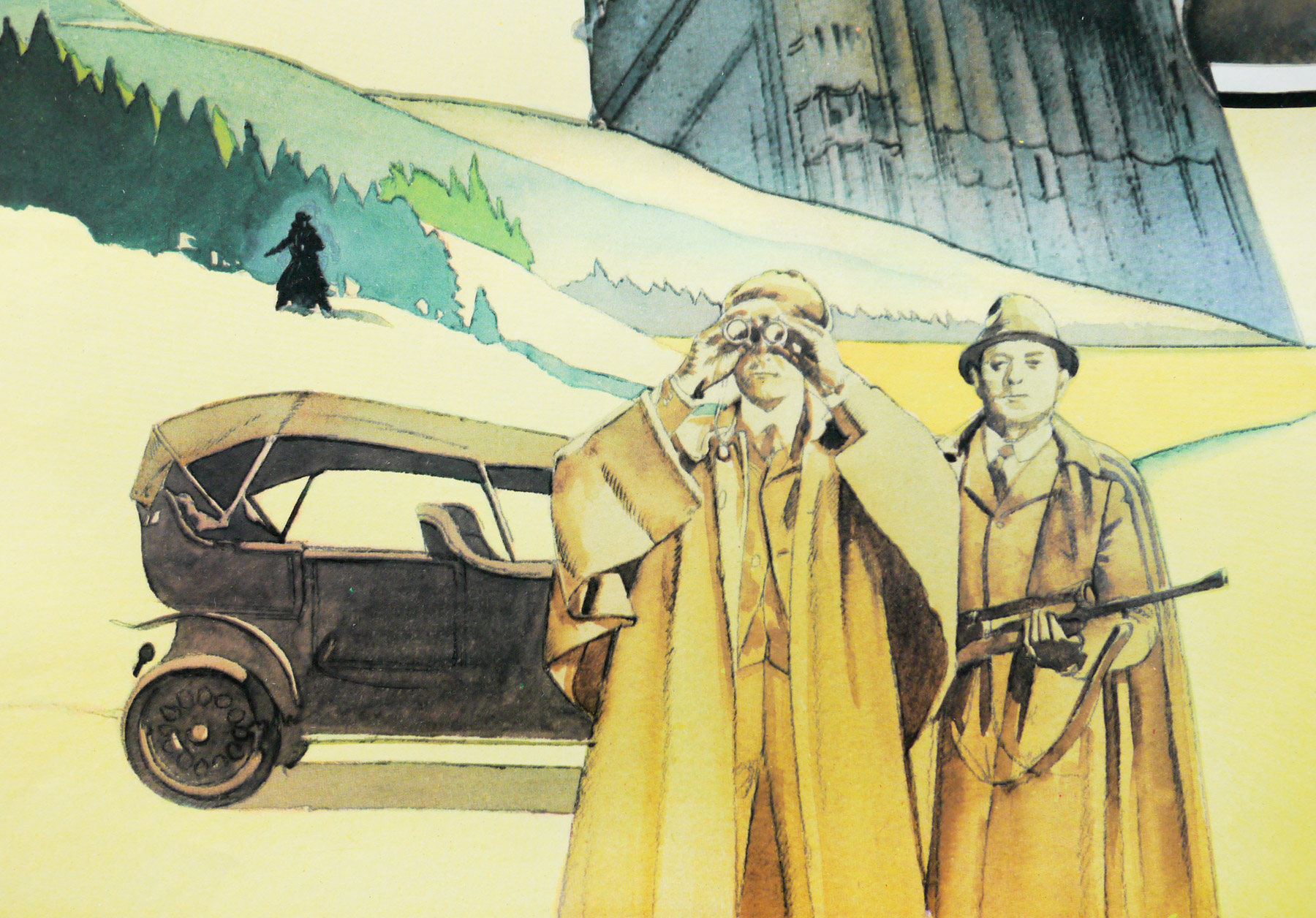
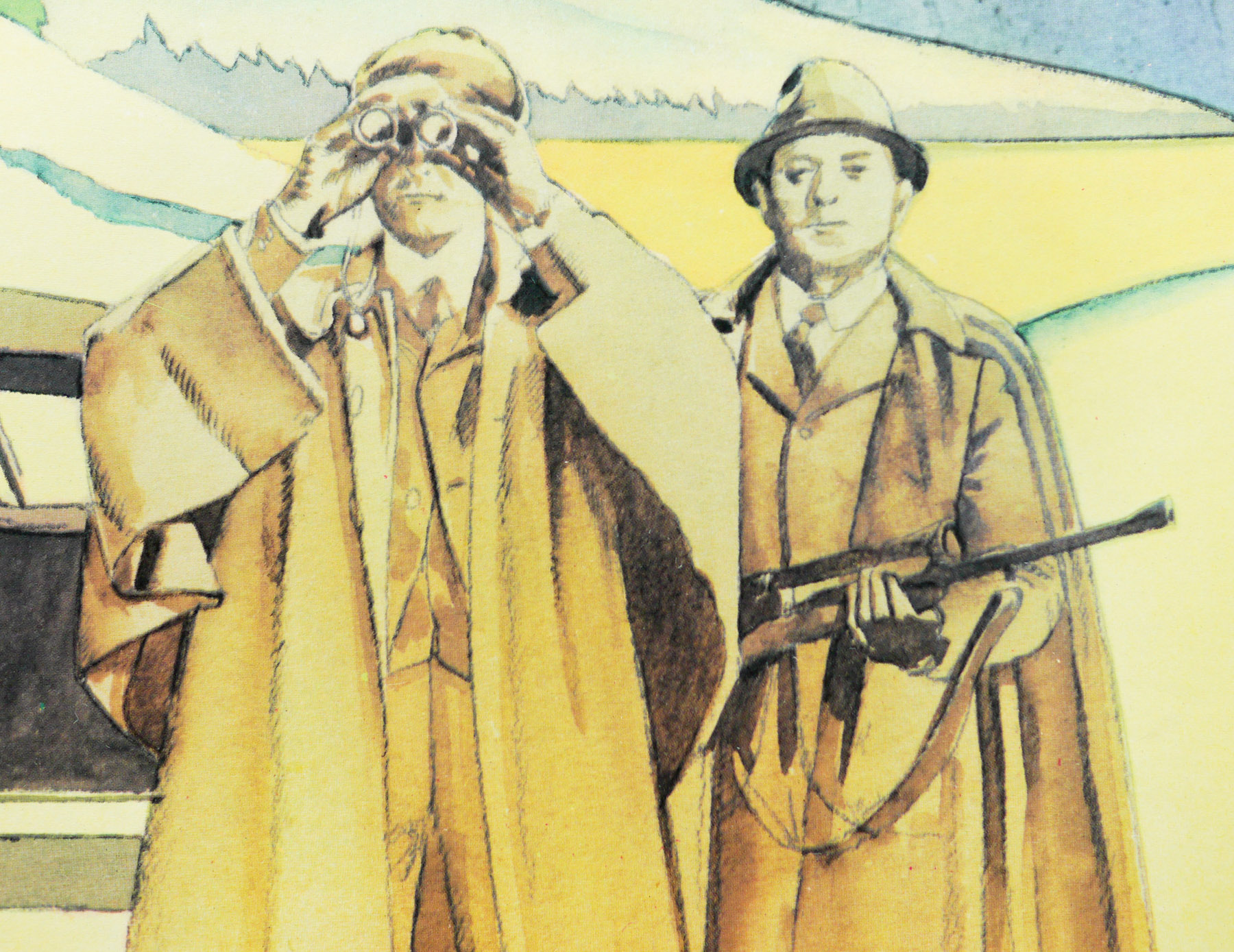
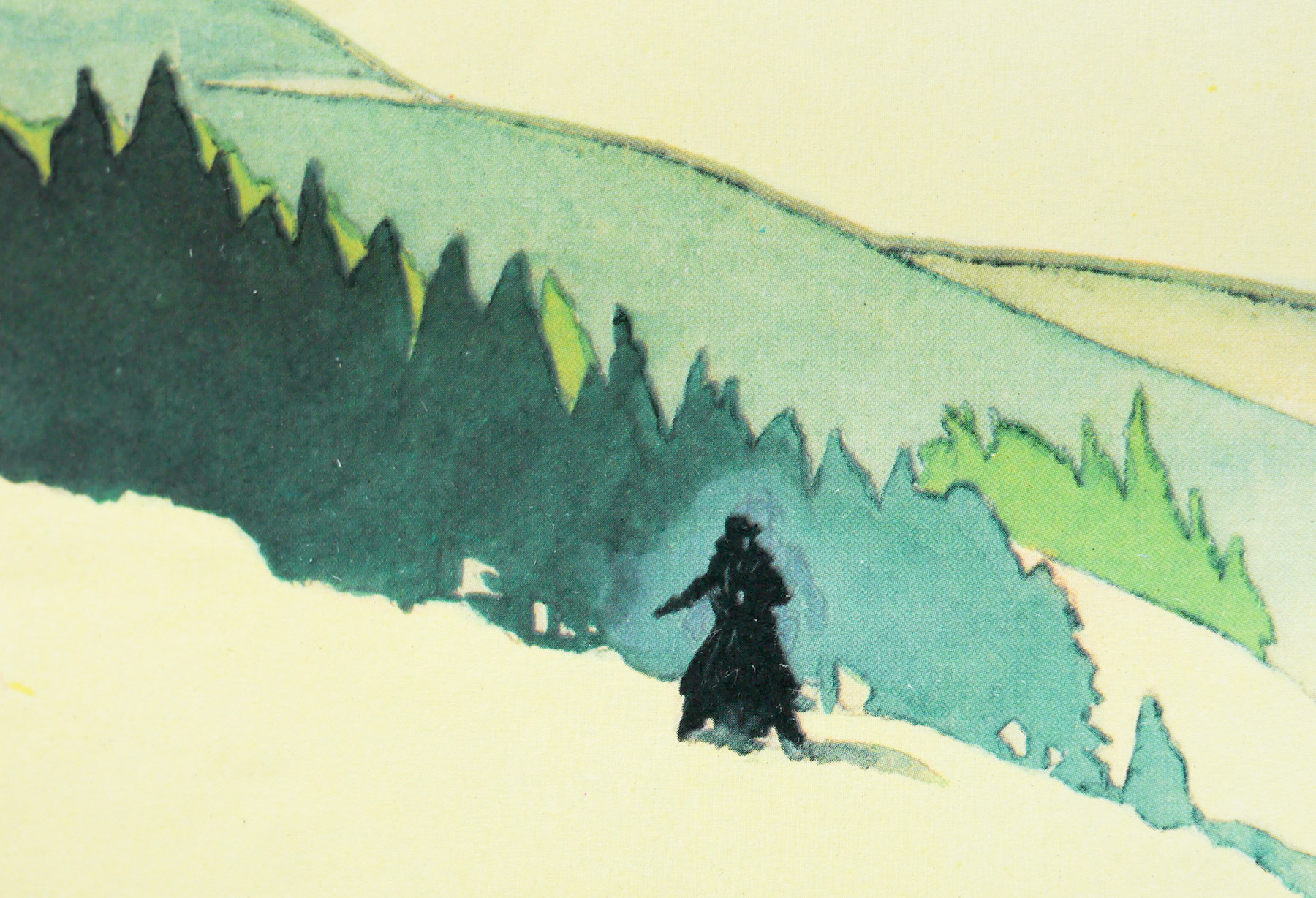
This is the UK one sheet (sometimes referred to as English one sheet) for the 1978 version of The Thirty-Nine Steps, based on the 1915 magazine serial-turned-book of the same name by the Scottish author John Buchan. The story has been turned into a film a number of times, including a 1935 version by Alfred Hitchcock that was later remade in 1959. This version, directed by the late Don Sharp (Psychomania, a couple of Hammer horror films), is considered to be the most faithful to Buchan’s original book. The film is set in the UK in 1914 and focuses on the character of Richard Hannay (whom Buchan would return to for five other novels) who becomes embroiled in a nefarious plot by German sleeper agents to start a war by assassinating a visiting foreign minister. Robert Powell plays Hannay and a host of notable British actors also feature, including John MillsDavid Warner and Eric Porter

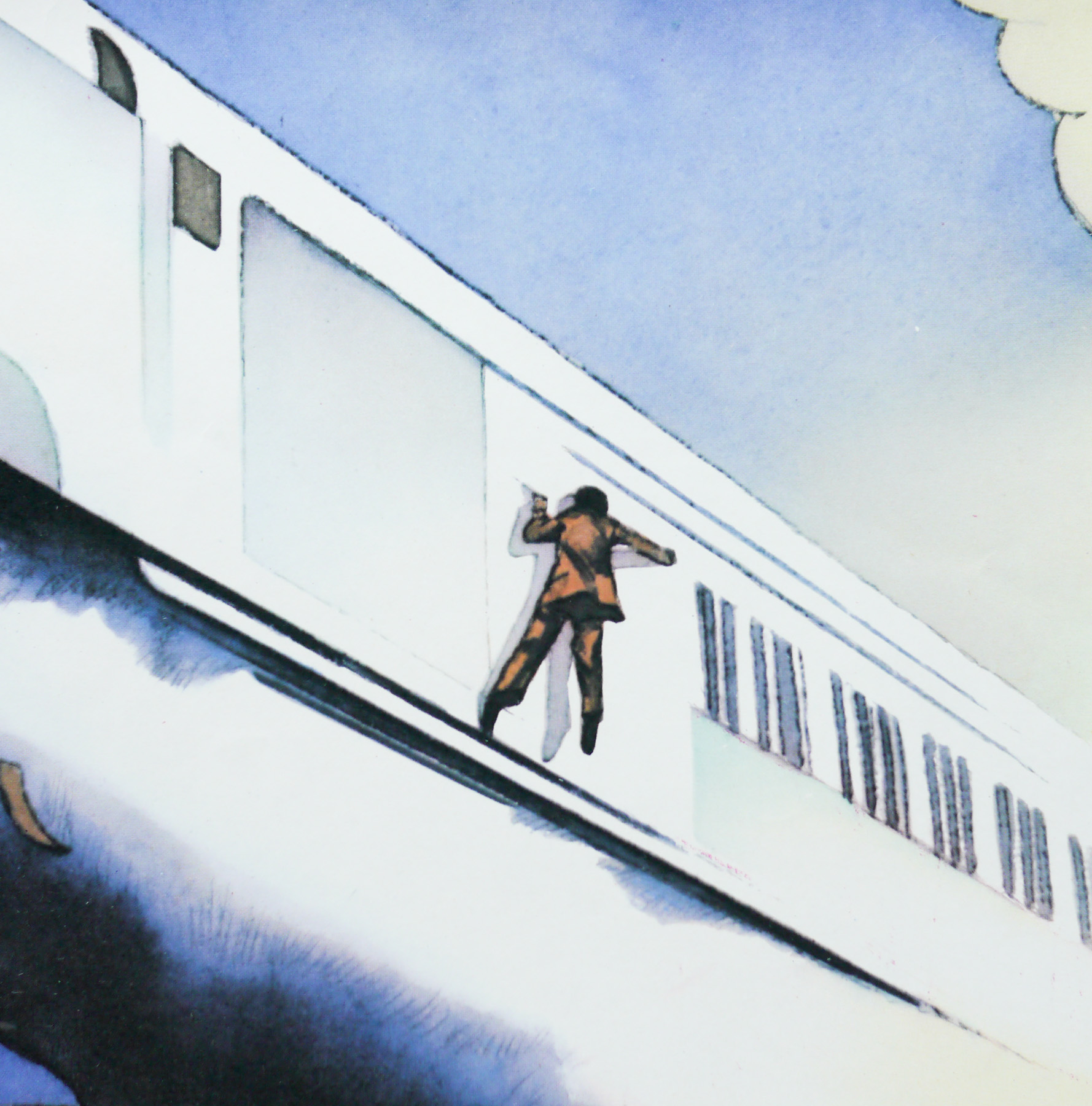
The film makes great use of real locations all over the UK, including in Scotland where the bulk of the film takes place. It’s most known for a climactic sequence that occurs on the clock face of London’s Big Ben tower (in reality a large scale model on a set) that aped a sequence from Harold Lloyd’s 1923 film Safety Last. The film was a box-office success and would later spawn a TV series featuring the same character and starring Powell, called simply Hannay.

This poster was designed and illustrated by Vic Fair, who was one the most important designer/artists ever to work on British film marketing. He was responsible for several iconic posters, including The Man Who Fell To Earth, posters for Hammer horrors like Vampire Circus, and the withdrawn advance one sheet for A View to a Kill. I interviewed Vic for this site and that article can be viewed by clicking here. He sadly passed away in early 2017 but his great legacy lives on.

It shares some similarities with another poster Fair designed and illustrated for Rank (the production company and distributor), the 1977 horror anthology The Uncanny.

Note also that there’s another version of this one sheet which has a stylised title logo in the space on the right and can be seen here. I’m not sure why some have it and others don’t but I suspect the one without was a printing error, or a first printing.

To see the other posters I’ve collected that were designed and/or illustrated by Vic Fair click here.

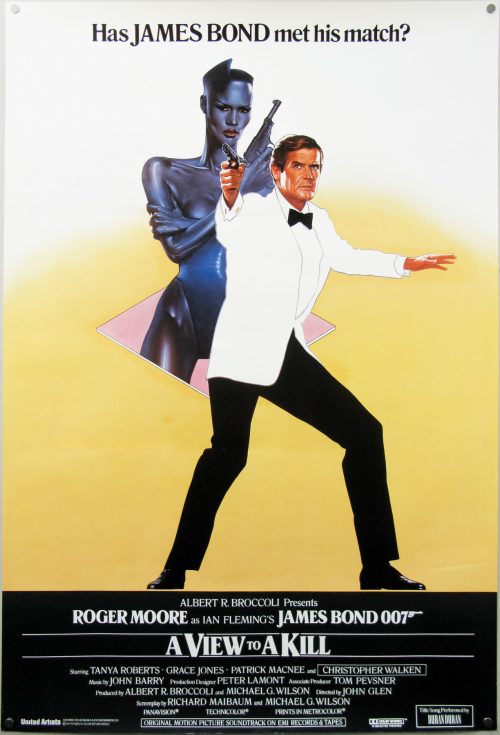
A View To A Kill / one sheet / recalled / UK

25.11.11

Poster Poster

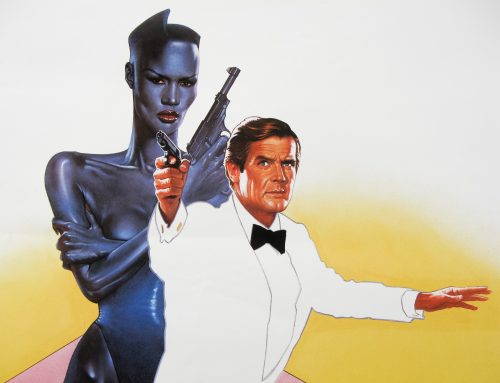
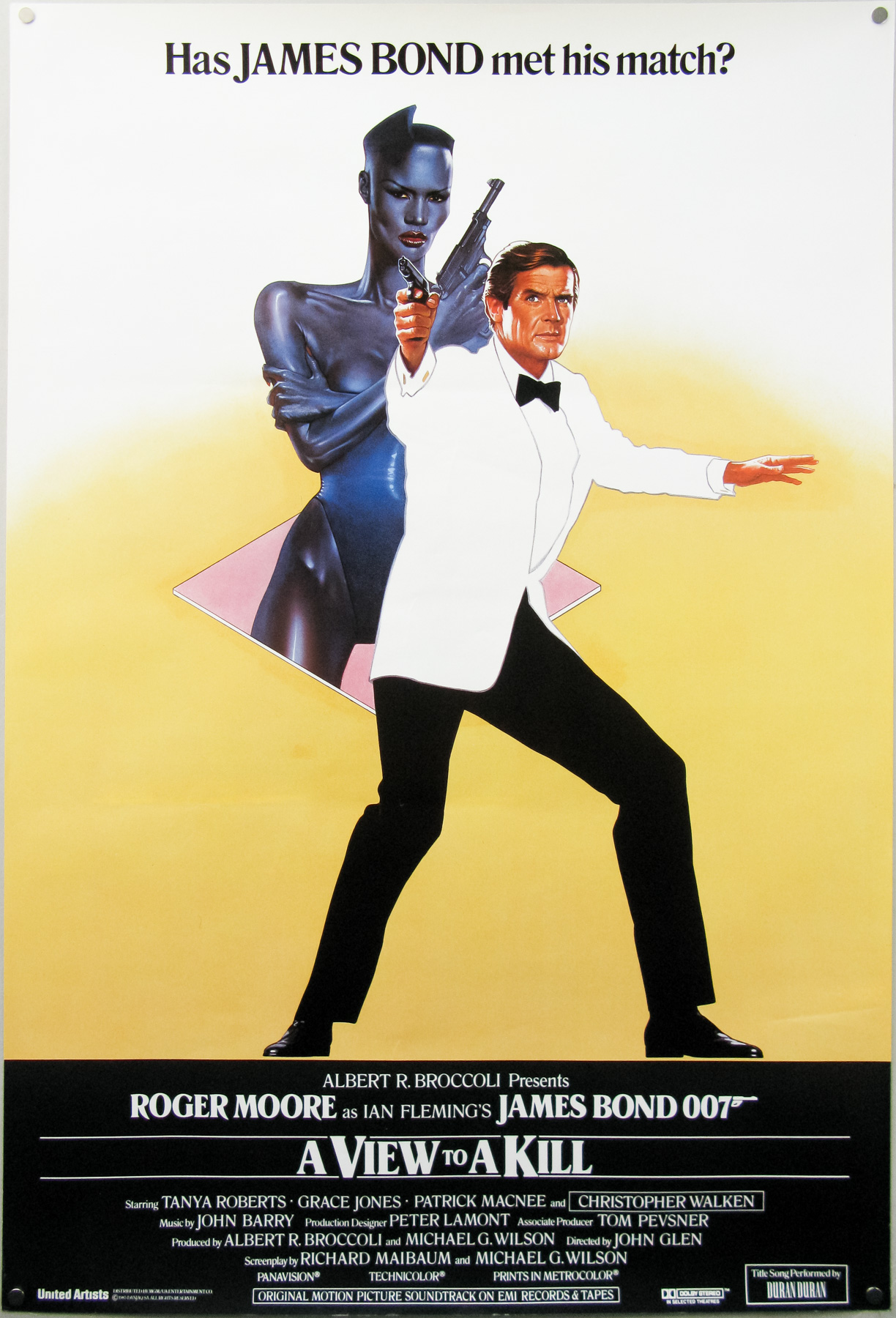
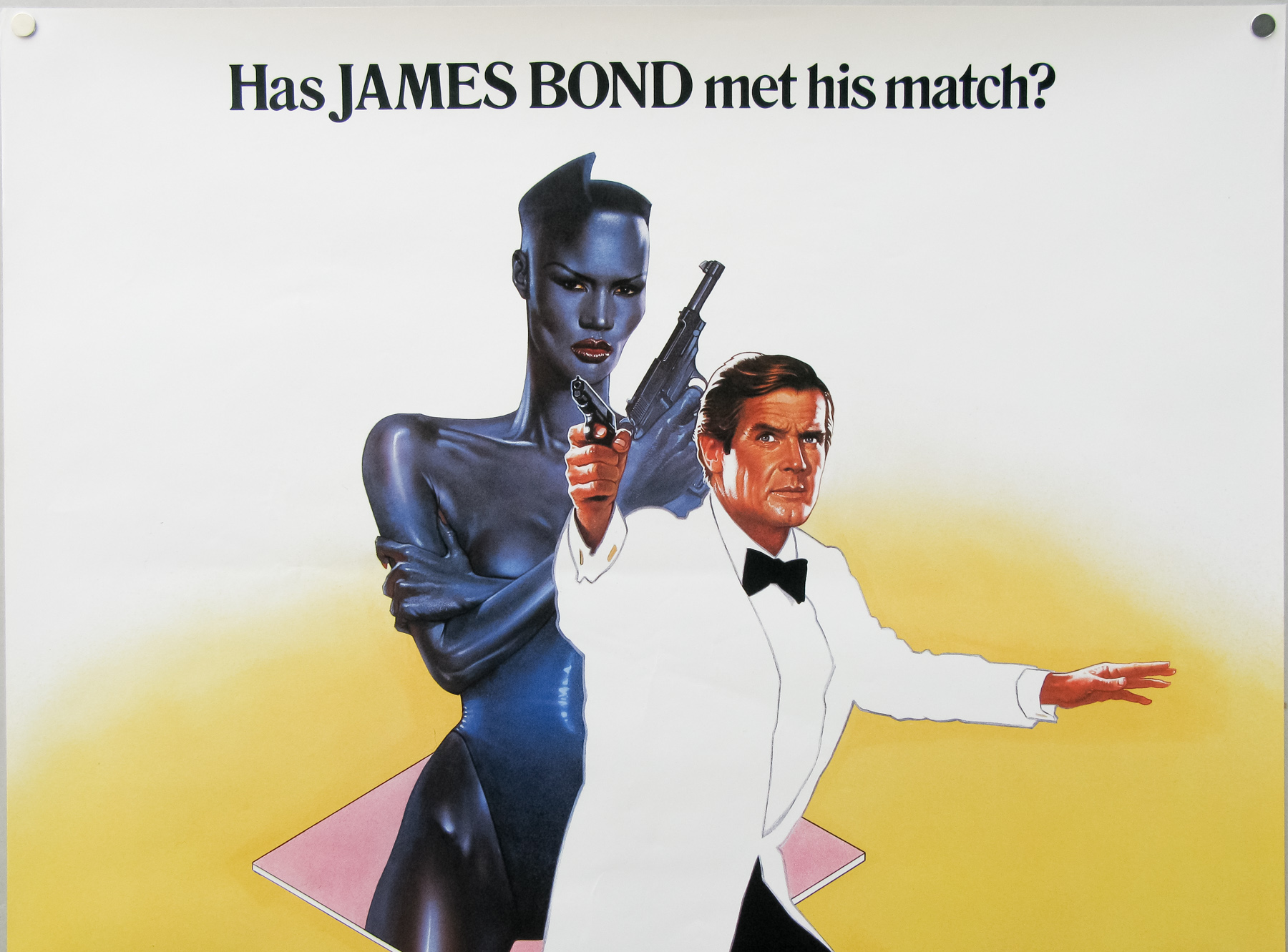
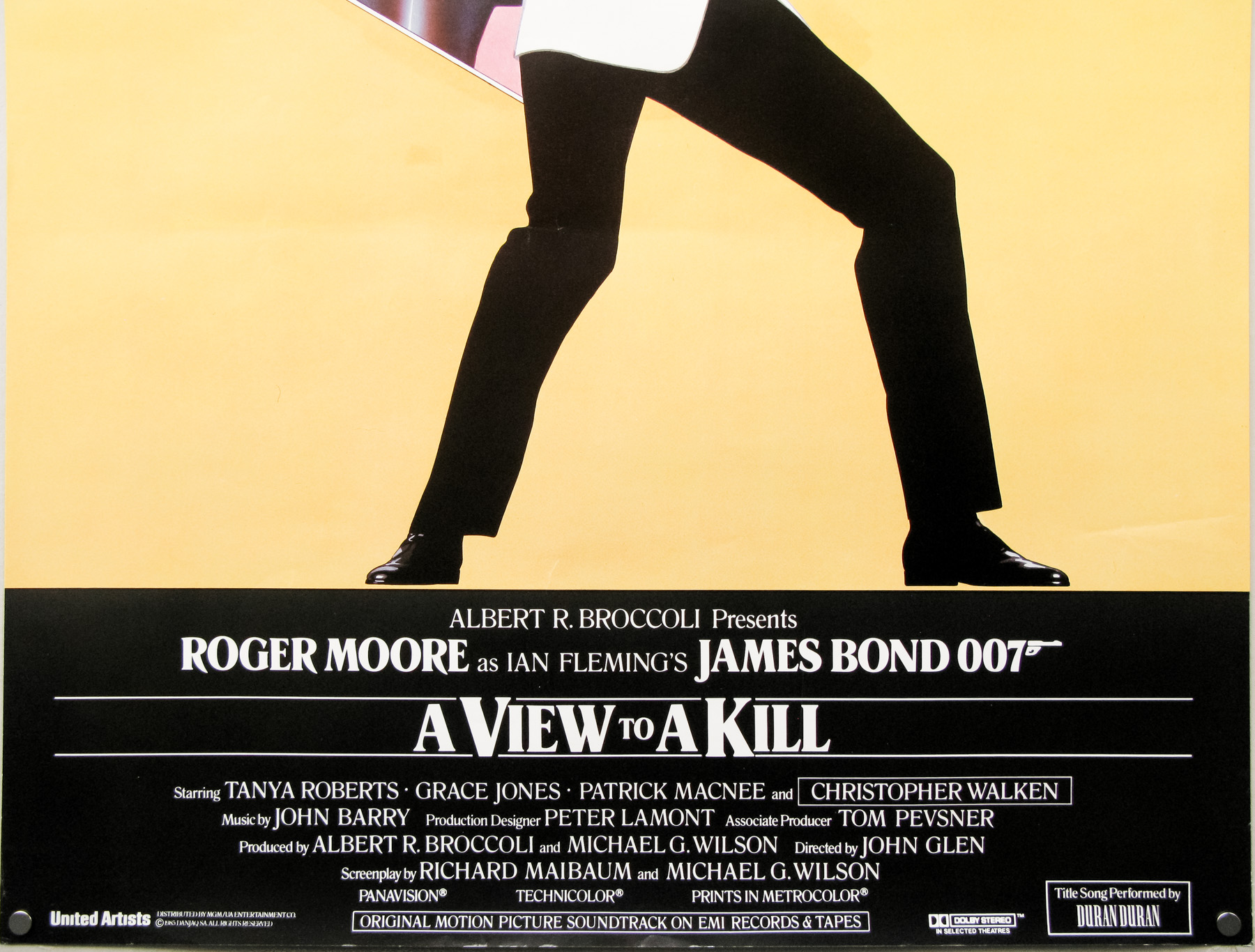
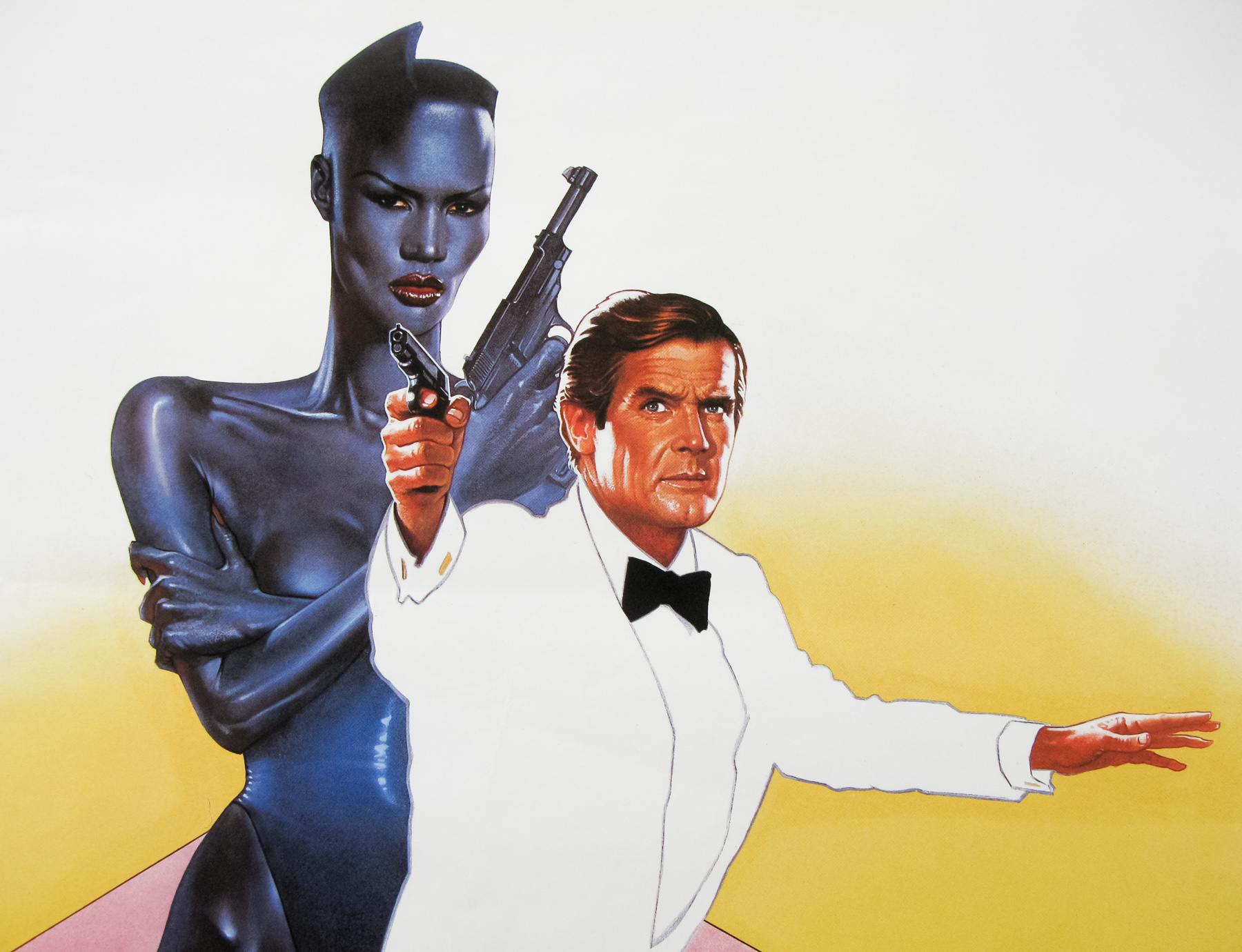
Sir Roger Moore‘s last outing as James Bond, A View to a Kill, was definitely not his finest hour, although it is memorable for a few reasons, including Christopher Walken‘s turn as the truly psychotic bad guy (Max Zorin), Duran Duran’s great title theme and the appearance of the incomparable Grace Jones as Mayday, Zorin’s accomplice. She may not be able to act very well but she’s never anything less than a striking presence and is definitely not a lady to mess with, as British chat show presenter Russell Harty infamously found out.

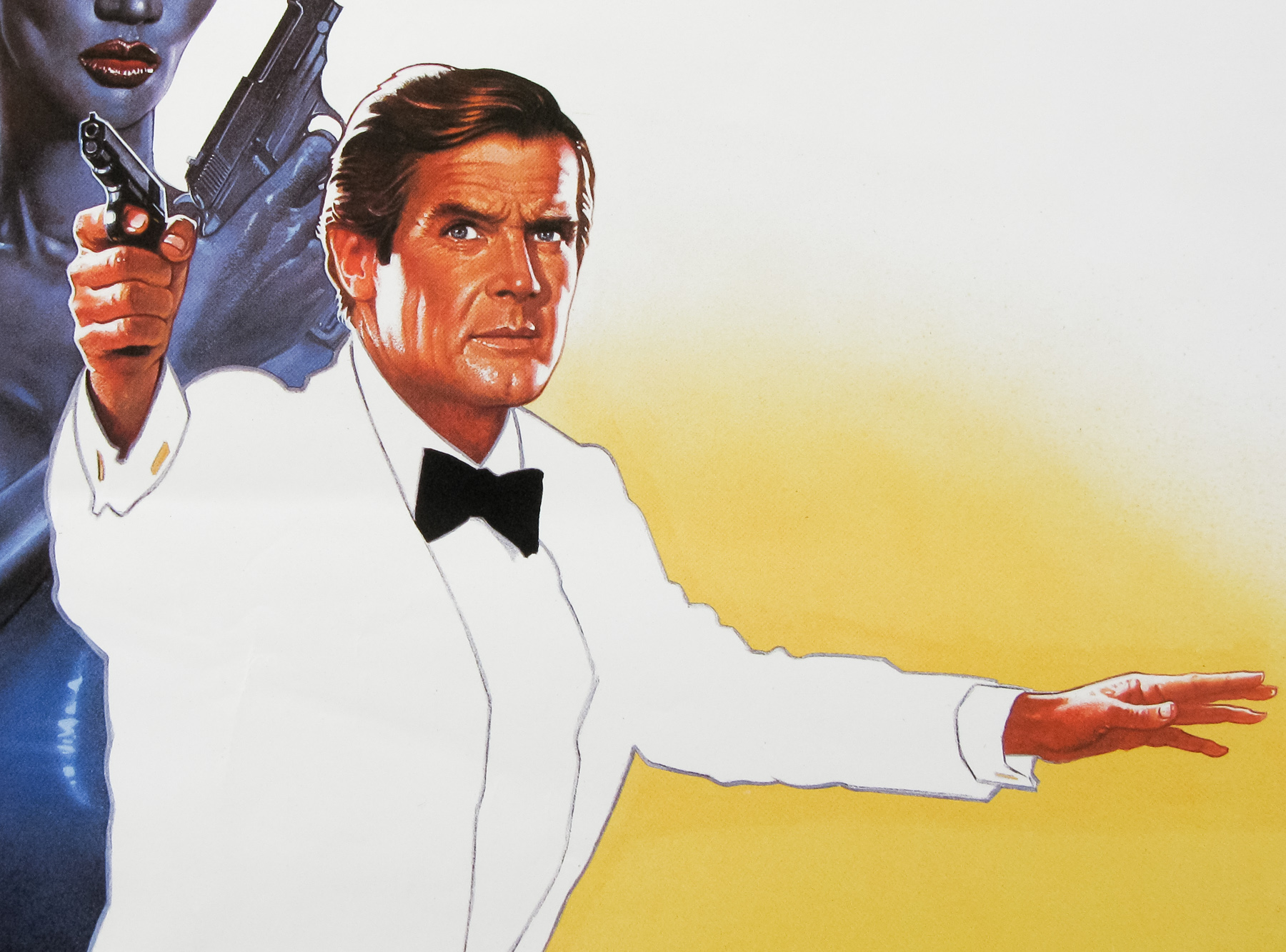
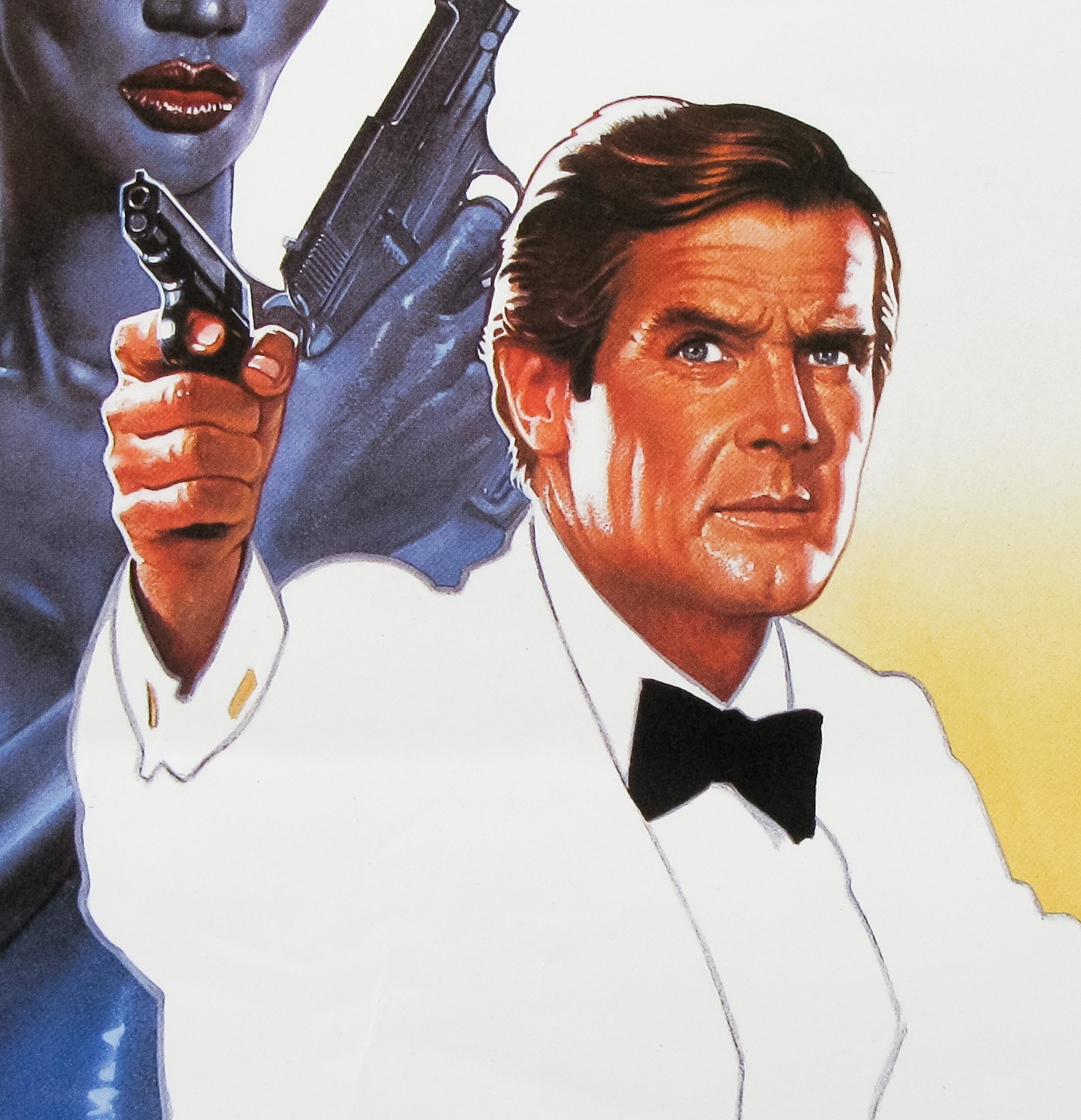
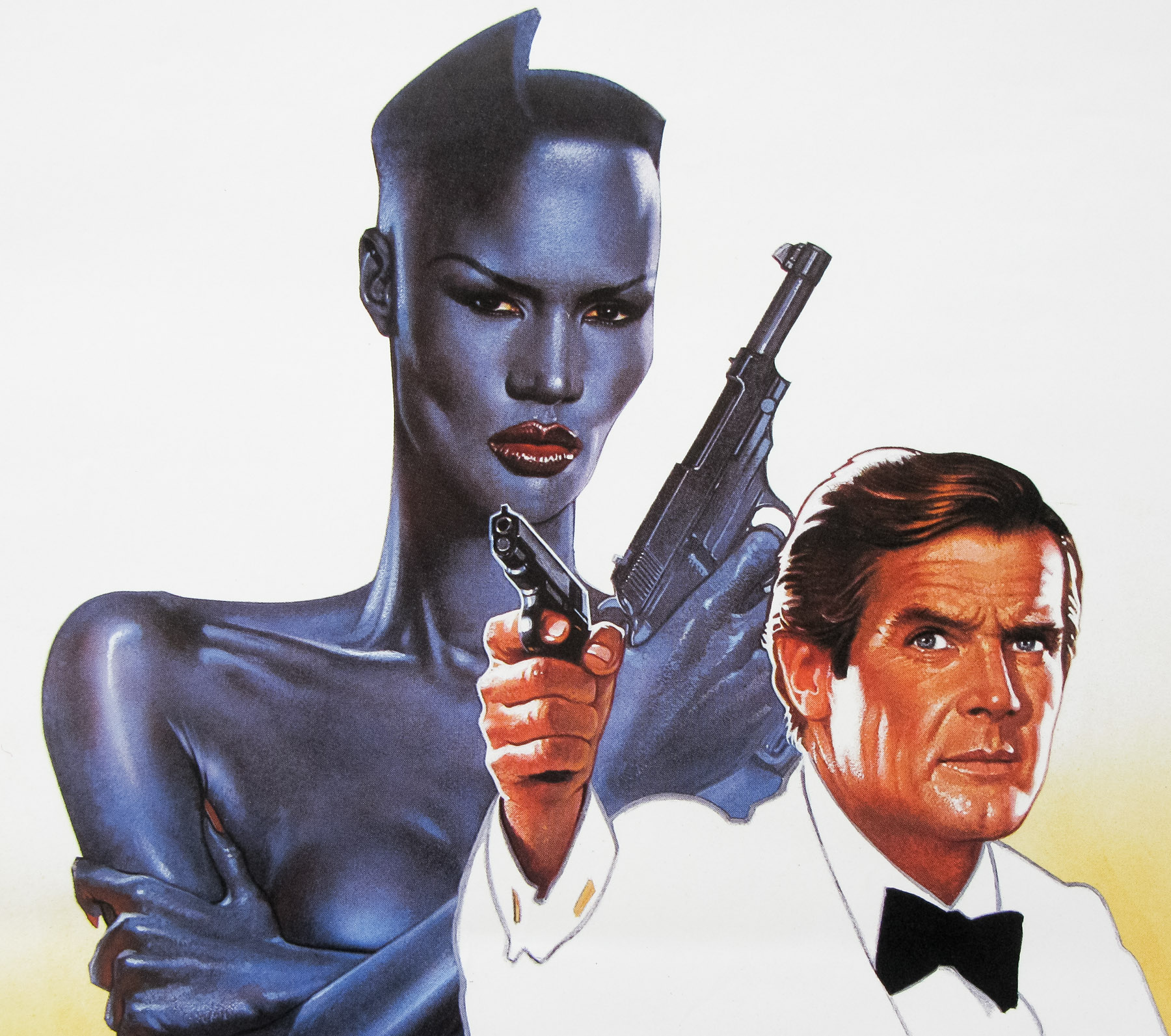
This poster is the UK one sheet that was designed by Vic Fair and illustrated by Brian Bysouth, a not insignificant pairing of two great English talents. Having been commissioned by the studio the poster was apparently then rejected and ultimately never used in cinemas to promote the film. Sim Branaghan, the man behind the must-own book ‘British Film Posters‘, interviewed Vic Fair who recalled that they were looking for a more conventional design, something that often frustrated the designer when working with clients:

‘Not very exciting are they, the Bond posters … always the same thing. So I had this idea of putting him in a white jacket, but they just threw their arms up in horror – “Ooh no, we can’t have that”. It was ridiculous really’

The poster is now known as the ‘recalled’ UK one sheet as, despite the poster having been printed, it was recalled by the studio and most copies were apparently pulped. Obviously, several did manage to escape destruction and made their way into the hands of poster dealers and collectors. I’d like to know a rough figure on how many did survive since it does show up at major auctions and on Ebay occasionally, so it’s certainly more than a tiny handful. If anyone has any more details on this please get in touch or leave a comment.

The artwork did end up being used for other countries, notably a Japanese B2 poster promoting the film.

For more information on Vic Fair and Brian Bysouth I highly recommend picking up a copy of ‘British Film Posters‘ as it features sections on both men. Here are the posters I’ve collected so far by Brian Bysouth and those by Vic Fair (with more to add over the coming months).

In 2012 I met and interviewed Brian Bysouth and this poster was discussed:

There are two specific collaborations you had with Vic Fair that I’d like to talk about. There was the UK one sheet for A View to a Kill, which you mentioned, and before I read Sim’s book I had no idea that it was one of yours. It’s quite different to others you’d worked on before then.
Ah yes, that poster was painted with a different technique than the one I’d typically work with. It has a very smooth look mostly done with an airbrush. The clients had started to require illustrations to have a less painted look and they were asking for much more photo-realistic illustrations. This requirement was because of falling sales in the video market.  The clients had concluded that the paying public had become more discerning and distrustful of what was portrayed on the video sleeves, and to some extent on film posters. The public had begun to realise that an exciting illustration could flatter what in reality would be a truly awful film.  So illustration had to take on a new, more highly-finished look, but this only worked for a short while before the use of photographs and the versatility of the computer took over completely.

Anyway, to continue, Vic asked me if I’d like to do the finished painting based on his rough; it was a really excellent and novel design, which required me to execute the painting in two stages. The first stage would be used as a teaser poster and this was just the image ofGrace Jones and Bond contained within a diamond motif. All I had to do was get the airbrush out and work up his design. I remember spending a while on the Grace Jones image, polishing and improving her look, as well as the pose of Bond. It went away to be printed but later we were disappointed to learn that it was going to be withdrawn because the clients were not happy with the legendary spy being portrayed in a white tuxedo; that being considered not very Bond-like!

For the second stage, Vic’s design included an exciting montage to fit either side of the central icon of the two characters. The preliminary painting was returned to me for completion and I continued by adding the montage of scenes from the film onto the artwork in a semi-drawn style, which I was experimenting with at the time. I was very pleased with the final results and Vic liked it too. That went off for approval but, for reasons unknown to me, the printing didn’t go ahead. I never saw the artwork again and pathetically, because it was not approved, I don’t even think a transparency was made. I entertain hopes that one day it will eventually re-appear and I will be able to establish my claim to ownership.

Here’s the film’s original trailer.

Lost Highway / one sheet / red style / USA

17.05.11

Poster Poster
Title
Lost Highway
AKA
--
Year of Film
1997
Director
David Lynch
Starring
Bill Pullman, Patricia Arquette, Balthazar Getty, Robert Loggia, Robert Blake
Origin of Film
France | USA
Genre(s) of Film
Bill Pullman, Patricia Arquette, Balthazar Getty, Robert Loggia, Robert Blake,
Type of Poster
One sheet
Style of Poster
Red style
Origin of Poster
USA
Year of Poster
1997
Designer
Unknown
Artist
--
Size (inches)
27 5/16" x 39 10/16"
SS or DS
SS
NSS #
--
Tagline
--

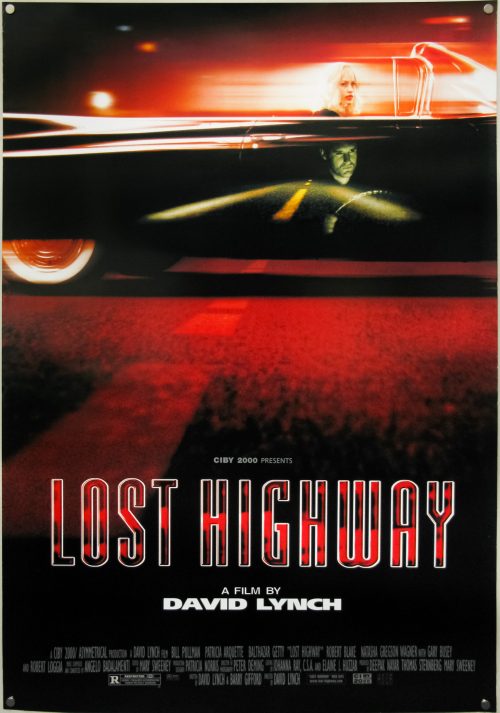
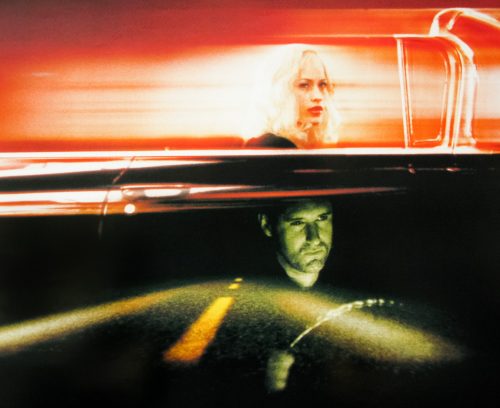
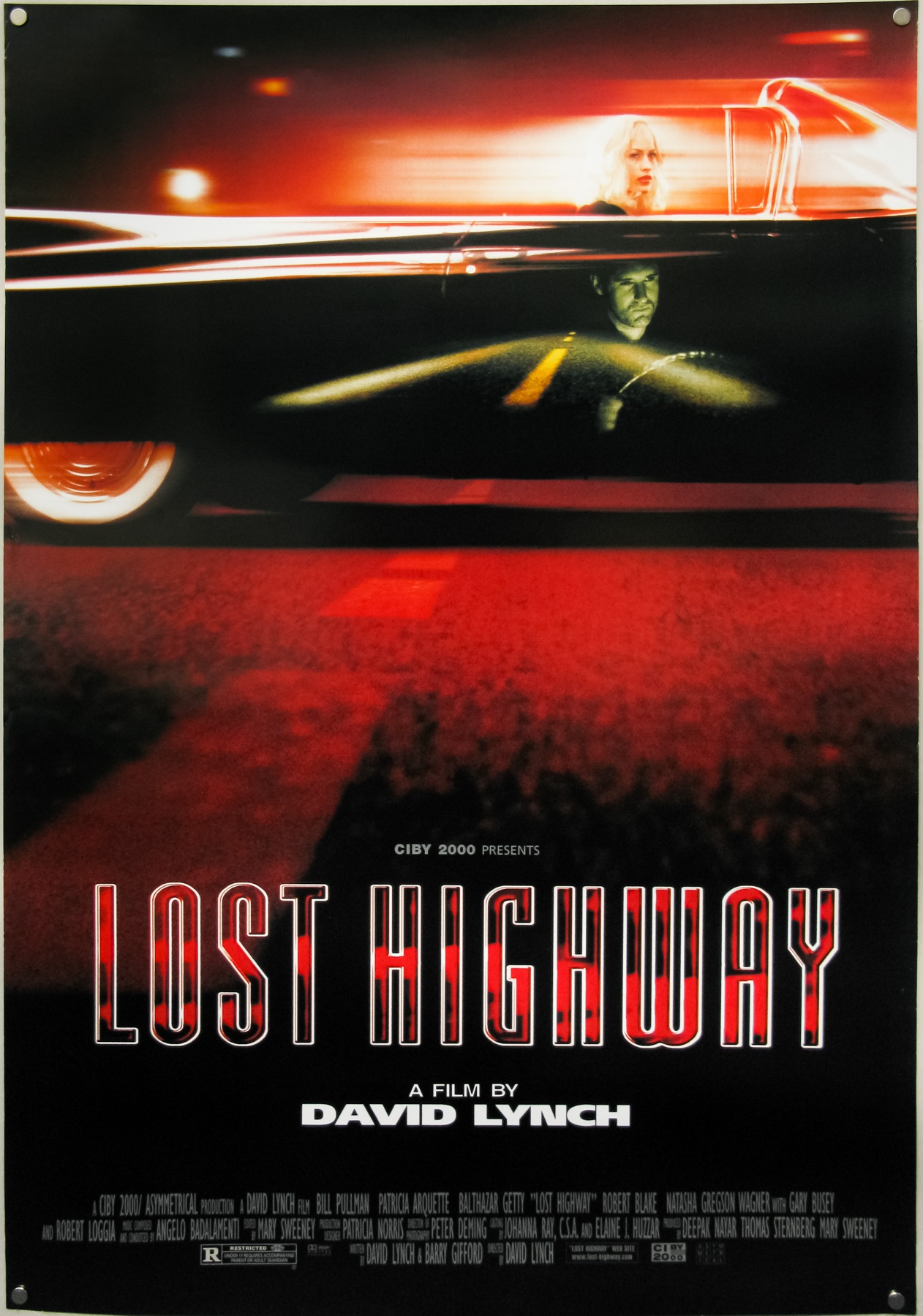
This is the international one sheet for the release of David Lynch‘s mystery thriller Lost Highway. Co-written with American author Barry Gifford, whose novel Lynch adapted for his 1990 film Wild at Heart, the film is a classic Lynchian mind-bender that resolutely defies explanation. The story begins with Bill Pullman as Fred Madison, a Jazz saxophonist who is living with his wife Renee (Patricia Arquette) in Los Angeles. One day the intercom to his flat buzzes and when he answers it an unknown man says “Dick Laurent is dead.” The man is nowhere to be seen when Fred looks out of his window, but a few days later a mysterious tape appears on the Madison’s doorstep. The video features shaky footage outside their flat and over the next few days more tapes appear that eventually move inside and show the pair sleeping, much to their horror.

At a party Fred meets a mysterious man (played by Robert Blake in his final film role) who, in a memorably creepy sequence, tells Fred that he’s at his flat at that moment and proves it by getting him to call his home phone, which the stranger then answers. The next morning another tape appears and Fred is horrified to see it’s footage of him covered in blood with a dismembered Renee next to him. He is arrested, charged with murder and sentenced to death. Whilst on death row Fred sees strange visions and starts to suffer from painful headaches before he inexplicably morphs into another person, a car mechanic called Pete Dayton (Balthazar Getty) much to the confusion of the prison staff. Because Pete has committed no crime, he is released into the care of his parents and, after a period of adjustment, he gets back to his job. The rest of the film sees Pete dealing with the menacing gangster Mr Eddy (a memorable performance by Robert Loggia) and a mysterious blonde called Alice Wakefield (Arquette) who takes him down a dark path which has the mystery man waiting at the end of it.

Lynch and Gifford have always refused to fully explain the story but that hasn’t stopped fans of the film from trying to decode its many mysteries. Check out this IMDb page for some of the theories but the film definitely encourages you to draw your own conclusions after the credits roll. Lost Highway features a number of notable performances, particularly from Pullman and Arquette, as well as multiple cameos from the likes of Richard Pryor, Jack Nance and Marilyn Manson. Filled with memorable Lynchian imagery, including one of the most shocking accidental deaths in cinema history (Michael Massee‘s head meets glass table), it also has a brilliant soundtrack complemented by some of Lynch’s very best sound design.

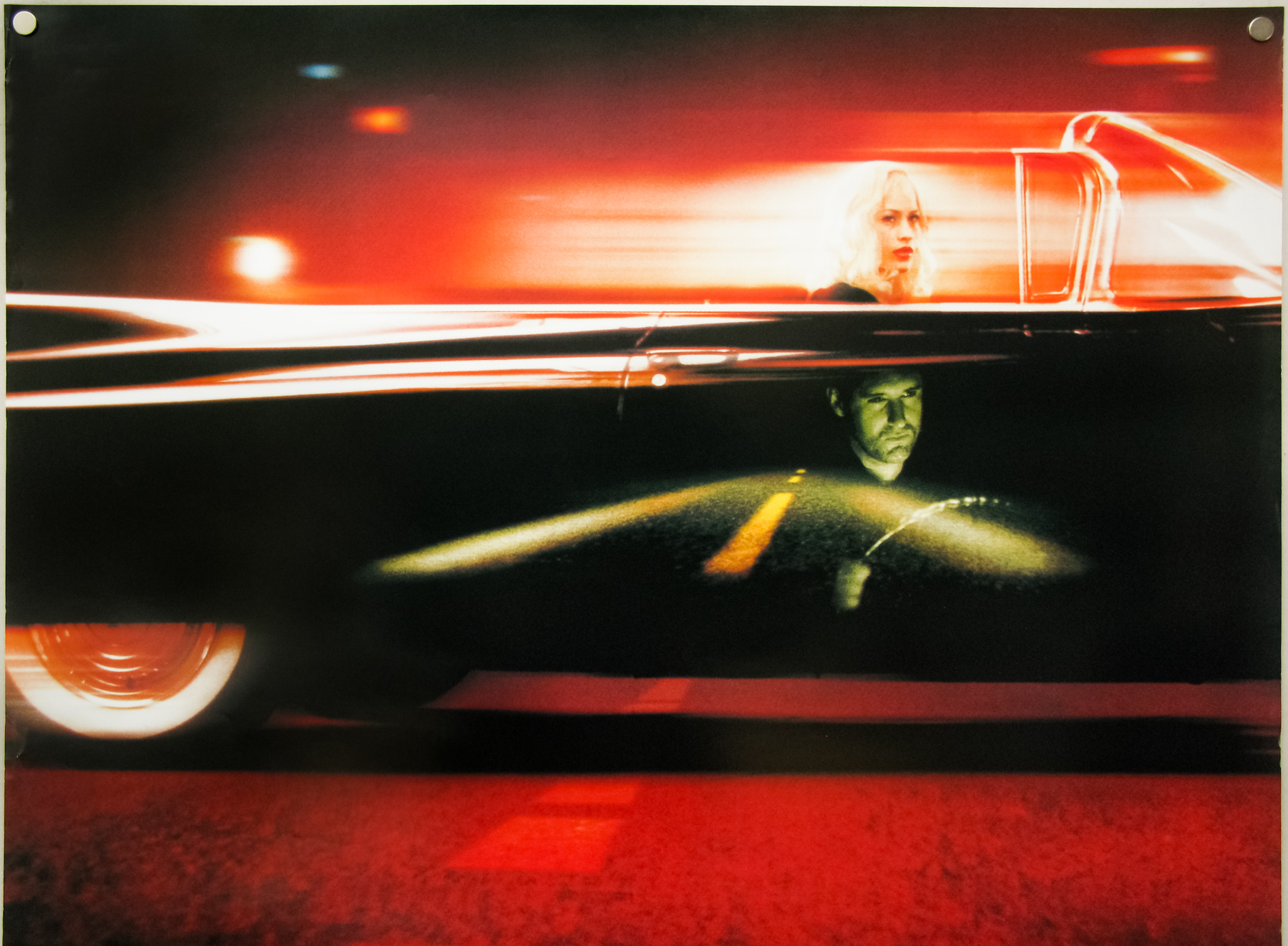
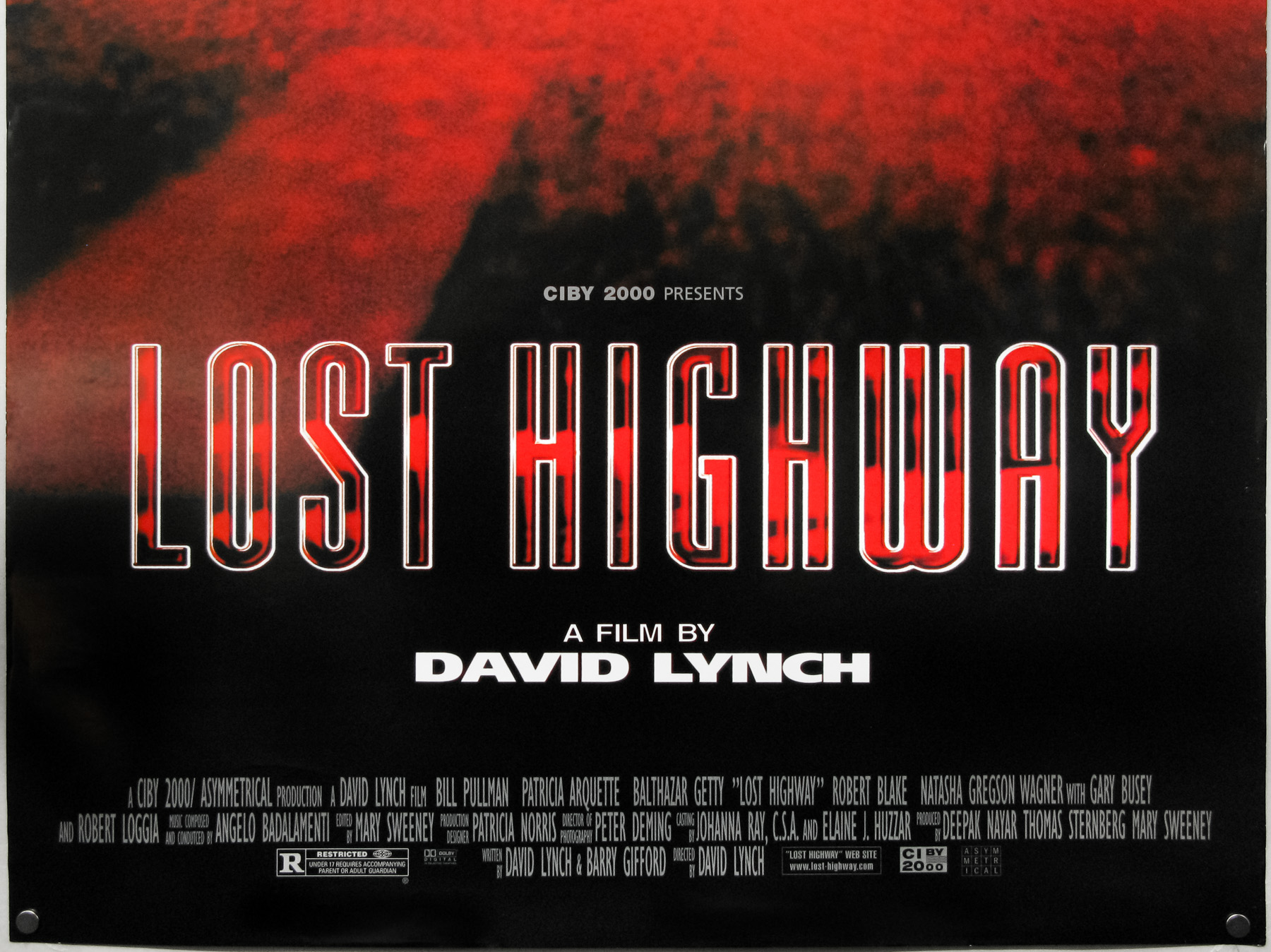
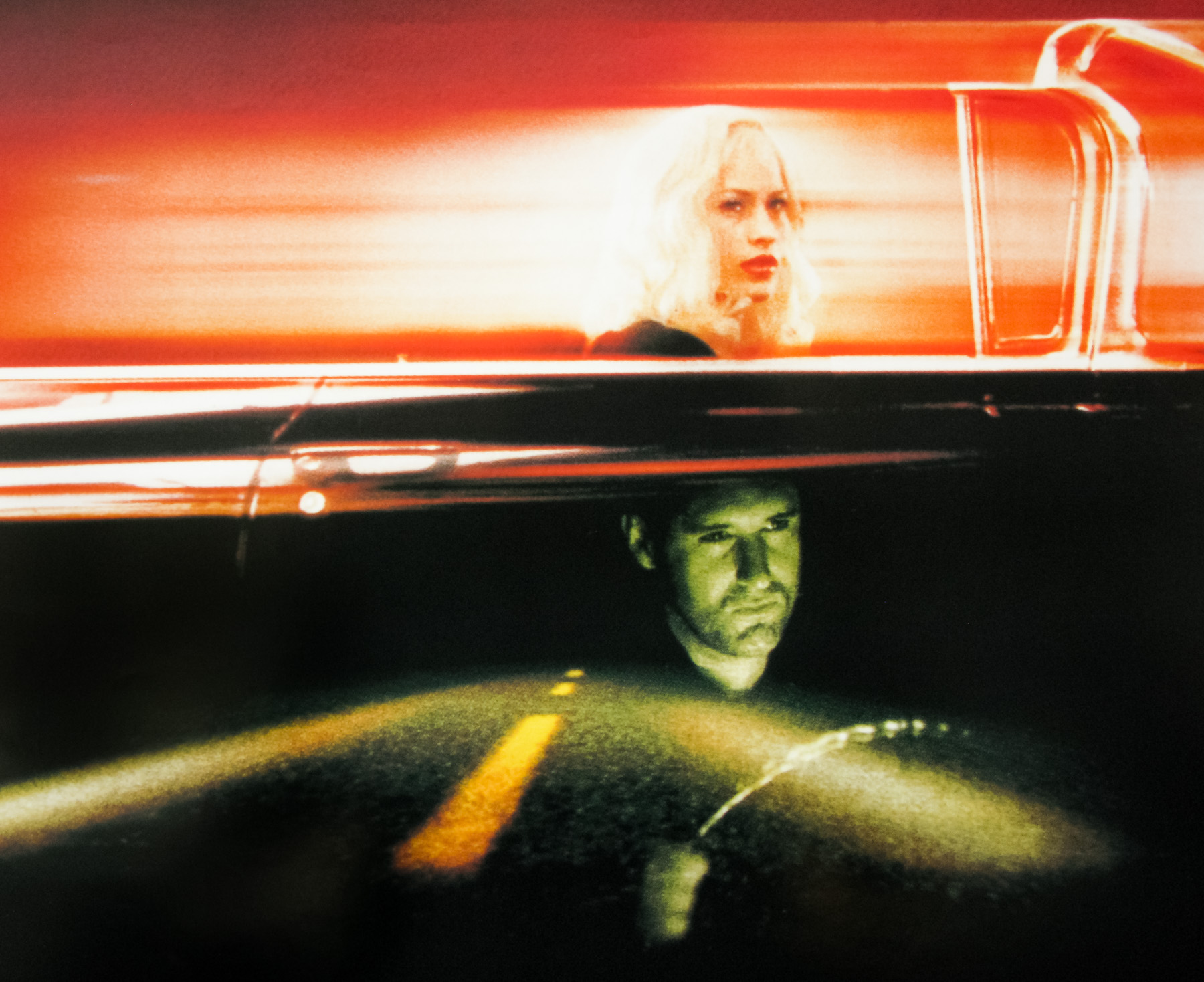
I’m not sure who is responsible for the design of one sheet which is similar to the UK one sheet so please get in touch if you have any ideas.

Superman III / one sheet / advance / USA

03.11.12

Poster Poster
Title
Superman III
AKA
Superman vs. Superman (USA - original script title)
Year of Film
1983
Director
Richard Lester
Starring
Christopher Reeve, Richard Pryor, Jackie Cooper, Marc McClure, Annette O'Toole, Annie Ross, Pamela Stephenson, Robert Vaughn, Margot Kidder
Origin of Film
UK | Canada | USA
Genre(s) of Film
Christopher Reeve, Richard Pryor, Jackie Cooper, Marc McClure, Annette O'Toole, Annie Ross, Pamela Stephenson, Robert Vaughn, Margot Kidder,
Type of Poster
One sheet
Style of Poster
Advance
Origin of Poster
USA
Year of Poster
1983
Designer
Unknown
Artist
Larry Salk
Size (inches)
27 1/16" x 40 15/16"
SS or DS
SS
NSS #
--
Tagline
--

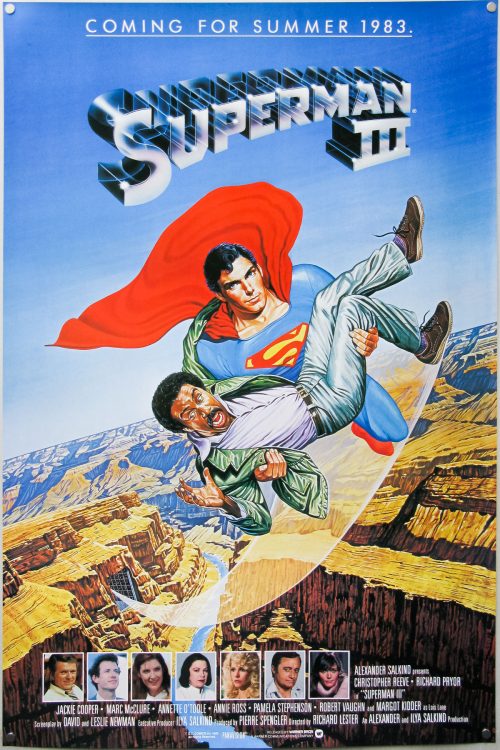
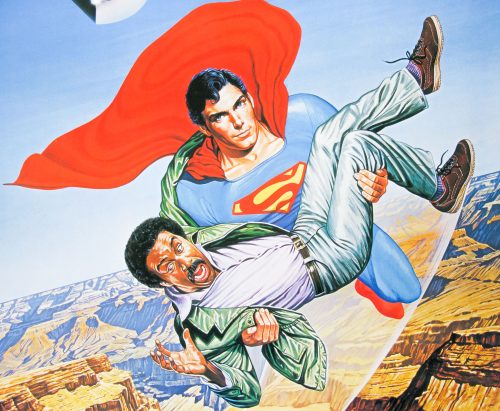
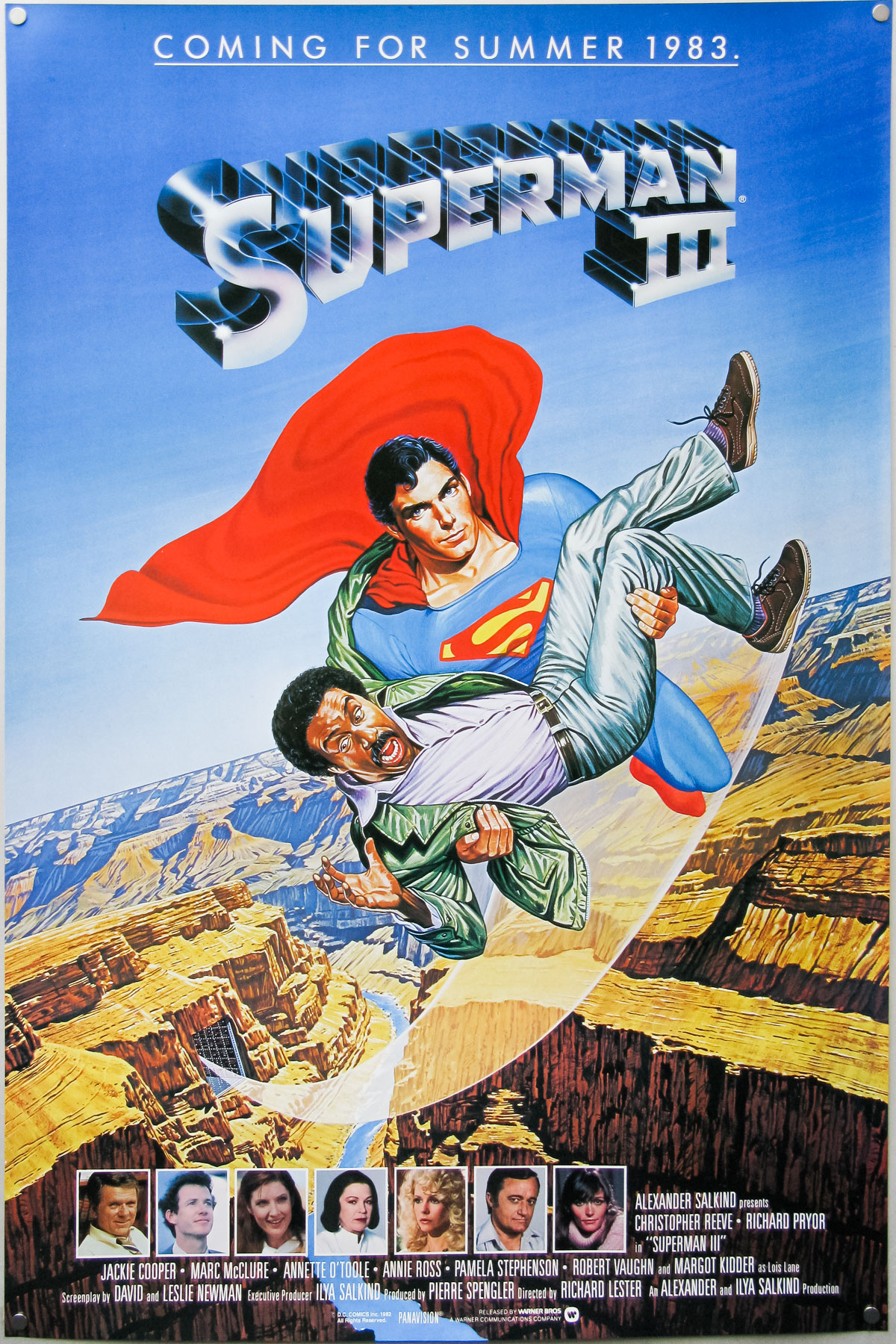
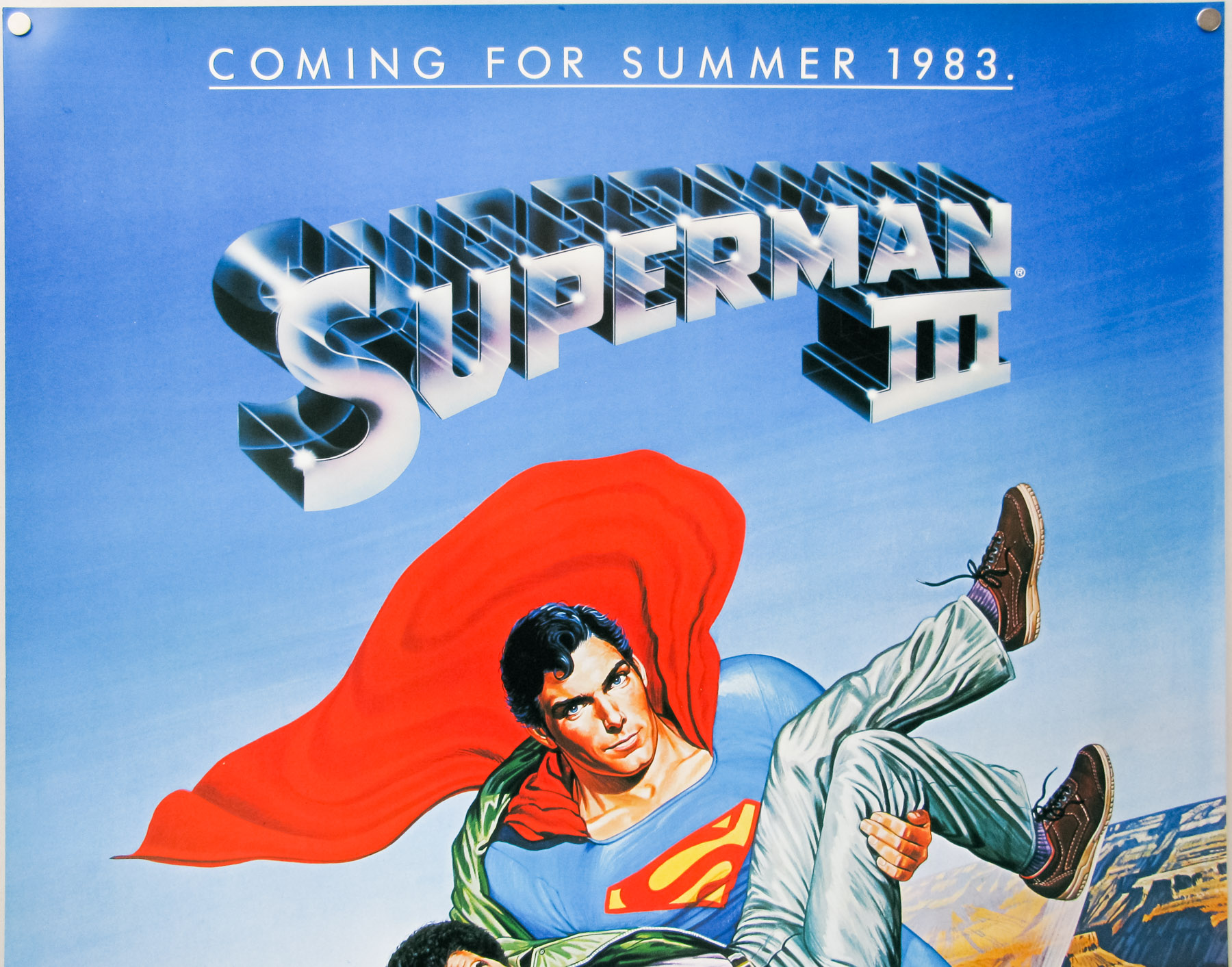
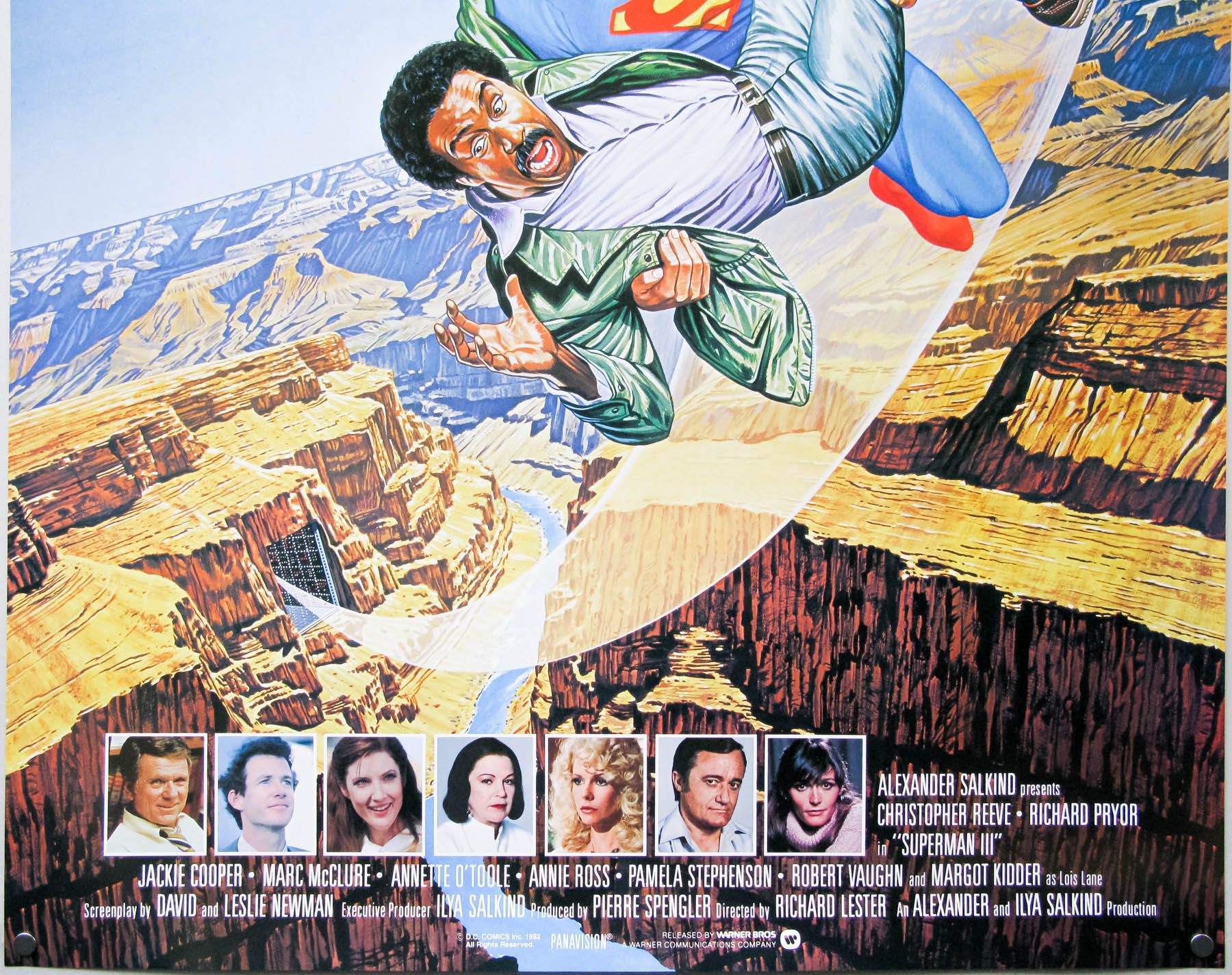
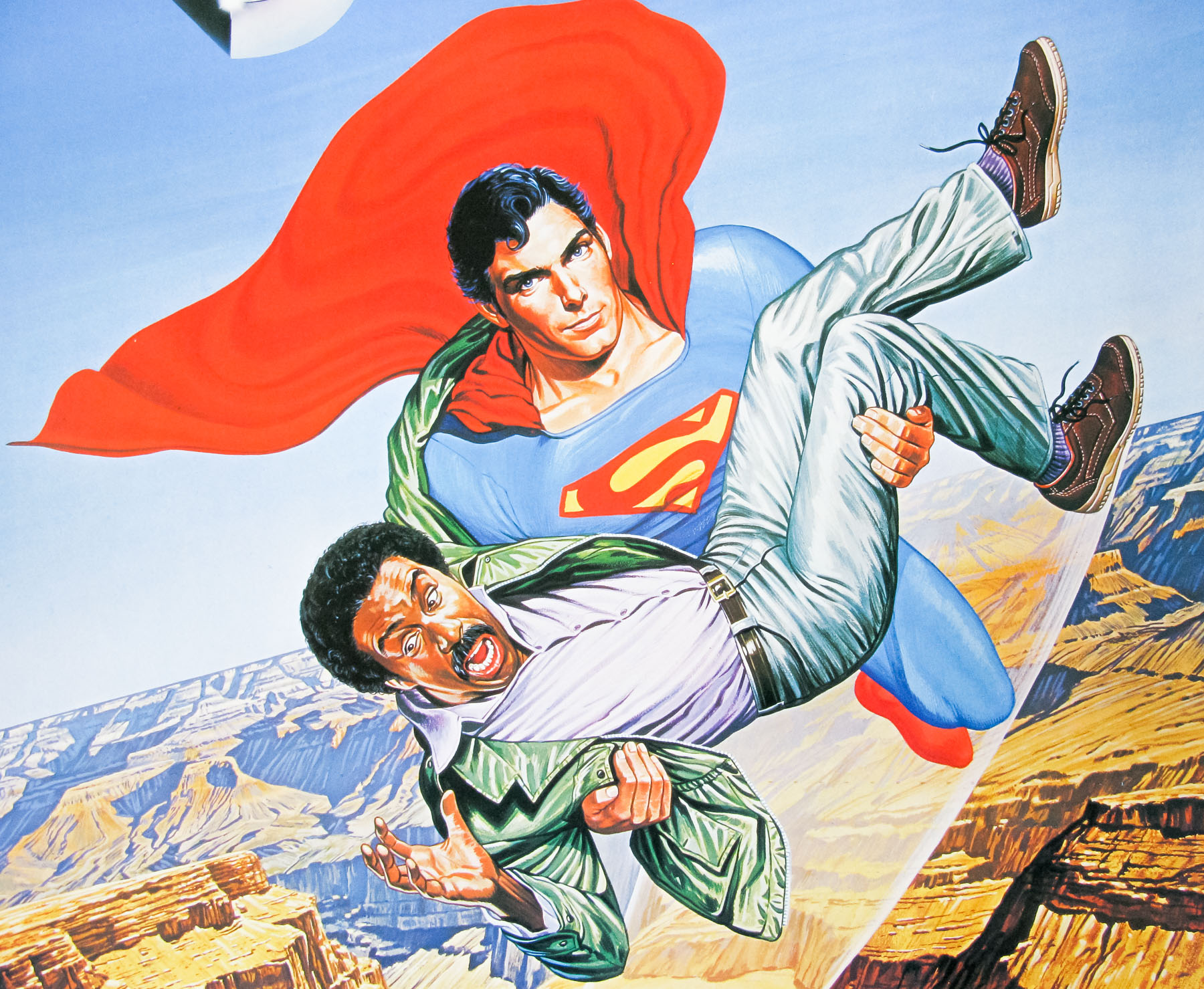
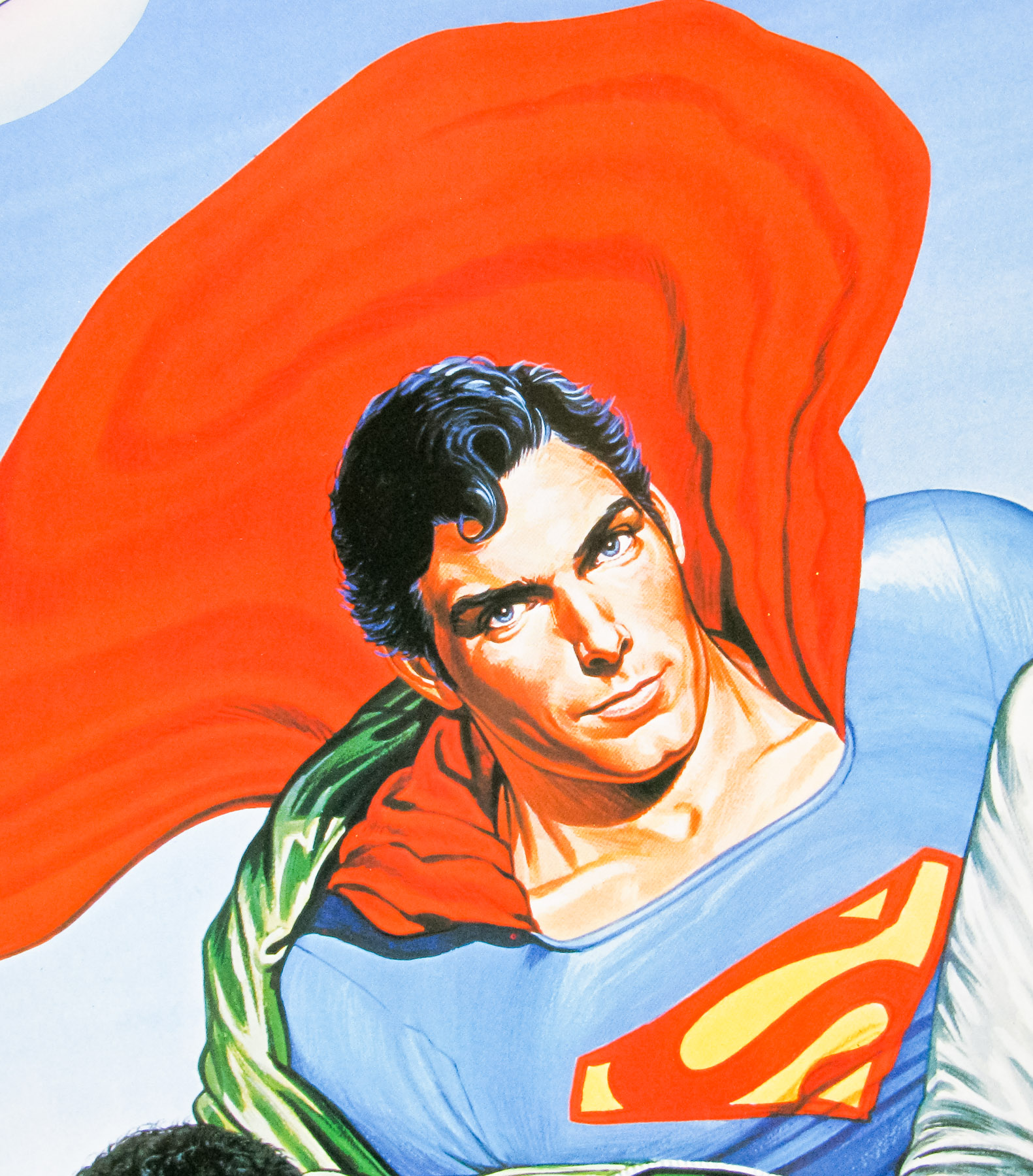
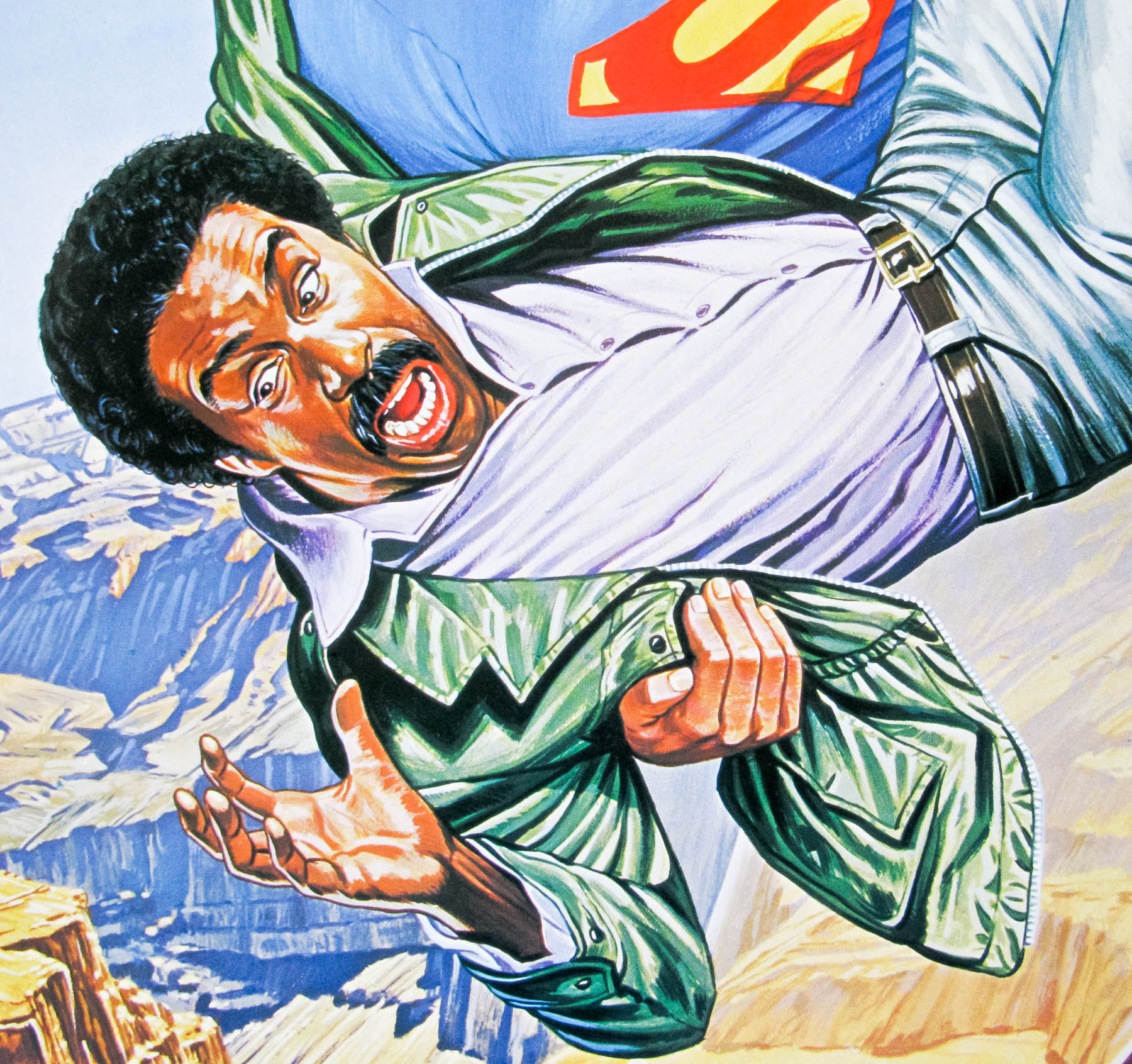
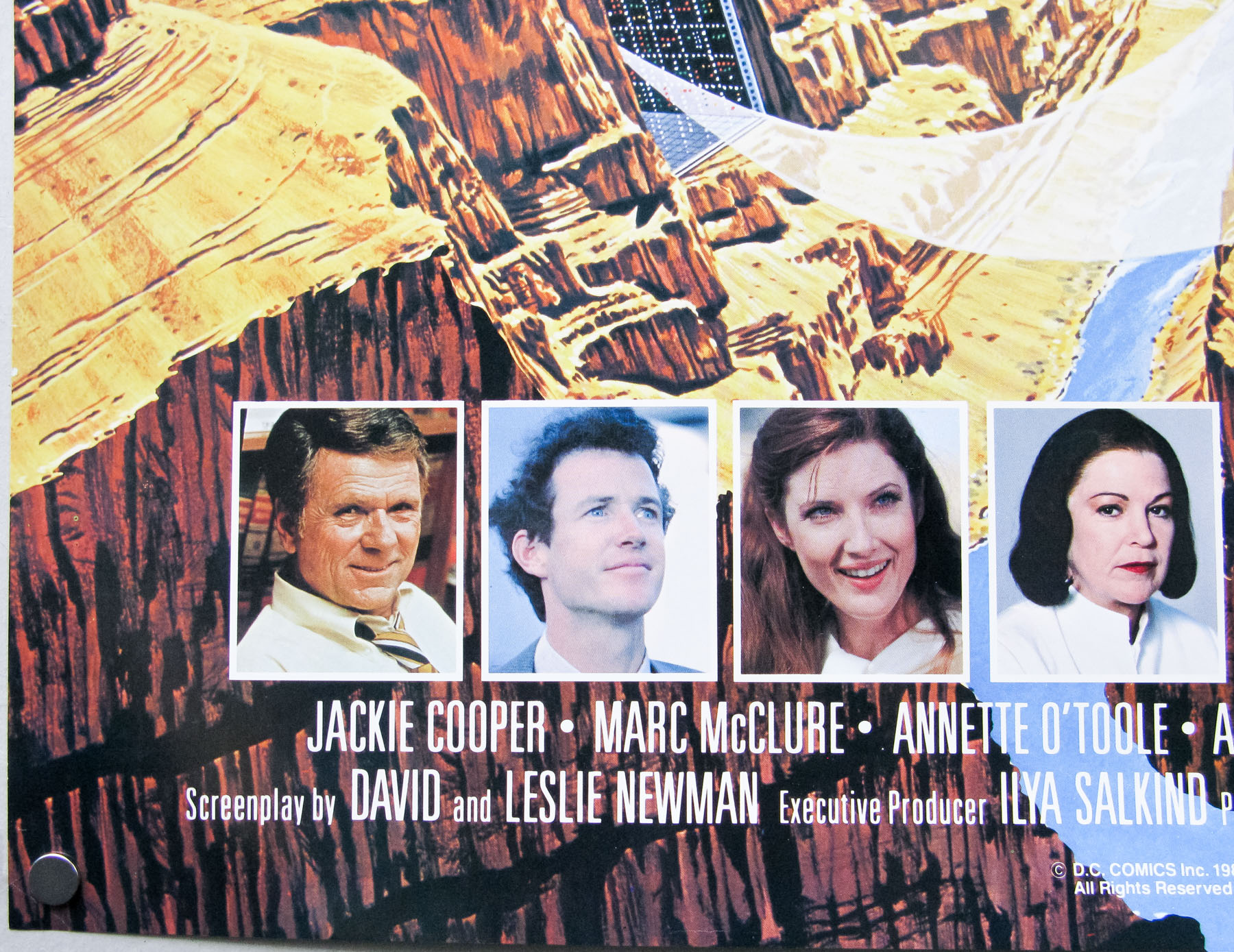
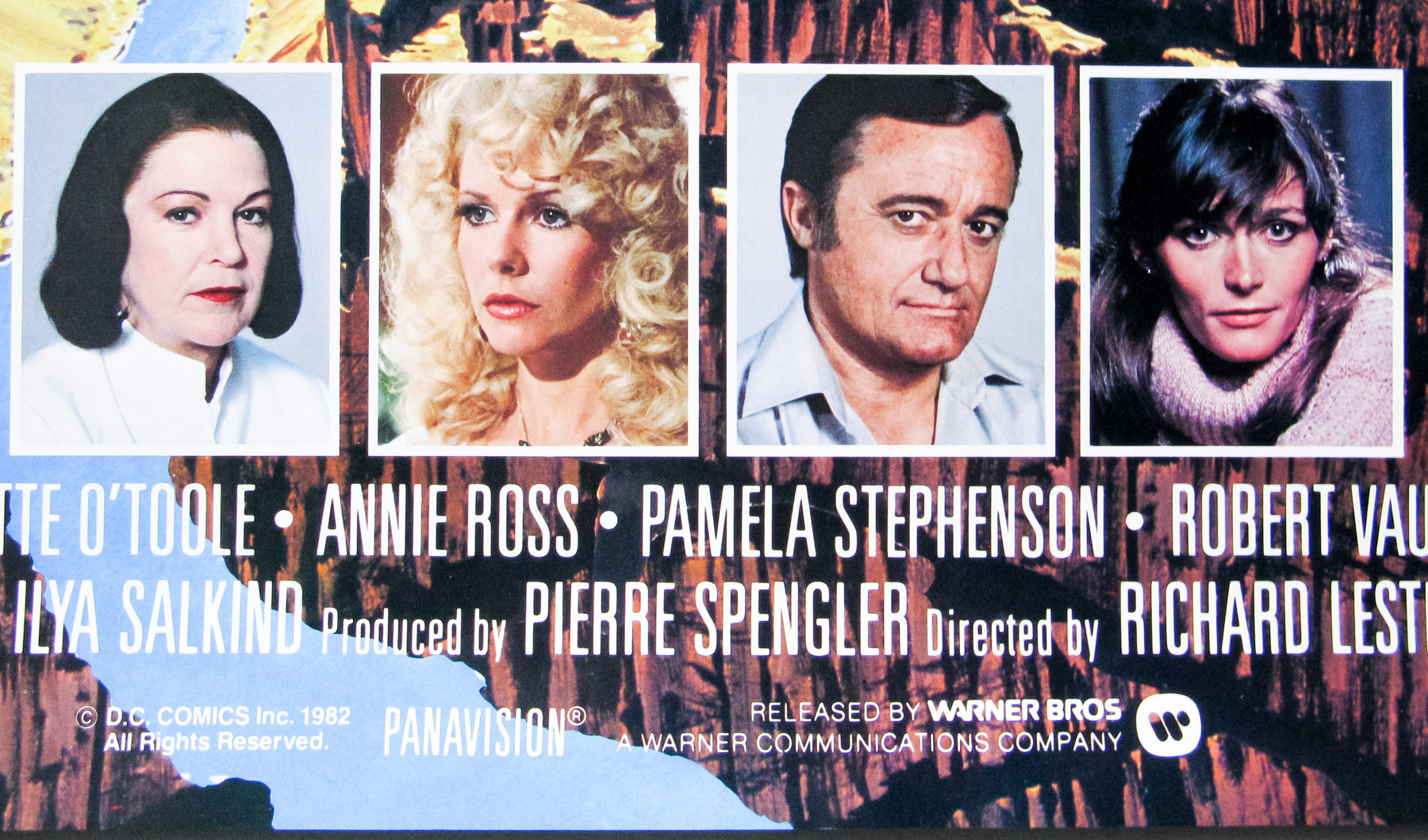
Richard Pryor was clearly seen as a major draw for audiences who were contemplating going to watch the third entry in the Christopher Reeve series of Superman films, and the artwork on this US advance one sheet was reused for the final design. In the end, the inclusion of the infamous comedian proved one of the films biggest flaws since most of his scenes involved slapstick comedy, and his character’s daft antics serve to almost completely eradicate any of the gravitas the previous films had manage to establish. Pryor had appeared in a string of successful comedies during the early 1980s, including Stir Crazy (1980), but his casting in this film apparently came about after he mentioned on a US talk show how much he’d like to appear in a Superman film.

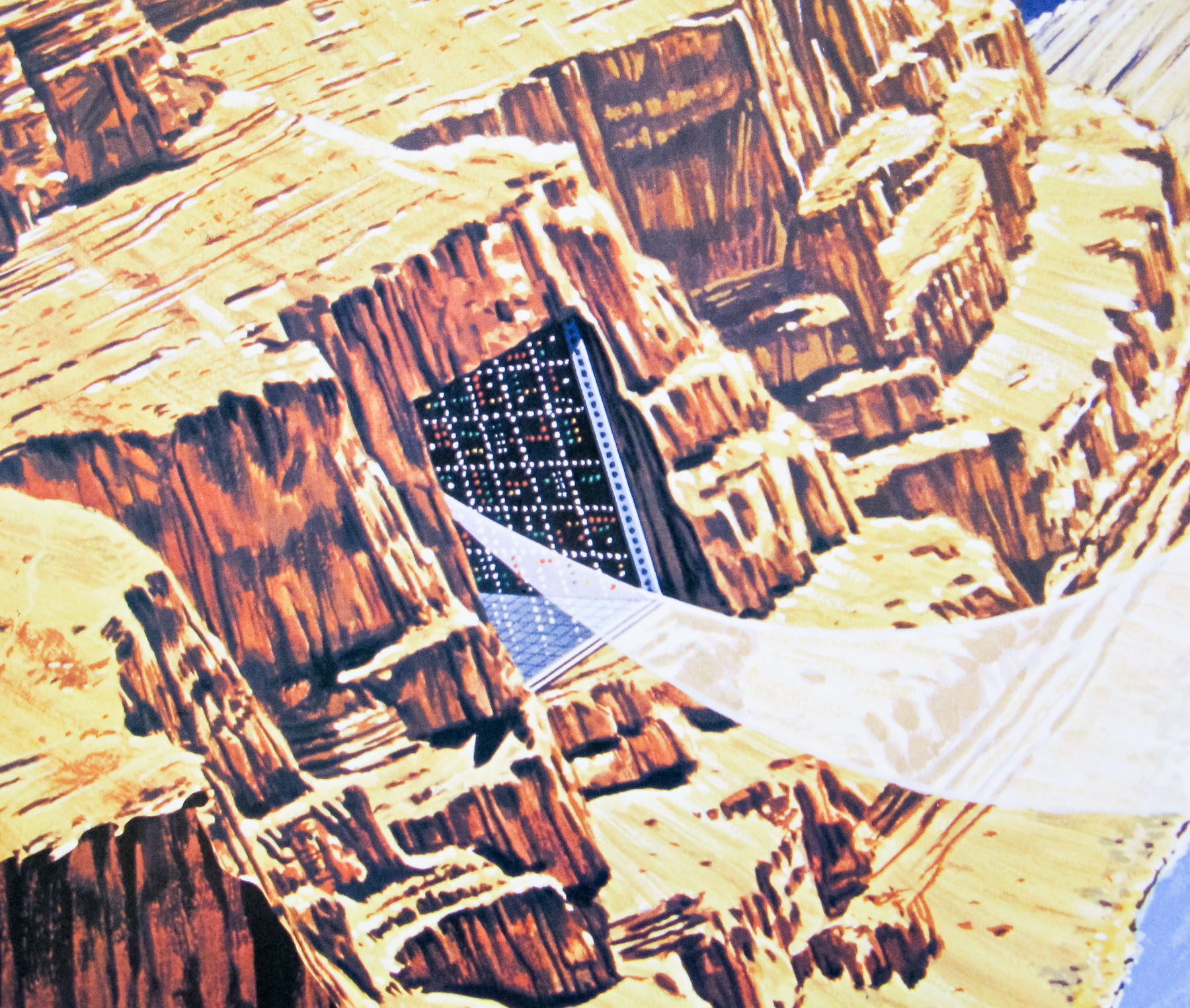
Richard Lester, the director who had completed work on the troubled Superman II after Richard Donner had been fired, took on directing duties for the sequel. The story sees Pryor’s computer ‘genius’ Gus Gorman blackmailed into using his skills for wealthy megalomaniac Ross Webster (Robert Vaughn), whose various plans for world domination are foiled by Superman. After attempting to cripple the superhero with synthesised kryptonite, the plan goes awry when a key ingredient is missed and, rather than stopping him, the material causes Superman to turn into an evil incarnation of his former self. This ends in a battle between the righteous Clark Kent and the malicious Superman and after successfully defeating his alter-ego, the good Superman heads to Webster’s lair in the grand canyon where a giant supercomputer built by Gorman almost succeeds in defeating the hero.

The film features a sequence that terrified me when I watched it as a child, which sees the supercomputer turning self-aware and forcefully changing Webster’s sister into a bizarre cyborg creature.

The poster art is credited to an American artist called Larry Salk about whom I’ve been able to discover very little. A now defunct gallery site described him as a freelance illustrator who worked on around 165 film posters, as well as painting for advertisements, video game covers, record sleeves and more. IMPAwards features a few of his posters (I have his one sheet for the 3D re-release of House of Wax) and he was the artist who painted the famous portrait of Cosmo Kramer from Seinfeld. He apparently passed away in 2004.

The late artist John Berkey painted a scene from the finale on the international one sheet.