You searched for: Quad%2520

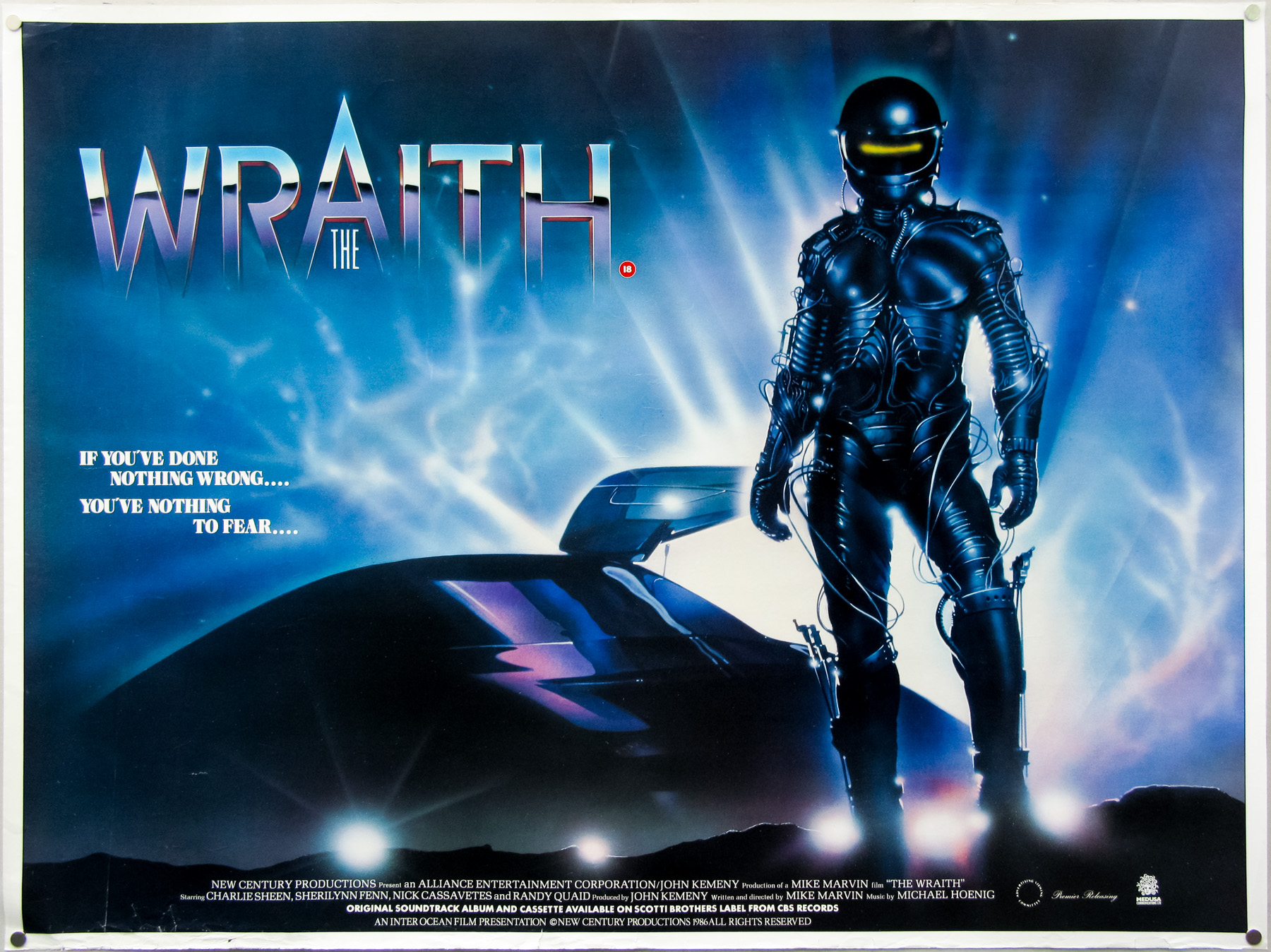
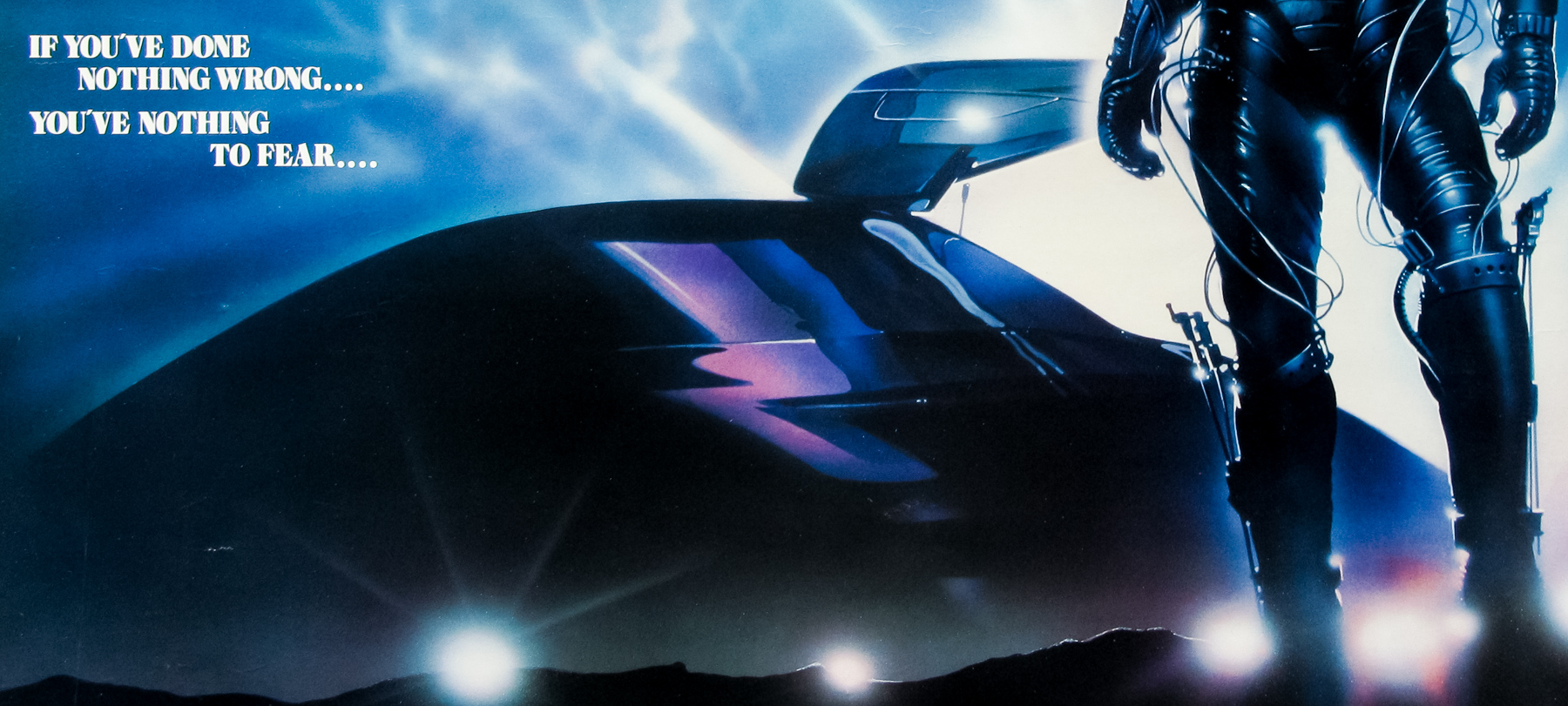
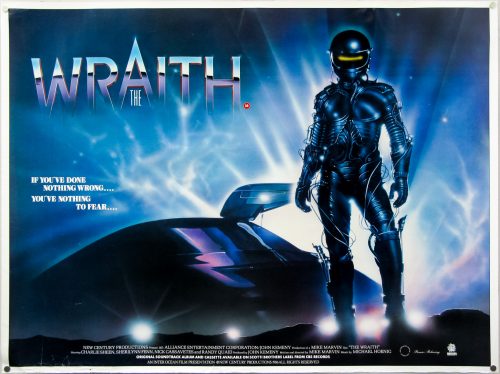
The Wraith / quad / UK

18.05.11

Poster Poster

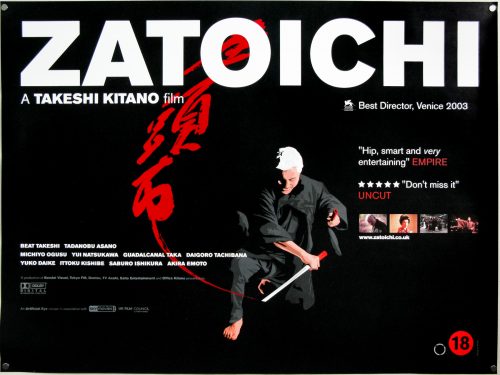
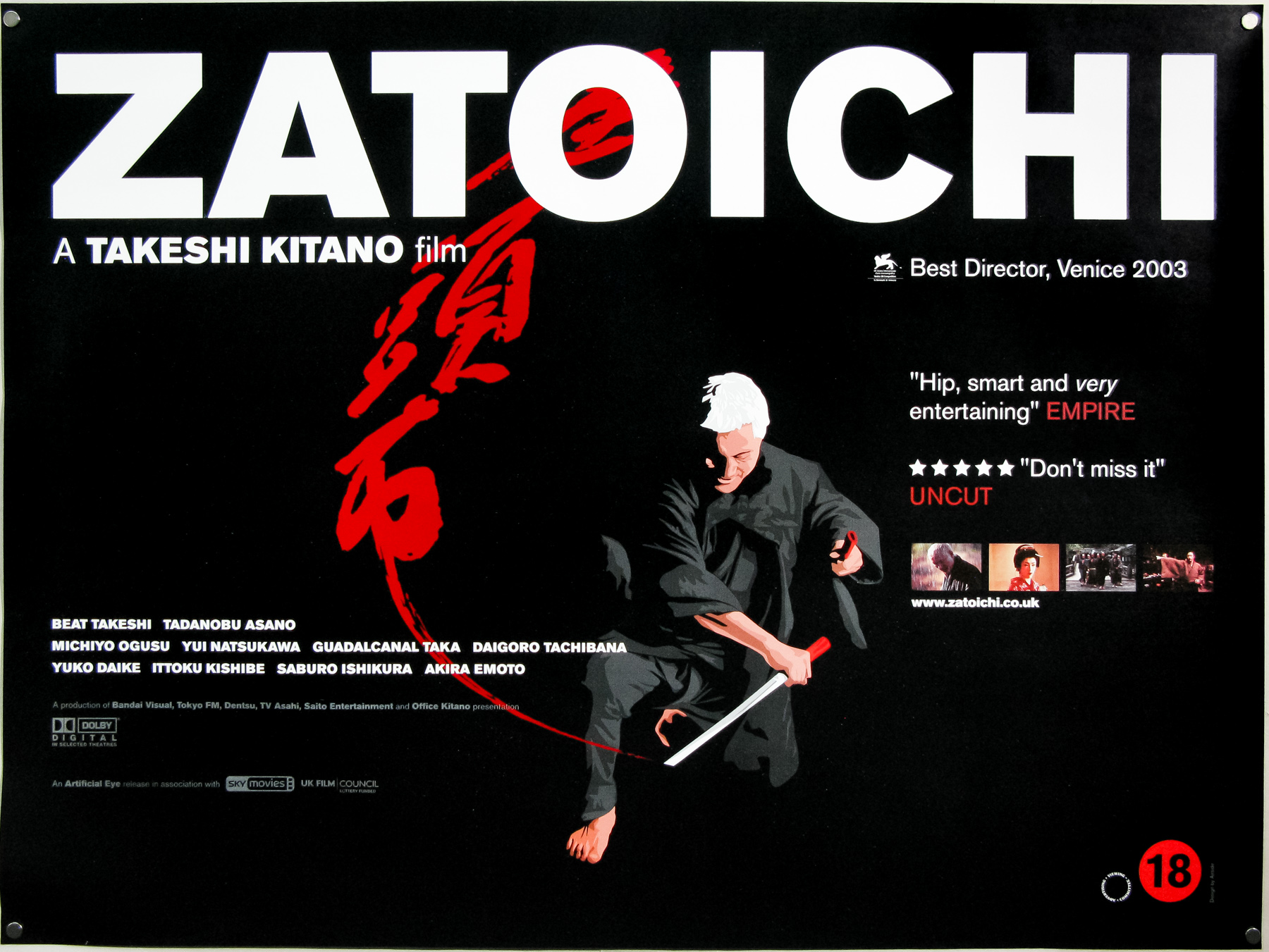
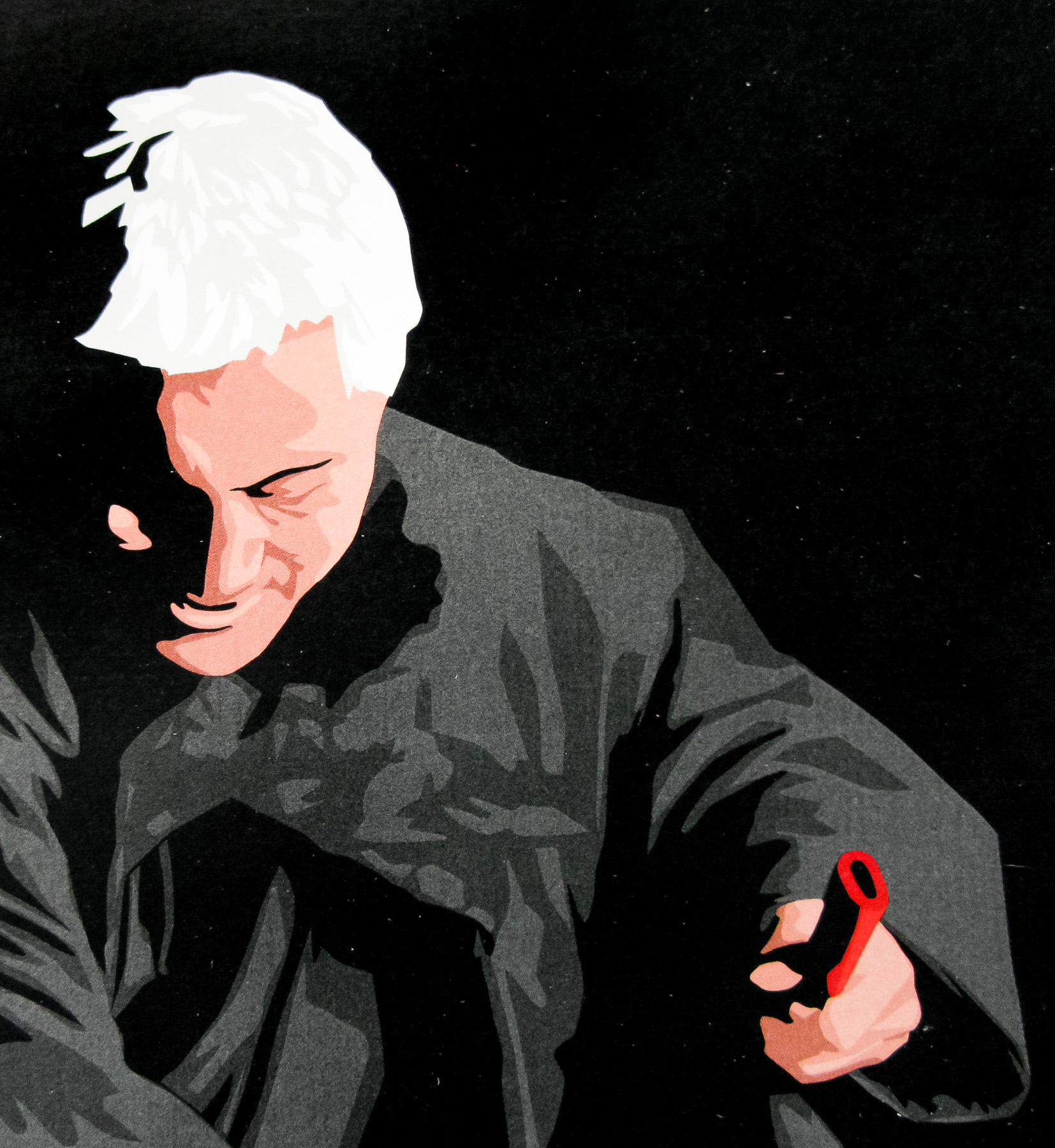
Zatoichi / quad / UK

18.05.11

Poster Poster

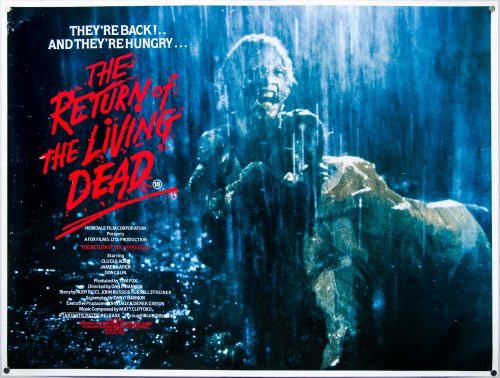
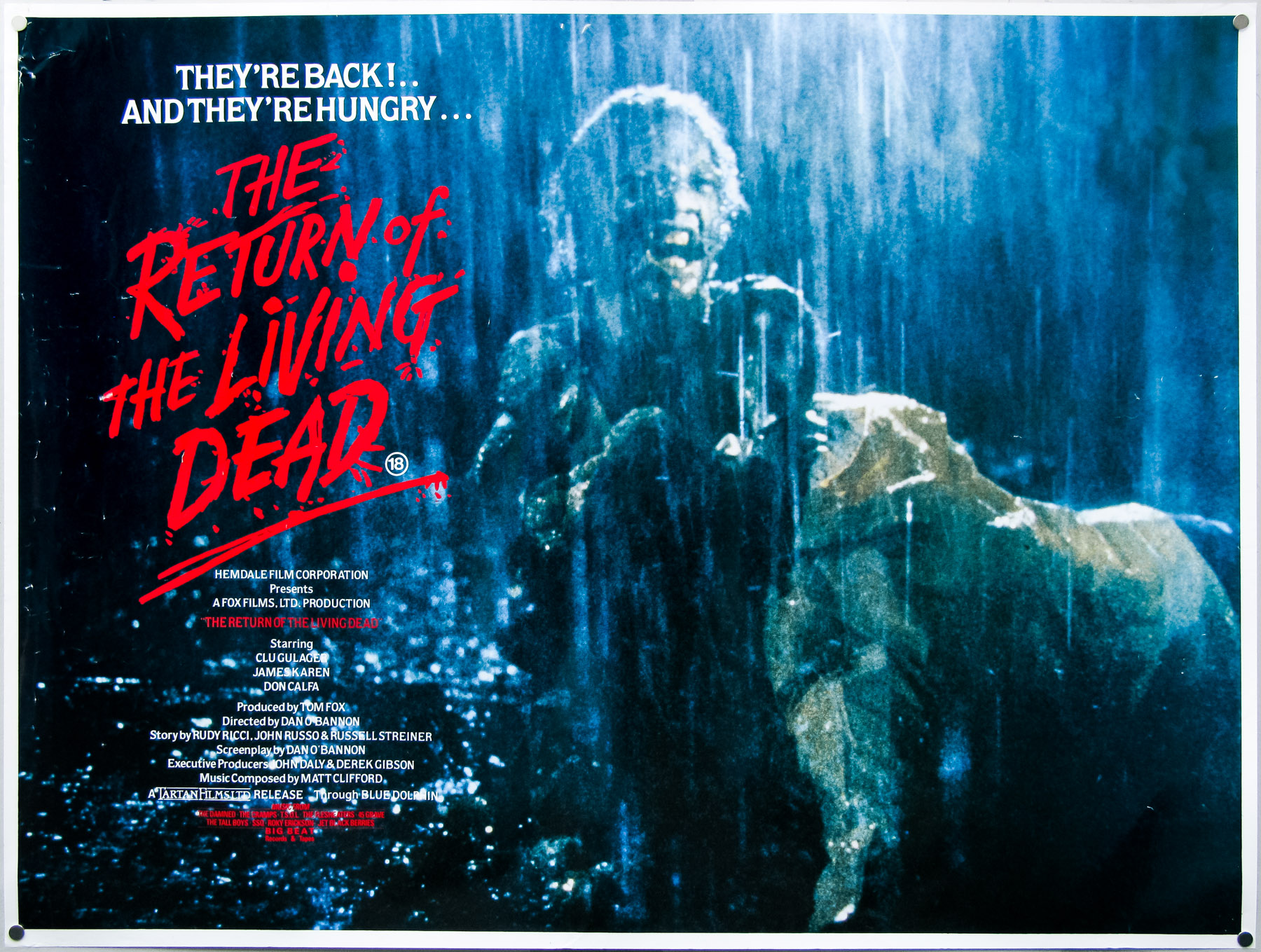
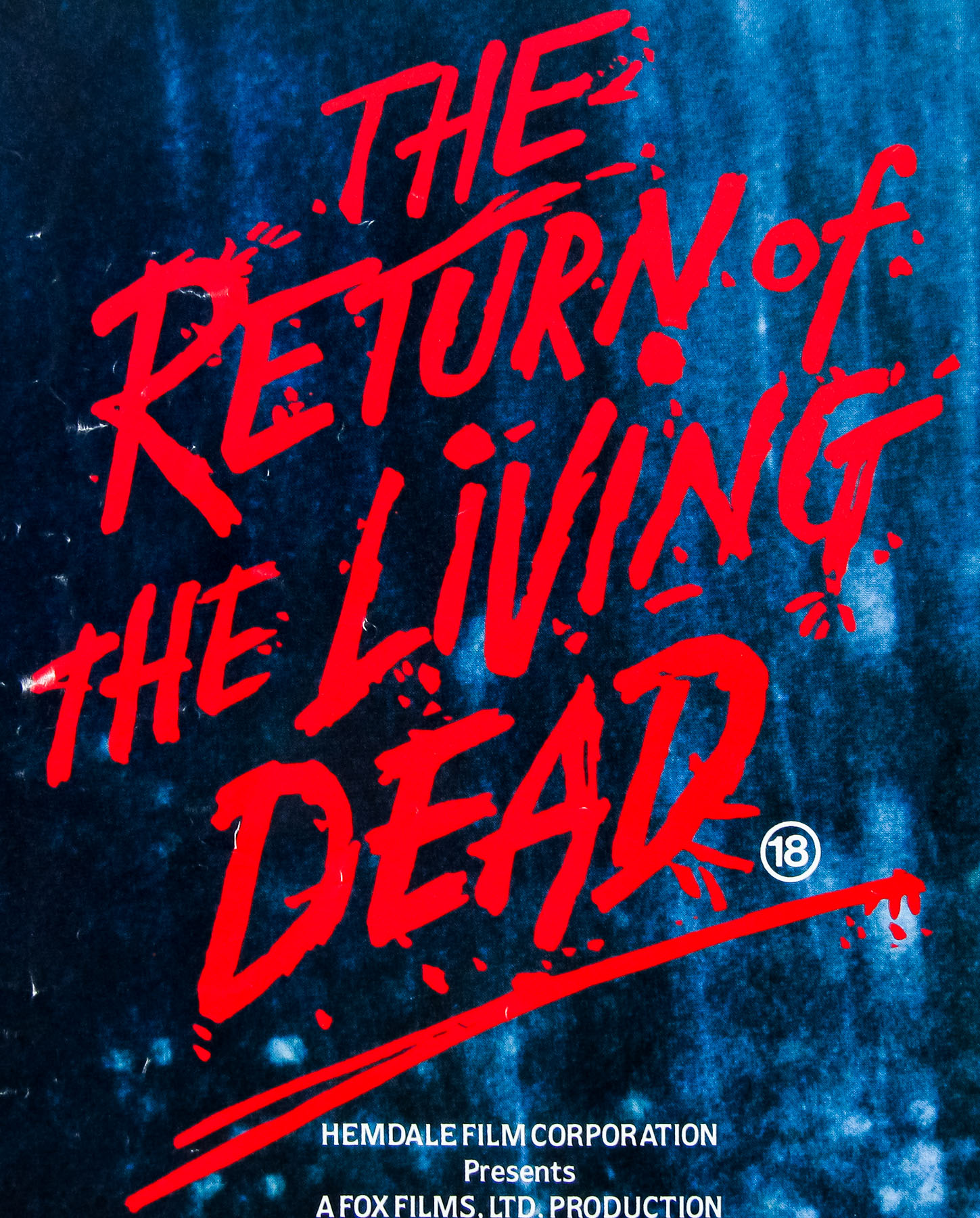
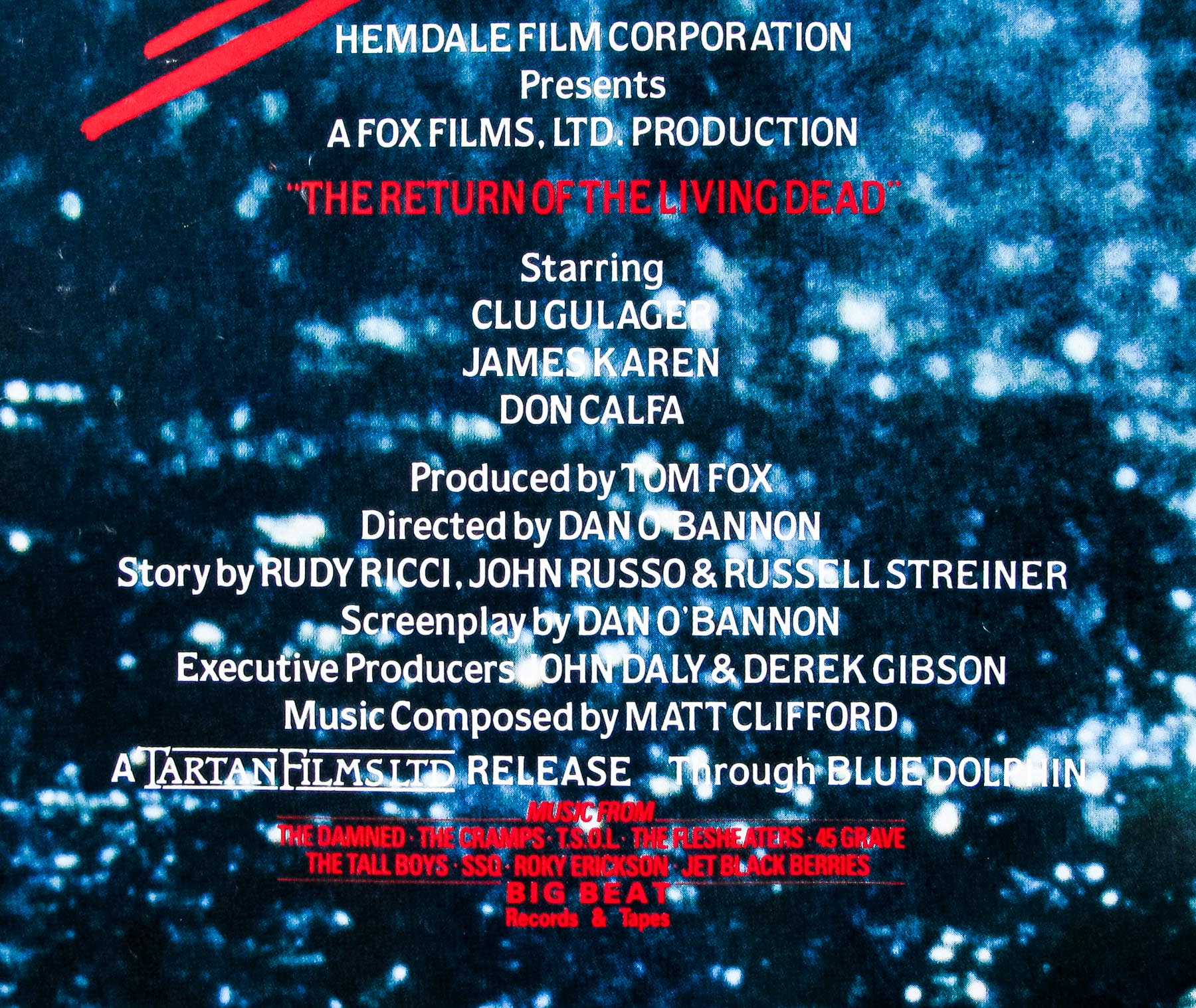
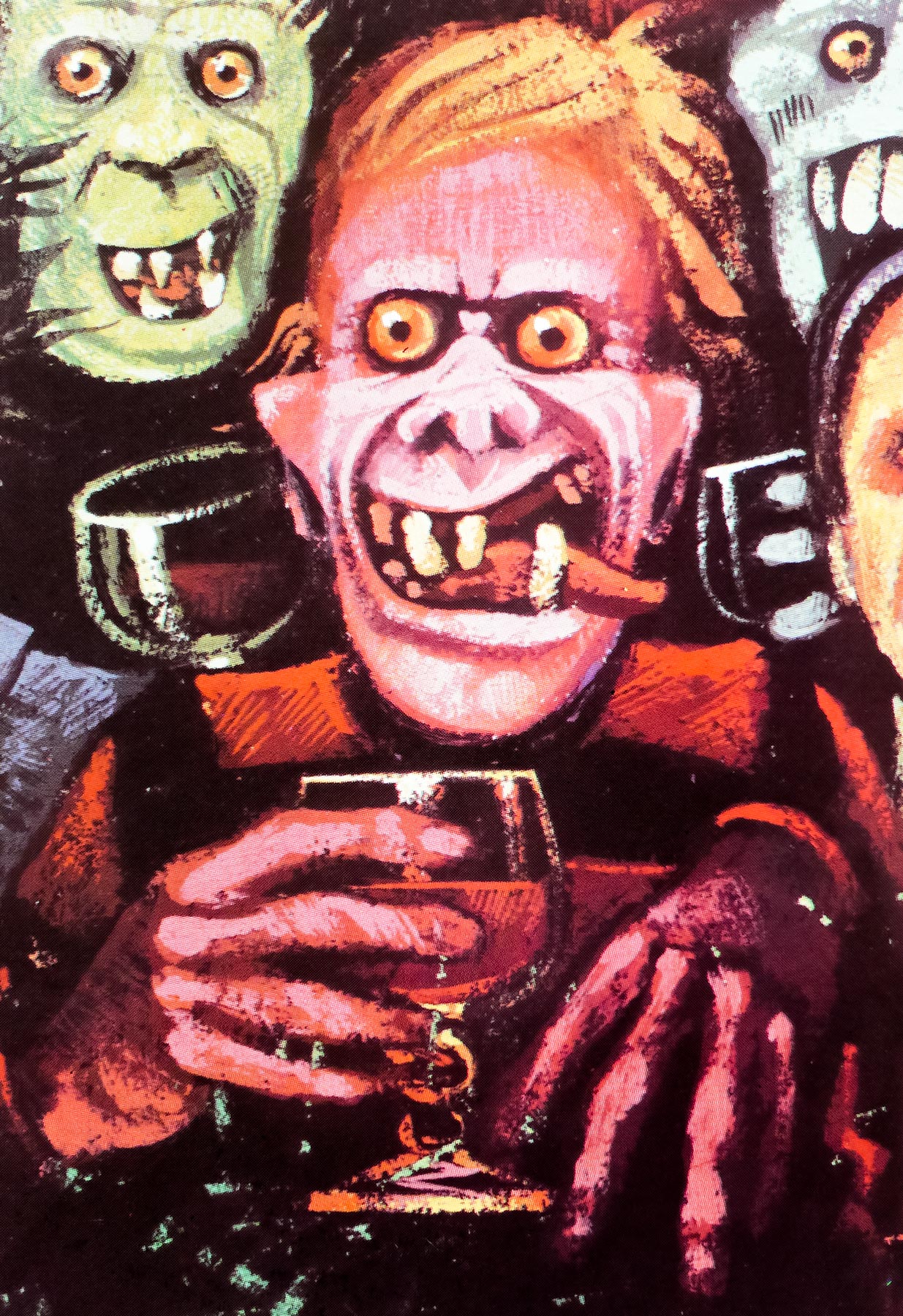
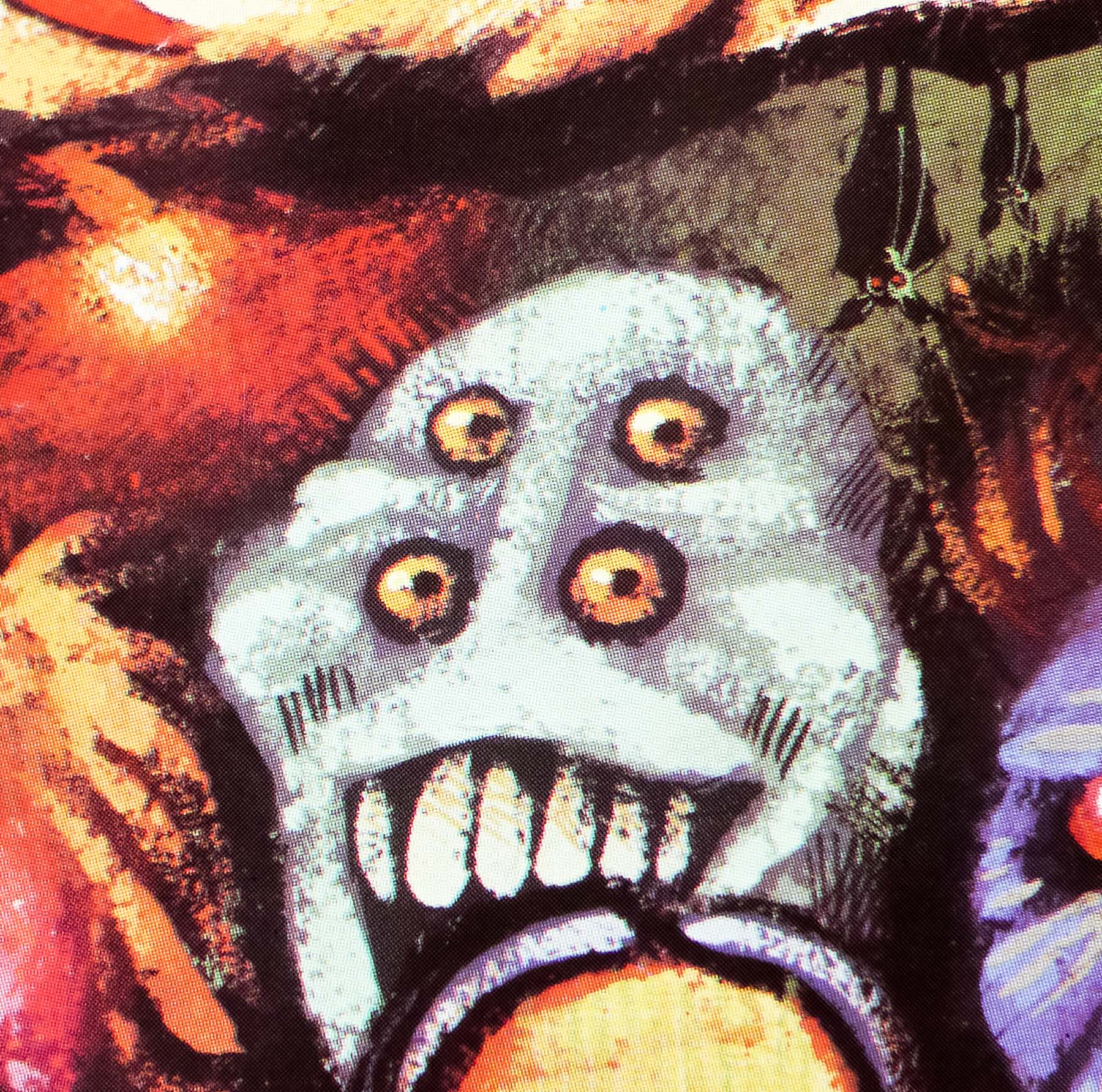
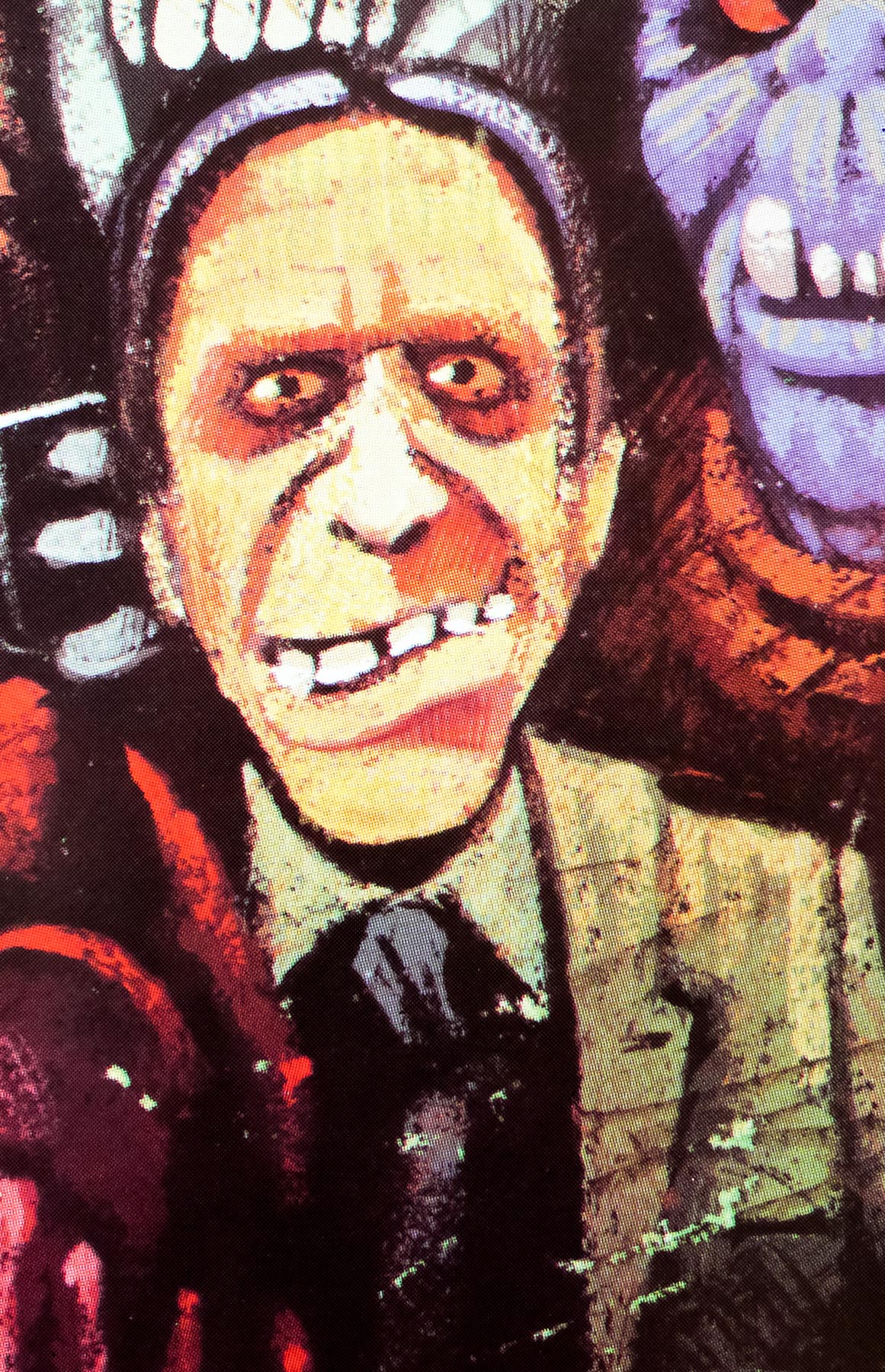
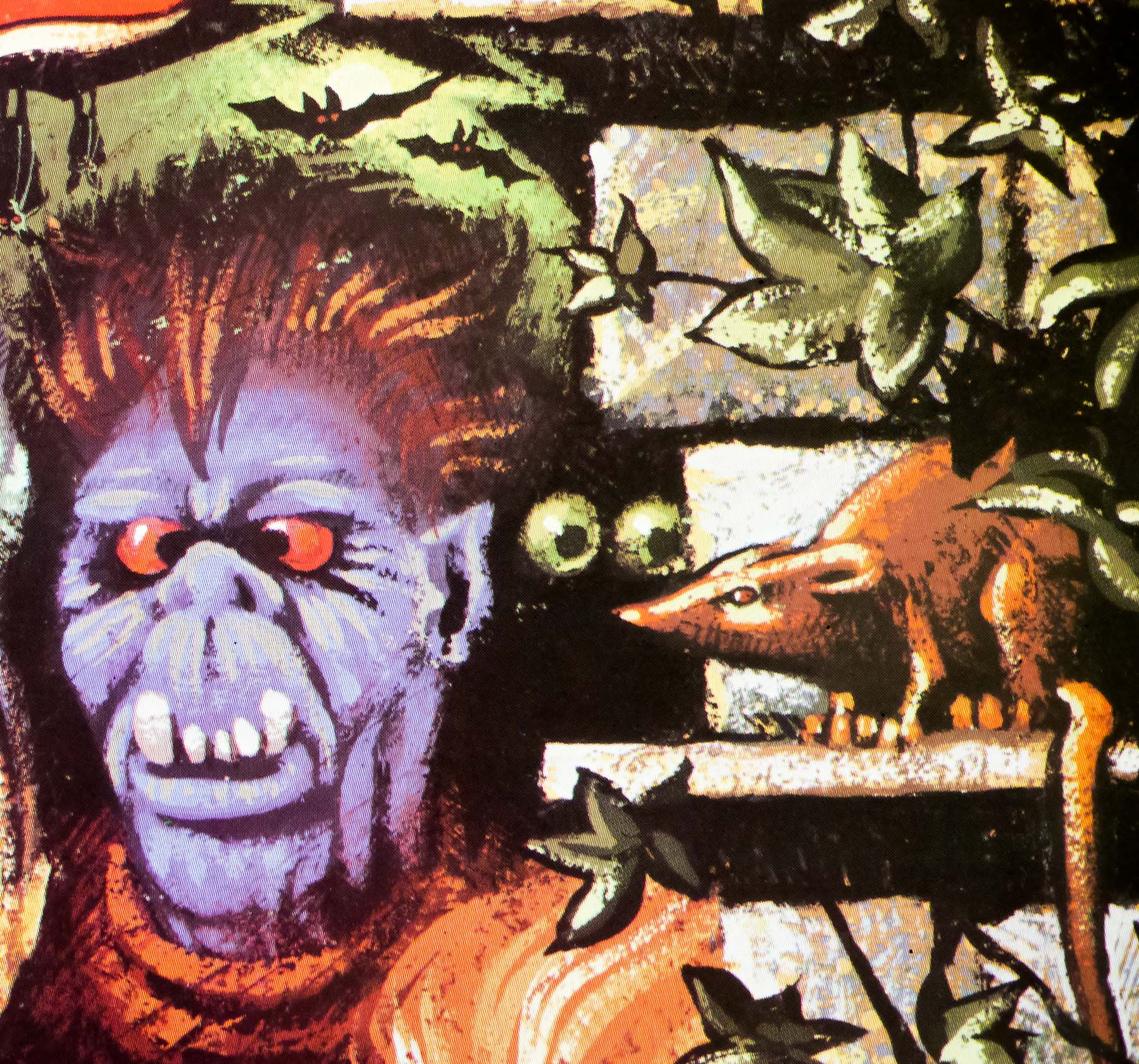
The Return of the Living Dead / quad / UK

29.02.12

Poster Poster
Title
The Return of the Living Dead
AKA
Battalion (Japan - English title)
Year of Film
1985
Director
Dan O'Bannon
Starring
Clu Gulager, James Karen, Don Calfa, Thom Mathews, Beverly Randolph, John Philbin, Jewel Shepard, Miguel A. Núñez Jr., Brian Peck, Linnea Quigley, Mark Venturini, Jonathan Terry
Origin of Film
USA
Genre(s) of Film
Clu Gulager, James Karen, Don Calfa, Thom Mathews, Beverly Randolph, John Philbin, Jewel Shepard, Miguel A. Núñez Jr., Brian Peck, Linnea Quigley, Mark Venturini, Jonathan Terry,
Type of Poster
Quad
Style of Poster
--
Origin of Poster
UK
Year of Poster
1985
Designer
Unknown
Artist
--
Size (inches)
30 2/16" x 39 15/16"
SS or DS
SS
NSS #
--
Tagline
They're Back! .. And They're Hungry...

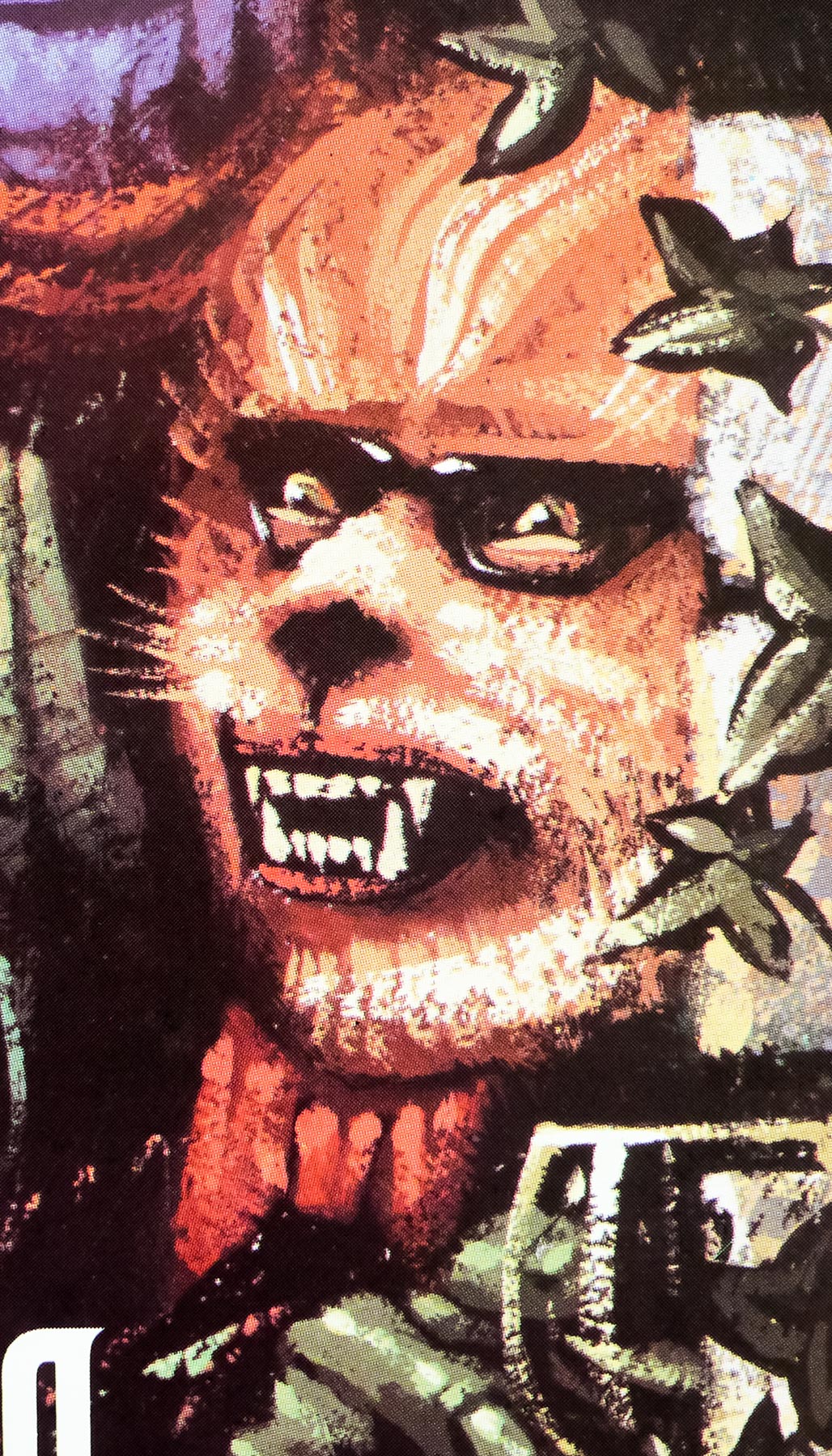
An extremely low-fi poster for the UK release of the excellent 1985 horror comedy The Return of the Living Dead. The image is of Jerome ‘Daniels’ Coleman who plays the rather terrifying legless zombie who chomps on a paramedic before chasing Don Calfa. A clip of him in action is on YouTube.

Apparently Coleman was an amputee who could run on his stumps and was discovered by one of the film’s producers living on the streets of L.A. The effect is extremely effective, particularly when coupled with his blood-curdling screams. It’s one of the few truly creepy moments in the whole film, in my opinion.

The US one sheet is markedly different and can be seen here.

The original trailer is on YouTube.

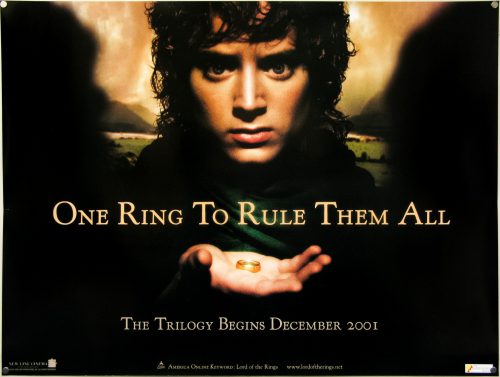
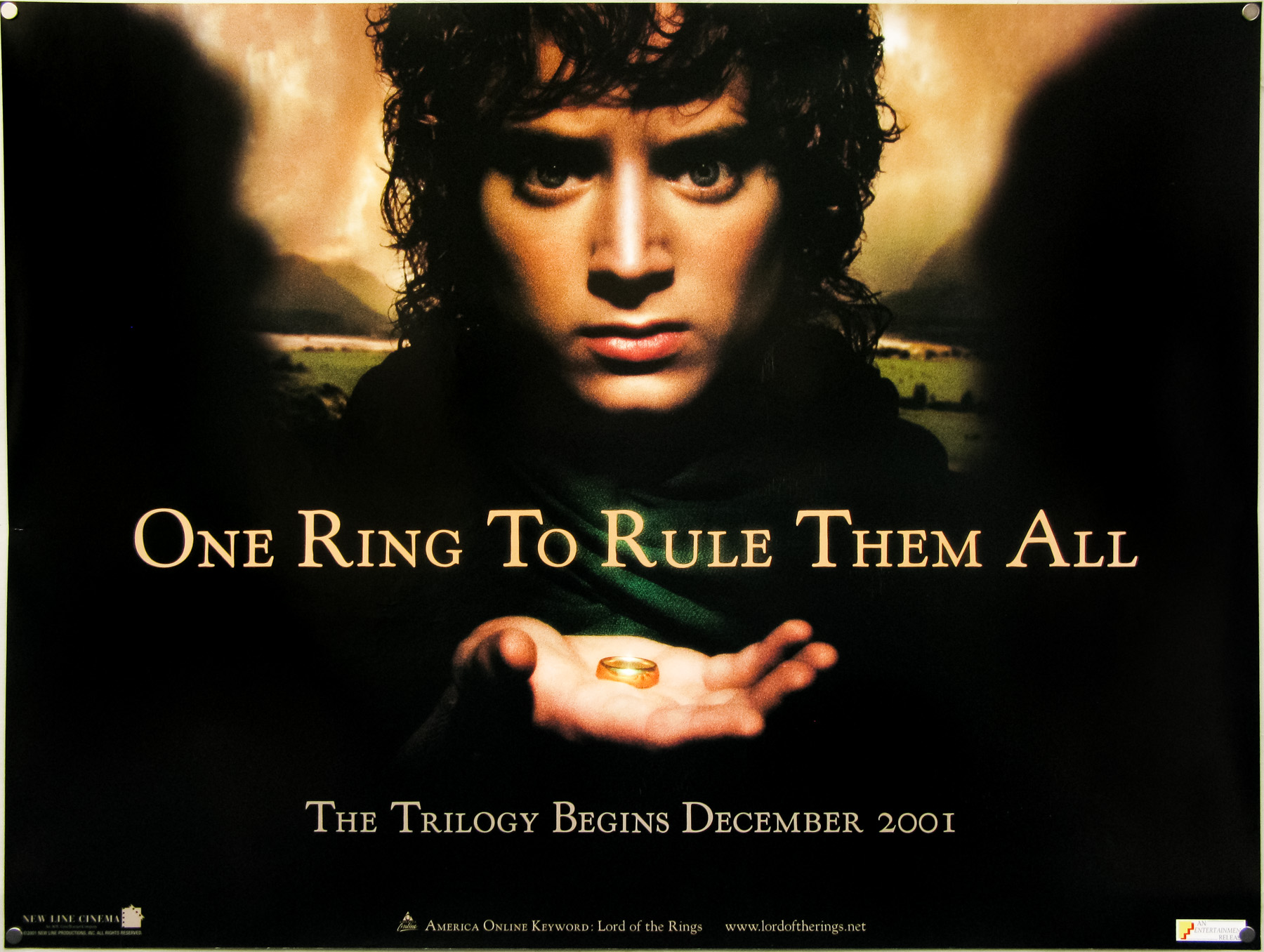
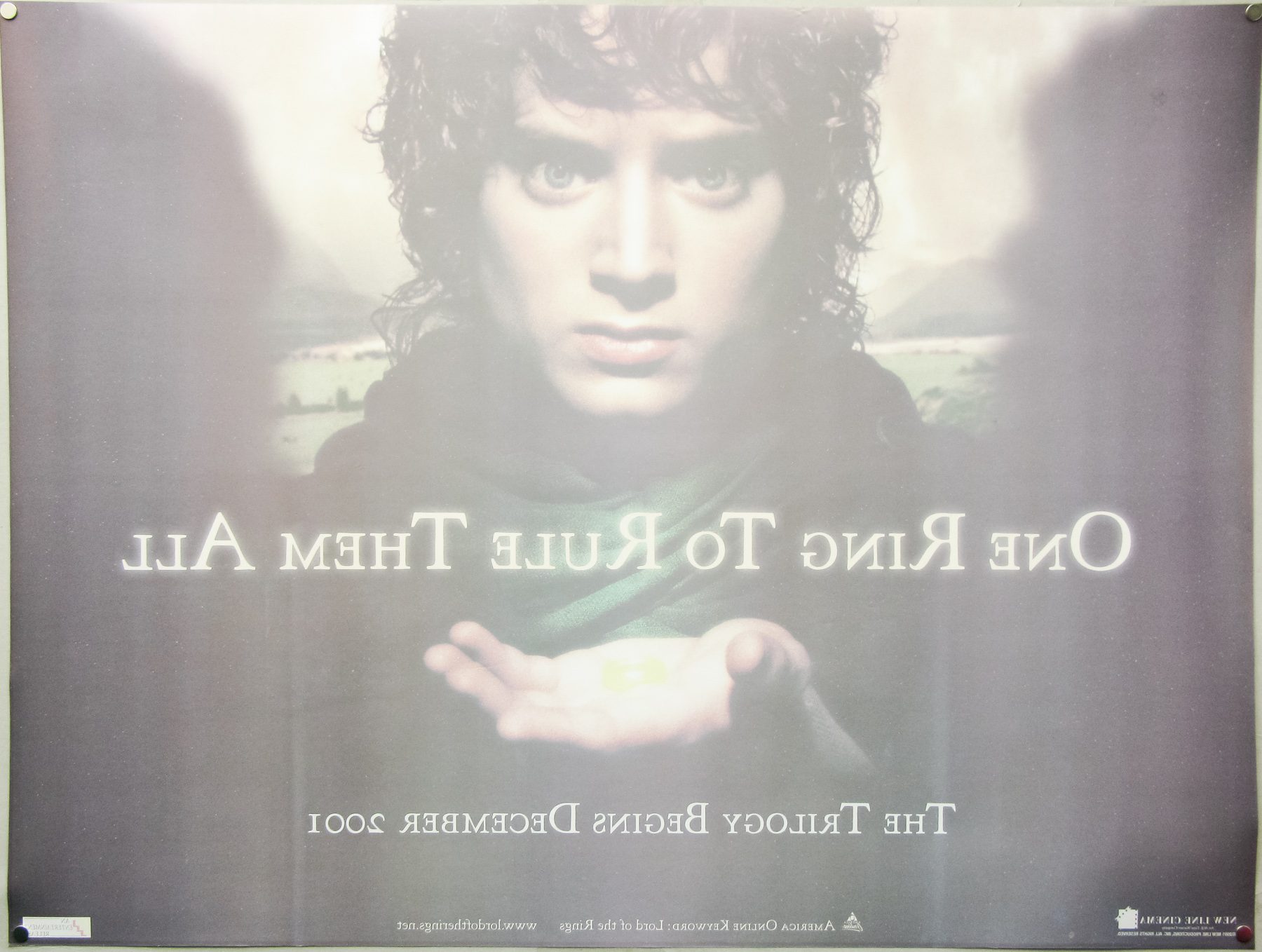
The Lord Of The Rings trilogy / quad / teaser / UK

18.05.11

Poster Poster

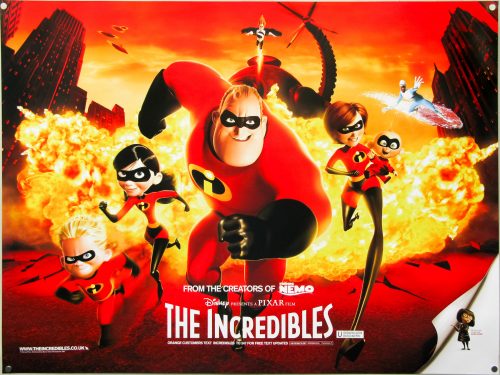
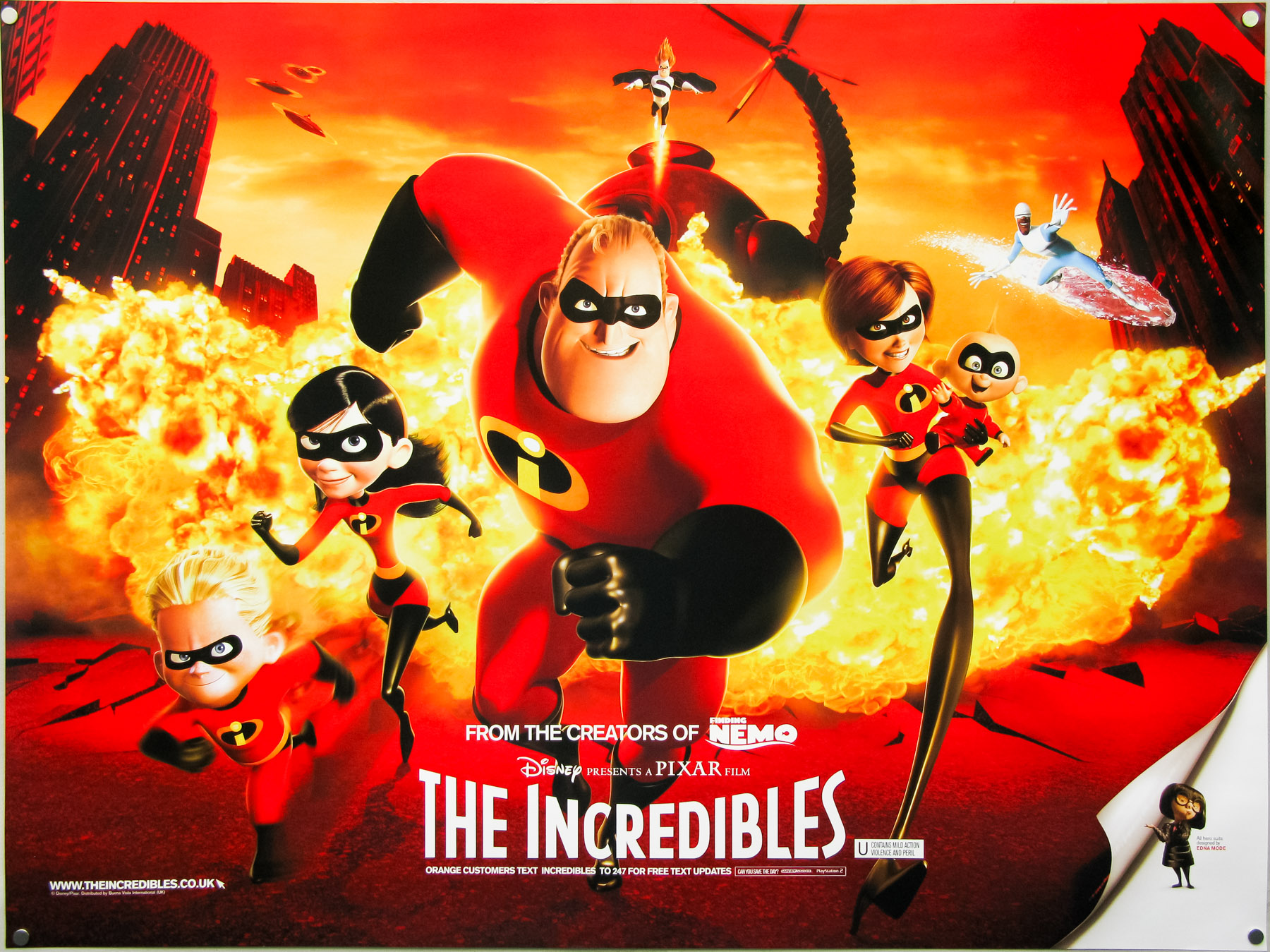
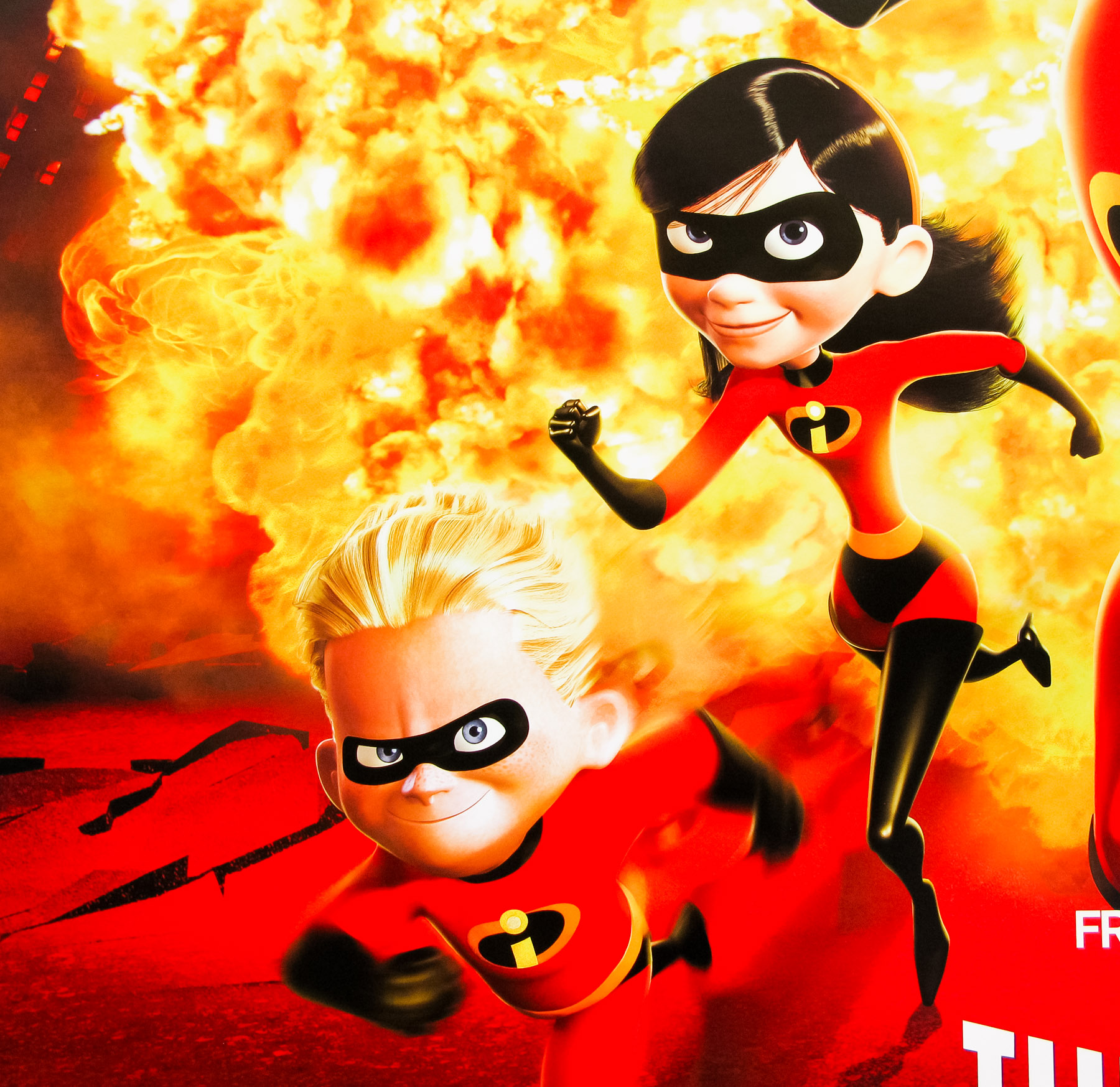
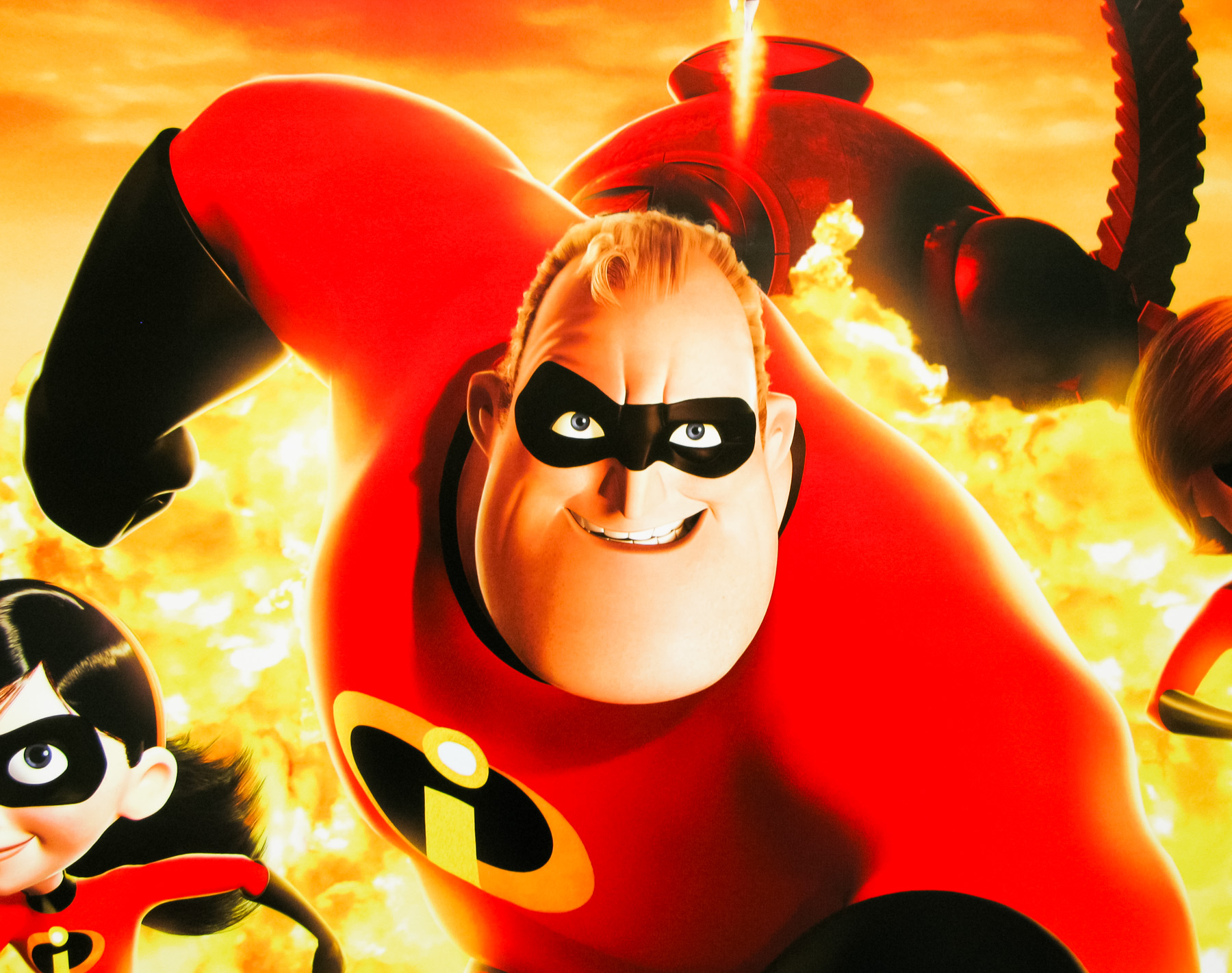
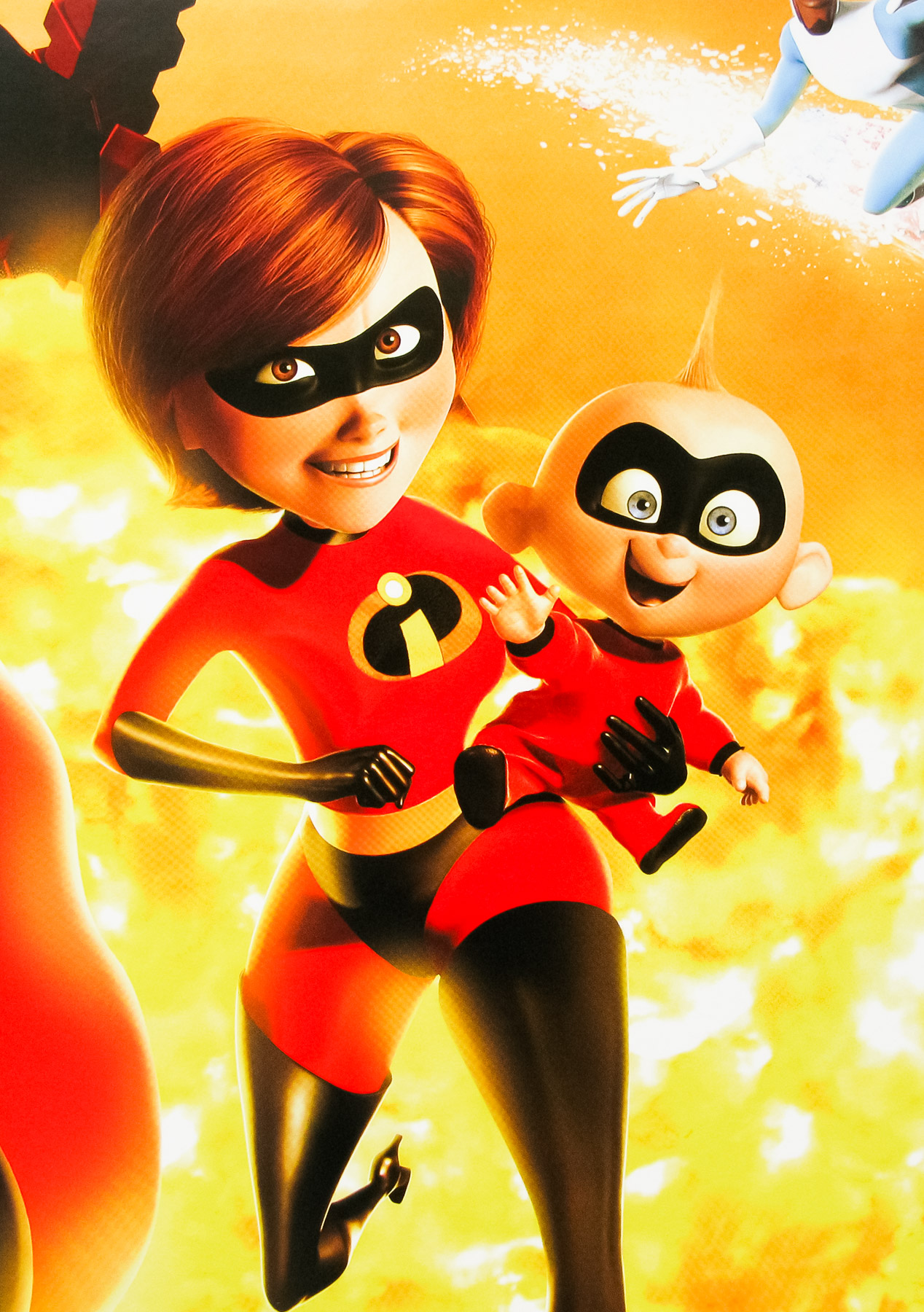
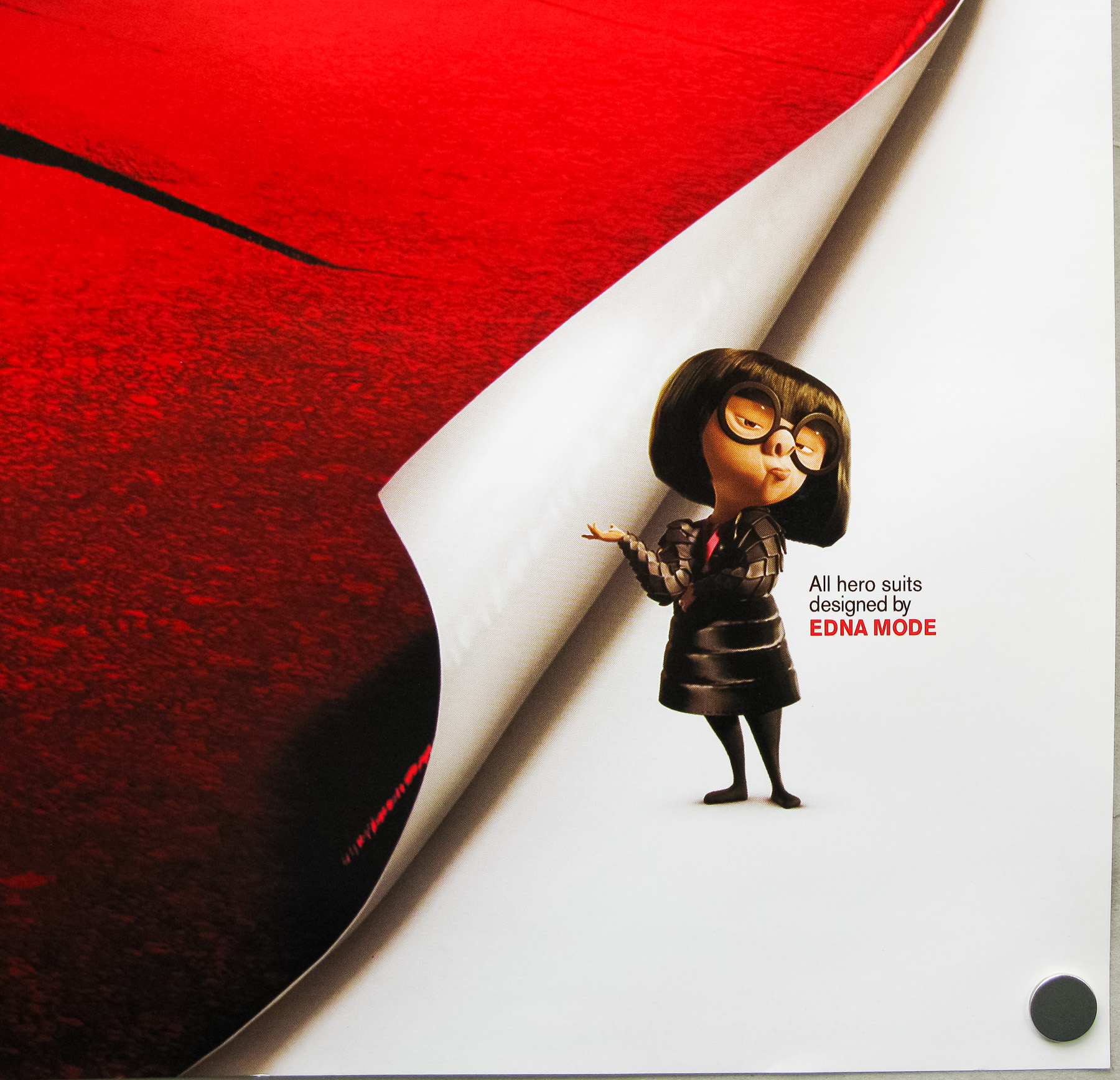
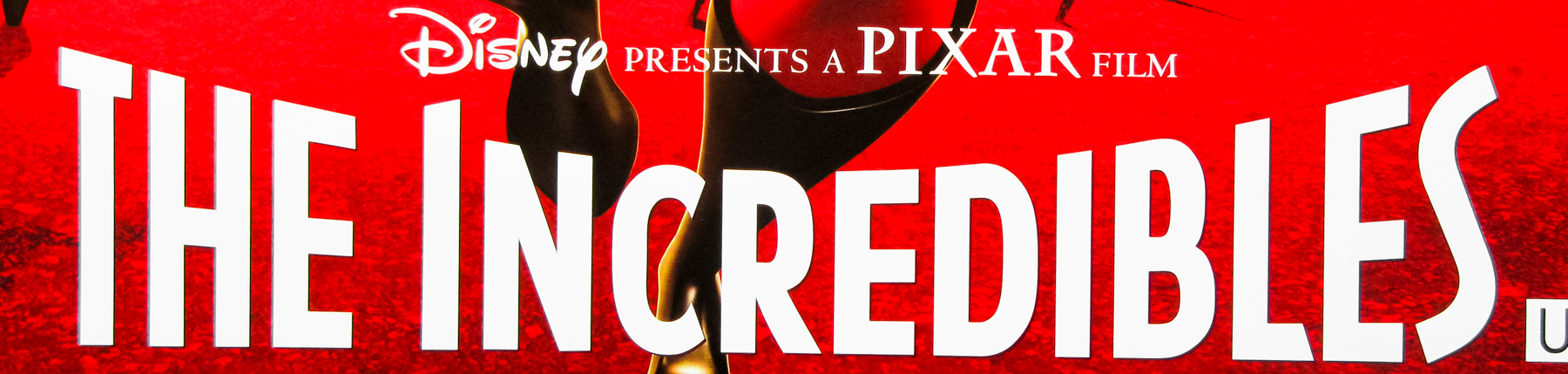
The Incredibles / quad / UK

18.05.11

Poster Poster

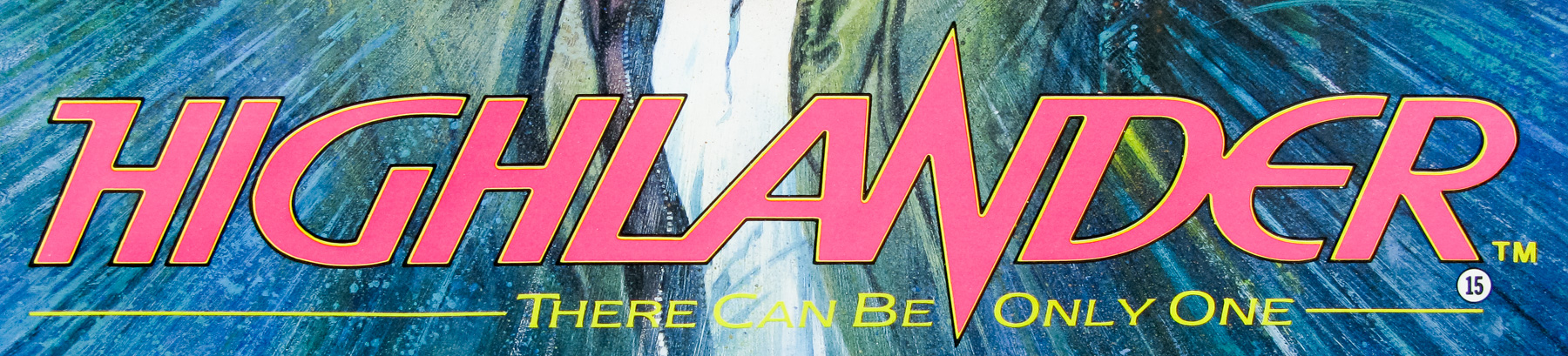
Highlander / quad / UK

07.09.11

Poster Poster
Title
Highlander
AKA
--
Year of Film
1986
Director
Russell Mulcahy
Starring
Christopher Lambert, Roxanne Hart, Clancy Brown, Sean Connery, Beatie Edney, Alan North, Jon Polito, Sheila Gish, Hugh Quarshie, Christopher Malcolm
Origin of Film
USA | UK
Genre(s) of Film
Christopher Lambert, Roxanne Hart, Clancy Brown, Sean Connery, Beatie Edney, Alan North, Jon Polito, Sheila Gish, Hugh Quarshie, Christopher Malcolm,
Type of Poster
Quad
Style of Poster
--
Origin of Poster
UK
Year of Poster
1986
Designer
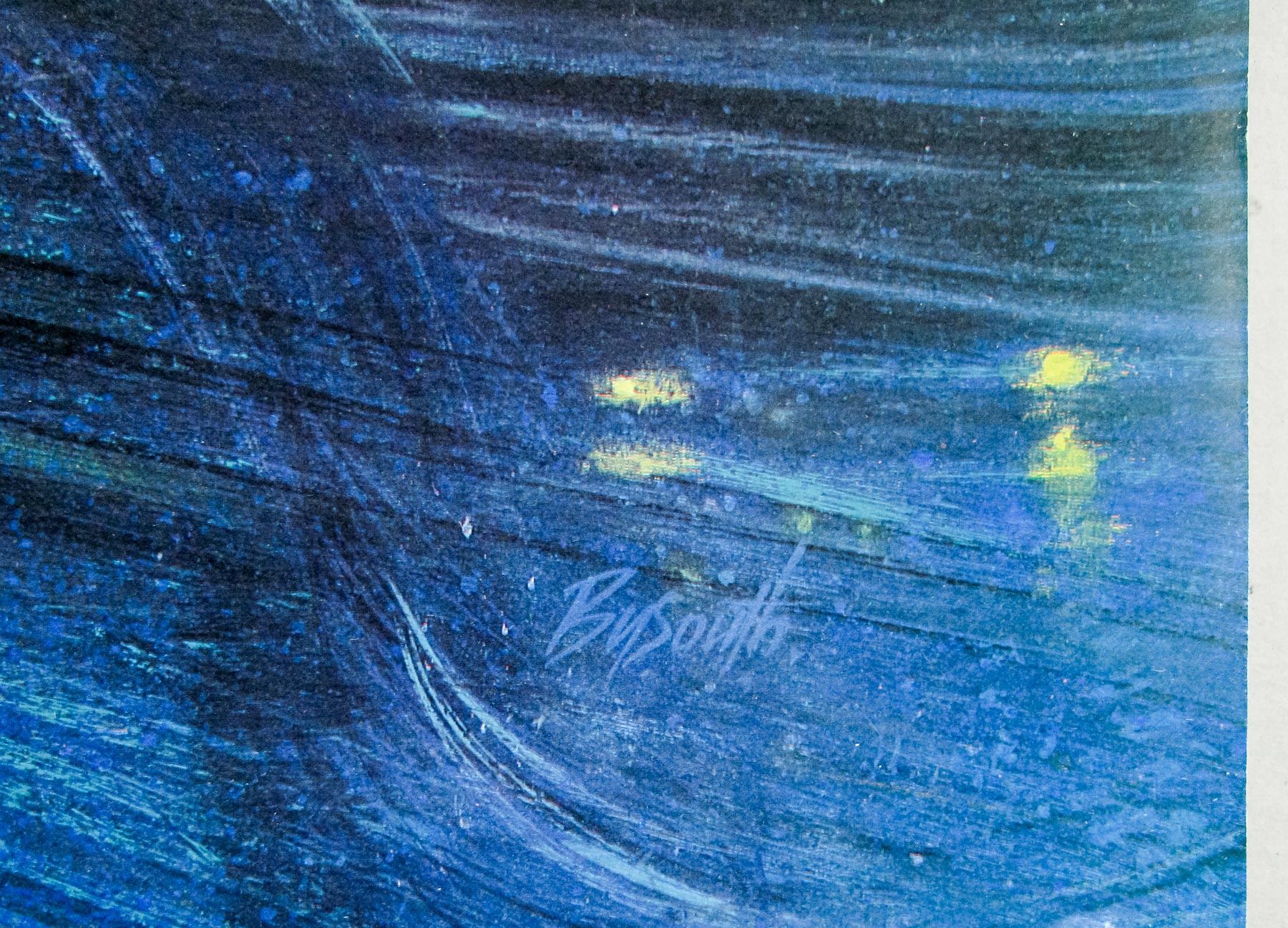
Brian Bysouth
Artist
Brian Bysouth
Size (inches)
30" x 40"
SS or DS
SS
NSS #
--
Tagline
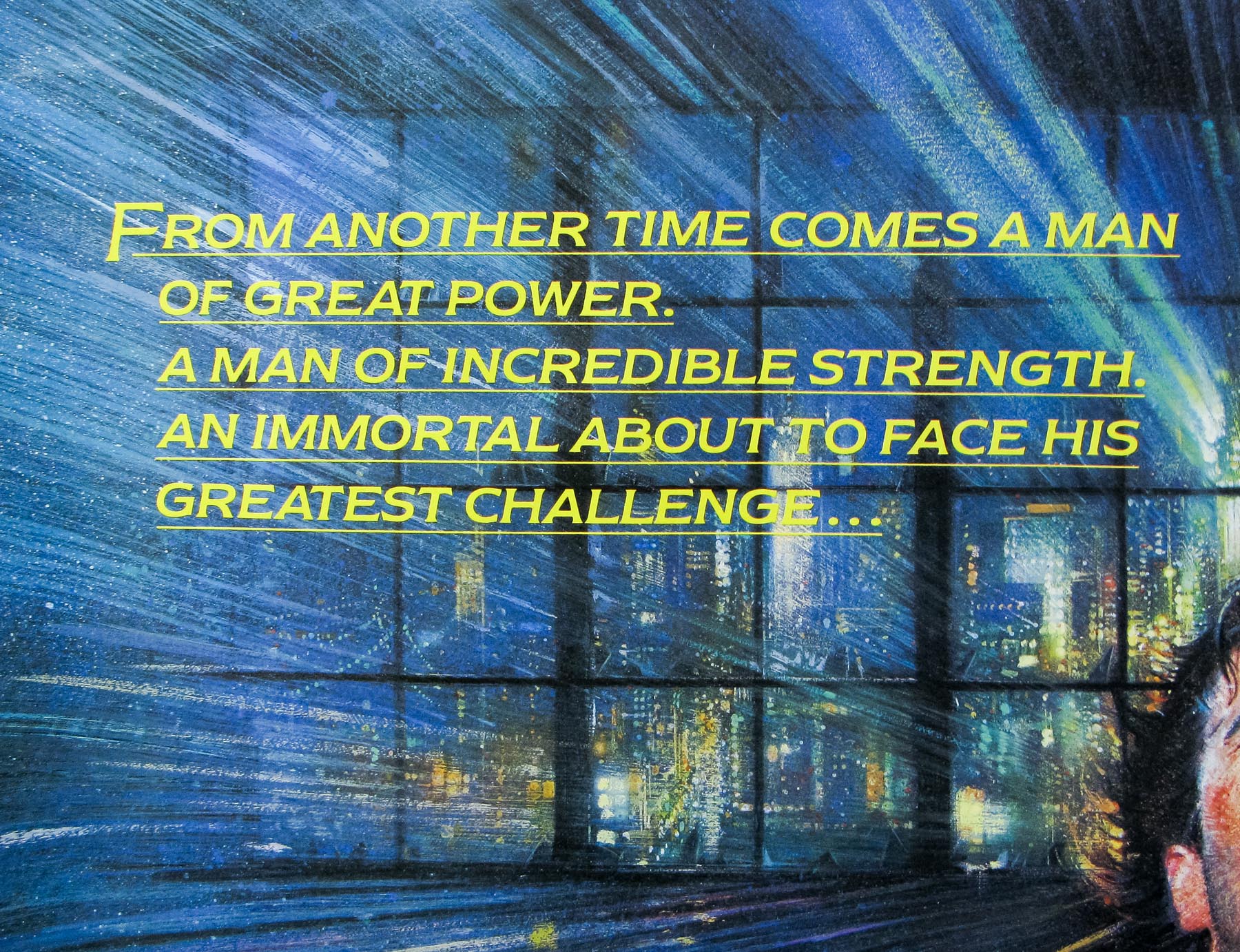
From another time comes a man of great power. A man of incredible strength. An immortal about to face his greatest challenge... | There can be only one

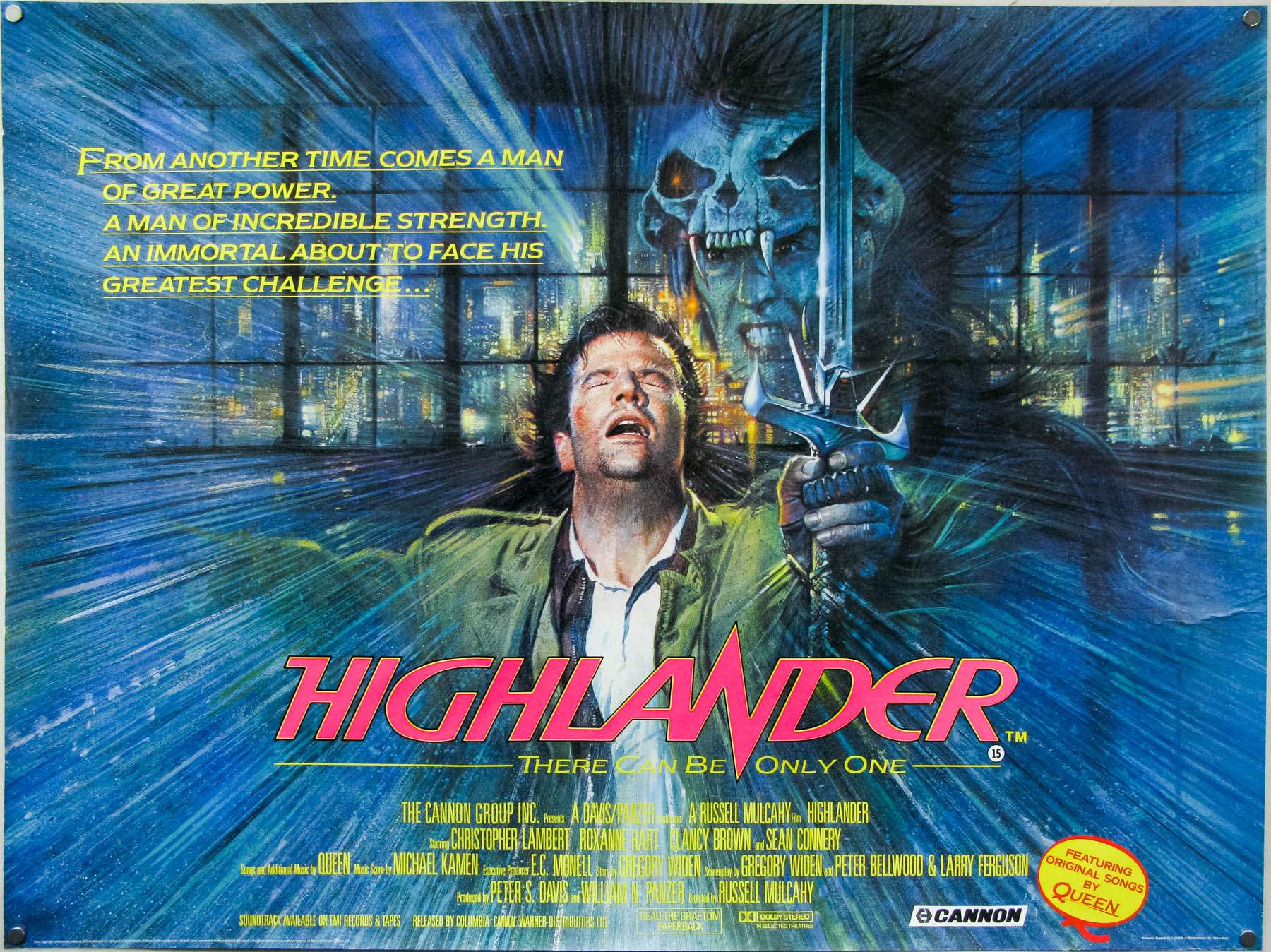
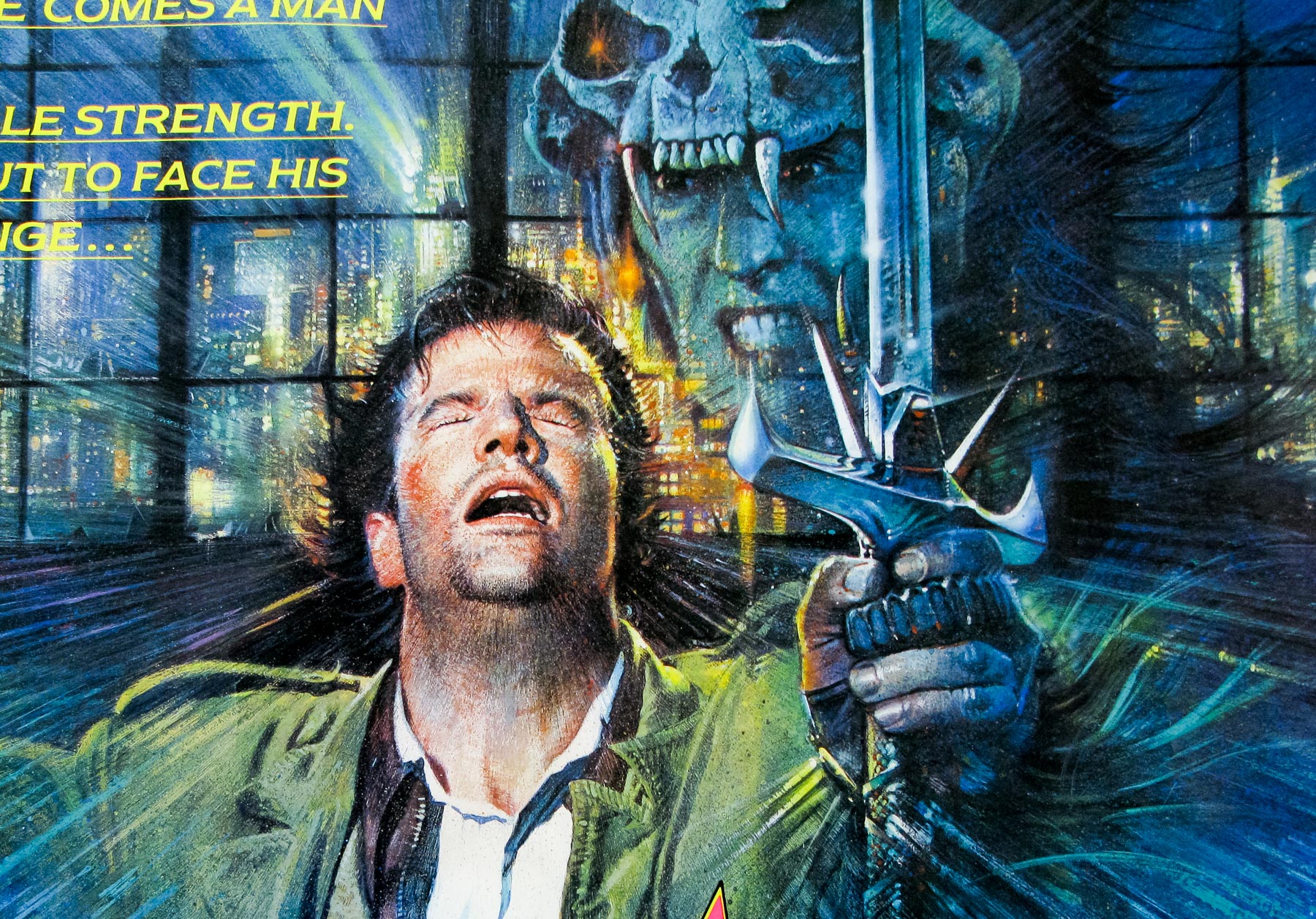
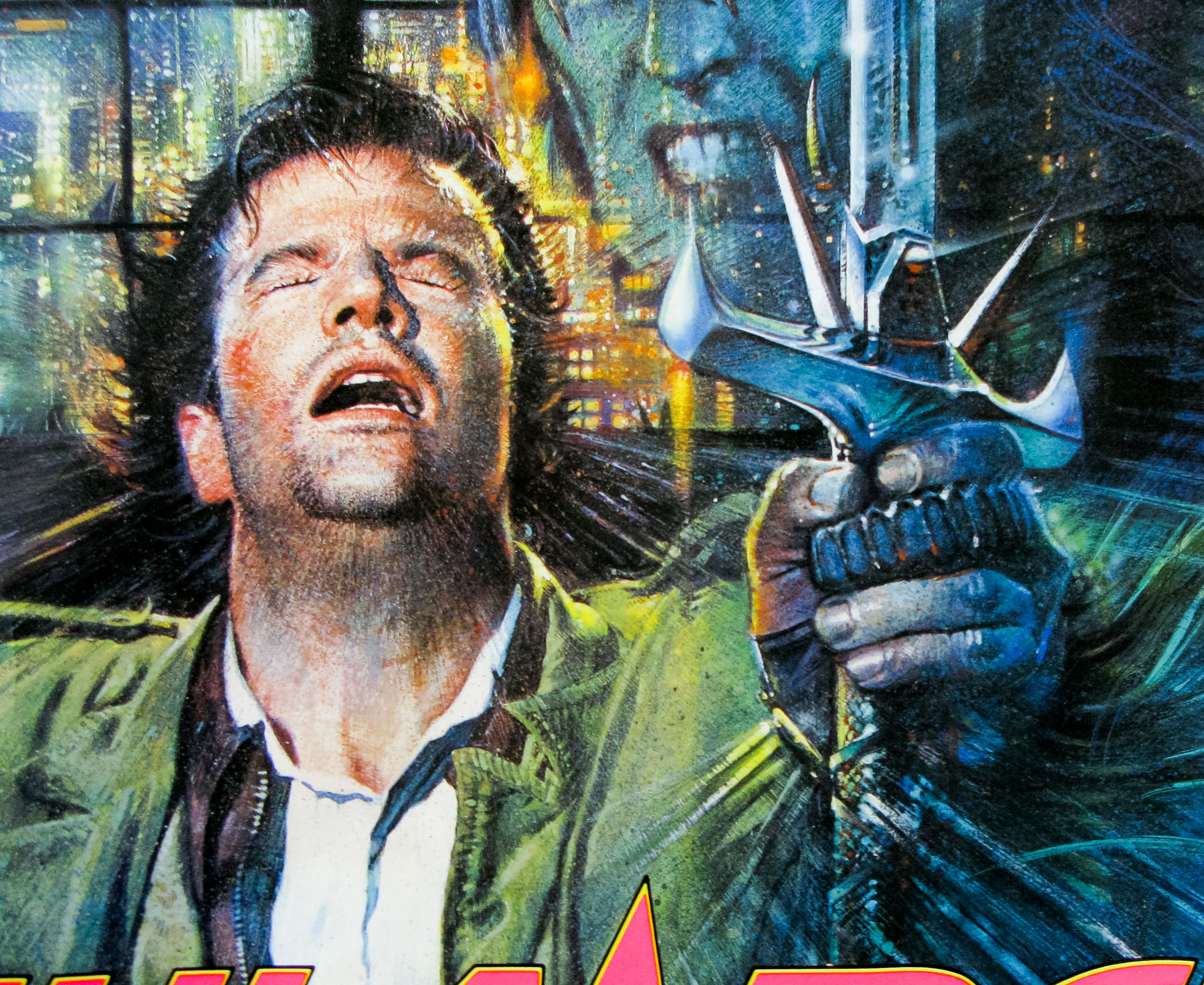
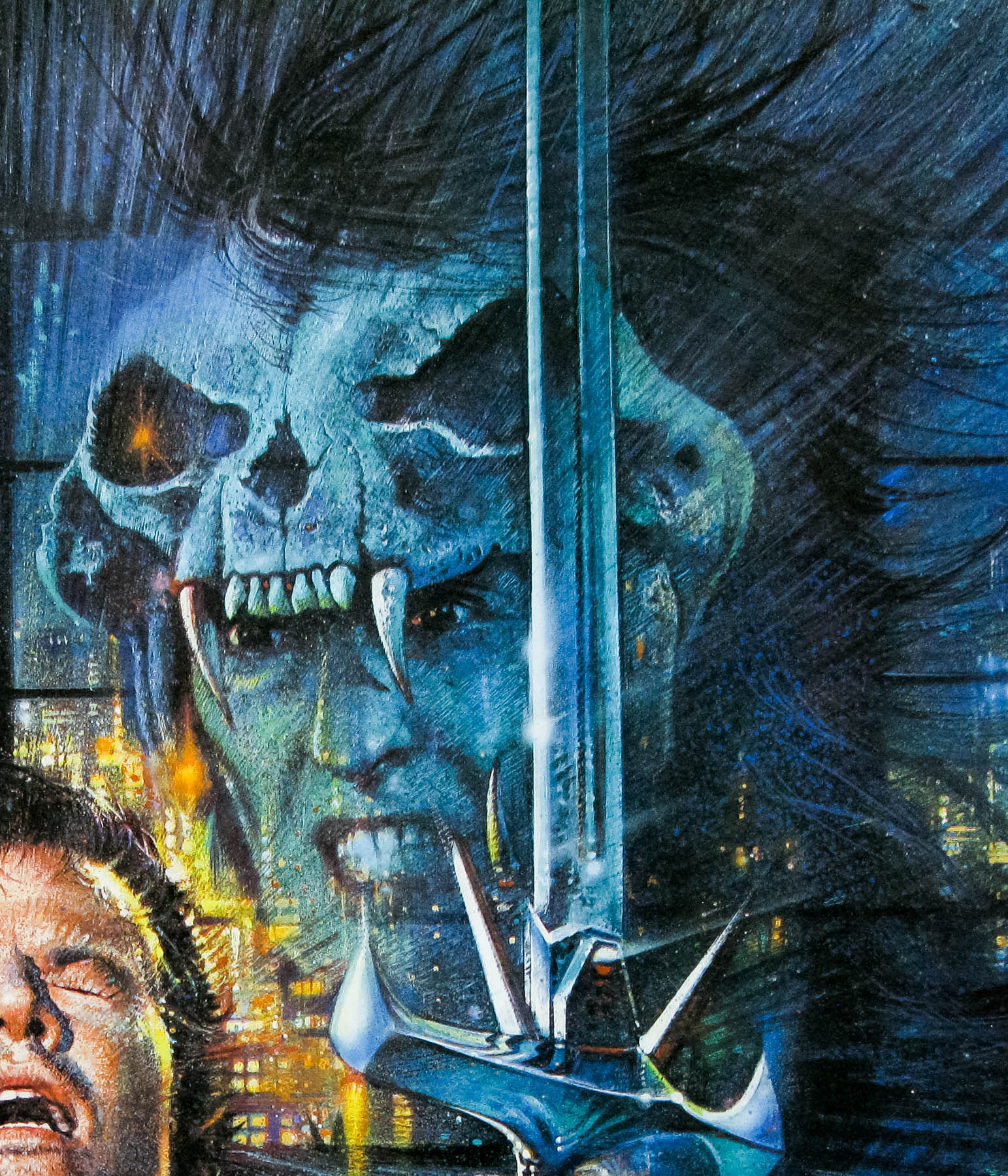
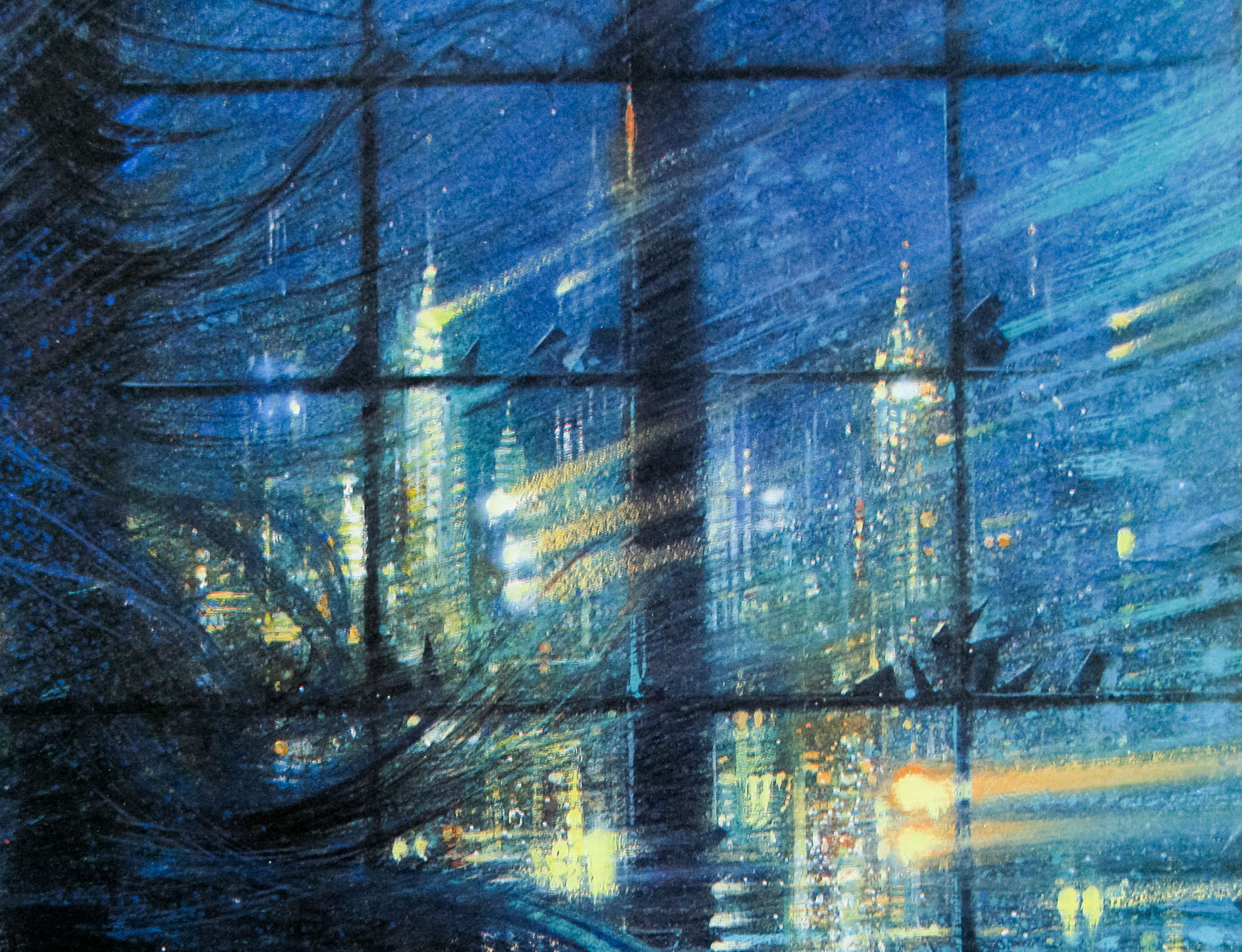
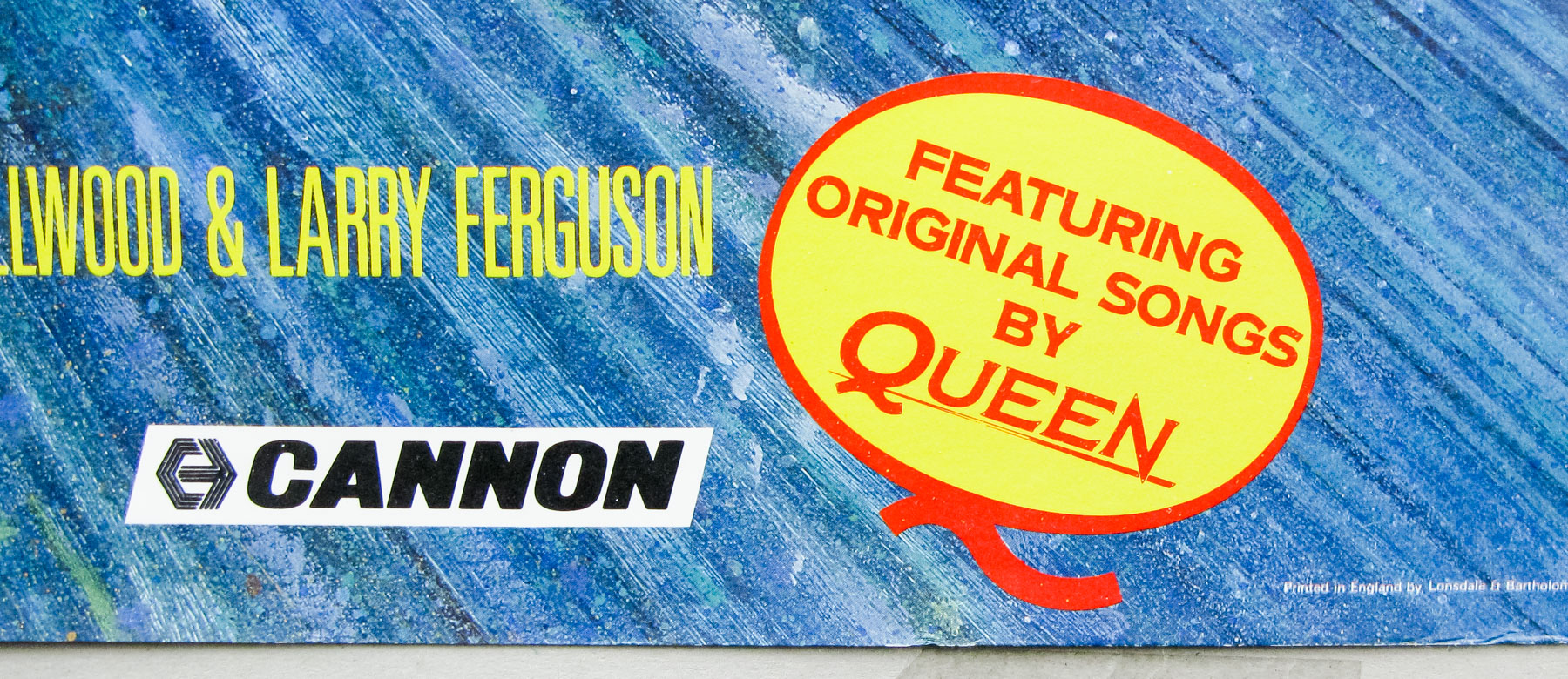
British artist Brian Bysouth is responsible for this great design for the classic fantasy film Highlander that spawned several sequels and TV series. It’s significantly more interesting than the dull US poster. This Bysouth design can also be found in a one sheet format.

During my interview with Brian this poster was discussed:

I like it because of the amount of detail you can see, much like your painting for Highlander.
Thank you, I was pleased with that one. It was an enjoyable job and, fortunately, when asked to do a design for that type of film I was usually quick to identify what the key image should be. Phil Howard-Jones, the advertising director at EMI, who I did the work for, liked it very much and eventually he kindly returned it to me.

The trailer for the film can be seen on YouTube.

Dragonslayer / quad / UK

04.11.11

Poster Poster
Title
Dragonslayer
AKA
Il drago del lago di fuoco [The dragon from the lake of fire] (Italy)
Year of Film
1981
Director
Matthew Robbins
Starring
Peter MacNicol, Caitlin Clarke, Ralph Richardson, John Hallam, Peter Eyre, Sydney Bromley, Chloe Salaman, Ian McDiarmid
Origin of Film
USA
Genre(s) of Film
Peter MacNicol, Caitlin Clarke, Ralph Richardson, John Hallam, Peter Eyre, Sydney Bromley, Chloe Salaman, Ian McDiarmid,
Type of Poster
Quad
Style of Poster
--
Origin of Poster
UK
Year of Poster
1981
Designer
Vic Fair
Artist
Brian Bysouth
Size (inches)
30 1/16" x 40"
SS or DS
SS
Tagline
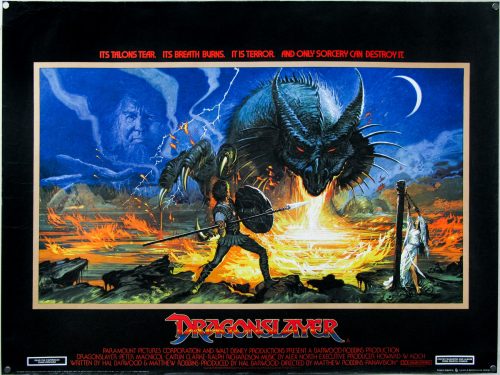
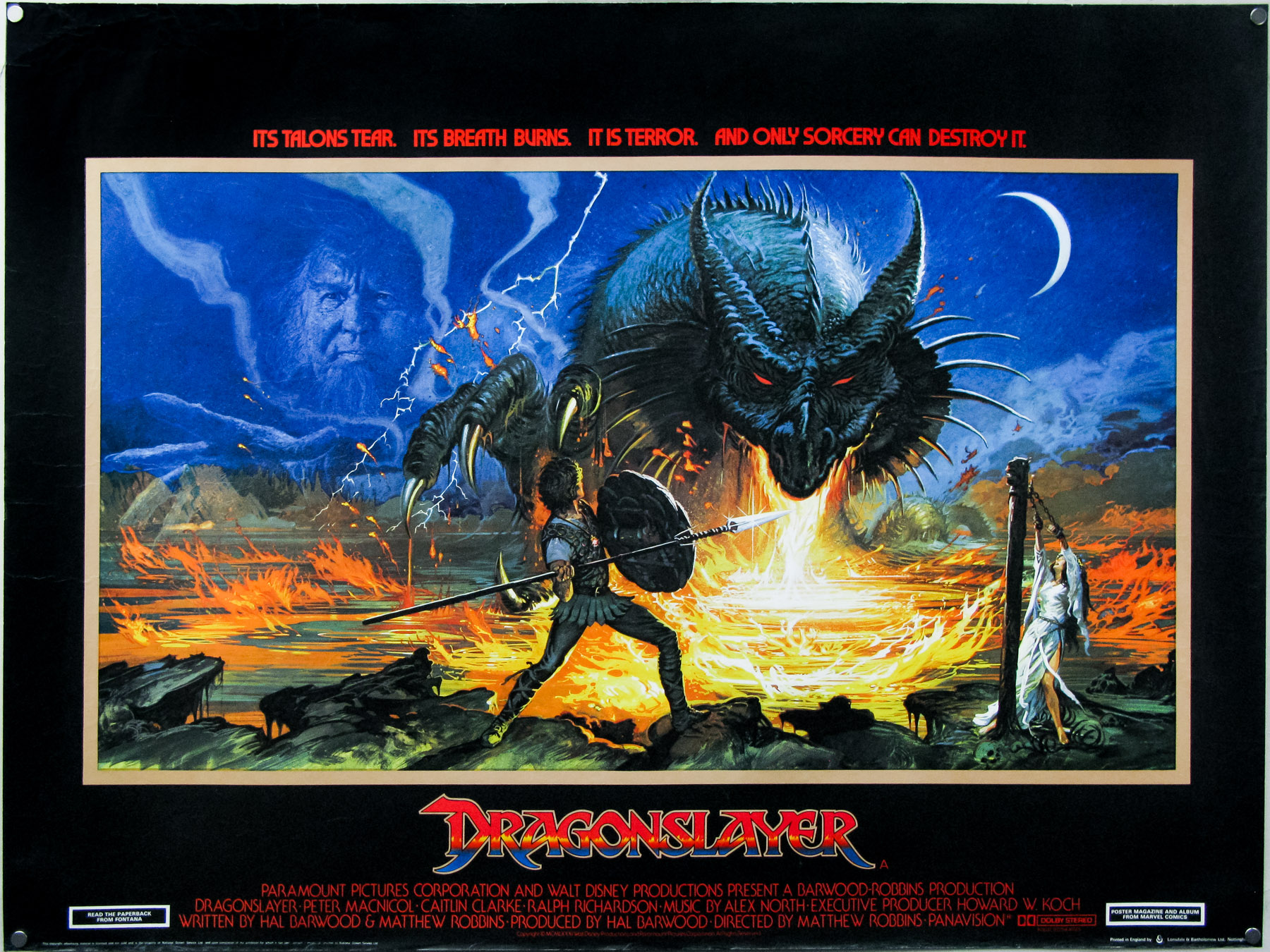
Its talons tear. Its breath burns. It is terror. And only sorcery can destroy it.

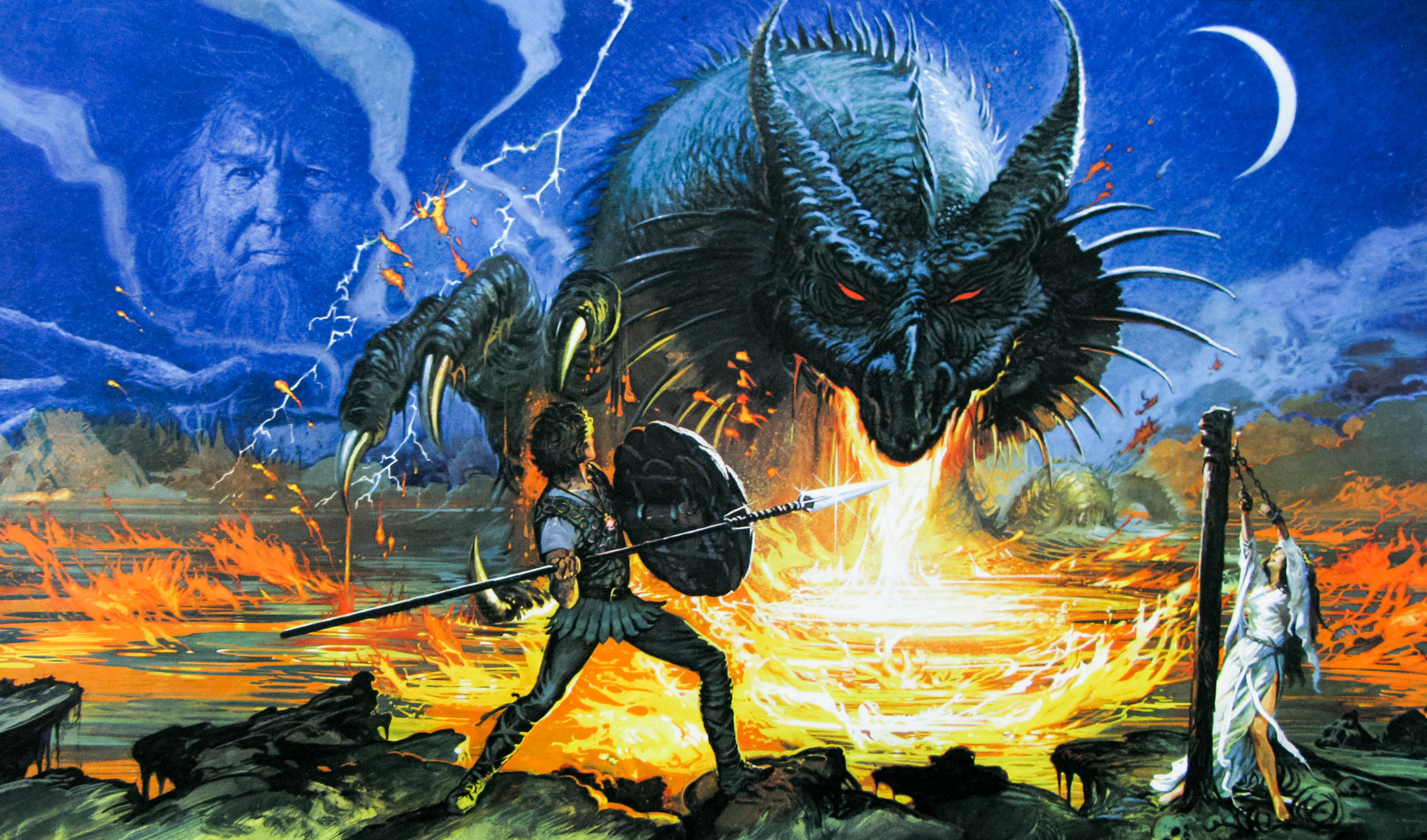
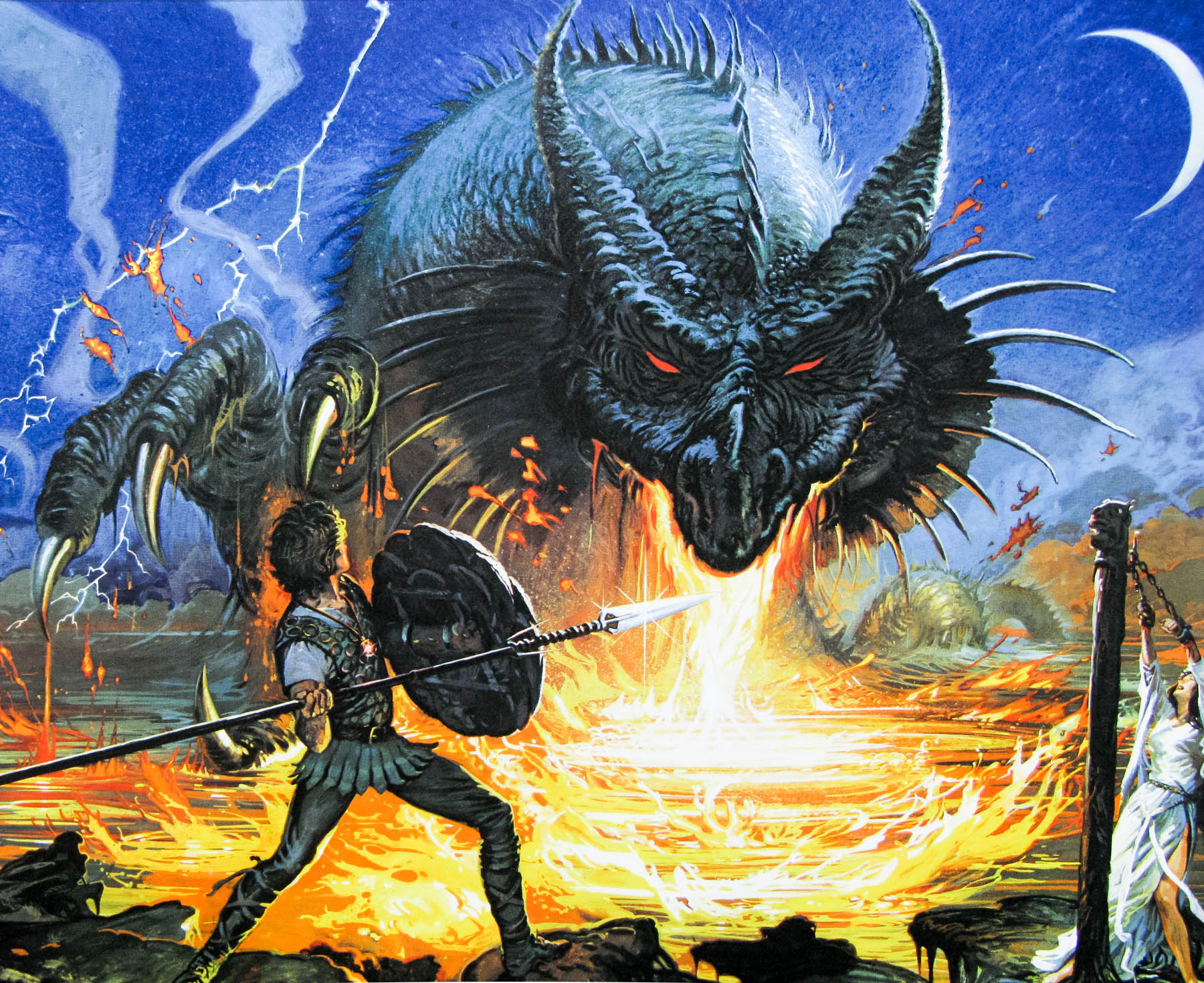
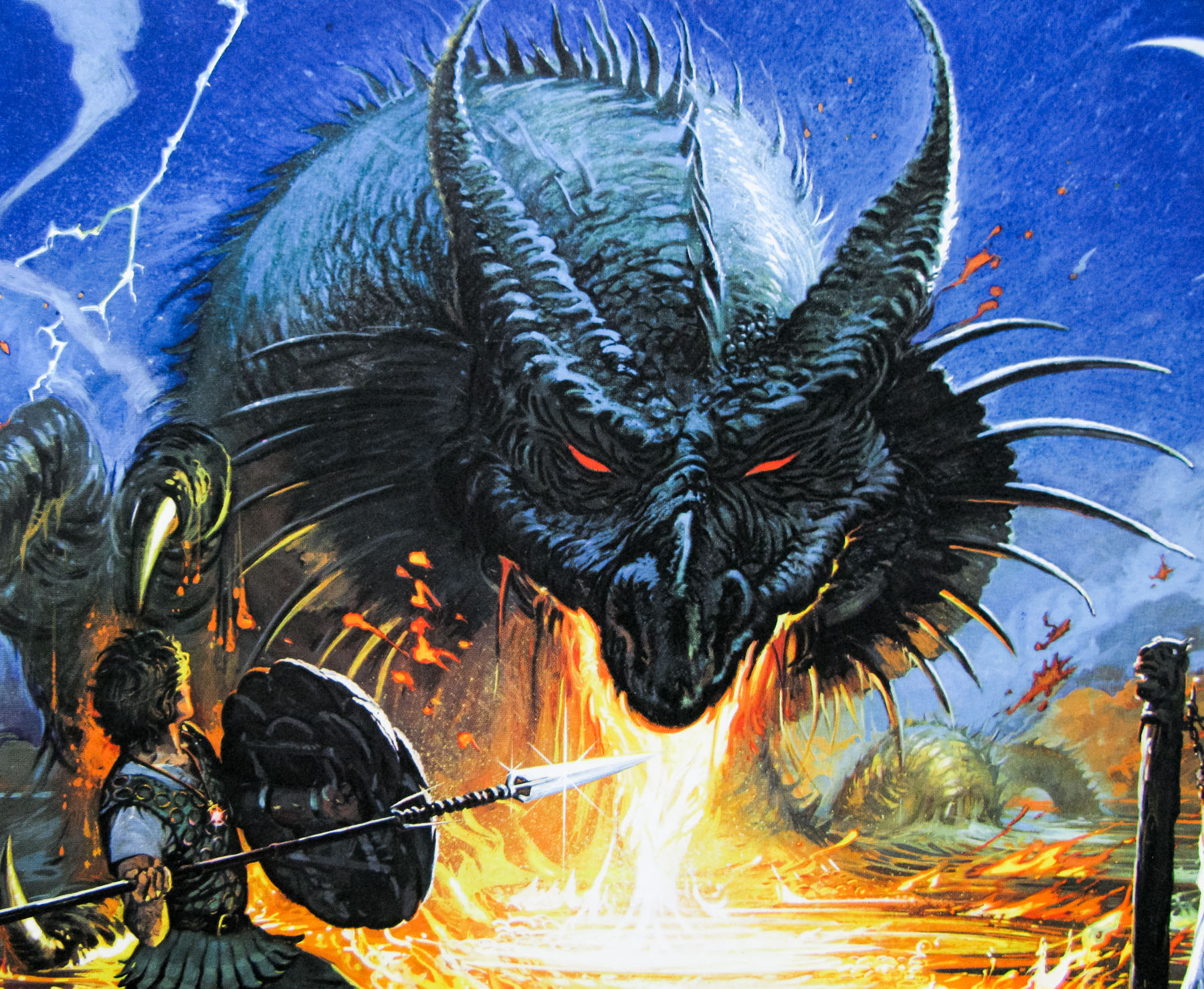
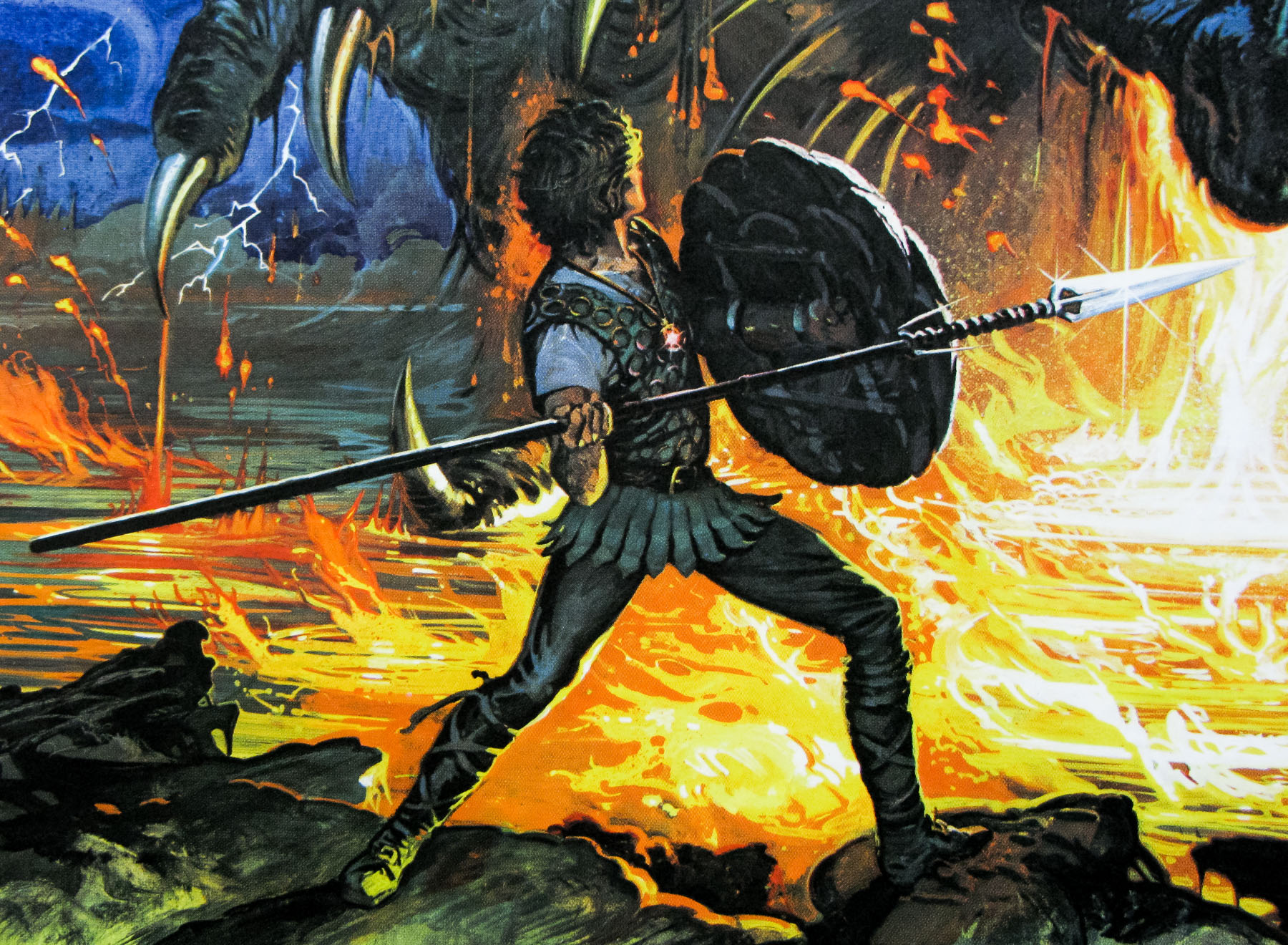
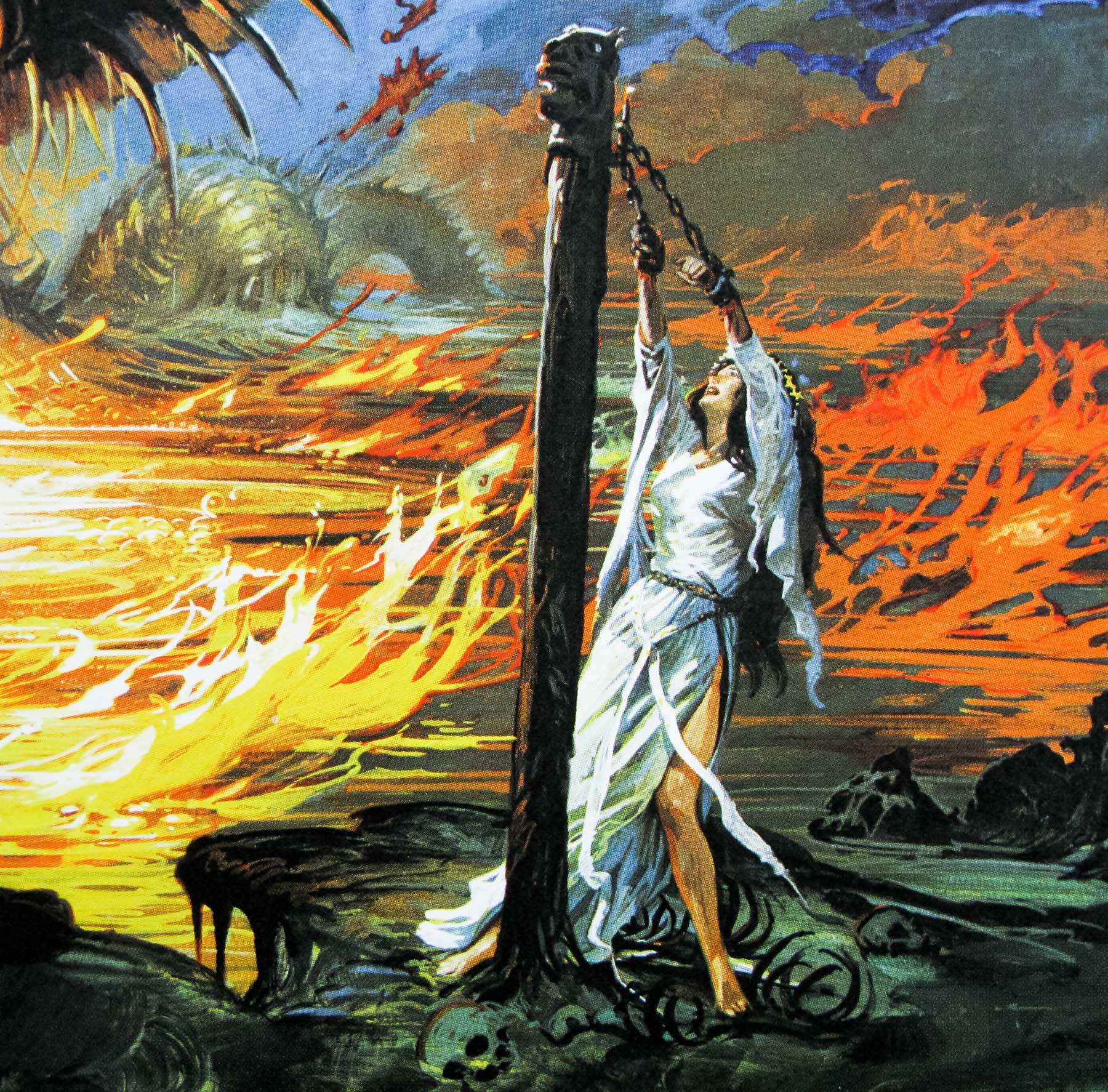
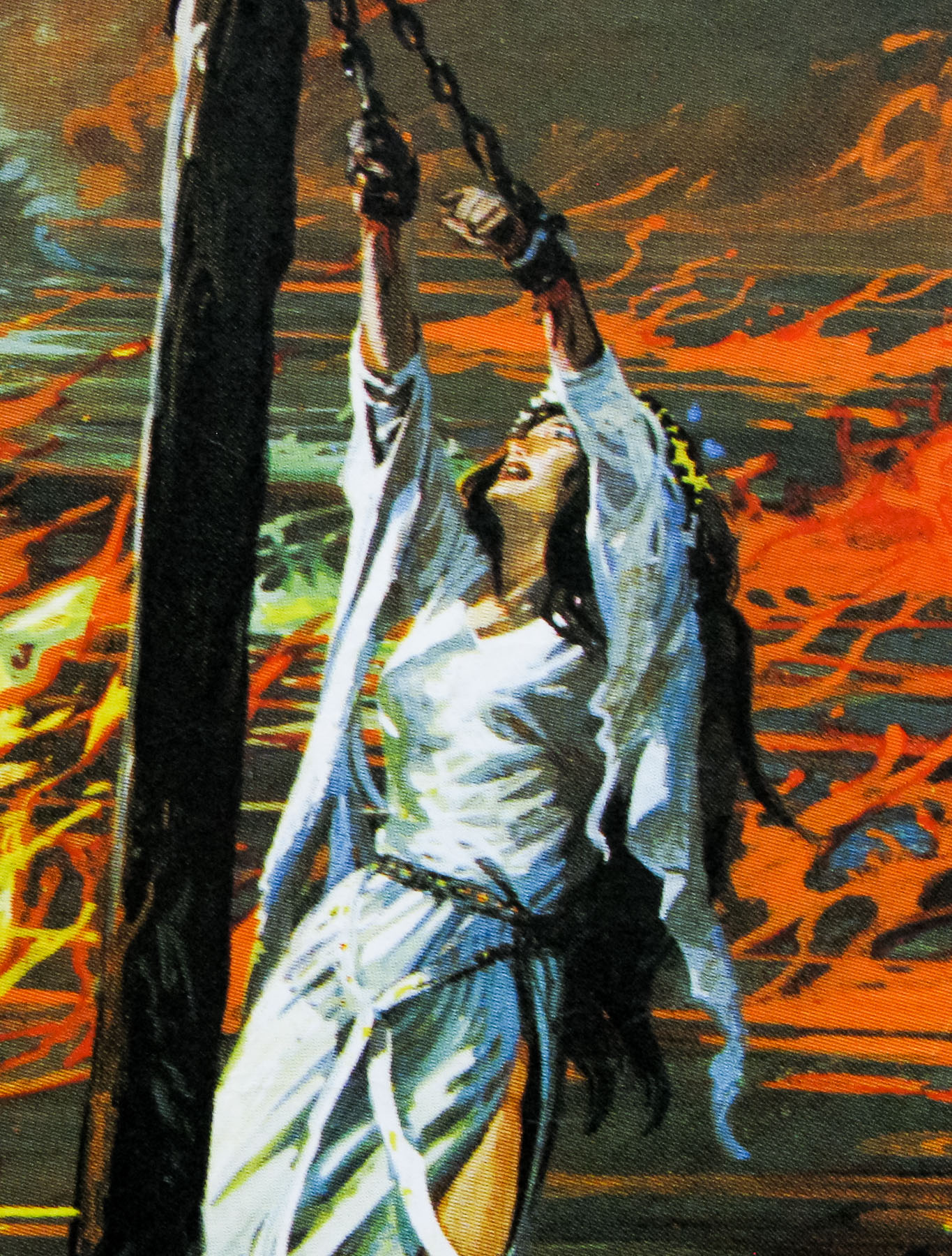
Great artwork by Brian Bysouth, from a design by Vic Fair, for this wizard versus dragon fantasy tale, which was co-produced by Disney and Paramount and directed by Matthew Robbins (Batteries Not Included). Apparently the effects for Vermithrax the dragon were given 25% of the film’s budget and were realised by several different teams, including Phil Tippet at ILM (final design and model), Brian Johnson (special effects) and Ken Ralston (flying scenes).

‘Go-motion’, a variant of stop-motion animation using computer-controlled cameras and developed by ILM for The Empire Strikes Back, was used for the scenes showing the dragon flying and walking with the intention of making these scenes feel more realistic.

Whilst Guillermo Del Toro was preparing to film his ultimately doomed version of The Hobbit, he stated:

One of the best and one of the strongest landmarks that almost nobody can overcome is ‘Dragonslayer.’ The design of the Vermithrax Pejorative is perhaps one of the most perfect creature designs ever made.

In 2012 I met and interviewed Brian Bysouth and the resulting article can be read here.

The US one sheet is markedly different but is also something of a classic, with artwork by Jeffrey Catherine Jones.

Metropolis / quad / 1984 re-release / UK

20.01.12

Poster Poster
Title
Metropolis
AKA
--
Year of Film
1927
Director
Fritz Lang
Starring
Alfred Abel, Brigitte Helm, Gustav Fröhlich, Rudolf Klein-Rogge
Origin of Film
Germany
Genre(s) of Film
Alfred Abel, Brigitte Helm, Gustav Fröhlich, Rudolf Klein-Rogge,
Type of Poster
Quad
Style of Poster
Re-release
Origin of Poster
UK
Year of Poster
1984
Designer
Unknown
Artist
Unknown
Size (inches)
30" x 39 15/16"
SS or DS
SS
Tagline
--

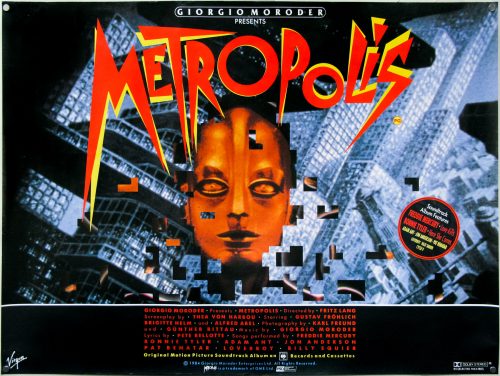
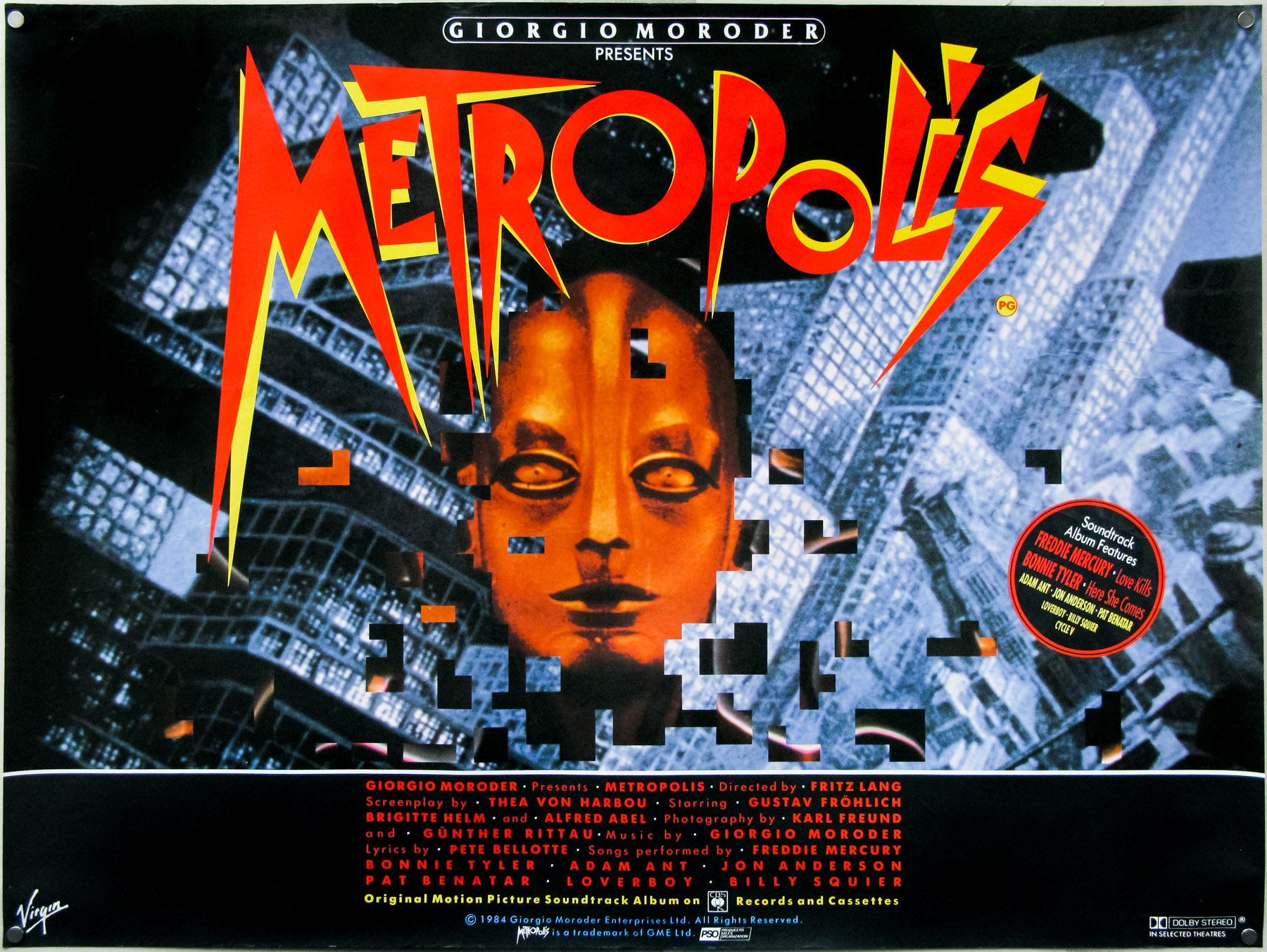
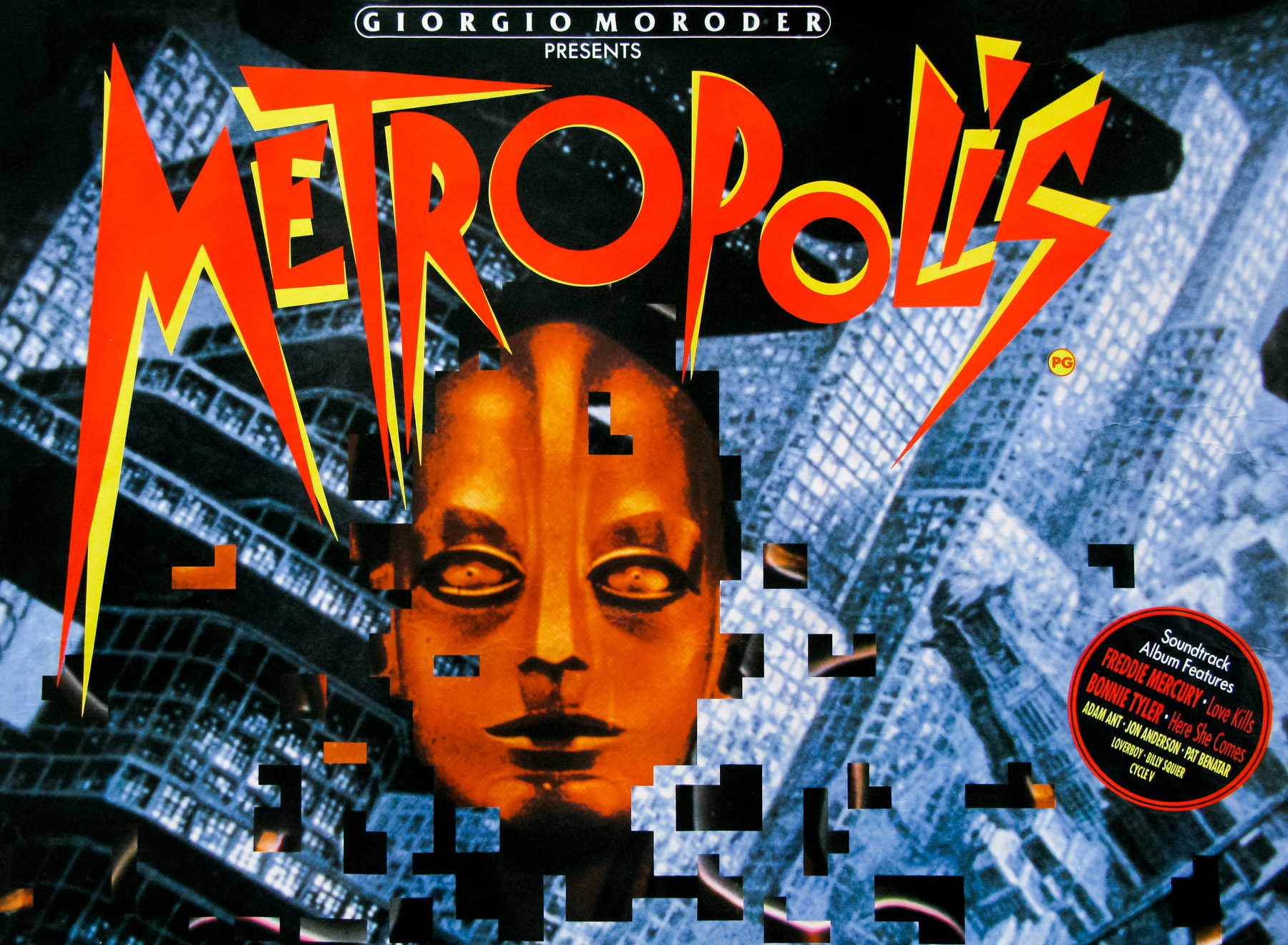
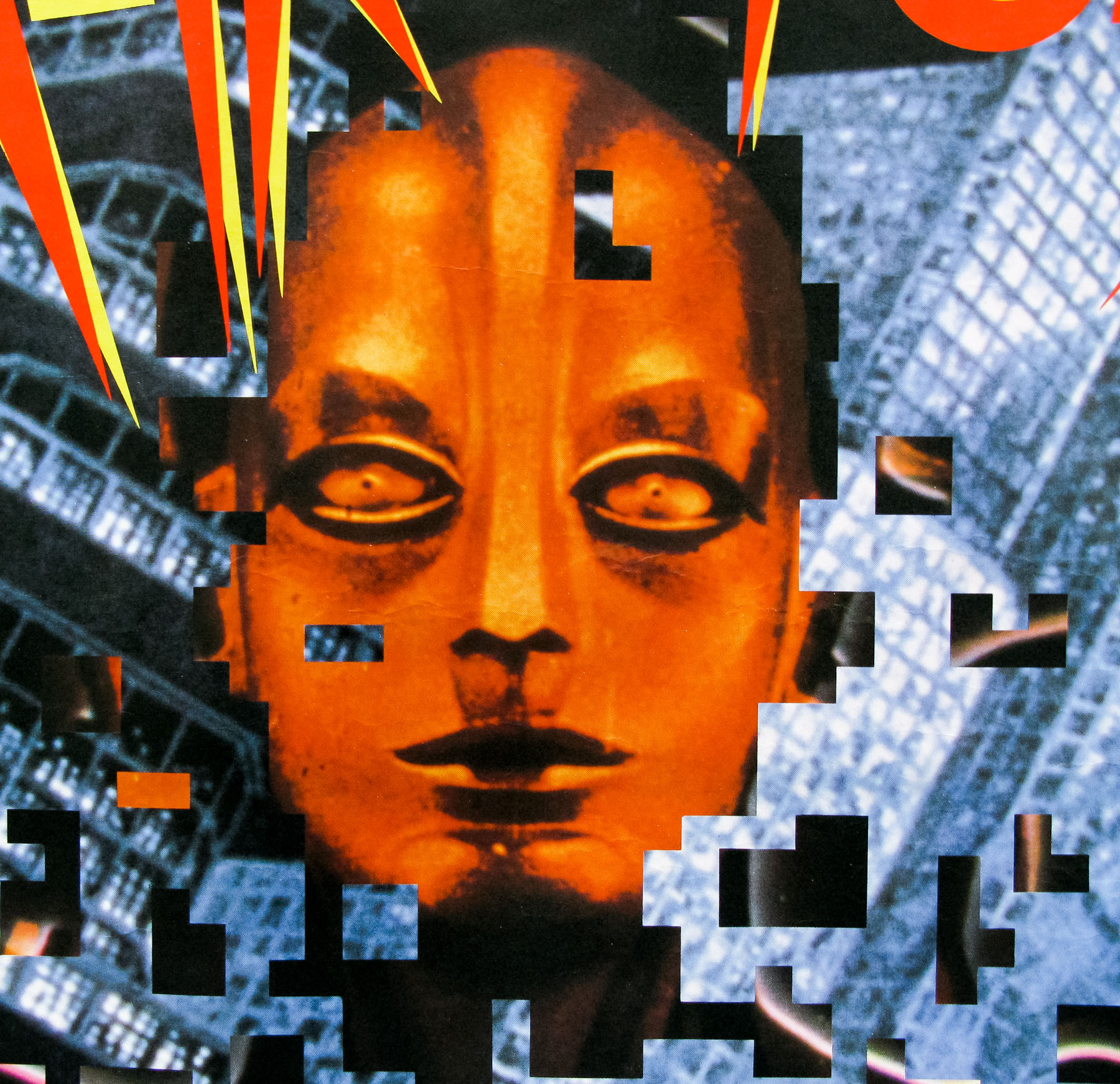
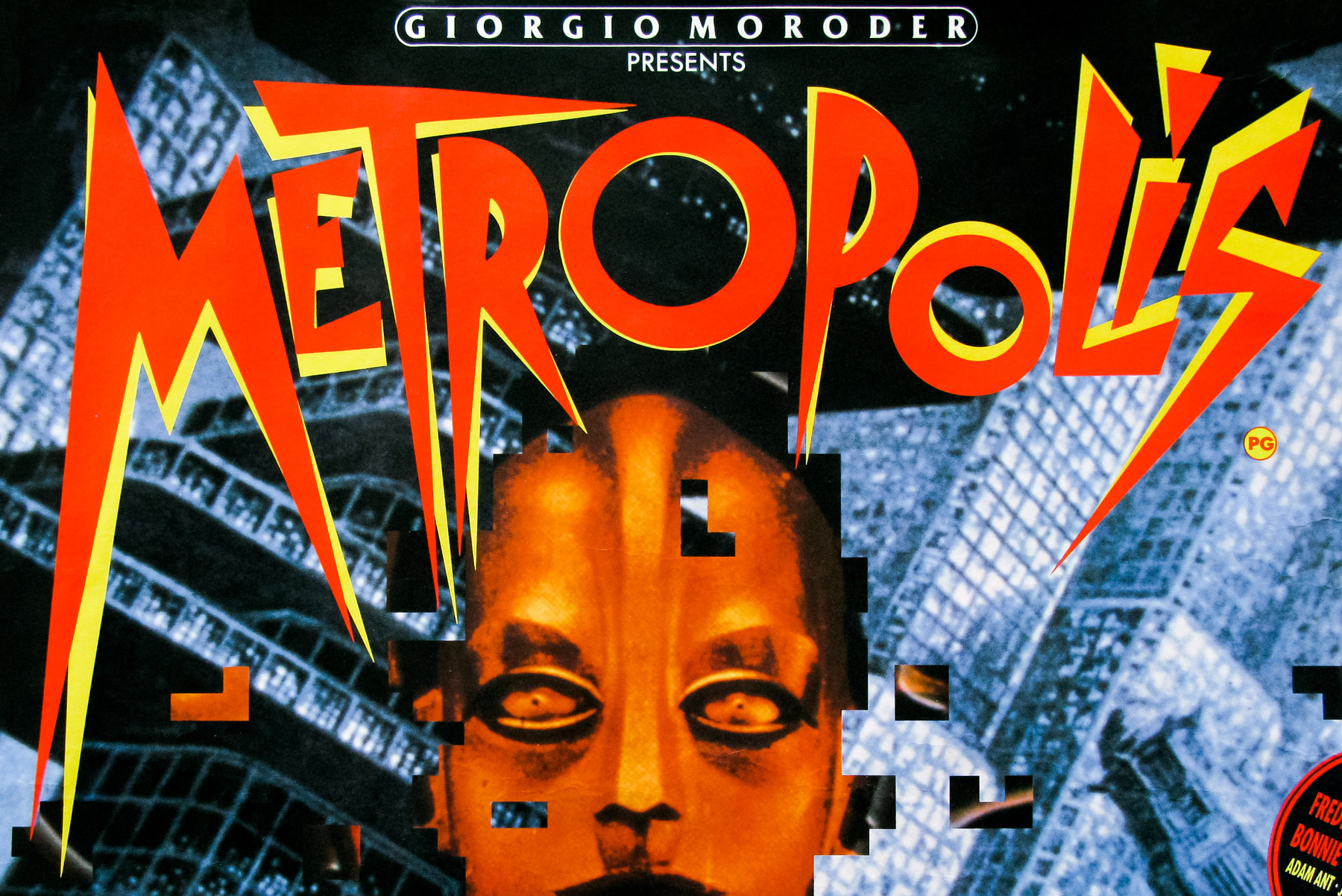
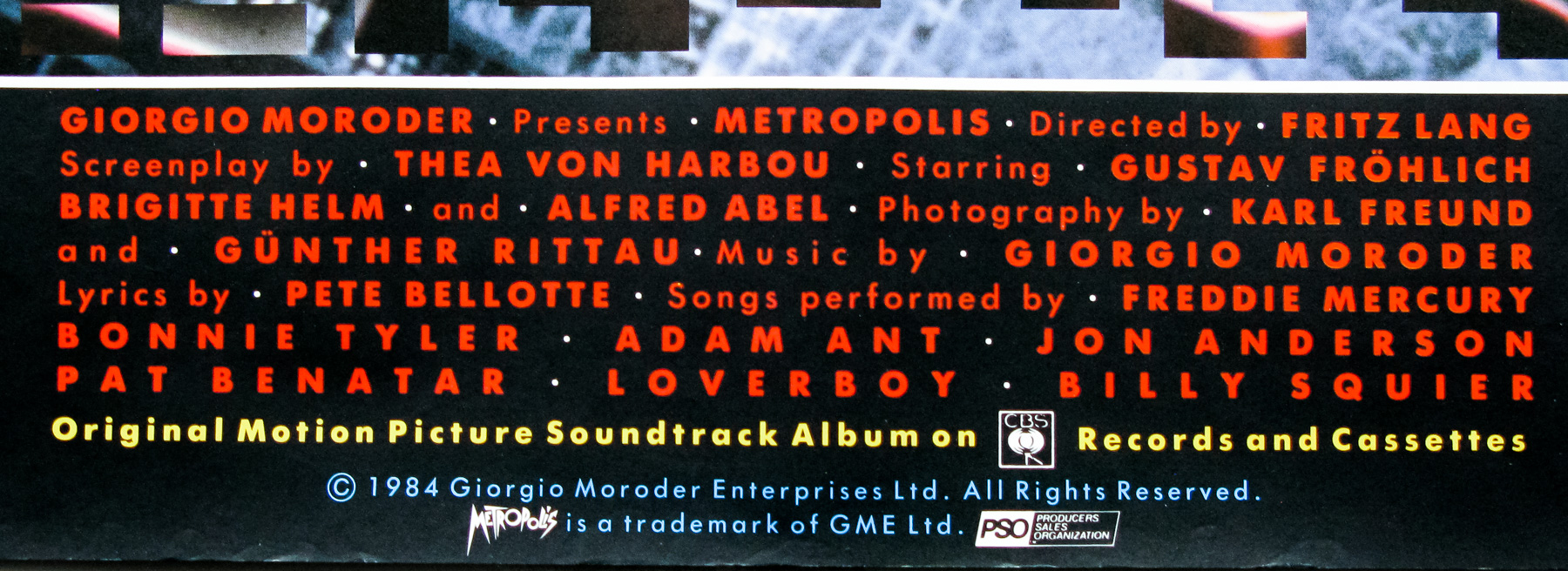
Fritz Lang’s 1927 sci-fi masterpiece Metropolis was given a cinema re-release in 2010 after missing scenes, long thought lost, were discovered in an Argentinian museum and reintegrated back into the film. 26 years earlier, music producer Giorgio Moroder produced and released an alternative version of the film which was restored and had various scenes that were missing from the first US release reinserted back in.

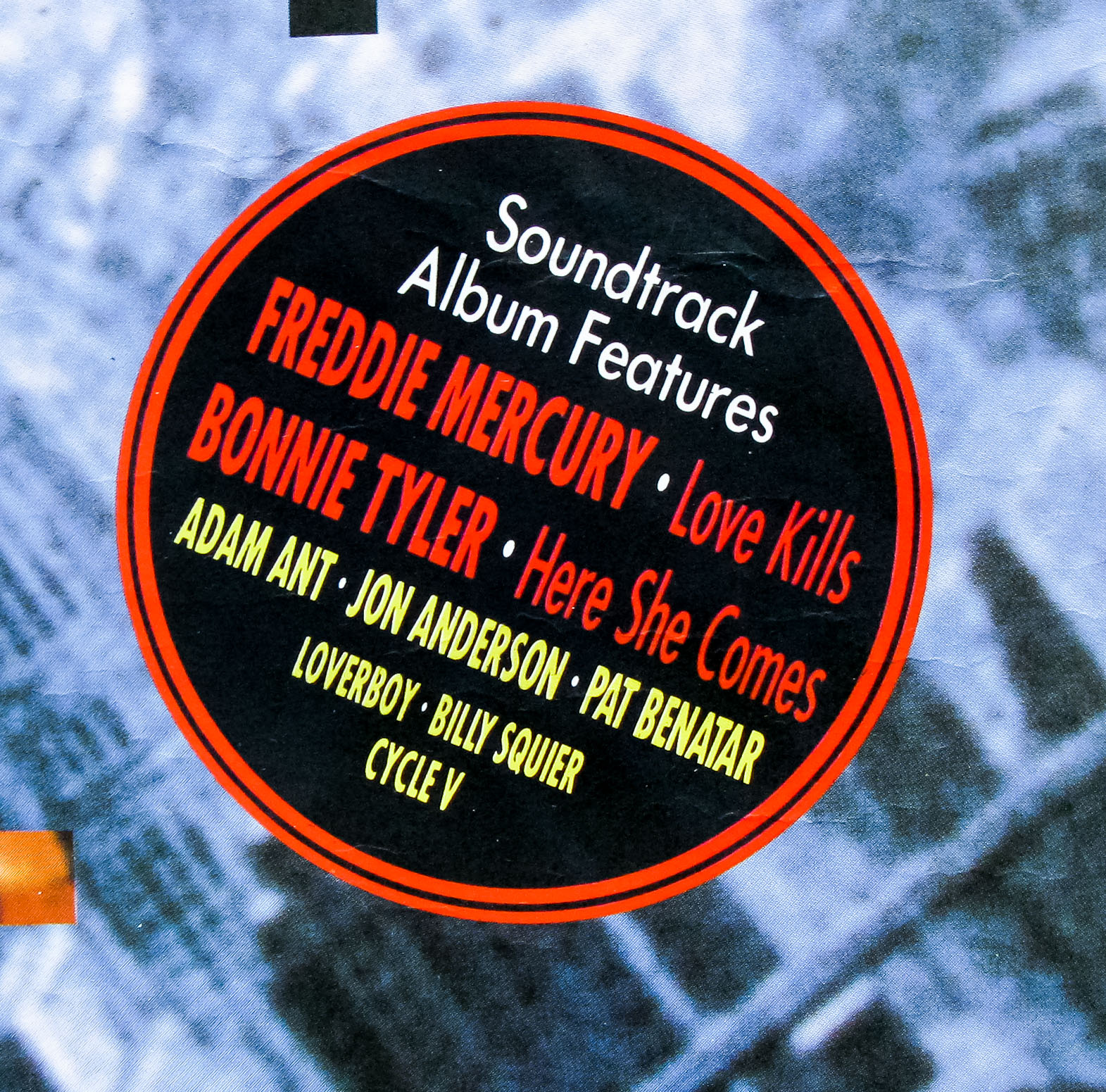
Controversially, Moroder also replaced the original orchestral score by Gottfried Huppertz with contemporary rock and pop music from the likes of Pat BenatarBonnie TylerAdam Ant and Freddie Mercury. Despite the heated debate that this re-release provoked it did have the benefit of bringing the film back into the public consciousness and led to further restorations over the following years. The discovery of the lost footage in 2008 was a complete revelation and brought the film very close to its original release version, which many feared was lost forever.

Queen’s music video for their song ‘Radio Ga Ga’ was released at the same time and featured footage for the film.

As well as the original restored film, the Moroder version was released on blu-ray in 2011.

The original trailer for this version is on YouTube.

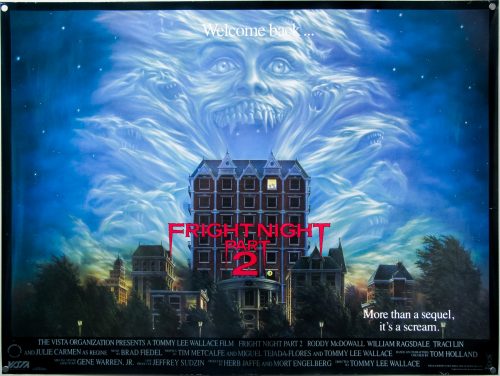
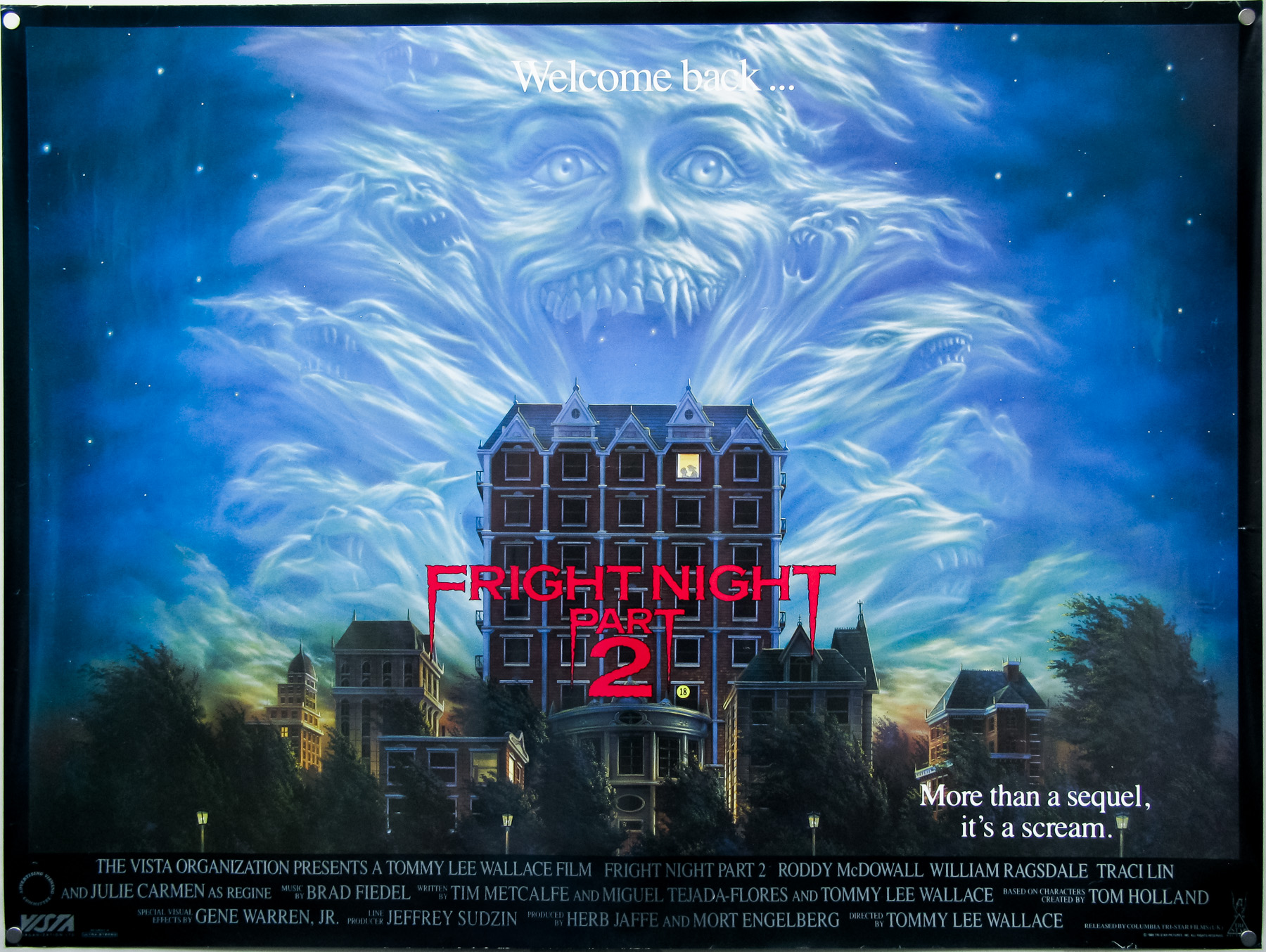
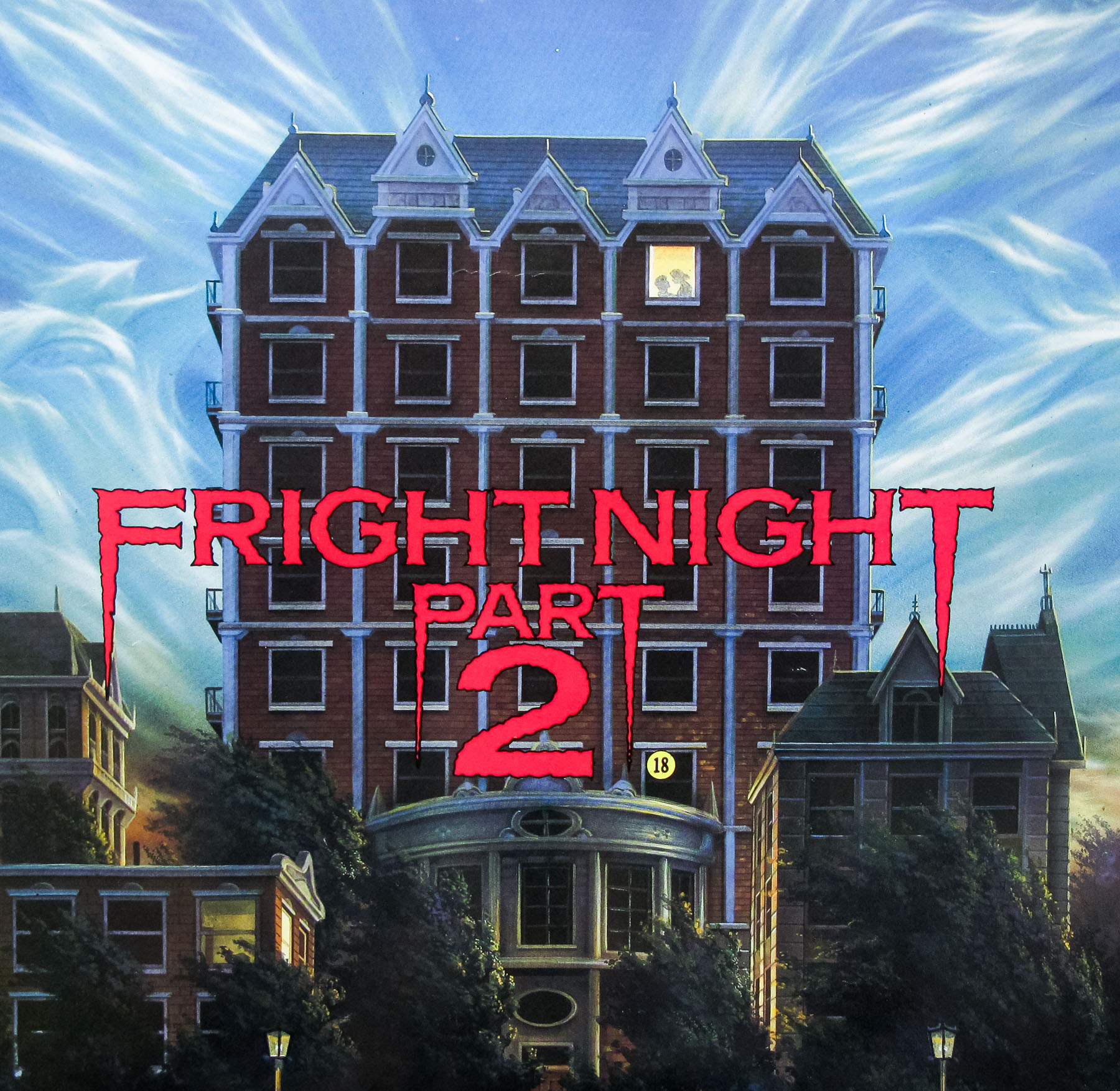
Fright Night part 2 / quad / UK

12.06.12

Poster Poster
Title
Fright Night part 2
AKA
Vampire... vous avez dit vampire? II [Vampire ... you said Vampire?] (France)
Year of Film
1988
Director
Tommy Lee Wallace
Starring
Roddy McDowall, William Ragsdale, Traci Lind, Julie Carmen, Jon Gries, Russell Clark, Brian Thompson, Merritt Butrick, Ernie Sabella, Matt Landers
Origin of Film
USA
Genre(s) of Film
Roddy McDowall, William Ragsdale, Traci Lind, Julie Carmen, Jon Gries, Russell Clark, Brian Thompson, Merritt Butrick, Ernie Sabella, Matt Landers,
Type of Poster
Quad
Style of Poster
--
Origin of Poster
UK
Year of Poster
1988
Designer
Unknown
Artist
Unknown
Size (inches)
30" x 39 15/16"
SS or DS
SS
NSS #
--
Tagline
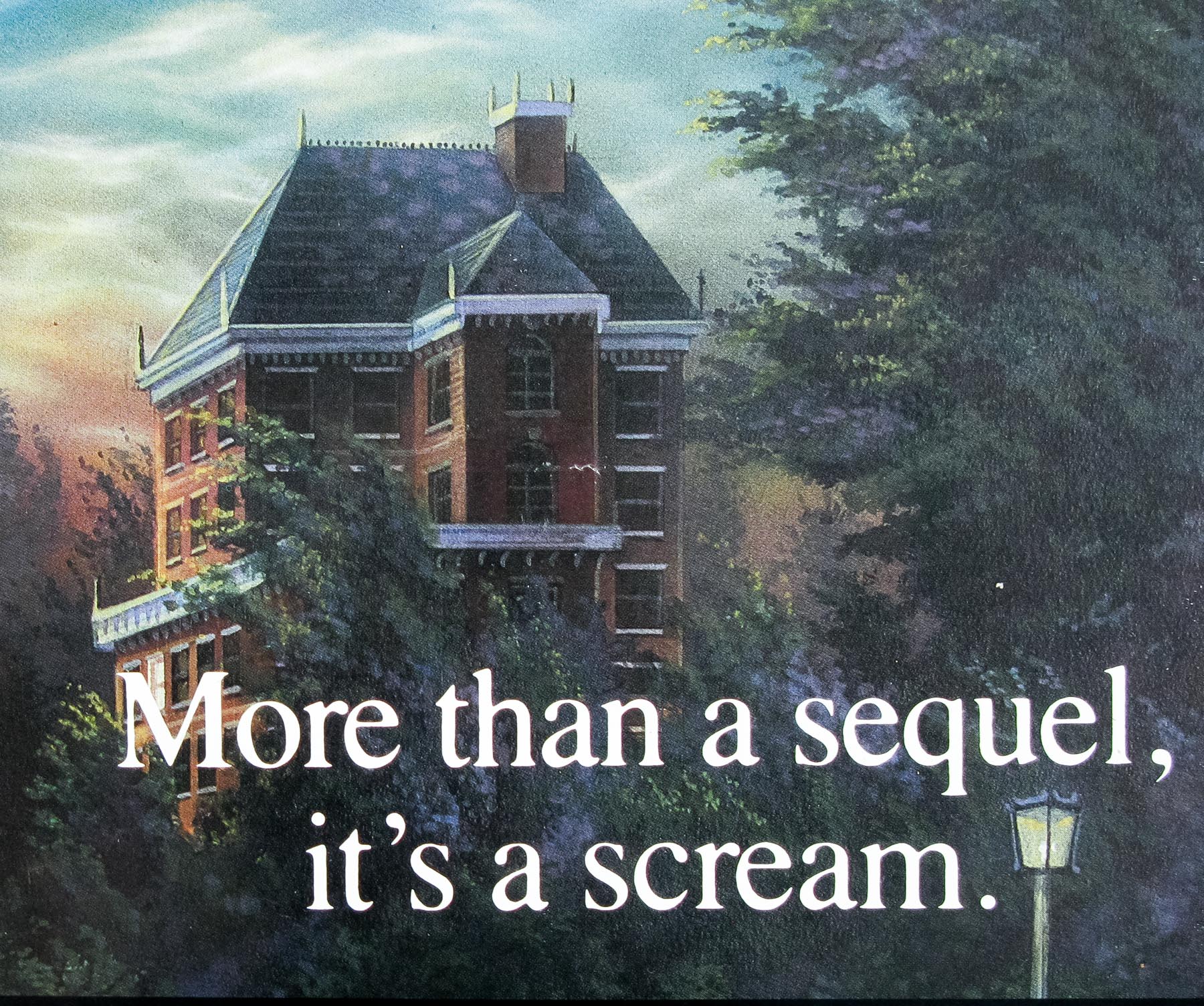
Welcome back... | More than a sequel it's a scream.

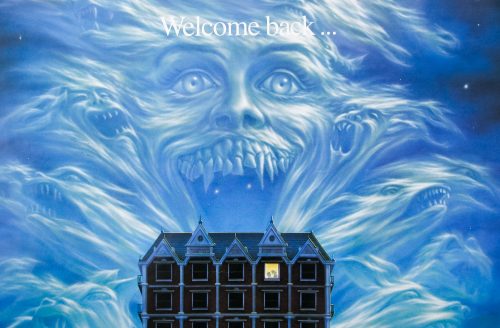
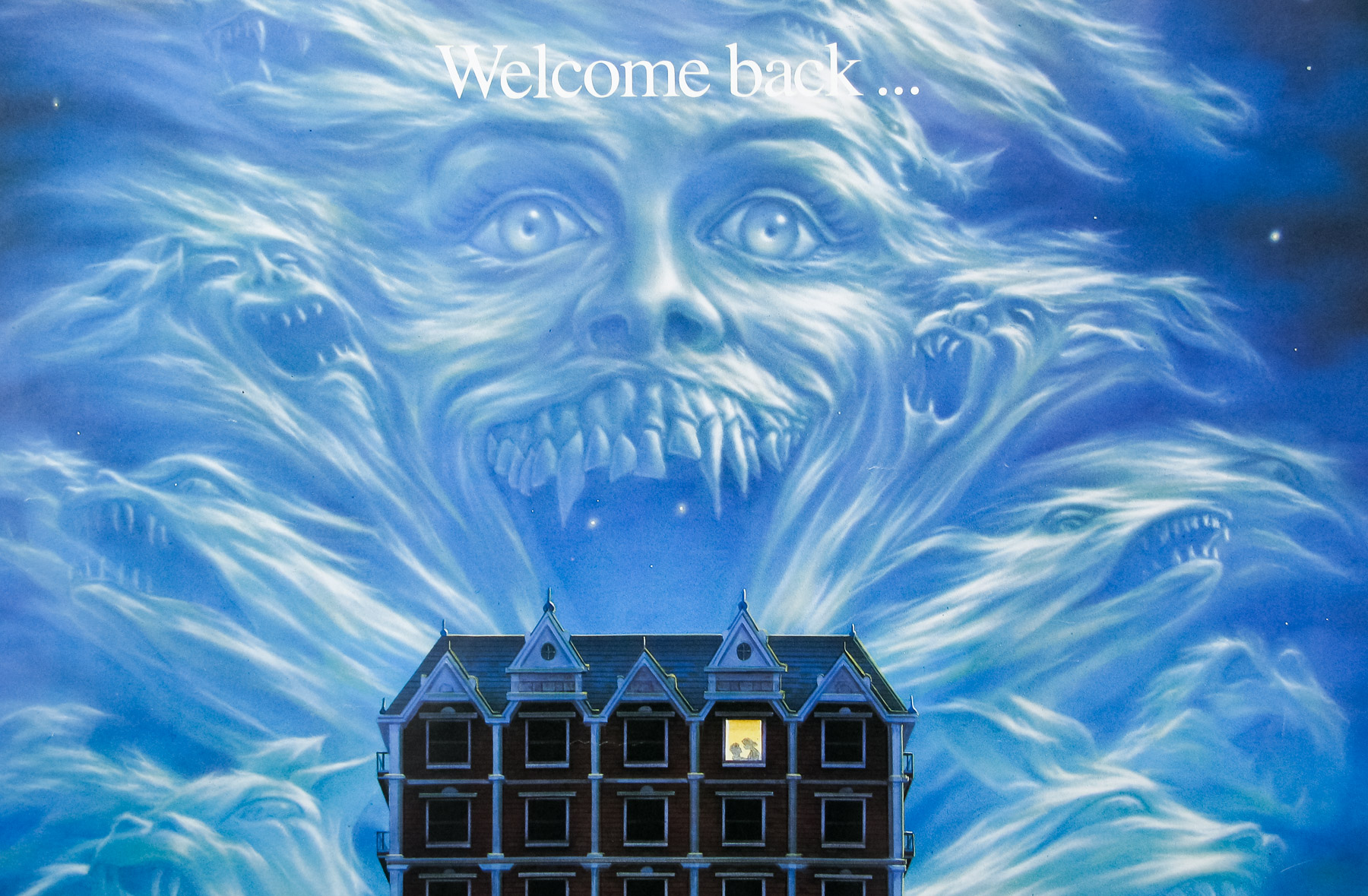
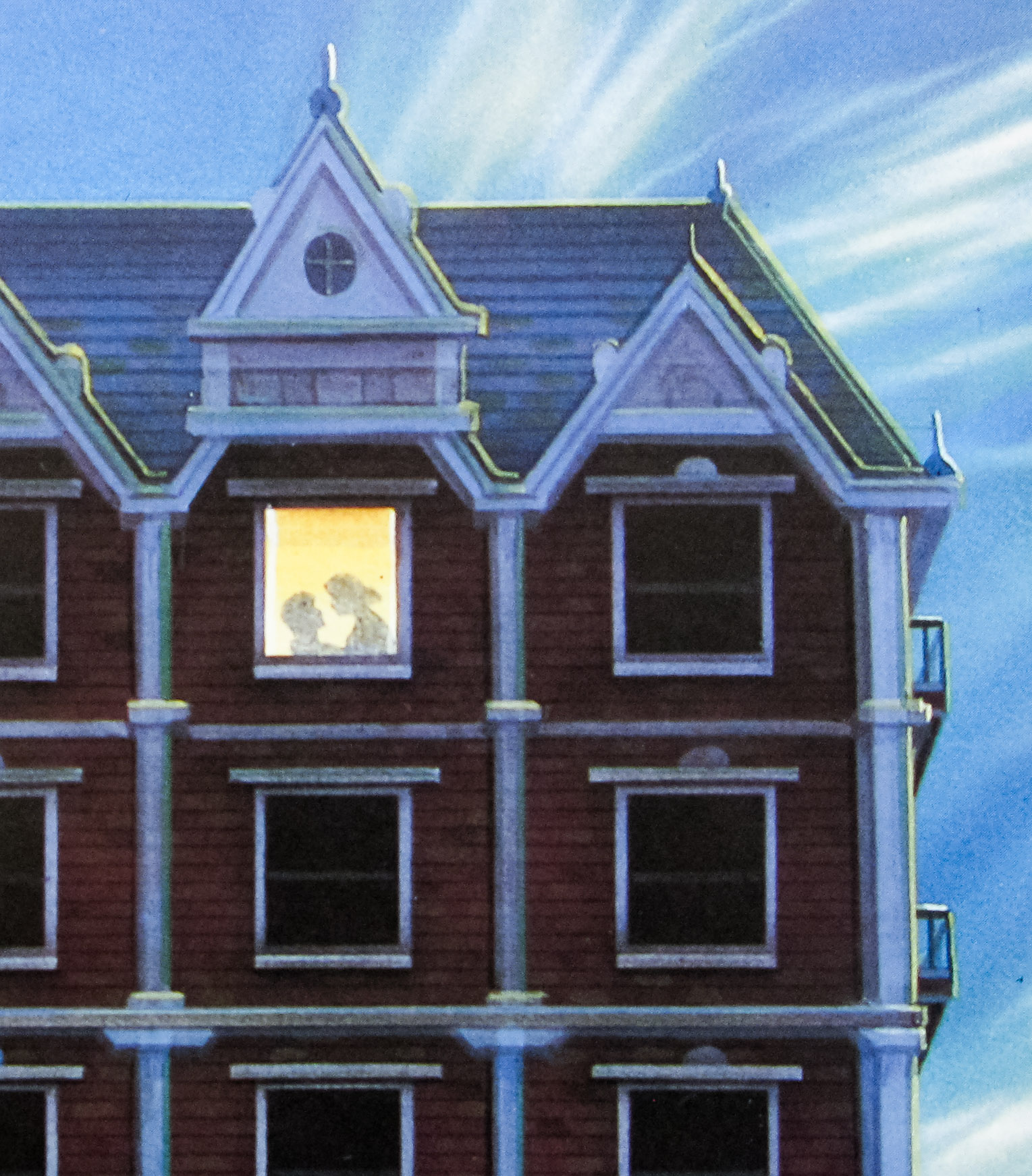
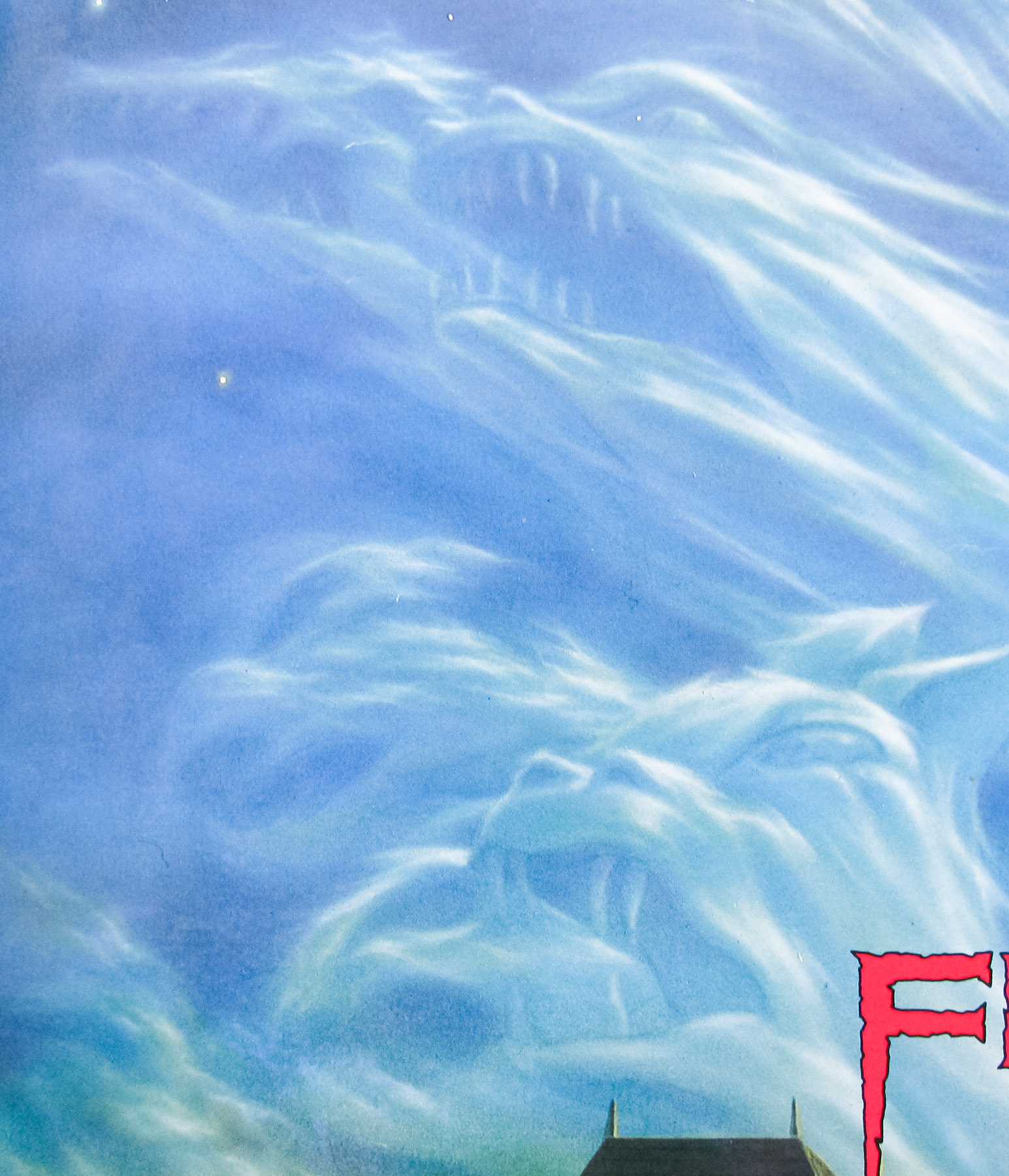
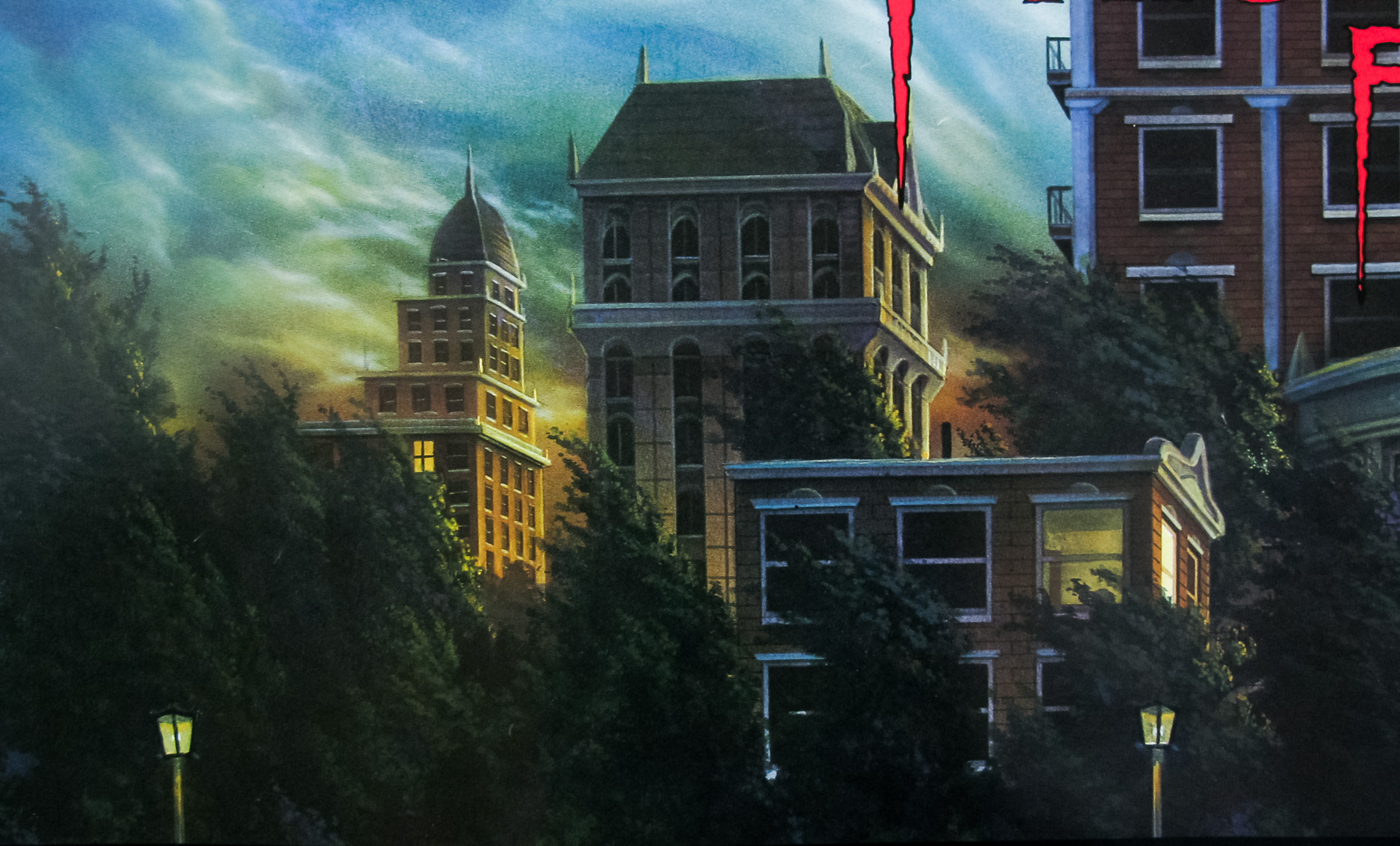
As with the film itself, the poster for the second Fright Night film is definitely a case of ‘if it’s not broken, why fix it?’. The artwork of the vampiric face is practically identical to the one that was used for the global marketing campaign for the original; the Japanese poster can be seen here. Note the slight difference in the eyes, which leads me to believe it may have been redrawn the second time around. The key difference for this version is the location and the suburban house of the first film has been replaced by the multi-storey town house of the second.

Set three years after the original, Charlie Brewster (William Ragsdale) has undergone psychiatric therapy and now believes that Jerry Dandridge (Chris Sarandon) was actually a serial killer who had disguised himself as a vampire, and is trying to get on with his life with new girlfriend Alex (Traci Lind). Peter Vincent (Roddy McDowall) has returned to being a burnt out vampire hunter on his Fright Night TV show, but one night a mysterious group of people move into his building lead by the alluring Regine (Julie Carmen). It’s not long before Charlie and Peter discover that she is Jerry’s vampire sister who plans to exact her revenge for his death and sentence Charlie to eternal damnation.

I’ve struggled to find out who was responsible for both the original and this sequel artwork so please get in touch if you have an idea.

The original trailer is on YouTube.

The Monster Club / quad / UK

30.11.12

Poster Poster
Title
The Monster Club
AKA
--
Year of Film
1981
Director
Roy Ward Baker
Starring
Vincent Price, Donald Pleasence, John Carradine, Stuart Whitman, Richard Johnson, Barbara Kellerman, Britt Ekland, Simon Ward, Anthony Valentine, Patrick Magee, Anthony Steel
Origin of Film
UK
Genre(s) of Film
Vincent Price, Donald Pleasence, John Carradine, Stuart Whitman, Richard Johnson, Barbara Kellerman, Britt Ekland, Simon Ward, Anthony Valentine, Patrick Magee, Anthony Steel,
Type of Poster
Quad
Style of Poster
--
Origin of Poster
UK
Year of Poster
1981
Designer
Graham Humphreys
Artist
Graham Humphreys
Size (inches)
30" x 39 15/16"
SS or DS
SS
NSS #
--
Tagline
You'll meet some interesting people and hear some great songs at The Monster Club

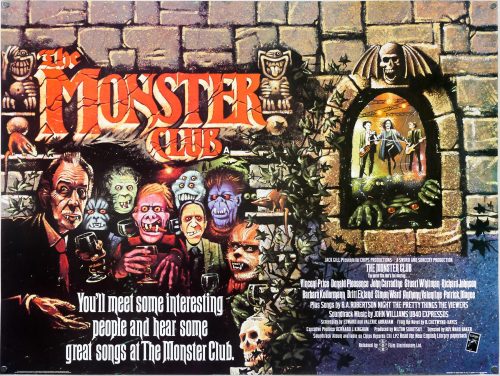
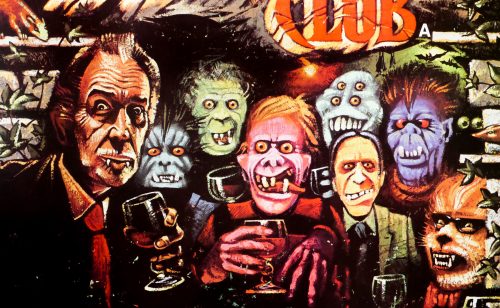
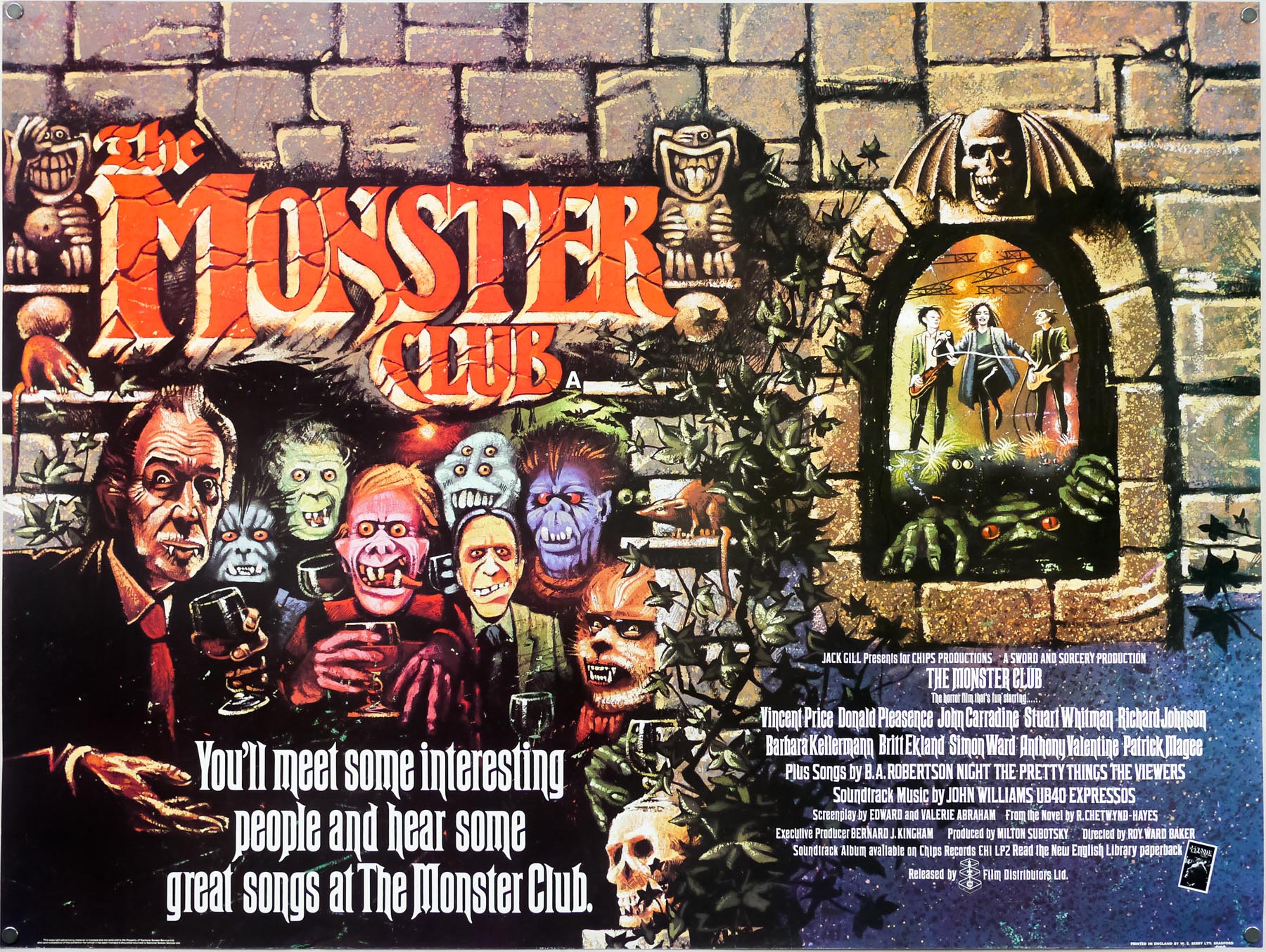
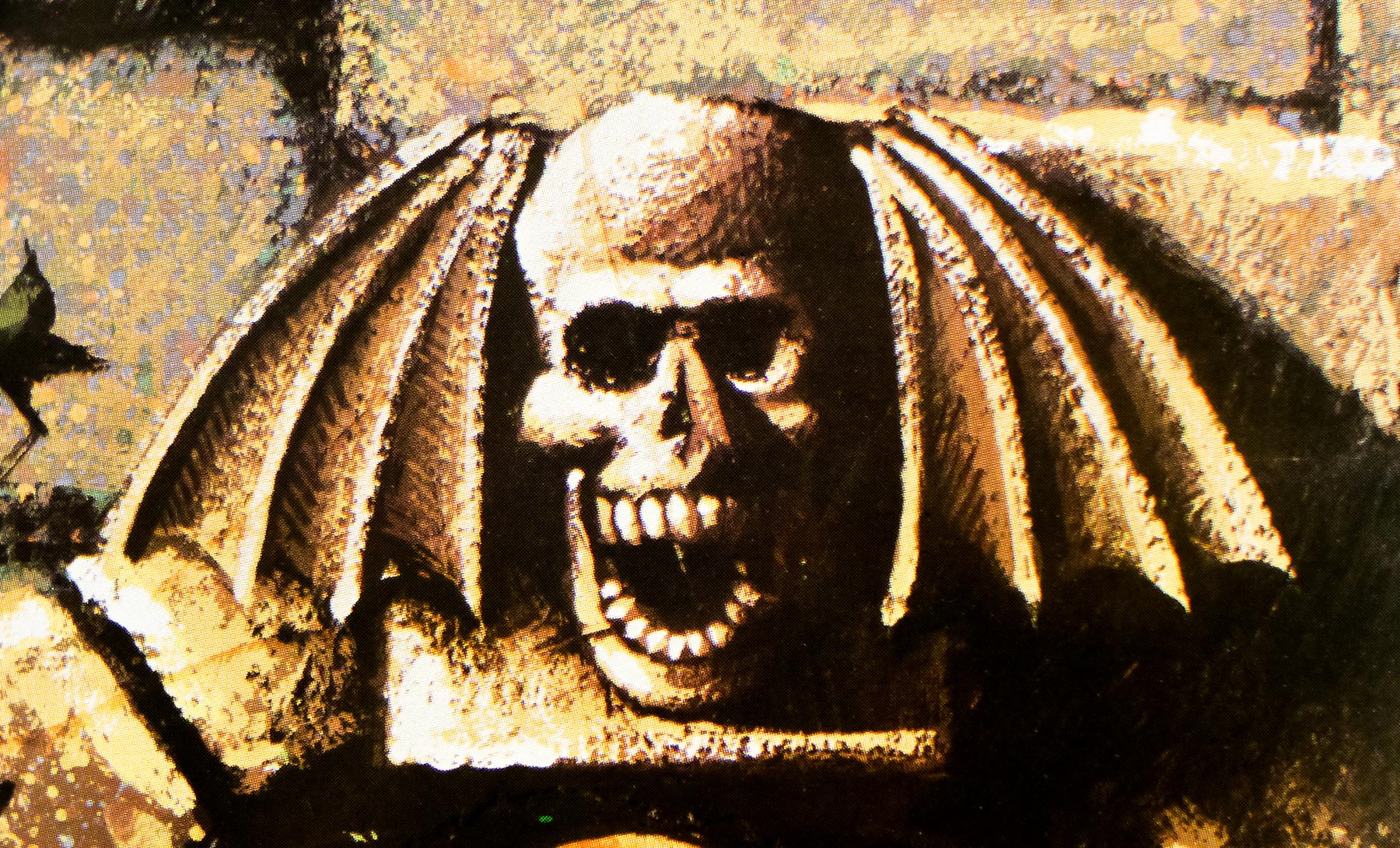
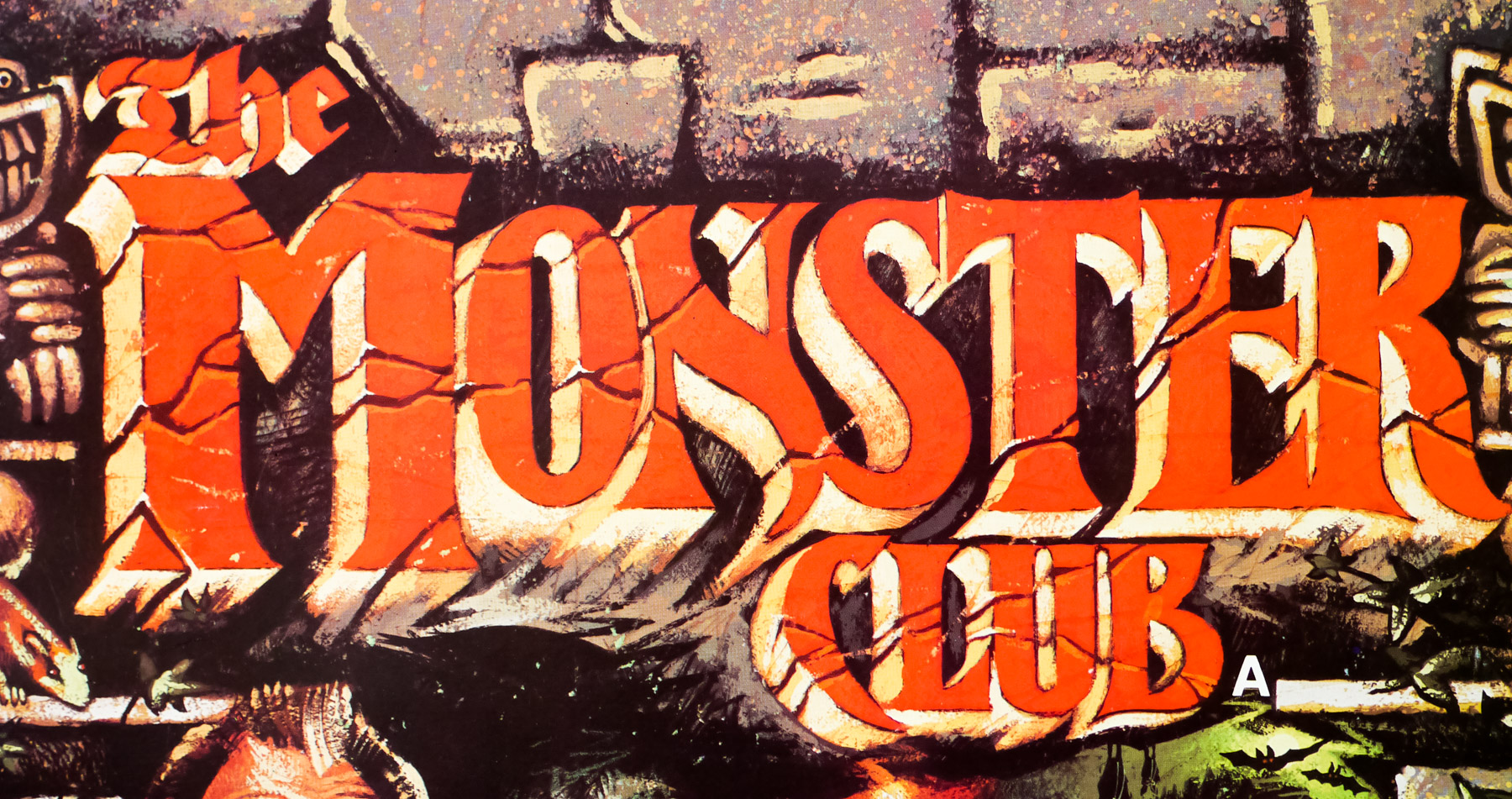
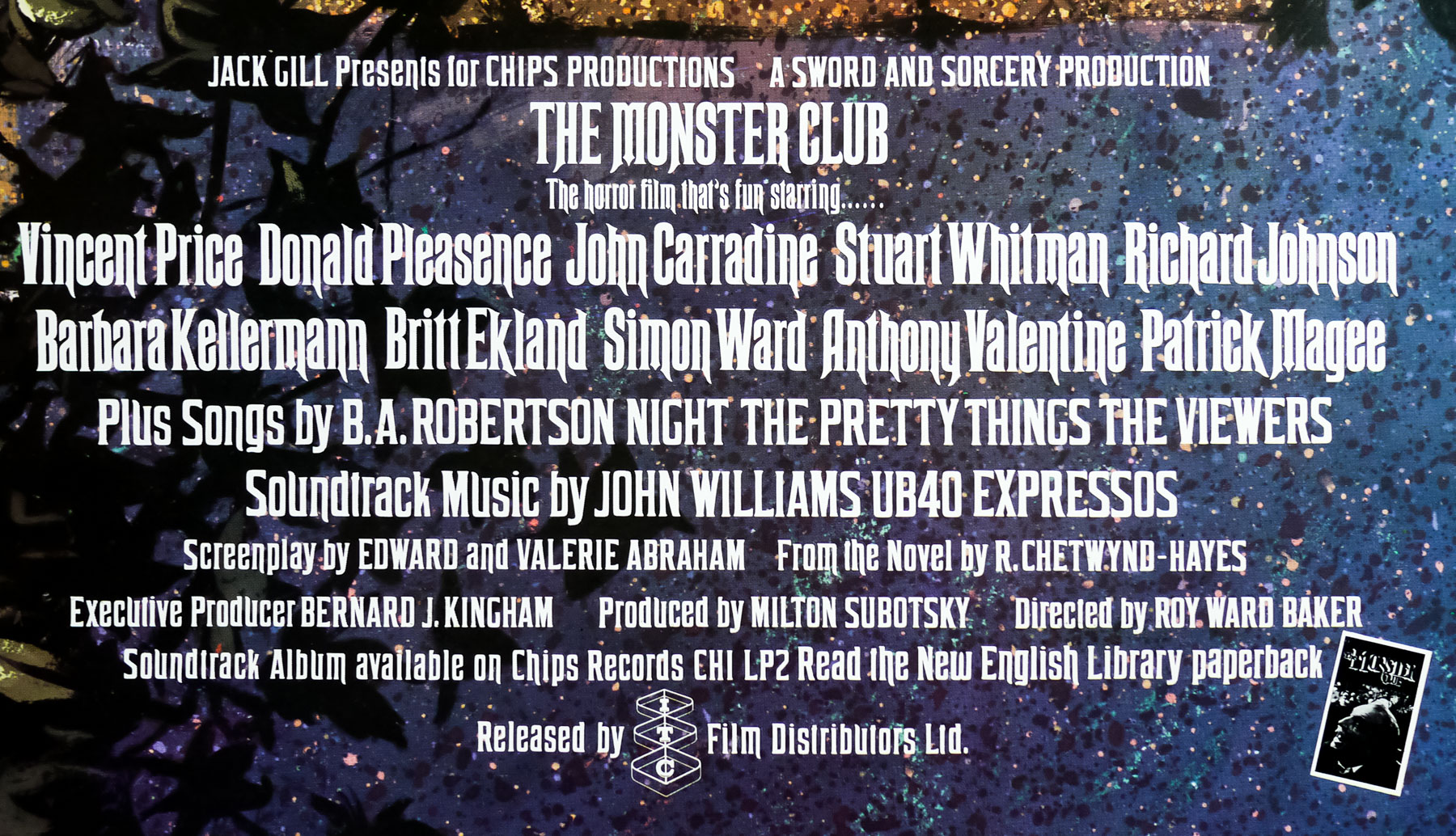
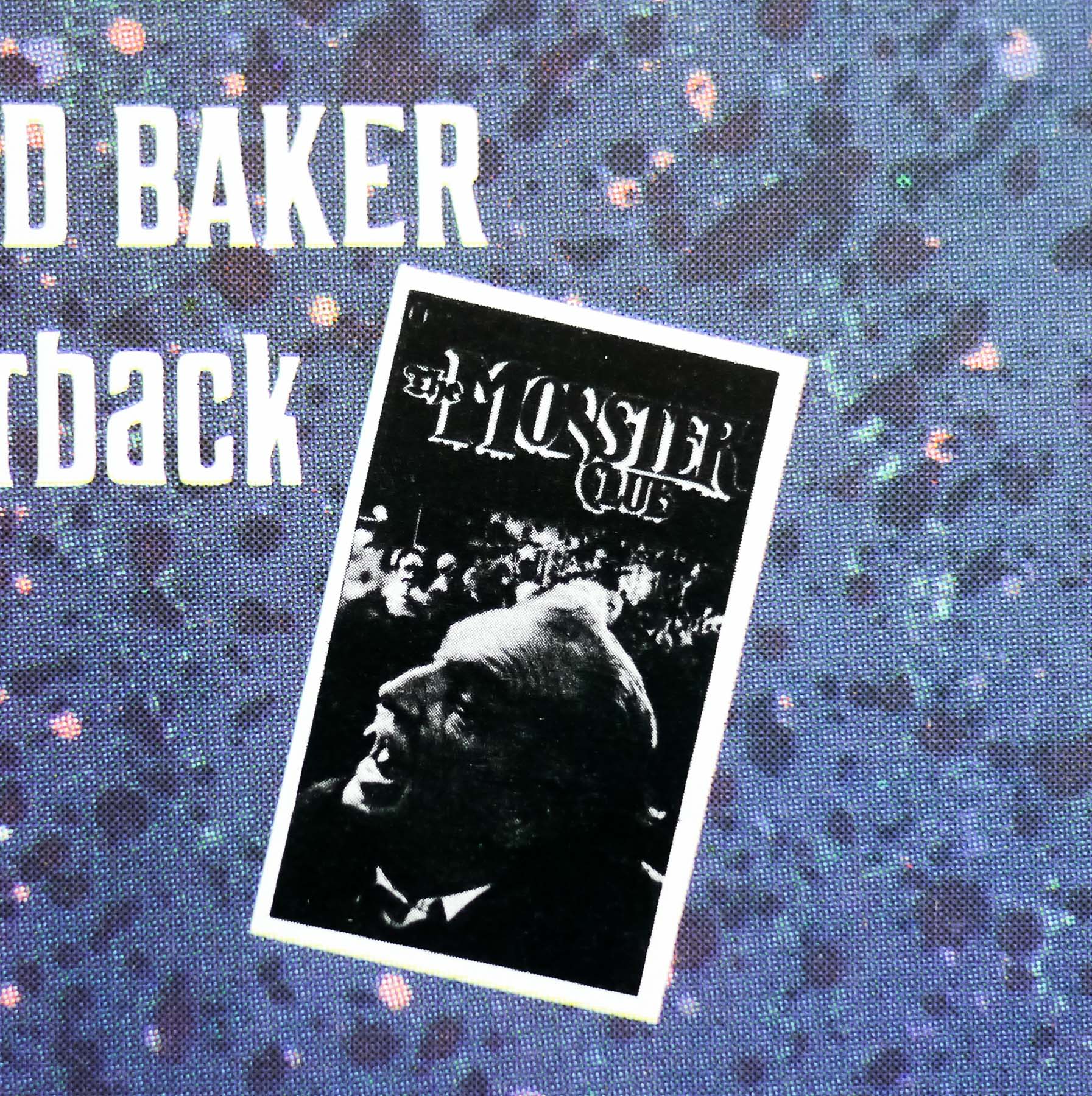
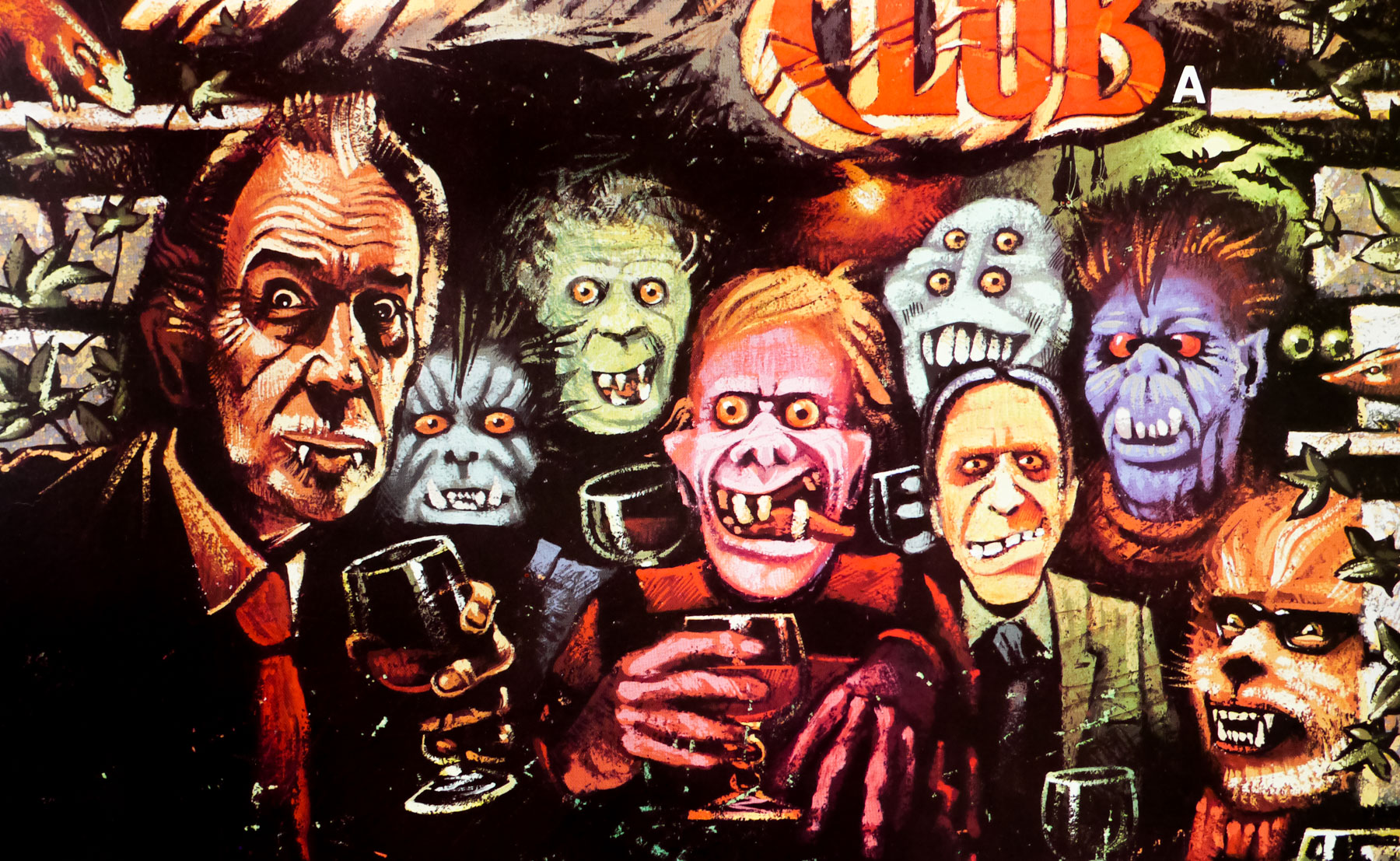
The horror anthology The Monster Club was produced by ex-Amicus co-owner Milton Subotsky and was the final feature film from director Roy Ward Baker. Subotsky had seen great success as one half of Amicus (his partner was the screenwriter Max Rosenberg) with the release of several ‘portmanteau’ horrors, including three directed by genre stalwart Freddie FrancisDr. Terror’s House of Horrors (1964), Torture Garden (1967) and Tales from the Crypt (1972). Roy Ward Baker is best remembered for his work on the Titanic film A Night to Remember (1958) and several successful horror films for one of Amicus’ rival studios, Hammer, including the excellent Quatermass and the Pit (1967) and Dr Jekyll & Sister Hyde (1972). Baker directed a handful of horrors for Amicus, including the anthologies Asylum (1972) and The Vault of Horror (1973), as well as the ghost story And Now the Screaming Starts! (1973).

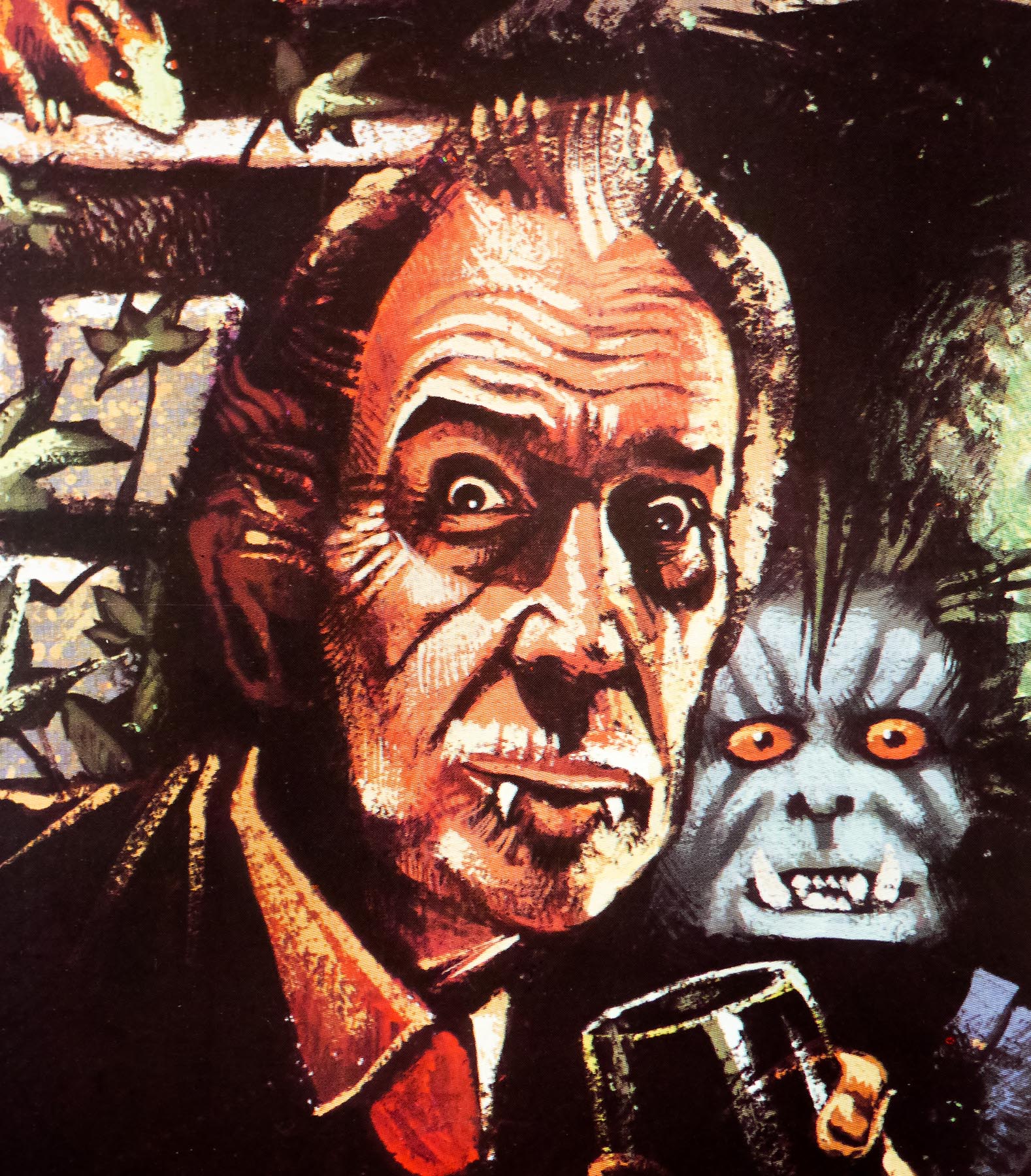
The Monster Club features American horror legend Vincent Price as the vampire Eramus who bumps into the horror writer R.Chetwynd-Hayes (played by the prolific John Carradine) and feasts on his blood but ‘doesn’t bite deep enough’ to turn him into one of his own. Eramus then invites the writer to visit the titular club claiming that he’s sure it will offer plenty of inspiration as it’s home to all manner of werewolves, ghouls, beasts and other assorted creatures (read: extras in hastily prepared rubber masks). What follows is three fairly dull horror stories featuring several notable actors (Donald PleasenceRichard Johnson and Britt Ekland) but it’s the surrounding sequences in the club itself that are more interesting with a handful of catchy musical numbers and one memorable sequence in which a stripper takes everything off, including her skin (via a shadowy animation).

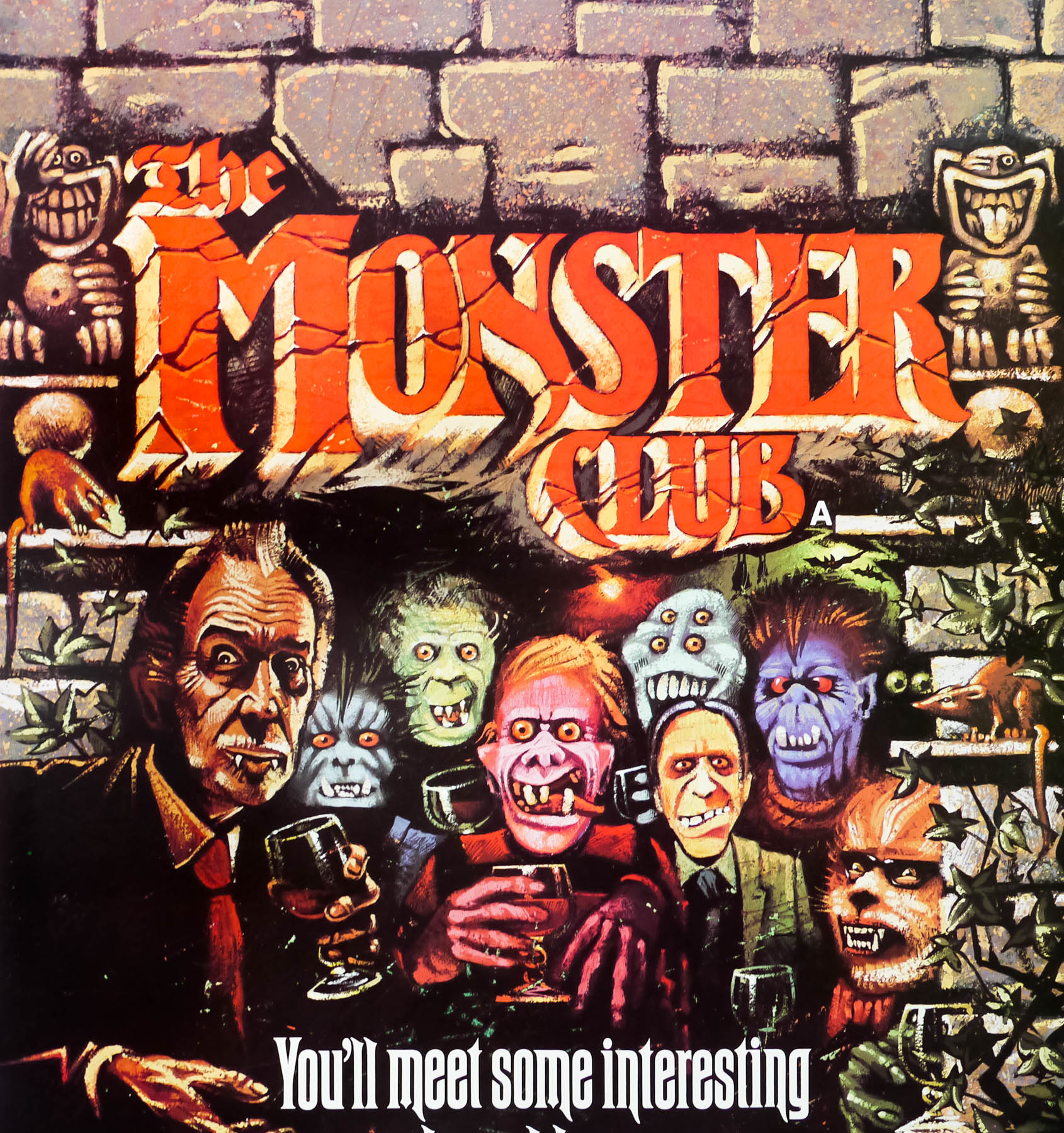
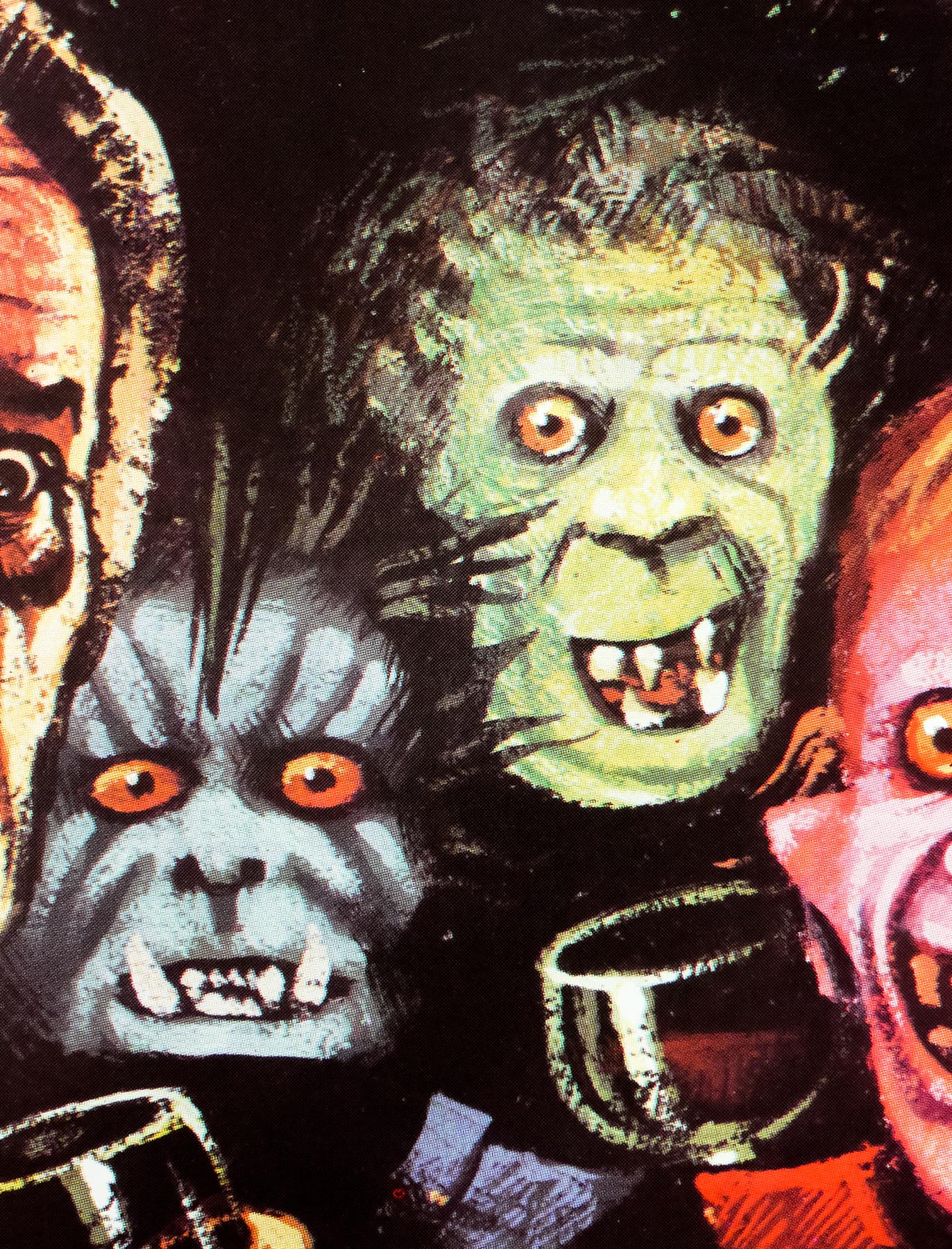
The poster was designed and painted by the brilliant British illustrator Graham Humphreys. Because it wasn’t a poster we discussed during our 2011 interview I wanted to speak to Graham to hear the story of the making of this poster in more detail. The interview with Graham can be read here.

Pulp Fiction / quad / UK

08.01.14

Poster Poster

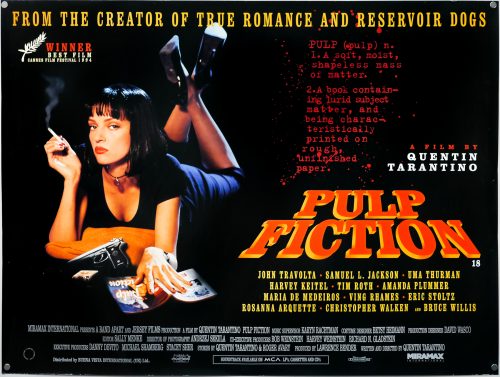
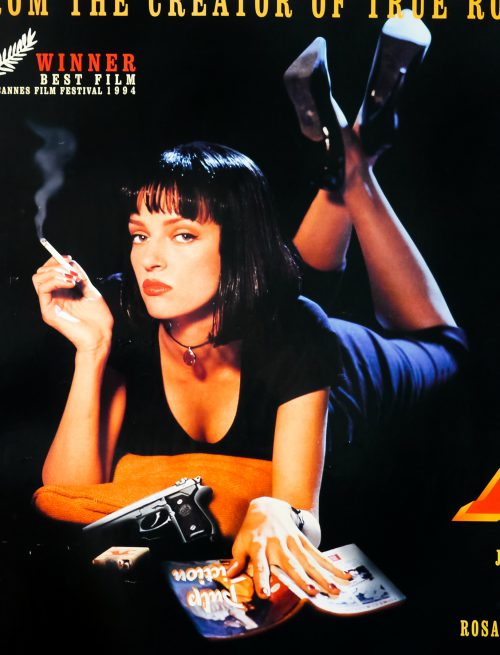
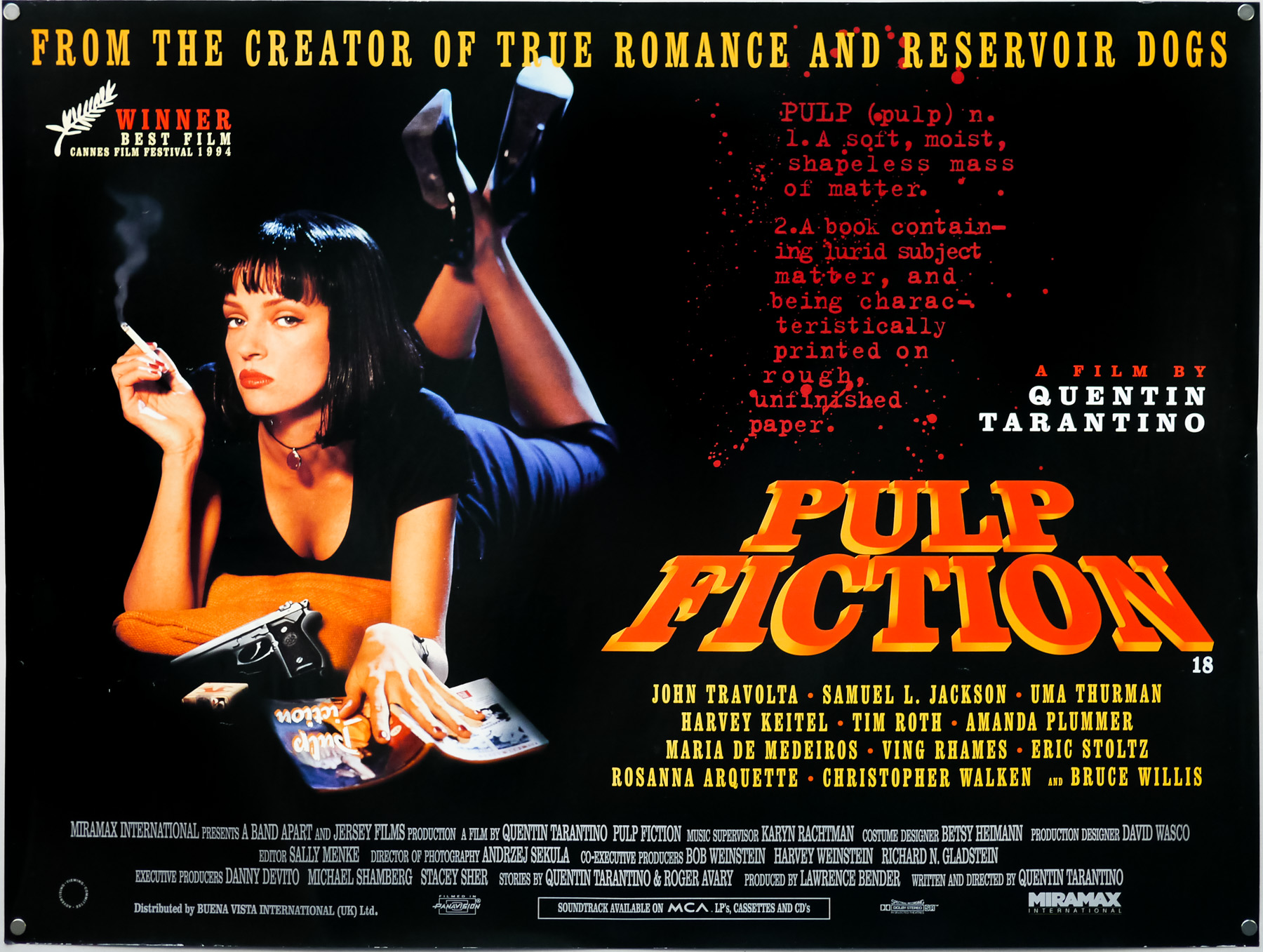
It’s hard to believe but Quentin Tarantino’s masterpiece Pulp Fiction celebrates its 20th anniversary this year and it’s easy to forget just what an impact it has had on cinema since its release. Whilst certainly not the first film to use a nonlinear, fractured narrative, Pulp Fiction arguably introduced the idea to a wide audience and did it with incredible bravado. Few films (pre-Reservoir Dogs) had characters speaking in such rapid-fire, pop culture-aware dialogue as Tarantino’s creations and few had mixed humour and violence as casually (and cleverly) as this. Blessed with deft editing and a killer soundtrack, all the ingredients combined together to make for a worldwide critical and commercial success, and cemented Tarantino’s reputation as an auteur filmmaker.

The film marked a watershed moment for independent cinema, particularly in the way it was financed and distributed. After Tarantino and screenwriting partner Roger Avary agreed a deal with Jersey Films (the production company part-owned by Danny DeVito) which was beneficial for all parties, the team initially attempted to produce the film with Columbia Tristar. After the script was eventually rejected by them for a litany of reasons, Harvey Weinstein’s Miramax, newly acquired by Disney, stepped in and agreed to finance it. Tarantino’s producing partner Lawrence Bender had the canny idea of paying each of the main actors the same amount per week, no matter their status. Part of the film’s success was in its superb casting of familiar faces playing against type, including Bruce Willis as an amoral boxer, John Travolta as an ageing hitman (Travolta’s career saw a huge boost on the back of this film) and Uma Thurman as a drug-taking wife of a mob boss.

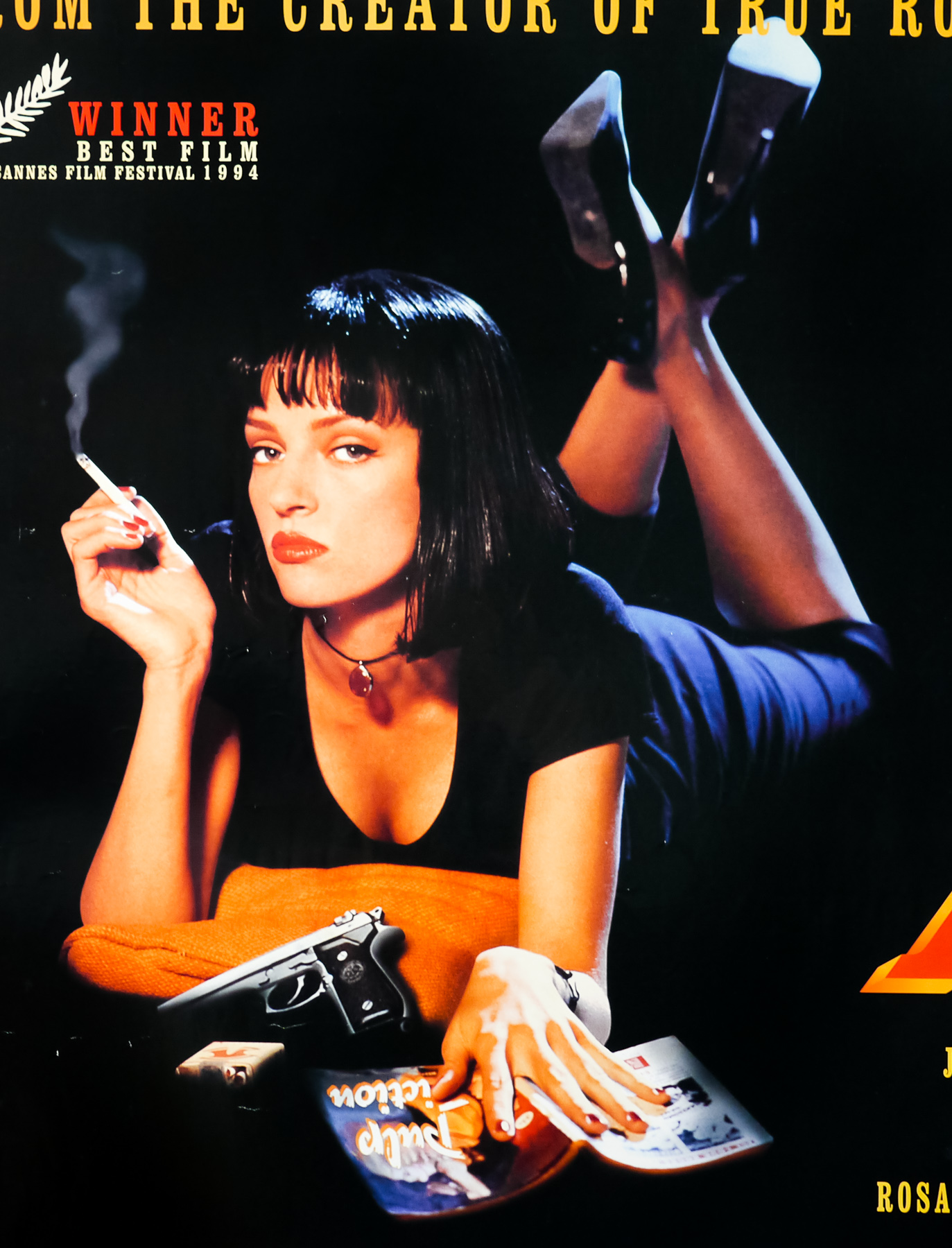
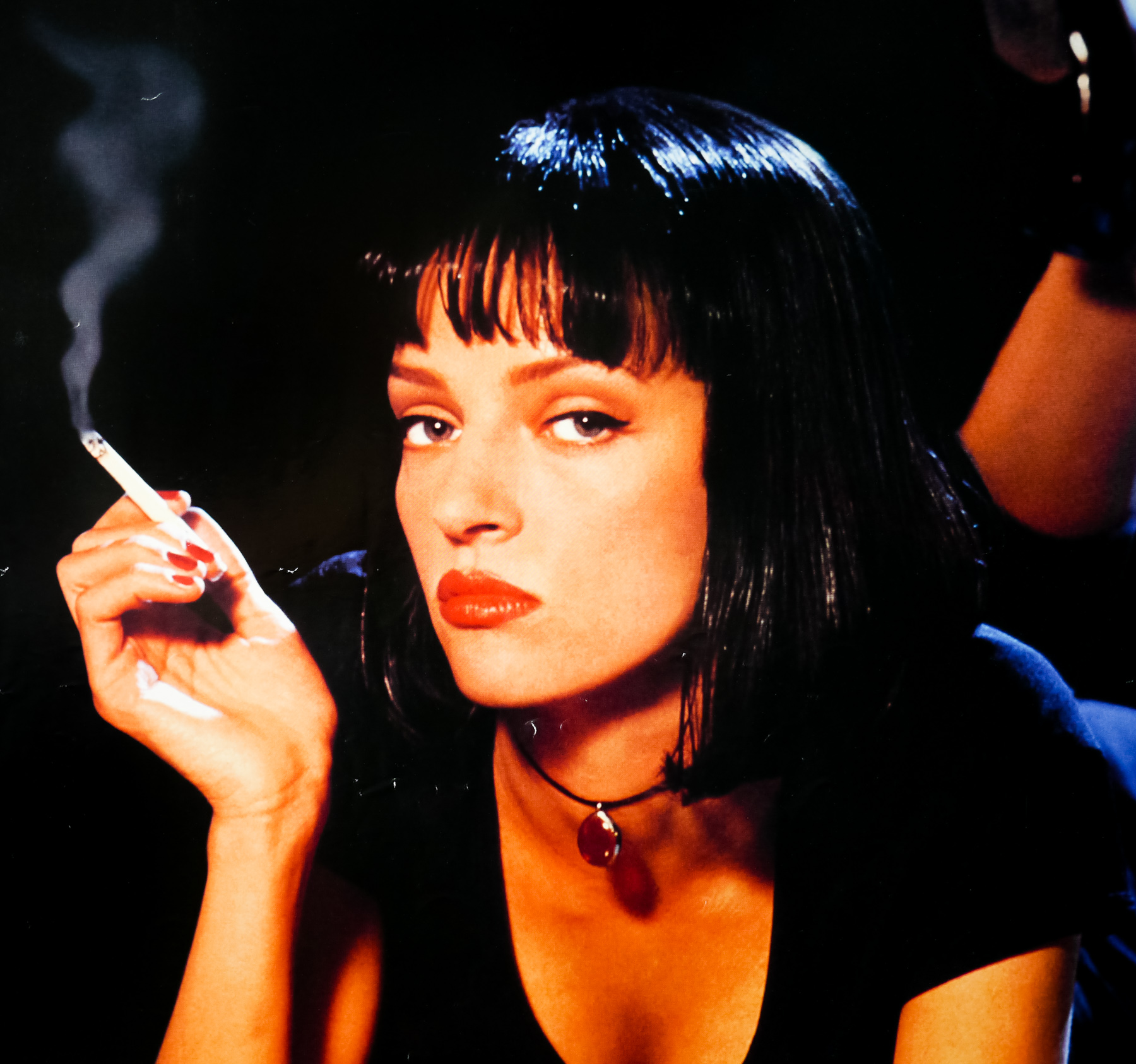
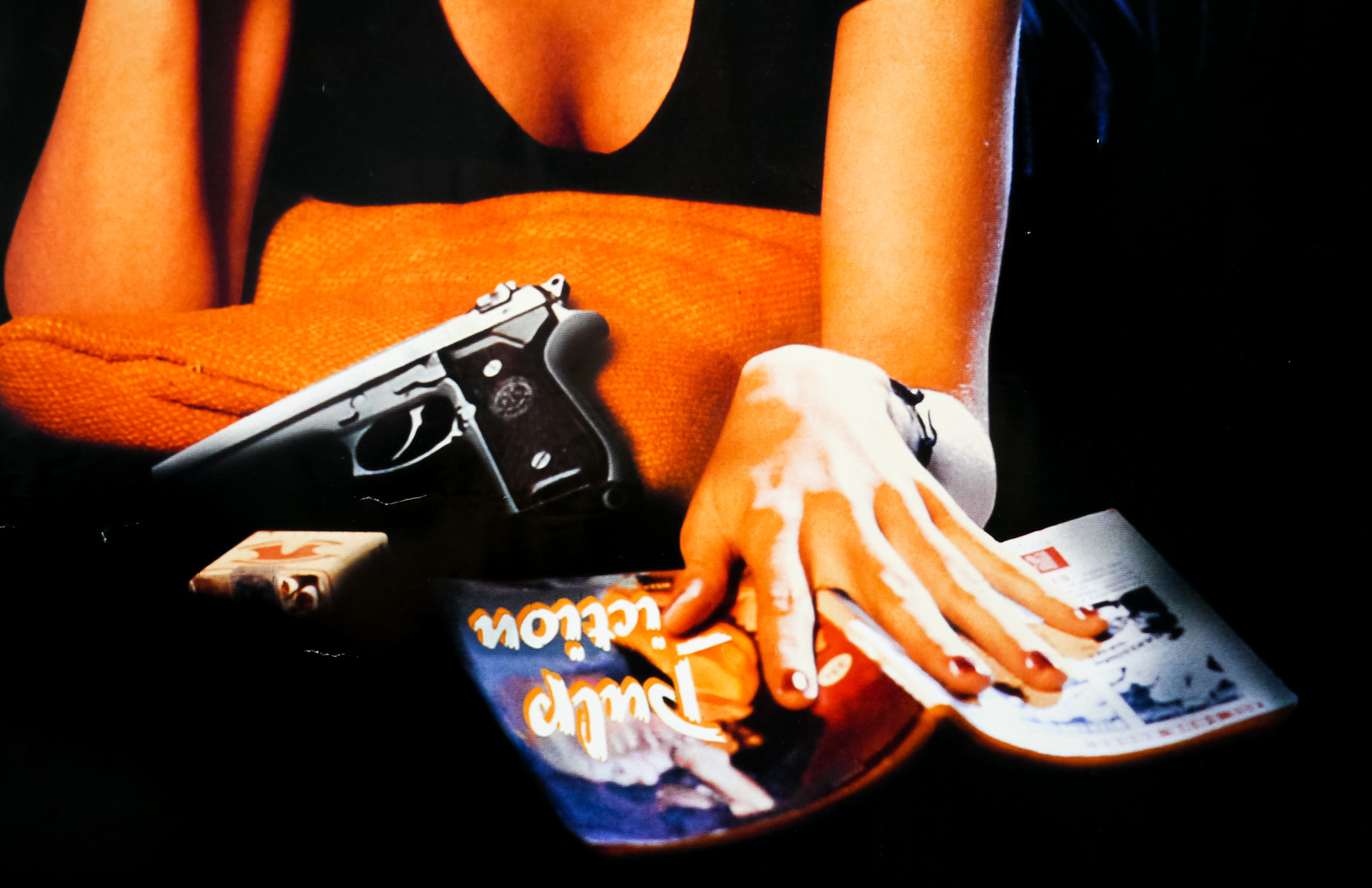
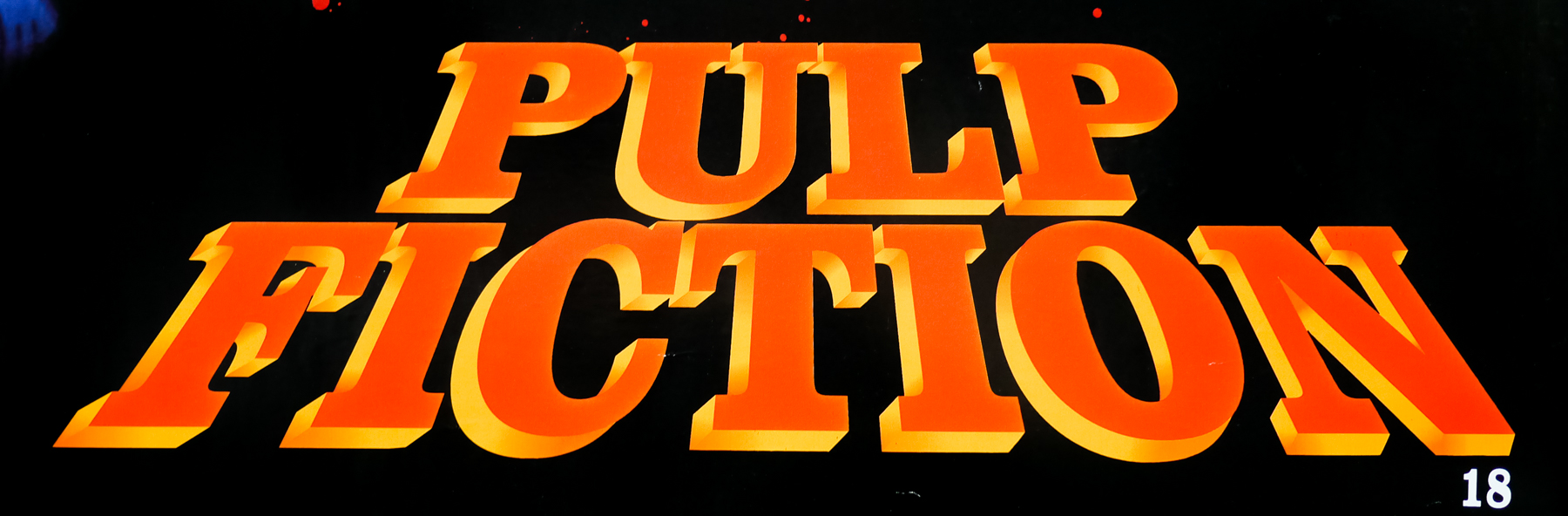
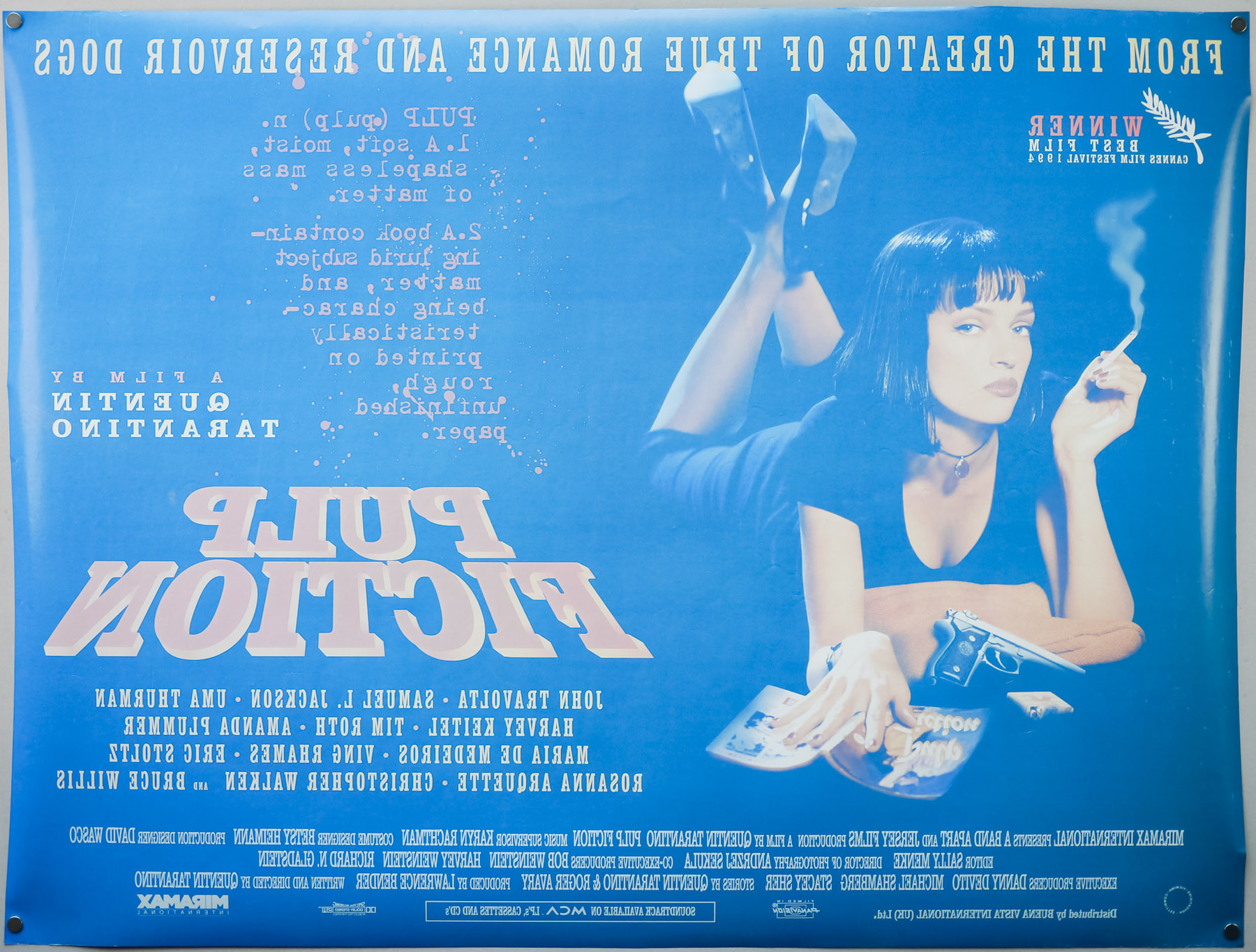
It was an image of a sultry, raven-haired Uma Thurman that was used in (virtually) every market around the world and made for one of the most iconic one sheets of the 1990s (in both teaser and final style formats). For its hugely successful release in the UK, Miramax decided to use the same image of Thurman but adapted it to the landscape format, created a unique title design and also incorporated the dictionary definitions of Pulp and Fiction seen at the start of the film. Note that the packet of Lucky Strikes which had caused the teaser one sheet to be infamously withdrawn (after the cigarette manufacturer complained about its inclusion) has been digitally manipulated to obscure the logo as it was on the final one sheet.

Assault on Precinct 13 / quad / UK

27.01.14

Poster Poster

Director John Carpenter followed his debut sci-fi film Dark Star (1974) with the action thriller Assault on Precinct 13. Carpenter had originally hoped to create a Howard Hawks style western, but when the $100k budget organised by his producer friends Joseph Kaufman and J. Stein Kaplan prohibited the kinds of sets and production design needed, he retooled the script to work in a modern day setting. With strong echoes of Hawks’ Rio Bravo, Carpenter completed his script in just eight days and peppered it with multiple references to classic westerns.

Taking place over the course of one Saturday (a number of time and location cards are displayed throughout) the story is set in a crime-infested Los Angeles ghetto and begins at 3.00am as six members of a gang called Street Thunder are ambushed and killed by the LAPD. Soon afterwards the warlords of the gang swear a blood oath of revenge against the whole city. Later that day, Lieutenant Ethan Bishop (Austin Stoker) arrives at the local Anderson police precinct in order to help the remaining skeleton staff, including Captain Chaney (Henry Brandon) and two secretaries, close the building for good.

A bus carrying three convicts, including Napoleon Wilson (Darwin Joston), makes an unscheduled stop at the precinct seeking medical help for one of the men. At the same time across town, a gang of the warlords shoot and kill a young girl and an ice cream seller (a shocking sequence that Carpenter almost had to remove at the request of the MPAA) and the girl’s father, Lawson (Martin West) immediately retaliates and kills one of the warlords. The rest of the gang chases Lawson through the streets and into the Anderson police precinct. Before they know it, the inhabitants of the station are under assault from the gang and must fight for their very survival.

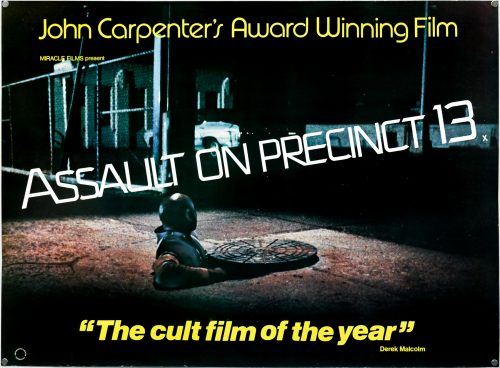
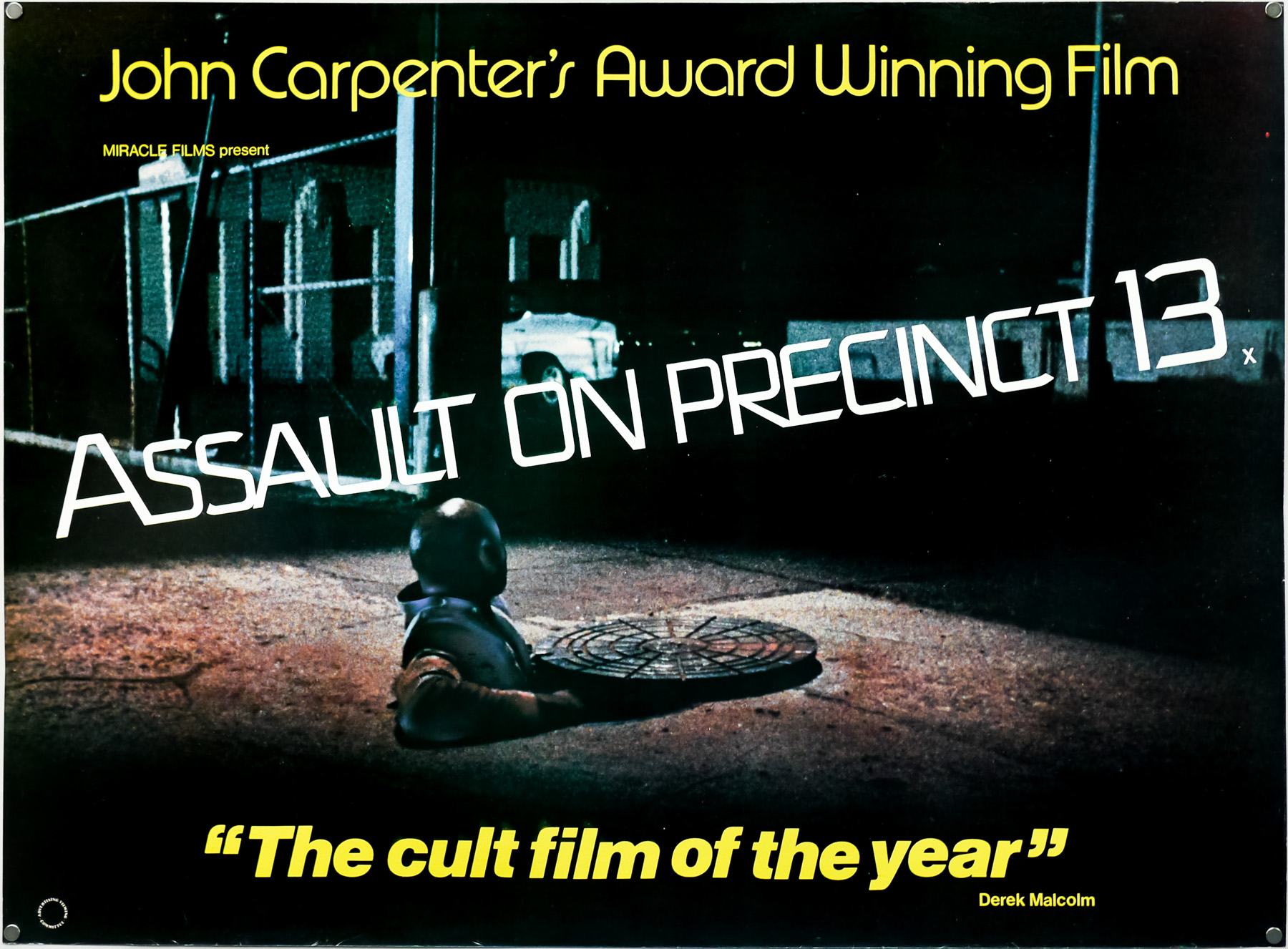
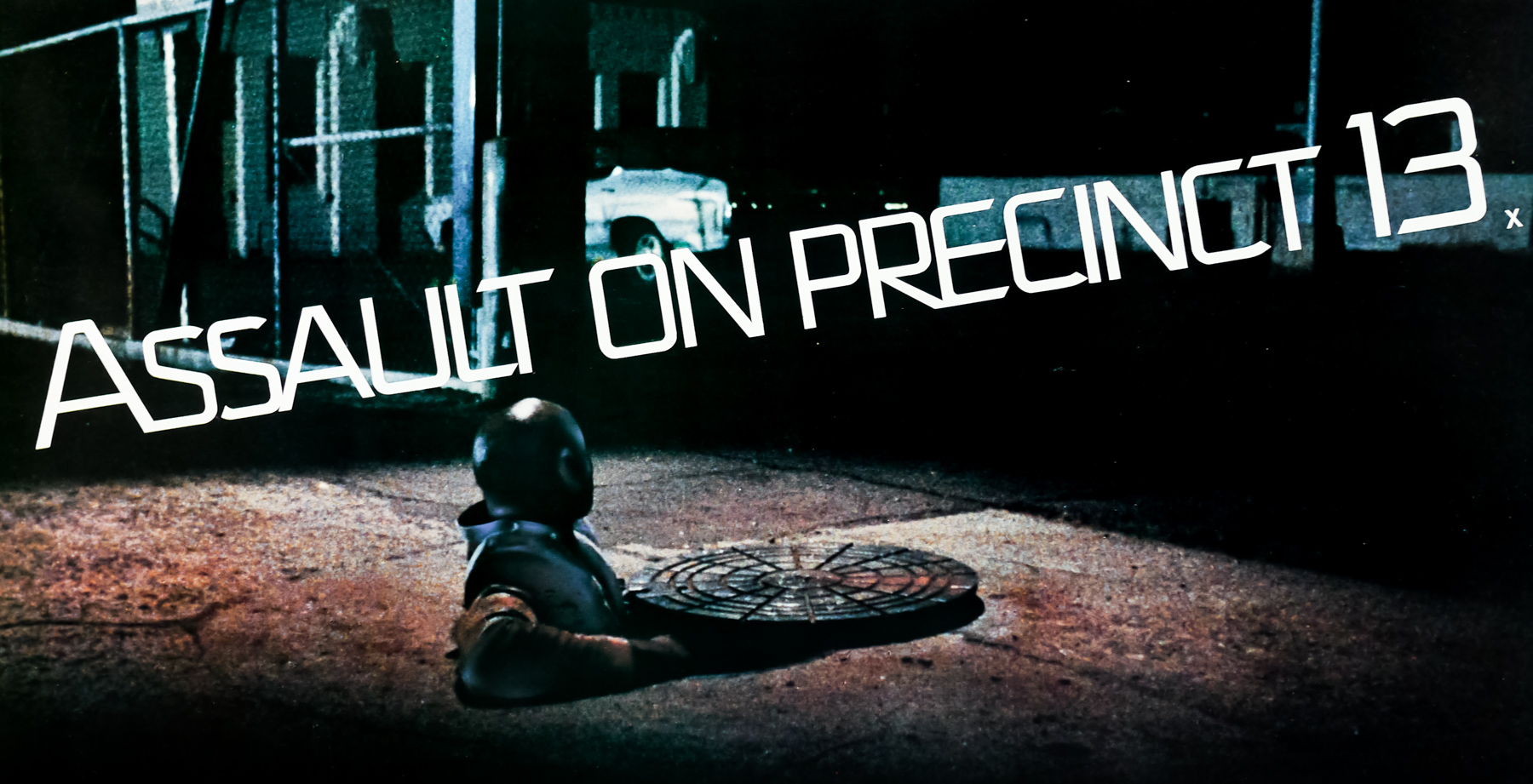
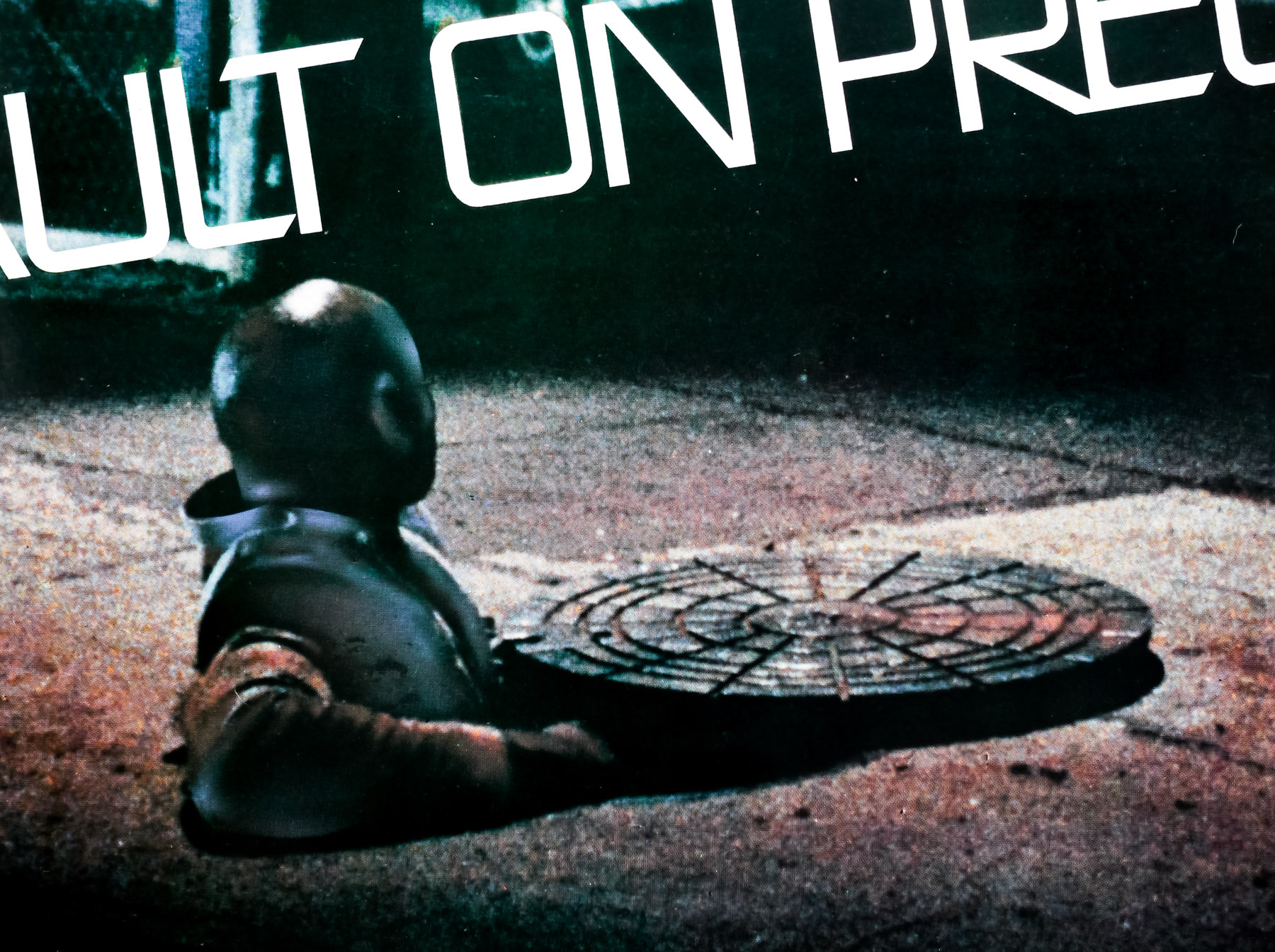
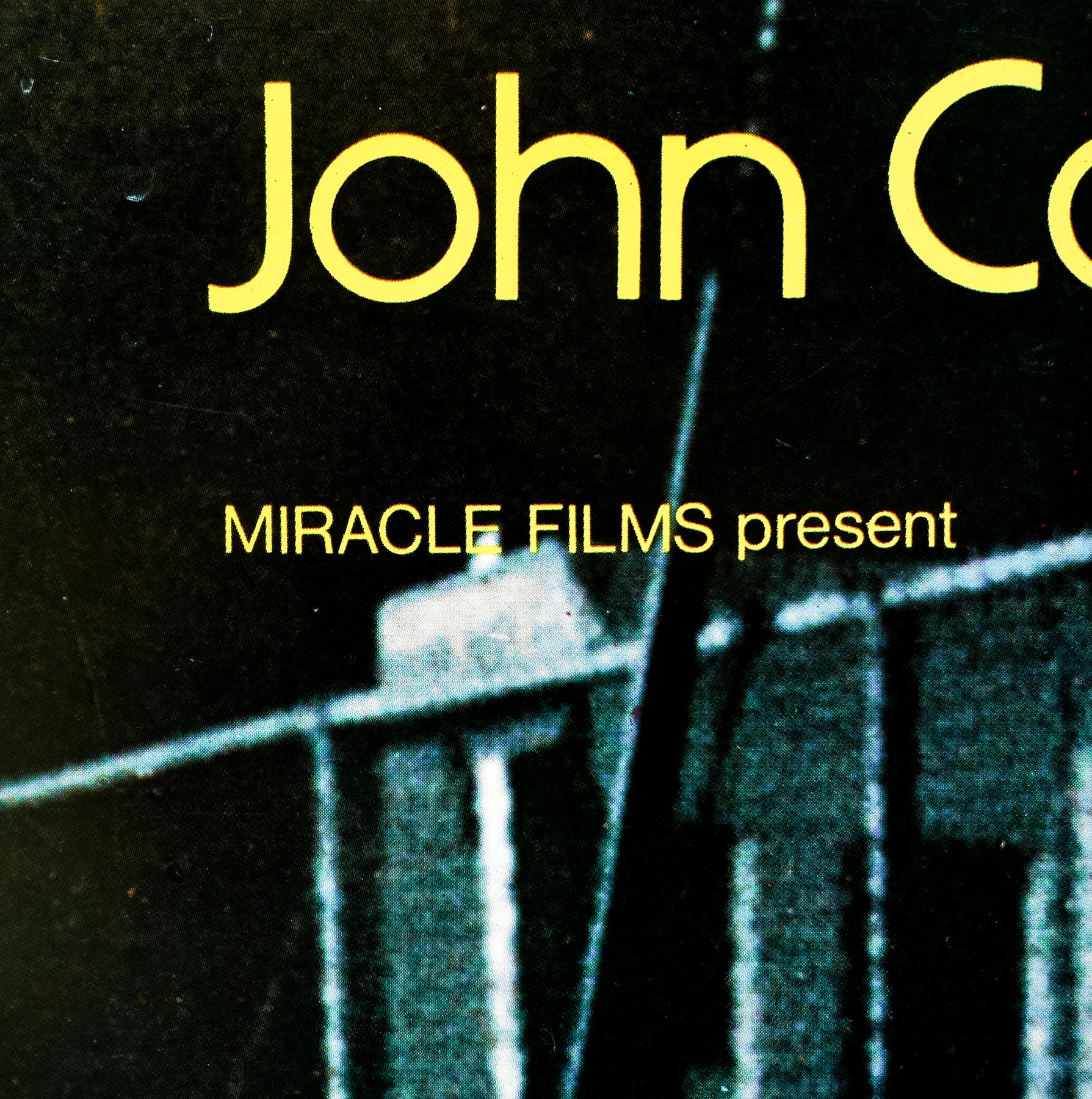
The film failed to make much impact in terms of box office takings or critical reception on its original American release in 1976, but when the film was shown at the 1977 Cannes Film Festival it received very favourable reviews from several critics, particularly those from Britain. After being invited to show the film at the 1977 London Film Festival, Carpenter was delighted by the positive critical and audience reaction. Derek Malcolm, the then film critic of the Guardian newspaper (whose quote graces this poster), reported that the film’s screening was greeted with deafening applause. On the back of the strong reception, Michael Myers (a Carpenter coincidence!), the head of Miracle Films, purchased the British distribution rights. This quad was printed for the film’s UK release and features a stylised title laid over the top of an image from the scene in which one of the convicts attempts to escape through the sewers. The ‘award-winning’ line refers to the fact that Carpenter won the 1978 annual British Film Institute award for the “originality and achievement of his first two films”, Dark Star and Assault, at the 1977 London Film Festival.

For Your Eyes Only / quad / UK

08.10.12

Poster Poster

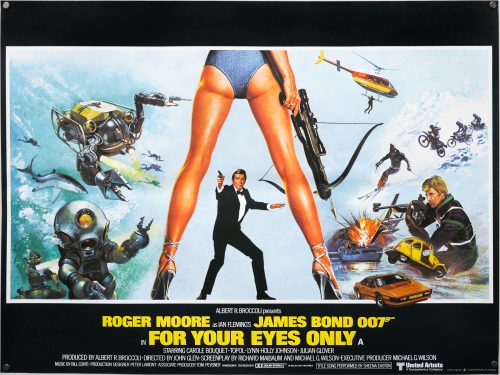
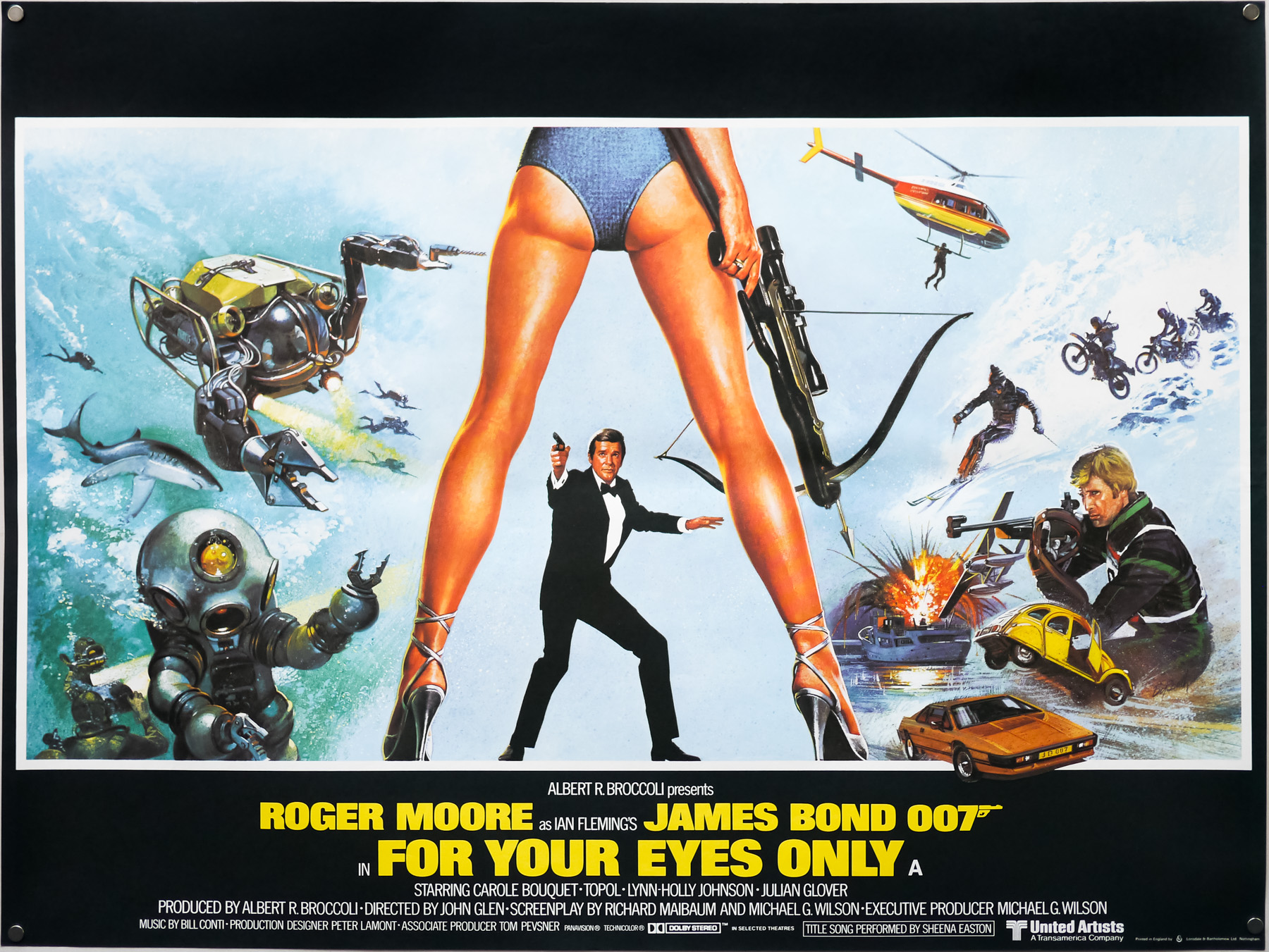
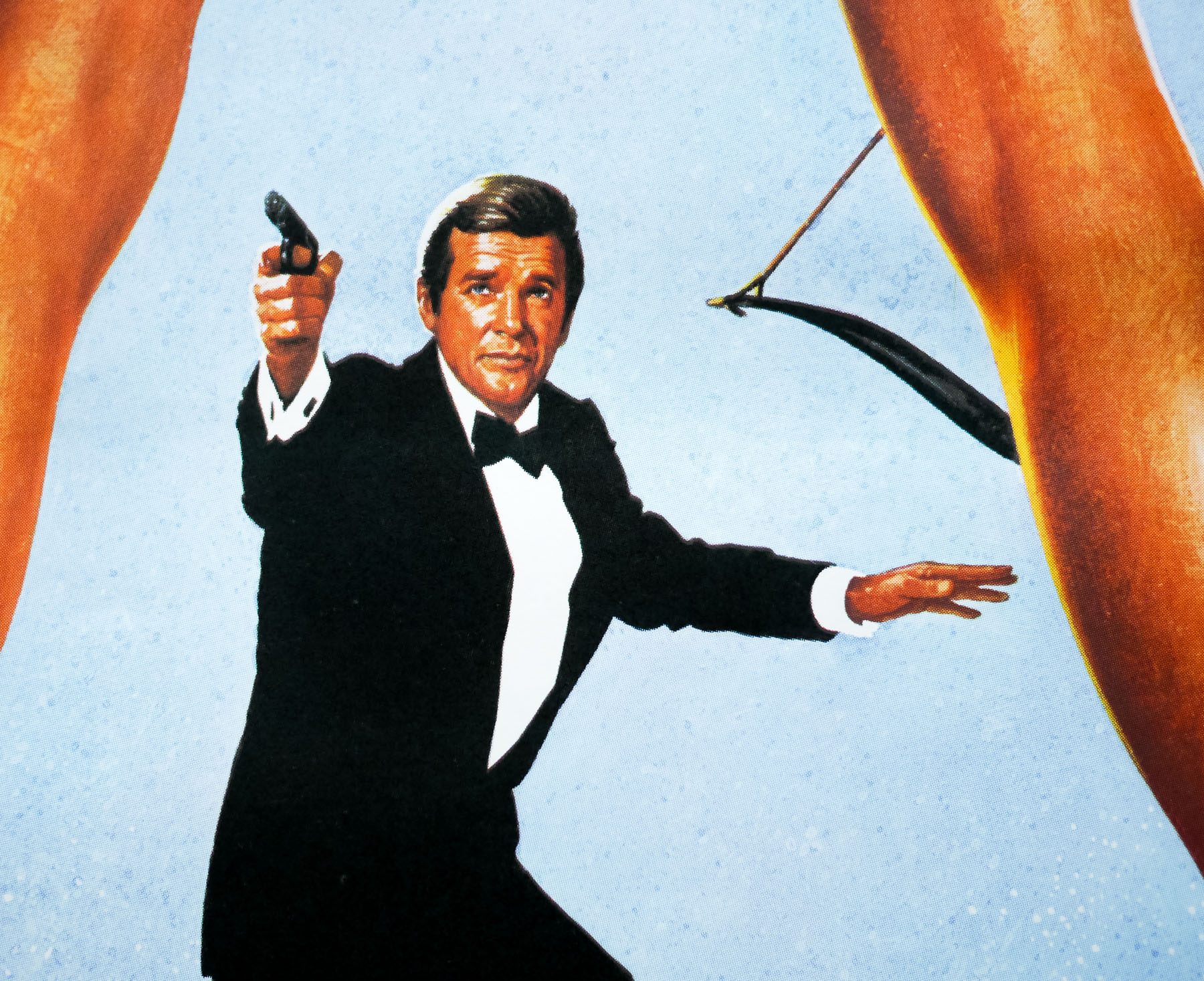
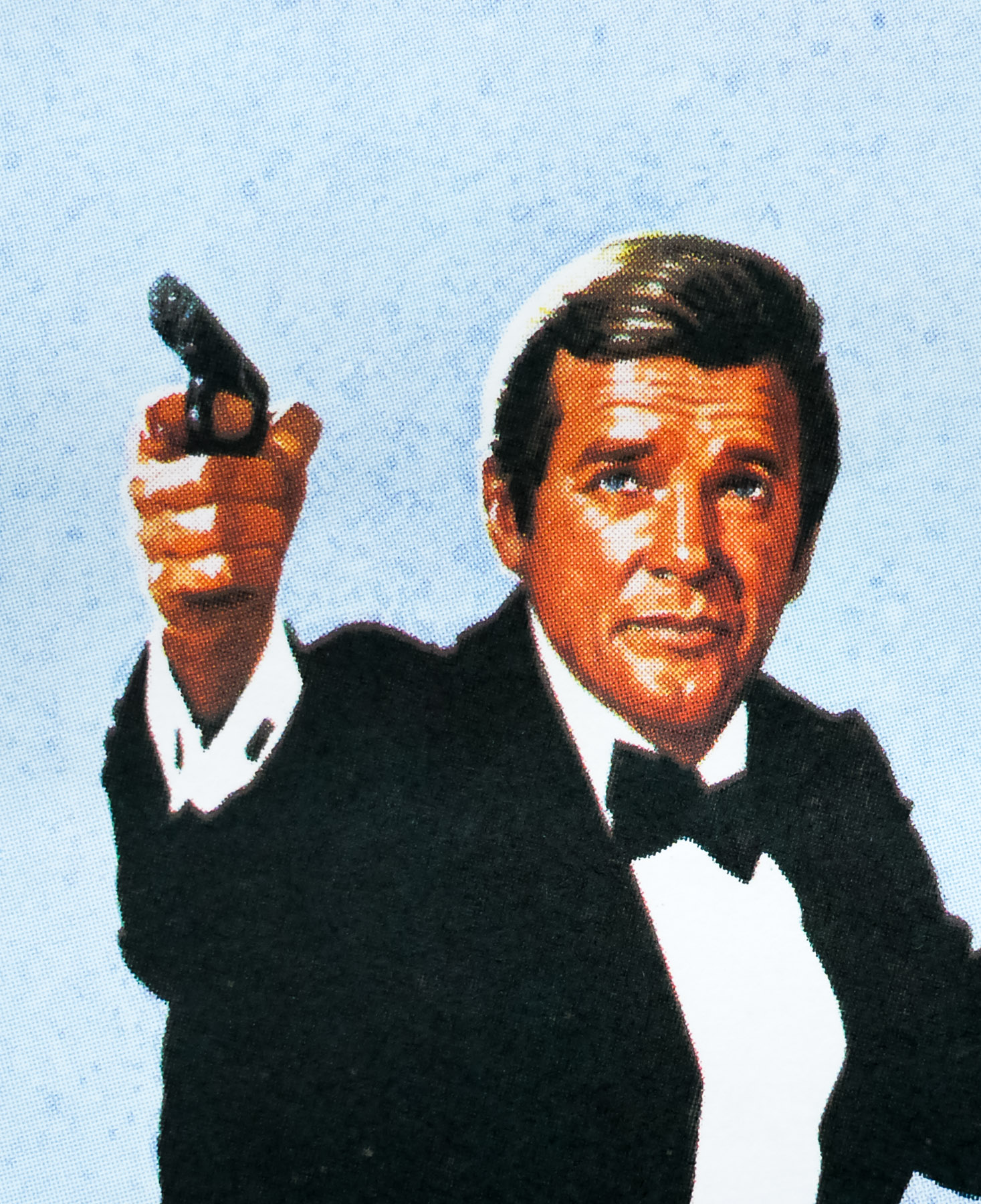
One of Roger Moore’s better outings as 007, For Your Eyes Only was intended to bring James Bond back down to earth with a more realistic and less sensational storyline following the lunacy of Moonraker. It marked the first time John Glen would helm a Bond film, having worked as an editor and second-unit director on three of the previous outings, and he would go on to direct the next four films in the series. The story sees the spy being sent to try and recover an ‘ATAC’ device capable of controlling the British Polaris submarine fleet, which is lost after a spy ship disguised as a trawler is sunk in neutral waters.

It becomes clear that the Soviets are also keen to get their hands on the device and Bond must discover who is aiding them, with suspicion falling on both Milos Columbo (Topol) and Aris Kristatos (Julian Glover). Bond also finds an ally in the form of Melina Havelock (the gorgeous Carole Bouquet) who is out for revenge after her parents are murdered by the same forces who retrieve the ATAC device. The film features several memorable chases and action sequences, including a climactic assault on a fortress on top of a sheer cliff. It also includes the infamous character of Bibi Dahl (Lynn-Holly Johnson) a gorgeous young ice-skating protégée who becomes infatuated with Bond, and in turn became the object of countless teenage boys’ fantasies, including yours truly.

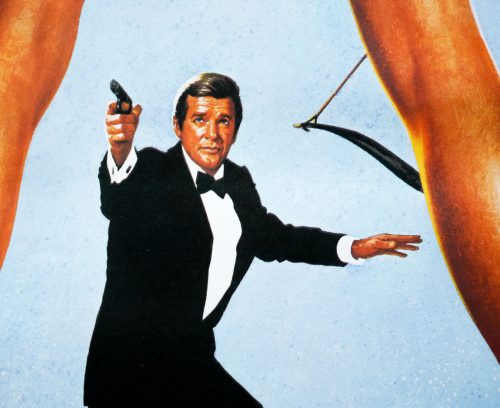
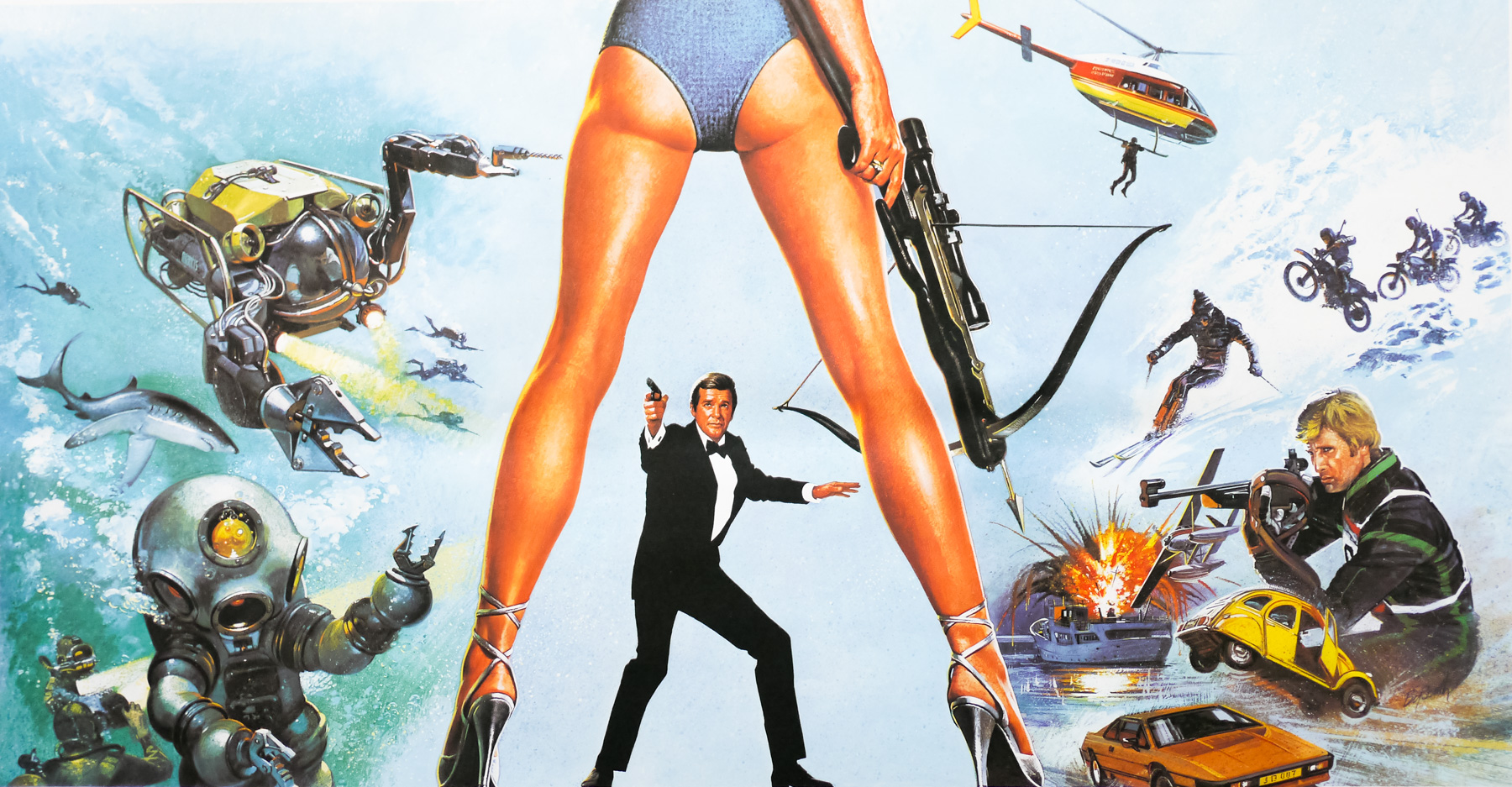
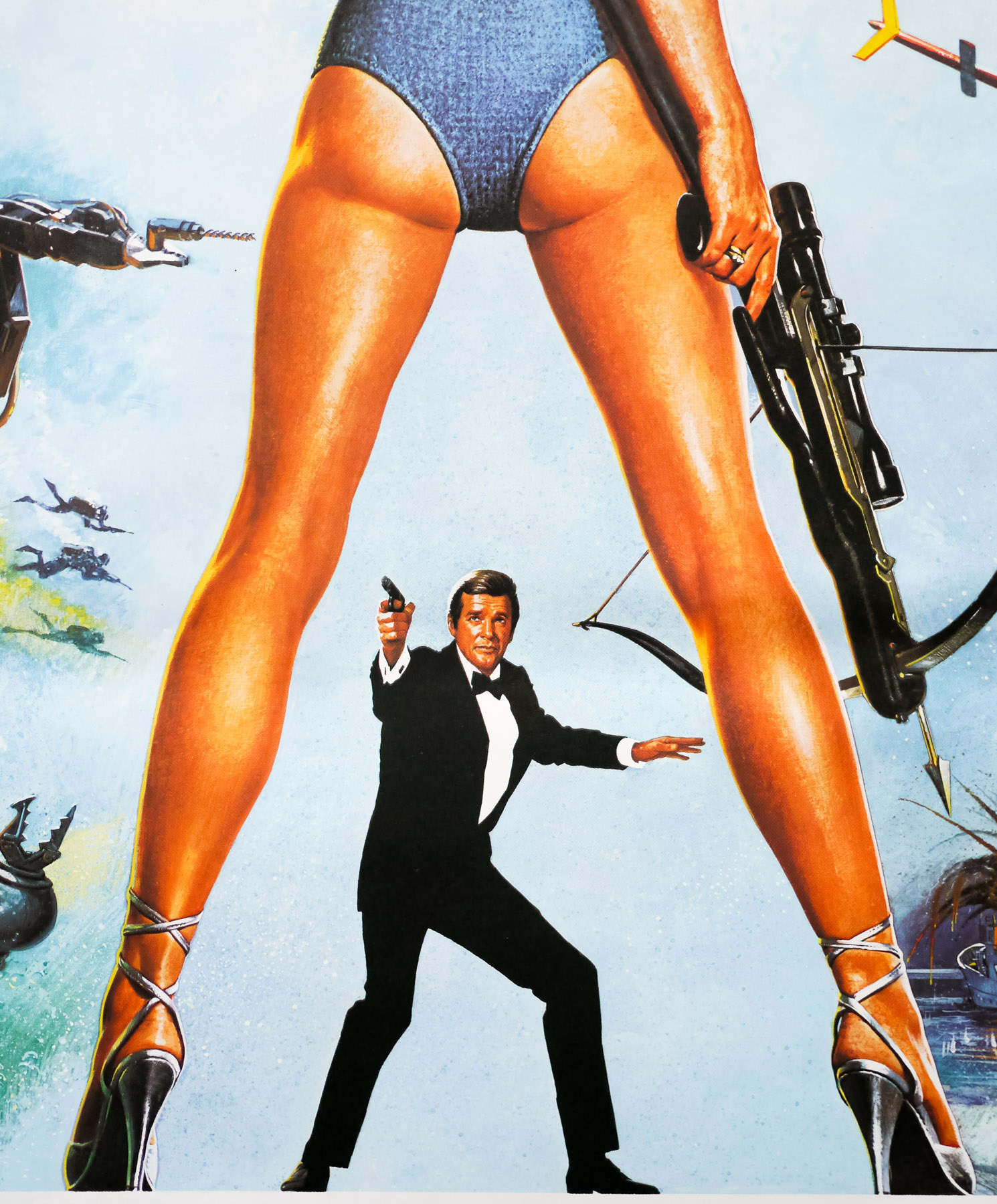
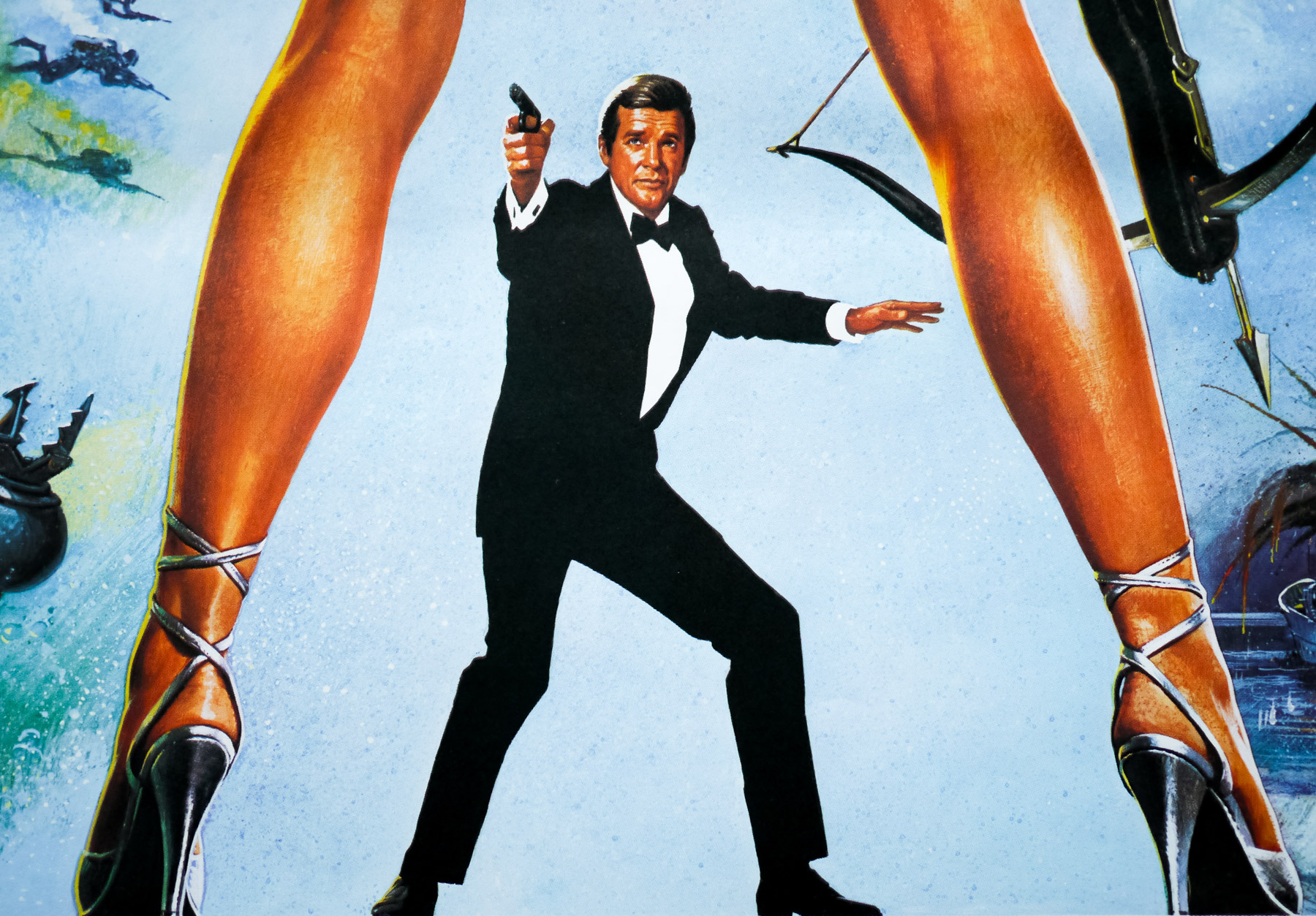
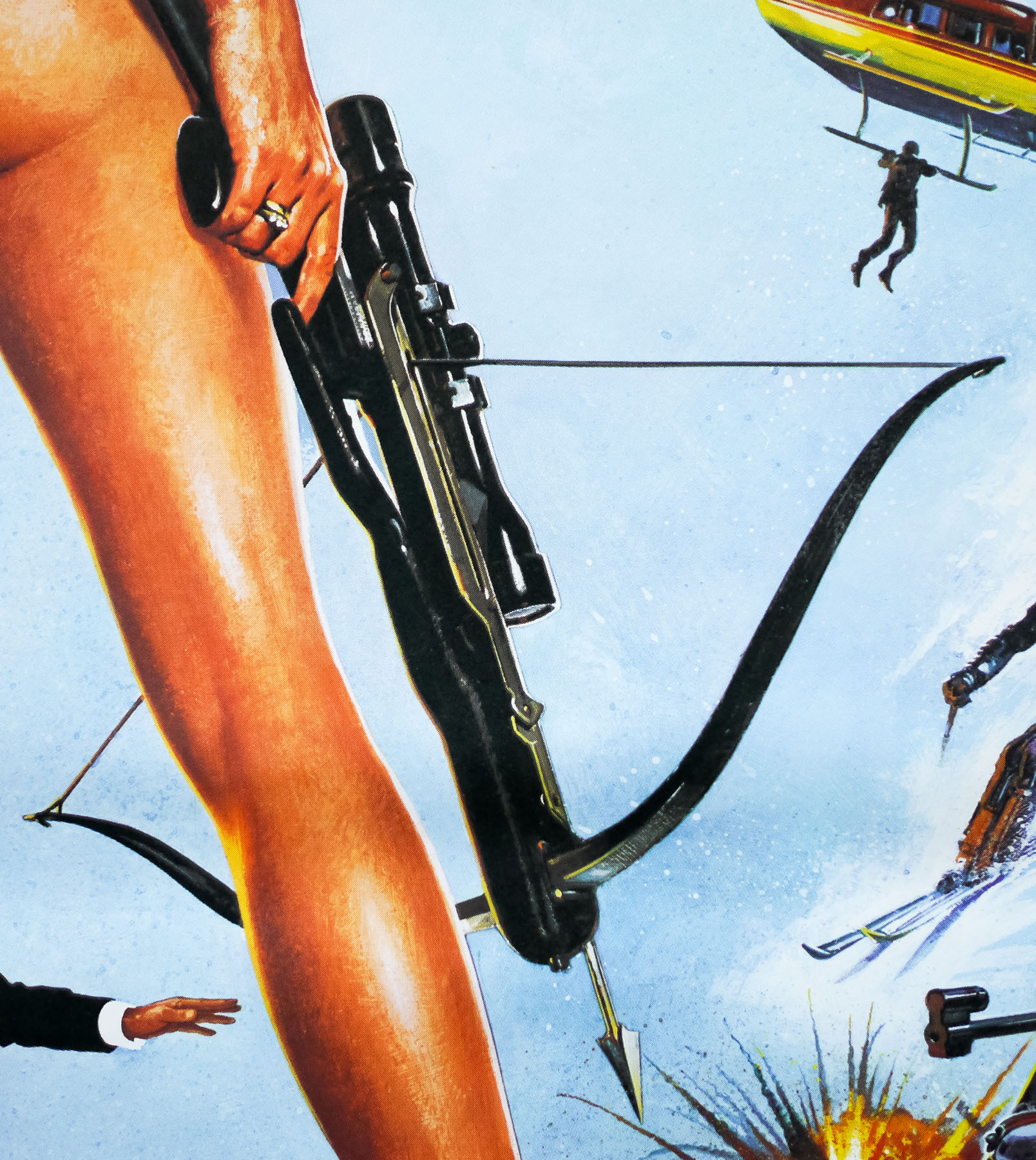
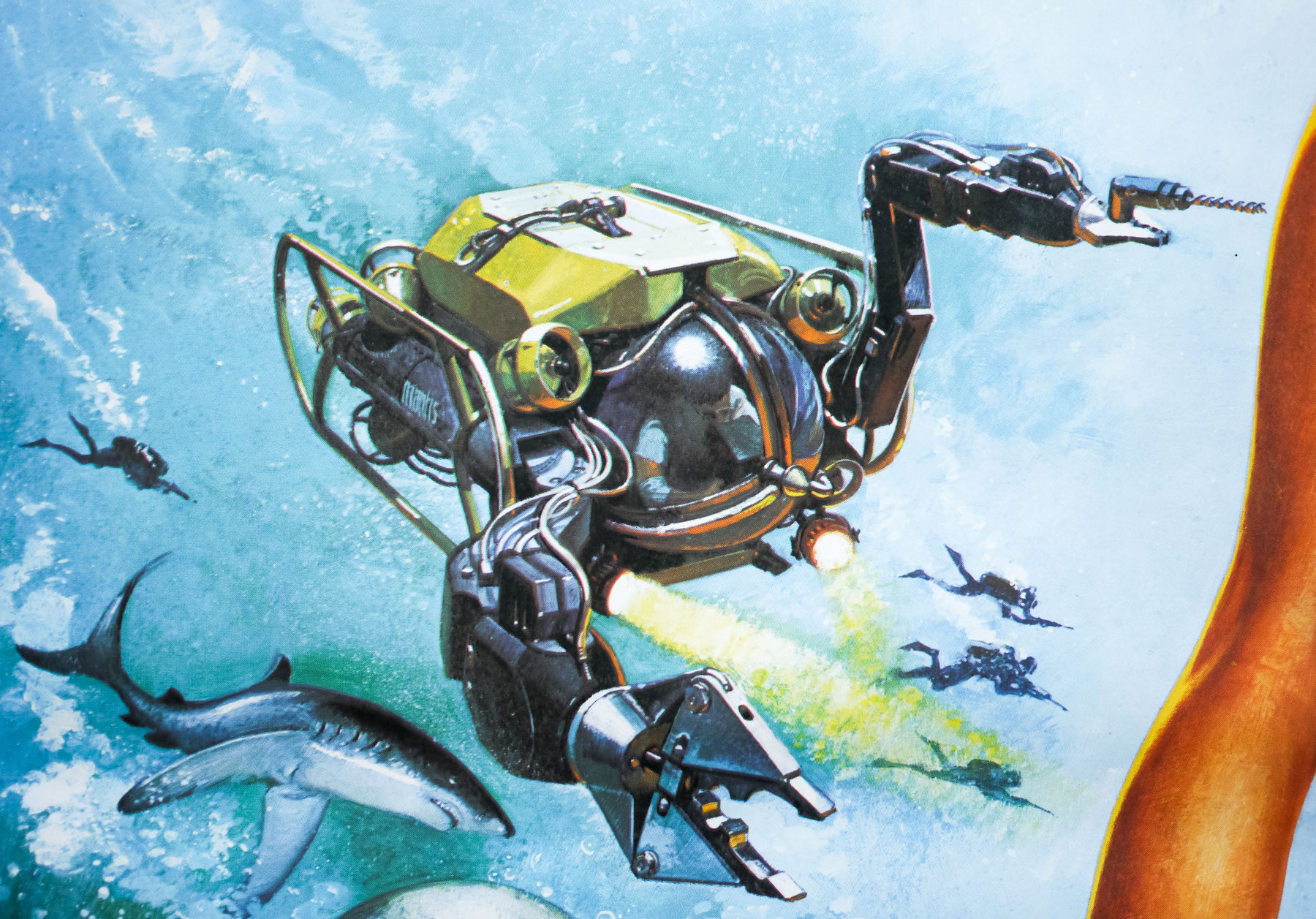
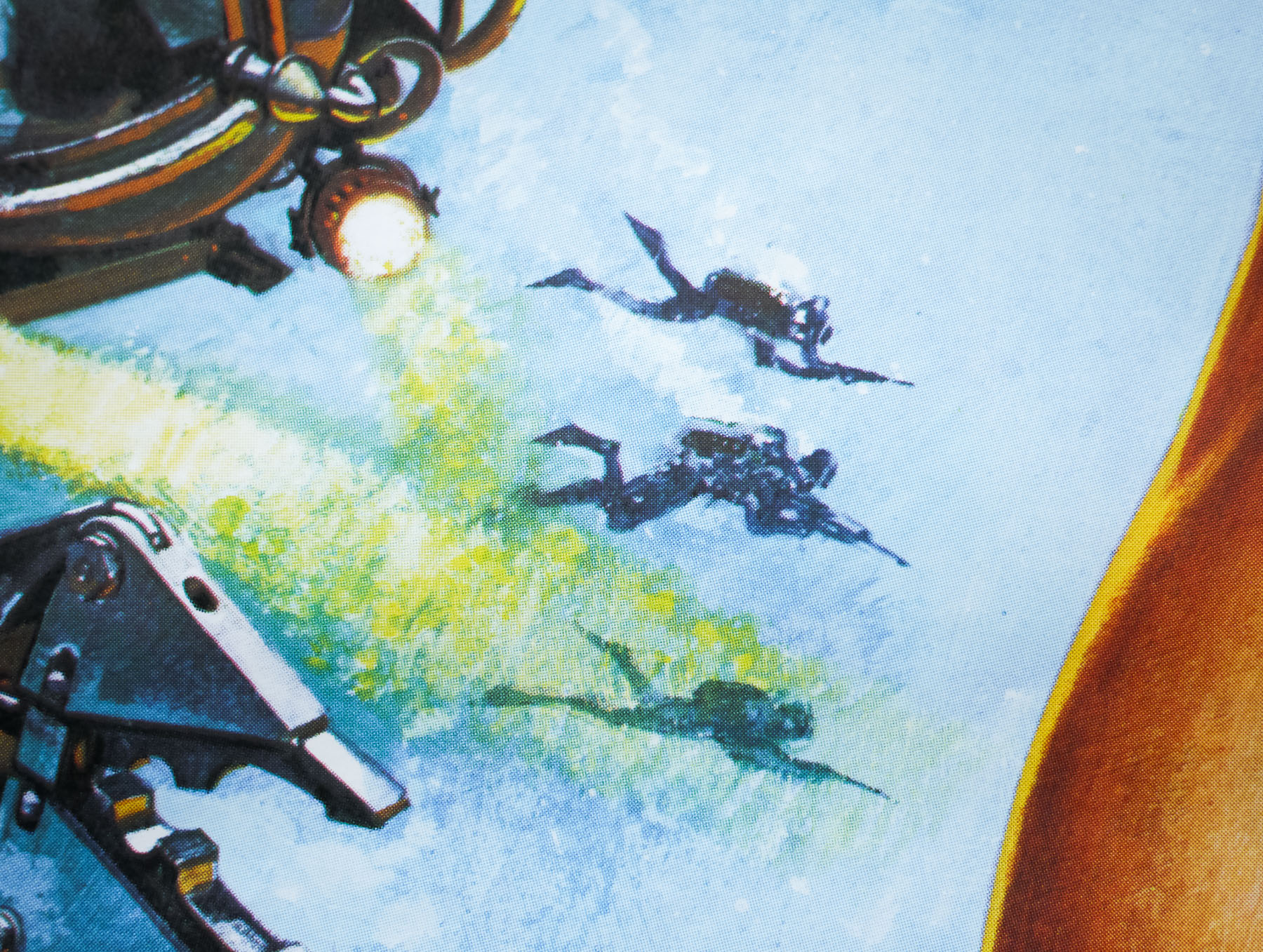
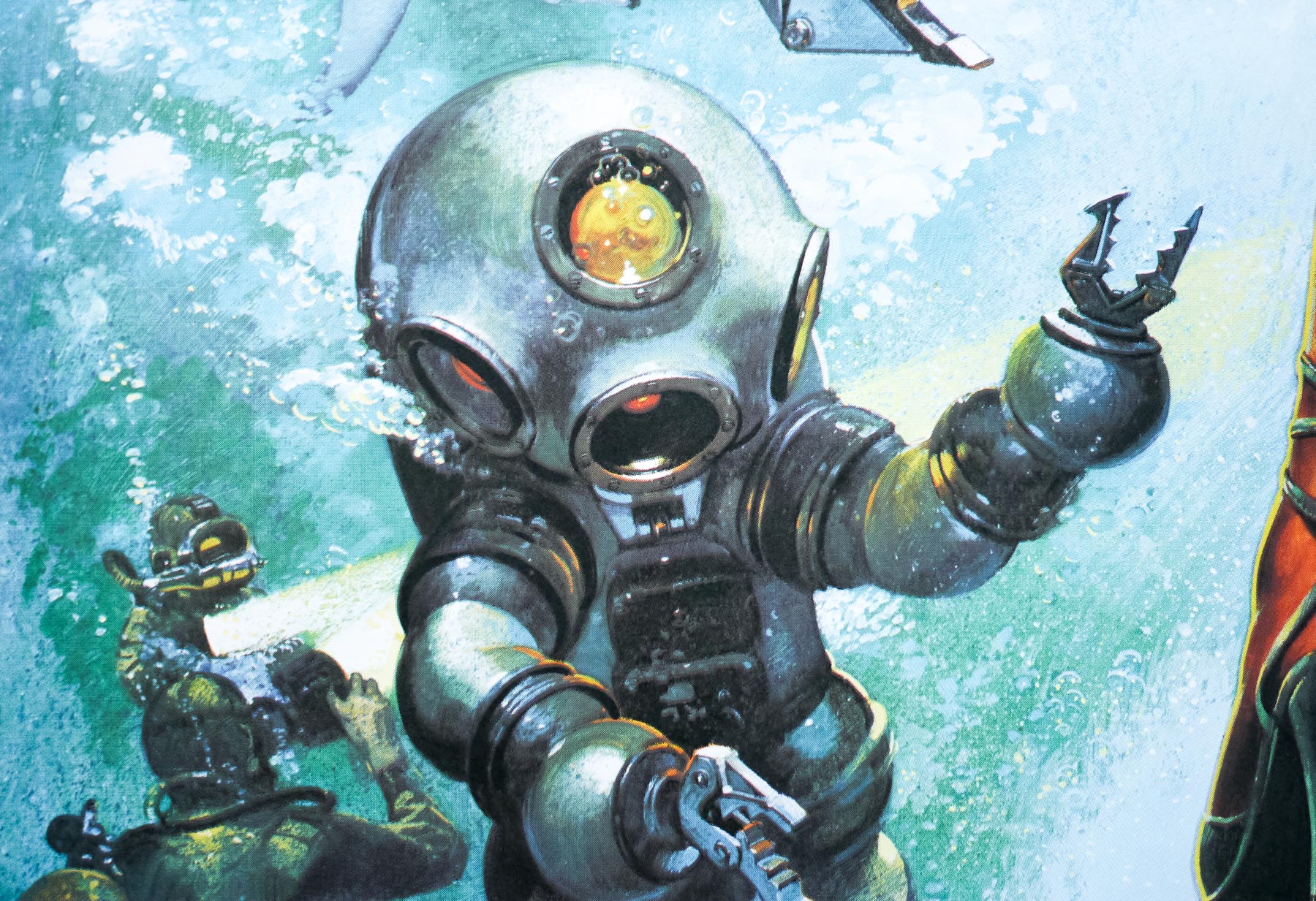
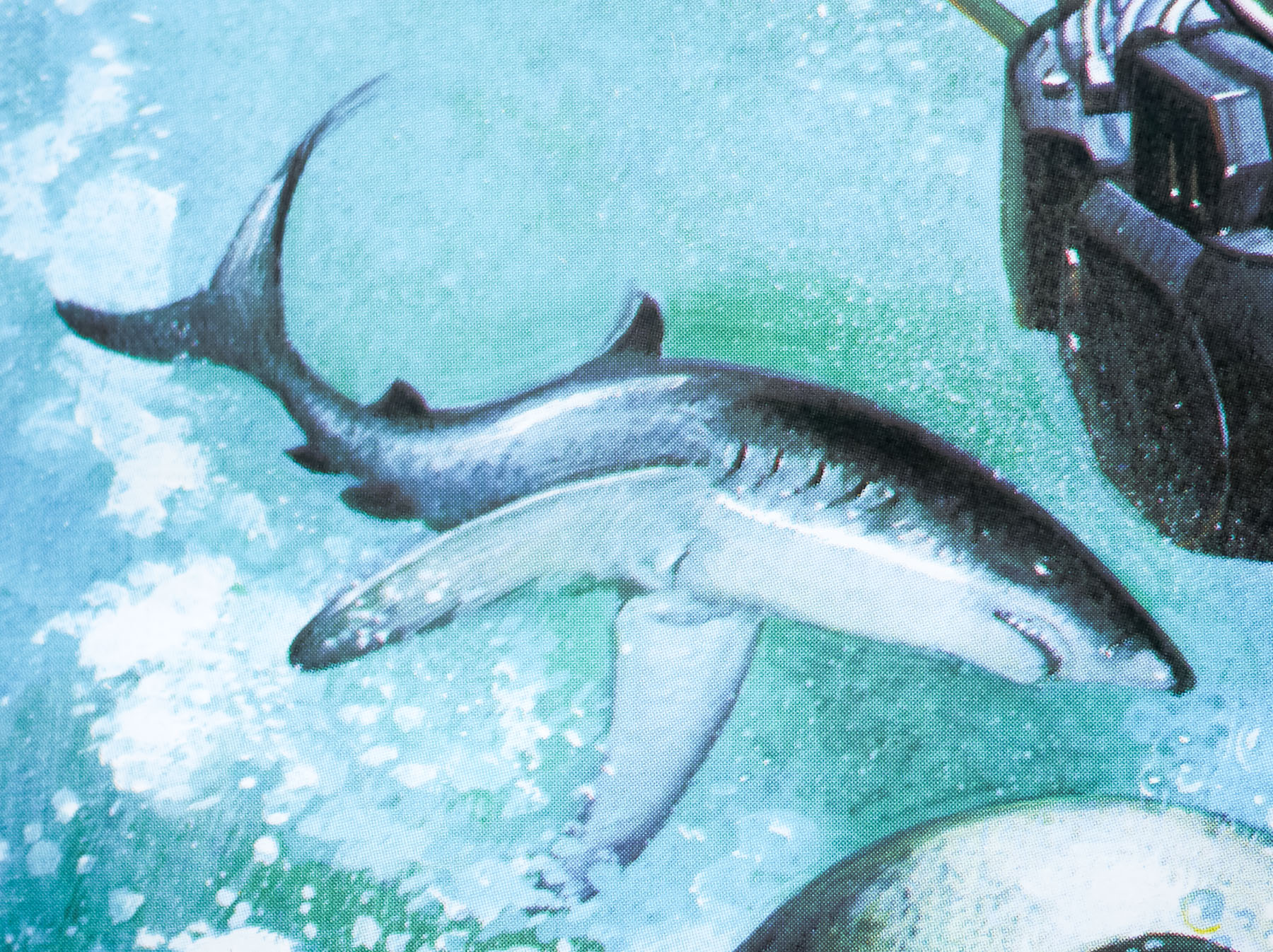
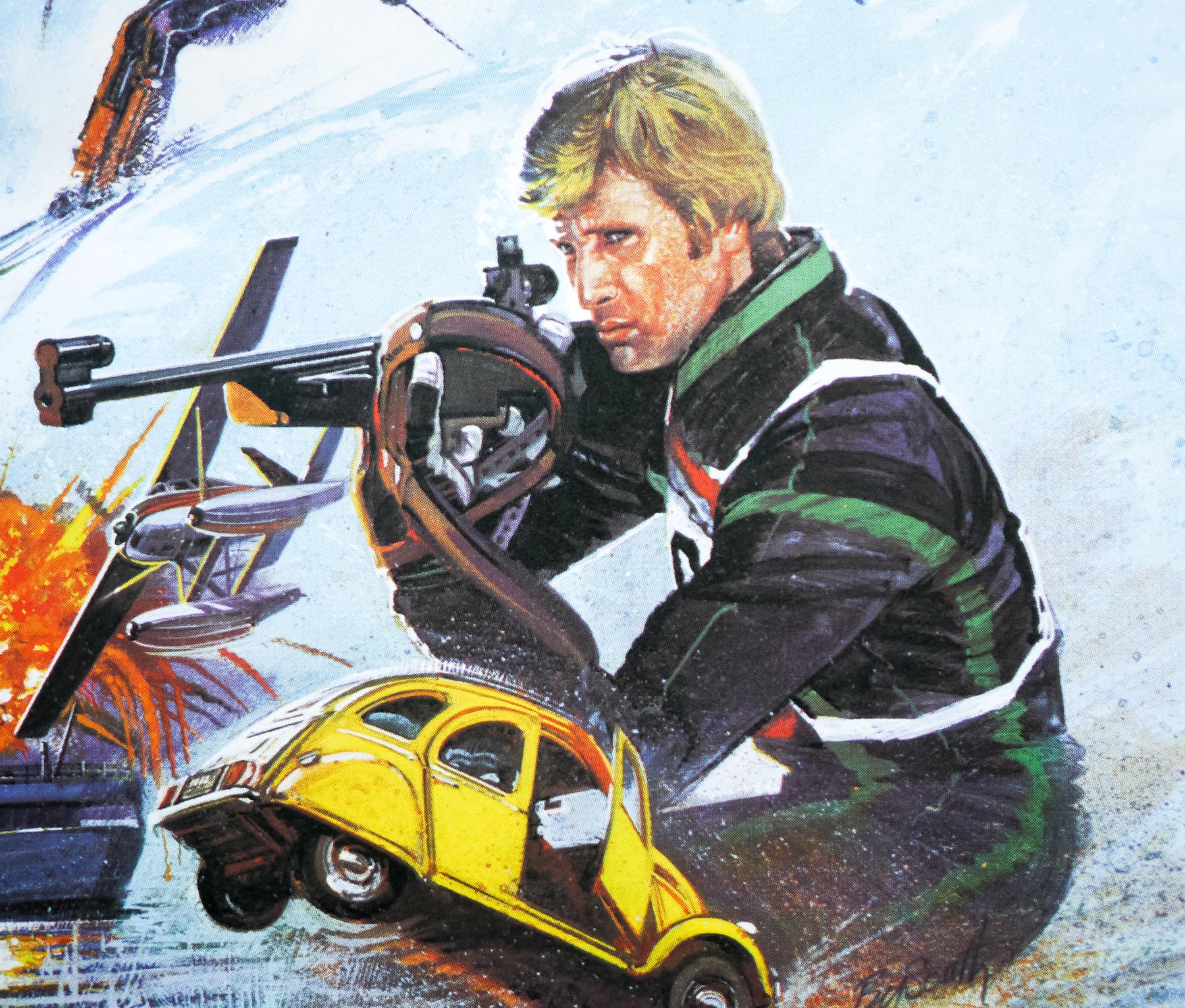
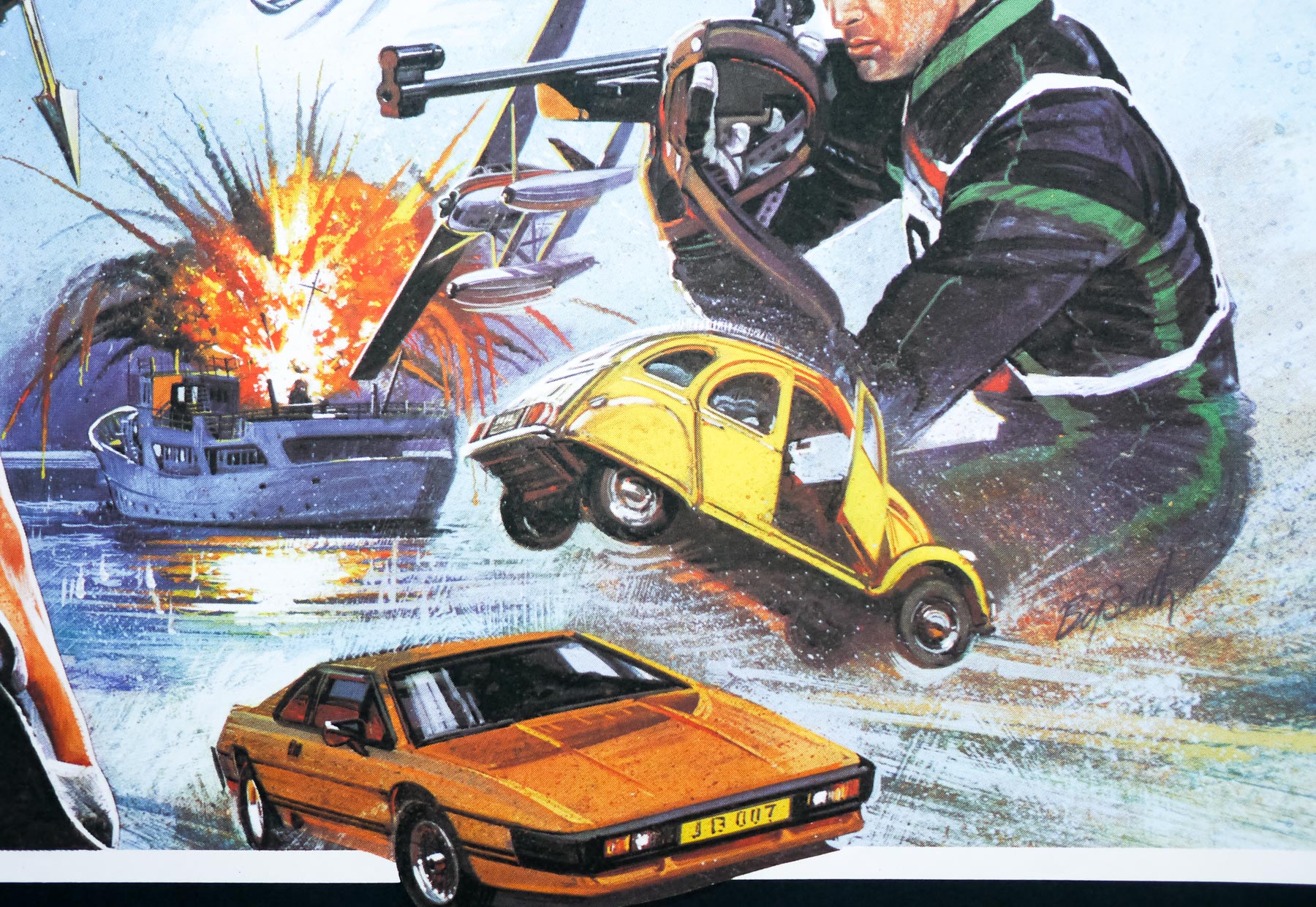
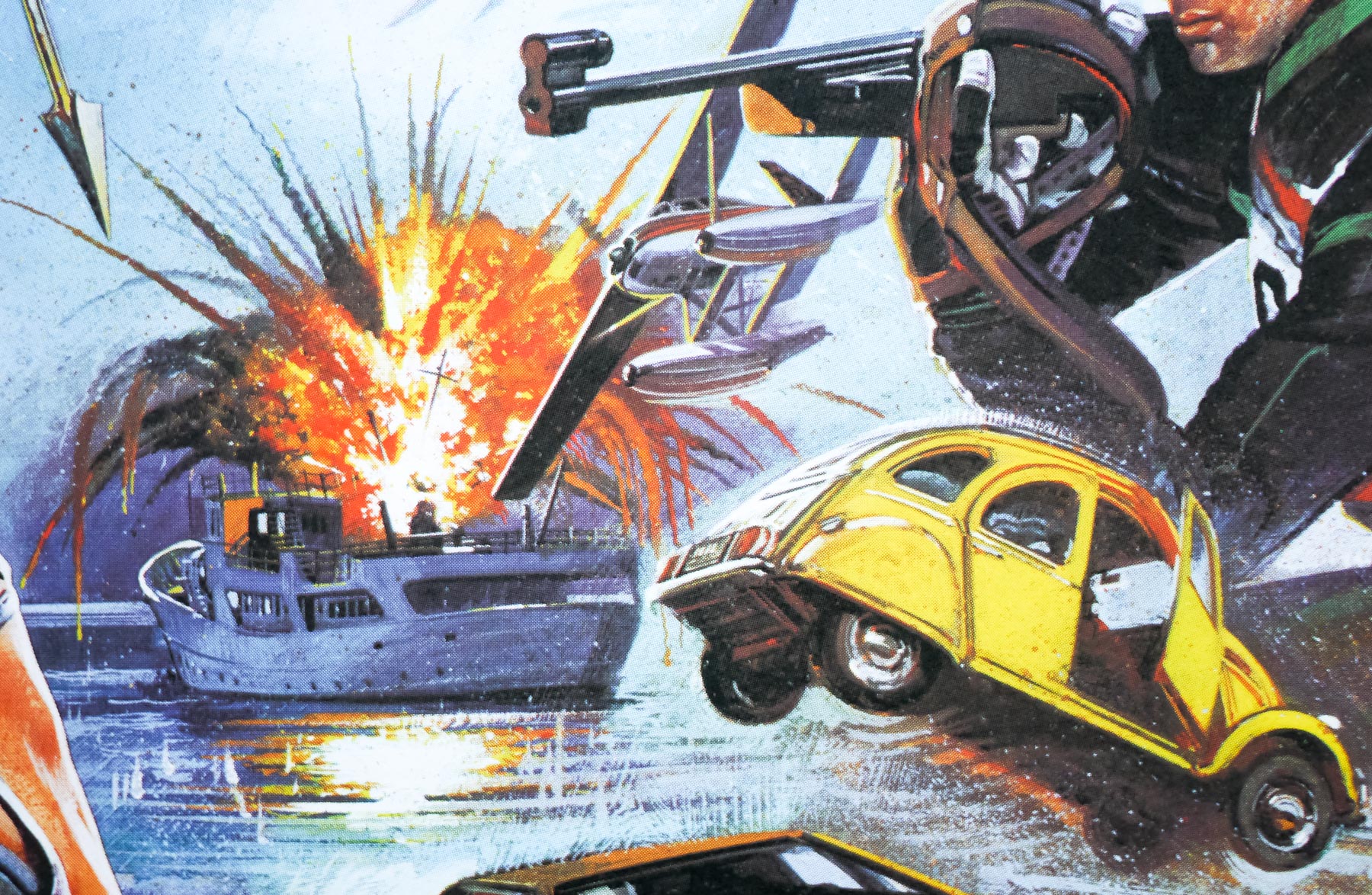
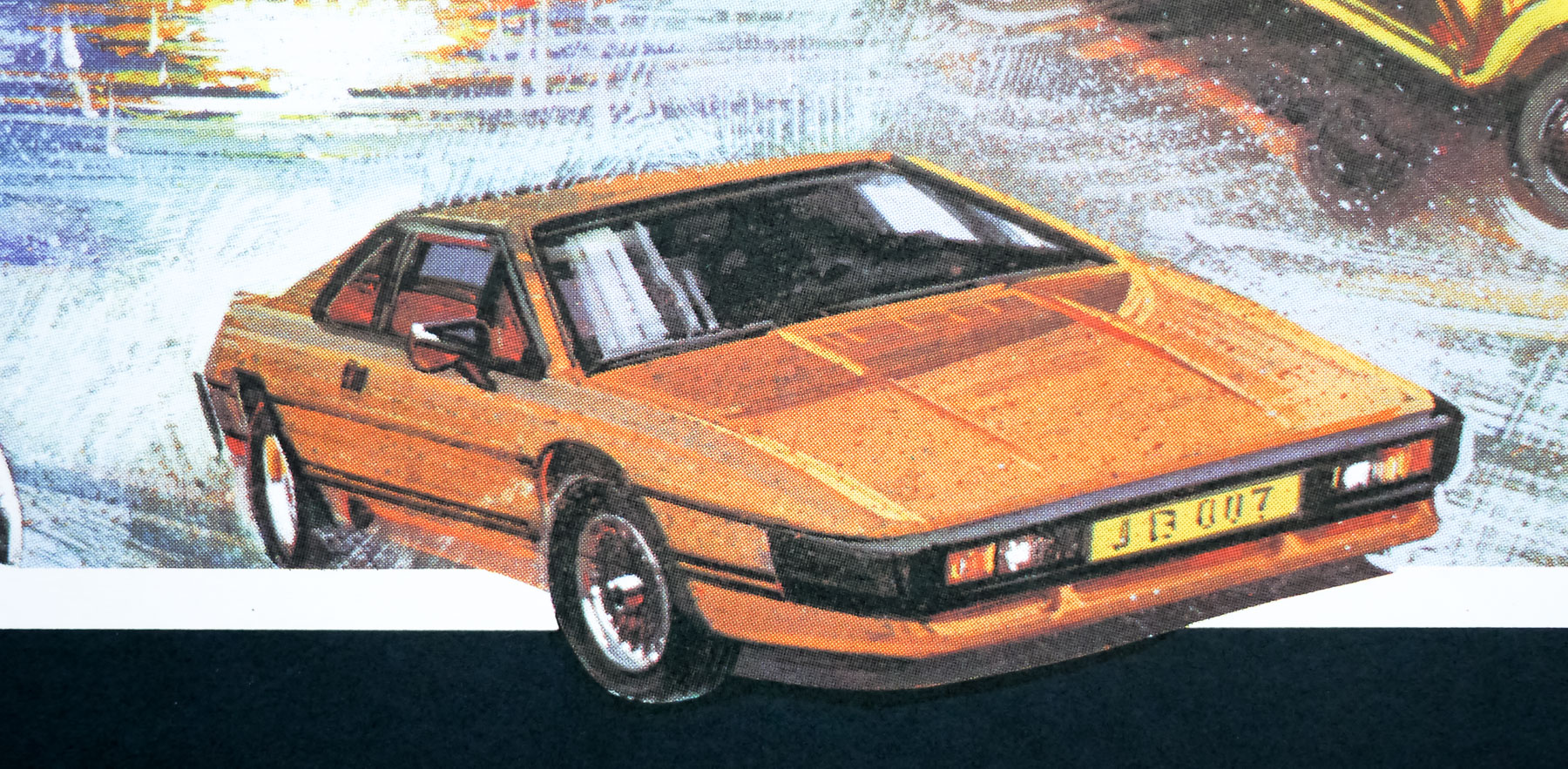
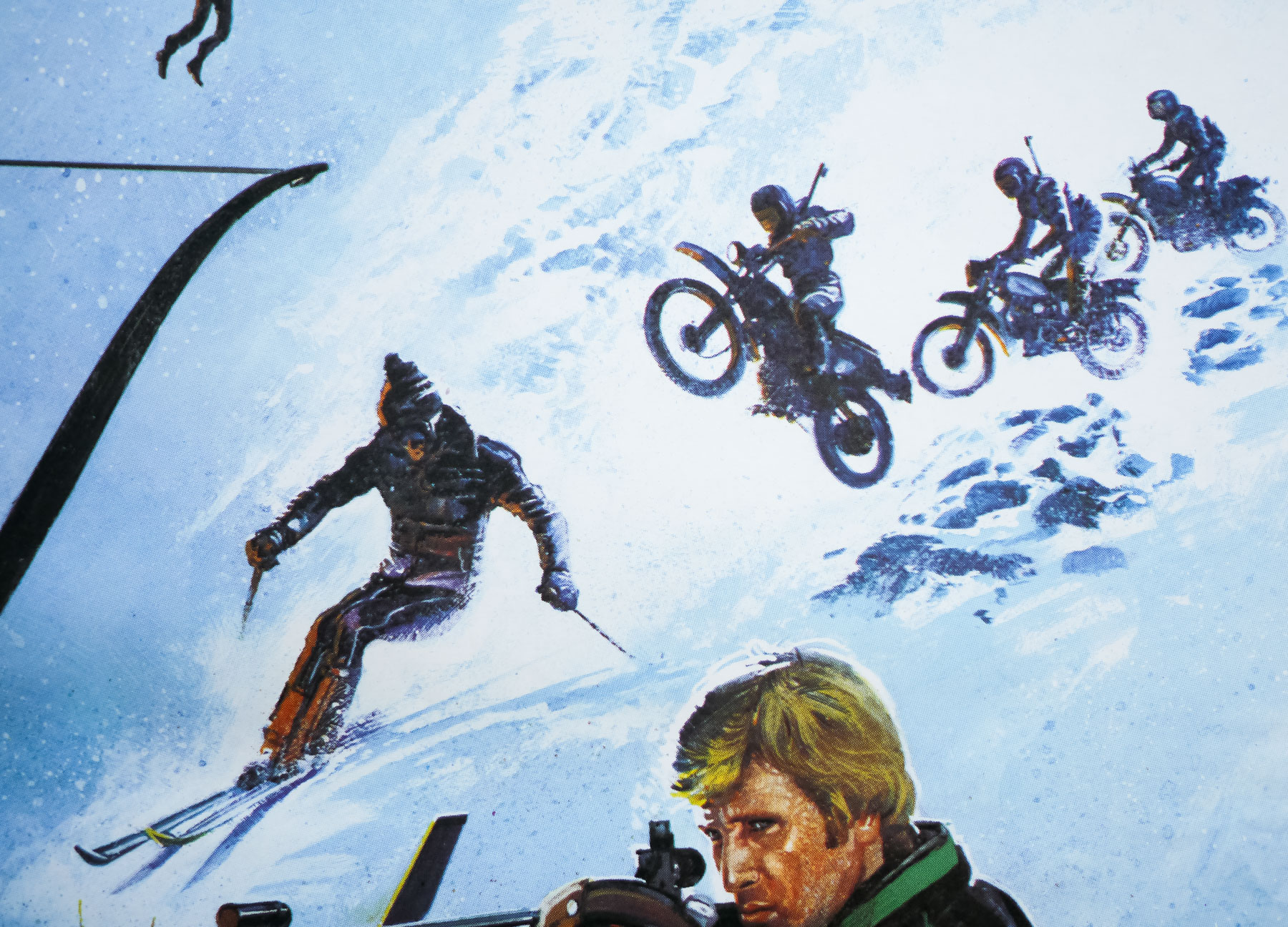
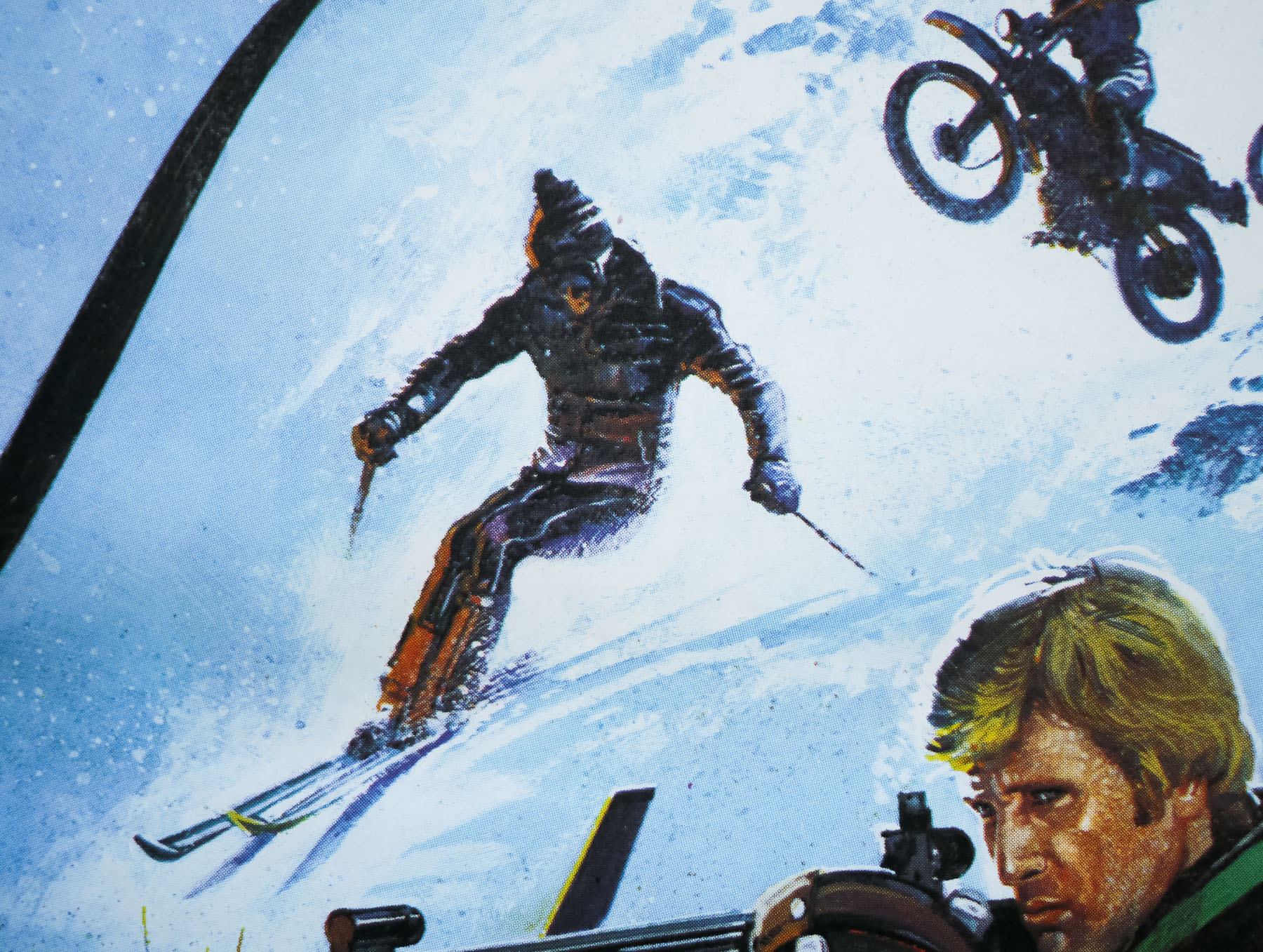
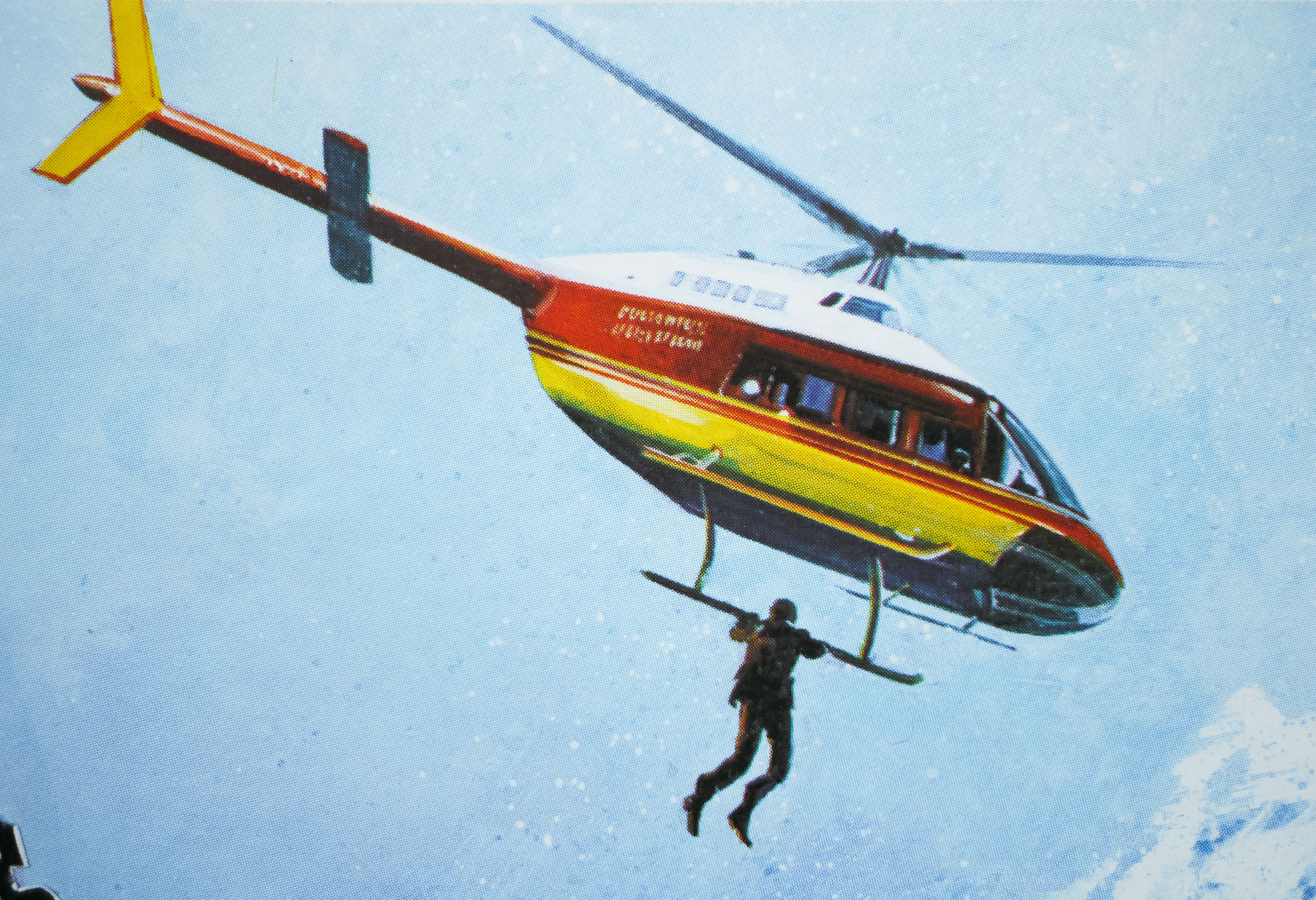
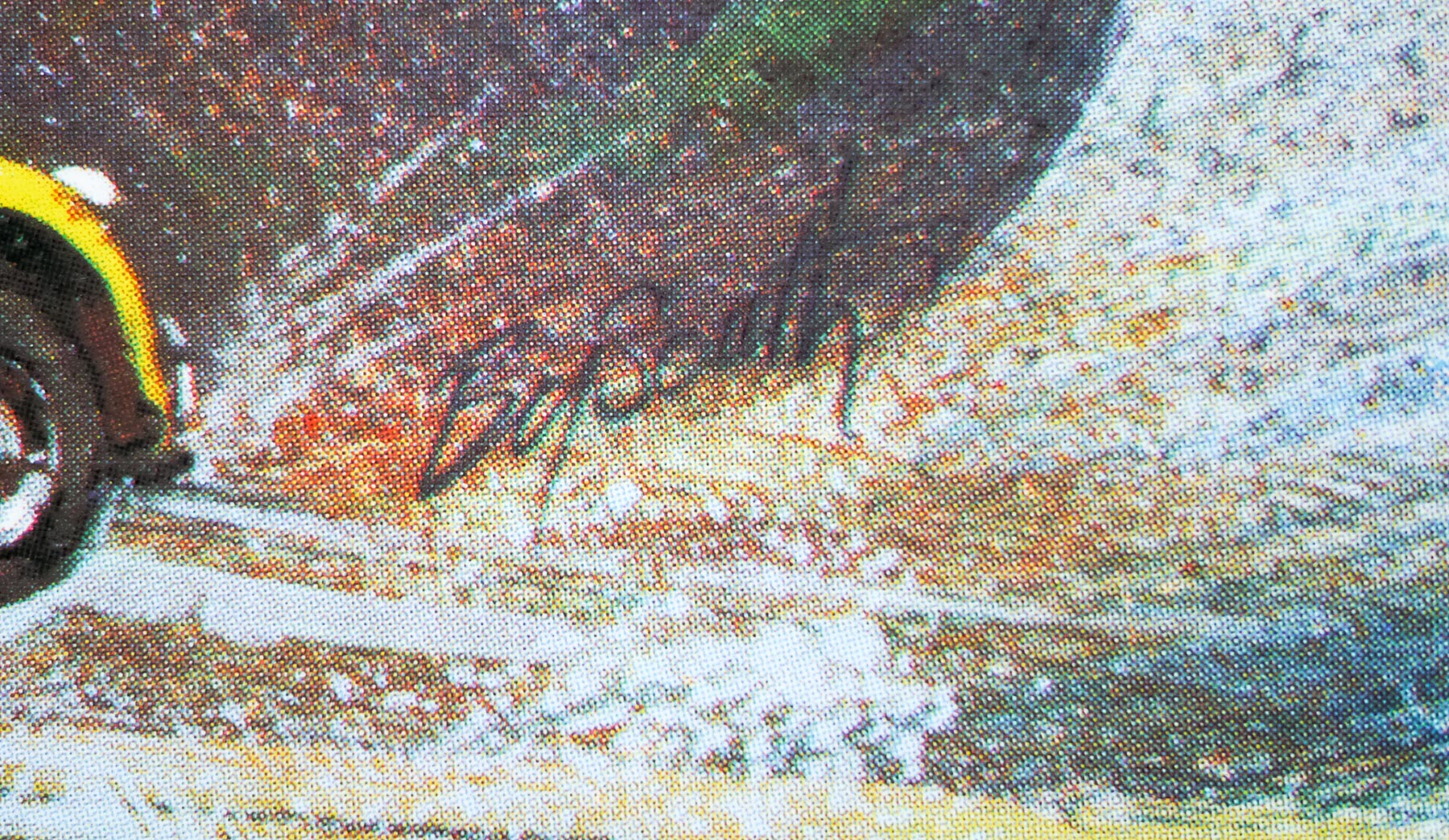
This British quad features the ‘legs’ concept that was created by the American designer Bill Gold and was subsequently used for the film’s marketing campaign across the globe, including the US one sheet. Owing to the landscape format of the quad poster it was decided that a montage of scenes from the film should be added either side of the legs. The montage was designed by Eddie Paul at the British film marketing agency FEREF and the painting job was given to the talented illustrator Brian Bysouth, whose skill at accurately depicting vehicles, characters and dynamic action scenes was the perfect compliment for the design. The montage was also adapted (and somewhat crammed) onto an international one sheet used to market the film in countries such as Australia.

In 2012 I met and interviewed Brian Bysouth and this poster was discussed during our meeting:

One Bond poster you worked on is the quad for For Your Eyes Only. It had the Bill Gold designed element of the long legs, but you modified the montage when doing the finished illustration?
Eric Pulford created the U.K. poster design that was approved. The inclusion of the very iconic Bill Gold legs concept was a must in any design that was submitted, so I suppose the scope for fresh designs was limited. In my opinion Eric’s original montage was not his best work and, although I tried to re-arrange some of the elements, the reference material supplied was not very exciting and I think the surrounding montage looks rather ordinary.

A similar difficulty arose with the design Eric had done for The Bounty (1984). His atmospheric colour rough was exciting, but when I began to sketch out the finished painting I realised the perspective of the ship was flawed. Eric’s exciting random montage of characters had initially disguised the shortcoming. I spent a day redrawing the ship and rigging to ensure it was reasonably correct, and then moved the characters to try to improve the composition. I was pleased with the final painting but was never happy with the montage, which I really thought needed recomposing. I didn’t think a confrontation with Eric was in my best interest.

Some weeks later I asked for the return of my painting only to be told, ‘it could not be found’.  Obviously, a light-fingered person took a fancy to it. Much of my work has been lost to me in that way, including my teaser art for A View to a Kill. Presently I am engaged in monitoring Film Memorabilia auction sales in order to reclaim art being offered for sale that legally belongs to me. I am glad to have been successful in recovering quite a number of paintings.  One case involving poster art I did for 20th. Century Fox is still ongoing as I speak.
Note that the article also features an image of the original artwork that has differences in the layout and details in comparison to this final quad.

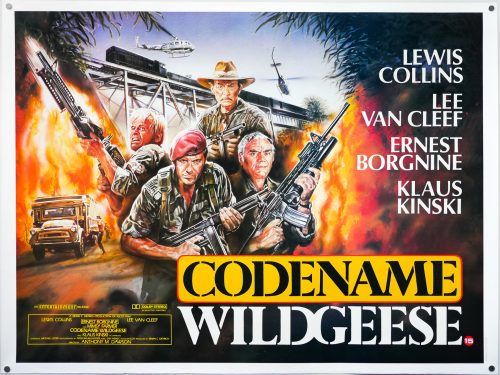
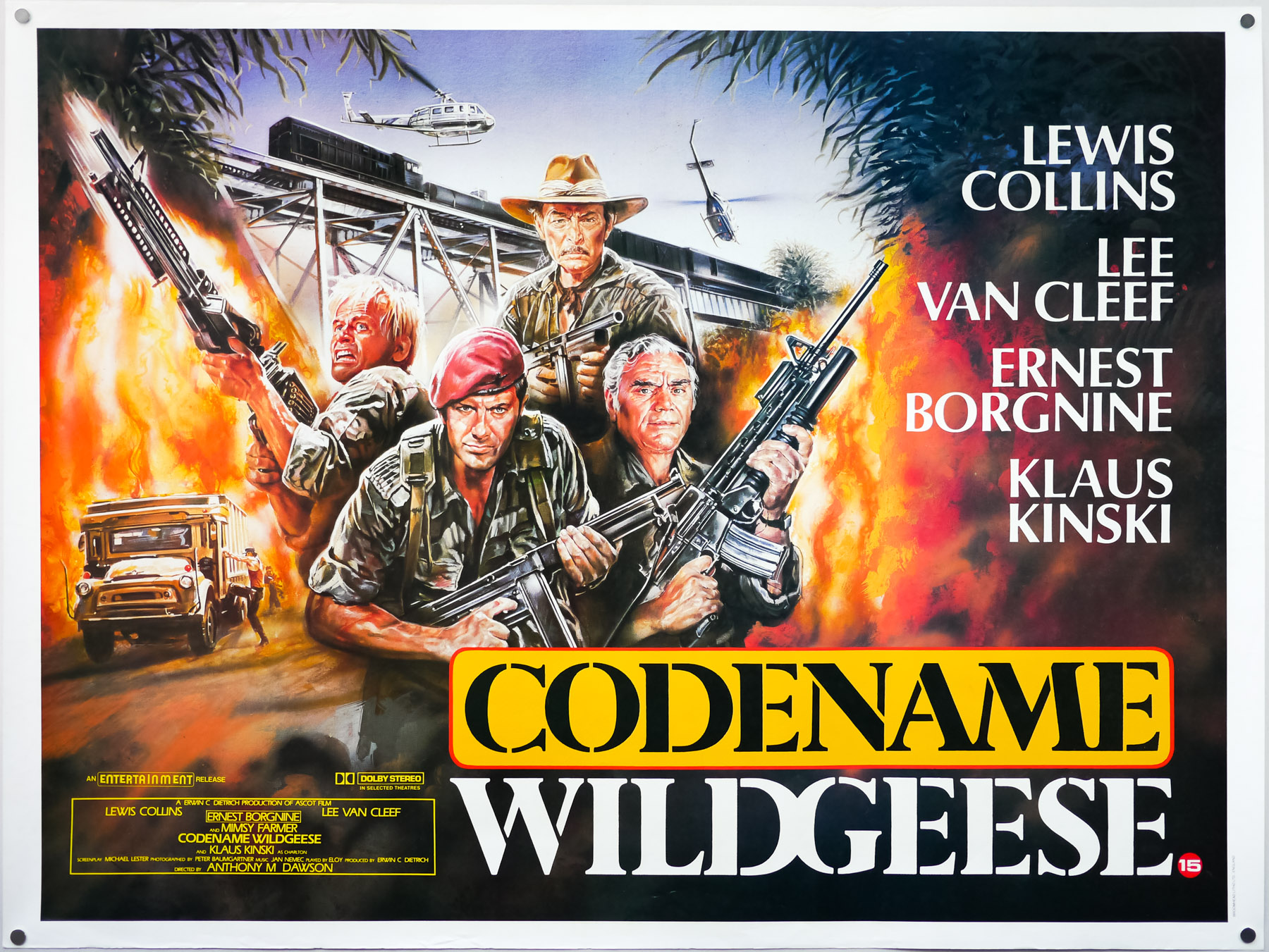
Codename Wildgeese / quad / UK

05.01.15

Poster Poster
Title
Codename Wildgeese
AKA
Geheimcode: Wildgänse (Germany - original title) | Arcobaleno selvaggio [Wild Rainbow] (Italy) | Code name: Wild Geese (alt. spelling)
Year of Film
1984
Director
Antonio Margheriti
Starring
Lewis Collins, Lee Van Cleef, Ernest Borgnine, Klaus Kinski, Manfred Lehmann, Mimsy Farmer
Origin of Film
Italy | West Germany
Genre(s) of Film
Lewis Collins, Lee Van Cleef, Ernest Borgnine, Klaus Kinski, Manfred Lehmann, Mimsy Farmer,
Type of Poster
Quad
Style of Poster
--
Origin of Poster
UK
Year of Poster
1985
Designer
Tom Chantrell
Artist
Enzo Sciotti (original artwork) | Tom Chantrell (quad adaptations)
Size (inches)
30 2/16" x 40"
SS or DS
SS
Tagline
--

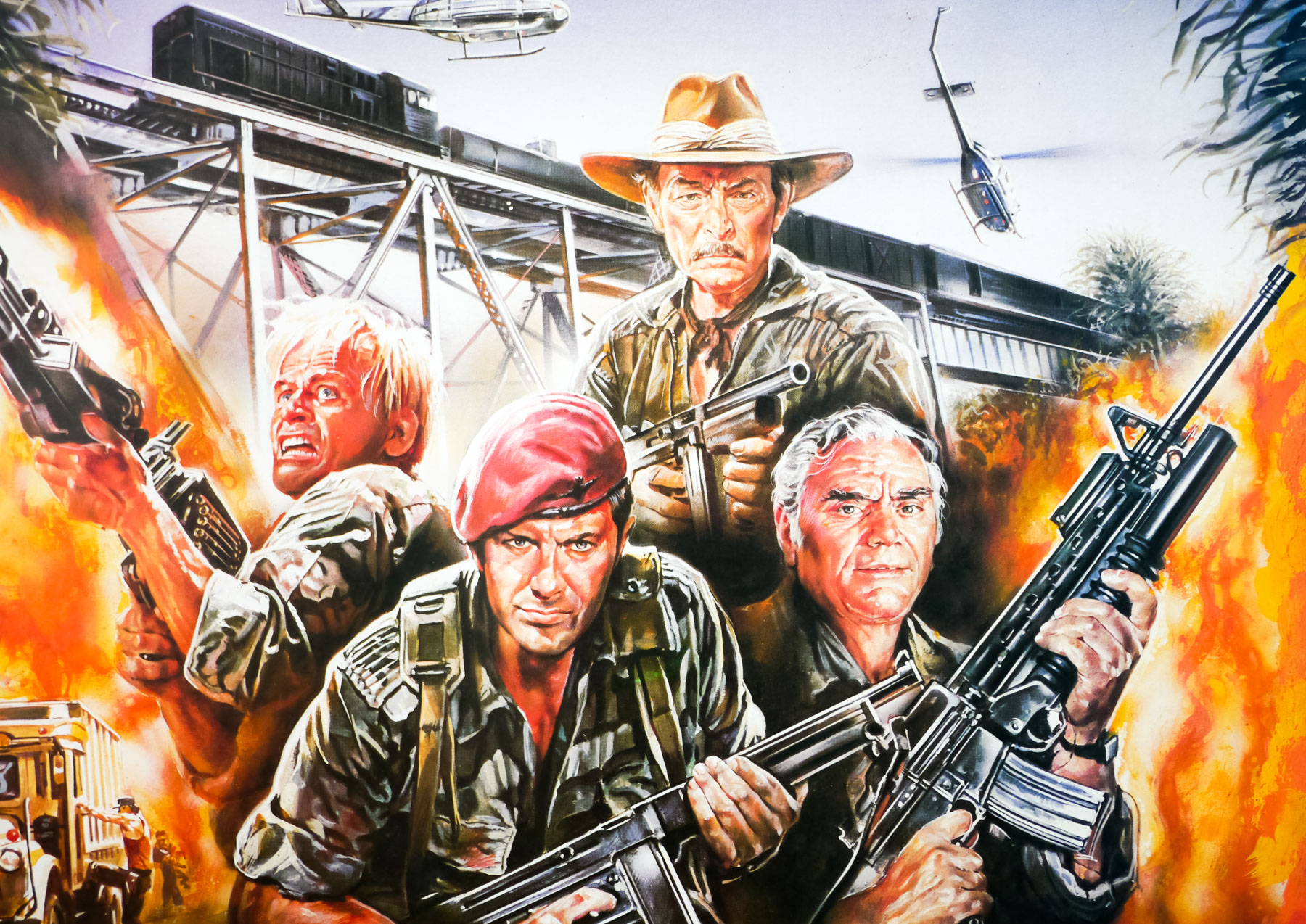
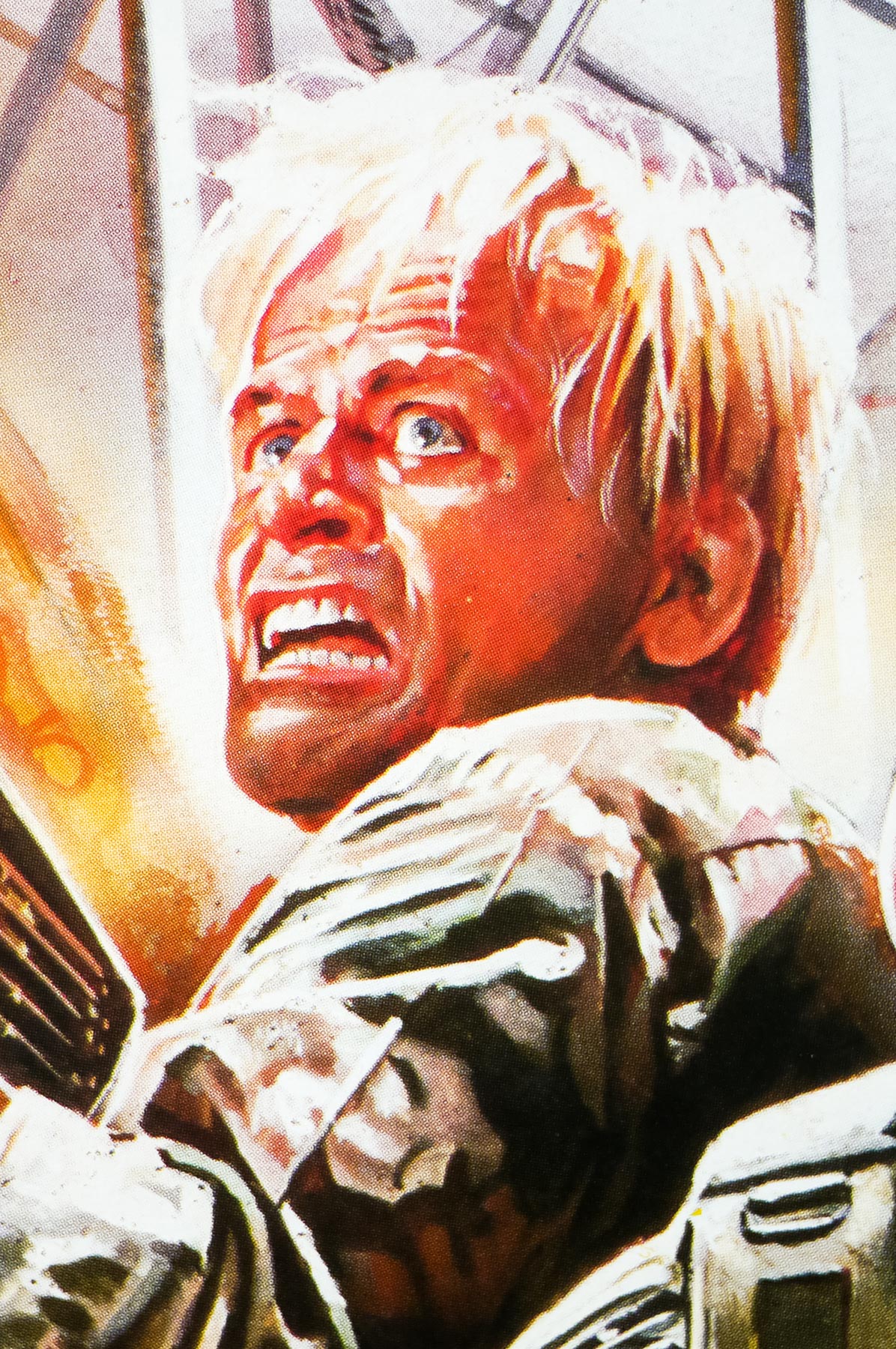
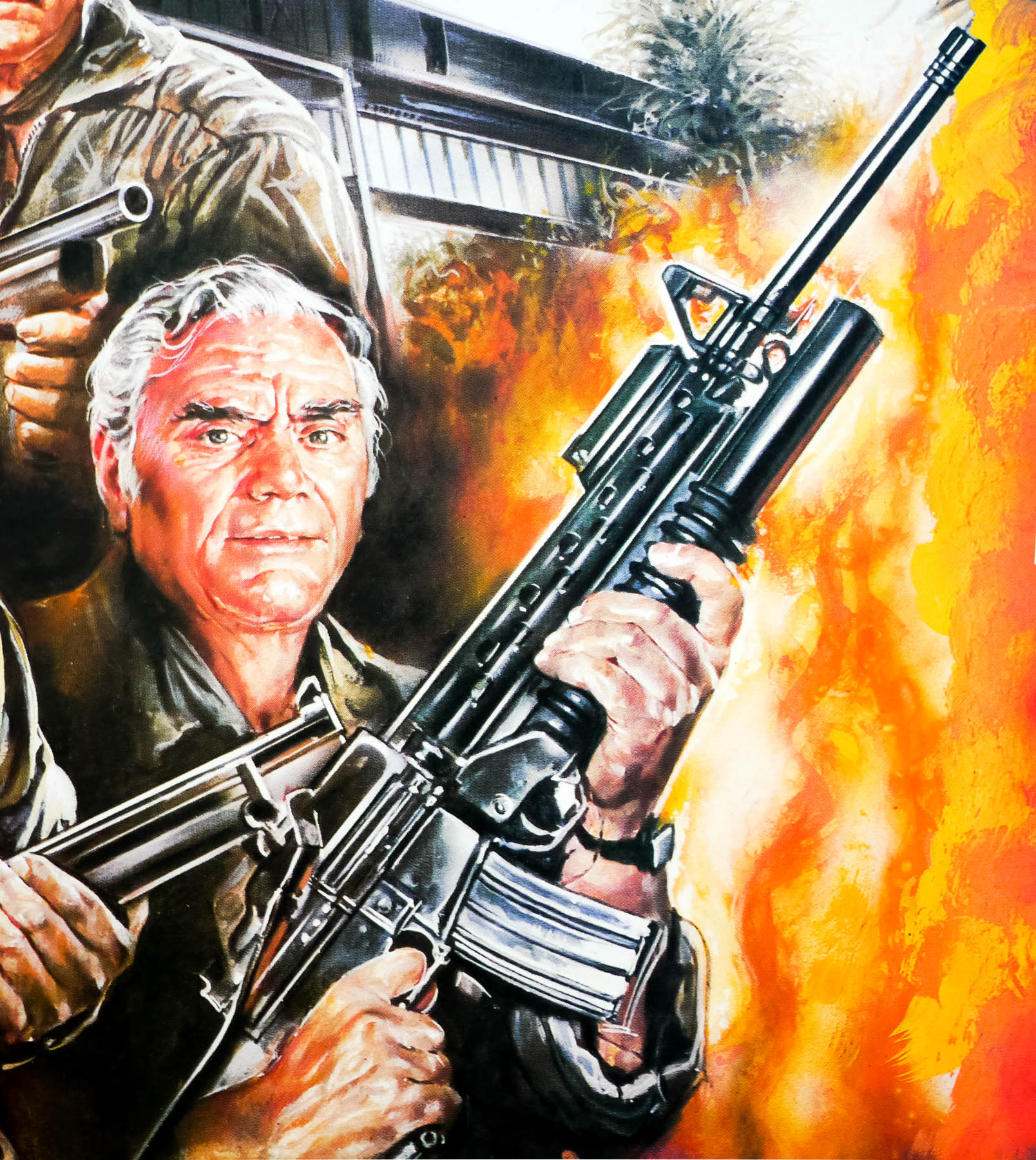
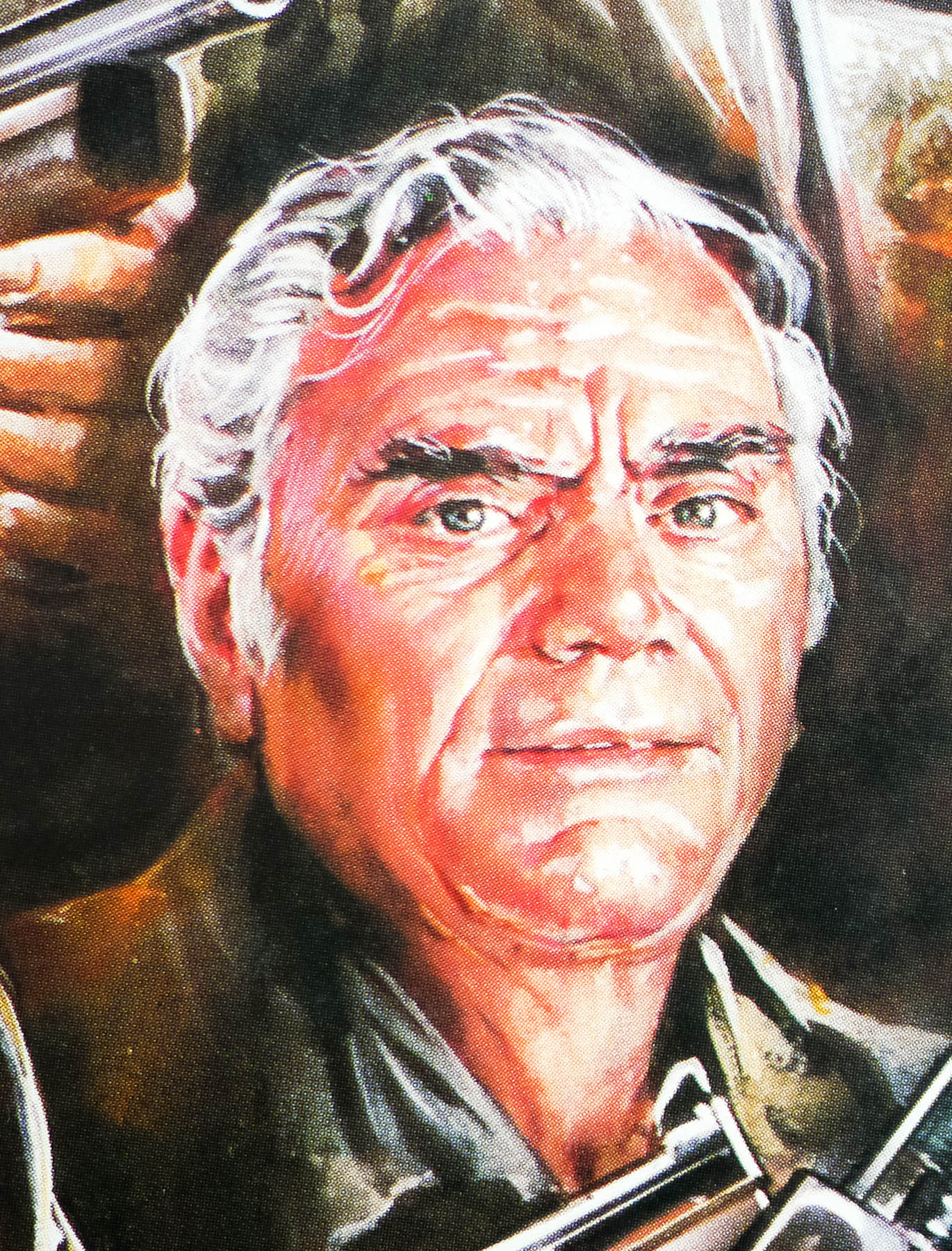
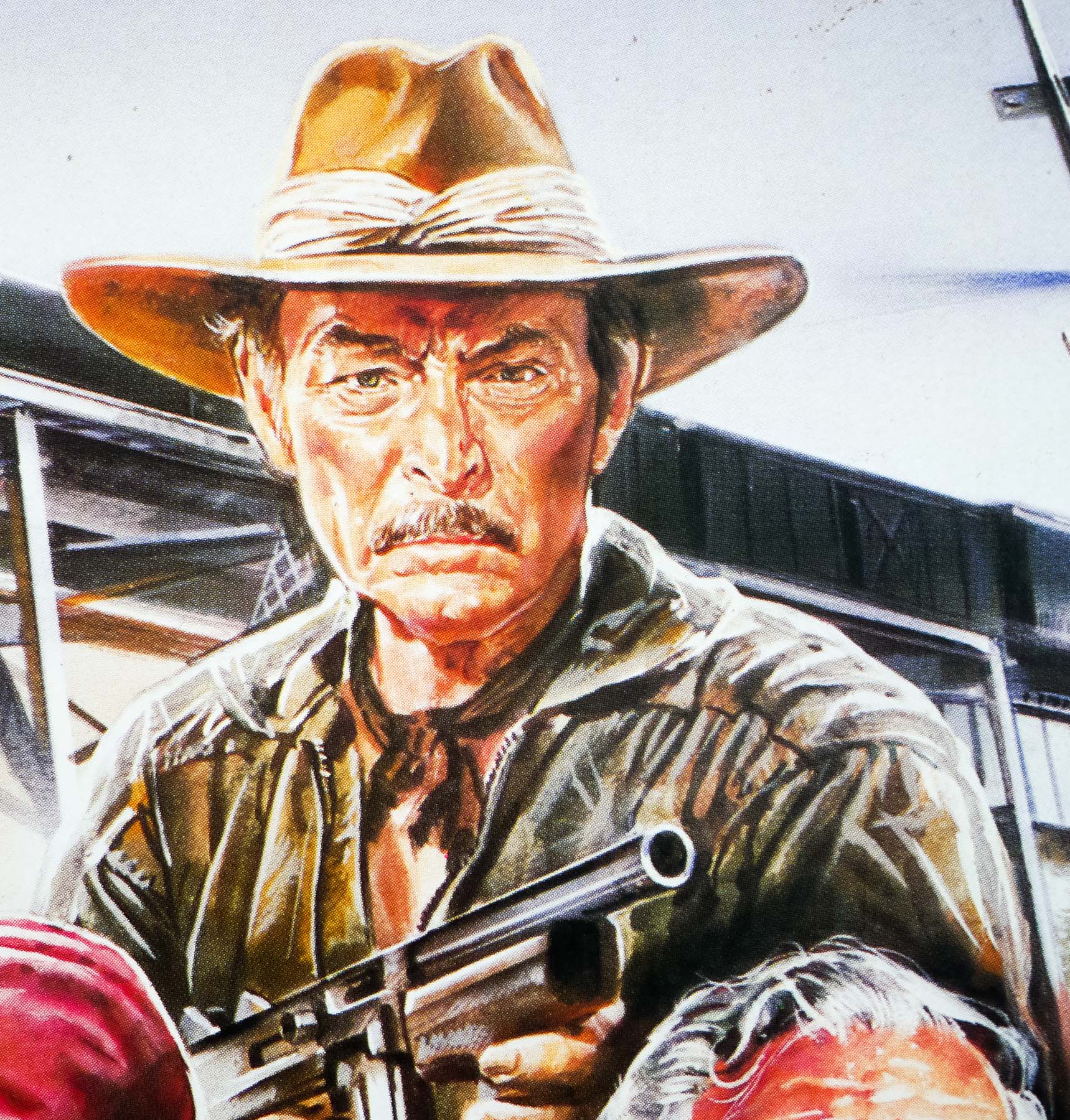
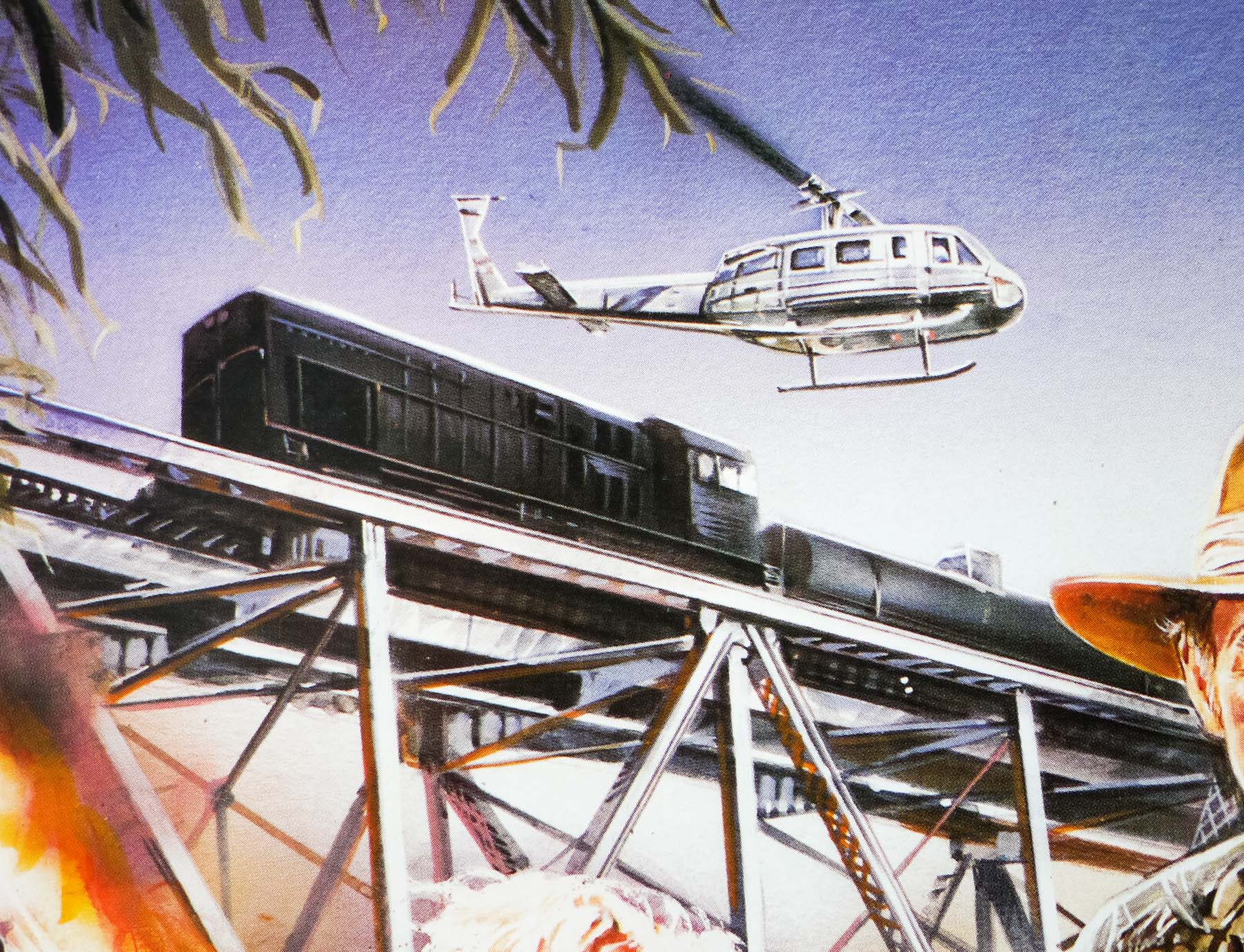
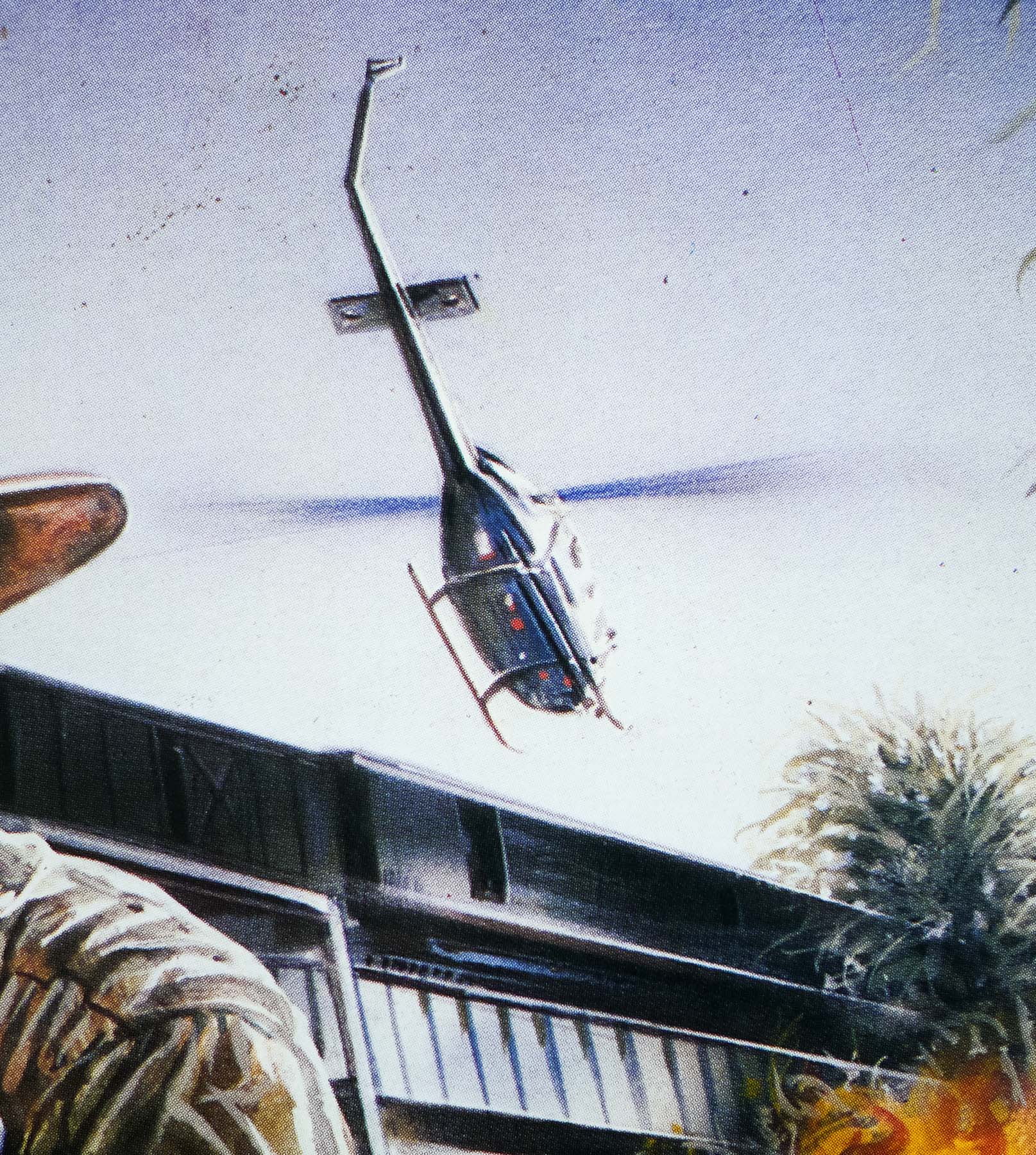
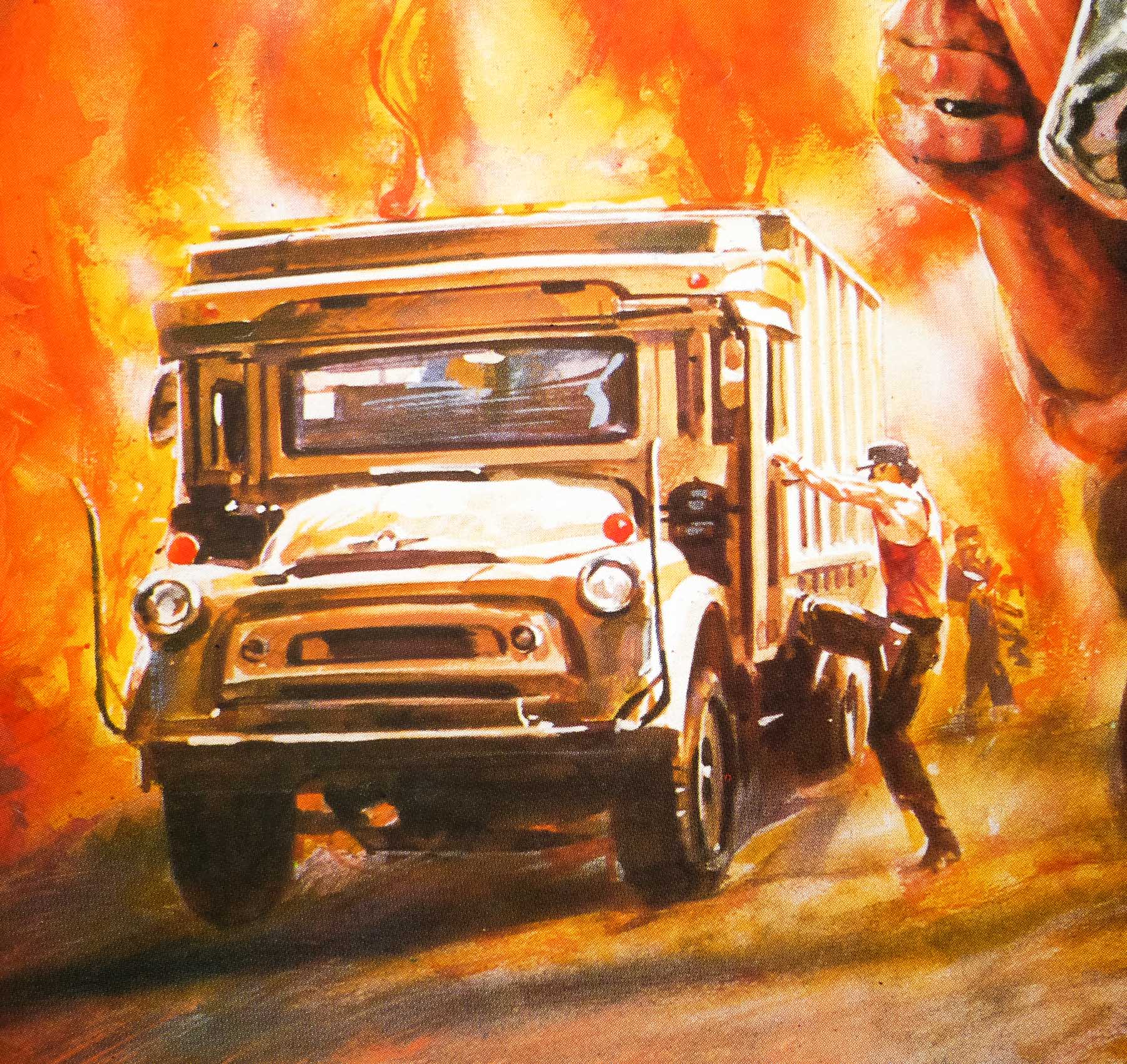
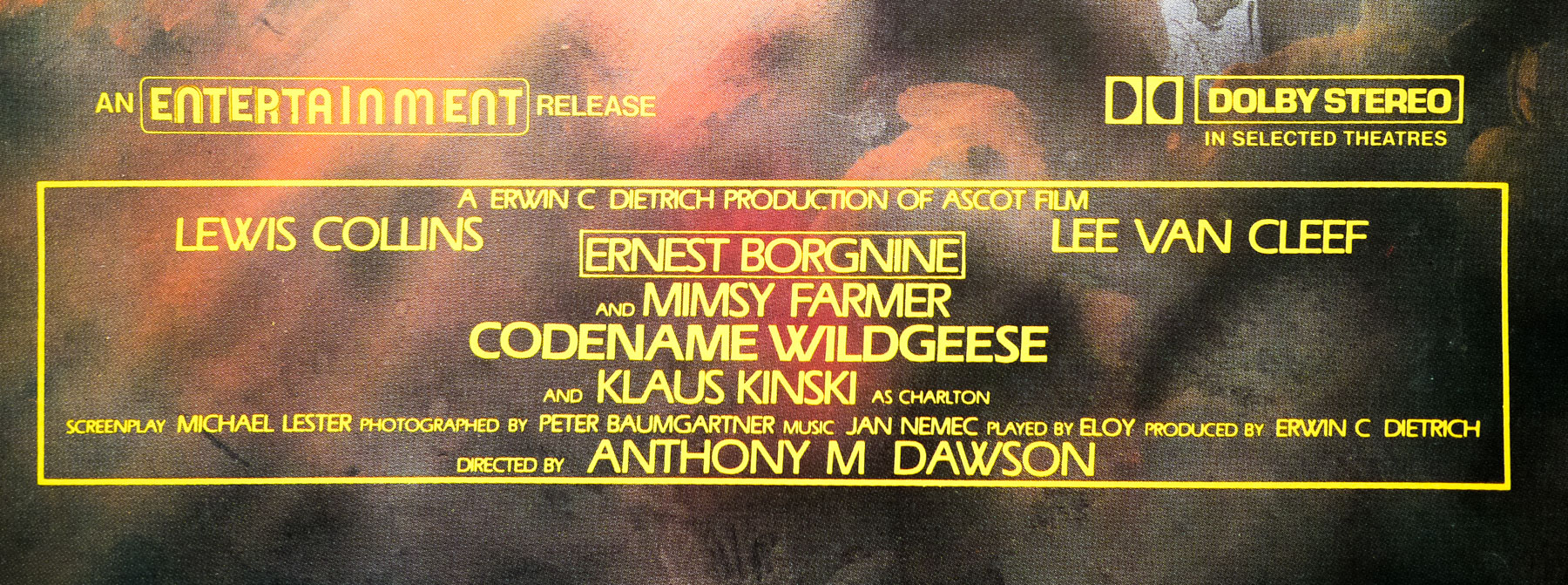
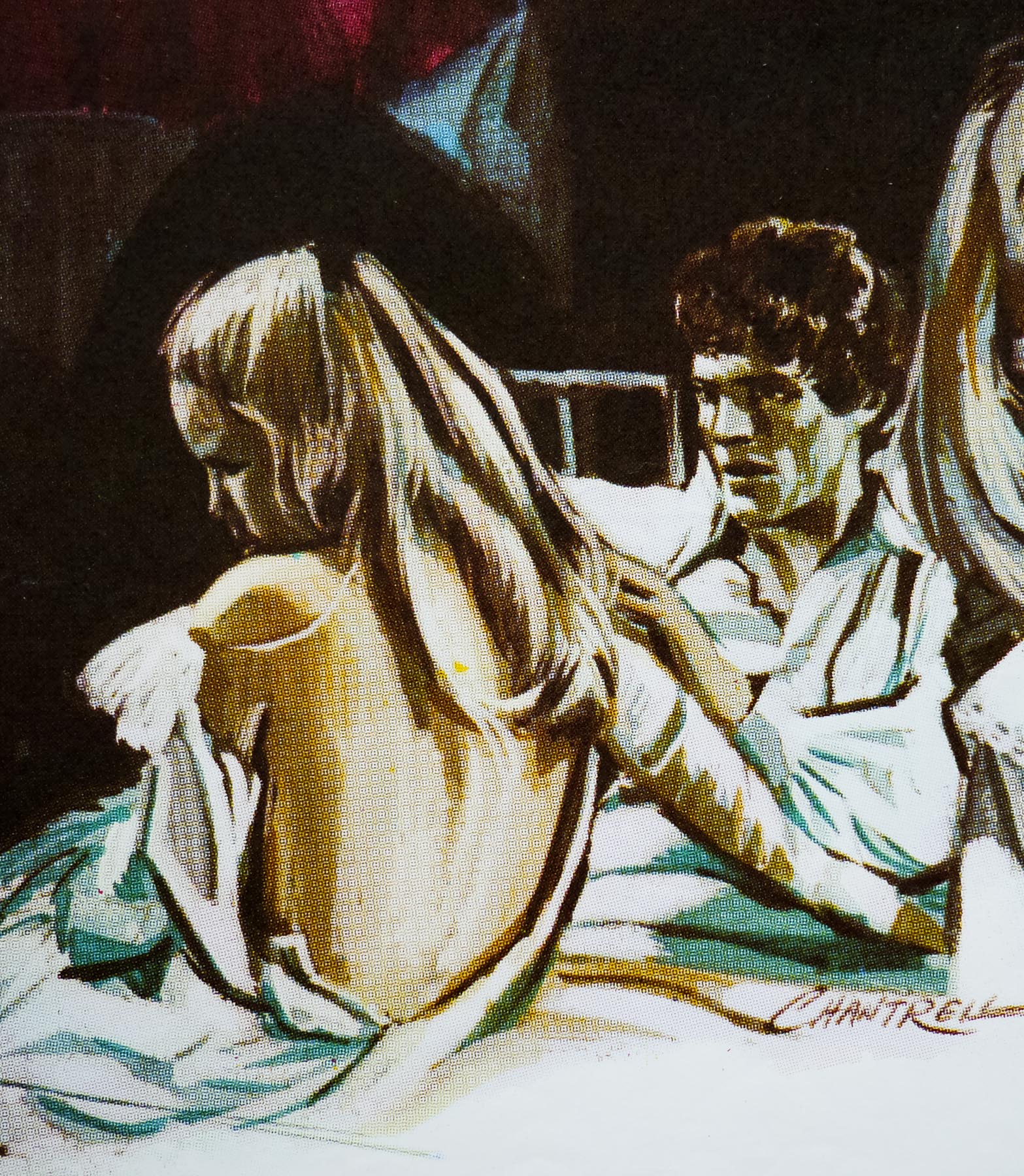
Codename Wildgeese is a 1984 entry in the ‘Macaroni Combat‘ genre of Italian-made action/war films that was helmed by the prolific director Antonio Margheriti (most often credited as Anthony M. Dawson) and is usually associated with the 1978 British film The Wild Geese. Both films are ensemble-cast action films in which Western mercenaries are sent into ‘wild’, lawless, dictator-ruled countries to carry out a mission and escape alive. Both films feature aging cast members who probably should have known better and I don’t doubt that Margheriti and his enterprising distributors chose the Wildgeese element of the title to capitalise on the success of the earlier film.

The late Lewis Collins, known for his leading man roles in action-fare such as TVs The Profressionals and the 1982 British action film Who Dares Wins, appears as the leader of a mercenary group which is employed covertly by the DEA (in the shape of Ernest Borgnine) and sent into the opium-producing area in Asia known as the Golden Triangle to attempt to stem the supply of illegal opium to the west. His team, which includes pilot China (Lee Van Cleef), make their way into the Triangle and engage an enemy base in a quarry before pushing onto the factories and a fiery showdown.

The film is largely a damp squib with very little in the way of memorable action sequences or an engaging script. The effects and gunplay are largely poor and the editing and soundtrack are notably bad. It’s certainly not a patch on The Wild Geese, which in itself was no masterpiece.

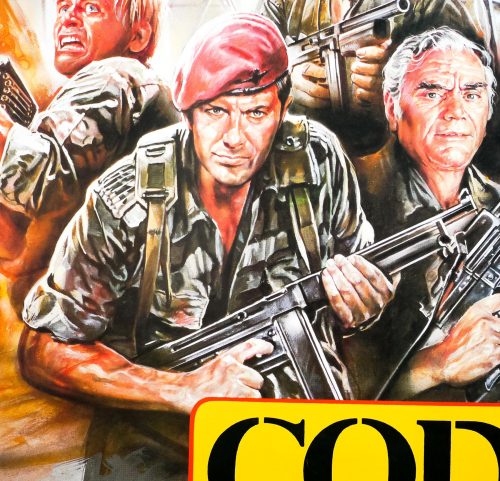
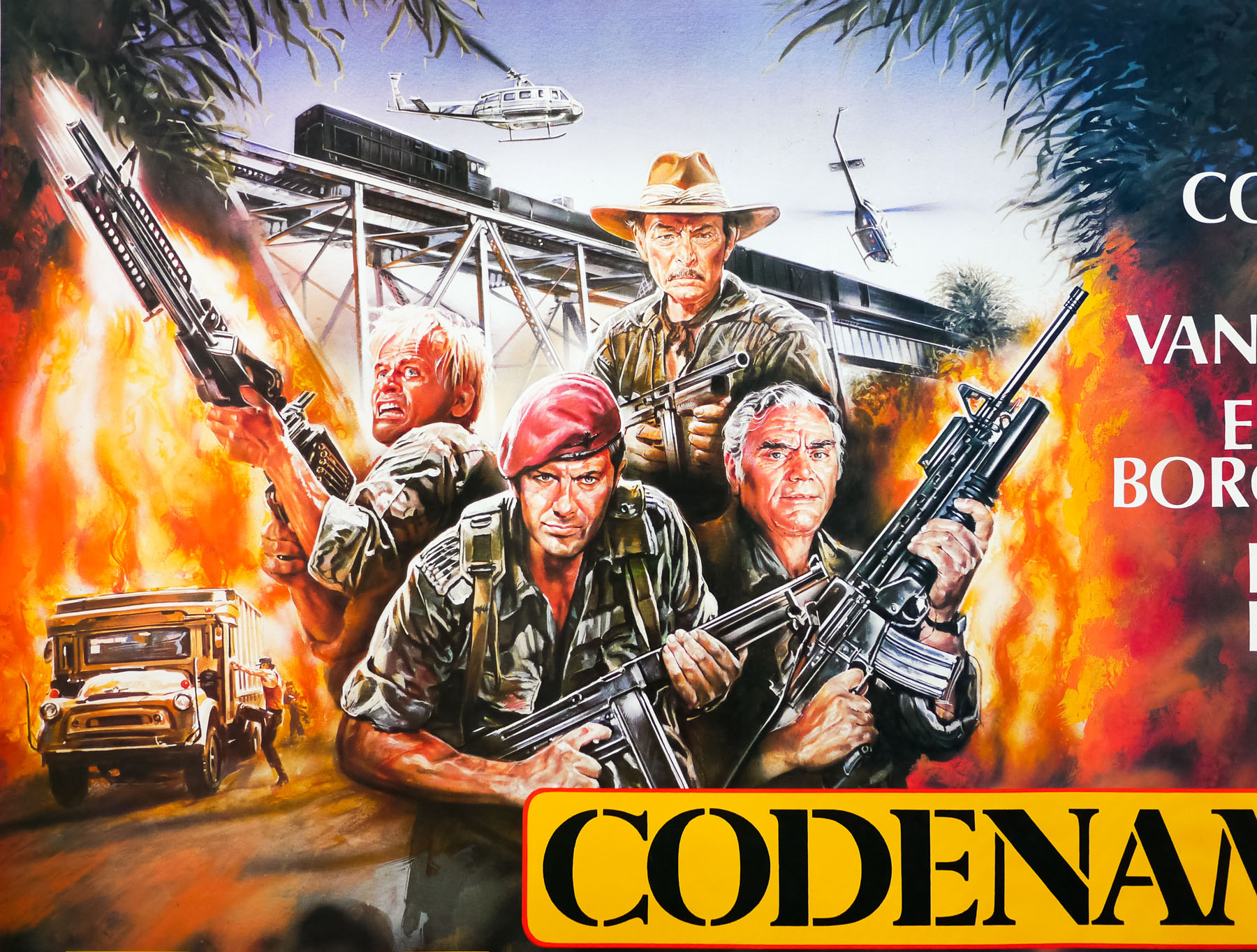
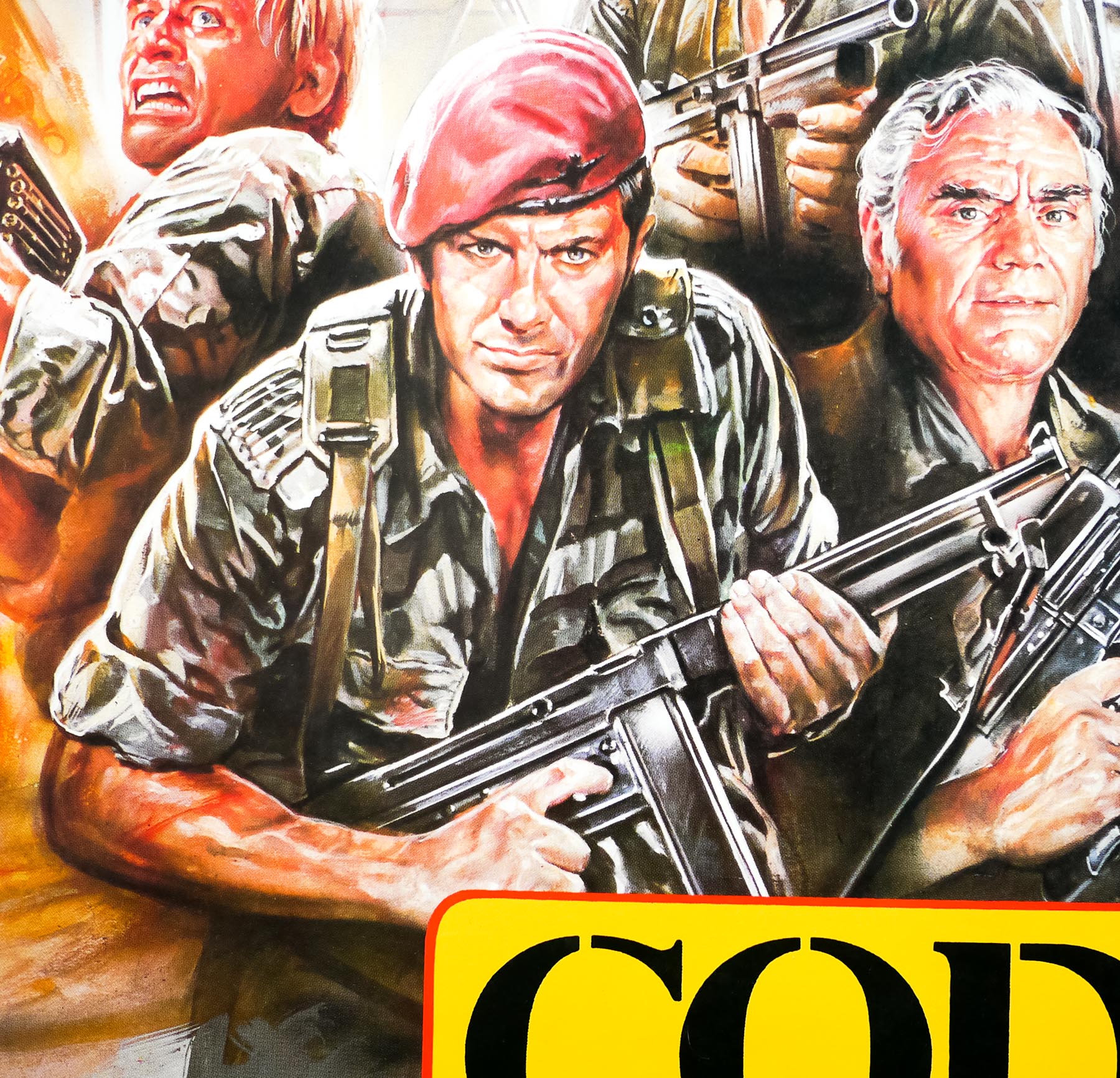
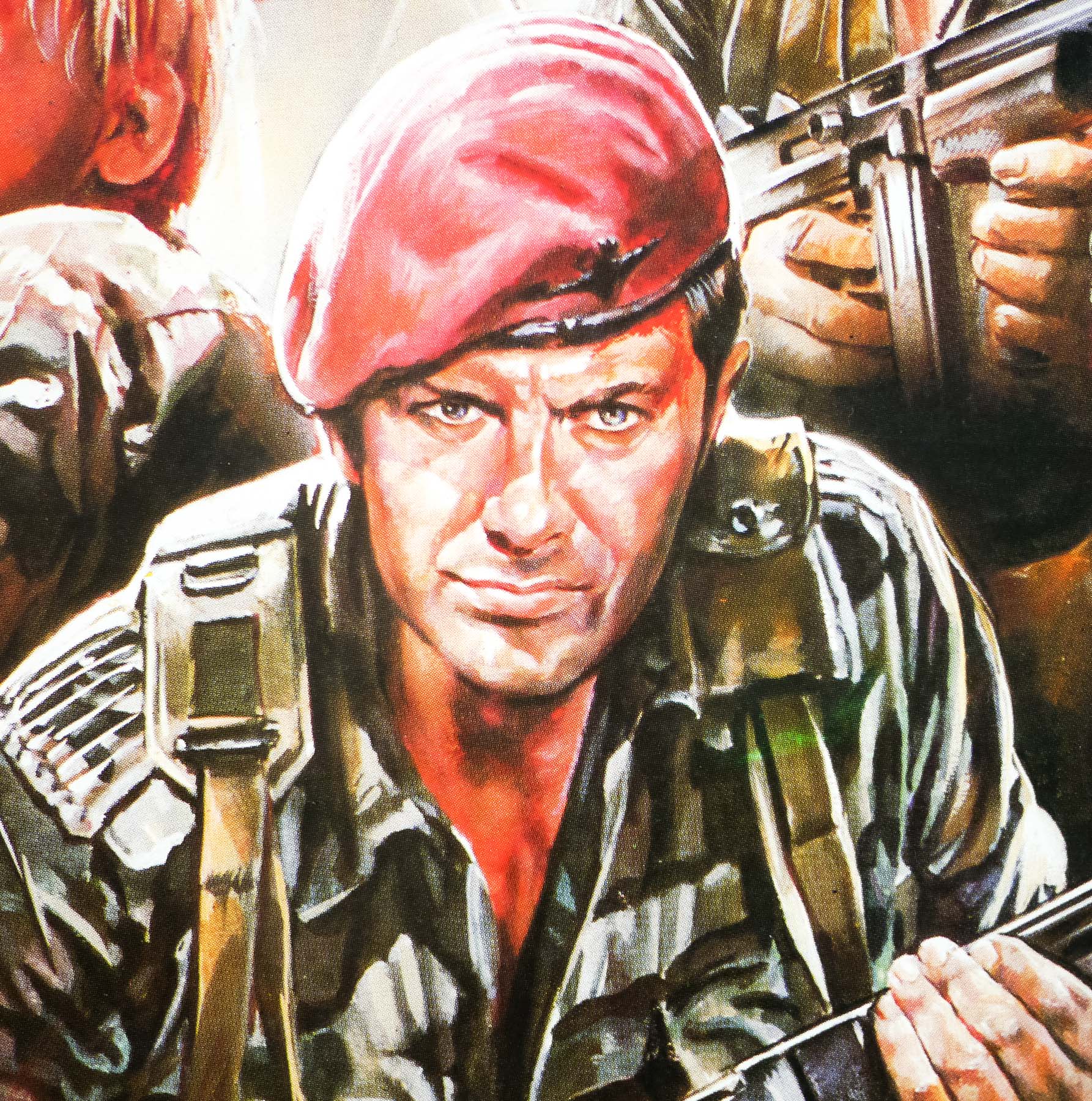
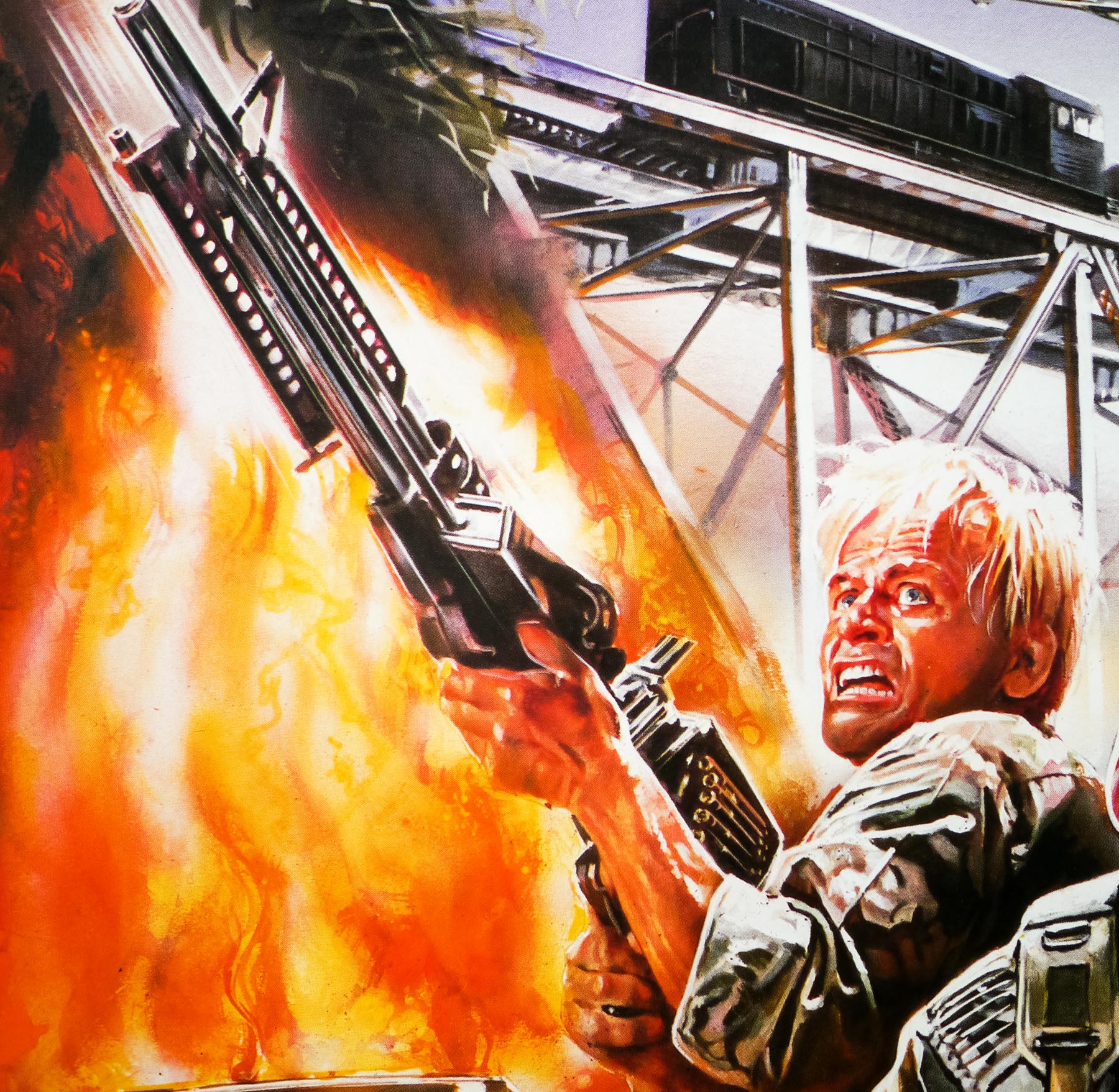
A reader of the site, Andrew Lamb, got in touch to confirm that the quad is an adaptation of artwork that was painted by the Italian artist Enzo Sciotti and originally intended for, I believe, the German poster. Andrew commented the following (the original can be seen at the bottom of the page):

It was later adapted for the UK quad using a photo duplicate of the original artwork, with paint applied around the edges to fill the quad size, then new titles applied over the top. This was done by Tom Chantrell. My guess is that he was commissioned to paint the artwork and liked Sciotti’s art so much that it was suggested by him and agreed upon to be used instead. I’m not 100% certain of this, however I own the original artwork layout for the UK quad and it came from a lot of Tom Chantrell’s work. So that’s my hunch.

Mad Max / quad / UK

17.12.12

Poster Poster
Title
Mad Max
AKA
Interceptor (Italy)
Year of Film
1979
Director
George Miller
Starring
Mel Gibson, Steve Bisley, Joanne Samuel, Hugh Keays-Byrne, Tim Burns, Geoff Parry
Origin of Film
Australia
Genre(s) of Film
Mel Gibson, Steve Bisley, Joanne Samuel, Hugh Keays-Byrne, Tim Burns, Geoff Parry,
Type of Poster
Quad
Style of Poster
--
Origin of Poster
UK
Year of Poster
1979
Designer
Tom Beauvais
Artist
Tom Beauvais
Size (inches)
30" x 39 15/16"
SS or DS
SS
Tagline
The last law in a world gone out of control. Pray he's out there somewhere.

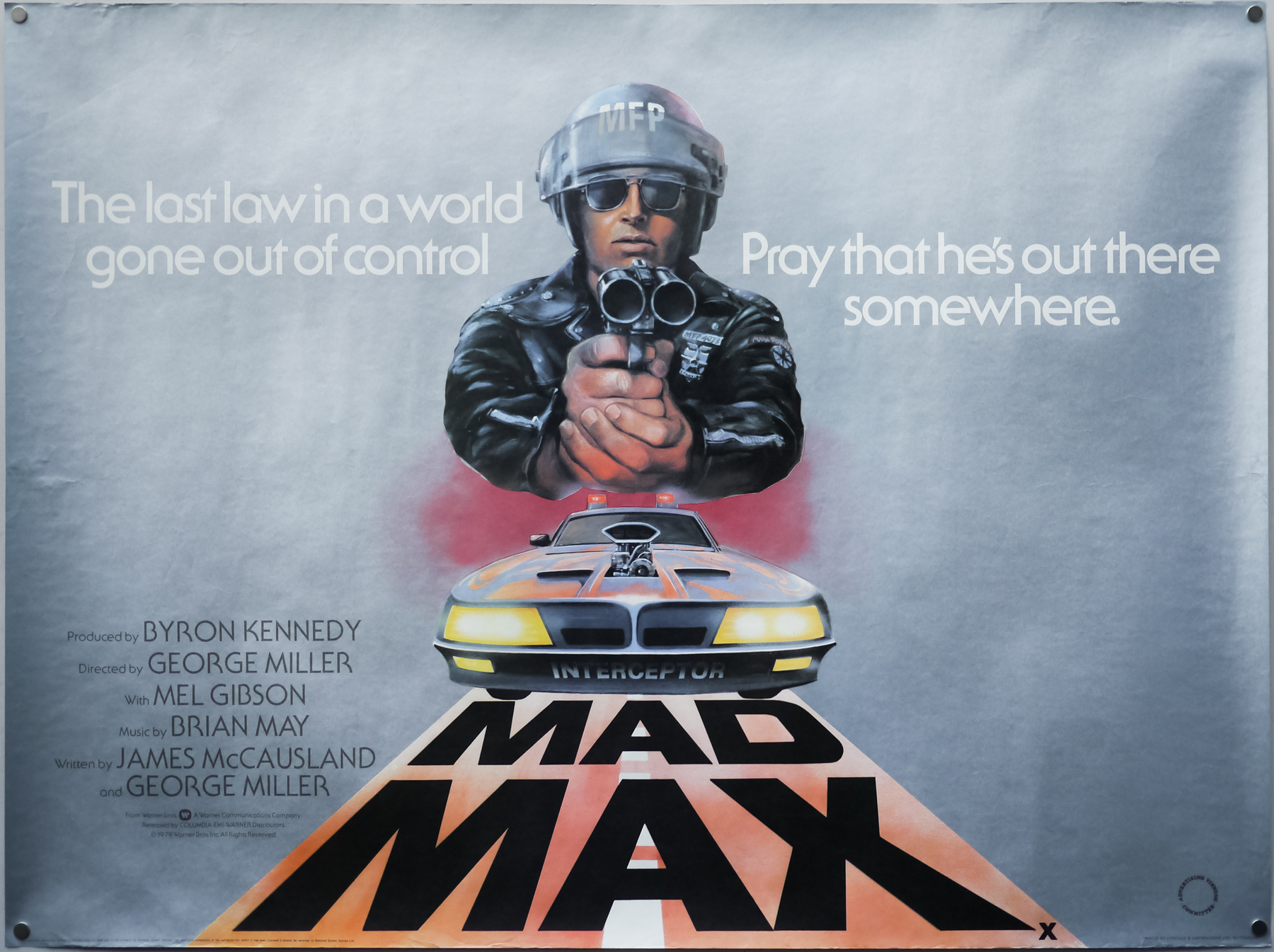
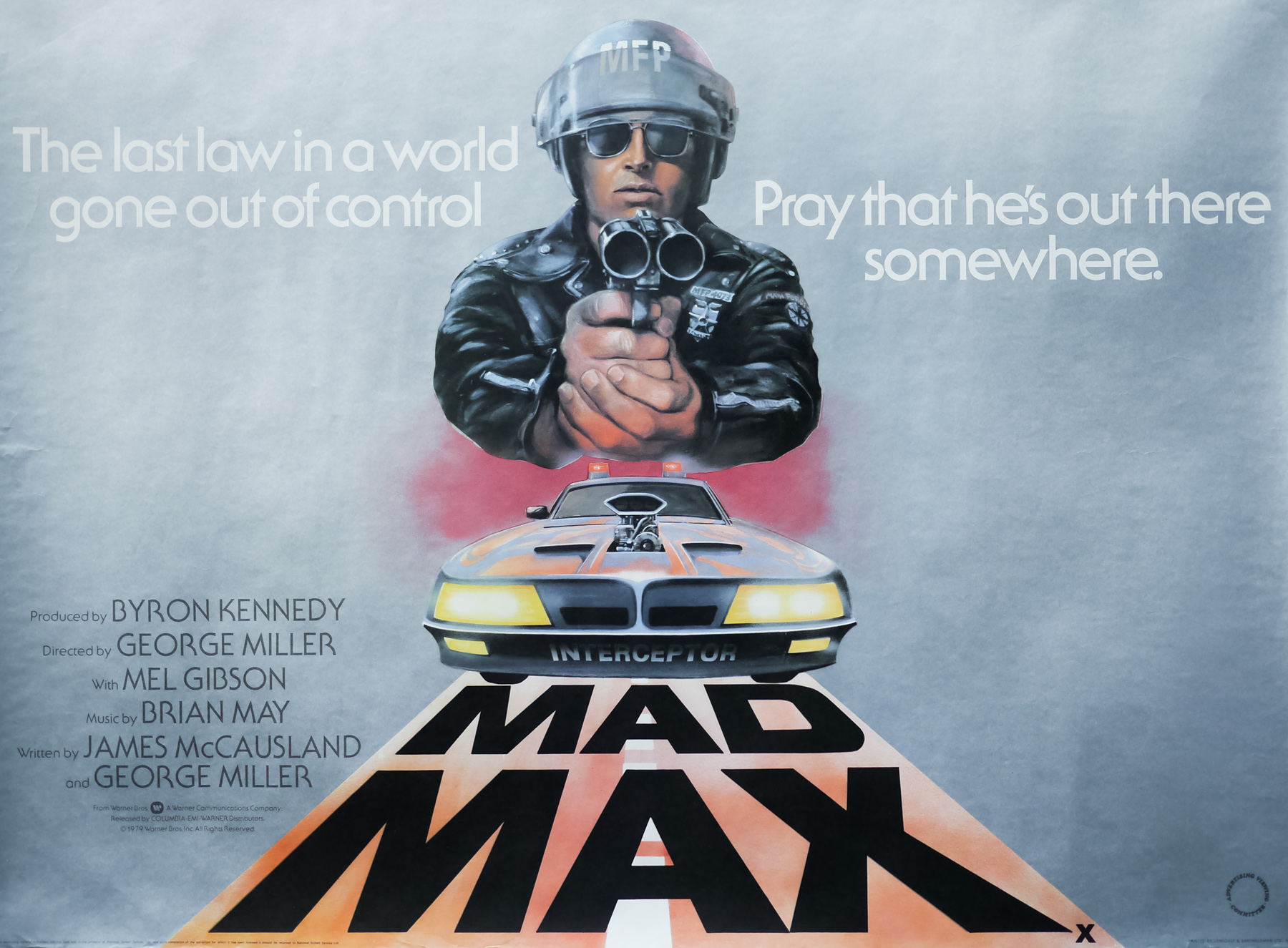
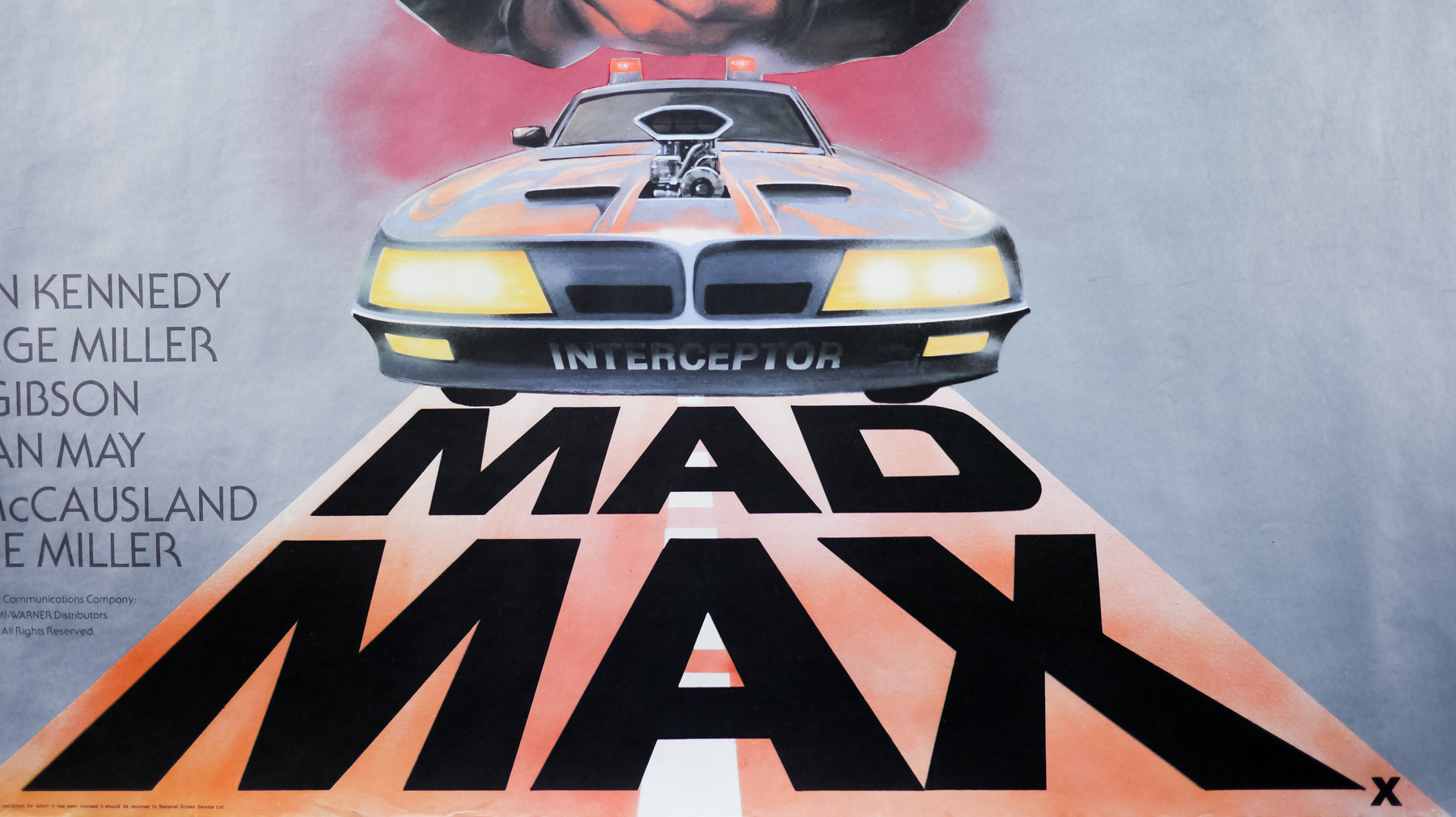
George Miller‘s brilliant vision of an apocalyptic future set in the Australian wastelands follows the battle between vicious outlaw gangs and a group of Main Force Patrol (MFP) pursuit cops who try to keep law and order on the roads. When officer Max Rockatansky (Mel Gibson in his breakout role) kills the ‘Nightrider’, the leader of a motorcycle gang, he sets in motion a chain of events that sees his wife and young son murdered and his partner burned alive. Driven mad by grief, Max commandeers a supercharged black Pursuit Special and sets out to avenge their deaths by whatever means necessary. The film was followed three years later by the superior Mad Max 2 (AKA The Road Warrior).

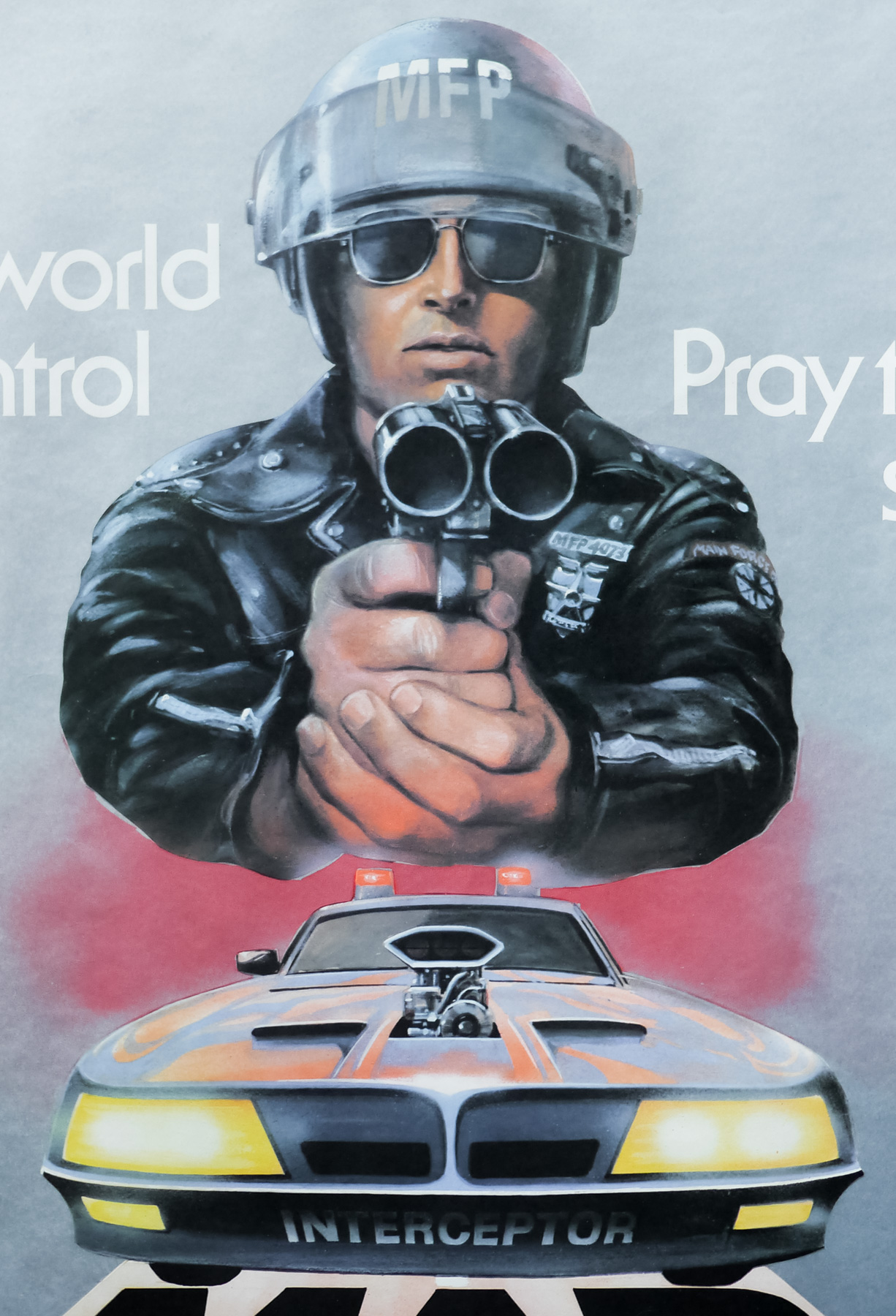
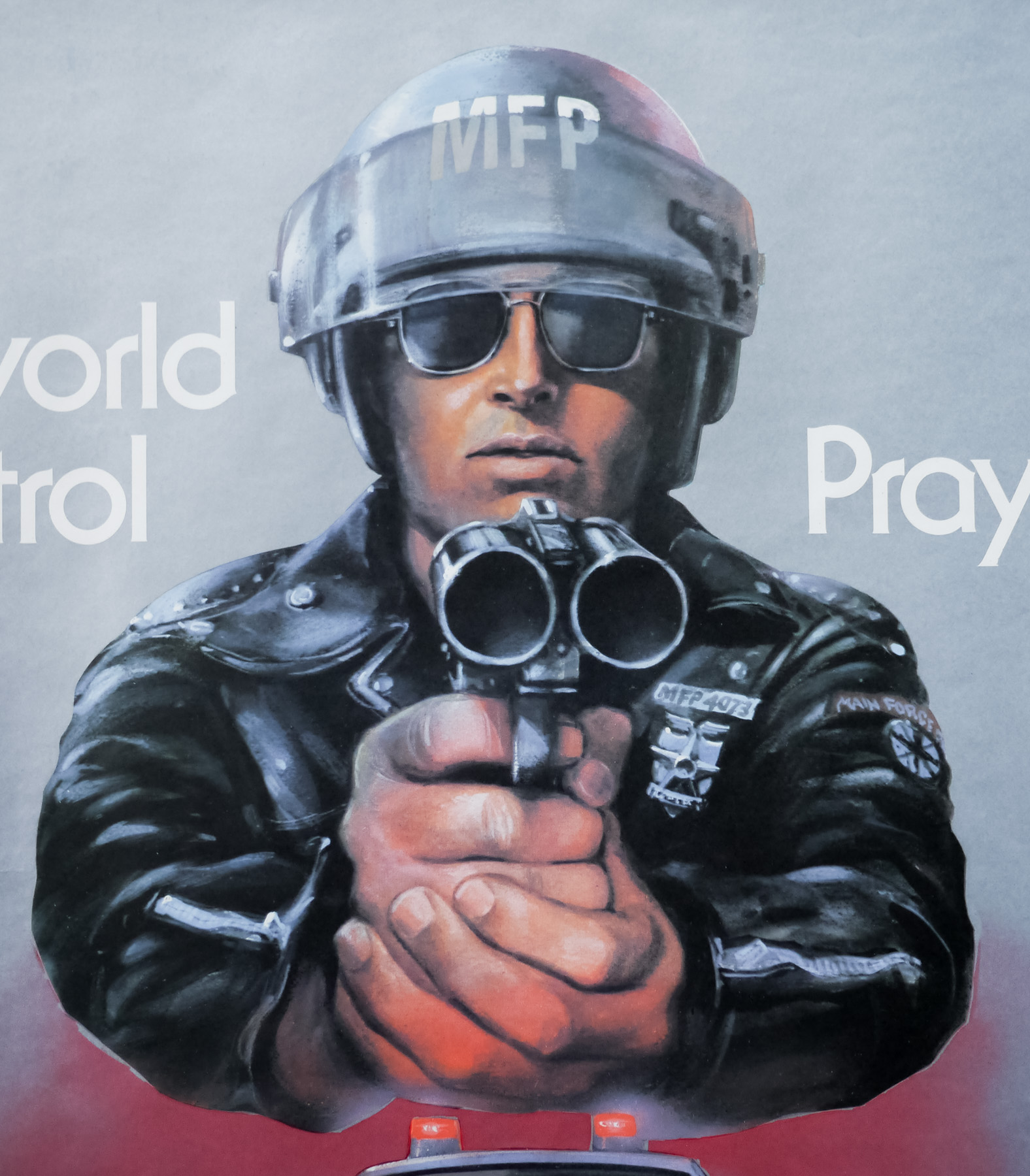
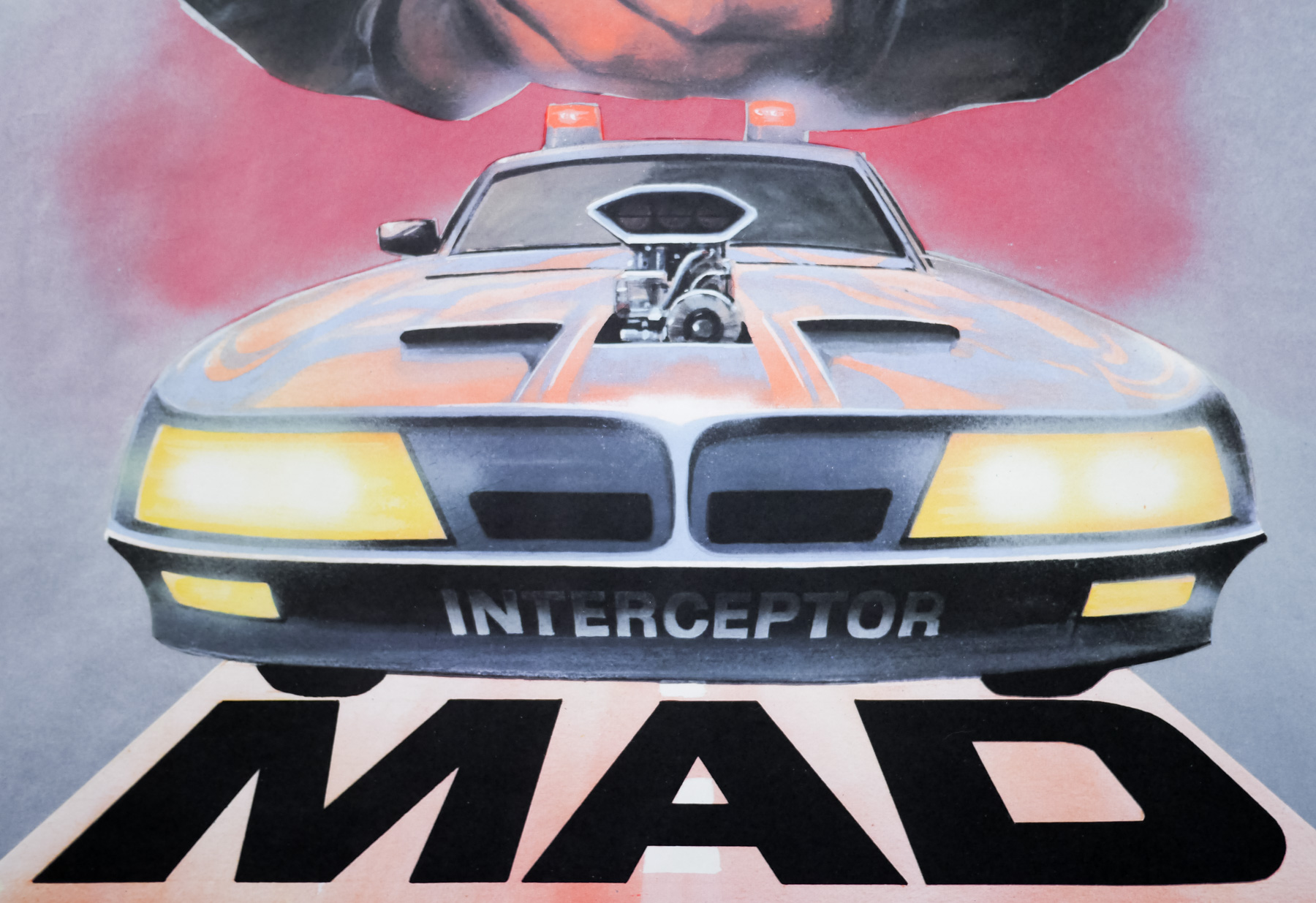
Because of Gibson’s anonymity to audiences outside Australia his face was not featured on many of the posters designed to sell the film in other territories. The American one sheet features a classic illustration of a leather-clad figure with his face covered by a futuristic visor. This British quad features an MFP figure pointing a shotgun directly at the viewer but it’s not obviously Mel Gibson’s character. The car below the figure is a hybrid between the colourful Interceptor cop vehicles and Max’s black Pursuit.

The poster was designed and illustrated by Tom Beauvais, a British artist with a lengthy career working in film marketing which saw him design and/or illustrate several notable posters, including the quad for Butch Cassidy and the Sundance Kid and the infamous ‘rotten hand bursting from the ground’ image for Lucio Fulci’s Zombie Flesh Eaters.

This UK quad was designed and illustrated by Tom Beauvais, a British artist with a lengthy career working in film marketing which saw him design and/or illustrate several notable posters, including the quad for Butch Cassidy and the Sundance Kid and the infamous ‘rotten hand bursting from the ground’ image for Lucio Fulci’s Zombie Flesh Eaters. In 2012 I was lucky enough to meet and interview Tom and the article can be read here. The Mad Max poster was discussed during the meeting:

———

You worked on one of my favourite film posters at the end of the 1970s, which is the one for Mad Max. Could you talk about designing that?
On that one we were working to a brief from Julian Senior at Warner Bros and he told us he wanted a policeman looking down the twin-barrels of a shotgun. I did an initial sketch of the figure with the car below and he responded really well to it. The praise was generous and I think it was probably because it had been his idea originally. I actually think that Mike Sparling, who I mentioned earlier, was used as a reference model for the policeman.

It’s a striking poster and made even more impressive by the fact that the illustration isn’t crowded out by too much text. It’s effective partly because it’s so minimal.

———

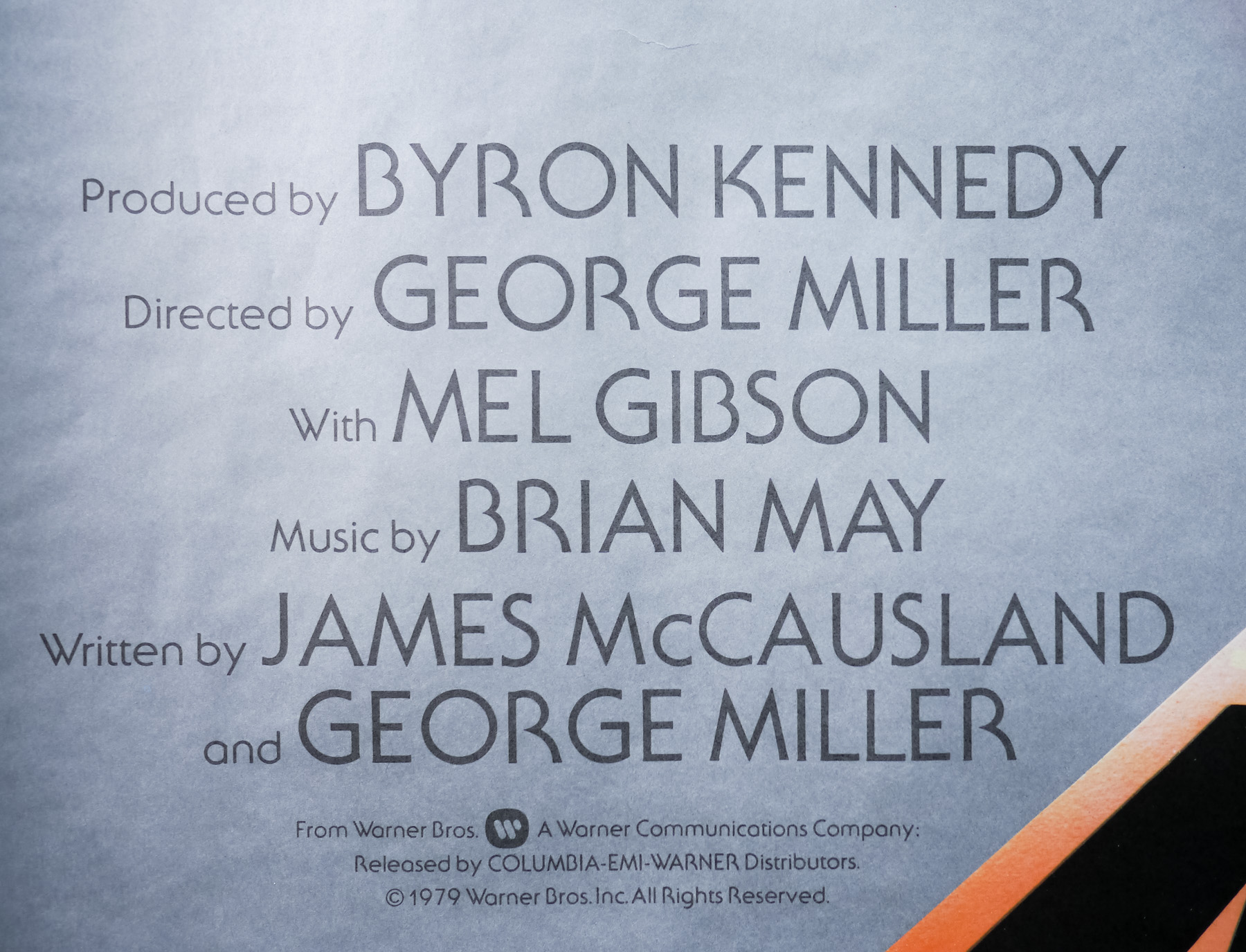
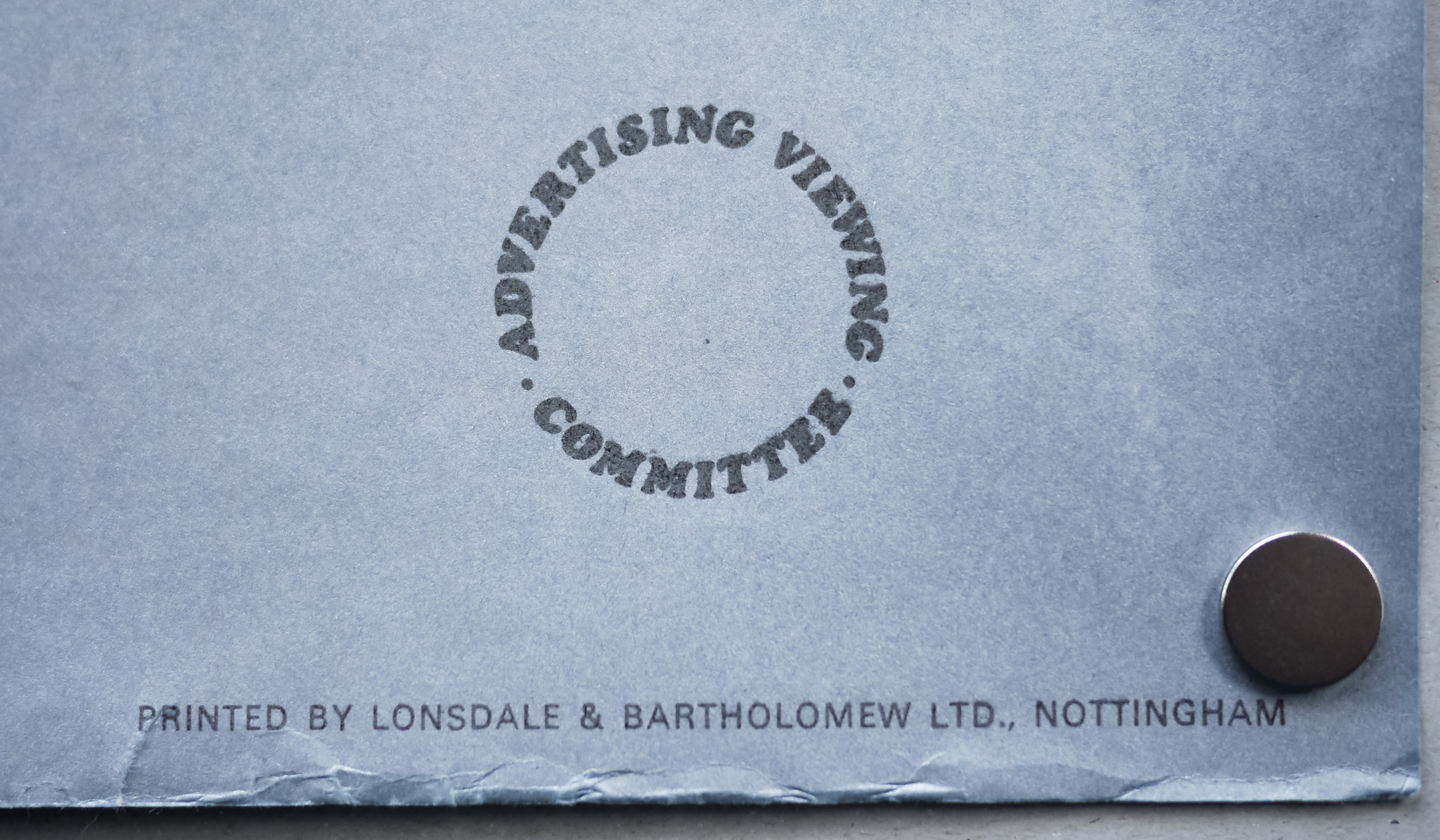
The poster is quite difficult to photograph well because it’s printed on a paper with a kind of silver metallic finish and so any reflections or bends in the paper are very obvious. It’s a difficult quad to find rolled and so I was very happy to track this pristine copy down earlier this year.

As well as this quad there was UK one sheet printed for the title that was designed by Beauvais and features the same artwork. The quad is also part of the Film on Paper collection and it can be viewed here.

Raiders of the Lost Ark / quad / style B / UK

06.01.12

Poster Poster
Title
Raiders of the Lost Ark
AKA
--
Year of Film
1981
Director
Steven Spielberg
Starring
Harrison Ford, Karen Allen, Paul Freeman, Ronald Lacey, John Rhys-Davies, Denholm Elliott, Alfred Molina
Origin of Film
USA
Genre(s) of Film
Harrison Ford, Karen Allen, Paul Freeman, Ronald Lacey, John Rhys-Davies, Denholm Elliott, Alfred Molina,
Type of Poster
Quad
Style of Poster
Style B
Origin of Poster
UK
Year of Poster
1981
Designer
Unknown
Artist
Brian Bysouth
Size (inches)
30" x 40"
SS or DS
SS
Tagline
--

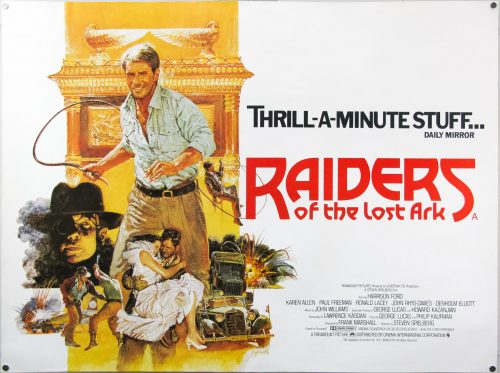
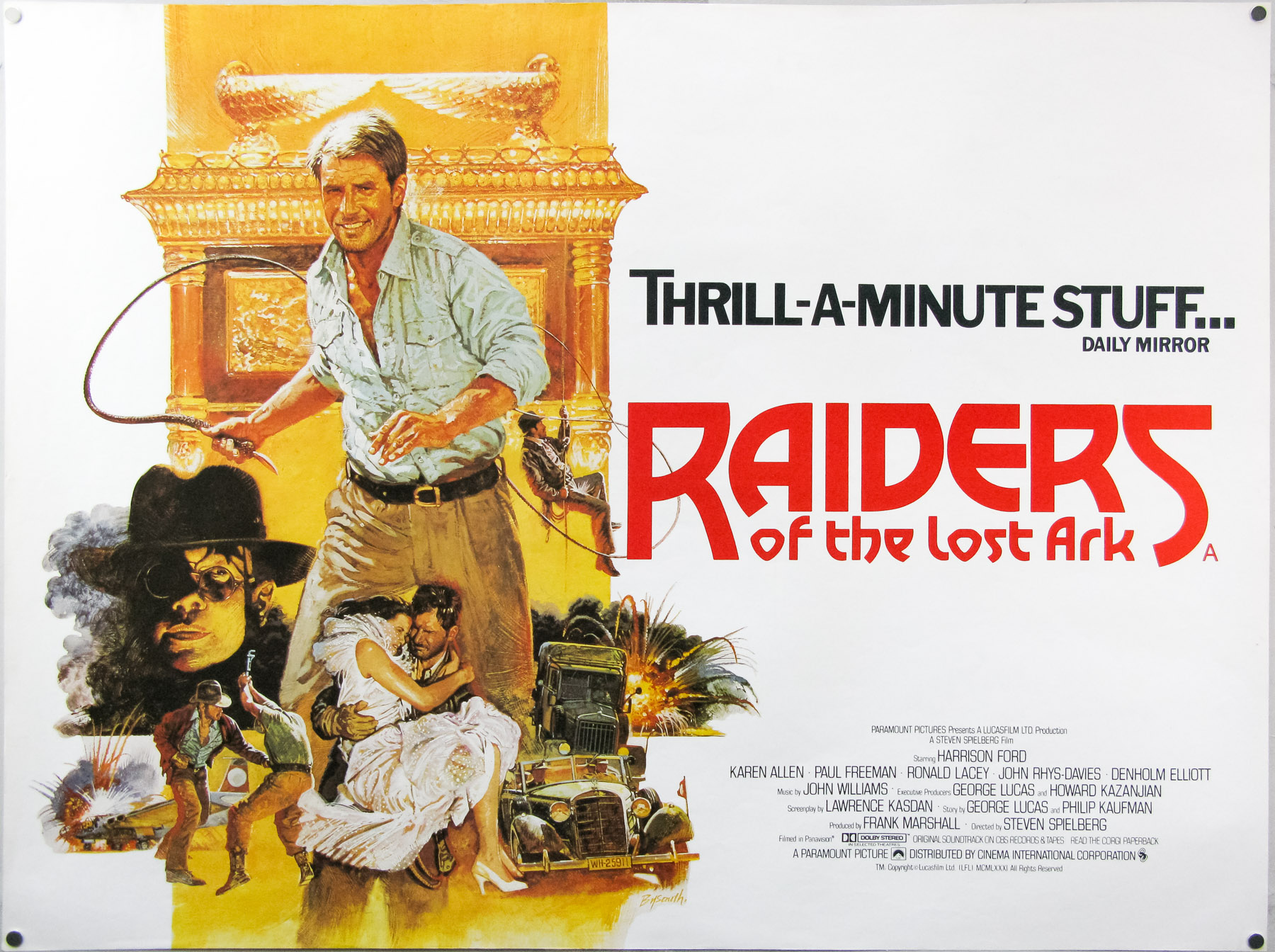
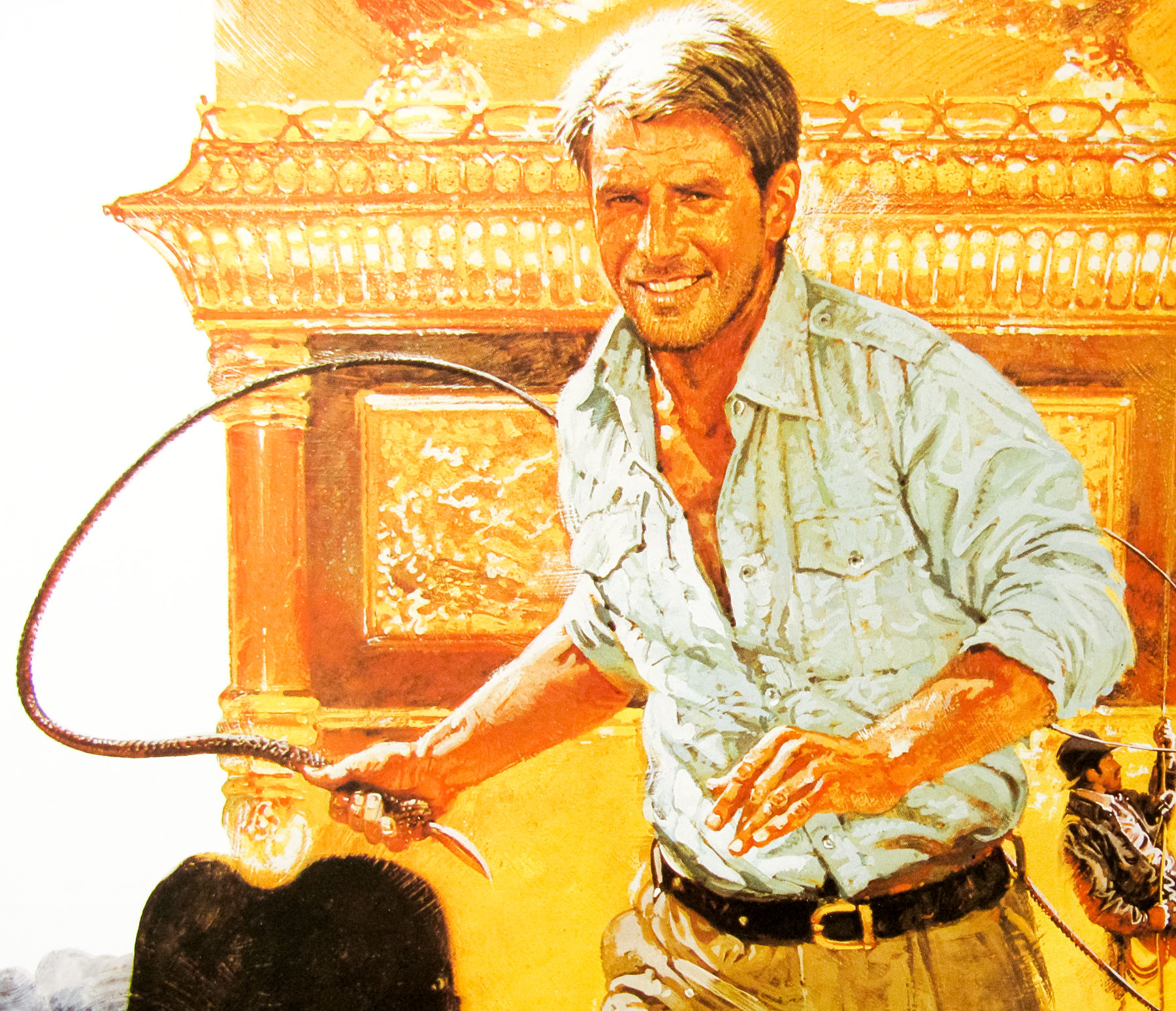
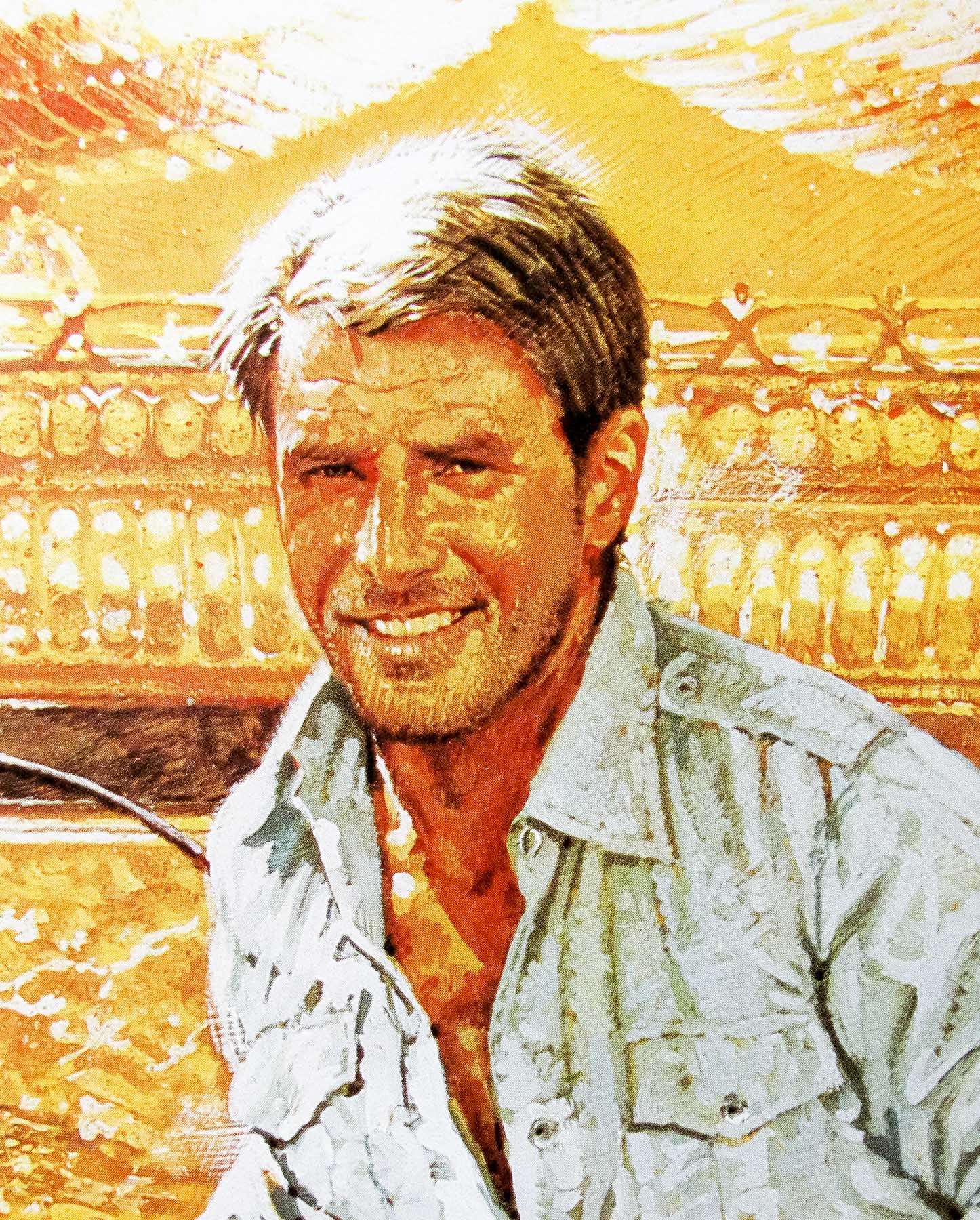
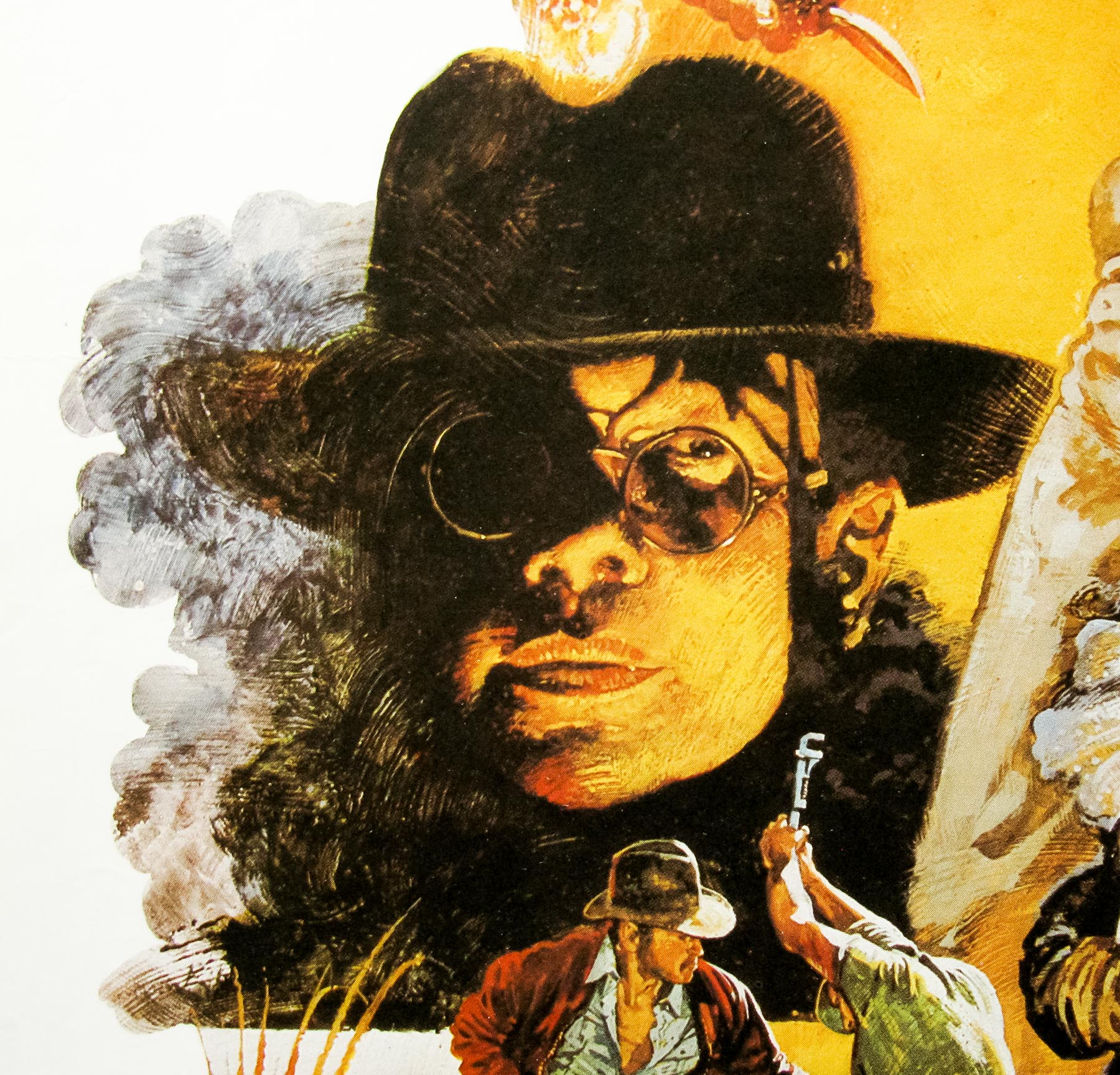
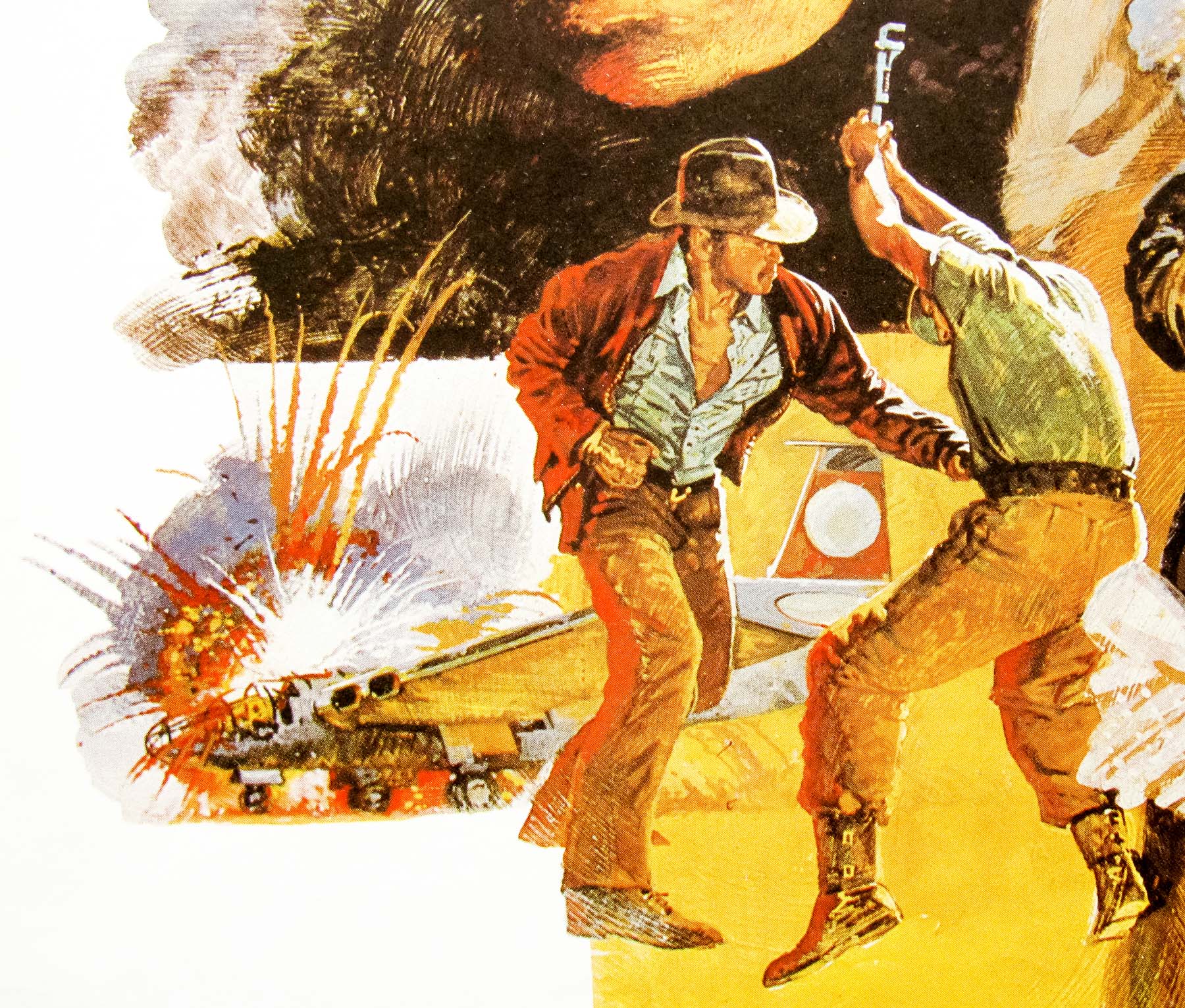
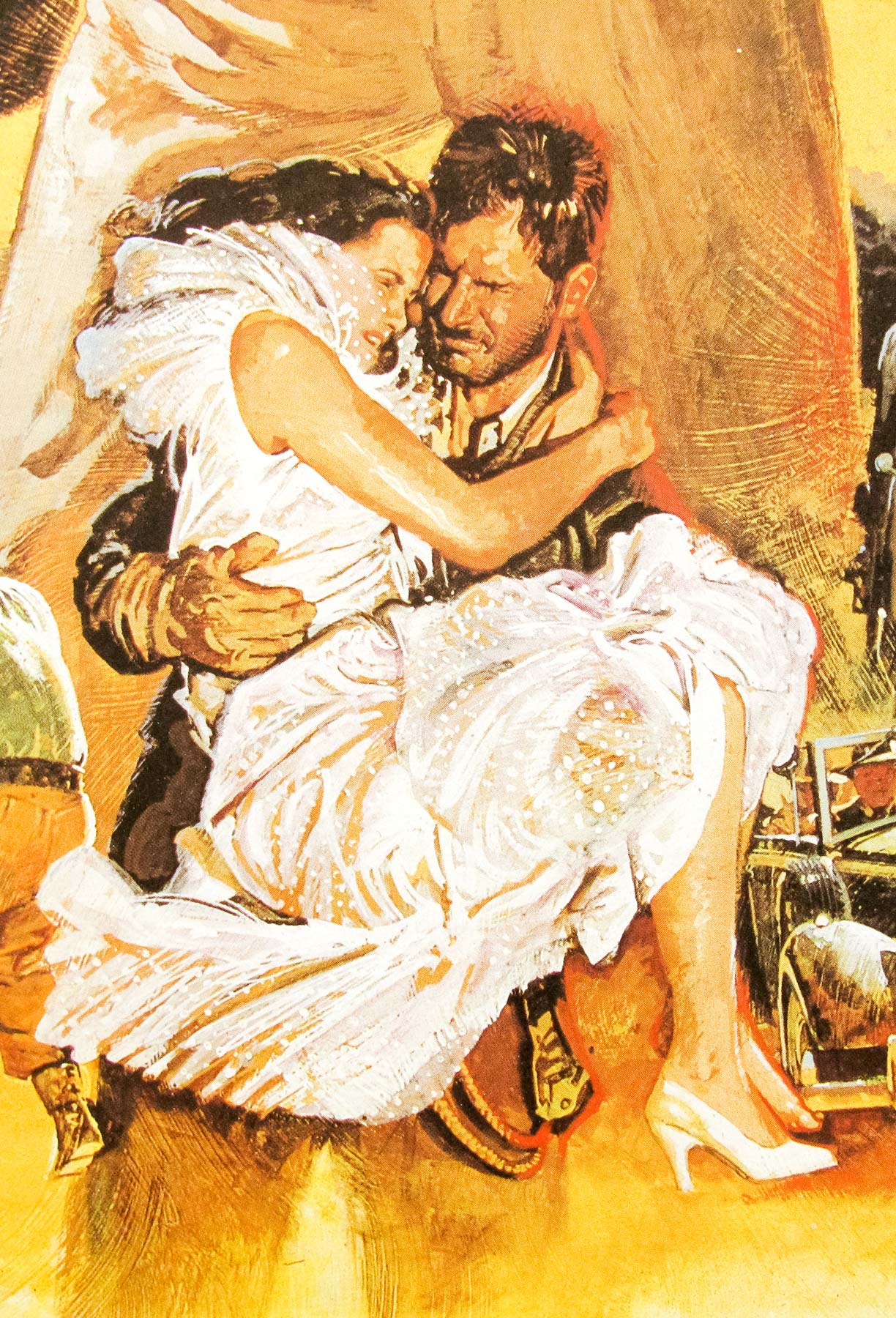
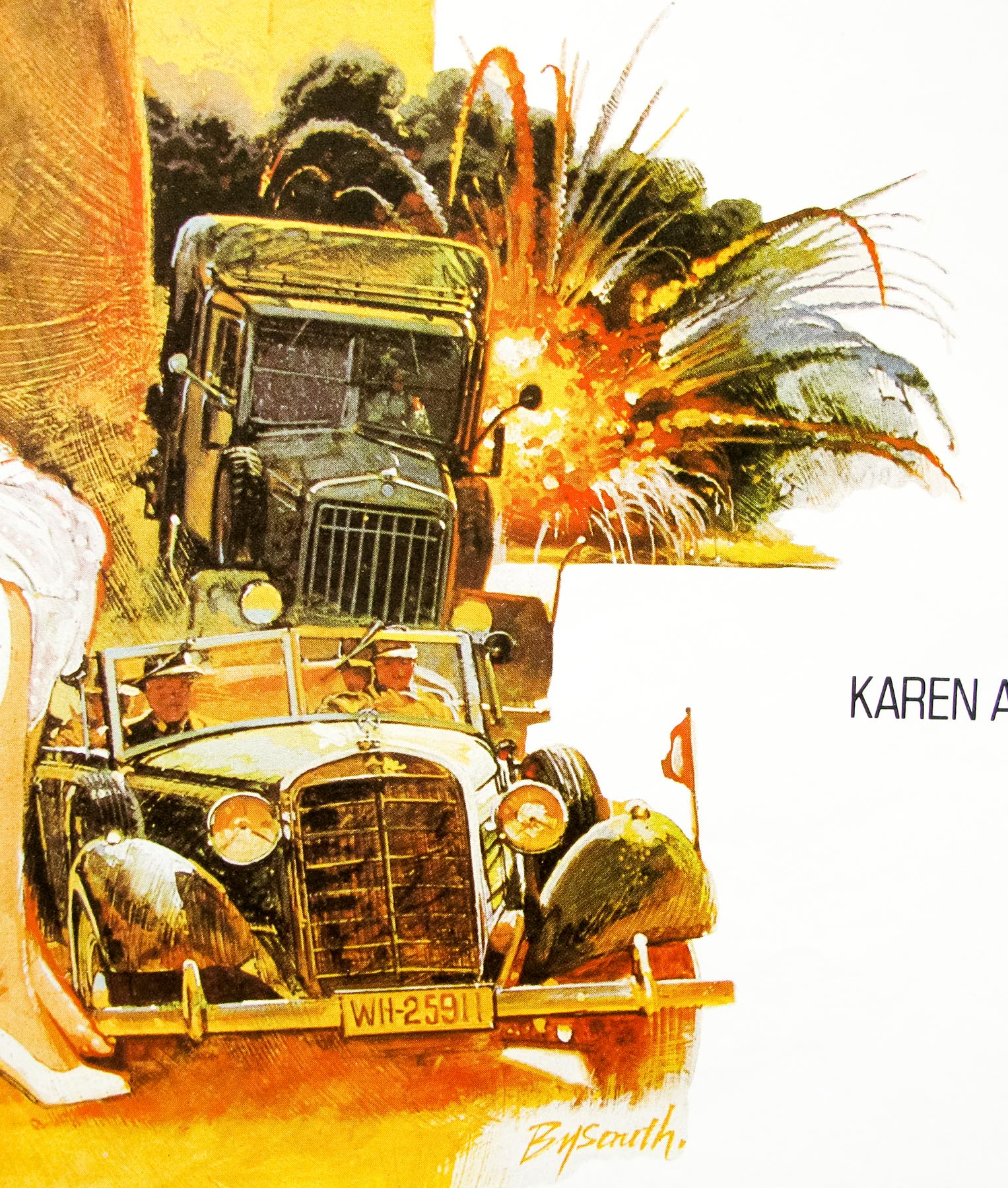
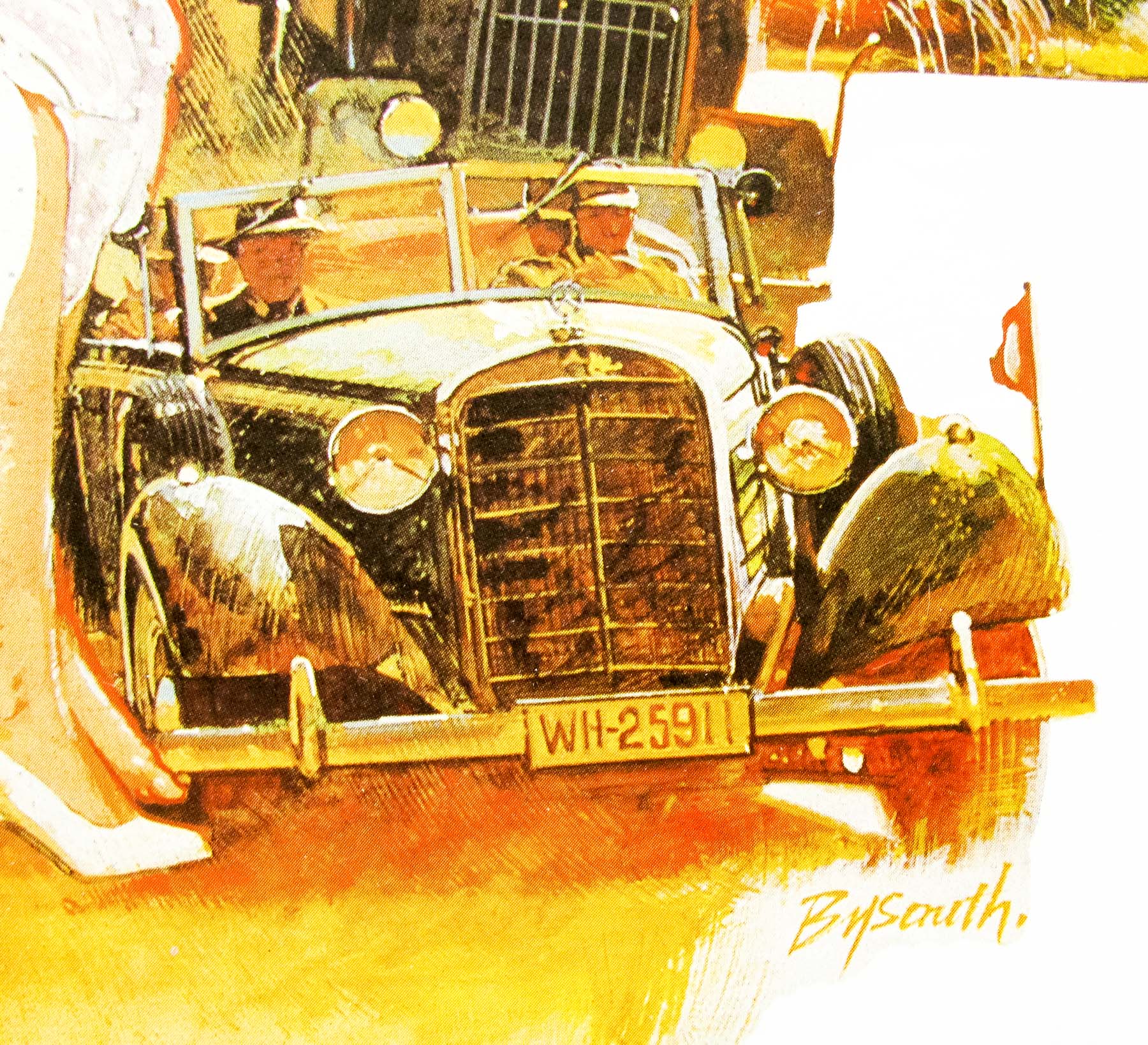
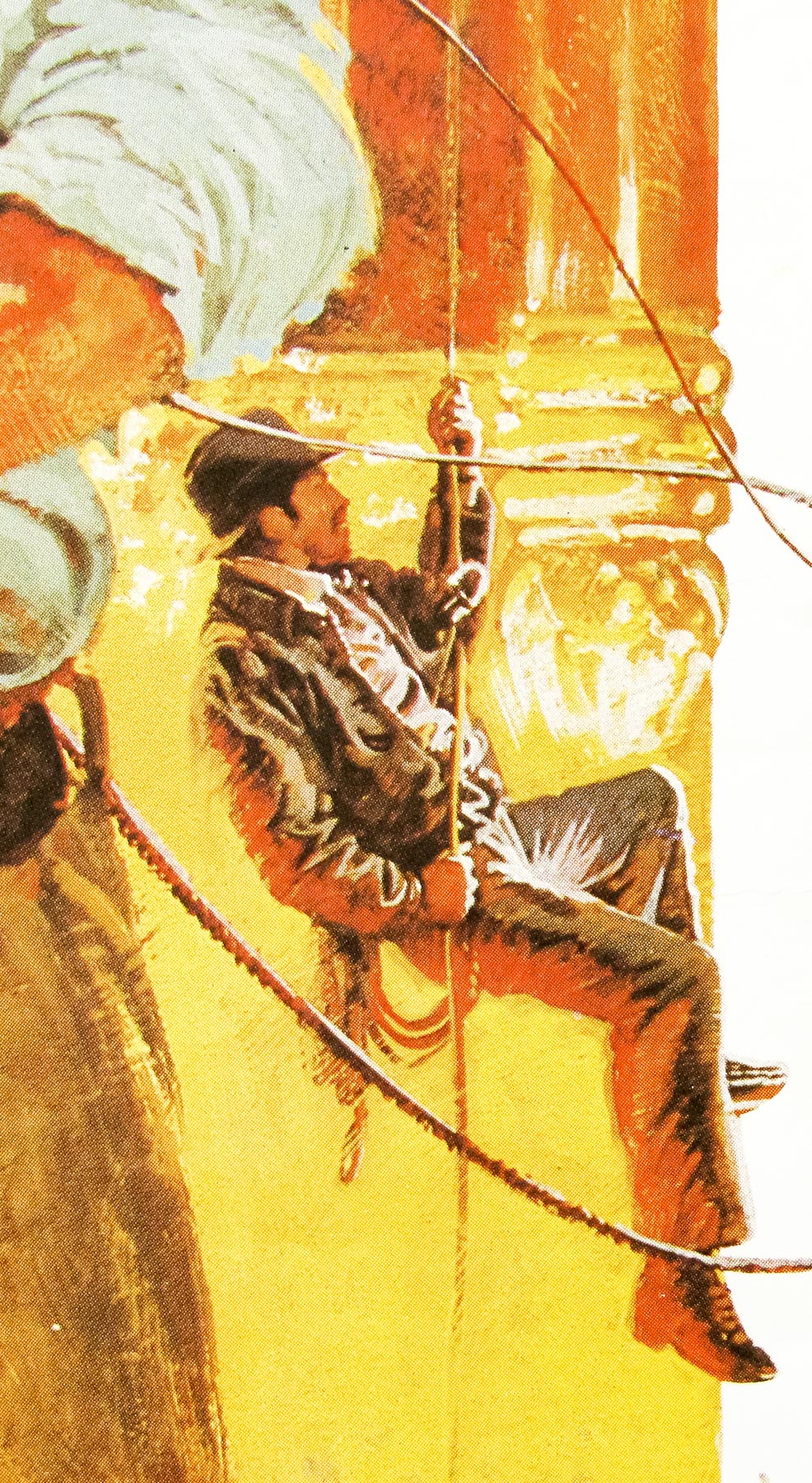
A superb montage by the great British artist Brian Bysouth for the first film in Steven Spielberg‘s legendary Indiana Jones series. This is technically the Style B quad because, as I understand it, the British distributors (Paramount UK?) decided that the artwork on the first quad (Style A) was too dark and Indy looks too dour and thus commissioned a second poster to be designed and printed.

The artwork on this replacement quad is definitely more exciting and leaves no question that the film contains plenty of action and adventure. It does ditch the now classic Indiana Jones logo, and some balk at the fact that Indy is depicted without his fedora and leather jacket, but it does a much better job of selling the film than the first poster, in my opinion.

In my 2012 interview with Brian this poster was discussed:

What about the Raiders of the Lost Ark quad? You must have done that whilst still with Ken [Hayter]?
Yes, that was done for the Lonsdale Advertising agency. They showed me their revised pencil visual and the first poster that had been done by Richard Amsel. They said that they didn’t like it because it didn’t show anything of what the film was about; it was a very dark poster, and the film isn’t like that, is it? It’s an absolutely classic, boys-own thriller and a very colourful film. Whilst the Amsel version is a great piece of art I think my painting does a better job of showing what the film is really about.

Were you given any directions for the re-design?
No. I knew I had to make it more exciting and if you look at the poster you’ll notice that the free brushwork helps to give it movement. I had to paint it quickly because the first quad was already up on the Underground and all over the country. Lonsdales wanted the new poster to replace the Amsel one as quickly as possible.

One thing that people often remark about in your Raiders quad is that Indy is missing his Fedora and leather jacket, which later became his trademarks.
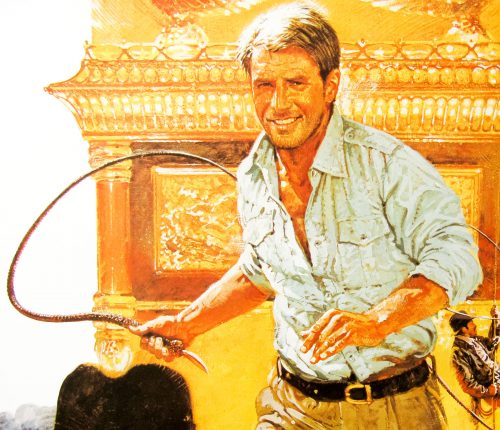
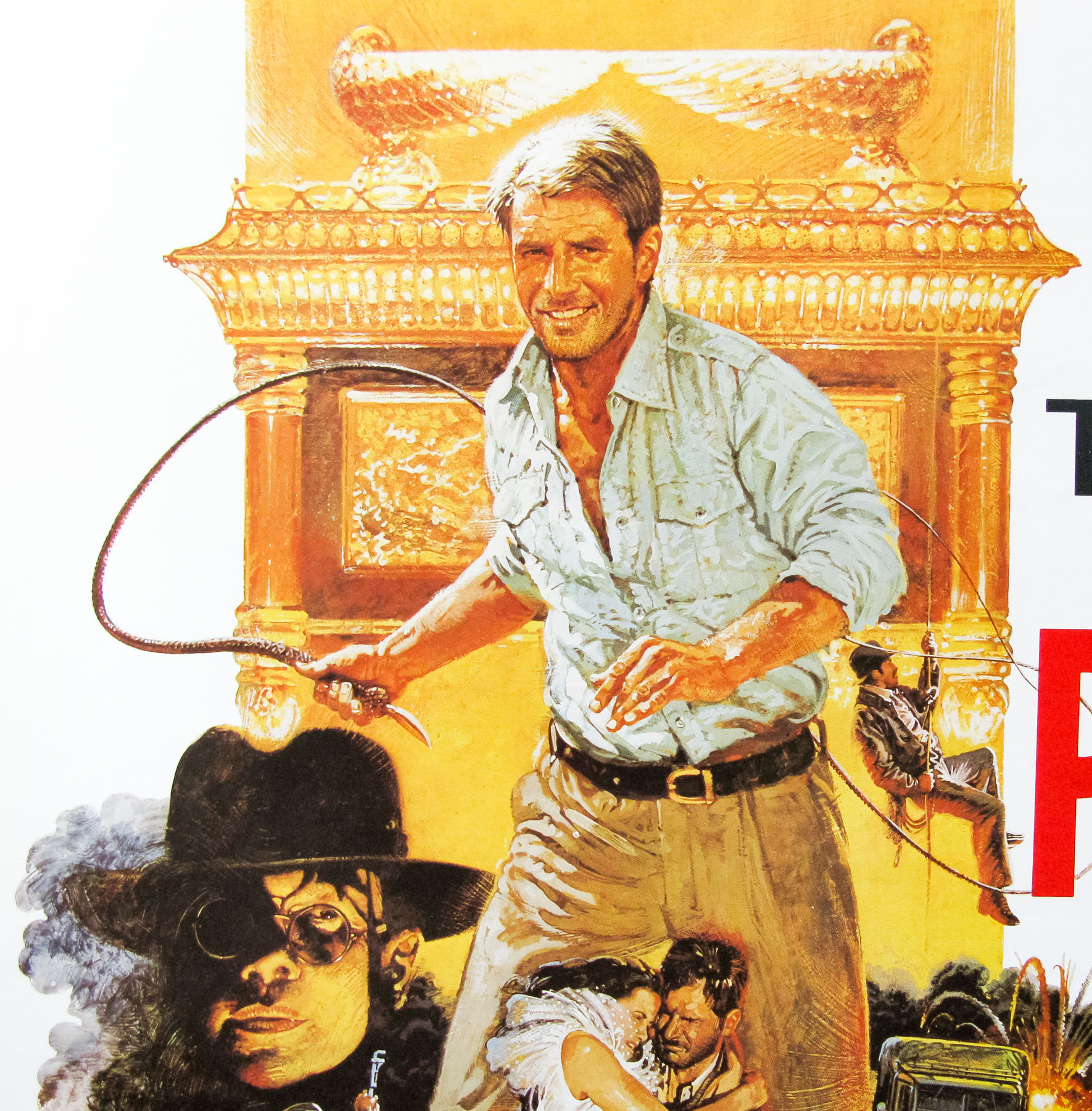
I was given a headshot of Harrison Ford with no body reference to paint from. I struck the likeness from the reference I was given. I didn’t think the original reference photo was the best image of Harrison Ford but I did my best with what I was given. At that time the jacket and fedora had not become iconic and were not considered a requirement.

It’s interesting to note that the decision was taken to drop the text referencing two previous hit films from Spielberg (Jaws) and George Lucas (Star Wars). This artwork was later re-used when the film was re-released at cinemas (the press-quote was replaced) and was also printed as a UK one sheet.

My overall favourite Indiana Jones poster is by Richard Amsel and was for the 1982 re-release of the film in the US. It can be seen here.

Other posters by Brian Bysouth I’ve collected can be seen by clicking here.


Frankenstein and the Monster From Hell / quad / UK

03.06.13

Poster Poster

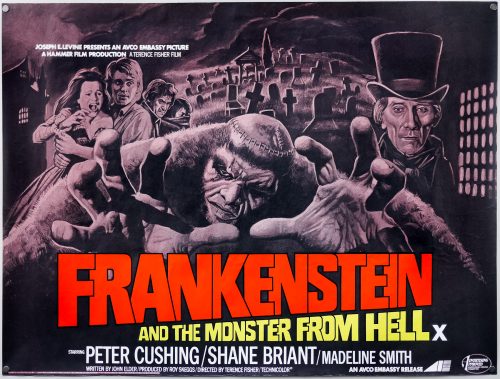
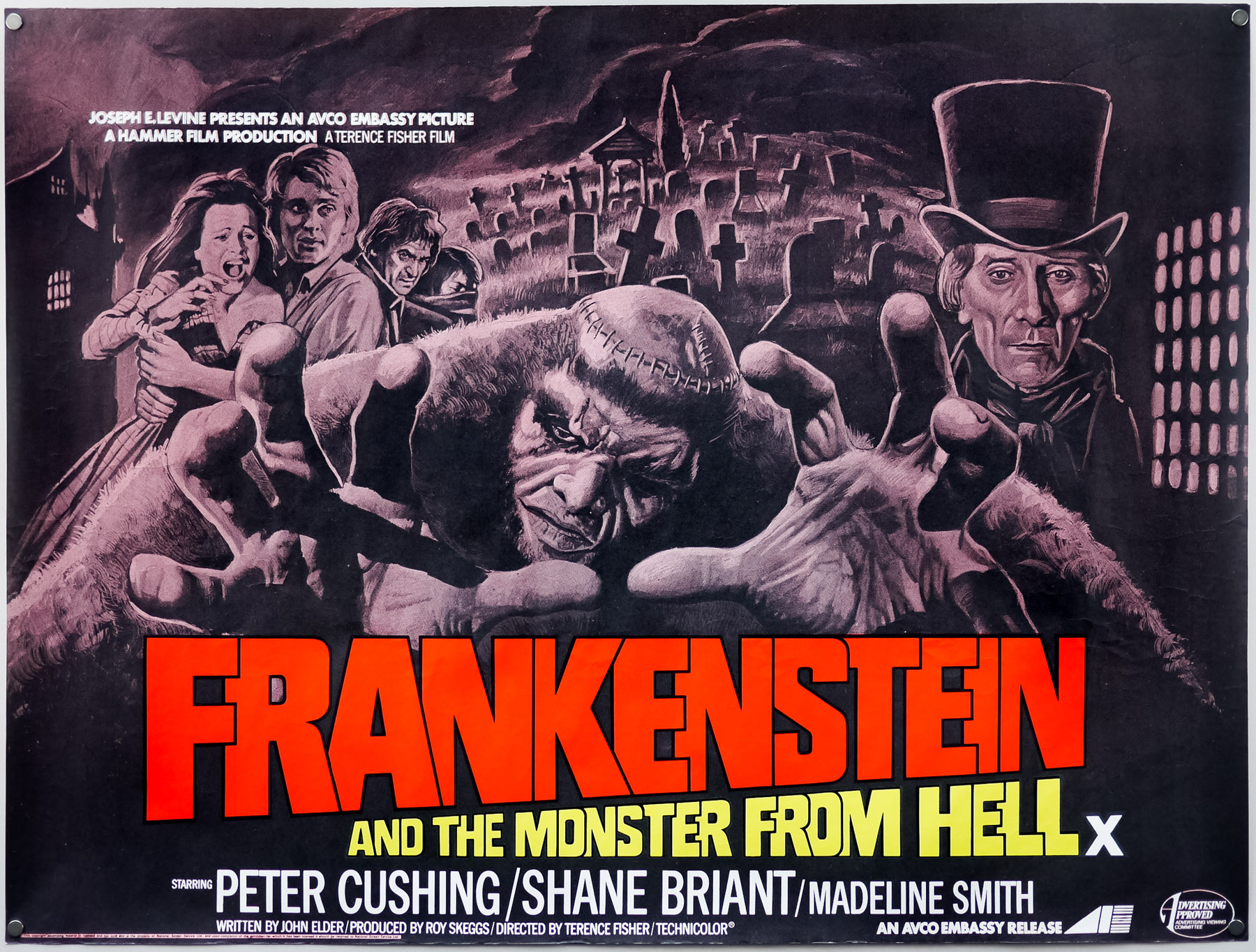
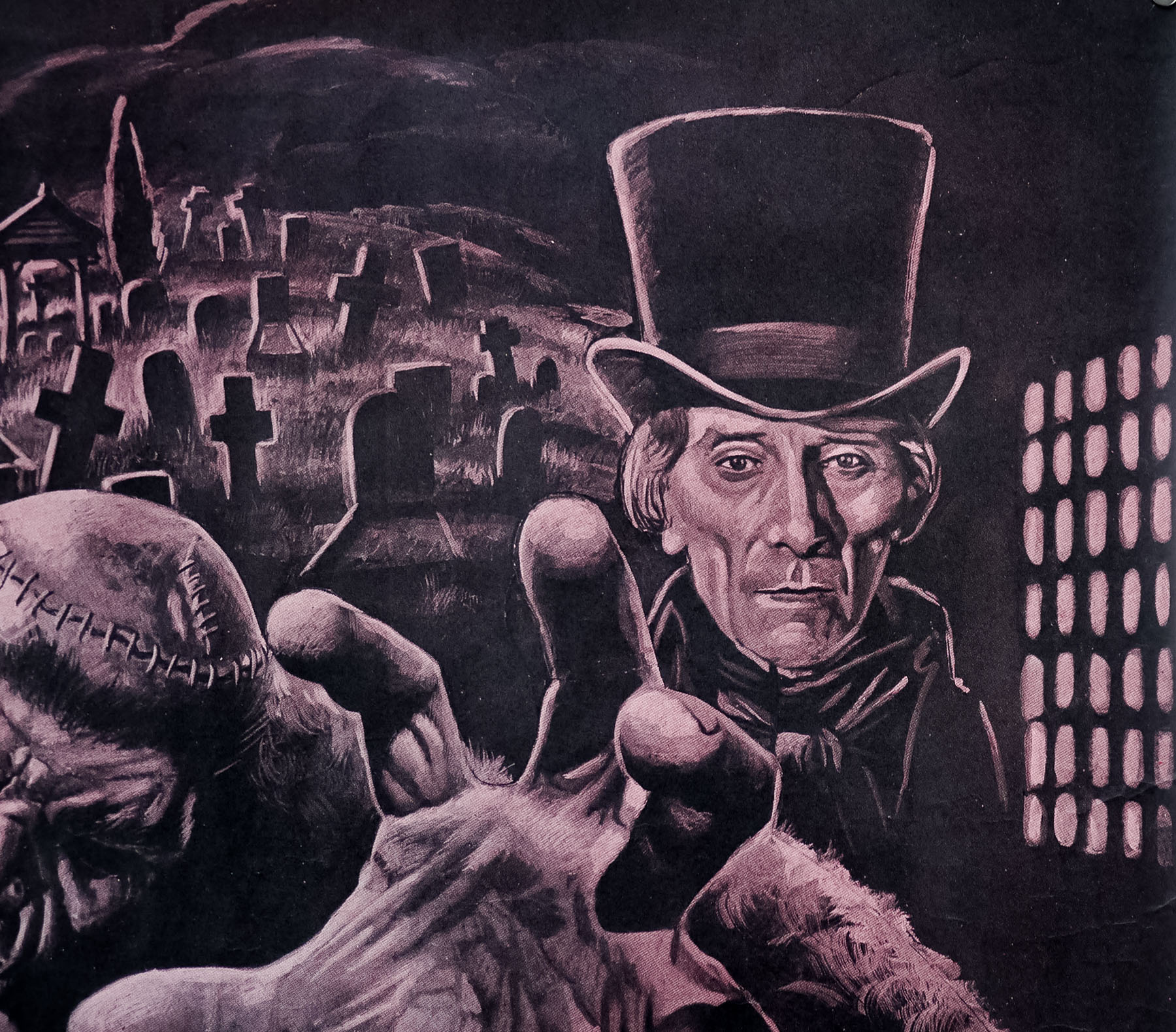
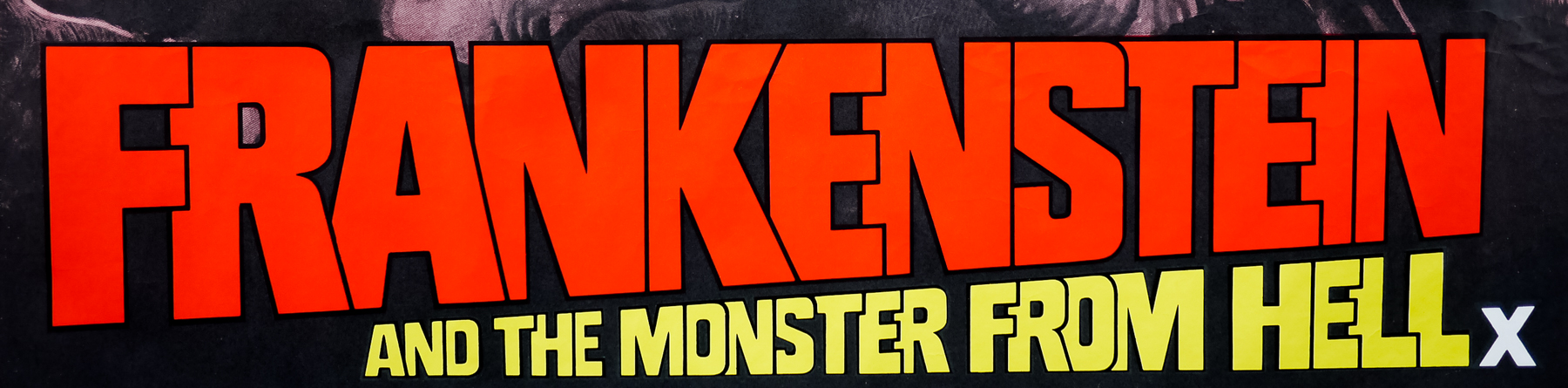
Frankenstein and the Monster From Hell (1973) marked the end of an era for British film in more ways than one. It was the last gothic horror to be produced by the original incarnation of the British Hammer Films studio and followed on from a series of six feature films based around the character of Baron Frankenstein portrayed by the late, great British actor Peter Cushing (the less said about 1970s Horror of Frankenstein, with Ralph Bates in the lead role, the better). Director Terence Fisher had worked on many of Hammer’s best-loved horrors, including their first gothic feature, 1957s The Curse of Frankenstein (starring Cushing and Christopher Lee as the monster) as well as the original Dracula (1958), The Mummy (1959) and two other Frankenstein features for the studio. He was to effectively retire from film-making at the end of production on FATMFH, and he wasn’t the only one of the Hammer alumni to do so. This was also the last Hammer feature film that screenwriter Tony Hinds, who had worked on many of the studio’s most successful horrors, would supply a script for. Other crew members who had been instrumental in the production of dozens of Hammer horrors also called it a day once this film was released.

Originally produced and shot in 1972, it eventually limped into cinemas in 1974 well after the appeal of British gothic horror films had dissipated. Cinema-goers were keen to experience the visceral thrills of the new wave of films coming out of Hollywood, including William Friedkin’s 1973 masterpiece The Exorcist, which made British efforts like FATMFH seem positively antiquated. Because of the fall in demand from distribution companies who were previously happy to bankroll Hammer’s productions, the budget for this film was a tiny fraction of many of their previous horrors. It would be a lie to say that the lack of money doesn’t show on screen – most of the film takes place on what is clearly a single soundstage – but the skilled craftsmen at Hammer were still able to create a wonderful sense of atmosphere with the modest amount of funds at their disposal. The film is in many ways the perfect swan-song for Cushing’s Baron Frankenstein and his performance absolutely steals the show, from his brilliant crash-zoom entrance to the quiet madness of the denouement.

On the 29th of May, 2013 I was lucky enough to see the film at London’s British Film Institute in a special showing to both celebrate the centenary of Cushing’s birth and also preview a newly restored print of FATMFH. The reformed version of Hammer films have undertaken a series of restoration projects on many of the studio’s classic films, including the original Dracula and the original Curse of Frankenstein. I believe that the new print of FATMFH will see release on blu-ray at some point this year, as well as a new restoration of The Mummy. It was a real treat to see the film on the big screen and be able to revel in a classic Peter Cushing performance.

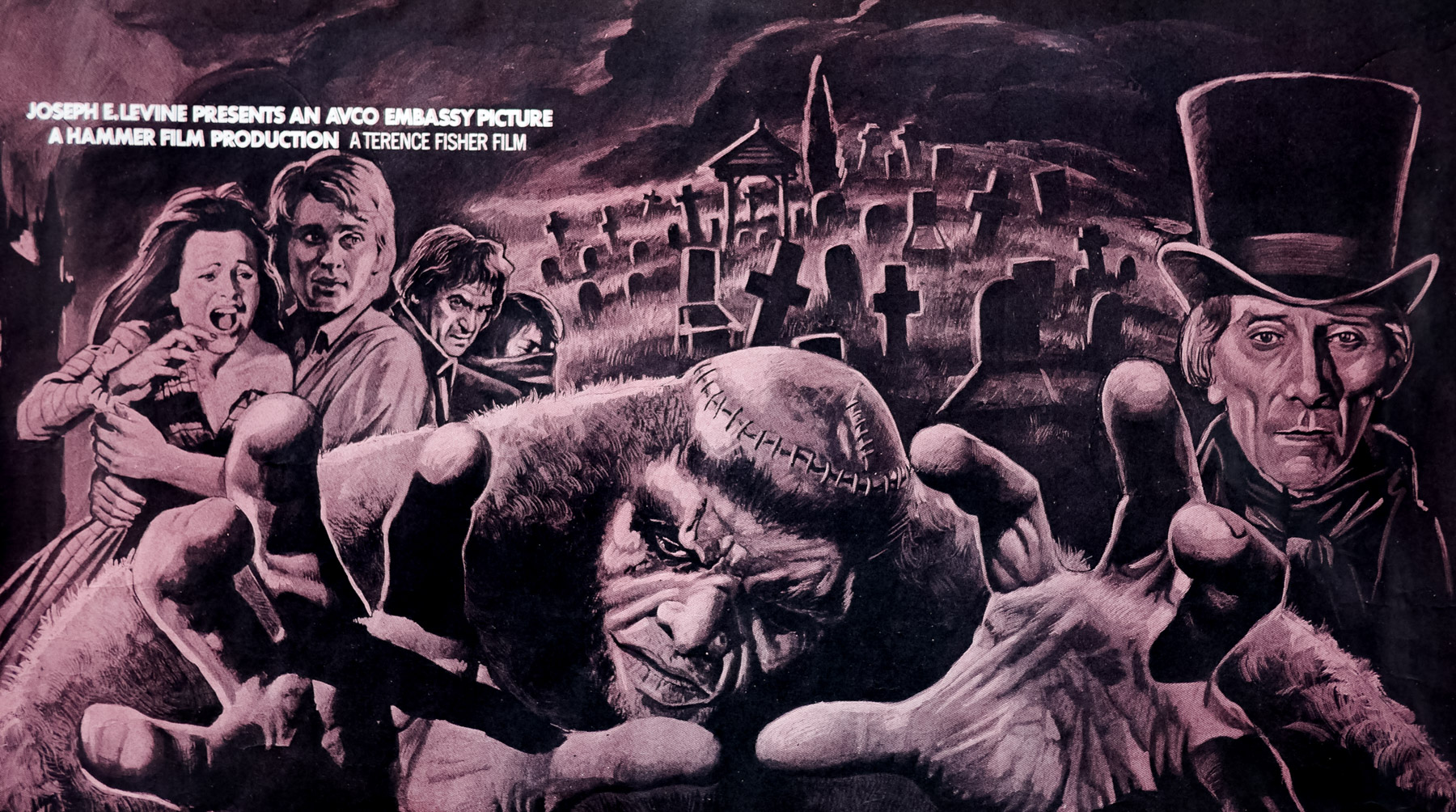
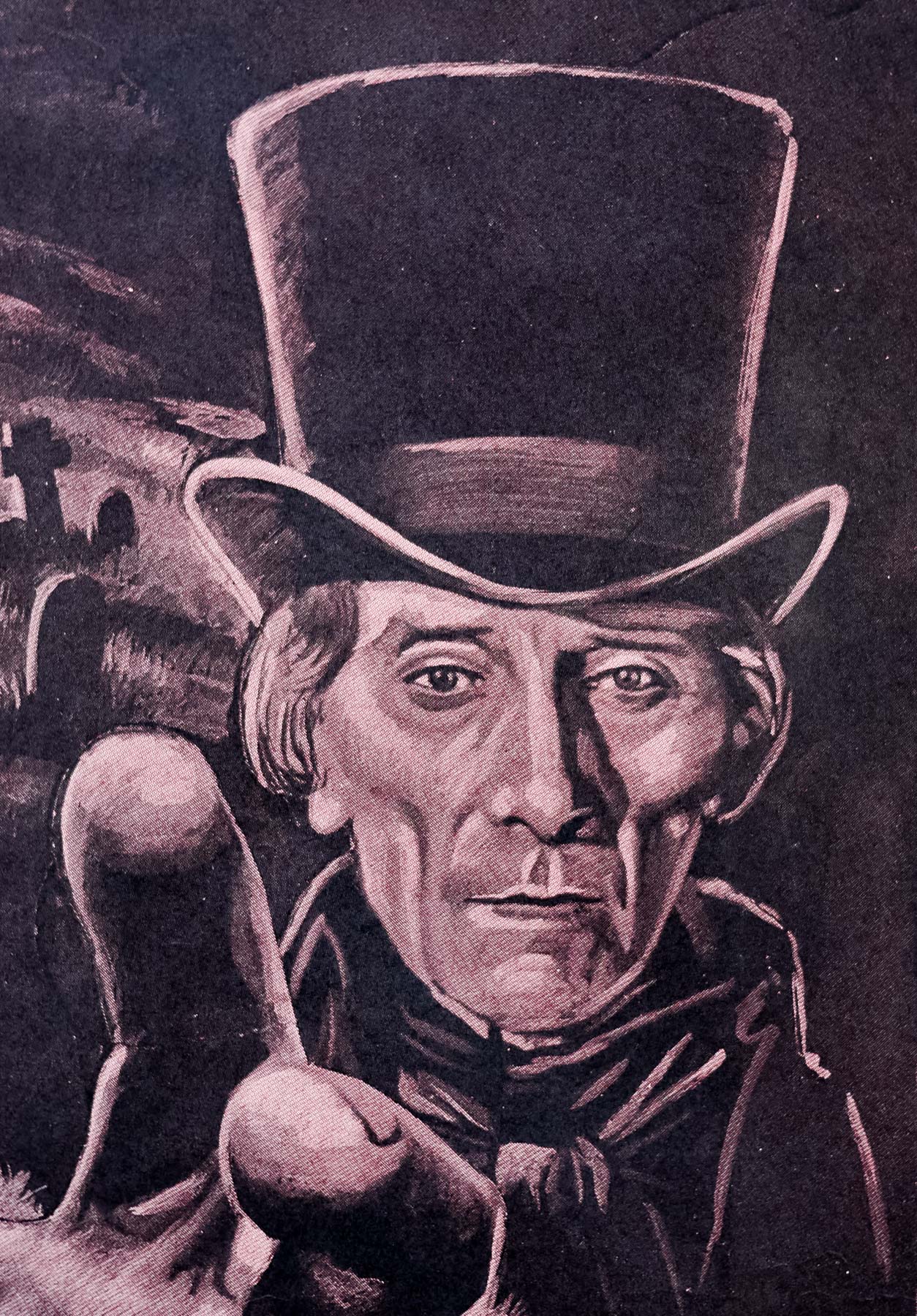
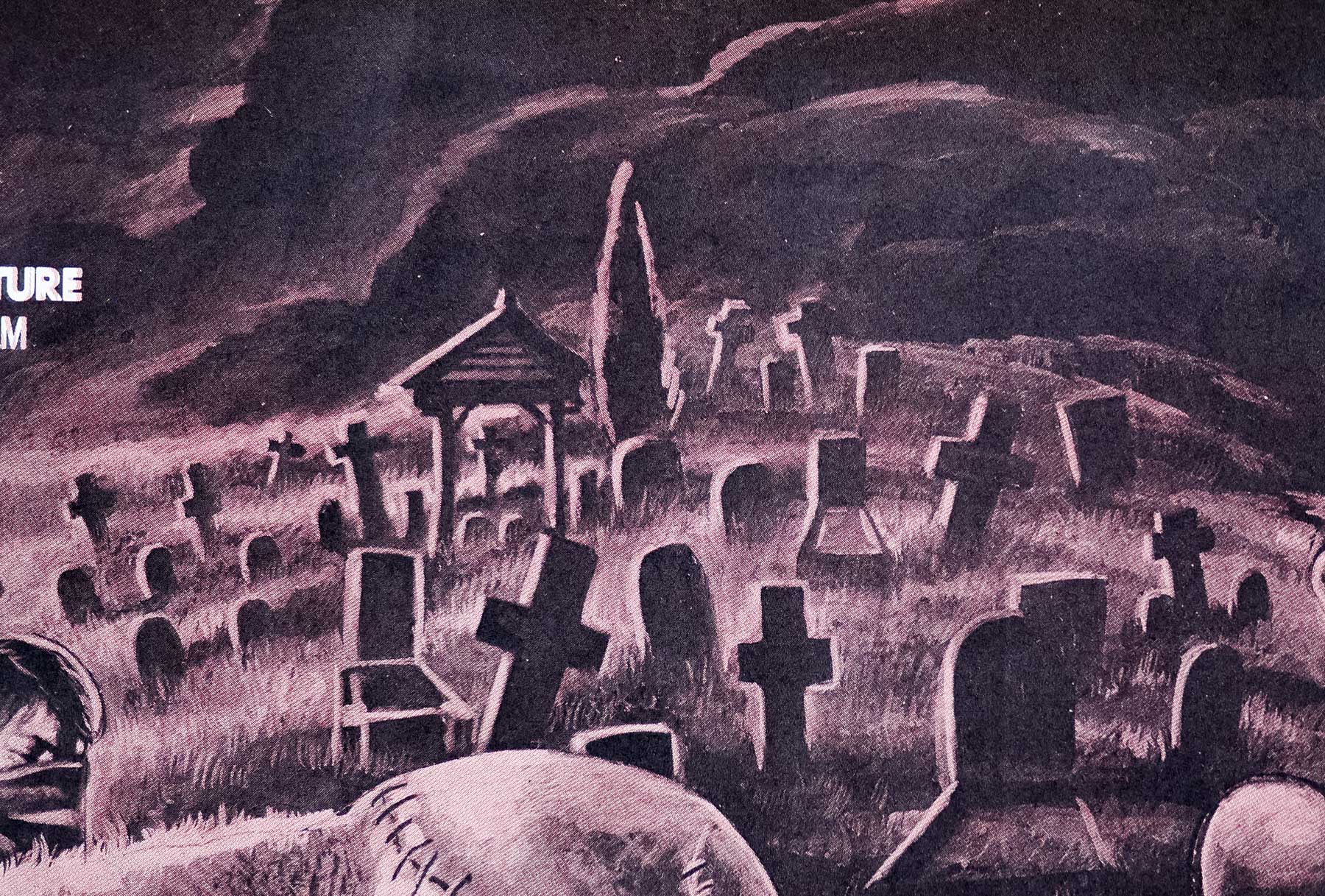
This British quad was created at the London-based Downtons Advertising agency by one of the principal designers, Eddie Paul, and painted by an artist named Bill Wiggins. Both men are featured in Sim Branaghan’s must-own book British Film Posters: An Illustrated History and are each responsible for several iconic British posters. The designer Eddie Paul was born in Hackney in 1920 and attended Southend School of Art, later beginning his career at Temple Art Studios before moving on to Star Illustrations on Shoe Lane, where he gained a good reputation as a scrapboard artist. After serving in the RAF during the war, Paul joined Pulford Publicity in 1946 and started designing film posters using crayons and coloured pencils. He worked on several successful poster campaigns during the 1960s, including El Cid (1961), The Fall of the Roman Empire (1964) and the famous quad for From Russia with Love (painted by Renato Fratini). He later joined four ex-Downton colleagues and formed the successful agency FEREF in 1968. As Sim notes in his book, ‘He was well liked and respected within the business as a gentleman’. Eddie Paul passed away from a heart attack whilst on his way to work in 1984, just shy of his retirement from FEREF.

Bill Wiggins was born in 1915 and worked installing large cinema displays (on the front of the buildings) during the 1930s and was a special constable during the second world war. He arrived at Downton’s Advertising agency at the same time as another principal designer, Fred Atkins (later a partner in FEREF), in 1951. Wiggins worked in the film department of the studio for 25 years, painting dozens of posters alongside the likes of Vic Fair and Brian Bysouth. Wiggins is mentioned several times during my interview with the latter. He worked on several of the early Hammer films, including Dracula (1958), The Mummy (1959), Curse of the Werewolf, as well as the sci-fi films The Lost World (1960) and Day of the Triffids (1962). He initially retired in 1975 ‘but rapidly found himself so bored that he returned within a couple of months and continued full time for another three years, eventually leaving to paint commissioned oil portraits for an art/photographic business in Bromley’. He passed away, aged 73, in 1988. Sim believes that this poster for FATMFH is likely to be one of, if not the, final cinema poster that Wiggins worked on.

In addition to this single feature quad, there is also a double-bill quad for when the film was released in a pairing with the long-forgotten kung-fu film The Fists of Vengeance. The artwork for FATMFH is actually coloured on the double-bill poster and is therefore arguably superior to this quad. Sim confirmed to me that there was a policy around this time that the single feature quad would usually be monochrome whilst the double-bill was typically printed in full colour.

Finally, this particular copy is rolled and in great condition, which is somewhat unusual for a poster from this era. I recall reading that it may have been one poster that Hammer printed in greater numbers to give away to fans who wrote in to the studio, as was the case with the quads for ‘Dracula Has Risen from the Grave’ and the ‘She/One Million Years BC’ quads (see the bottom of this page for more detail). I’m not certain that this is case though and I’d appreciate more details about it if anyone has them.

Videodrome / quad / UK

18.05.11

Poster Poster
Title
Videodrome
AKA
--
Year of Film
1982
Director
David Cronenberg
Starring
James Woods, Deborah Harry, Sonja Smits, Peter Dvorsky, Leslie Carlson, Jack Creley
Origin of Film
Canada
Genre(s) of Film
James Woods, Deborah Harry, Sonja Smits, Peter Dvorsky, Leslie Carlson, Jack Creley,
Type of Poster
Quad
Style of Poster
--
Origin of Poster
UK
Year of Poster
1983
Designer
Red Square
Artist
Harry Wilson
Size (inches)
30 1/16" x 39 15/16"
SS or DS
SS
Tagline
First it controlled her mind, then it destroyed her body

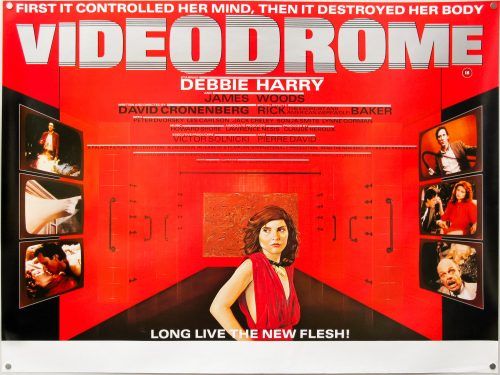
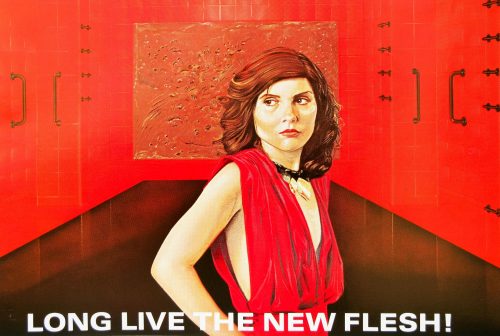
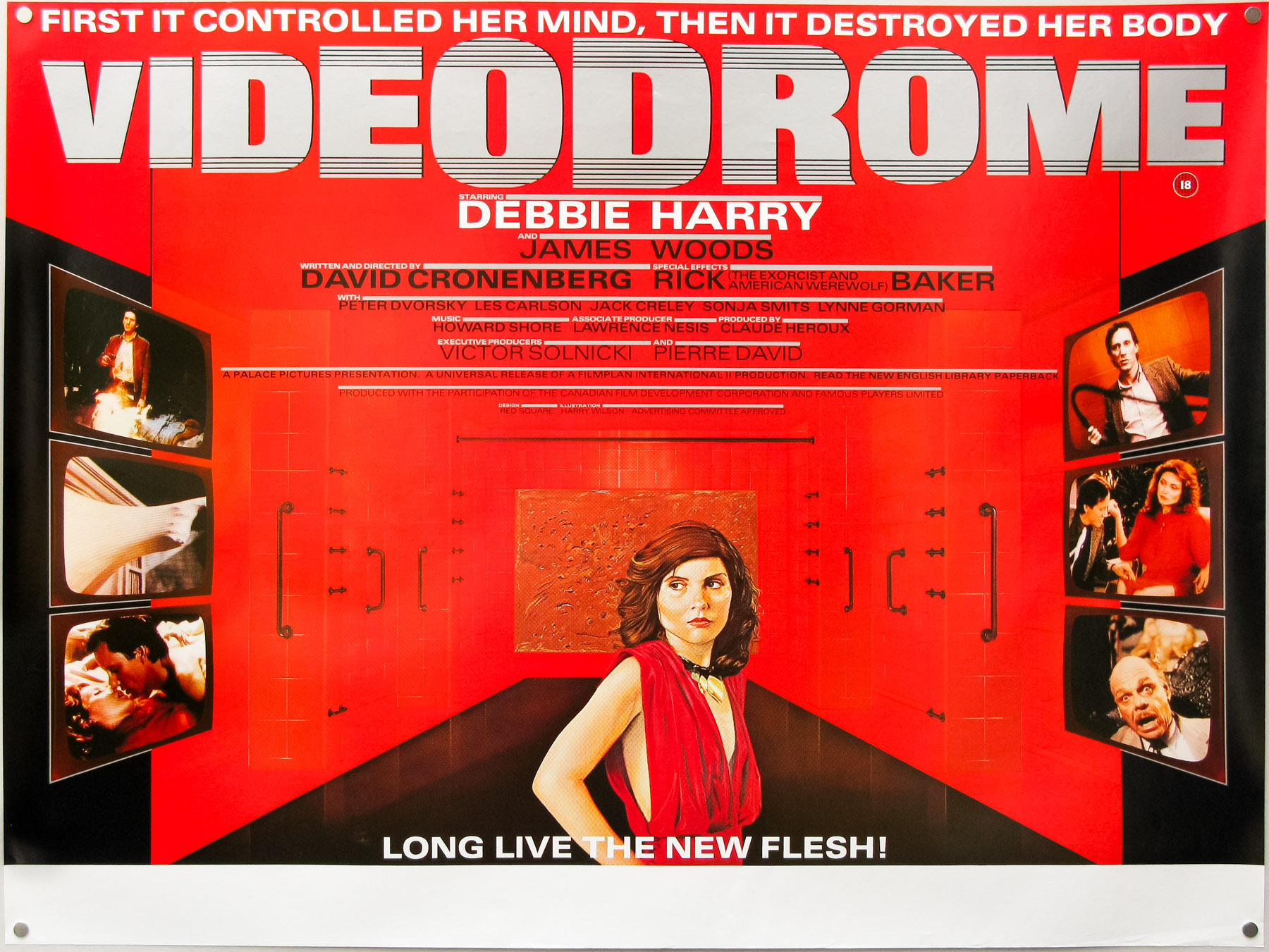
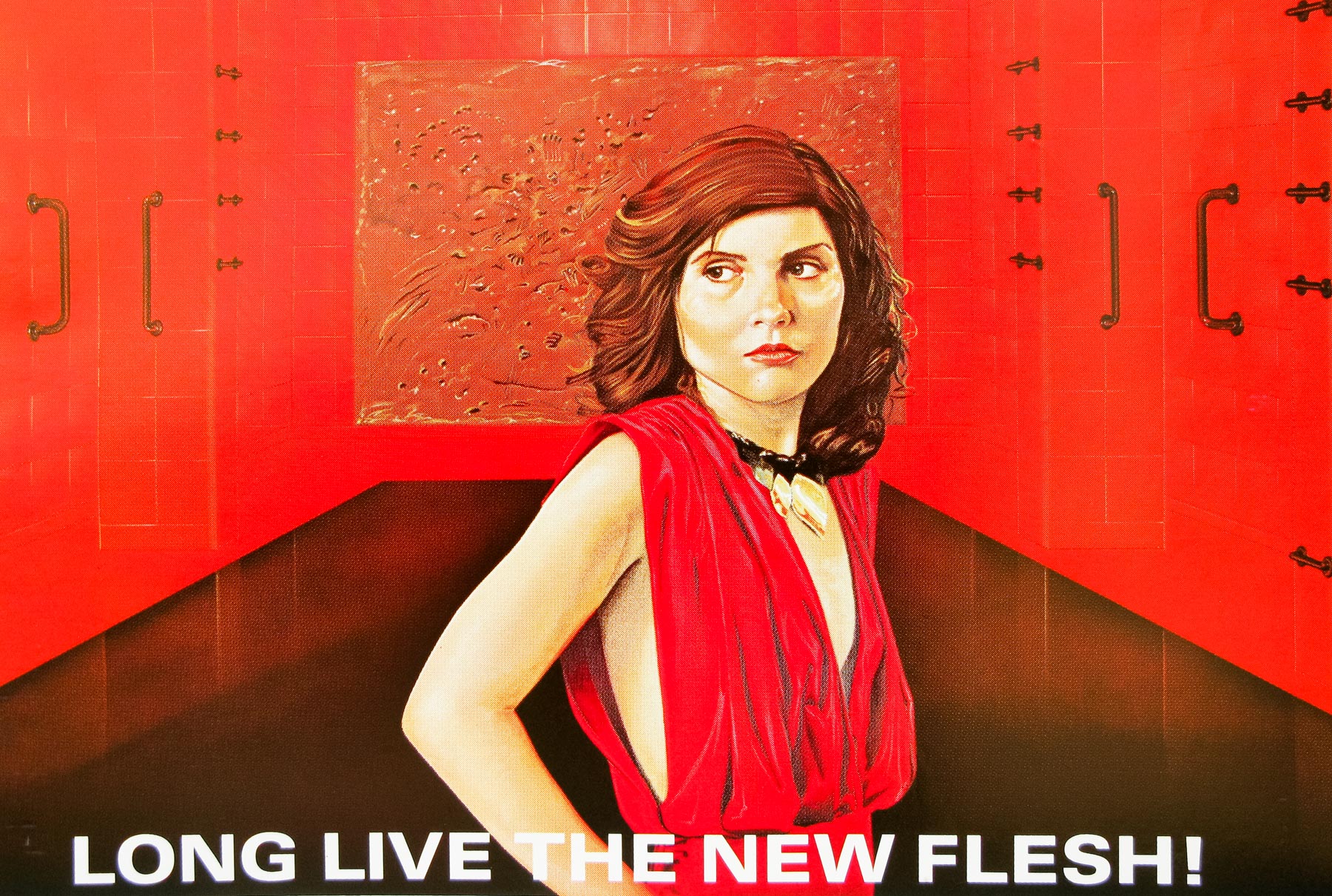
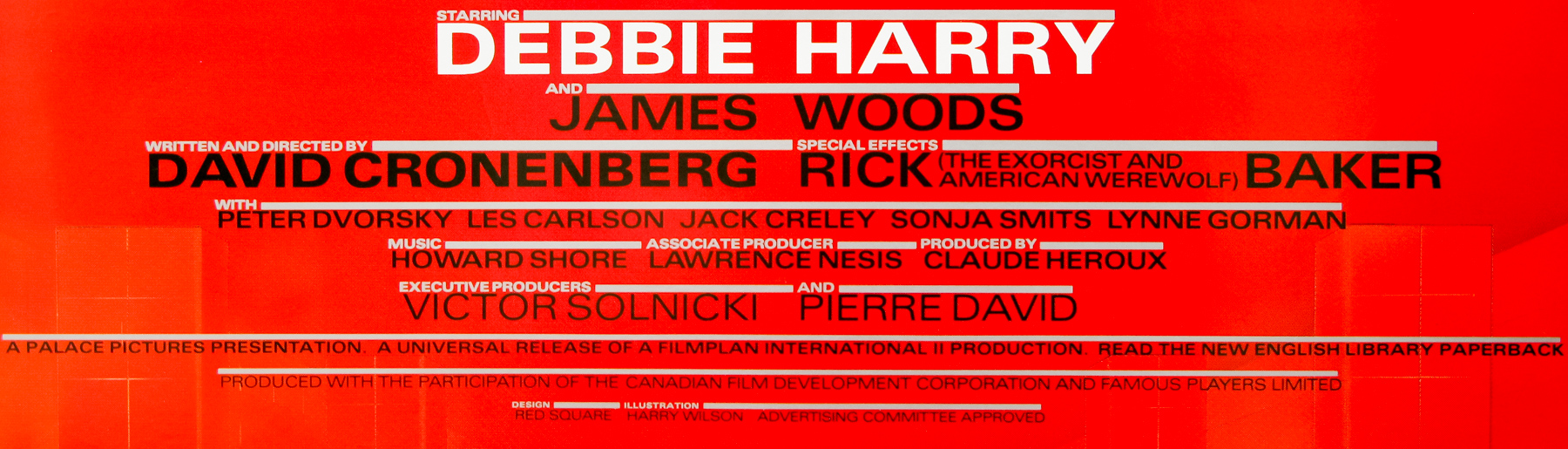
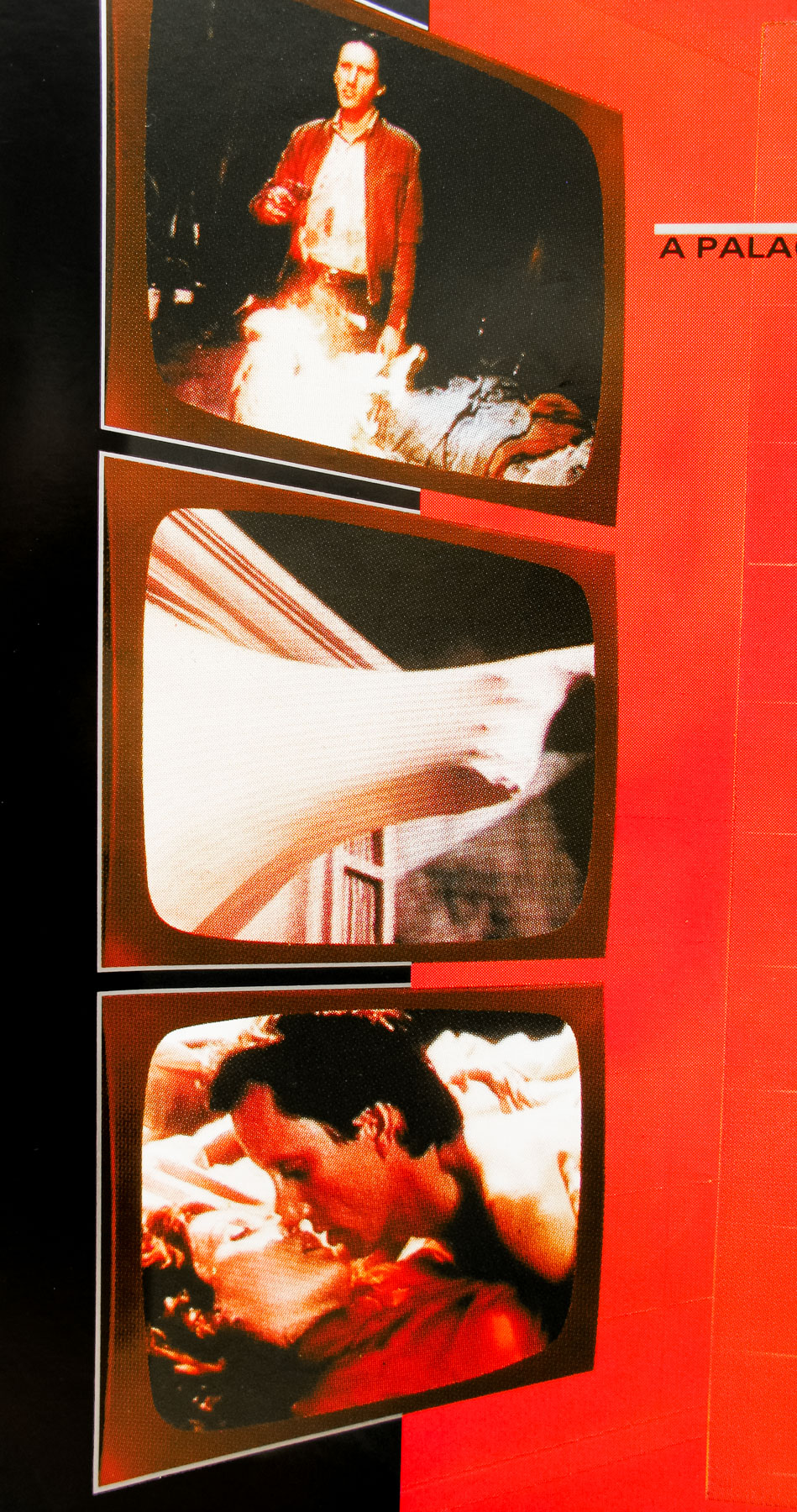
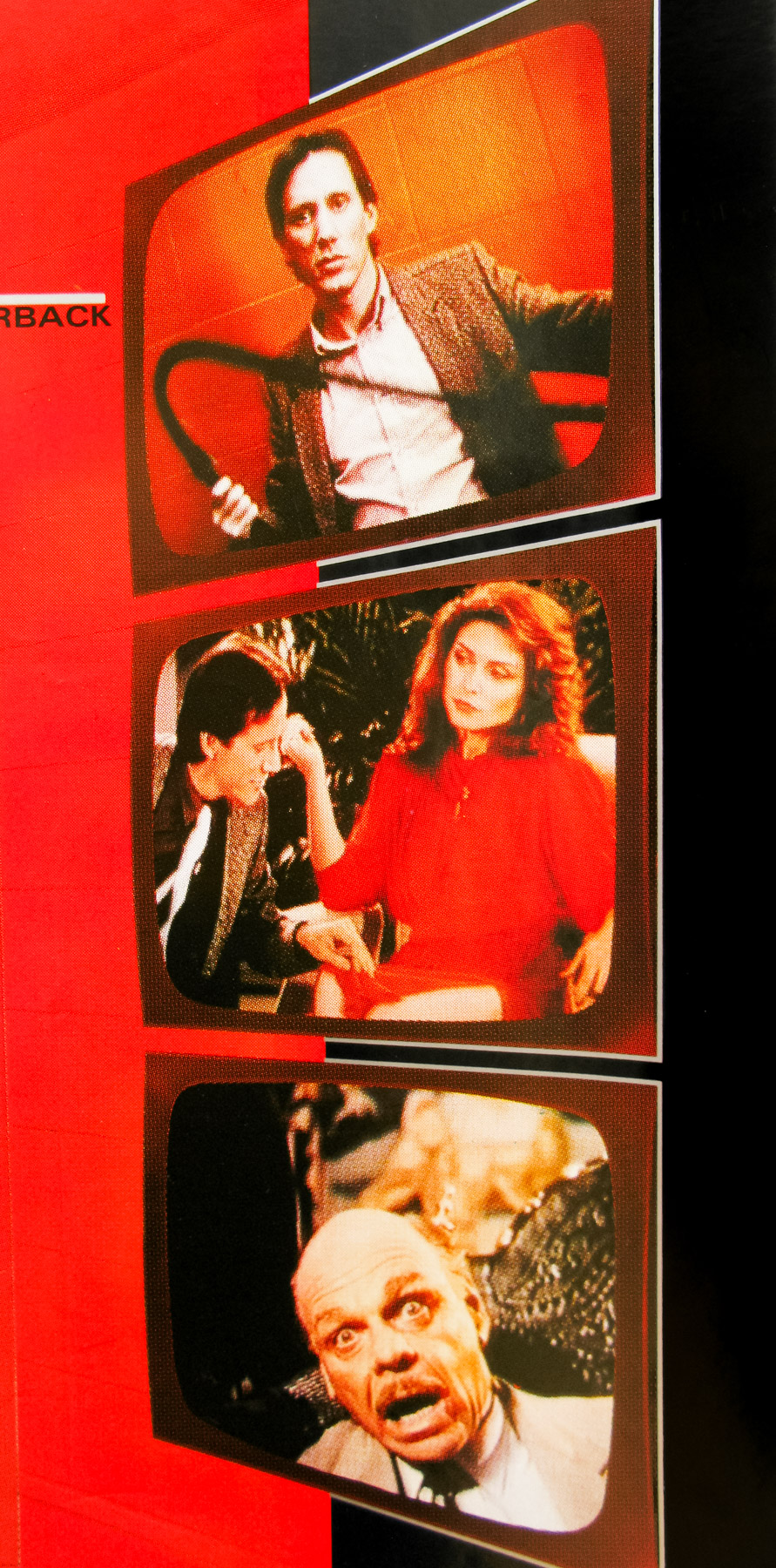
This is the British quad for the release of cult Canadian director David Cronenberg’s Videodrome. Like much of the director’s output, Videodrome is definitely not for the faint of heart and contains some utterly unforgettable moments of Cronenberg’s patented body-horror mutations. James Woods stars as Max Renn the sleazy CEO of a minor cable TV station who is constantly on the lookout for cheap exploitation fare to broadcast. Renn is told about Videodrome, a new and mysterious signal apparently being broadcast out of Malaysia which purports to depict real ‘snuff’ movies of victims being tortured and killed.

Renn decides to start pirating the show and broadcasting it to his audience. This soon attracts widespread attention that puts him into contact with sadomasochistic psychiatrist Nicki Brand (Debby Harry) and Professor Brian O’Blivion (Jack Creley). When he discovers that the signal is actually being broadcast out of Pittsburgh, Renn decides to investigate further and he plunges into a nightmarish conspiracy that goes deeper than he ever imagined. As the American tagline says ‘First it controls your mind. Then it destroys your body’. Fans of Cronenberg’s proclivity for unnatural cavities and the melding of flesh with inorganic substances are not left disappointed, and the gun on this poster hints towards the finale.

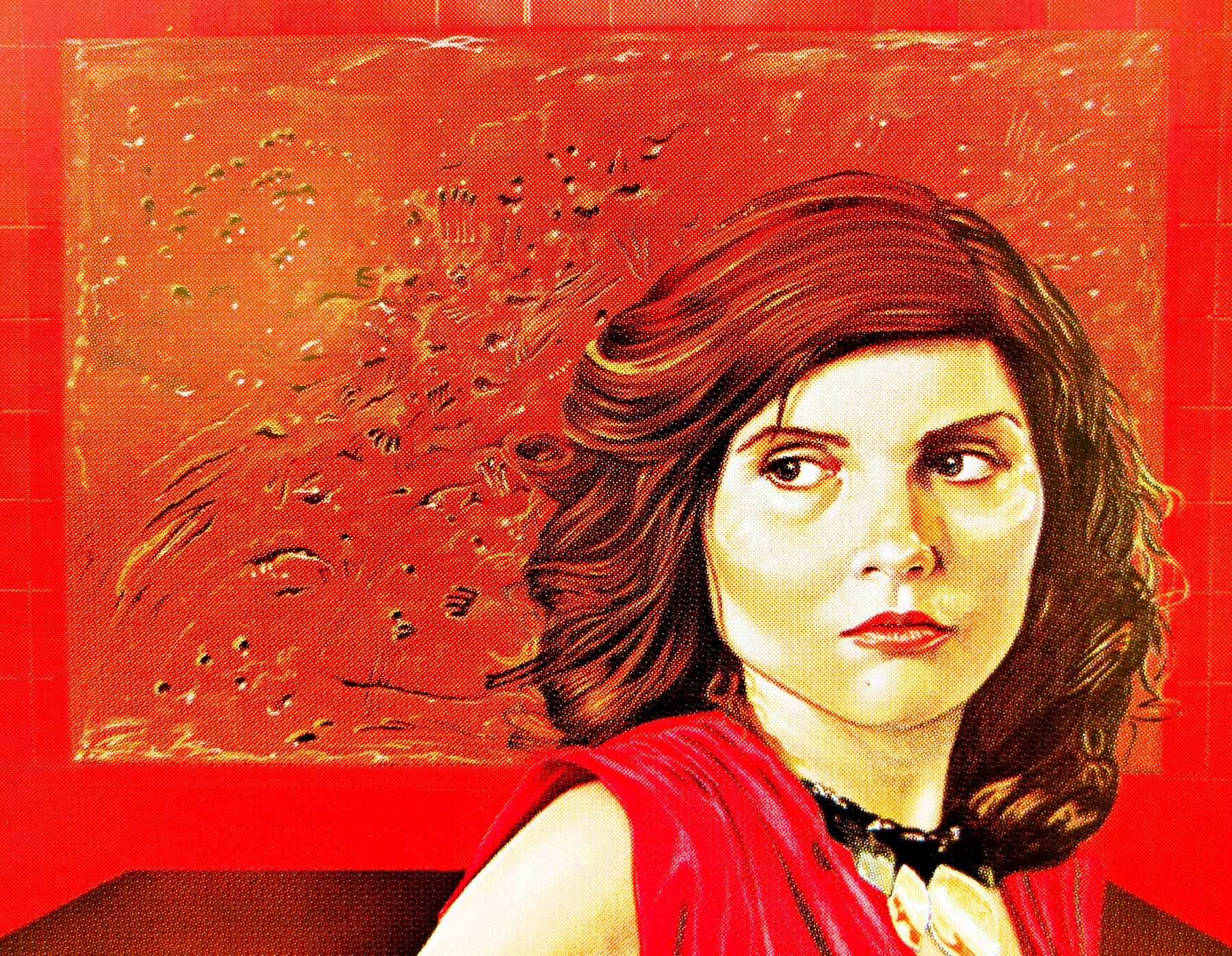
This British quad features artwork unique to this poster by Harry Wilson, about whom I’ve been able to discover very little. The designer is credited as Red Square, again something of a mystery so if you have any further details about either party please get in touch.

In addition to the quad I also have the American one sheet and the Japanese B2.

The Terminator / quad / UK

29.08.12

Poster Poster
Title
The Terminator
AKA
O Exterminador do Futuro (Brazil)
Year of Film
1984
Director
James Cameron
Starring
Arnold Schwarzenegger, Michael Biehn, Linda Hamilton, Paul Winfield, Lance Henriksen, Bess Motta, Earl Boen, Rick Rossovich, Dick Miller, Shawn Schepps, Bruce M. Kerner, Franco Columbu,, Bill Paxton, Brad Rearden, Brian Thompson
Origin of Film
UK | USA
Genre(s) of Film
Arnold Schwarzenegger, Michael Biehn, Linda Hamilton, Paul Winfield, Lance Henriksen, Bess Motta, Earl Boen, Rick Rossovich, Dick Miller, Shawn Schepps, Bruce M. Kerner, Franco Columbu,, Bill Paxton, Brad Rearden, Brian Thompson,
Type of Poster
Quad
Style of Poster
--
Origin of Poster
USA
Year of Poster
1985
Designer
Unknown
Artist
Mike Francis
Size (inches)
30 2/16 x 40"
SS or DS
SS
NSS #
--
Tagline
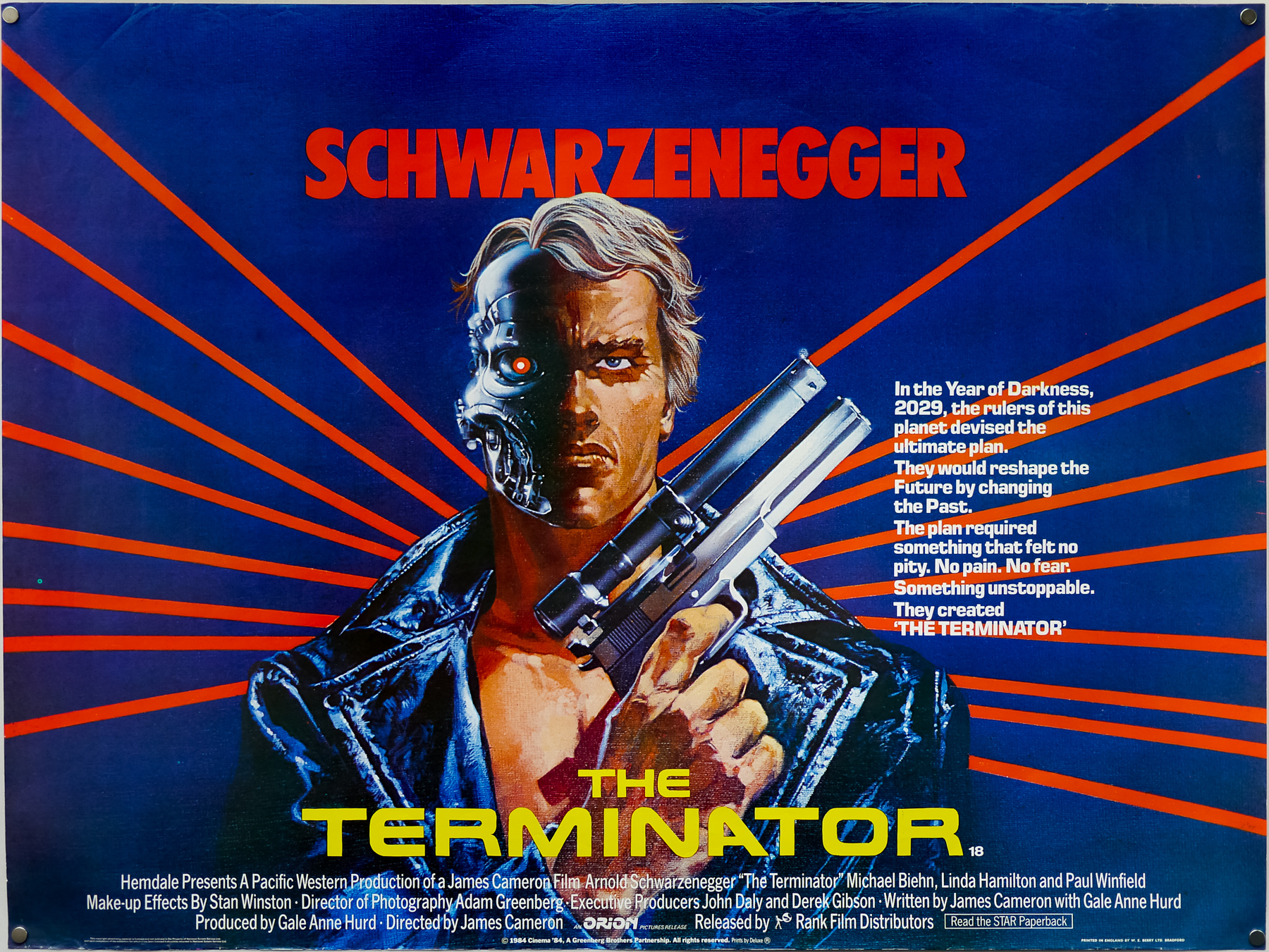
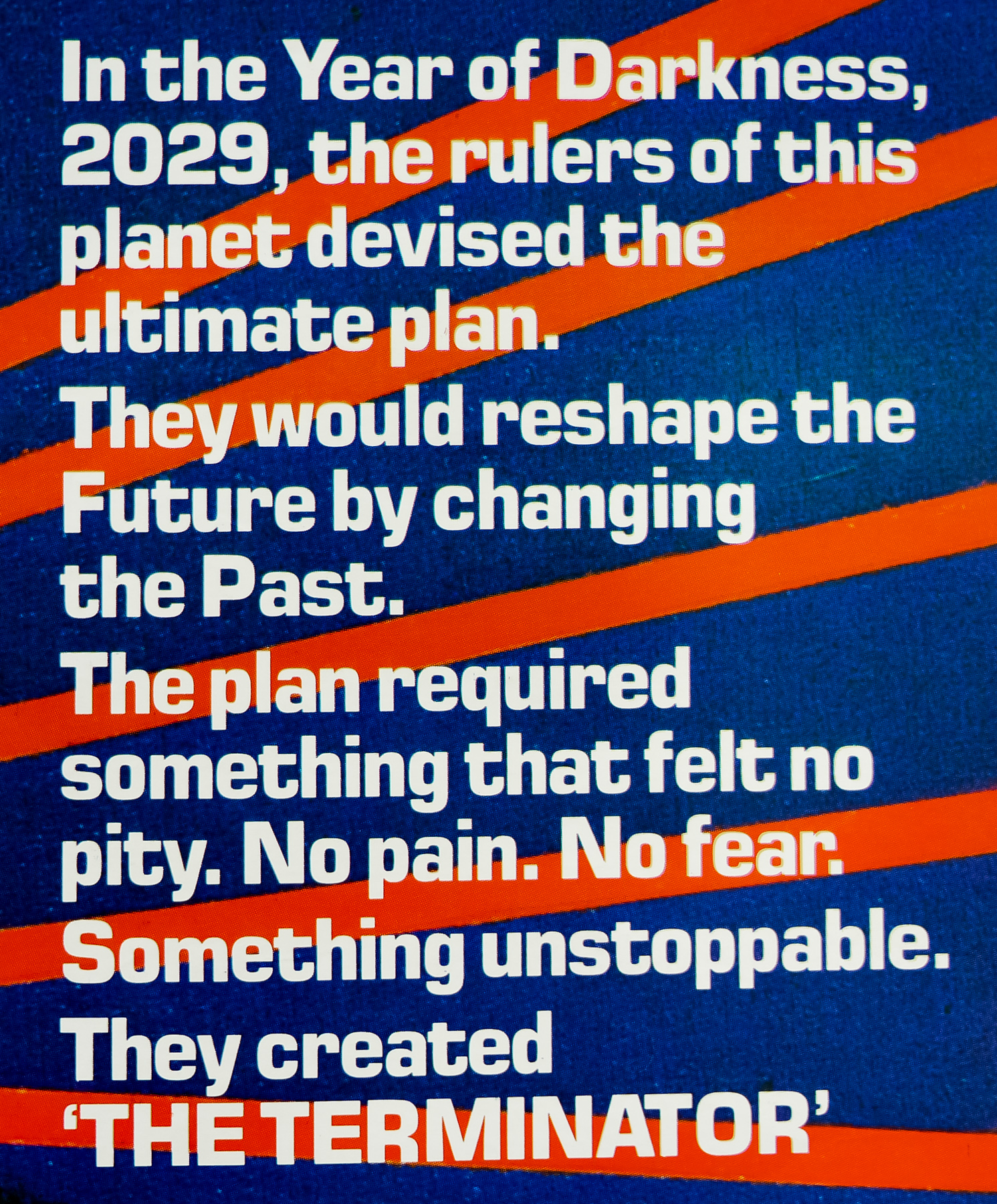
In the Year of Darkness, 2029, the rulers of this planet devised the ultimate plan. They would reshape the Future by changing the Past. The plan required something that felt no pity. No pain. No fear. Something unstoppable. They created 'THE TERMINATOR'

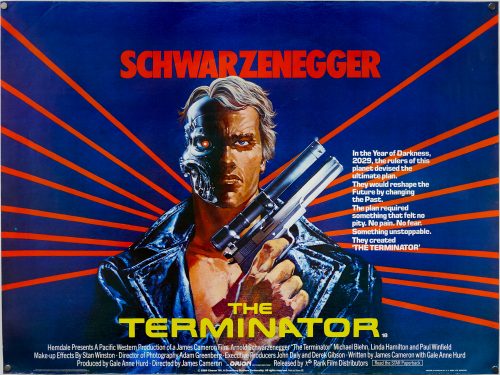
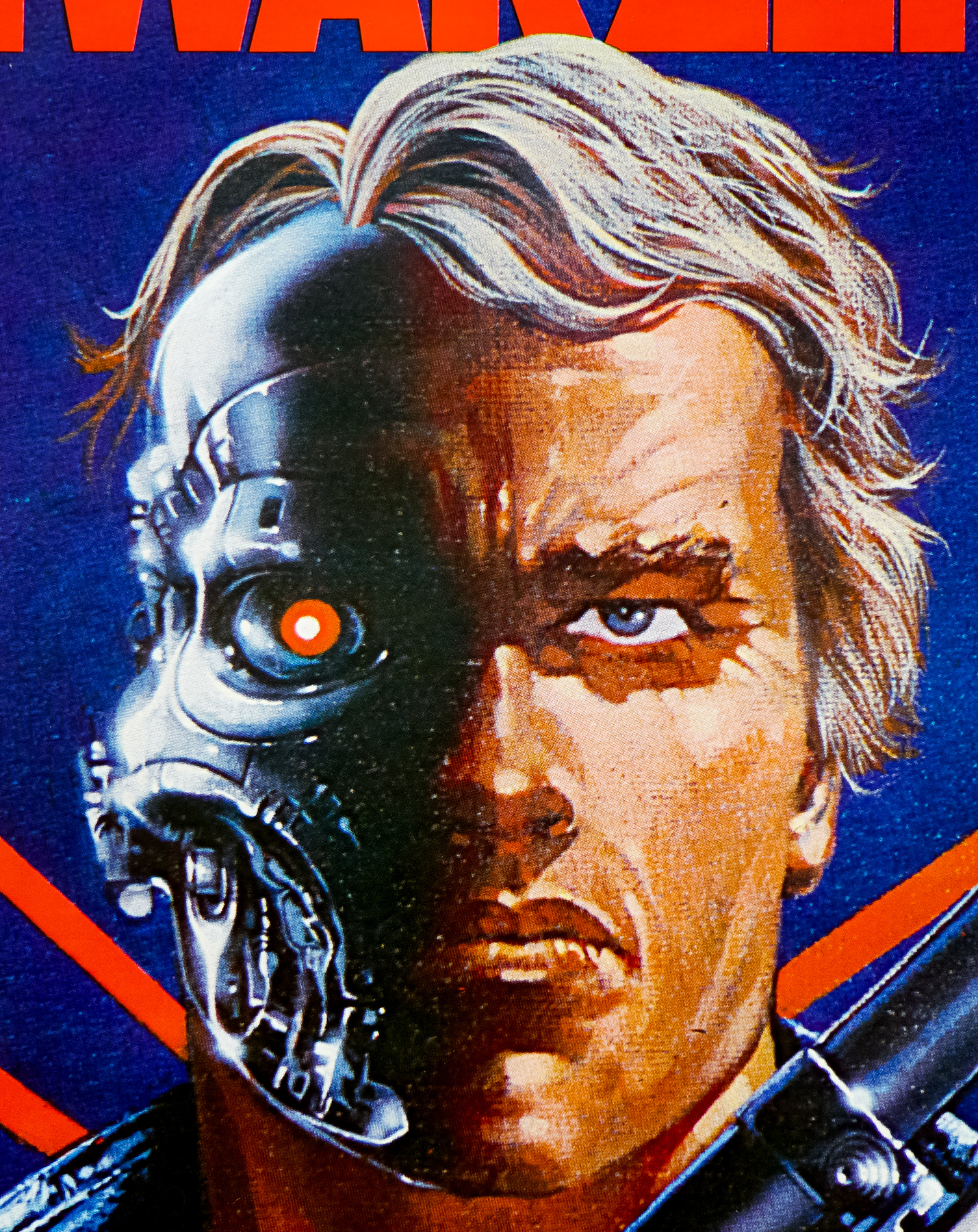
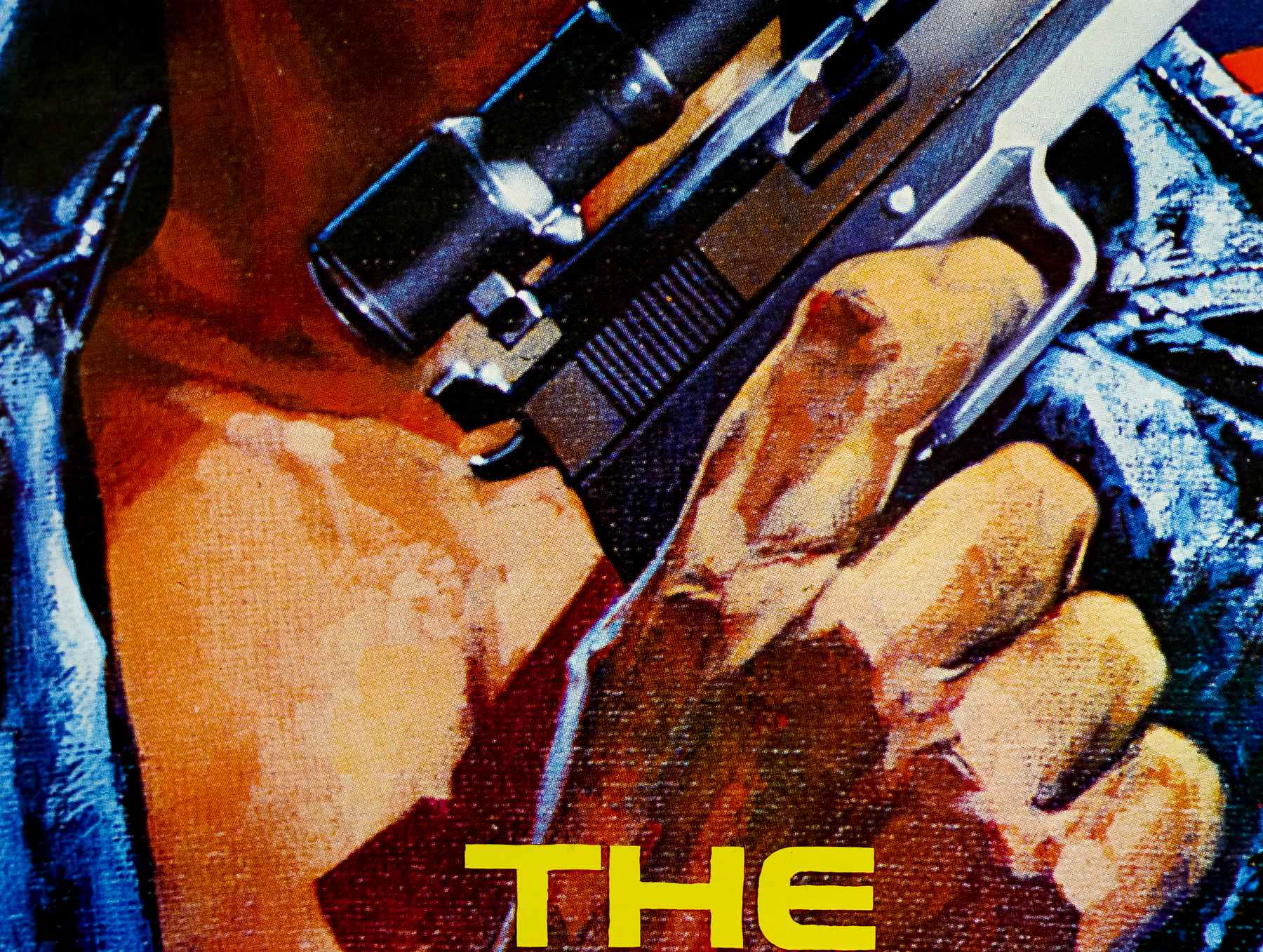
James Cameron’s seminal sci-fi classic The Terminator was given a unique poster design when it was released on these shores in January 1985. The US poster had featured the iconic photograph of Arnold Schwarzenegger alongside the lengthy tagline (that also appears on this quad), but the decision was taken to go with a painted portrait of the actor, which also features a depiction of the robotic endoskeleton underneath the Arnie exterior.

The person responsible for the image on this quad was the British artist Mike Francis. Whilst putting together the must-own book British Film Posters, Sim Branaghan met and spoke to Francis about his life and career and, as always, I heartily recommend picking up the book to read the section in full. Born in Surrey in 1938, Francis got his first job in commerical art in the early 1950s at the Rome Studios in Soho, London. Starting out as a messenger boy he began to be given illustration jobs and after a stint as a National Serviceman he returned to the studio in 1958 to a welcome pay raise and an increase in illustration work.

Mike stayed with Rome Studios until 1970 when he left to join Illustrators of London on Great Marlborough Street and this is where he was given his first film posters to work on. His first quad was for the 1971 version of Black Beauty and he also worked on posters for Hammer and other independent companies. In 1974 Francis won the National Gallery’s 150th Anniversary Award, and with the prize money he took the decision to go freelance. Although film posters were only a small part of his overall output (he estimates he was doing a couple per year) he continued to paint for film-related studios such as Downtons and some of his other quads include The Karate Kid (1984), Not Quite Jerusalem (1985) and The Holocroft Covenant (1985).

By about 1990 the illustration work had dried up completely but Francis had been painting highly finished photorealist work for many years and this side of his career had taken off significantly with high-profile exhibitions and celebrity clients. However, in terms of film work there’s no question that this painting for The Terminator is the artist’s most iconic work.

Taxi Driver / quad / UK

19.08.13

Poster Poster
Title
Taxi Driver
AKA
--
Year of Film
1976
Director
Martin Scorsese
Starring
Robert De Niro, Jodie Foster, Cybill Shepherd, Harvey Keitel, Peter Boyle, Albert Brooks, Leonard Harris
Origin of Film
USA
Genre(s) of Film
Robert De Niro, Jodie Foster, Cybill Shepherd, Harvey Keitel, Peter Boyle, Albert Brooks, Leonard Harris,
Type of Poster
Quad
Style of Poster
--
Origin of Poster
UK
Year of Poster
1976
Designer
Unknown
Artist
--
Size (inches)
29 15/16" x 39 15/16"
SS or DS
SS
Tagline
On every street in every city there's a nobody who dreams of becoming a somebody

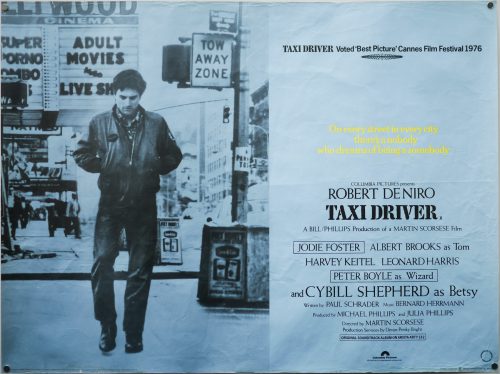
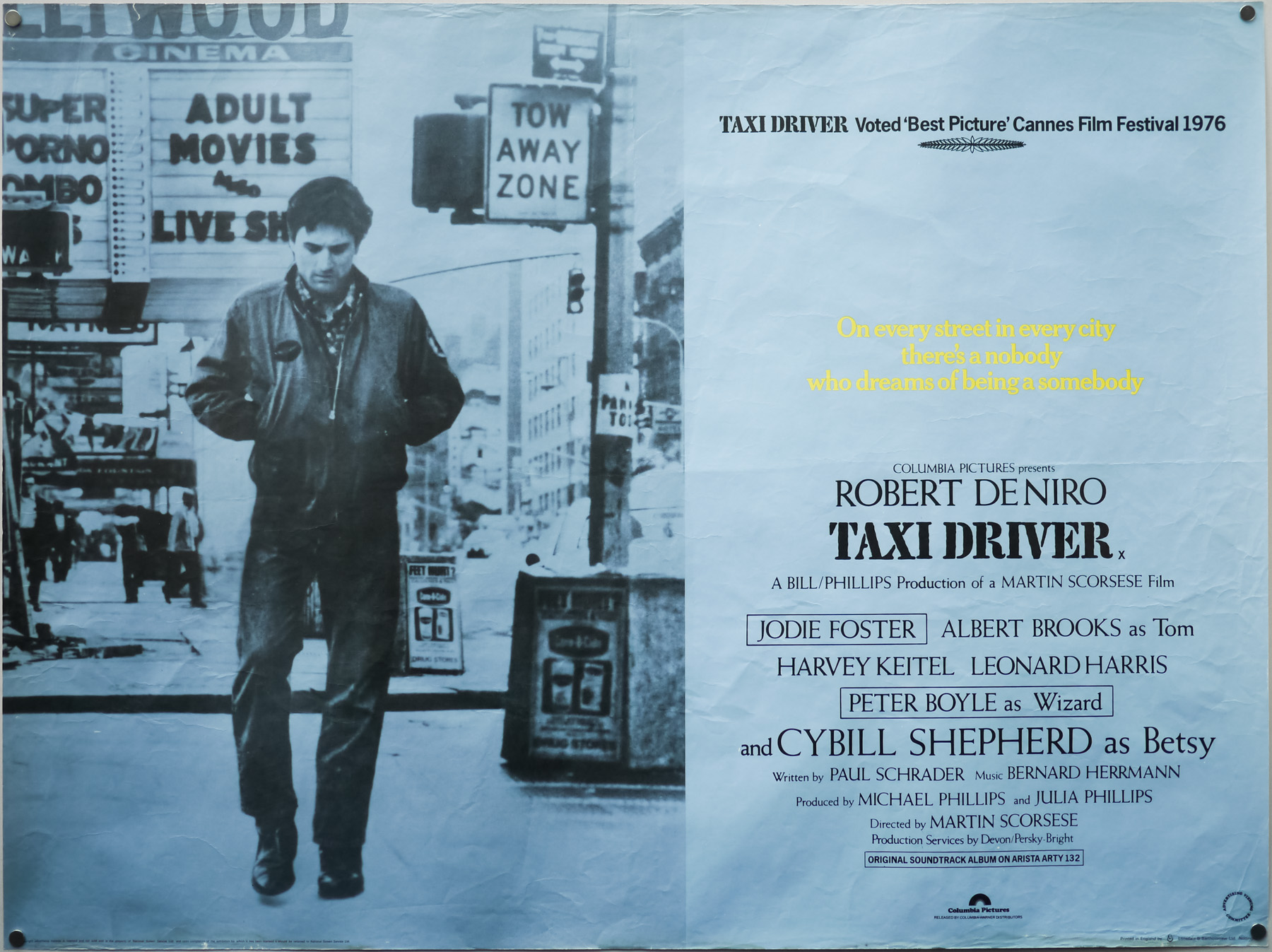
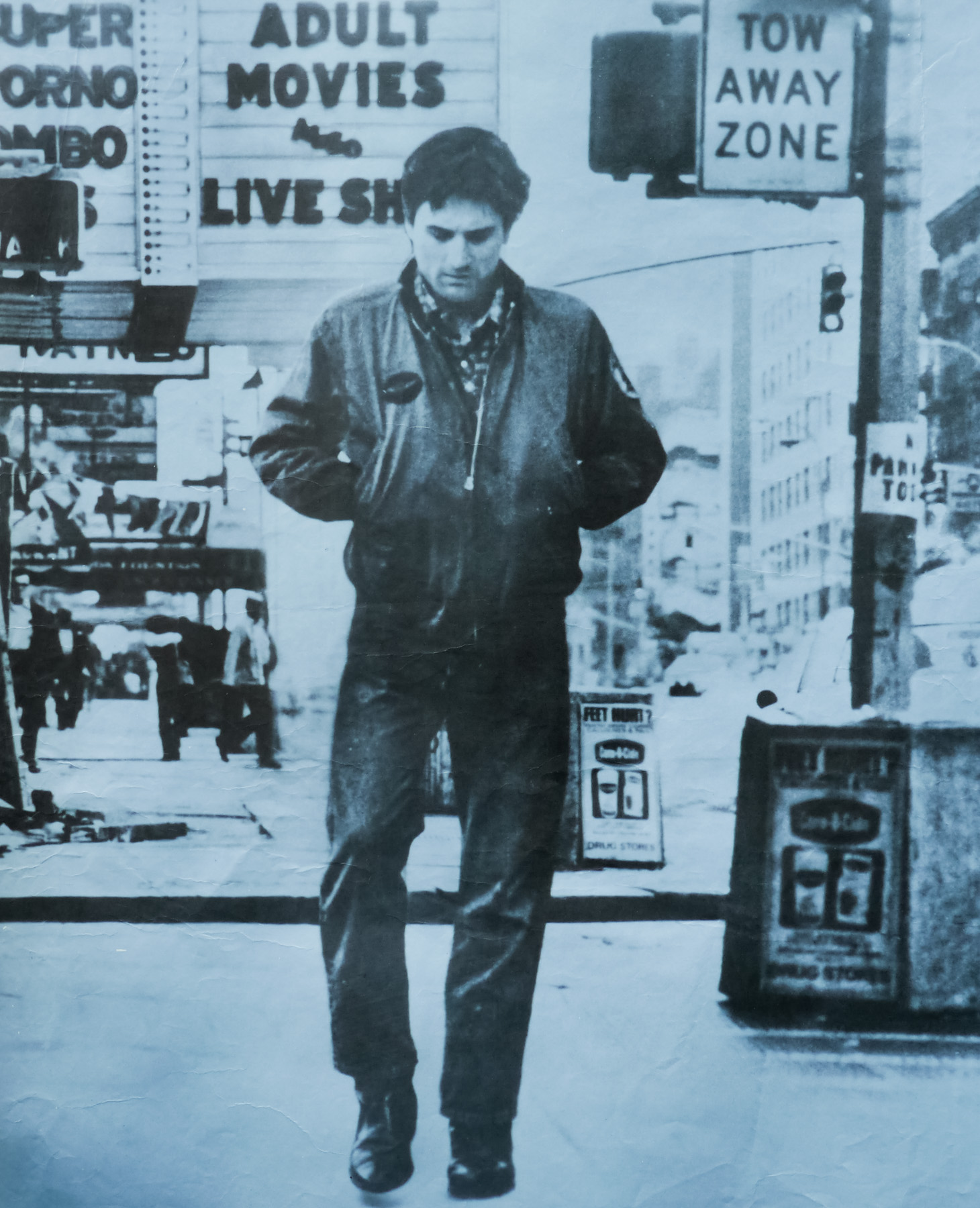
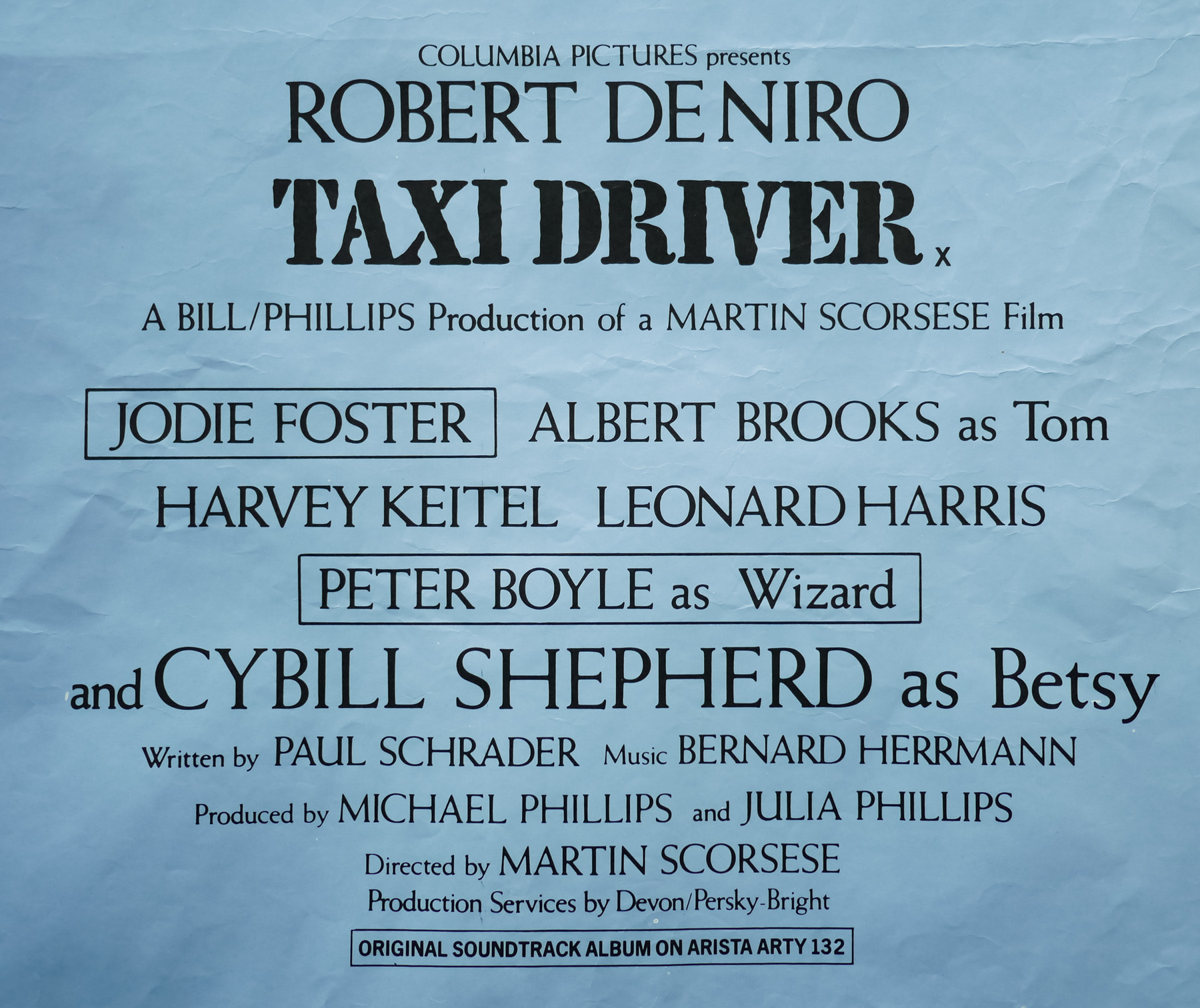
This is the original UK quad for director Martin Scorsese’s superb Taxi Driver. The film follows De Niro’s Travis Bickle, an unstable Vietnam veteran who works as a taxi driver on the streets of New York City, and whose anger at the perceived corruption and sleaze around him takes him down a path of violence from which there may be no return. Cybill Shepherd plays Betsy, a worker for a presidential campaign with whom Bickle attempts to start a relationship, and a young Jodie Foster stars as a prostitute who he decides needs ‘saving’ from her predicament.

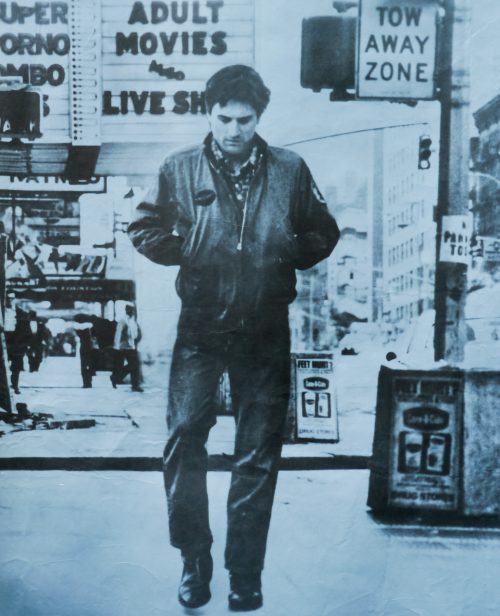
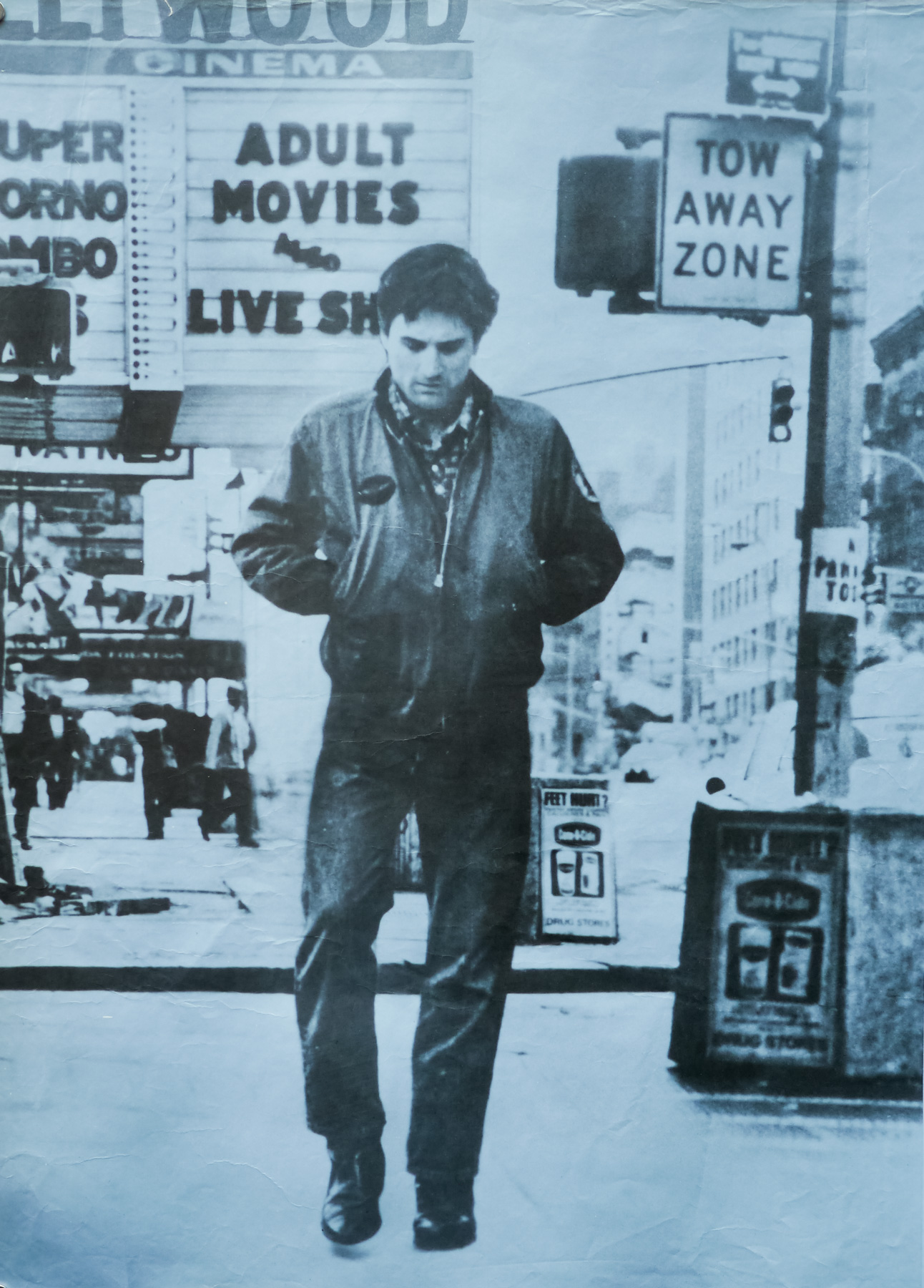
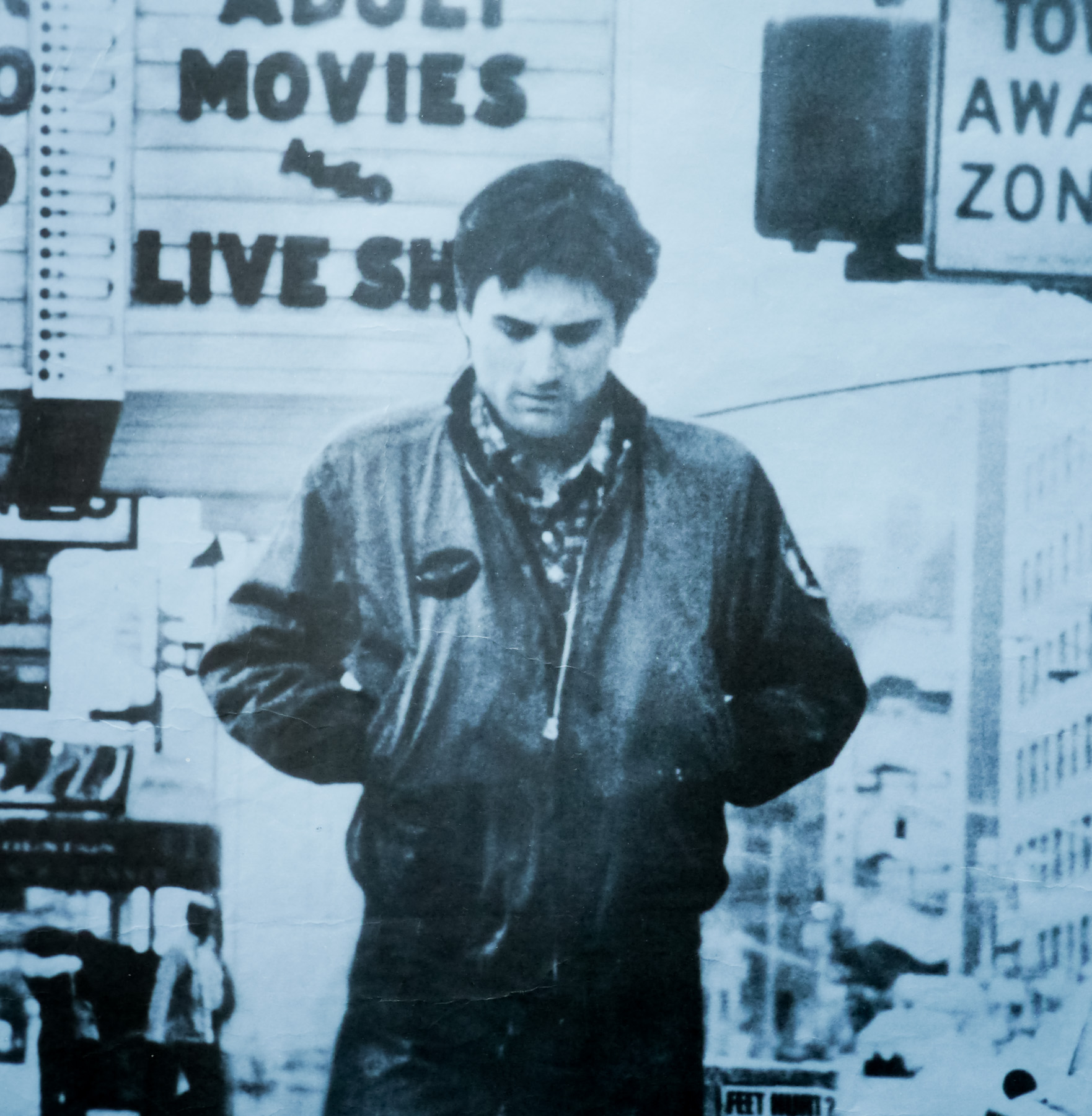
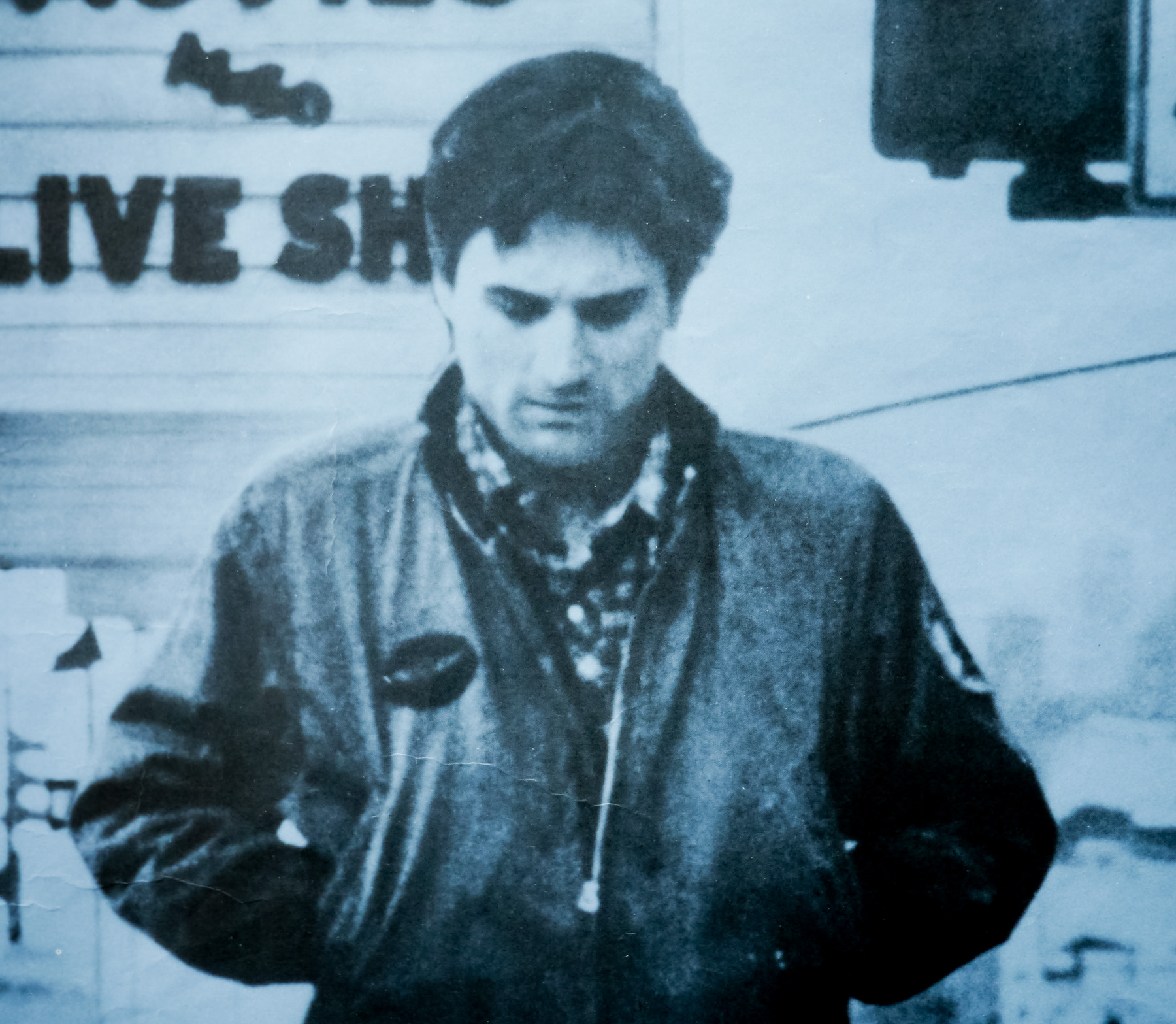
This poster features an image of Travis Bickle walking down a New York street and the same photograph features on several other Taxi Driver posters, including the Japanese B2, this ‘reviews’ style US one sheet and the Park Circus 2006 re-release quad for the film. There is also an international one sheet for the film that has the same blue colouring as this quad.

Dracula Has Risen From the Grave / quad / UK

20.09.13

Poster Poster

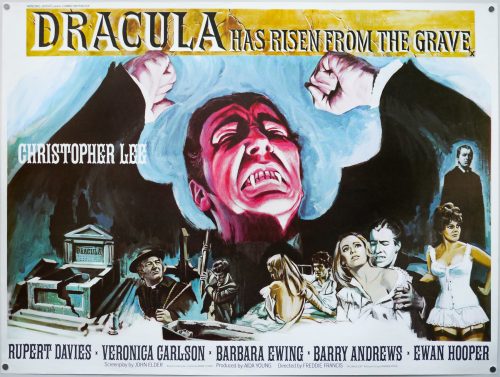
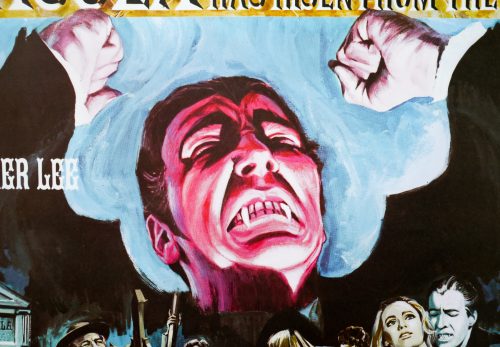
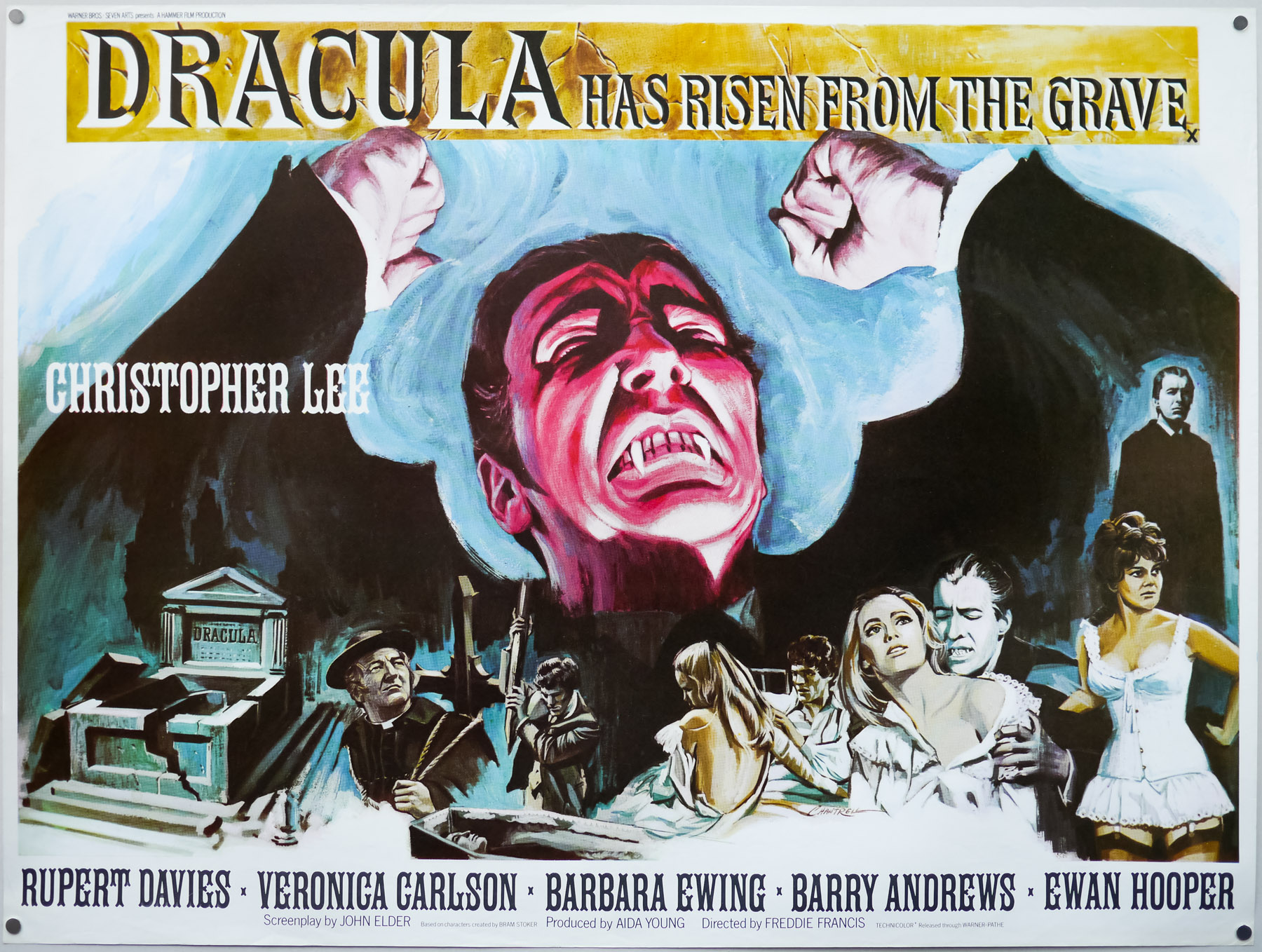
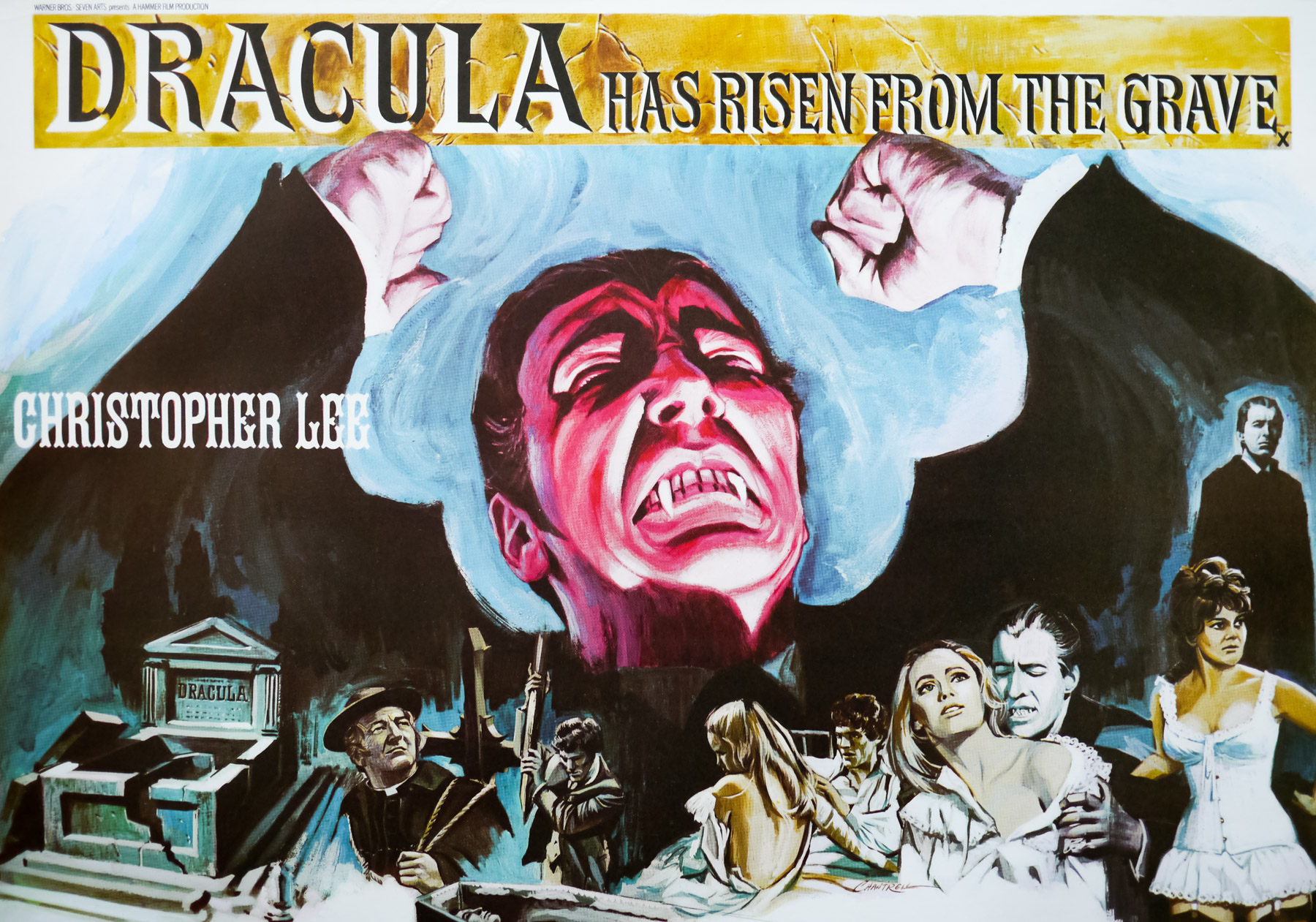
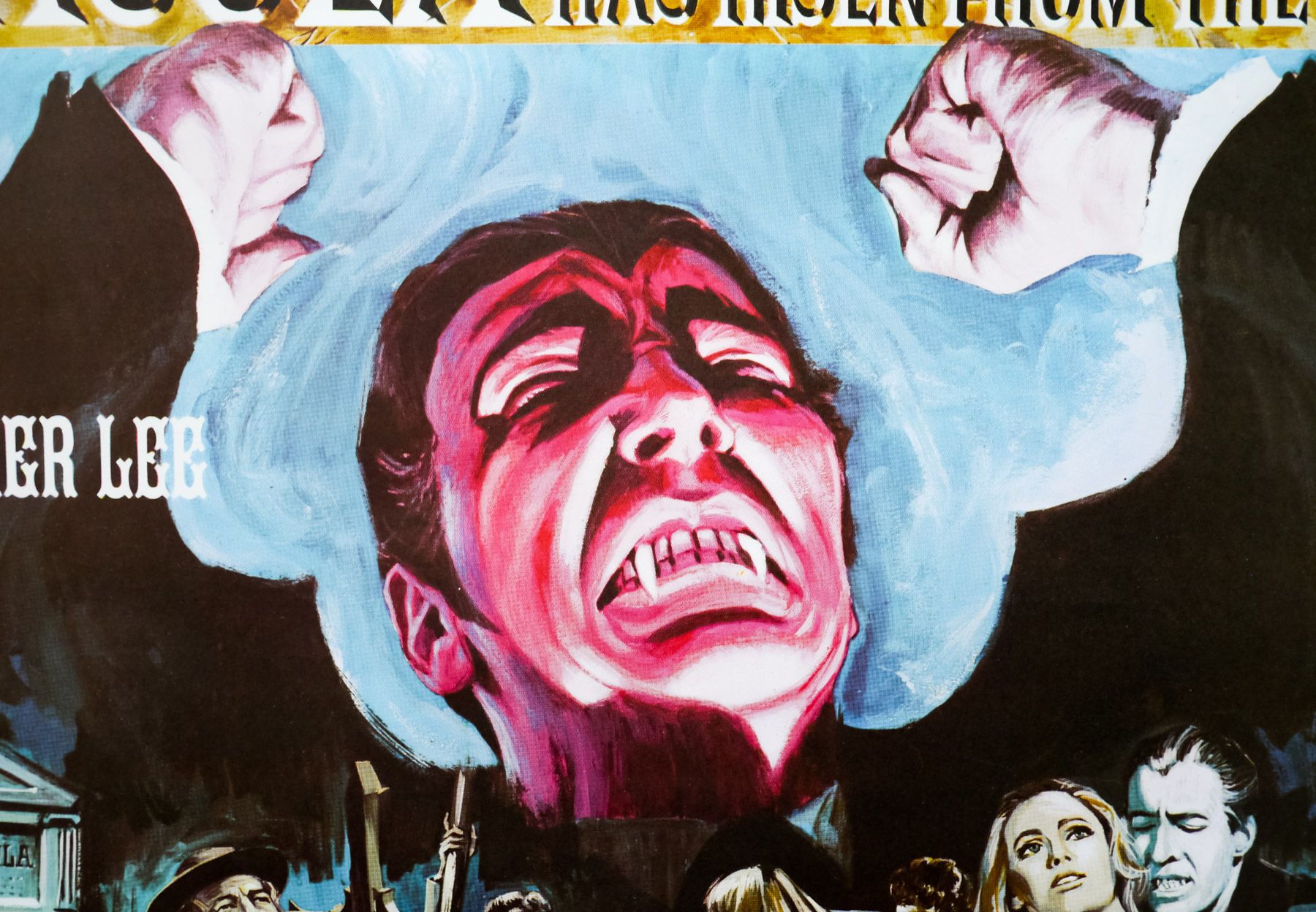
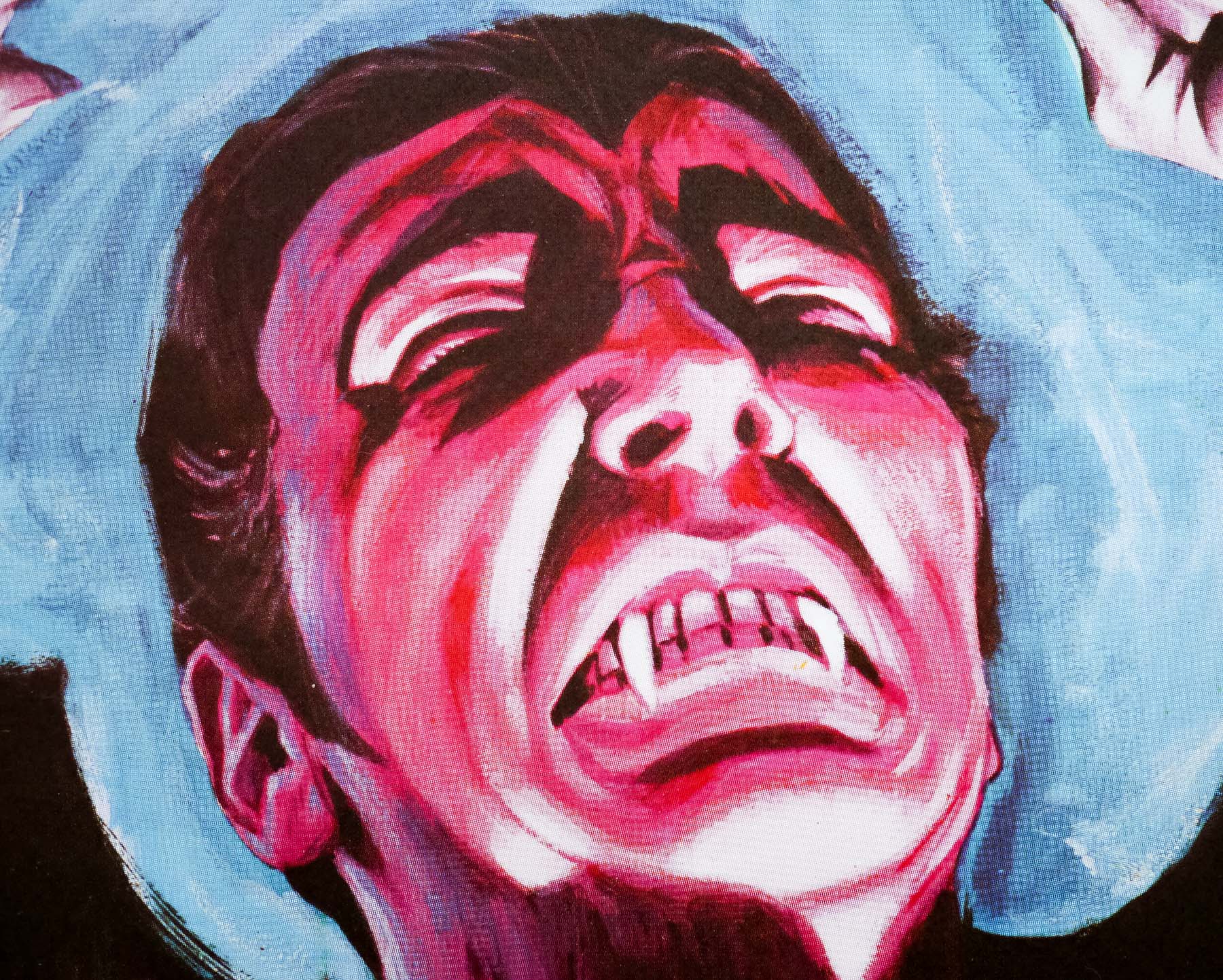
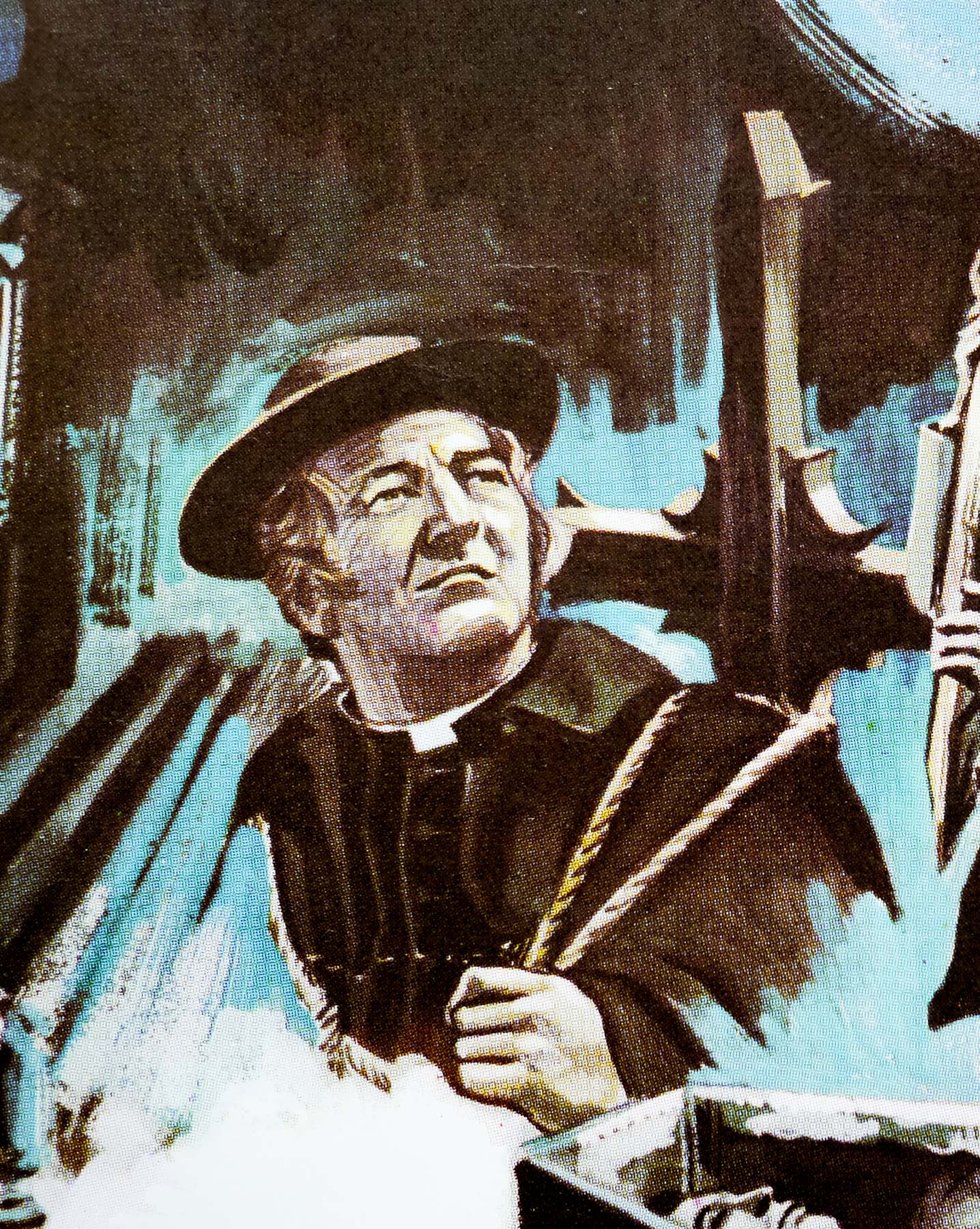
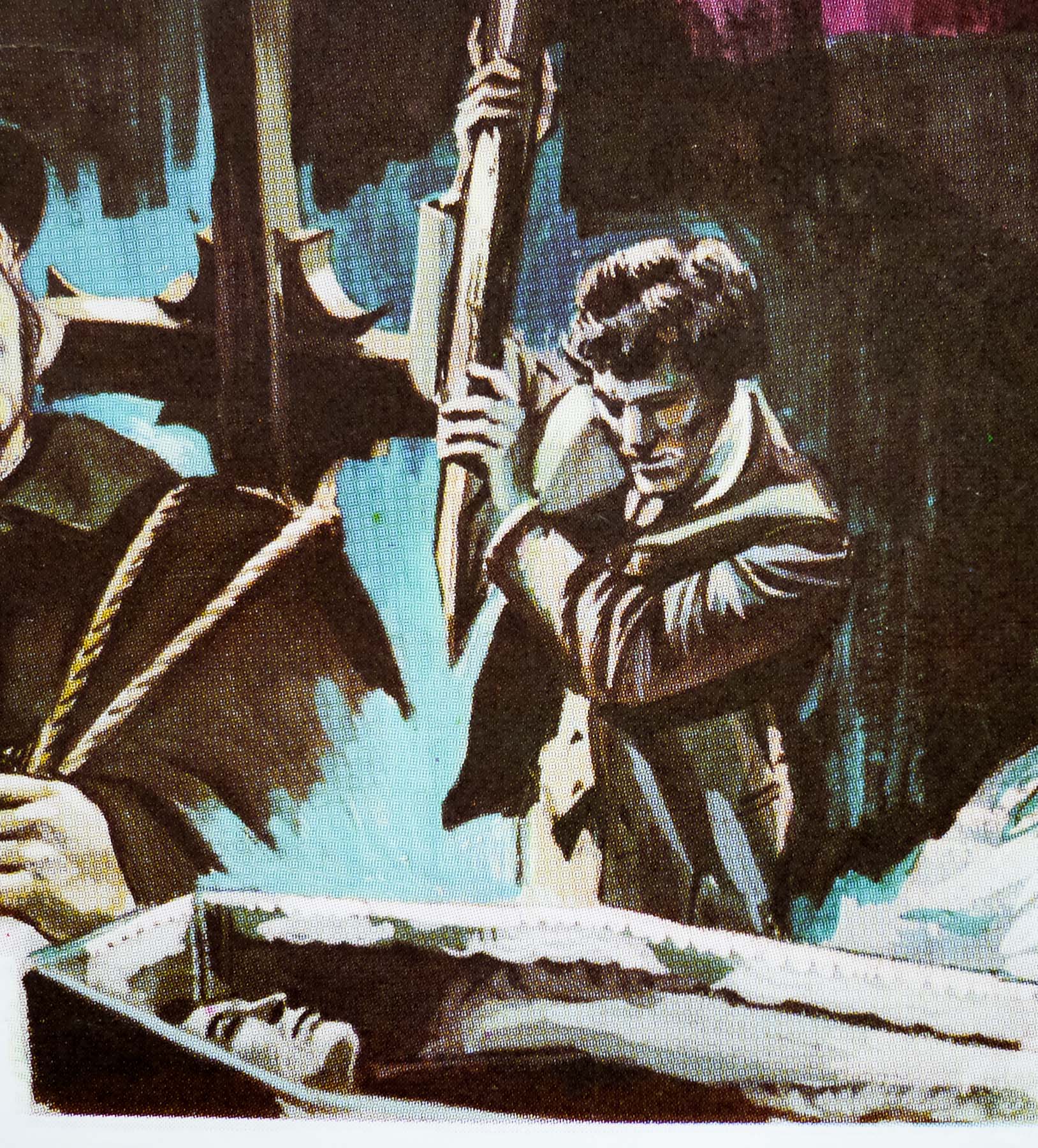
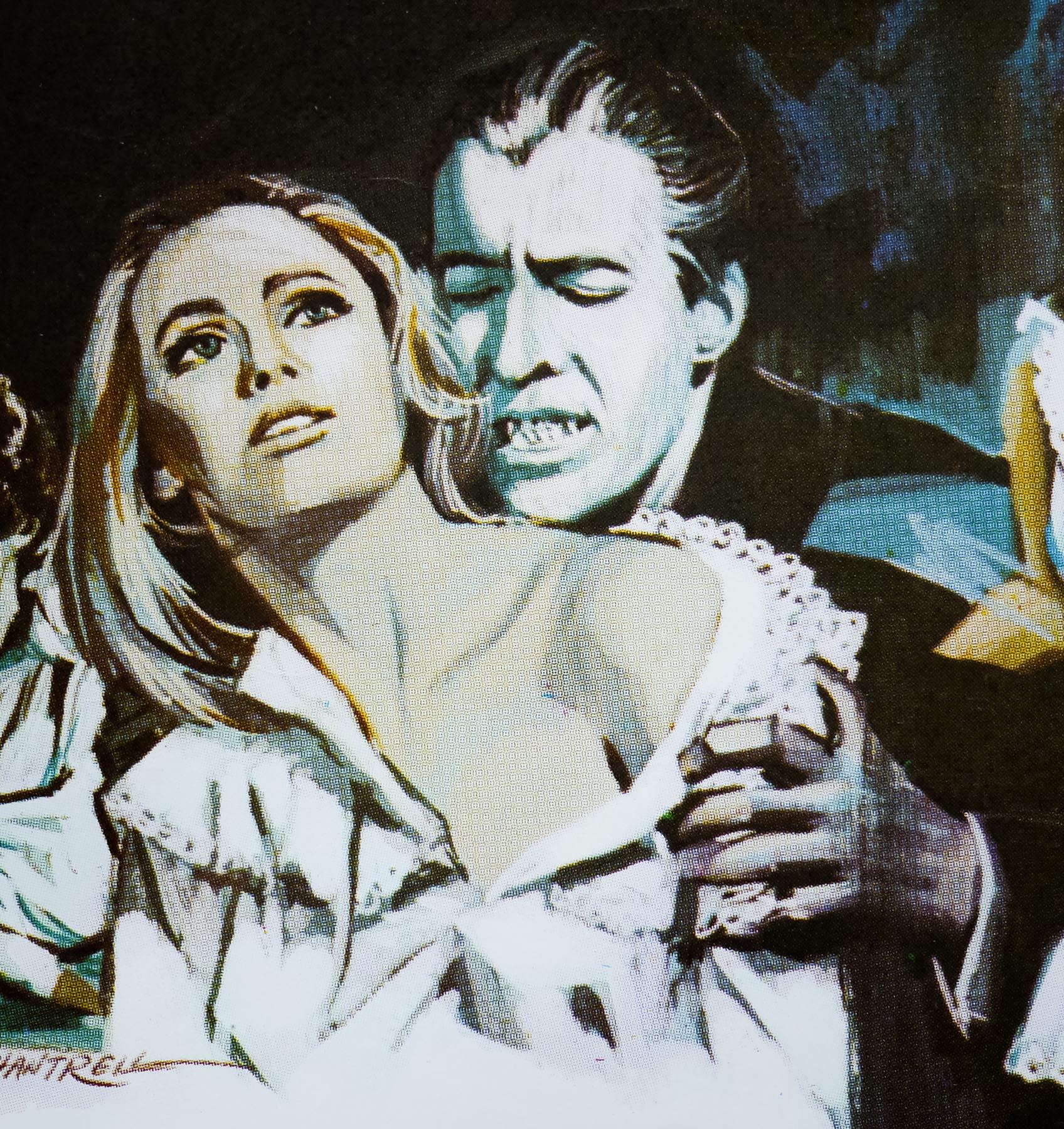
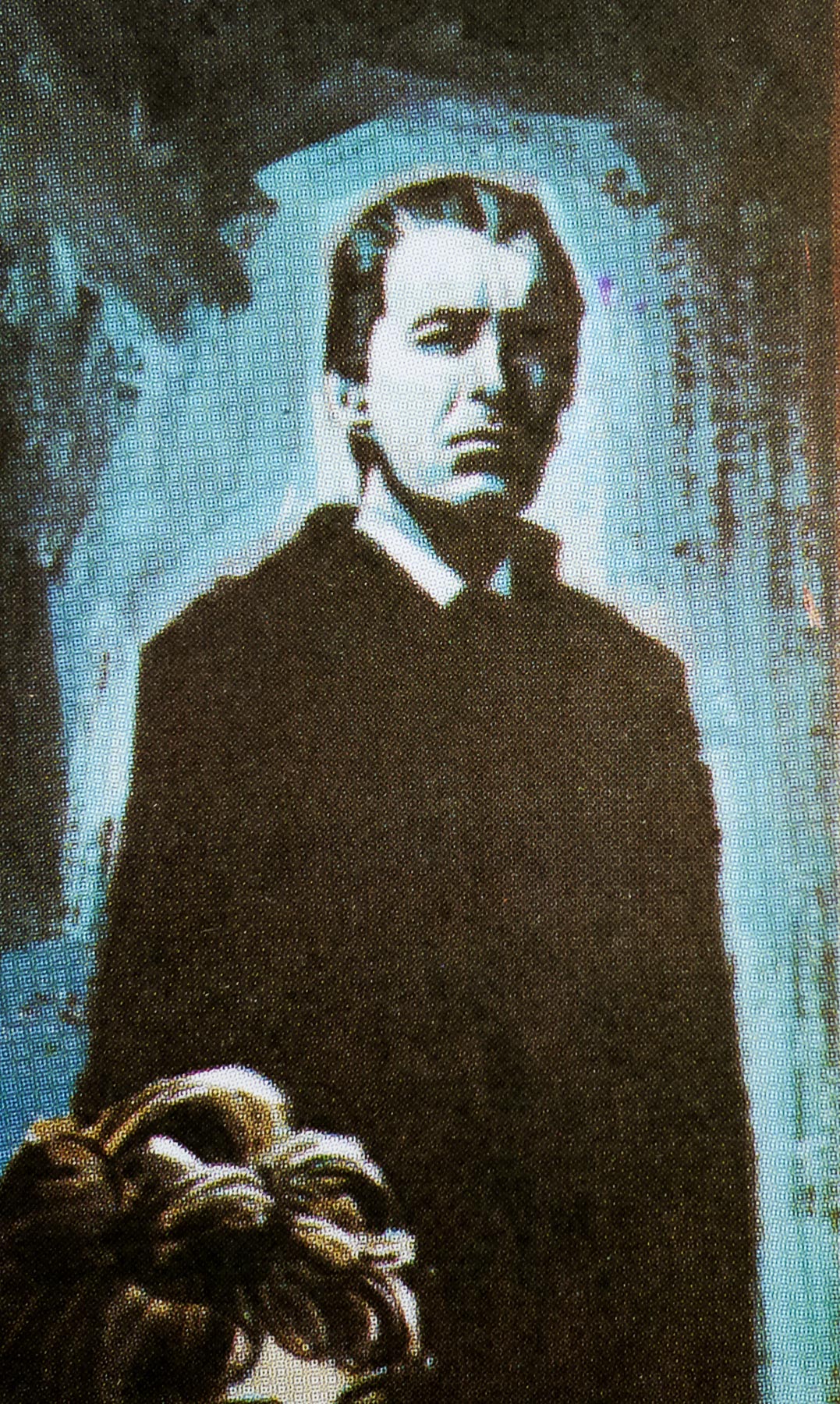
A classic painting of an enraged Count Dracula dominates this quad for Hammer studios’ Dracula Has Risen From the Grave, the third film featuring the legendary British actor Christopher Lee as the titular bloodsucker. The story, which follows on from Dracula: Prince of Darkness (1966), sees a Catholic Monsignor (played by Rupert Davies) travel to the Eastern European village of Keinenburg where he discovers a populace too afraid to attend church mass because they live in the shadow of Count Dracula’s castle.

Despite the fact that the vampire was seemingly destroyed a year earlier, the Monsignor decides to hike up to the castle with a local priest to perform an exorcism and then seals the front door with a giant holy cross. An accident sees the priest falling onto a frozen river and the blood from his head wound seeps through the ice, resurrecting the Count who is trapped below. Dracula then follows the Monsignor’s trail back to the town and sets his sights on the holy man’s daughter-in-law Maria, played by the gorgeous Veronica Carlson.

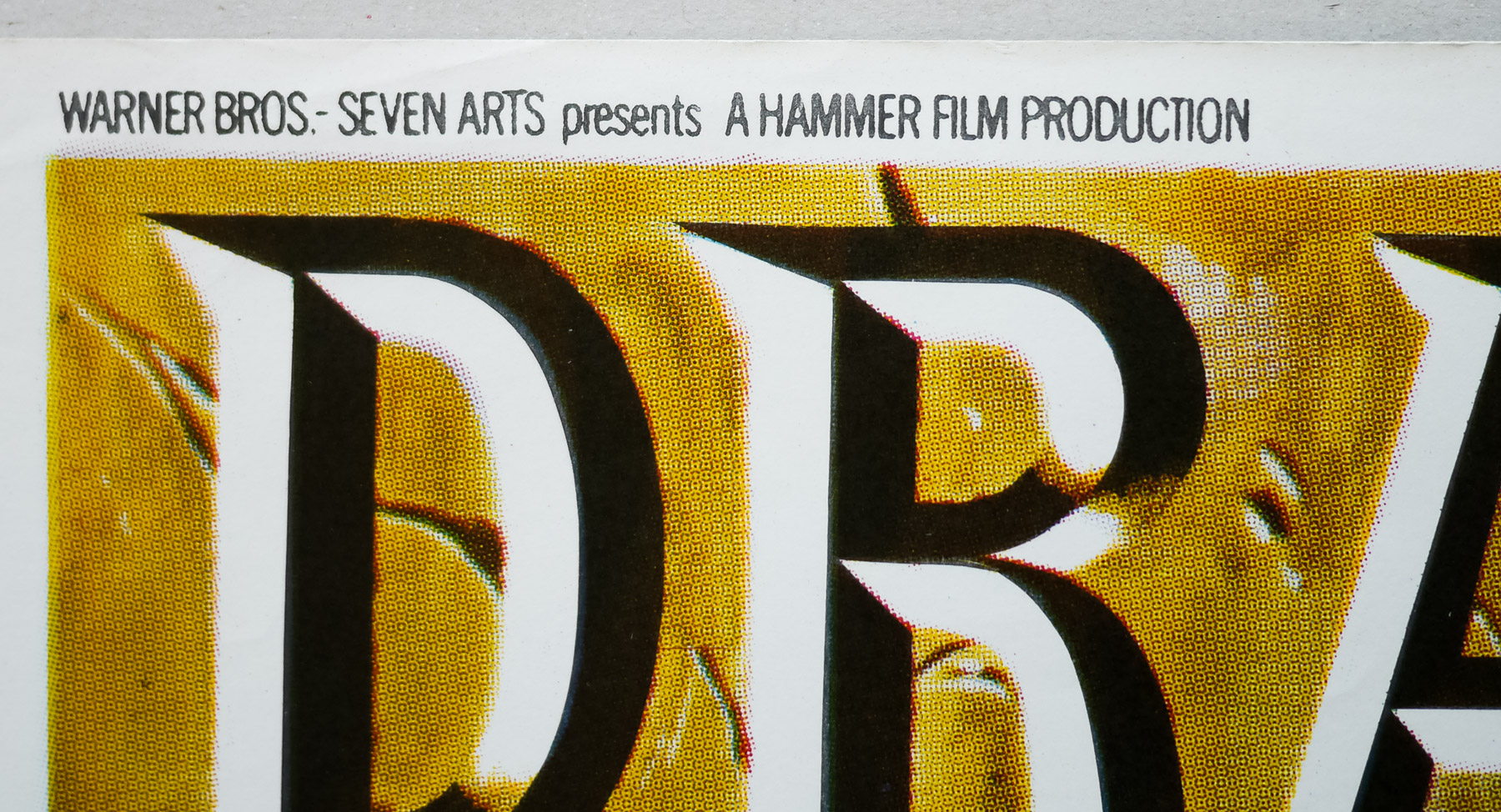
Originally intended to be directed by Hammer stalwart Terence Fisher, the man at the helm of the original Dracula (1958), a freak road accident saw Fisher temporarily out of action and regular Hammer cinematographer (and director) Freddie Francis stepped in shortly before production began. This was the first of the studio’s pictures under their newly arranged co-production deal with Warner Bros-Seven Arts, following a split with previous partners Twentieth Century Fox.

As was typical at the time, a pre-sales marketing brochure had been prepared before the screenwriter Anthony Hinds had even finished the script and this was used to secure the required financing from the American partners. Unfortunately, no one had yet informed Christopher Lee that the deal was entirely dependent on him reprising his role as the Count, something the actor was more than a little reluctant to do at the time. There thus followed a sustained campaign of persuasion from Francis and studio boss James Carreras to entice the actor back into the cape. Lee eventually capitulated and the production was on, but it was not to be the last time that Lee would need to be harangued into stepping back onto a Hammer soundstage.

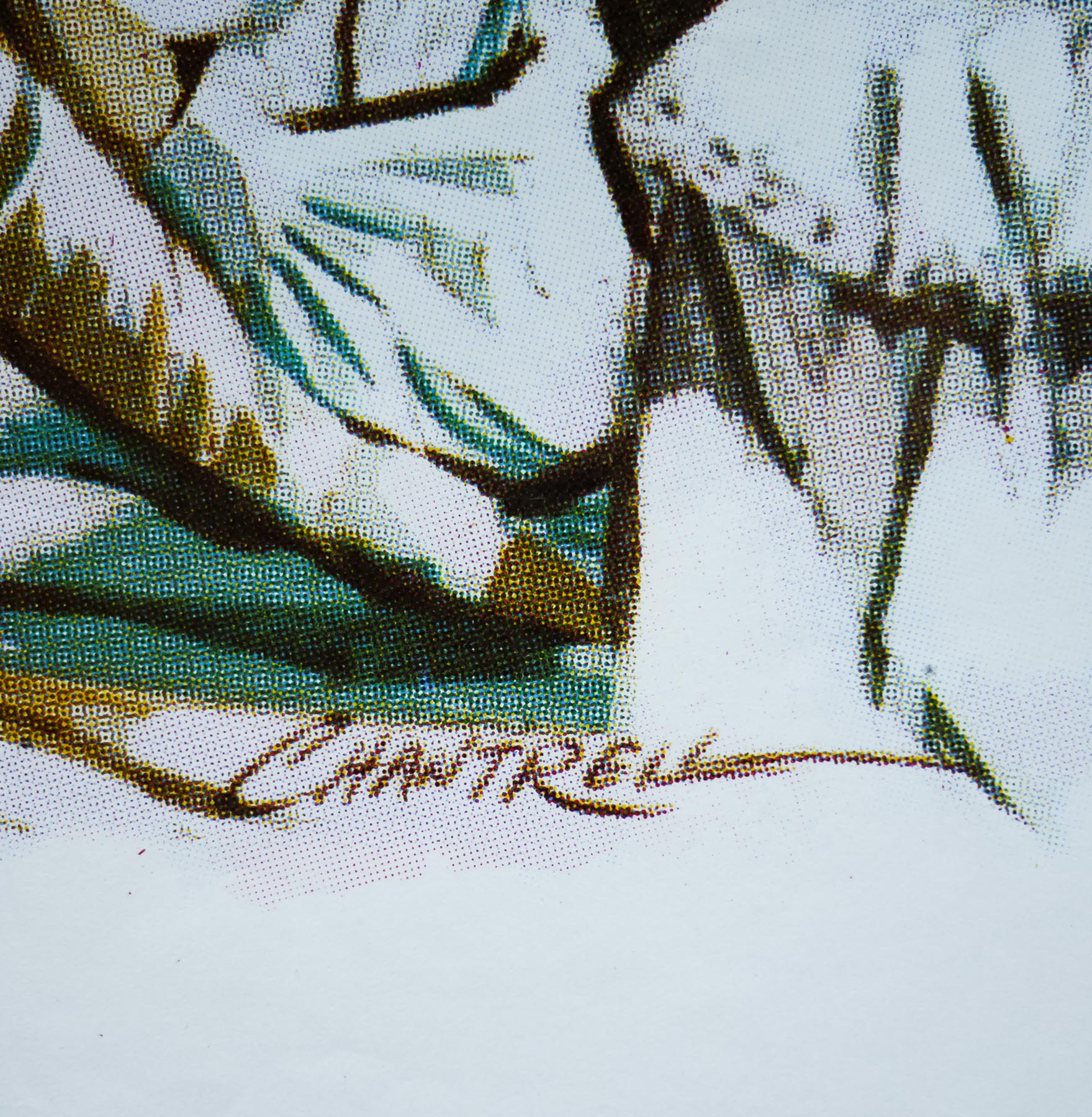
This British poster was designed and painted by arguably the UK’s most famous poster artist, the late, great Tom Chantrell. From 1965 to 1969 Chantrell effectively worked as Hammer’s ‘House Artist’ and produced artwork for the studio’s film posters as well as all of the aforementioned marketing material used to sell the film to potential investors and distribution partners. This particular poster holds particular significance in terms of the Chantrell/Hammer partnership since the depiction of Dracula is actually taken from a slightly modified portrait of the artist himself.

The official Chantrell website, launched last year by Tom’s widow Shirley and memorabilia dealer Michael Bloomfield, features a superb biography of the artist written by his friend and British poster expert Sim Branaghan (who I interviewed here). At the end of the must-read article there is Tom’s own account of the creation of this poster, which is as follows:

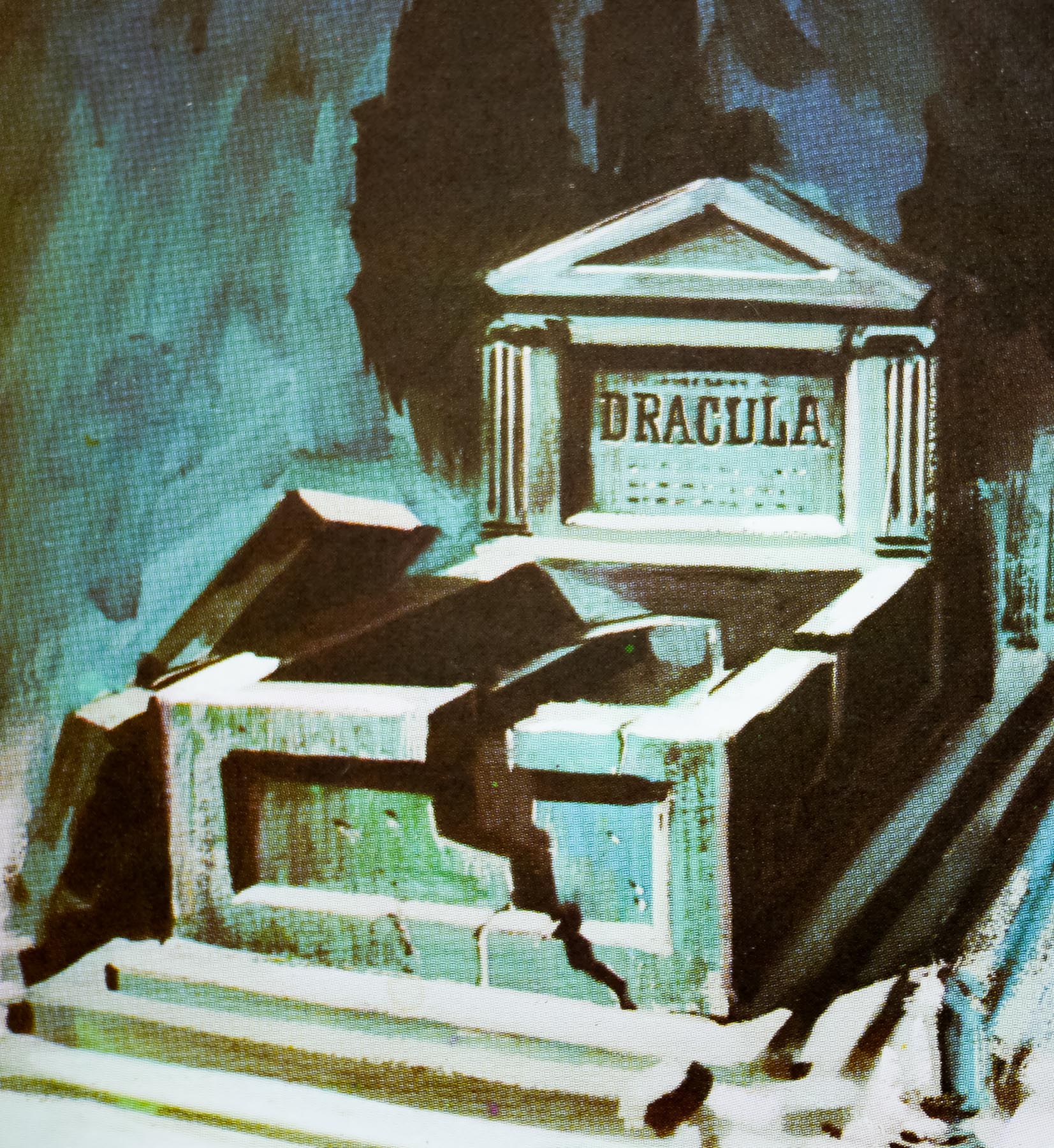
“With only a title to go on, I painted a poster with a head of Count Dracula, snarling away with extended teeth, surmounting a montage of characters warding off vampires with a cross, a lady vampire drooling over another, and a female victim with a decolletage having her neck bitten. I used models as there were no stills provided, and later photographed a colleague with suitable under-chin lighting, then similarly posed while he took photographs of me. Denis was too benevolent-looking, so I used one of the photographs of myself to paint from, and added a busted grave to the montage.

Later some stills arrived, and it was possible to start on a third version. This poster had the neck-biting scene with Christopher Lee, and retained the open grave and malevolent self-portrait of Tom Chantrell. Then the distributor Warner Pathe said the film was going on in two weeks, and they wanted a poster right away. No still of Christopher Lee was available, so (what the heck!) the design was printed as it was. Nobody ever questioned the poster. They all think it’s Christopher Lee, but it isn’t, it’s nasty ole’ Count Chantrell!”

The reference photograph of Chantrell as Dracula can be seen here and the two earlier versions can be seen here (both images courtesy of chantrellposter.com). It’s worth noting that this is a Hammer quad that was printed in greater numbers than others because it was used to give away to fans who wrote in to the studio, along with the ‘She/One Million Years BC’ quad (see the bottom of this page for more detail).
The Running Man / quad / UK

25.10.13

Poster Poster
Title
The Running Man
AKA
L'implacabile [The remorseless] (Italy)
Year of Film
1987
Director
Paul Michael Glaser
Starring
Arnold Schwarzenegger, Richard Dawson, María Conchita Alonso, Yaphet Kotto, Jim Brown, Jesse Ventura, Sven-Ole Thorsen, Erland Van Lidth, Marvin J. McIntyre, Mick Fleetwood, Gus Rethwisch
Origin of Film
USA
Genre(s) of Film
Arnold Schwarzenegger, Richard Dawson, María Conchita Alonso, Yaphet Kotto, Jim Brown, Jesse Ventura, Sven-Ole Thorsen, Erland Van Lidth, Marvin J. McIntyre, Mick Fleetwood, Gus Rethwisch,
Type of Poster
Quad
Style of Poster
--
Origin of Poster
UK
Year of Poster
1987
Designer
Unknown
Artist
--
Size (inches)
30 2/16" x 40"
SS or DS
SS
Tagline
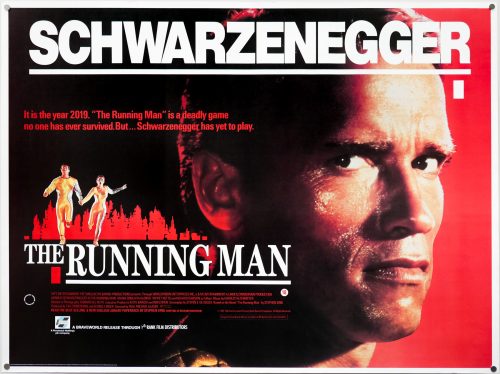
It is the year 2019. The "Running Man" is a deadly game no one has ever survived. But... Schwarzenegger has yet to play.

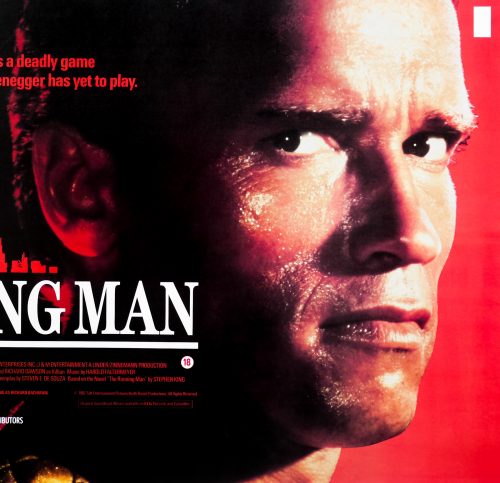
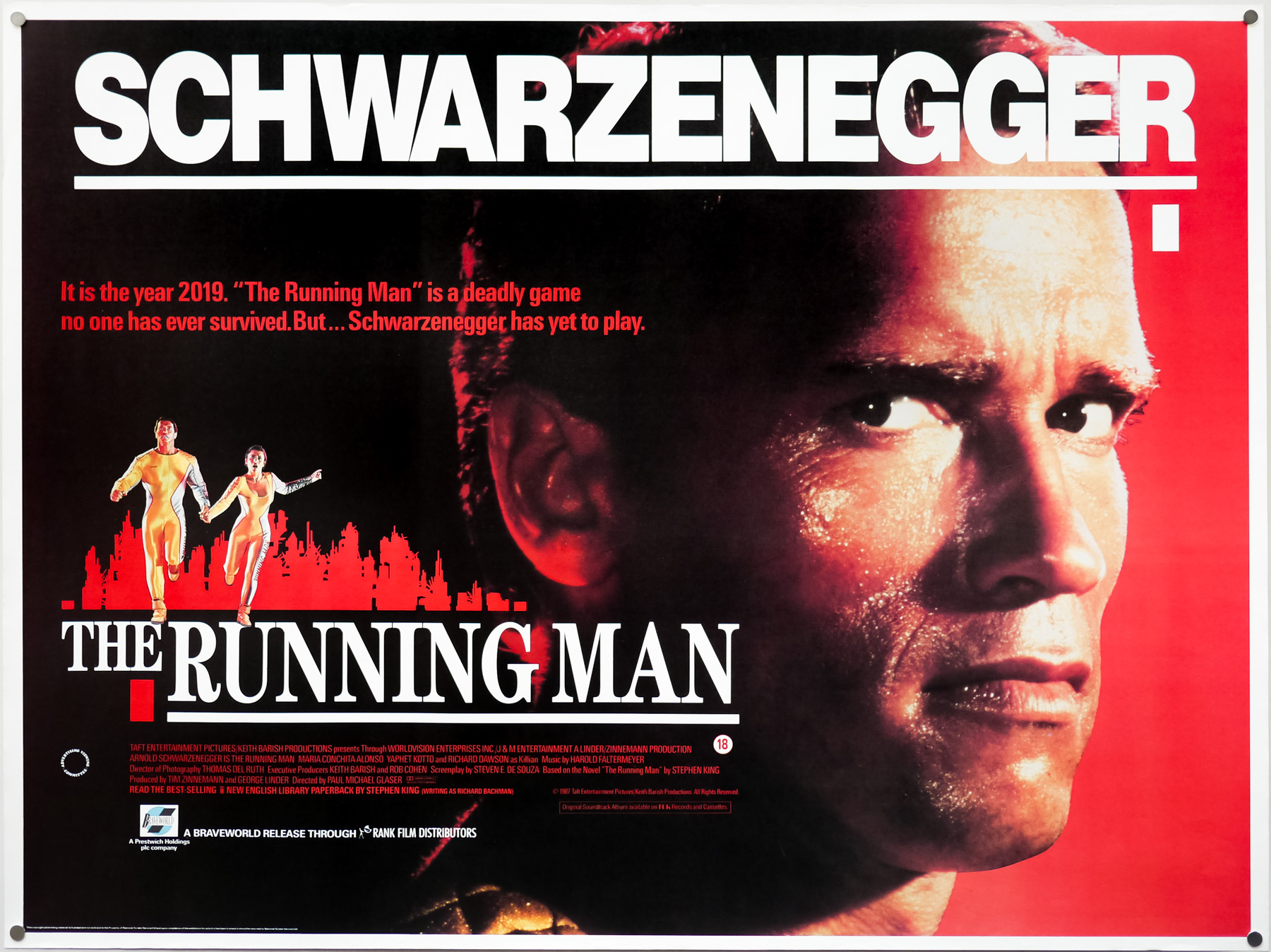
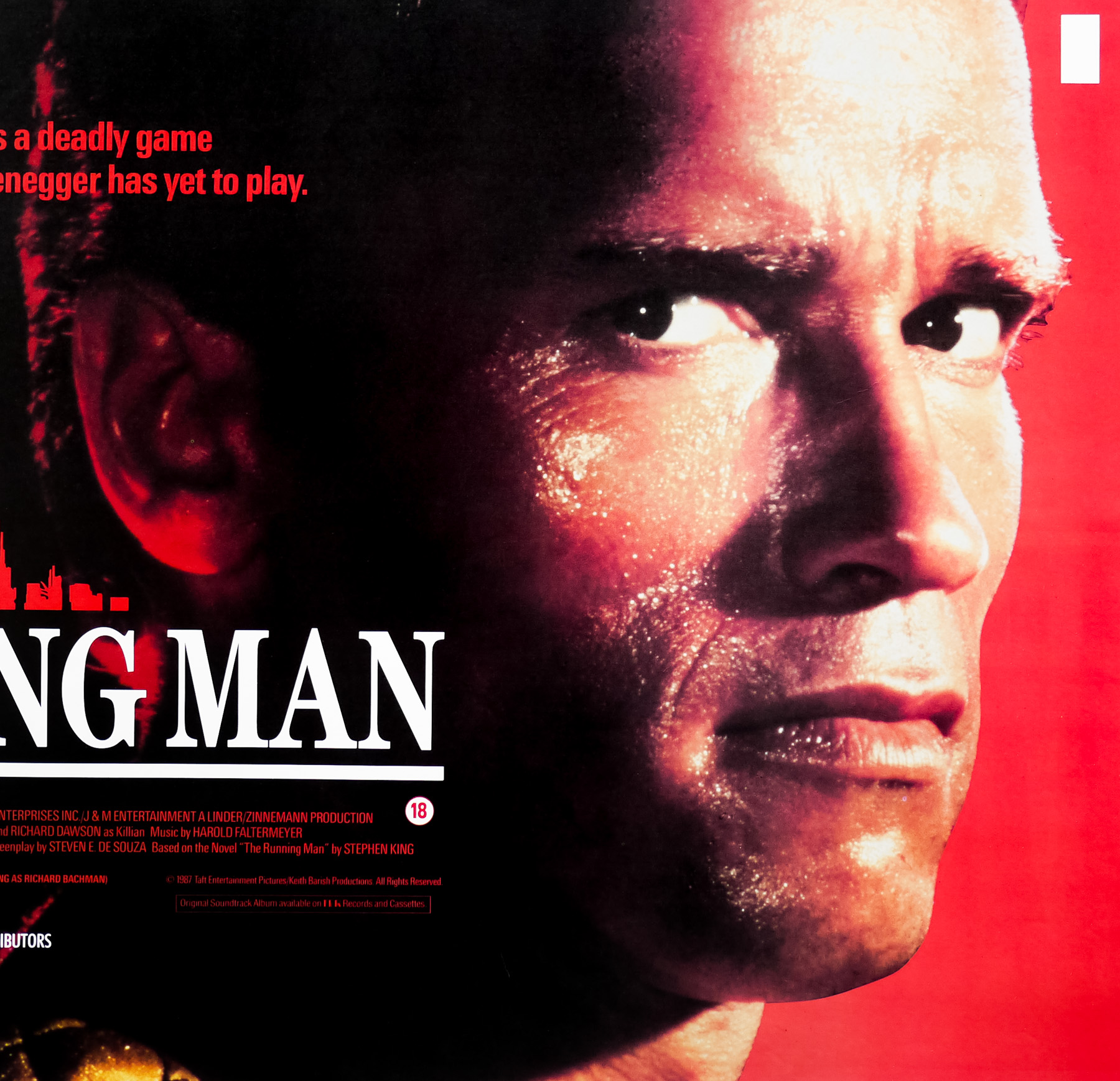
In the mid 1980s there were few actors who could get away with having their head dominate a film poster, and fewer still who could couple that with their surname in giant letters spread across the entirety of a 40″ wide poster, but then there was Arnold Schwarzenegger and this British quad for the 1987 film The Running Man. Set in the dystopian future of 2017 where the world’s economy is in ruins and America is a totalitarian police state, the populace is pacified by the broadcasting of a series of gameshows that see convicted prisoners fighting for their lives across various kinds of formats. The most popular of these shows is the titular Running Man in which the unwilling participants must try to survive in a closed-off area against an onslaught of vicious killers with catchy names and different methods of dispatching their prey.

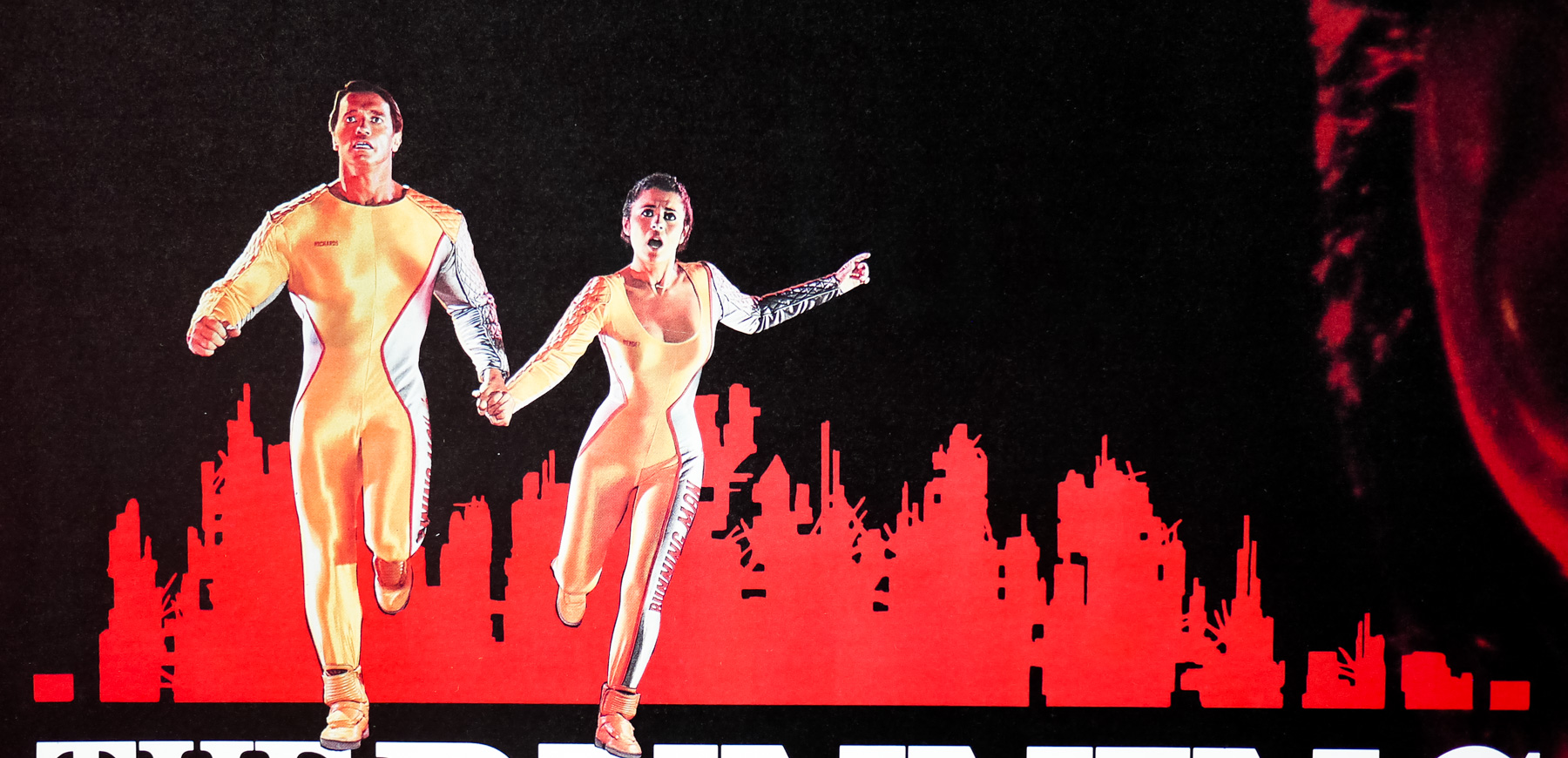
Ben Richards (Schwarzenegger) is a former police helicopter pilot who was wrongly convicted of massacring a crowd of people and sent to prison. After escaping several months later with a pair of fellow convicts, Richards is preparing to flee the country but is turned into the authorities by Amber Mendez (Maria Conchita Alonso), a composer for the network that he finds living in his brother’s apartment. He is taken to the Running Man studio where he meets the ruthless show host Damon Killian (a memorable turn by the late Richard Dawson) who informs him that unless he takes part in the show his two friends will be sent in his place. After agreeing to get dropped into the play zone, Richards finds that Killian has tricked him and has also sent his pals into the arena. The trio must face-off against the killers whilst trying to work out how to escape the arena and put an end to the show once and for all. When Amber looks a little too closely at the reasons for Ben Richards’ incarceration, she too is captured and dropped into the Running Man arena (she’s pictured next to Arnie on this quad).
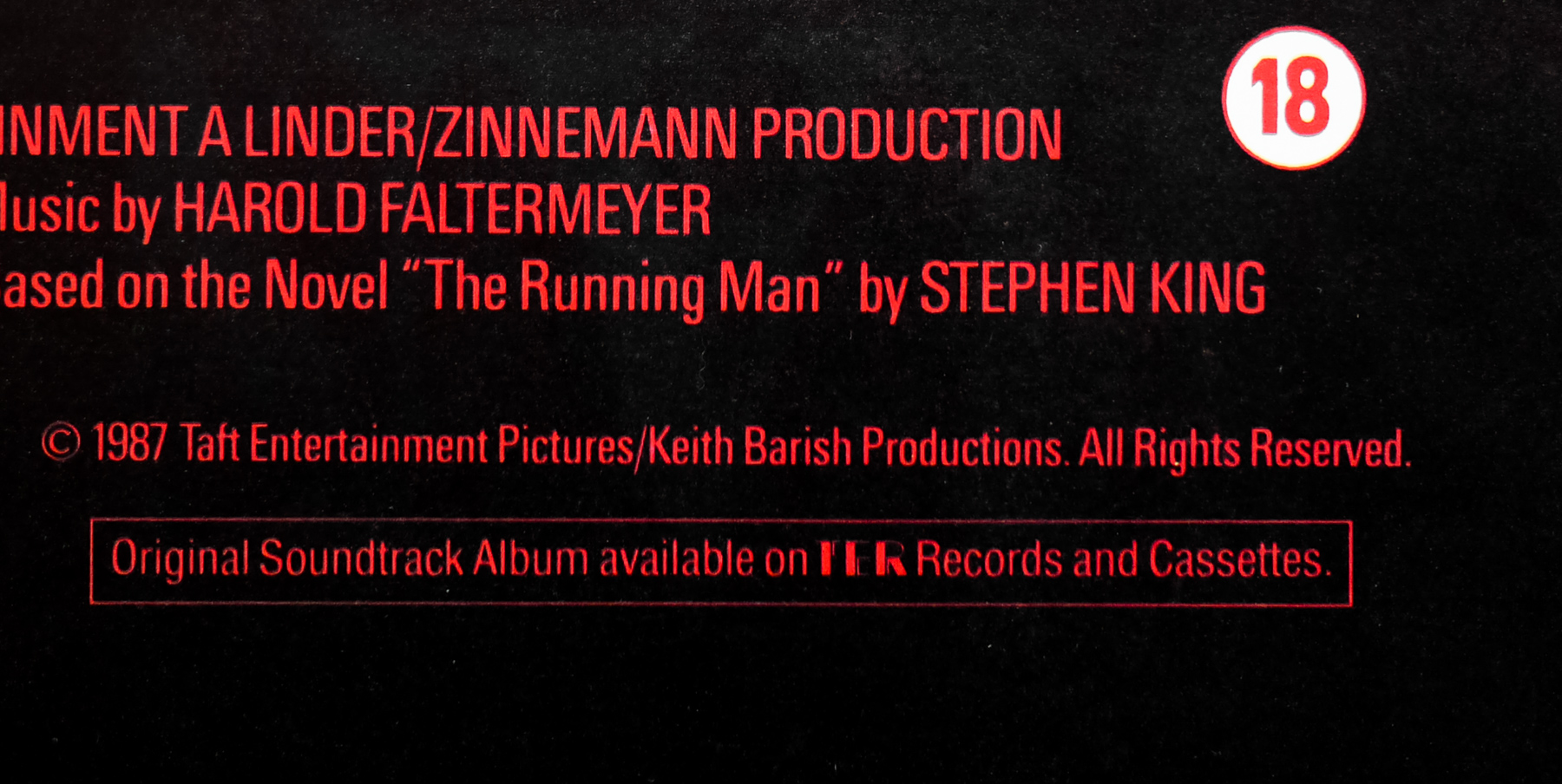
Ably directed by Paul Michael Glaser, best known for his acting career – he was Starsky in the classic 1970s cop show Starsky and Hutch – the film is well paced and features several memorable scenes, whilst not holding back on the the violence and gore. The bad guy killers, including Sub Zero, Fireball and Captain Freedom and particularly memorable. It’s definitely a highlight of the Austrian Oak’s filmography, although it was released the same year as the incredible Predator, which is unquestionably the better film. Note that the tagline on this British quad fudges the date that the film is set – 2019 instead of the correct 2017.
Tenebrae / quad / UK

20.01.14

Poster Poster
Title
Tenebrae
AKA
Tenebre (alternate spelling) | Shadow (Japan - English title) | Unsane (USA)
Year of Film
1982
Director
Dario Argento
Starring
Anthony Franciosa, Christian Borromeo, Mirella D'Angelo, Veronica Lario, Ania Pieroni, Eva Robins, Carola Stagnaro, John Steiner, Lara Wendel, John Saxon, Daria Nicolodi, Giuliano Gemma
Origin of Film
Italy
Genre(s) of Film
Anthony Franciosa, Christian Borromeo, Mirella D'Angelo, Veronica Lario, Ania Pieroni, Eva Robins, Carola Stagnaro, John Steiner, Lara Wendel, John Saxon, Daria Nicolodi, Giuliano Gemma,
Type of Poster
Quad
Style of Poster
--
Origin of Poster
UK
Year of Poster
1982
Designer
Graffiti Productions Limited
Artist
Renato Casaro (original art) | An unknown British artist added the bow
Size (inches)
29 15/16" x 39 14/16"
SS or DS
SS
Tagline
From the undisputed master of the macabre... | Terror beyond belief

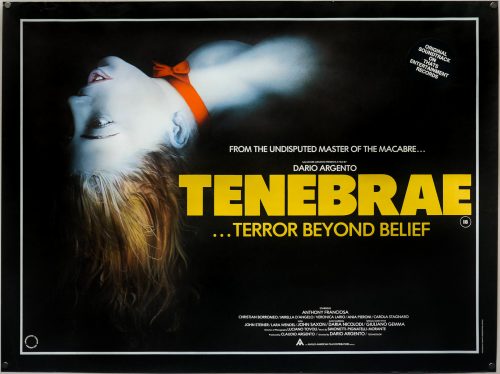
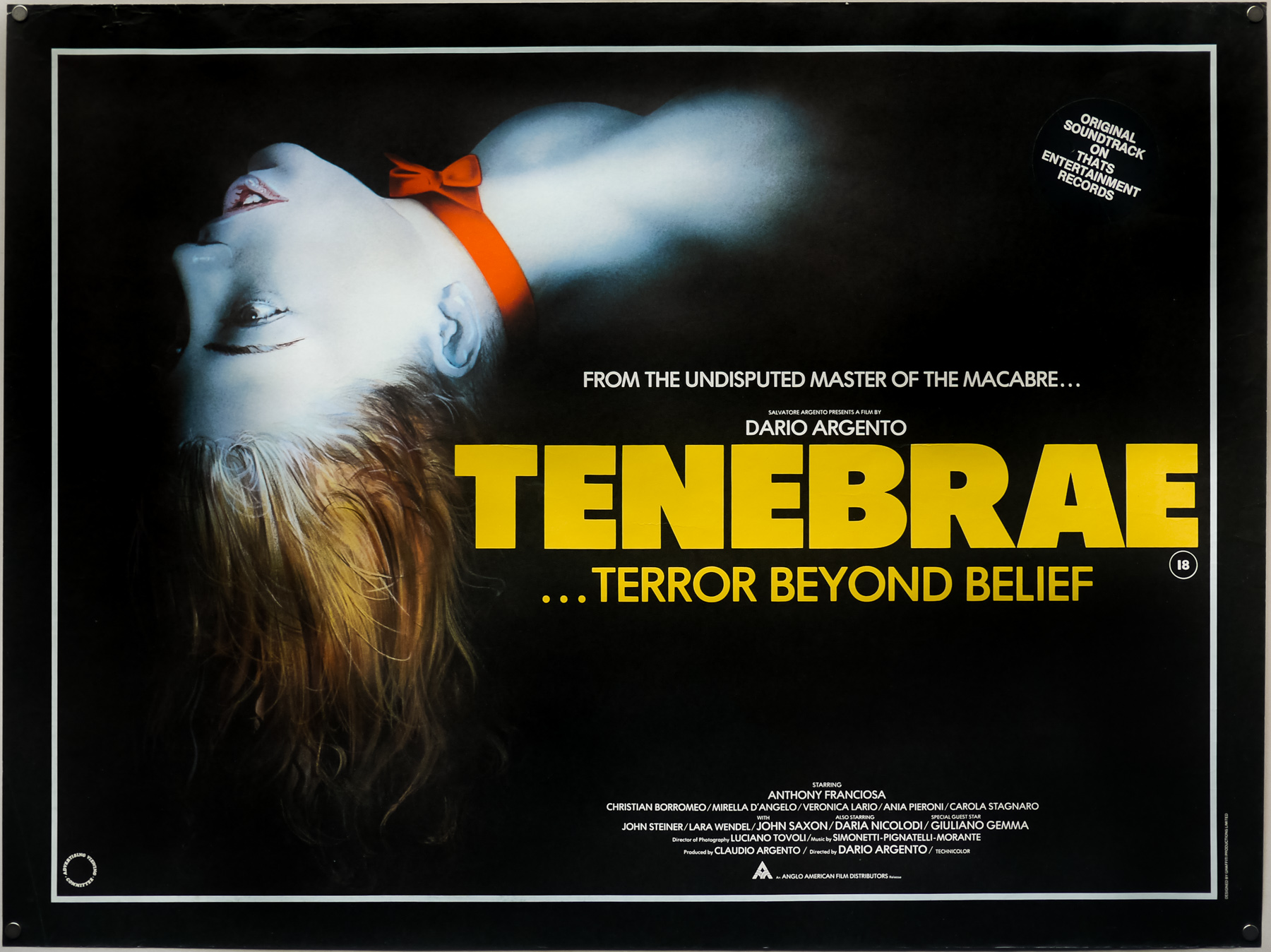
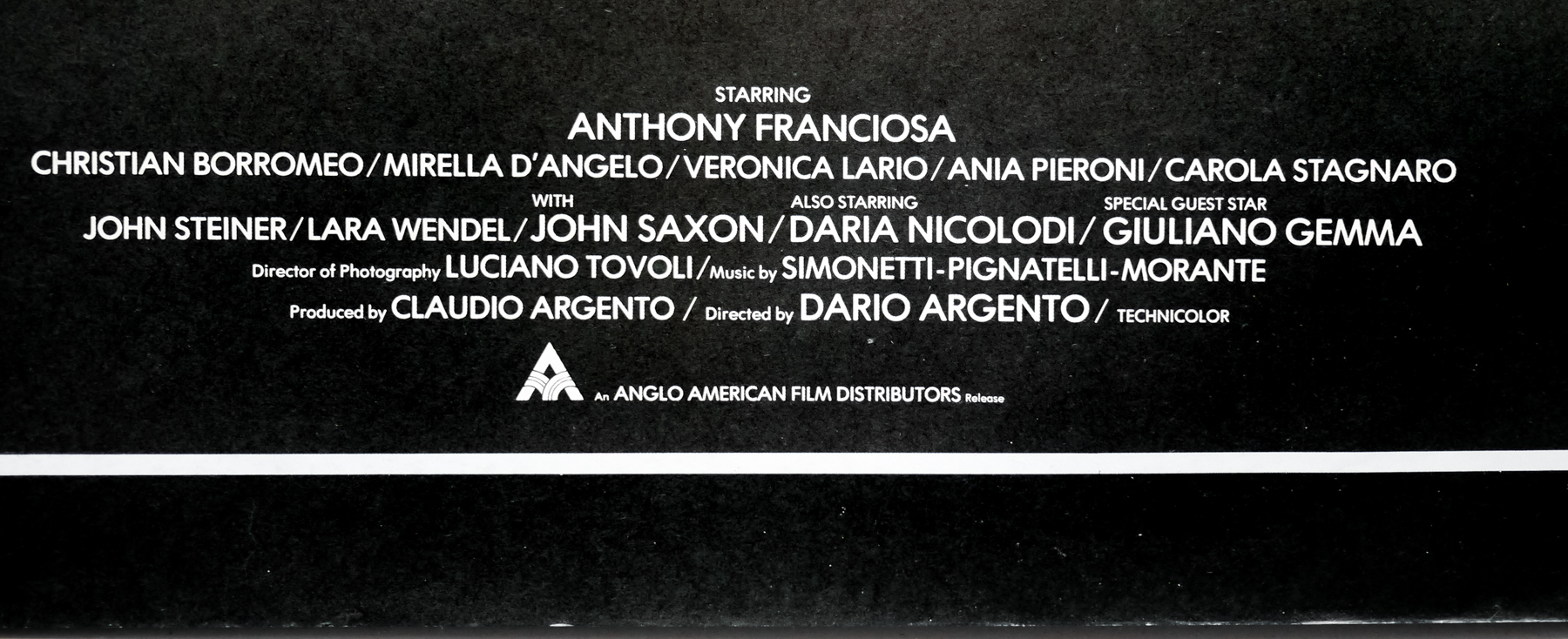
This is the incredibly scarce British quad for the release of Dario Argento‘s Tenebrae (AKA Tenebre), which marked the Italian horror maestro’s return to the giallo genre with which he made his name, following two excursions into supernatural horror with Suspiria (1977) and Inferno (1980). Argento often credits himself with starting the trend for Italian giallo films with The Bird with the Crystal Plumage (1970), despite the fact that directors including Mario Bava and Umberto Lenzi had been working on films that met all the criteria of the sub-genre since 1963. After a bruising experience whilst making Inferno in conjunction with Hollywood (in the form of 20th Century Fox) and the film meeting a lukewarm reception upon release, Argento returned with fresh enthusiasm to create what is arguably one of the best giallos of all.
Italian-American actor Anthony Franciosa stars as the American author Peter Neal, famous for having written a series of violent horror novels, who travels to Rome to promote his latest novel ‘Tenebrae’. Soon after arriving Neal is confronted by two police detectives (played by Giuliano Gemma and Carola Stagnaro) who inform him that a murder has been committed by a killer obsessed with his novels, and a letter sent to his hotel room confirms this. Soon after, a journalist who had accused Neal of creating ‘misogynist filth’ and her lesbian lover are brutally murdered by the same razor blade-wielding killer. Another letter arrives at Neal’s hotel room and the author decides to try and discover who is behind the murders as the threat to him and his entourage escalates. This being a giallo, and an Argento one at that, there are plenty of twists to keep the viewer discombobulated right to the end.

Argento claims that the inspiration for the story came from an experience he had at the hands of an obsessive fan whilst working on an unfinished project in Hollywood towards the end of the 1970s. What started as a friendly series of phone calls from someone claiming to love his work escalated into something darker and more threatening, and the director eventually fled back to Rome when it became clear that the person was seriously unhinged. It’s also something of a riposte to the criticisms Argento had received from some critics and commentators who claimed his films were overly violent towards women and that his casual misogyny could encourage real-world violence from his films’ fans. There’s a reason Peter Neal remarks to a pushy journalist ‘Let me ask you something? If someone is killed with a Smith & Wesson revolver… Do you go and interview the president of Smith & Wesson?’

Tenebrae was released into UK cinemas in 1982 with 4 seconds of cuts imposed by the BBFC, but soon after its release on video in 1983 the film fell foul of the infamous video nasty debacle which saw 72 films deemed to be in violation of the obscene publications act. 39 films on the Director of Public Prosecutions‘ list were successfully prosecuted and banned from rental or sale in the UK, despite the fact that many, including Tenebrae, had already seen cinema releases with BBFC approval. It took years before relaxation in censorship saw many of the films being re-released on video and DVD, and it wasn’t until 2003 that Tenebrae was finally available in a completely uncut form.

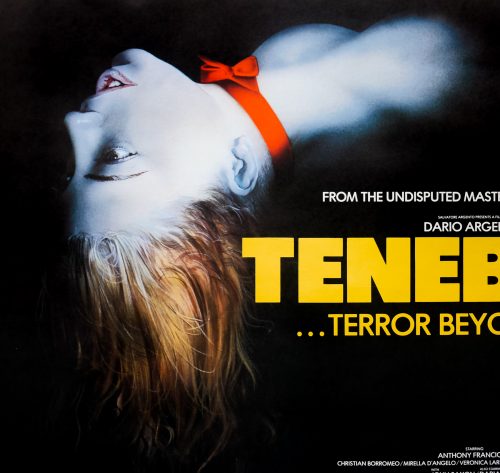
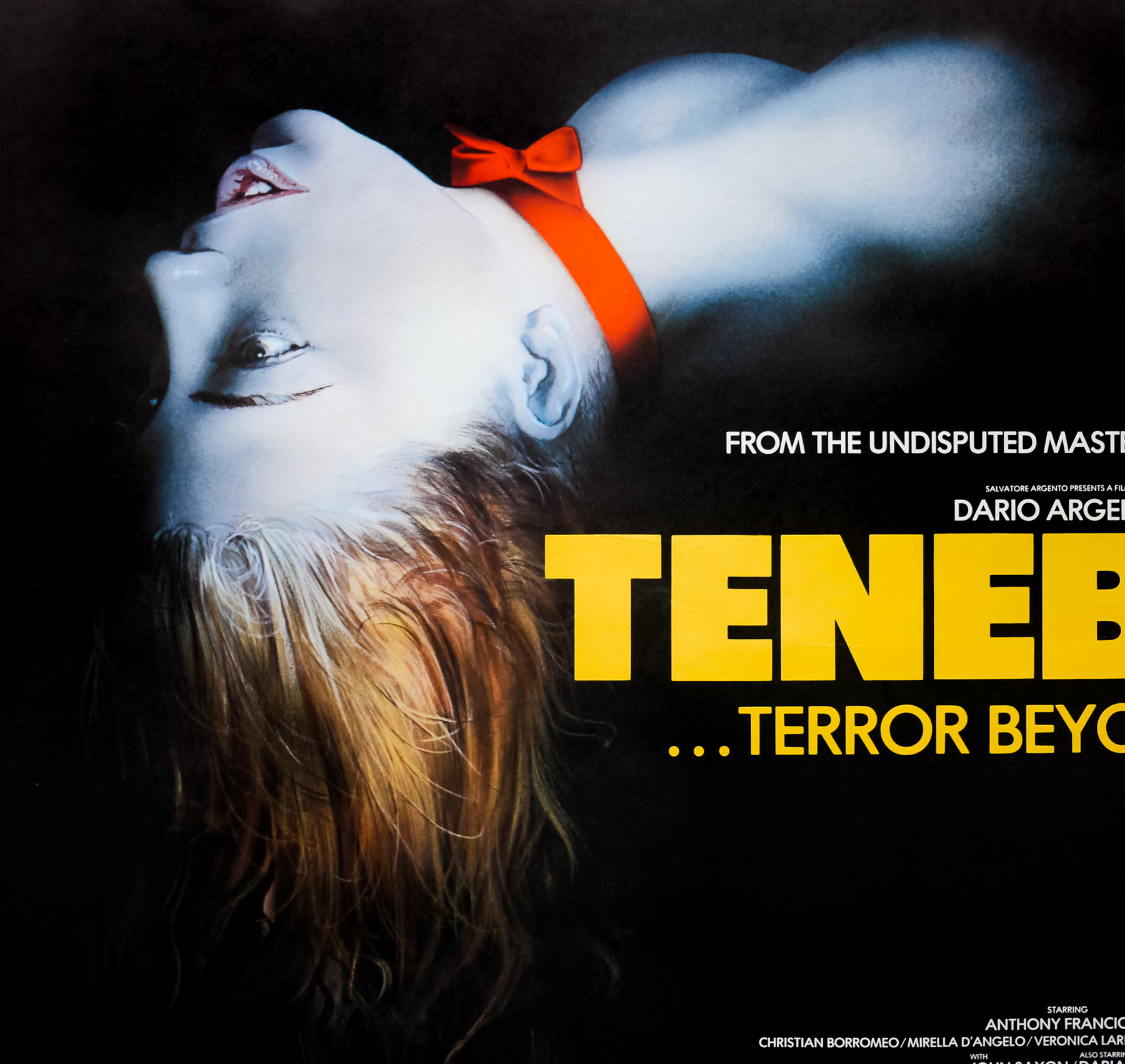
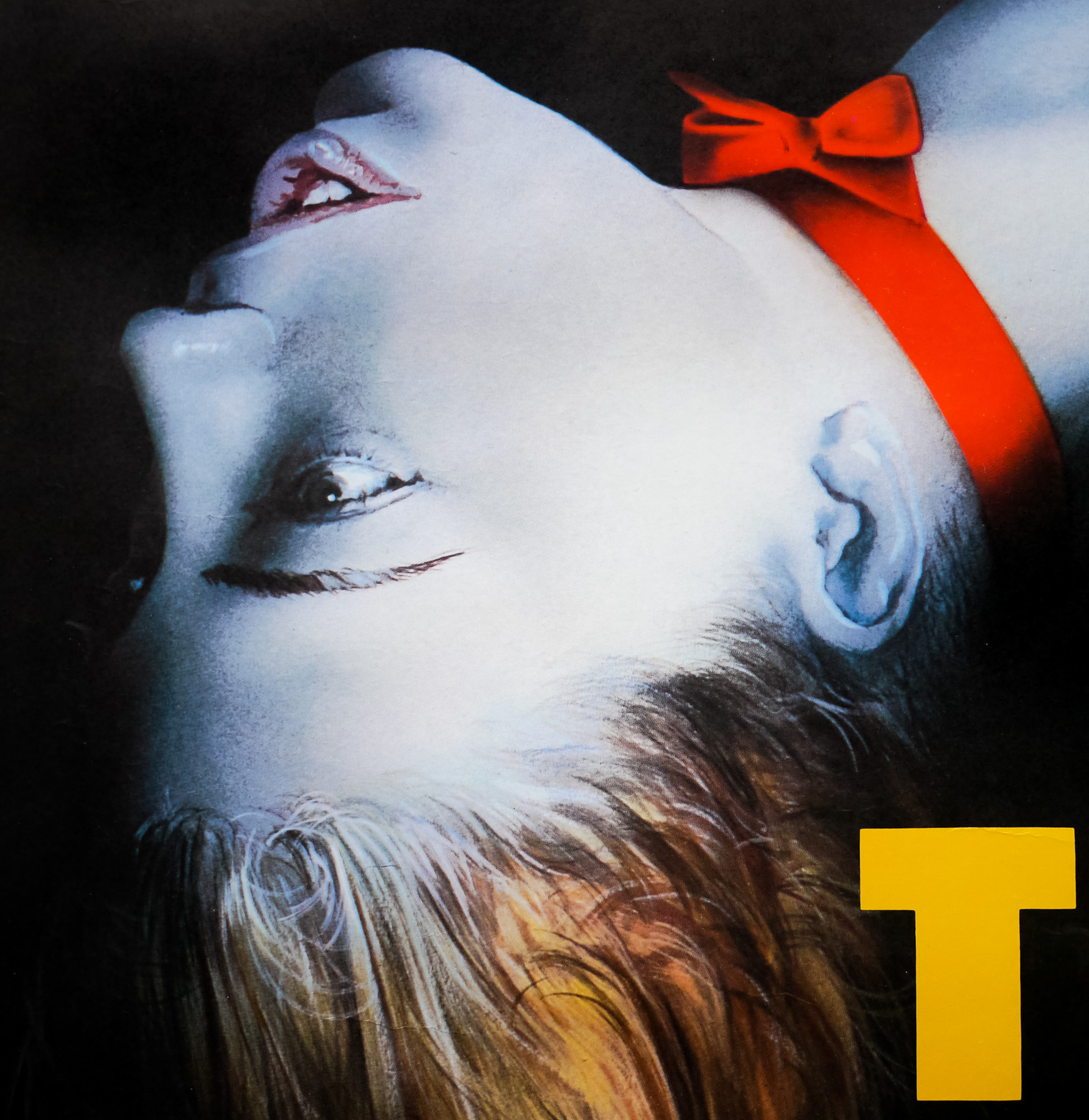
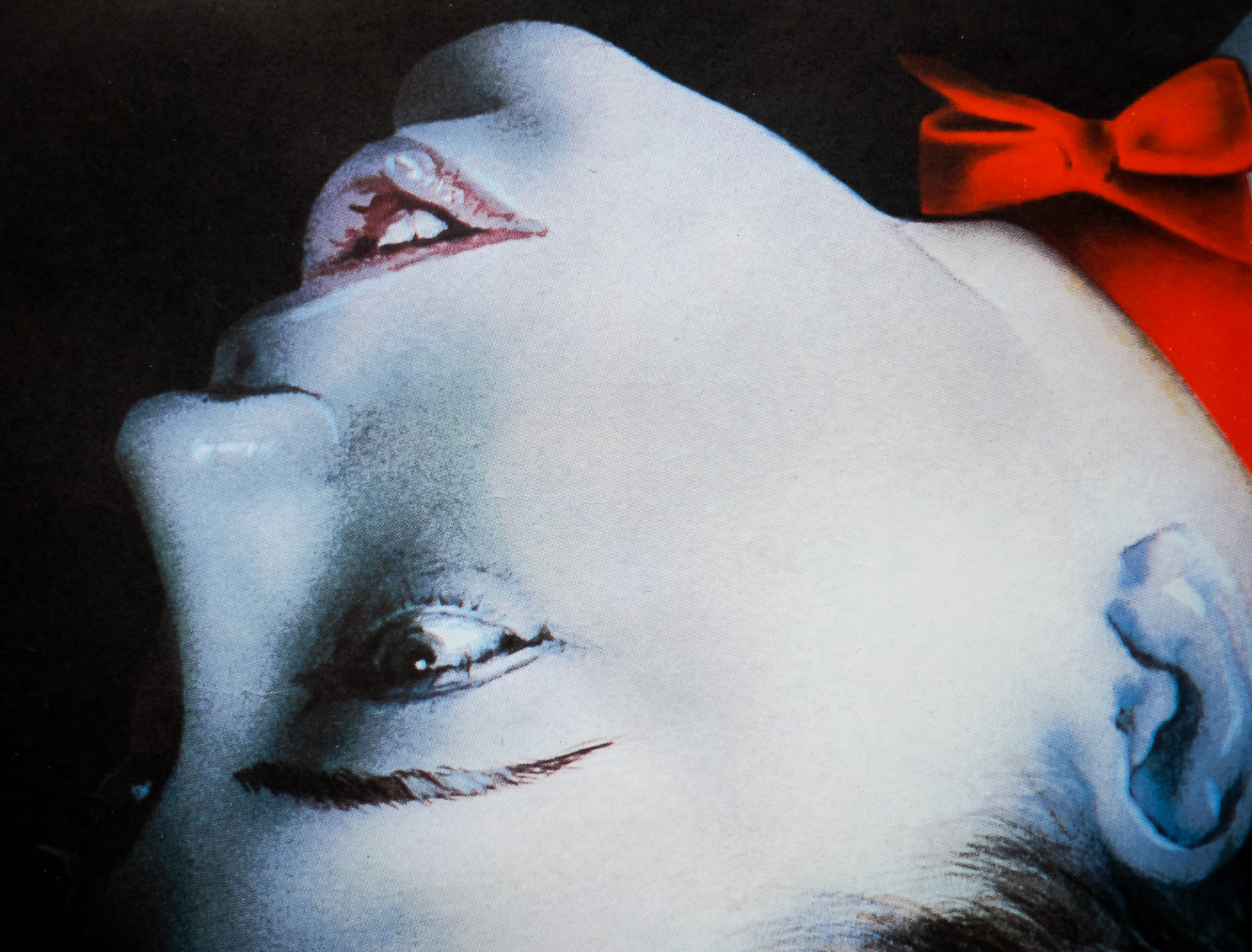
The image of the murdered woman on this quad was originally painted by the Italian artist Renato Casaro for the Italian poster but the bloody cut in the throat seen on the original was clearly seen as too much for the British market and a red bow was painted in its place. The quad’s design was handled by the London-based studio Graffiti Productions, which was started in 1969 by two friends Paul Brown-Constable and Nimal Jayasekera. The pair worked on marketing for an eclectic range of films, including several international releases, plus homegrown titles like Scum and a few Hollywood productions. As well as posters the firm was one of the first to take on work for  home video distributors at the start of the boom in the early 1980s. Most of their posters are easy to identify because they either feature a stylised company logo or a line of text, as on this poster.

Life of Brian / quad / 1988 re-release / UK

11.04.14

Poster Poster

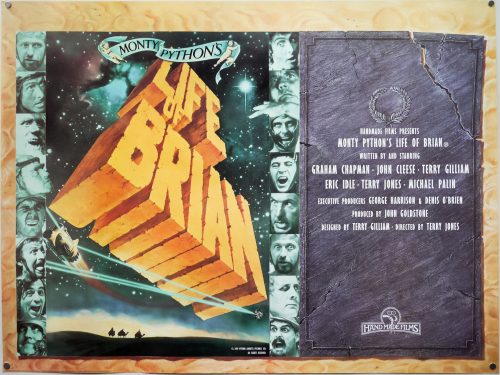
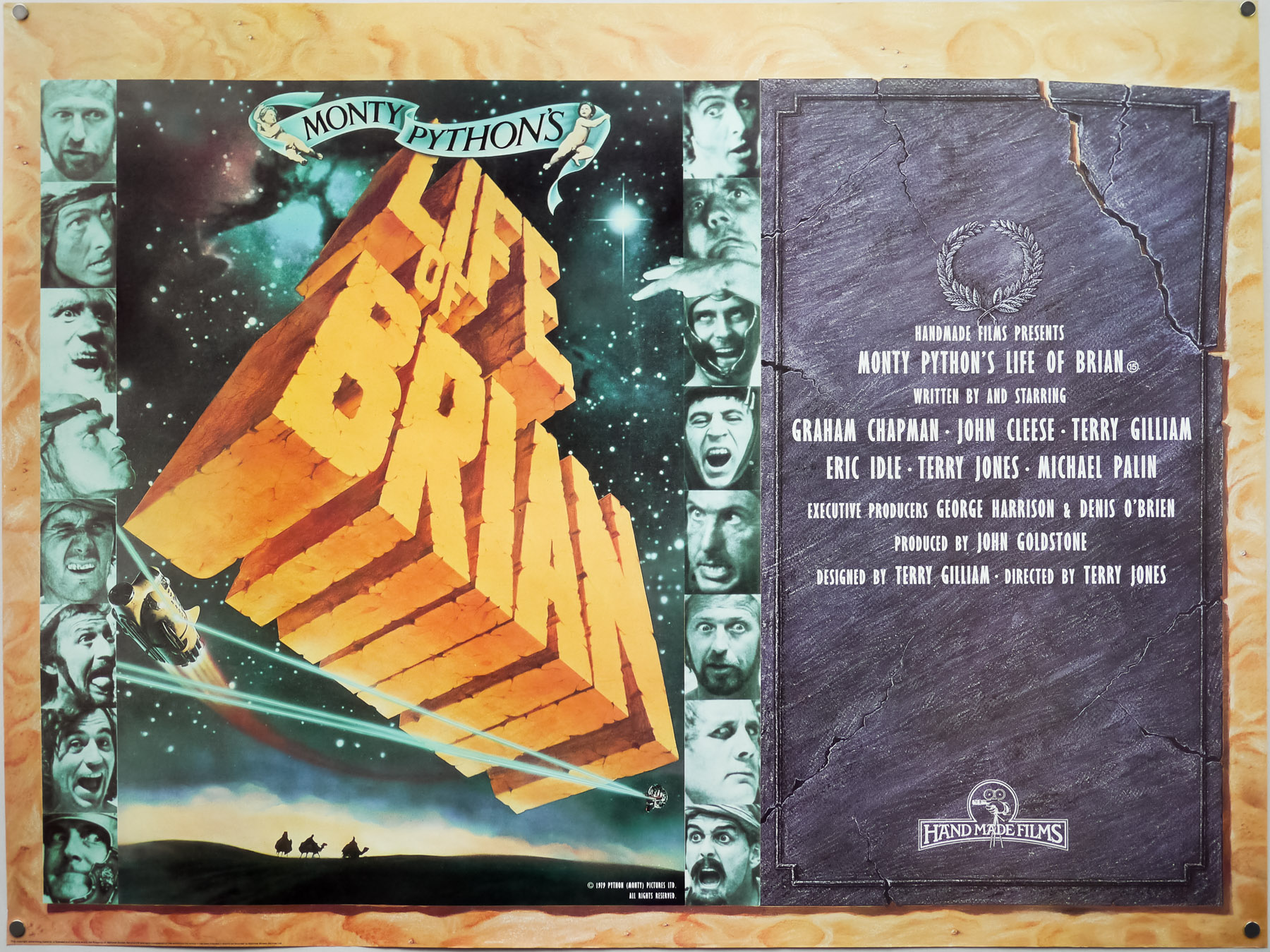
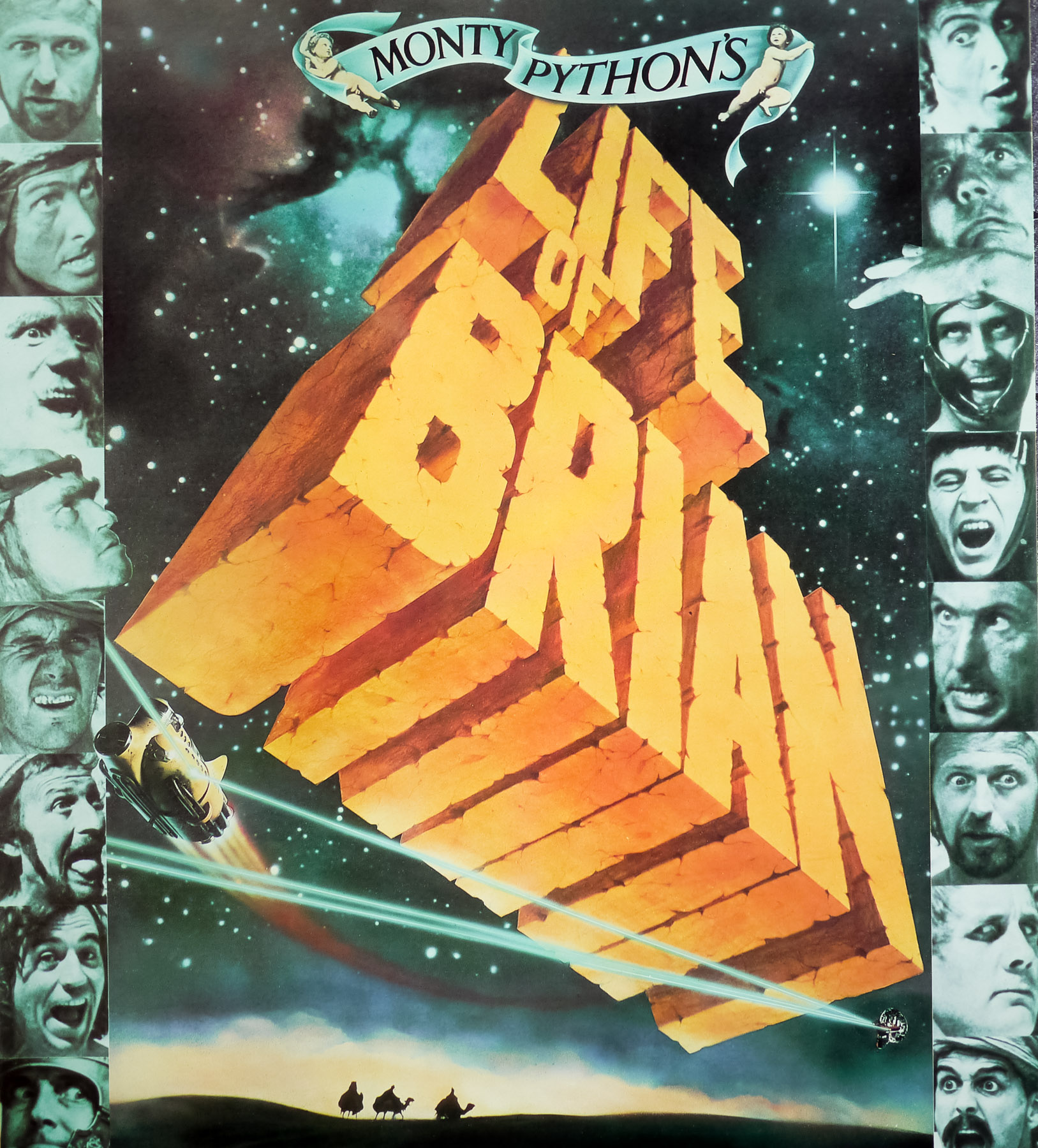
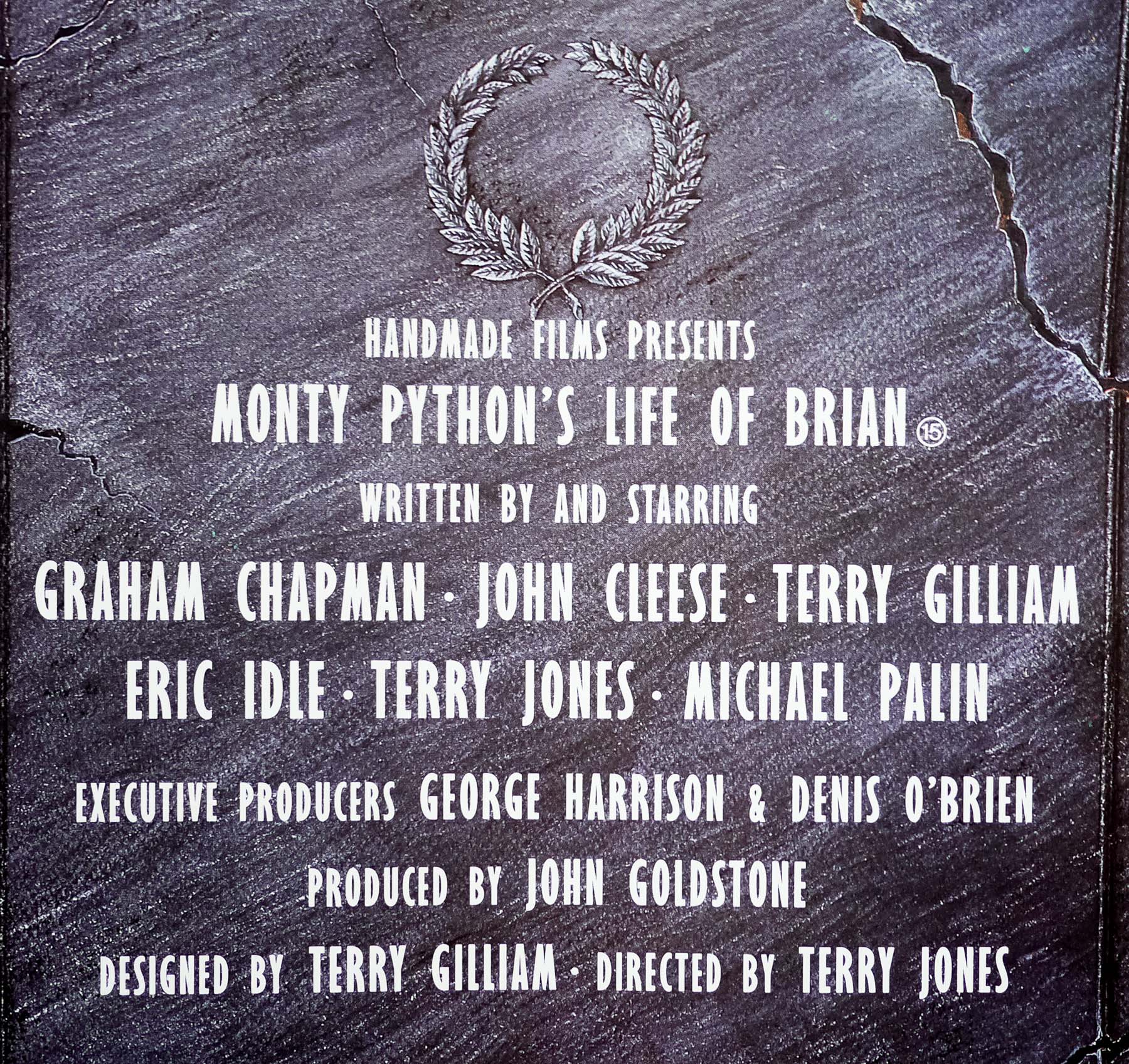
Probably my favourite of the five cinematic outings by the Monty Python crew, Life of Brian is one of the funniest films ever made and the brilliant satirical humour hasn’t diminished at all in the thirty plus years since its release. Infamously causing an uproar with various religious groups, it also saw EMI, the original financial backers, pulling out during production claiming the script was blasphemous. Luckily, George Harrison stepped in with the finance, apparently after realising it may have been the last chance to see another Python film in cinemas. His company HandMade Films was formed as a result of this deal.

The film’s religion-baiting story sees a man called Brian (Graham Chapman) born at the same time as Jesus Christ and initially mistaken for the Messiah, who ends up living an unremarkable life under the Roman occupation of Judea. Things take a fateful turn when his infatuation with a young rebel called Judith (Sue Jones-Davies) leads him to join the People’s Front of Judea, a bickering group who have decided to take a stand against the emperor.

The film raised the ire of several religious groups who were outraged at the concept, despite most of them having never even seen the film, and it was only given a general release once several cuts had been made. Despite the edits, several local UK councils banned the film from being shown at cinemas within their boroughs. Apparently some of these bans lasted until very recently, with the Welsh town of Aberystwyth finally lifting its one in 2009, which then saw a screening of the film attended by Jones, Michael Palin and Sue Jones-Davies, who was the then mayor of the town.

One of the more infamous bans was carried out by the Norwegians who refused to allow the film to be screened at all, which lead some of the international marketing material for the film to be emblazoned with the proclamation ‘So funny it was banned in Norway!’

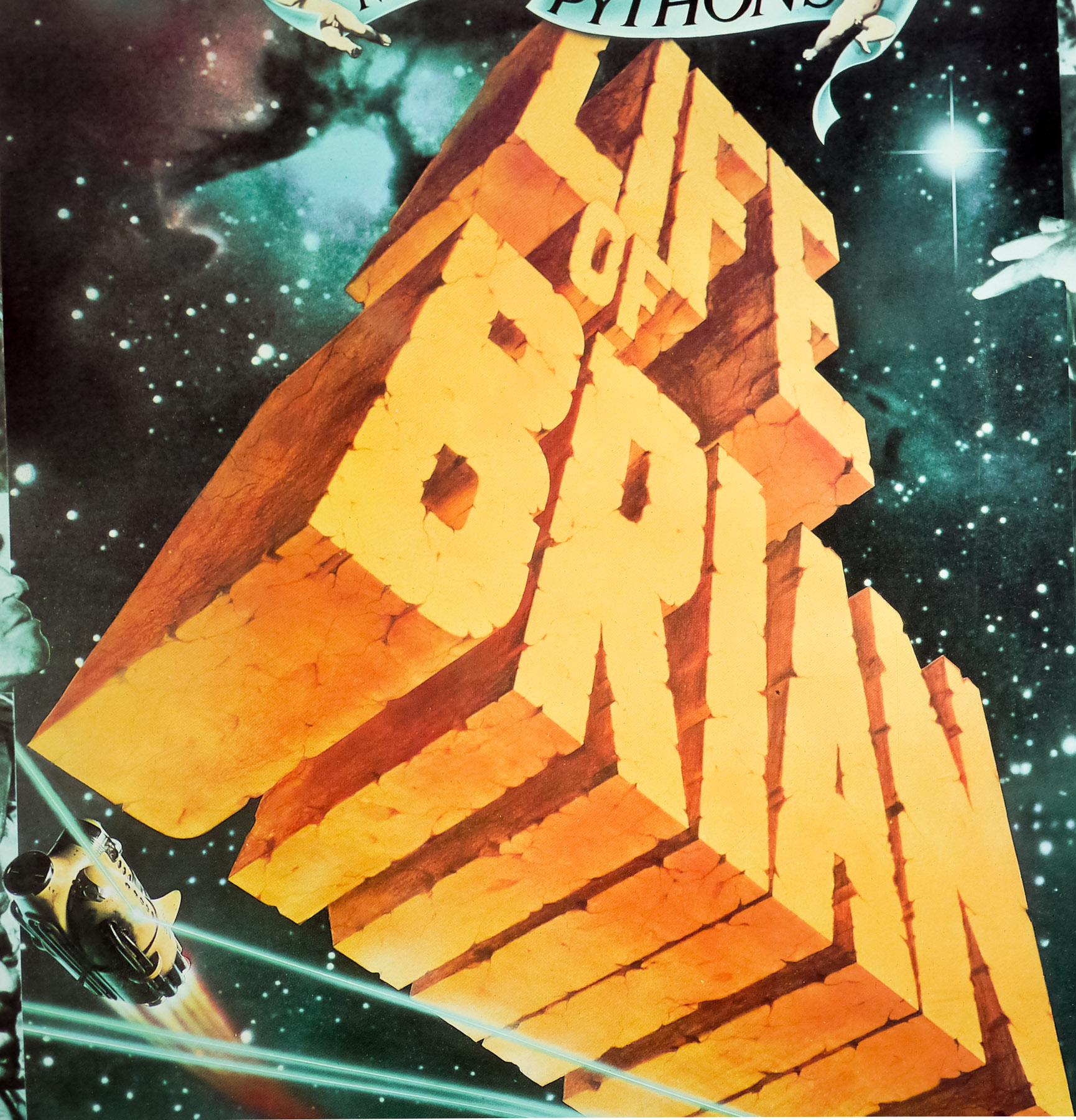
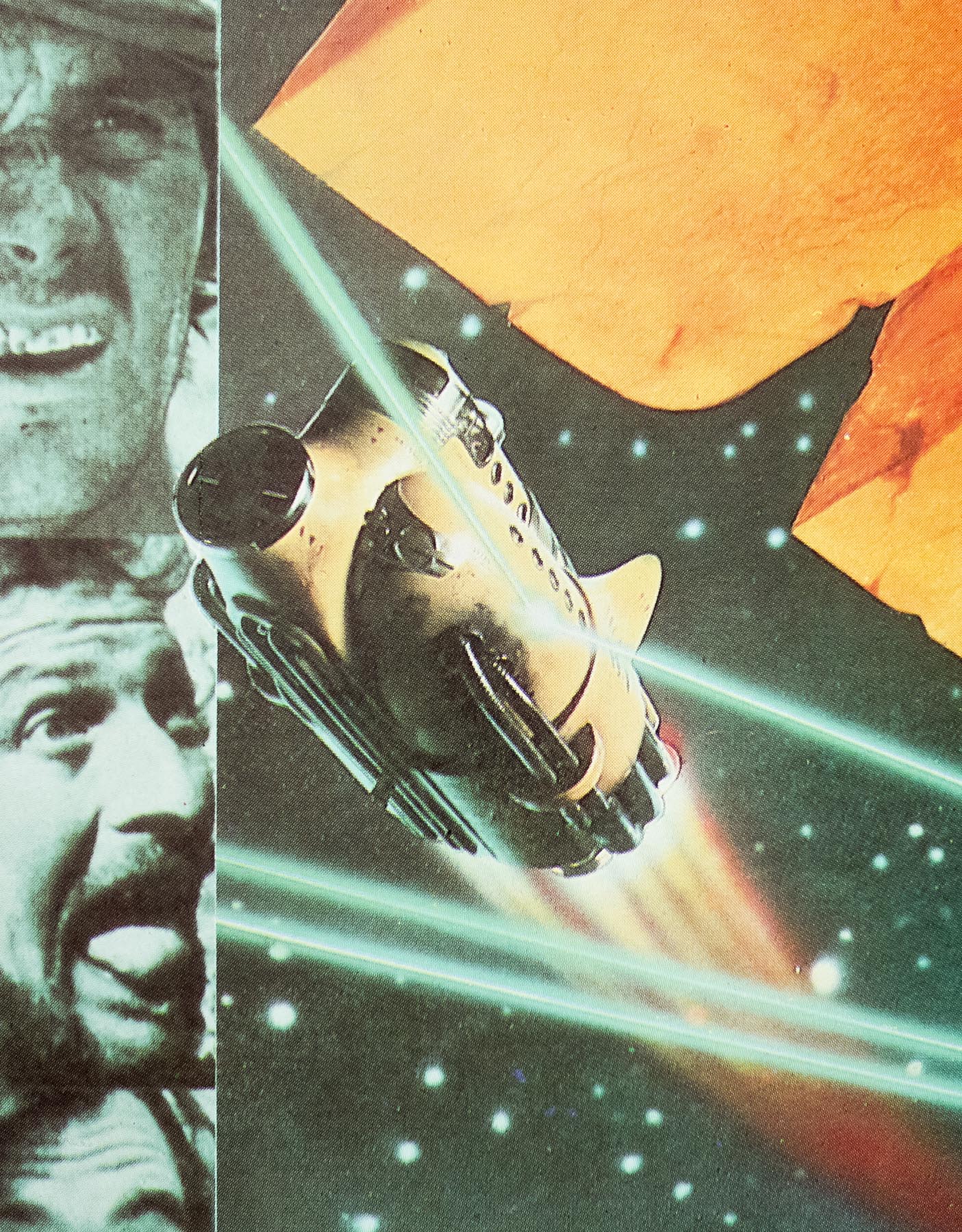
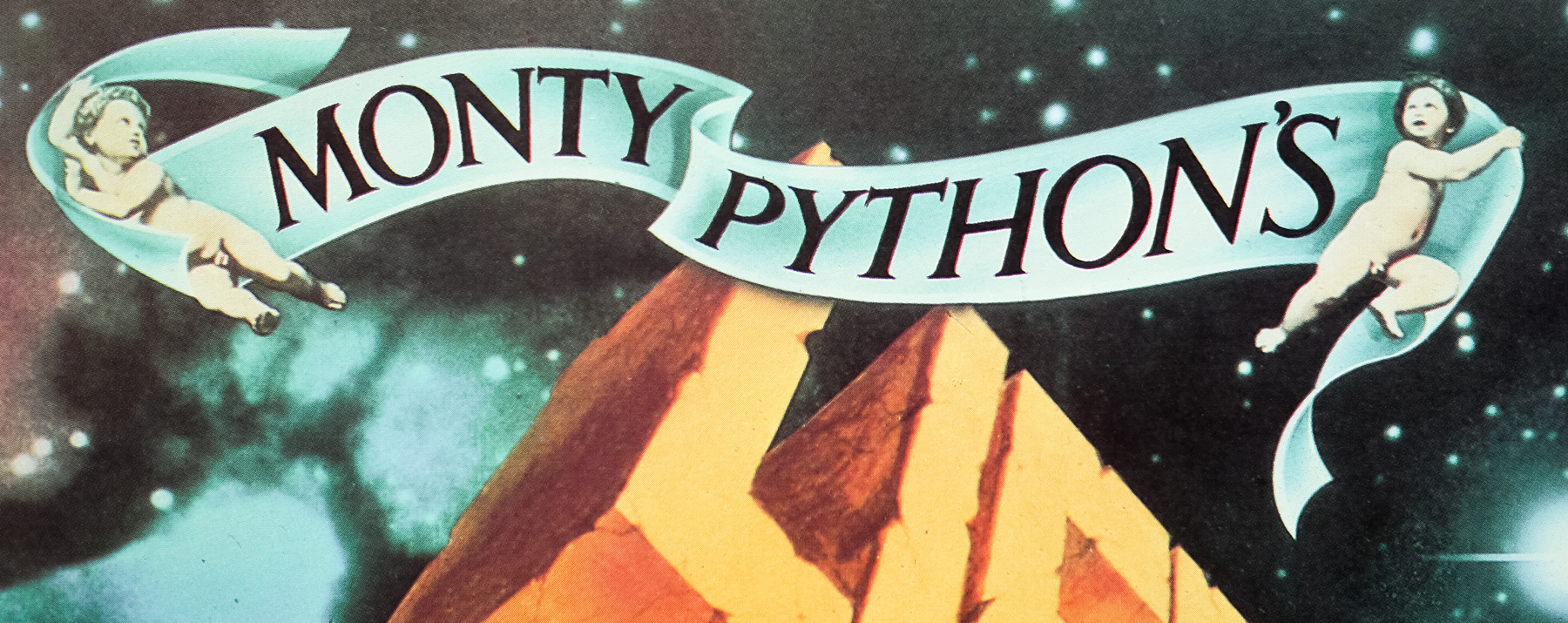
This is a scarce, alternate style UK quad which differs from the other somewhat confusing design, which is simply the logo doubled up. A reader of the site got in touch to confirm that this quad was designed in house at HandMade films. To quote their informative email:

HandMade and the Pythons decided to re-submit the film to Irish Film Board to have the original ban overturned. The submission was successful and with the censor certification under our belt plans to release the film moved ahead and the Life of Brian was finally released in Ireland  I recall in the summer of 1988 as I recall eight years after original release. One of the unsung heroes of HandMade was freelance artist/designer George Rowbottom.

George was closely involved in many HMF posters over the years along with Ray Cooper and it was George who re-worked Life of Brian poster and came up with the “tablet” design for the quad used for the Irish release and also the superior amended 1-sheet. In both cases these were printed by National Screen who printed all our posters for domestic and international.

The original American trailer can be seen on YouTube.

Top Gun / quad / UK

30.04.14

Poster Poster

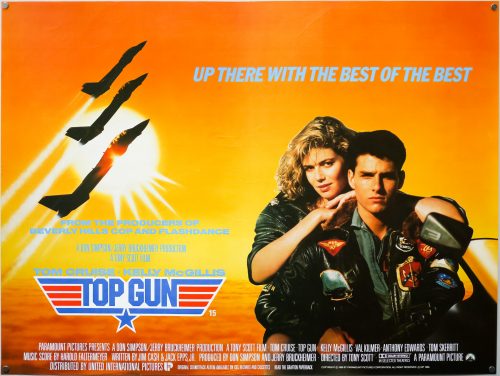
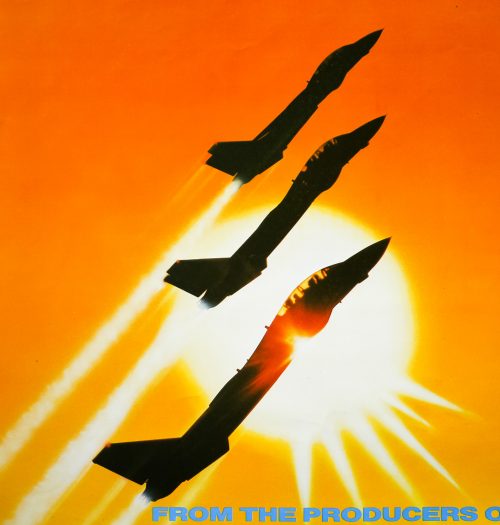
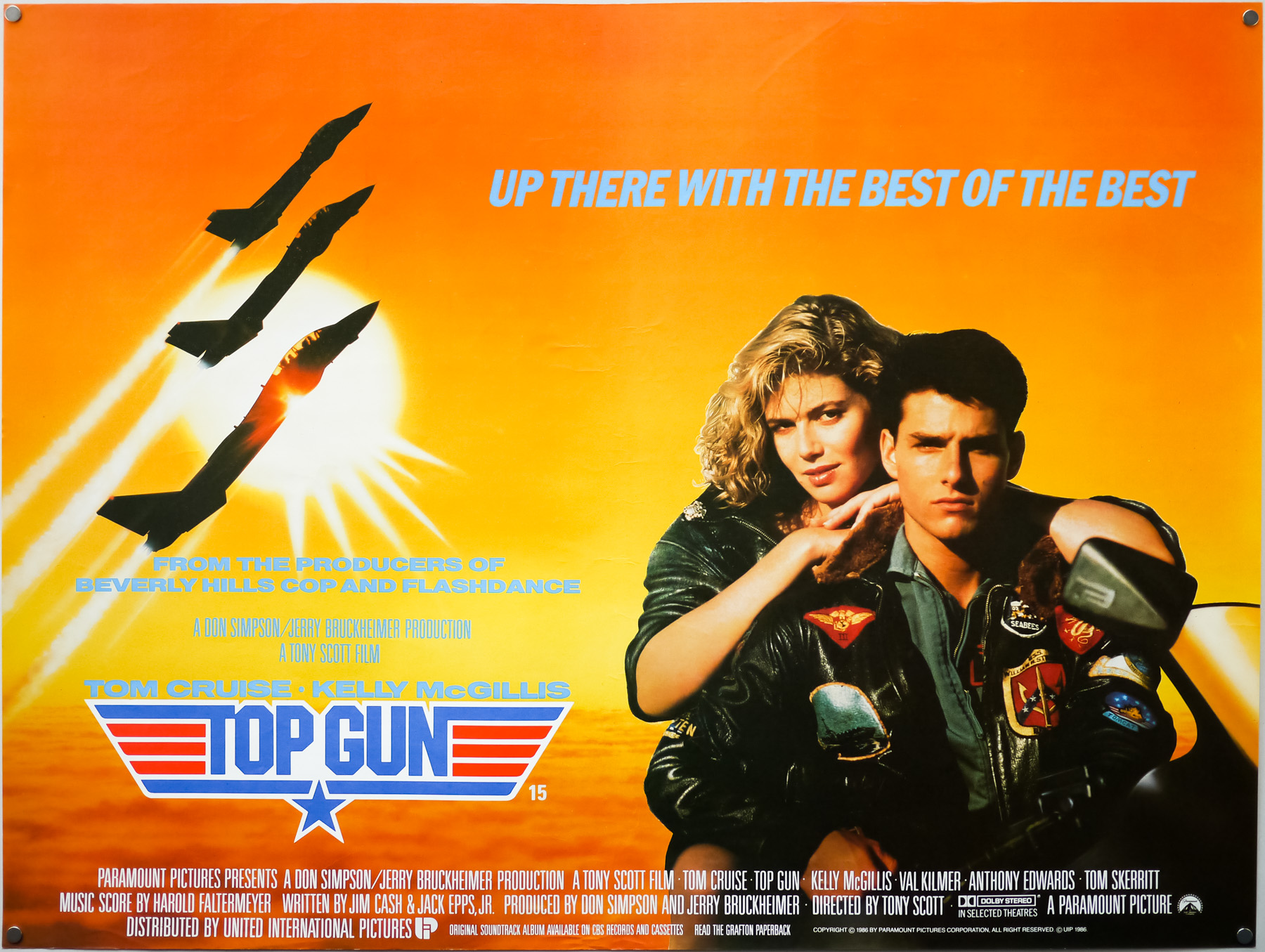
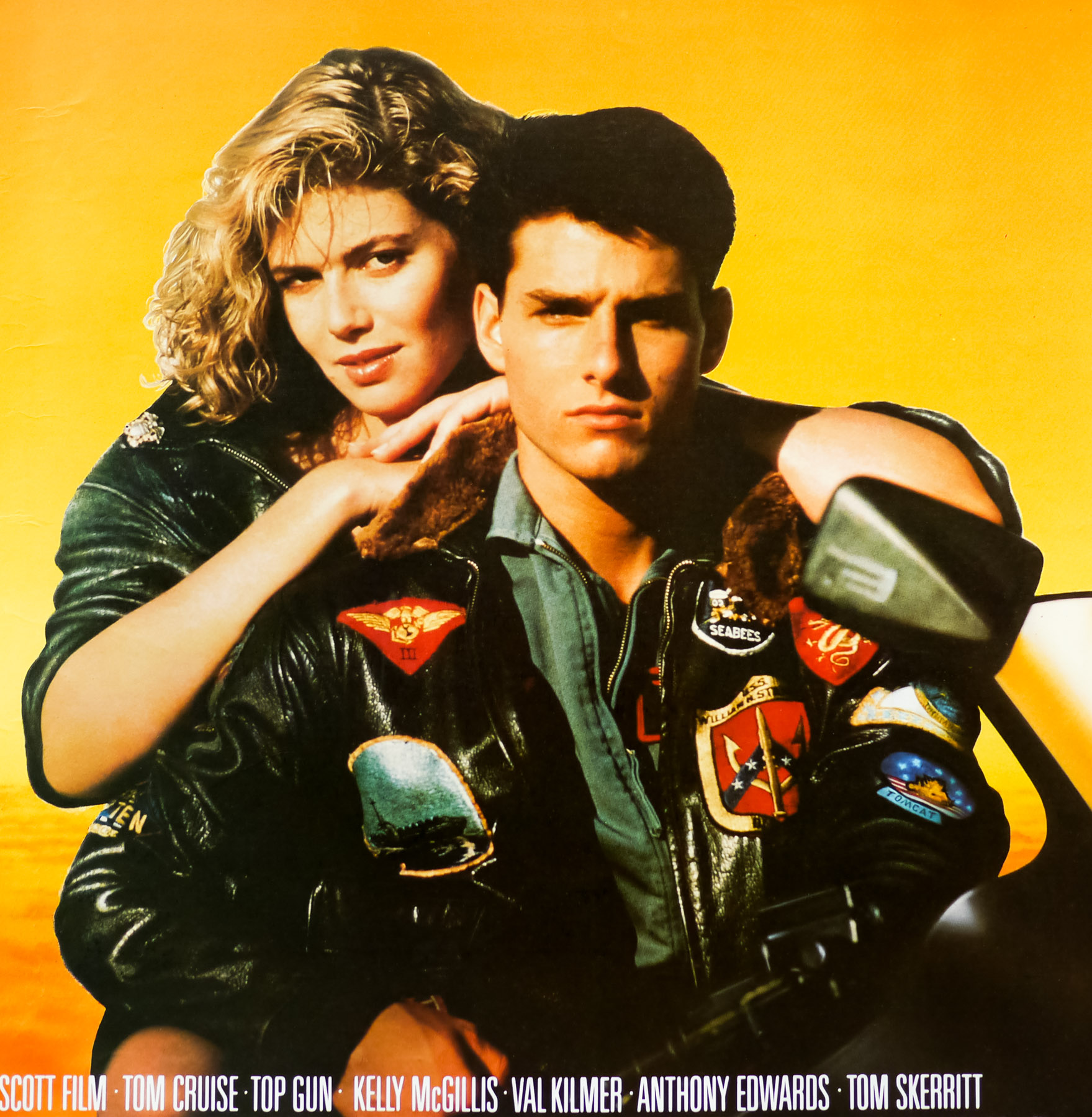
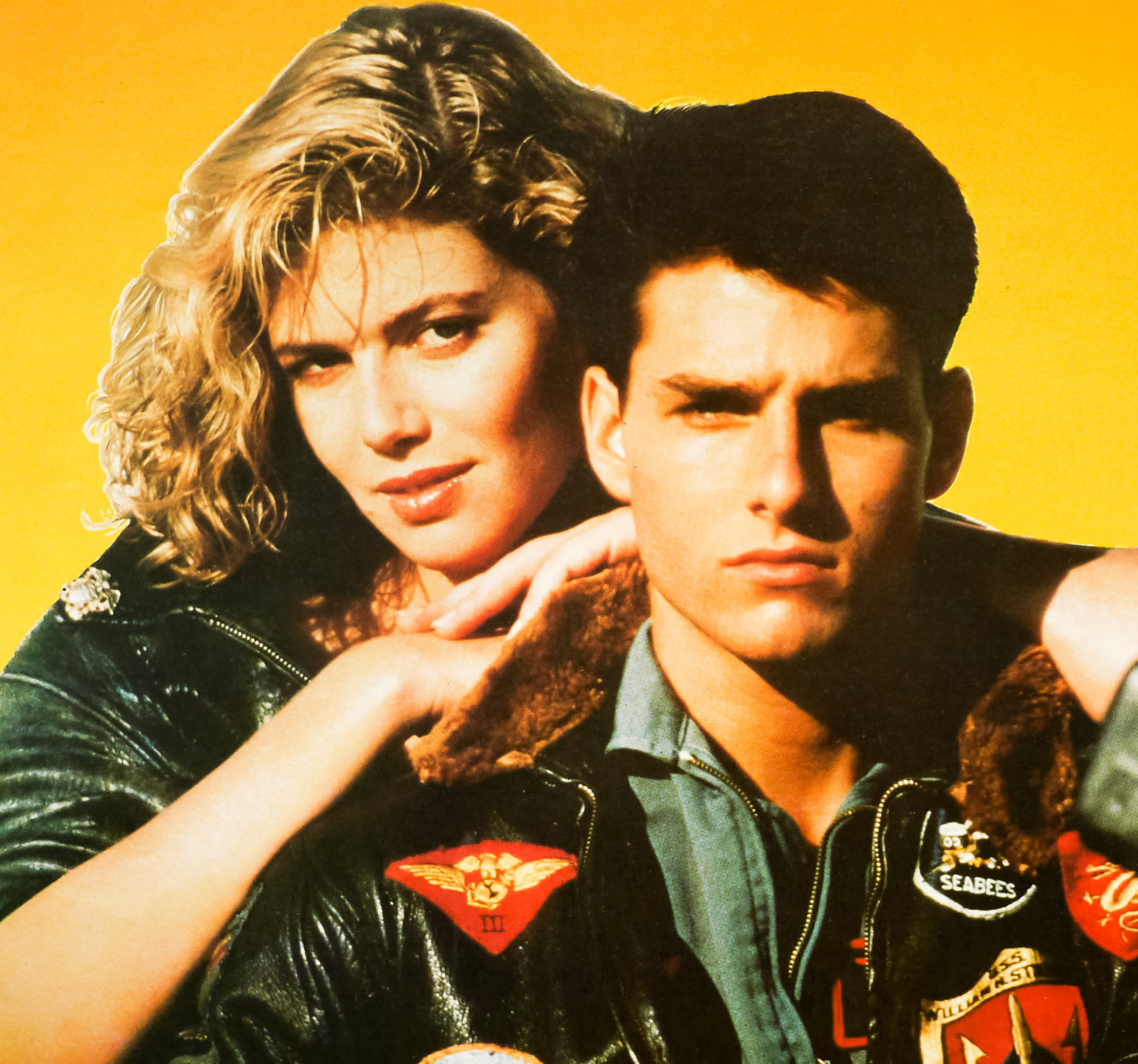
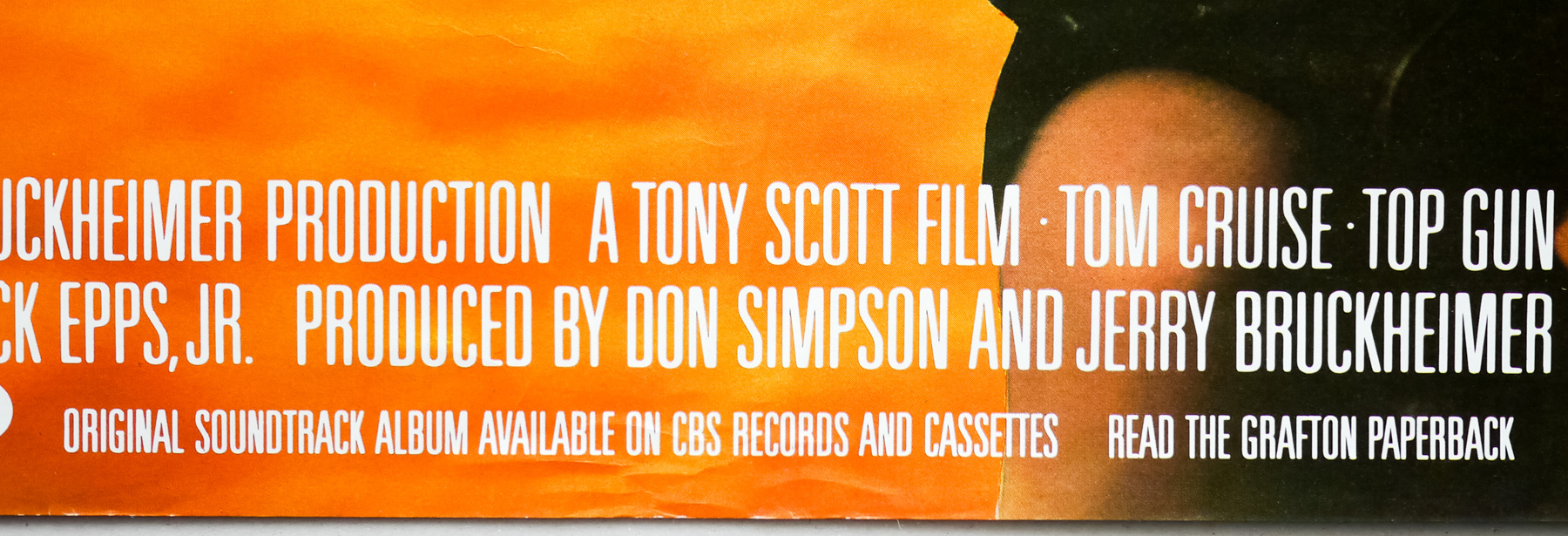
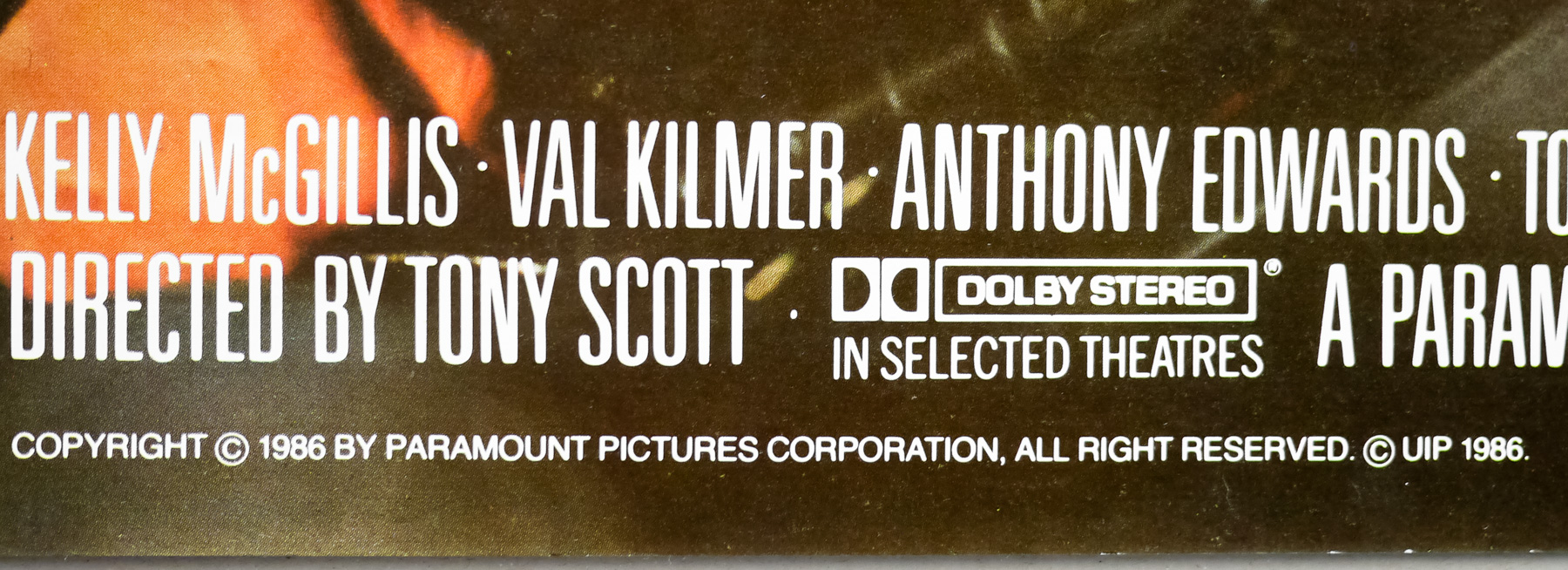
Top Gun is one of the quintessential popcorn films of the 1980s and certainly the one that launched and boosted several Hollywood careers, including that of its director, the late Tony Scott, star Tom Cruise and producing partners Jerry Bruckheimer and the late Don Simpson who were responsible for some of the biggest box-office successes of the 80s and 1990s. The film’s script was based on a magazine article about a top Navy fighter pilot training school, Cruise plays pilot Maverick who is bumped up the ranks and sent to the Top Gun training school after he successfully aids a fellow pilot in distress. There his reckless flying draws the attention of the school’s instructors and disdain from fellow trainees, including top student Iceman (Val Kilmer) who considers his methods dangerous and unsafe. At the same time, Maverick chases after a civilian contractor called Charlie (Kelly McGilliswho is initially wary of his advances. The film features corny dialogue and cheesy acting but is never anything but entertaining and its soundtrack, by Harold Faltermeyer, is one of the most successful of all time in terms of sales.

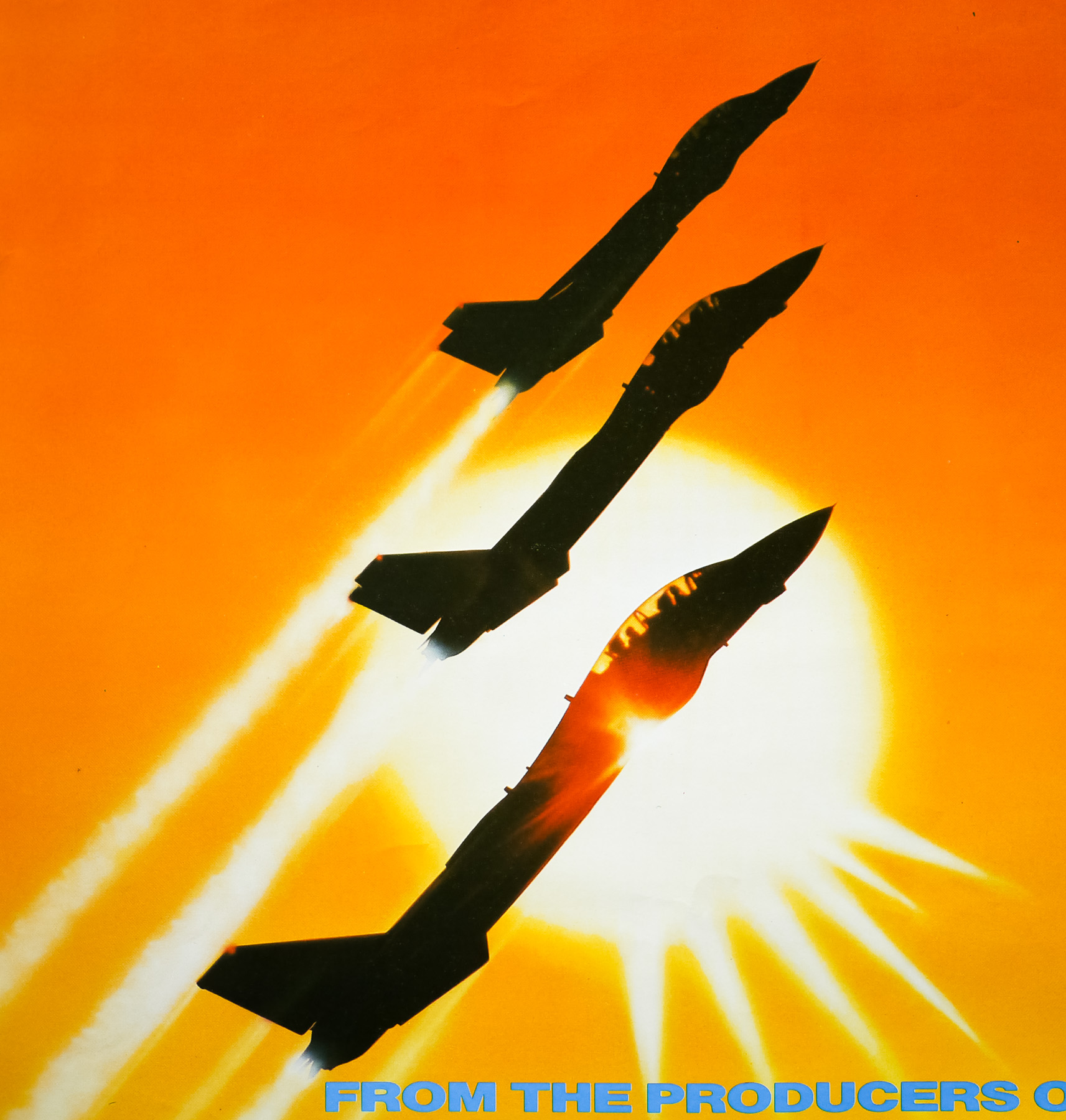
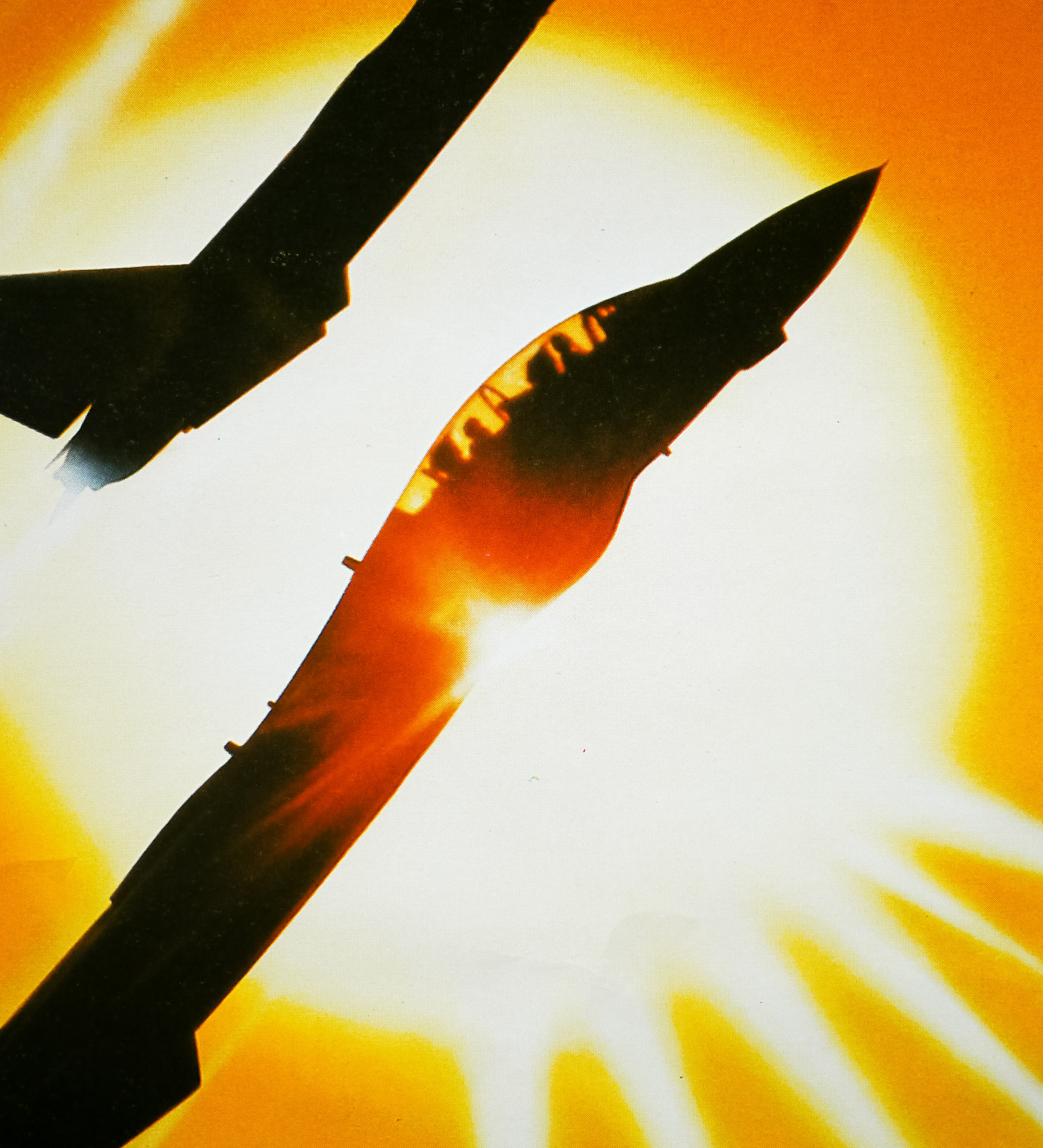
This British quad was created by the British designer and artist Brian Bysouth who I interviewed for this site in 2012. In the mid-1980s the requests for painted artwork, of which Brian was a renowned specialist, were drying up so Brian realised it was time to learn how to use computers to create photographic posters, as detailed below. This Top Gun quad is likely to have been one of the first computer-generated posters that the designer worked on (see also the Predator quad)

——————————

Computers as an art tool came in during the time you were at FEREF. What was it like making that transition? Was it easy for the company?
Yes, luckily Steve Laws, the studio manager at the time and also a good designer, managed to persuade the upper management that desktop publishing was coming and that we had to embrace it. I can’t remember exactly when this was, but it was clear that the Apple Macintosh was the best computer. At that time they were very expensive but gradually the studio was equipped with the new technology.

Unfortunately, the computers replaced the jobs of paste up artists and it soon became apparent that unless they were capable of making the transition they were no longer needed. One machine and an operator could add all the text and details to an advert or illustration, ready for it to be sent to the printer. To keep their jobs our paste up artists had to learn how to use a Mac.

In the beginning the computers couldn’t handle very large files so things went very slowly, especially with complex designs. But when Macs started to get a lot faster the way forward was firmly established and we began to recruit skilled computer designers and operators.

I realised when my illustration work was drying up that I needed to become more of an art director. I was interested in helping out the Mac designers and I was able to use my experience to help them. I always found it easy to suggest ways to improve a design, which they came to appreciate; gradually it became usual for me to be asked to help if a design was proving troublesome.  I wasn’t as quick on the Macs as the operators but I realised that I had to learn Photoshop to enable me to art direct them properly. Learning the correct commands was essential, so I read the manual of Photoshop 3, (which I think was the version at that time), and learned the various key-commands and technical terms.

Eventually I asked for a Mac of my own and I was given use of one that had become surplus. When I wasn’t painting I was practicing. Looking back now, it was instrumental in helping me when I was asked to work on the Star Trek DVD covers.

——————————-

To see the other posters in the Film on Paper collection that were designed and/or painted by Brian Bysouth click here.