You searched for: Quad%2520

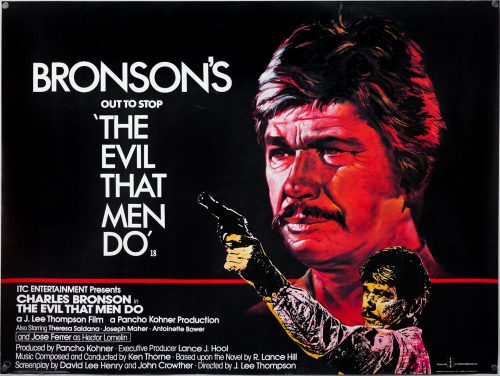
The Evil That Men Do / quad / UK

12.09.14

Poster Poster
Title
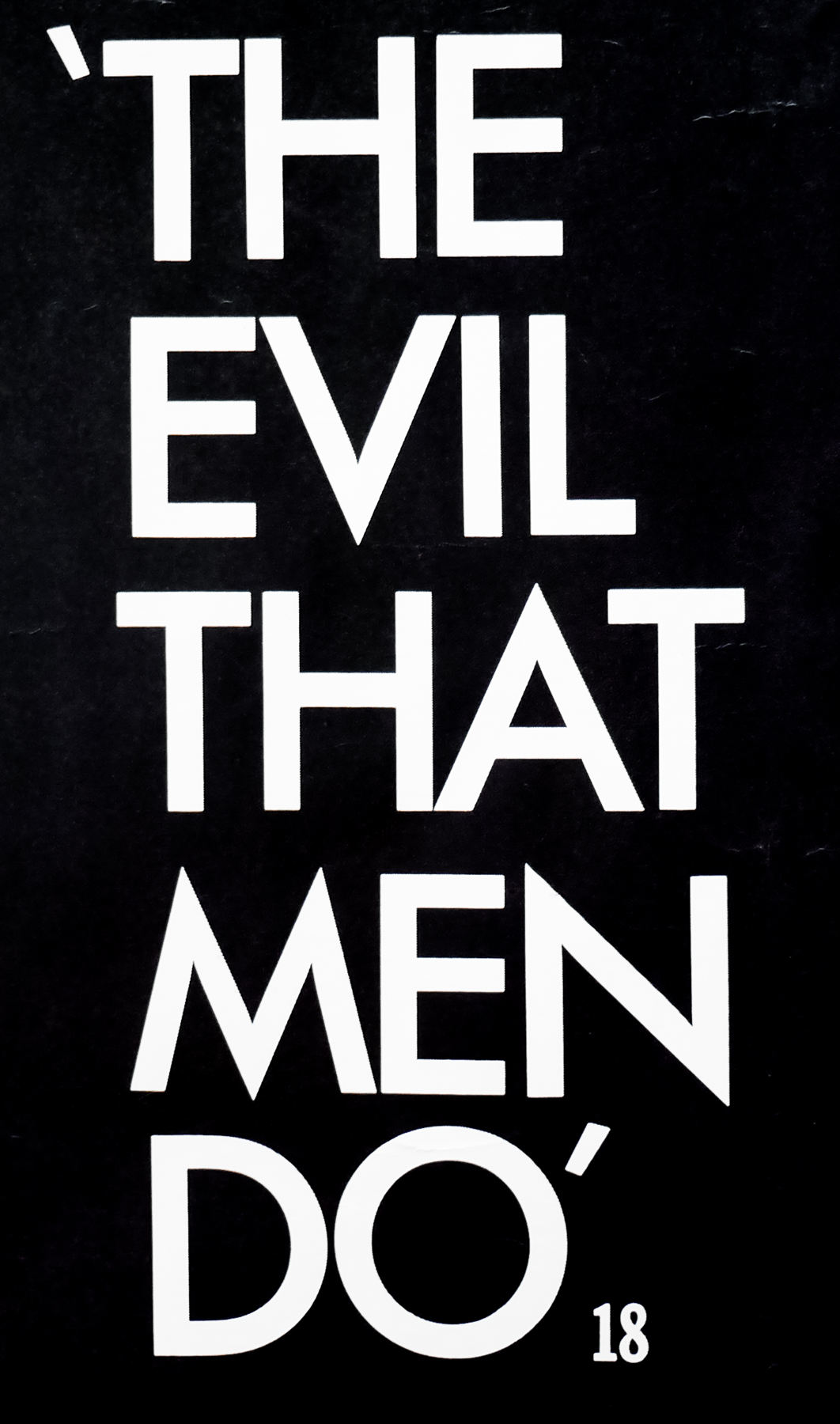
The Evil That Men Do
AKA
Liquidator (West Germany) | L'enfer de la violence [The Hell of violence] (France)
Year of Film
1984
Director
J. Lee Thompson
Starring
Charles Bronson, Theresa Saldana, Joseph Maher, José Ferrer, René Enríquez, John Glover, Raymond St. Jacques, Antoinette Bower, Enrique Lucero
Origin of Film
Mexico | USA | UK
Genre(s) of Film
Charles Bronson, Theresa Saldana, Joseph Maher, José Ferrer, René Enríquez, John Glover, Raymond St. Jacques, Antoinette Bower, Enrique Lucero,
Type of Poster
Quad
Style of Poster
--
Origin of Poster
UK
Year of Poster
1984
Designer
Eric Pulford
Artist
Eric Pulford
Size (inches)
29 15/16" x 39 11/16"
SS or DS
SS
Tagline
Bronson's out to stop...

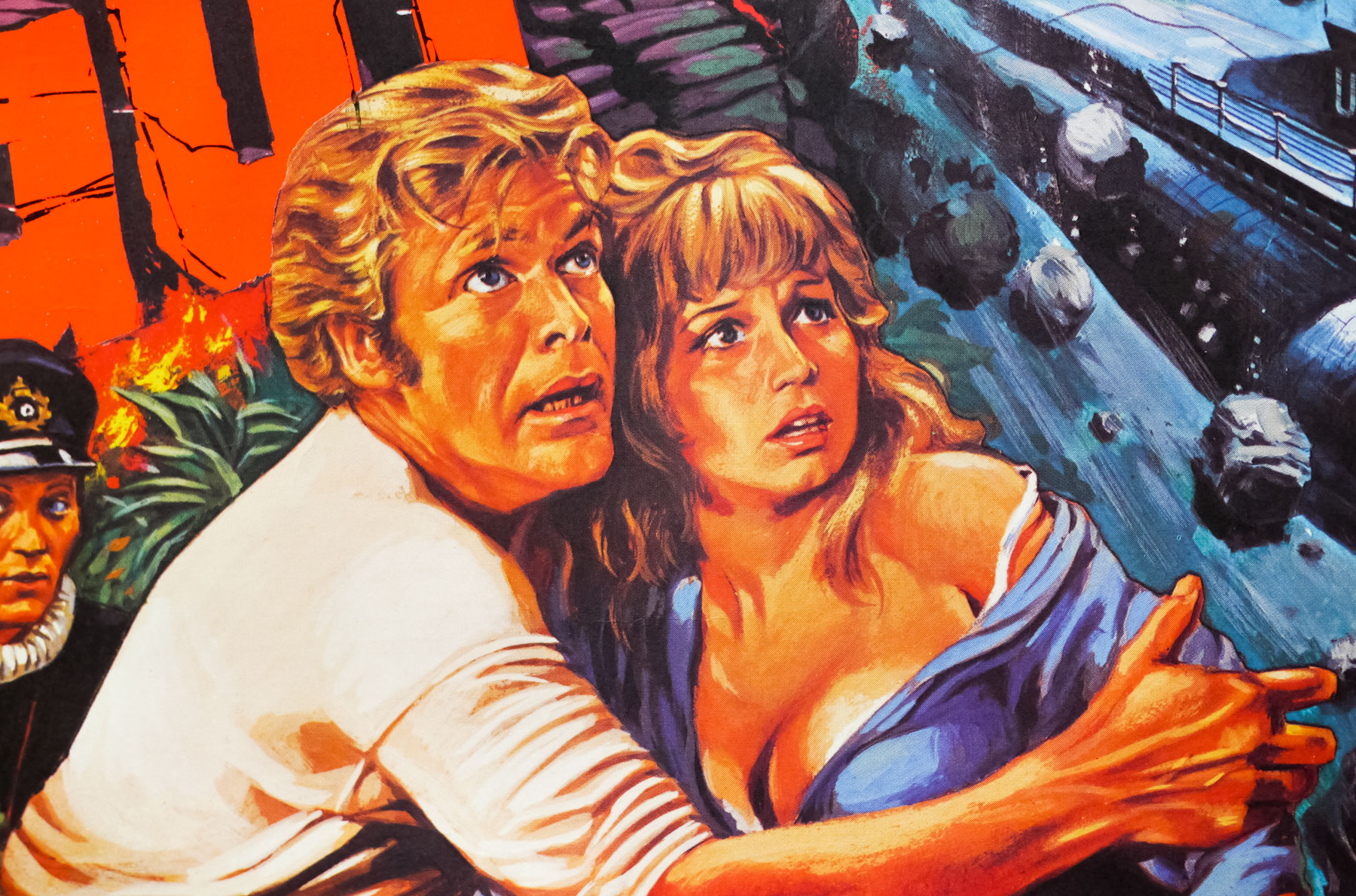
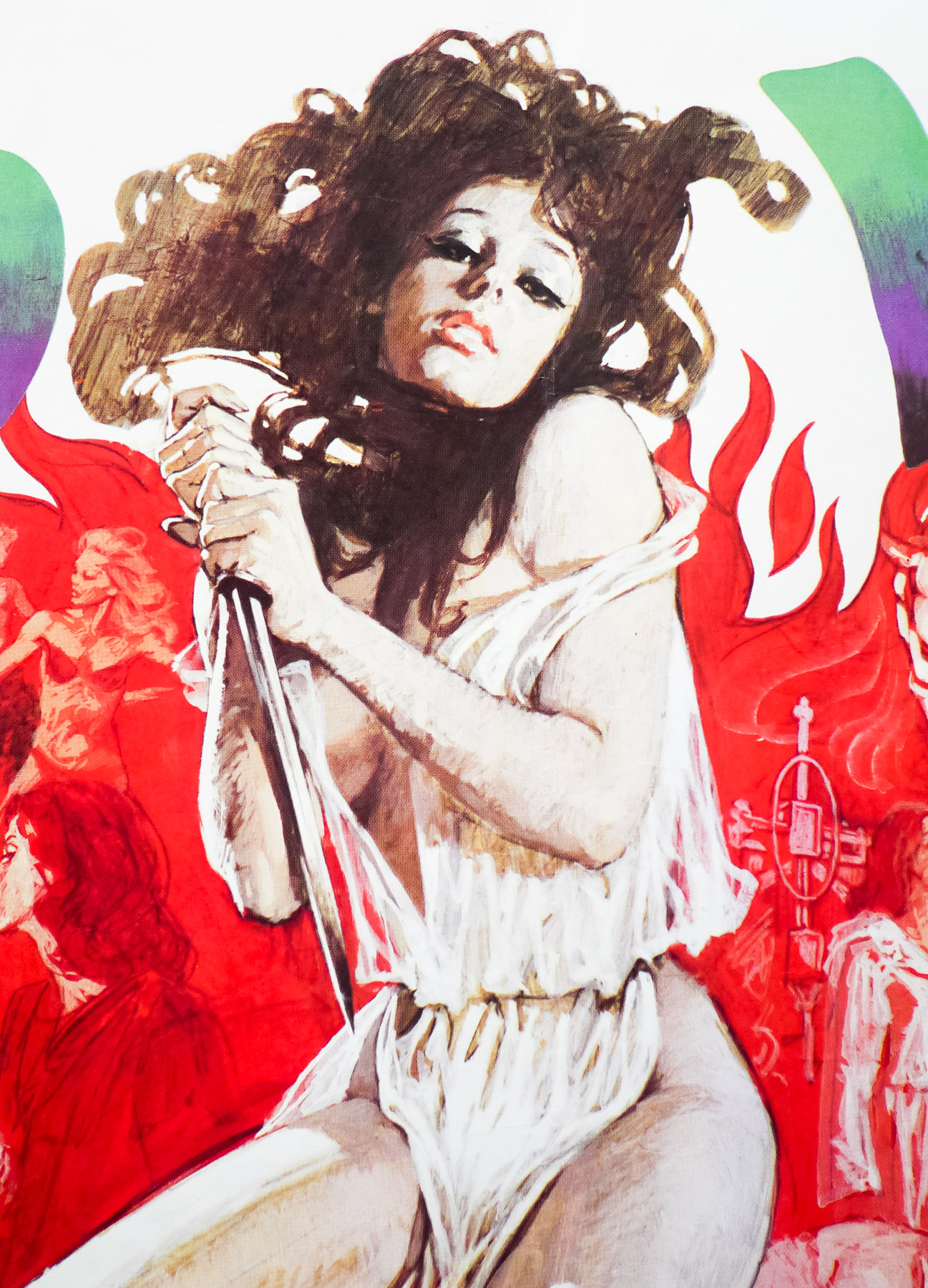
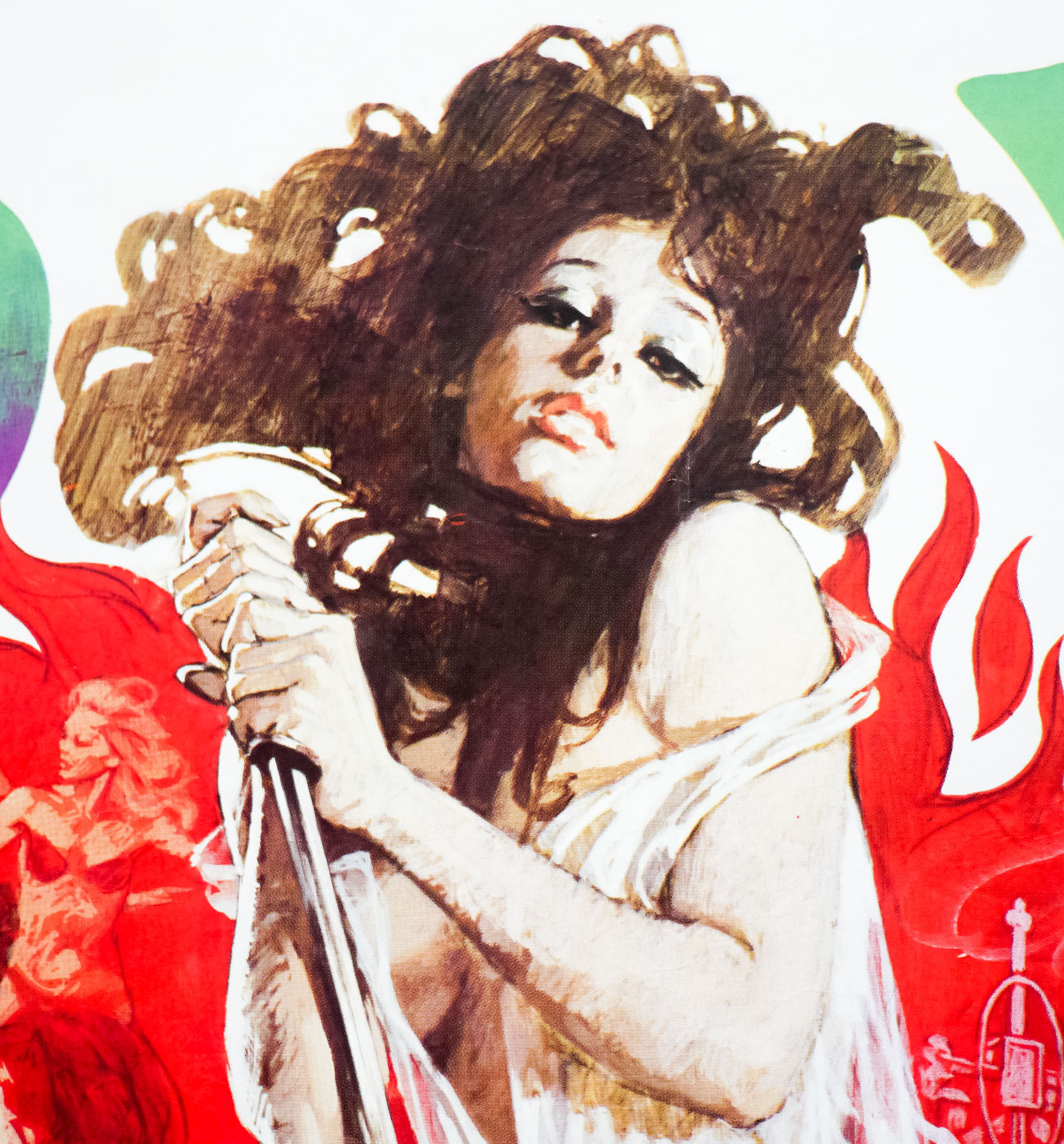
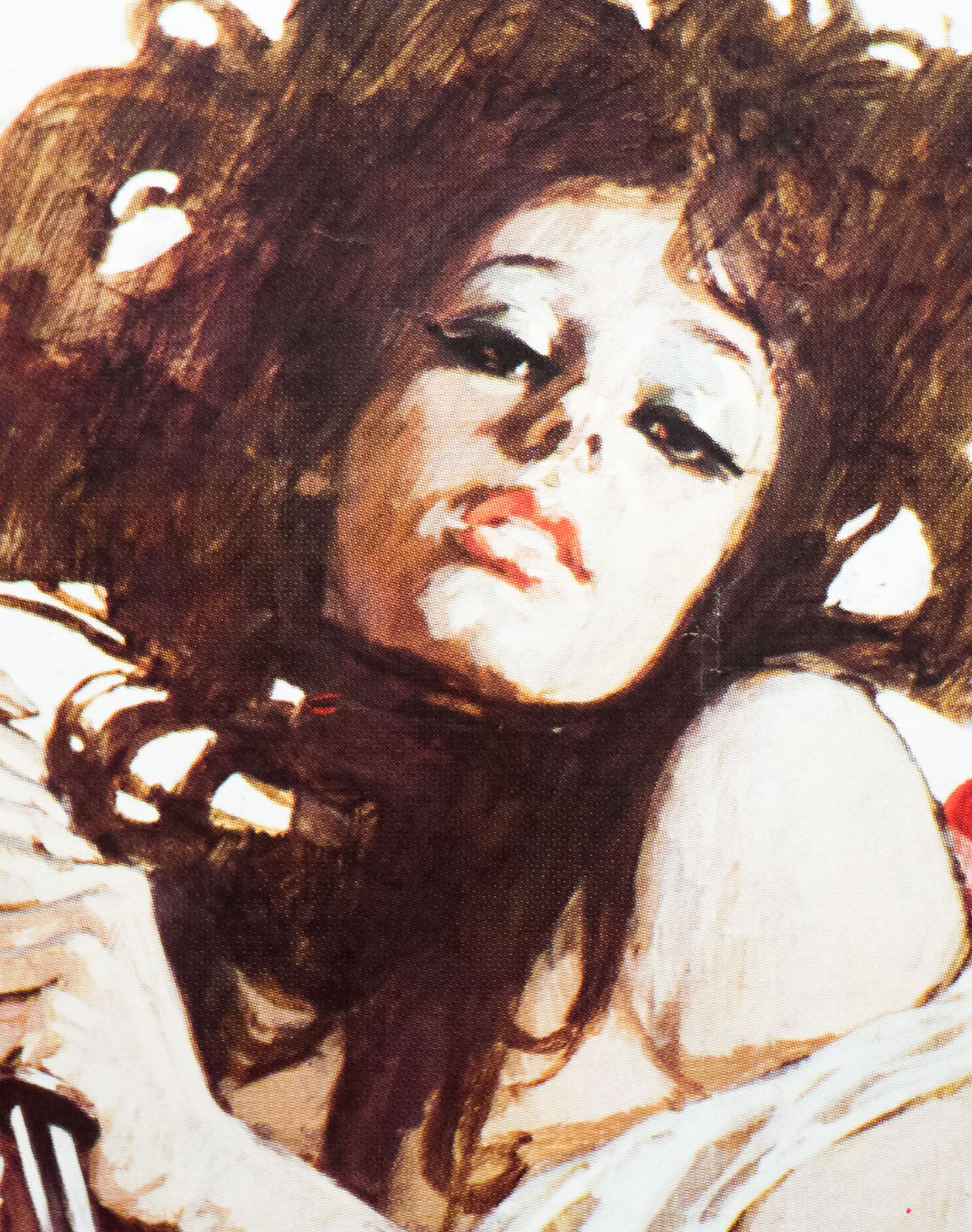
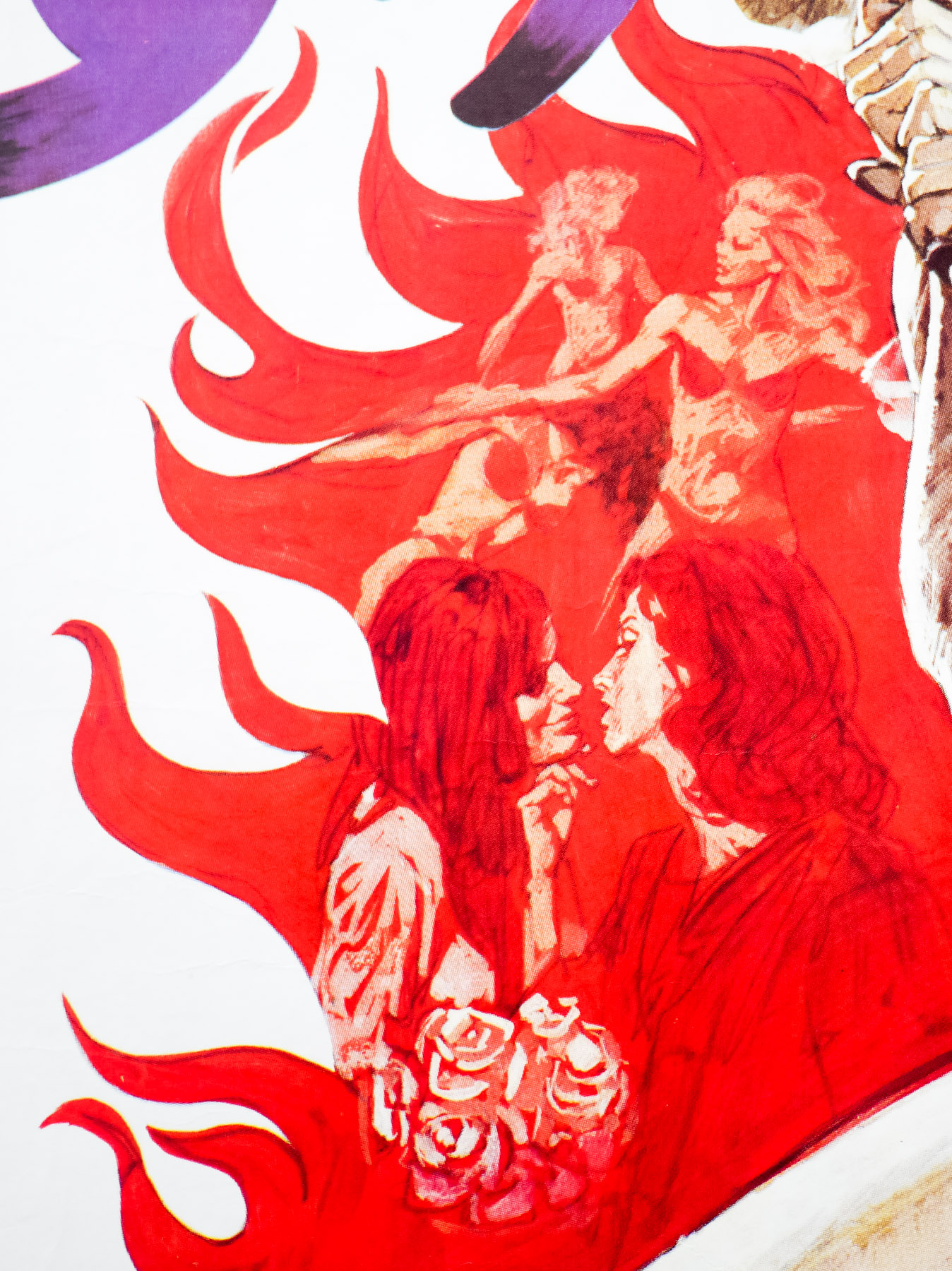
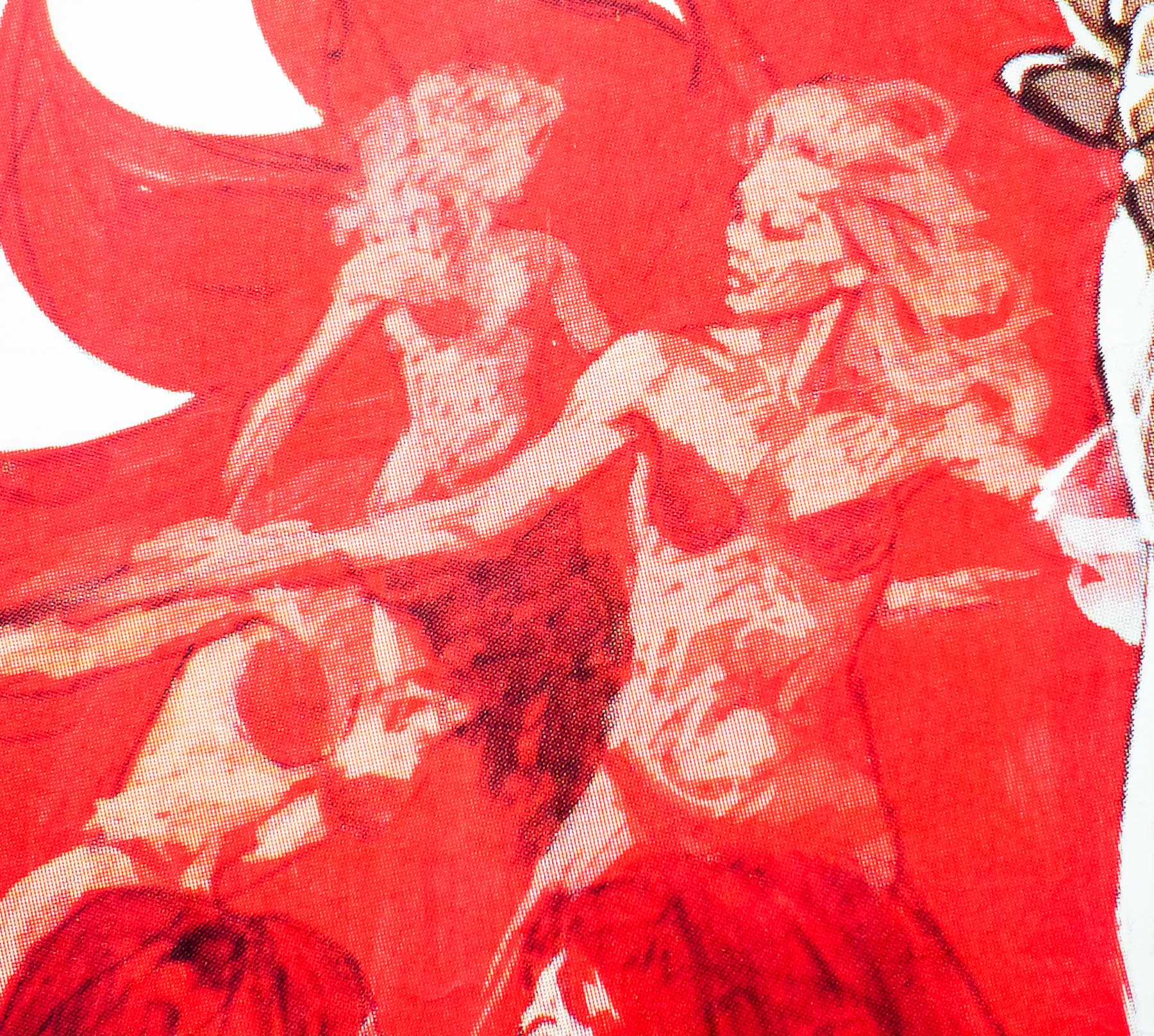
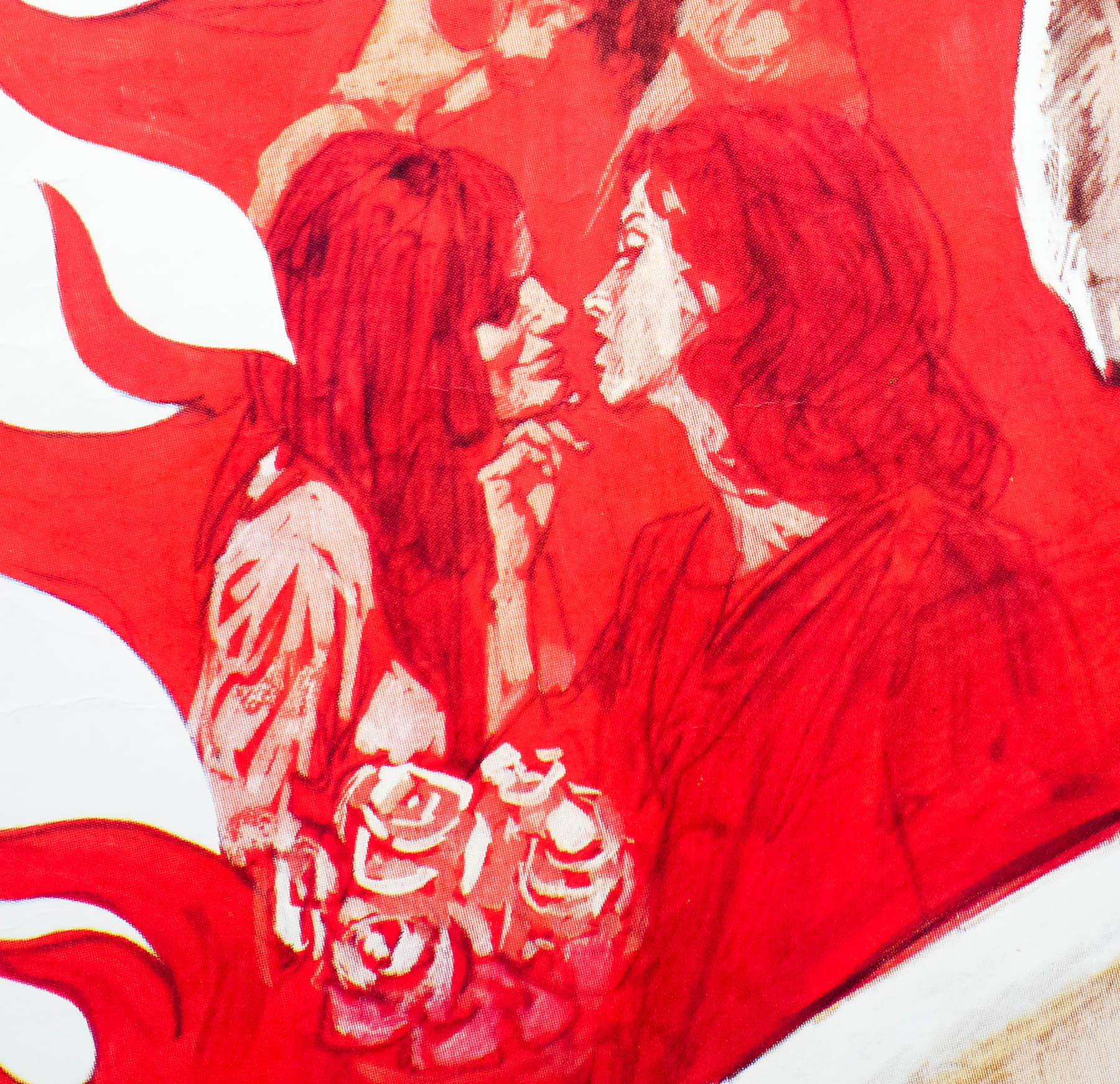
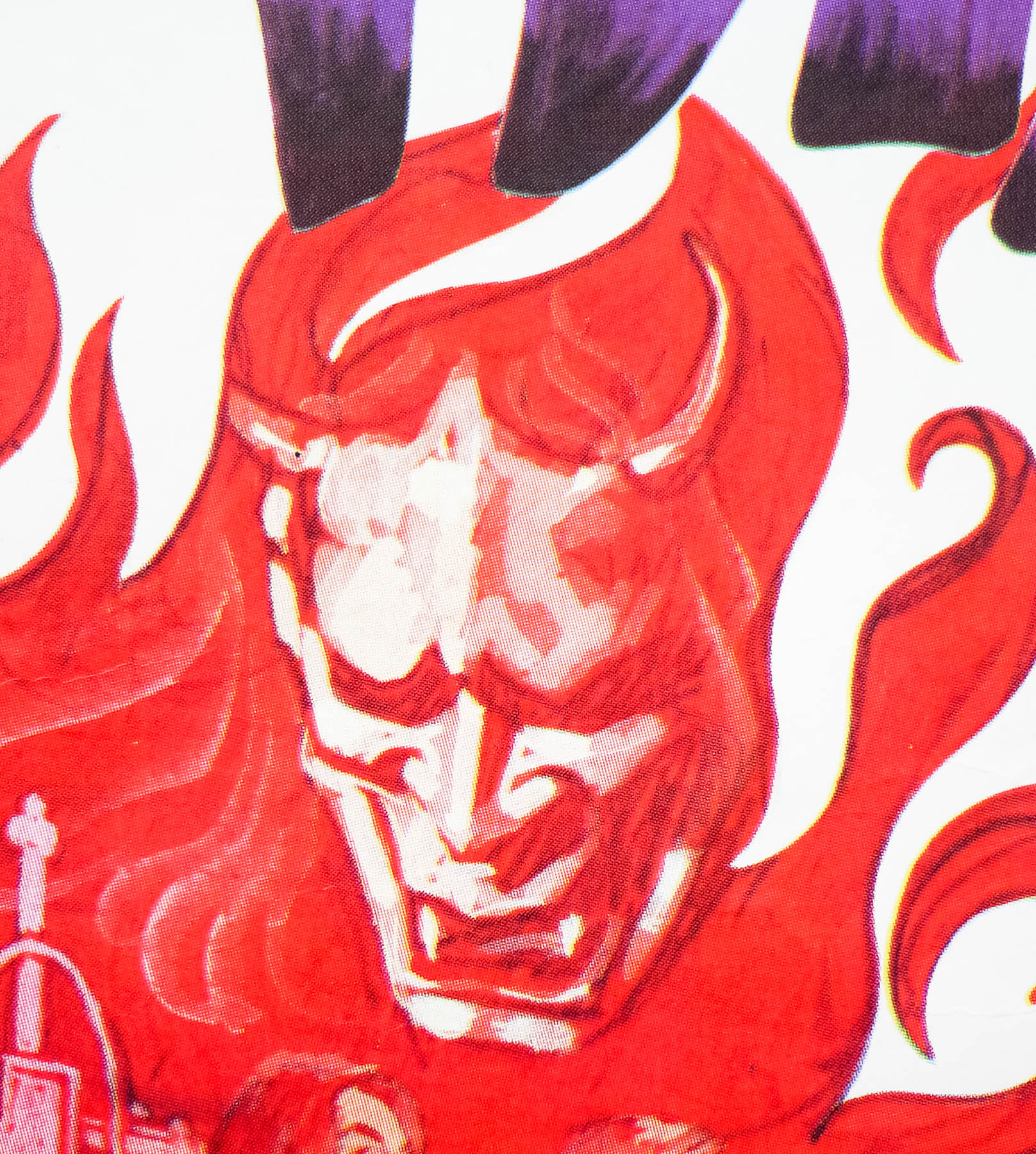
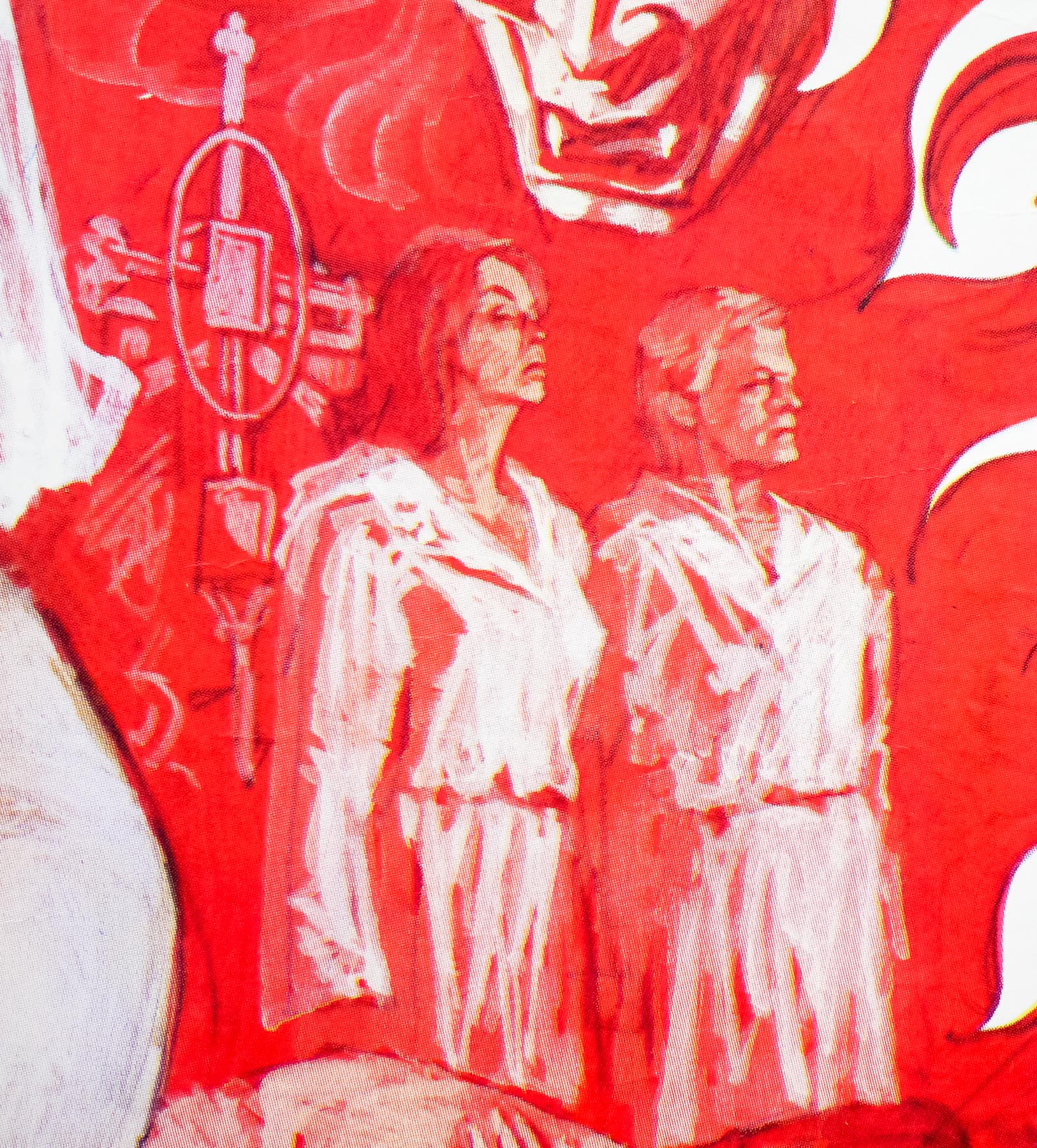
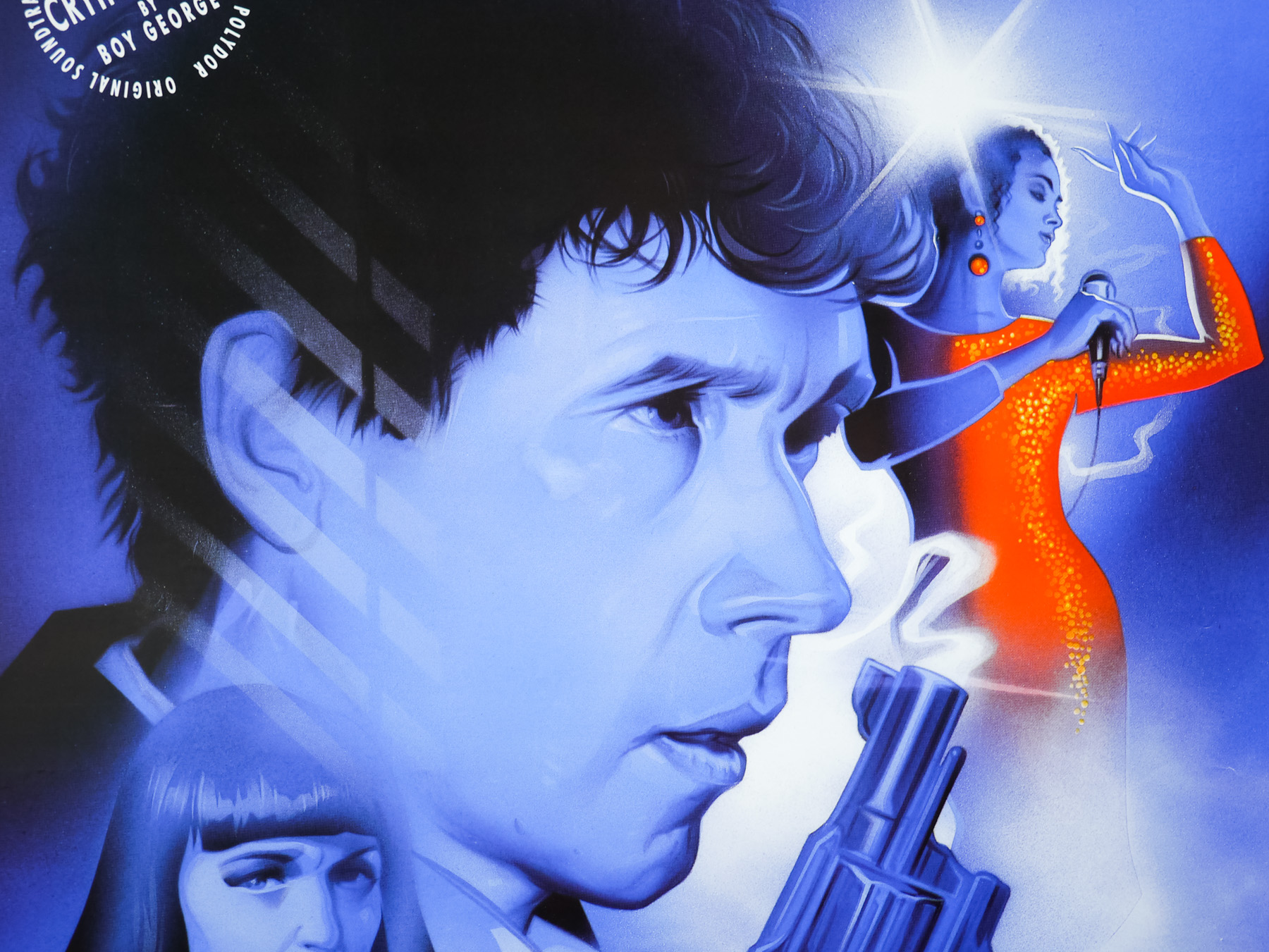
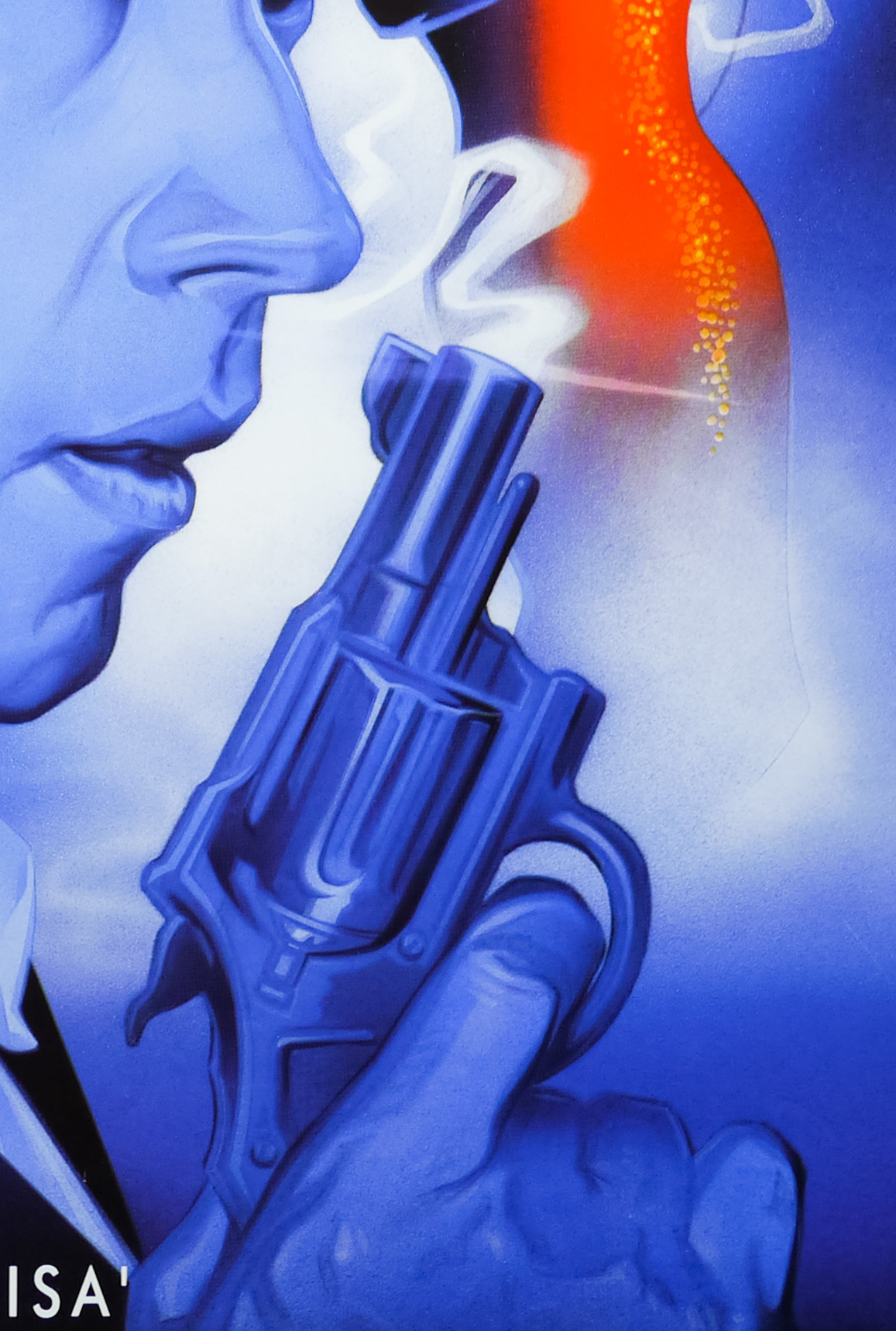
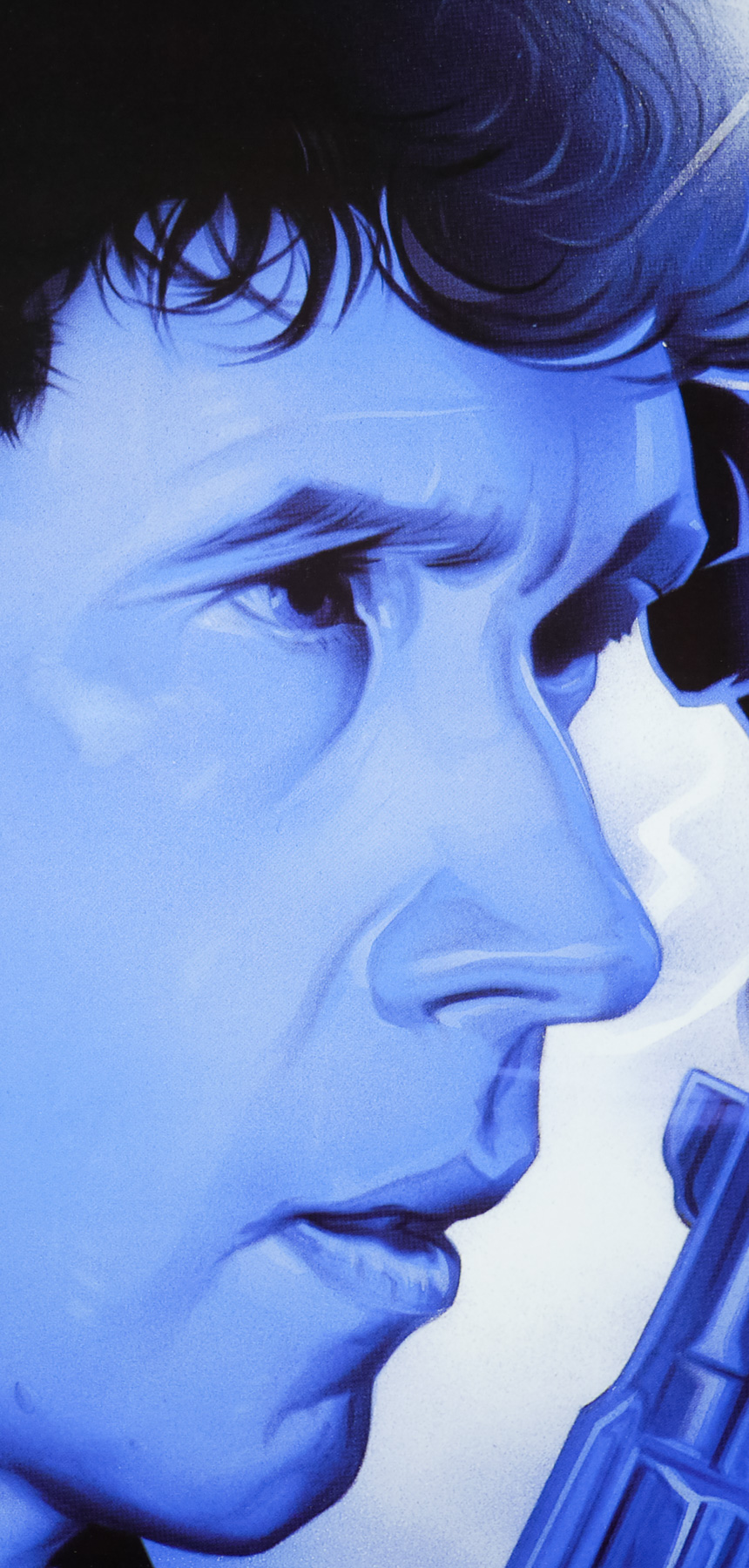
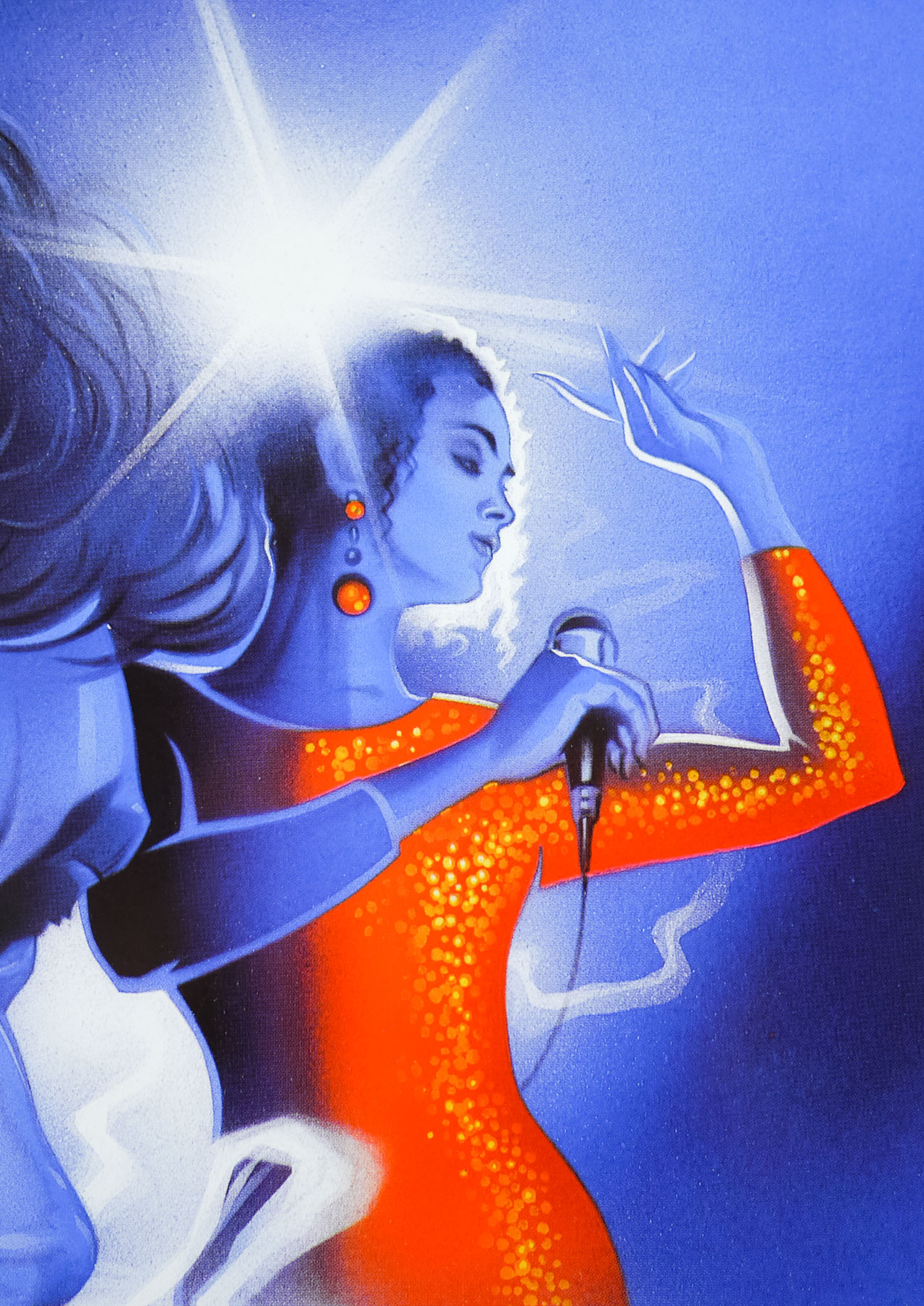
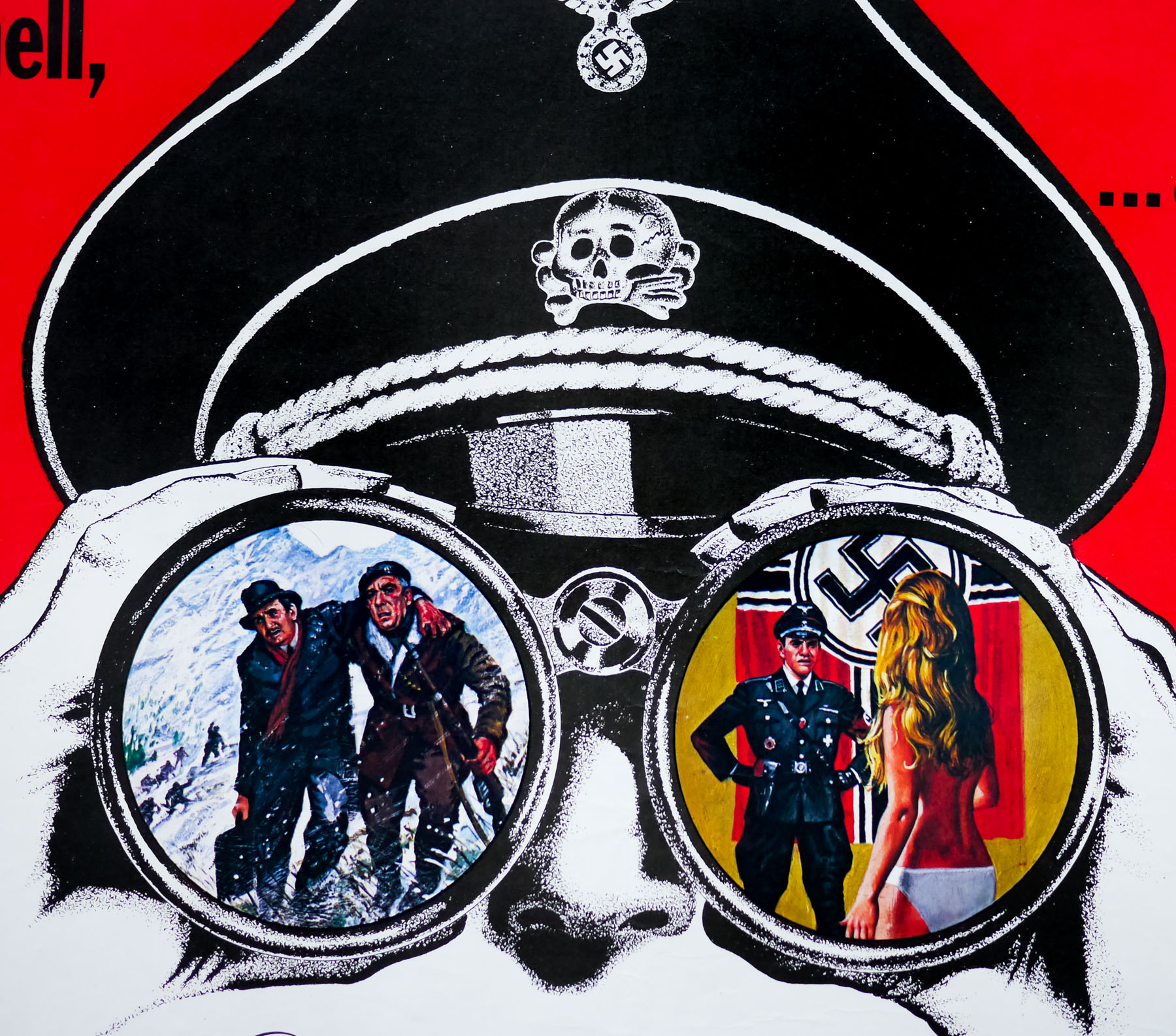
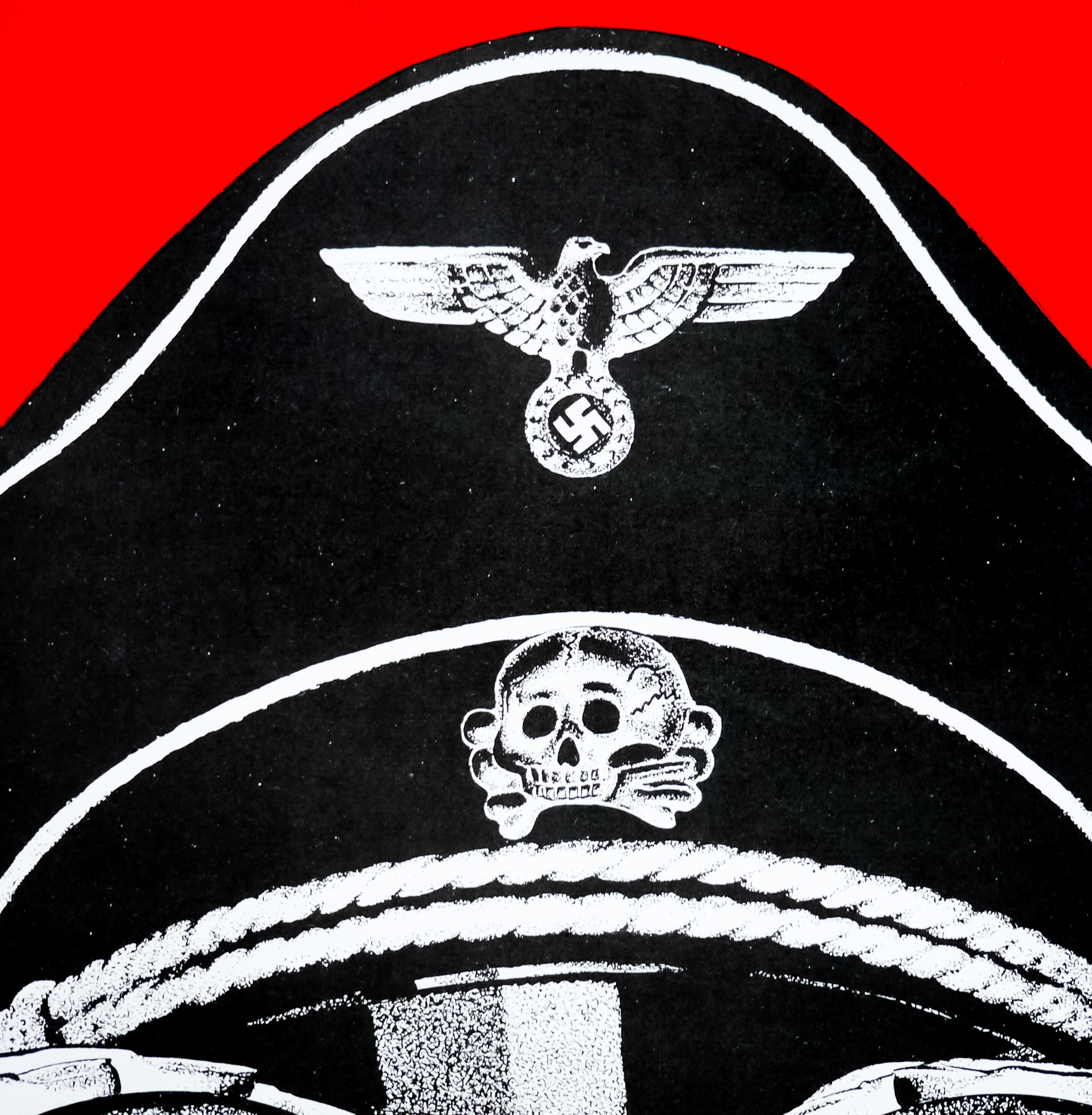
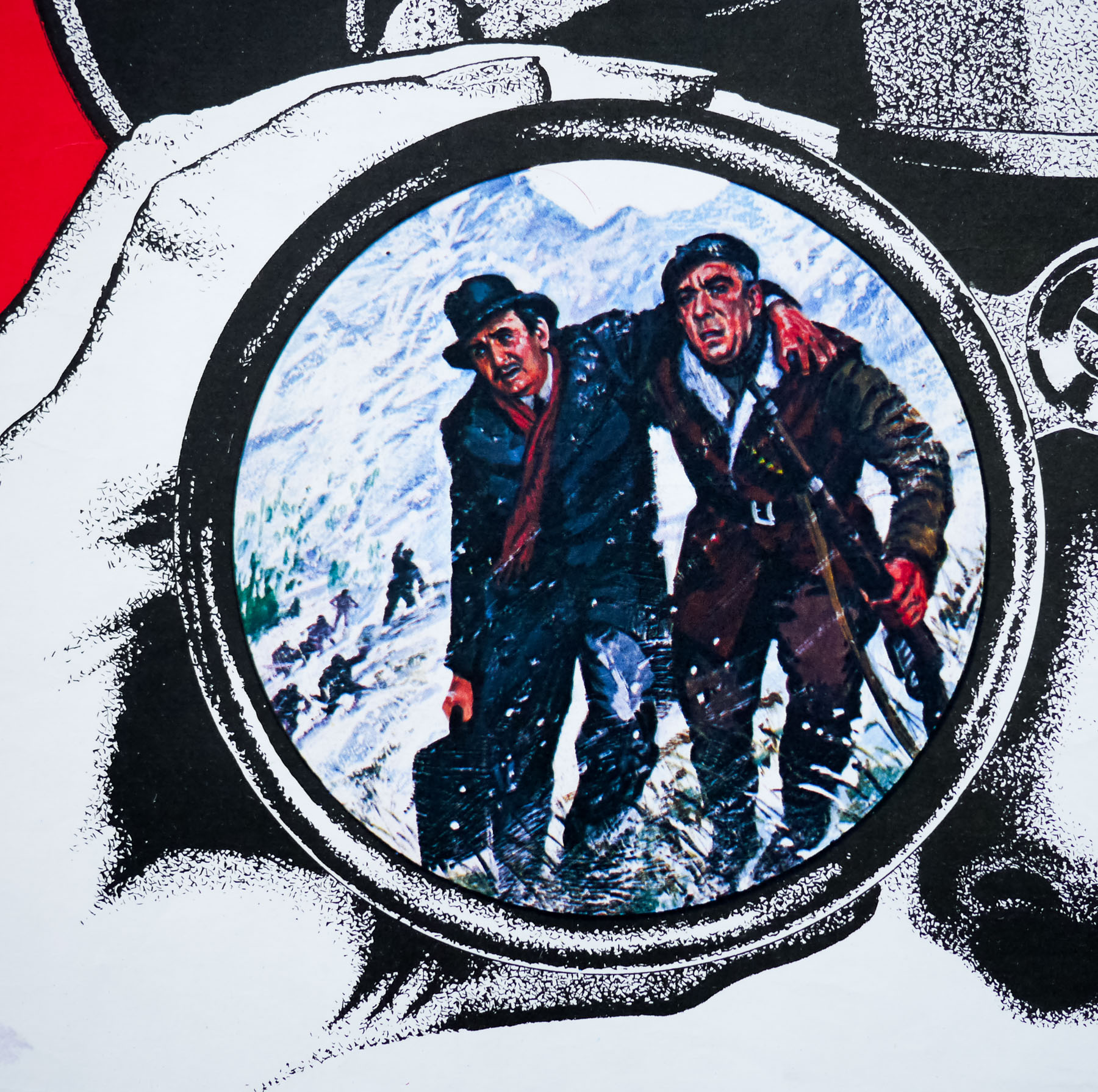
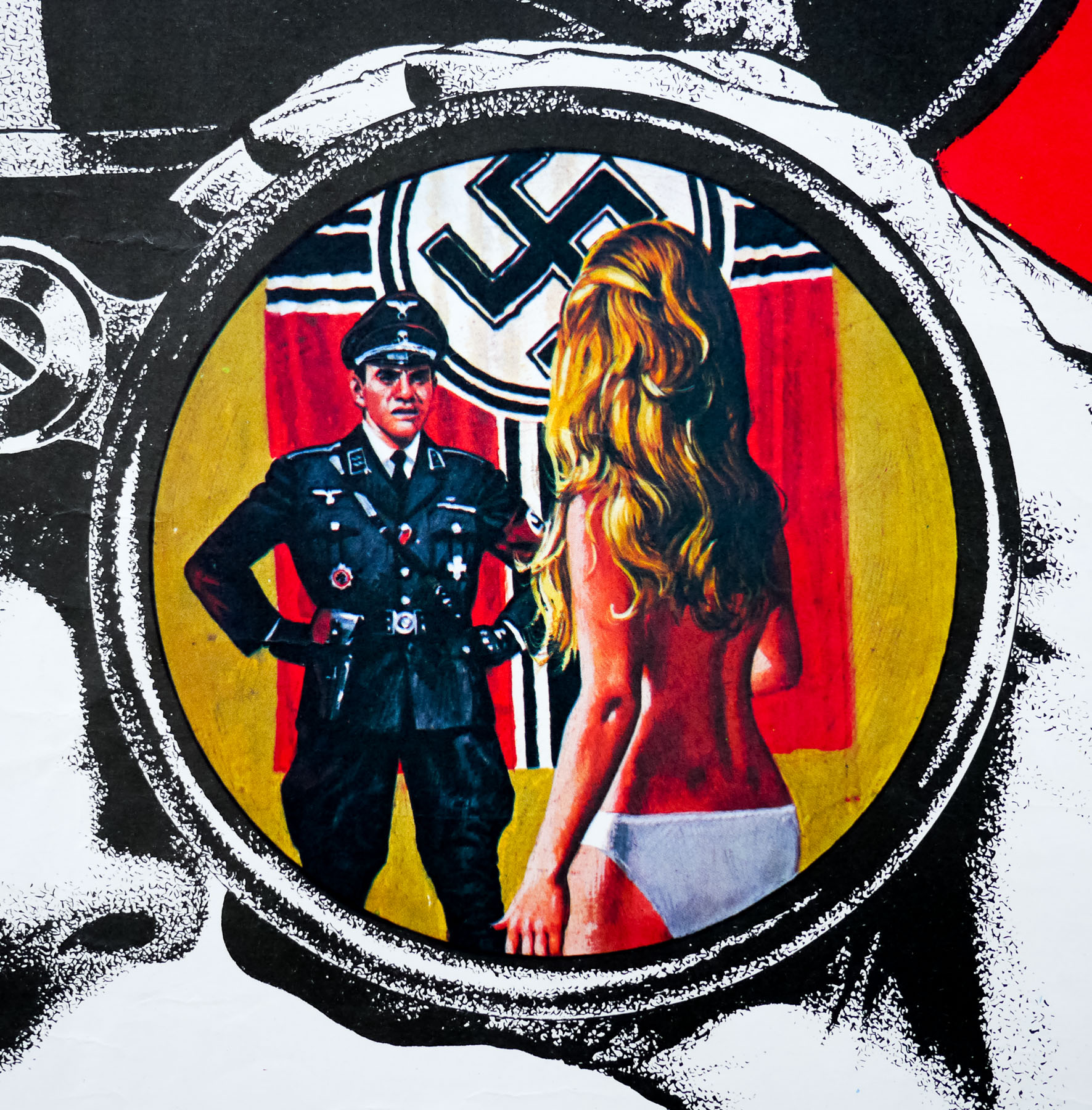
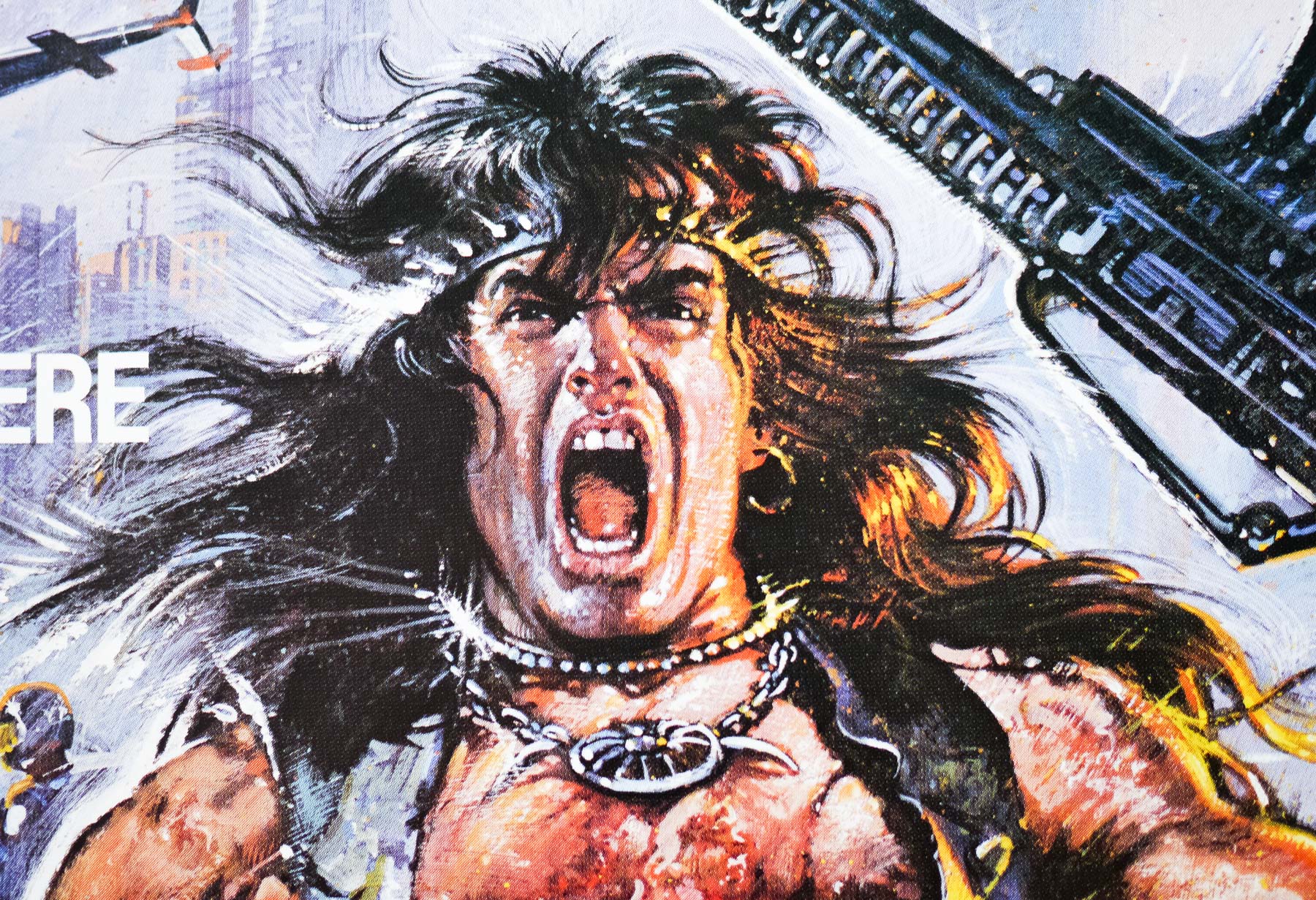
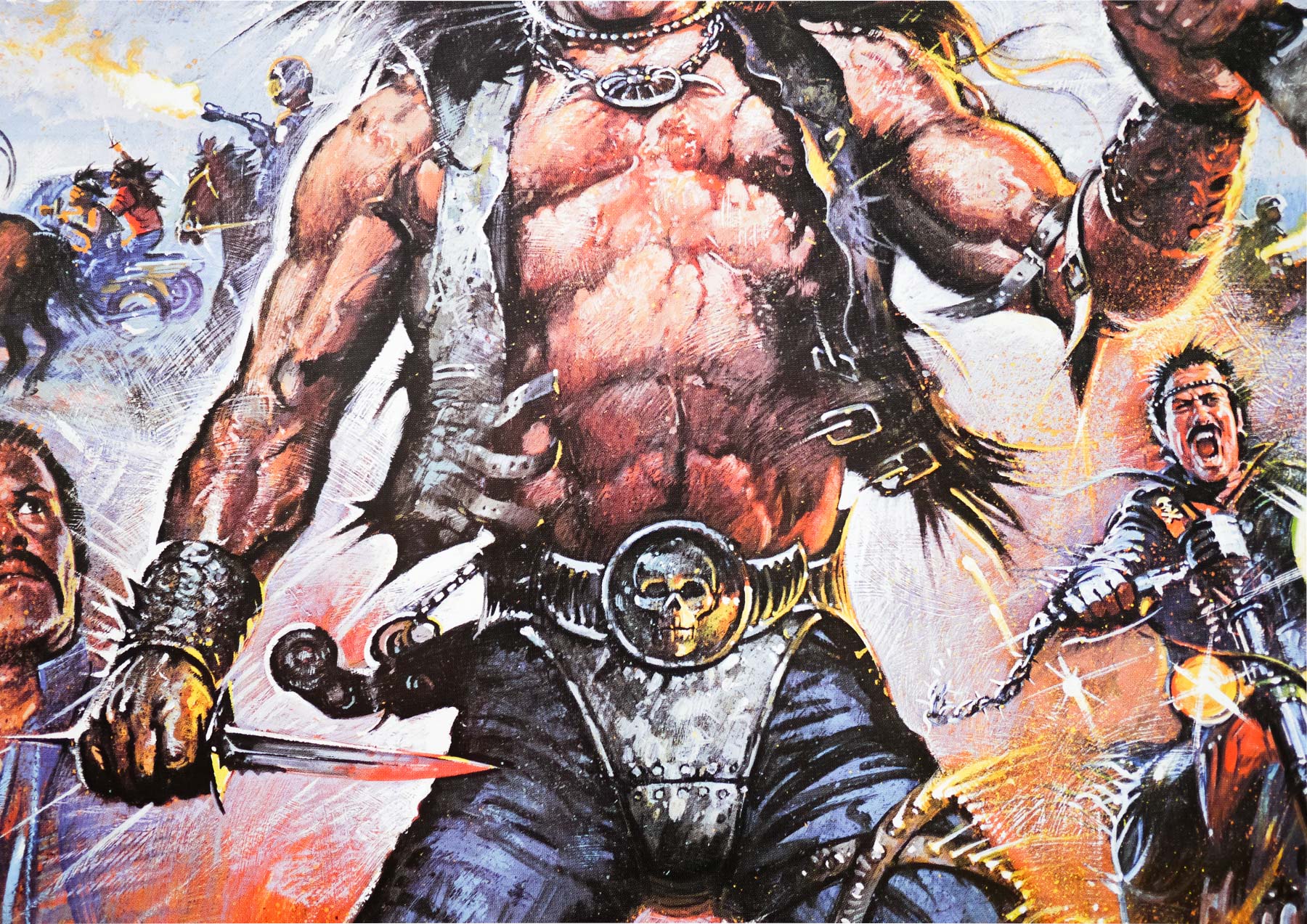
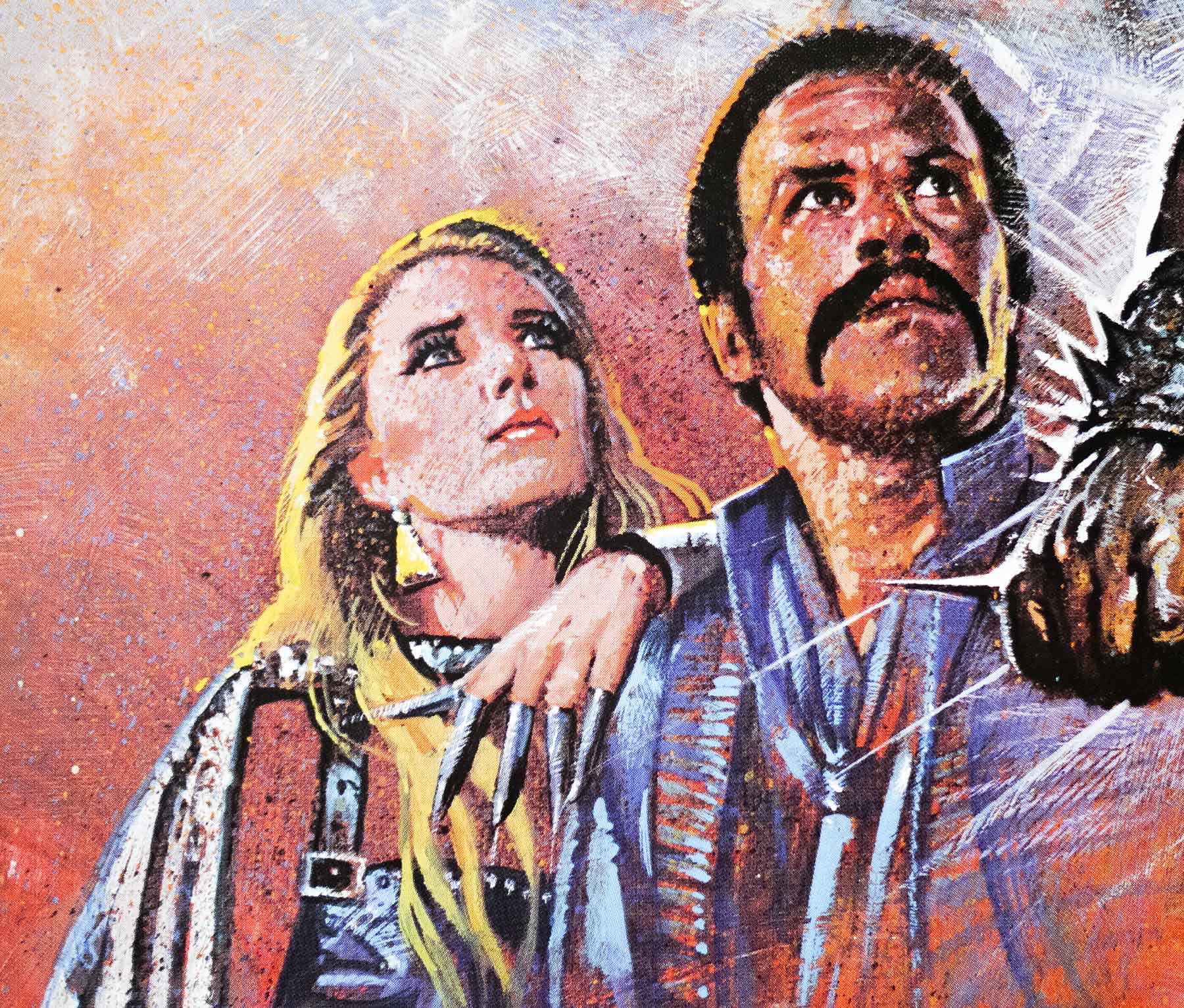
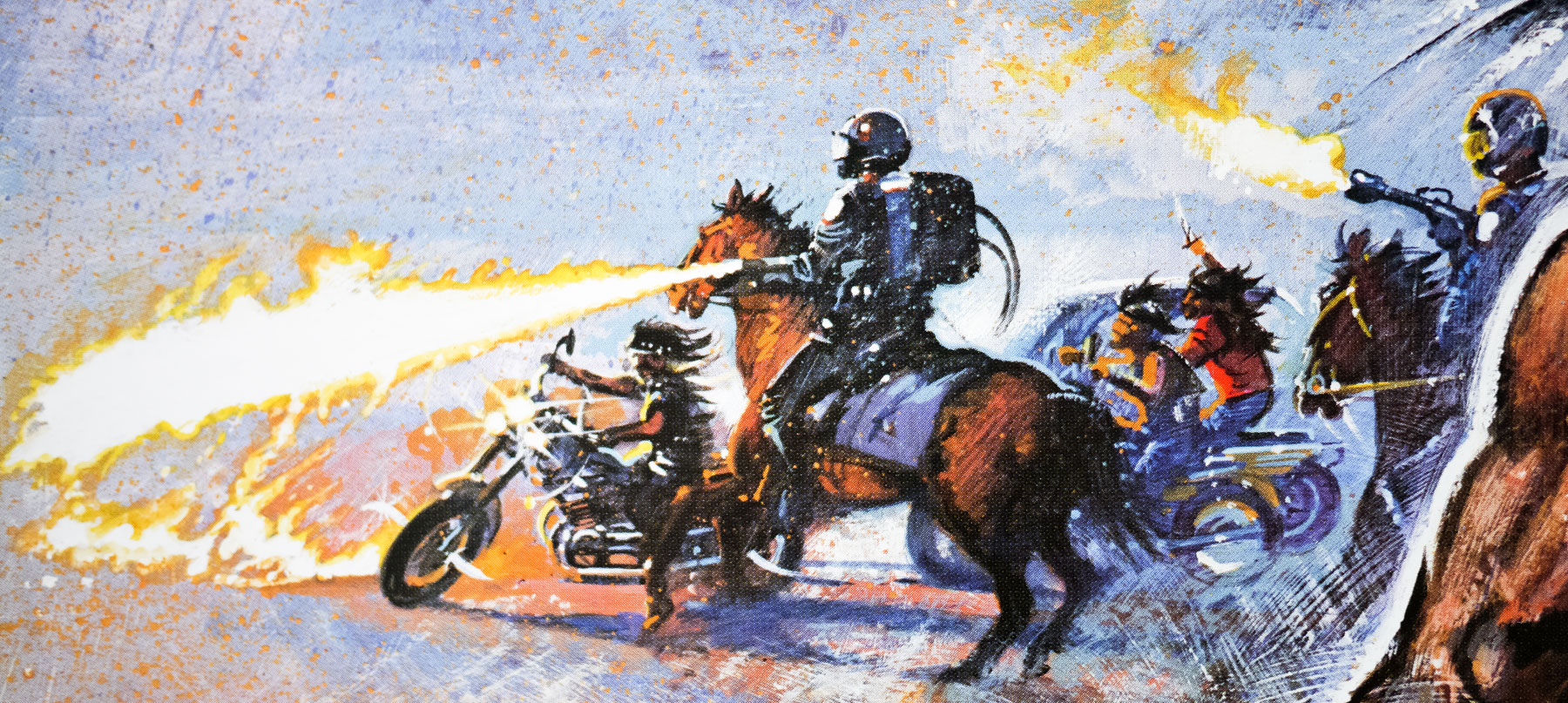
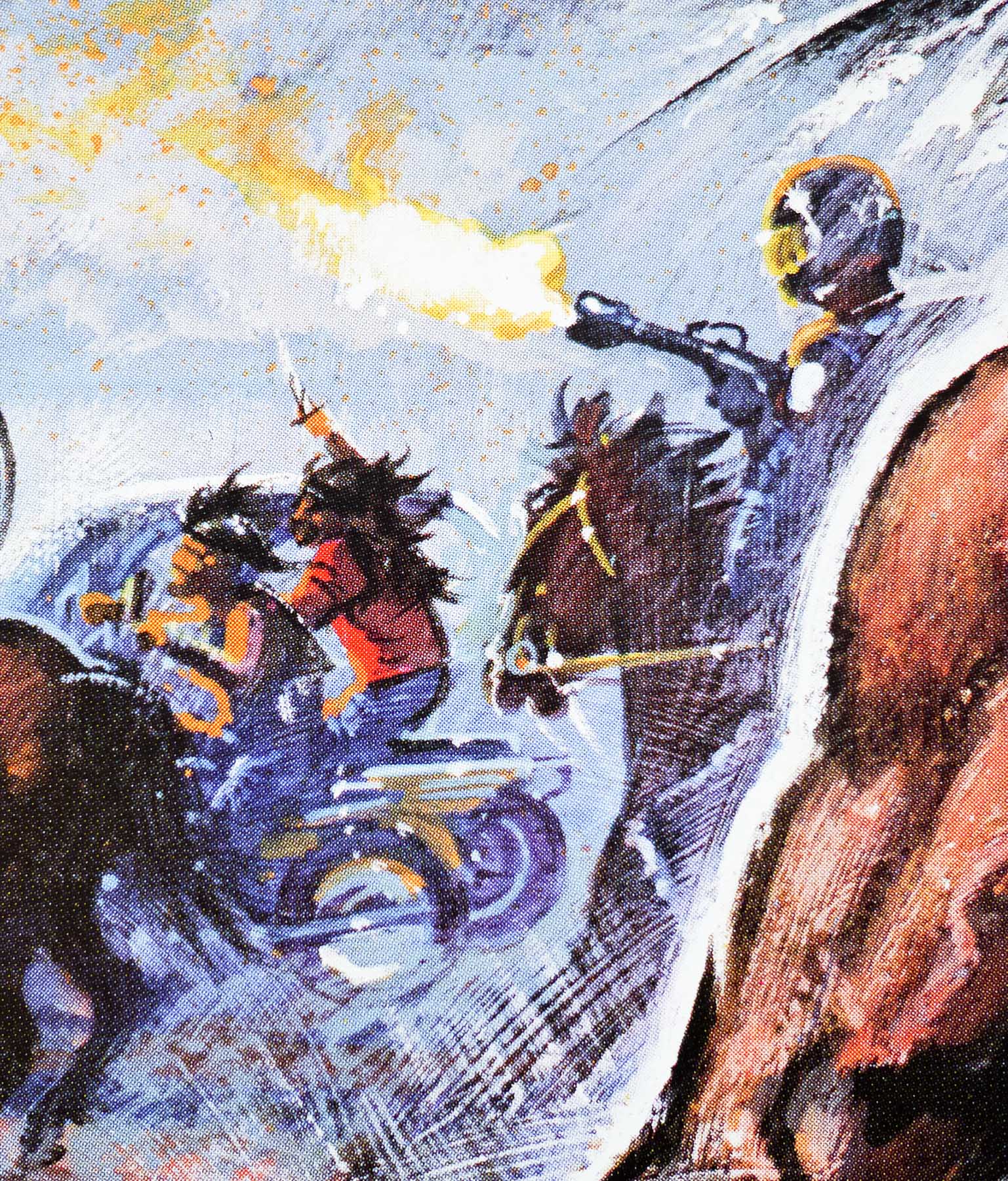
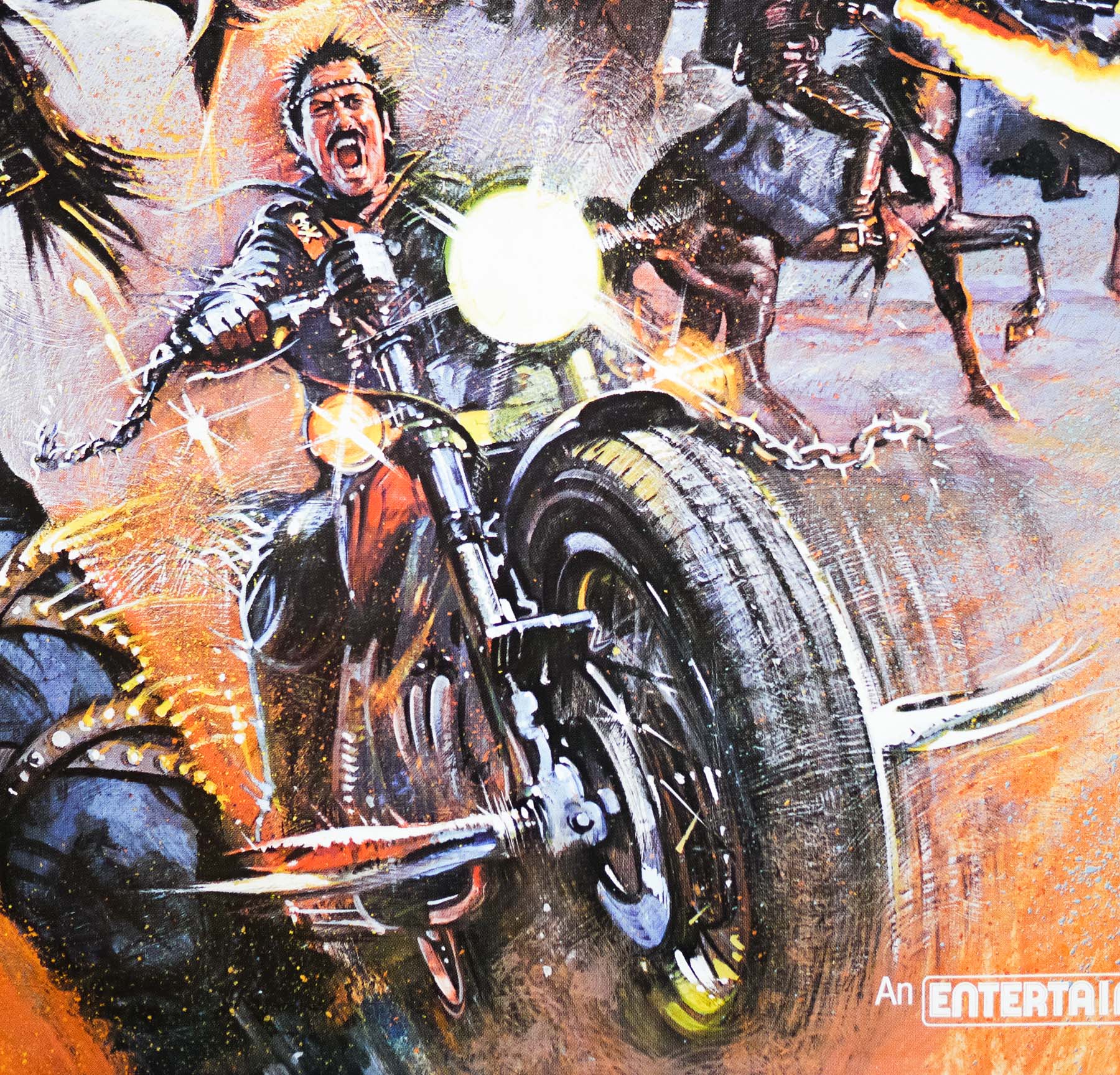
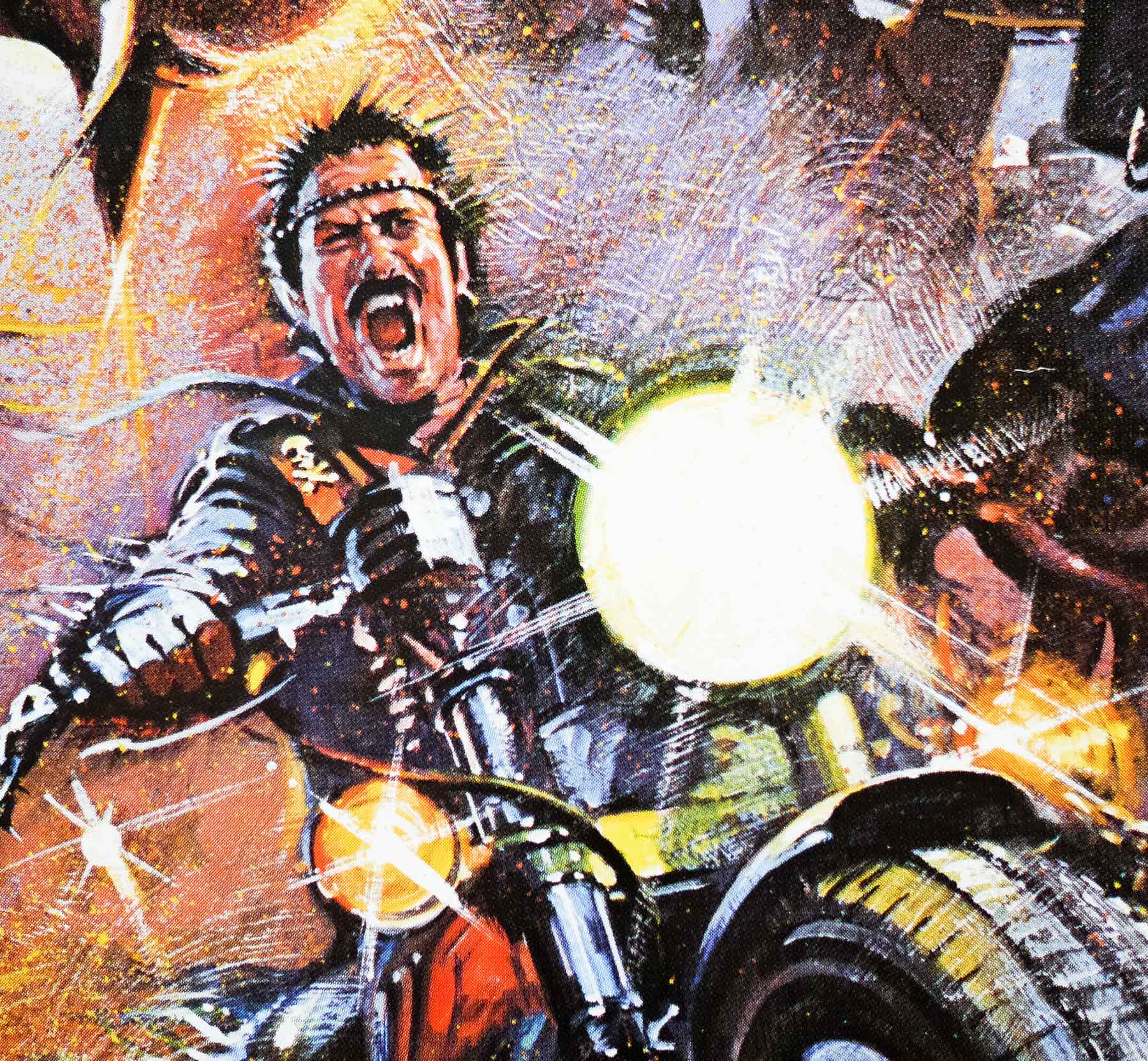
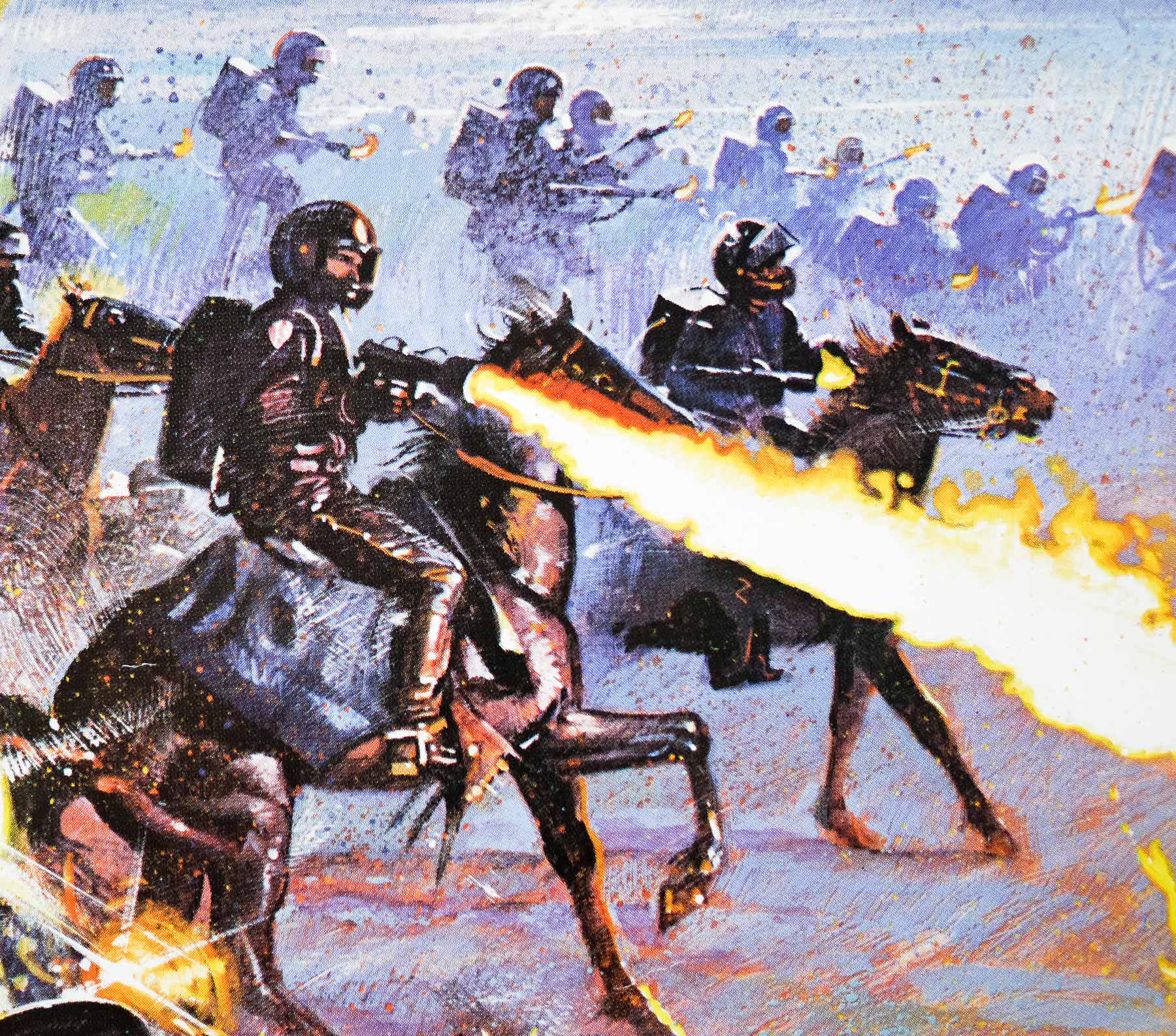
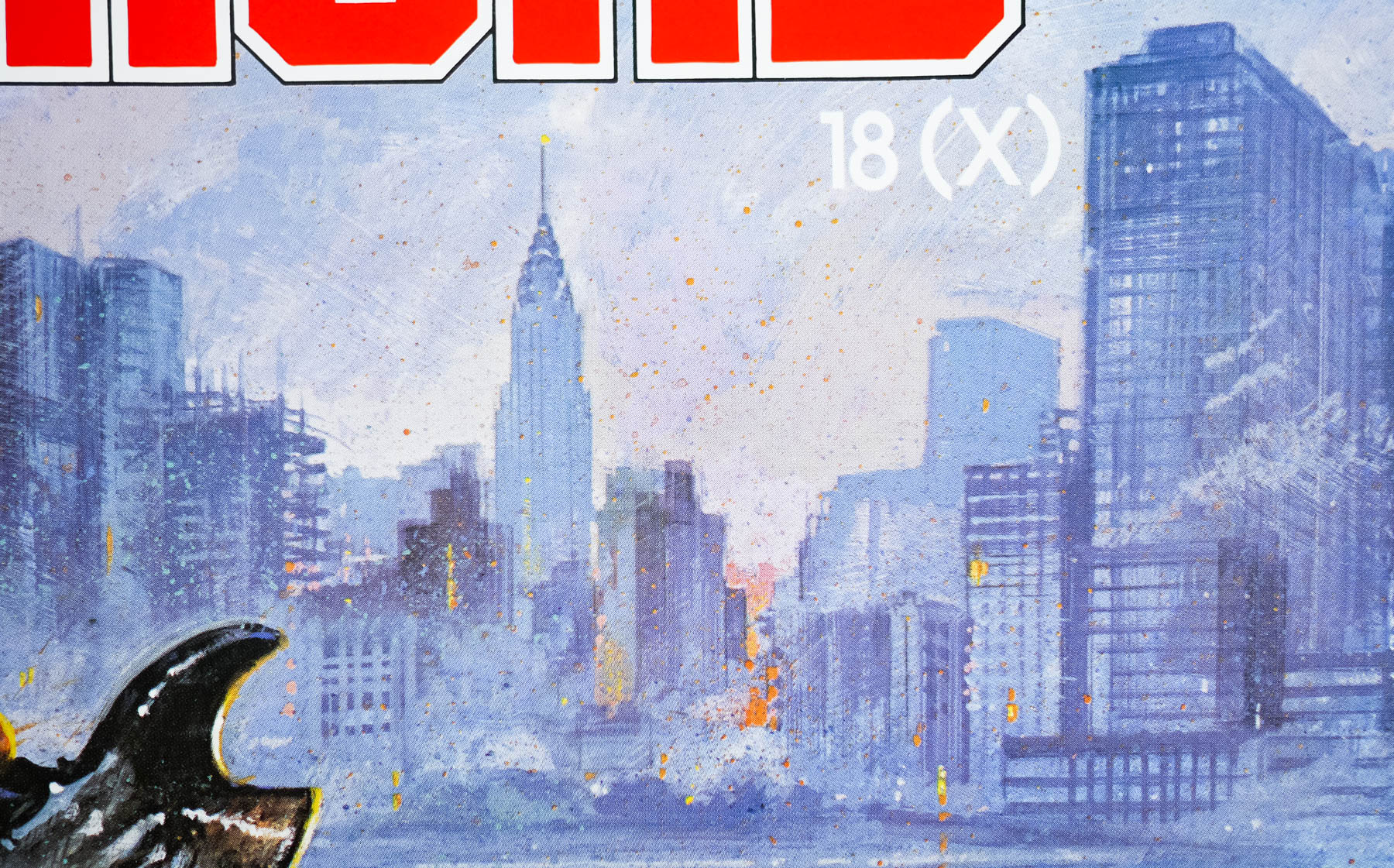
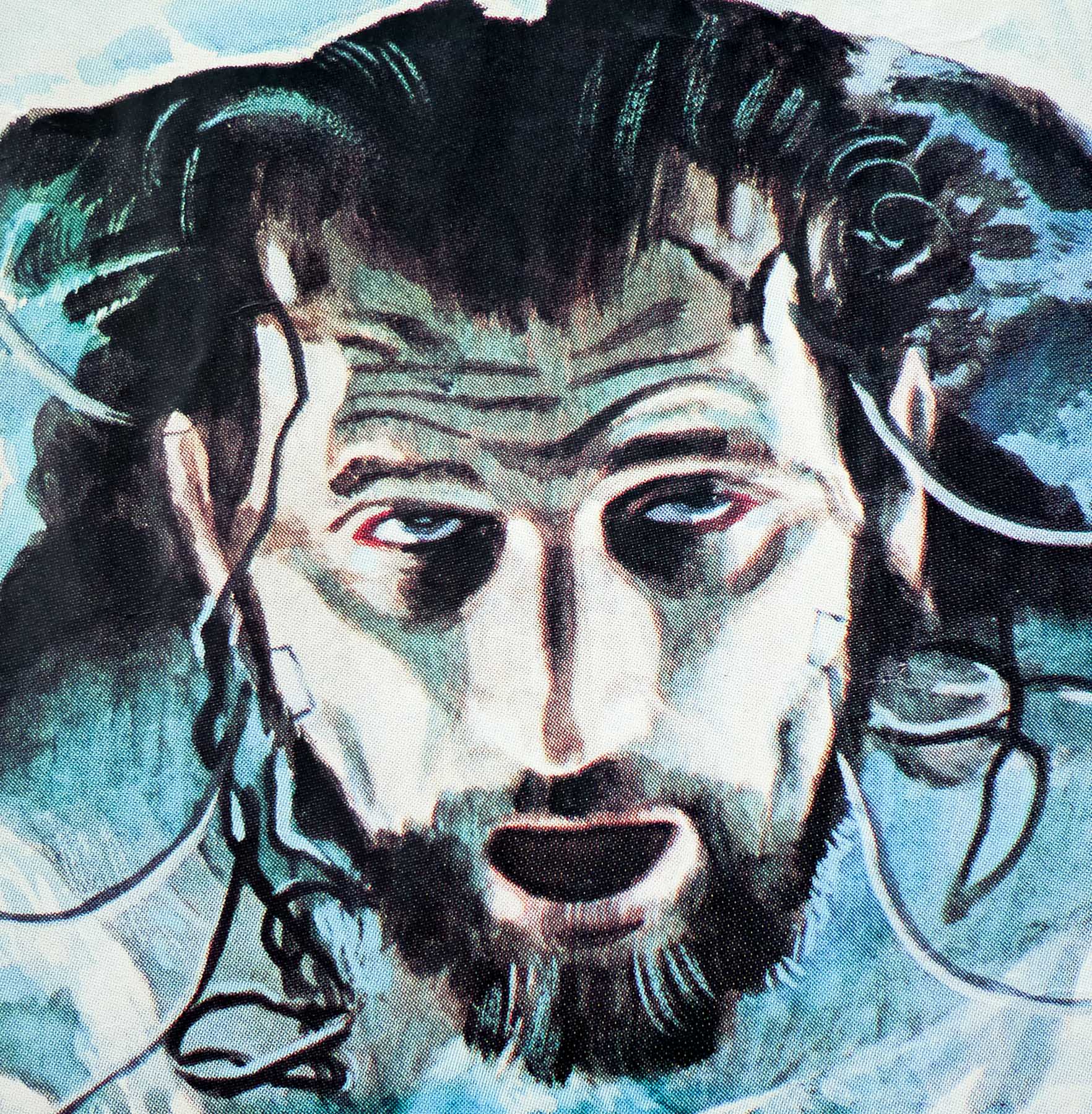
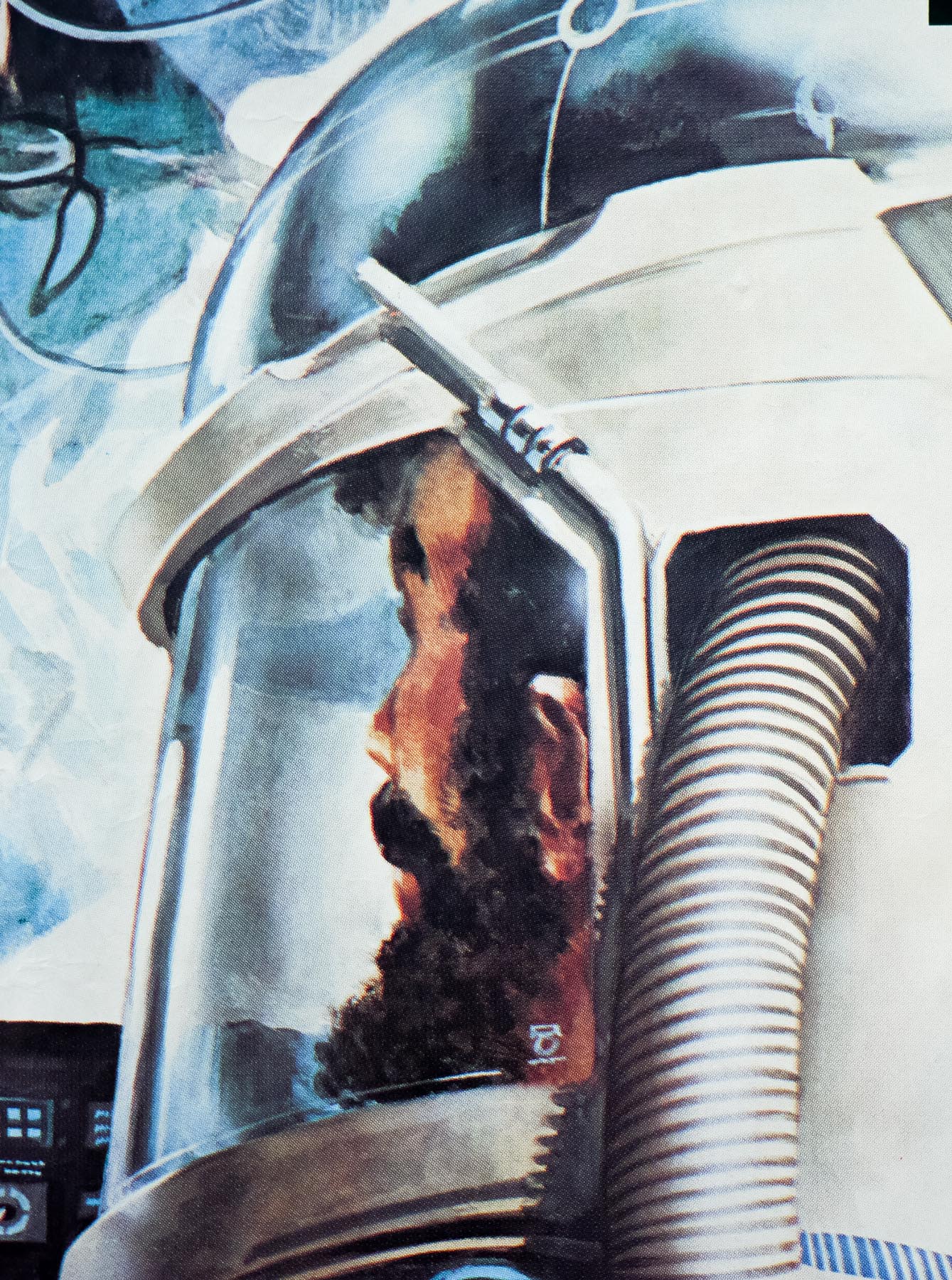
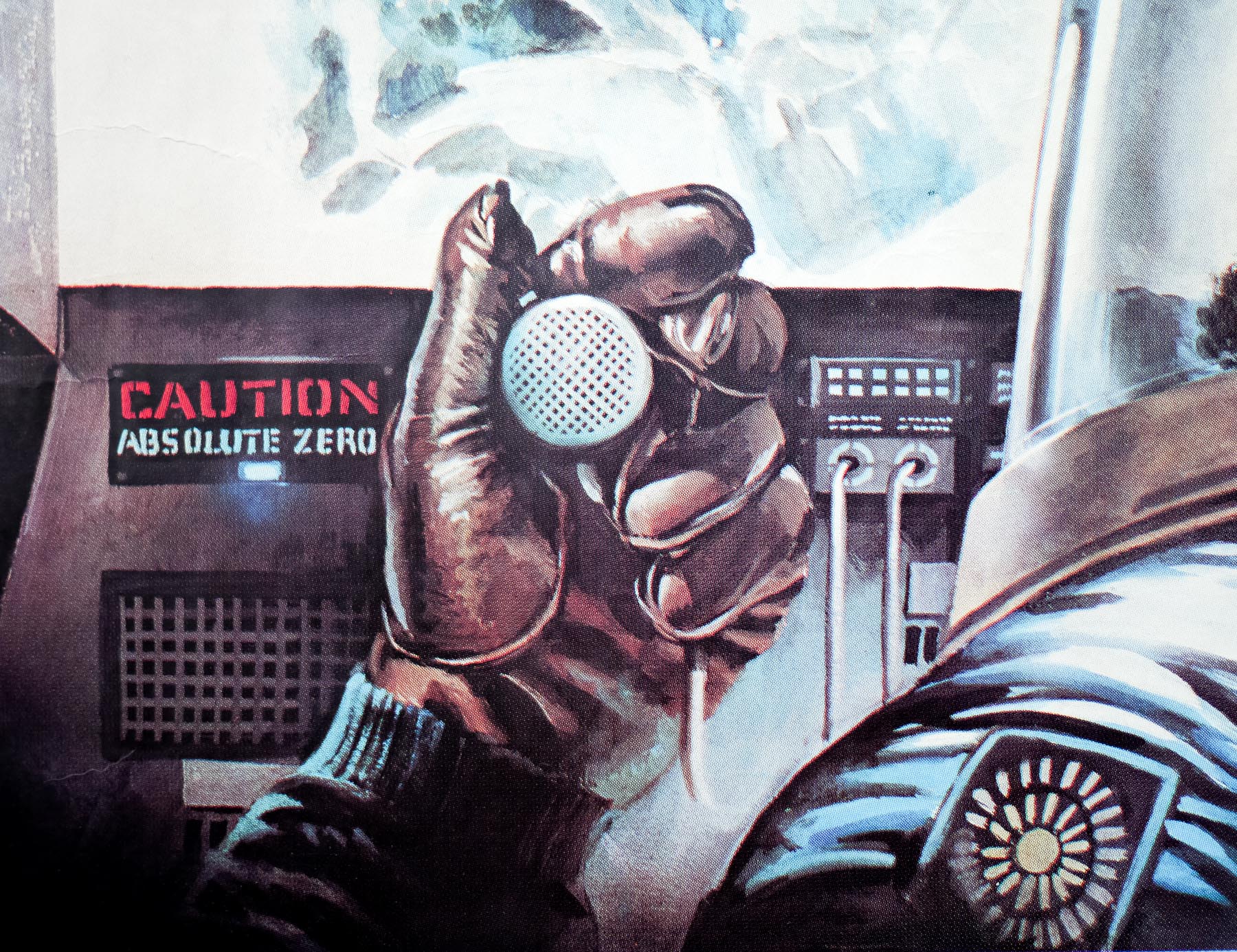
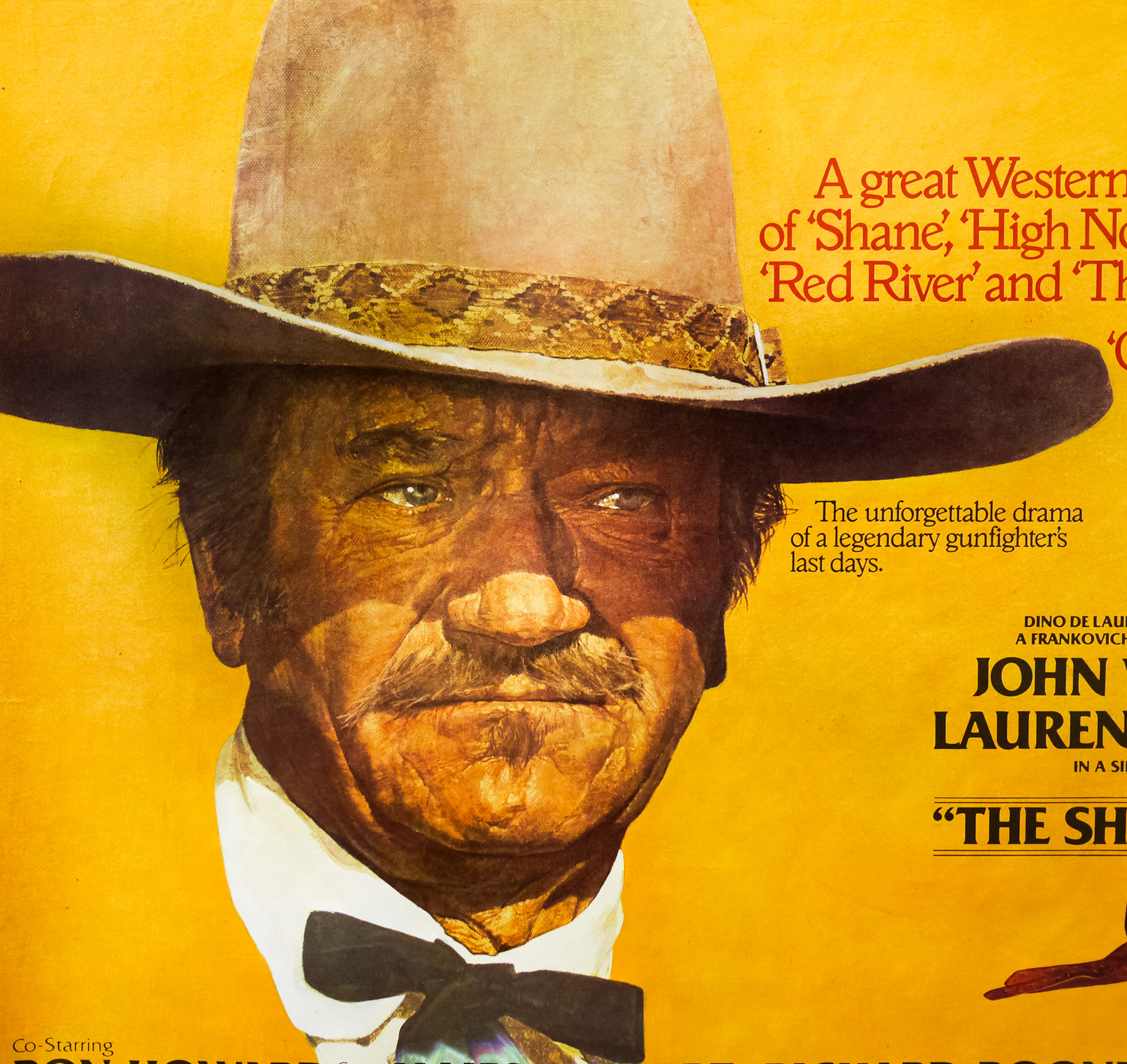
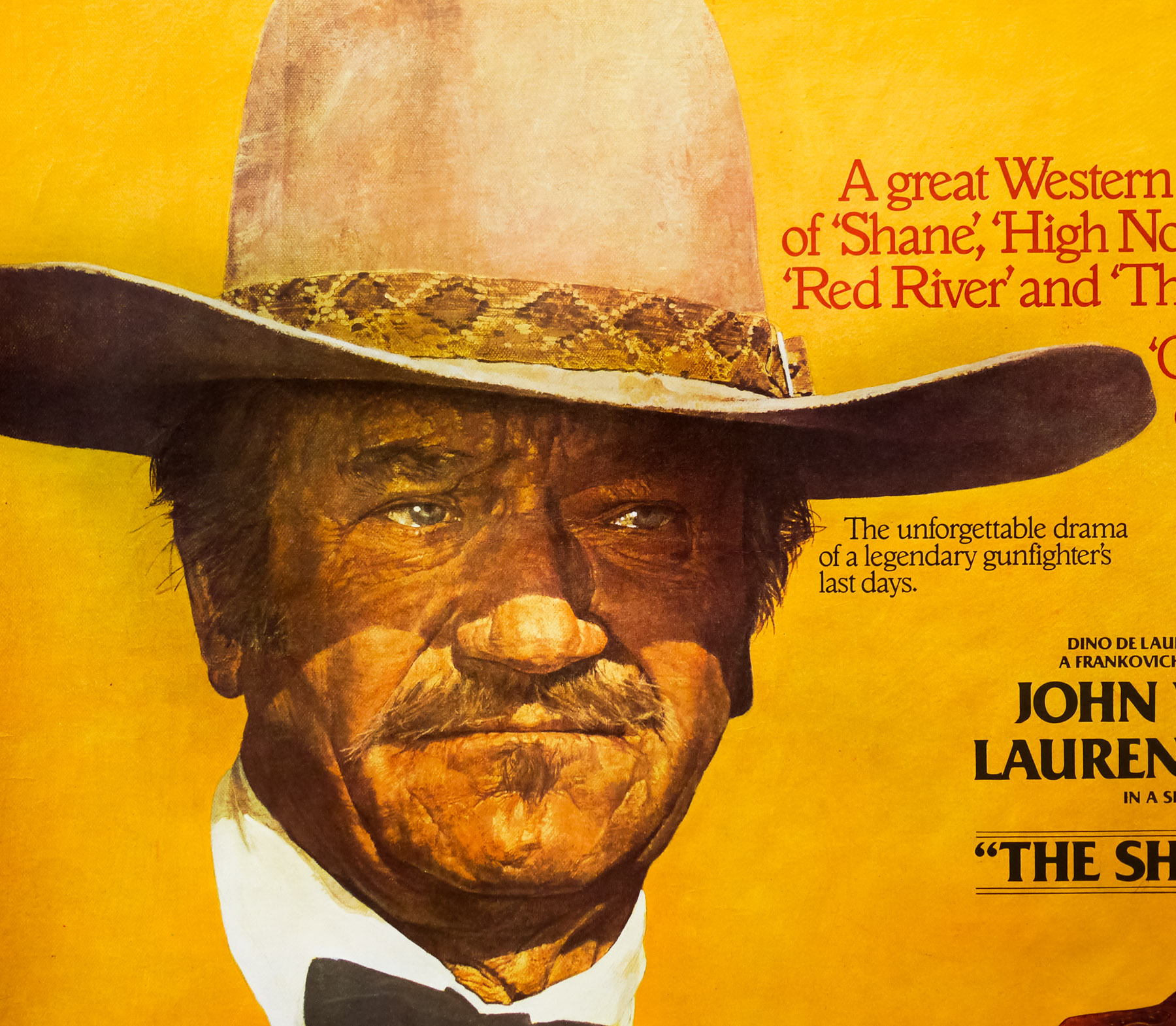
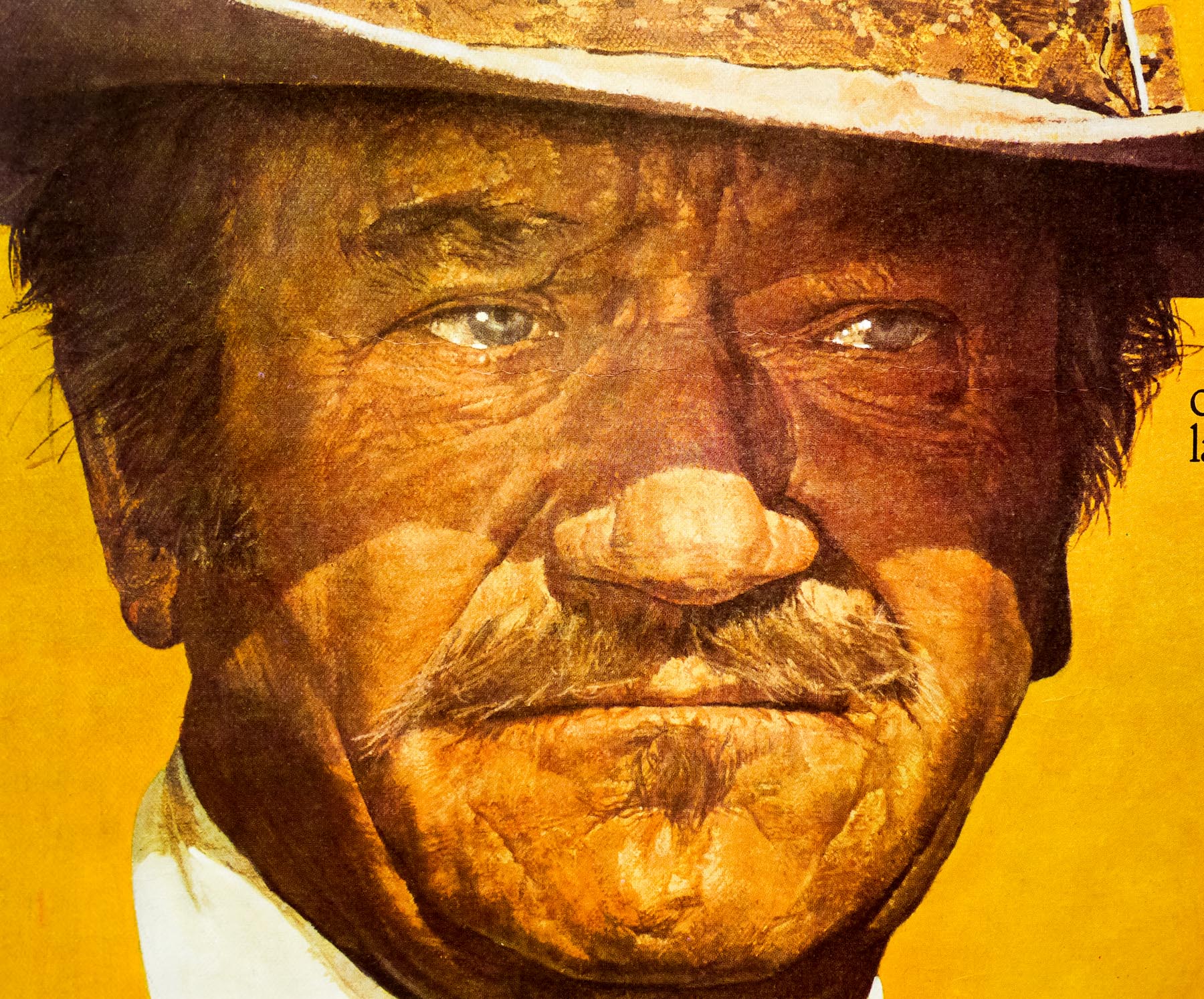
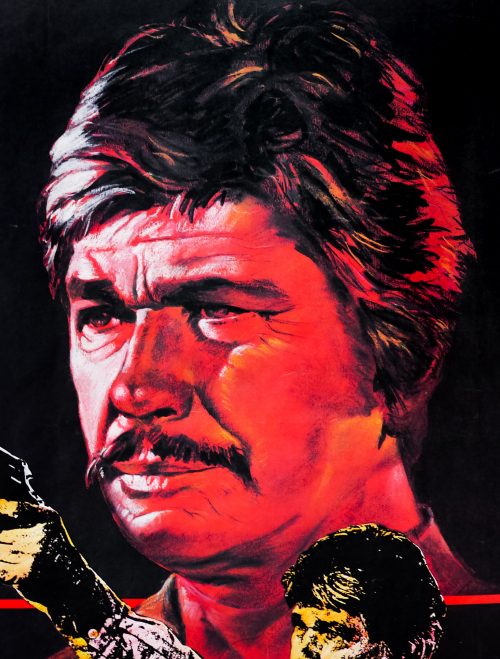
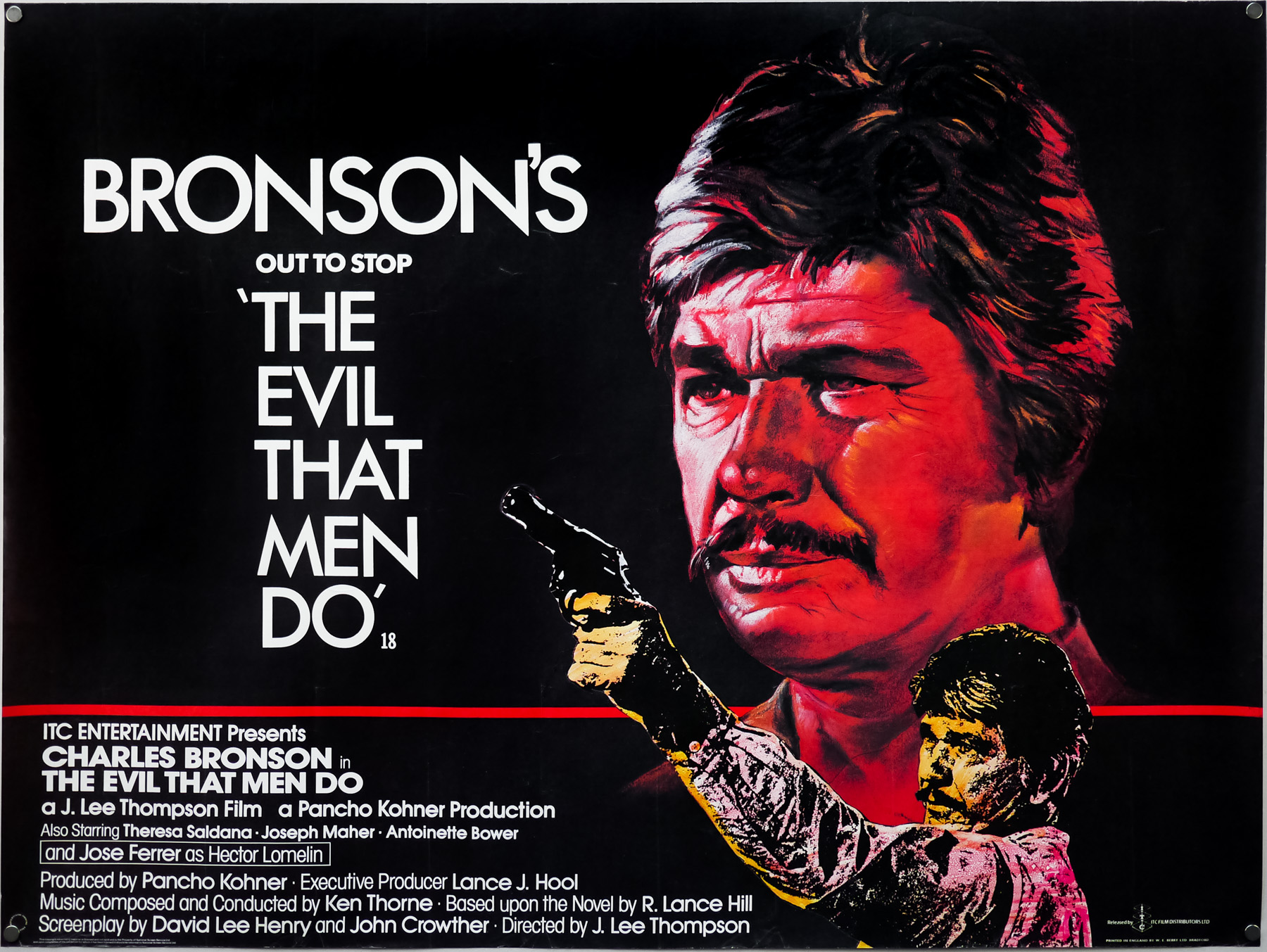
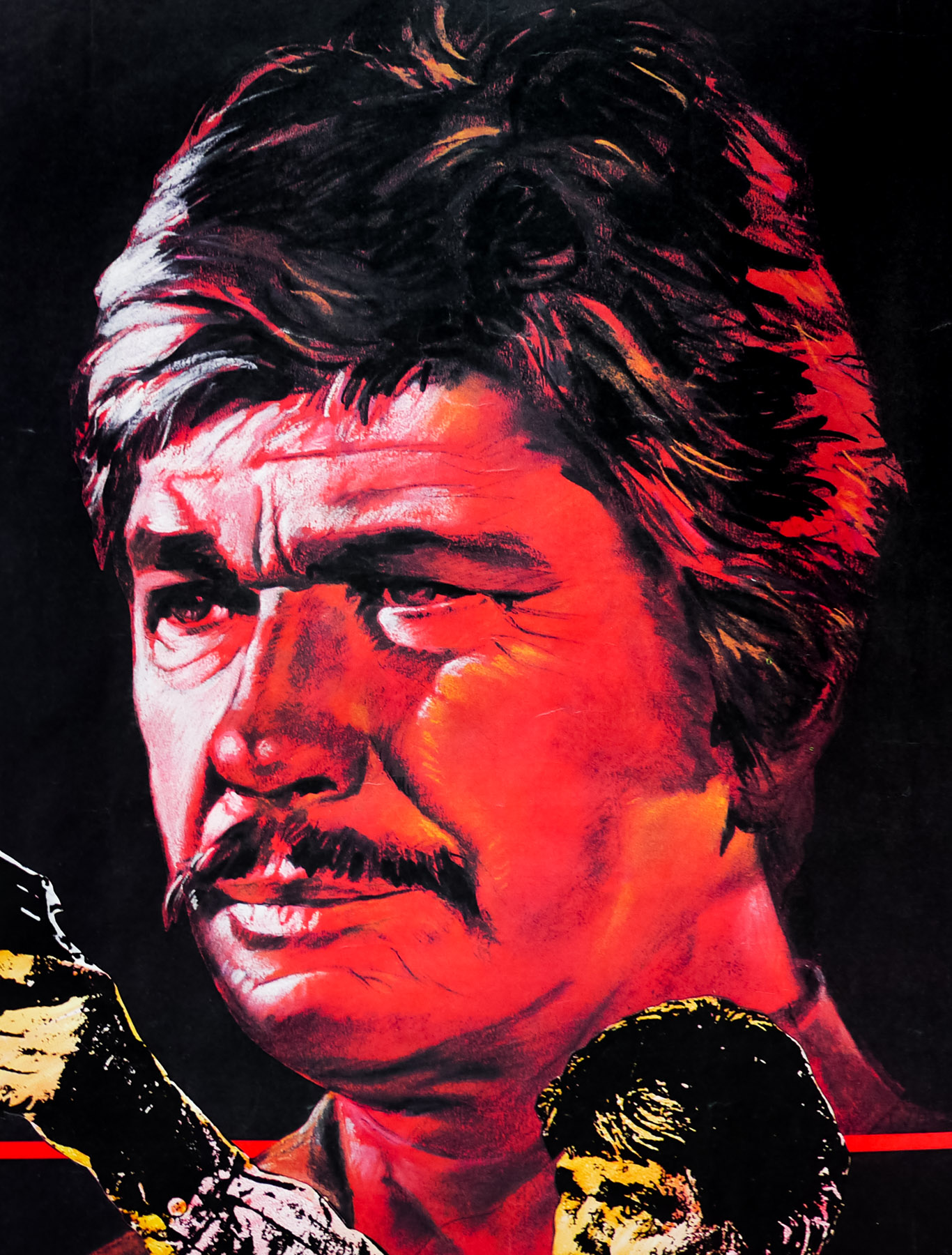
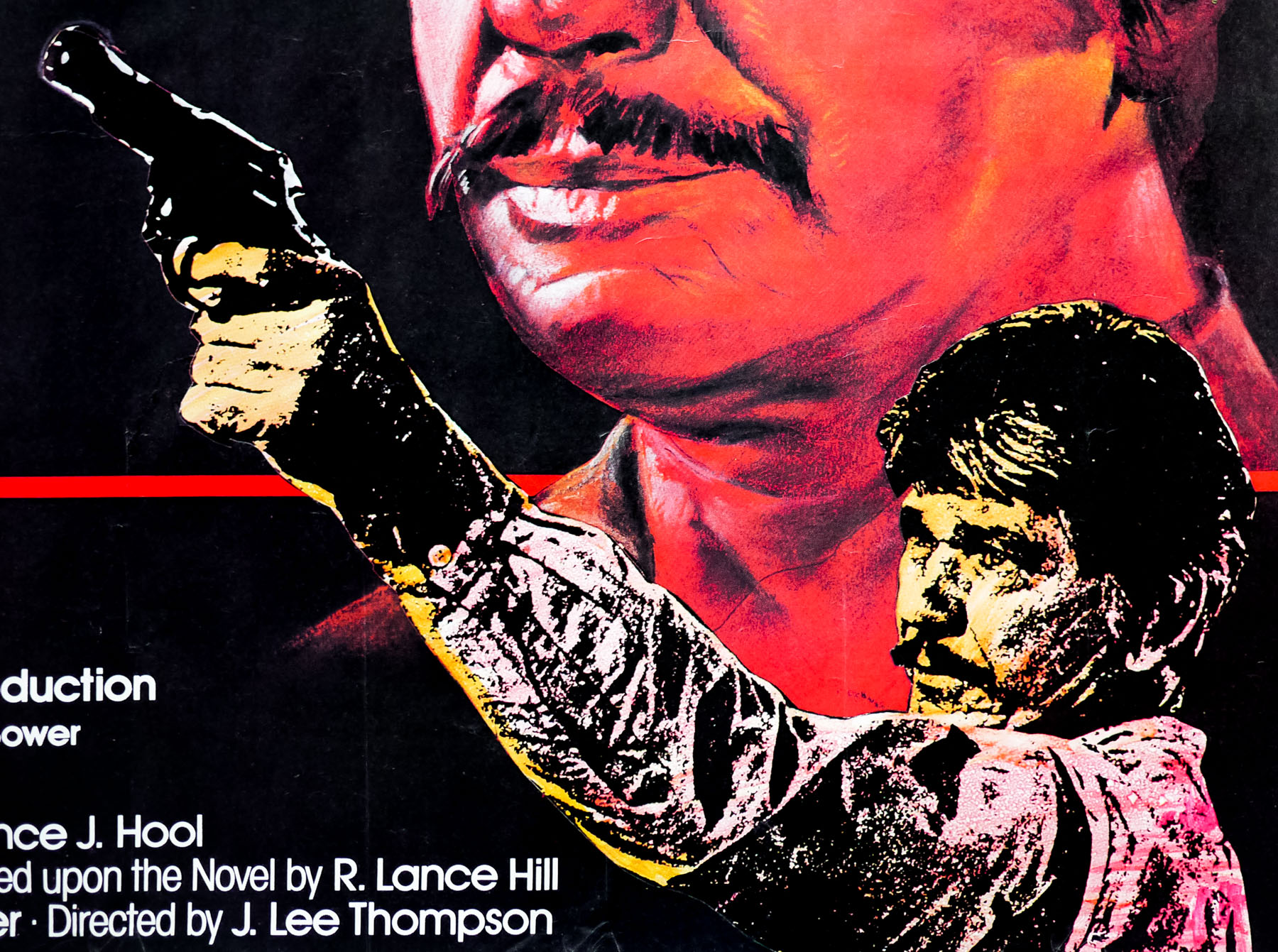
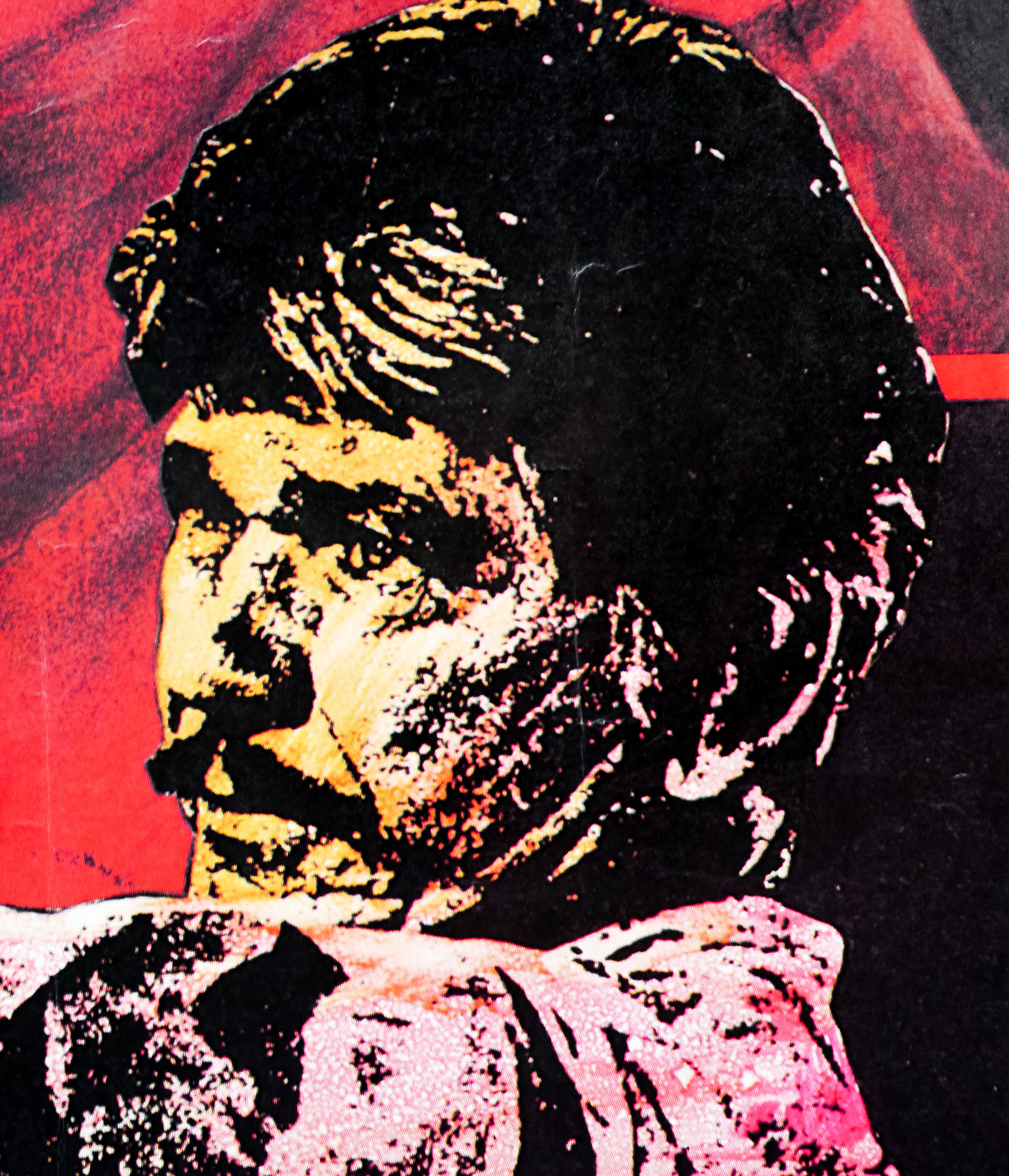
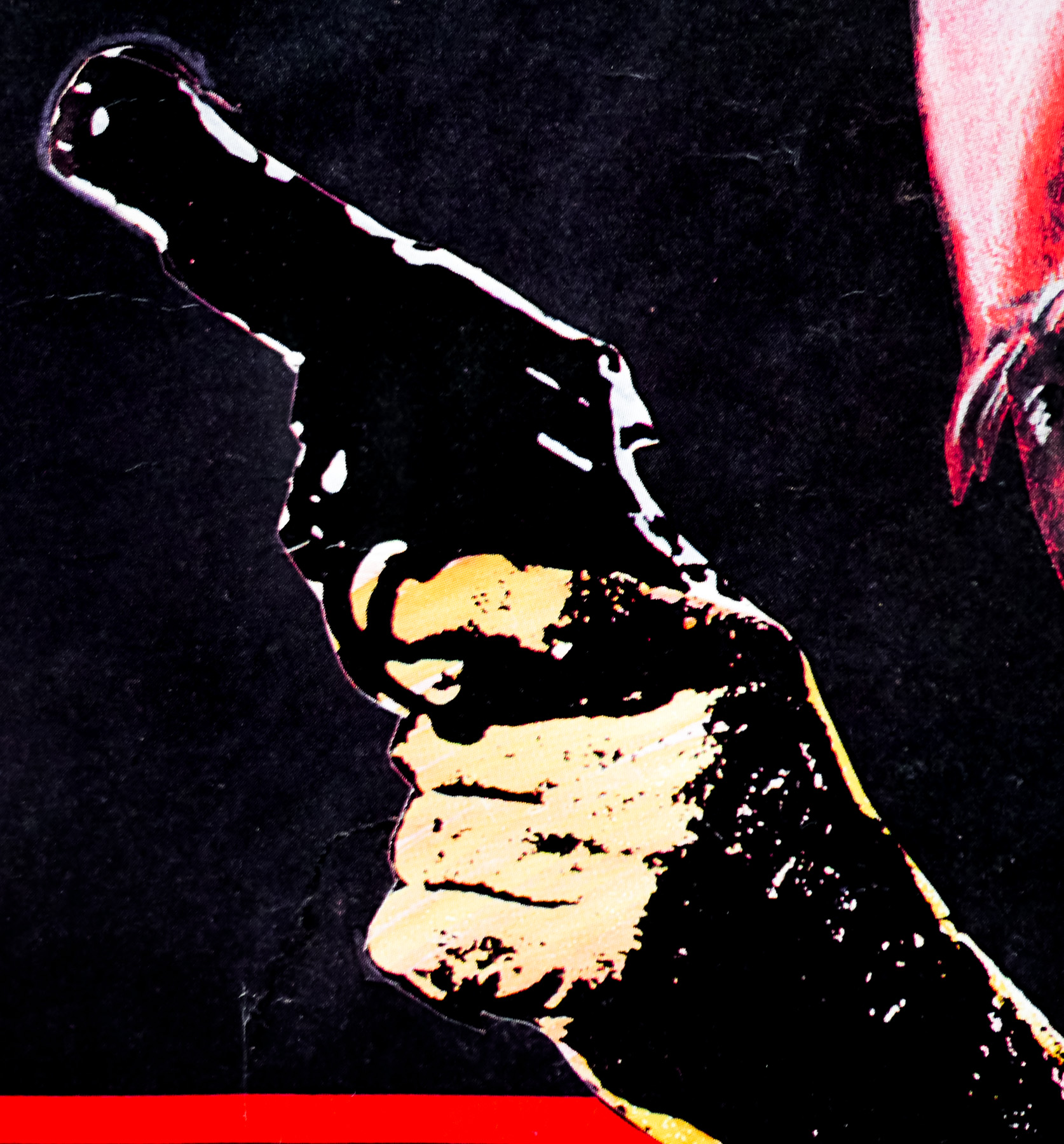
An excellent portrait of action legend Charles Bronson by Eric Pulford features on this British quad for the 1984 thriller The Evil That Men Do. One of several collaborations between the star and director J. Lee Thompson, the film sees Bronson star as a retired hitman known as Holland who is living a relaxed life on a West Indies Island when he is approached by former associates who persuade him to take on one last job. The target is the sadistic torturer, Dr. Clement Molloch, a Welshman who is often hired by political regimes to help them keep dissidents in check and has consequently left a trail of enemies in his wake.

Holland discovers that Molloch has killed his old friend Jorge Hidalgo at the behest of the Surinamese regime and he agrees to set off to Guatemala, the last known location of his target, with Hidalgo’s wife and daughter agreeing to pose as his family to protect his cover. Holland uses his old skills to take out various criminal associates as he works his way up the chain to exact revenge against Molloch. The film was released to weak reviews and it’s definitely not Bronson’s finest hour, or the best collaboration with J Lee Thompson.

As Sim Branaghan notes in his must-own book British Film Posters: An Illustrated History, Eric Pulford was one of the most important figures in the history of UK film marketing. Born in Leeds in 1915, Pulford was encouraged to develop his drawing abilities at school before he left, aged 14, to join a firm that manufactured electrical goods where he designed light fittings. After a year he left there to take up an apprenticeship at Gilchrists, a blockmakers in Leeds city centre, whilst also attending evening classes at Leeds Art College and painting in his spare time.

It was during his time at Gilchrists that Eric’s skills were spotted by Leslie Whitchurch, a partner in design firm who had an arrangement with the British film company Rank to produce film posters for Leeds cinemas. Pulford began working on illustrations for the posters around 1940 and eventually left Gilchrists to join Format (Whitchurch’s agency) in 1943. The most important move happened in 1943 when Pulford was invited by Rank to relocate to London and set up a design agency to specifically handle their marketing, which saw the birth of Pulford Publicity.

Over the next decade Eric designed and illustrated hundreds of posters for British and Hollywood films, and this meant him working with many of the most important producers and directors in the industry. As Downtons, the parent company to Pulford Publicity, grew Eric started to illustrate less and take on more of an executive role, dealing with clients and liaising with distributors but he still managed to keep his hand in designing posters, including for some of Rank’s most important film properties like the Carry On series.

Eventually he took over Downtons completely in 1965 and this is when he hired designers like Vic Fair and John Stockle who would often submit competing concepts for film campaigns that were then sifted and selected by the client. Pulford also hired a number of young artists that included Brian Bysouth and would often give them his own take on how to achieve the best illustration results. Eventually, at the start of the 1980s, Eric began to plan for his retirement and began handing over the reins of Downtons to a new management team before eventually moving to the south coast in 1984.

This quad for The Evil That Men Do marks a milestone as it’s the last printed quad that was both designed and illustrated by Pulford, but other design and layout jobs followed over the next few years. His last assignment was, rather aptly, The Last Emperor in 1987 after which he started to enjoy his retirement fully. In 2005 Pulford passed away shortly after suffering a fall at his home, just shy of his ninetieth birthday. Sim notes that Pulford is believed to have designed at least 500 posters over a 50 year period for some of the best British films and his contribution to the field cannot be underestimated.
The Land That Time Forgot / quad / UK

24.10.14

Poster Poster
Title
The Land That Time Forgot
AKA
--
Year of Film
1975
Director
Kevin Connor
Starring
Doug McClure, John McEnery, Susan Penhaligon, Keith Barron, Anthony Ainley, Godfrey James, Bobby Parr
Origin of Film
UK | USA
Genre(s) of Film
Doug McClure, John McEnery, Susan Penhaligon, Keith Barron, Anthony Ainley, Godfrey James, Bobby Parr,
Type of Poster
Quad
Style of Poster
--
Origin of Poster
UK
Year of Poster
1975
Designer
Tom Chantrell
Artist
Tom Chantrell
Size (inches)
30" x 40"
SS or DS
SS
Tagline
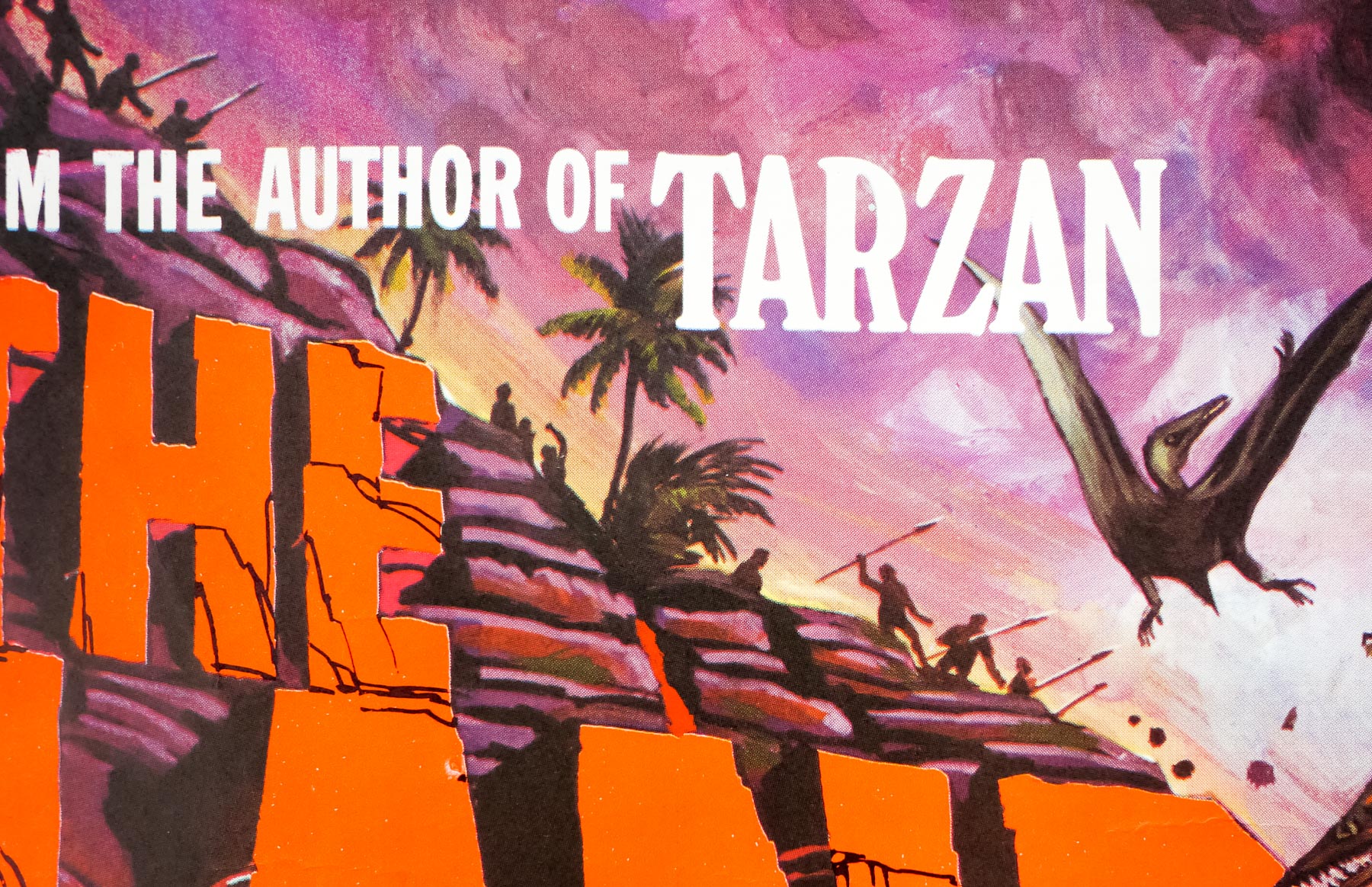
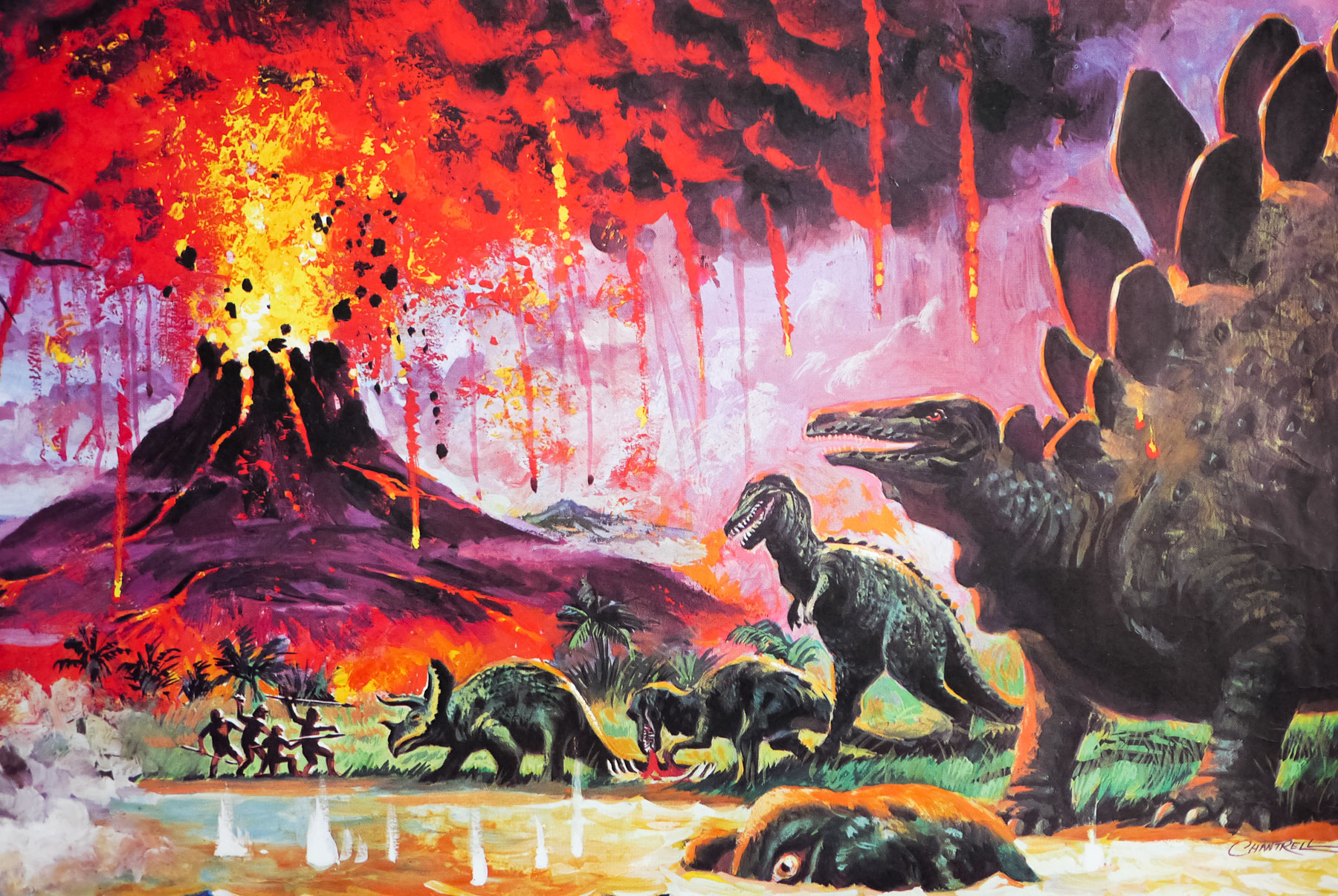
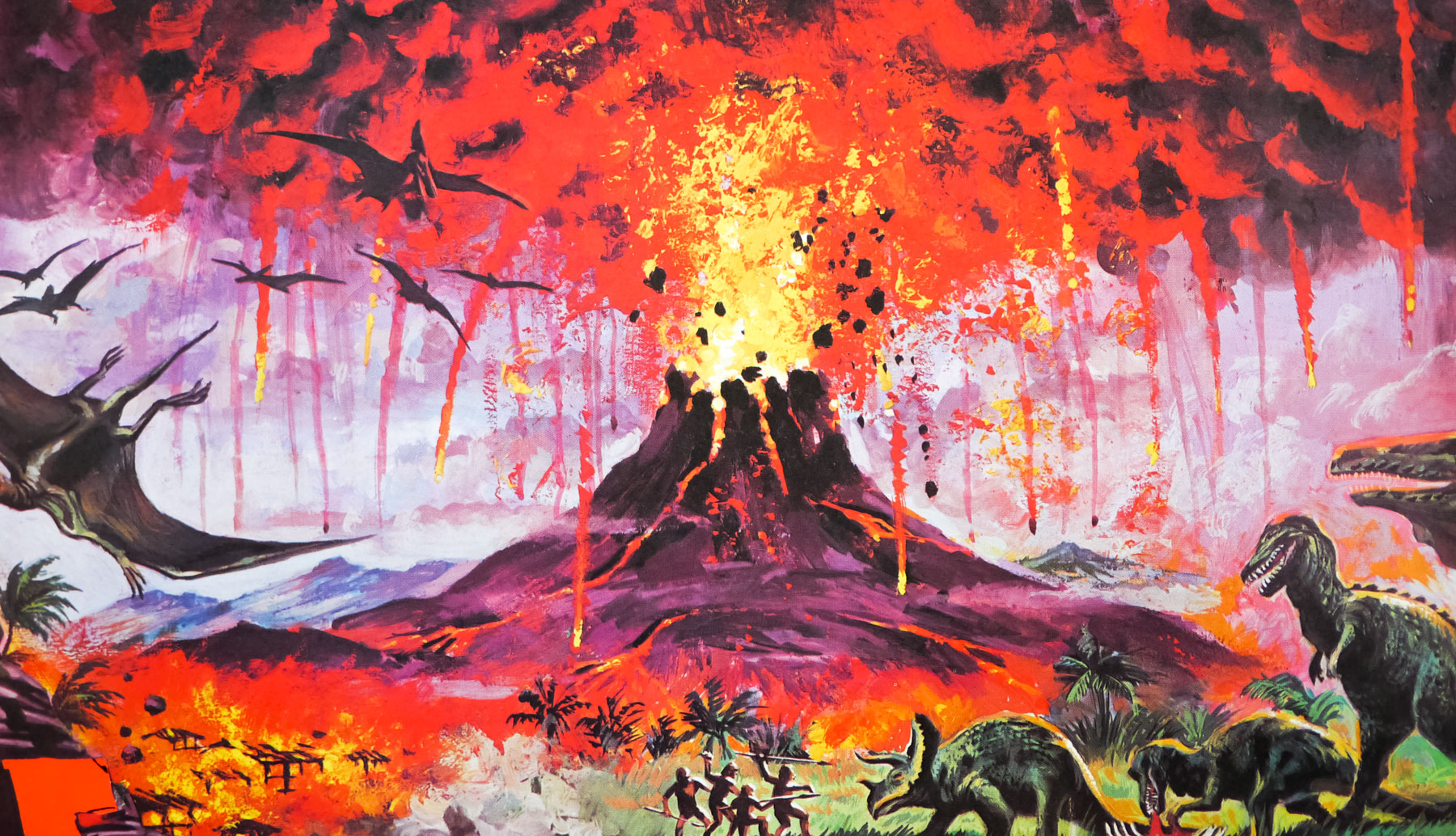
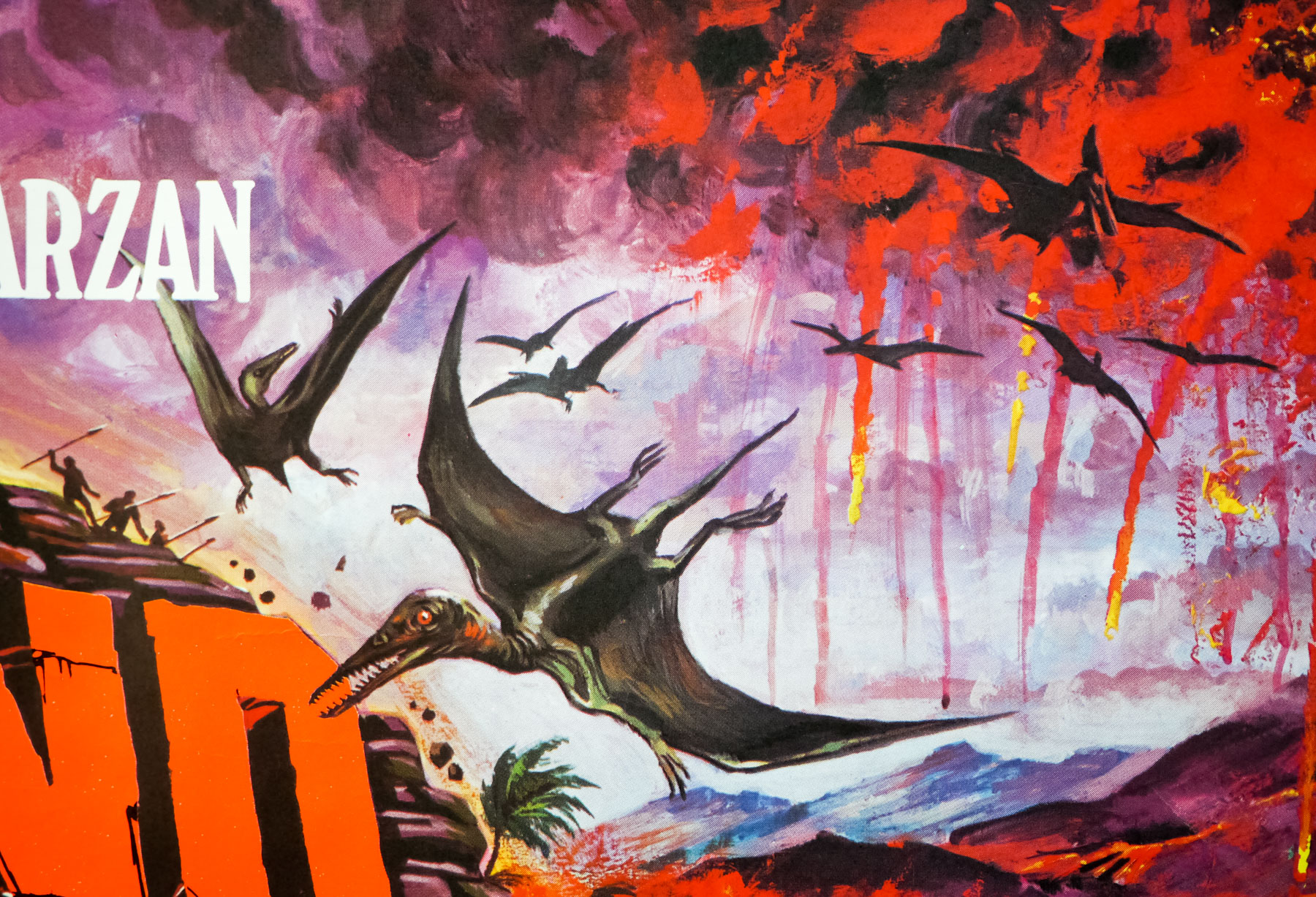
From the author of Tarzan

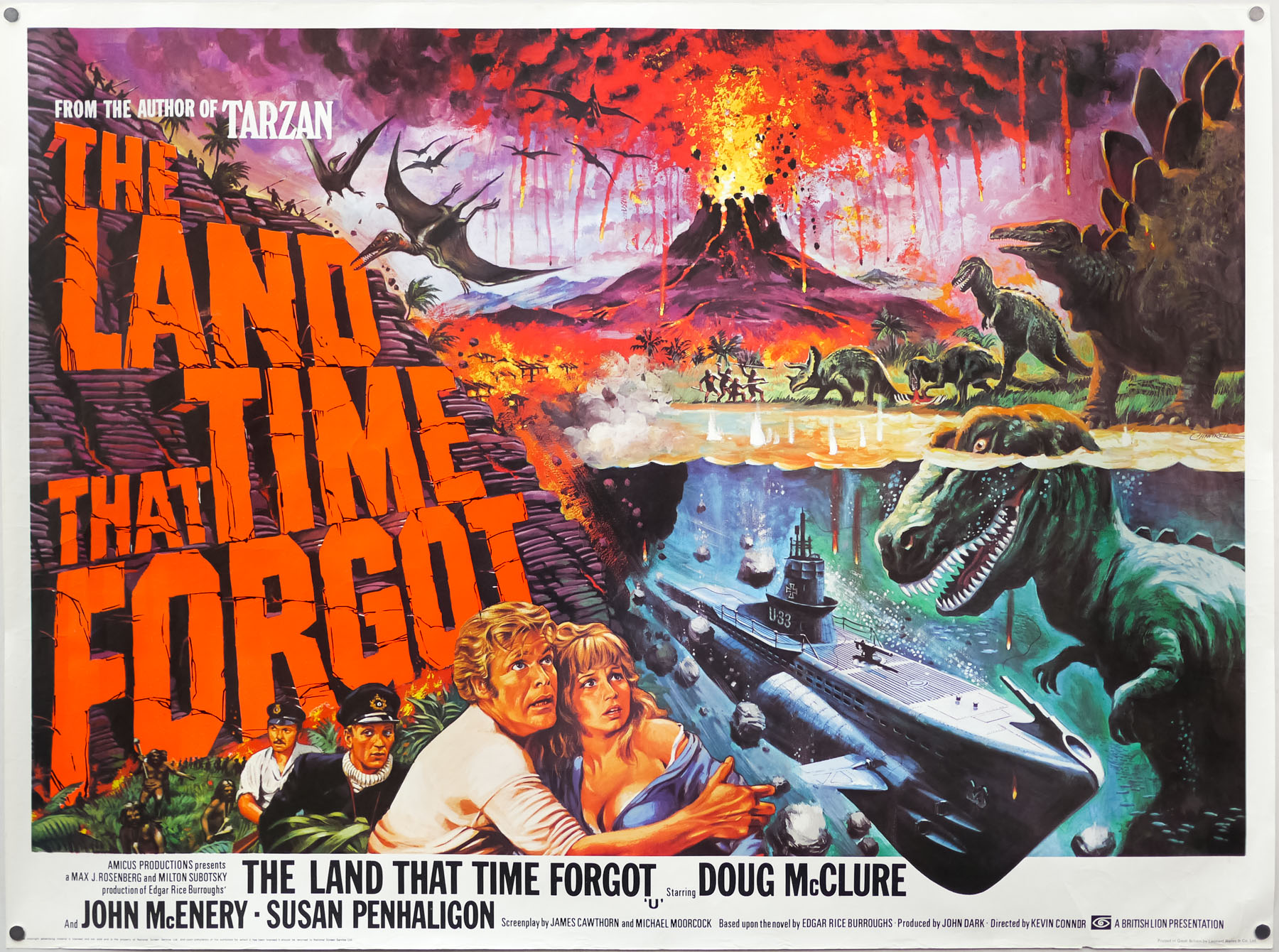
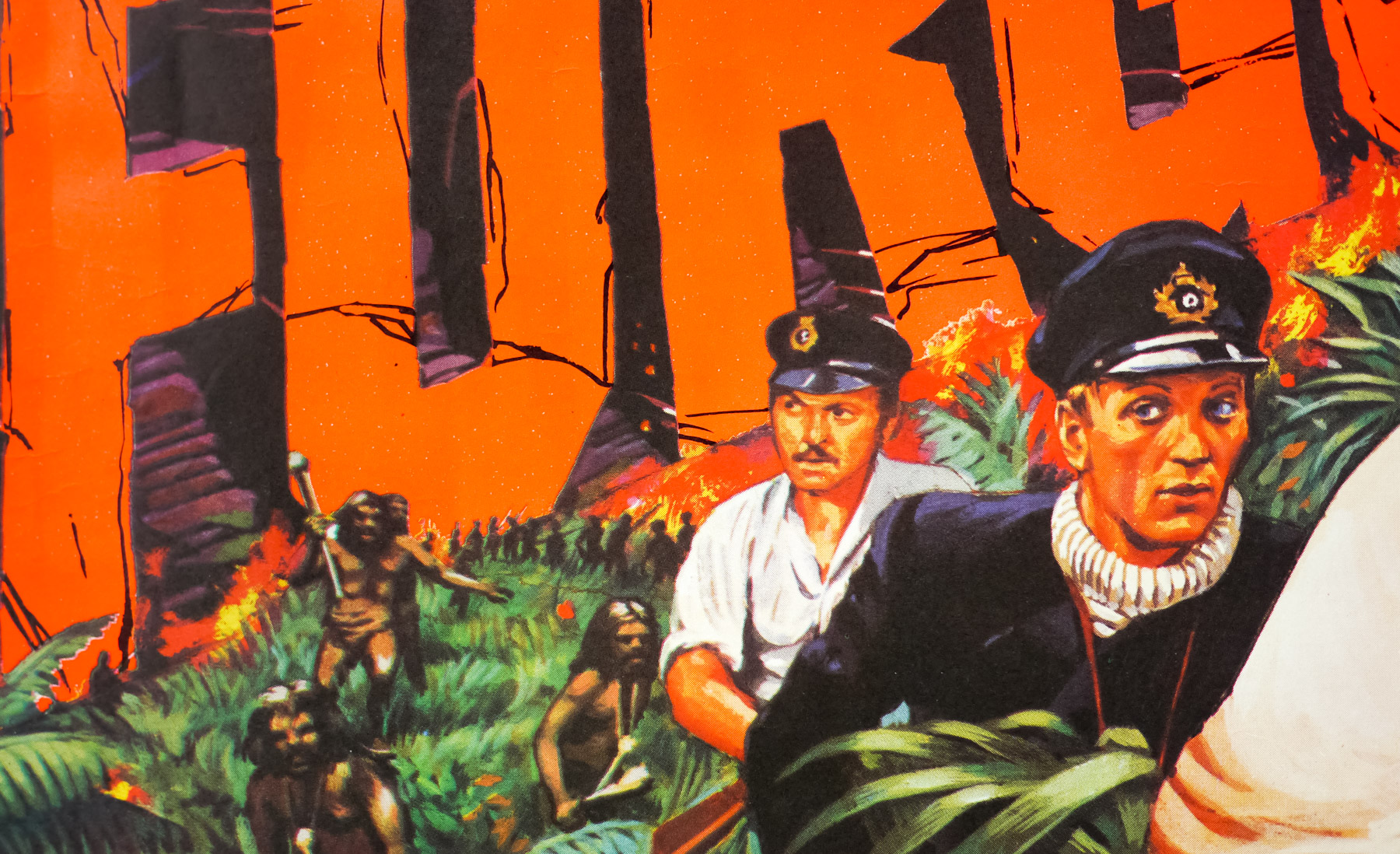
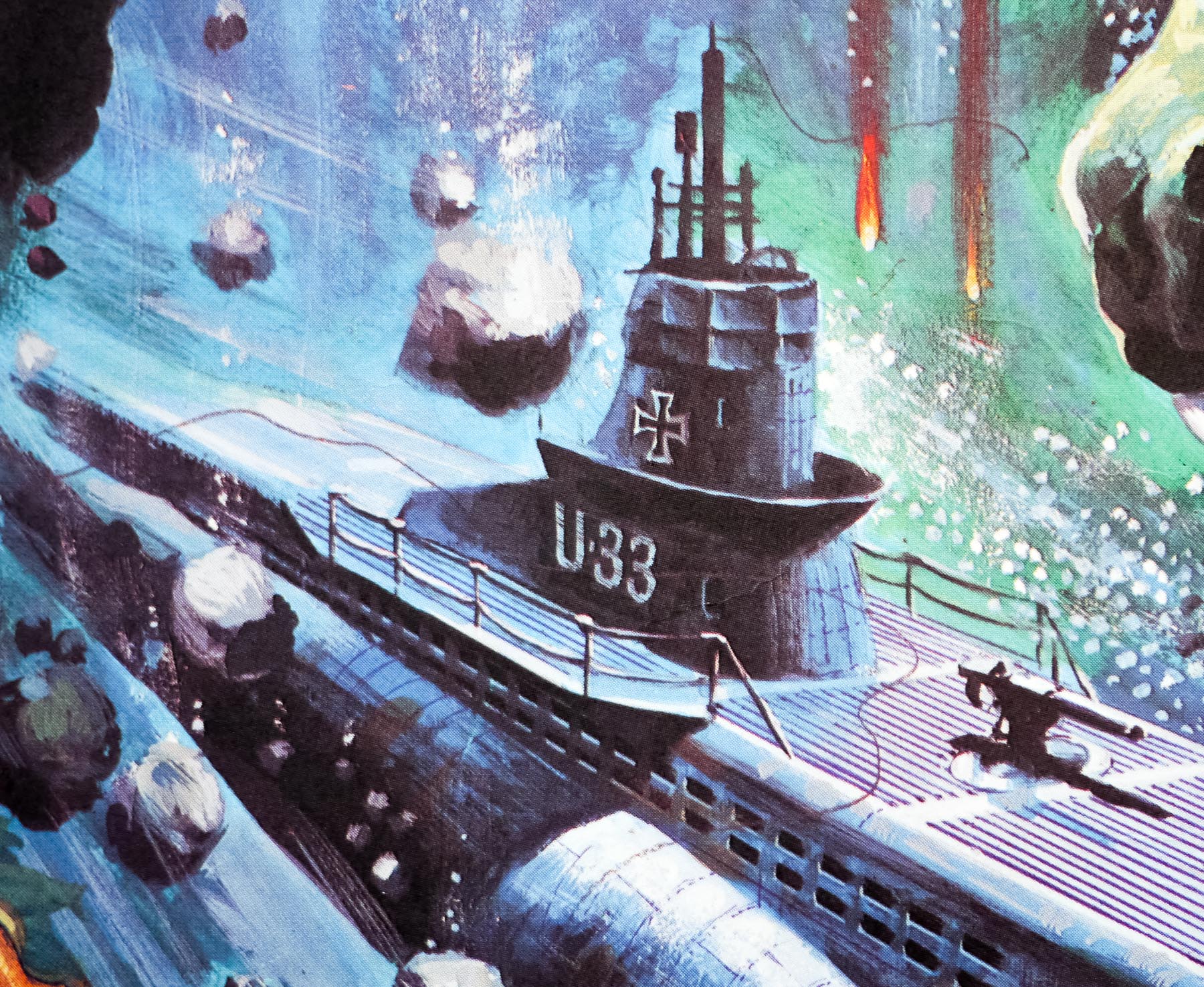
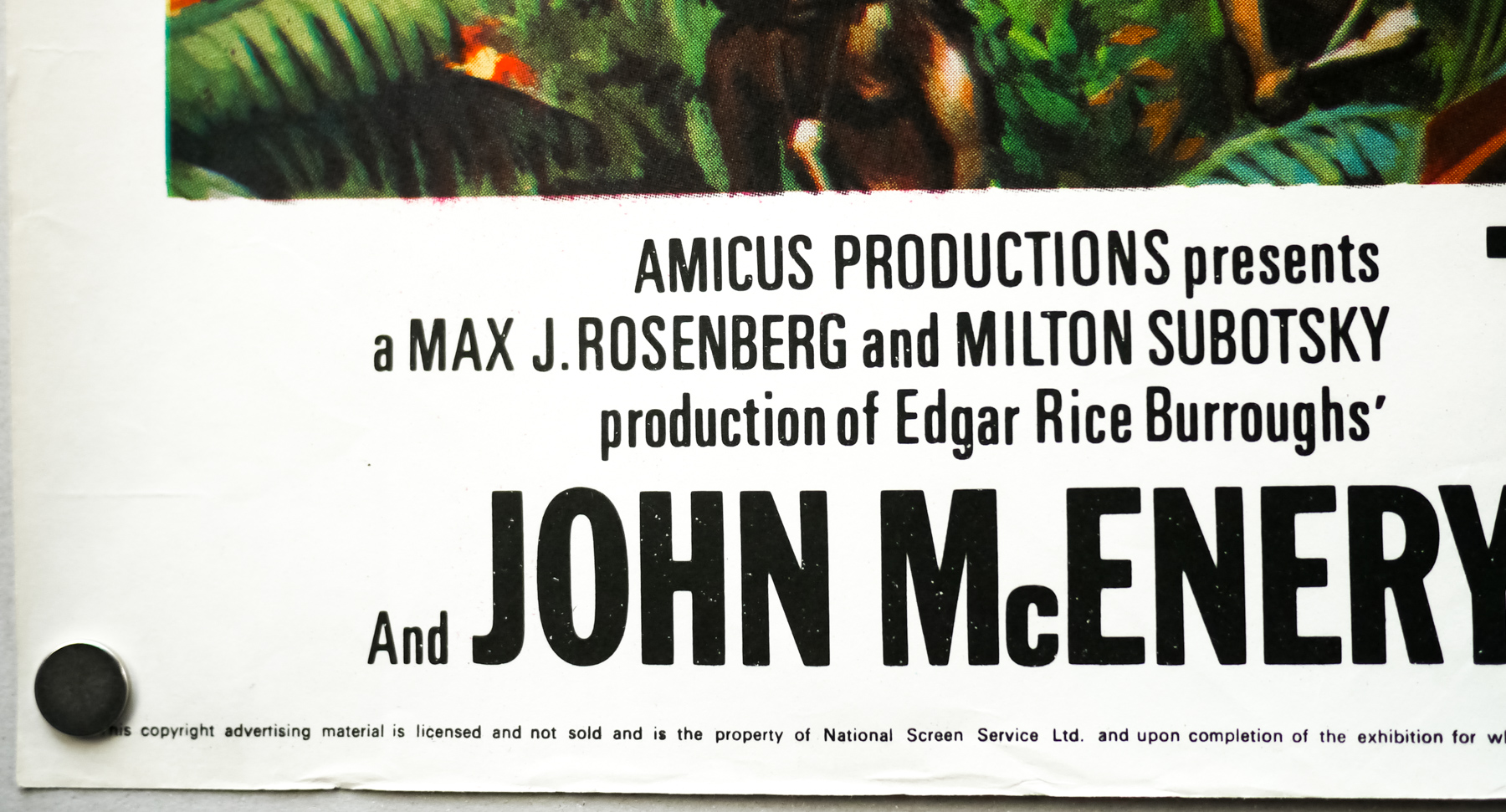
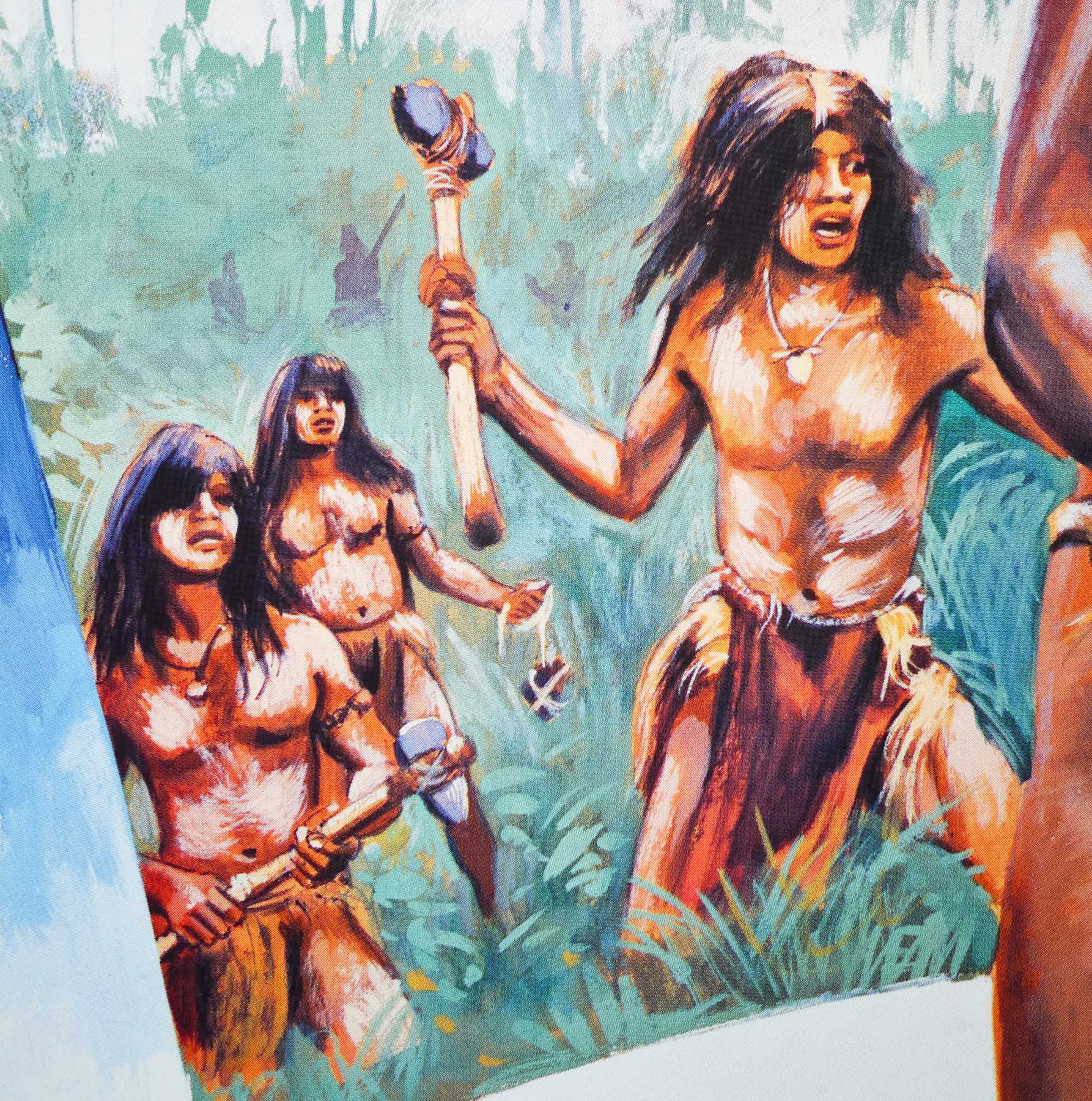
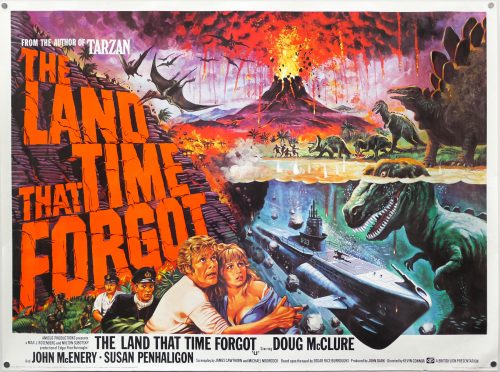
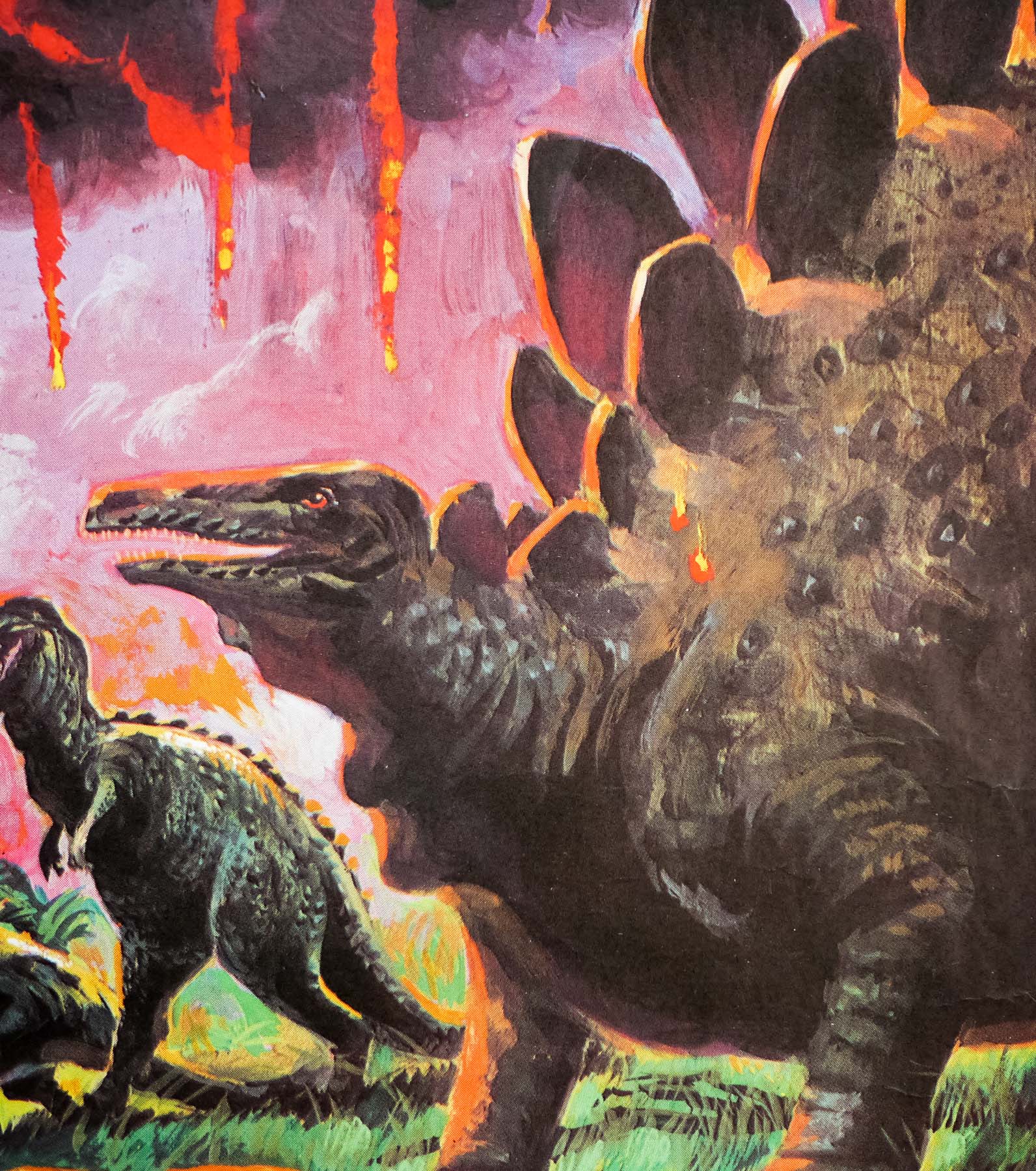
The Land That Time Forgot was the first entry in a series of British sci-fi/fantasy b-movies that were directed by Kevin Connor and starred the prolific American actor Doug McClure, known for his hammy leading man performances (McClure was one of the inspirations for The Simpsons’ Troy ‘You may remember me from…’ McClure). The series continued with At the Earth’s Core (1976) and The People That Time Forgot (1977), and ended with Warlords of Atlantis (1978). The initial three were shepherded through production by Max Rosenberg and Milton Subotsky’s Amicus Productions, which was based at Shepperton studios and is perhaps best remembered for its series of portmanteau horror films. By the time Warlords of Atlantis was released the company was almost defunct and so EMI Films stepped in and produced it, utilising many of the same cast and crew as the previous films.

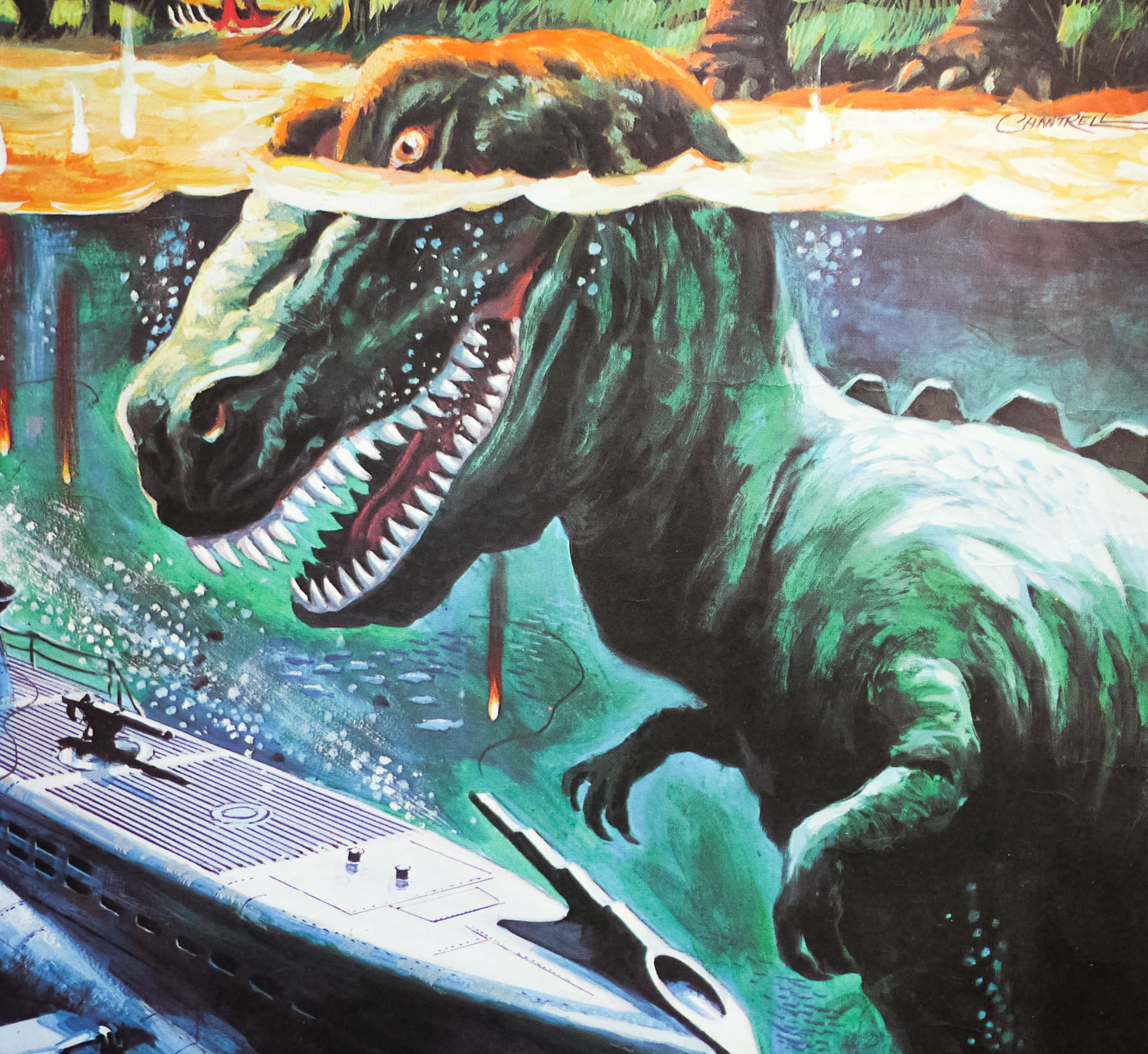
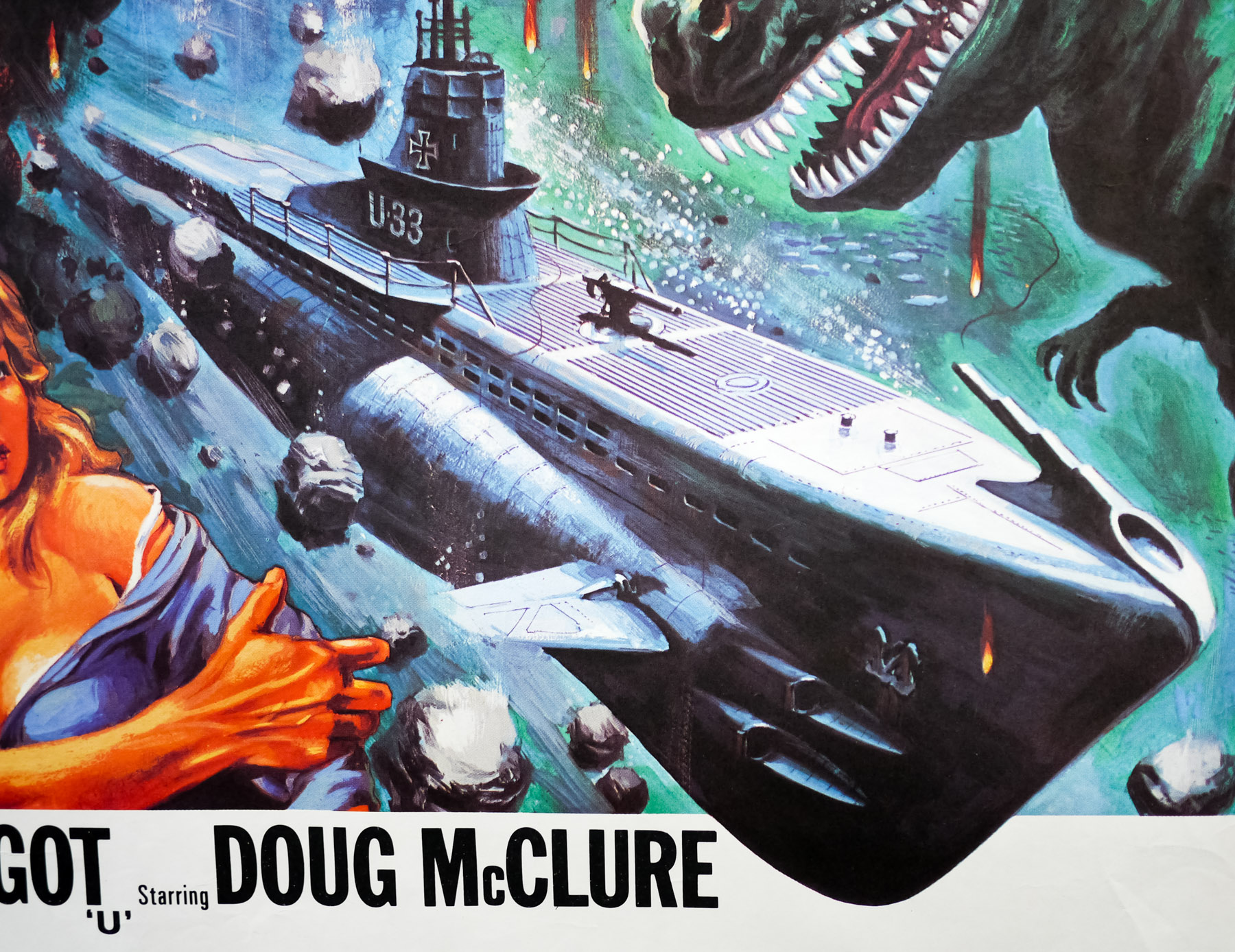
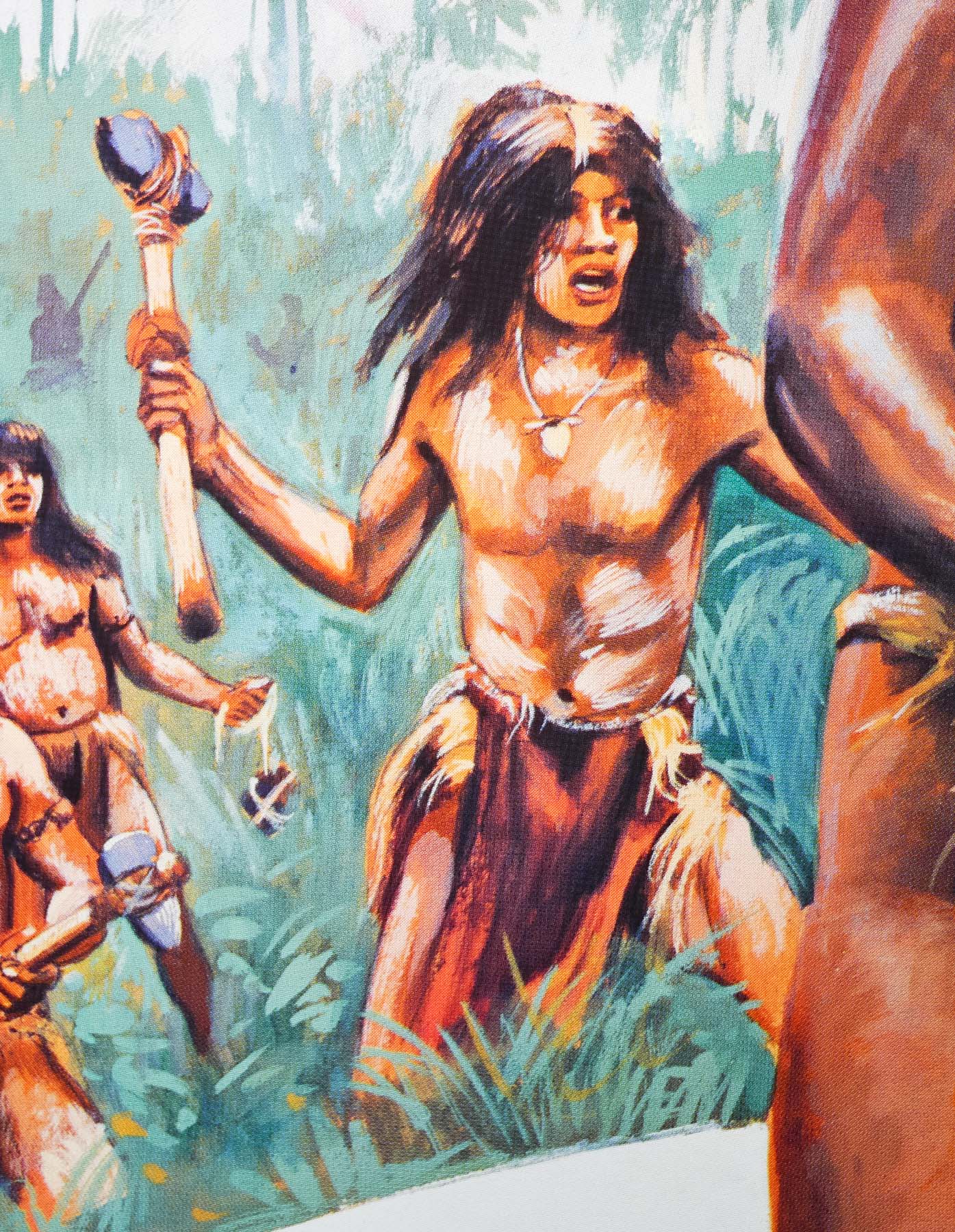
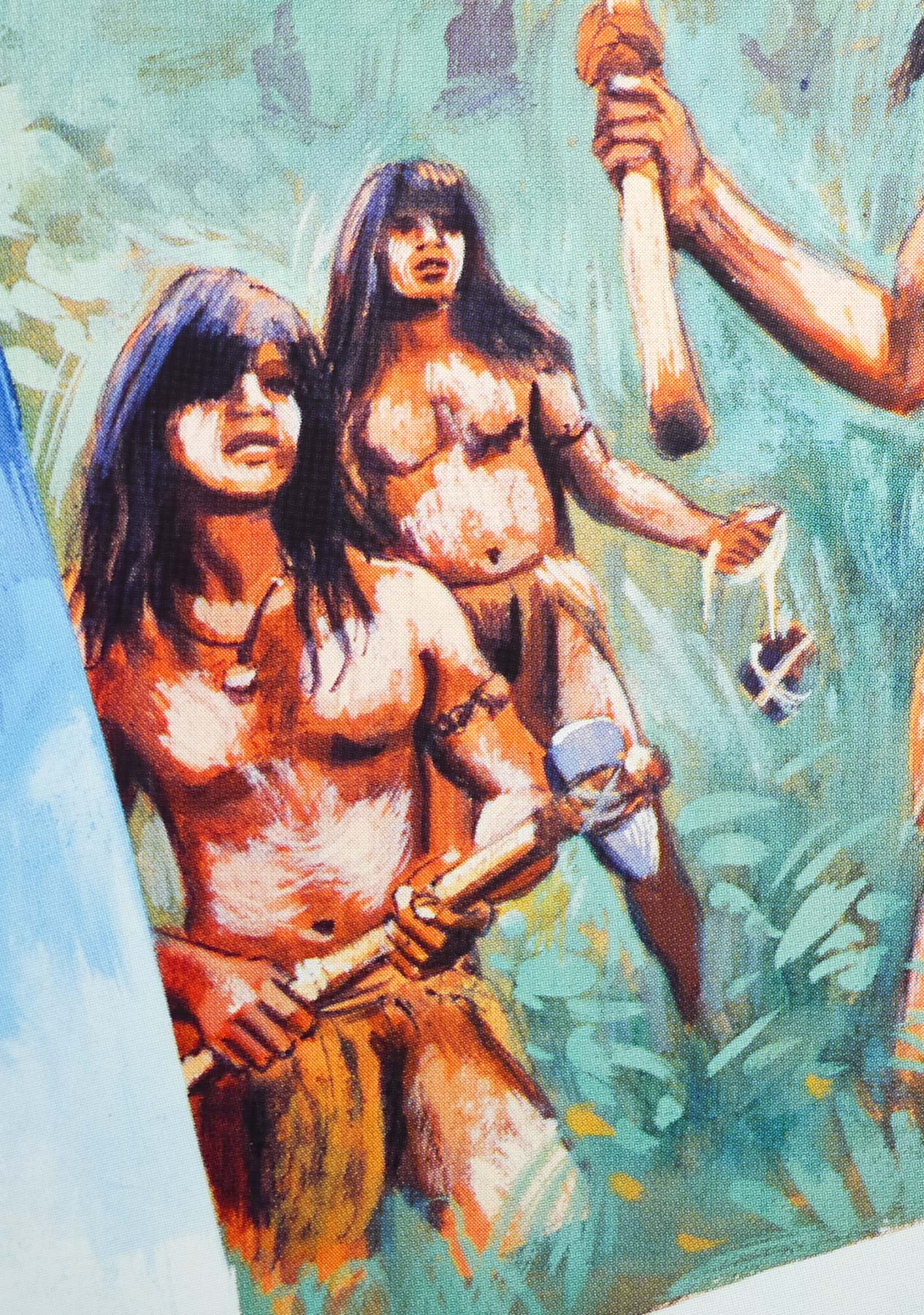
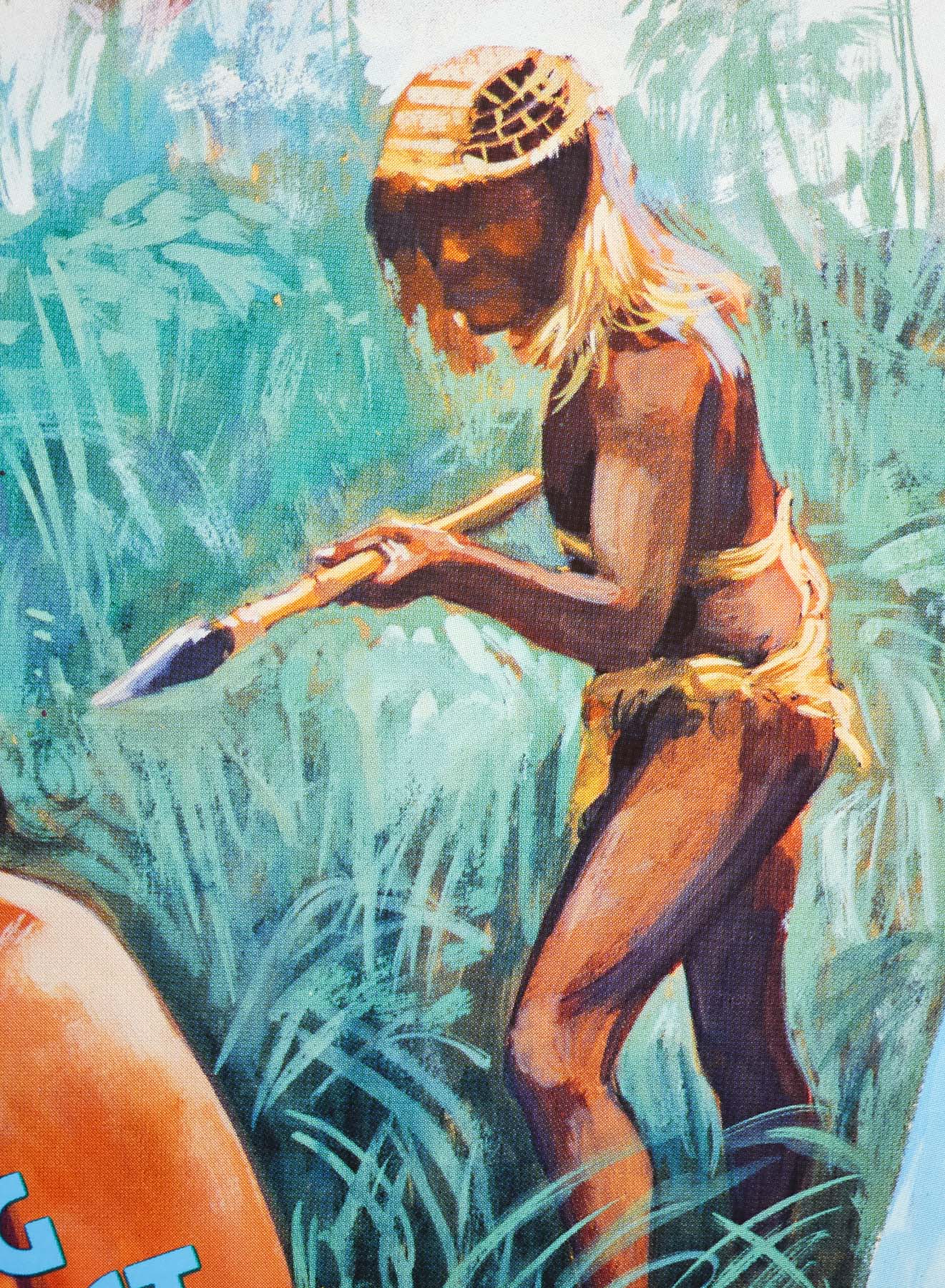
The Land That Time Forgot starts with the torpedoing of a passenger ship by a German U-boat crew. The few remaining survivors, including Bowen Tyler (McClure) and Lisa Clayton (Penhaligon), manage to overcome the U-boat’s crew when it surfaces and they force the captain to pilot the craft back to allied waters. The crew decide to sabotage their plans and the craft ends up completely lost in unknown waters. They happen across a strange island and find an underwater cave through which they pilot the U-boat. When they surface in the islands interior they are immediately set upon by a dinosaur-like creature that eats one of the crew before Tyler manages to decapitate it. The crew then venture through the strange land and come across more giant beasts and a tribe of primitive cavemen before discovering oil, which they hope will allow them to escape back to civilisation.

The film is never less than entertaining and McClure definitely gives it all he’s got. The creature effects have really dated badly, however, and are definitely not up to the standard set by Ray Harryhausen. There’s one excruciatingly bad sequence where the crew blast away at a pair of T-Rex like creatures and the second one takes an age to fall over unconvincingly (explained away by saying that the creature’s brains are slow to send signals). There are some decent special effects like the U-boat scenes underwater but it’s one film that hasn’t stood the test of time as well as some of its contemporaries.

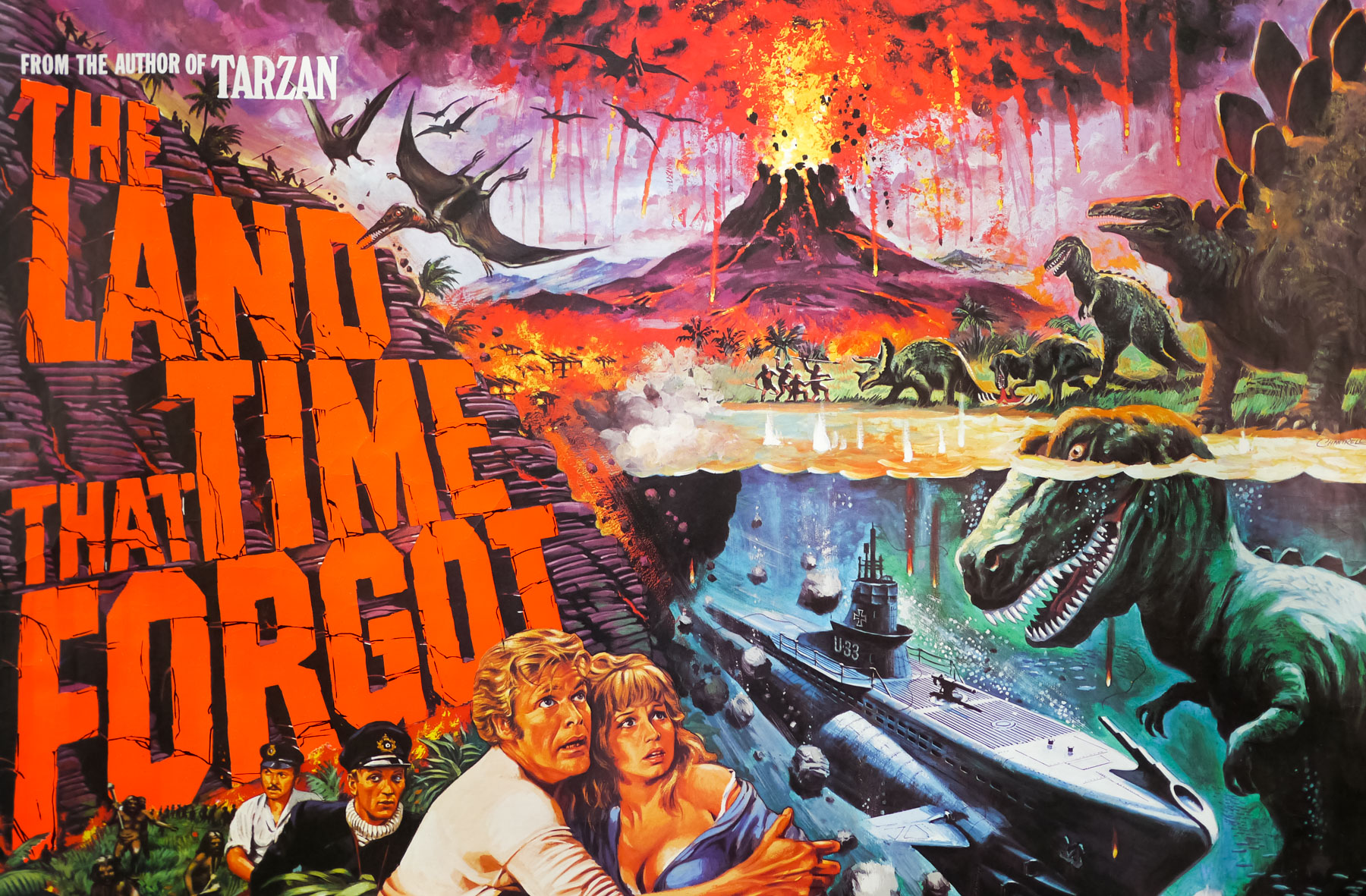
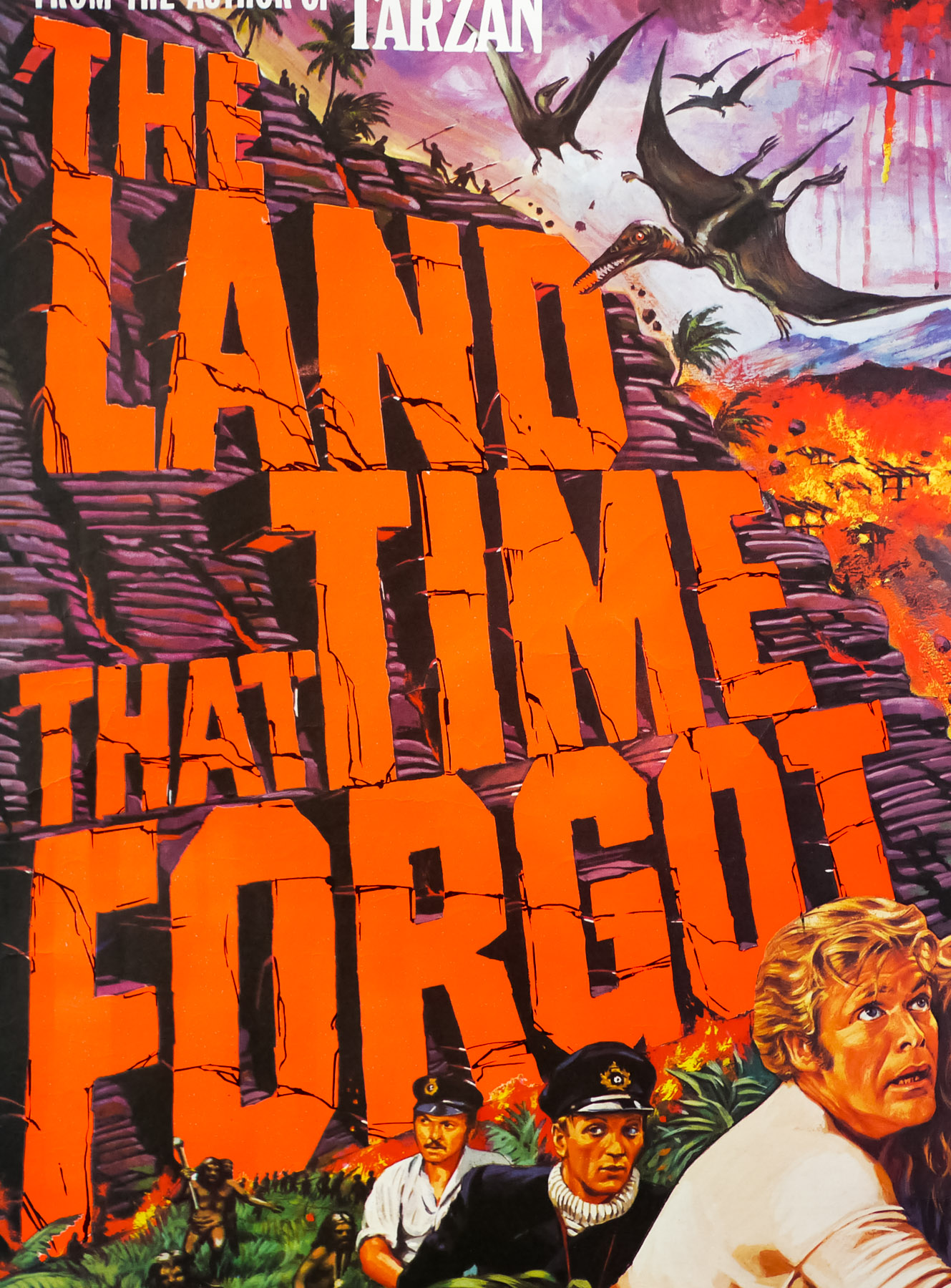
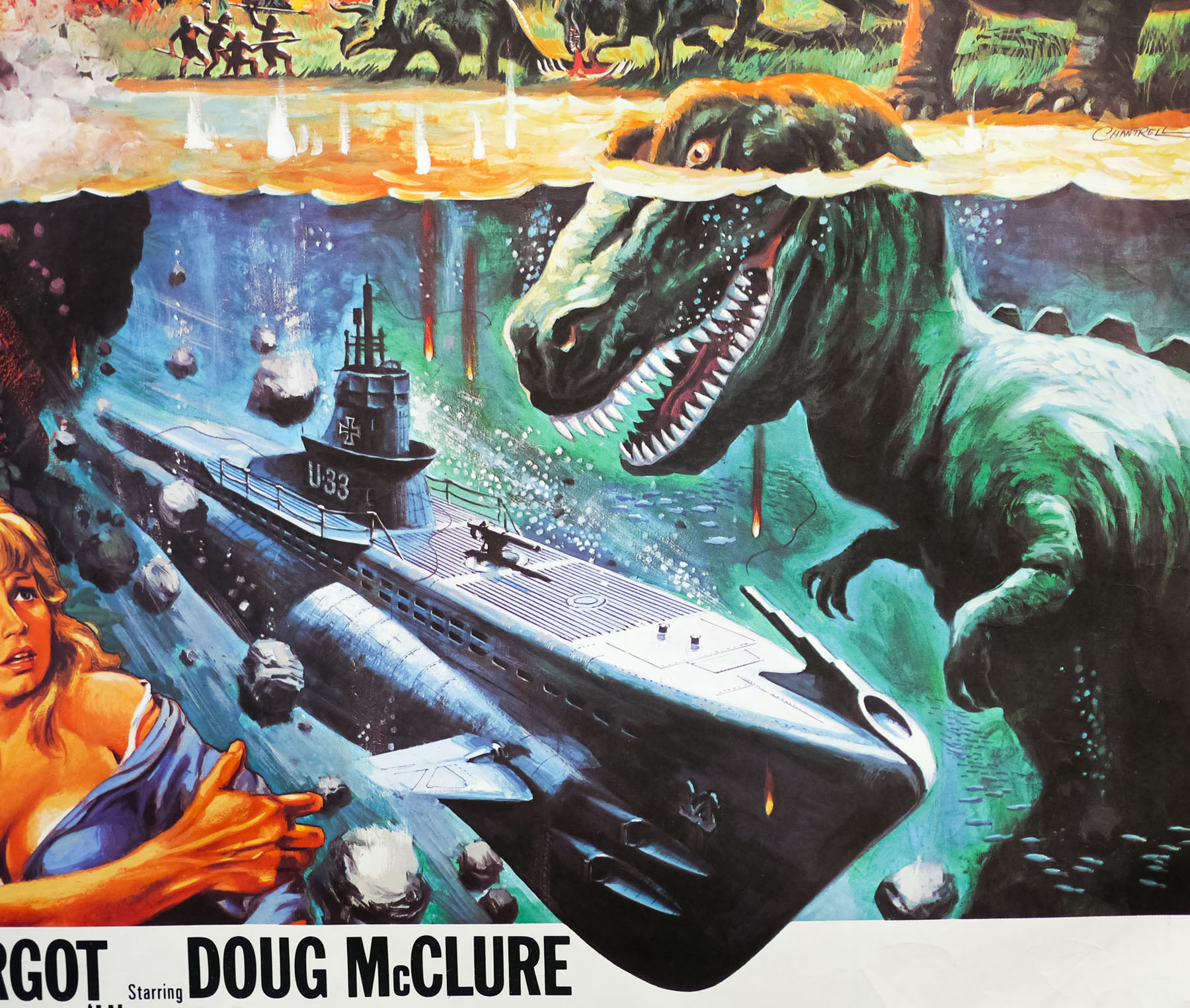
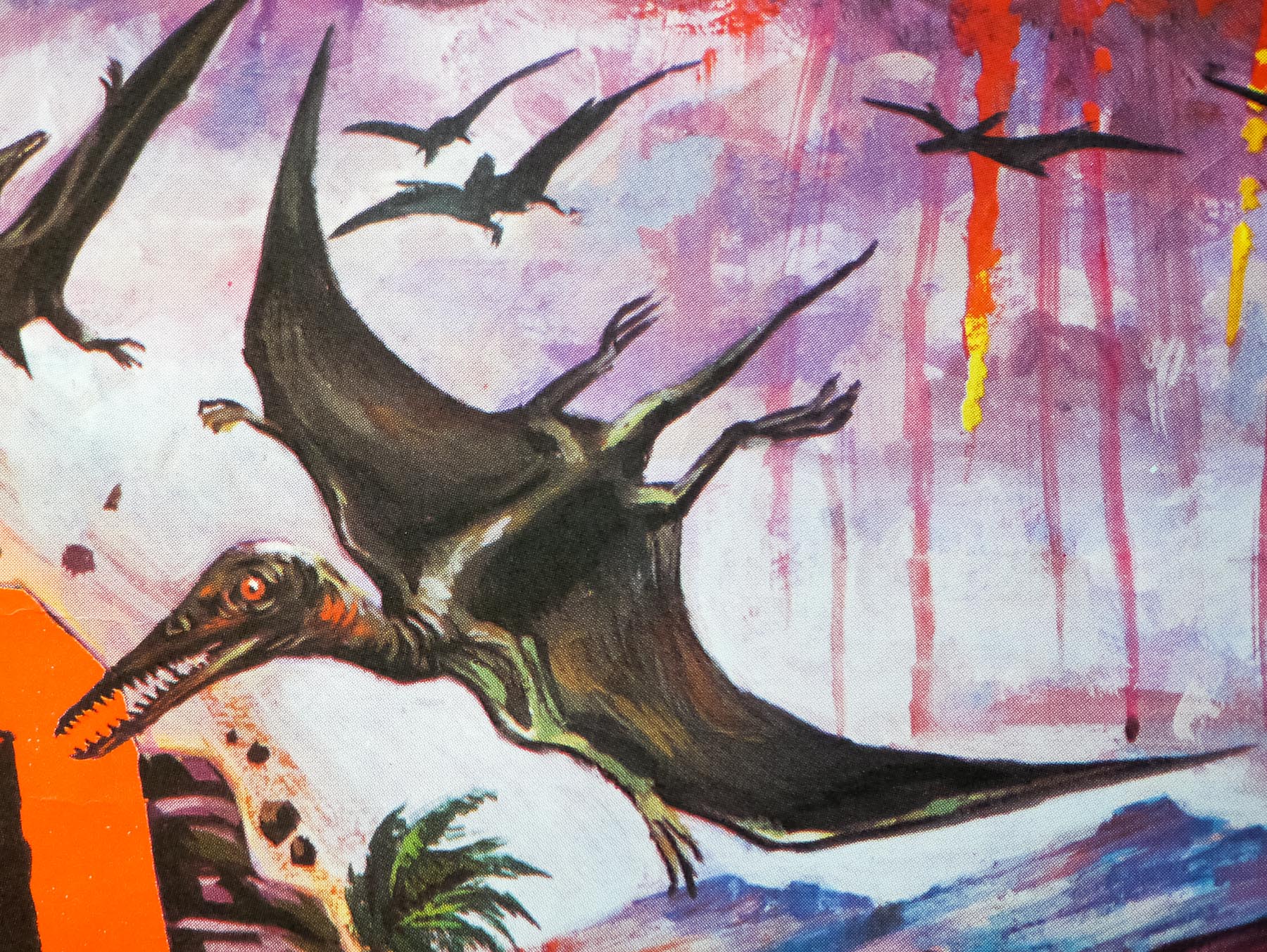
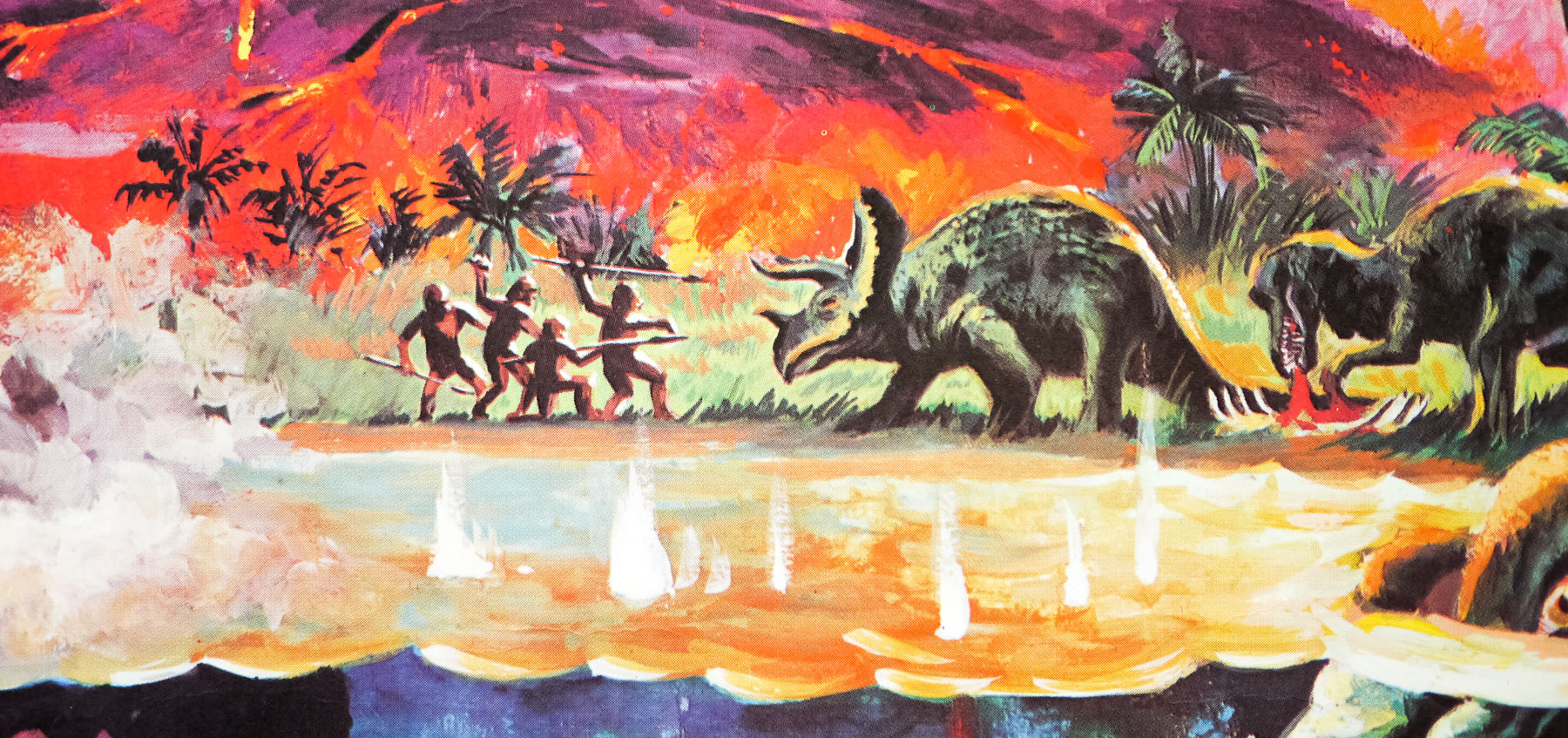
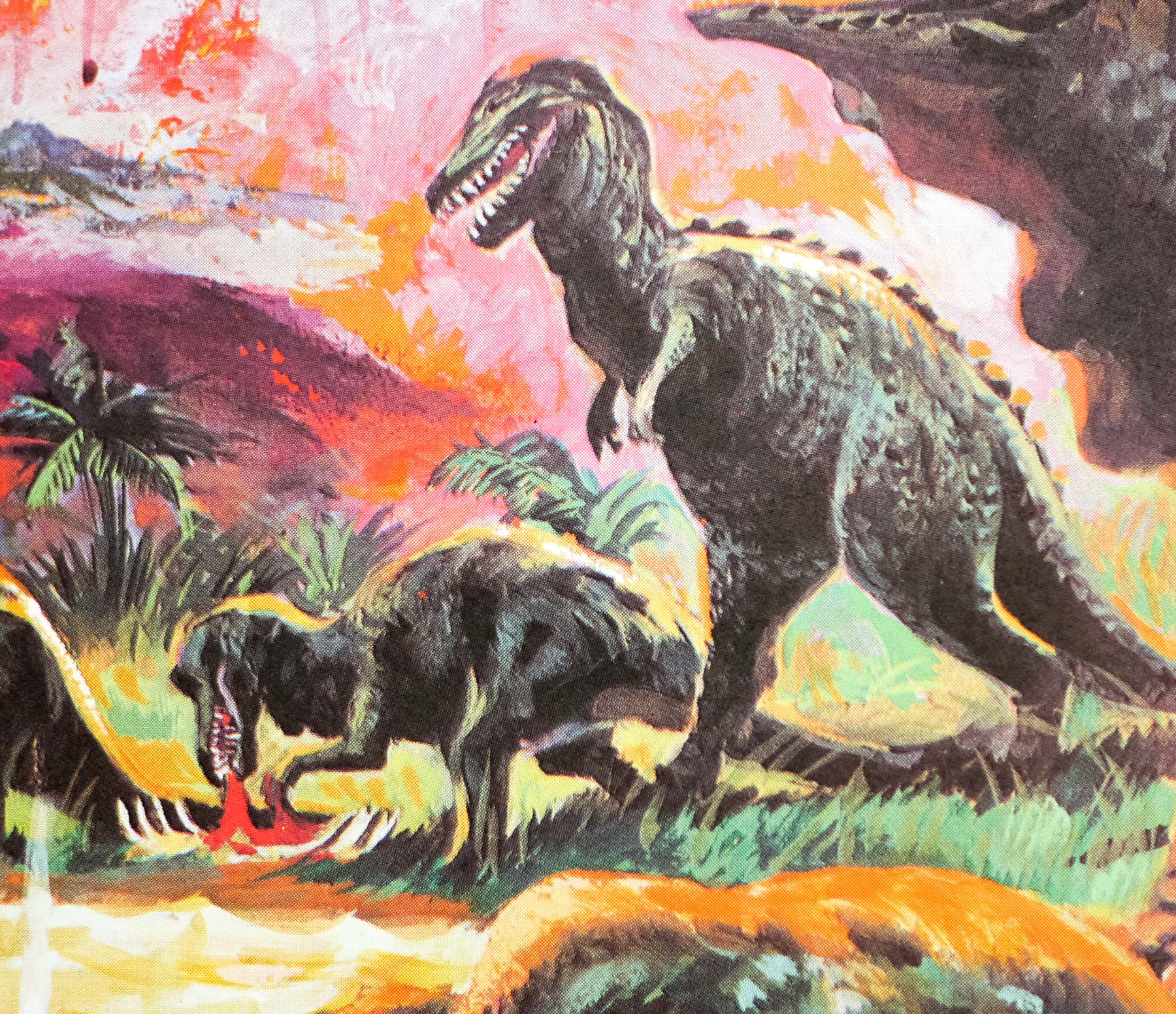
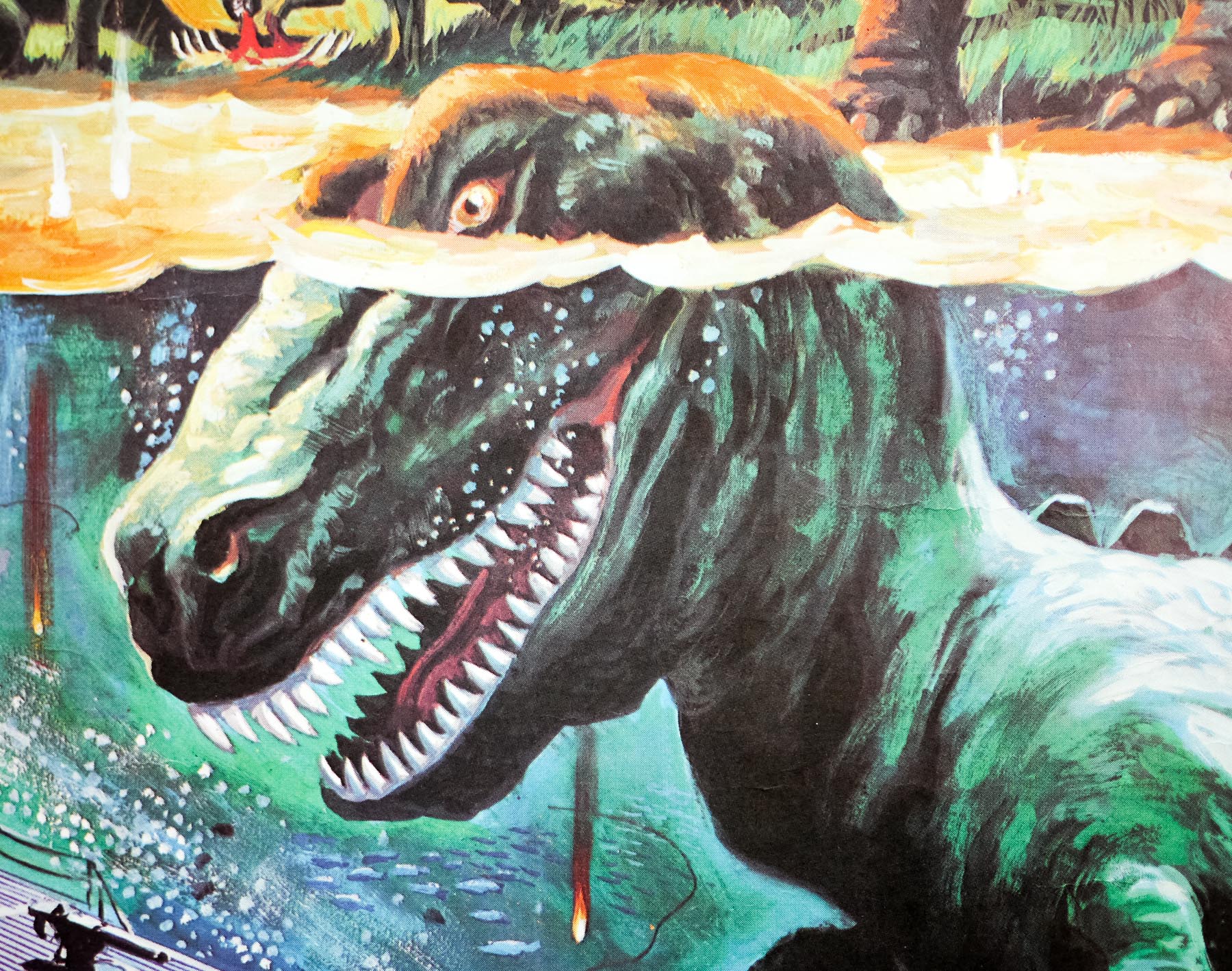
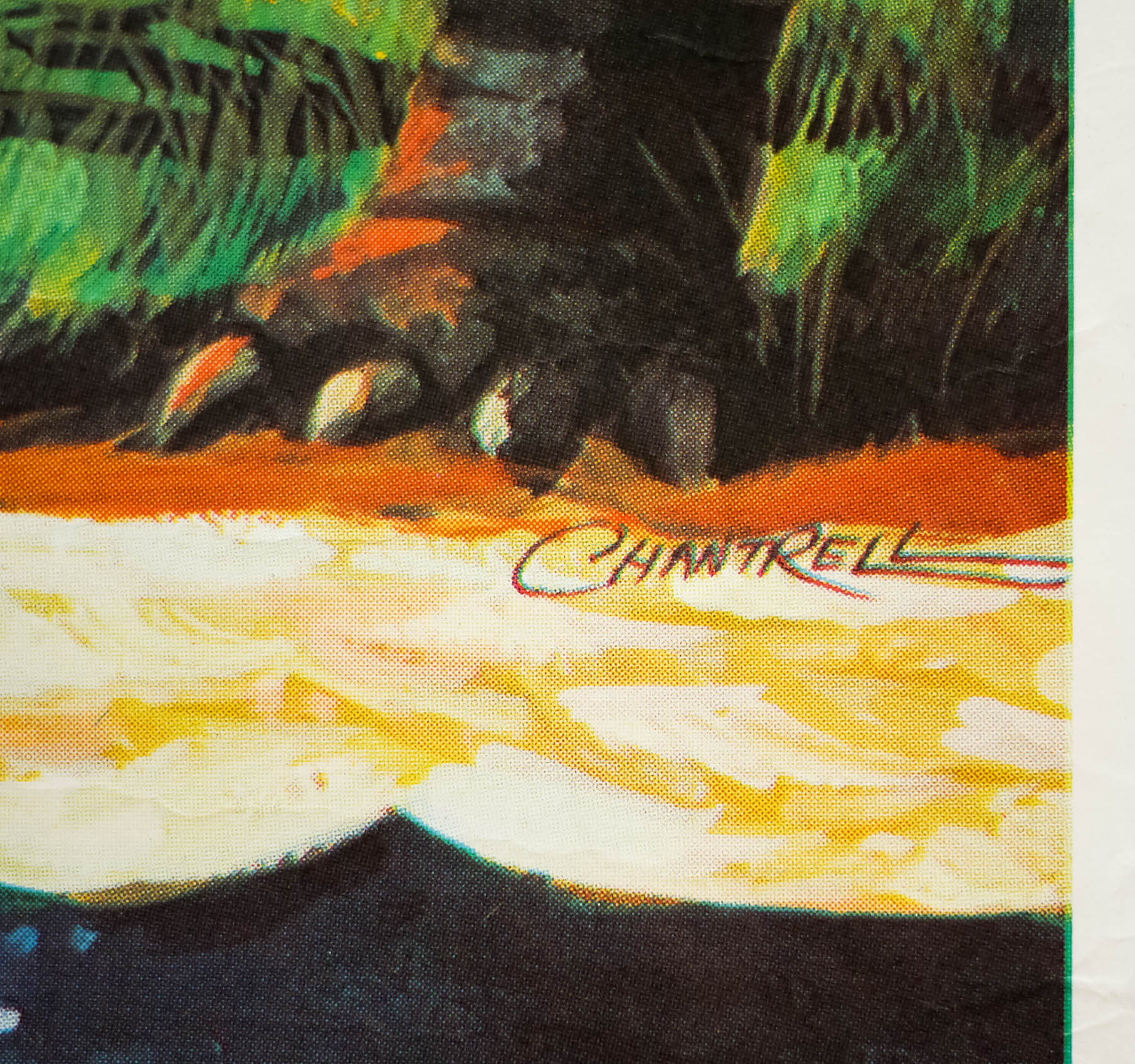
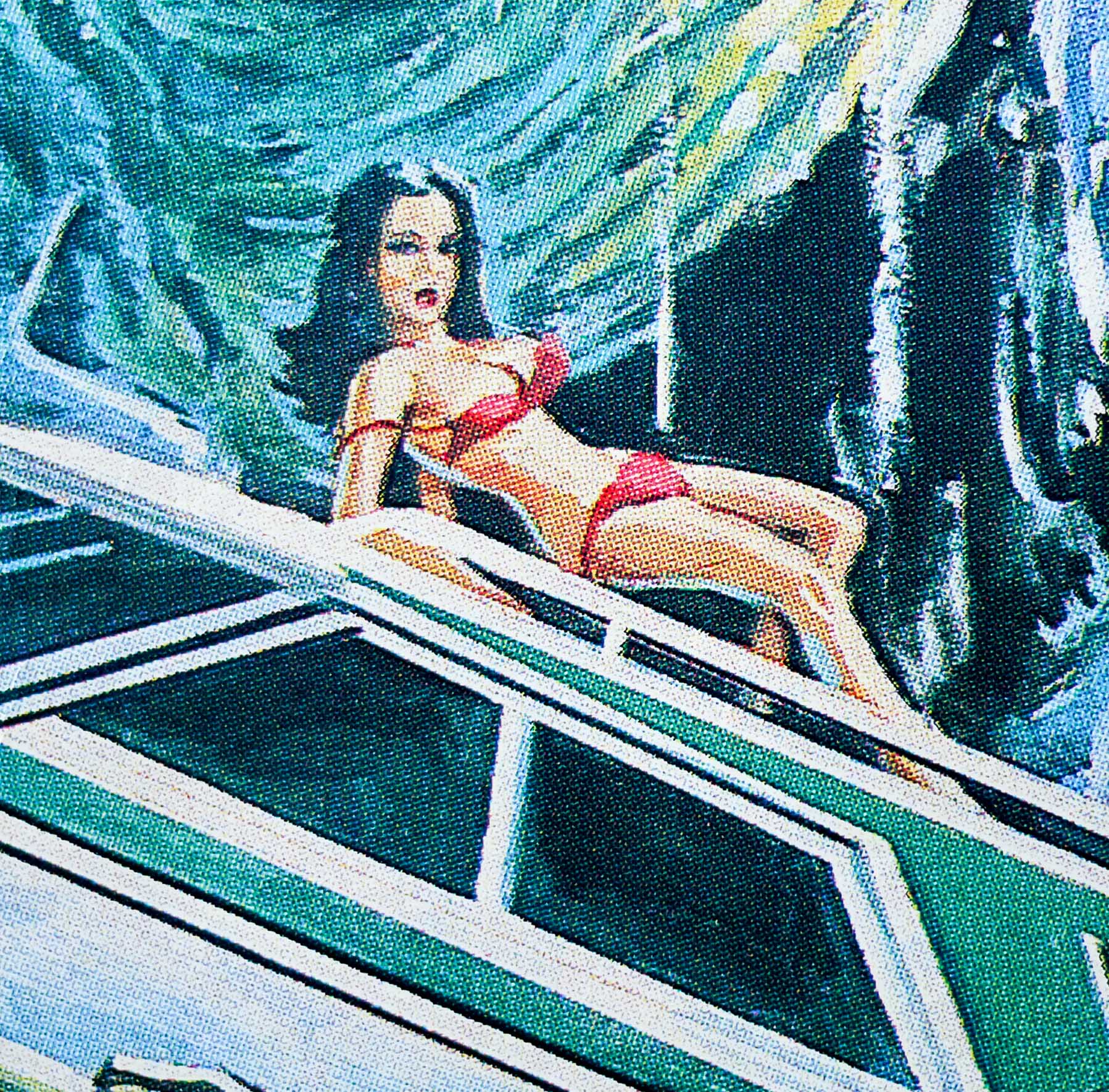
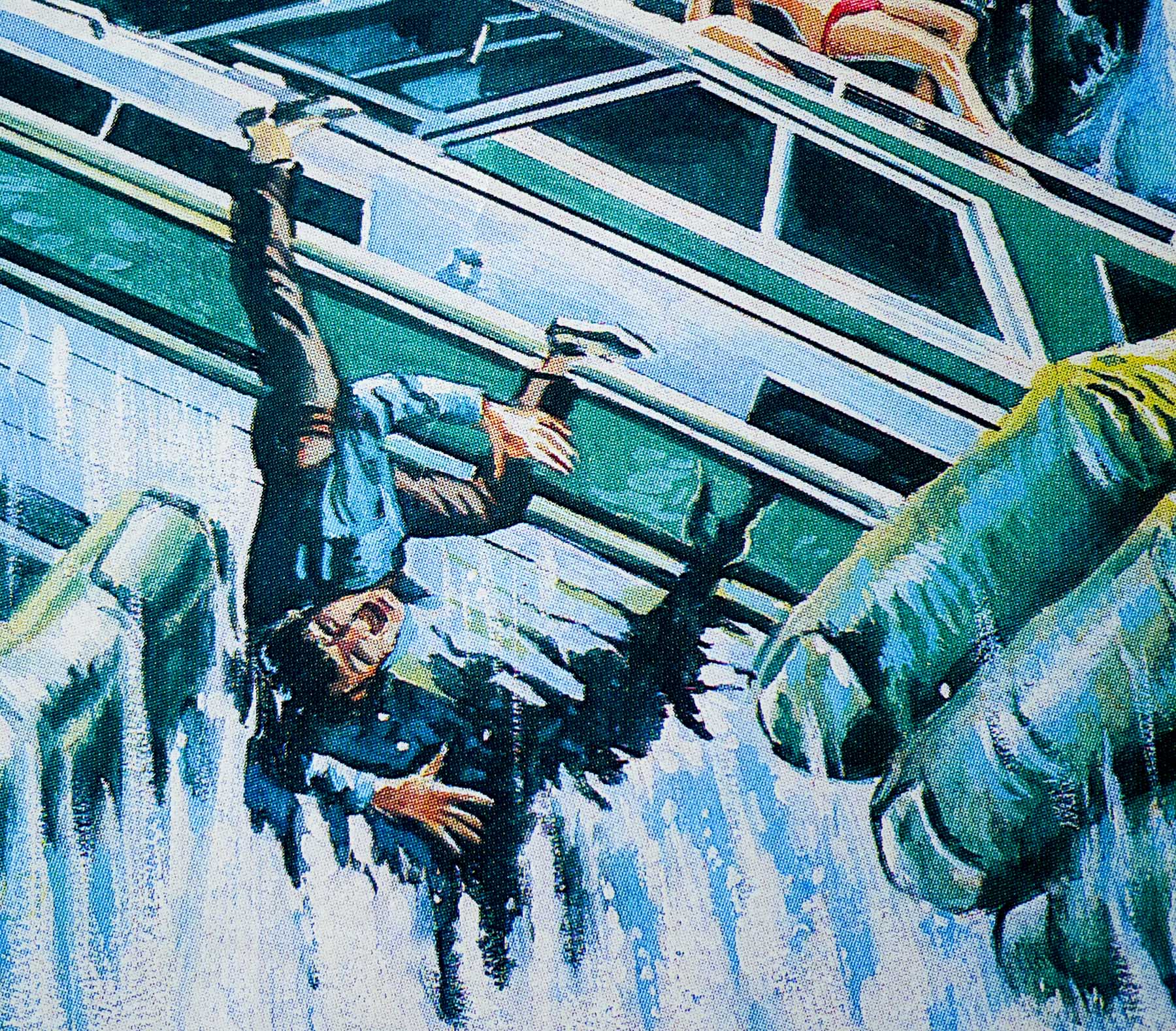
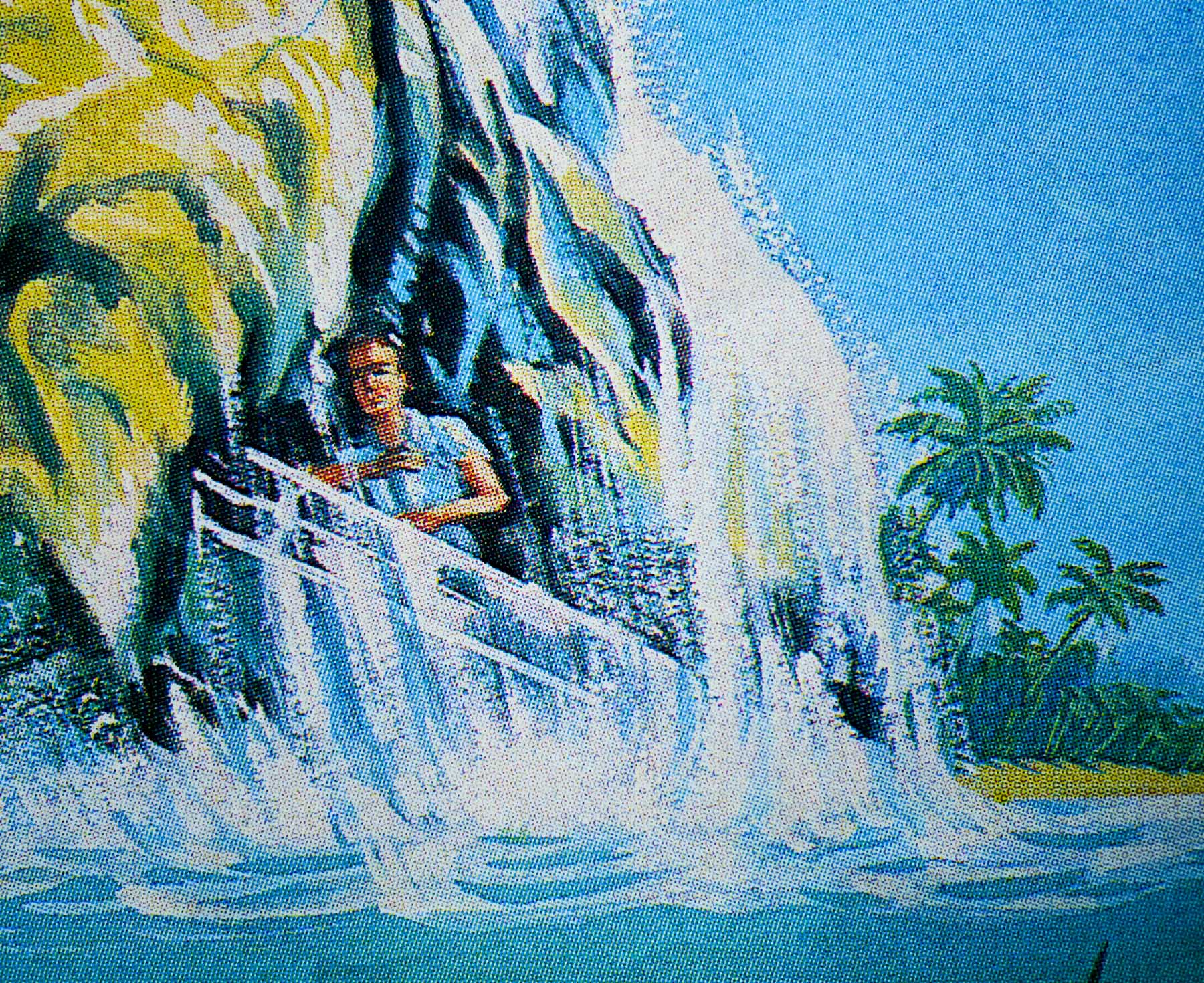
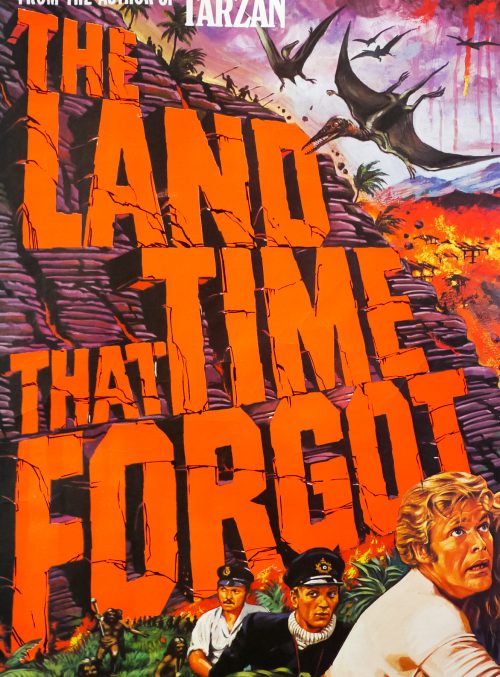
The brilliant artwork on this quad, featuring a cheeky image of a T-Rex underwater (which is definitely not in the film itself), is by Tom Chantrell, the celebrated British artist whose dynamic and colourful work featured on hundreds of posters over a forty year period. His official website features a great biography written by Sim Branaghan, author of the must-own British Film Posters. Chantrell illustrated many classic poster designs, including several Hammer posters such as the brilliant quad for ‘One Million Years B.C.’, and was also responsible for the iconic Star Wars quad, the artwork of which ended up being used around the globe. I have a number of other designs by him on this site.

Virgin Witch / quad / UK

19.01.15

Poster Poster
Title
Virgin Witch
AKA
--
Year of Film
1972
Director
Ray Austin
Starring
Ann Michelle, Vicki Michelle, Keith Buckley, Patricia Haines, James Chase, Paula Wright, Christopher Strain, Esme Smythe, Garth Watkins, Neil Hallett
Origin of Film
UK
Genre(s) of Film
Ann Michelle, Vicki Michelle, Keith Buckley, Patricia Haines, James Chase, Paula Wright, Christopher Strain, Esme Smythe, Garth Watkins, Neil Hallett,
Type of Poster
Quad
Style of Poster
--
Origin of Poster
UK
Year of Poster
1972
Designer
Fred Atkins
Artist
Arnaldo Putzu
Size (inches)
30" x 39 14/16"
SS or DS
SS
Tagline
Her lust was innocence - her desires... evil.

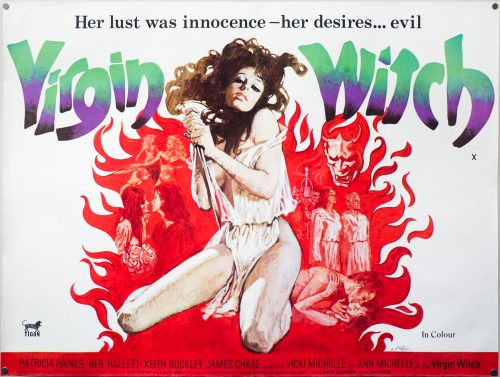
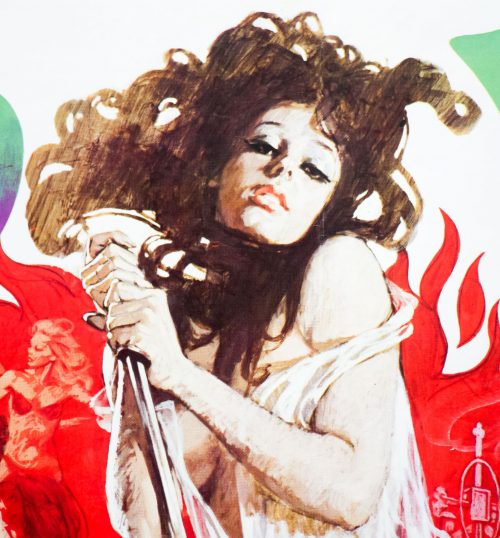
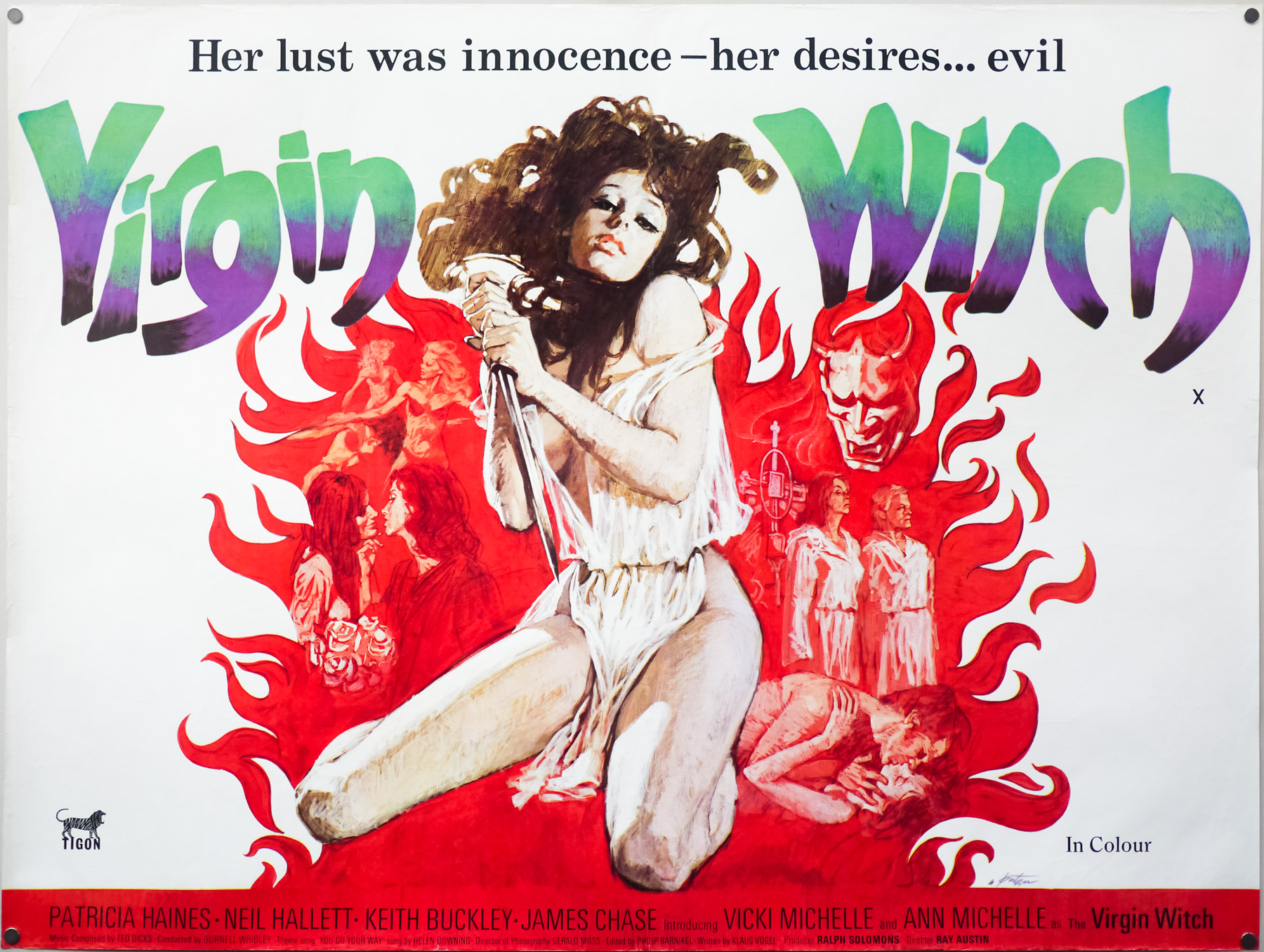
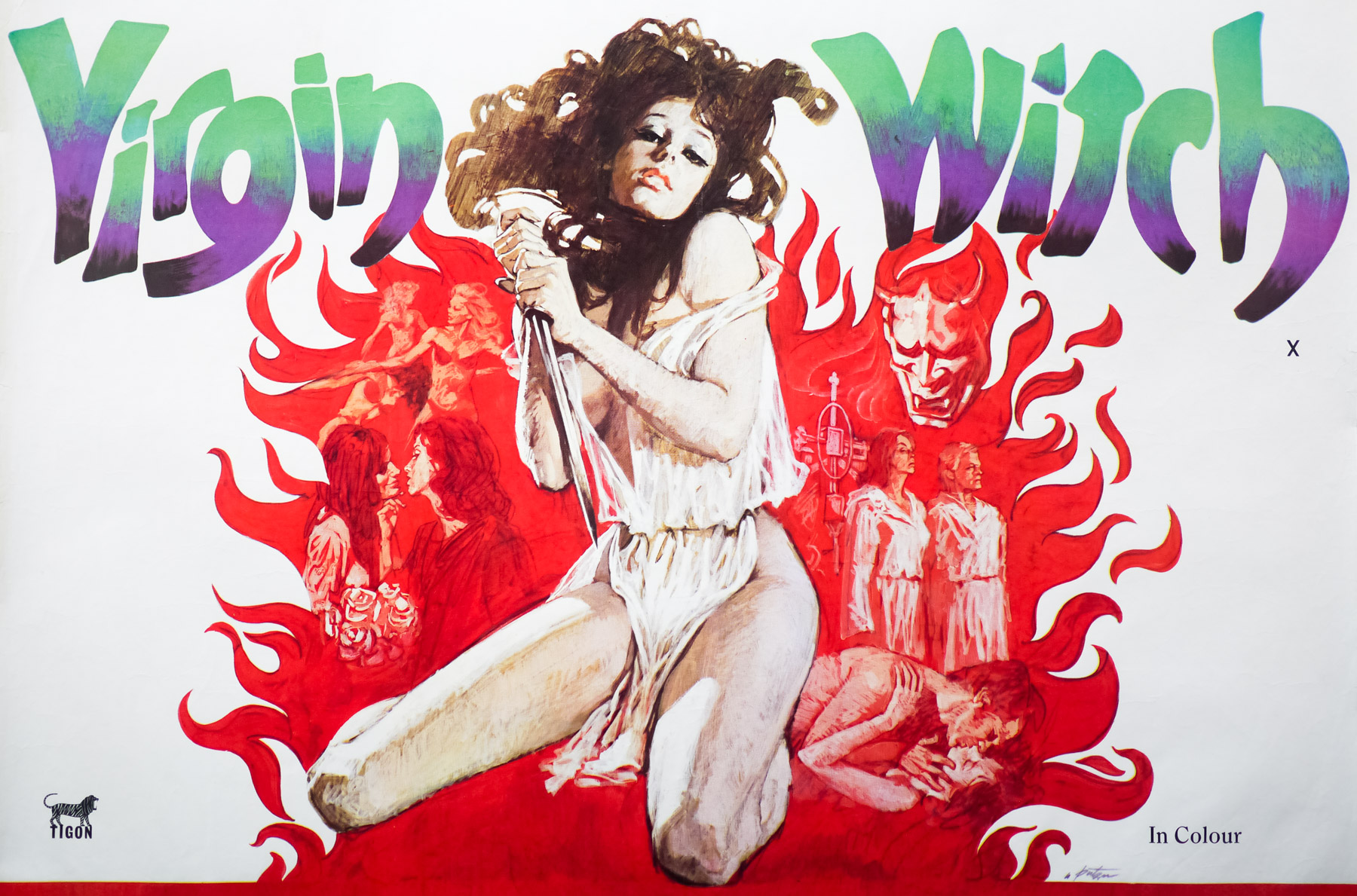
A classic case of the poster being better than the film it’s advertising, this is the UK quad for the 1972 British sexploitation horror Virgin Witch, which was produced and released by Tigon, primarily known for their horror output. Directed by Ray Austin who spent most of his career directing TV shows, the film stars Ann Michelle and her sister Vicki (later to gain fame as Yvette Carte-Blanche in the TV series Allo ‘Allo!) as Betty and Christine, a pair of wannabe models.

Answering an advert in a shop window, the more confident Betty meets Sybil Waite, a lecherous modelling scout played by the late Patricia Haines (the first wife of Michael Caine), who invites her to a country manor on the pretense of being photographed for an advertising campaign. Sybil encourages Betty to invite Christine along and after arriving there the sisters soon discover that all is not as it seems on the outside. Before long, Betty is being inducted to a witches coven in a laughable sequence in which the coven’s leader Gerald (Neil Hallett) gets to have his way with her.

Later it appears that Christine is to be sacrificed in another ceremony but the script is so weak that it’s not clear why and the attempt at a shock ending falls totally flat. The story comes a distant second to the almost constant female nudity, clearly a requisite from producers keen to sell the film to as many international buyers looking to satisfy the punters of ‘adult’ cinemas. Virgin Witch is totally devoid of anything in the way of supernatural scares, or indeed horror of any kind, and any attempt is fumbled badly. Both leading ladies have apparently disowned the film since it was made and it’s not hard to see why!

This poster is the result of a collaboration between two key figures in the history of British poster design: Fred Atkins and Arnaldo Putzu. Atkins was born in Kent in 1928 and attended art school before joining an agency on Sloane Street in London as a junior. He moved around a few agencies before joining Pulford Publicity in 1951 where he designed multiple quad posters, staying with Eric Pulford through several mergers and acquisitions, eventually leaving what became Downtons in 1968 to help set up the FEREF agency (he’s one of the Fs in the name) from where he would eventually retire. Virgin Witch is one of the posters he designed whilst at FEREF.

Arnaldo Putzu was born in Rome in 1927 and began painting from a very early age and in 1948 he got involved with the world of film publicity under the guidance of the famous artist Enrico De Seta. Eventually Putzu would gain enough confidence in his abilities to set up his own agency and it was this move that saw him getting involved in work for the British studio Rank. Eric Pulford was so impressed with his work that he brought him over to London to work at Downtons in 1967.

The artist worked on many quads whilst over here and also gained notoriety for lending his talents to the popular children’s magazine Look-in, for which he painted almost every cover during its publication lifetime. His best-known quad is undoubtedly the one he painted for the Michael Caine gangster classic Get Carter in 1971. My friend, and author of the must-own British Film Posters, Sim Branaghan met Putzu during the making of his book and describes it as a very memorable experience in the interview I published in 2012. Putzu sadly passed away the same year, aged 85, and Sim wrote an excellent obituary for The Guardian newspaper, which can be read here.

The Man in the White Suit / quad / 1993 re-release / UK

11.02.15

Poster Poster

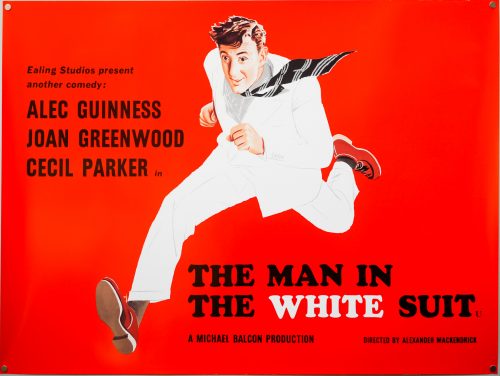
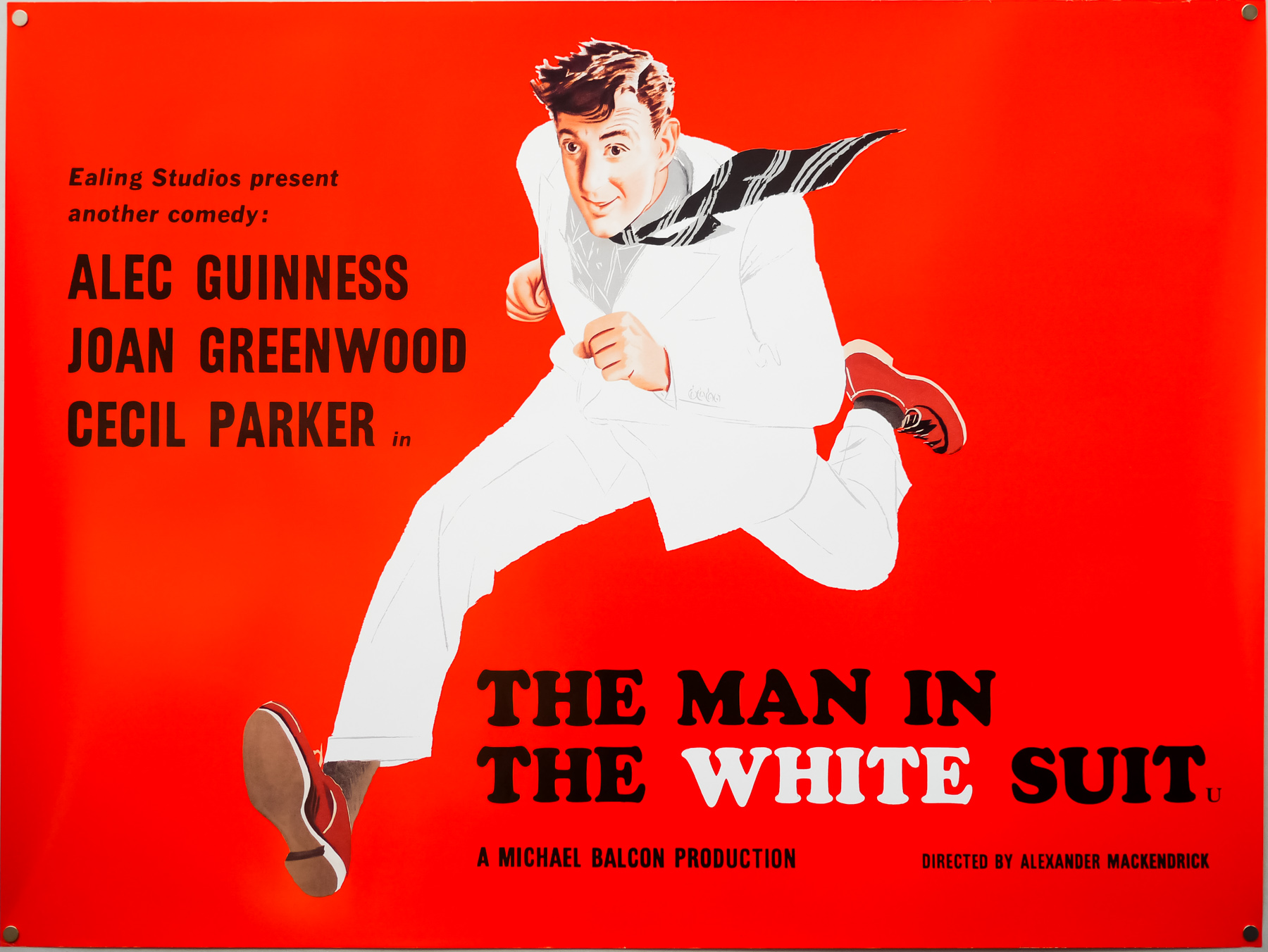
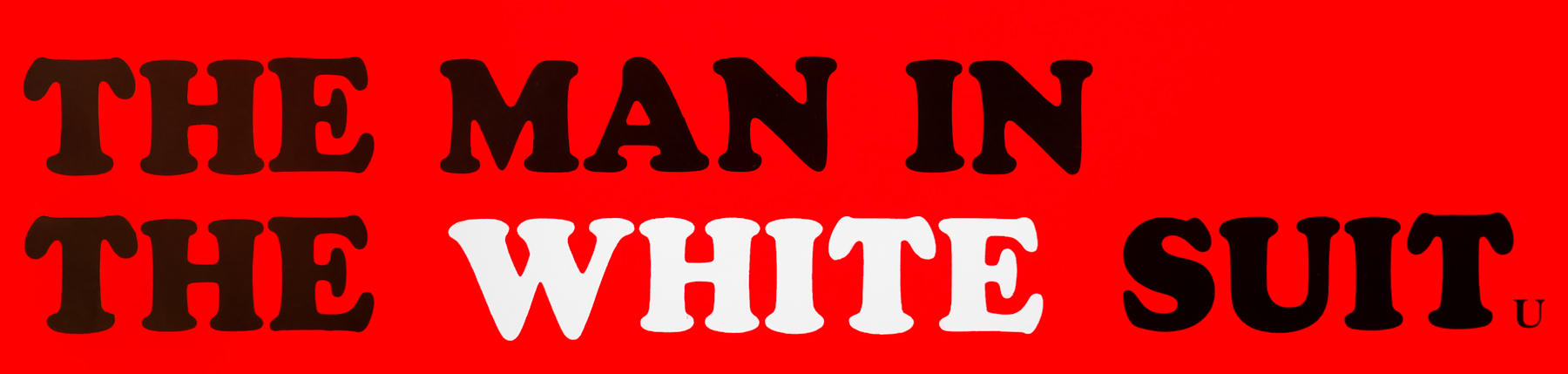
The Man in the White Suit is a satirical comedy that was made for the famous Ealing Studios in London and released in 1951. Directed by regular Ealing collaborator Alexander Mackendrick (who also helmed The Ladykillers and others), the film stars Alec Guinness as Sidney Stratton a frustrated chemist who is obsessed with creating an everlasting fibre. Sidney has been fired from several mills around Manchester because of his unauthorised use of expensive lab materials and his focusing on invention instead of the job he’s being paid to do. After starting at Alan Birnley’s (Cecil Parker) textile mill he manages to wangle an unpaid job as a researcher and is eventually afforded the space and materials to come up with his miracle fibre that resists all dirt and stays spotless.

Soon the management are aware of his invention, thanks to Birnley’s daughter Daphne (Joan Greenwood) spotting the potential, and are about to go public with the news when the trade unions and mill workers get involved. Both parties realise that such an invention will put them out of business since the public will never need to buy items made from the material again. They end up trying to bargain with Sidney but when he realises they just want to suppress the invention he tries to escape from their clutches, leading everyone on a chase around town. Unluckily for Sidney, it turns out his invention is not as robust as he’d hoped!

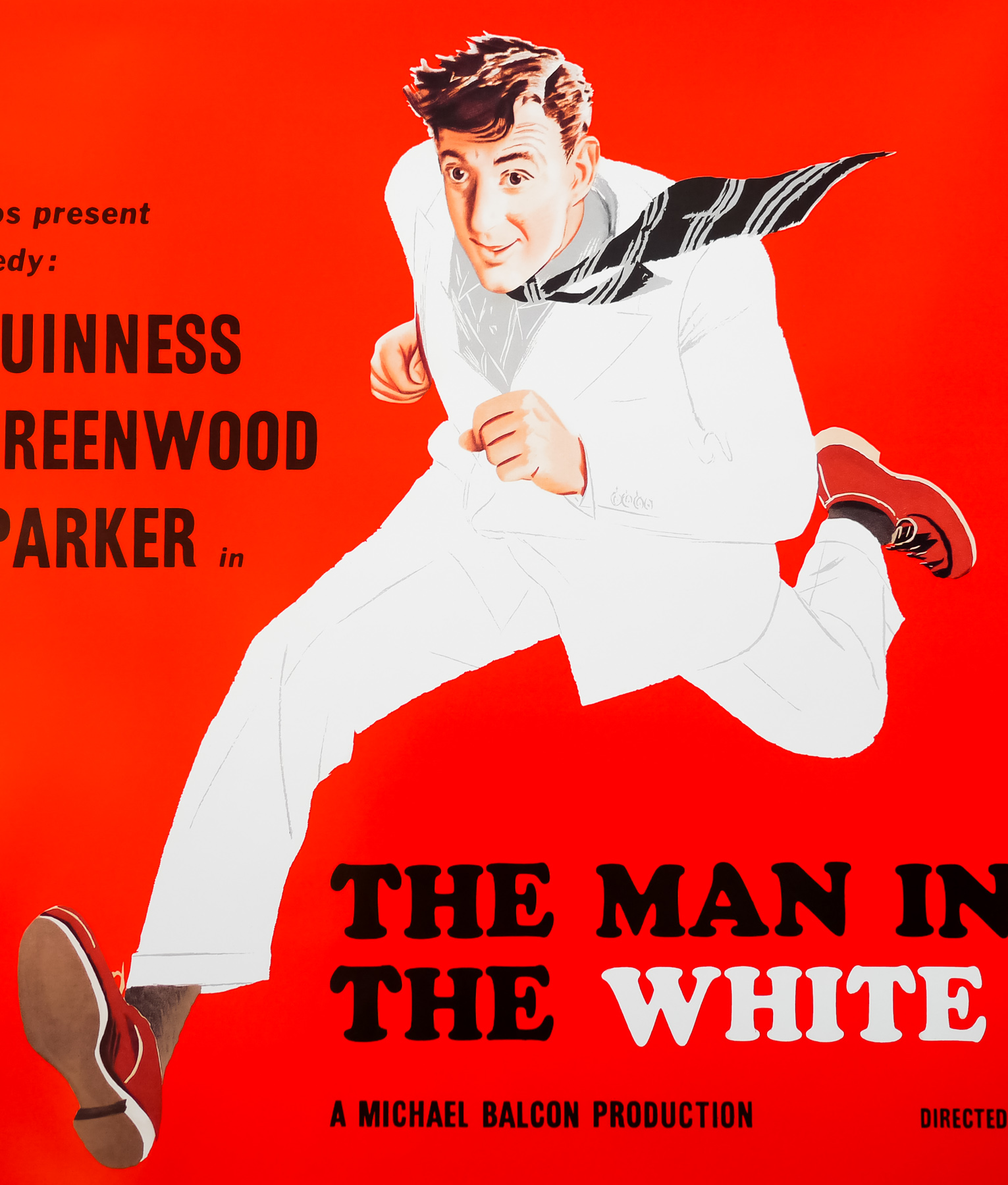
This British quad is from a BFI re-release of the film in 1993 (thanks to Sim Branaghan for confirmation of the exact year). It’s almost identical to the original 1950s quad but is missing the original distributor logo in the bottom left-hand corner, as well as the designer/artist credits. See this thread on the NSFGE poster forum for details and check out the image of a previous sale of the poster at Christies auction house.

The original 1951 quad was one of two that featured on the cover of Sim Branaghan‘s must-own British Film Posters, the definitive reference for those interested in the history of the subject. As detailed in the book, the poster was designed by man called Sydney John Woods who Sim notes was ‘more or less single-handedly responsible for the Ealing poster success’. Born in 1915, Woods trained as a graphic designer and painter and was also an art critic. He also design posters for theatres, including the Old Vic and Sadler’s Wells before starting to work for the film industry with a role in Fox’s publicity department.

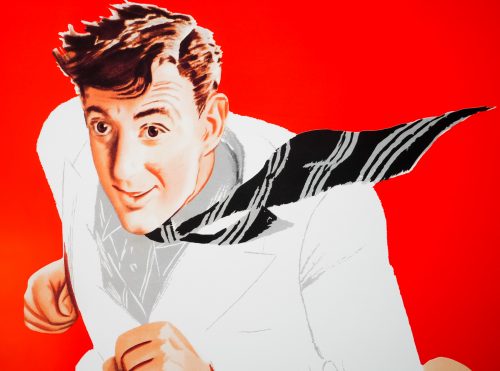
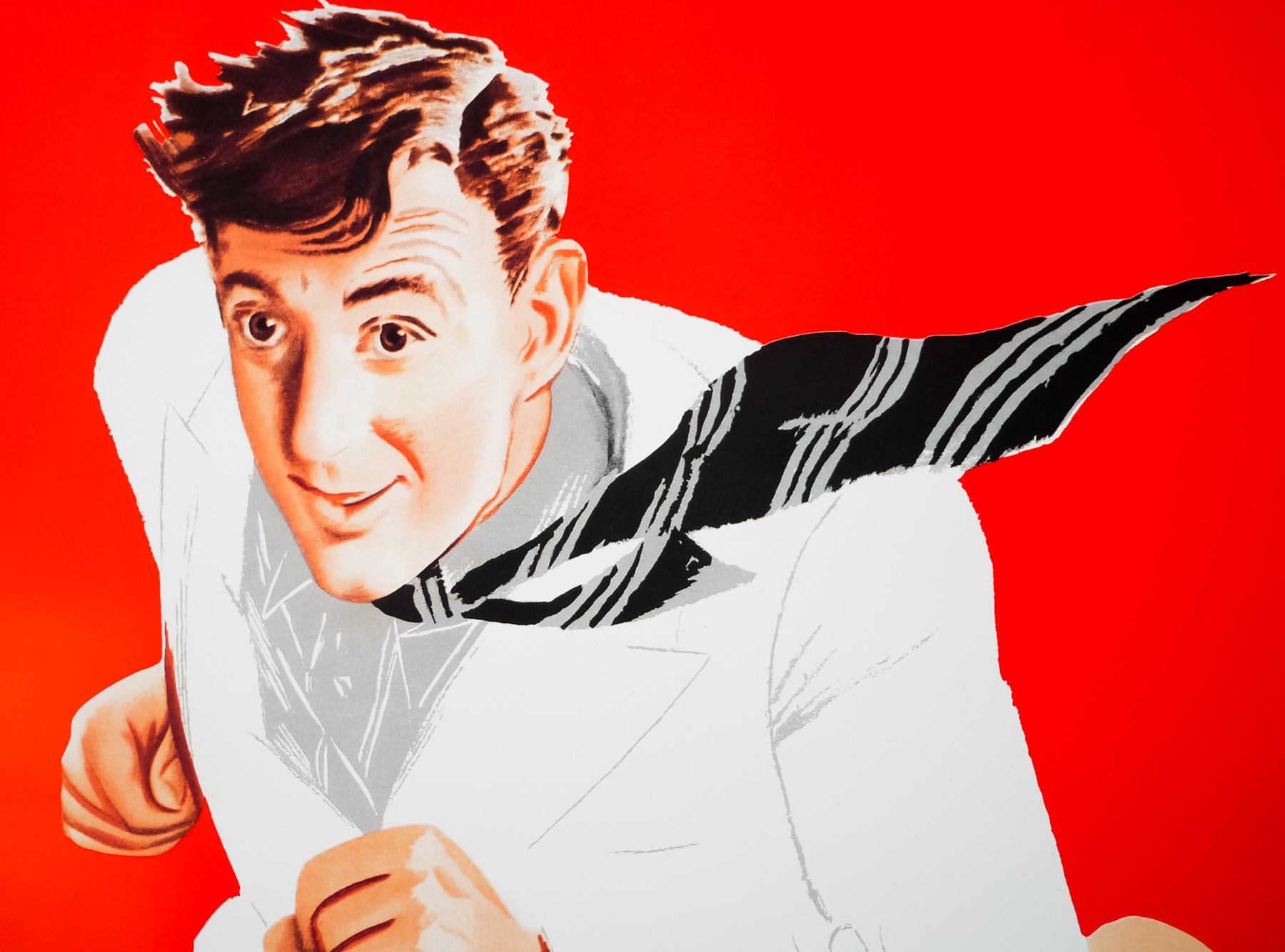
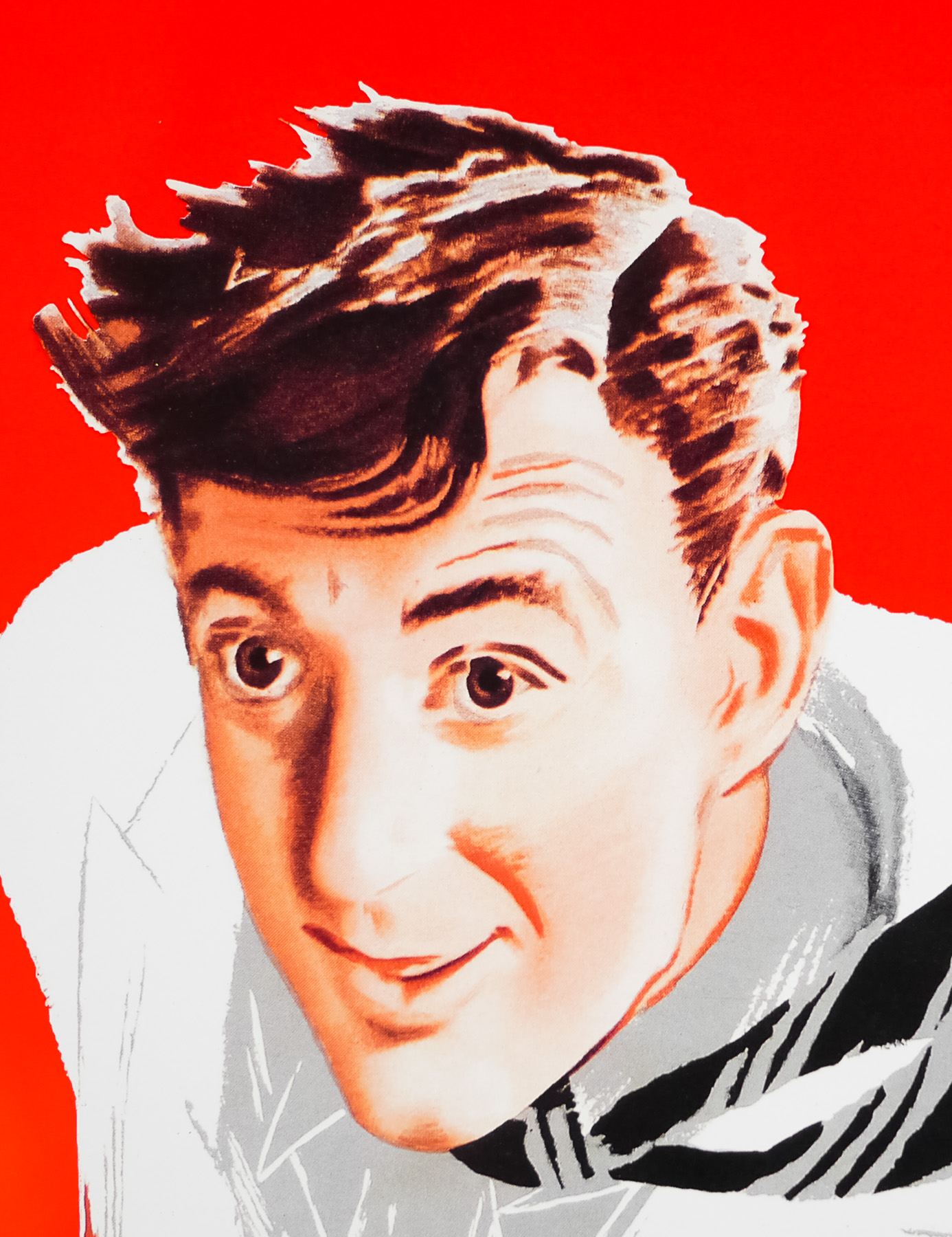
Woods joined Ealing in 1943 and worked there until the studios’ demise in 1959. Sim notes that Woods ‘revealed perhaps his greatest skill as an impresario, marshalling, encouraging, and exploiting to best advantage the talents of other artists’. He built up an impressive stable of artists that he could call on to produce illustrations for the studios’ output. This included the cartoonist Nicolas Bentley (for Passport to Pimlico, 1949) and Ronald Searle, creator of the St. Trinian’s cartoons (for The Lavender Hill Mob, 1951). The same year he would commission the artist A. R. Thomson to paint this portrait of Alec Guinness.

Thomson was born deaf and dumb in India in 1894 to a civil servant father who later brought the family back to London where Alfred attended the Royal School for Deaf Children. He became known as the ‘deaf and dumb artist’ and would go on to work on commercial advertising for the likes of Daimler, and also became the RAF’s official war artist in 1940. Interestingly, he was also the last person to win a gold medal for painting at the 1948 Olympic games in London (the last year that artists were allowed to compete). Thomson passed away in 1979. The ArtUK site features a gallery of his work.

Exit Through the Gift Shop / quad / unused style / UK

27.02.15

Poster Poster
Title
Exit Through the Gift Shop
AKA
--
Year of Film
2010
Director
Banksy
Starring
Banksy, Shepard Fairey, Thierry Guetta, Rhys Ifans, Space Invader
Origin of Film
USA | UK
Genre(s) of Film
Banksy, Shepard Fairey, Thierry Guetta, Rhys Ifans, Space Invader,
Type of Poster
Quad
Style of Poster
Unused - shopping cart
Origin of Poster
UK
Year of Poster
2010
Designer
Banksy
Artist
--
Size (inches)
30" x 40"
SS or DS
DS
Tagline
--

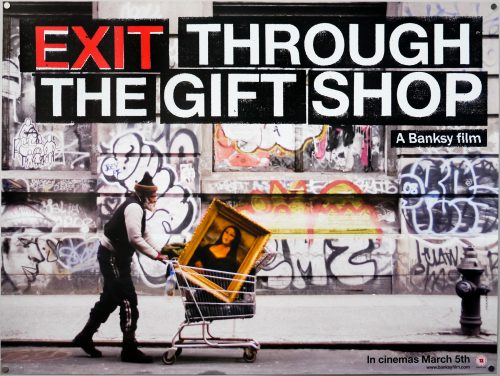
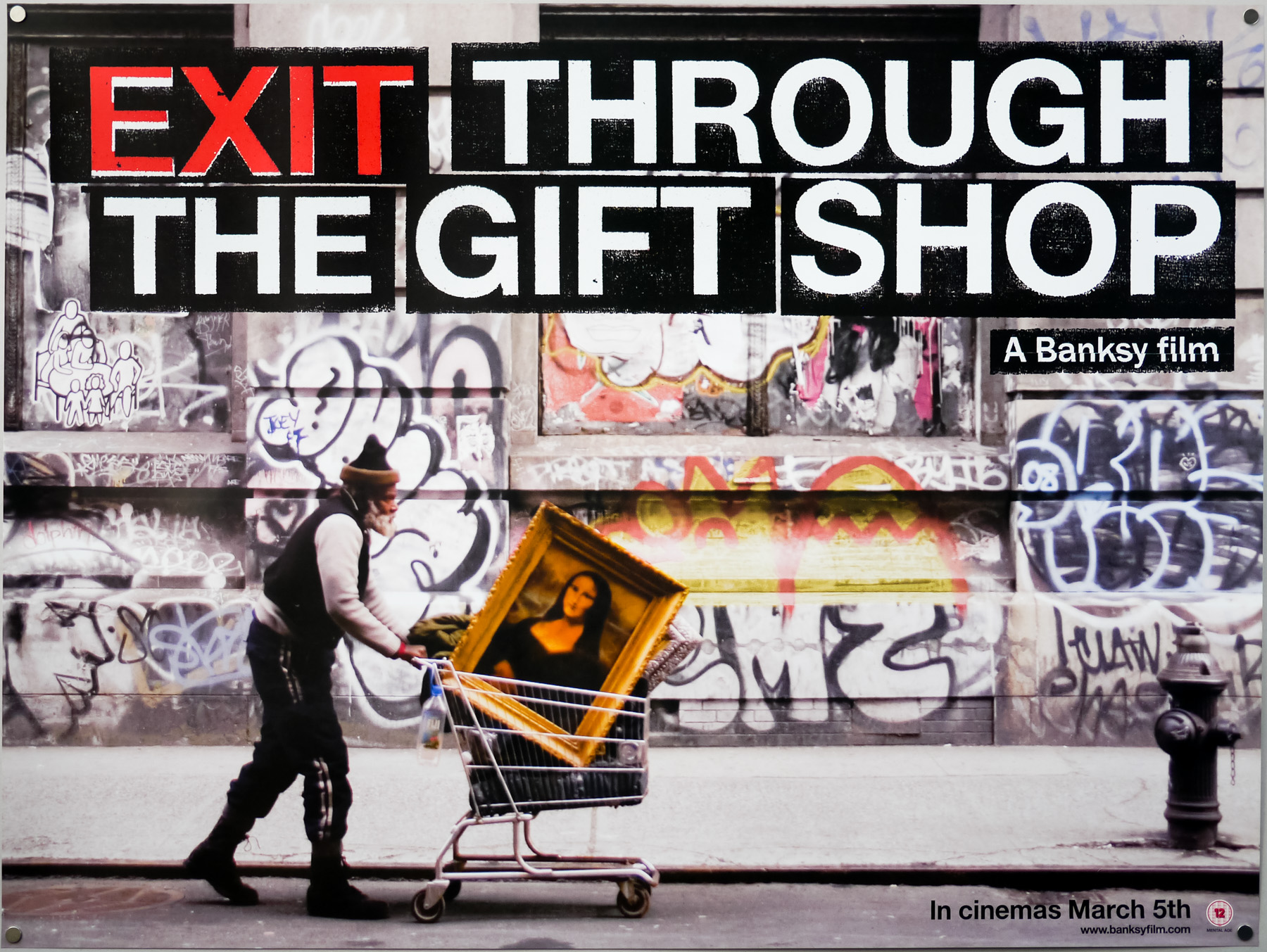
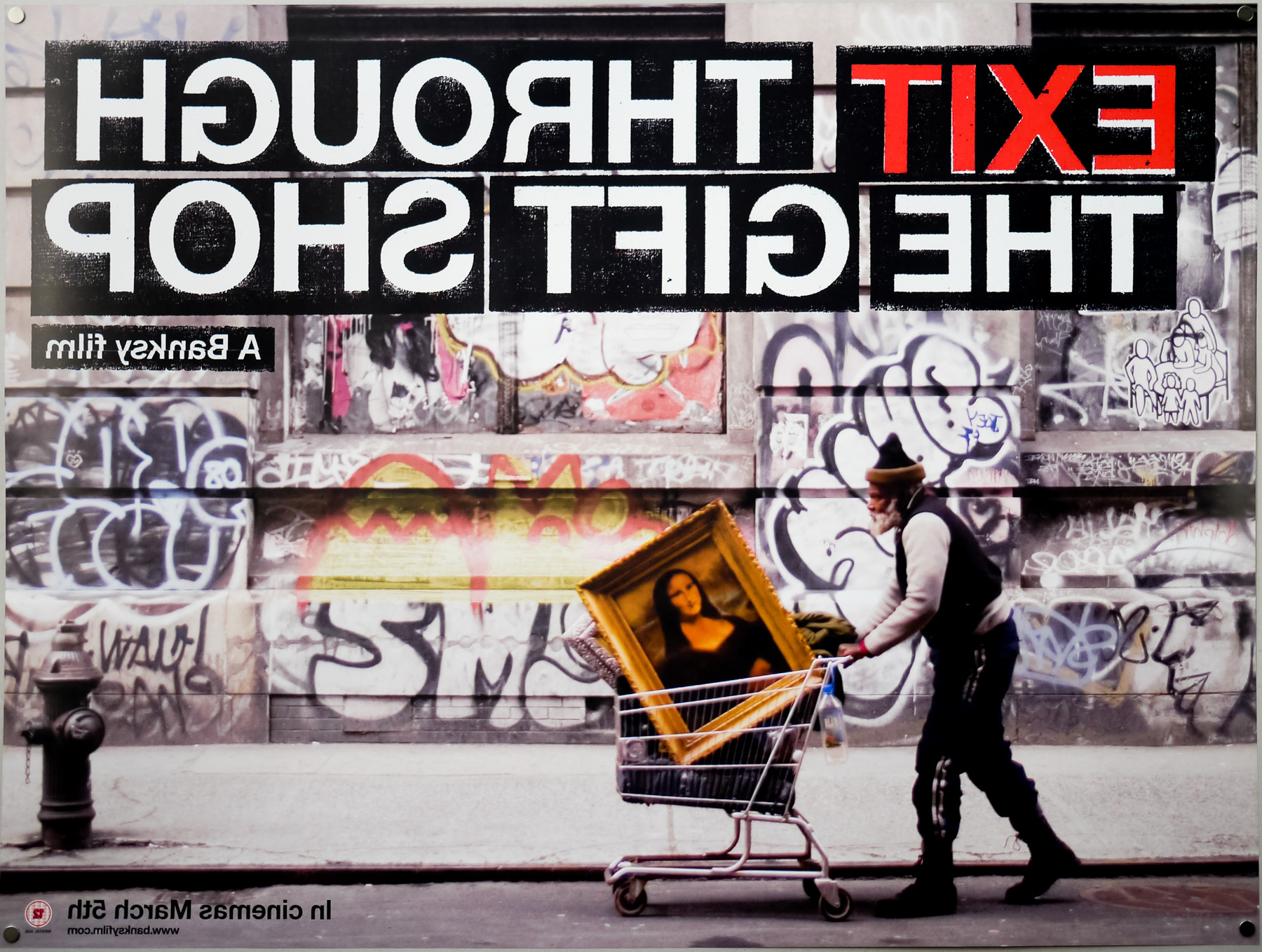
This is a rare, unused British quad poster for the 2010 documentary (or possibly mockumentary) Exit Through the Gift Shop, directed by the famous street artist Banksy. The film tells the story of Thierry Guetta an eccentric Frenchman living in Los Angeles who obsessively carries a video camera around recording practically his every move. Whilst on holiday he discovers his cousin is street artist Invader and thus begins an obsession that sees him tracking down and interviewing various other artists, including Shepard Fairey.

Eventually Guetta forms an obsession with tracking down and meeting the elusive and mysterious British artist Banksy, which is eventually possible thanks to a situation where Banksy is stuck in LA without his usual guide and Guetta happily steps in. Banksy later invites him back to the UK and allows him to film him in action as he recognises the importance of documenting street art with its short lifespan. A series of events see Banksy eventually taking over the editing of the documentary whilst Guetta devises an alter-ego artist called Mr Brainwash and sets up a near disastrous gallery show that is saved by friends of Banksy before going on to earn Guetta in excess of a million dollars. When asked subsequently if the events of the film are real, Banksy continues to say ‘yes’.

I purchased this quad from a gallery in London called Pictures on Walls that has an affiliation with Banksy and was given a stash of the quads to sell (for £15 each) at the end of 2011. I was told at the time that the artist was unhappy with the design and decided to go with an alternate monkey mask image. A number of this shopping cart style had been printed but were never sent to cinemas, but I’m not sure how many actually exist. The shopping cart appears on the US final one sheet but the actual image is slightly different. The BanksyForum features a picture of the quad in the racks at POW from 2011.


Diva / quad / UK

23.03.15

Poster Poster

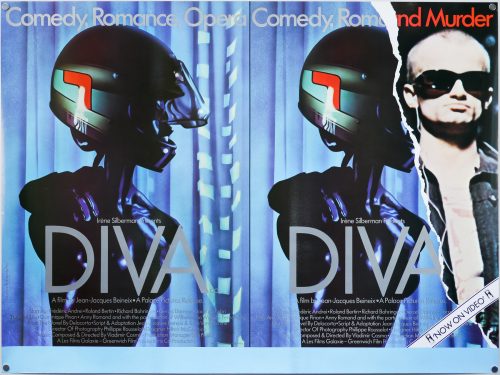
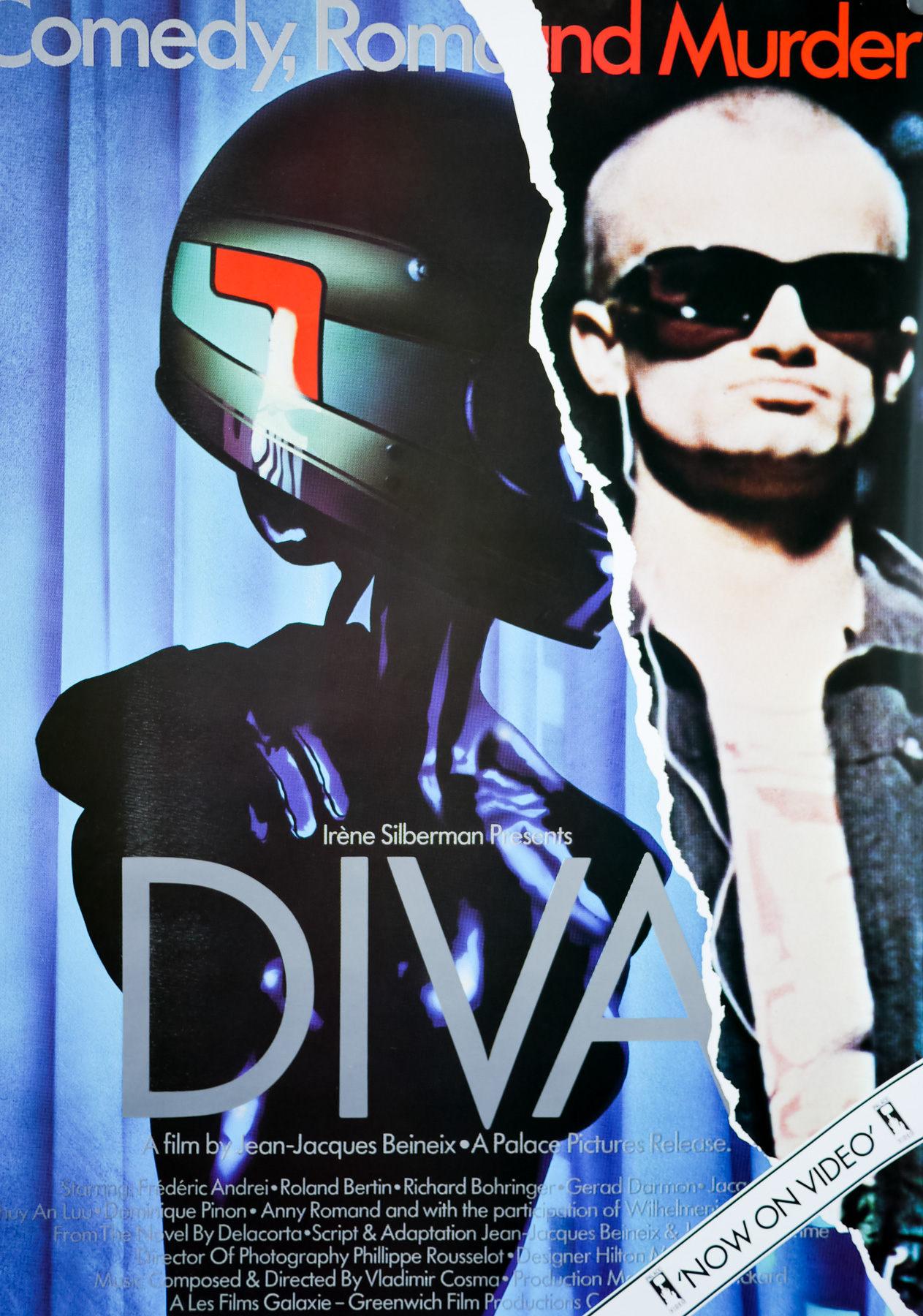
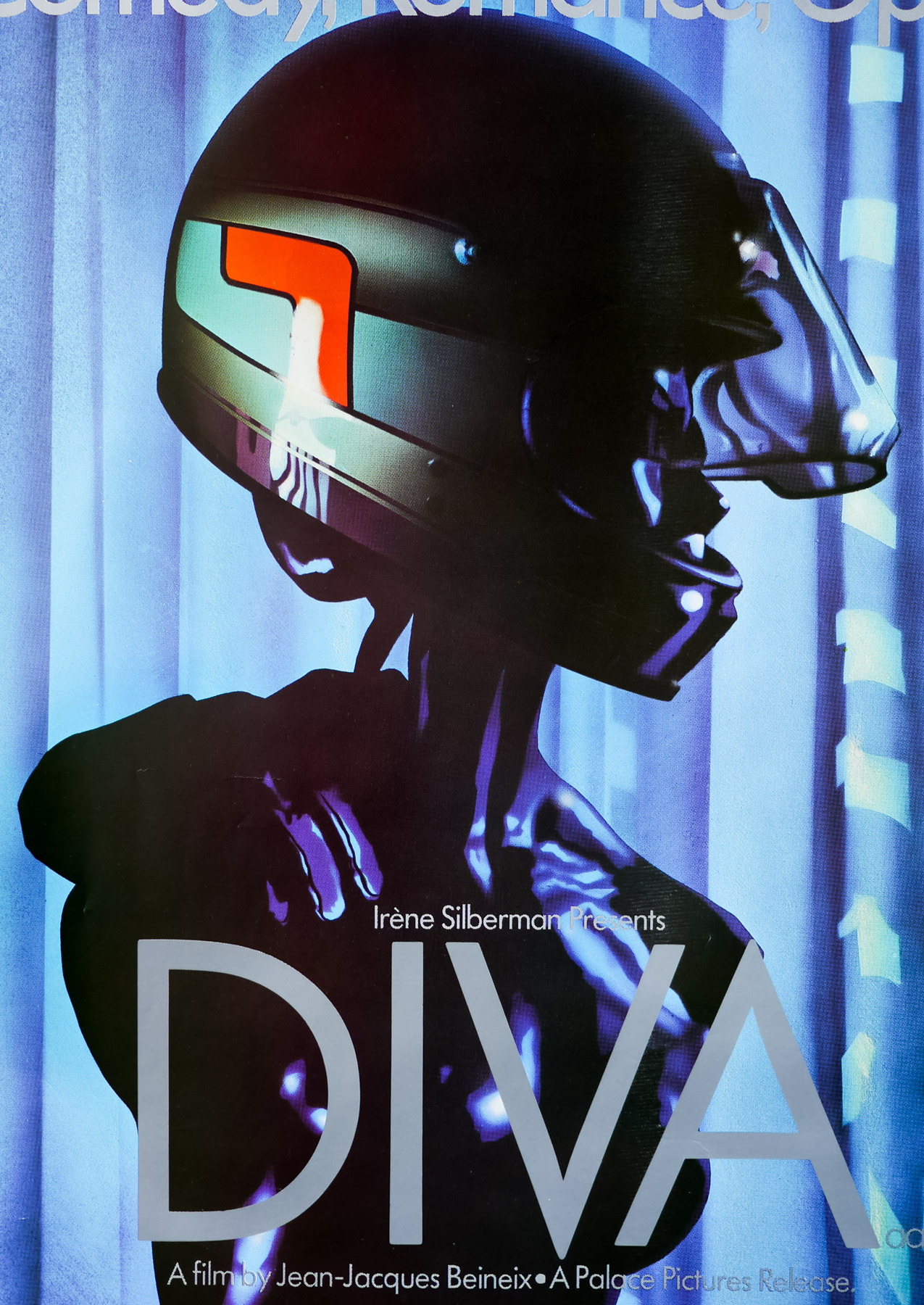
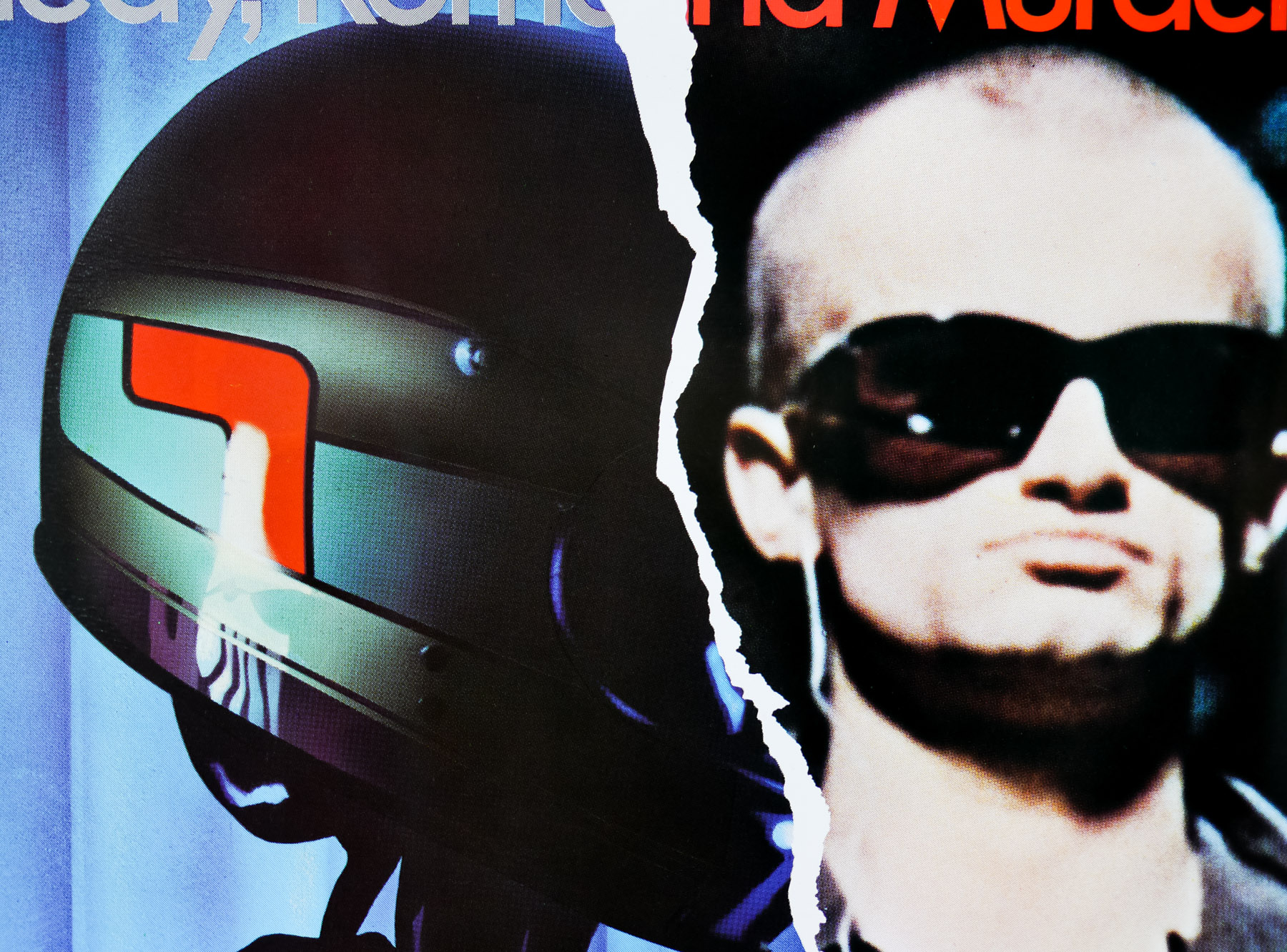
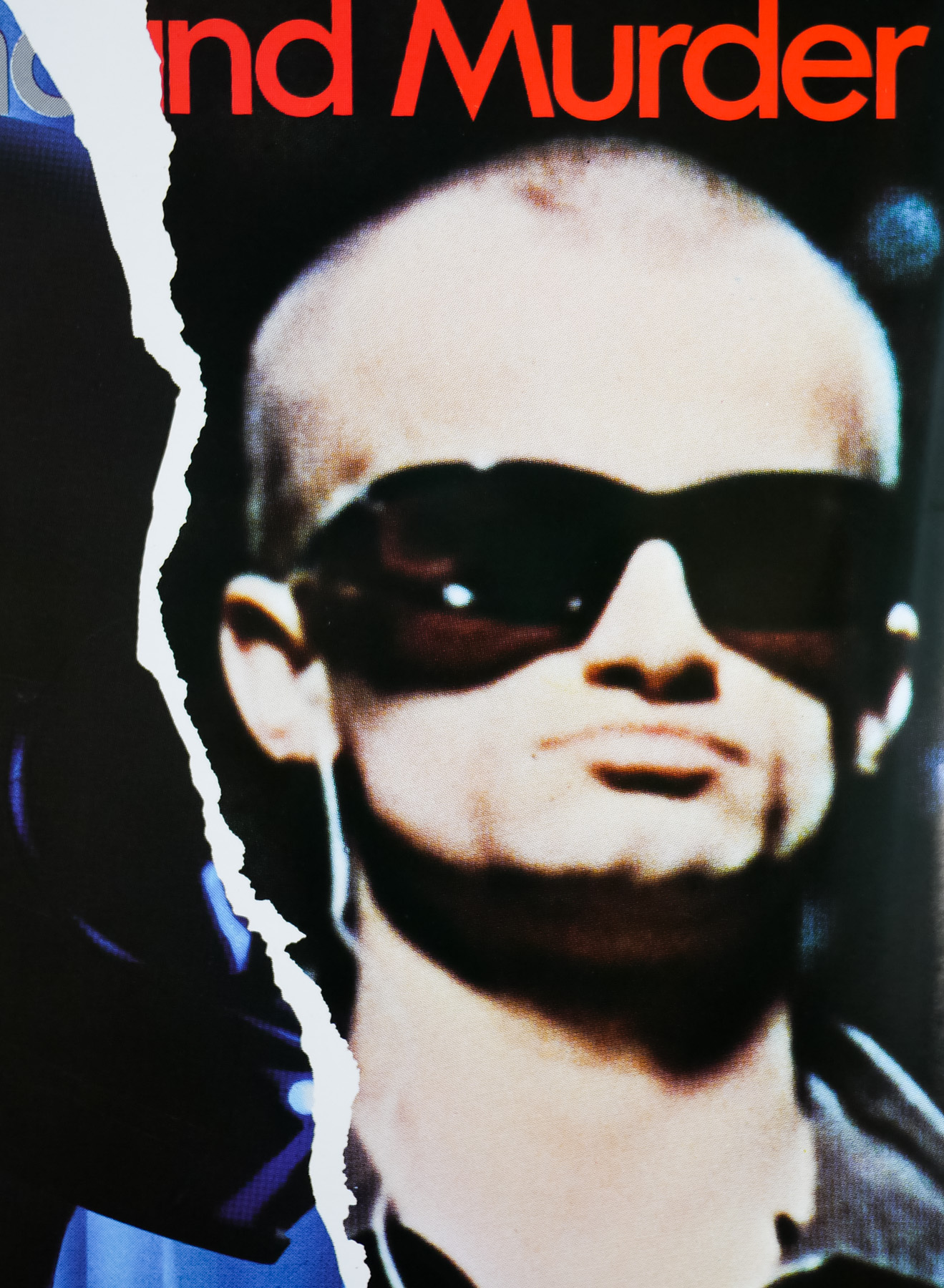
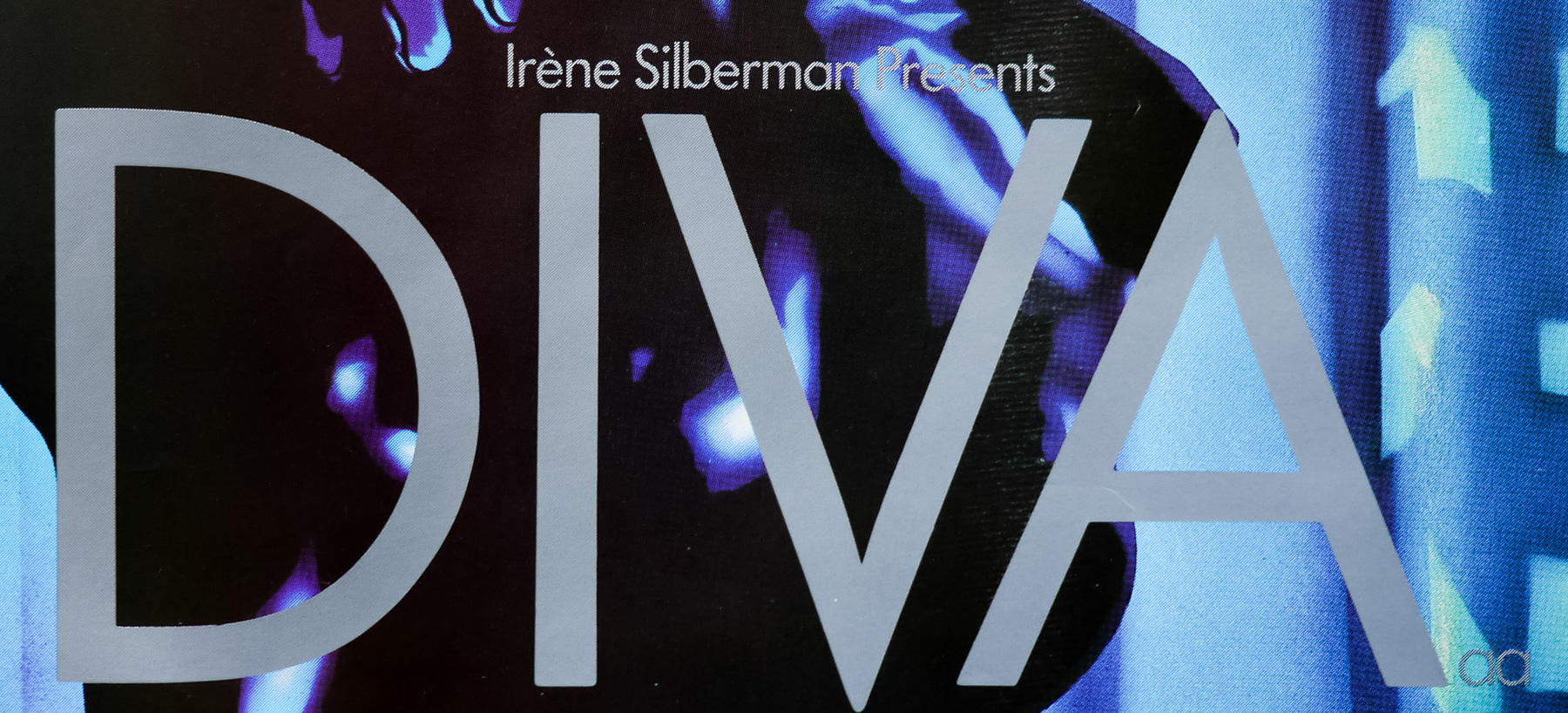
This is the UK quad for the release of Diva, which was the first full-length feature from Jean-Jacques Beineix, the French director whose most internationally famous film is Betty Blue (1986). Beineix is seen as the originator of the French film movement that became known as ‘cinéma du look‘, which was described as prioritising style over substance and spectacle over narrative. Luc Besson (Subway, Nikita) and Leos Carax (Les Amants du Pont-Neuf) were the other key directors and their films often featured doomed love affairs, scenes in the Paris Metro and plenty of contemporary pop-culture references.

Based on the novel of the same by Swiss author Daniel Odier the film is set in Paris and tells the story of a young mild-mannered postman called Jules (Frédéric Andréi) who has an obsession with a celebrated opera singer called Cynthia Hawkins. The singer has never had one of her performances officially recorded, believing that music like hers should only exist in the moment for the audience watching. Jules attends a performance and illicitly makes a perfect recording before meeting her backstage and stealing the dress she performed in. A few days later Jules inadvertently gets drawn into a criminal conspiracy after a desperate woman on the run from hitmen, including Dominique Pinon‘s Le curé (as seen on this poster), drops a cassette into his postbag. The tape implicates the local police chief in an international smuggling ring and soon Jules has not only the hitmen after him but also a shady pair of Taiwanese men who want the recording of the opera singer. Luckily, Jules has help in the form of a mysterious bohemian called Gorodish (Richard Bohringer) and his Vietnamese-French muse Alba (Thuy An Luu).

As progenitor of the ‘cinéma du look‘ movement the film is visually stunning throughout and features excellent use of several Paris locations, including a memorable chase sequence on the Metro and a great scene inside a giant abandoned factory. The story may come second to the visuals but it’s still an excellent watch and rightfully garnered plenty of critical plaudits on its release in France and then later in the US and the UK.

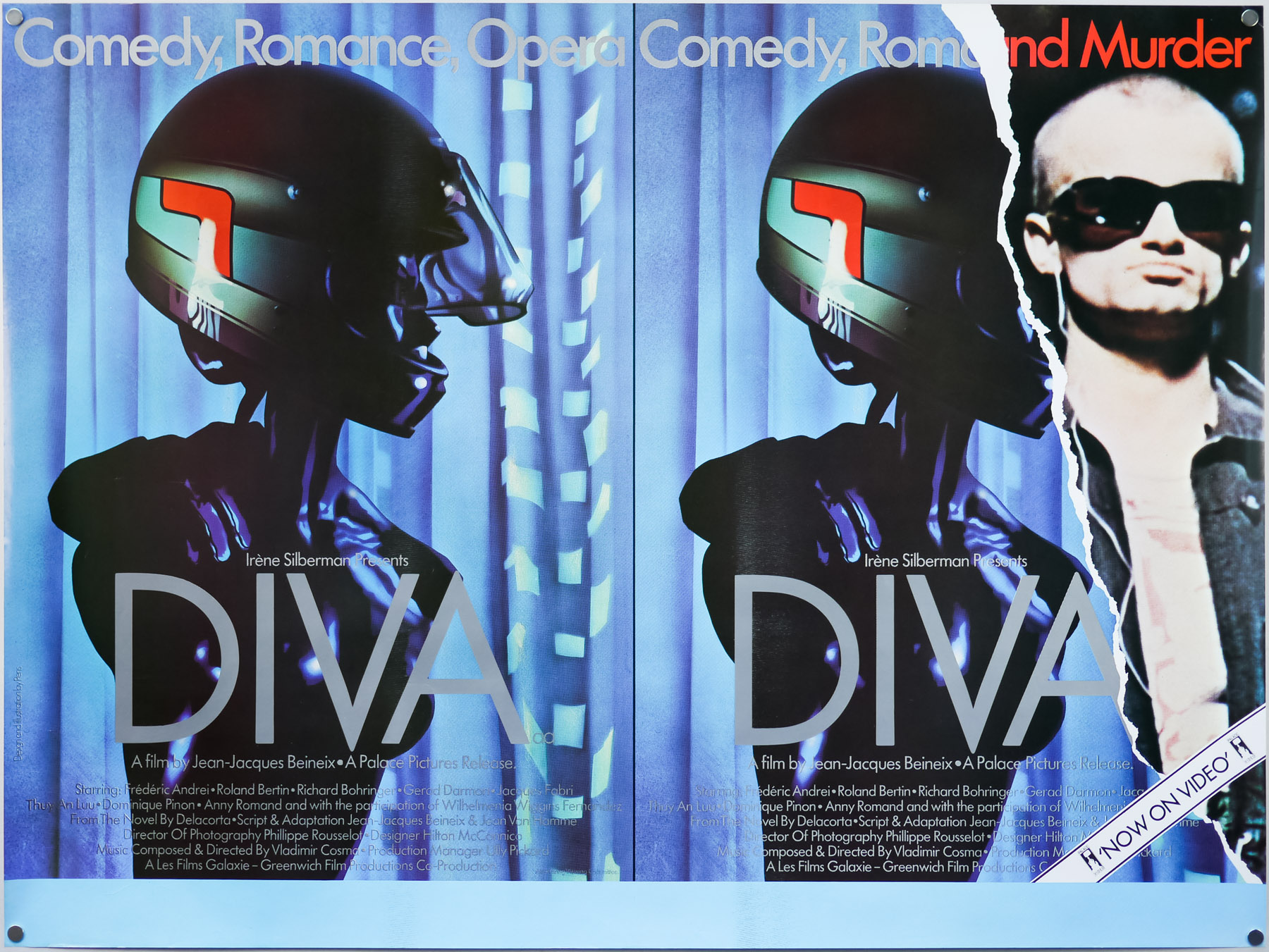
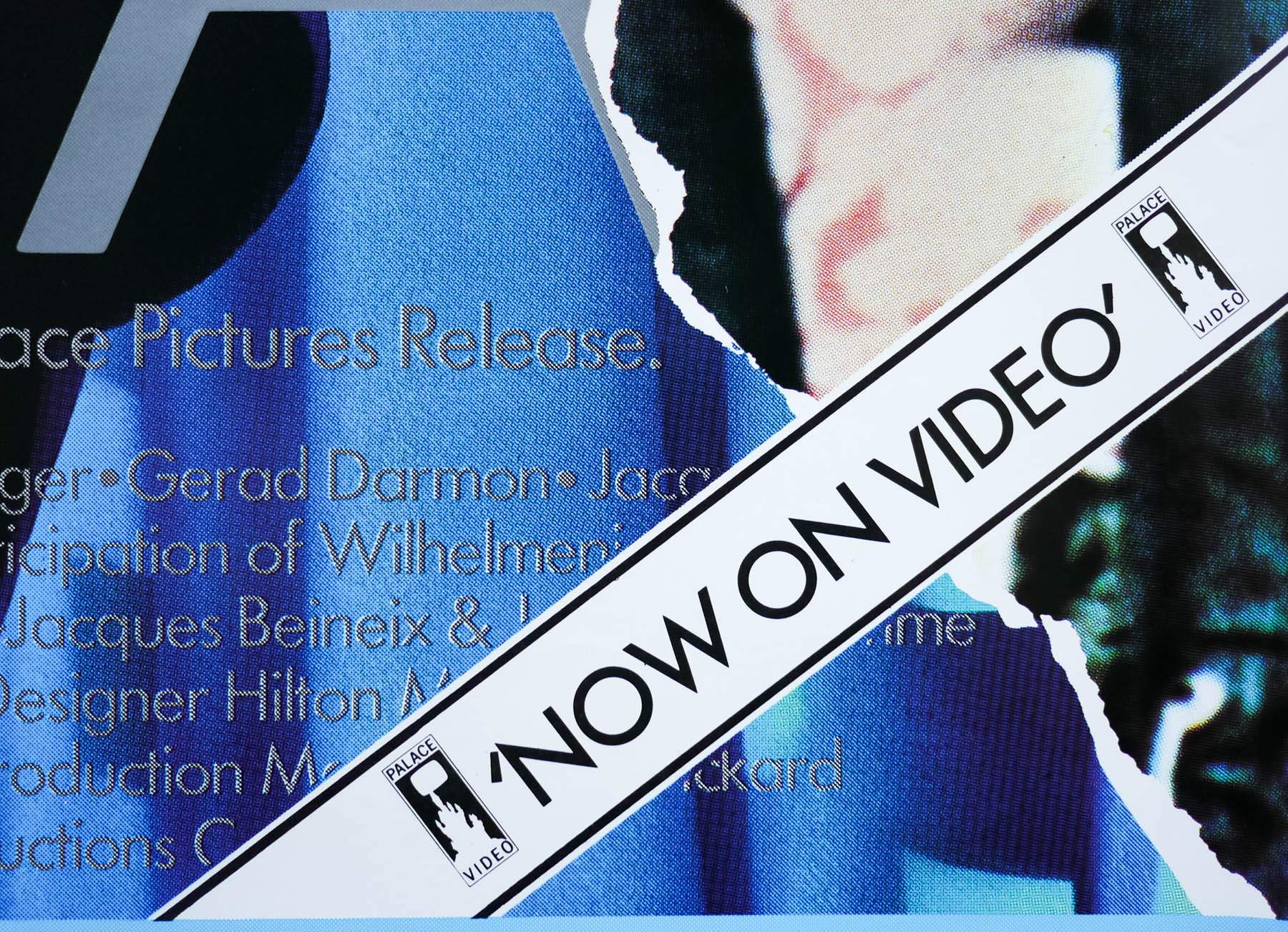
This UK quad was printed for the legendary British distribution (and later production) company Palace Pictures and, like their quad for Evil Dead, features a flash indicating that the film was available on video. I believe the first time this film was released in the UK was in 1982 and it’s likely that Palace gave the film a limited cinema release as well as making it available on VHS. Friend of the site John Costello confirmed that the film received a release on VHS on September 25th 1982.

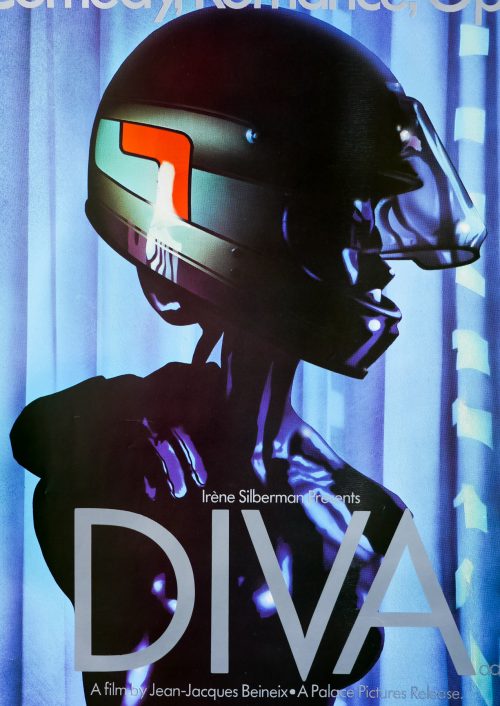
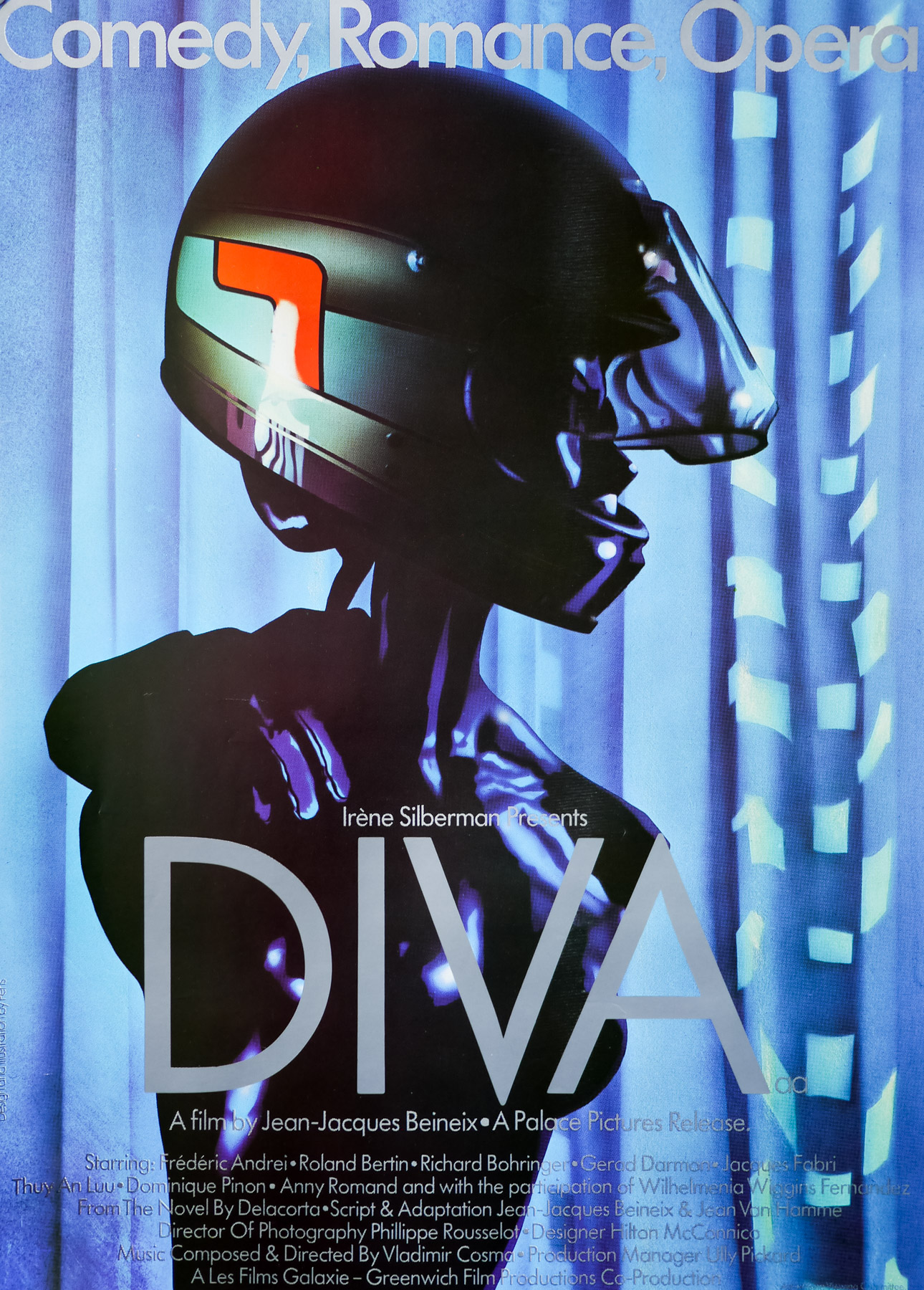
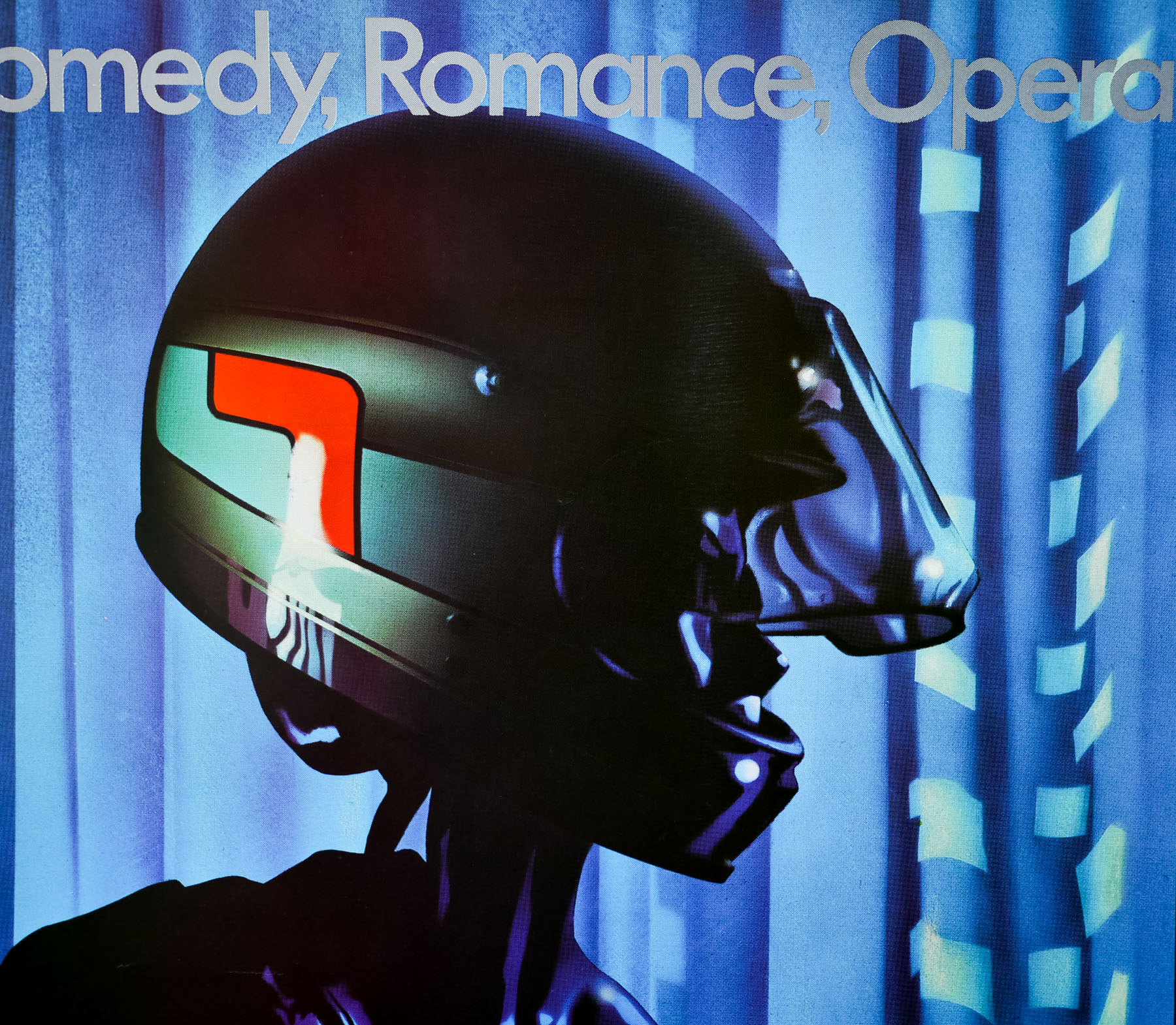
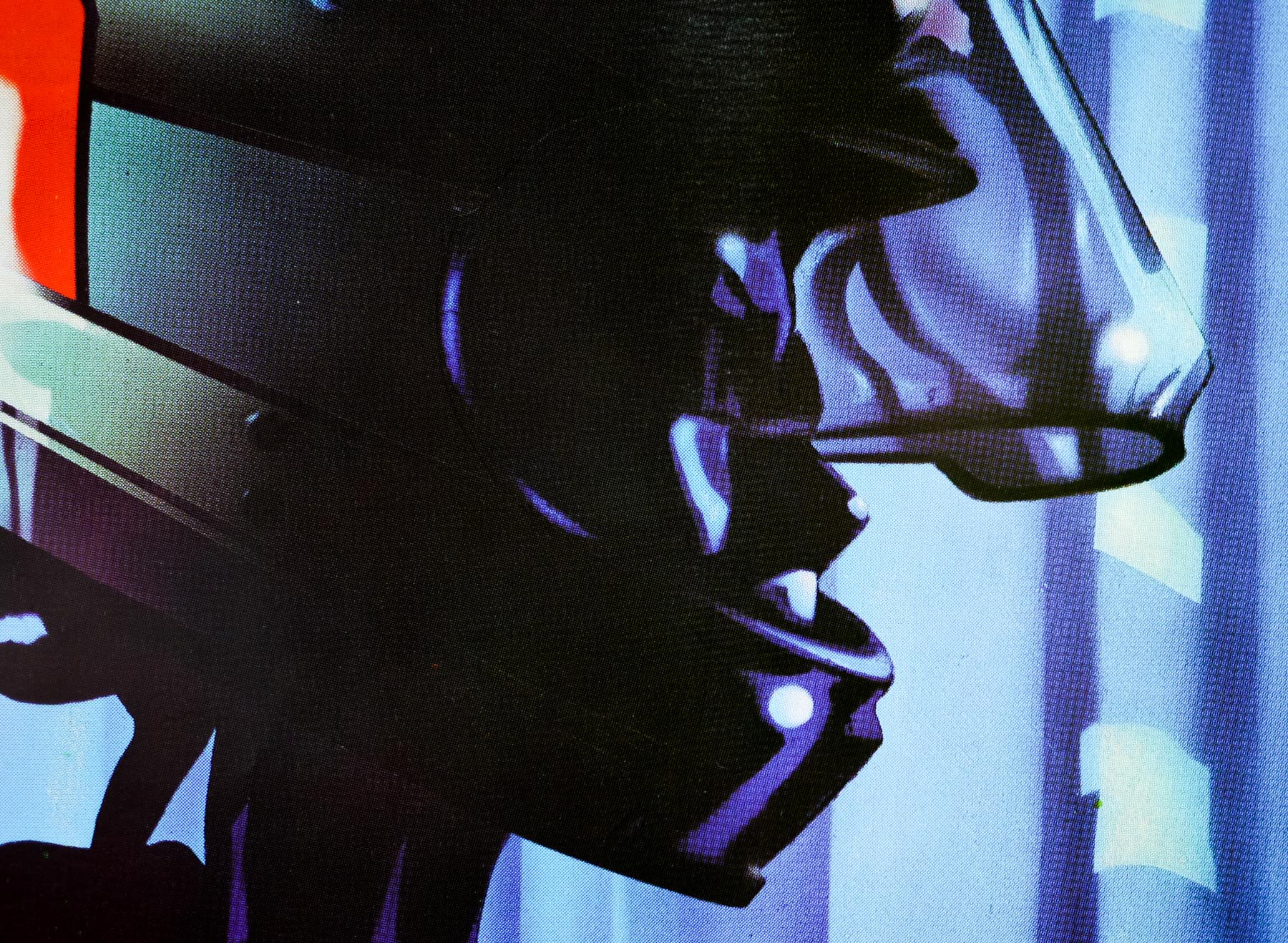
The design and illustration of the poster, which is actually of a shot in the film where Jules’ bike helmet is seen on a mannequin, is credited on the poster to ‘Pens’, about whom I’ve been unable to find any details. If anyone knows more about the designer I’d appreciate the info.

Eaten Alive / quad / UK

19.02.16

Poster Poster
Title
Eaten Alive
AKA
Mangiati vivi! (Italy - original title) | Doomed to Die (USA) | The Emerald Jungle (USA - video)
Year of Film
1980
Director
Umberto Lenzi
Starring
Robert Kerman, Janet Agren, Ivan Rassimov, Paola Senatore, Me Me Lai, Fiamma Maglione, Franco Fantasia, Franco Coduti, Alfred Joseph Berry, Michele Schmiegelm, Mel Ferrer
Origin of Film
Italy
Genre(s) of Film
Robert Kerman, Janet Agren, Ivan Rassimov, Paola Senatore, Me Me Lai, Fiamma Maglione, Franco Fantasia, Franco Coduti, Alfred Joseph Berry, Michele Schmiegelm, Mel Ferrer,
Type of Poster
Quad
Style of Poster
--
Origin of Poster
UK
Year of Poster
1981
Designer
Tom Chantrell
Artist
Tom Chantrell
Size (inches)
30 5/16" x 39 11/16"
SS or DS
SS
Tagline
Trapped in a jungle of crazy flesh eaters! | The terrifying nightmare that became a reality!

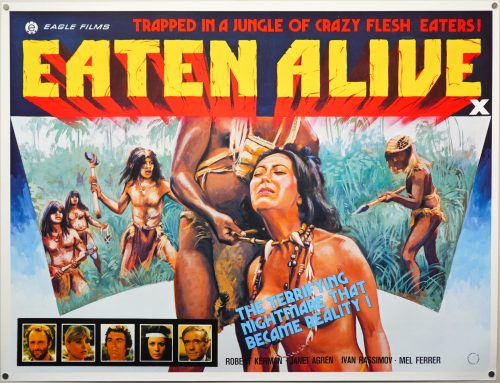
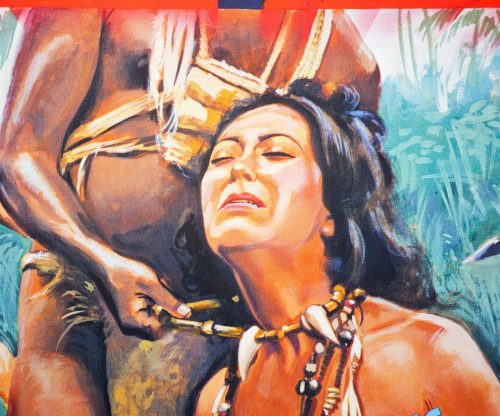
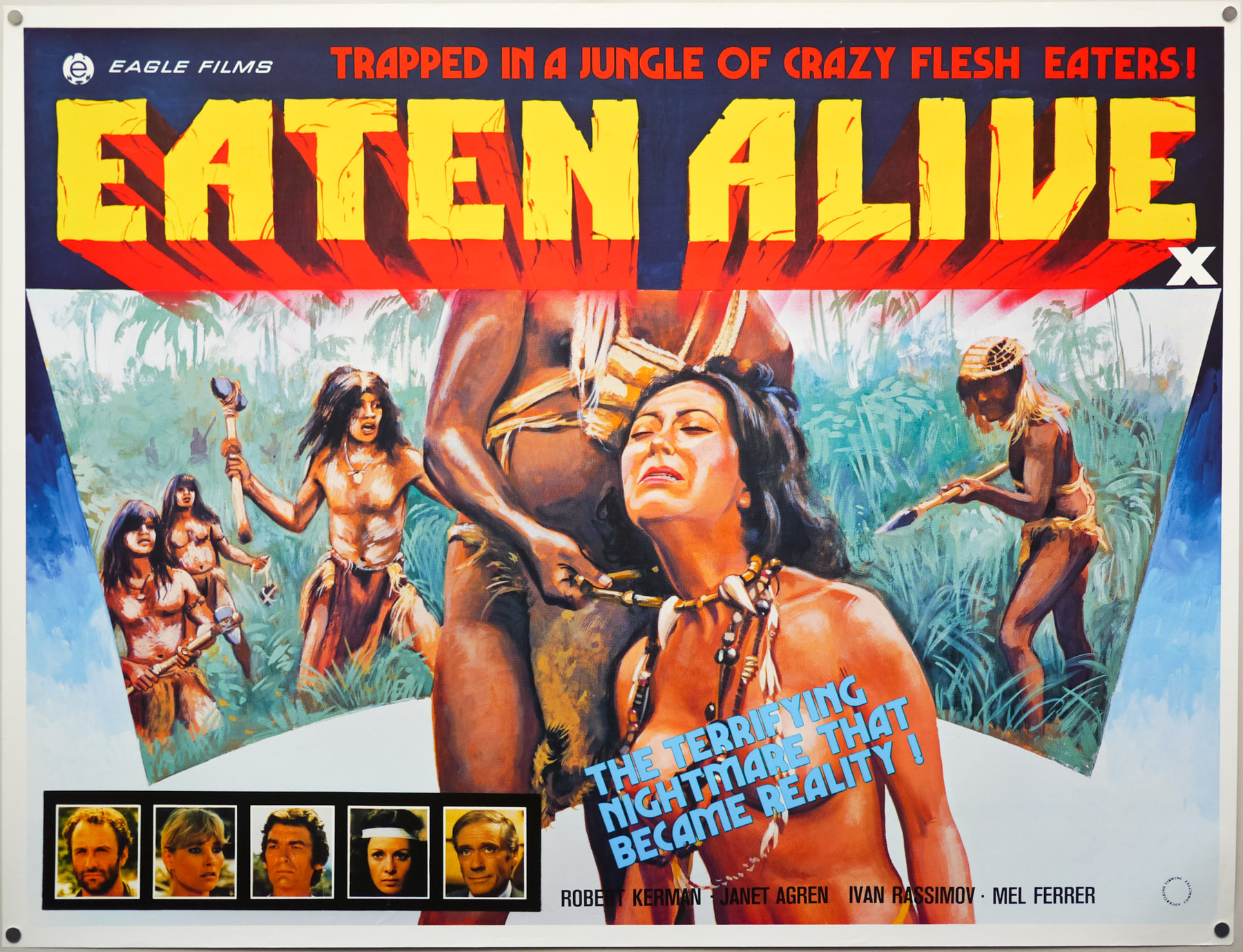
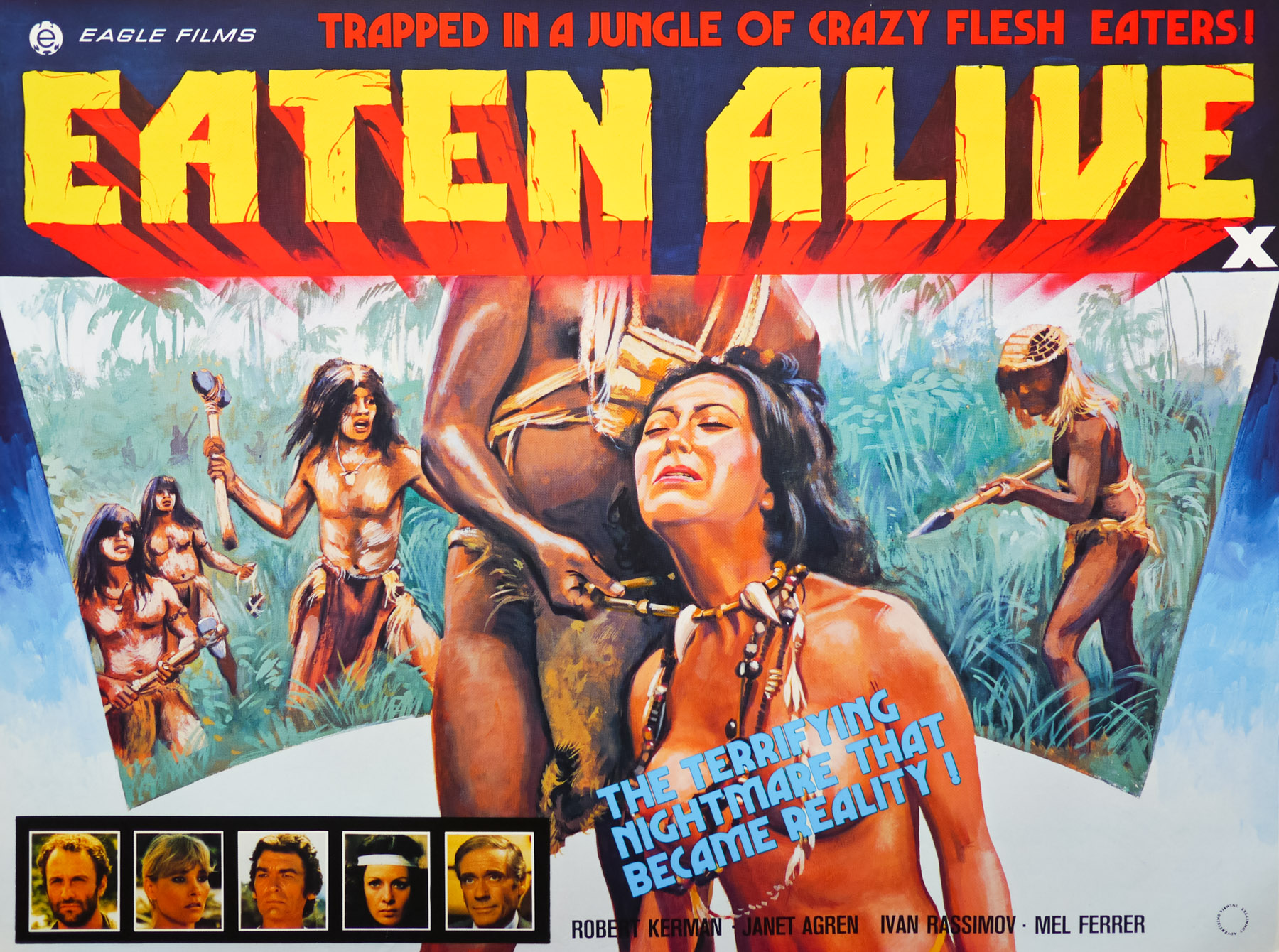
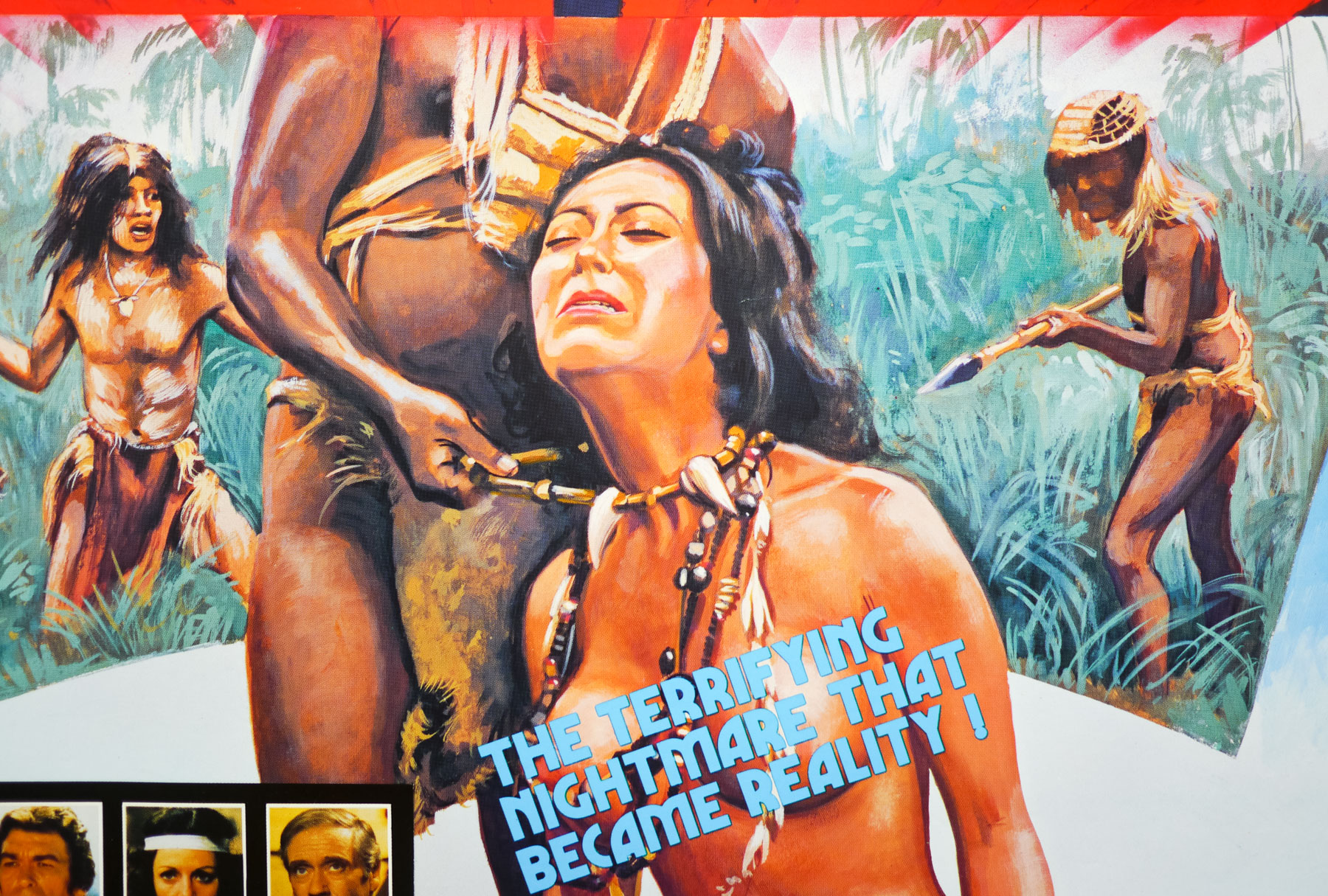
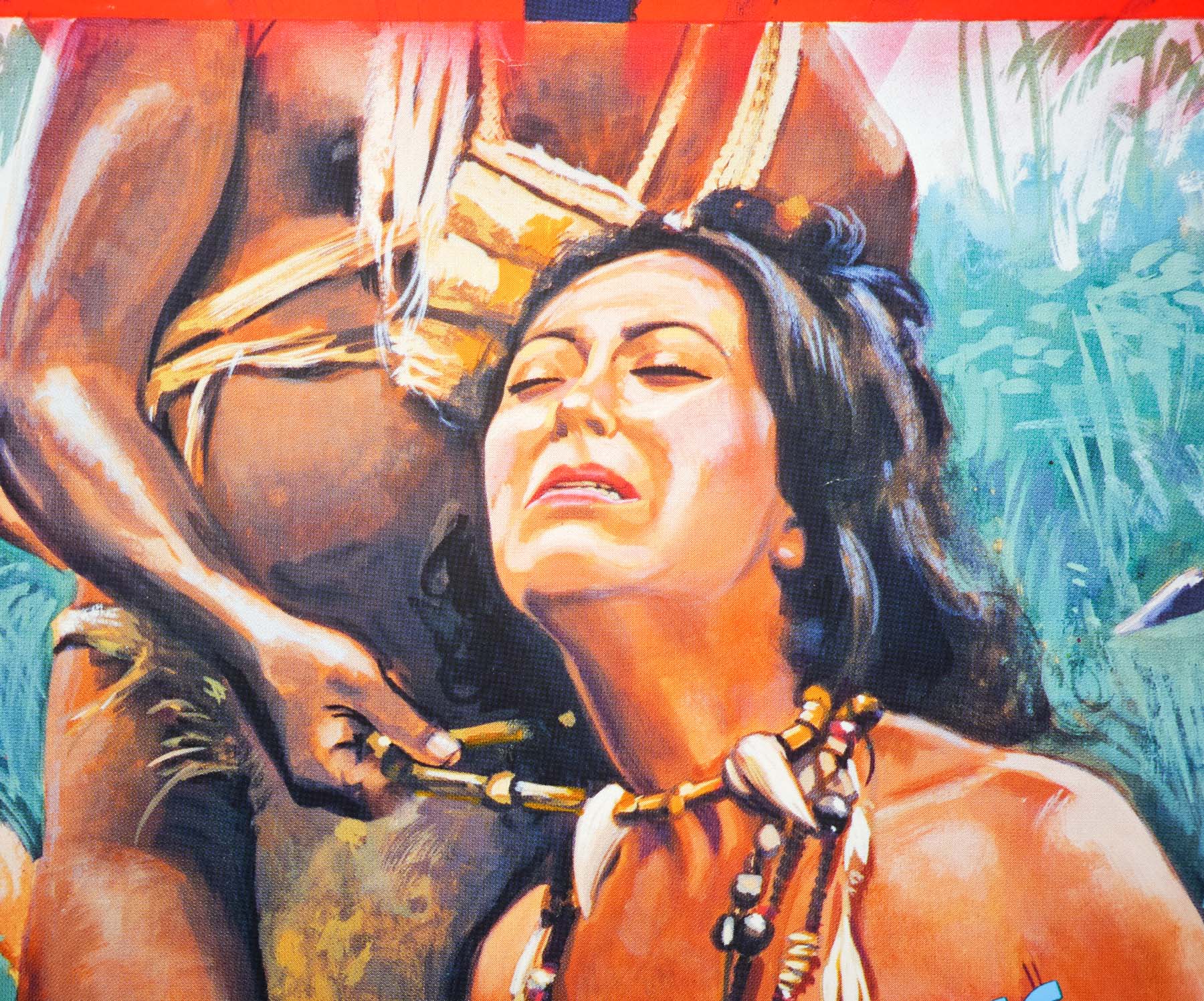
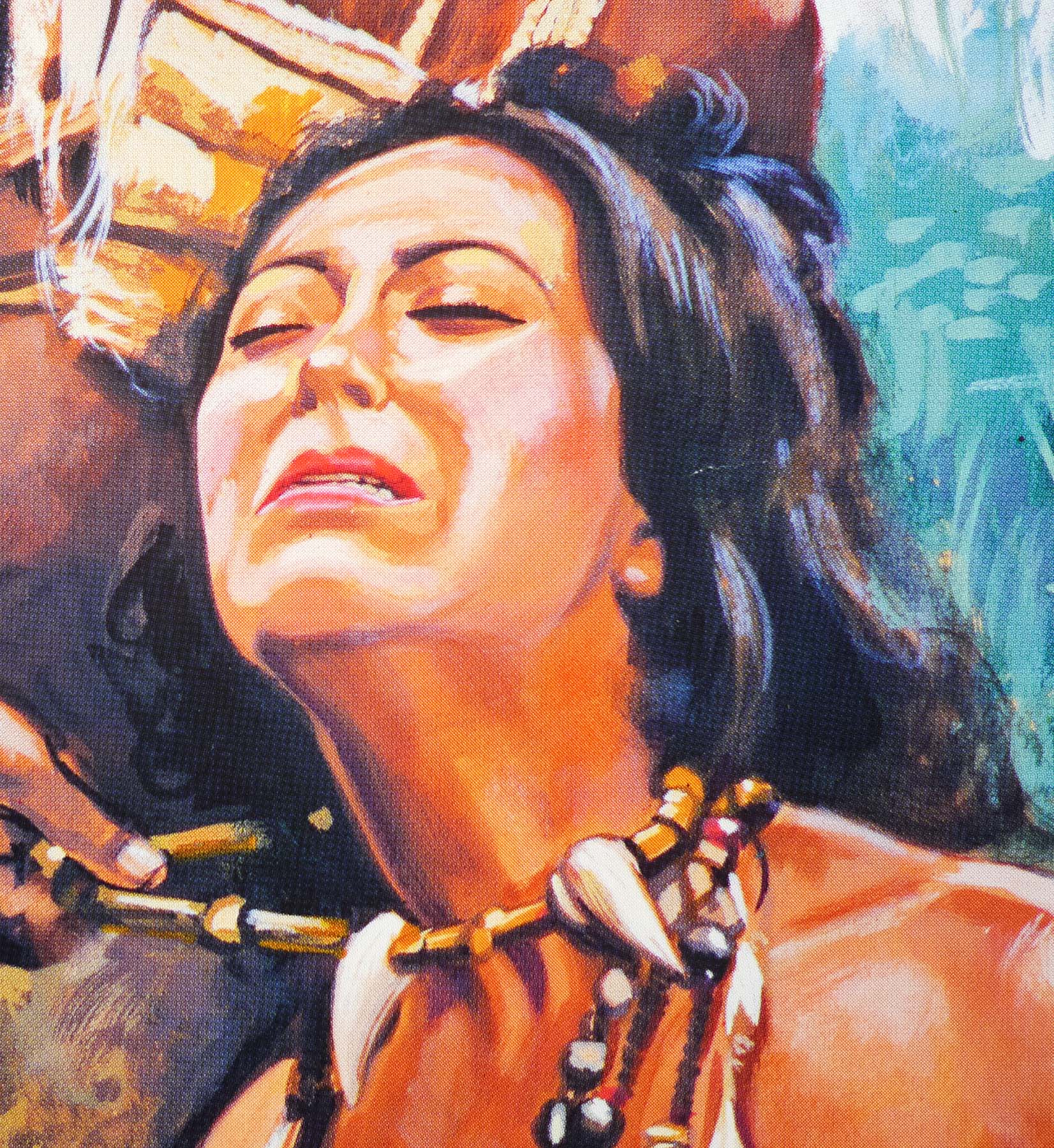
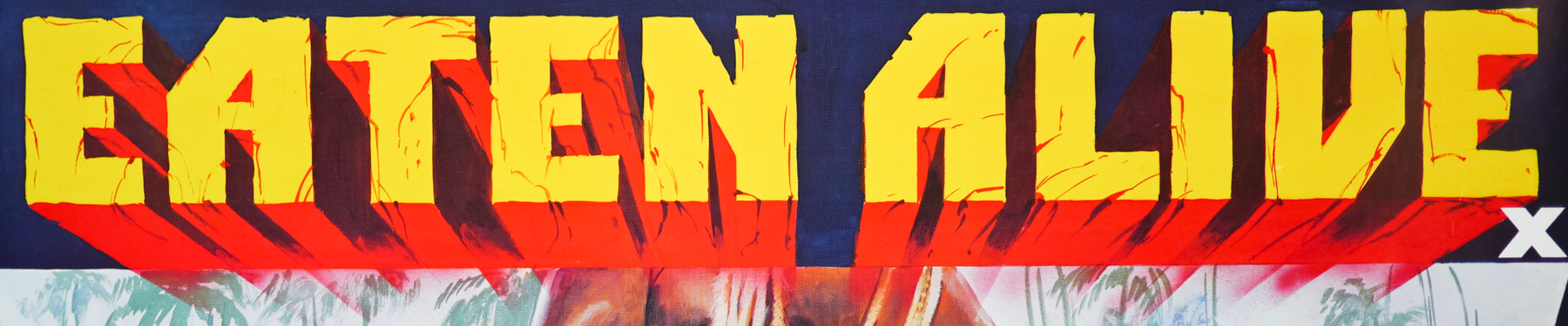
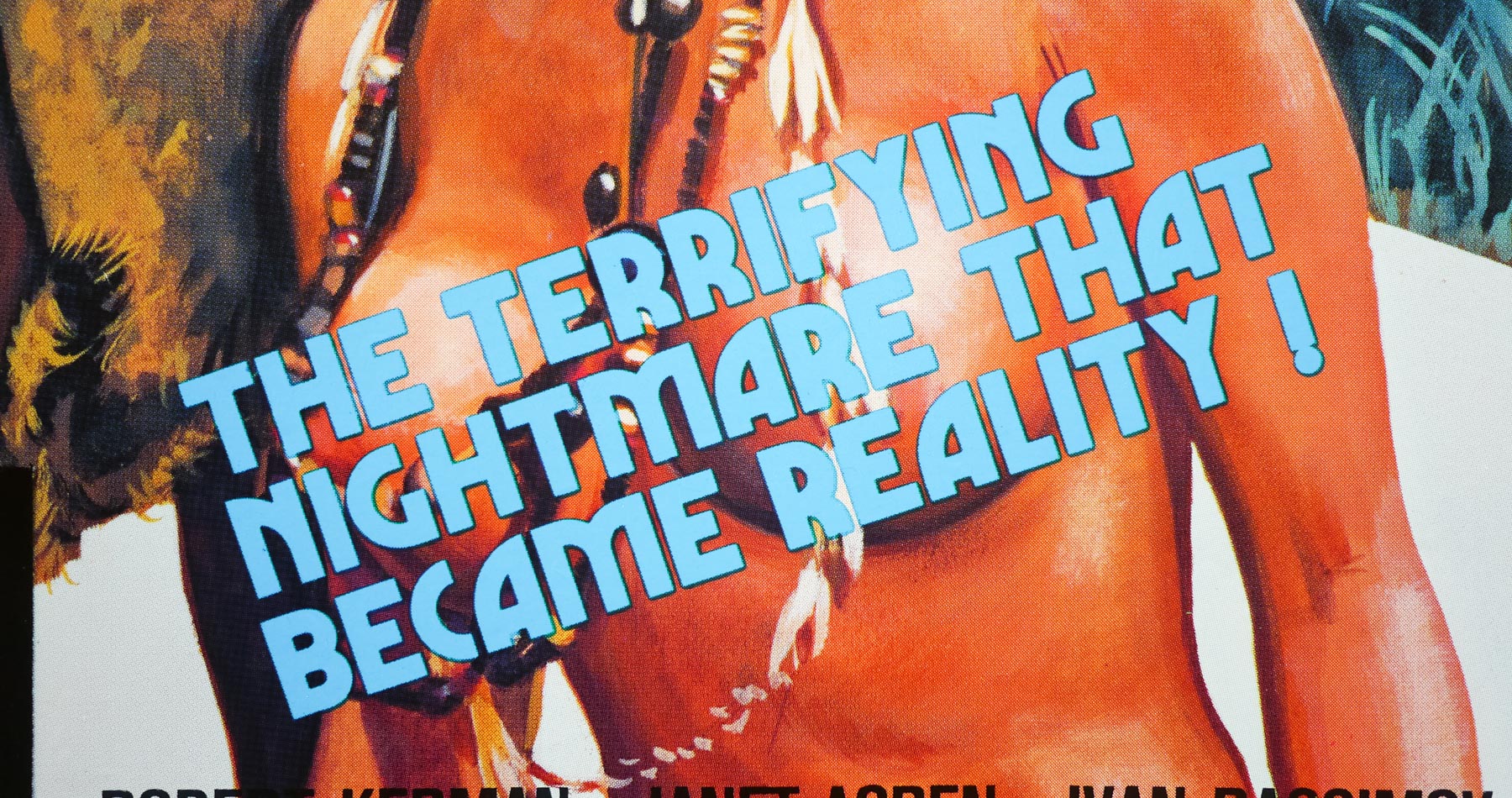
Lurid artwork by the late, great Tom Chantrell on this UK quad for the release of Italian director Umberto Lenzi‘s 1980 entry into the then burgeoning cannibal subgenre of horror, Eaten Alive! (here just Eaten Alive). This is not to be confused with Tobe Hooper’s 1976 film of the same name about a redneck killer with a pet alligator. Eaten Alive wasn’t Lenzi’s first foray into the subgenre and the director is regularly credited with kickstarting it all with his film Deep River Savages (AKA Sacrifice!) in 1972. This film was released the same year as Cannibal Holocaust, directed by fellow countryman Ruggero Deodato, which is today considered to be the pinnacle of the genre and remains notorious to this day. Not to be outdone, Lenzi filmed one of the subgenre’s most unapologetically nasty entries, Cannibal Ferox, only a year after this film was released, but by that point the subgenre was beginning to fade and only a few more obscurities were made during the 1980s.

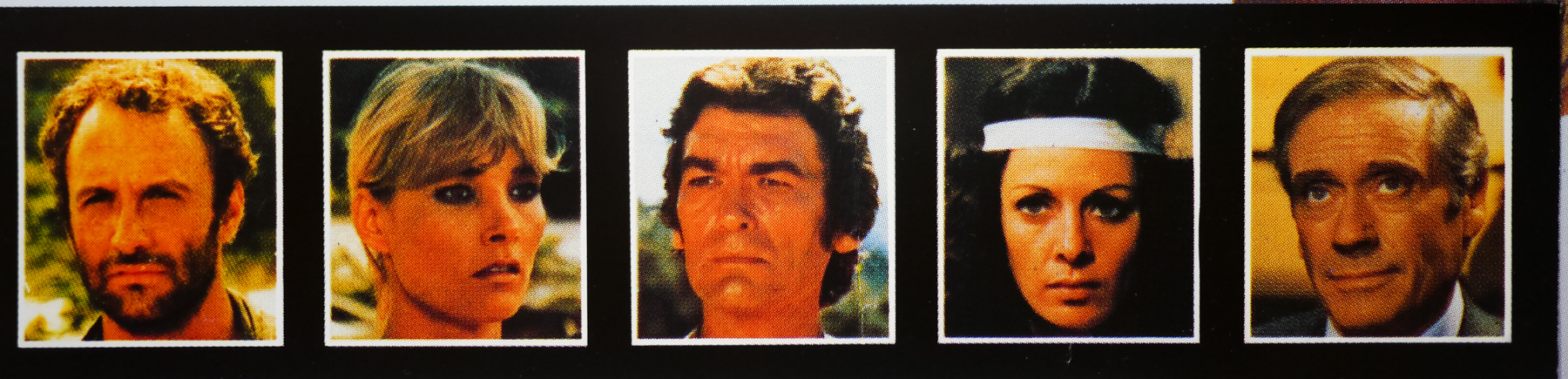
Unlike Ferox and Holocaust, Eaten Alive is more of a jungle adventure film and isn’t told in the pseudo-documentary, mondo style of the other films. Not only did Lenzi utilise stars from other cannibal films, including the American pornstar-turned-actor Robert Kerman (who appeared in Holocaust and Ferox) but he also borrowed footage from other films such as his own Deep River Savages and The Mountain of the Cannibal God. Like other entries it also depicts scenes of real animal torture and killings which have always proved controversial and are deeply uncomfortable to sit through today (at least for this viewer). Eaten Alive sees an American woman called Sheila (Swedish actress Janet Agren) who travels to remote New Guinea in search of her missing sister Diana (Paola Senatoreaccompanied by Vietnam veteran Mark (Kerman). They discover that Diana has joined a cult deep in the jungle which is being led by a Jim Jones-style guru called Jonas (cannibal flick regular Ivan Rassimov) who rules over his subjects and the local natives using physical and sexual abuse. Sheila, Mark and Diana attempt to escape from the cult’s clutches and there follows several scenes featuring all manner of barbarities.

Today Eaten Alive is considered one of the lesser cannibal films, certainly compared to Holocaust and Ferox, but it’s not without merit for gorehounds looking for a slice of sleazy entertainment. It’s arguably worth a watch as a curio of a film that would never be made today, not least because of the animal cruelty and breathtaking levels of misogyny on display.

Tom Chantrell was a celebrated British artist whose dynamic and colourful work featured on hundreds of posters over a forty year period. His official website features a great biography written by Sim Branaghan, author of the must-own British Film Posters. Chantrell illustrated many classic poster designs, including several Hammer posters such as the brilliant quad for ‘One Million Years B.C.’, and was also responsible for the iconic Star Wars quad, the artwork of which ended up being used around the globe. I have a number of other designs by him on this site. The chunky title treatment is one of the artist’s specialties and features on several of his posters, which can be seen on his official site.

The Crying Game / quad / UK

14.03.16

Poster Poster

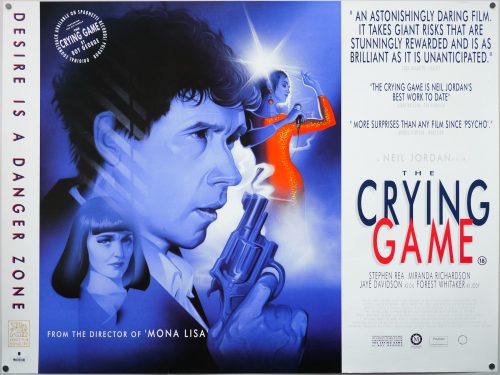
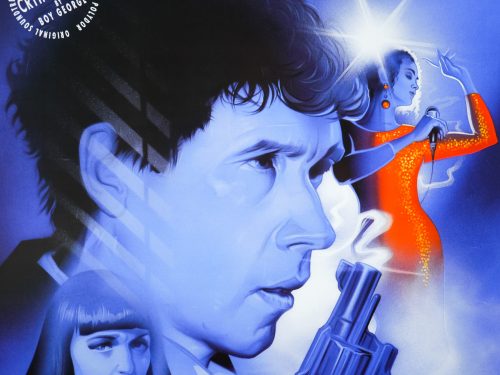
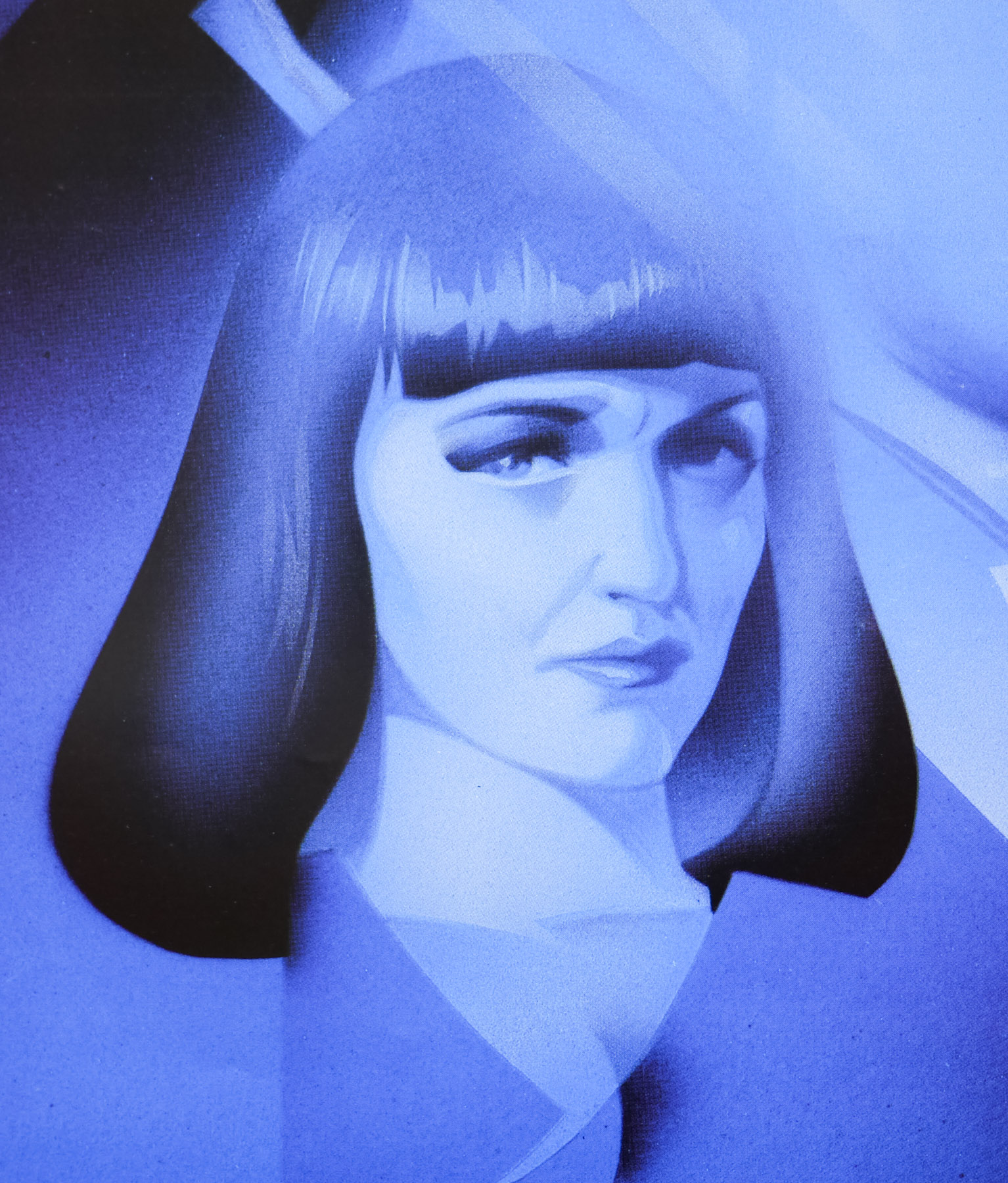
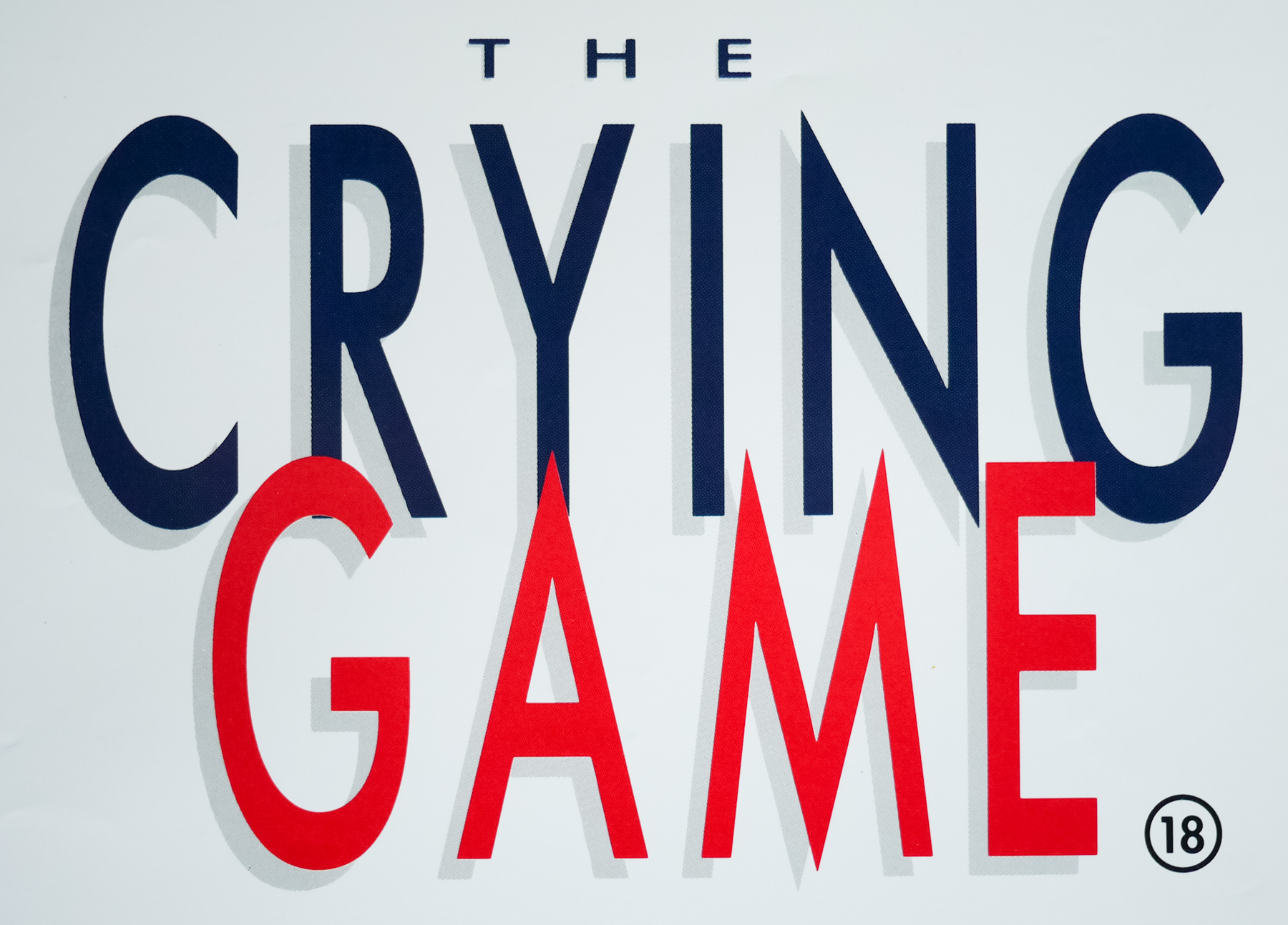
This UK quad poster for the release of Neil Jordan‘s 1992 drama The Crying Game is notable for marking the end of an era of British film posters featuring painted artwork. As Sim Branaghan writes in his must-own book British Film Posters: An Illustrated History, ‘By the time this [quad] appeared in 1992, illustration on British posters was effectively dead.’ After this time it was a rare exception that a film wasn’t advertised using a photographic montage, often with the same image being used around the globe to promote a film.

The production company behind the film, Palace Pictures, had worked with Jordan on other features, including Mona Lisa and The Company of Wolves and had regularly worked with artists and illustrators when it came to the posters for the films they released. Celebrated artist Graham Humphreys received his big break into working as an illustrator for film posters when he was asked to paint the artwork to be used on the quad for The Evil Dead, which Palace were distributing in the UK. For more details see the Film on Paper interview with Humphreys which can be read here.

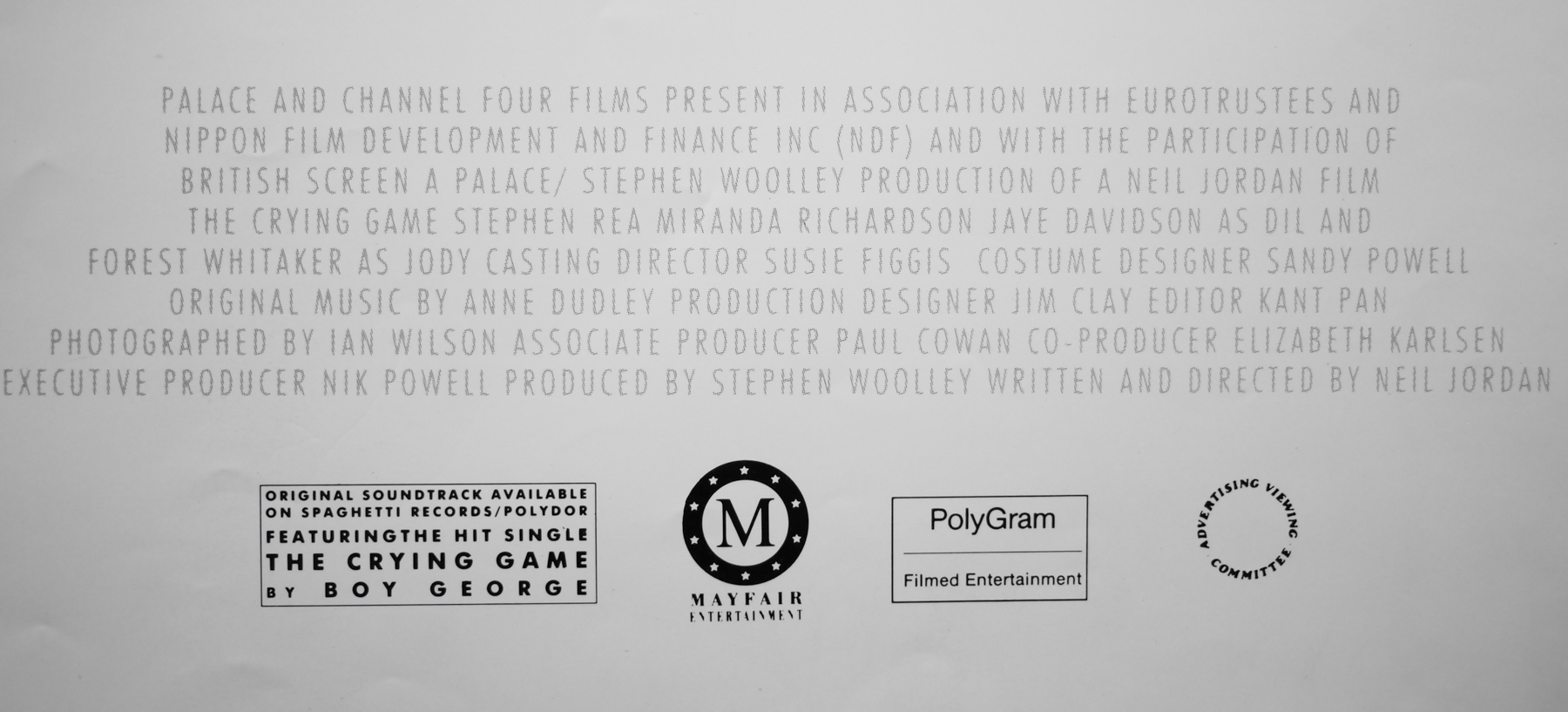
The Crying Game was written by Jordan (he would later win an Academy Award for the screenplay) and stars Stephen Rea as a member of an IRA crew who kidnap a British soldier called Jody (Forest Whitaker) by luring him into a wood with the promise of sex from one of their squad, Jude (Miranda Richardson). The group demand the release of imprisoned IRA members and threaten to execute Jody if their requests are not met.

Fergus and the soldier strike up an uneasy friendship, despite their differences. When the hostage situation goes horribly wrong Fergus is forced into hiding and moves to London, assuming a new identity as ‘Jimmy’. There he looks up Jody’s girlfriend Dil (Jaye Davidson) whom Jody had spoken a lot about and eventually the pair form a tentative relationship. But there’s more to Dil than Fergus realises and the danger that his past life will be uncovered by her grows ever larger.

The film was met with critical praise and glowing reviews around the globe but failed to perform at the UK and Ireland box-office, something that is now felt to be due to its heavy political undertones and the public’s attitude towards the IRA. It was released in the US by Miramax and became a sleeper hit over the following weeks. As hinted at by one of the press quotes on the poster, it’s one of those films that has a plot twist so significant that it becomes the main reason people are aware of and discuss the film (see also ‘The Sixth Sense’).


The Passage / quad / UK

06.06.16

Poster Poster

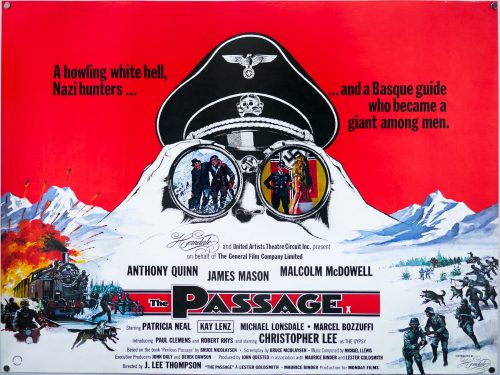
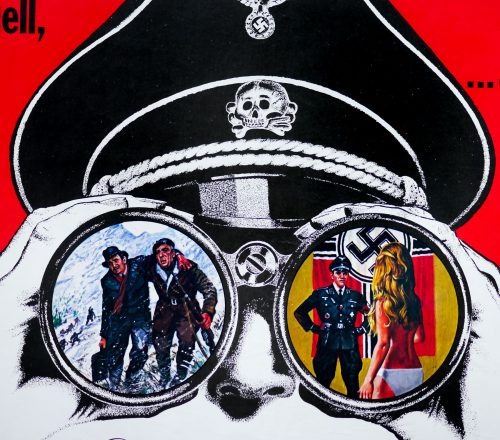
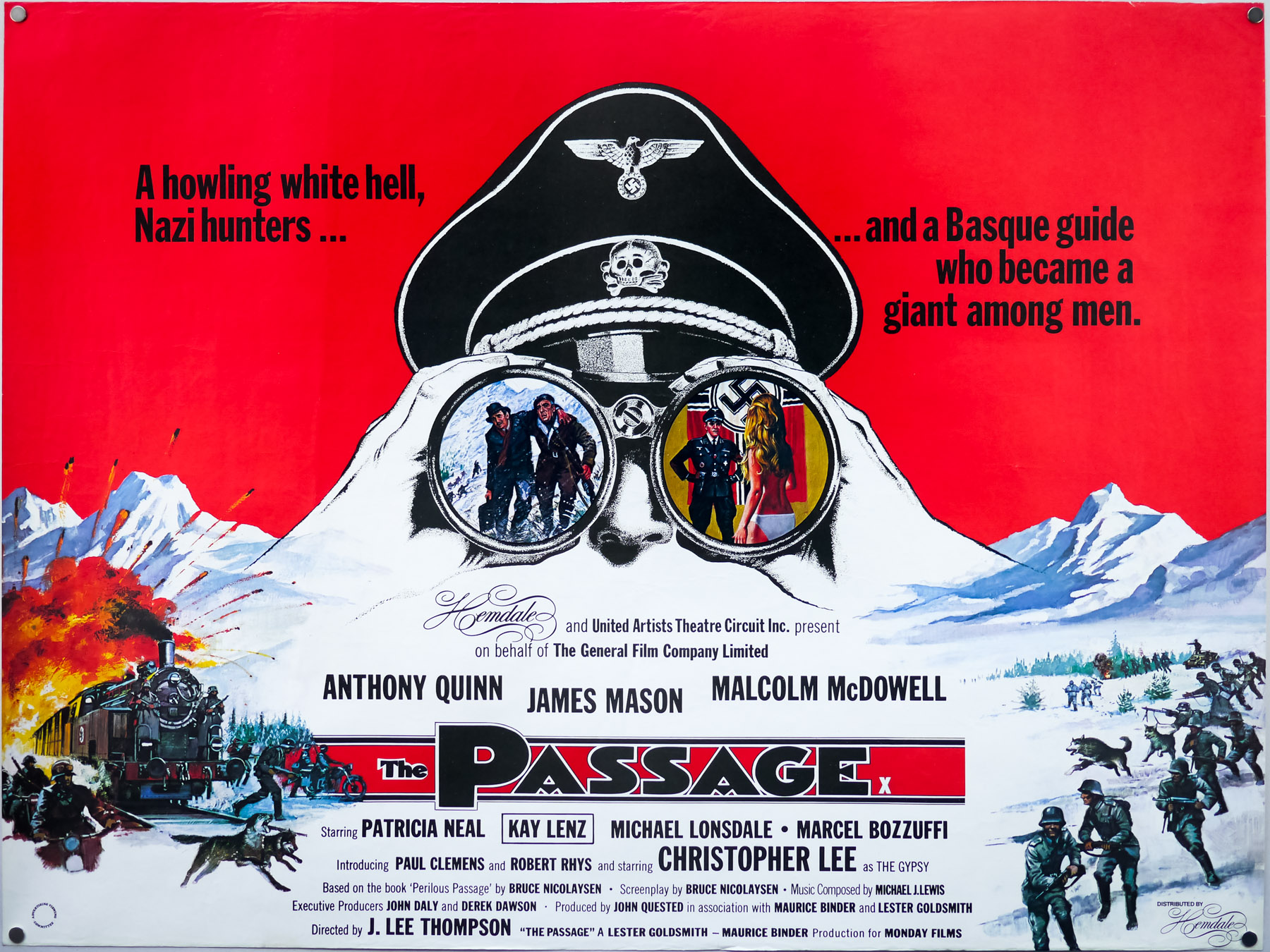
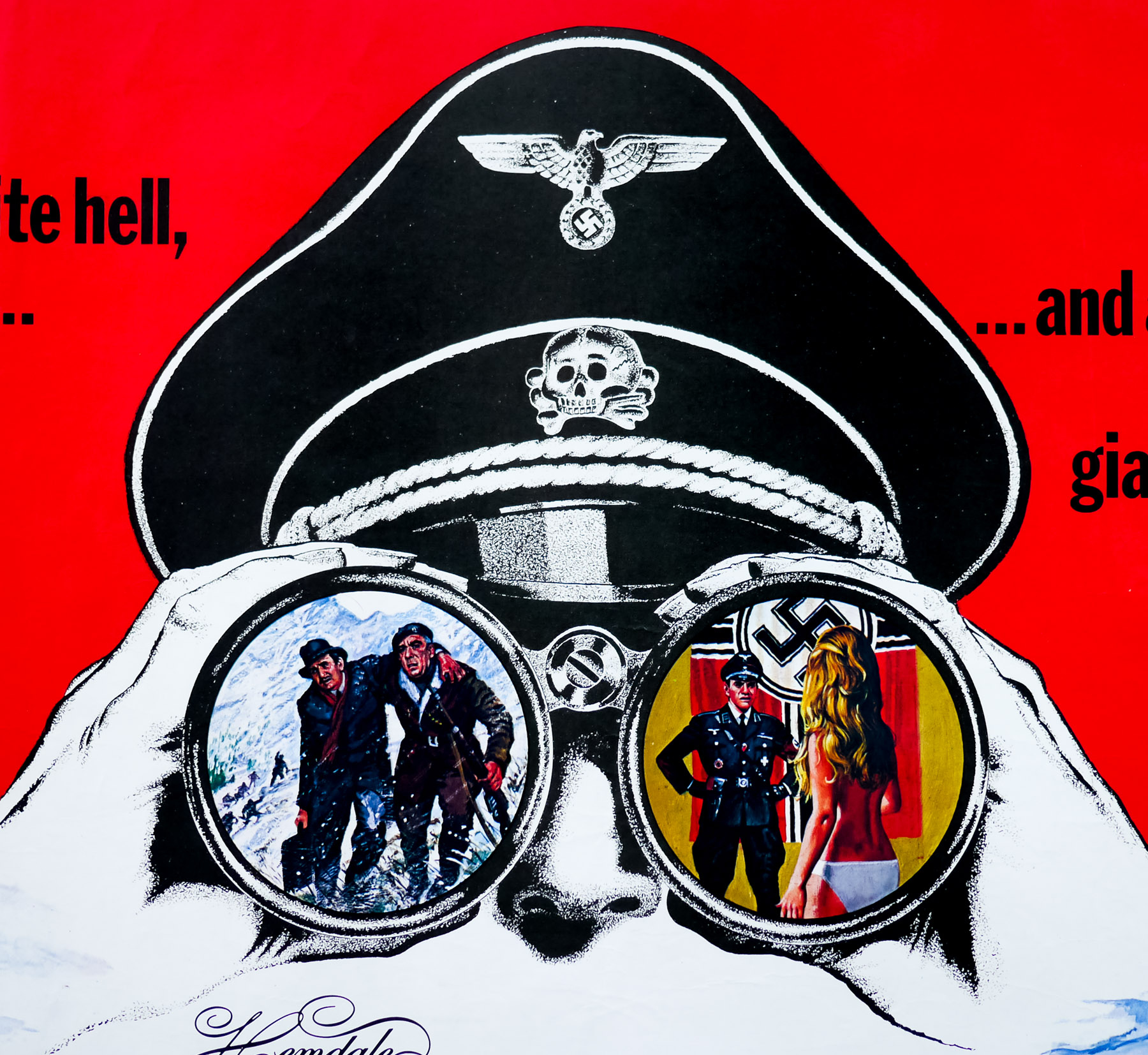
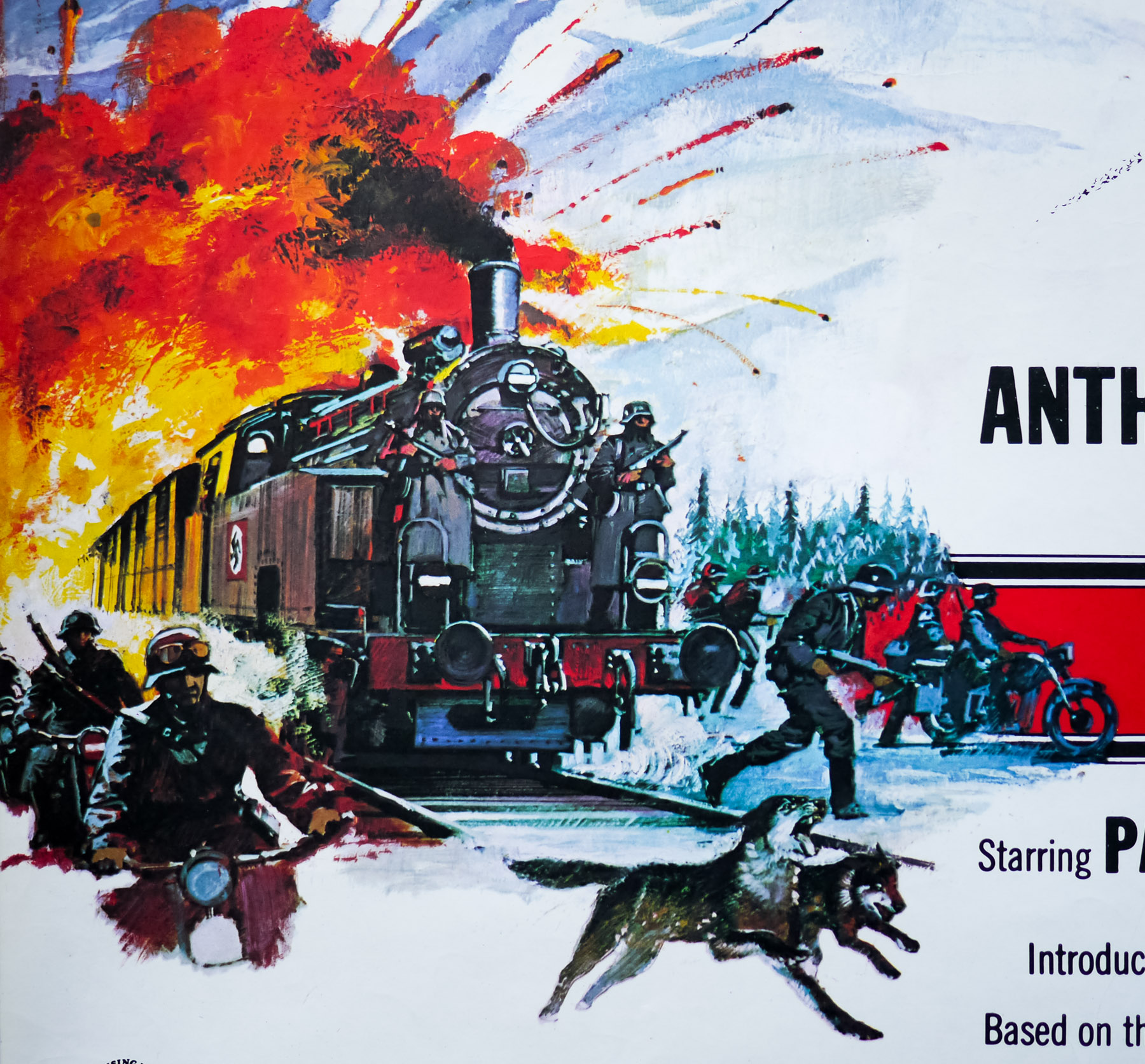
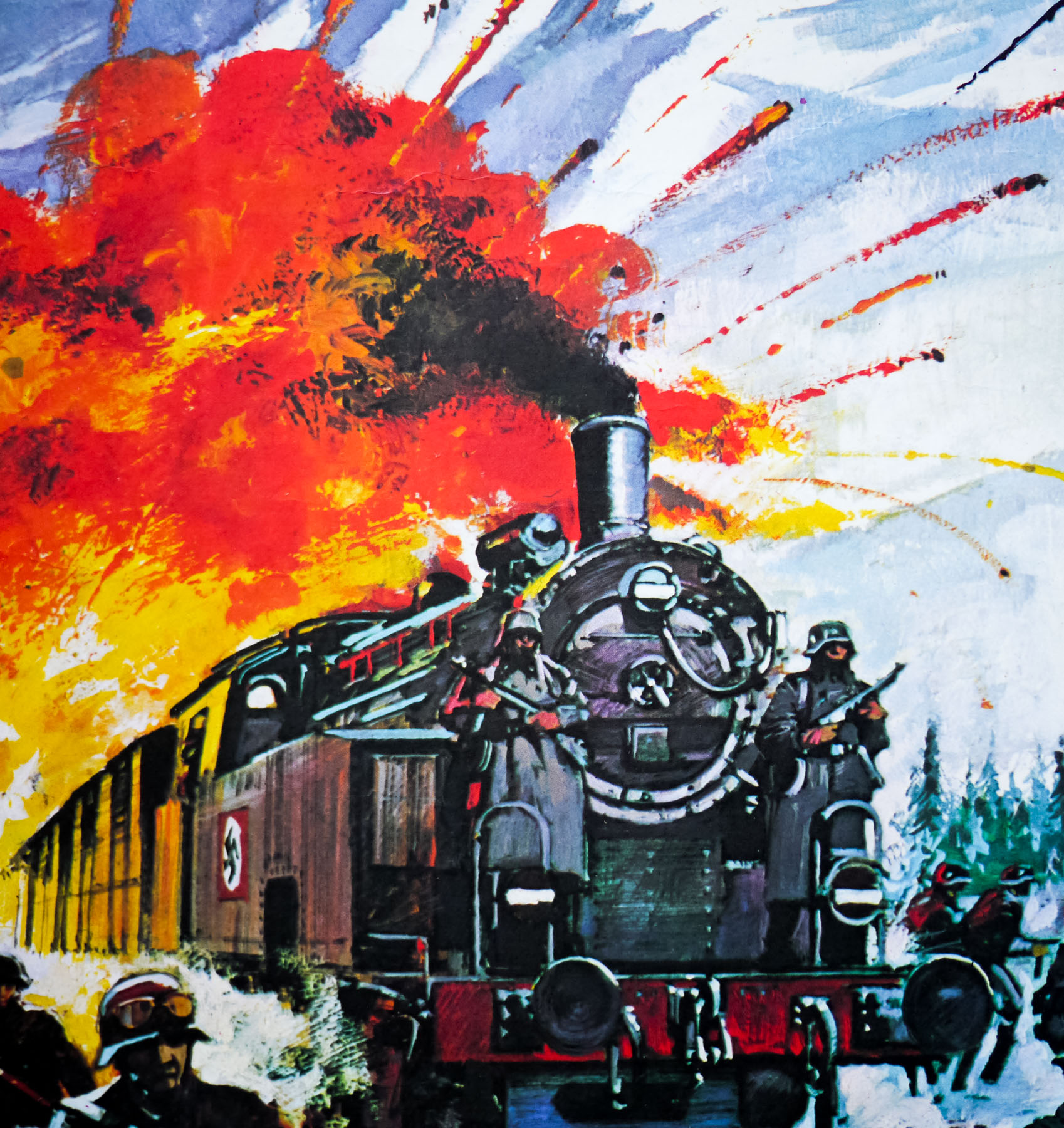
Colourful and typically dynamic artwork by Brian Bysouth features on this UK quad for the largely forgotten British war film The Passage (1979). Based on the novel Perilous Passage by Bruce Nicolaysen (who also wrote the screenplay), the film was directed by the British director J. Lee Thompson who was responsible for the classic war film The Guns of Navarone, as well as multiple films headlined by Charles Bronson.

Set during World War II, the story sees a Basque farmer (played by Anthony Quinn) escort a scientist (James Mason) and his family over the treacherous Pyrenees mountains to escape the sadistic clutches of a Nazi SS officer, Captain Von Berkow (Malcolm McDowell giving an impressively over the top performance). Christopher Lee appears as a character called The Gypsy who is sympathetic to the group’s plight. Apparently the film bombed spectacularly at the US box office and was critically drubbed on release.

This British quad was created at the London-based Downtons Advertising agency by one of the principal designers, Eddie Paul, and painted by Brian Bysouth who was working as a freelancer at the time. Both men are featured in Sim Branaghan’s must-own book British Film Posters: An Illustrated History and are each responsible for several iconic British posters. The designer Eddie Paul was born in Hackney in 1920 and attended Southend School of Art, later beginning his career at Temple Art Studios before moving on to Star Illustrations on Shoe Lane, where he gained a good reputation as a scrapboard artist.

After serving in the RAF during the war, Eddie joined Pulford Publicity in 1946 and started designing film posters using crayons and coloured pencils. He worked on several successful poster campaigns during the 1960s, including El Cid (1961), The Fall of the Roman Empire (1964) and the famous quad for From Russia with Love (painted by Renato Fratini). He later joined four ex-Downton colleagues and formed the successful agency FEREF in 1968. As Sim notes in his book, ‘He was well liked and respected within the business as a gentleman’. Eddie Paul passed away from a heart attack whilst on his way to work in 1984, just shy of his retirement from FEREF.

The artwork was painted by Brian Bysouth who is one of my favourite poster artists and was responsible for many classic posters from the 1960s to the 1980s, including the final painted poster for a James Bond film, The Living Daylights (1987). In 2012 I was fortunate to meet and interview Brian for this site and the article can be read here. The other posters I’ve collected by Brian can be seen by clicking here.

A Nightmare on Elm Street 4: The Dream Master / quad / UK

20.06.16

Poster Poster

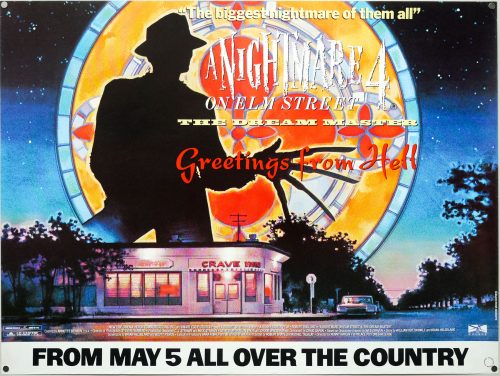
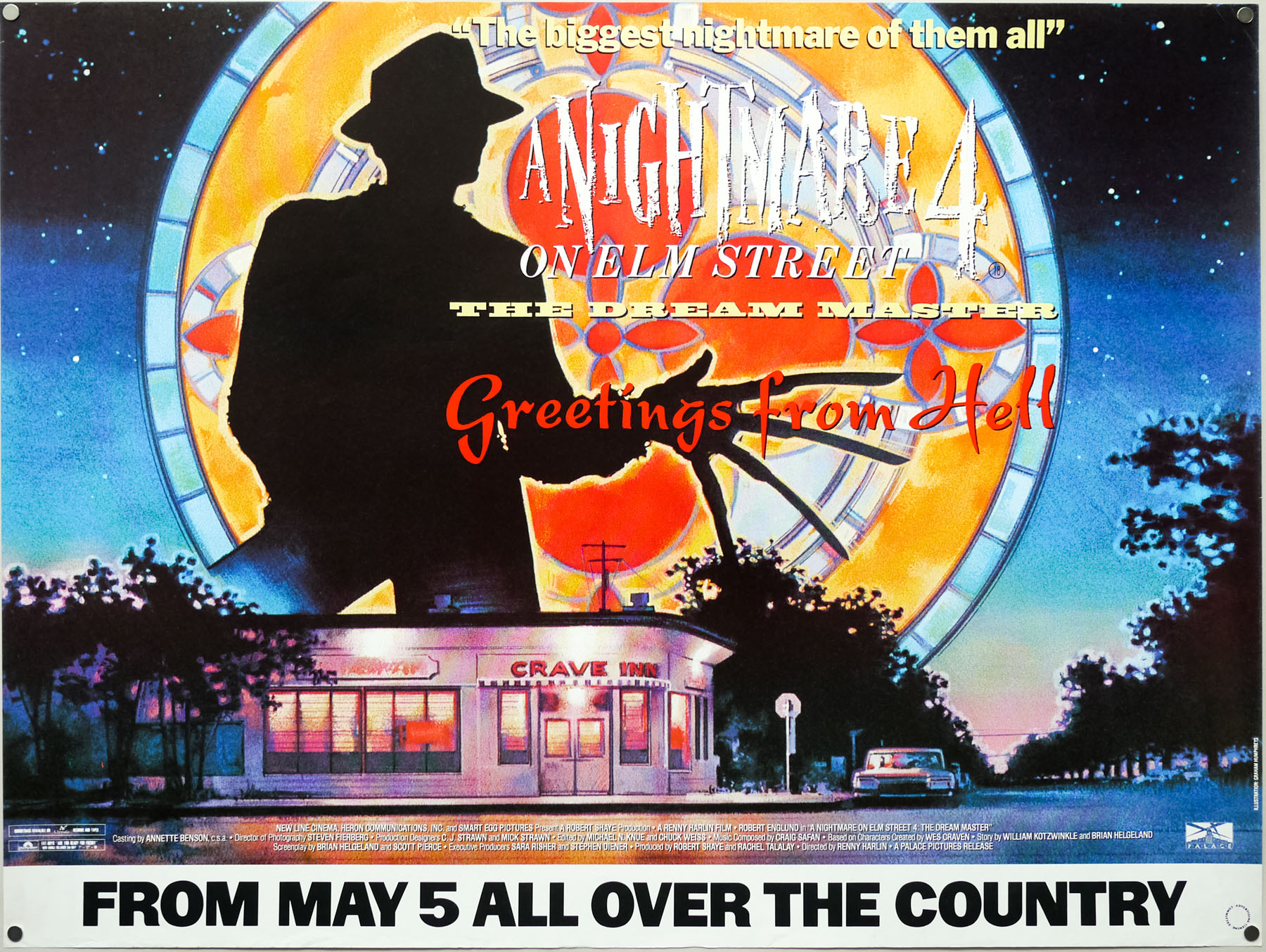
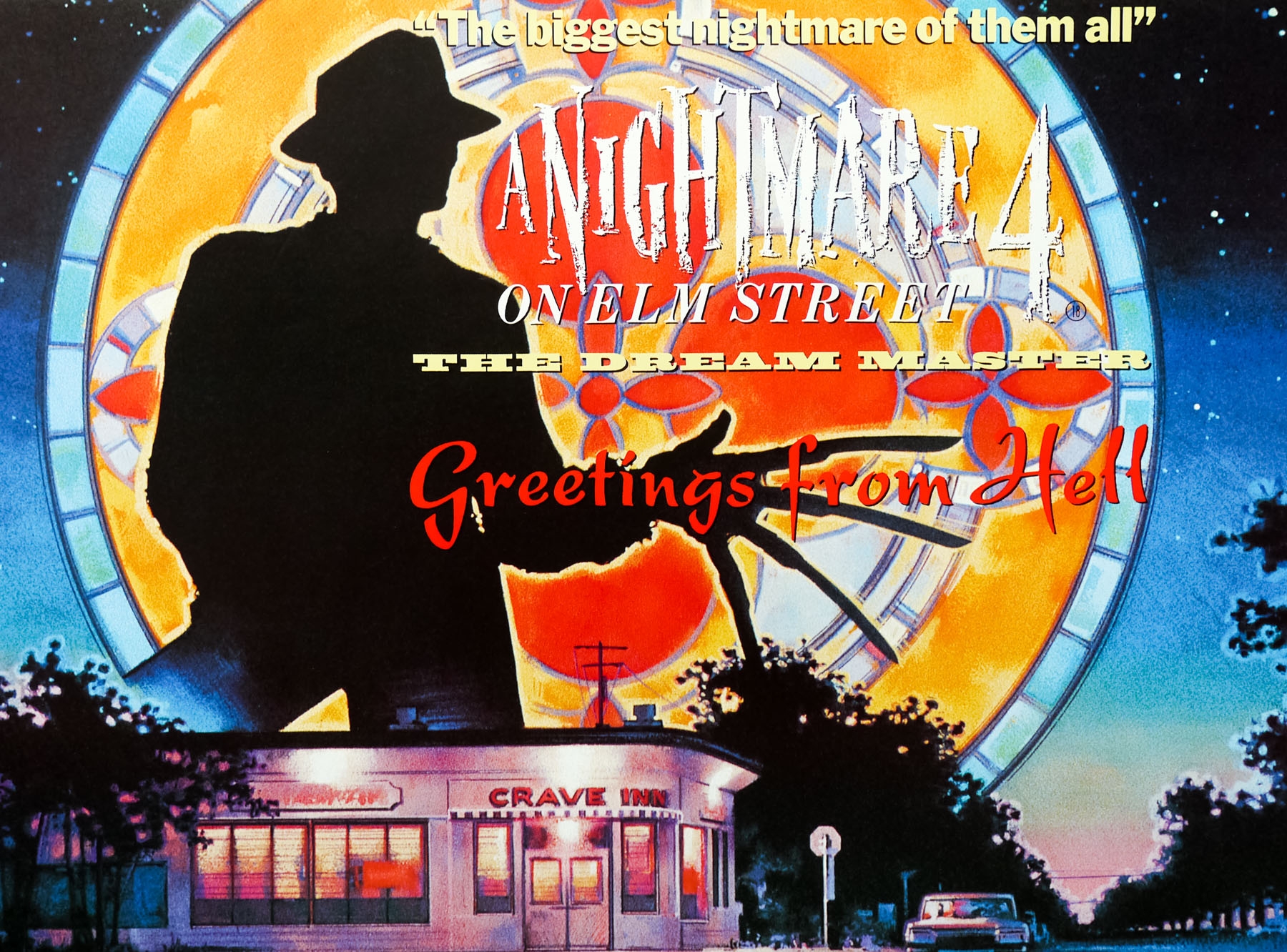
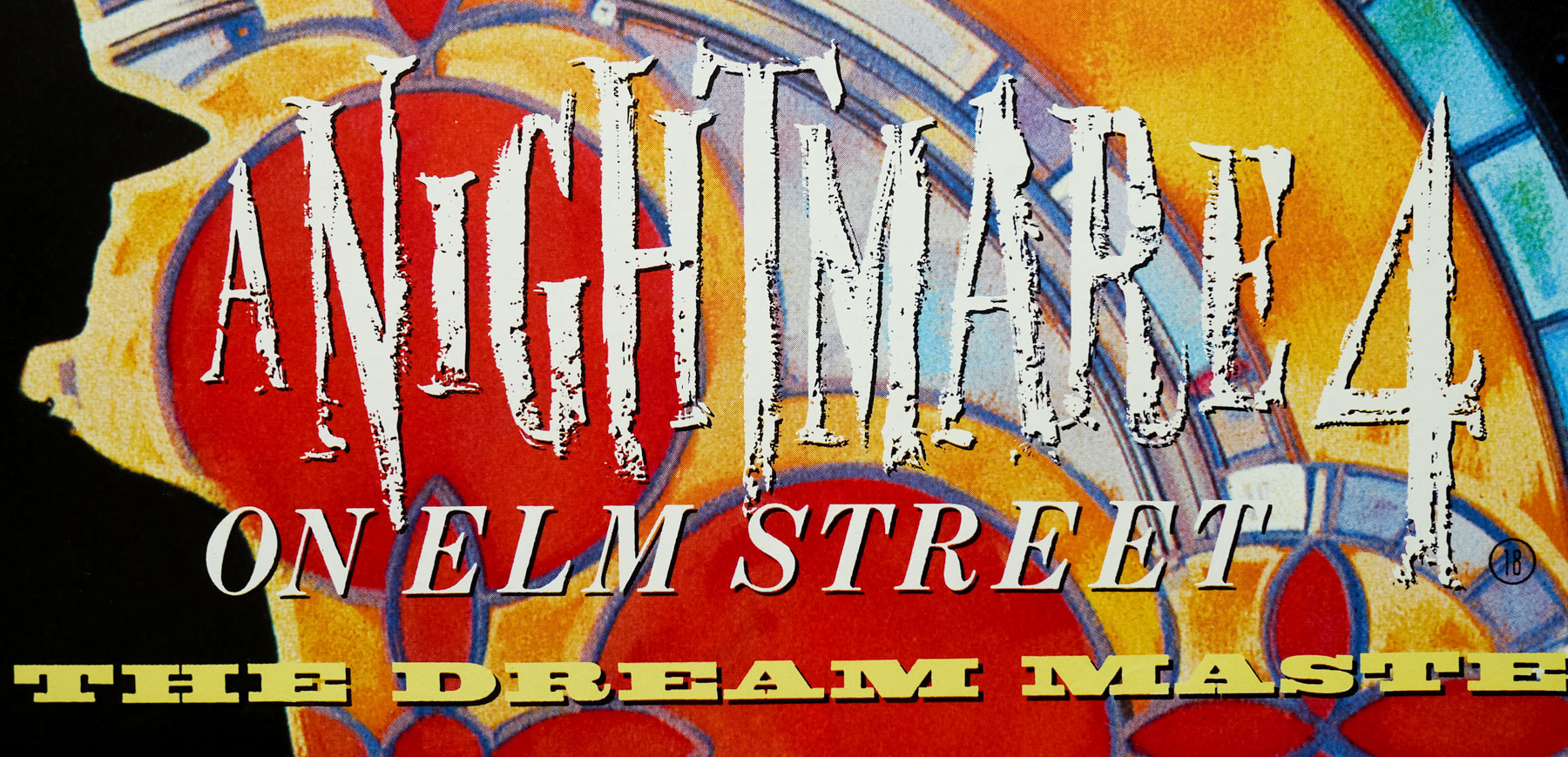
This is the UK quad for the release of the fourth entry in the ‘A Nightmare on Elm Street’ franchise (subtitled The Dream Master). The film marked a big break for Finnish director Renny Harlin who admitted to heavily petitioning the film’s producer, and founder of New Line Cinema, Robert (Bob) Shaye for the job. Harlin had previously helmed a couple of low-budget flicks (Born American and Prison) but the box-office success of this film led to him being given the job of directing the Die Hard sequel in 1990. Sadly, his career stalled towards the end of that decade following a series of box-office bombs that included Cliffhanger and Cutthroat Island.

The fourth film followed on from one of the best entries in the franchise, 1987’s Dream Warriors, which was a marked improvement over the first sequel. This was thanks in part to the involvement of the first film’s Wes Craven, who had been absent from Part 2.

The Dream Master picks up a few months after the events of the third film and features characters that had last been seen in a mental hospital, but are now living at home and seemingly back to normal. Kirsten, previously played by Patricia Arquette and here by Tuesday Knight, has the ability to bring others into her dreams. When she senses Freddy is trying to return after being banished to hell at the end of Part 3, she contacts Kincaid (Ken Sagoes) and Joey (Rodney Eastman) to warn them not to dream about Freddy in case it causes his return.

Unfortunately, Kincaid fails to heed Kirsten’s warning and he falls asleep, dreaming of the car junkyard where Freddy’s bones were previously consecrated with holy water. His dog urinates on Freddy’s bones and this, for some bizarre reason, causes his resurrection whereupon he swiftly kills Kincaid. Freddy begins to terrorize Kirsten and her group of school friends and she realises she needs to pass on her powers to Alice before she too is killed. Freddy’s plan was to use Kirsten to move onto a new set of kids after he’s killed the original group (all children of the parents who murdered him before the events of the first film) and together this new gang must try to put an end to his nefarious plans once and for all.

———-

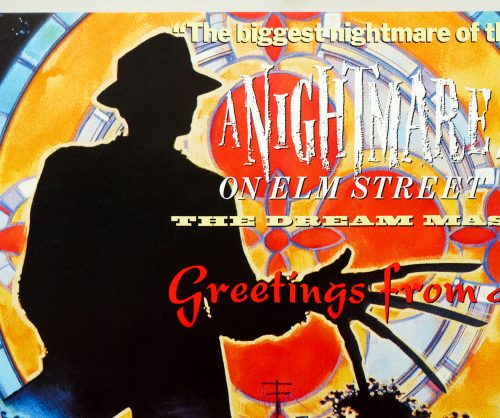
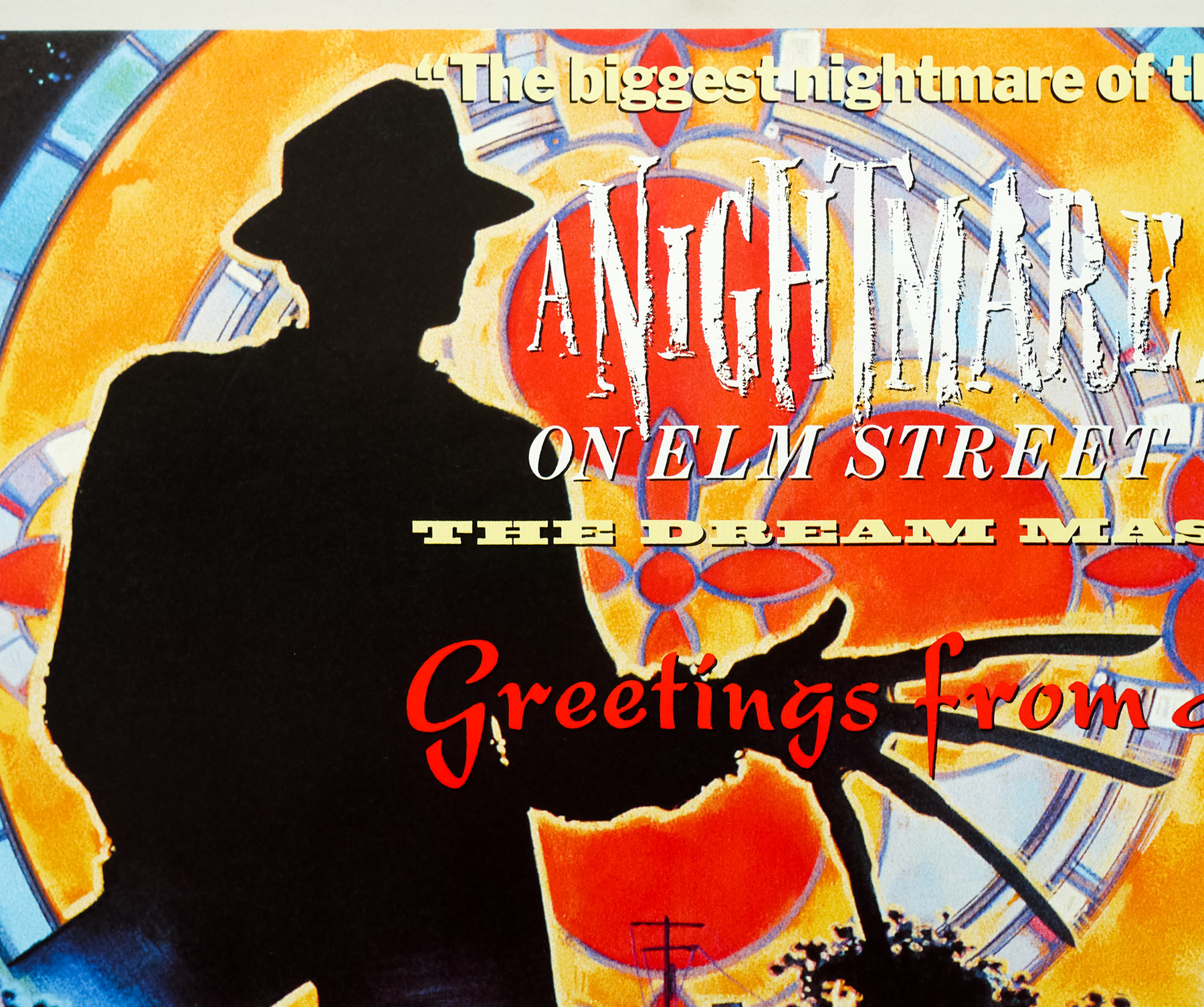
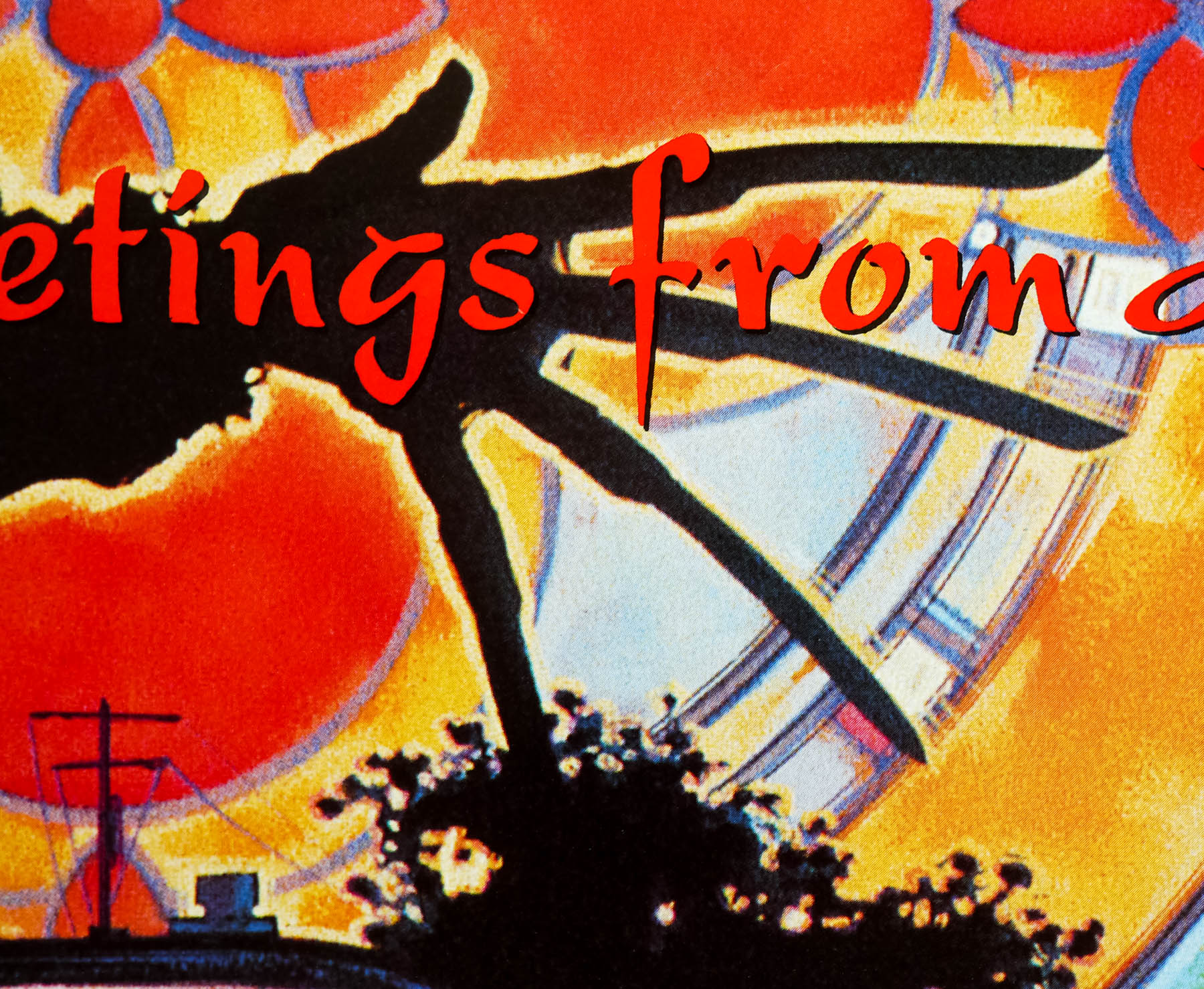
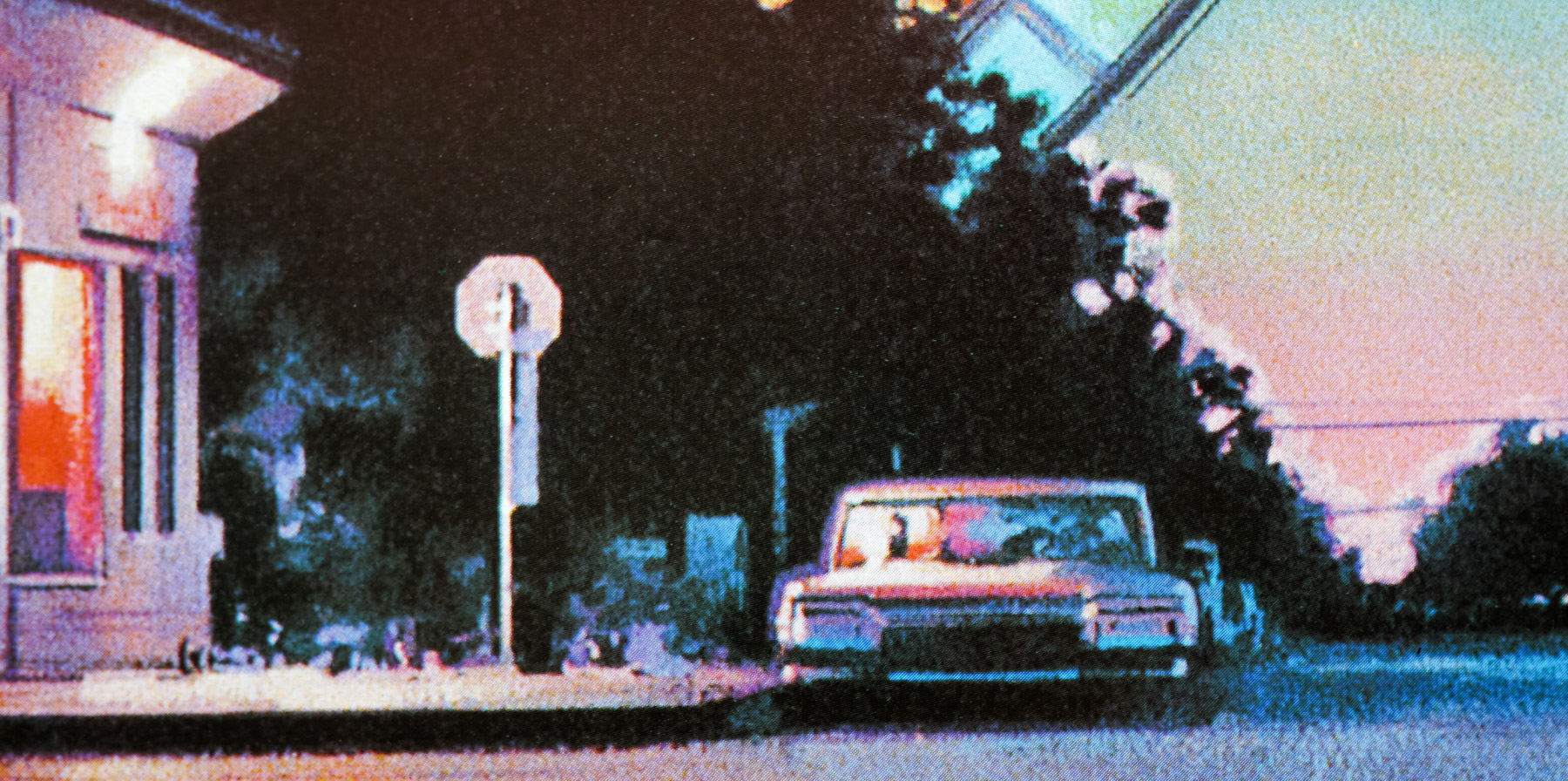
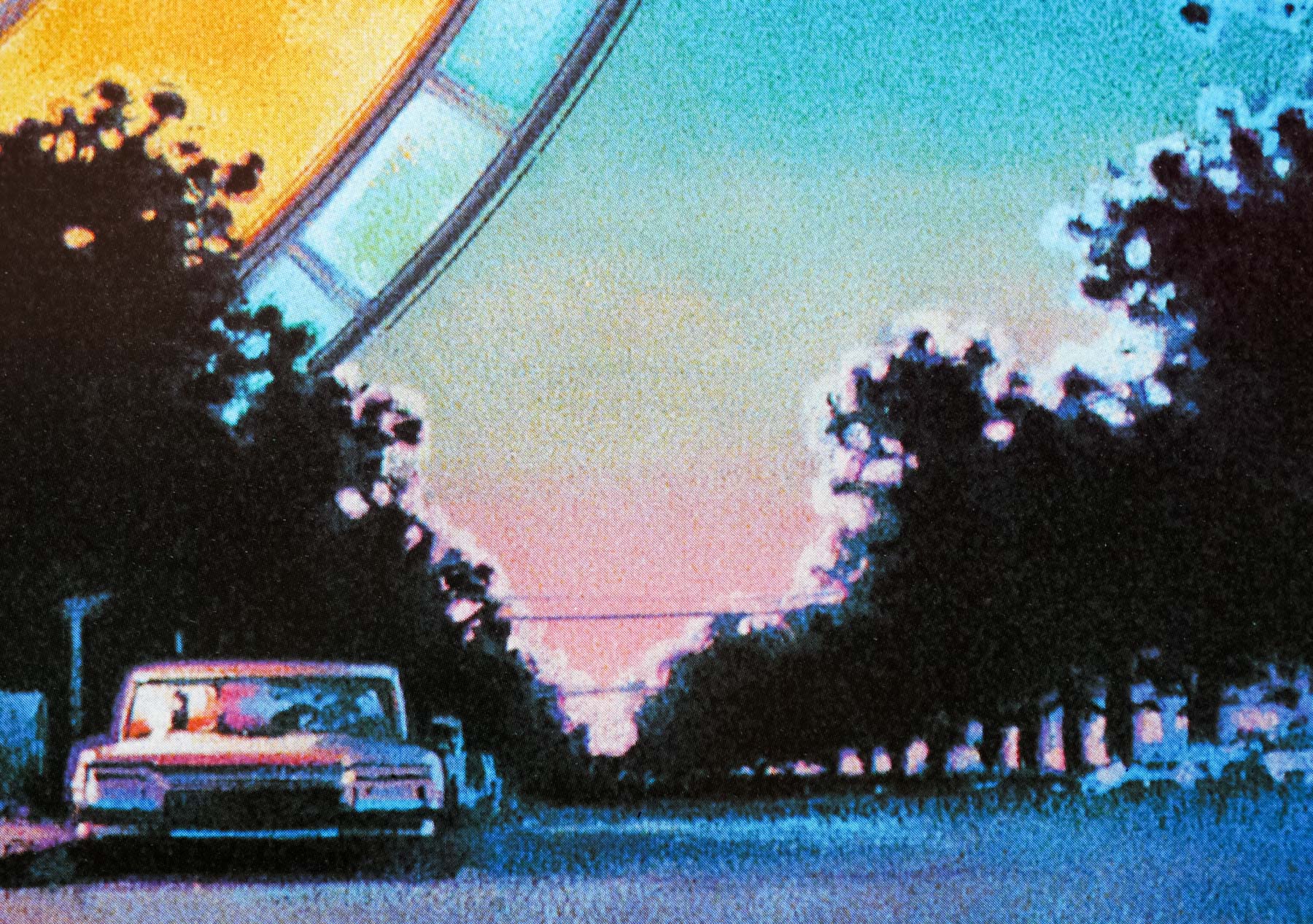
Palace Pictures had been handling the British distribution of the horror franchise since the first film and had worked with the same artist, Graham Humphreys, to produce unique poster designs for the UK market. When it came to promoting The Dream Master, Graham produced this quad and a larger 4-sheet (with alternate artwork) for use in cinema lobbies and on billboards. The quad features the stained glass window seen in a sequence involving a dilapidated church near the end of the film, as well as the Crave Inn diner where Alice works (its name is a not very subtle nod to the franchise’s creator).

When I interviewed Graham in 2011 for this site he talked the Elm Street posters and here’s an excerpt:

—————-

In 1987 it was back to an illustration for A Nightmare on Elm Street 4. It’s a great image with the ‘Crave Inn Diner’ and the stained glass featuring Freddy in silhouette. Can you remember why they went back to illustration for this?
I think by that time they just felt that they were flogging a dead horse with the Nightmare on Elm Street films. They said ‘take a look at the film and do what you want’. My idea was to do a postcard idea, ‘Greetings from hell’, and unfortunately without a computer it’s very hard to understand how stuff’s going to look when it’s actually printed. So for example with the Evil Dead you’ll notice that the copy line at the top is very hard to read because, tonally, the orange disappears against the purple. Given a computer there are all sorts of things I could have done, like a drop shadow or a glow behind it.

So it was often the case that you wouldn’t know what it was going to look like until you printed it?
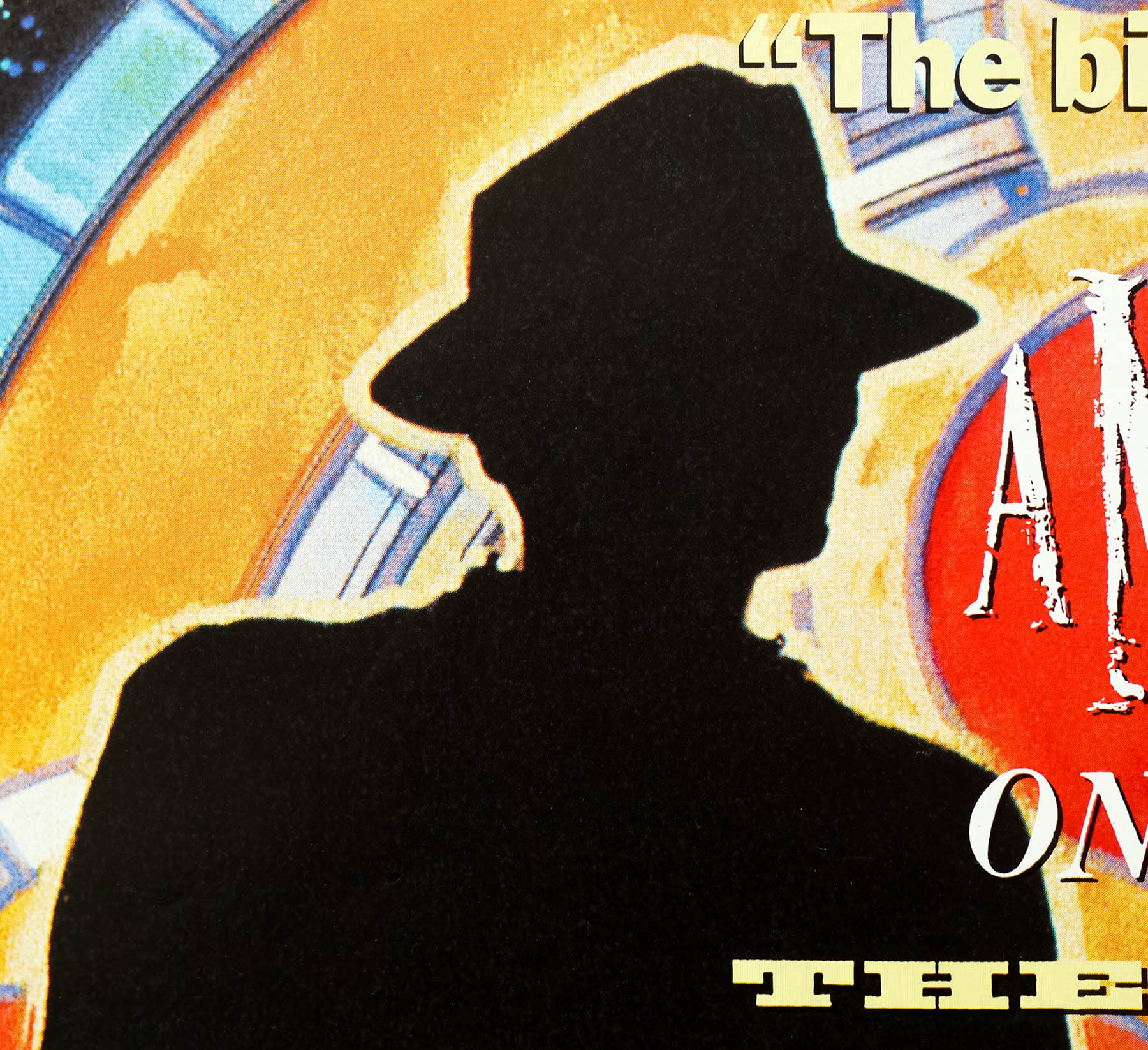
No, everything was an experiment. This poster could have been so much different as well though. The stained glass from the final scene in the church was good for me because it was a lovely device that meant I could use the large silhouette [of Freddy]. I also thought it was interesting because at that point the face was so familiar so we could take it dark again; we know who he is. We also did the cheeky James Bond spoof poster.

Ah, you were involved with that?
I was, it was my idea.


———————

Graham also had the idea of creating a small run of double crowns that spoofed the iconic James Bond gun barrel opening sequence created by Maurice Binder and first seen in Dr No (1962). This was because The Dream Master was being released up against The Living Daylights, the latest entry in the long-running spy franchise. The resulting poster can be seen here.

To see the other posters I’ve collected by Graham click here and read the exclusive interview with the artist here.

Something Wild / quad / UK

05.07.16

Poster Poster
Title
Something Wild
AKA
--
Year of Film
1986
Director
Jonathan Demme
Starring
Jeff Daniels, Melanie Griffith, Ray Liotta, George 'Red' Schwartz, Leib Lensky, Tracey Walter, Maggie T., Patricia Falkenhain, Sandy McLeod, Robert Ridgely
Origin of Film
USA
Genre(s) of Film
Jeff Daniels, Melanie Griffith, Ray Liotta, George 'Red' Schwartz, Leib Lensky, Tracey Walter, Maggie T., Patricia Falkenhain, Sandy McLeod, Robert Ridgely,
Type of Poster
Quad
Style of Poster
--
Origin of Poster
UK
Year of Poster
1986
Designer
Unknown
Artist
Unknown
Size (inches)
29 15/16" x 39 14/16"
SS or DS
SS
Tagline
Something different, something daring, something dangerous

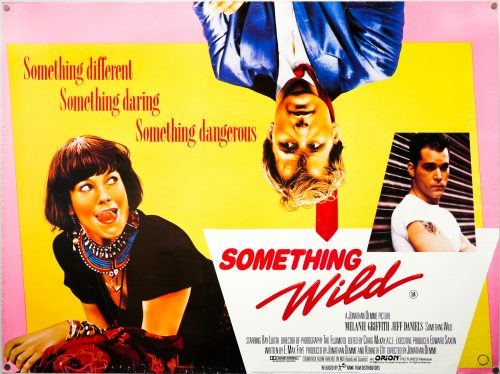
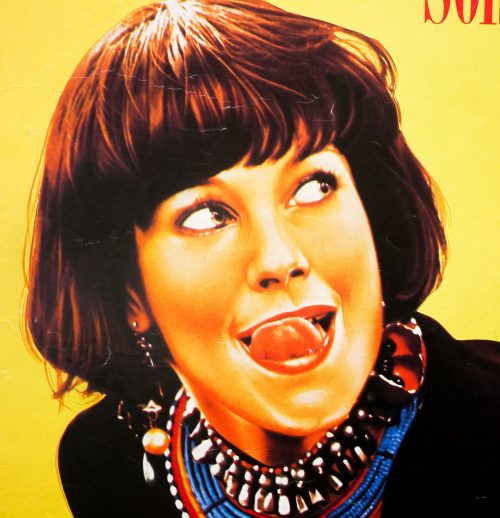
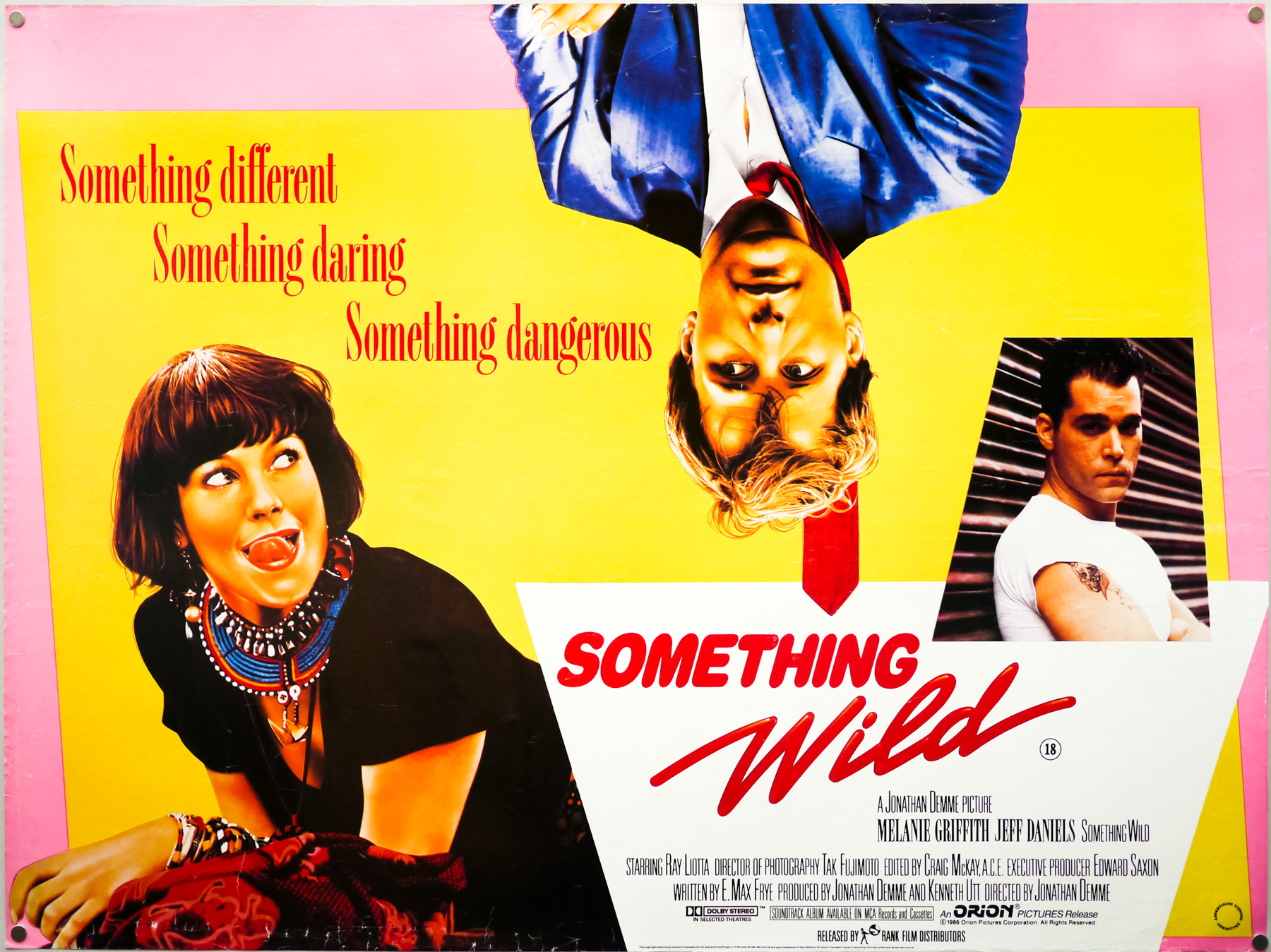
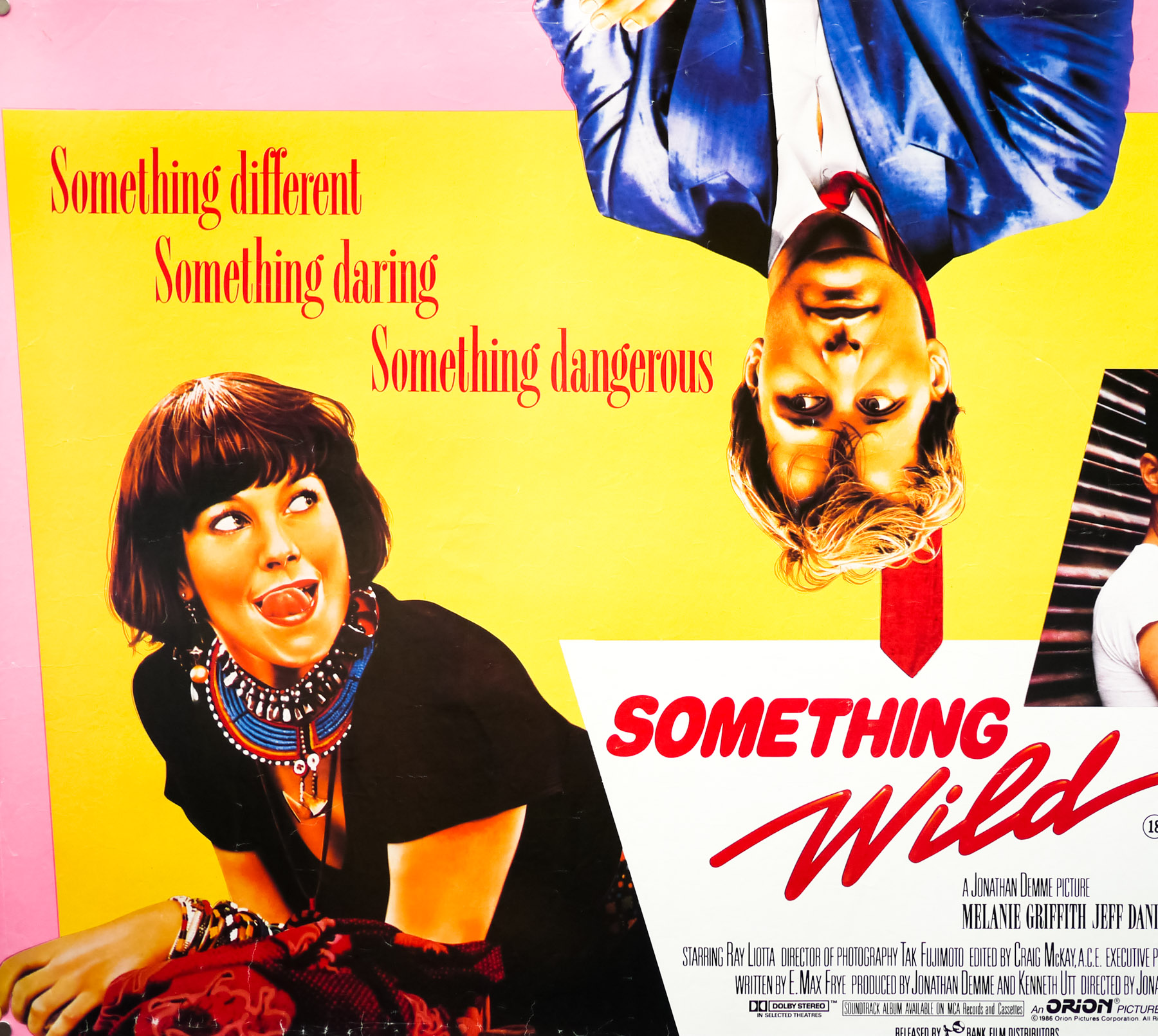
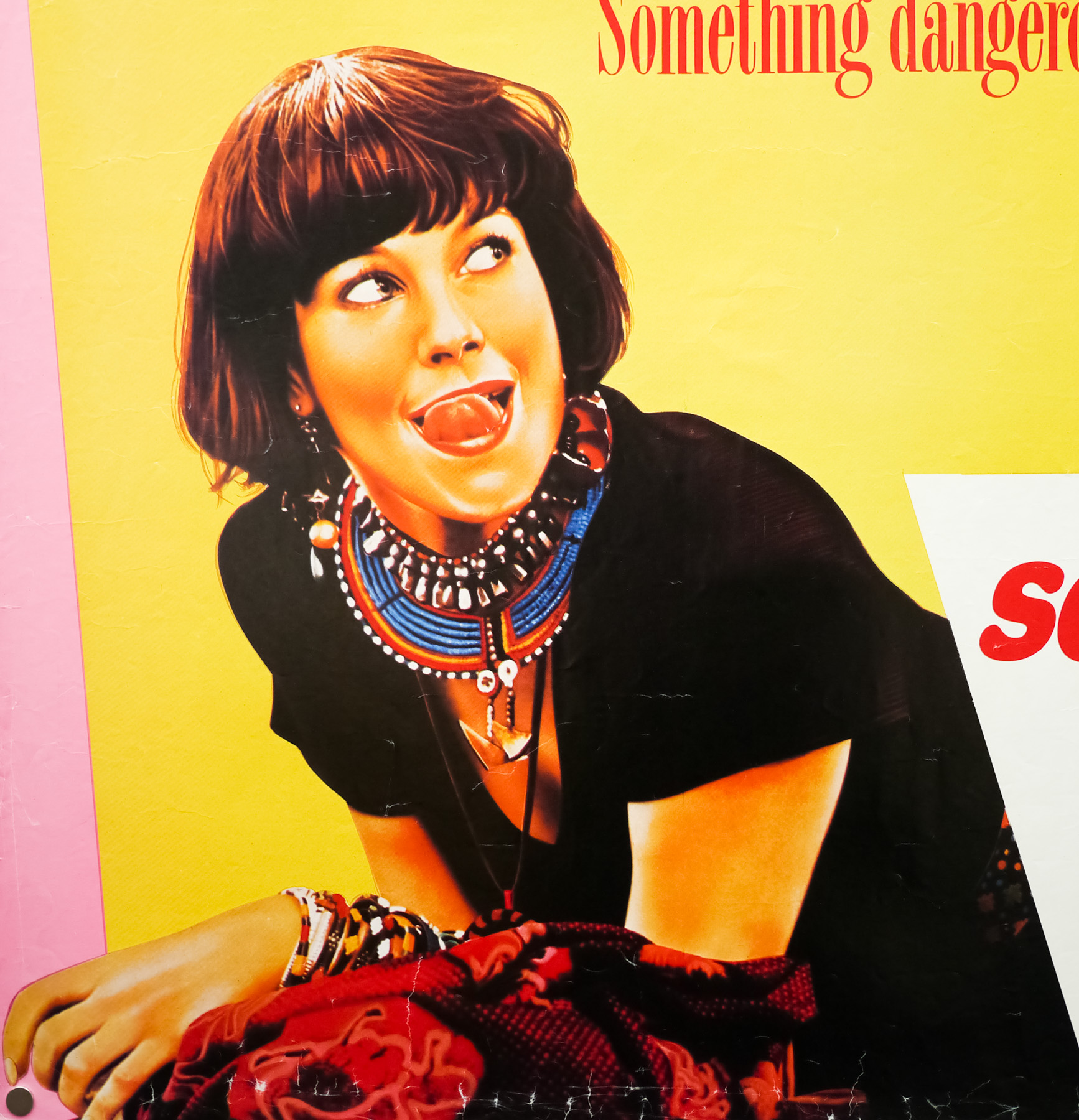
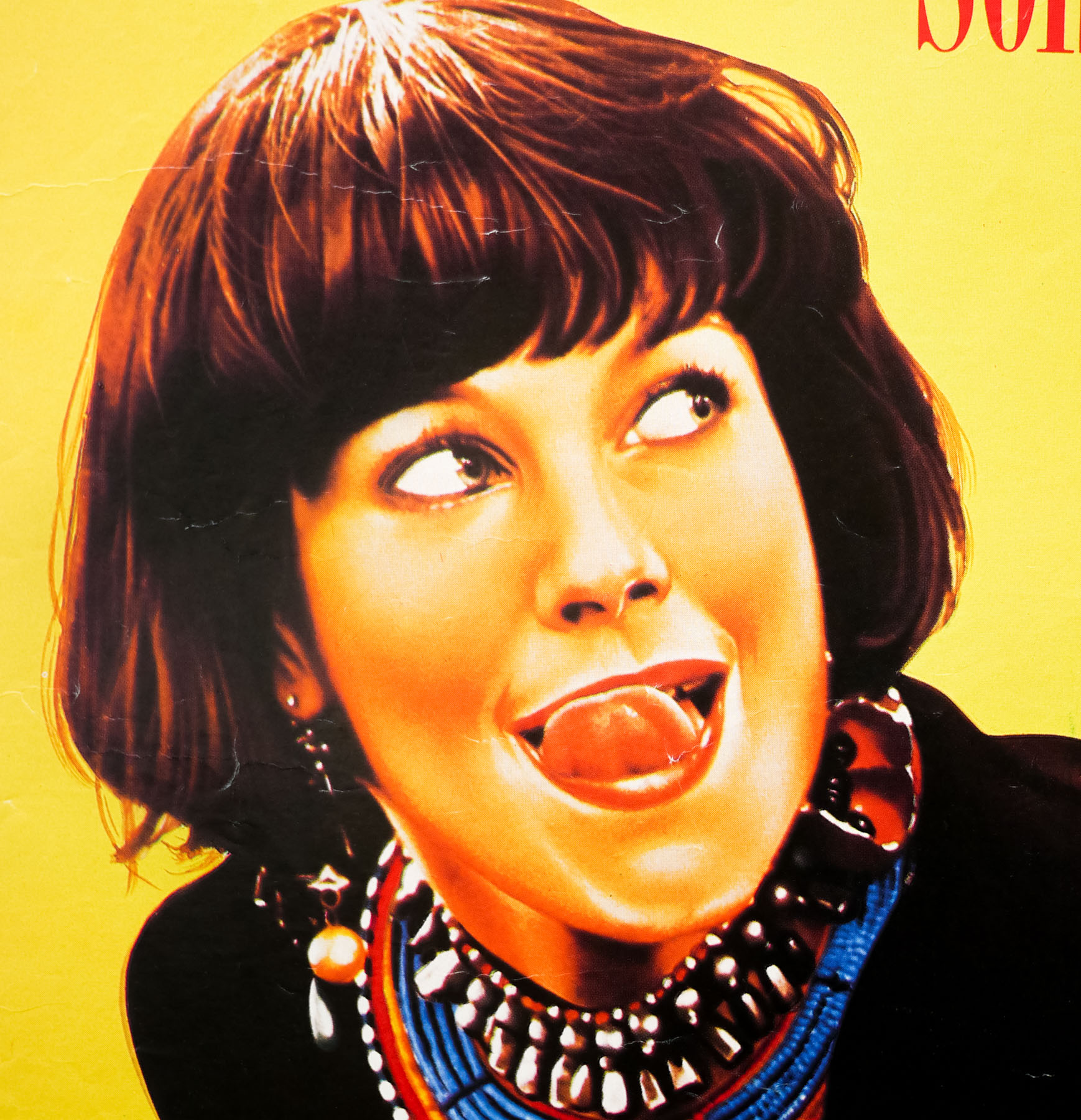
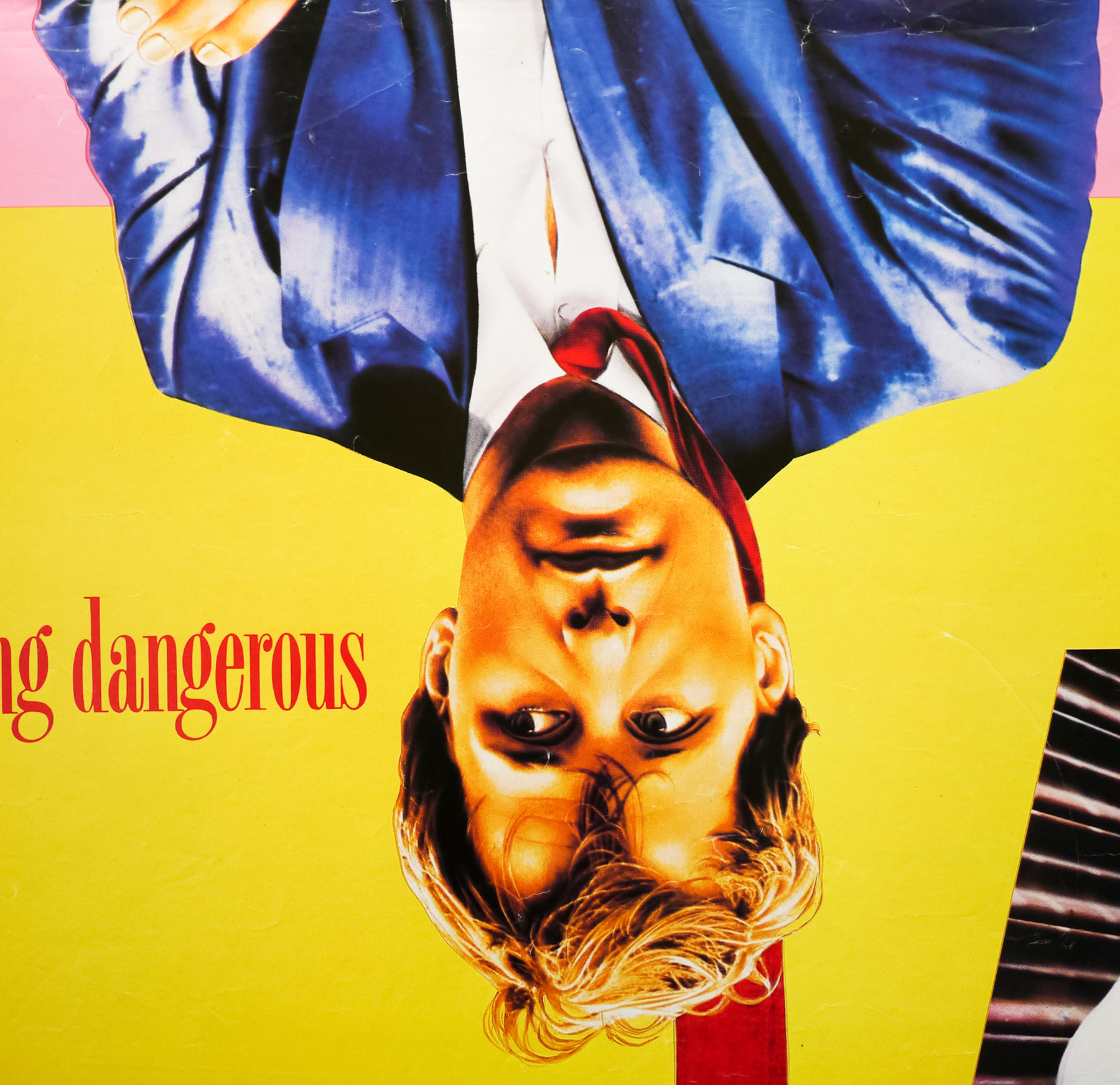
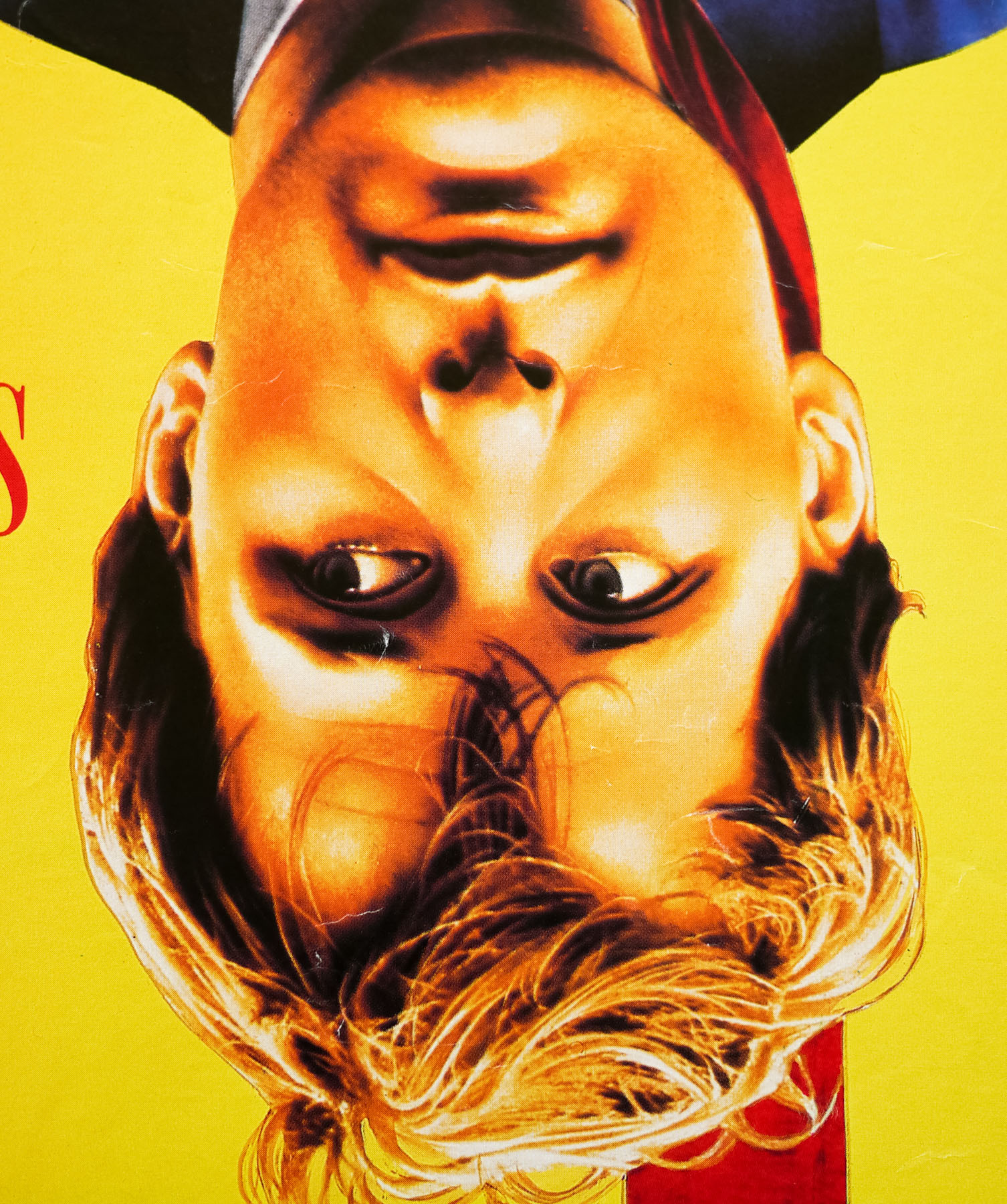
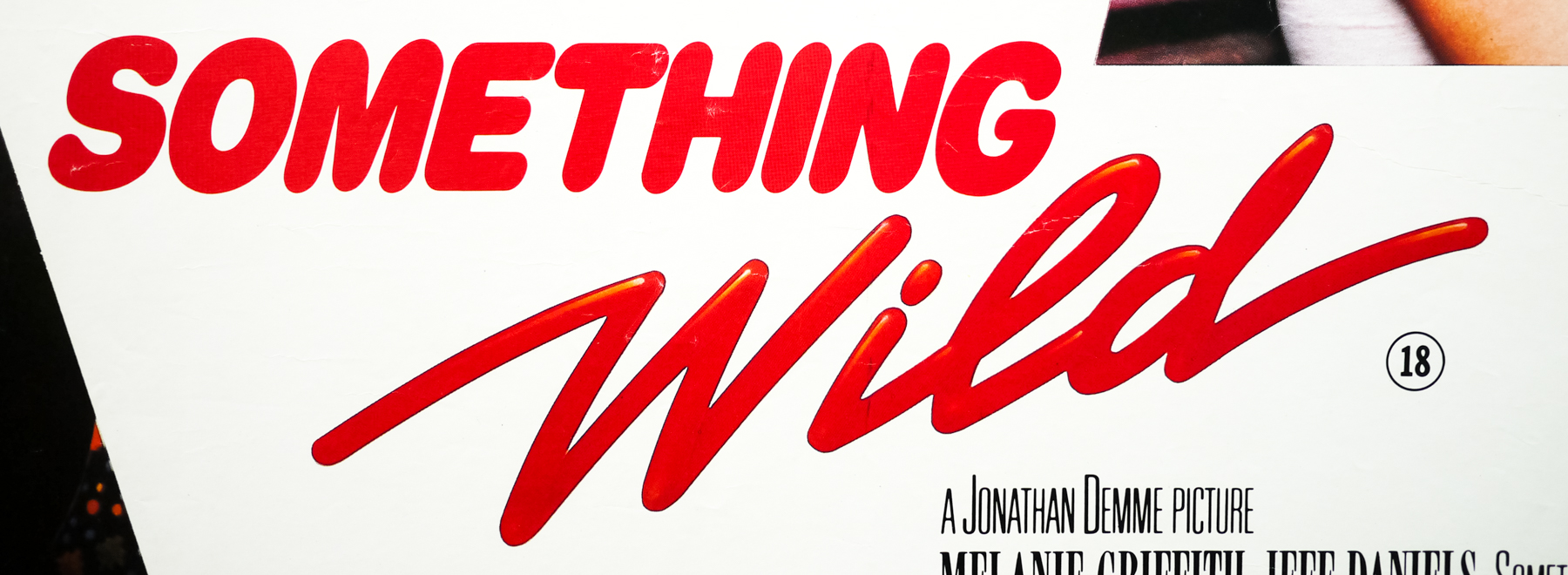
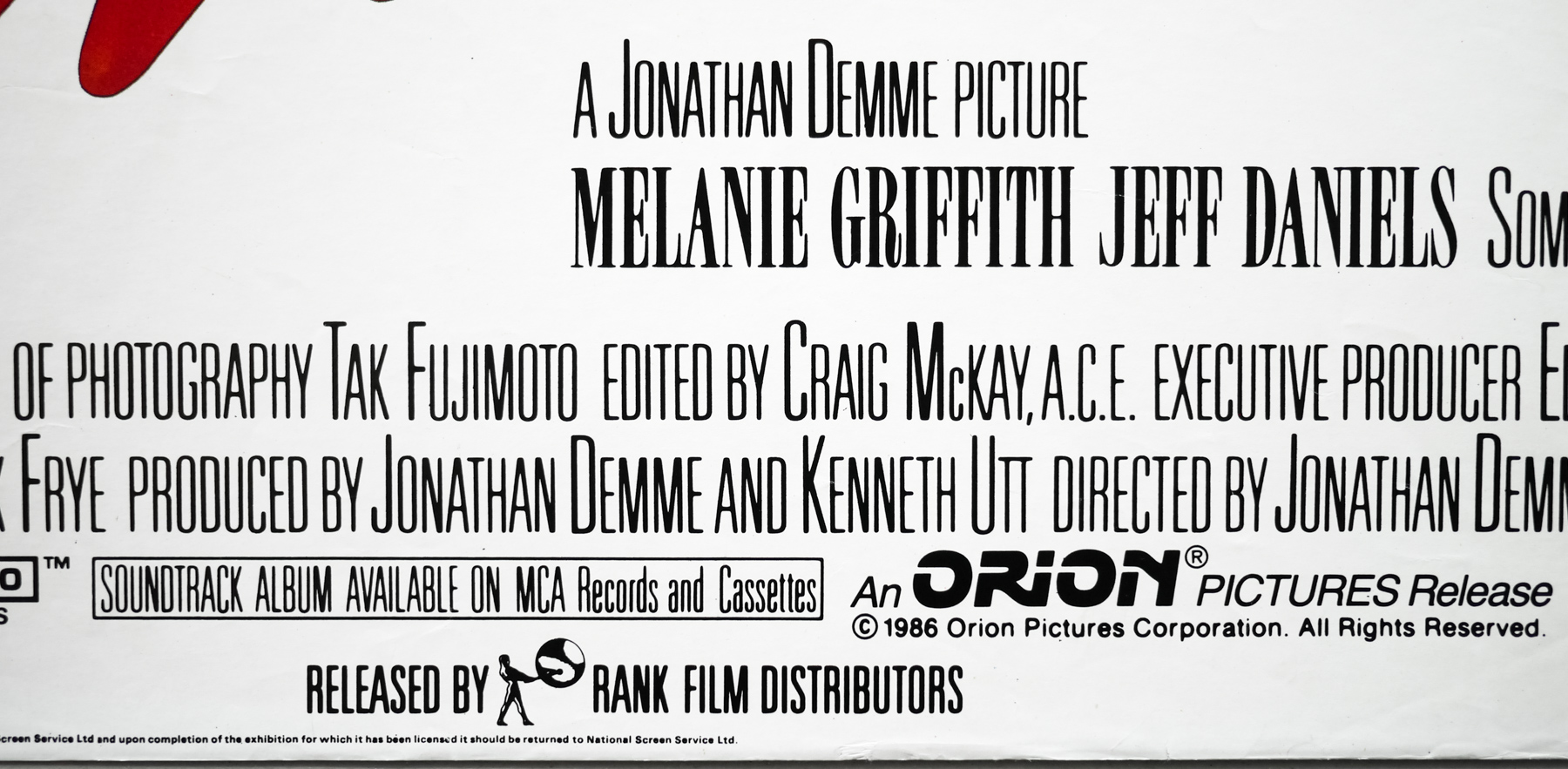
A colourful design features on this UK quad for the release of the 1986 cult flick Something Wild. Directed by Jonathan Demme (best known for Silence of the Lambs) the film is a difficult one to categorise as it has elements of comedy, action and also something of a road trip setup. The script was written by E. Max Frye whilst he was still at film school and made its way into Demme’s hands, with the director committing to filming it straight away.

Jeff Daniels stars as the straight-laced financier Charles Driggs who lives in a New York suburb and commutes every day into Manhattan. We first see him inside a greasy spoon diner from where he sneaks out without paying (in what he later calls a small act of rebellion) but not without attracting the attention of a sultry brunette who calls herself Lulu (a sexy turn from Melanie Griffith). Although reluctant at first, Charles is persuaded to accompany her on a spontaneous road trip out of the city.

Lulu first seduces him in a hotel room and then the pair continue on to her home town in Pennsylvania where she introduces Charles to her mother, saying that the pair have recently married. Lulu, who reveals her real name is Audrey, takes Charles along to a high school reunion. Whilst there Audrey’s ex-husband Ray Sinclair (an electrifying Ray Liotta), who she thought was still in prison for a string of robberies, appears and is initially friendly towards the couple. Things soon take a dark turn as Ray forces Charles to leave and drives off with Audrey. However, Charles realises how smitten he is with her and begins to tail them with a plan to prize her away from Ray.

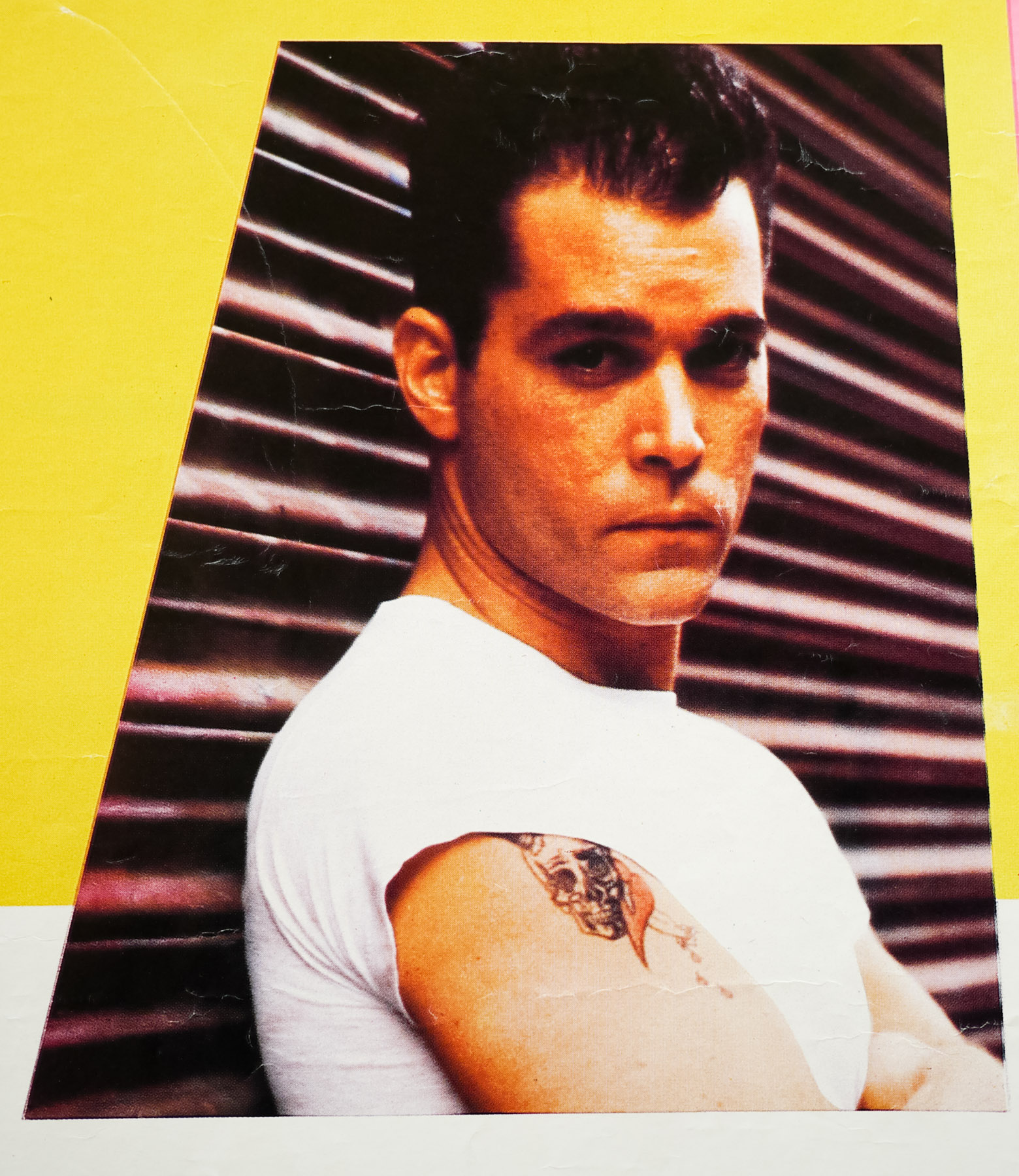
The artwork on this UK quad is the same that is featured on the US one sheet and was clearly originally painted for that poster. I’ve struggled to identify who the artist is so if anyone has any ideas please get in touch. The colour schemes are similar on both posters but the logo is different and the quad has the additional photo of Ray Liotta.

Frightmare / quad / UK

10.04.17

Poster Poster
Title
Frightmare
AKA
Cover Up (USA)
Year of Film
1974
Director
Pete Walker
Starring
Rupert Davies, Sheila Keith, Deborah Fairfax, Paul Greenwood, Kim Butcher, Fiona Curzon, John Yule, Trisha Mortimer
Origin of Film
UK
Genre(s) of Film
Rupert Davies, Sheila Keith, Deborah Fairfax, Paul Greenwood, Kim Butcher, Fiona Curzon, John Yule, Trisha Mortimer,
Type of Poster
Quad
Style of Poster
--
Origin of Poster
UK
Year of Poster
1974
Designer
Unknown
Artist
Unknown
Size (inches)
30" x 39 14/16"
SS or DS
SS
Tagline
What terrifying craving made her kill... and kill... and kill...?

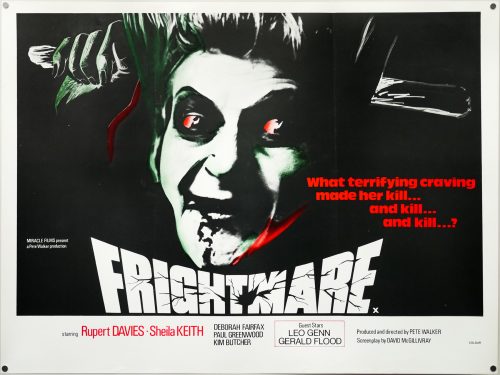
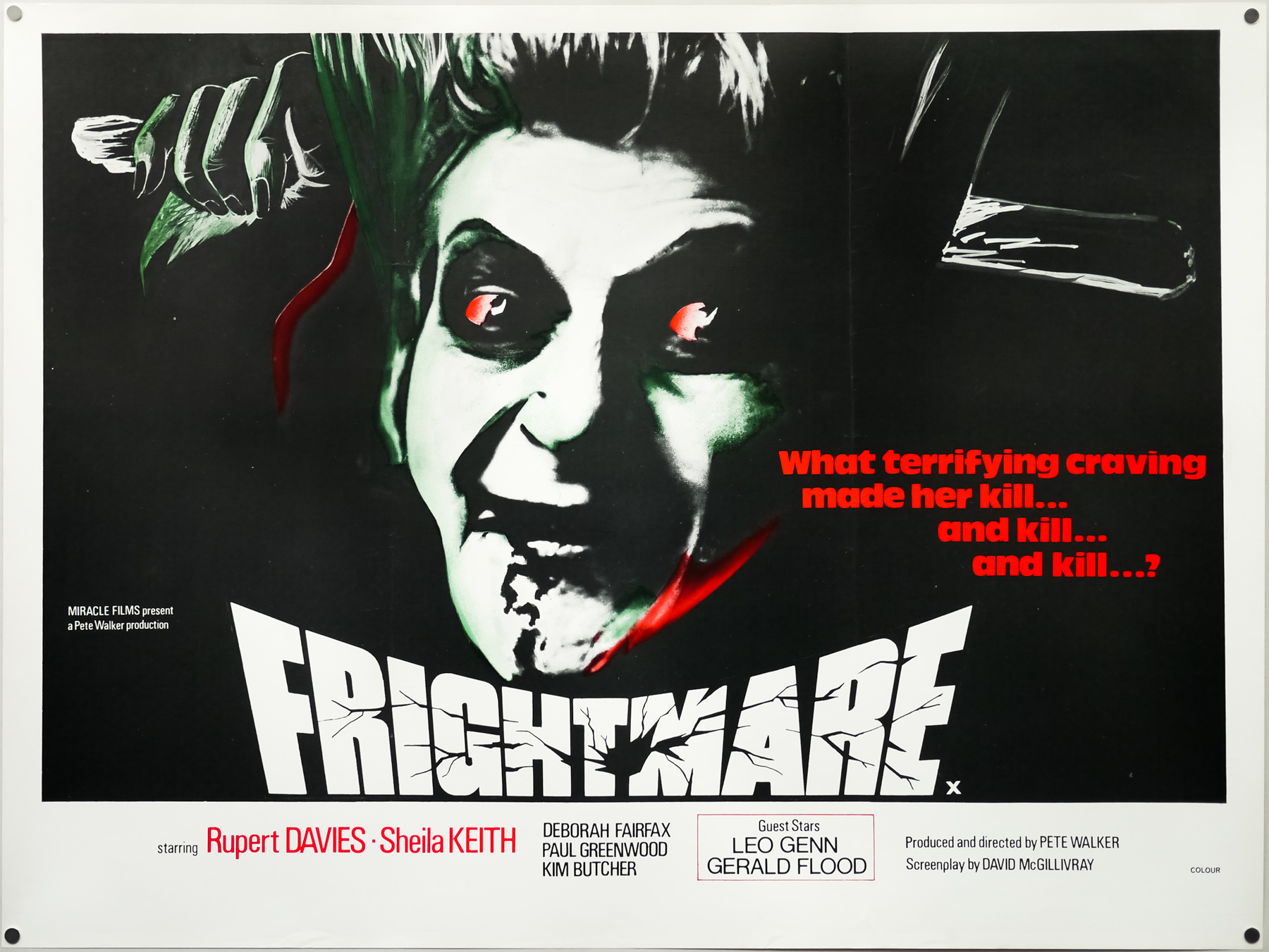
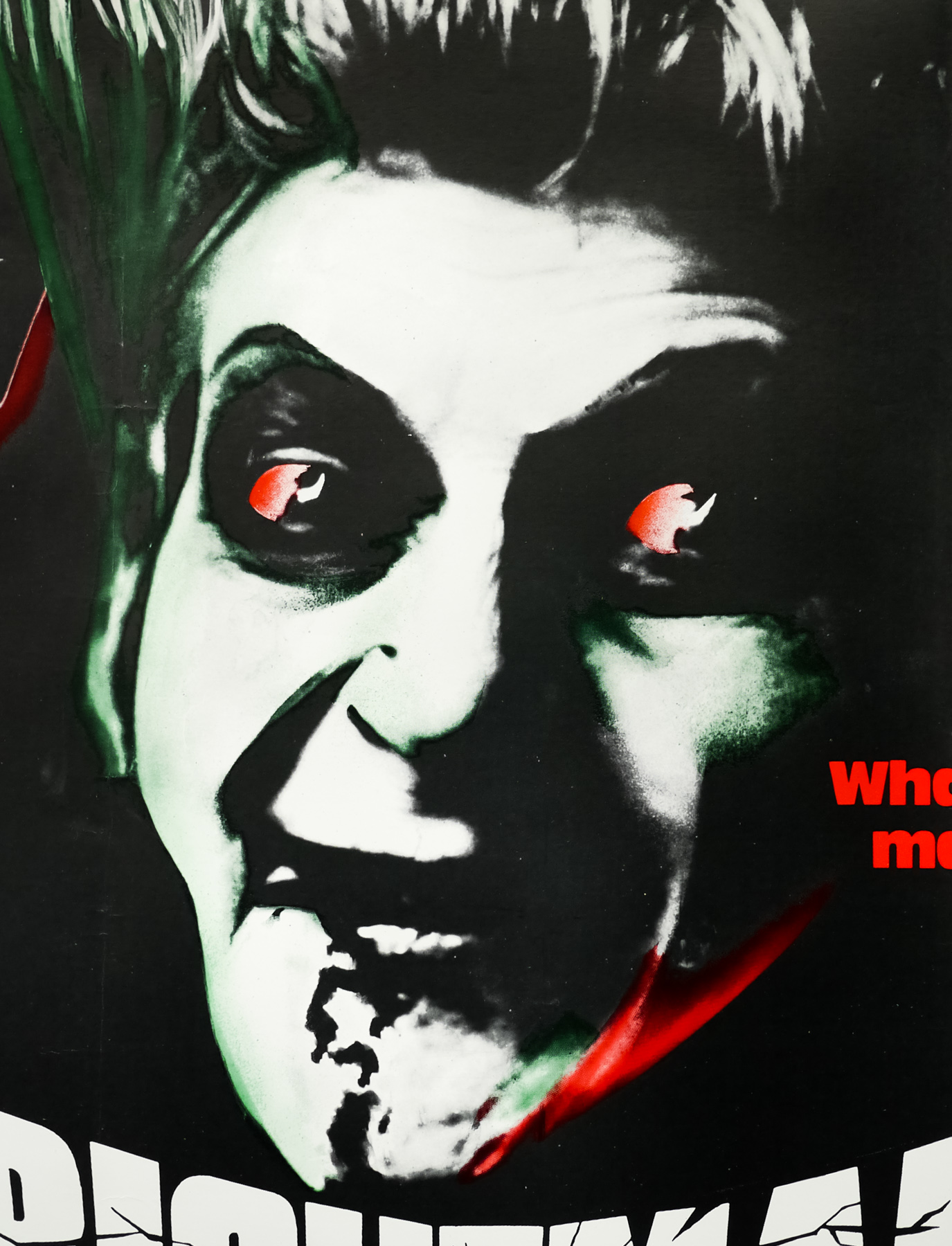
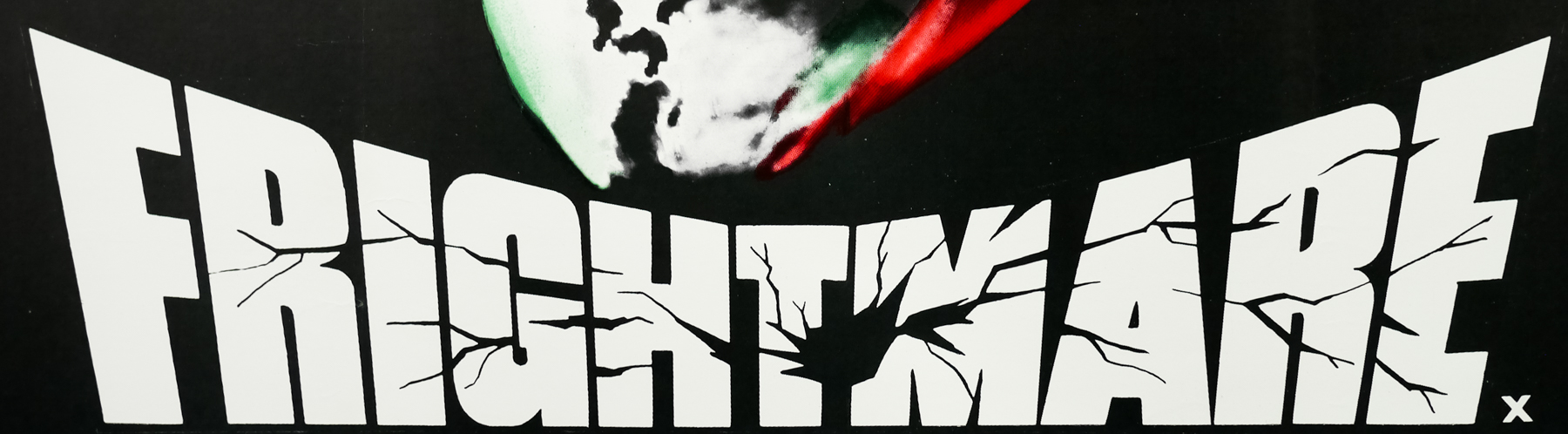
This is the original UK quad for the release of Frightmare, a 1974 film by the British director, producer and writer Pete Walker, who specialised in exploitation pictures during the 1960s and 1970s. Walker started out making shoestring budget sexploitation pictures, including School for Sex that were often relative hits in the UK. This worked out well for him since his films were almost always self-financed and thus most of the profits were his to keep and plough into the next feature. In the early 1970s, Walker grew tired of feeding the ‘dirty mack brigade’ and turned his hand to horror.

Frightmare, released in the US as Cover Up, was one of two horror films that Walker directed in 1974, with the other being the private-prison set House of Whipcord. Both films saw Walker reuniting with his regular screenwriting partner David McGillivray, and both feature memorable appearances by Sheila Keith, who would become another regular. In this film she plays Dorothy Yates, a cannibalistic killer who at the start of the film is sentenced to 15 years in prison. She is sent down along with her husband Edmund (Rupert Davies) who chose to take the punishment with her, even though he had nothing to do with the killings. The film picks up after their release and we find that their adopted daughter Jackie (Deborah Fairfax) is living in London and struggling to care for their biological daughter Debbie (Kim Butcher) a wayward 15-year-old who doesn’t realise her parents are still alive.

We follow Jackie as she leaves London to visit her parents, now living in a remote farmhouse. There she delivers a mysterious package to her mother who appears frail and innocent. Edmund fears that his wife is up to her old tricks but Jackie isn’t convinced and returns back to London. Soon we discover that Dorothy has put an advert in a magazine offering Tarot Card readings and willing customers are visiting the farmhouse. When she begins by checking that they have no close family or friends, or indeed anyone that would miss them, it’s fair to say that things aren’t looking up for her clueless customers. At the same time, Jackie struggles to control Debbie who is beginning to show signs that she has inherited her mother’s habits.

Arguably the best of Walker’s feature films, Frightmare is a masterclass in building tension and working towards a shocking final act. The film makes great use of various locations, including several in a London which looks barely recognisable today. Sheila Keith’s performance, in particular, is hugely memorable and her ability to portray frail innocence in one scene followed by genuinely disturbing menace in another has to be seen. In this Guardian article about Walker and his films, he describes his working relationship with Keith and how her on screen presence definitely didn’t match her off screen one; “Sheila Keith was a lady who lived a quiet life with her dogs and her cats and came into work to do, brilliantly, whatever was asked of her,” says Walker. “She was like your nice old aunt who would serve you cucumber sandwiches before ripping into a dismembered limb – without complaining.”

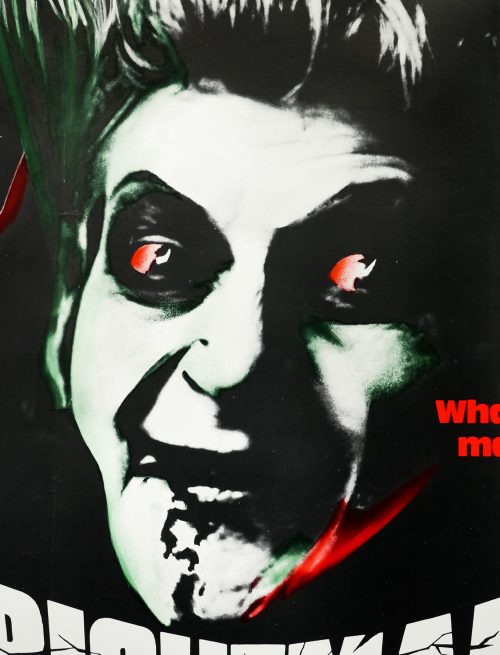
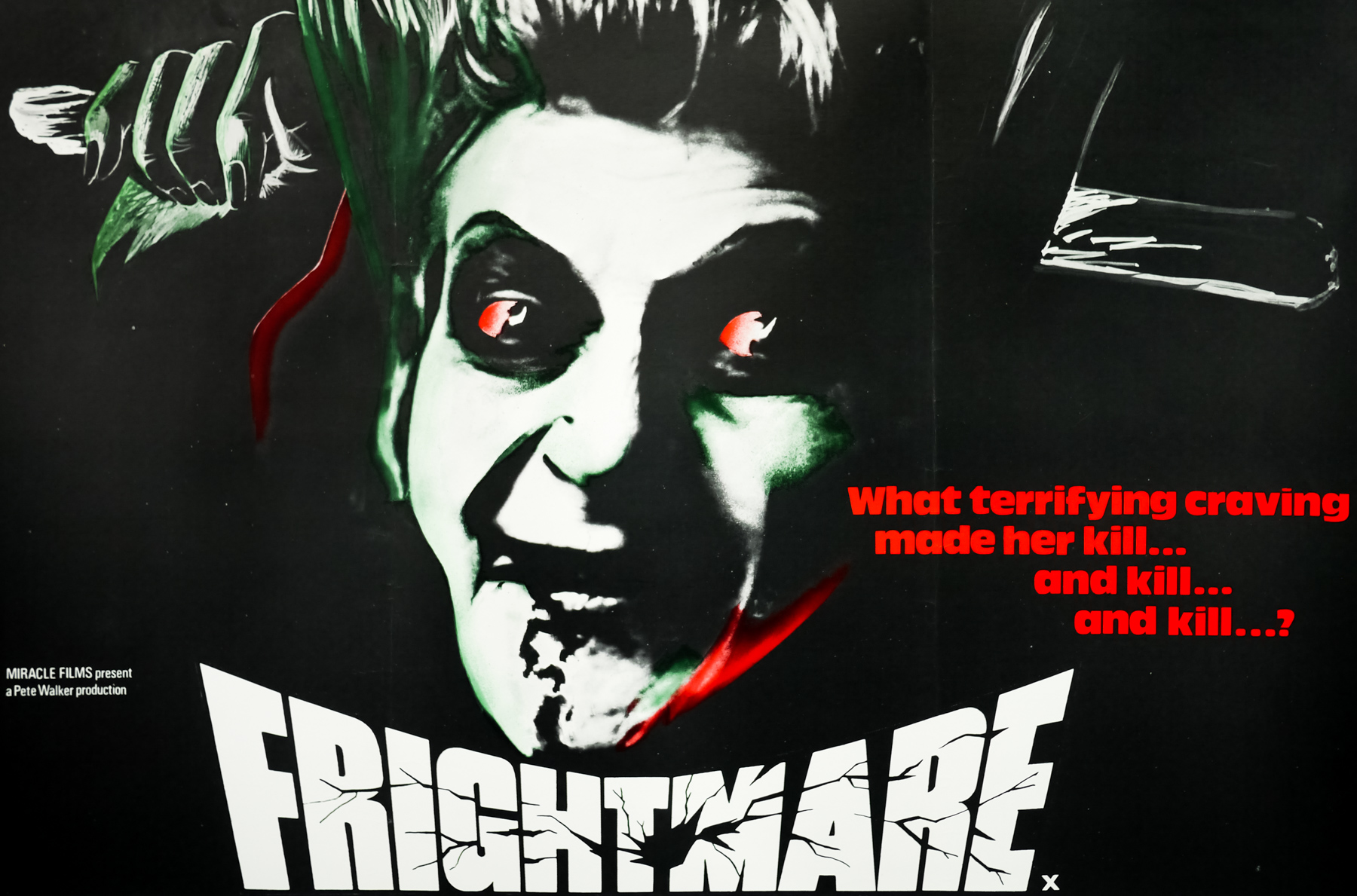
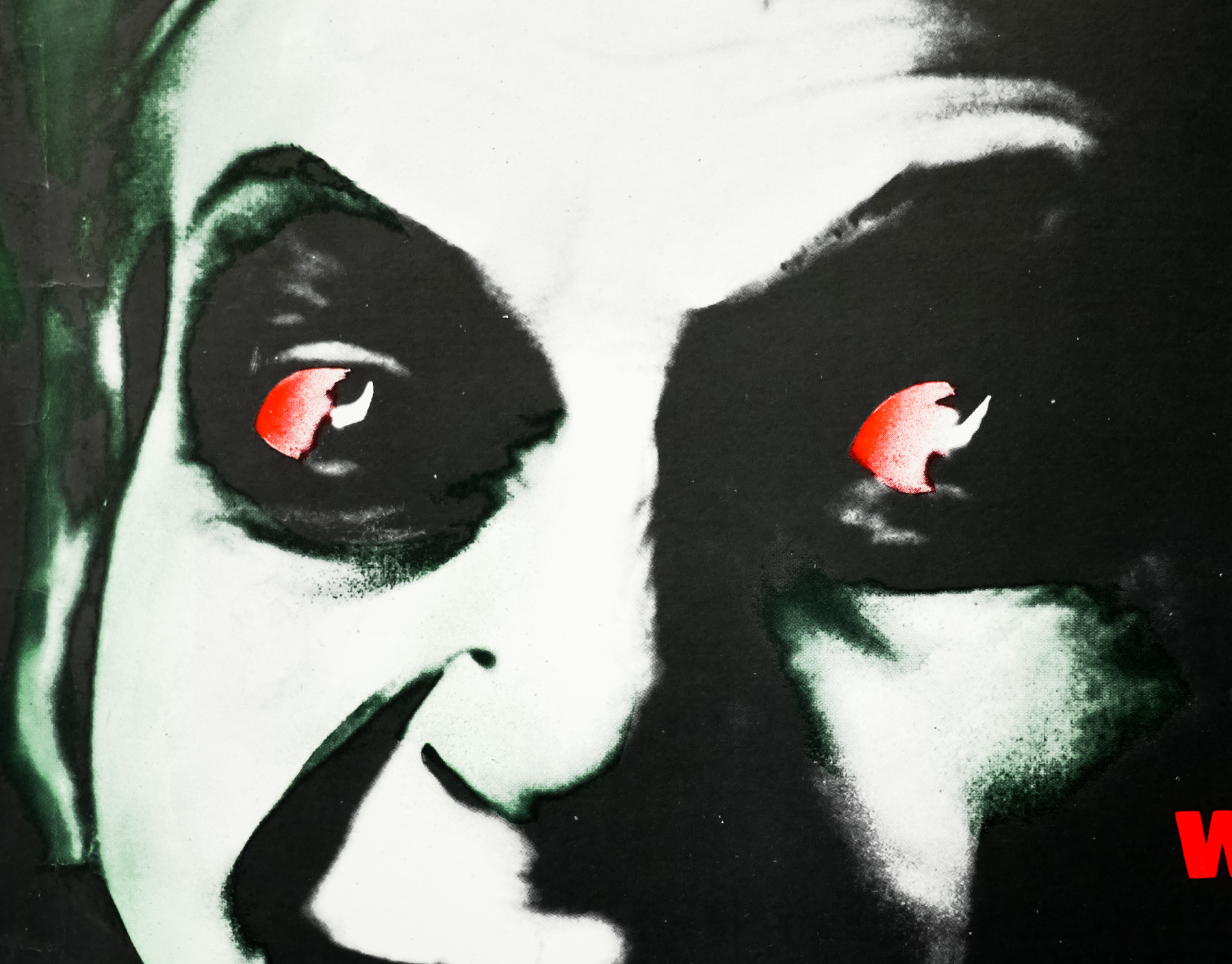
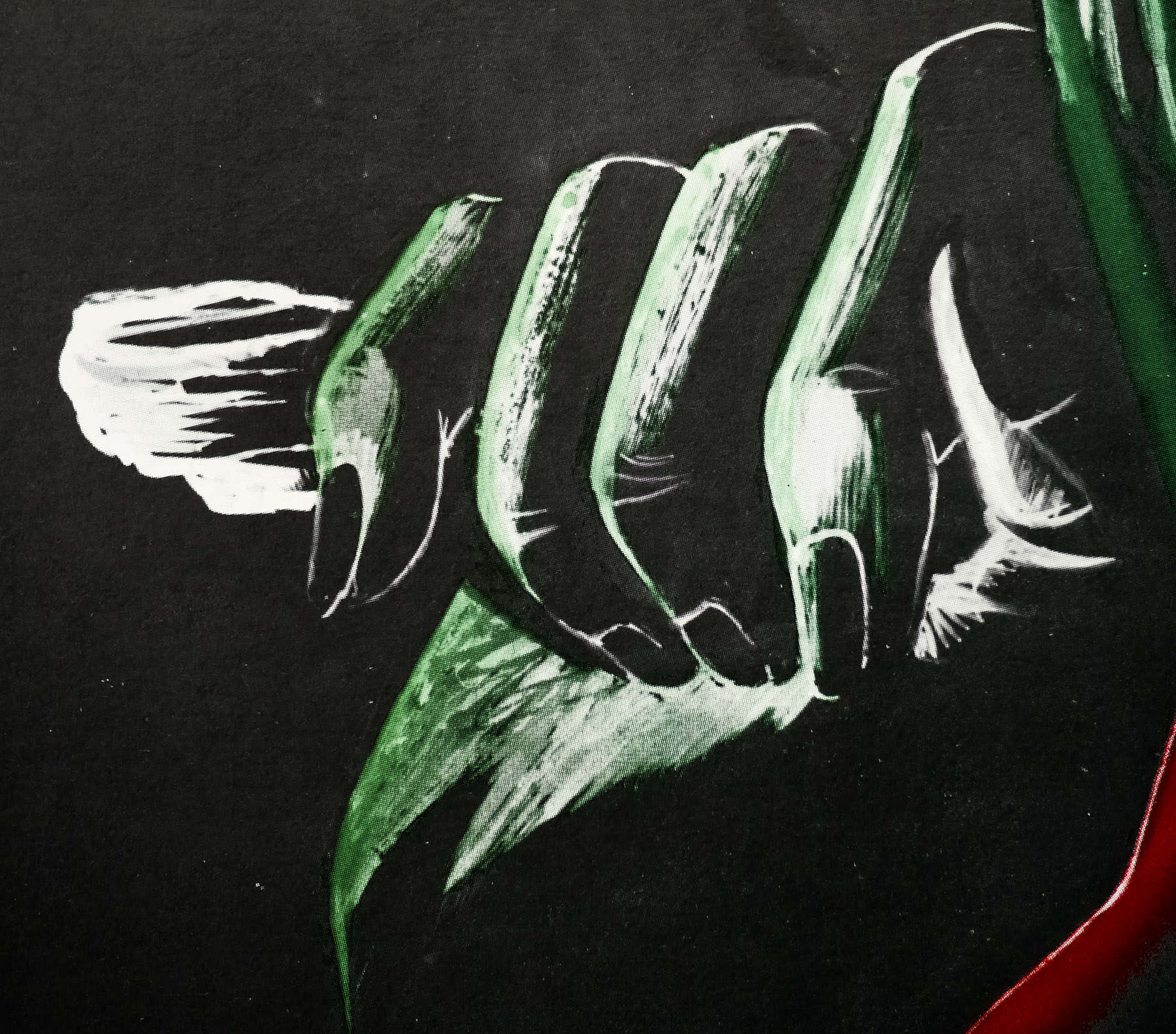
This British quad, which features crude artwork of a menacing Sheila Keith, was clearly designed by the team responsible for the quad for House of Whipcord (see here) and I feel fairly certain that the same artist or artists were involved too. If anyone knows who was responsible please get in touch.

Lost Highway / quad / UK

18.05.11

Poster Poster
Title
Lost Highway
AKA
--
Year of Film
1997
Director
David Lynch
Starring
Bill Pullman, Patricia Arquette, Balthazar Getty, Robert Loggia, Robert Blake
Origin of Film
France | USA
Genre(s) of Film
Bill Pullman, Patricia Arquette, Balthazar Getty, Robert Loggia, Robert Blake,
Type of Poster
Quad
Style of Poster
--
Origin of Poster
UK
Year of Poster
1997
Designer
Unknown
Artist
--
Size (inches)
30 1/16" x 40"
SS or DS
DS
Tagline
--

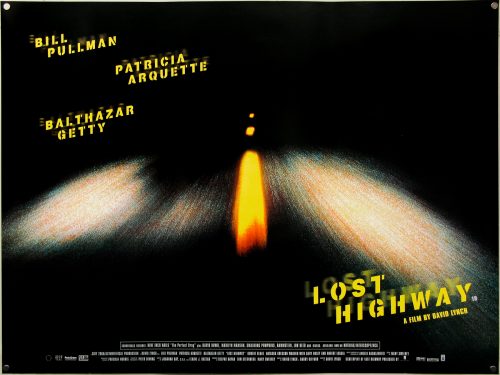
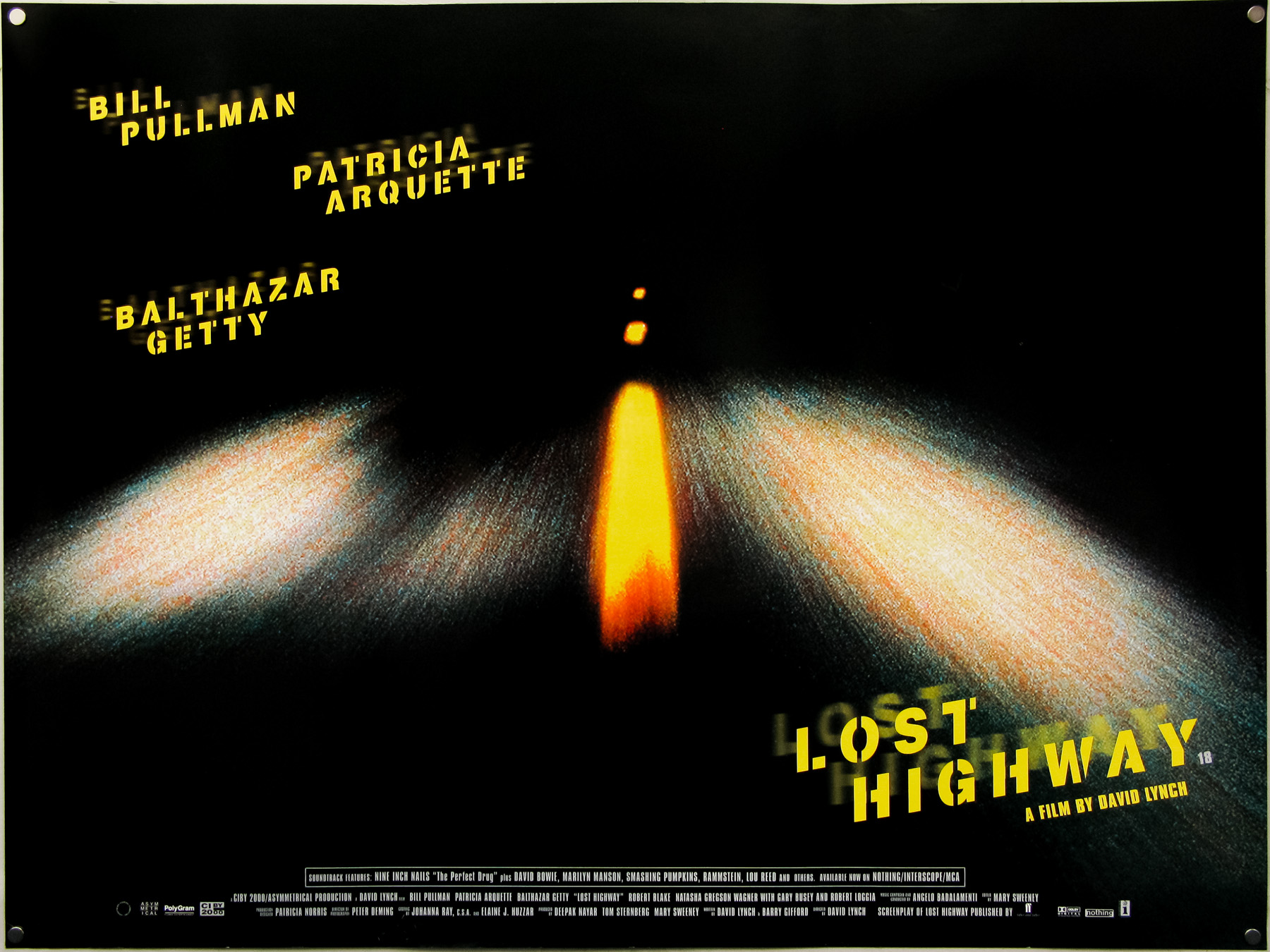
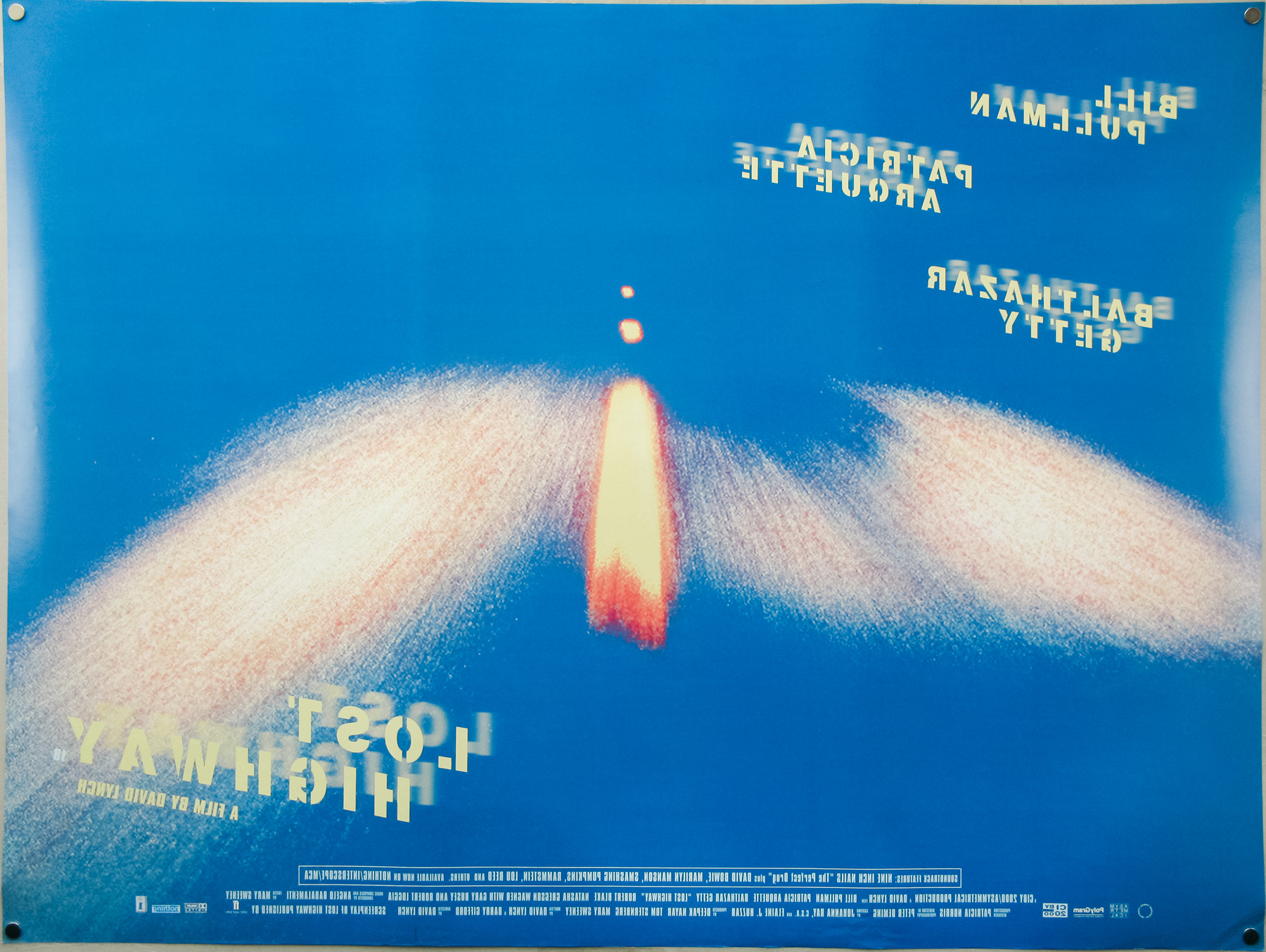
This is the scarce UK quad for the release of David Lynch‘s mystery thriller Lost Highway. Co-written with American author Barry Gifford, whose novel Lynch adapted for his 1990 film Wild at Heart, the film is a classic Lynchian mind-bender that resolutely defies explanation. The story begins with Bill Pullman as Fred Madison, a Jazz saxophonist who is living with his wife Renee (Patricia Arquette) in Los Angeles. One day the intercom to his flat buzzes and when he answers it an unknown man says “Dick Laurent is dead.” The man is nowhere to be seen when Fred looks out of his window, but a few days later a mysterious tape appears on the Madison’s doorstep. The video features shaky footage outside their flat and over the next few days more tapes appear that eventually move inside and show the pair sleeping, much to their horror.

At a party Fred meets a mysterious man (played by Robert Blake in his final film role) who, in a memorably creepy sequence, tells Fred that he’s at his flat at that moment and proves it by getting him to call his home phone, which the stranger then answers. The next morning another tape appears and Fred is horrified to see it’s footage of him covered in blood with a dismembered Renee next to him. He is arrested, charged with murder and sentenced to death. Whilst on death row Fred sees strange visions and starts to suffer from painful headaches before he inexplicably morphs into another person, a car mechanic called Pete Dayton (Balthazar Getty) much to the confusion of the prison staff. Because Pete has committed no crime, he is released into the care of his parents and, after a period of adjustment, he gets back to his job. The rest of the film sees Pete dealing with the menacing gangster Mr Eddy (a memorable performance by Robert Loggia) and a mysterious blonde called Alice Wakefield (Arquette) who takes him down a dark path which has the mystery man waiting at the end of it.

Lynch and Gifford have always refused to fully explain the story but that hasn’t stopped fans of the film from trying to decode its many mysteries. Check out this IMDb page for some of the theories but the film definitely encourages you to draw your own conclusions after the credits roll. Lost Highway features a number of notable performances, particularly from Pullman and Arquette, as well as multiple cameos from the likes of Richard Pryor, Jack Nance and Marilyn Manson. Filled with memorable Lynchian imagery, including one of the most shocking accidental deaths in cinema history (Michael Massee‘s head meets glass table), it also has a brilliant soundtrack complemented by some of Lynch’s very best sound design.

I’m not sure who is responsible for the design of this quad or the UK one sheet so please get in touch if you have any ideas.

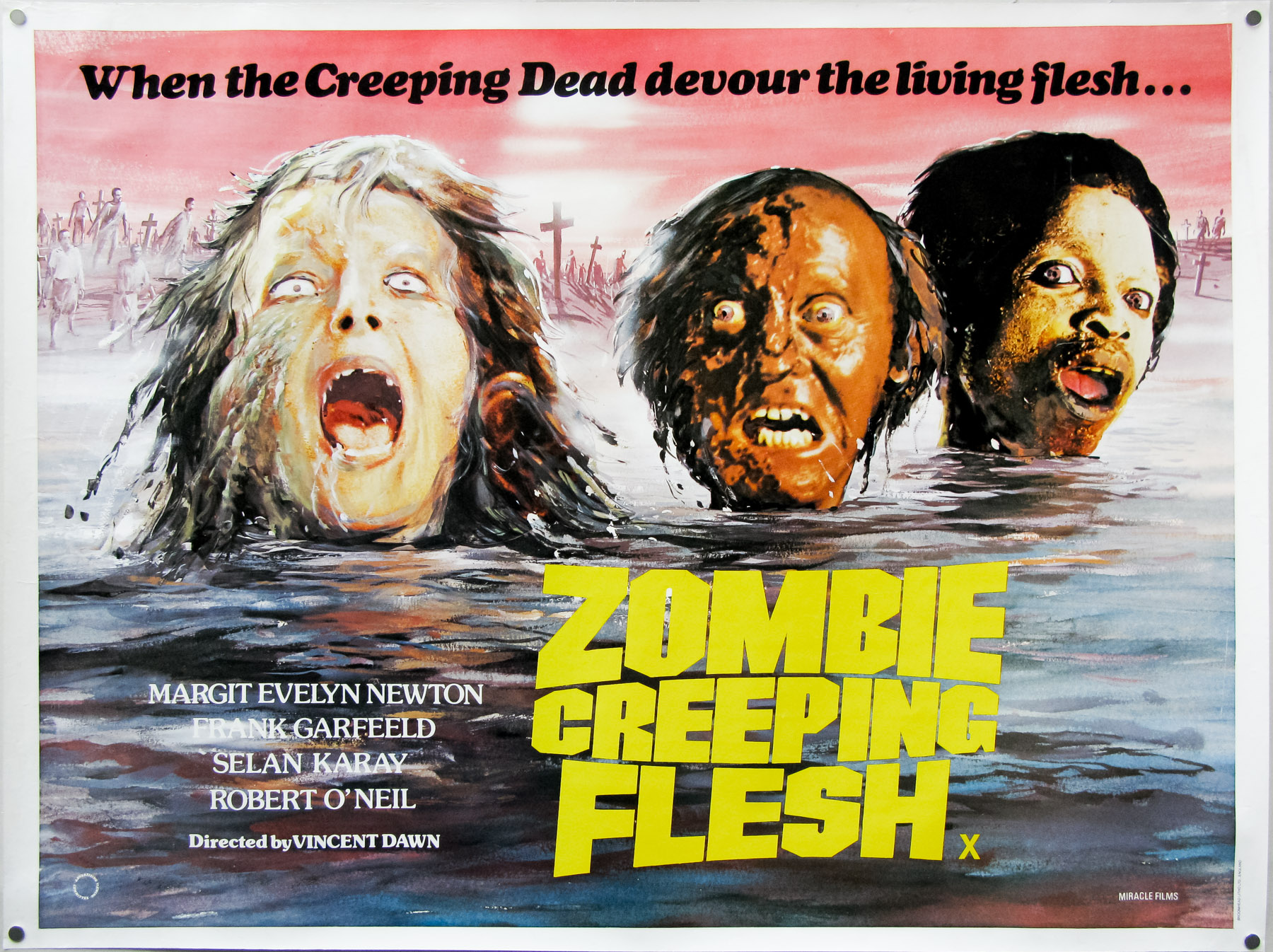
Zombie Creeping Flesh / quad / UK

30.10.11

Poster Poster
Title
Zombie Creeping Flesh
AKA
Virus (Italy - original title) | Hell of the Living Dead (International - English title / USA) | Night of the Zombies (USA) | Apocalipsis caníbal (Spain)
Year of Film
1980
Director
Bruno Mattei (as Vincent Dawn), Claudio Fragasso (uncredited)
Starring
Margit Evelyn Newton, Franco Garofalo, Selan Karay, José Gras, Gabriel Renom, Josep Lluís Fonoll, Pietro Fumelli, Bruno Boni, Patrizia Costa, Cesare Di Vito, Sergio Pislar, Bernard Seray, Víctor Israel
Origin of Film
Italy | Spain
Genre(s) of Film
Margit Evelyn Newton, Franco Garofalo, Selan Karay, José Gras, Gabriel Renom, Josep Lluís Fonoll, Pietro Fumelli, Bruno Boni, Patrizia Costa, Cesare Di Vito, Sergio Pislar, Bernard Seray, Víctor Israel,
Type of Poster
Quad
Style of Poster
--
Origin of Poster
UK
Year of Poster
1982
Designer
Unknown
Artist
Ted Baldwin (UK adaptation of Italian artwork - unconfirmed)
Size (inches)
30 1/16" x 40"
SS or DS
SS
NSS #
--
Tagline
When the Creeping Dead devour the living flesh...

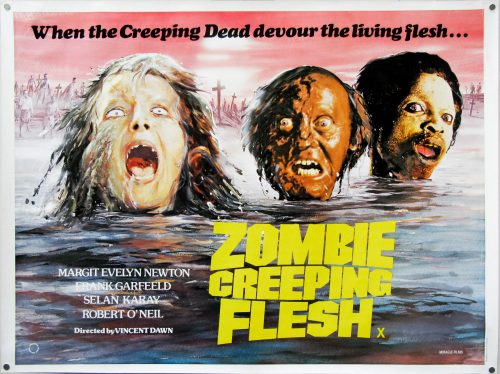
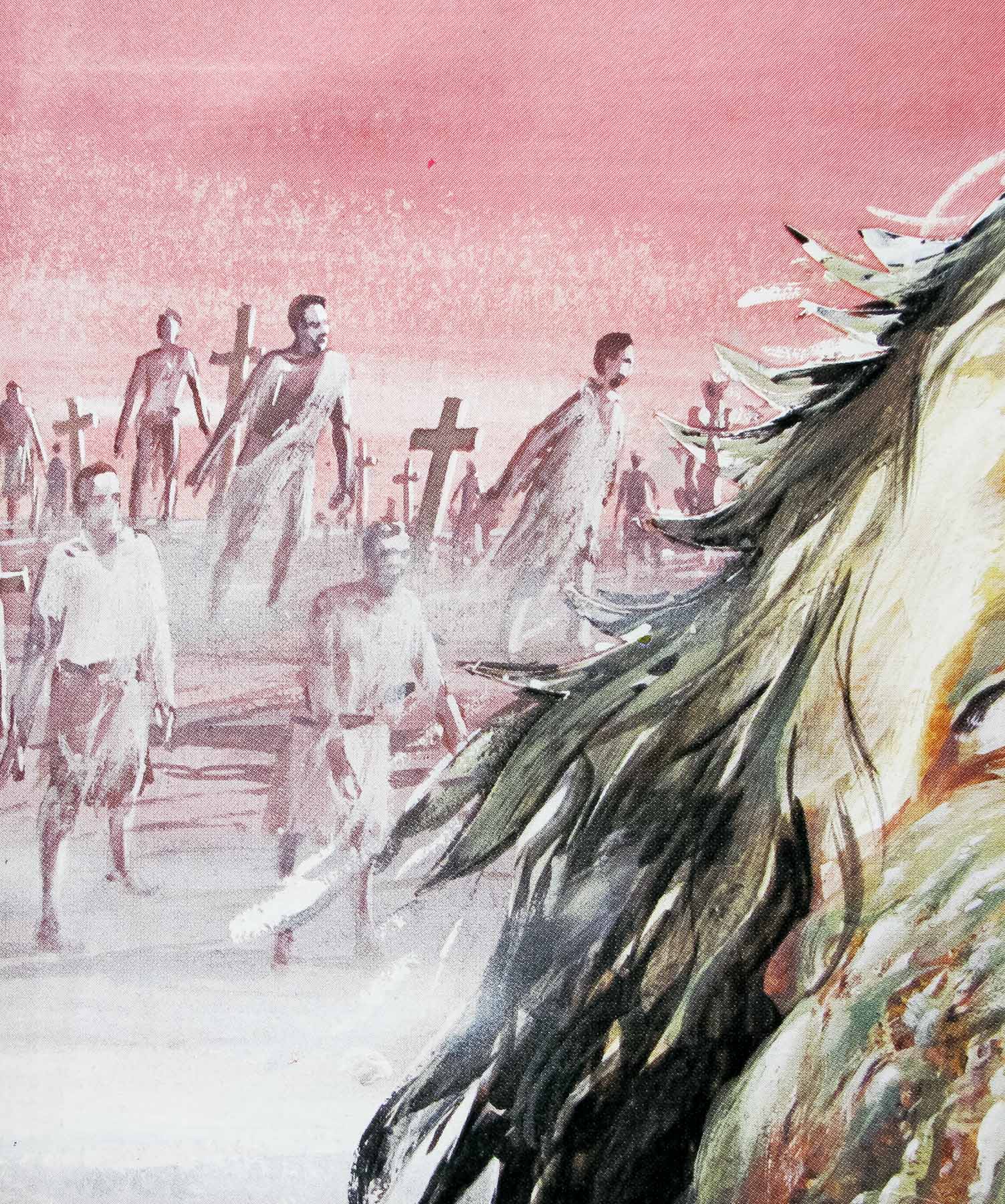
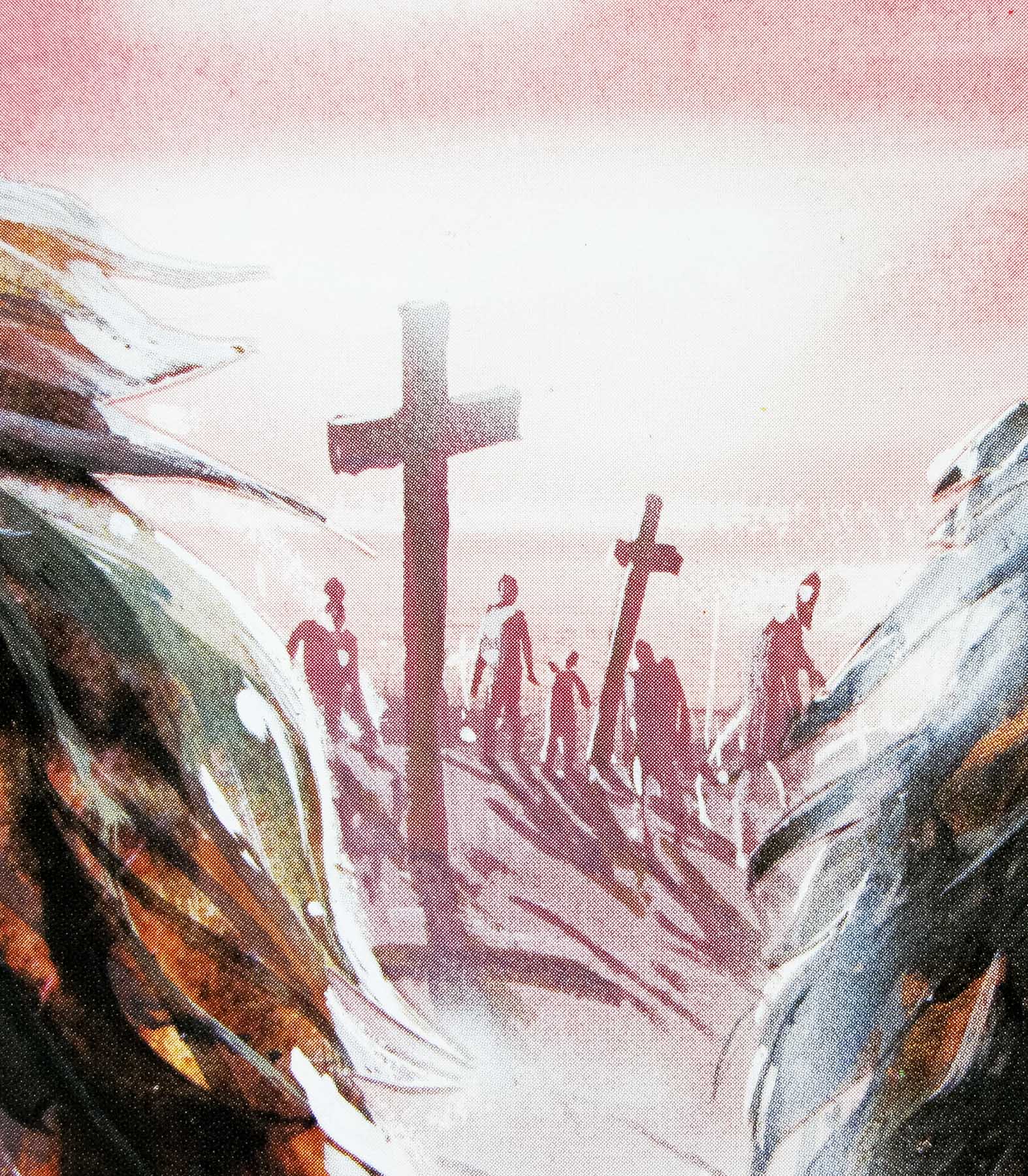
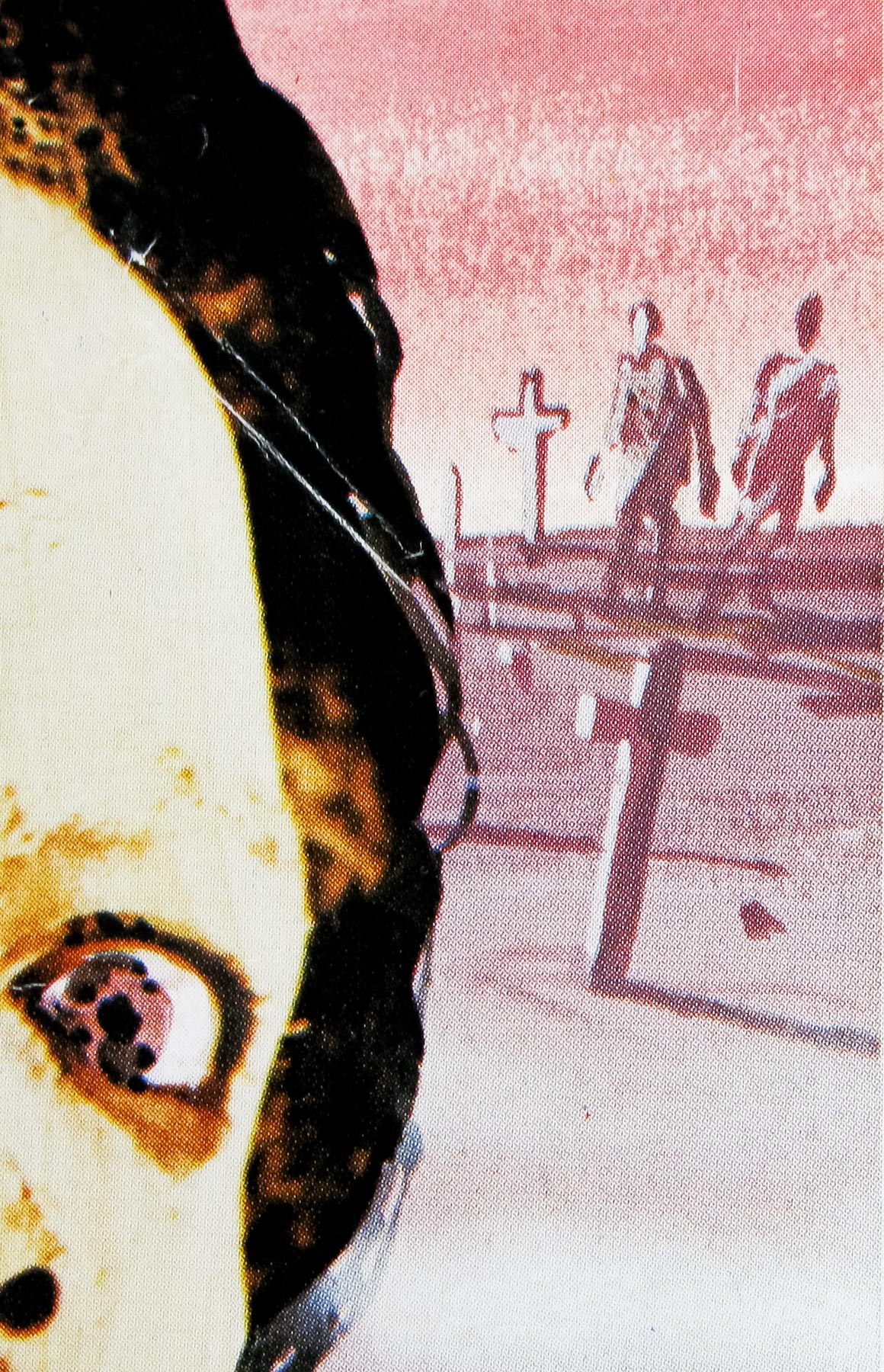
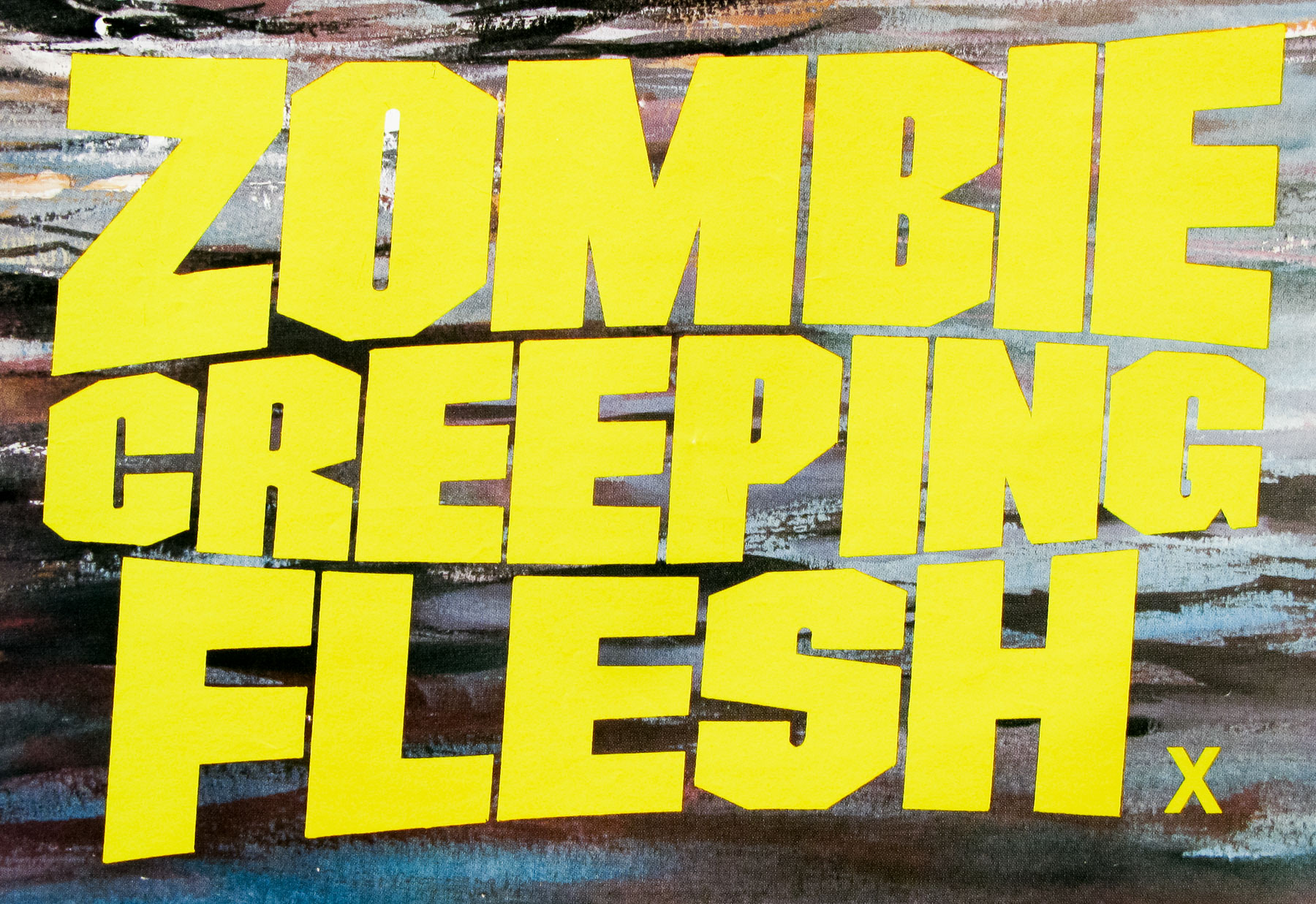
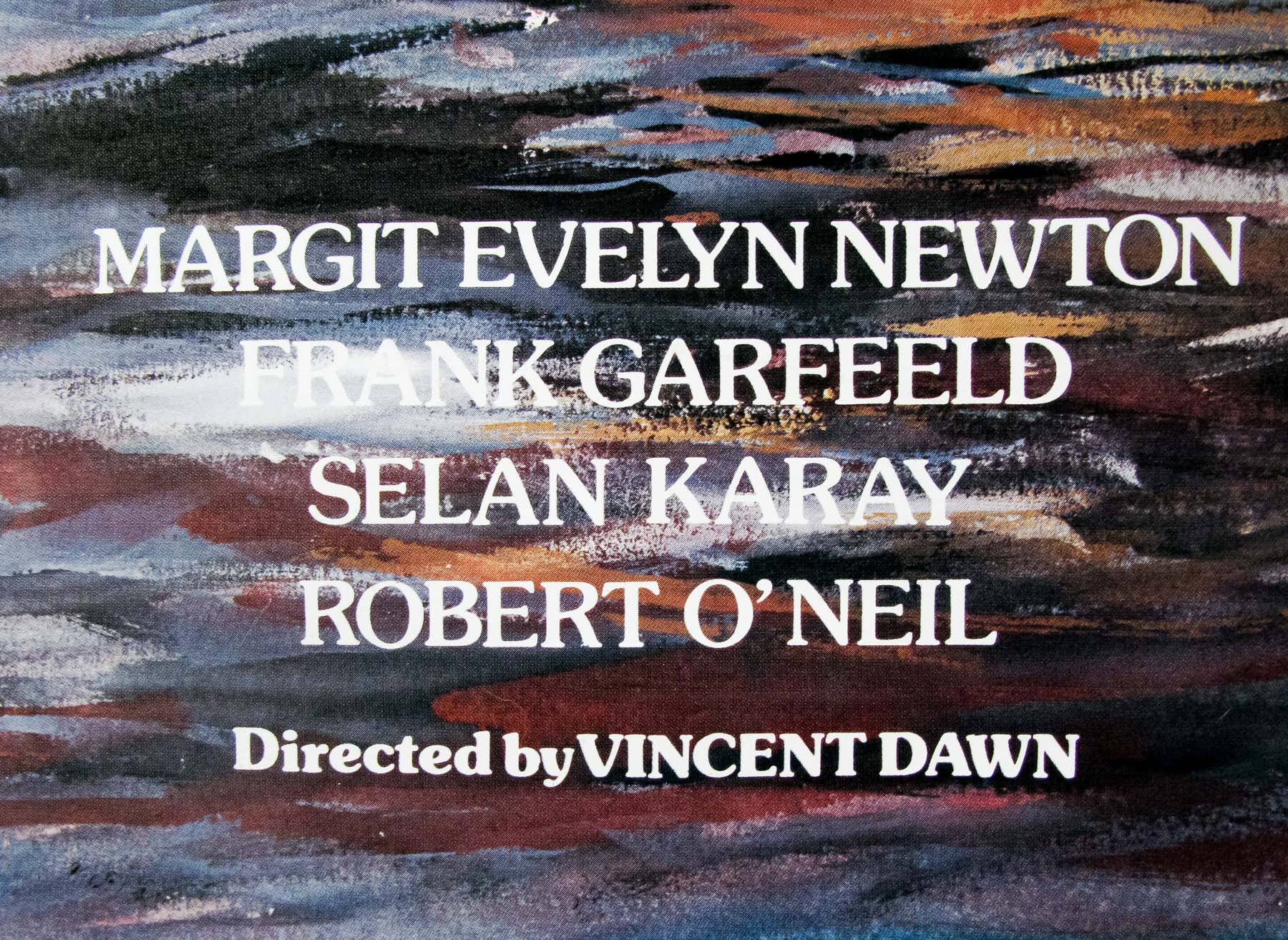
One of several copycat zombie films made following the success of Romero’s Dawn of the Dead and Lucio Fulci’s Zombie, this effort by Italian director Bruno Mattei (under the pseudonym Vincent Dawn) shamelessly features many of the same types of characters and situations seen in the earlier films (SWAT team, zombie kids, hostages), and even uses sections of Goblin‘s score for DotD.

It sounds like the production was something of a nightmare, with botched filming and script-altering that rendered much of the film’s plot incomprehensible. The film features several sections of documentary footage taken from other productions and the original script apparently had a much grander scope:

In the first draft, Claudio Fragasso had followed the idea of an entire Third World made up of an army of zombies against whom the armed forces of the industrialized nations would have had to fight. However, the script had to be altered considerably due to budget limitations.

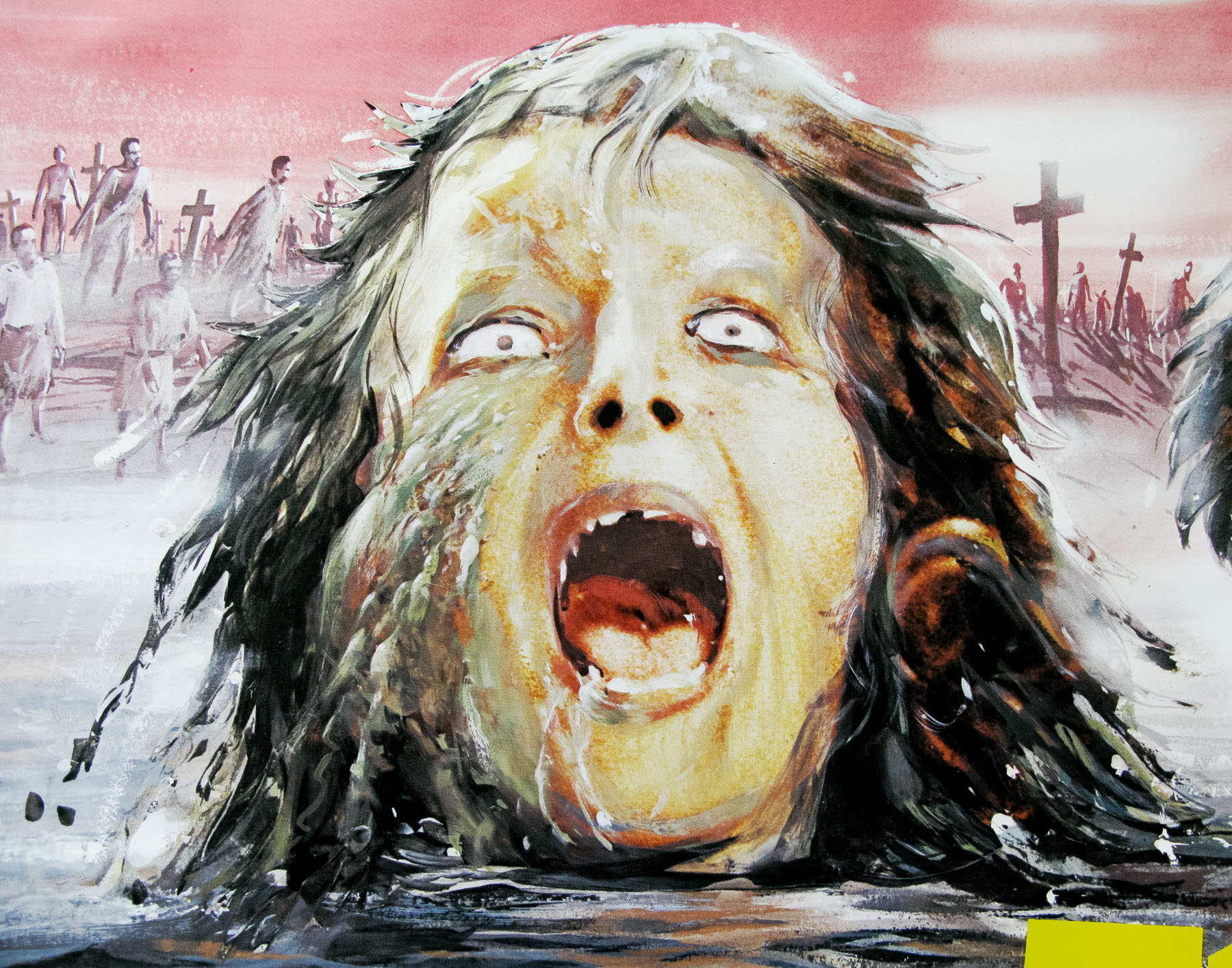
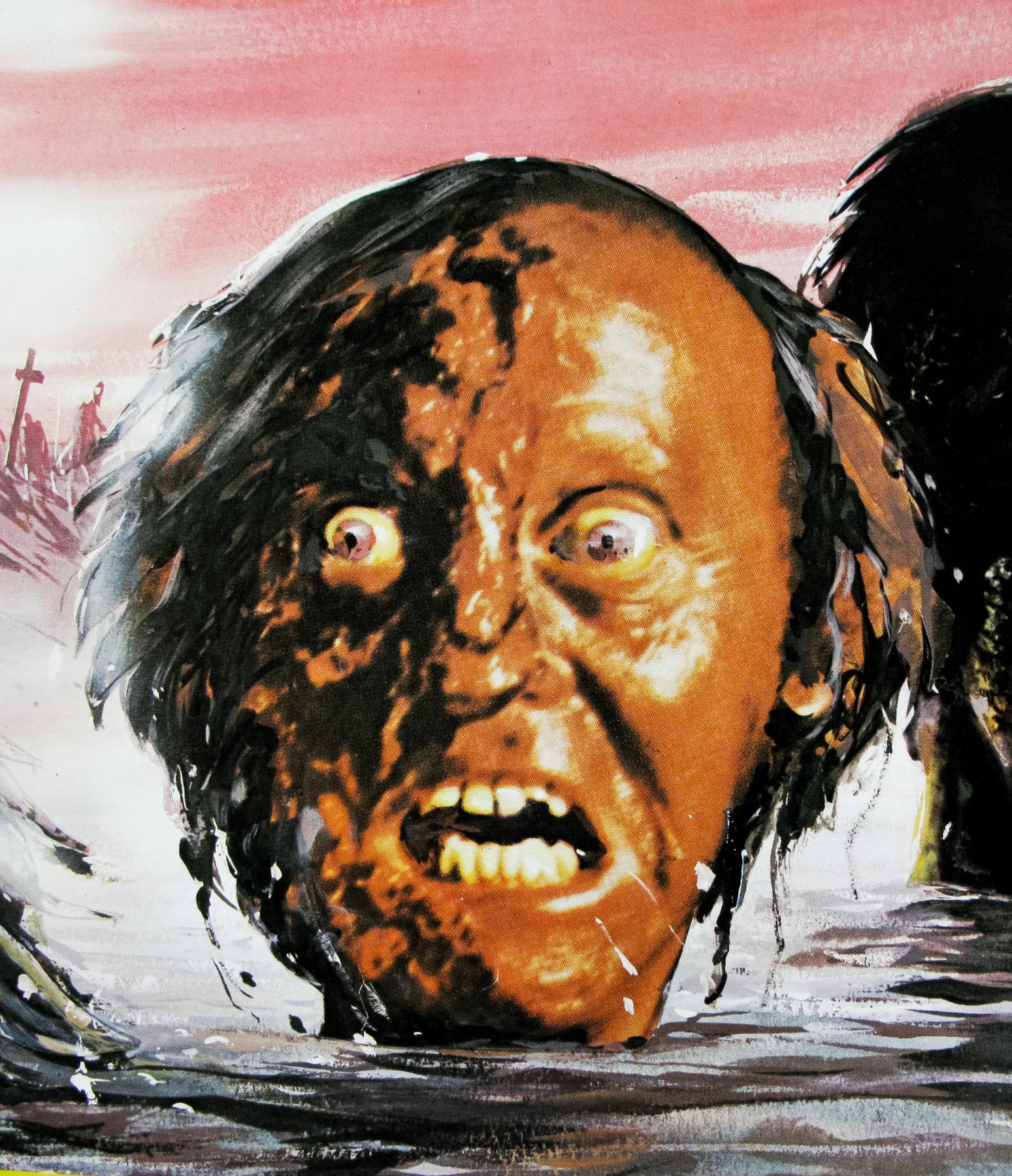
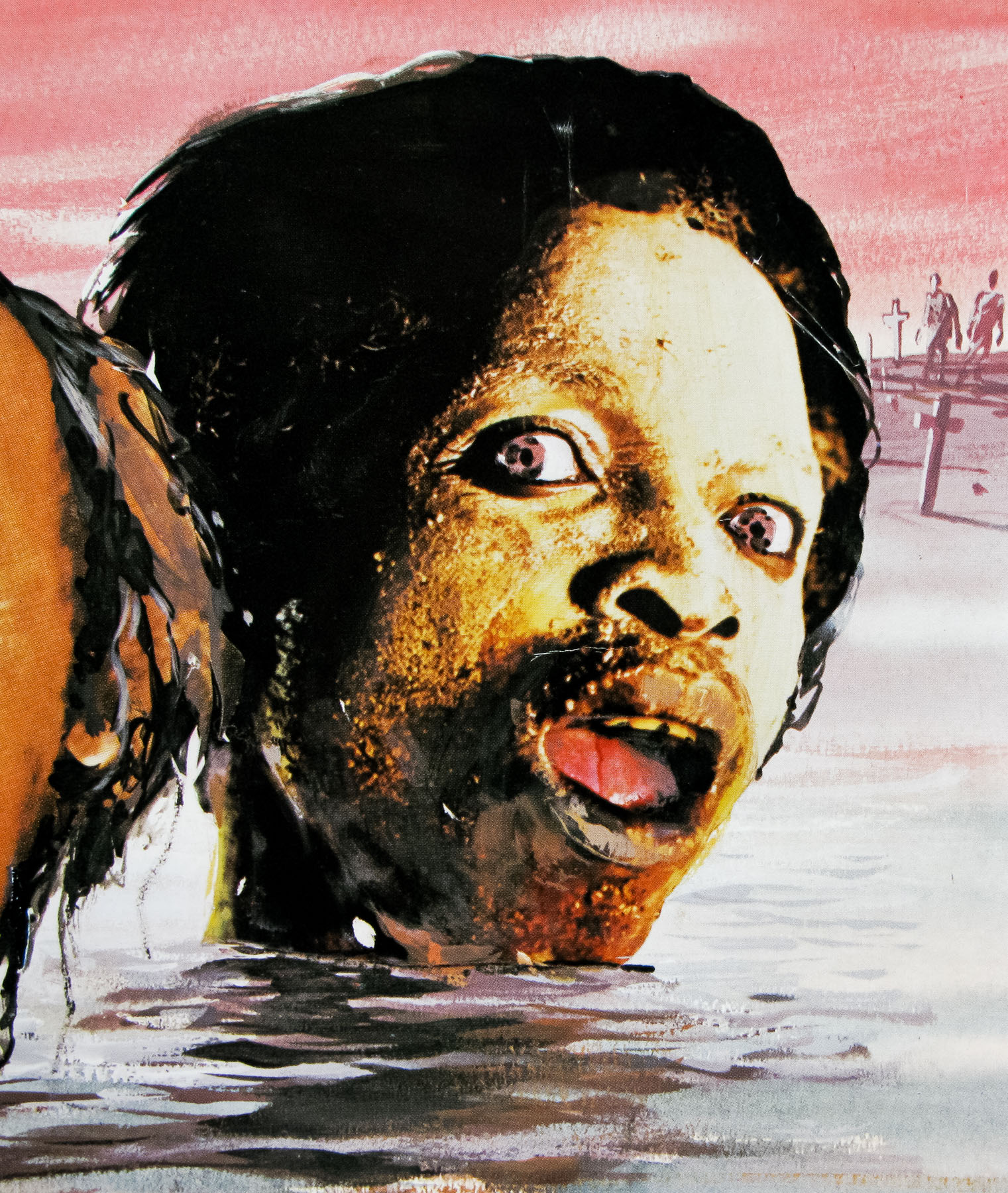
This quad features artwork which Sim Branaghan, author of the great book British Film Posters: An Illustrated History, believes to have been adapted from the original Italian poster. Ted Baldwin, who was the regular illustrator used by distributor Mircale Films, is likely to have made several changes to adapt it to the quad format.

Here’s the original trailer.

Death Wish 3 / quad / UK

28.12.11

Poster Poster
Title
Death Wish 3
AKA
--
Year of Film
1985
Director
Michael Winner
Starring
Charles Bronson, Deborah Raffin, Ed Lauter, Martin Balsam, Gavan O'Herlihy
Origin of Film
USA
Genre(s) of Film
Charles Bronson, Deborah Raffin, Ed Lauter, Martin Balsam, Gavan O'Herlihy,
Type of Poster
Quad
Style of Poster
--
Origin of Poster
UK
Year of Poster
1985
Designer
Unknown
Artist
Stan Watts
Size (inches)
30 1/16" x 40"
SS or DS
SS
Tagline
He's back in New York bringing justice to the streets...

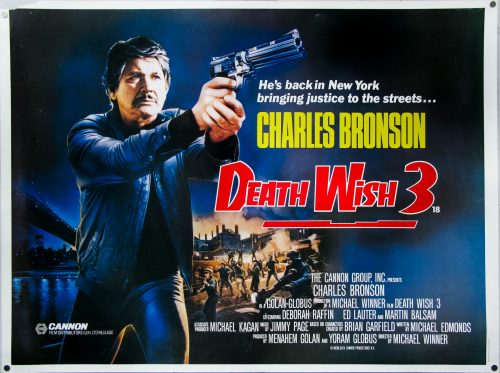
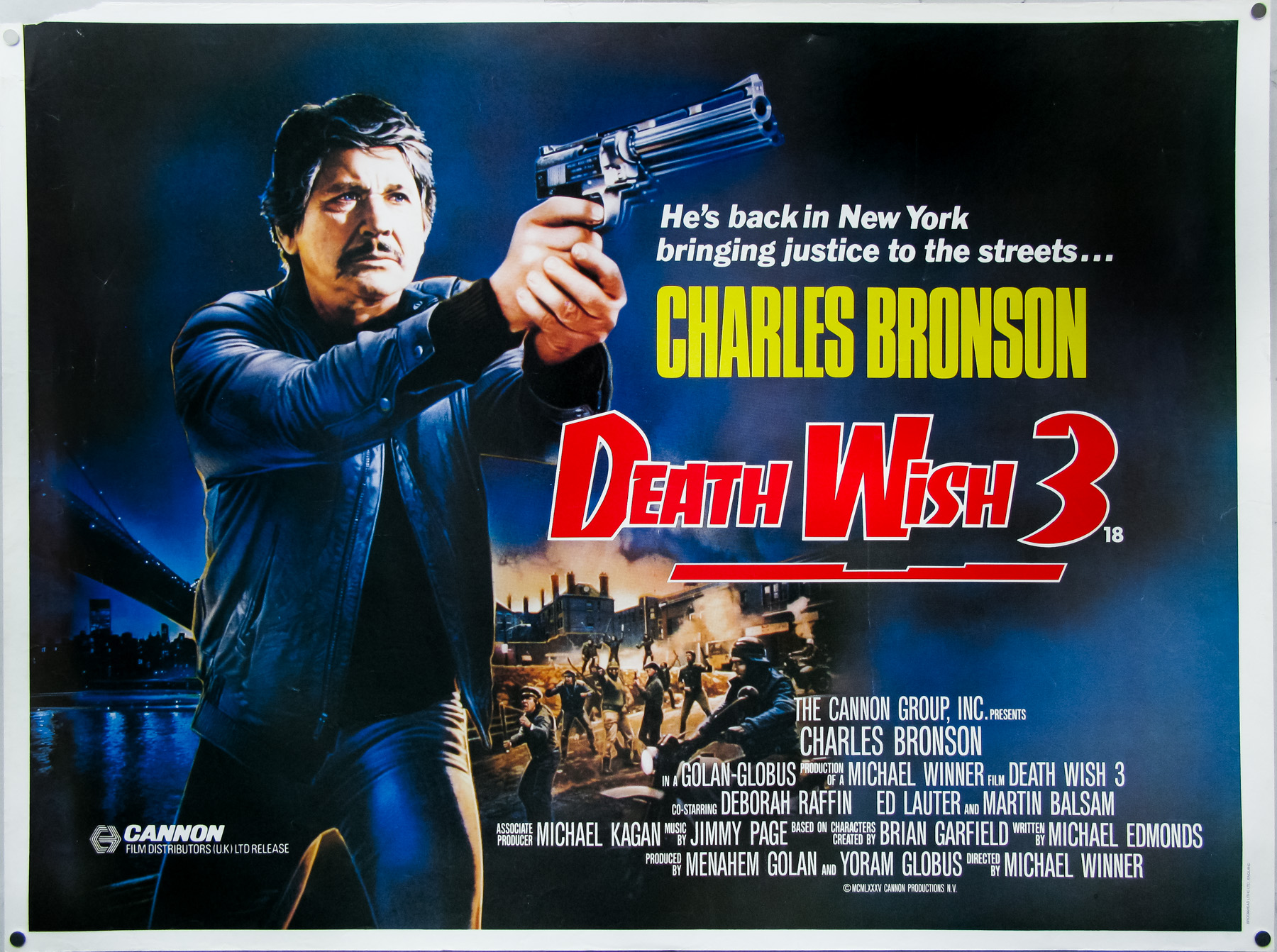
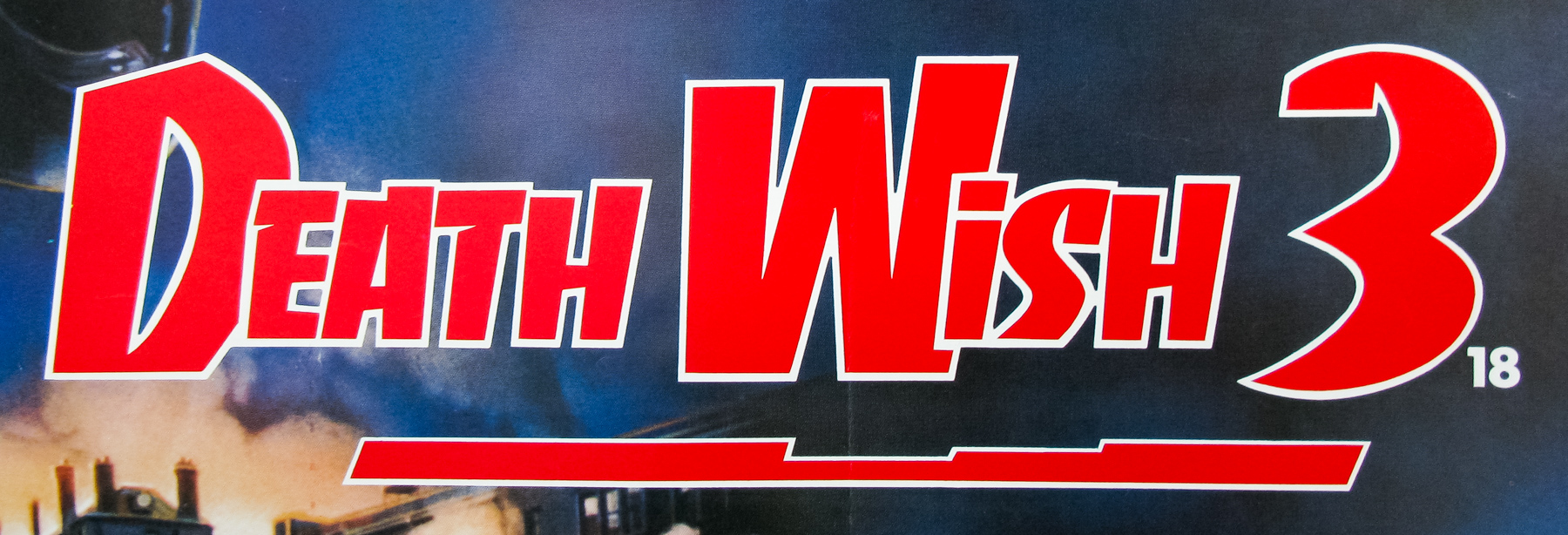
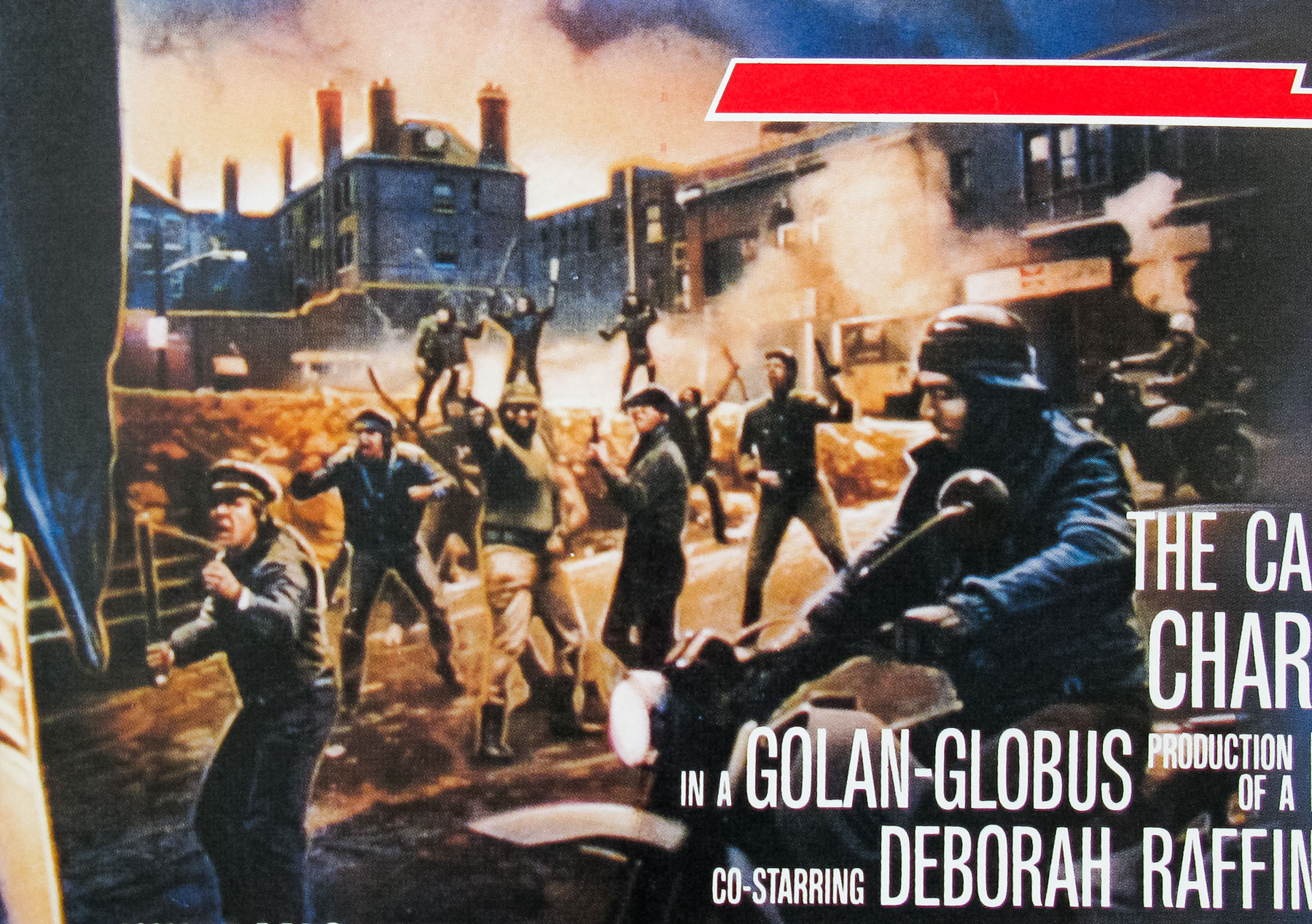
The legendary Charles Bronson in full effect on this British quad for director Michael Winner’s final Death Wish film (Bronson would go on to star in two more). Today, the film has a cult following despite being critically panned upon release. Although it’s set in New York the majority of filming took place in London and the British actors later had their voice dubbed over by American airmen based in the UK.

The film features a lot of memorably over-the-top action – a prime example would be the ‘Giggler’ scene – and several spectacularly cheesy lines of dialogue; “It’s like killing roaches – you have to kill ’em all, otherwise what’s the use?”

The quad is an adaptation of the American one sheet featuring artwork by Stan Watts that can be seen here.

The original trailer is on YouTube.

Raiders of the Lost Ark / quad / style A / UK

06.01.12

Poster Poster
Title
Raiders of the Lost Ark
AKA
--
Year of Film
1981
Director
Steven Spielberg
Starring
Harrison Ford, Karen Allen, Paul Freeman, Ronald Lacey, John Rhys-Davies, Denholm Elliott, Alfred Molina
Origin of Film
USA
Genre(s) of Film
Harrison Ford, Karen Allen, Paul Freeman, Ronald Lacey, John Rhys-Davies, Denholm Elliott, Alfred Molina,
Type of Poster
Quad
Style of Poster
Style A
Origin of Poster
UK
Year of Poster
1981
Designer
Unknown
Artist
Richard Amsel
Size (inches)
30 1/16" x 39 15/16"
SS or DS
SS
Tagline
The creators of Jaws and Star Wars now bring you the Ultimate Hero in the Ultimate Adventure

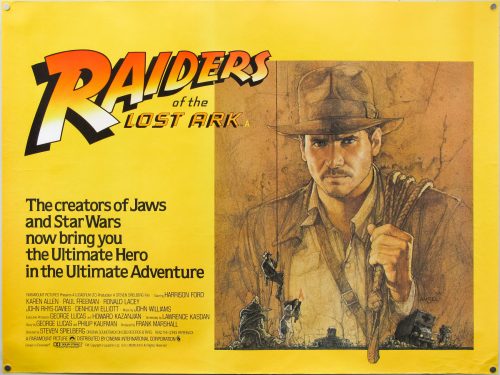
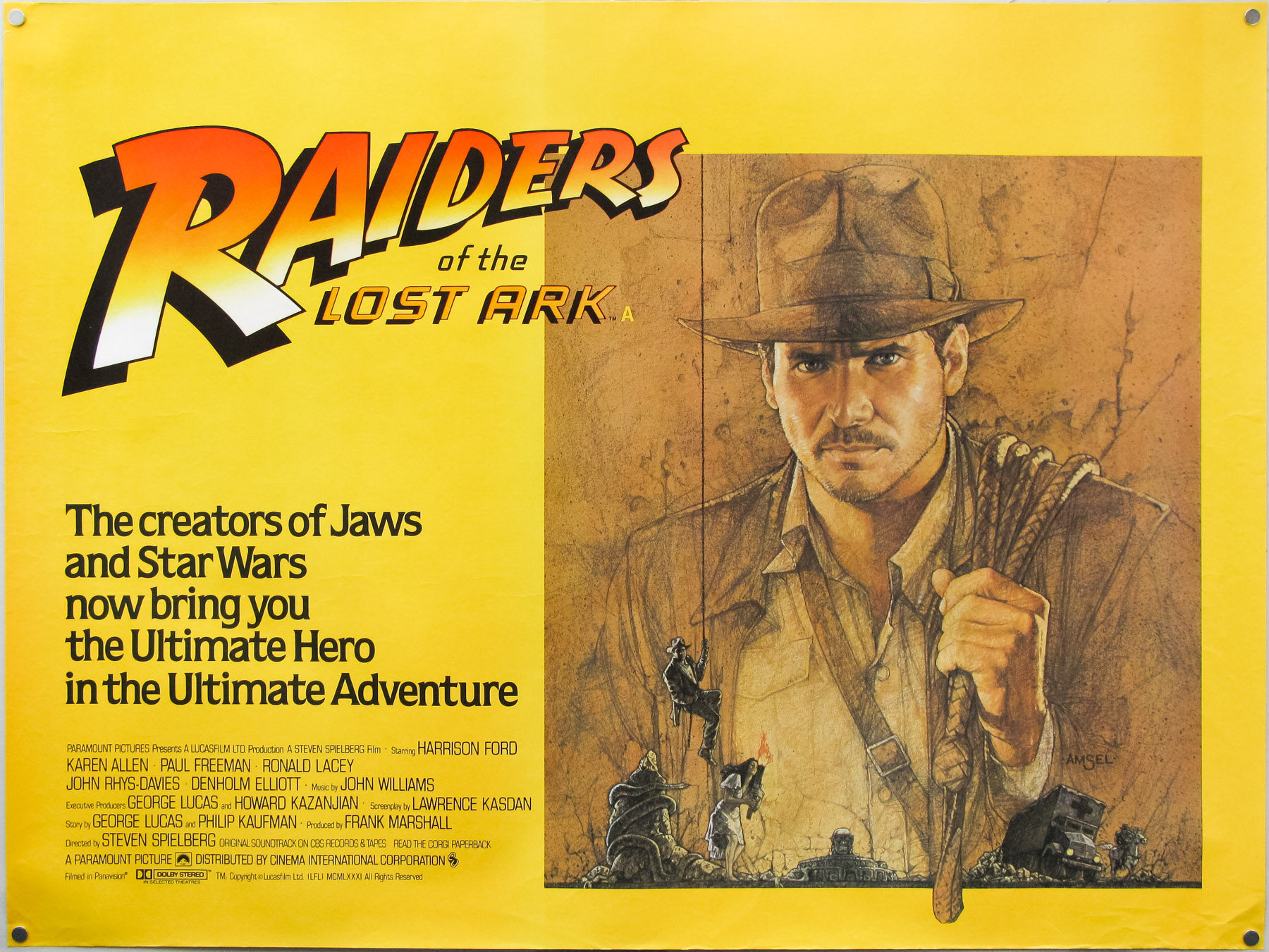
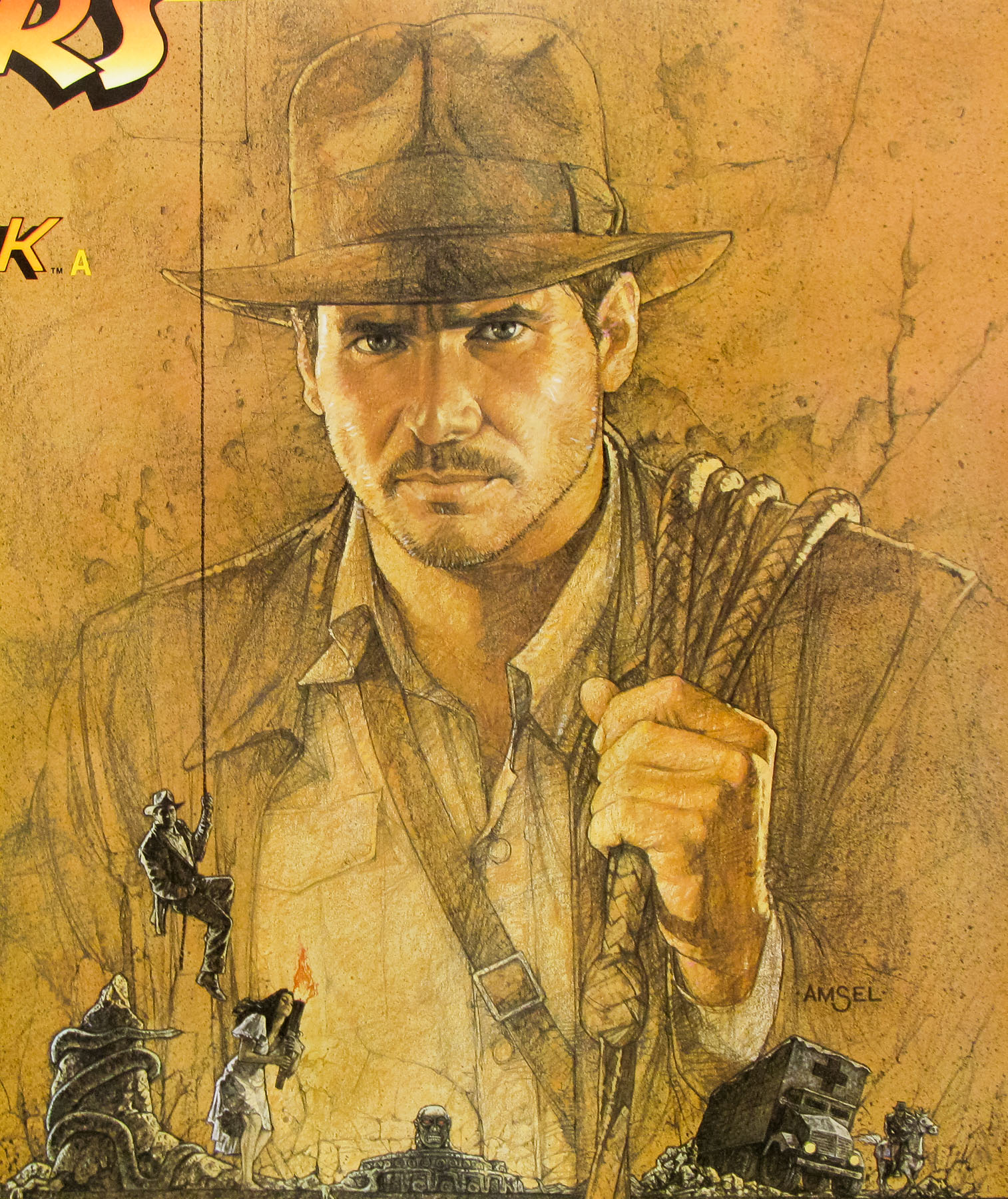
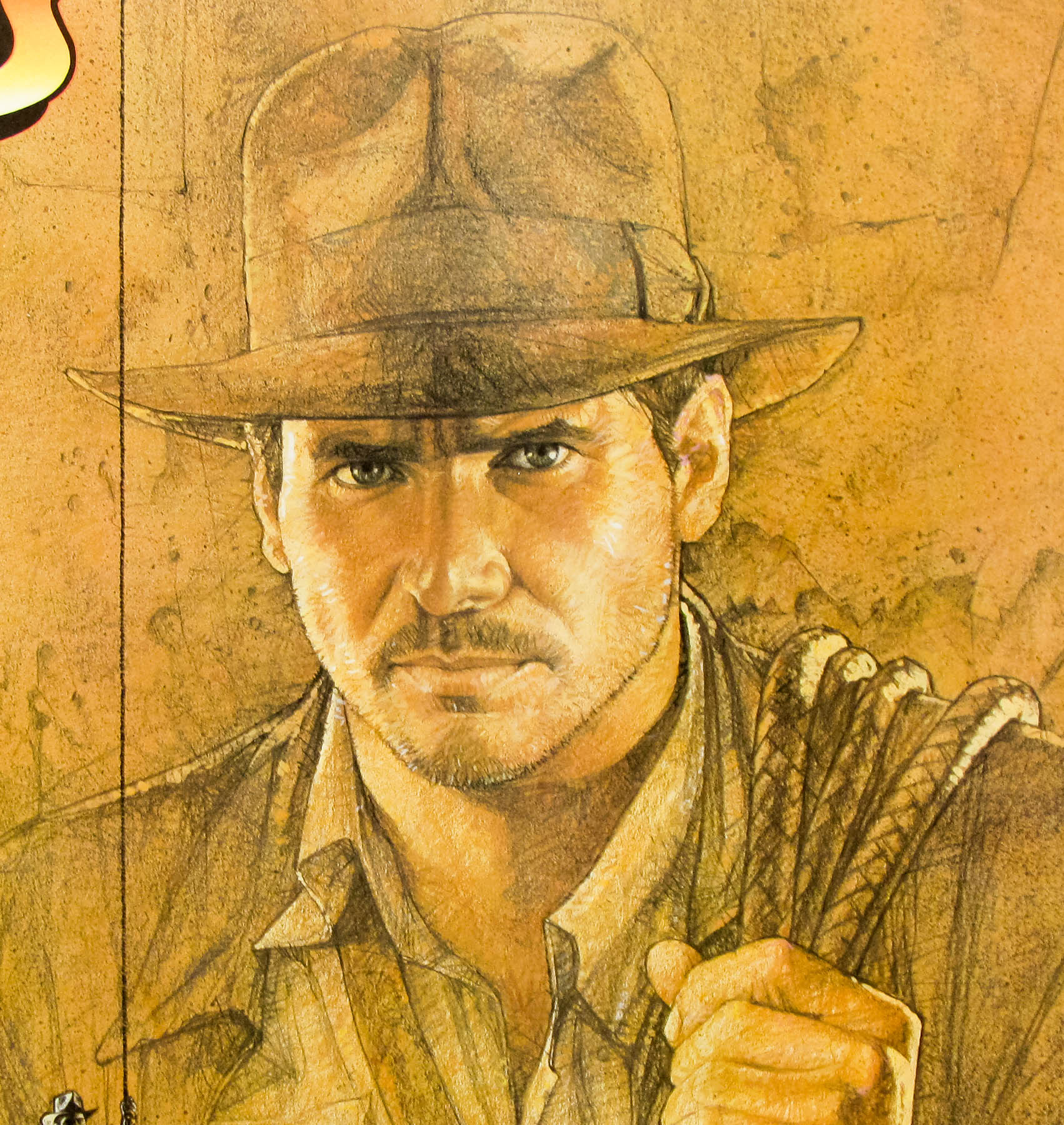
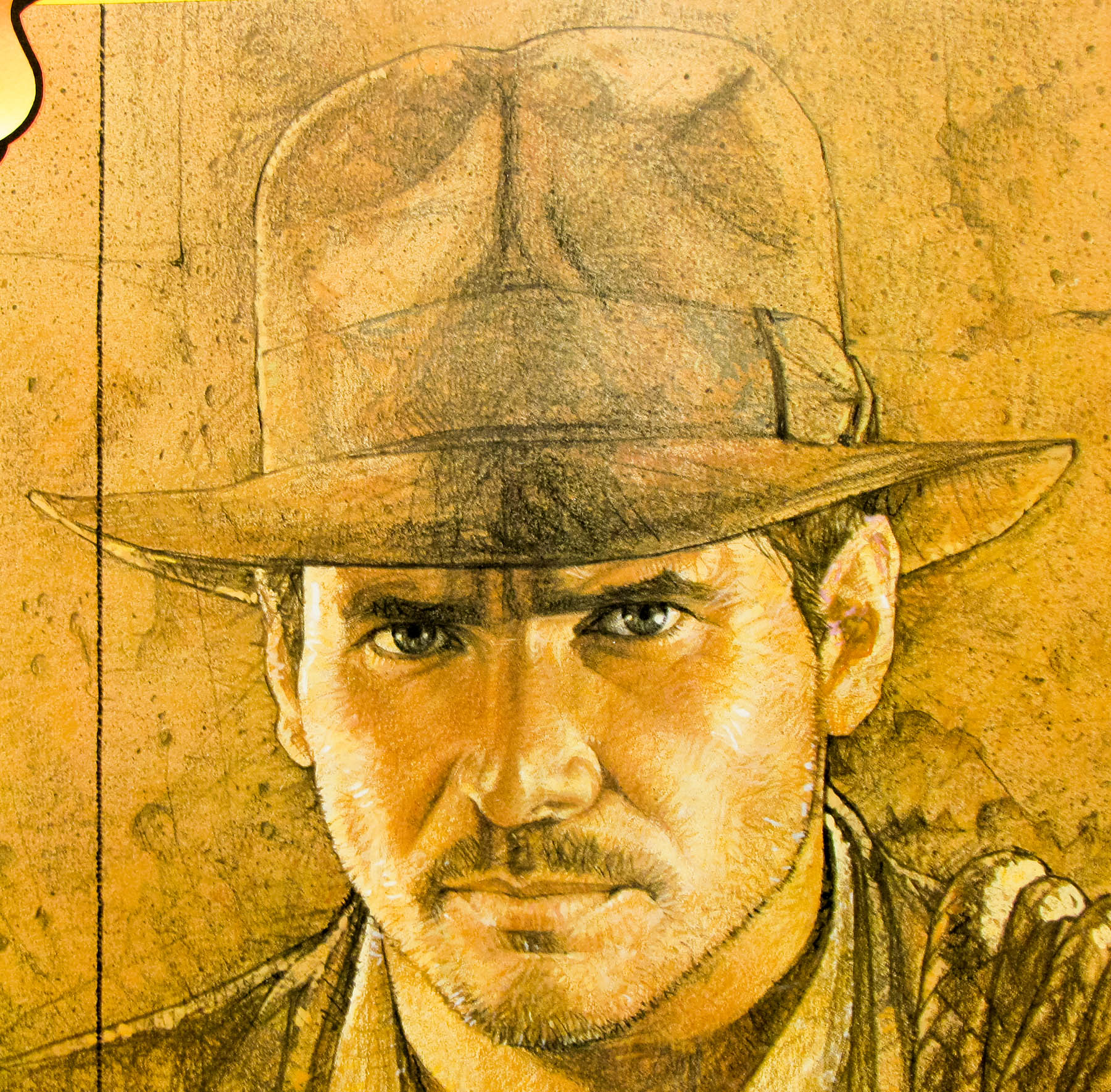
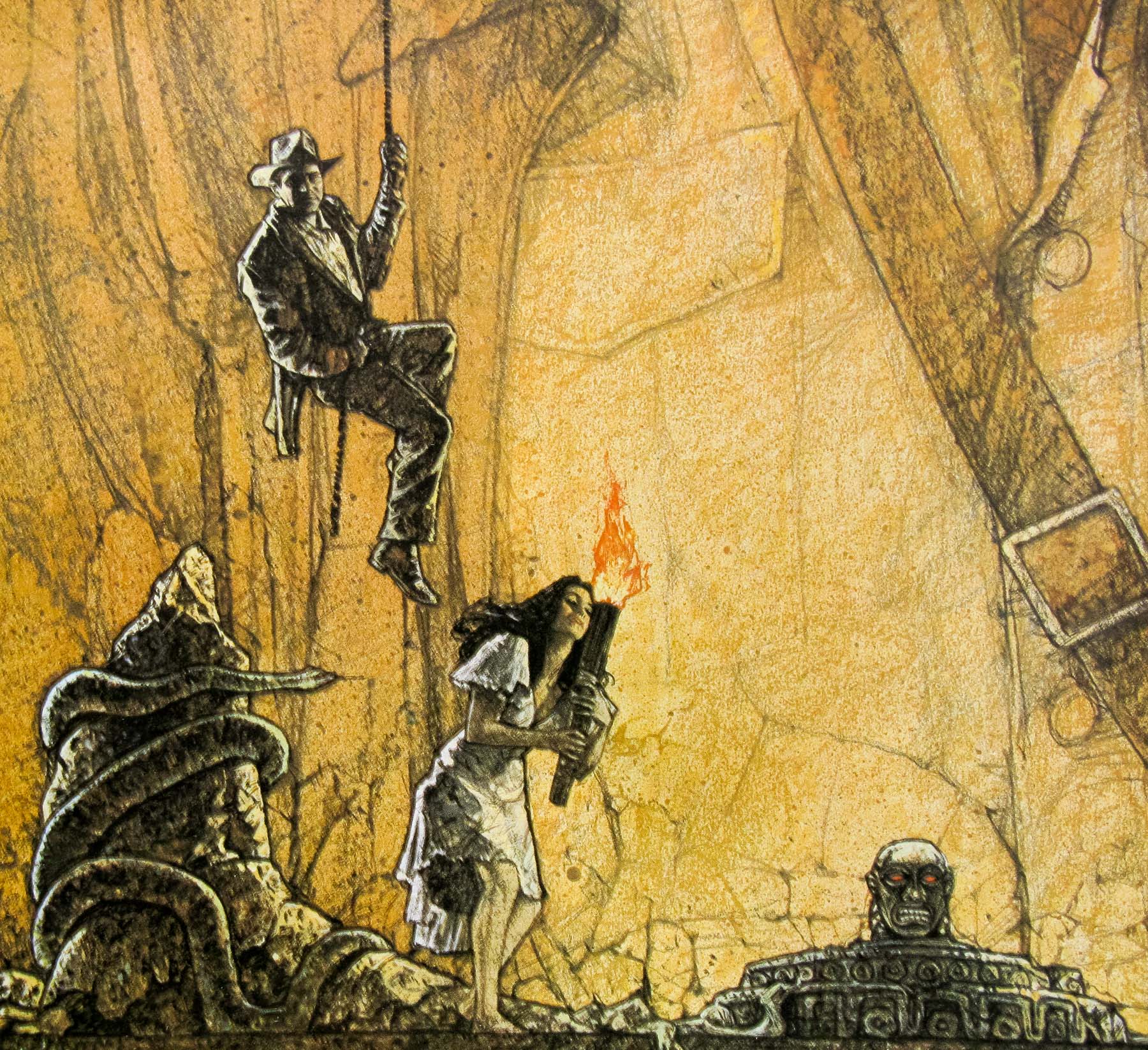
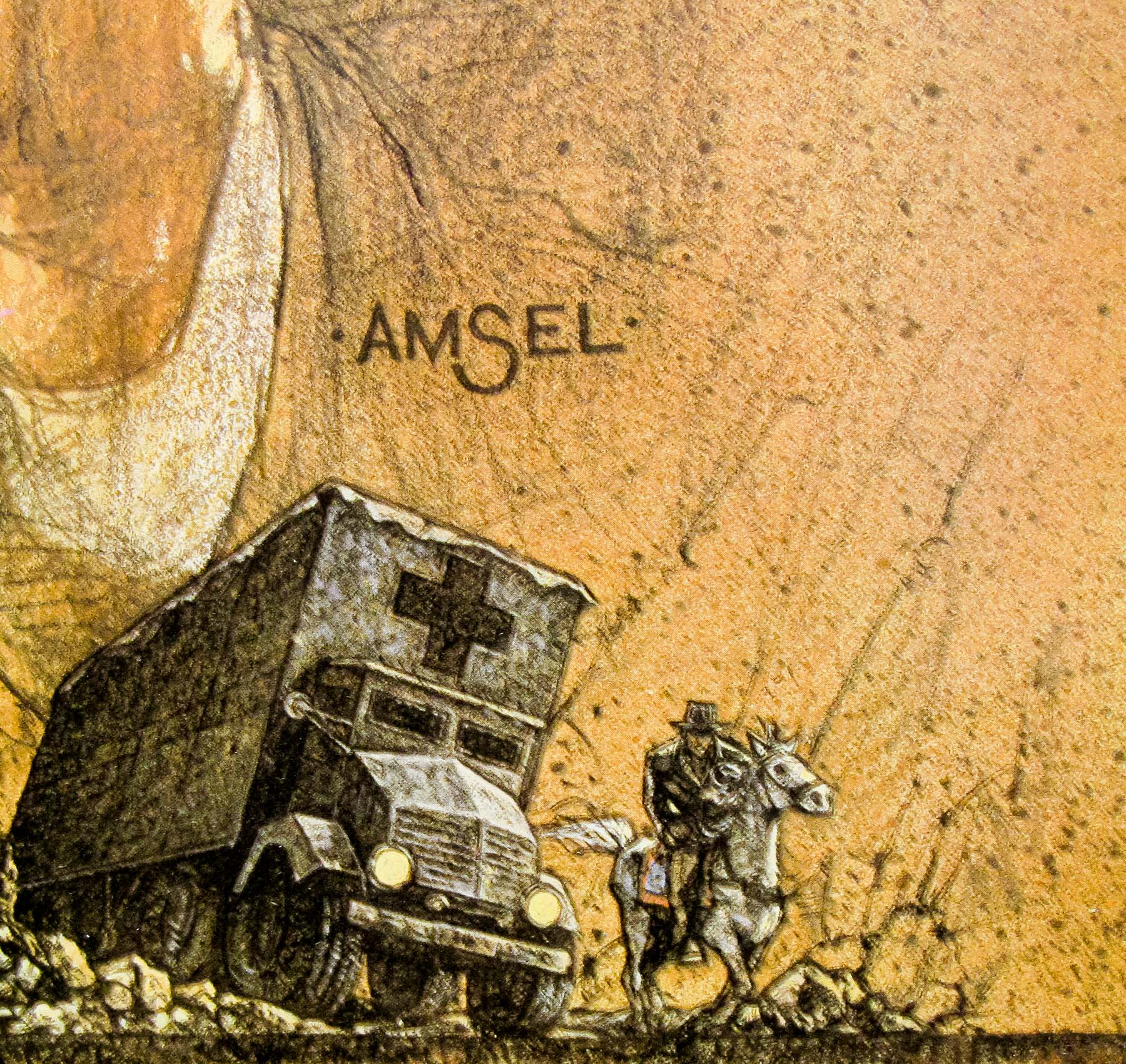
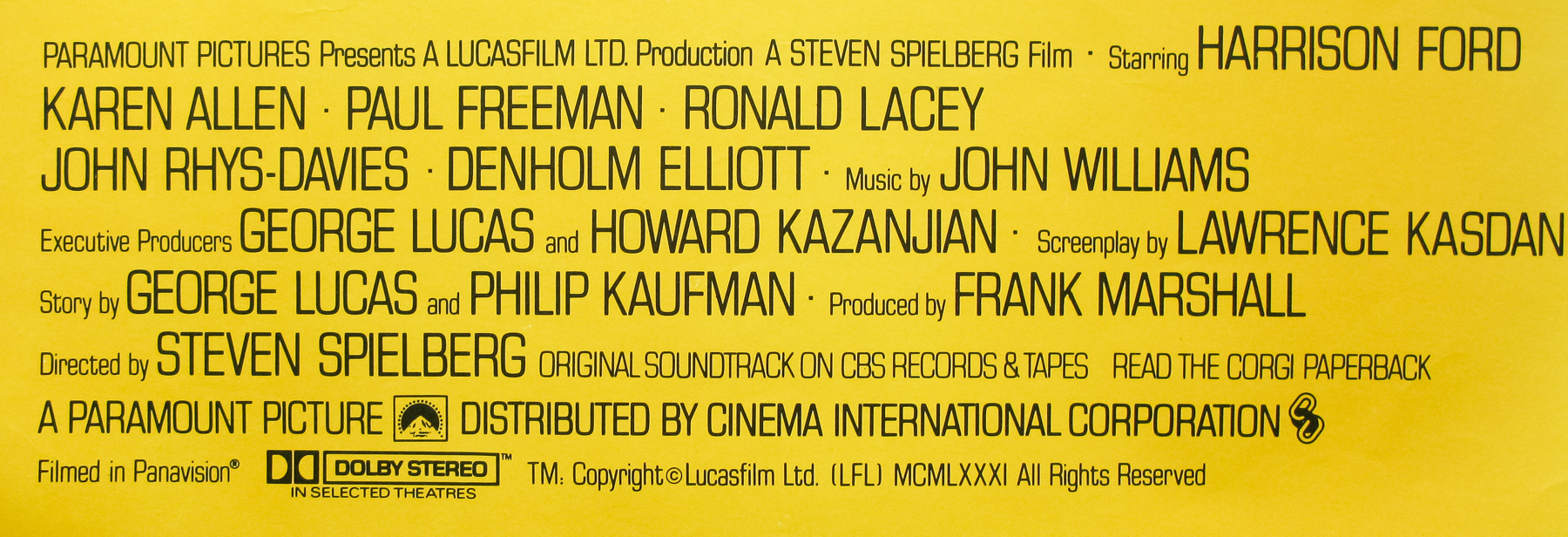
This was the first British poster released for the first film in Steven Spielberg‘s legendary Indiana Jones series. The poster uses artwork by American artist Richard Amsel, as featured on the US one sheet. Both posters had the task of selling the new character to cinema-goers and you’ll notice that they emphasise two previous hit films from Spielberg (Jaws) and George Lucas (Star Wars).

This is technically the style A quad because, as I understand it, the British distributors (Paramount UK?) decided that the artwork was too dark and Indy looks too dour and thus commissioned a second poster to be designed and printed. This resulted in the Style B quad with artwork by the great British artist Brian Bysouth. The montage on that poster leaves no doubt that the film contains plenty of action and adventure. It also ditches the now classic Indiana Jones logo and some folks balk at the fact that Indy is depicted without his fedora and leather jacket.

I believe this poster was then withdrawn once the Style B was available. I do like Richard Amsel’s artwork but I feel that Brian Bysouth’s portrait of Indy and the great composition of the other characters means the replacement is the better of the two posters.

My overall favourite Indiana Jones poster is by Richard Amsel and was for the 1982 re-release of the film in the US. It can be seen here.

Other posters by Richard Amsel I’ve collected can be seen by clicking here.

The Texas Chainsaw Massacre / quad / 1998 re-release / UK

17.02.12

Poster Poster
Title
The Texas Chainsaw Massacre
AKA
The Texas Chain Saw Massacre (alt. spelling) Headcheese, Leatherface (working titles), Non aprite quella porta [Don't Open That Door] (Italy)
Year of Film
1974
Director
Tobe Hooper
Starring
Marilyn Burns, Allen Danziger, Paul A. Partain, William Vail, Teri McMinn, Edwin Neal, Jim Siedow, Gunnar Hansen, John Dugan
Origin of Film
USA
Genre(s) of Film
Marilyn Burns, Allen Danziger, Paul A. Partain, William Vail, Teri McMinn, Edwin Neal, Jim Siedow, Gunnar Hansen, John Dugan,
Type of Poster
Quad
Style of Poster
Re-release
Origin of Poster
UK
Year of Poster
1998
Designer
Unknown
Artist
--
Size (inches)
30" x 40 2/16"
SS or DS
SS
Tagline
Can you survive.... | .... it happened!

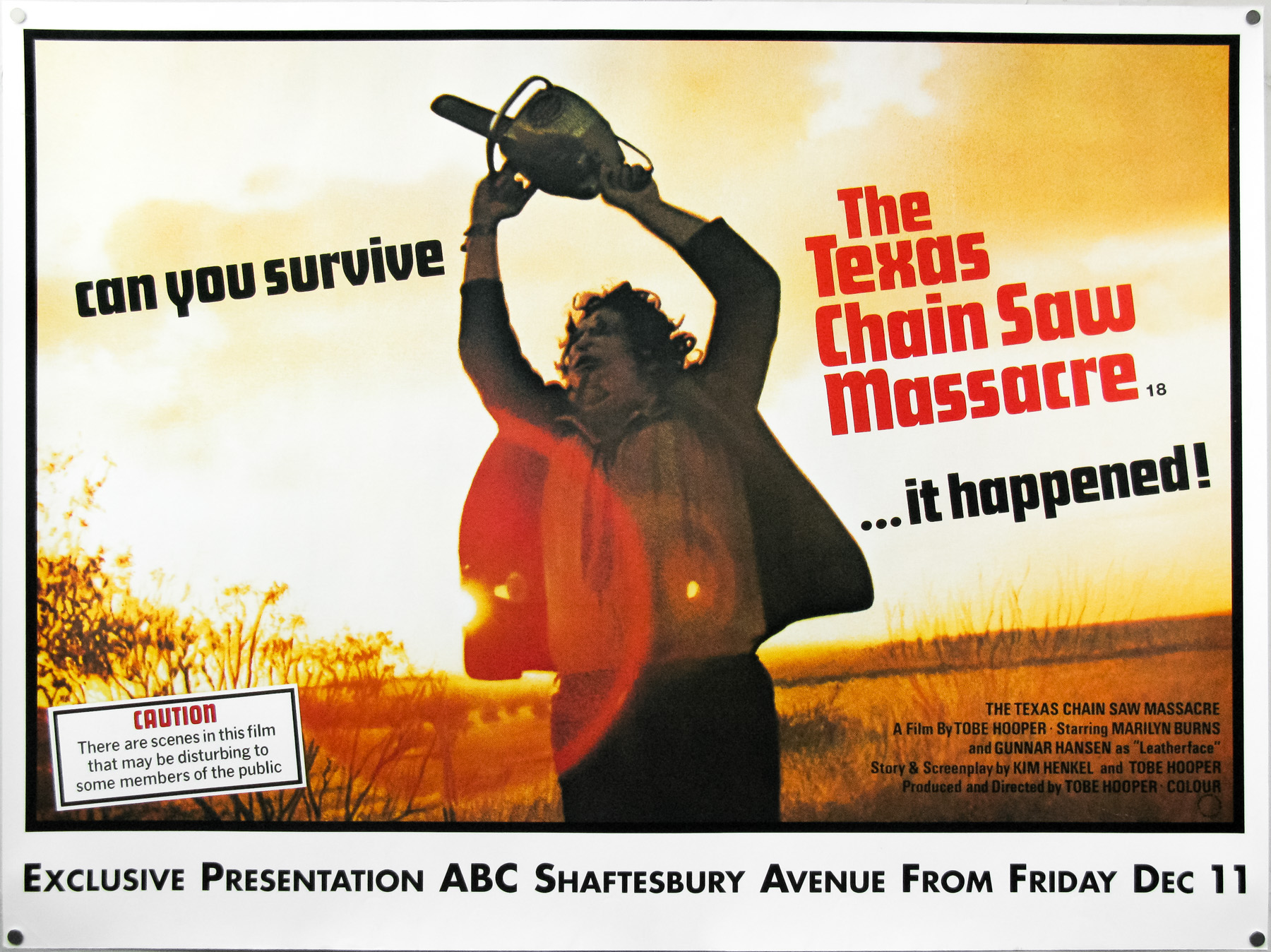
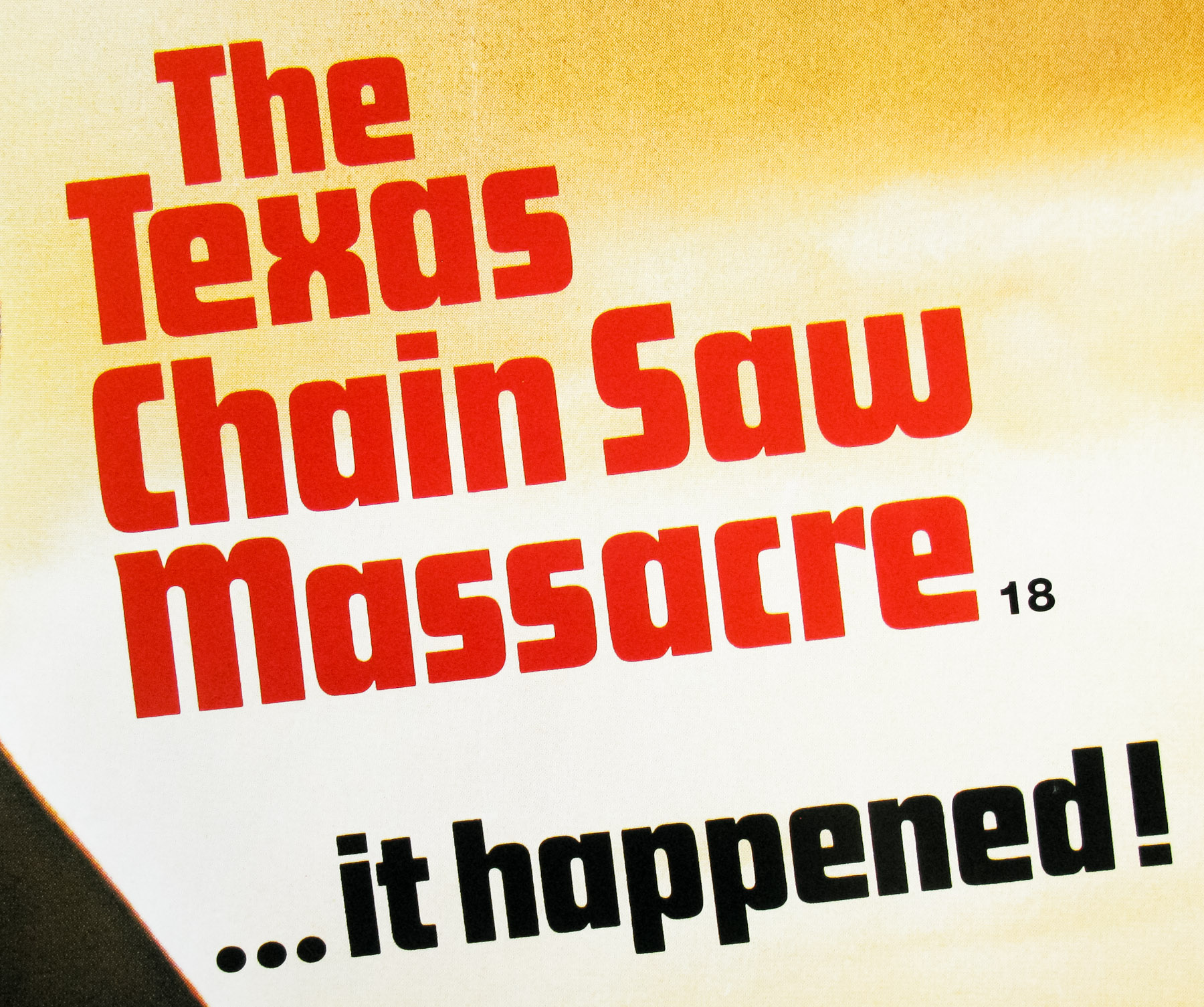
If I had to choose my top 10 horror films of all time there’s no question that Tobe Hooper‘s 1974 classic would be very close to the top of the list. Decades after it was filmed it has lost none of its raw power, despite the countless imitations made since, and its impact on the horror genre cannot be underestimated.
To my mind there are few scenes in horror as brutal and shocking as the moment involving Leatherface and the sliding door. The film features little in the way of the kind of gore that modern horrors seem to rely on, yet is no less disturbing for it. The 1986 sequel famously upped the gore and violence significantly.

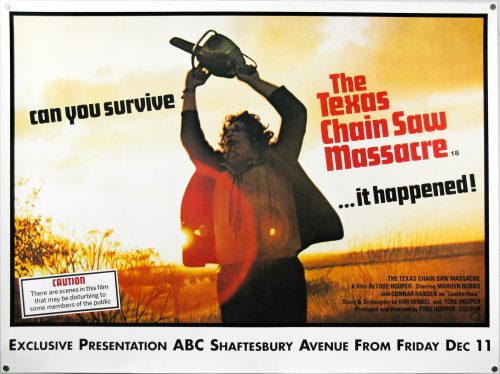
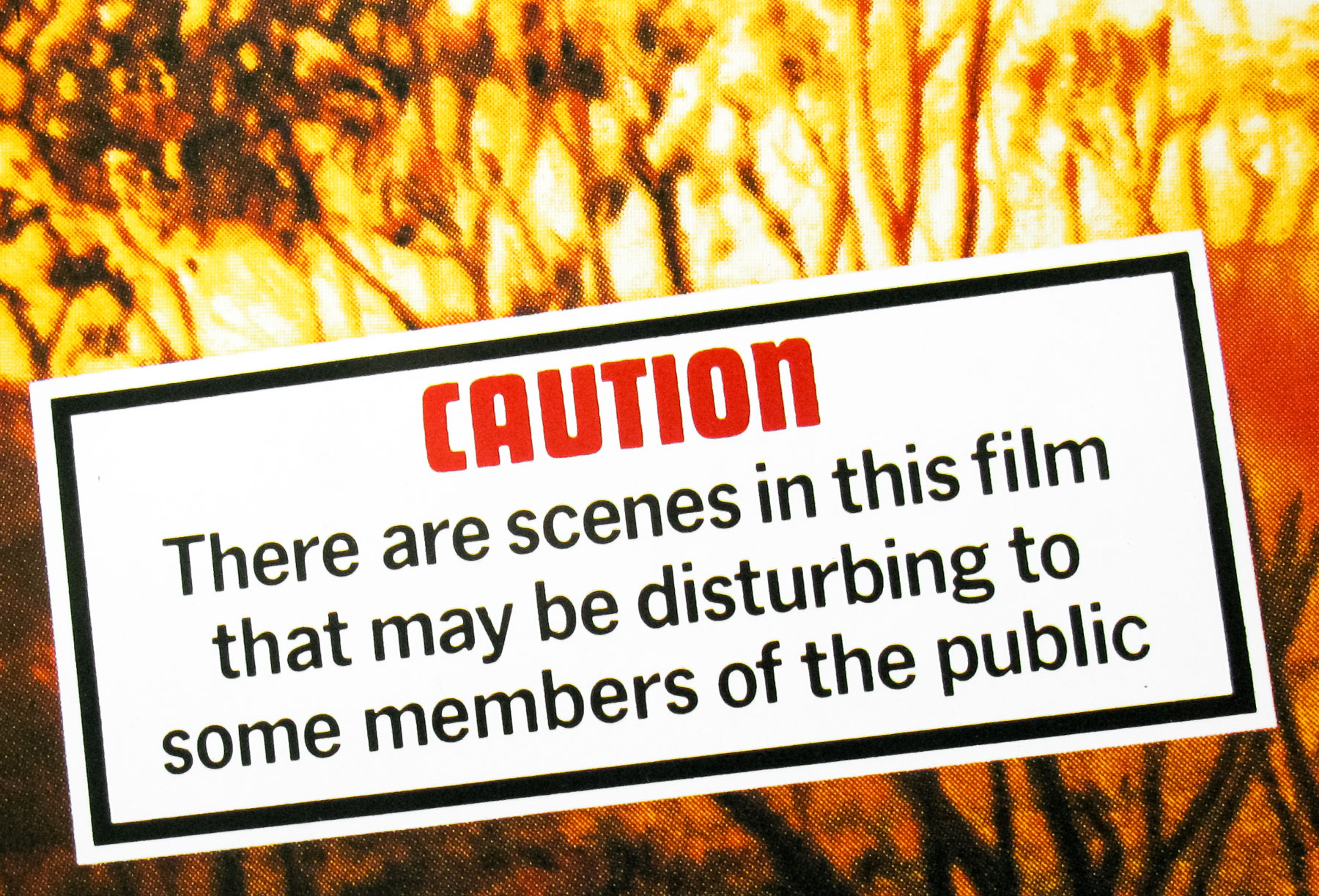
This is the British quad for a 1998 re-release of the film at the ABC Shaftesbury avenue cinema in London. Despite the BBFC declining to issue the film a certificate back in 1975, which effectively meant the film was banned from release, the Greater London Council decided to allow cinemas to screen a pre-cut ‘X’ version of the film. A few other councils around the UK also ignored the ban but many upheld it. An uncut VHS was apparently released on the Wizard label in 1981.

In 1998 the London Borough of Camden passed the film uncut with an 18 certificate and began showing the film in cinemas. Shaftesbury avenue is just inside the Borough boundary so the ABC was well placed to screen the film to central London audiences. The fact that this poster has a December date on there indicates it’s from 1998 and not 1999 when the film was finally passed uncut by the BBFC and given a wider release.

The censorship website Melon Farmers features a great write up of the situation.

The ABC is now an Odeon cinema and it has changed owners several times in its history. Check out this fantastic set on Flickr, which contains photos of the cinema over the years . The same Flickr user has uploaded a veritable gold mine of British cinema photos – see here.

This poster is practically identical to the original 1975 quad (aside from the certificate) and I’m pretty sure they simply scanned the original to create this one. This re-release poster often appears with the cinema snipe at the bottom having been removed.

Saigon / quad / UK

28.03.12

Poster Poster
Title
Saigon
AKA
Off Limits (original title)
Year of Film
1988
Director
Christopher Crowe
Starring
Willem Dafoe, Gregory Hines, Fred Ward, Amanda Pays, Kay Tong Lim, Scott Glenn, David Alan Grier, Keith David, Raymond O'Connor, Richard Brooks
Origin of Film
USA
Genre(s) of Film
Willem Dafoe, Gregory Hines, Fred Ward, Amanda Pays, Kay Tong Lim, Scott Glenn, David Alan Grier, Keith David, Raymond O'Connor, Richard Brooks,
Type of Poster
Quad
Style of Poster
--
Origin of Poster
UK
Year of Poster
1988
Designer
Brian Bysouth
Artist
Brian Bysouth
Size (inches)
30 1/16" x 39 15/16"
SS or DS
SS
NSS #
--
Tagline
They're the only law and order on the streets.

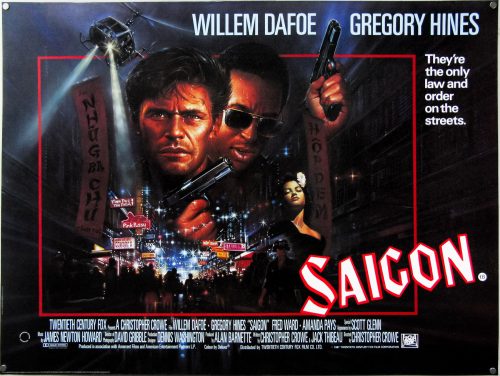
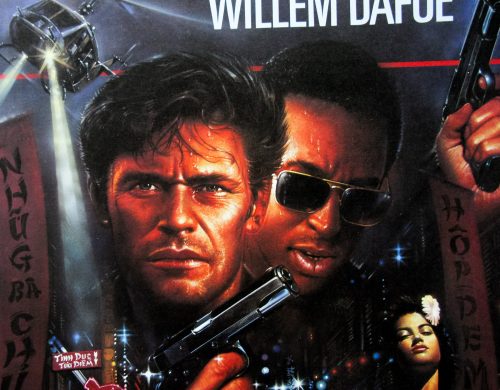
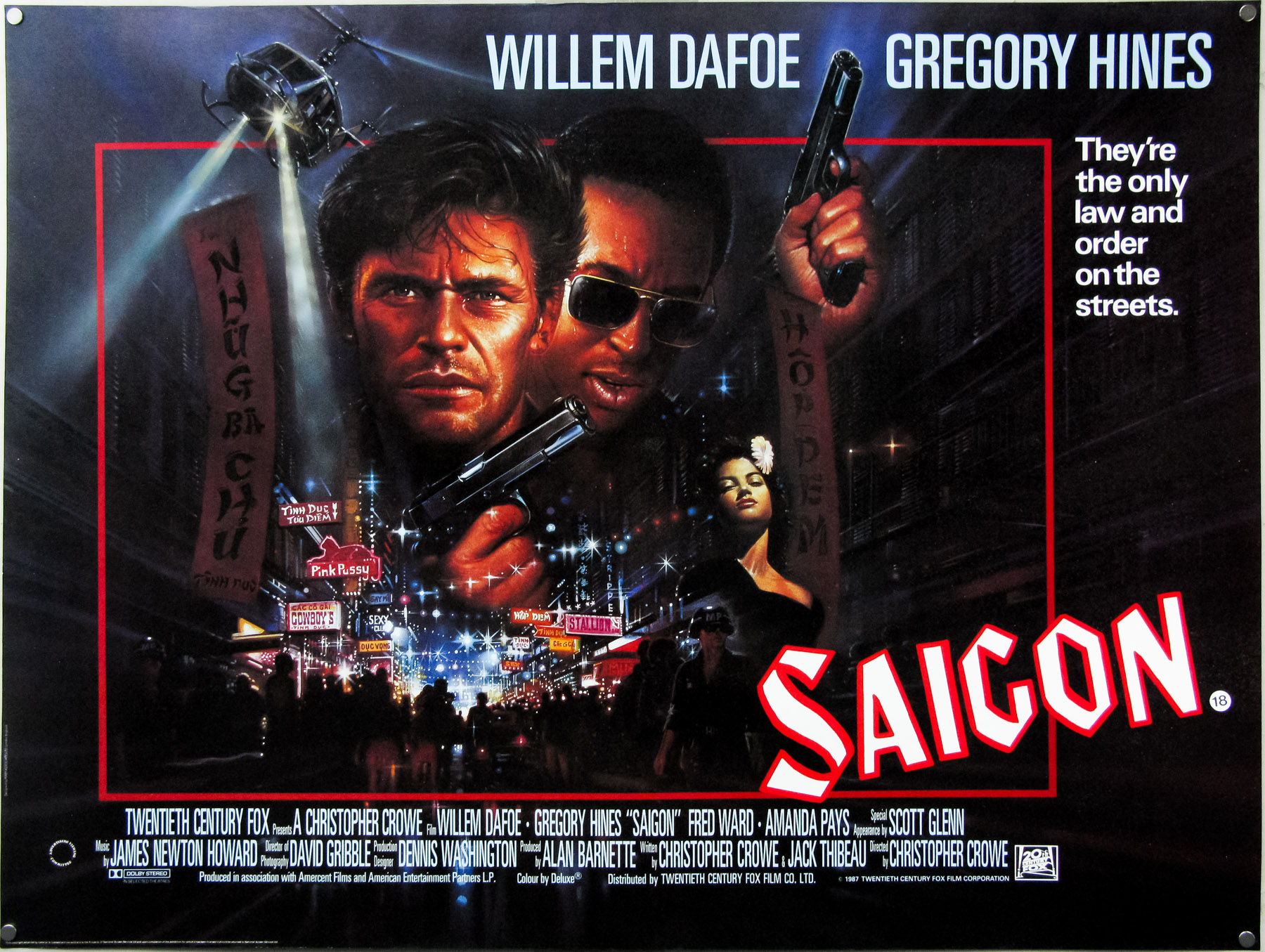
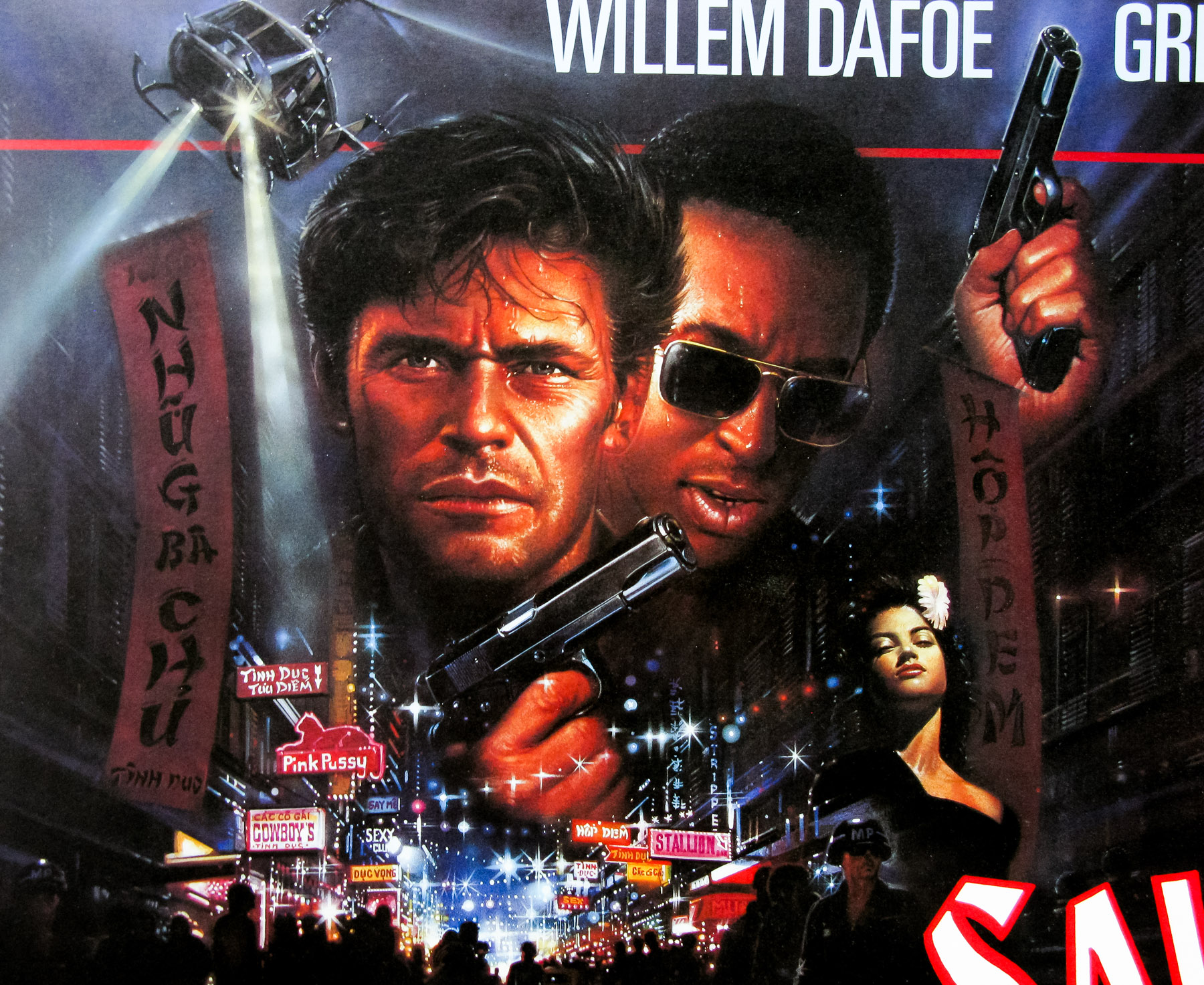
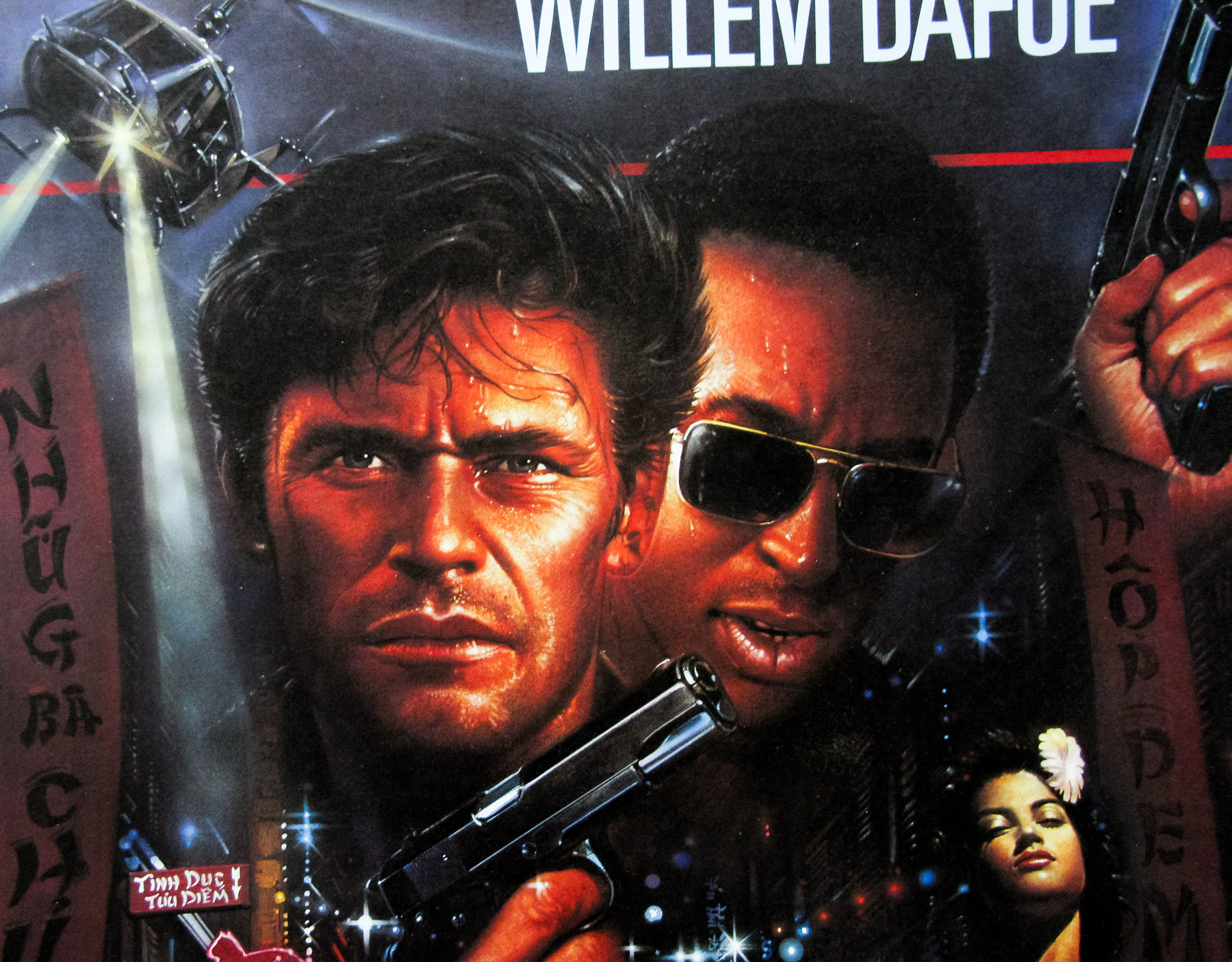
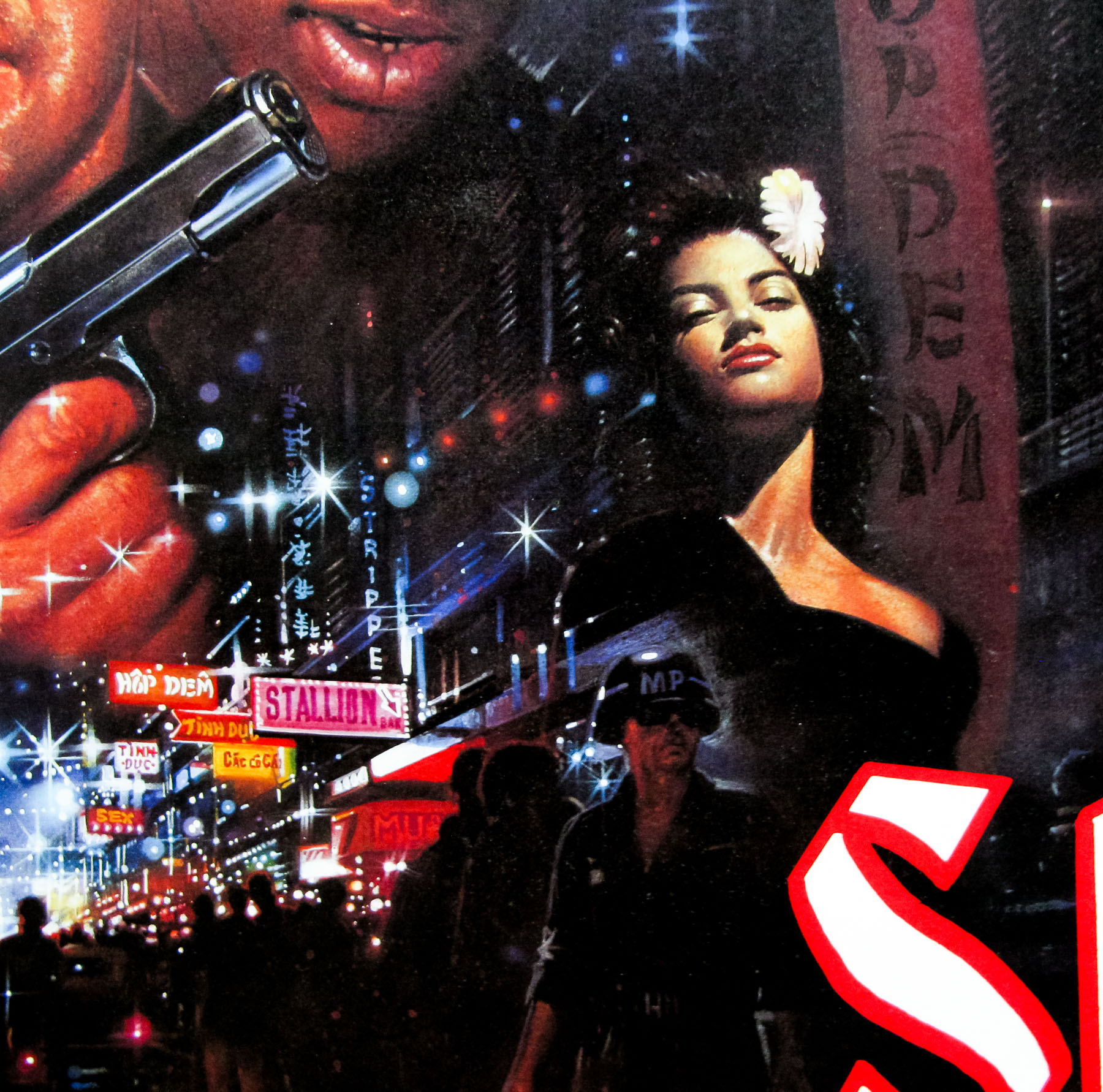
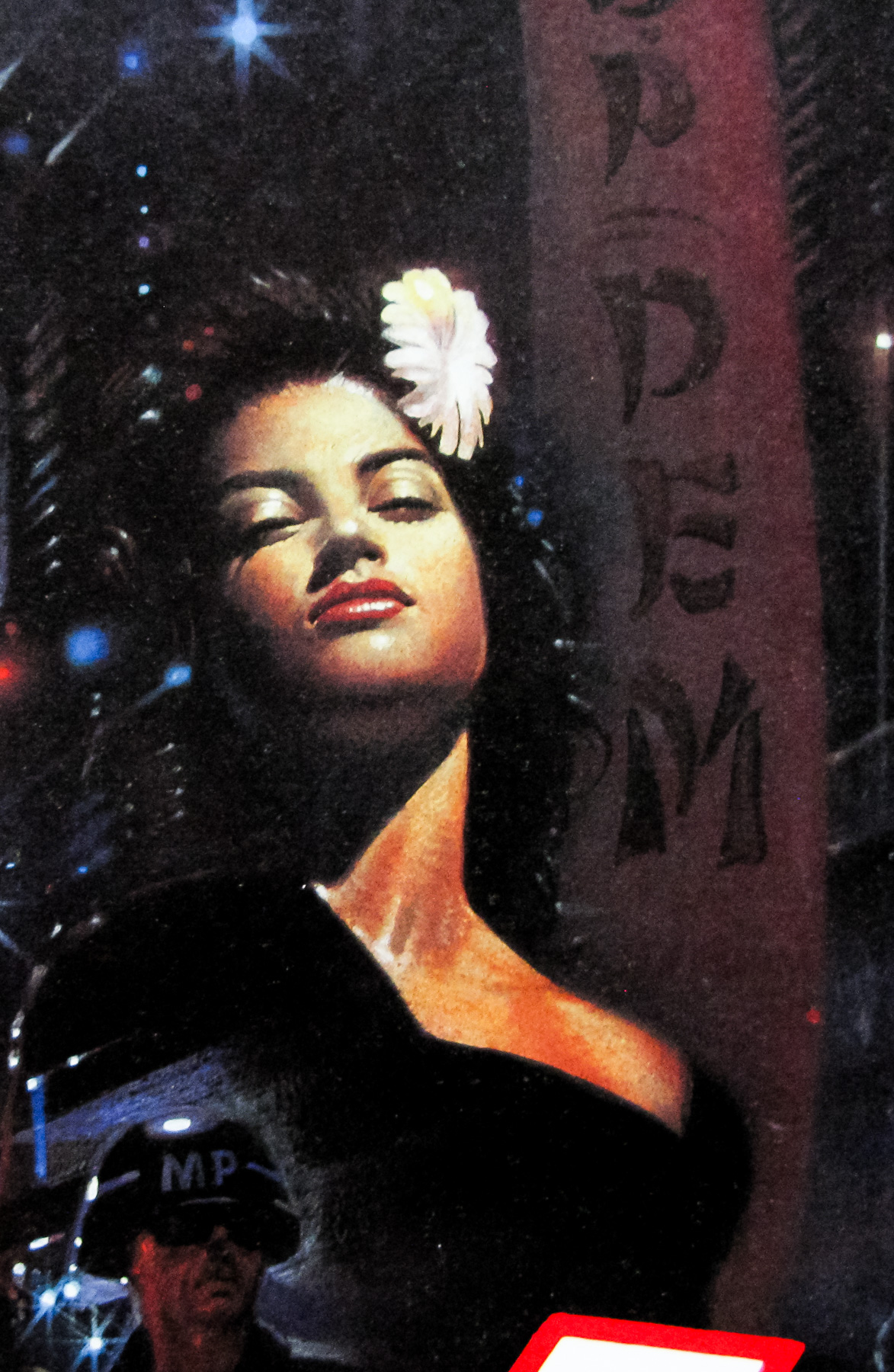
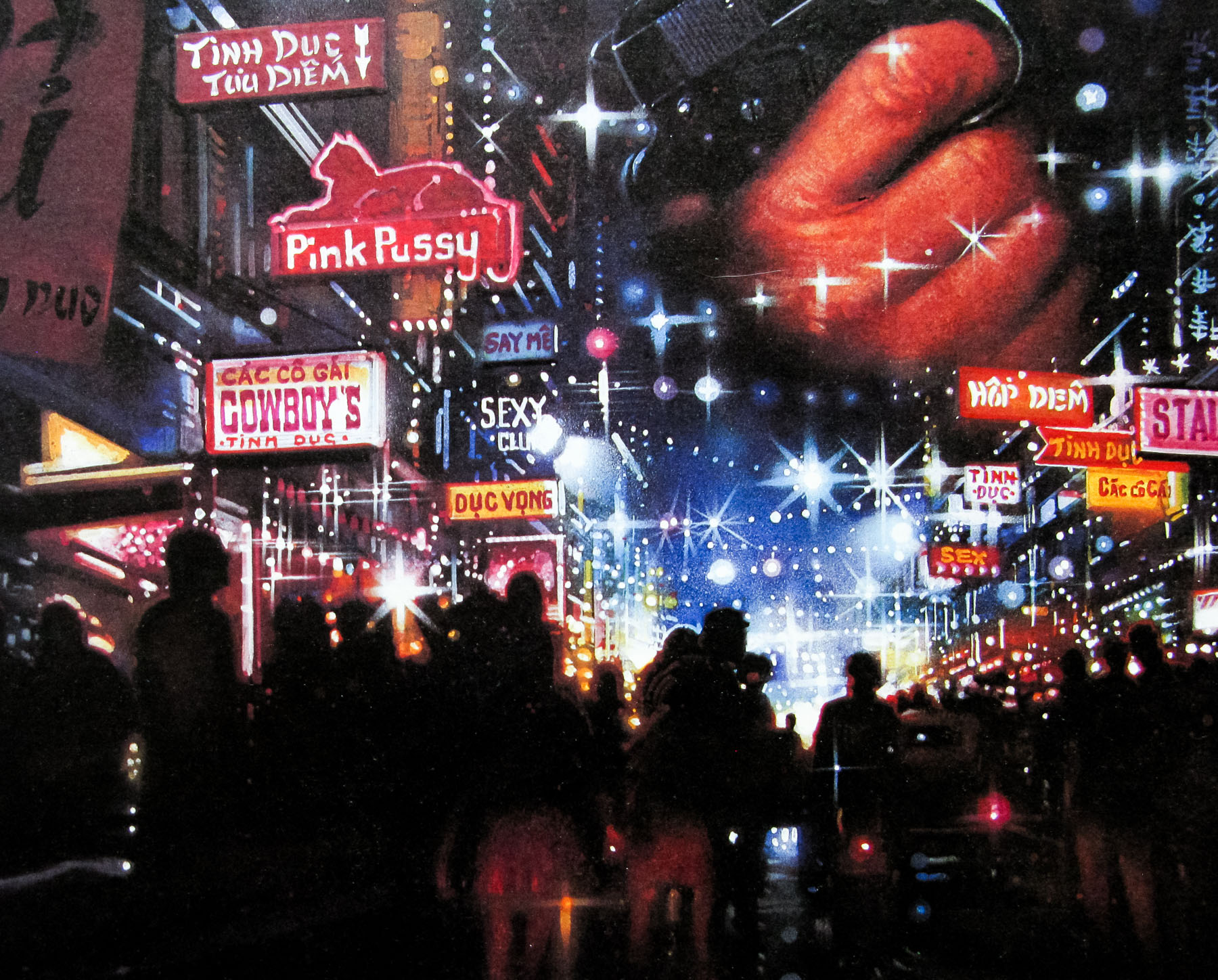
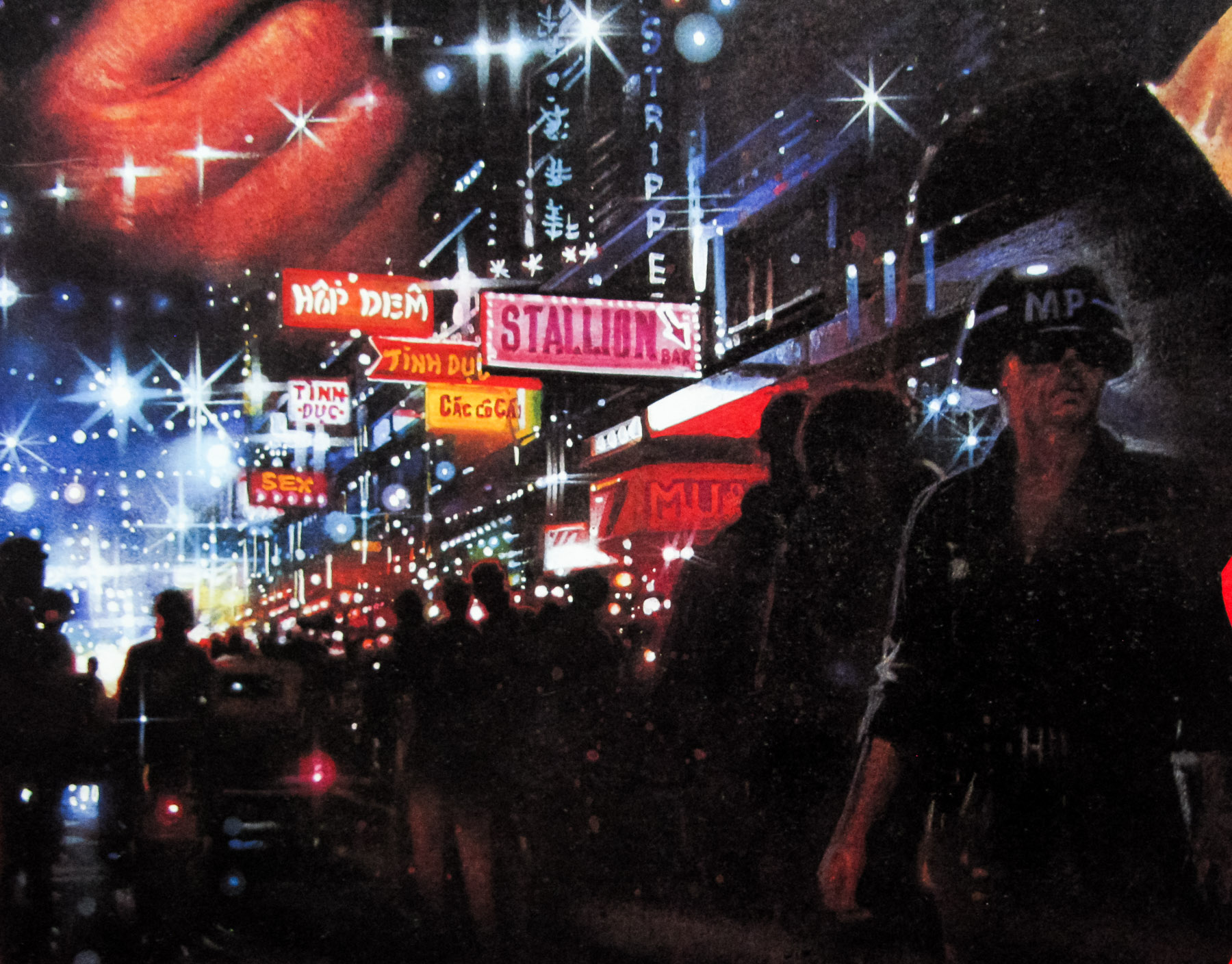
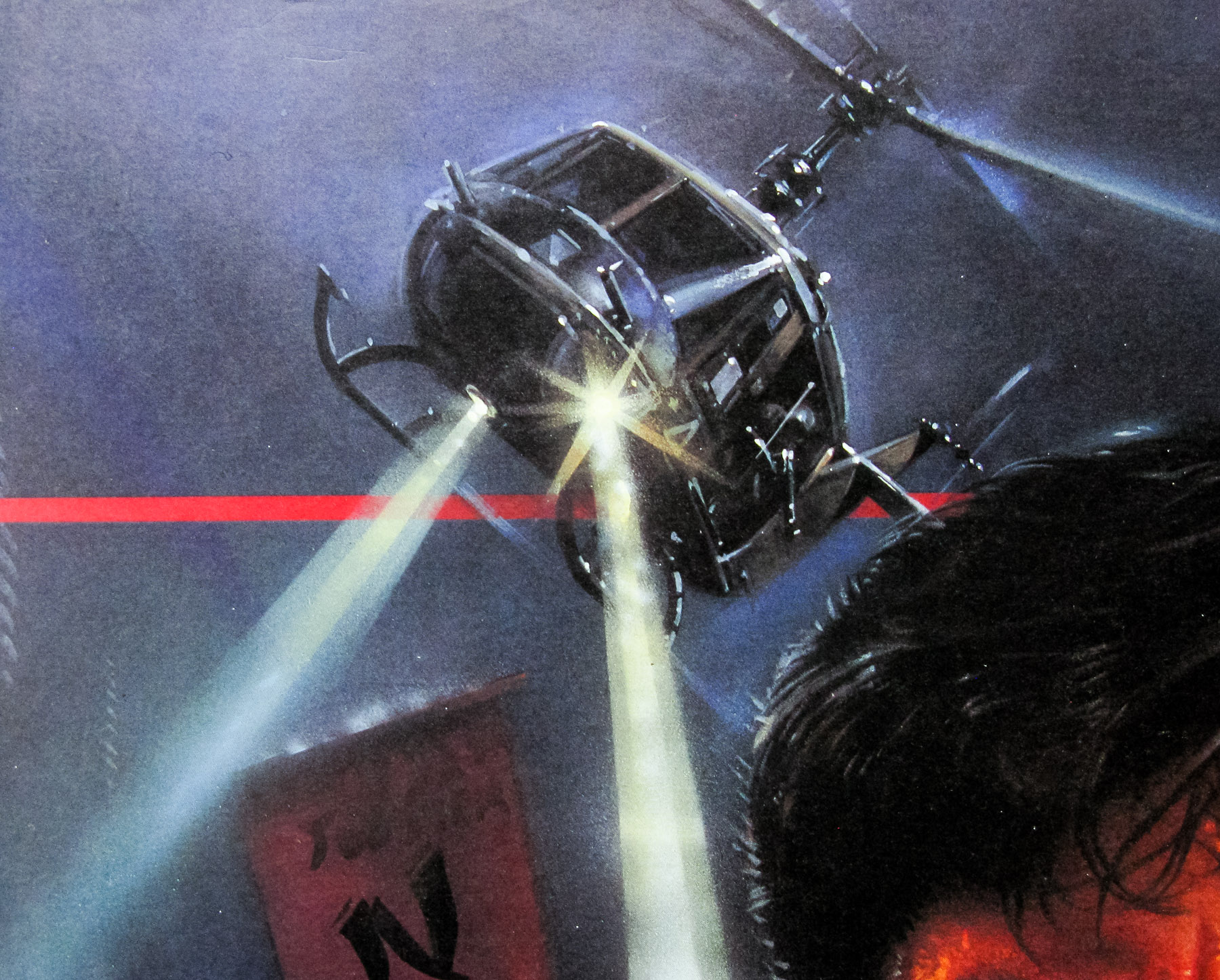
Artwork by Brian Bysouth on this quad for the UK release of Saigon, which is also known as Off Limits in the USA. As the international title suggests, the film is set during the Vietnam war and sees two military policemen played by Willem Dafoe and Gregory Hines investigating the deaths of several prostitutes in Saigon’s red light district. It soon becomes clear that the prime suspect is a high-ranking US Army officer and that the two cops are in for more than they bargained for.

Despite a strong supporting cast, including Scott GlennKeith David and Fred Ward, the film appears to have failed to make much of a box-office or critical impact. It certainly saw none of the success of Dafoe’s previous Vietnam-based film, the oscar-winning Platoon. The film features some brilliantly odd character names, such as Buck McGriff (Dafoe) and Albaby Perkins (Hines).

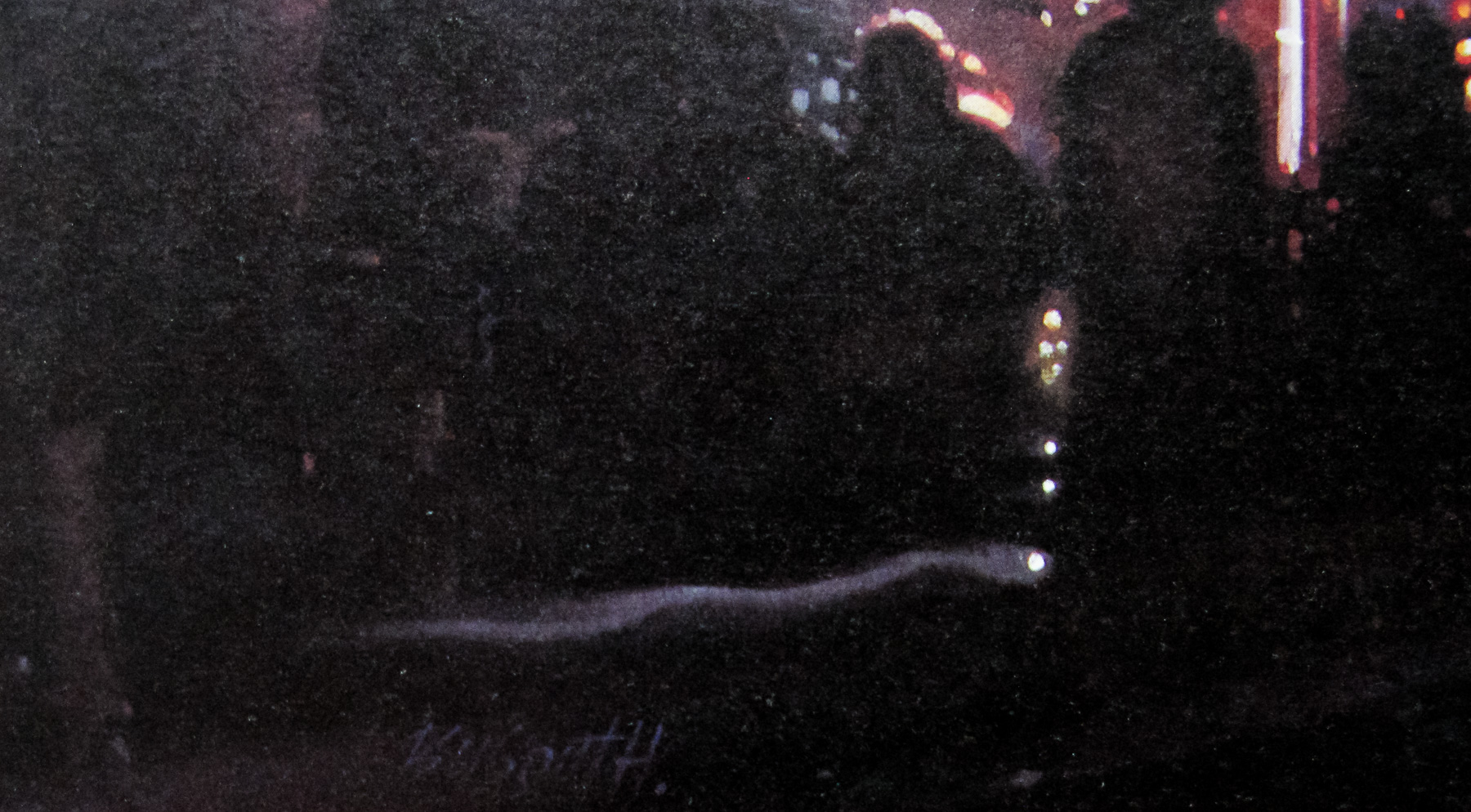
Bysouth’s artwork has similar star portraits to the ones seen on the US one sheet, but the street scene and other characters are unique to the quad. In 2012 I met and interviewed the artist and the resulting article can be read here.

To see the other posters I’ve collected by the artist click here.

The trailer for the film can be seen on YouTube.

Bronx Warriors / quad / UK

13.09.12

Poster Poster
Title
Bronx Warriors
AKA
1990: I guerrieri del Bronx (Italy - original title)
Year of Film
1982
Director
Enzo G. Castellari
Starring
Vic Morrow, Christopher Connelly, Fred Williamson, Mark Gregory, Stefania Girolami Goodwin, Ennio Girolami, George Eastman, Joshua Sinclair, Betty Dessy, Rocco Lerro
Origin of Film
Italy
Genre(s) of Film
Vic Morrow, Christopher Connelly, Fred Williamson, Mark Gregory, Stefania Girolami Goodwin, Ennio Girolami, George Eastman, Joshua Sinclair, Betty Dessy, Rocco Lerro,
Type of Poster
Quad
Style of Poster
--
Origin of Poster
UK
Year of Poster
1982
Designer
Brian Bysouth
Artist
Brian Bysouth
Size (inches)
30 2/16 x 40"
SS or DS
SS
NSS #
--
Tagline
The lucky ones were the first to die!

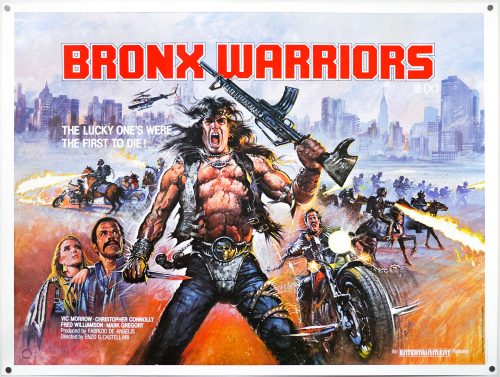
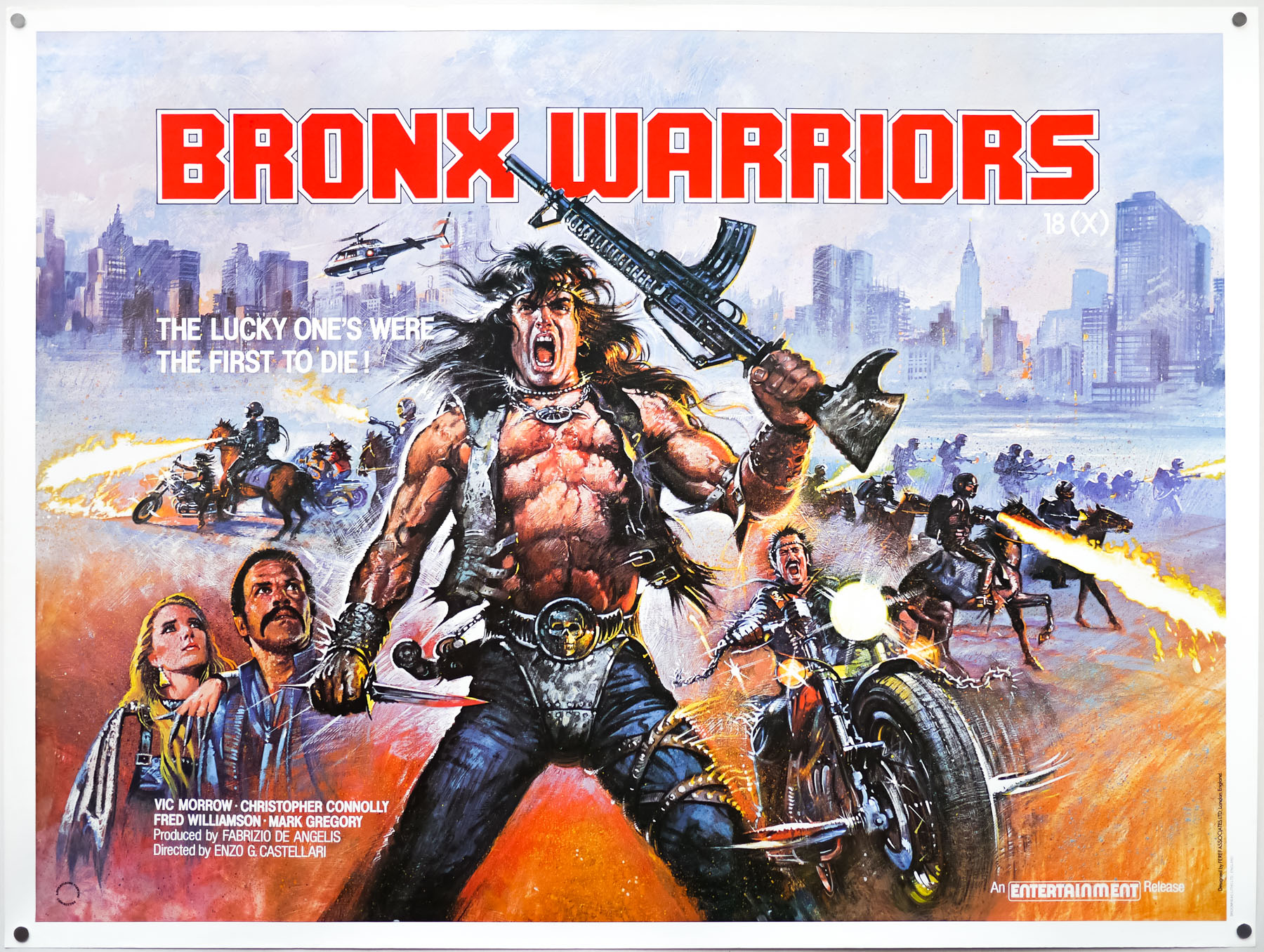
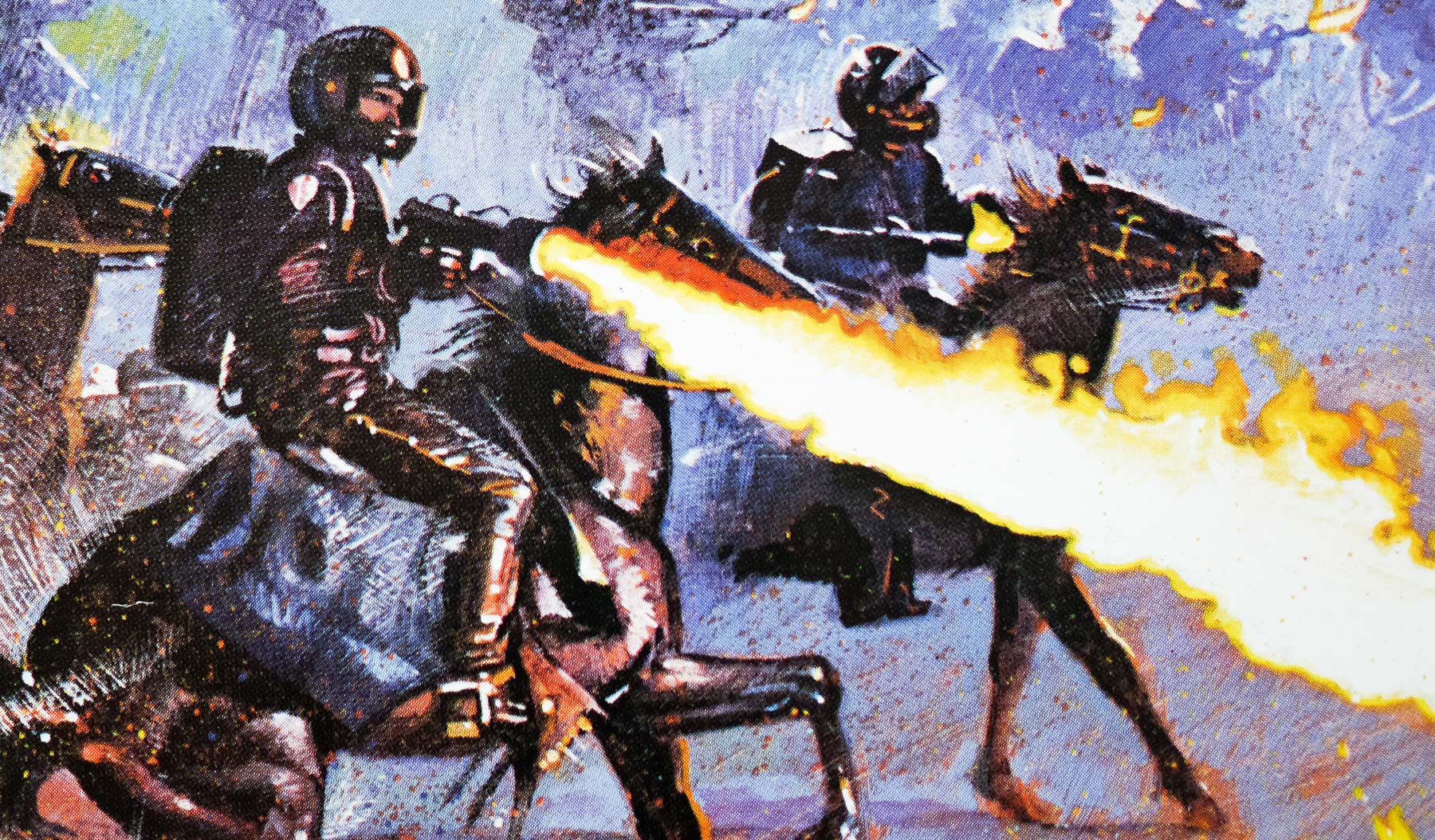
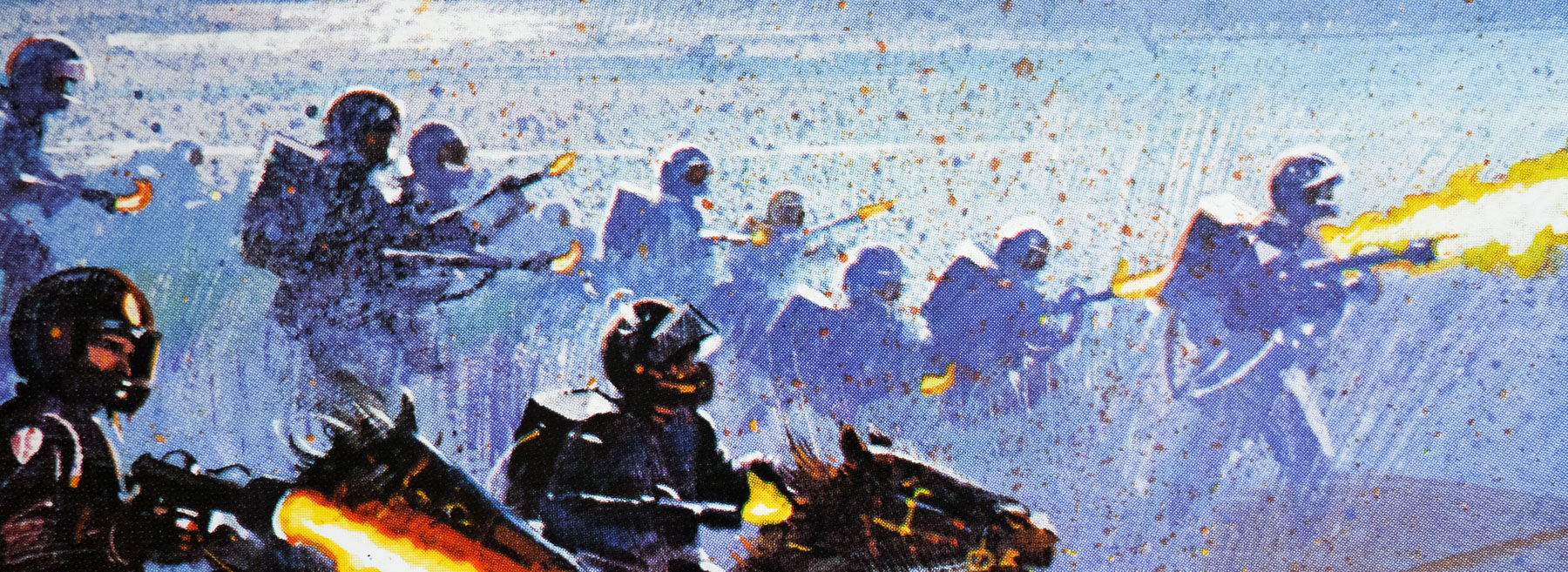
Prolific Italian director Enzo G Castellari was behind a string of low-budget rip-offs homages of successful American productions during the 1980s. Having directed Great White in 1980 (pulled from release after a successful lawsuit by Universal Pictures), there’s no question that his 1983 post-apocalyptic film Bronx Warriors owes a lot to John Carpenter’s classic Escape From New York, with a generous dash of Walter Hill’s The Warriors (1979)

To be fair to Castellari he was a pioneer in the Poliziotteschi (Italian crime film) genre in the 1970s, with La Polizia Incrimina la Legge Assolve (AKA High Crimes – 1973) and Il Grande Racket (The Big Racket – 1976) being particular standouts. He was also behind the war films La battaglia d’Inghilterra (Eagles over London – 1969) and the original Inglorious Bastards (Quel maledetto treno blindato – 1978). By the 1980s the director was churning out a series of B-movies, including Bronx Warriors and The New Barbarians (1983) and would eventually move into directing TV movies during the 1990s and 2000s.

Bronx Warriors follows the plight of 17-year-old Ann (Stefania Girolami Goodwin), the heiress to a questionable arms company (The Manhattan Corporation) who runs away into the lawless wasteland of a post-apocalyptic Bronx and is attacked by a gang of roller skaters (!) called The Zombies. She’s rescued by The Riders, another gang who are led by Trash – played by Mark Gregory (actually Marco de Gregorio, a non-actor Castellari had met in the gym) – who take Ann under their protection. The corporation dispatches the ruthless psychopath Hammer (Vic Morrow in his penultimate role before his untimely death during the filming of Twilight Zone the Movie) to disrupt the gangs and return Ann safely.

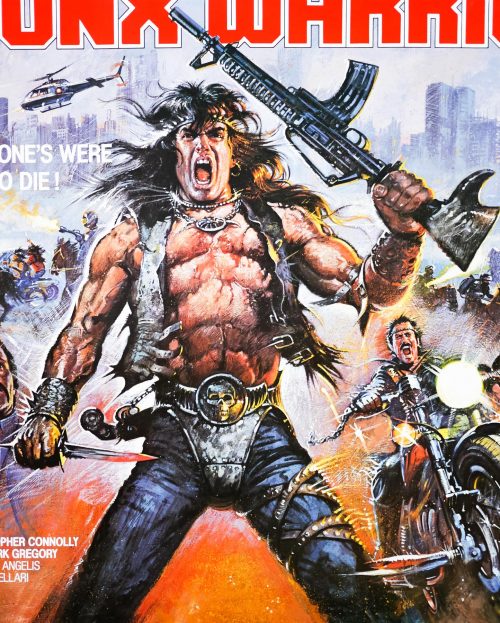
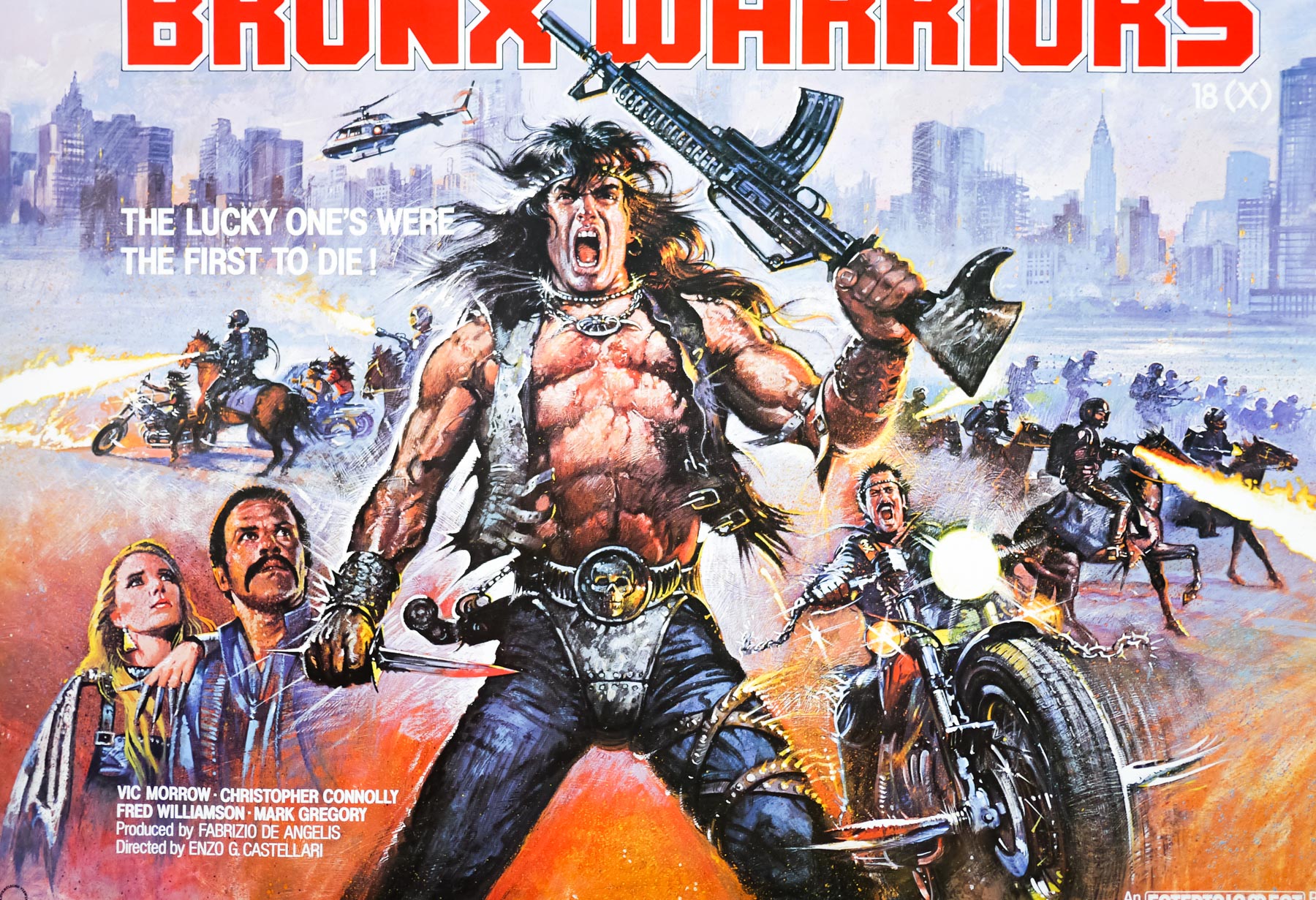
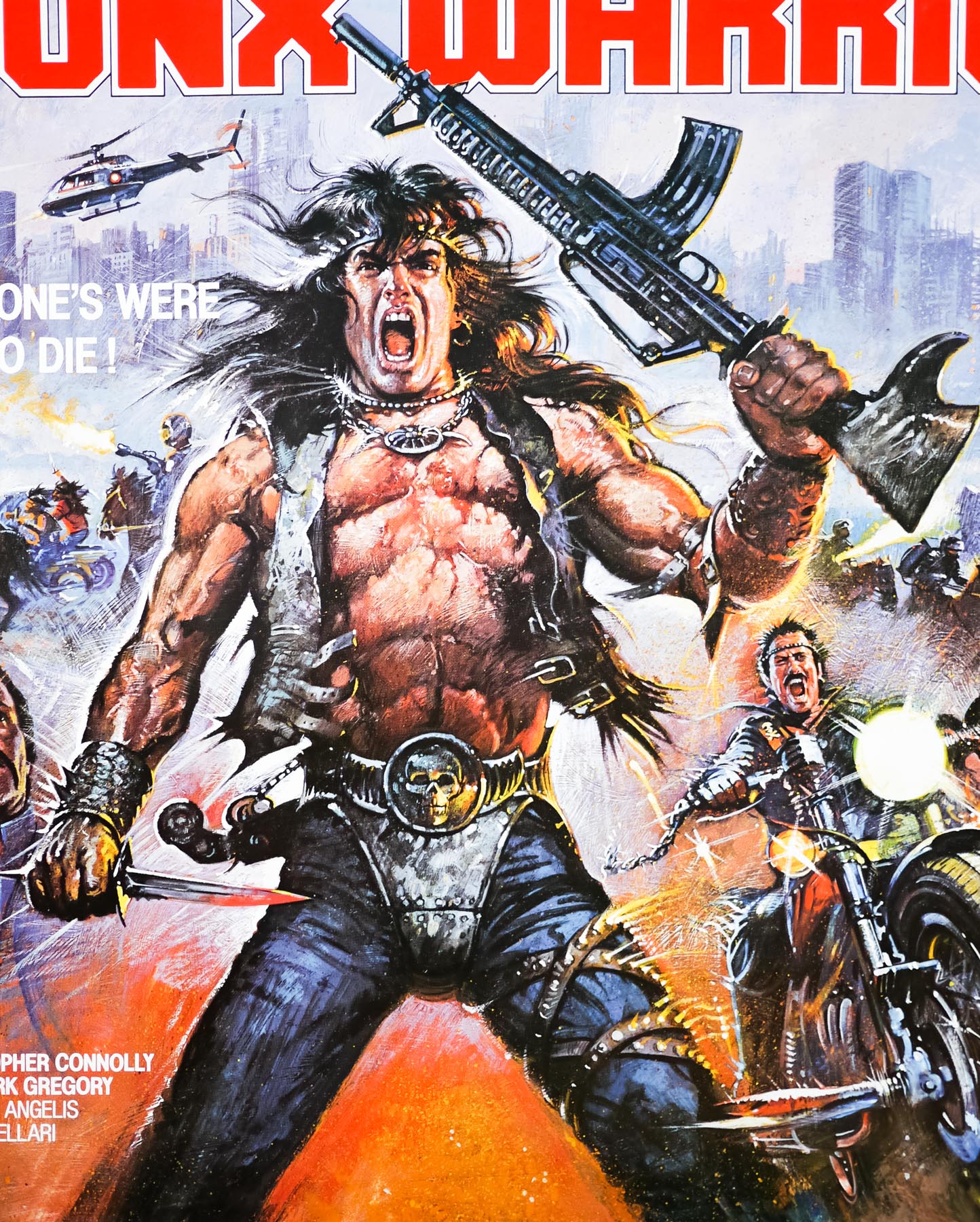
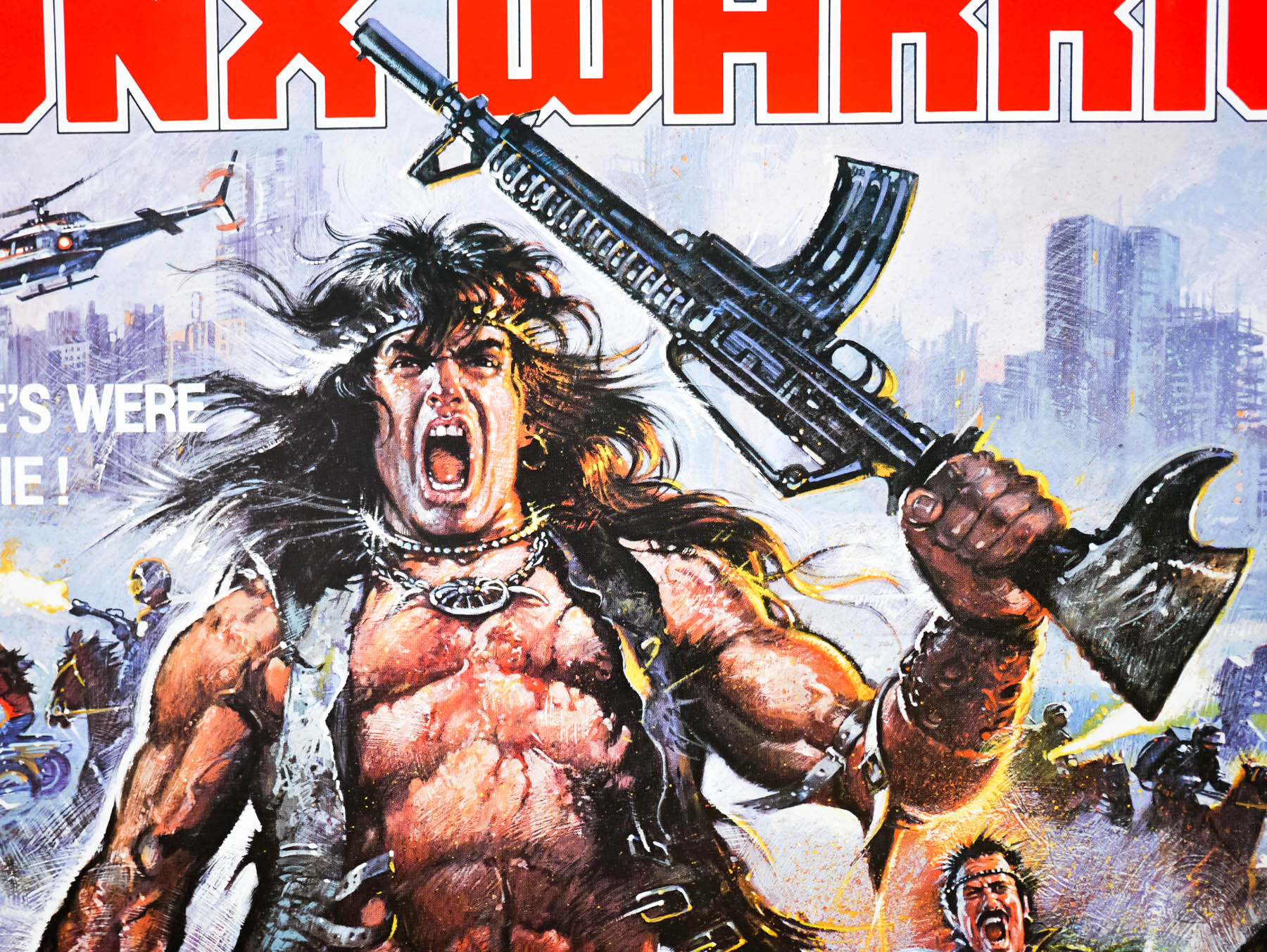
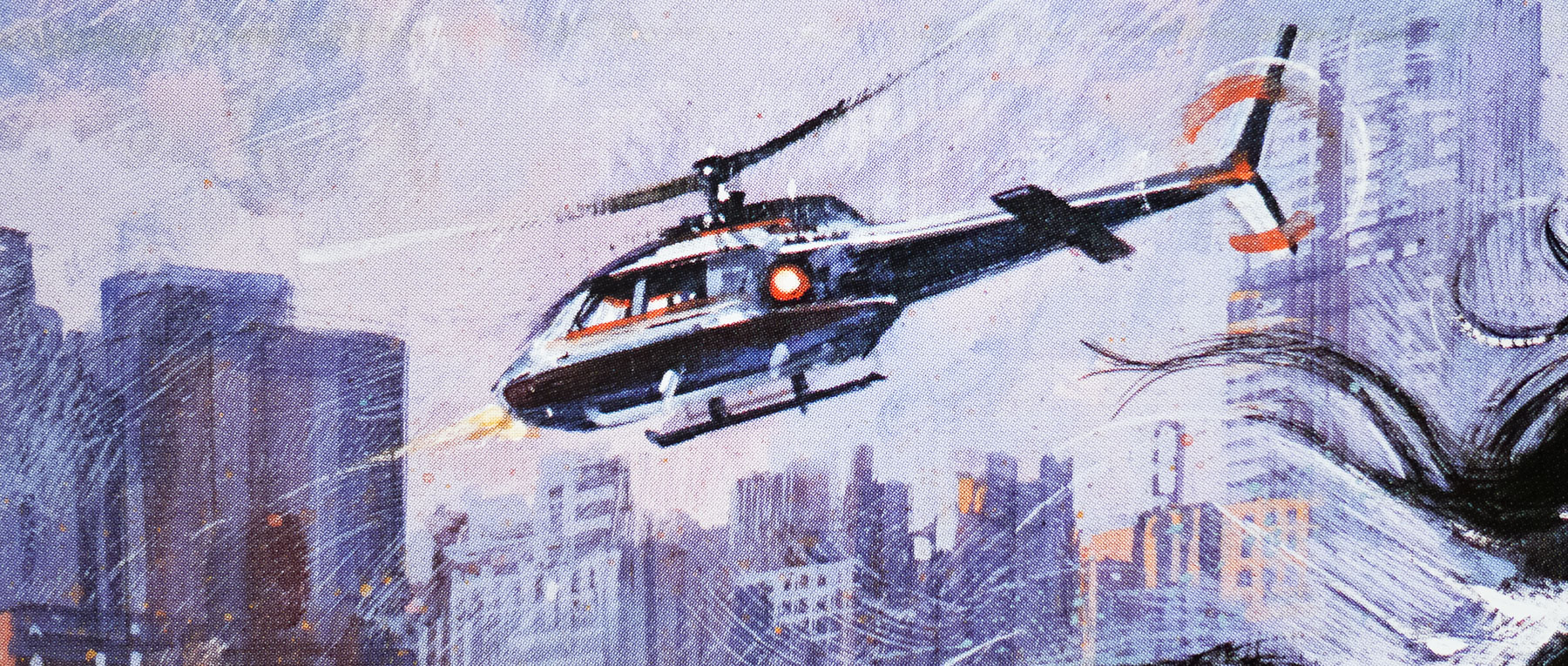
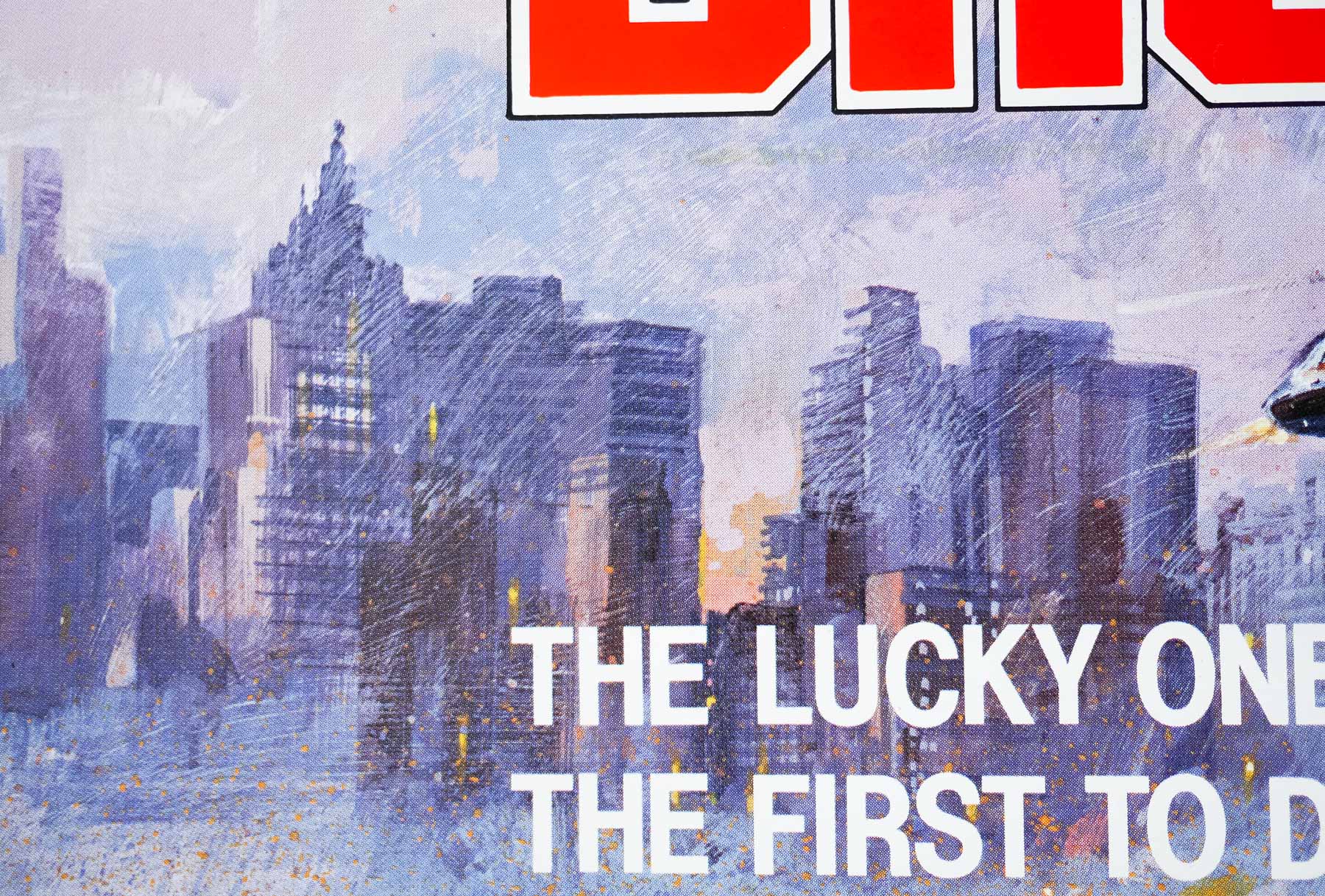
The artwork on this quad is by the brilliant British artist Brian Bysouth, whose wonderfully detailed illustrations featured on hundreds of posters over three decades. His most famous designs and artwork include the withdrawn one sheet for A View to a Kill, Highlander, Big Trouble in Little China and The Living Daylights. Bysouth would work on the quad for the sequel to this film, Escape 2000 (AKA Fuga Dal Bronx), one year later.

In 2012 I interviewed Brian Bysouth and the resulting article can be read here.

The international trailer is on YouTube.

Almost Human / quad / UK

15.10.12

Poster Poster
Title
Almost Human
AKA
Shock Waves (USA) | Le commando des morts-vivants [The commando of the living dead] (France) | L'occhio nel triangolo [The eye in the triangle] (Italy)
Year of Film
1977
Director
Ken Wiederhorn
Starring
Peter Cushing, Brooke Adams, John Carradine, Fred Buch, Jack Davidson, Luke Halpin, D.J. Sidney, Don Stout, Clarence Thomas
Origin of Film
USA
Genre(s) of Film
Peter Cushing, Brooke Adams, John Carradine, Fred Buch, Jack Davidson, Luke Halpin, D.J. Sidney, Don Stout, Clarence Thomas,
Type of Poster
Quad
Style of Poster
--
Origin of Poster
UK
Year of Poster
1978
Designer
Unknown
Artist
Unknown
Size (inches)
30" x 39 12/16"
SS or DS
SS
Tagline
Once they were... | The Deep end of horror!

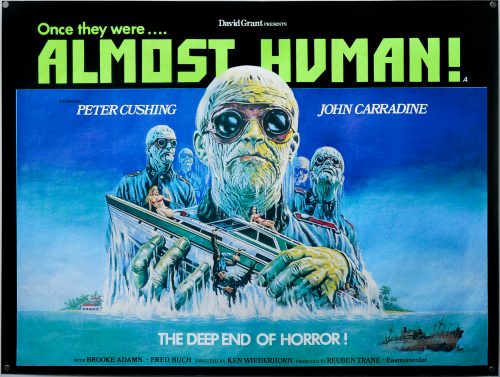
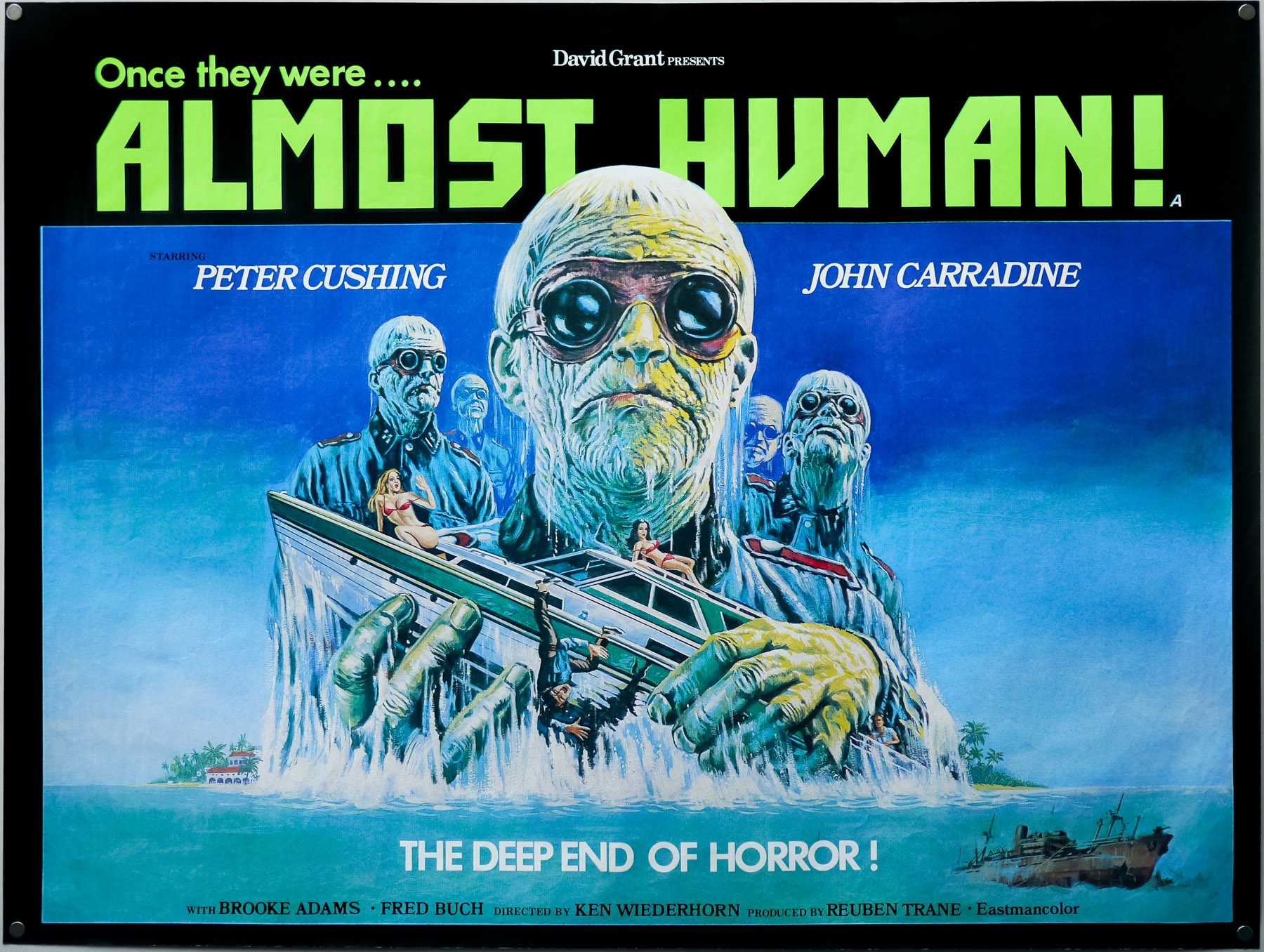
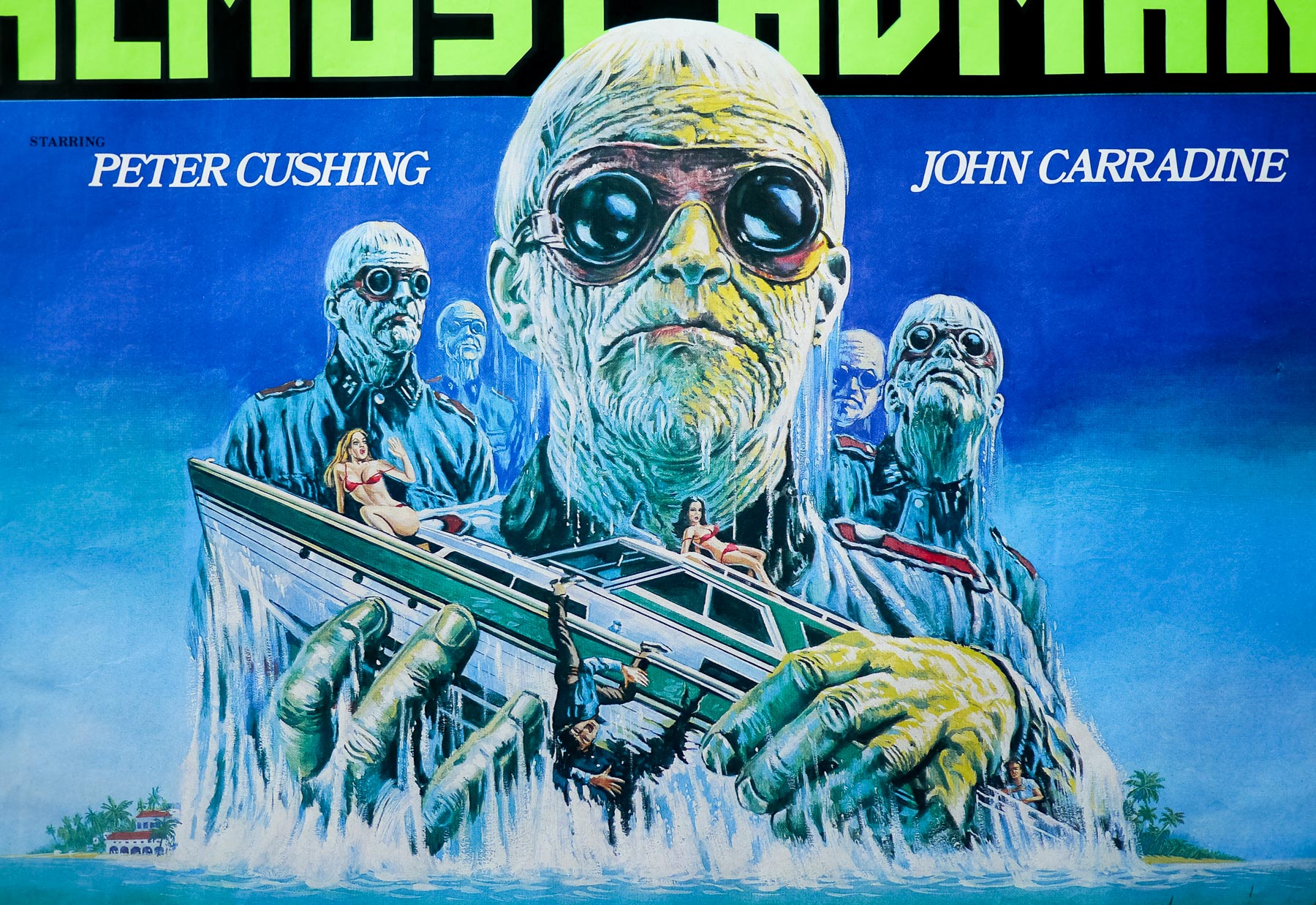
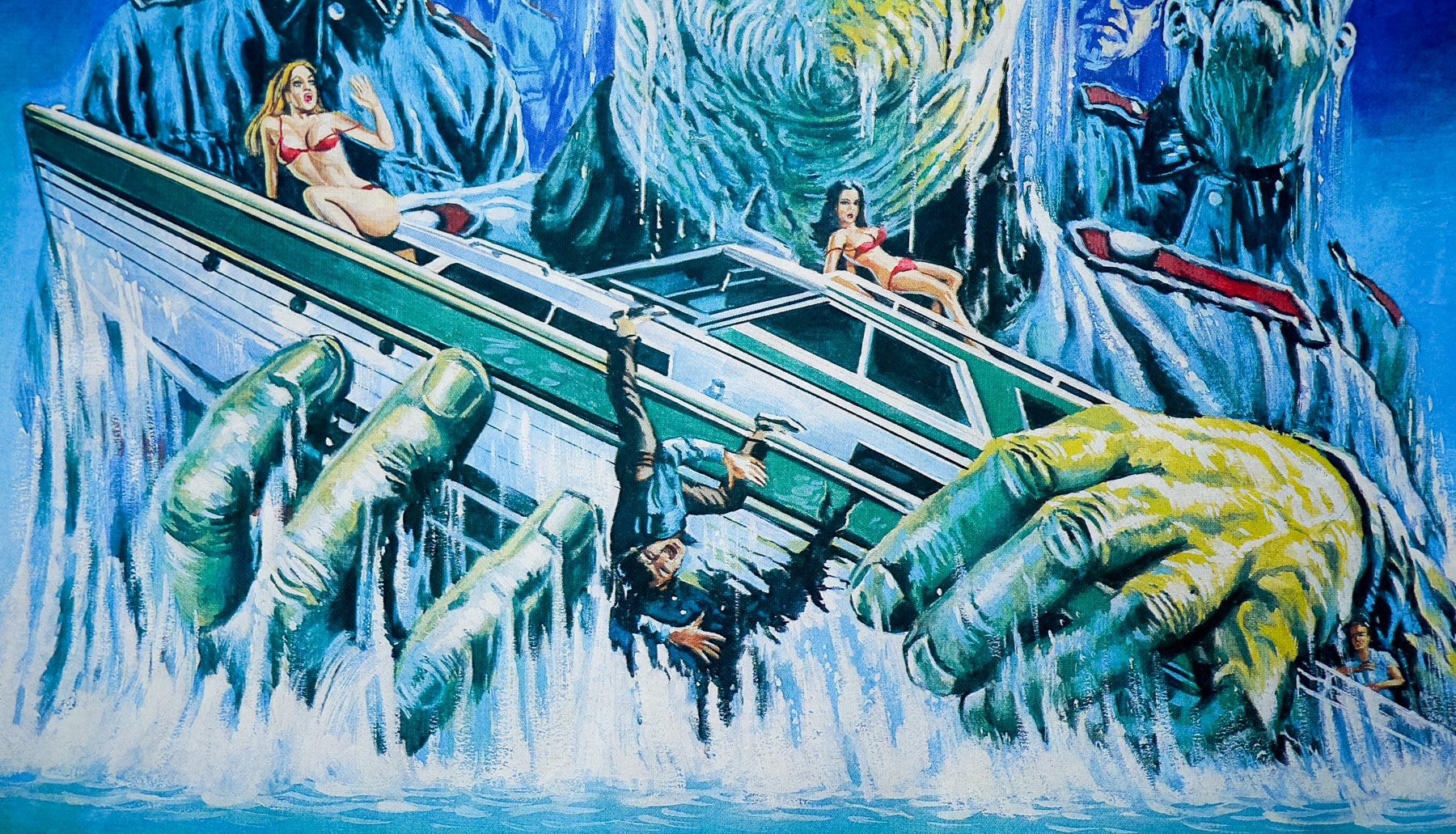
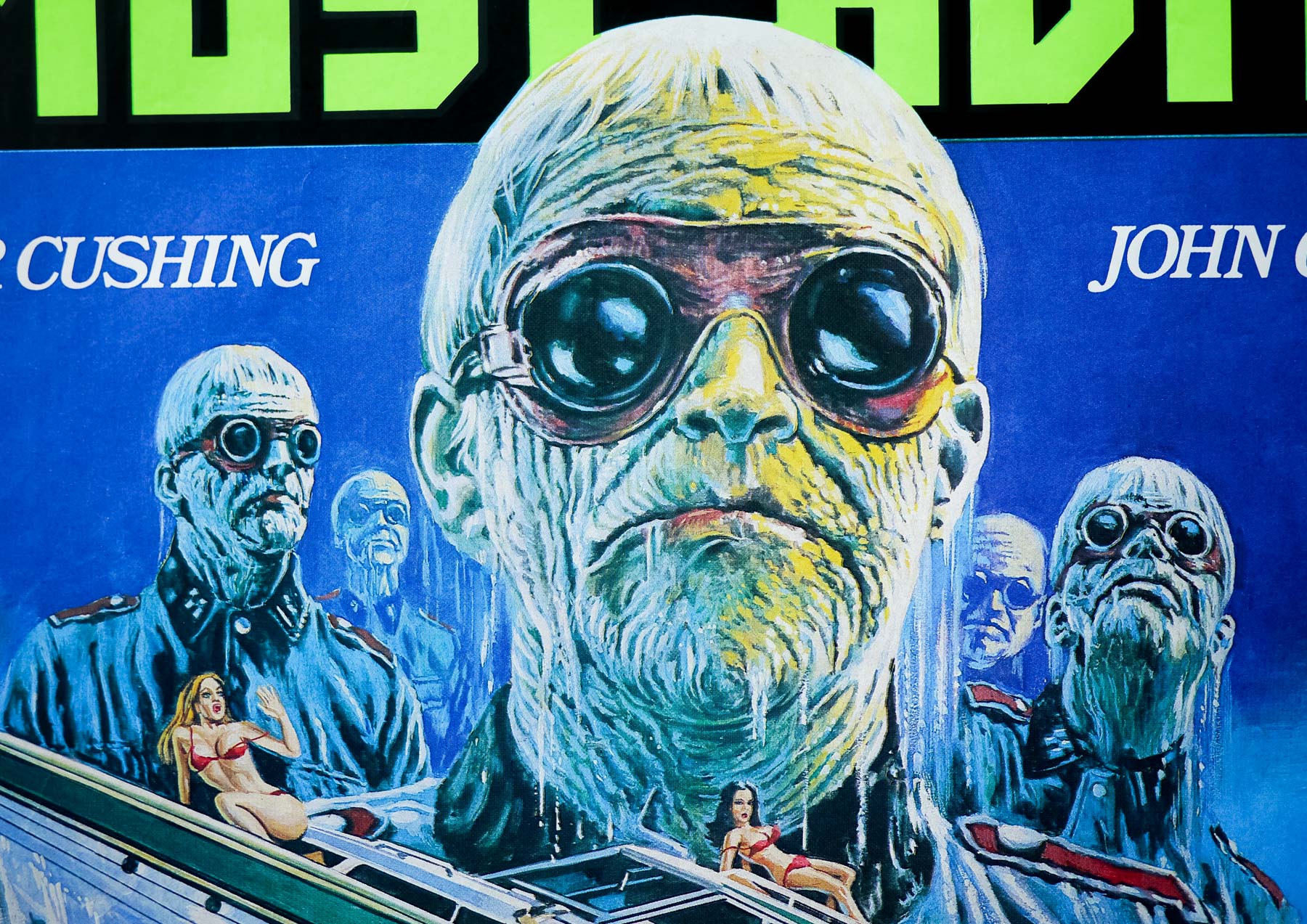
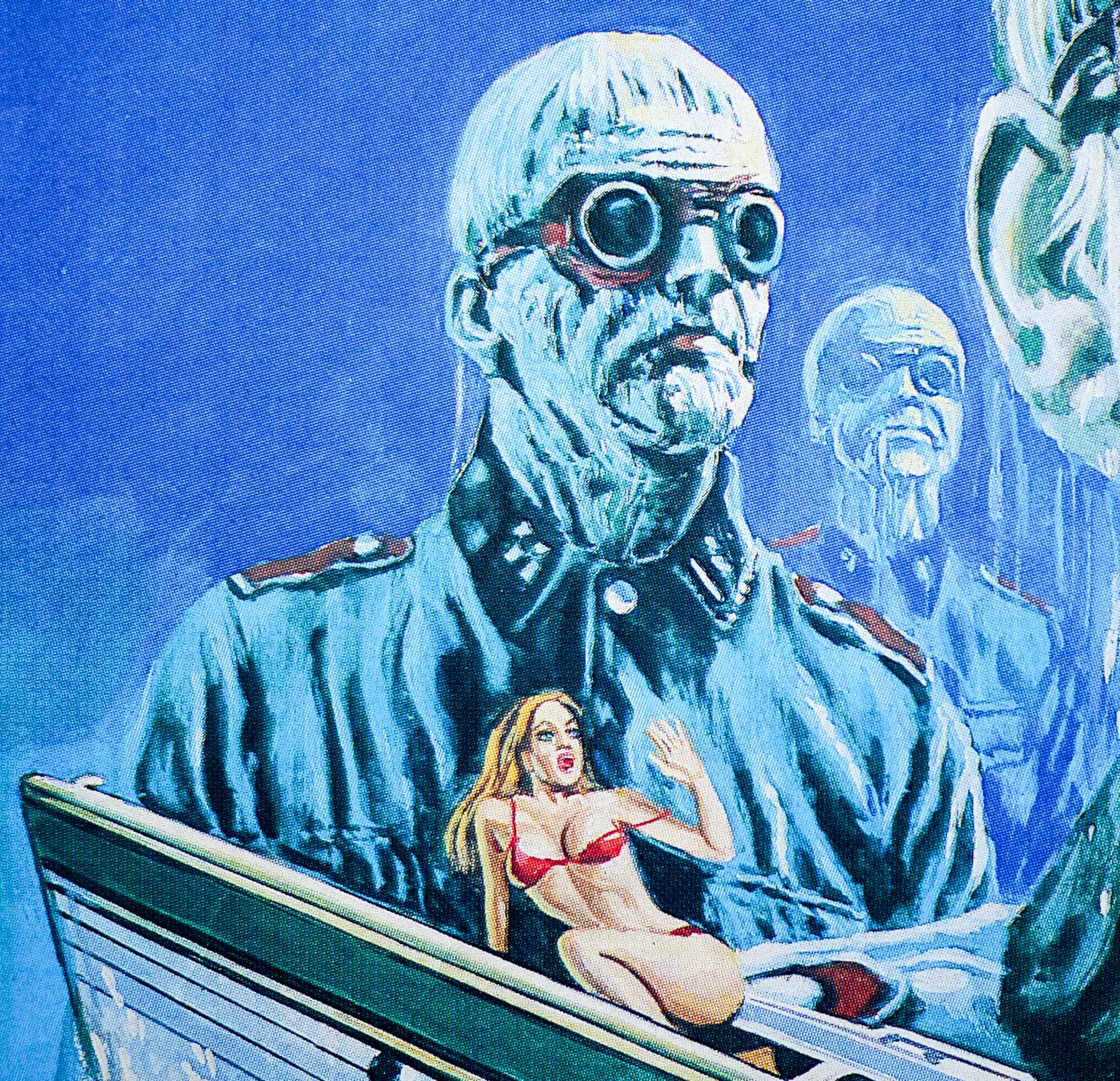
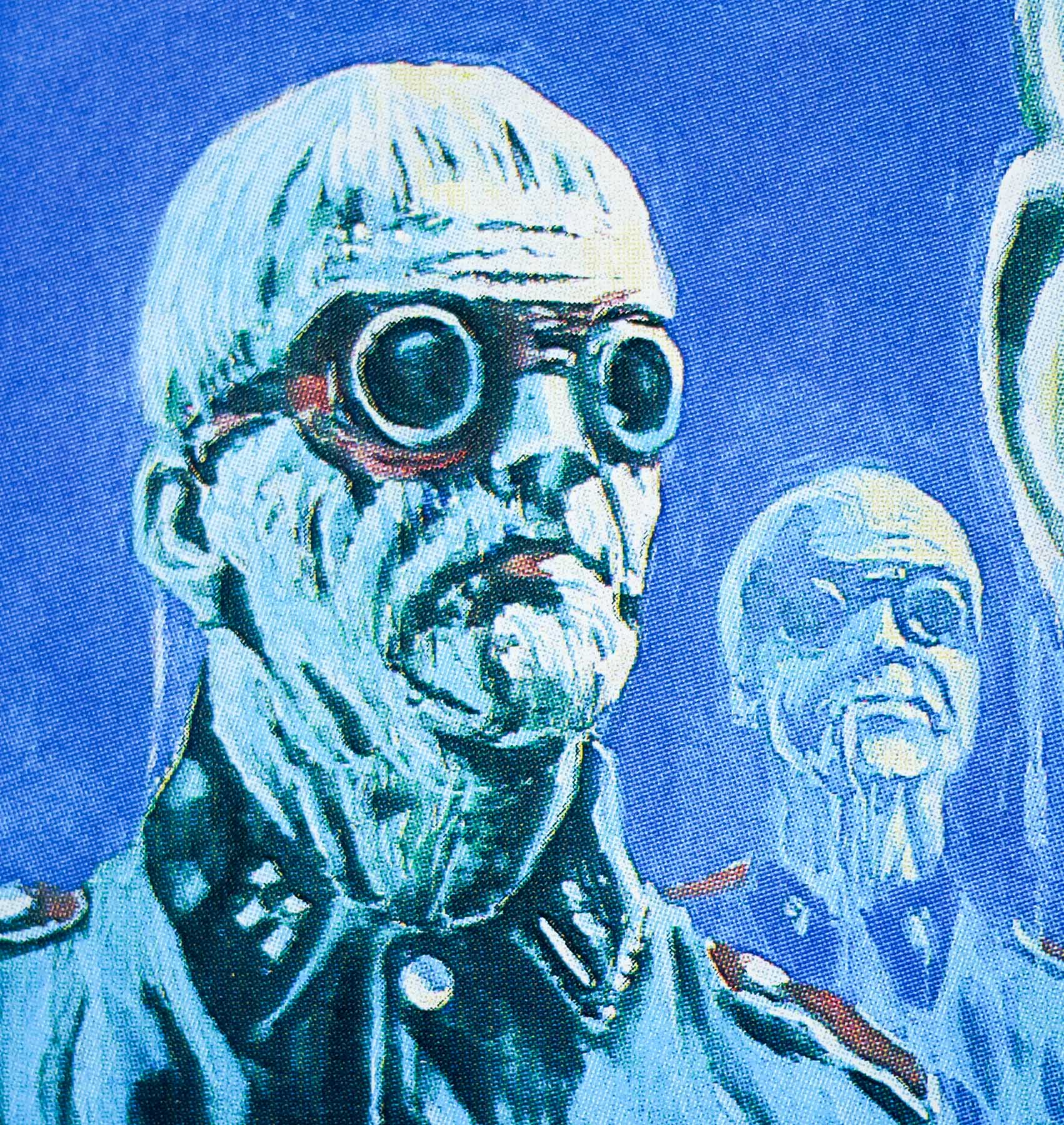
Produced and released in the US as Shock Waves, this effective low-budget horror features Nazi super-soldier zombies attacking an unsuspecting group of holidaymakers whose boat breaks down near a mysterious island. Prolific character actor John Carradine plays the crotchety boat captain who, despite his billing on the poster, is quickly dispatched leaving the rest of the group, including Brooke Adams (Invasion of the Body Snatchers, to discover they’re not alone on the island. Horror legend Peter Cushing appears as the former Nazi commander of ‘Der Toten Corp’, a group of super soldiers who were the result of a series of World War II experiments that left them unable to feel pain and breath underwater.

Cushing, sporting a spectacular facial scar, has time for one German-accented explanatory speech and some moments of rambling around the island before he too is offed; a short but memorable performance that also sees him given top billing. That same year the actor would make arguably his most famous non-horror appearance in George Lucas’ Star Wars.

The film features nothing in the way of gory splatter kills seen in other zombie films of the period (particularly 1978s Dawn of the Dead) and most of the deaths occur off screen or see the victims being dragged underwater by the silent killers. What it lacks in gore the film more than makes up for in atmosphere, and this is helped in no small part to the excellent electronic soundtrack that features a pulsing bass rhythm during the moments of tension.

The scenes featuring the Toten Corp underwater are effectively done and the costumes and zombie makeup are also decent considering the low budget. True, some of the acting leaves a lot to be desired and the script is occasionally laughably clunky, but it’s still a horror film that’s well worth seeking out. Sadly it appears that there are currently no plans for a blu-ray release, which is a shame considering the terrible picture quality of the current DVD releases.

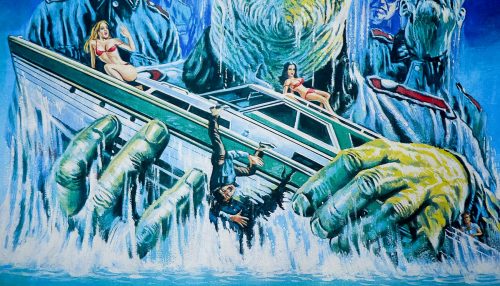
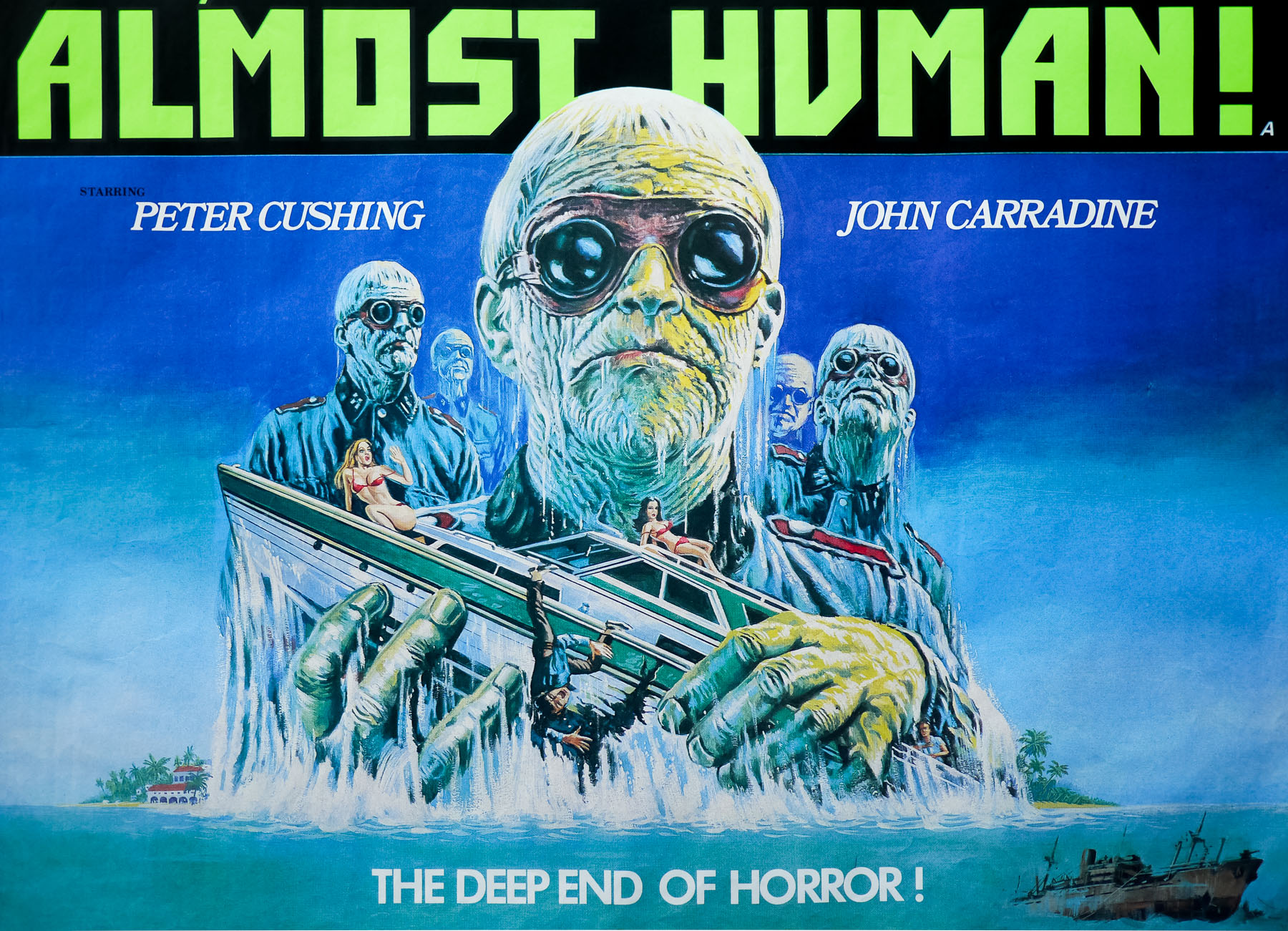
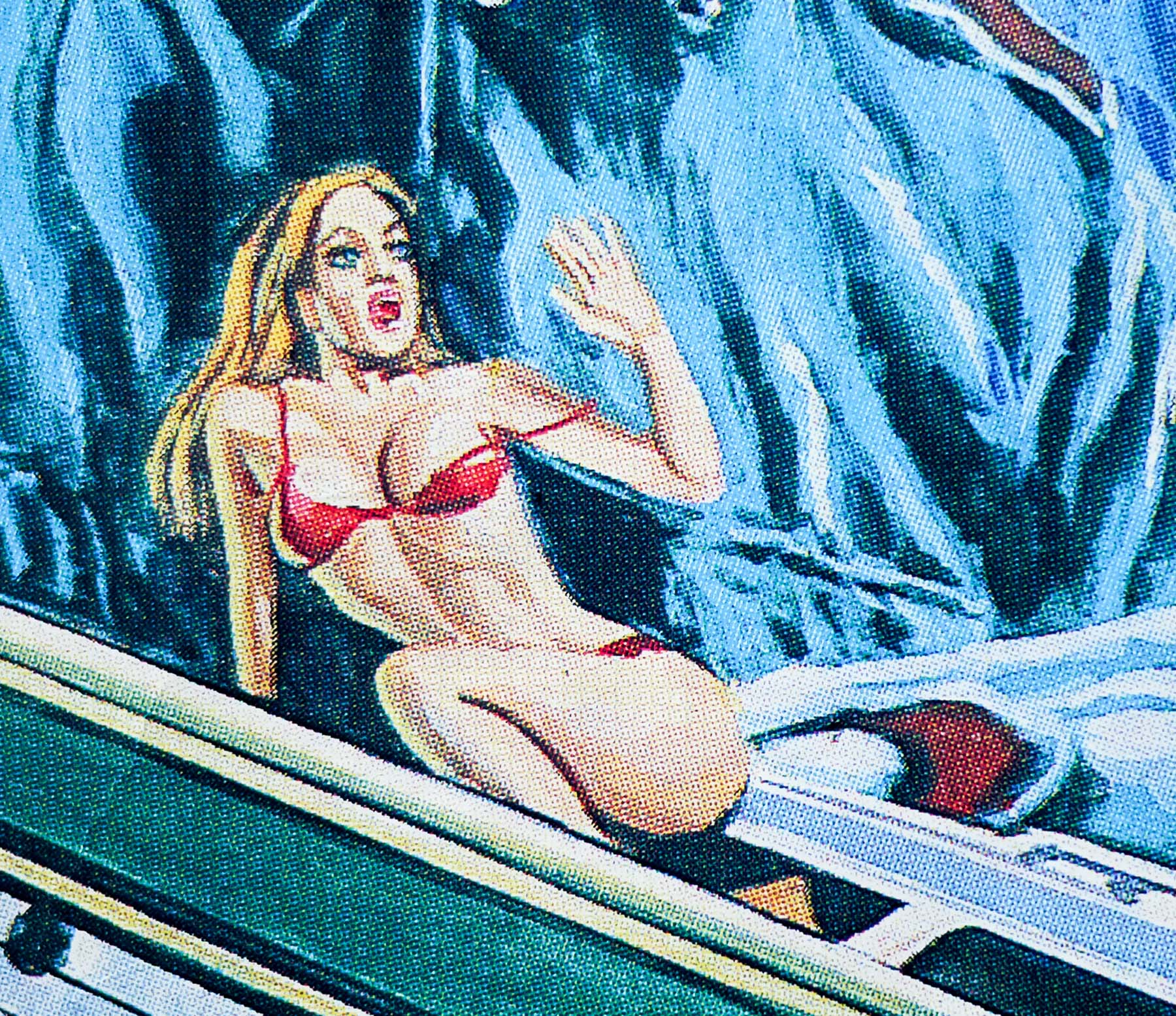
The excellent artwork on this quad features on the American one sheet (note the tagline), as well as on the posters for several other countries. In typical 1970s style the artist took certain liberties with both the size of the creatures and the number of bikini-clad beauties in peril. I’m unsure who is responsible for it so if you know please get in touch.

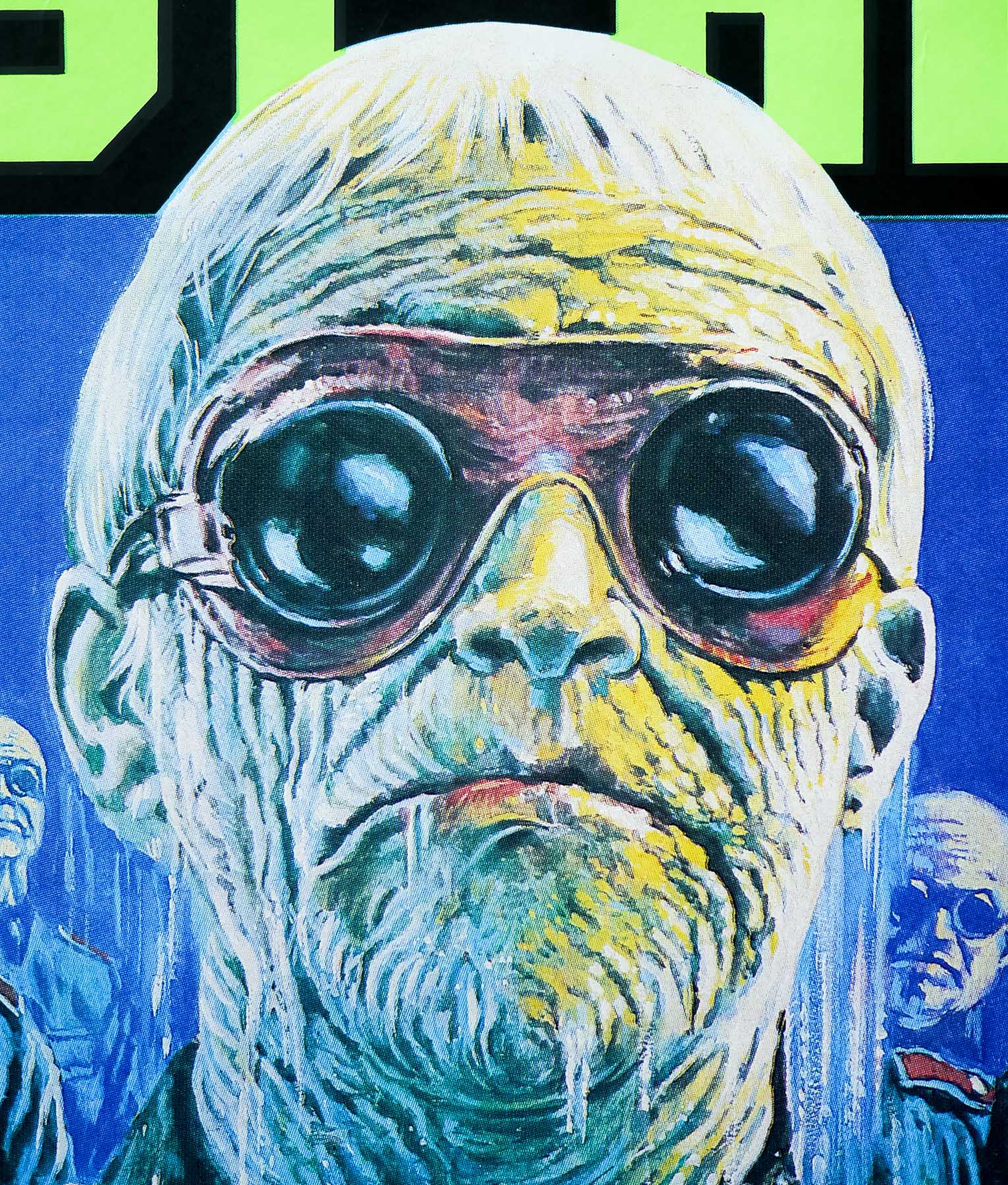
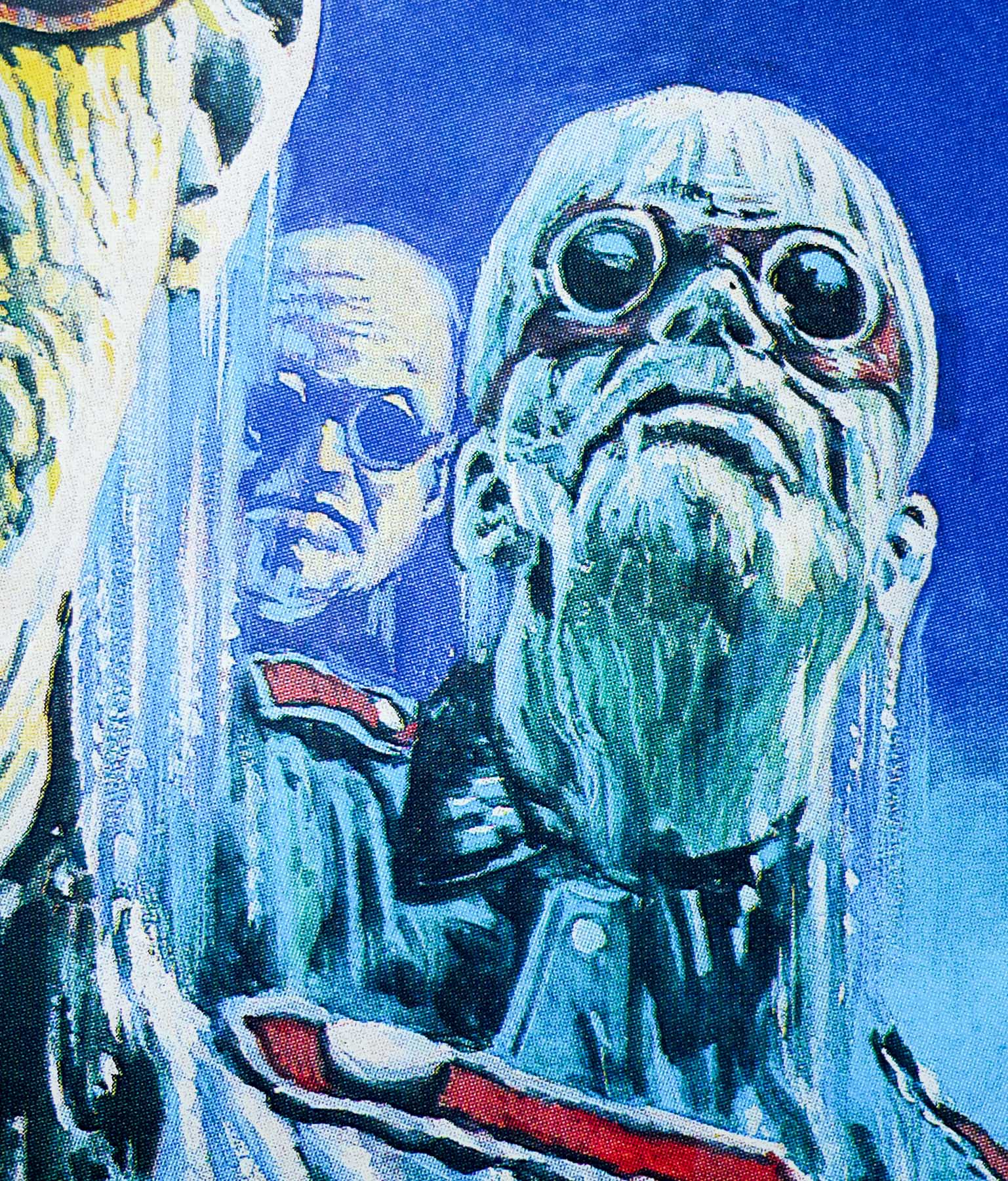
Ted, a friend of the site, noticed that the artwork on the quad has actually been redrawn as it differs in detail from the illustration seen on the US one sheet. Take a look at this high-resolution scan, and in particular the faces of the people, for confirmation.

The excellent trailer is on YouTube.

Dark Star / quad / style B / UK

24.10.12

Poster Poster
Title
Dark Star
AKA
--
Year of Film
1974
Director
John Carpenter
Starring
Dan O'Bannon, Brian Narelle, Cal Kuniholm, Dre Pahich
Origin of Film
USA
Genre(s) of Film
Dan O'Bannon, Brian Narelle, Cal Kuniholm, Dre Pahich,
Type of Poster
Quad
Style of Poster
Style B
Origin of Poster
UK
Year of Poster
1978
Designer
Tom Chantrell | Mike Wheeler
Artist
Tom Chantrell
Size (inches)
30" x 40"
SS or DS
SS
Tagline
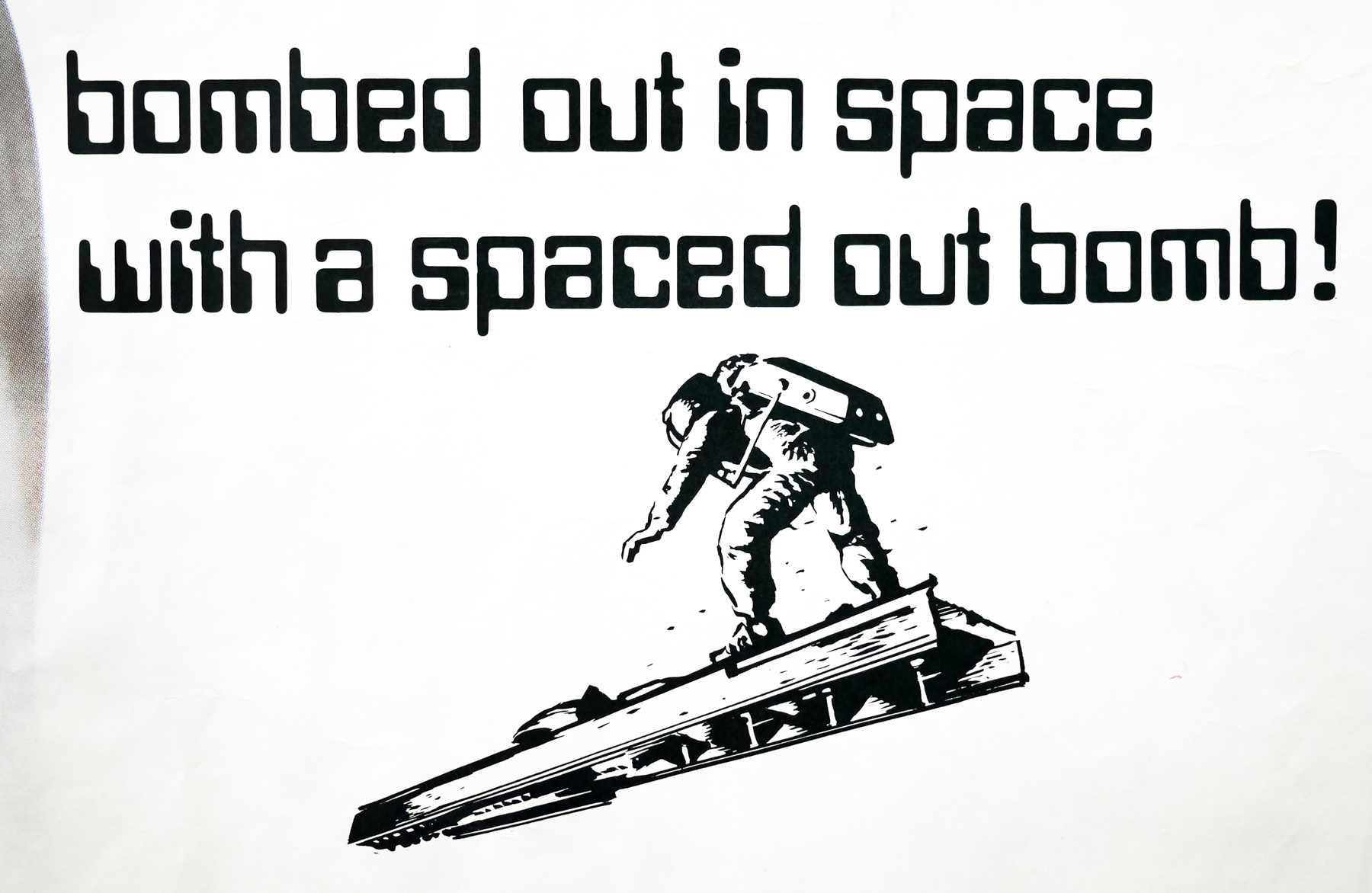
Bombed out in space with a spaced-out bomb!

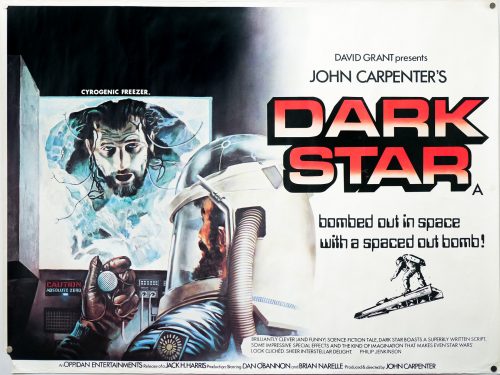
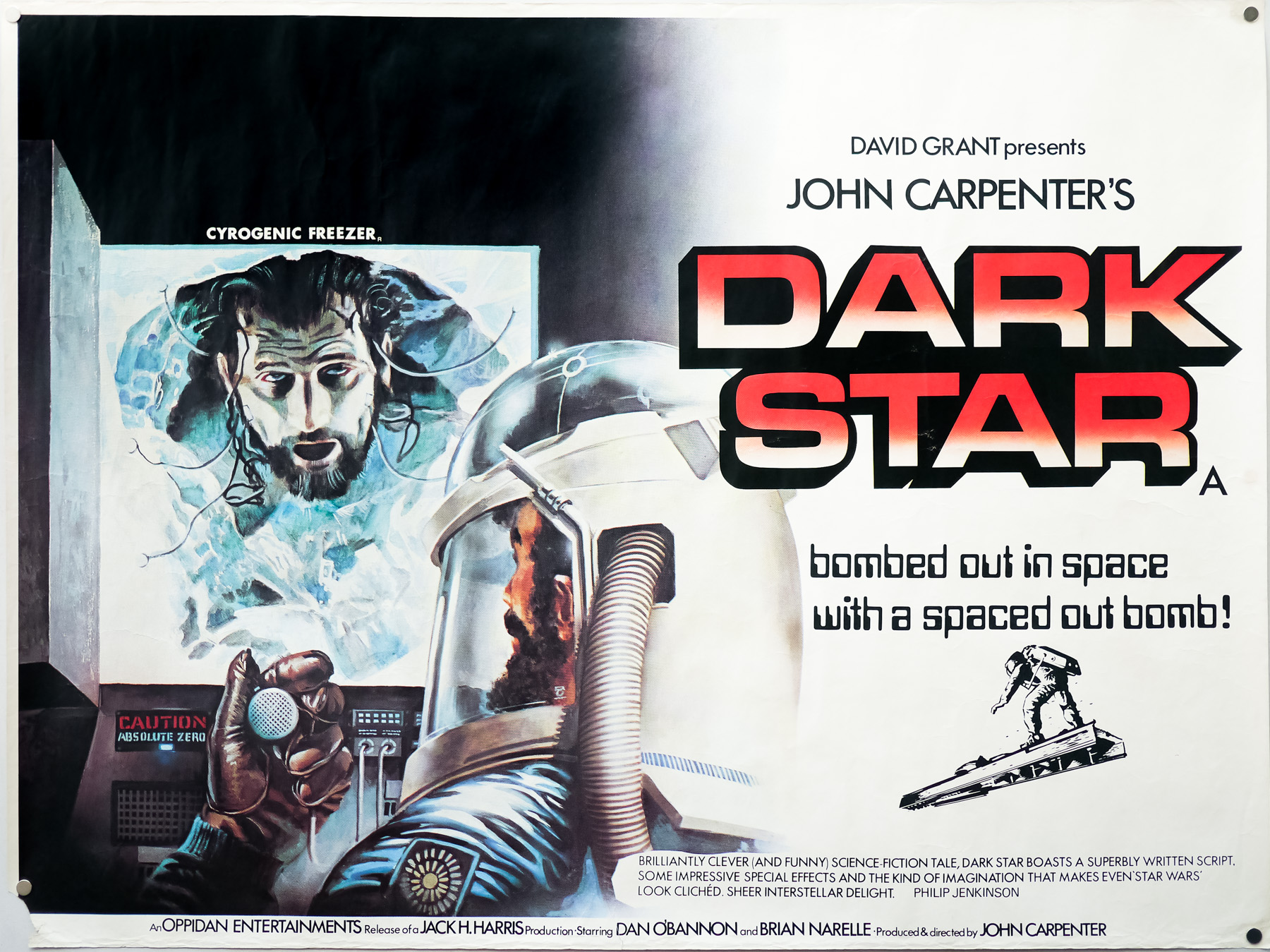
This is the rarely seen alternative style UK quad for the release of ace director John Carpenter‘s first film, Dark Star. This sci-fi comedy was made over a period of several years whilst Carpenter was a student at the famous USC School of Cinematic Arts in California, which counts hundreds of well known directors, producers and screenwriters amongst its alumni. Made in collaboration with his friend and fellow student Dan O’Bannon, the shoestring budget (reportedly just $60,000) meant that the pair were multitasking throughout the shoot, with Carpenter co-writing the screenplay, directing, producing and writing the score, whilst O’Bannon shared the screenwriting duties as well as acting and working on the special effects.

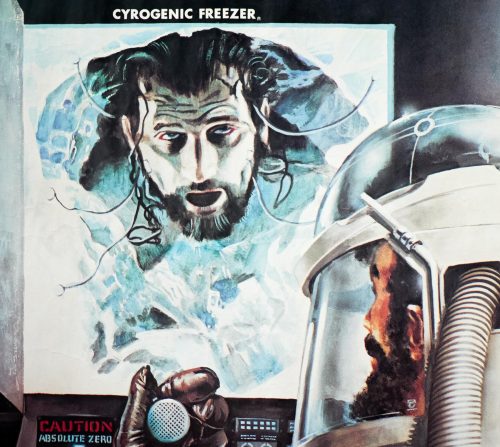
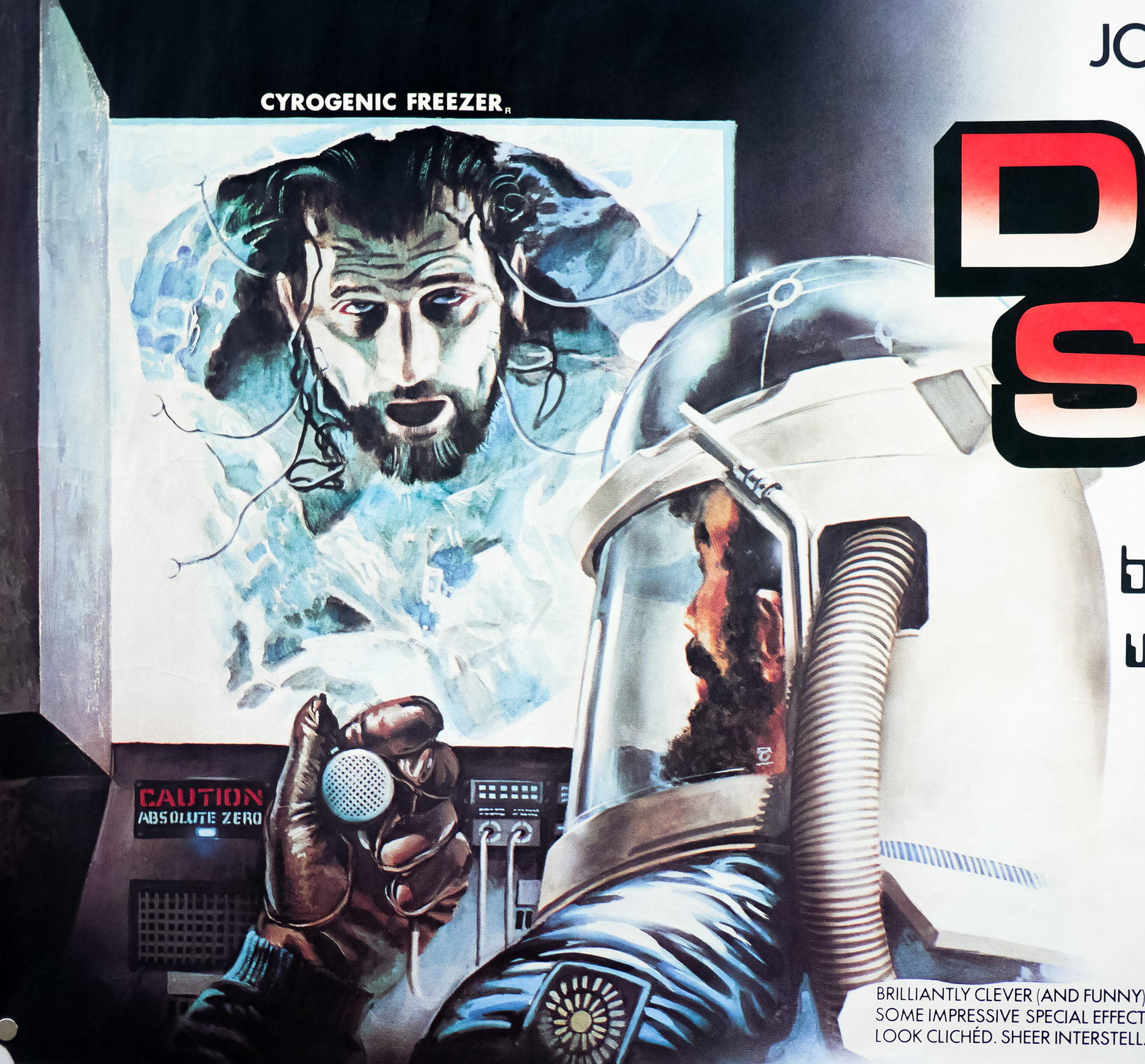
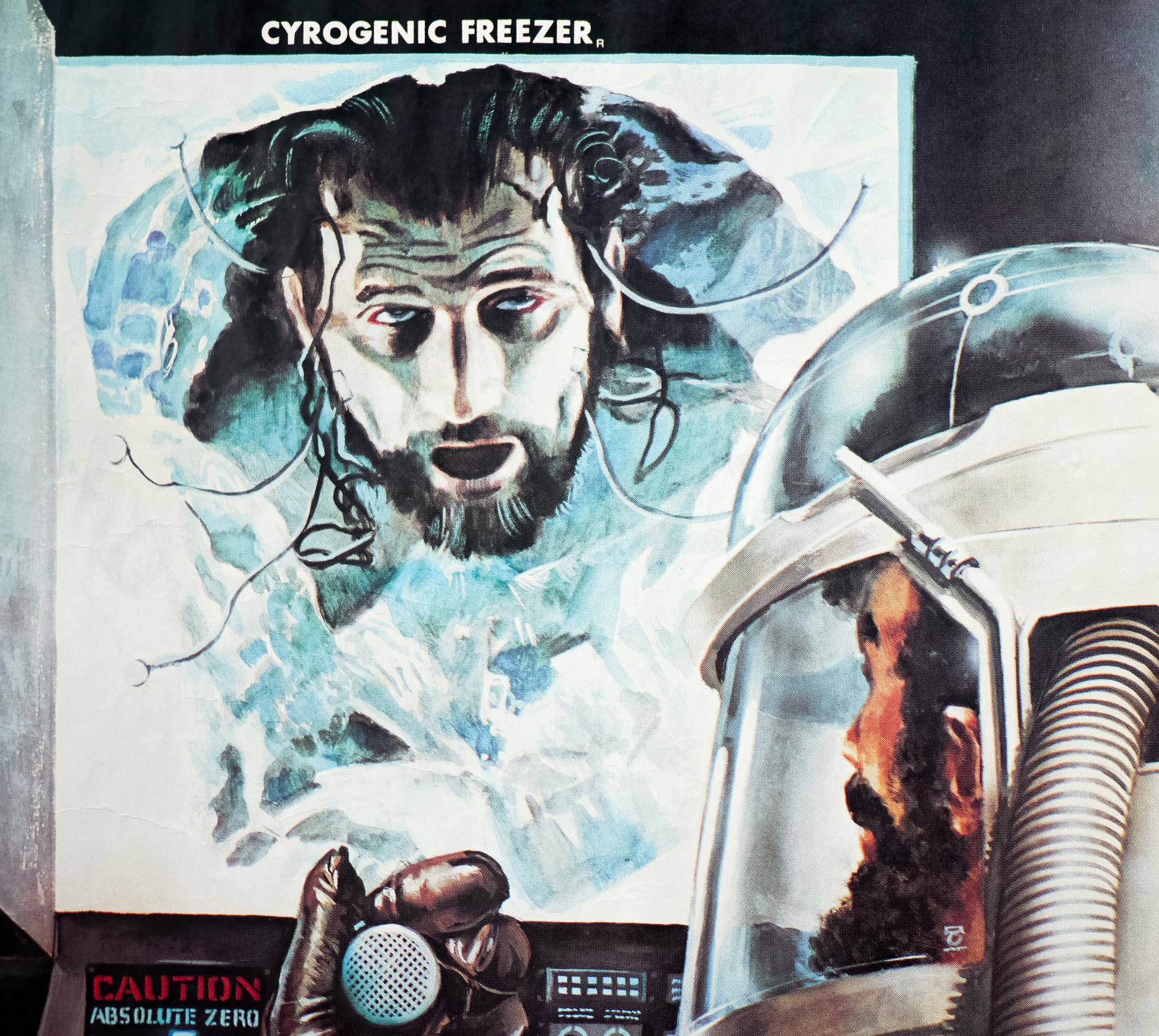
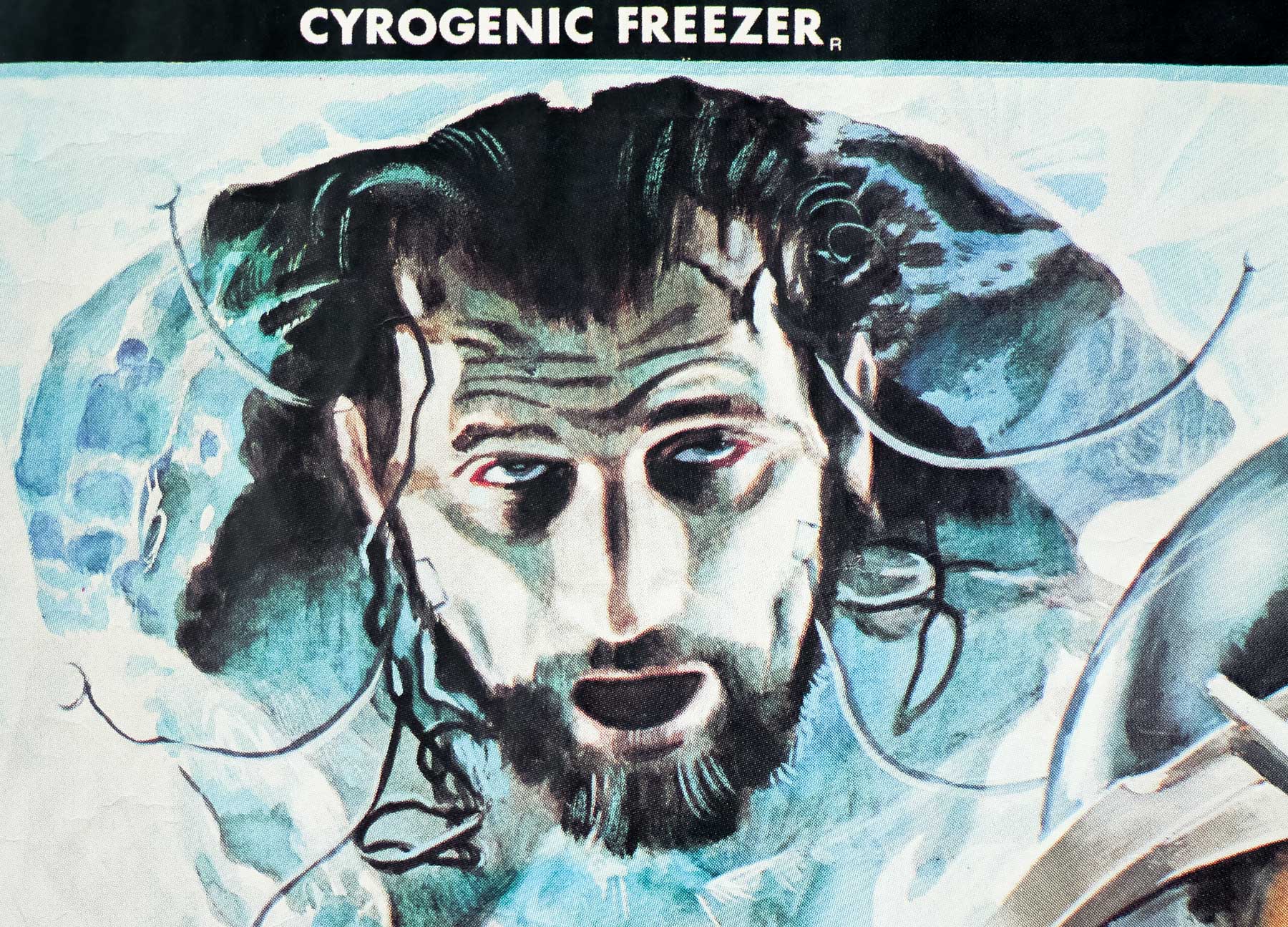
The film follows the exploits of the spaceship Dark Star, an exploratory vessel traveling through space looking for unstable planets to blow up with giant bombs, clearing the way for space colonisation. The small crew has to deal with malfunctioning equipment (including the fact that their last supply of toilet paper was destroyed), a mischievous mascot alien, and a sentient bomb that must be persuaded not to destroy the ship by giving it a rudimentary lesson in phenomenology. As depicted on this poster the crew are also keeping the dead body of their captain in freezer storage and are able to speak directly with his conscious. The film is often credited as the first sci-fi to explore the mundanity of working in space.

After playing successfully in a series of short film festivals, the film was seen by the producer Jack H. Harris who was known for launching the careers of fledgling filmmakers, including John Landis whose first feature Schlock was shepherded onto the screen by the producer. Carpenter and O’Bannon were given budget to expand the short into a feature, and several new sequences were added before its eventual release in 1974. The film opened on a significant number of screens considering its origins but left audiences confused, particularly since it came out of nowhere with a brief marketing campaign that made the film seem like a dark and serious sci-fi. Despite being a box-office flop, the film would later gain a great cult following once it was released onto VHS in the 1980s.

Dan O’Bannon went on to work on the special effects for George Lucas’ Star Wars, as well as further exploring the idea of ‘workers in space’ in his script for Ridley Scott’s Alien. Carpenter would next direct the taught thriller Assault on Precinct 13 (1976), which saw international success and firmly established him as a director, paving the way for his milestone horror film, Halloween (1978).

The film was not actually released in the UK until 1978 and, for reasons unknown, it was given two quad designs; the more common ship version (what I’m calling style A) and this ‘freezer’ version (style B). As anyone who has seen Dark Star will know the situation depicted on this poster is slightly different in the film; the crew member speaking to the captain without wearing a spacesuit. Both quads were designed and illustrated by the late, great British artist Tom Chantrell whose dynamic and colourful designs featured on hundreds of posters over a forty year period. His official website features a great biography written by Sim Branaghan, author of the must-own British Film Posters.

This poster features in the book and Sim notes that this design was done by Chantrell on a freelance basis for the marketing agency Mike Wheeler Publicity, with the eponymous owner likely having had a certain amount of design input into it. The book features plenty of detail on the agency and its history. The fact that this was released in 1978 explains the reason it sports a press-quote that mentions the sci-fi classic Star Wars, released a year earlier, and with a poster also painted by Chantrell (arguably his most famous illustration).

Rosemary’s Baby / quad / UK

07.12.12

Poster Poster

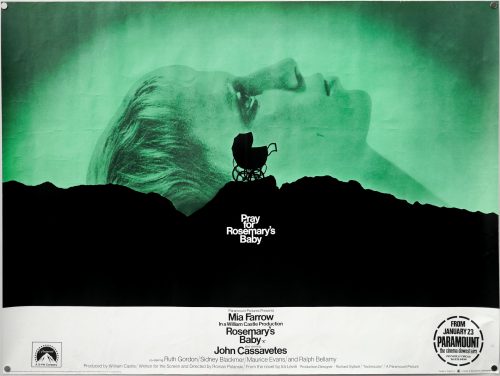
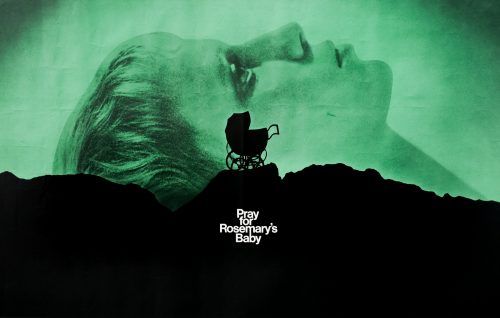
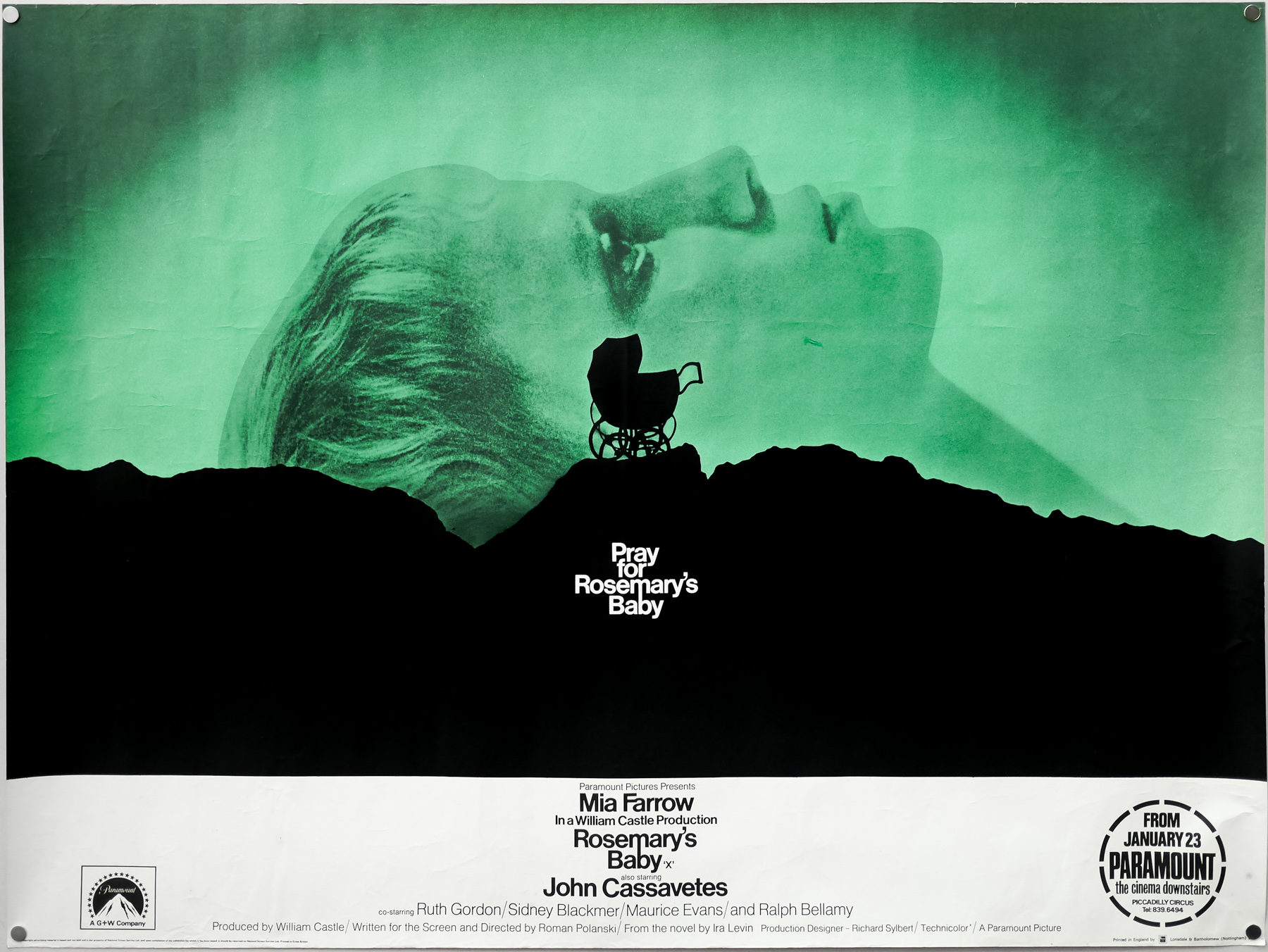
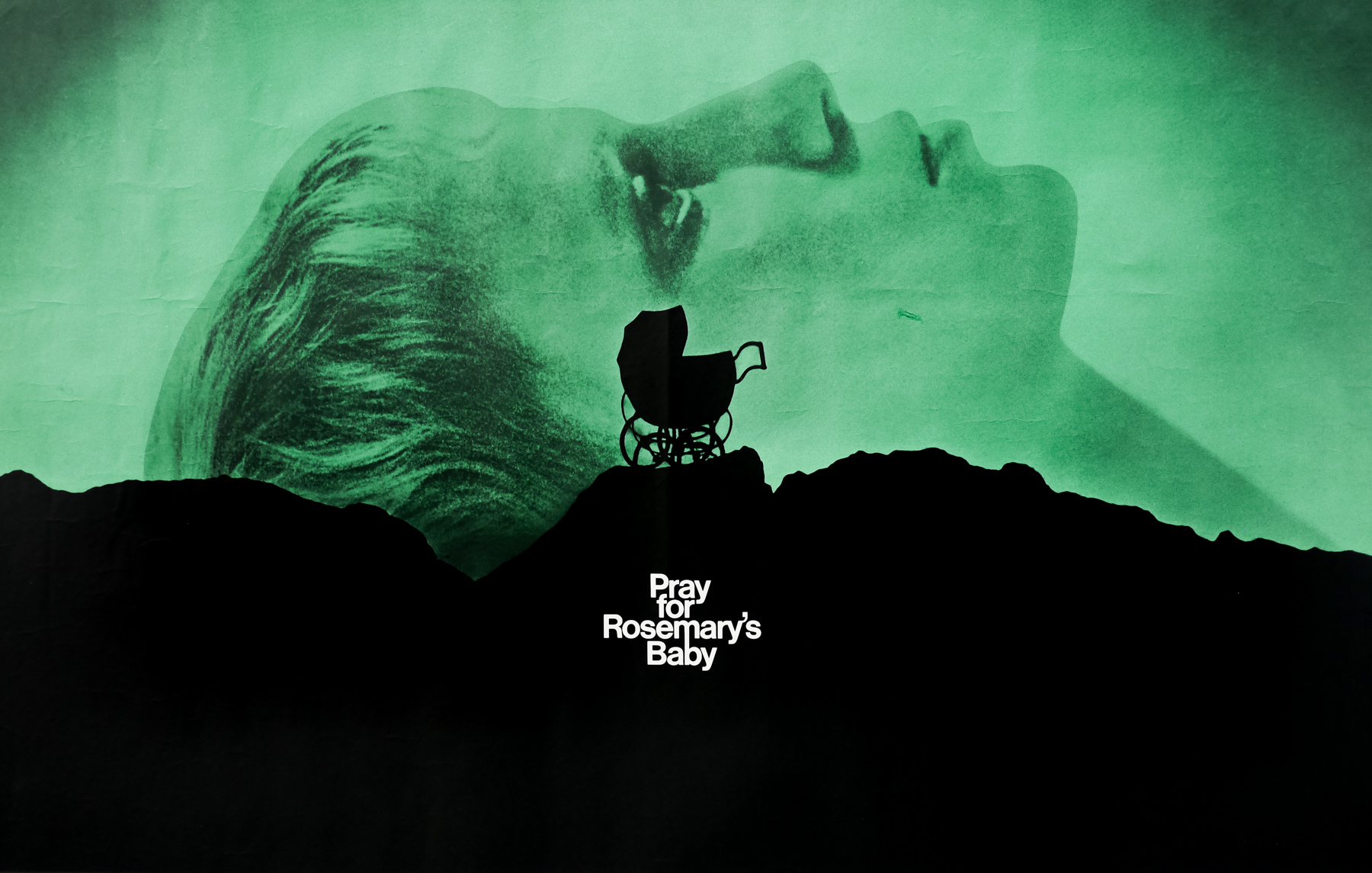
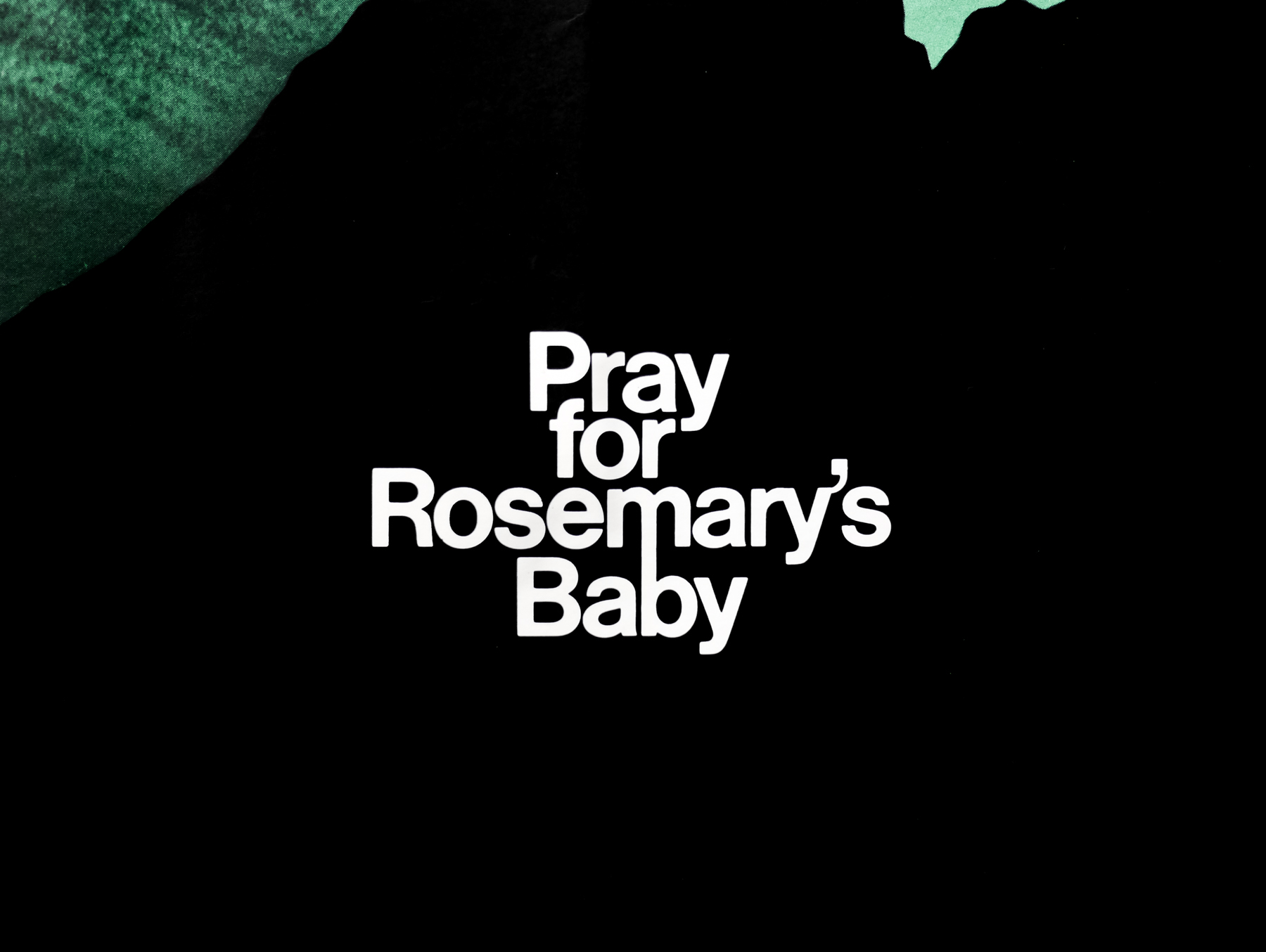
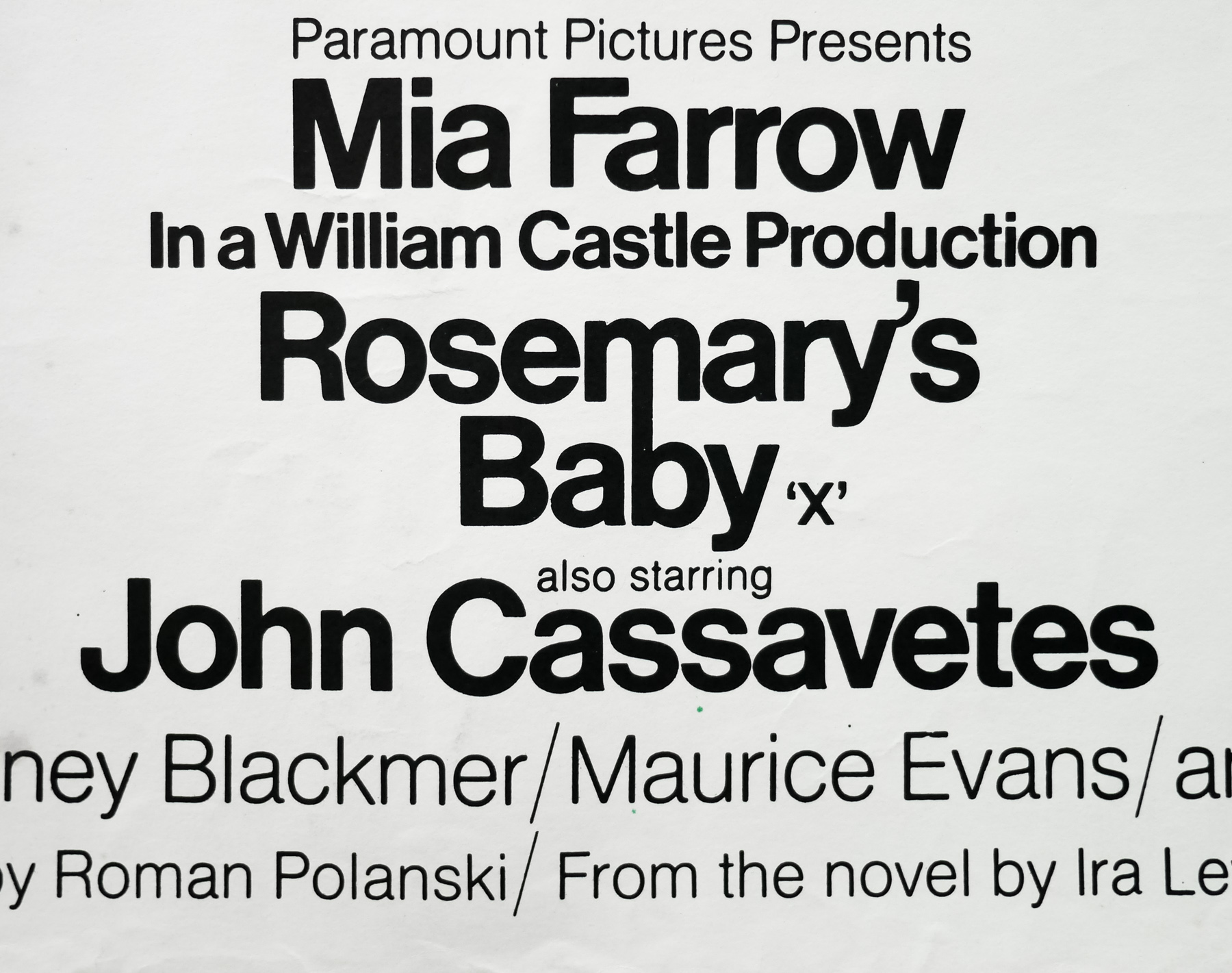
Roman Polanski’s 1968 horror masterpiece Rosemary’s Baby was released with one of the most iconic posters of all time that, like many of the most memorable designs, features a striking image in conjunction with an intriguing tagline. There is a fascinating, newly-filmed documentary on the recently released Criterion blu-ray of the film, which features many of the people involved in its making, including the legendary producer Robert Evans who recounts the story of how this poster came to be:

“When we finished the film the front office [of Paramount], which was in New York at the time, didn’t want to release it. They didn’t know how to sell it. I went to a friend of mine [Stephen Frankfurt] who was president at Young & Rubicam, a very large advertising agency, and I told him my problem; I can’t release the movie because the whole of our advertising team doesn’t know how to sell it, and the picture’s brilliant! He goes to see it and then he said to be ‘Bob, I’m going to tell it you straight; it’s not an easy picture to sell and I’m not going to take one dime from you to give you a whole campaign for it.’ He then said ‘But if you buy what I give you I want one hundred thousand dollars’.

I walked in to the chairman of the board Charles Bluhdorn‘s office and said ‘take a look at this and you tell me if you want to write a cheque for one hundred thousand dollars’ and I turned the artboard around and there it is; there’s a mountain and a carriage and it says ‘Pray for Rosemary’s Baby’, that’s all. And he looks at it and he becomes so pale that he’s as white as these shoes that I’m wearing and he said ‘I have to pay him one hundred thousand dollars for three [four] words?!’ and I said that’s right, and he did! Pray for Rosemary’s Baby became the ad of the year. It made the picture and without that image people wouldn’t know what it is and they still didn’t know but they were intrigued. It opened to the biggest business Paramount had done in years.”

After a bit of research it seems that although Stephen Frankfurt should be credited as the creative director for the poster, it was actually designed by Philip Gips in conjunction with Richard Danne. I’ve been attempting to figure out exactly where each of these designers worked and I have to confess it has left me slightly confused. Stephen Frankfurt is profiled in this excellent piece by Adrian Curry on Mubi.com that details his involvement in several seminal film posters of the 1960s and 70s, including Downhill Racer and the first Emmanuelle movie. He also worked on opening titles (To Kill a Mockingbird) and trailers for several films, including the one for Rosemary’s Baby. According to the article Frankfurt’s thing ‘was to see the packaging of movies as a totality—designing the titles, posters, trailers and ads with one common look and theme.’ The article also notes that the baby carriage on the crag was shot on the outcrops of rocks in Manhattan’s Central Park.

Frankfurt died earlier this year and in this article in Adweek it mentions that he was also a partner in an agency he set up with Philip Gips and Aubrey Balkind (named simply Frankfurt Gips Balkind), where he worked on over 55 film marketing campaigns. It’s not totally clear but I believe that he must have worked on this poster whilst also serving as president at Young and Rubicam, hence the fact that Robert Evans mentions the larger agency in the interview above.

Note that in the comments of that article someone with the username ‘Villafranca’ writes the following:
“In the mid-90’s, I worked for Philip Gips’s the small agency that he started after he left Frankfurt, Gips Balkind. In his office, he had framed prints of both the “Rosemary’s Baby” and “Alien” posters hanging in his office because, well, he designed them. And one other small tidbit: his wife, Barbara, wrote the line “In space no one can hear you scream” (not Stephen Frankfurt). Phil told me this personally.”

Further on in the comments another poster called ‘danagips’ writes:
“This should absolutely be retitled the movie posters of Phil Gips. And my mother did indeed write, ‘In Space No One Can Hear You Scream’ for Alien.”

In addition to this, the website of AIGA (American Institute of Graphic Arts) features a page on the poster that also credits Richard Danne as a co-designer of the poster. Danne appears to have had a lengthy and lauded career in the New York advertising industry and his official website features a biography that indicates he served as president of AIGA as well as a several other organisations. The Rosemary’s Baby poster features on his website where another agency ‘Gips and Danne’ is mentioned (the AIGA website has examples of that agency’s work).

The agency for the poster is credited as Gips and Danne so does that mean that Philip Gips was also working as a partner in a second design firm in addition to the one he founded with Frankurt and Balkind? Was this job given to Gips and Richard Danne’s firm by Frankfurt who was working for Paramount? I intend to contact Richard Danne to try and clarify but I’d appreciate any other information that people may have so I can accurately credit the poster.

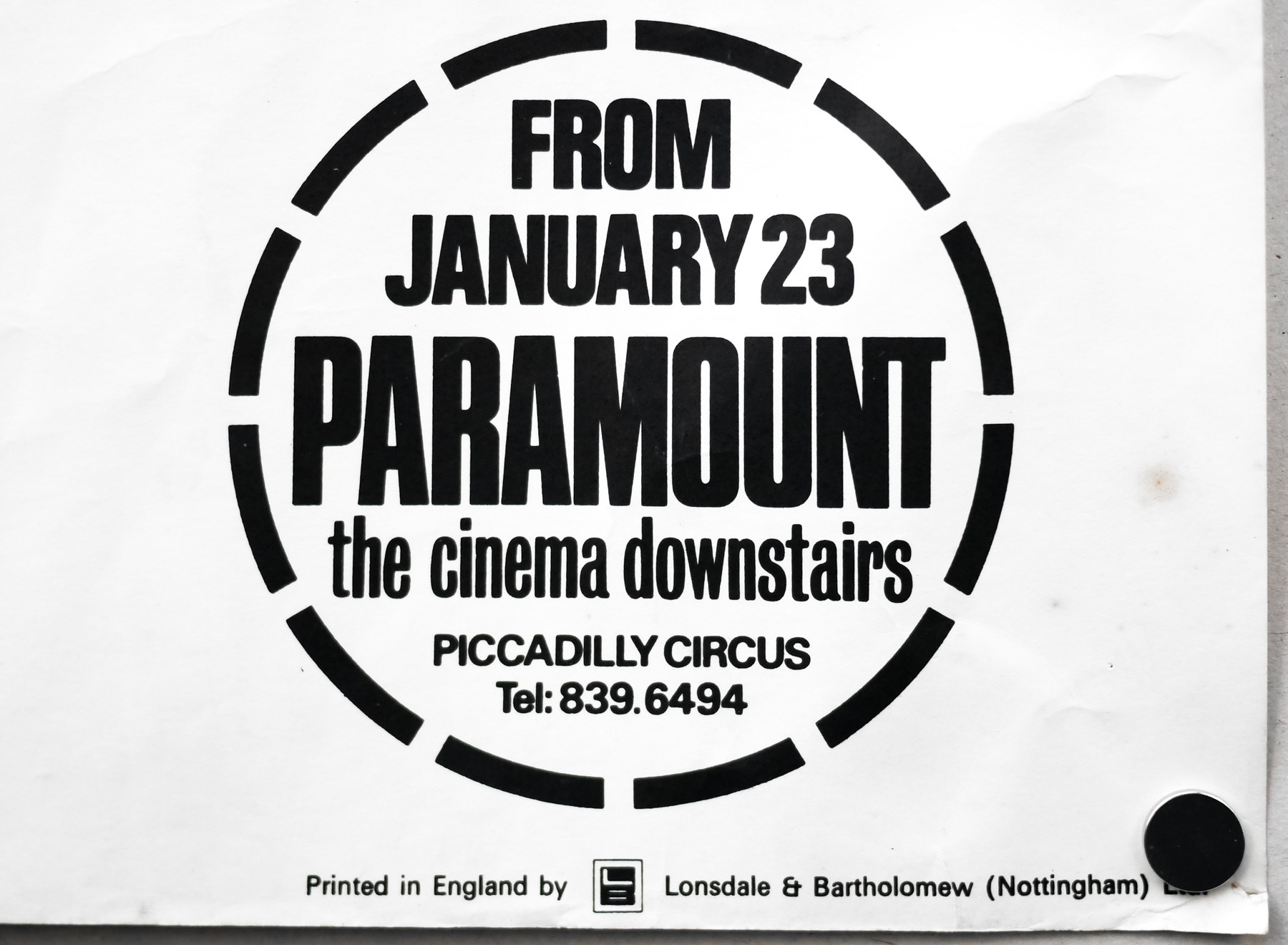
This is the original British quad for the release of the film over here and I was utterly thrilled to find it in excellent, rolled condition. Note the circular snipe in the bottom corner which ties it to the Paramount cinema in London’s Piccadilly Circus. The building was opened in 1921 as the large and luxurious cinema known as the Plaza Theatre that was designed and built for Paramount Pictures to be their showcase venue in London. The Arthur Lloyd ‘music hall and theatre history’ website features a page on the cinema that details its history and has several excellent pictures included. Finally, I’m unsure who will have done the design work to adapt the original portrait one sheet design to the landscape quad format.

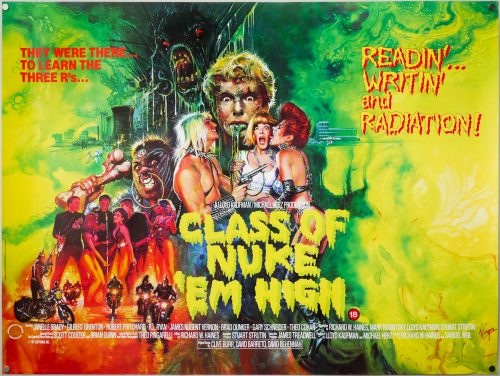
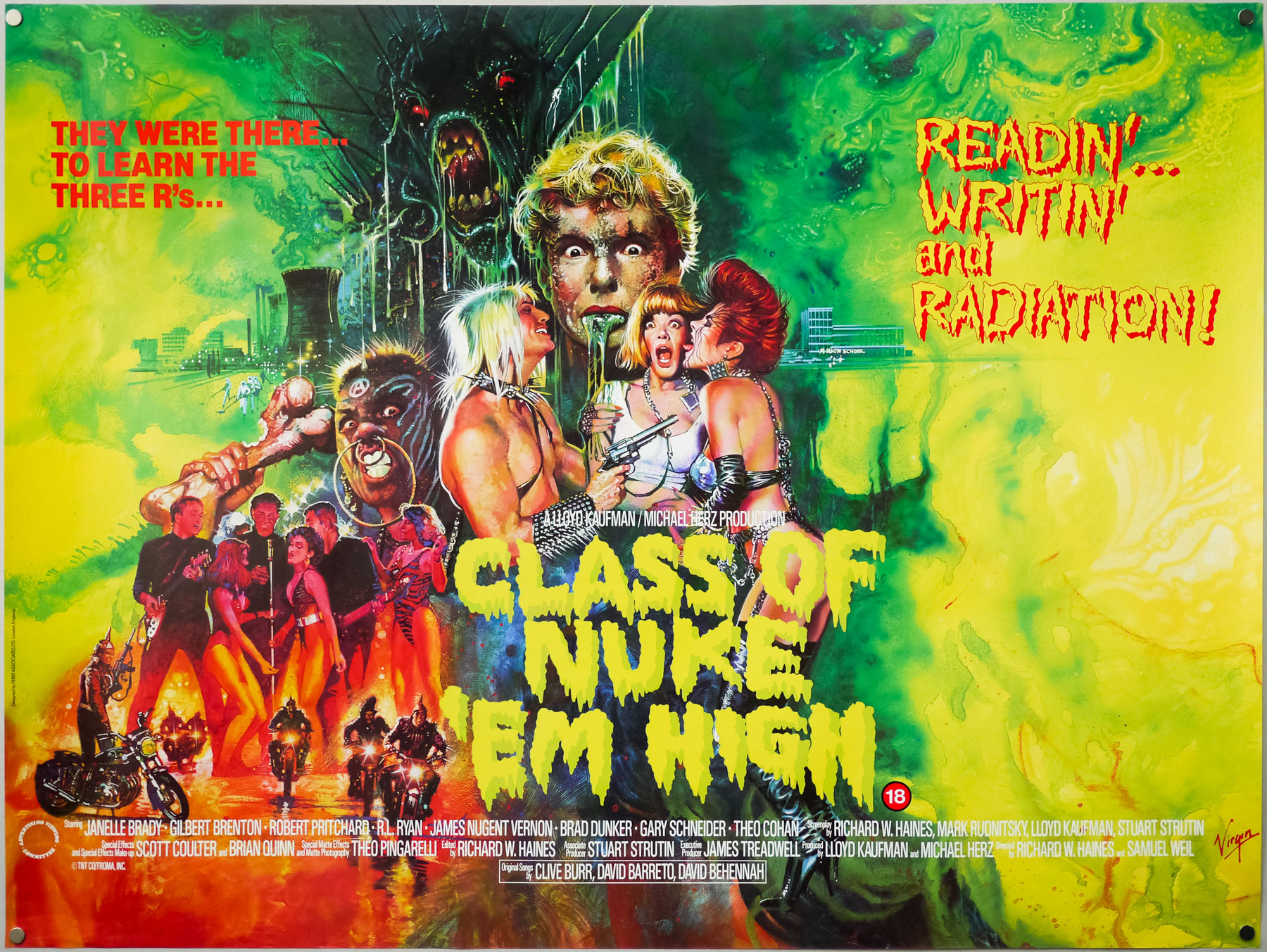
Class of Nuke ‘Em High / quad / UK

13.02.13

Poster Poster
Title
Class of Nuke 'Em High
AKA
Atomic College (France)
Year of Film
1986
Director
Richard W. Haines, Lloyd Kaufman
Starring
Janelle Brady, Gil Brenton, Robert Prichard, Pat Ryan, James Nugent Vernon, Brad Dunker, Gary Schneider, Théo Cohan, Gary Rosenblatt, Mary Taylor, Rick Howard, Lauren Heather McMahon, Chris McNamee
Origin of Film
USA
Genre(s) of Film
Janelle Brady, Gil Brenton, Robert Prichard, Pat Ryan, James Nugent Vernon, Brad Dunker, Gary Schneider, Théo Cohan, Gary Rosenblatt, Mary Taylor, Rick Howard, Lauren Heather McMahon, Chris McNamee,
Type of Poster
Quad
Style of Poster
--
Origin of Poster
UK
Year of Poster
1988
Designer
Brian Bysouth
Artist
Brian Bysouth
Size (inches)
30 2/16" x 39 14/16"
SS or DS
SS
NSS #
--
Tagline
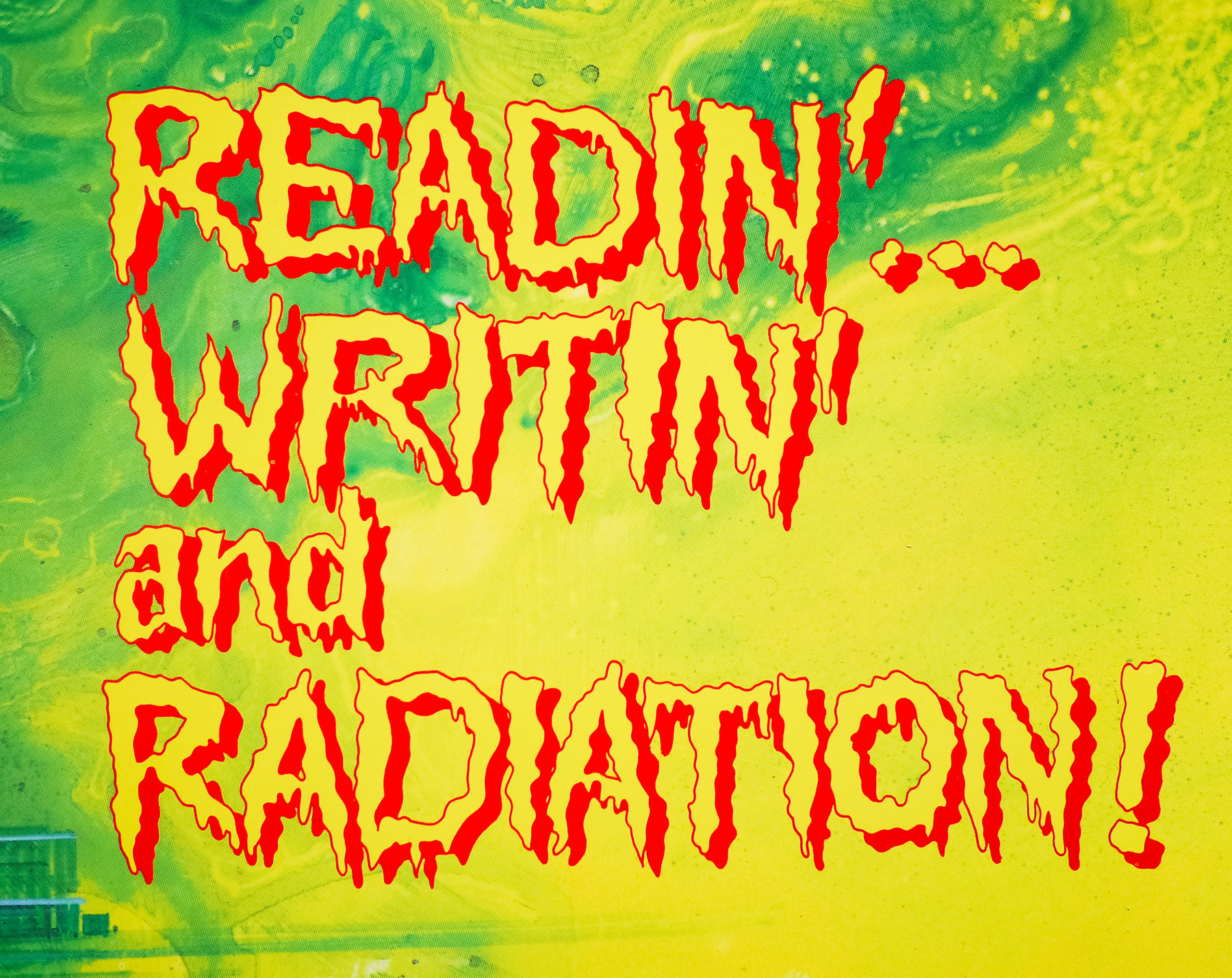
They were there... to learn the three R's... READIN'.... WRITIN' and RADIATION!

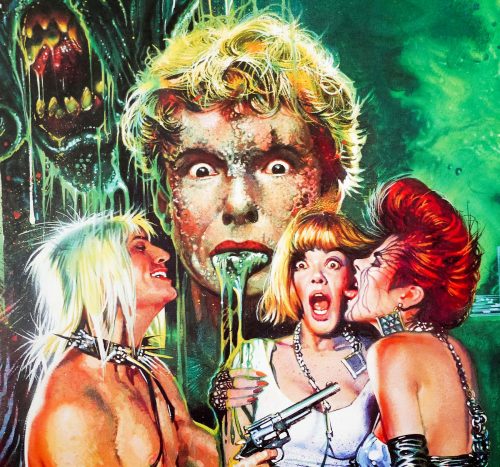
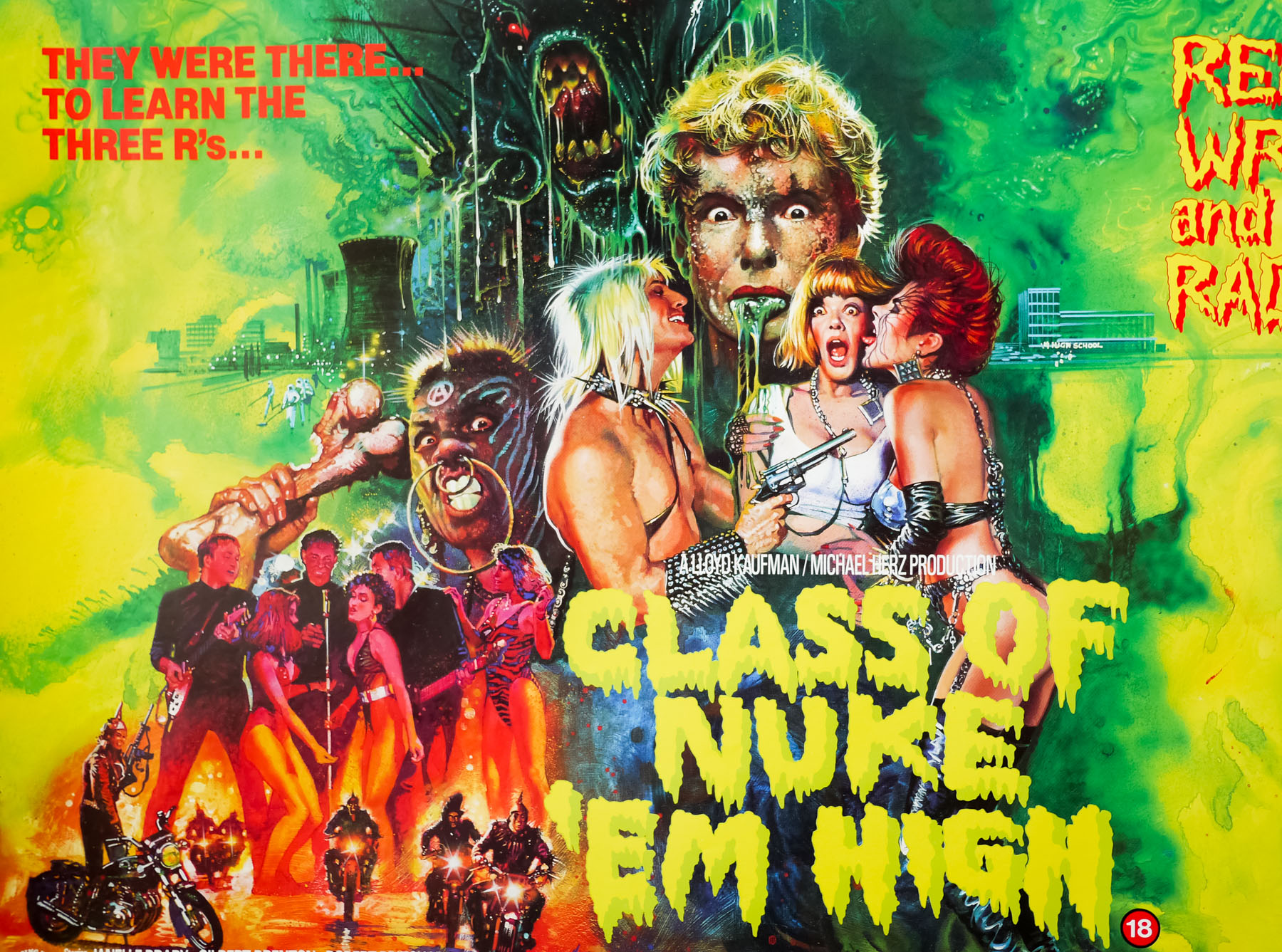
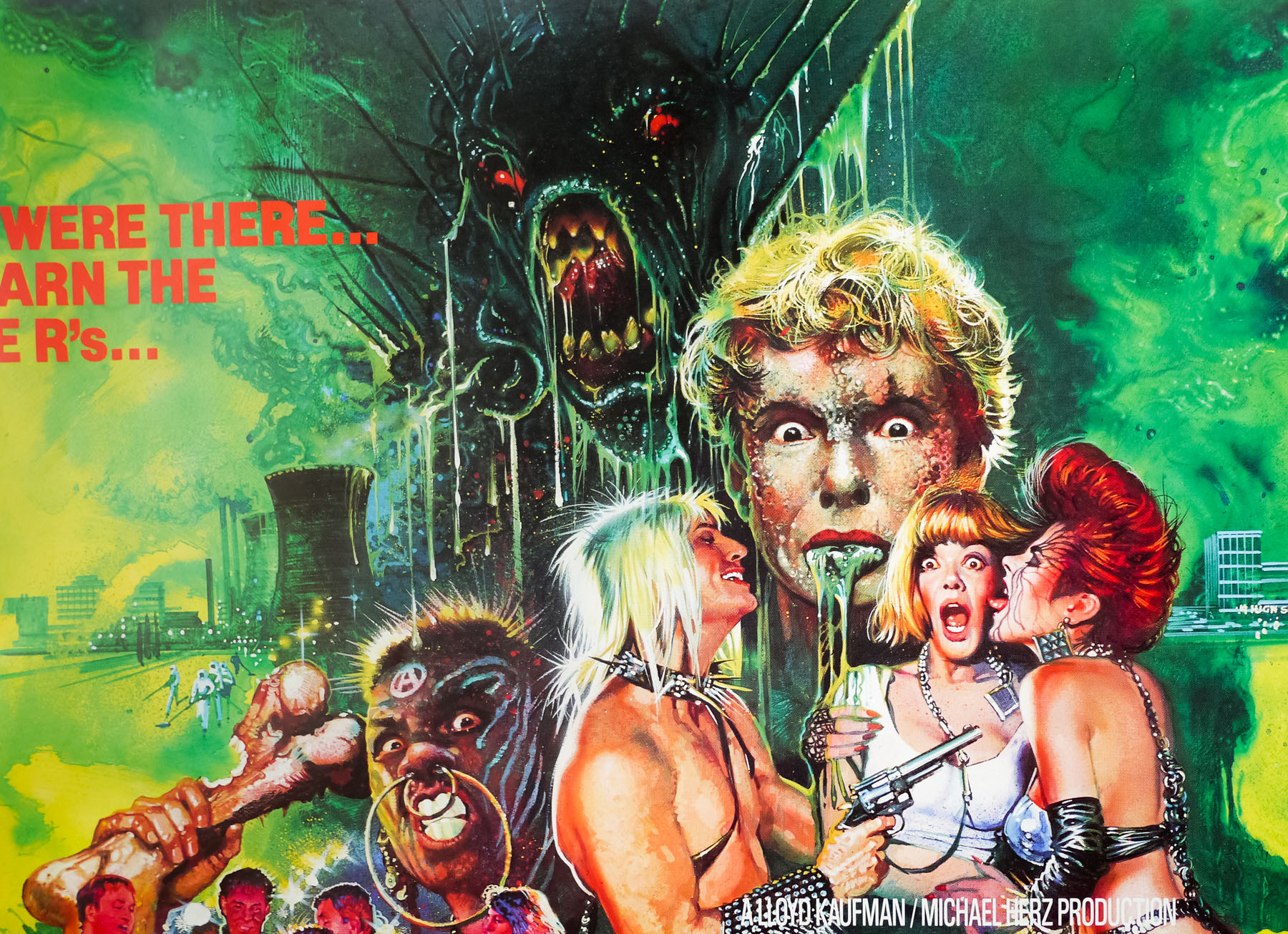
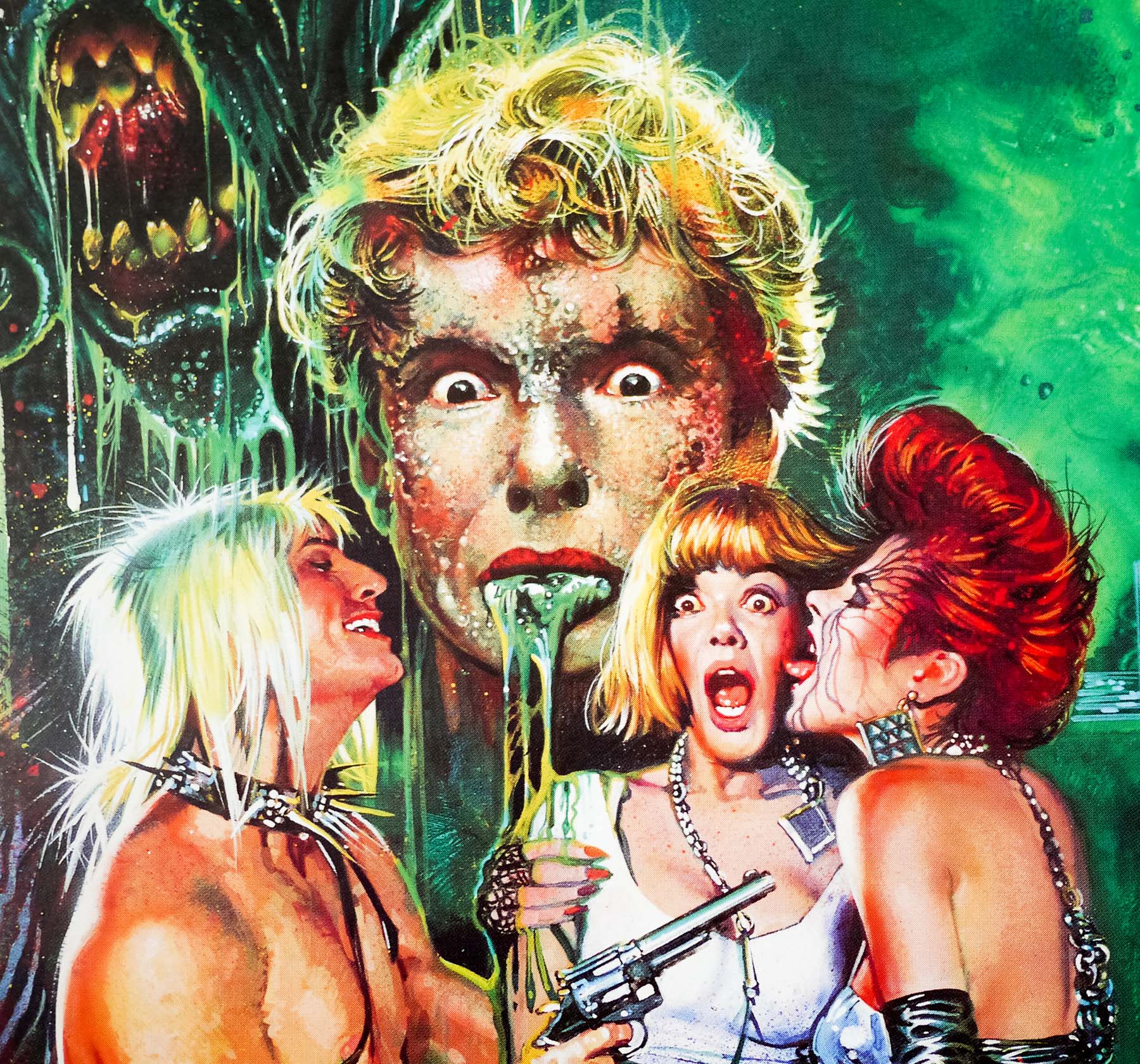
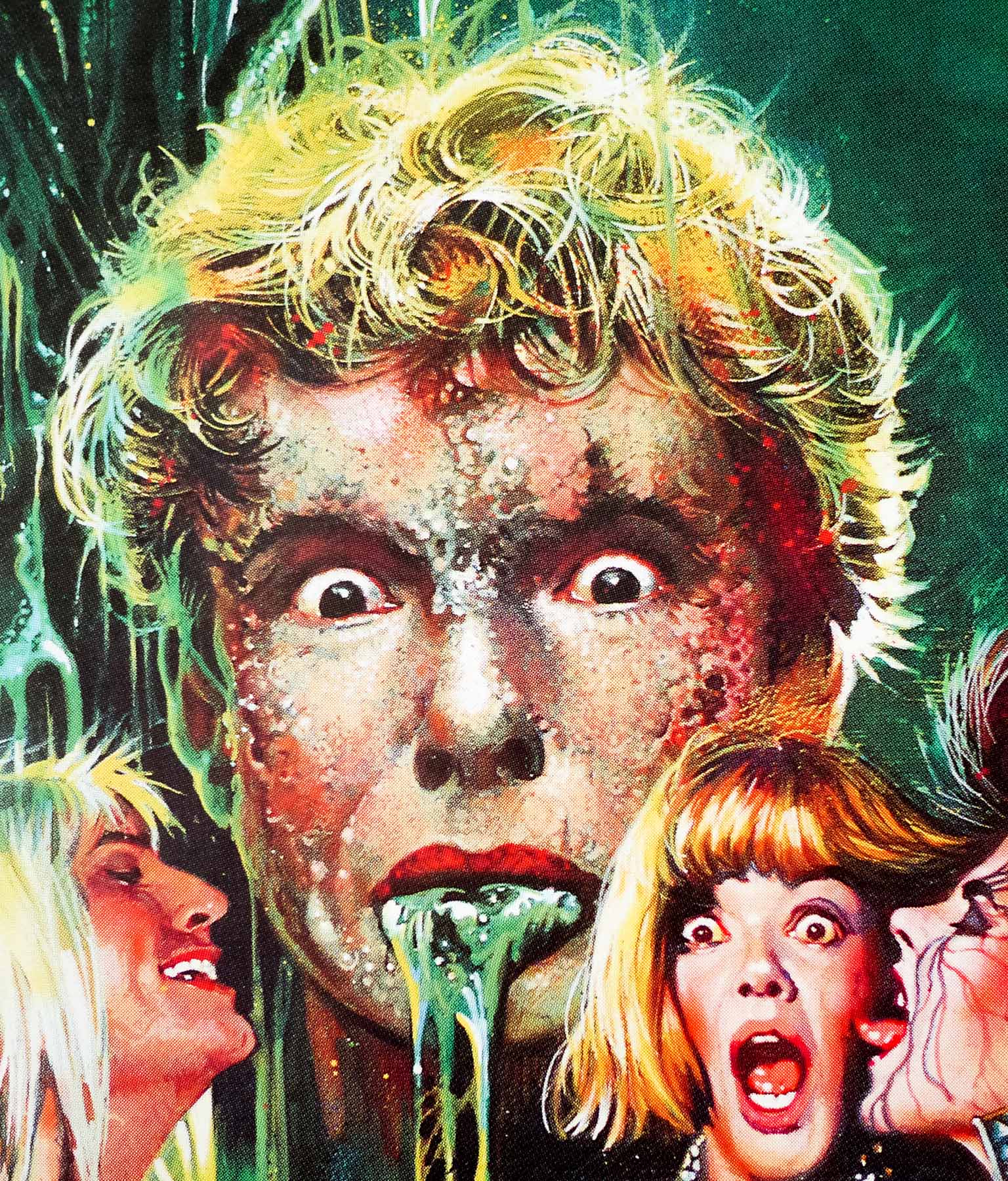
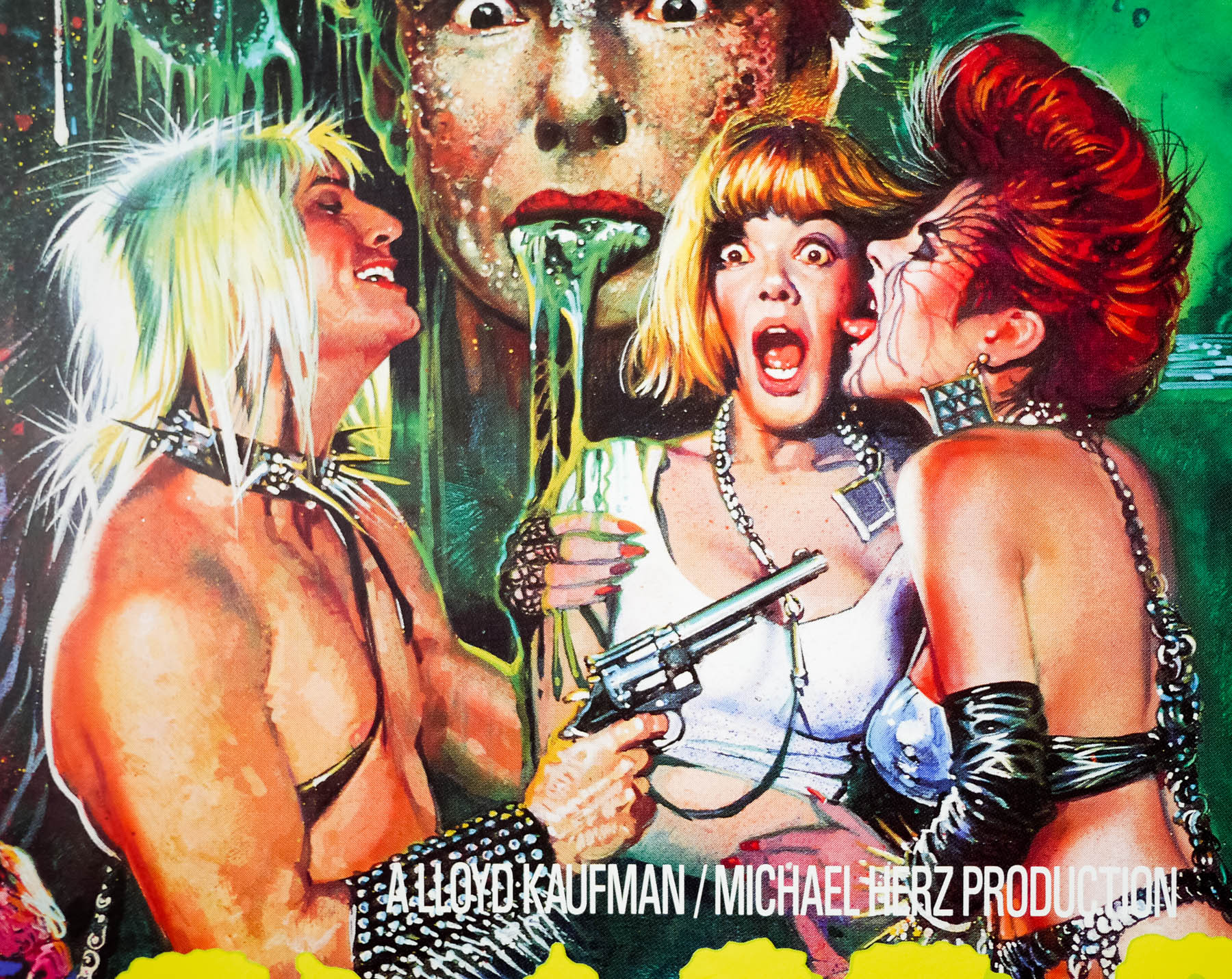
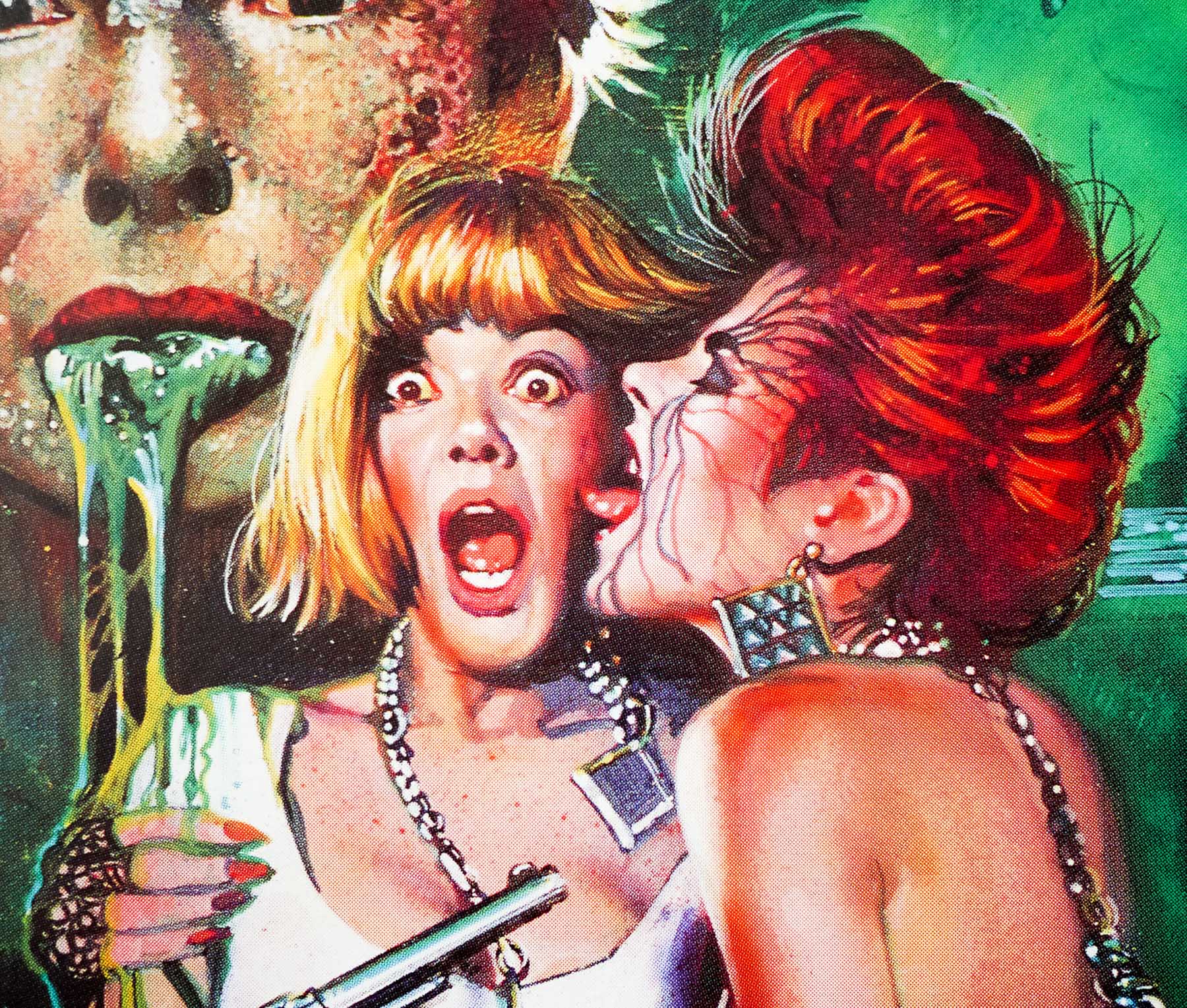
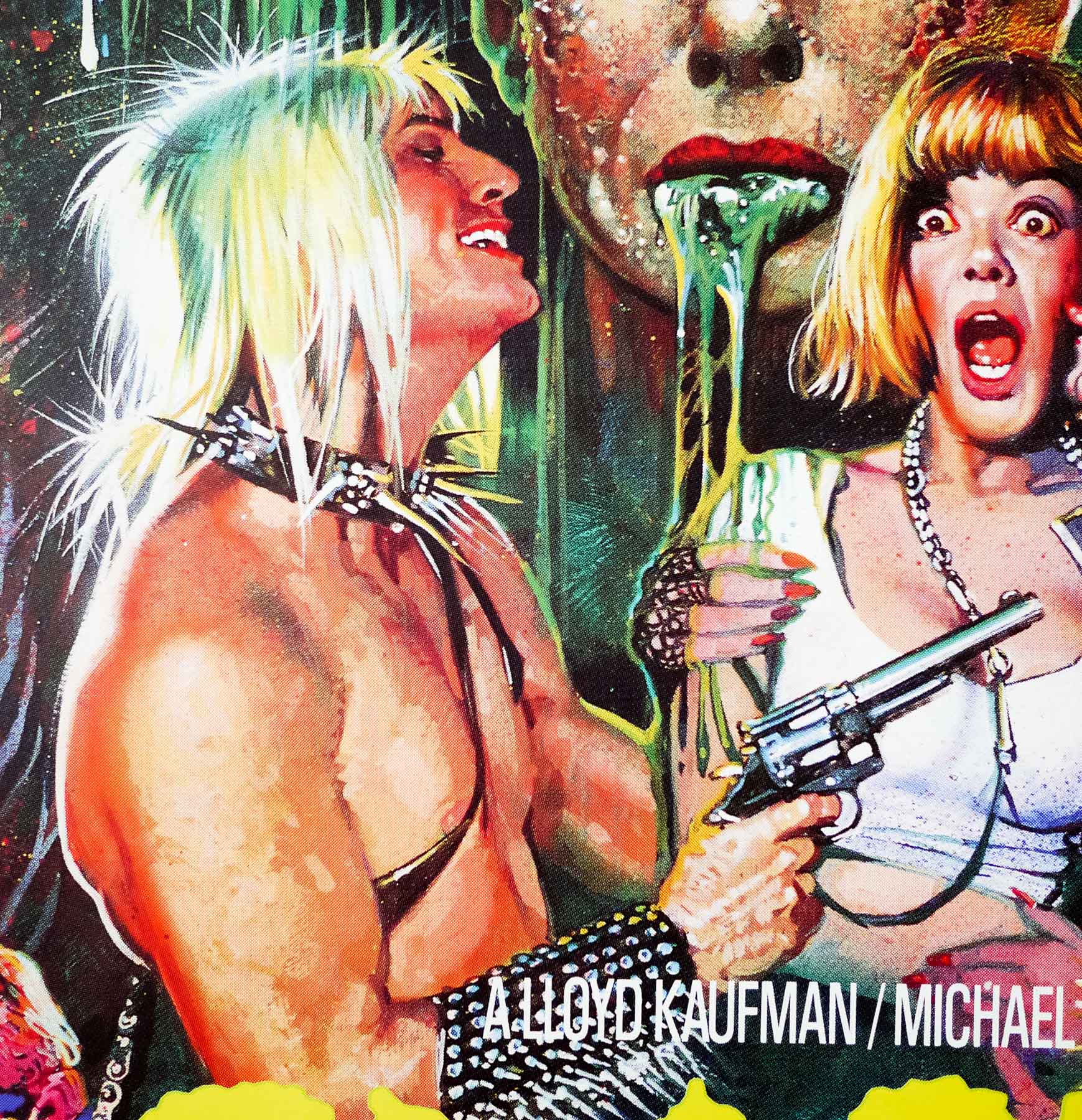
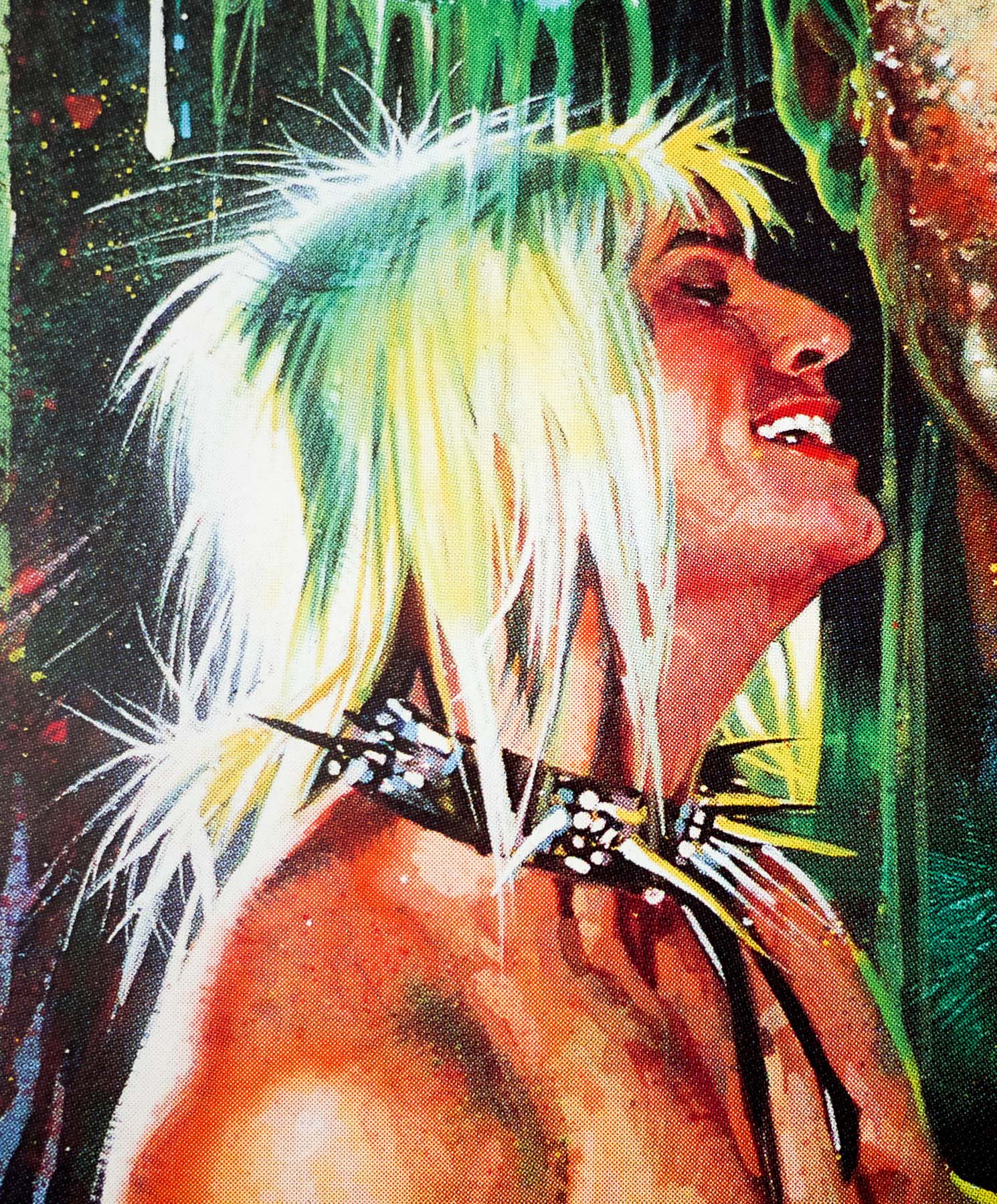
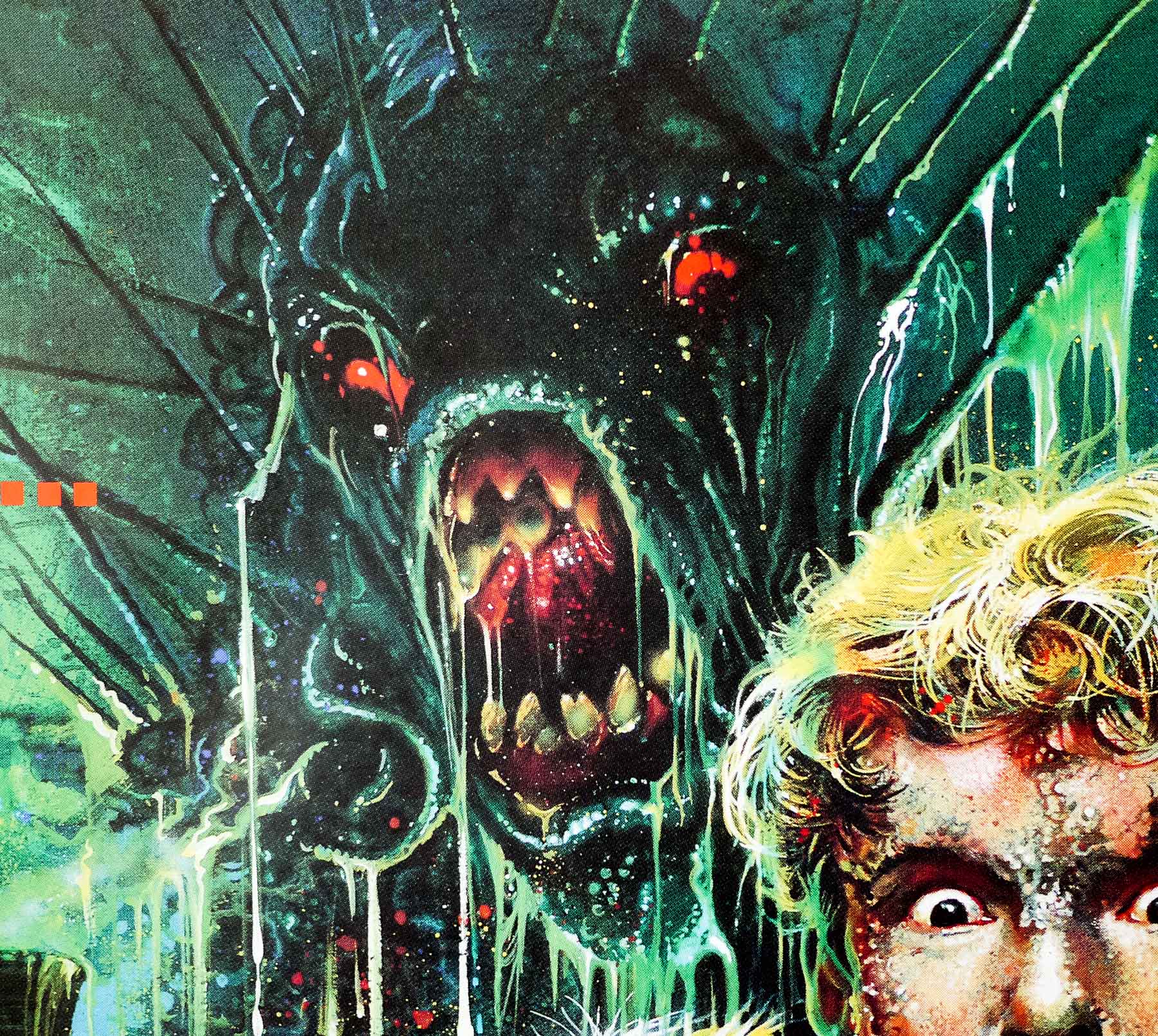
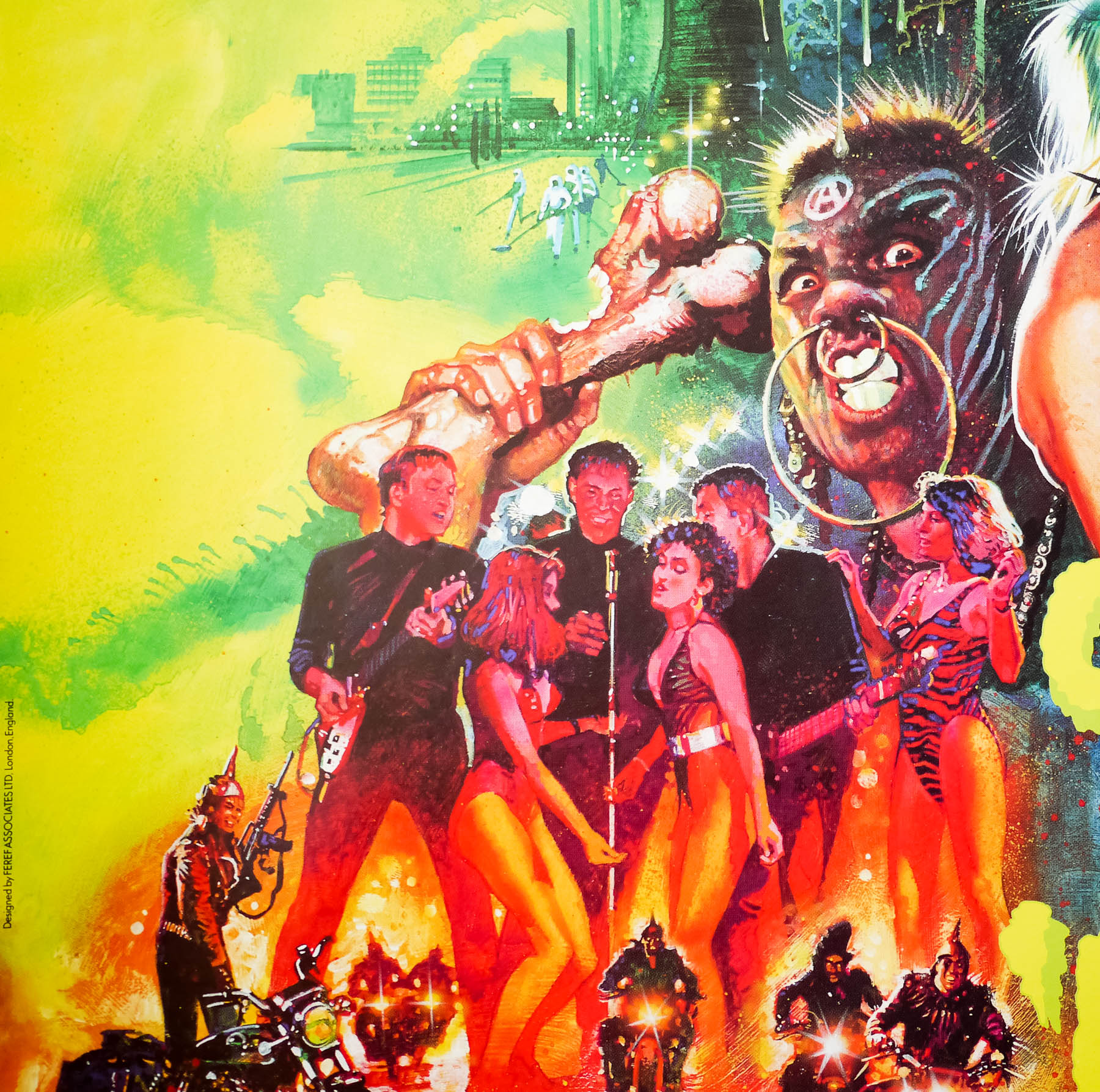
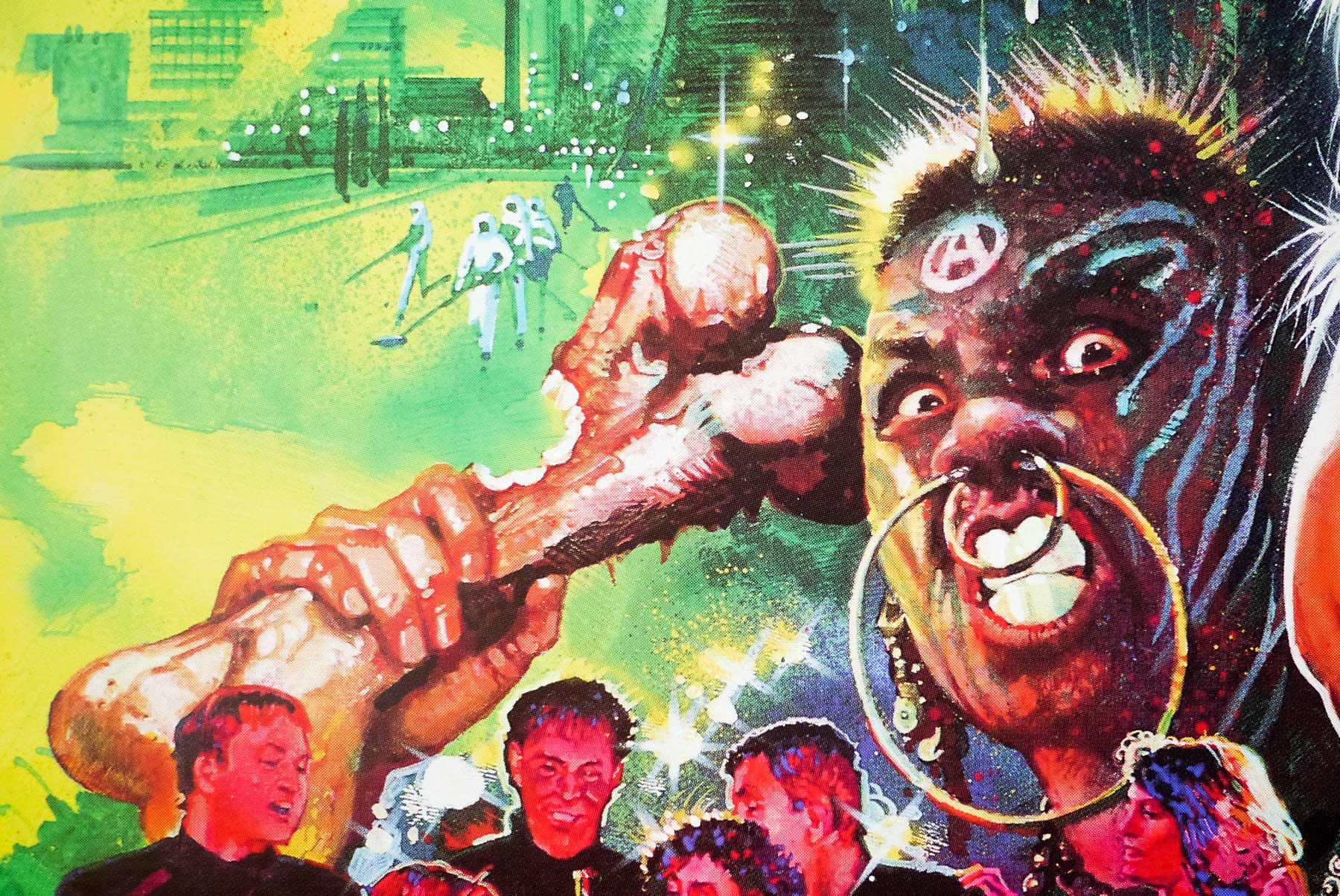
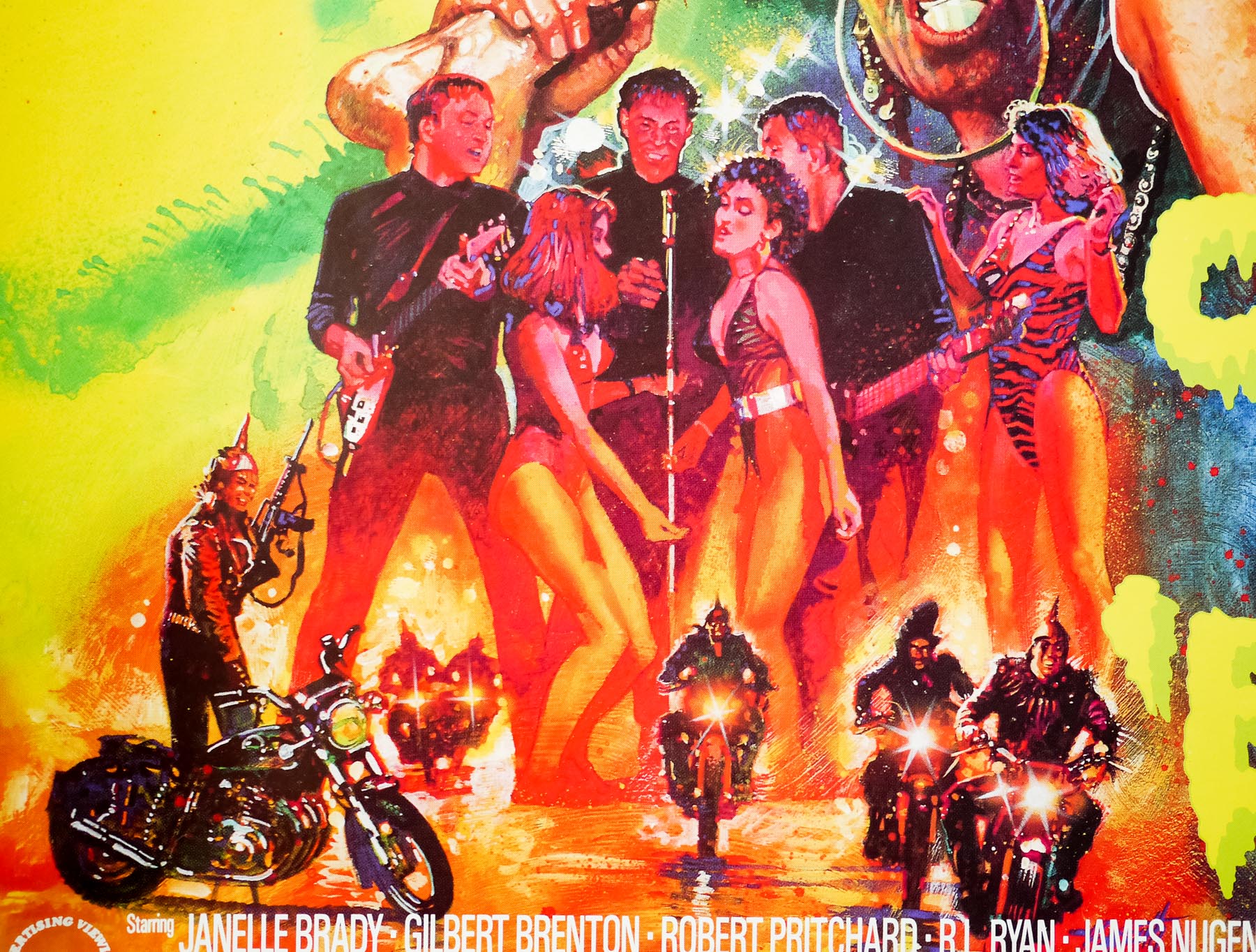
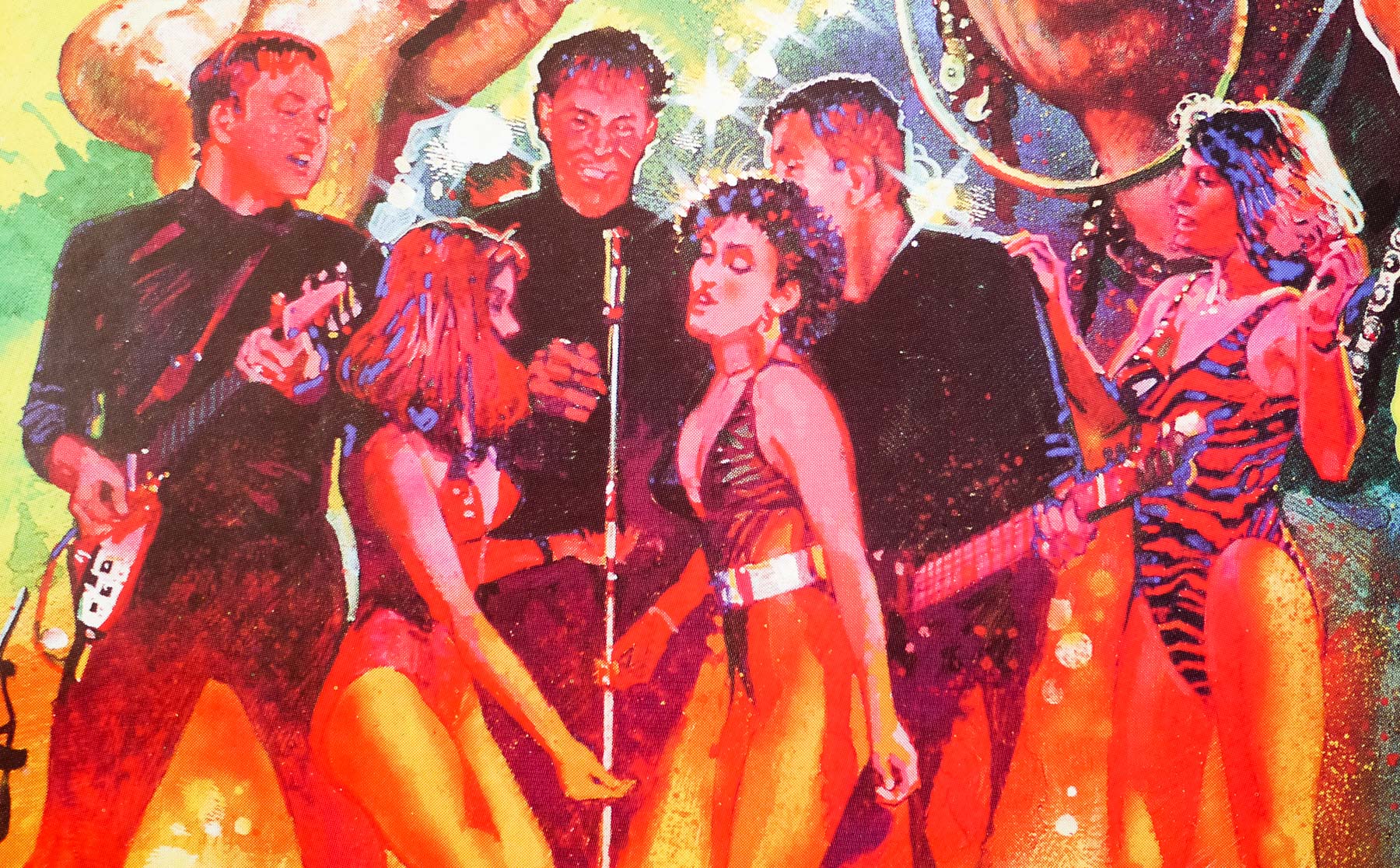
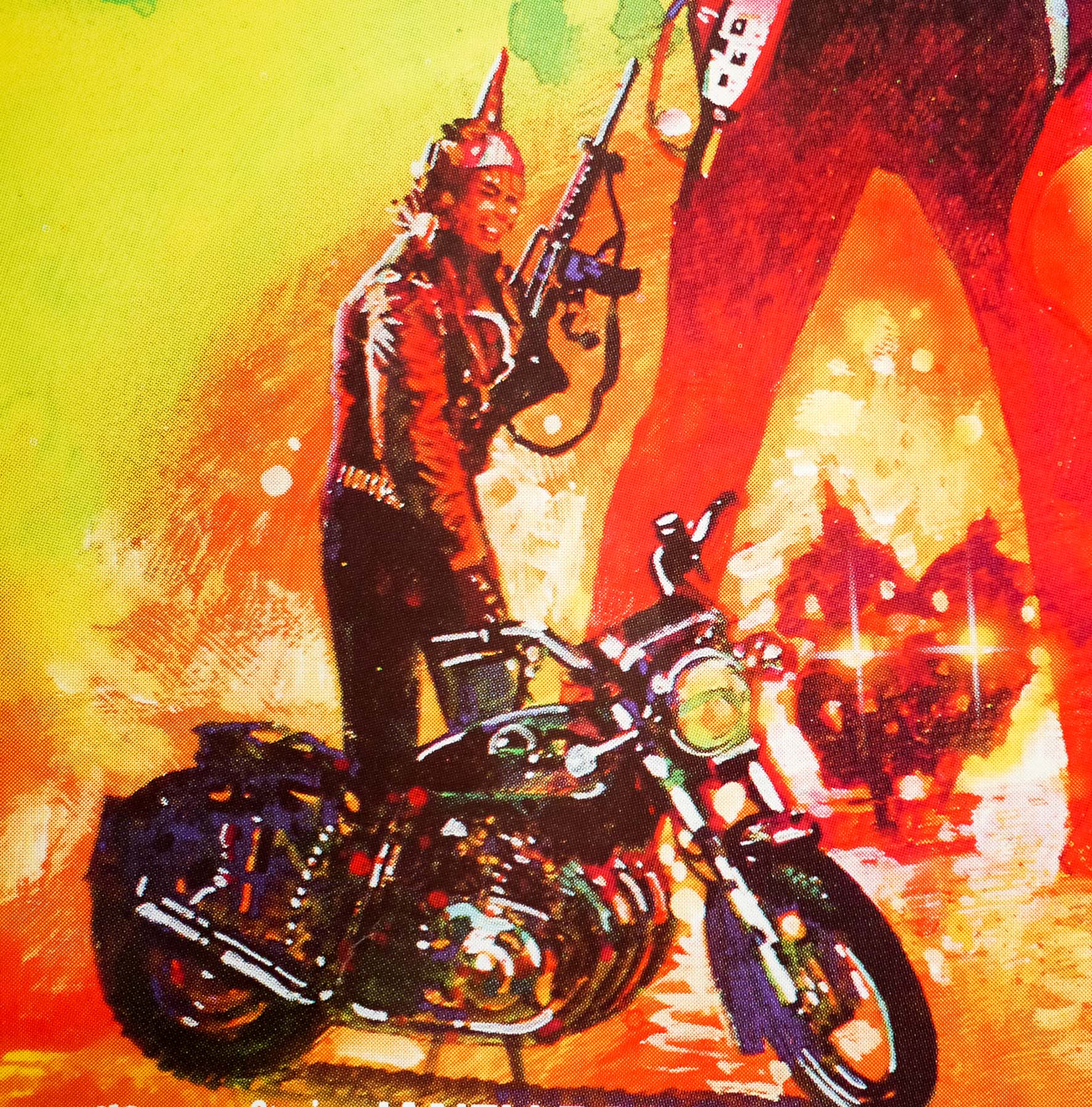
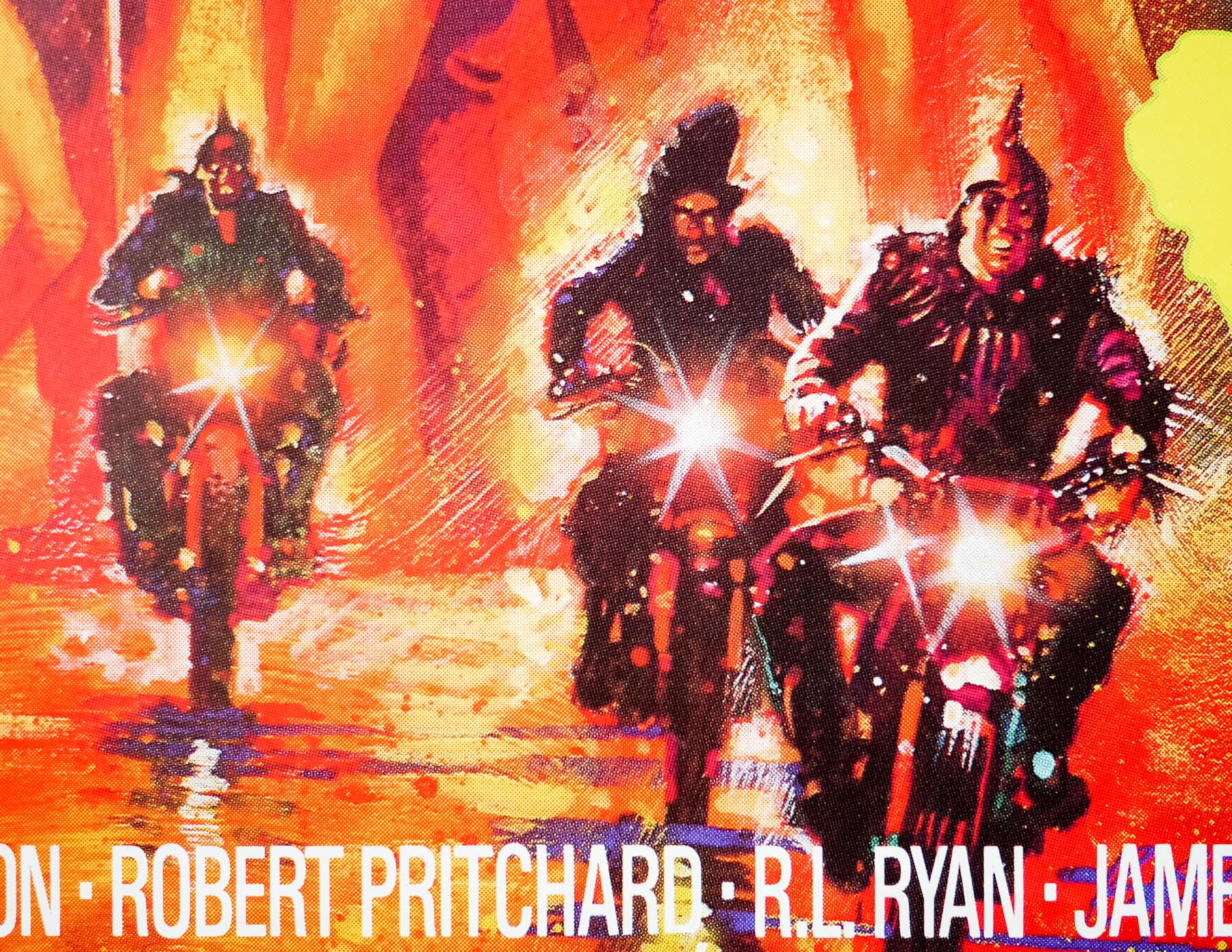
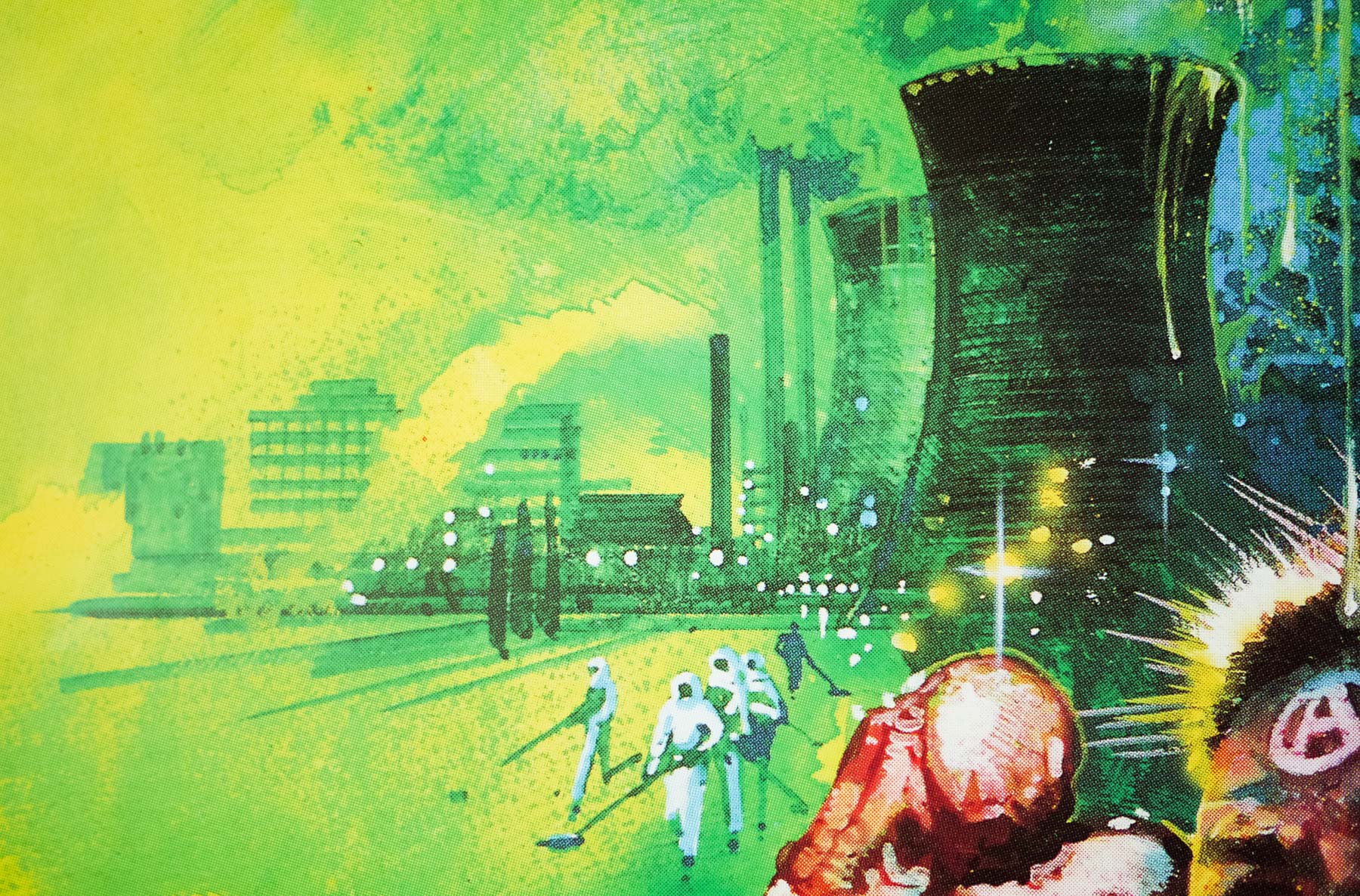
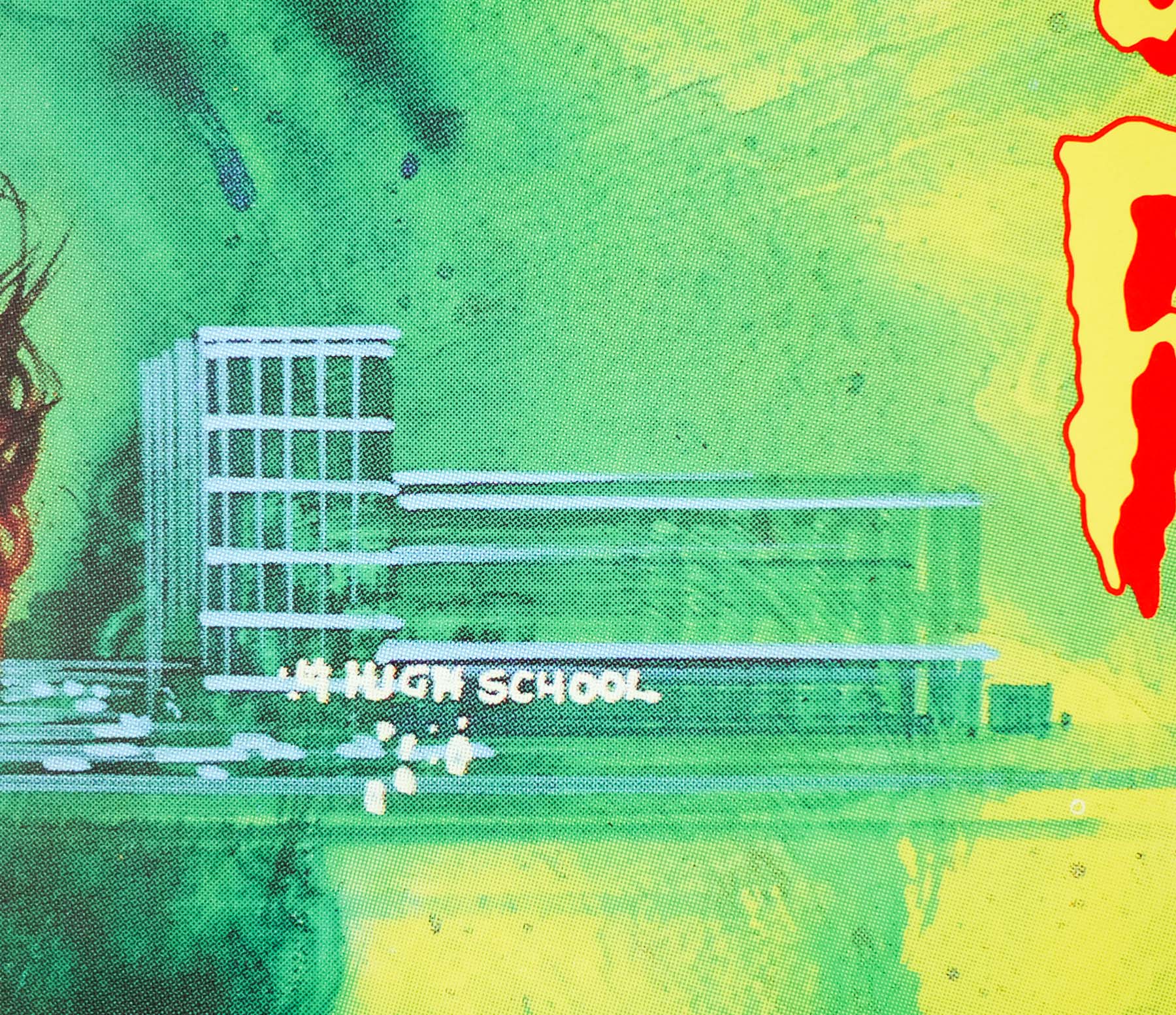
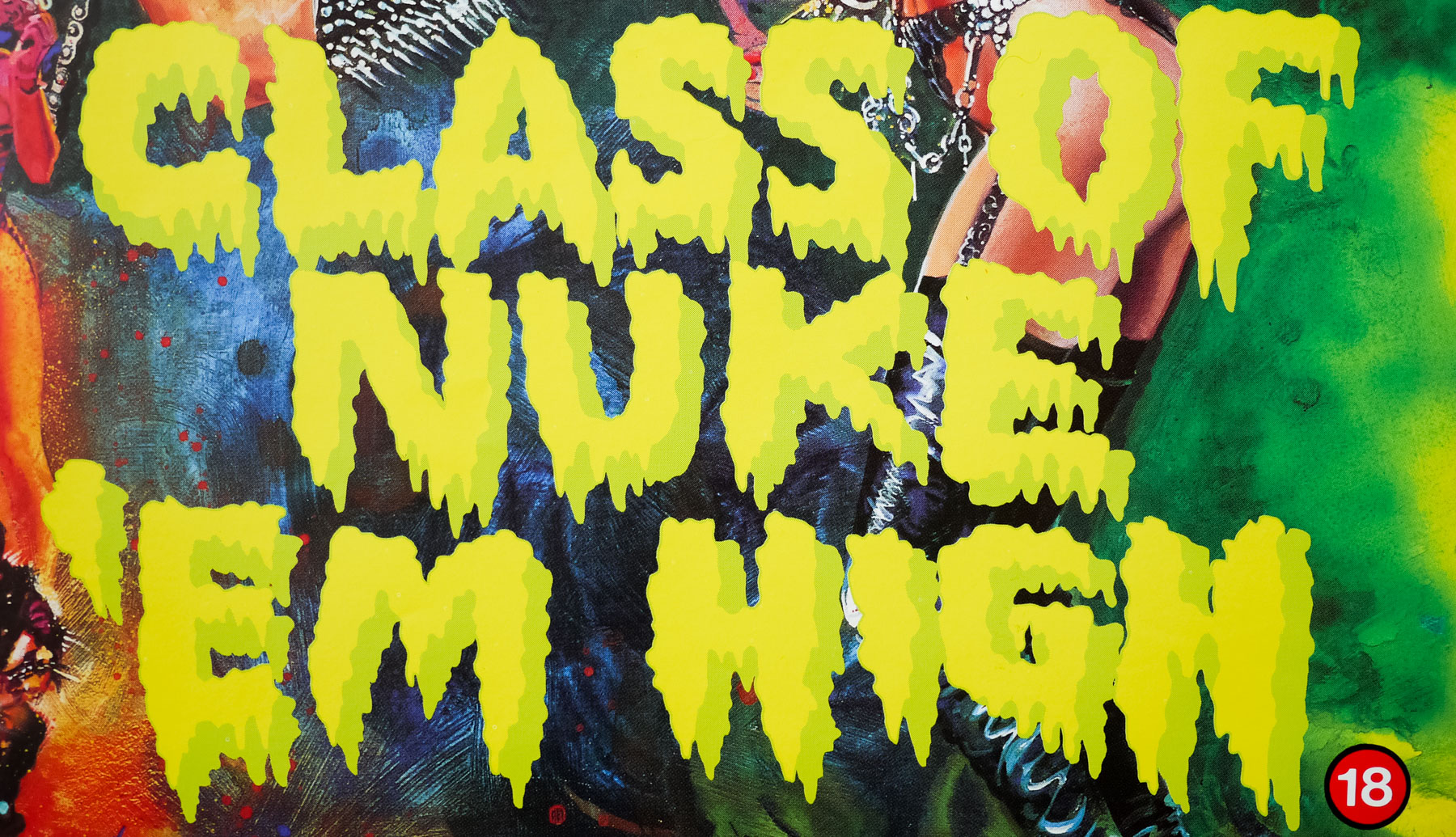
An appropriately lurid design on this UK quad for the release of infamous independent studio Troma Entertainment’s Class of Nuke ‘Em High. The film was directed by Richard W. Haines and Troma co-founder Lloyd Kaufman (under the pseudonym Samuel Weil) and the story centres on the Tromaville High School in New Jersey, which is located close to a dodgy nuclear power-plant that continuously suffers leaks of hazardous material. The Cretins are the school’s anarchic gang (who feature heavily on this poster) and are responsible for peddling drugs to the other pupils. When they inadvertently buy a marijuana plant that has been contaminated by nuclear waste things start to get very messy indeed. Of particular note is the parasitic offspring birthed by Chrissy (Janelle Brady) under the influence of the toxic weed, which mutates into the spiky monstrosity seen at the top of this poster.

Criticising a Troma production is a bit like tearing down a school production; this is amateur entertainment at best, with acting that is hilariously awful across the board, choppy editing and a total lack of atmosphere. With that being said, if you go in expecting the usual Troma mixing-pot of gore, guns, girls and explosions you won’t leave too disappointed. Some of the effects are actually well-realised on what I can only assume was a minuscule budget.
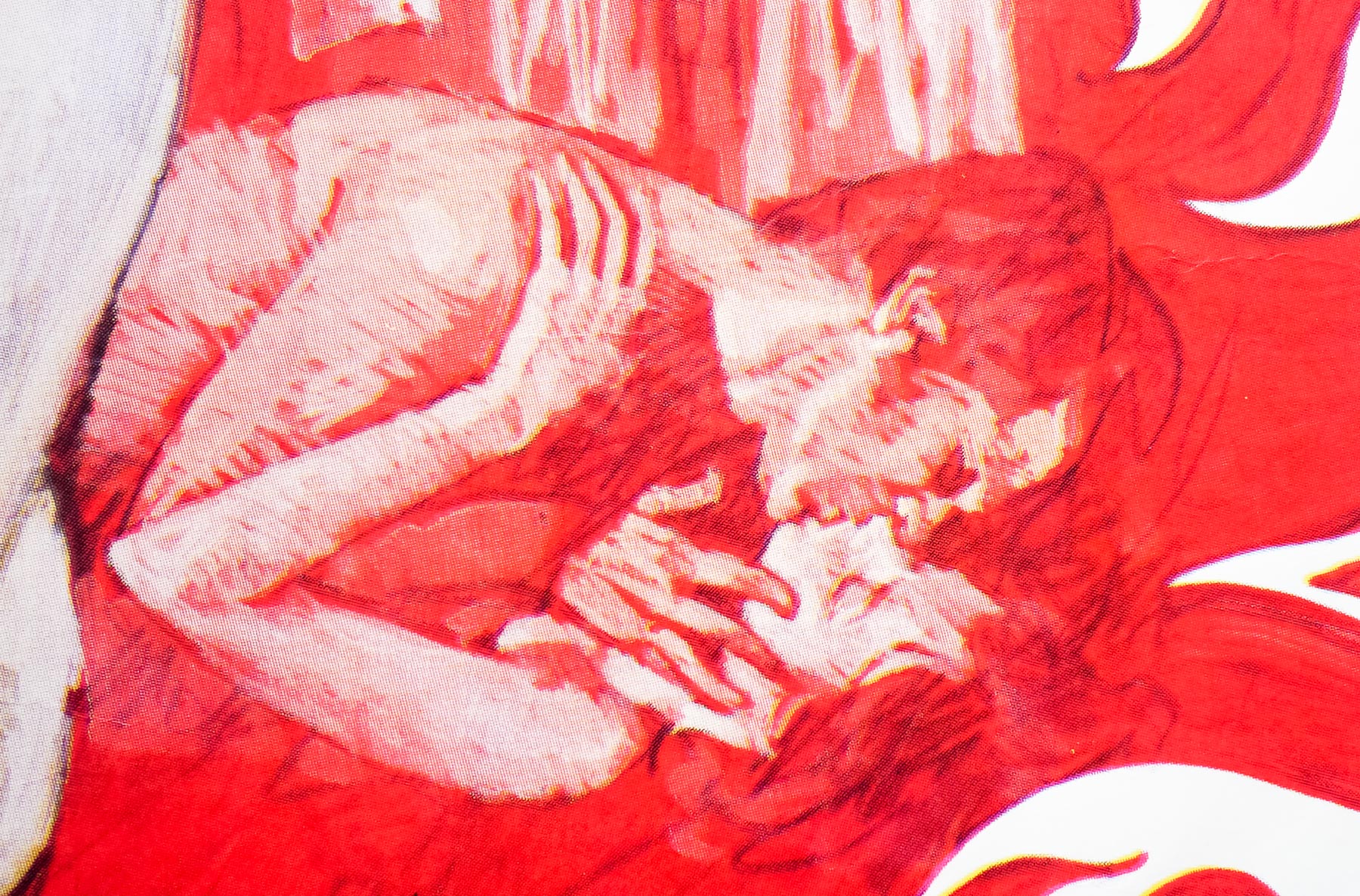
The montage on this quad was designed and painted by one of my favourite British artists Brian Bysouth, whose wonderfully detailed illustrations featured on hundreds of posters over three decades. Some of his most famous posters include the withdrawn one sheet for A View to a KillHighlanderBig Trouble in Little China and The Living Daylights. In 2012 I was lucky enough to meet and interview Brian and the resultant article can be read by clicking here.

The Shootist / quad / UK

10.07.13

Poster Poster
Title
The Shootist
Year of Film
1976
Director
Don Siegel
Starring
John Wayne, Lauren Bacall, Ron Howard, James Stewart, Richard Boone, Hugh O'Brian, Bill McKinney, Harry Morgan, John Carradine, Sheree North, Rick Lenz, Scatman Crothers
Origin of Film
USA
Genre(s) of Film
John Wayne, Lauren Bacall, Ron Howard, James Stewart, Richard Boone, Hugh O'Brian, Bill McKinney, Harry Morgan, John Carradine, Sheree North, Rick Lenz, Scatman Crothers,
Type of Poster
Quad
Style of Poster
--
Origin of Poster
UK
Year of Poster
1976
Designer
John Raymer
Artist
Roger Coleman
Size (inches)
30" x 39 14/16"
SS or DS
SS
Tagline
The unforgettable drama of a legendary gunfighter's last days.

A superb portrait of the late, great John Wayne on this British quad for the release of The Duke’s last film, 1976’s The Shootist. Directed by Don Siegel, the film depicts the last days of a legendary gunfighter named J. B. Books and it actually begins with a montage of clips from Wayne’s earlier cowboy films. In the early 20th century, at the ‘end’ of the wild west, Books arrives in Carson City, Nevada and, after seeking an audience with a doctor, is told that he has terminal cancer and has only a couple of months left to live. He rents a room from the widow Bond Rogers (Lauren Bacall) and her son Gillom (Ron Howard) with the intention of planning a quiet and dignified end to his life, but his mere presence in the town sets of a chain of events with various characters keen to take advantage of Books’ predicament. Before long, the legendary shootist realises that he’s going to have to end his life with bang, not a whimper.

This British quad was designed at the London advertising outfit Lonsdales by a gentleman called John Raymer and was painted by the freelance artist Roger Coleman. Unique to the UK campaign, the intimate portrait of a grizzled Wayne was commissioned by Paramount Pictures UK as they felt that the original US poster, painted by Richard Amsel, had contributed to the film’s poor domestic box office performance.

As detailed in Sim Branaghan’s superb British Film Posters book, John Raymer was born in 1933 in South Norwood, South London, and went on to attend the nearby Croydon School of Art where he gained a National Diploma after specialising in book illustration. After completing his National Service he returned home in 1955 and was taken on by a design agency called Greenly’s situated on Berkeley Square in central London. The agency had held the Paramount account since 1922 and Raymer was finally given the opportunity to work on it in 1967, which was a year before the designer Frank Pickford, who had been on the account since day one, retired from the agency.

By the mid 1960s Richard Lonsdale-Hands had taken over the agency and there was clear recognition that the traditional model of adapting a US campaign for the UK market was no longer working. Sim’s book features a fascinating account from Raymer on the way Lonsdales dealt with being given more freedom to create publicity better suited to UK audiences. In 1975 the designer moved to the rival agency Downton’s where he apparently found the change of pace quite difficult to adapt to initially, with the requests for multiple designs per week being quite a change from his experience at the more sedate Lonsdales. When the illustrated cinema poster work began to slow down in the 1980s he started, like many other designers and artists, to work on video covers as well as a handful of quads, often in collaboration with the illustrator Brian Bysouth. He finally retired in 1993, and at the time of the publishing of Sim’s book was painting local scenes that were being sold in local galleries in his native Surrey.

Roger Coleman, one of several freelance illustrators used by Lonsdales, was born in South Wigston, Leicestershire in 1930 and studied painting at Leicester College of Art before winning a national portrait competition in 1952. He then went on to study at the Royal College of Art in London and eventually joined the editorial staff of Design magazine where he wrote about art and design and organised several exhibitions. In 1960 he was taken on by the agency Artist Partners and thus began several years of working on film campaigns, which included posters for films such as Catch 22 (1970) and Bad News Bears (1976) as well as concepts for the posters for Kubrick’s 2001. The Shootist is probably Coleman’s most famous printed poster, which the artist recalls was painted in six days, and the striking image of Wayne undoubtedly helped the film to success at the UK box office.

Deep Space / quad / UK

25.07.13

Poster Poster
Title
Deep Space
AKA
L'invasion des cocons (France)
Year of Film
1988
Director
Fred Olen Ray
Starring
Charles Napier, Ann Turkel, Bo Svenson, Ron Glass, Julie Newmar, James Booth, Norman Burton, Jesse Dabson, Elisabeth Brooks
Origin of Film
USA
Genre(s) of Film
Charles Napier, Ann Turkel, Bo Svenson, Ron Glass, Julie Newmar, James Booth, Norman Burton, Jesse Dabson, Elisabeth Brooks,
Type of Poster
Quad
Style of Poster
--
Origin of Poster
UK
Year of Poster
1988
Designer
Graham Humphreys
Artist
Graham Humphreys
Size (inches)
29 15/16" x 39 15/16"
SS or DS
SS
Tagline
They created a monster over lunch. Now it's back for dinner... | The slime just hit the fan.

A classic piece of Graham Humphreys artwork for the British release of the forgettable 1988 sci-fi clunker Deep Space, It’s something of a miracle that the film even saw the inside of a cinema and there’s no question that it would be straight to video if it were to be released today. The film was directed, written and produced by the prolific schlockmeister Fred Olen Ray (check out the profile pic), who was also responsible for the likes of ScalpsHollywood Chainsaw Hookers (released the same year) and recent TV movies including Super Ninja Bikini Babes.

A homage rip-off of films like Alien, Terminator and even elements of the original Evil Dead, the story sees a top secret military satellite containing a biological weapon crashing to earth and unleashing the deadly cargo on a Los Angles suburb. To the rescue comes a pair of unlikely cops (Charles Napier and Ron Glass) who have to try to stop the monster. The cribbing from other better films is so blatant that there’s even a scene directly mirroring the death of Harry Dean Stanton in Alien, plus a moment where a lead character chainsaws the alien’s head, covering his face in blood ala Ash from Evil Dead.
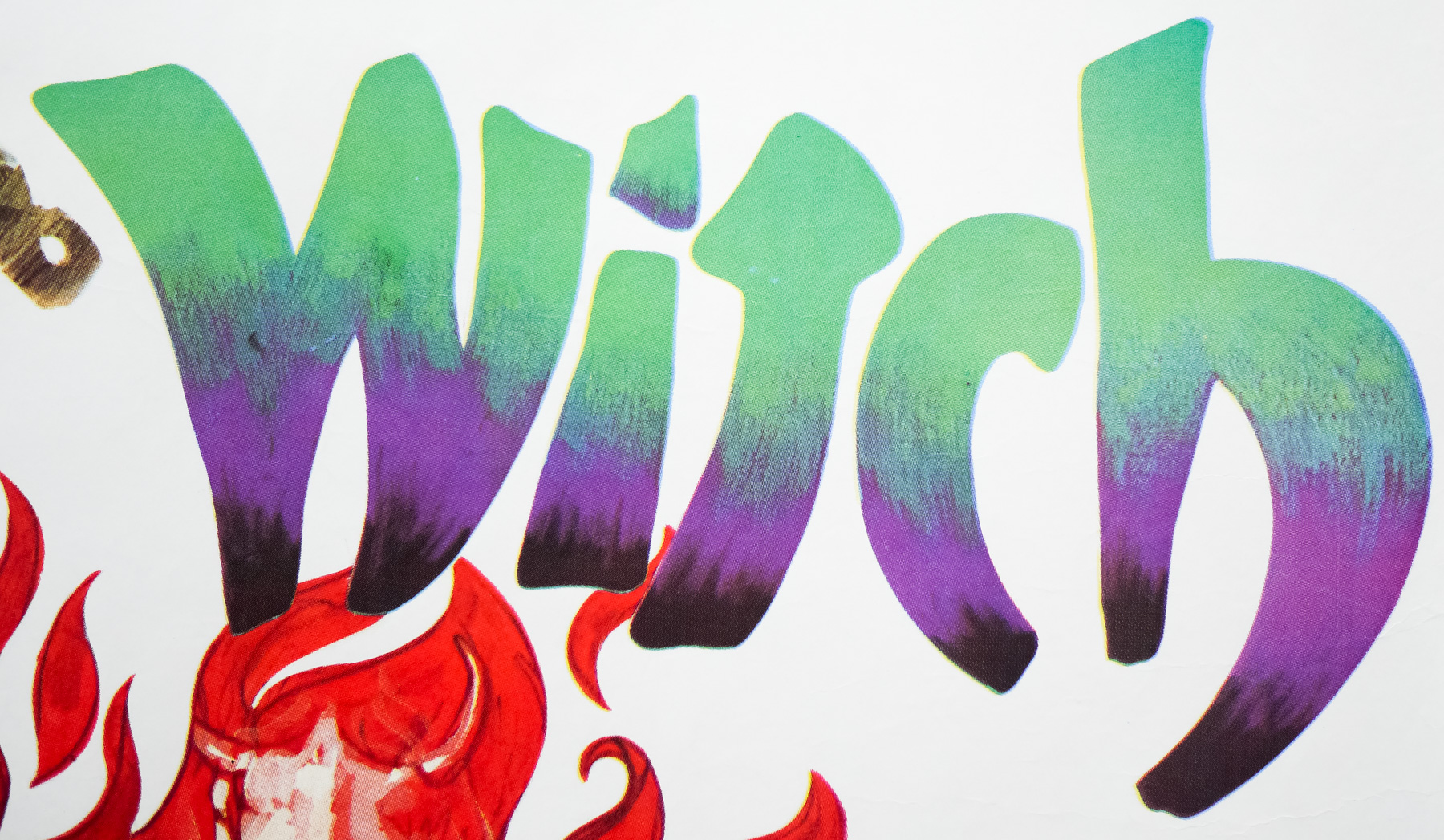
This British quad, which is unquestionably better than the film it’s selling, was designed and painted by Humphreys for the British distributor Entertainment in Video and was briefly discussed during the interview I conducted with the artist in 2011:

————-

The quad for Kindred, which is also from 1987, is pretty outrageous.
You’re left in no doubt as to what kind of film it’s going to be!

It was one of those VHS covers that stood out as soon as you went in the rental shop. This was for Entertainment?
This was through a design company and they’d been instructed to use me because of the work I’d done on Evil Dead. They gave me the layout and design and just told me to illustrate it. I remember at the time I’d showed somebody my portfolio and they’d said “well it’s interesting, but there are lots of screaming faces with dribbly bits!”
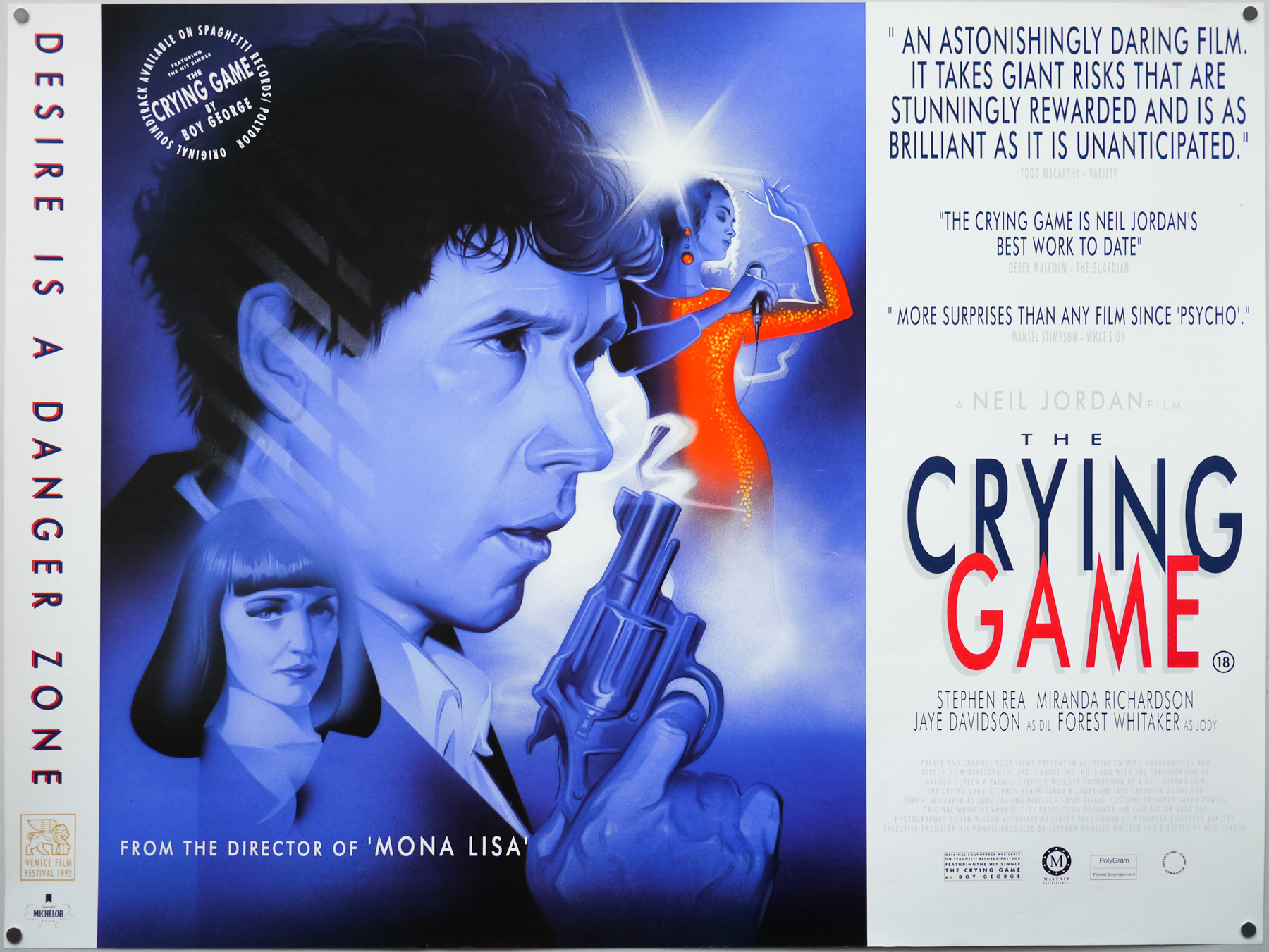
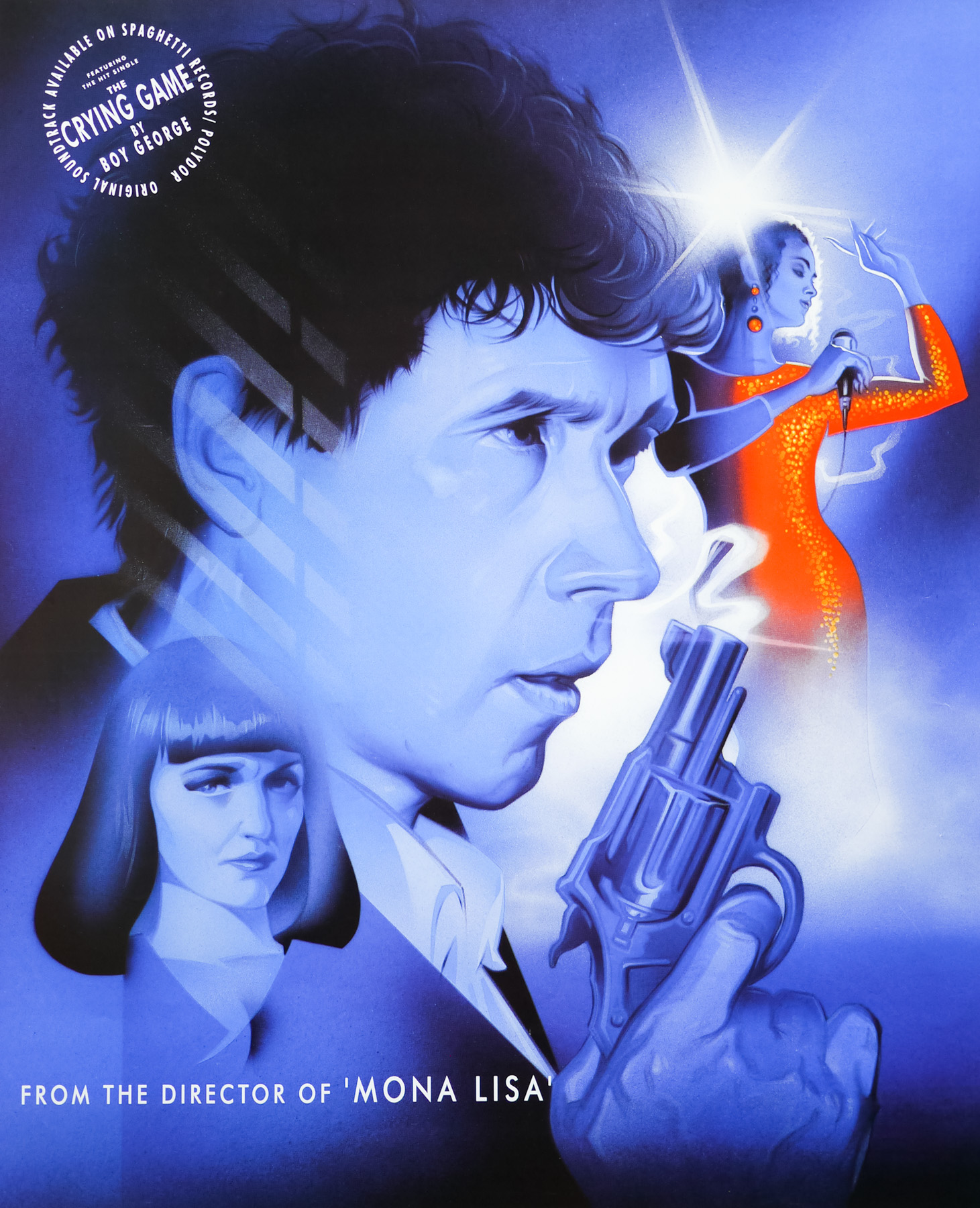
Talking of dribbly bits there’s Deep Space, which is 1988.
Yeah, the big scary vagina with teeth. I think that was for the same client as Kindred, hence the similar design.

————–

To see the other posters I’ve collected by Graham click here. The full film can be found on YouTube if you want to subject yourself to it.