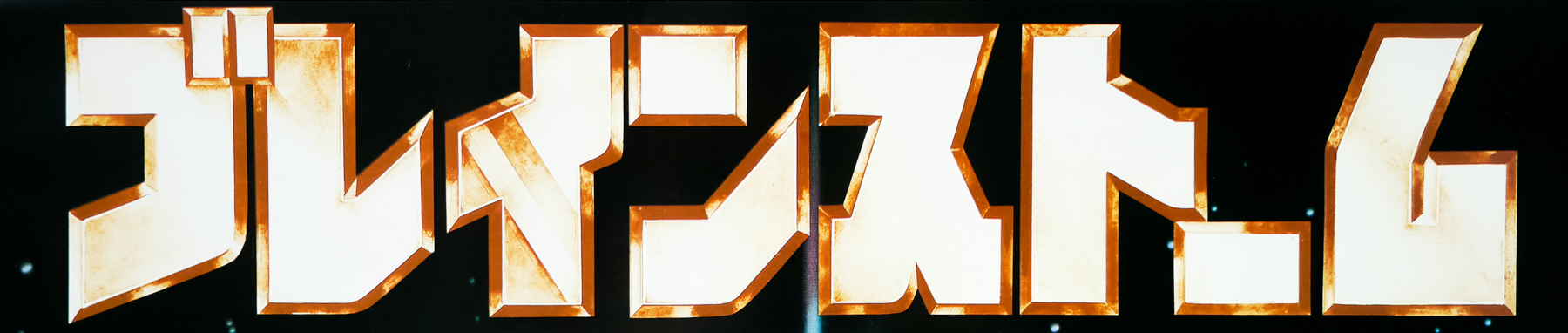

You searched for: Japan

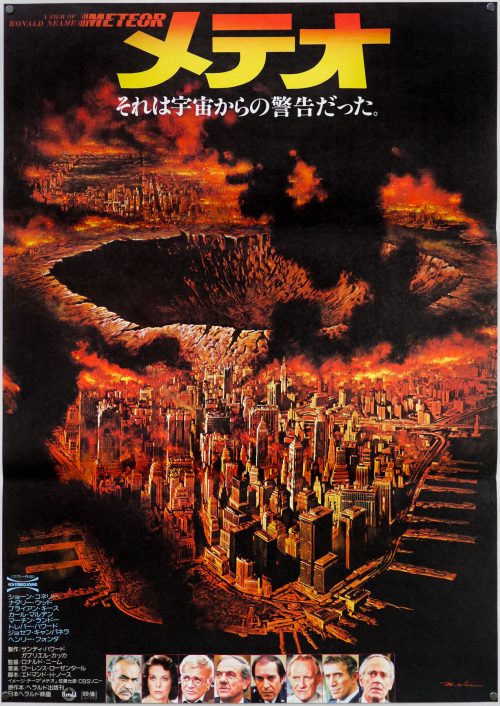
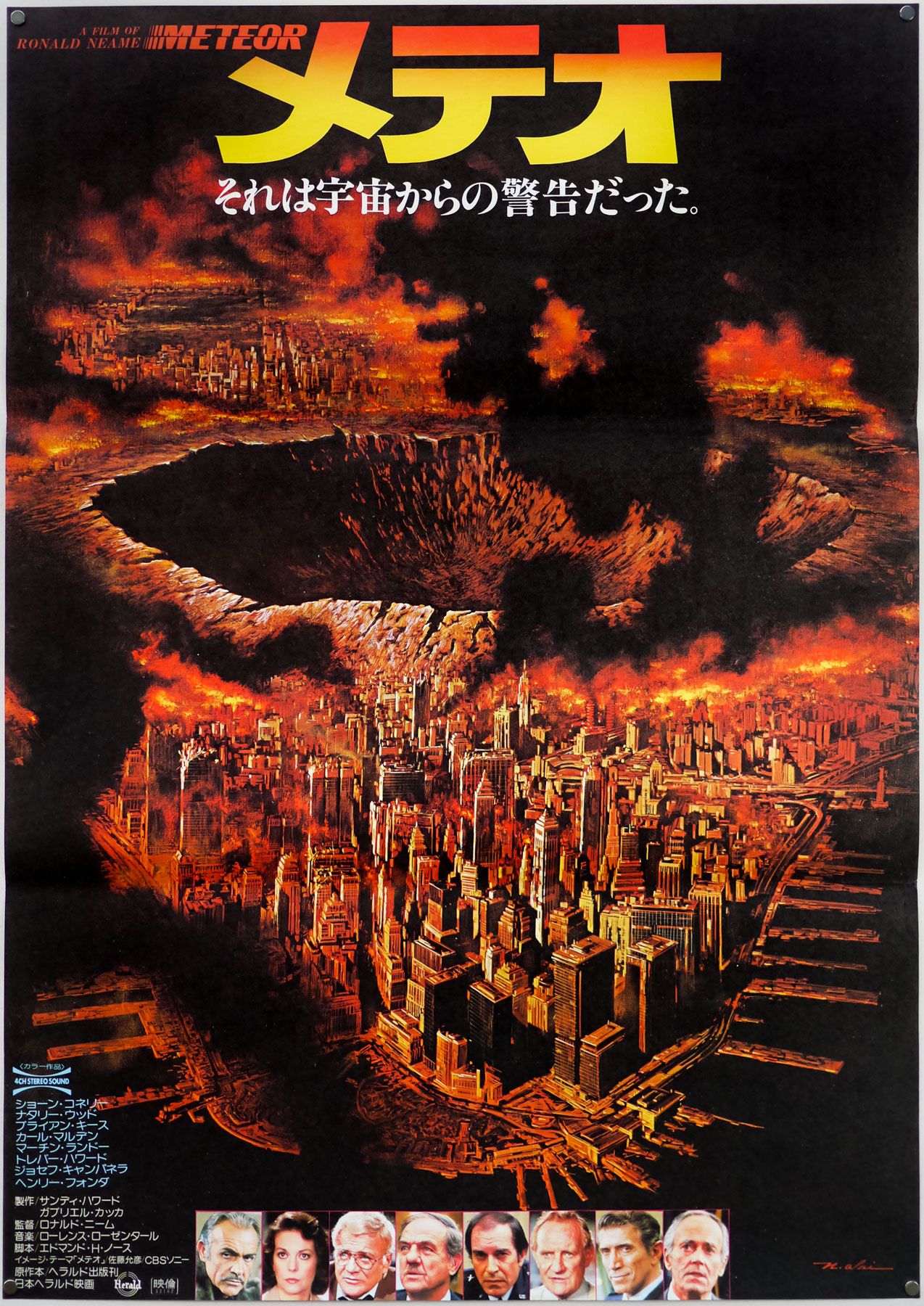
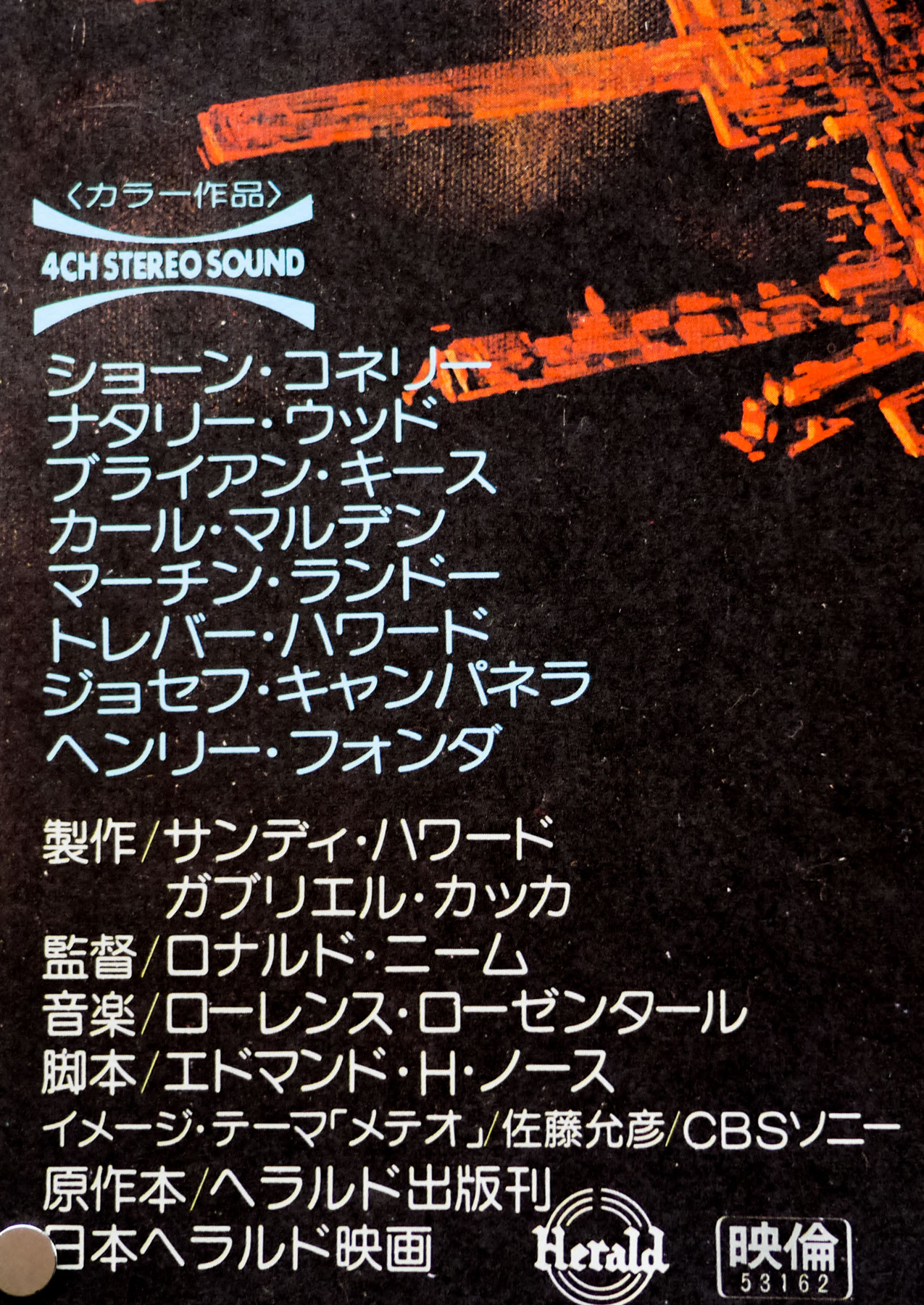
Meteor / B2 / Japan

01.06.15

Poster Poster

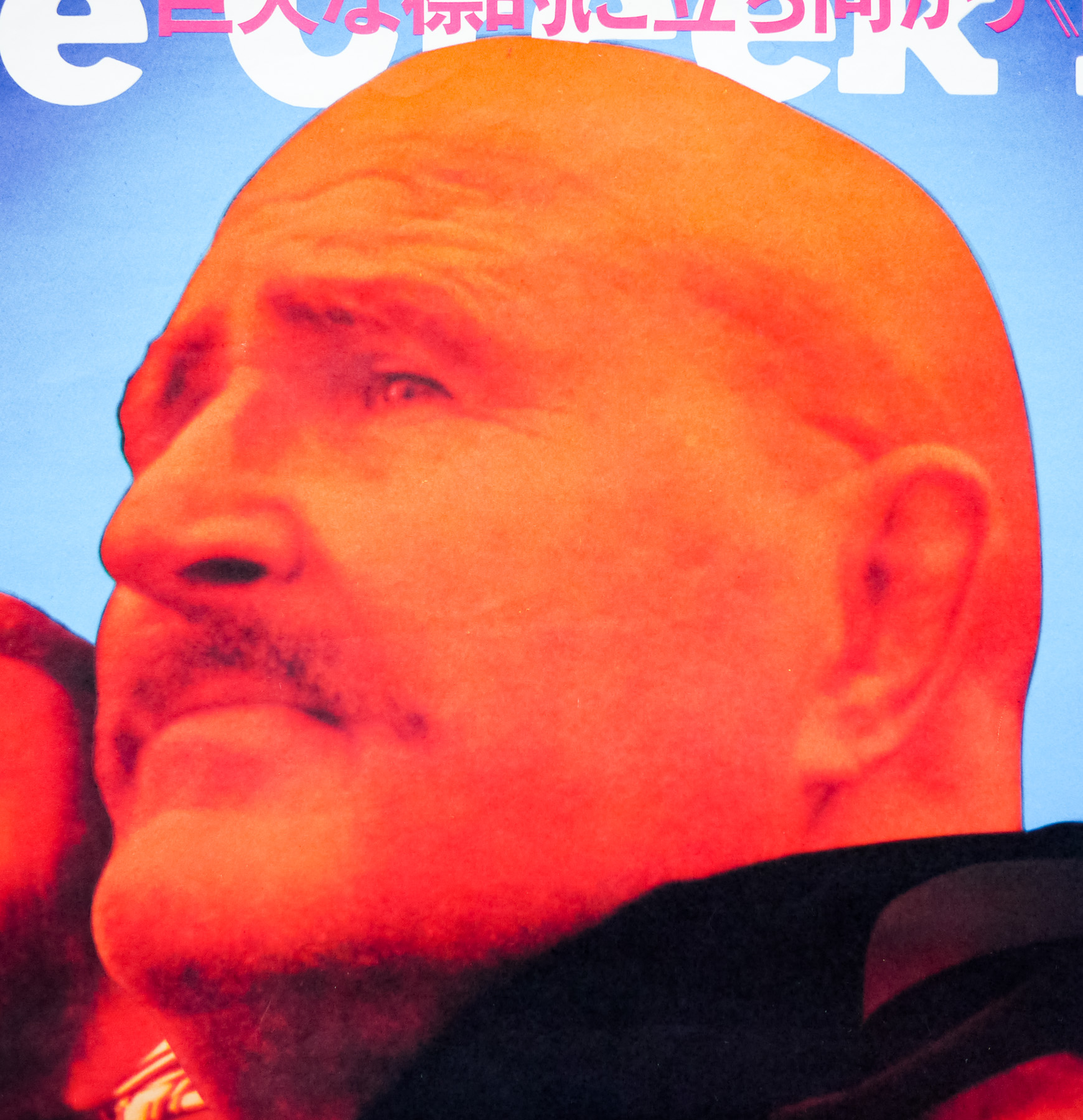
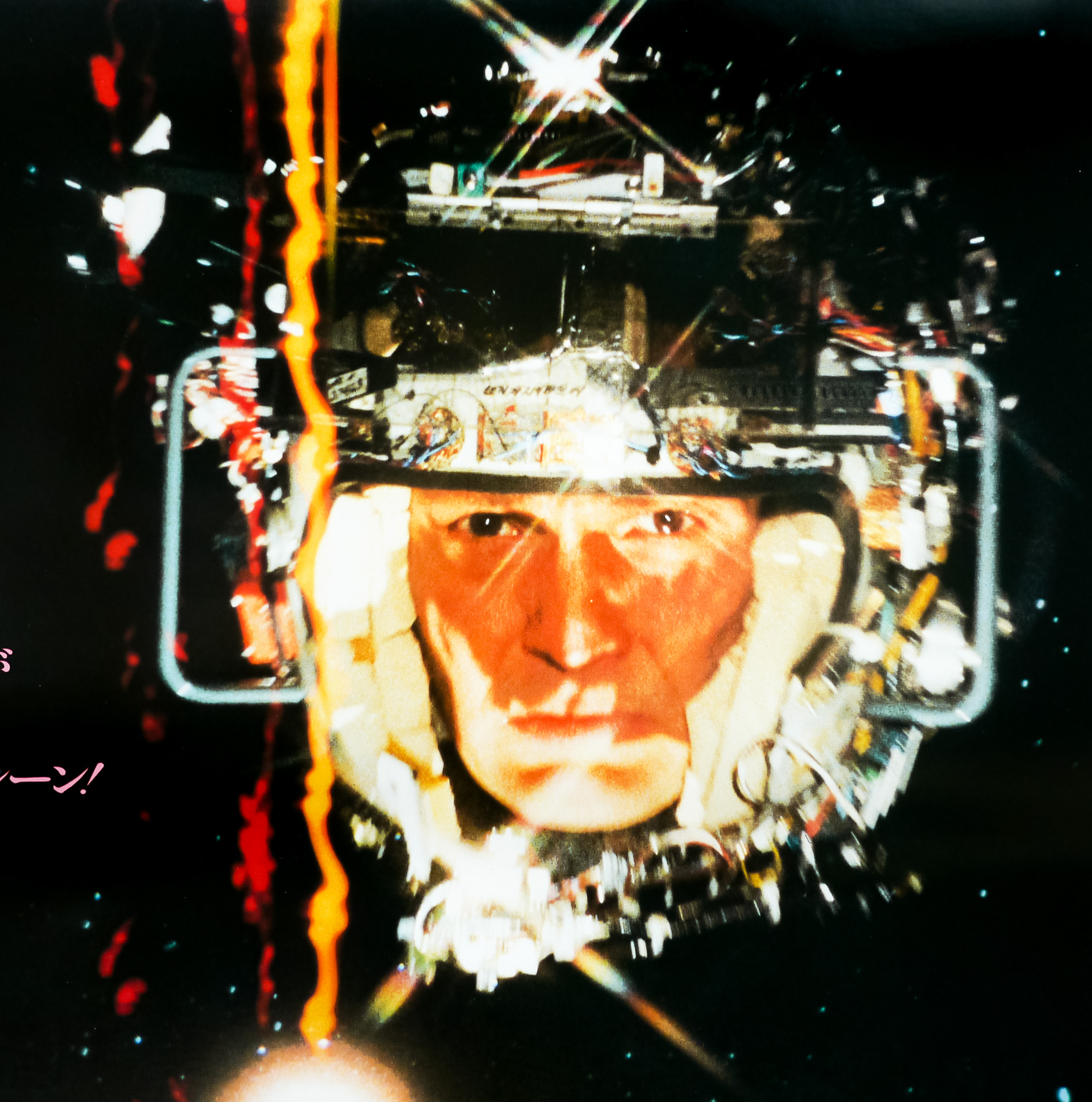
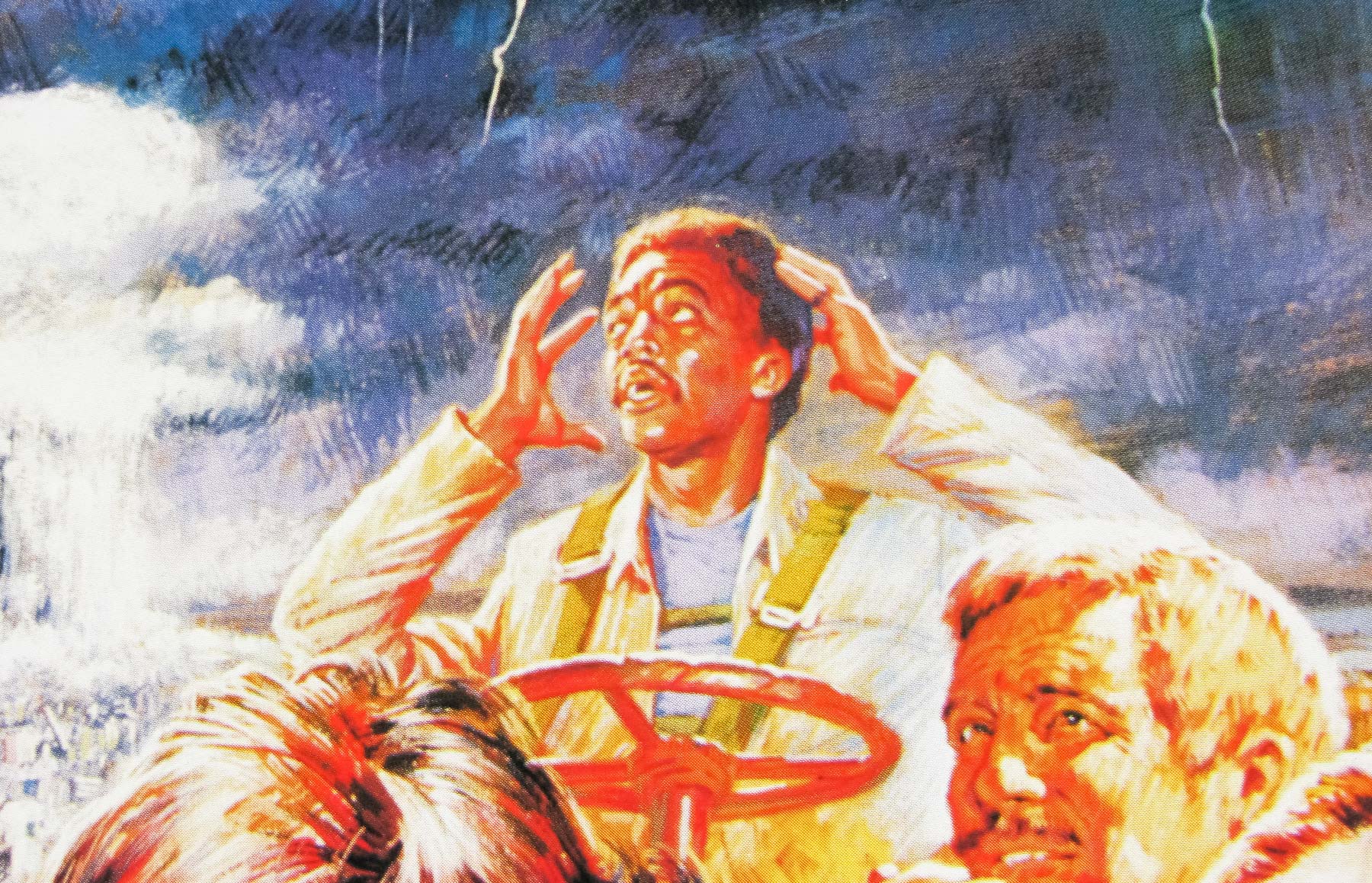
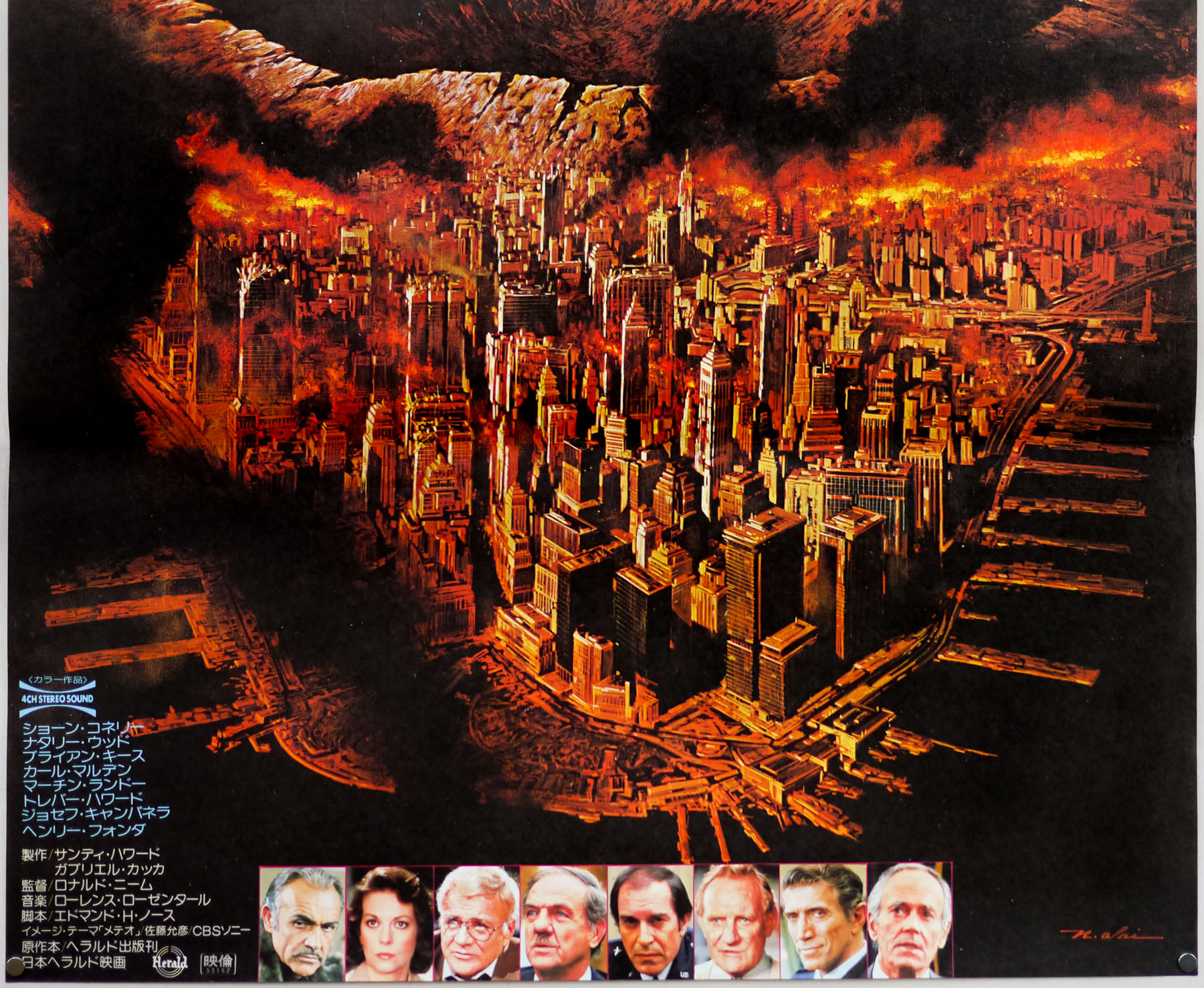
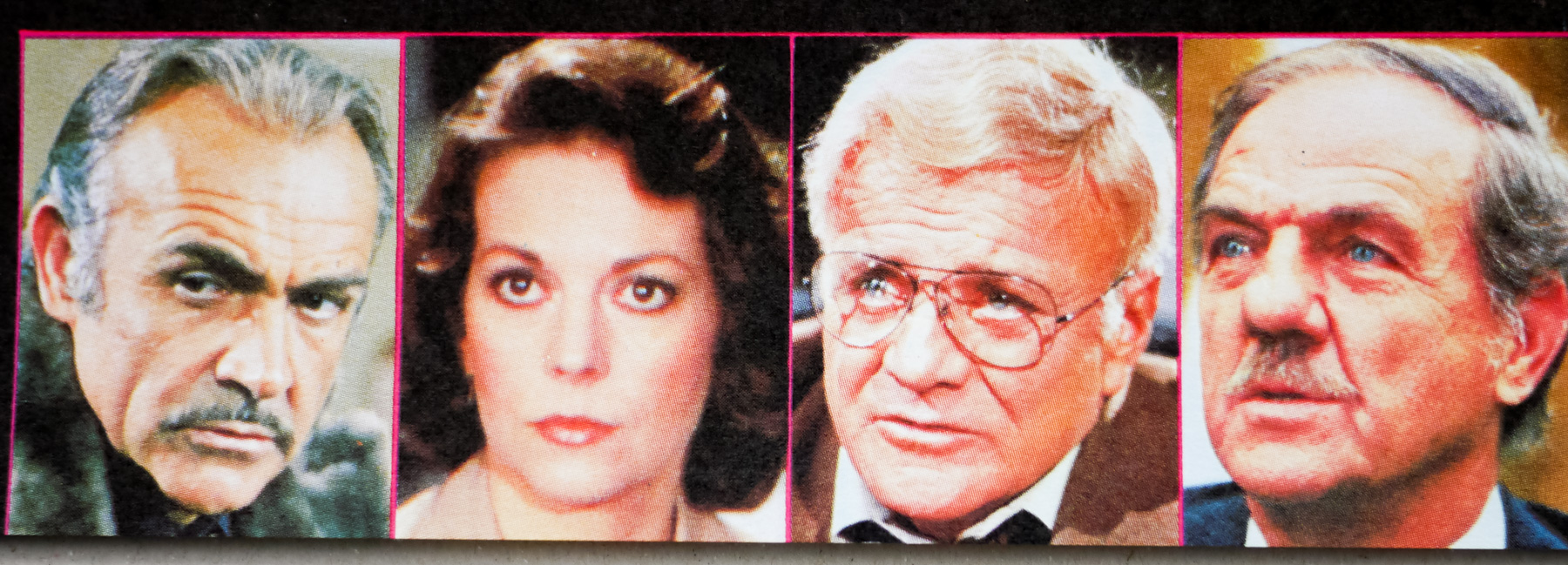
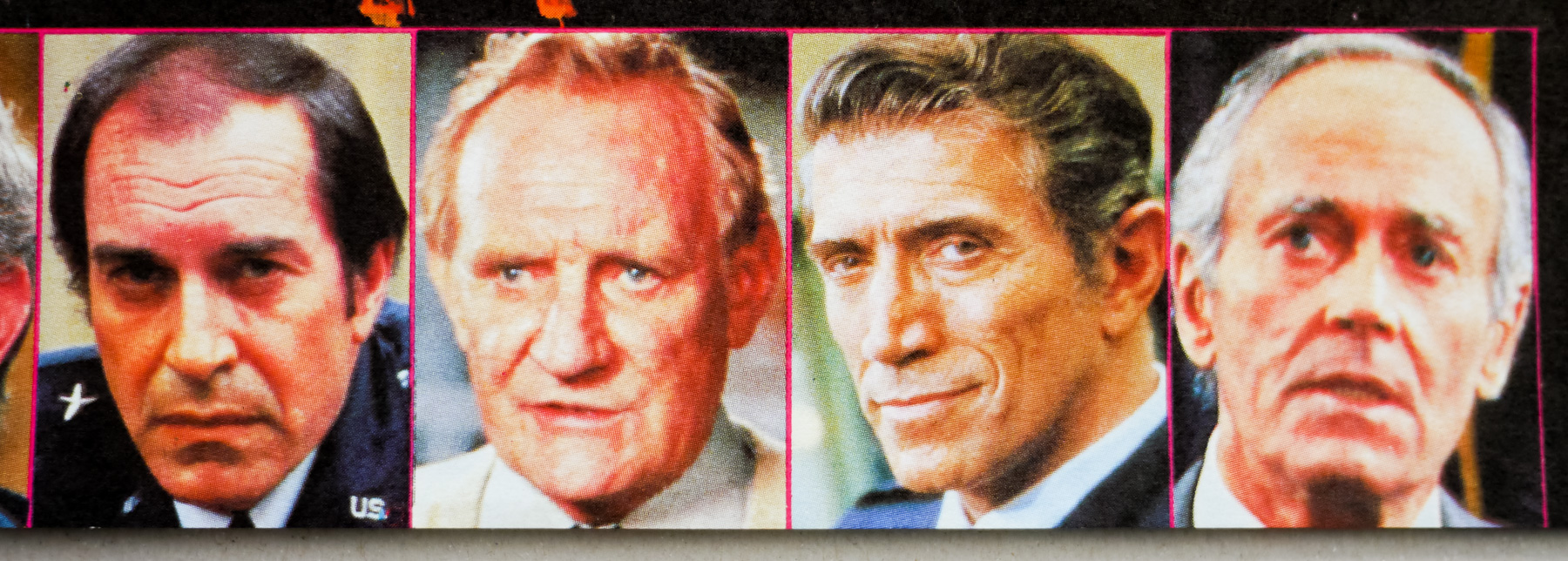
Arriving at the tail-end of the 1970s, a decade that saw the release of a number of successful disaster movies like The Towering Inferno and Earthquake, Meteor ended up as an all-star clunker and is easily one of the worst entries in the genre. Helmed by the British filmmaker Ronald Neame, who had seen success with 1972’s The Poseidon Adventure, the film focuses on the outcome of the eponymous lump of rock barrelling towards earth after being knocked off course by a comet. Sean Connery plays Paul Bradley, a scientist who masterminded the creation of a space-based weapon named Hercules that was originally intended to protect earth from such a threat, but was instead taken over by the military and aimed at the Soviet Union due to escalating Cold War tensions.

The plot sees the US and Russia agreeing to work together after much (dull) handwringing and Paul Bradley works with his opposite number from the CCCP Alexei Dubov (Brian Keith) to ensure the Russian’s own weapons platform can combine forces with Hercules and fire both payloads at the rock. Meanwhile, fragments of the asteroid begin hitting earth in some unconvincing sequences featuring uniformly awful special effects. Eventually, and improbably, a large chunk hits Manhattan, which just happens to be where Paul Bradley and most of the other characters are located, leading to some sequences of mild peril that end up with Connery covered in mud and a few dead background characters. The special effects are truly, inexcusably awful and I can’t think of one well-executed sequence. The rock hitting New York is mostly done with what is clearly red-tinted stock footage of buildings being knocked down by controlled demolition.

The biggest problem with the film is that most of the actors look bored and, with the exception of a crazy-eyed Martin Landau, like they’d rather be somewhere else. It doesn’t help that the Cold War machinations, whilst maybe more relevant in 1979, are totally boring today and way too much of the film is spent focused on discussions to try and resolve differences between the two nations.

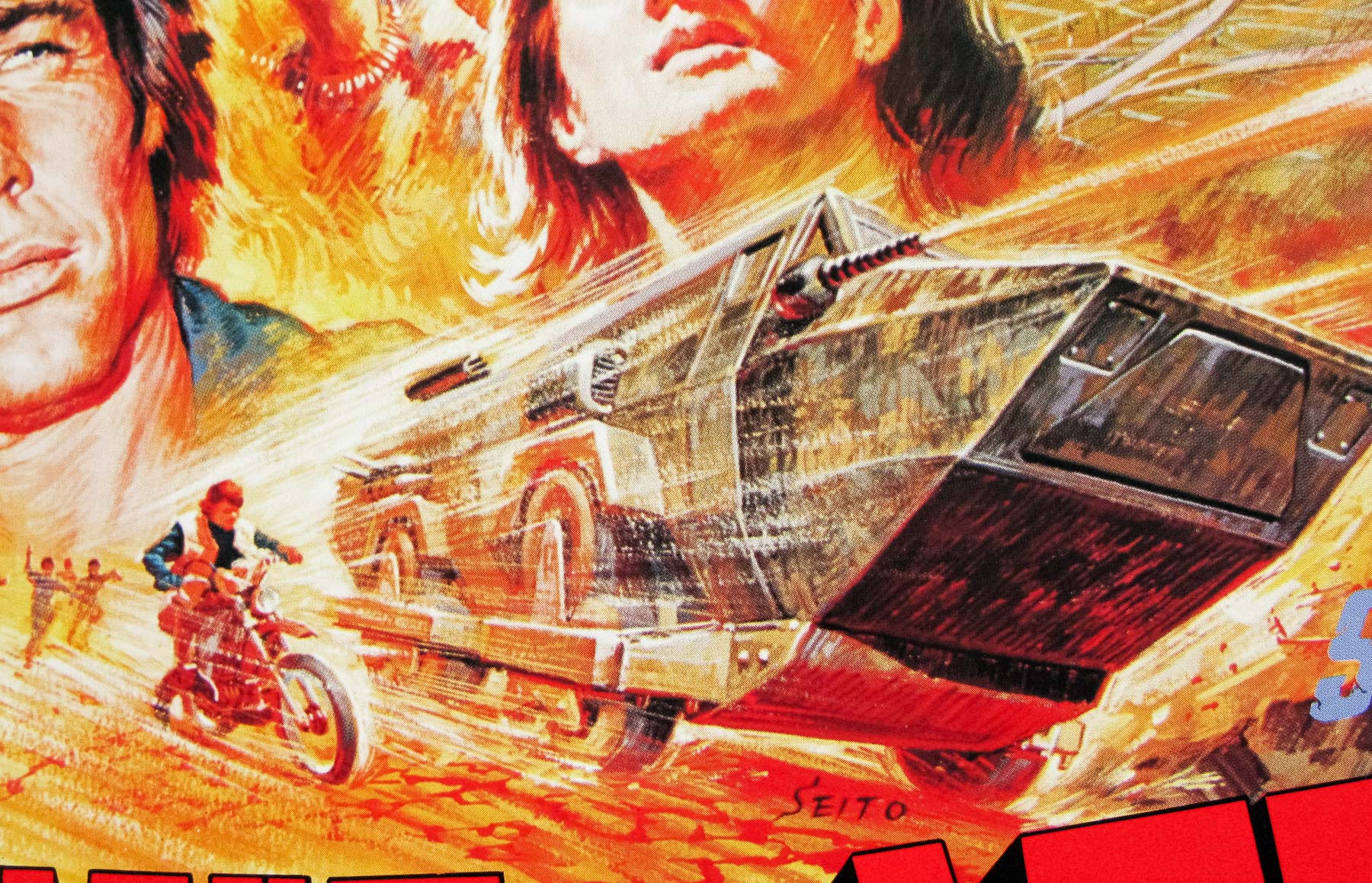
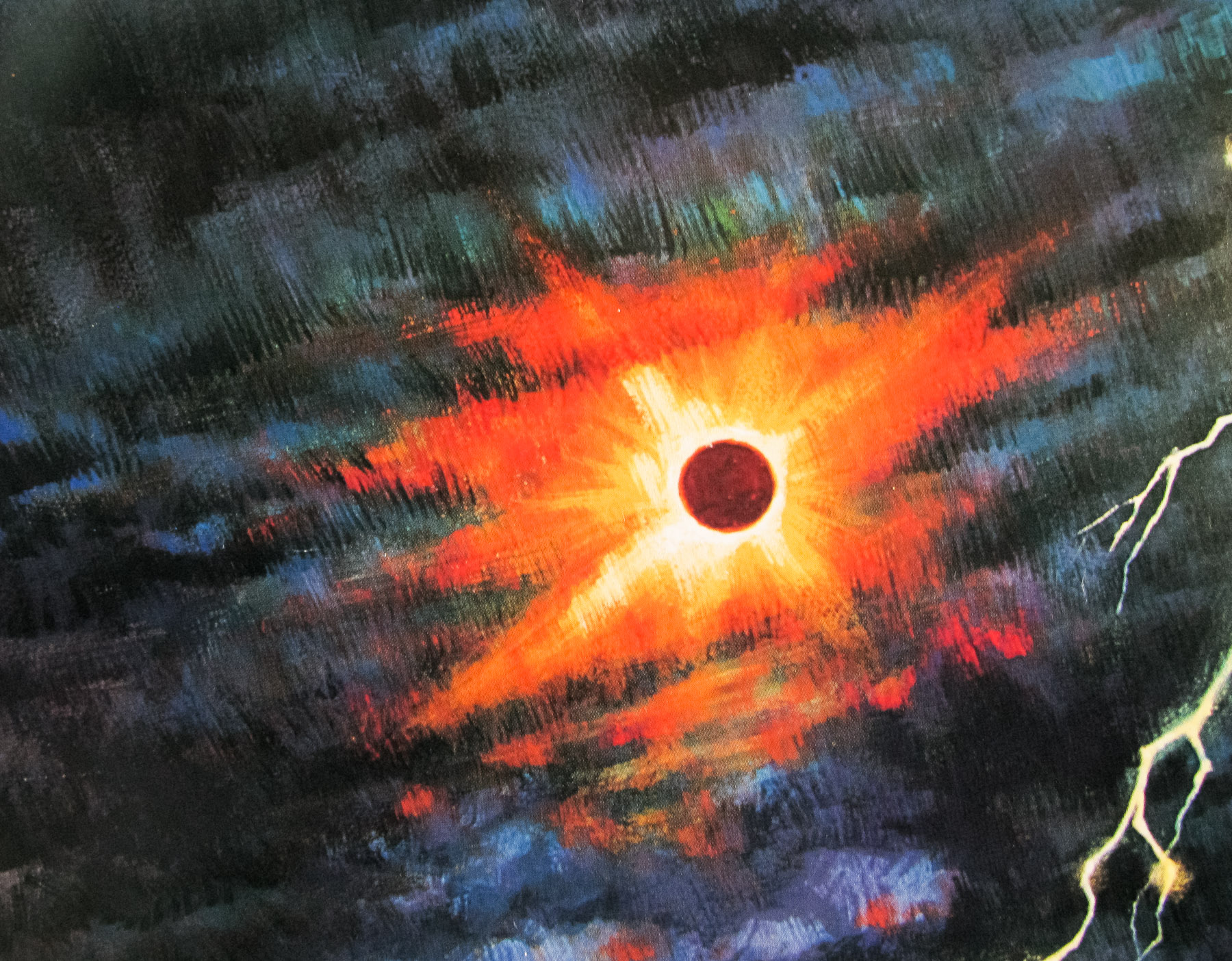
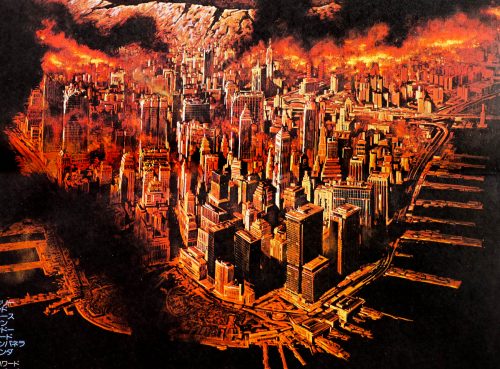
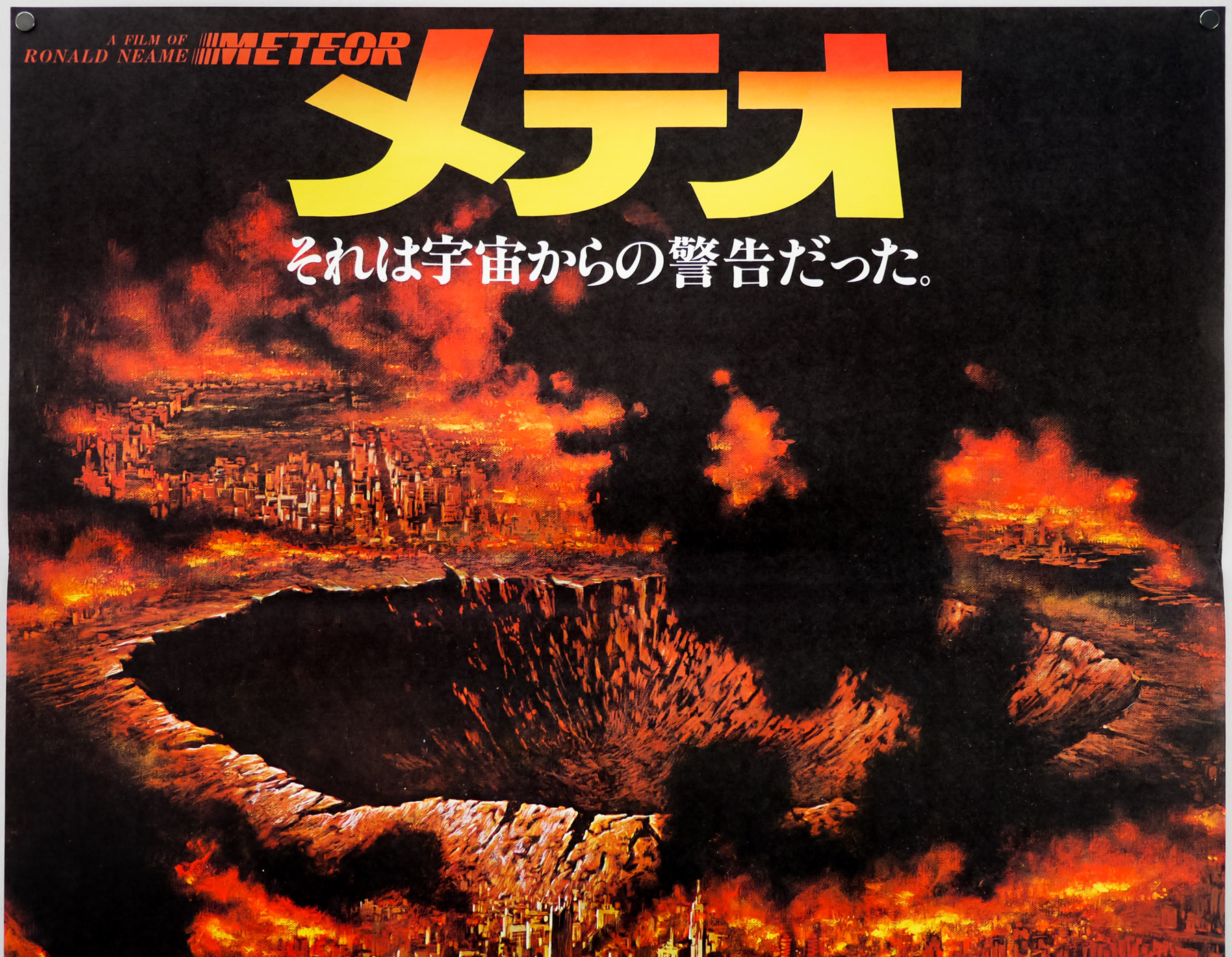
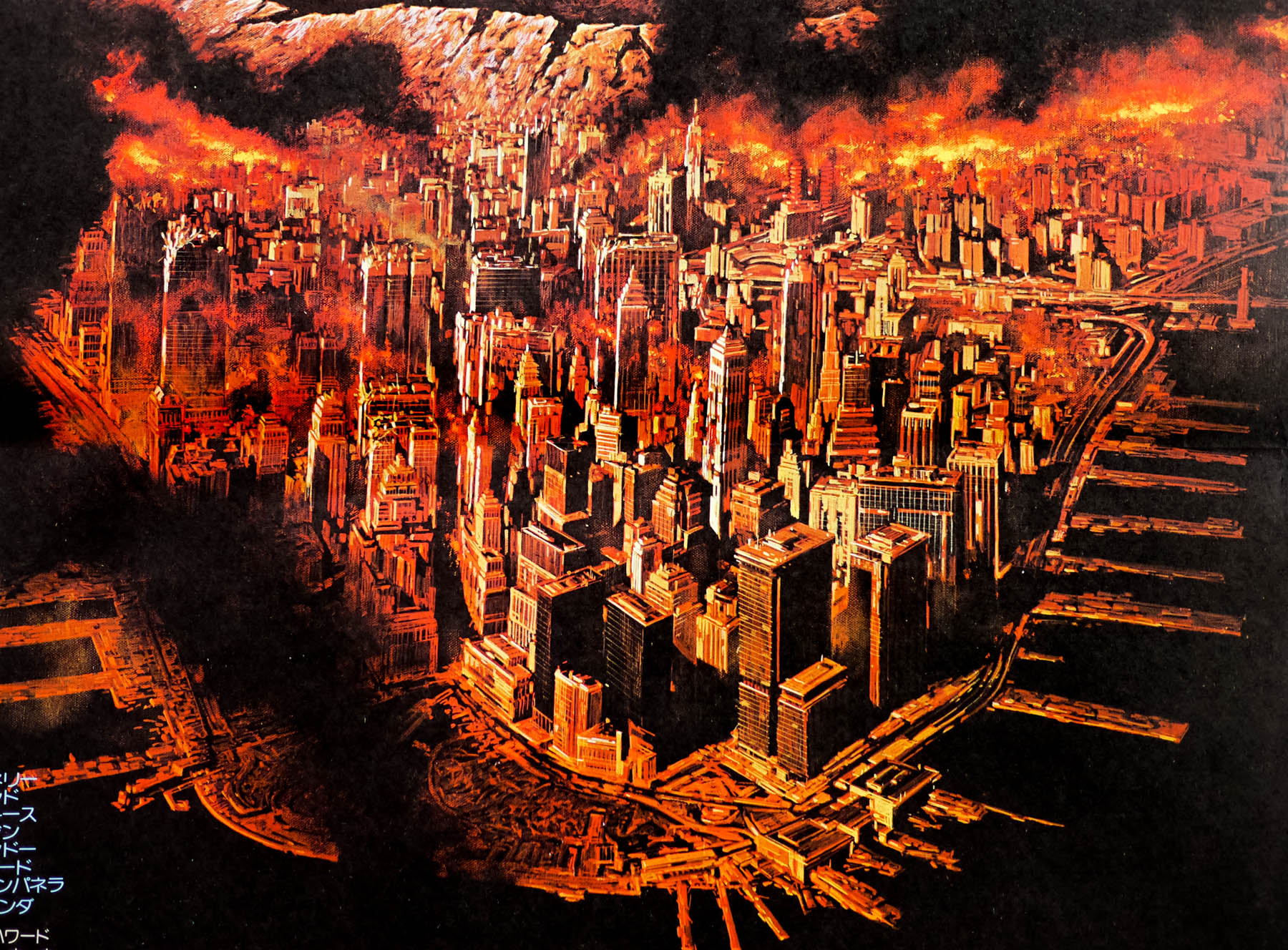
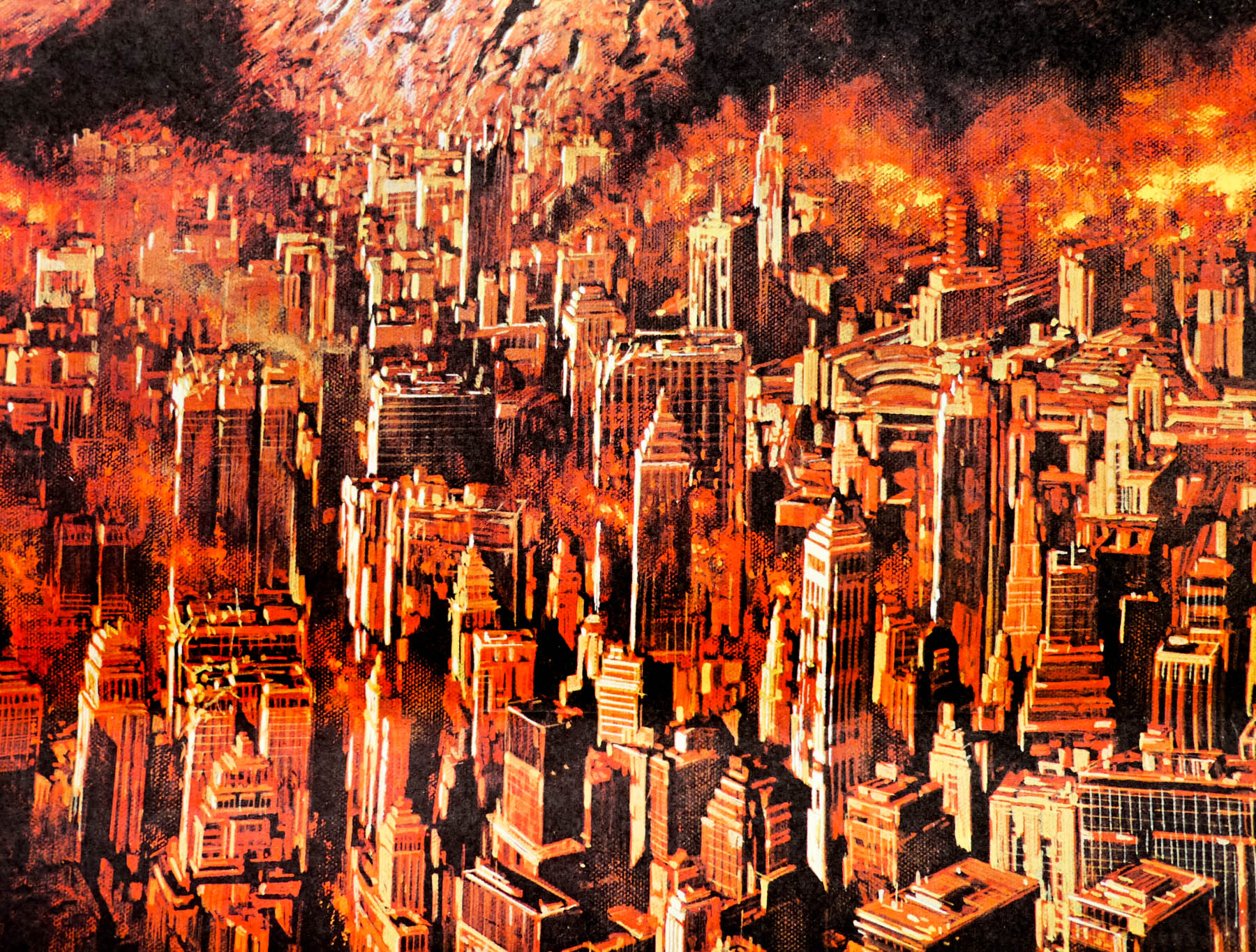
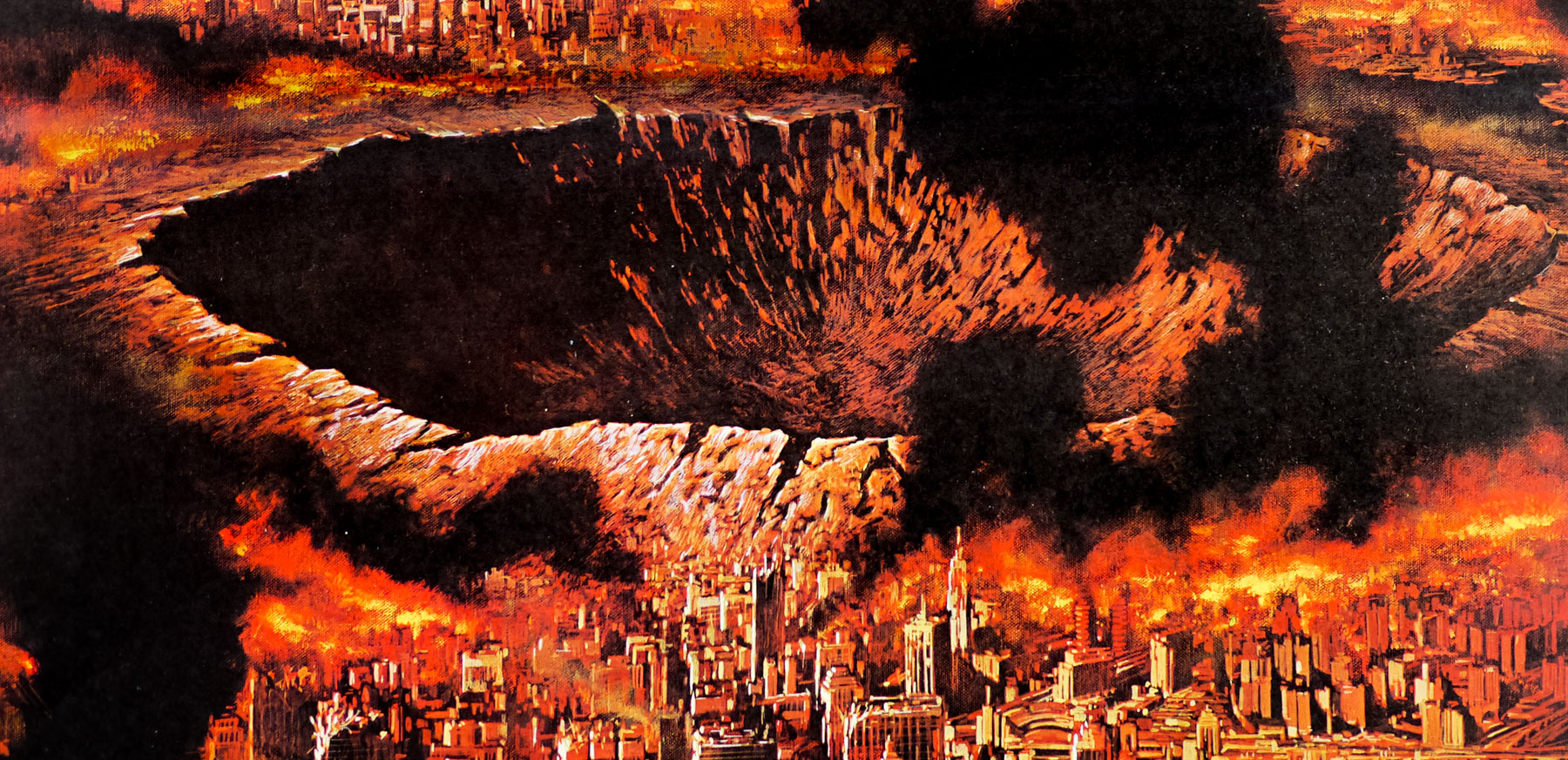
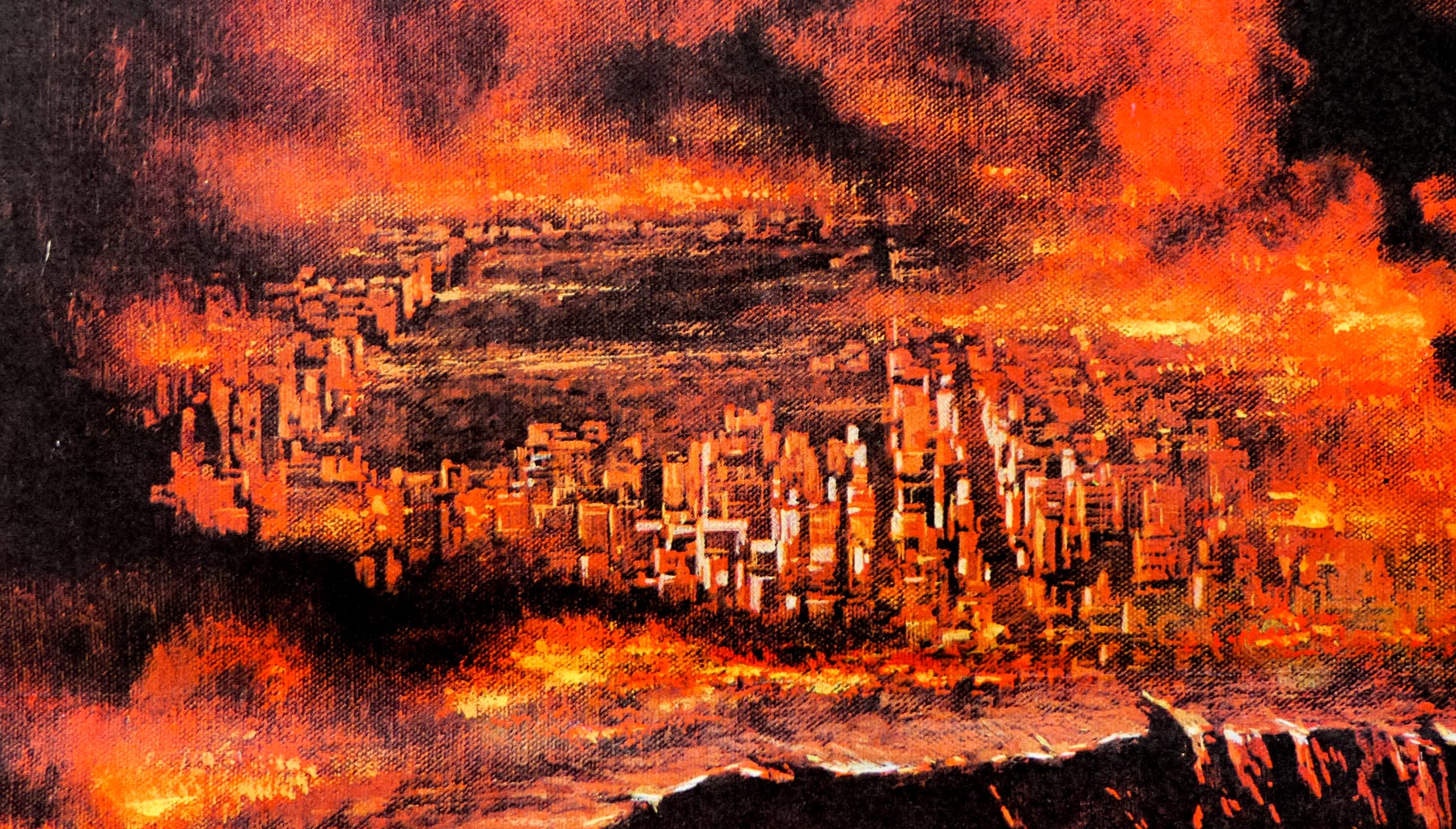
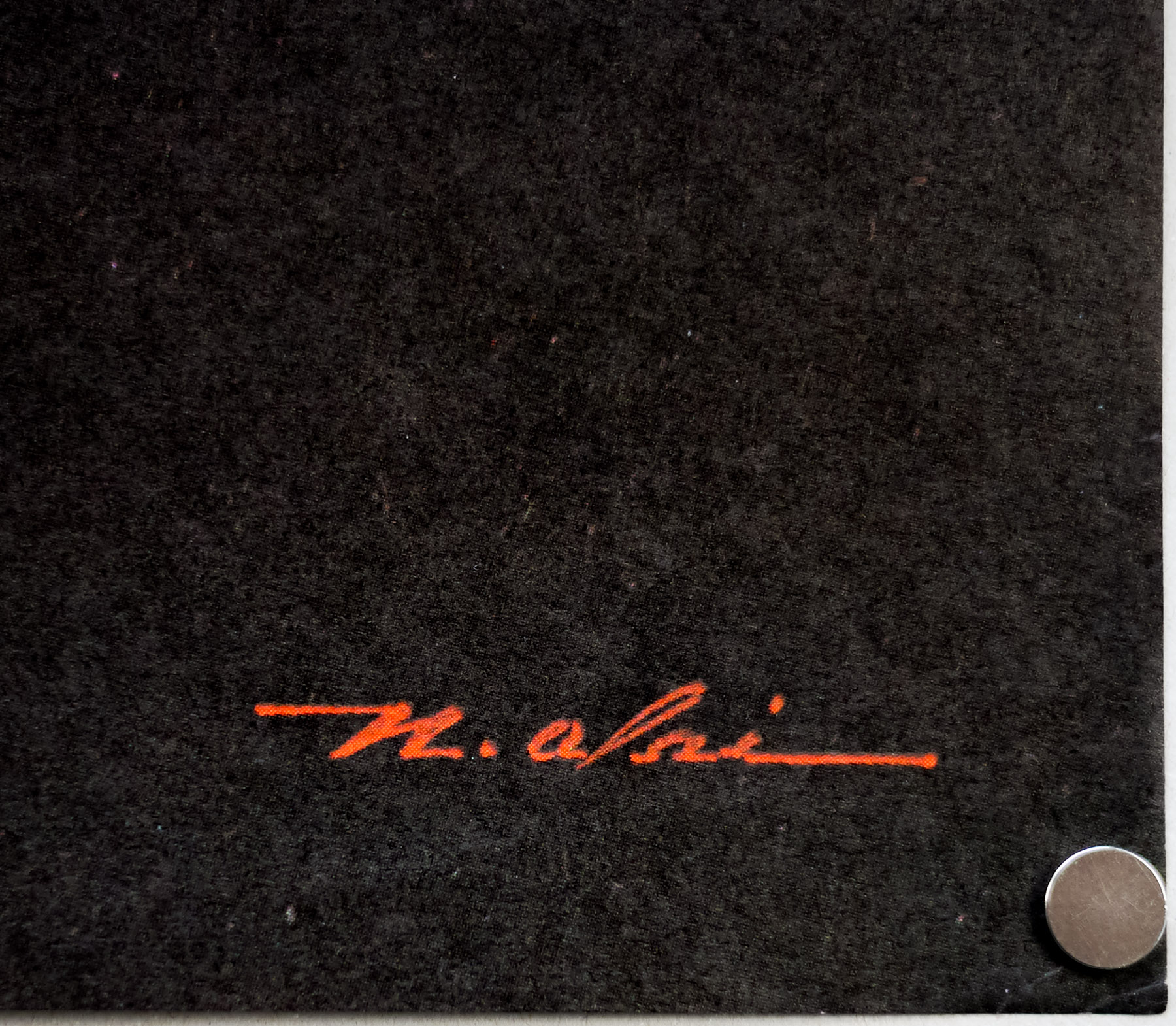
Whilst the film is a stinker, the same can’t be said for this moody artwork showing an obliterated Manhattan that was illustrated by Noriyoshi Ohrai, my favourite Japanese artist and certainly in my top five greatest film poster illustrators of all time. He’s responsible for a number of other posters in the Godzilla franchise, some of which can be seen here. He also worked on a number of Star Wars related posters, including this lovely 1982 B2 to celebrate the release of the Japanese dubbed version of the original film. In March 2014 a retrospective exhibition was held in Japan of Ohrai’s work and I made the trip over to Miyazaki to see the exhibition. I’m very glad I did as it featured most of his original artwork and a whole array of posters and book covers. A full report will follow soon.

The posters I’ve managed to collect by Noriyoshi Ohrai can be seen by clicking here.
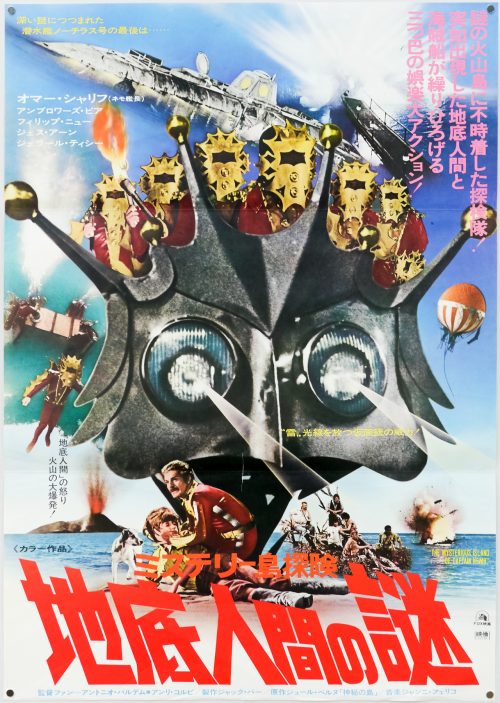
The Mysterious Island of Captain Nemo / B2 / Japan

03.06.16

Poster Poster
Title
The Mysterious Island of Captain Nemo
AKA
La isla misteriosa (original title) | Jules Verne's Mysterious Island of Captain Nemo (alt. title) | The Mysterious Island (USA)
Year of Film
1973
Director
Juan Antonio Bardem, Henri Colpi
Starring
Omar Sharif, Ambroise Bia, Jess Hahn, Philippe Nicaud, Gérard Tichy, Gabriele Tinti, Rafael Bardem Jr., Mariano Vidal Molina, Rik Battaglia
Origin of Film
Spain | France | Italy | Cameroon
Genre(s) of Film
Omar Sharif, Ambroise Bia, Jess Hahn, Philippe Nicaud, Gérard Tichy, Gabriele Tinti, Rafael Bardem Jr., Mariano Vidal Molina, Rik Battaglia,
Type of Poster
B2
Style of Poster
--
Origin of Poster
Japan
Year of Poster
1975
Designer
Unknown
Artist
--
Size (inches)
20 5/16" x 28 14/16"
SS or DS
SS
Tagline
--

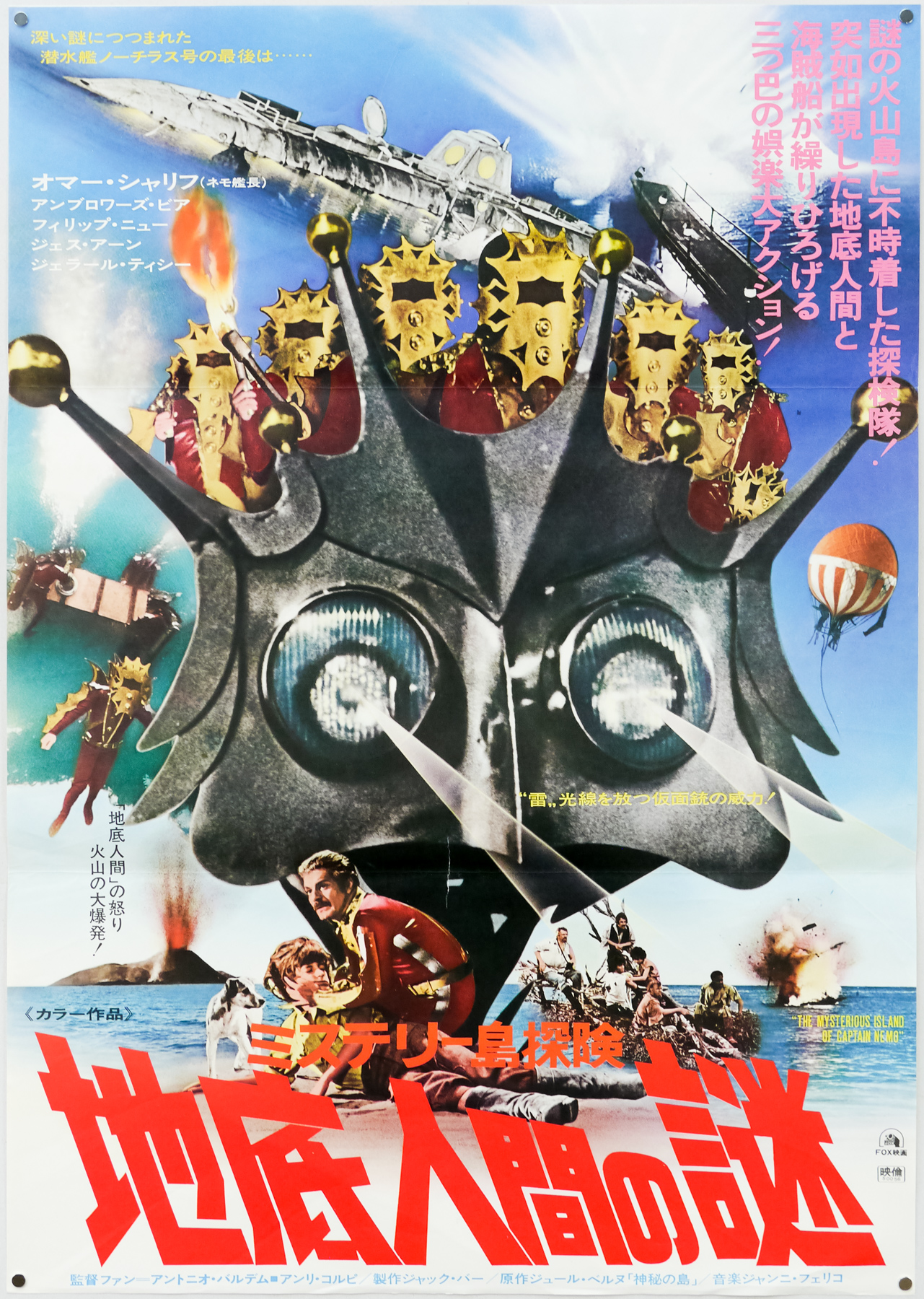
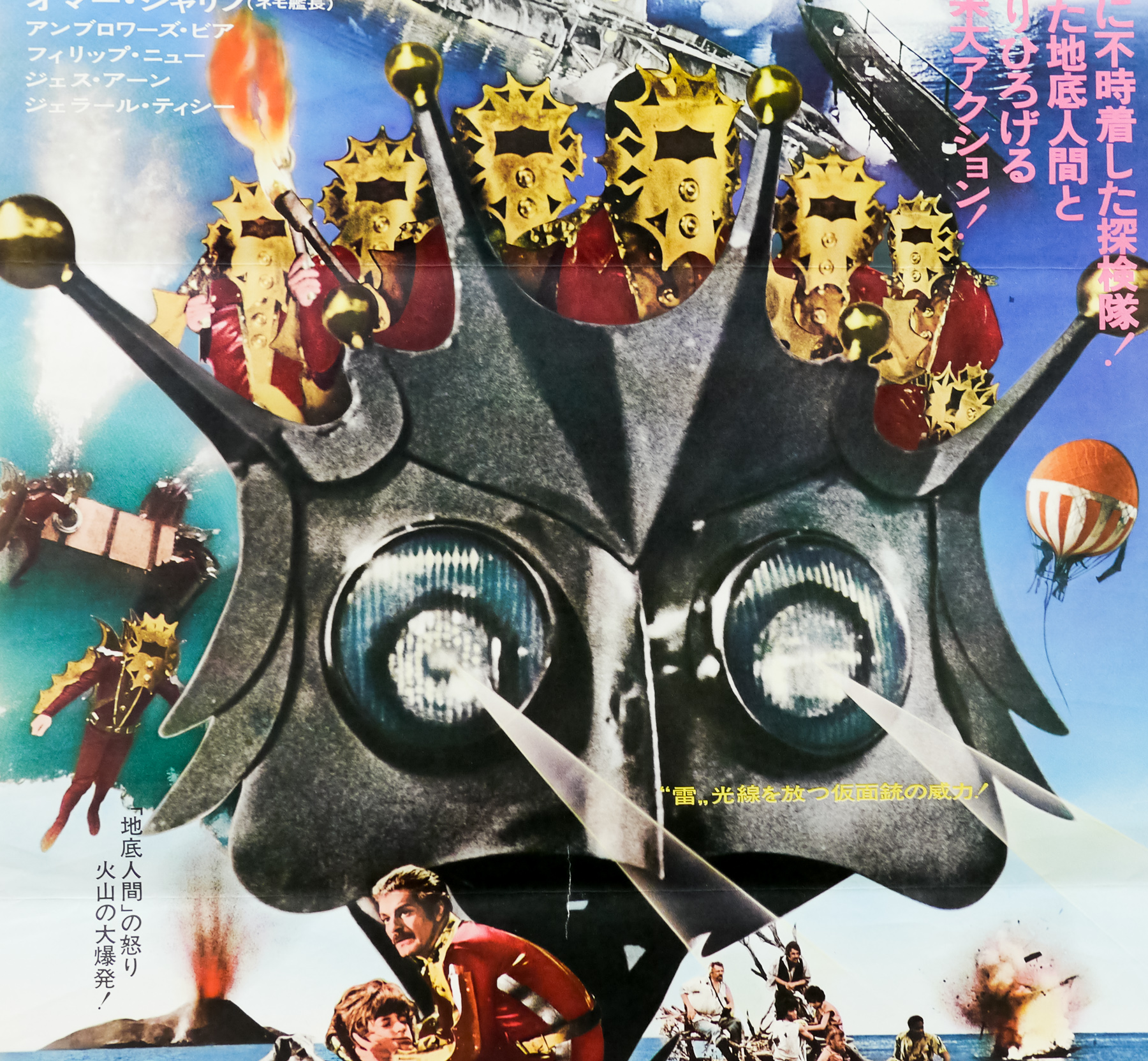
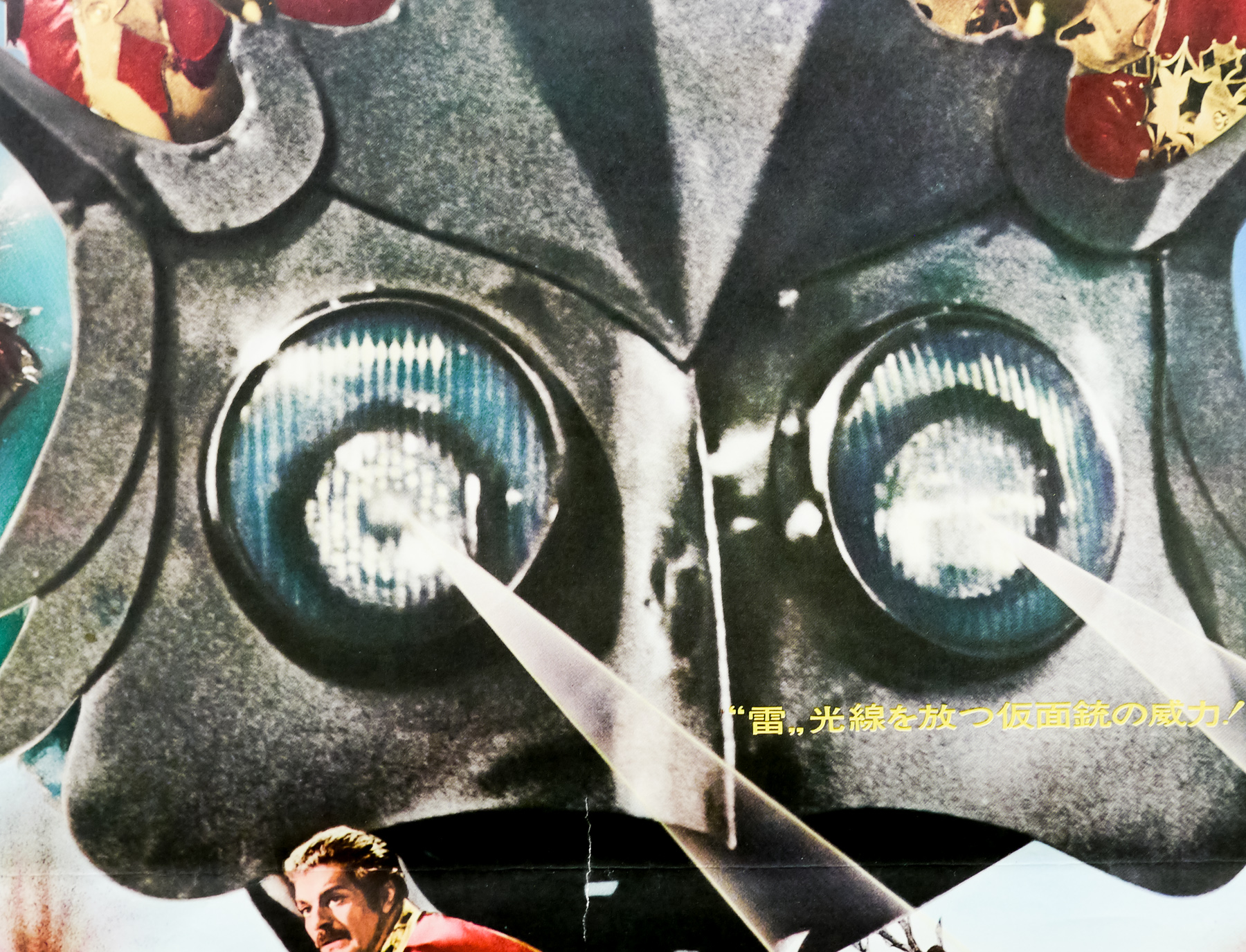
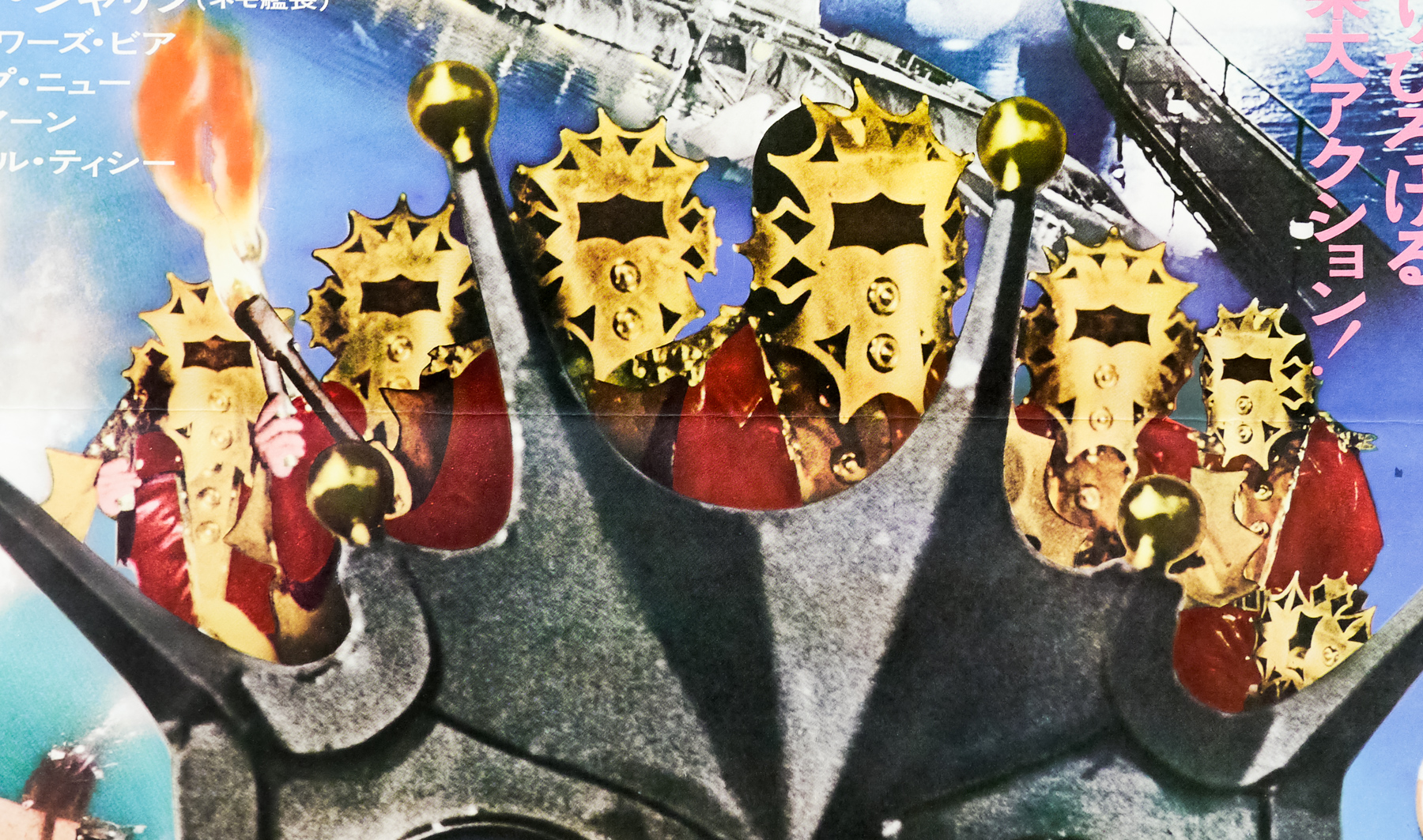
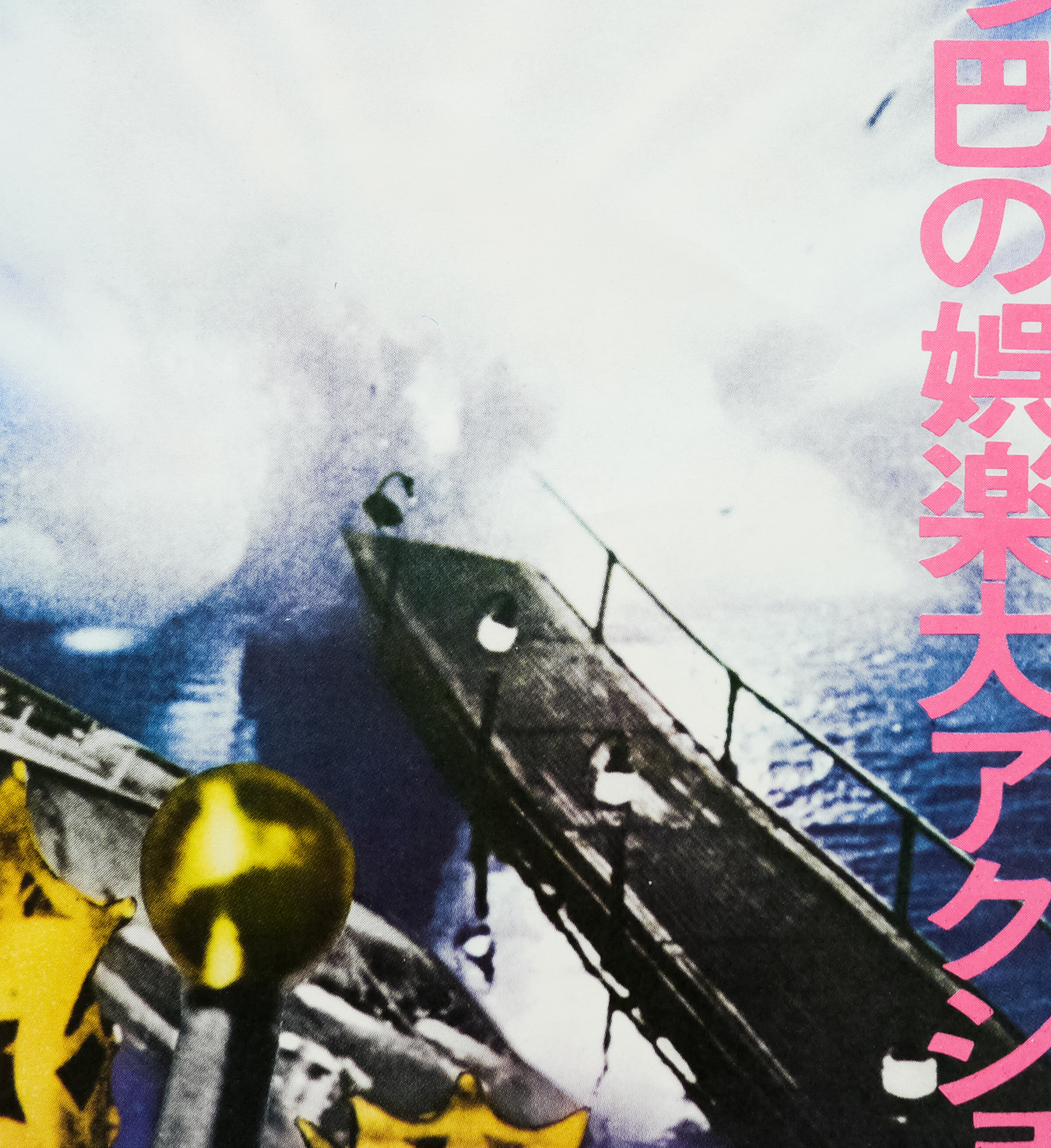
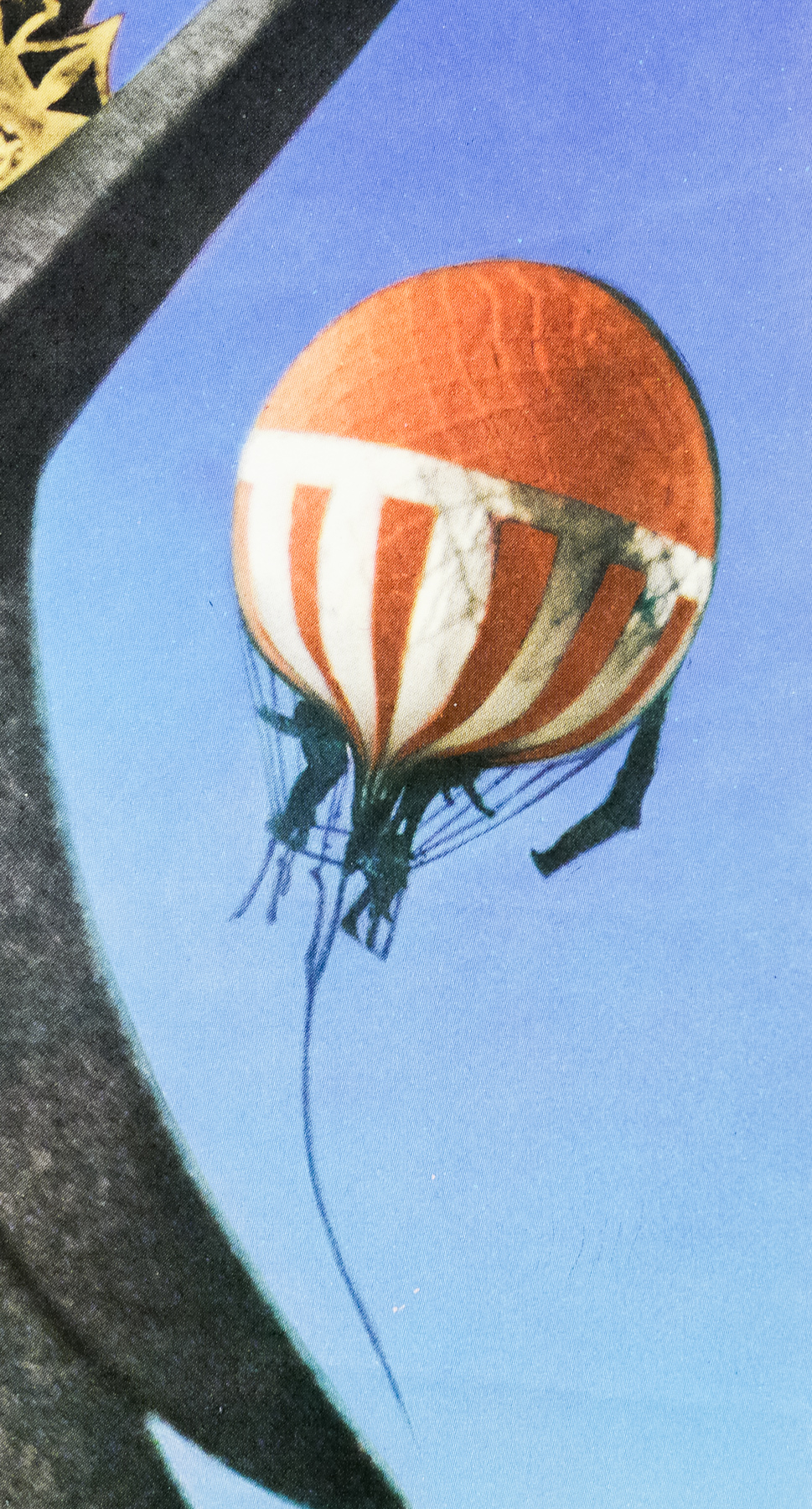
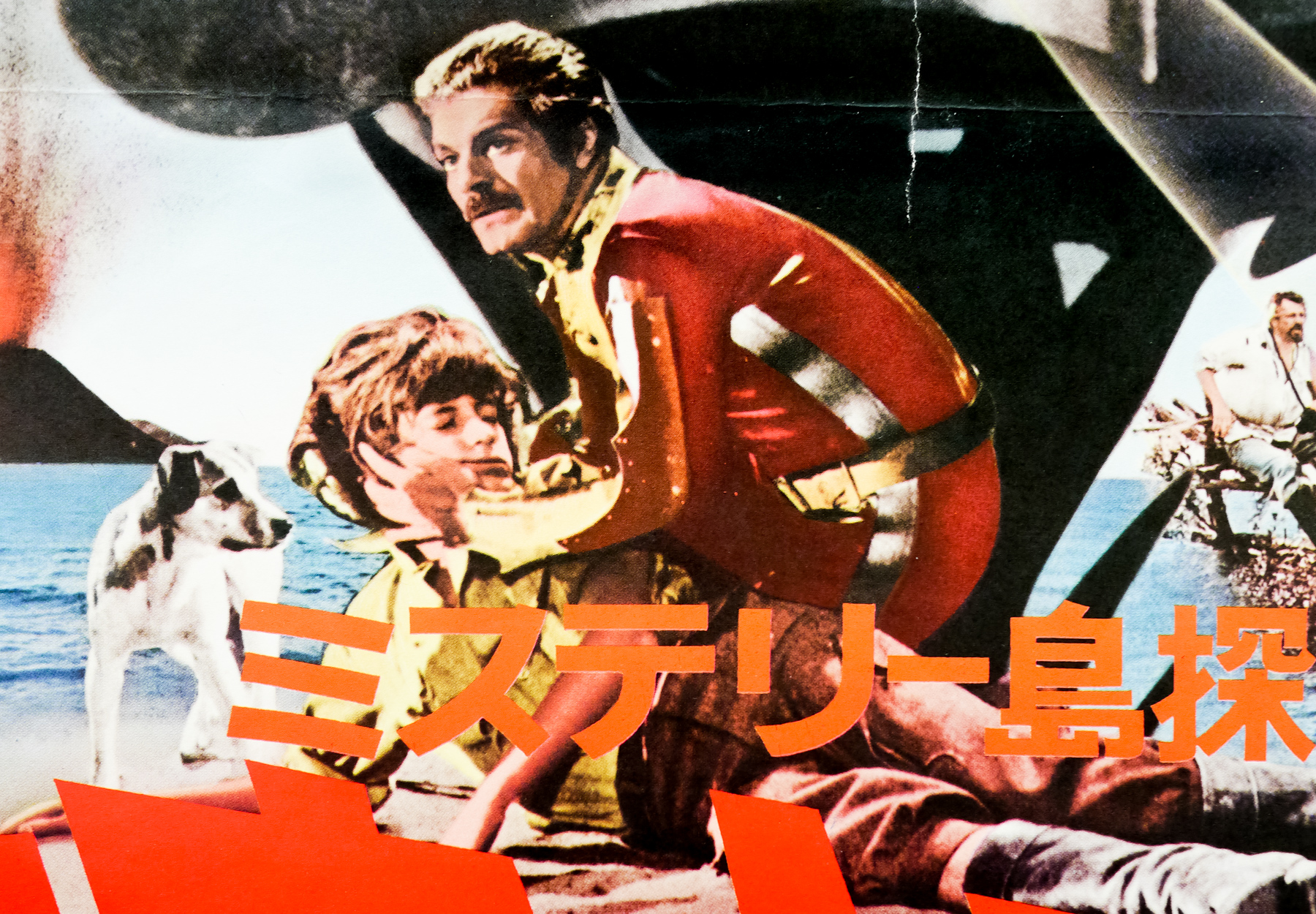
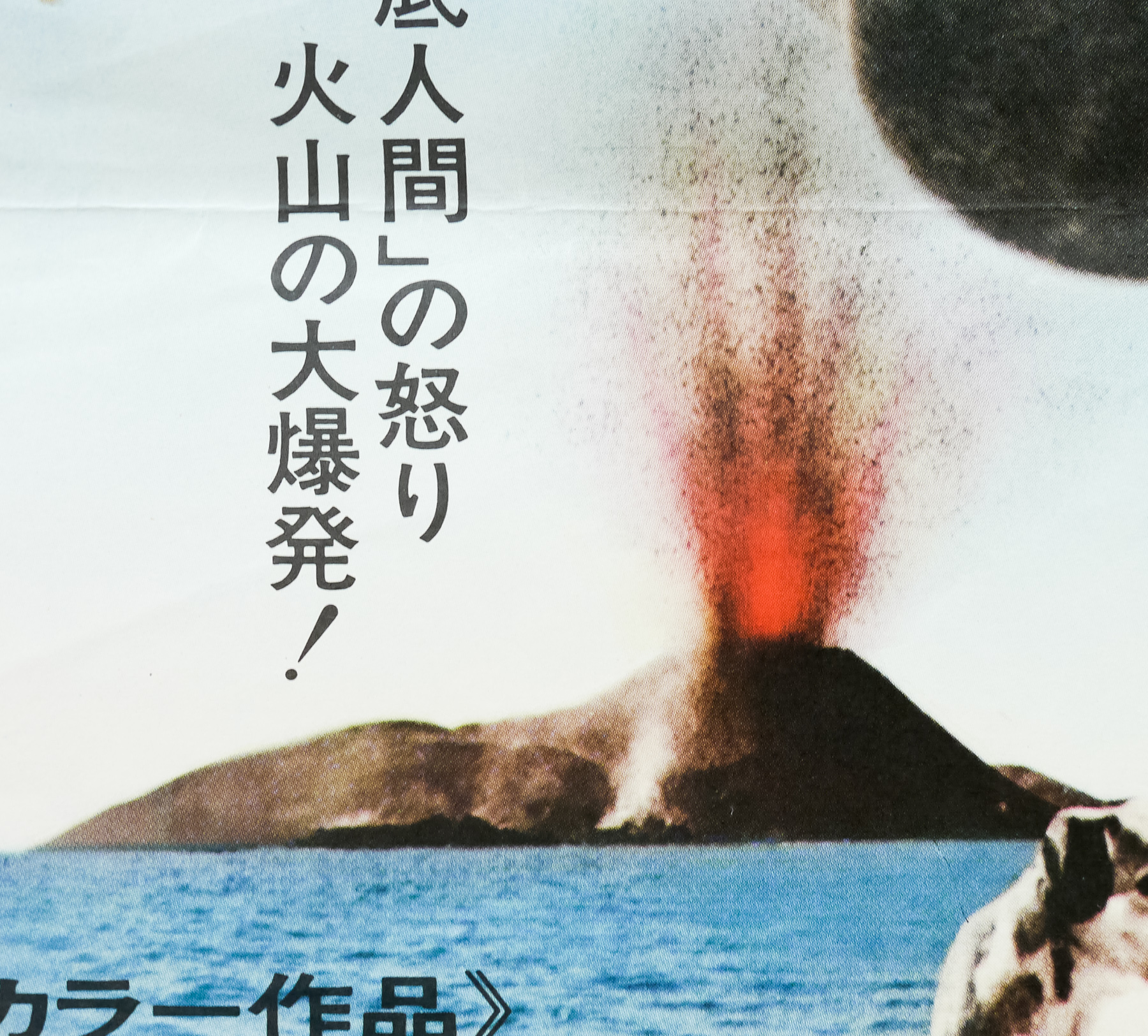
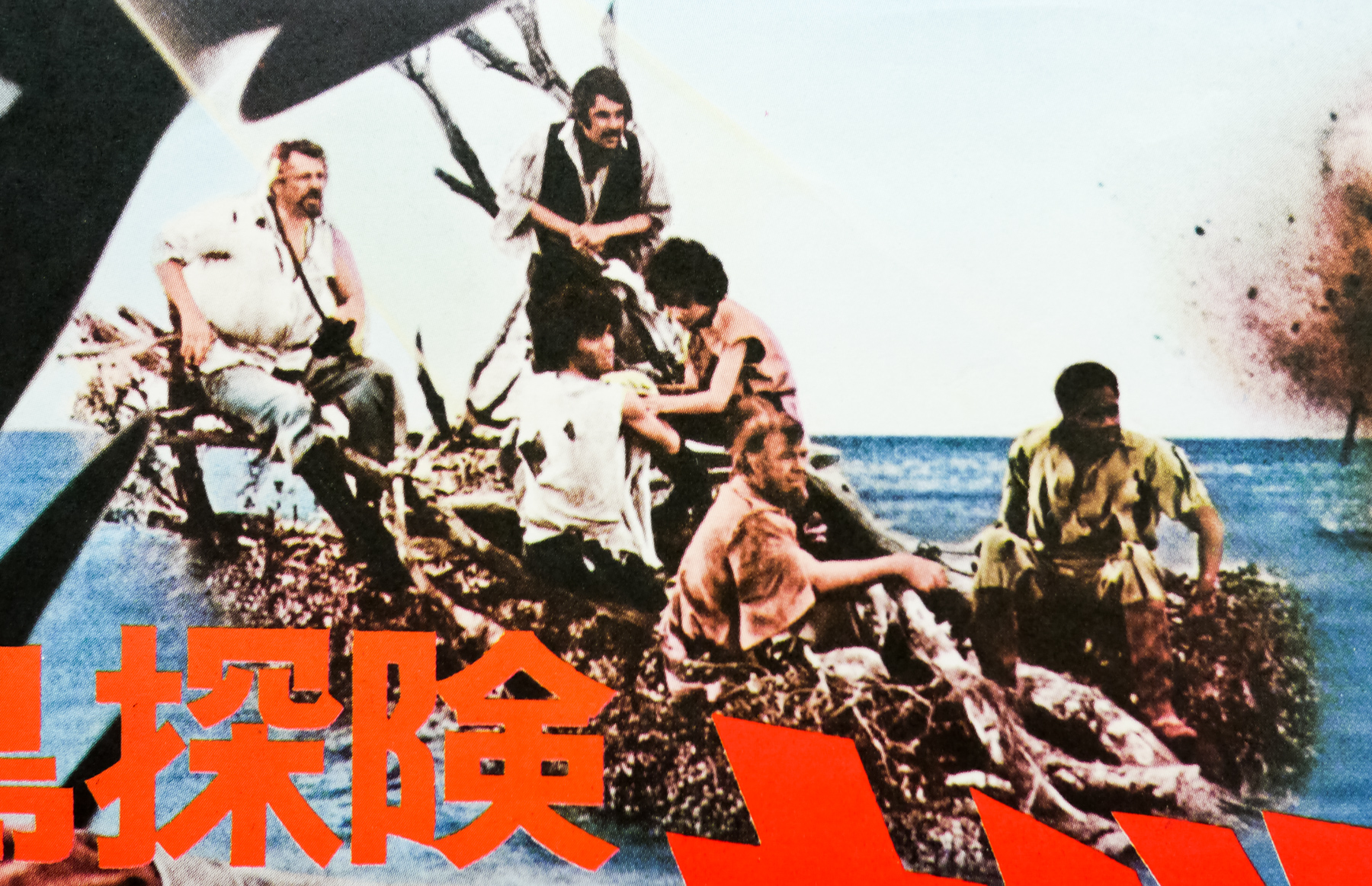
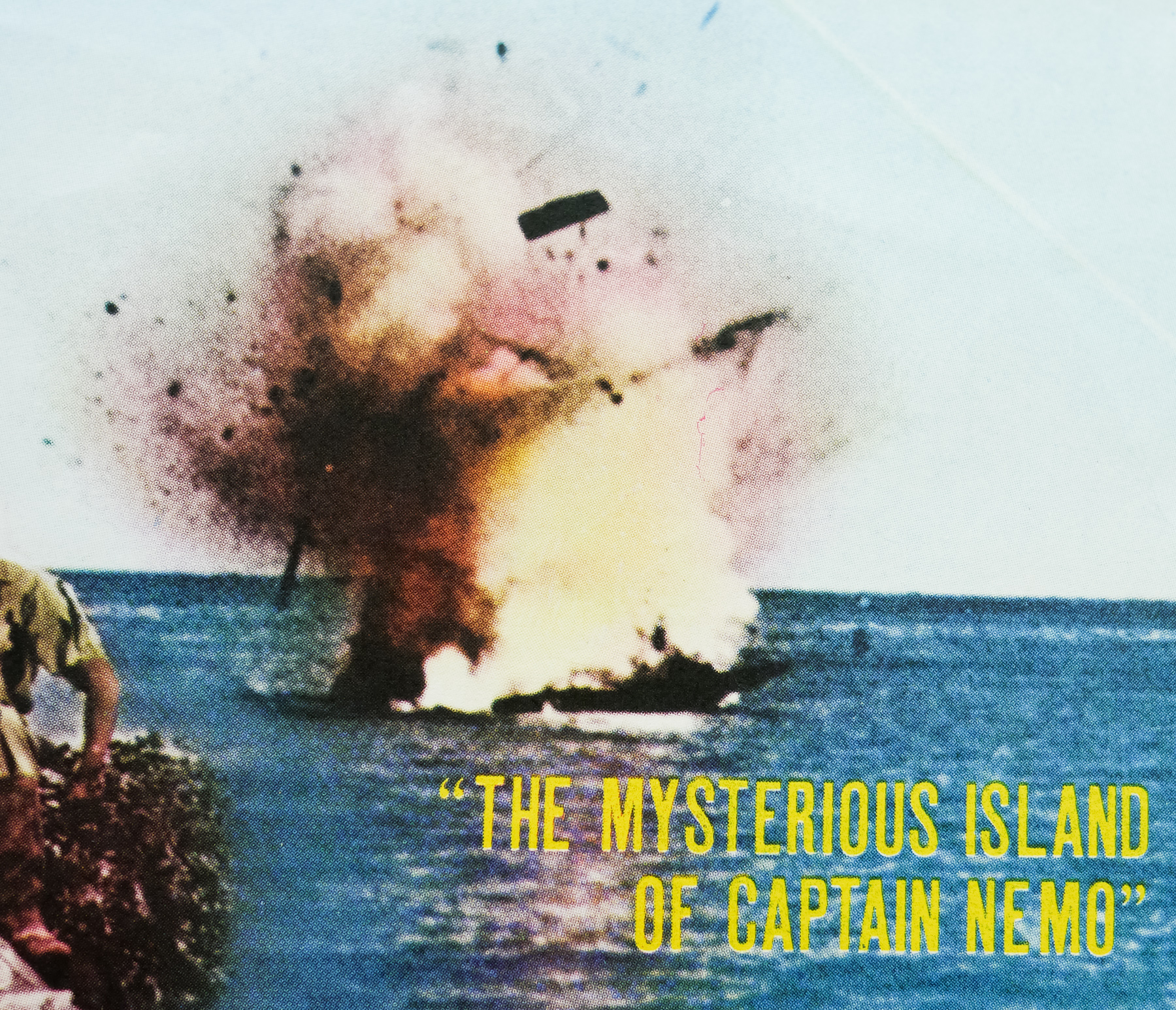
This is the Japanese B2 poster for the release of the 1973 adaptation of the French novelist Jules Verne’s The Mysterious Island (1874). A co-production between Spanish, French, Italian and Cameroonian companies, the film started out as a TV miniseries (300 minutes long) and was later adapted into a 96 minute feature that was released into cinemas in USA, Japan and other countries. Omar Sharif plays Captain Nemo, the enigmatic scientist that first appeared in Verne’s novel 20,000 Leagues Under the Sea, which was adapted numerous times over the past century (Mysterious Island has also seen numerous versions released).

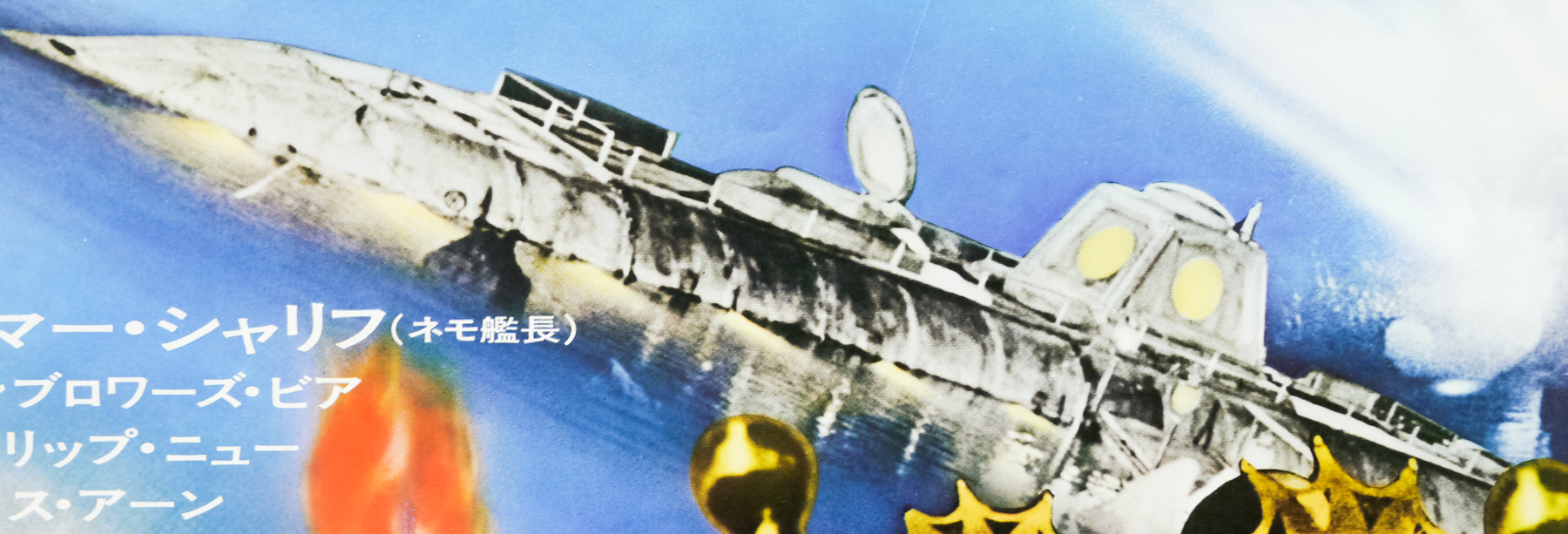
Like the novel, this version is set during the time of the American Civil War and follows five prisoners of war who escape captivity by riding a hot air balloon. They are blown wildly off course and end up on a remote Pacific island where they must use their wits to survive. Eventually they meet Nemo who piloted the Nautilus submarine there following the events in the previous story.

The longer version appears to be almost impossible to find today, whilst the shorter version is also poorly served by home video releases.

For Your Eyes Only / B2 / artwork style / Japan

18.10.13

Poster Poster

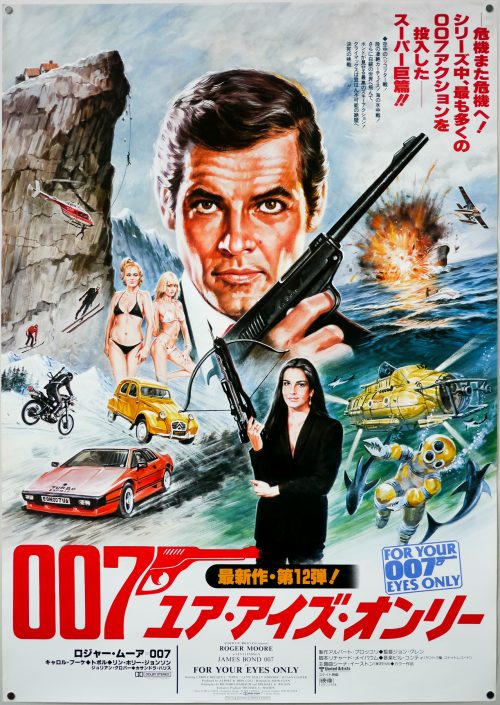
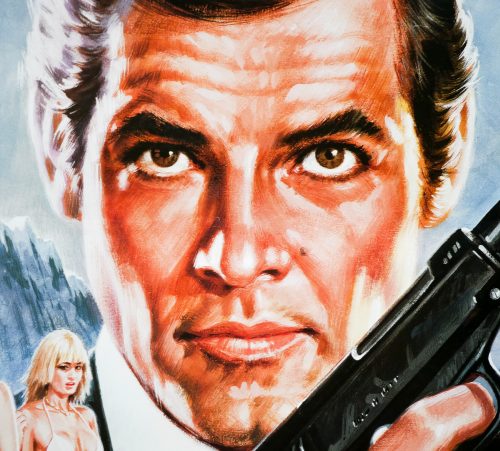
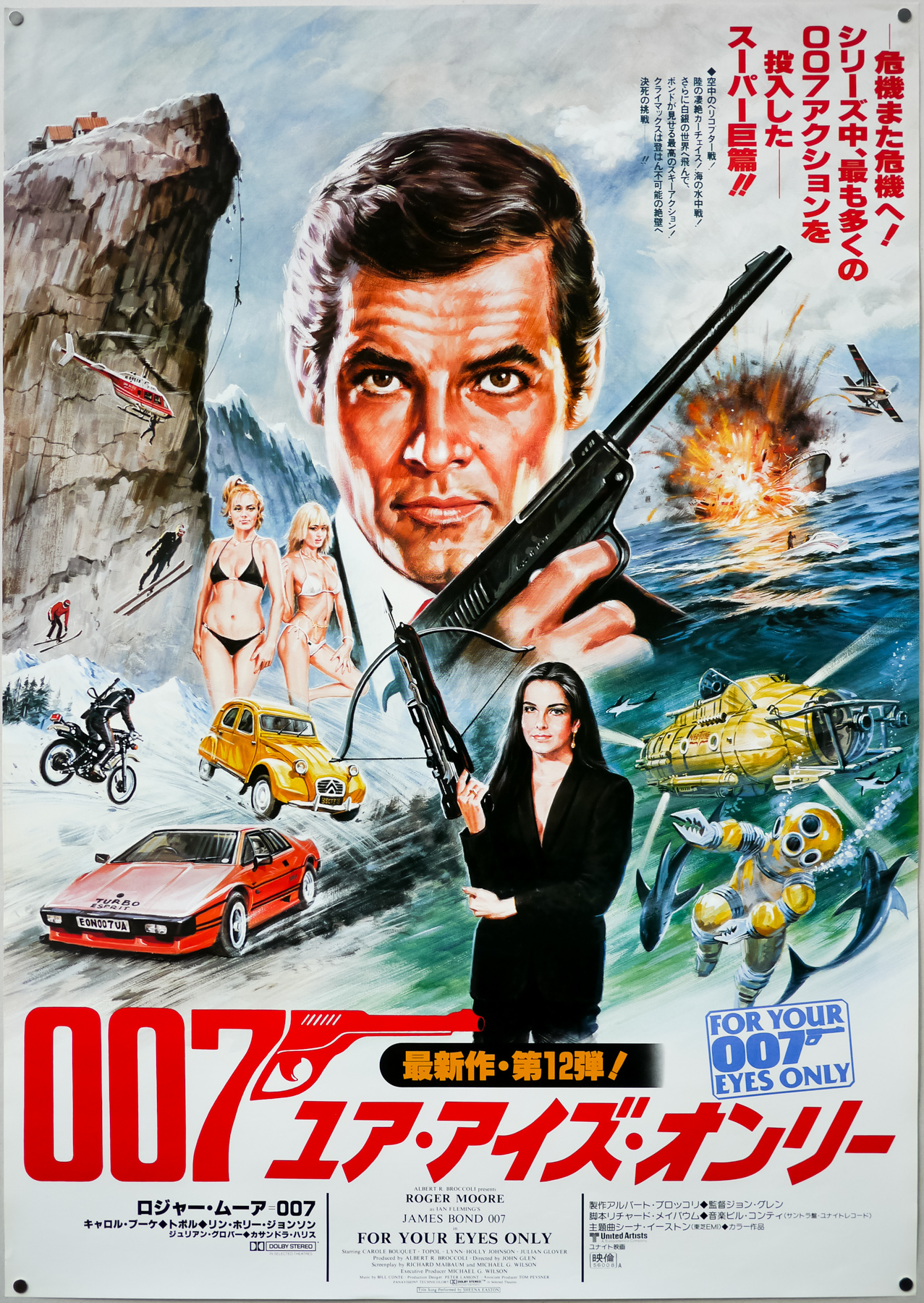
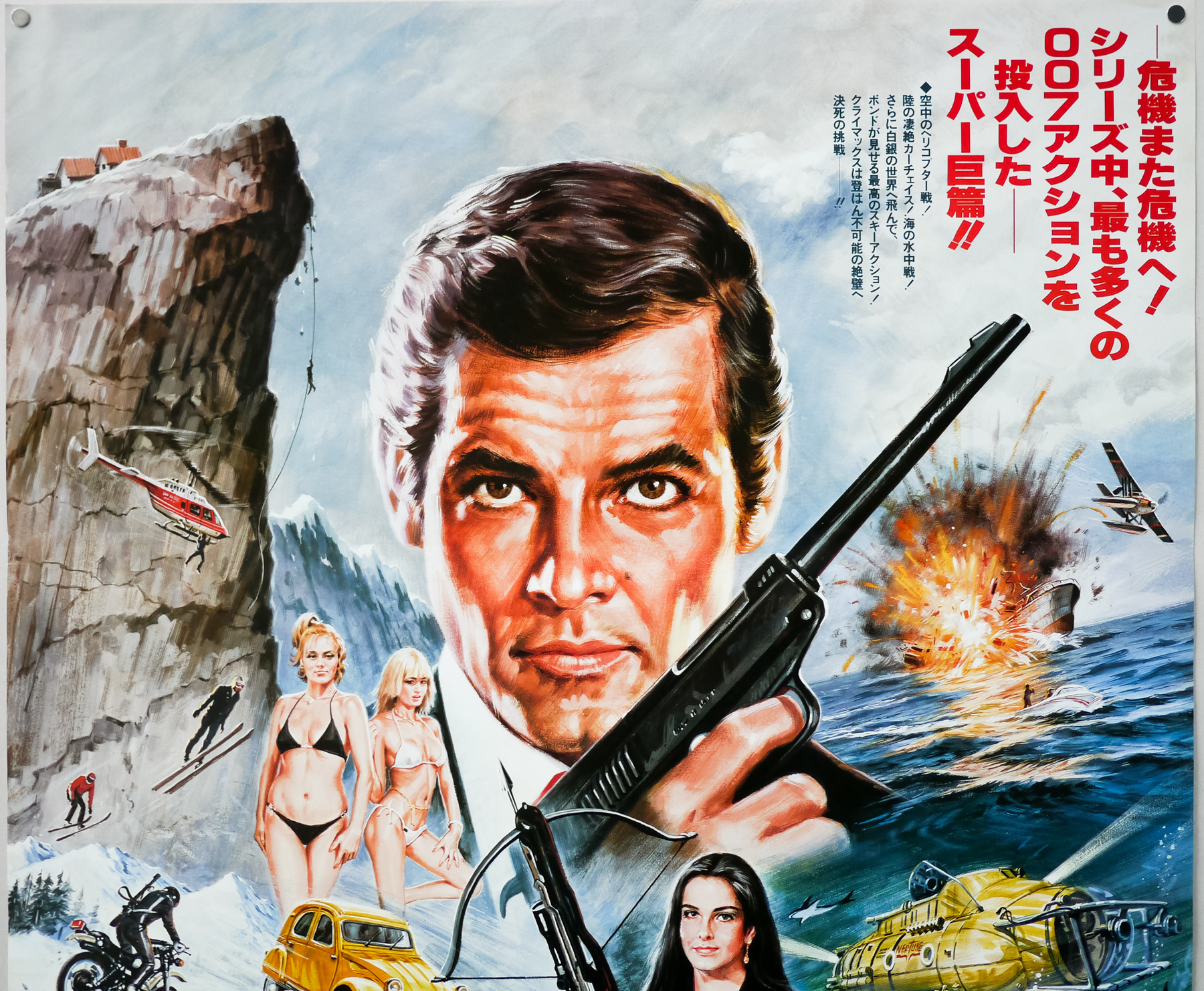
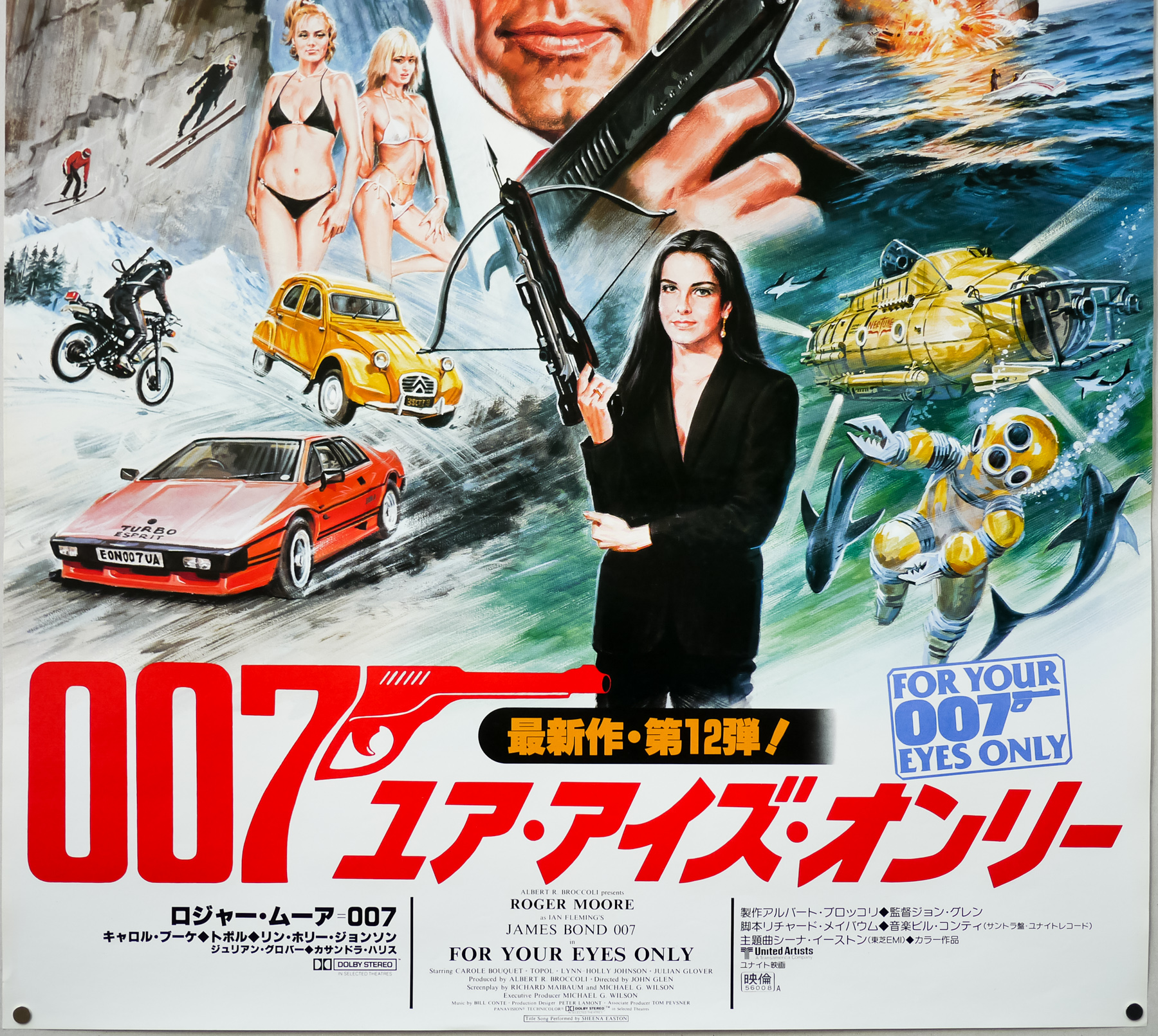
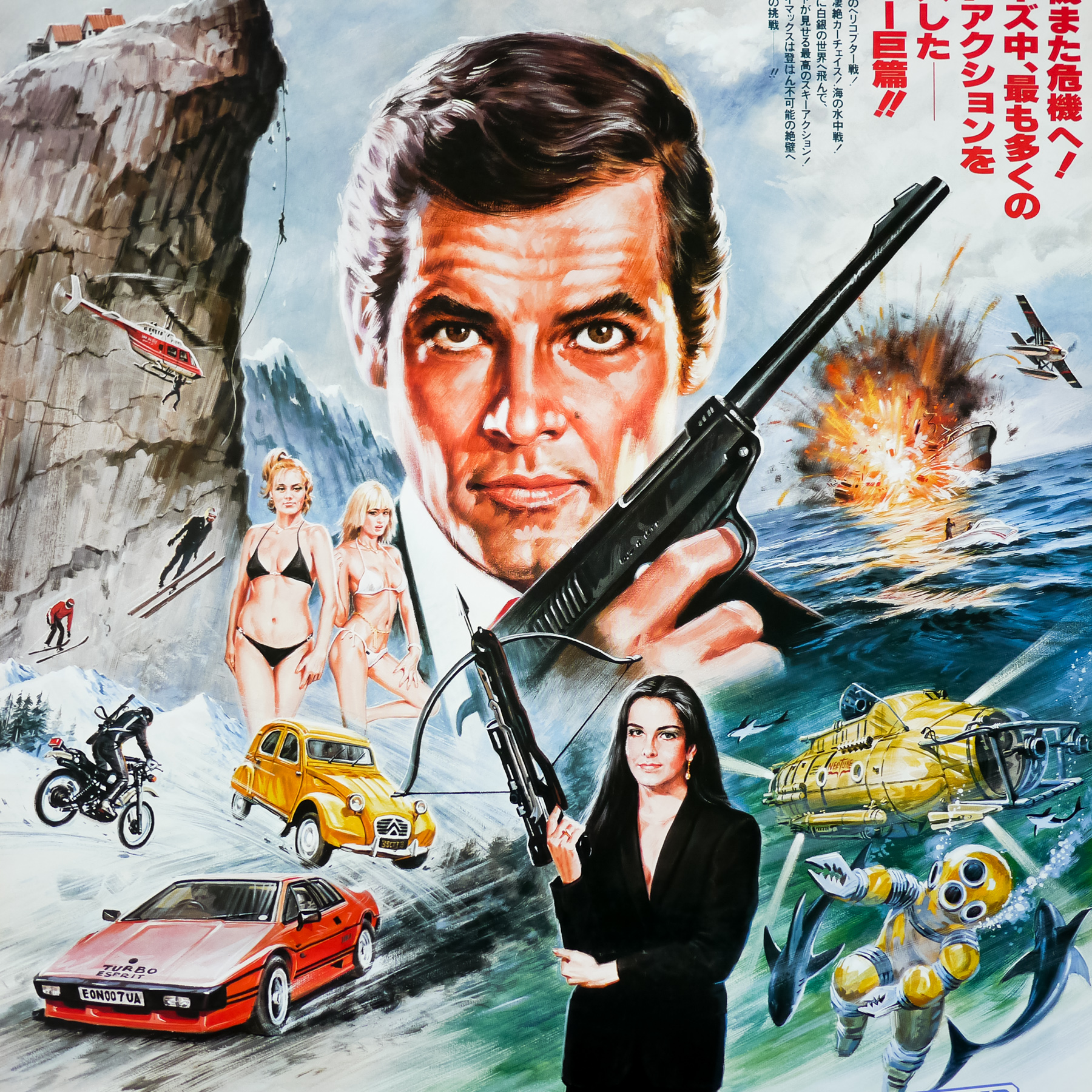
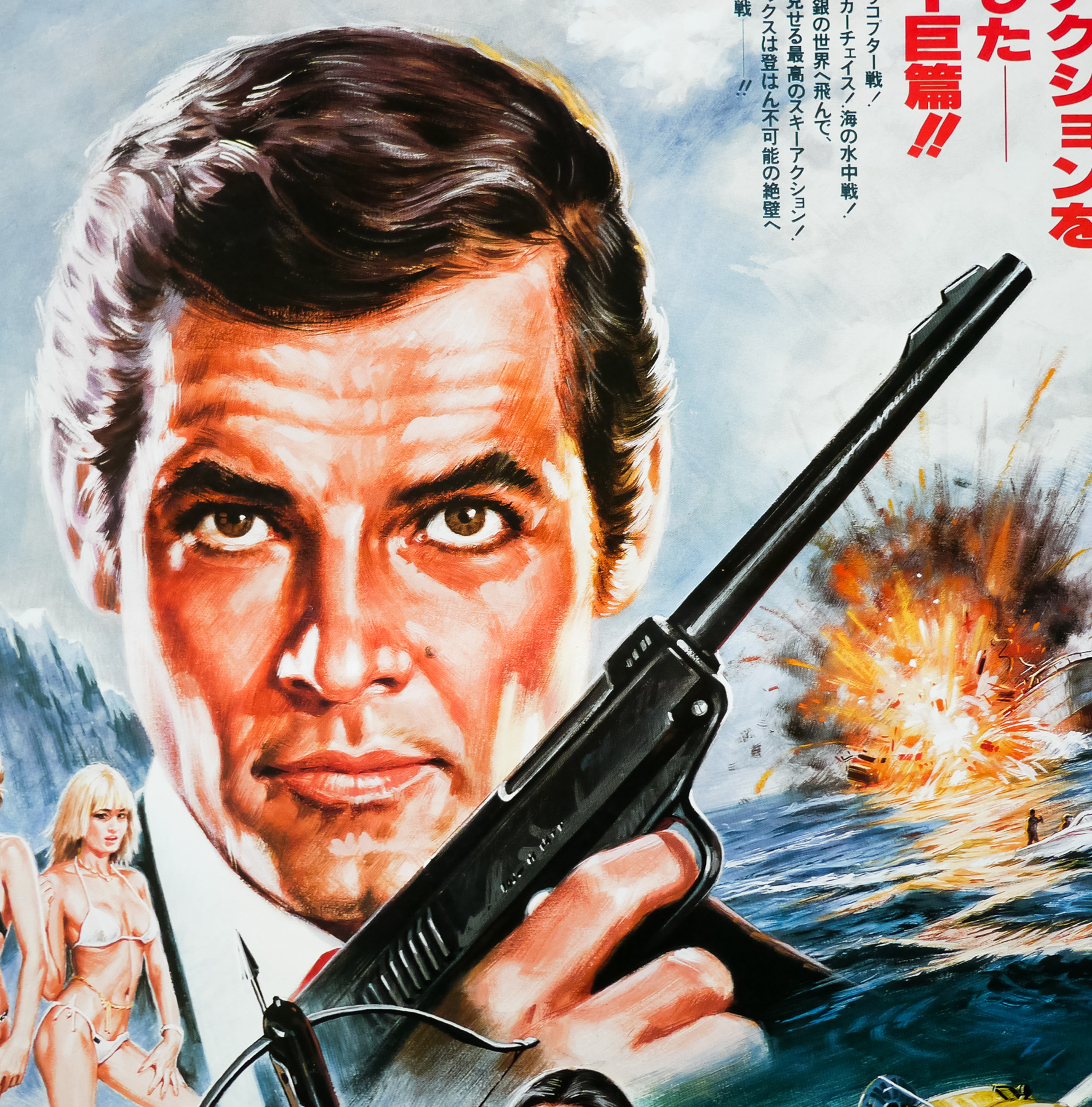
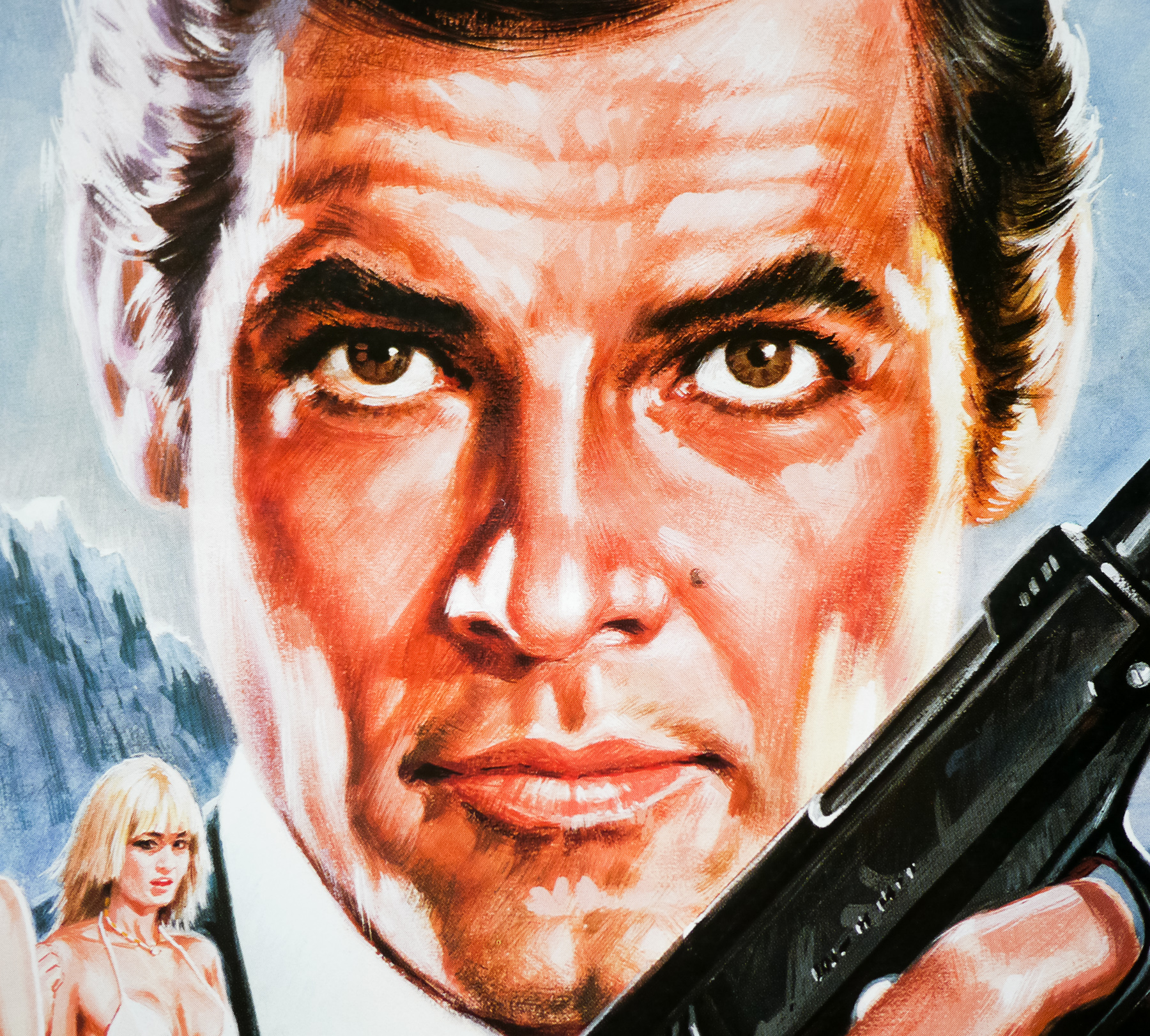
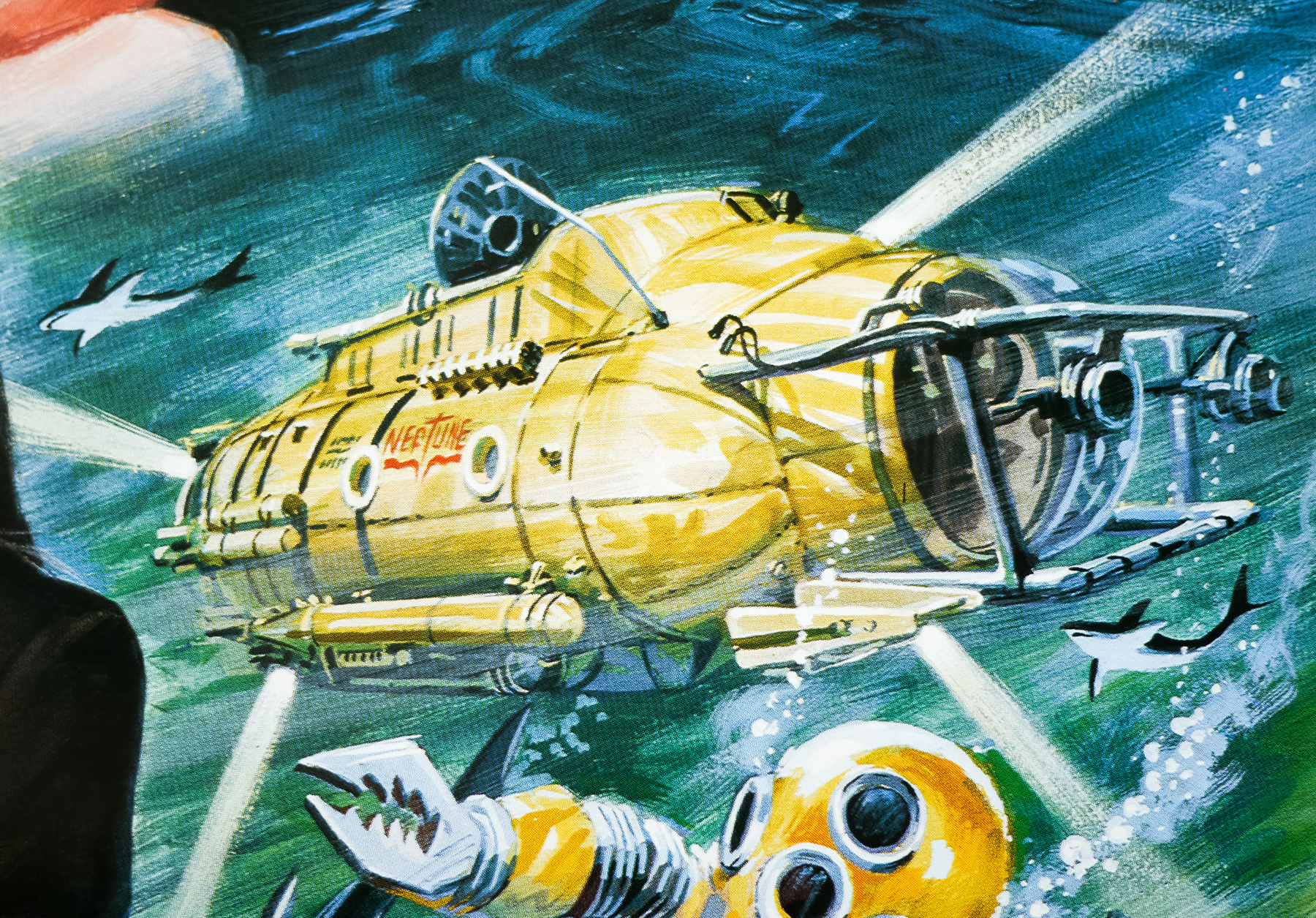
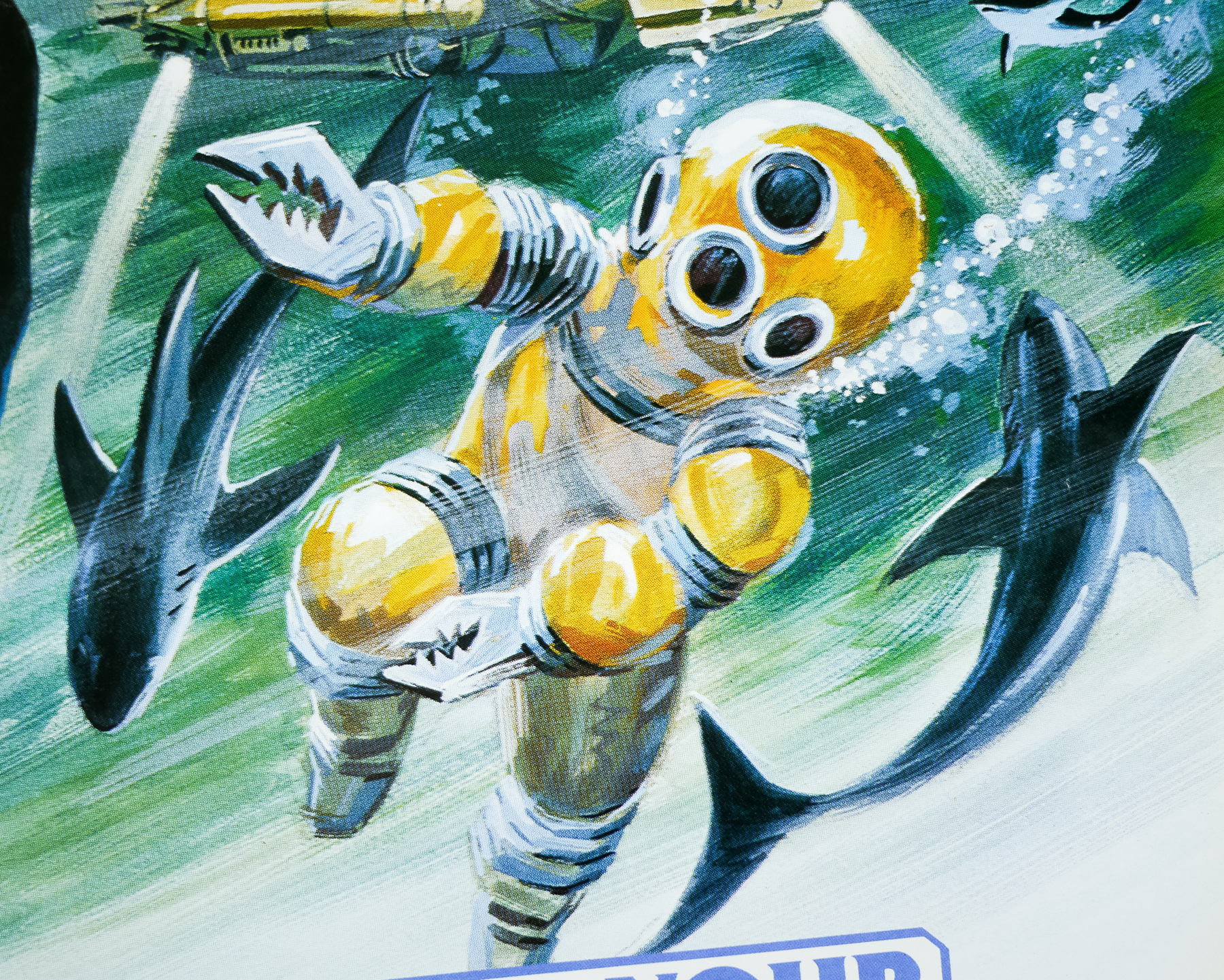
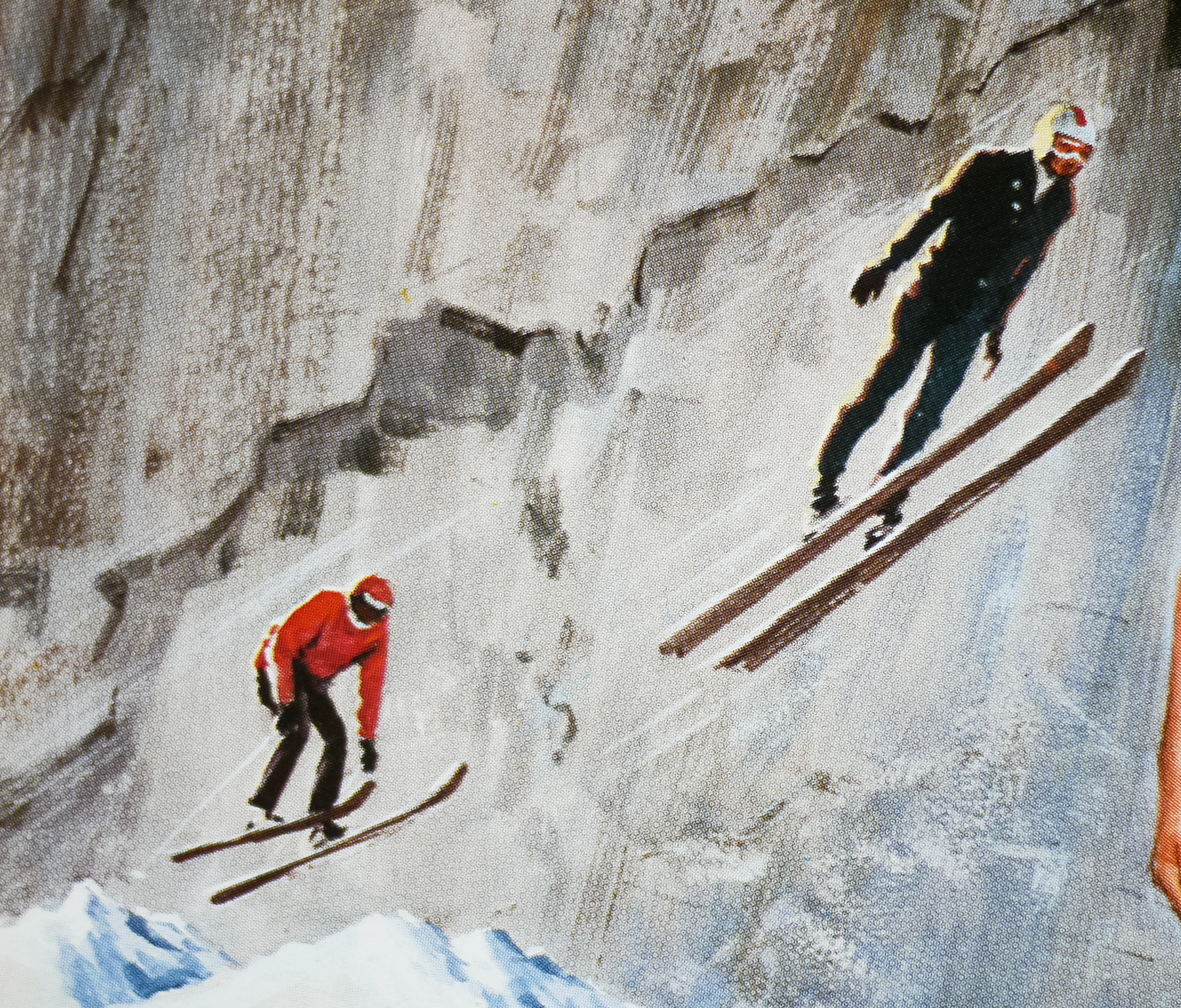
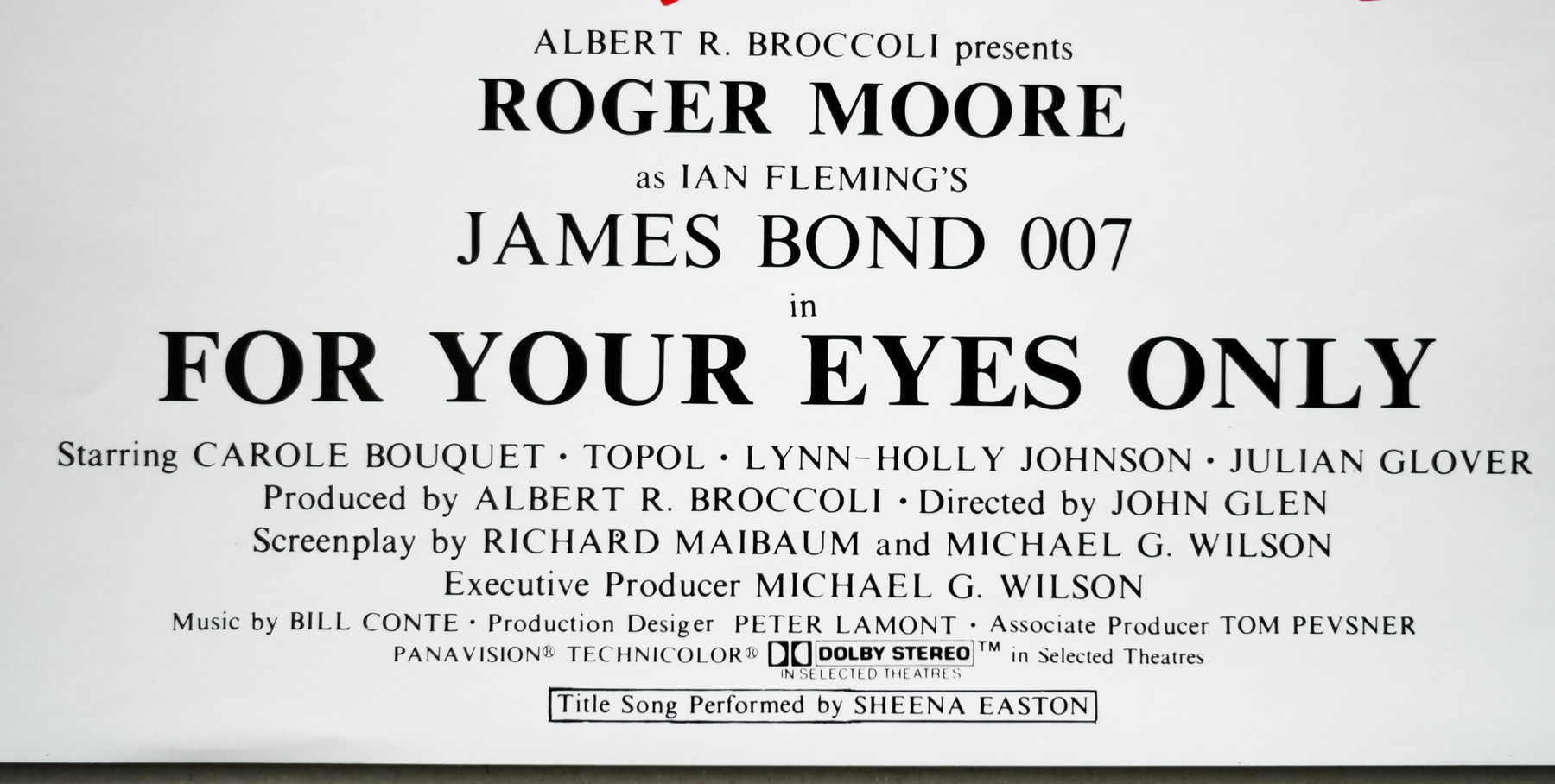
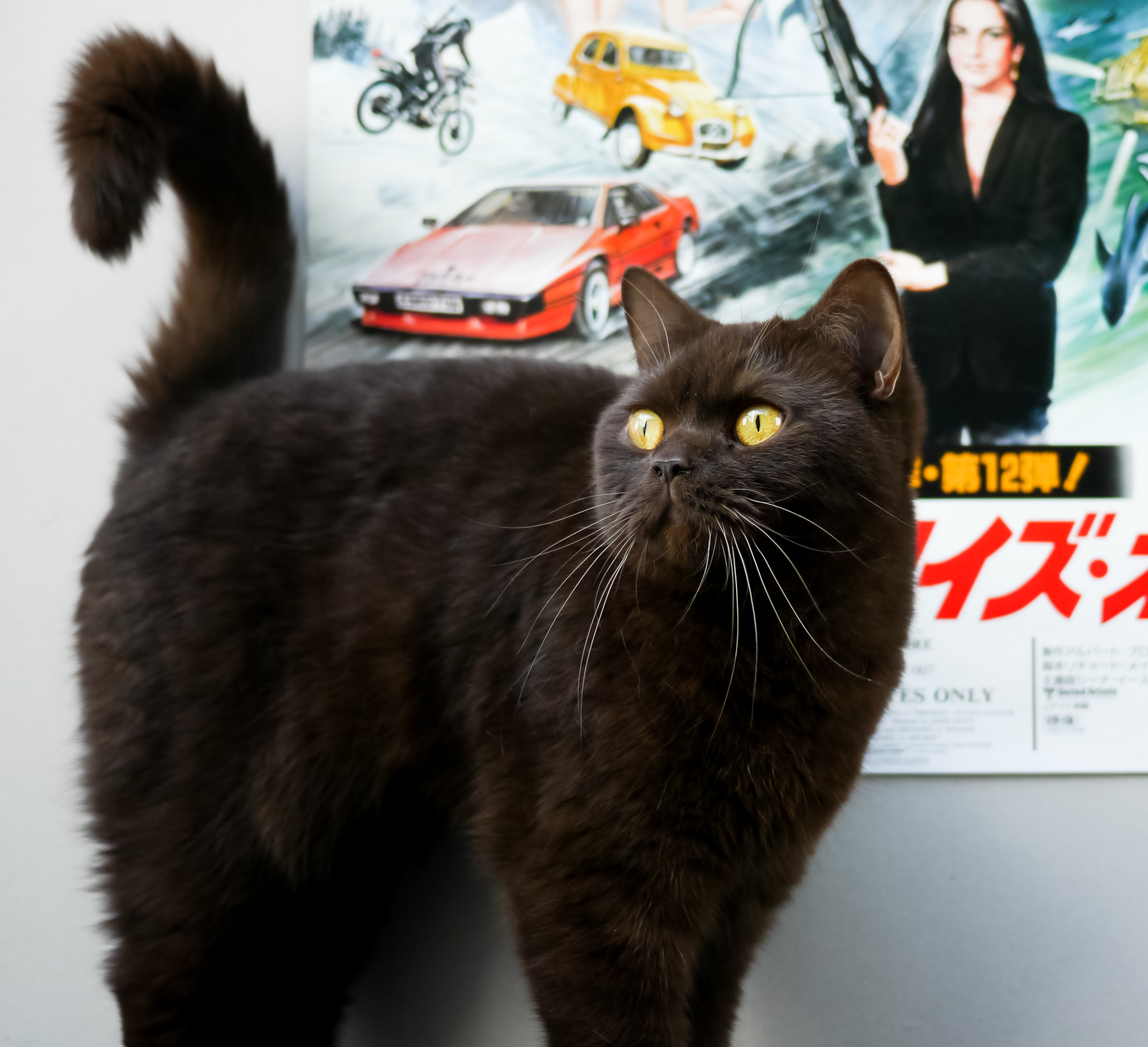
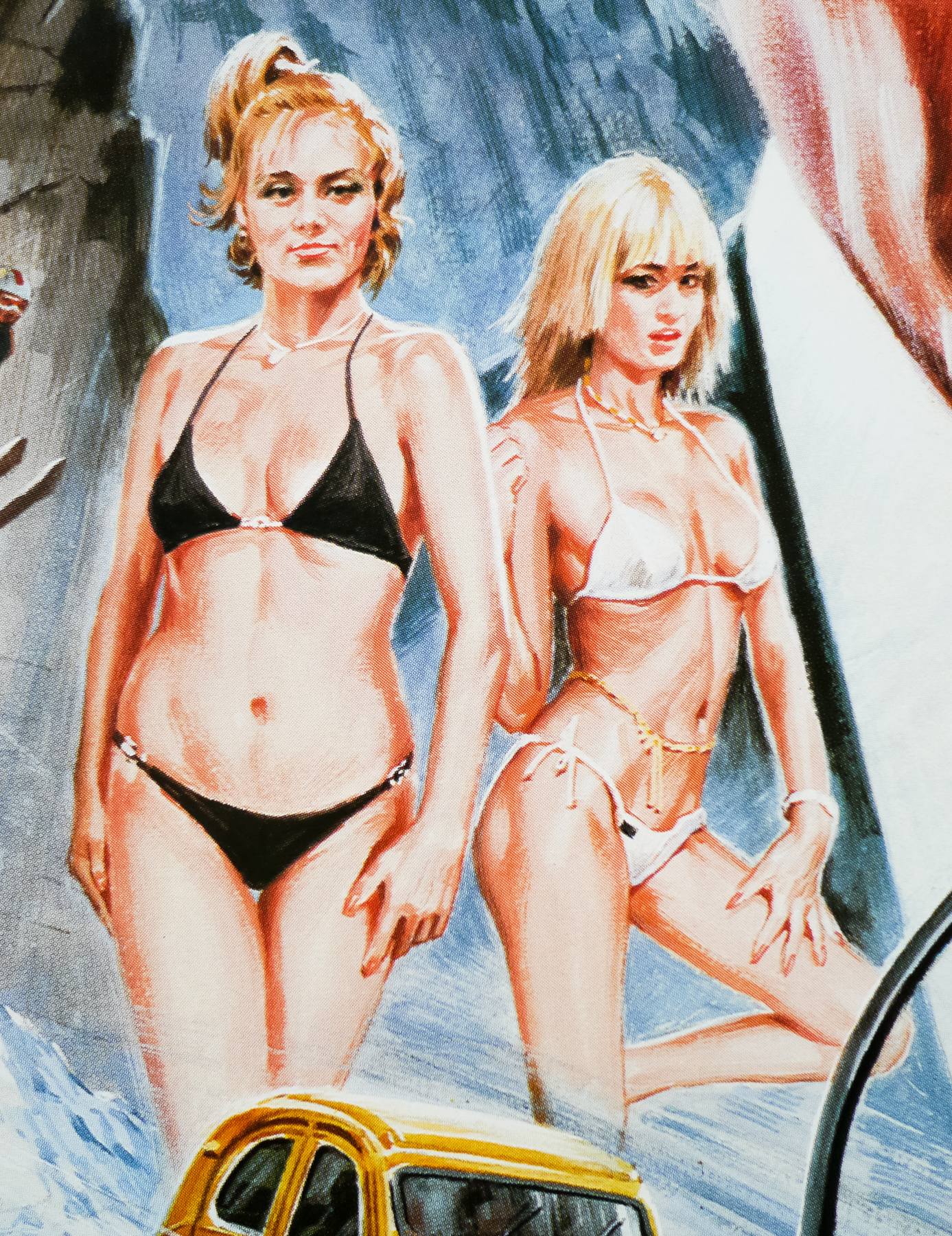
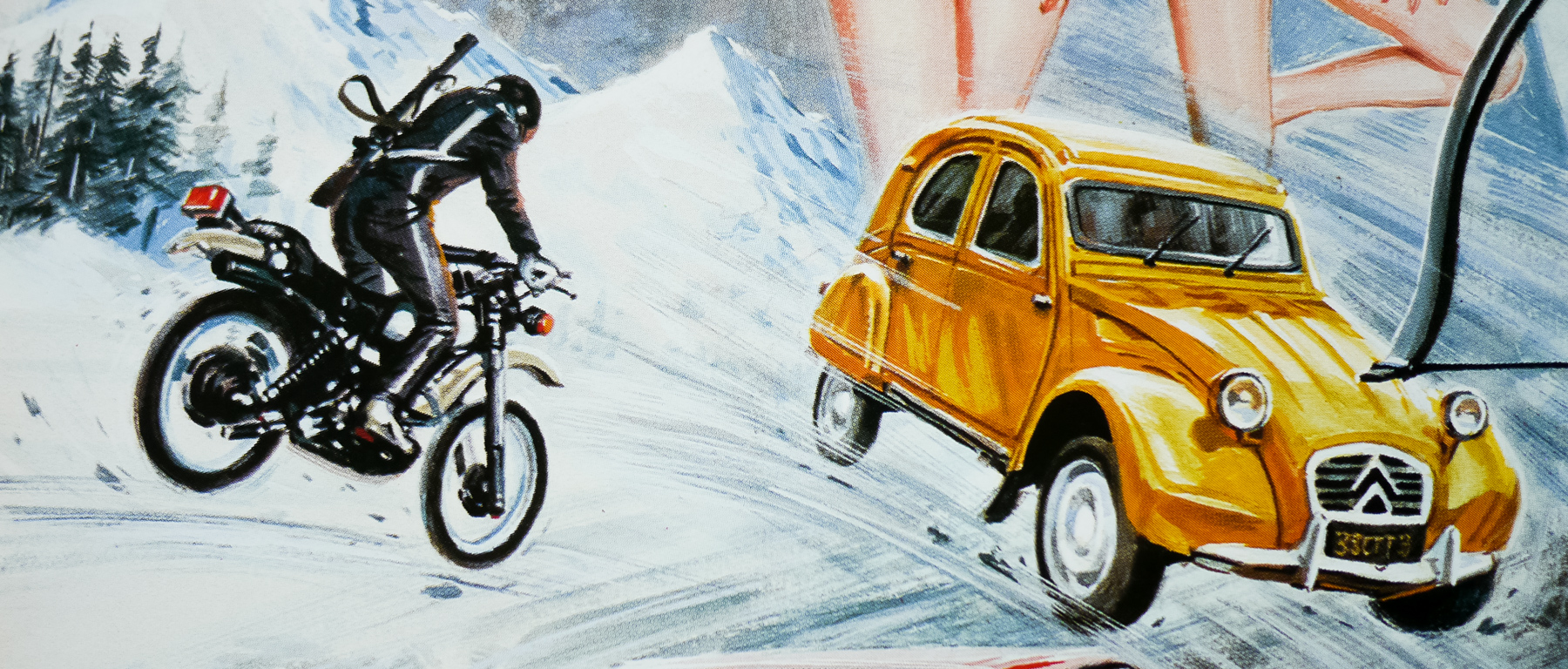
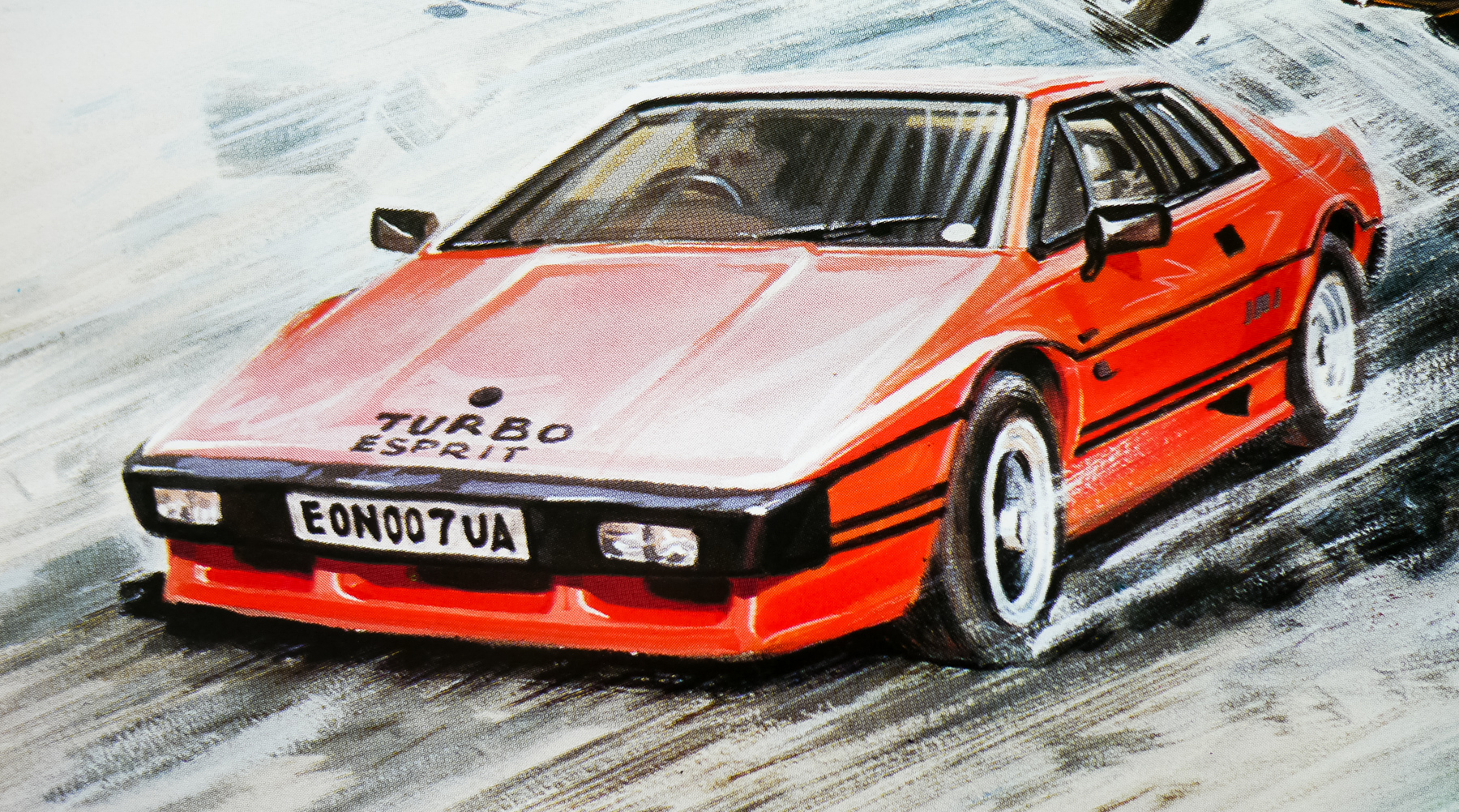
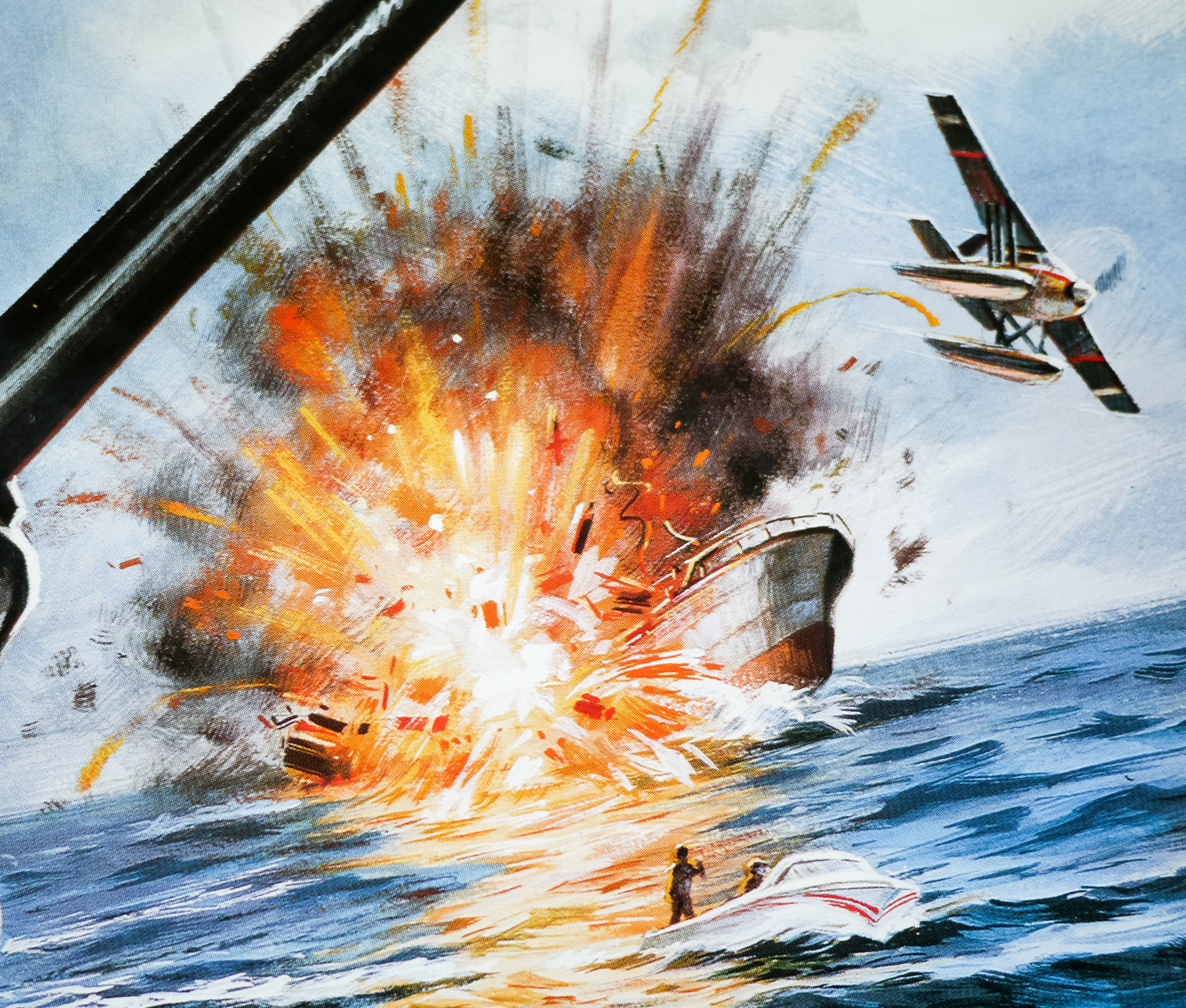
This is the artwork style B2 poster for the Japanese release of one of Roger Moore’s better outings as 007, For Your Eyes Only, which was intended to bring the legendary spy back down to earth with a more realistic and less sensational storyline following the lunacy of Moonraker. It marked the first time John Glen would helm a Bond film, having worked as an editor and second-unit director on three of the previous outings, and he would go on to direct the next four films in the series. The story sees the spy being sent to try and recover an ‘ATAC’ device capable of controlling the British Polaris submarine fleet, which is lost after a spy ship disguised as a trawler is sunk in neutral waters.

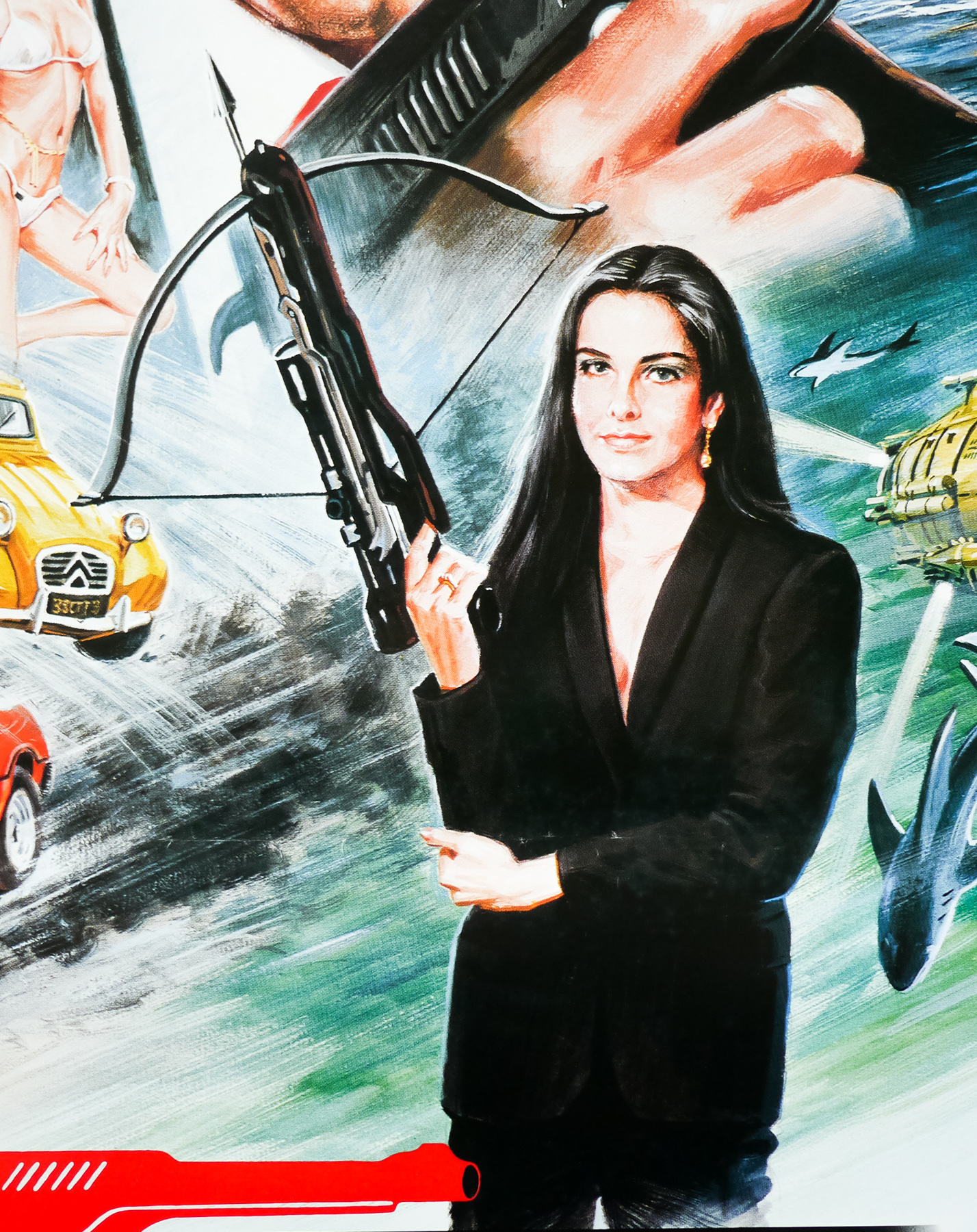
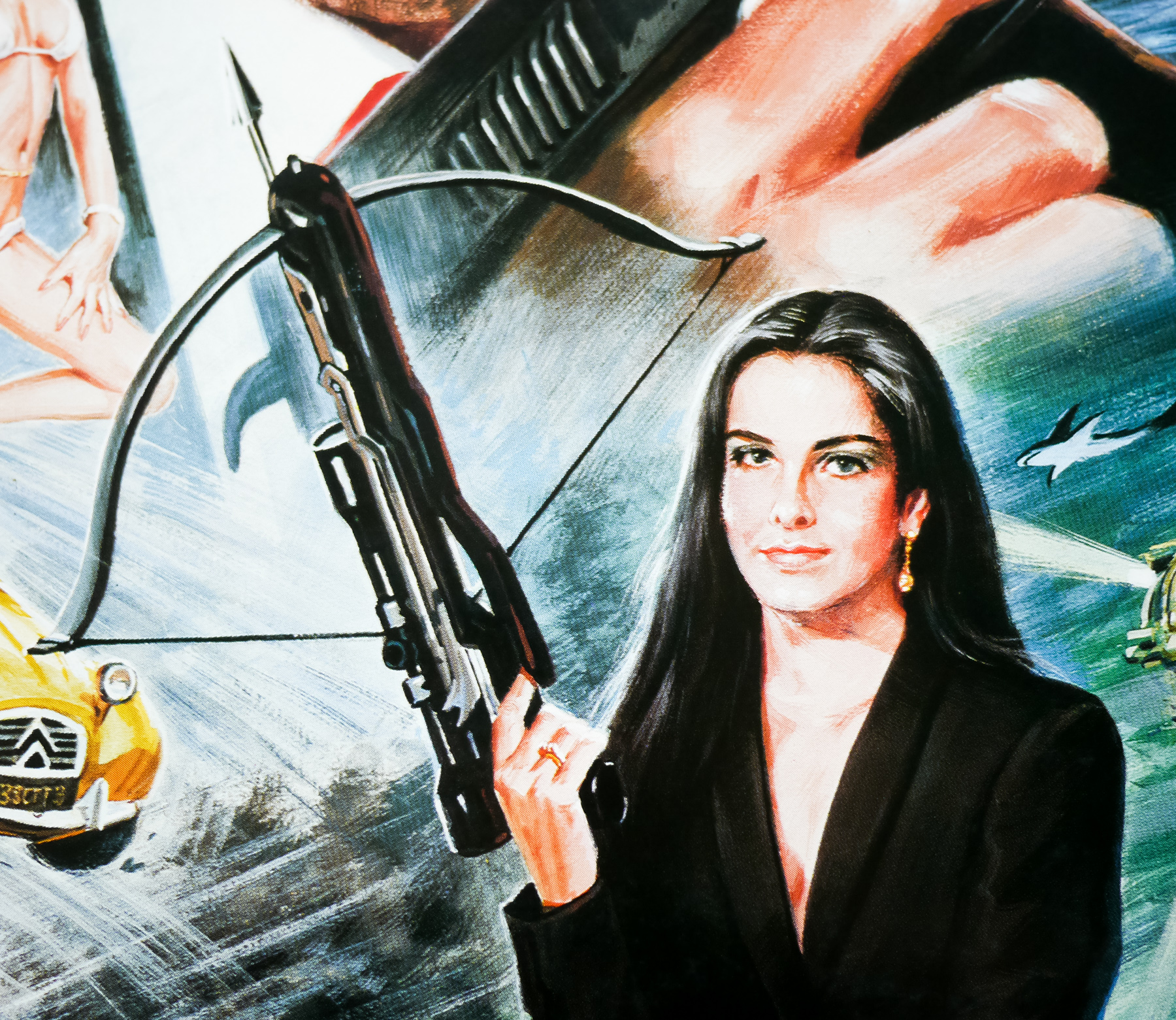
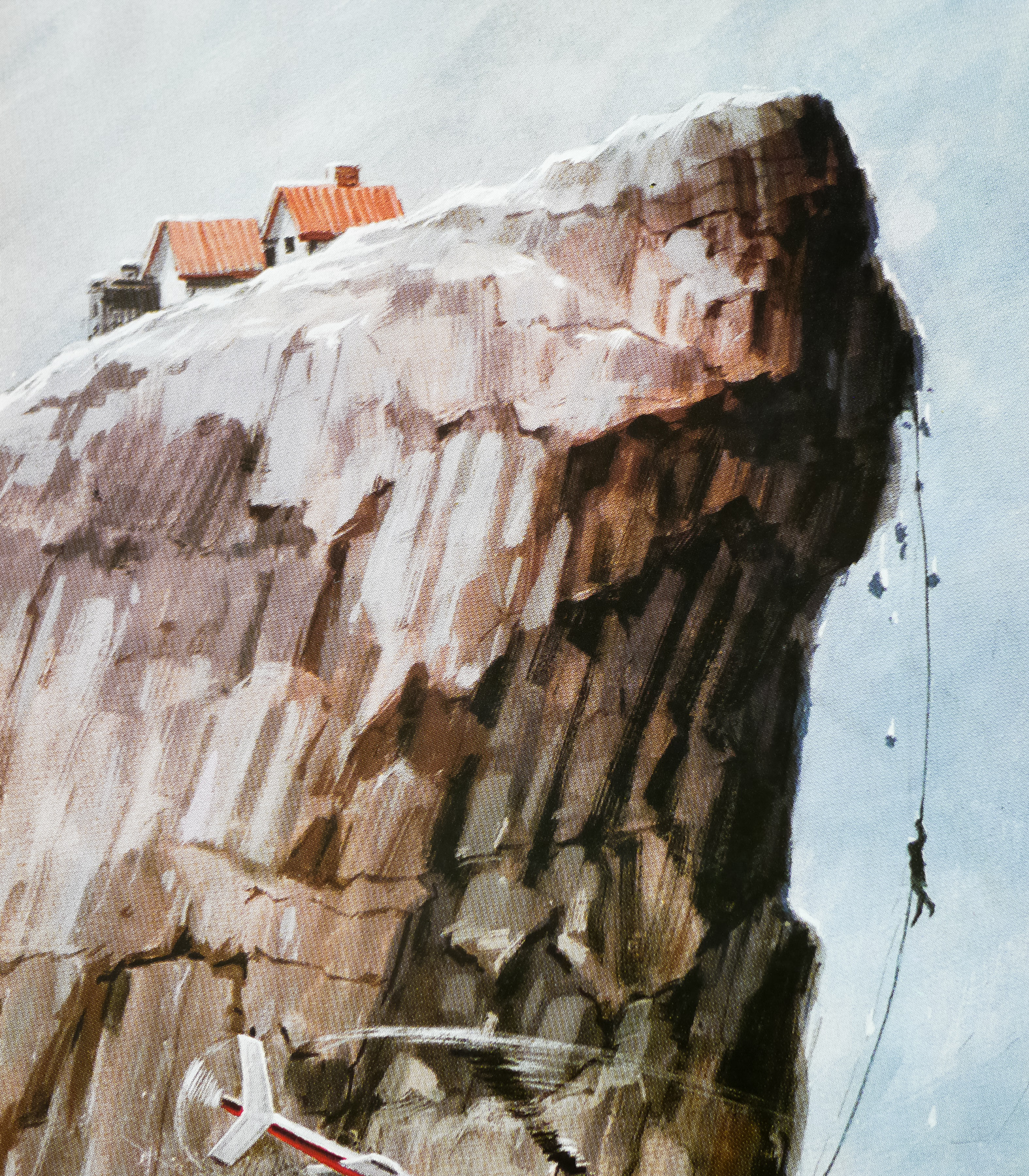
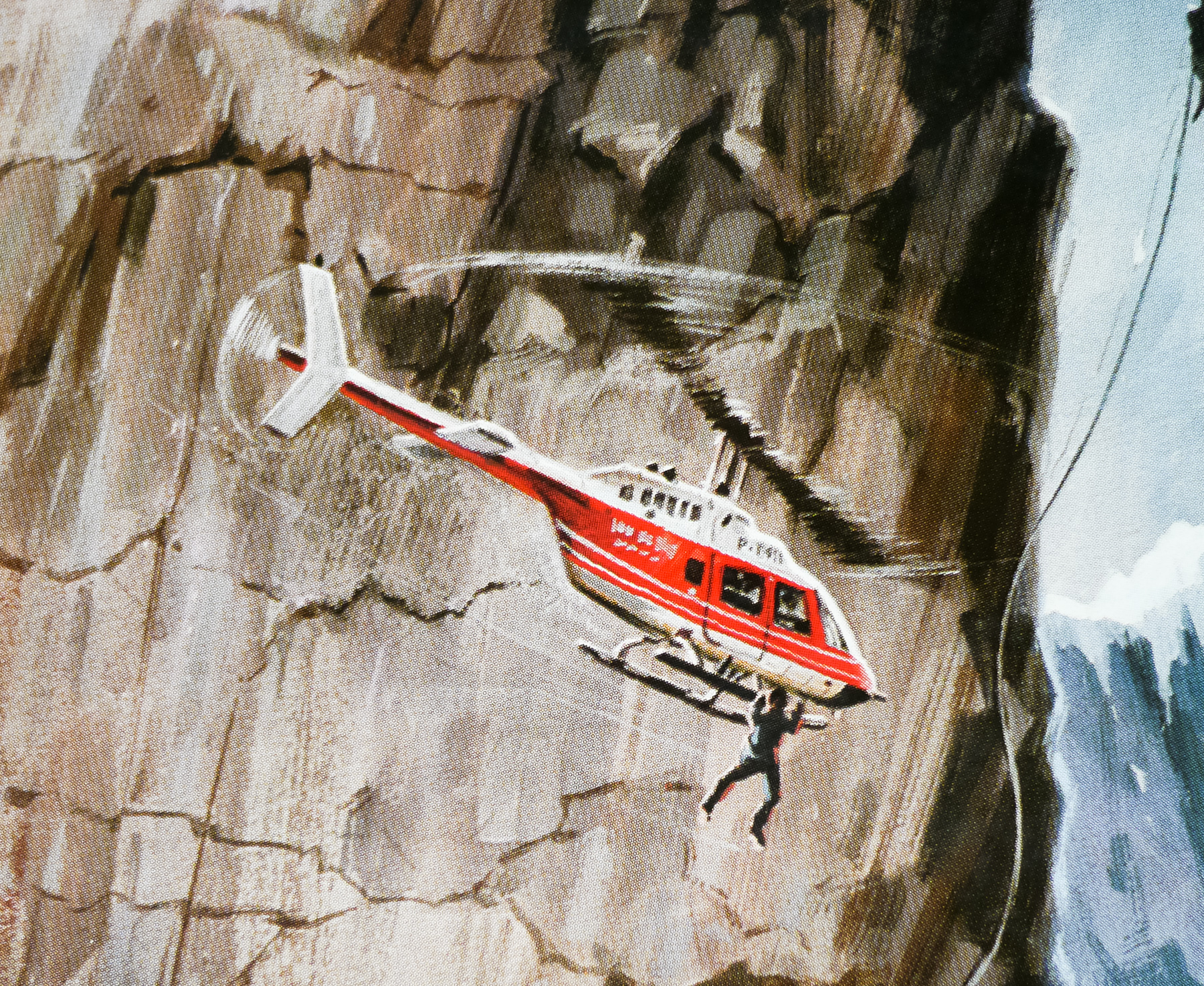
It becomes clear that the Soviets are also keen to get their hands on the device and Bond must discover who is aiding them, with suspicion falling on both Milos Columbo (Topol) and Aris Kristatos (Julian Glover). Bond also finds an ally in the form of Melina Havelock (the gorgeous Carole Bouquet) who is out for revenge after her parents are murdered by the same forces who retrieve the ATAC device. The film features several memorable chases and action sequences, including a climactic assault on a fortress on top of a sheer cliff. It also includes the infamous character of Bibi Dahl (Lynn-Holly Johnson) a gorgeous young ice-skating protégée who becomes infatuated with Bond, and in turn became the object of countless teenage boys’ fantasies, including yours truly.

The artwork on this poster is unique to Japan and was painted by the artist Seito. I’ve not been able to discover much about Seito but he was fairly prolific and painted for a lot of US films that were released in Japan. If anyone has any information about him please get in touch.

The other posters I’ve collected by Seito can be seen here.
Mad Max 2 / program / Japan

20.11.17

Poster Poster
Title
Mad Max 2
AKA
The Road Warrior (USA) | Interceptor, il guerriero della strada (Italy)
Year of Film
1981
Director
George Miller
Starring
Mel Gibson, Michael Preston, Bruce Spence, Vernon Wells, Kjell Nilsson, Virginia Hey, Emil Minty
Origin of Film
Australia
Genre(s) of Film
Mel Gibson, Michael Preston, Bruce Spence, Vernon Wells, Kjell Nilsson, Virginia Hey, Emil Minty,
Type of Poster
Program
Style of Poster
--
Origin of Poster
Japan
Year of Poster
1982
Designer
Unknown
Artist
Noriyoshi Ohrai
Size (inches)
8 4/16" x 11 12/16"
SS or DS
--
Tagline
--

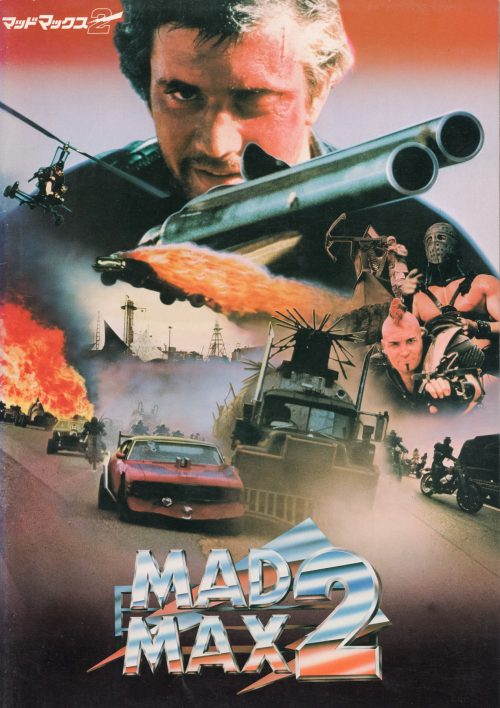
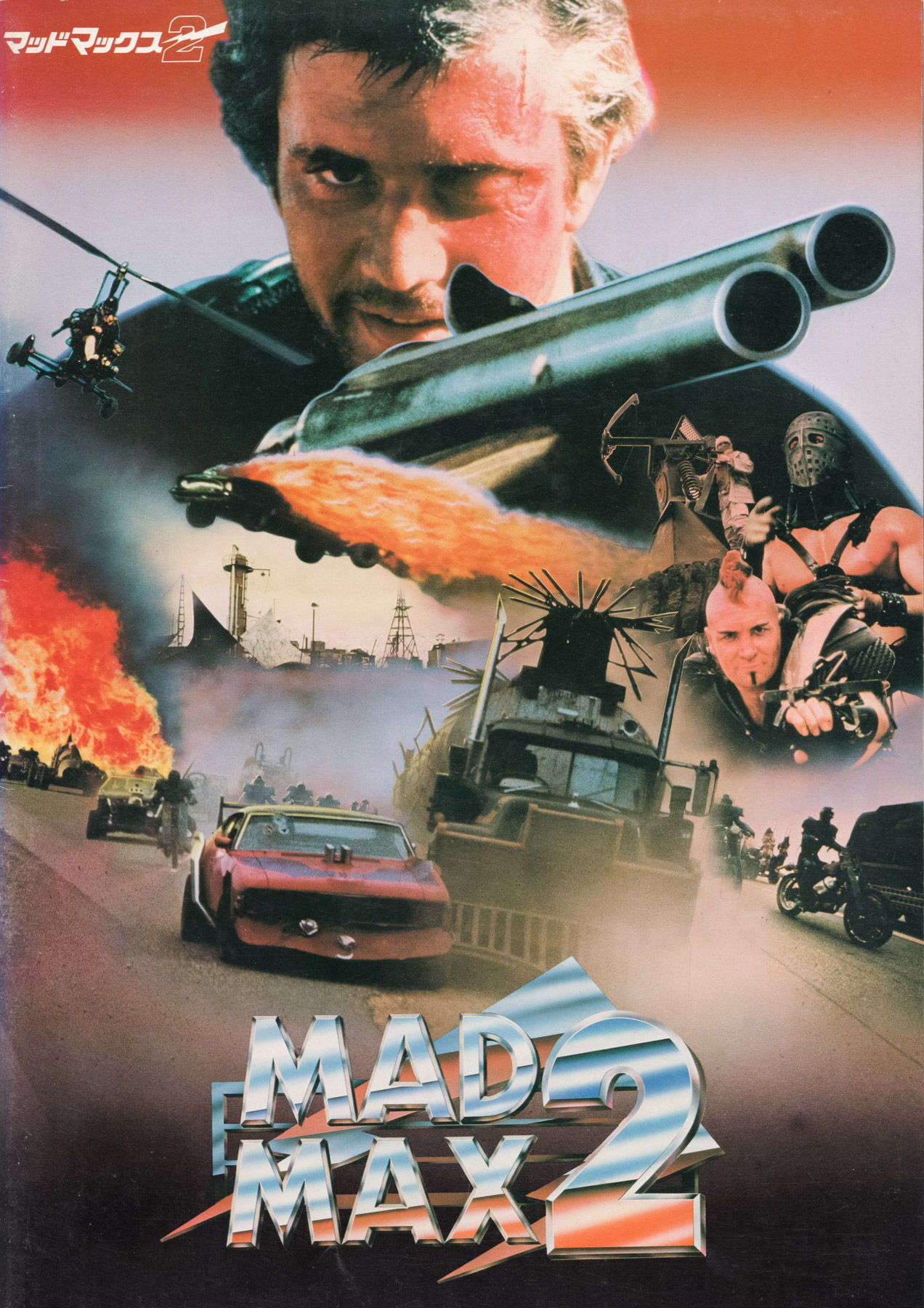
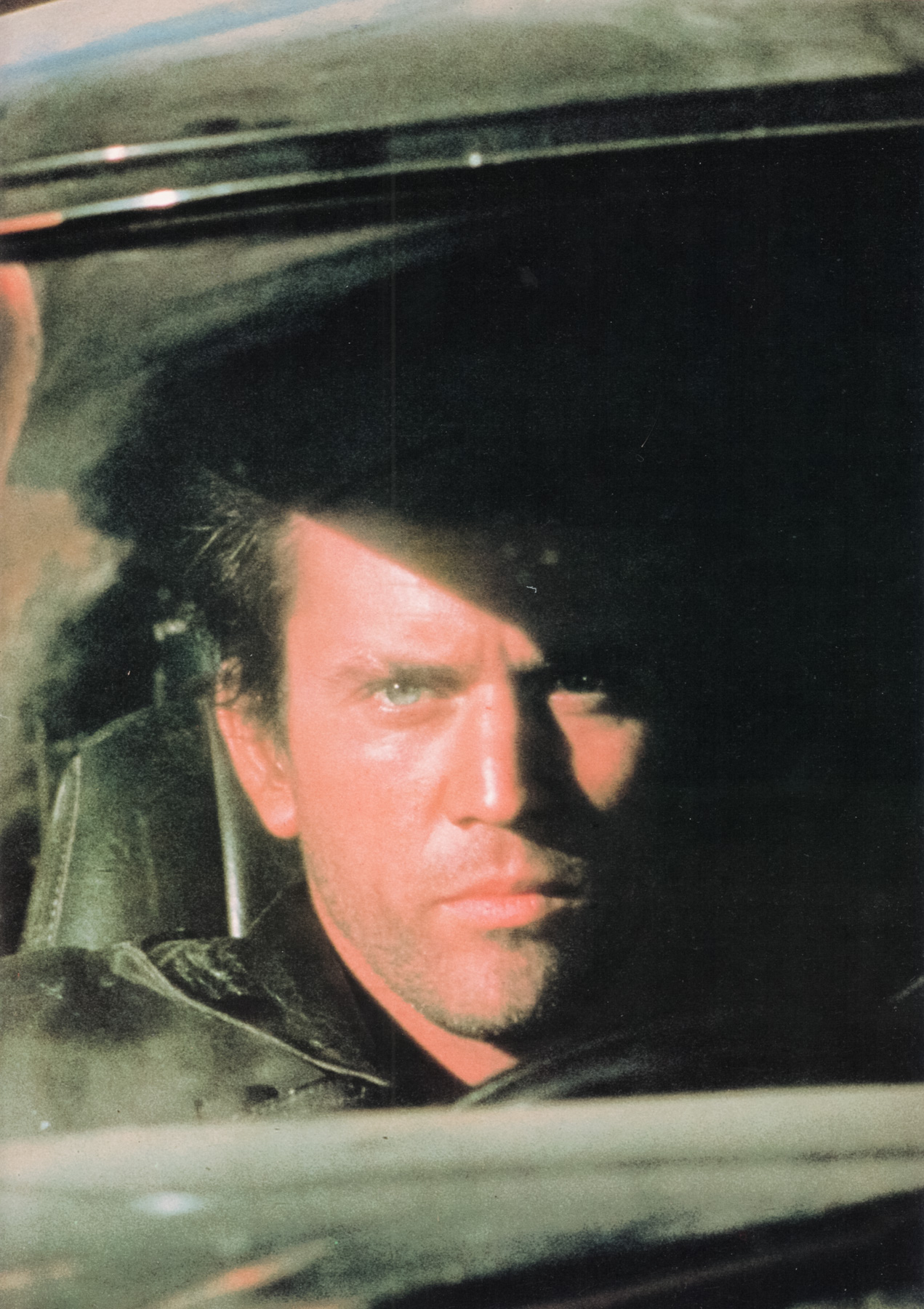
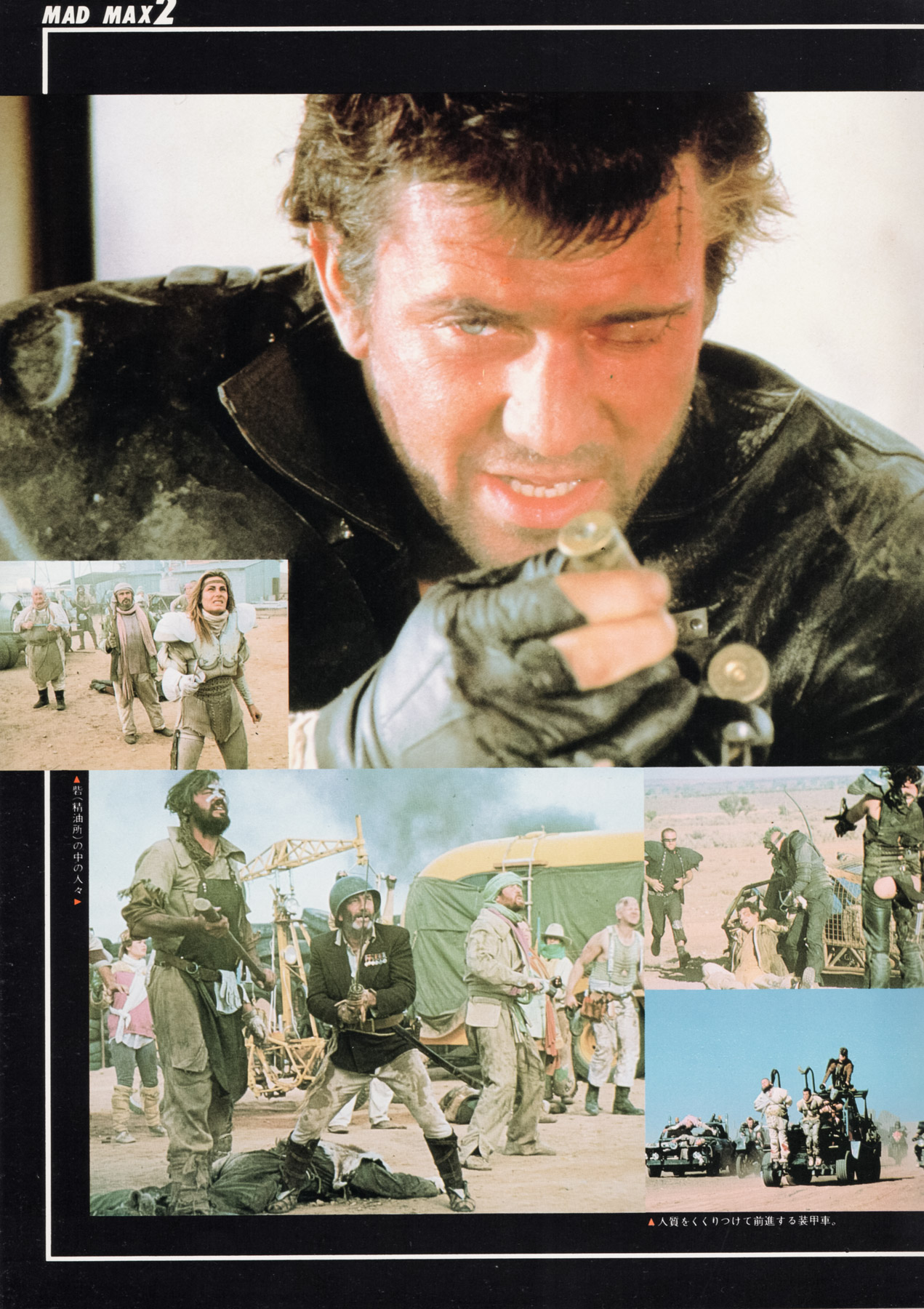
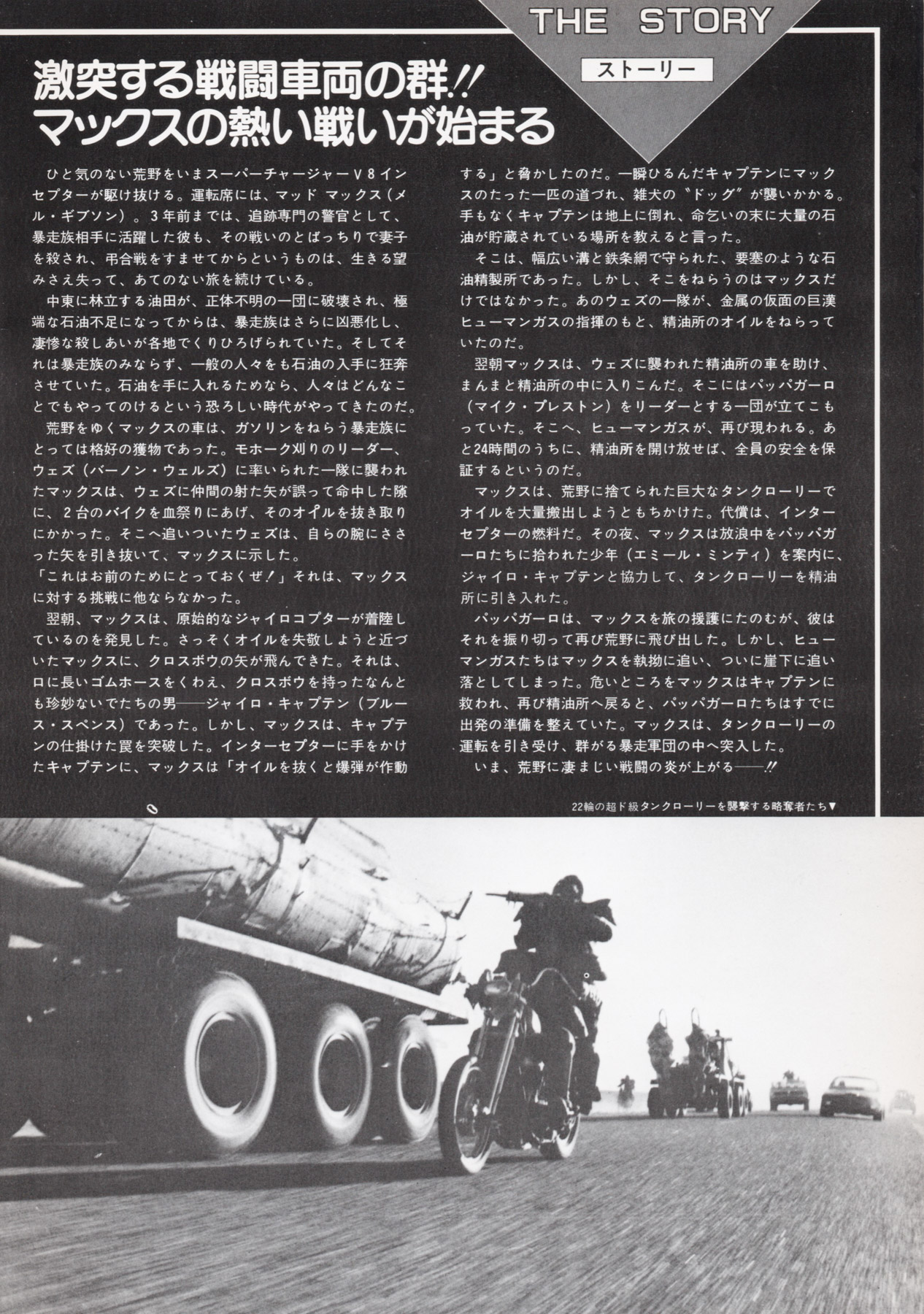
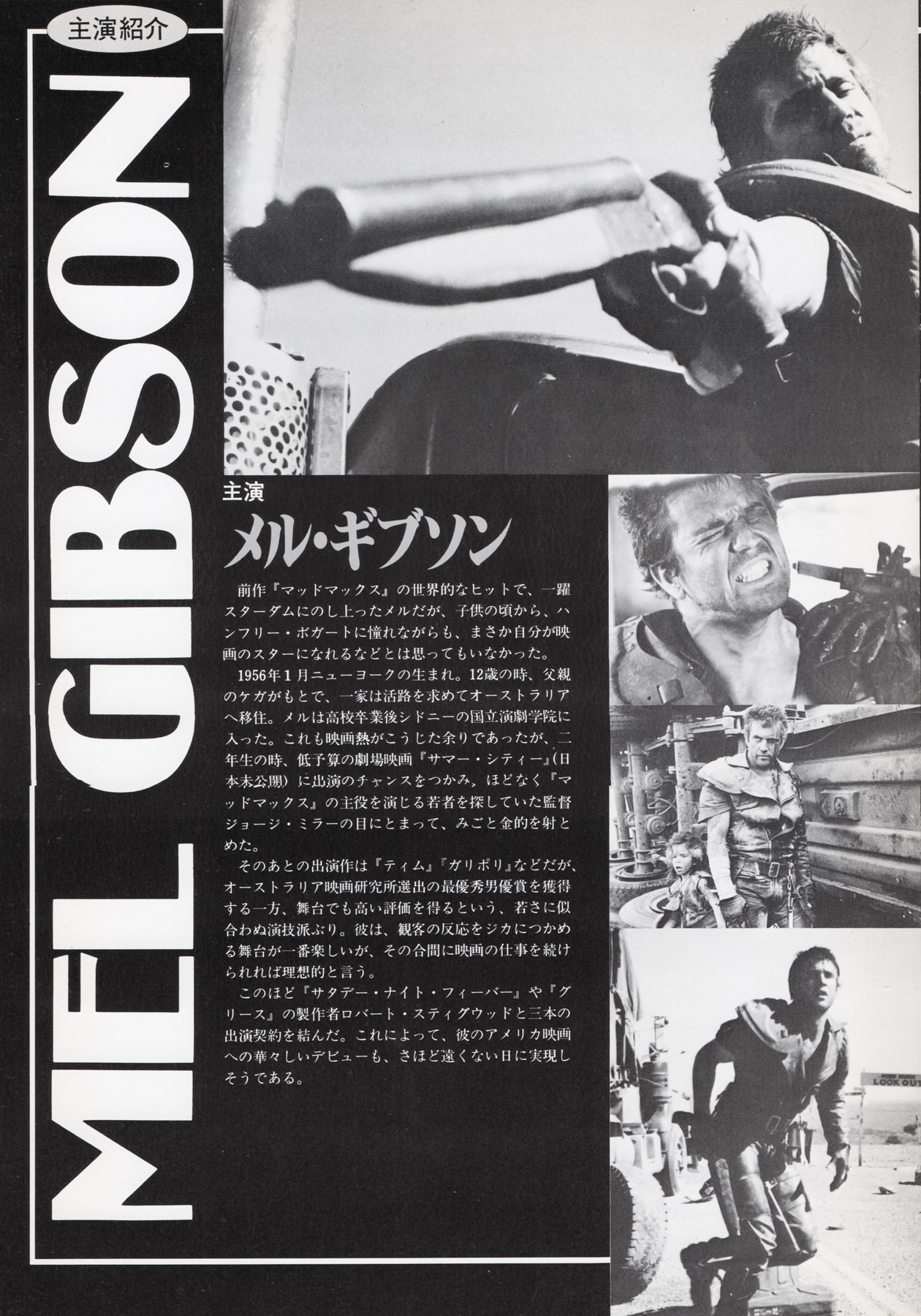
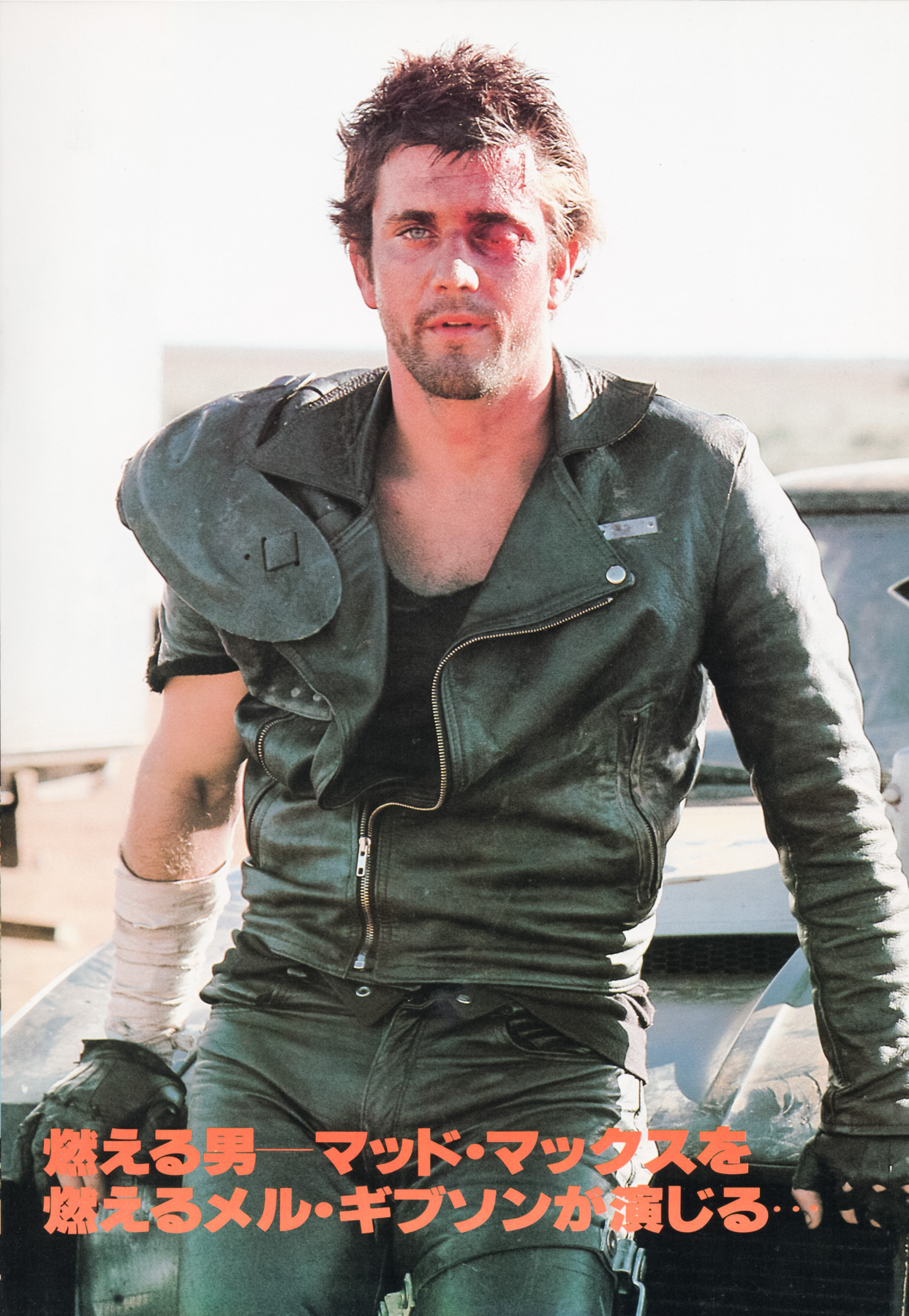
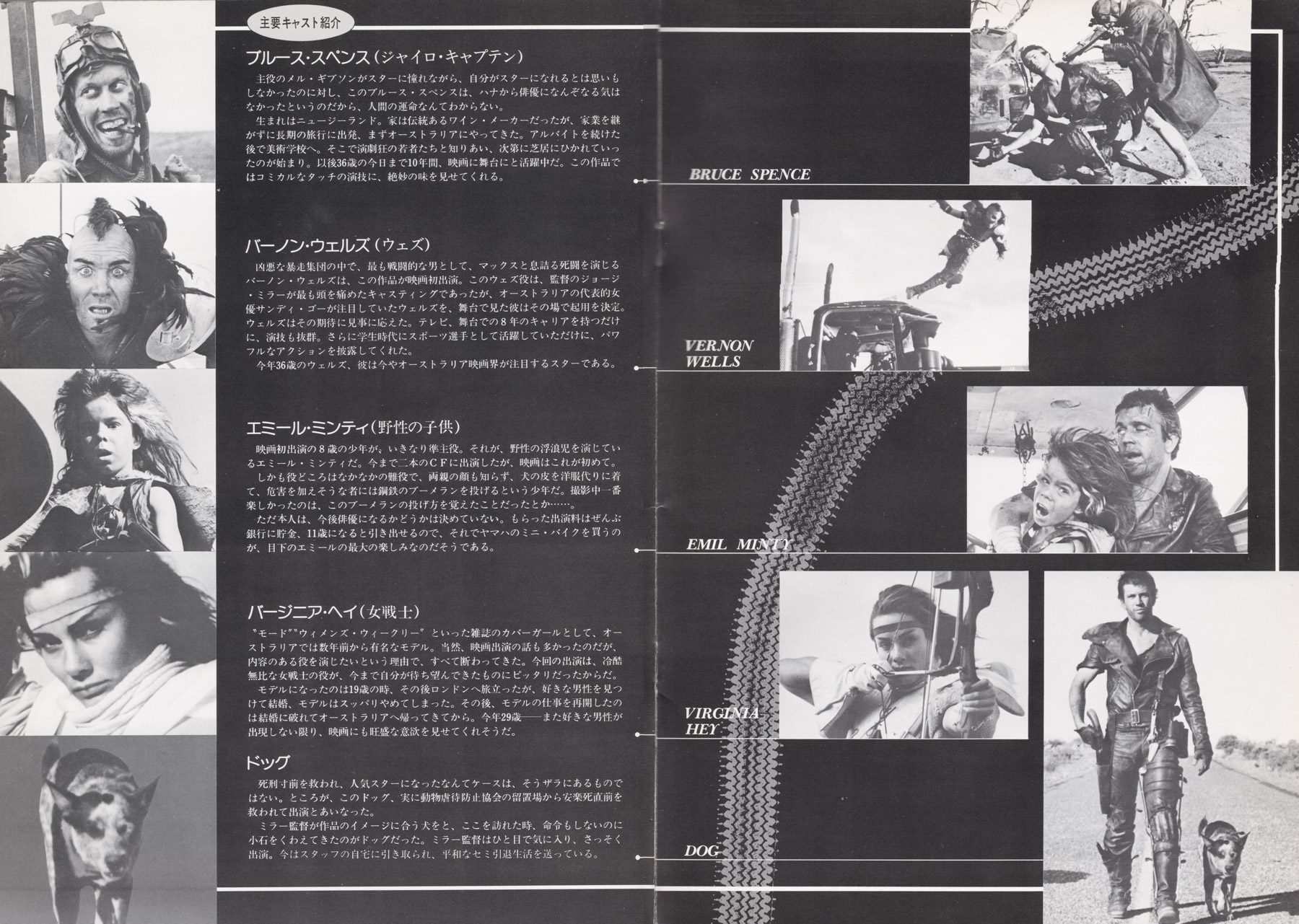
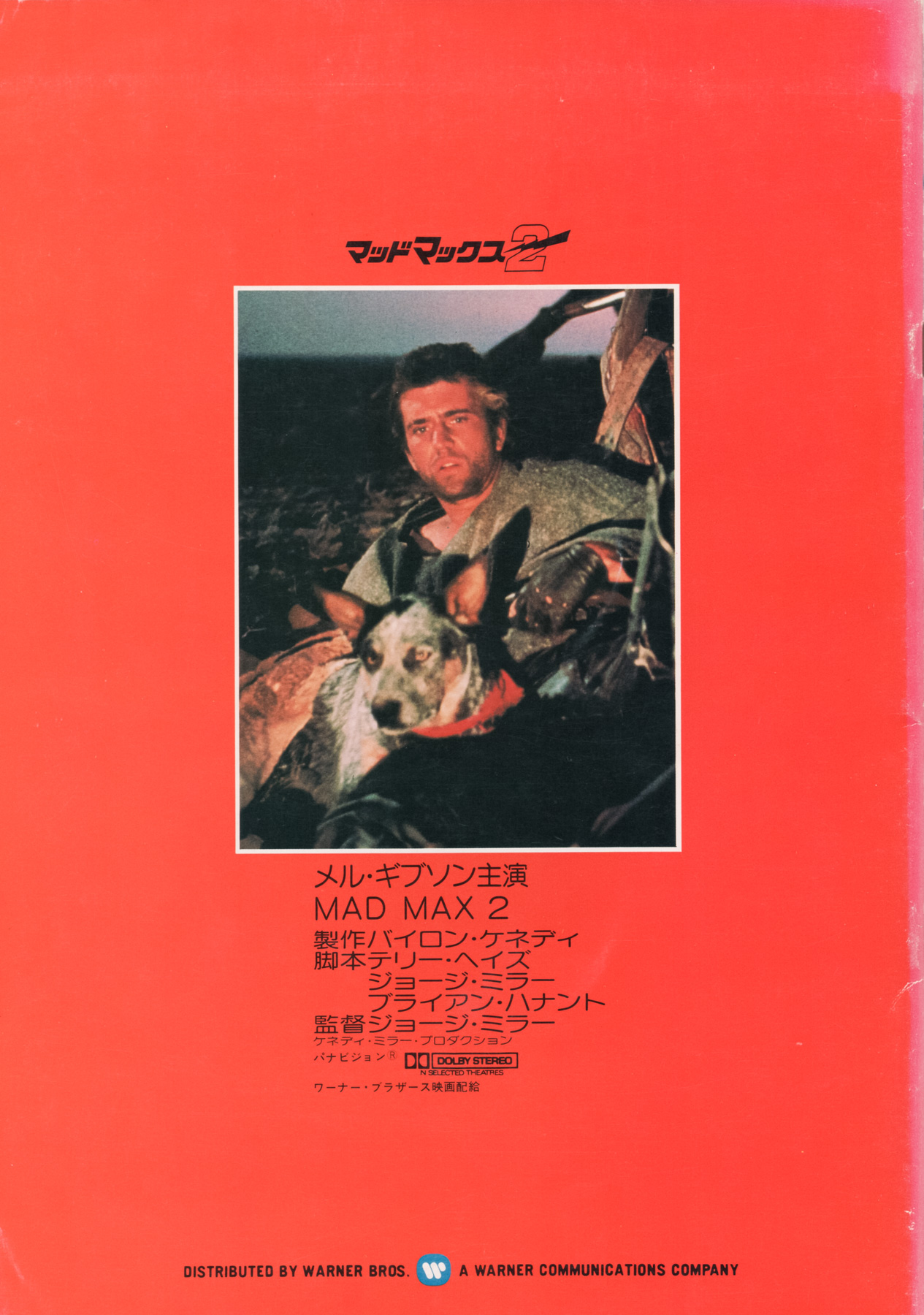
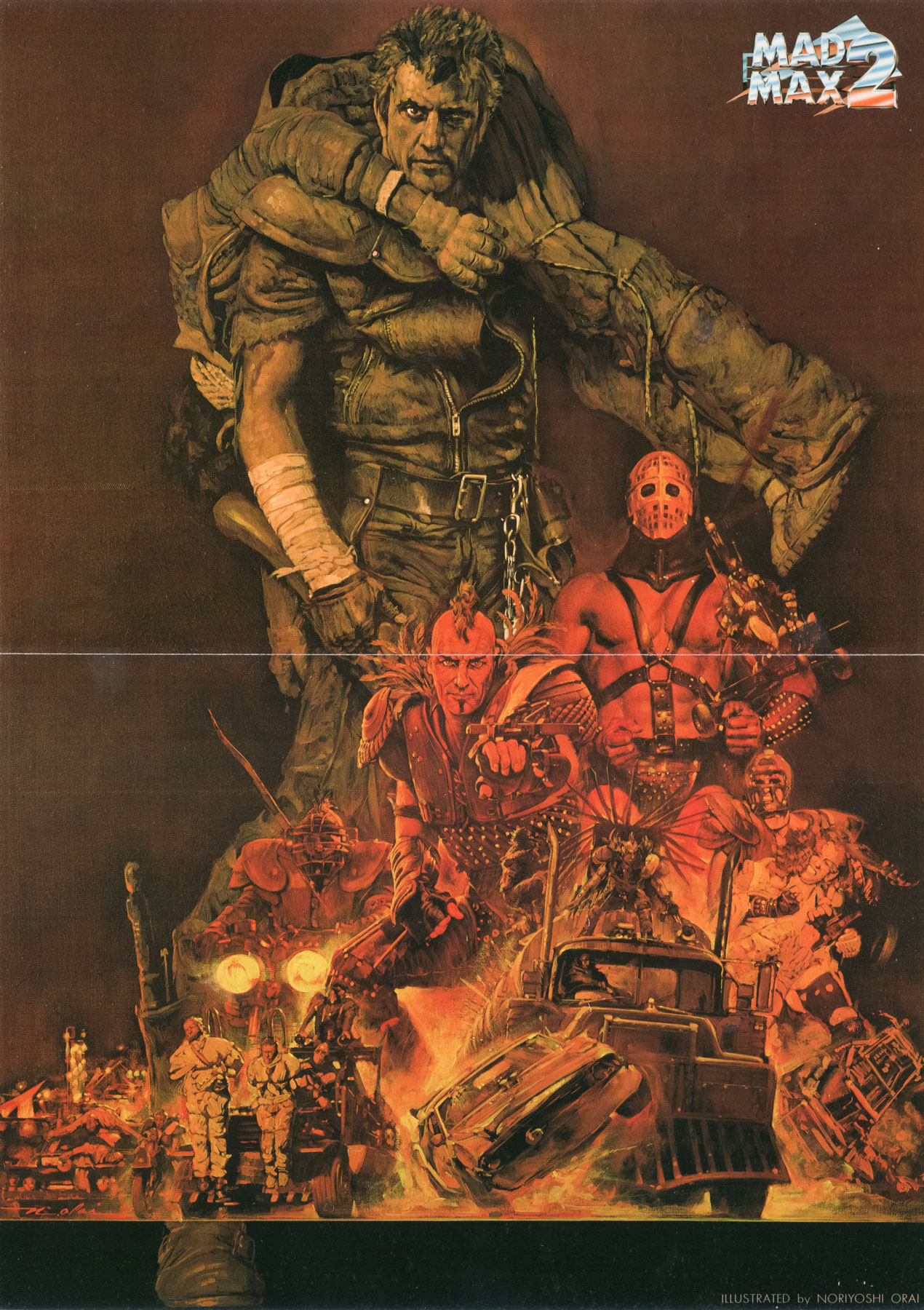
This is the original cinema program that was sold at Japanese screenings of George Miller’s unforgettable Mad Max 2 (AKA The Road Warrior). The first film in the post-apocalyptic franchise was released in Australia in 1979 and worldwide the following year, where it went on to gross over $100m. The original budget was around $400k so for decades it held the record for the most profitable film ever made. The US release had been relatively small in terms of the number of cinemas so the decision was taken to rename the sequel as The Road Warrior there. The UK, Japan and other countries received it as Mad Max 2.
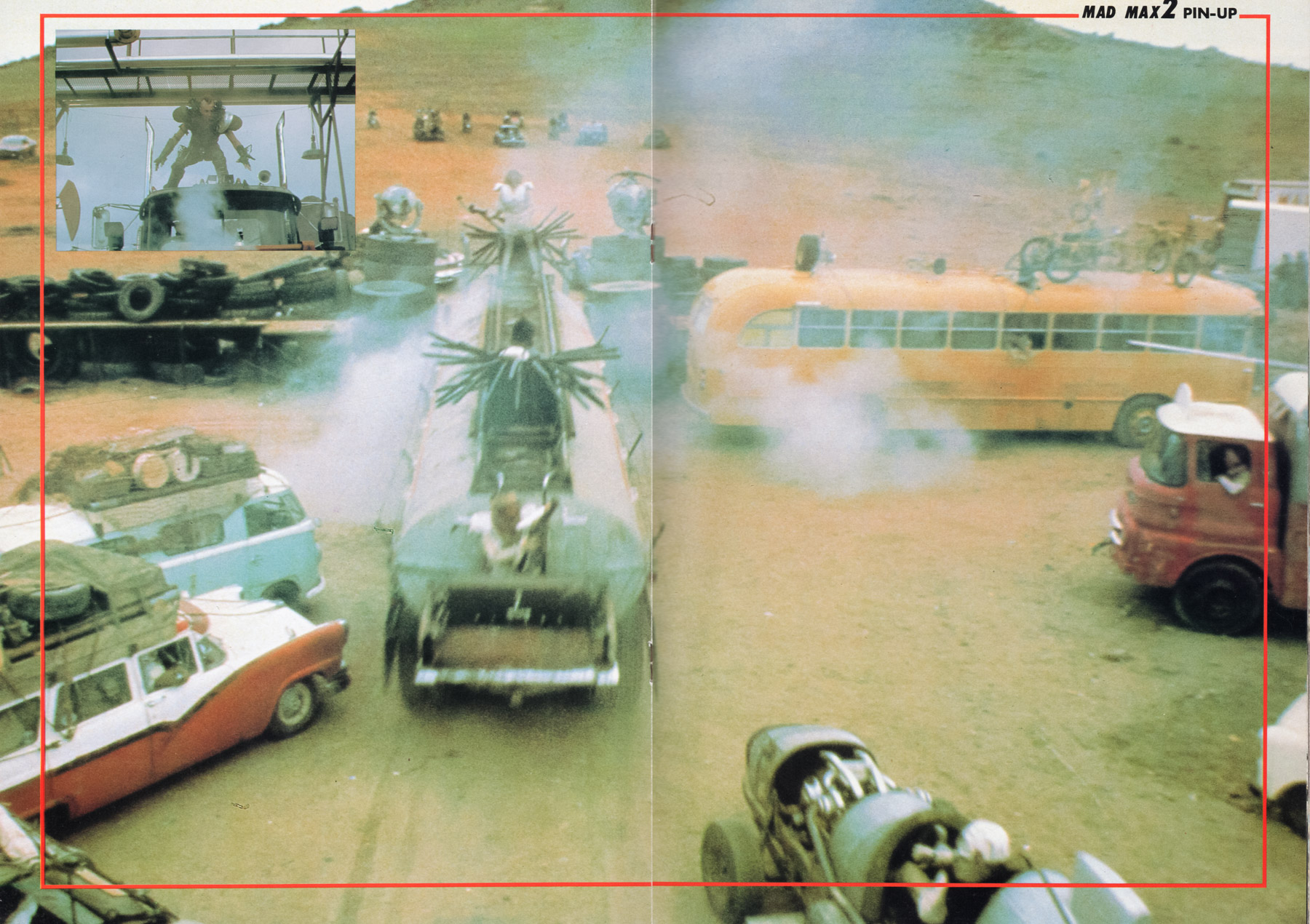
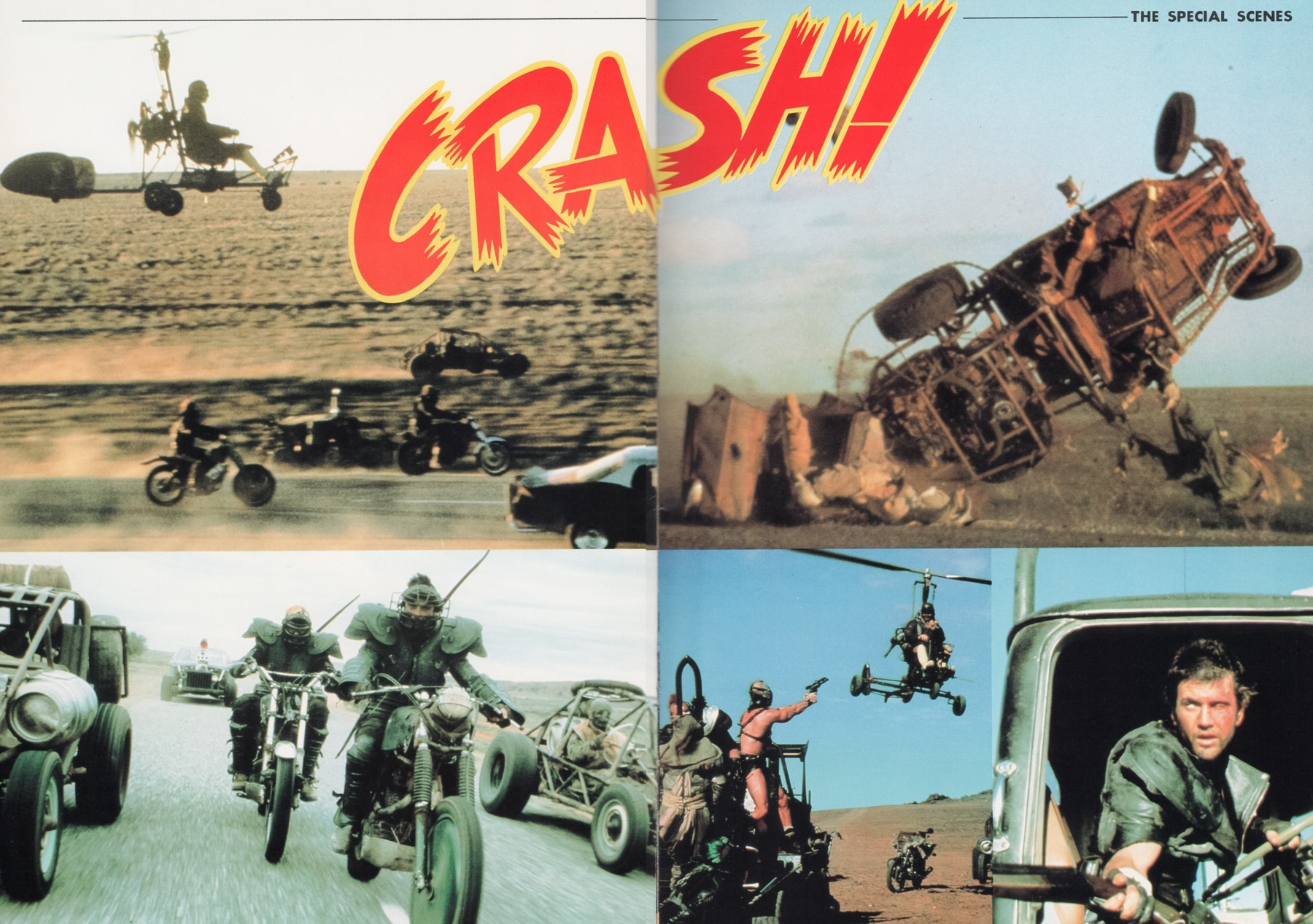
The film ups the ante considerably from the first film and sees Max (Mel Gibson) roaming the desert in his black supercharged V8 special, mourning the death of his family and searching for fuel and food. After a chance encounter on the road he ends up at a compound full of fuel which is under siege by a gang of marauders, led by the masked madman Lord Humungus. Eventually Max is tasked with leading the group to safety via an armoured convoy, which includes armoured tankers. The chase is incredibly thrilling and one of the most memorable action sequences ever filmed. The 2015 quasi-sequel Fury Road dials up the action even more and was a welcome return to the world of Mad Max.

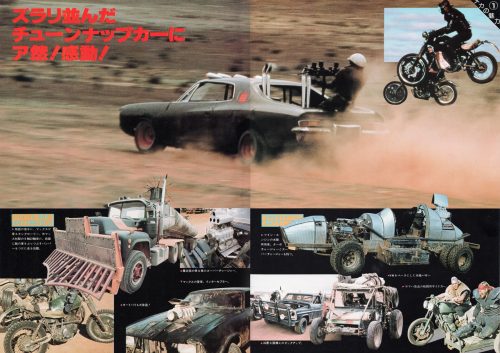
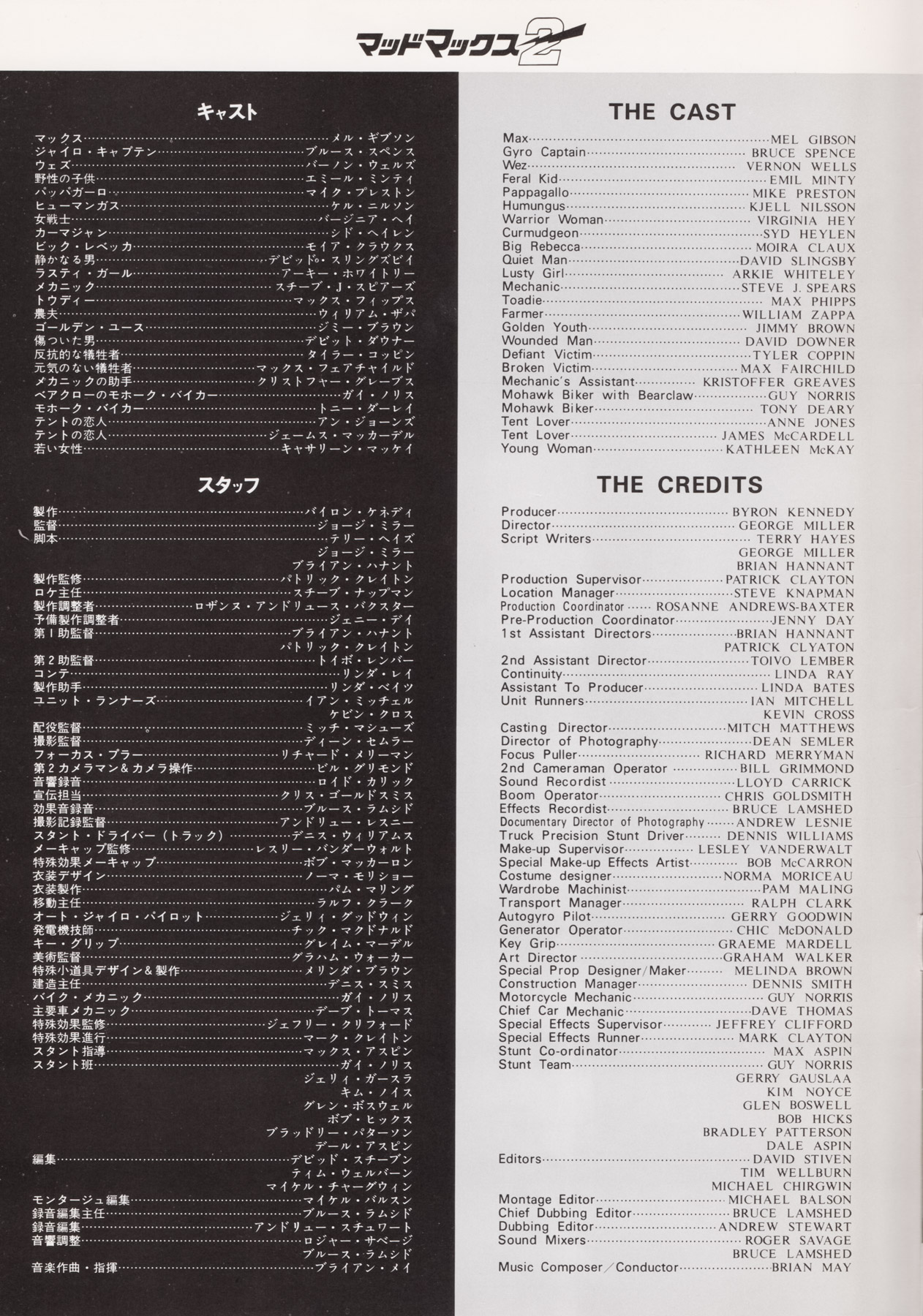
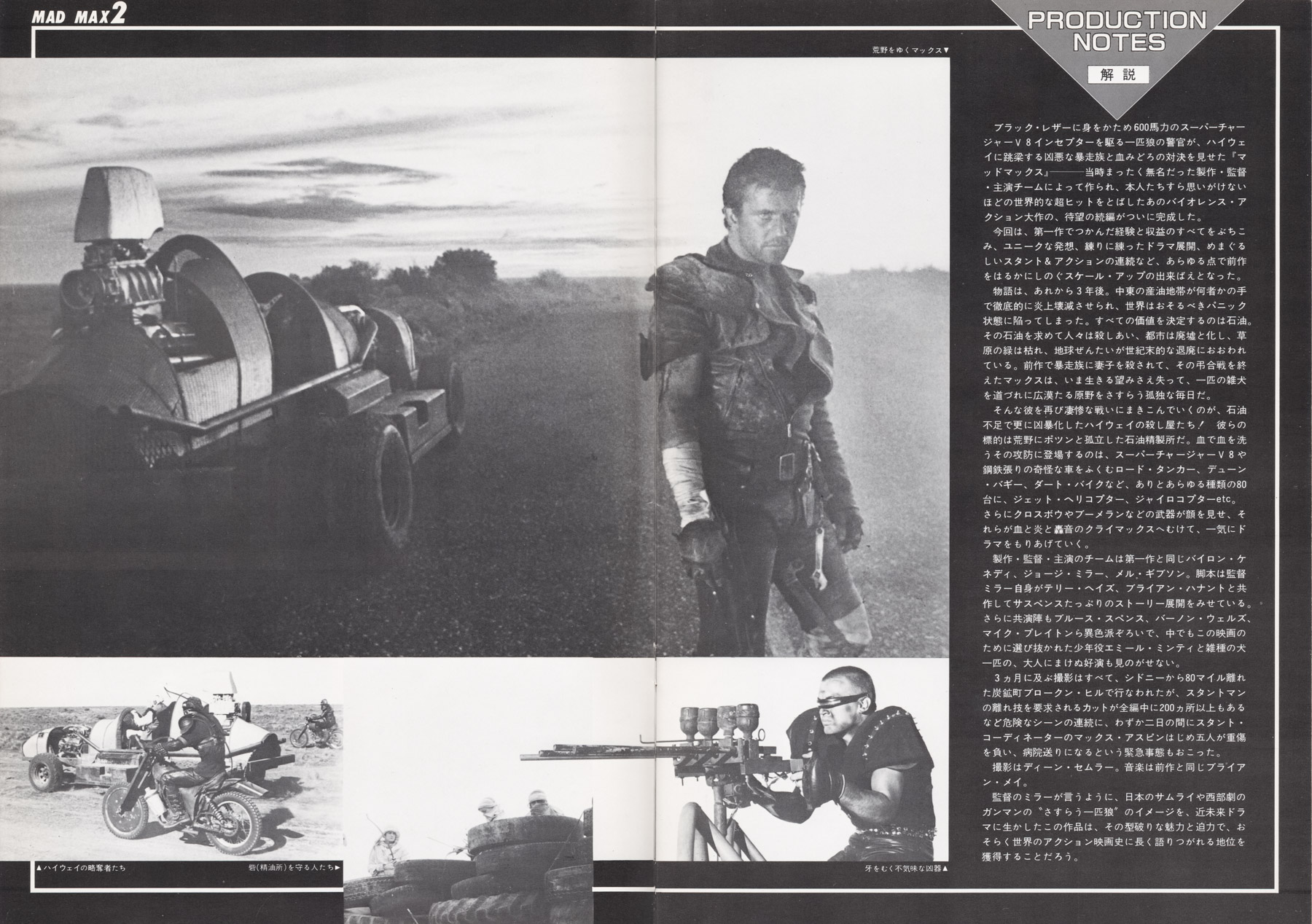
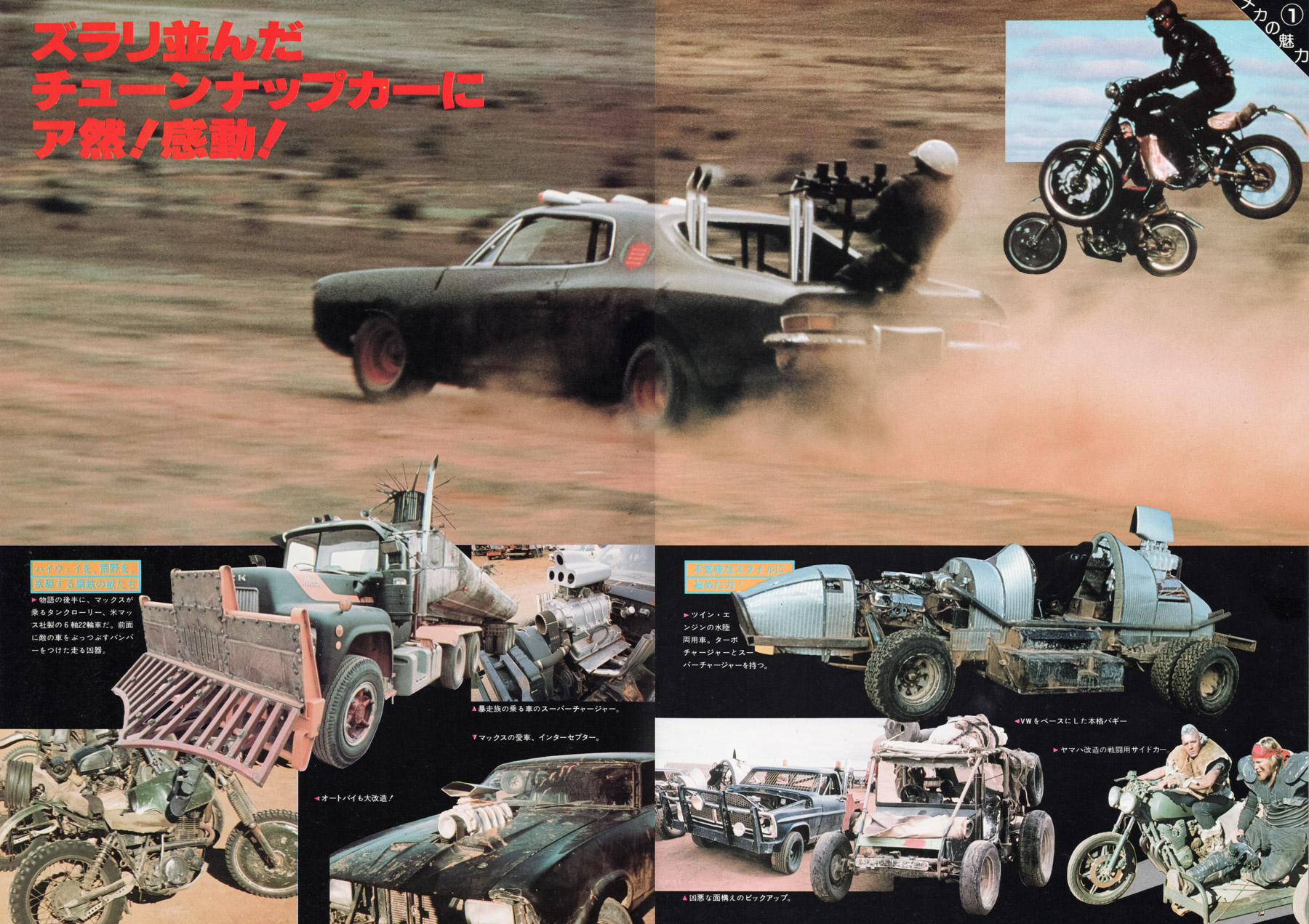
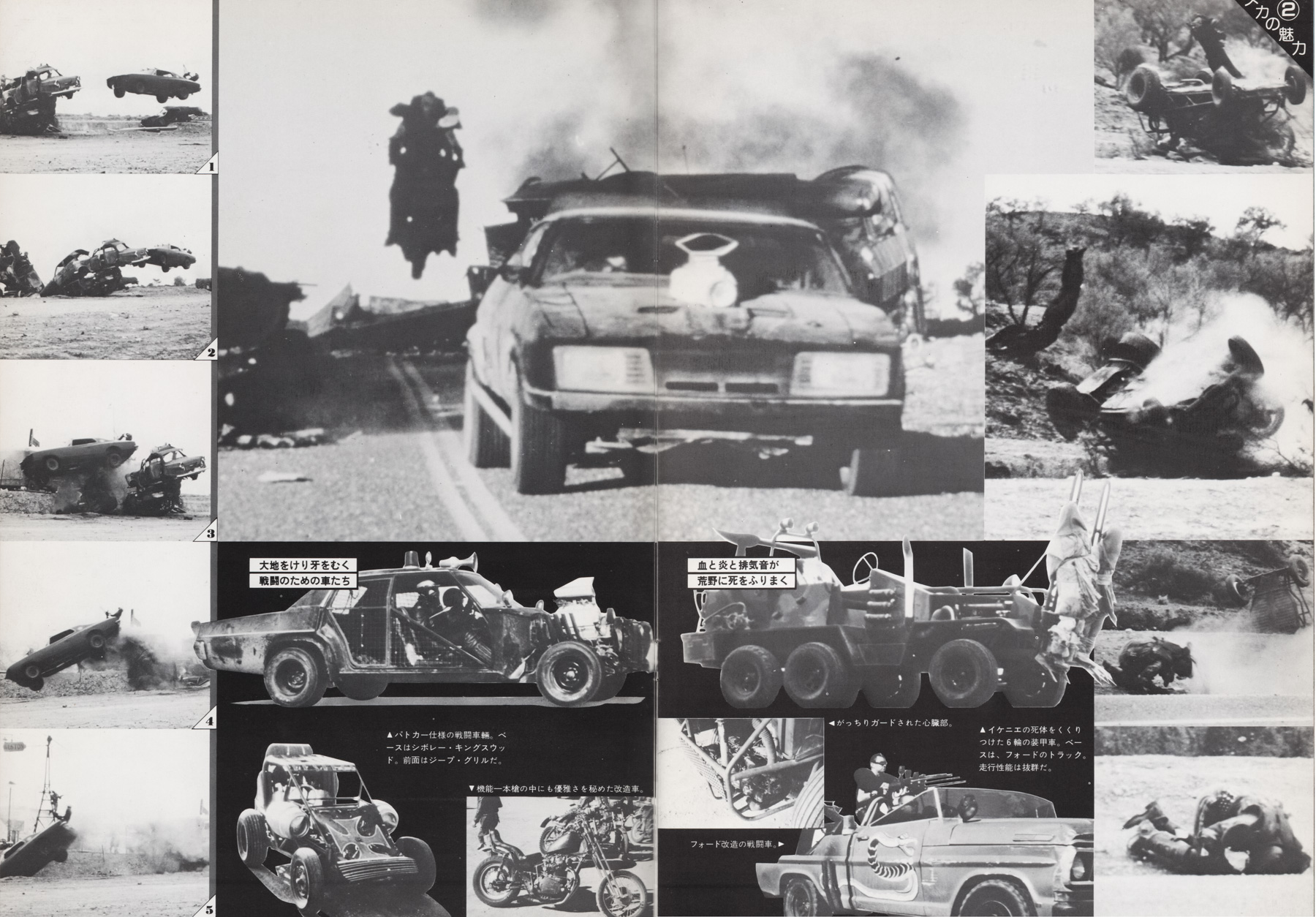
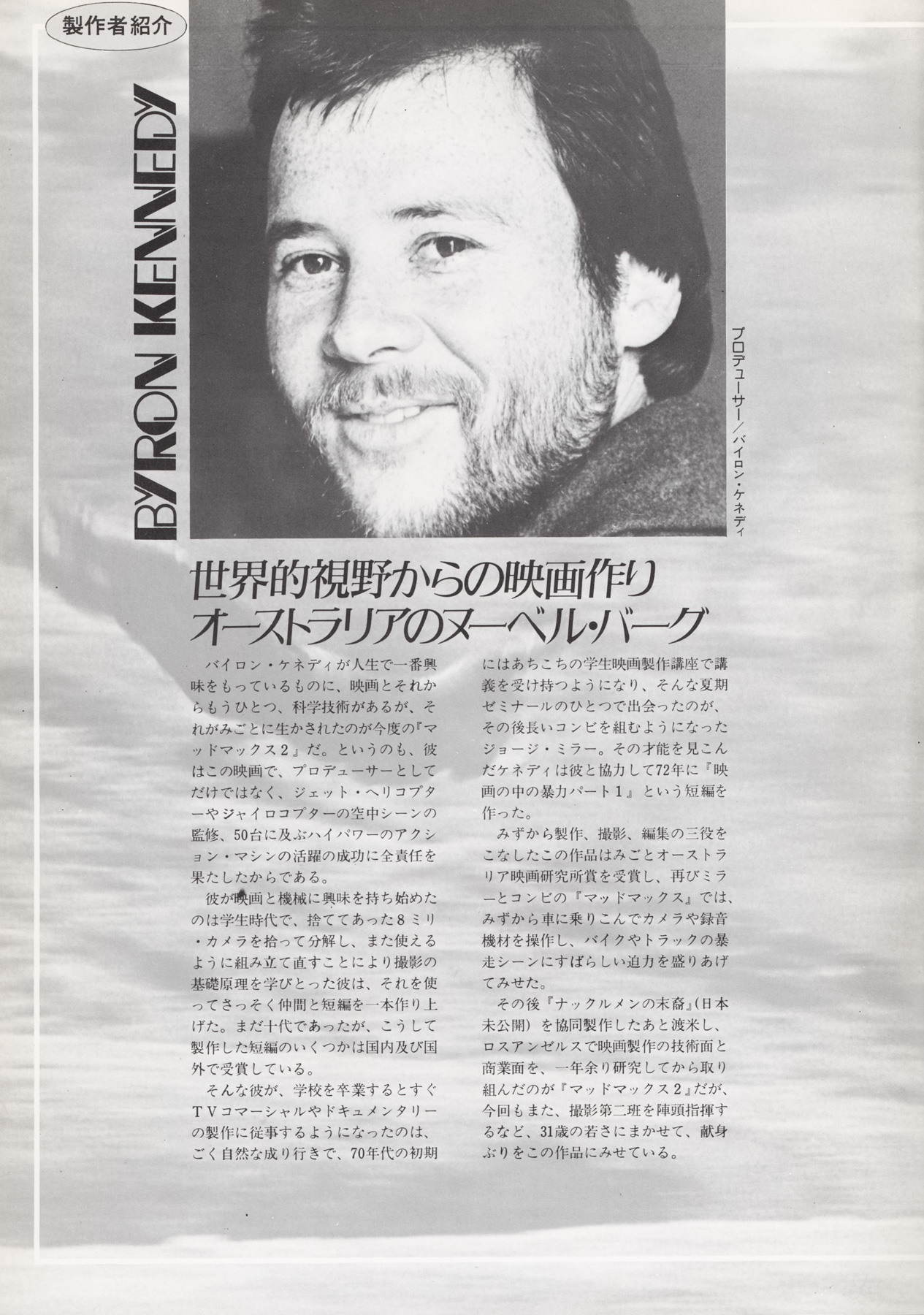
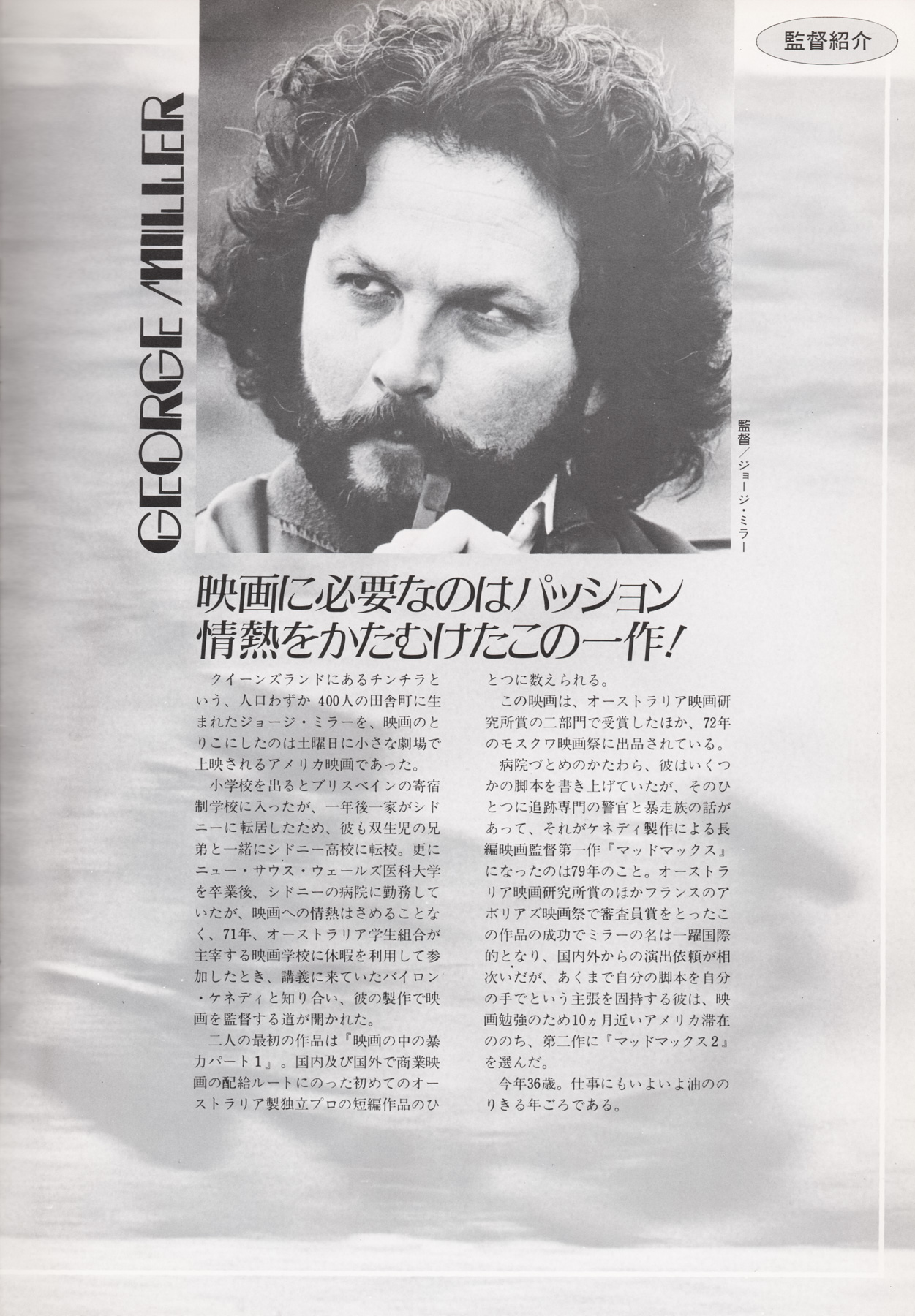
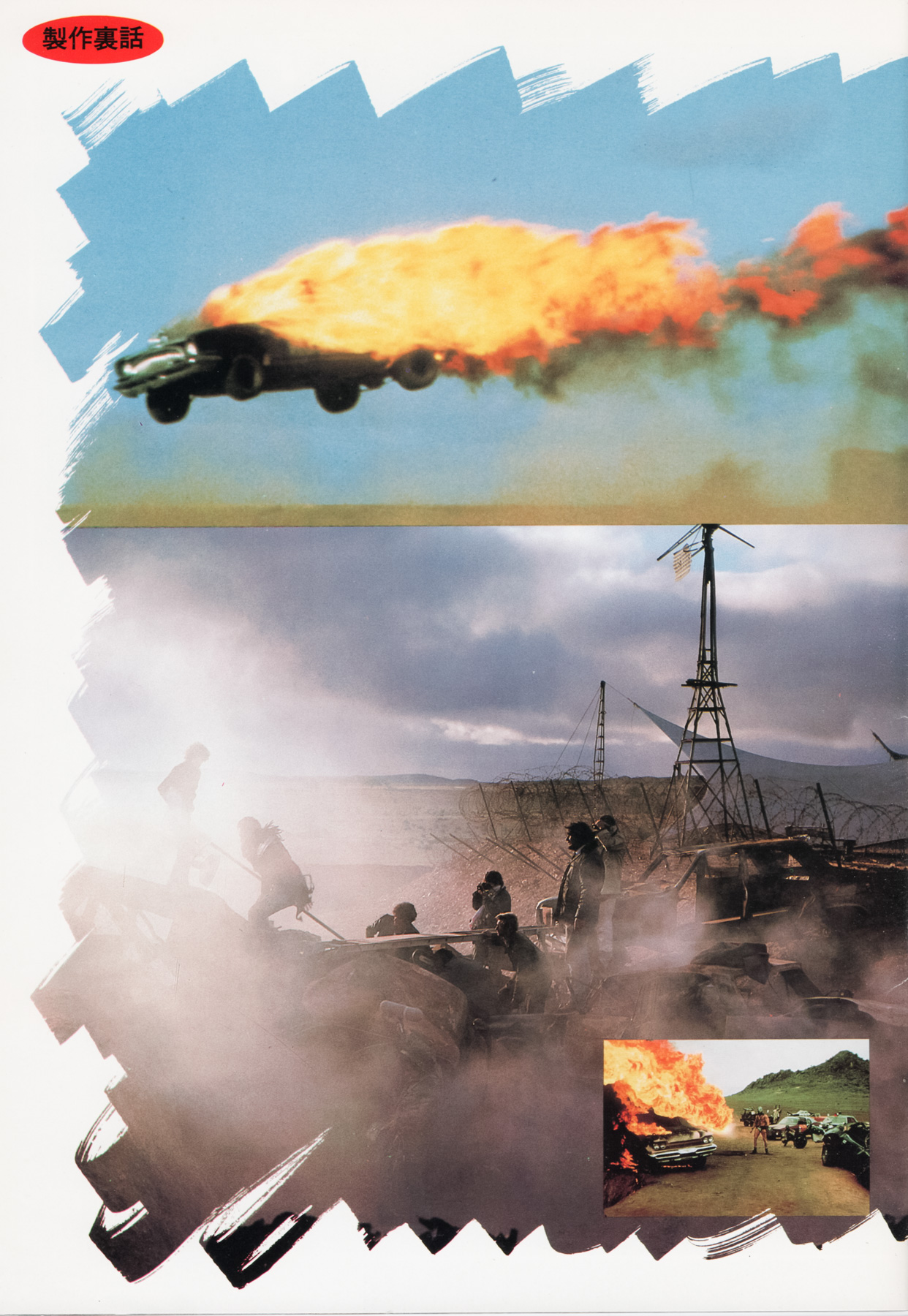
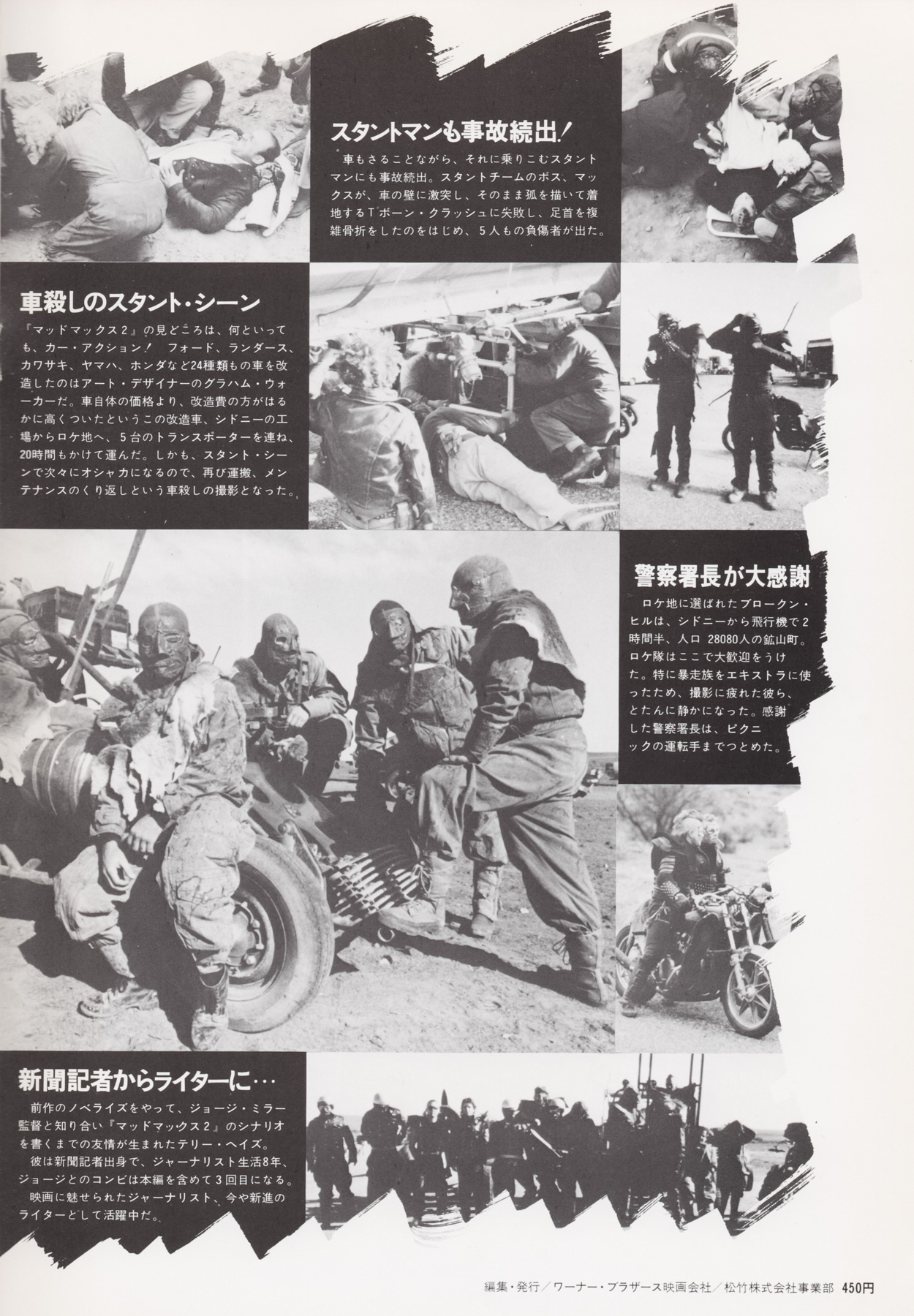
Note that this program features details about the production, the director and several of the actors. It also contains a poster with artwork by the late, great Noriyoshi Ohrai (see last picture). This is the only place that the artwork was available – no actual cinema-used poster was printed featuring the art. The regular Japanese B2 poster is a photographic montage, which is near enough the same as this program, that can be seen on this site here.
I visited an exhibition of Ohrai’s work in Japan in 2014 and a report can be seen here. Other posters I have by him can be seen here.
A Man Called Dagger / B2 / Japan

28.07.14

Poster Poster
Title
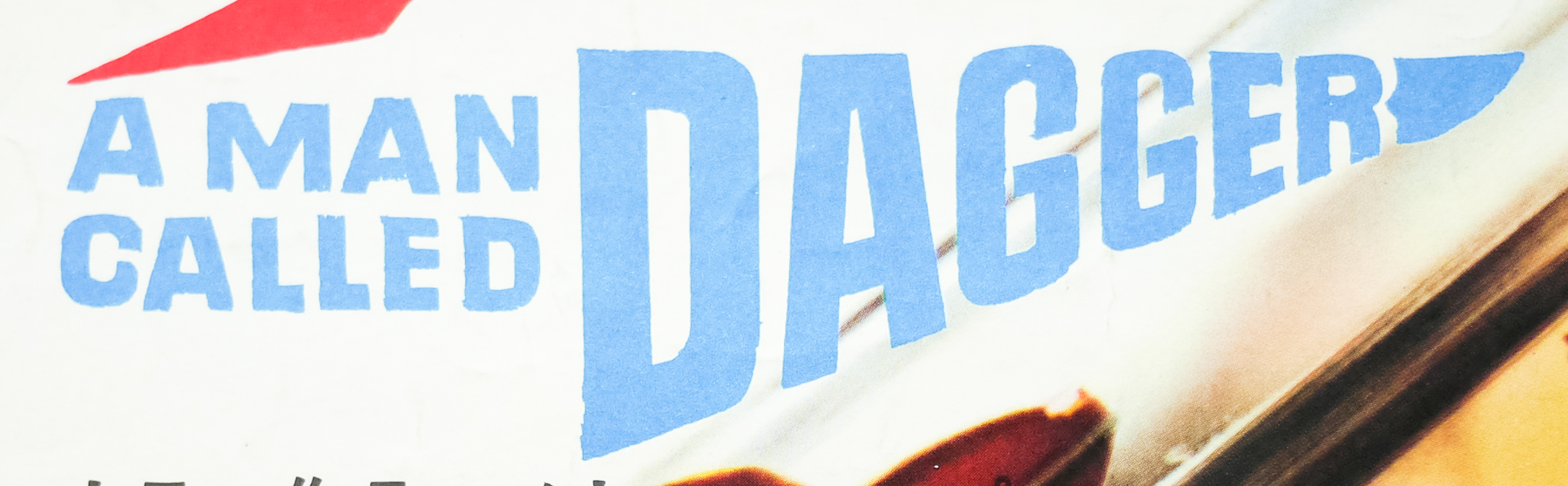
A Man Called Dagger
AKA
--
Year of Film
1967
Director
Richard Rush
Starring
Paul Mantee, Terry Moore, Jan Murray, Sue Ane Langdon, Eileen O'Neill, Maureen Arthur, Leonard Stone, Richard Kiel
Origin of Film
USA
Genre(s) of Film
Paul Mantee, Terry Moore, Jan Murray, Sue Ane Langdon, Eileen O'Neill, Maureen Arthur, Leonard Stone, Richard Kiel,
Type of Poster
B2
Style of Poster
--
Origin of Poster
Japan
Year of Poster
1968
Designer
Unknown
Artist
Unknown
Size (inches)
20 4/16" x 28 13/16"
SS or DS
SS
Tagline
--

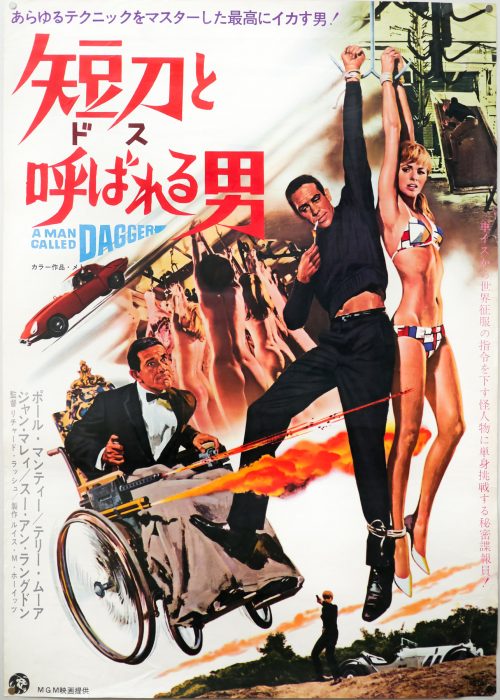
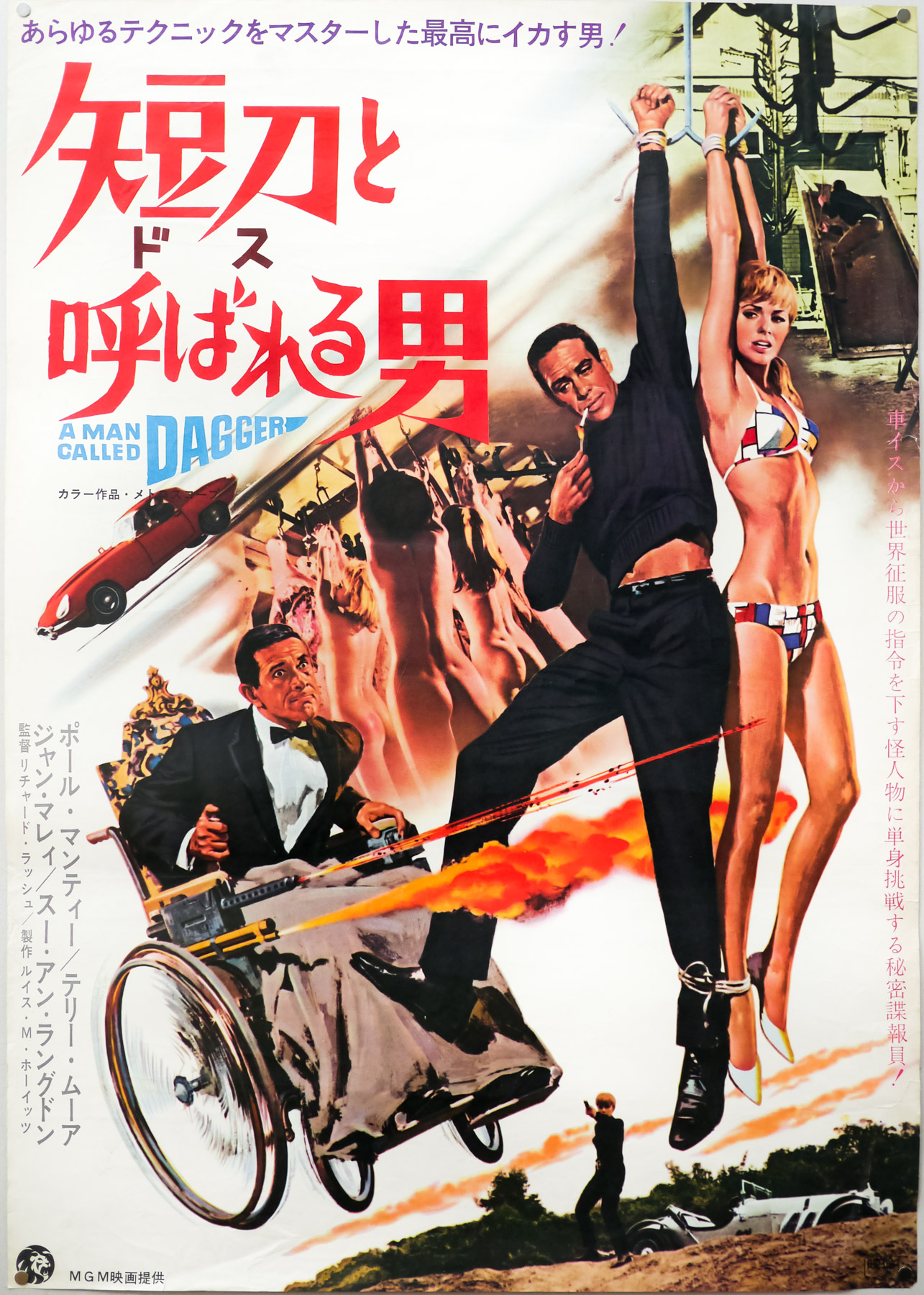
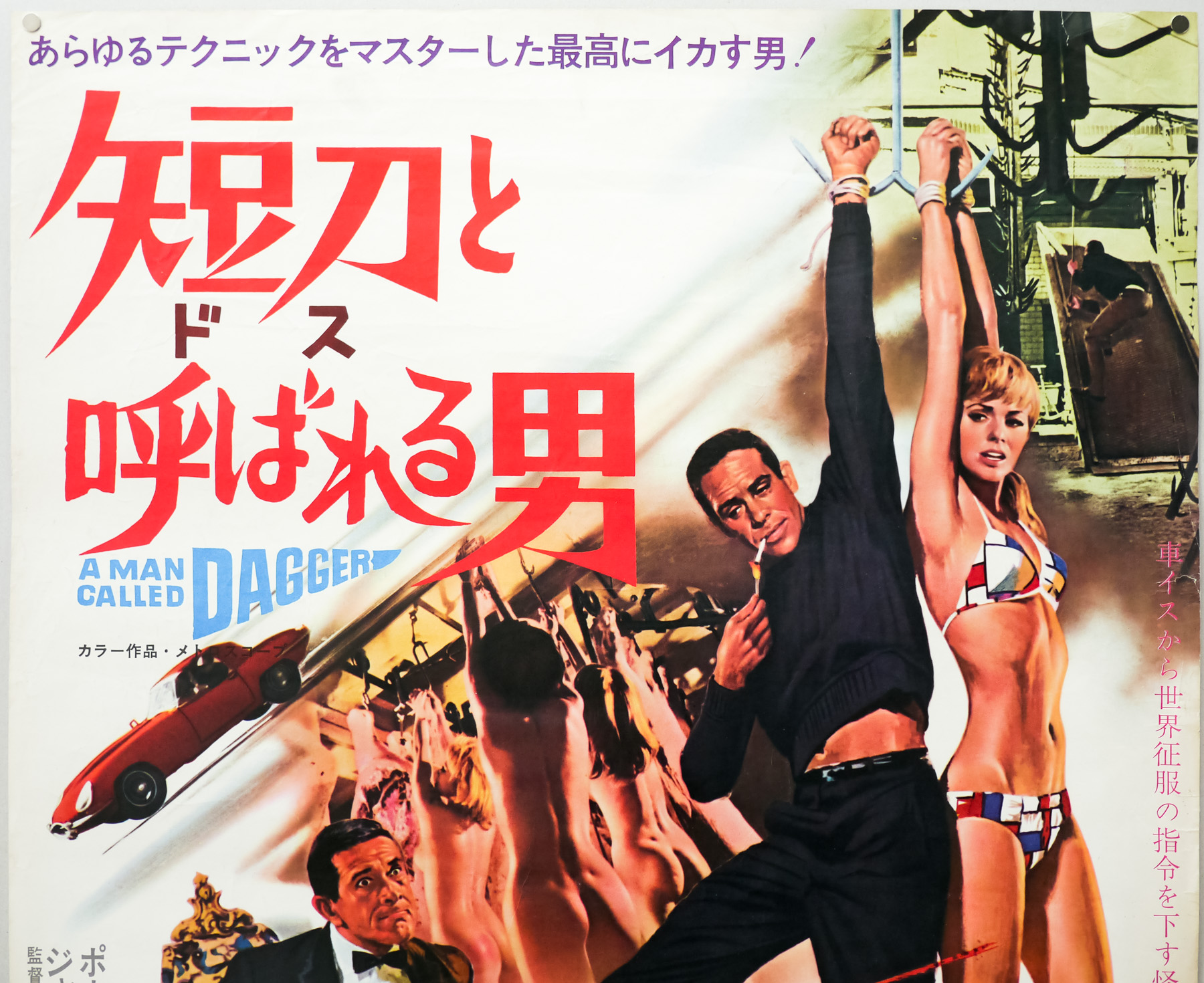
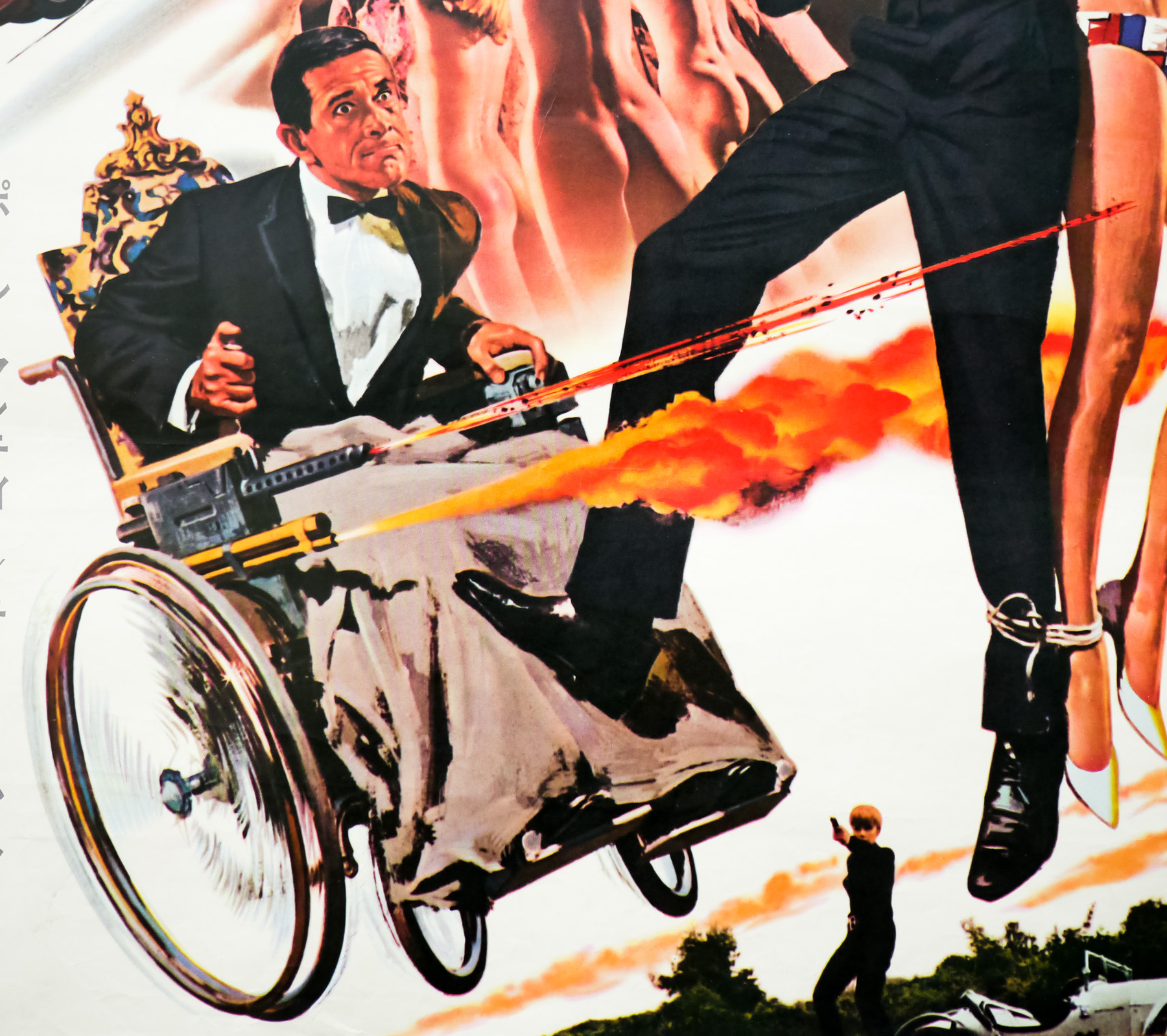
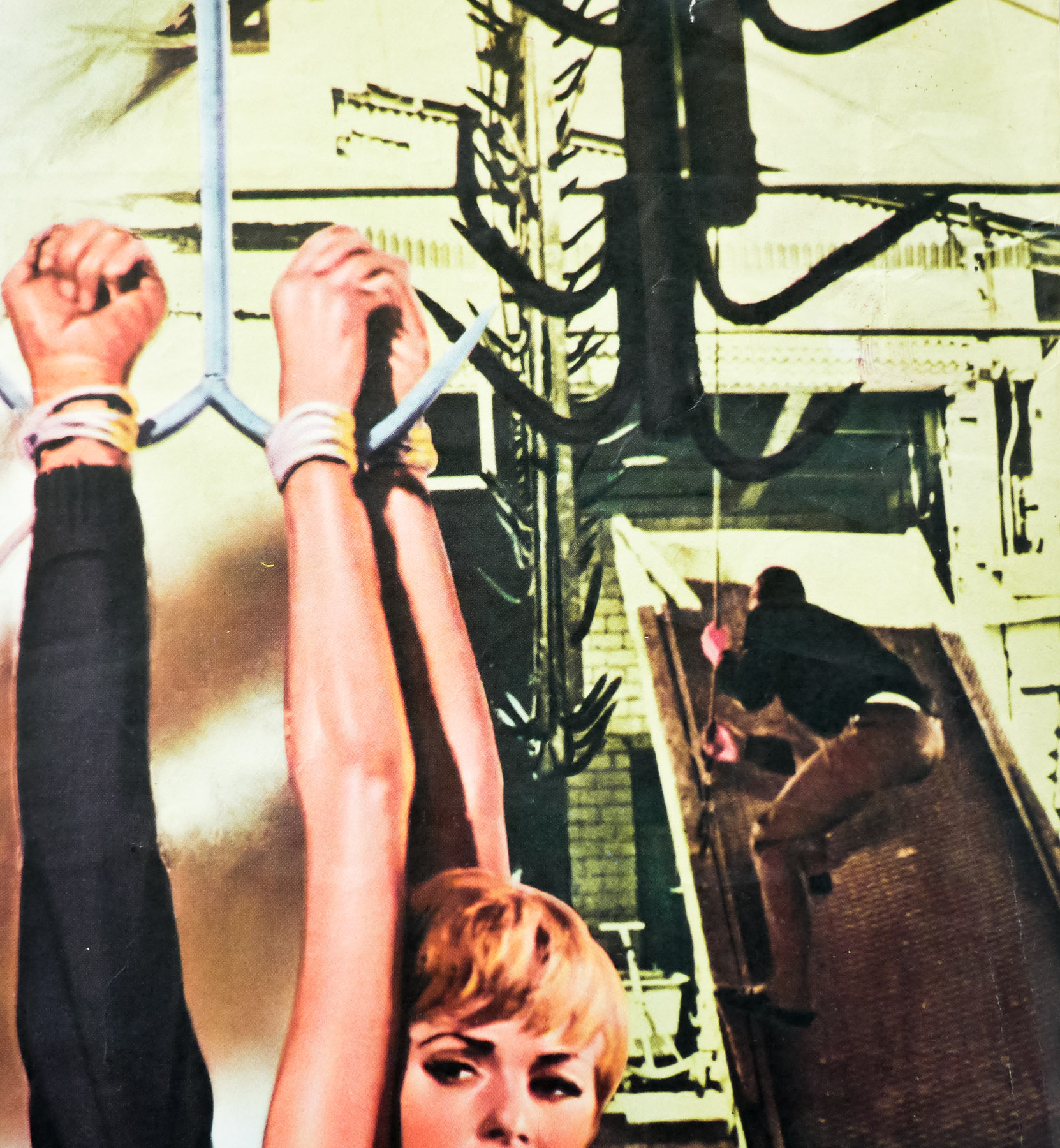
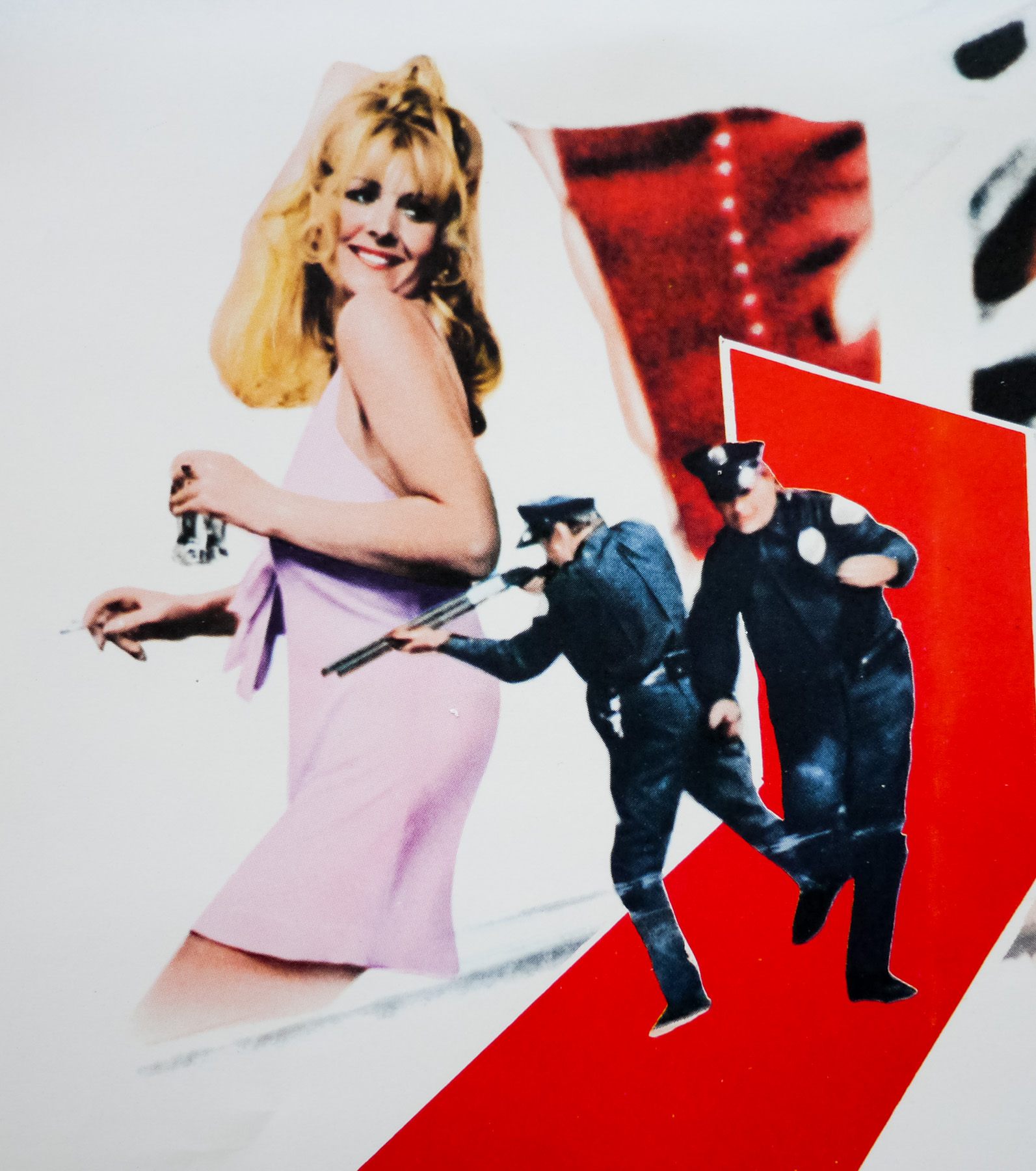
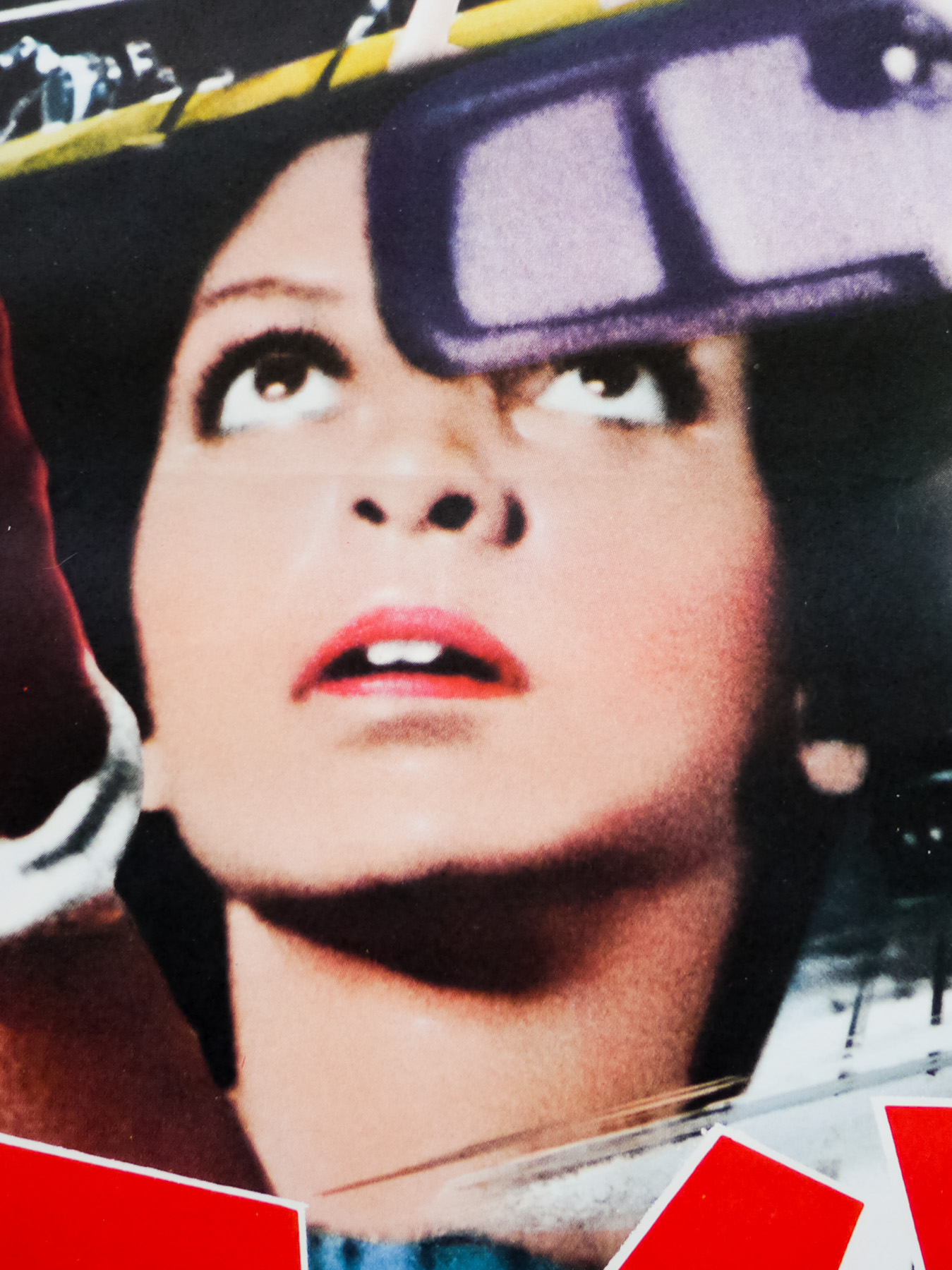
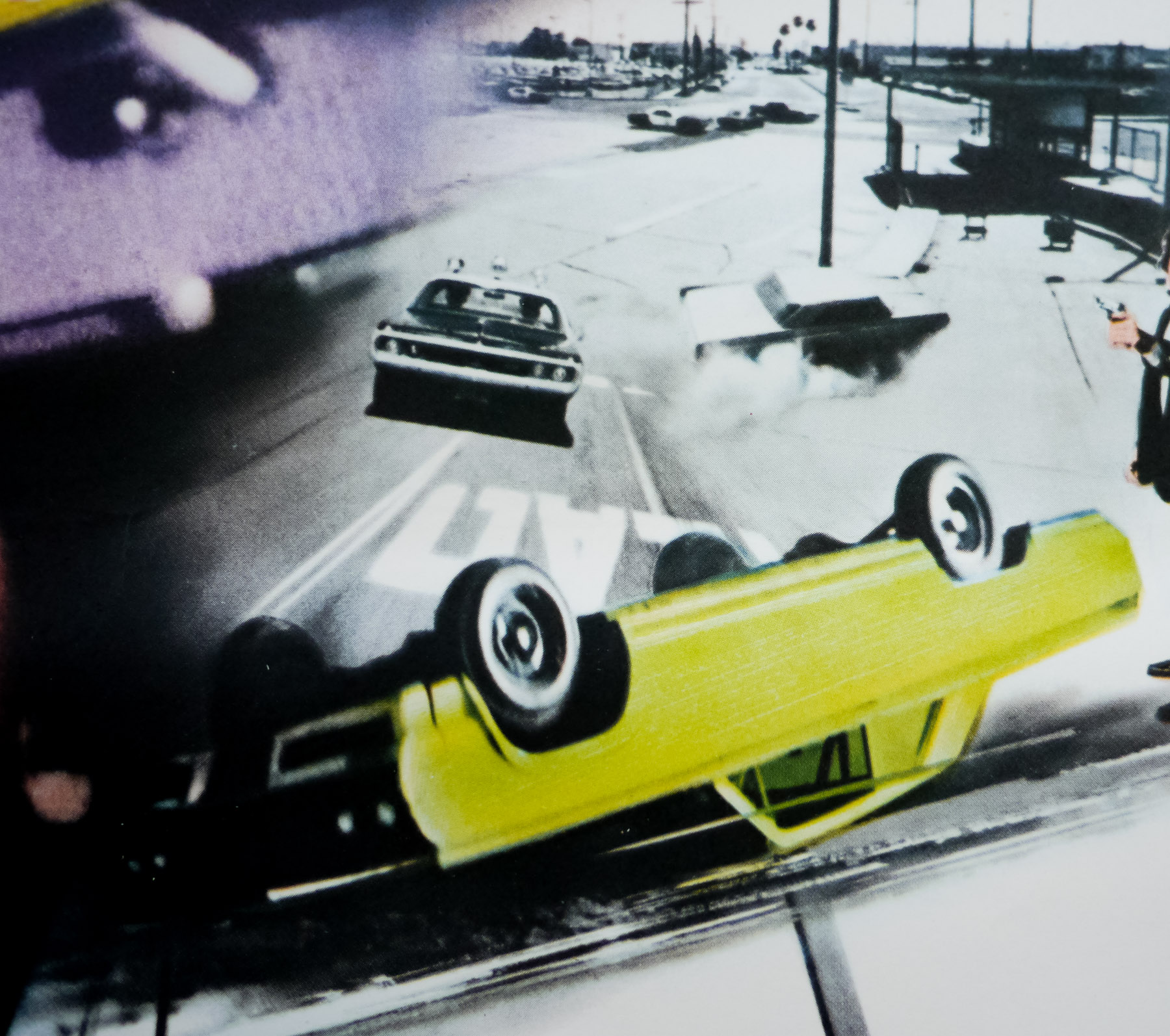
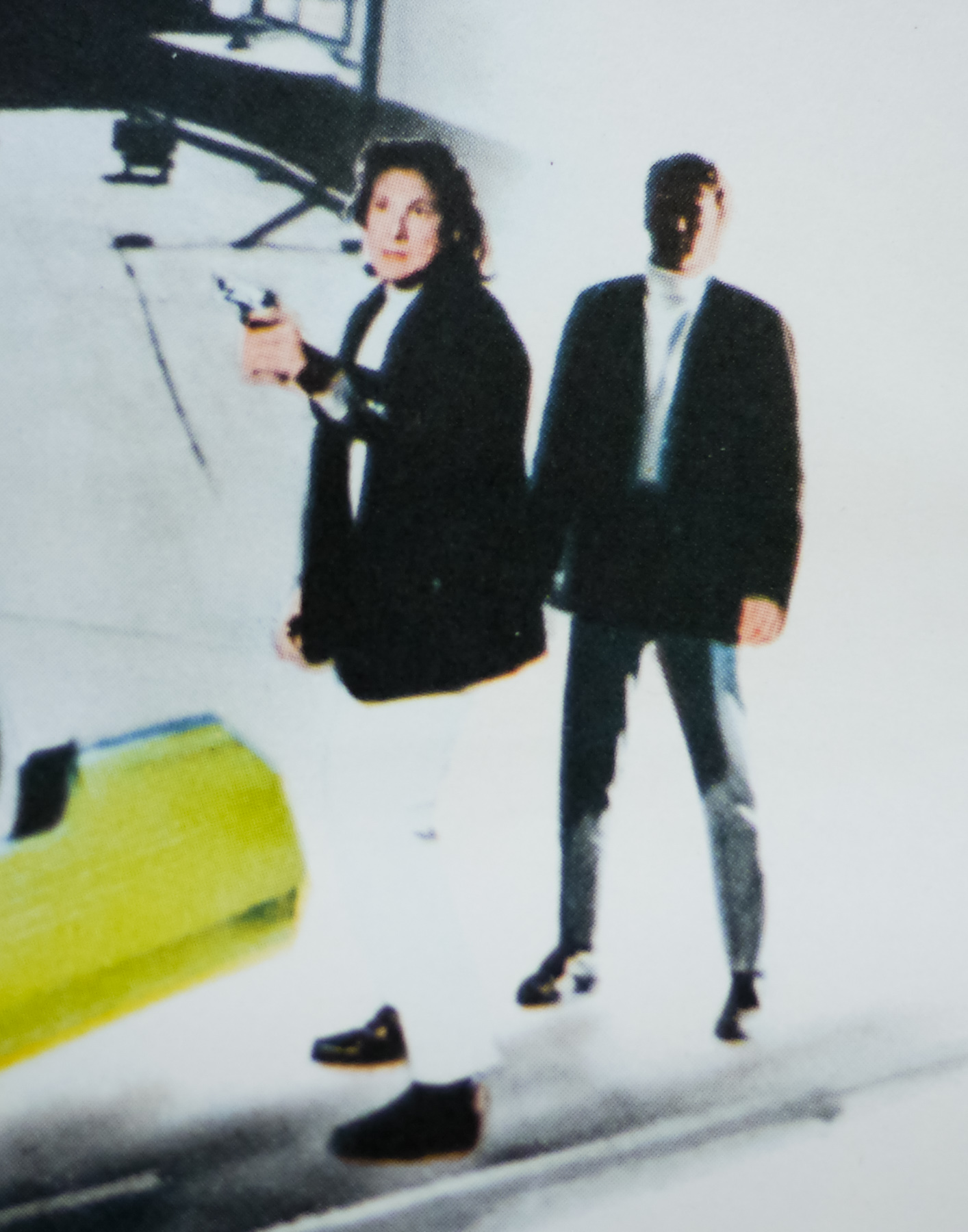
A relatively obscure spy thriller from 1967, A Man Called Dagger saw limited release around the globe and, as far as I can tell, this Japanese poster is one of the few examples of a theatrical release (I don’t believe the UK was treated to a cinema outing). Originally filmed in 1966, it fell victim to a collapse of relations between its original production company, Lew Horwitz’s Global Screen Associates (GSA), and distributors Cinema Distributors of America. It languished for almost a year before being picked up by MGM. The film is essentially a low-grade James Bond homage (the original title was ‘Why Spy?’) and it’s clear that the original producers wanted to cash in on the global popularity of Ian Fleming’s famous creation.
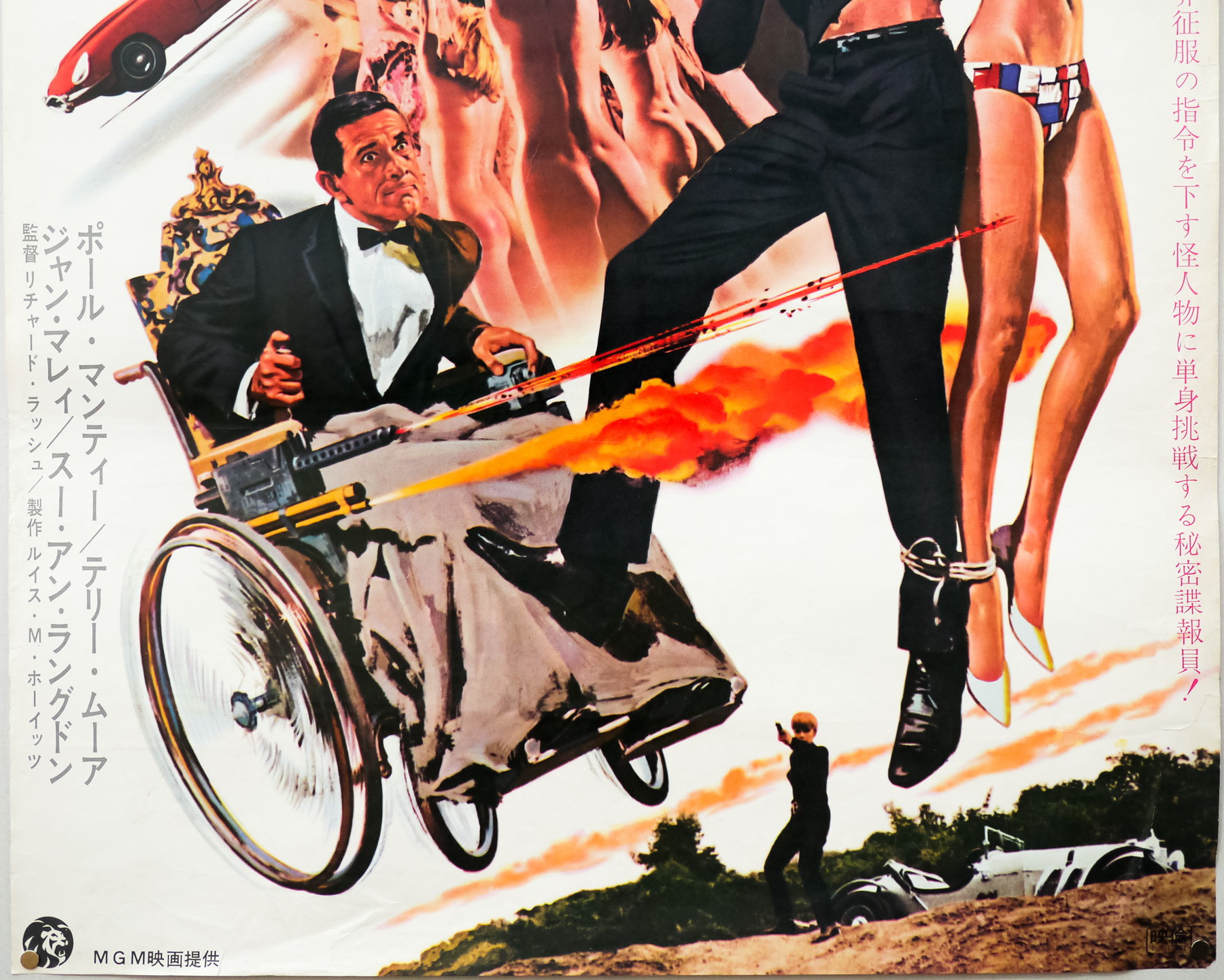
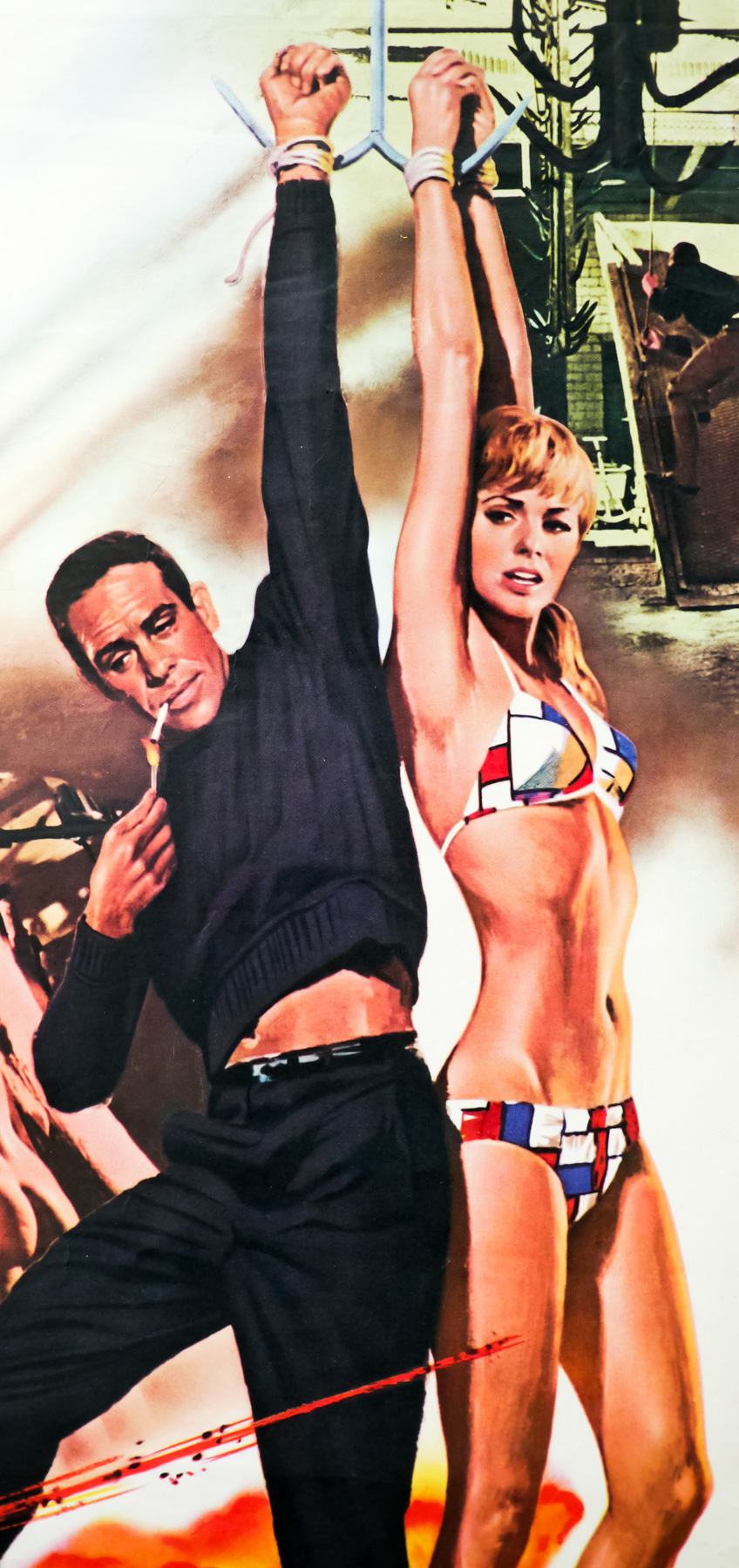
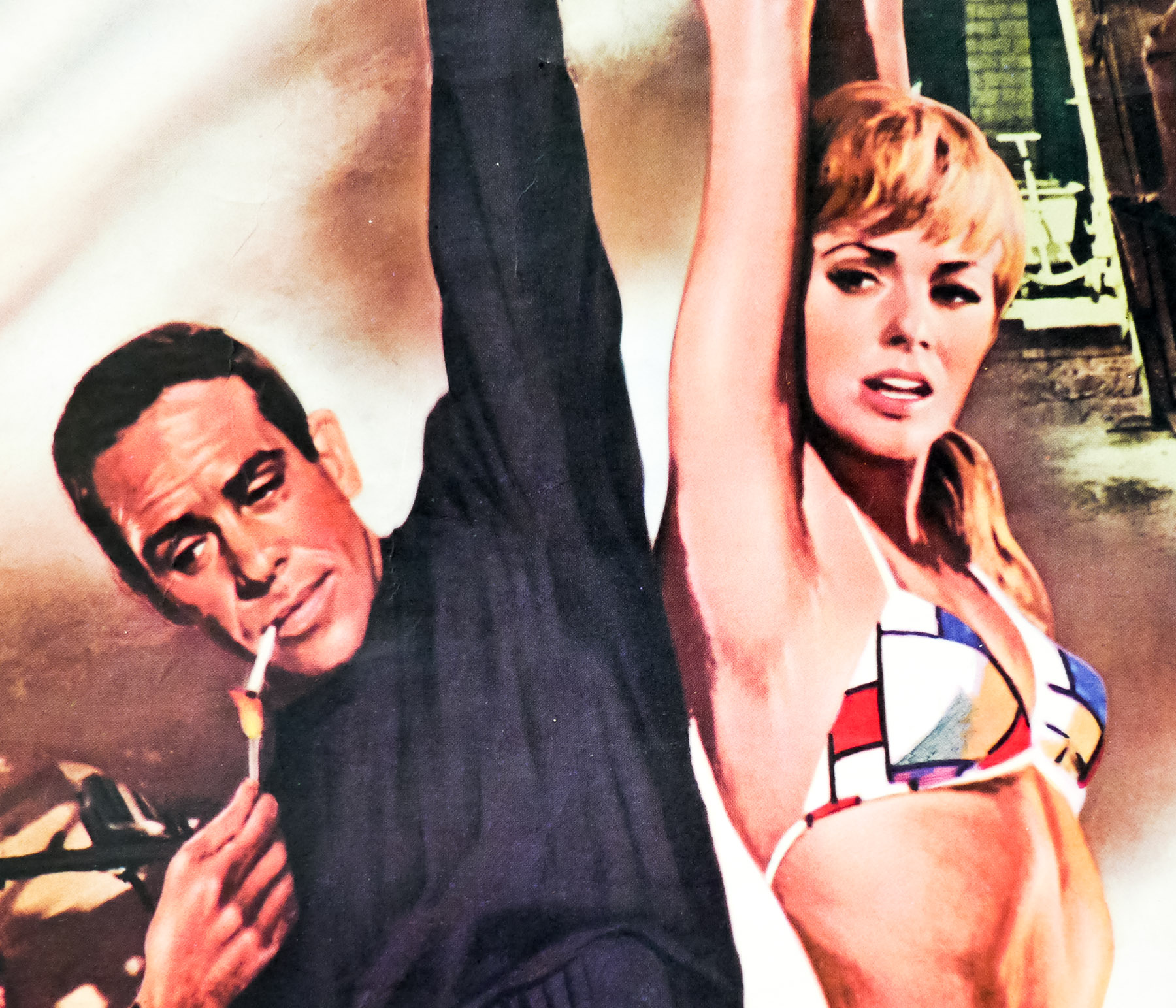
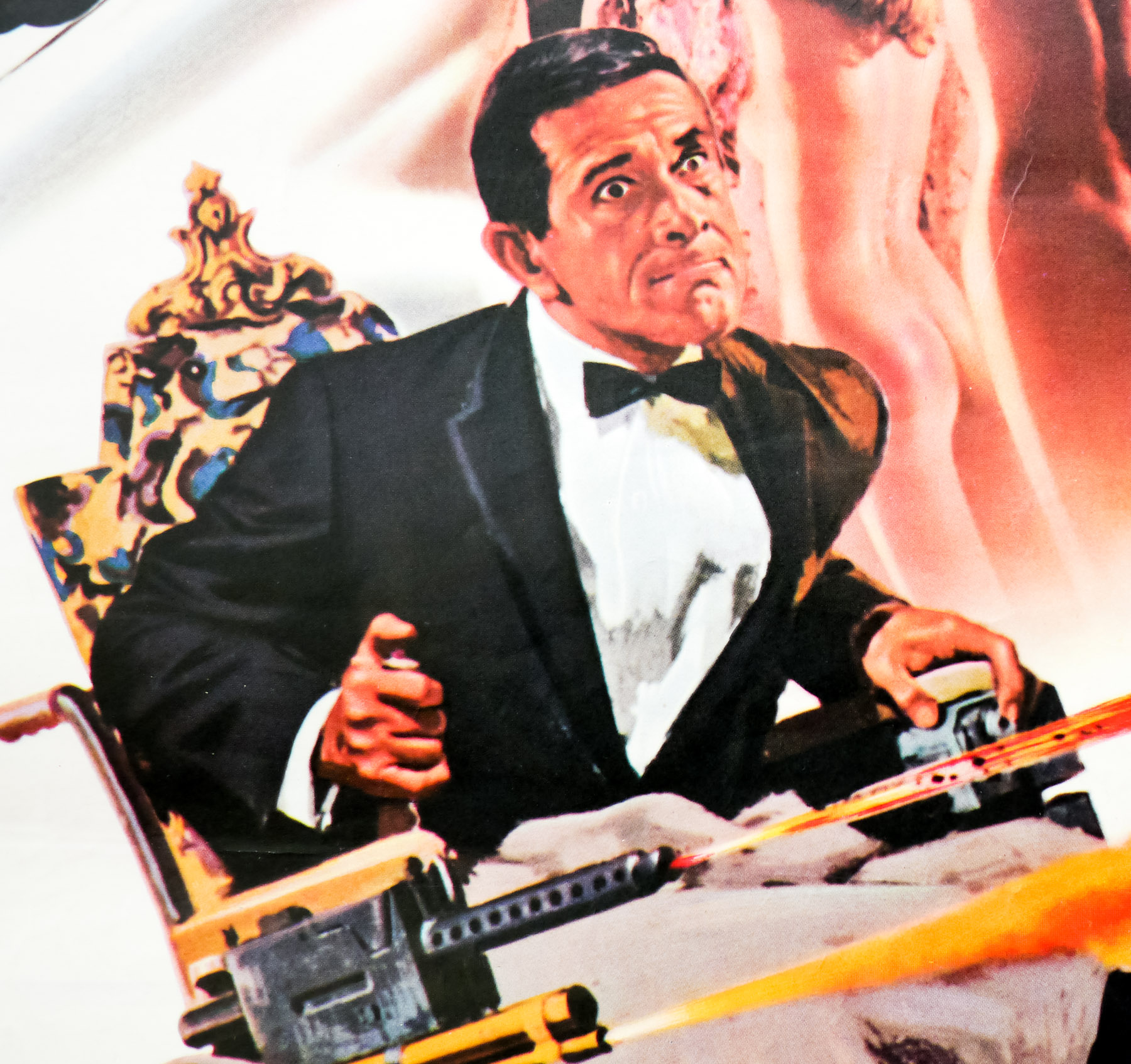
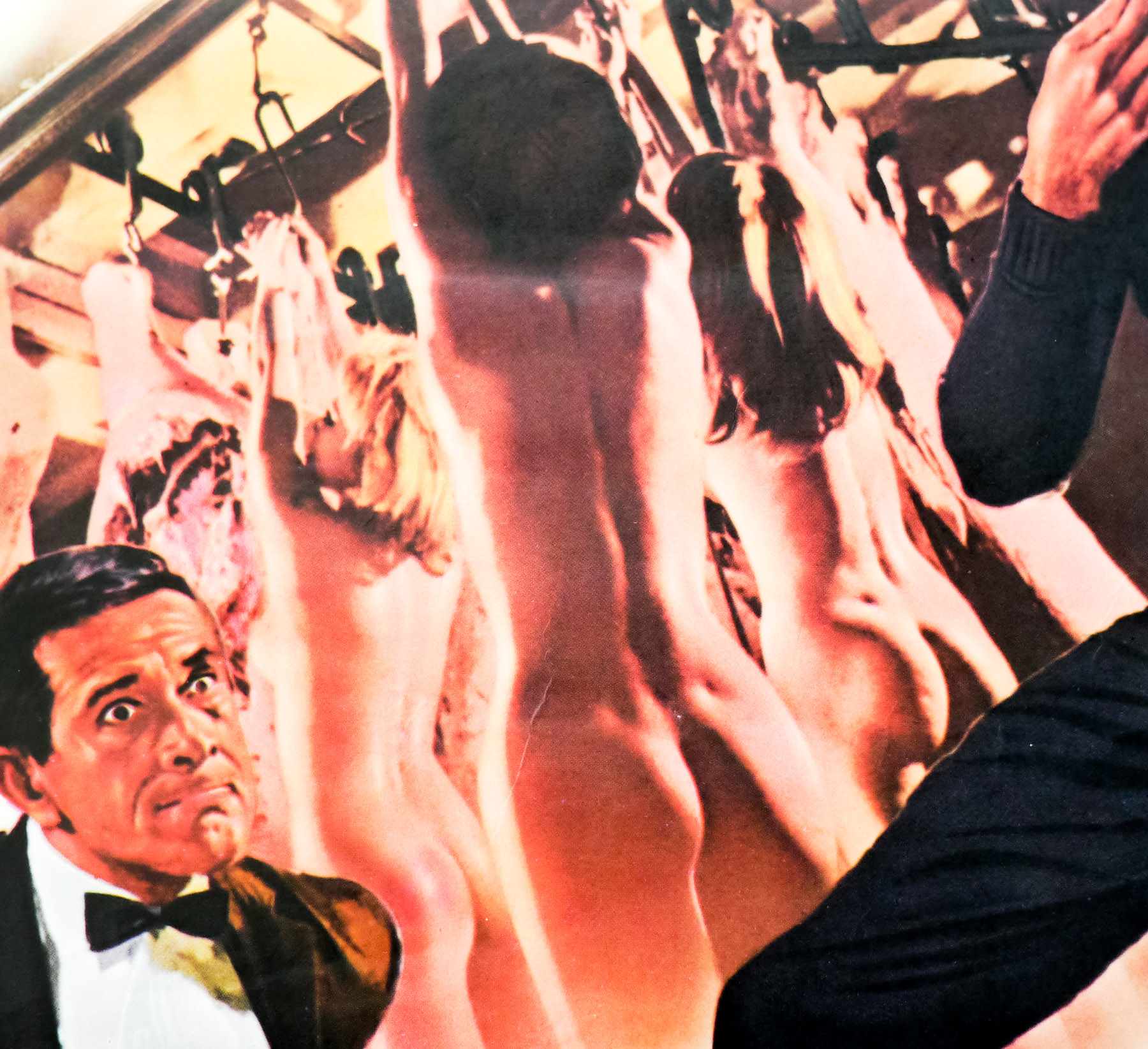
Richard Rush (most known for 1980’s The Stunt Man) was at the helm and Paul Mantee (a cult figure from his performance in Robinson Crusoe on Mars, 1964) plays the unfortunately monikered Dick Dagger (isn’t that a weapon from David Fincher’s Seven?), a crime-fighting spy who teams up with female agent Harper Davis (Terry Moore) in a bid to track down wheelchair bound Nazi war criminal Rudolph Koffman (Jan Murray). Koffman is holed up in a meat-packing plant and is using less than legal supplies in its production. With several damsels in distress, including Harper, Dagger must his ingenuity and gadgets, including a dodgy laser watch to save the day.

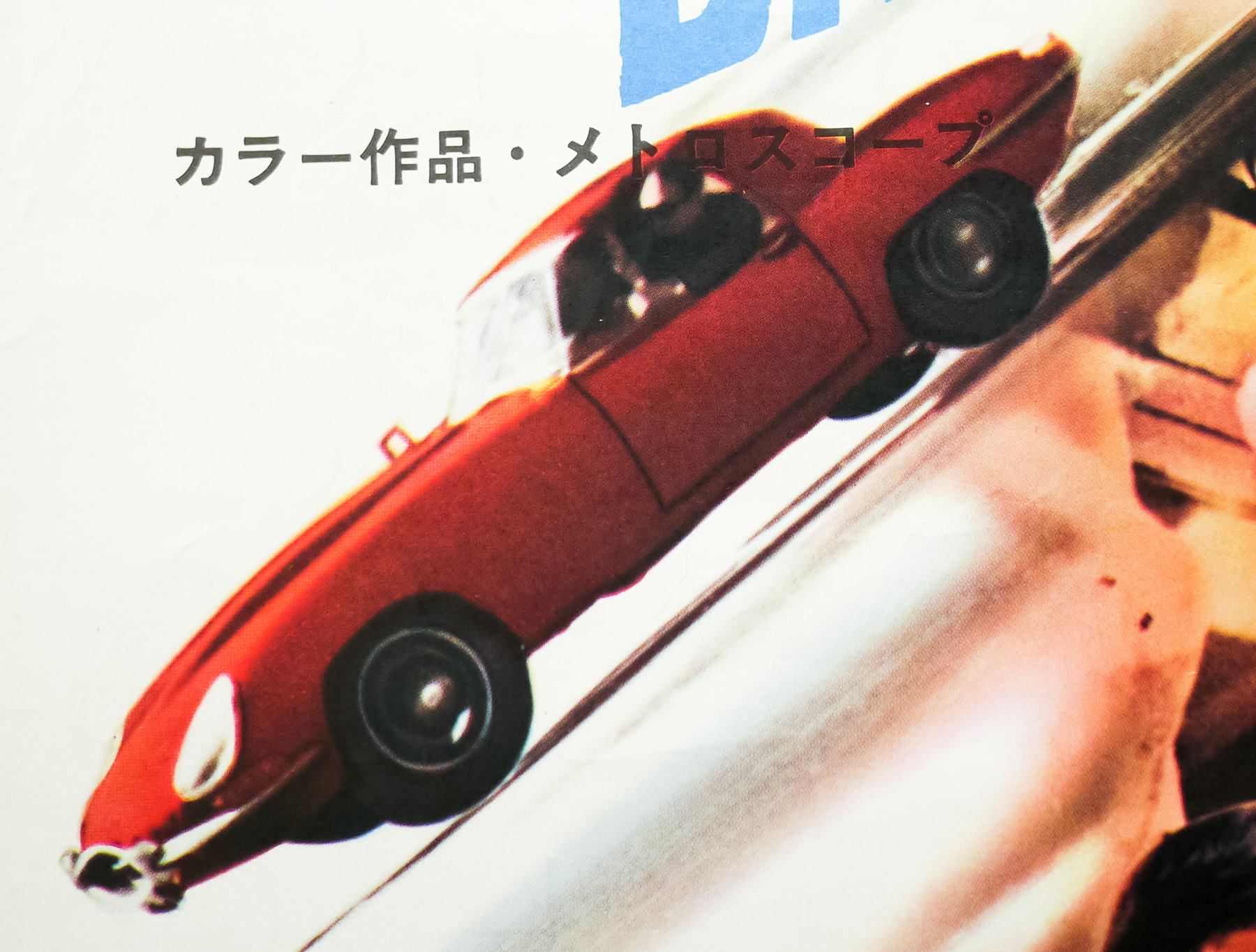
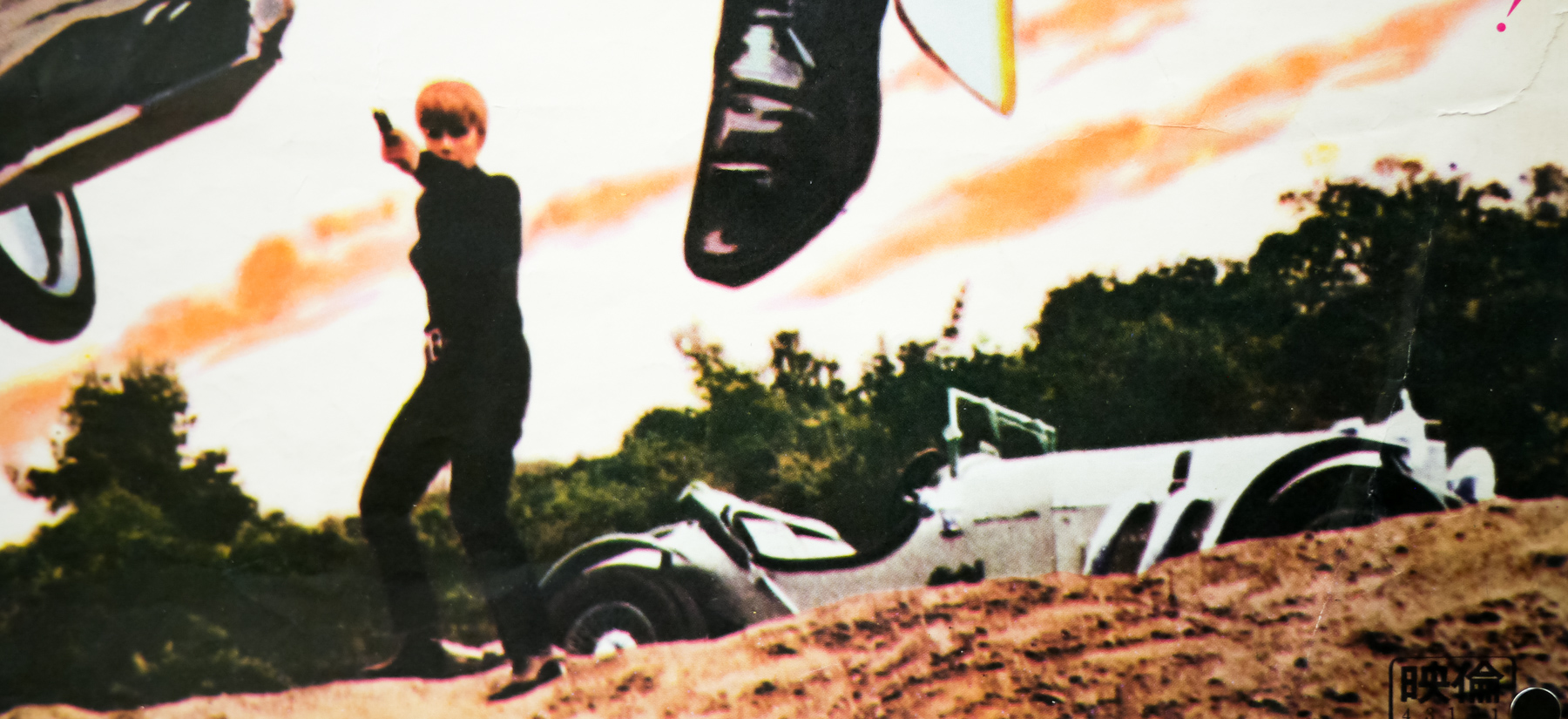
This B2 poster is a combination of the original US one sheet artwork (artist unknown) and a few photographic stills. If you have any idea who is responsible for the artwork please get in touch.

Check out the original trailer on YouTube.

Battle Creek Brawl / B2 / style A / Japan

21.11.14

Poster Poster

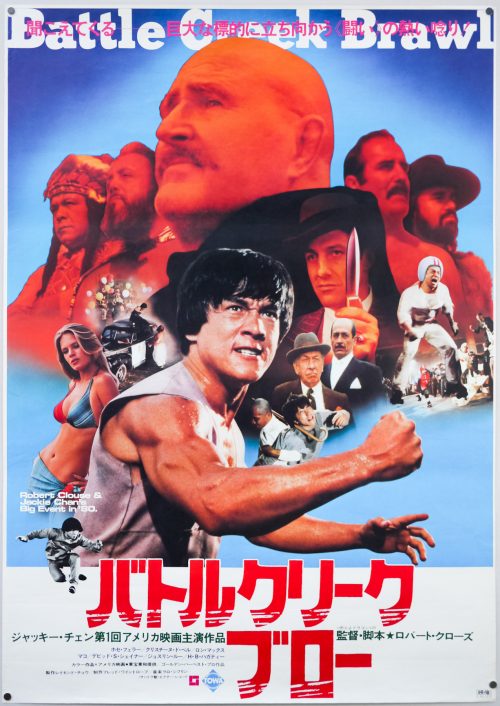
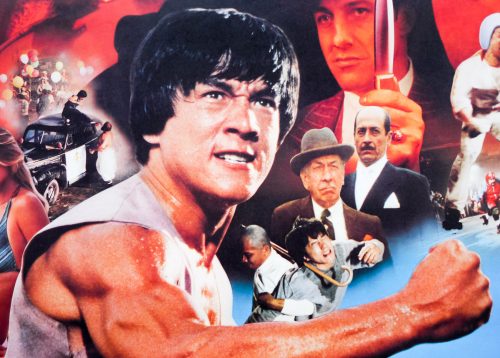
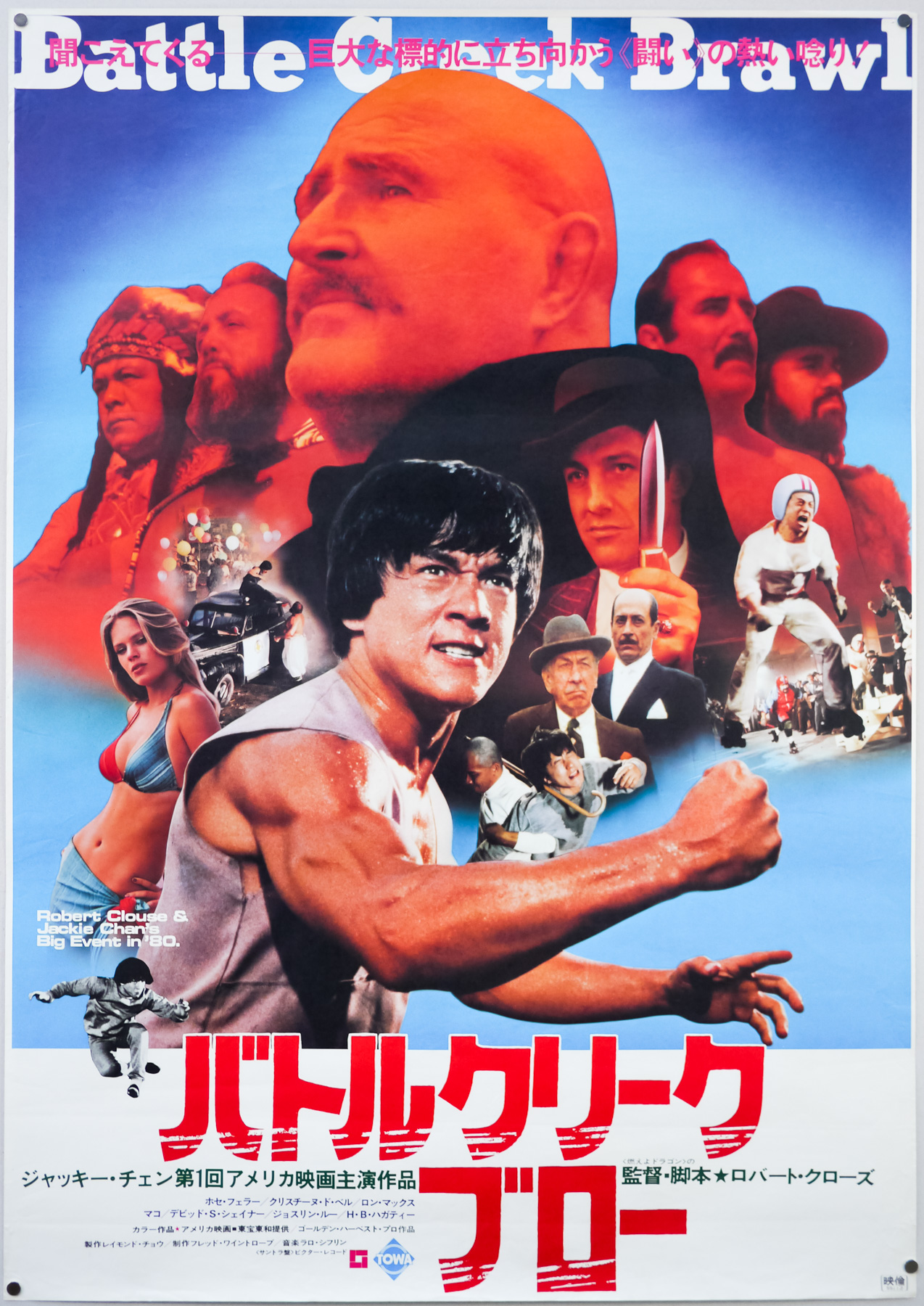
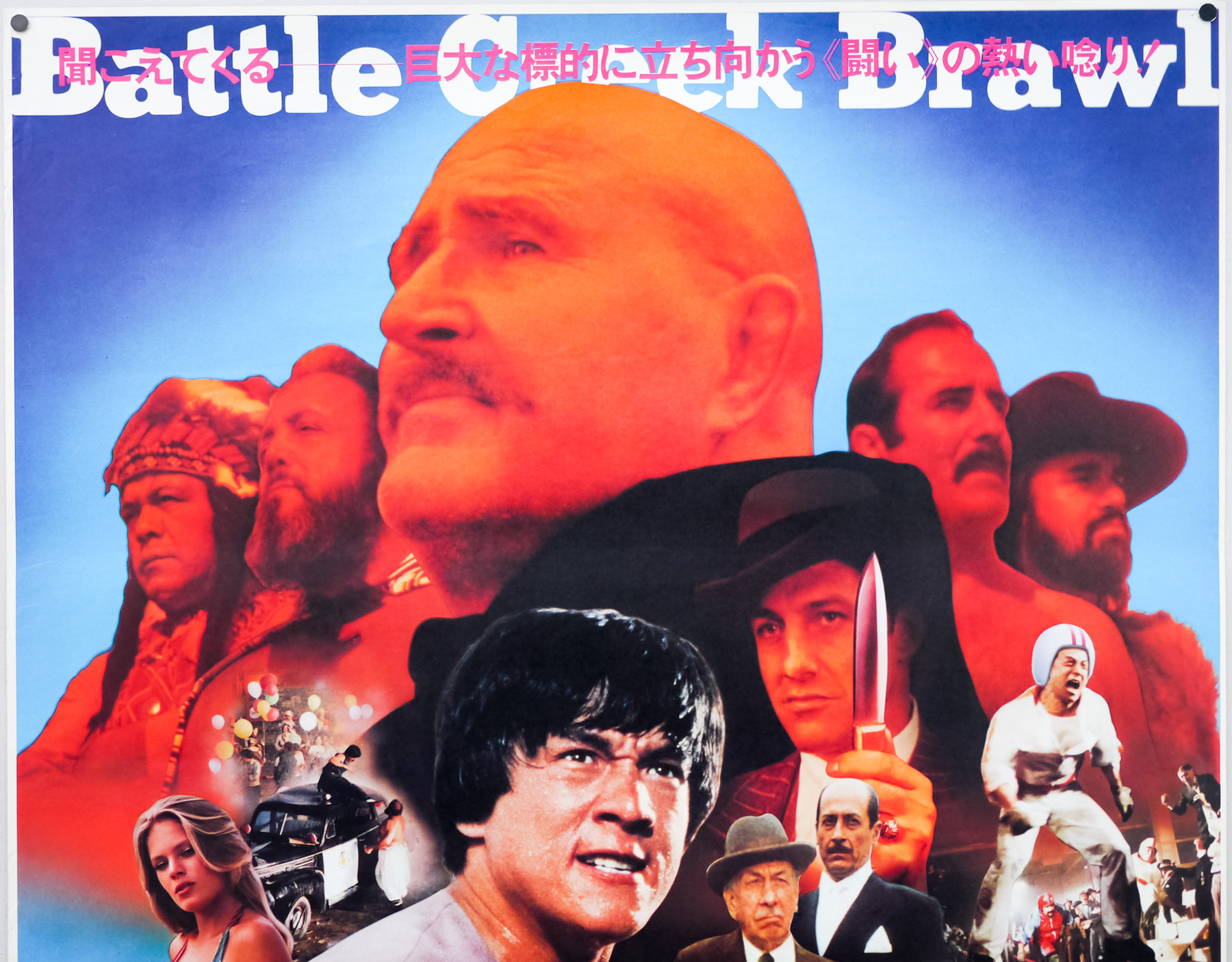
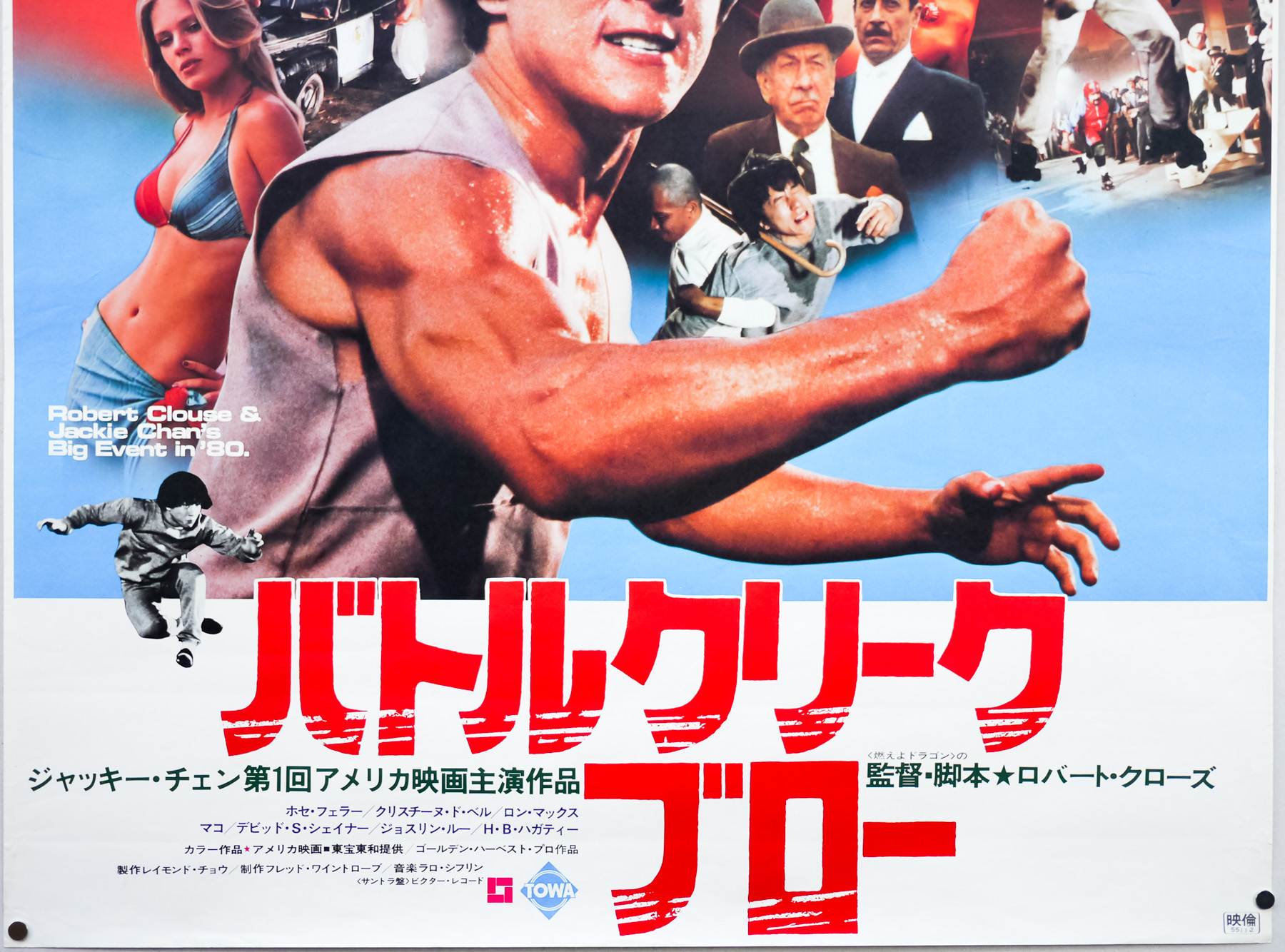
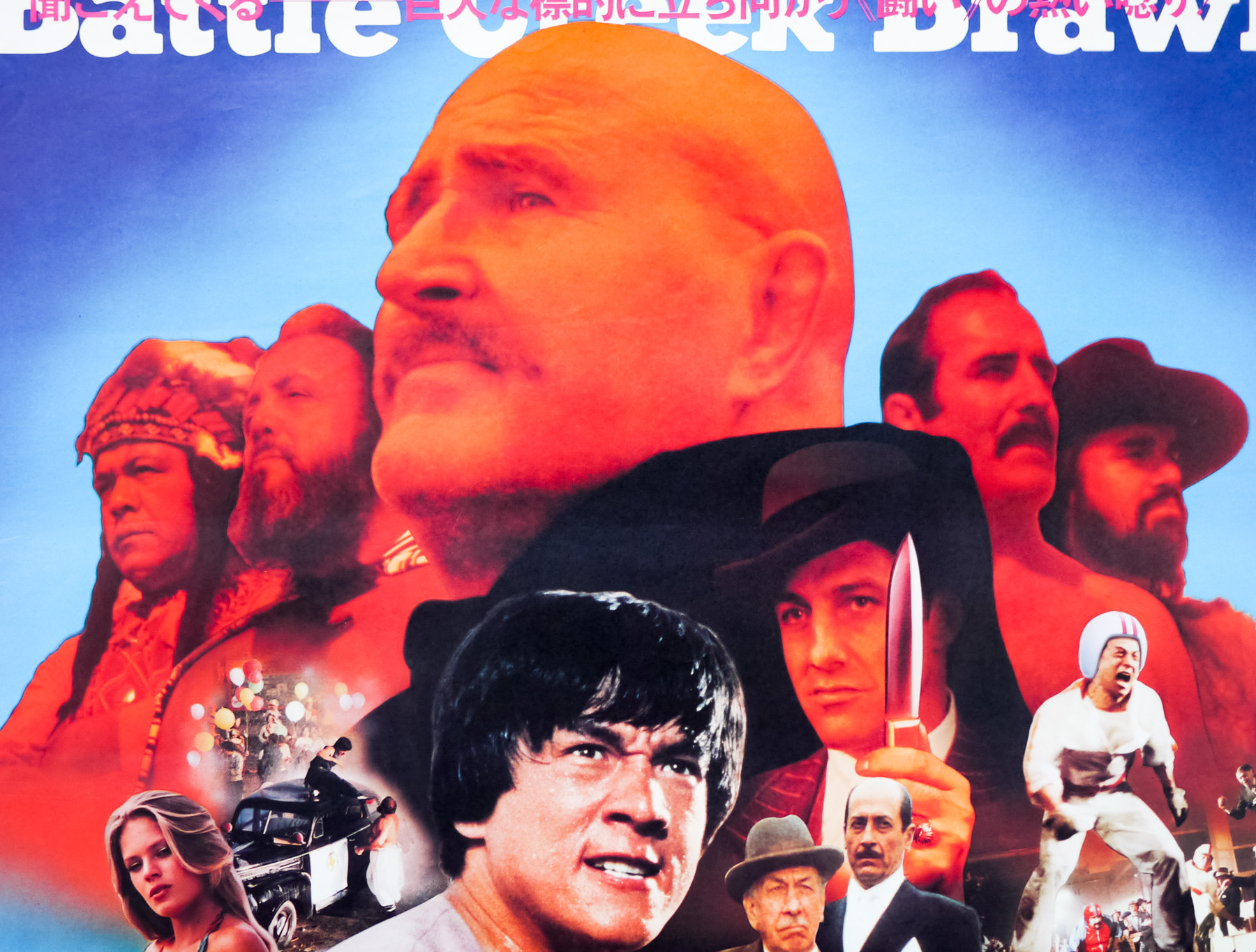
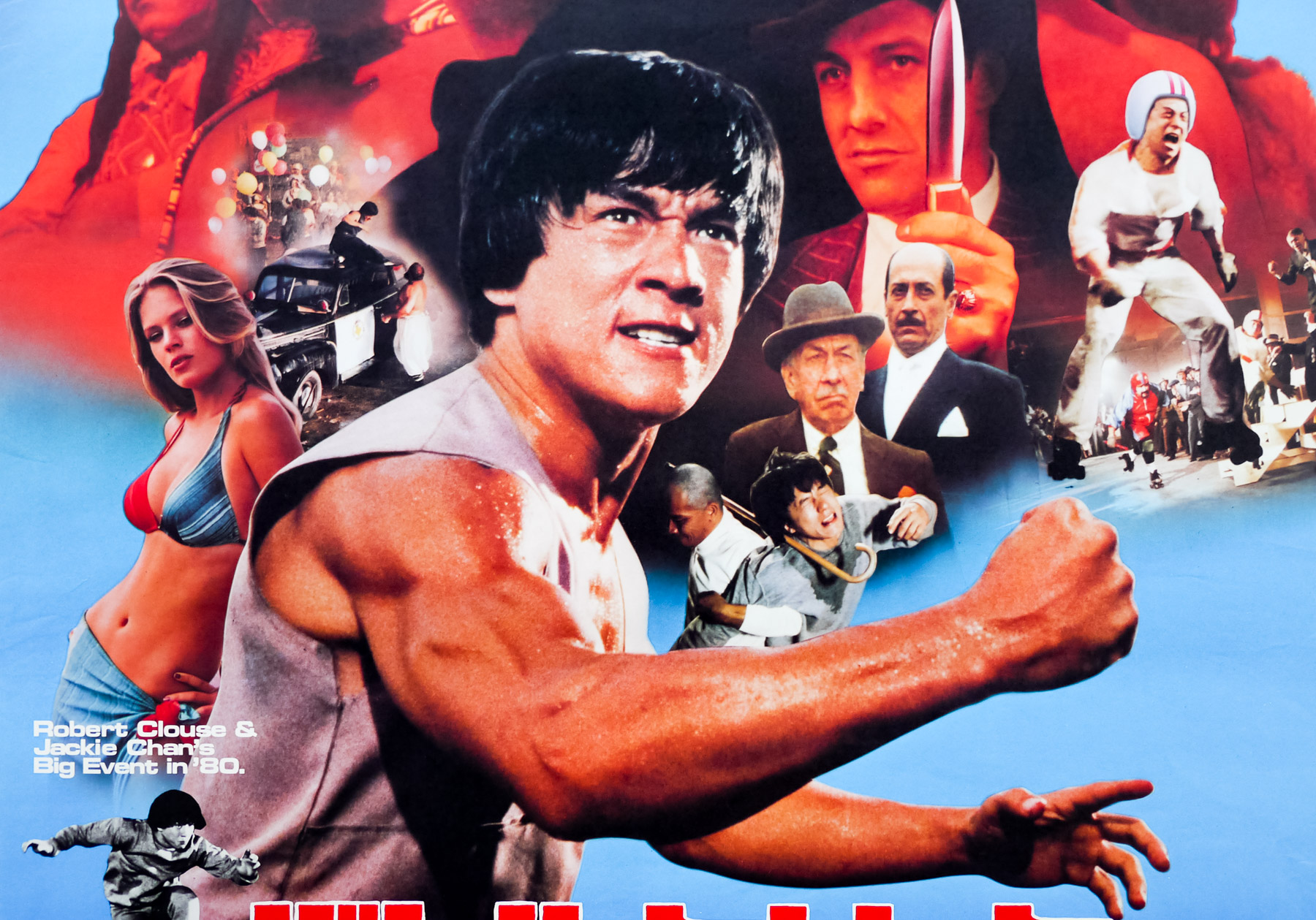
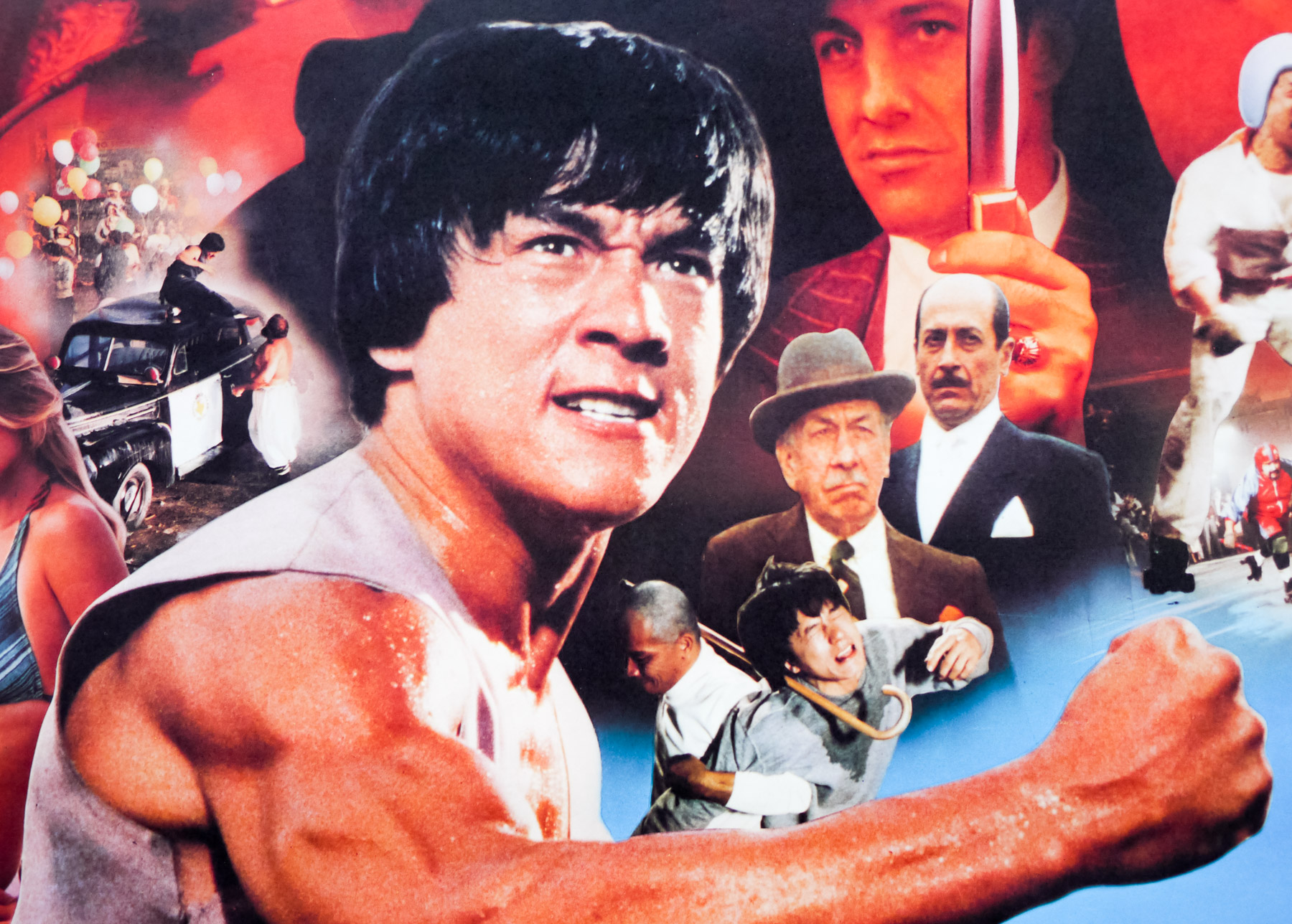
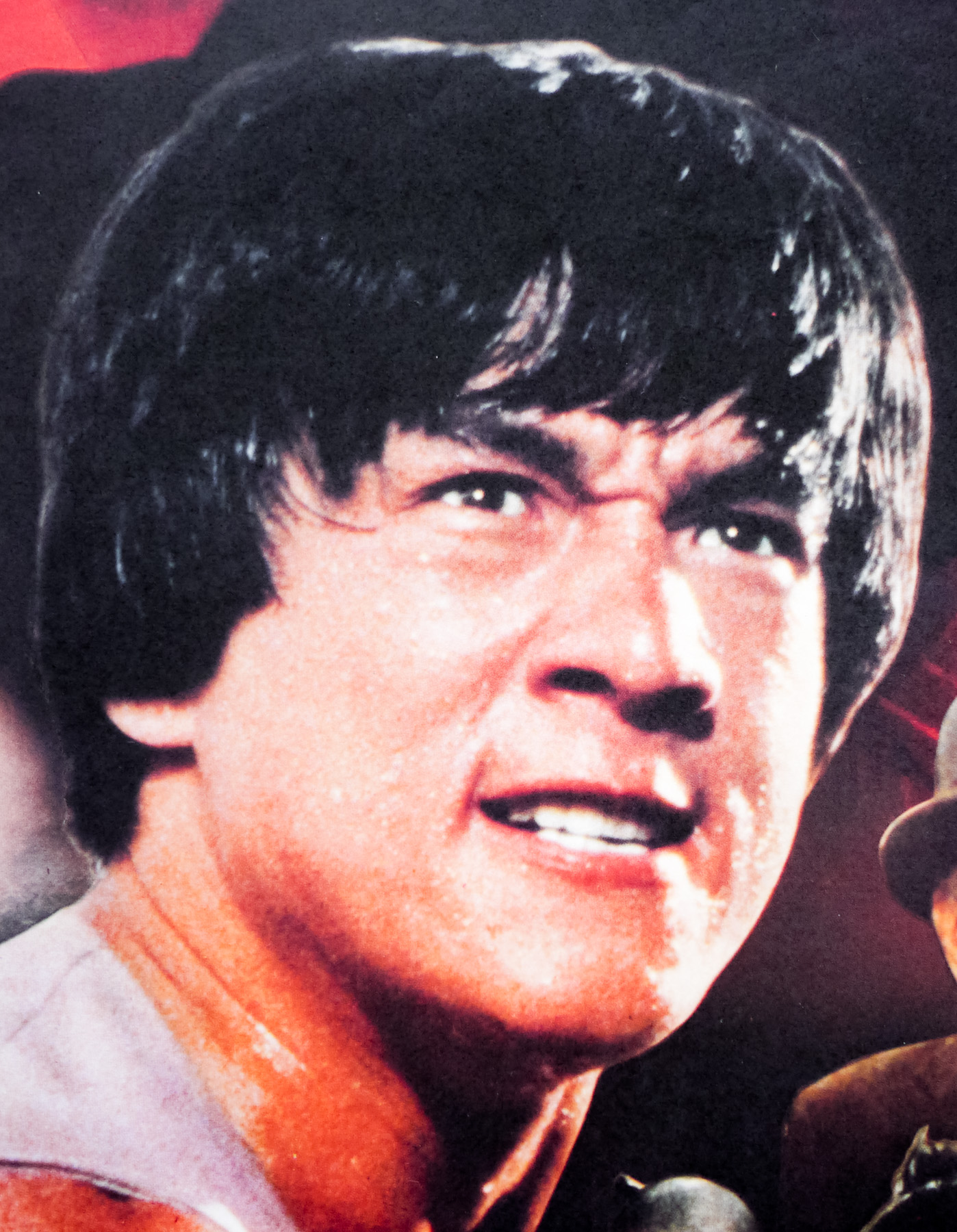
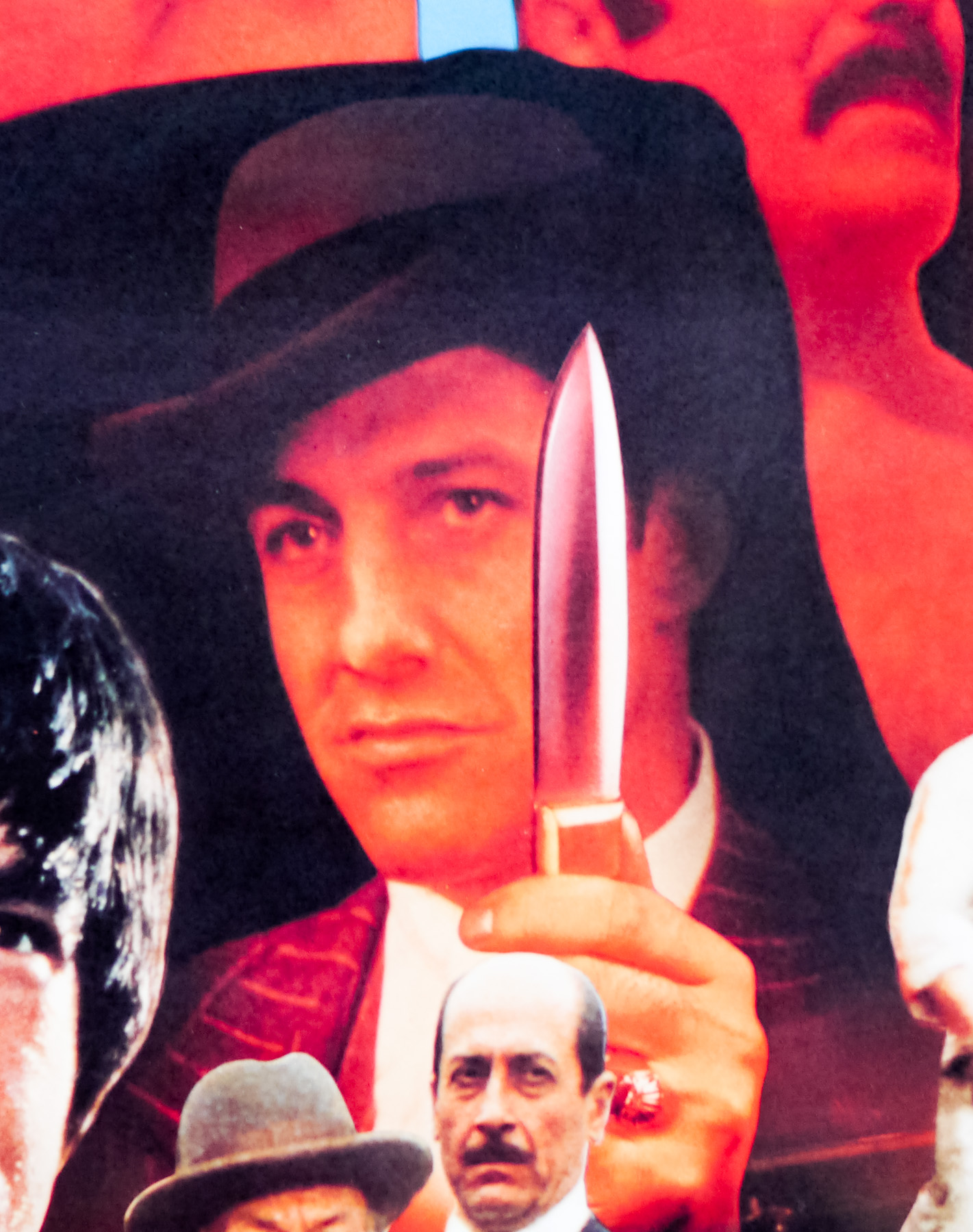
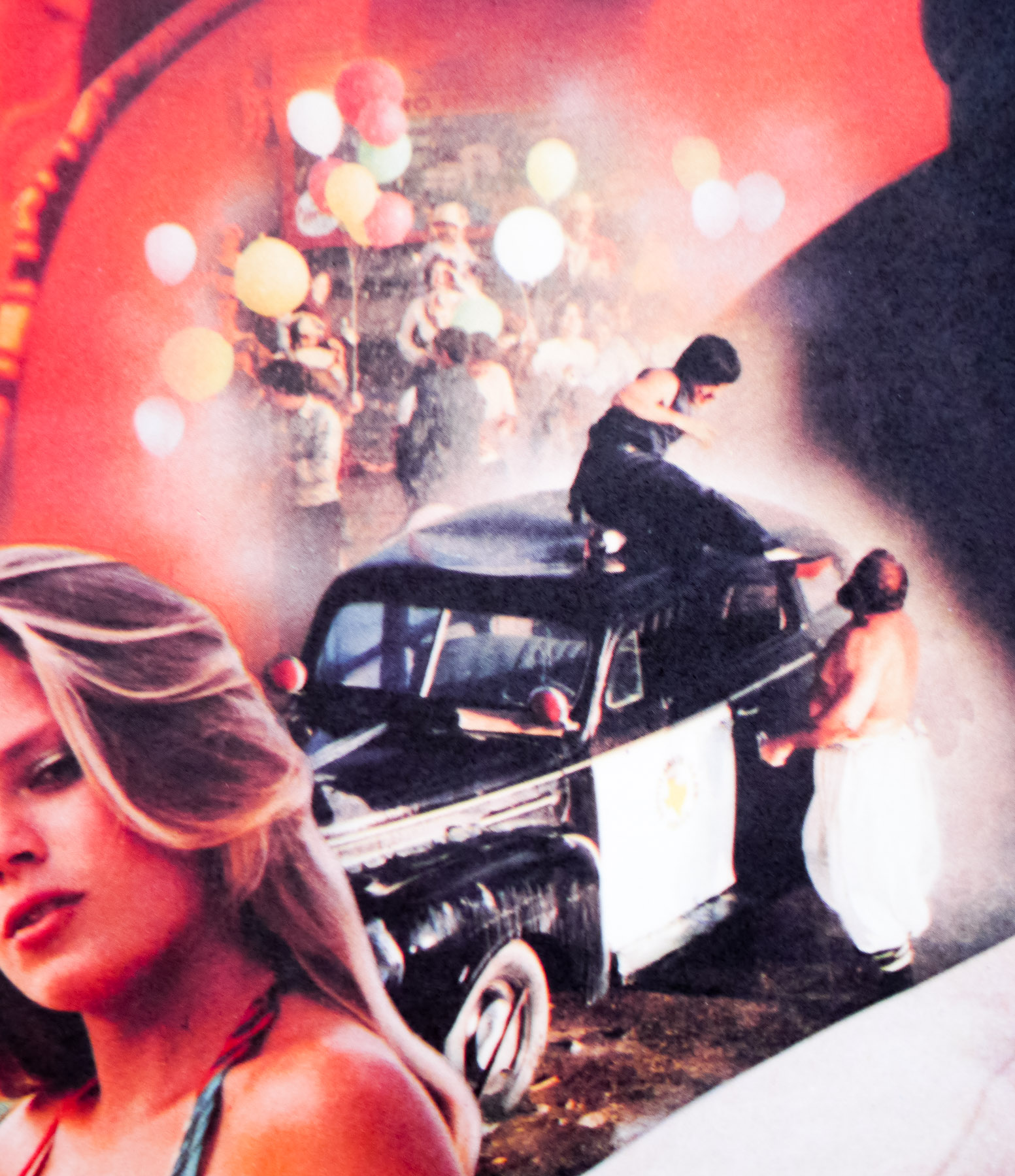
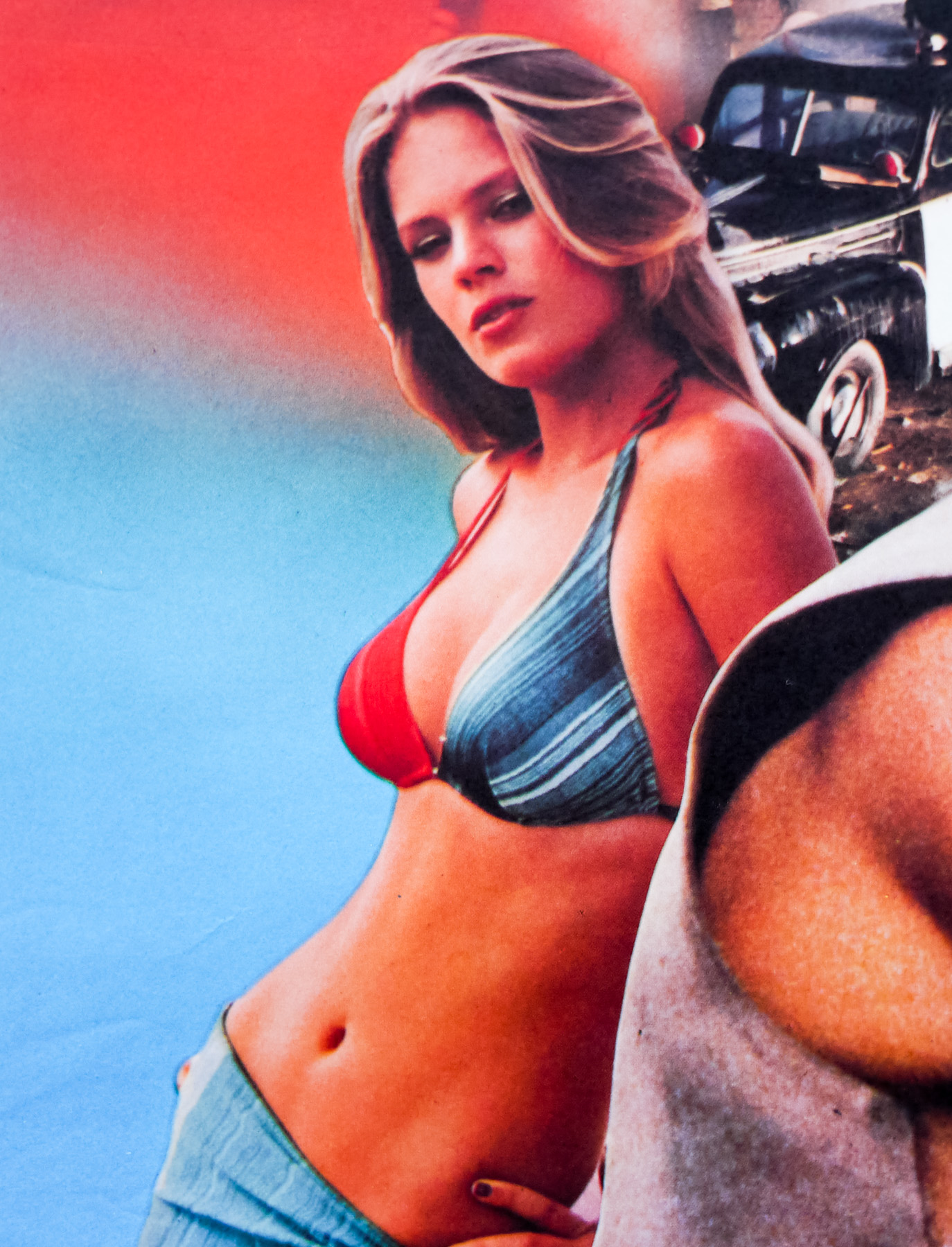
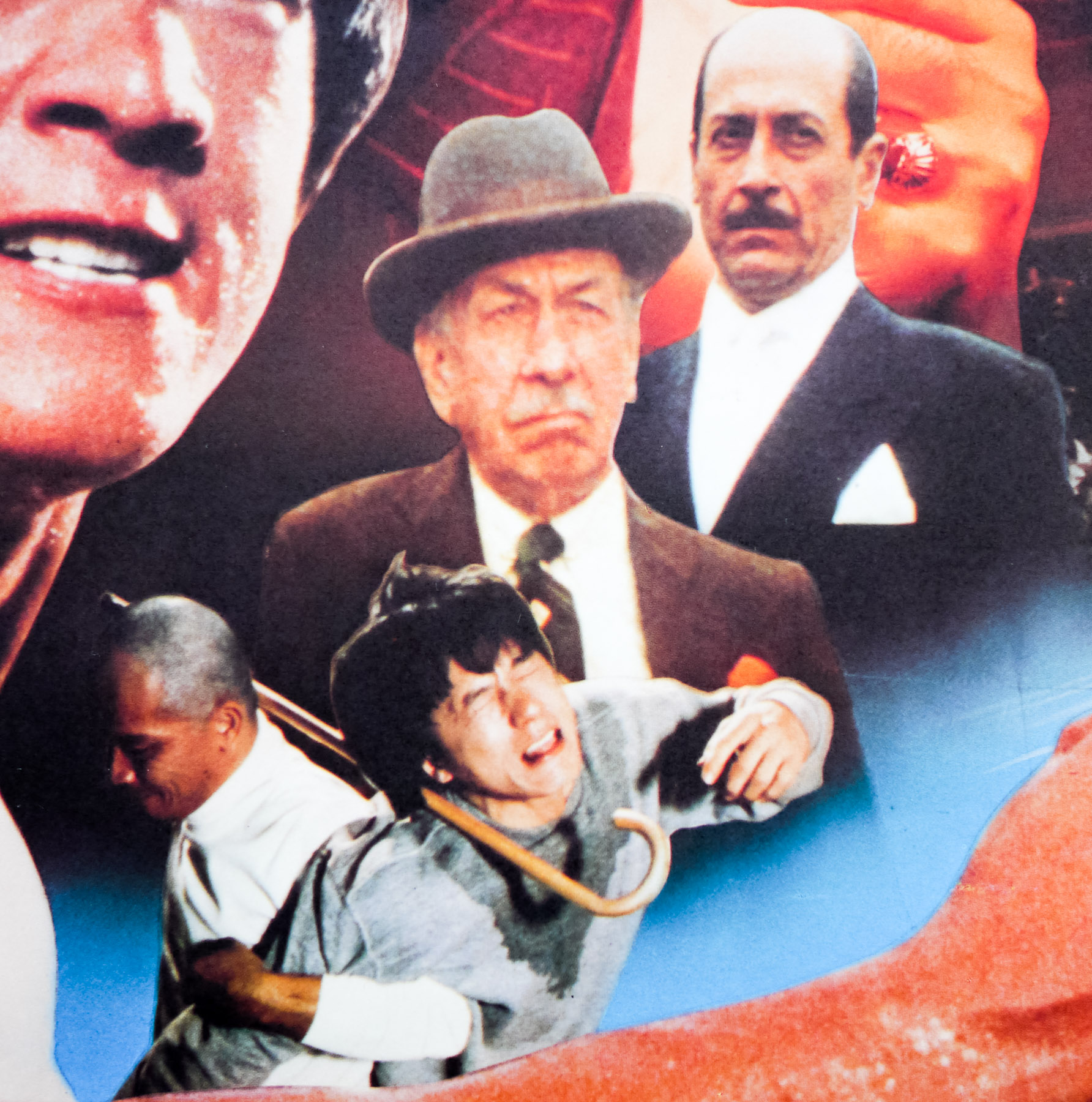
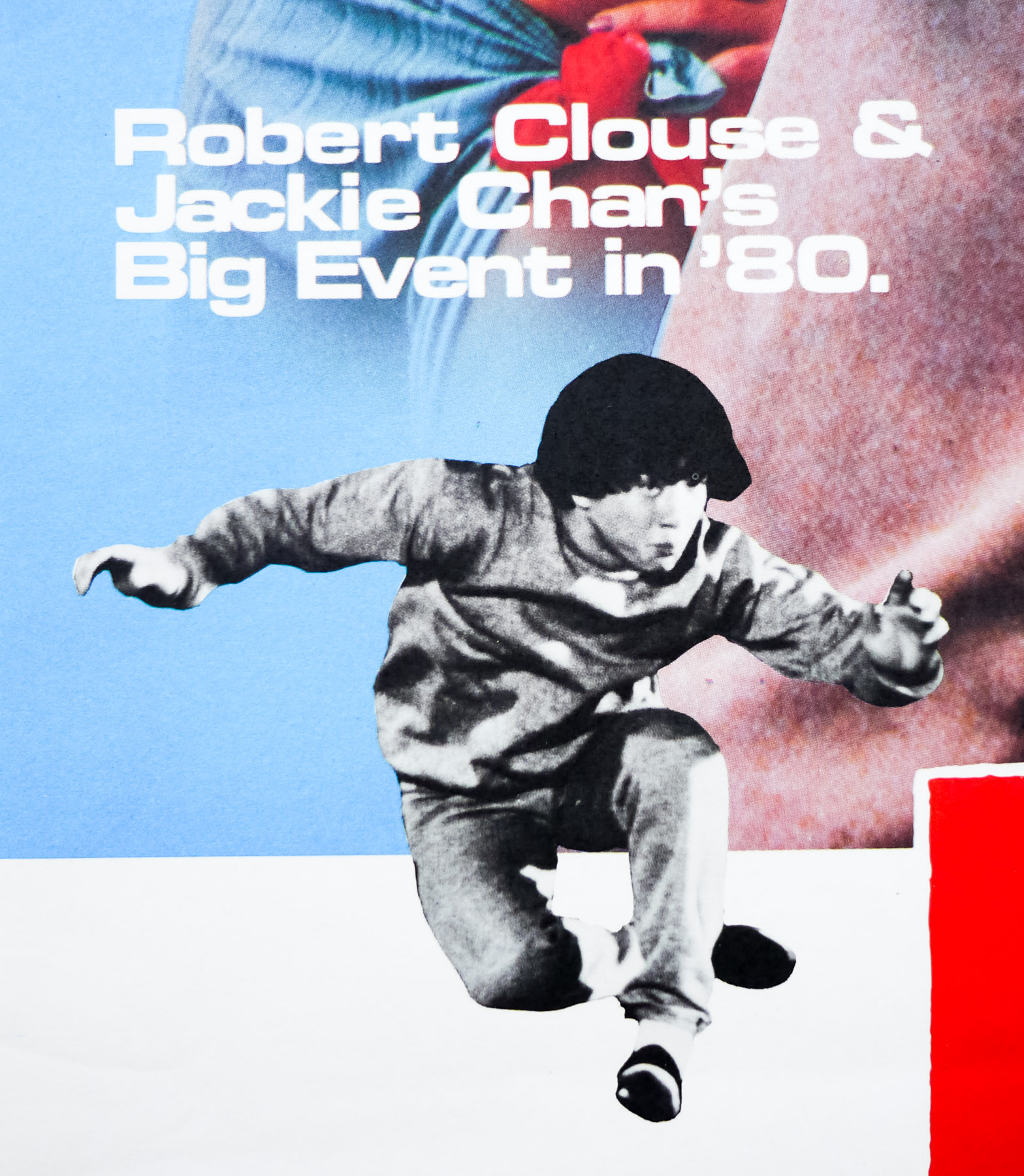
Battle Creek Brawl (known in the US and elsewhere as The Big Brawl) was martial arts superstar Jackie Chan‘s first attempt at breaking into the American film industry. The film was directed by the late Robert Clouse who was behind Bruce Lee’s Enter the Dragon, the first martial arts film to be co-produced by a Hollywood studio (also sadly to be Lee’s last). Clouse went on to direct Jim Kelly’s Black Belt Jones (1974) and put together the posthumous Bruce Lee film The Game of Death (1978) so he was an obvious choice for Chan’s hopeful big break into the lucrative US market. The director chose to employ much of the crew from Enter the Dragon.

Set in 1930s Chicago, though filmed mostly in Texas, the film focuses on Chinese-American Jerry Kwan (Chan) whose father runs a restaurant. One day a gang of mobsters pays the restaurant a visit and tries to force Kwan’s father to pay part of his profits to them. When Jerry fights back the mob take notice of his martial arts skills and force him to take part in the illegal fighting tournament Battle Creek Brawl by kidnaping his brother’s fiancee.

Kwan must enlist the help of his martial arts master Herbert (played by Japanese-American actor Mako) in order to train to face his opponents, including the fearsome, brutal fighter Kiss (H.B. Haggerty), winner of the previous tournament whose nickname is due to the single kiss he gives his defeated opponents. Sadly for all involved the film was something of a flop and was nowhere near the Enter the Dragon success story that Chan was hoping for. After trying his hand at various supporting roles (including Cannonball Run) Chan eventually scored his first hit with the Hollywood production Rumble in the Bronx 15 years later.

Brainstorm / B2 / Japan

13.02.15

Poster Poster
Title
Brainstorm
AKA
--
Year of Film
1983
Director
Douglas Trumbull
Starring
Christopher Walken, Natalie Wood, Louise Fletcher, Cliff Robertson
Origin of Film
USA
Genre(s) of Film
Christopher Walken, Natalie Wood, Louise Fletcher, Cliff Robertson,
Type of Poster
B2
Style of Poster
--
Origin of Poster
Japan
Year of Poster
1984
Designer
Unknown
Artist
--
Size (inches)
20 6/16" x 28 12/16"
SS or DS
SS
Tagline
--

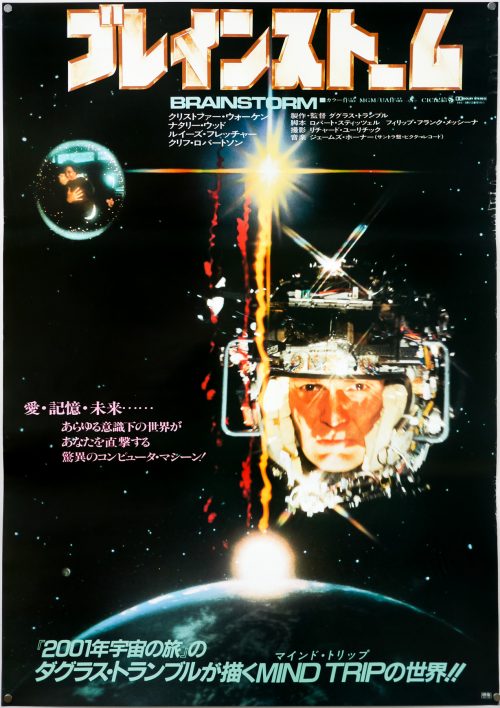
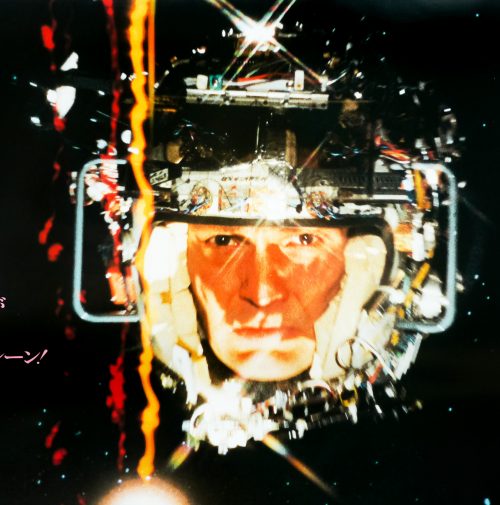
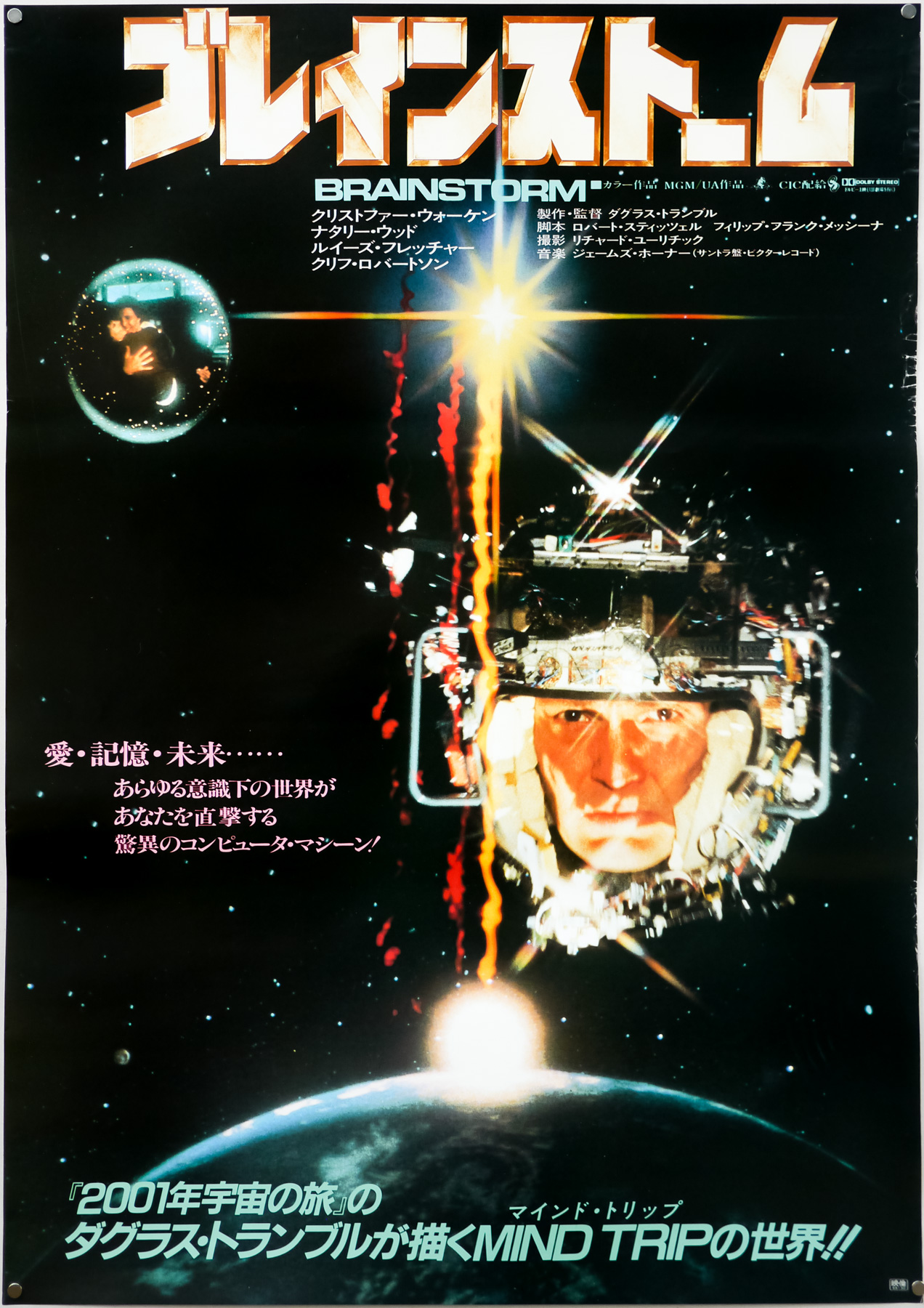
This is the Japanese B2 poster for the release of the science-fiction film Brainstorm, which was the second and final directorial effort from Douglas Trumbull who is best known for his pioneering work in the field of special effects. Trumbull had worked with Stanley Kubrick on 2001: A Space Odyssey and created the iconic ‘Star Gate’ sequence at the end of the film. He would go on to create special effects sequences for films including Close Encounters of the Third Kind, Star Trek: The Motion Picture and Blade Runner. The first film he directed was the cult classic Silent Running (1974) which was a critical success but a box-office failure and it would be eight years before Trumbull would once again sit in the director’s chair.

The film stars Christopher Walken as Michael Brace, a scientist working as part of a pioneering research team that has discovered a method of recording the sensory and emotional feelings of a person onto tape, allowing them to be viewed by others. His estranged wife Karen (Natalie Wood) also works with him and Michael realises he can use the system to reconcile their feelings for each other and show her his true emotions. Unfortunately not all of the scientists use it for good with one recording a sexual encounter which he then shares with several of his colleagues, leading to his eventual dismissal. 

Lillian Reynolds (Louise Fletcher) one of the lead scientists is fiercely protective of the team’s work and is angry when the company forces the team to involve military advisors in their plans. When she suffers a heart attack in the lab and is unable to call for help, she records the experience of death into the system. The tape is viewed by another scientist and the sensory experience causes him to also have a heart attack so the company locks the tape away. Lillian’s fears about the nefarious plans of the military are borne out when Michael discovers they plan to use the system for torture and brainwashing but his protestations see him get fired from the program. He and Karen decide to shut down the system to prevent it being used for negative means but Michael is also determined to view Lillian’s ‘death’ tape, despite Karen’s protestations.

Trumbull used the production to work on a new effects process which he called Showscan that allowed for 70mm film to be projected at 60fps (standard film is 24fps) and create a hyperreal feeling to the footage. MGM backed out of plans to create prints in the new format but Trumbull did film the virtual reality sequences in the larger Super Panavision 70 format and the ‘normal’ sequences in the conventional 35mm format so that it changes throughout the film whenever the scientists use their machines. The film was shown at special 70mm cinemas during its initial run.

The film’s production was unfortunately overshadowed by the mysterious death of Natalie Wood who drowned whilst on a boat trip with Walken and her husband Robert Wagner. MGM shut down the production and were planning to write it off and claim insurance on the money already spent. Trumbull and others argued with the studio that Wood had already completed most of her key scenes and the insurers realised that the film was salvageable. They agreed to finance the completion of production for a cut of any profits but by then things were getting very acrimonious between the director and MGM.

Trumbull was allowed to finish the film by rewriting several scenes and using a body double for Wood in some scenes but the experience critically damaged his desire to work inside the Hollywood system again. In 1983 he stated, “I have no interest…in doing another Hollywood feature film…Absolutely none. The movie business is so totally screwed-up that I just don’t have the energy to invest three or four years in a feature film. Moviemaking is like waging war. It destroys your personal life, too.” Sadly Brainstorm under-performed in cinemas despite strong critical notices and failed to recoup most of its final budget.

Breach / B2 / Japan

18.09.15

Poster Poster
Title
Breach
AKA
--
Year of Film
2007
Director
Billy Ray
Starring
Chris Cooper, Ryan Phillippe, Laura Linney, Caroline Dhavernas, Dennis Haysbert, Gary Cole, Kathleen Quinlan, Bruce Davison, Tom Barnett
Origin of Film
USA
Genre(s) of Film
Chris Cooper, Ryan Phillippe, Laura Linney, Caroline Dhavernas, Dennis Haysbert, Gary Cole, Kathleen Quinlan, Bruce Davison, Tom Barnett,
Type of Poster
B2
Style of Poster
--
Origin of Poster
Japan
Year of Poster
2008
Designer
Unknown
Artist
--
Size (inches)
20 6/16" x 28 14/16"
SS or DS
SS
Tagline
--

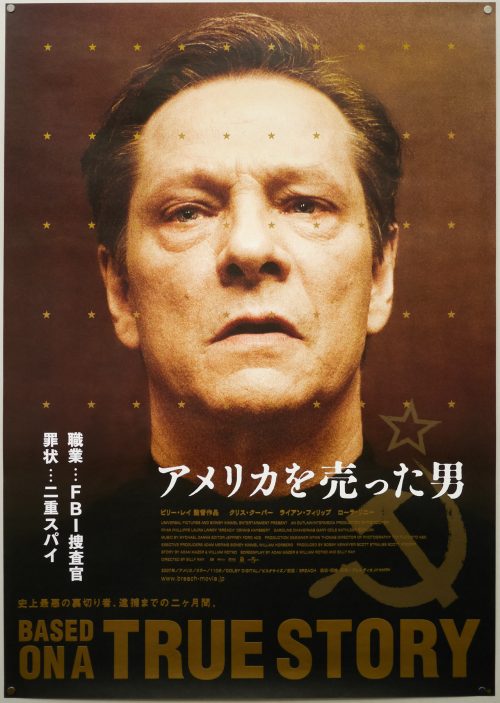
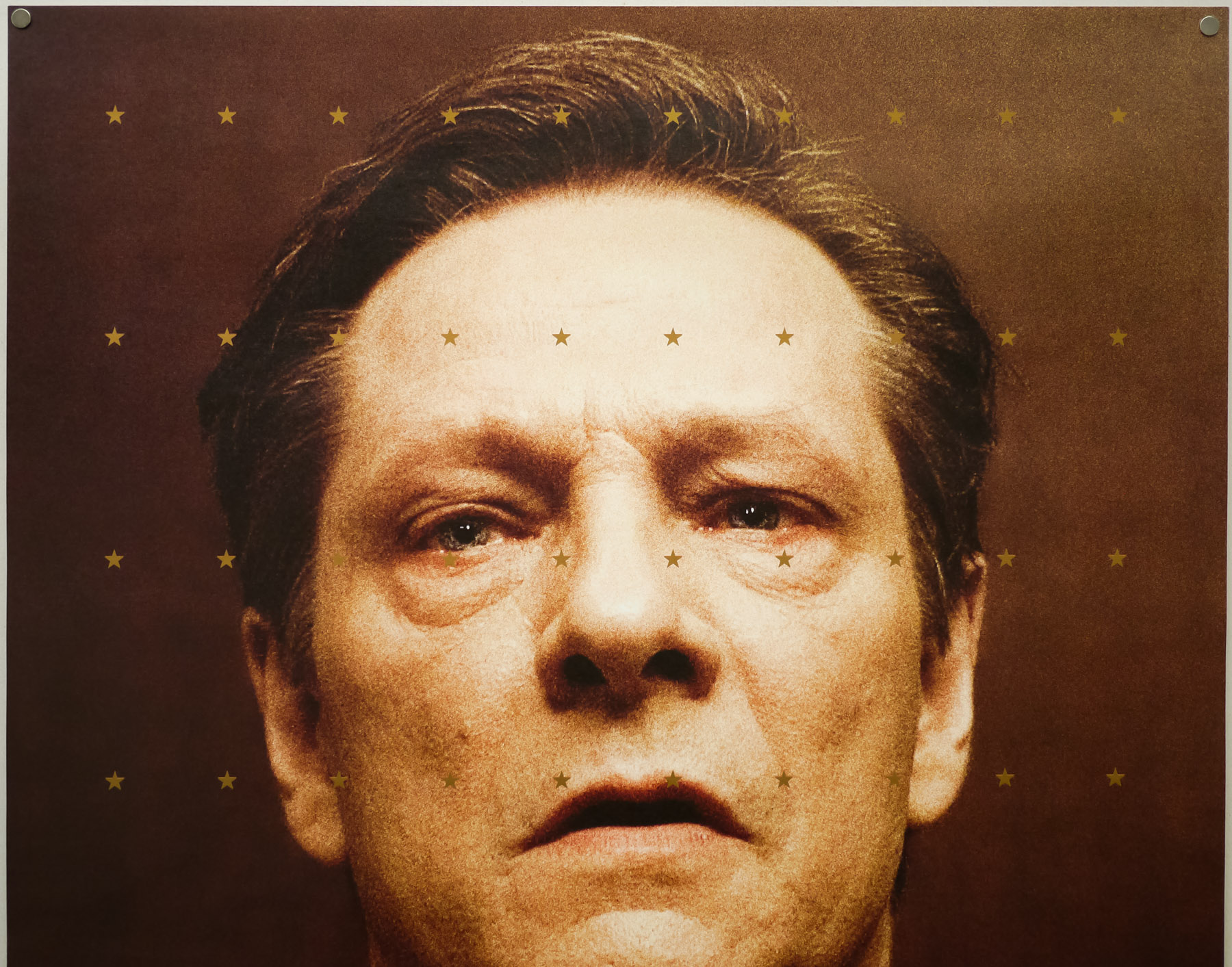
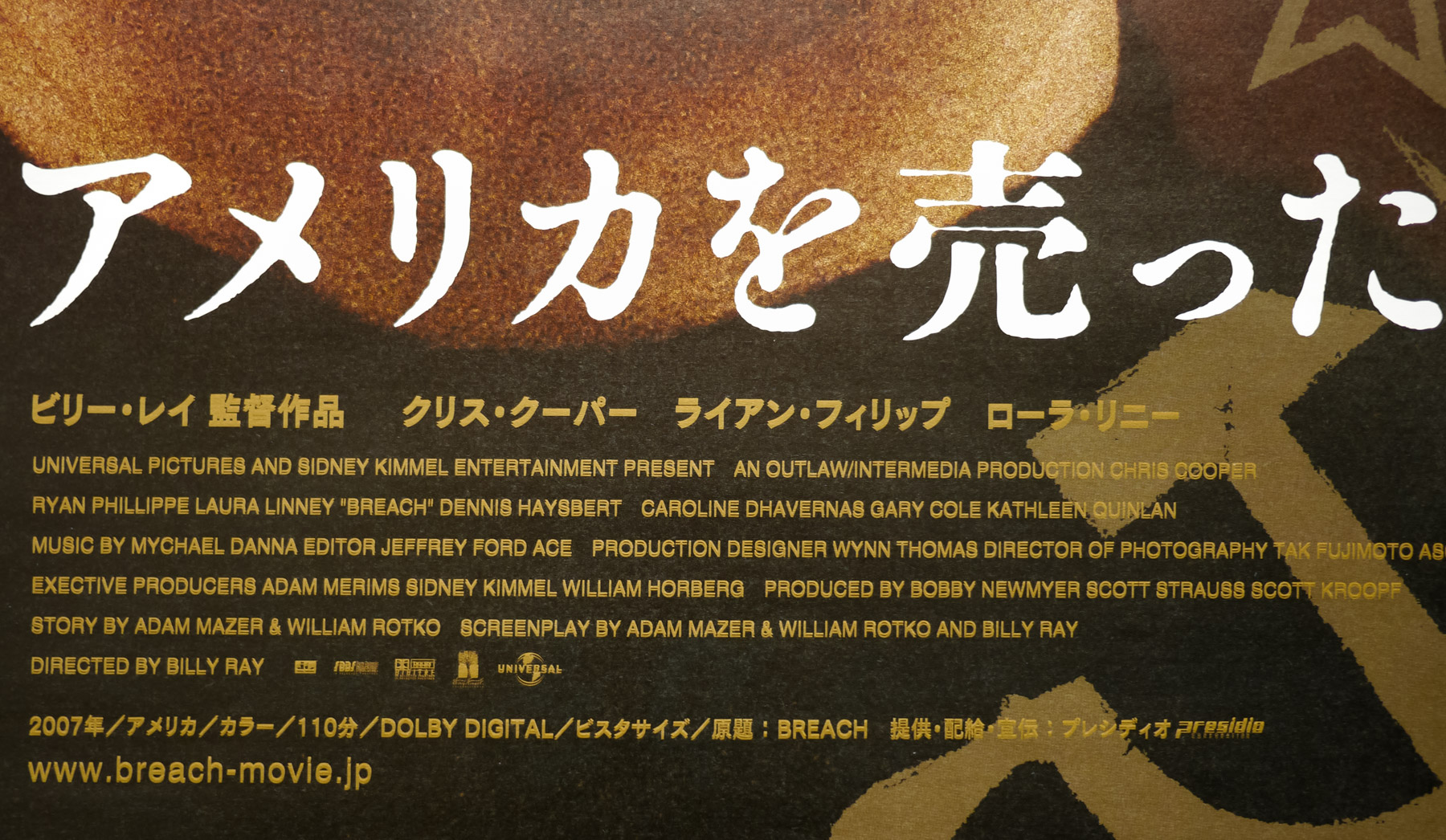
A striking portrait of the underrated actor Chris Cooper features on this Japanese B2 for the release of the 2007 drama Breach. Based on a real incident, Cooper plays Robert Hanssen, a senior FBI agent who was discovered to have been an undercover spy for the Soviet Union and later Russia for over twenty years. Ryan Phillippe plays a somewhat fictionalised version of Eric O’Neill, another FBI employee who was tasked with going undercover as Hanssen’s clerk under the pretense of trying to bring to light certain ‘sexual deviances’.

Initially frosty, the older agent grows to like O’Neill and the pair become closer as the film progresses, despite the misgivings of O’Neill’s wife Erica (Caroline Dhavernas) who resents Hanssen’s intrusions into their life, including encouraging the pair to attend church with his family. Eventually O’Neill tells his handler (played by Laura Linney) that he can find no evidence of odd sexual activity, but then he is told of the real reason he has been tasked with getting close to Hanssen and agrees to help catch him passing secrets to the Russians. The tension escalates as Hanssen suspects that the net is closing in on him and O’Neill reassures his boss that nothing is wrong as he helps to orchestrate his downfall.

Cooper is probably best known for his role as the domineering, military neighbour of Kevin Spacey’s character in Sam Mendes’ American Beauty, but he has been acting for almost 30 years and is one of those classic ‘that guy’ character actors. He received critical acclaim for his portrayal of Hanssen and the film itself was well received upon its release.

Clash Of The Titans / B2 / style B / Japan

29.10.14

Poster Poster
Title
Clash Of The Titans
AKA
--
Year of Film
1981
Director
Desmond Davis
Starring
Laurence Olivier, Harry Hamlin, Judi Bowker, Maggie Smith, Ursula Andress
Origin of Film
USA
Genre(s) of Film
Laurence Olivier, Harry Hamlin, Judi Bowker, Maggie Smith, Ursula Andress,
Type of Poster
B2
Style of Poster
Style B
Origin of Poster
Japan
Year of Poster
1981
Designer
Unknown
Artist
--
Size (inches)
20 6/16" x 28 14/16"
SS or DS
SS
Tagline
--

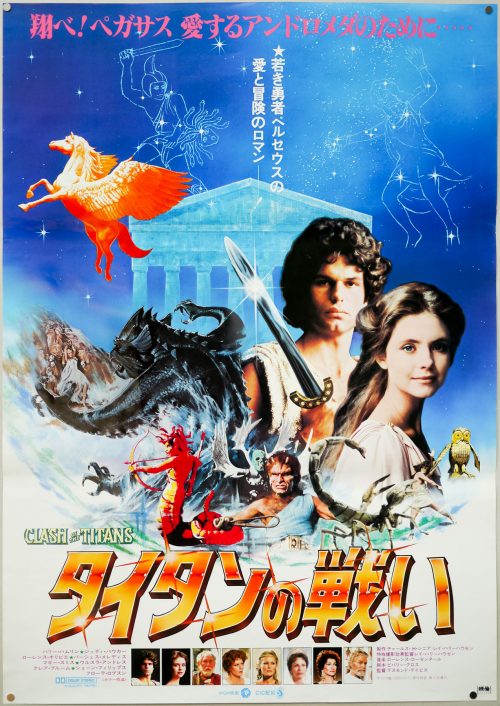
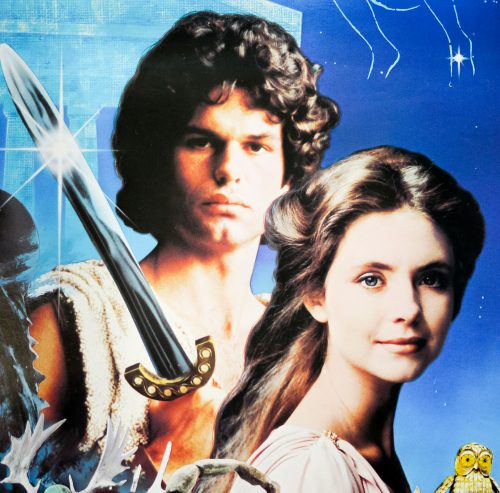
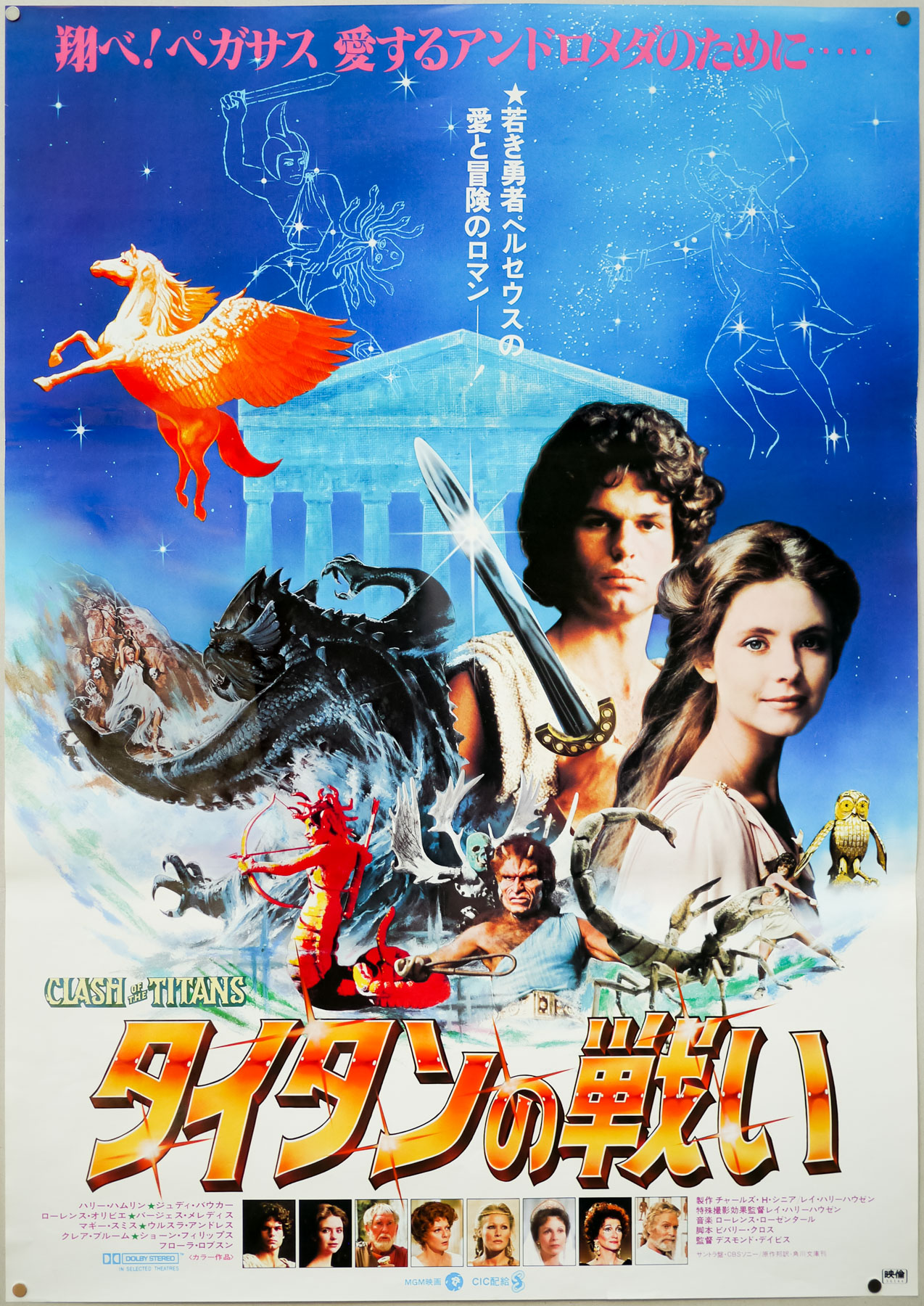
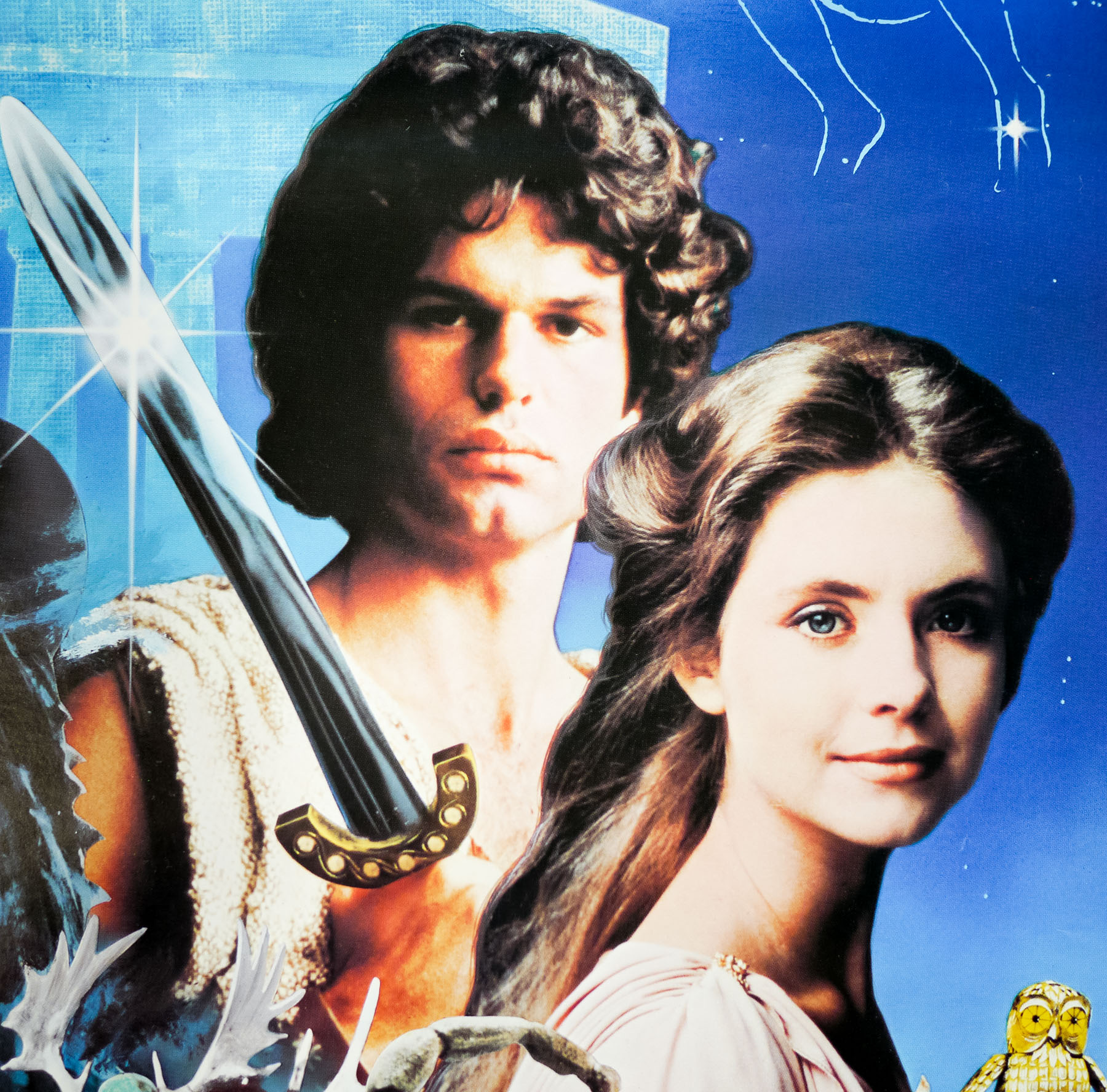
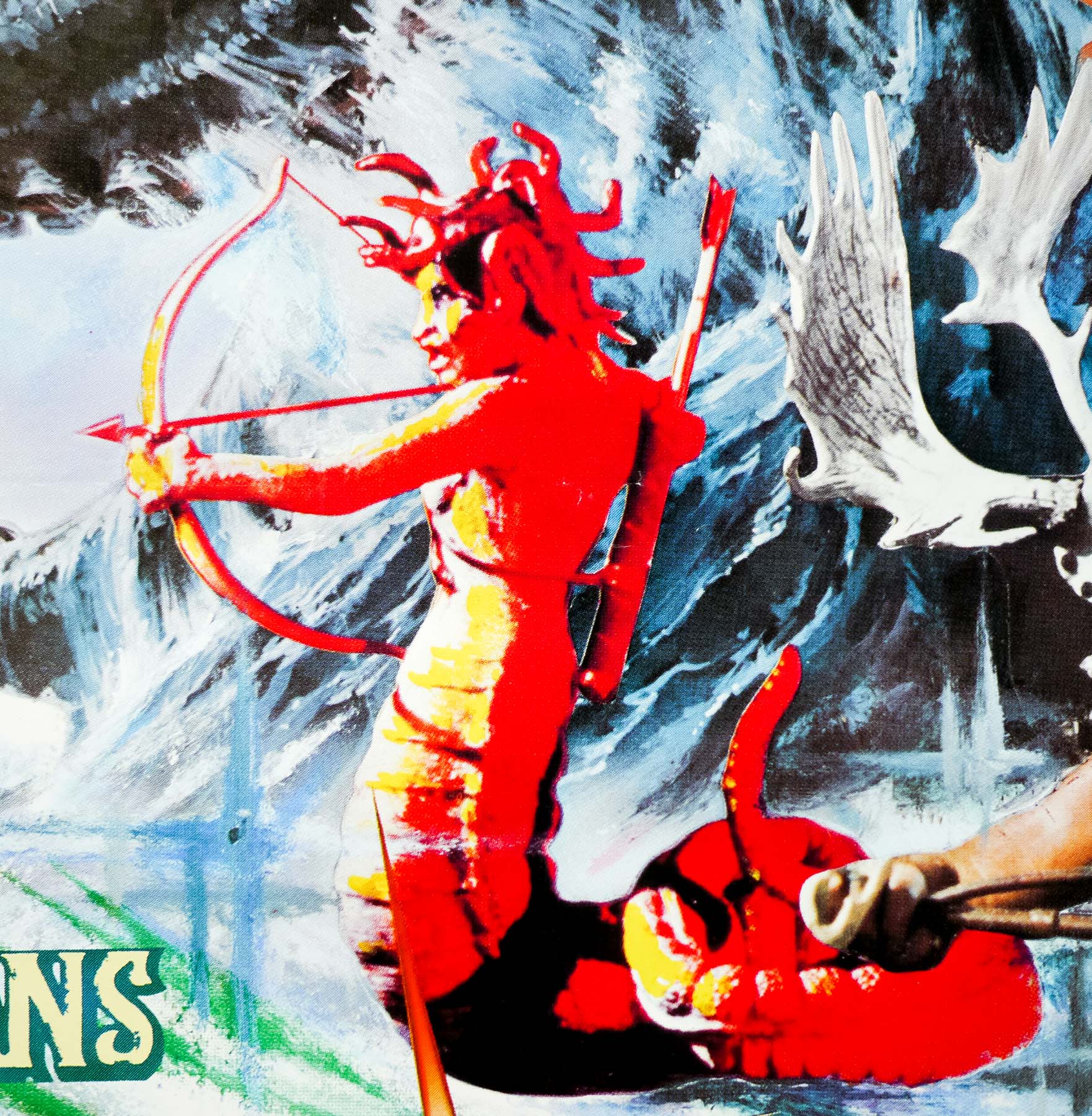
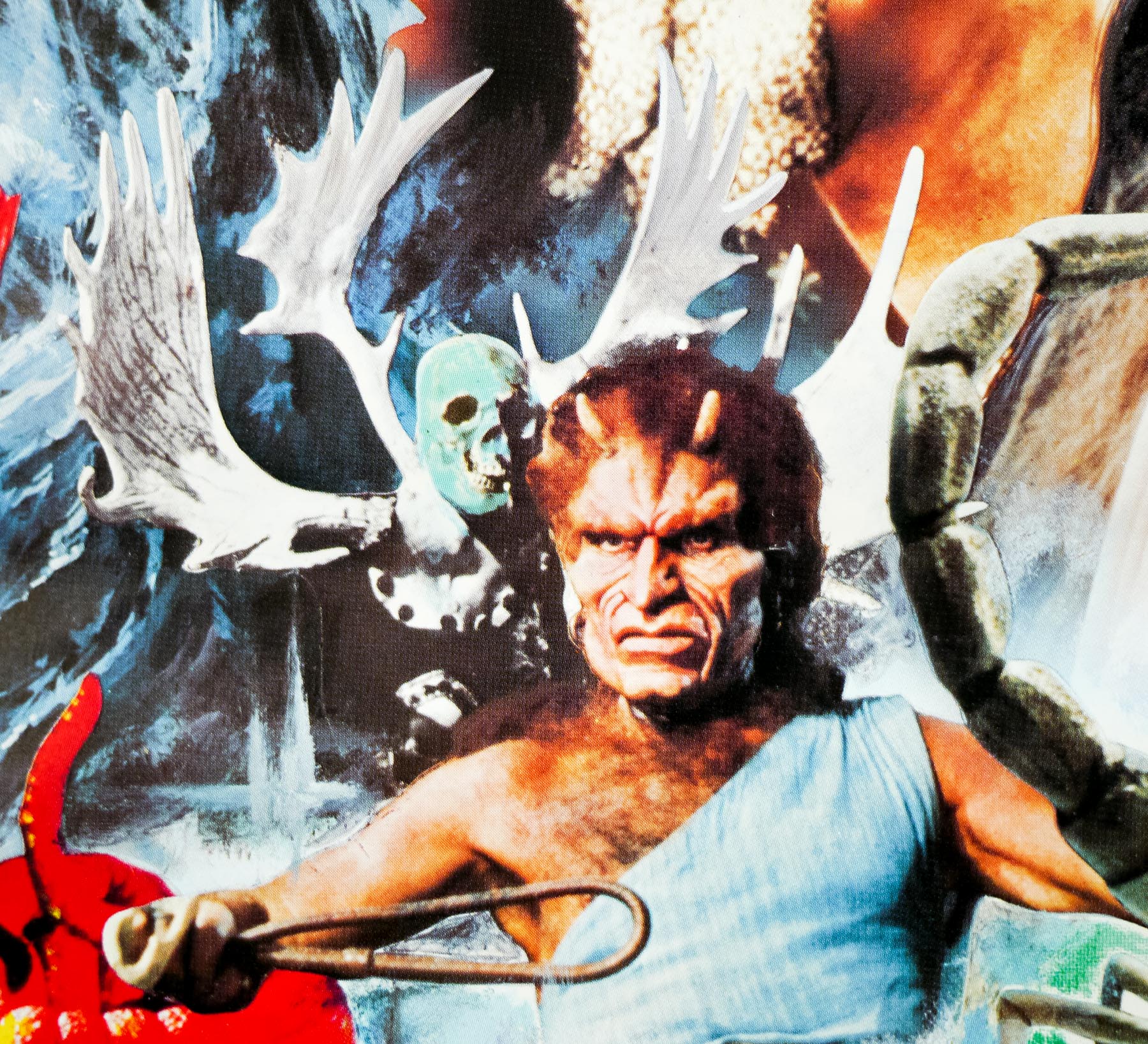
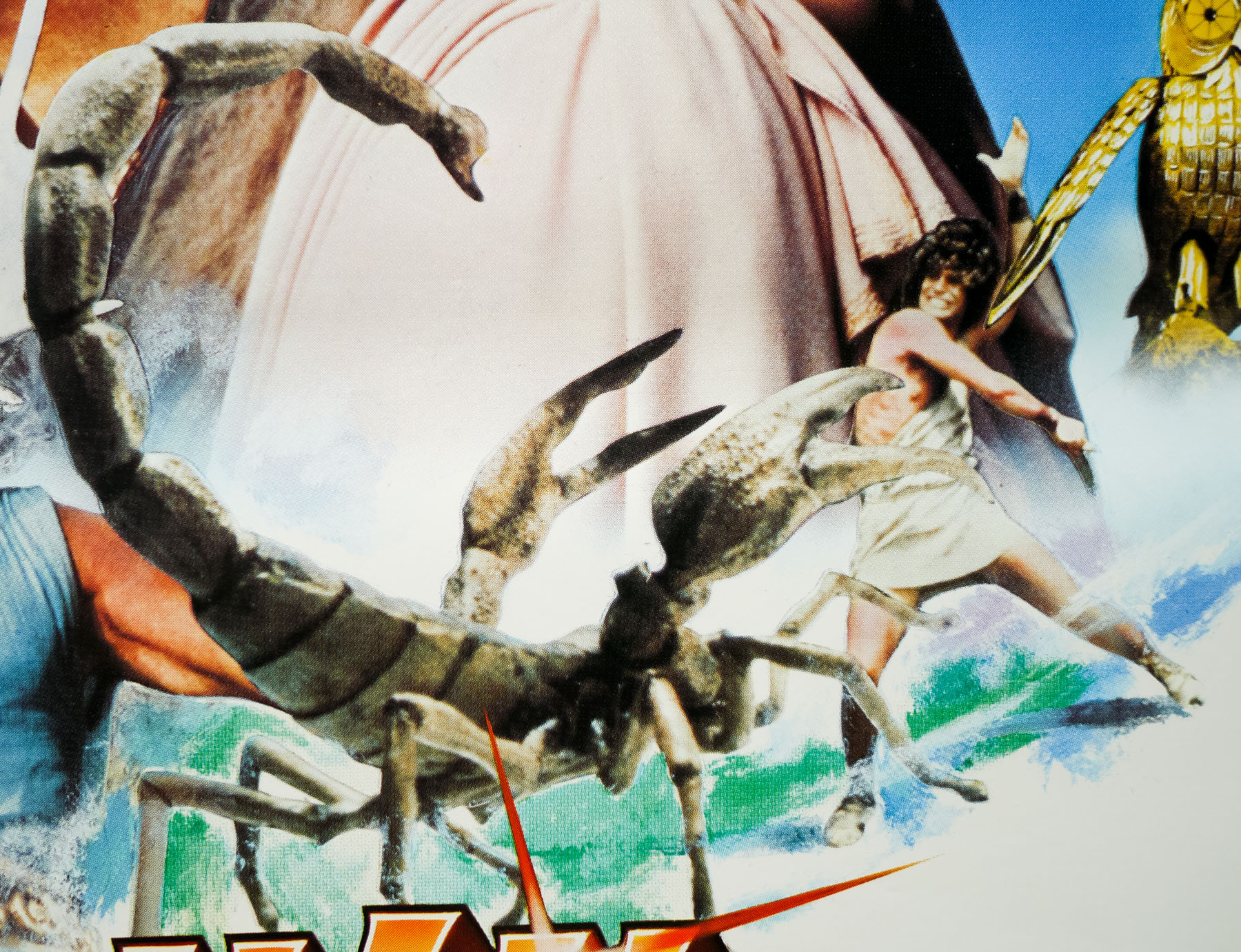
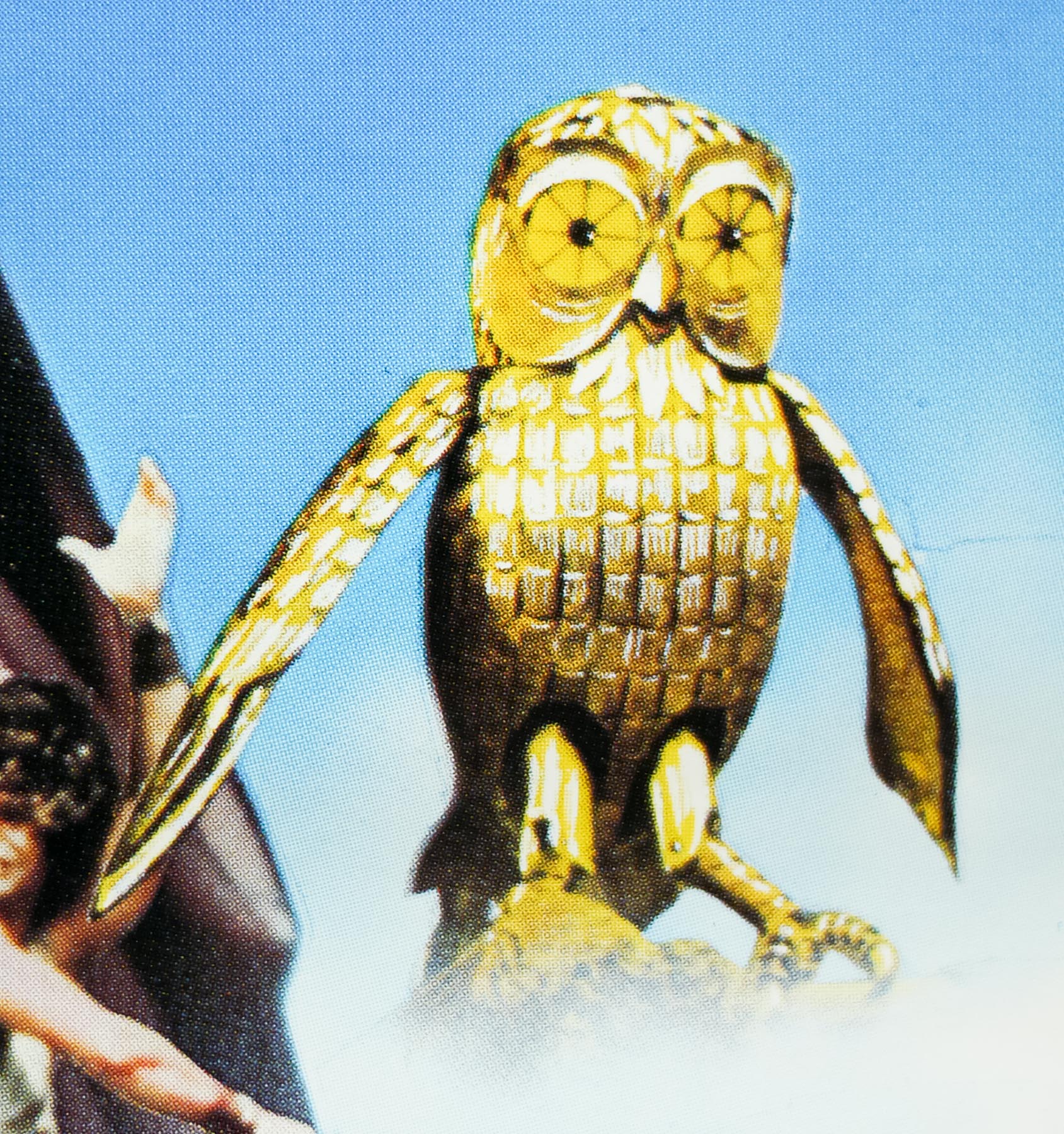
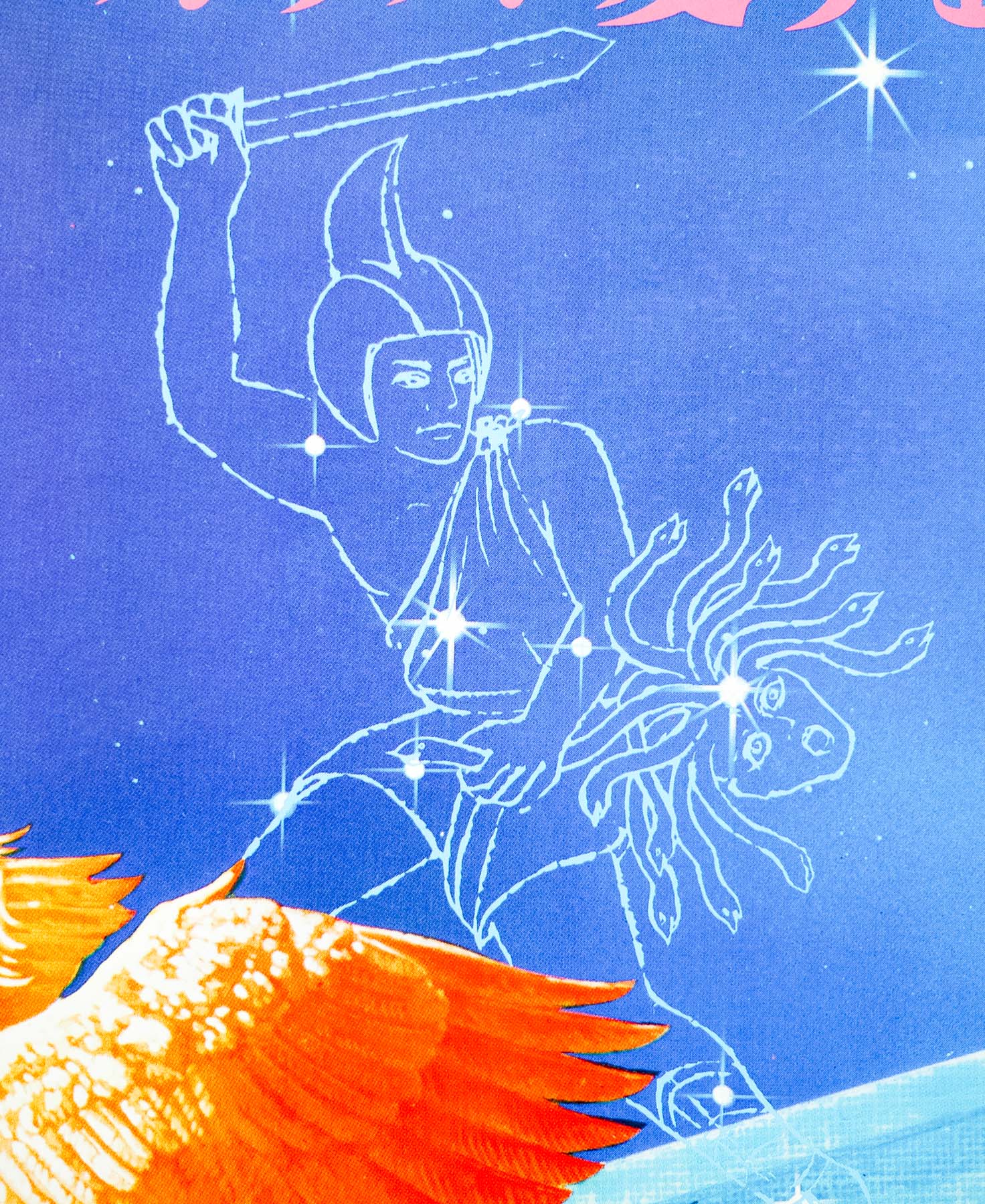
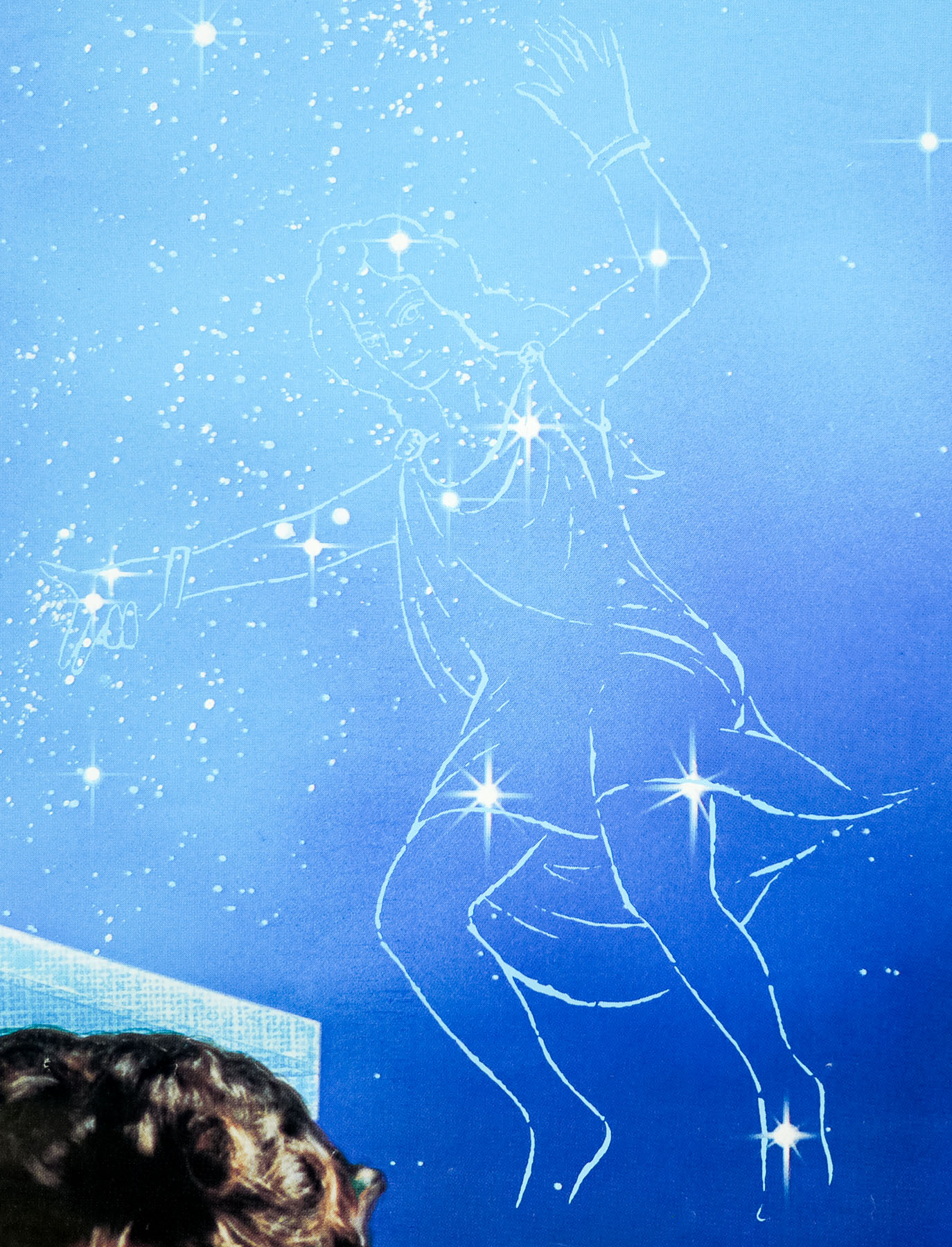
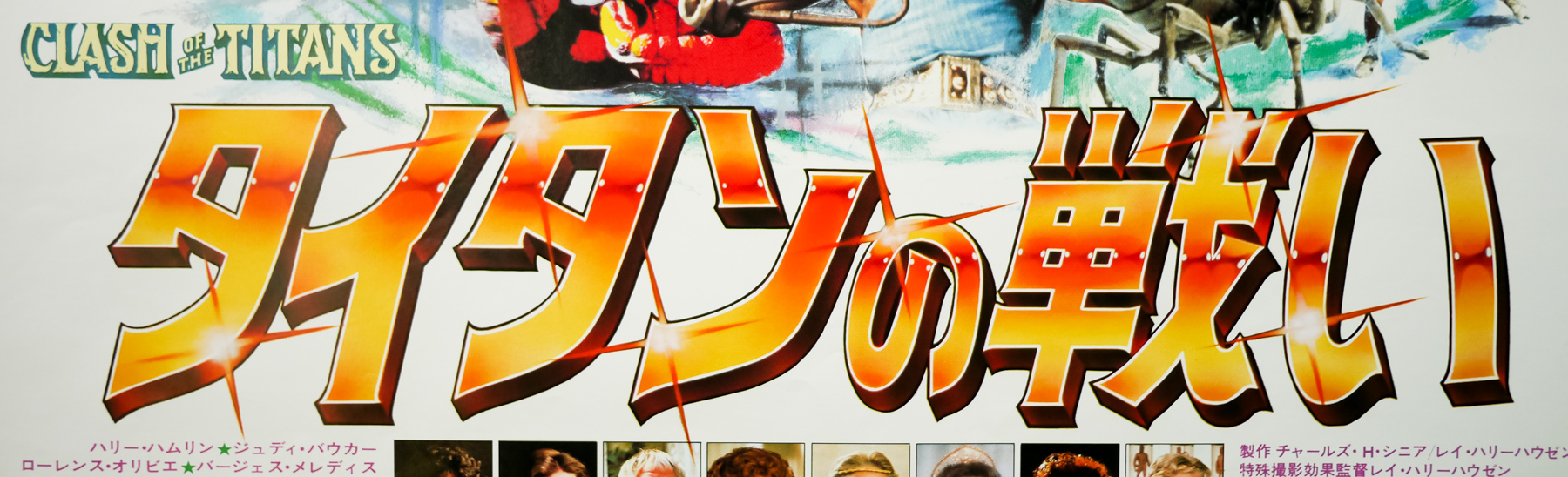
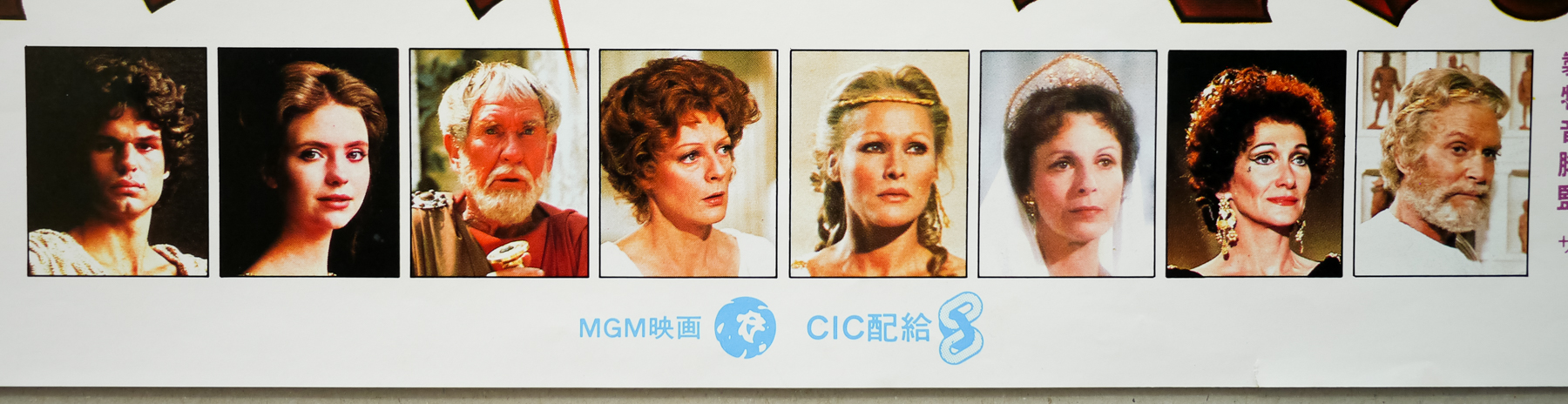
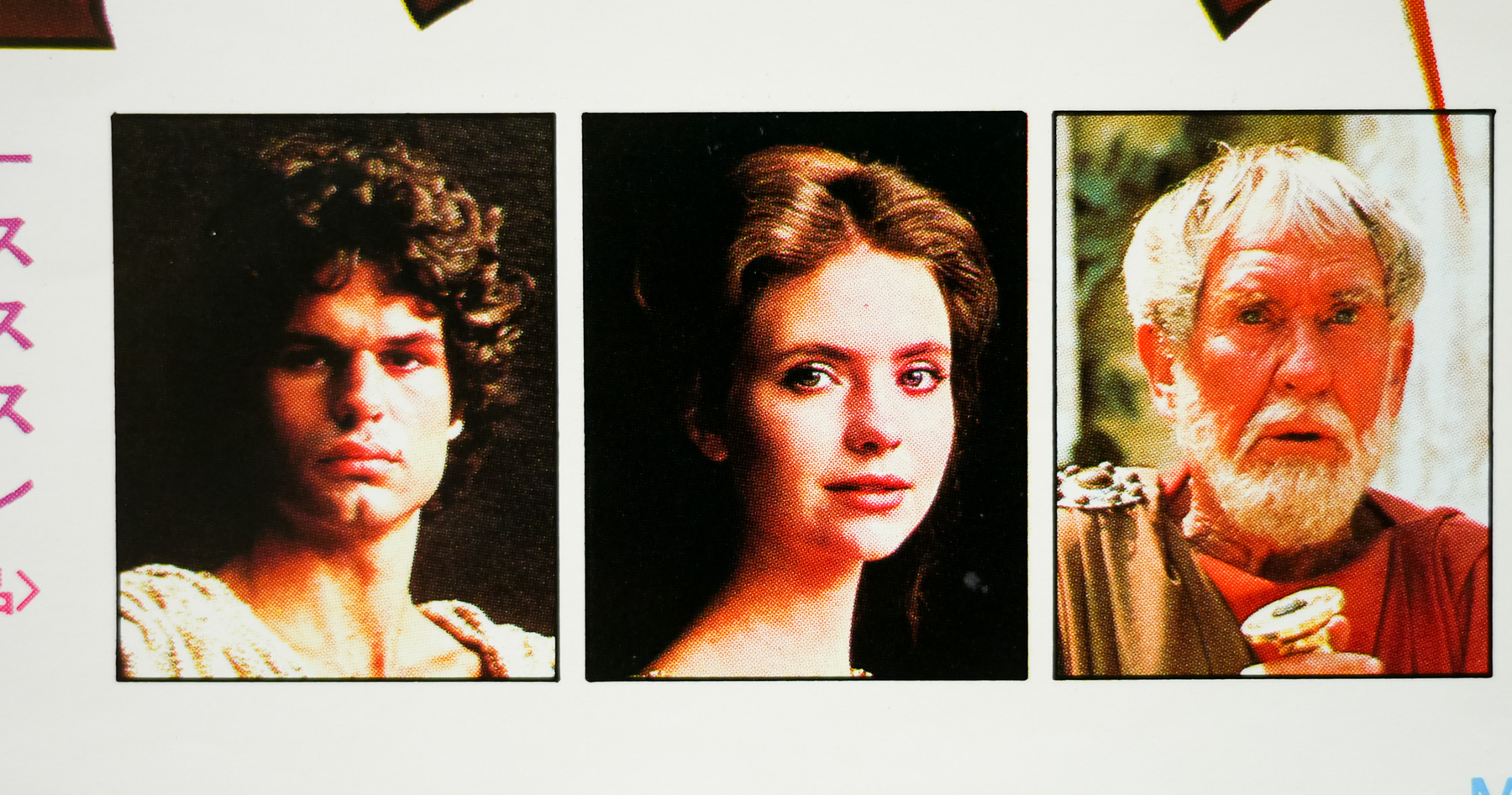
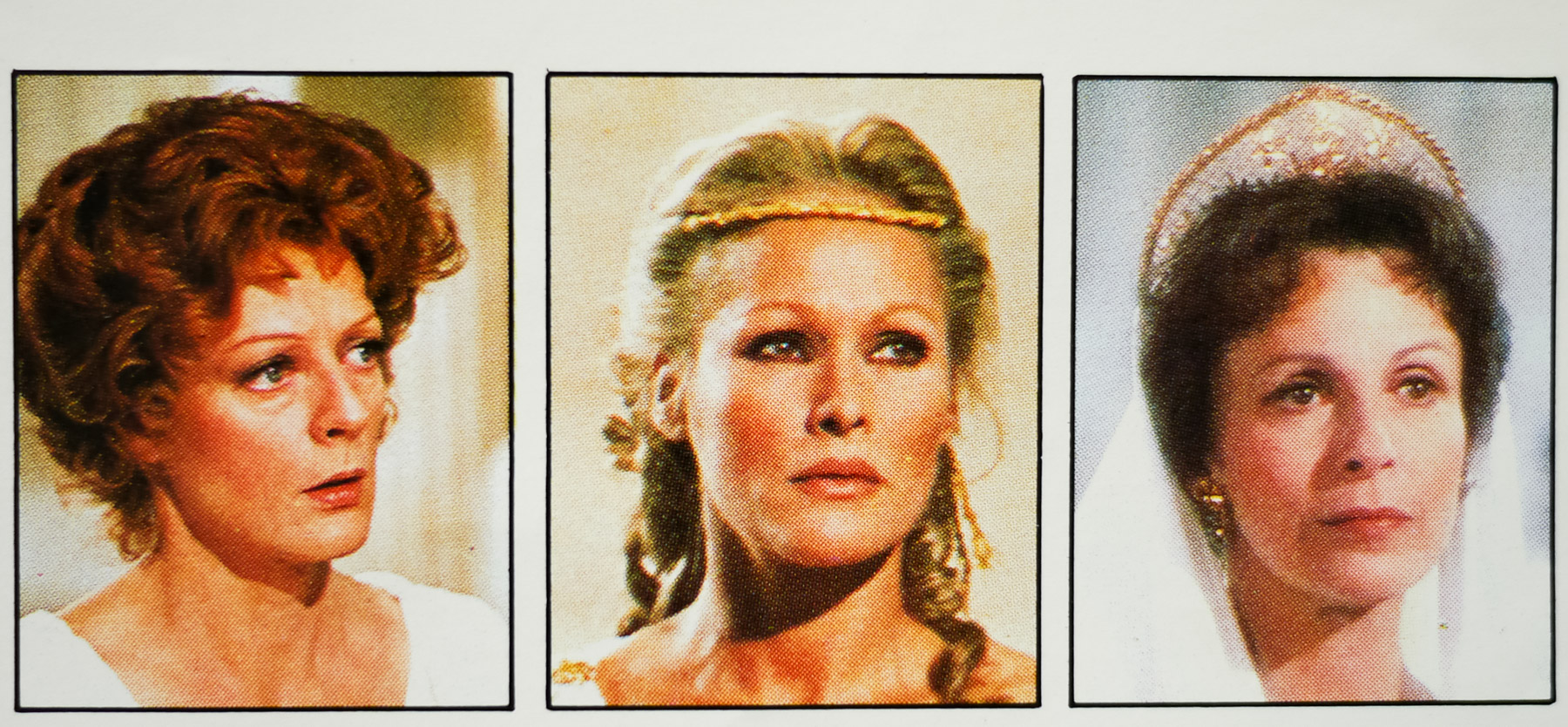
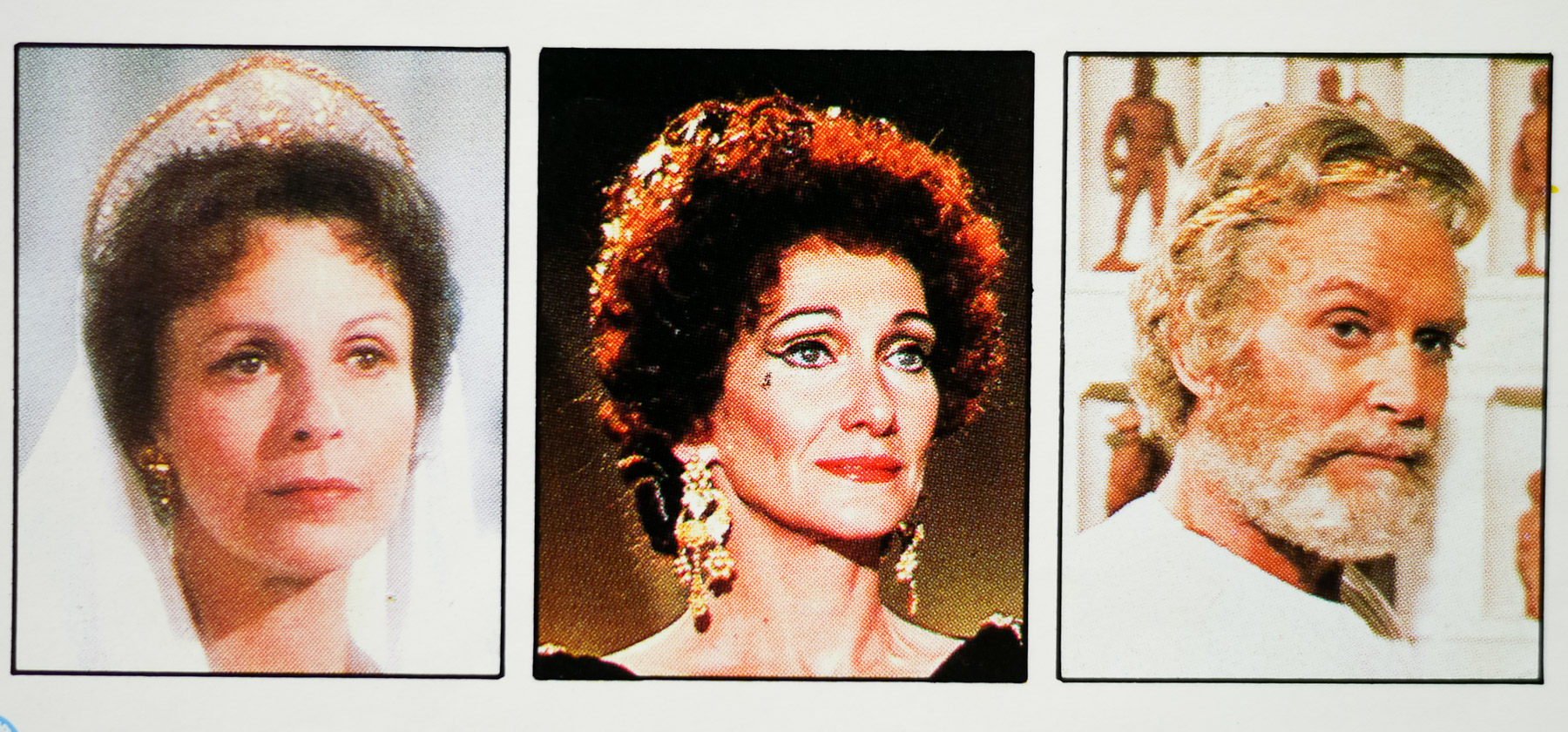
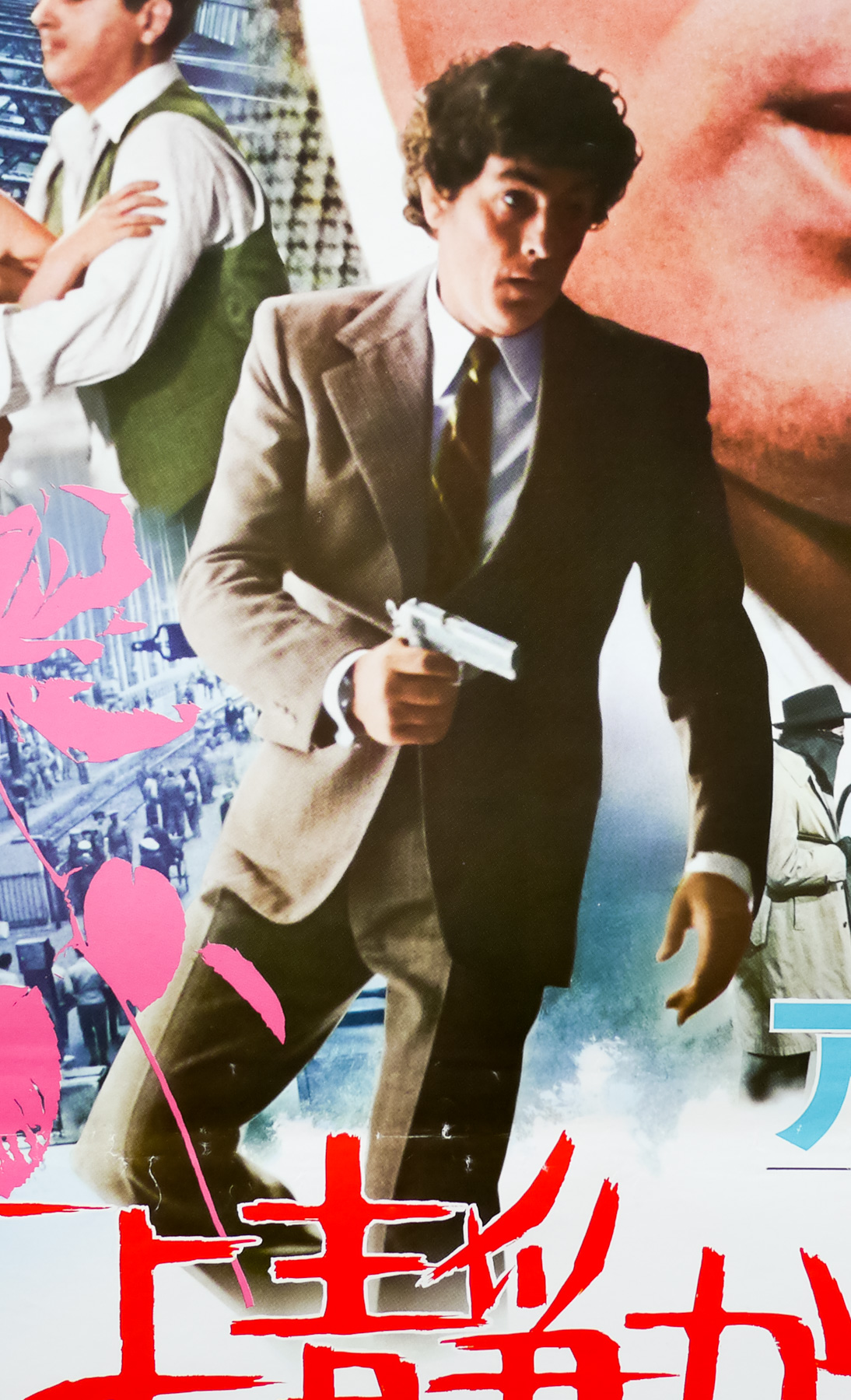
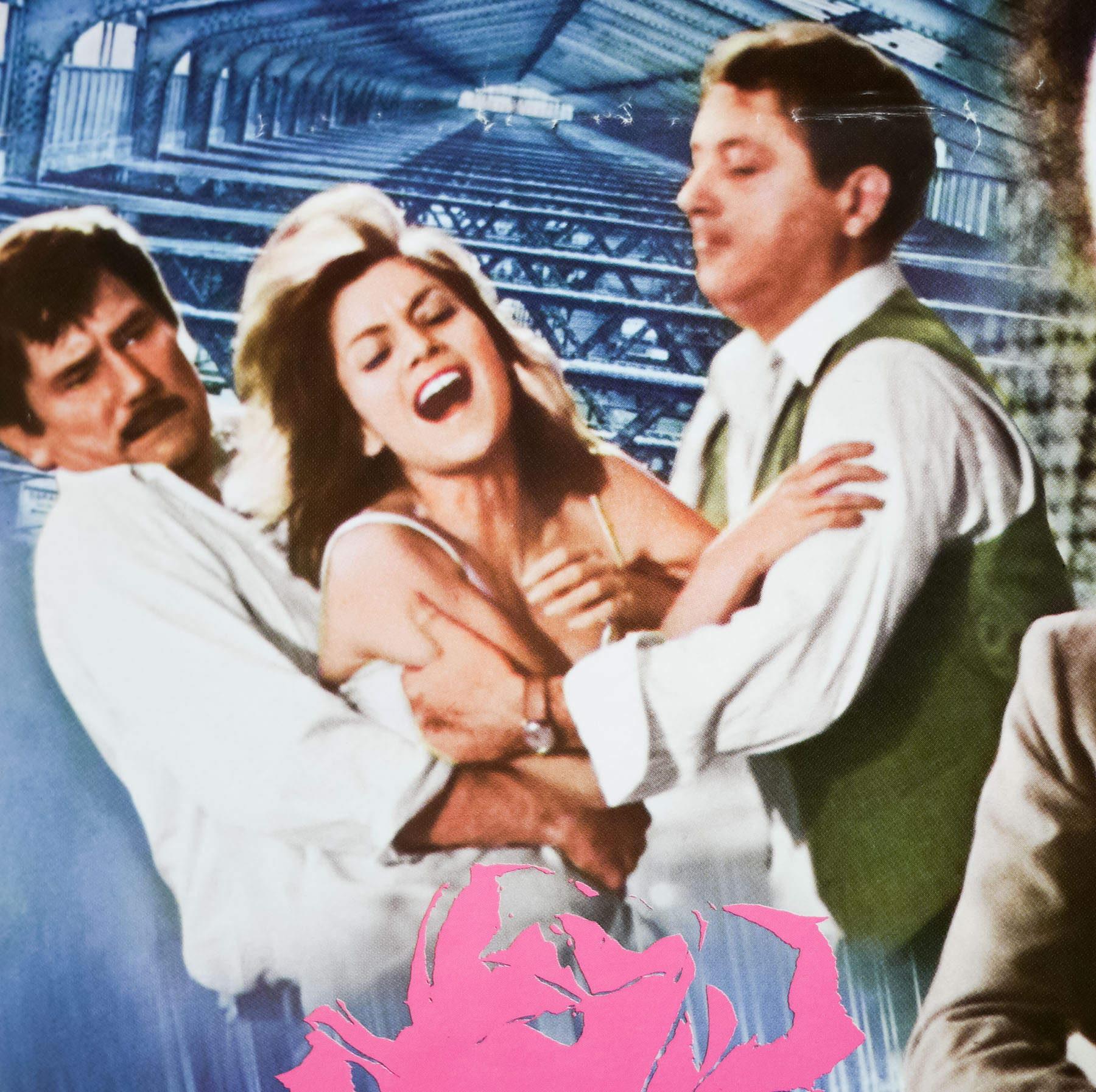
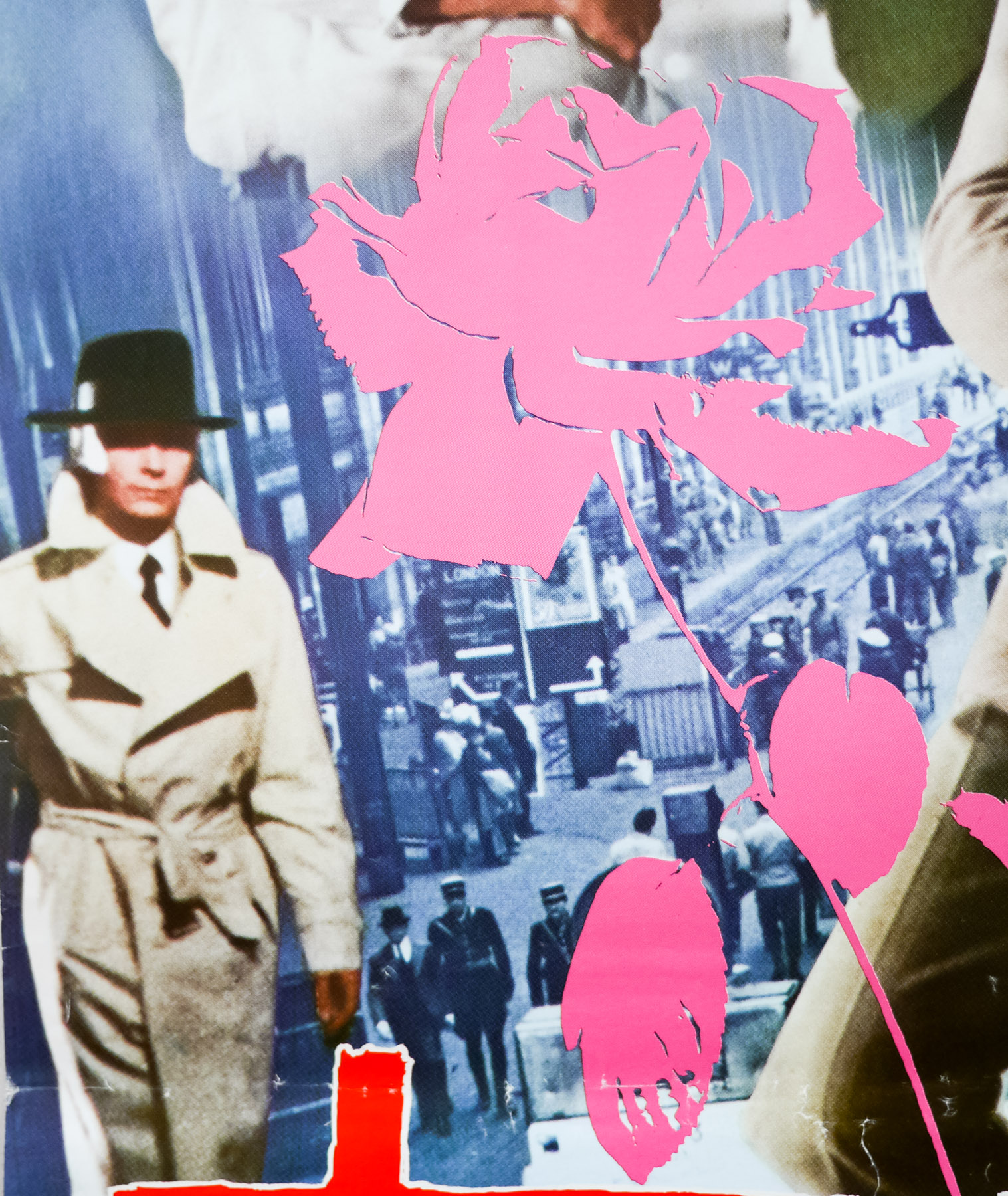
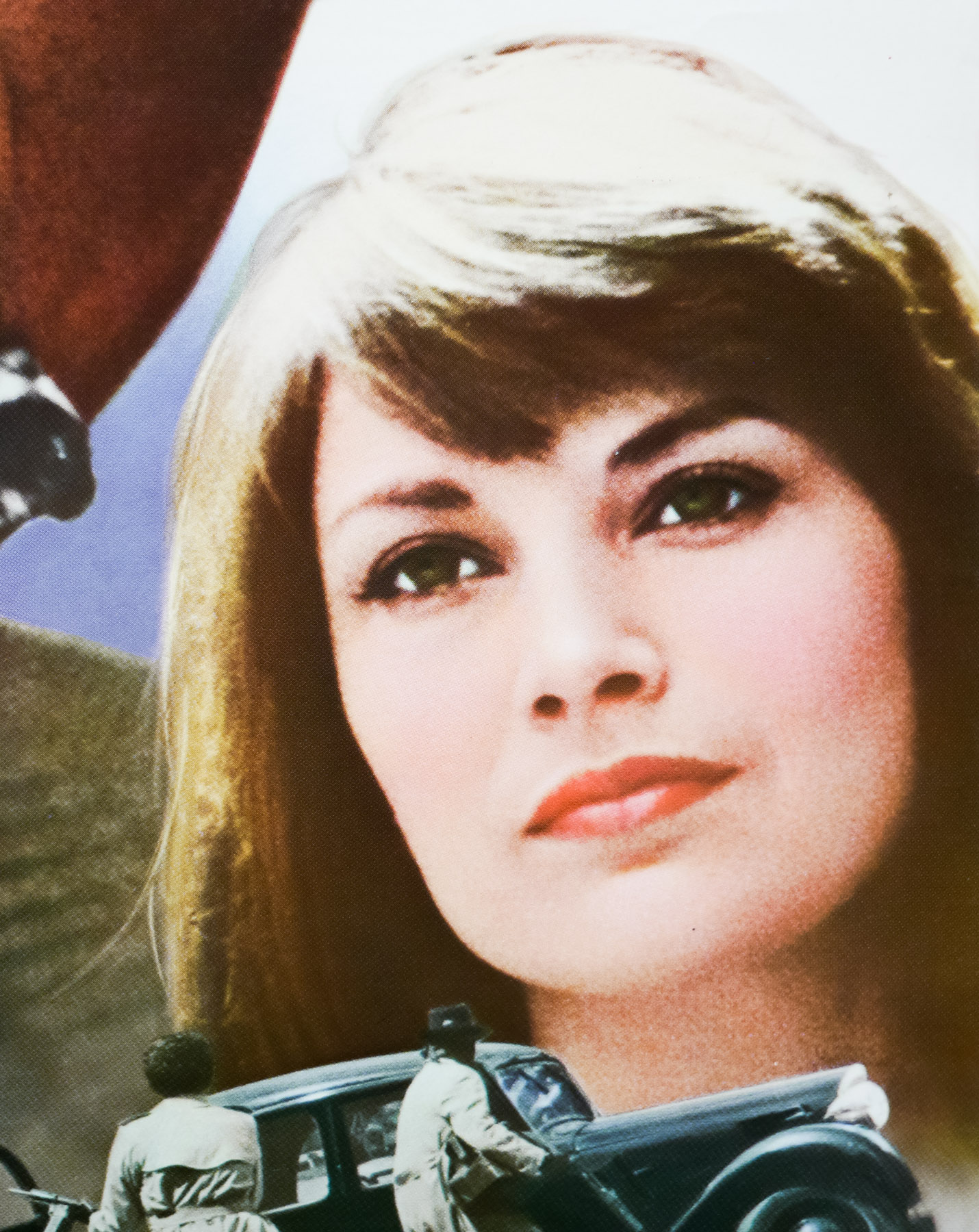
A unique montage features on this Japanese style B poster for the release of the 1981 fantasy adventure Clash of the Titans, which features several characters from Greek mythology. The film is perhaps most notable for being the last feature film for which celebrated stop motion artist Ray Harryhausen provided creature effects, and he effectively retired following its release. The story follows the machinations of Greek gods and their charges on earth as Perseus (poodle-haired, square-jawed Harry Hamlin), son of Zeus (Laurence Olivier), triggers the wrath of the sea goddess Thetis (Maggie Smith) after he tries to woo the gorgeous Princess Andromeda (Judi Bowker).

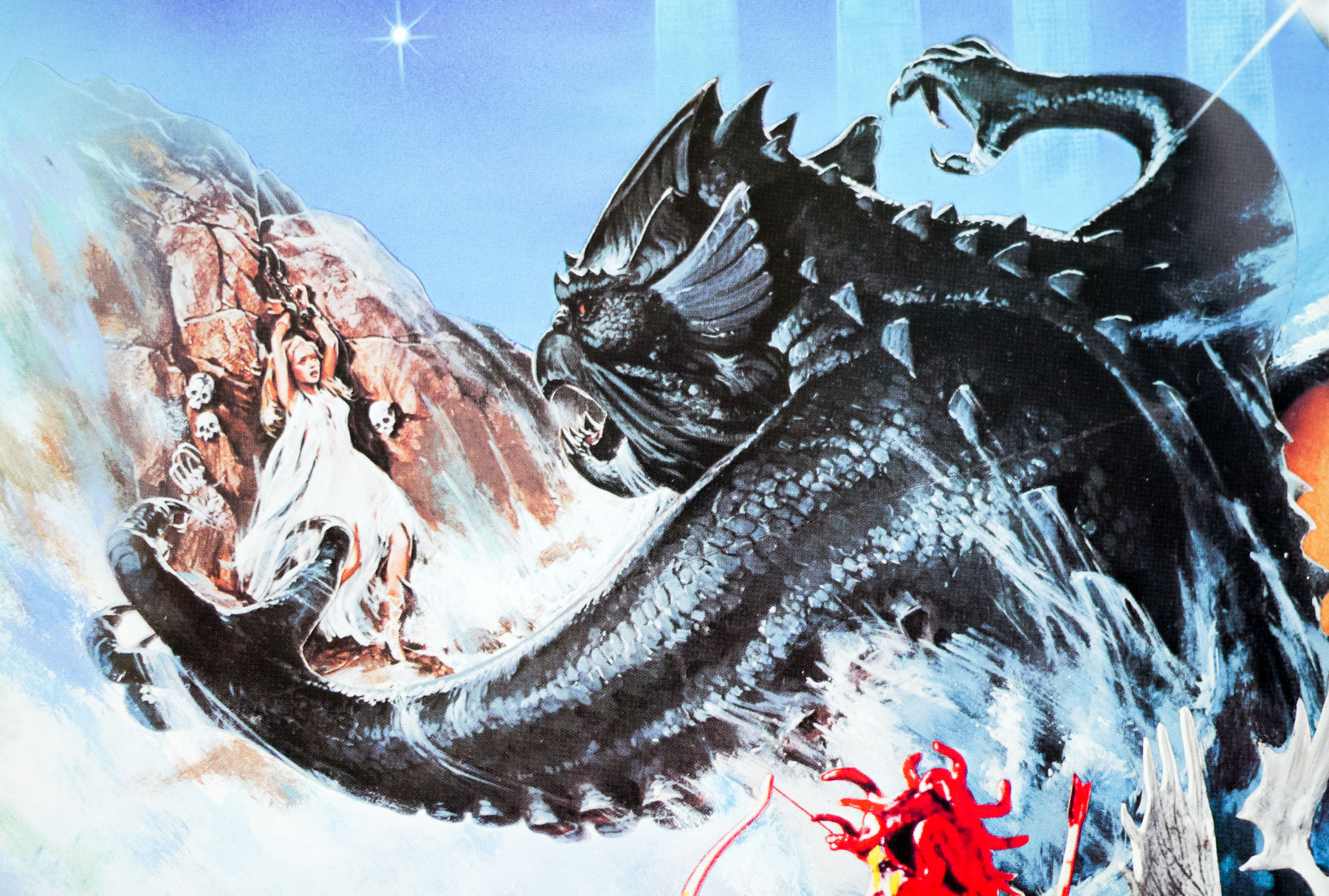
Unbeknownst to Perseus, Andromeda was in a relationship with Thetis’ son Calibos before Zeus had punished him for various corrupt deeds by turning him into a half-beast creature and banishing him from civilised society. Perseus must undergo a series of trials to successfully win the hand of Andromeda and things take a turn for the worse when he is able to successfully answer a riddle that had seen previous suitors burned at the steak. Thetis once again intervenes, demanding that Andromeda be sacrificed to the titan Kraken or risk the total destruction of the city of Joppa. Perseus sets out once again to discover a way to stop the Kraken and save Andromeda from certain death.

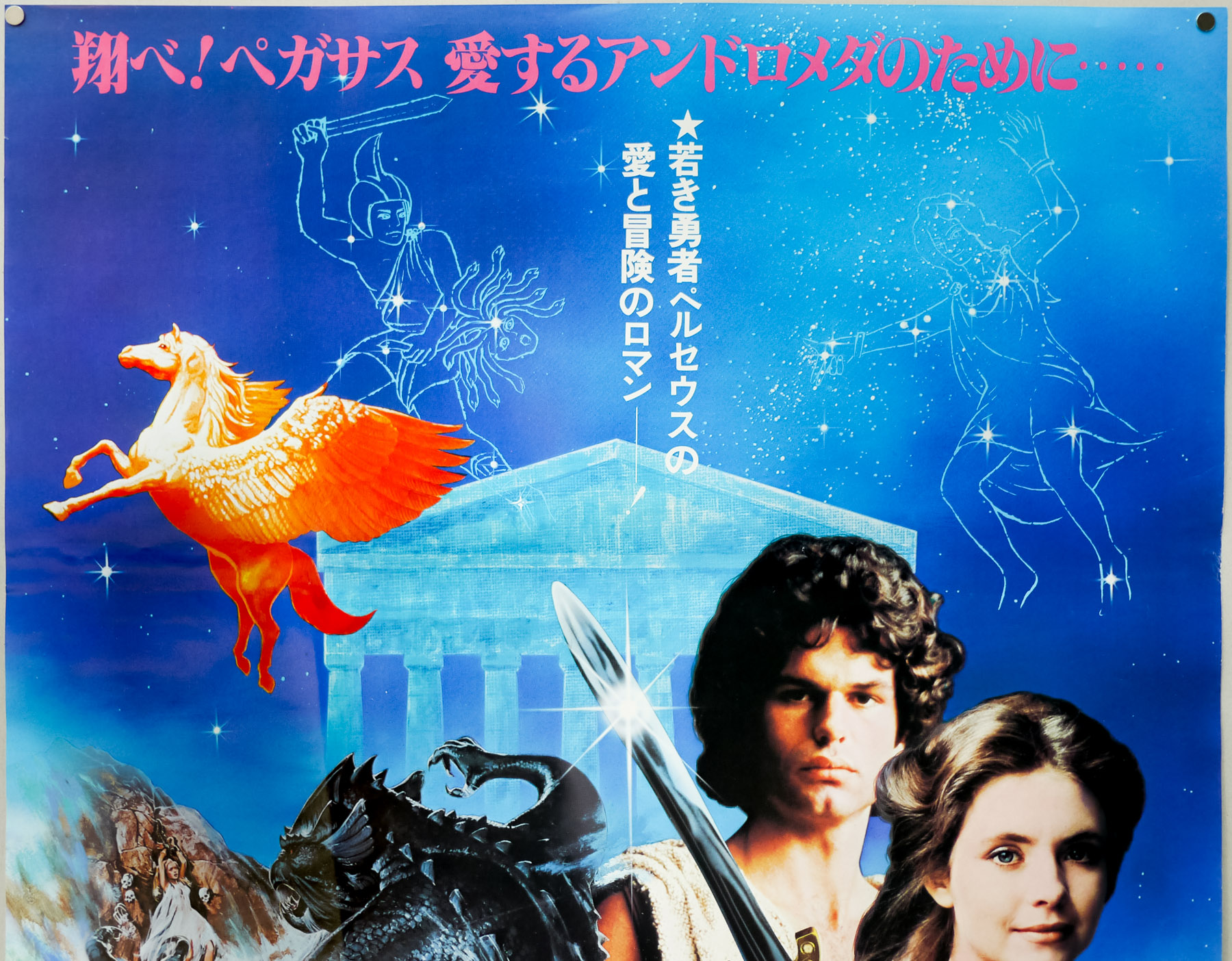
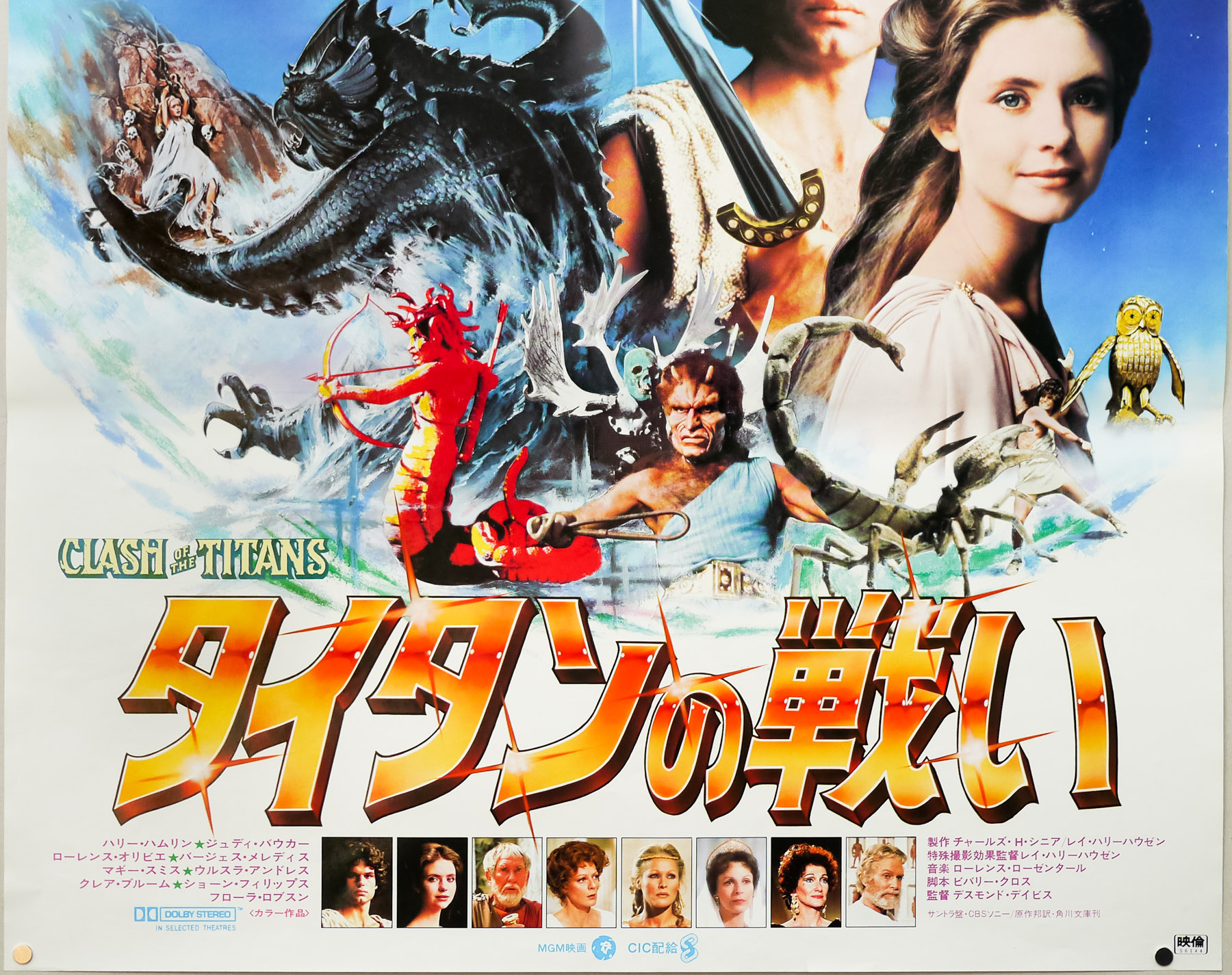
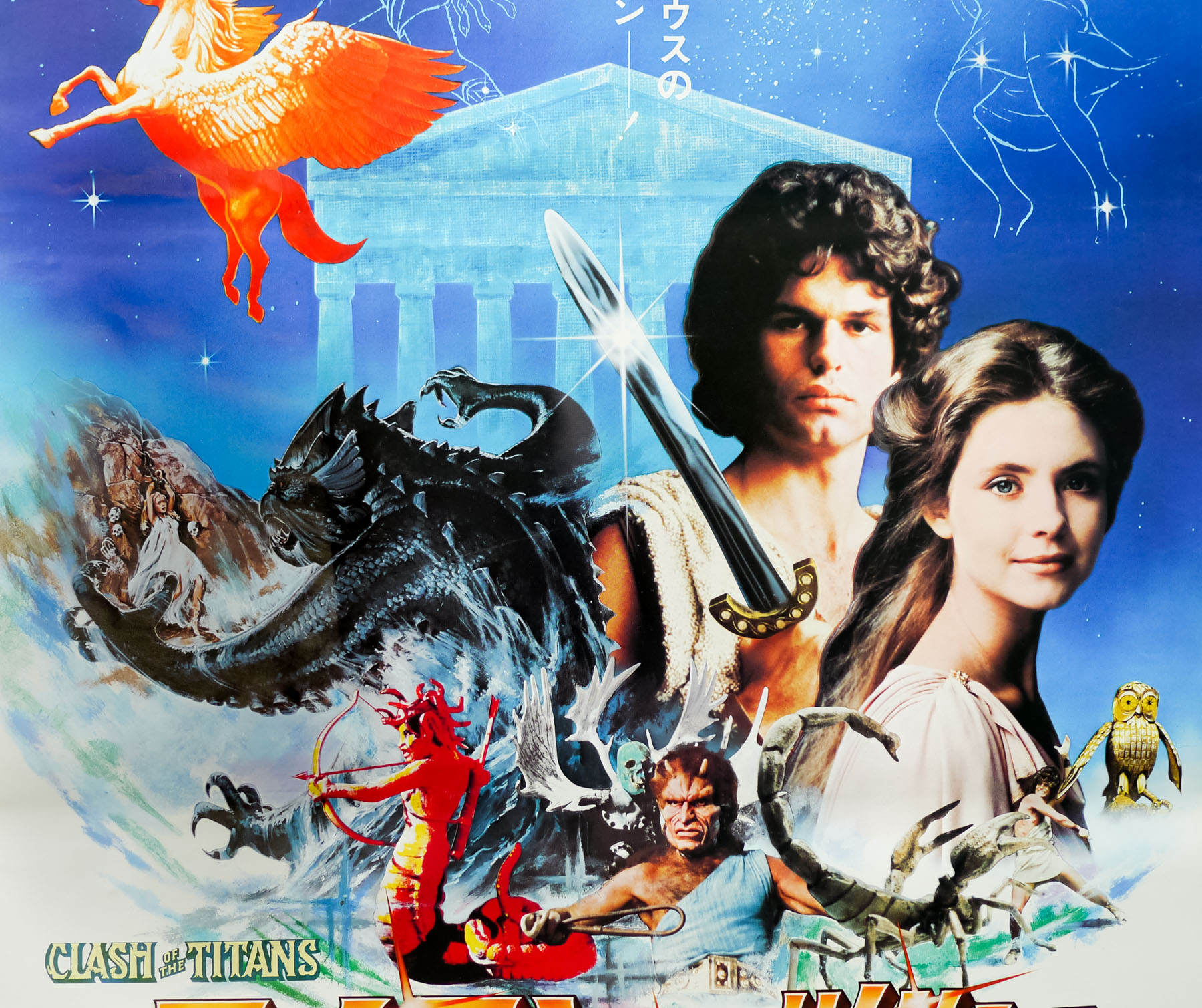
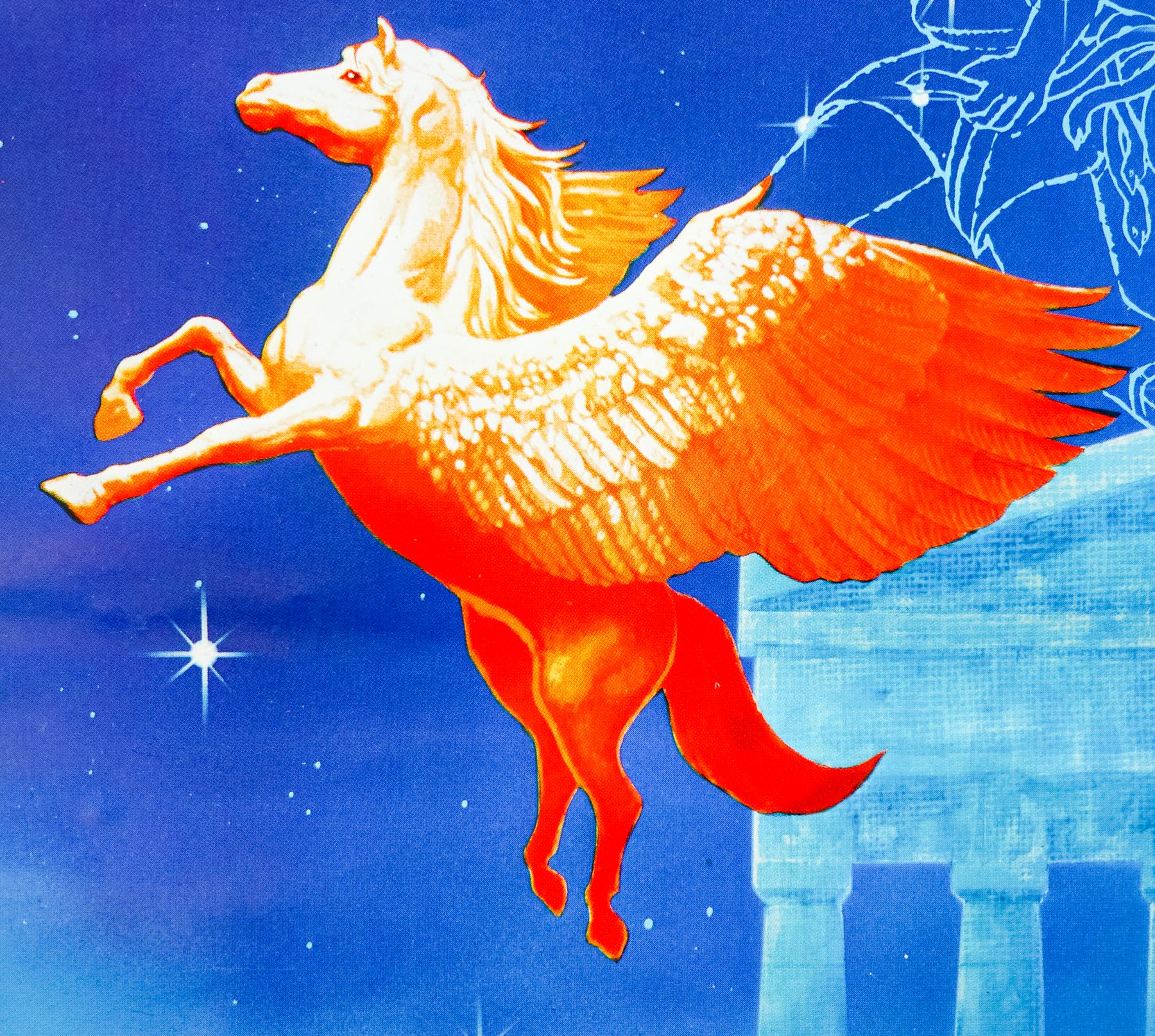
This B2 features elements from the two US one sheets printed for the film – the Kraken attack is from Dan Goozee’s style B one sheet, whilst the orange Pegasus is from the Brothers Hildebrandt’s awesome advance one sheet. The style A Japanese B2 is also in the Film on Paper collection and can be seen here.
Survival Run / B1 / Japan

11.07.11

Poster Poster

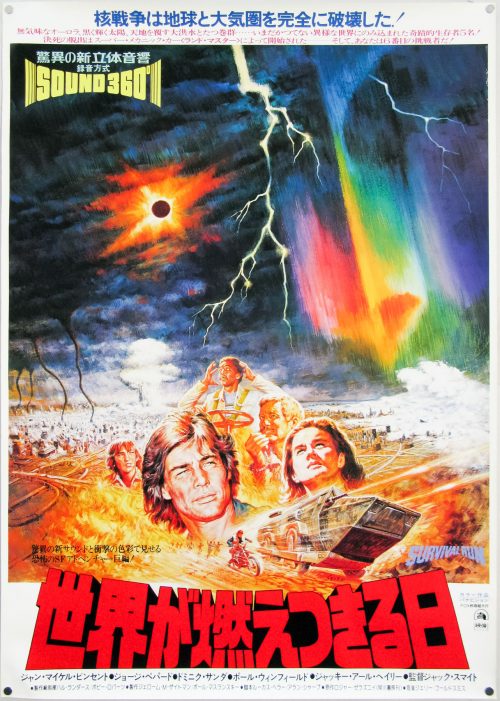
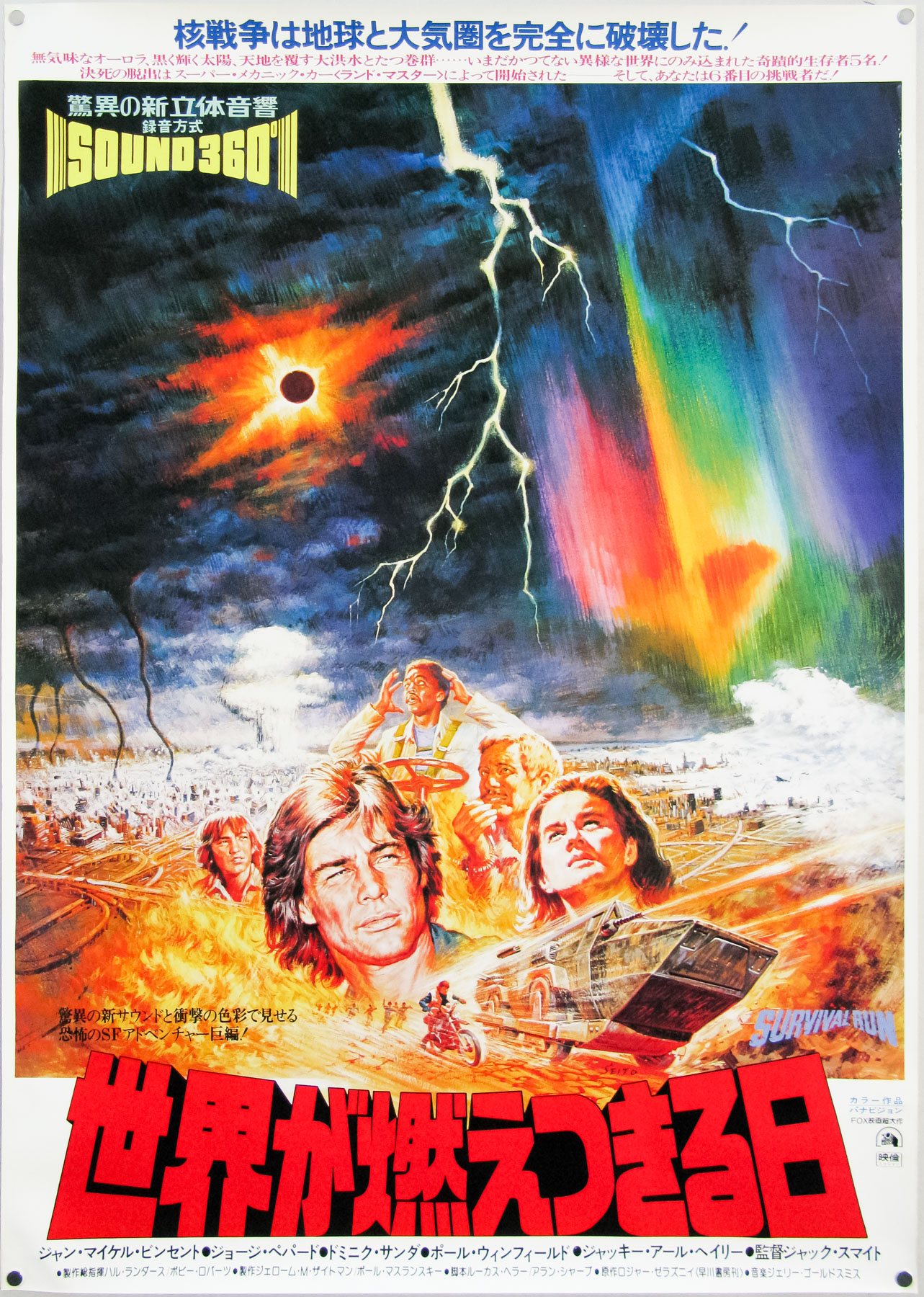
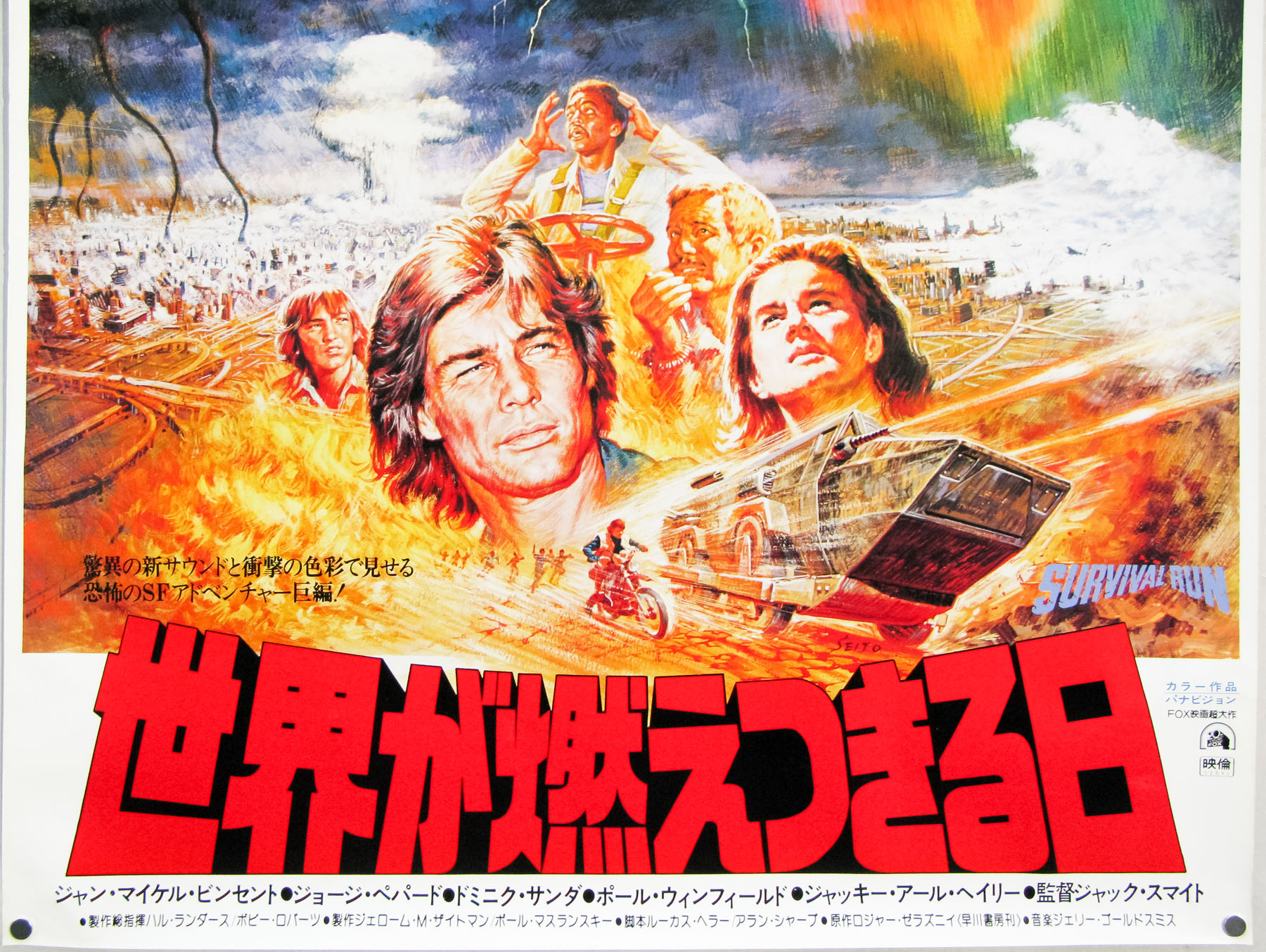
Released as Damnation Alley in the USA, this dystopian sci-fi adventure (set after the nuclear destruction of World War 3) pretty much disappeared at the box office, but later gained something of a cult status. It’s interesting to note that the studio, 20th Century Fox, were making two sci-fi films in 1977 and saw this as their big hope for a box-office blockbuster. The studio suits didn’t have much faith in the other project, a little film called Star Wars…

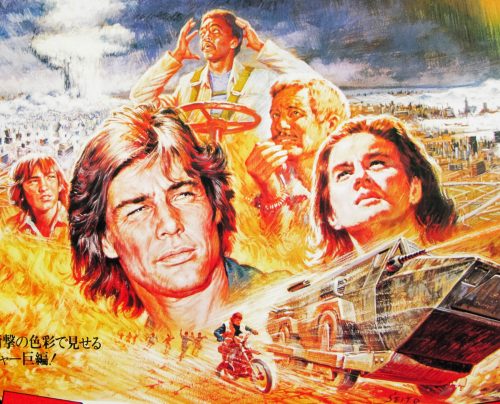
The film features a couple of infamous scenes with mutated creatures, including ‘giant’ scorpions (terribly composited using the blue screen process) and killer cockroaches. It also featured an interesting vehicle known as The Landmaster.

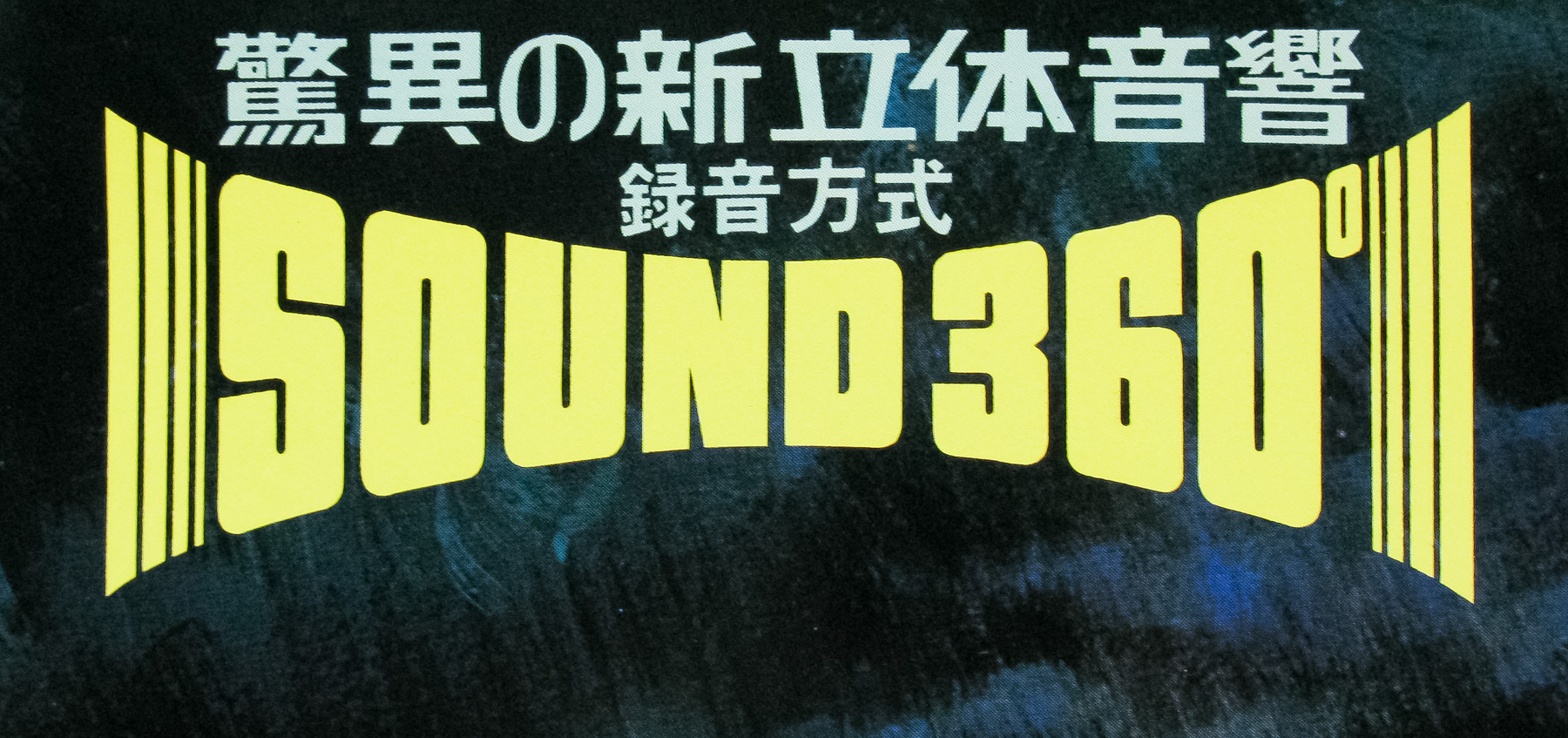
In some cinemas the film was shown with something called Sound 360. From IMDb:

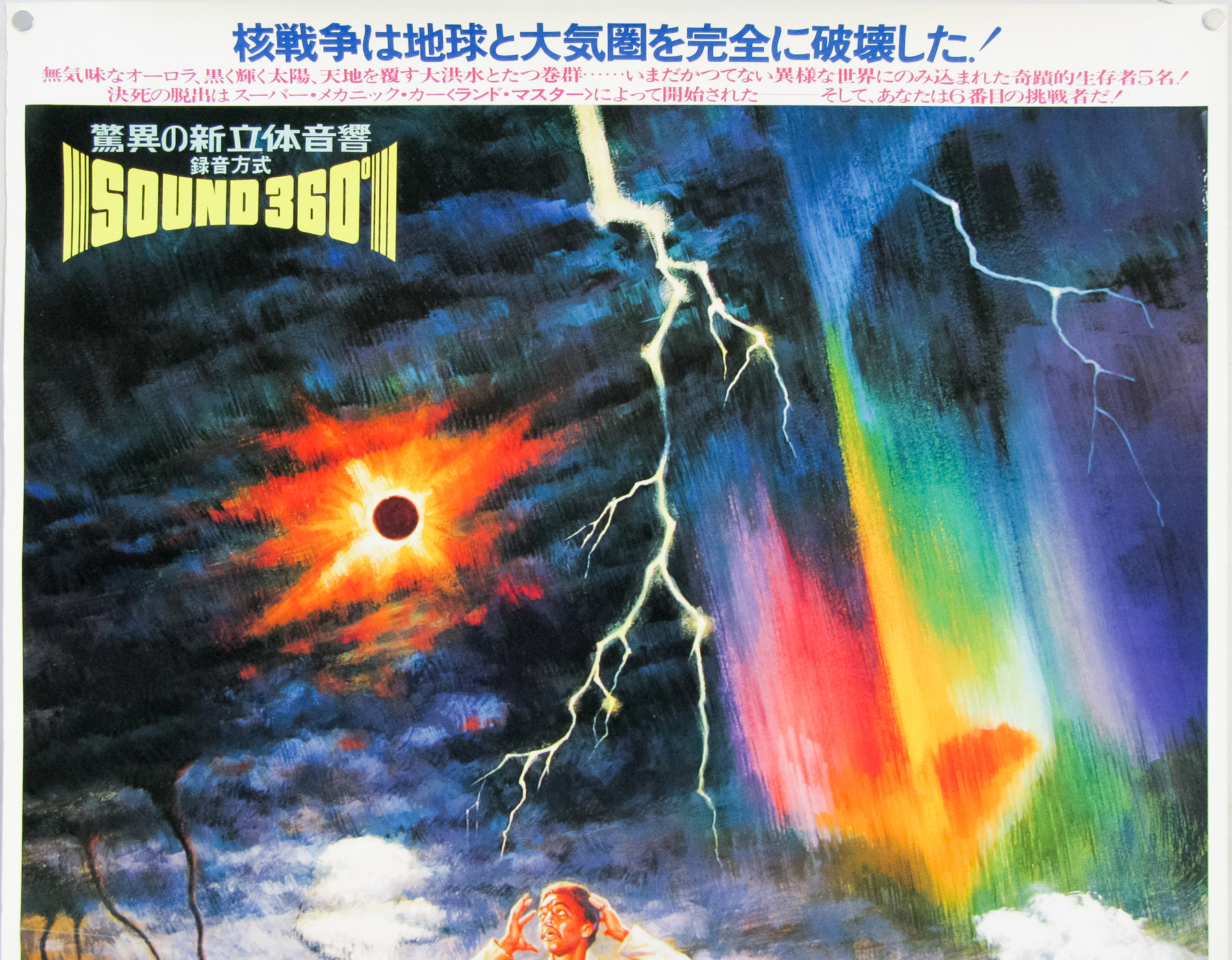
20th Century-Fox developed a rival to Universal’s gimmicky ‘Sensurround’ sound process (popularized in the theatrical release of Earthquake (1974)) that was only used for the theatrical release of “Damnation Alley” called Sound 360. This process was basically a variation of Magnetic-Optical Stereo sound. This technical advancement/gimmick in sound did not last past “Damnation Alley” although it was planned for Walter Hill‘s The Driver (1978) and Damien: Omen II (1978). If you look at the one sheet of “Damnation Alley” the “Sound 360” declaration and logo are prominent at the bottom.

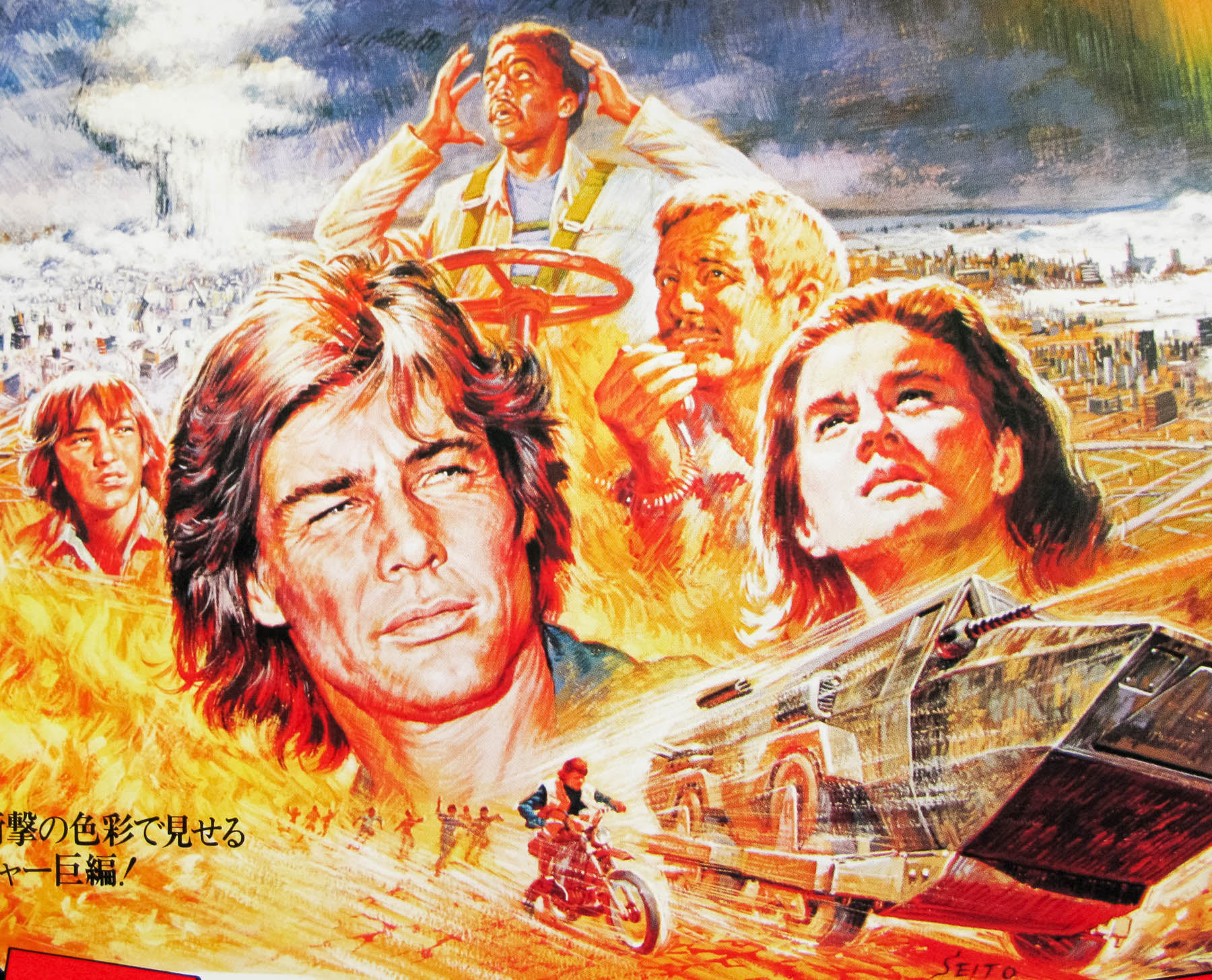
This one sheet by one of my favourite Japanese artists, Seito, is practically identical to one of the American one sheets that can be seen on IMPAwards (credited to artist Paul Lehr).

The film was recently released on blu-ray (in the correct aspect ratio) and a trailer for that can be watched here.
 

Deliverance / B2 / Japan

21.11.11

Poster Poster
Title
Deliverance
AKA
Un tranquillo week-end di paura [A calm weekend of fear] (Italy)
Year of Film
1972
Director
John Boorman
Starring
Jon Voight, Burt Reynolds, Ned Beatty, Ronny Cox, Ed Ramey, Billy Redden, Seamon Glass, Randall Deal, Bill McKinney
Origin of Film
USA
Genre(s) of Film
Jon Voight, Burt Reynolds, Ned Beatty, Ronny Cox, Ed Ramey, Billy Redden, Seamon Glass, Randall Deal, Bill McKinney,
Type of Poster
B2
Style of Poster
--
Origin of Poster
Japan
Year of Poster
1972
Designer
Unknown
Artist
Unknown
Size (inches)
20 4/16" x 28 13/16"
SS or DS
SS
Tagline
--

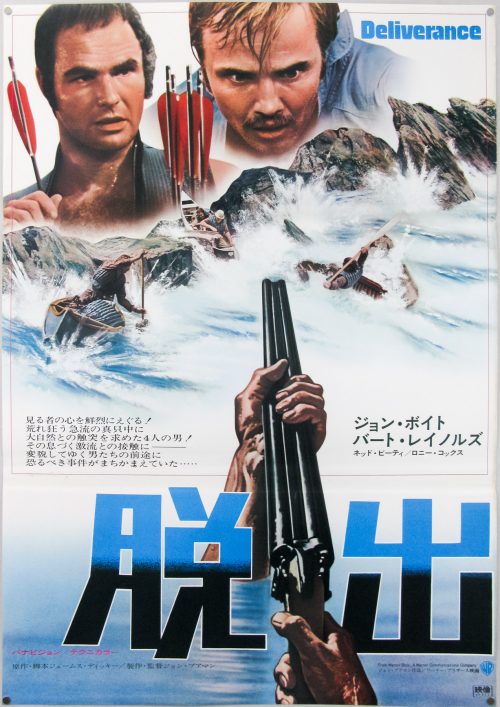
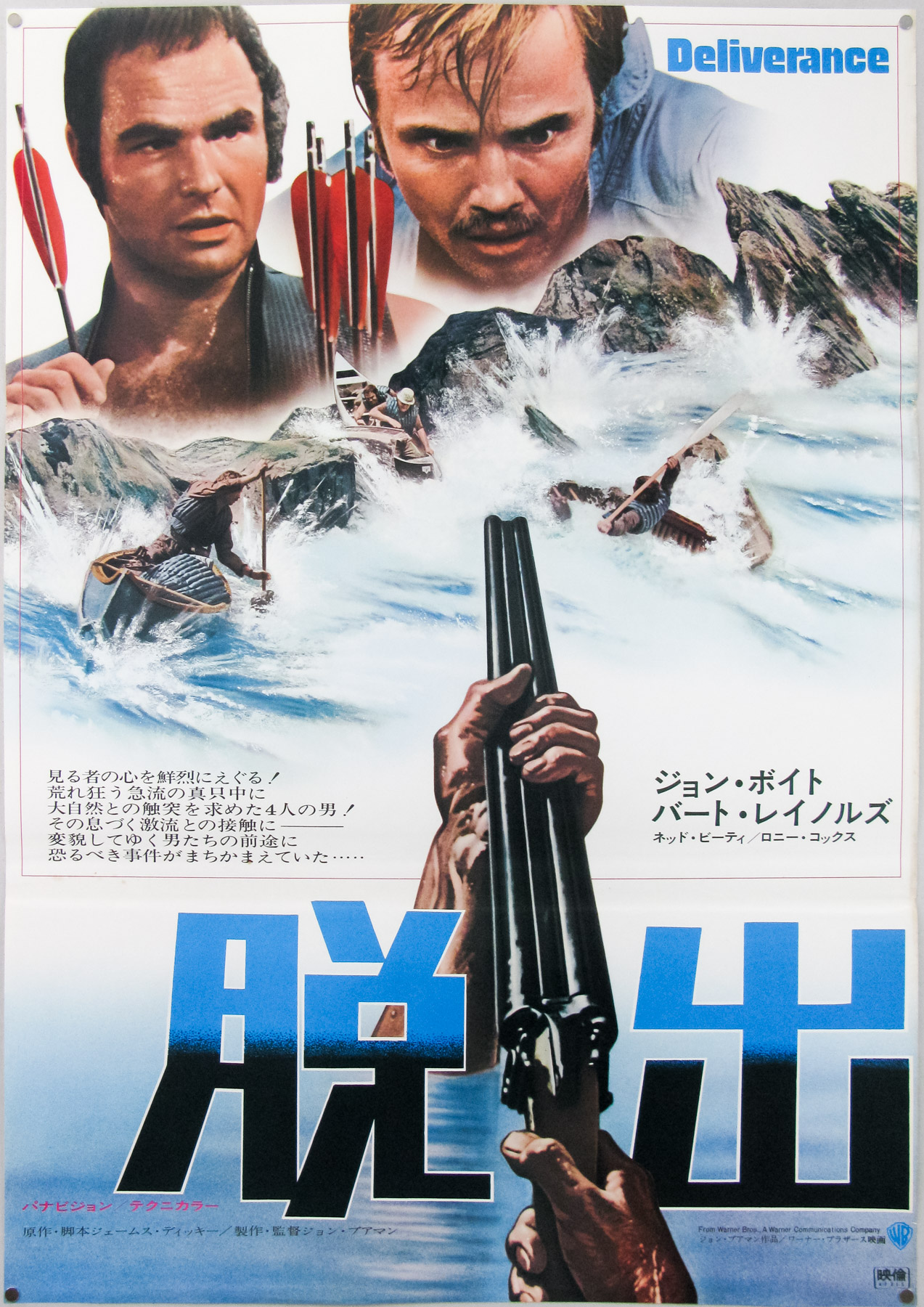
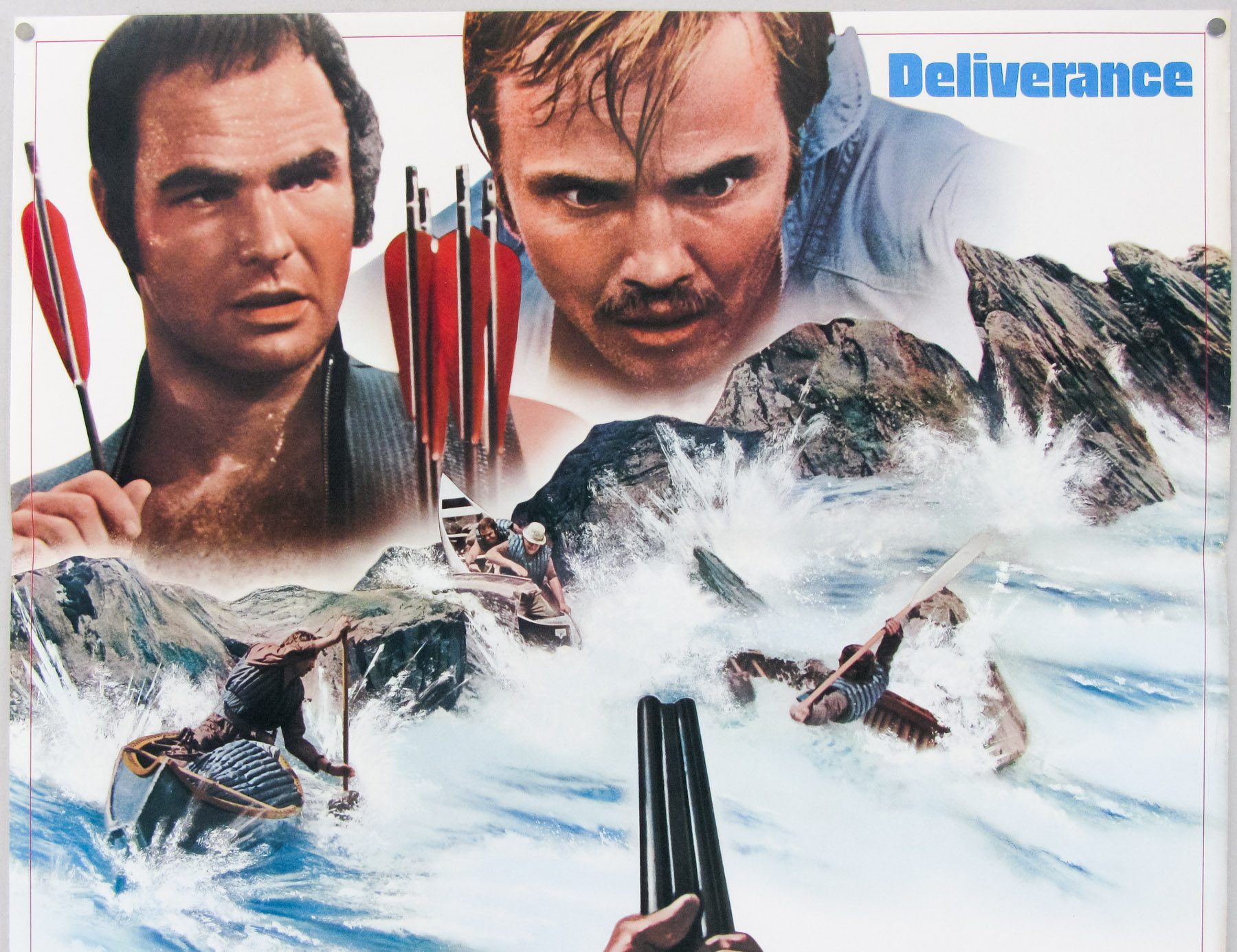
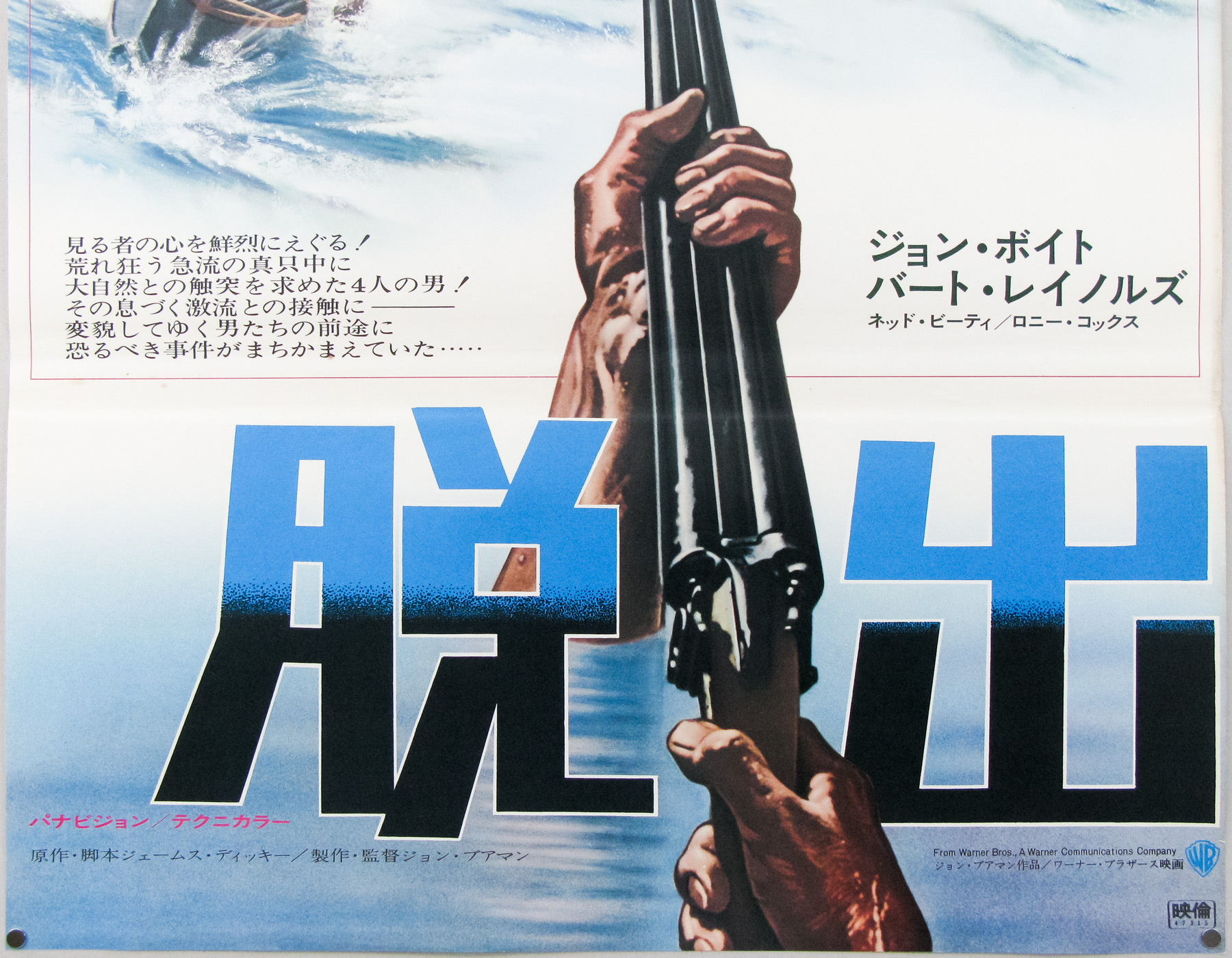
John Boorman‘s classic survival tale will celebrate its 40th anniversary next year and it remains a powerful and unique film, with no remake or imitations muddying its legacy. Deliverance has firmly entered the public consciousness and is almost guaranteed to be referenced when film and TV characters leave the city to head into the wild.

It also introduced the idea of mountain men (hillbillies) to folks who’d never visited the kind of country seen in the film. Finally, there’s the famous ‘Duelling Banjos’ music and the oft-quoted ‘squeal like piggy!’ line taken from the infamous rape scene.

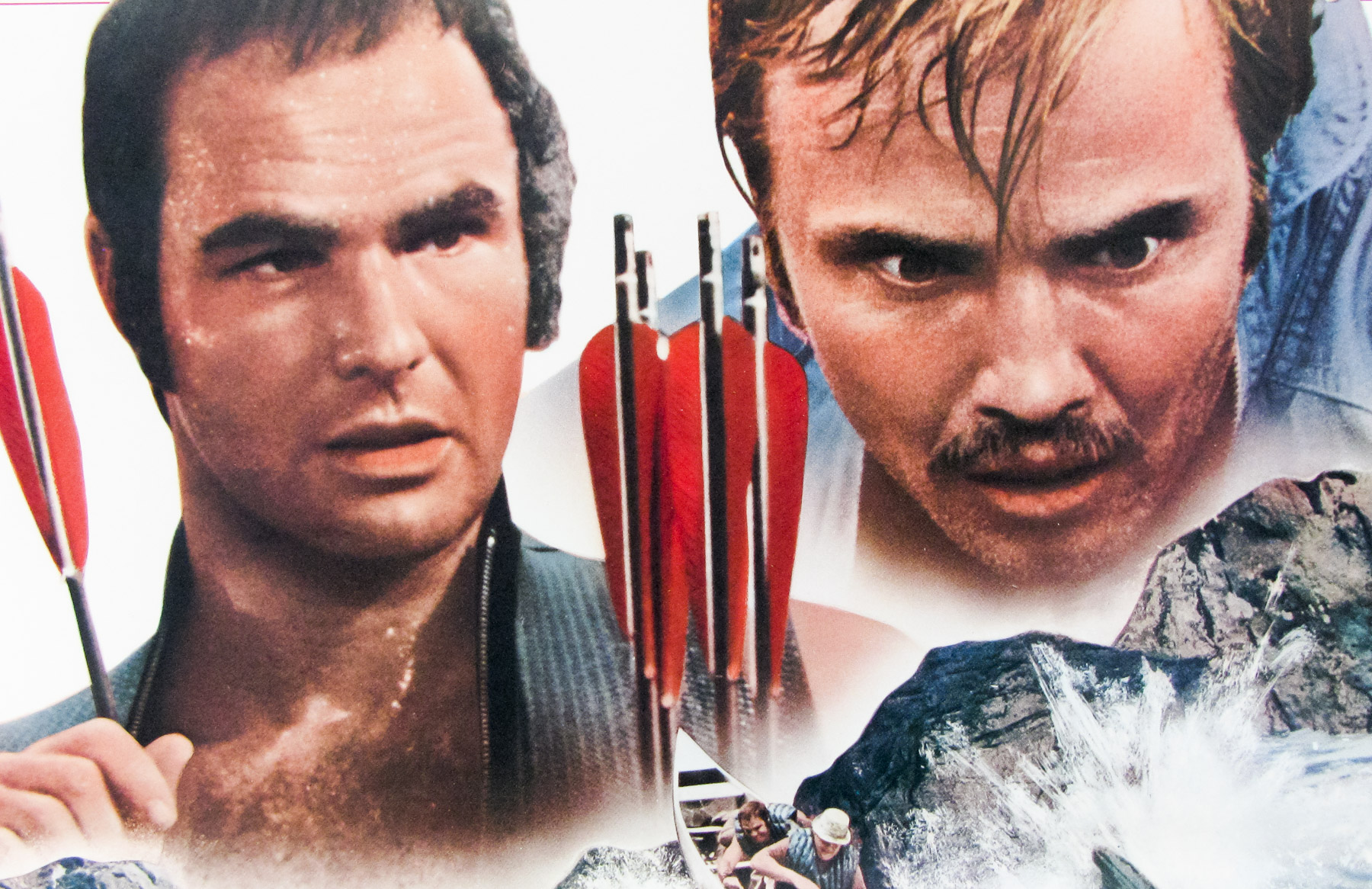
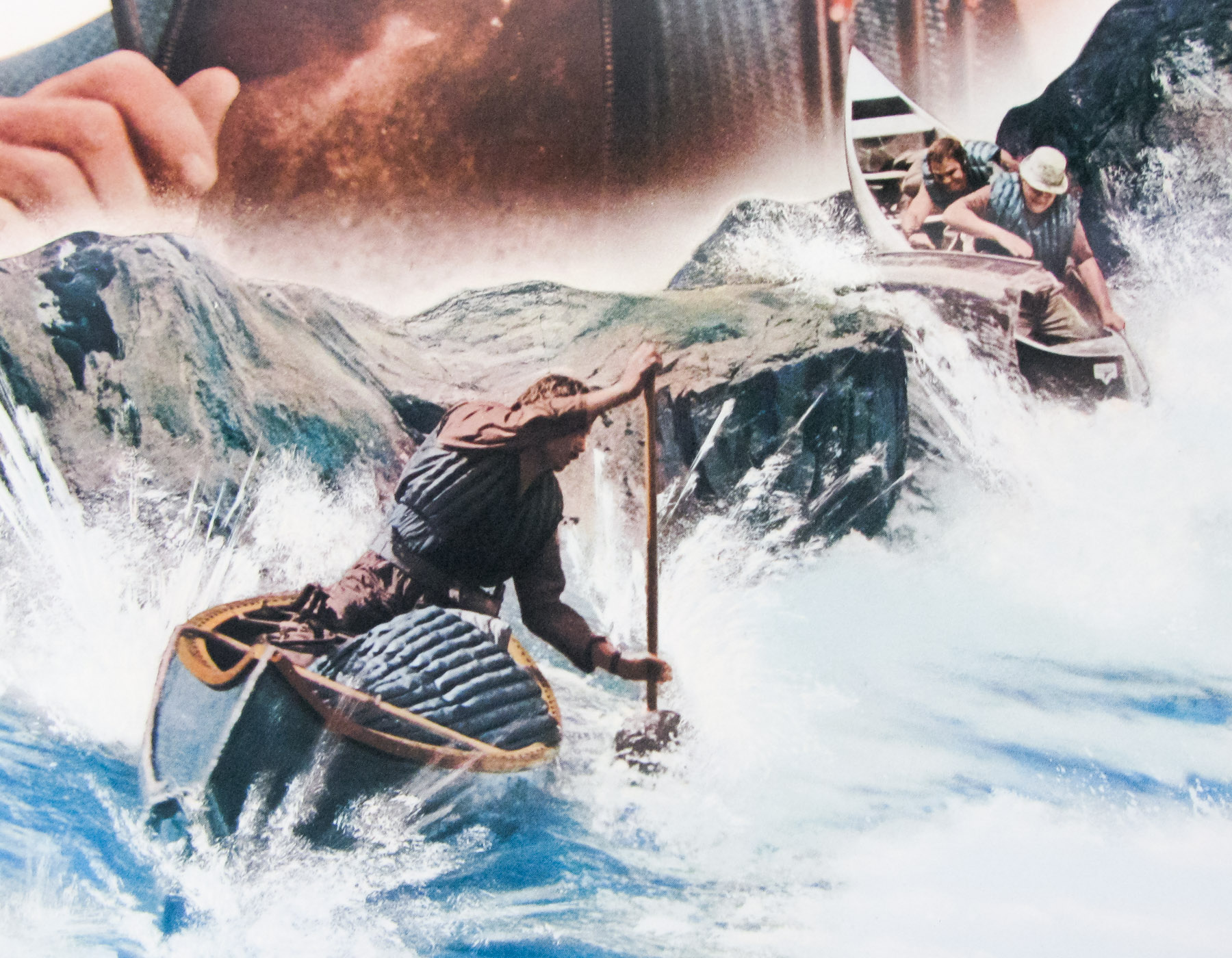
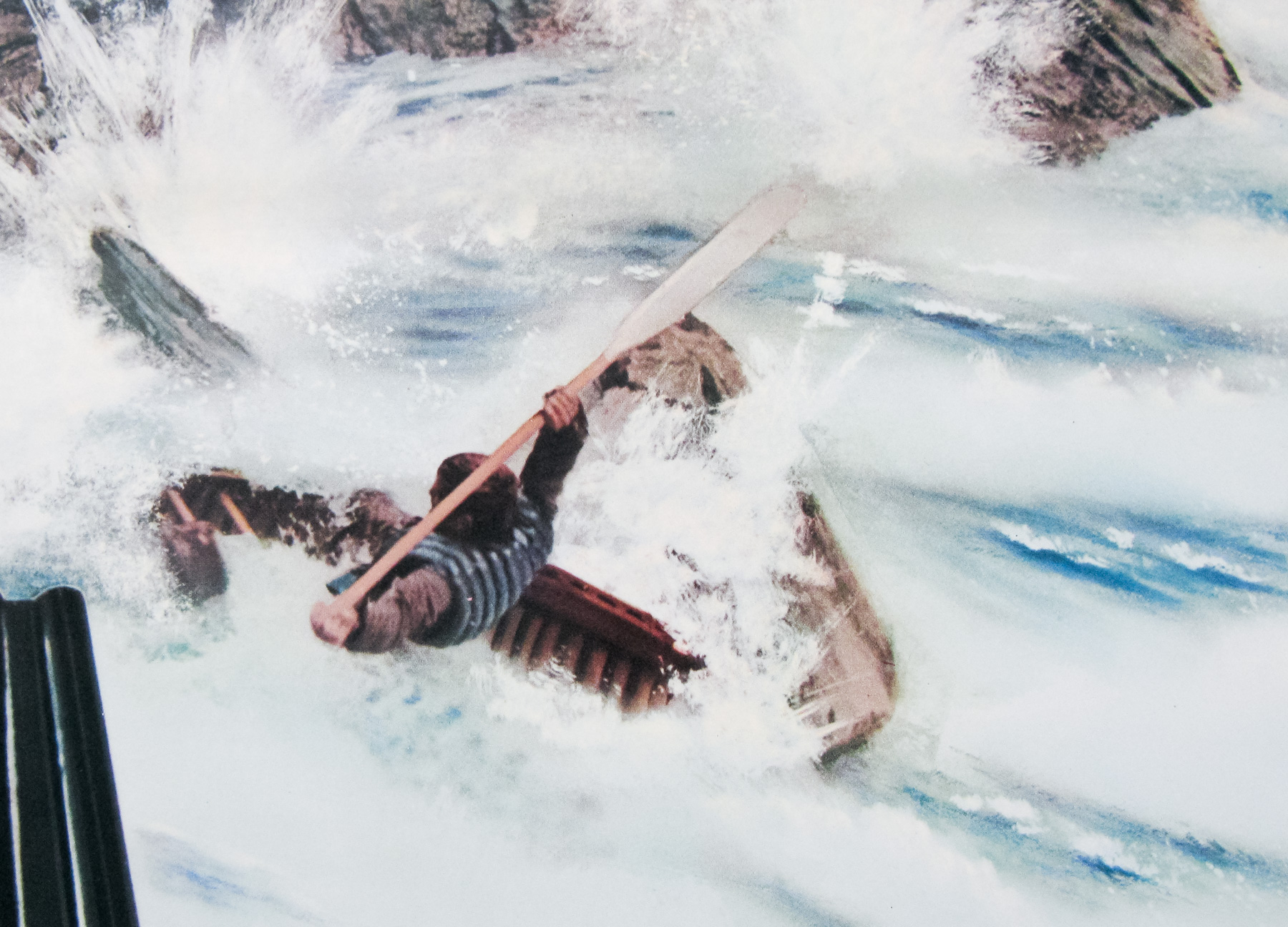
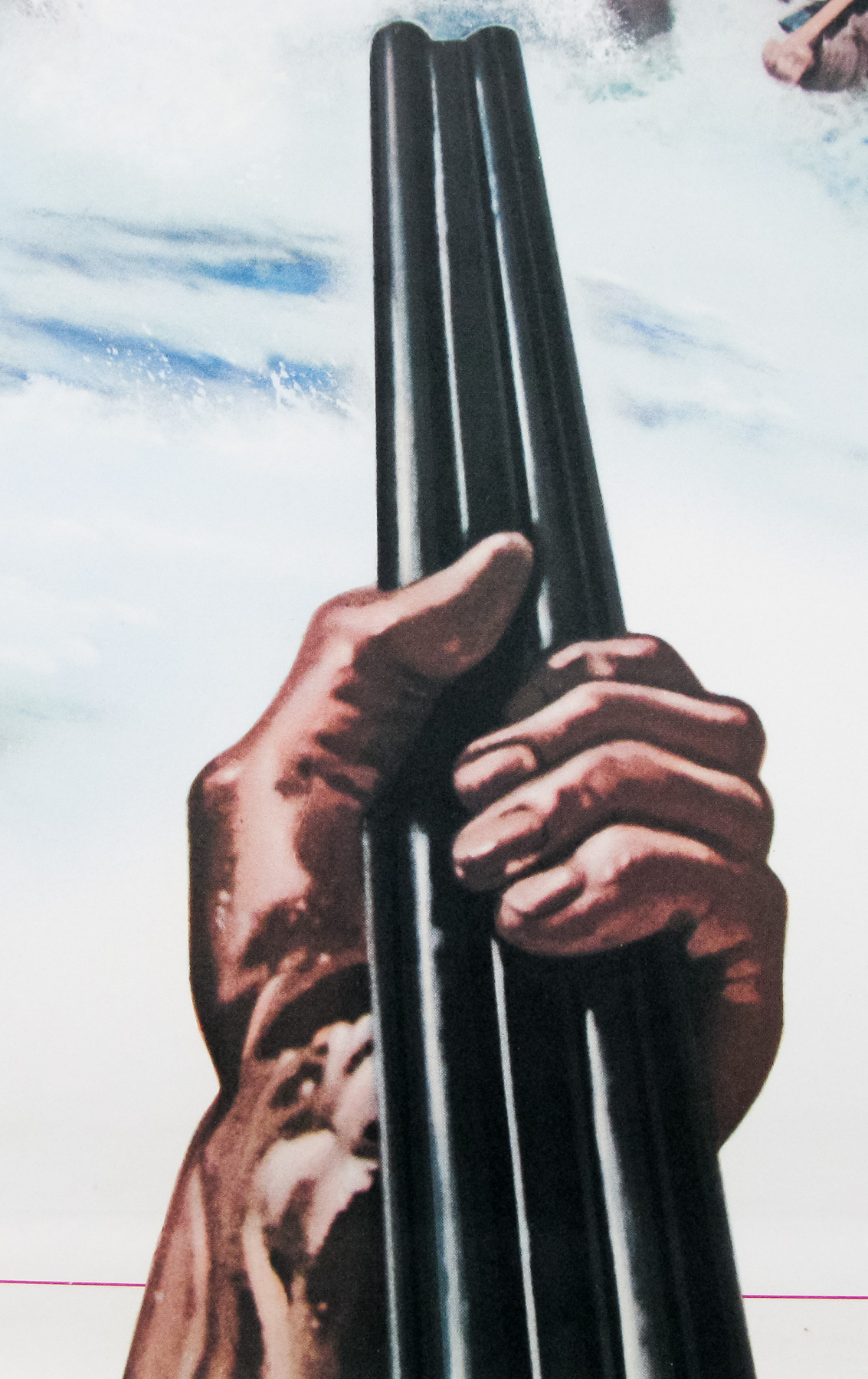
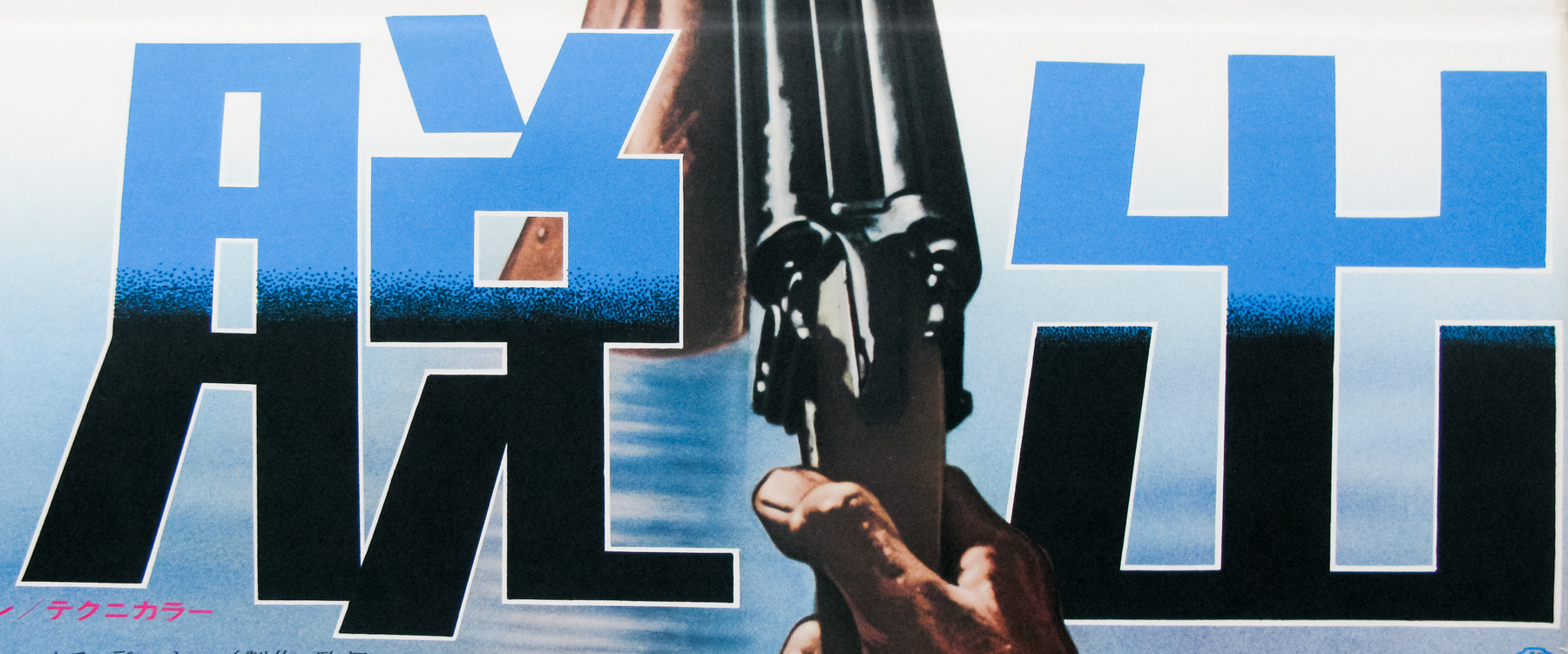
This Japanese poster features a mixture of photography and artwork. It appears that the canoes are photographic whilst the river has been enhanced with illustration. The shotgun rising from the water is featured on a handful of other posters for the film, including the British quad and the style B US one sheet.

The original trailer is on YouTube.

Dune / B2 / artwork style / Japan

07.12.11

Poster Poster
Title
Dune
AKA
Der Wüstenplanet (West Germany)
Year of Film
1984
Director
David Lynch
Starring
Francesca Annis, Kyle MacLachlan, Sting, Max von Sydow, Jose Ferrer
Origin of Film
USA
Genre(s) of Film
Francesca Annis, Kyle MacLachlan, Sting, Max von Sydow, Jose Ferrer,
Type of Poster
B2
Style of Poster
Artwork
Origin of Poster
Japan
Year of Poster
1985
Designer
Unknown
Artist
Unknown
Size (inches)
20 6/16" x 28 14/16"
SS or DS
SS
Tagline
--

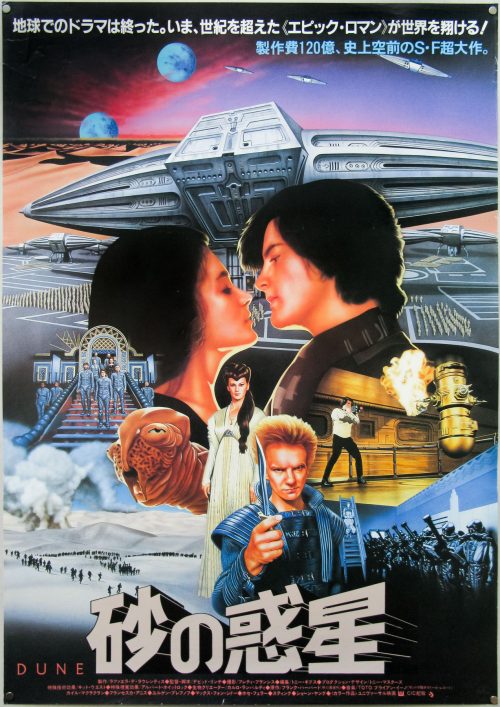
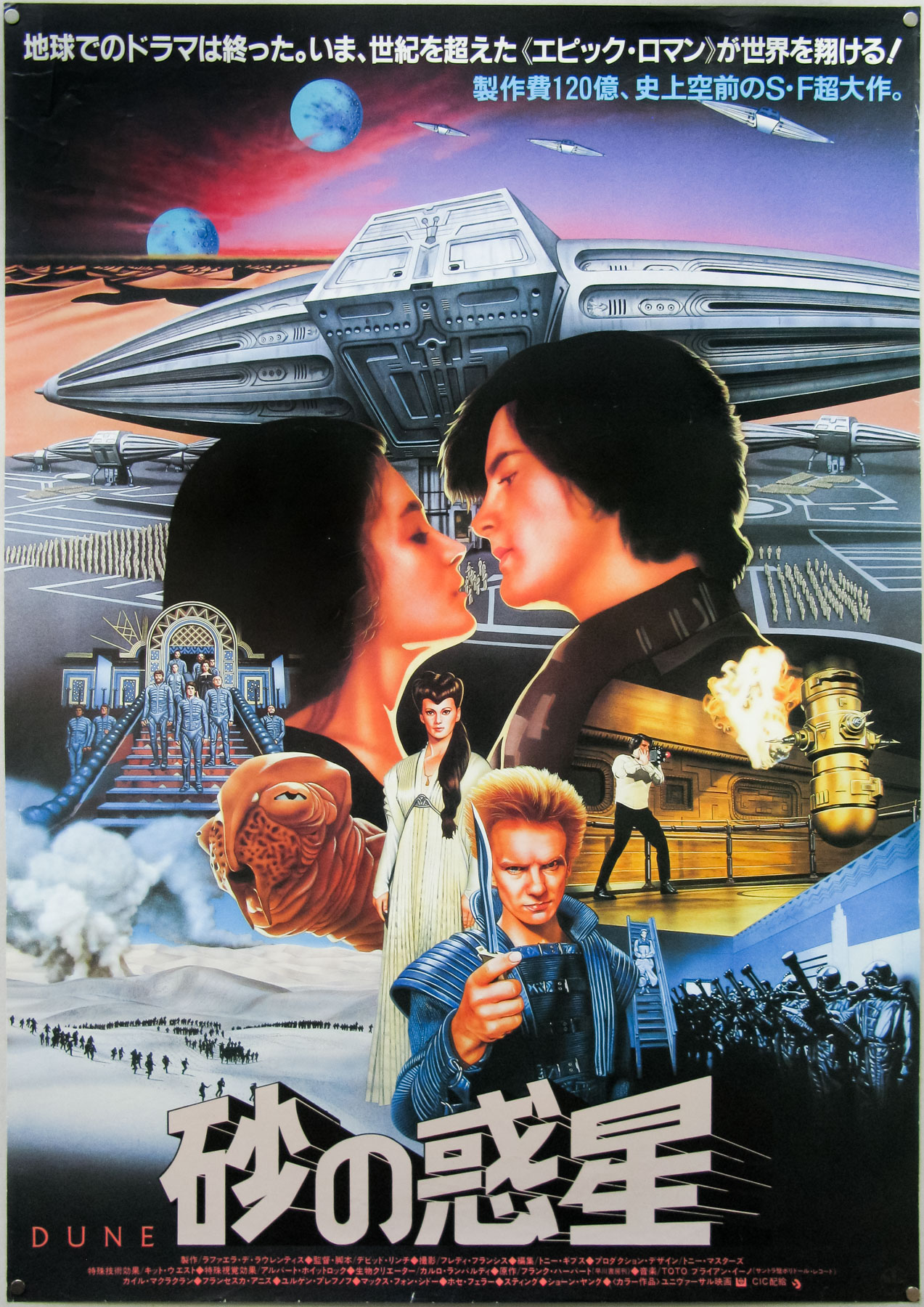
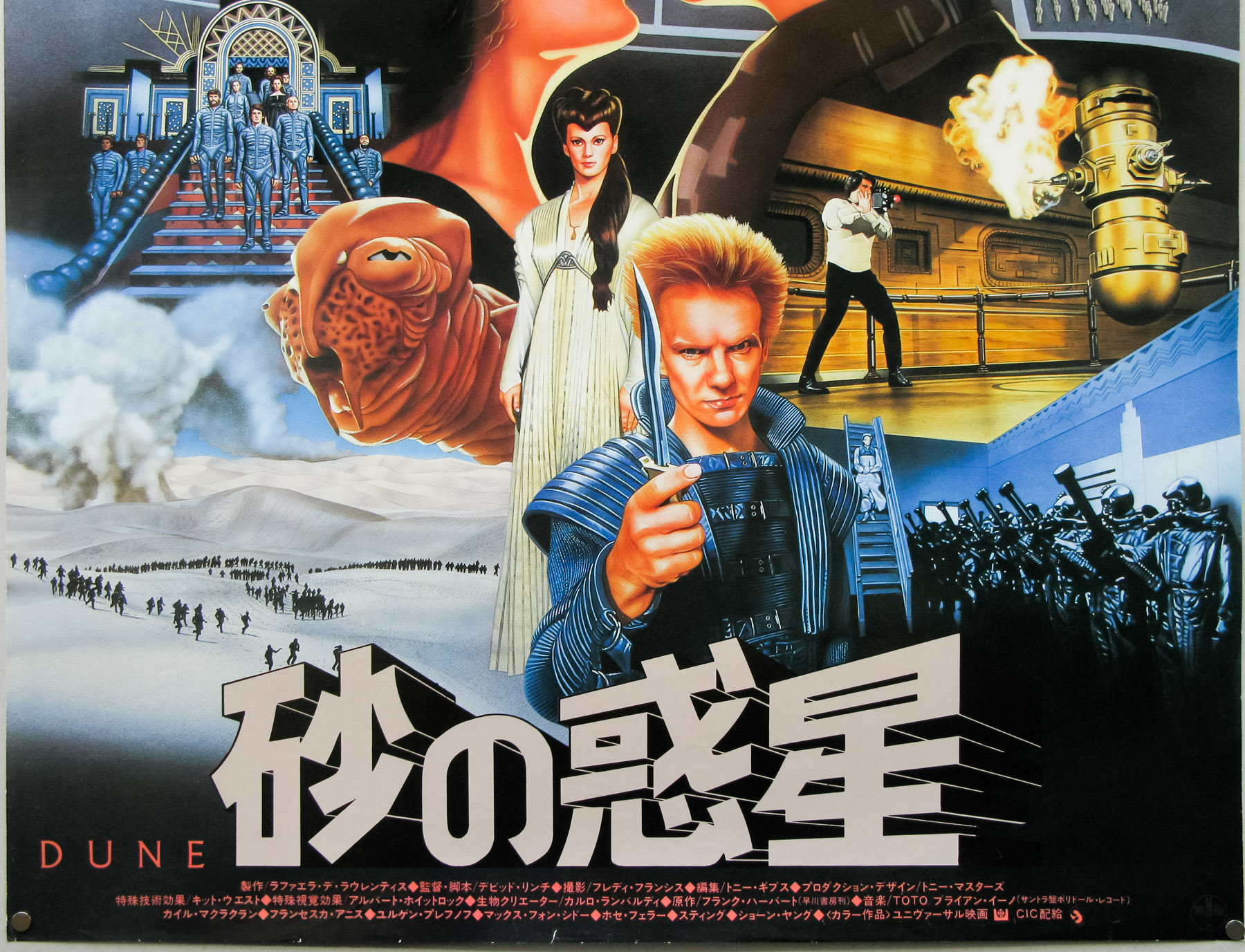
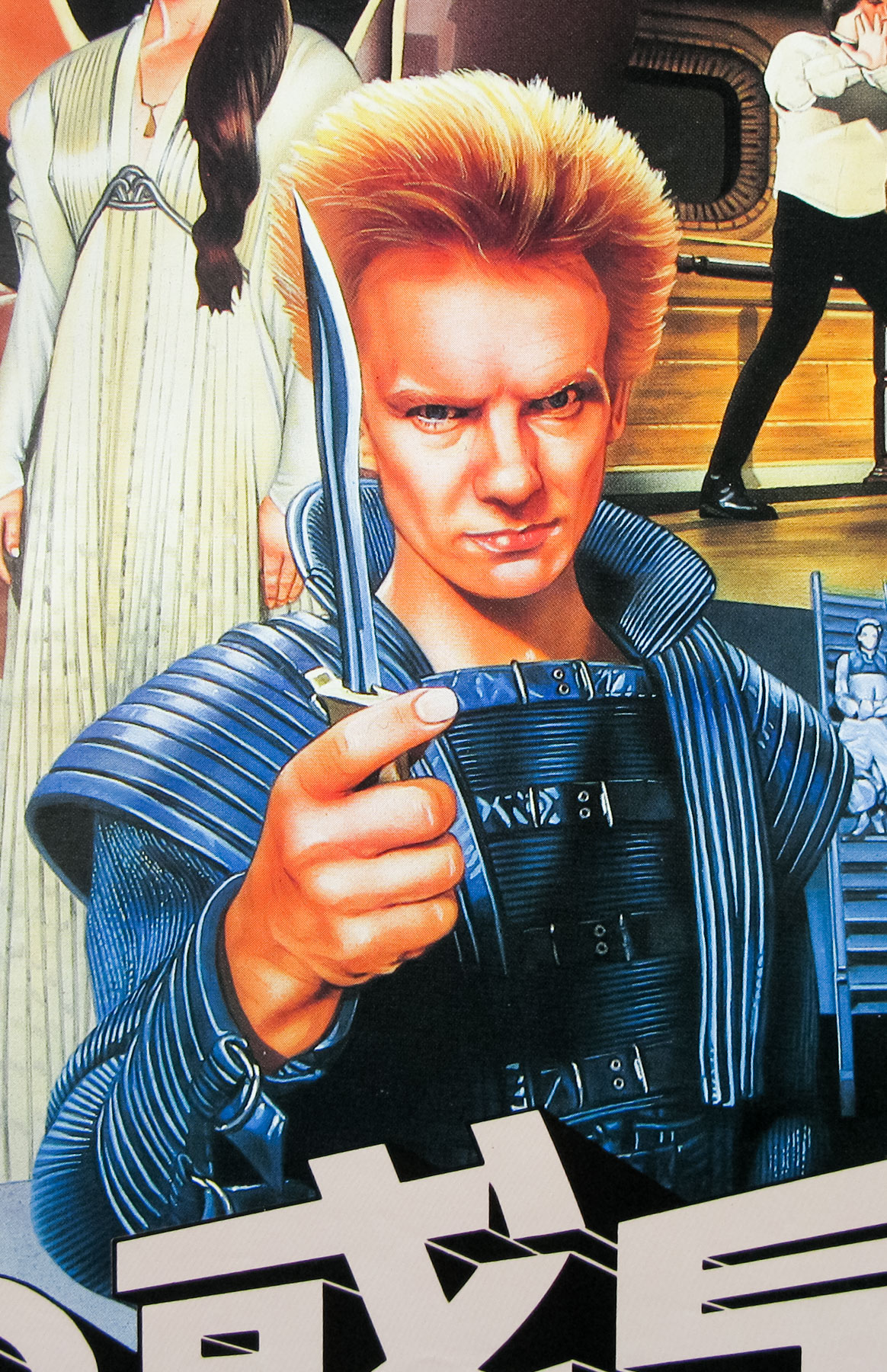
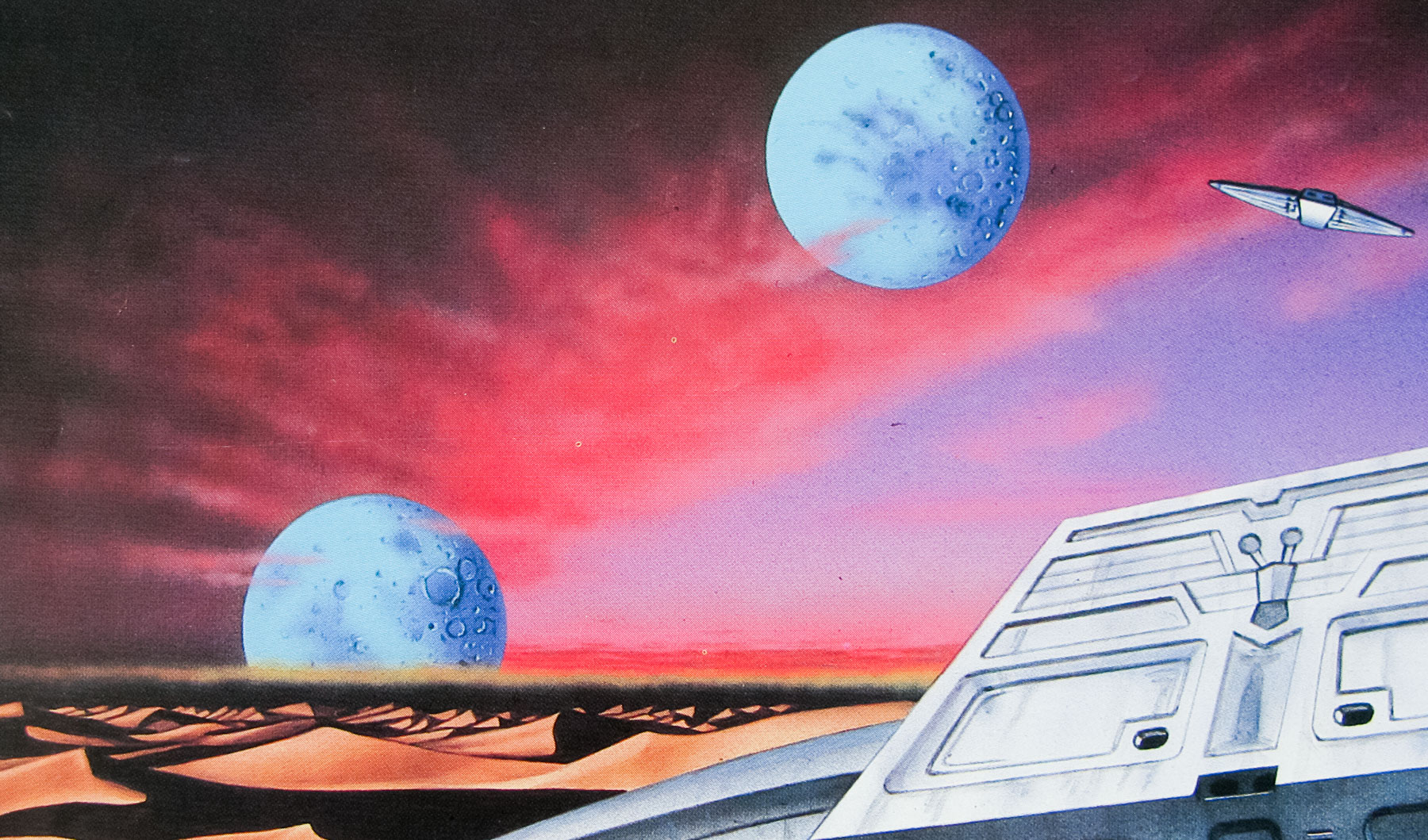
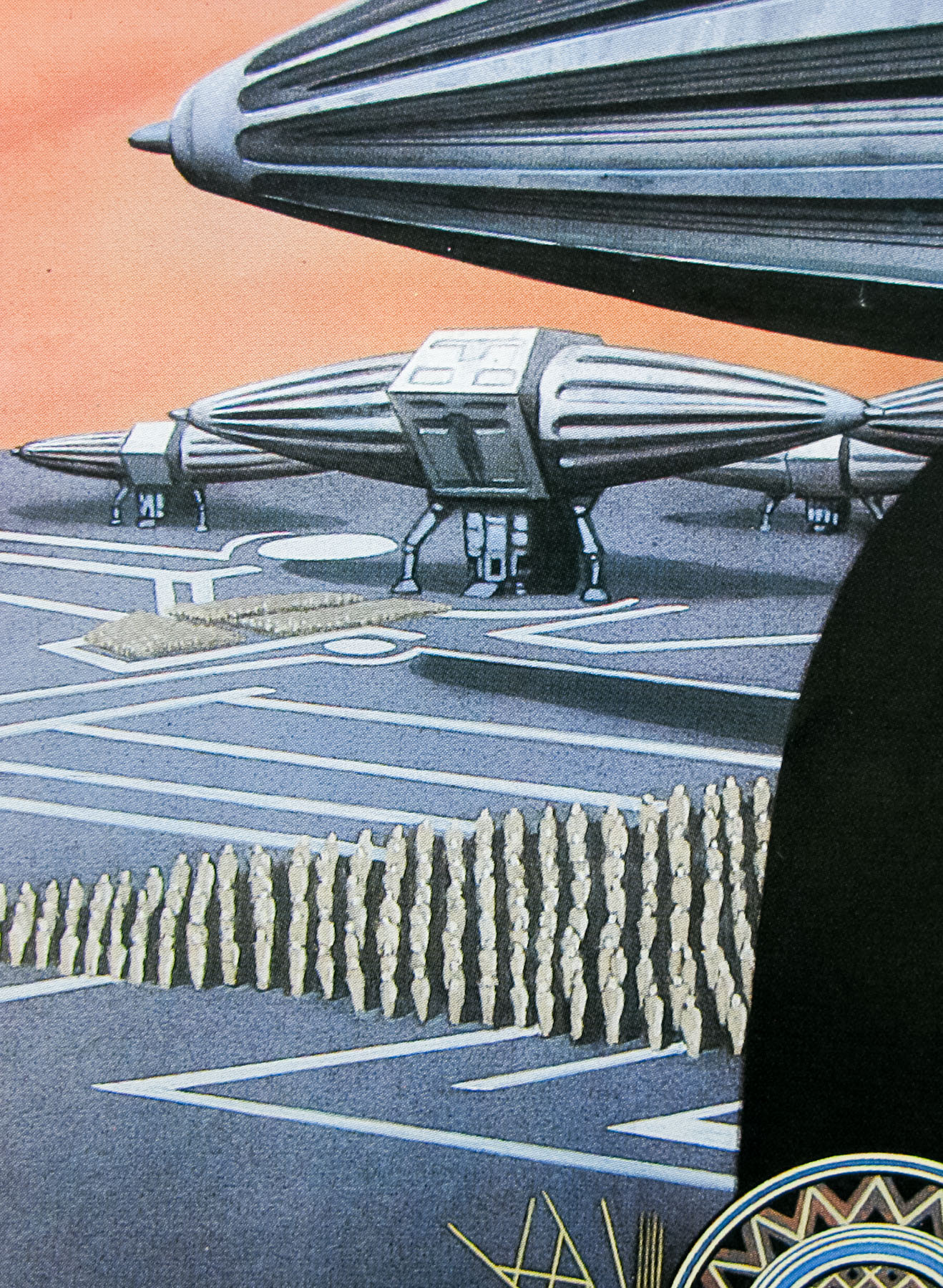
Frank Herbert’s sci-fi classic Dune was always going to be a difficult novel to turn into a sub three-hour film, particularly because of the complex universe, intricate lore and multiple characters it features. The initial novel went onto spawn a Dune franchise, comprising of five more books written by Herbert as well as board games, video games and a series of prequels written after Herbert’s death.

The film that was eventually released in 1984 went through a long gestation, attracting multiple production teams and several directors over a thirteen year period from when the rights were first optioned. Wikipedia has a nice explanation of the various versions (see ‘Production’). In 1975 it looked like legendary director Alejandro Jodorowsky would realise his version of the film with an incredible selection of actors:

In 1975, Jodorowsky planned to film the story as a ten-hour feature, in collaboration with Salvador DalíOrson WellesGloria SwansonDavid CarradineGeraldine ChaplinAlain DelonHervé Villechaize and Mick Jagger.

Even more exciting, in my opinion, was the roster of talent he had assembled behind the camera:

Jodorowsky set up a pre-production unit in Paris consisting of Chris Foss, a British artist who designed covers for science fiction periodicals, Jean Giraud (Moebius), a French illustrator who created and also wrote and drew for Metal Hurlant magazine, and H. R. GigerDan O’Bannon was to head the special effects department.

After a couple of years the project stalled and the financial backing dried up. Frank Herbert traveled to Europe to meet with Jodorowsky and discovered that his script would have resulted in a 14 hour movie.

This website has a great account of Jodorowsky’s version written by the man himself. Earlier this year it was announced that a film was being made that documents this failed version. More info and a trailer can be found here.
The rights were sold to Italian producer Dino de Laurentiis who spent several years trying to get his version of the project off the ground. At one point it looked like Ridley Scott would direct but he eventually left to work on Blade Runner after realising how long Dune would take to bring to screen.

In 1981 De Laurentiis approached director David Lynch after his daughter had seen The Elephant Man and recommended it to her father. Lynch went on to write six drafts of the screenplay before filming commenced in March, 1983. The first cut of the film ran over four hours and, although Lynch was aiming for a preferred length of three hours, the backers (including Universal Pictures) insisted on a two hour film. This meant many scenes were completely excised, new scenes were shot to simplify others and a voice over was added.

All of this resulted in a film that is widely considered as something of a mess, with poor critical reception and box office takings meaning plans for possible sequels were shelved indefinitely. Today, Lynch doesn’t like to talk about the film in interviews and has turned down offers from Universal to reassemble a longer ‘director’s cut’.

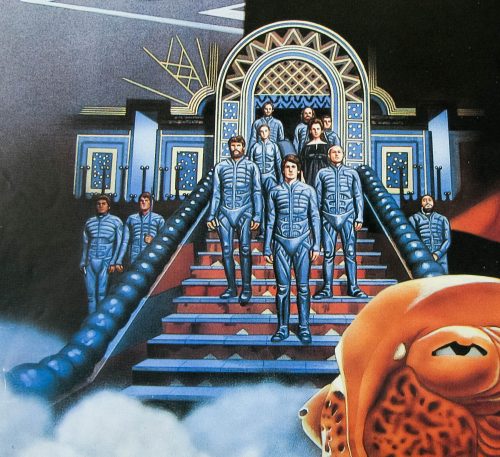
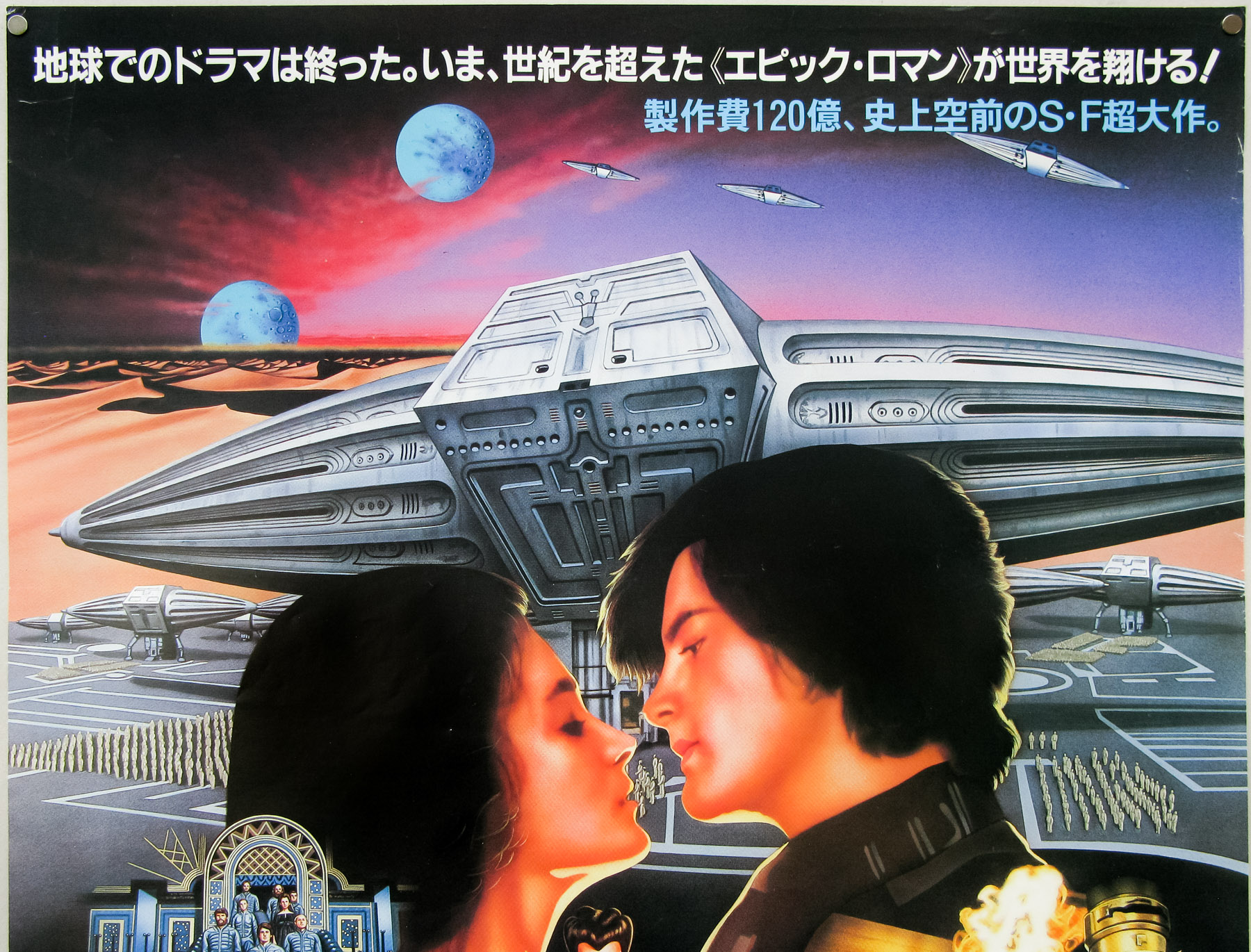
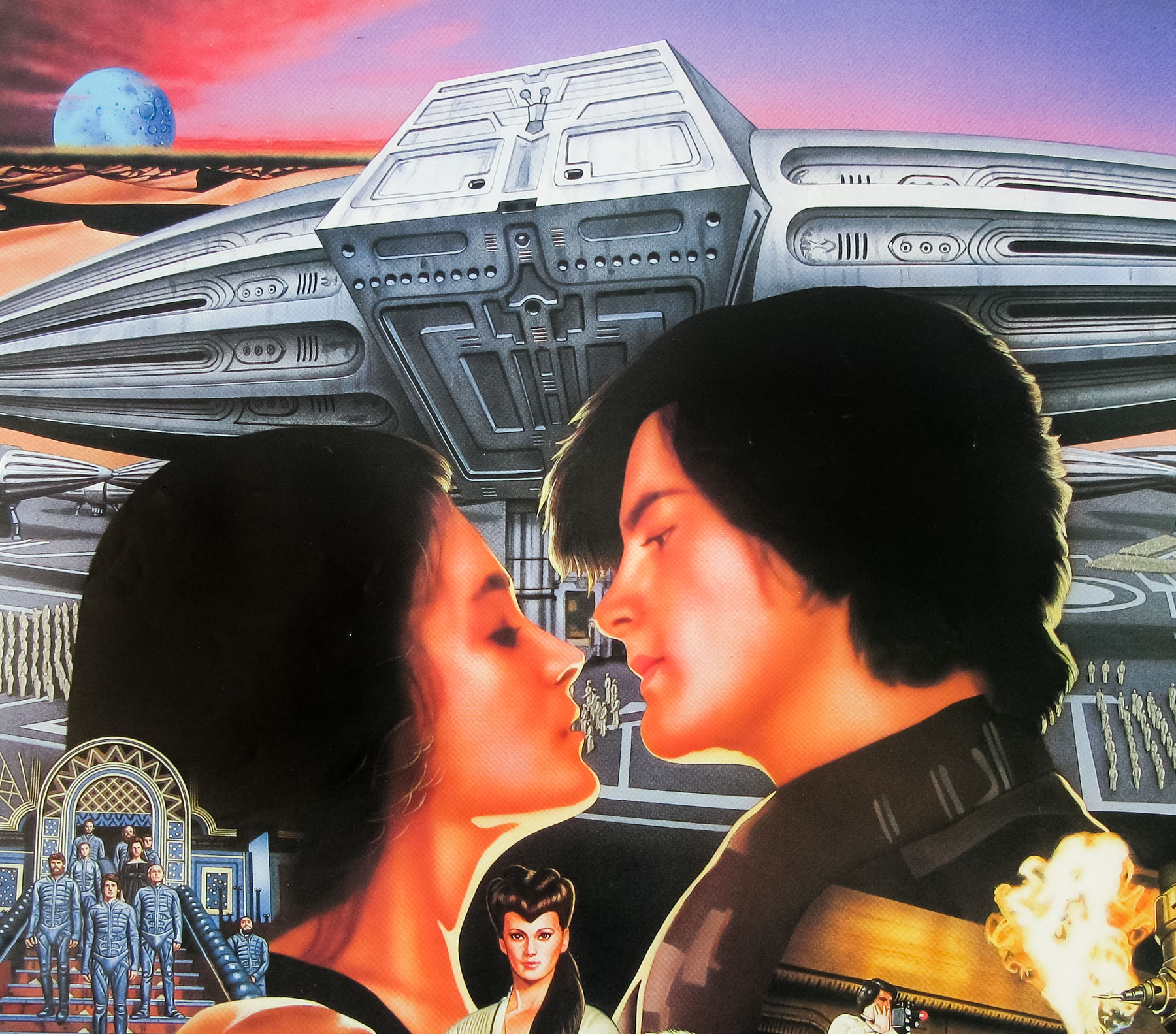
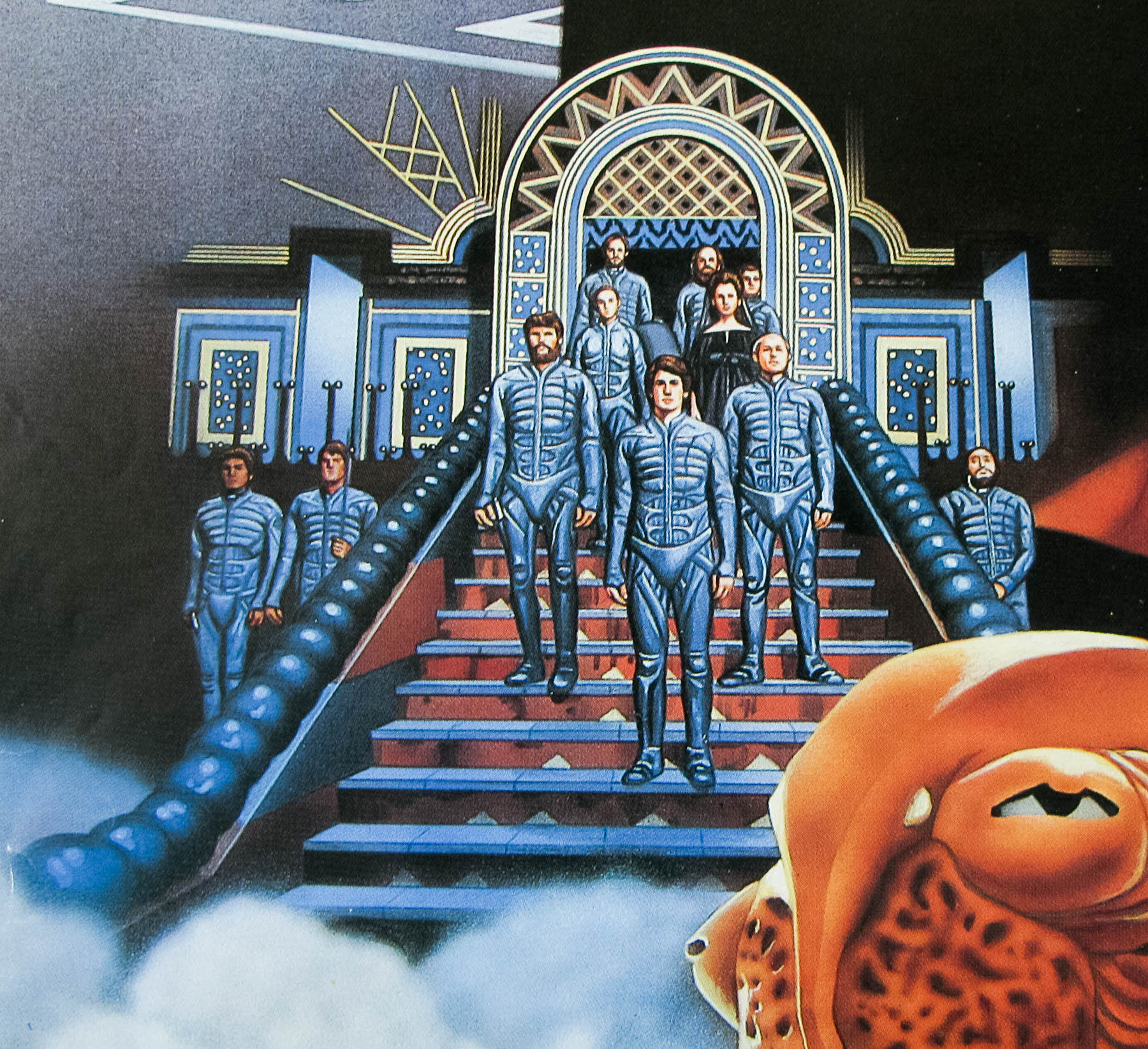
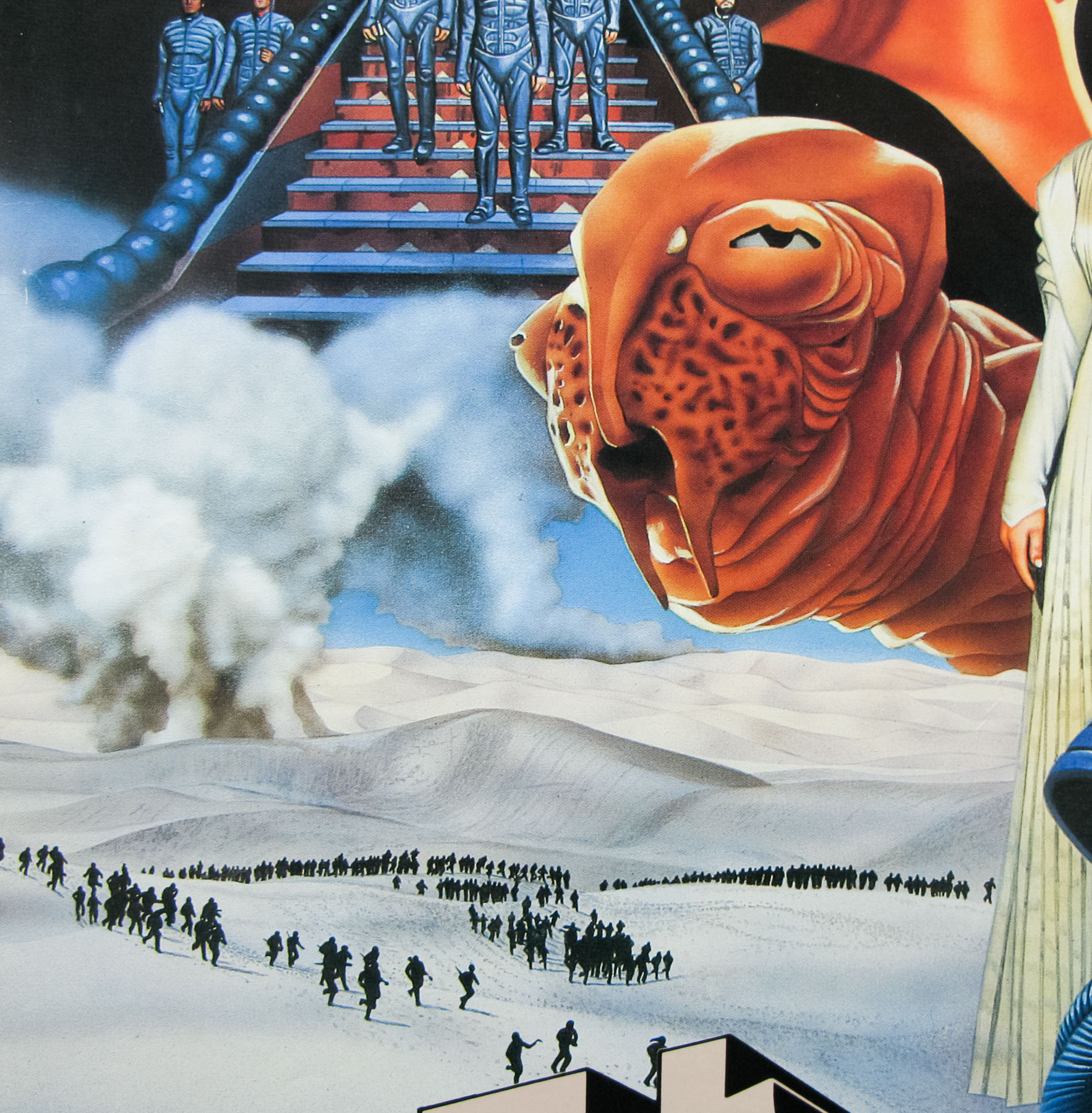
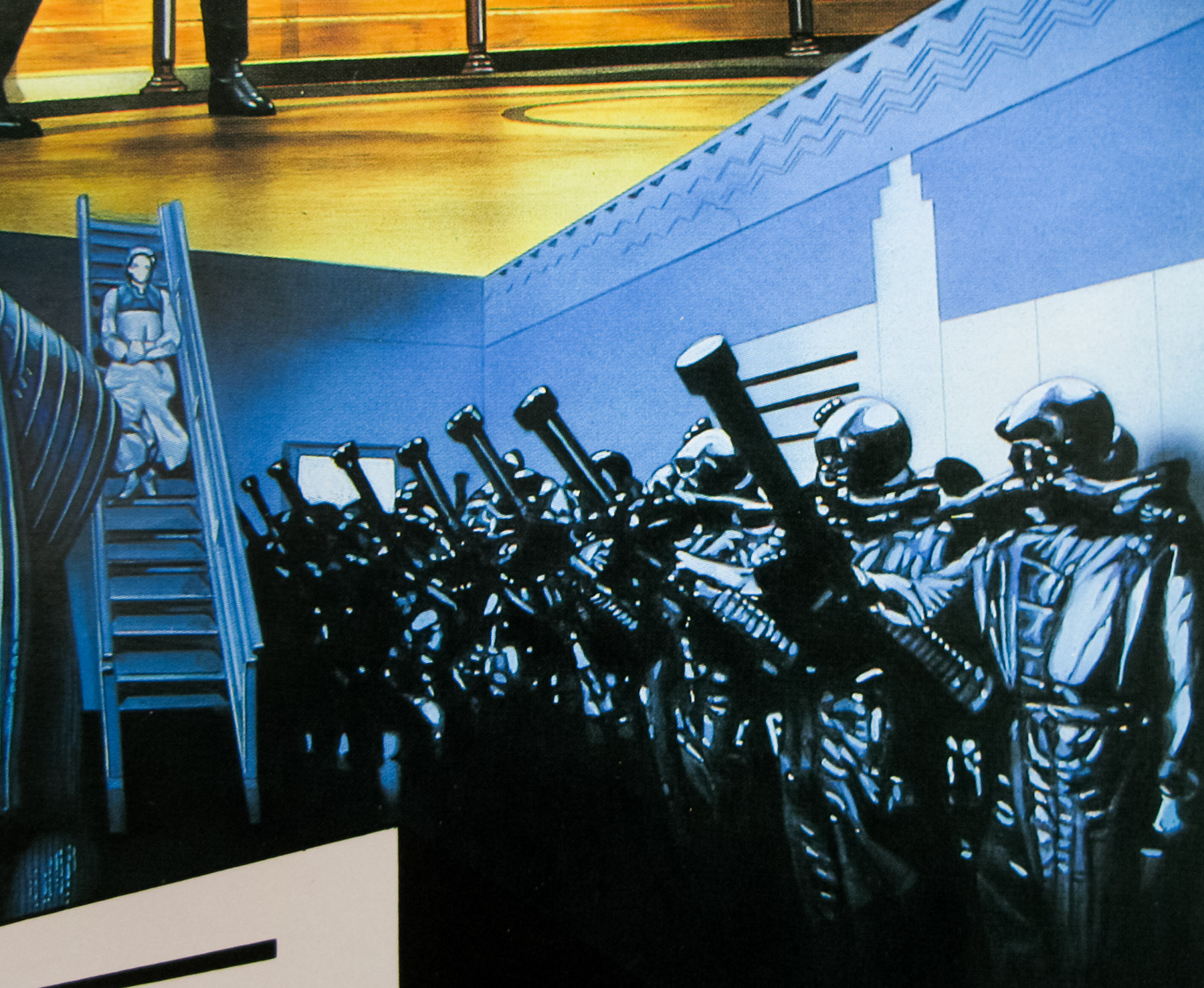
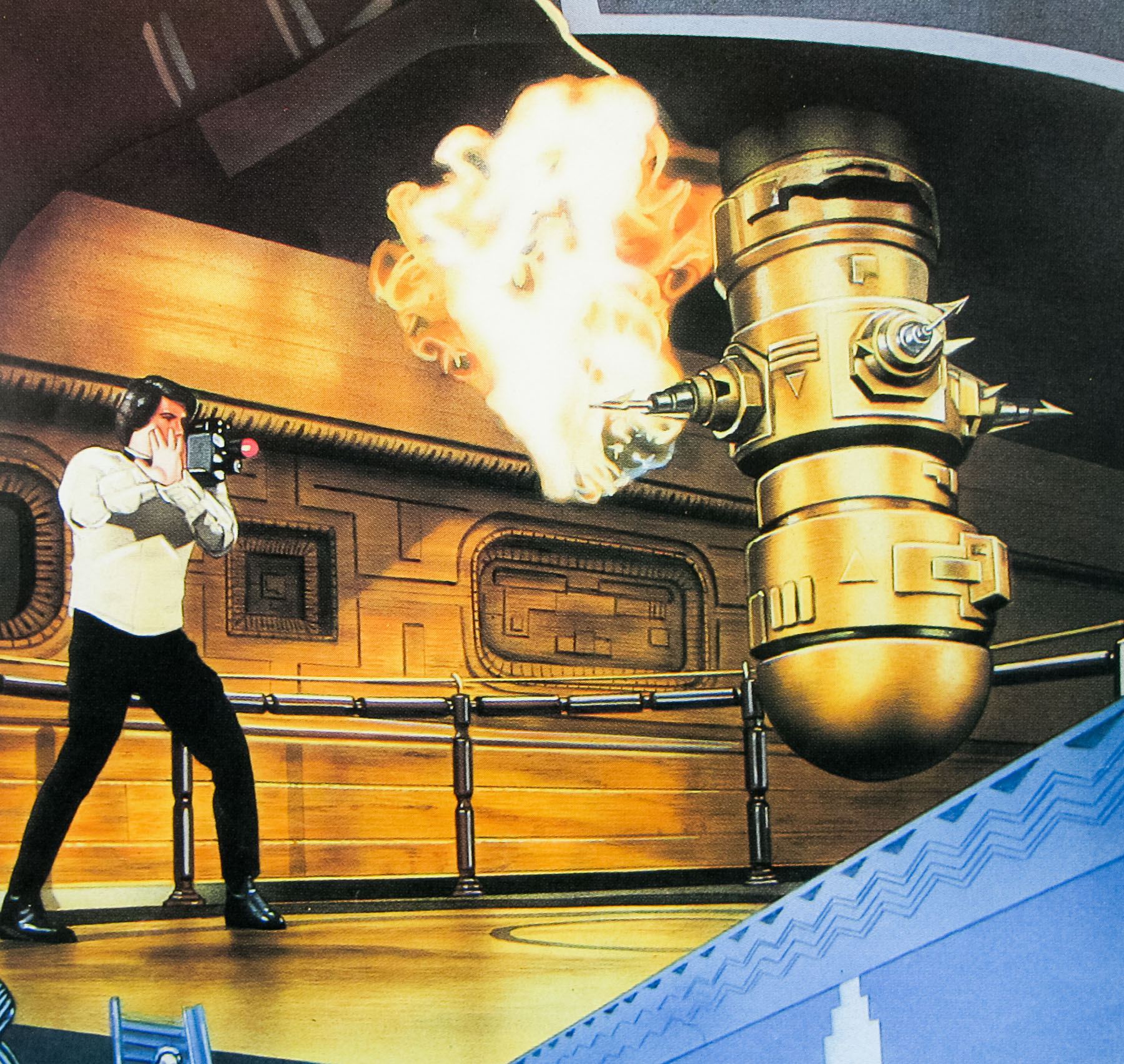
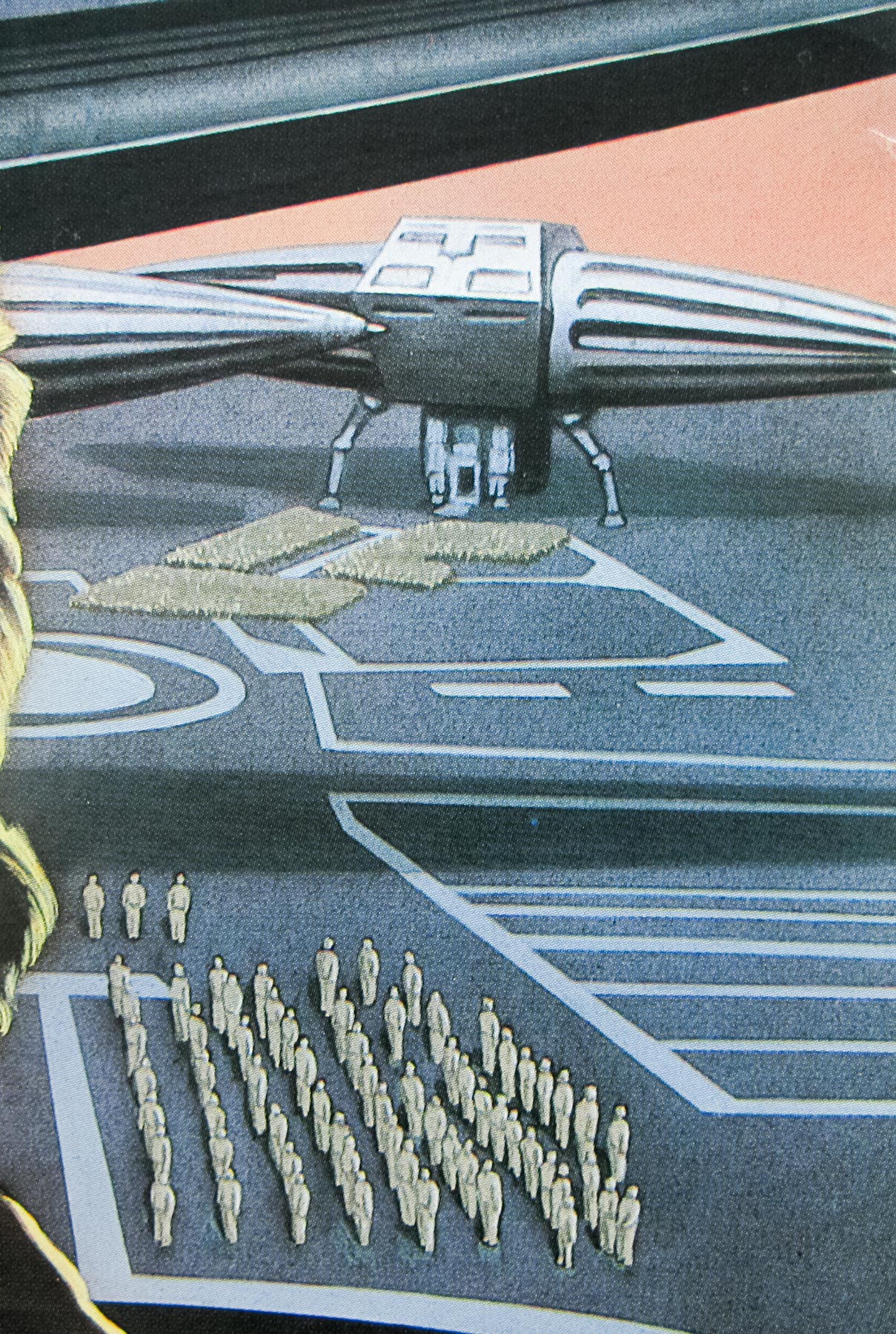
This Japanese poster features unique artwork but is clearly based on some of the images featured on the US advance one sheet that can be seen here. I’m unsure of the artist so please get in touch if you have any ideas.


El Topo / B2 / 2010 re-release / Japan

02.07.12

Poster Poster

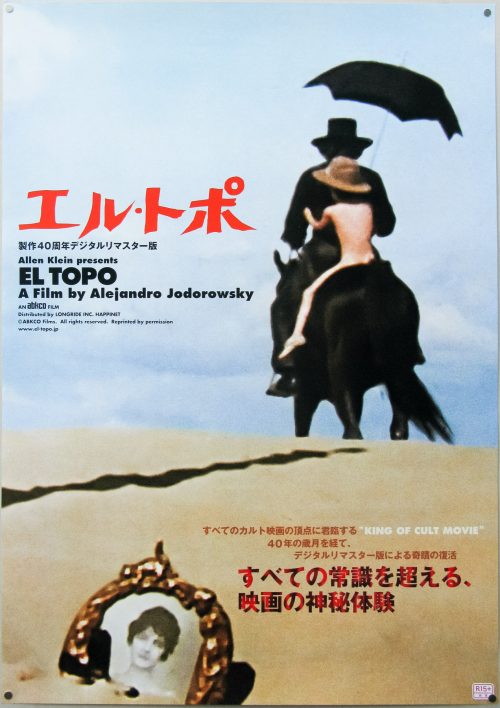
Legendary director Alejandro Jodorowsky’s El Topo (literally ‘The Mole’) is a true cult classic and one that has influenced countless film and TV shows since its release forty two years ago. The film tells the story of the eponymous black-clad cowboy (played by the director himself) who rides through the dessert with his six-year-old son (Brontis Jodorowsky) and arrives at a village where a massacre has recently occurred. El Topo seeks revenge on the bandits responsible and, after leaving his son with monks, he rides off into the desert with the woman who the bandit leader had kept as a slave.

The first part of the film sees the cowboy on a quest to kill four gun masters in order to become the greatest gunman in the land but, after El Topo is betrayed and left for dead, the second half takes place years later as he wakes in a sealed-up cave to find he is being treated as a god-like figure by a group of deformed outcasts. El Topo agrees to help the group escape the cave but must deal with a depraved gang of cultists in a local town and the arrival of his estranged son. The first part is likened to a Western, whilst the second is a love story of redemption and rebirth.

The film features scenes of surreal and religious imagery, coupled with brutal violence, disturbing sexuality and a host of bizarre characters, and El Topo was very controversial at the time of its release. It’s cult status was sealed after Ben Barenholtz, the owner of the infamous New York cinema The Elgin, saw a print of the film at the Museum of Modern Art and convinced the producer of the film to allow him to show El Topo as the first Midnight Movie. It ended up screening at The Elgin seven days a week for over six months. John Lennon was an avowed fan of the film and was instrumental in persuading Allen Klein, manager of The Beatles, to assist in giving the film a wider release across the USA. Klein would later go on to fund Jodorowsky’s next film, The Holy Mountain.

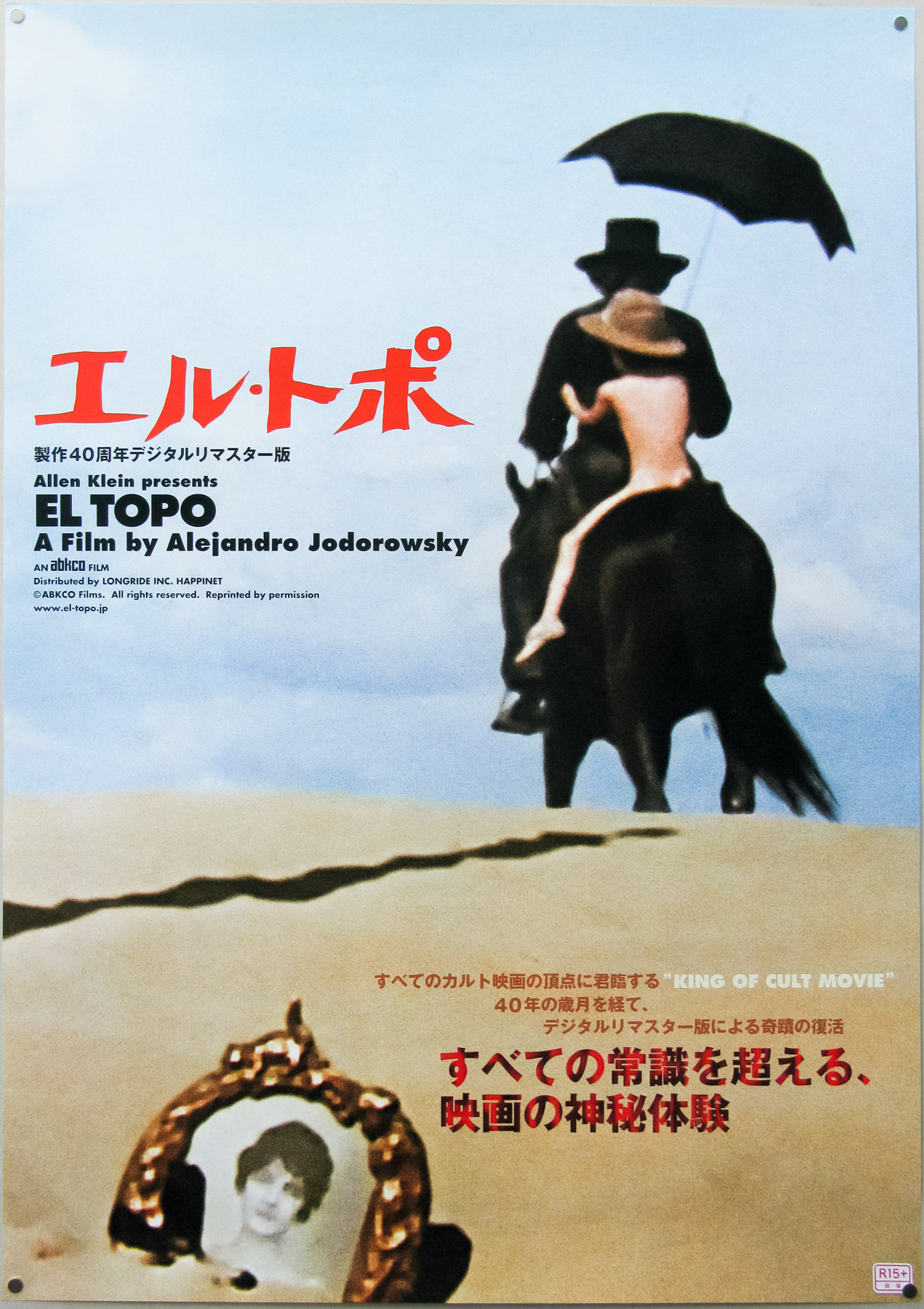
This Japanese poster features the same image seen on the American one sheet and is for the 2010 re-release of the film. I also have the 2010 re-release poster for The Holy Mountain.

The excellent trailer for the film is on YouTube.

Eraserhead / B2 / 1993 re-release / Japan

09.07.12

Poster Poster
Title
Eraserhead
AKA
Labyrinth Man (France - reissue title)
Year of Film
1977
Director
David Lynch
Starring
Jack Nance, Charlotte Stewart, Allen Joseph, Jeanne Bates, Judith Roberts, Laurel Near, V. Phipps-Wilson, Jack Fisk, Jean Lange, Thomas Coulson, John Monez, Darwin Joston, T. Max Graham, Hal Landon Jr.
Origin of Film
USA
Genre(s) of Film
Jack Nance, Charlotte Stewart, Allen Joseph, Jeanne Bates, Judith Roberts, Laurel Near, V. Phipps-Wilson, Jack Fisk, Jean Lange, Thomas Coulson, John Monez, Darwin Joston, T. Max Graham, Hal Landon Jr.,
Type of Poster
B2
Style of Poster
Mylar re-release
Origin of Poster
Japan
Year of Poster
1993
Designer
Unknown
Artist
--
Size (inches)
20 7/16" x 28 15/16"
SS or DS
SS
Tagline
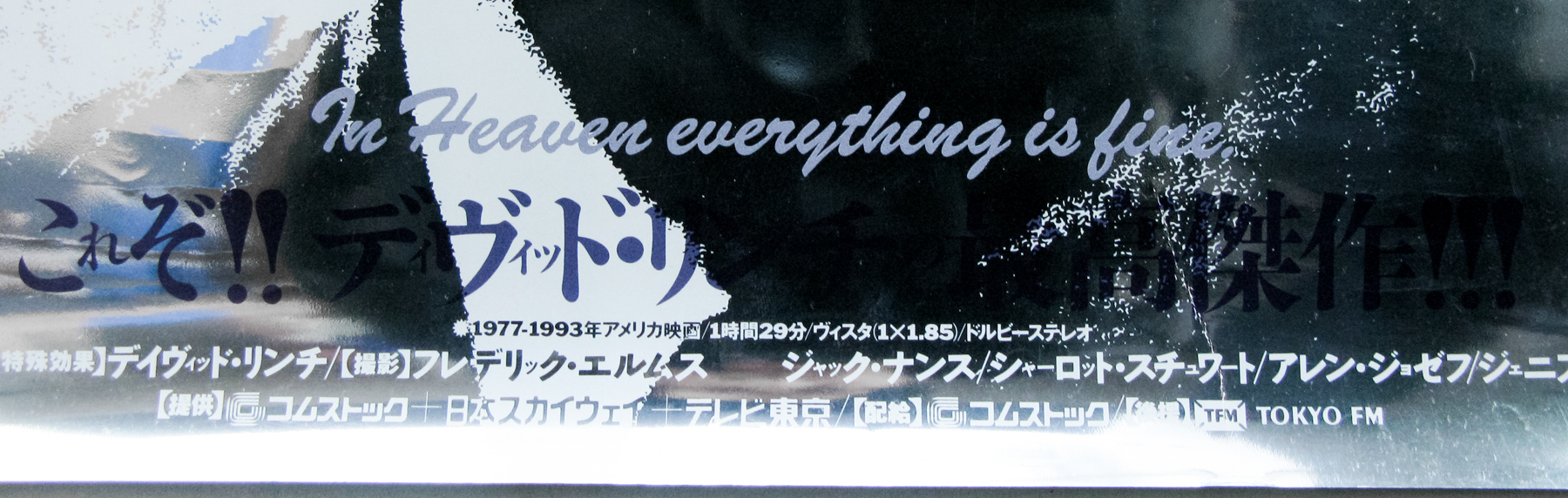
In Heaven Everything Is Fine.

Legendary director David Lynch‘s brilliant, surreal nightmare Eraserhead celebrates its 35th anniversary in 2012 and its fair to say cinema has seen nothing else quite like it in the years since it was released. Lynch’s first full-length feature was five years in the making and was begun whilst he worked at the American Film Institute school in Los Angeles. The initial grant of $10,000 given to the director quickly ran out and he was forced to spend the following years using money from odd jobs, as well as donations from friends and family to continue work on it.

Ben Barenholtz, the owner of Libra films saw the completed film at the Filmex Festival and, after declaring it was a ‘film of the future’, decided to help Lynch get the film into cinemas. The first screening took place at midnight on the 29th of September, 1977 and, like Jodorowsky’s El Topo before it, Eraserhead became a staple of Midnight Movie shows in Los Angeles, New York and London.

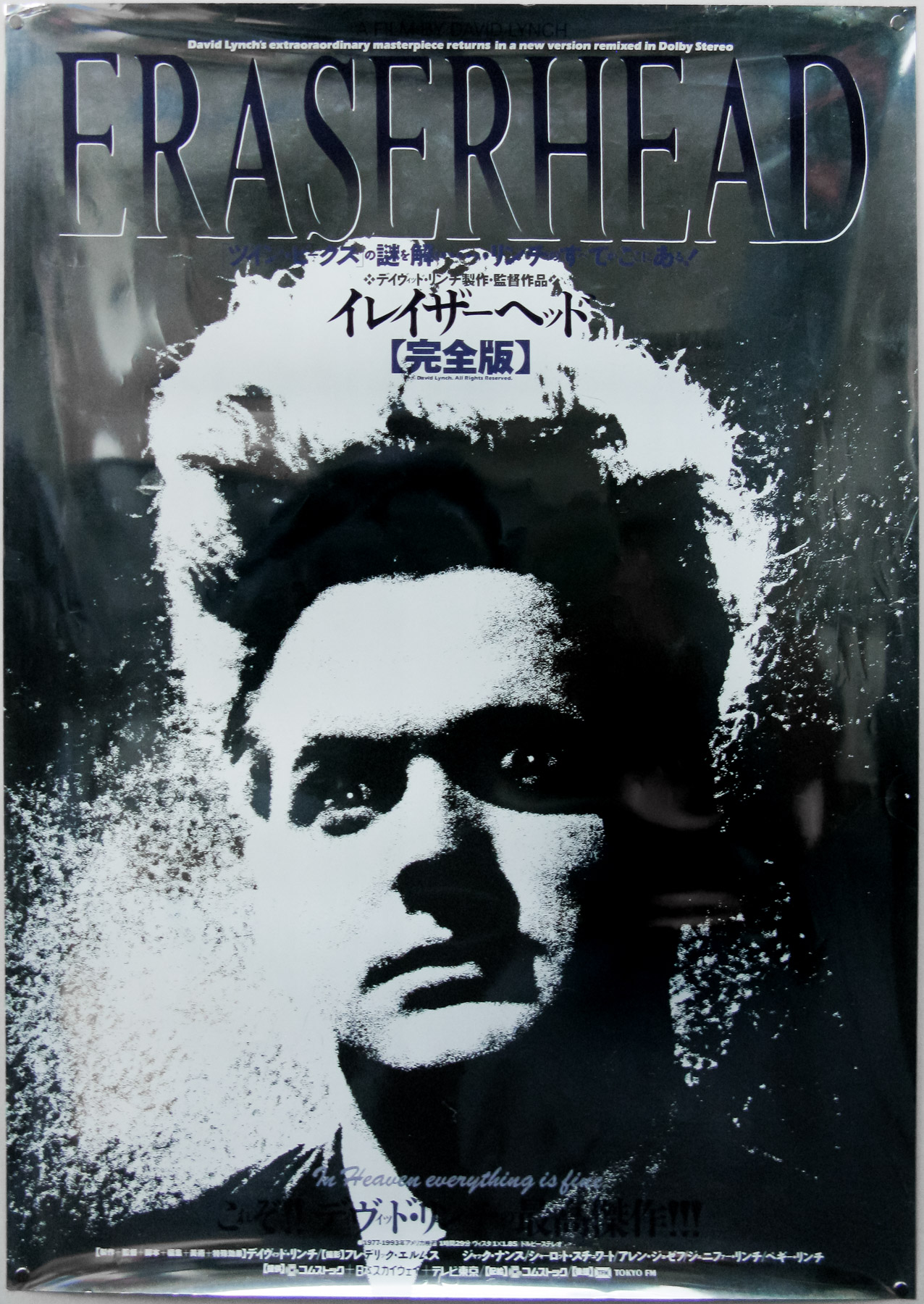
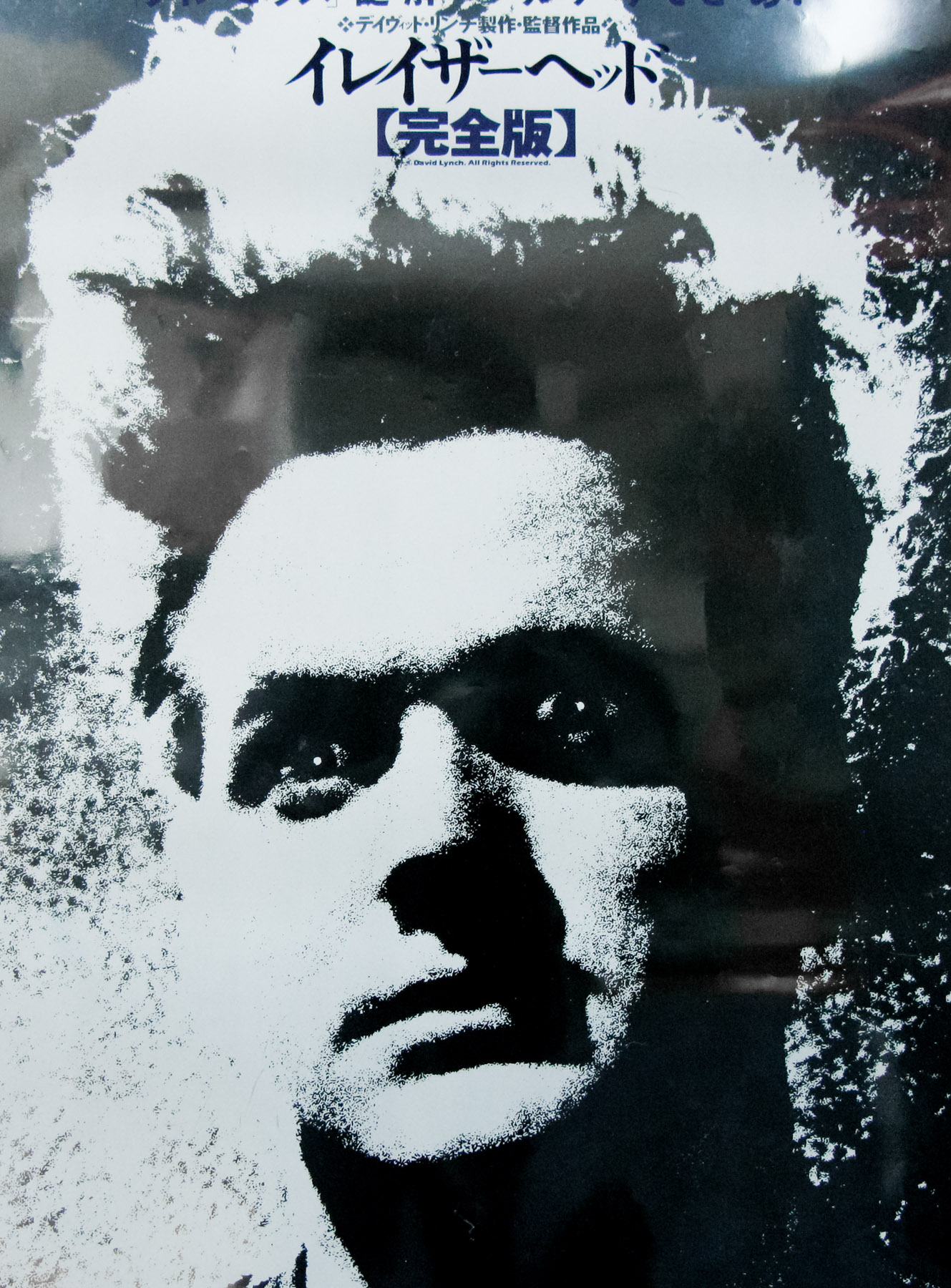
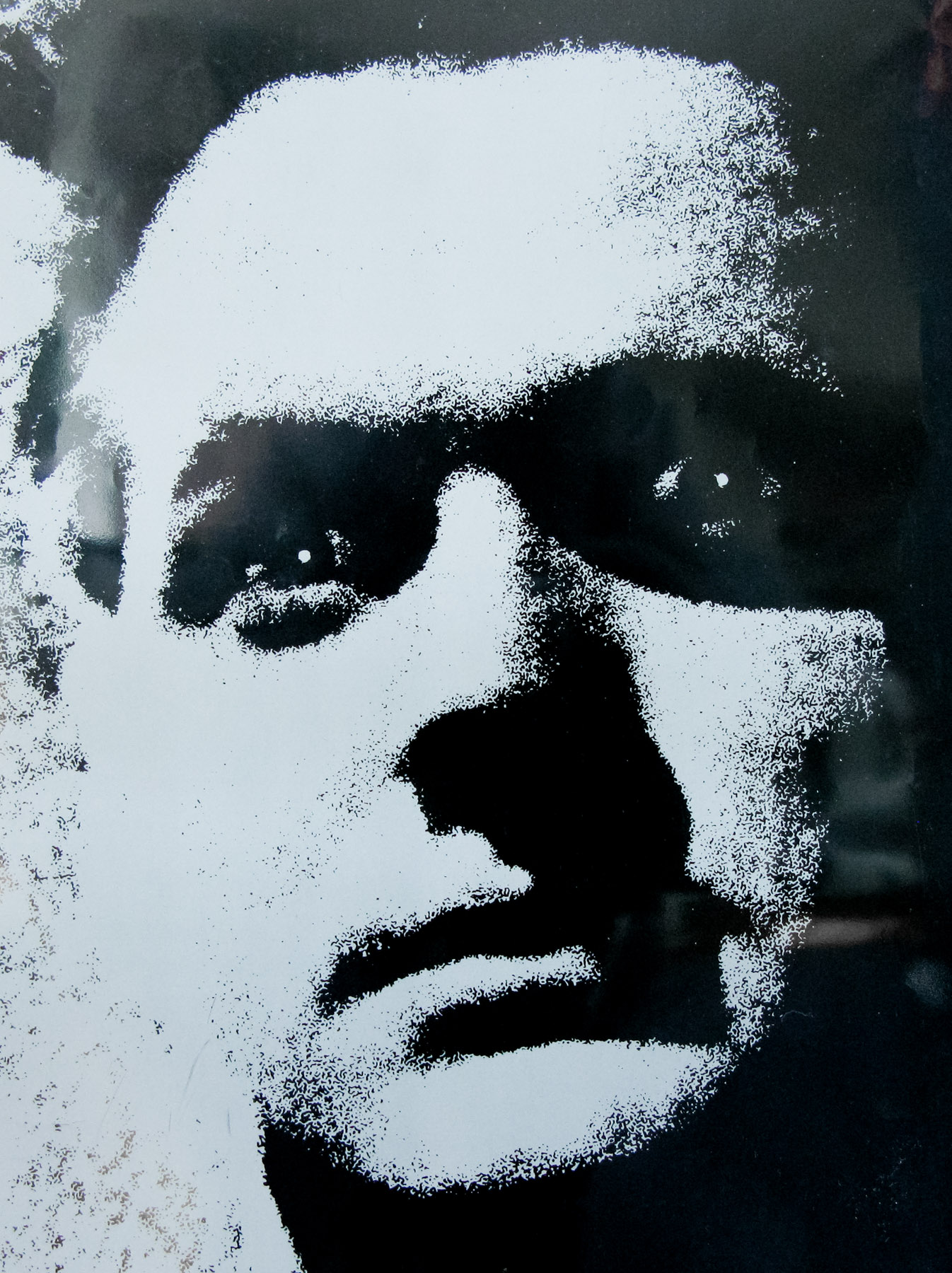
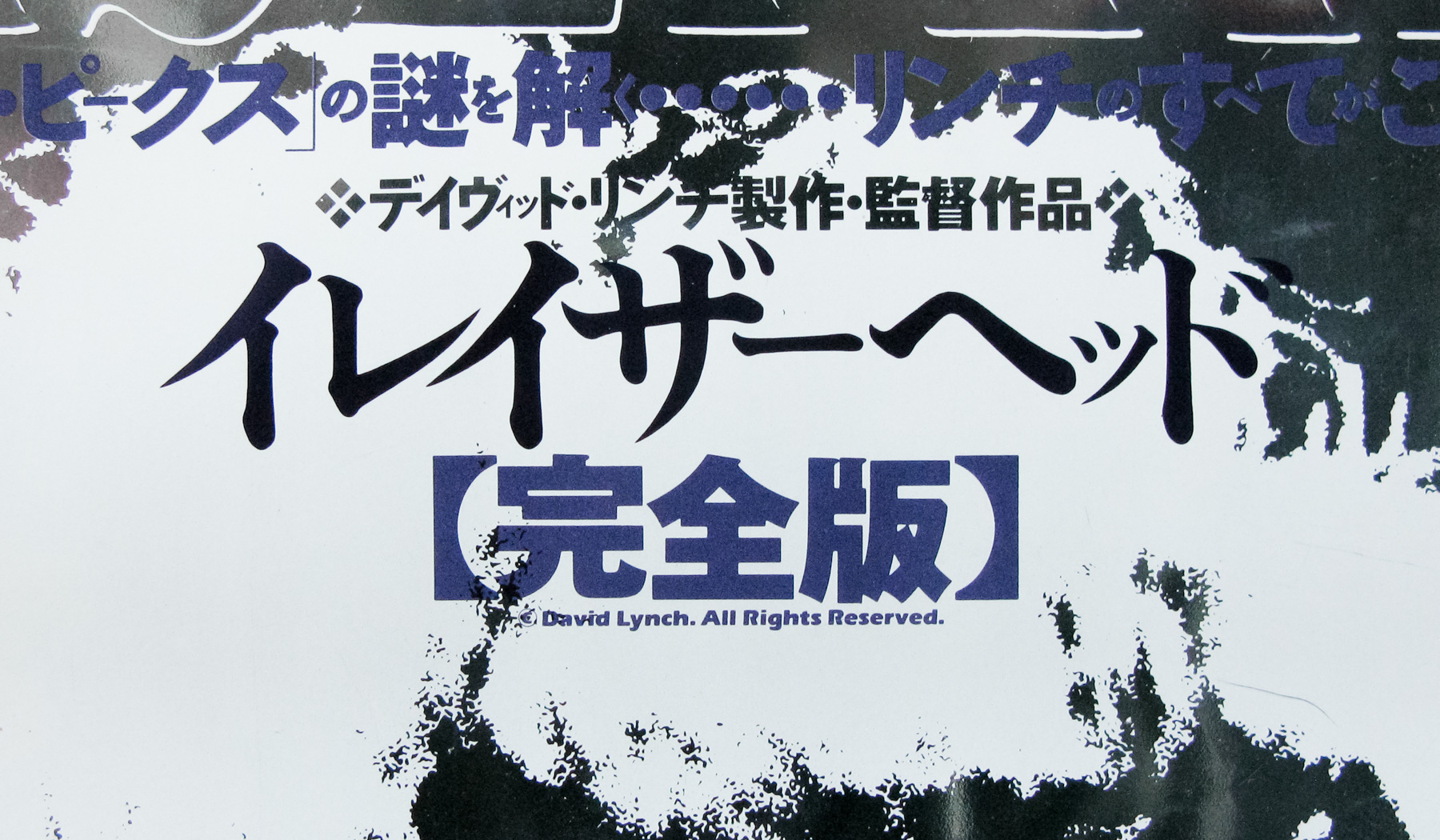
This Japanese poster is from a 1993 re-release of the film and features the classic shot of Henry (Jack Nance) with his worried stare and great shock of hair. The poster was printed on mirrored mylar paper and is therefore very hard to photograph without capturing lots of reflections.

Having just watched the recent UK blu-ray release of the film, which was apparently supervised by Lynch, I can highly recommend picking up a copy of it as the film has never looked or, perhaps more importantly, sounded as good.

The original trailer is on YouTube.

Evel Knievel / B2 / Japan

28.01.15

Poster Poster
Title
Evel Knievel
AKA
--
Year of Film
1971
Director
Marvin J. Chomsky
Starring
George Hamilton, Sue Lyon, Bert Freed, Rod Cameron, Dub Taylor, Ron Masak, Hal Baylor, Judith Baldwin, Kathrine Baumann
Origin of Film
USA
Genre(s) of Film
George Hamilton, Sue Lyon, Bert Freed, Rod Cameron, Dub Taylor, Ron Masak, Hal Baylor, Judith Baldwin, Kathrine Baumann,
Type of Poster
B2
Style of Poster
--
Origin of Poster
Japan
Year of Poster
1972
Designer
Unknown
Artist
--
Size (inches)
20 4/16" x 28 12/16"
SS or DS
SS
Tagline
--

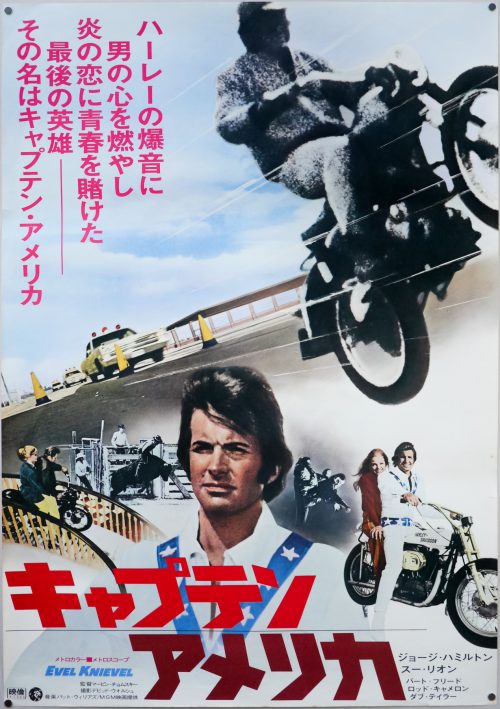
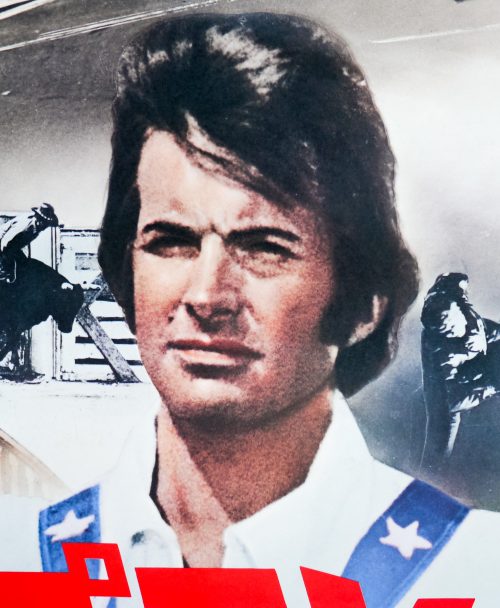
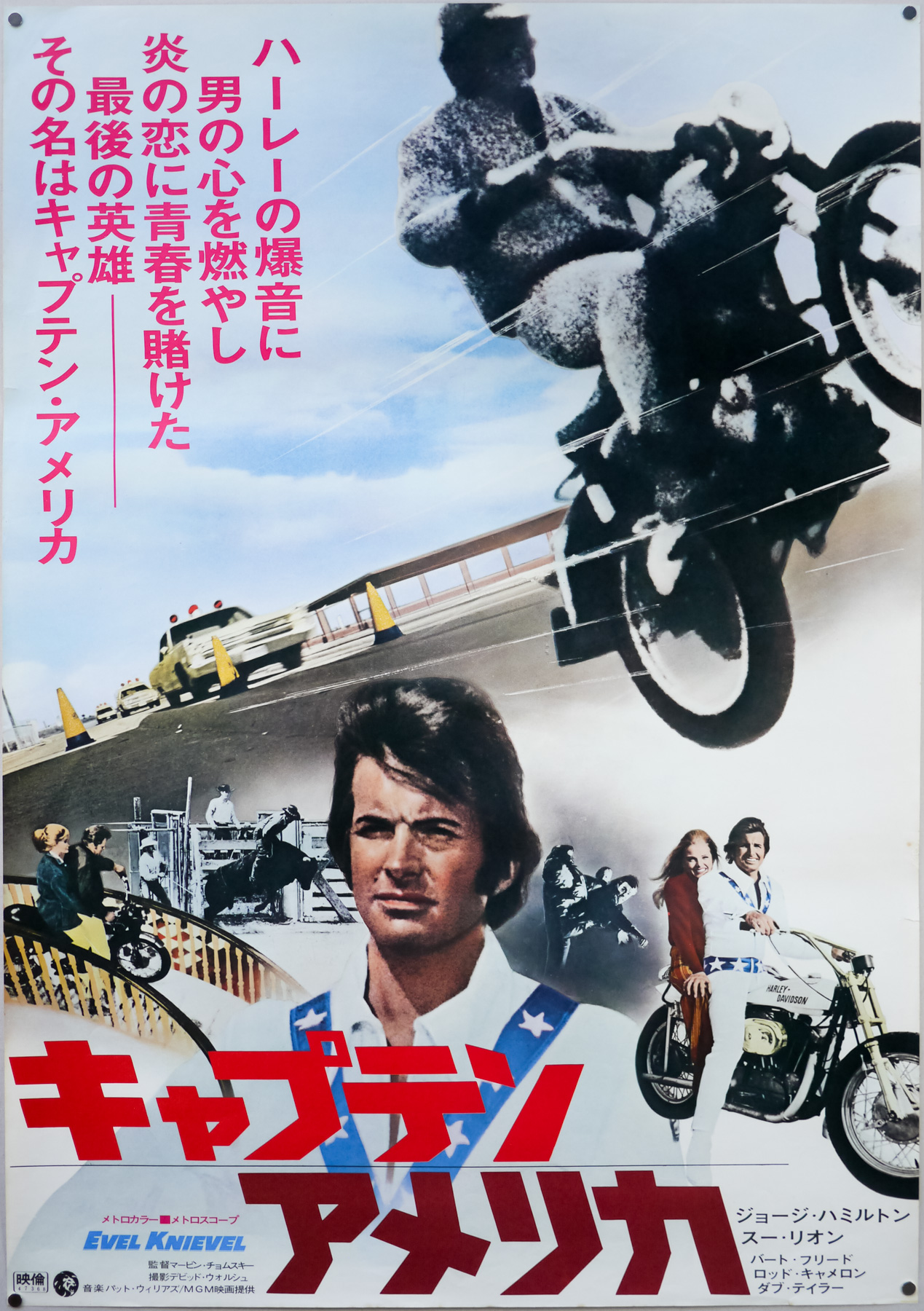
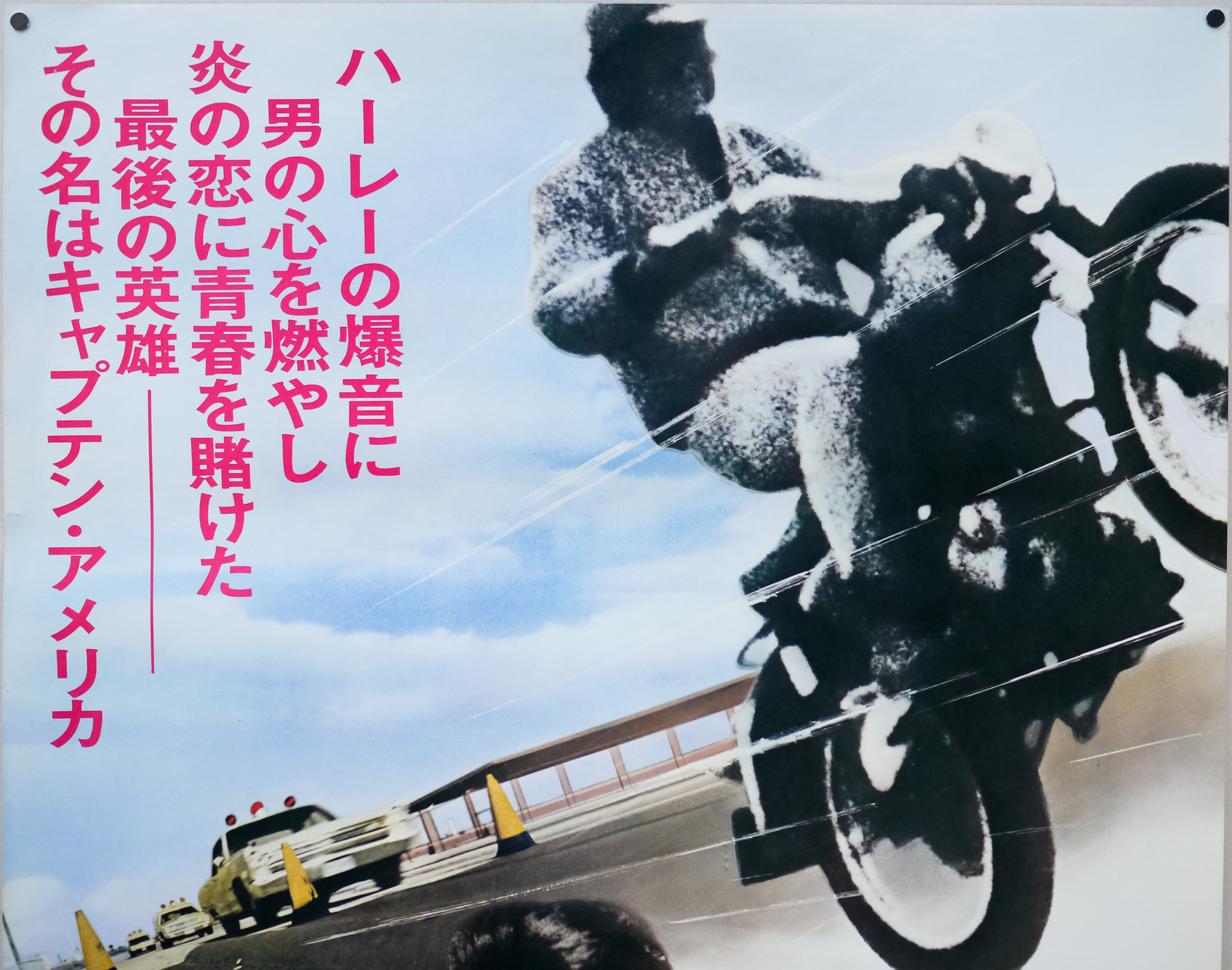
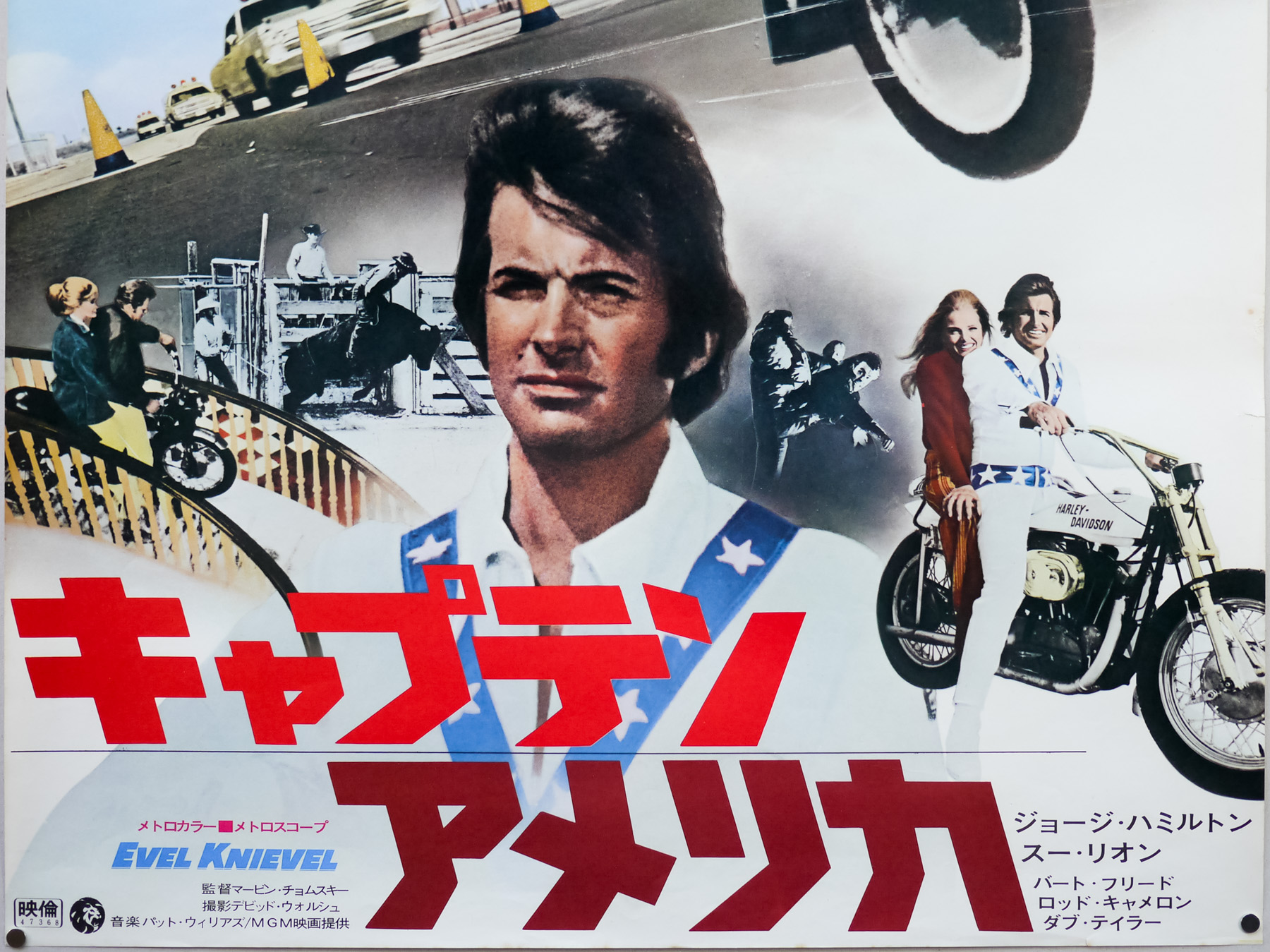
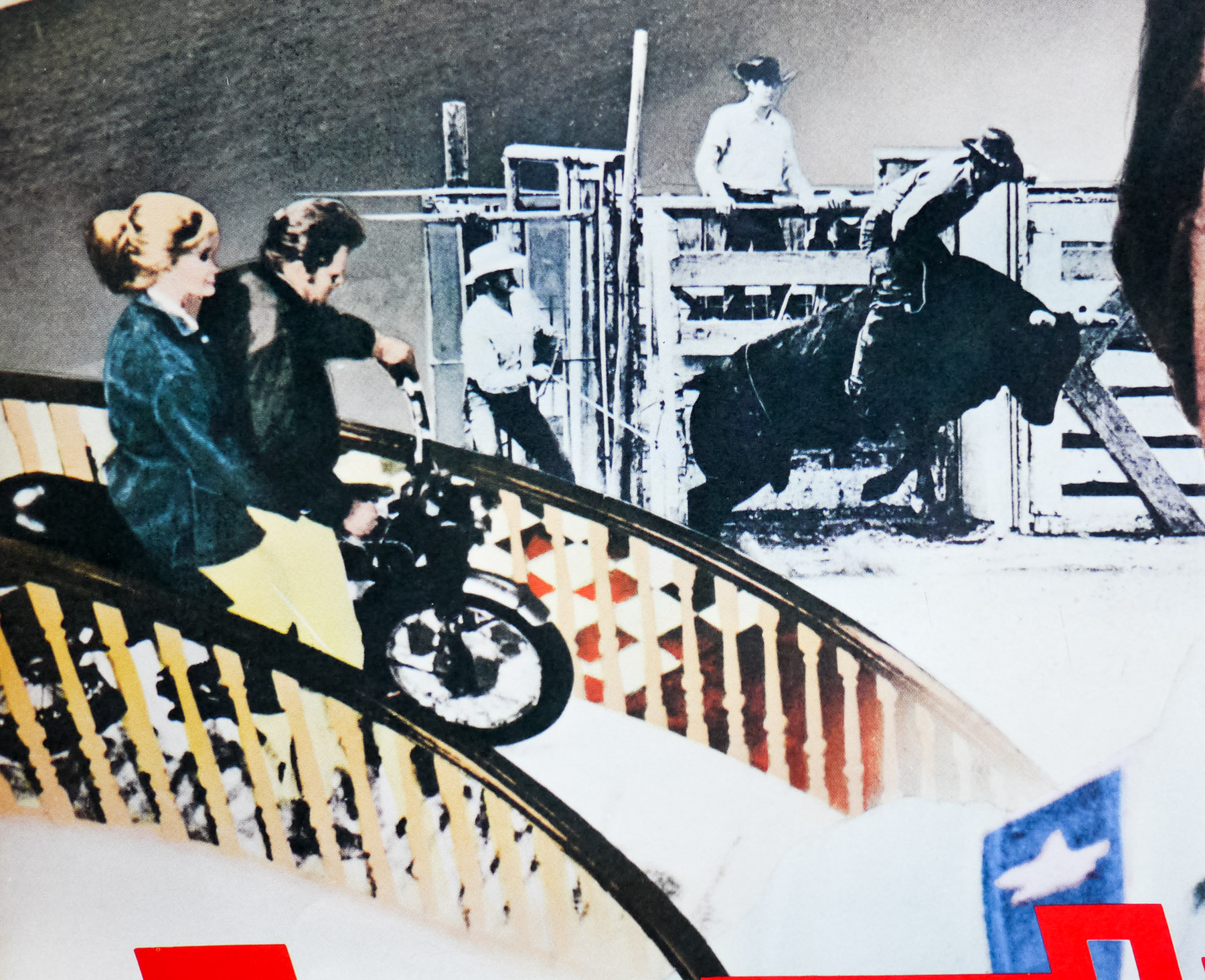
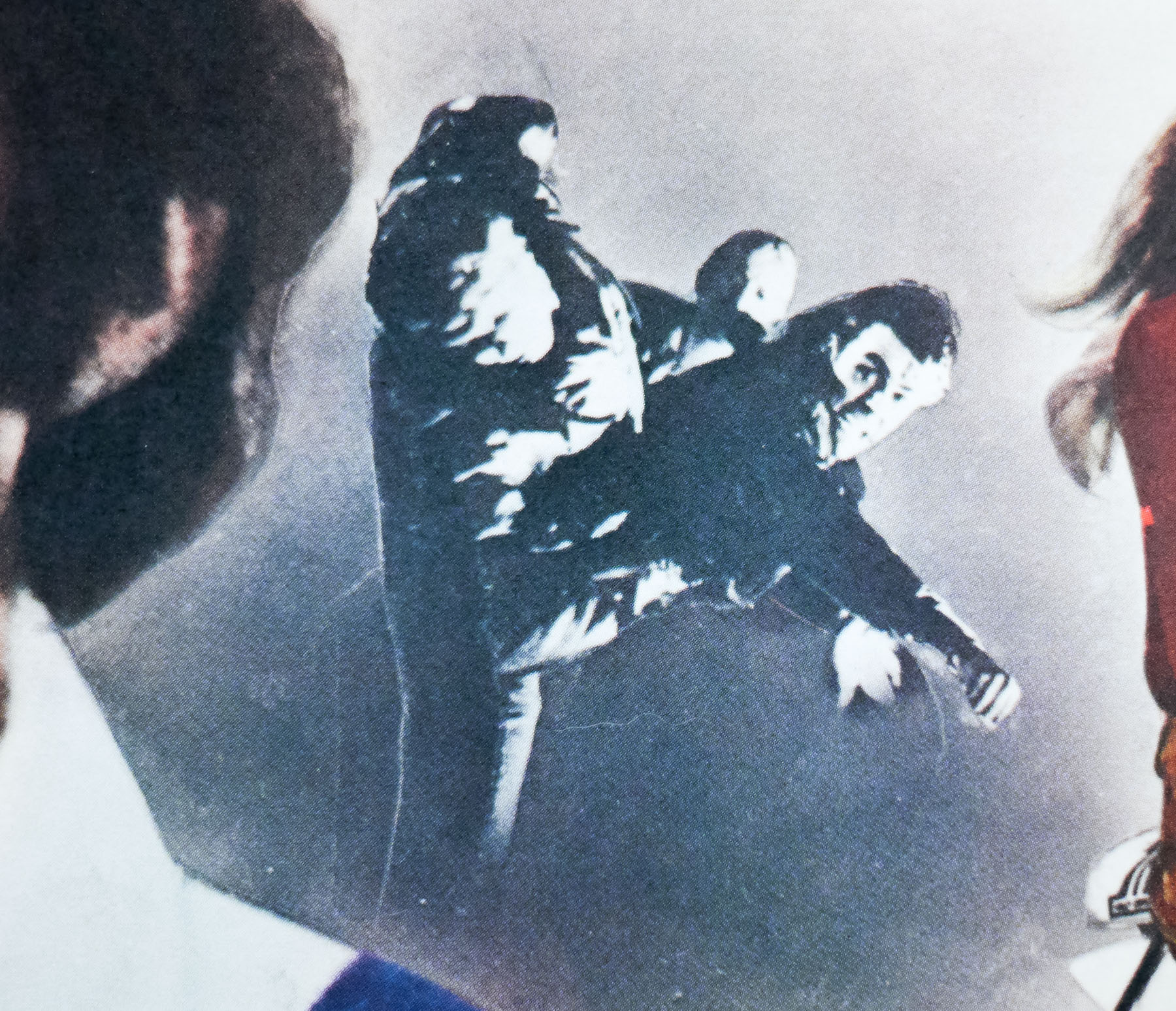
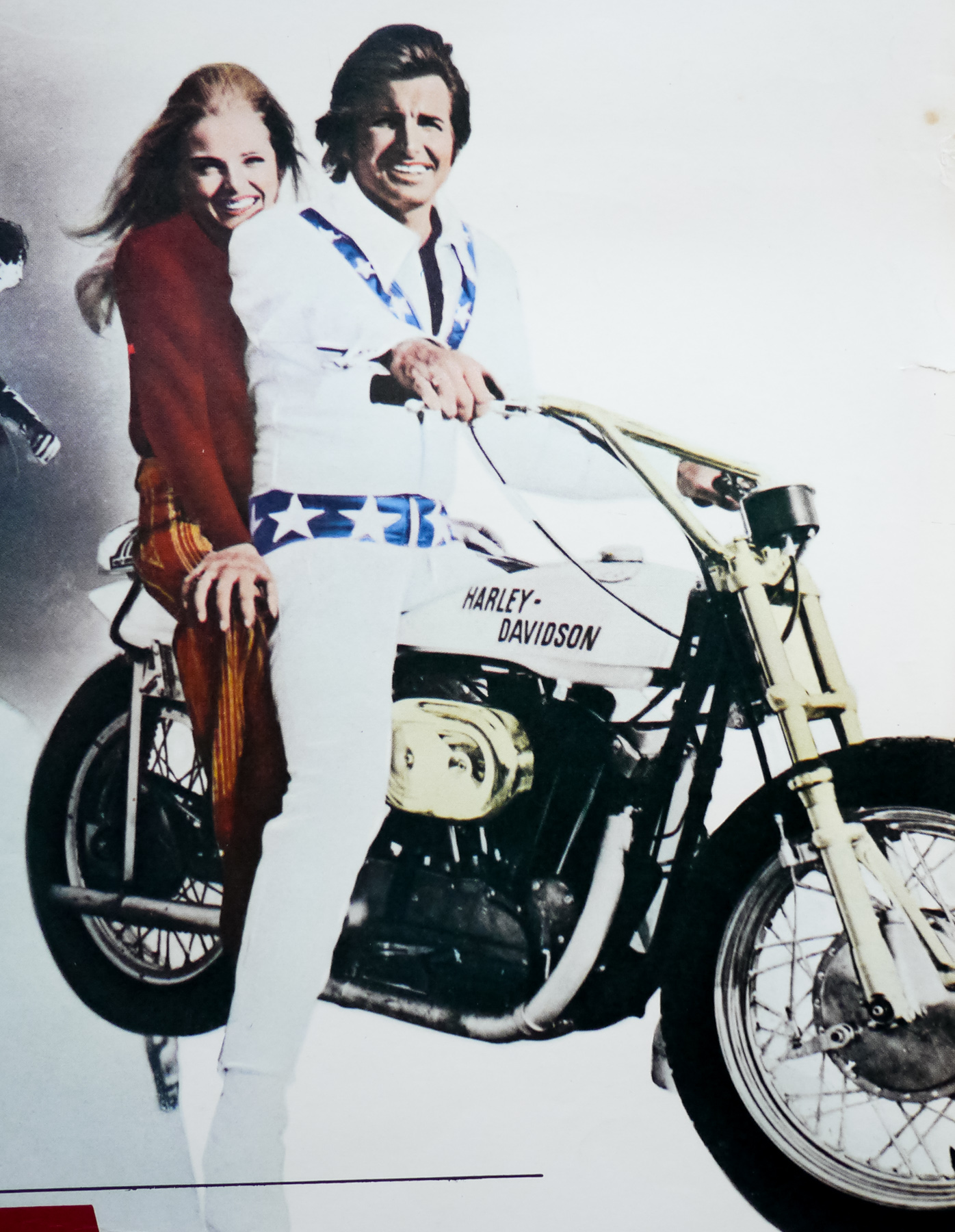
This is the Japanese B2 for the release of the 1971 biography of the legendary stuntman Evel Knievel that was made whilst he was only 32 years old and still at the height of his fame. It was also before his infamous attempted jumping of Snake River Canyon in 1974 that ended in a near fatal crash. The film was shot in Evel’s home town of Butte, Montana and starred the prolific actor George Hamilton as the man himself.

The film is told in a series of flashbacks with Evel narrating various incidents that happen throughout the film, including events regarding his relationship with his wife. It features actual footage of Knievel on his bike and completing various stunts, including one on the Ontario Motor Speedway. The film ends with Evel at the edge of the Grand Canyon because the real stuntman was planning a jump of the famous landmark that never came to pass.

The film is now out of copyright and is in the public domain, freely available to watch online should you wish to do so.


Gordon’s War / B2 / Japan

09.10.15

Poster Poster
Title
Gordon's War
AKA
--
Year of Film
1973
Director
Ossie Davis
Starring
Paul Winfield, Carl Lee, David Downing, Tony King, Gilbert Lewis, Carl Gordon, Nathan C. Heard, Grace Jones
Origin of Film
USA
Genre(s) of Film
Paul Winfield, Carl Lee, David Downing, Tony King, Gilbert Lewis, Carl Gordon, Nathan C. Heard, Grace Jones,
Type of Poster
B2
Style of Poster
--
Origin of Poster
Japan
Year of Poster
1973
Designer
Unknown
Artist
--
Size (inches)
20 5/16" x 28 13/16"
Tagline
--

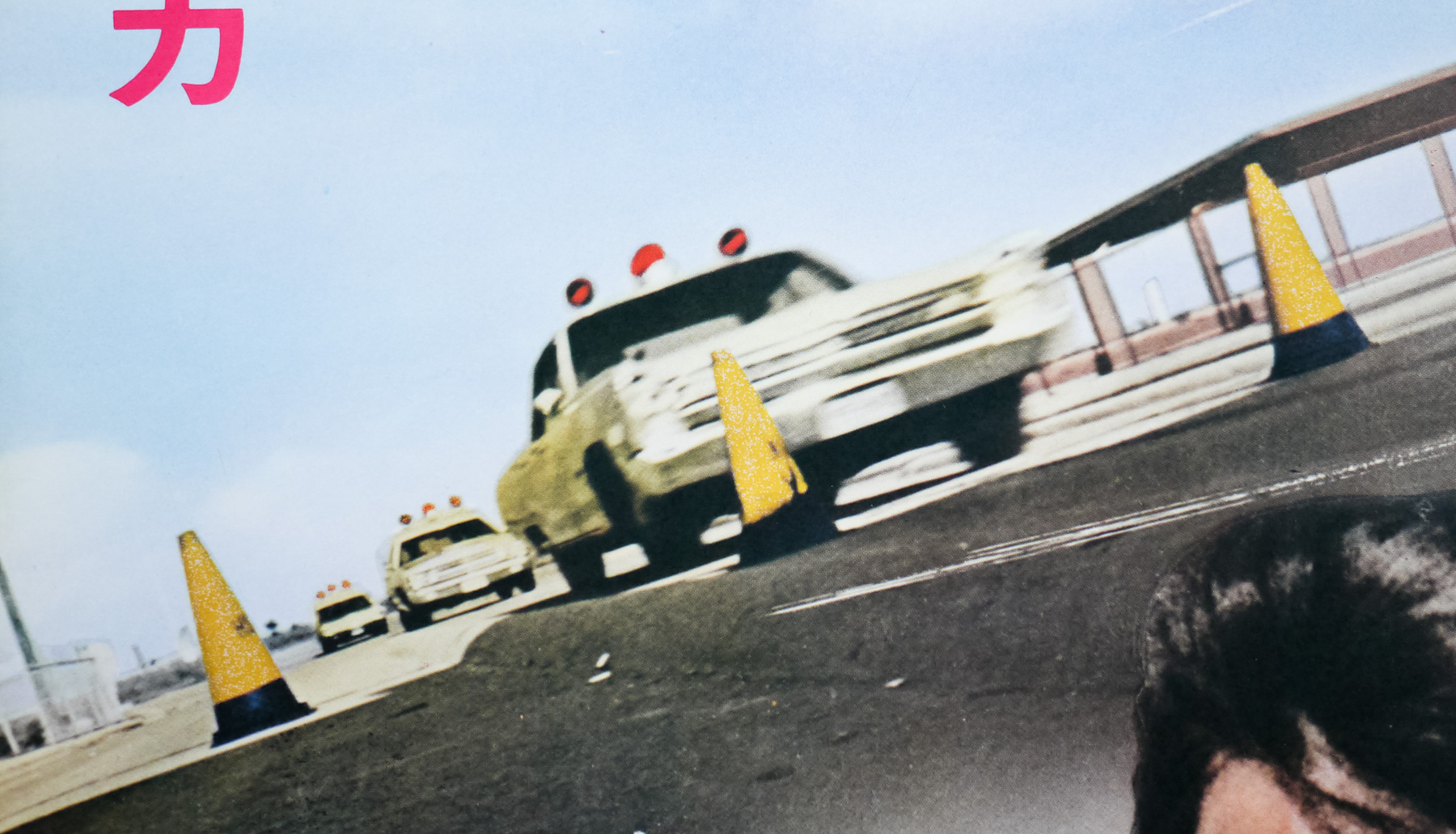
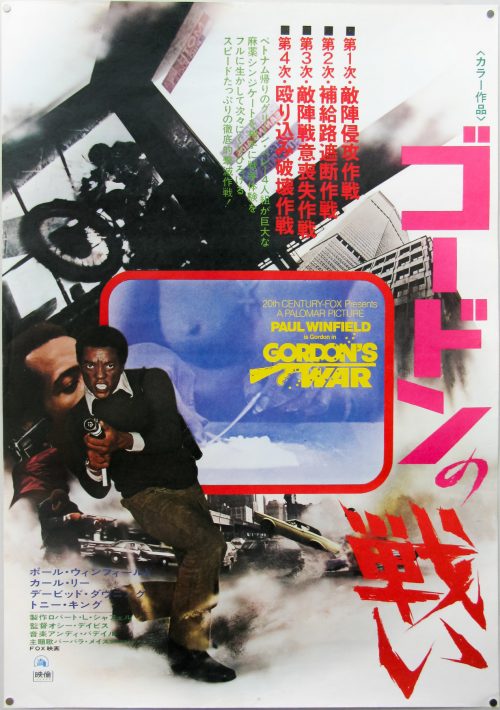
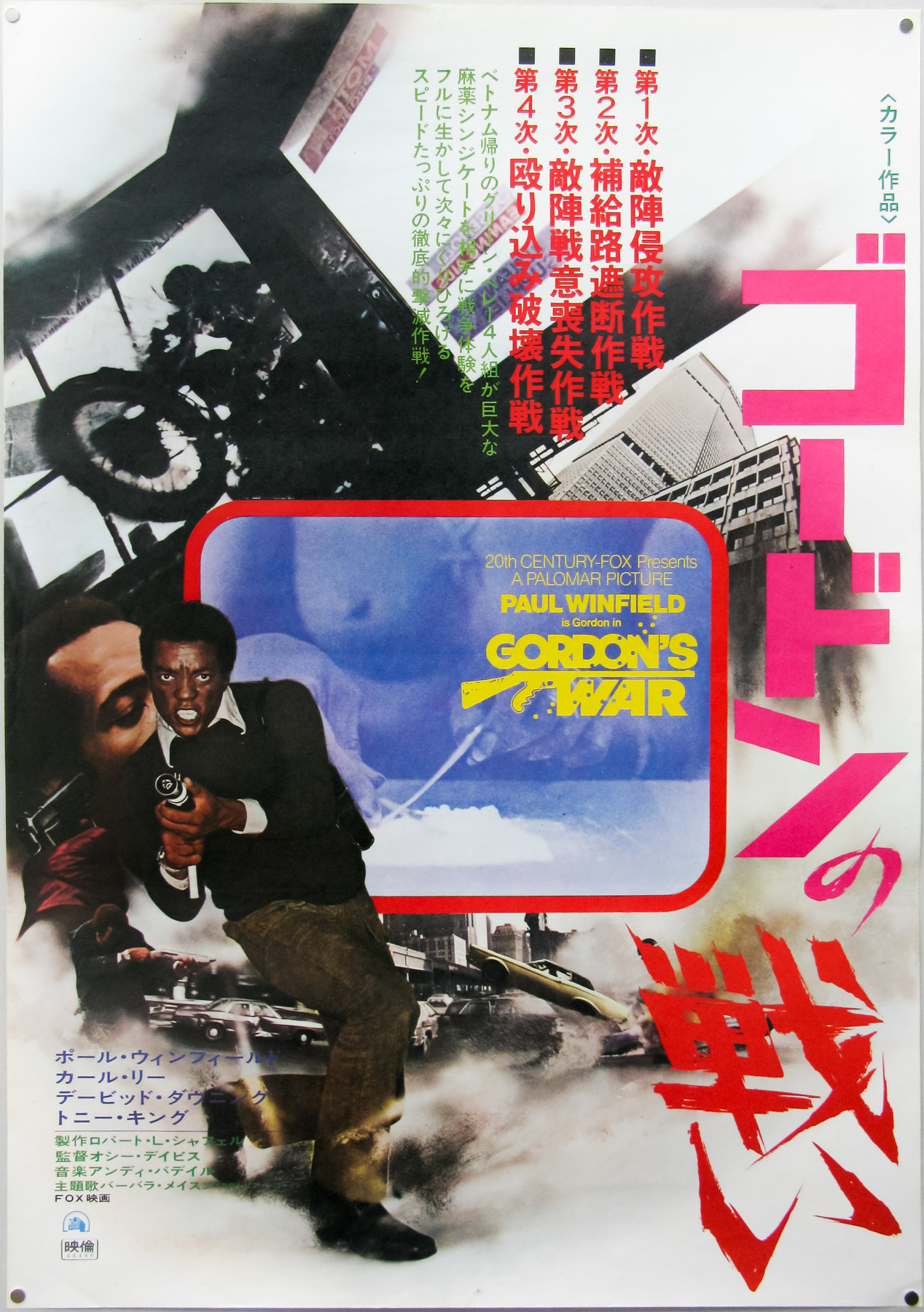
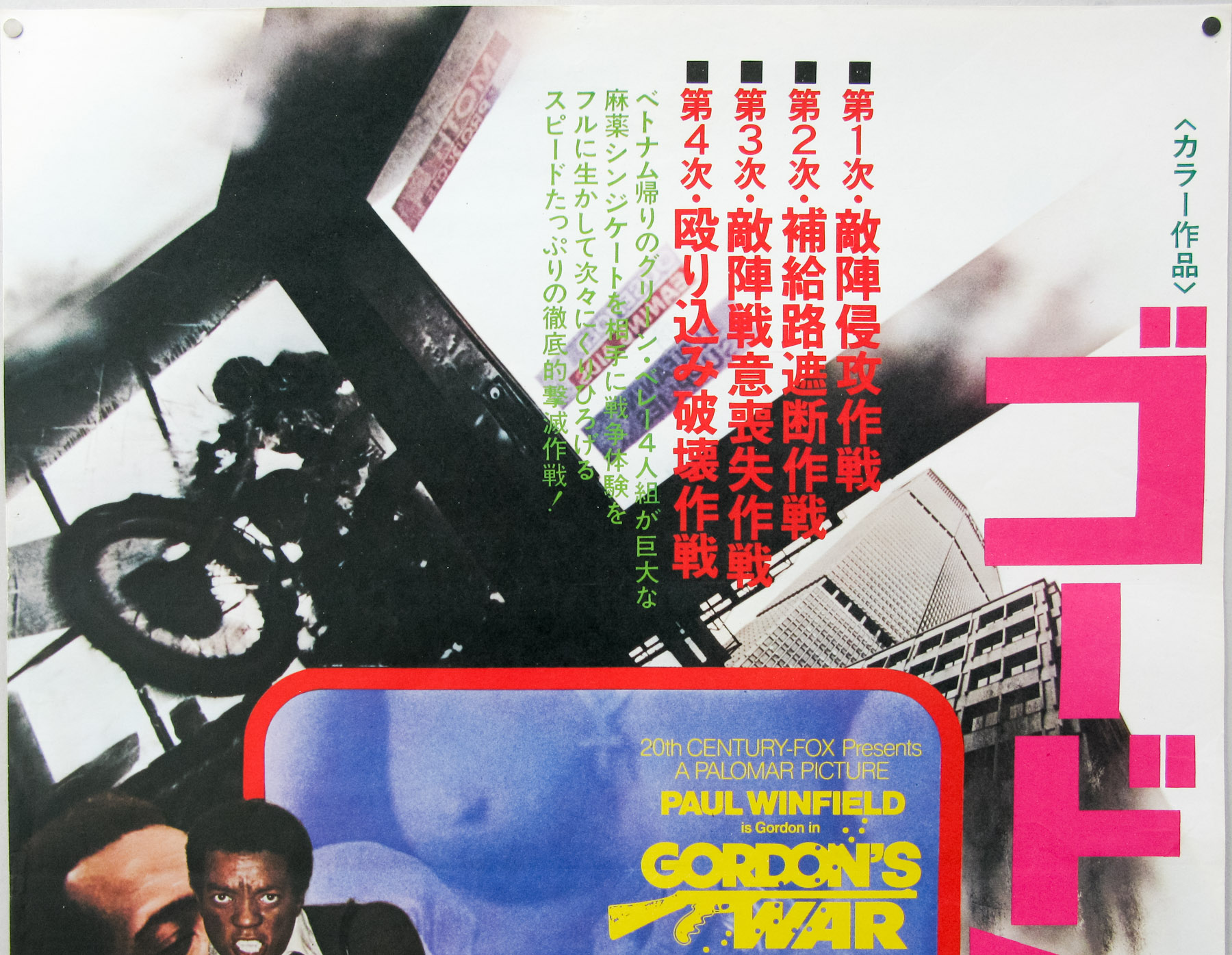
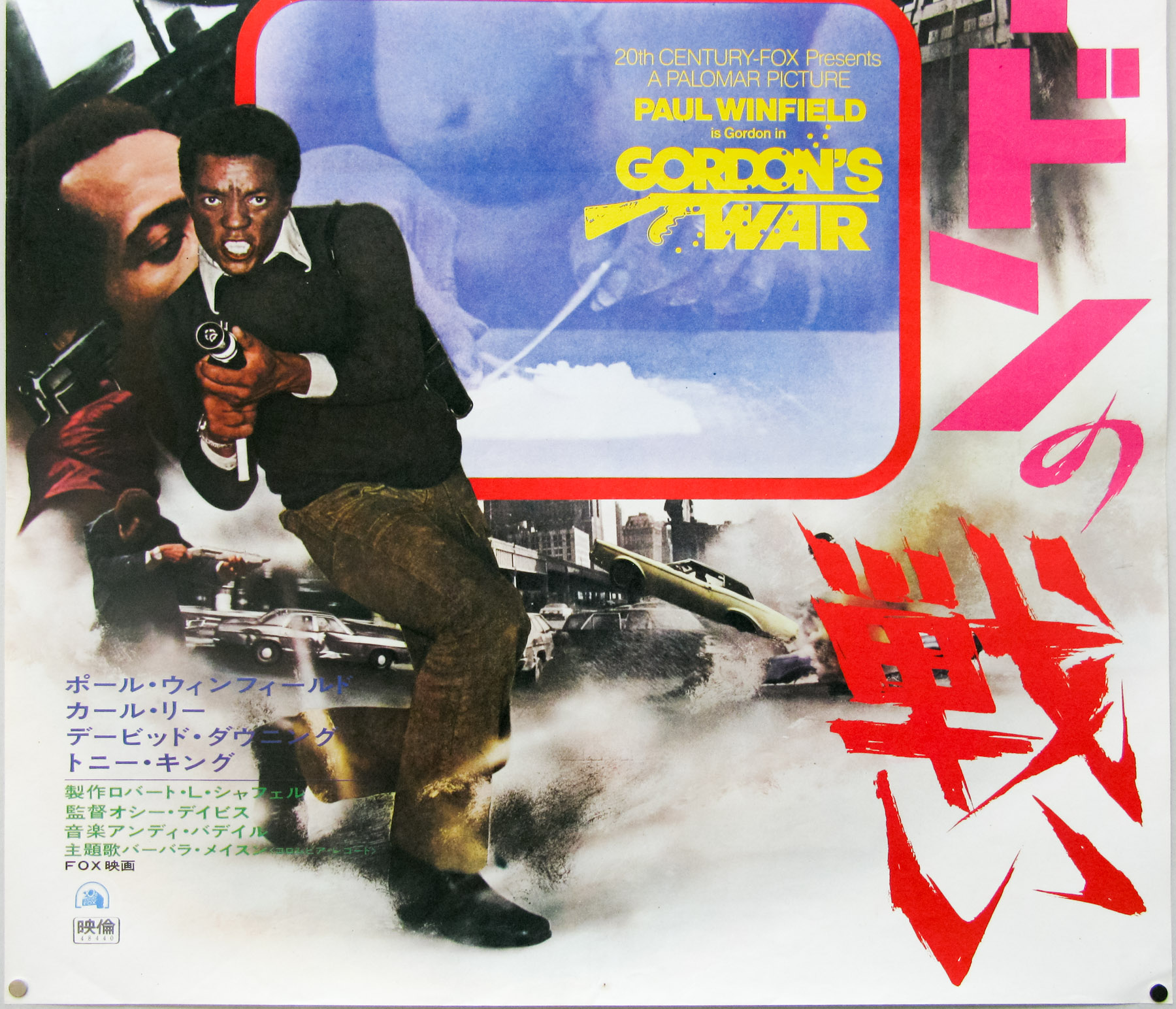
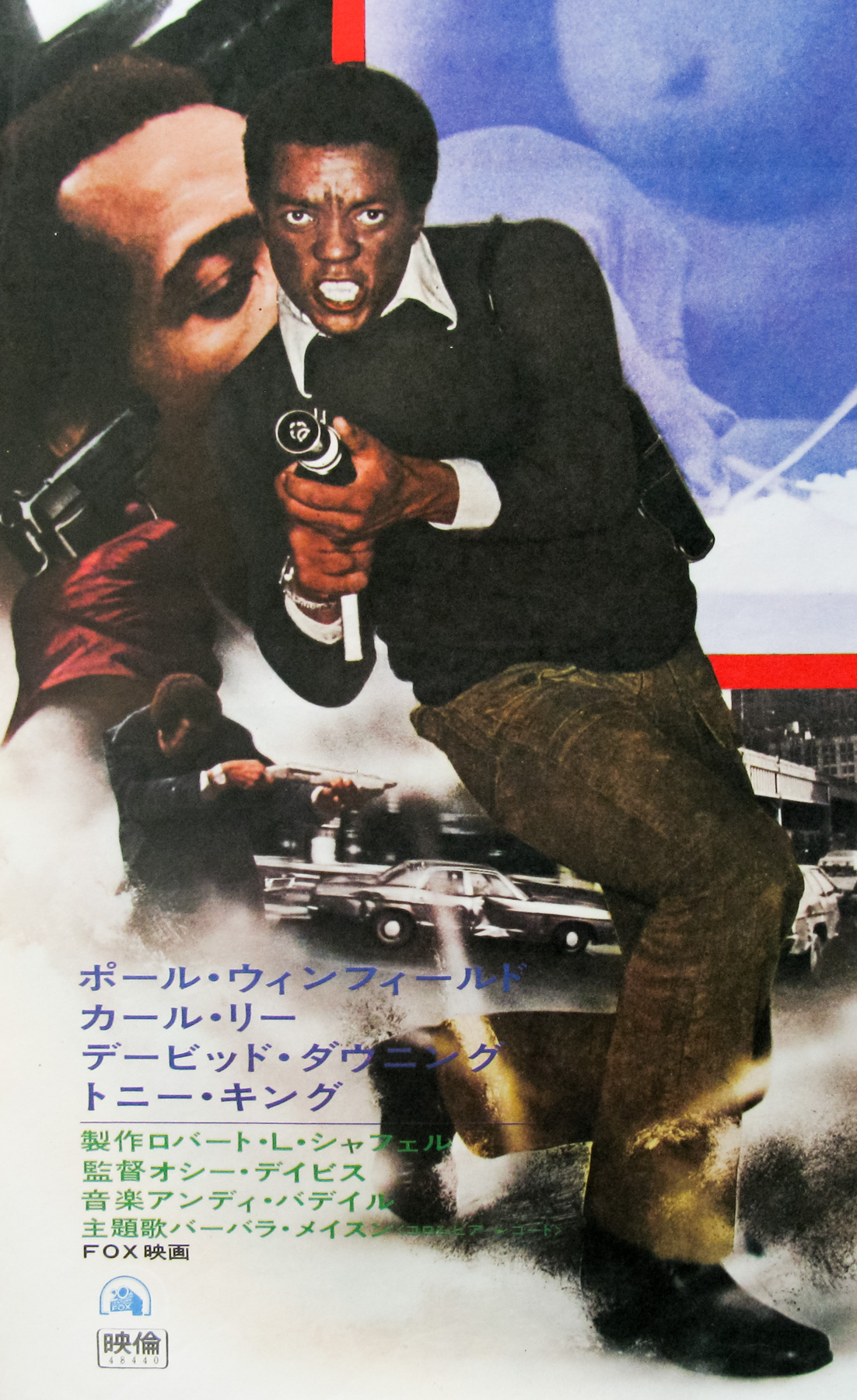
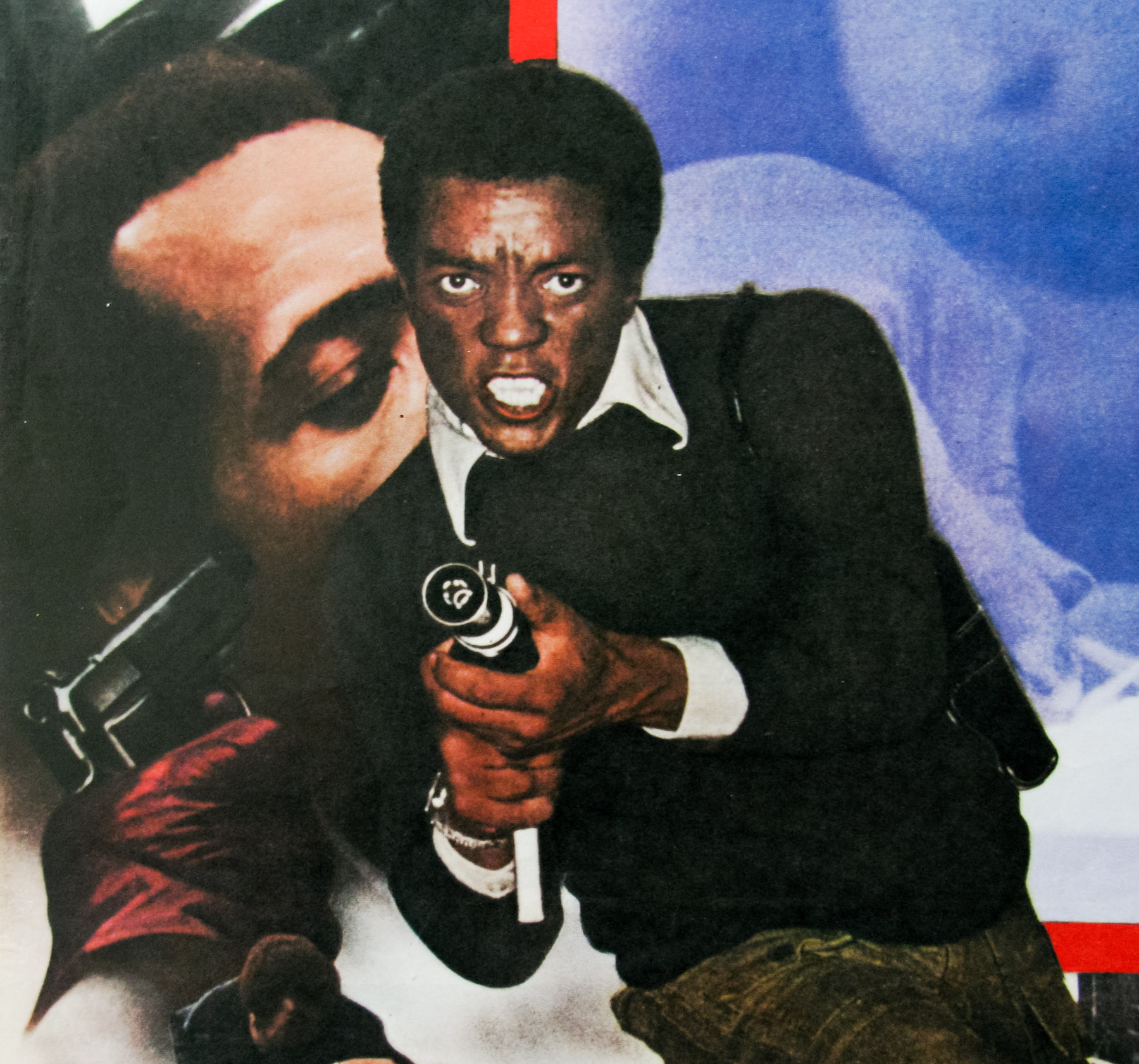
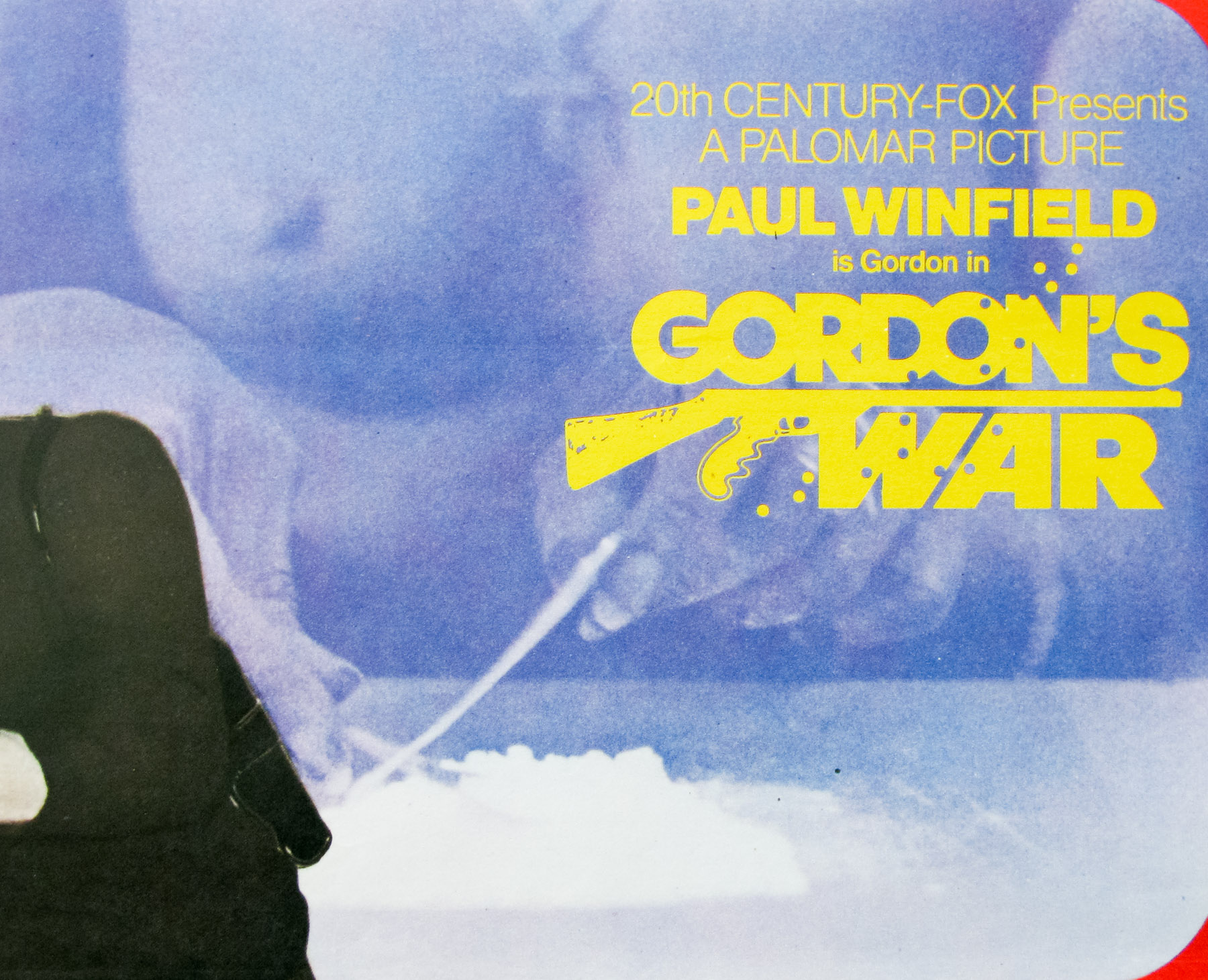
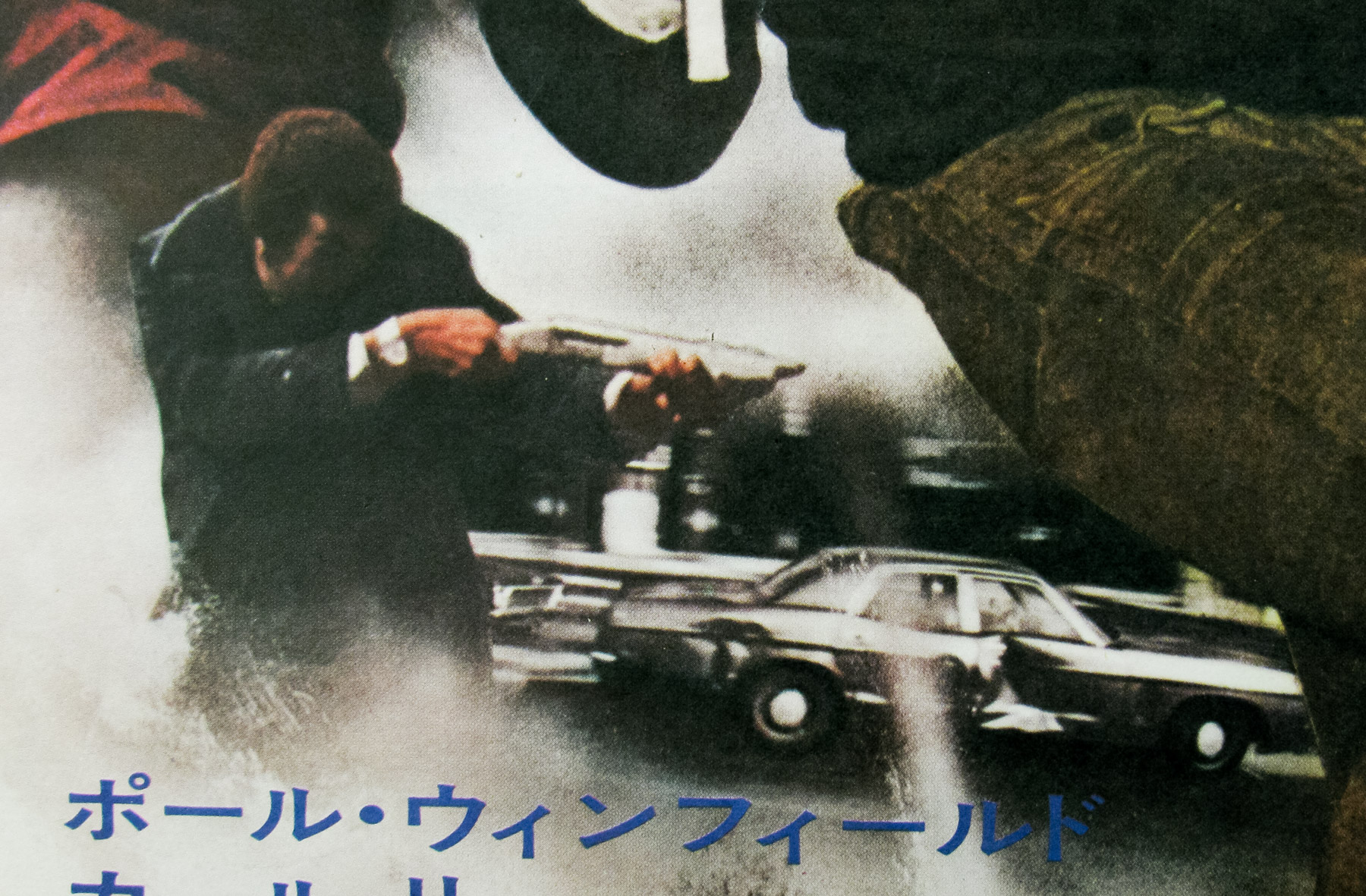
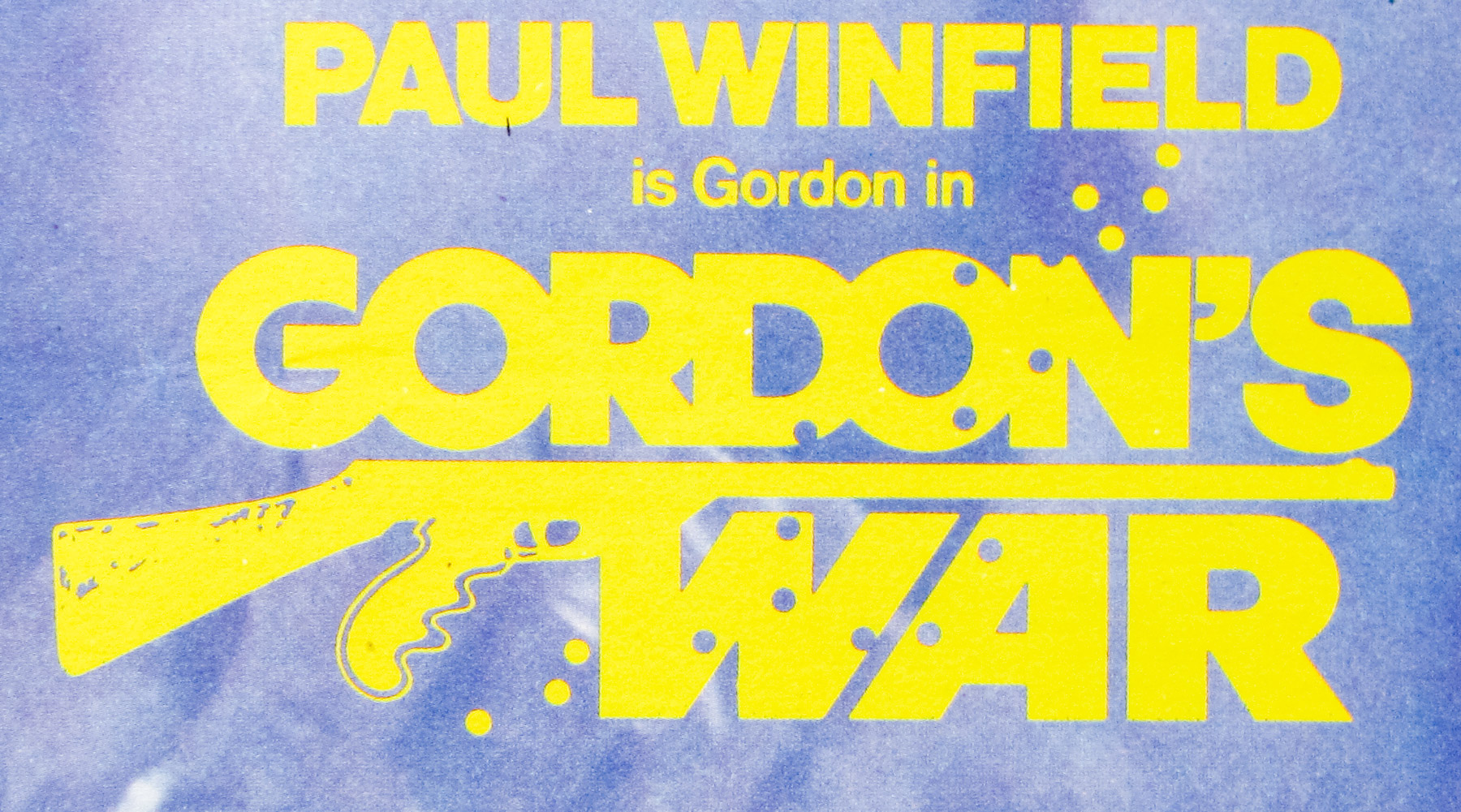
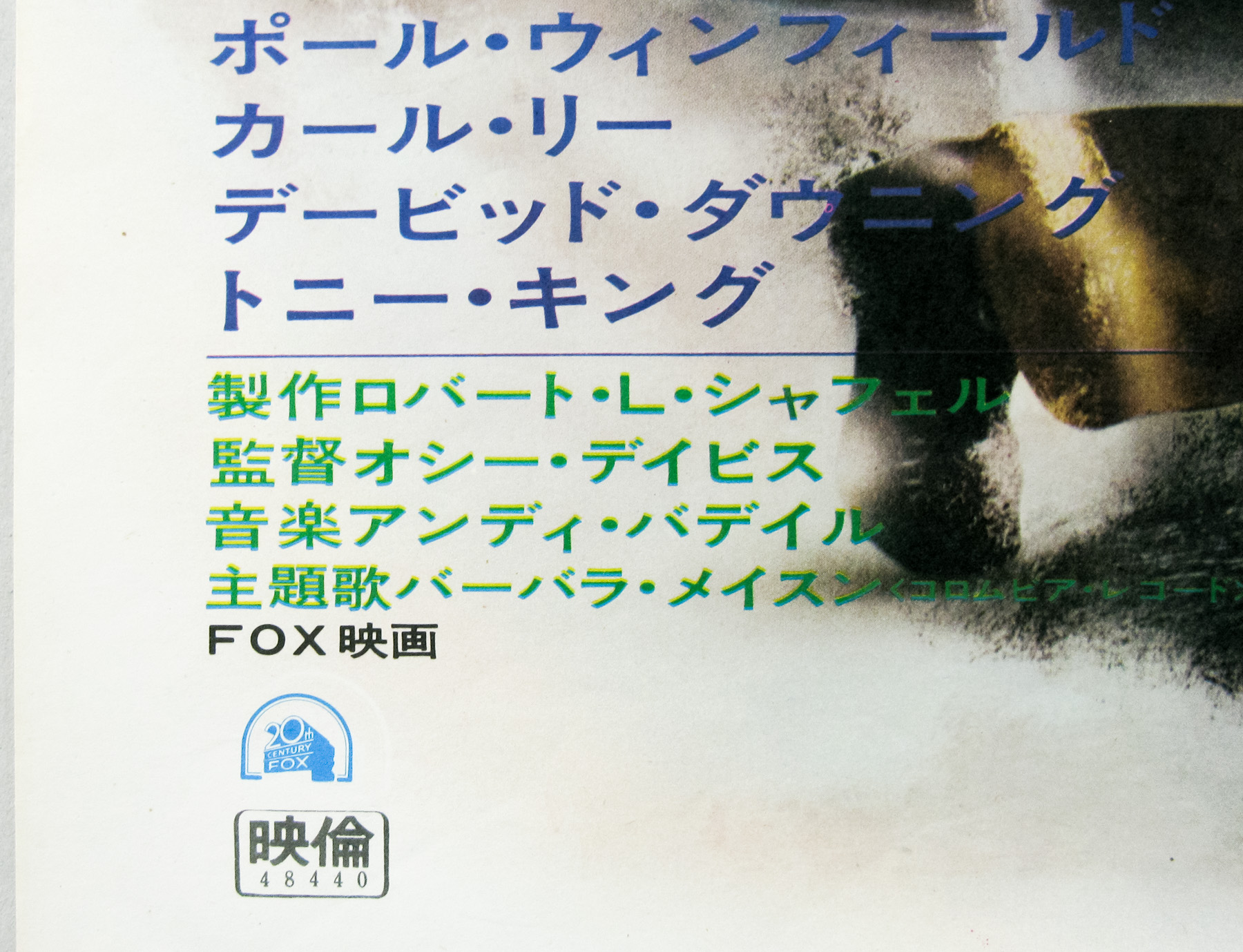
This is the Japanese B2 for the 1973 blaxploitation crime drama Gordon’s War, directed by Ossie Davis (Cotton Comes to Harlem) and starring Paul Winfield as the eponymous Gordon Hudson. After returning from the Vietnam war he finds that his neighbourhood in Harlem has been taken over by drug dealers and that his wife has died from a heroin overdose. He gathers some of his fellow soldiers together and sets out to rid the area of the dealers.

The film is unavailable on blu-ray but receives decent enough reviews on IMDb, with one praising its use of real locations:

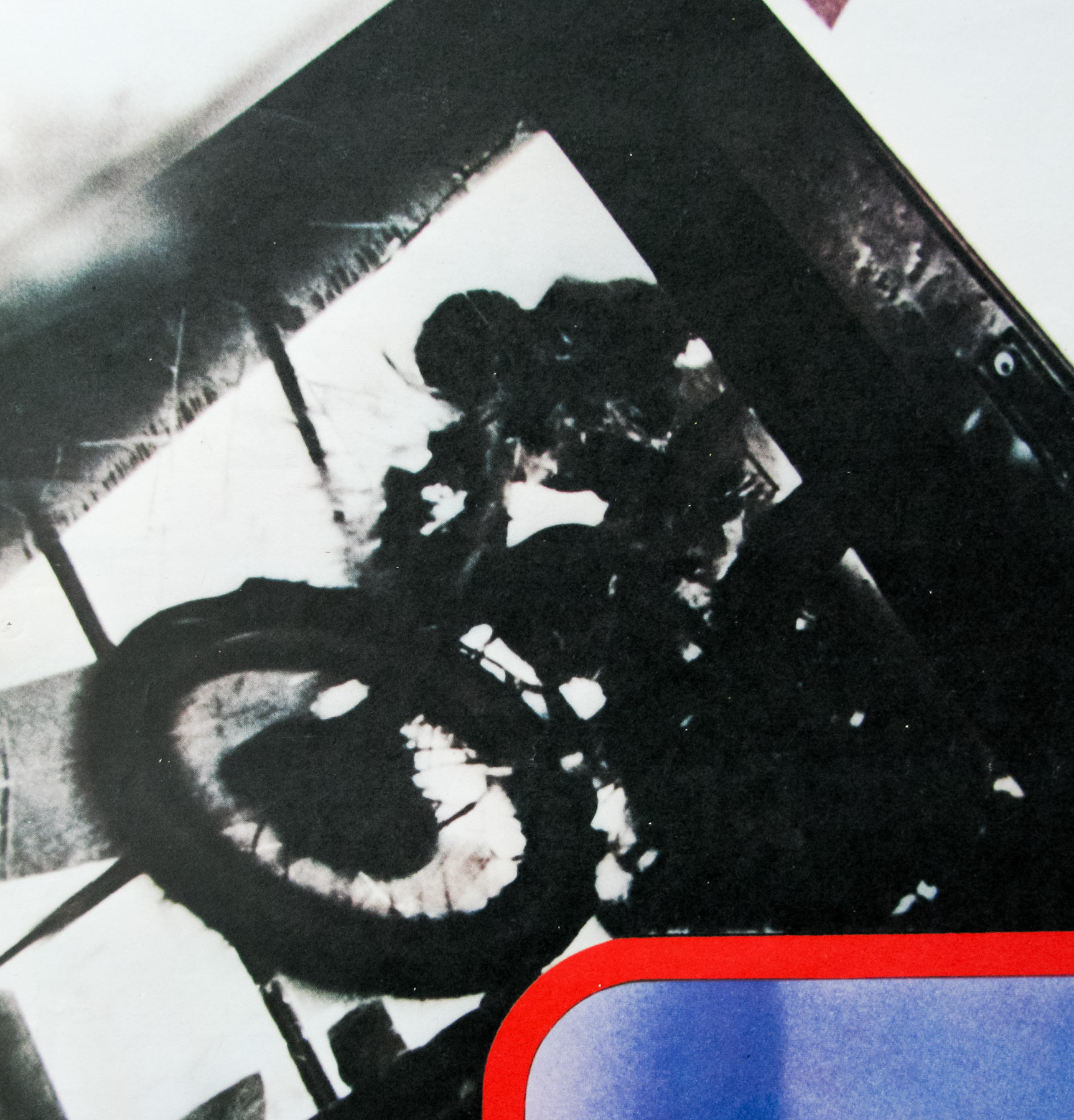
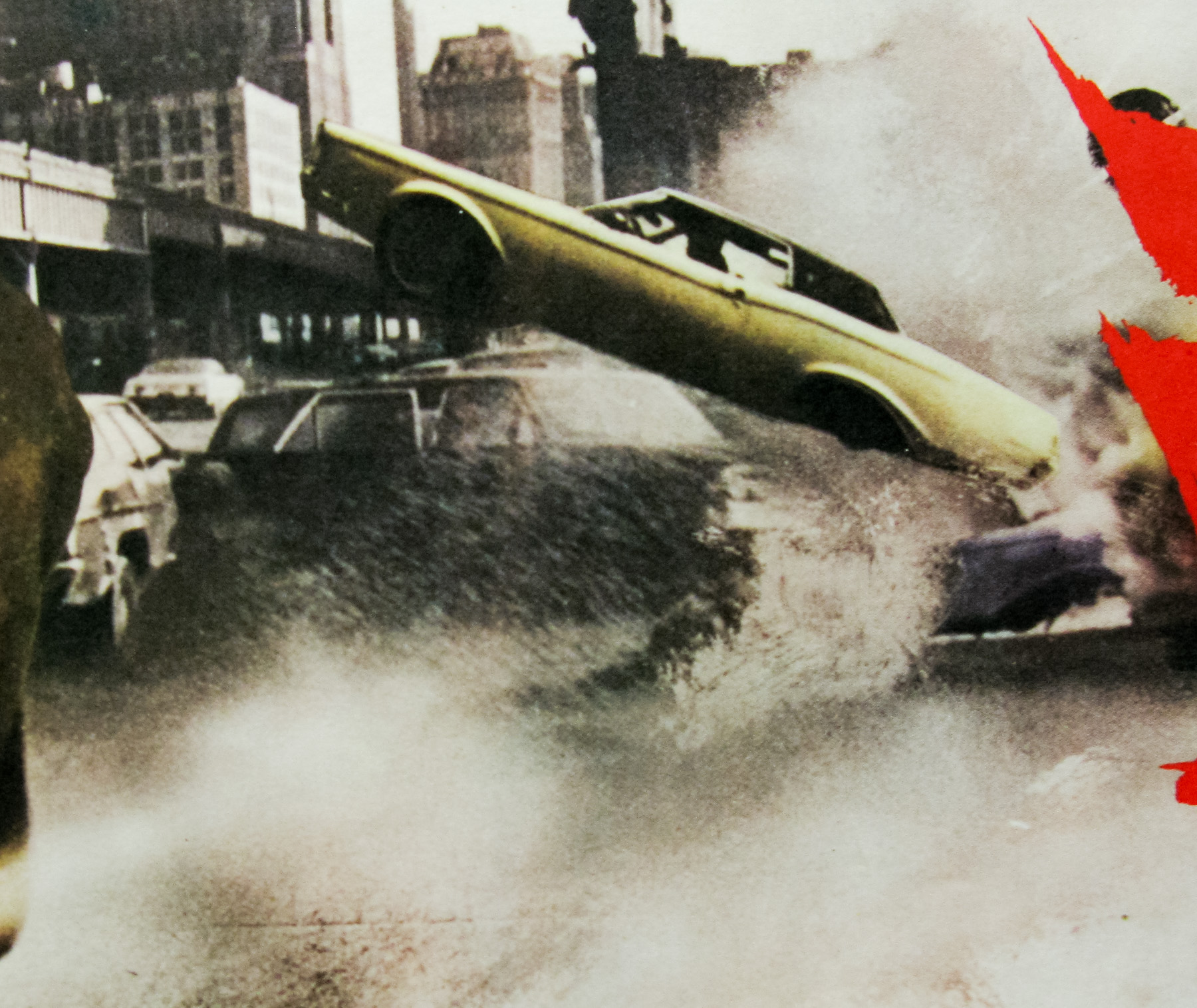
The location shoot in Harlem is an essential ingredient in making this film work. The feel of the streets, shops, people, cars, bars, abandoned buildings, rundown apartments and ramshackle appearances bolsters the movie greatly. There is a chase scene, car following motorcycle, that ranks among the very best of any movie anywhere, including those in poliziotteschis. That alone makes the movie.

Hammer / B2 / Japan

09.03.16

Poster Poster
Title
Hammer
AKA
--
Year of Film
1972
Director
Bruce D. Clark
Starring
Fred Williamson, Bernie Hamilton, Vonetta McGee, William Smith, Charles Lampkin, Elizabeth Harding, Mel Stewart, D'Urville Martin
Origin of Film
USA
Genre(s) of Film
Fred Williamson, Bernie Hamilton, Vonetta McGee, William Smith, Charles Lampkin, Elizabeth Harding, Mel Stewart, D'Urville Martin,
Type of Poster
B2
Style of Poster
--
Origin of Poster
Japan
Year of Poster
1973
Designer
Unknown
Artist
--
Size (inches)
20 6/16" x 28 12/16"
SS or DS
SS
Tagline
--

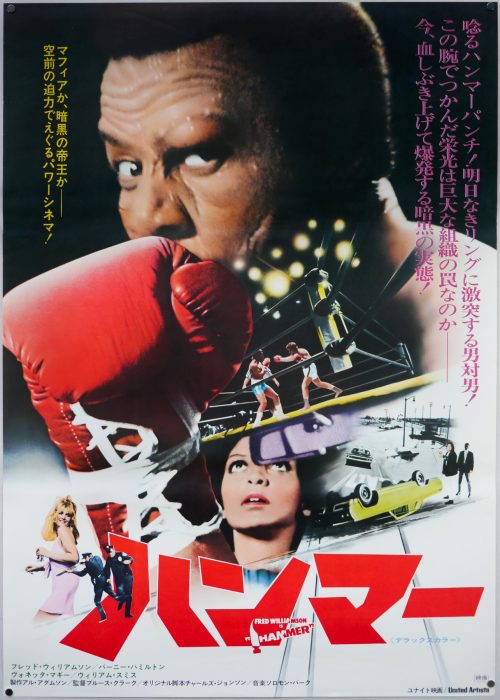
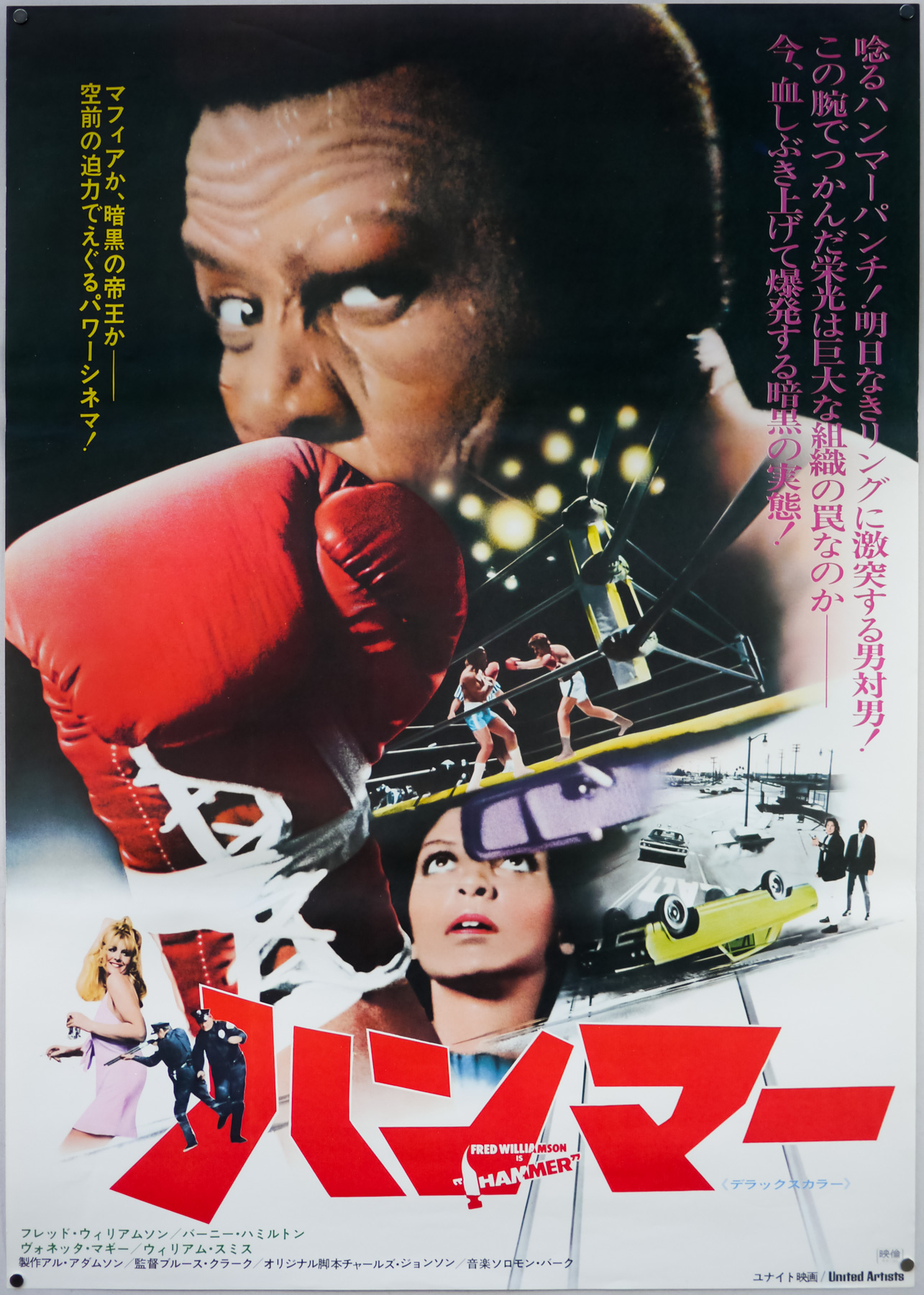
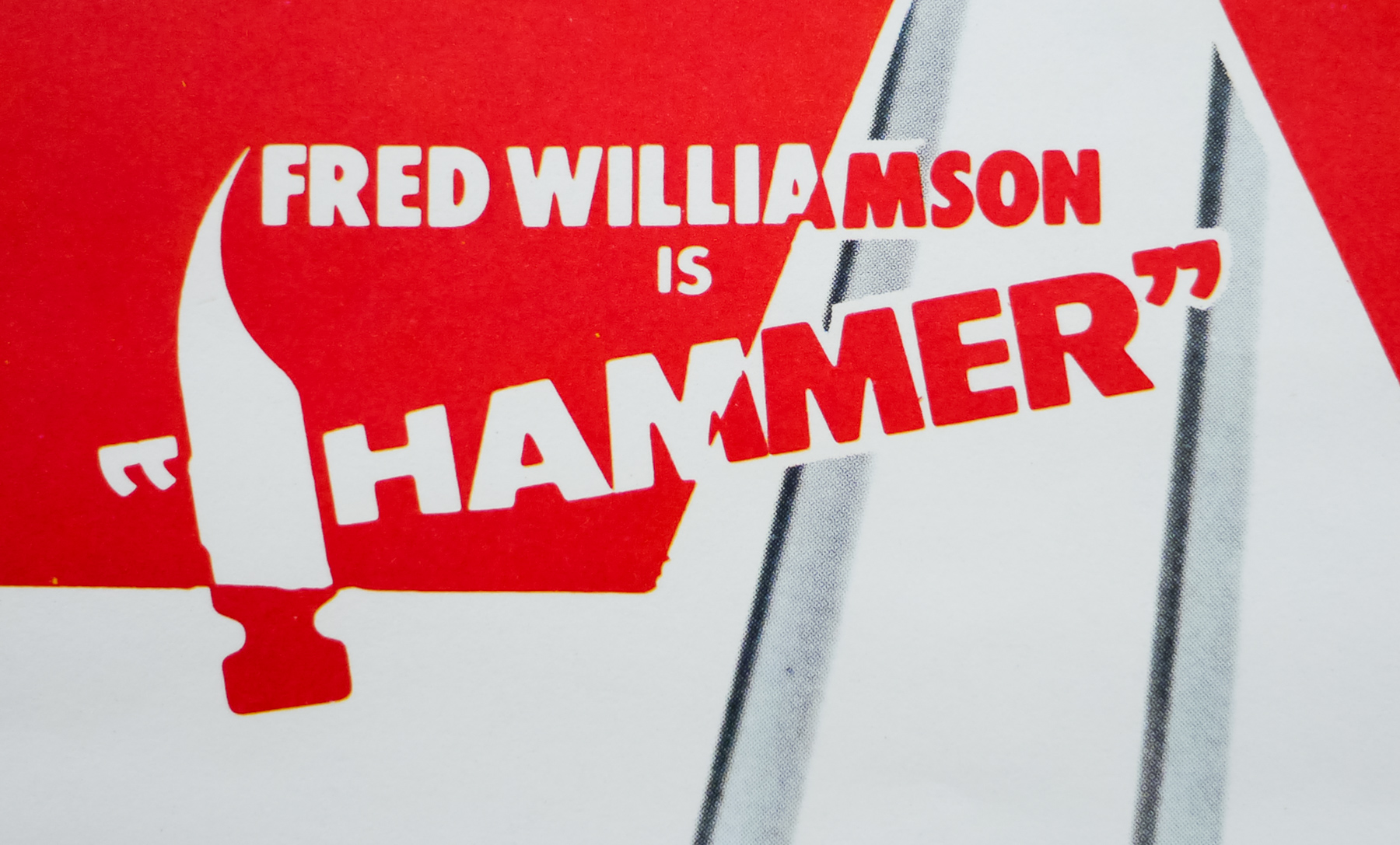
Hammer was an early entry in the blaxploitation subgenre of films that grew in popularity following the release of Sweet Sweetback’s Baadasssss Song and Shaft in 1971. The film stars ex-NFL player Fred Williamson whose nickname was The Hammer in real life and who would go on to become one of the subgenre’s key players. It was helmed by Kiwi director Bruce Clark who only has four directorial credits to his name, which includes the Roger Corman-produced sci-fi clunker Galaxy of Terror.

Williamson stars as B.J. Hammer a dockworker who is spotted as having some boxing talent by a shady trainer. He rises up the ranks and gains some notoriety but thing soon turn sour when his manager, who is also a dodgy gangster, asks him to throw his next fight in order to make some other crooks rich (that old chestnut). His girfriend Lois, played by another blaxploitation stalwart Vonetta McGee), is kidnapped by the gangsters in an effort to coerce Hammer into taking a dive, which means it’s time to show them what he’s capable of.

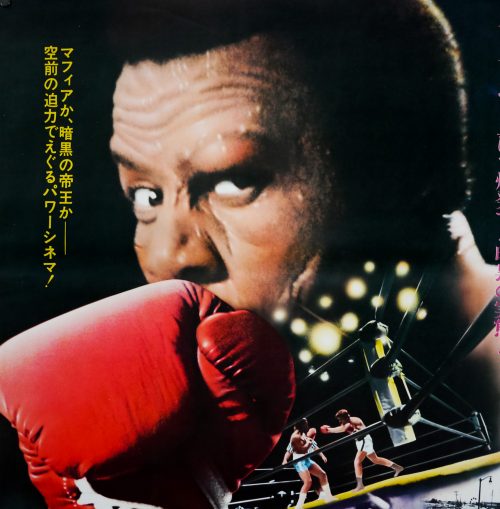
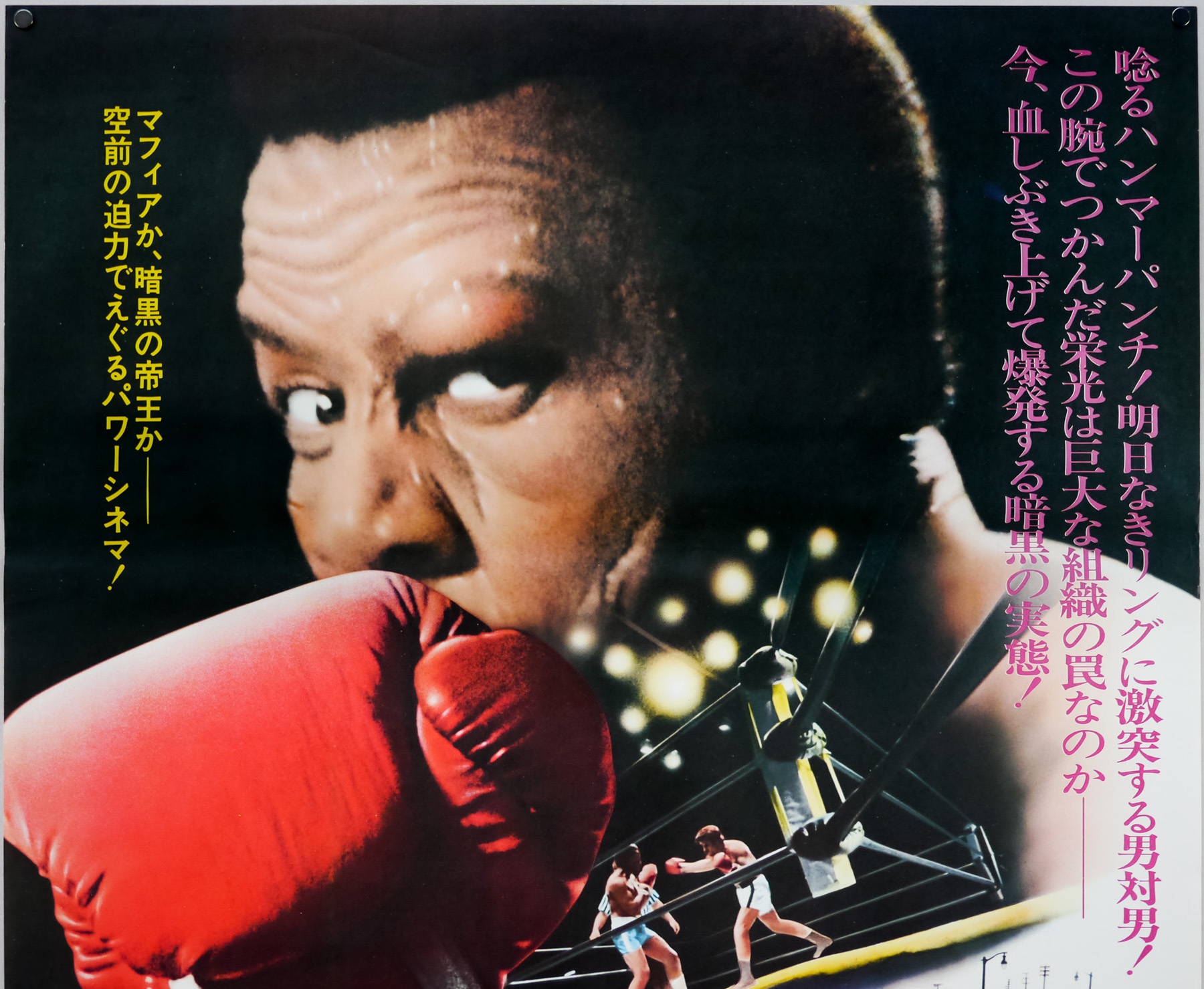
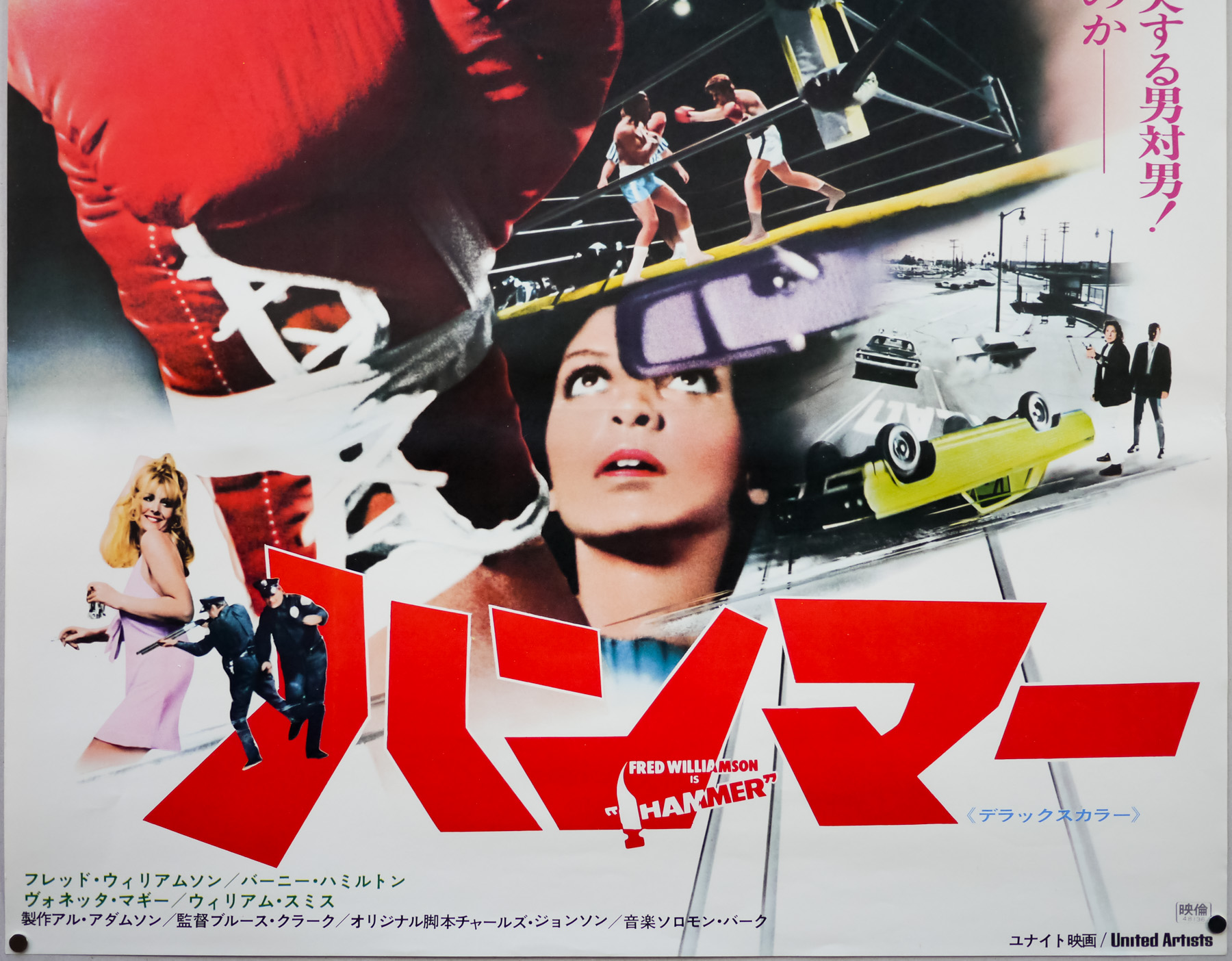
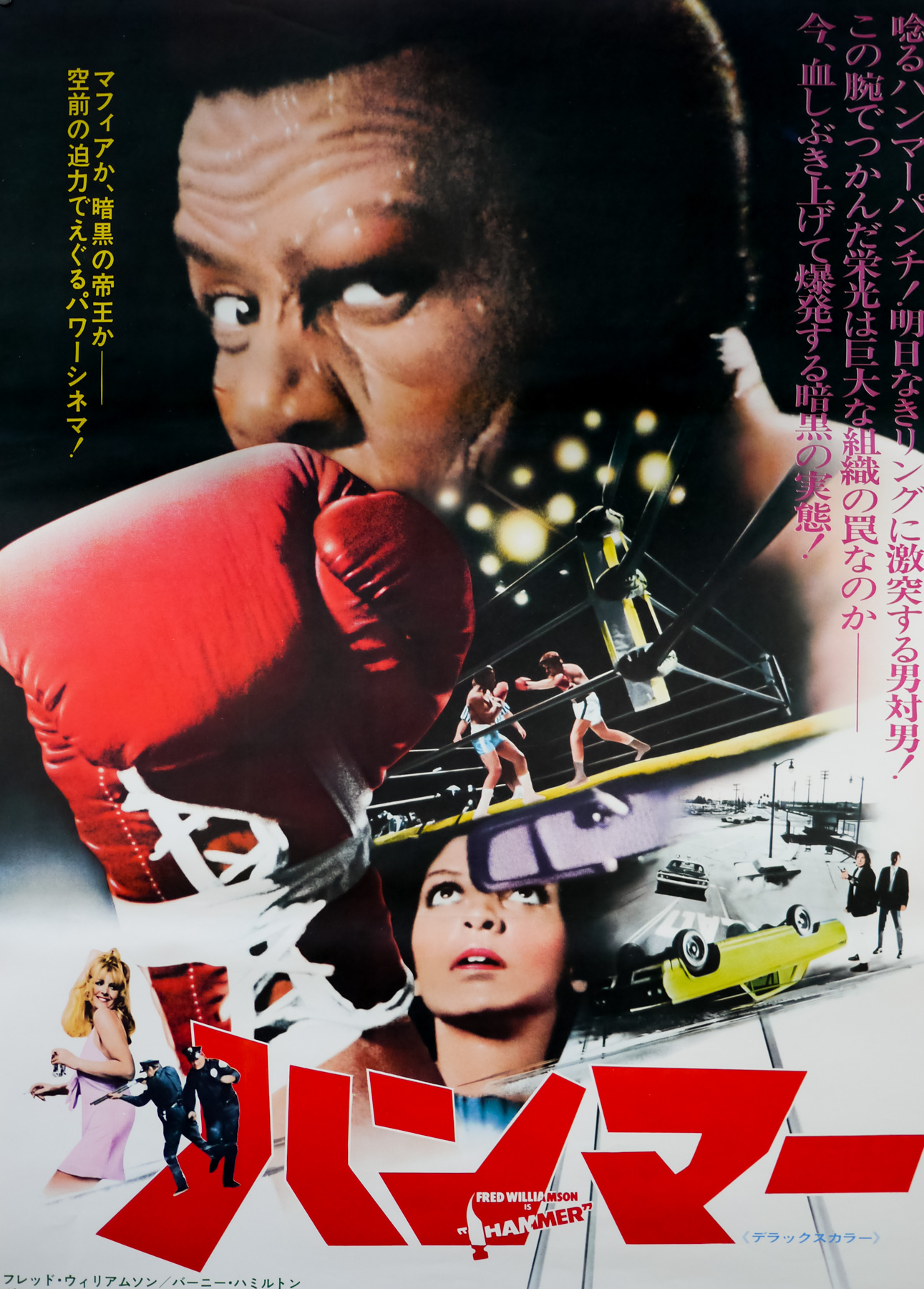
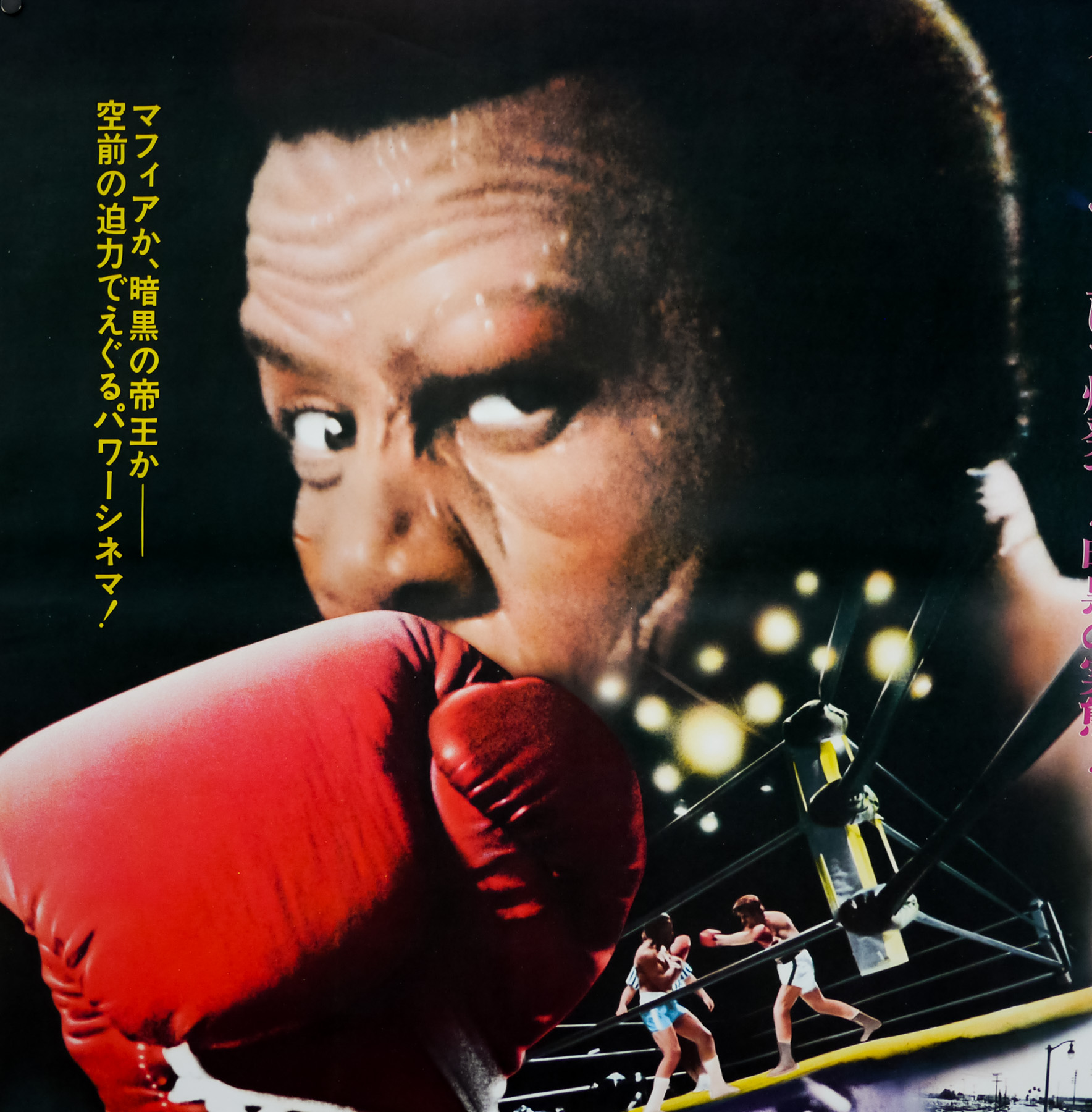
The film is today considered one of the lesser entries in the blaxploitation subgenre and it holds a fairly poor rating on IMDb, but it’s still one to seek out for fans of Williamson. This Japanese B2 poster features a unique photo montage as was typical of the era.

Hellraiser / B2 / Pinhead style / Japan

17.05.11

Poster Poster
Title
Hellraiser
AKA
Clive Barker's Hellraiser (UK - complete title)
Year of Film
1987
Director
Clive Barker
Starring
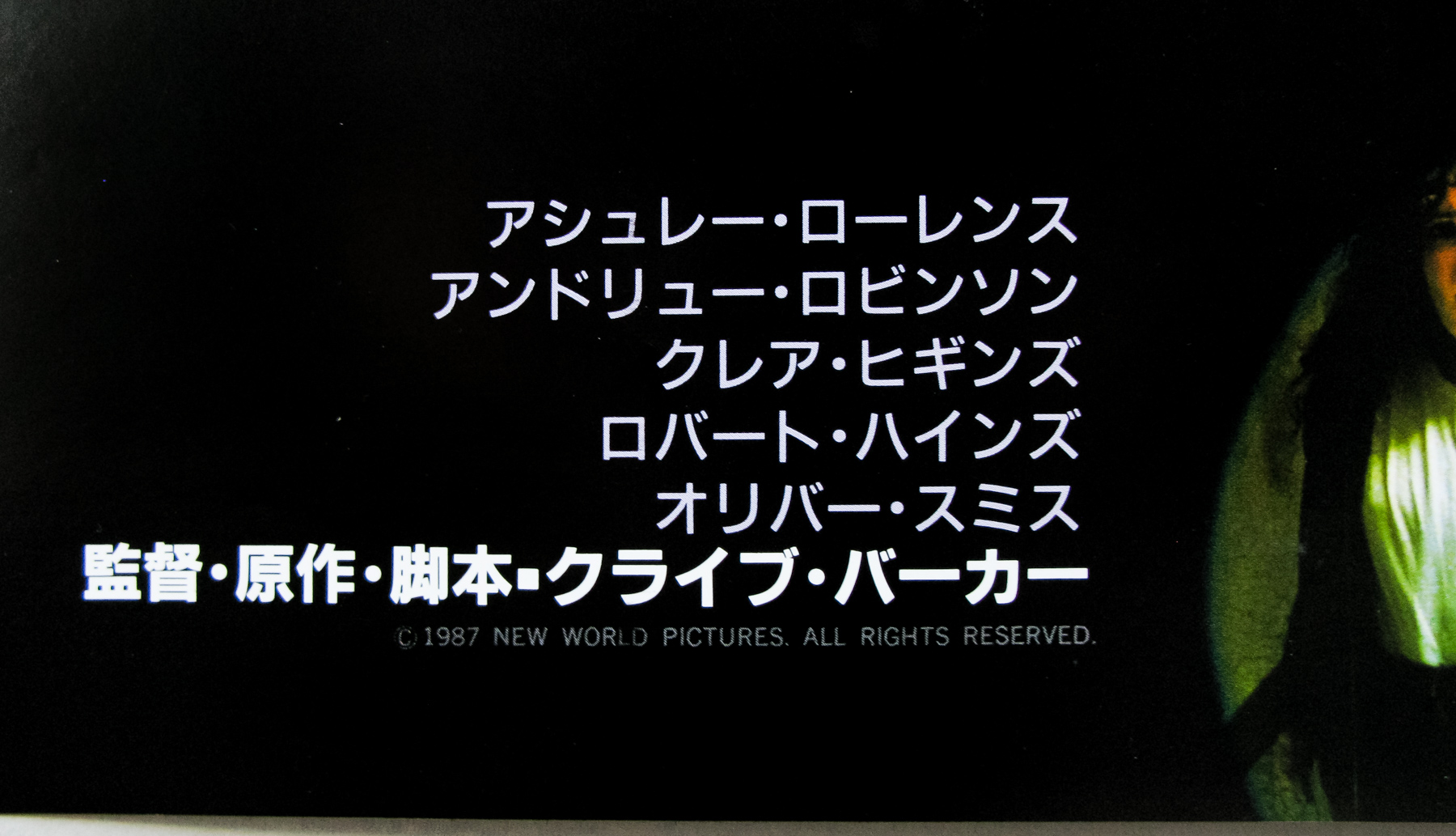
Andrew Robinson, Doug Bradley, Clare Higgins, Ashley Laurence, Sean Chapman, Oliver Smith
Origin of Film
UK
Genre(s) of Film
Andrew Robinson, Doug Bradley, Clare Higgins, Ashley Laurence, Sean Chapman, Oliver Smith,
Type of Poster
B2
Style of Poster
Style A - Pinhead
Origin of Poster
Japan
Year of Poster
1987
Designer
Unknown
Artist
--
Size (inches)
20 6/16" x 28 13/16"
SS or DS
SS
Tagline
--

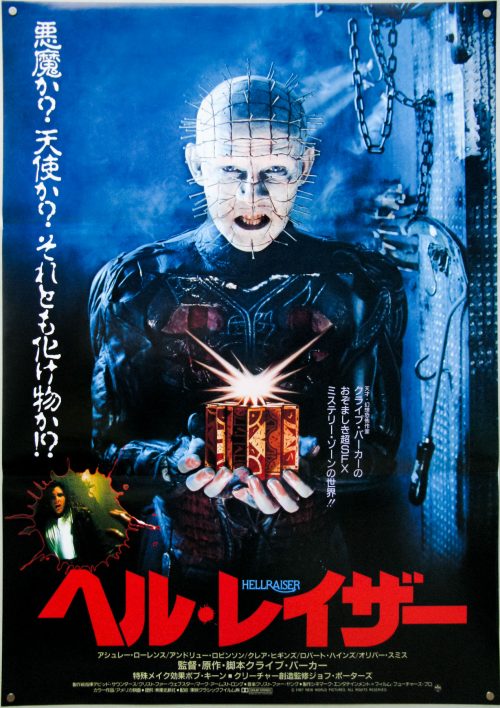
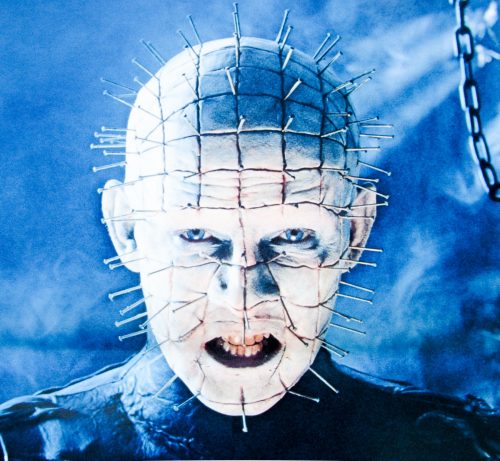
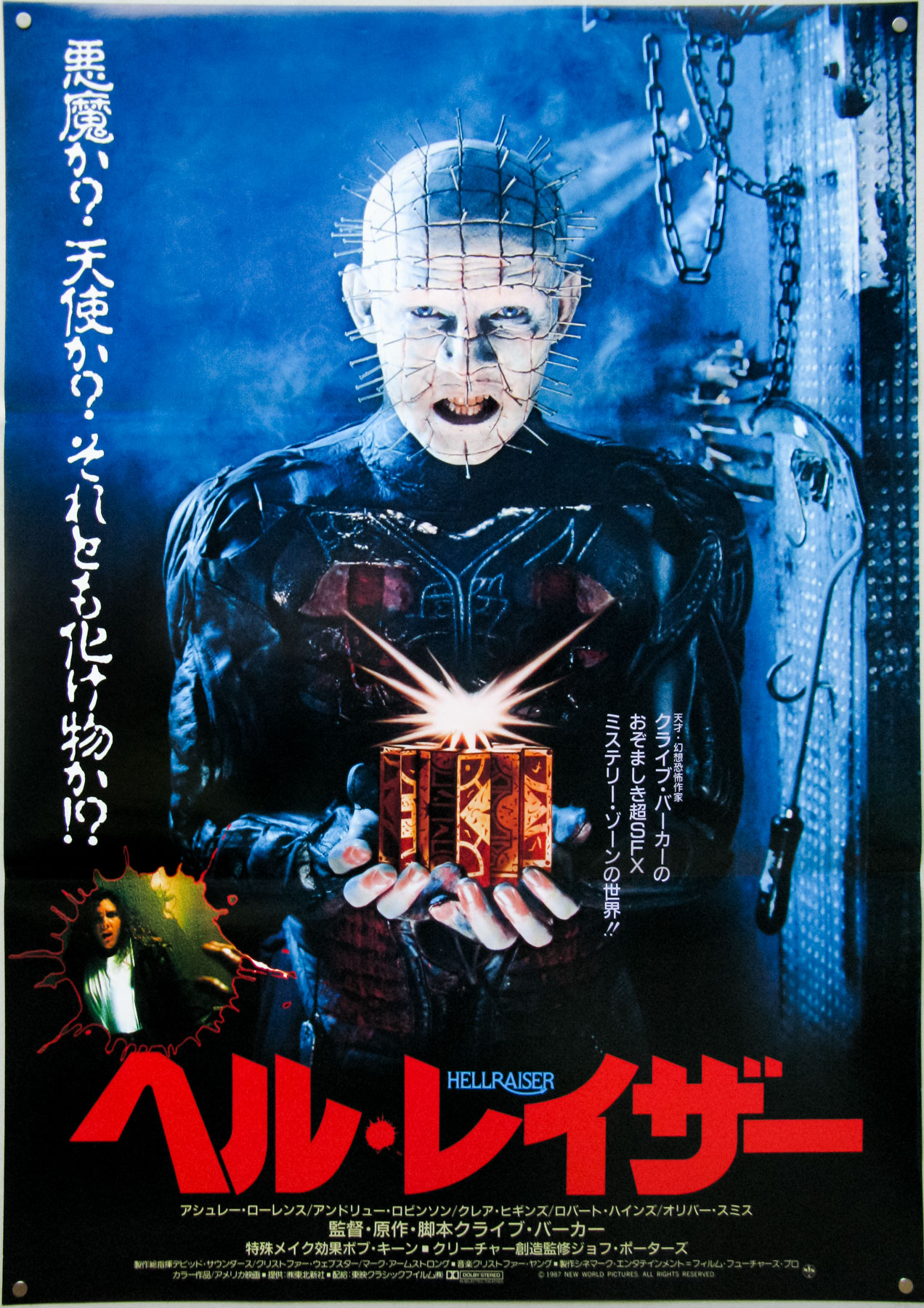
Unquestionably one of the truly great British horror films, Clive Barker‘s Hellraiser launched an enduring franchise and established the character of Pinhead (or ‘Priest’, as Barker prefers him to be known) as one of horror’s most beloved villains. Based on the 1986 novella The Hellbound Heart, Barker made the decision to both write the screenplay and direct the film after being disappointed with how two of his earlier scripts had been treated by other directors. The story begins as seedy hedonist Frank Cotton (Sean Chapman) purchases a golden puzzle box from an antiques dealer in Morocco believing it holds the key to the ‘ultimate sensual experience’. On returning to his London home, Frank opens the puzzle box and is promptly torn apart by massive hooks controlled by a group of horribly scarred and mutilated humanoids known as the Cenobites. The lead Cenobite (Pinhead, played by Doug Bradley) twists the box back to its original shape and they pass back into their realm with Frank’s remains with the room returning to normal.

Sometime later, Frank’s brother Larry (Andrew Robinson) and his second wife Julia (Clare Higgins) move into the same house assuming that Frank is in jail in some exotic location. Larry’s daughter Kirsty (Ashley Laurence) declines the offer to move in with her stepmother and chooses to find her own place. When Larry accidentally cuts his hand and drips blood onto the attic floor it somehow reaches Frank in his prison in the other realm and starts to resurrect his body (in a stunning special effects sequence). Later that day Julia finds Frank in the attic and the pair rekindle an affair they had started some years before. Julia agrees to help Frank to fully resurrect himself, which can only happen through blood sacrifices so she begins to seduce and bring back random men to the house before bludgeoning them to death for Frank to consume. Kirsty begins to suspect something is afoot and soon she is having her own encounter with the Cenobites who are displeased to learn that one of their prisoners has escaped and is on a murder spree.

What makes the film stand out is the excellent script by Barker which prevents the characters from being the usual one-dimensional death fodder usually seen in horror films, particularly those being released towards the end of the 1980s. The production, costume and makeup design are all excellent, with all of the Cenobite designs being particularly memorable. There’s only one stop-motion animation sequence at the end of the film that belies the productions low budget and the film stands up extremely well today. Although the series is up to its ninth film instalment, Barker never directed another and was only producer on the first two sequels. After the fourth film (1996′s Bloodline) the series became a straight-to-video enterprise and quality dropped significantly from then onwards.

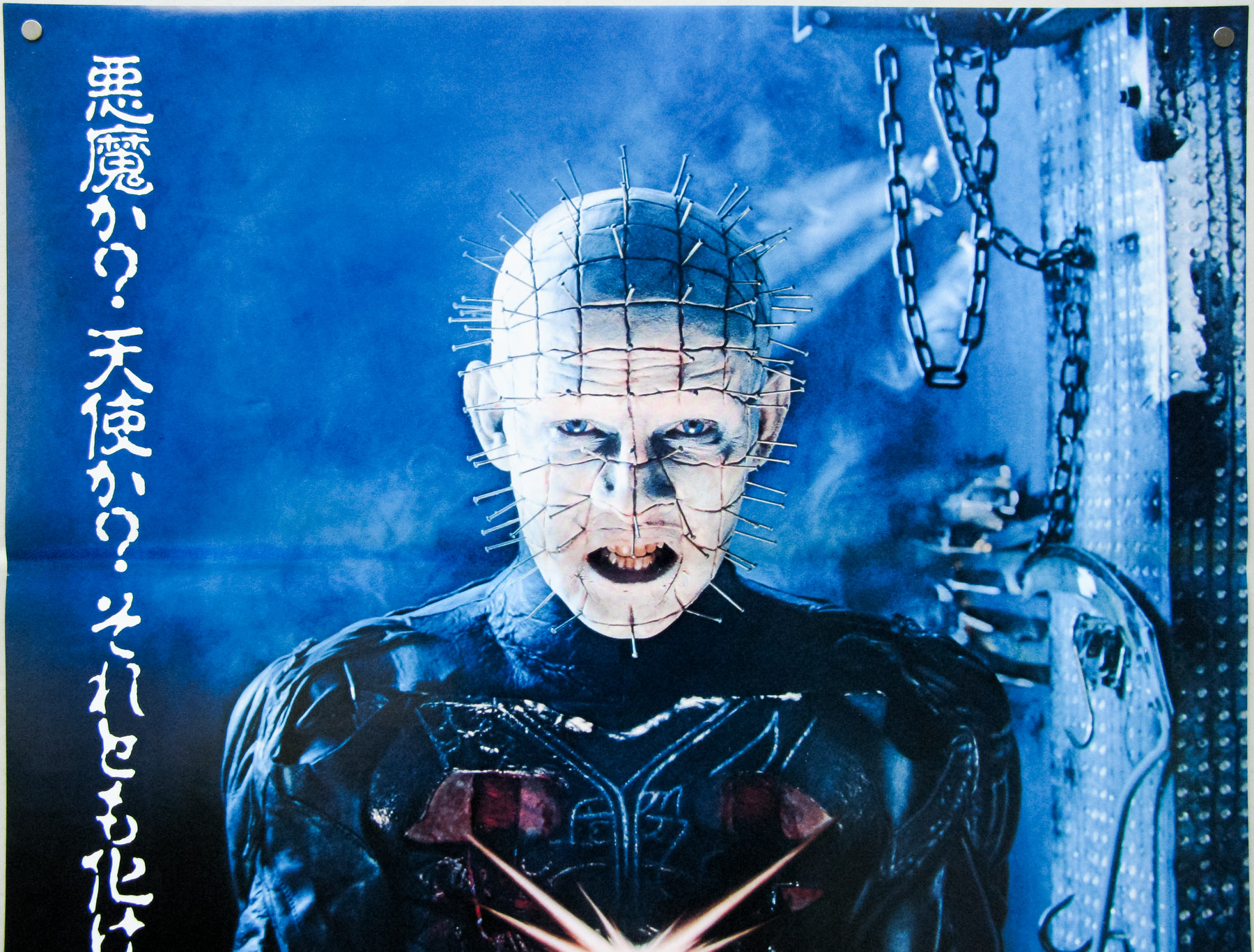
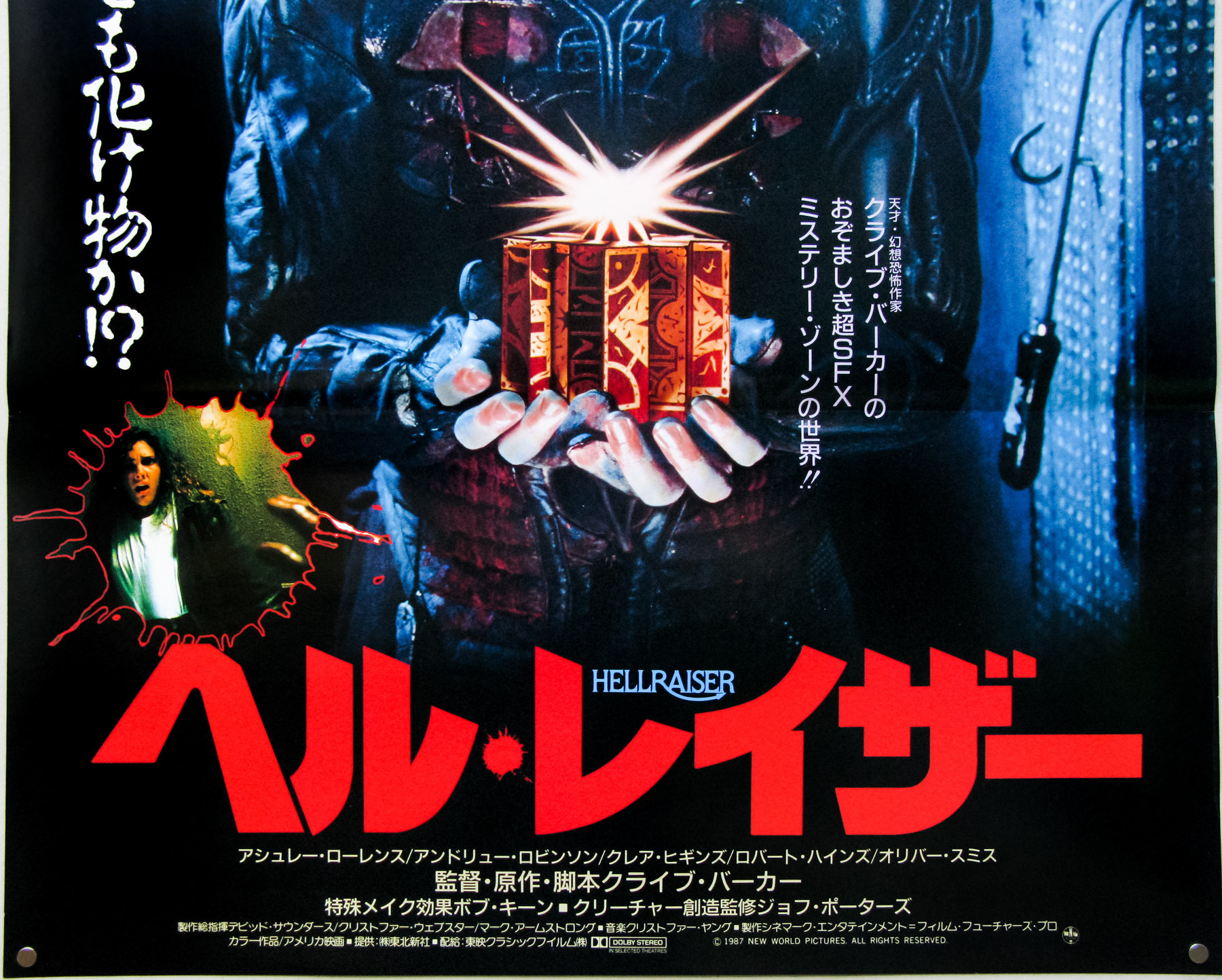
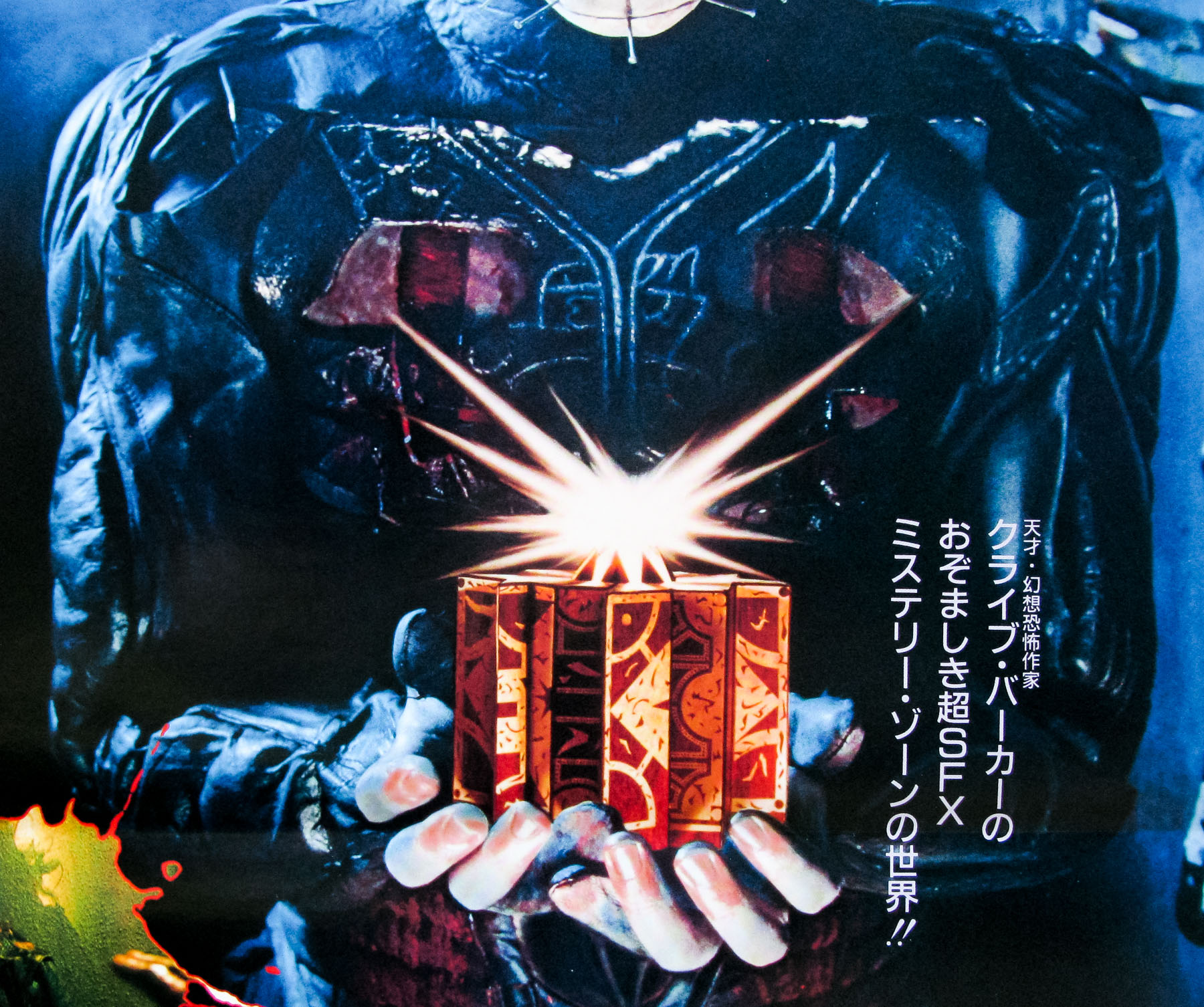
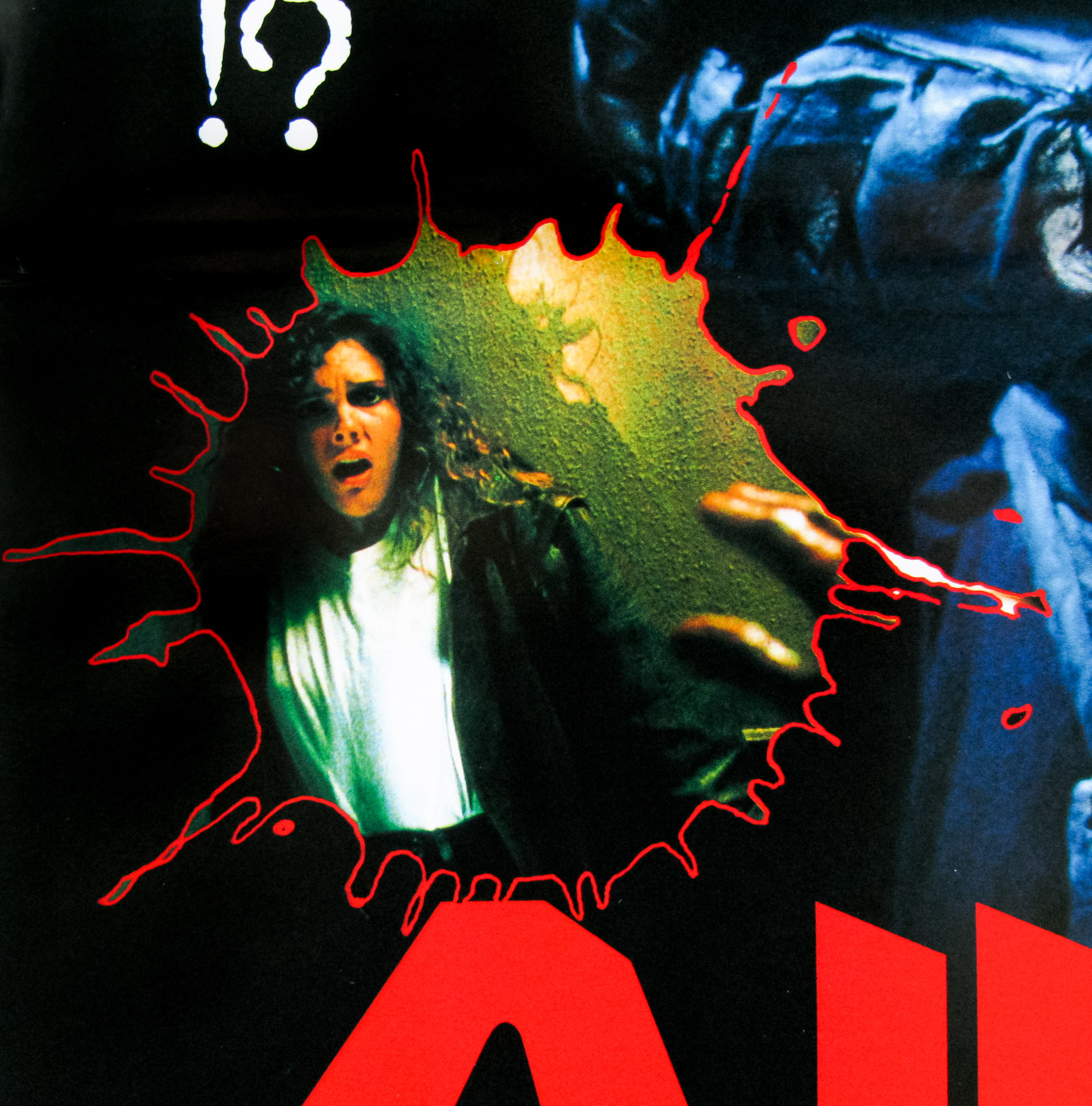
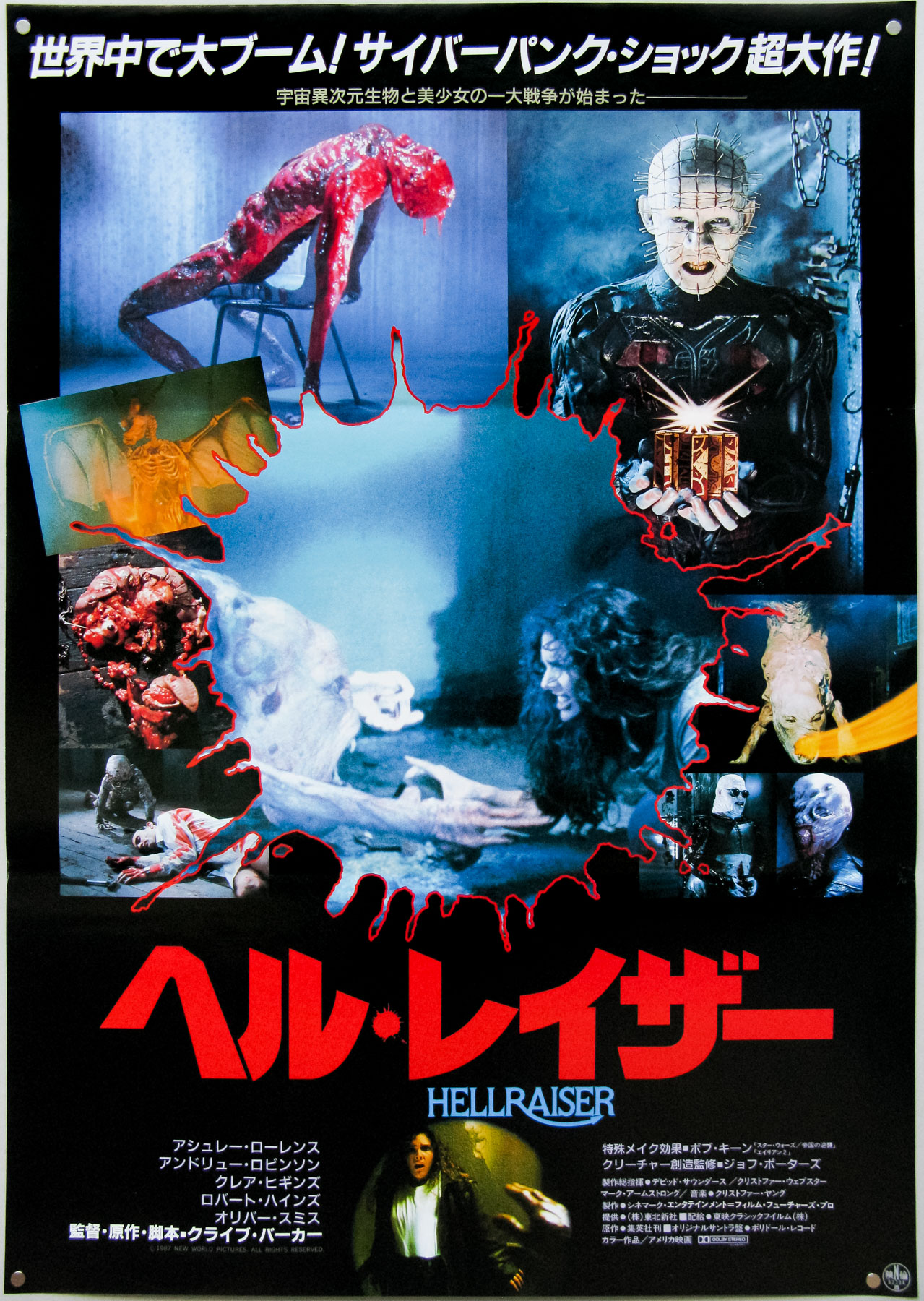
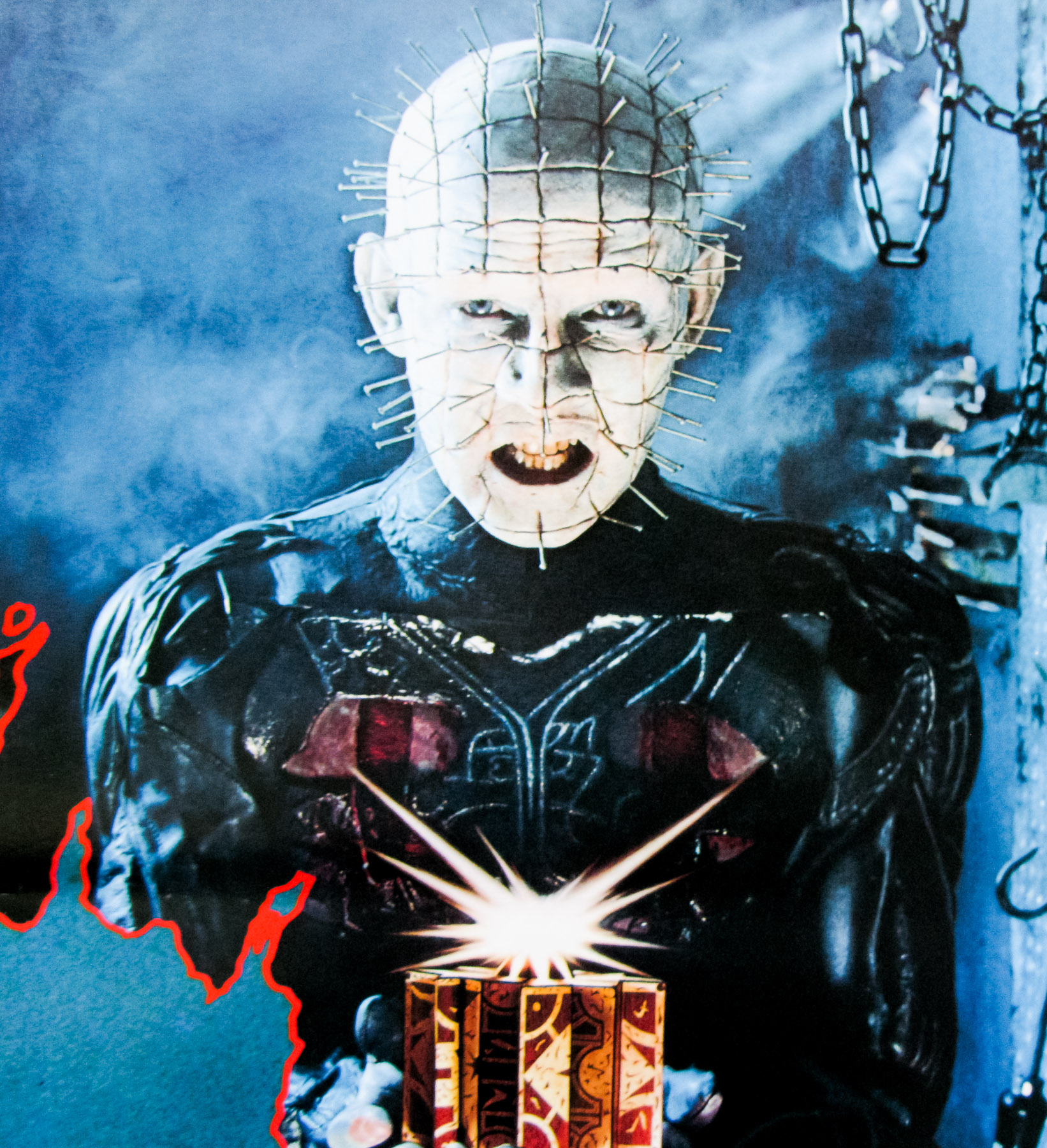
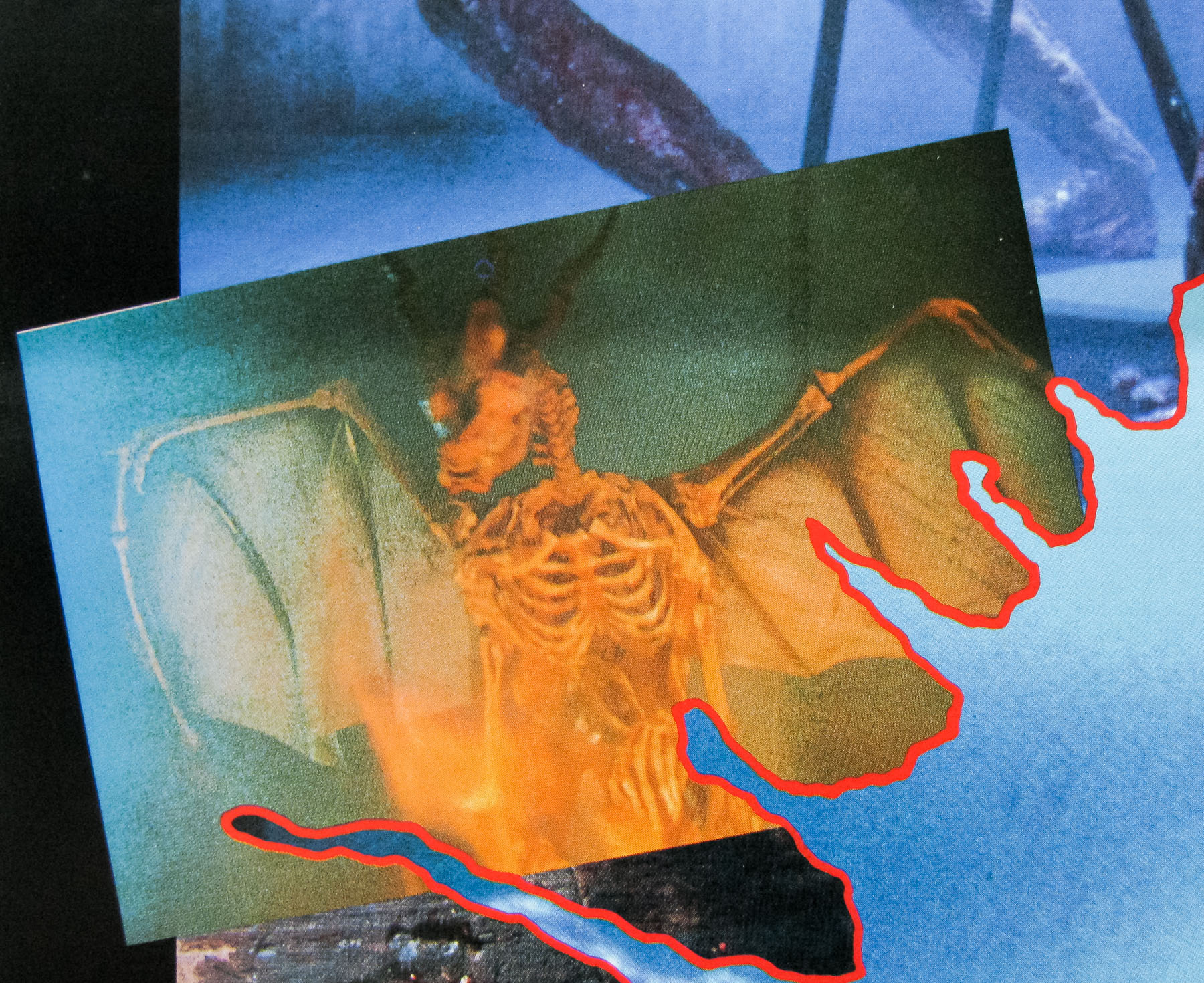
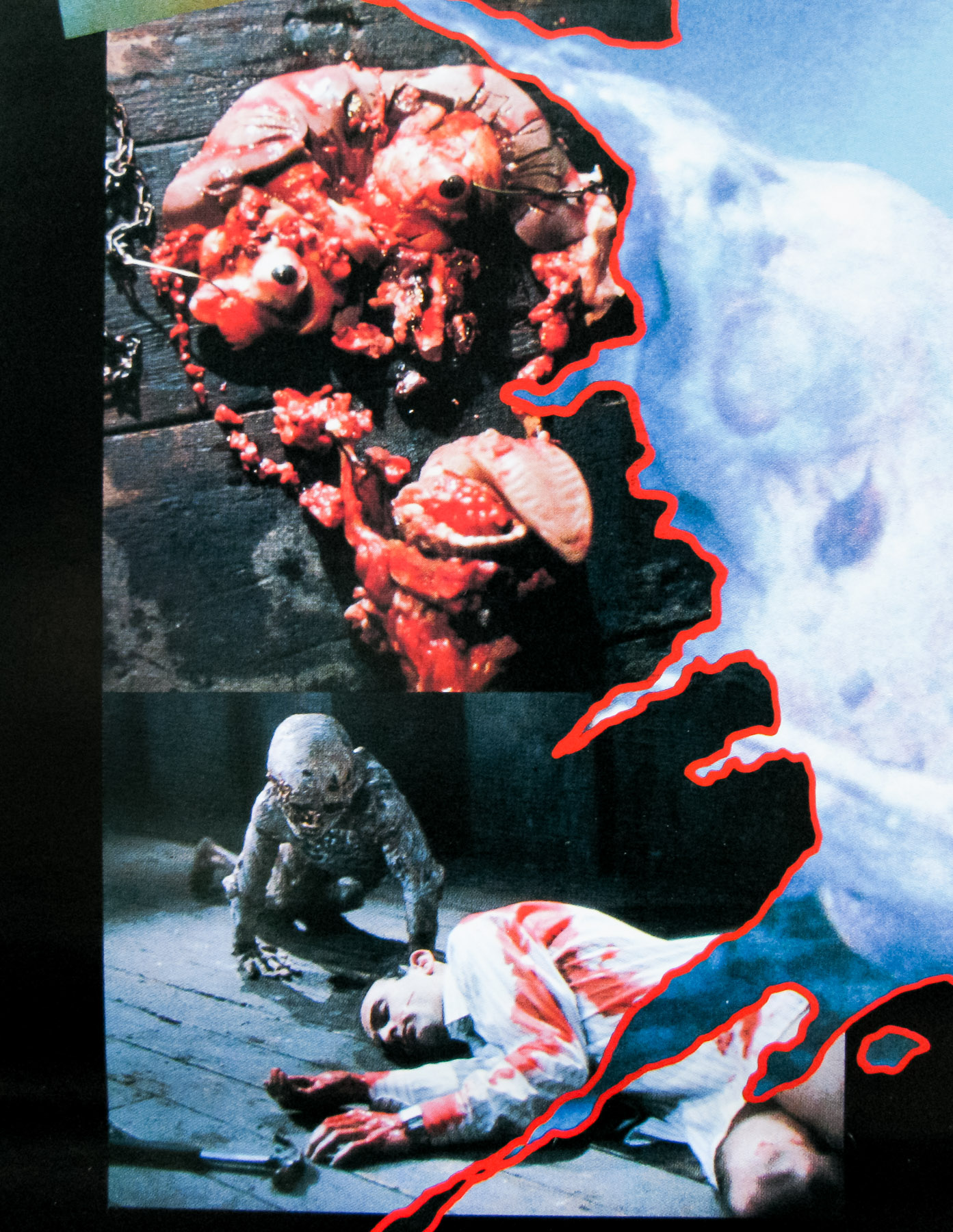
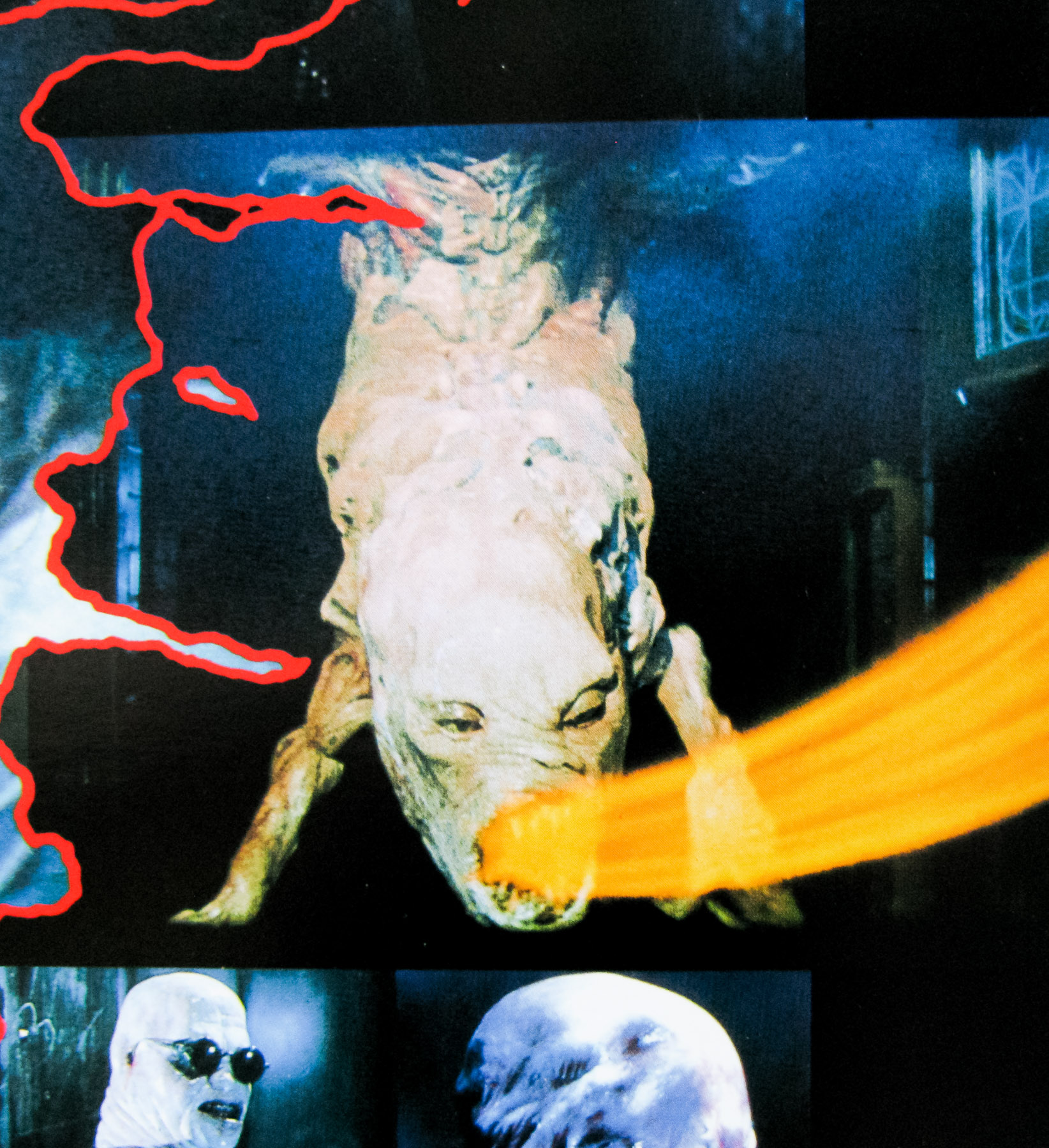
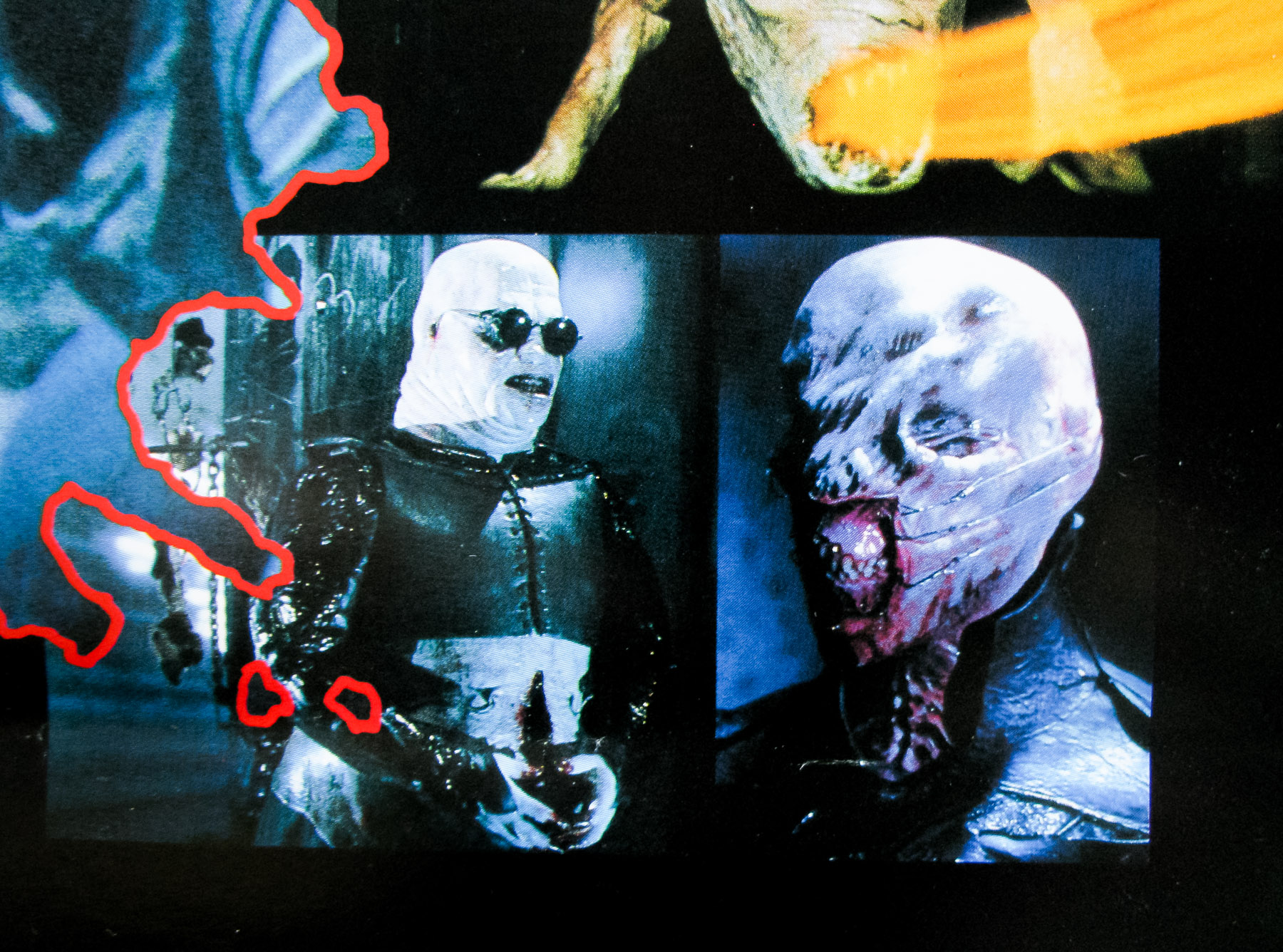
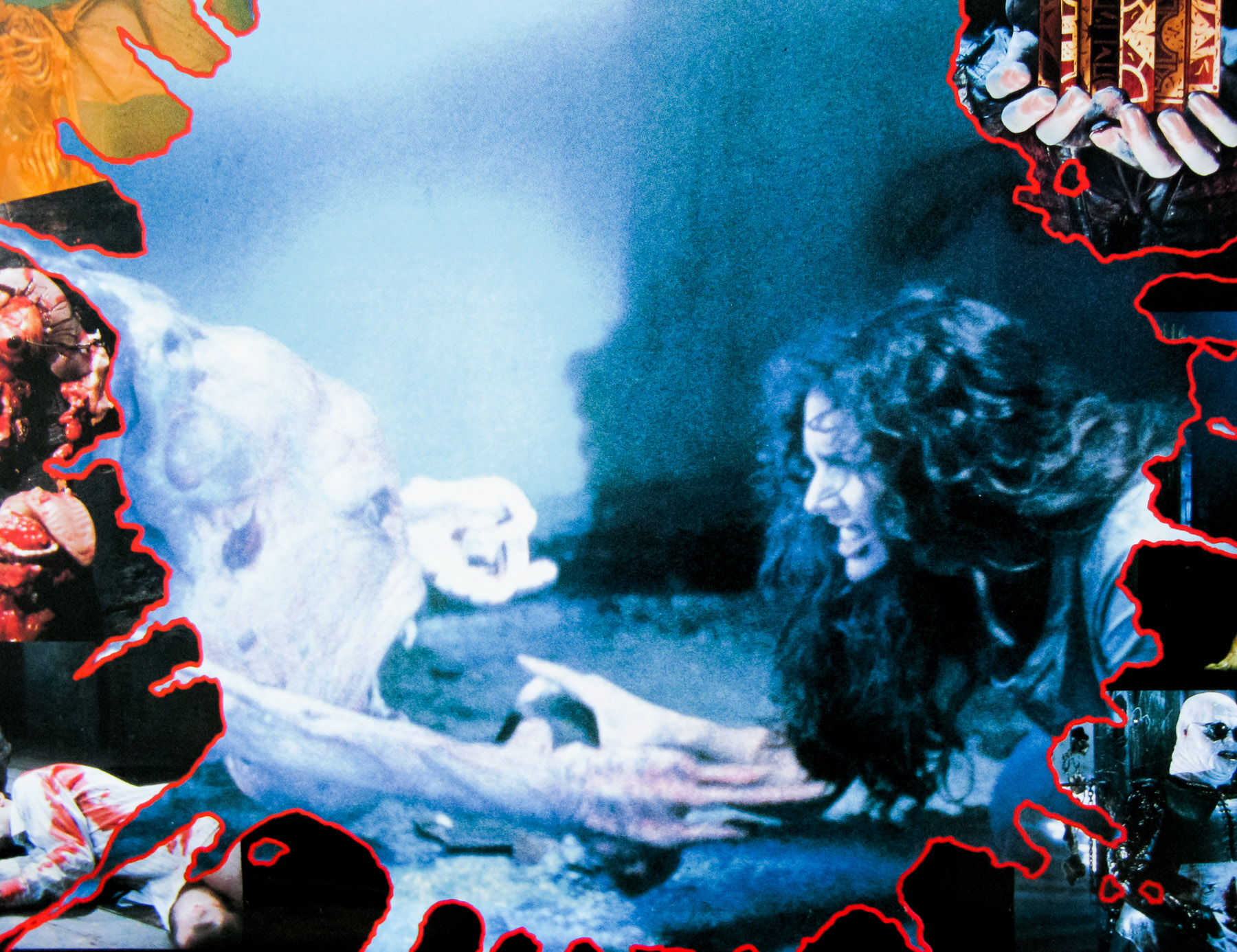
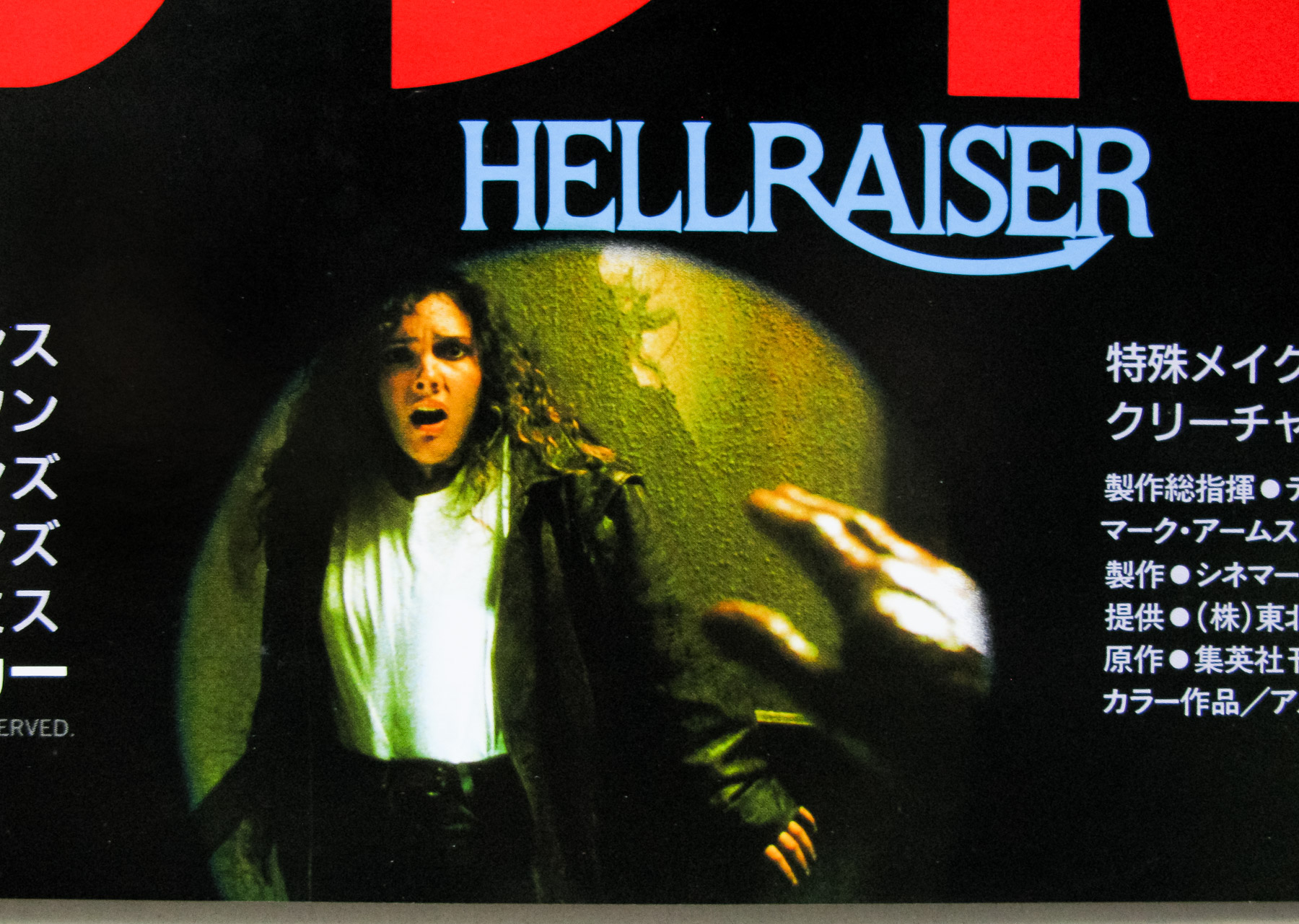
This is the ‘style A’ Japanese B2 and features the same image of Pinhead that’s on the American one sheet for the film. There’s also a style B B2 for the film that features a montage of other scenes and characters.

Hellraiser / B2 / montage style / Japan

17.05.11

Poster Poster
Title
Hellraiser
AKA
Clive Barker's Hellraiser (UK - complete title)
Year of Film
1987
Director
Clive Barker
Starring
Andrew Robinson, Doug Bradley, Clare Higgins, Ashley Laurence, Sean Chapman, Oliver Smith
Origin of Film
UK
Genre(s) of Film
Andrew Robinson, Doug Bradley, Clare Higgins, Ashley Laurence, Sean Chapman, Oliver Smith,
Type of Poster
B2
Style of Poster
Montage
Origin of Poster
Japan
Year of Poster
1987
Designer
Unknown
Artist
--
Size (inches)
20 6/16" x 28 14/16"
SS or DS
SS
Tagline
--

Unquestionably one of the truly great British horror films, Clive Barker‘s Hellraiser launched an enduring franchise and established the character of Pinhead (or ‘Priest’, as Barker prefers him to be known) as one of horror’s most beloved villains. Based on the 1986 novella The Hellbound Heart, Barker made the decision to both write the screenplay and direct the film after being disappointed with how two of his earlier scripts had been treated by other directors. The story begins as seedy hedonist Frank Cotton (Sean Chapman) purchases a golden puzzle box from an antiques dealer in Morocco believing it holds the key to the ‘ultimate sensual experience’. On returning to his London home, Frank opens the puzzle box and is promptly torn apart by massive hooks controlled by a group of horribly scarred and mutilated humanoids known as the Cenobites. The lead Cenobite (Pinhead, played by Doug Bradley) twists the box back to its original shape and they pass back into their realm with Frank’s remains with the room returning to normal.

Sometime later, Frank’s brother Larry (Andrew Robinson) and his second wife Julia (Clare Higgins) move into the same house assuming that Frank is in jail in some exotic location. Larry’s daughter Kirsty (Ashley Laurence) declines the offer to move in with her stepmother and chooses to find her own place. When Larry accidentally cuts his hand and drips blood onto the attic floor it somehow reaches Frank in his prison in the other realm and starts to resurrect his body (in a stunning special effects sequence). Later that day Julia finds Frank in the attic and the pair rekindle an affair they had started some years before. Julia agrees to help Frank to fully resurrect himself, which can only happen through blood sacrifices so she begins to seduce and bring back random men to the house before bludgeoning them to death for Frank to consume. Kirsty begins to suspect something is afoot and soon she is having her own encounter with the Cenobites who are displeased to learn that one of their prisoners has escaped and is on a murder spree.

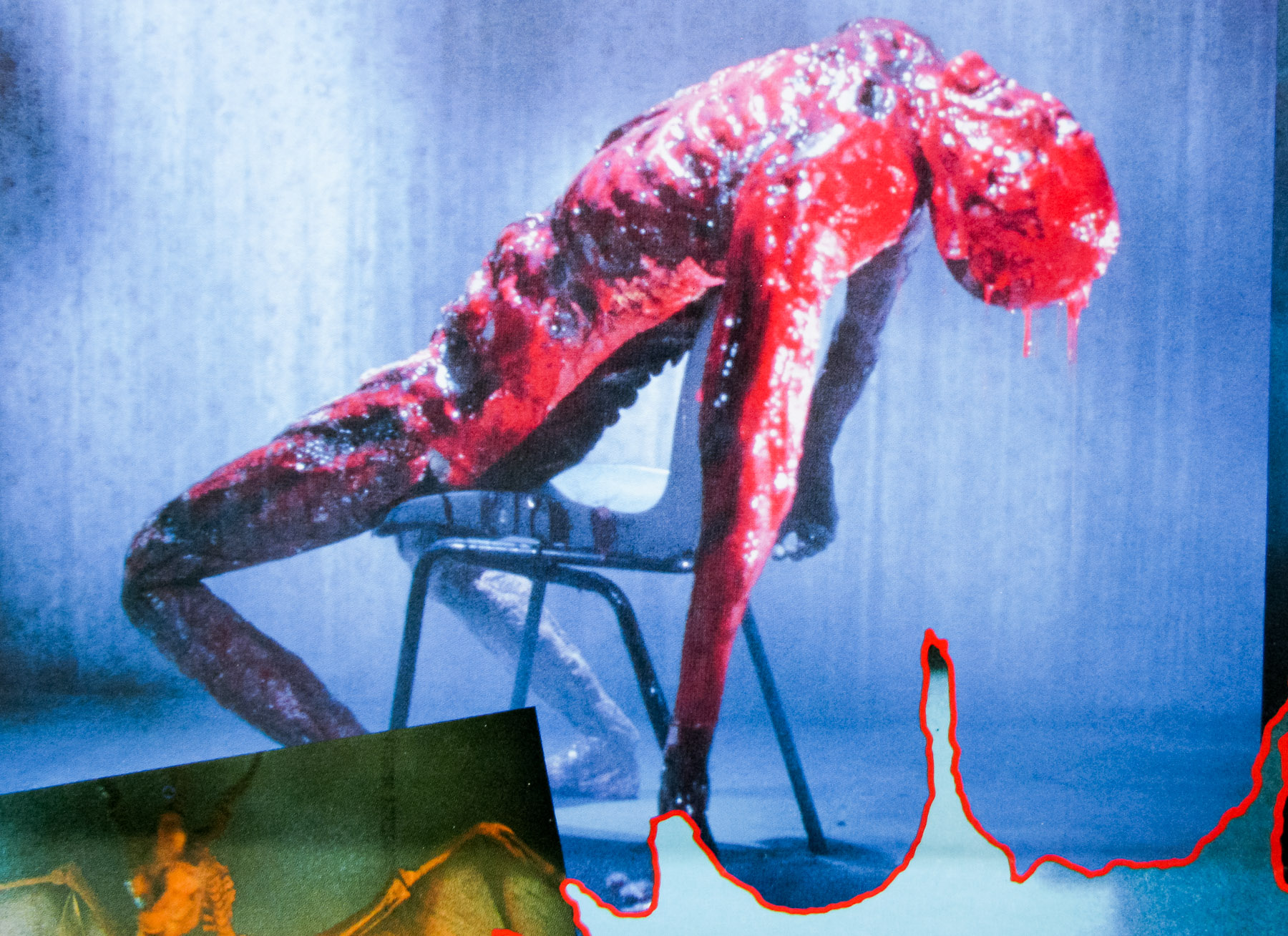
What makes the film stand out is the excellent script by Barker which prevents the characters from being the usual one-dimensional death fodder usually seen in horror films, particularly those being released towards the end of the 1980s. The production, costume and makeup design are all excellent, with all of the Cenobite designs being particularly memorable. There’s only one stop-motion animation sequence at the end of the film that belies the productions low budget and the film stands up extremely well today. Although the series is up to its ninth film instalment, Barker never directed another and was only producer on the first two sequels. After the fourth film (1996′s Bloodline) the series became a straight-to-video enterprise and quality dropped significantly from then onwards.

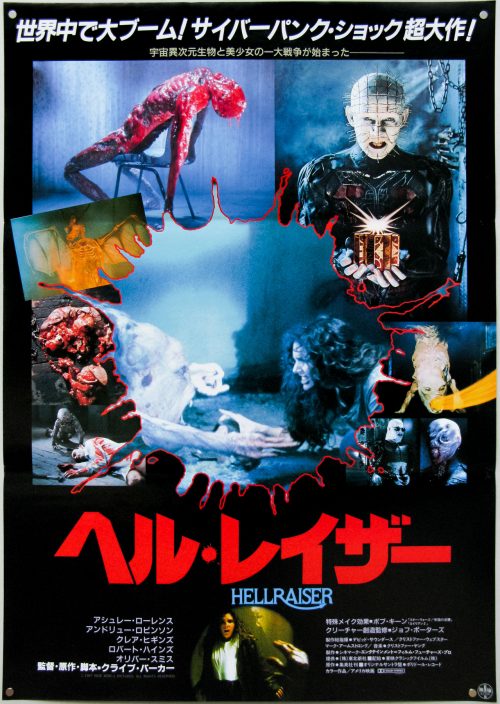
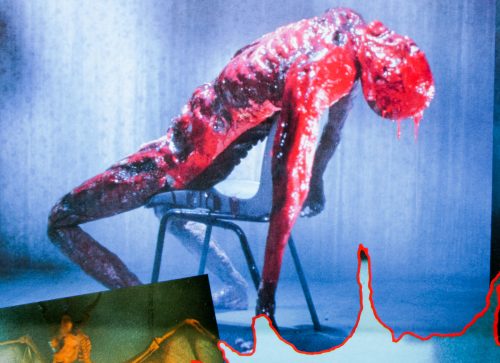
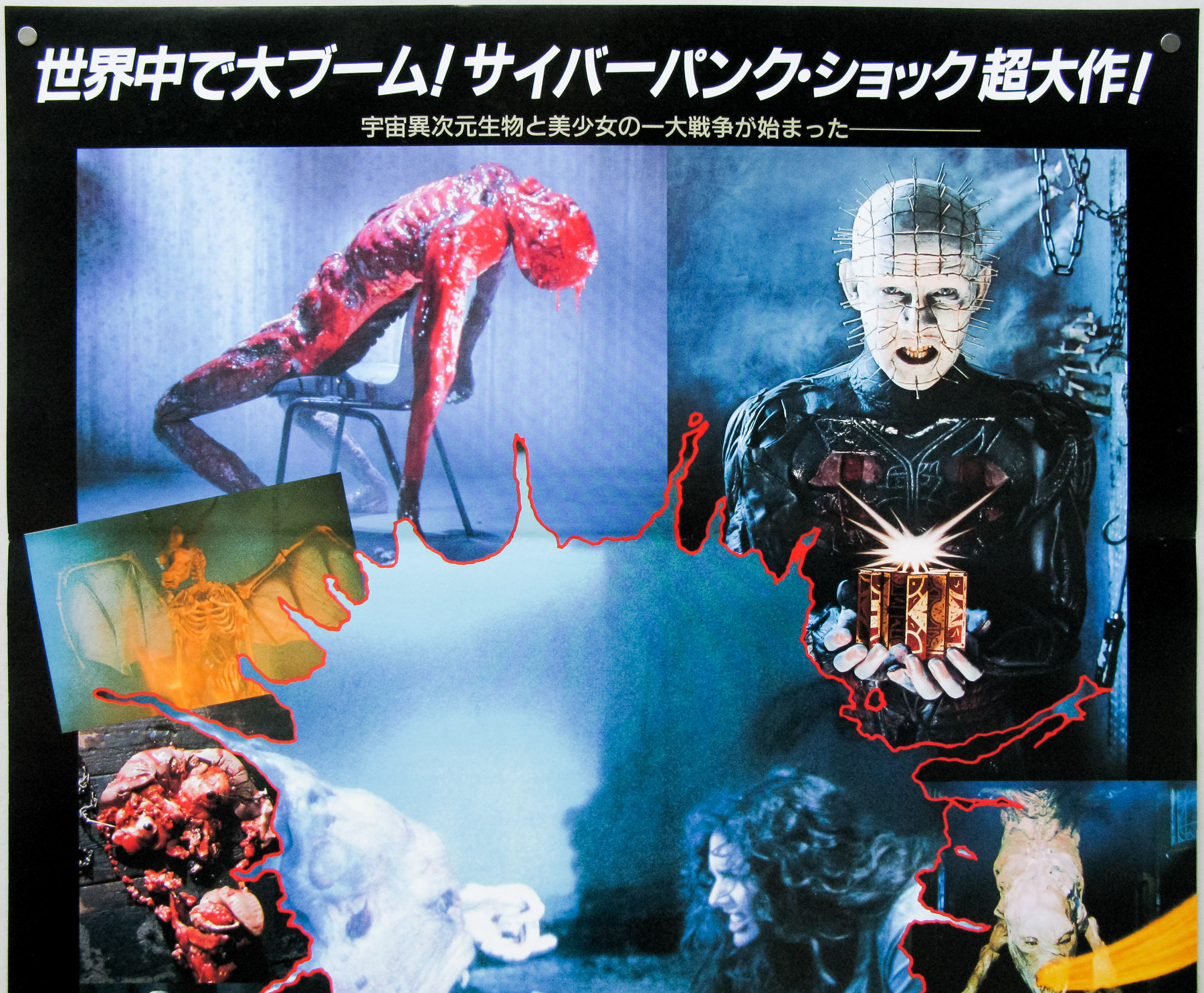
This is the ‘style B’ Japanese B2 and features a montage of scenes and characters from the film. There’s also a style A B2 for the film that features the same image of Pinhead that’s on the American one sheet for the film.

Inferno / B2 / Japan

02.01.12

Poster Poster

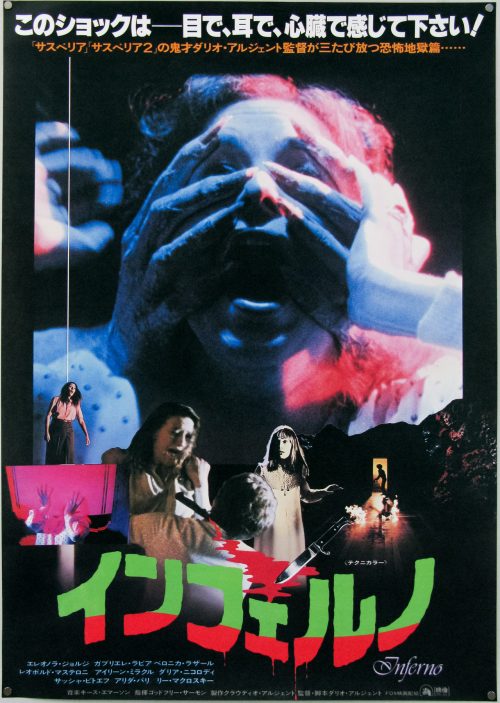
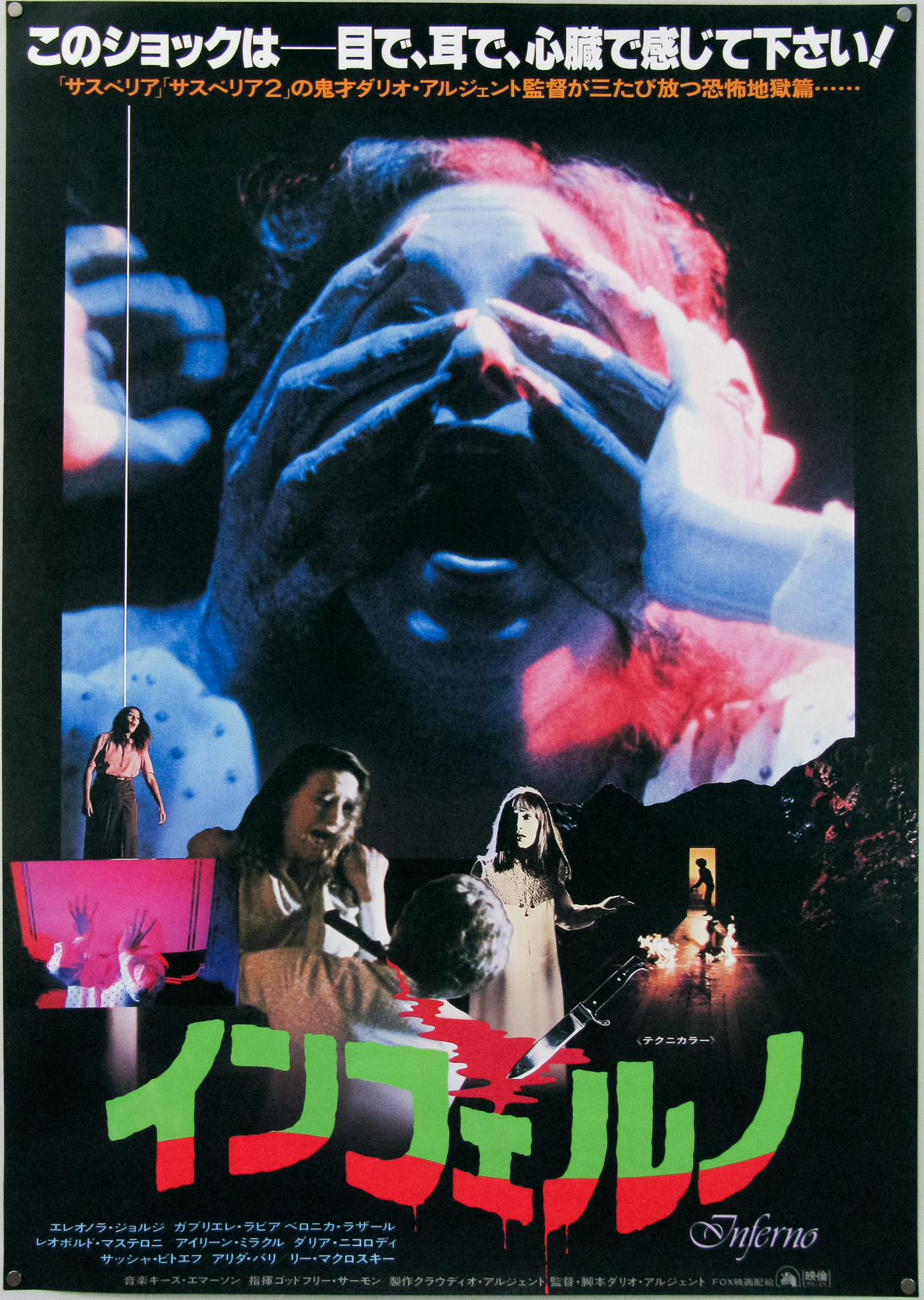
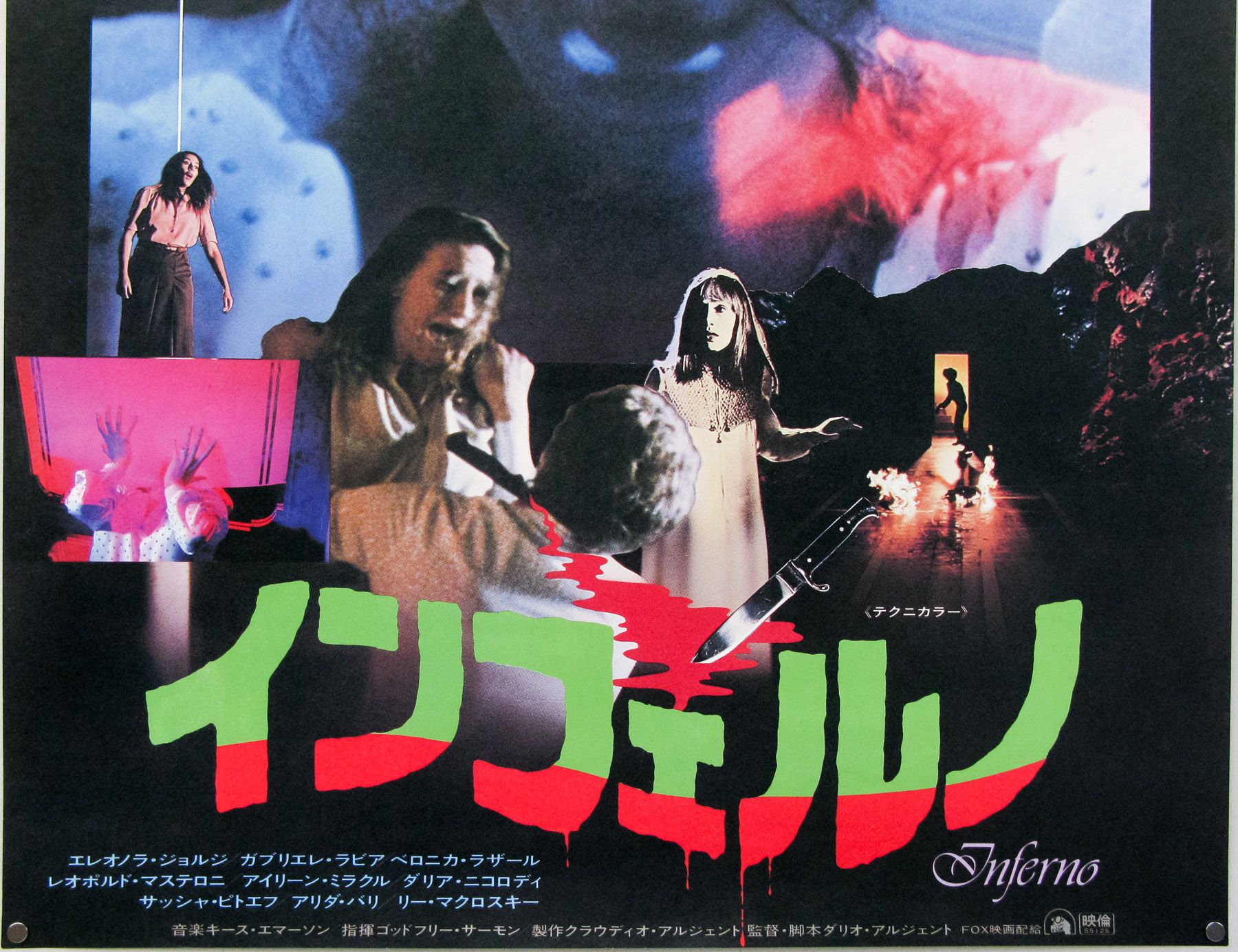
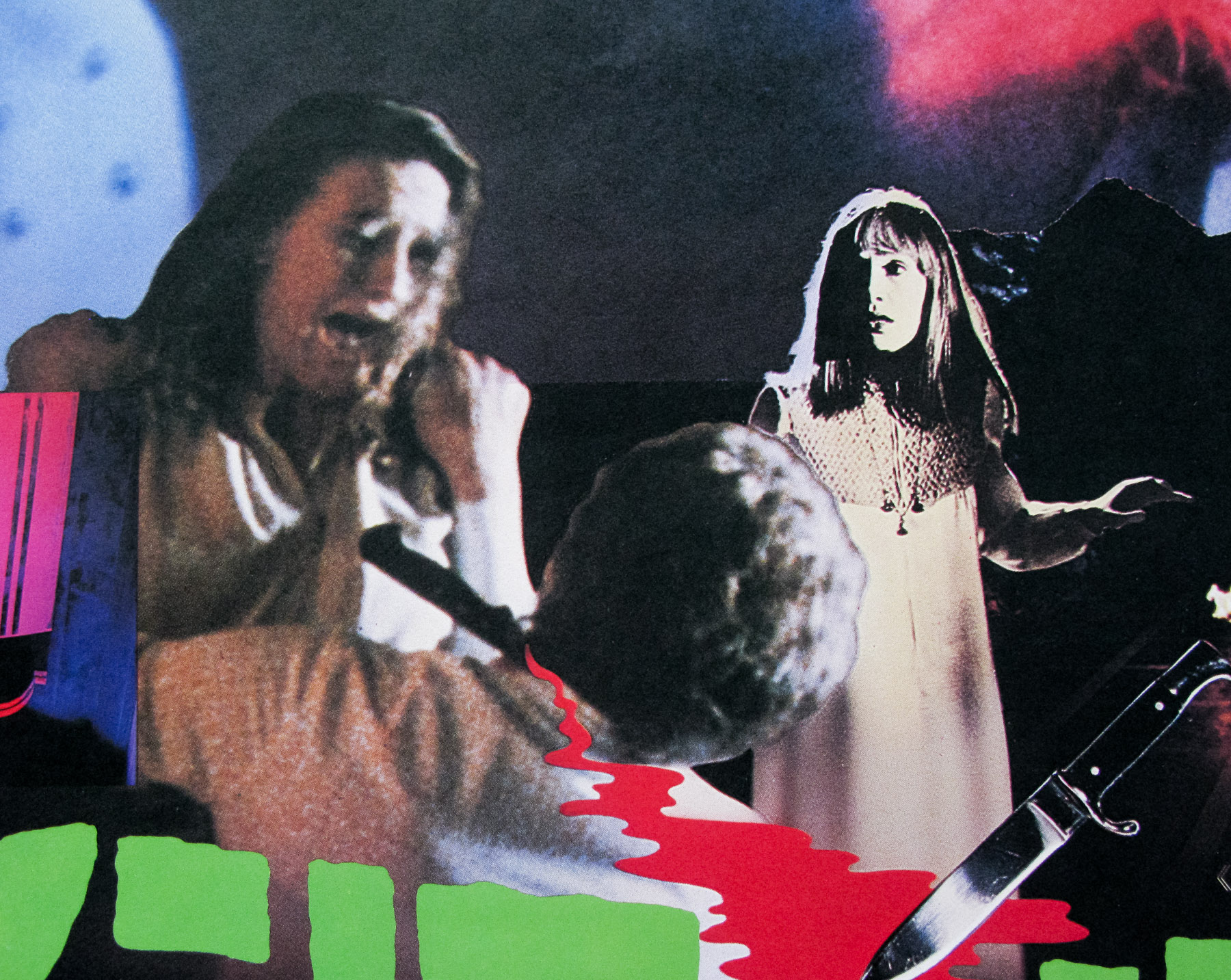
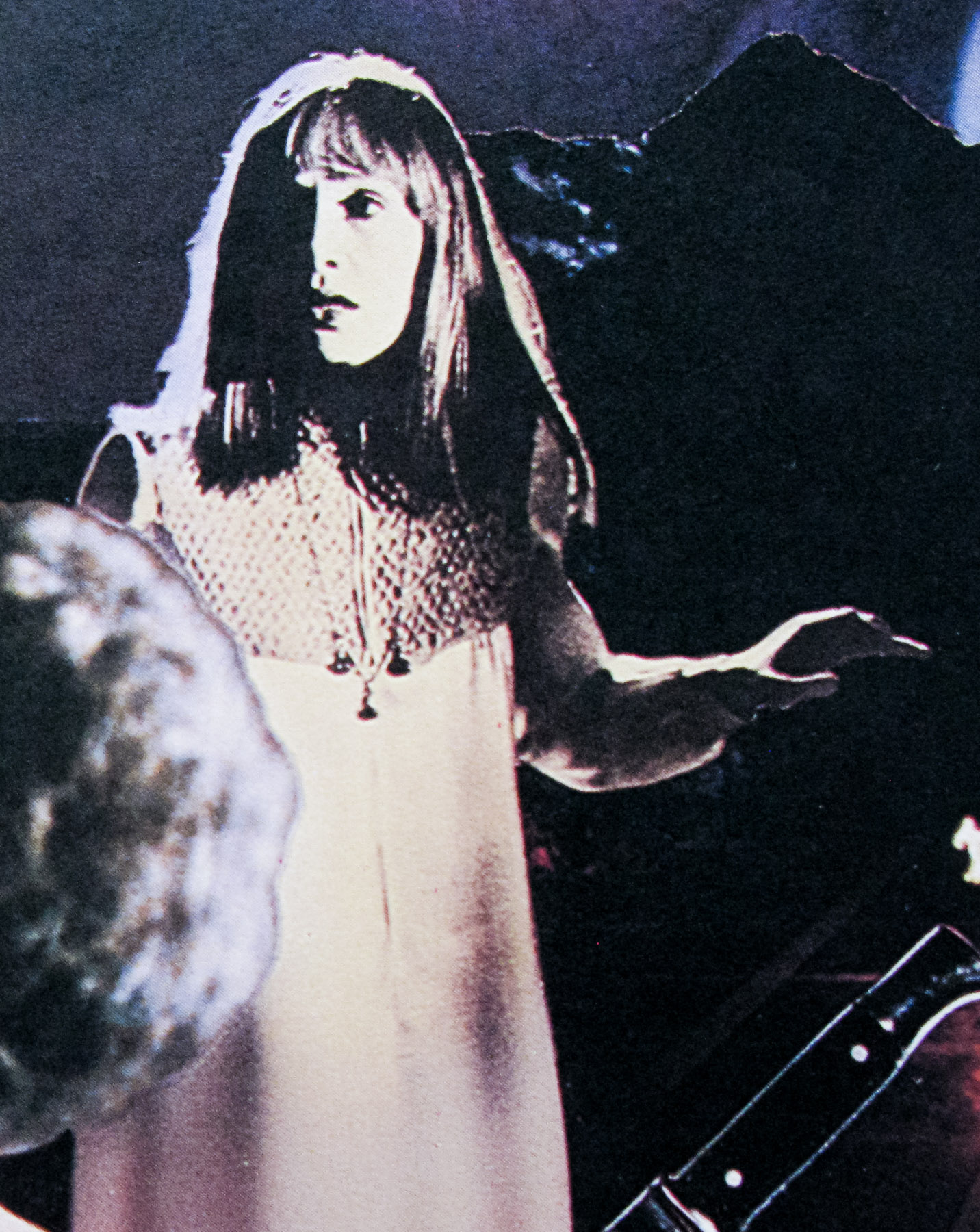
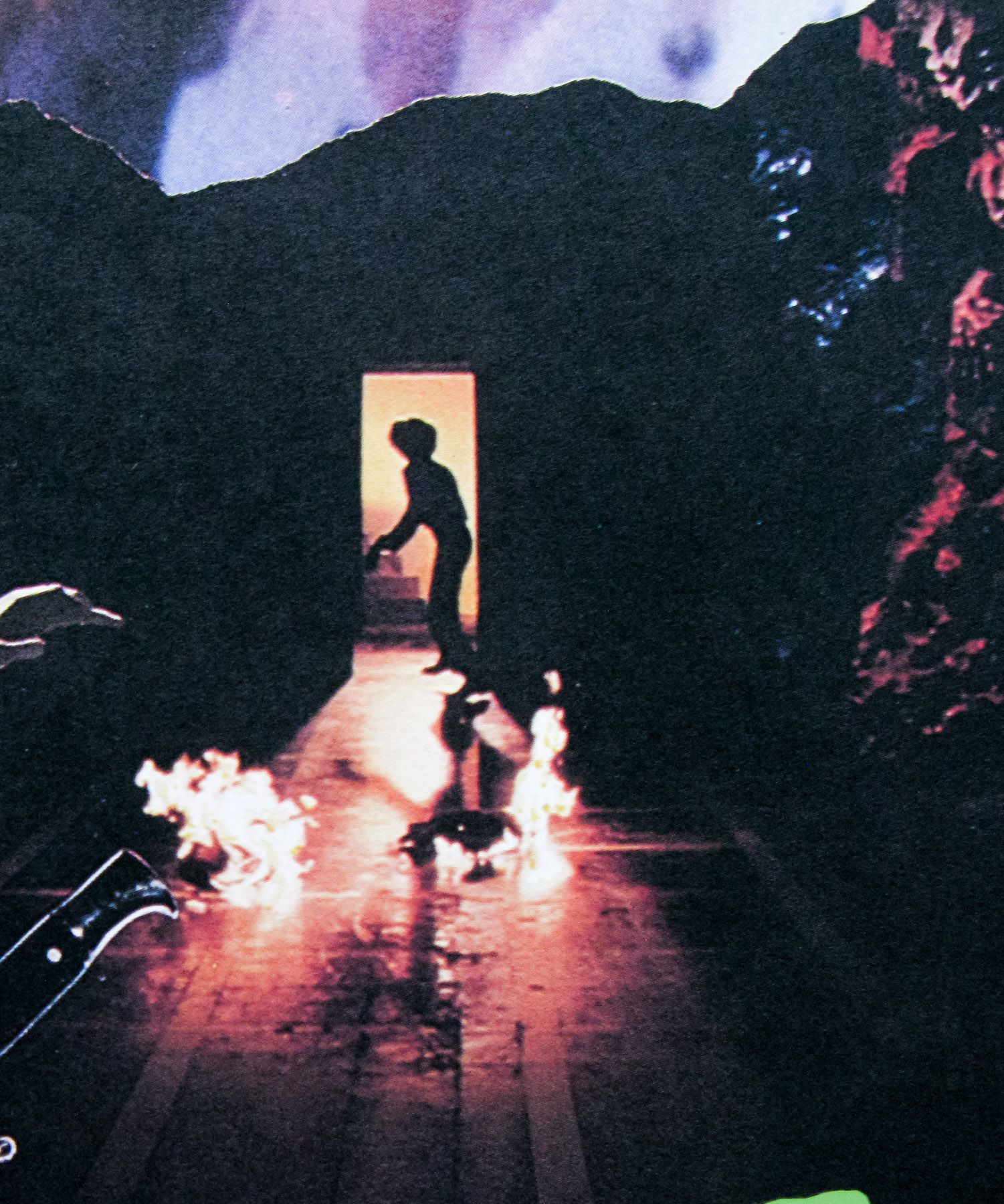
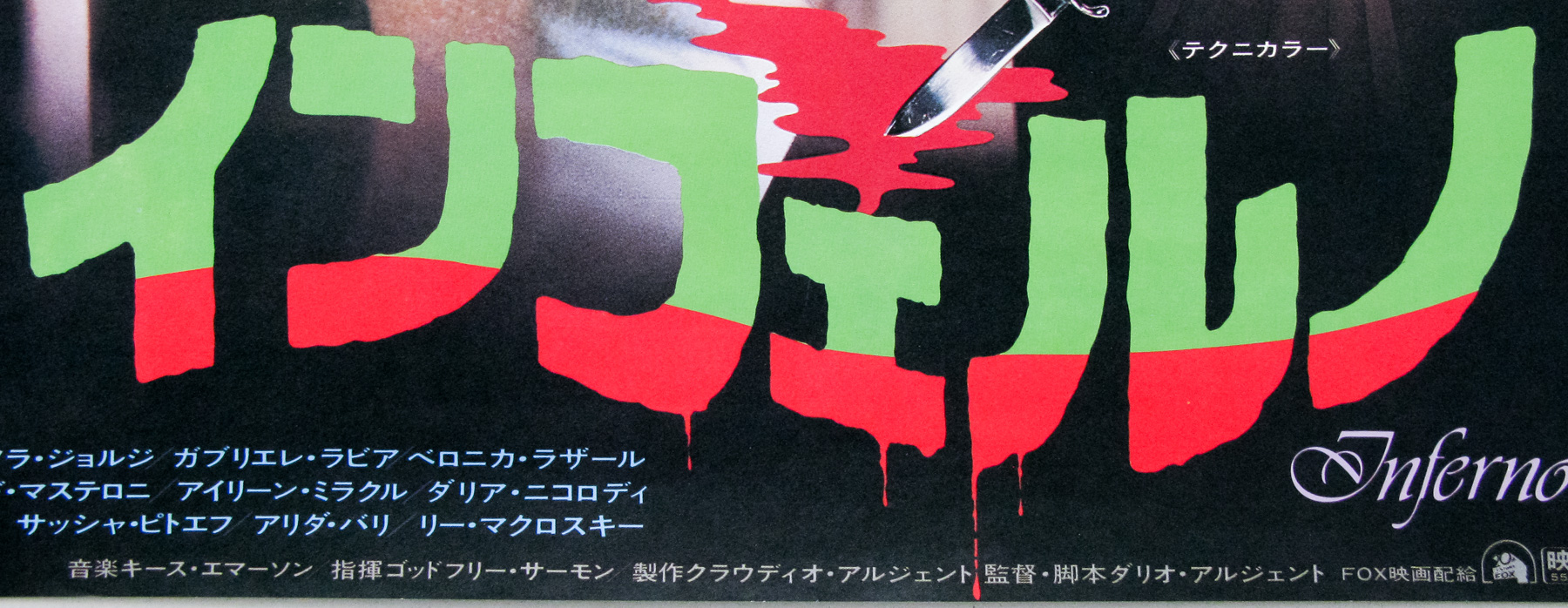
A unique montage on this Japanese poster for the second in Italian horror maestro Dario Argento’s ‘Three Mothers’ trilogy of films. The series began in 1977 with the brilliant Suspiria and would end 27 years after this film with the disappointing Mother of Tears. Set in New York and Rome, Inferno focuses on a brother and sister and their investigation into a mysterious coven of witches, with predictably deadly consequences.

Like many of Argento’s films the plot is often secondary to the incredible visuals and inventive death scenes, but it’s definitely up there as one of his best and now has a well-deserved cult following. The film was partly financed by 20th Century Fox, following the success they had distributing Suspiria, however they declined to give it as wide a release as the previous film and Inferno suffered as a result. I’ve been unable to find out much about the UK cinema release, although this is what the poster for it looked like.

I’m a fan of the original Italian poster, which can be seen here.

British distributor Arrow Films released a lavish 30th anniversary edition blu-ray here in the UK (in 2010) and the US home video label Blue Underground also released the film last year.

The spectacularly nuts original US trailer can be viewed on YouTube.

Le Gang / B2 / montage style / Japan

30.06.16

Poster Poster
Title
Le Gang
AKA
The Gang (USA - video title)
Year of Film
1977
Director
Jacques Deray
Starring
Alain Delon, Xavier Depraz, Roland Bertin, Adalberto Maria Merli, Maurice Barrier, Raymond Bussières, Giampiero Albertini, Laura Betti, Nicole Calfan
Origin of Film
Italy | France
Genre(s) of Film
Alain Delon, Xavier Depraz, Roland Bertin, Adalberto Maria Merli, Maurice Barrier, Raymond Bussières, Giampiero Albertini, Laura Betti, Nicole Calfan,
Type of Poster
B2
Style of Poster
Montage style
Origin of Poster
Japan
Year of Poster
1977
Designer
Unknown
Artist
--
Size (inches)
20 5/16" x 28 14/16"
SS or DS
SS
Tagline
--

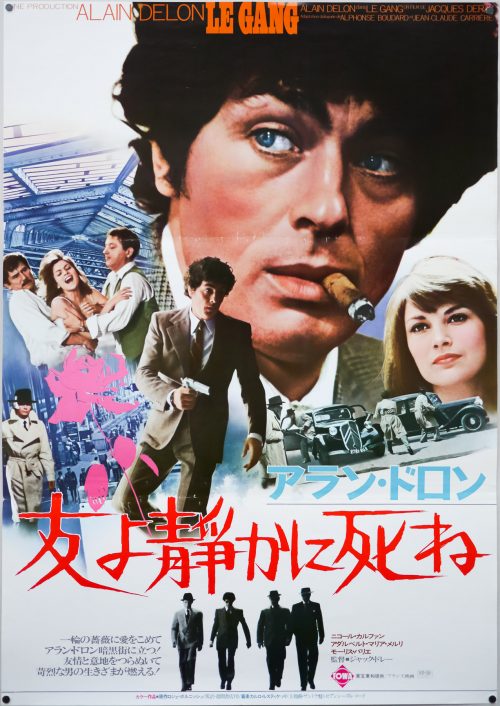
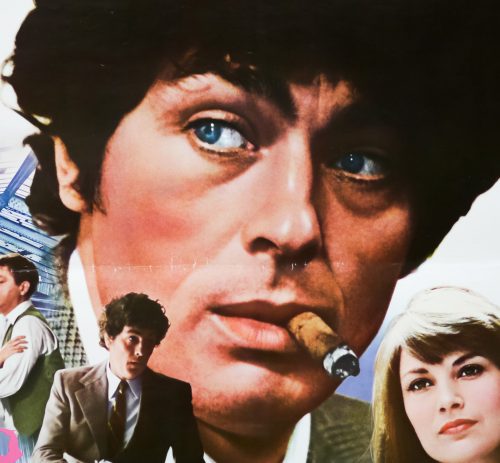
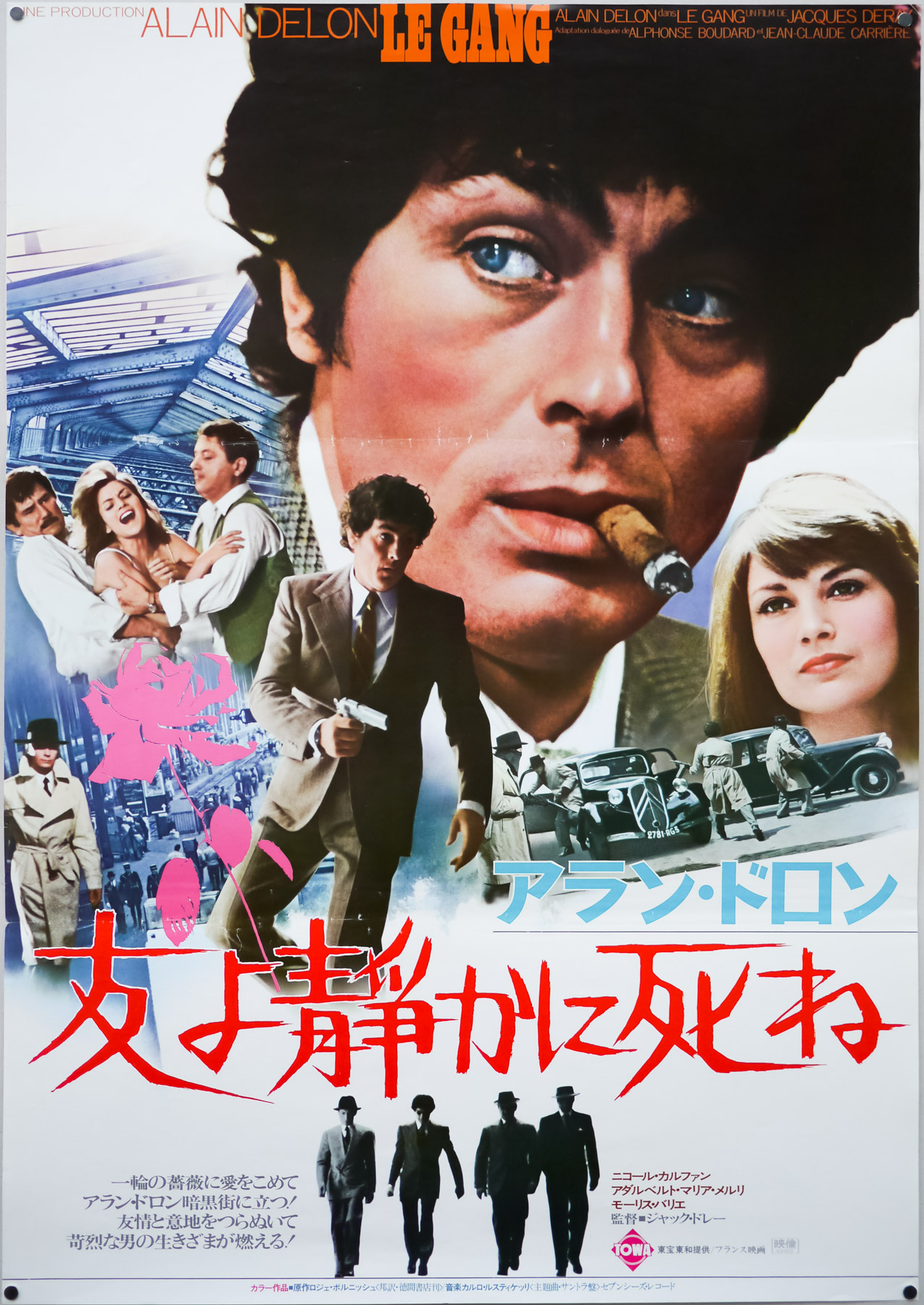
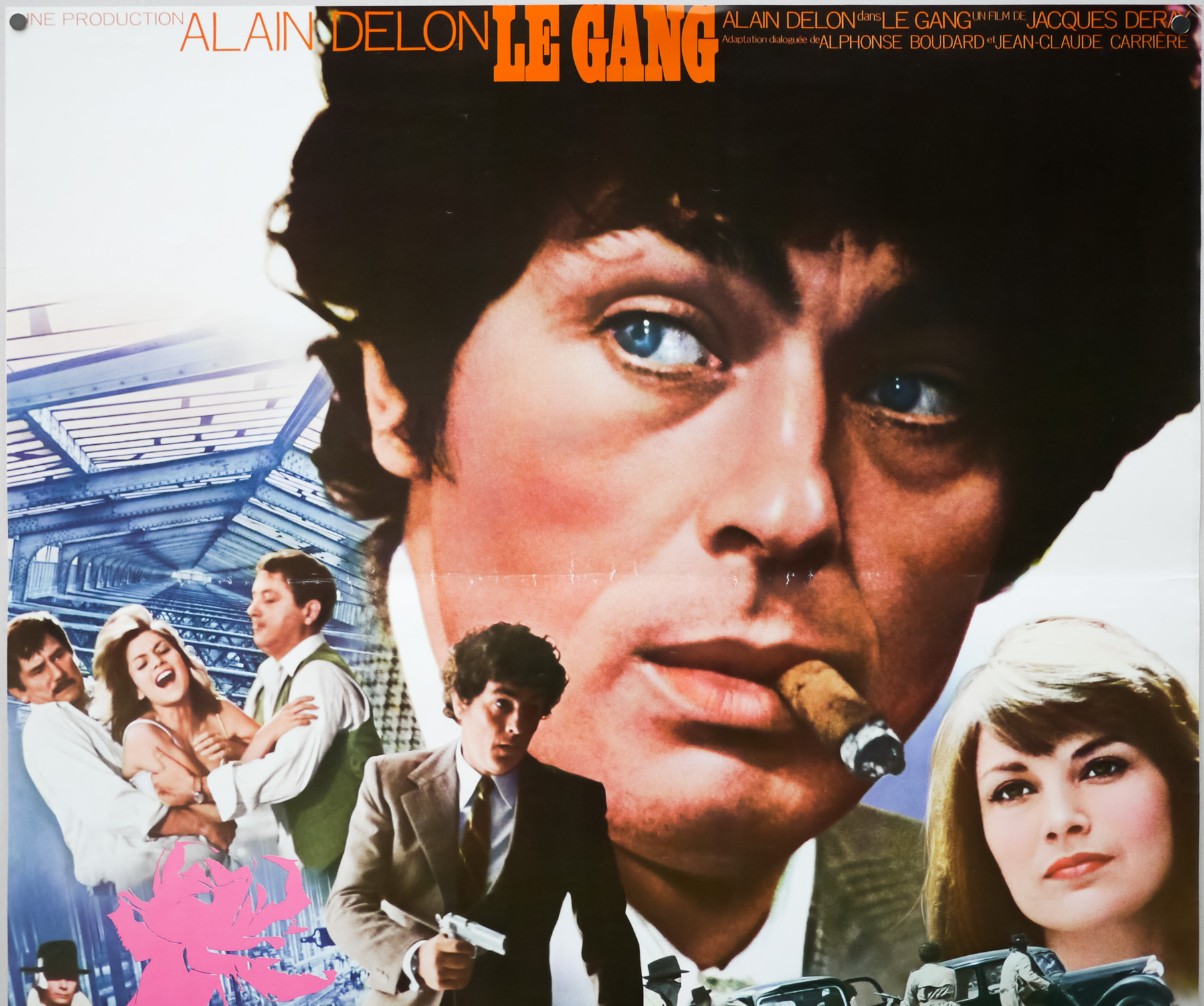
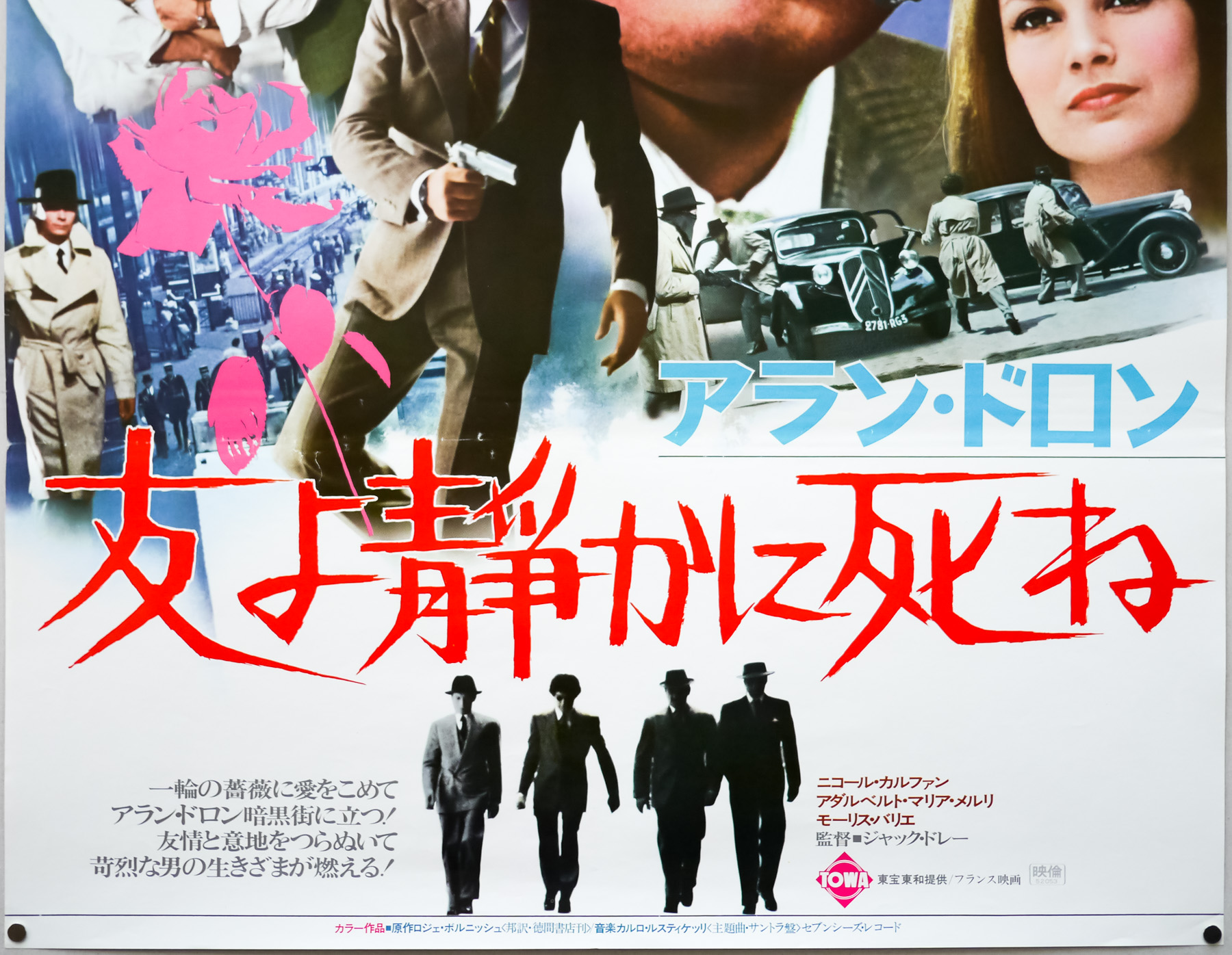
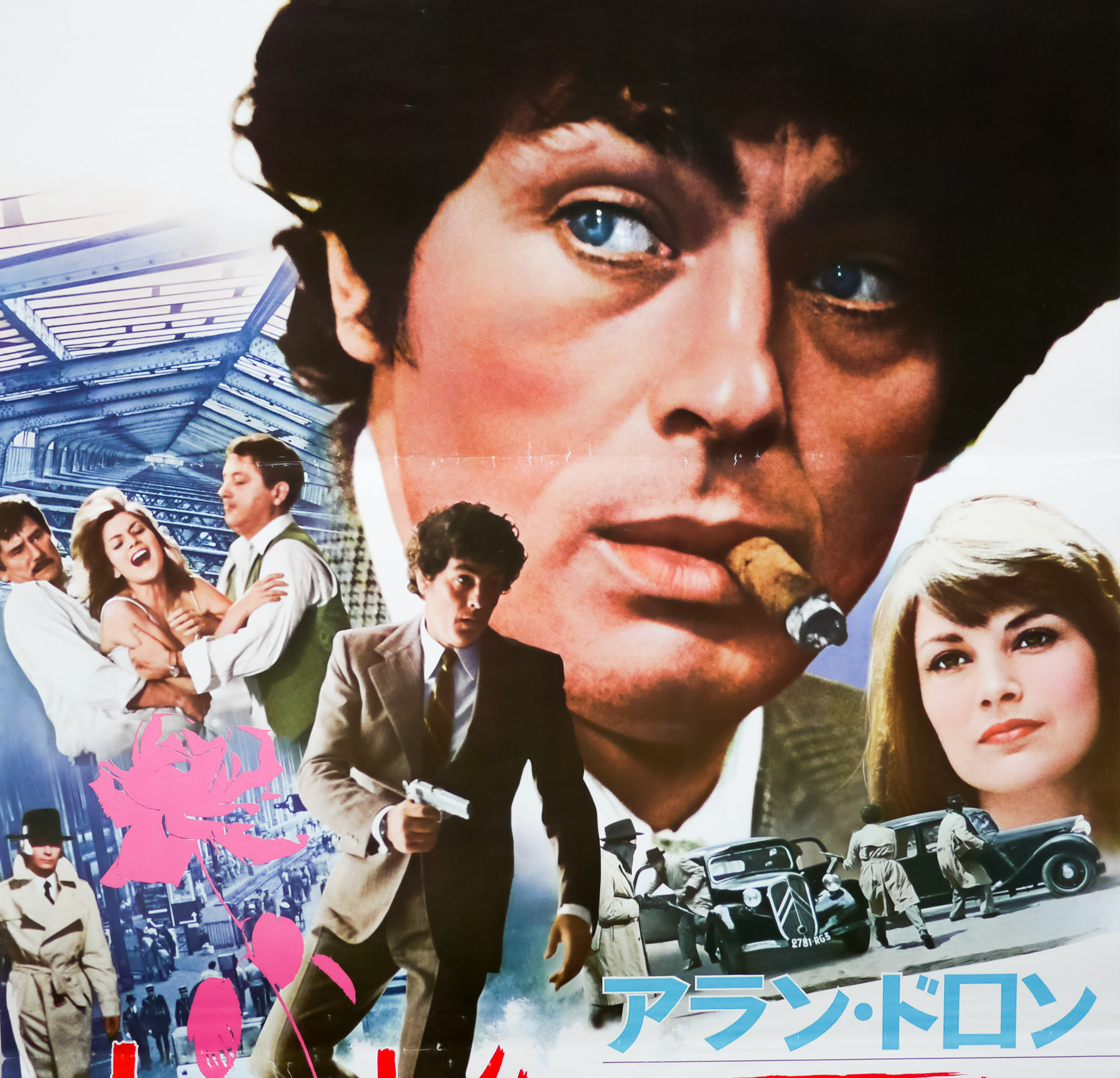
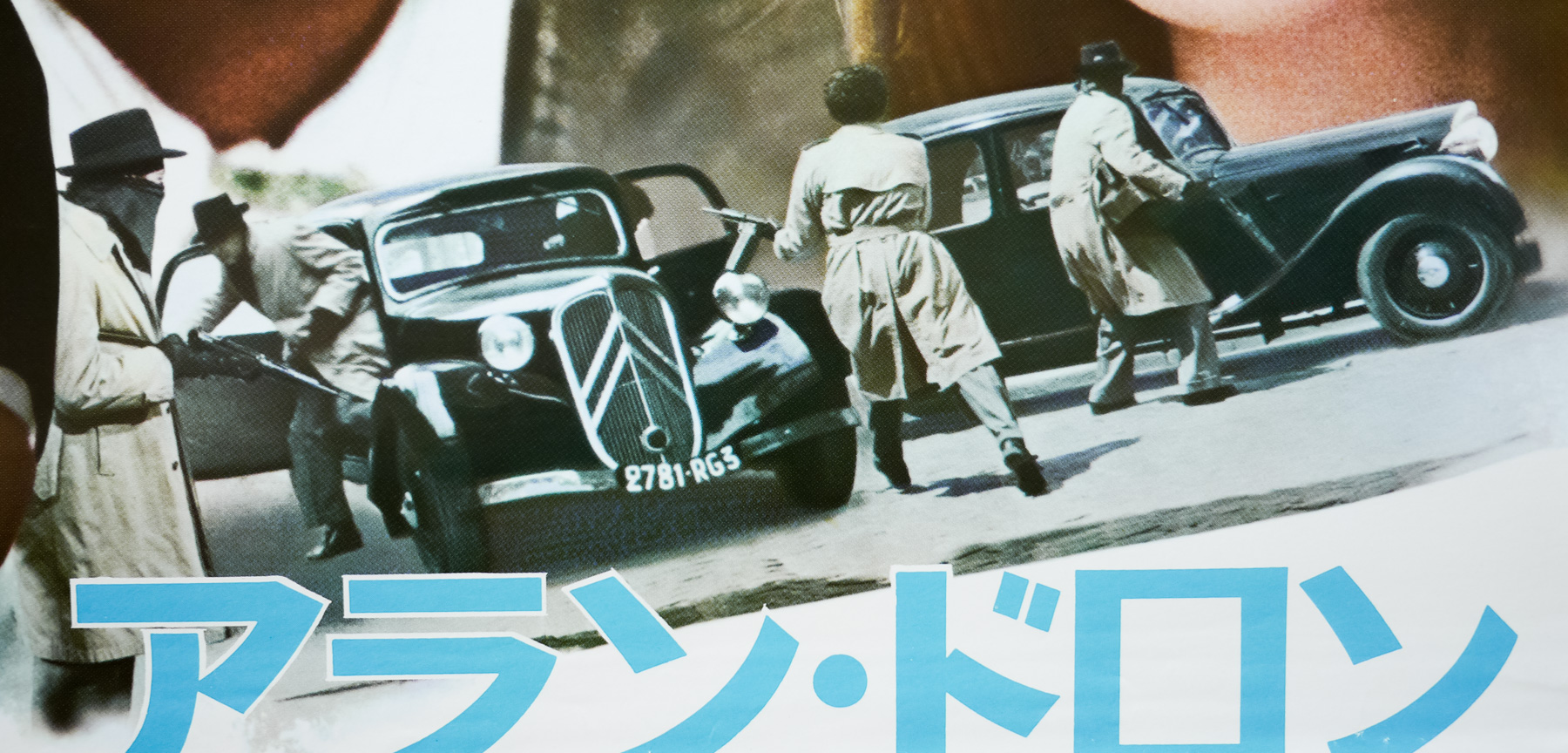
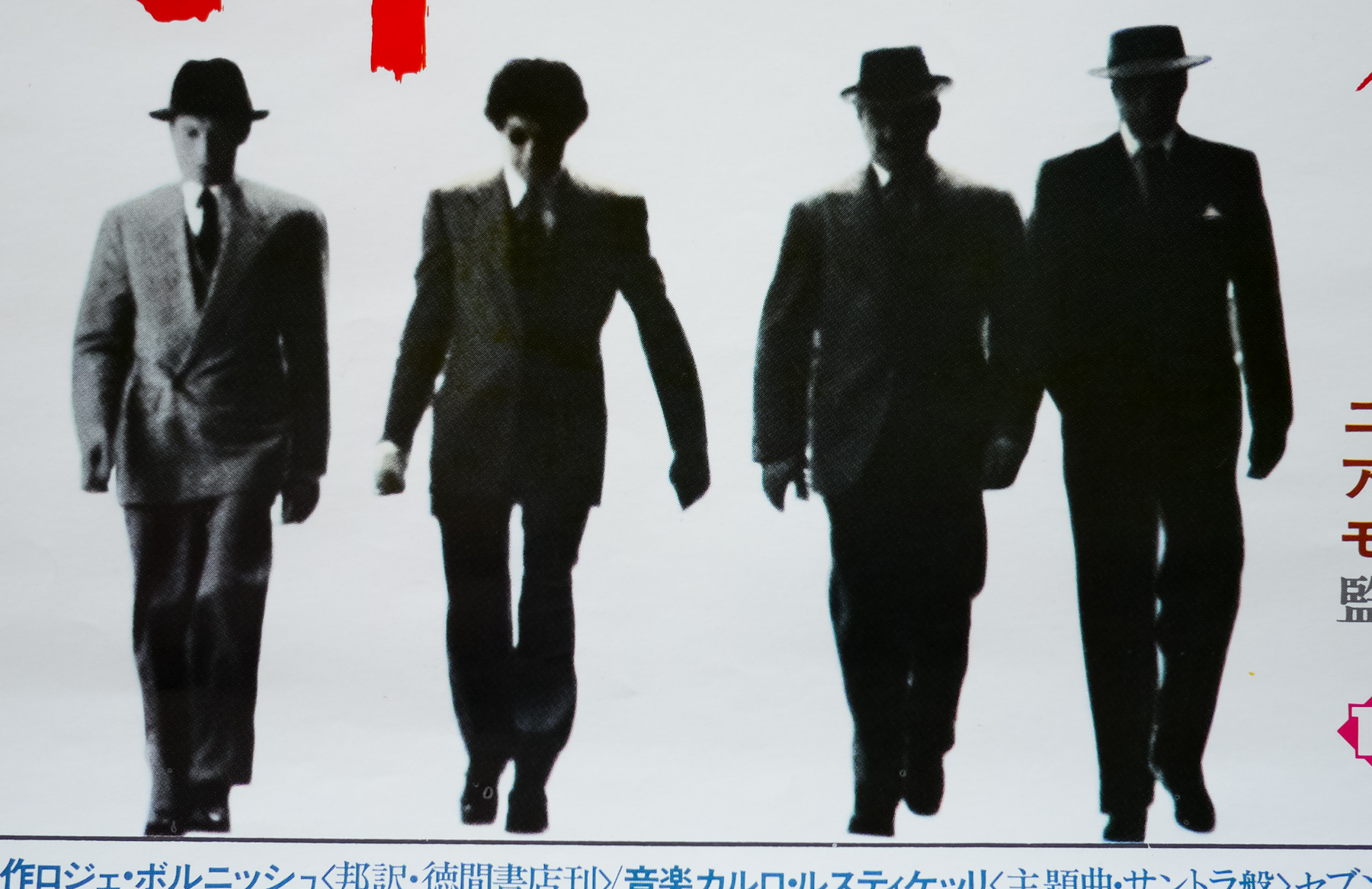
This is one of two Japanese B2 posters (that I’m aware of) for the release of the 1977 crime drama Le Gang. The film was an Italian-French co-production and was directed by Jacques Deray, a Frenchman who helmed a number of crime thrillers during his career. French superstar Alain Delon, who collaborated with Deray on a number of similar films, plays the leader of the titular gang of criminals. The story is set in France during the 1940s and the plot, apparently based on true events, is described thusly on IMDb:

In 1945, as World War Two comes to a close, five small time crooks unite to form a gang. After several bold robberies they become notorious as “the front-wheel drive gang”. The police attempt to stop their crime spree with little success, but how long will their luck last?

The other style B2 can be seen on emovieposter.com here.

Live and Let Die / B2 / Japan

31.03.14

Poster Poster

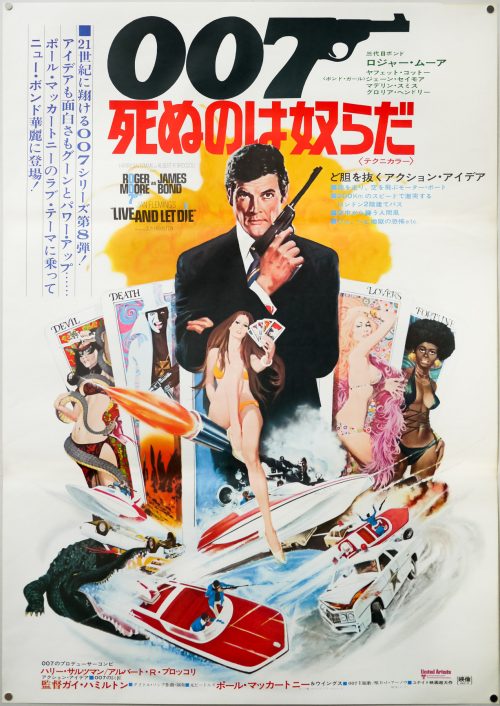
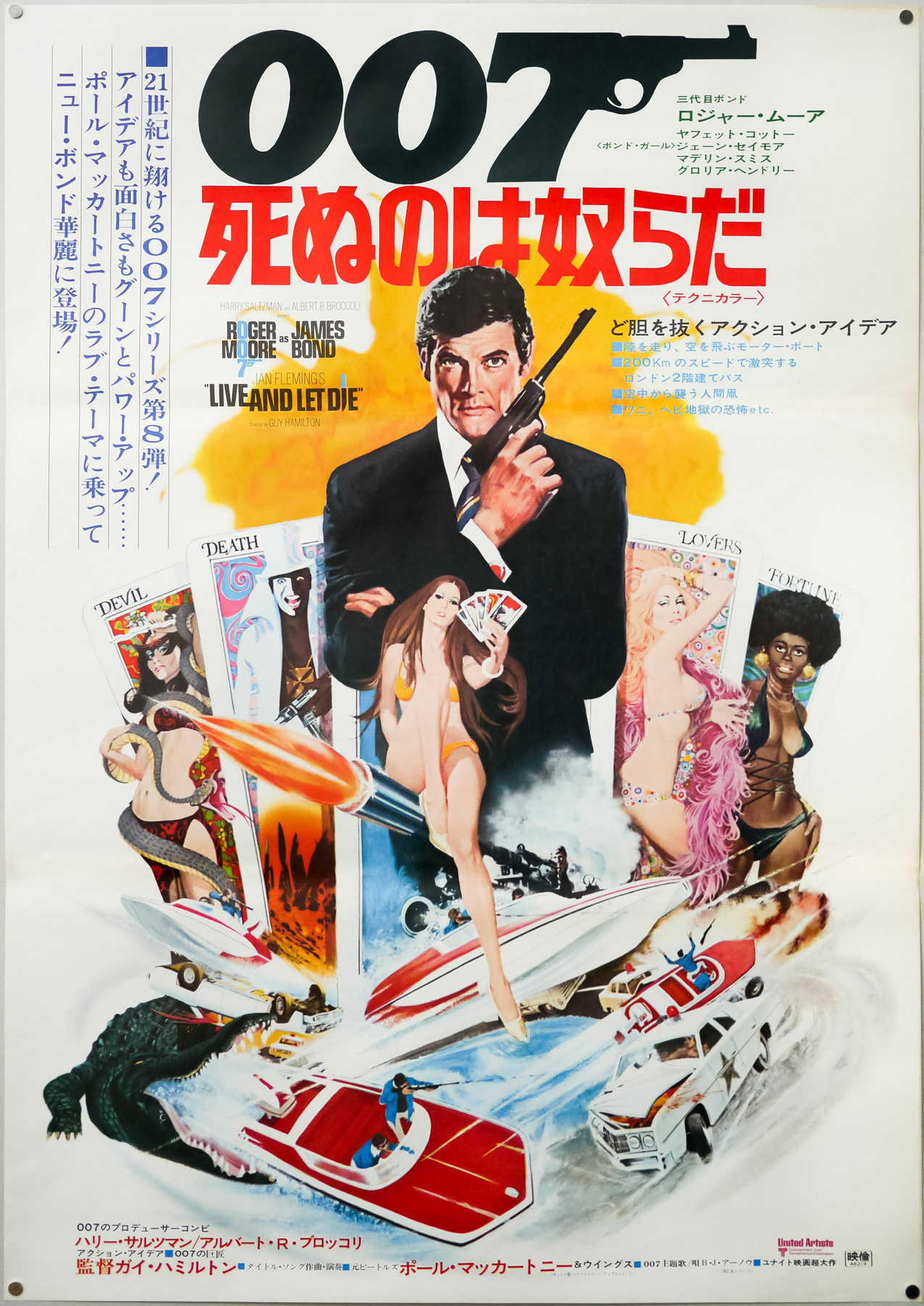
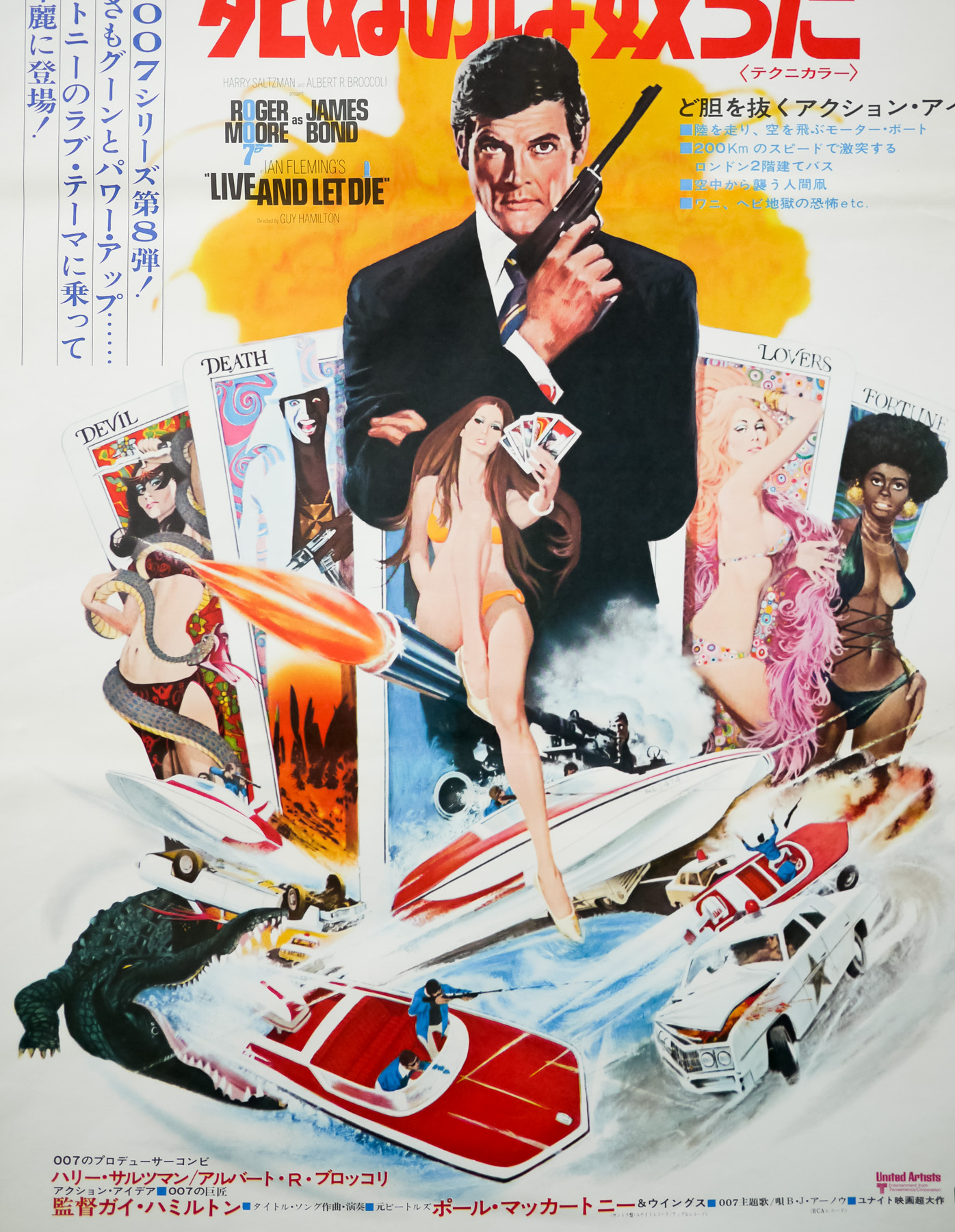
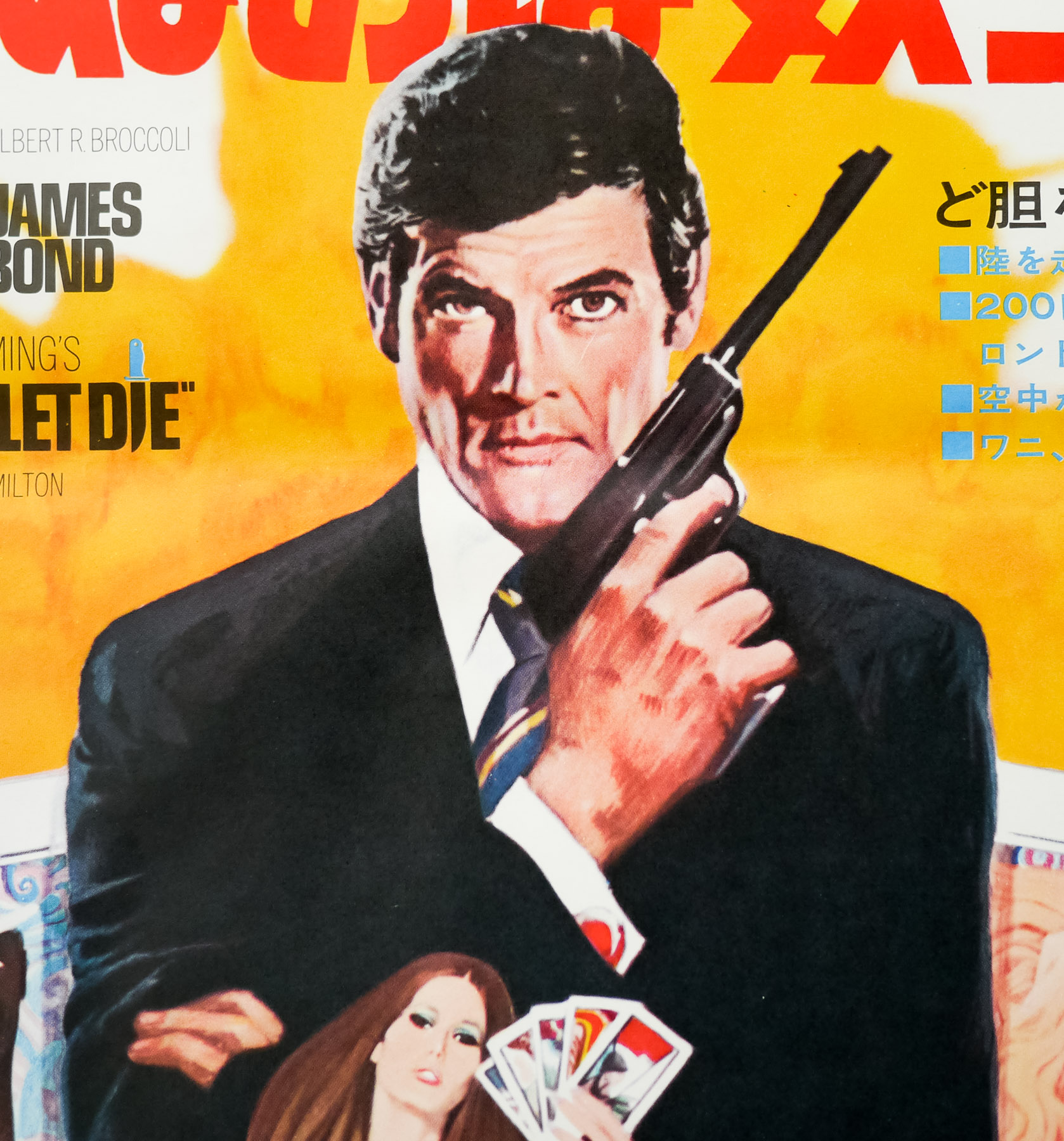
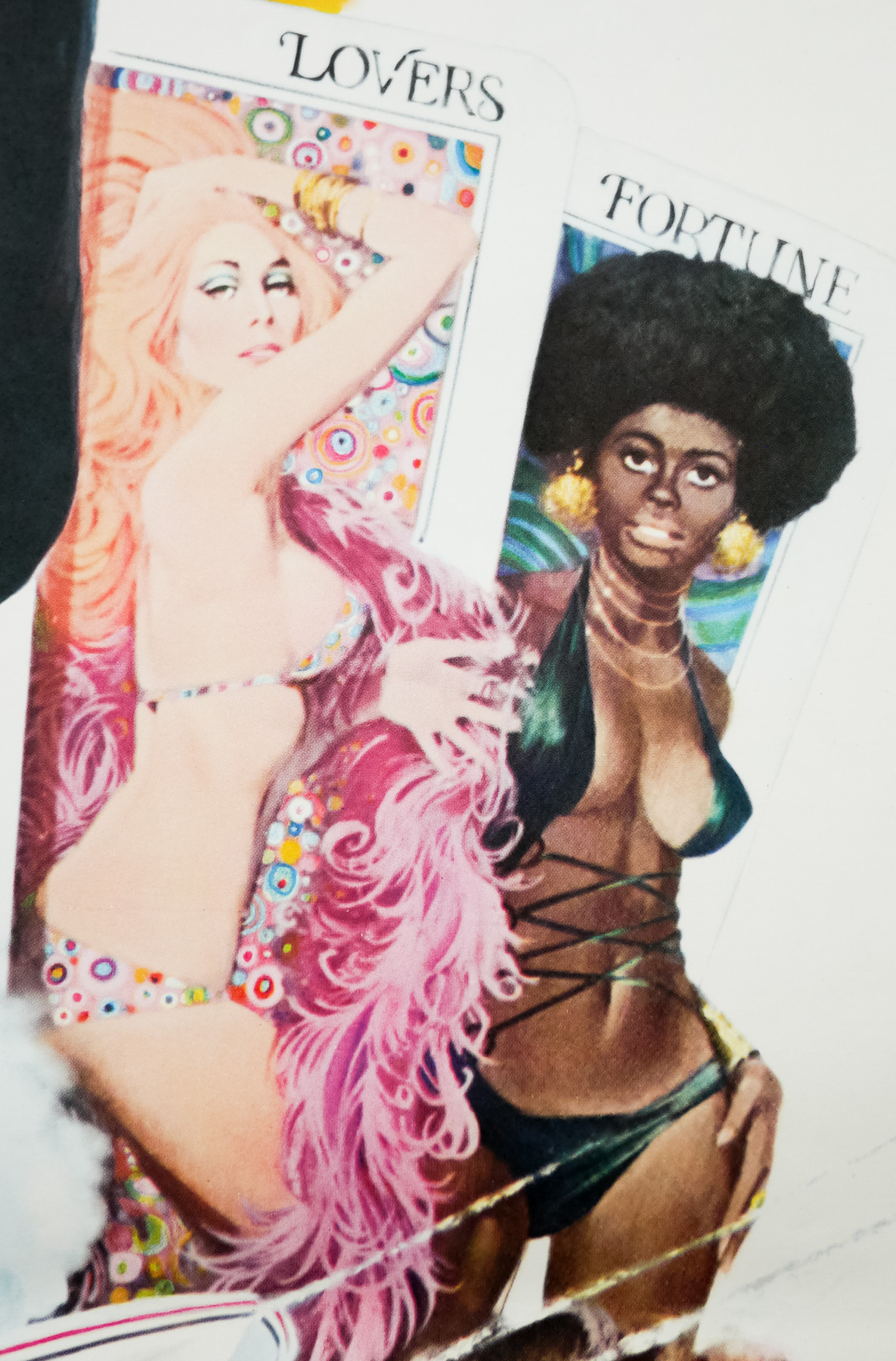
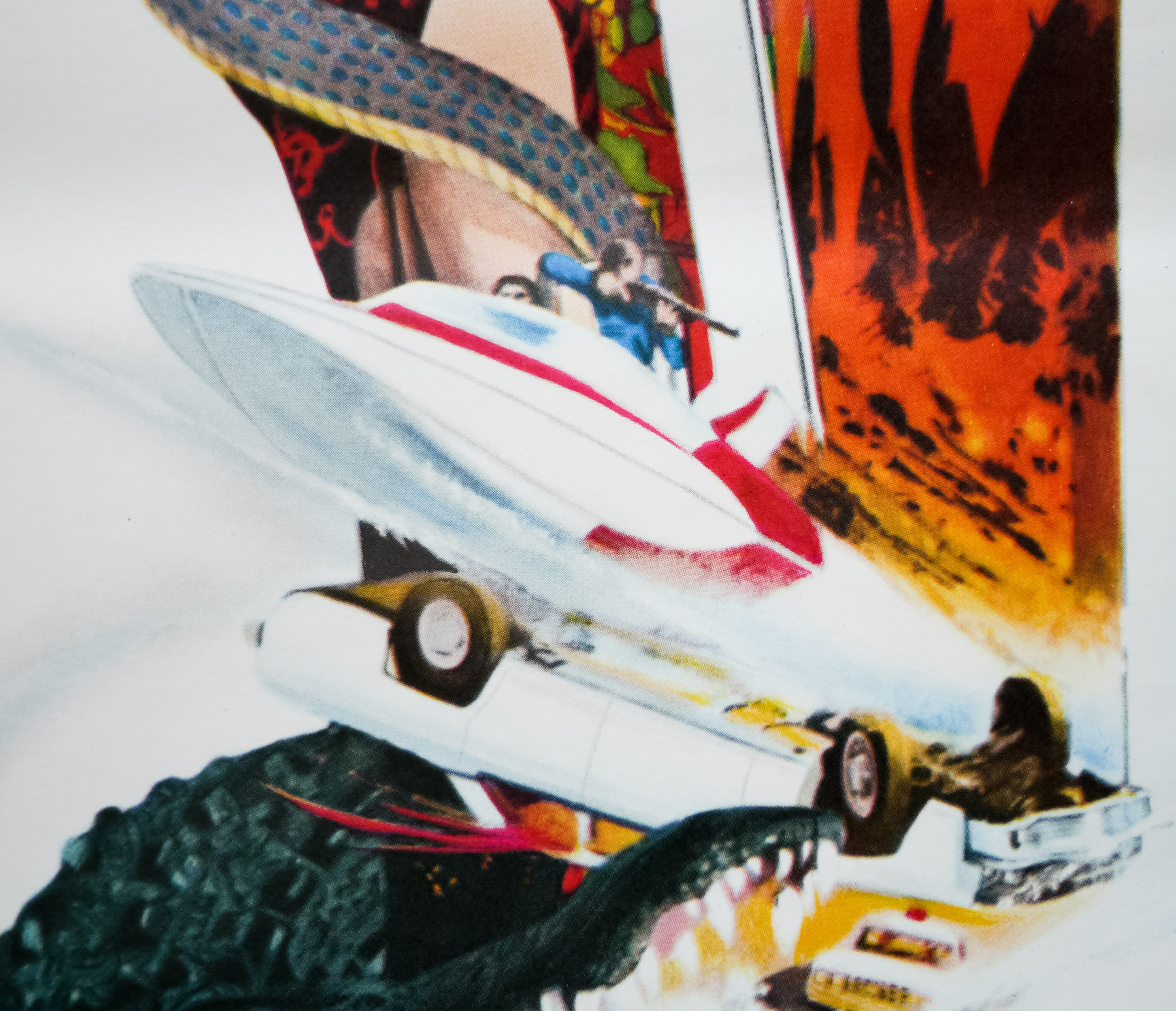
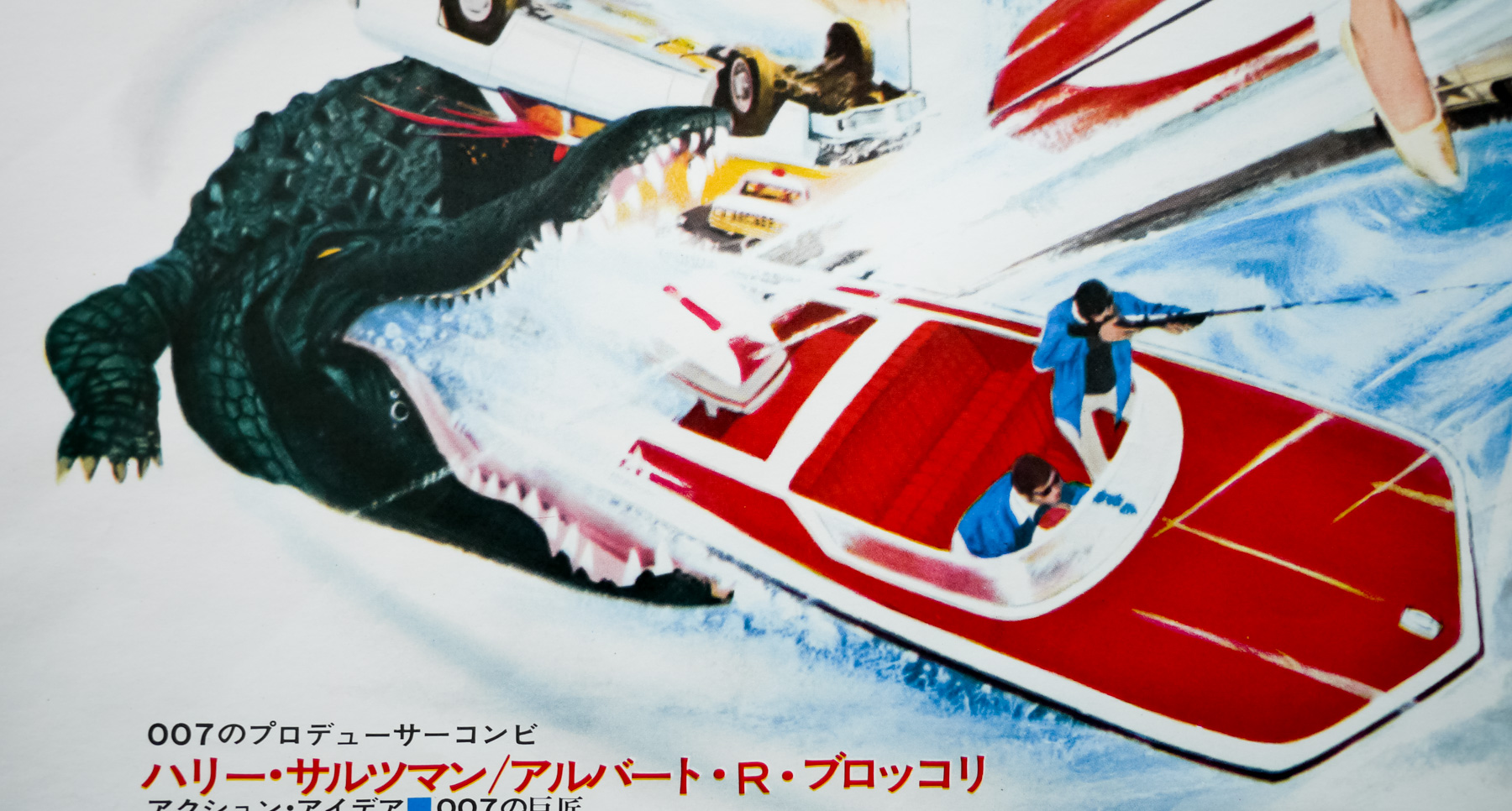
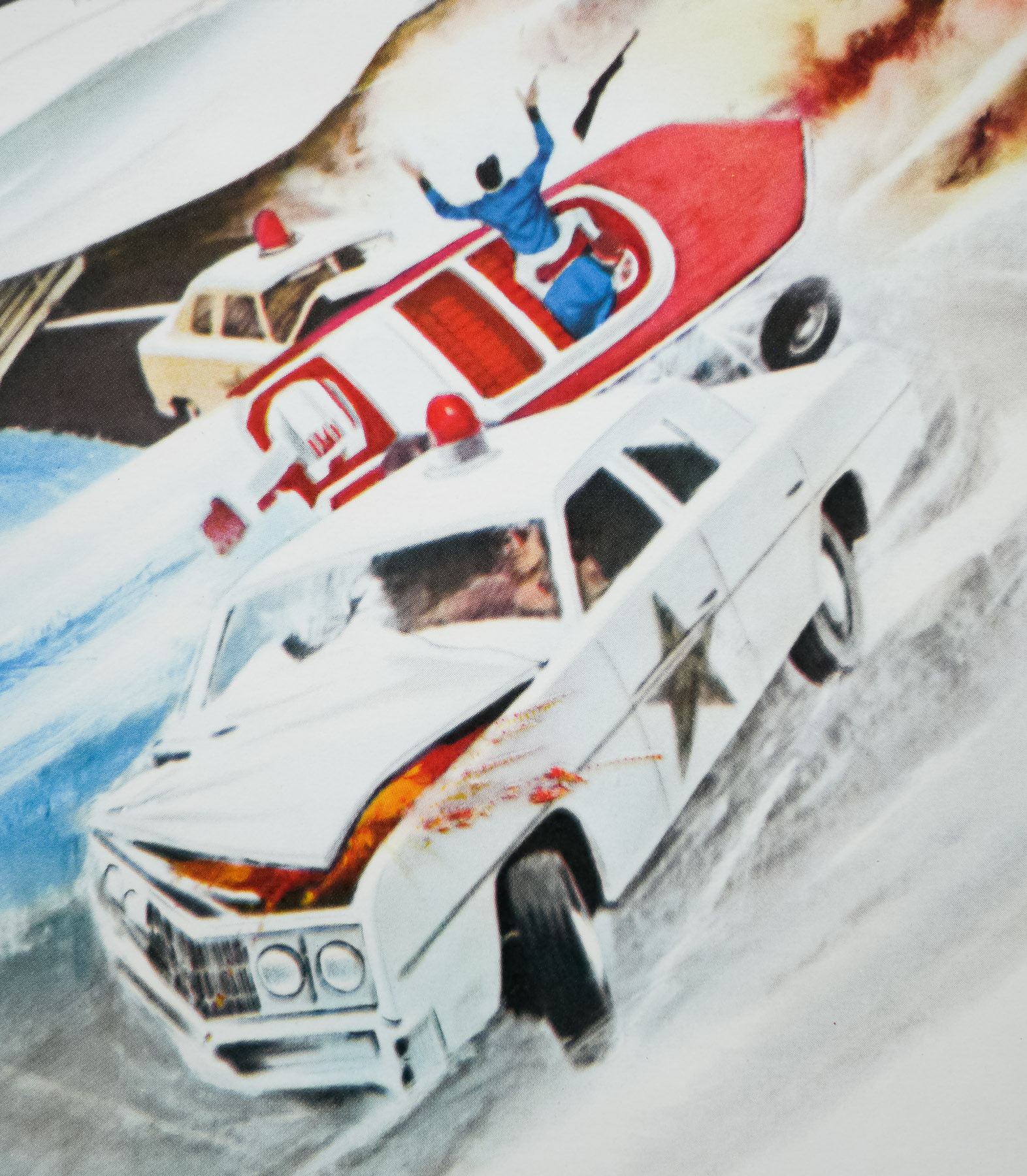
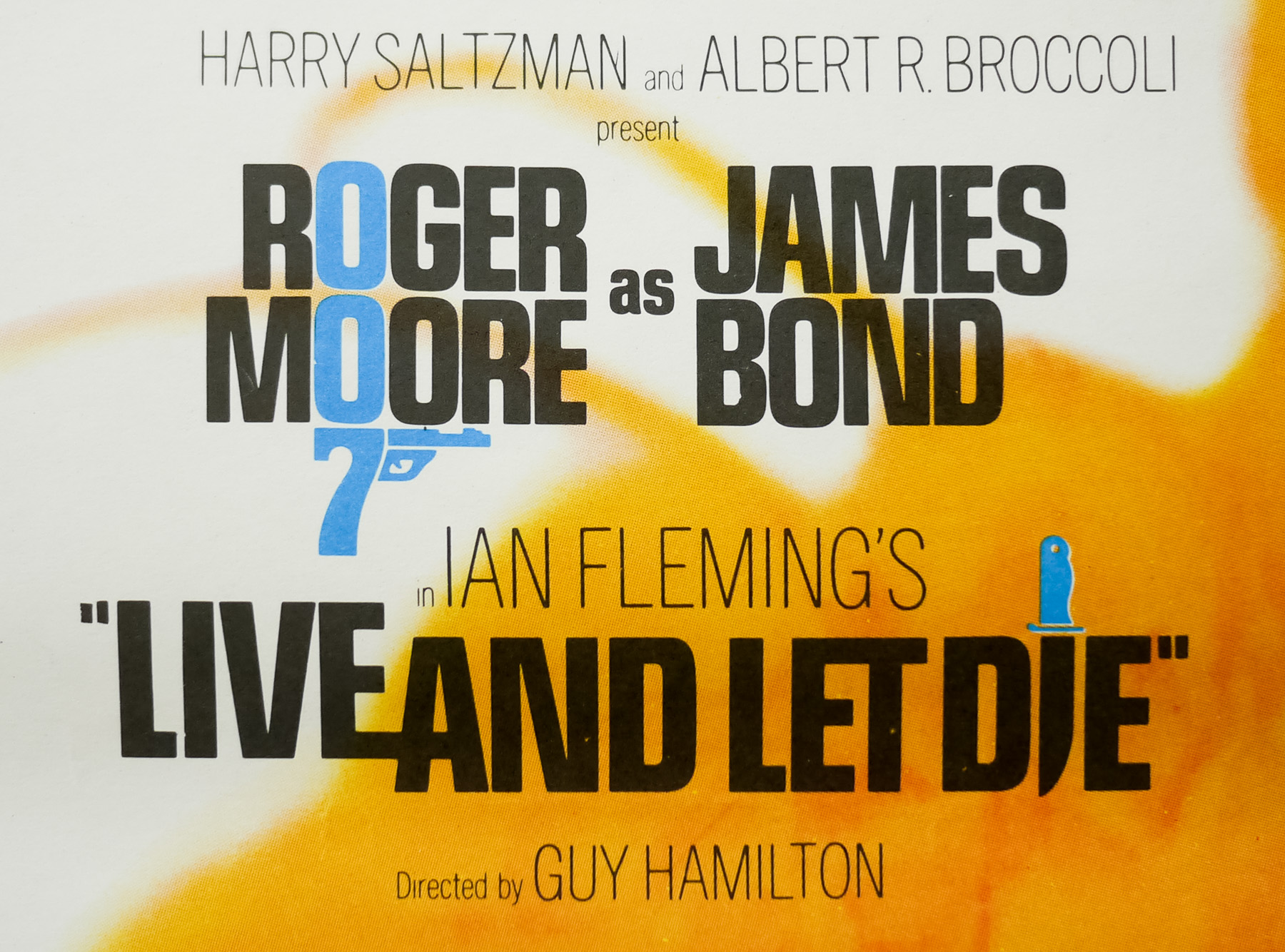
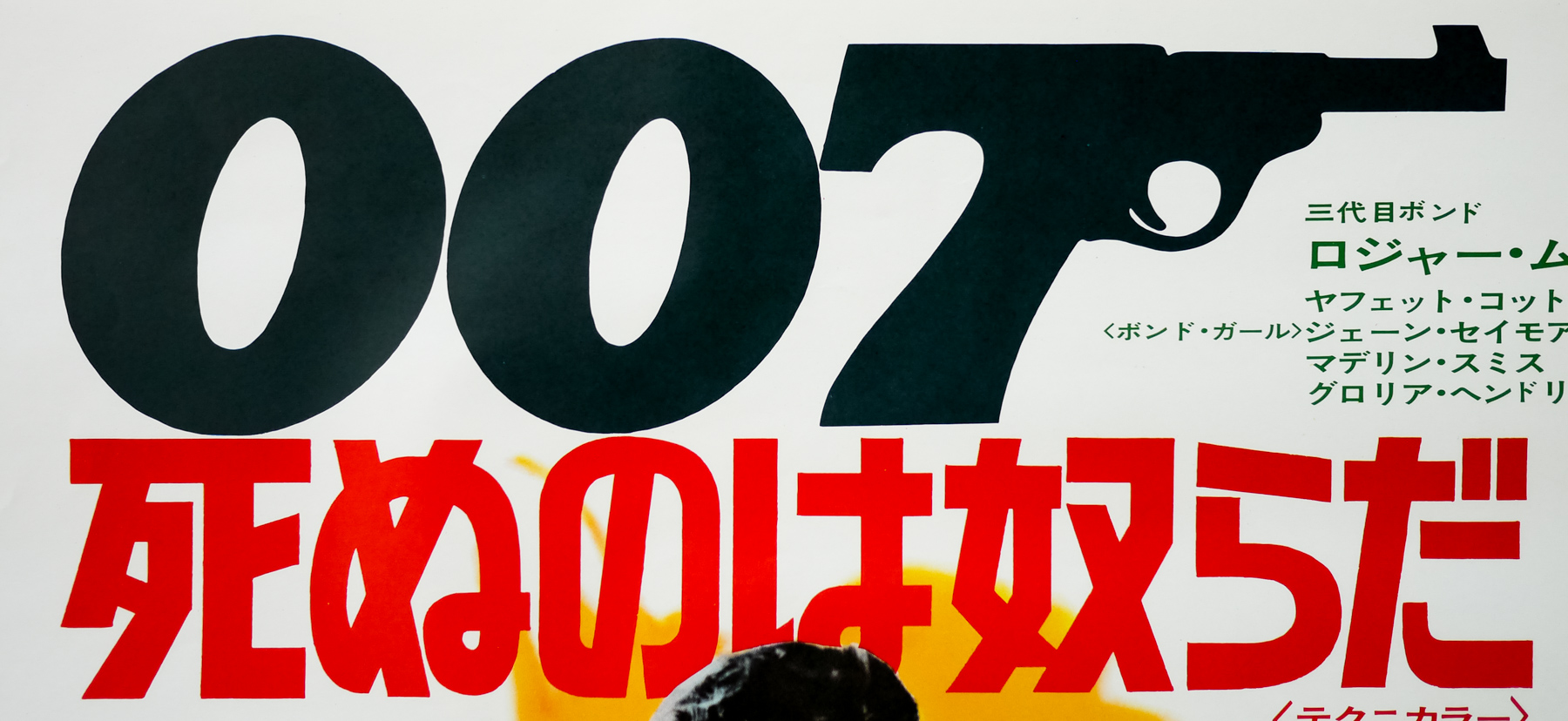
This is the Japanese B2, featuring artwork by the great Robert McGinnis, for the first (and my favourite) Roger Moore-starring James Bond film, Live and Let Die. Along with the others in the series I probably saw the film on TV about fifteen times and can vividly recall many of the best scenes. Like British comedian and director Joe Cornish admitted when interviewing Roger Moore, his Bond films are responsible for many of my first ‘awakenings to the delights of the female form’ (being a young teenager at the time it would have been shown). The gorgeous Jane Seymour who plays ‘Solitaire’ is definitely responsible for putting at least a couple of hairs on my chest, as it were.

Robert McGinnis is responsible for some of the best James Bond posters, including Thunderball,  The Man With the Golden Gun and Diamonds are Forever as well as multiple other classic posters from the 60s, 70s and 80s. He was born in Cincinatti, Ohio in 1926 and was given an apprenticeship at Walt Disney studios before studying fine art at Ohio State University. After serving in the Merchant Marines during World War II, he started work in the advertising industry and later moved into painting book jackets for several notable authors, as well as editorial artwork for the likes of Good Housekeeping, TIME and The Saturday Evening Post. McGinnis’ first film poster was the now iconic one sheet for Breakfast at Tiffany’s, painted in 1962, and he went on to paint over 40 others during his career, including one for The Incredibles in 2004.

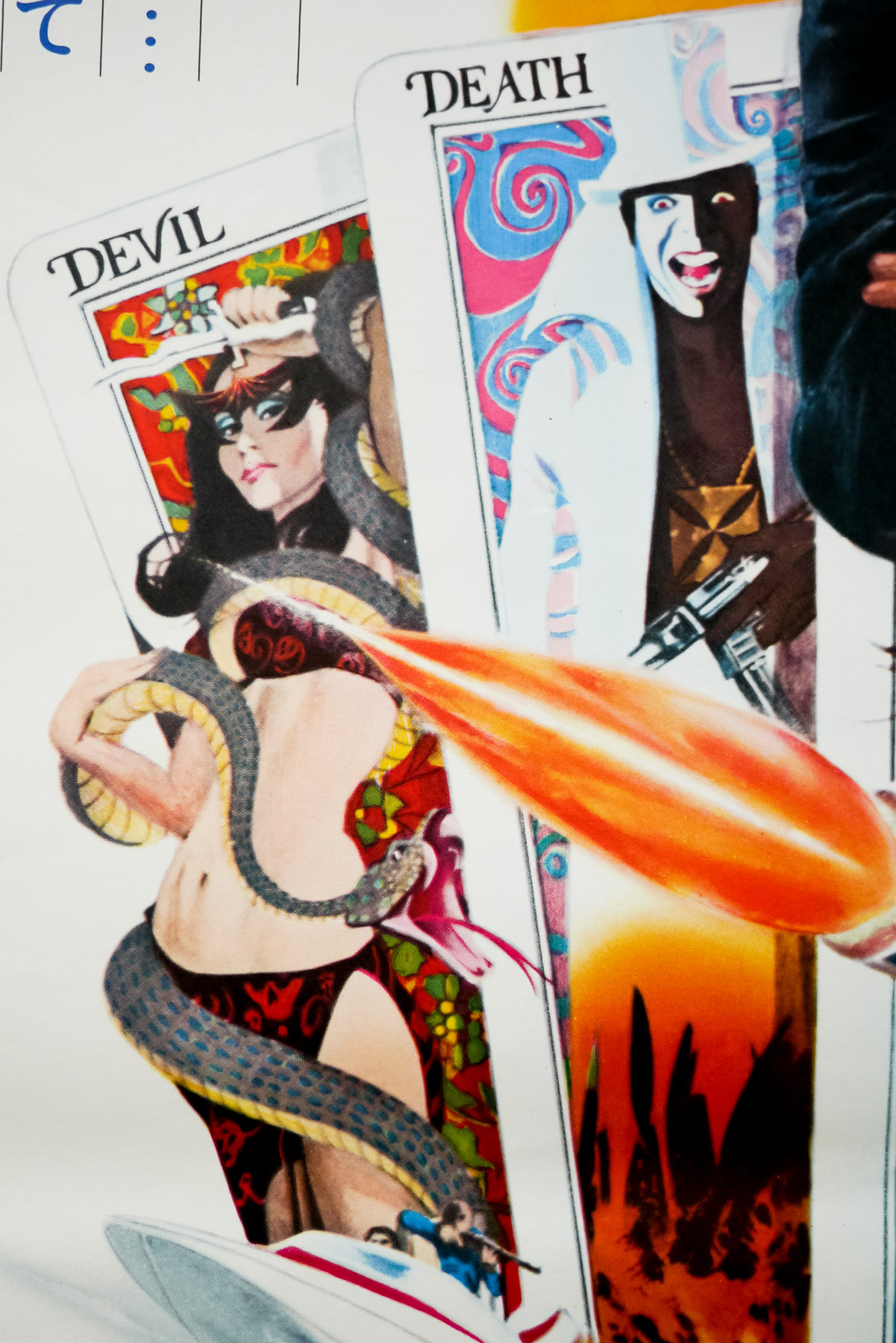
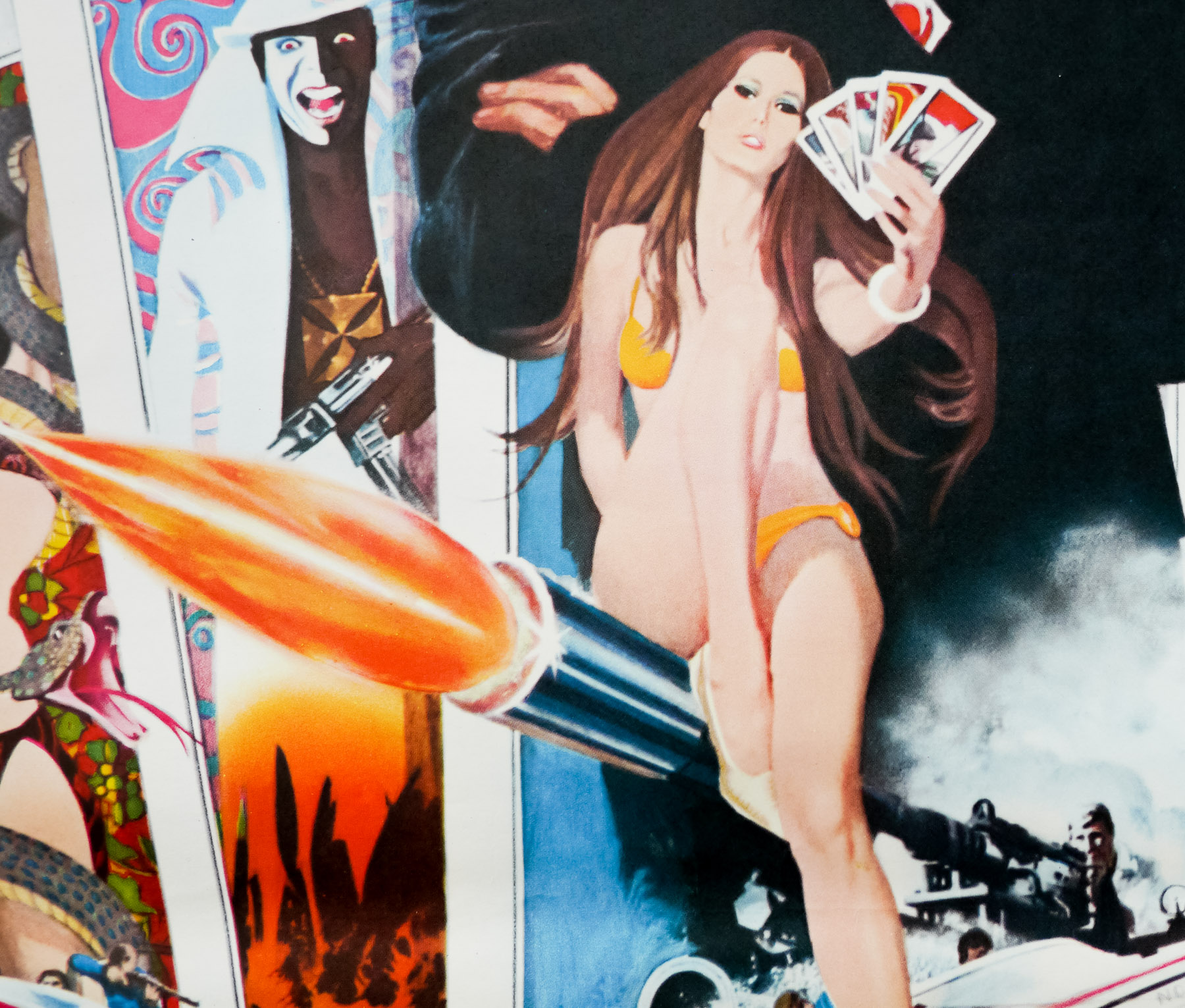
The artwork on this B2 poster isn’t identical to the US one sheet (the art of which was used worldwide) and it’s not clear whether the original art was painted over or whether it was repainted entirely. Some examples on the Japanese poster include the ‘Devil’ missing the doll from her hand and the alligator being given a yellow eye.

To see the other posters I’ve collected that were painted by McGinnis click here and to see the other James Bond posters in the Film on Paper collection click here.

Lost Highway / B2 / Japan

17.05.11

Poster Poster
Title
Lost Highway
AKA
--
Year of Film
1997
Director
David Lynch
Starring
Bill Pullman, Patricia Arquette, Balthazar Getty, Robert Loggia, Robert Blake
Origin of Film
France | USA
Genre(s) of Film
Bill Pullman, Patricia Arquette, Balthazar Getty, Robert Loggia, Robert Blake,
Type of Poster
B2
Style of Poster
--
Origin of Poster
Japan
Year of Poster
1997
Designer
Unknown
Artist
--
Size (inches)
20 5/16" x 28 13/16"
SS or DS
SS
Tagline
--

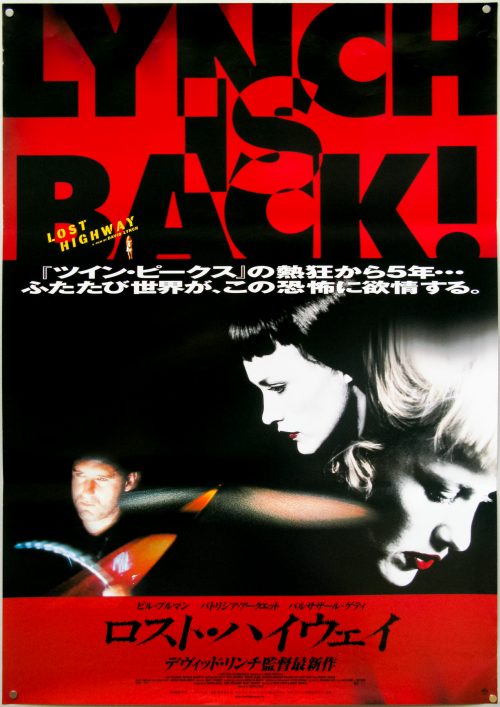
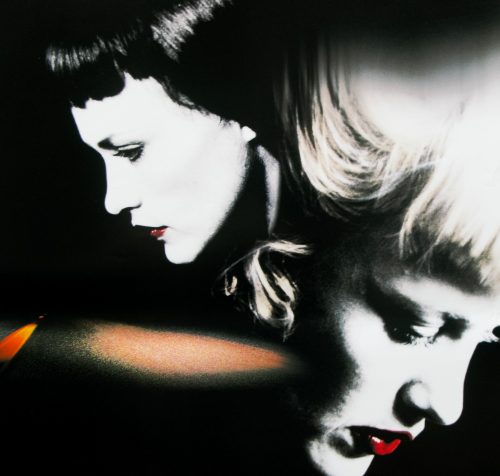
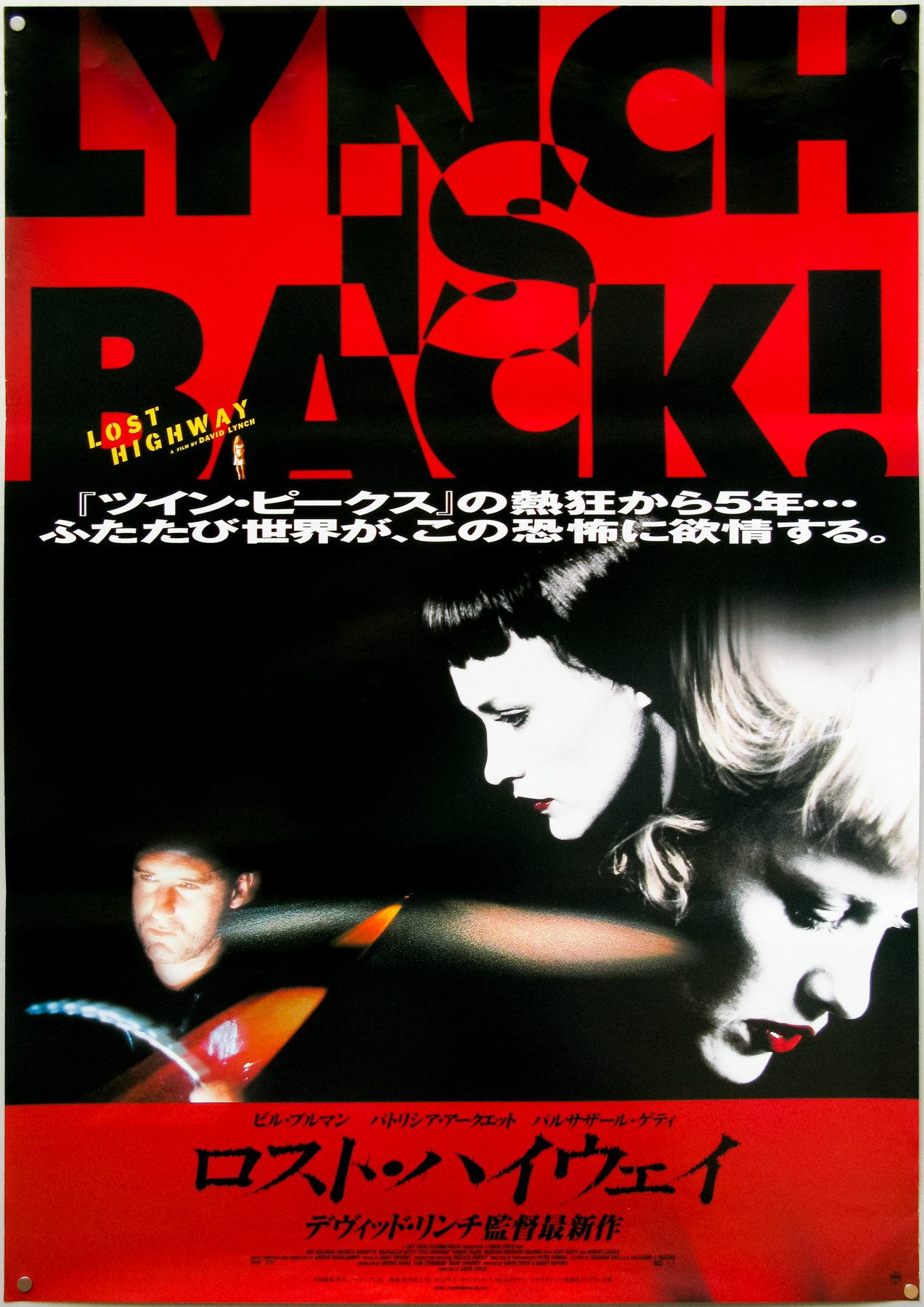
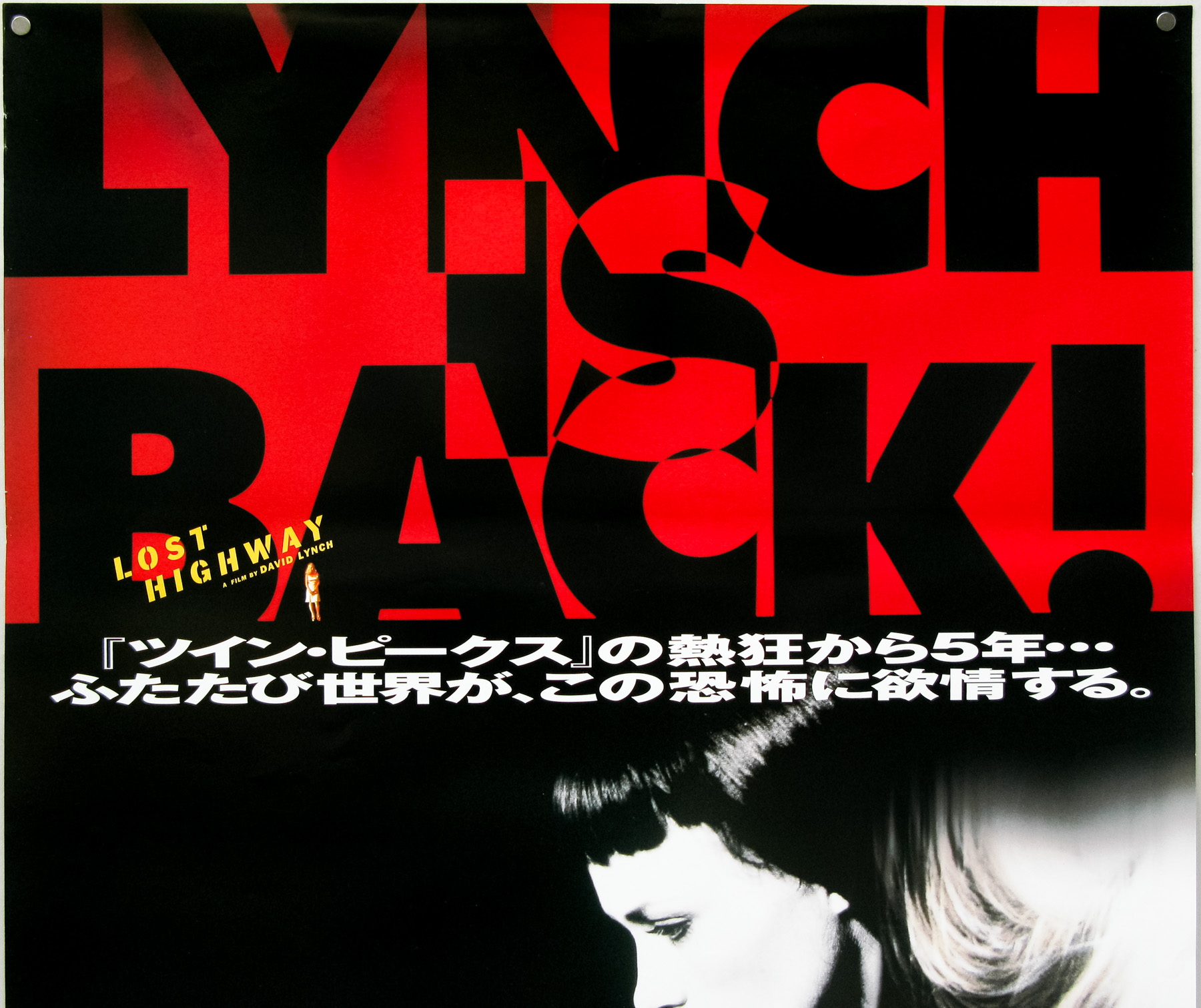
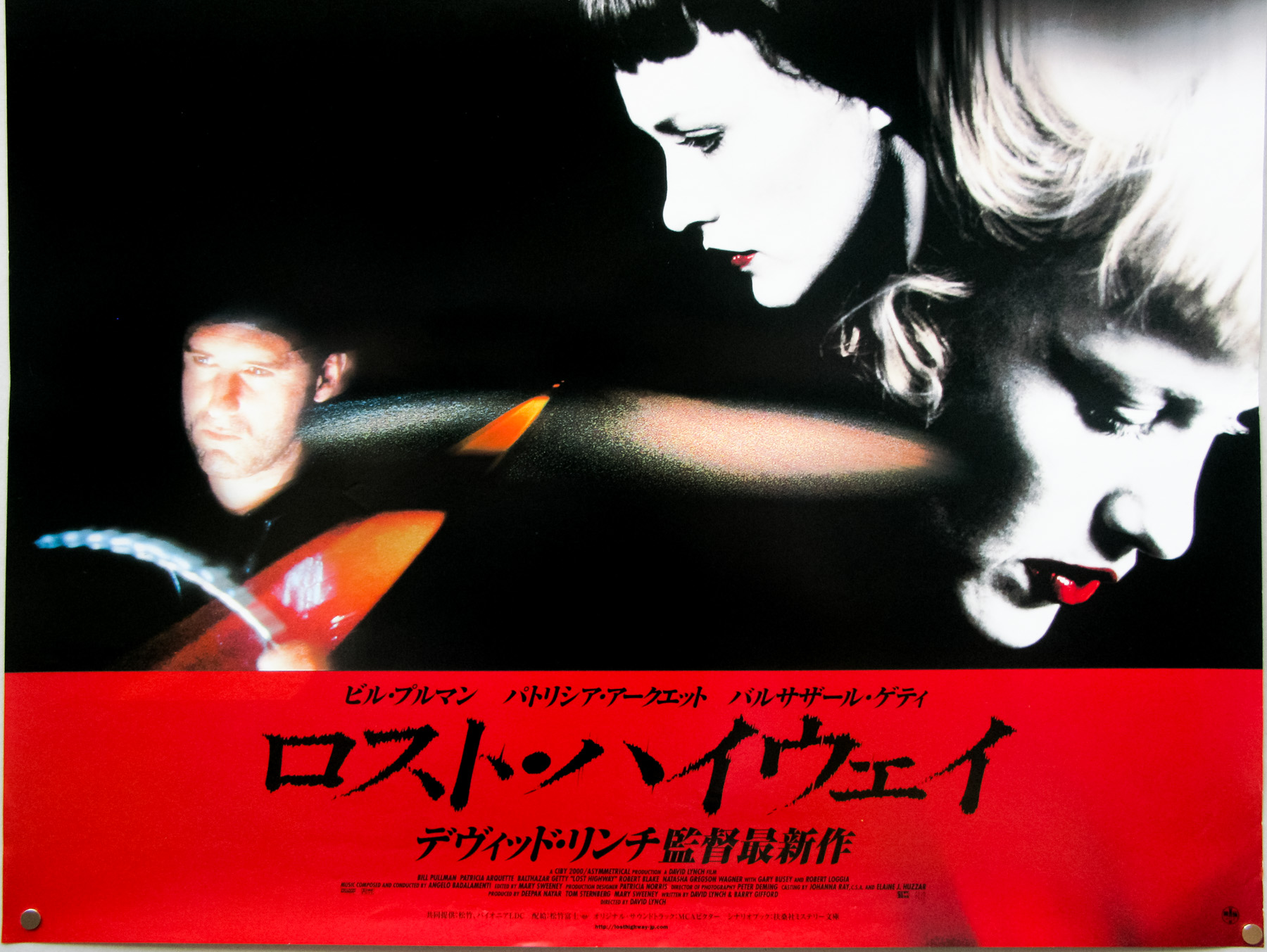
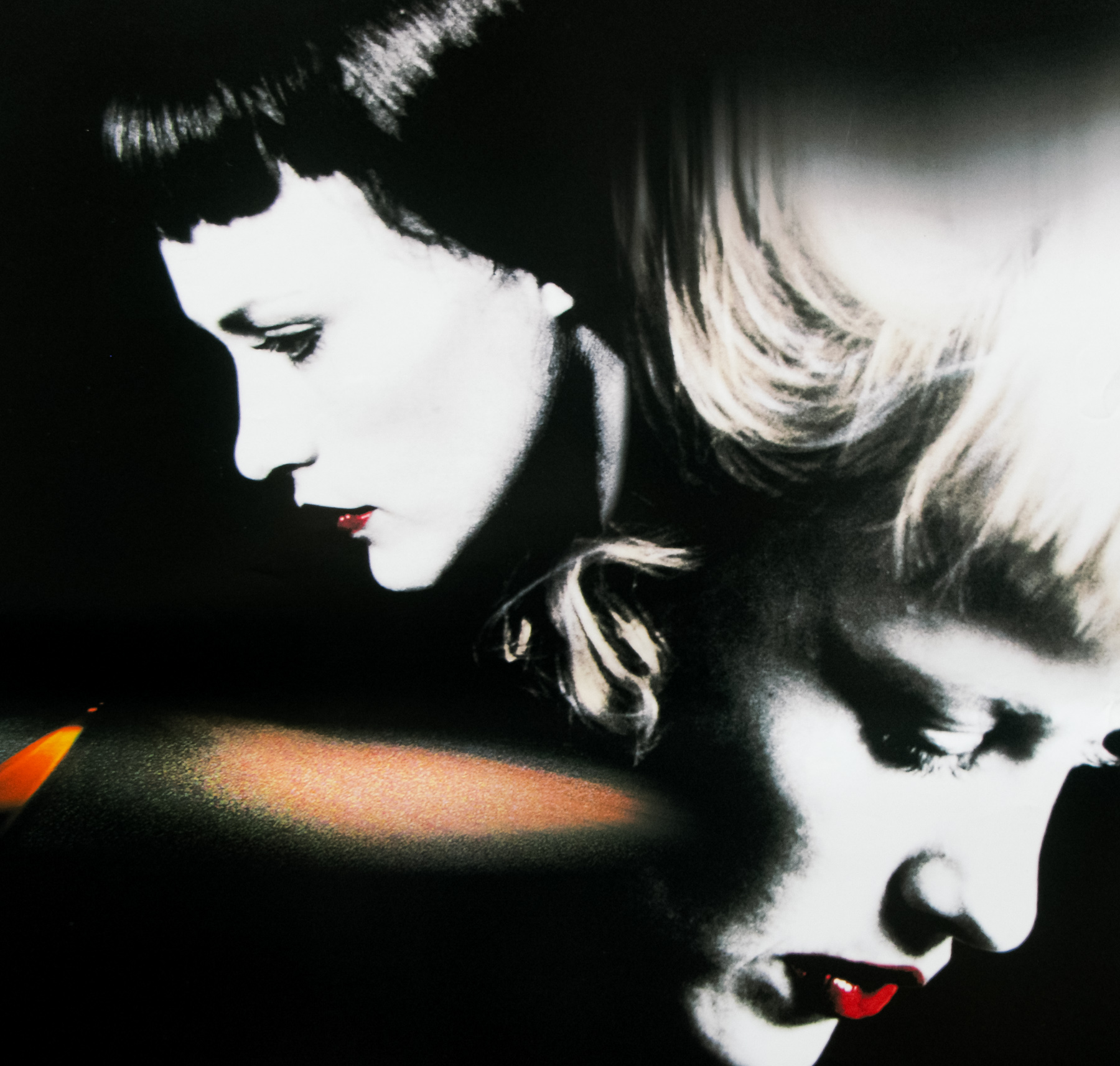
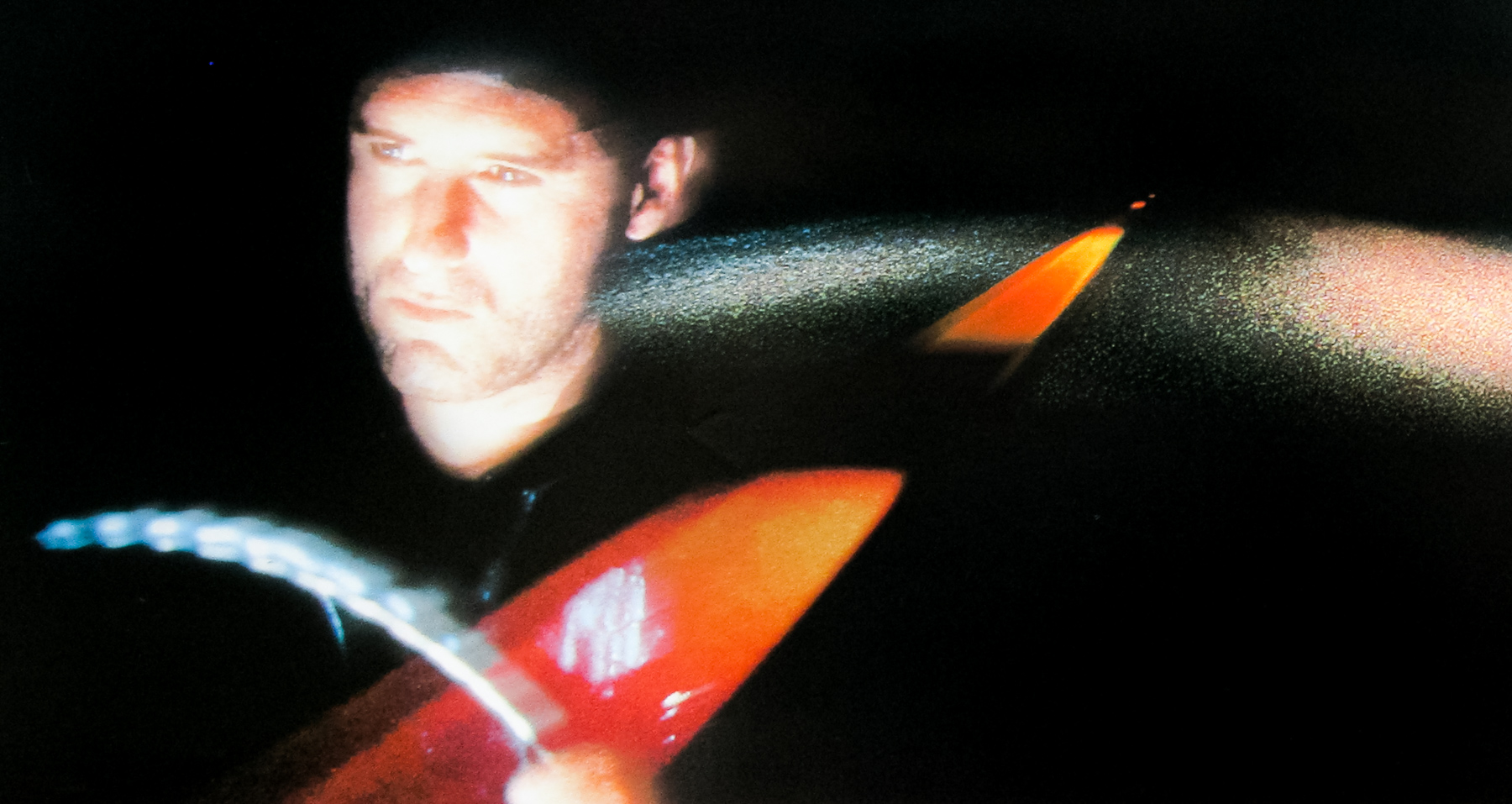
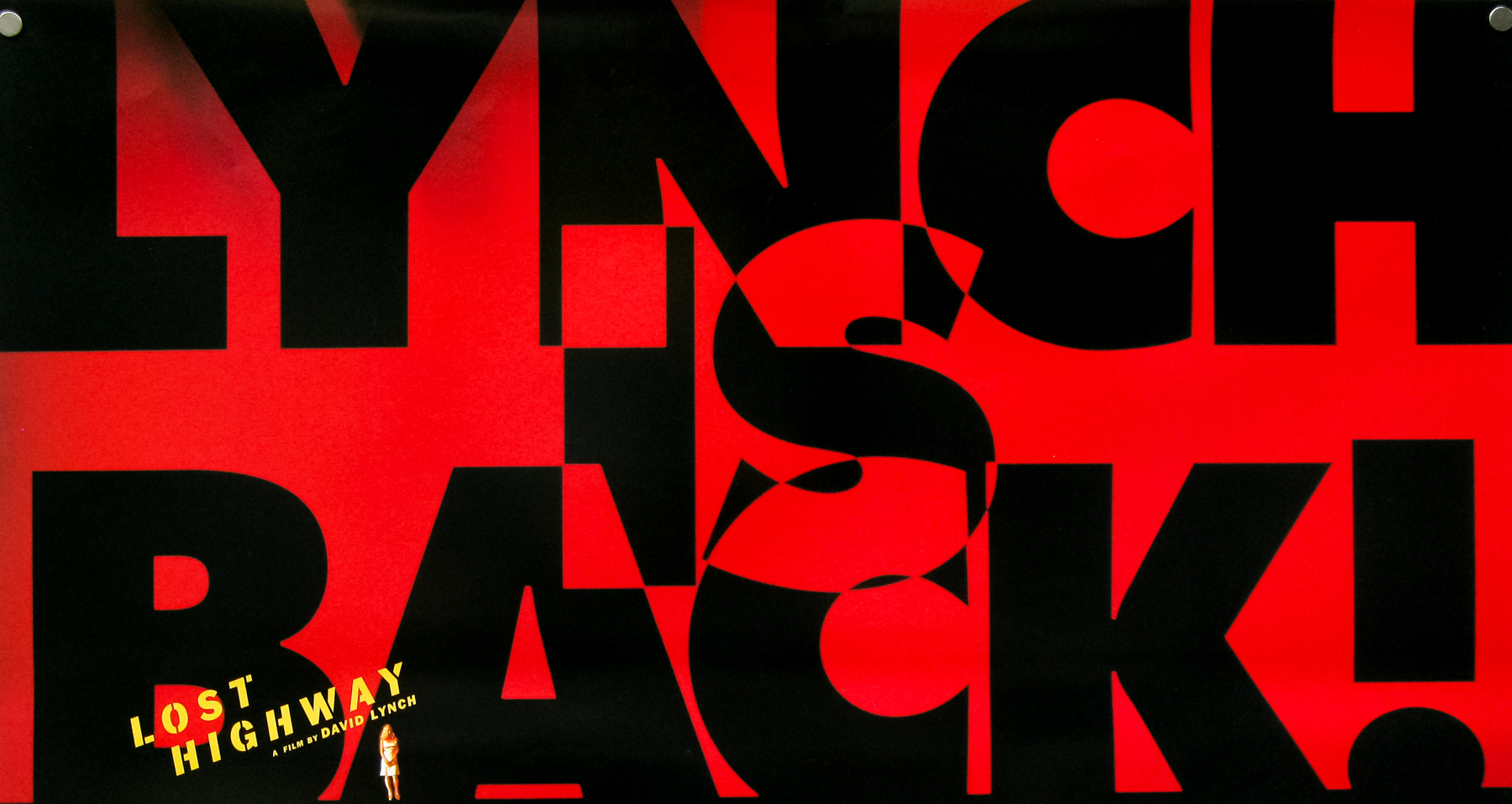
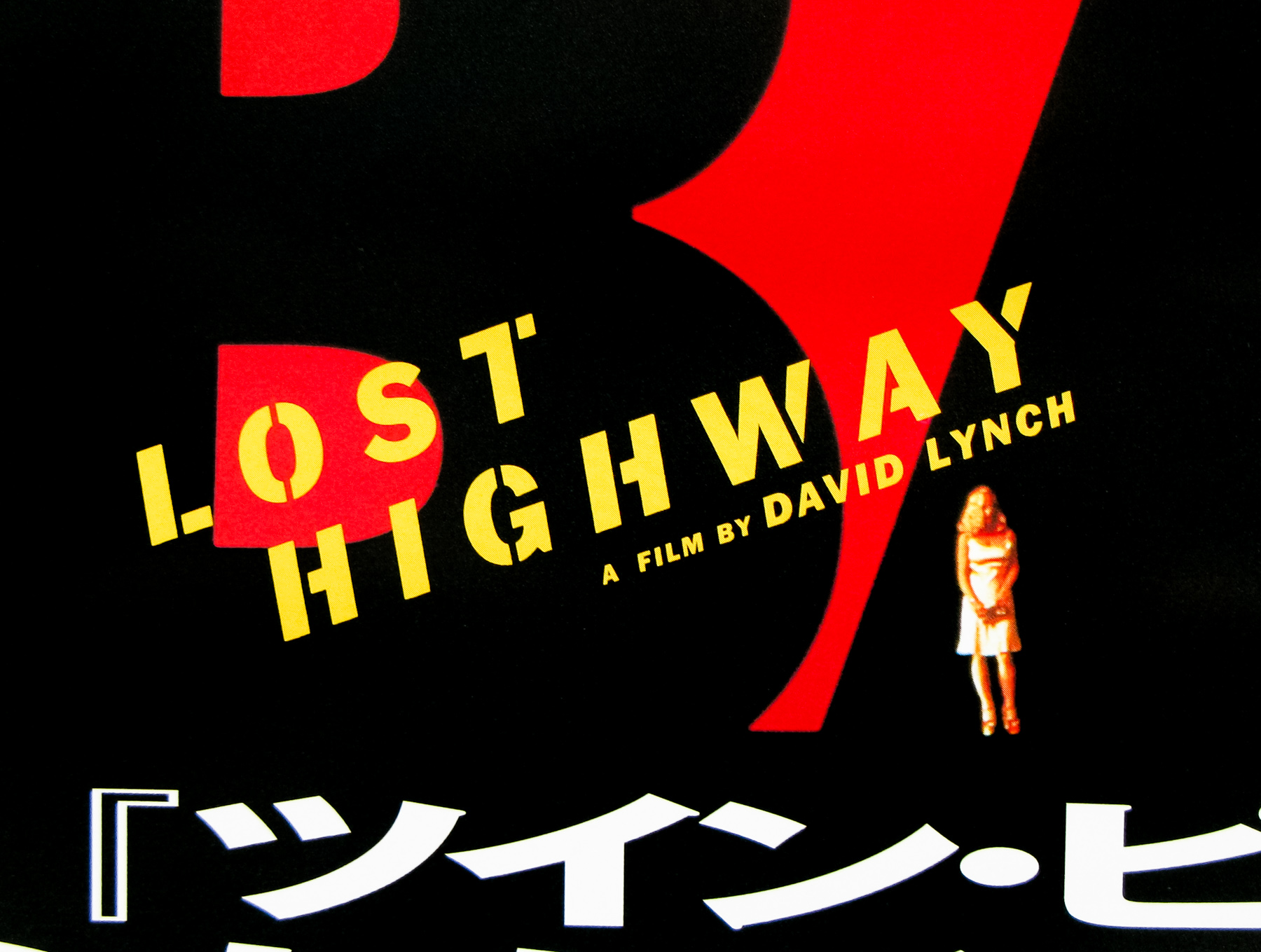
This is the Japanese B2 for David Lynch‘s mystery thriller Lost Highway. Co-written with American author Barry Gifford, whose novel Lynch adapted for his 1990 film Wild at Heart, the film is a classic Lynchian mind-bender that resolutely defies explanation. The story begins with Bill Pullman as Fred Madison, a Jazz saxophonist who is living with his wife Renee (Patricia Arquette) in Los Angeles. One day the intercom to his flat buzzes and when he answers it an unknown man says “Dick Laurent is dead.” The man is nowhere to be seen when Fred looks out of his window, but a few days later a mysterious tape appears on the Madison’s doorstep. The video features shaky footage outside their flat and over the next few days more tapes appear that eventually move inside and show the pair sleeping, much to their horror.

At a party Fred meets a mysterious man (played by Robert Blake in his final film role) who, in a memorably creepy sequence, tells Fred that he’s at his flat at that moment and proves it by getting him to call his home phone, which the stranger then answers. The next morning another tape appears and Fred is horrified to see it’s footage of him covered in blood with a dismembered Renee next to him. He is arrested, charged with murder and sentenced to death. Whilst on death row Fred sees strange visions and starts to suffer from painful headaches before he inexplicably morphs into another person, a car mechanic called Pete Dayton (Balthazar Getty) much to the confusion of the prison staff. Because Pete has committed no crime, he is released into the care of his parents and, after a period of adjustment, he gets back to his job. The rest of the film sees Pete dealing with the menacing gangster Mr Eddy (a memorable performance by Robert Loggia) and a mysterious blonde called Alice Wakefield (Arquette) who takes him down a dark path which has the mystery man waiting at the end of it.

Lynch and Gifford have always refused to fully explain the story but that hasn’t stopped fans of the film from trying to decode its many mysteries. Check out this IMDb page for some of the theories but the film definitely encourages you to draw your own conclusions after the credits roll. Lost Highway features a number of notable performances, particularly from Pullman and Arquette, as well as multiple cameos from the likes of Richard Pryor, Jack Nance and Marilyn Manson. Filled with memorable Lynchian imagery, including one of the most shocking accidental deaths in cinema history (Michael Massee‘s head meets glass table), it also has a brilliant soundtrack complemented by some of Lynch’s very best sound design.

Memento / B2 / red title style / Japan

09.07.14

Poster Poster

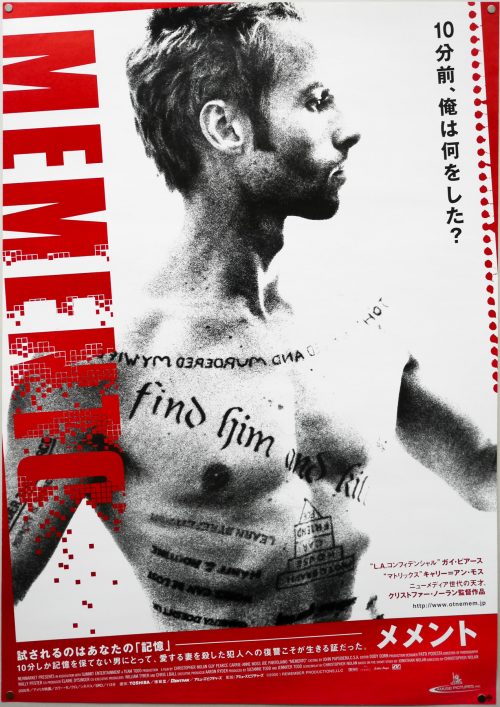
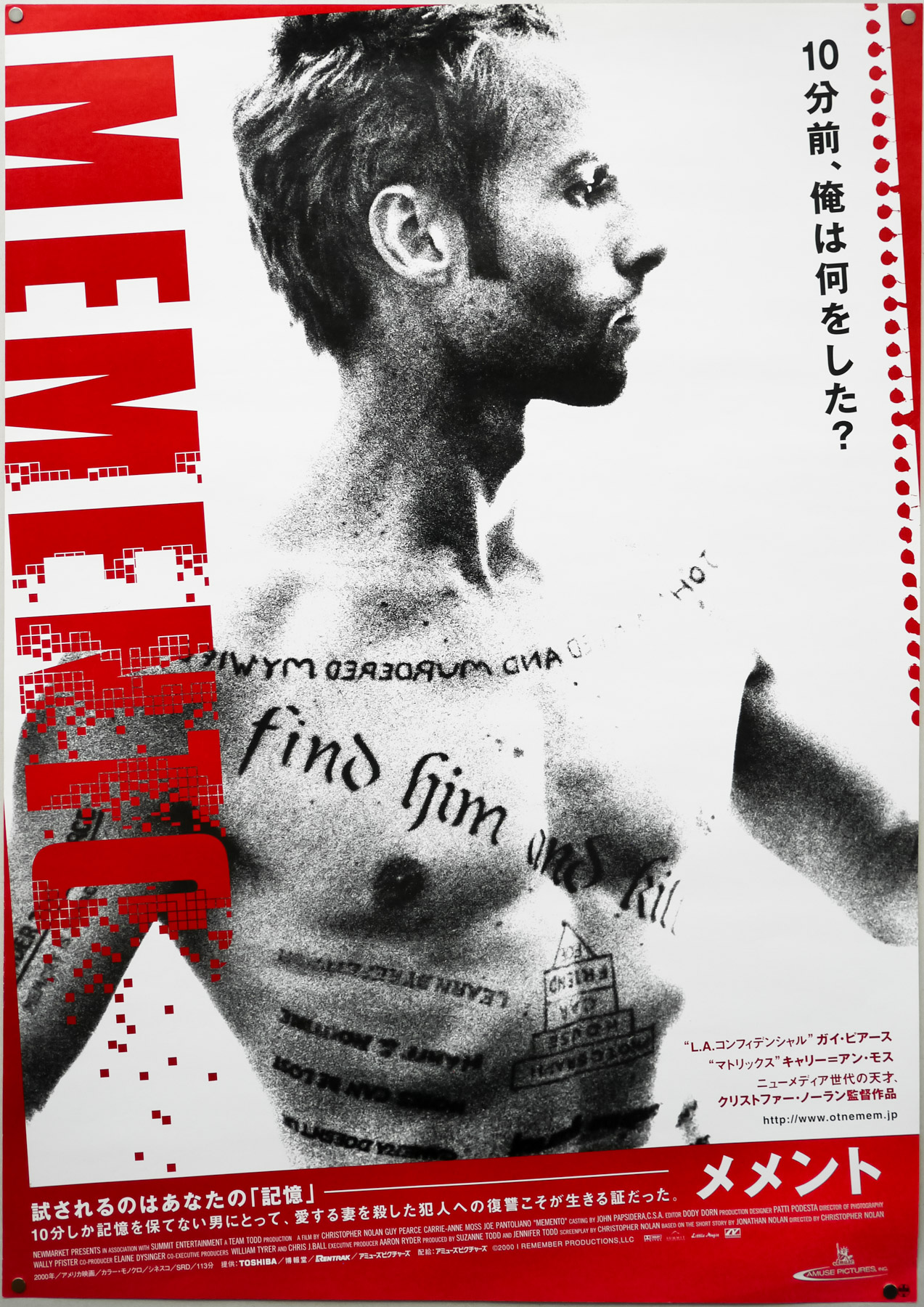
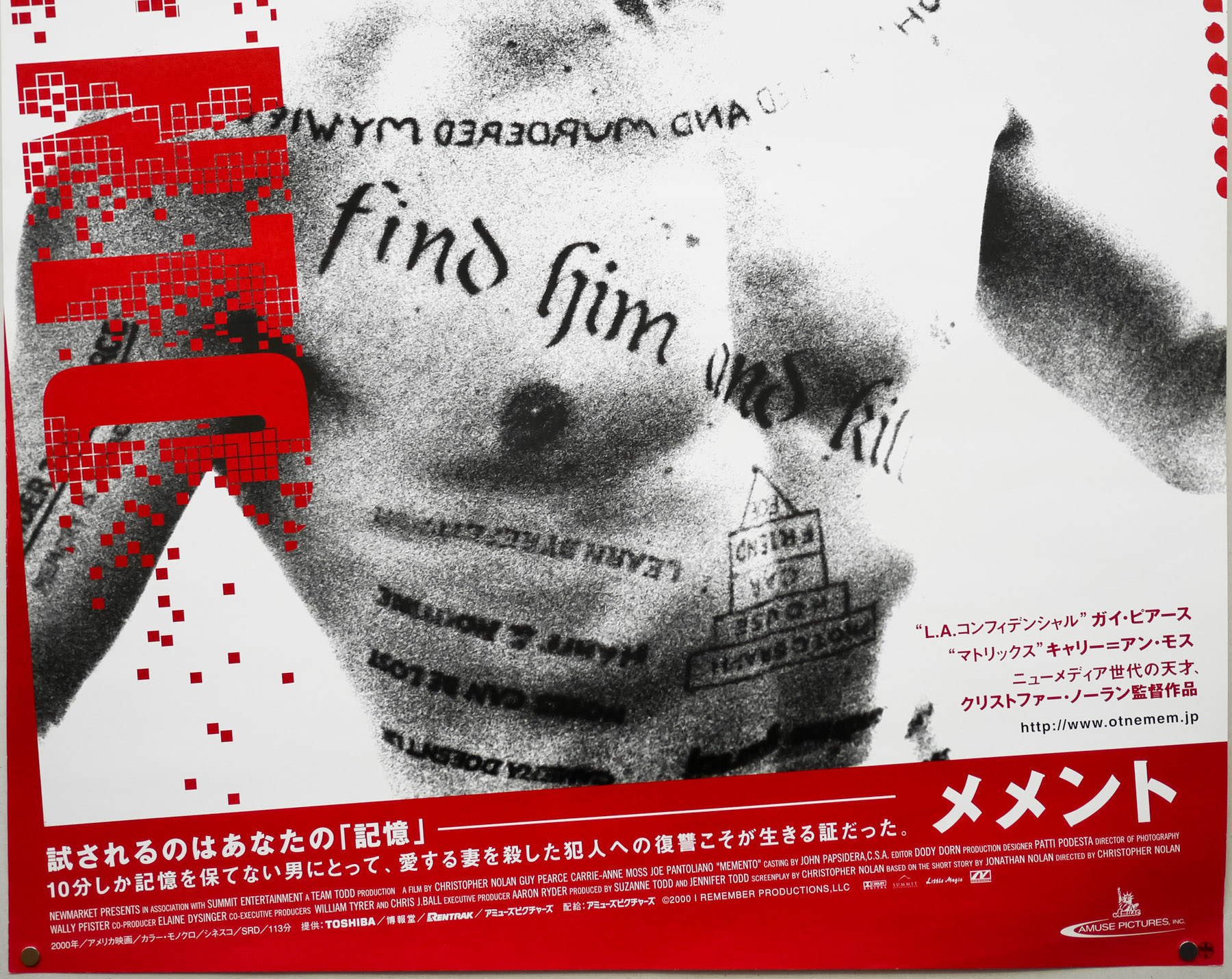
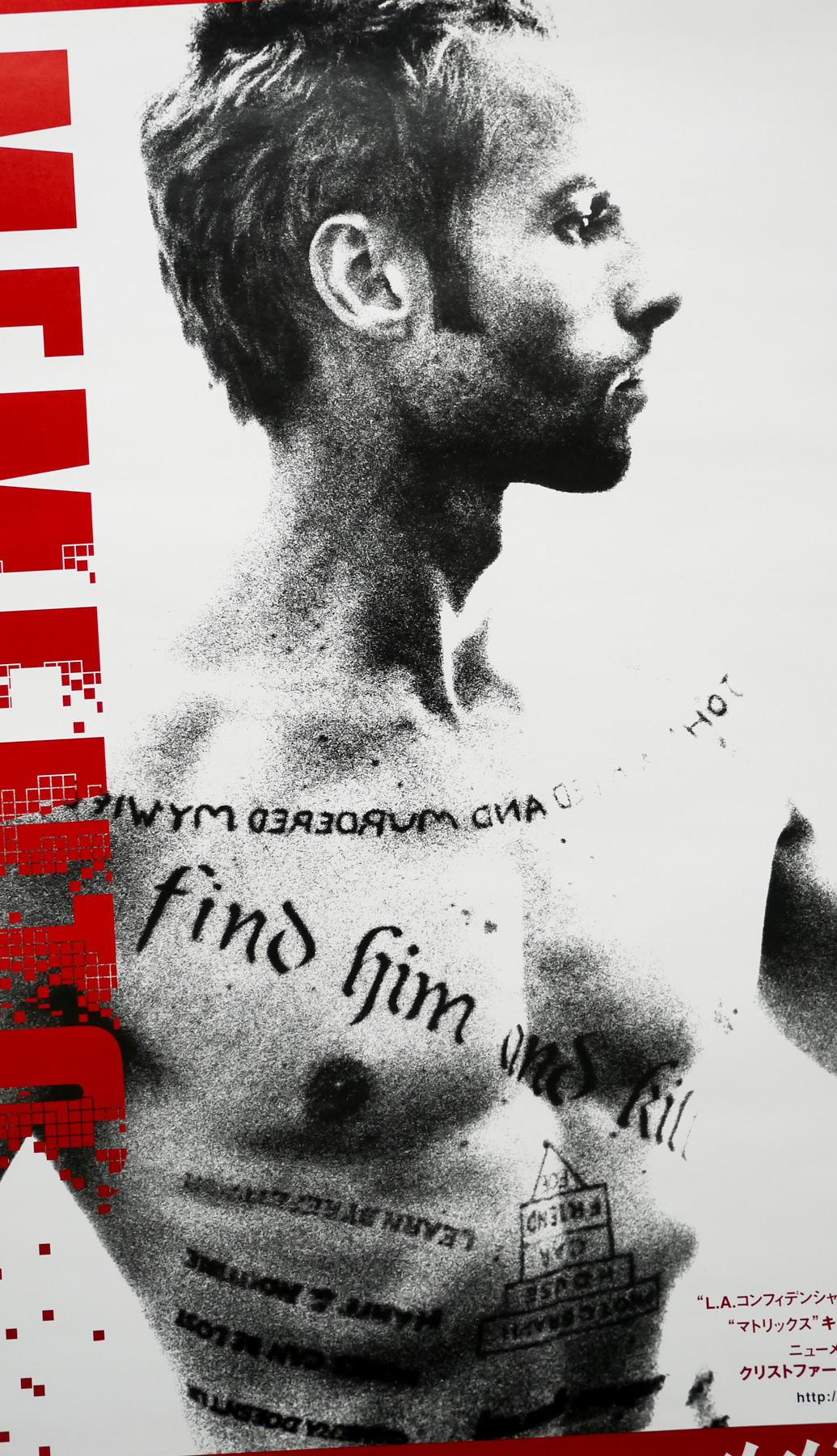
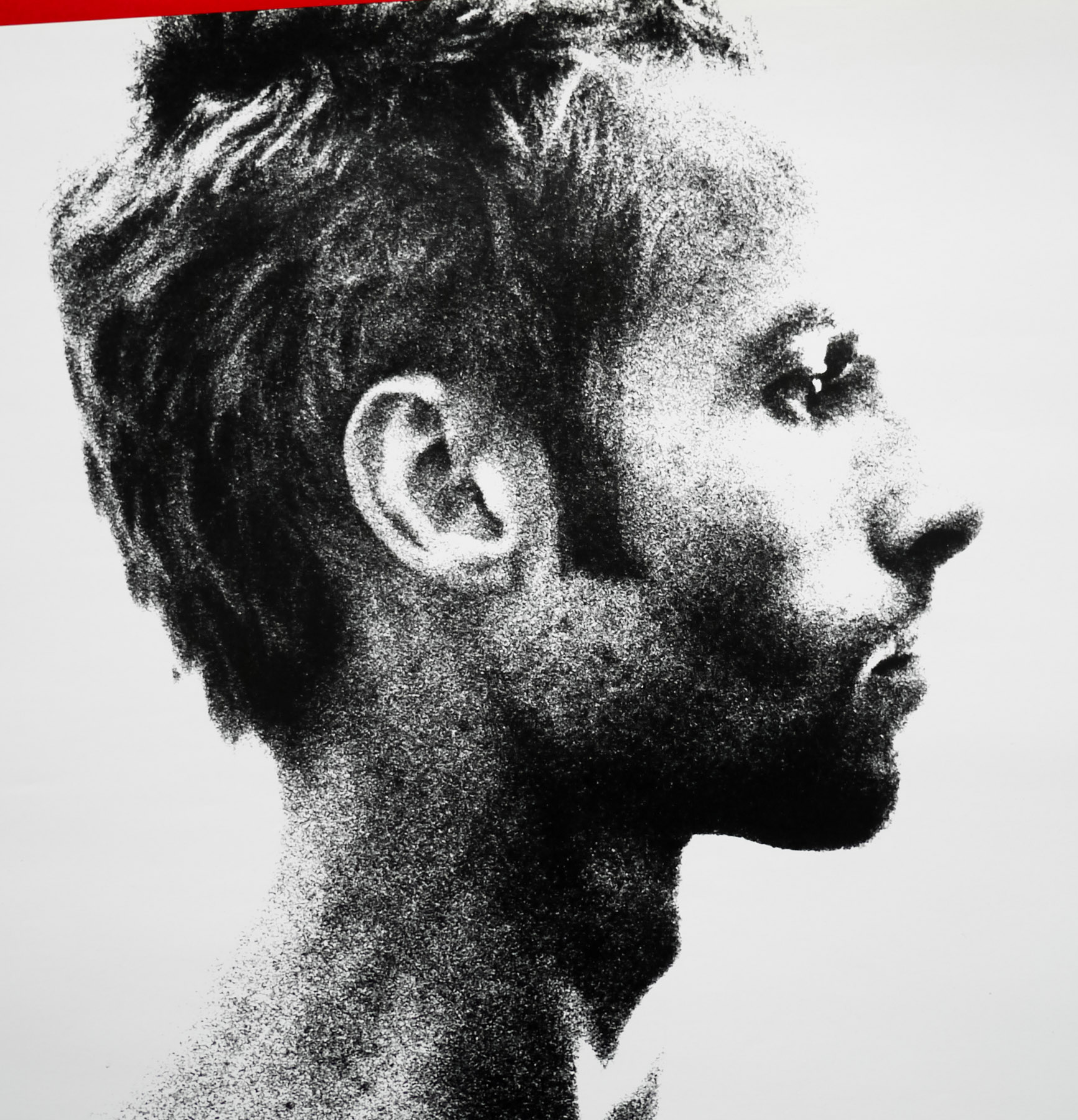
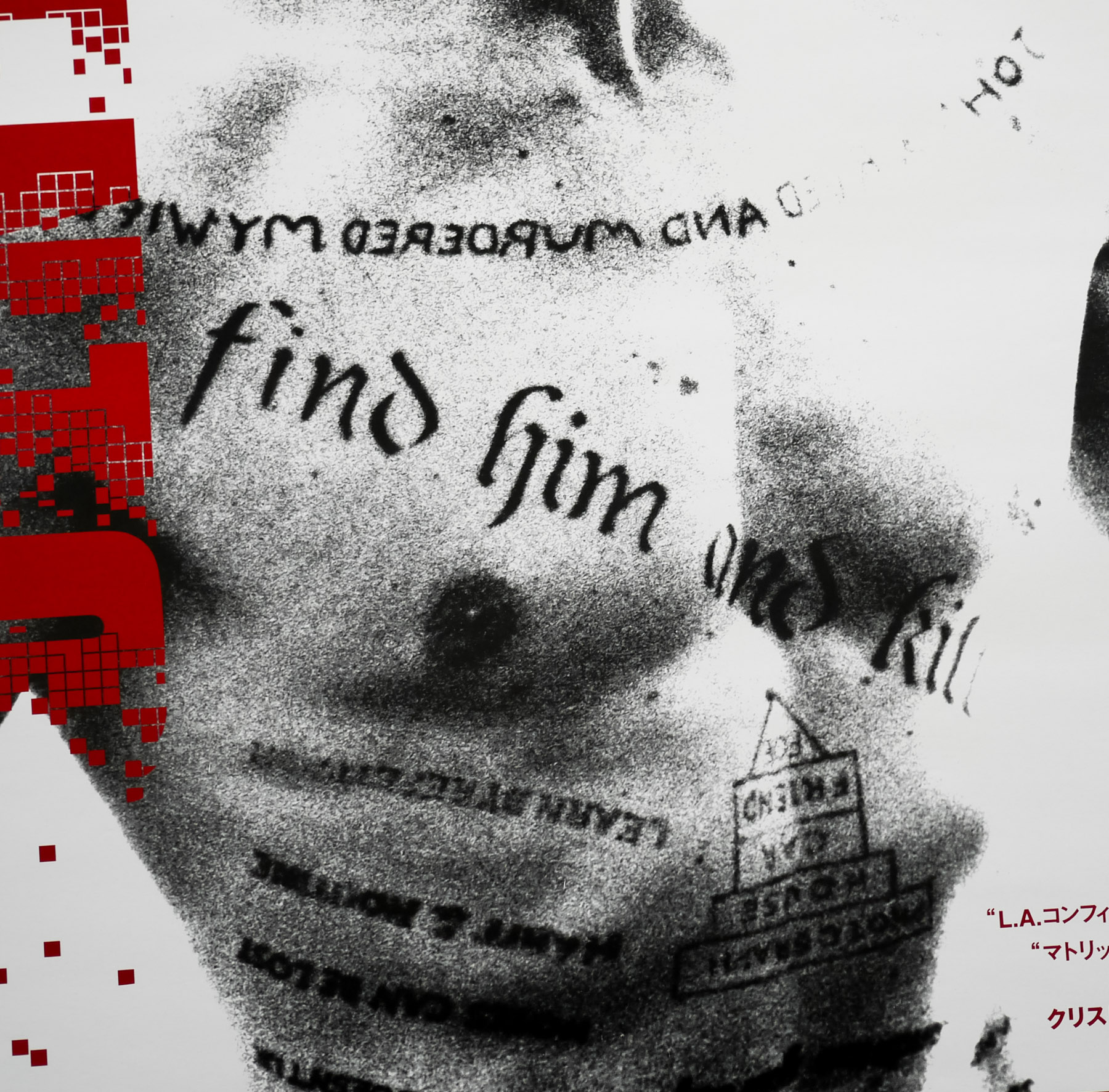
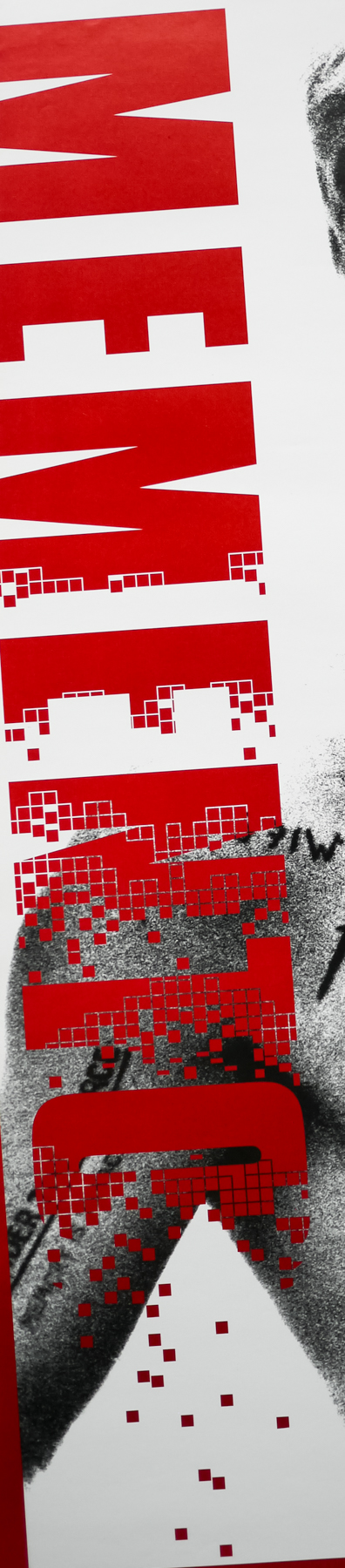
The film that launched Christopher Nolan into the international cinematic limelight, the ingenious mystery thriller Memento was written and directed by the man who would go on to helm the phenomenally successful Dark Knight Trilogy. Based on a short story by Jonathan Nolan the story focuses on a man called Leonard, played by Guy Pearce (an important role for the actor), who has no short term memory and is obsessively trying to solve the murder of his wife. Using scribbled notes, polaroids and tattoos, Leonard attempts to make sense of discoveries he makes and the interactions he has with people along the way, which includes Teddy (Joe Pantoliano) and Carrie-Anne Moss, two characters who shift and change throughout the film as Leonard, and the audience, try to understand who’s ultimately responsible.

What makes the film so memorable is the way that the story is told with two timelines being shown one after another, one in black and white and chronologically ordered, and the other in colour and in reverse chronological order. The film opens with Leonard shooting and killing Teddy, but as the film progresses we see Teddy alive and the reason for the shooting eventually becomes clear, with a devastating reveal at the end of the film. This diagram gives you an idea of the way the story is told and the film continues to be discussed almost 15 years since its release (see here and here, for example). Critics and audiences responded positively to a film that felt genuinely fresh and different, particularly compared against a glut of sequels and identikit plots that were flooding the cinema at the end of the 1990s.

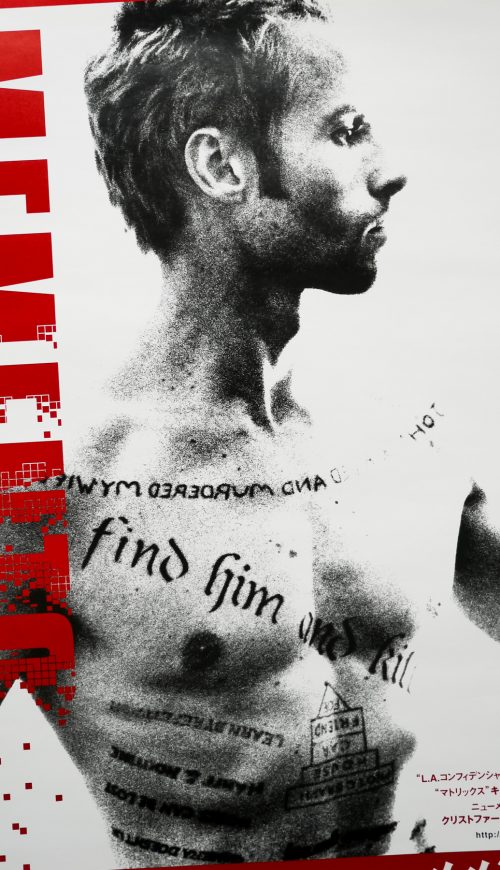
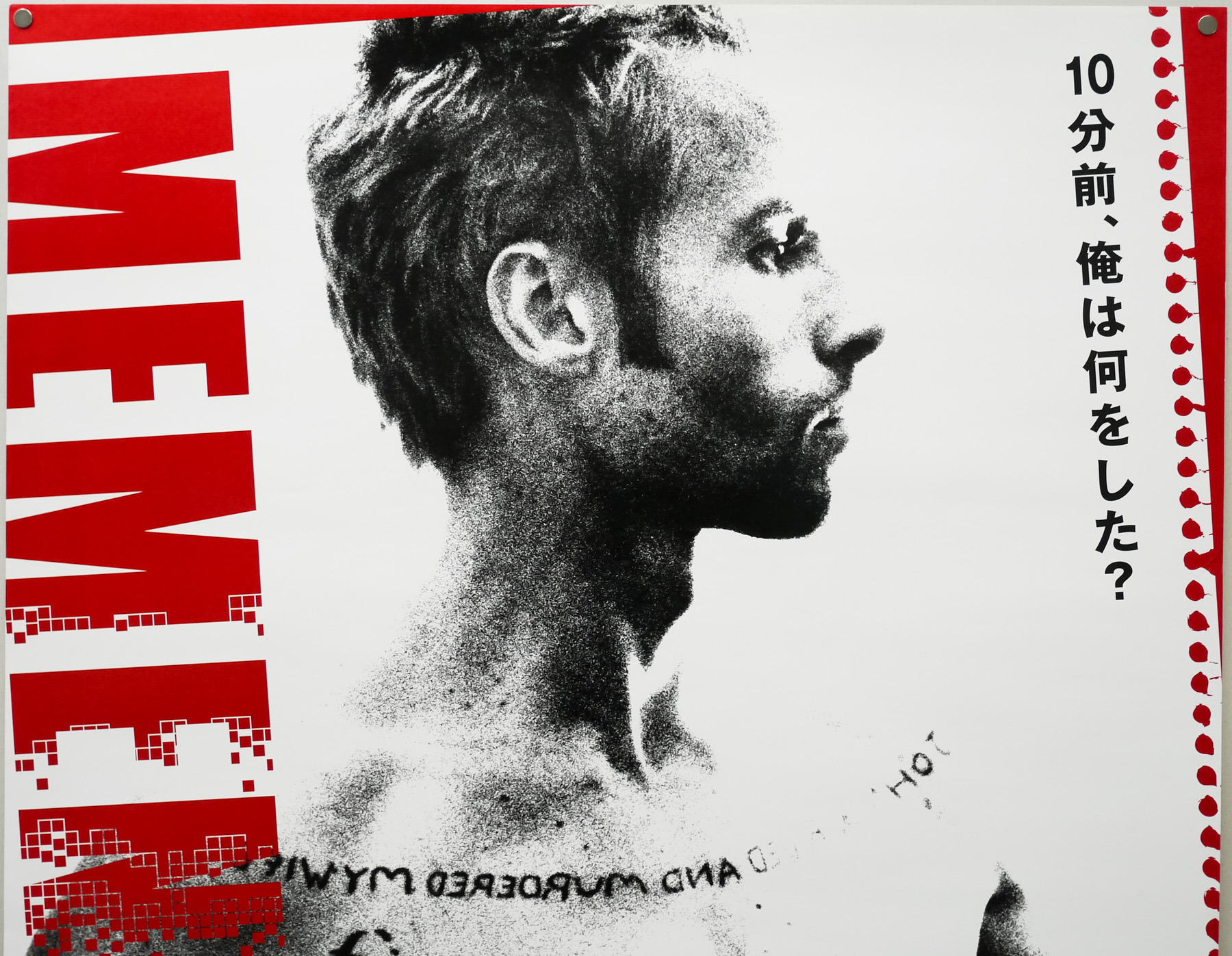
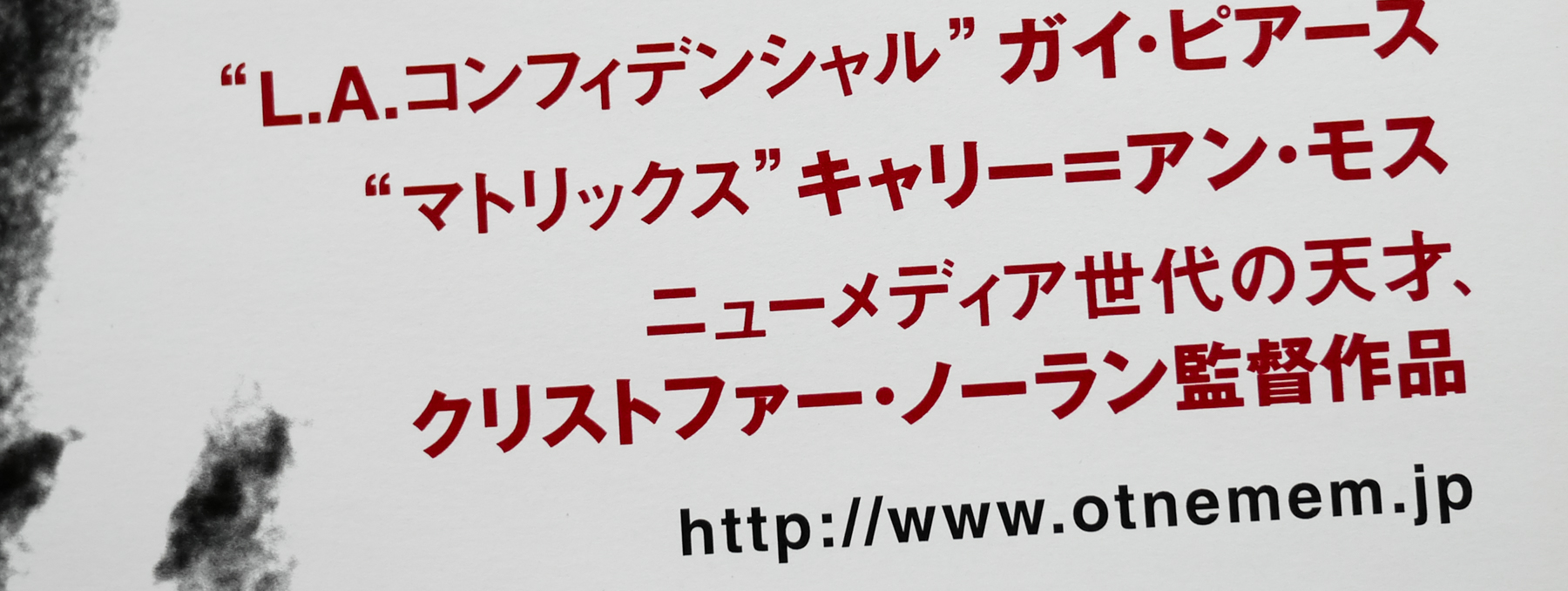
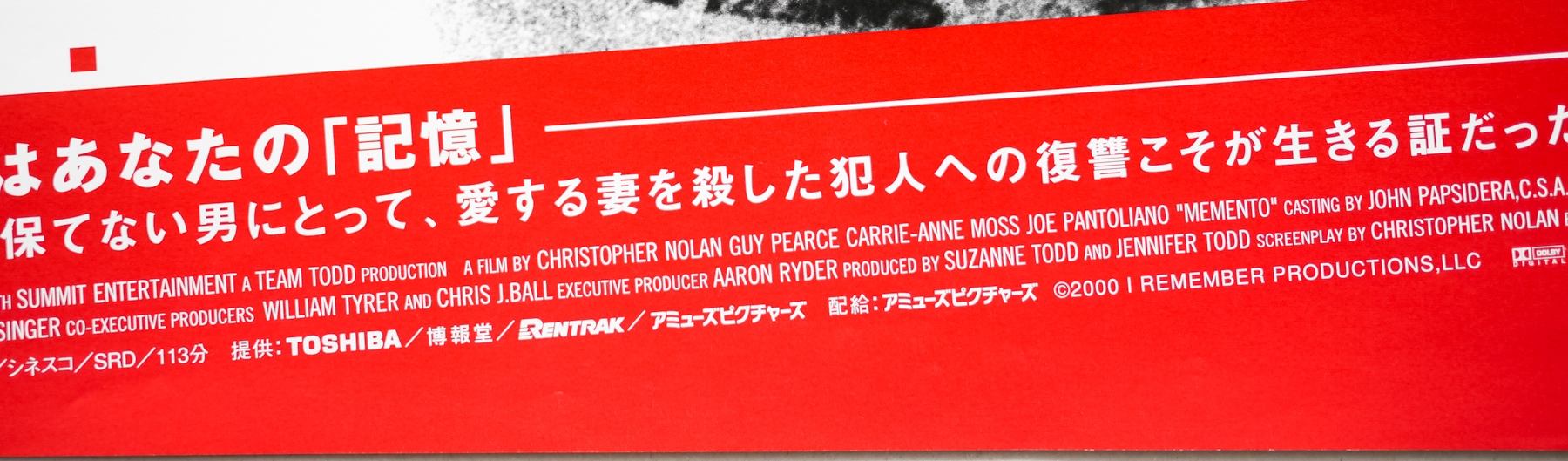
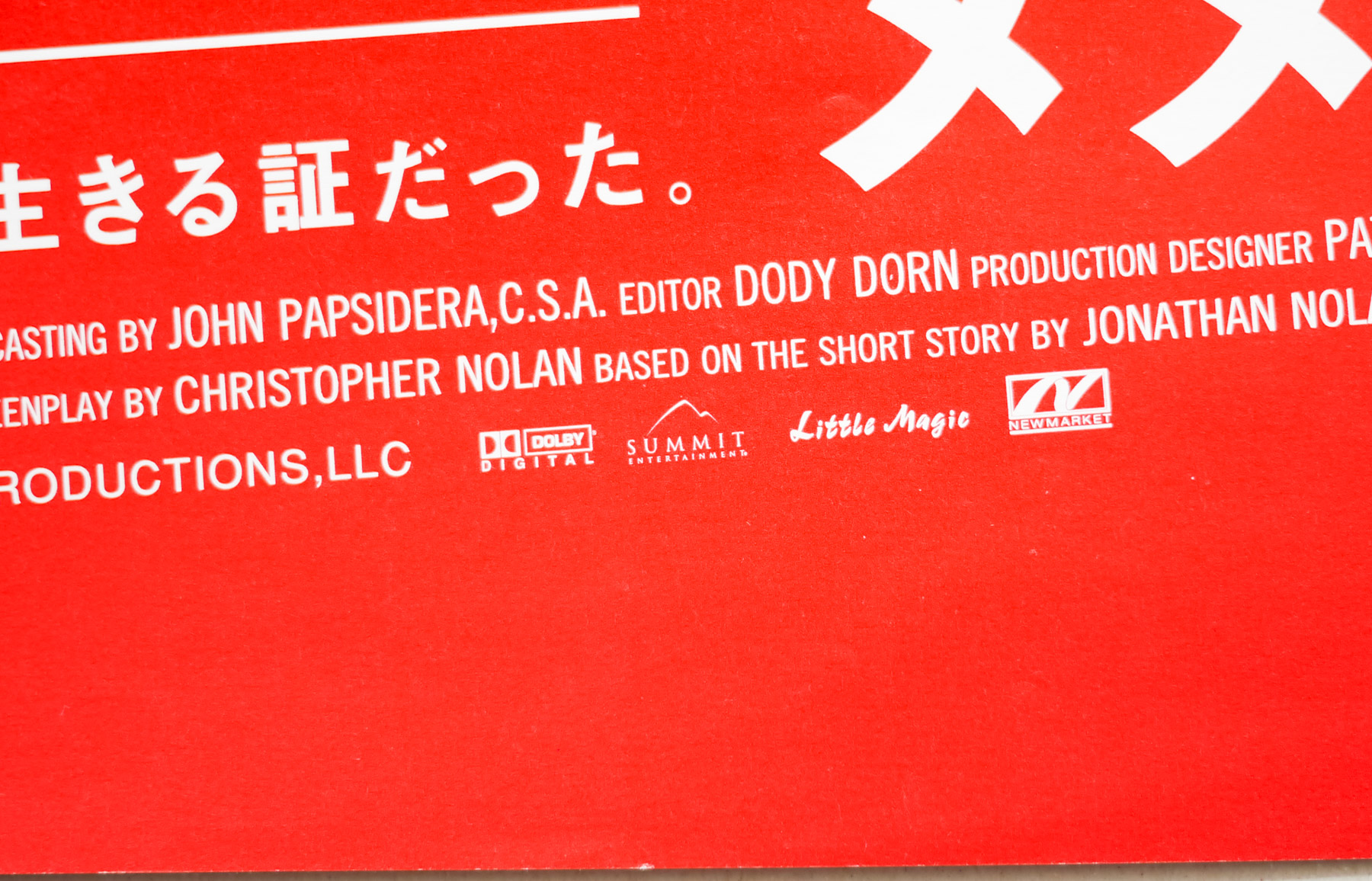
This is the Japanese B2 (red style) from the original release there back in 2001 and the design is unique to this poster. The American one sheet is markedly different and includes Carrie-Anne Moss.


Moonraker / B2 / Japan

19.05.14

Poster Poster
Title
Moonraker
AKA
Agente 007, Moonraker: Operazione Spazio (Italy)
Year of Film
1979
Director
Lewis Gilbert
Starring
Roger Moore, Lois Chiles, Michael Lonsdale, Richard Kiel, Corinne Clery, Bernard Lee, Geoffrey Keen, Desmond Llewelyn, Lois Maxwell, Toshirô Suga, Blanche Ravalec
Origin of Film
UK | France
Genre(s) of Film
Roger Moore, Lois Chiles, Michael Lonsdale, Richard Kiel, Corinne Clery, Bernard Lee, Geoffrey Keen, Desmond Llewelyn, Lois Maxwell, Toshirô Suga, Blanche Ravalec,
Type of Poster
B2
Style of Poster
--
Origin of Poster
Japan
Year of Poster
1979
Designer
Unknown
Artist
Dan Goozee
Size (inches)
20 6/16" x 28 14/16"
SS or DS
SS
Tagline
--

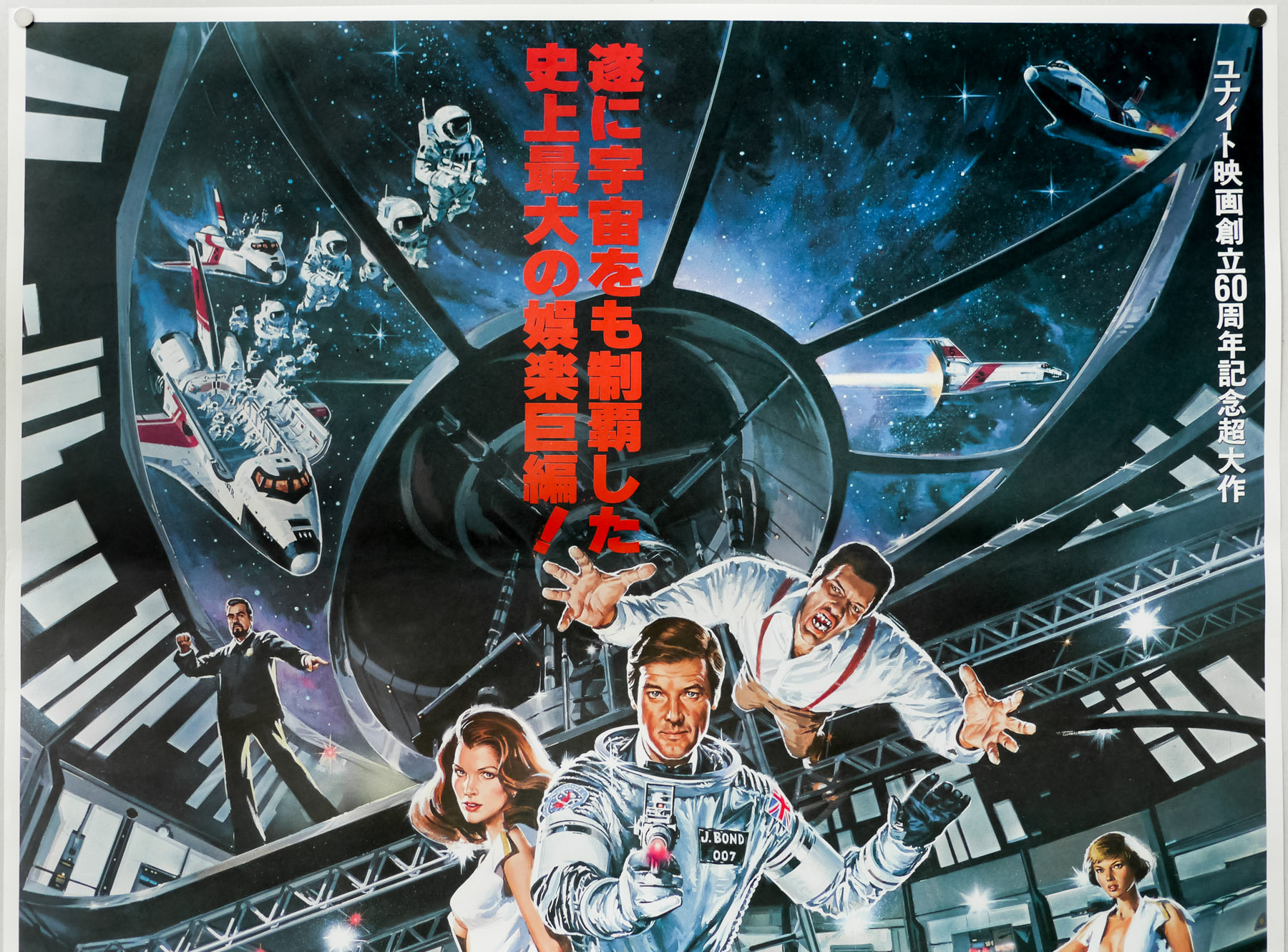
Although considered by most Bond fans to be one of the weakest of the series, I know I’m not the only one to have a soft spot for MoonrakerRoger Moore‘s fifth outing as James Bond. Thanks to endless TV showings during the 1980s and early 1990s I’ve probably seen this more than any other in the series and, like Live and Let Die, it had a huge impression on my young mind.

Looking at it through the cynical fog of adulthood it’s easy to sneer at the camp script, supremely daft action sequences (motorised Gondola anyone?) and painfully obvious attempt to cash in on the success of Star Wars (a very common theme amongst films released in its wake). The film is probably the quintessential outing for Moore as Bond and only he could have pulled it off as well as he did, particularly when it comes to the hokey script and madcap action.

The film features several memorable sequences, including a cable car fight over Rio de Janeiro, and a decent bad guy in Richard Kiel‘s inimitable ‘Jaws’ who used to scare me senseless as a kid. Also notable is John Barry‘s soundtrack, which marked a departure from his previous Bond work by mainly using strings instead of the typical brass. The film also features one of the most (literally) eyebrow-raising character names in the form of Dr Holly Goodhead (Lois Chiles) and one of the best/worst sign-offs of the entire series:

Sir Frederick Gray, Minister of Defence:  My God, what’s Bond doing?
Q: I think he’s attempting re-entry, sir.

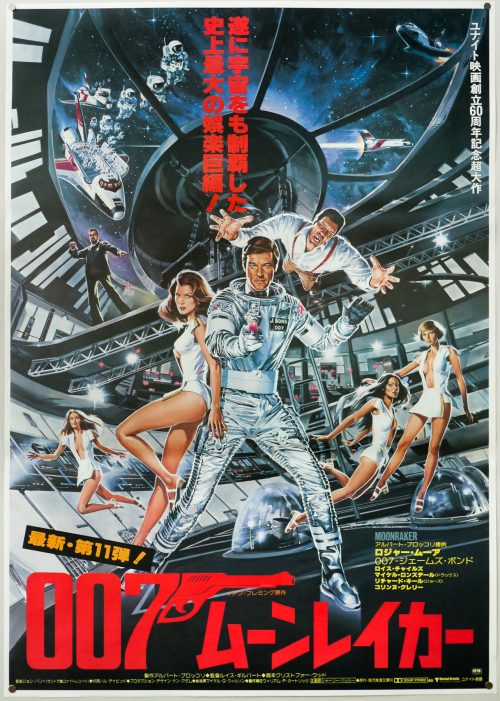
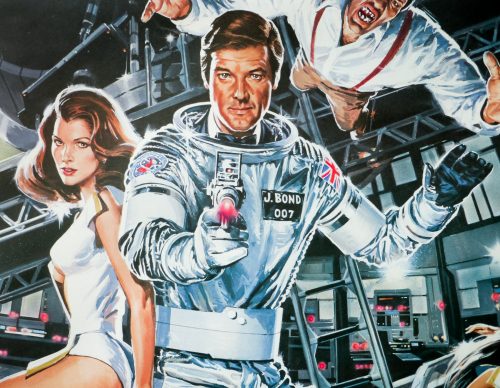
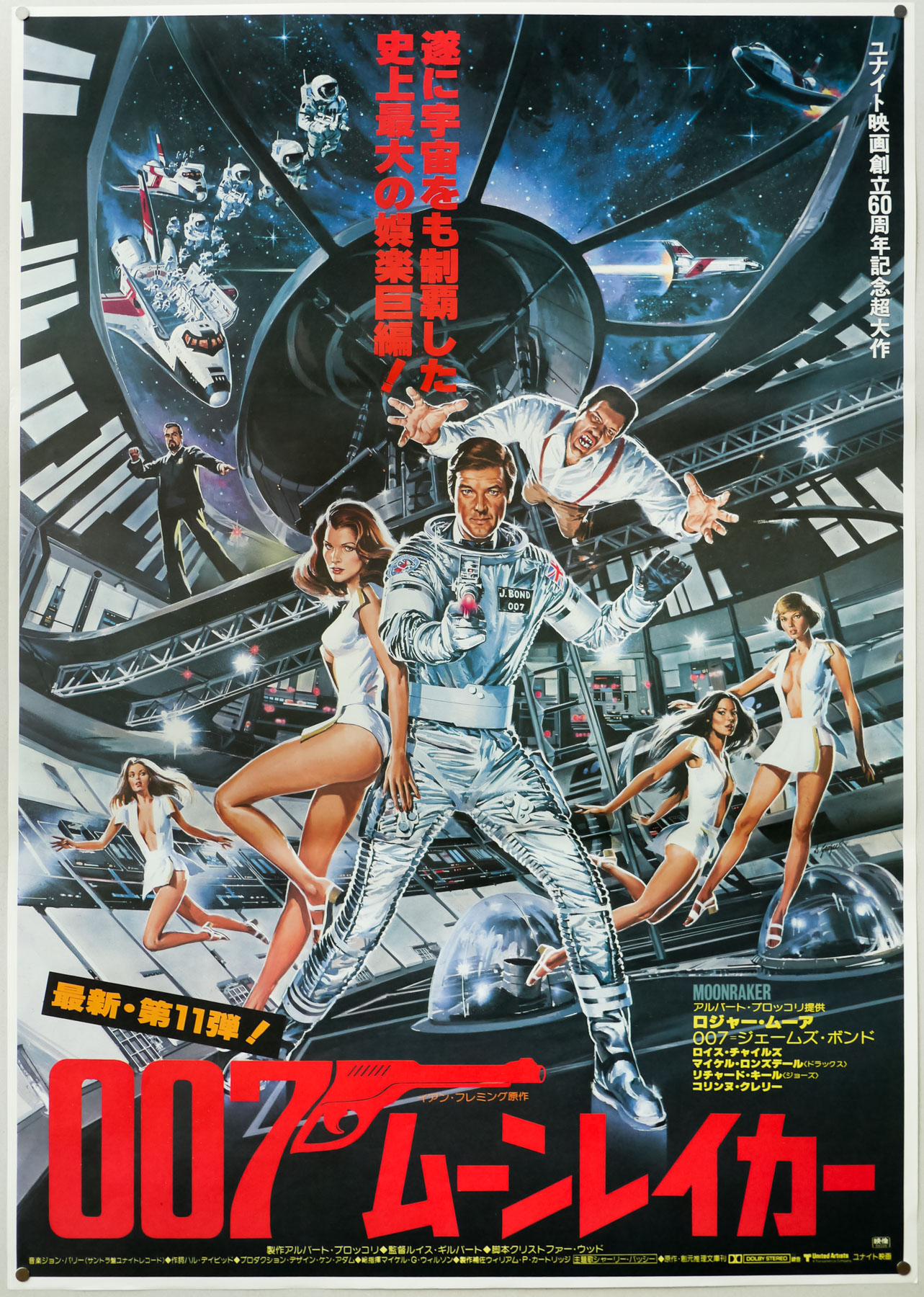
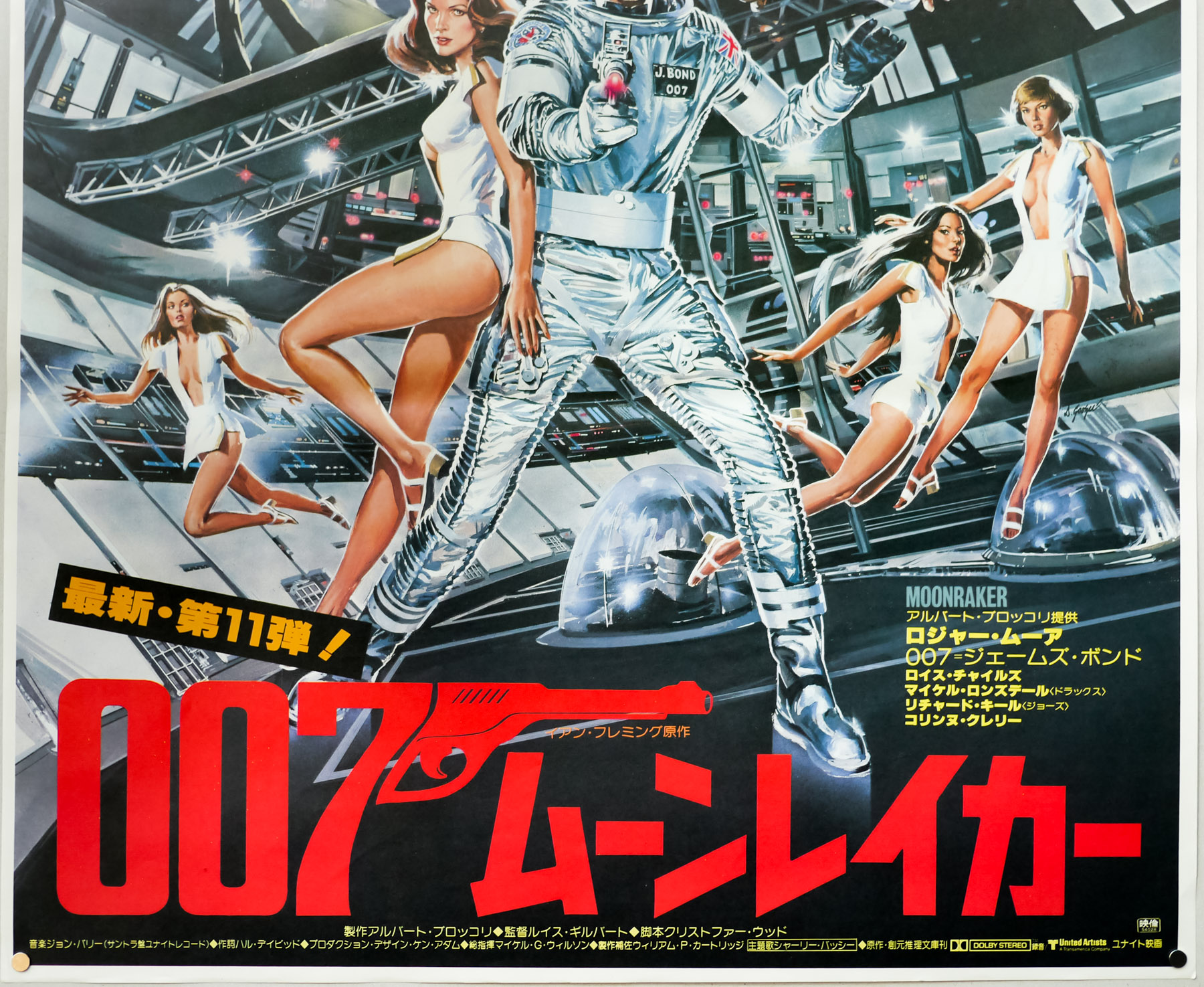
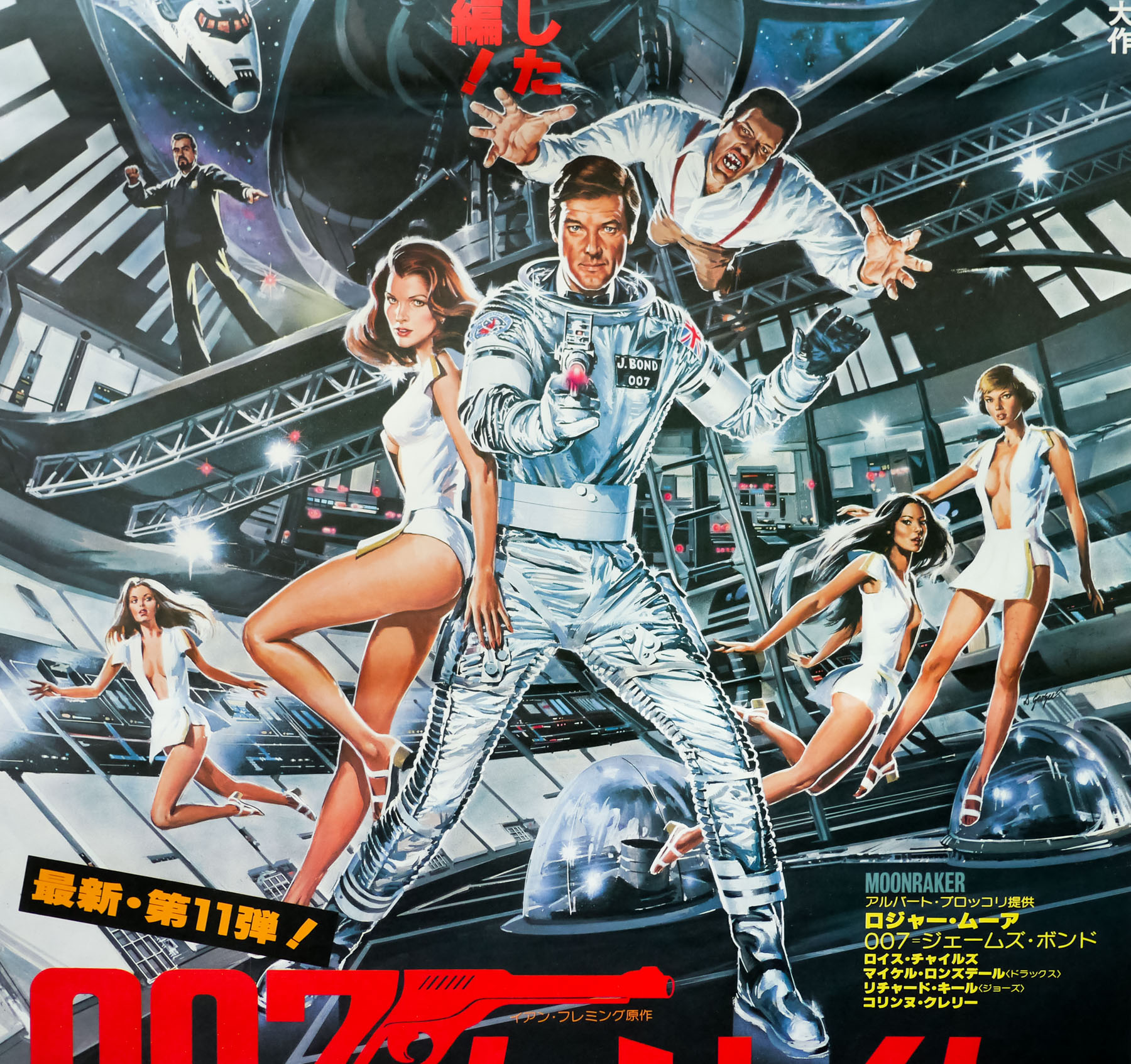
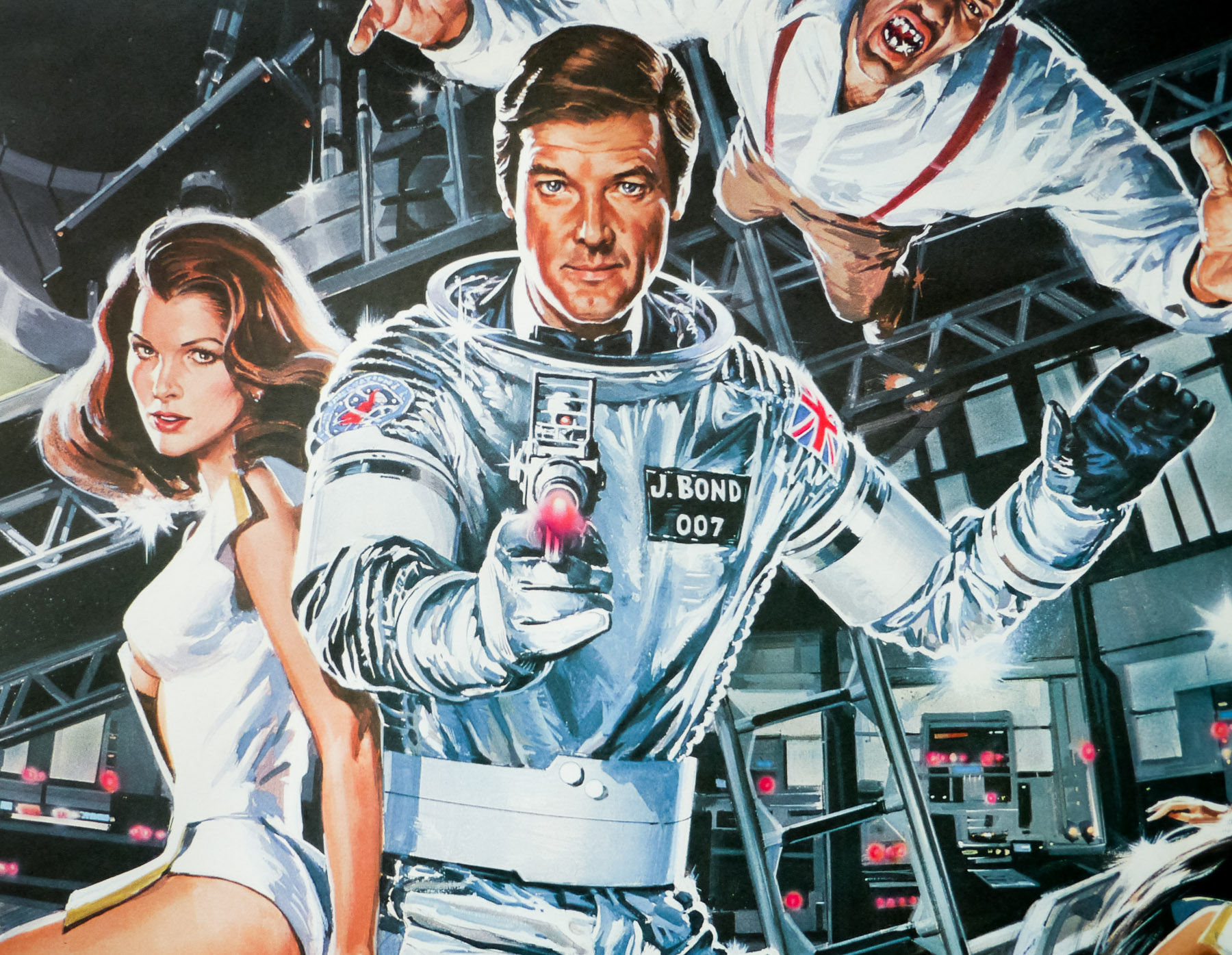
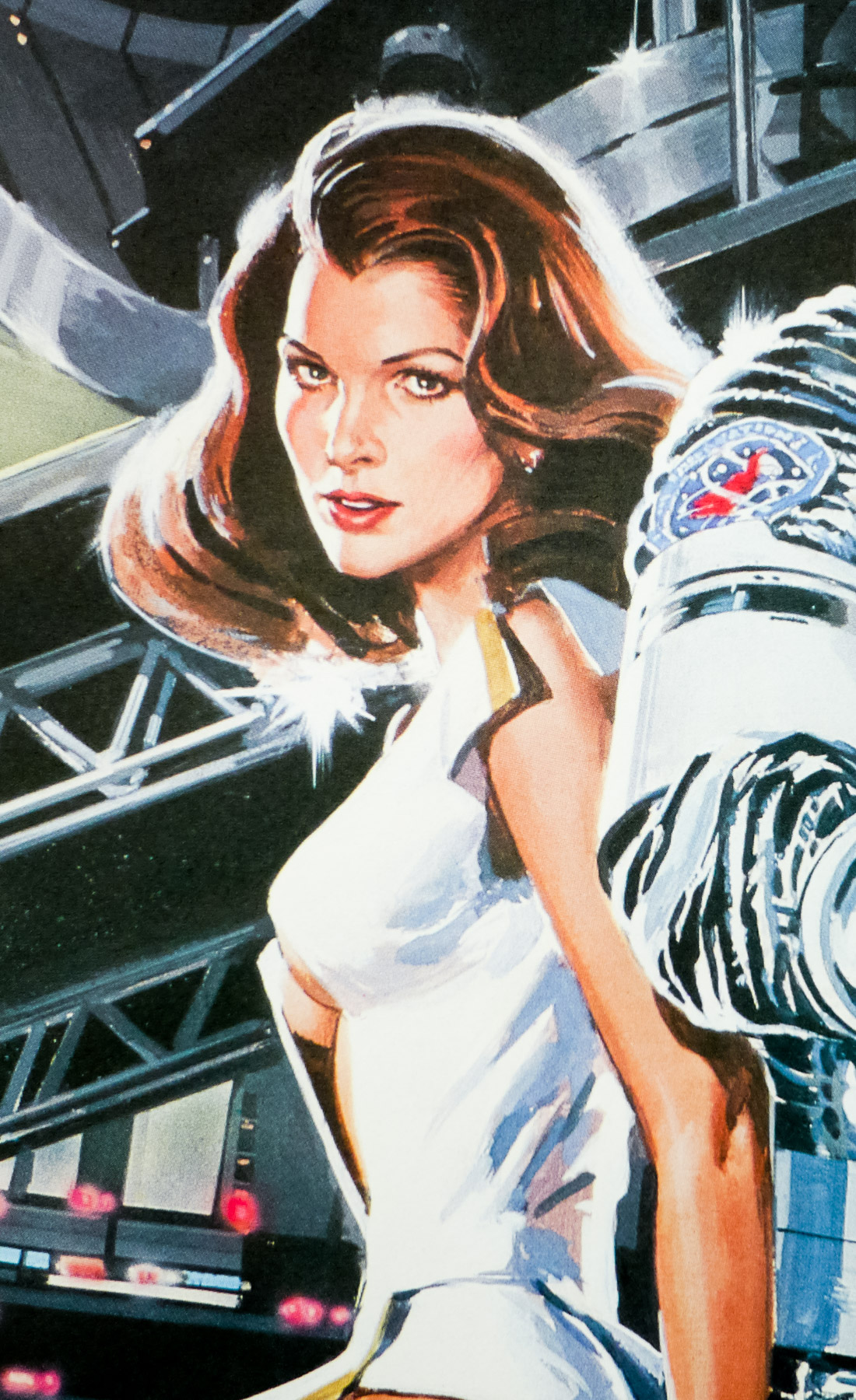
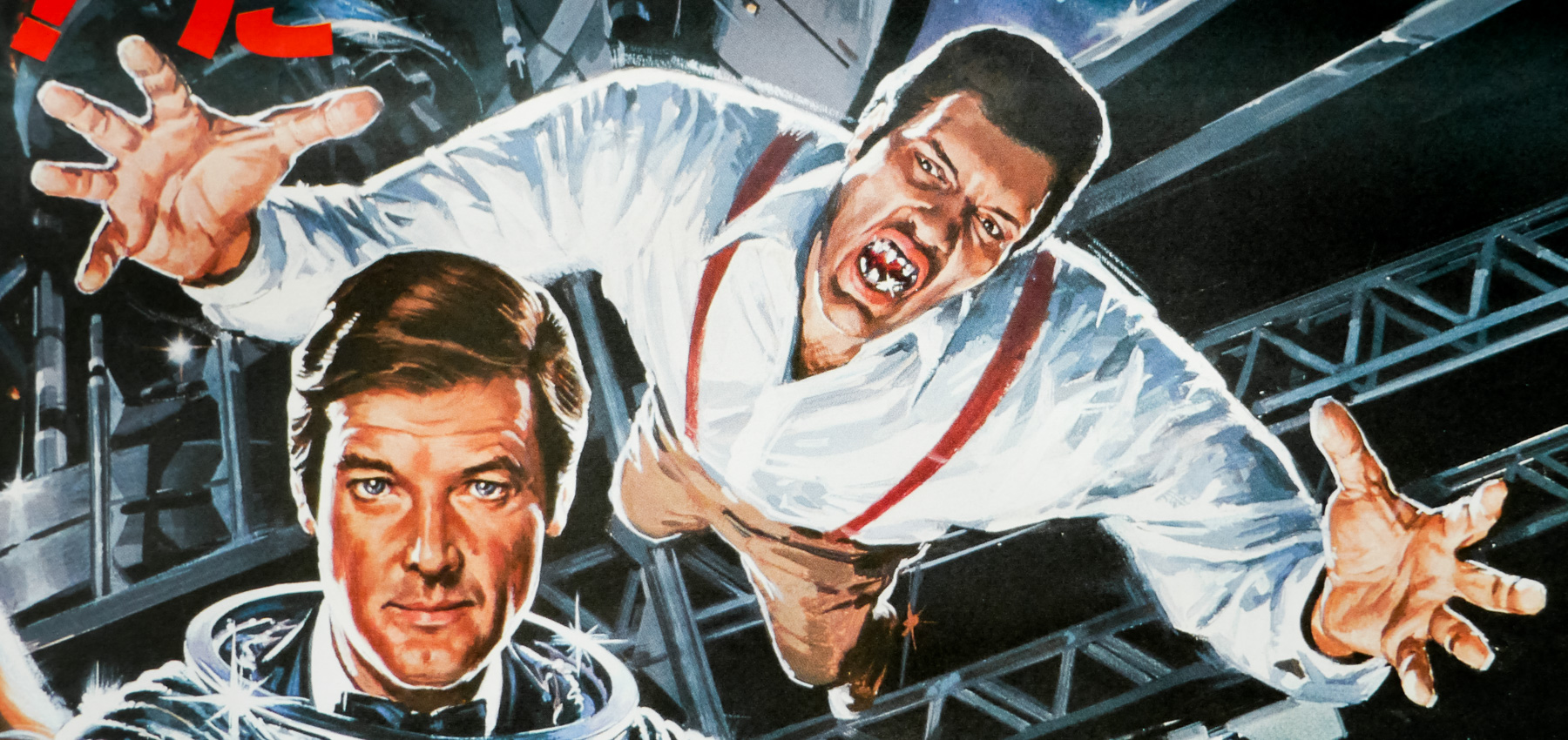
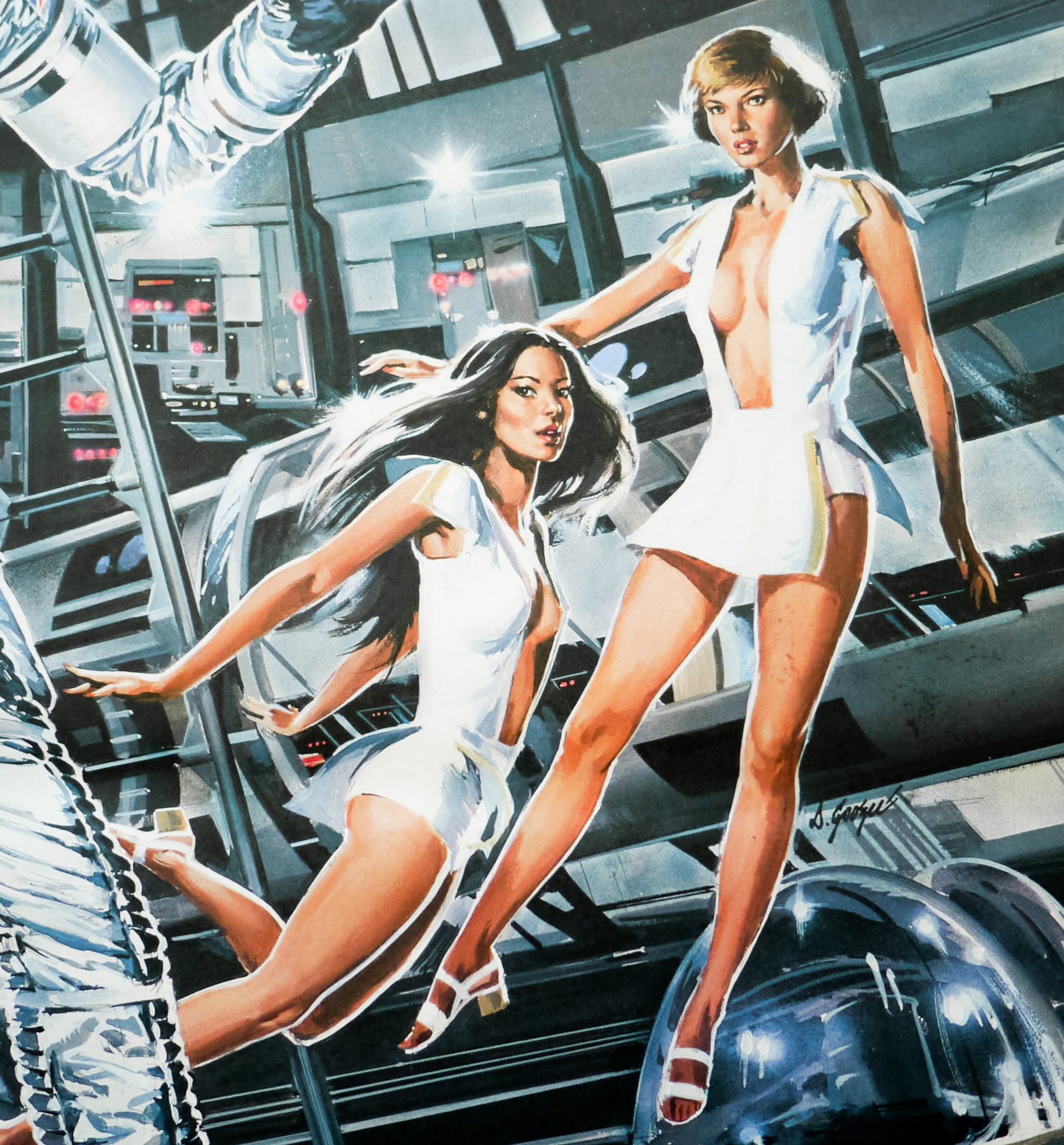
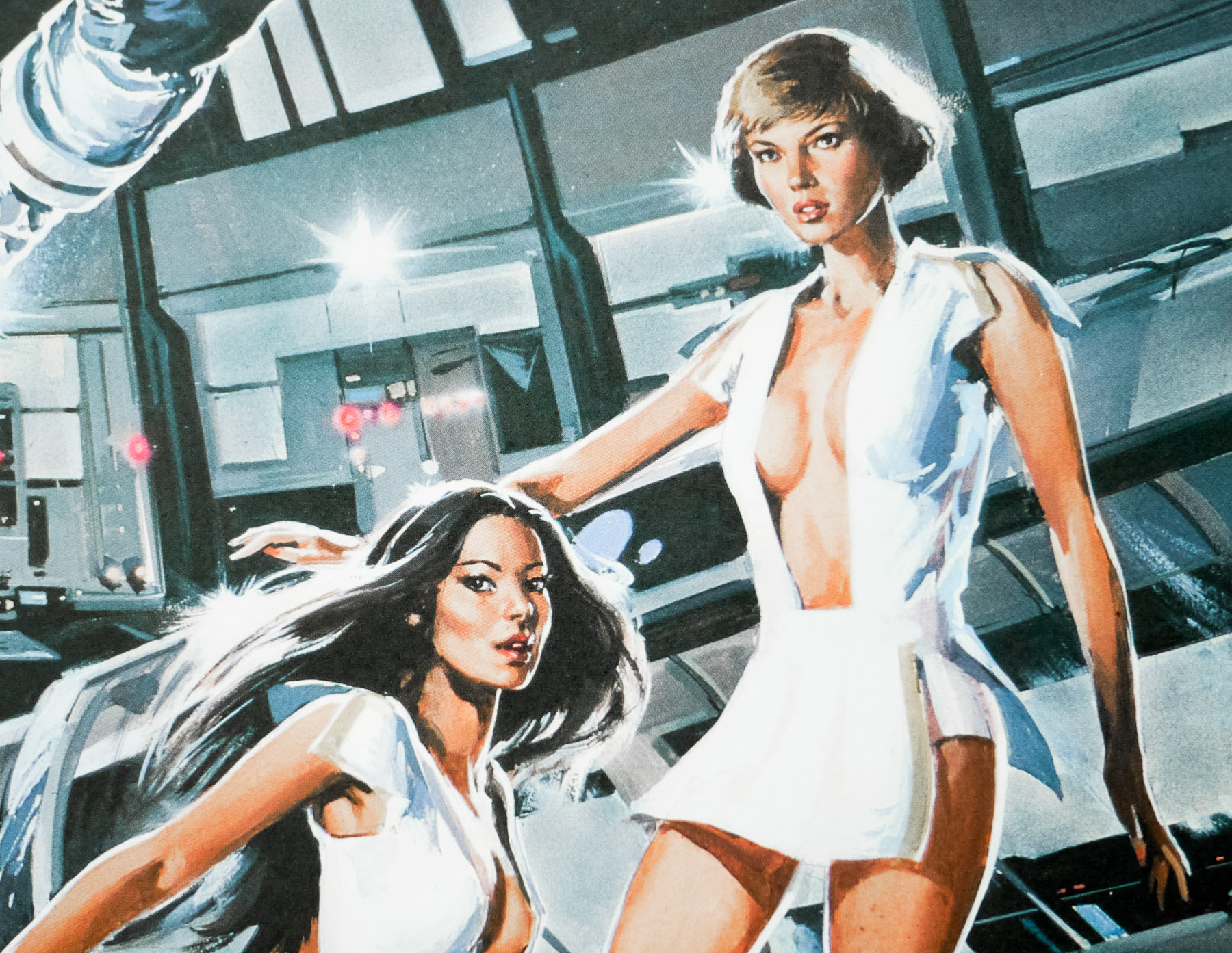
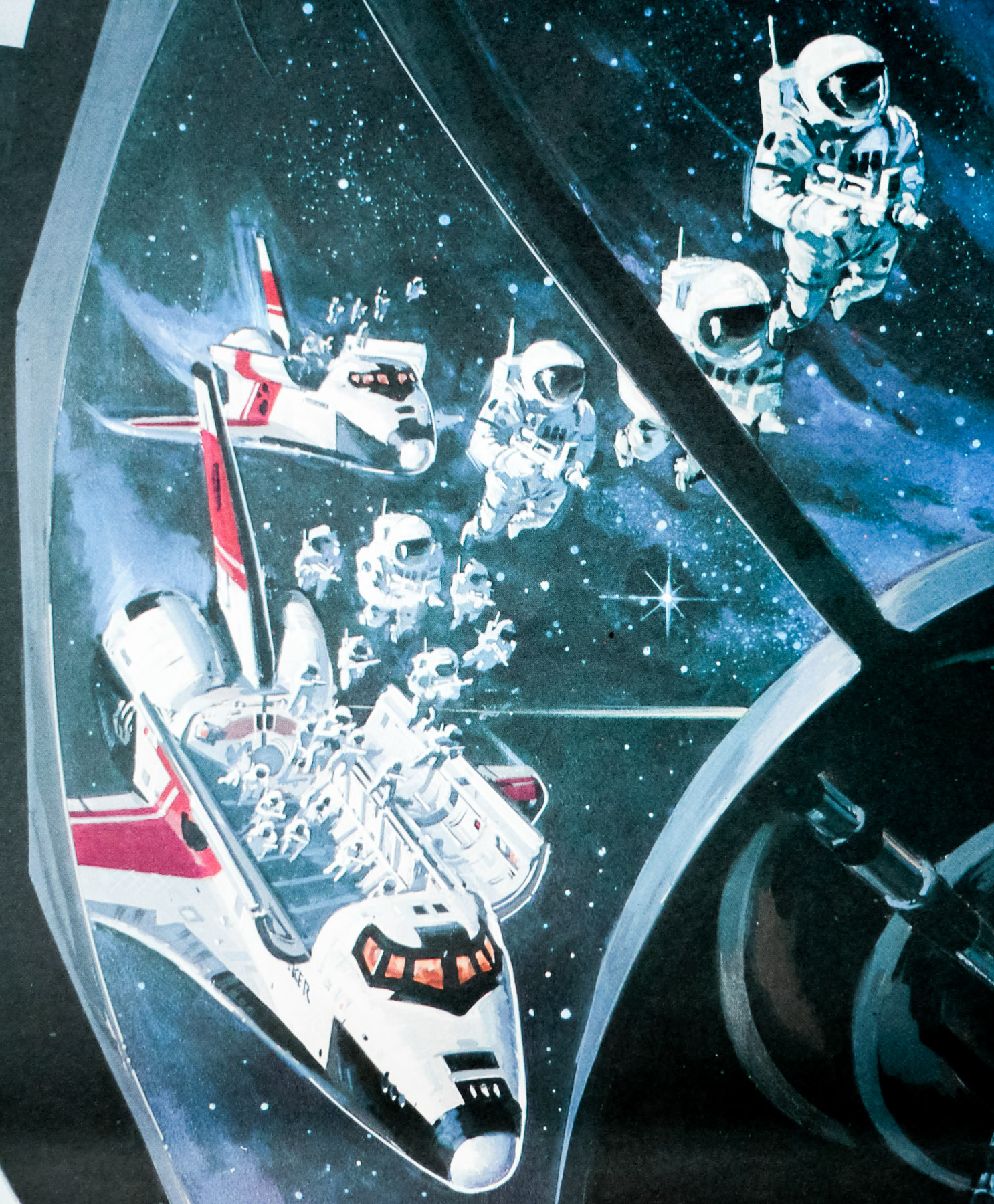
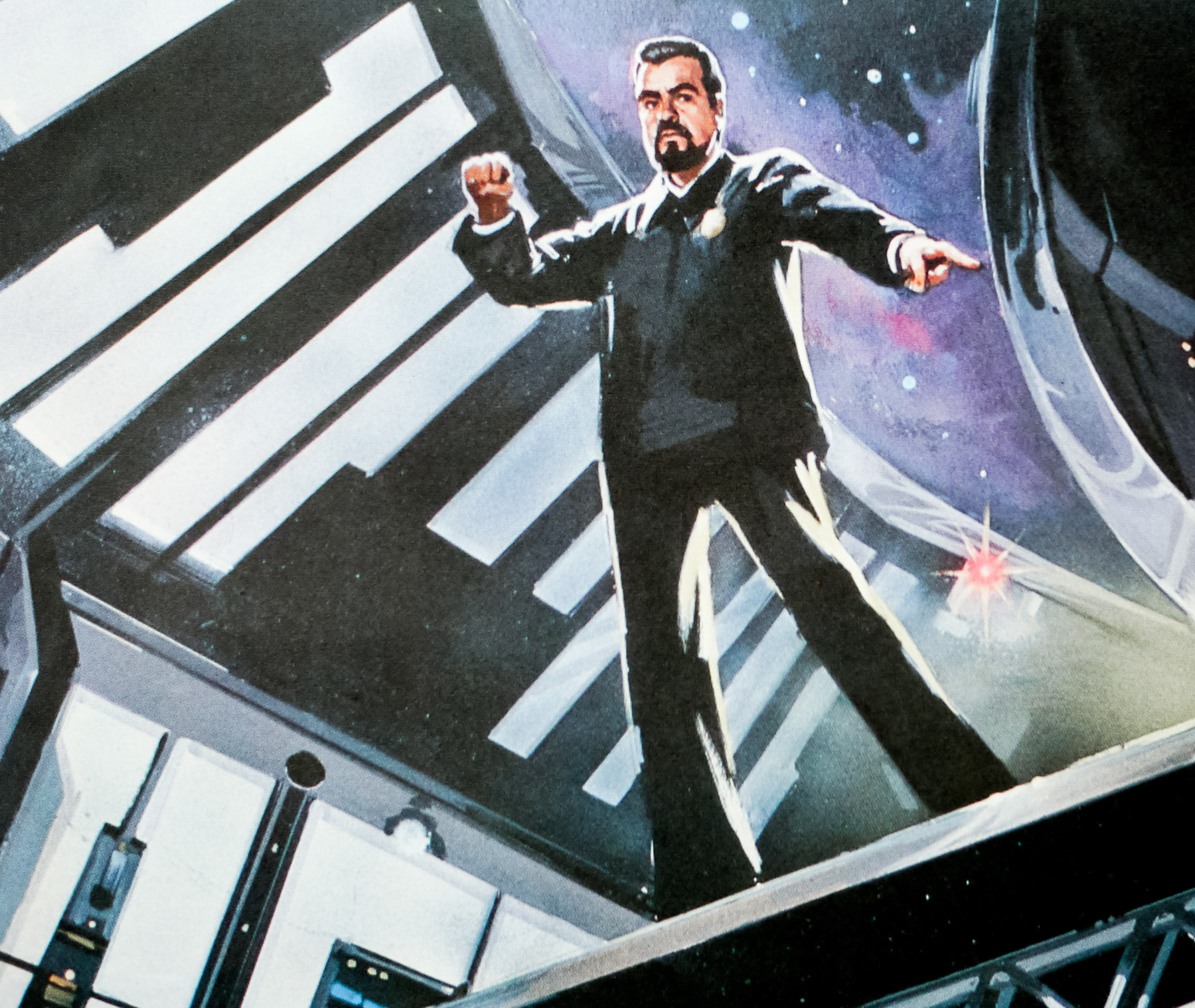
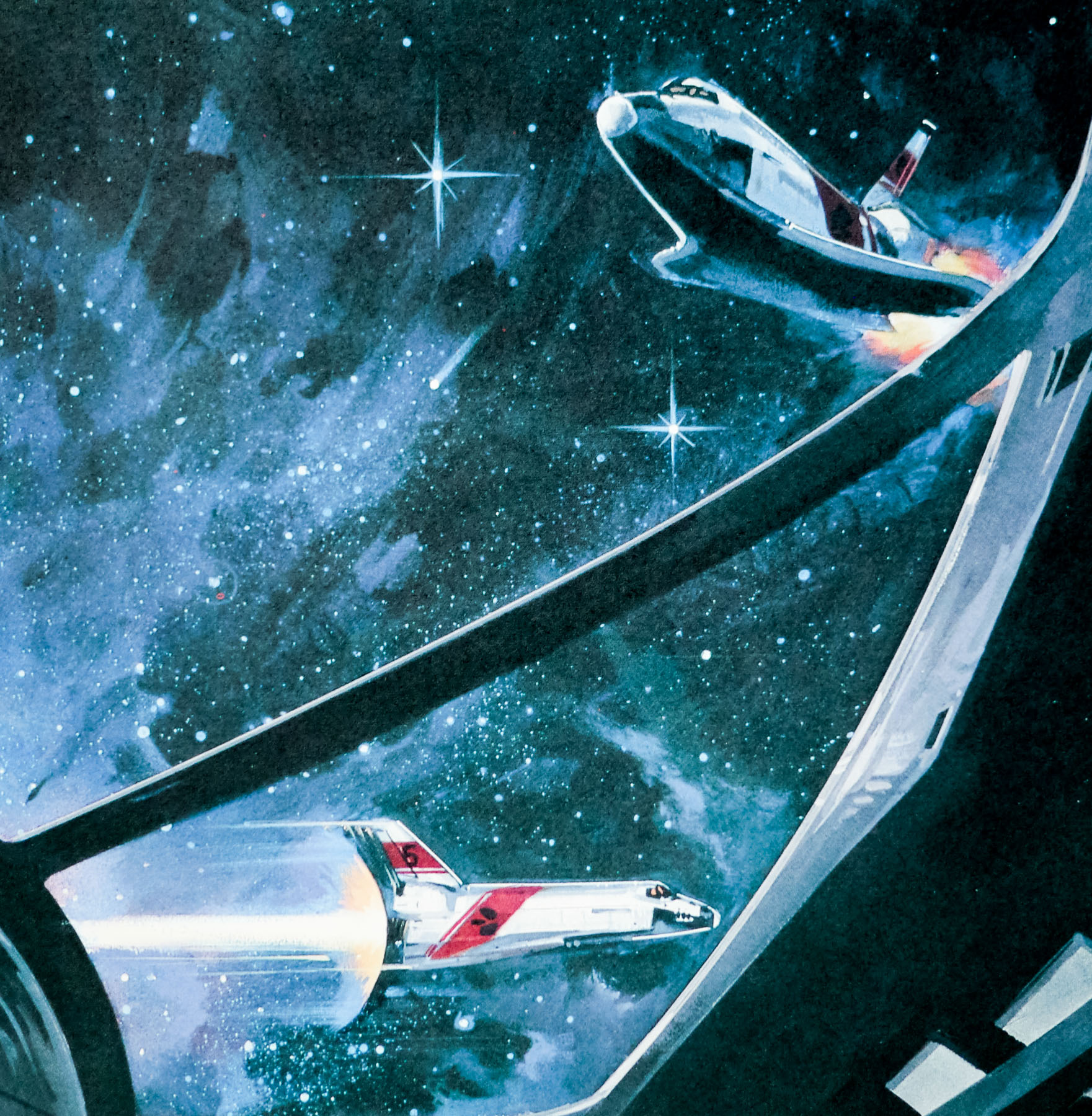
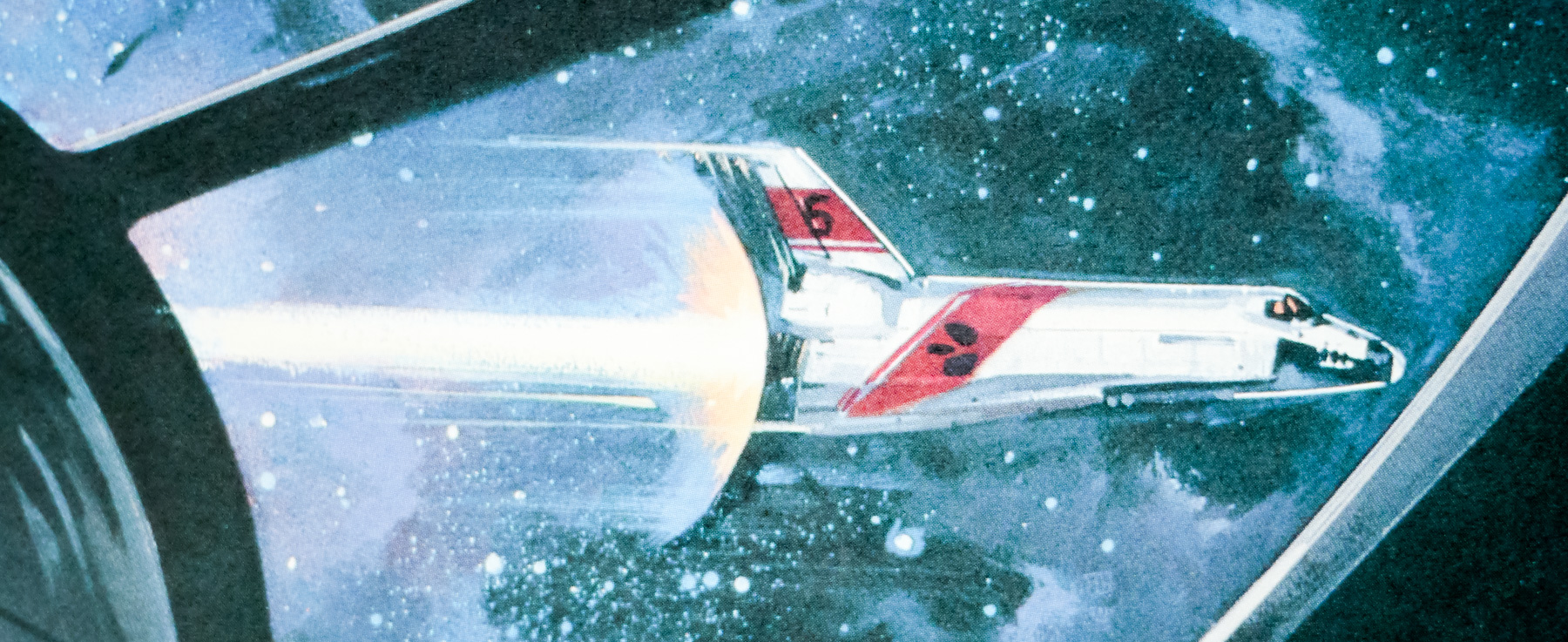
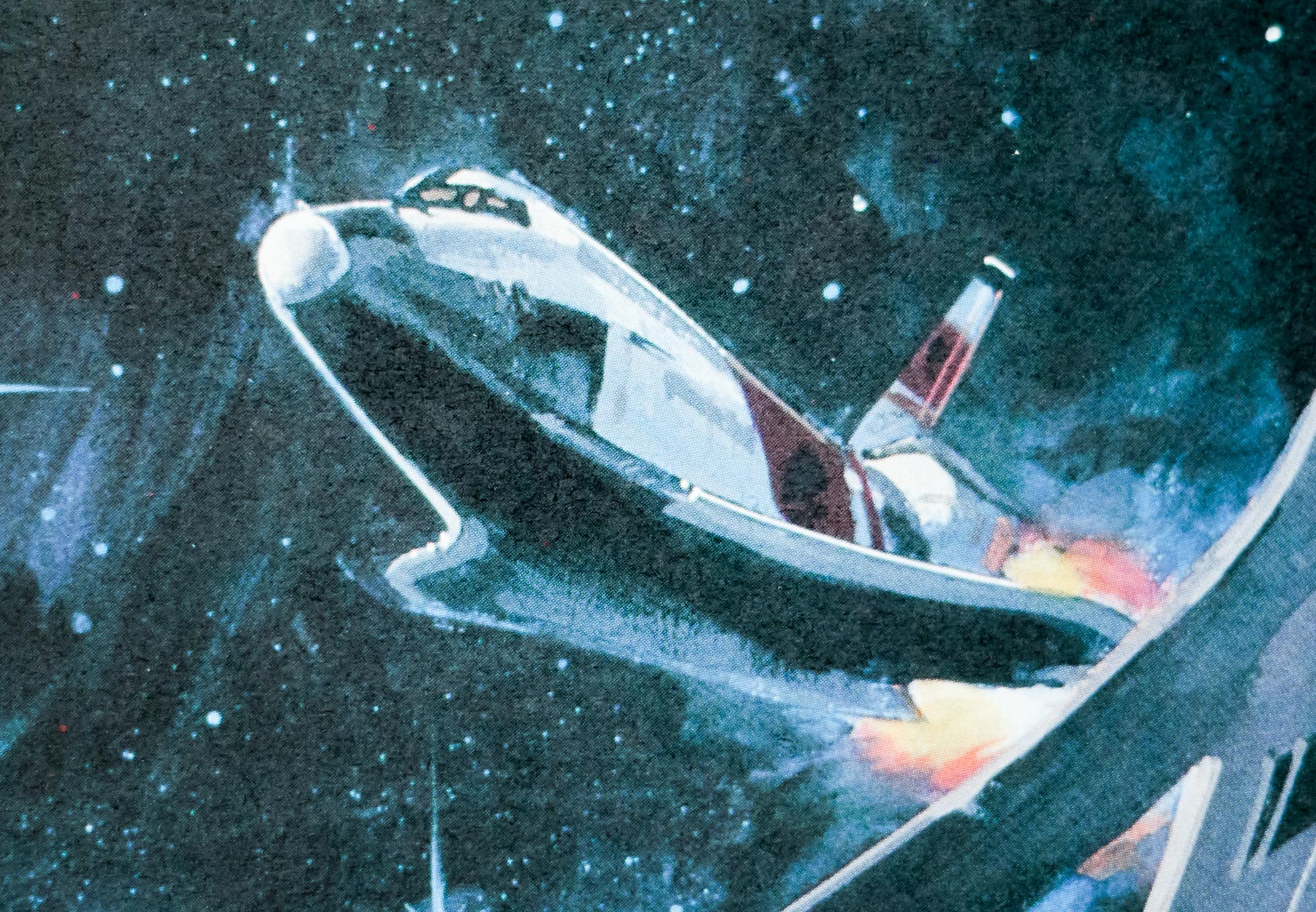
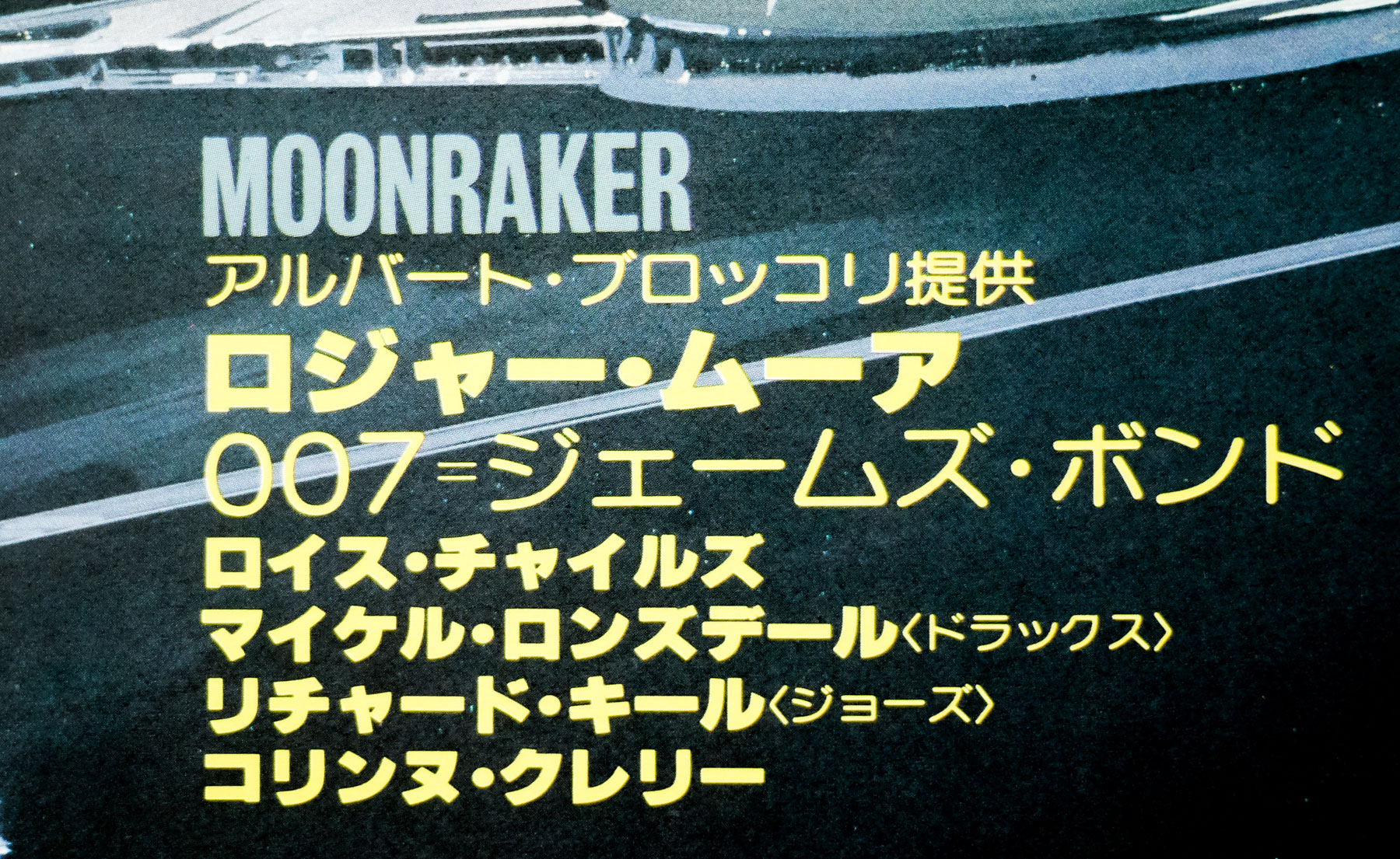
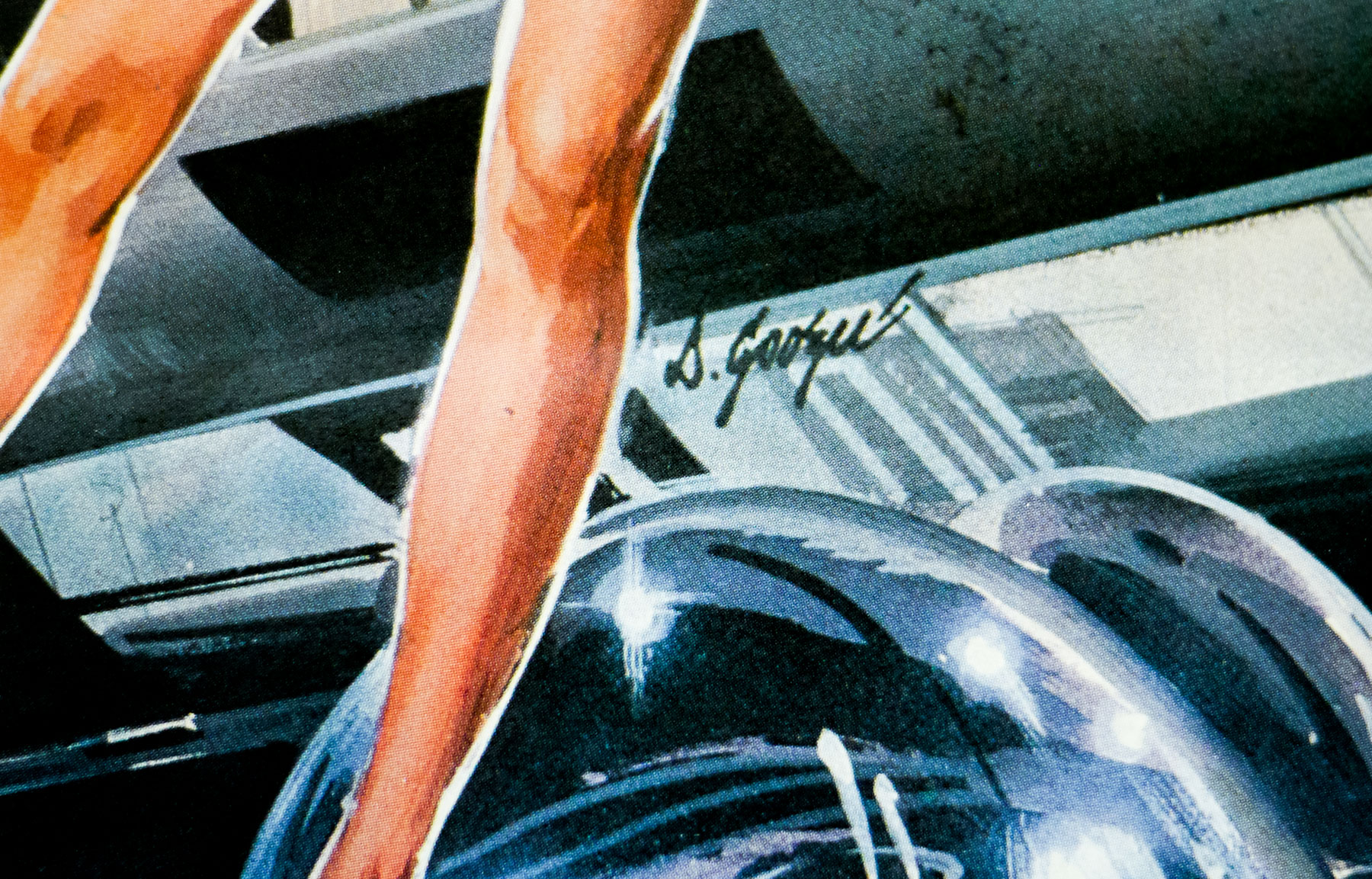
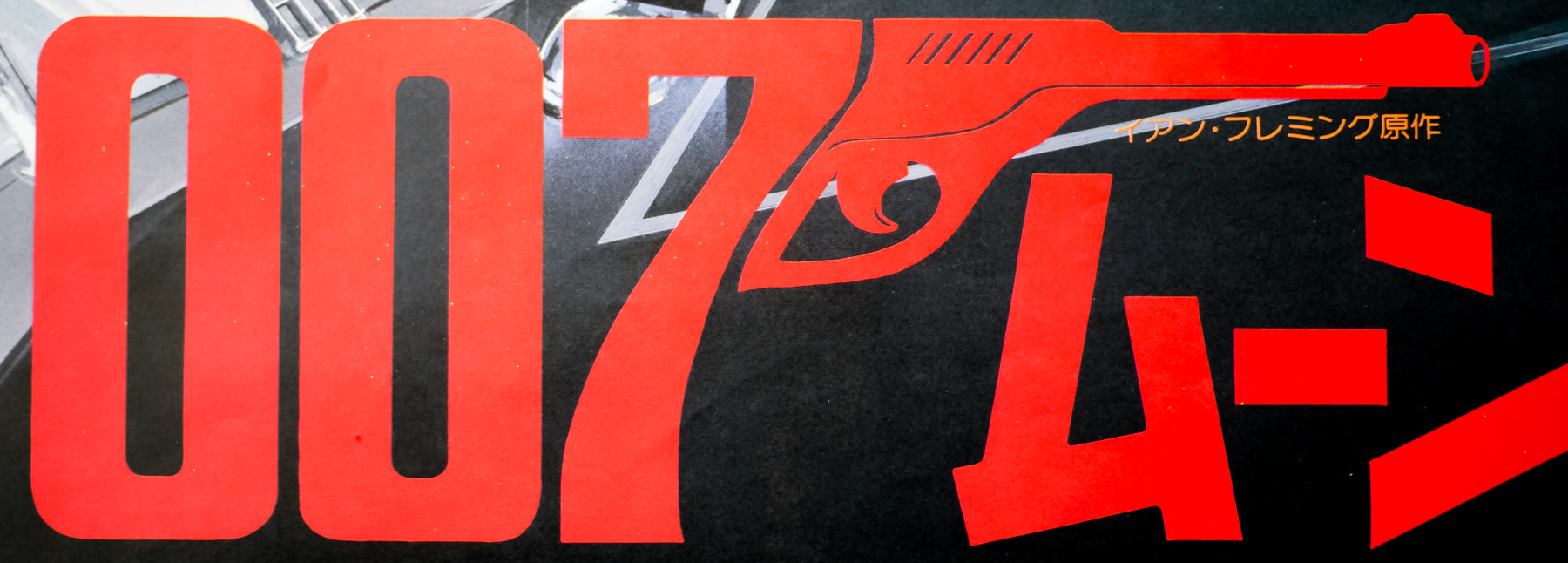
This is the Japanese B2 featuring artwork by the American artist Dan Goozee that was also used on the final Moonraker US one sheet and on the film’s posters in several other countries. Dan Goozee also worked on several other James Bond posters including the international advance one sheet for Moonraker, the artwork for Octopussy and two one sheets for A View to a Kill.

Other posters I’ve collected by Goozee can be seen here.