You searched for: USA

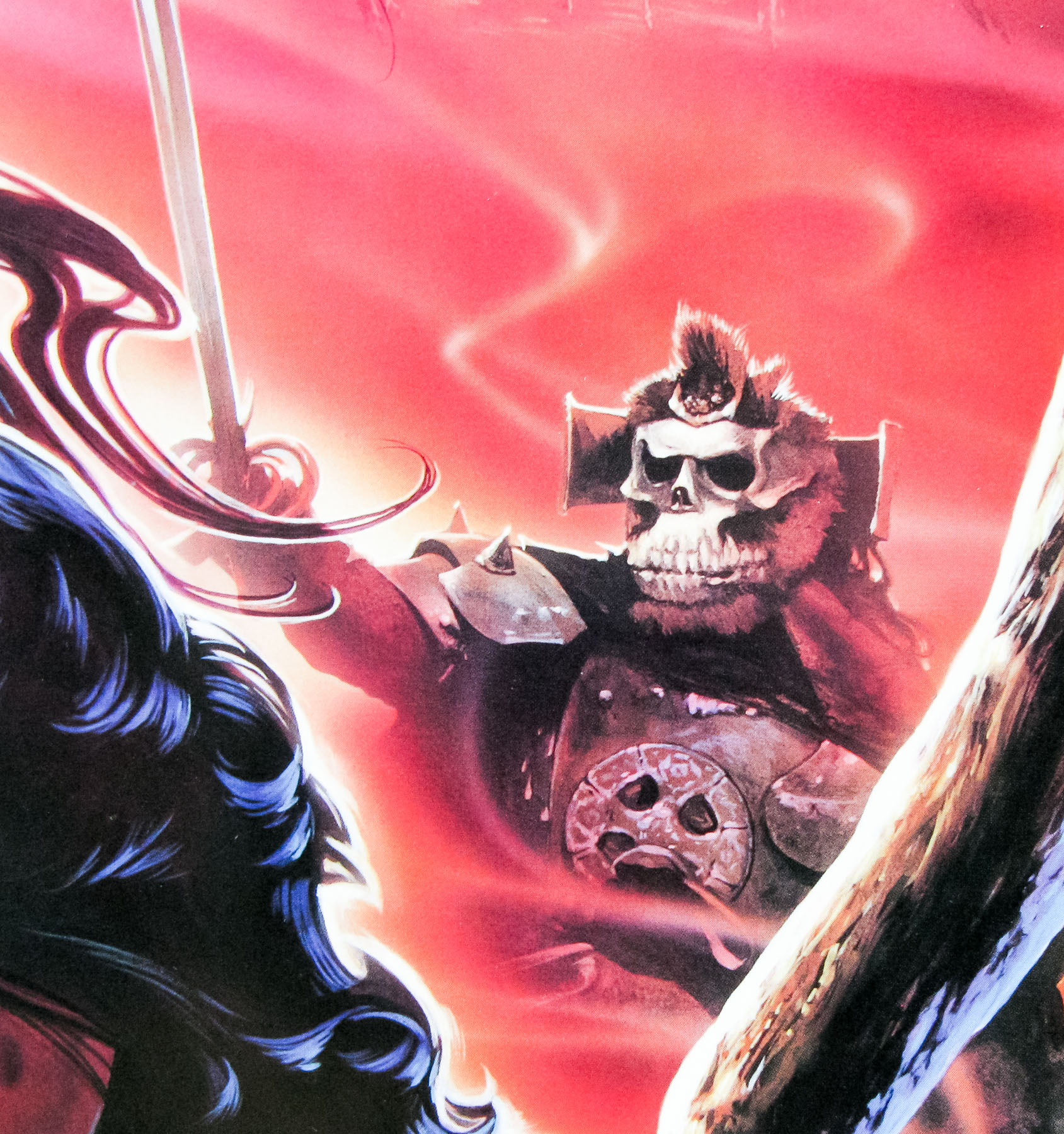
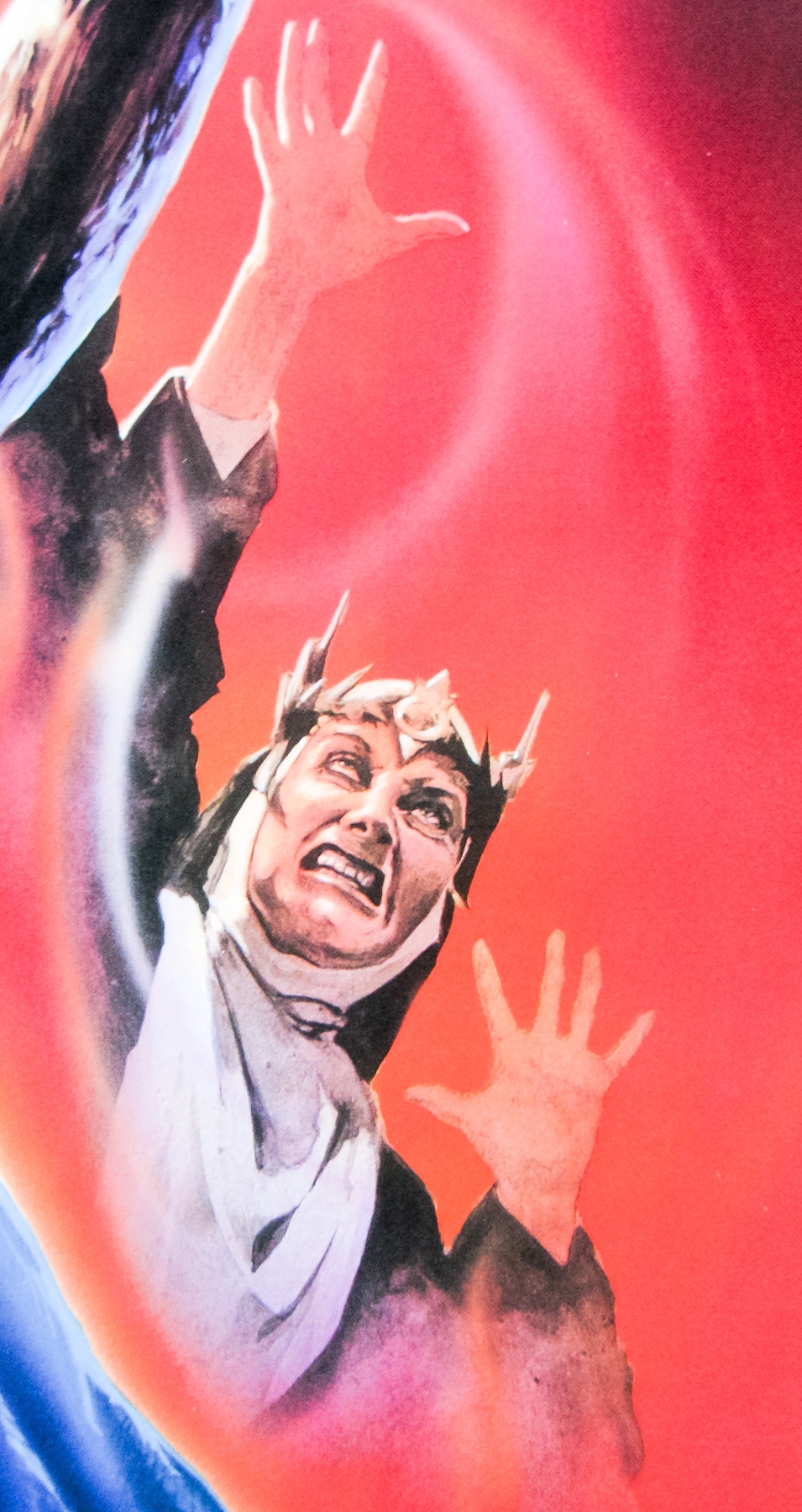
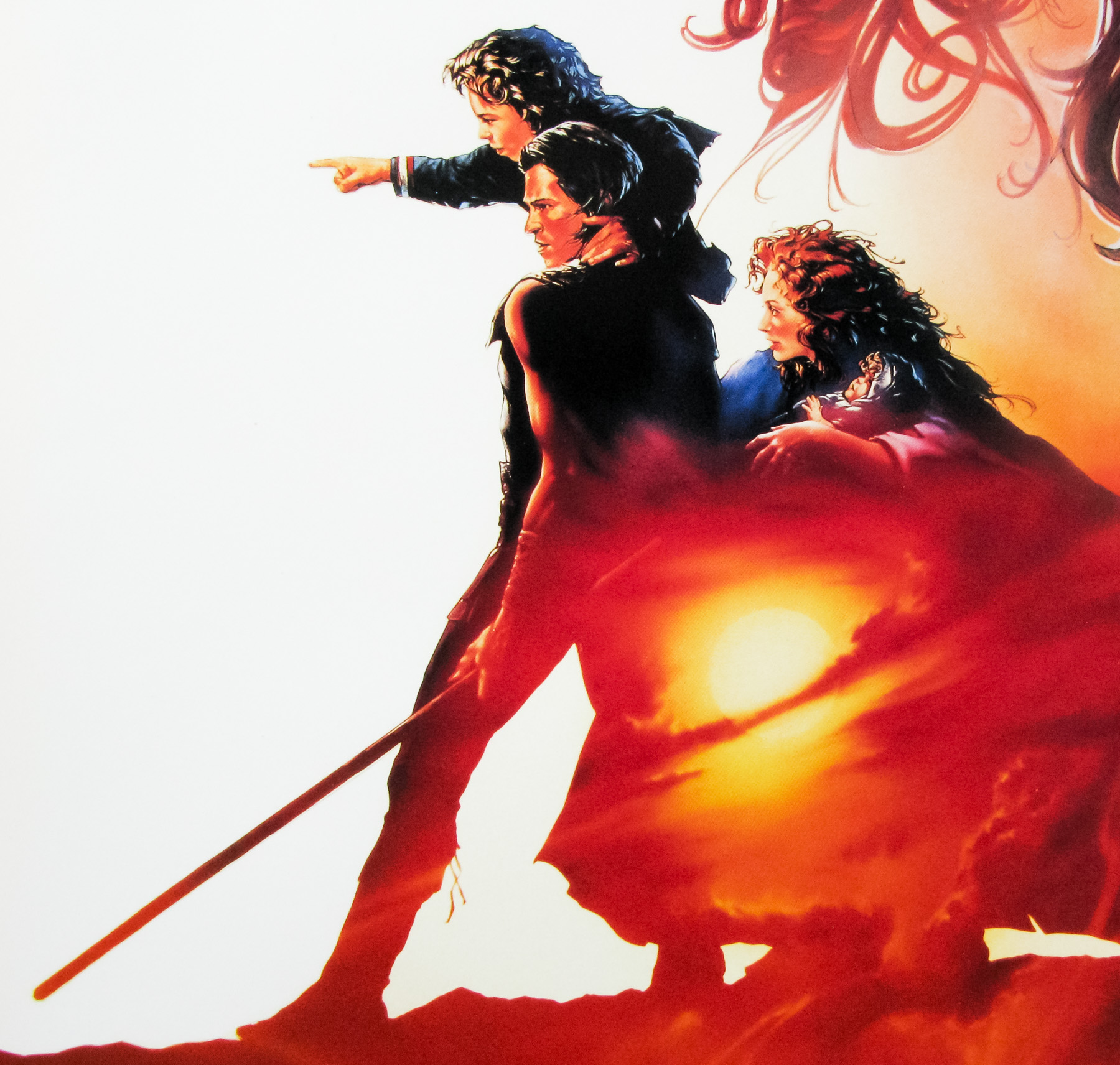
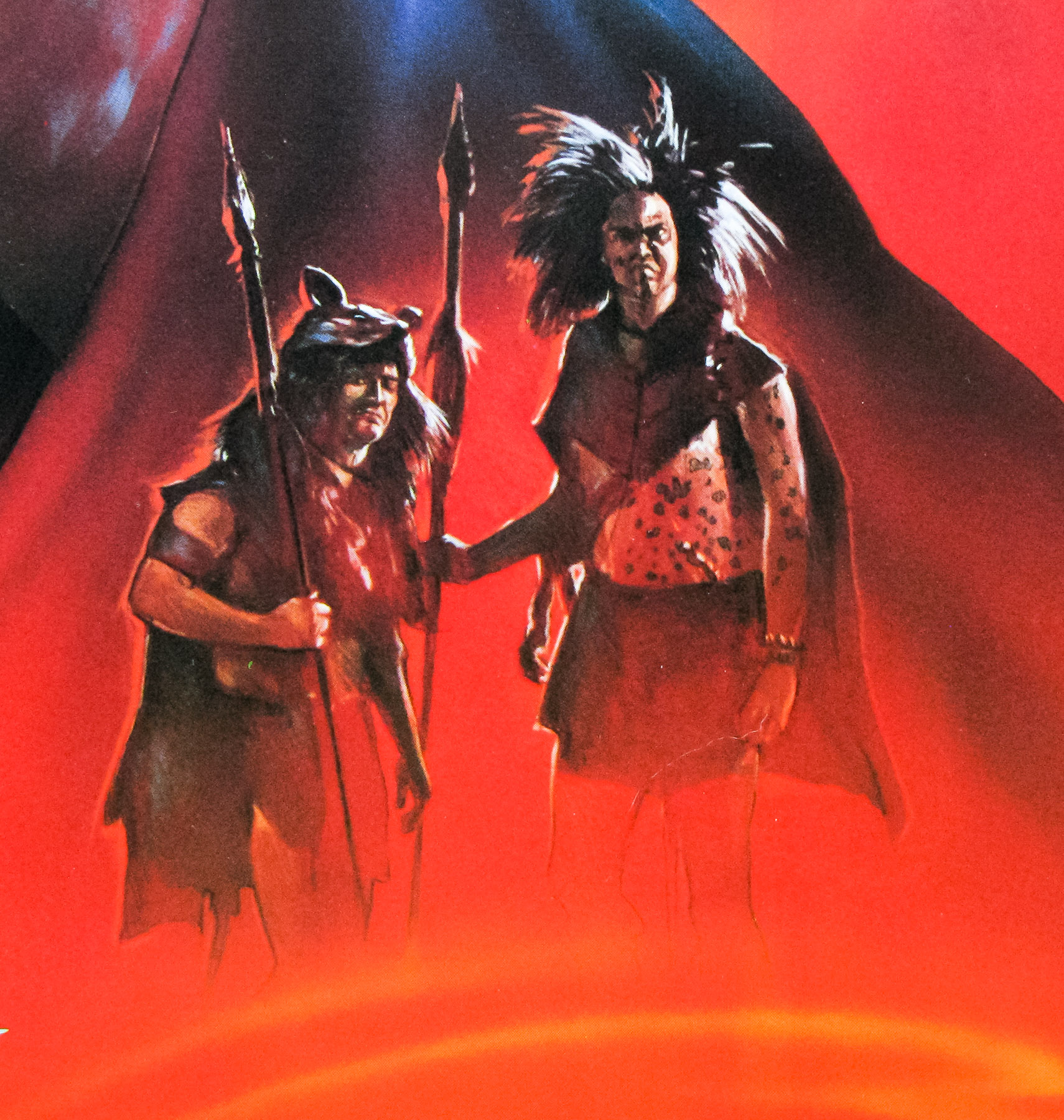
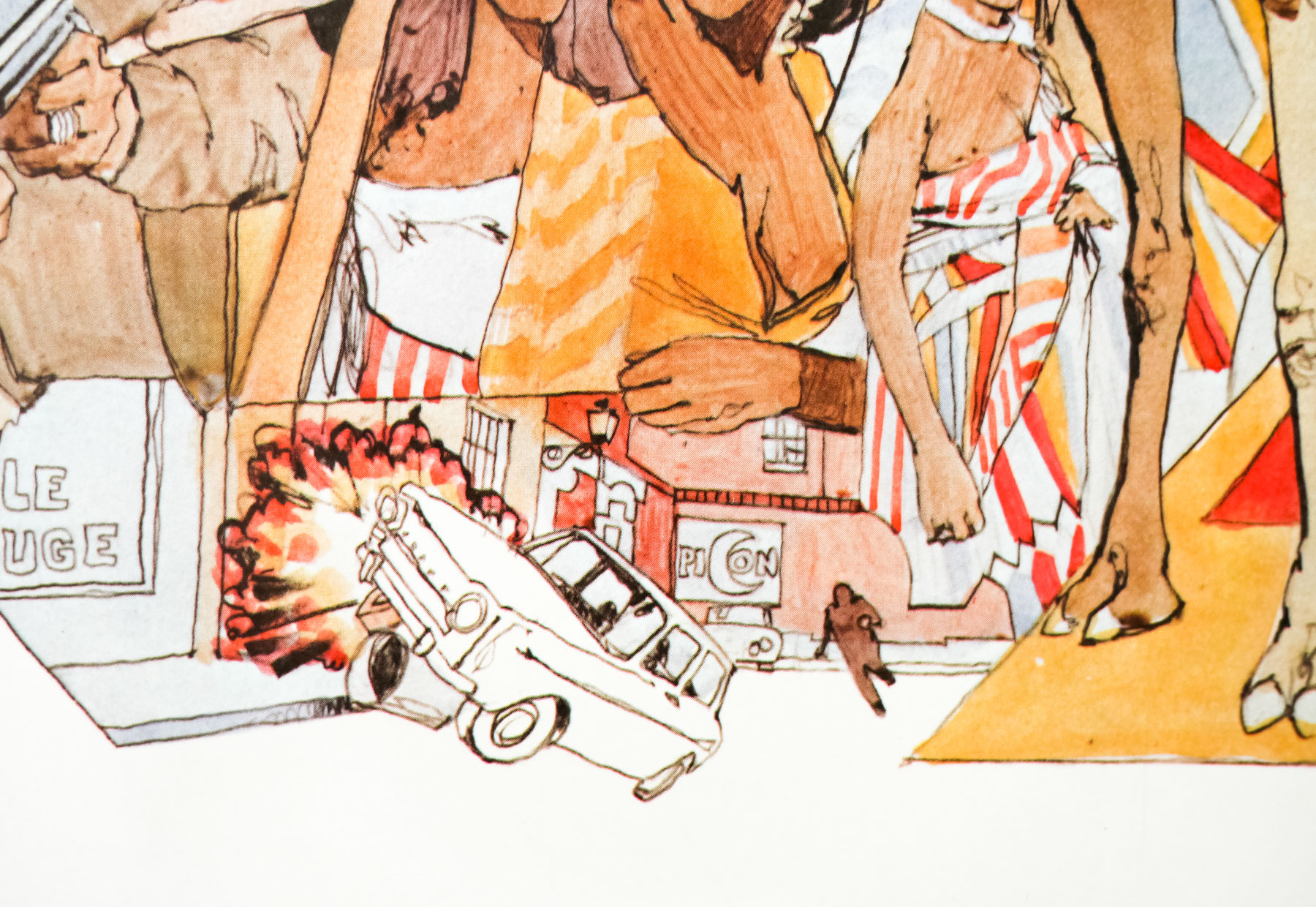
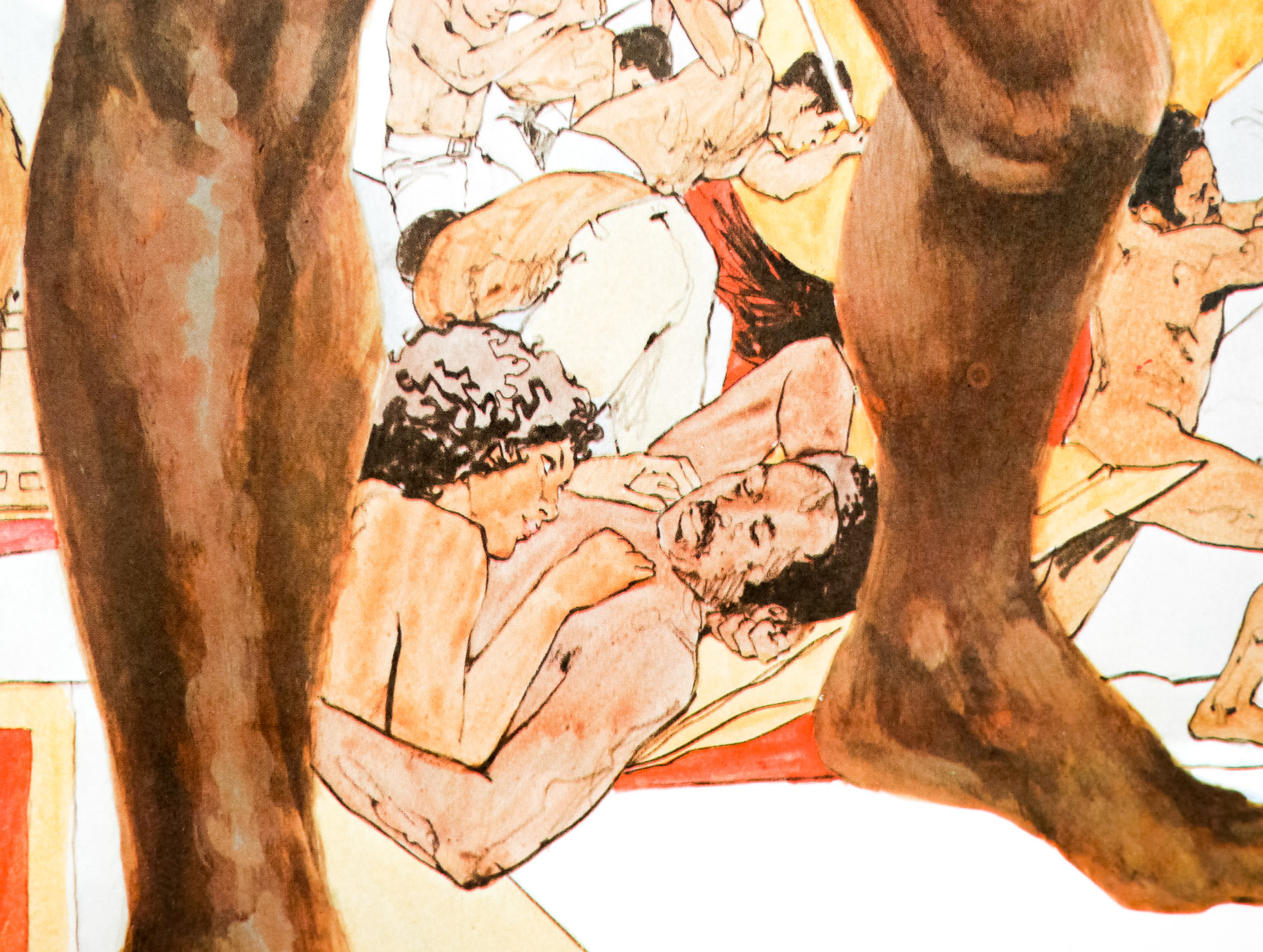
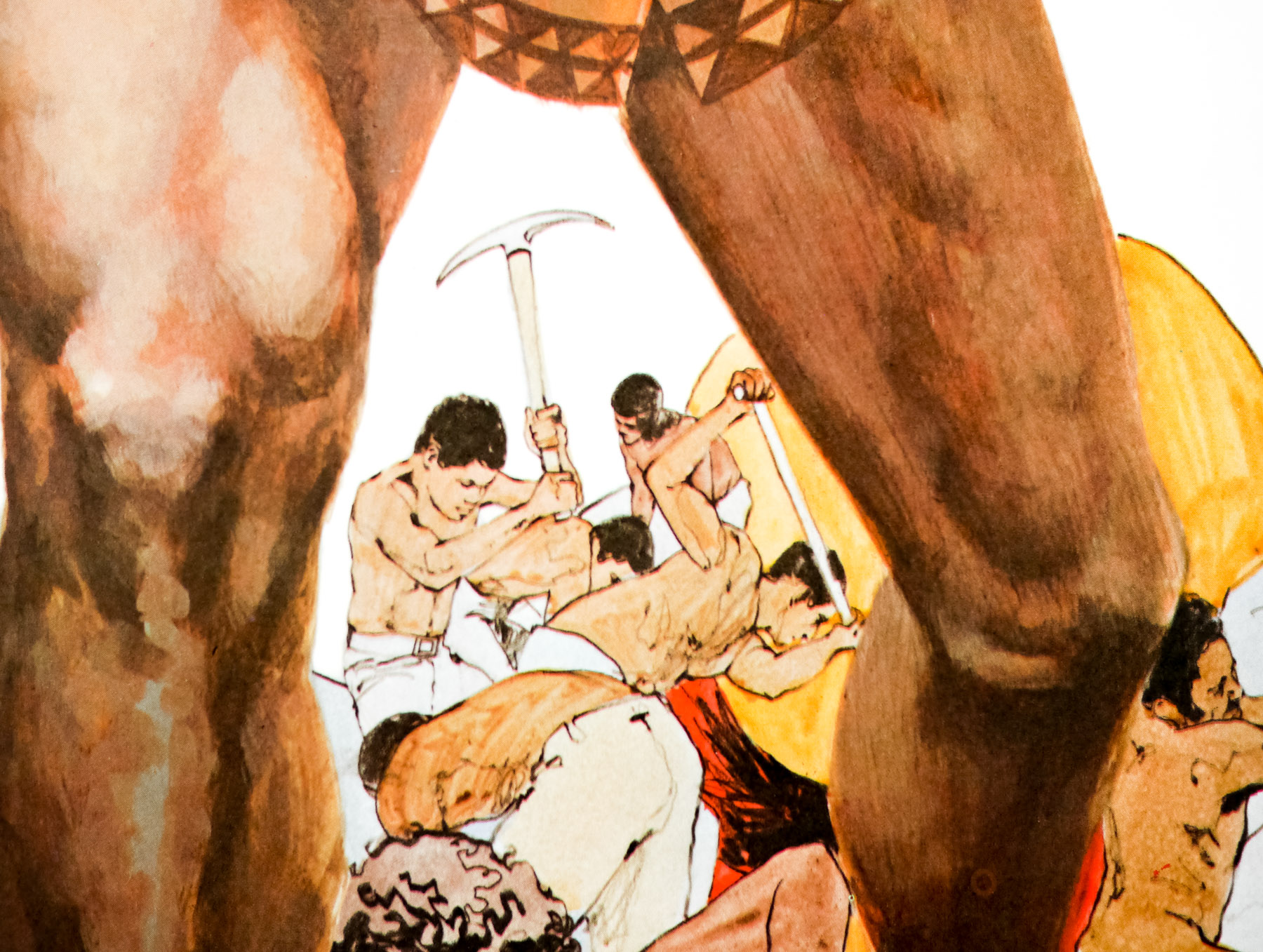
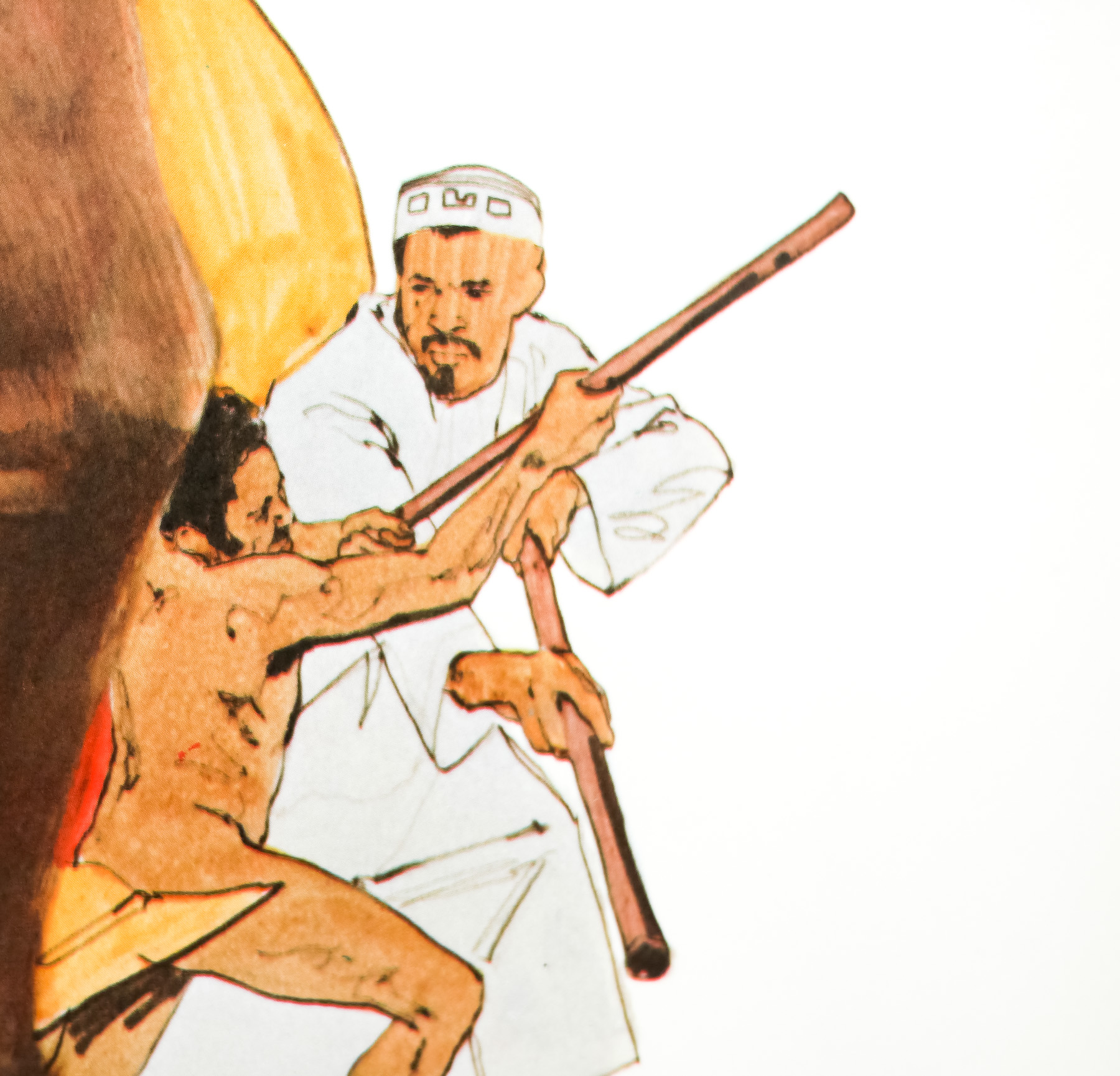
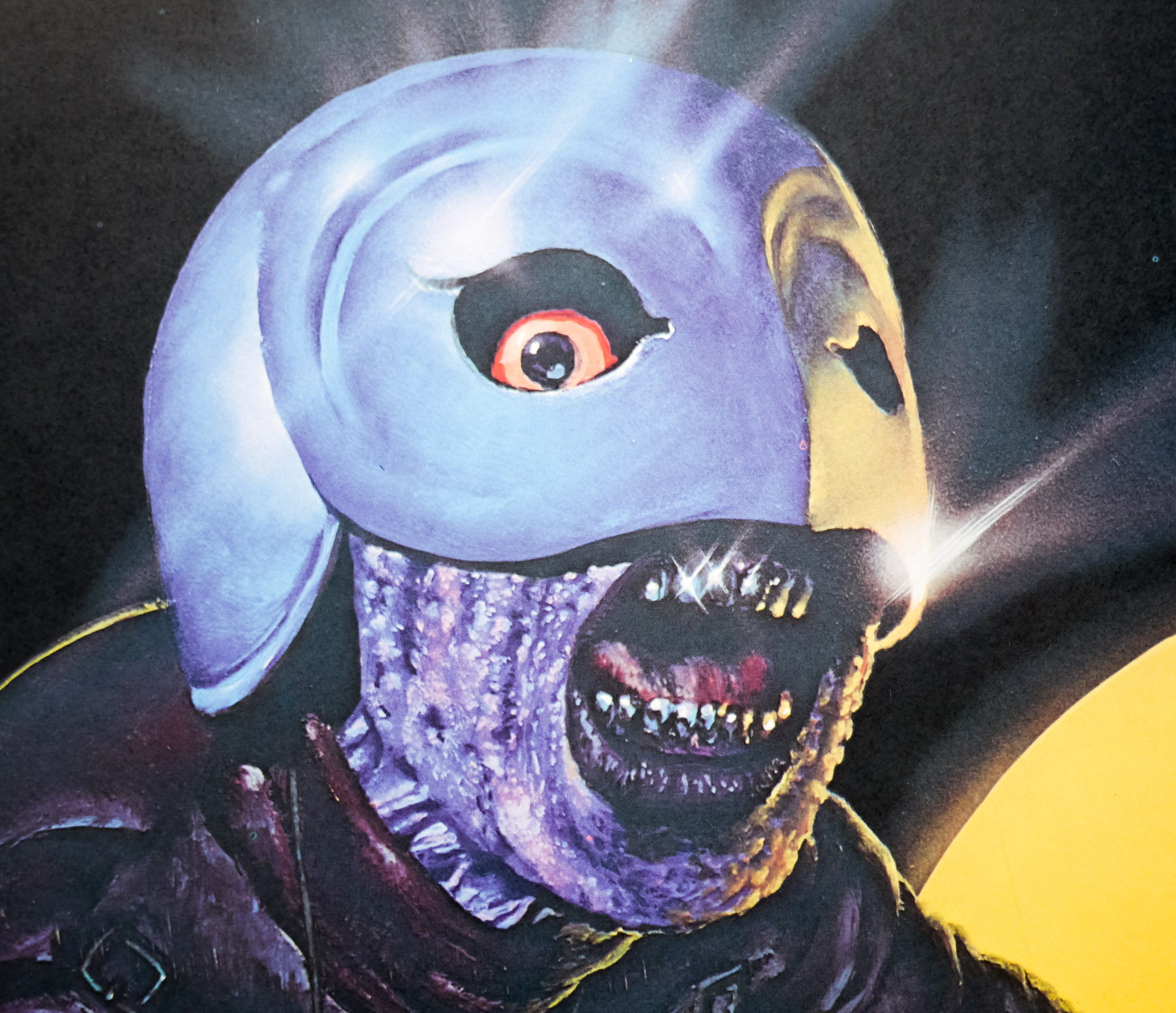
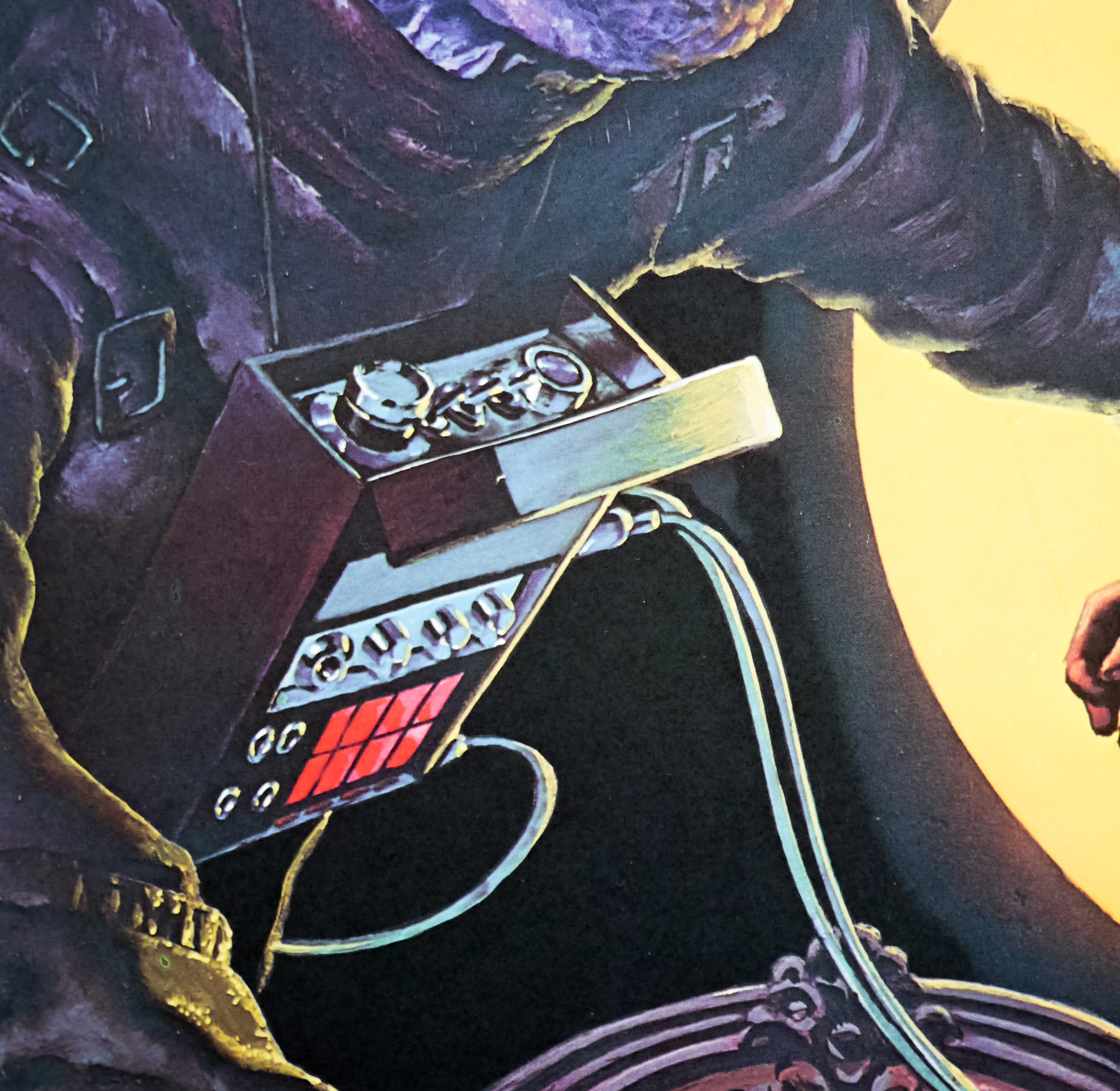
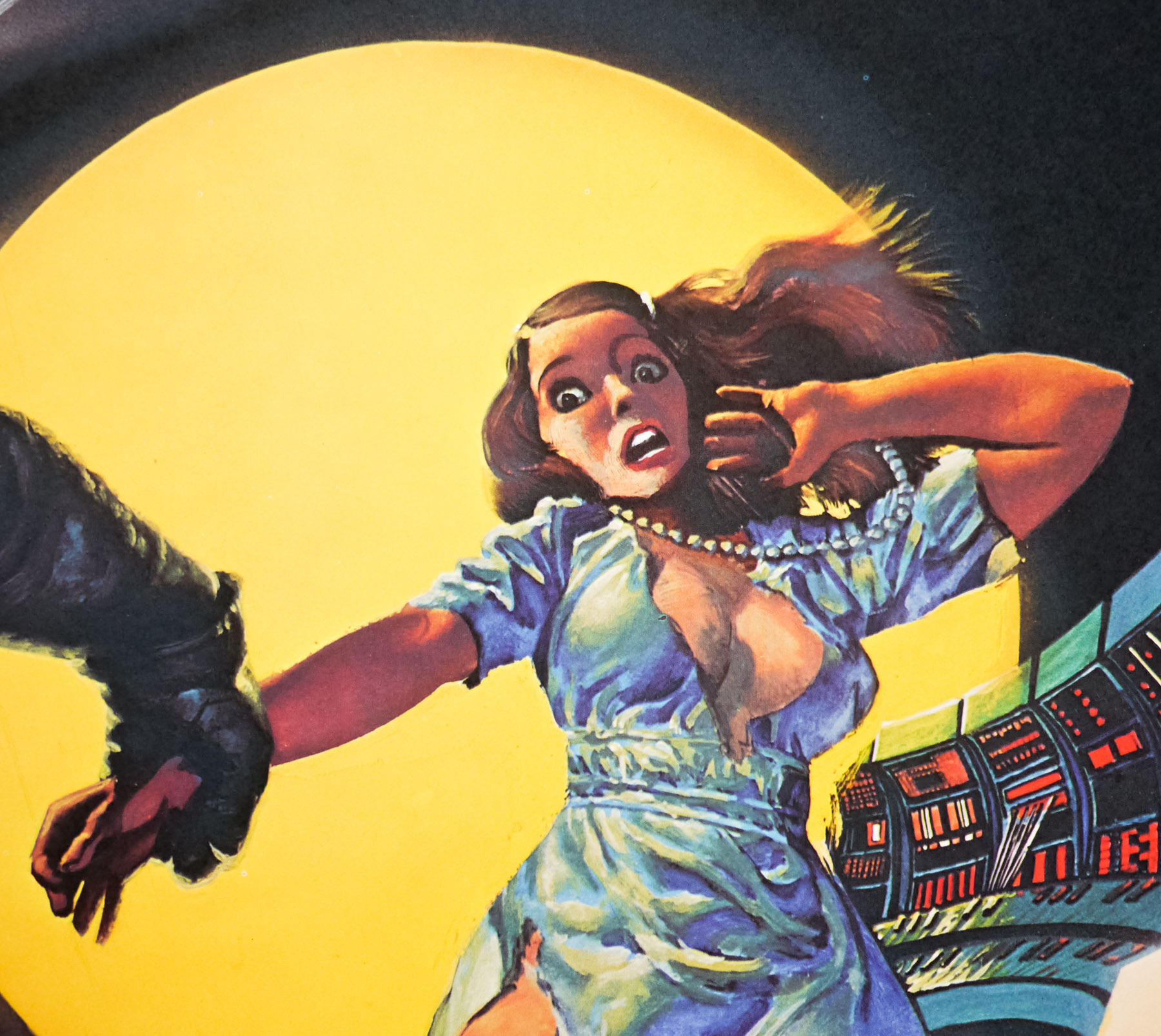
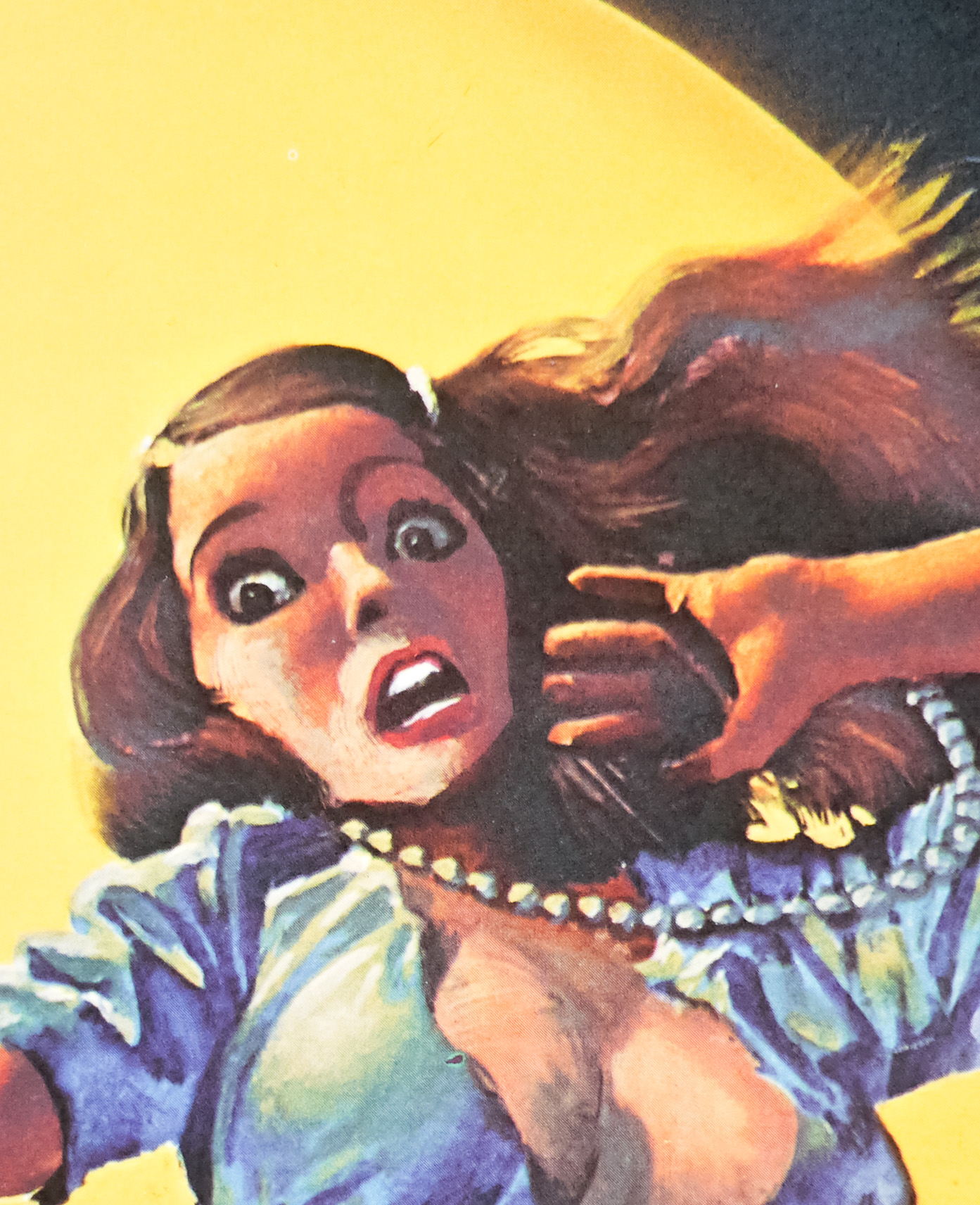
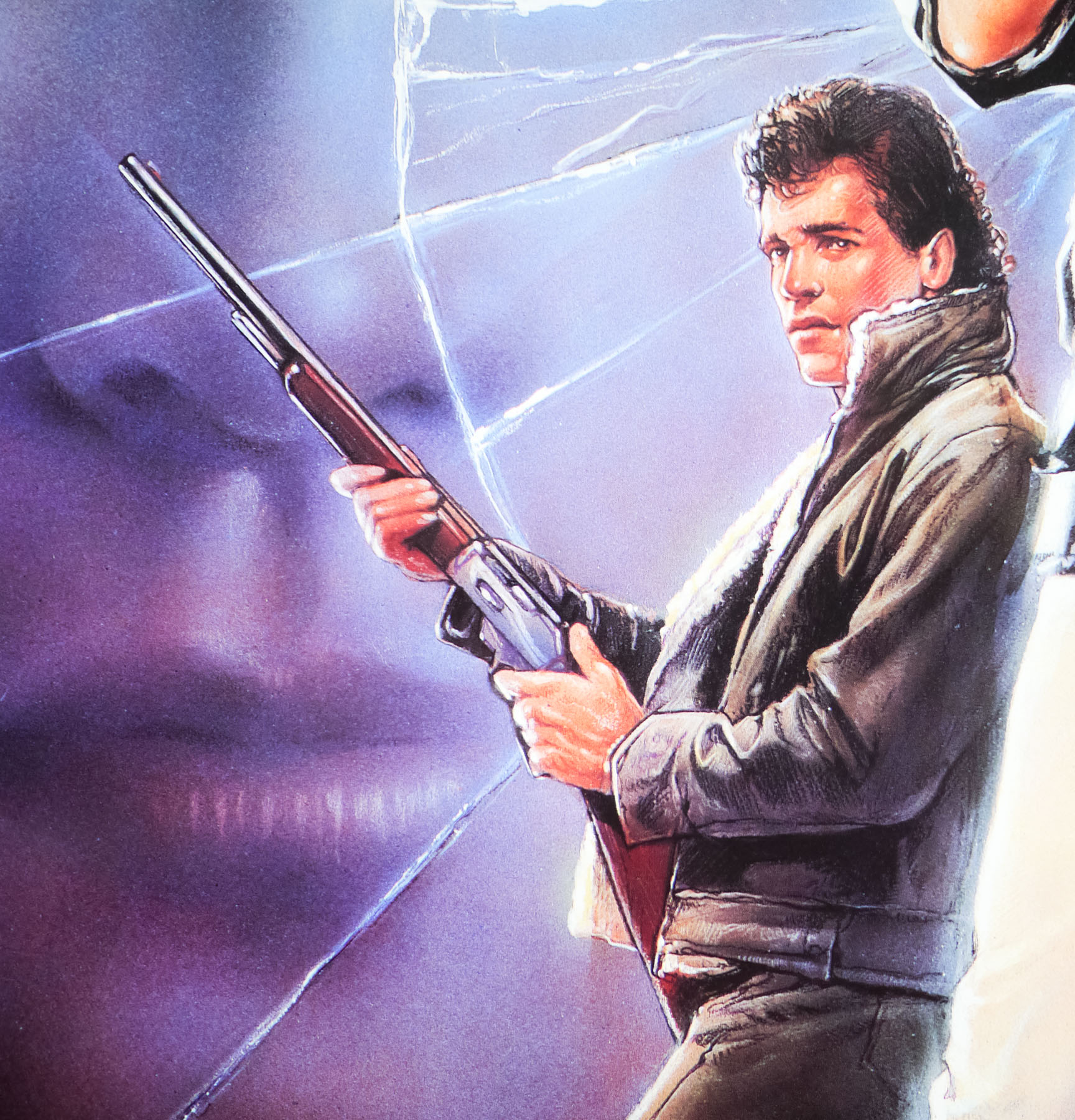
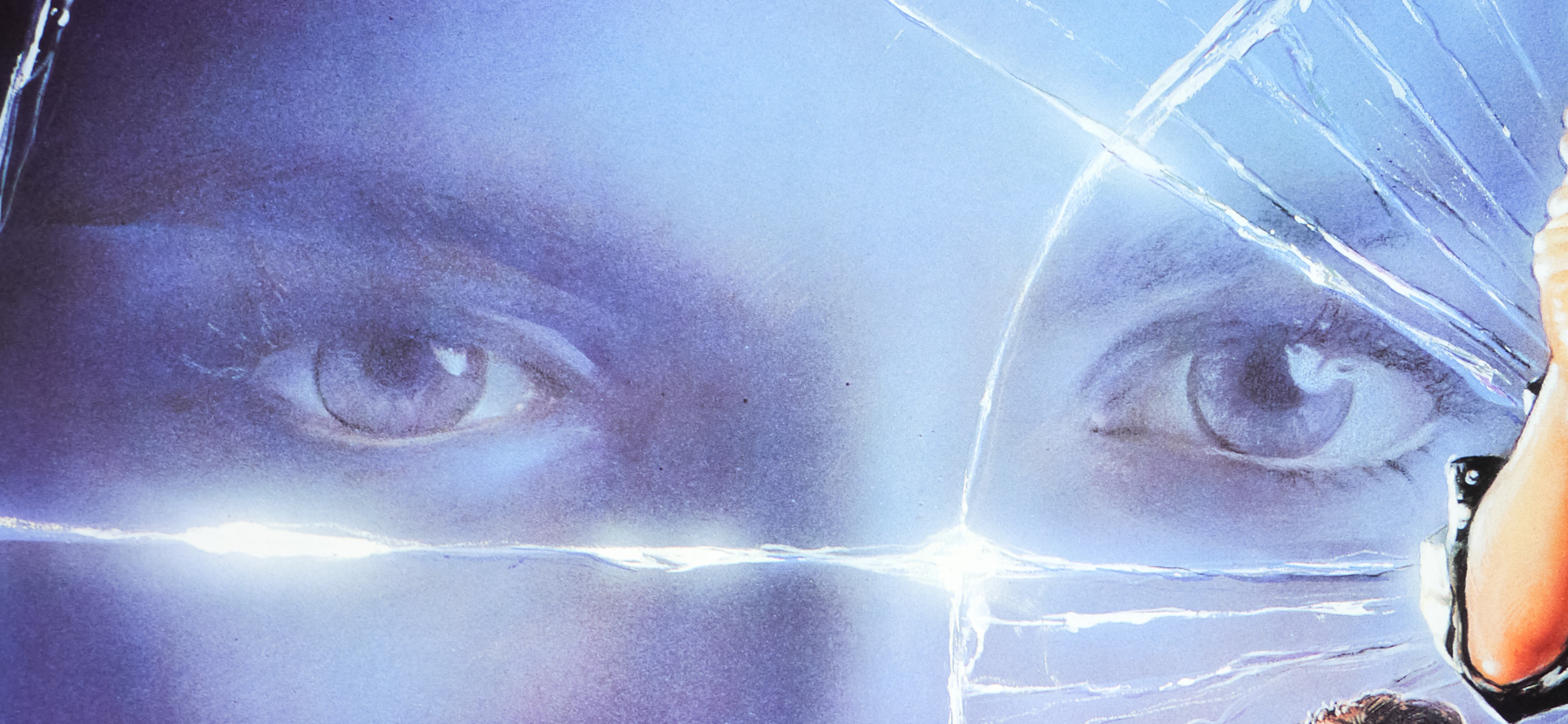
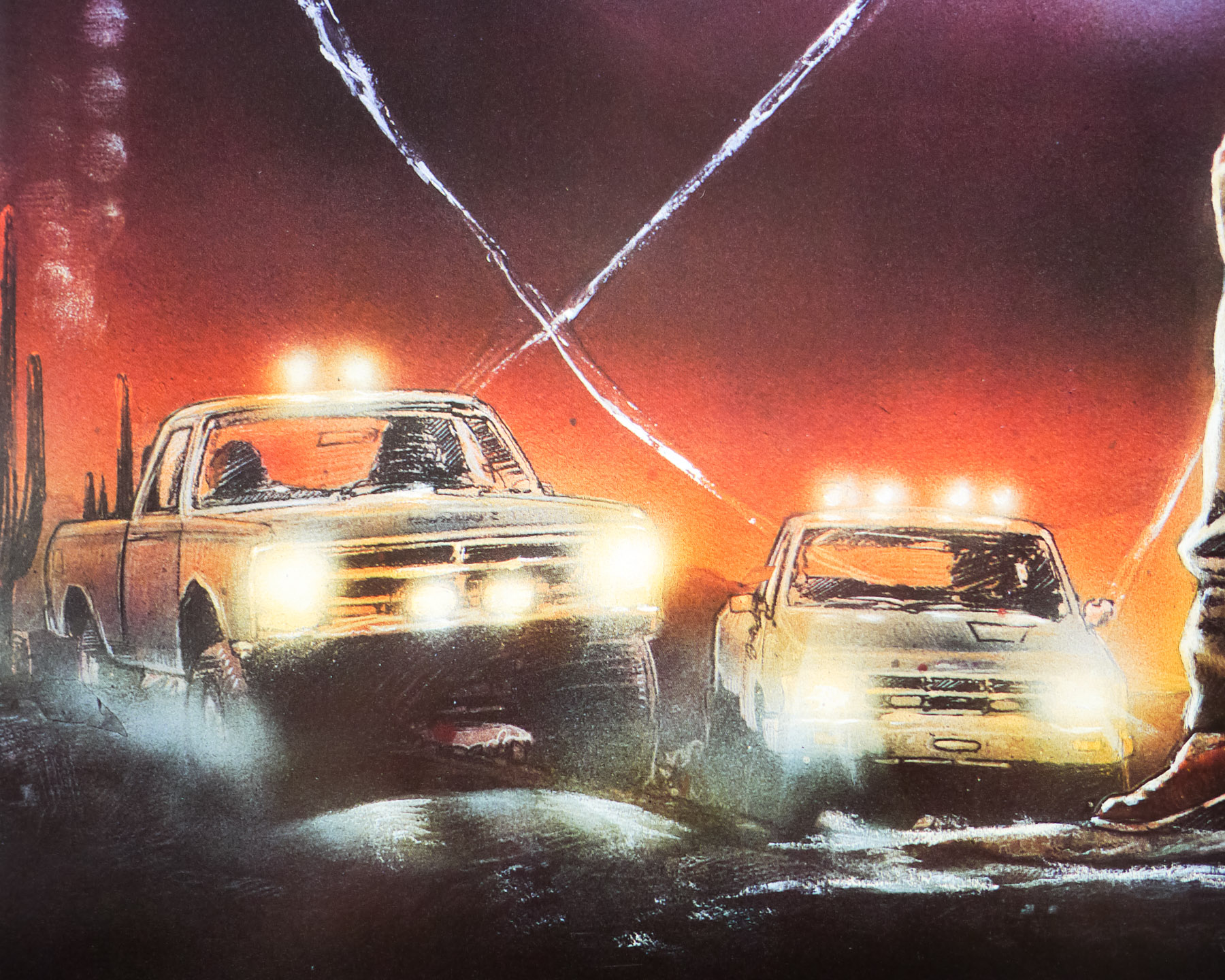
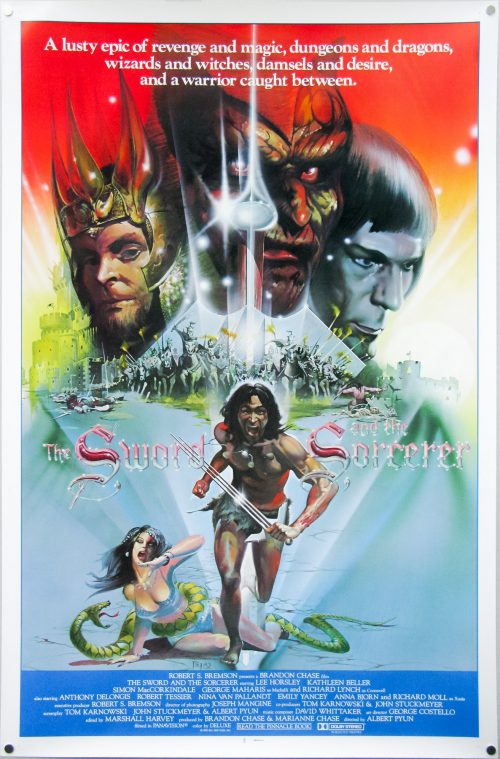
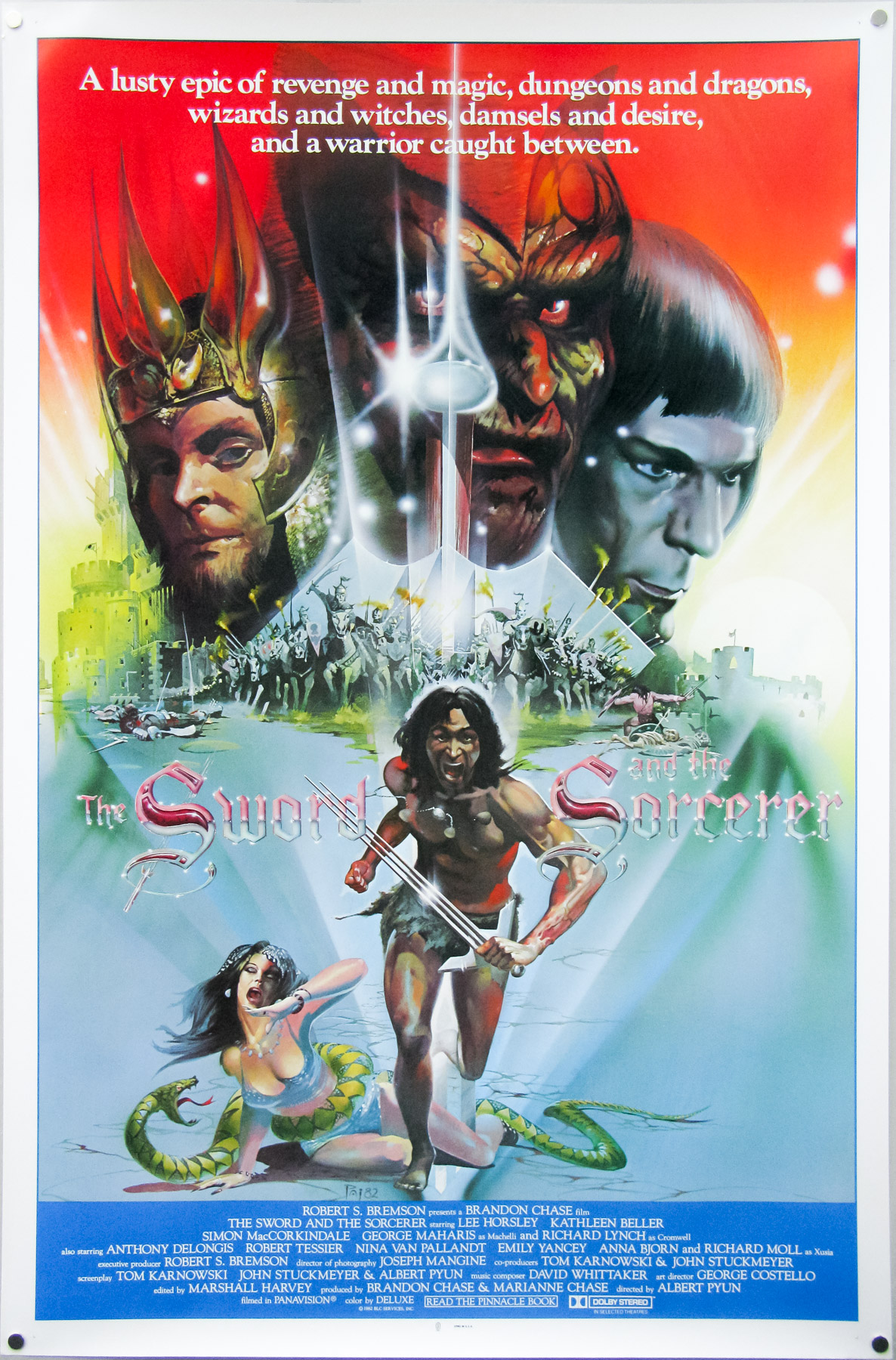
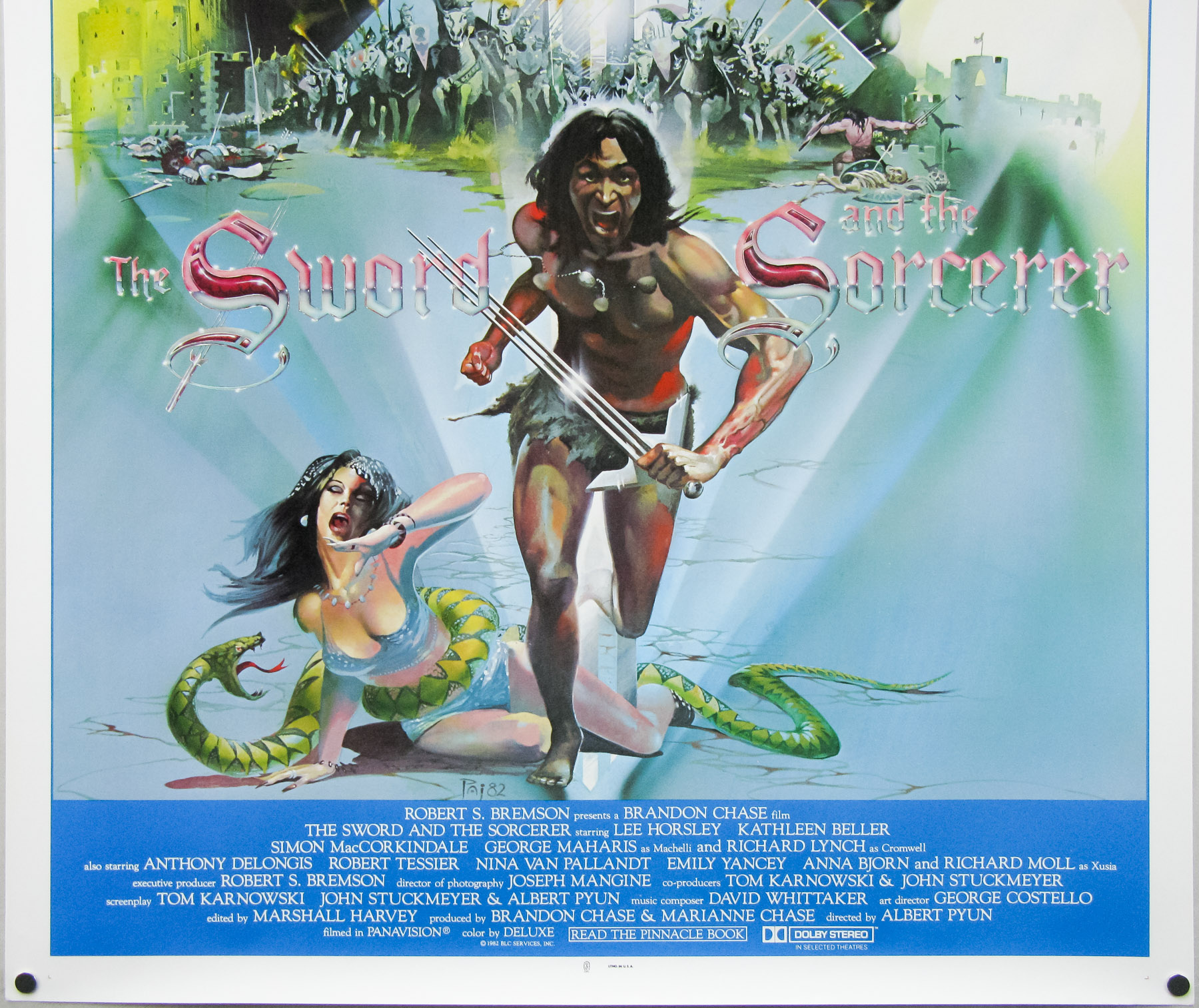
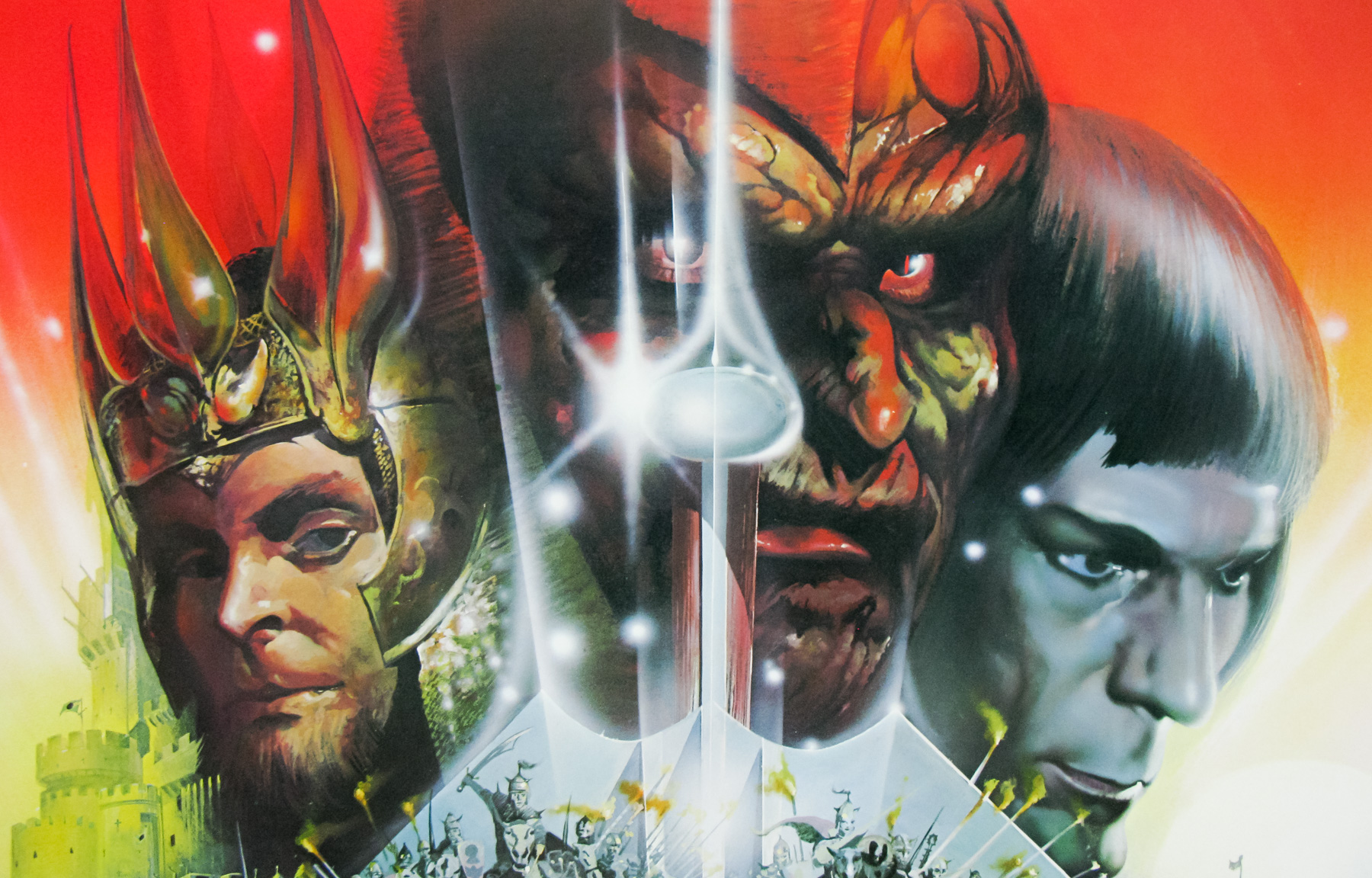
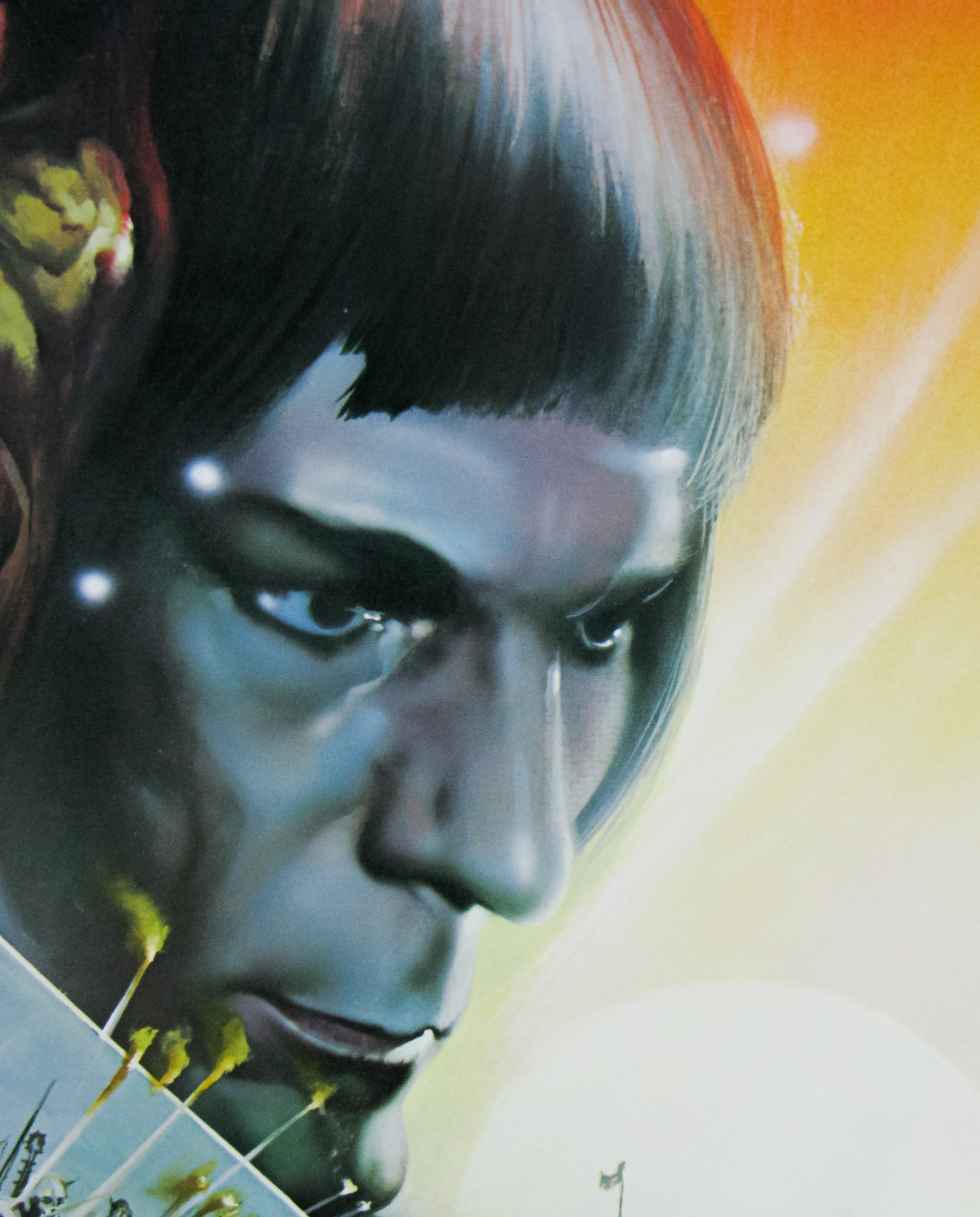
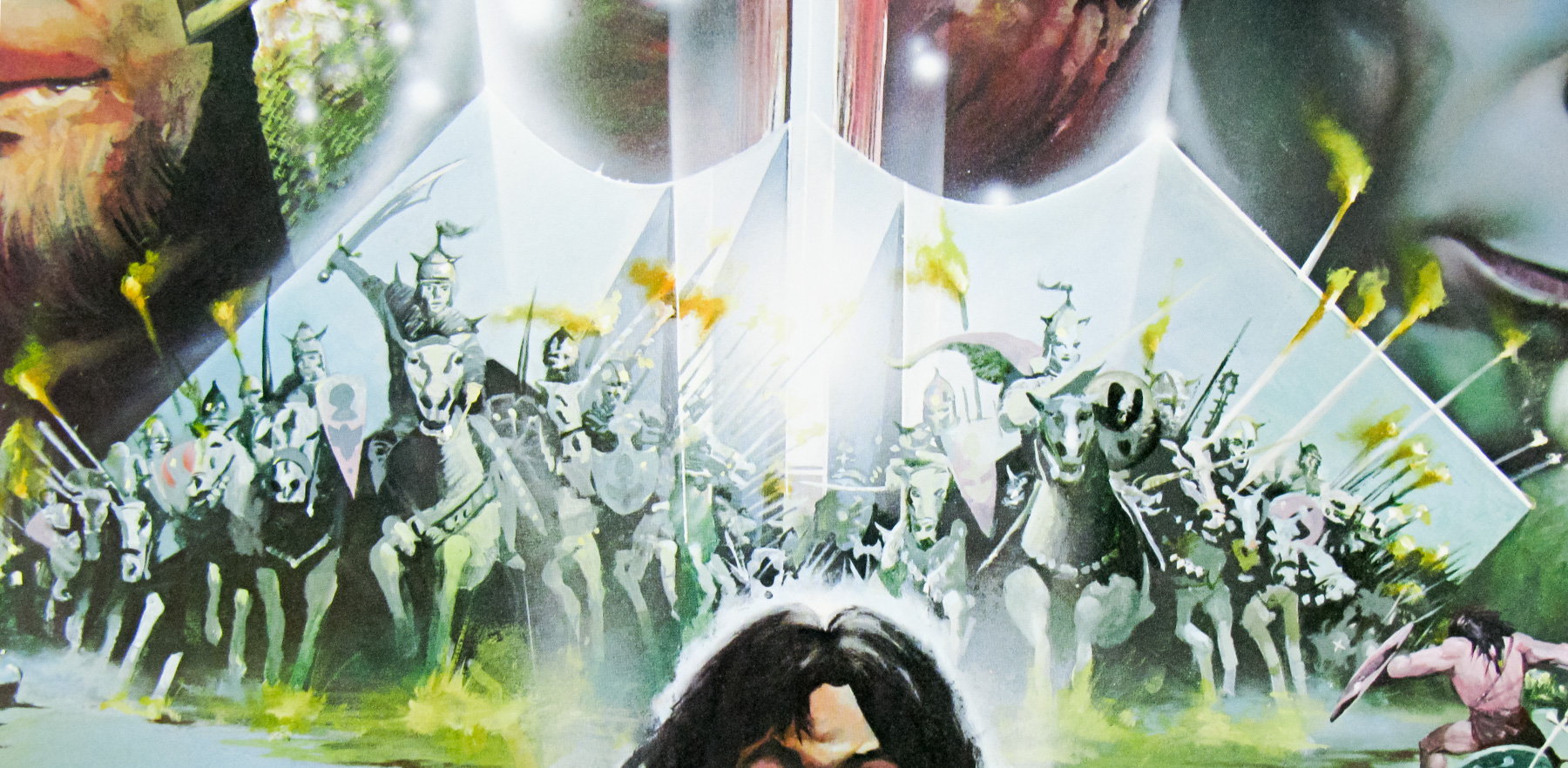
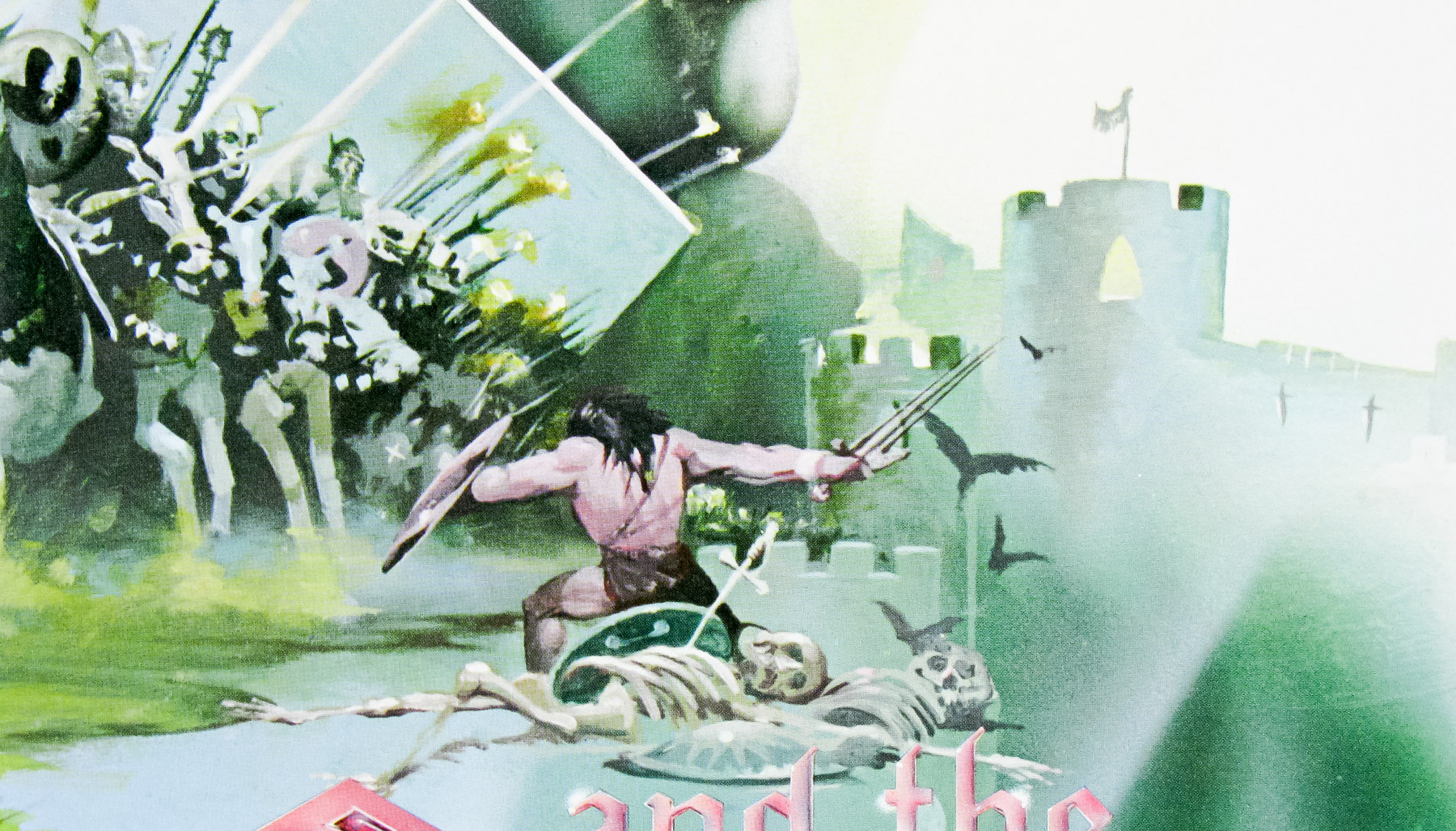
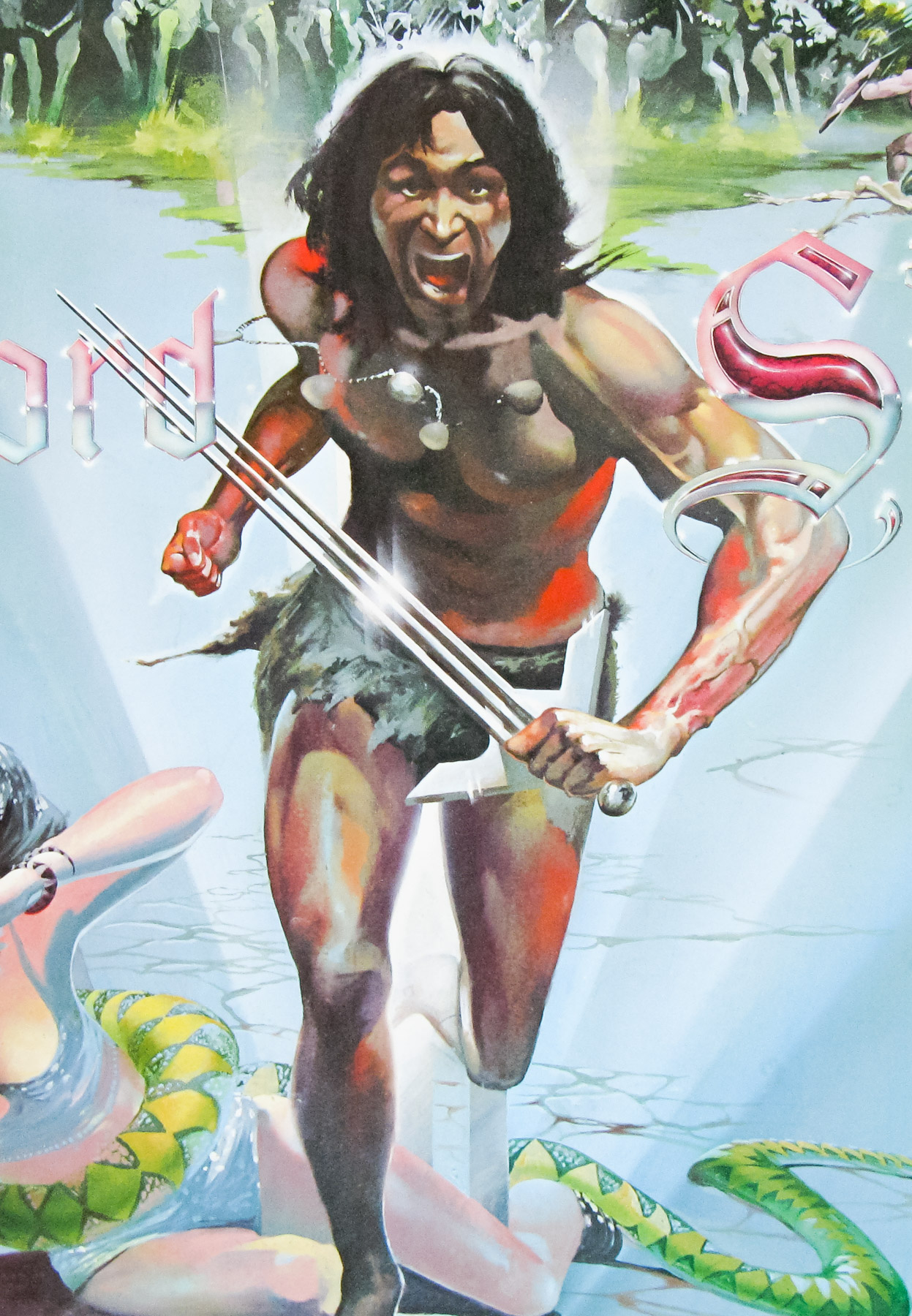
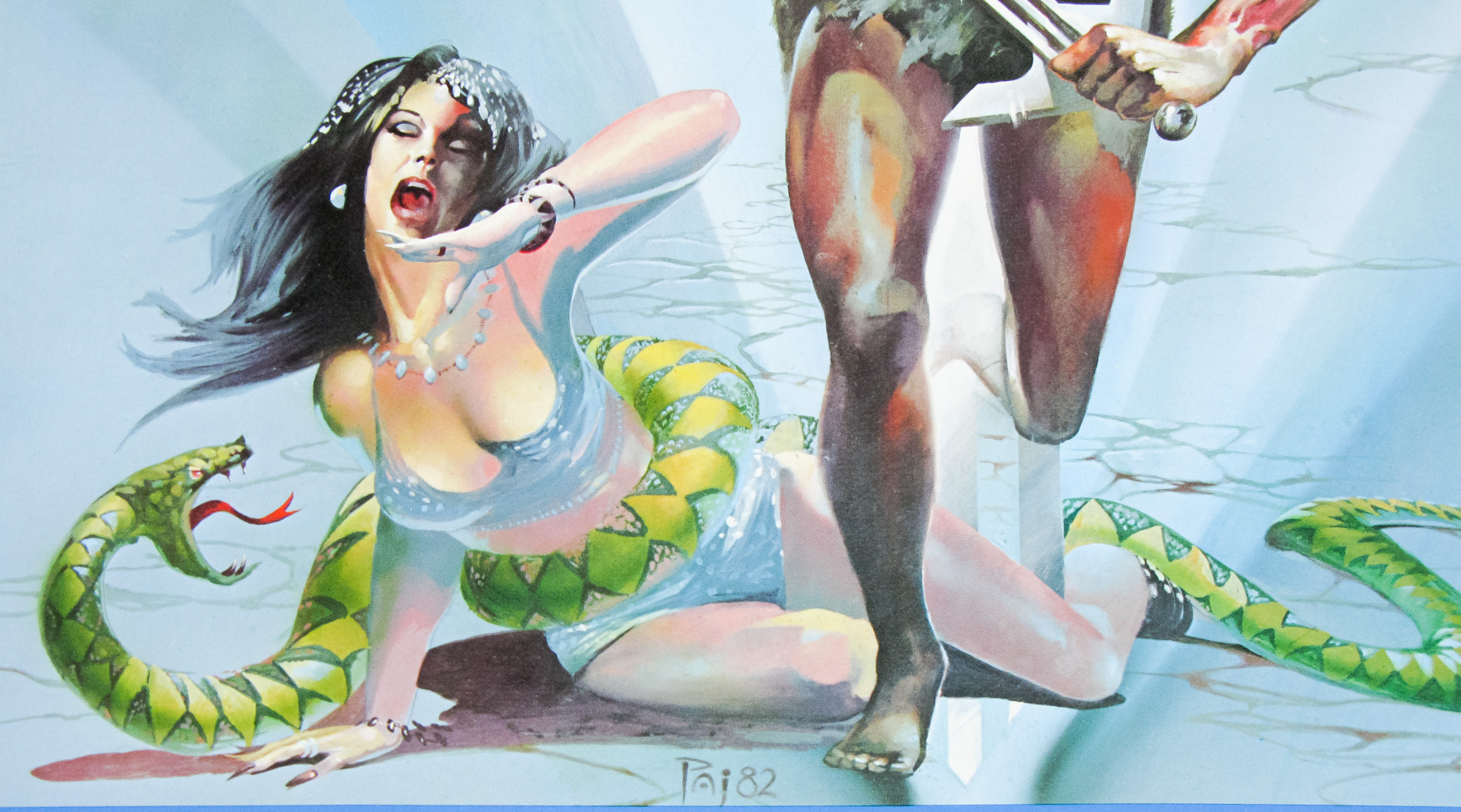
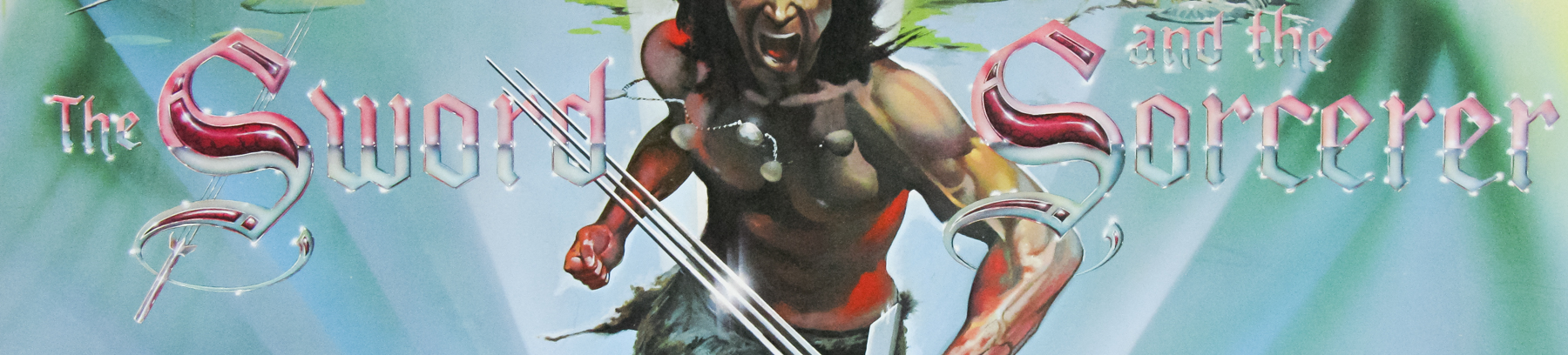
The Sword And The Sorcerer / one sheet / style A / USA

17.05.11

Poster Poster
Title
The Sword And The Sorcerer
AKA
La spada a tre lame [The sword of three blades] (Italy)
Year of Film
1982
Director
Albert Pyun
Starring
Lee Horsley, Shelley Taylor Morgan, Kathleen Beller, Simon MacCorkindale, George Maharis, Richard Lynch, Richard Moll, Anthony De Longis, Robert Tessier, Nina Van Pallandt, Anna Bjorn, Jeff Corey, Joe Regalbuto, Christina Nigra, Earl Maynard, Russ Marin
Origin of Film
USA
Genre(s) of Film
Lee Horsley, Shelley Taylor Morgan, Kathleen Beller, Simon MacCorkindale, George Maharis, Richard Lynch, Richard Moll, Anthony De Longis, Robert Tessier, Nina Van Pallandt, Anna Bjorn, Jeff Corey, Joe Regalbuto, Christina Nigra, Earl Maynard, Russ Marin,
Type of Poster
One sheet
Style of Poster
Style A
Origin of Poster
USA
Year of Poster
1982
Designer
Unknown
Artist
Peter Andrew Jones
Size (inches)
27" x 41"
SS or DS
SS
NSS #
--
Tagline
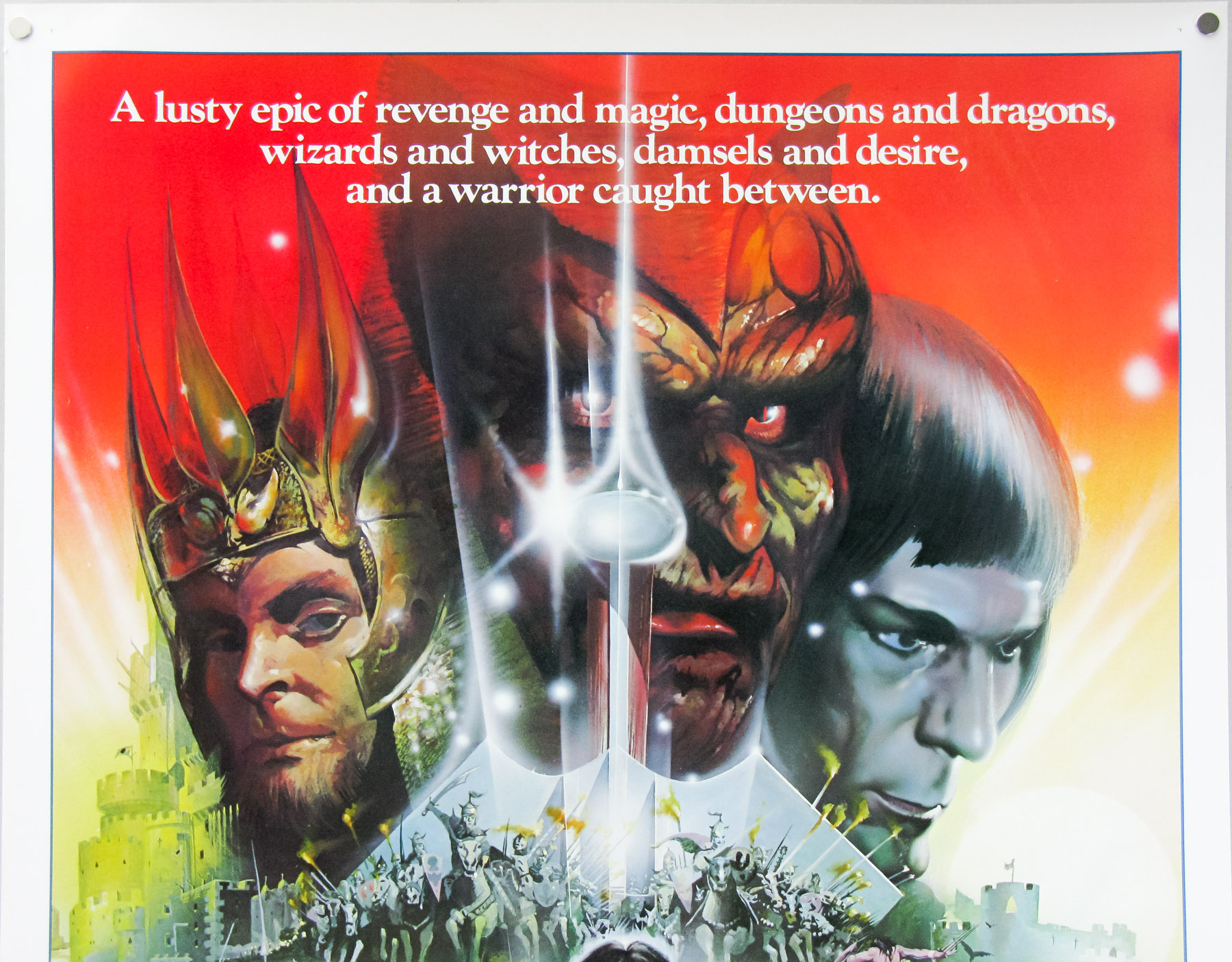
A lusty epic of revenge and magic, dungeons and dragons, wizards and witches, damsels and desire, and a warrior caught between.

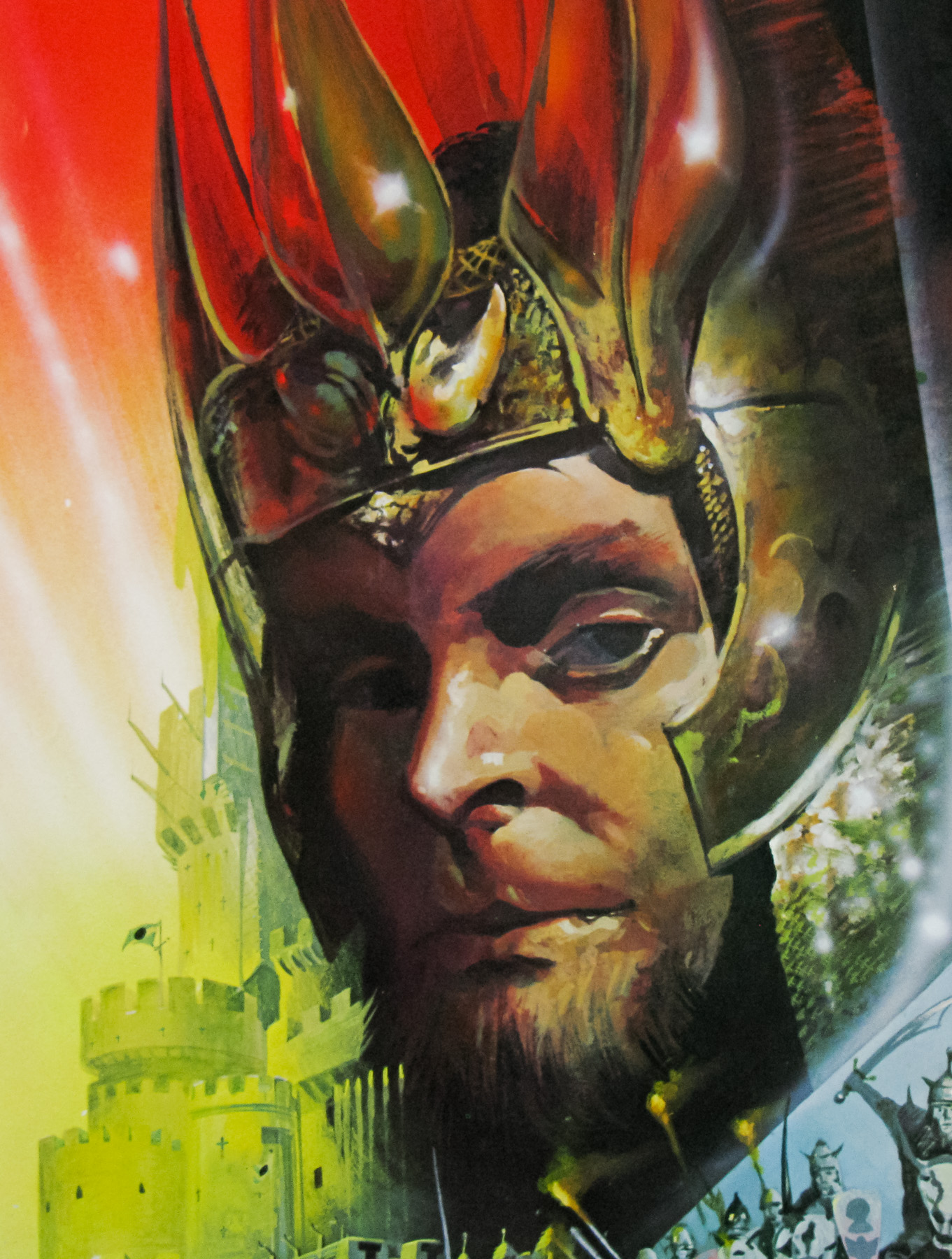
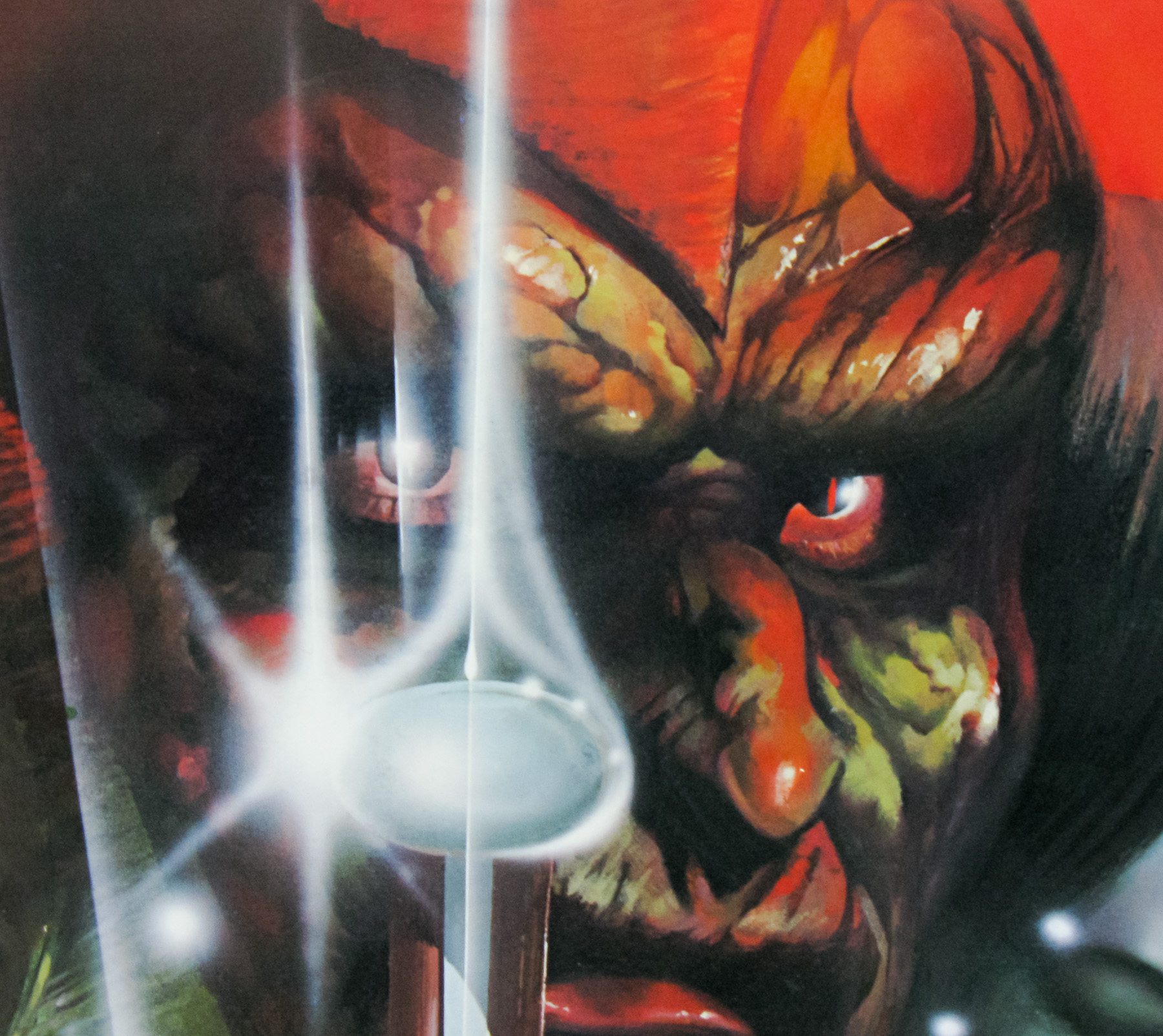
The Sword and the Sorcerer is a 1982 fantasy film directed by Albert Pyun (in his debut) and was one of several entries in the genre that were released the same year, including Conan the Barbarian and The Beastmaster. Lee Horsley appears in his first film role as Prince Talon the song of a King and Queen who are slain by the evil King Cromwell (Richard Lynch) after he uses the black magic of a sorcerer named Xusia (Richard Moll) to overthrow their kingdom.

Over a decade later, Talon returns to the kingdom as a mercenary leading a band of men on a mission to help rebels overthrow Cromwell. Talon is asked to help free Mikah (Simon MacCorkindale), Cromwell’s war chancellor, who is secretly a double agent and is captured and imprisoned. His sister Alana (Kathleen Beller) begs for help from Talon and the mercenary sets out to Cromwell’s castle where the final showdown with his parents’ murderer takes place.

The film was critically derided at the time but still proved a popular box-office draw, easily recouping its relatively low budget and ending up as the most profitable independent film of 1982.

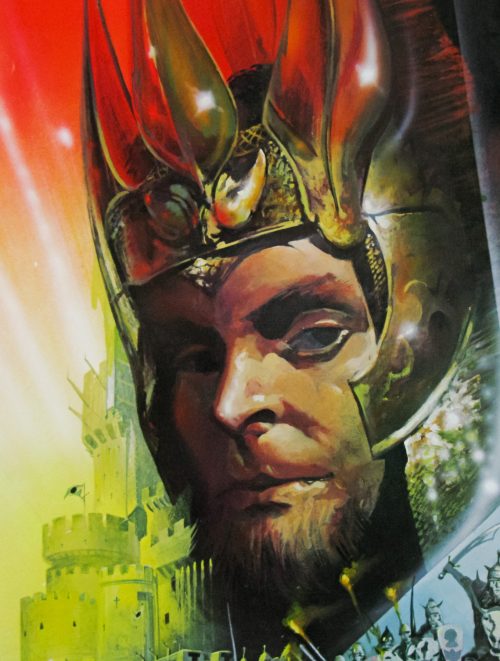
The artwork on this style A one sheet features the signature PAJ and this belongs to Peter Andrew Jones, a British artist who was born in North London in 1951 and studied at Central St. Martins art school. After graduating in 1974 he began working on book covers for the likes of Philip K. Dick, Arthur C. Clarke and Isaac Asimov. He also painted artwork for the Fighting Fantasy series of books by Steve Jackson and Ian Livingstone, including the cover of the first one published in 1982, The Warlock of Firetop Mountain.

Andrews created covers for video games published by the likes of US Gold and Psygnosis and also worked on magazine covers for Games Workshop that led to him to work on game art for several releases for the company. He only worked on a handful of film posters, which included one for Alligator II and the two one sheets for The Sword and the Sorcerer (style A and style B). These posters were adapted by the artist Brian Bysouth for the UK quad. Andrews continues to paint to this day from his home studio in Shropshire. His official site contains plenty of galleries of his work and links to buy books, prints and more.
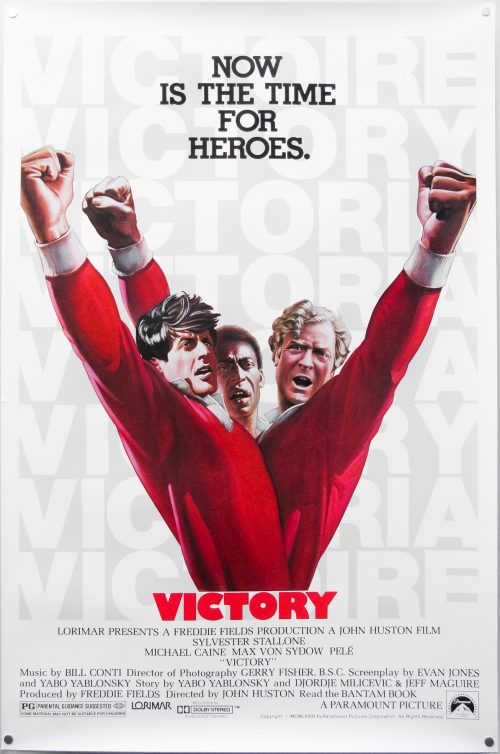
Victory / one sheet / USA

17.05.11

Poster Poster

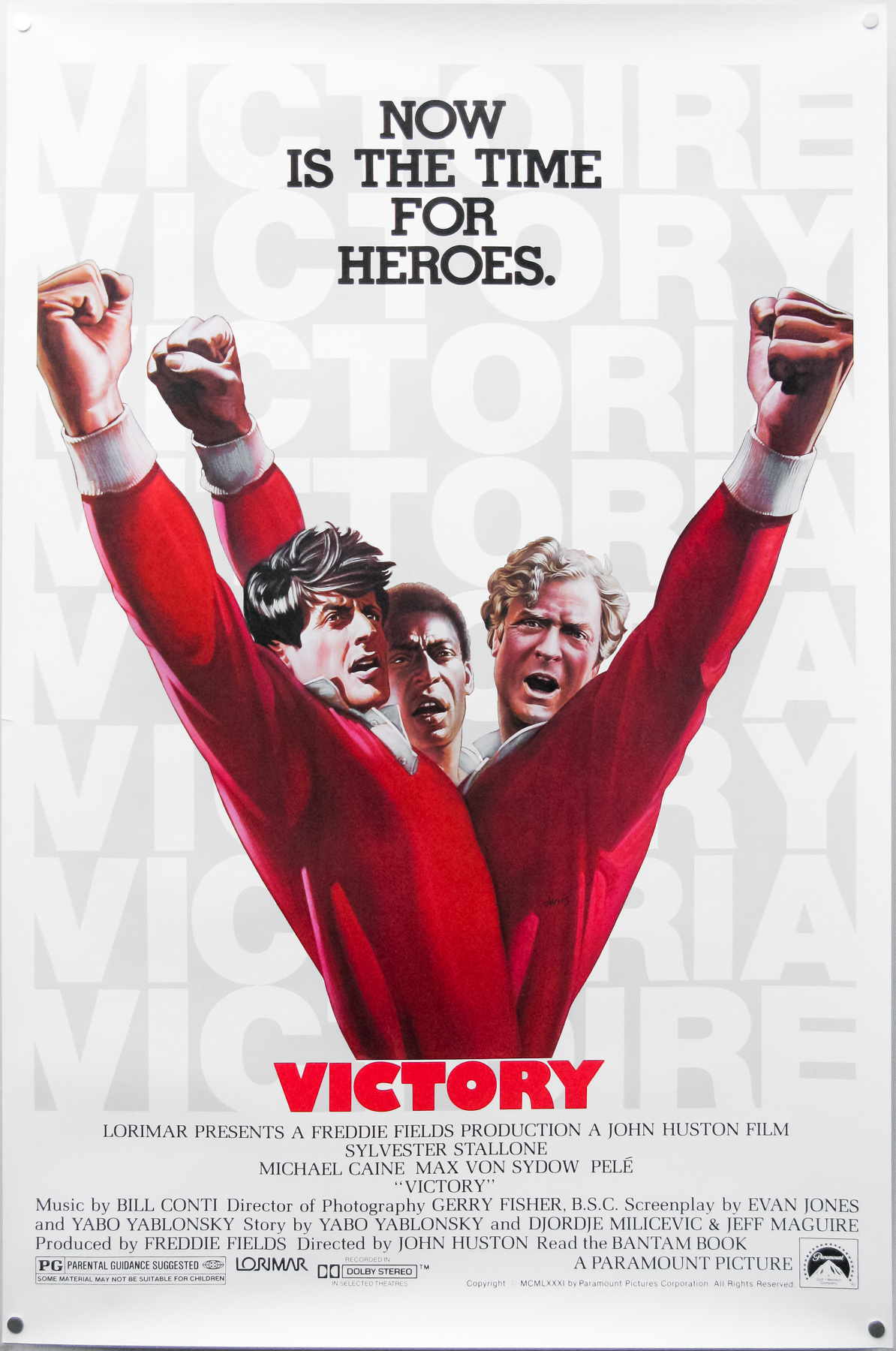
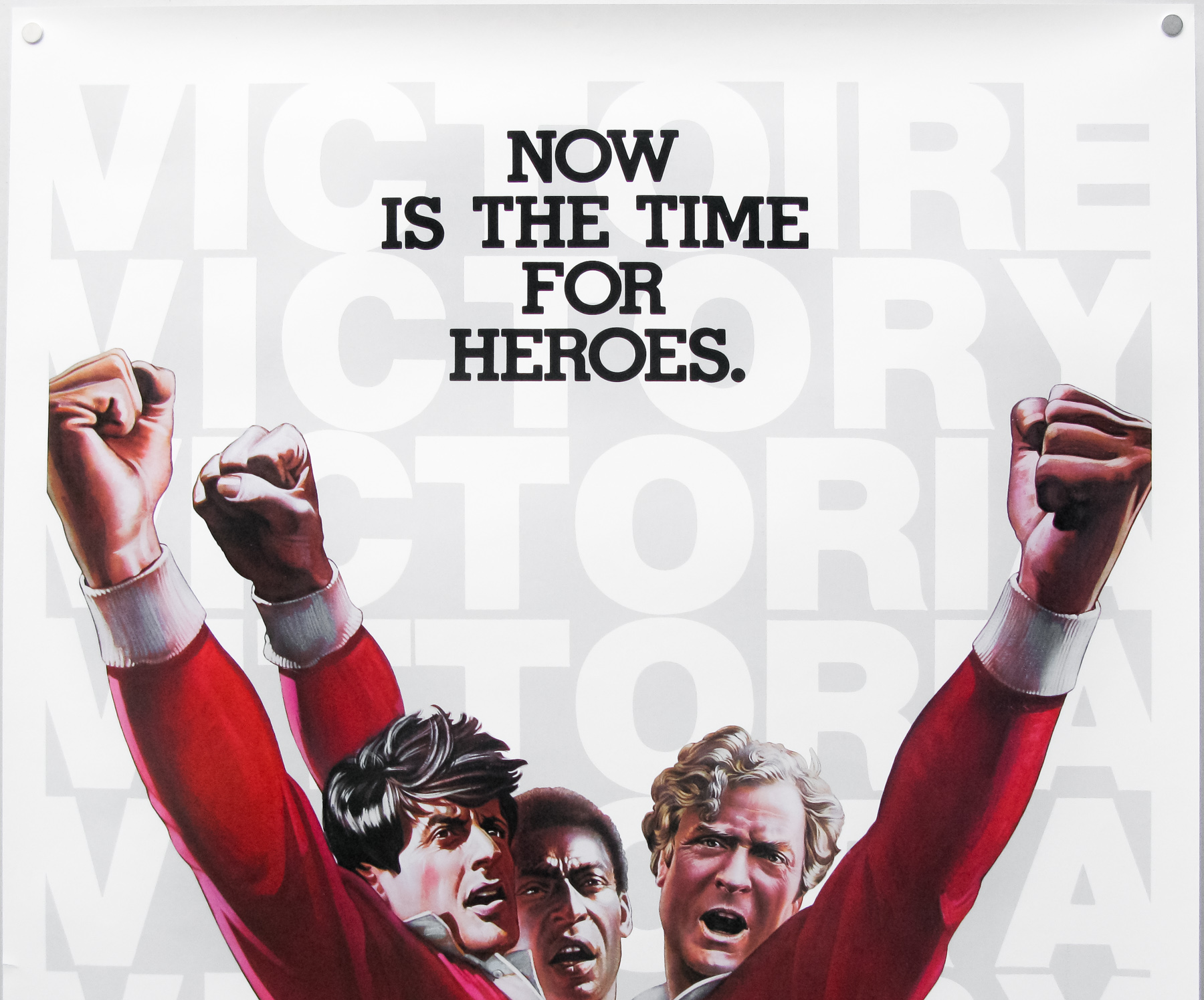
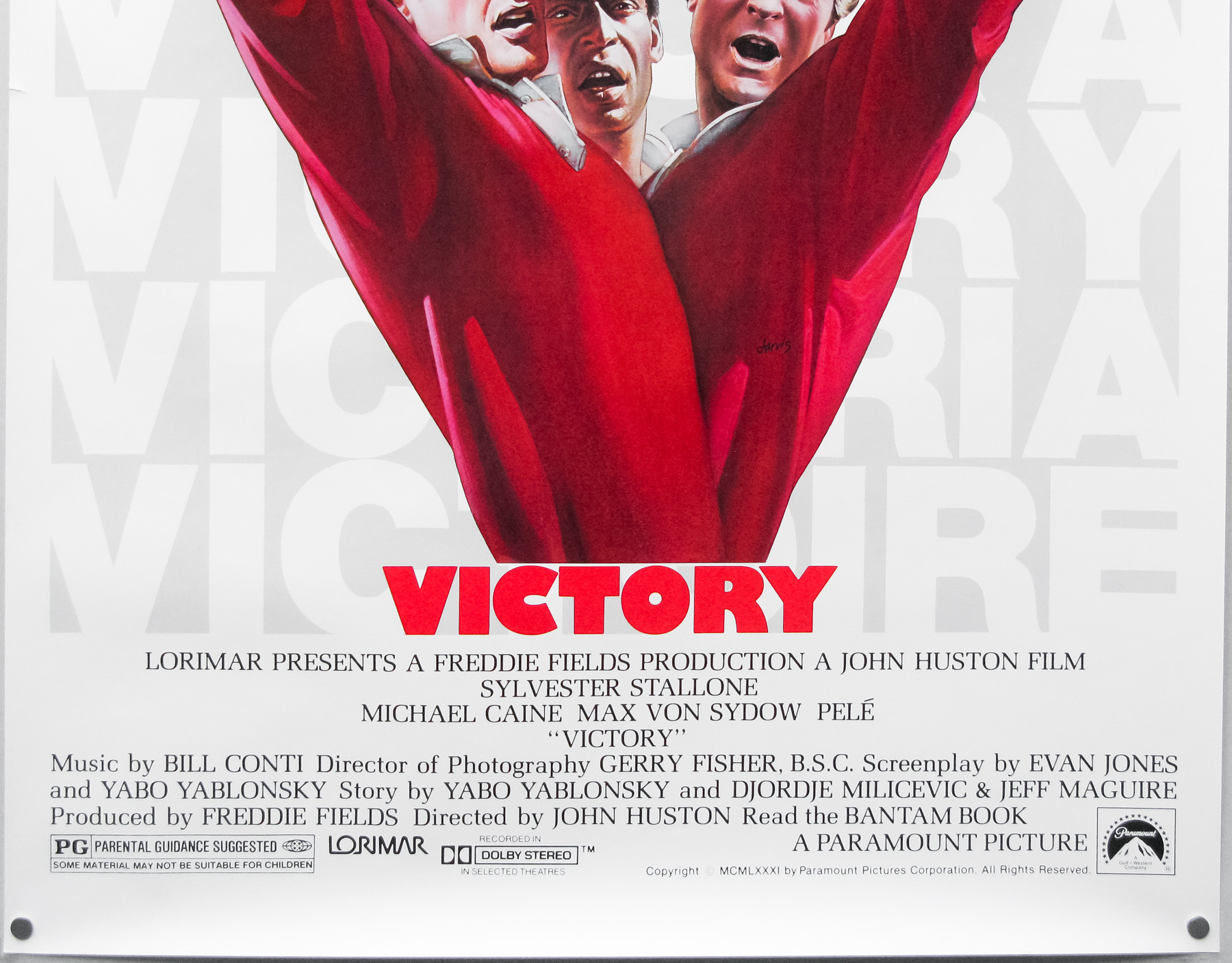
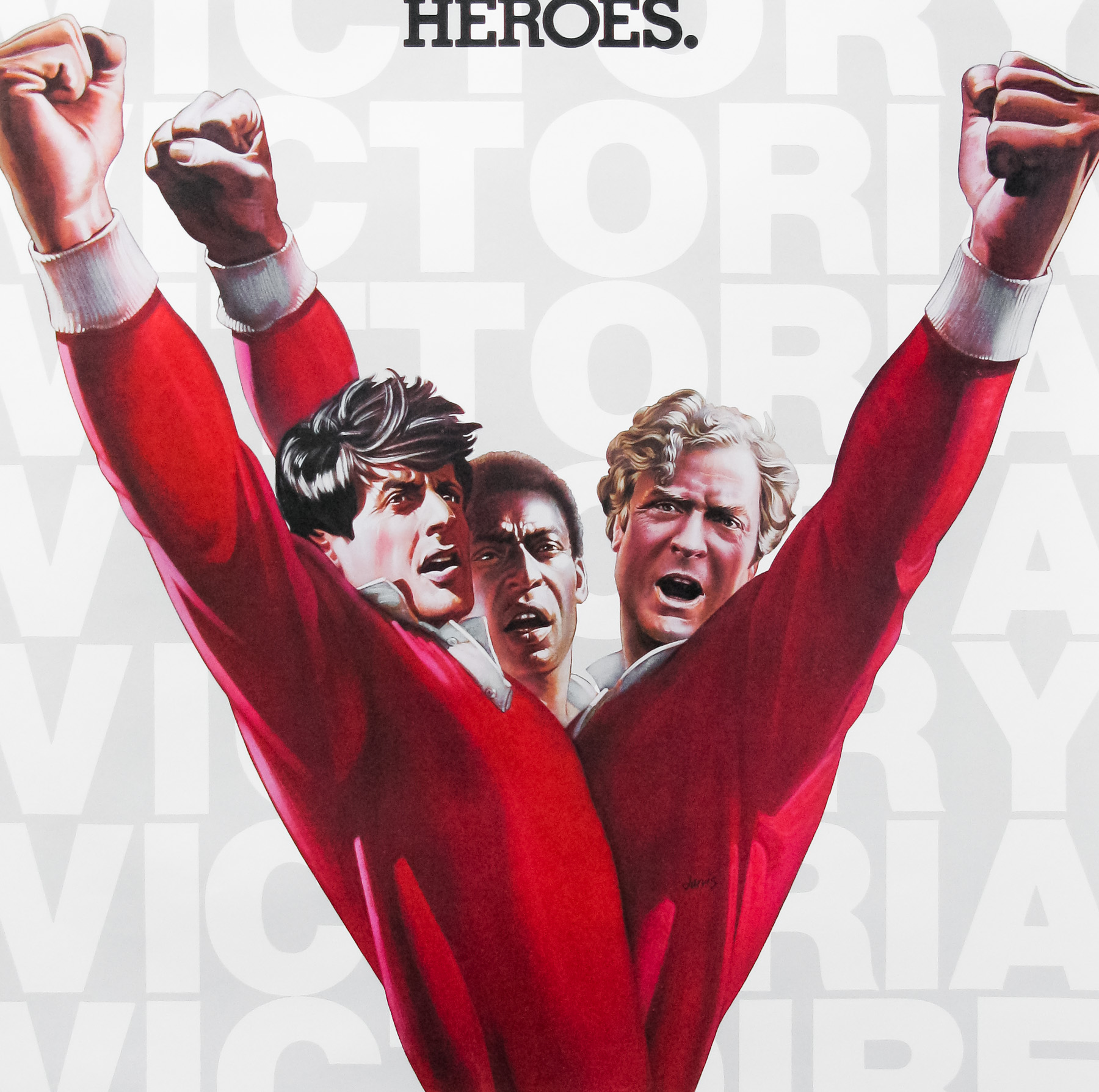
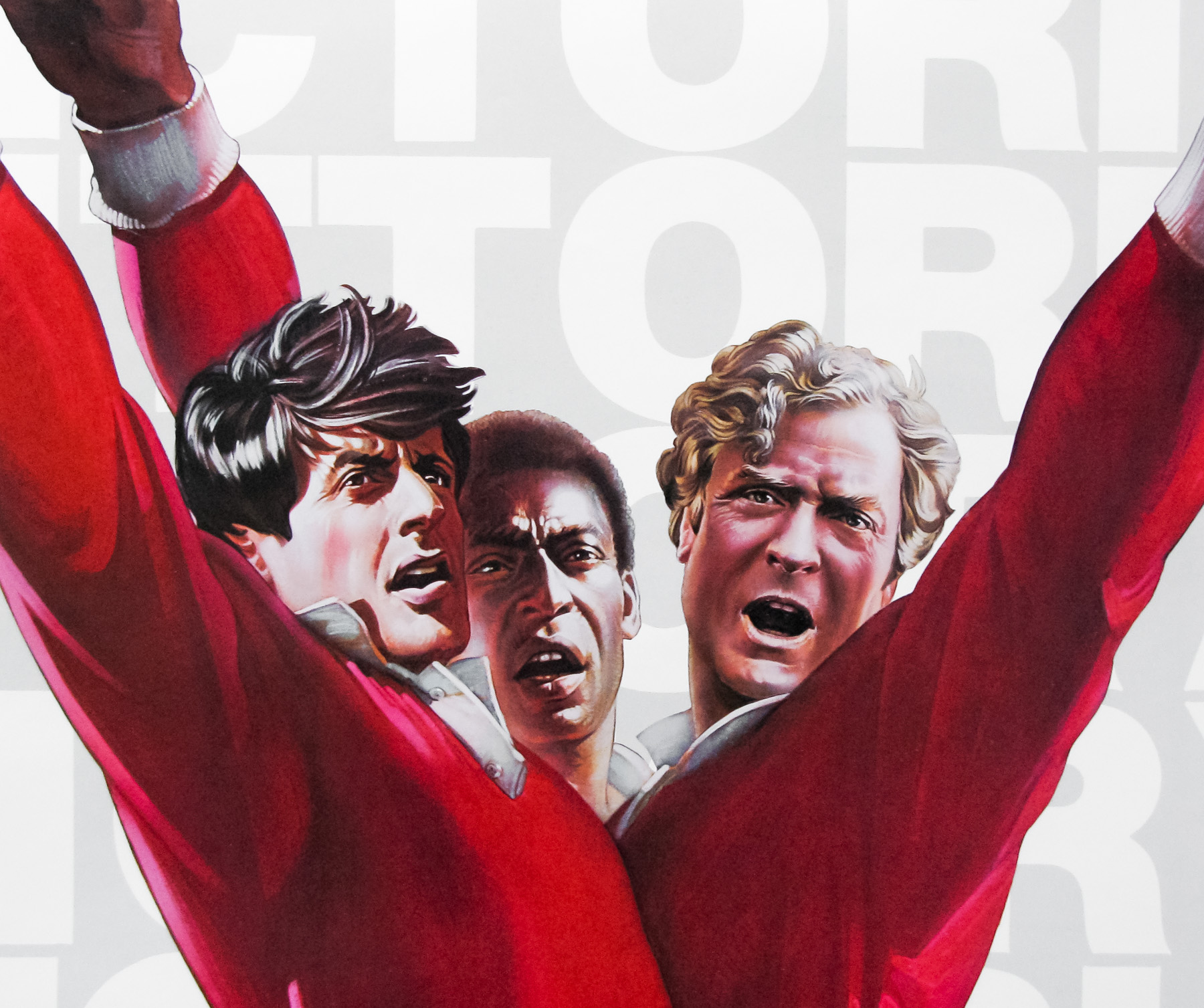
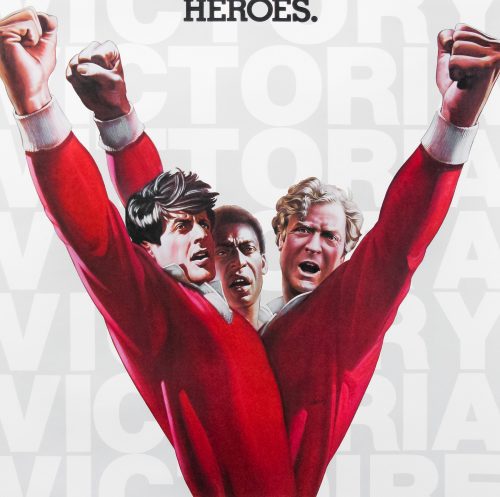
Something of a cult classic, Victory (AKA Escape to Victory) is arguably the most famous film to revolve around The Beautiful Game. Based on 1962 Hungarian film called Két félidő a pokolban by director Zoltán Fábri the film, which is set during WWII, tells the story of a football match played in Paris by a team of Prisoners of War against a German side, seen as a propaganda event. The team is led by John Colby (Michael Caine) who is determined to win the game despite the distraction of other POWs who want to use the cover of the game to escape. Sylvester Stallone plays Hatch, an American POW who is at the vanguard of the escape attempt and actually manages to get out of the camp prior to the game to meet up with resistance leaders in Paris. After planning the big breakout, Hatch must get recaptured and returned to the POW camp in order to communicate the plans to the others. When the big day arrives, Hatch is put into goal and Colby persuades the team to see the match through to the final whistle before they make their escape.

The film notoriously features a host of real life professional footballers who were involved in the game and doubled for the actors or played on the German team, including the Brazilian superstar Pelé, Bobby Moore, Osvaldo Ardiles and a whole host of players from the English team Ipswich Town, who were one of the most successful British sides at the time of the film’s release. English goalkeeping legend Gordon Banks, who played during the 1966 world cup that England won, worked behind the scenes and coached Stallone to ensure his scenes in goal were realistic enough for the film’s audience.

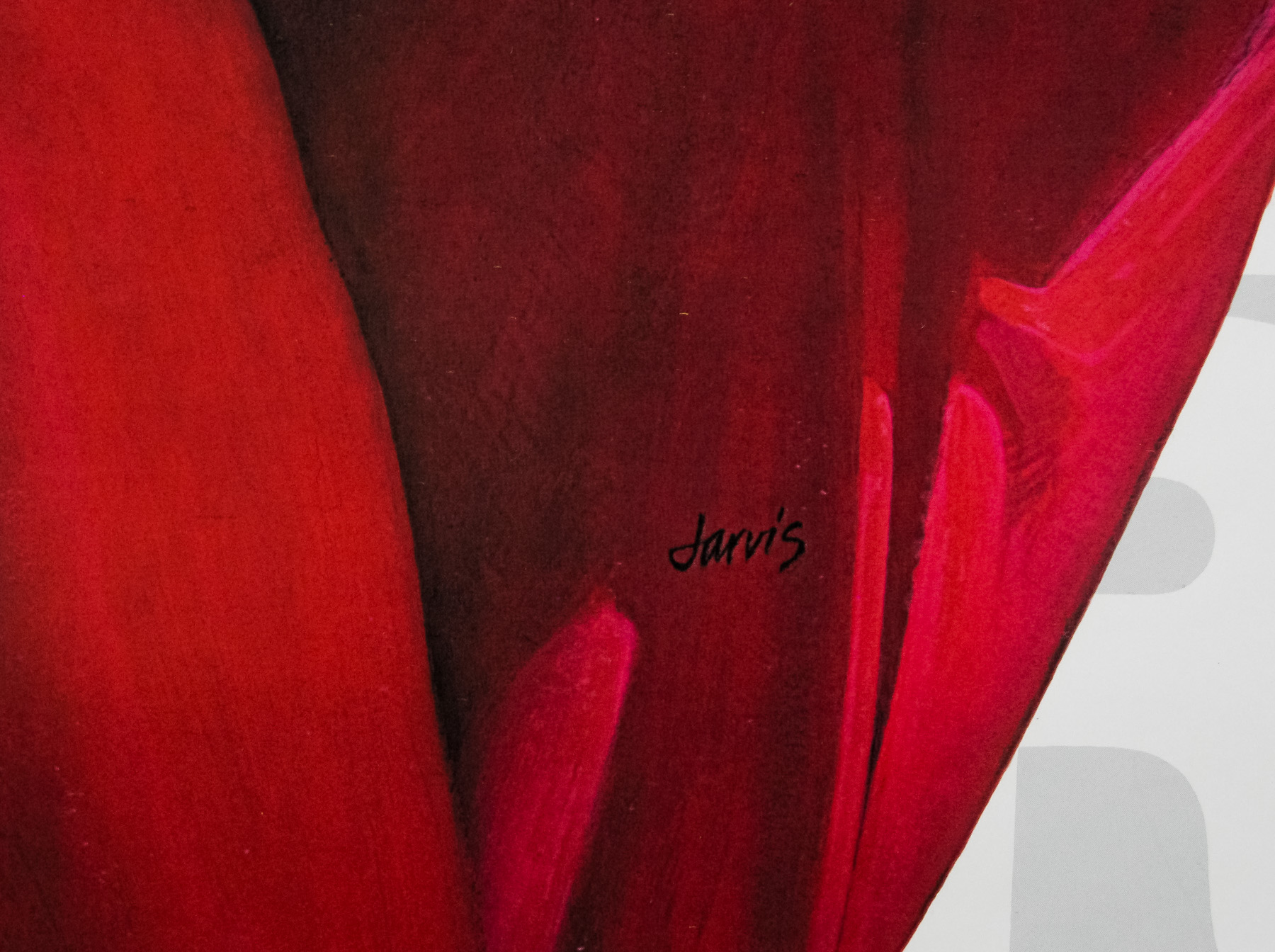
This US one sheet was illustrated by the artist David Jarvis who is perhaps best known for his illustration on the poster for Walter Hill’s The Warriors. Having completed a degree in illustration at the Los Angeles Art Center College of Design, Jarvis went on to work as a freelance illustrator producing over thirty designs for film posters, as well as record sleeves, magazine covers and more. He also worked as an artist for Disney studios on the films Mulan and Tarzan. The other posters I’ve collected by him can be seen here.
Check out the UK quad that also features Jarvis’ artwork but adds a montage by Vic Fair.

Willow / one sheet / USA

17.05.11

Poster Poster
Title
Willow
AKA
--
Year of Film
1988
Director
Ron Howard
Starring
Warwick Davis, Val Kilmer, Joanne Whalley, Jean Marsh, Patricia Hayes, Billy Barty, Pat Roach
Origin of Film
USA
Genre(s) of Film
Warwick Davis, Val Kilmer, Joanne Whalley, Jean Marsh, Patricia Hayes, Billy Barty, Pat Roach,
Type of Poster
One sheet
Style of Poster
--
Origin of Poster
USA
Year of Poster
1988
Designer
Unknown
Artist
John Alvin
Size (inches)
27" x 39 7/8"
SS or DS
SS
NSS #
--
Tagline
--

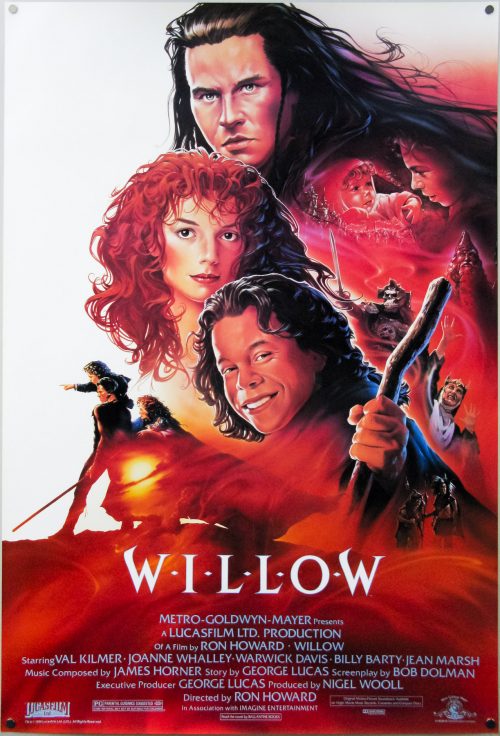
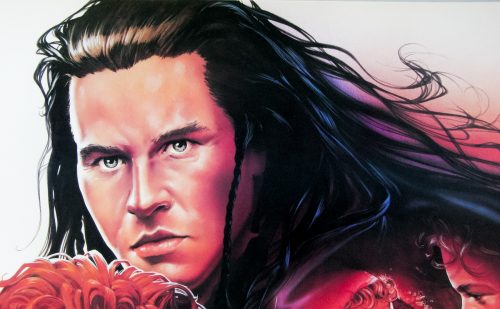
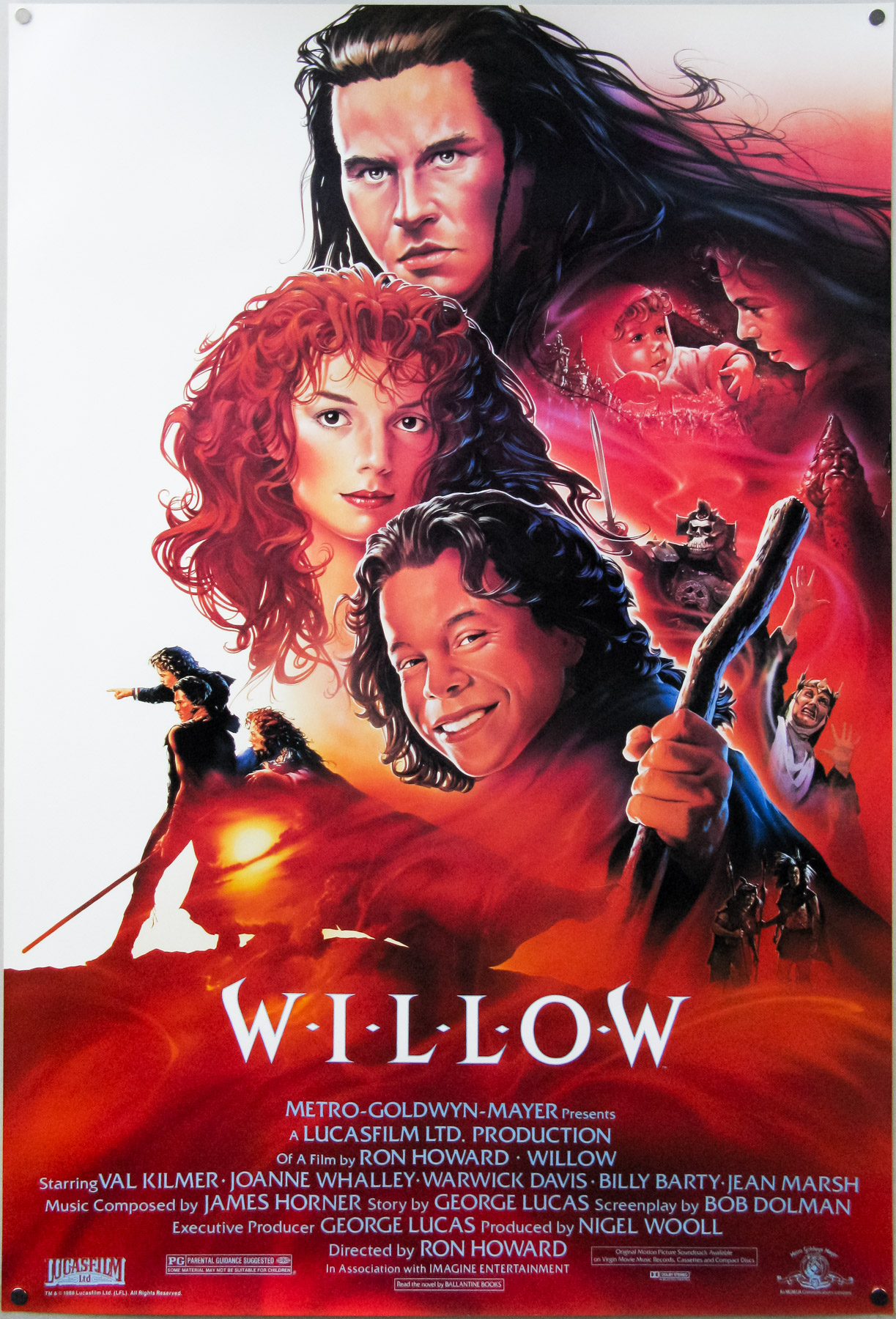
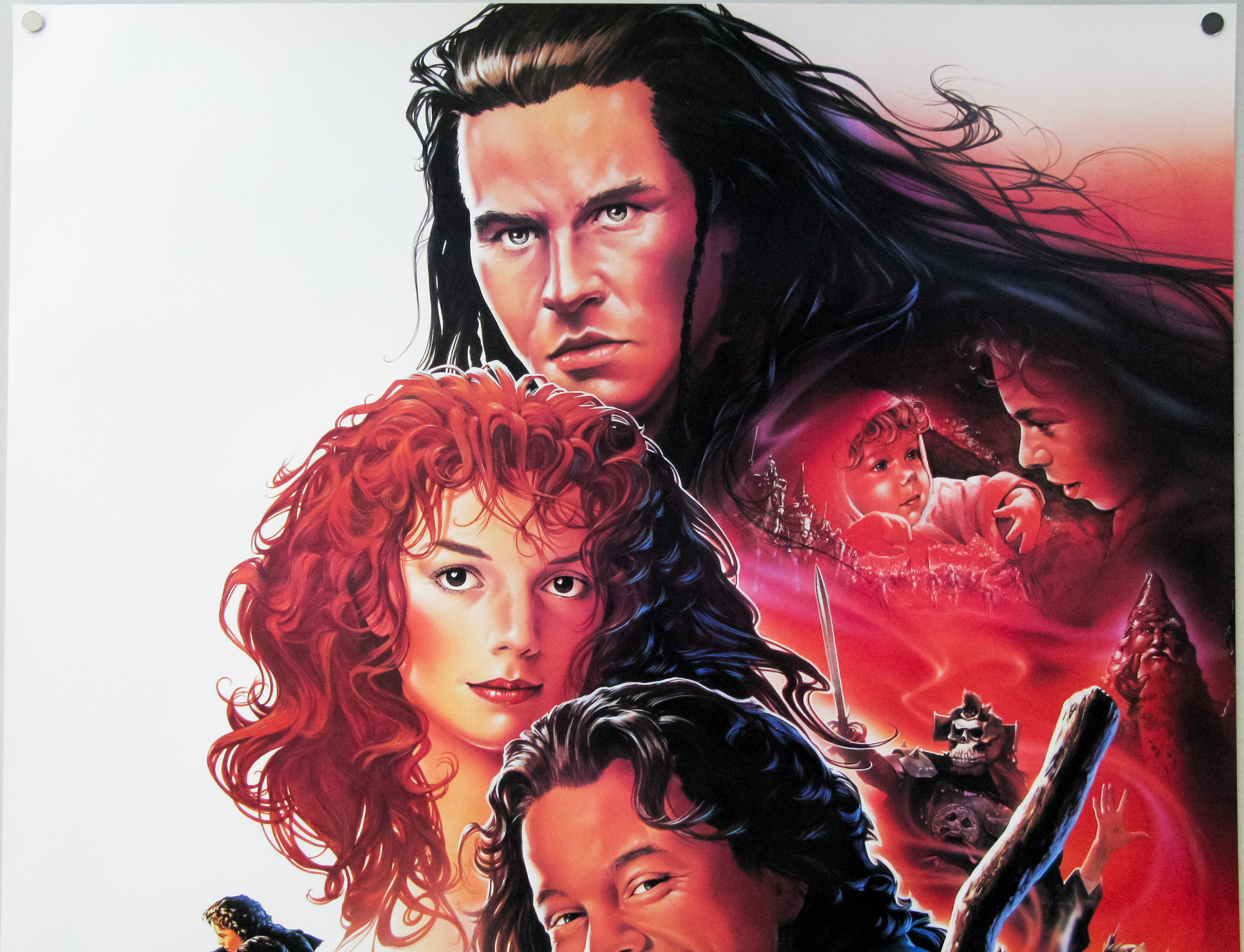
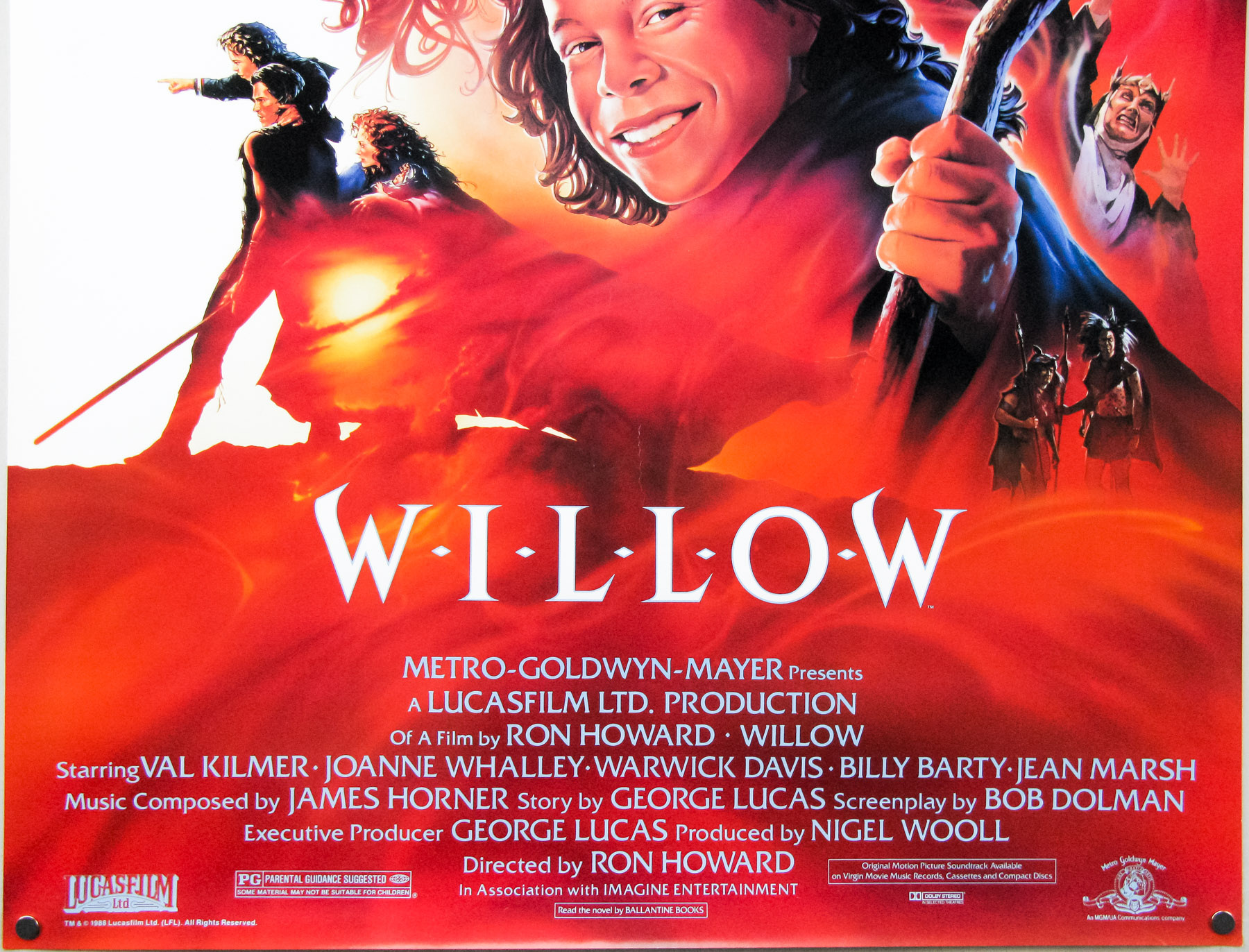
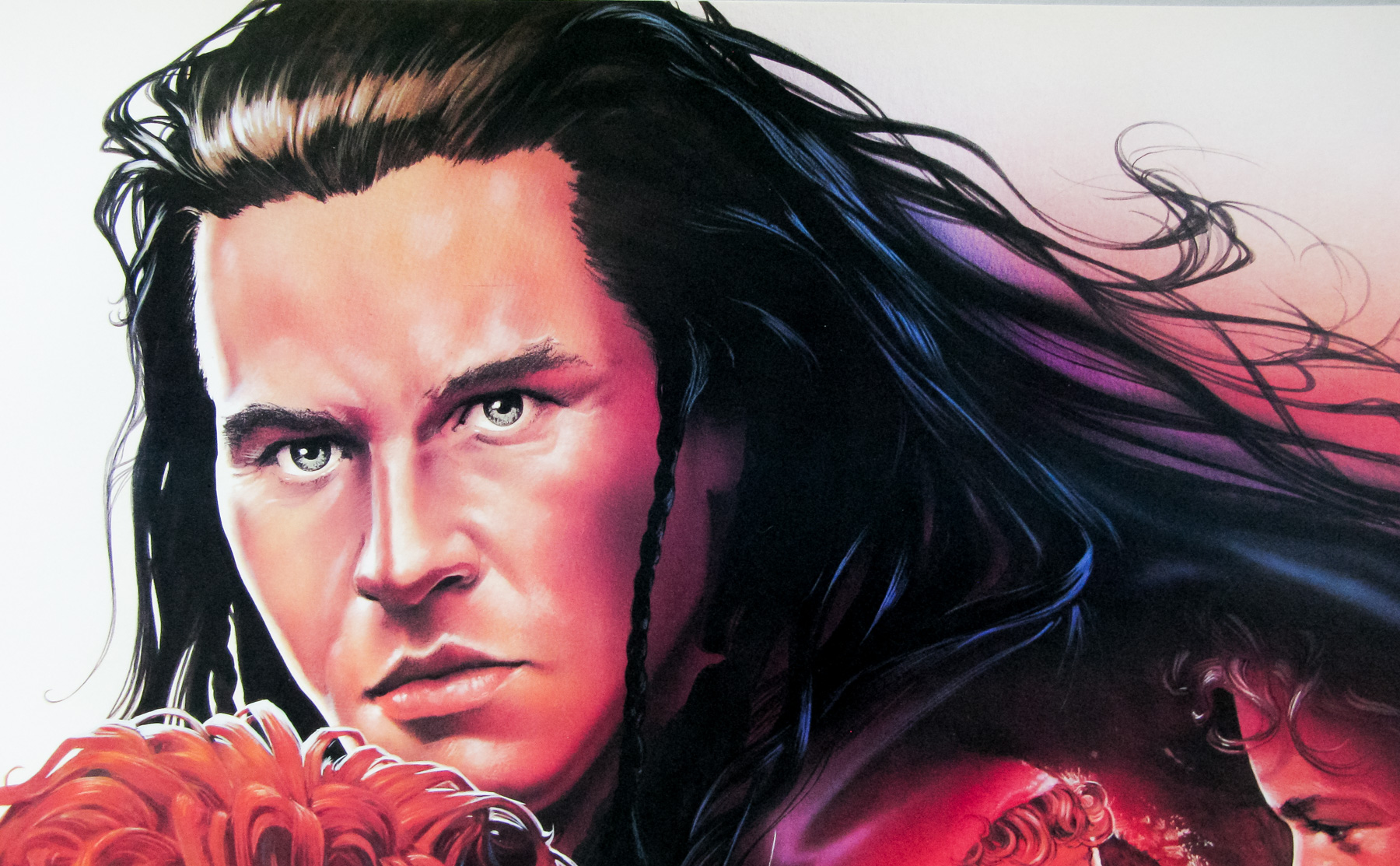
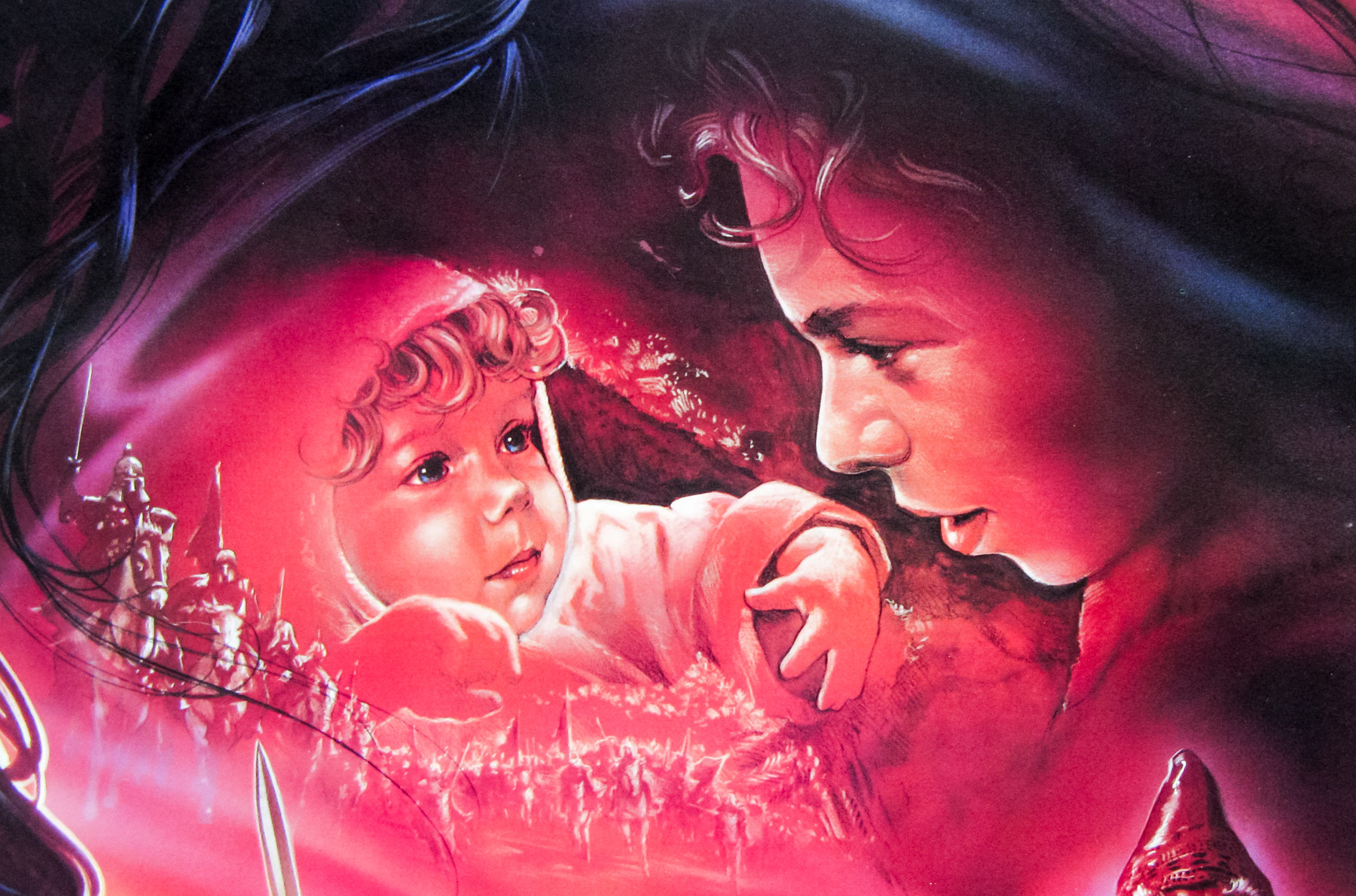
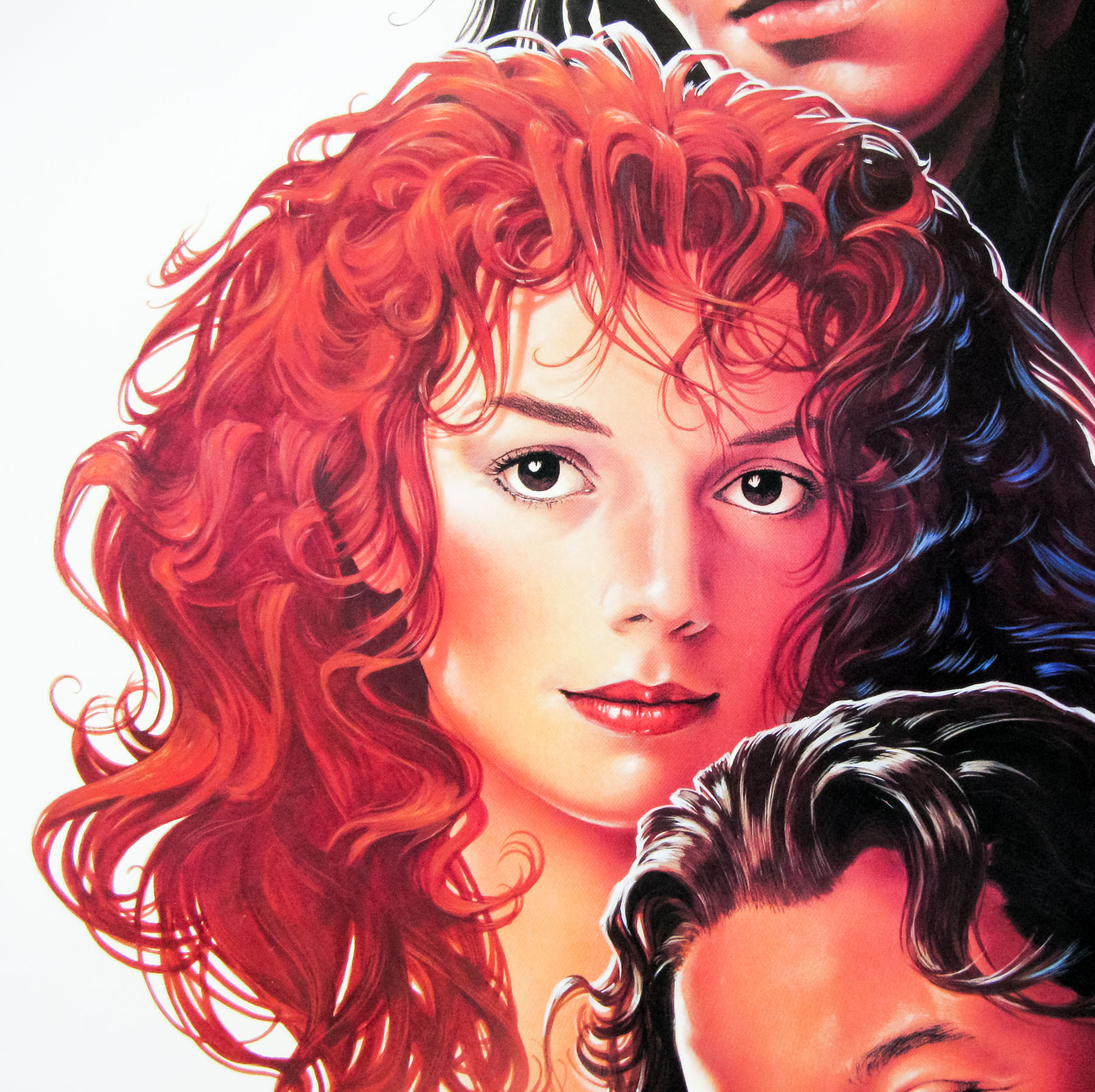
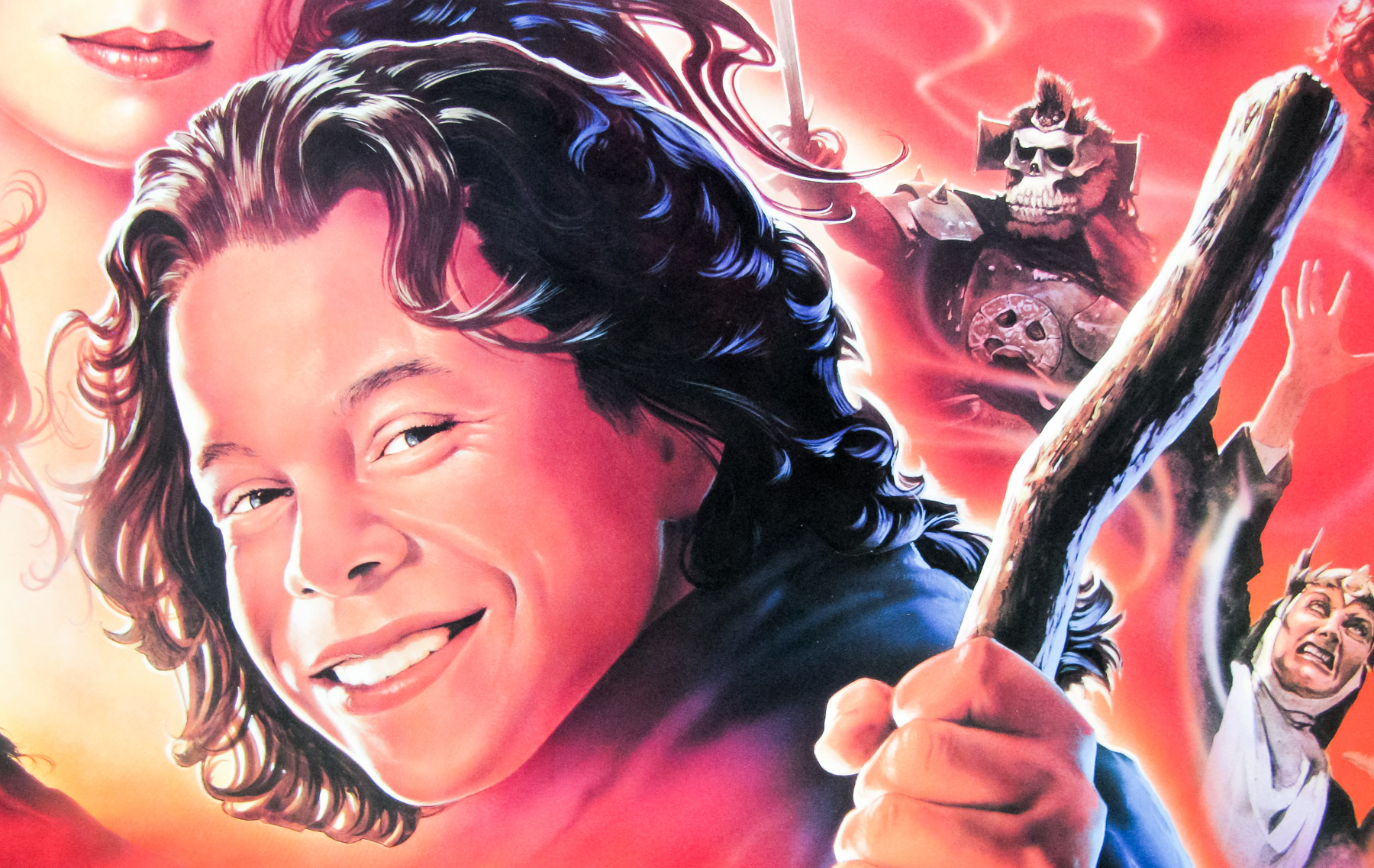
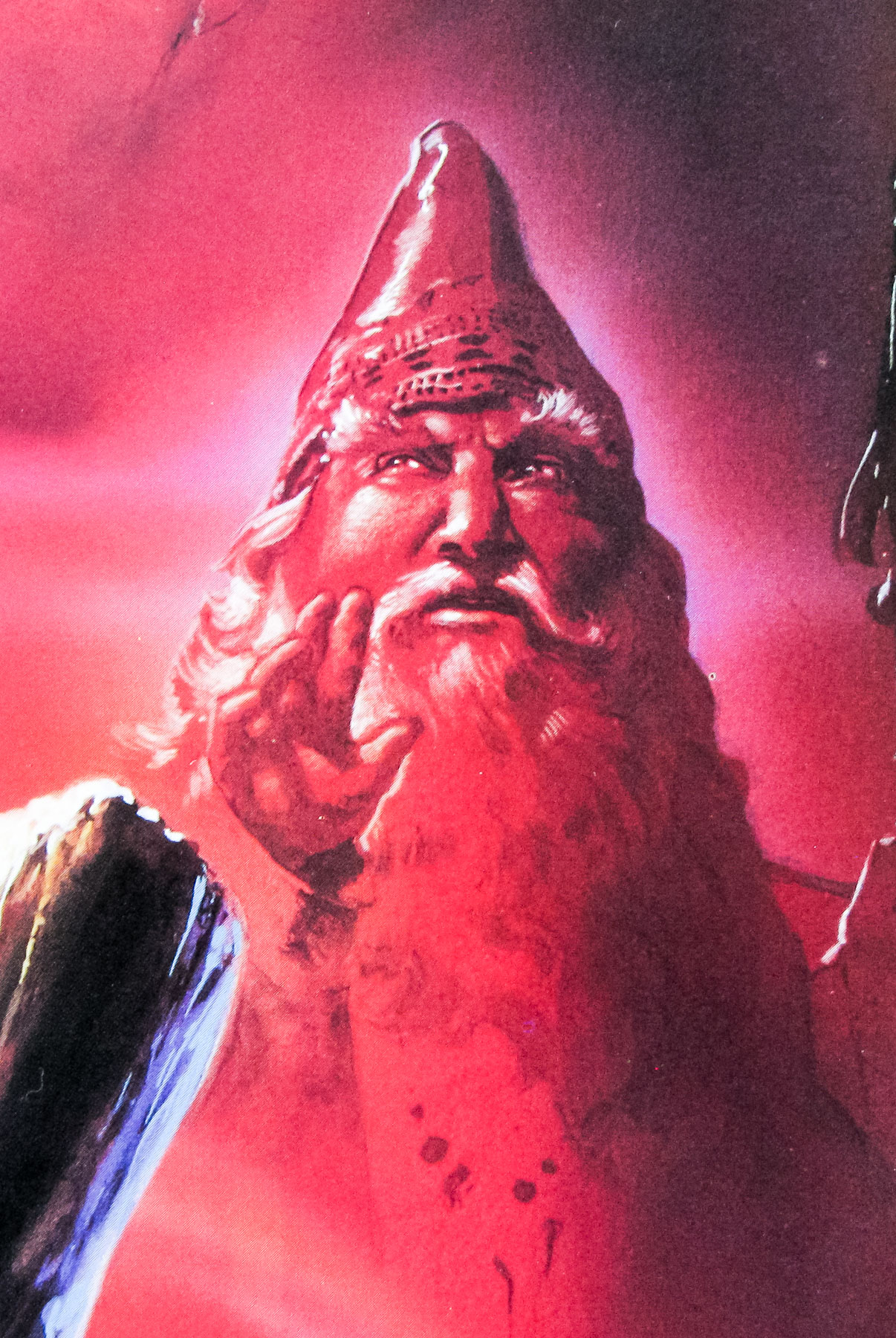
Excellent artwork by John Alvin features on this US one sheet for the release of Ron Howard‘s 1988 fantasy film Willow, which was conceived of by George Lucas. British actor Warwick Davis features as the eponymous hero and the part had been written specifically with him in mind after he appeared as an Ewok in Lucas’ Return of the Jedi. The story begins as the evil Queen Bavmorda (Jean Marsh) hears of a prophecy that a newborn child will bring about her downfall and sets about imprisoning all pregnant women in her castle’s dungeon.

When a child is born and identified as the one in the prophecy, the child’s mother manages to convince the mid-wife to secret her daughter out of the castle. When Queen Bavmorda discovers what has happened she sends her daughter Sorsha (Joanne Whalley) and leader of her army General Kael in pursuit. Before being caught, the midwife manages to put the child on a raft on a river and the child ends up being found by Willow Ufgood (Davis) a a member of a race of hobbit-like people called the Nelwyns. Initially caring for the baby with his wife, Willow is persuaded to take it away from their village and back to the Daikinis (humans) when it becomes clear that there are people hunting for it. As the adventure begins, Willow and his companions soon realise they’re in for more than they bargained for.

Featuring a great performance by Val Kilmer as a selfish, reluctant hero the film still stands up today as a fun and engaging fantasy adventure with several memorable sequences and a brilliant score by James Horner. Despite being critically derided on release and not fairing too well at the box- office it has nevertheless grown something of a cult following and is notable for its use of ground-breaking special effects by Industrial Light and Magic that were used for a sequence involving a morph between several animals and a human.

The late American designer and artist John Alvin was responsible for over 135 film poster designs over a thirty year period. Alvin painted many unforgettable pieces of artwork, including Blade Runner and E.T. The Extra Terrestrial. The gallery of his posters on IMPAwards gives you an idea of the range of his work. Alvin sadly passed away too early, just shy of his 60th birthday (in 2008), but his fantastic designs will live on for generations to come.

To see the posters I’ve collected by Alvin click here.

The Outing / one sheet / style B / USA

08.07.13

Poster Poster
Title
The Outing
AKA
The Lamp (Japan)
Year of Film
1987
Director
Tom Daley
Starring
Deborah Winters, James Huston, Andra St. Ivanyi, Scott Bankston, Red Mitchell, André Chimène, Damon Merrill, Barry Coffing, Tracye Walker, Raan Lewis
Origin of Film
USA
Genre(s) of Film
Deborah Winters, James Huston, Andra St. Ivanyi, Scott Bankston, Red Mitchell, André Chimène, Damon Merrill, Barry Coffing, Tracye Walker, Raan Lewis,
Type of Poster
One sheet
Style of Poster
Style B
Origin of Poster
USA
Year of Poster
1987
Designer
Unknown
Artist
Drew Struzan
Size (inches)
27" x 41"
SS or DS
SS
NSS #
--
Tagline
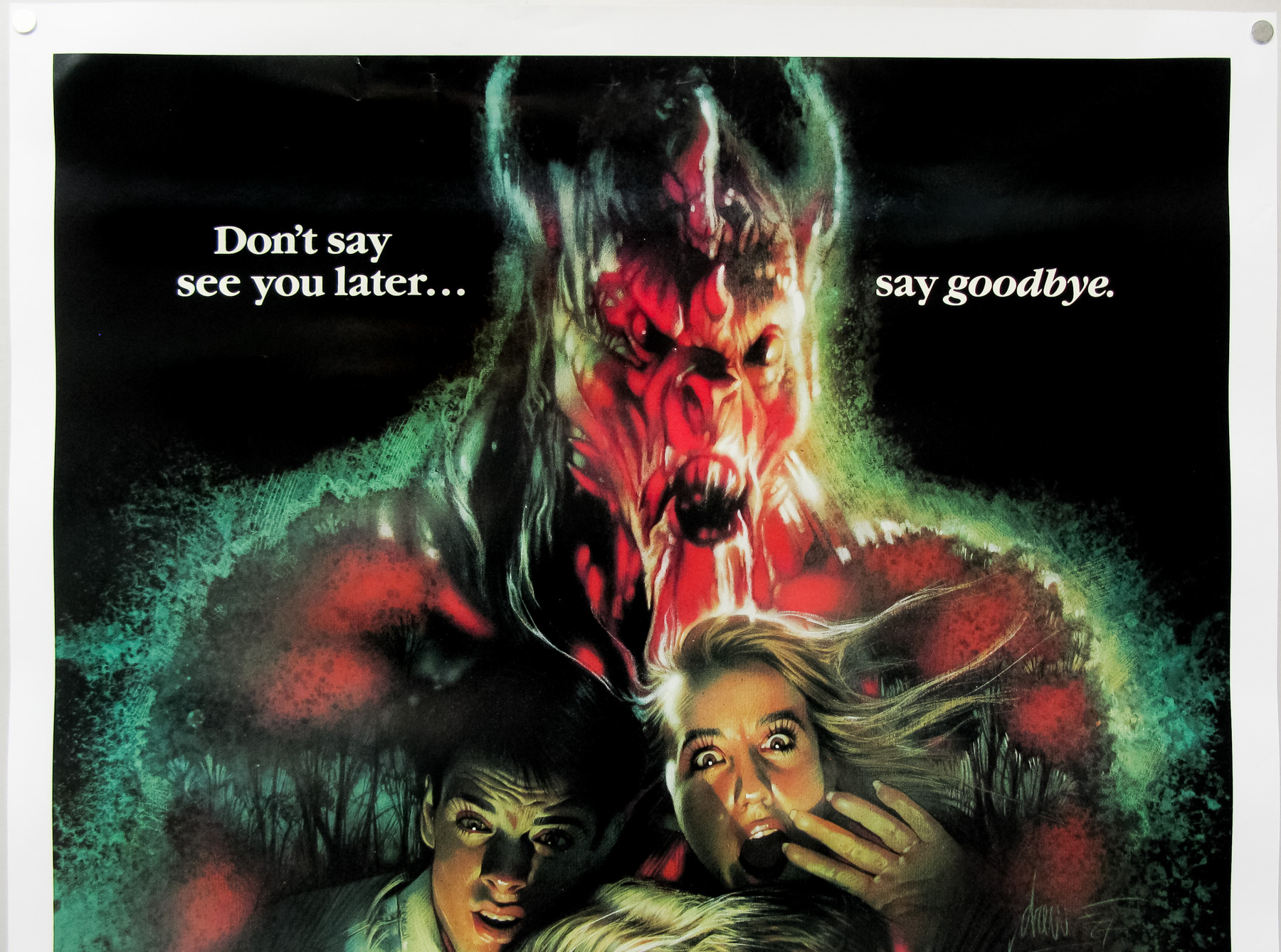
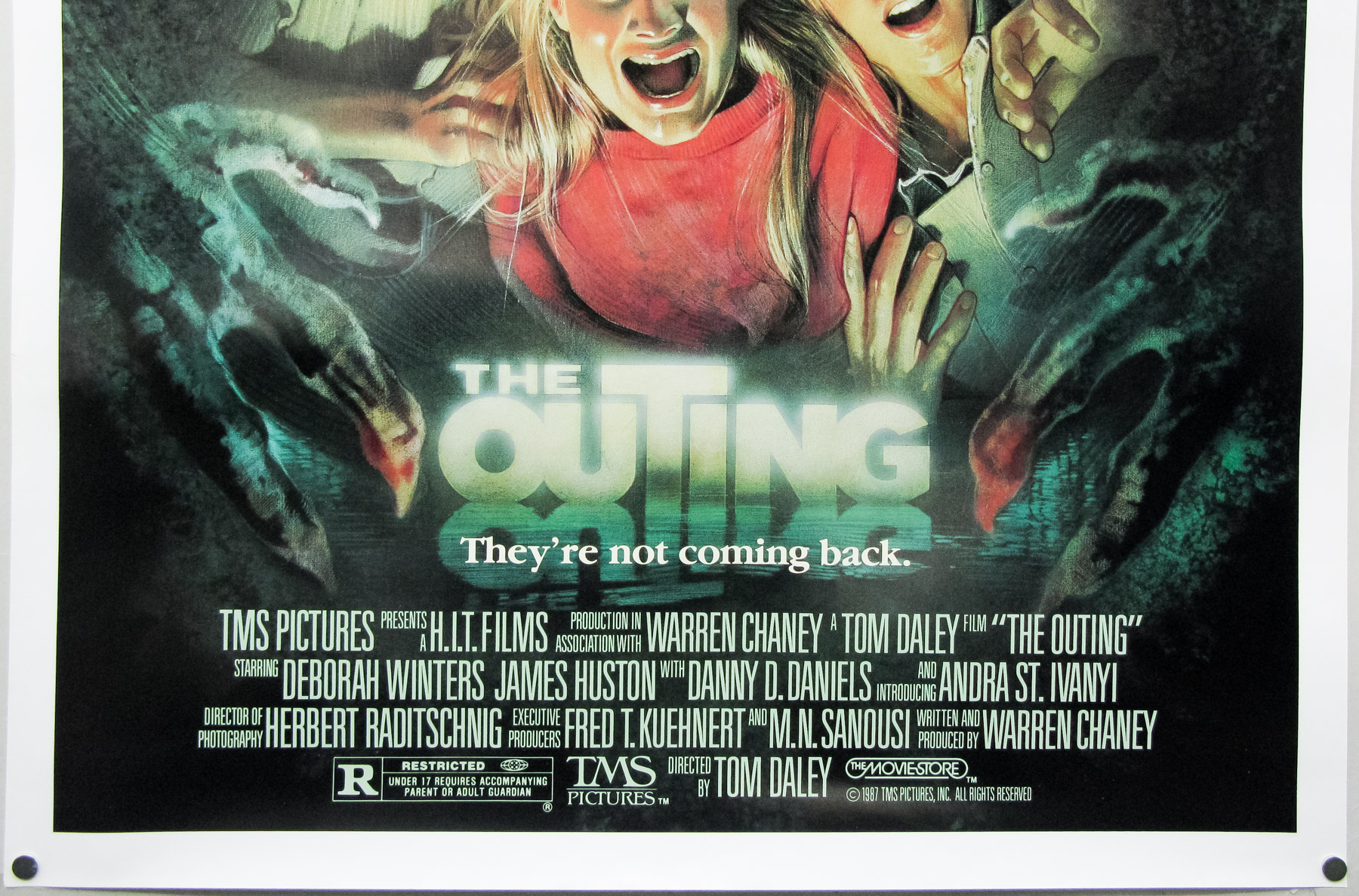
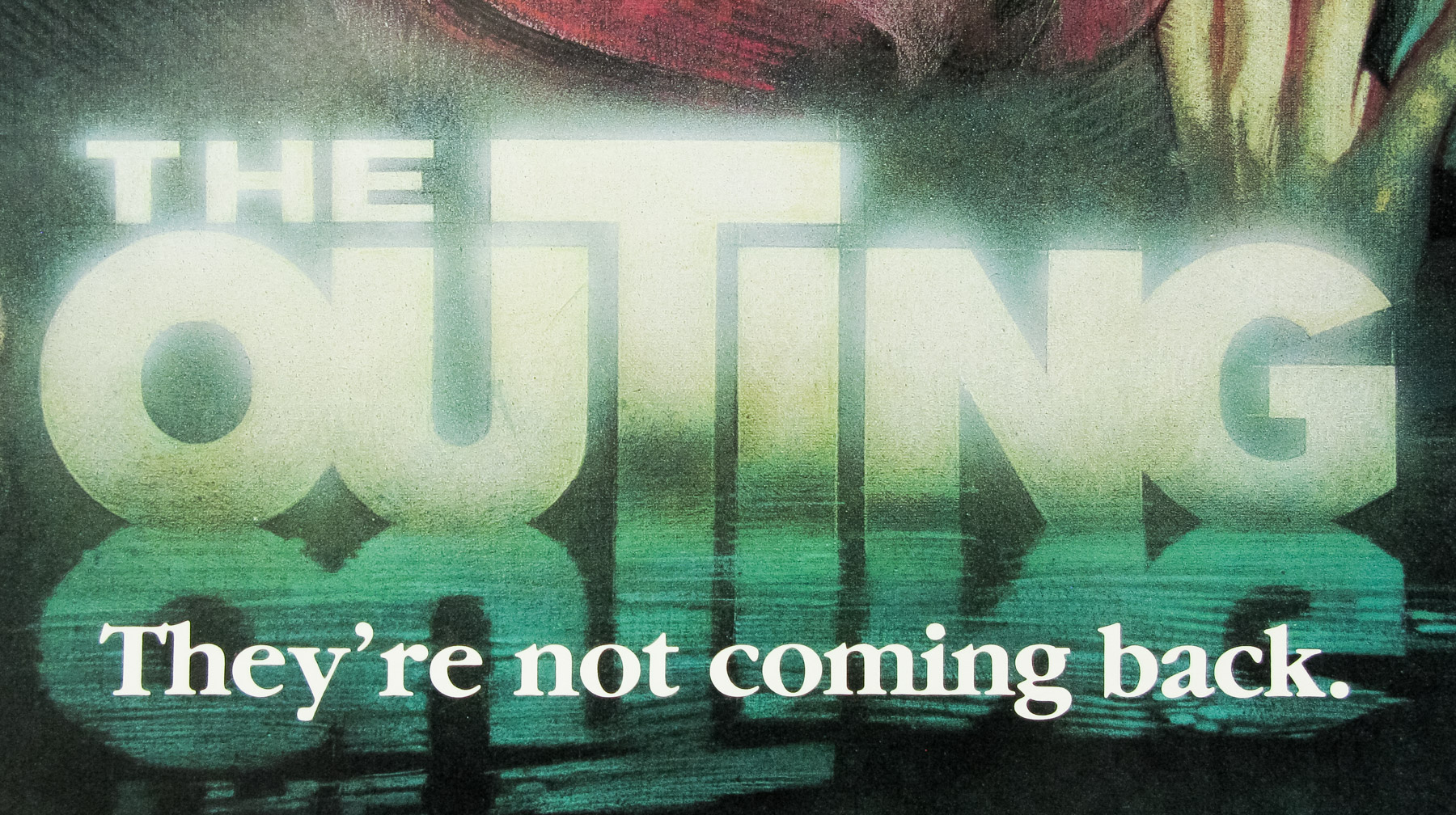
Don't say see you later... say goodbye. | They're not coming back.

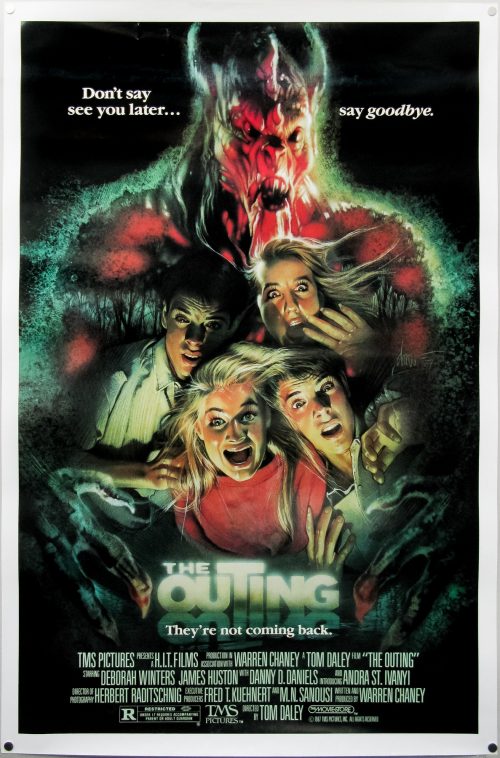
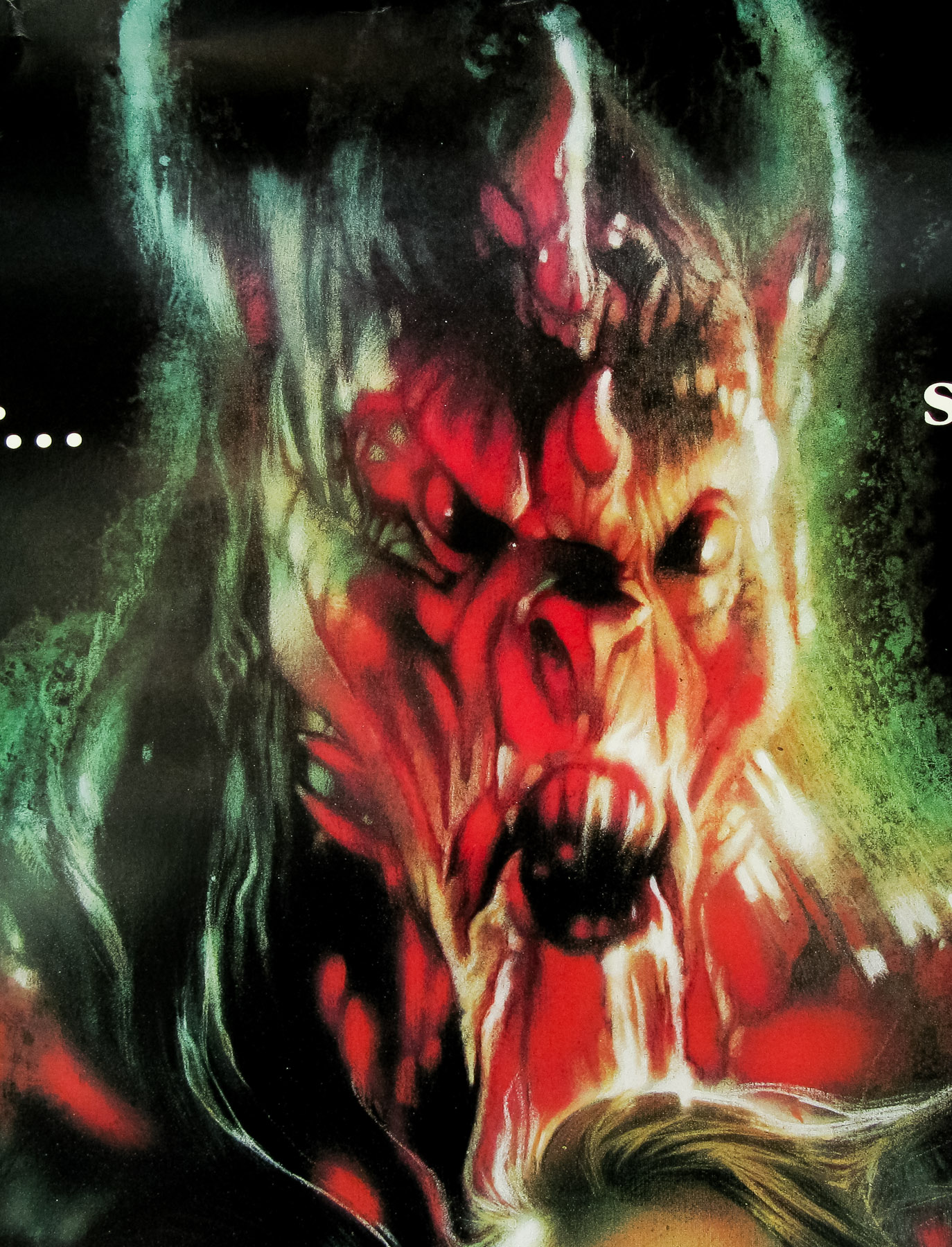
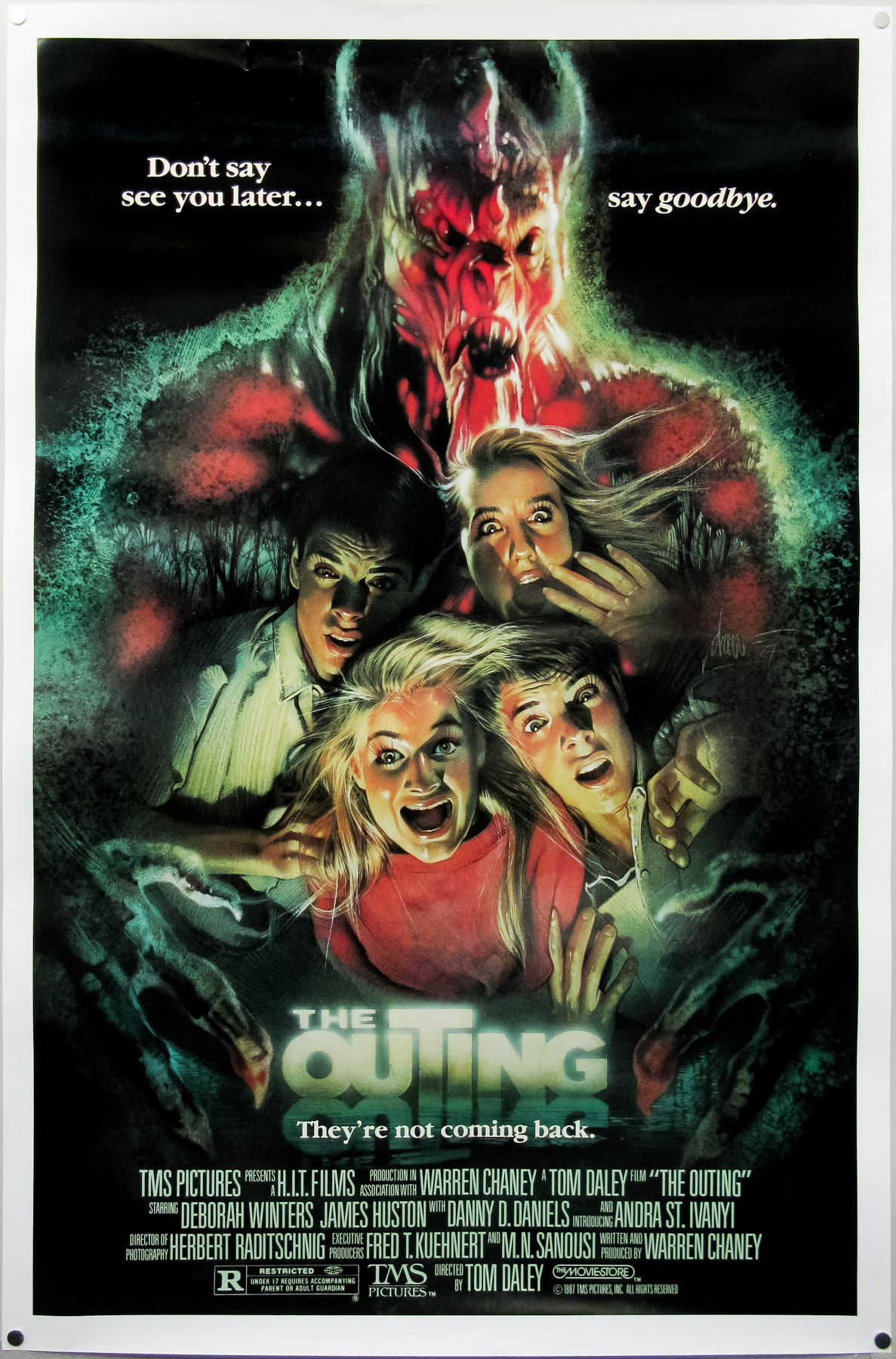
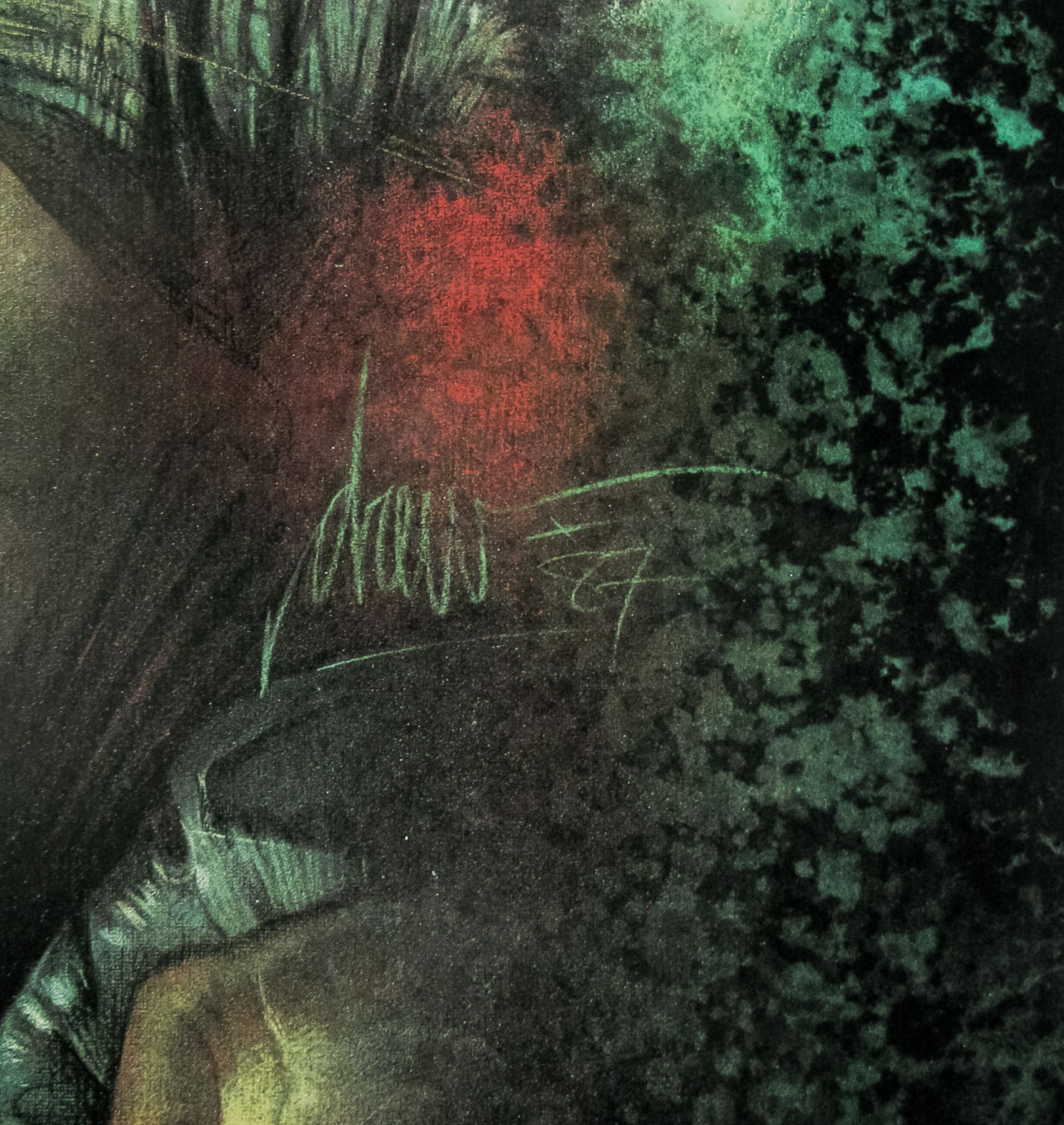
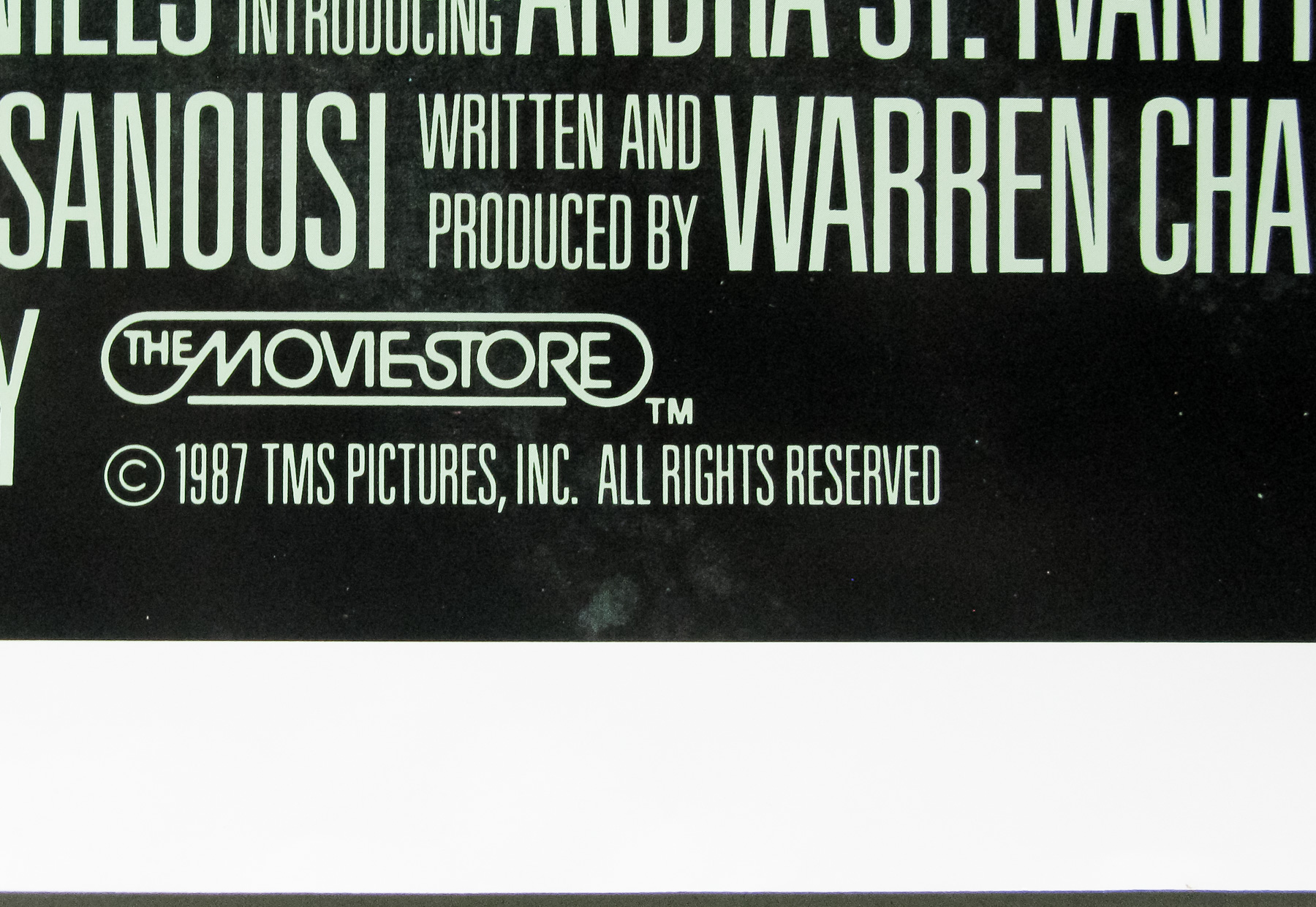
A rarely seen ‘style B’ one sheet with artwork by the great Drew Struzan, for the release of the horror film The Outing, which was actually a re-edited version of the 1986 film The Lamp. Skouras Films distributed the film in most territories outside of the United States but, for reasons I’m unable to ascertain, the domestic release was handled by the now defunct outfit The Movie Store who cut 18 minutes, primarily from the first ‘prologue’ part of the film, and changed its name to the one seen on this poster. The Lamp cut of the film is now something of a cult classic and it faired much better on its original worldwide release than The Outing did in the US.

The Lamp version of the story starts in the 19th century onboard a cargo ship from the Middle East bound for Texas. When the ship docks most of the crew have been killed with only the captain and a young girl surviving, that is until the mysterious killer strikes again and the source of the evil is shown to be related to an ornate Arabian lamp. Jumping forward several decades (where The Outing begins) a bunch of hicks are ransacking the home of an elderly Arabic lady who they murder before coming across the lamp seen at the start of the film. When one of the thieves accidentally rubs the object, the evil djinn (or genie) is unleashed and proceeds to massacre each of the men one by one. During the subsequent police investigation, the lamp is found and sent to the Houston Museum of Natural Science, which is where the bulk of the film takes place. A teenage girl, whose father works at the museum, discovers the lamp and is somehow possessed by the creature, persuading a bunch of her schoolmates to stay the night at the museum allowing the evil genie to have his wicked way.

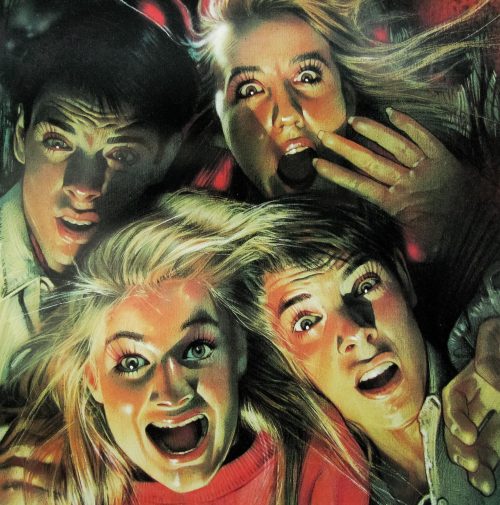
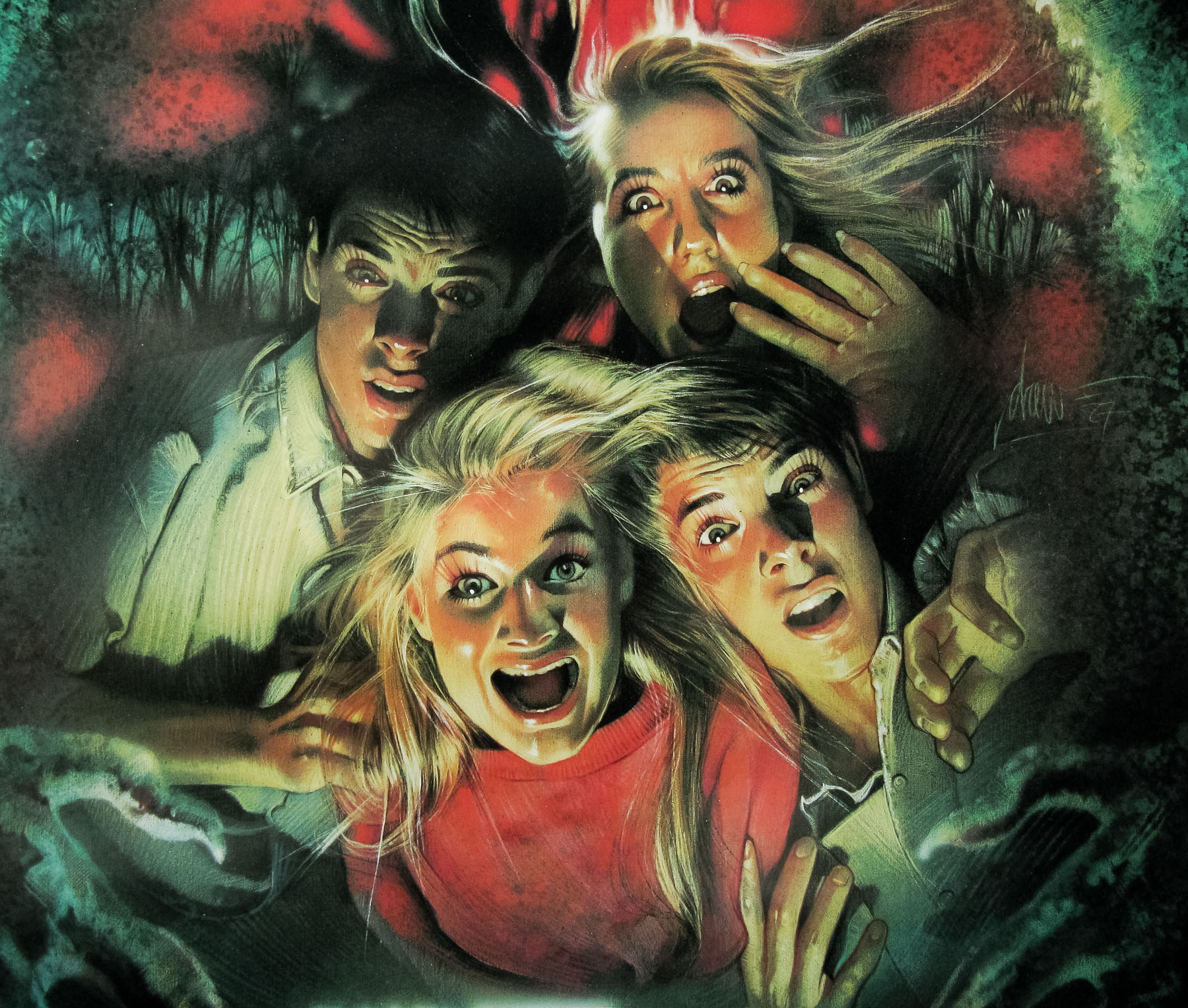
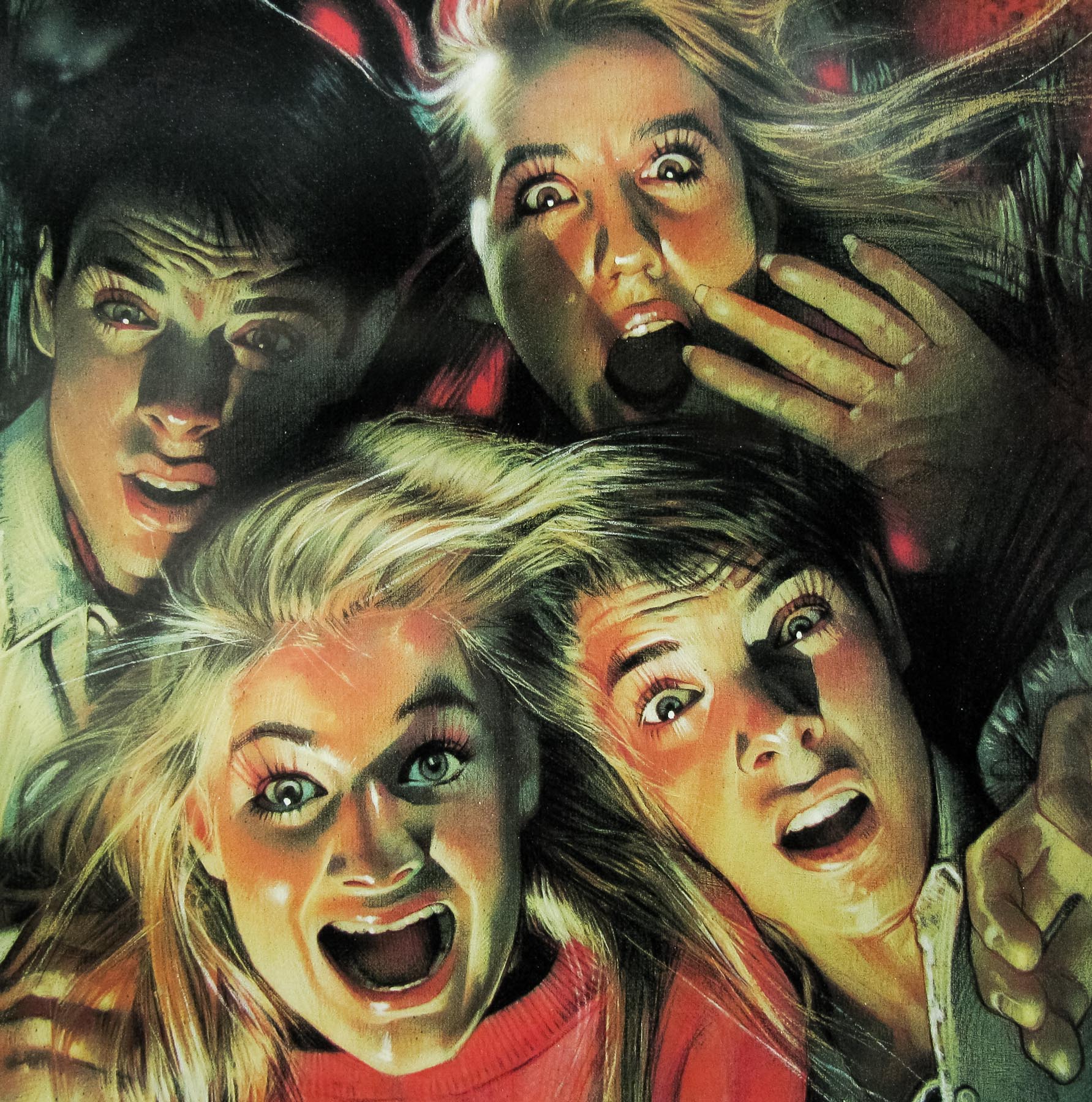
This style B differs from the other version of the poster, which I also have in the collection, by depicting the evil genie in all its gruesomeness. The main image of the four terrified teens features on both posters, albeit with a slightly modified colour scheme.

To see the other posters I have in my collection that were painted by Drew Struzan click here.

Battlestar Galactica / one sheet / teaser / USA

11.08.12

Poster Poster
Title
Battlestar Galactica
AKA
Saga of a Star World (original pilot title)
Year of Film
1978 (released in the US in 1979)
Director
Richard A. Colla
Starring
Richard Hatch, Dirk Benedict, Lorne Greene, Herbert Jefferson Jr., John Colicos, Maren Jensen, Noah Hathaway, Laurette Spang, Tony Swartz, Terry Carter
Origin of Film
USA
Genre(s) of Film
Richard Hatch, Dirk Benedict, Lorne Greene, Herbert Jefferson Jr., John Colicos, Maren Jensen, Noah Hathaway, Laurette Spang, Tony Swartz, Terry Carter,
Type of Poster
One sheet
Style of Poster
Teaser
Origin of Poster
USA
Year of Poster
1979
Designer
Unknown
Artist
Ralph McQuarrie
Size (inches)
27 1/16" x 41"
SS or DS
SS
NSS #
--
Tagline
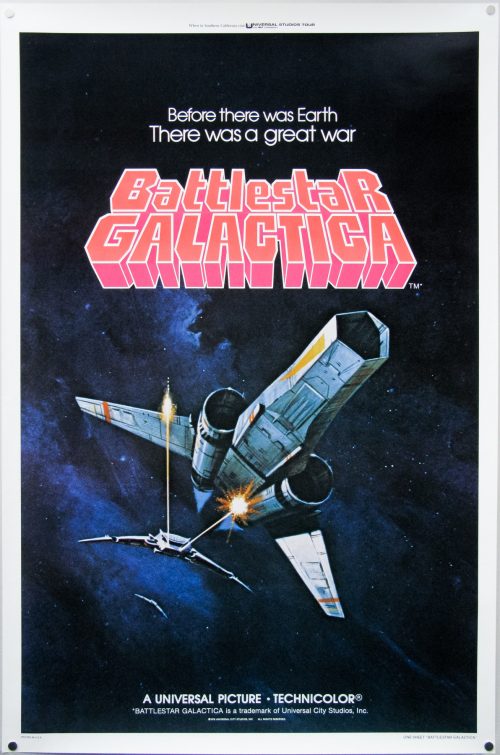
Before there was earth there was a great war

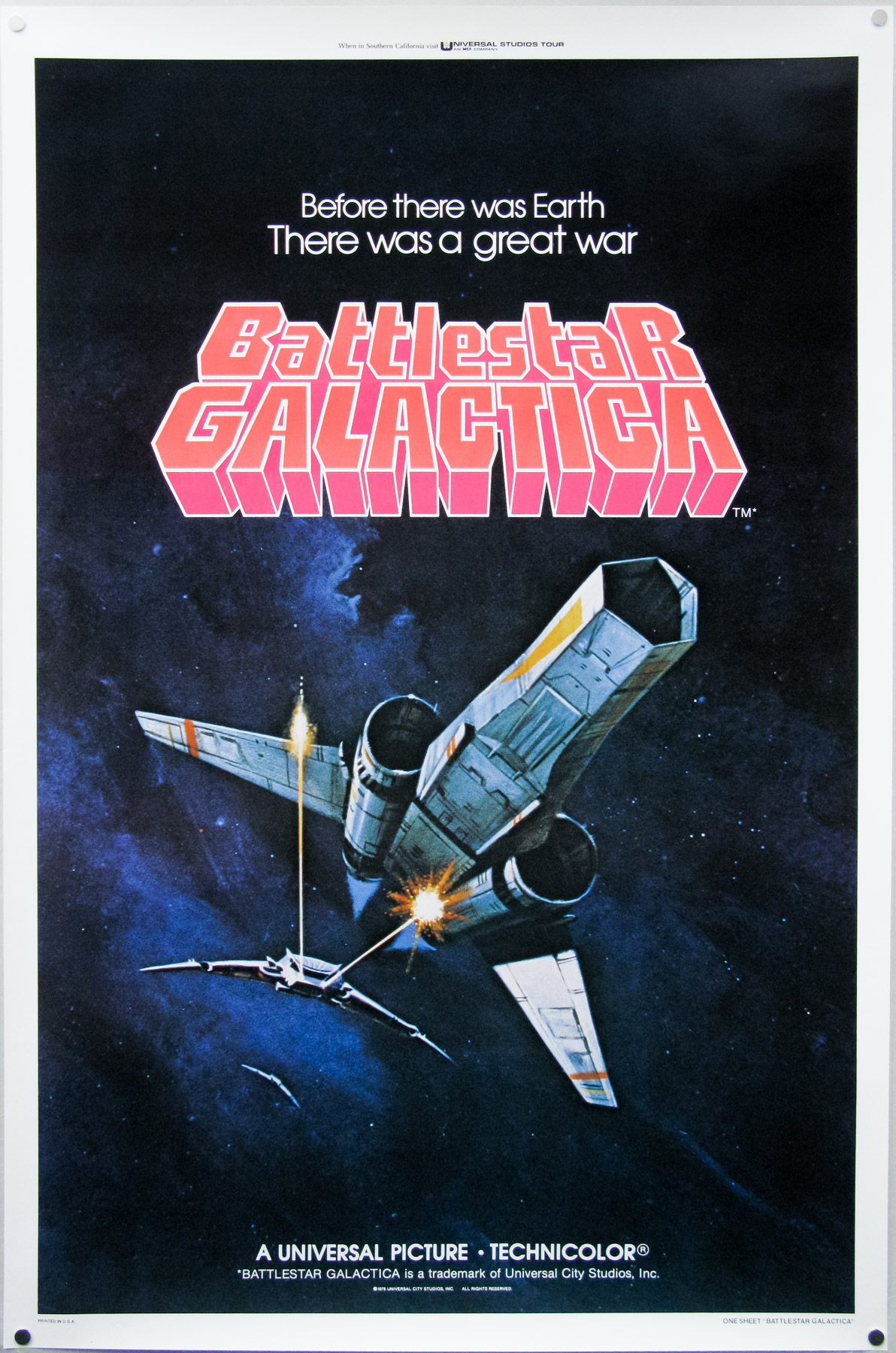
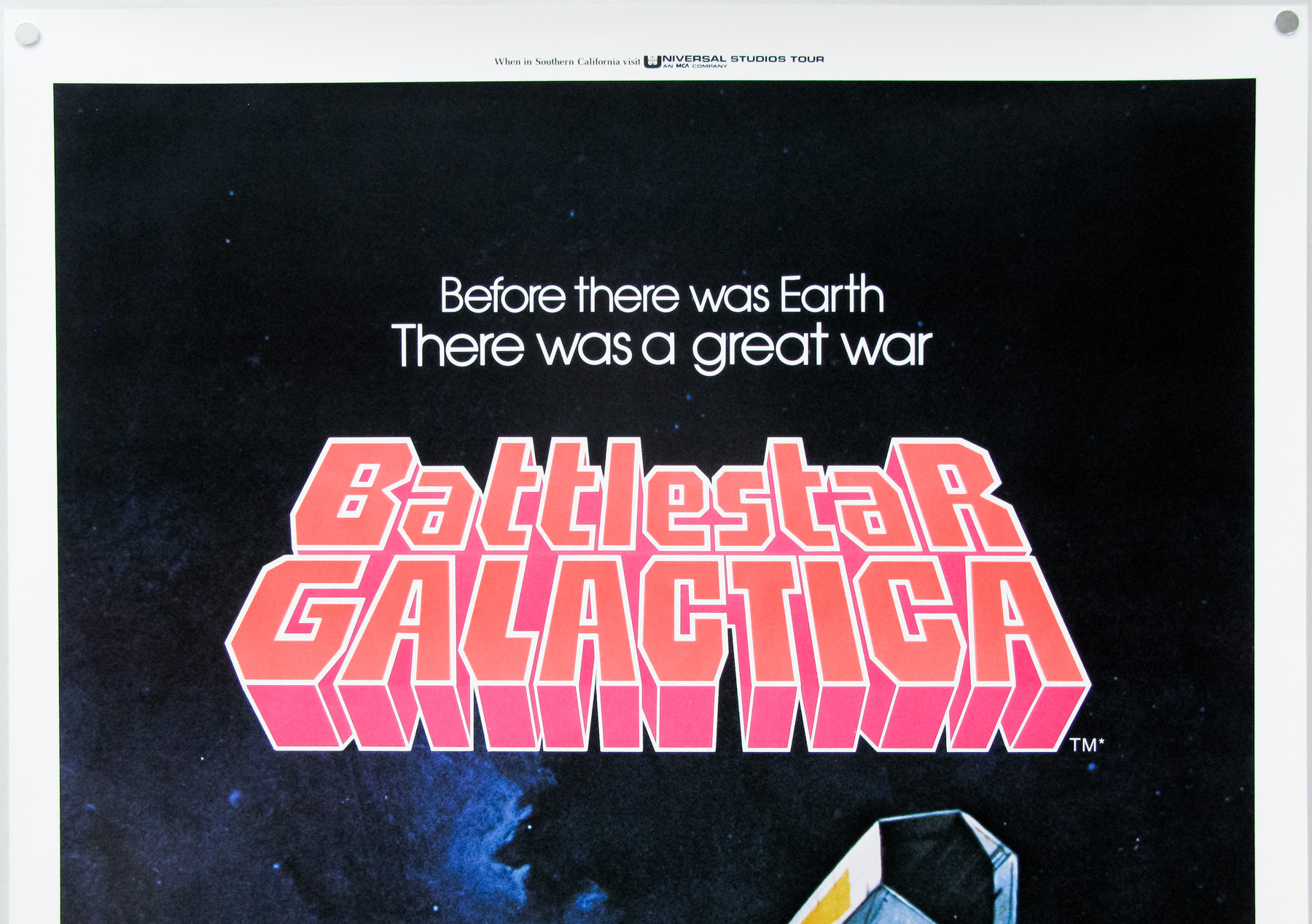
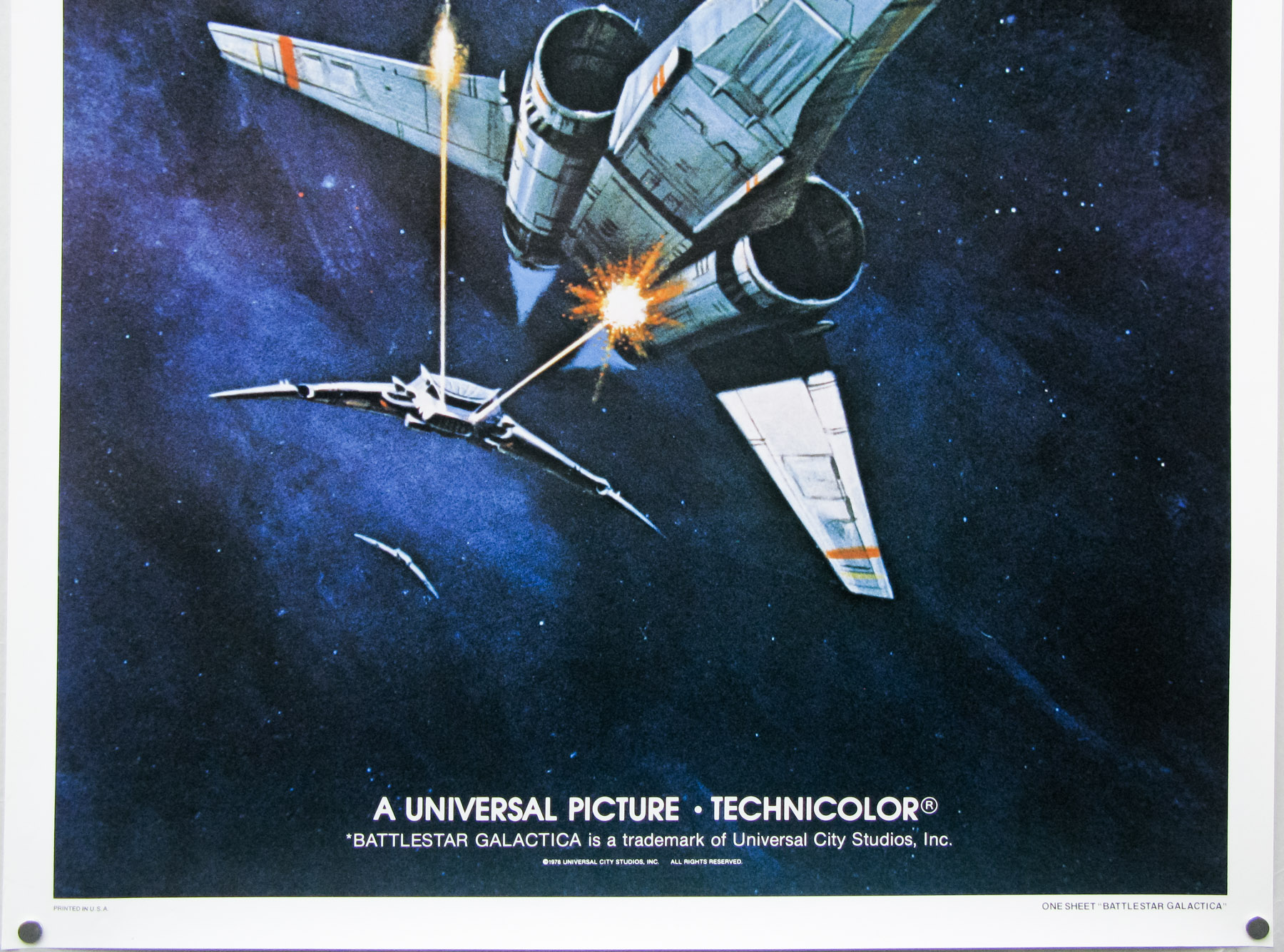
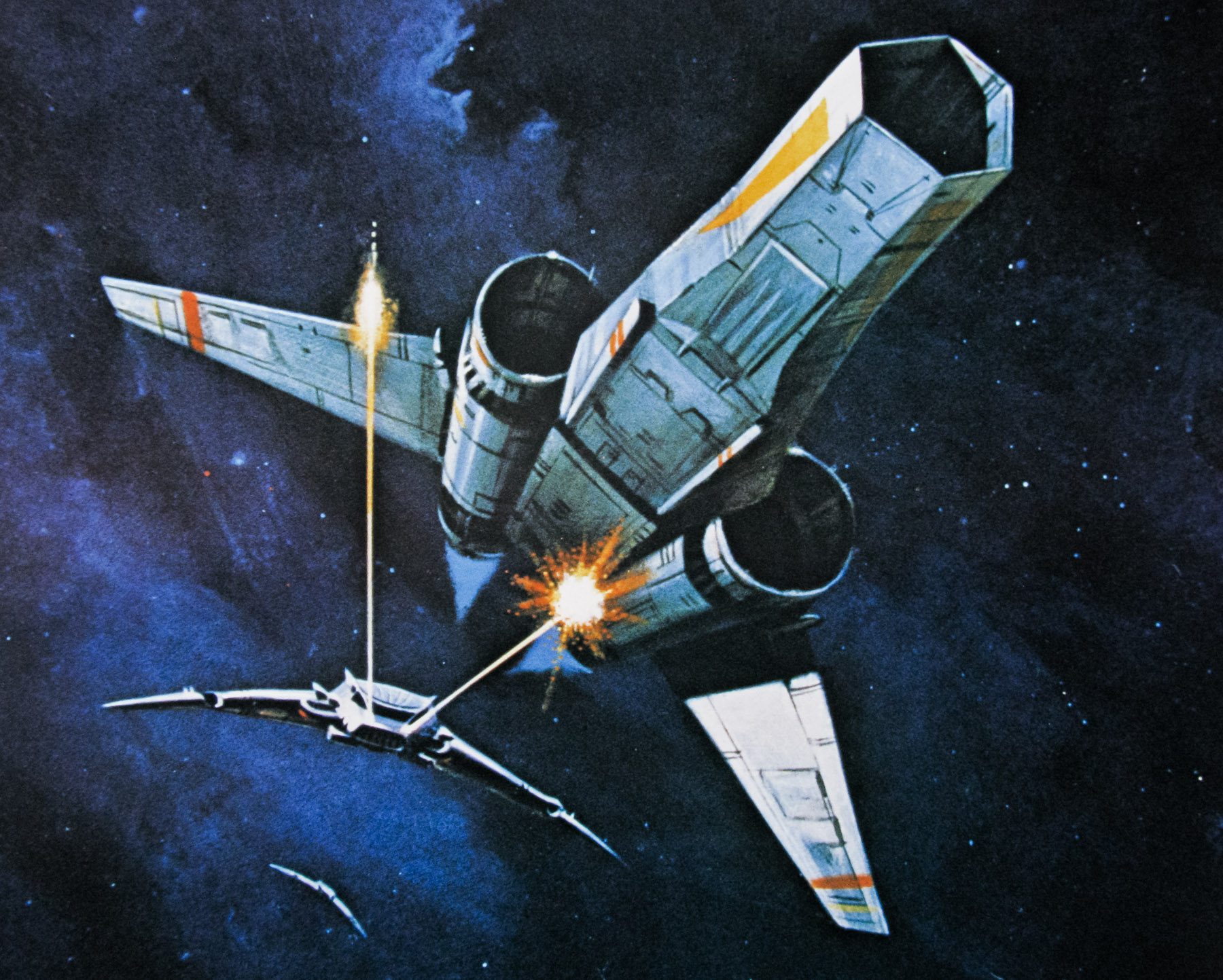
A rarely seen teaser one sheet for the theatrical release of the pilot of the original Battlestar Galactica TV series. Created by legendary producer Glen A. Larson, who would later go on to work on the likes of The Fall Guy, Magnum, P.I. and Knight Rider, the decision was made by Universal Studios to cut the pilot down from its three hour running time and release it in cinemas to try and recoup some of the high production costs. It was first released in Canada, Australia and several European countries in 1978 and this poster dates from the domestic release in 1979. Universal would later repeat this idea with the Buck Rogers movie, also produced by Larson, in the same year.

Originally named Saga of a Star World, the pilot sets up the backstory of the 1,000 year war between a colony of humans living in a distant cosmos and the robotic race known as Cylons, who wish to wipe out the entire human race. The humans are betrayed by a traitor known as Baltar (John Colicos) who helps the Cylons launch a surprise attack during a supposed armistice between the two sides. The assault almost wipes out all 12 of the human colonies, with only the Galactaca surviving along with a bunch of smaller civilian ships. The fleet sets off on a journey across the galaxy in search of their long-lost sister civilisation, our planet Earth, with the Cylons in hot pursuit.

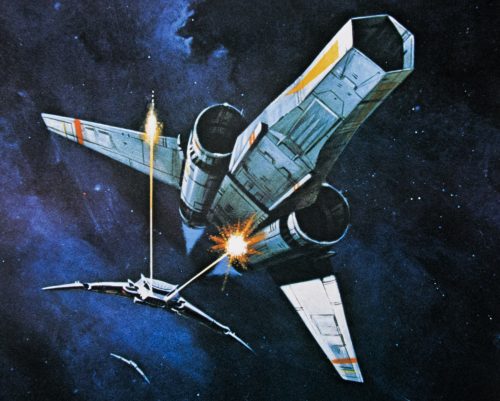
The original artwork was done by the late, legendary artist Ralph McQuarrie who was responsible for creating concept designs for the TV series. The site Sci-fi-o-Rama has an article that features several of his illustrations, including the image on this poster. It appears to have been redrawn (check the explosions, for example), but I’m going to give the artist credit to McQuarrie.

Magnum Force / one sheet / USA

05.09.12

Poster Poster
Title
Magnum Force
AKA
Dirty Harry 2 (Japan - English title) | Magnum .44 (Argentina / Finland / Peru / Venezuela)
Year of Film
1973
Director
Ted Post
Starring
Clint Eastwood, Hal Holbrook, Mitchell Ryan, David Soul, Felton Perry, Robert Urich, Tim Matheson
Origin of Film
USA
Genre(s) of Film
Clint Eastwood, Hal Holbrook, Mitchell Ryan, David Soul, Felton Perry, Robert Urich, Tim Matheson,
Type of Poster
One sheet
Style of Poster
--
Origin of Poster
USA
Year of Poster
1973
Designer
Bill Gold
Artist
Philippe Halsman (photography)
Size (inches)
27 2/16" x 41"
SS or DS
SS
NSS #
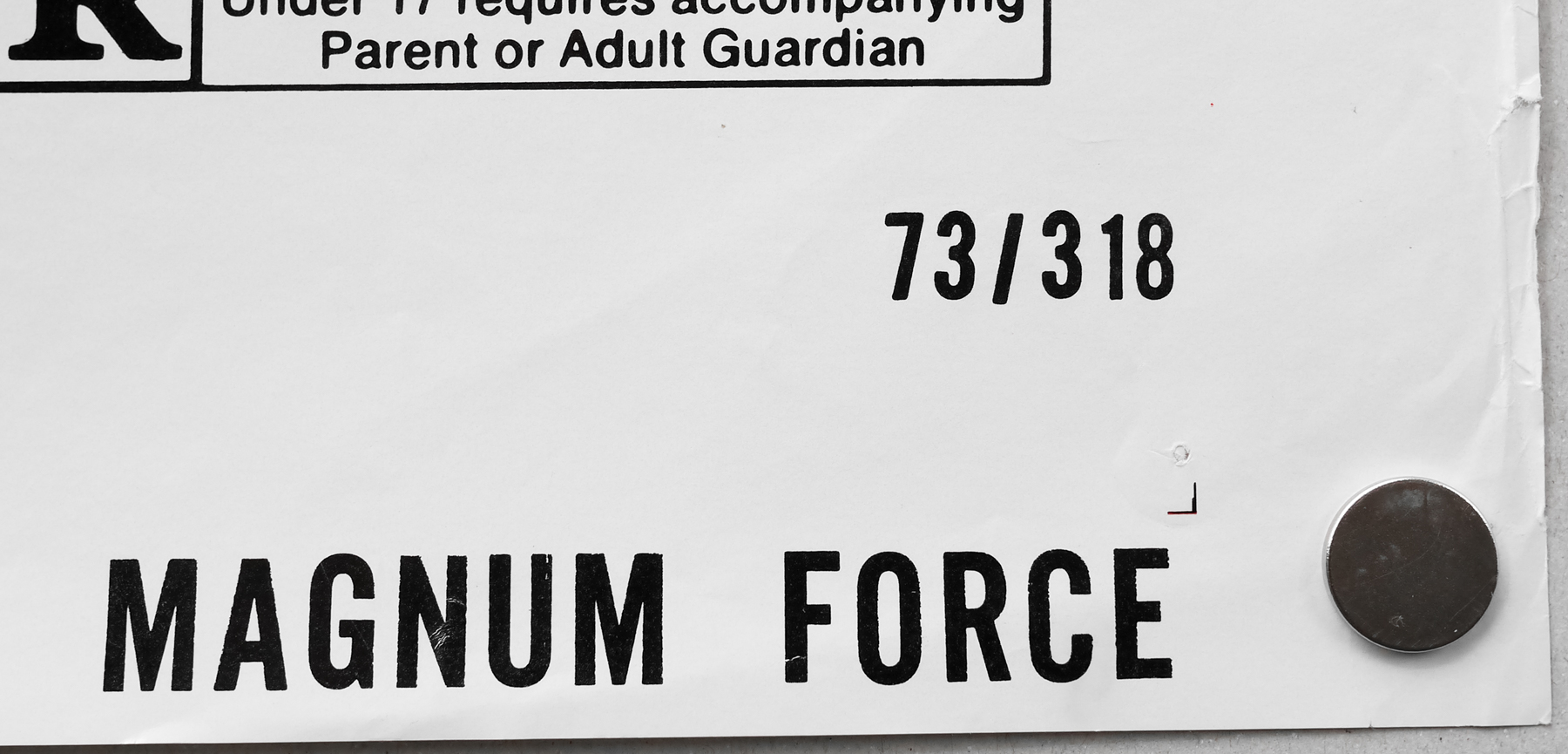
73/318
Tagline
--

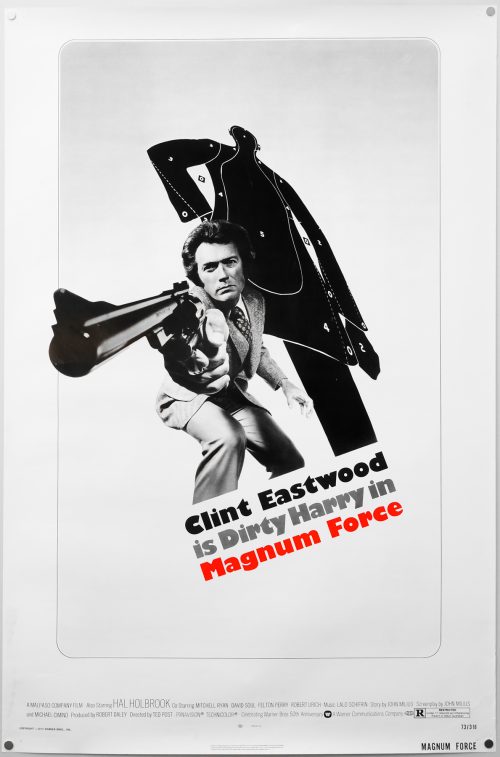
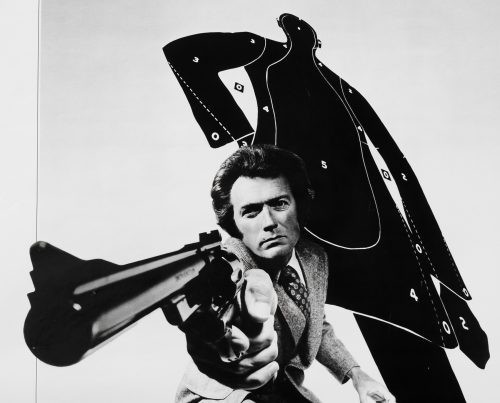
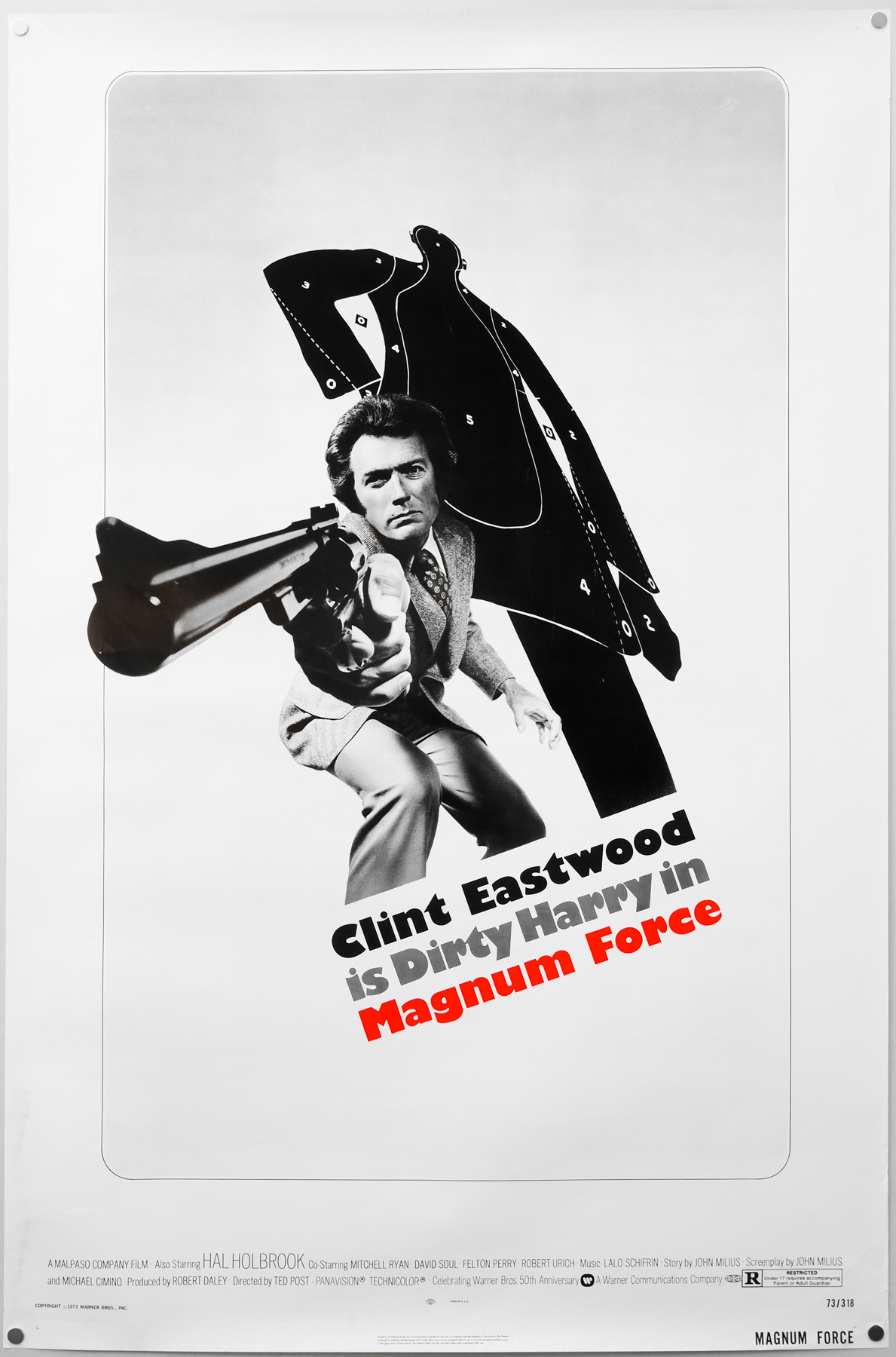
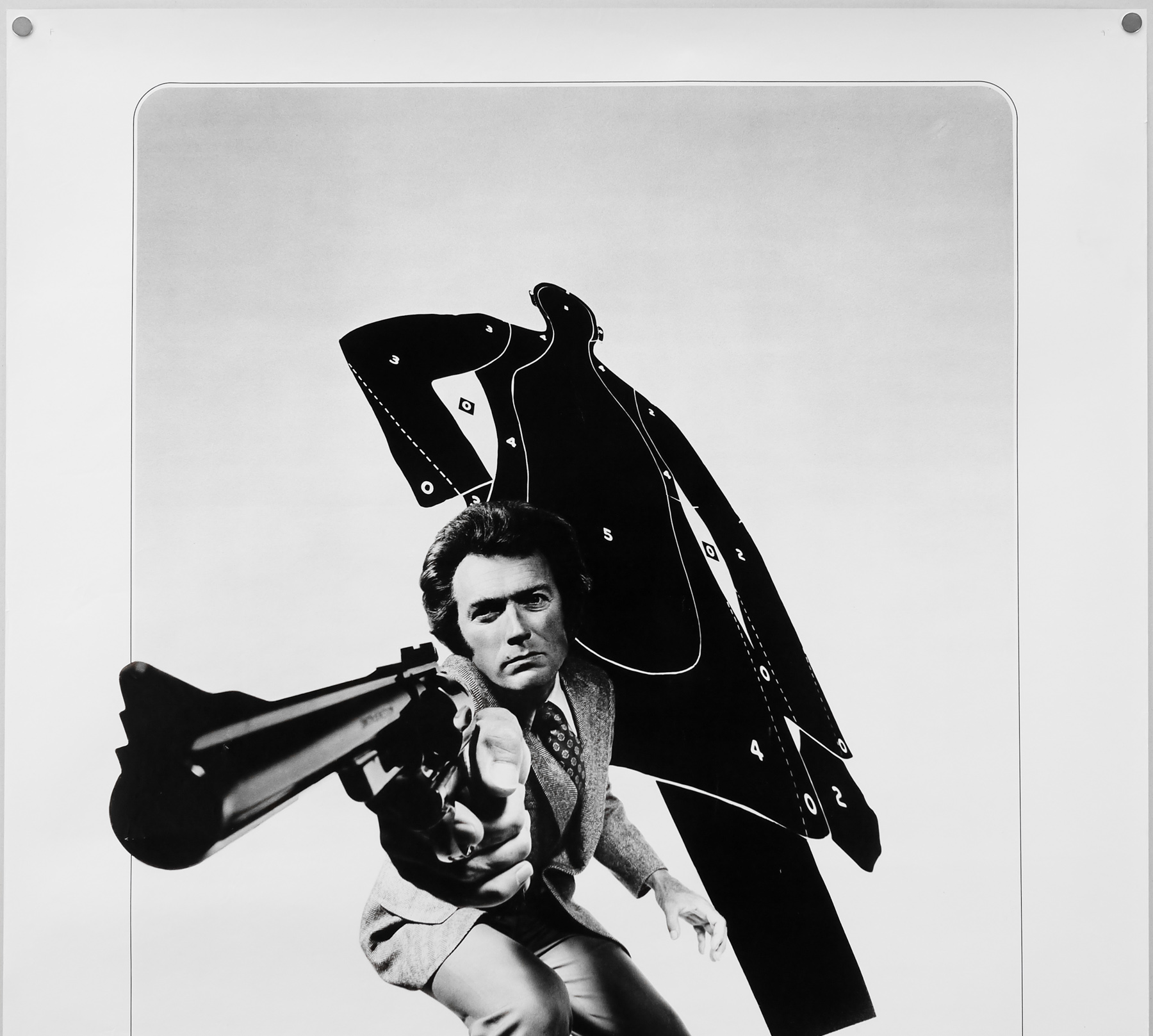
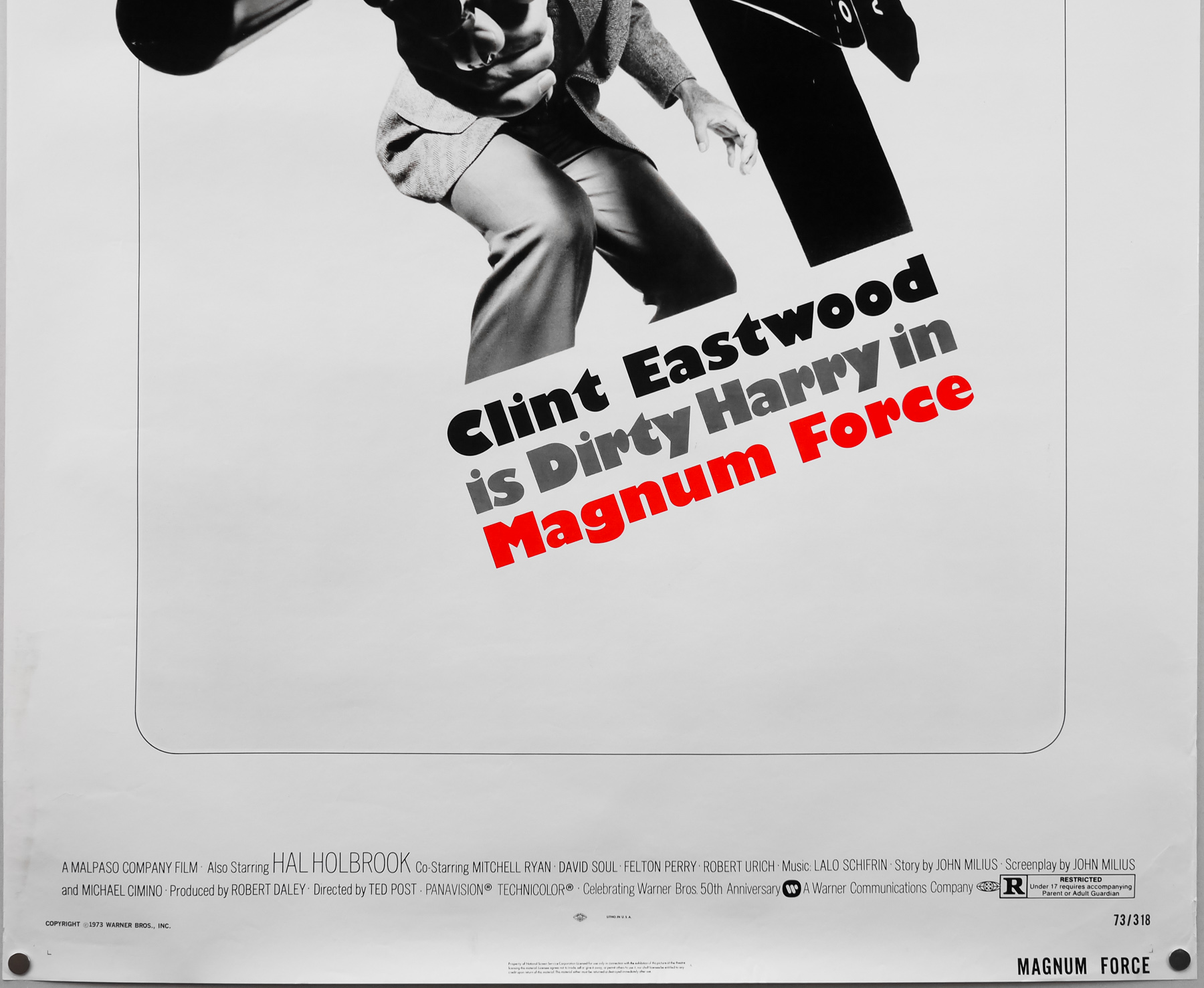
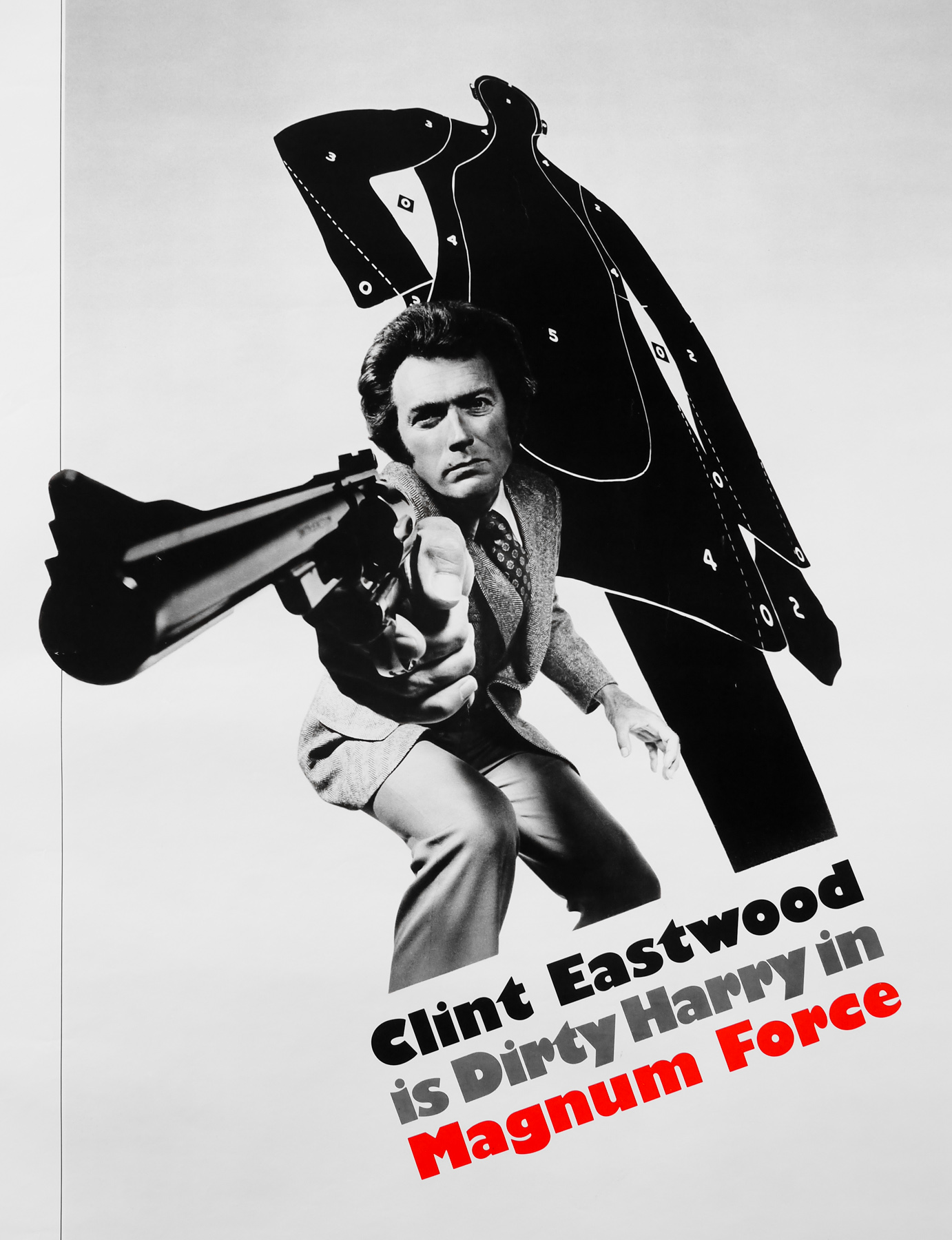
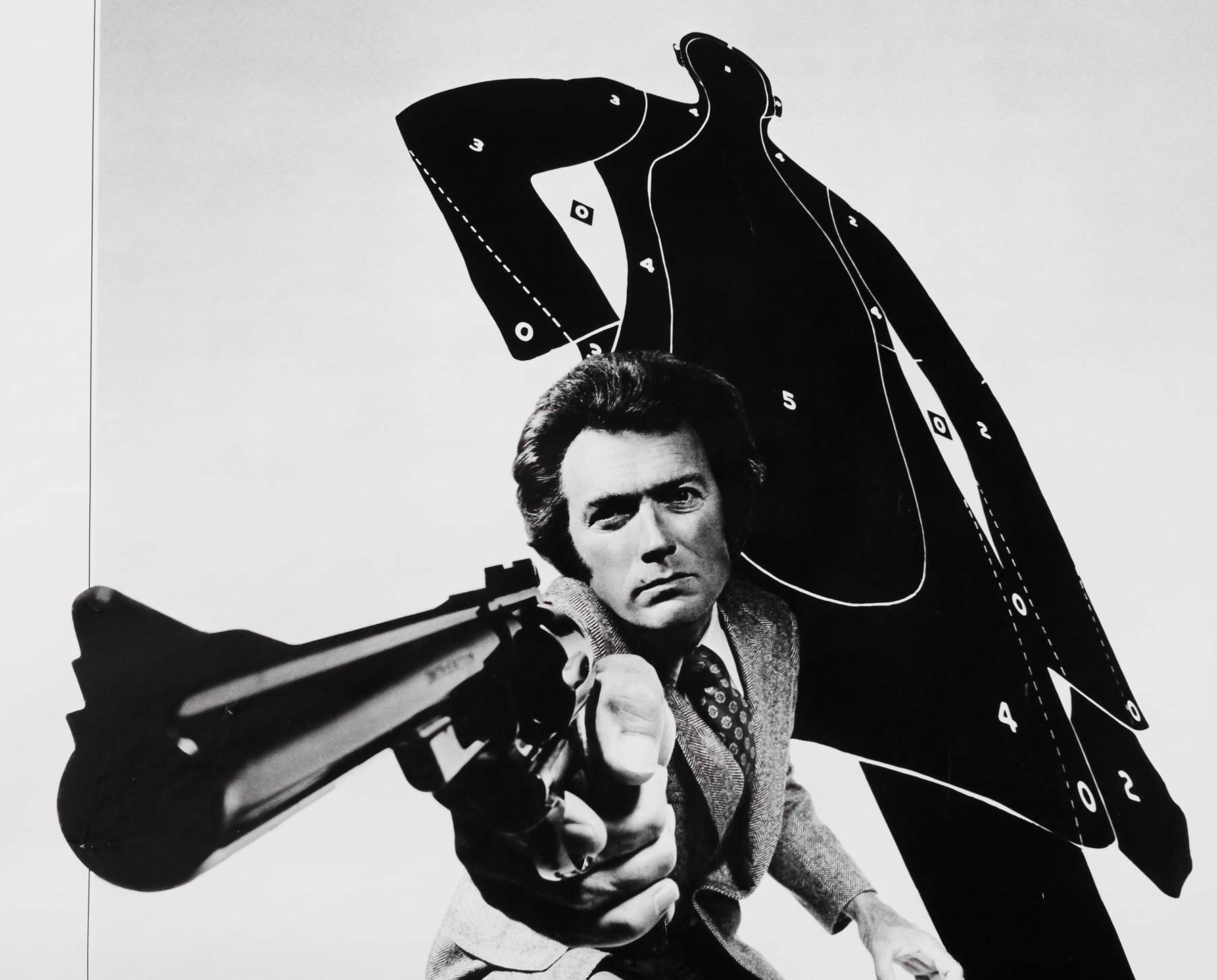
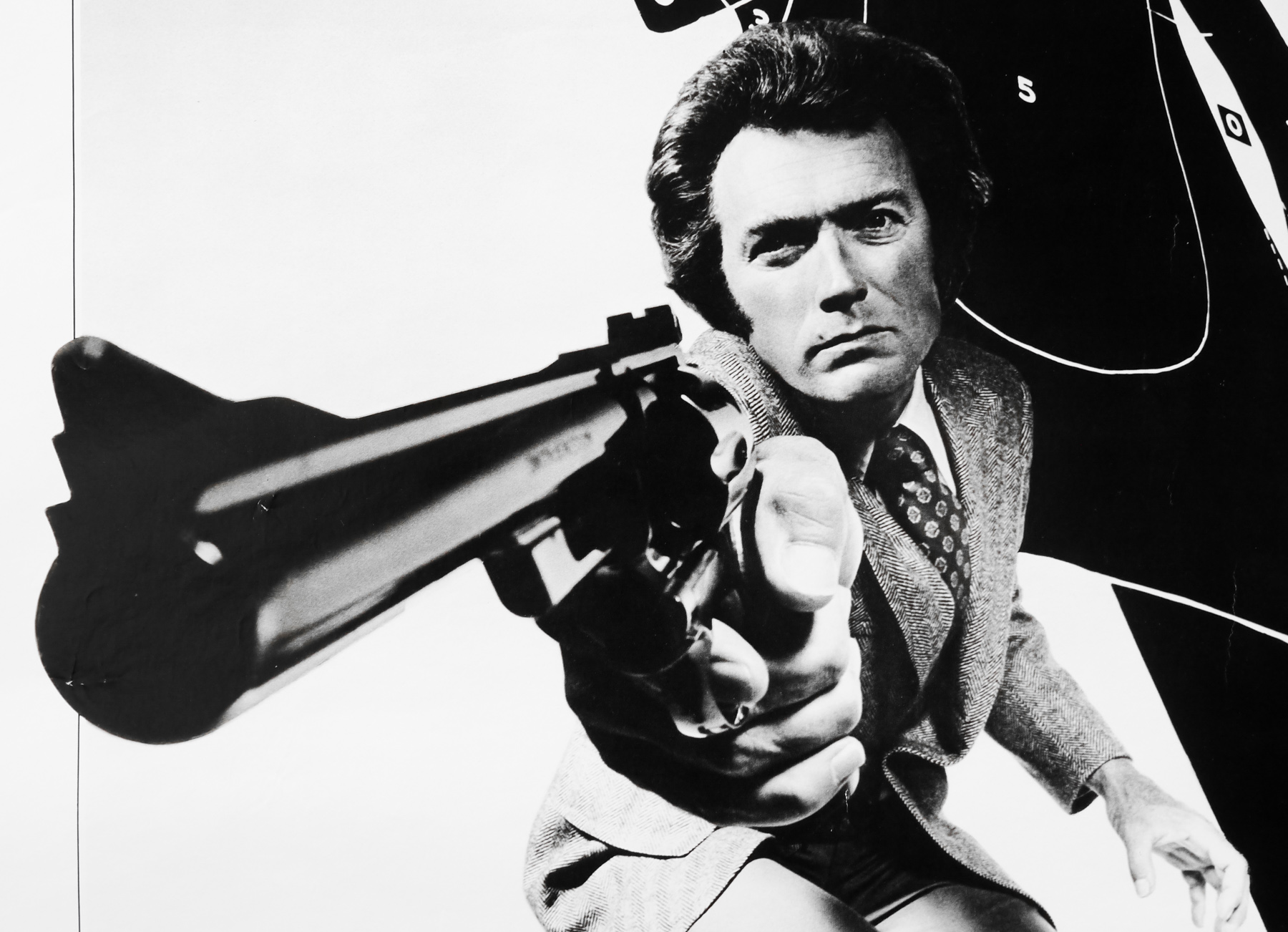
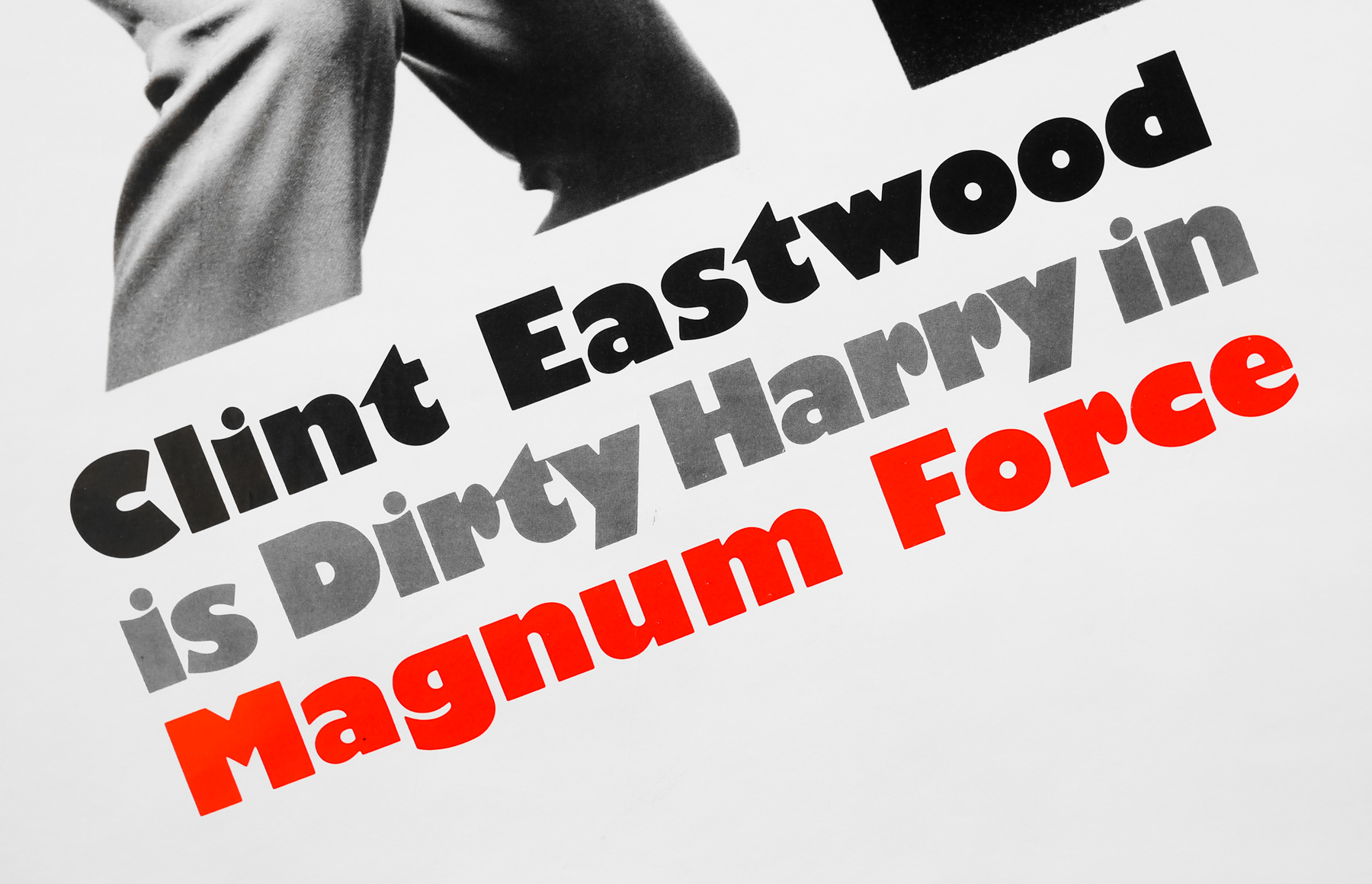
A classic design by the great Bill Gold on this one sheet for Magnum Force, the second entry in the Dirty Harry franchise starring acting legend Clint Eastwood. The follow up to the 1971 original, this entry saw ‘Dirty’ Harry Callahan face off against a group of vigilante cops who have taken the law into their own hands and are bumping off criminals who manage to escape conviction. The film was helmed by Ted Post who had previously directed Eastwood in the TV series Rawhide and in his hit Western Hang ‘Em High (1968).

Bill Gold has had a working relationship with Eastwood that has lasted over four decades. He worked on the iconic one sheet for Dirty Harry and went on to design the American poster for every Eastwood film since, which includes the brilliant one for Clint’s last Western, Unforgiven (1992). Gold has also designed posters for some of Hollywood’s greatest directors, including the likes of Stanley Kubrick (A Clockwork Orange, with artwork by Philip Castle) and Alfred Hitchcock (Dial M For Murder).

Born in New York City in 1921, Gold studied illustration and design at the Pratt Institute before starting his professional design career in 1941 in the publicity department for Warner Brothers. One of his earliest designs was for the classic Humphrey Bogart film Casablanca and within a few years he went on to become the head of the studio’s poster department. In 1962 he started Bill Gold Advertising in New York and then spent the next four decades creating hundreds of memorable poster designs and collaborating with some of the best illustrators in the business, including the brilliant Bob Peak.

Gold started to design less posters towards the end of the 1990s, with only a handful of posters for Eastwood films being credited to him. His last poster was for the 2011 film J. Edgar (directed by Eastwood), which Gold agreed to work on after an unsuccessful period of retirement following the poster he worked on for Mystic River in 2003. He continues to live in Upstate New York and in 2011 a book was released to coincide with his 90th birthday called Bill Gold Posterworks, which features 450 pages worth of his incredible designs and details his creative process. Unfortunately, it has an eye-watering price tag that has prevented me picking a copy up but I hope that one day a more affordable version will be released.

To see the other posters I’ve collected that were designed by Gold click here.

Scott Pilgrim vs The World / screen print / regular / Martin Ansin / USA

12.10.12

Poster Poster

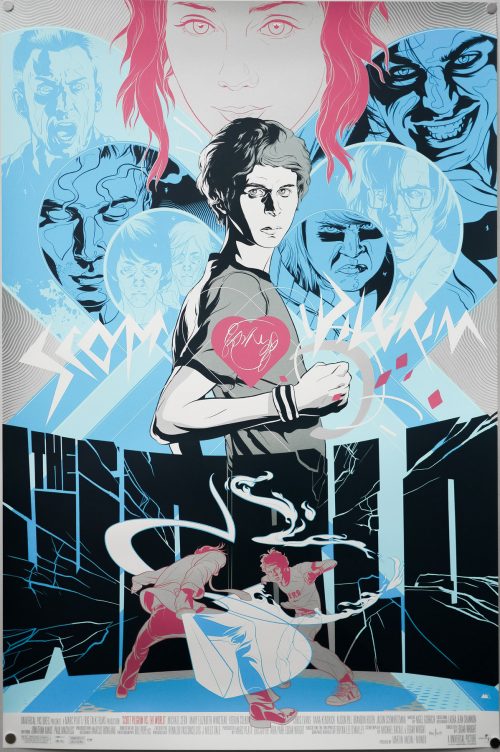
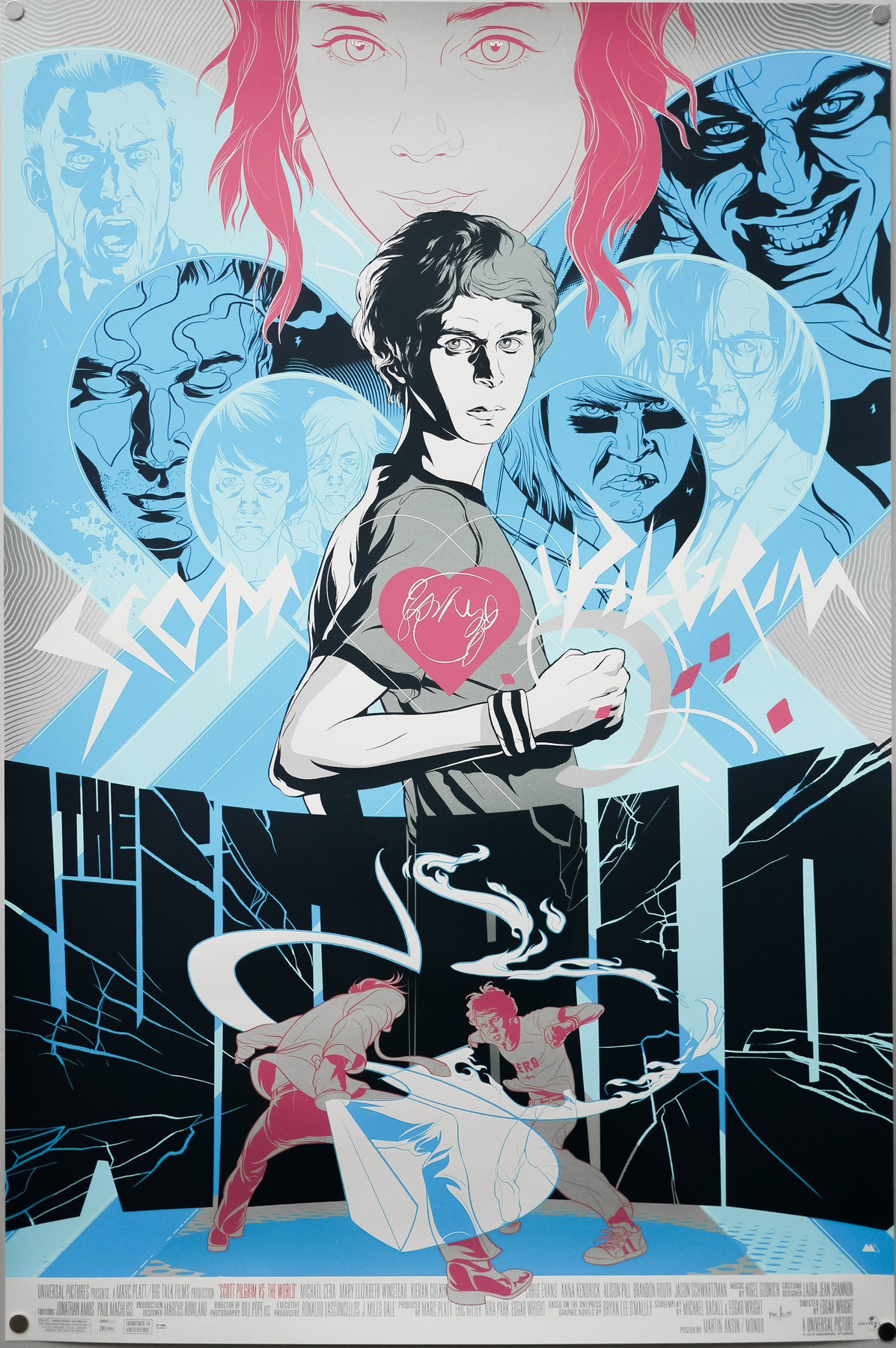
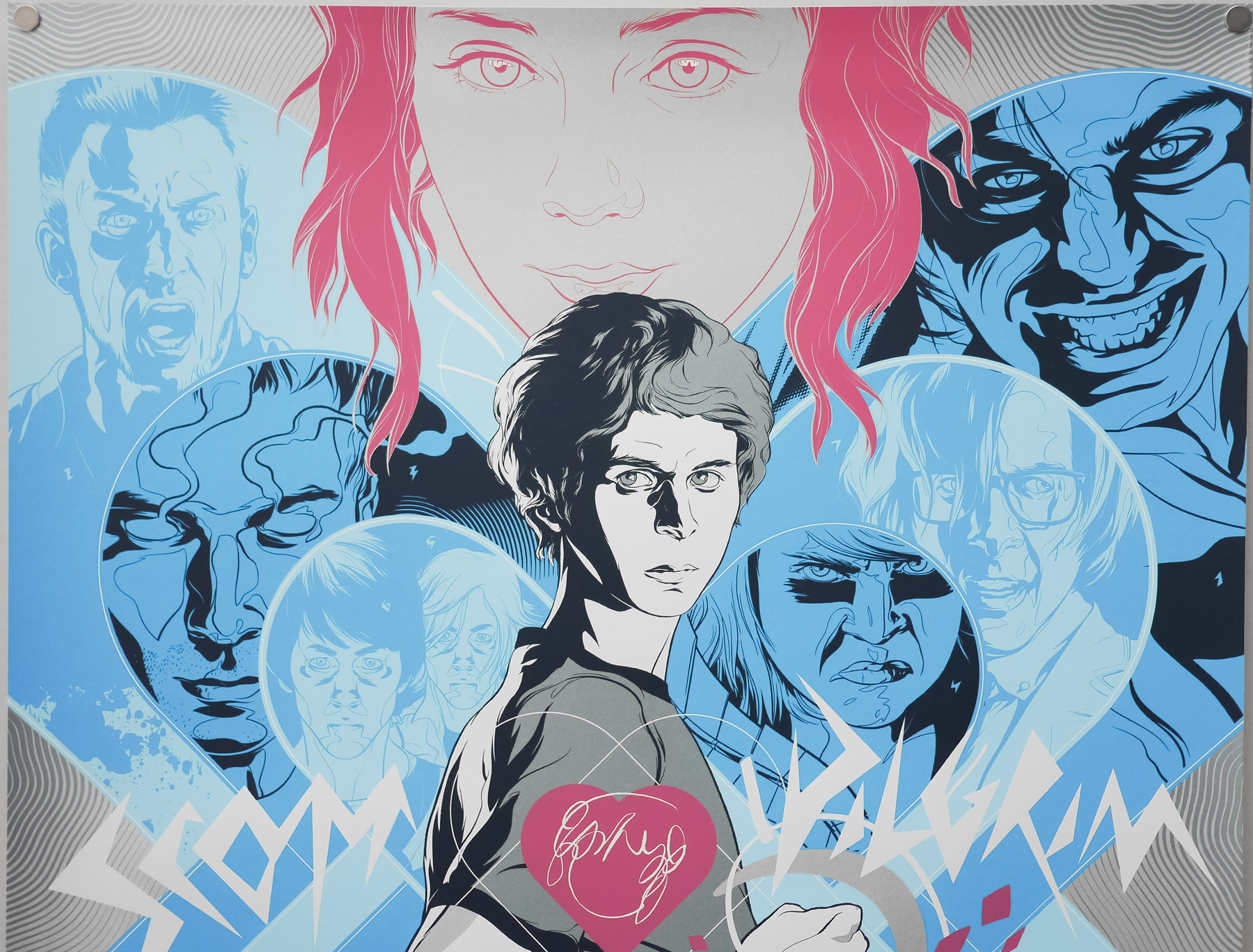
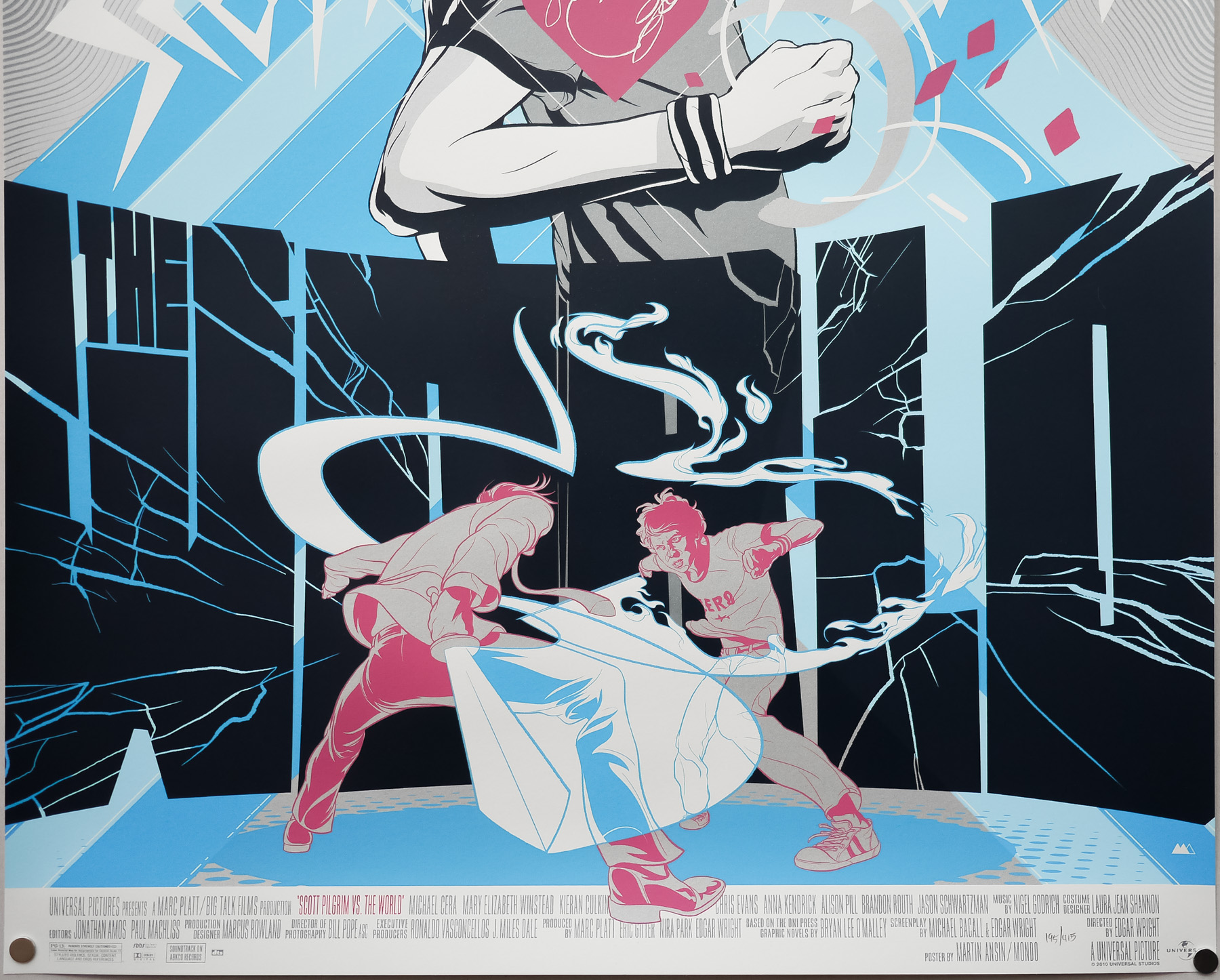
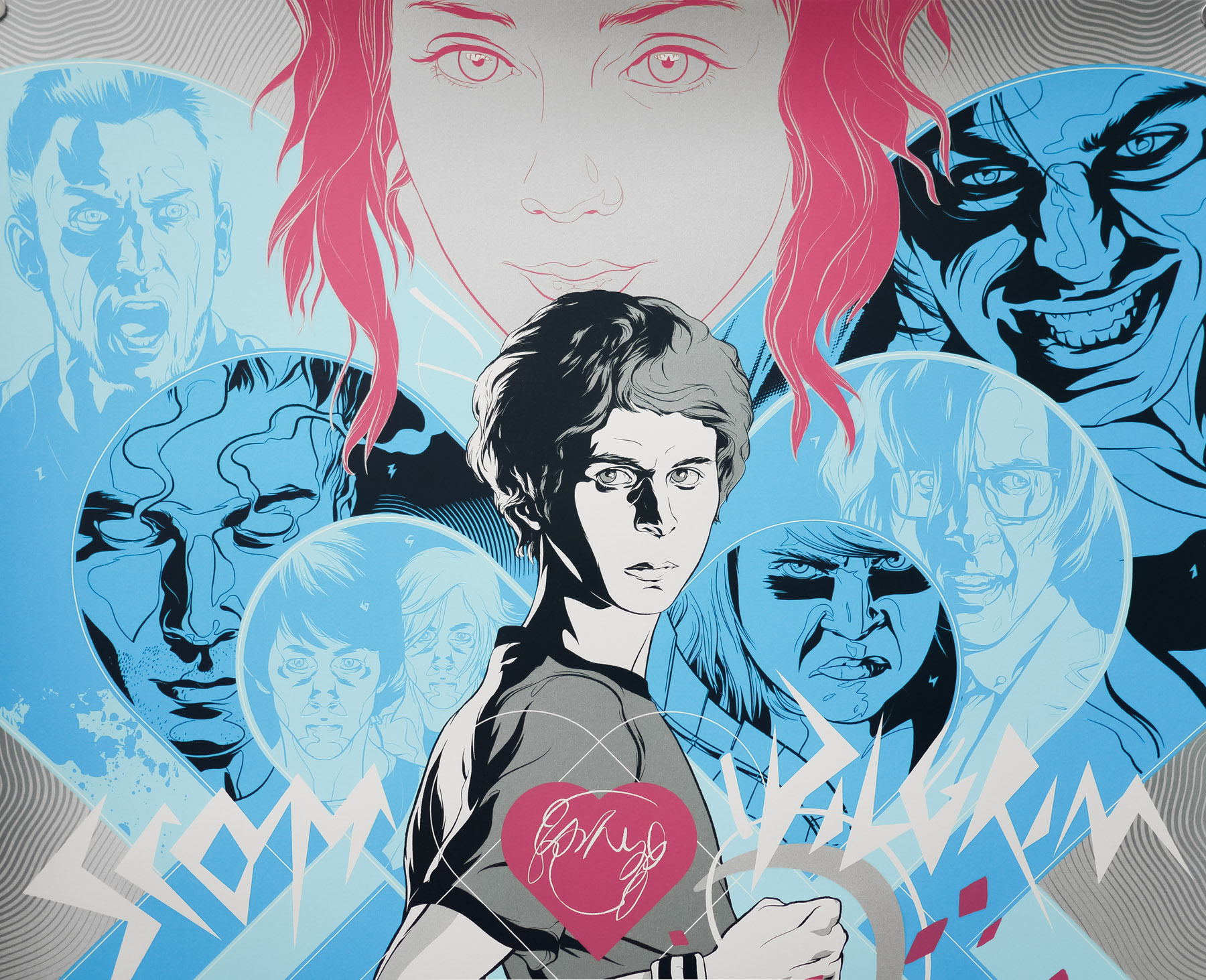
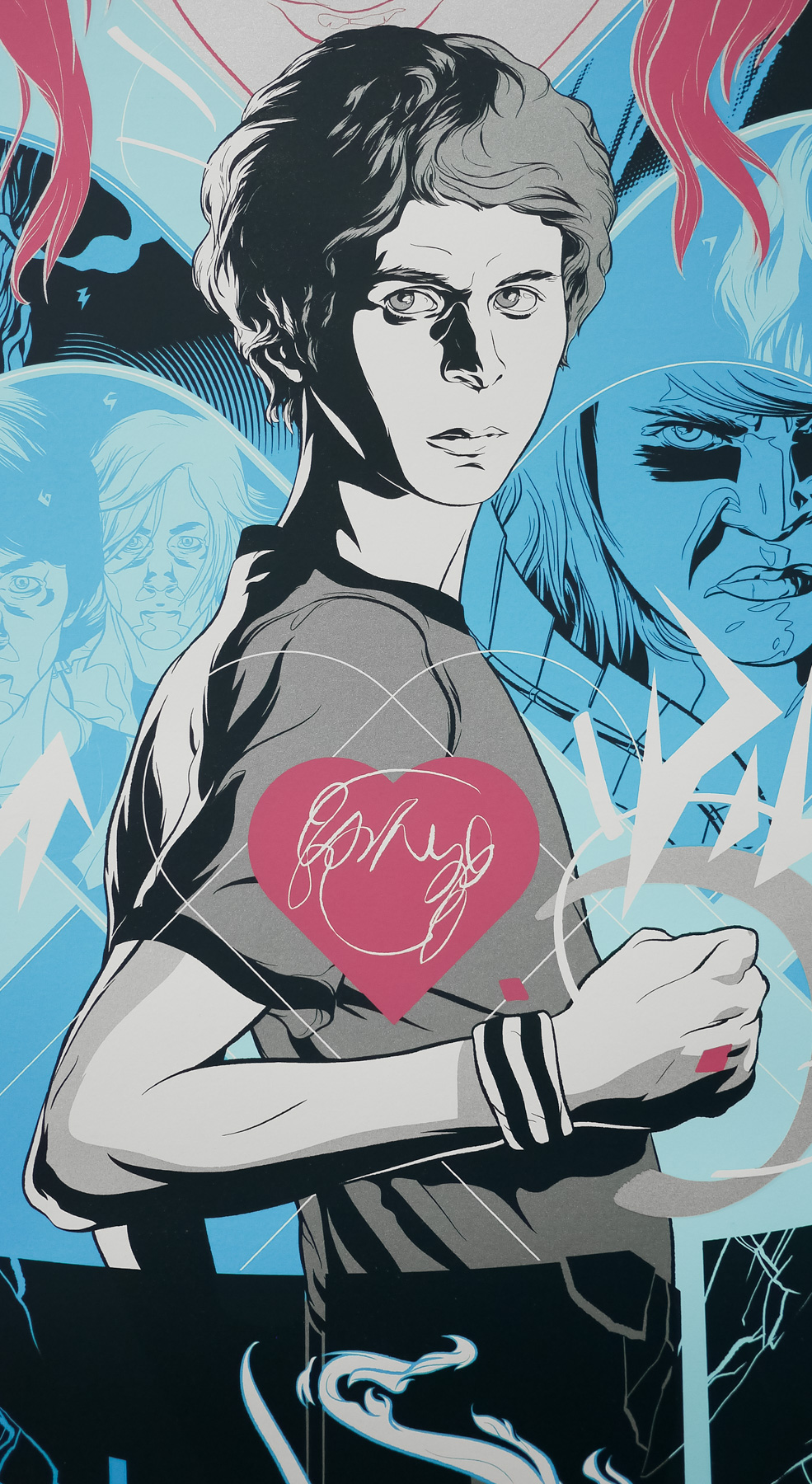
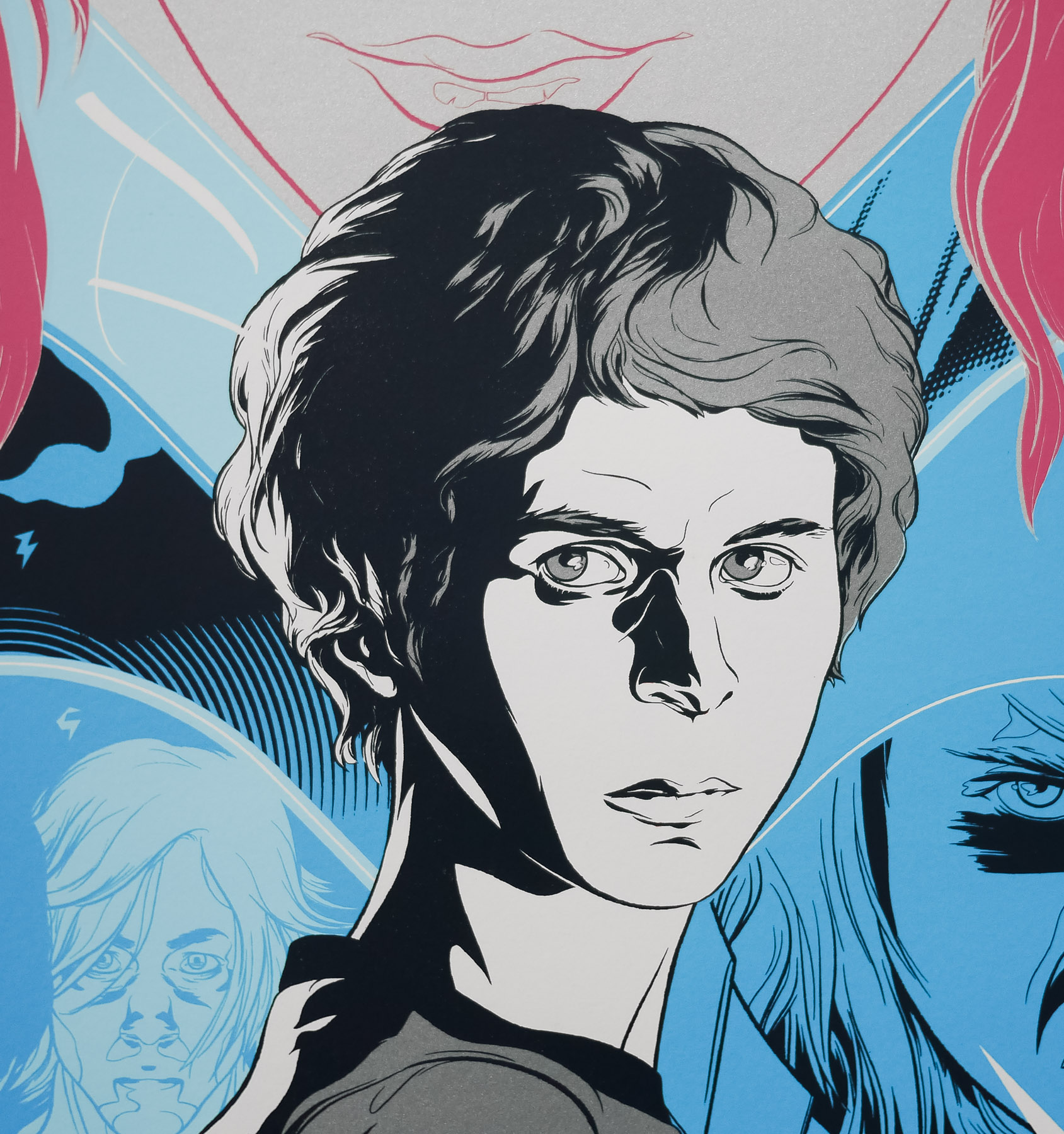
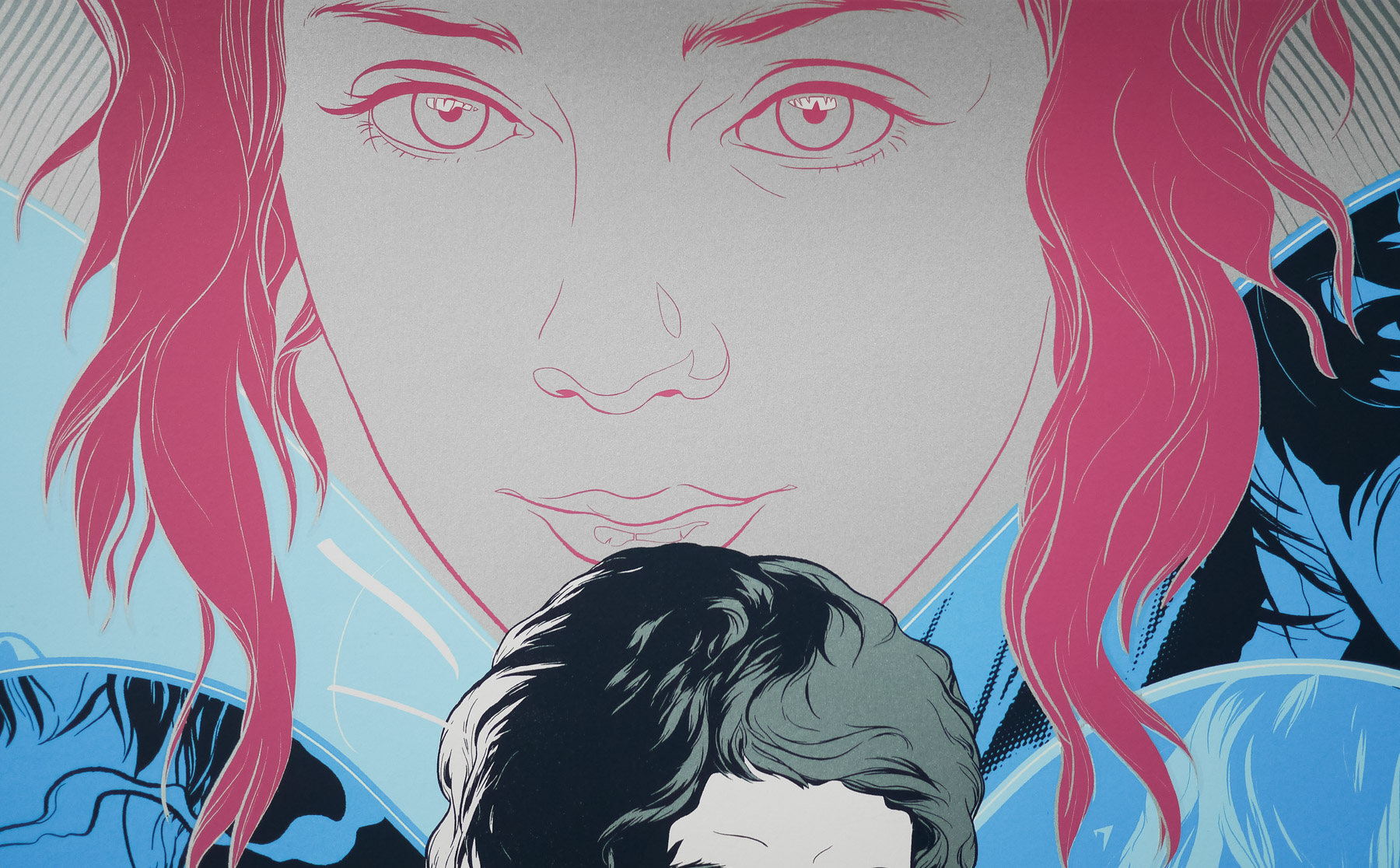
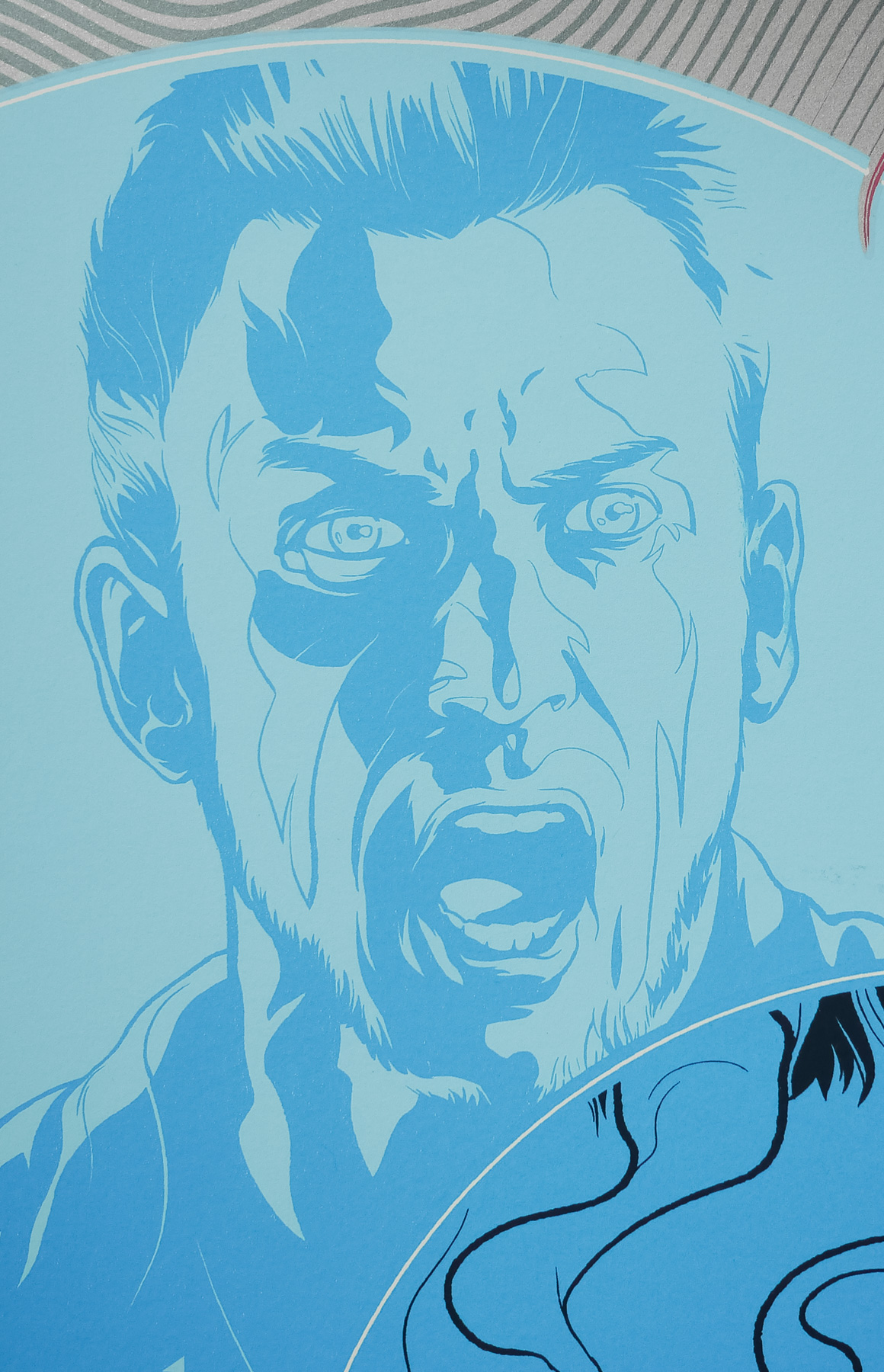
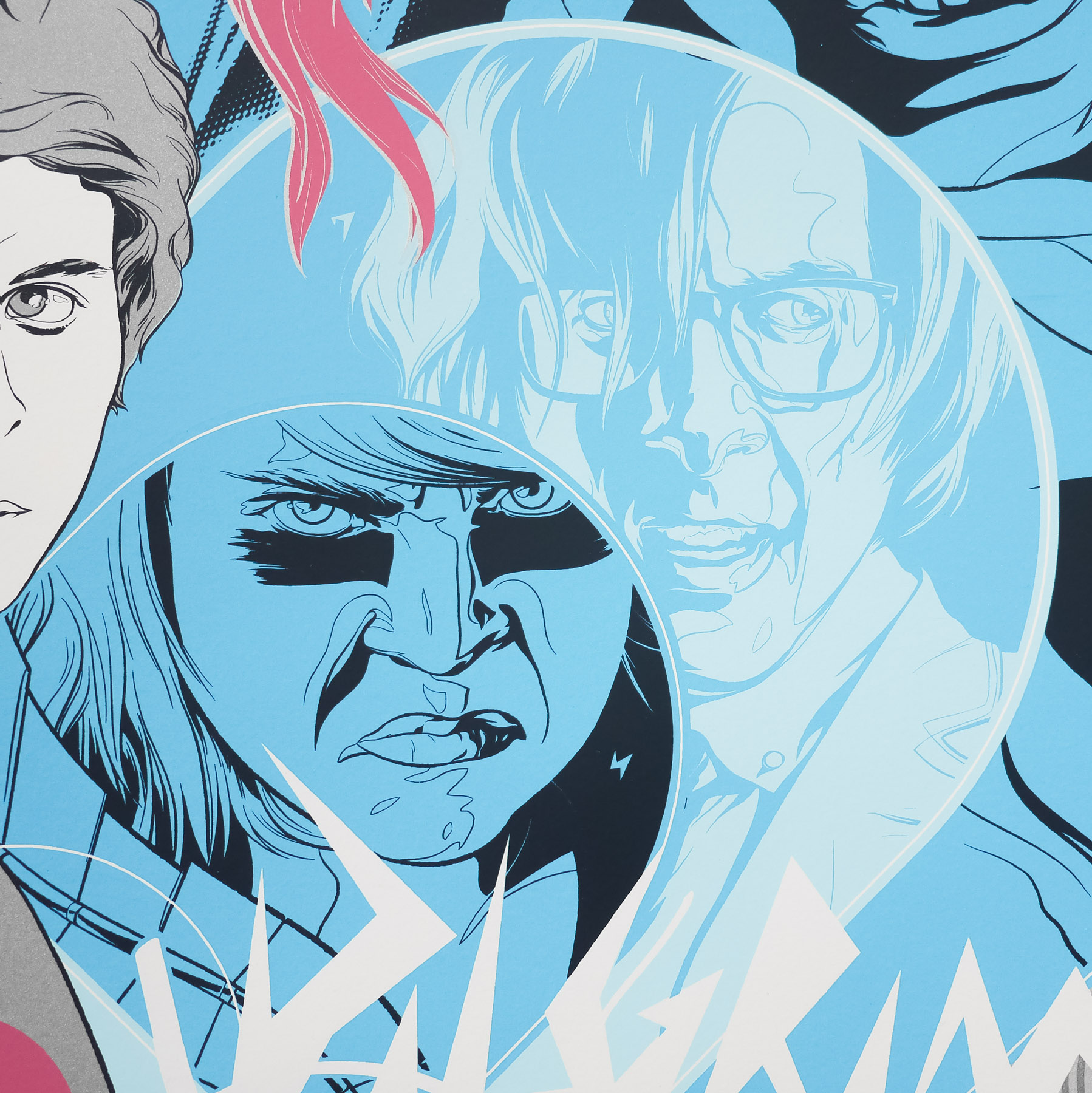
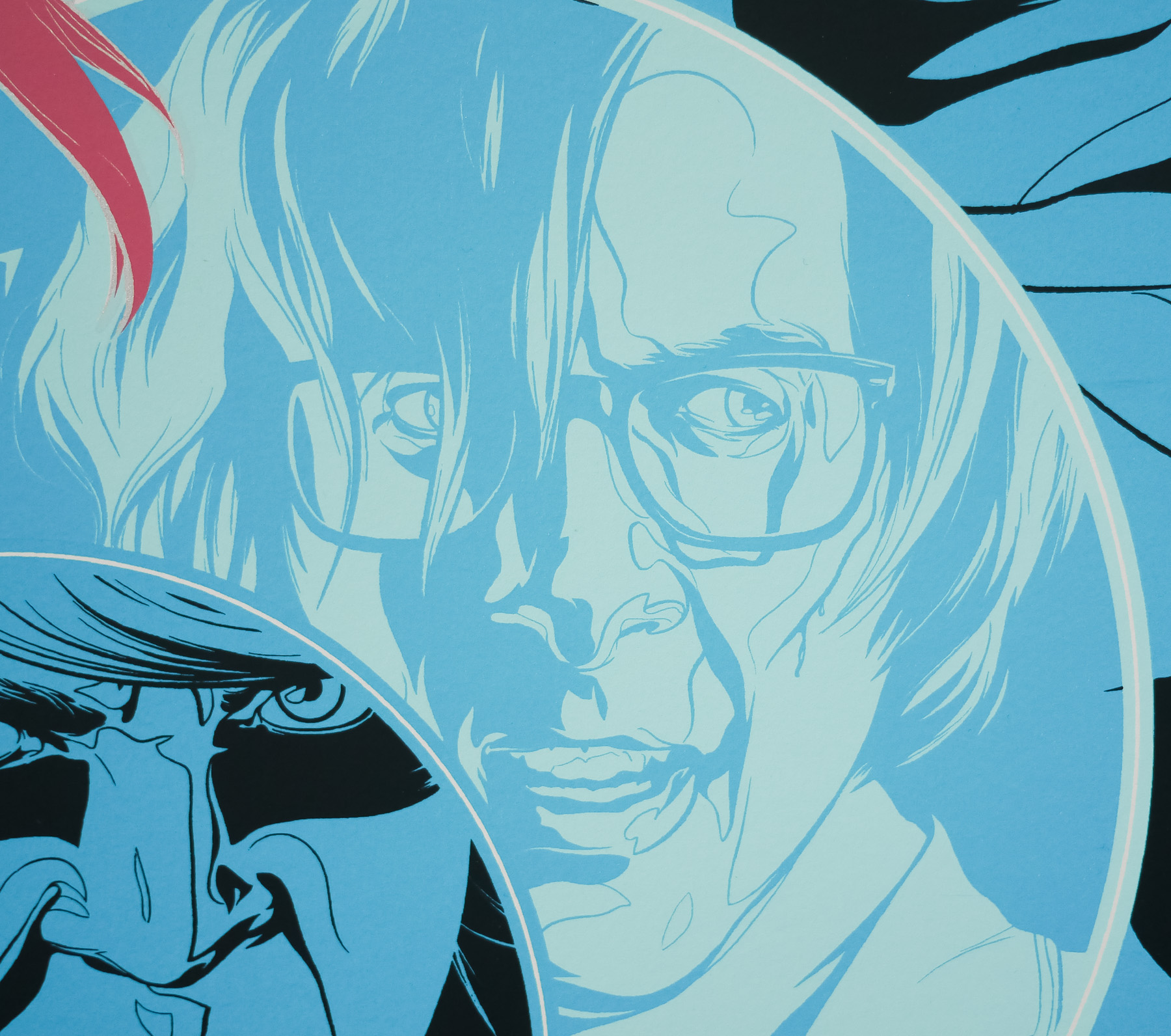
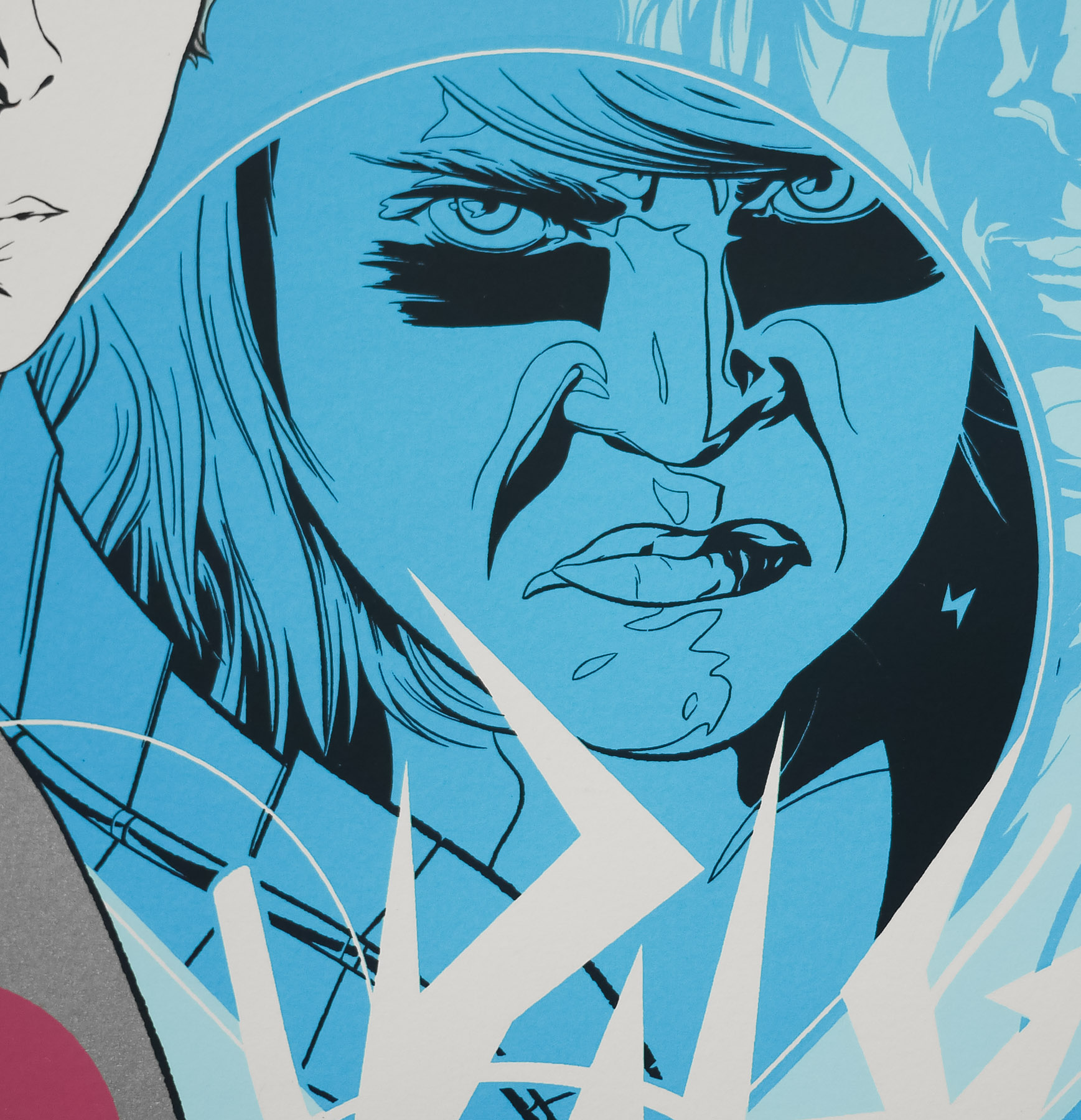
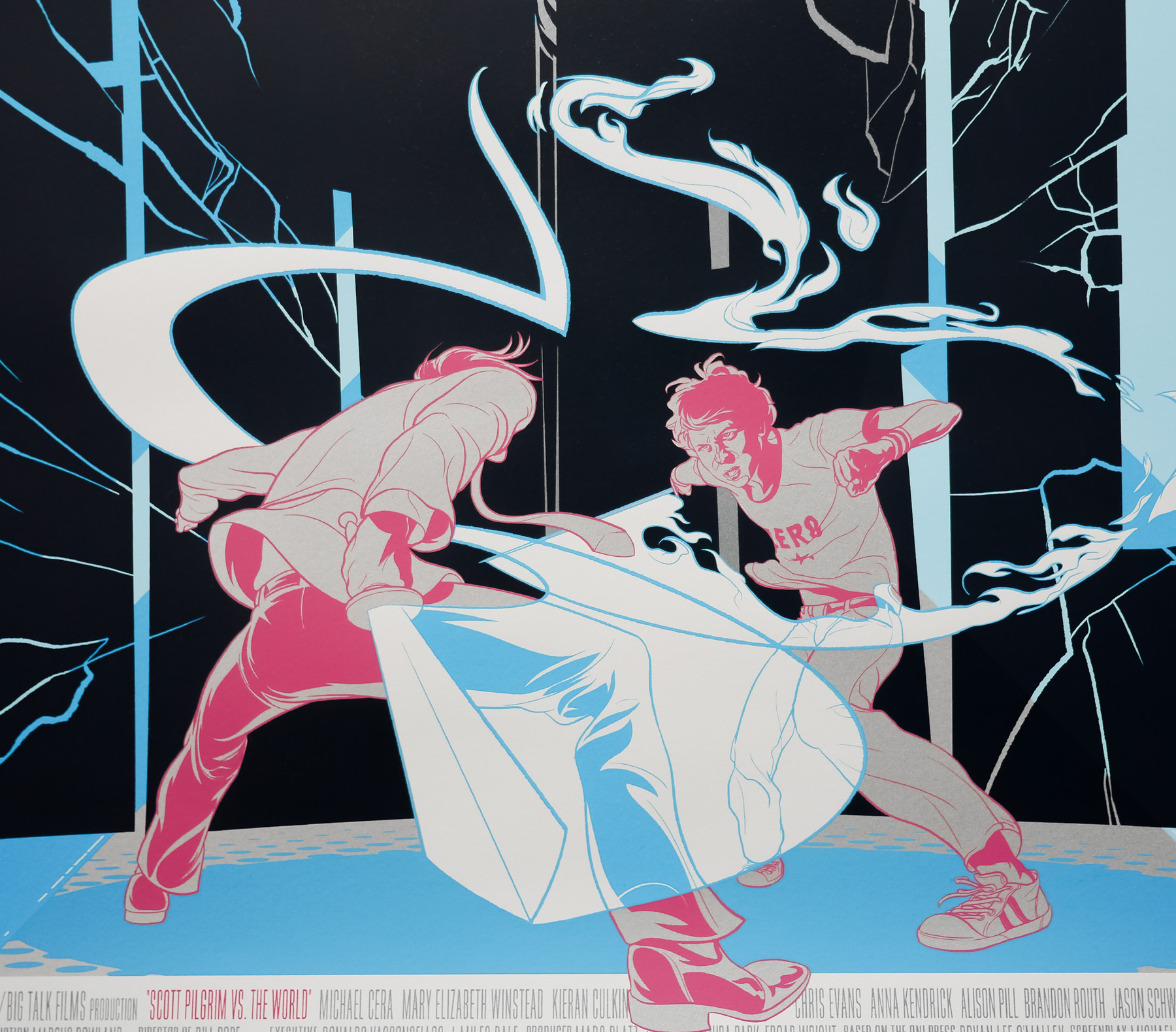
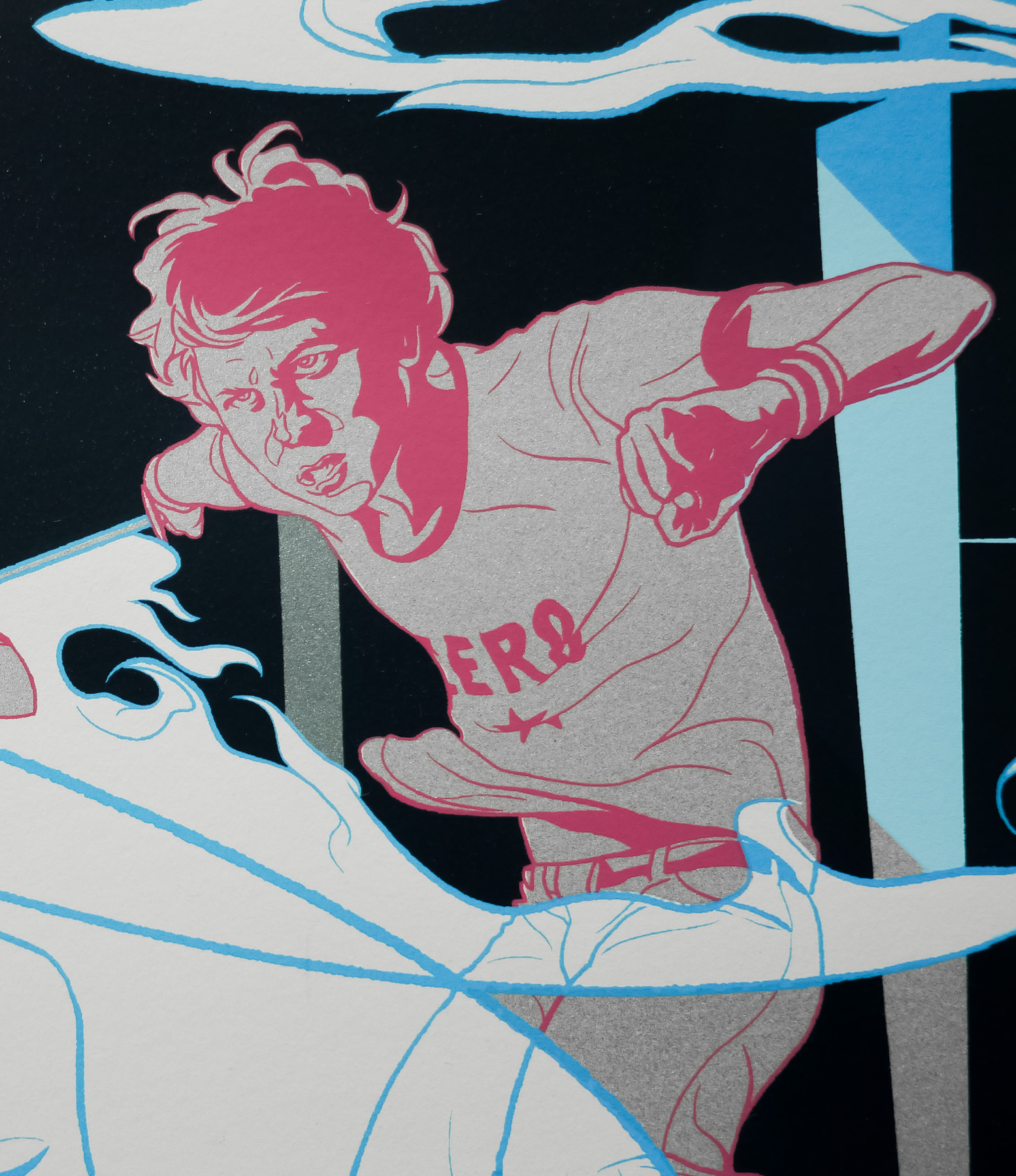
Ace director Edgar Wright‘s Scott Pilgrim vs The World was my favourite film of 2010 and is one of the most carefully crafted, brilliantly realised and wonderfully energetic films ever released. Based on a series of graphic stories created by Canadian cartoonist Bryan Lee O’Malley, the film tells the story of the eponymous character, played in the film by Michael Cera, who falls for the alluring Ramona Flowers (Mary Elizabeth Winstead) and must then battle her seven evil exes in order to win her heart. The actors playing the exes are perfectly cast and include Brandon Routh, Chris Evans and Jason Schwartzman.

The film is a visual treat and rewards multiple viewings thanks to the brilliant script, kinetic editing and careful inclusion of hidden elements (look out for the many ‘X’s secreted throughout the film, for example). Some of the effects have to be seen to be believed, including an amazing battle of the bands sequence featuring two building-sized dragons and one angry gorilla beast. Much was made of the fact that the film was a critical success but was unable to make much of a box-office impact on release, but there’s no question that the film has found, and will continue to find, an appreciative audience on home video.

The official film posters for the film were slightly disappointing considering the level of craft put into the film itself and I felt at the time that, despite an interesting advance poster, so much more could have been done.

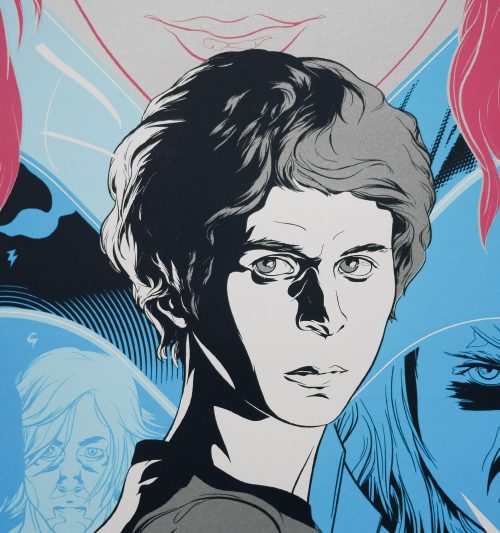
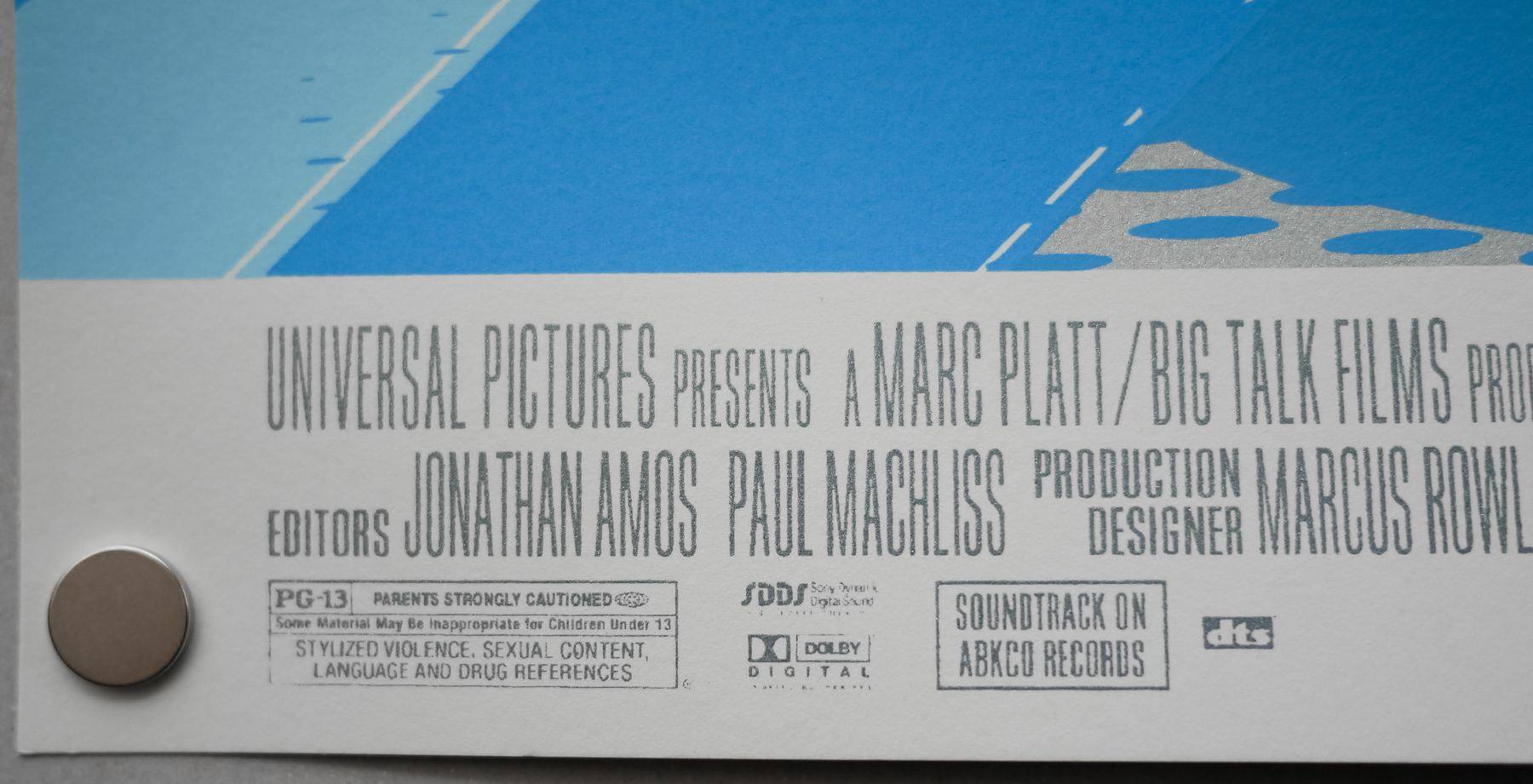
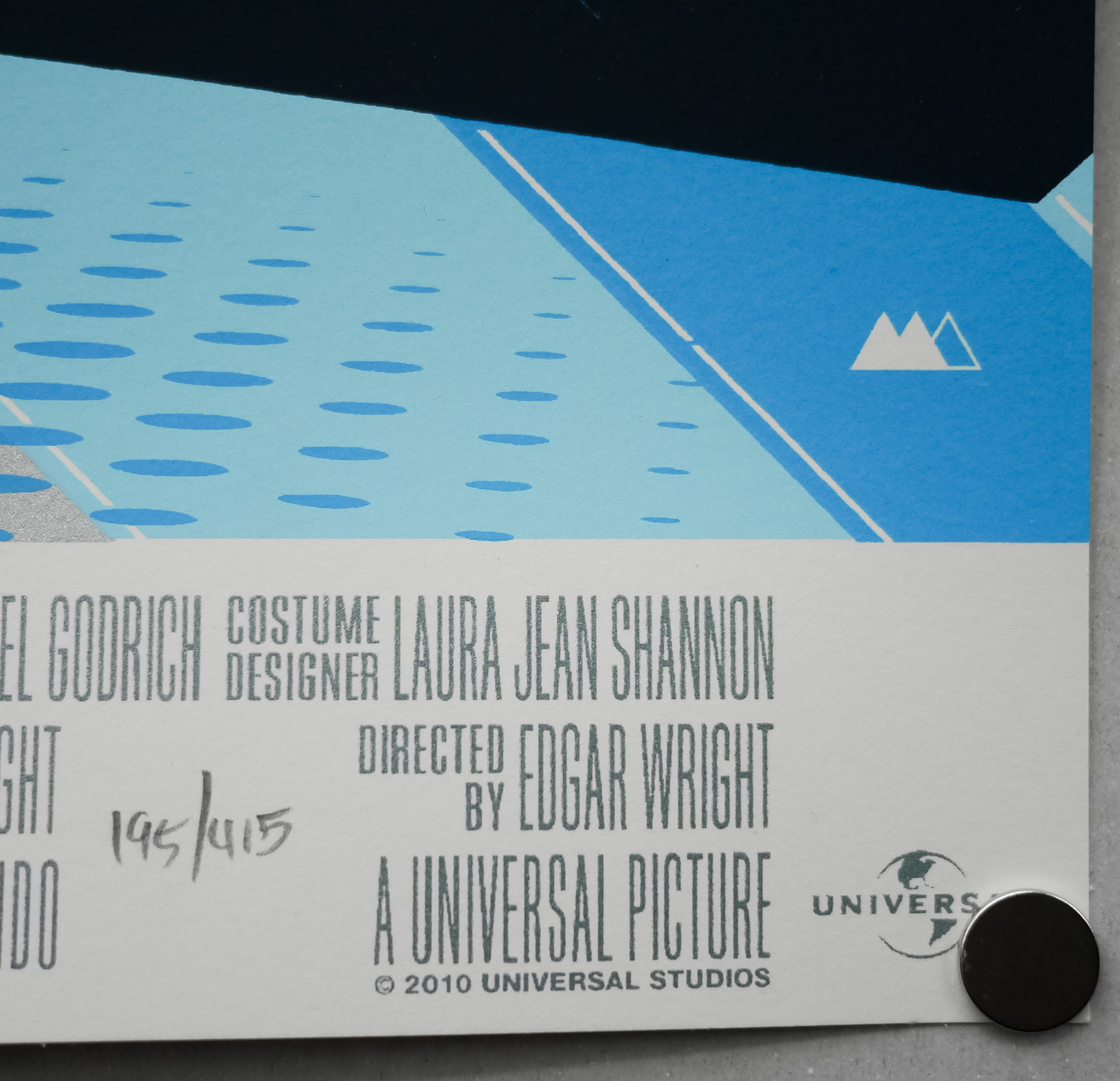
This screen print was commissioned by the limited edition poster outfit Mondo for the Alamo Drafthouse premiere of the film. It was created by the incredibly talented Uruguayan designer and artist Martin Ansin, whose work has graced many of the best posters released by Mondo, including several in the Universal Monsters series, like this amazing Phantom of the Opera one. He perfectly captures the kinetic energy of the film and the title treatment is absolutely spot on, echoing as it does the use of type in the film itself. The artist also worked on a variant of the poster that features Nega Scott, seen briefly at the end of the film.

The other posters I’ve collected by Ansin can be seen here. His official website is well worth a browse.

Sweet Jesus Preacher Man / 30×40 / USA

21.01.13

Poster Poster
Title
Sweet Jesus Preacher Man
AKA
--
Year of Film
1973
Director
Henning Schellerup
Starring
Roger E. Mosley, William Smith, Michael Pataki, Tom Johnigarn, Joe Tornatore, Damu King, Marla Gibbs, Sam Laws, Phil Hoover, Paul Silliman
Origin of Film
USA
Genre(s) of Film
Roger E. Mosley, William Smith, Michael Pataki, Tom Johnigarn, Joe Tornatore, Damu King, Marla Gibbs, Sam Laws, Phil Hoover, Paul Silliman,
Type of Poster
30x40
Style of Poster
--
Origin of Poster
USA
Year of Poster
1973
Designer
Unknown
Artist
Unknown
Size (inches)
30 3/16" x 40"
SS or DS
SS
NSS #
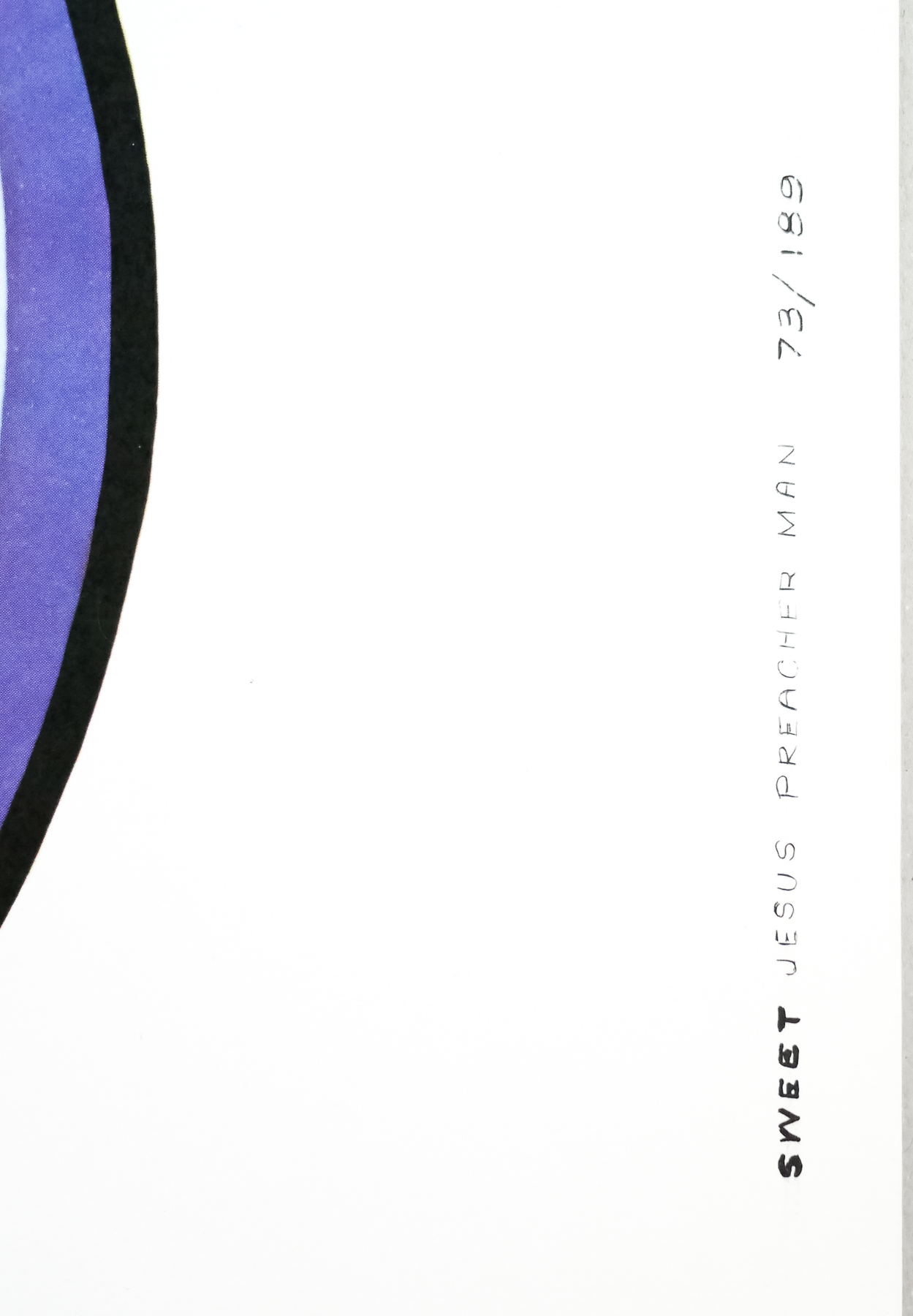
73/189
Tagline
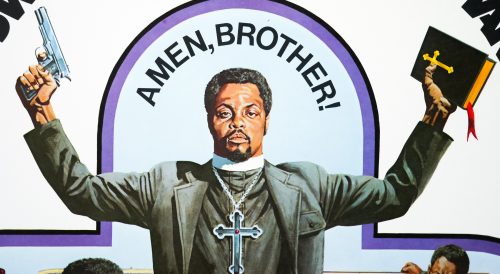
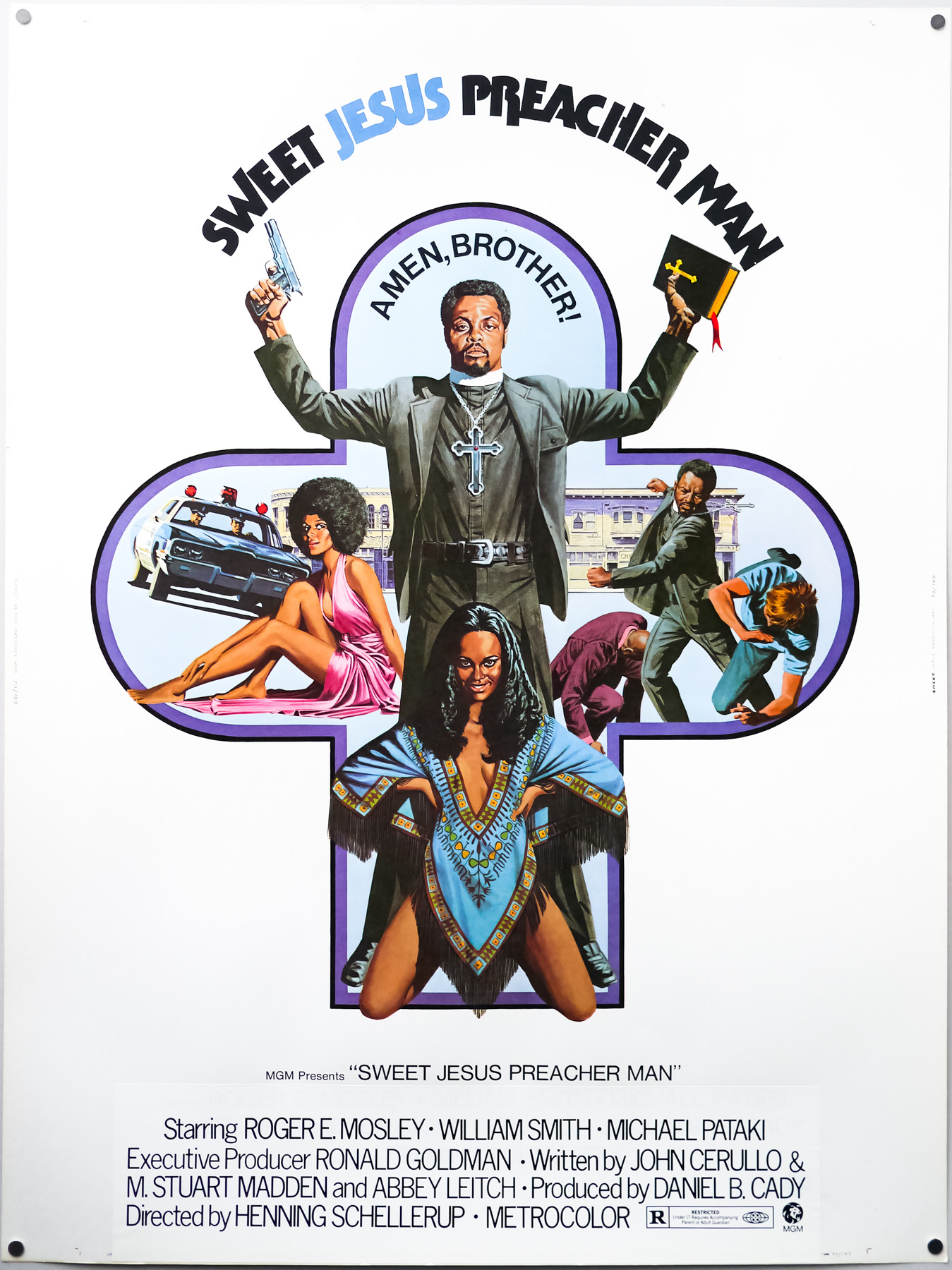
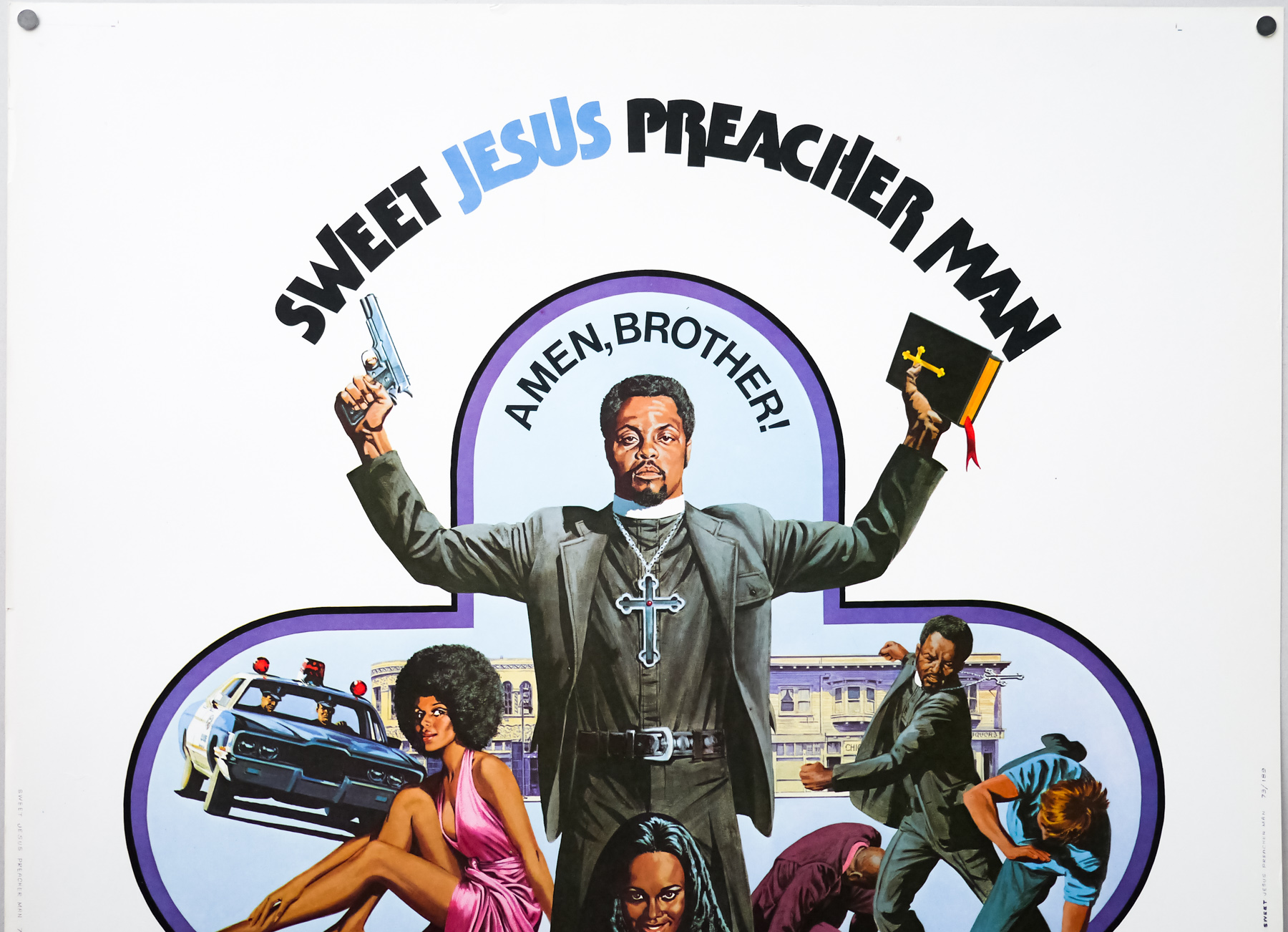
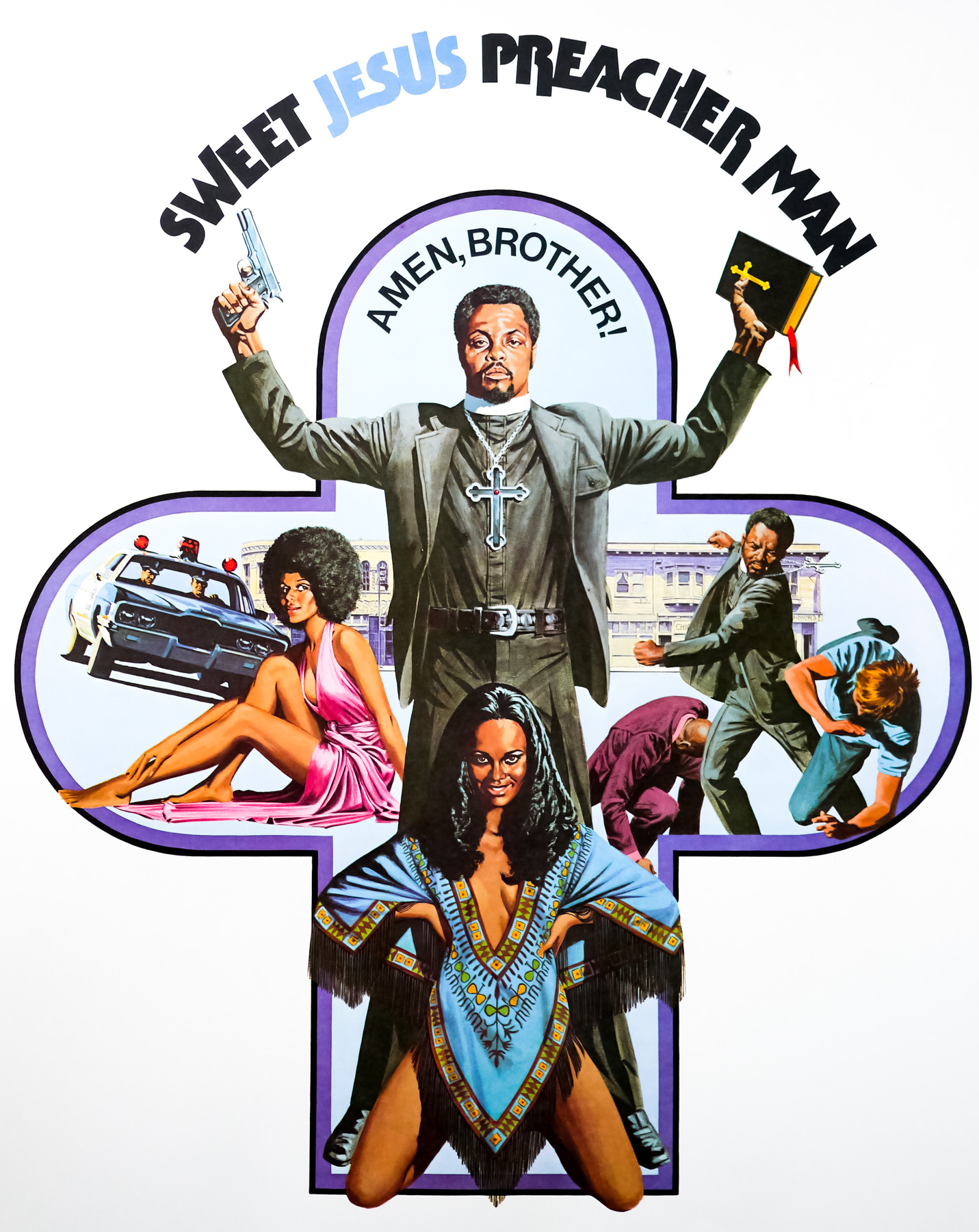
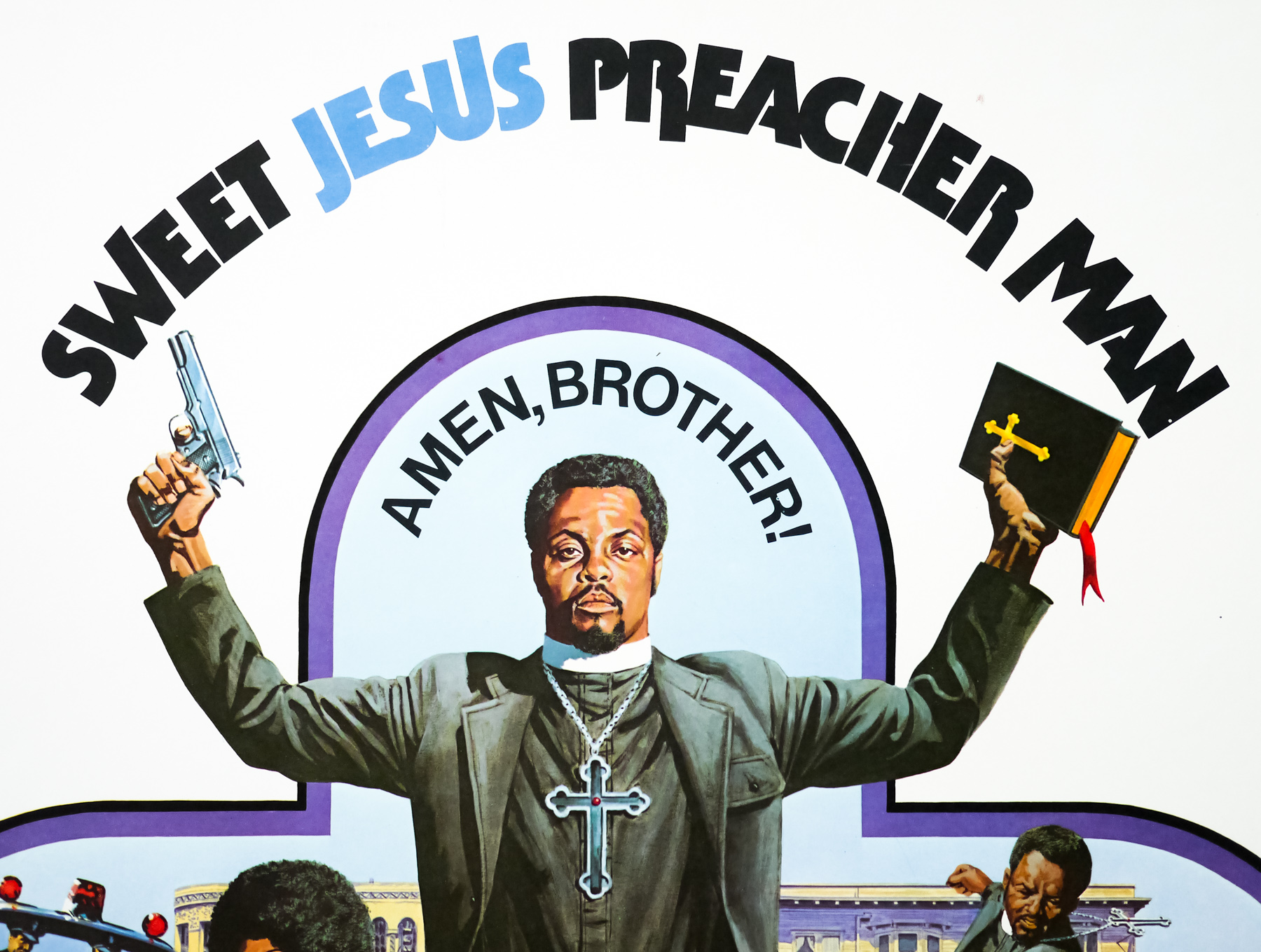
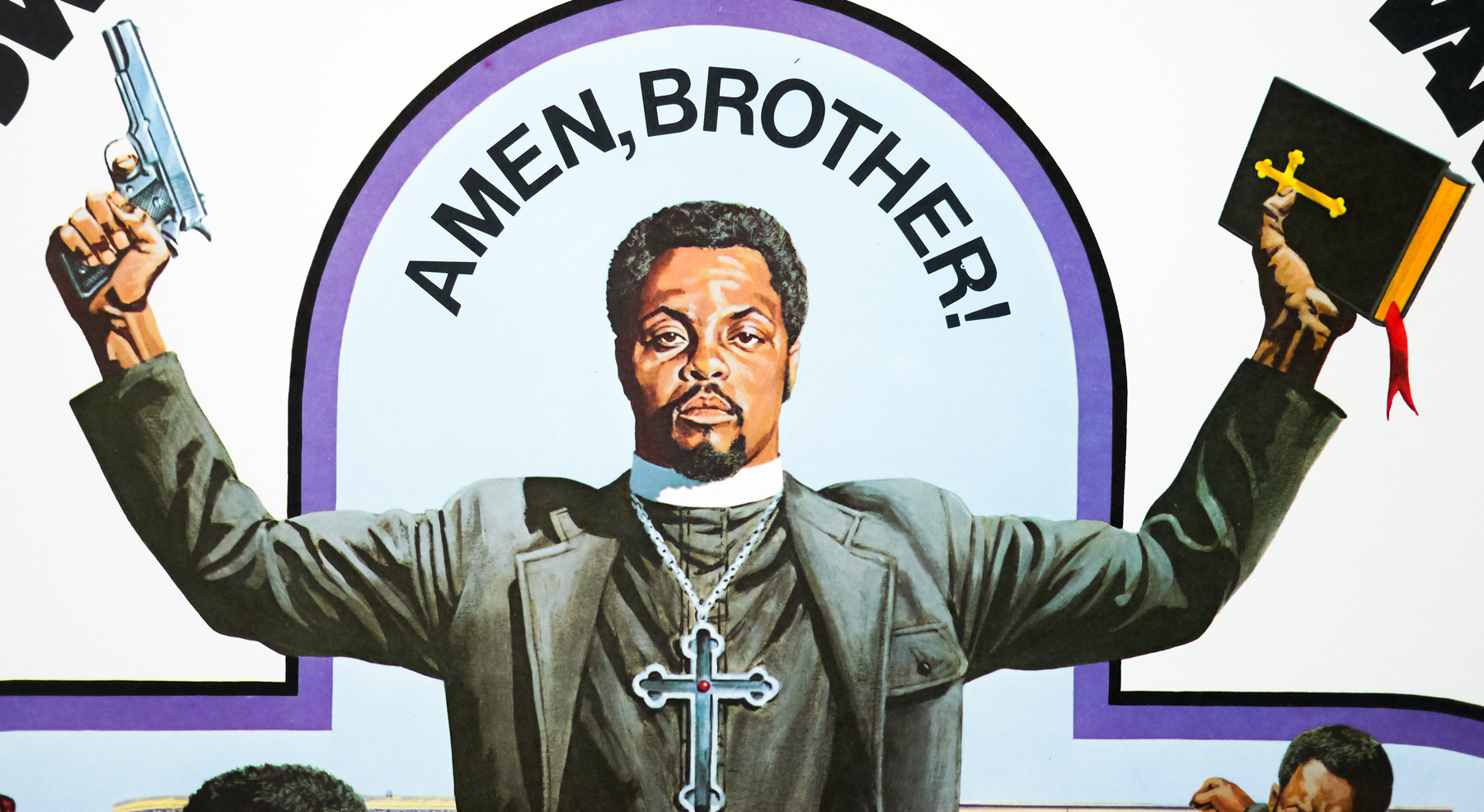
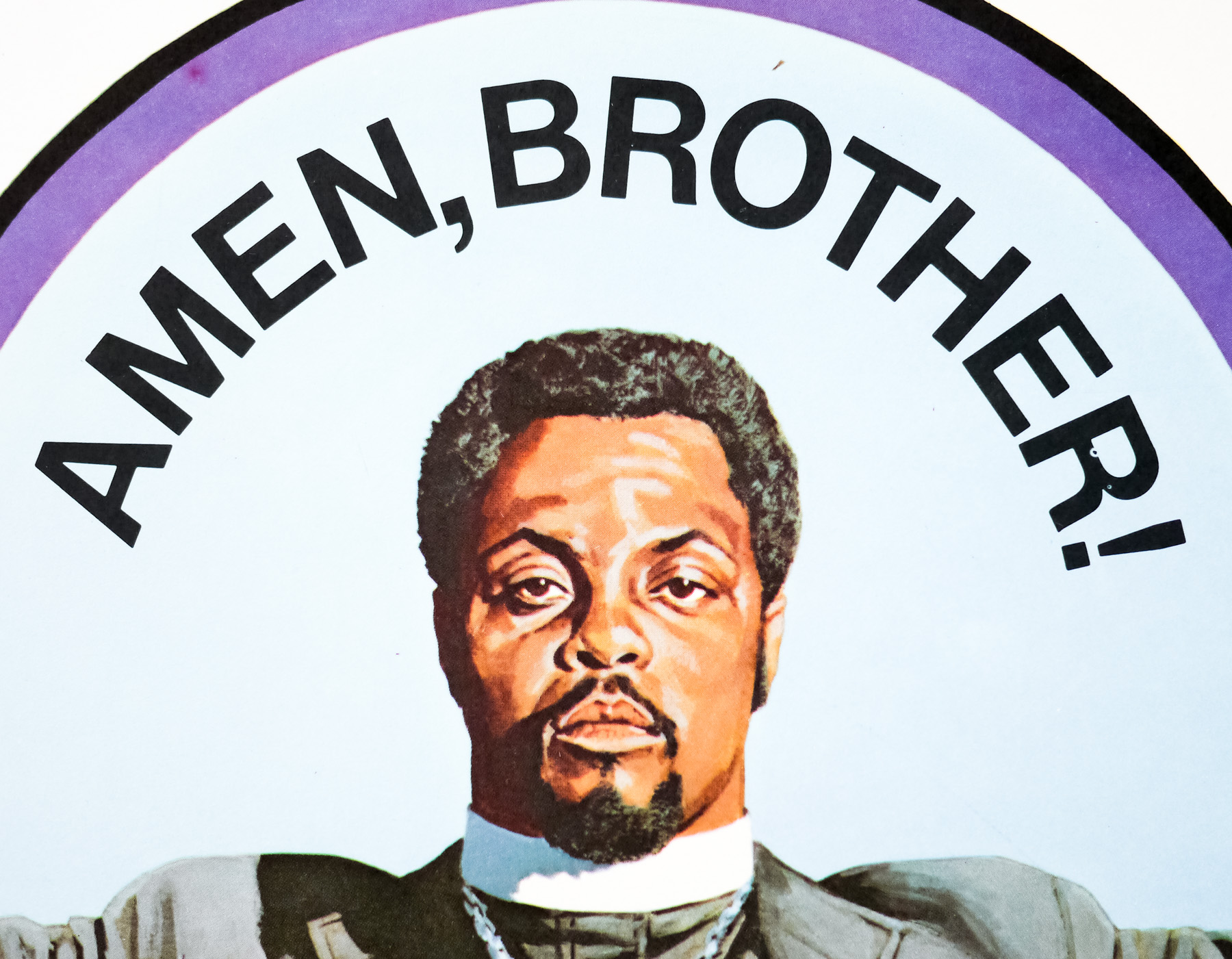
Amen, Brother!

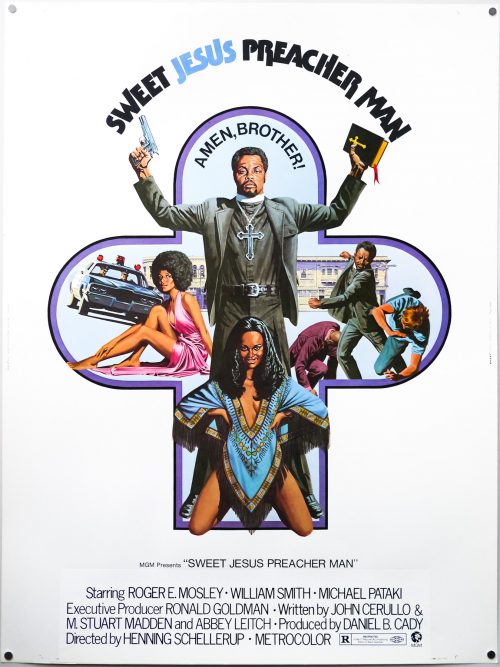
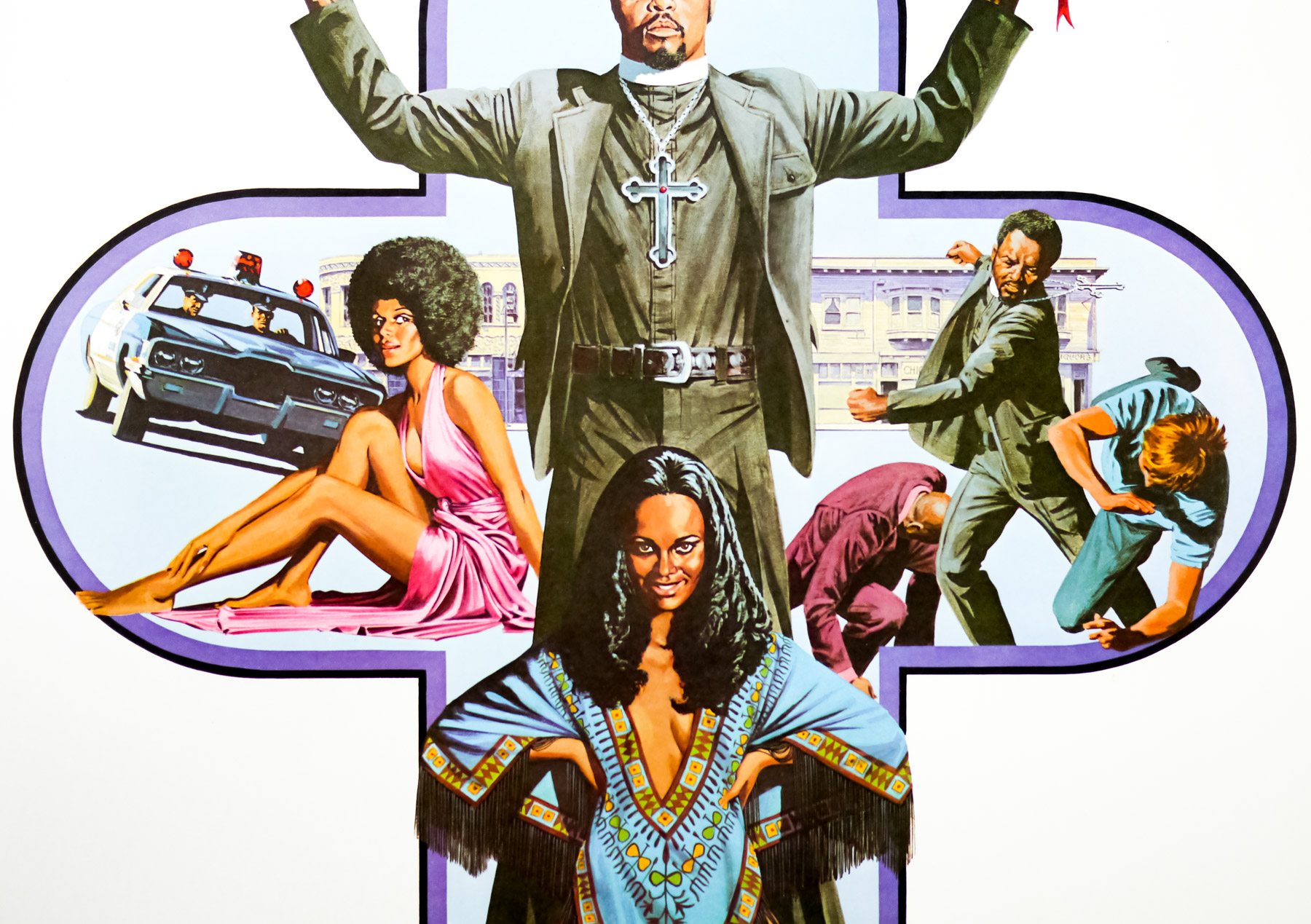
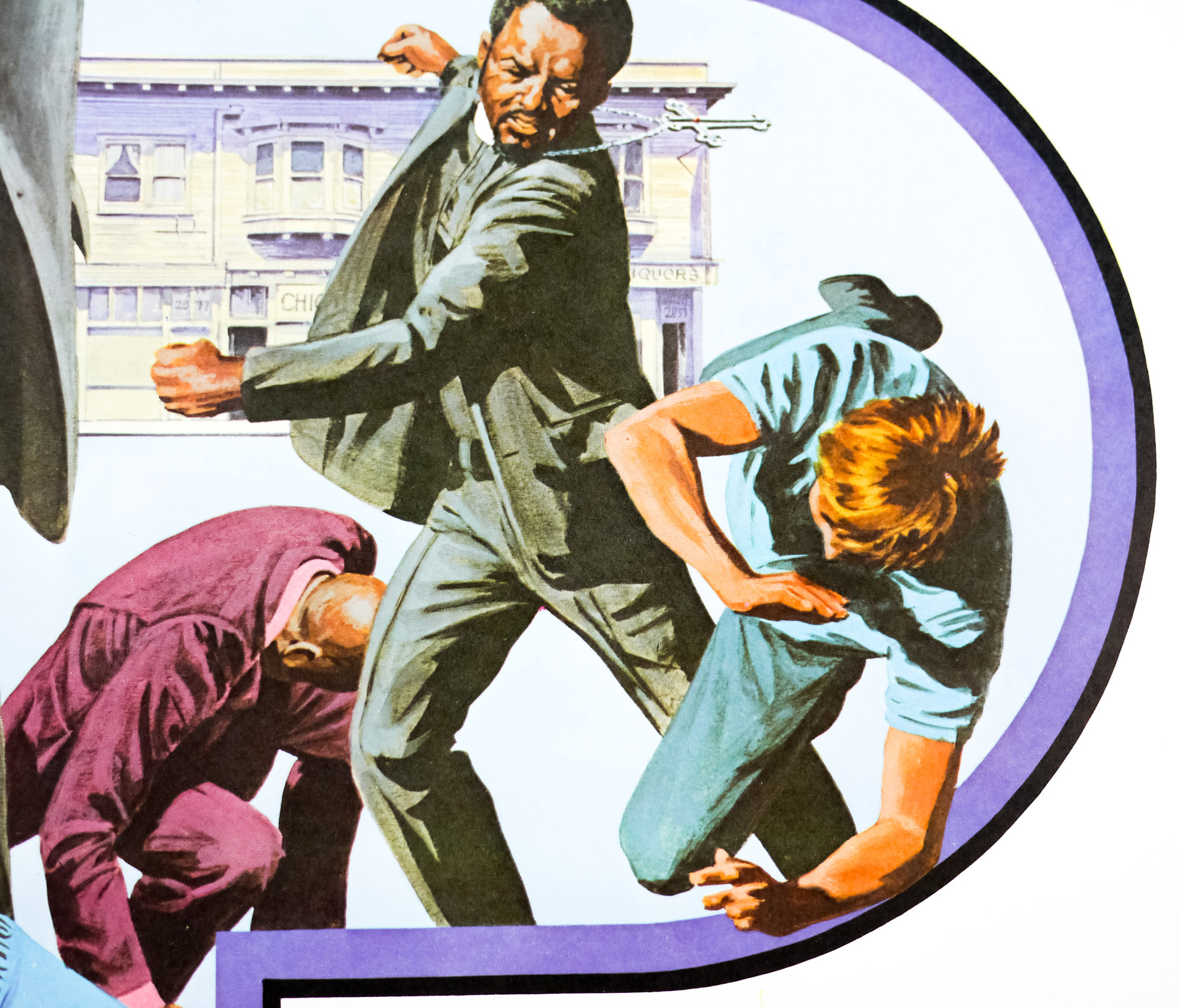
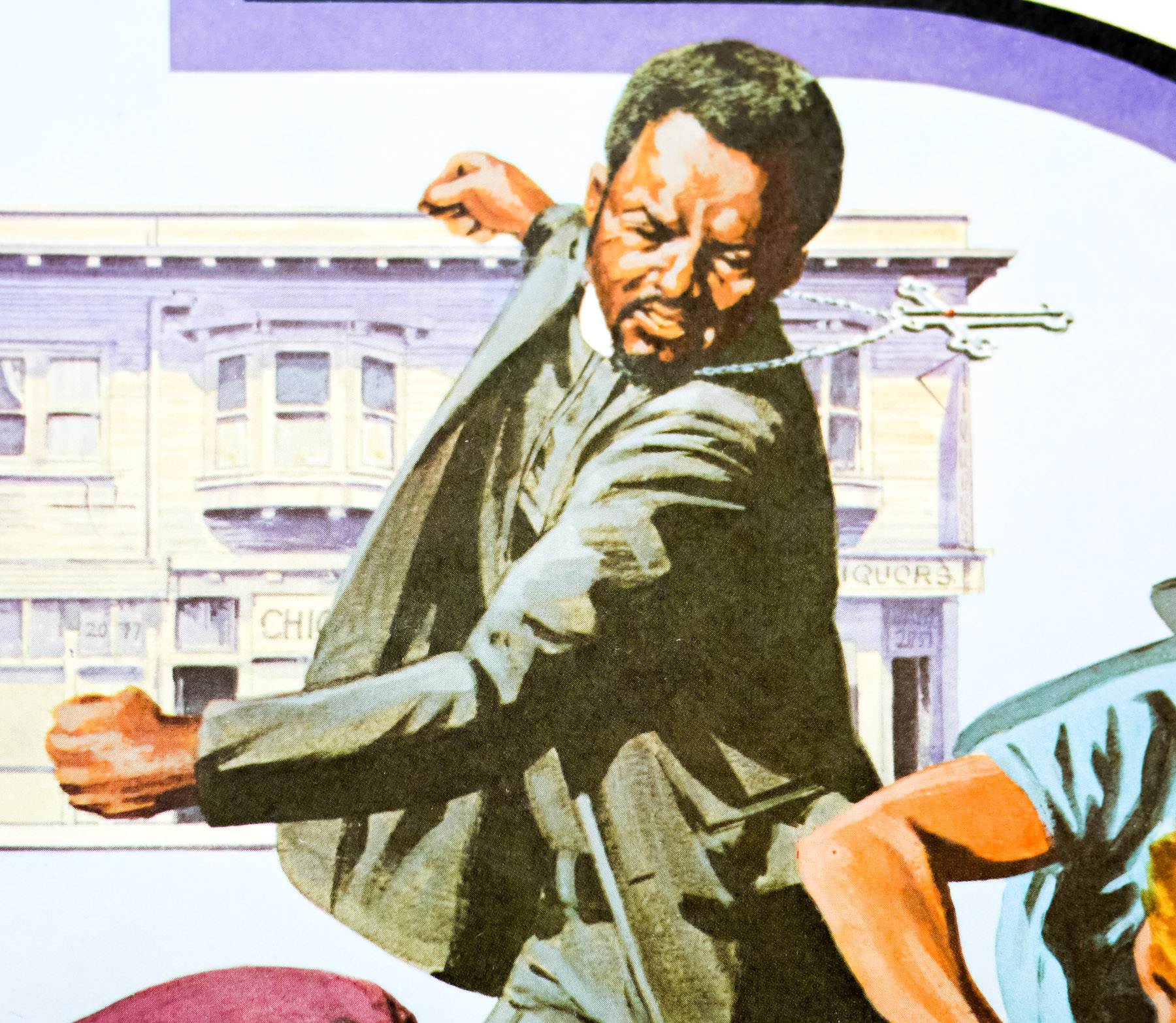
Sweet Jesus Preacher Man is apparently a lesser entry into the 1970s blaxploitation genre and it appears to have been largely forgotten with no DVD release forthcoming. Director Henning Schellerup is perhaps better known as a camera operator and cinematographer, having worked on such films as Death Race 2000, A Nightmare on Elm Street and Silent Night, Deadly Night.

Roger E. Mosley (Tom Selleck’s partner in Magnum P.I.) stars as a hit man who who poses as a baptist preacher in order to take over the vice rackets in an L.A. ghetto. After his boss Martelli (character actor William Smith) double-crosses him he sets out on a rampage of revenge leaving bodies in his wake.

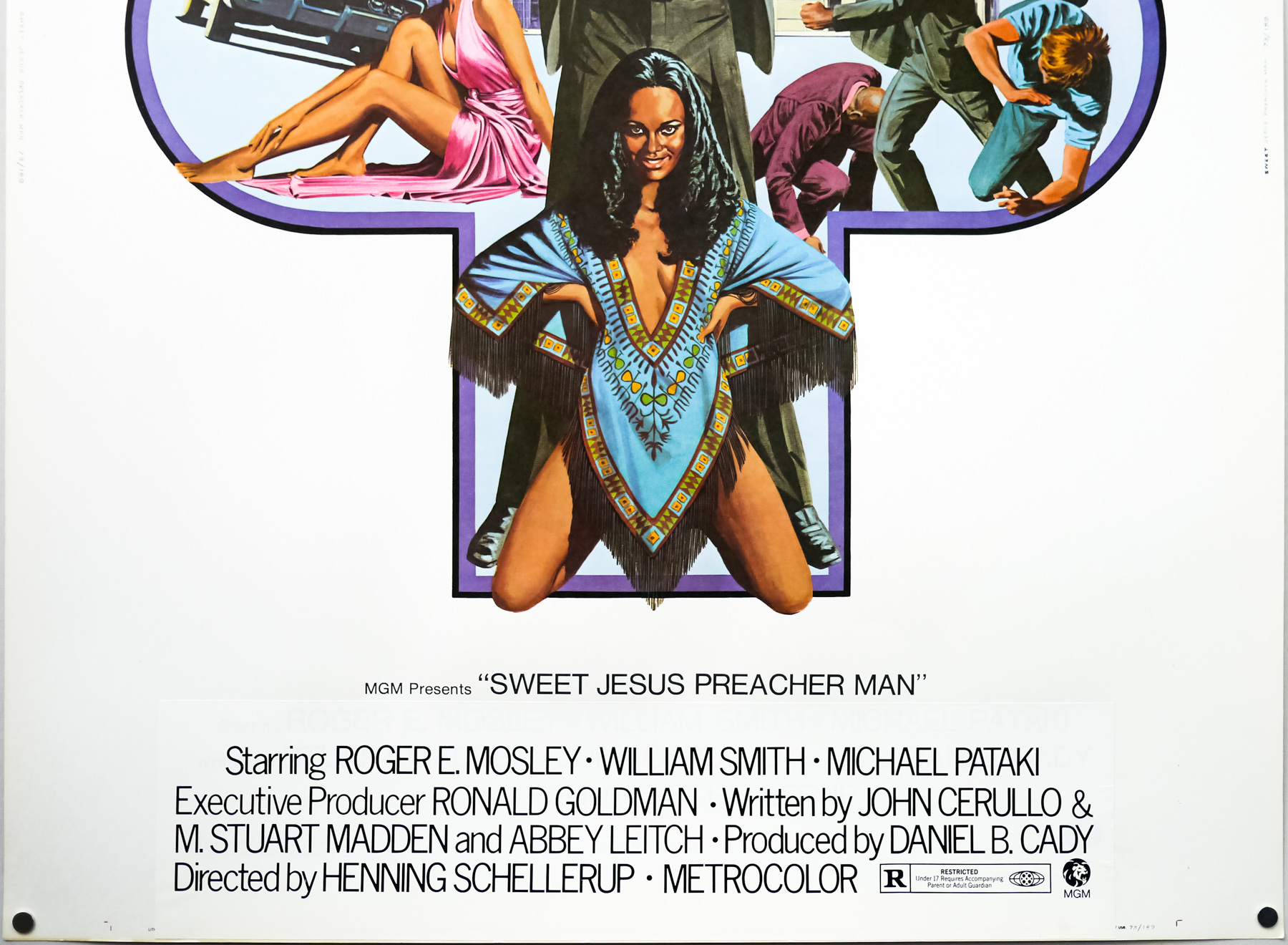
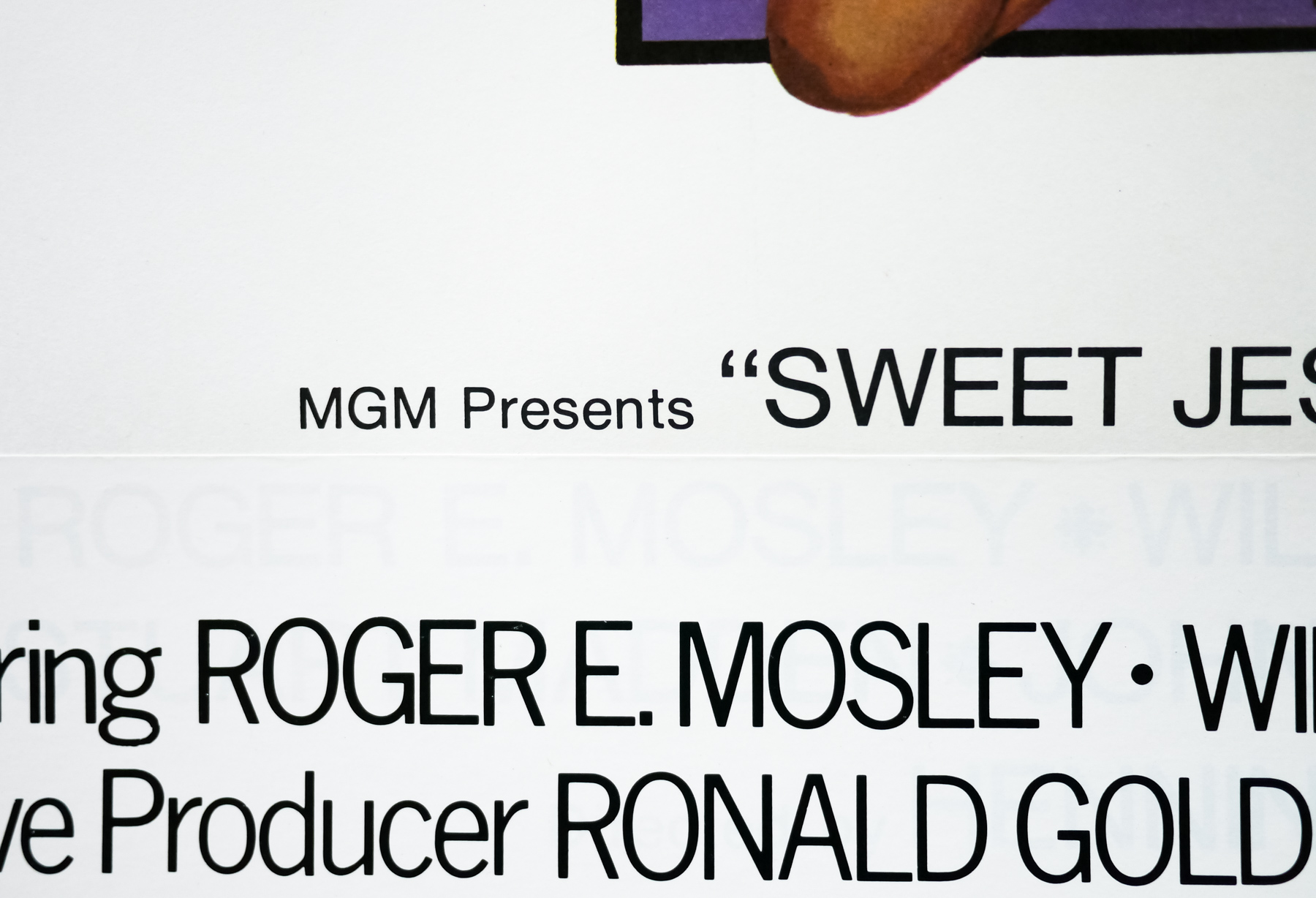
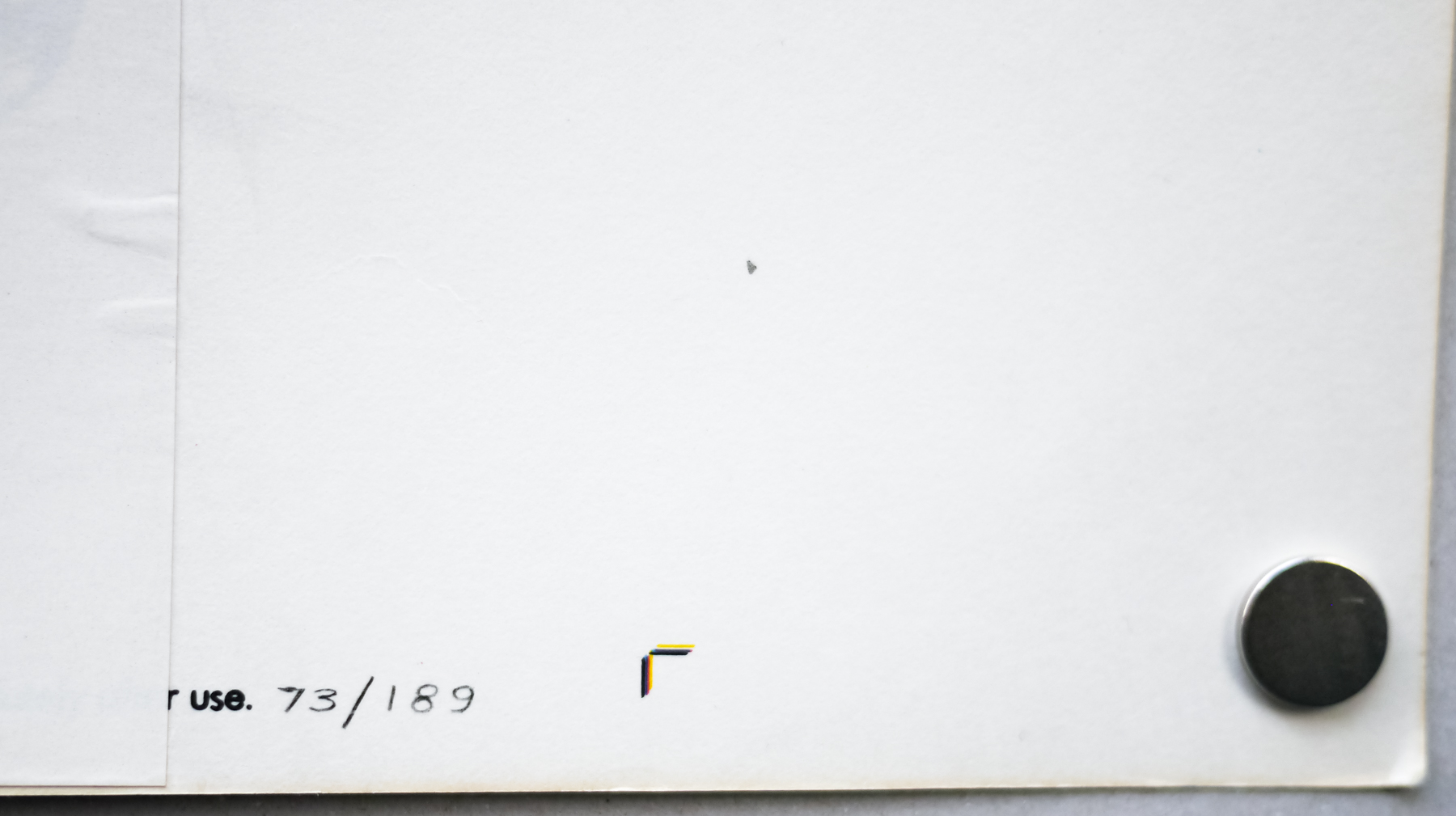
I’m unsure who is responsible for the artwork on this American 30×40 poster so please get in touch if you have an idea. You’ll notice that a large sticker with the credits on it has been applied over what is clearly the original credits block. This was likely done shortly after the posters were printed to correct an error without having to scrap the whole batch and print them again.

The original trailer is on YouTube.

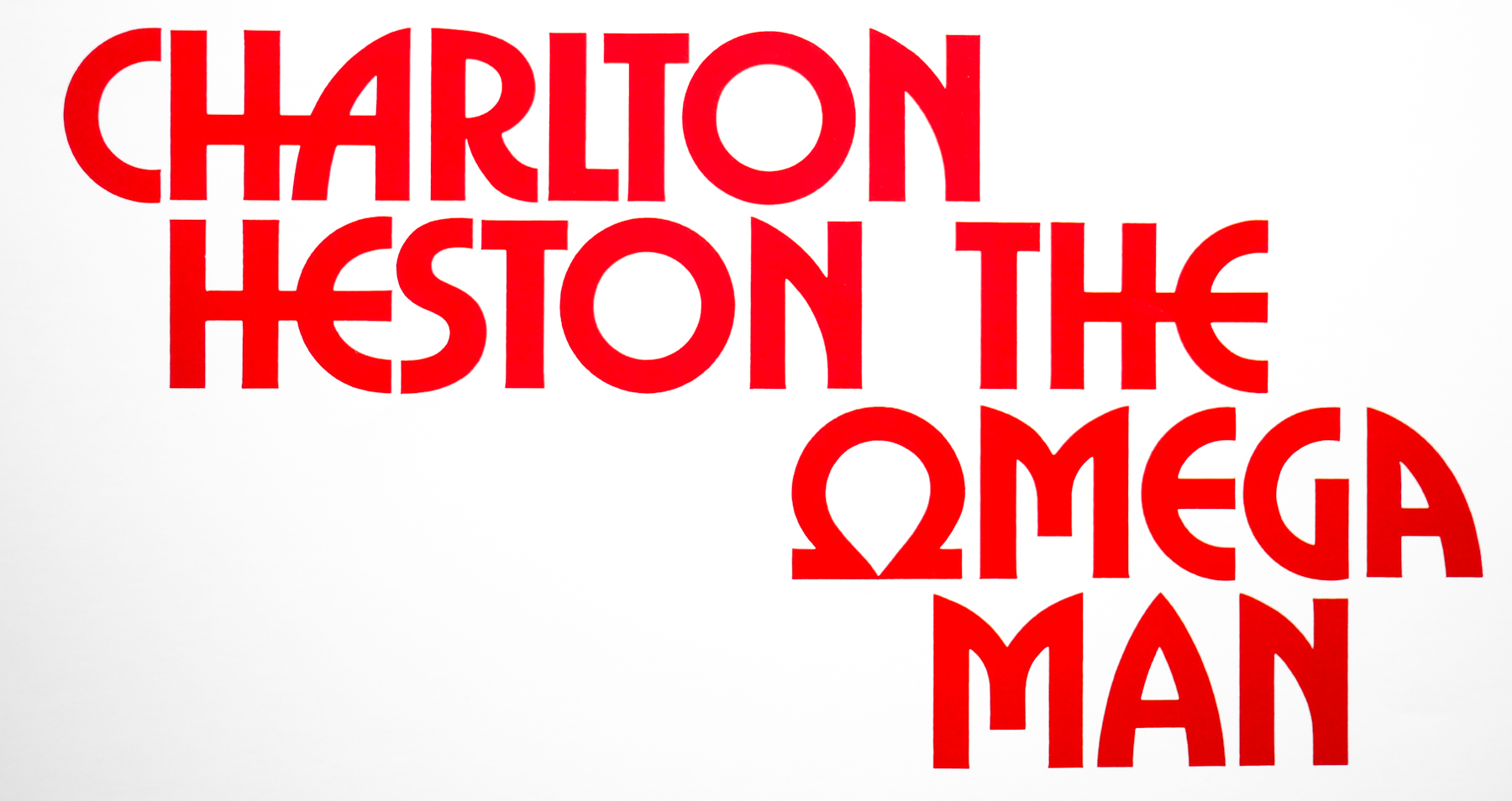
The Omega Man / 30×40 / USA

20.03.13

Poster Poster
Title
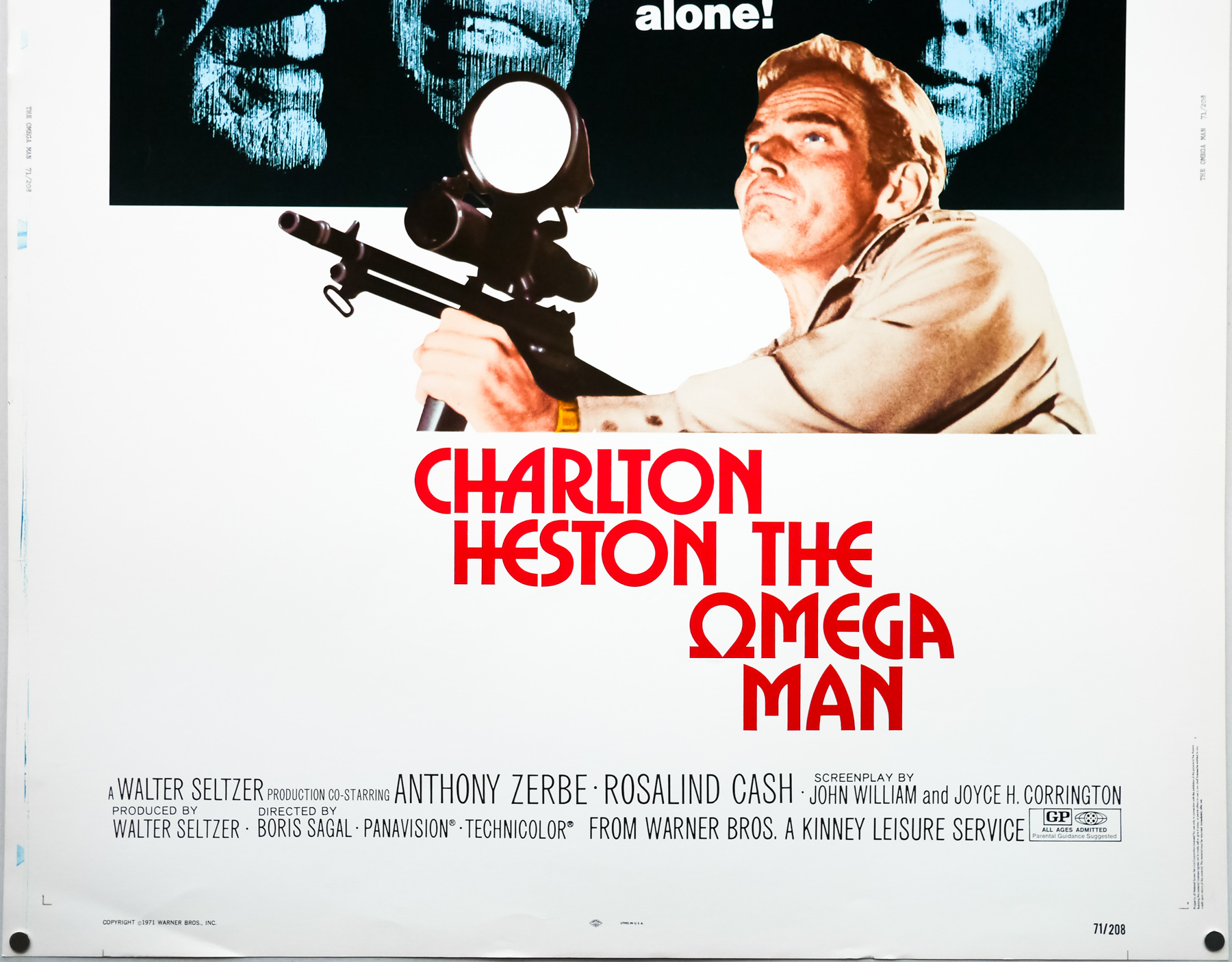
The Omega Man
AKA
1975: occhi bianchi sul pianeta Terra [White eyes on planet earth] (Italy)
Year of Film
1971
Director
Boris Sagal
Starring
Charlton Heston, Anthony Zerbe, Rosalind Cash, Paul Koslo, Eric Laneuville, Lincoln Kilpatrick, Jill Giraldi
Origin of Film
USA
Genre(s) of Film
Charlton Heston, Anthony Zerbe, Rosalind Cash, Paul Koslo, Eric Laneuville, Lincoln Kilpatrick, Jill Giraldi,
Type of Poster
30x40
Style of Poster
--
Origin of Poster
USA
Year of Poster
1971
Designer
Unknown
Artist
Unknown
Size (inches)
30 1/16" x 40"
SS or DS
SS
NSS #
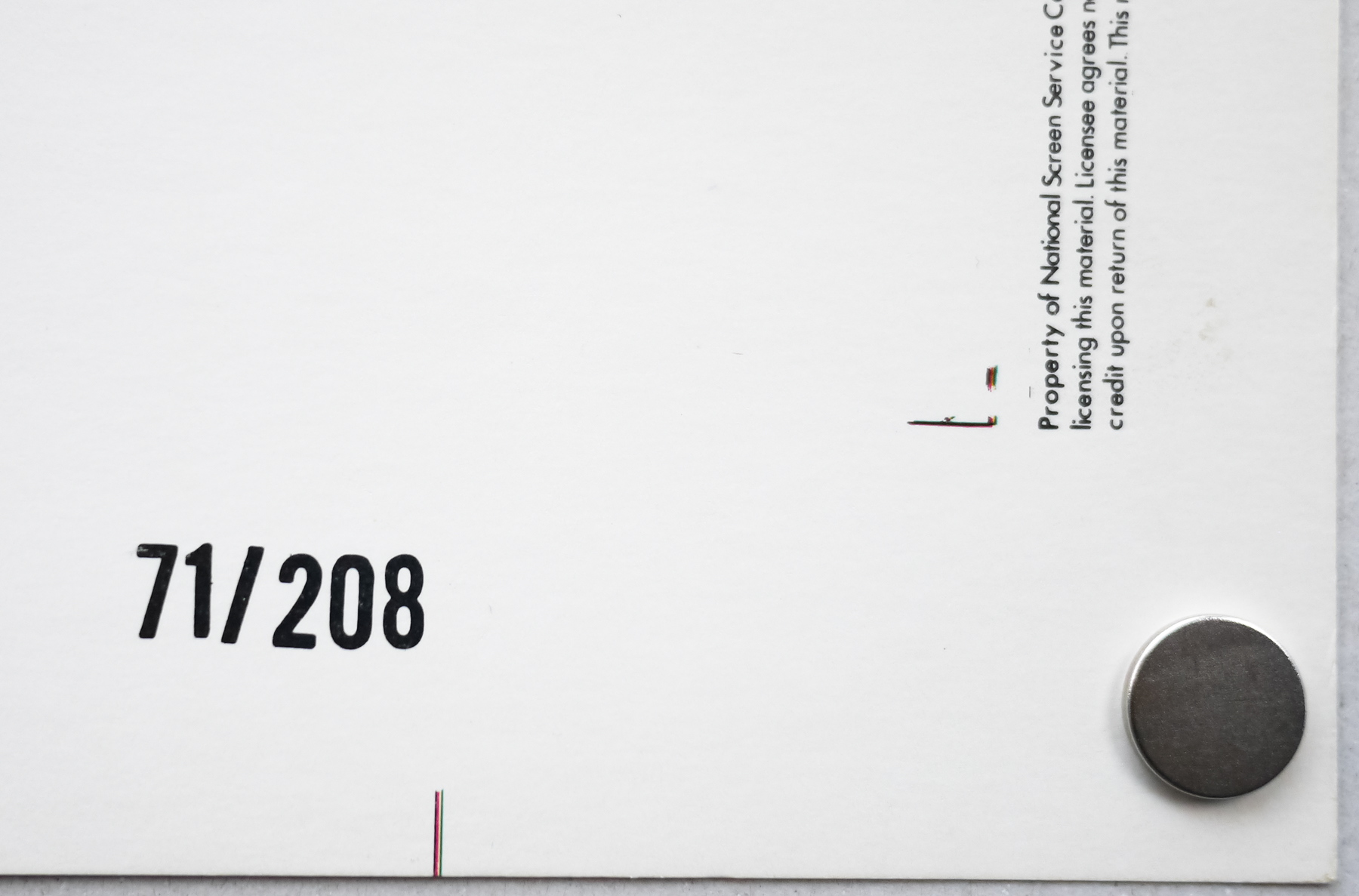
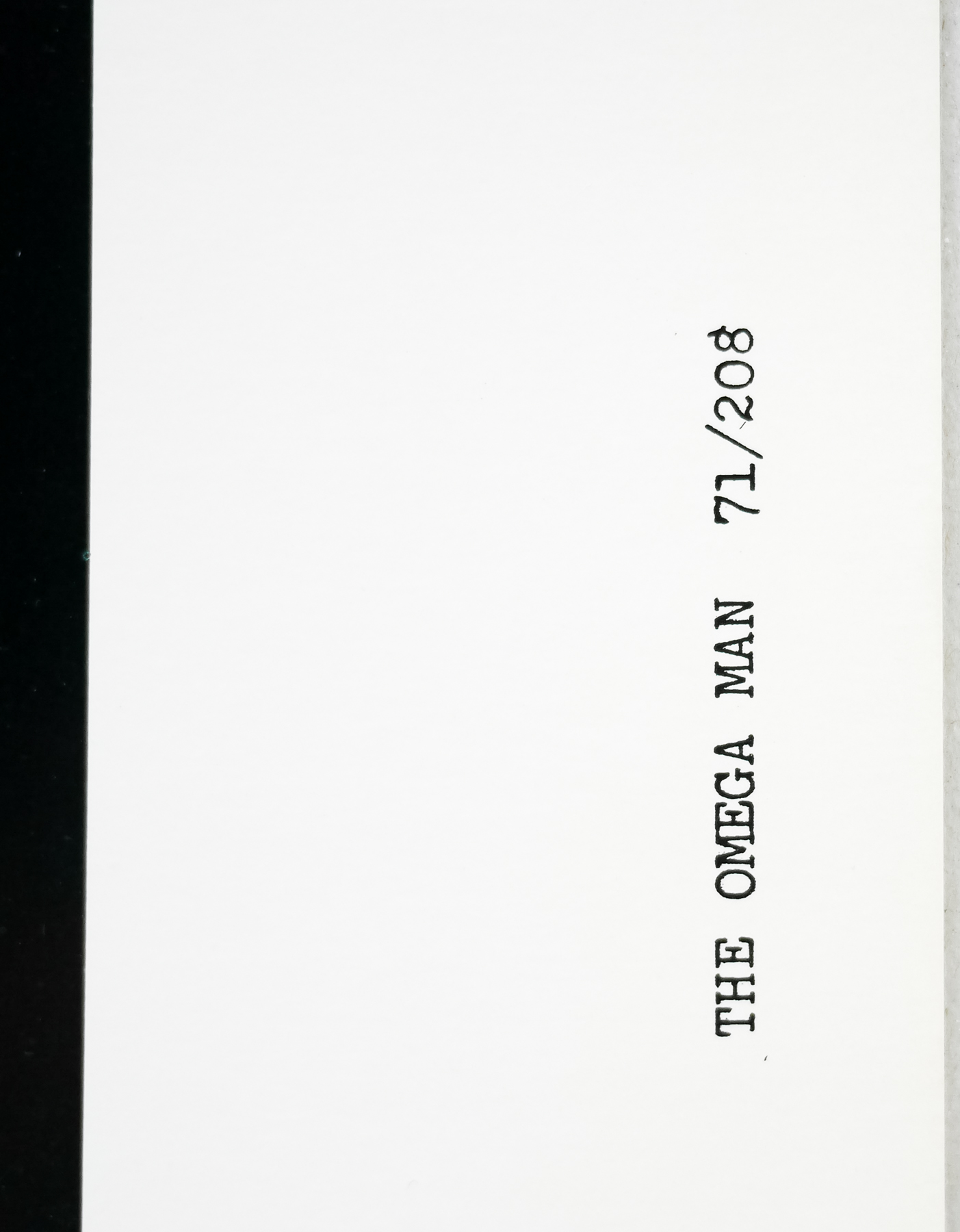
71/208
Tagline
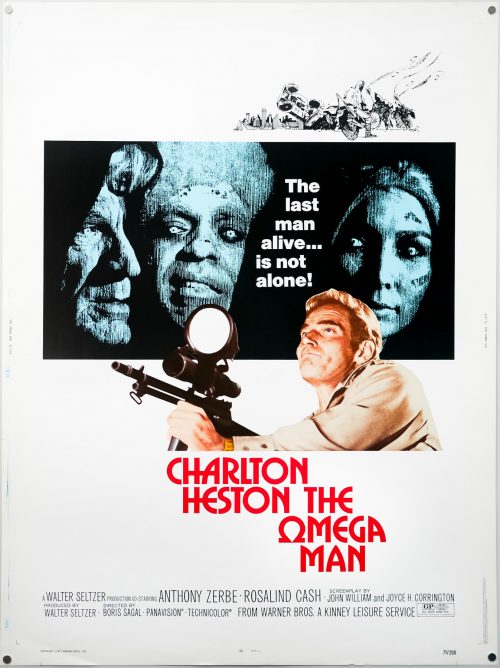
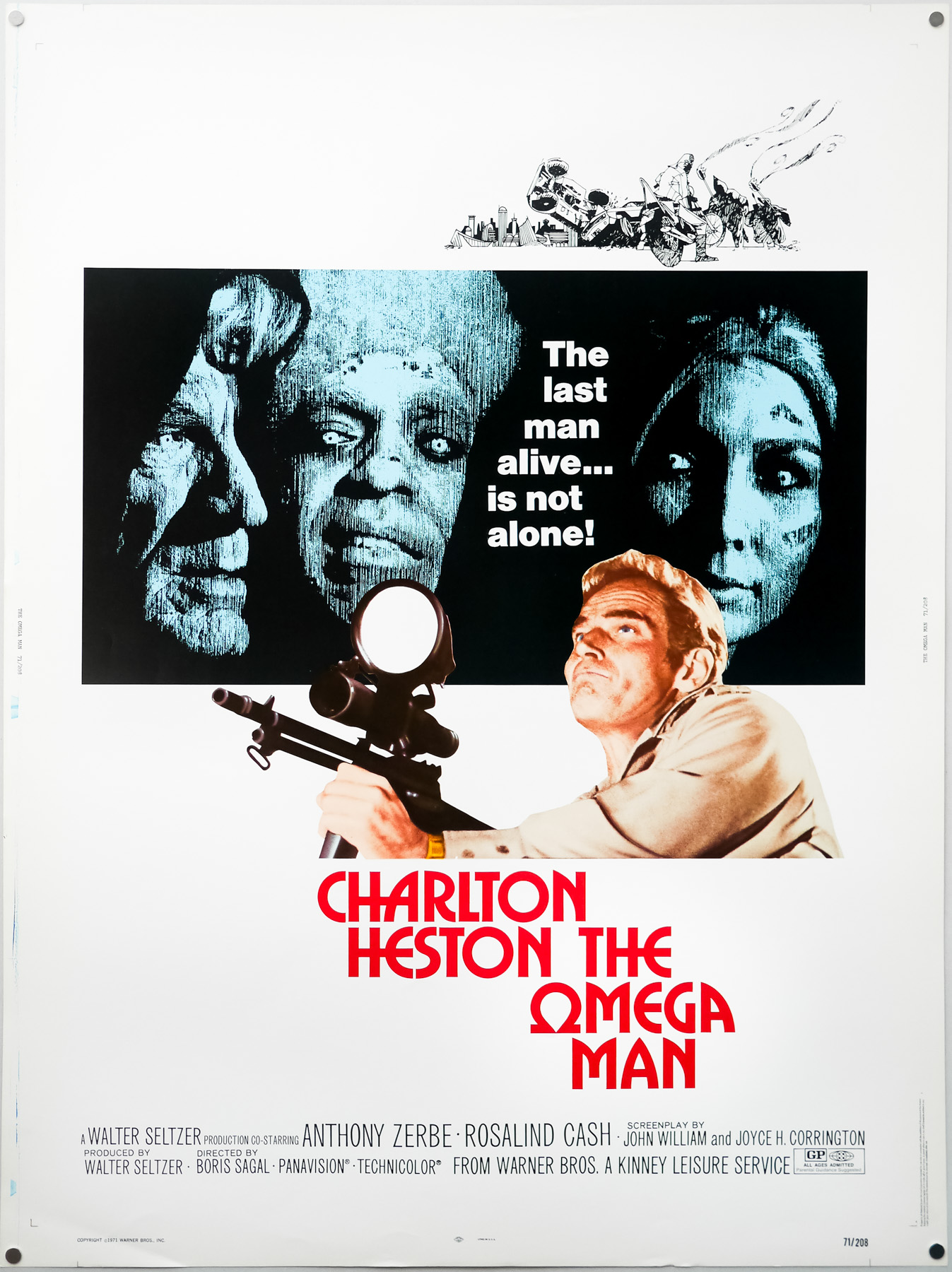
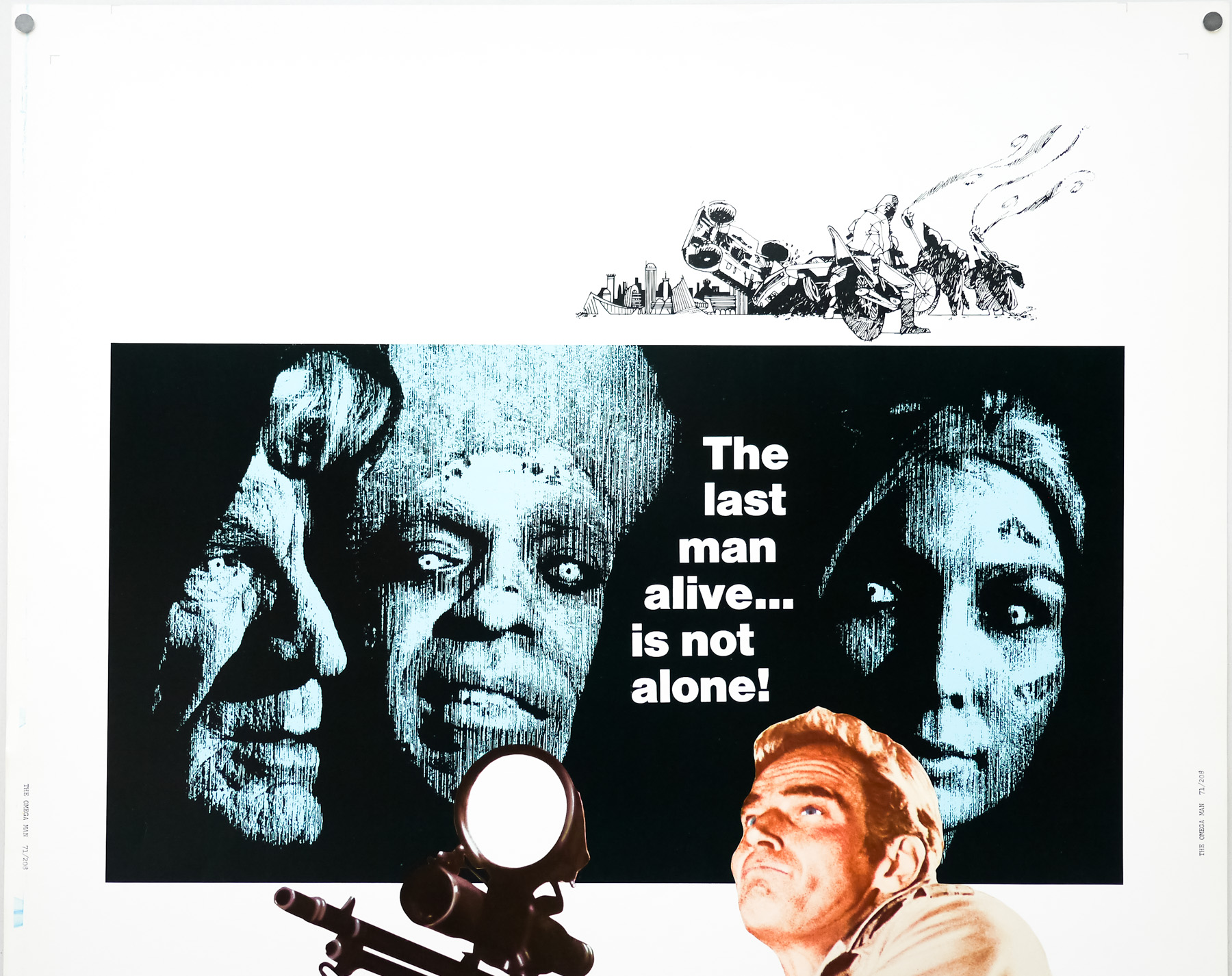
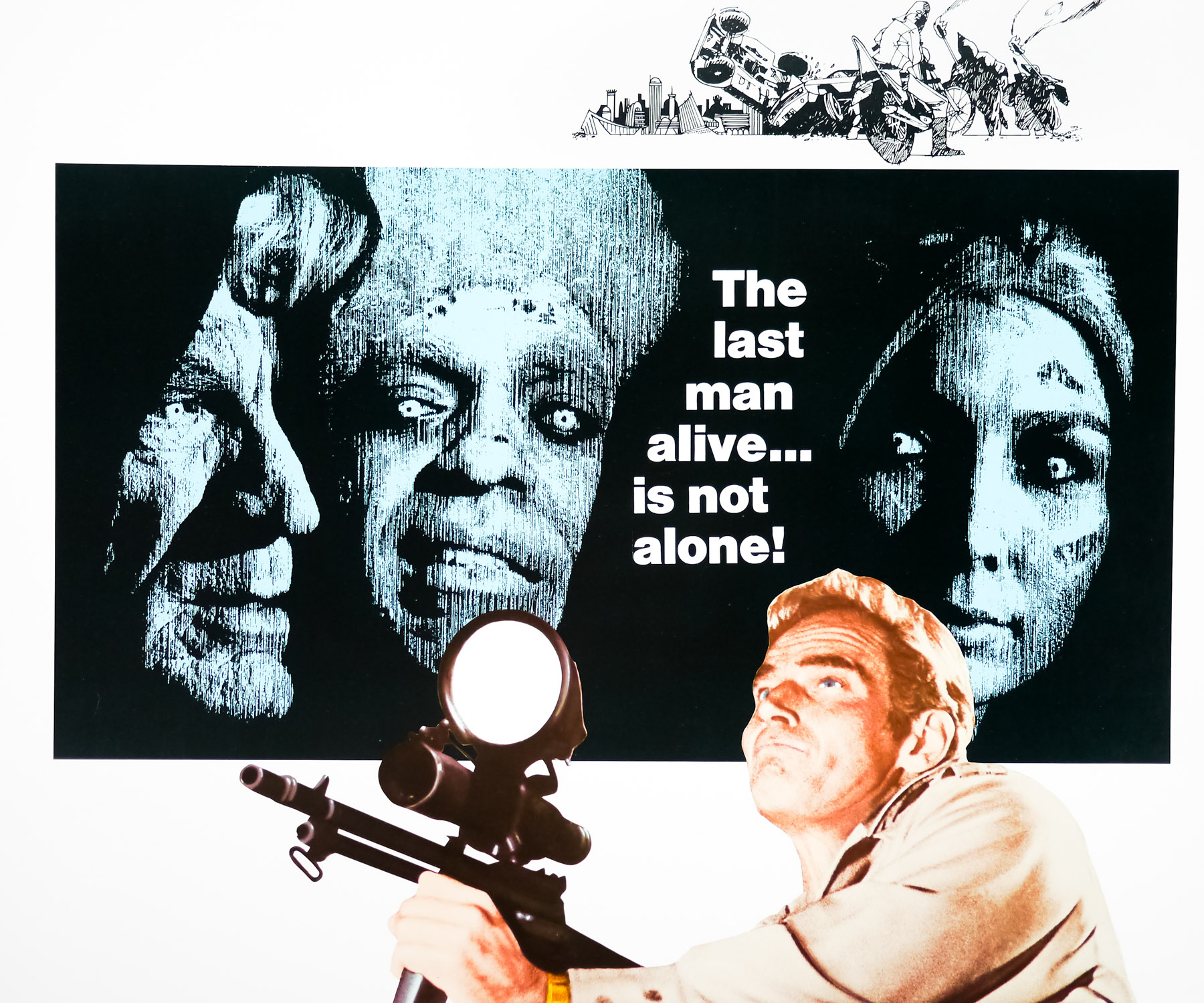
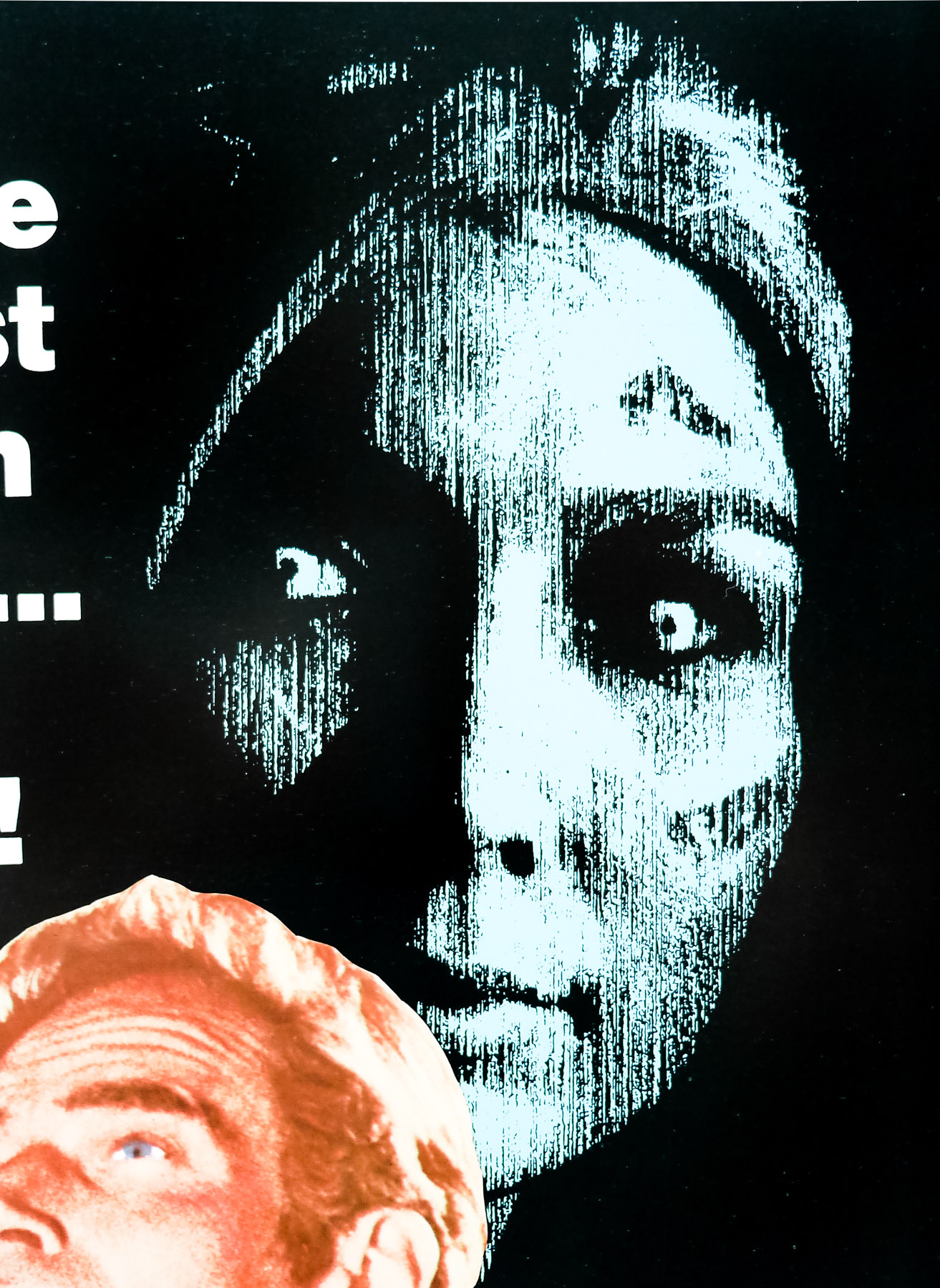
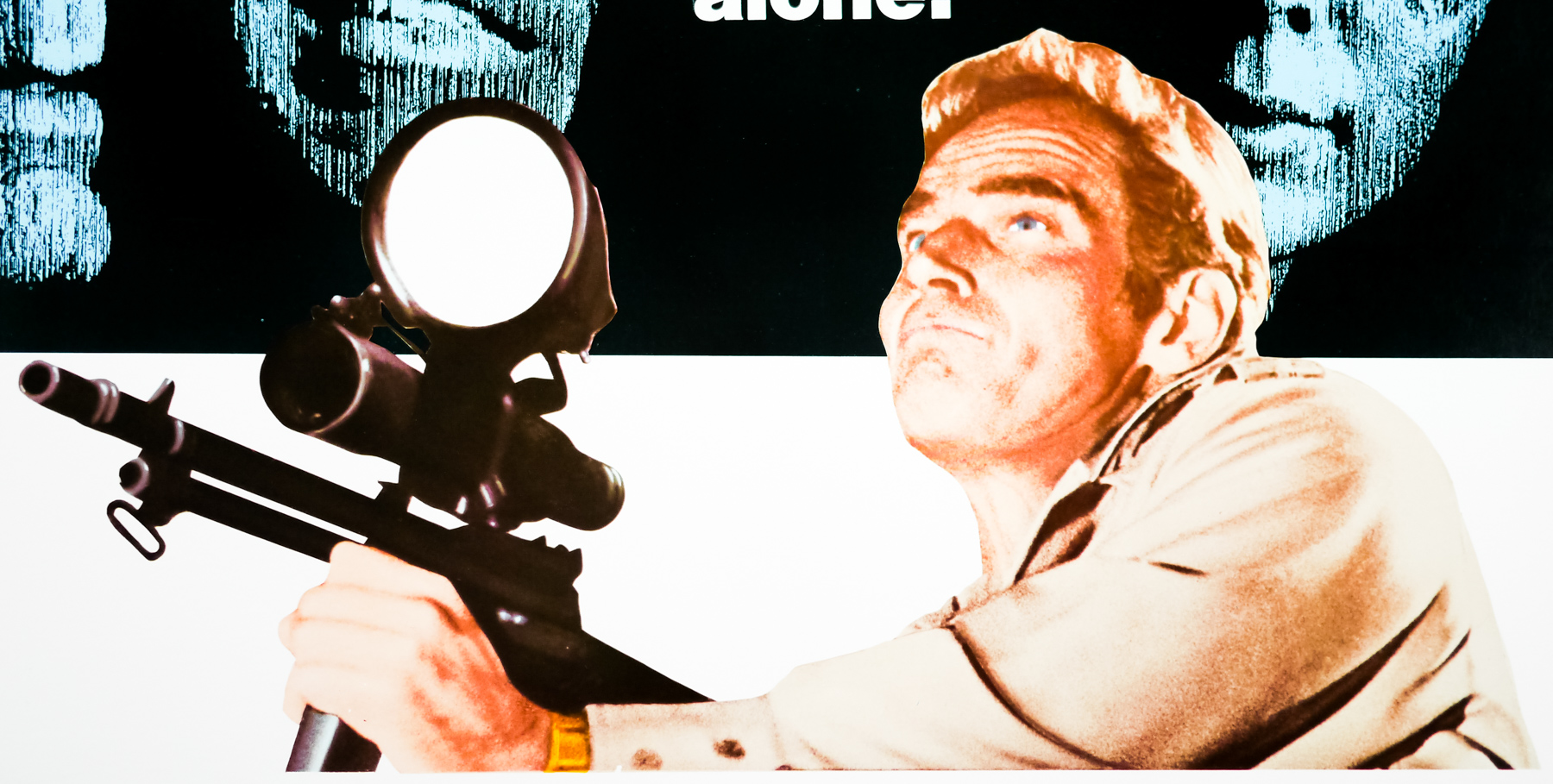
The last man alive... is not alone!

American author Richard Matheson‘s 1954 post-apocalyptic tale I Am Legend has been adapted for the screen three times, first in 1964 as the Vincent Price-starring The Last Man on Earth that was shot in Rome and co-directed by Italian Ubaldo Ragona and American Sidney Salkow. The rights to the story had originally been bought by Tony Hinds of the British Hammer Studios and Matheson was asked to write the screenplay, but worries about the gruesome content being too much for British censors saw the script being sold to the American producer Robert Lippert. Matheson was apparently so disappointed with his own screenplay and resultant film that he asked to be credited with the pseudonym Logan Swanson. The Last Man on Earth’s limited success at the box-office might explain why The Omega Man was put into production only seven years later.

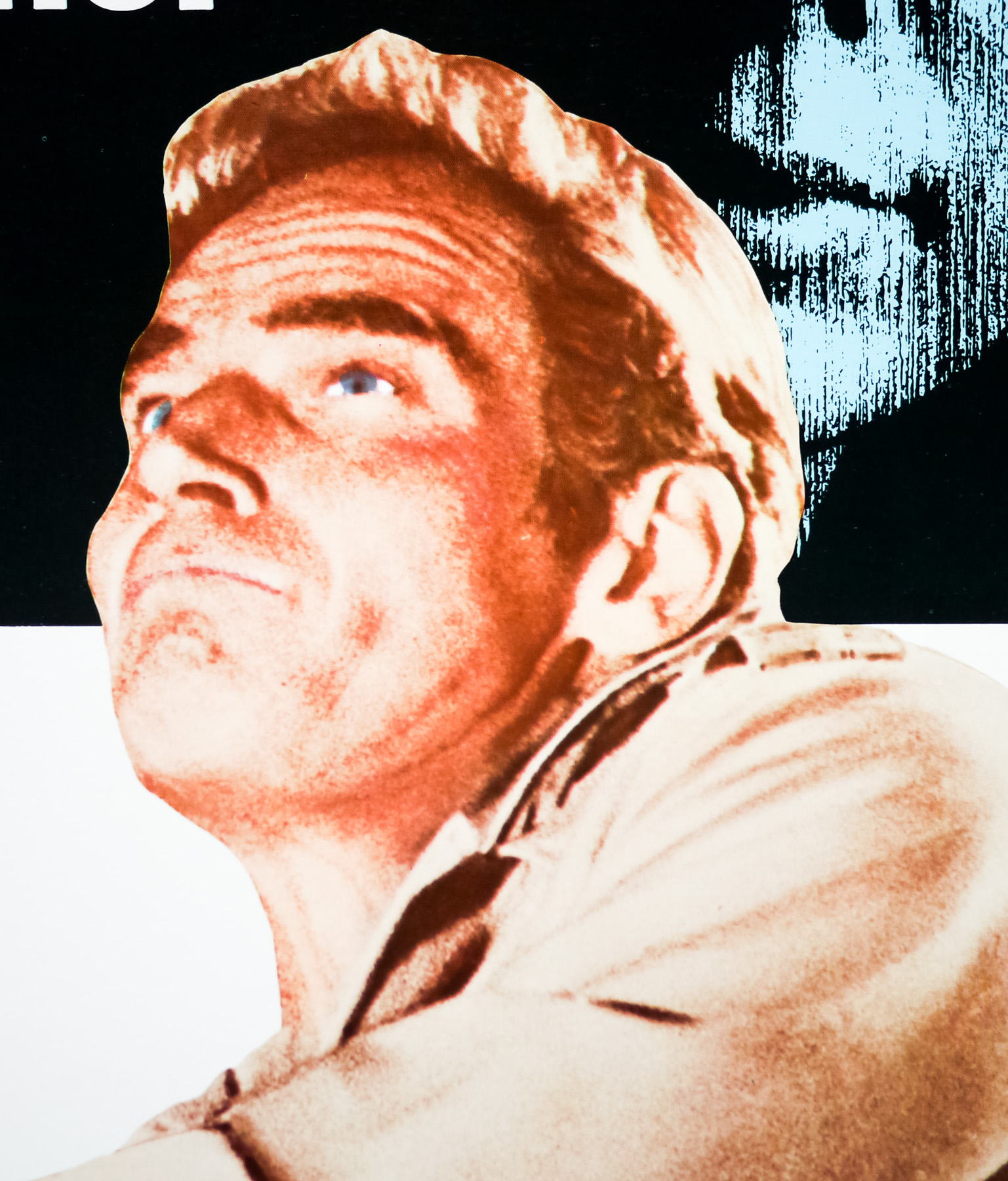
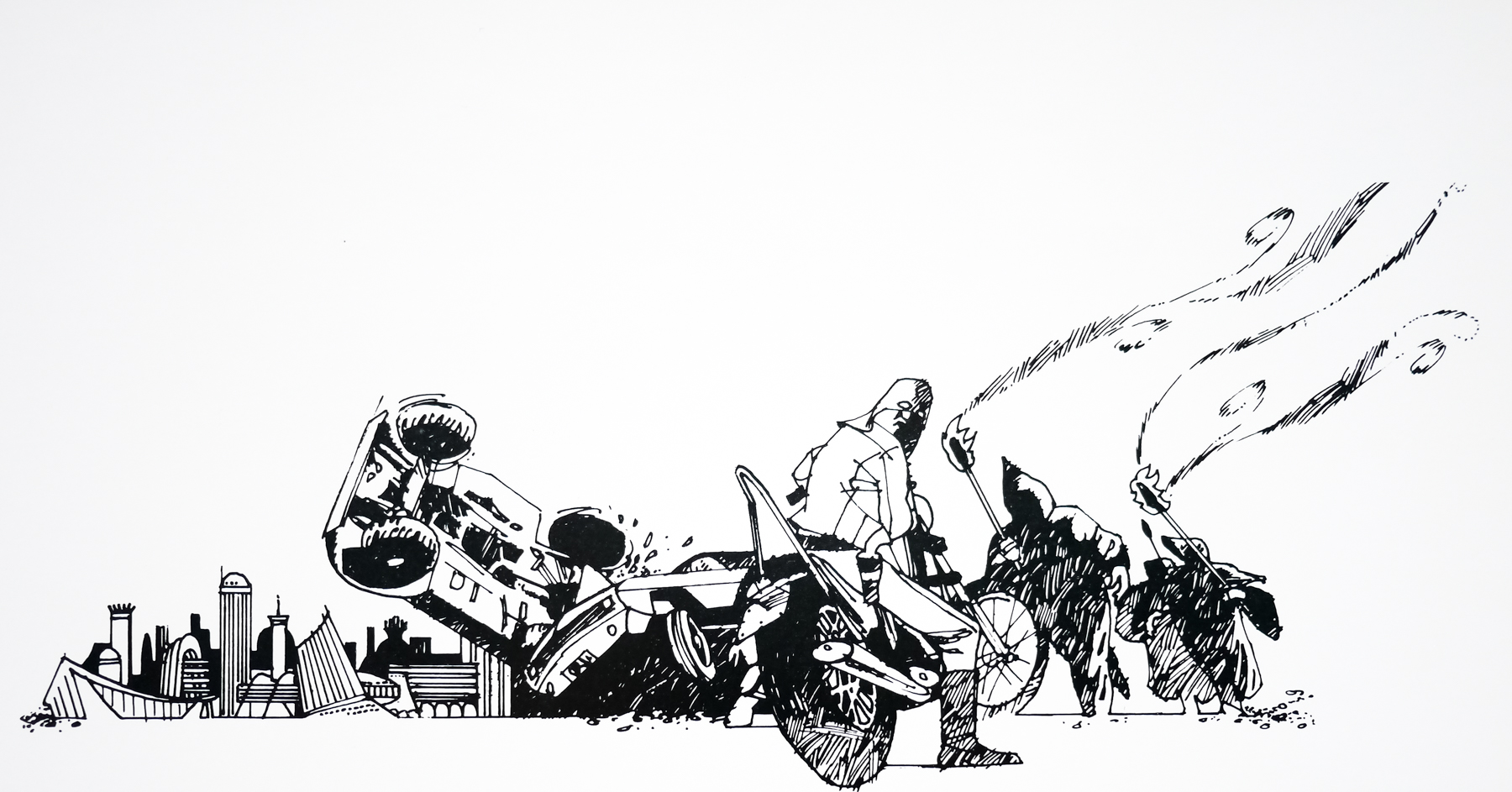
Charlton Heston stars as Robert Neville, the Army scientist who manages to inject himself with an experimental vaccine just as the world’s population is obliterated by biological warfare between the Chinese and Russians. Two years later Neville believes himself to be the only surviving human and spends his days exploring a deserted Los Angeles and hunting down a group of infected mutants known as The Family. One day whilst exploring a shopping centre Neville has an encounter with another human survivor but quickly dismisses it as a hallucination, having been alone for so long. When he is captured by The Family and almost burned at the stake his rescue comes from a ragtag bunch of human survivors who ask for his help in saving a group of children that are infected and slowly succumbing to the disease. Neville decides to see if his blood can be used to create a serum to save them, but The Family are not done with him yet…

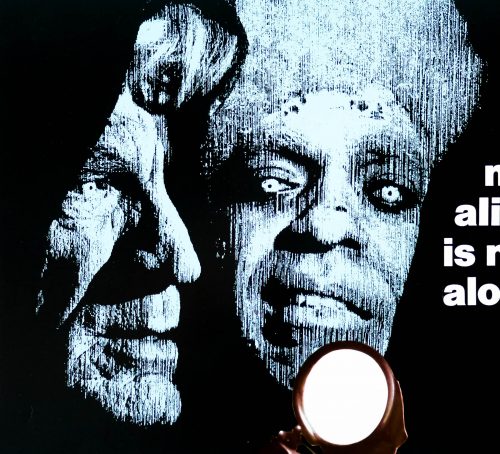
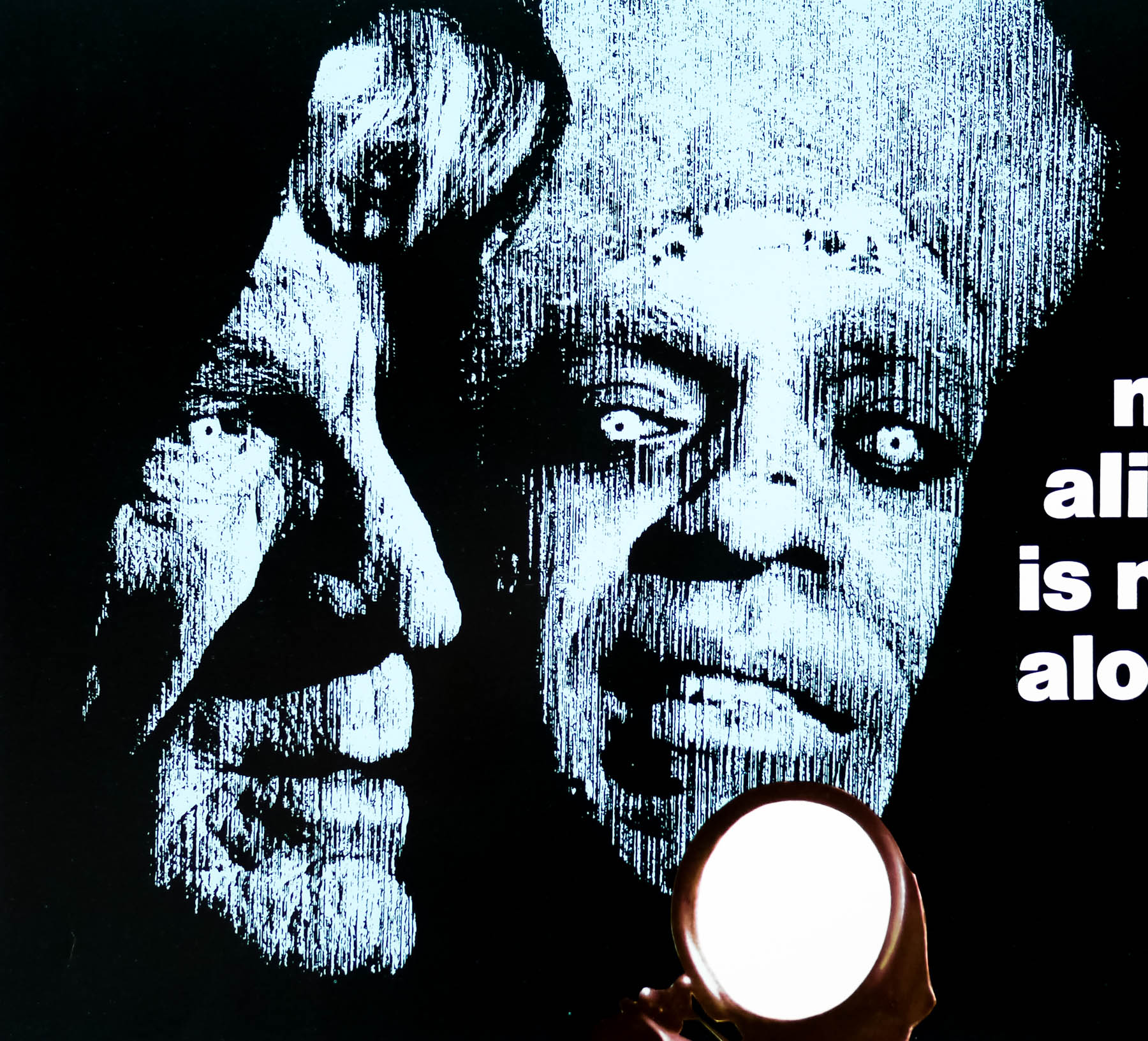
The Omega Man has several memorable scenes, particularly during the first half of the film as Neville explores a convincingly deserted Los Angeles, which was achieved with out any visual effects by shooting in the city’s business district early on Sunday mornings. The soundtrack is also excellent and Heston does a solid job in the lead role, supported by Rosalind Cash who’s memorable as one of the other survivors with whom Heston shares a controversial (for the time) interracial kiss. The make-up for the mutants has dated rather badly but it’s nowhere near as poor as the terrible CGI abominations that all but sank 2007’s I Am Legend, starring Will Smith in the lead role.

I’m unsure who is responsible for the design of this poster but the pencil drawing is similar to the one seen on the Dirty Harry one sheet that was designed by Bill Gold, so I suspect the same artist may be credited and that Gold was also behind the design. If anyone knows for sure please get in touch.

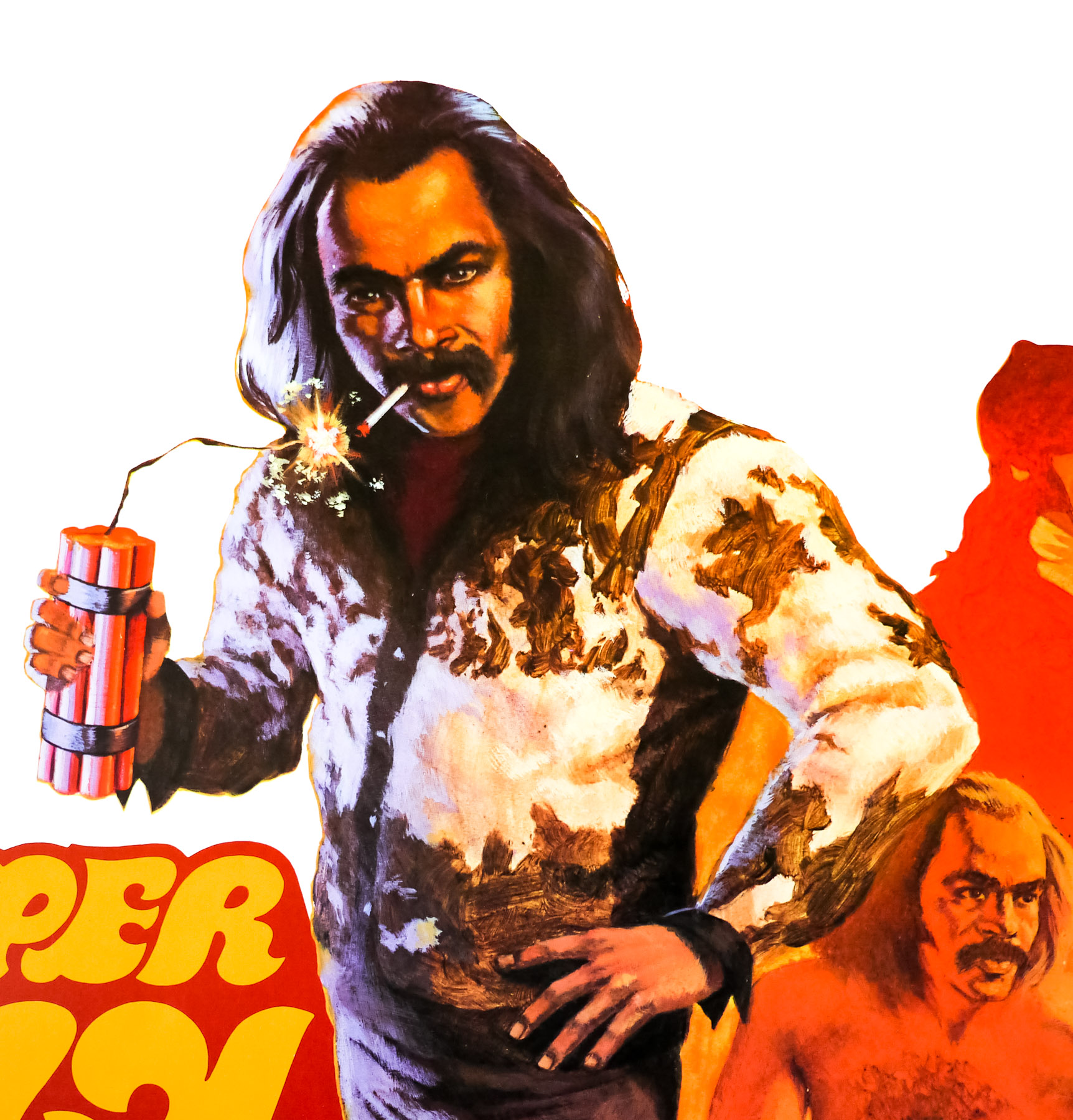
Super Fly TNT / 30×40 / USA

23.07.13

Poster Poster
Title
Super Fly TNT
AKA
--
Year of Film
1973
Director
Ron O'Neal
Starring
Ron O'Neal, Roscoe Lee Browne, Sheila Frazier, Robert Guillaume, Jacques Sernas, William Berger, Roy Bosier, Silvio Noto, Olga Bisera
Origin of Film
USA
Genre(s) of Film
Ron O'Neal, Roscoe Lee Browne, Sheila Frazier, Robert Guillaume, Jacques Sernas, William Berger, Roy Bosier, Silvio Noto, Olga Bisera,
Type of Poster
30x40
Style of Poster
--
Origin of Poster
USA
Year of Poster
1973
Designer
Unknown
Artist
Craig Nelson
Size (inches)
30" x 40"
SS or DS
SS
NSS #
73/233
Tagline
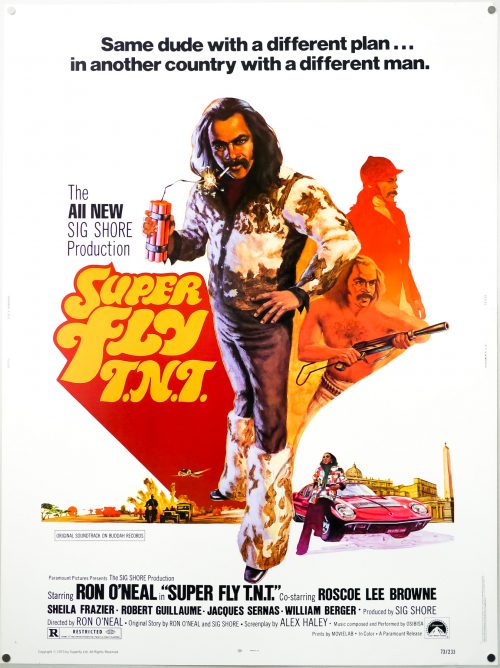
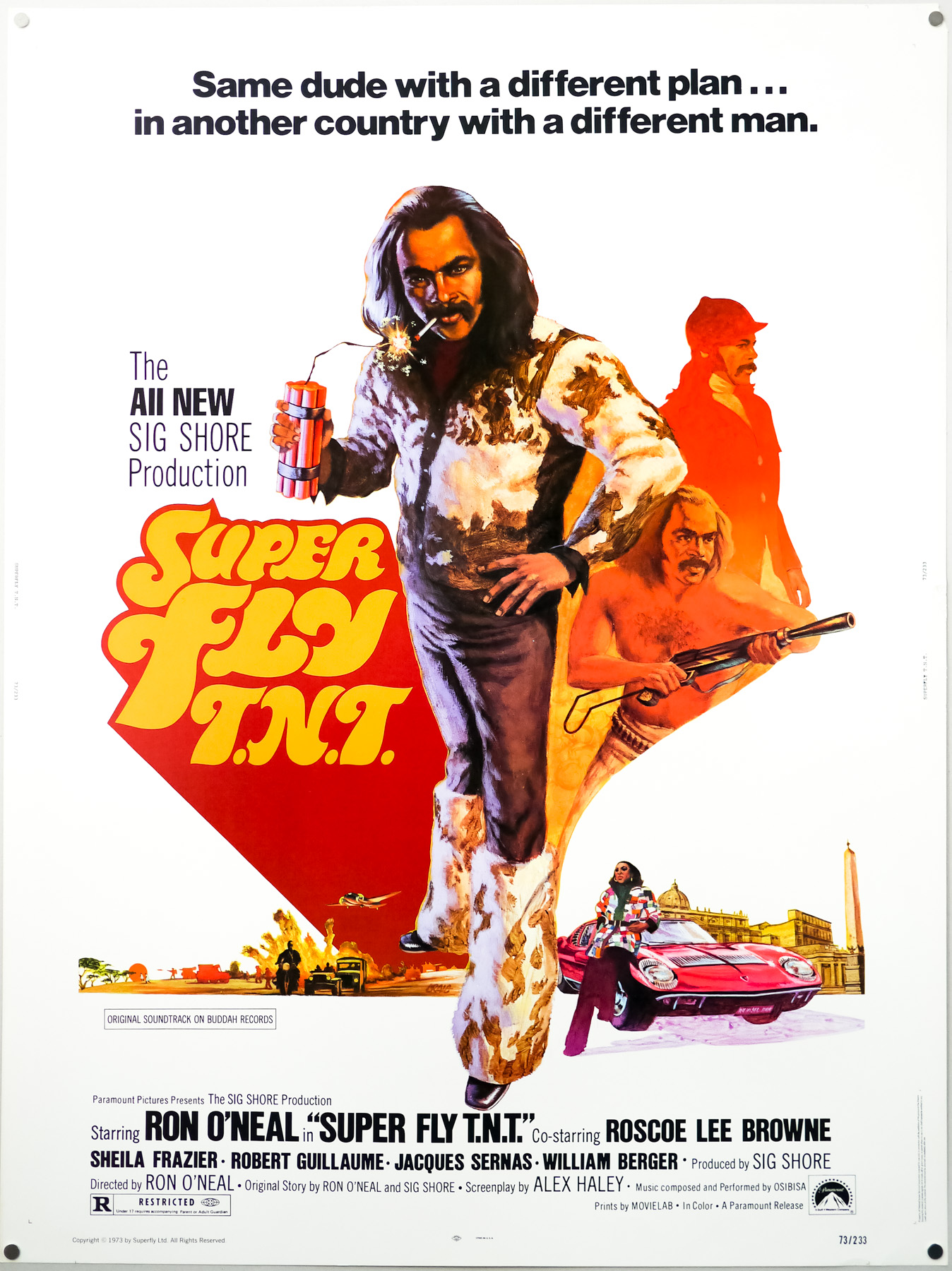
Same dude with a different plan... in another country with a different man.

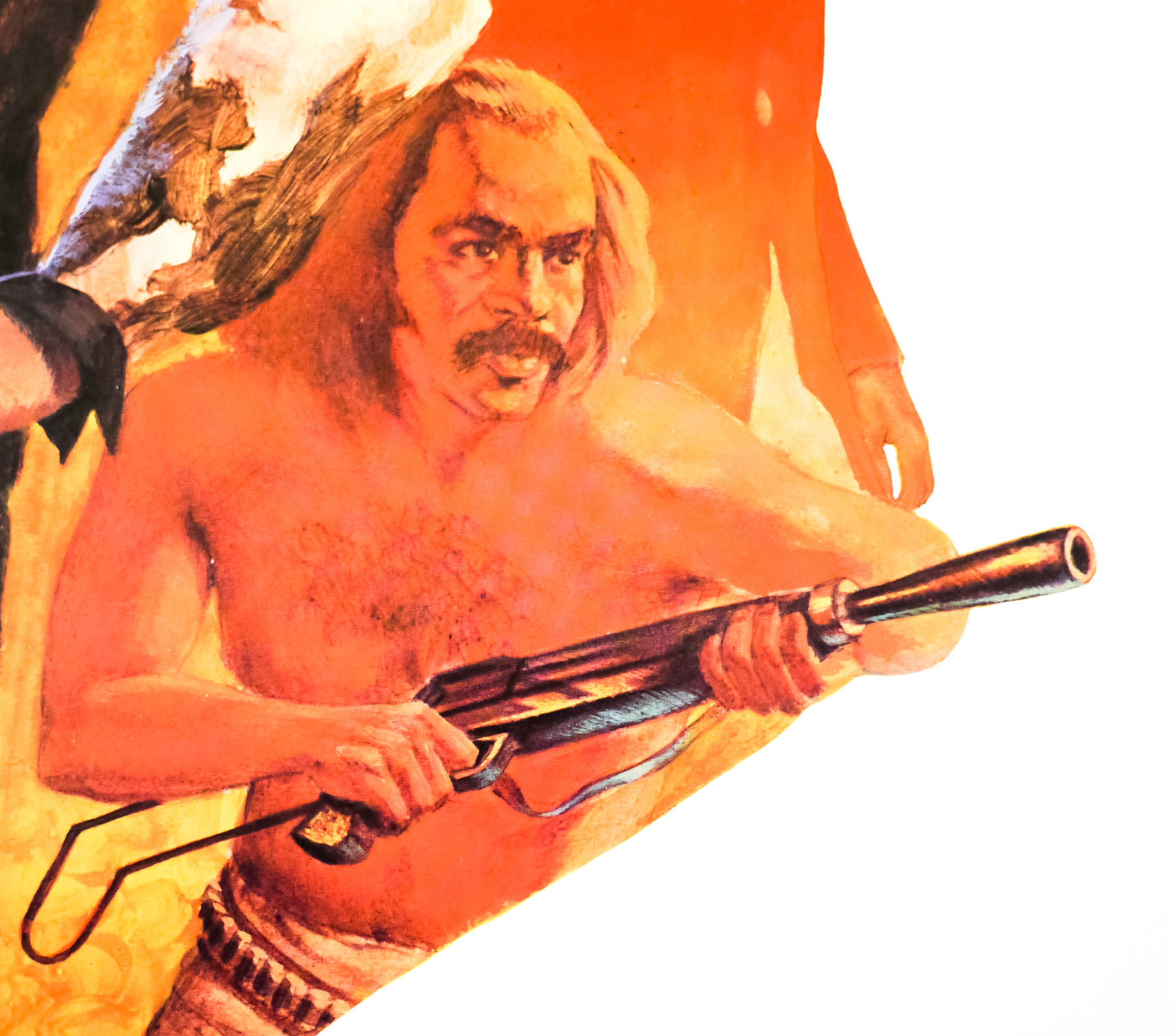
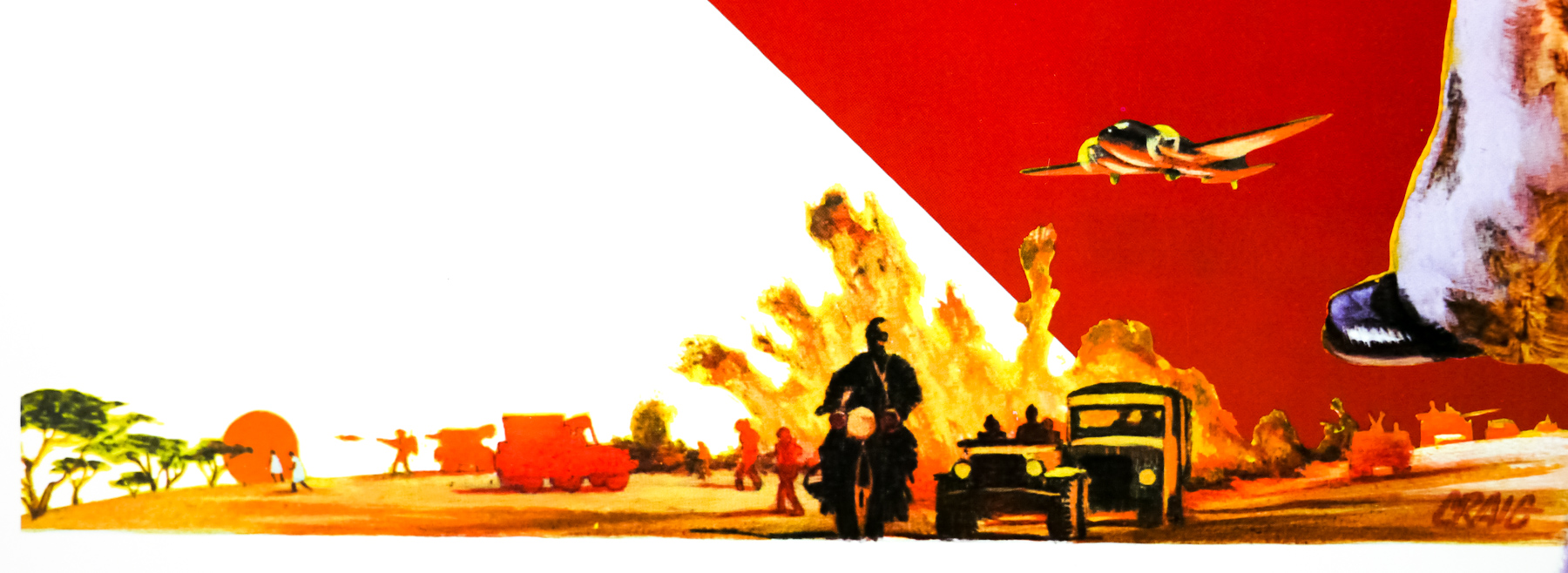
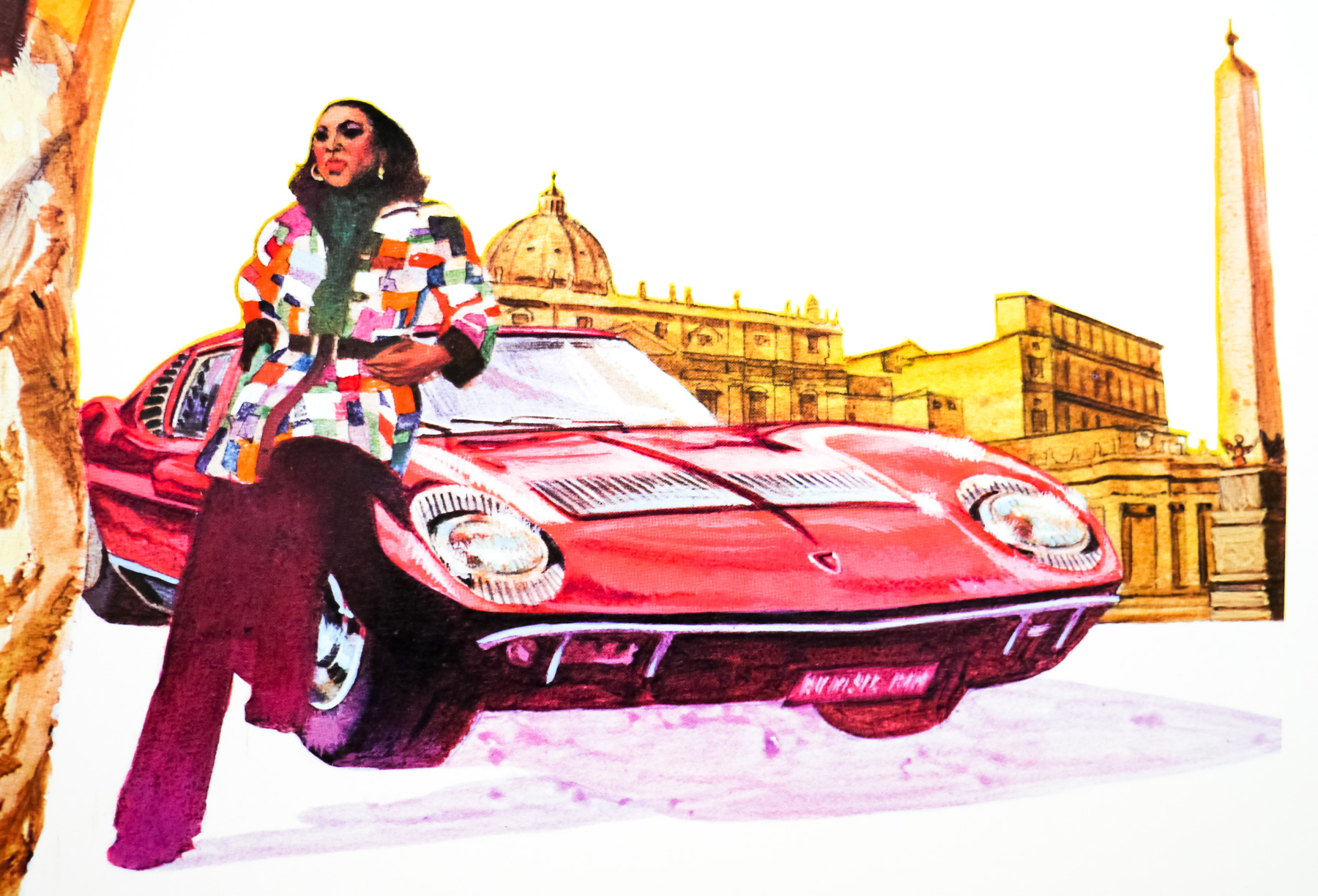
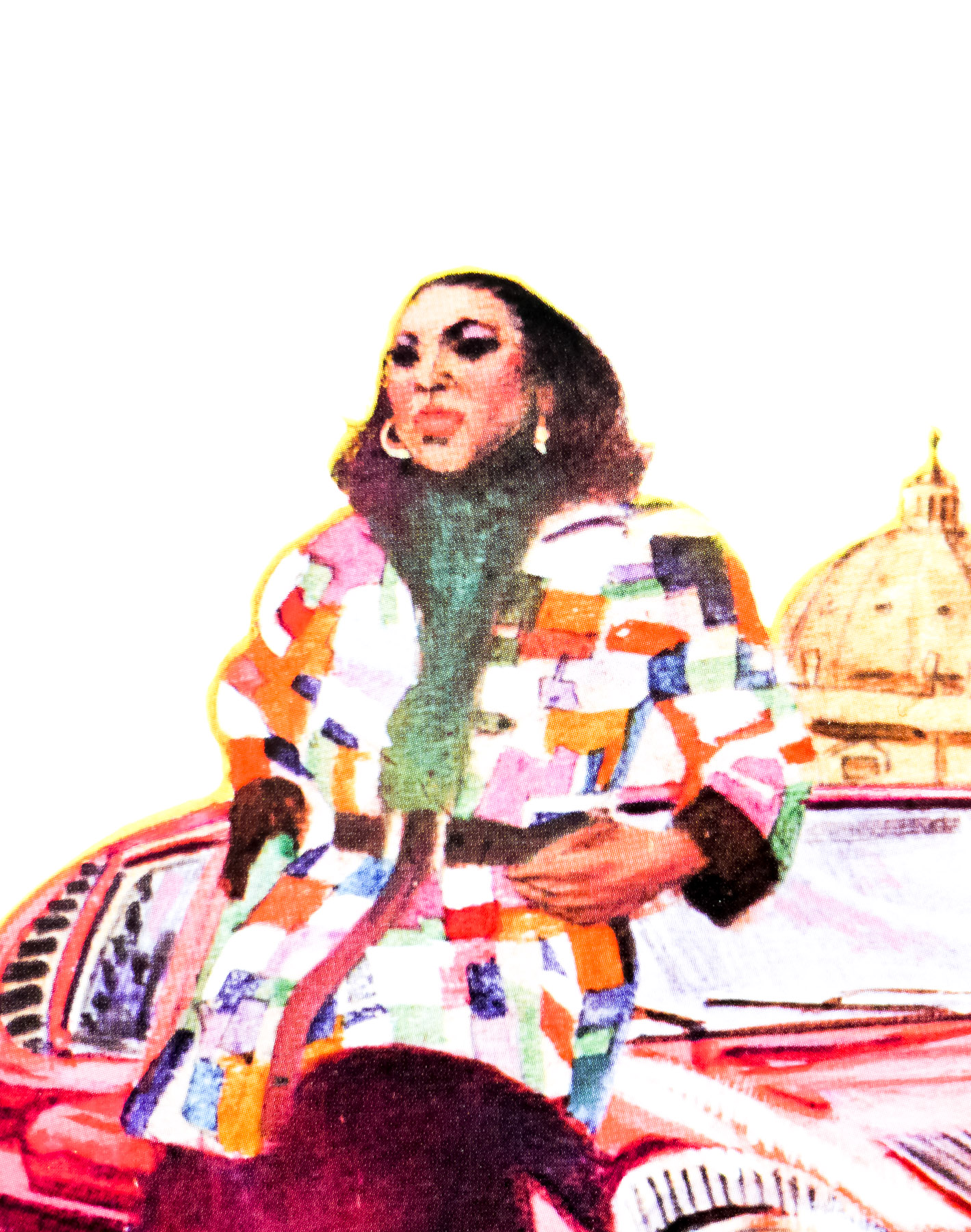
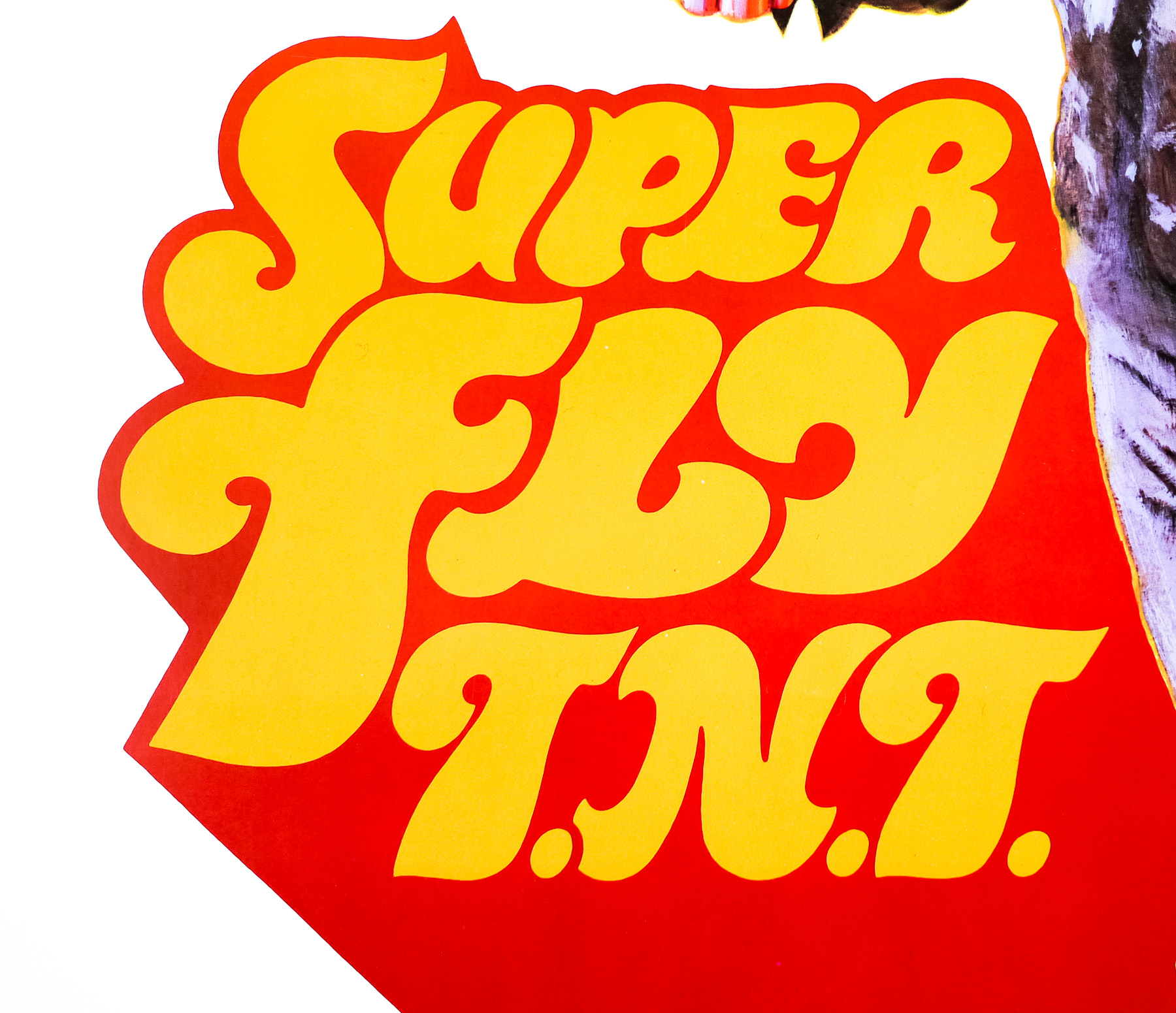
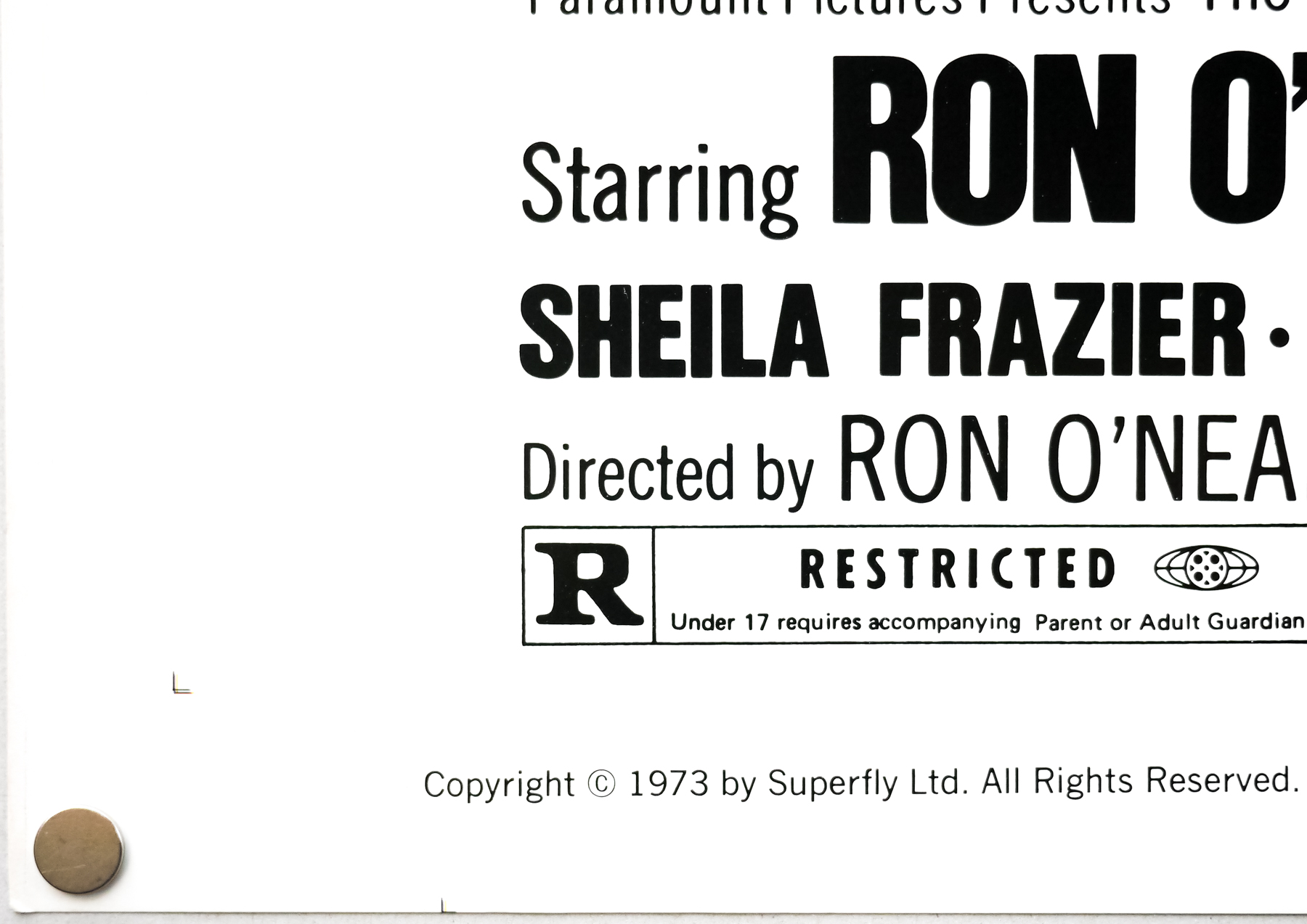
Written, directed by and starring the late Ron O’Neal, Super Fly TNT was the hastily released follow up to the smash hit 1972 original Super Fly, one of the classic entries into the then burgeoning blaxploitation genre. Reprising his role as Priest from the first film, O’Neal would forever struggle to shake loose from the character and he was always to be known as ‘that Super Fly guy’. In this film, the character has retired from hustling and is living the good life in Rome, Italy with his lady Georgia (Sheila Frazier). Although he’s financially stable following a huge cocaine deal he manage to pull of back in New York, Priest is bored and spends his time playing cards against Italian businessmen.

One day he is approached by an African dignitary Dr. Lamine Sonko (Roscoe Lee Browne) who wants help with a gun smuggling operation that will help overthrow colonialism in his country. Initially reluctant to help, Sonko manages to convince Priest that he owes it to his ‘African brothers’ to help and, feeling a sense of guilt over his hustling days, the Super Fly guy decides to get back into action. The film was critically panned and faired poorly at the box-office; strong proof that rushing a sequel out to cash in on the success of an original usually ends in disaster.

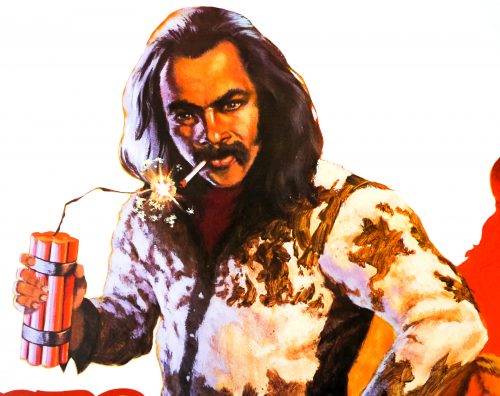
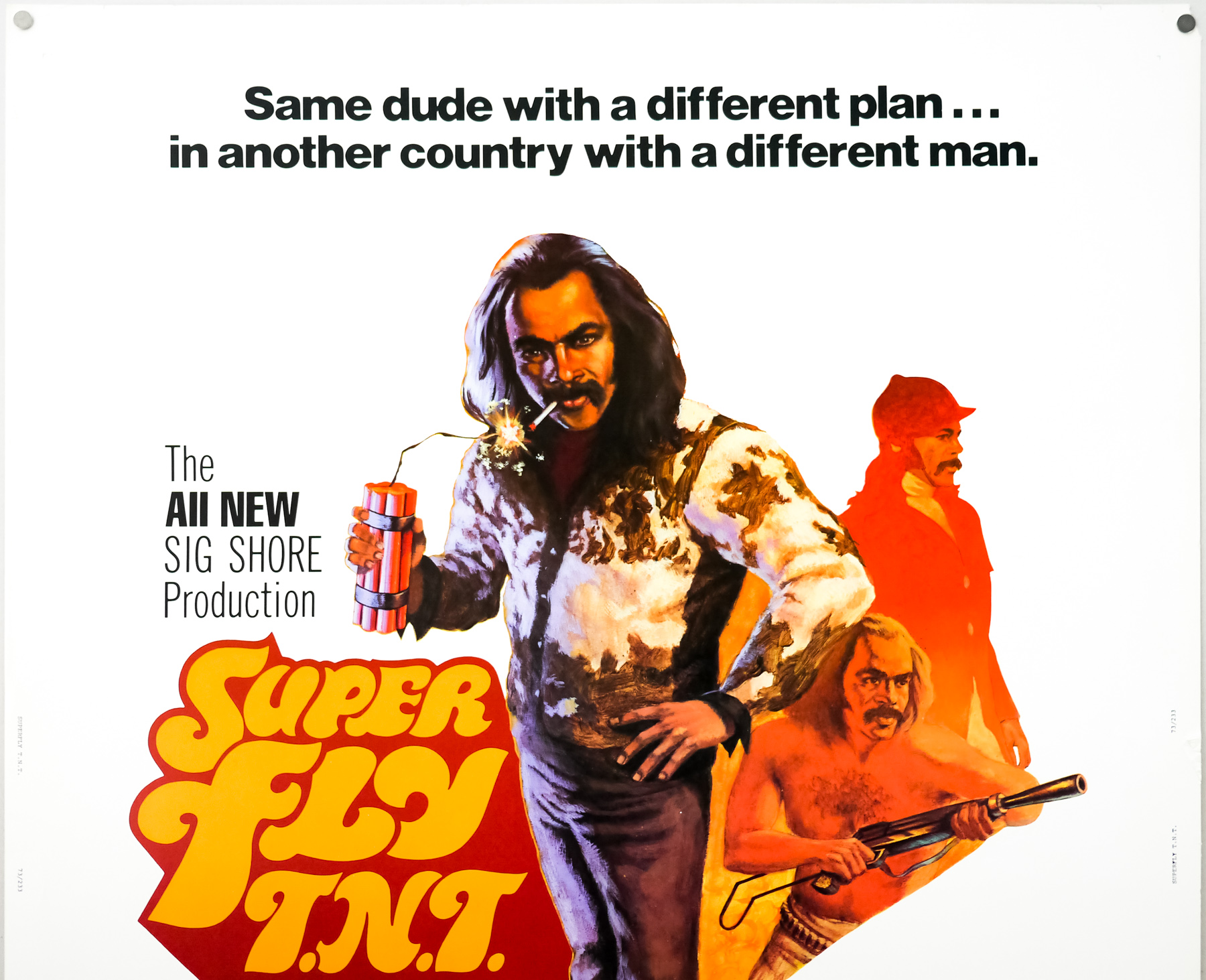
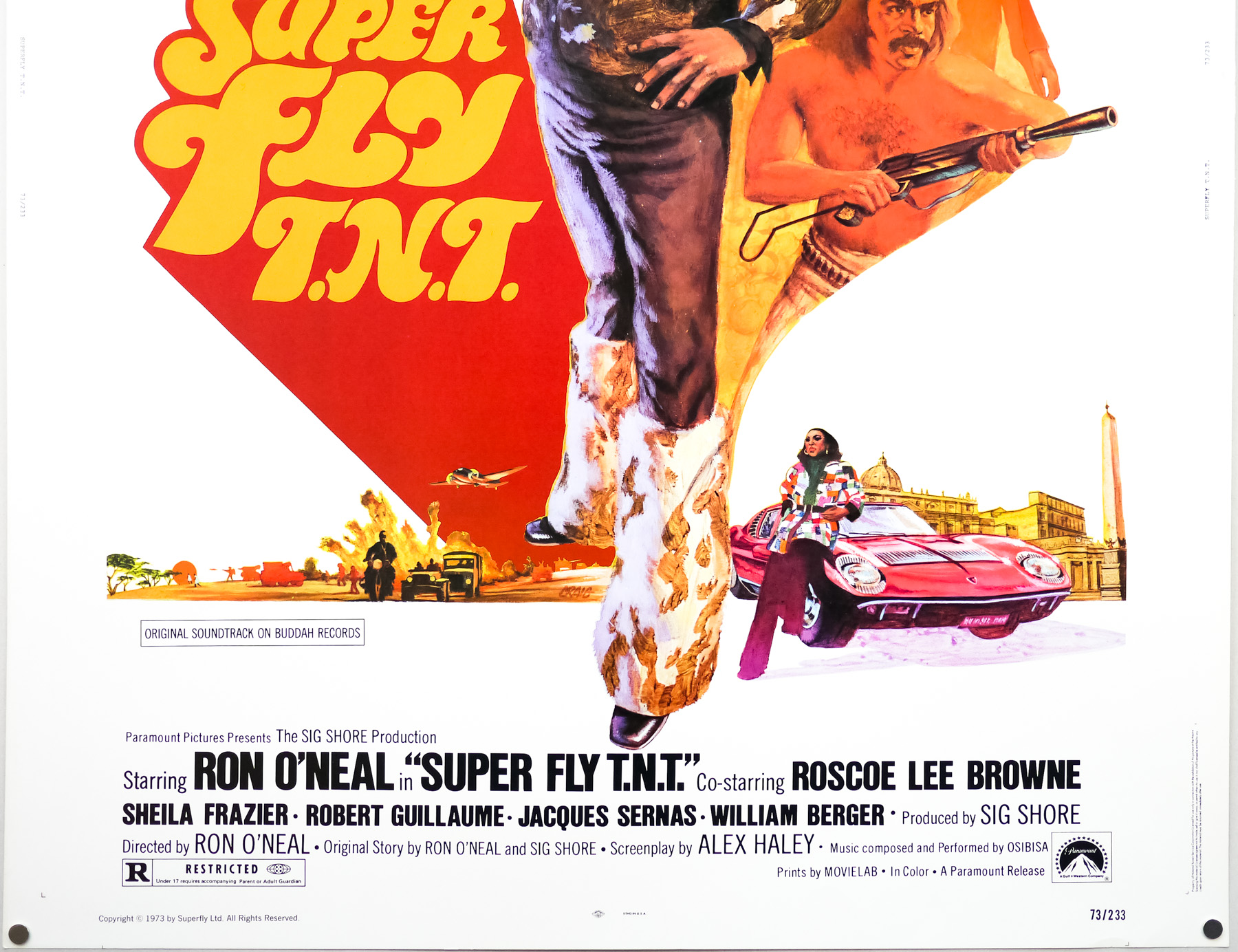
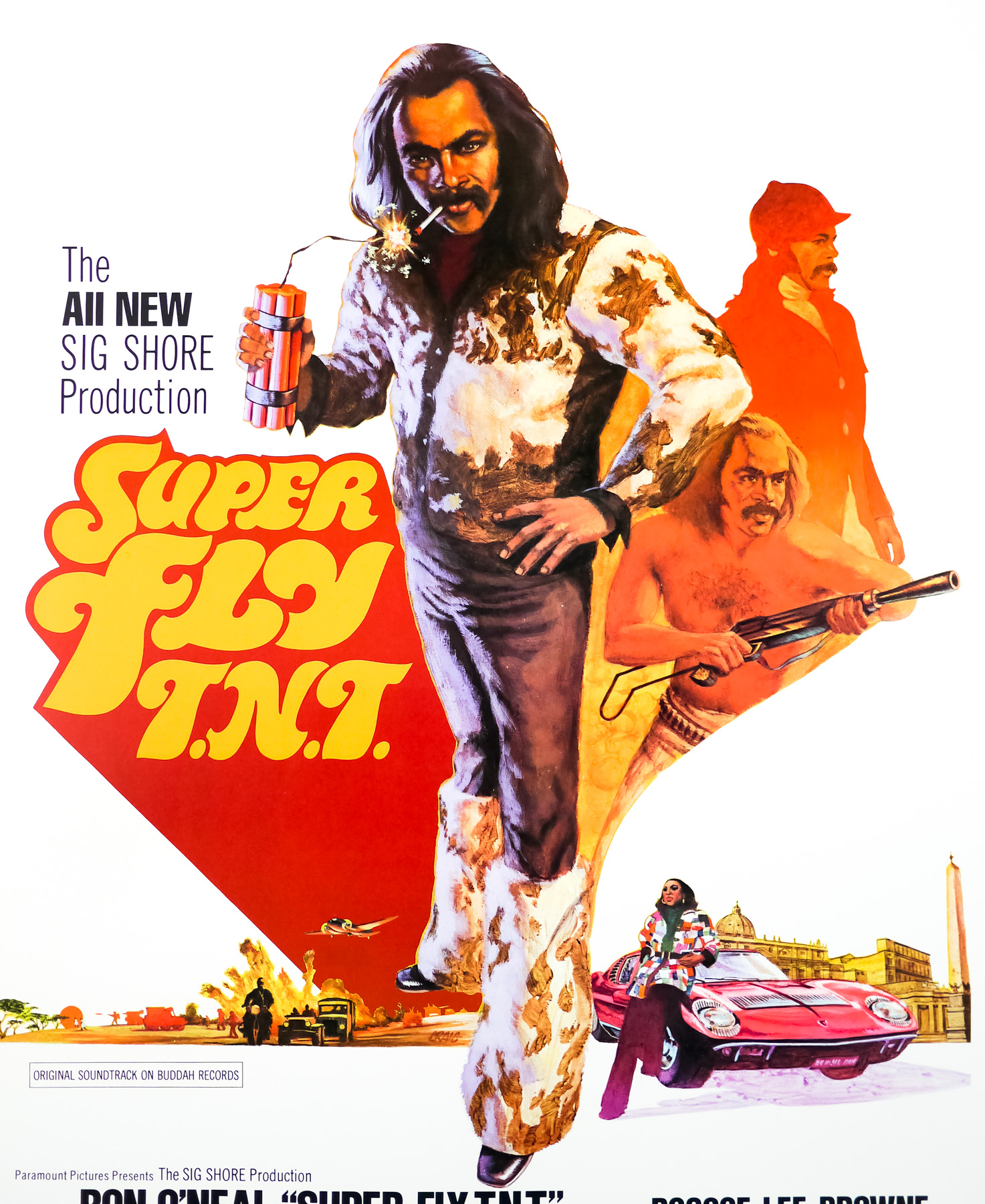
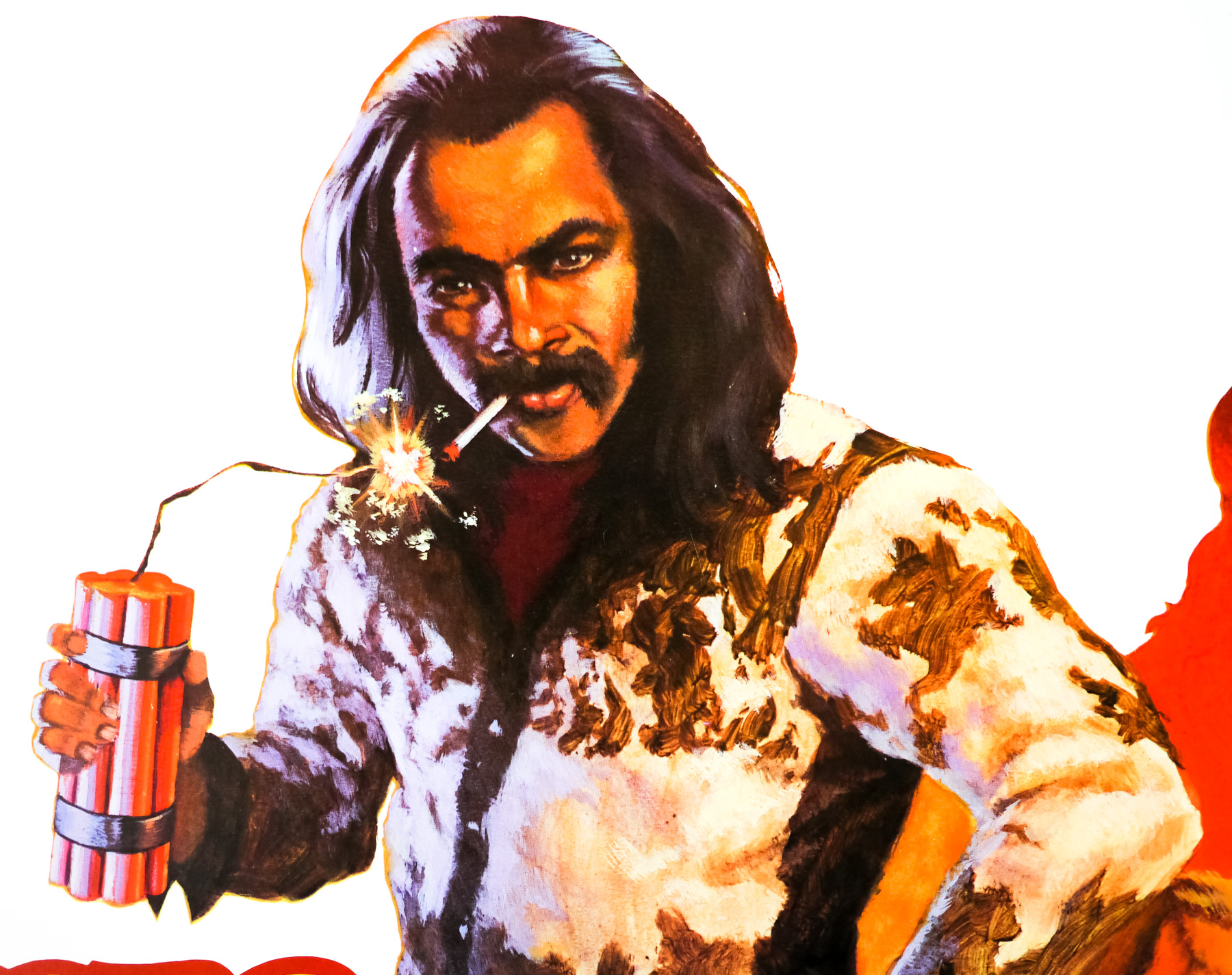
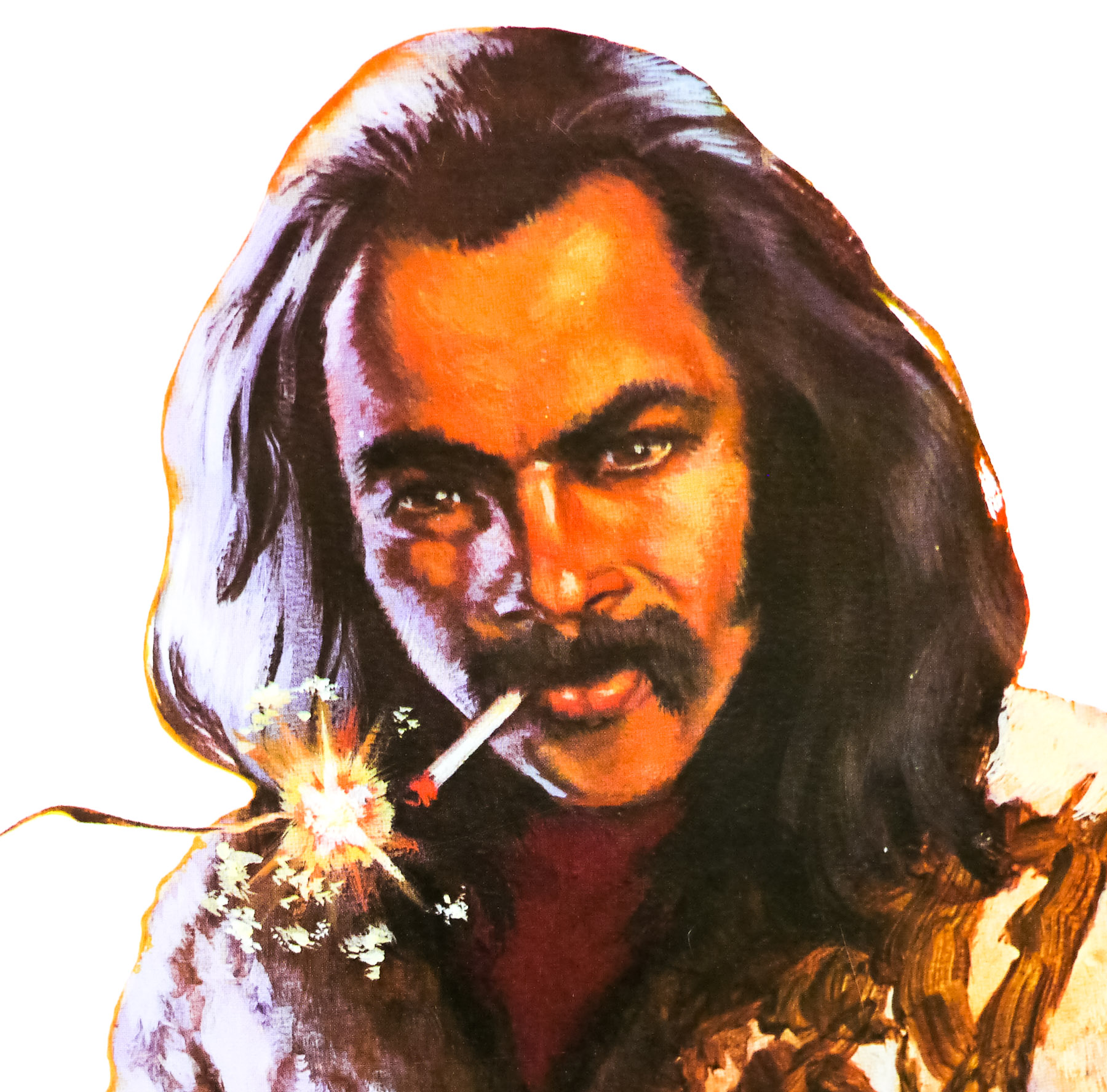
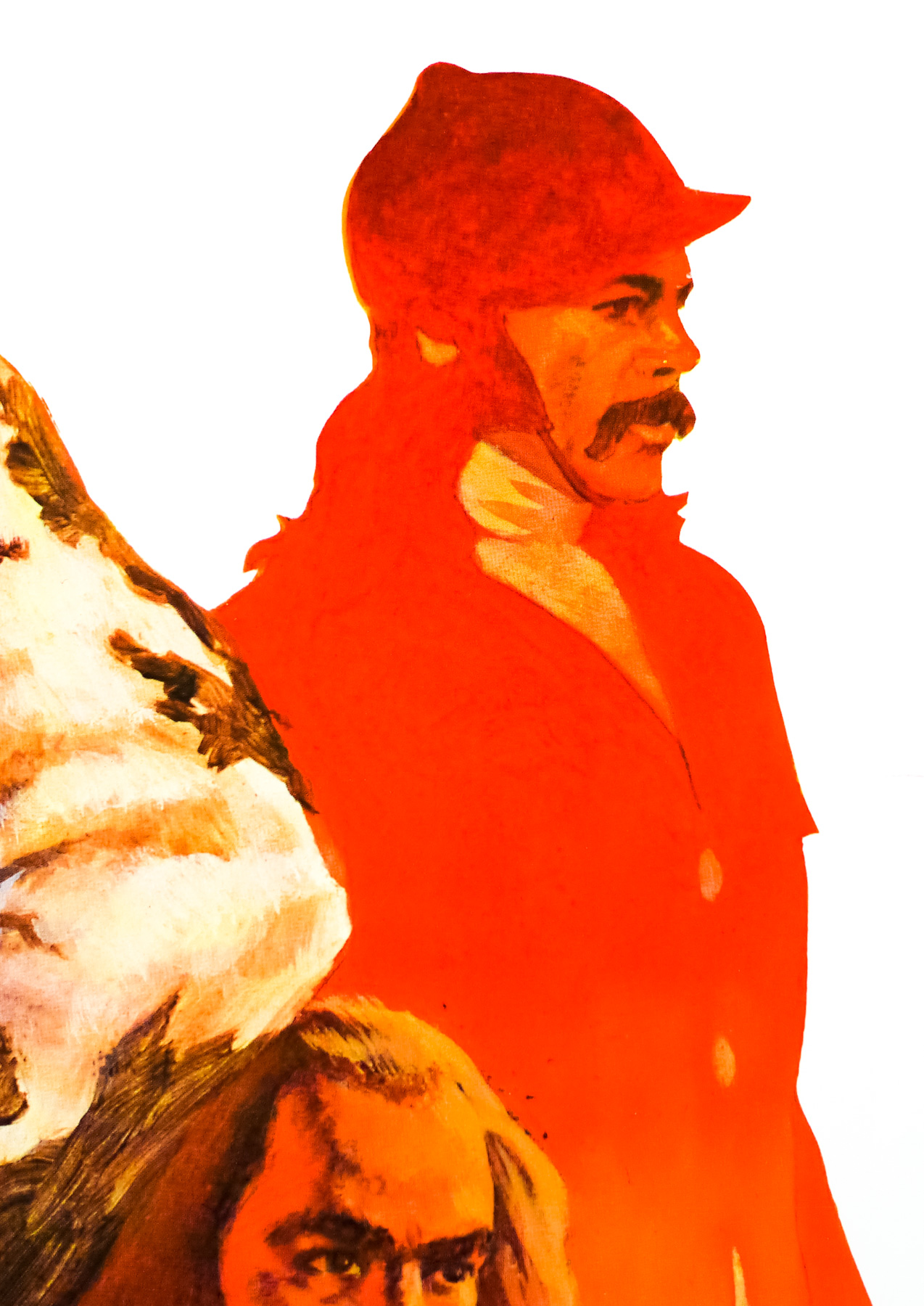
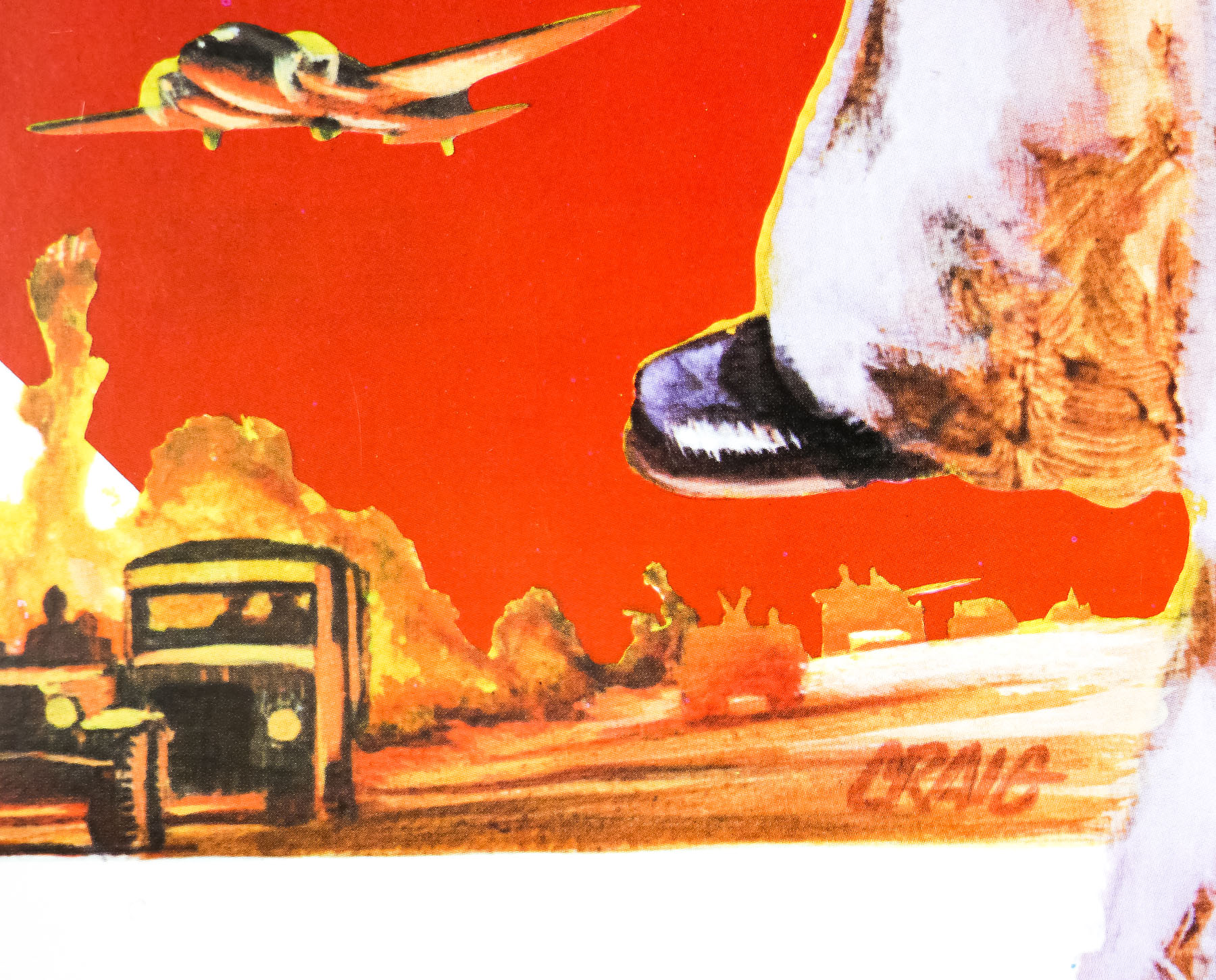
This US 30×40 poster features artwork by the American artist Craig Nelson who has been painting for over forty years, and is an accomplished figure and landscape artist who also teaches at the Academy of Art College in San Francisco where he is Director of Fine Art, Drawing and Painting. Two other film posters that Nelson is known for are the US one sheets for The Monster Squad (1987) and Slap Shot (1977). The artist’s official website can be viewed by clicking here and includes galleries of his fine art paintings and a biography that does have mention of his film work, but there are no galleries of his other posters.

Apocalypse Now / one sheet / USA

12.08.13

Poster Poster

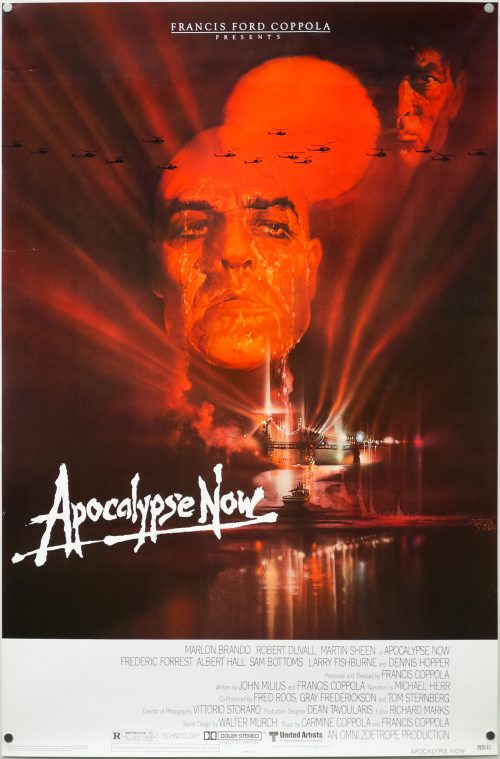
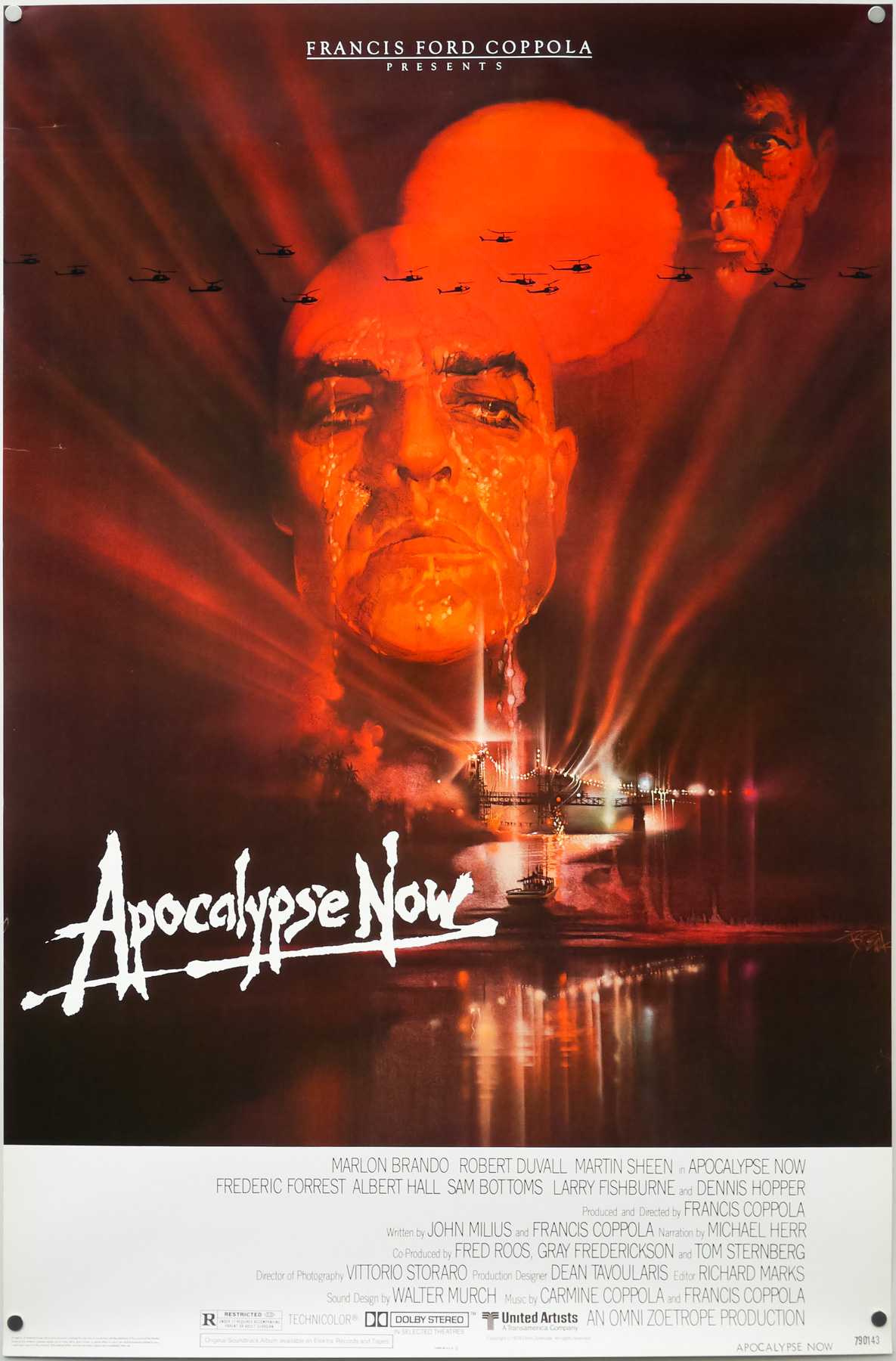
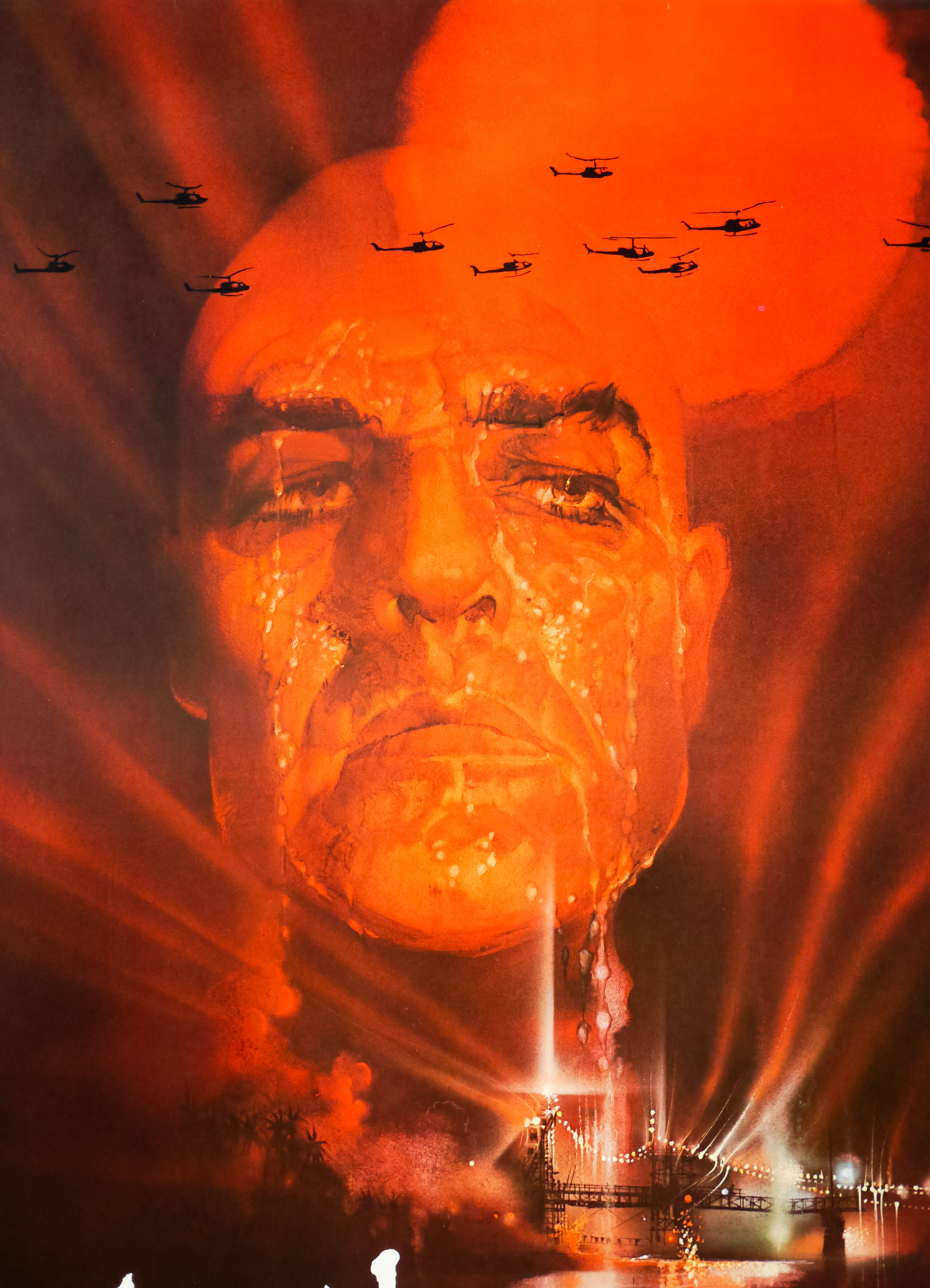
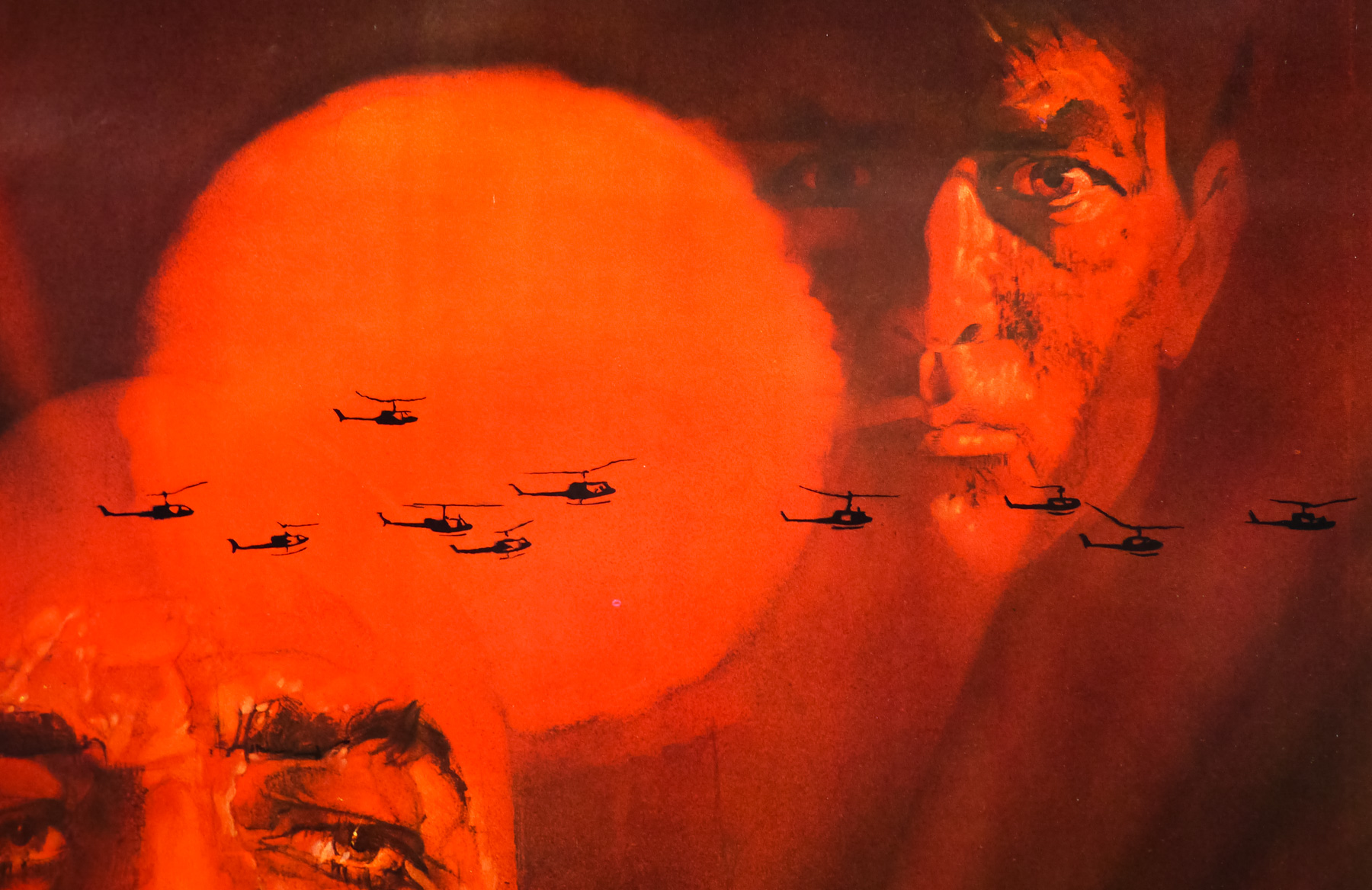
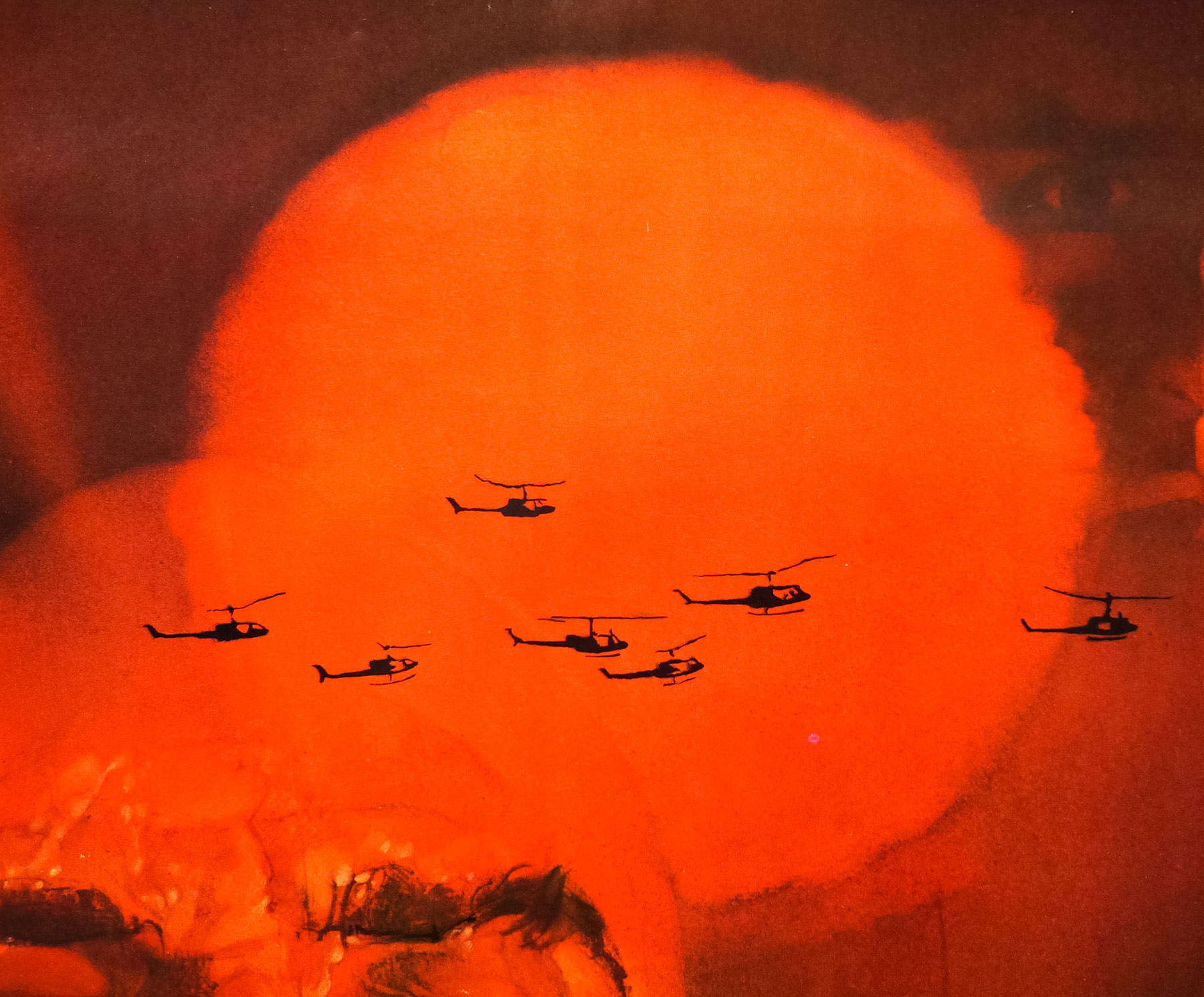
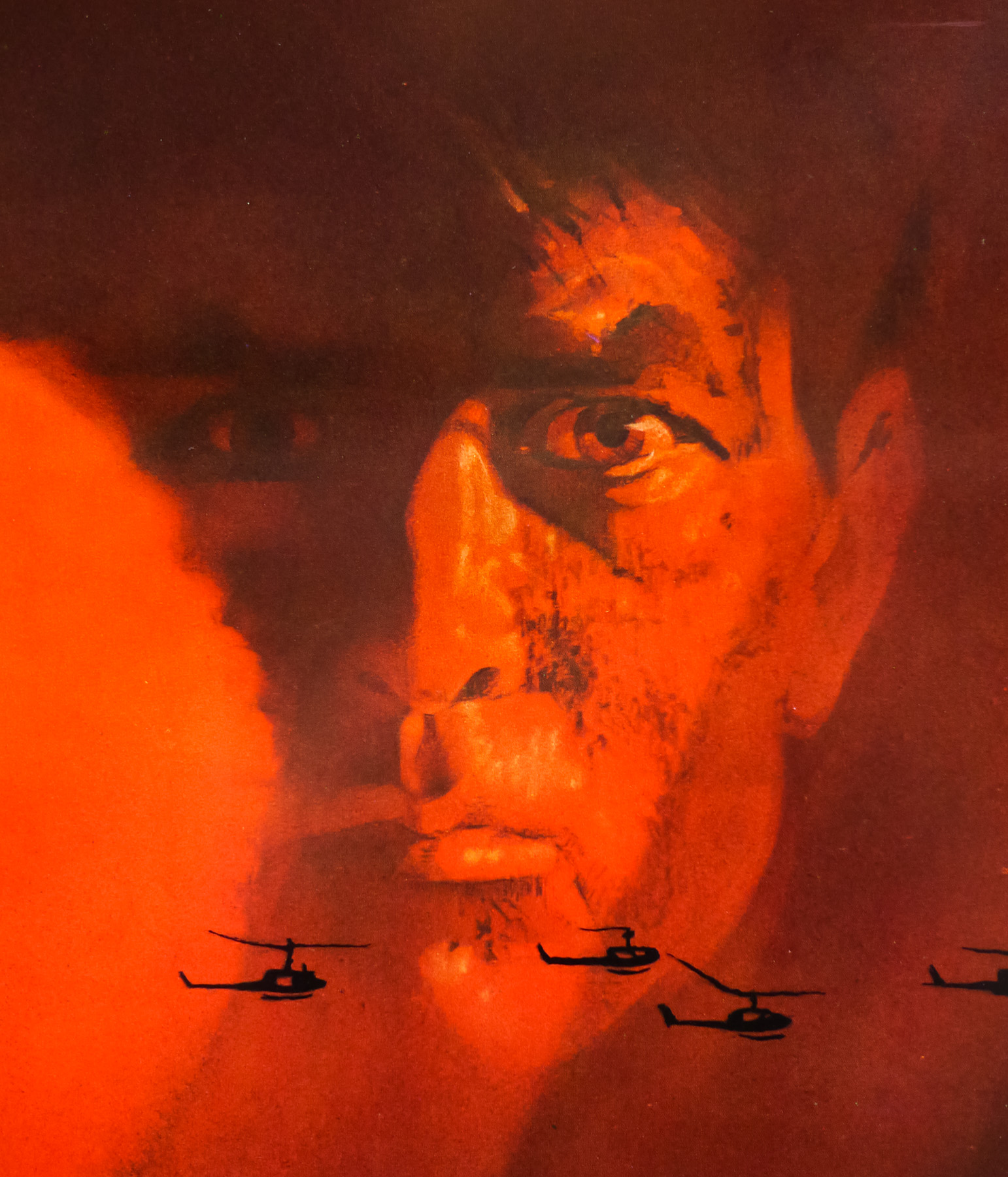
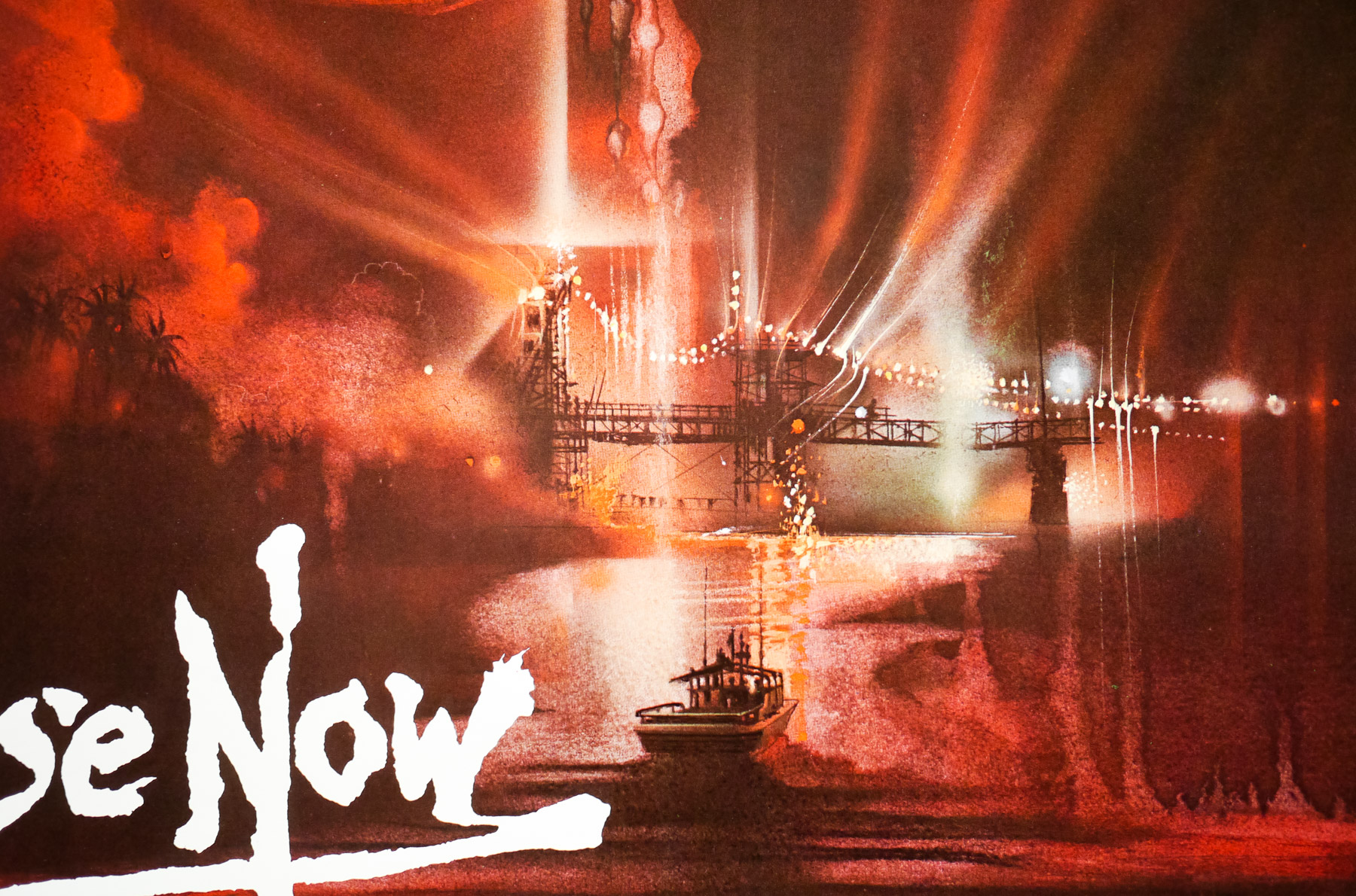
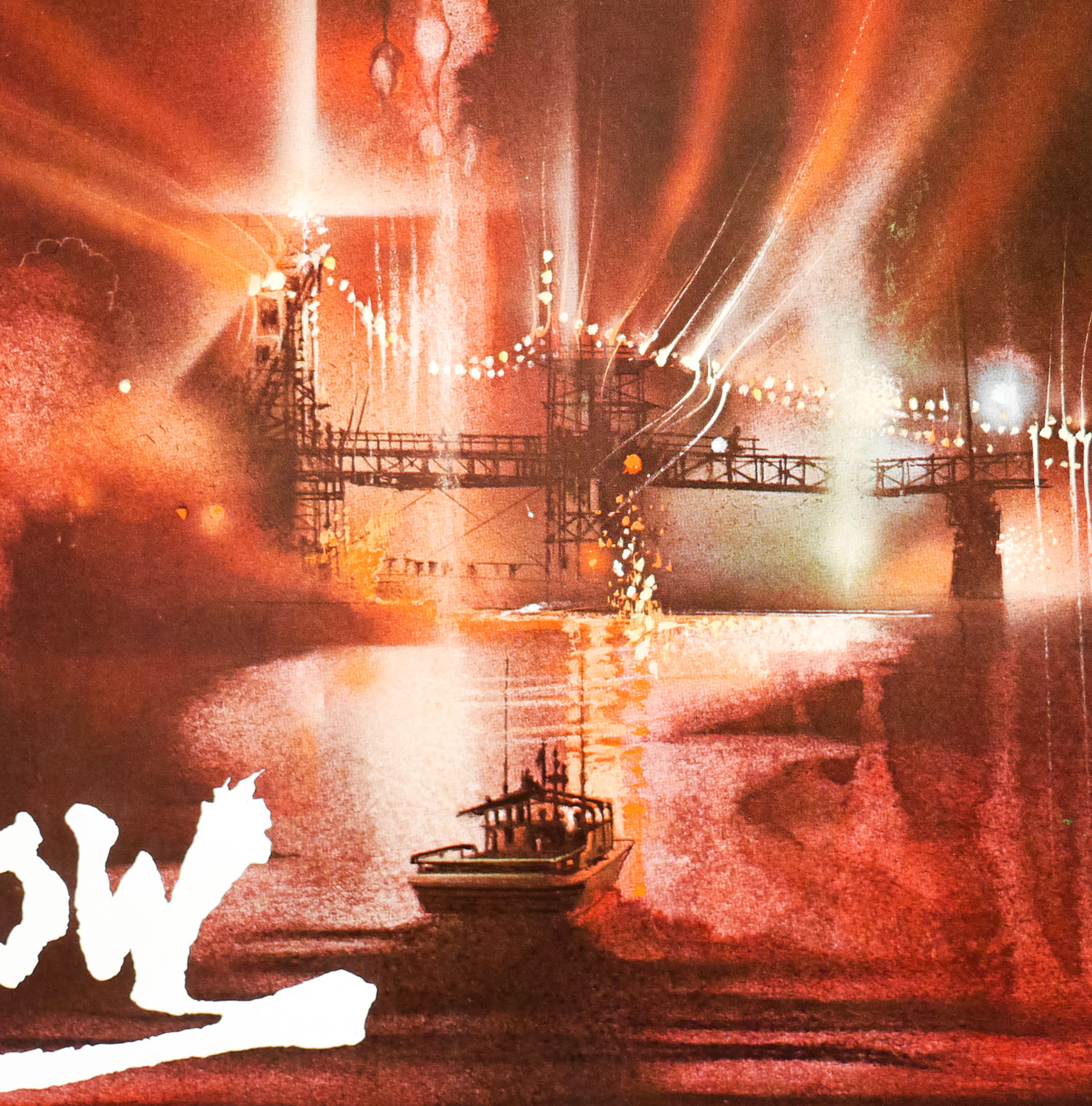
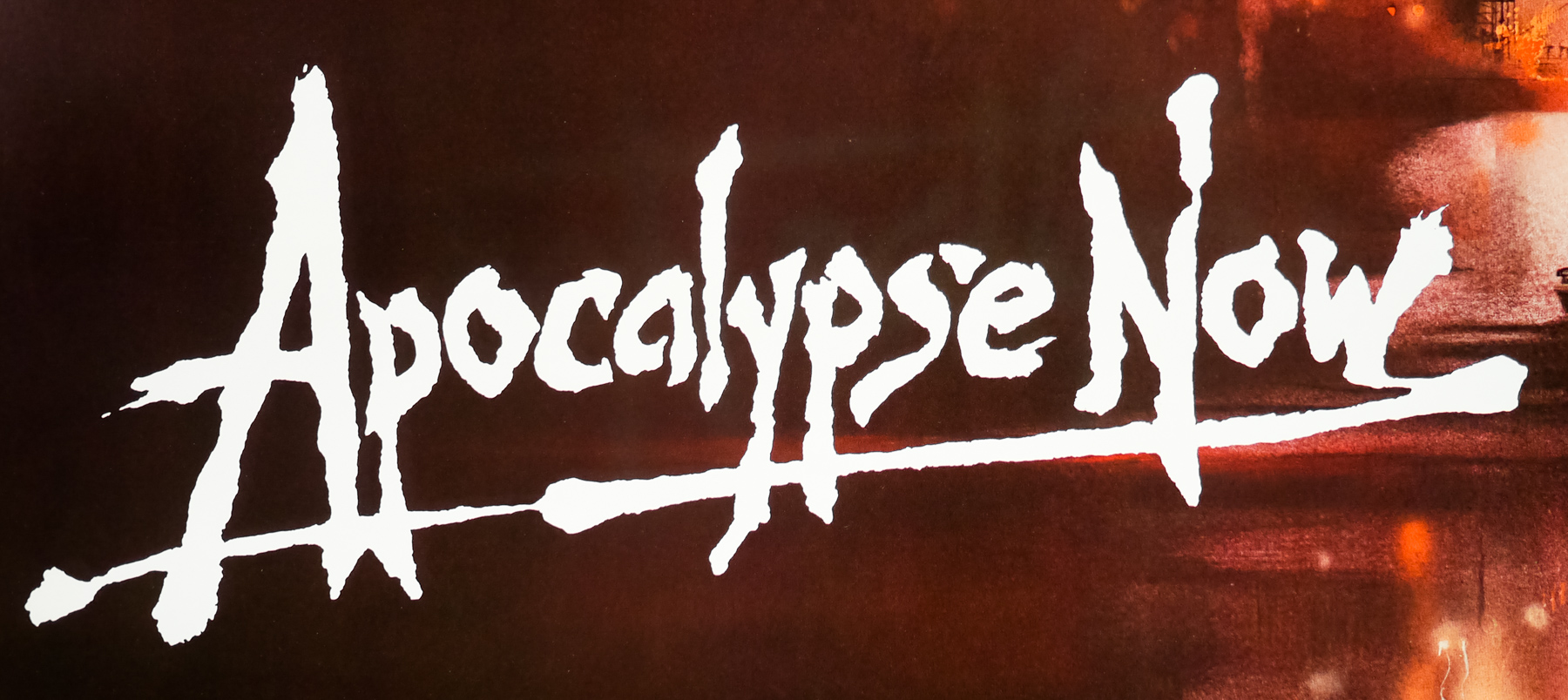
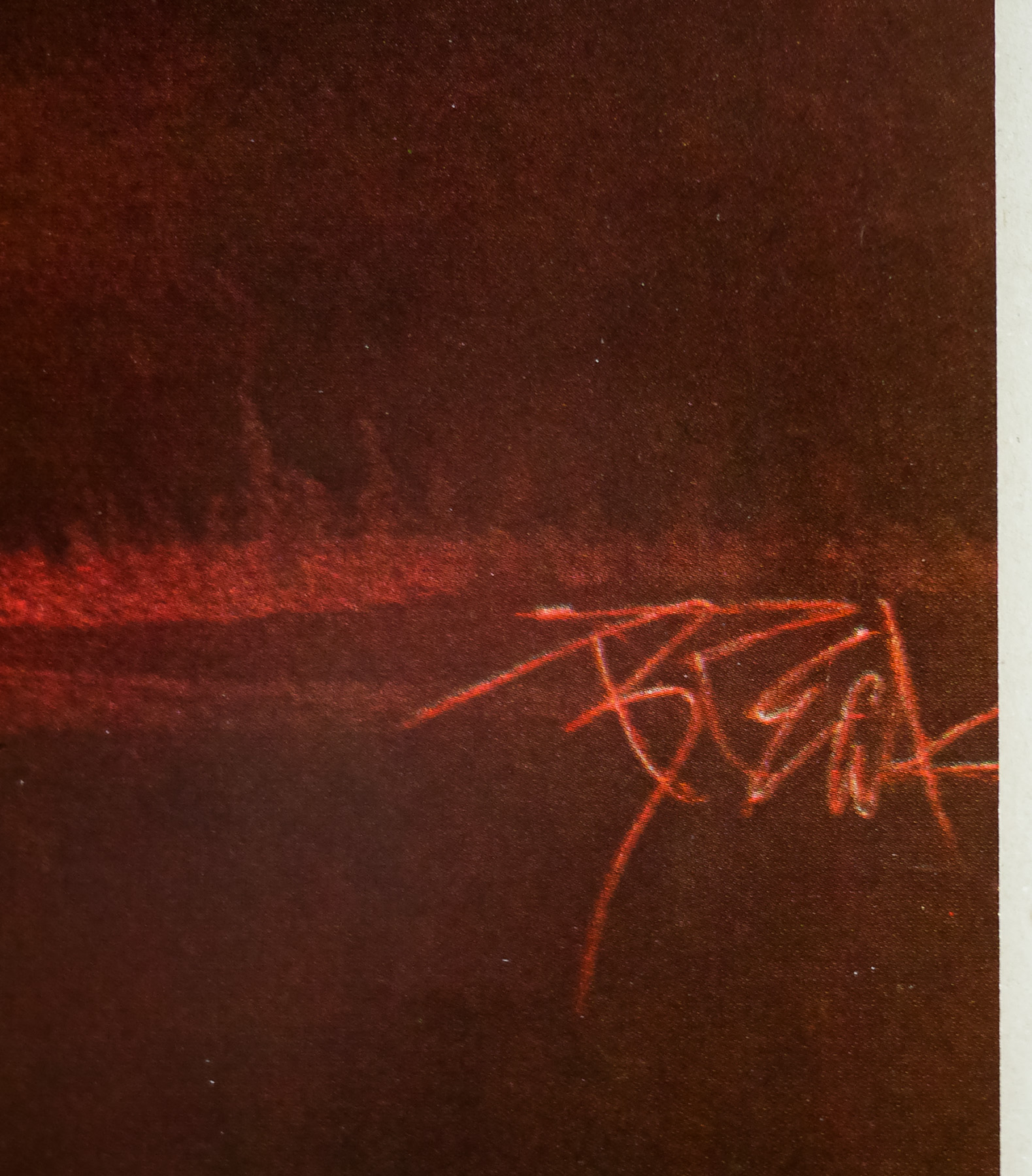
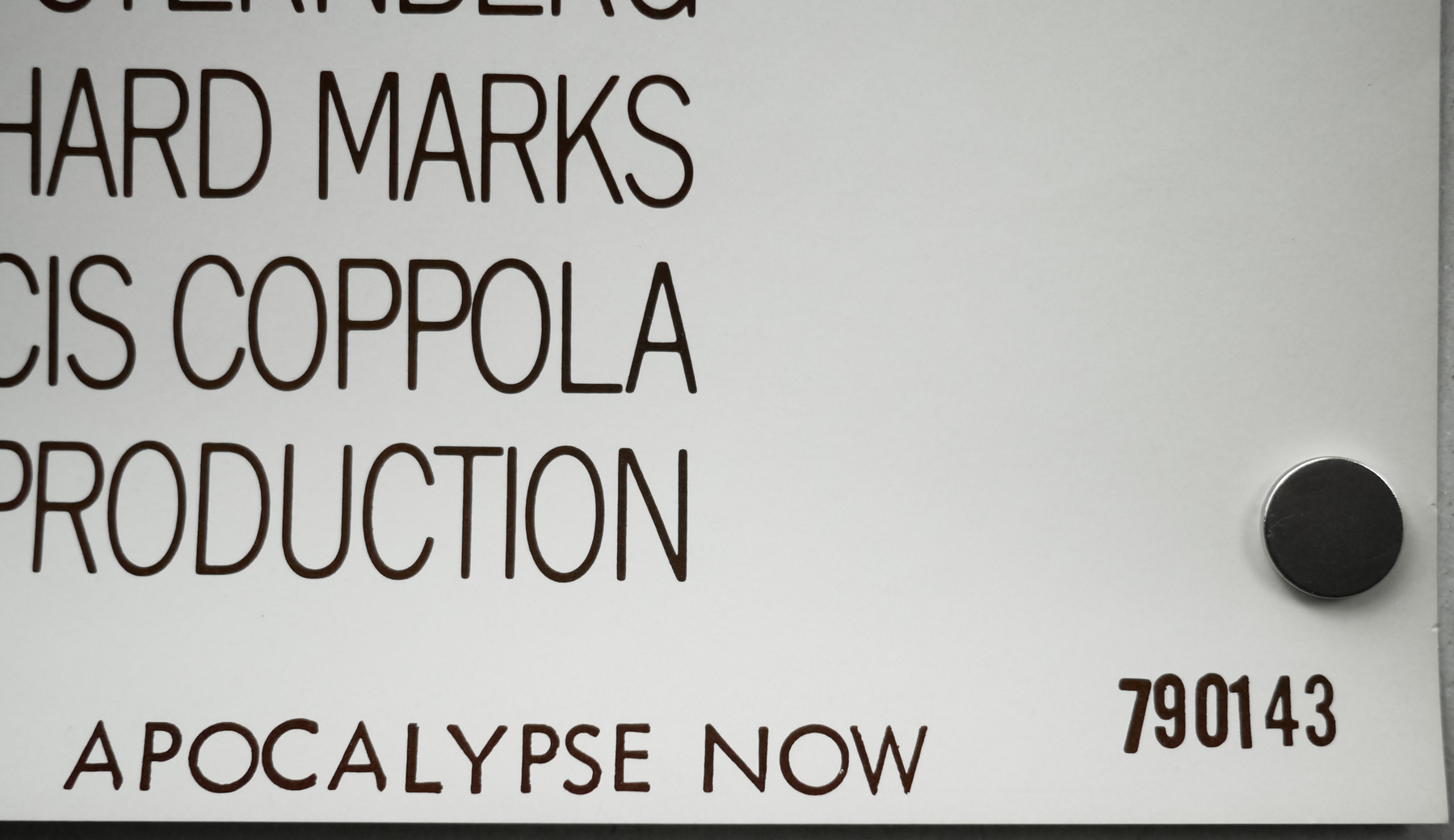
A classic painting by the late, great Bob Peak on this one sheet for the release of arguably the best war film ever made, Francis Ford Coppola’s Apocalypse Now. Set during America’s war in Vietnam, the film follows Martin Sheen‘s US Army Army and special forces veteran Benjamin Willard as he journeys up the dangerous Nung River and deeper into the jungle in the search of the rogue Special Forces Colonel Walter E. Kurtz (Marlon Brando in an unforgettable role). Willard is told that an insane Kurtz has gathered together an army of indigenous fighters inside neutral Cambodia and that he must ‘terminate with extreme prejudice’. After landing at the mouth of the river in a spectacular sequence in which Colonel Kilgore (Robert Duvall) first attacks an enemy village from helicopters whilst blasting Wagner’s Ride of the Valkyries from loudspeakers, then orders some of his men to surf despite the fact that mortar shells continue to land all around them, Willard  joins the crew of a Navy PBR boat that transports him on his fateful journey up river.

Apocalypse Now is famous for its fraught production in which the shoot went over time and over budget, sets were destroyed by storms, Martin Sheen suffered a heart attack and other woes that caused Coppola to famously say, “We had access to too much money, too much equipment, and little by little we went insane”, and “My film is not about Vietnam, it is Vietnam”. The director’s wife Eleanor helped to put together the acclaimed documentary of the troubled production called Hearts of Darkness: A Filmmaker’s Apocalypse, which is an essential watch for fans of the film. Despite the production woes, the film was a huge critical and commercial success, with its cultural impact undeniable.

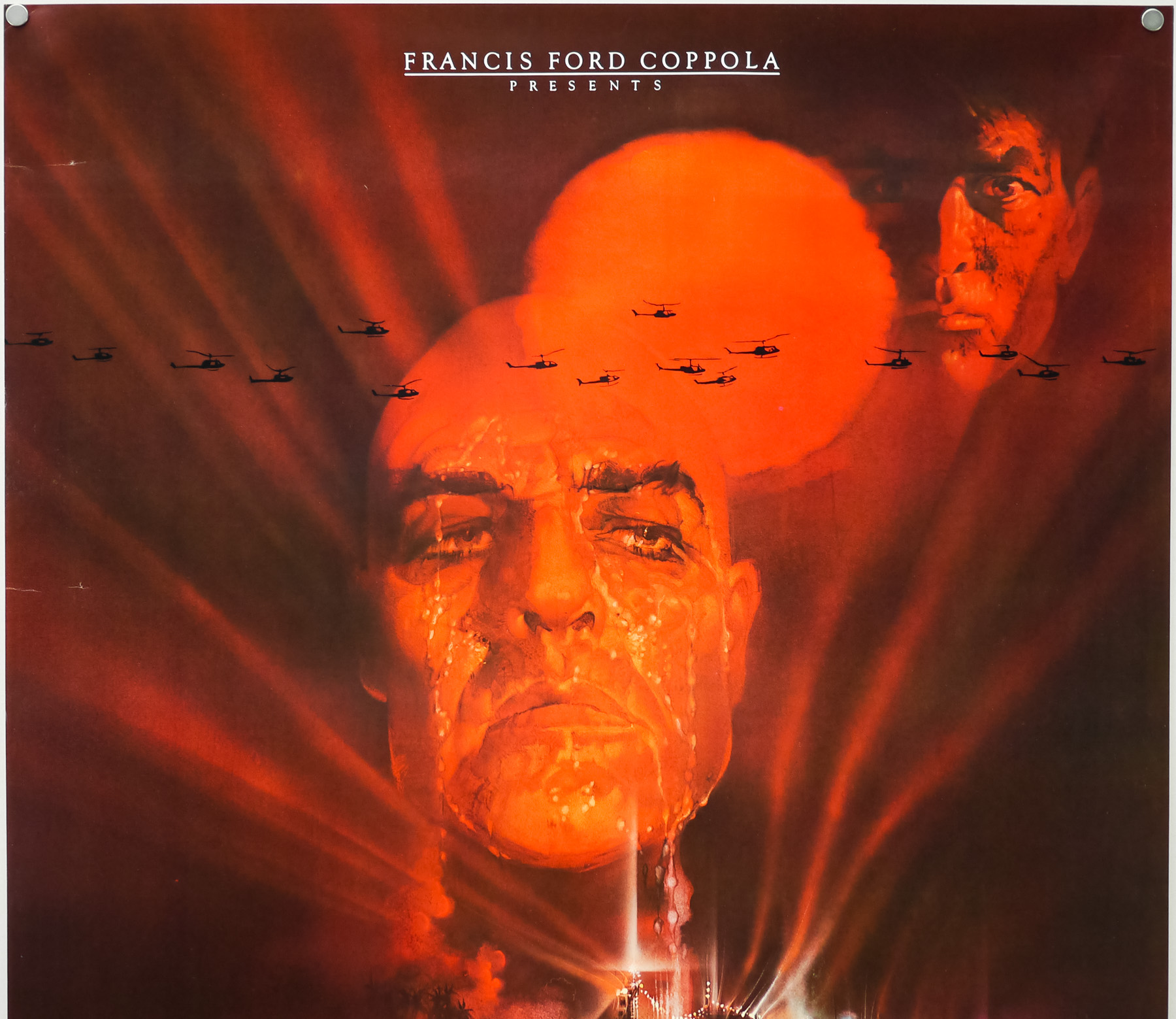
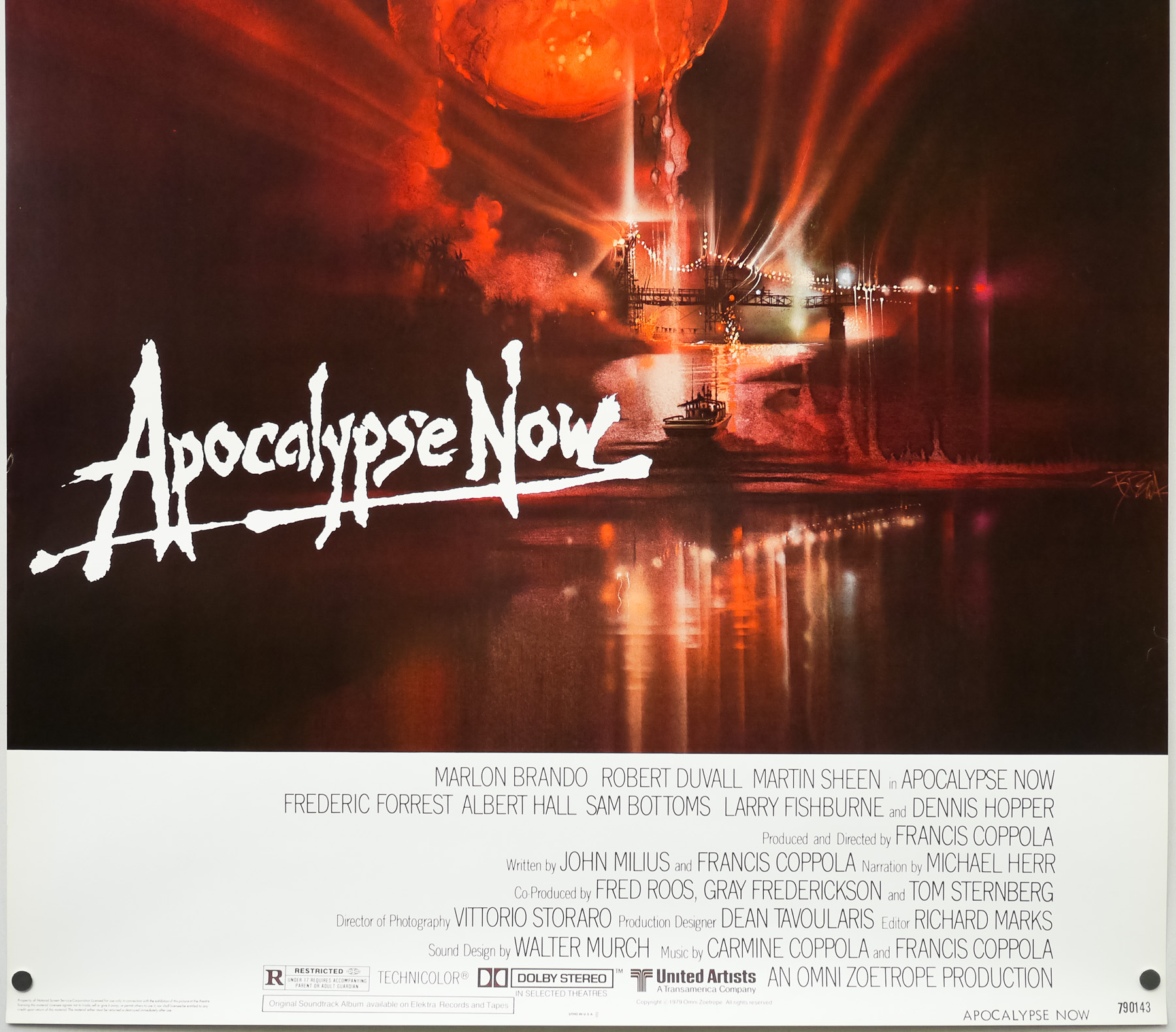
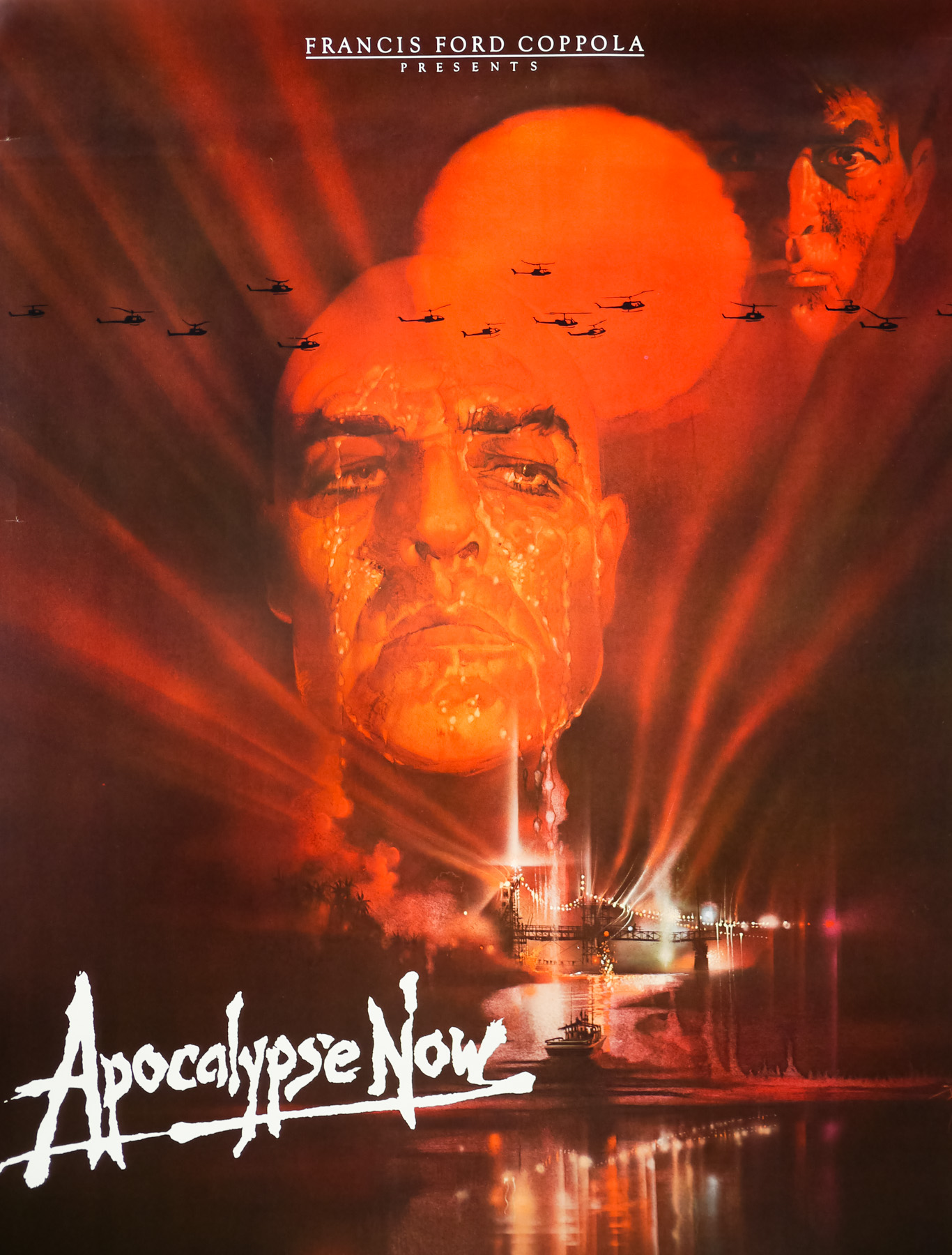
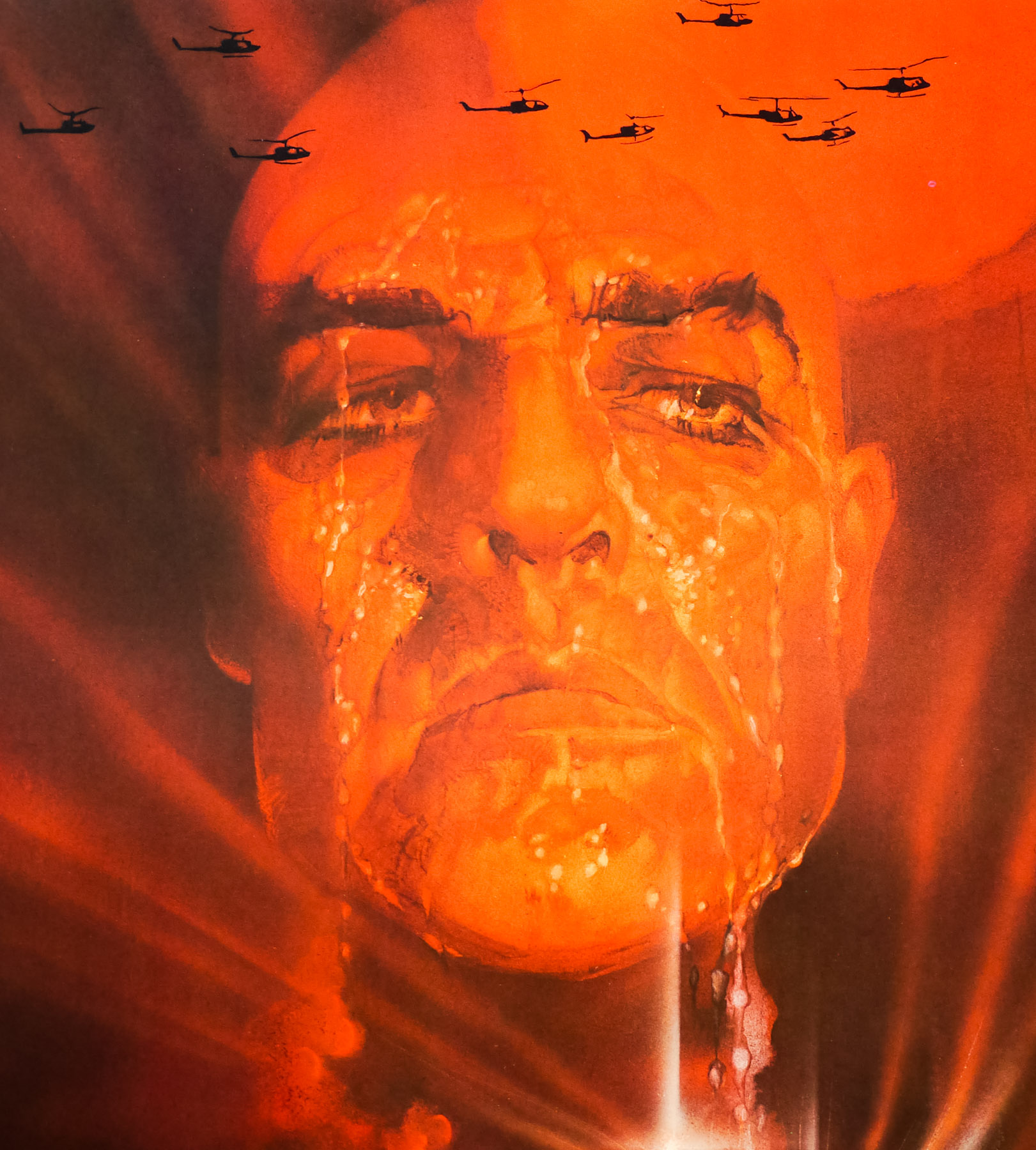
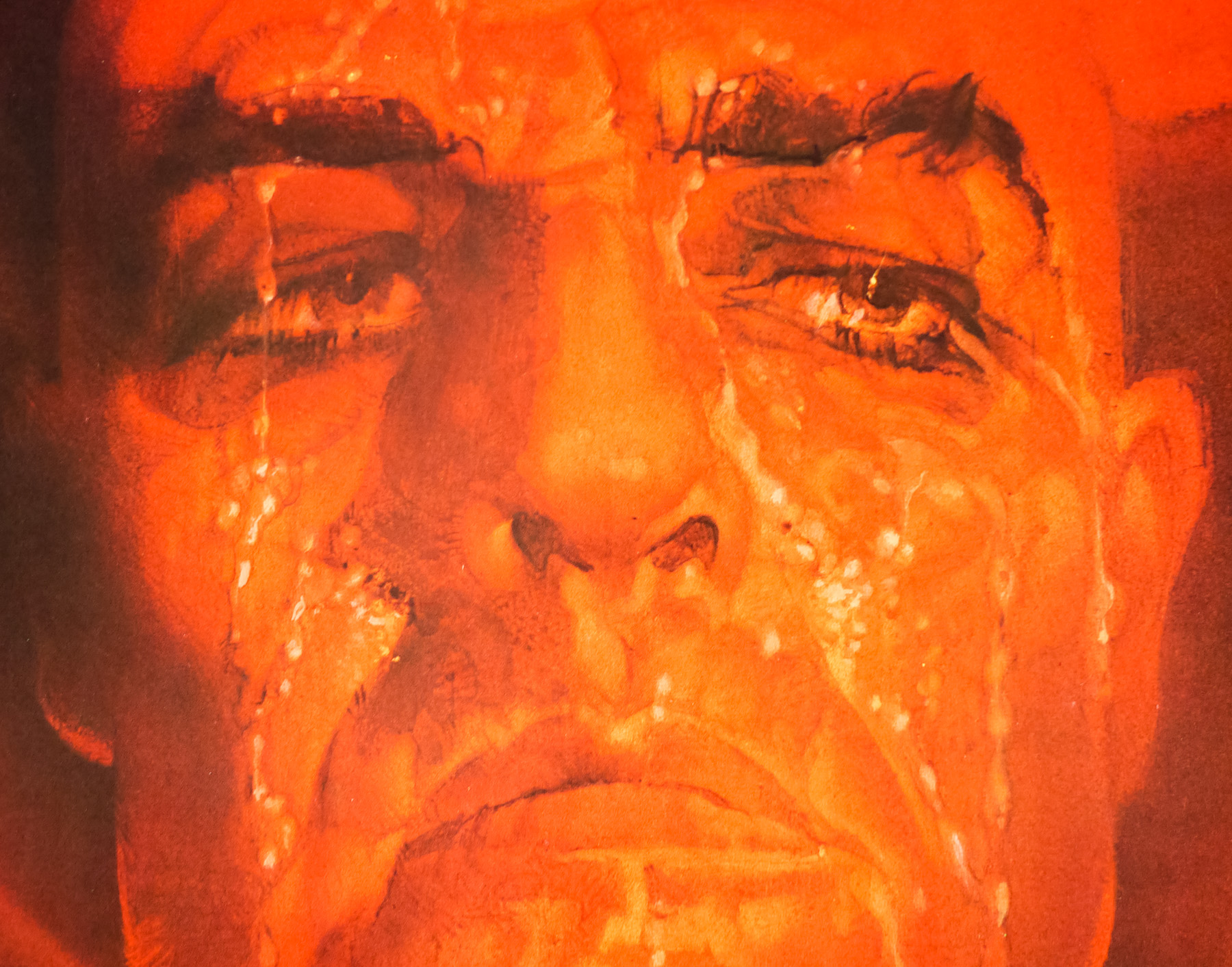
Master movie poster artist Bob Peak was asked to create a series of paintings to sell the film and he worked in conjunction with art directors Murray Smith and Don Smolen from the boutique poster agency Smolen, Smith and Connolly, based in New York City. Two of Peak’s paintings were used in North America, with an image of the Nung River on the teaser poster and then this superb portrait of Brando as Kurtz with a menacing looking Sheen behind him was the final poster. Both of those images were used around the world to sell the film. German cinemas also saw this stunning image of Kurtz that was painted by Peak and used exclusively in that country.

Bob Peak was born in 1927 in Denver, Colorado and grew up in Wichita, Kansas before heading off to serve in the military during the Korean War. Upon his return Peak enrolled in the Los Angeles-based Art Center College of Design where he began to hone his craft as an artist, moving to New York after graduation where he began his career as a commercial illustrator, first working on a campaign for Old Hickory Whiskey. For the next few years the artist worked on a string of successful advertising campaigns, magazine editorials and more, but it was when United Artists hired Peak to work on their campaign for the release of West Side Story in 1961 that he began what would prove to be a fruitful and almost unrivalled career in film poster creation.

Peak’s immediately recognisable style was soon much in demand and his painting appeared on posters for films such as My Fair Lady (1964) and Camelot (1967), but it was his work in the area of sci-fi and fantasy for which Peak is perhaps best known, with the iconic design for the first Superman film (1978), the classic image he created for Rollerball (1975) and the colourful poster for Star Trek: The Motion Picture (1979), amongst several classics of the genre he was responsible for. His paintings for Apocalypse Now, however, arguably saw the artist working at the top of his game and in the recently published must-own book The Art of Bob Peak (put together by one of his sons), he is quoted as saying, “Of all my movie work, it is my work on Apocalypse Now that I am most proud of.”

To see the other posters in the Film on Paper collection that were painted by Bob Peak click here.

Shaft in Africa / 30×40 / USA

25.11.13

Poster Poster
Title
Shaft in Africa
AKA
--
Year of Film
1973
Director
John Guillermin
Starring
Richard Roundtree, Frank Finlay, Vonetta McGee, Neda Arneric, Debebe Eshetu, Spiros Focás, Jacques Herlin, Jho Jhenkins, Willie Jonah
Origin of Film
USA
Genre(s) of Film
Richard Roundtree, Frank Finlay, Vonetta McGee, Neda Arneric, Debebe Eshetu, Spiros Focás, Jacques Herlin, Jho Jhenkins, Willie Jonah,
Type of Poster
30x40
Style of Poster
--
Origin of Poster
USA
Year of Poster
1973
Designer
Unknown
Artist
John Solie
Size (inches)
30 3/16" x 40"
SS or DS
SS
Tagline
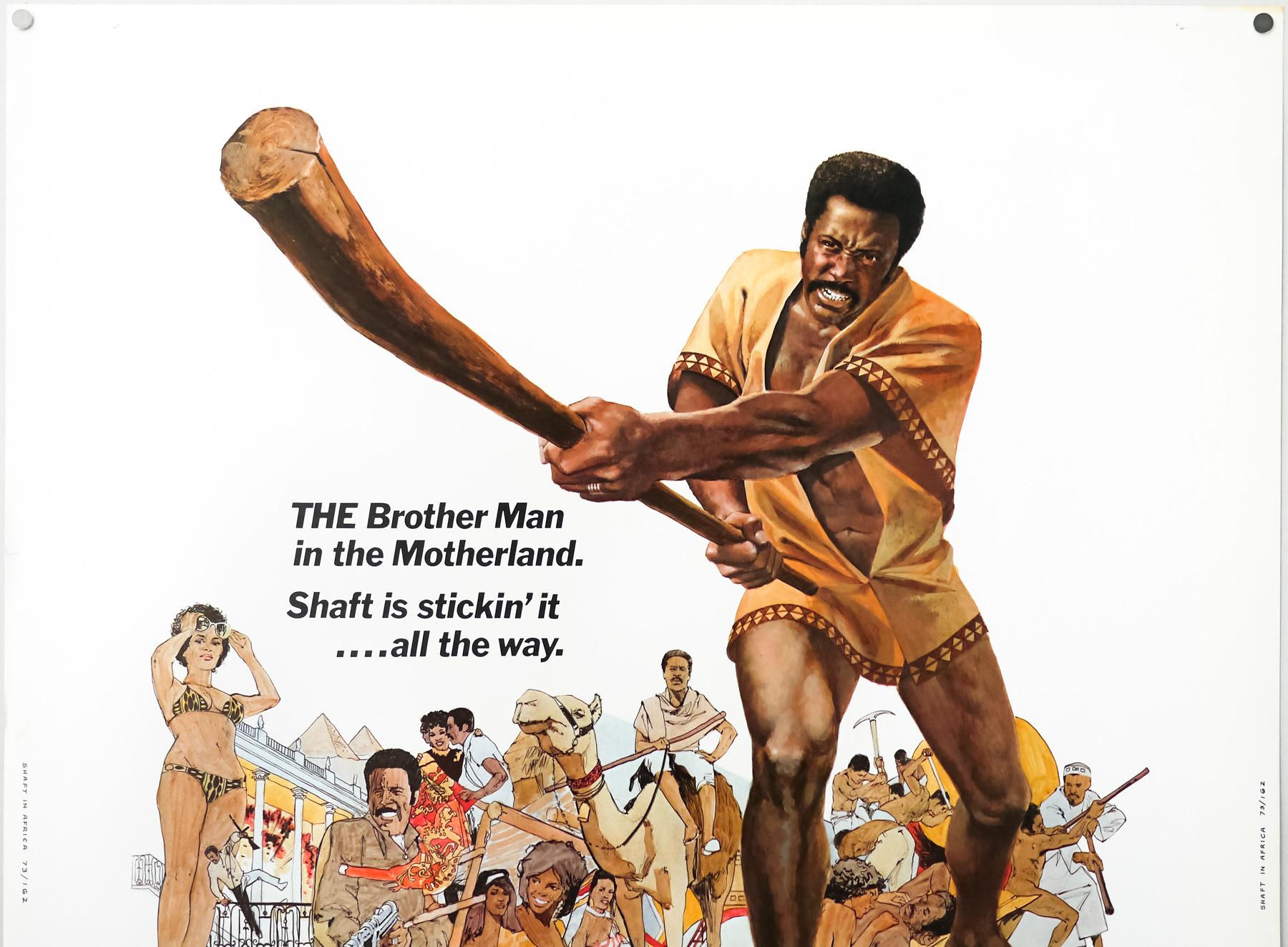
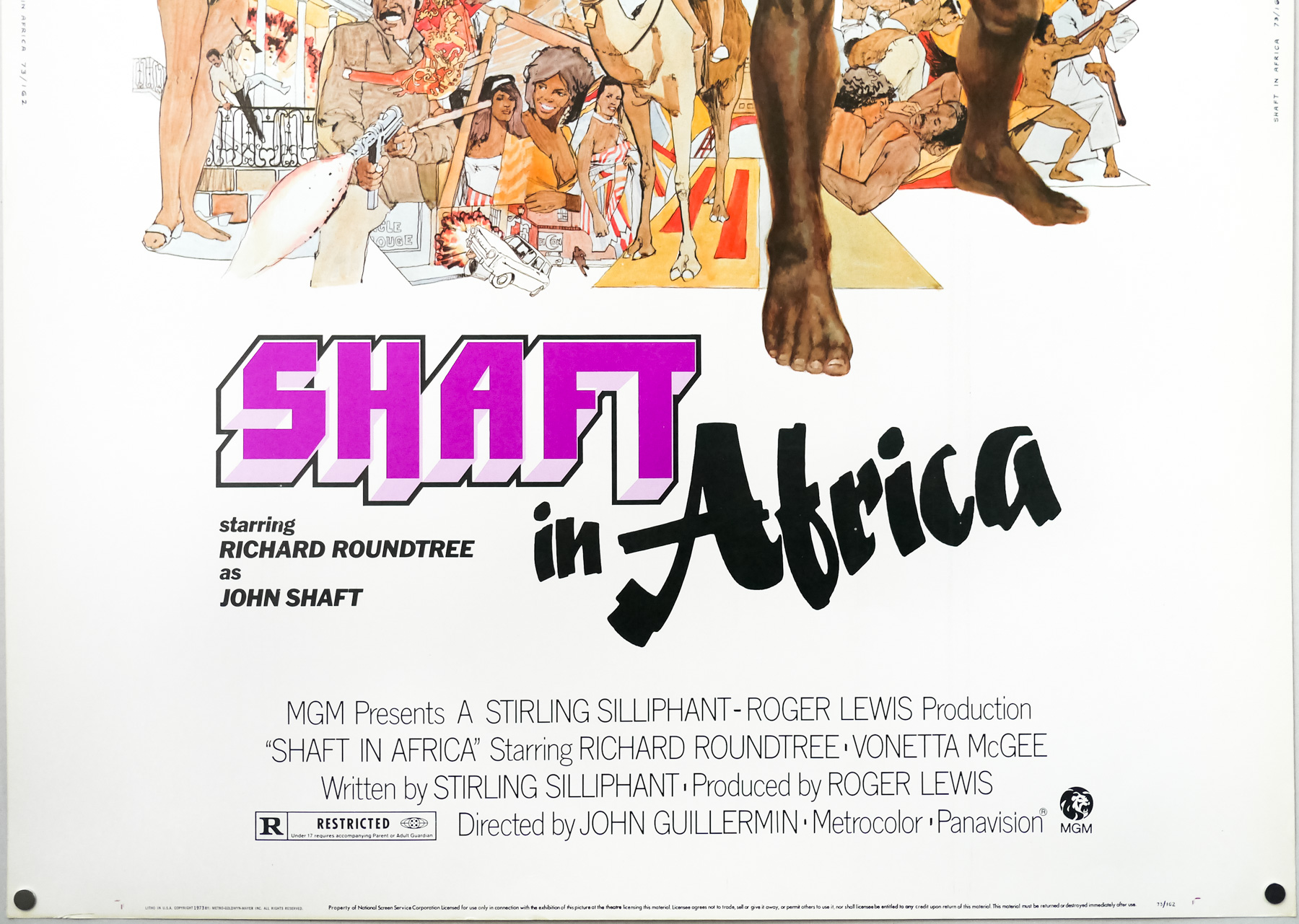
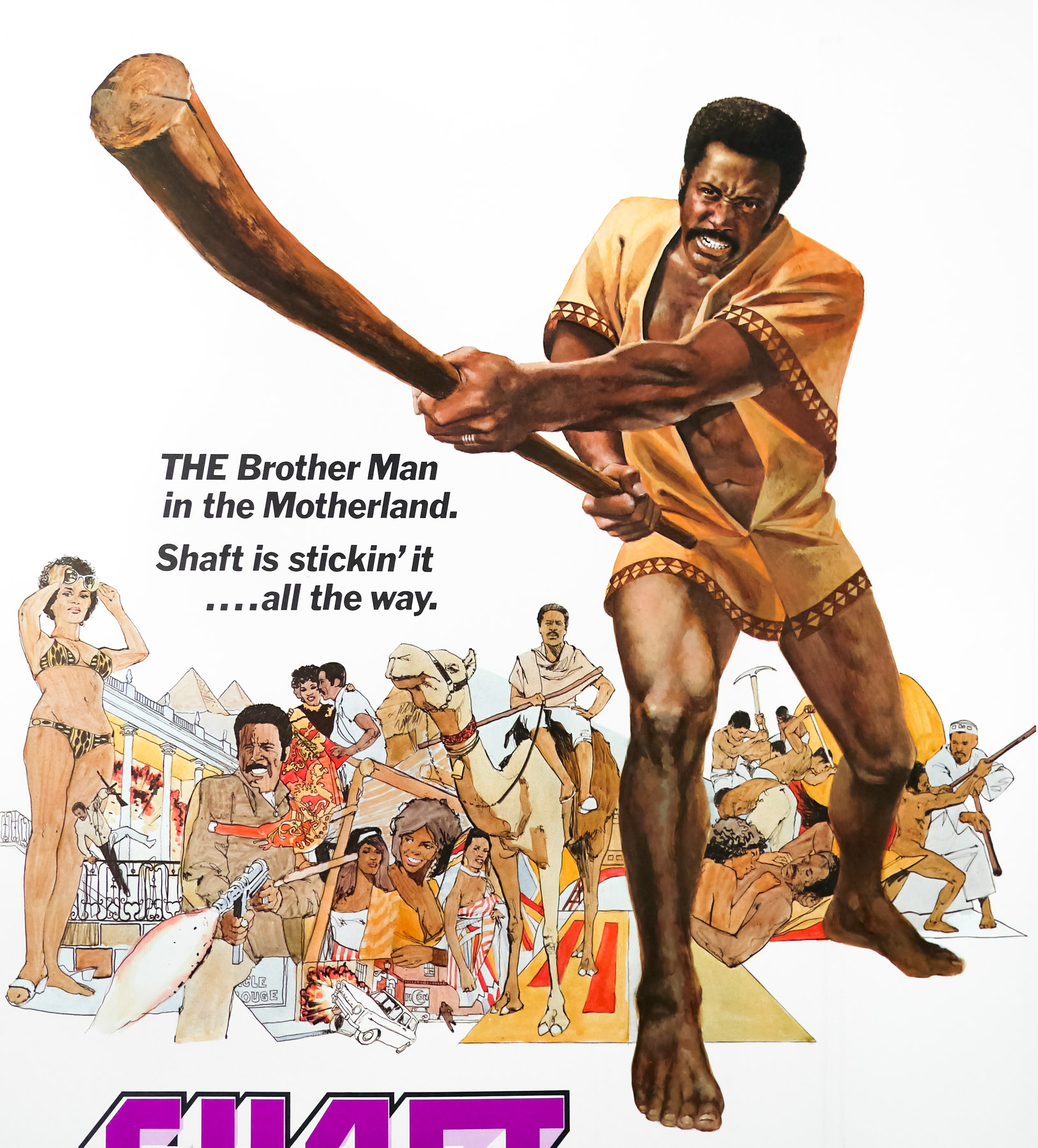
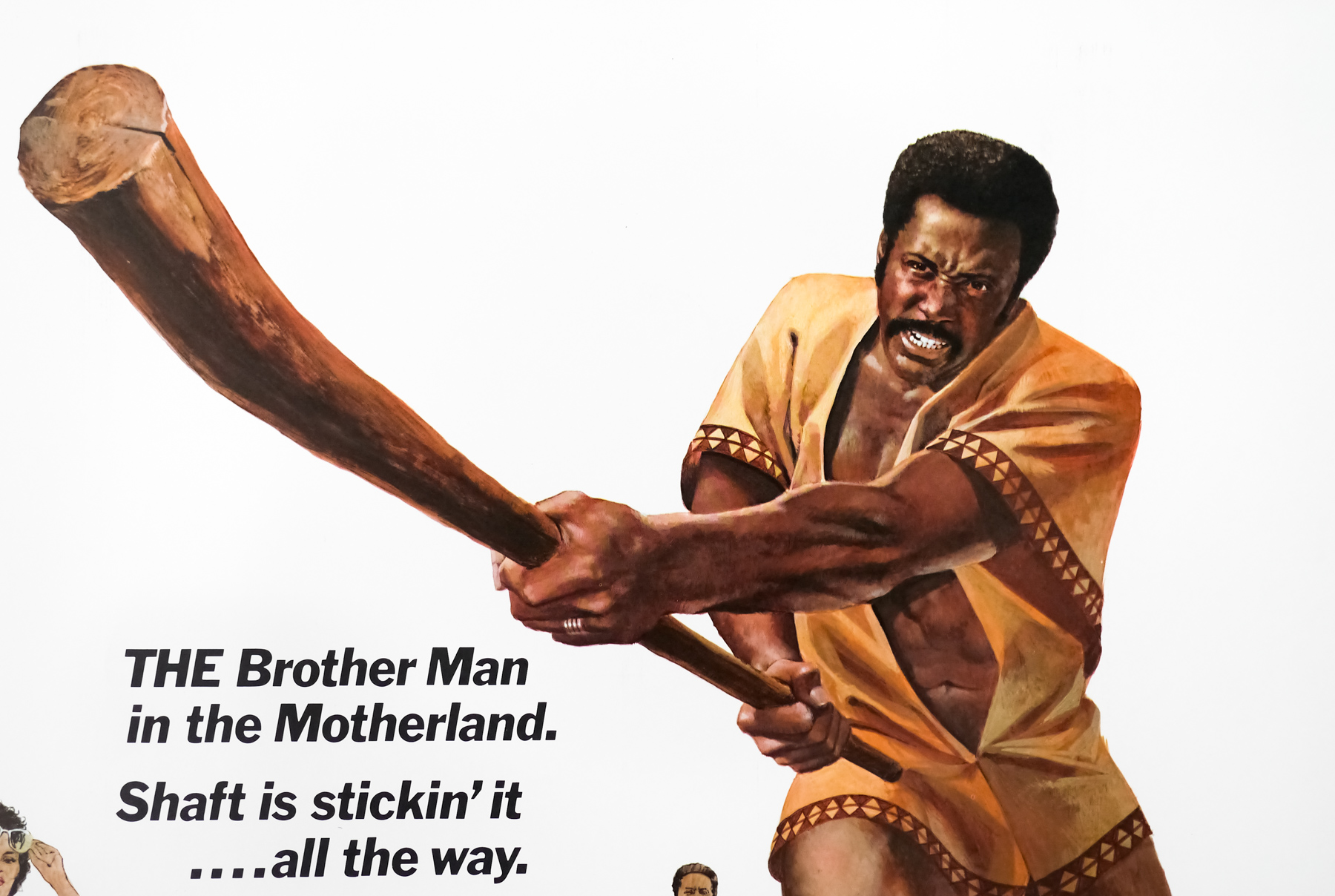
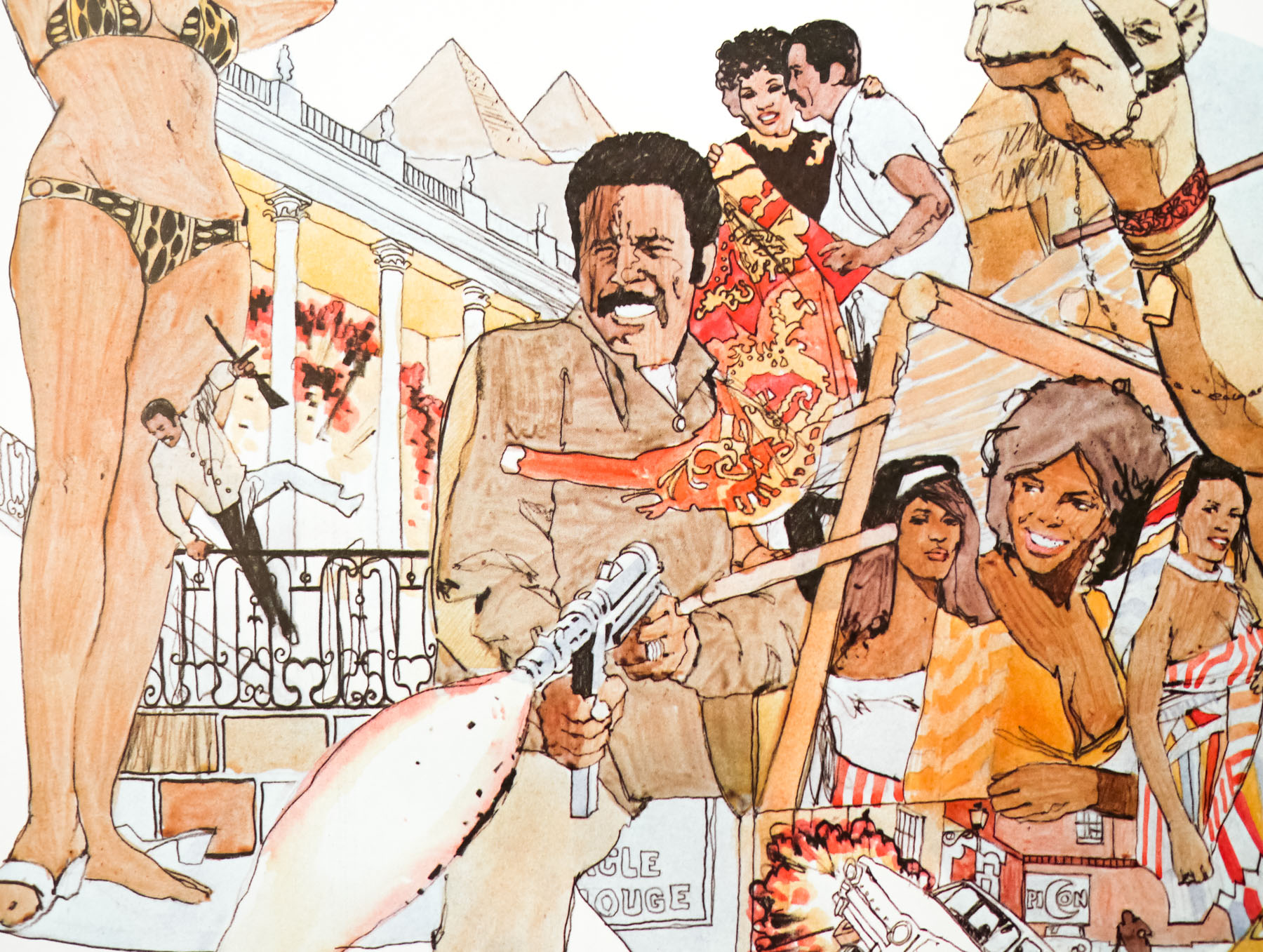
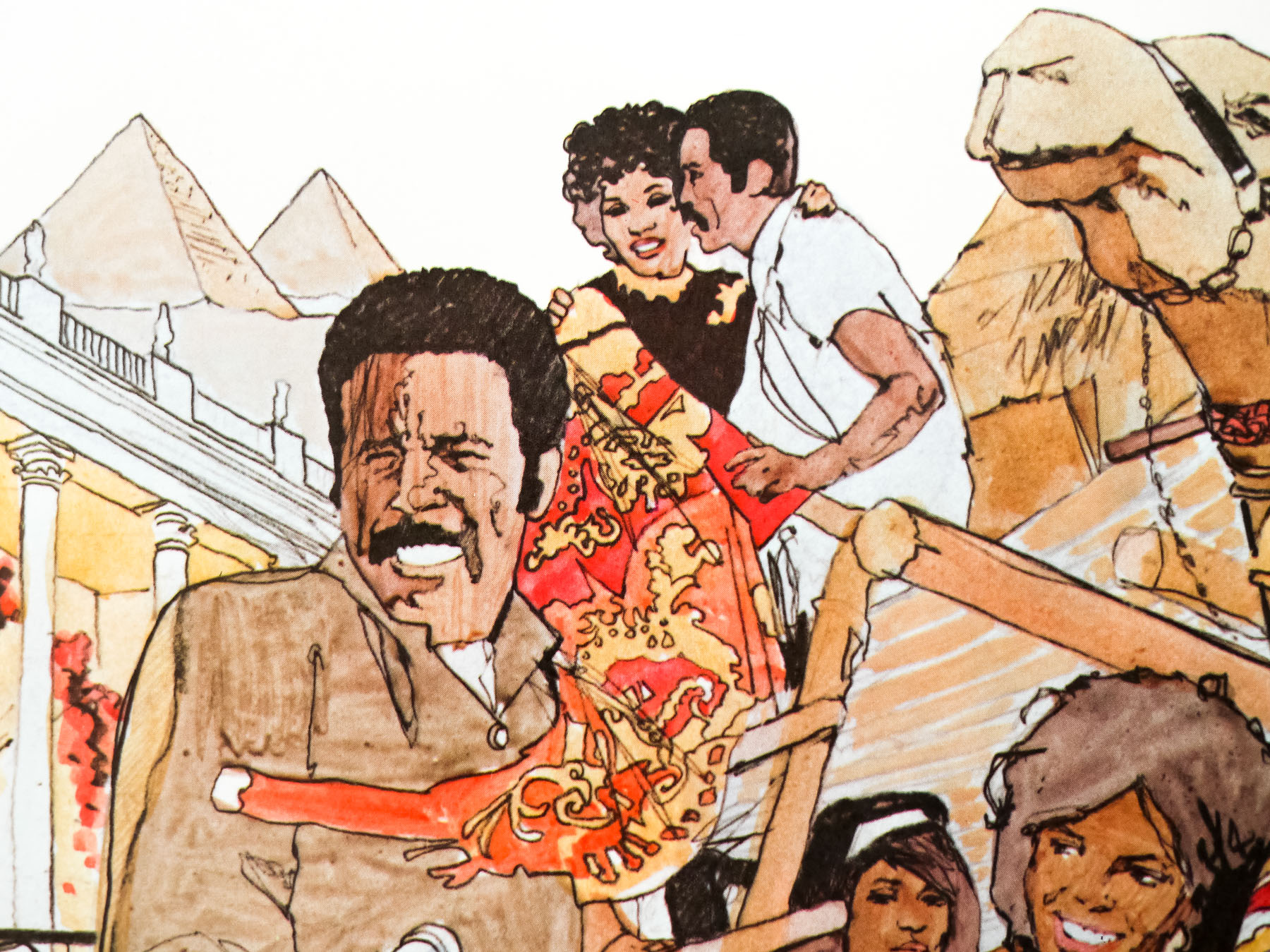
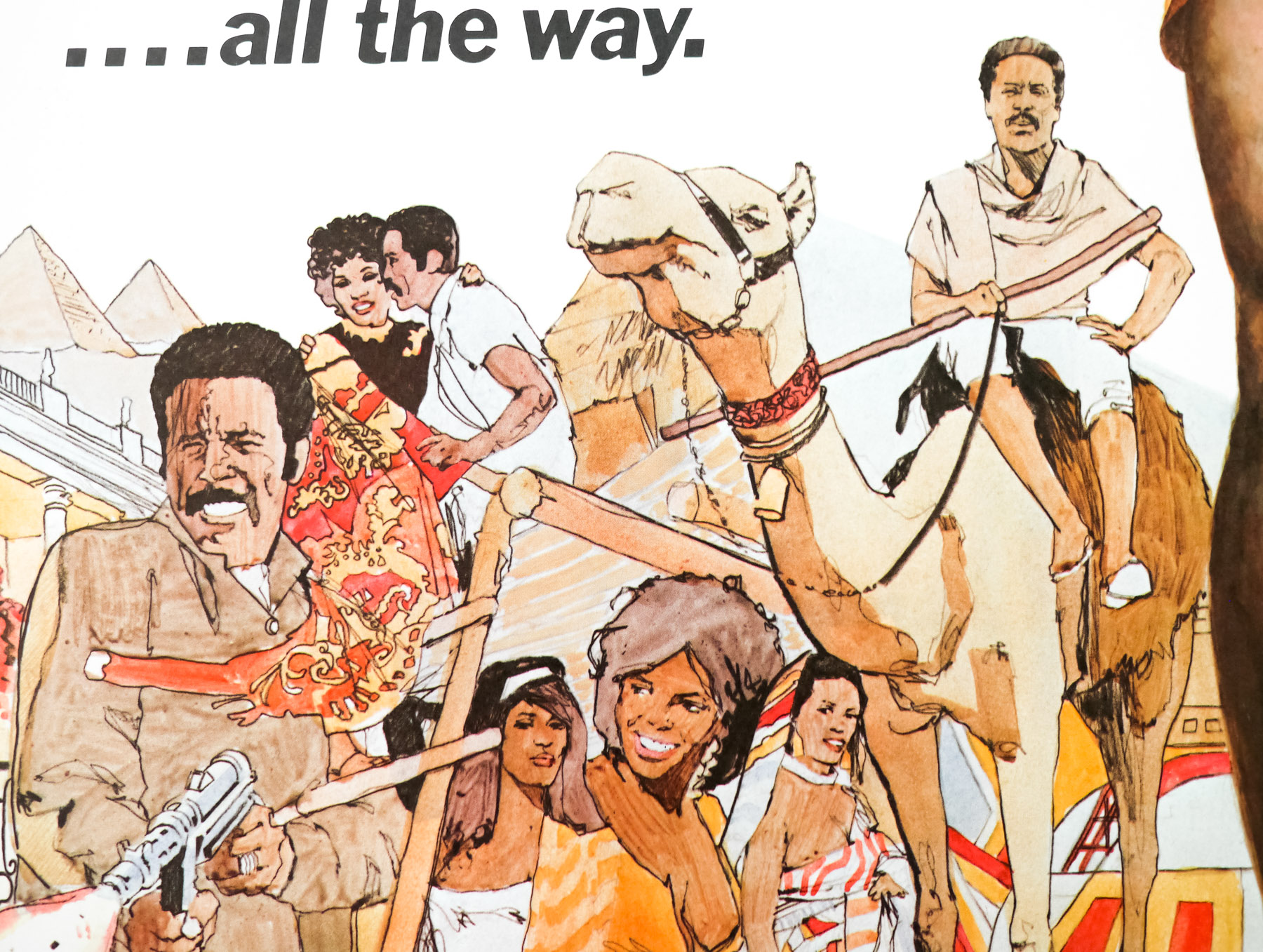
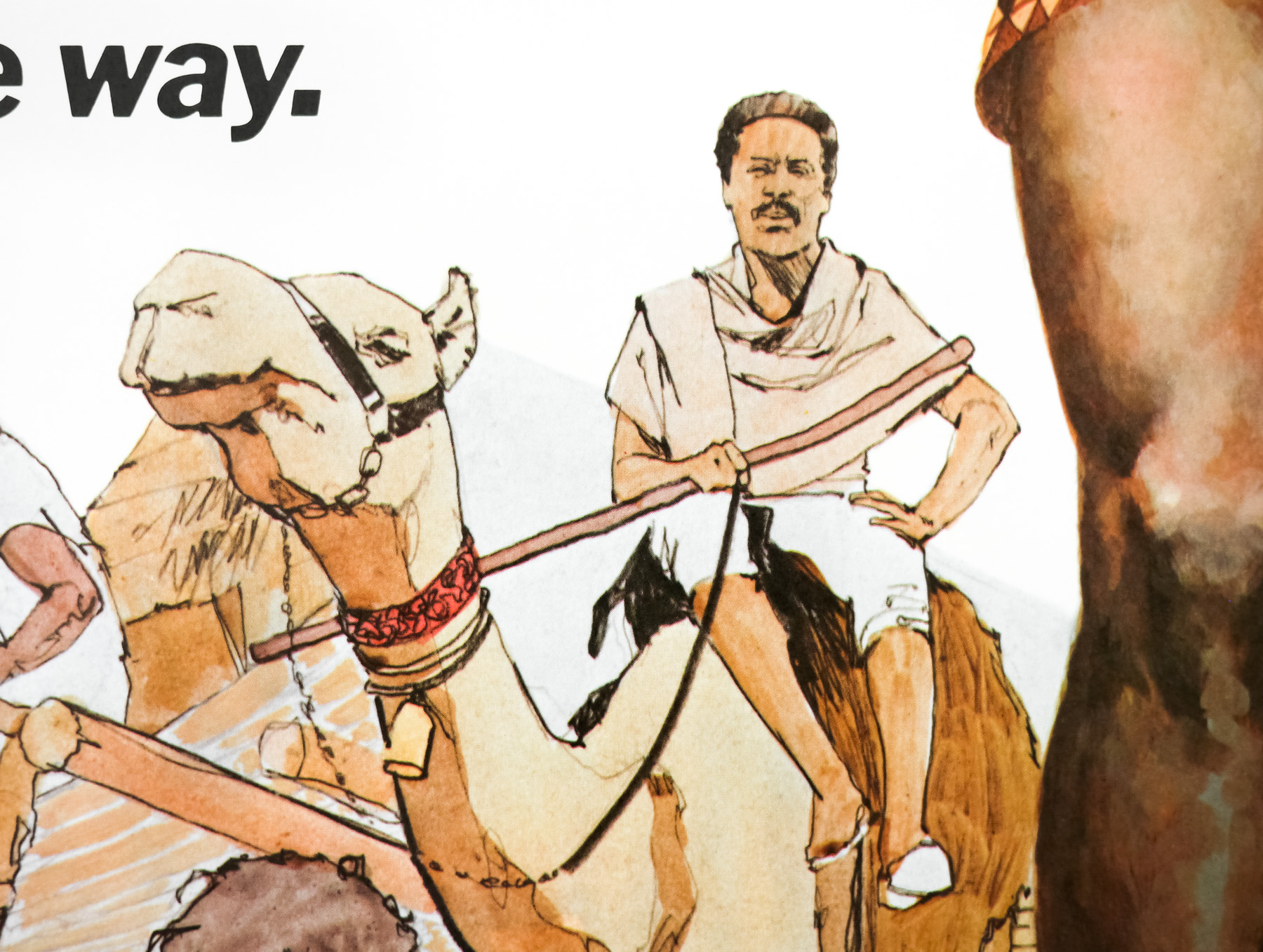
THE Brother Man in the Motherland. Shaft is stickin' it... all the way.

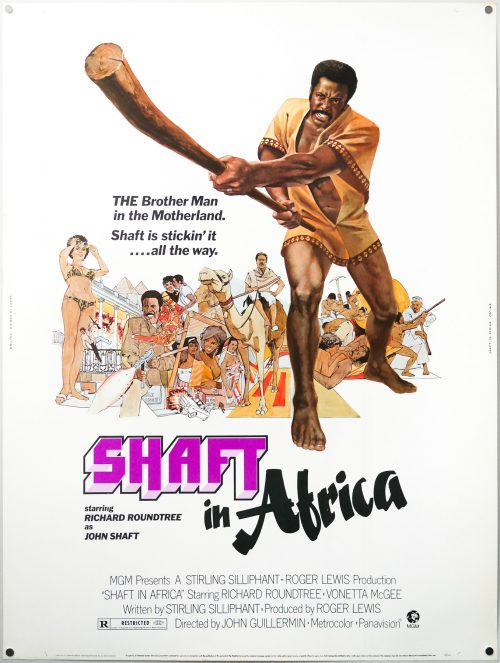
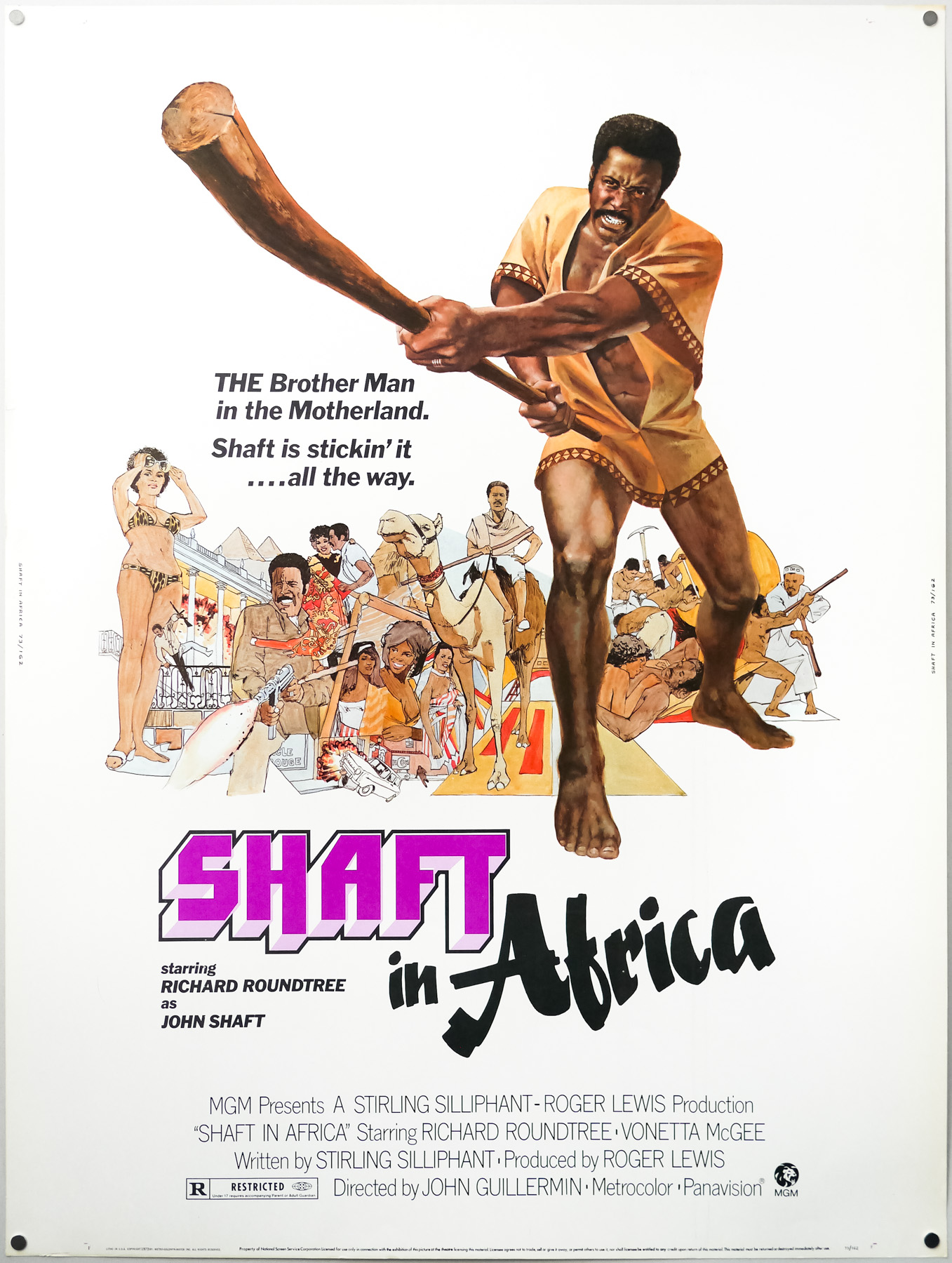
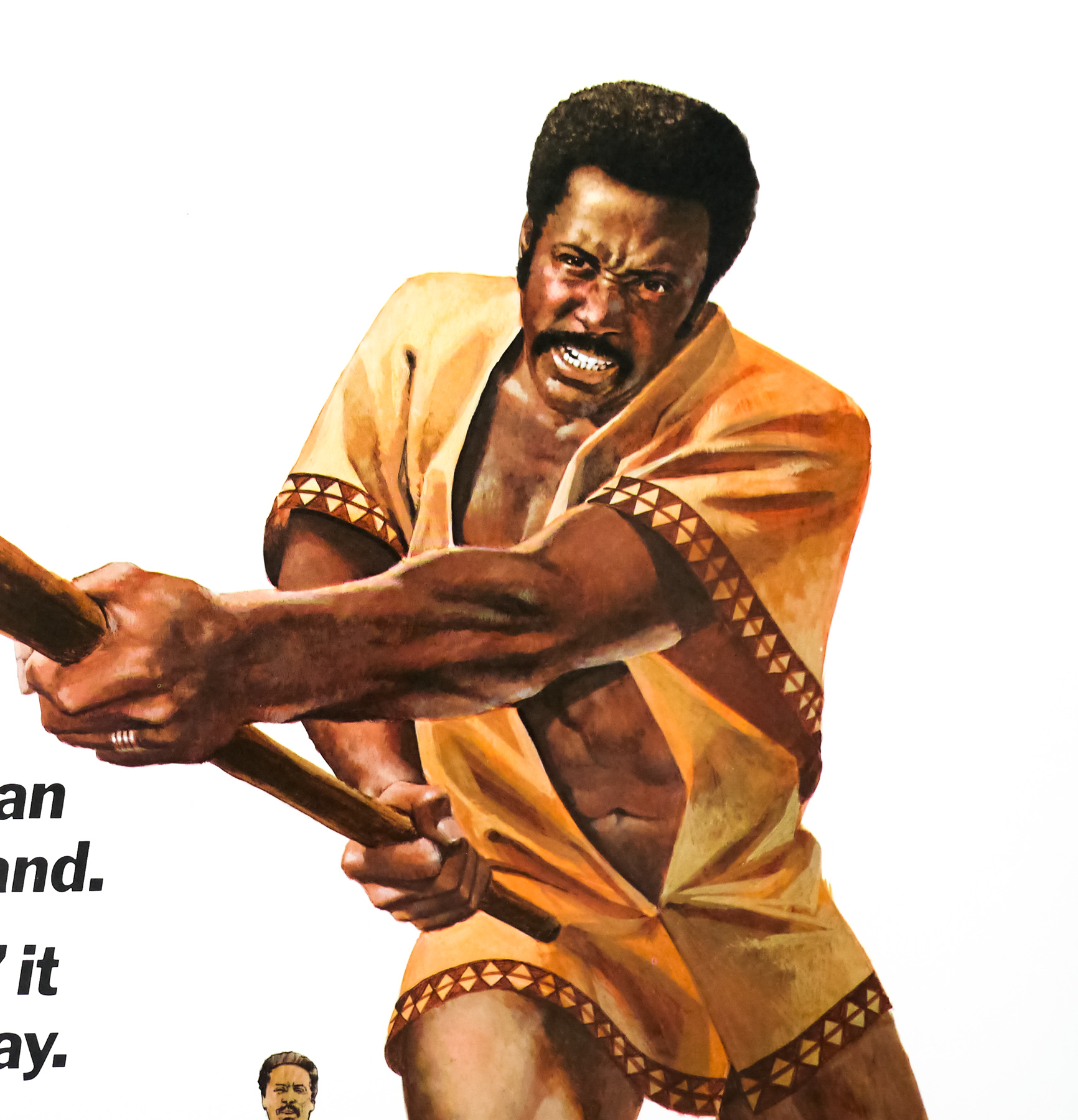
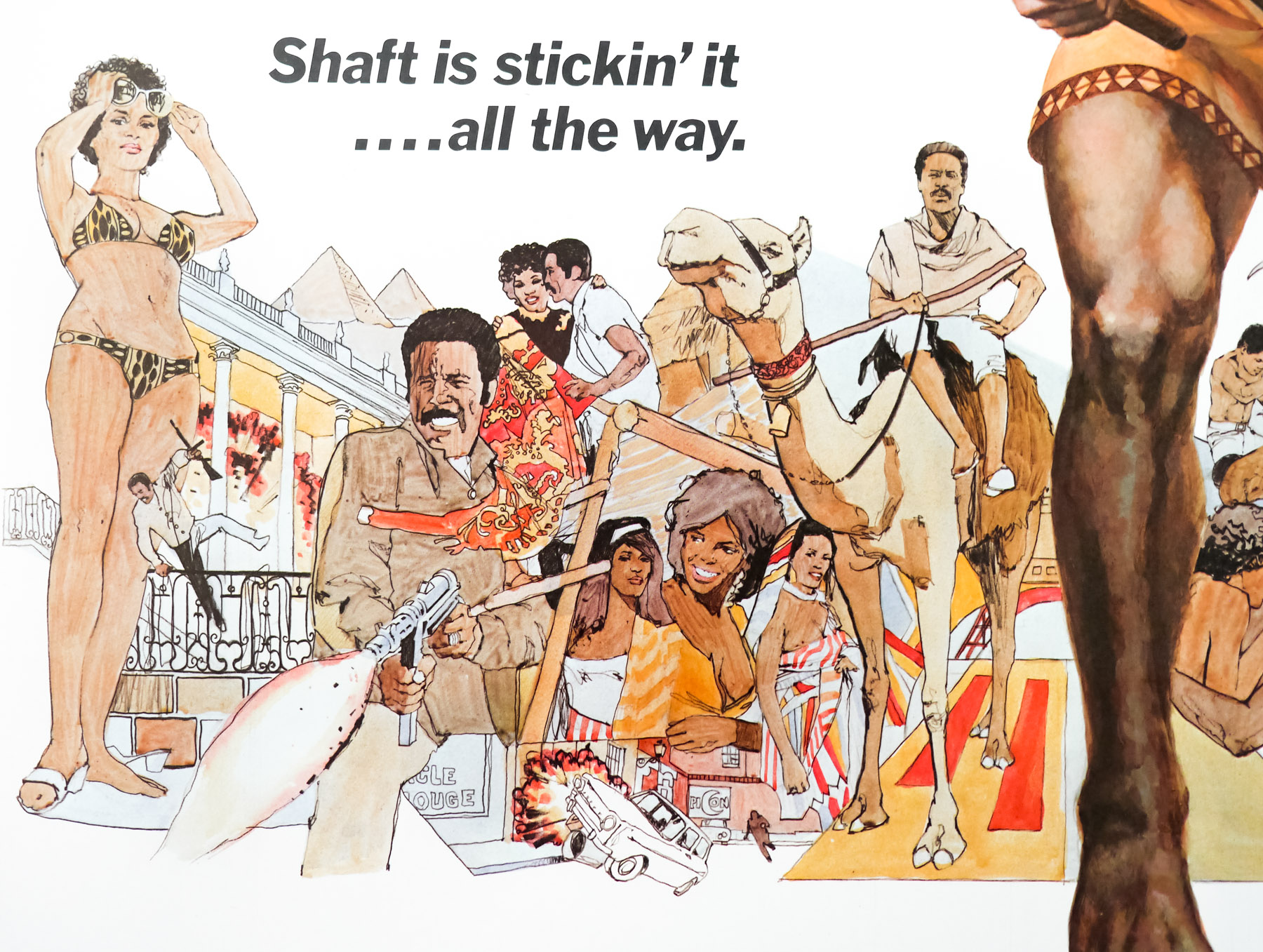
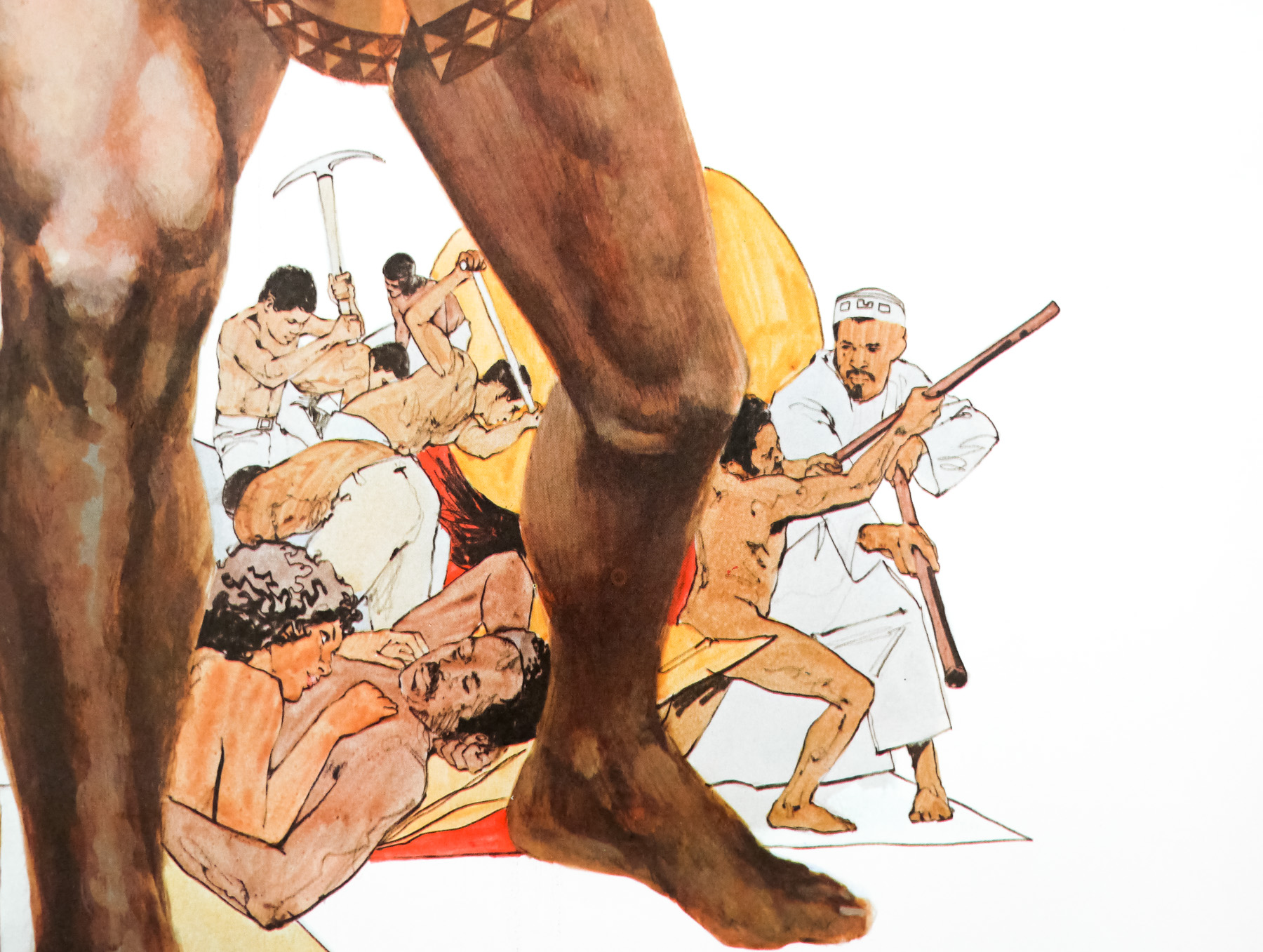
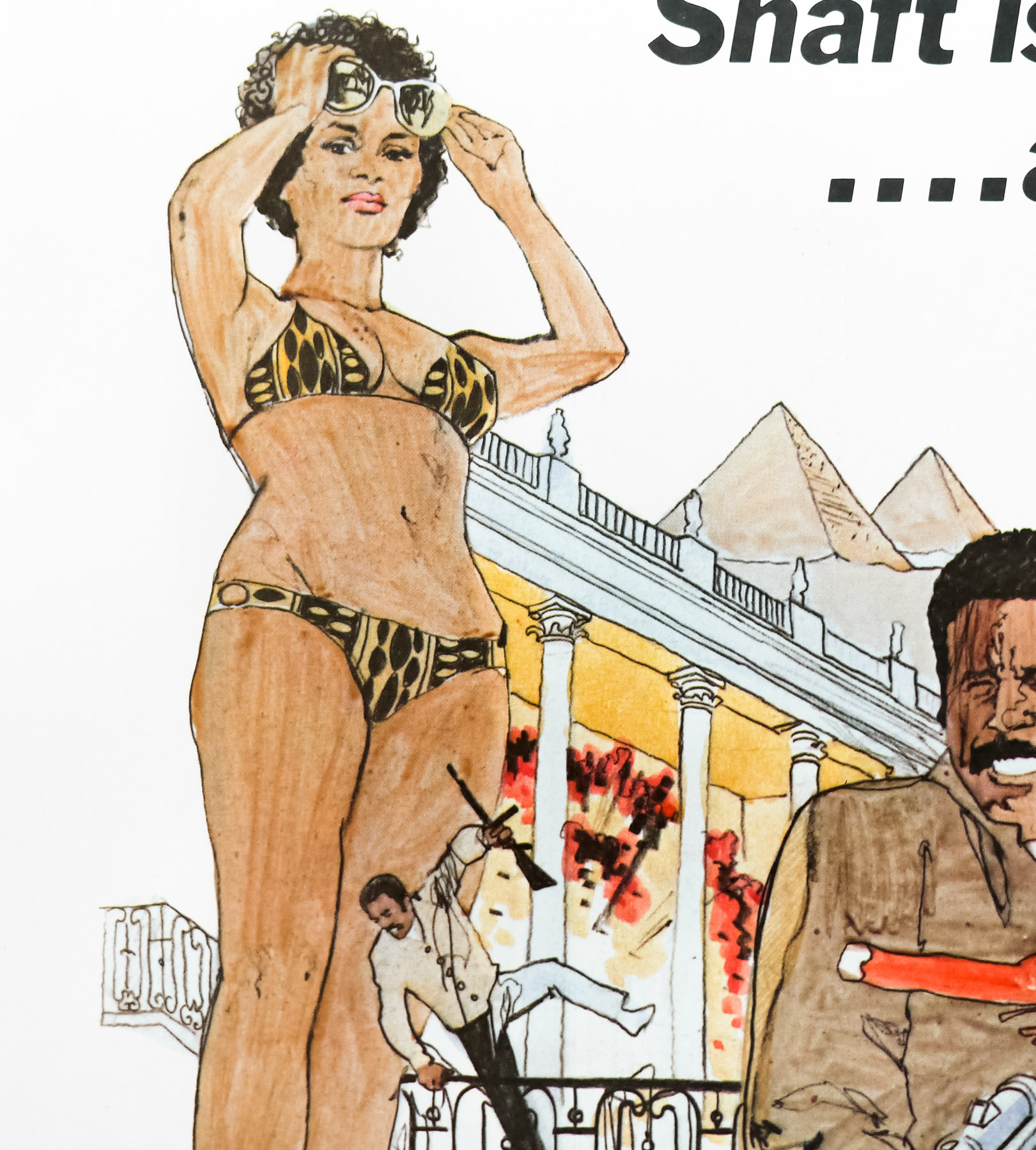
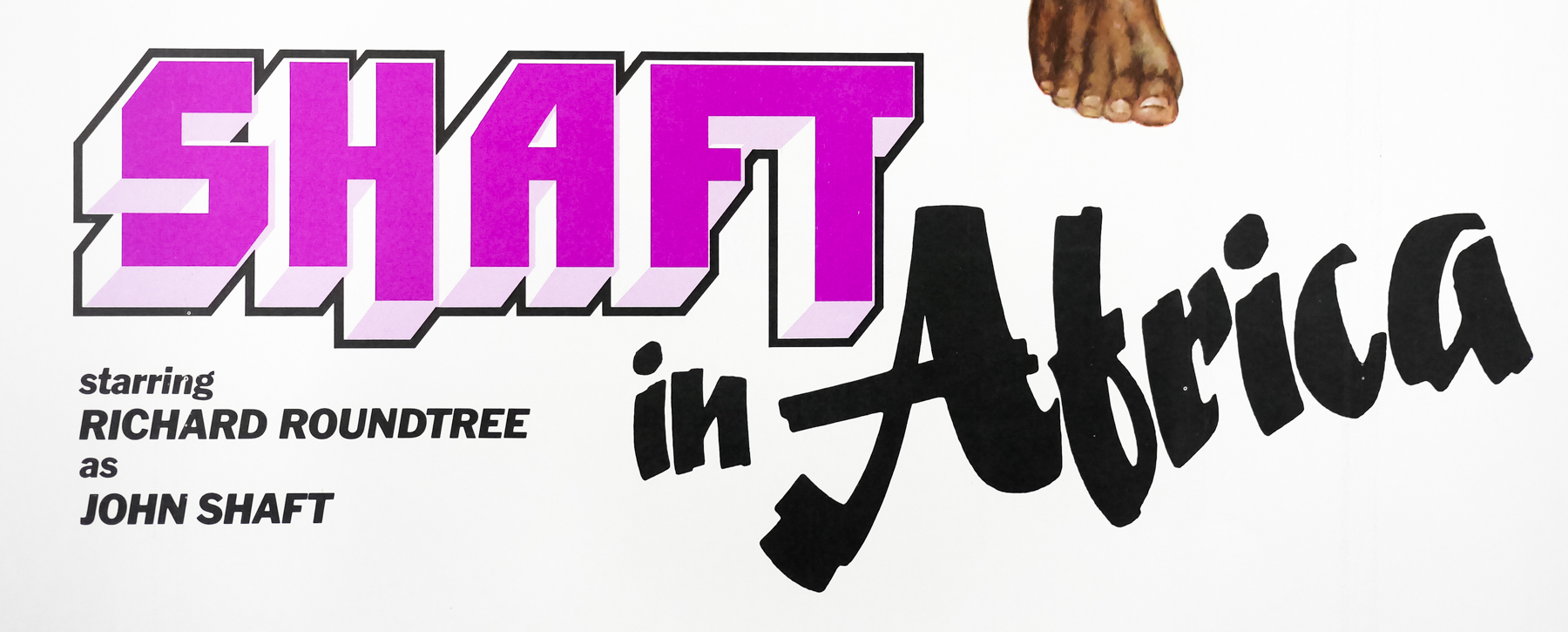
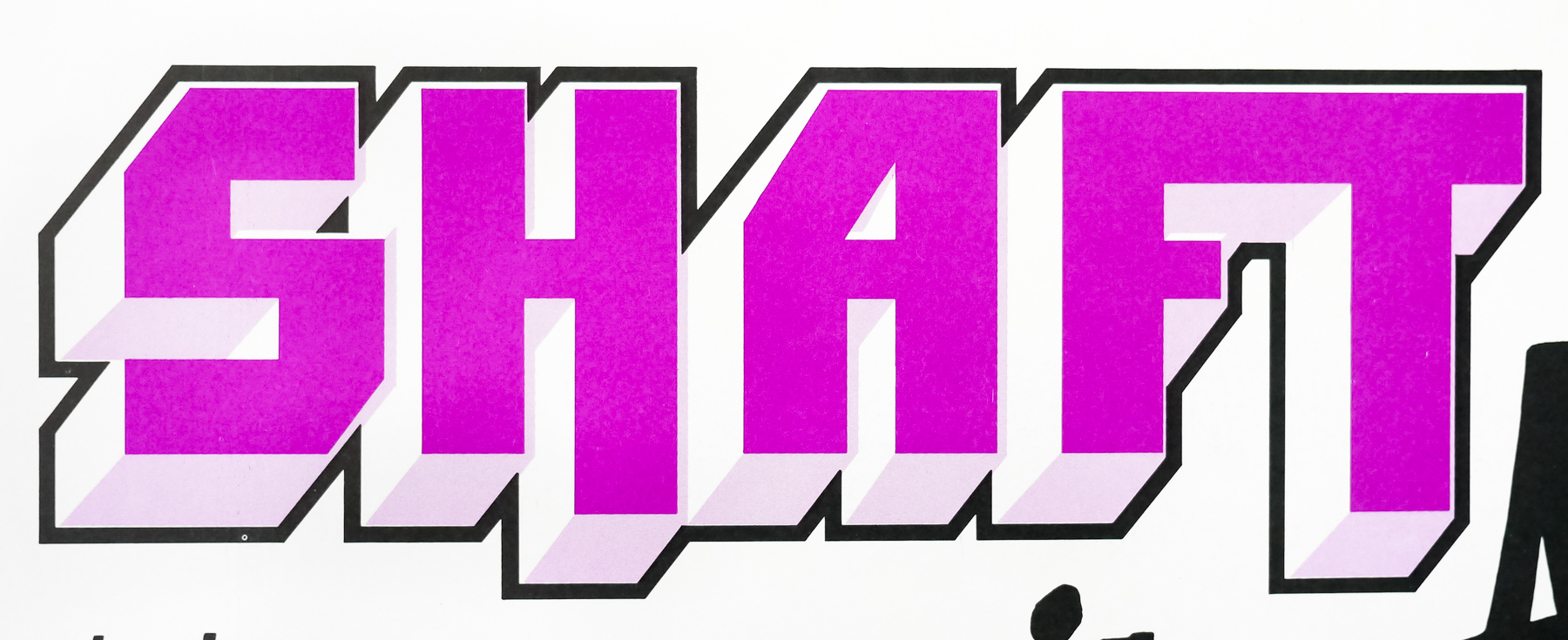
Shaft in Africa is the final entry in the trilogy of films featuring Blaxploitation hero Shaft (Richard Roundtree). This time the eponymous detective is kidnapped from his New York apartment and coerced into assuming the identity of a native-speaking itinerant worker. His ’employer’ wants Shaft to smash a human trafficking ring, run by the dastardly Amafi (Frank Finlay), that’s bringing African workers into Europe to exploit them. Much more of an adventure film than the previous two entries, which were pretty much entirely set in urban areas, this film was actually shot on location in Ethiopia and has less of a blaxploitation feel and more of a James Bond-style action style. Gordon Parks, the director of the previous entries, was replaced by the British director John Guillermin who would helm the box-office smash The Towering Inferno the following year.

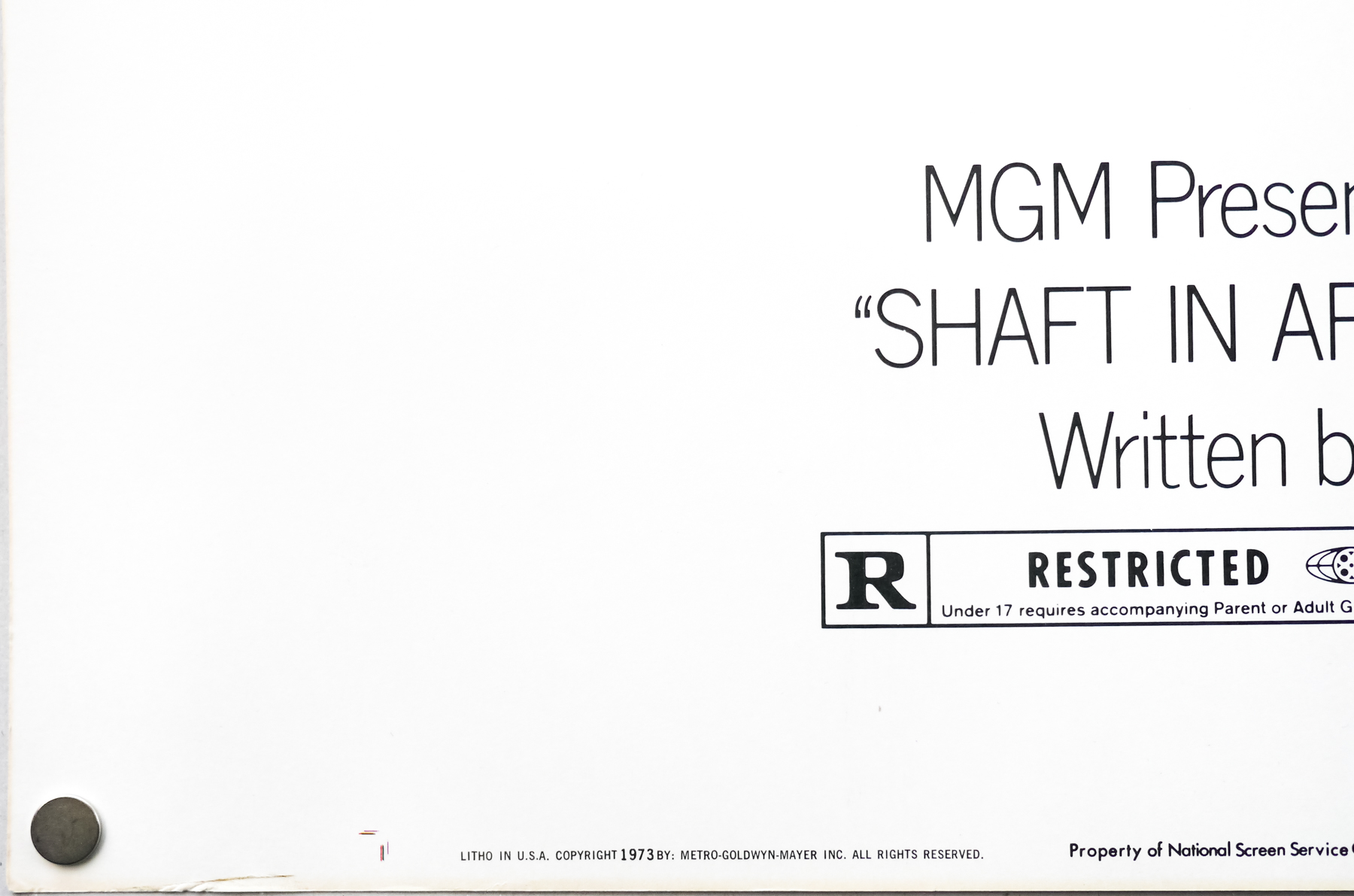
The all-action artwork on this 30×40 poster is by the American artist John Solie who has been working as an illustrator for over 40 years. Film posters are just one aspect of his output, which also includes book and magazine covers, sculptures, portraits and work for NASA. He continues to paint today in Tucson, Arizona. Another gallery of his work can be viewed on Wrong Side of the Art. Solie also painted the art for the US poster for Shaft’s Big Score.
Here are the posters by John Solie I have collected to date.

You can view the trailer on YouTube.

The Last Flight of Noah’s Ark / one sheet / USA

22.01.14

Poster Poster
Title
The Last Flight of Noah's Ark
AKA
--
Year of Film
1980
Director
Charles Jarrott
Starring
Elliott Gould, Geneviève Bujold, Ricky Schroder, Vincent Gardenia, Tammy Lauren, John Fujioka, Yuki Shimoda, John P. Ryan, Dana Elcar
Origin of Film
USA
Genre(s) of Film
Elliott Gould, Geneviève Bujold, Ricky Schroder, Vincent Gardenia, Tammy Lauren, John Fujioka, Yuki Shimoda, John P. Ryan, Dana Elcar,
Type of Poster
One sheet
Style of Poster
--
Origin of Poster
USA
Year of Poster
1980
Designer
Unknown
Artist
Dan Goozee
Size (inches)
27 1/16" x 41"
SS or DS
SS
NSS #
800063
Tagline
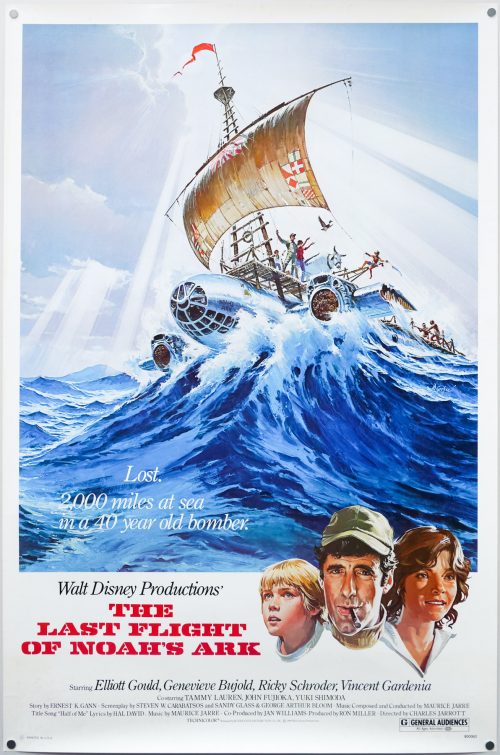
Lost. 2000 miles at sea in a 40 year old bomber.

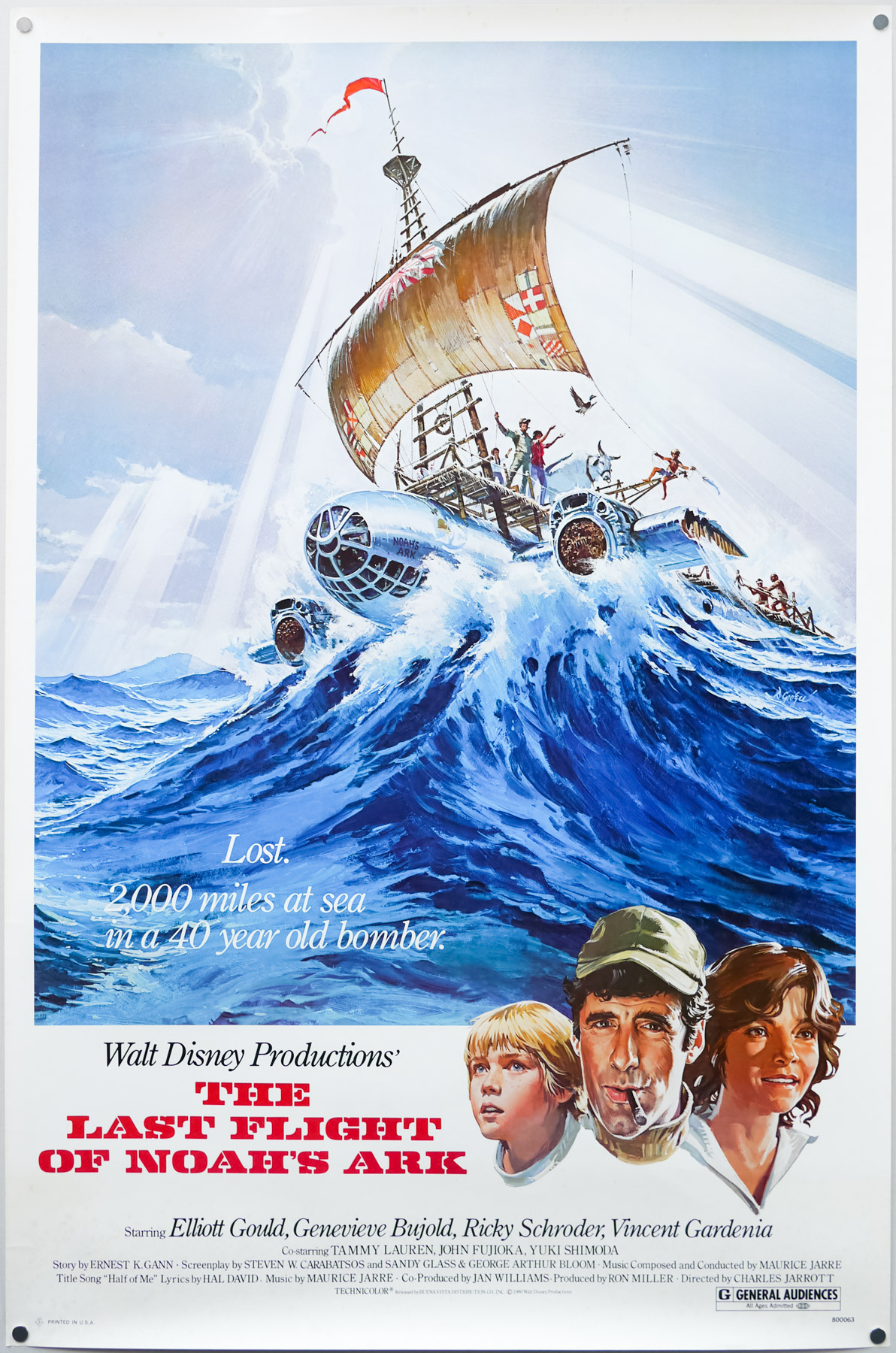
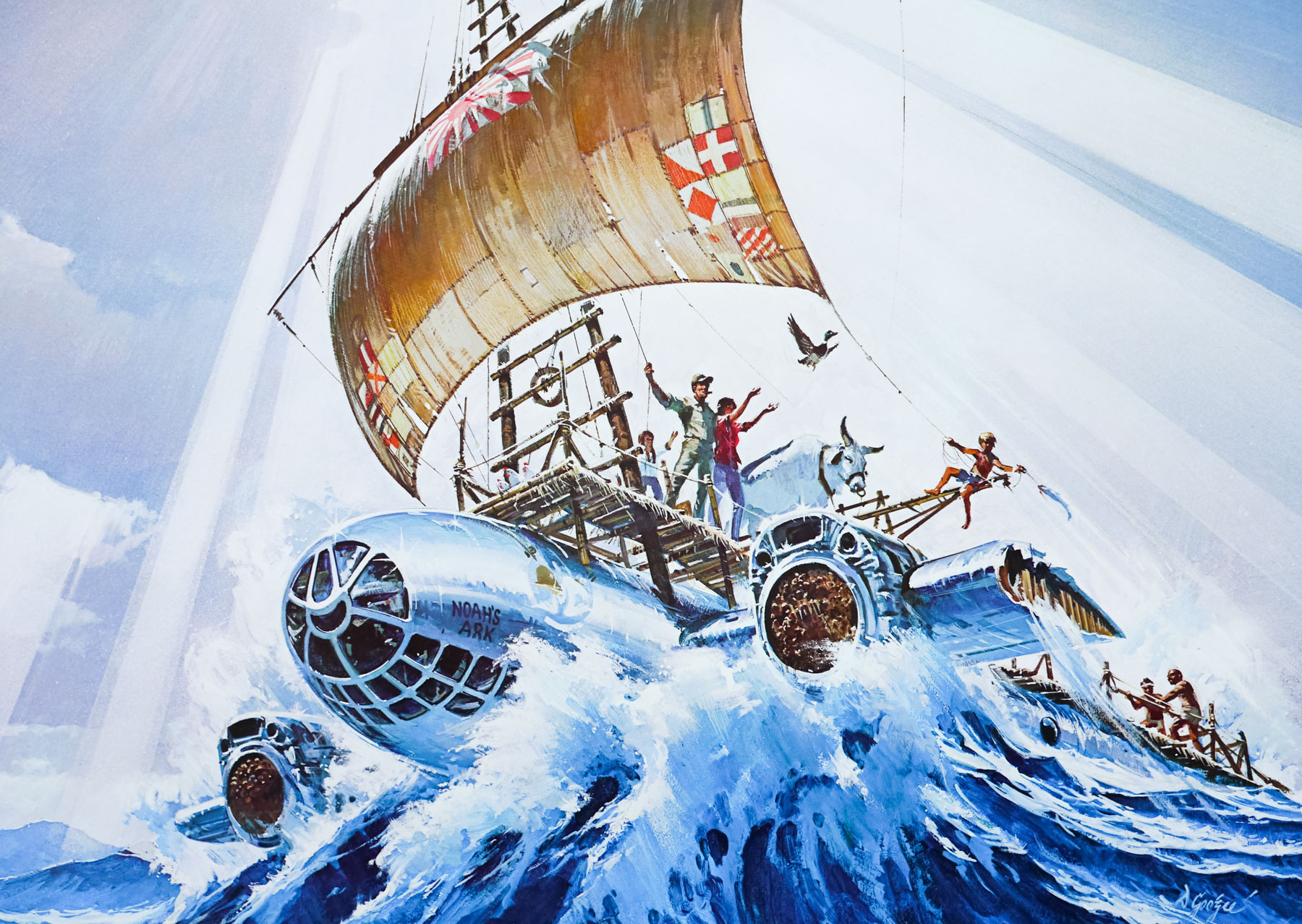
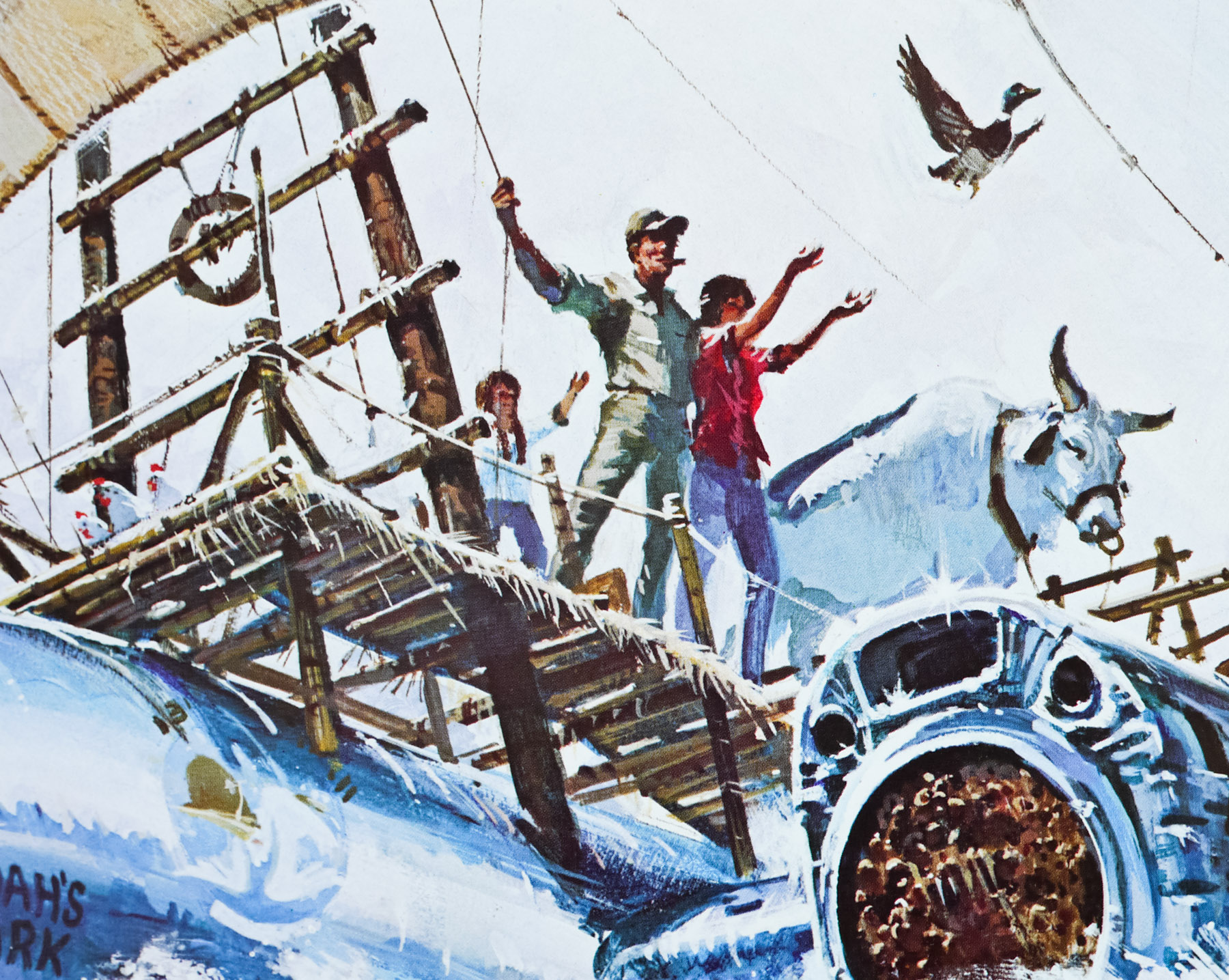
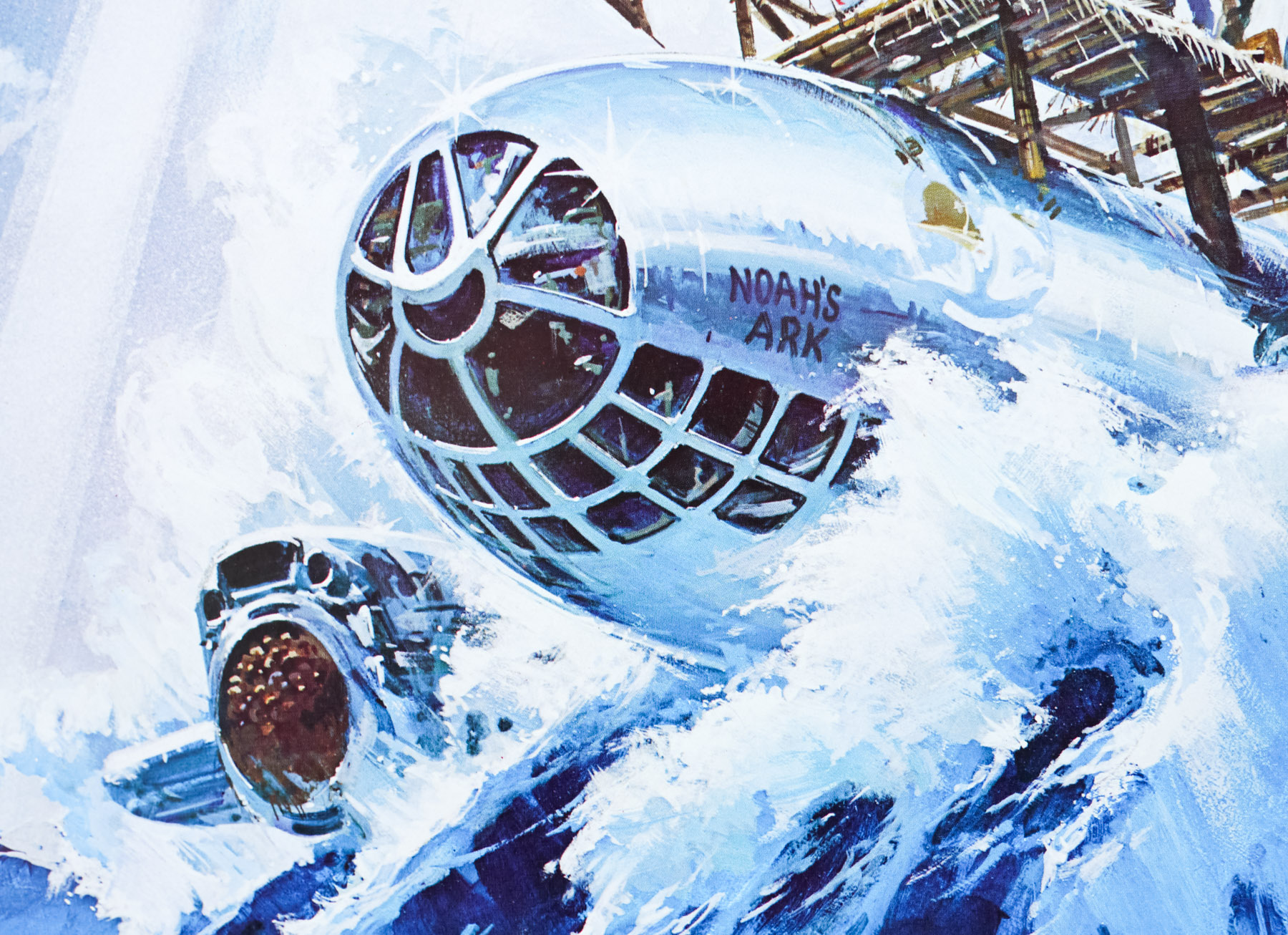
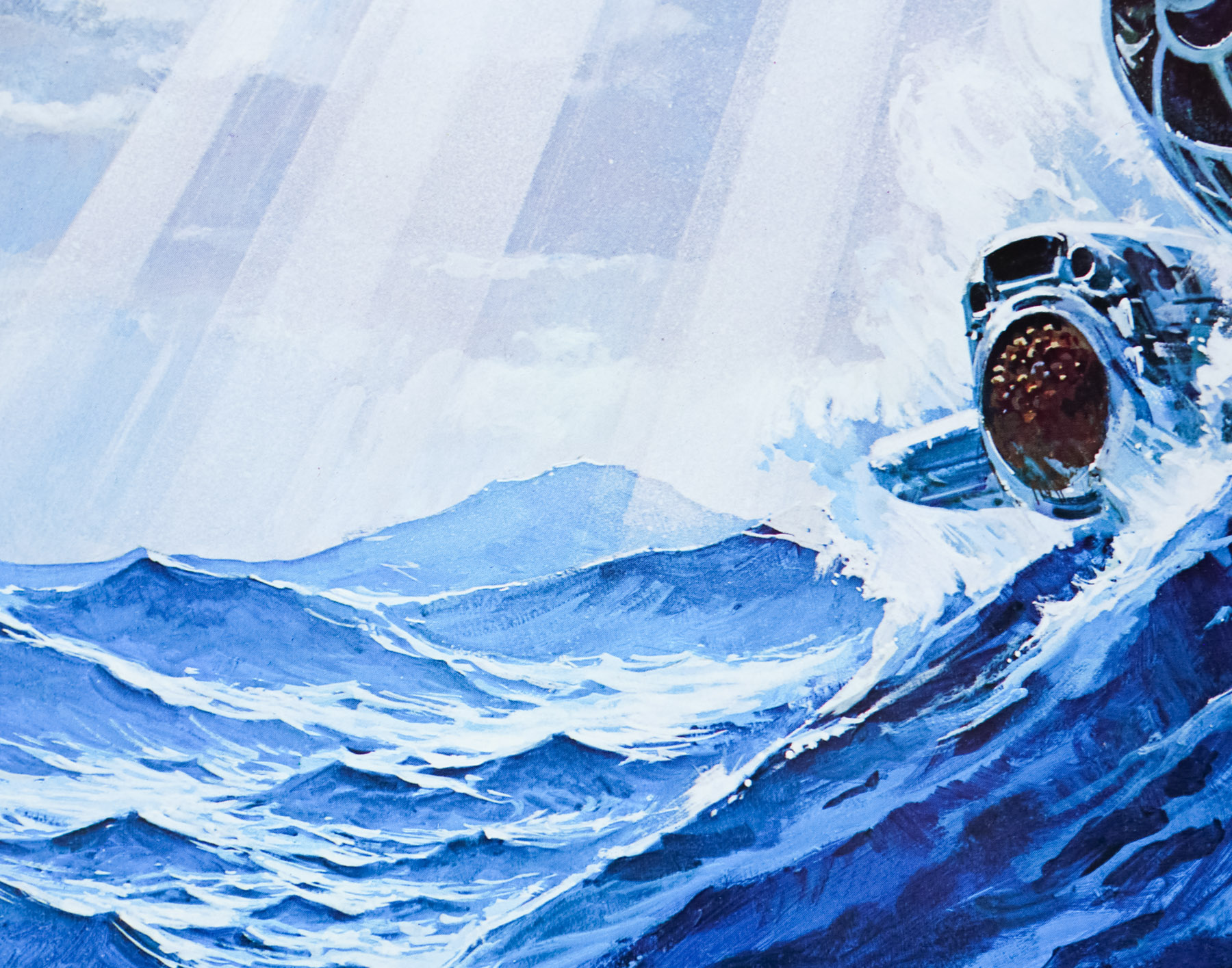
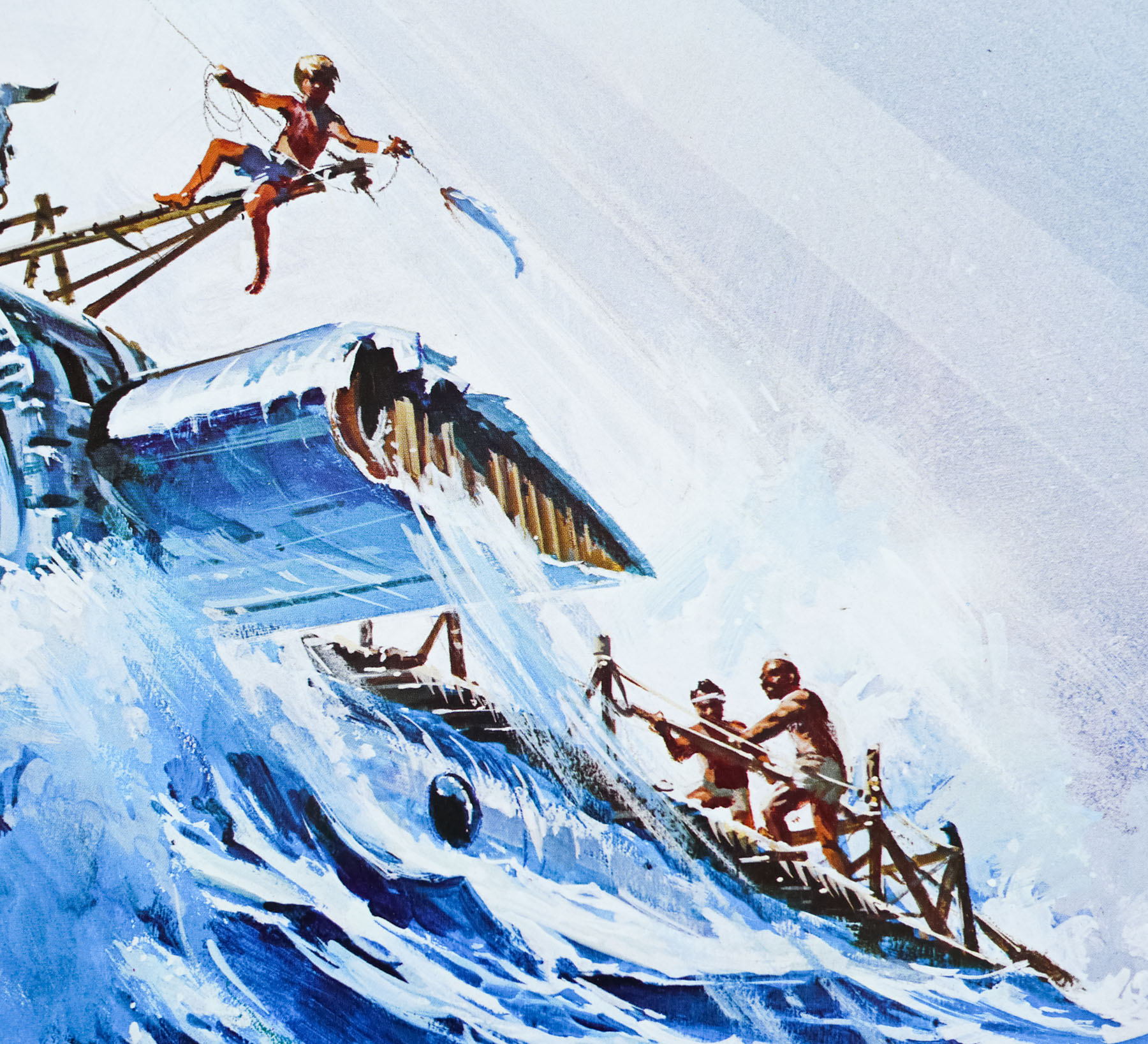
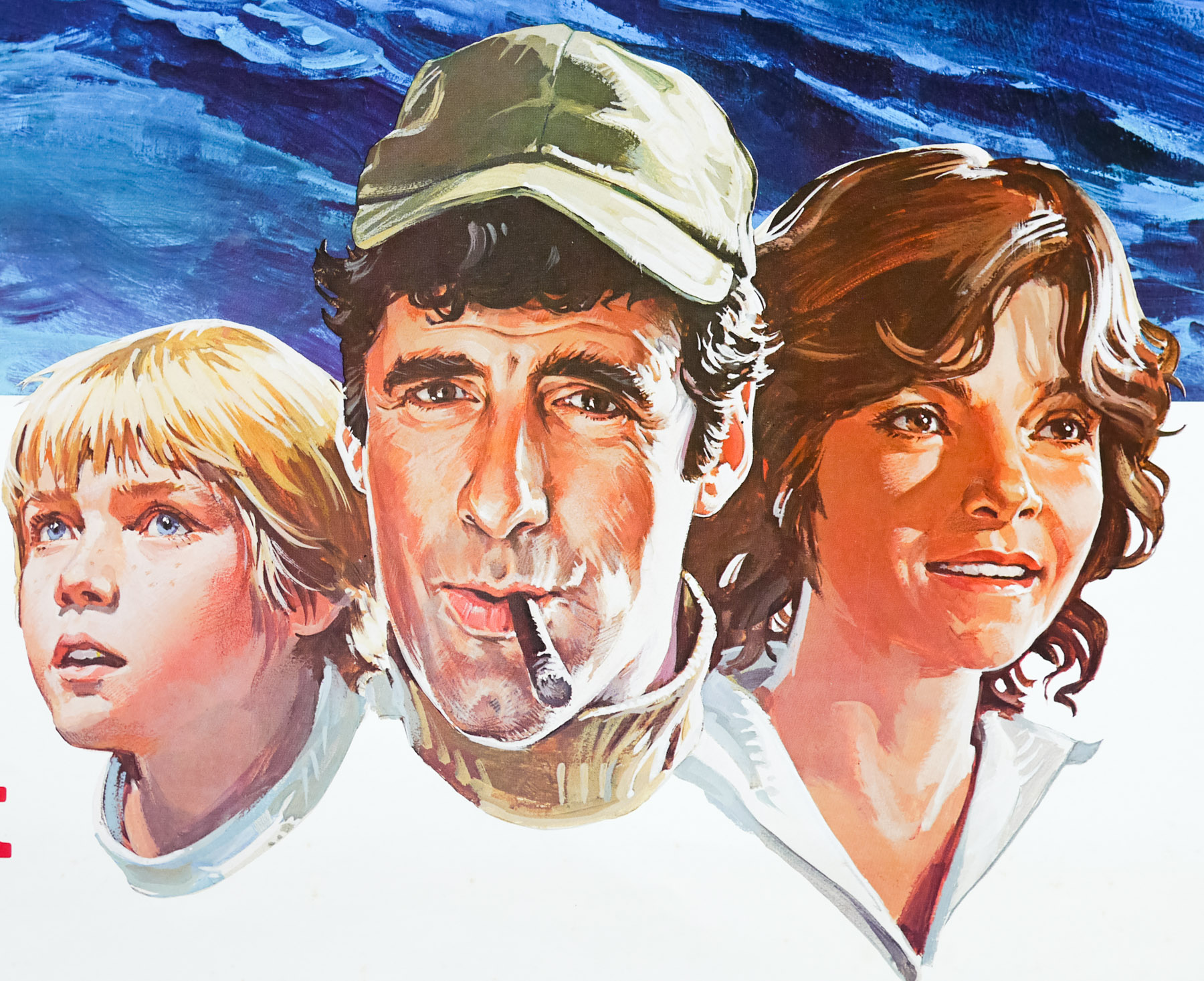
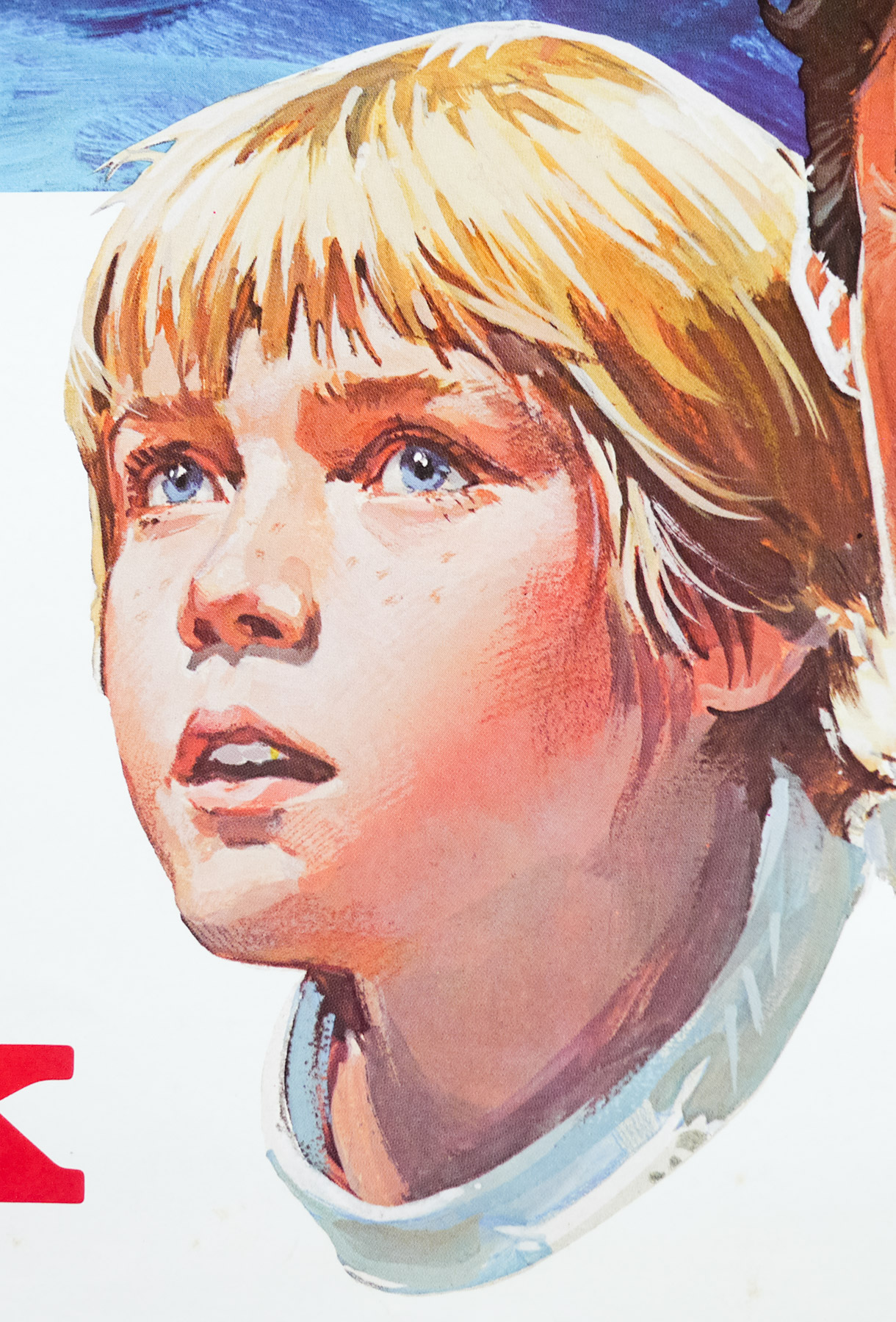
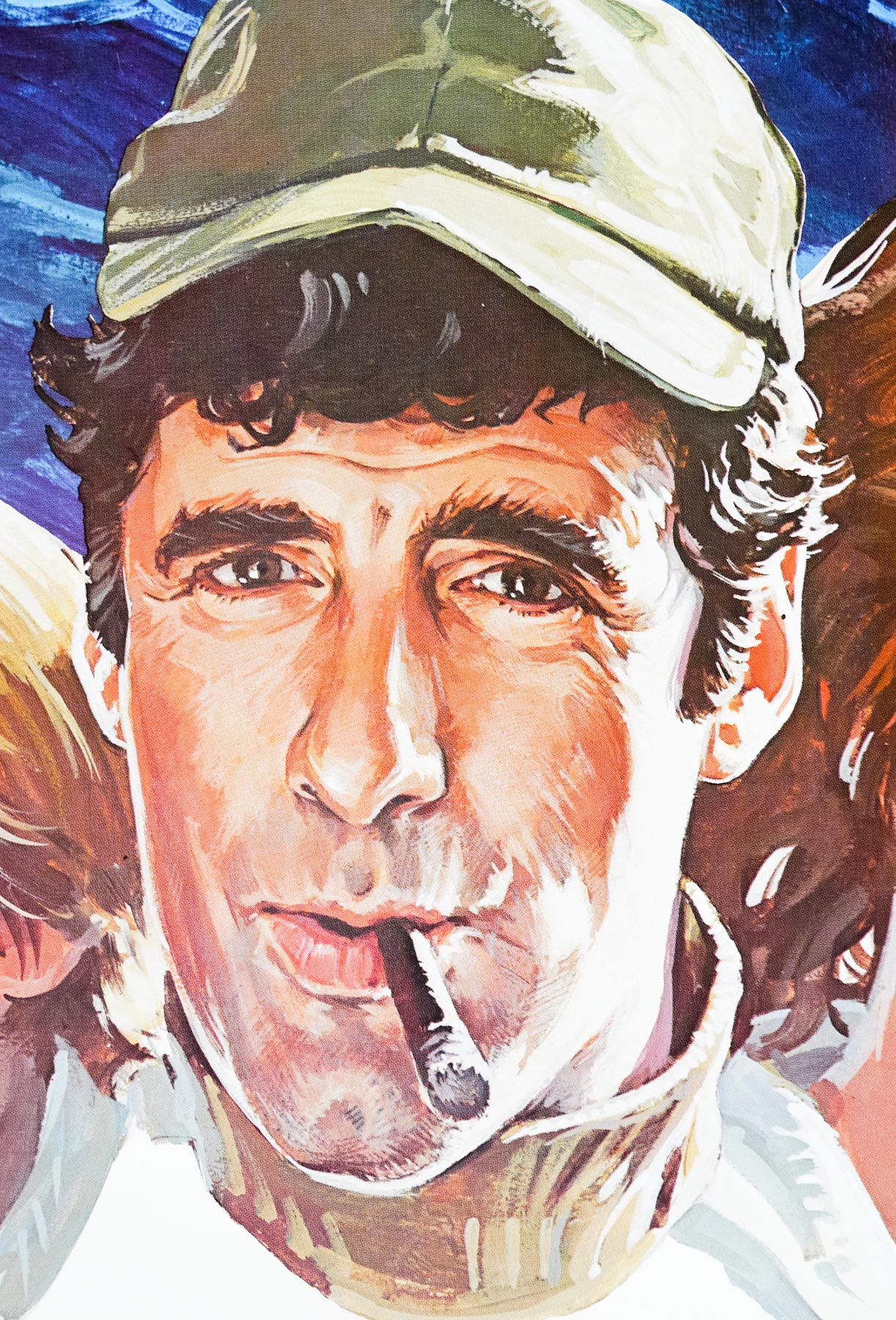
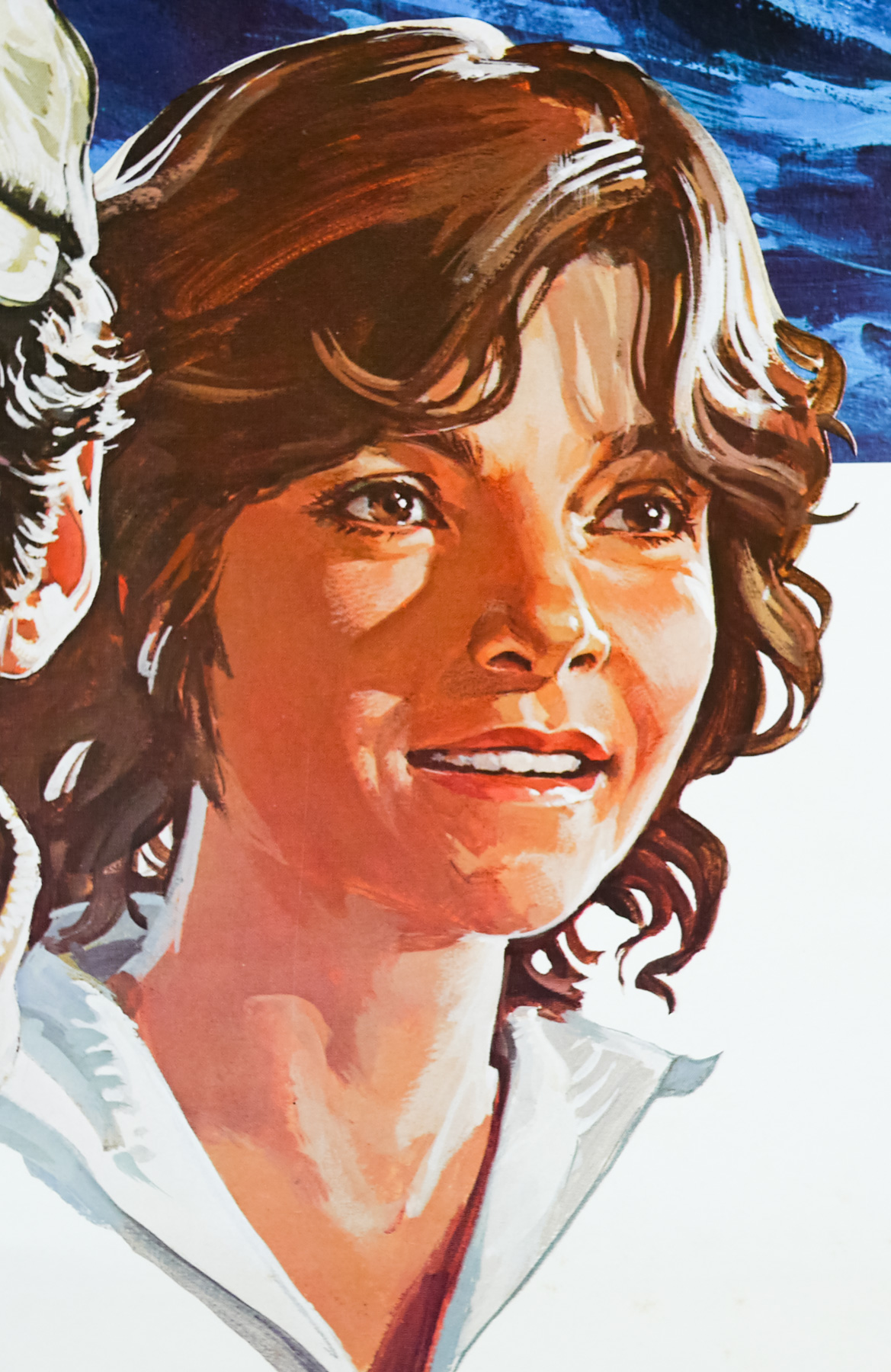
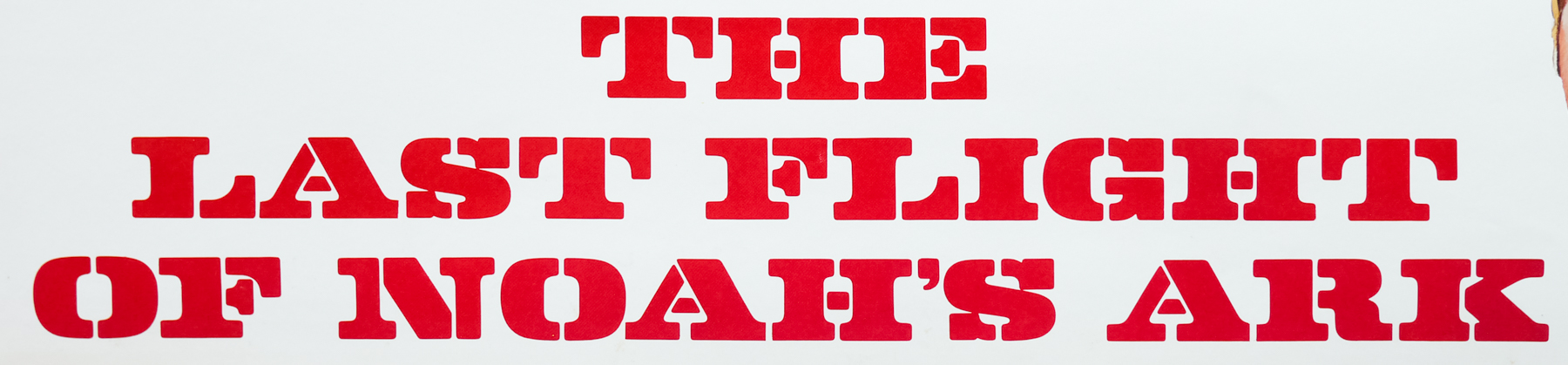
A little-seen live-action Disney production, The Last Flight of Noah’s Ark stars Elliott Gould as Noah Dugan, a jaded pilot with gambling debts who agrees to fly an ageing B-29 bomber to a remote South Pacific island. The plane is filled with a cargo of animals and a missionary called Bernadette Lafleur (played by French-Canadian actress (Geneviève Bujold). Just before the flight takes off, a pair of young orphans who the missionary has been caring for sneak onboard because they don’t want to be parted from the animals.

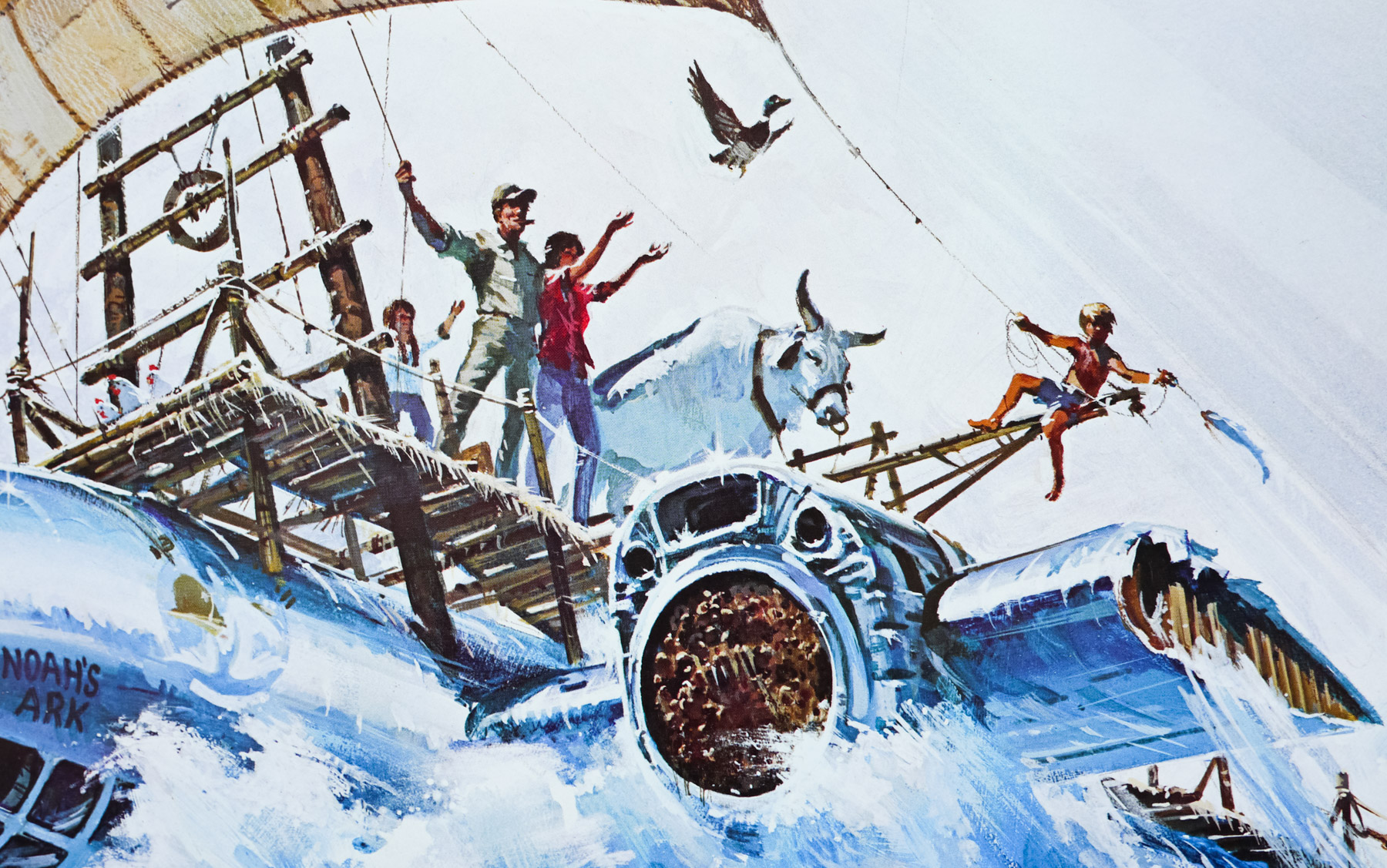
When the plane goes badly off course Dugan is forced to crash land on an uncharted island. After surviving the landing, the group discover that a pair of Japanese soldiers have been guarding the island for 35 years, believing that World War II is still ongoing. After initial hostilities, they eventually befriend the castaways and agree to help them convert the plane into a raft to sail back to civilisation. The group soon set off on the perilous voyage with the surviving animals onboard.

The film received mixed reviews and failed to gain much traction at the box office. Whilst it did receive a brief cinema release in the UK and a release on VHS back in the early 1980s, it has been unavailable since then.

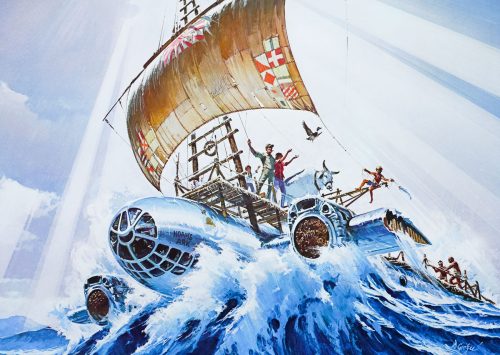
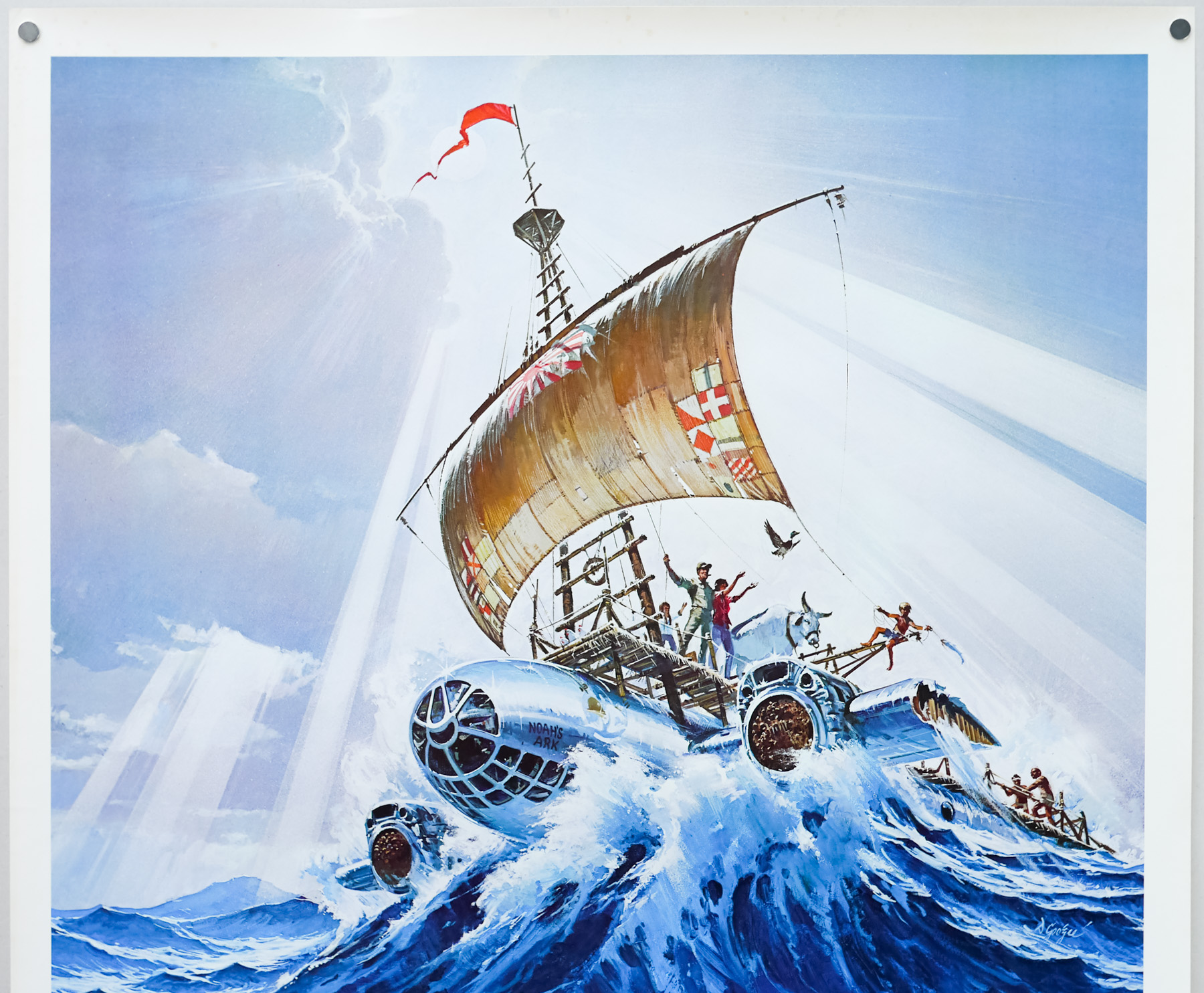
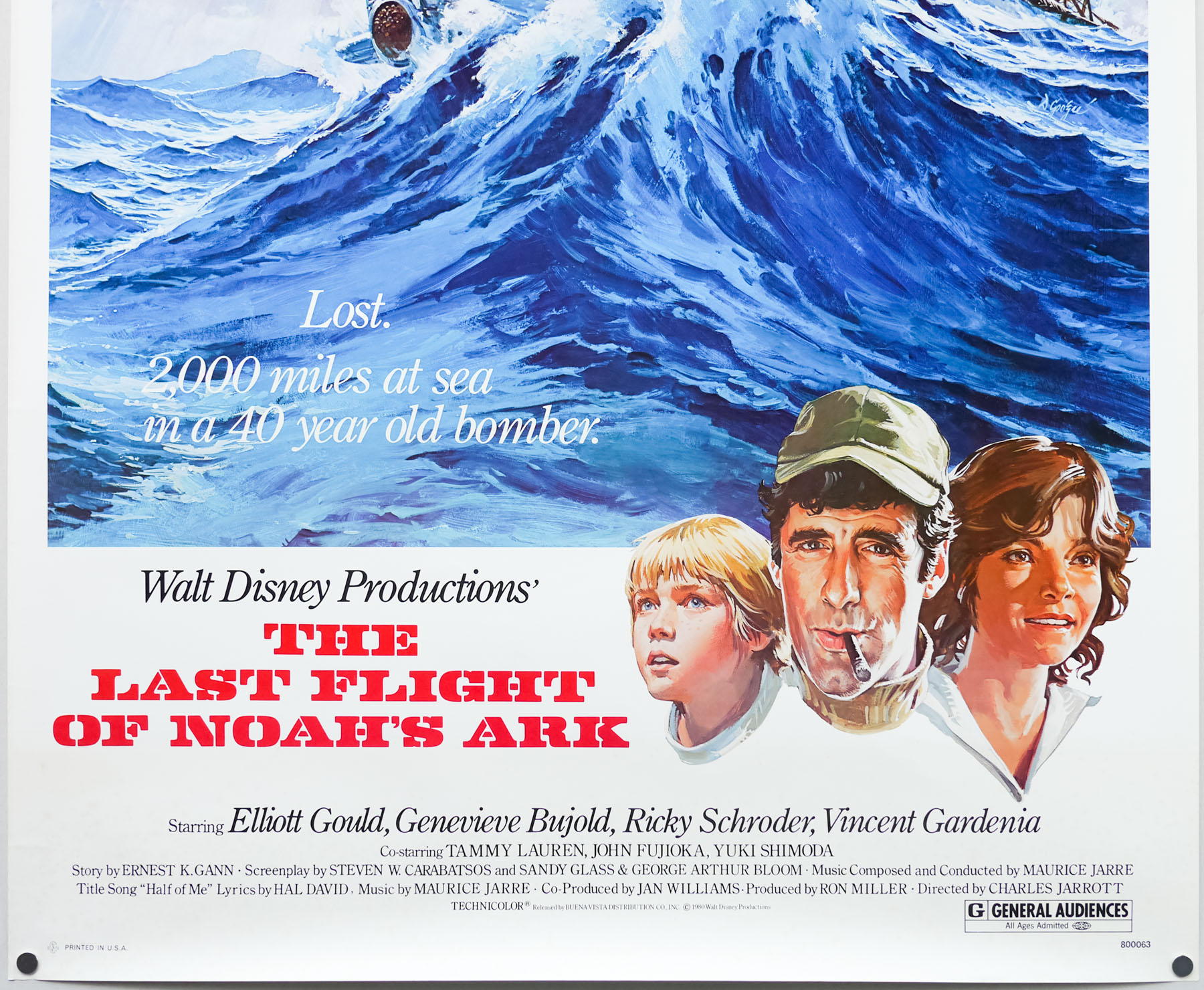
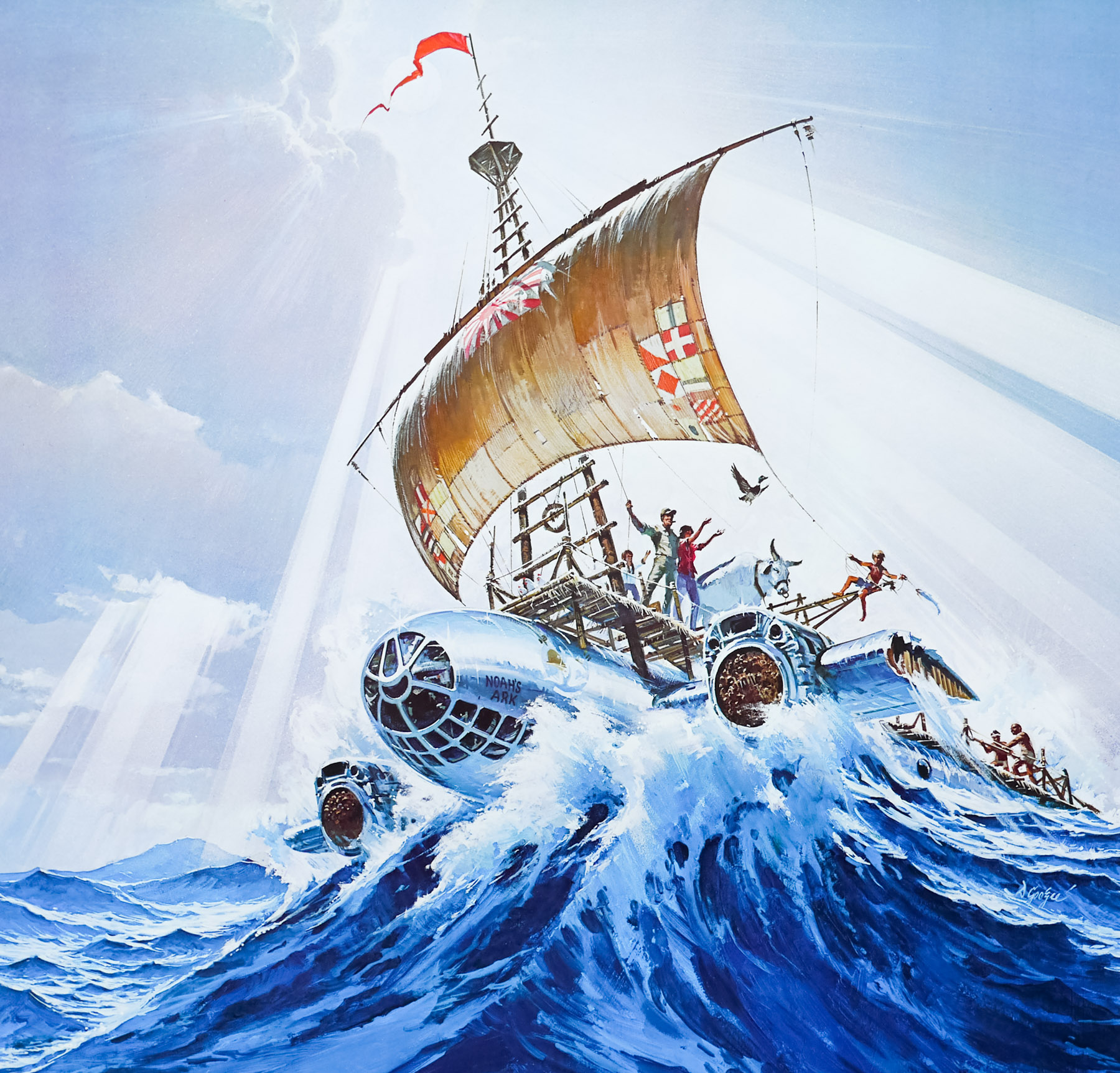
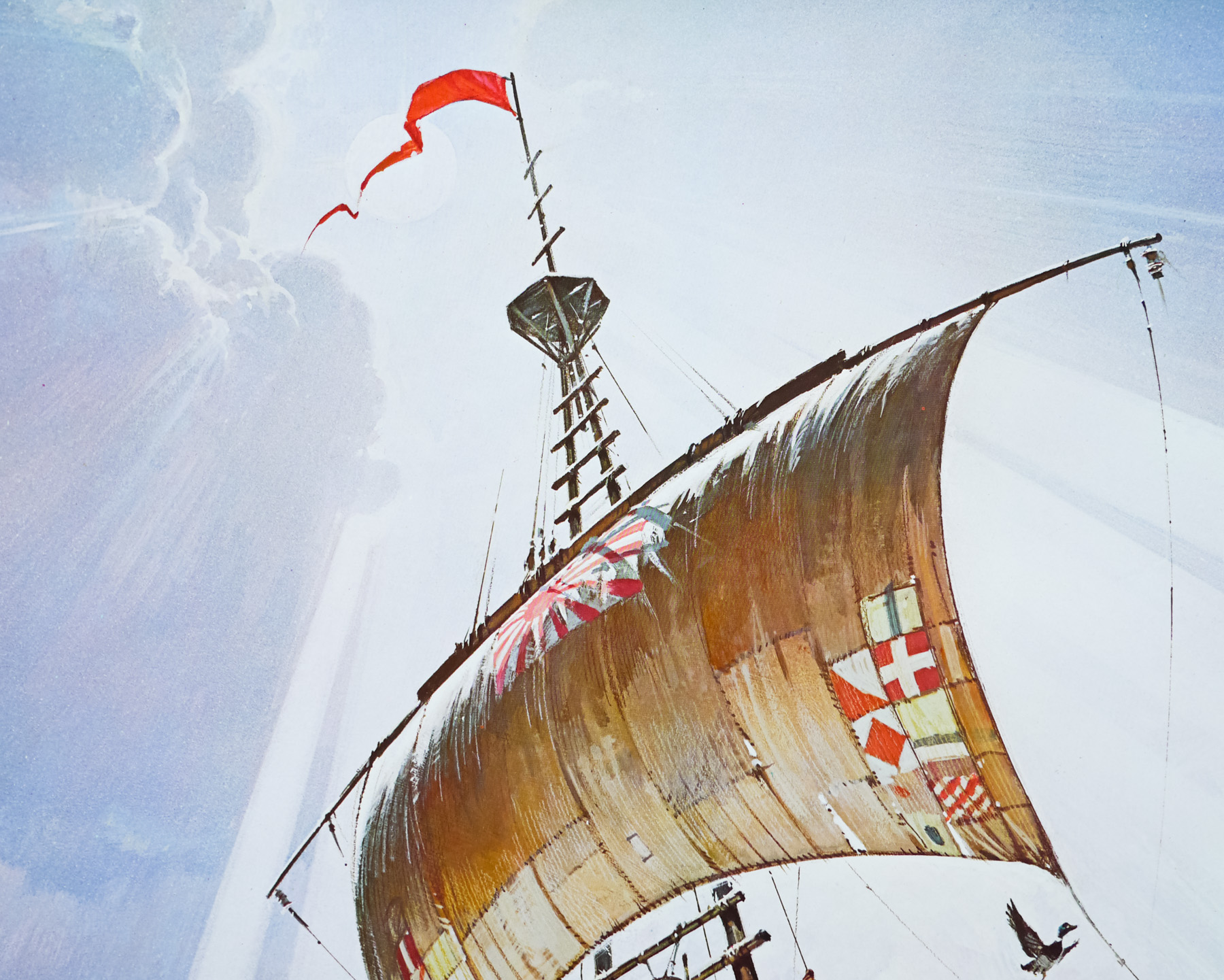
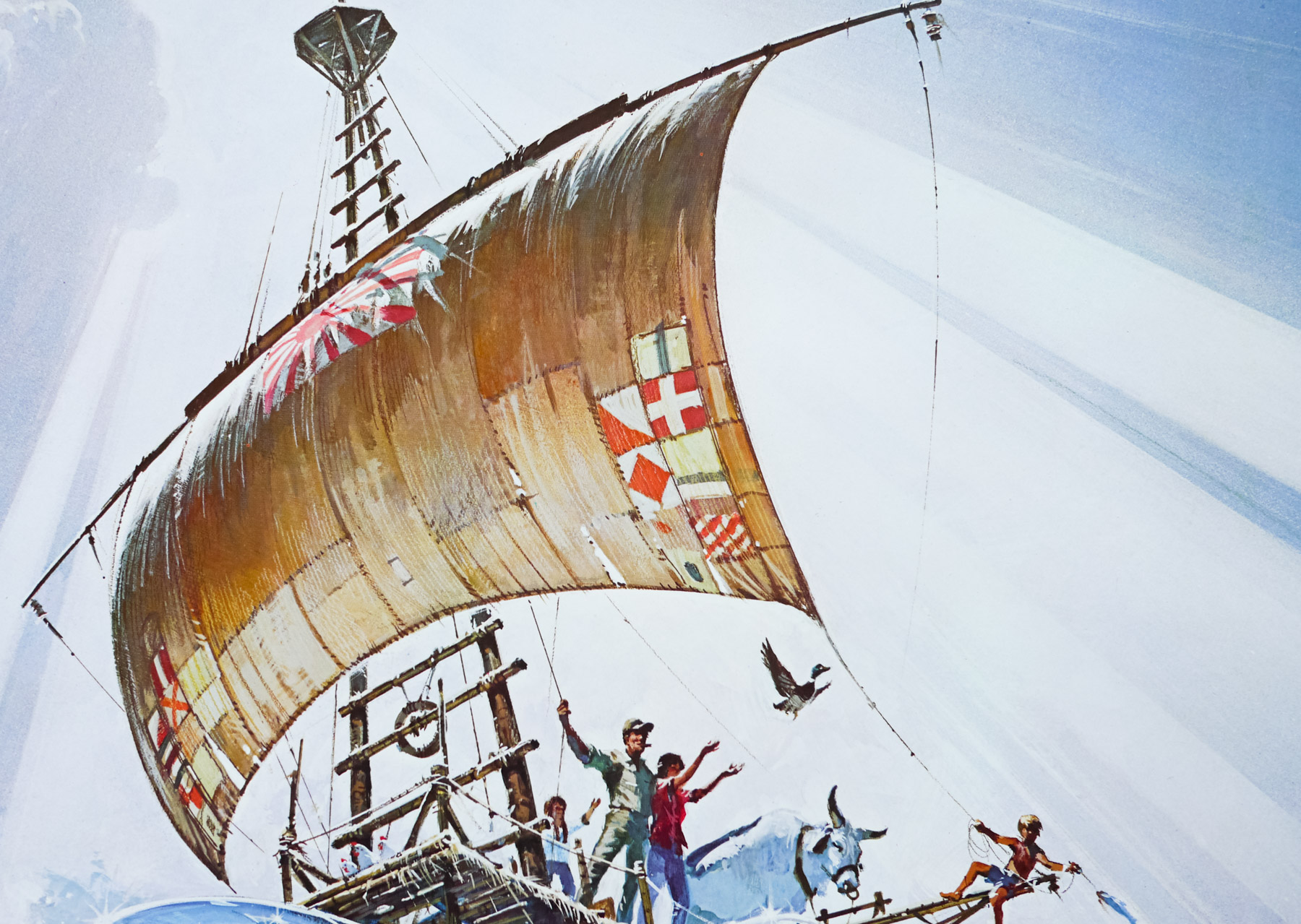
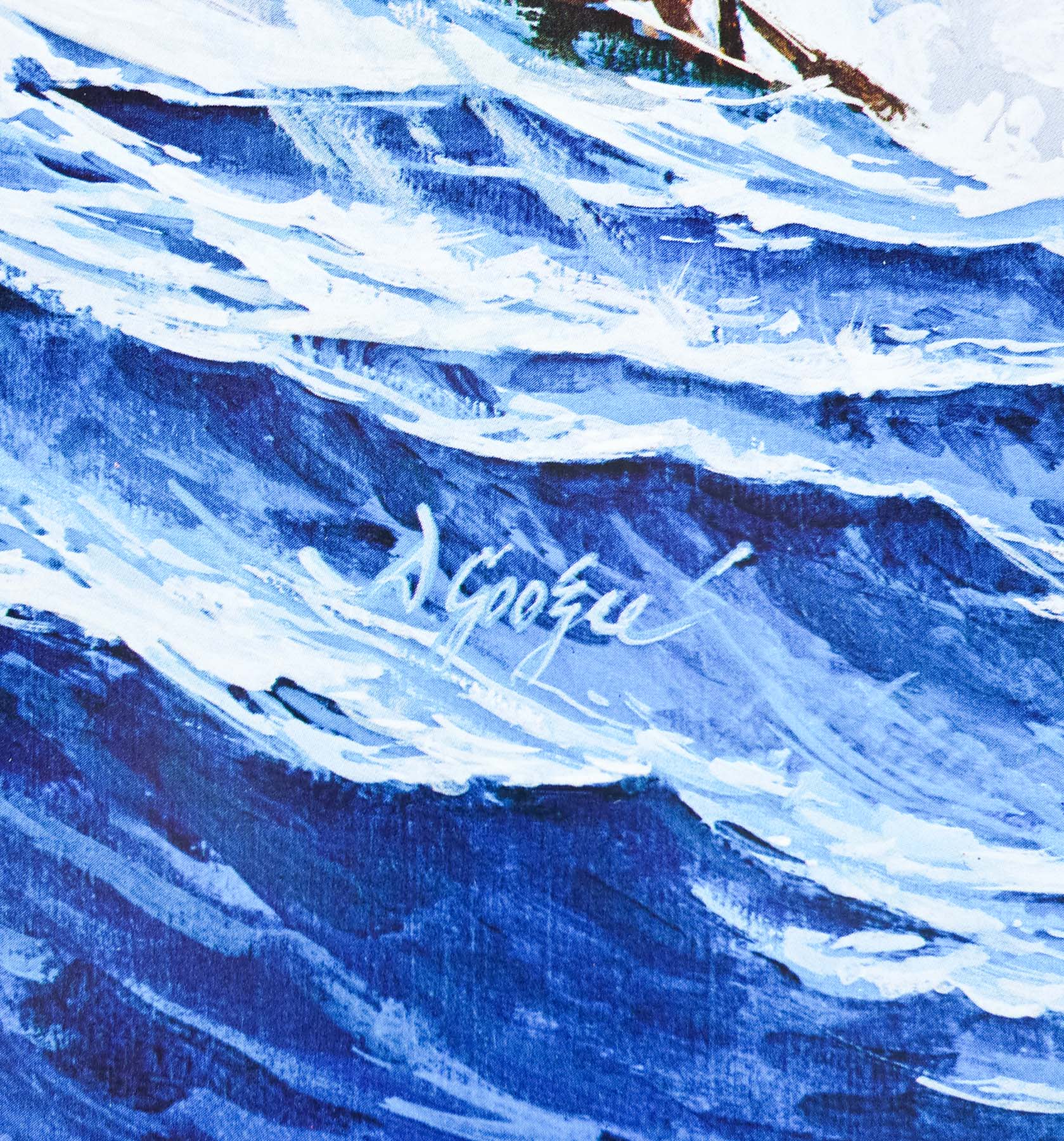
The artwork is by American poster artist Dan Goozee who was also responsible for a few Bond posters, including Moonraker and Octopussy, as well as several other classic posters from the 1980s. The other designs I’ve collected by him can be seen here.
Weird Science / one sheet / USA

09.04.14

Poster Poster
Title
Weird Science
AKA
La chica explosiva (Argentina)
Year of Film
1985
Director
John Hughes
Starring
Anthony Michael Hall, Kelly LeBrock, Ilan Mitchell-Smith, Bill Paxton, Suzanne Snyder, Judie Aronson, Robert Downey Jr., Robert Rusler, Vernon Wells, Britt Leach, Barbara Lang, Michael Berryman
Origin of Film
USA
Genre(s) of Film
Anthony Michael Hall, Kelly LeBrock, Ilan Mitchell-Smith, Bill Paxton, Suzanne Snyder, Judie Aronson, Robert Downey Jr., Robert Rusler, Vernon Wells, Britt Leach, Barbara Lang, Michael Berryman,
Type of Poster
One sheet
Style of Poster
--
Origin of Poster
USA
Year of Poster
1985
Designer
Tom Jung
Artist
Duane Meltzer
Size (inches)
27 1/16" x 40 14/16"
SS or DS
SS
NSS #
850065
Tagline
It's all in the name of science. Weird Science.
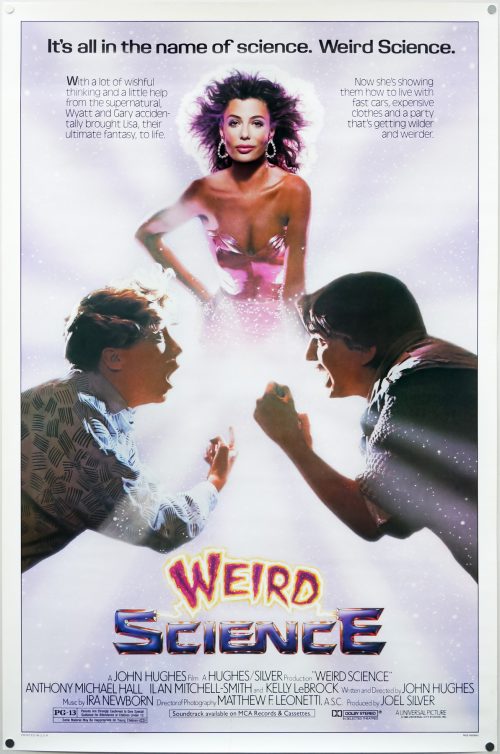
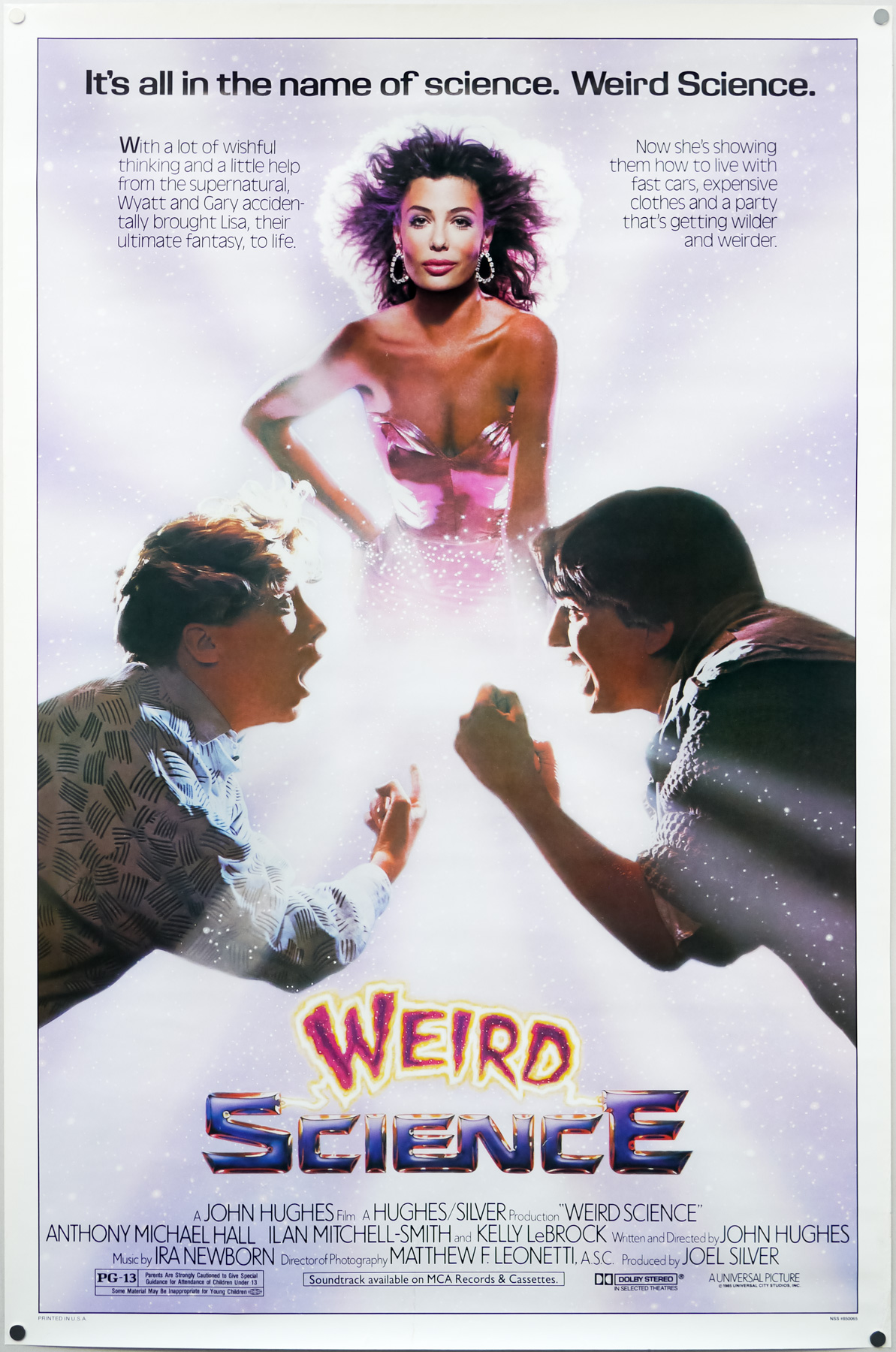
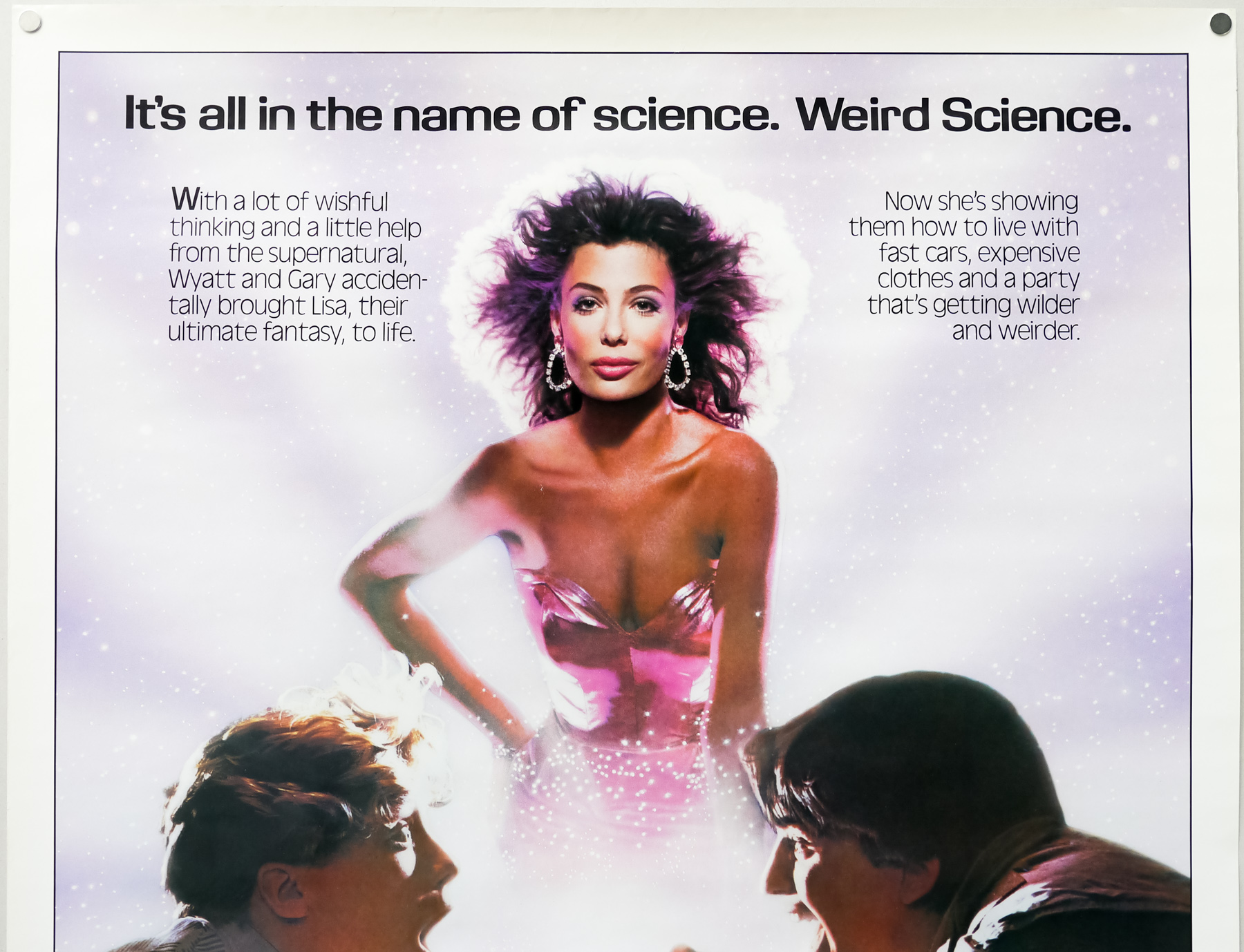
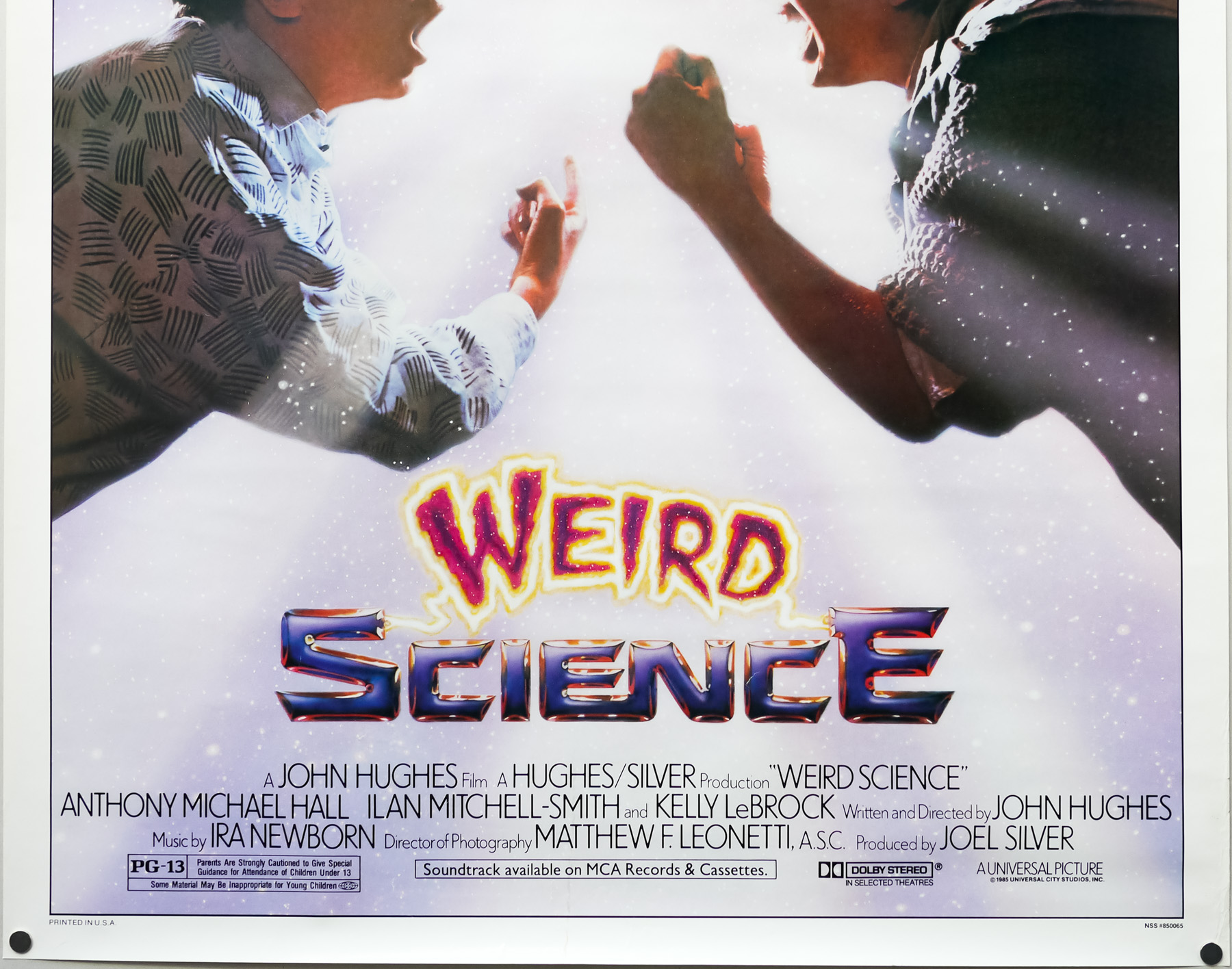
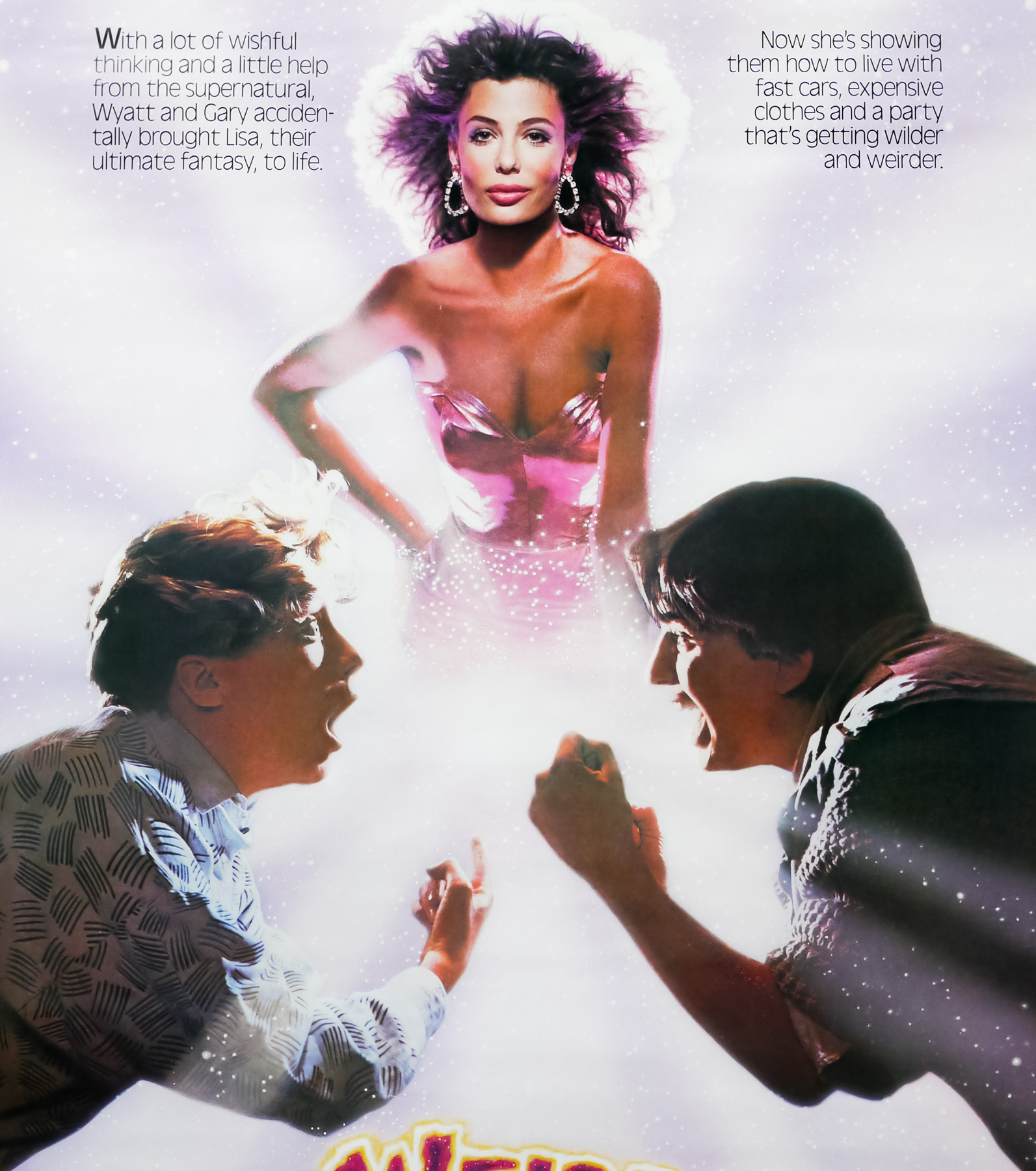
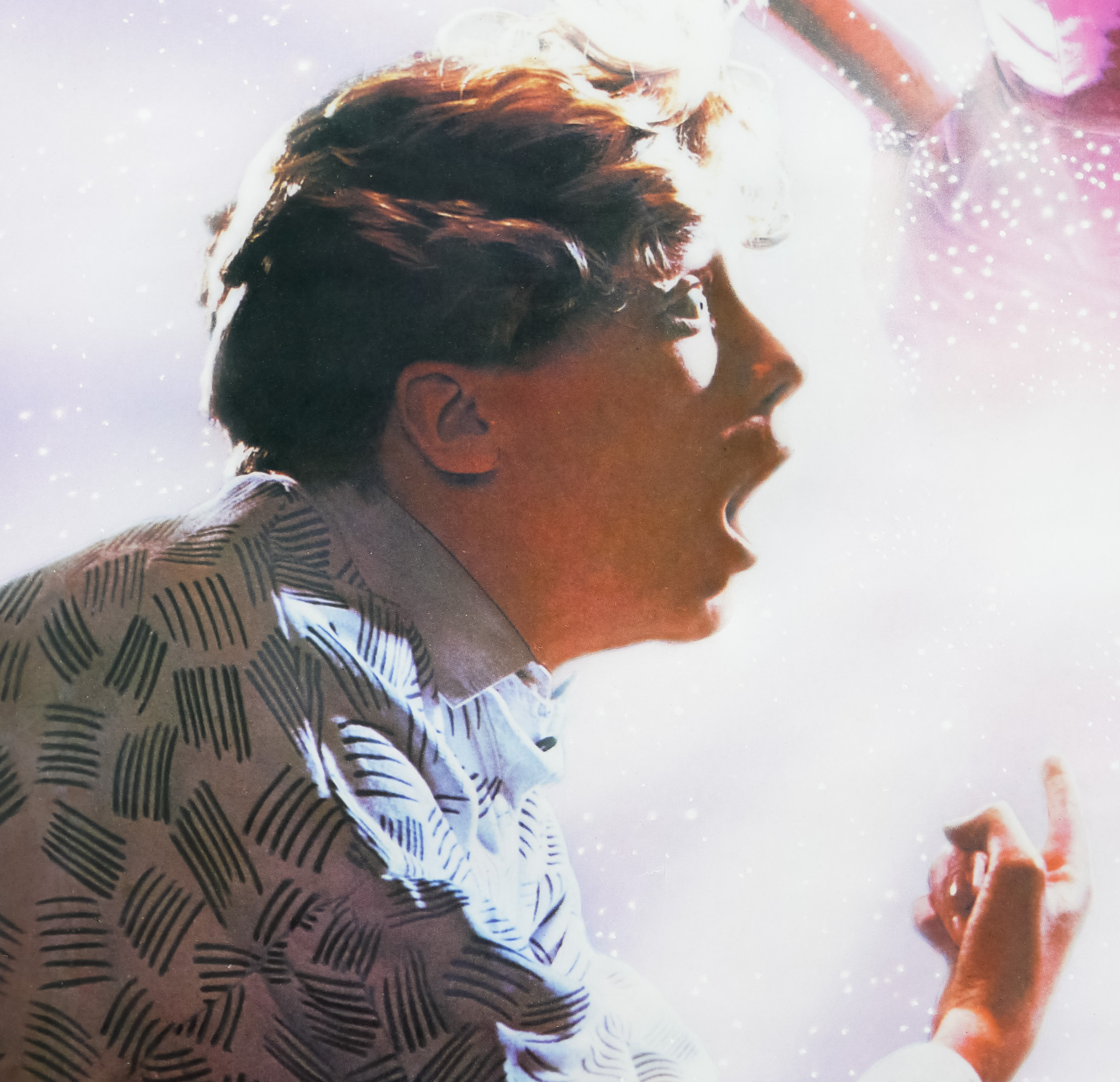
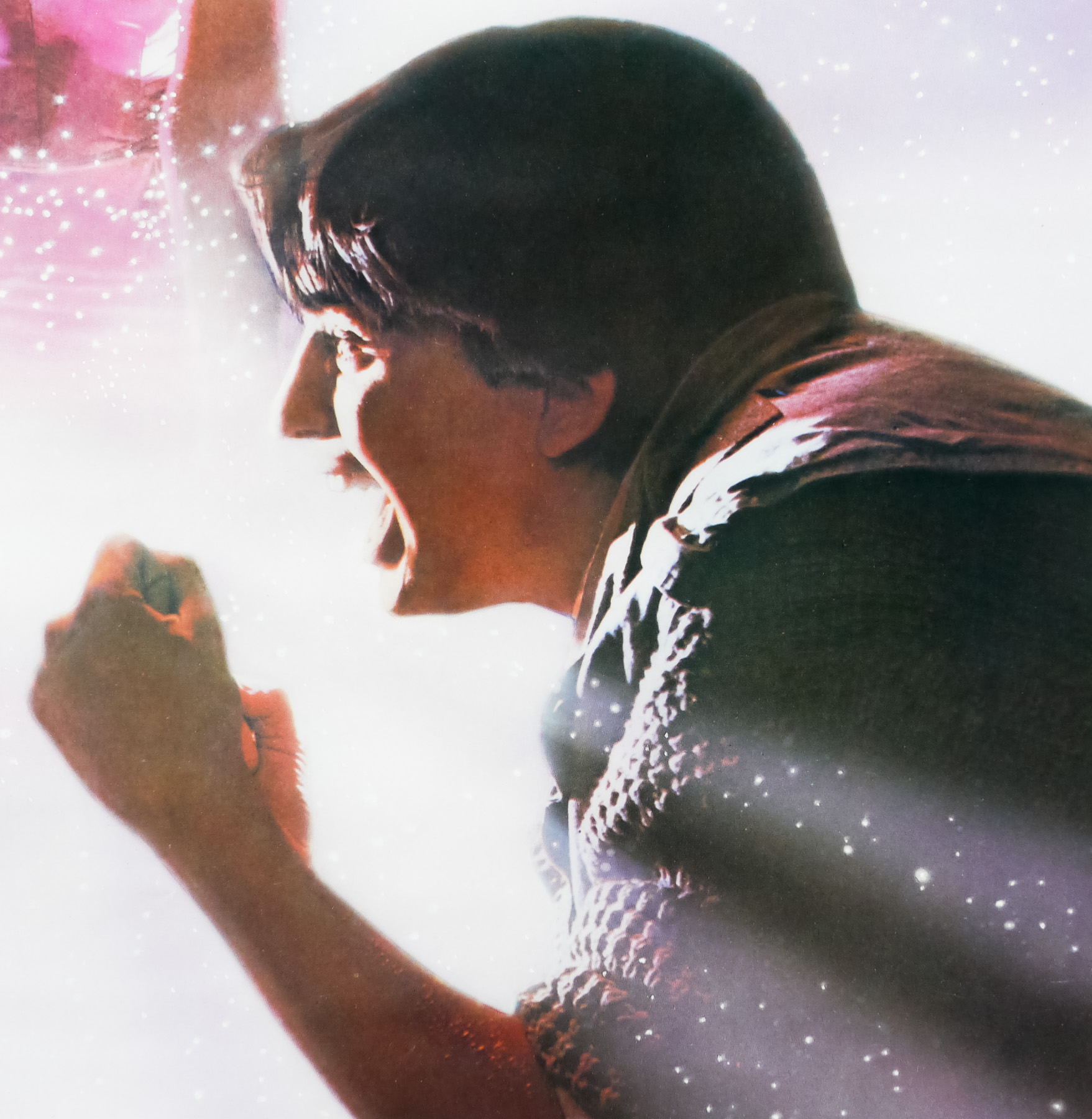
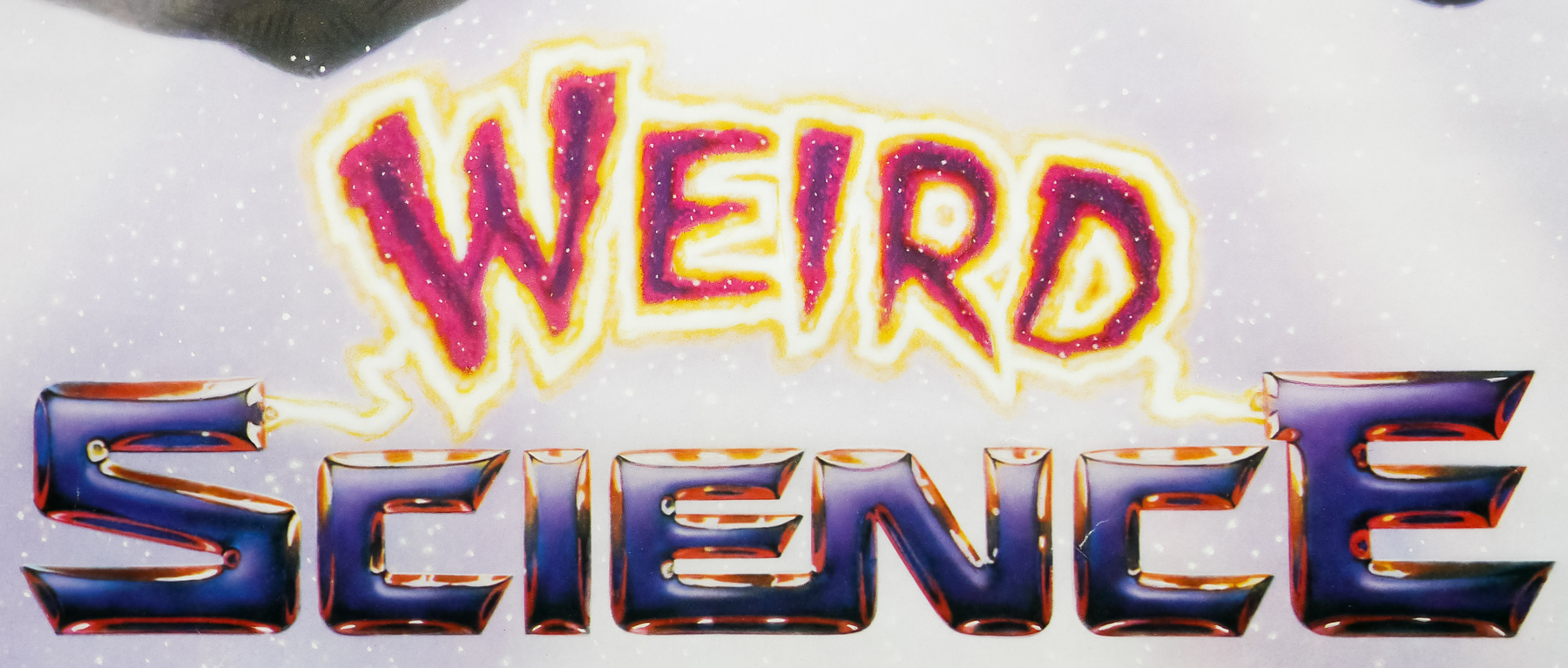
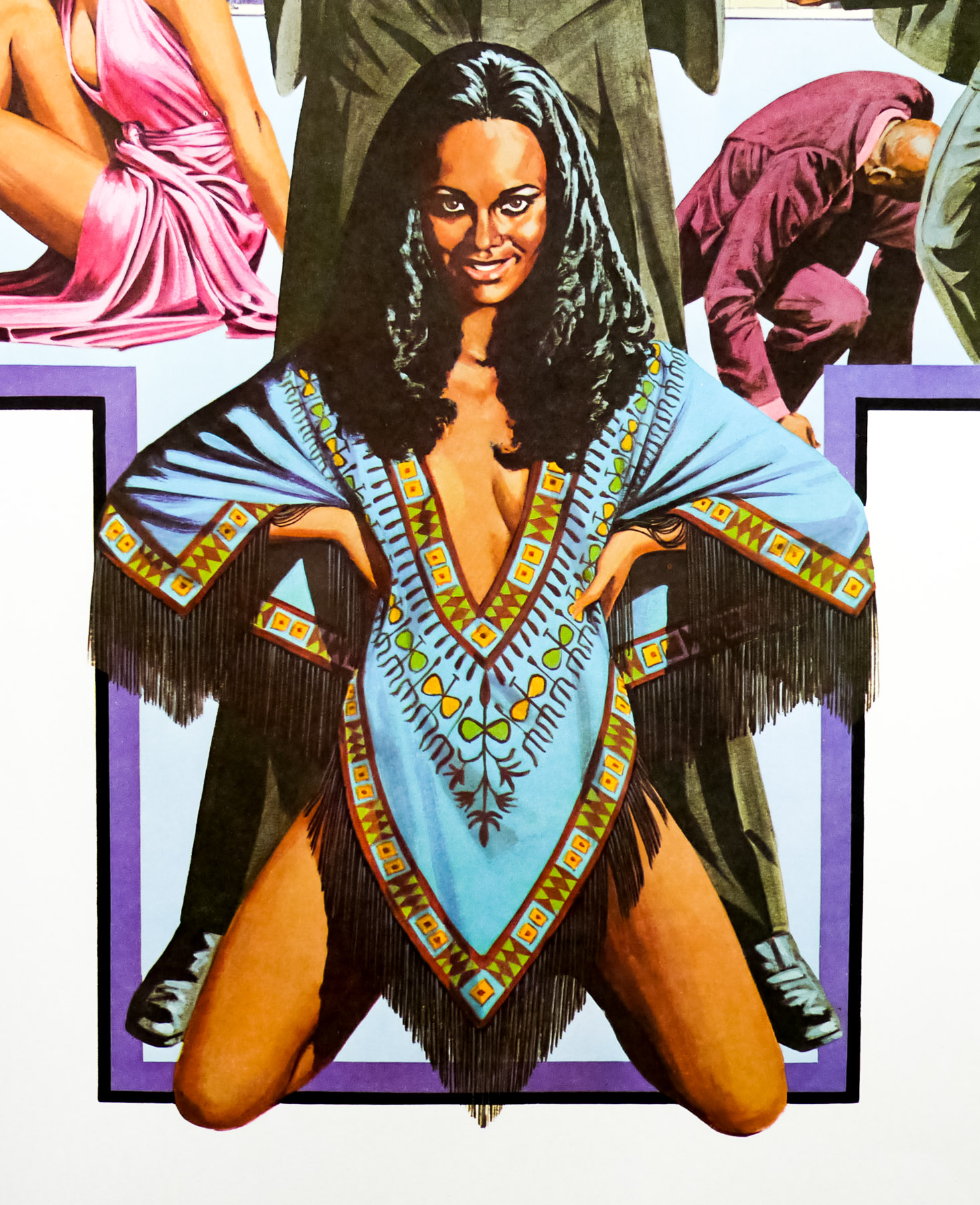
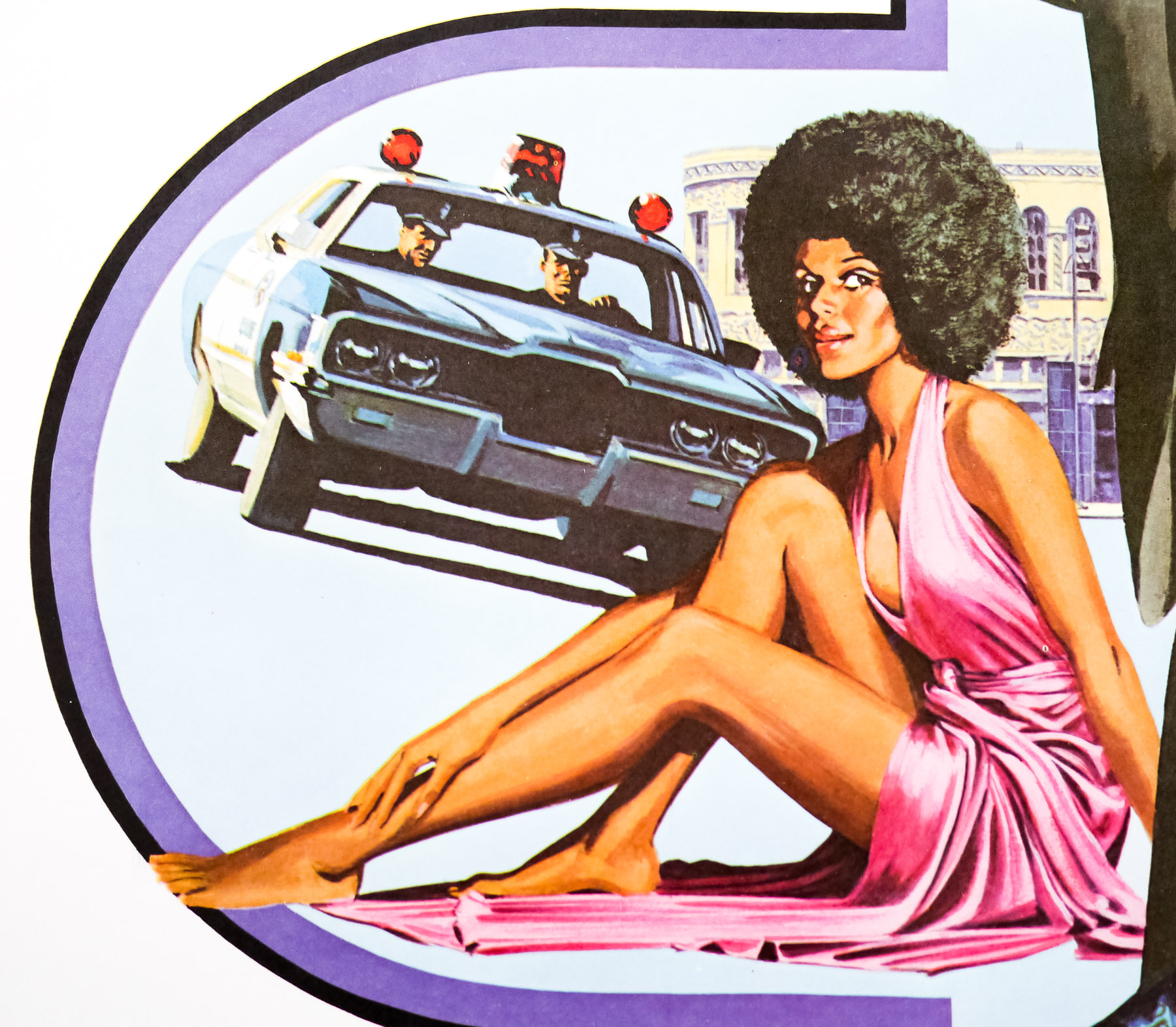
This is the American one sheet for Weird Science, the bonkers 1980s comedy from the late, great director John Hughes. Producer Joel Silver bought the rights to a 1950s EC Comics magazine of the same name and Hughes wrote the screenplay himself. Anthony Michael Hall, a regular colaborator with the director (he appeared in Breakfast Club the same year as Weird Science) stars alongside Ilan Mitchell-Smith as Gary and Wyatt, a pair of high-school nerds who are struggling to be accepted by their peers.

One evening the pair decide to try and create their perfect woman, inspired by a viewing of the classic Frankenstein film and using their computer coding skills. Following a series of improbable incidents, including a lightning strike and the pair’s successful hacking into a government mainframe computer (classic 80s nonsense), the gorgeous Lisa (an unforgettable appearance by Kelly LeBrock) steps out of their bathroom and asks “So, what would you little maniacs like to do first?” The rest of the film sees Lisa using various supernatural skills, including memory manipulation and reality warping to help the boys lose their inhibitions and gain the friendship of their school peers. The film features several madcap sequences, including the moment a bunch of psychotic bikers led by Vernon Wells (of Mad Max 2 fame) crash a house party, and Bill Paxton appears in a memorable turn as Wyatt’s brother Chet.

This one sheet was art directed by the American designer and artist Tom Jung who is perhaps most famous for his work on the posters for Star Wars and The Empire Strikes Back but has been working on film advertising for over 50 years, as well as storyboarding for a number of films. The artwork (Lisa’s body appears to have been painted, and the title too) was apparently done by an artist and designer called Duane Meltzer who worked at Universal Studios at the time of the film’s release. According to the about page on his official website he also worked as a creative at Twentieth Century Fox studios before forming POV Entertainment Design in 1988. He has continued to work on key art for films, as well as home entertainment packaging and more since then.

Phantom of the Paradise / 30×40 / USA

15.04.14

Poster Poster
Title
Phantom of the Paradise
AKA
--
Year of Film
1974
Director
Brian De Palma
Starring
William Finley, Paul Williams, Jessica Harper, Gerrit Graham, George Memmoli, Archie Hahn, Jeffrey Comanor, Peter Elbling
Origin of Film
USA
Genre(s) of Film
William Finley, Paul Williams, Jessica Harper, Gerrit Graham, George Memmoli, Archie Hahn, Jeffrey Comanor, Peter Elbling,
Type of Poster
30x40
Style of Poster
Style C
Origin of Poster
USA
Year of Poster
1974
Designer
Neal Adams (original sketch)
Artist
Richard Corben
Size (inches)
30" x 40"
SS or DS
SS
NSS #
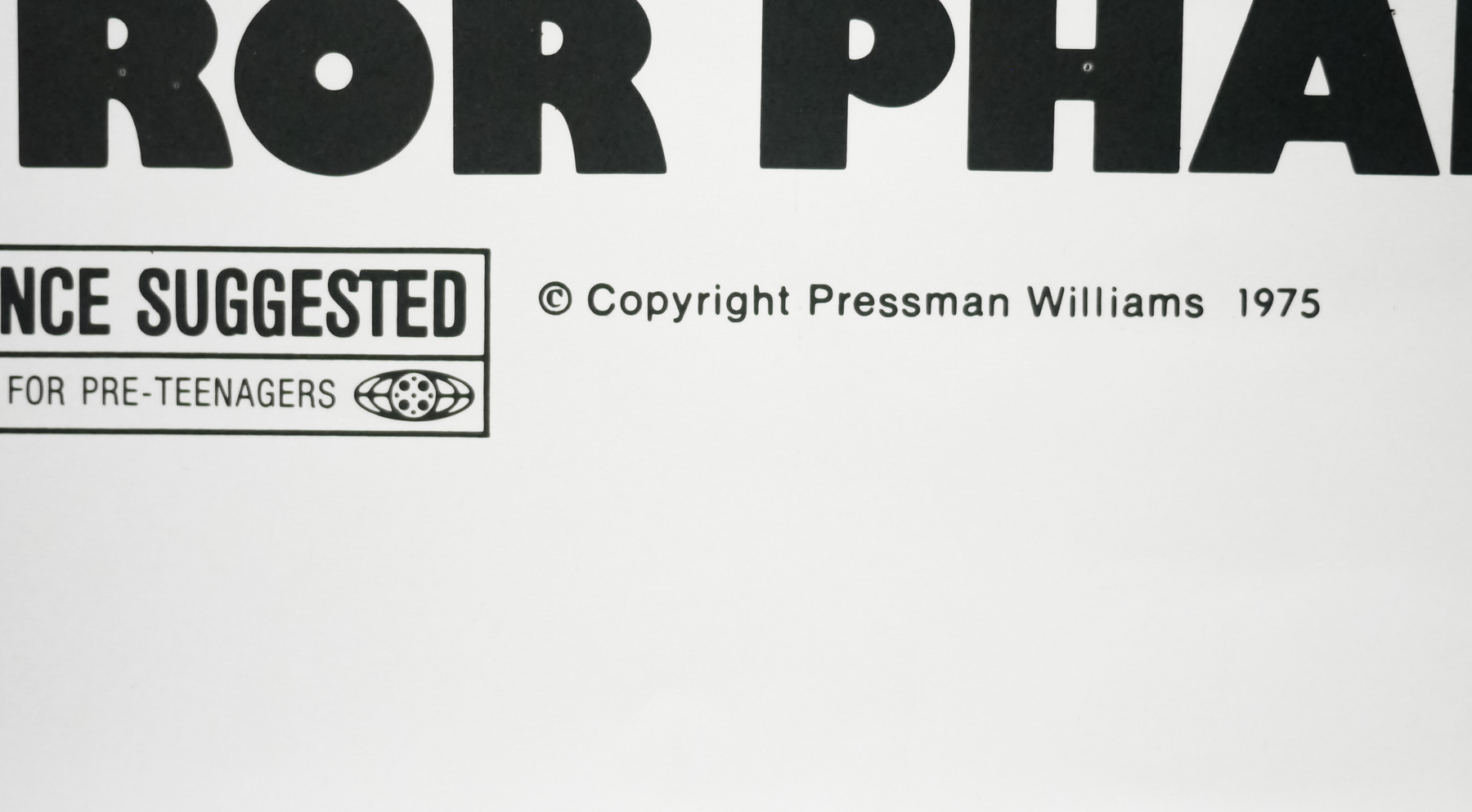
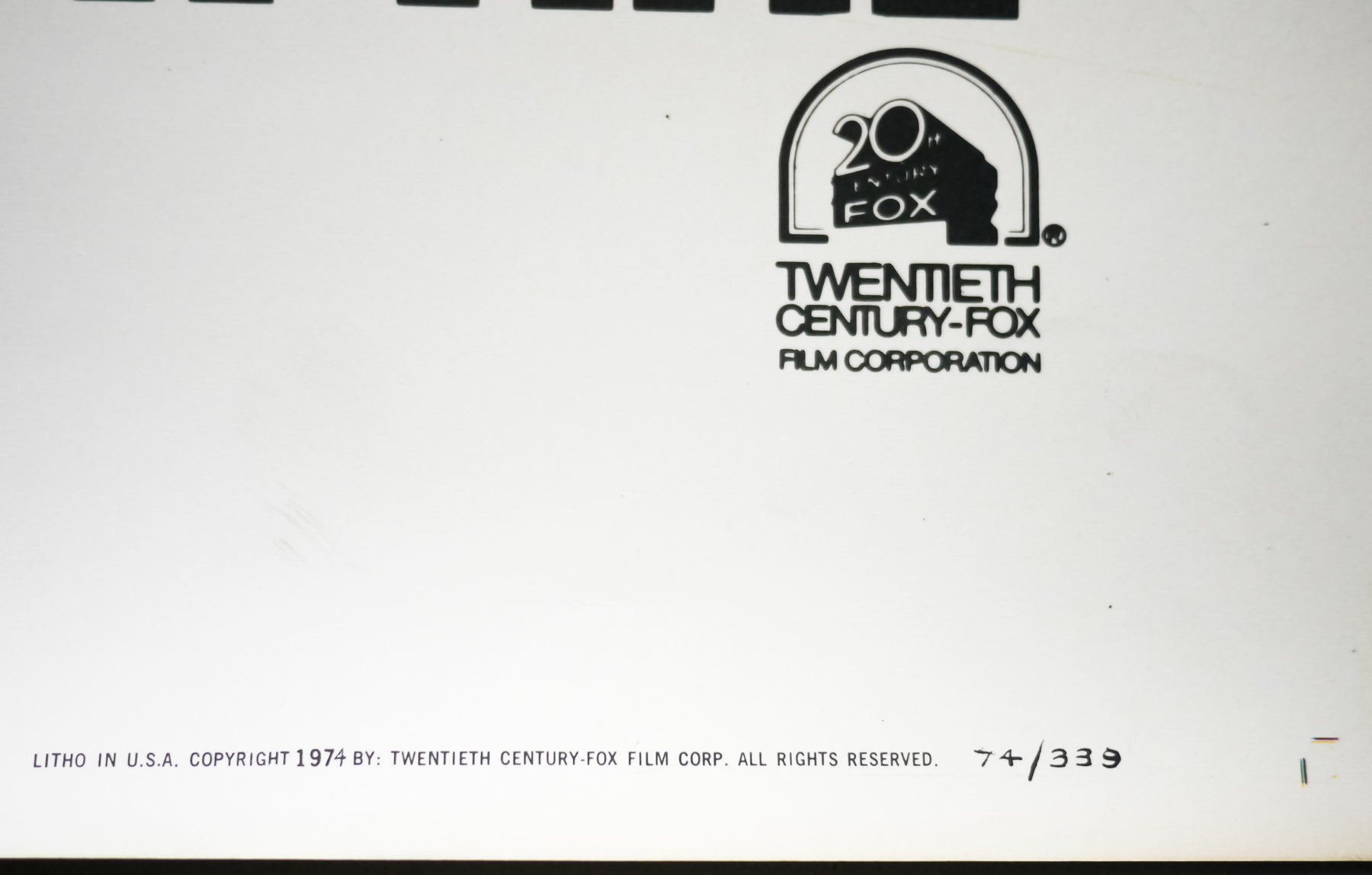
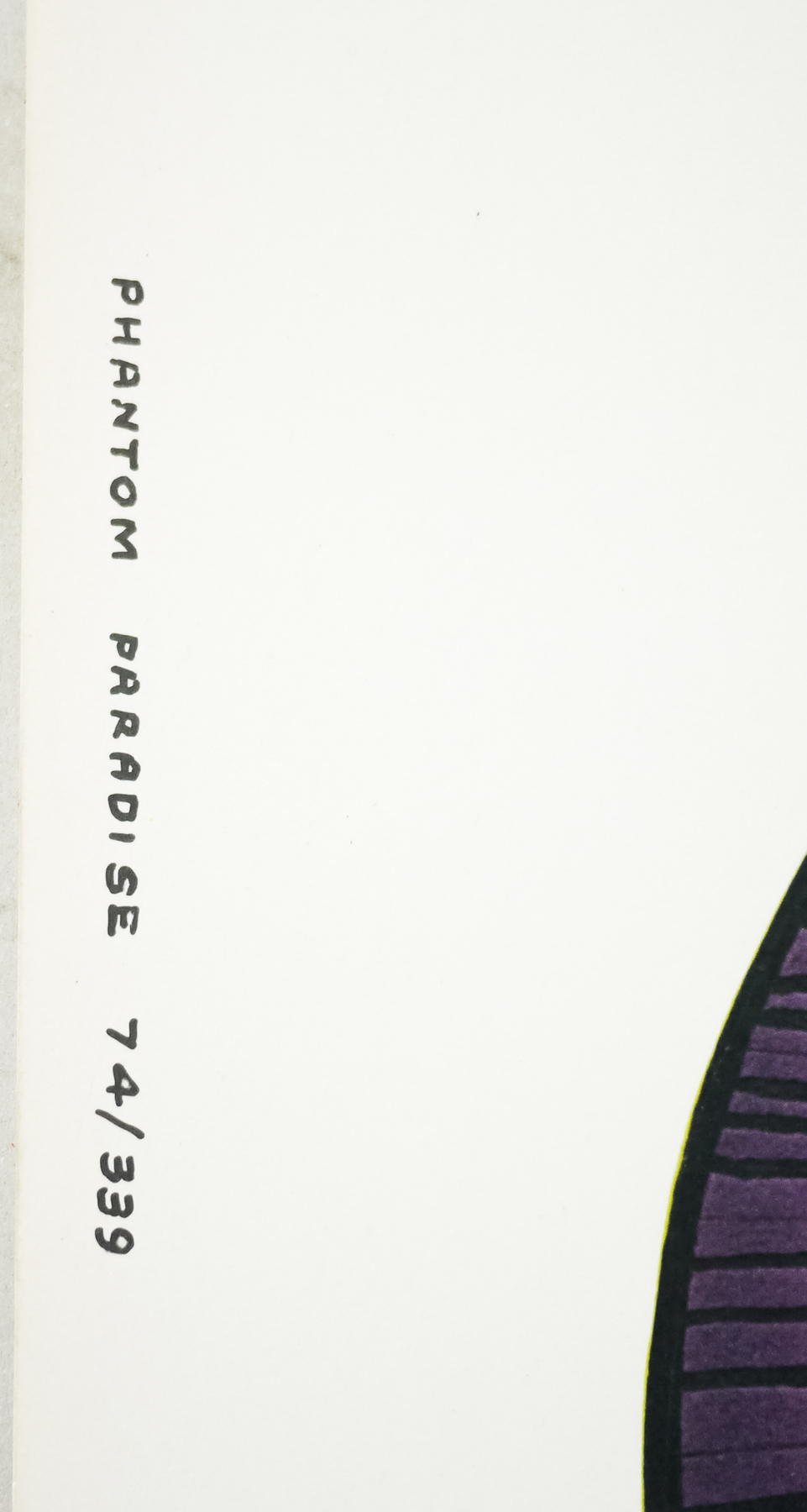
74/339
Tagline
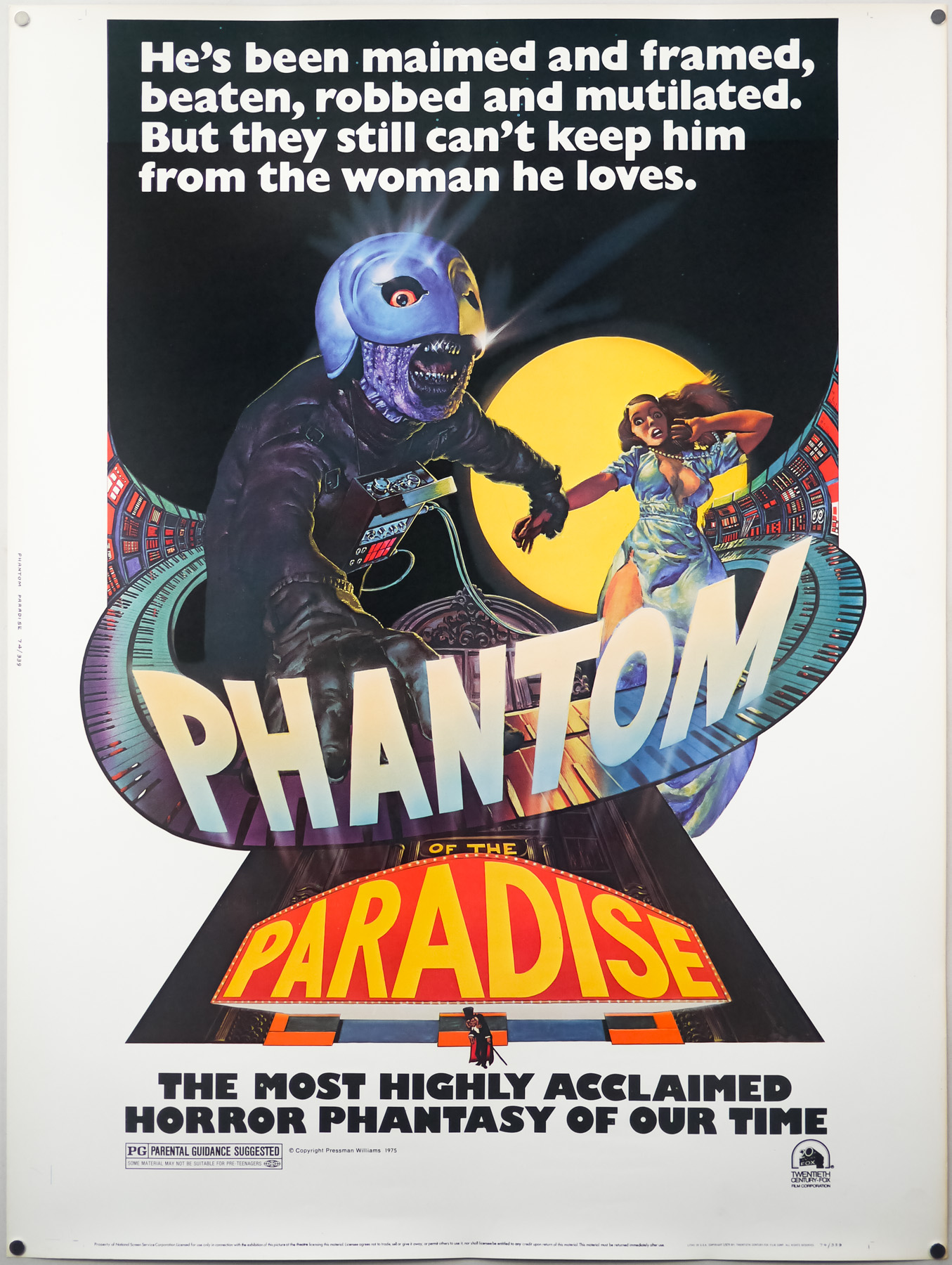
He's been maimed and framed, beaten, robbed and mutilated. But they still can't keep him from the woman he loves. | The most highly acclaimed horror phantasy of our time.

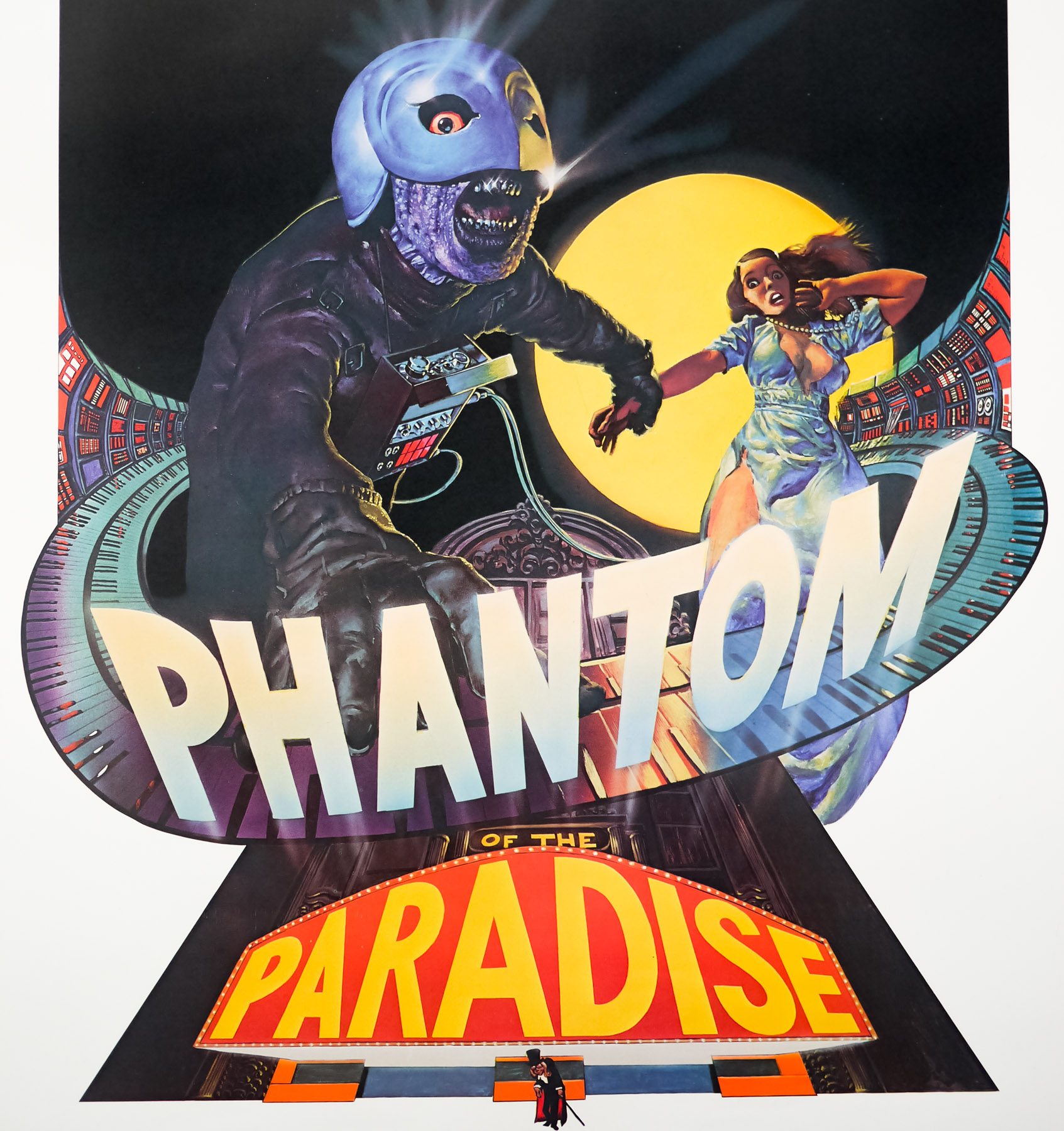
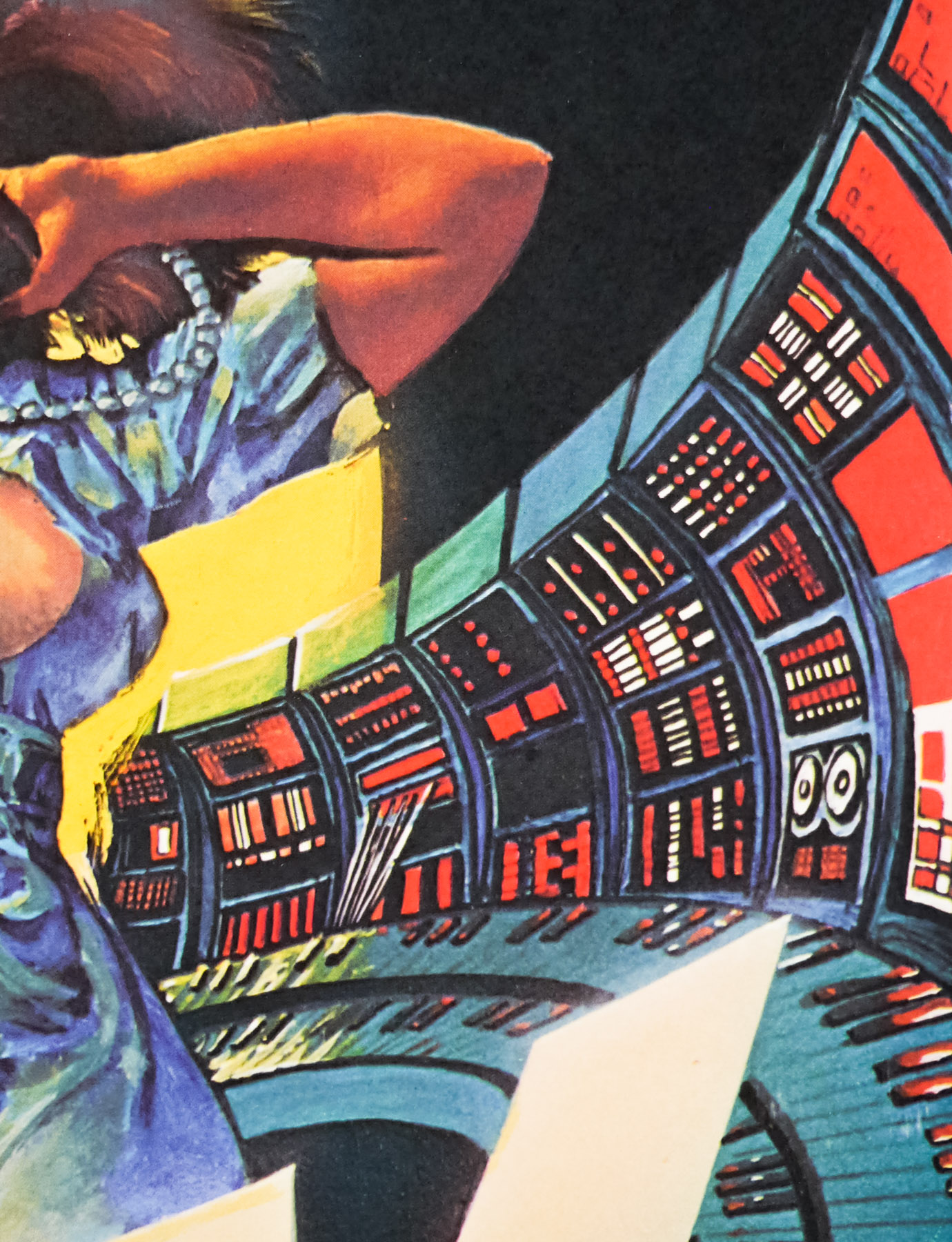
Brian De Palma’s Phantom of the Paradise is arguably one of cinema’s greatest cult oddities. Part musical, part horror and loosely based on Phantom of the Opera and the classic tale of Faust, the film has an electric atmosphere helped no end by the performance of the late William Finley as the unlucky music composer Winslow Leach who falls foul of the twisted producer Swan (Paul Williams, himself a noted musician and composer). A twisted satire of the state of the music business of the time, the film features a superb soundtrack written by Williams, which is a mix of surf pop, 70s glam rock and romantic ballads.

When Swan sees Winslow performing his music at a small concert he convinces the composer to sell his tunes to him to be used at the opening of his new club, The Paradise. Instead Swan has one of his henchmen steal the music, beat Winslow up and frame him for drug possession, sending the mild mannered musician to the brutal Sing Sing prison. Months later Winslow hears that one of Swan’s bands is to release a record based on his music and breaks out of the prison in a frenzied rage. After heading to Swan’s Death Records factory he tries to sabotage a record press but accidentally falls head-first into it, severely scarring his face and damaging his vocal chords. Escaping from the police, he makes his way to the Paradise where he dons a cape and a beaked mask and becomes the Phantom of The Paradise. Soon he discovers the secret behind Swan’s success and sets out to stop him at all costs.

The film was met with mixed critical reviews and was a worldwide box-office flop, with the only exceptions being in Japan and, bizarrely, Winnipeg in Canada where the film played at the same cinema for months. One of the key reasons for the film’s disastrous commercial performance was the way it had initially been marketed by studio Twentieth Century Fox who had created a campaign that emphasised the rock aspect of the film with the intention of drawing in teenage music fans. The plan backfired, however, when initial audiences realised how negative the portrayal of the music industry is in the film was and how it was effectively sending up the very thing they were fans of.

The brilliant fan site The Swan Archives, curated by Ari Kahan, features a thorough history of the promotion of the film and shows the initial two styles of poster, one of which was designed by Anthony Goldschmidt and illustrated by the late John Alvin and also featured on the album cover. As Kahan notes:

‘The involvement of A&M records (which issued the soundtrack, and which more or less owned the exclusive rights to Paul Williams’ life at the time) in the co-marketing campaign with 20th Century Fox meant that the film was initially pitched towards what A&M and Fox believed to be the teens-through-college “rock music demographic.” John Alvin’s beautiful painted graphics on the posters and soundtrack album emphasised guitars, keyboards, microphones, patch cords, and other musical ephemera, and a photorealistic depiction of songwriter/star Paul Williams, signalling the studio’s intention to rely heavily on Williams’ existing fame in its promotion of the film.’

The rest of the ill-conceived initial campaign is detailed on the Swan Archives page linked to above. After a disastrous few months at the box office, the film’s producer Ed Pressman convinced the studio to allow him to reposition the film with a revised marketing campaign. Kahan explains:

‘Pressman went into action by launching a second campaign, in mid-1975, which tagged the film as “The Most Highly Acclaimed Horror Phantasy of Our Time,” pushing the horror angle and perennial plot line, and downplaying the music. De Palma, Finley, and Graham were made extremely available to give interviews to Castle of Frankenstein, Monster World, and every other horror magazine that would make time for them’

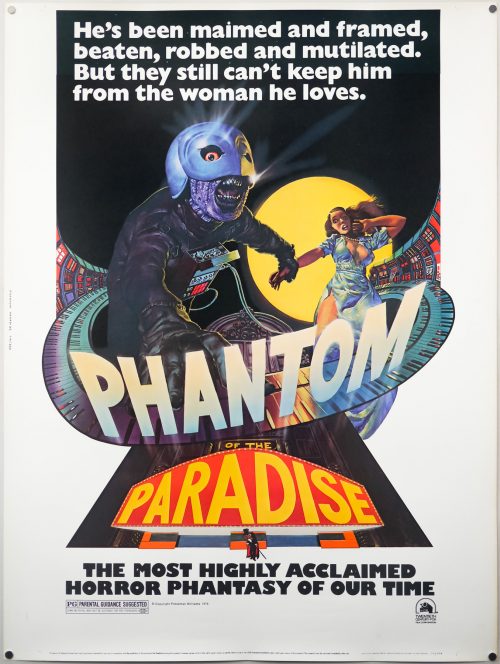
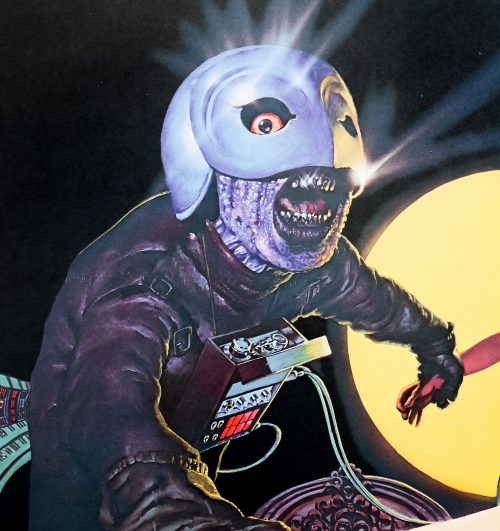
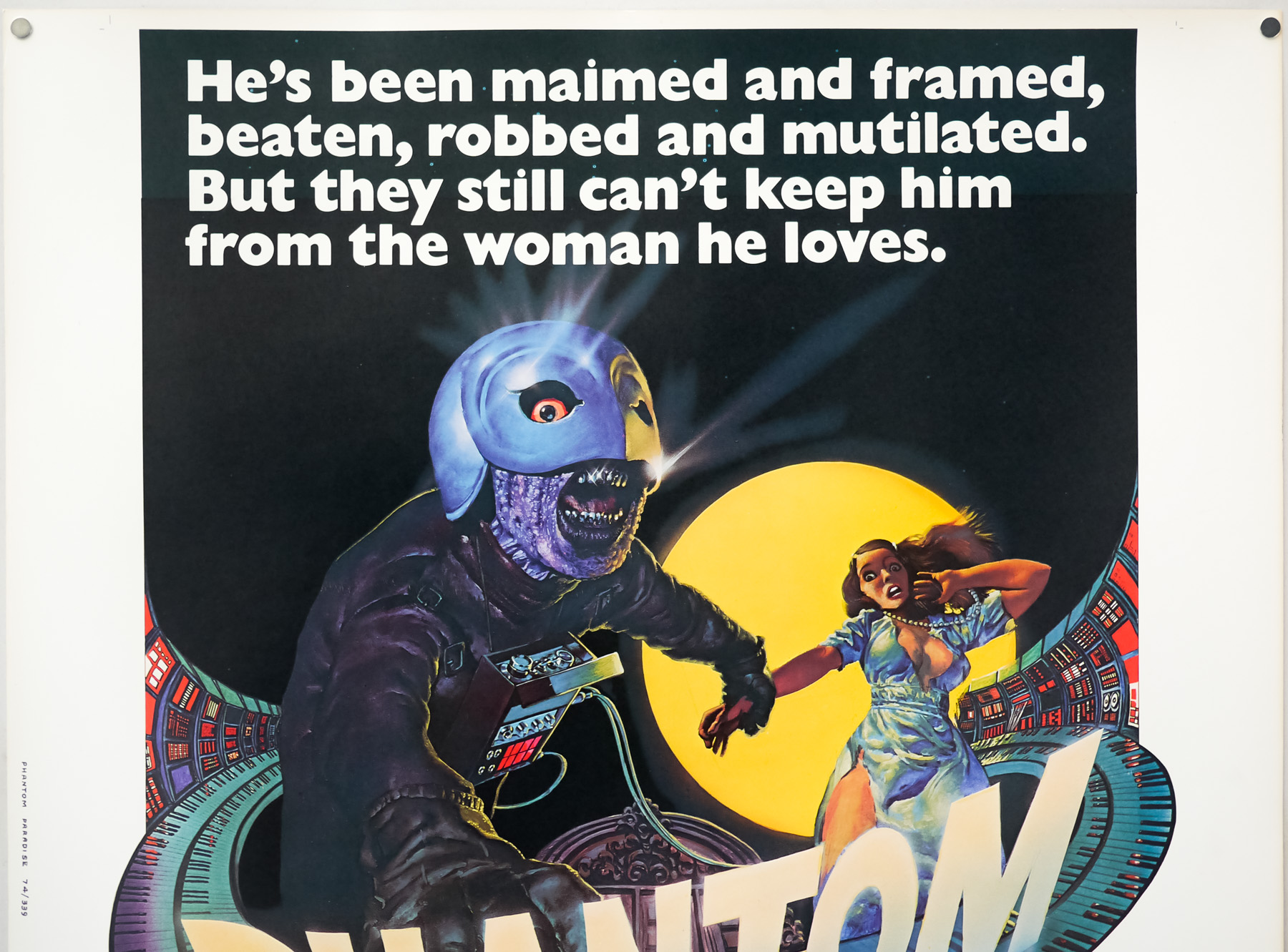
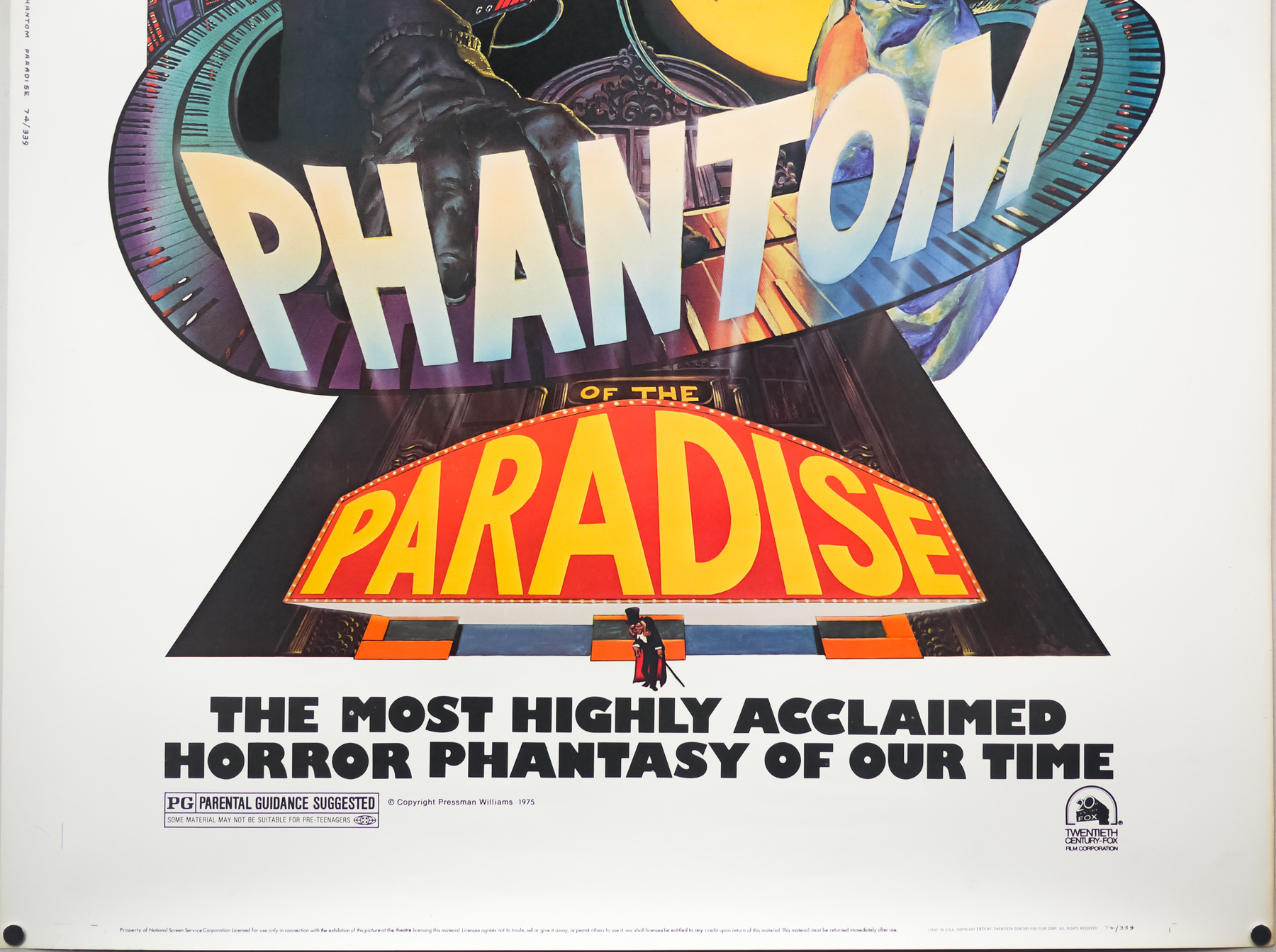
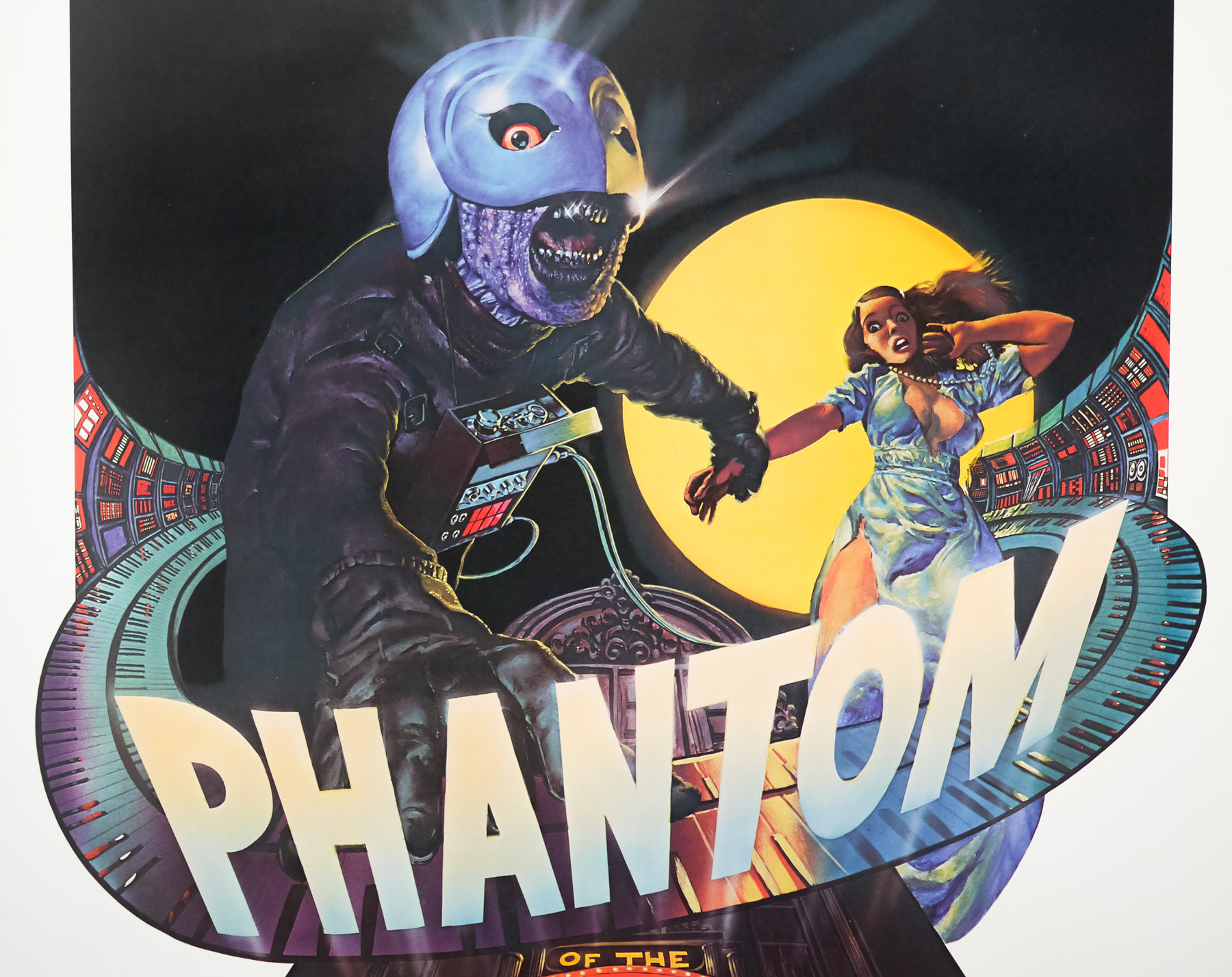
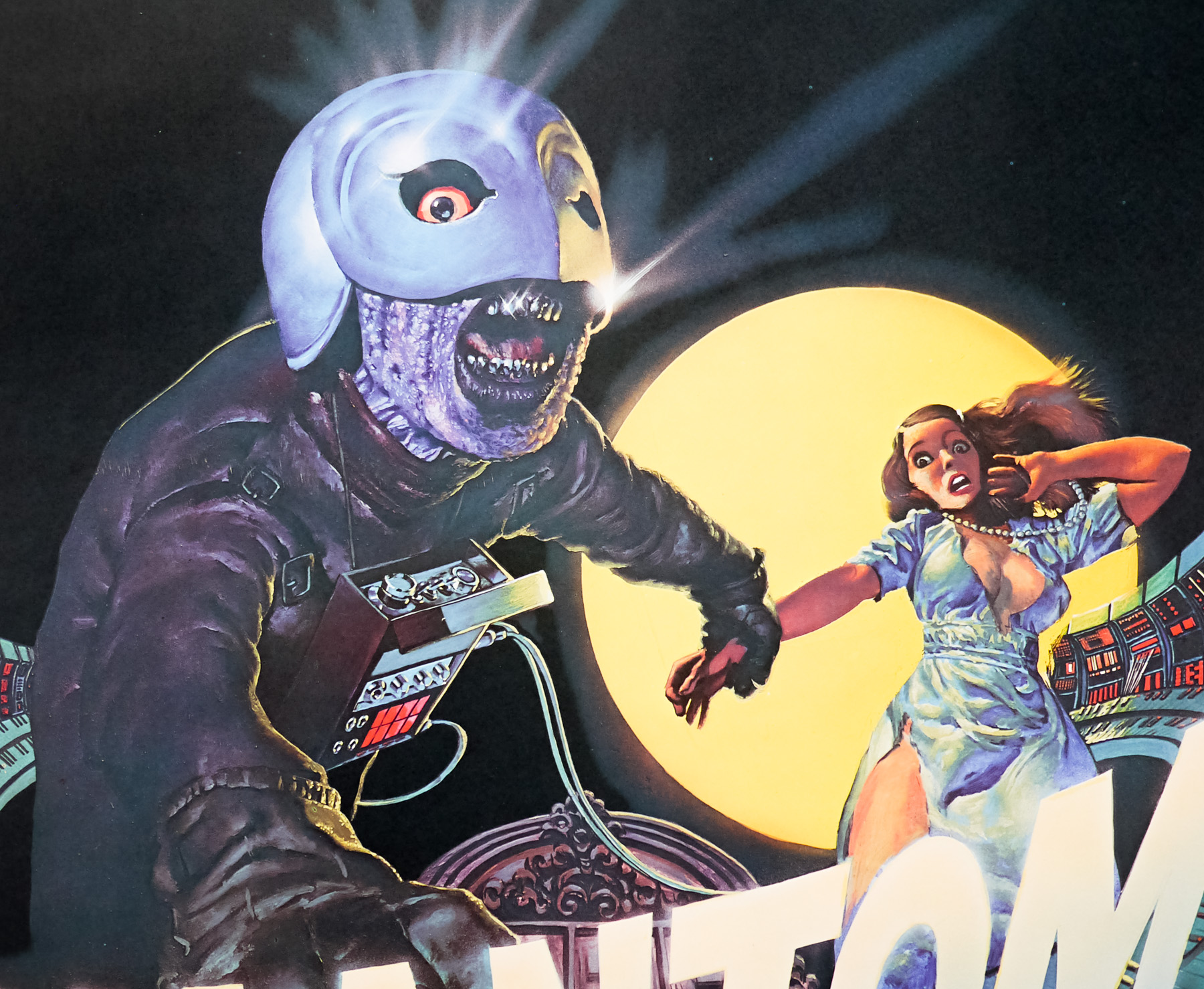
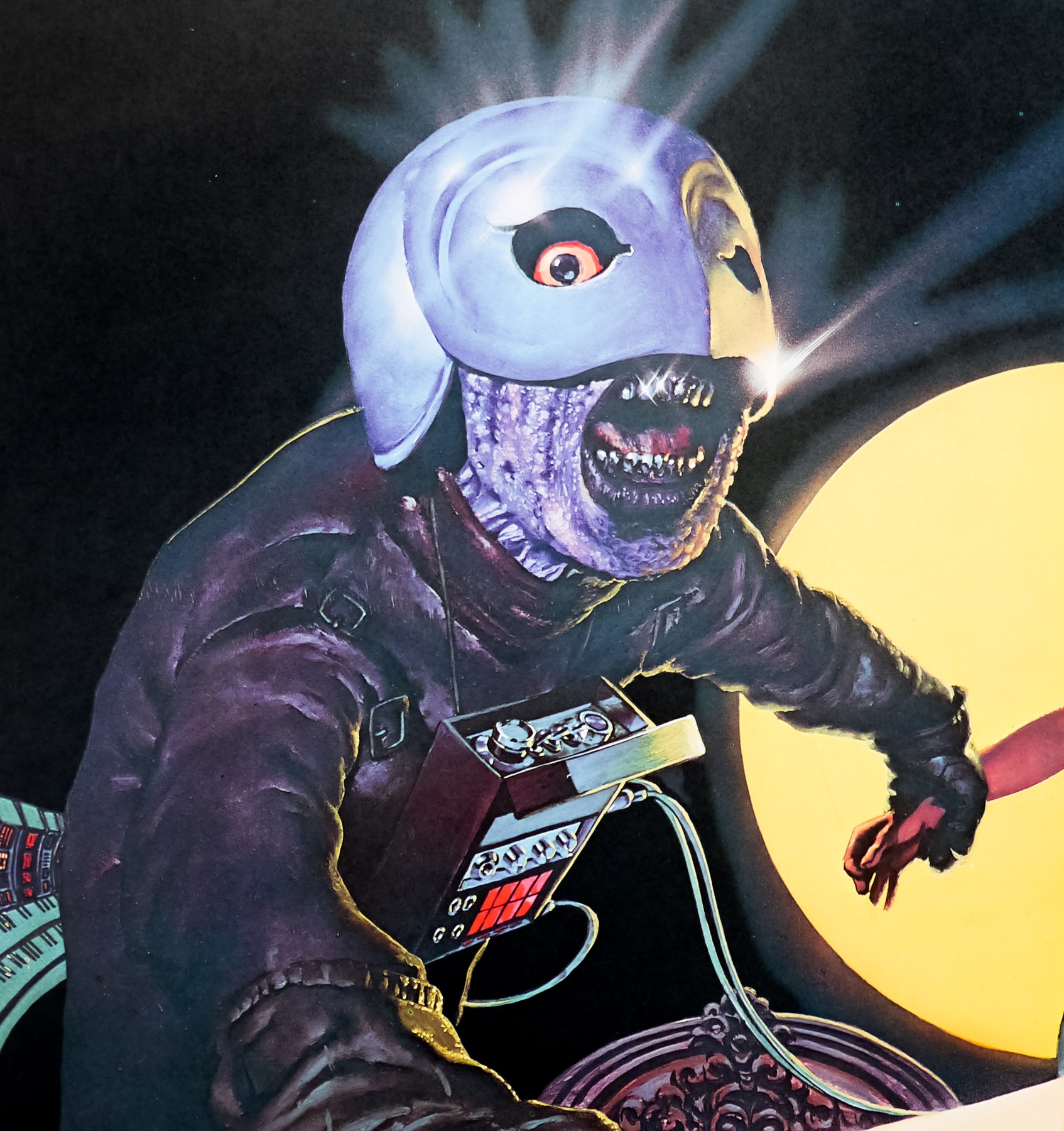
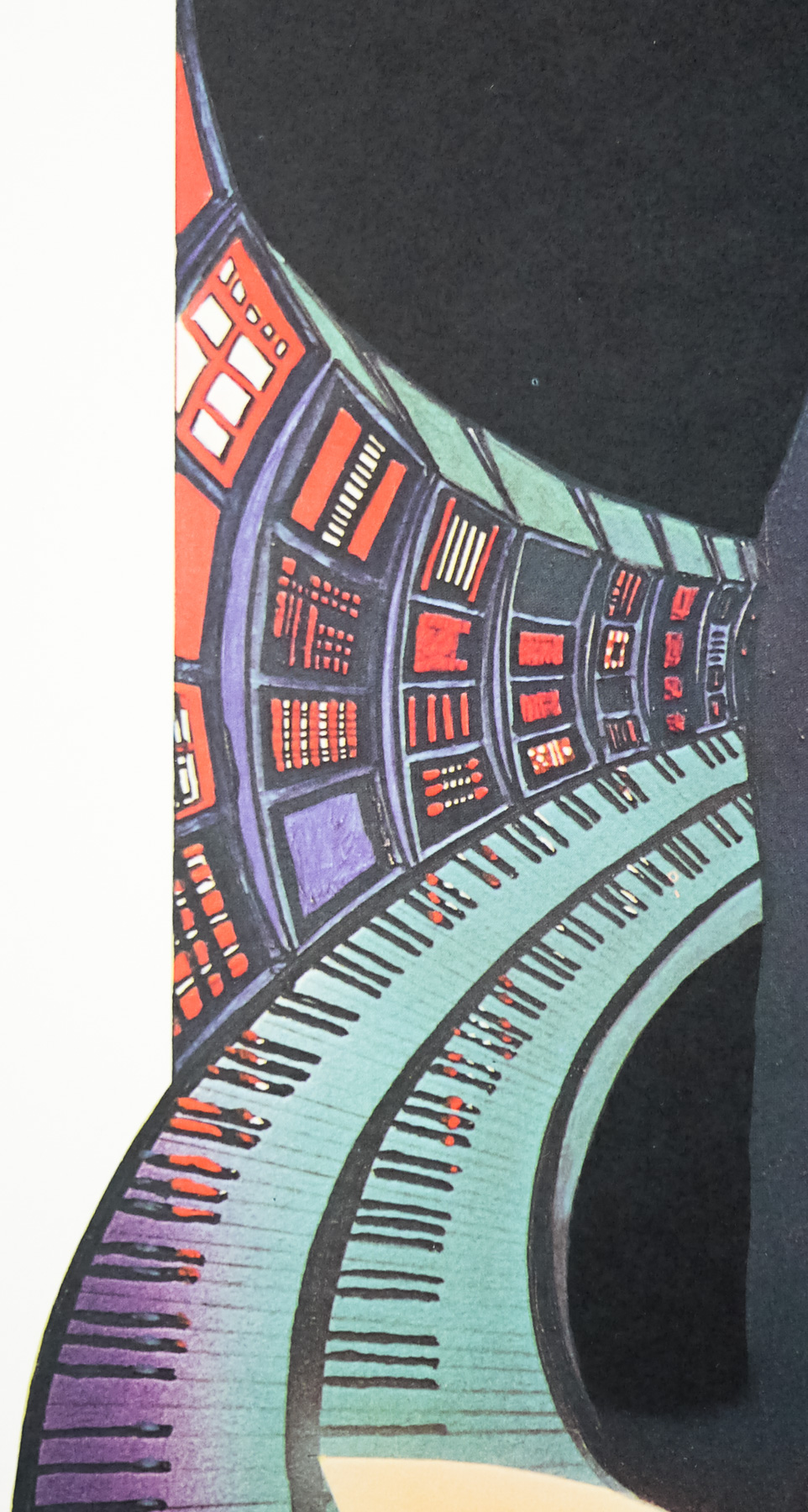
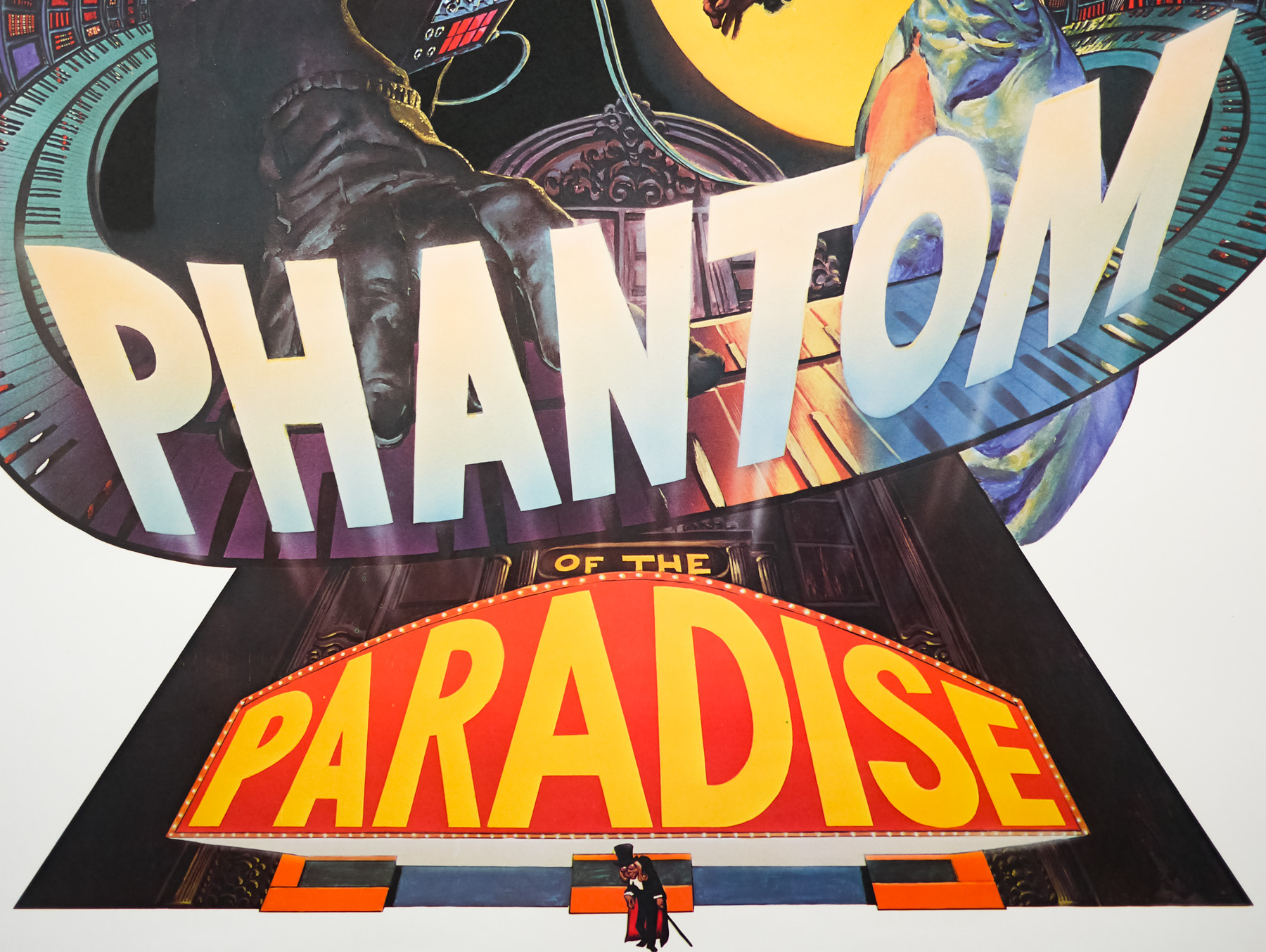
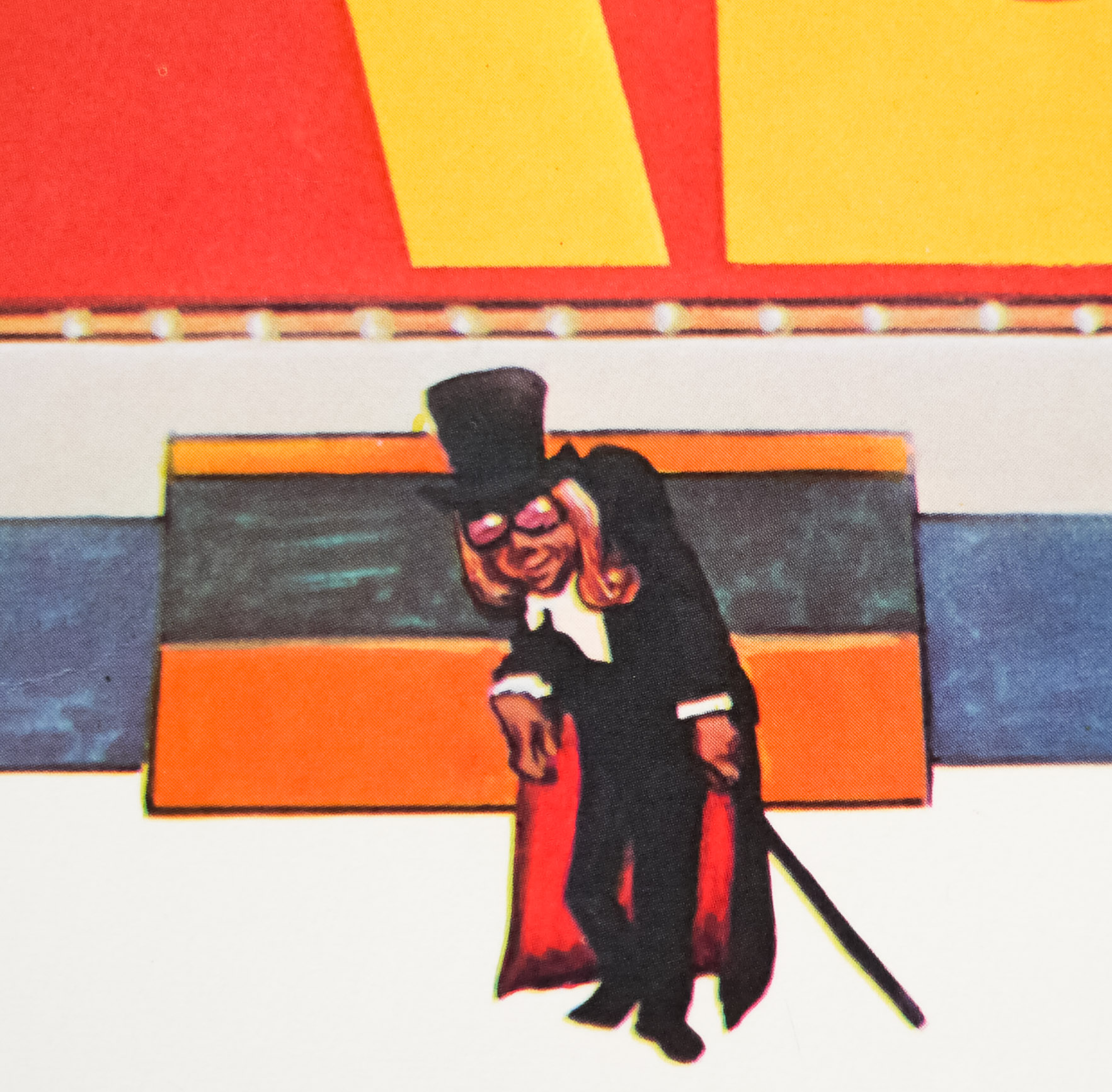
As part of this second campaign Pressman commissioned noted comic book artist Richard Corben to illustrate a new poster image and fellow comic book artist Neal Adams provided an initial concept sketch from which Corben worked (according to Kahan, ‘Adams drew the sketch for free, to aid Pressman in pitching a never-realised Phantom of the Paradise companion comic book, which he hoped might result in some paying work’) . The new painting emphasised the horror aspect and the Phantom’s mangled face and completely downplayed Williams’ presence – you can just spot him at the bottom of the marquee (see the close-up image). The new campaign proved to be more successful but as Kahan notes:

‘The film gradually took on life, bringing in decent (though never great) box office and some positive reviews. As De Palma put it, “When we revised the campaign in the U.S and made it seem more like The Phantom of the Opera than a horror/rock film, we got an entirely different response.”‘

For more on the film’s promotional travails, I again urge you to check out the excellent Swan Archives site. Corben also painted the style B one sheet for the Heavy Metal film, the magazine of which he’d been involved with for several years.

ROTOR / one sheet / USA

02.05.14

Poster Poster
Title
ROTOR
AKA
R.O.T.O.R. (alt. spelling)
Year of Film
1988
Director
Cullen Blaine
Starring
Margaret Trigg, Richard Gesswein, Jayne Smith, James Cole, Stan Moore, Nanette Kuczek, Brad Overturf, Shawn Brown, Michael Hunter, Victor Kwasnick
Origin of Film
USA
Genre(s) of Film
Margaret Trigg, Richard Gesswein, Jayne Smith, James Cole, Stan Moore, Nanette Kuczek, Brad Overturf, Shawn Brown, Michael Hunter, Victor Kwasnick,
Type of Poster
One sheet
Style of Poster
--
Origin of Poster
USA
Year of Poster
1988
Designer
Unknown
Artist
Unknown
Size (inches)
27 3/16" x 41"
SS or DS
SS
NSS #
--
Tagline
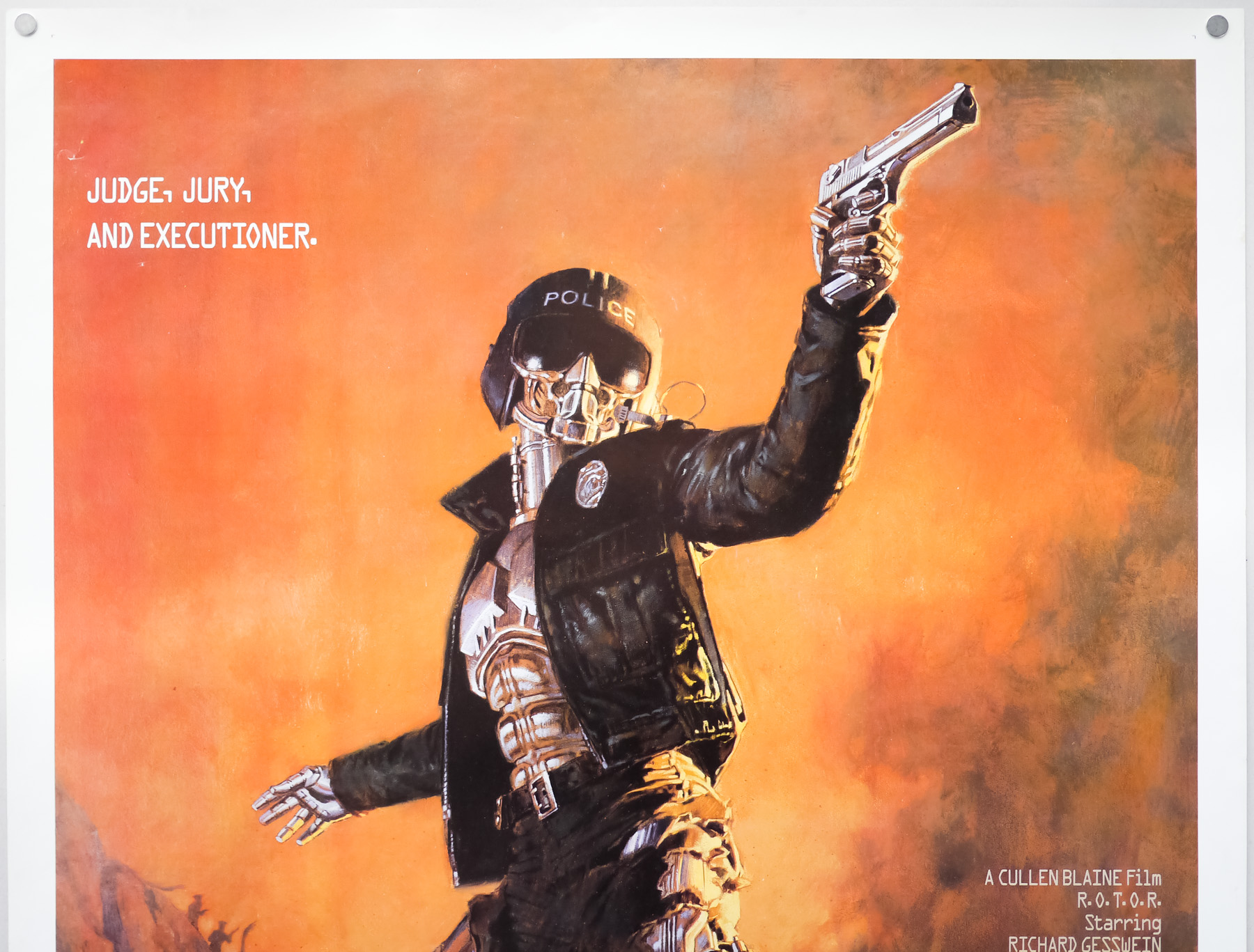
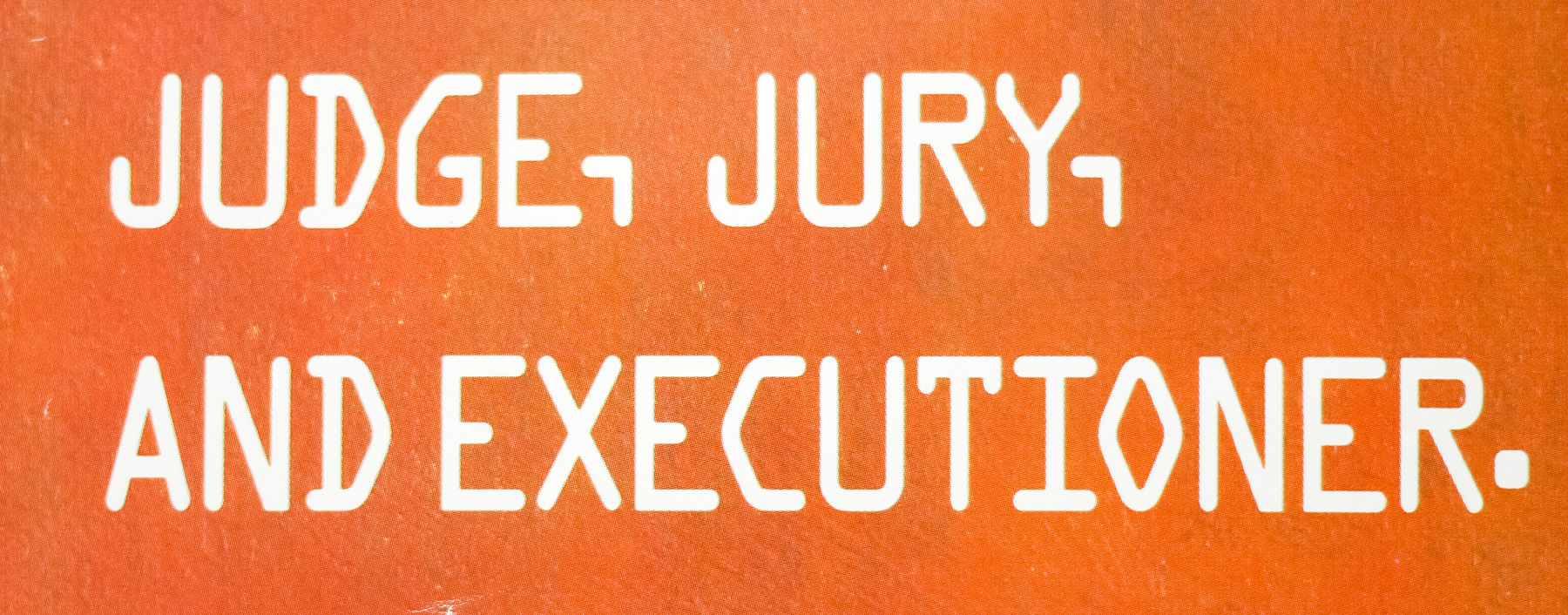
Judge, jury, and executioner.

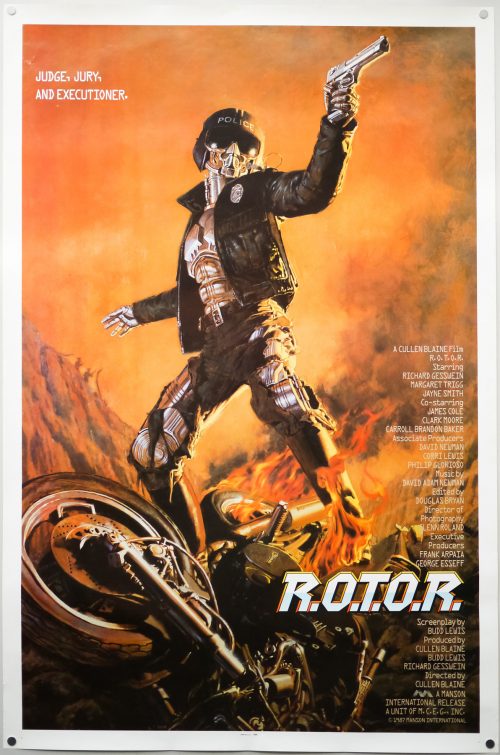
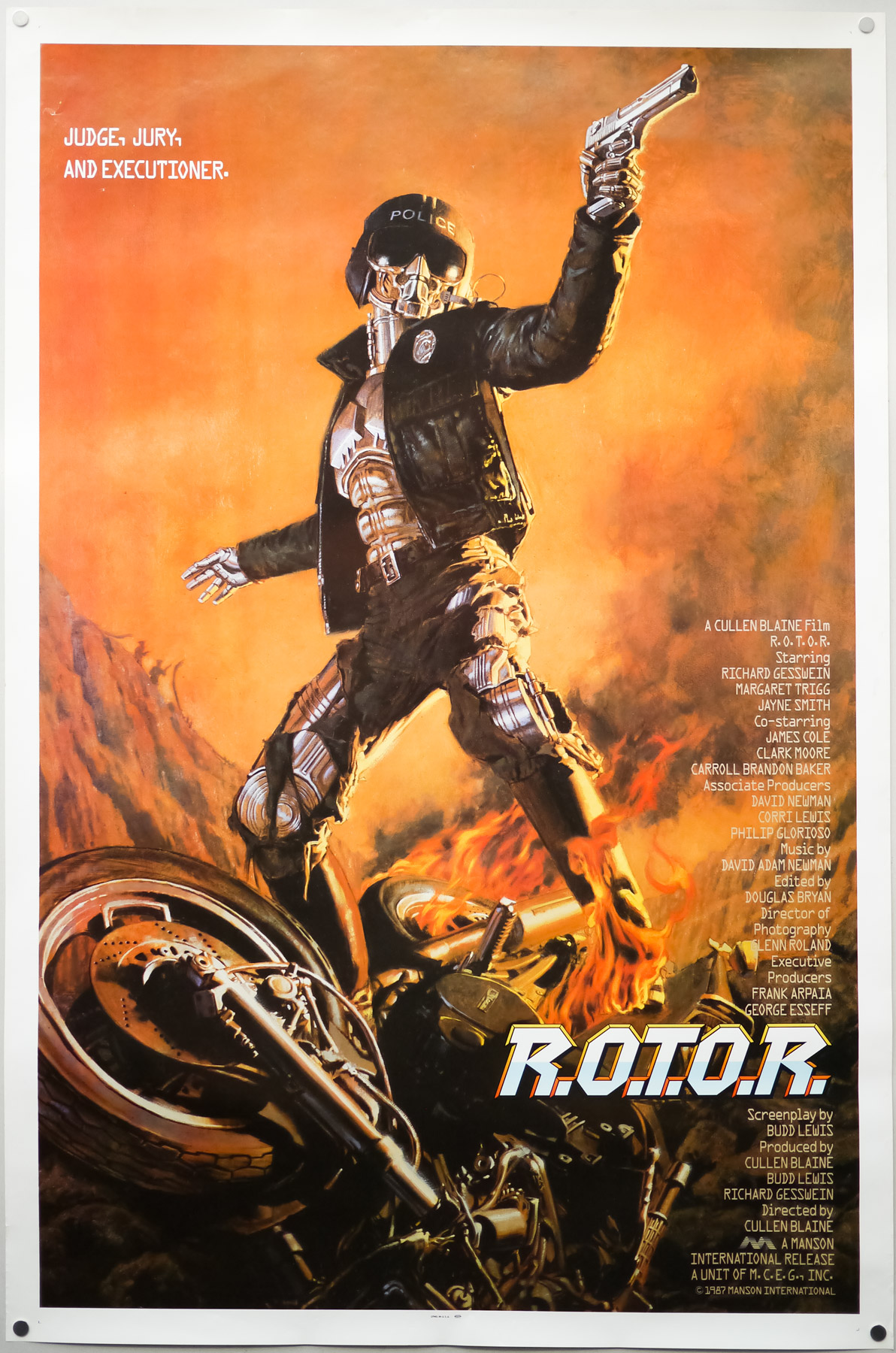
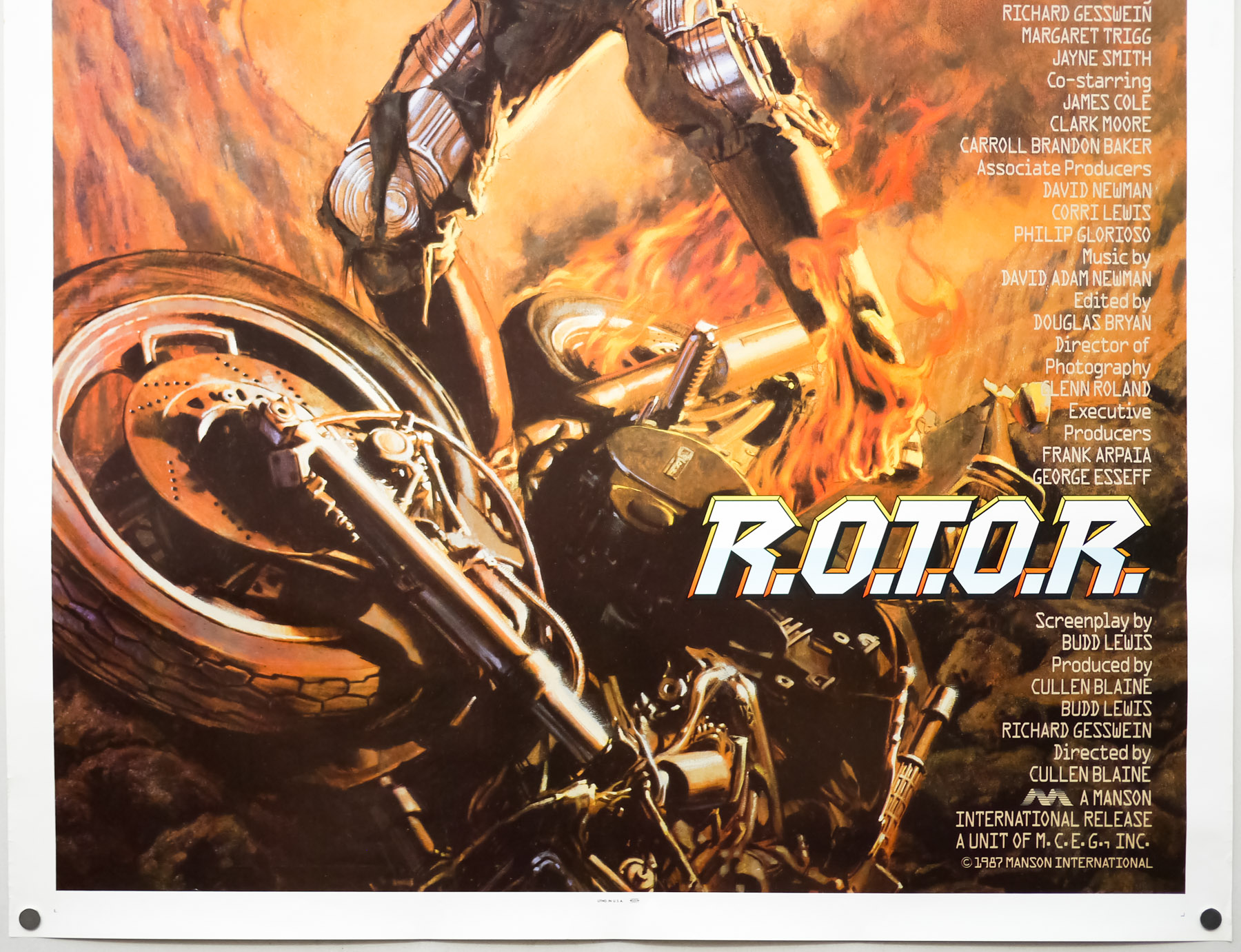
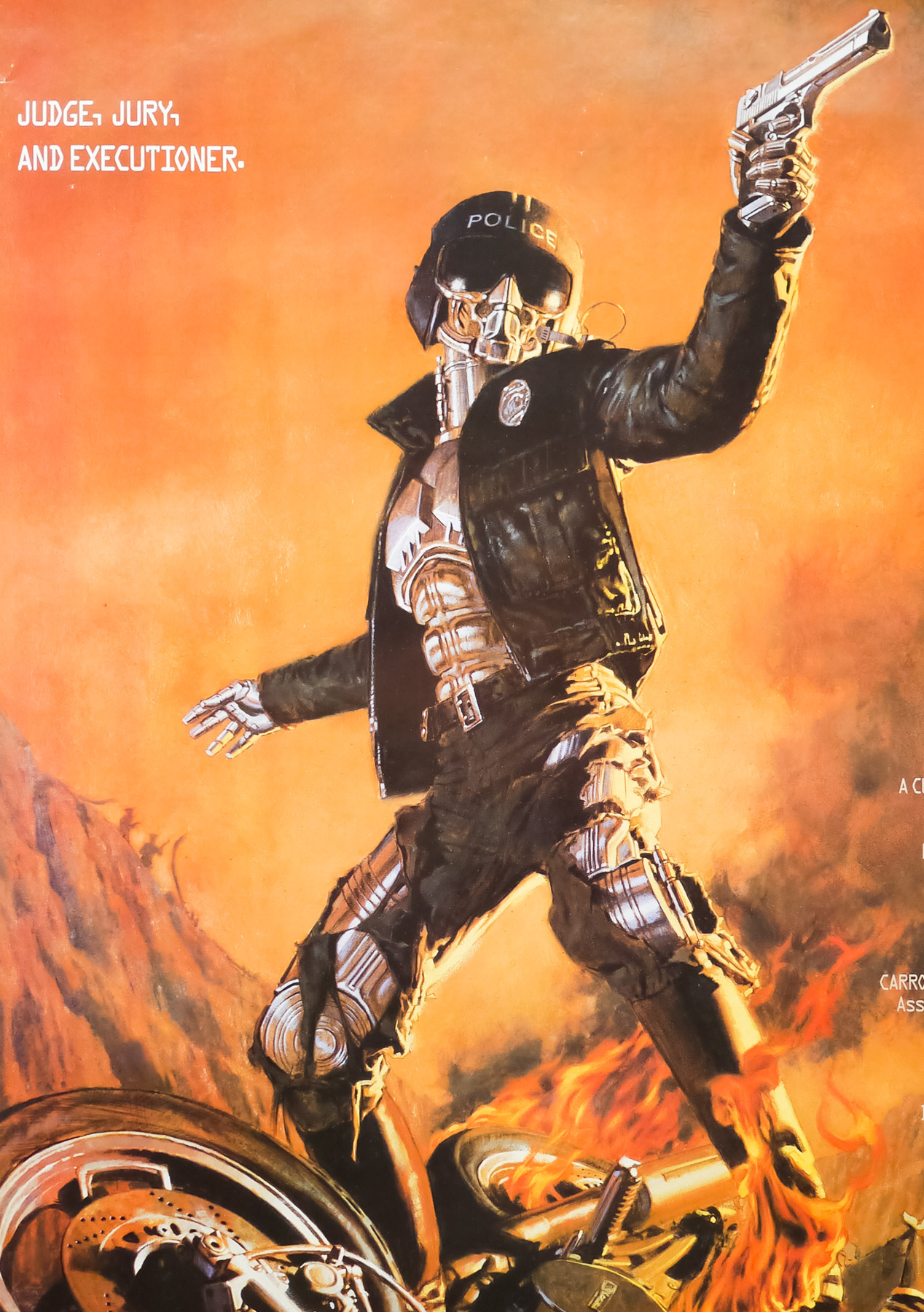
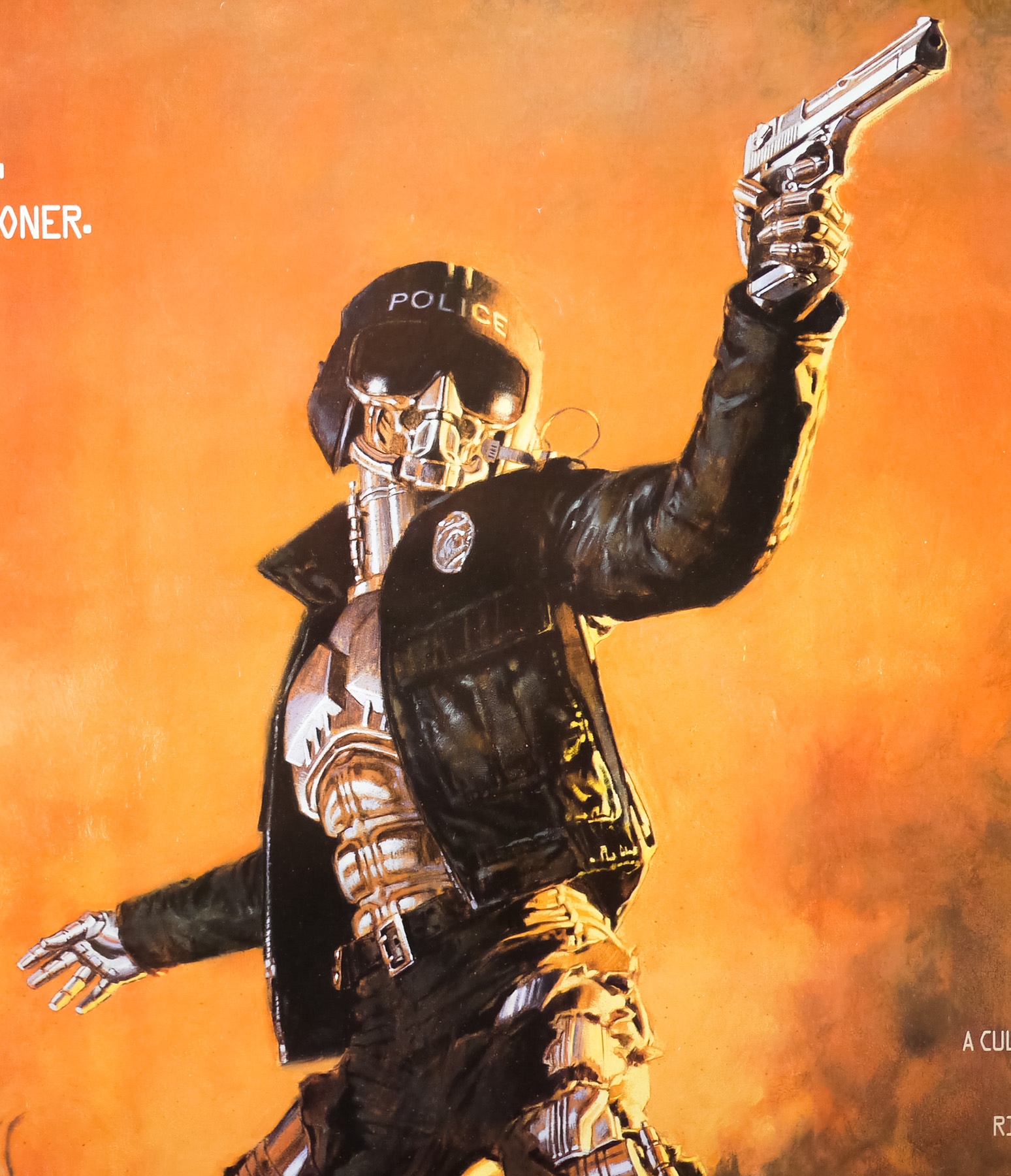
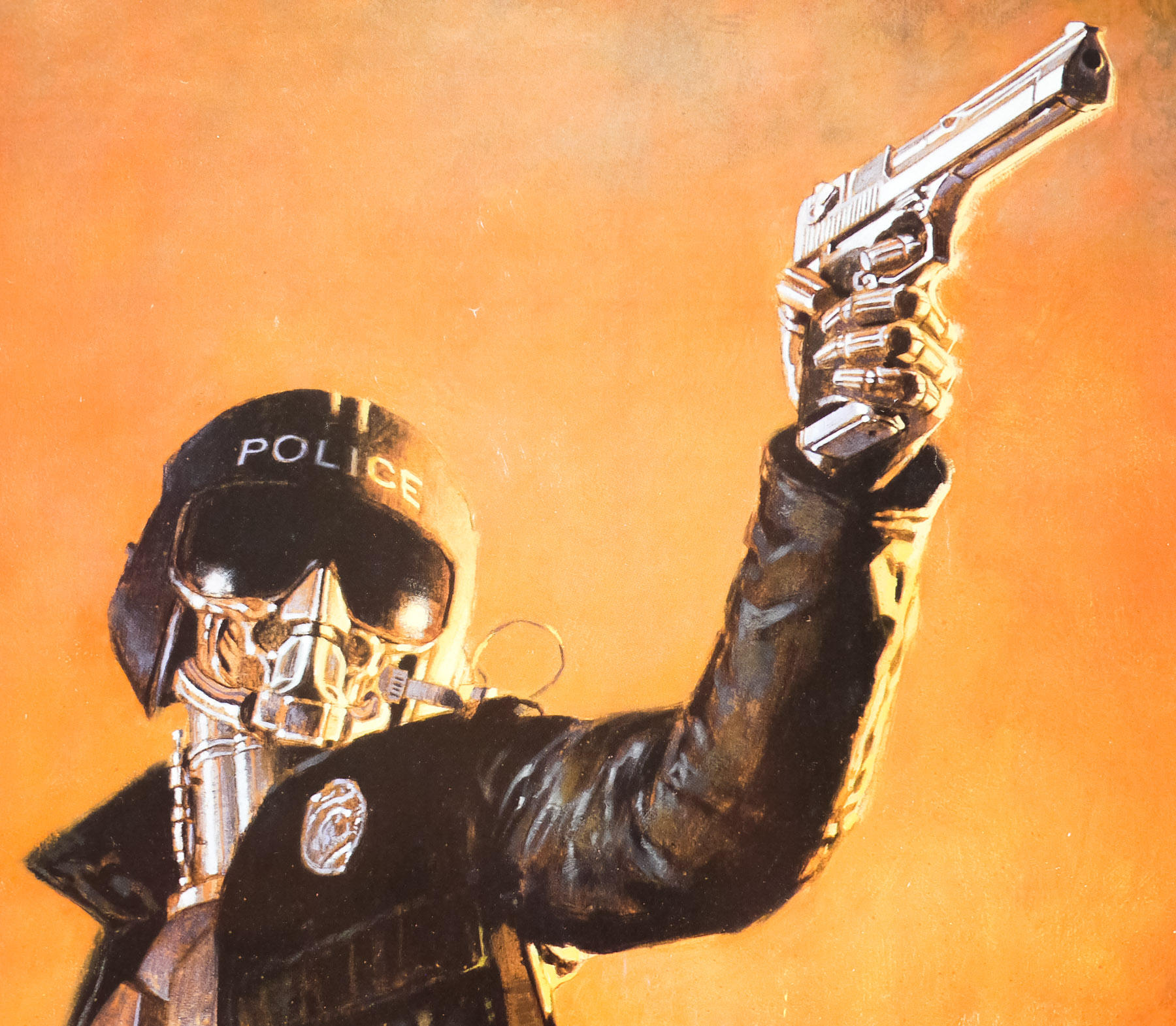
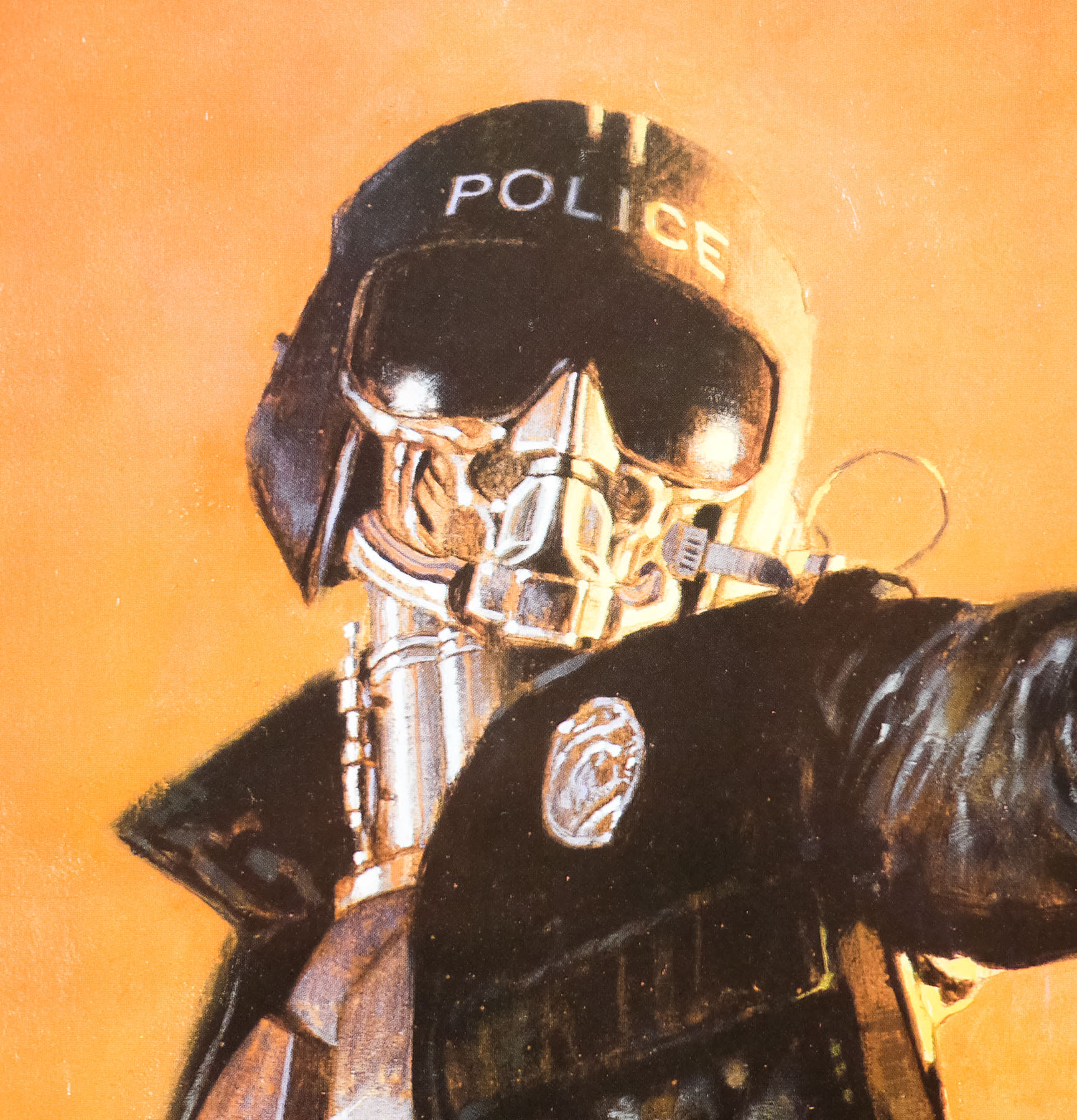
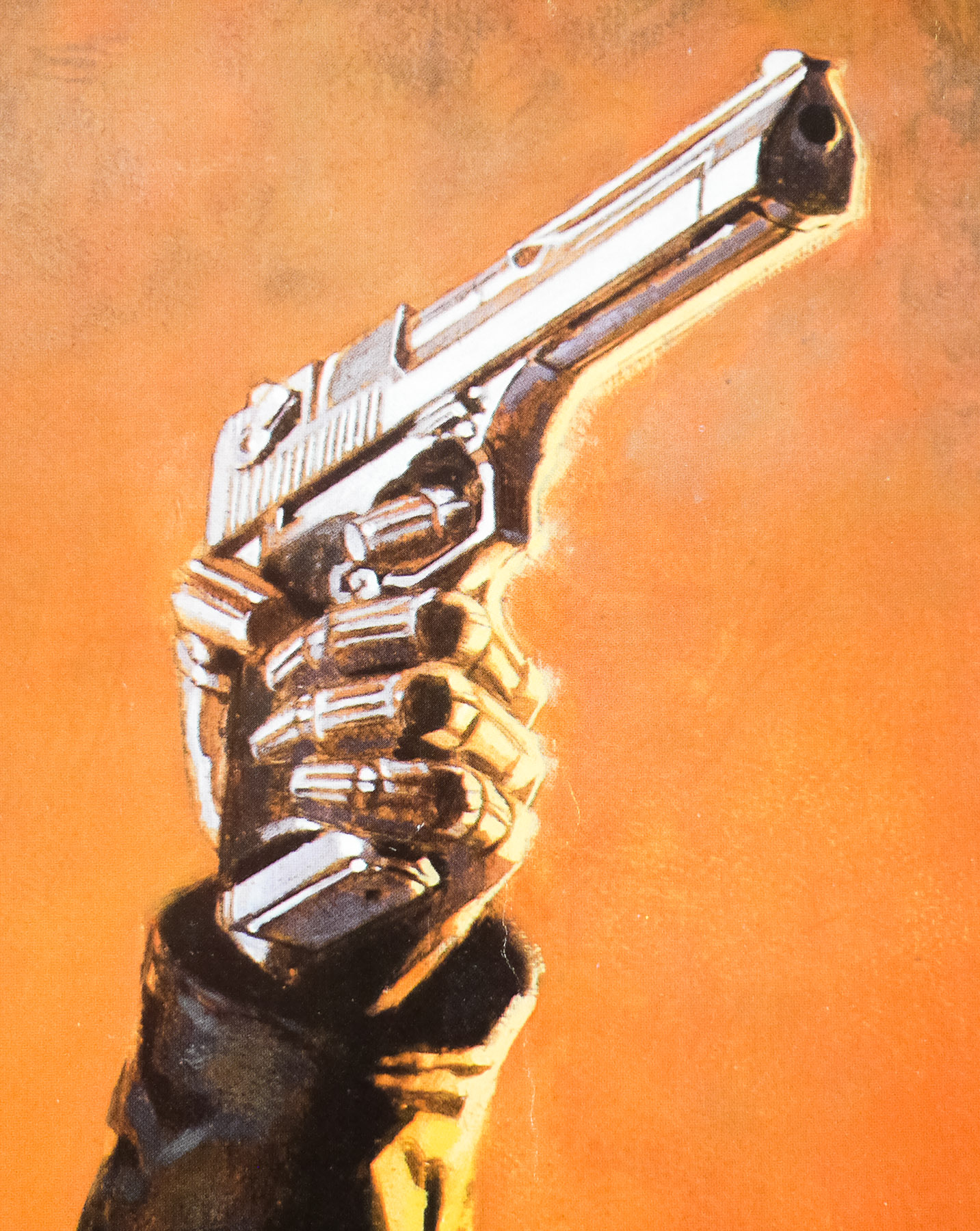
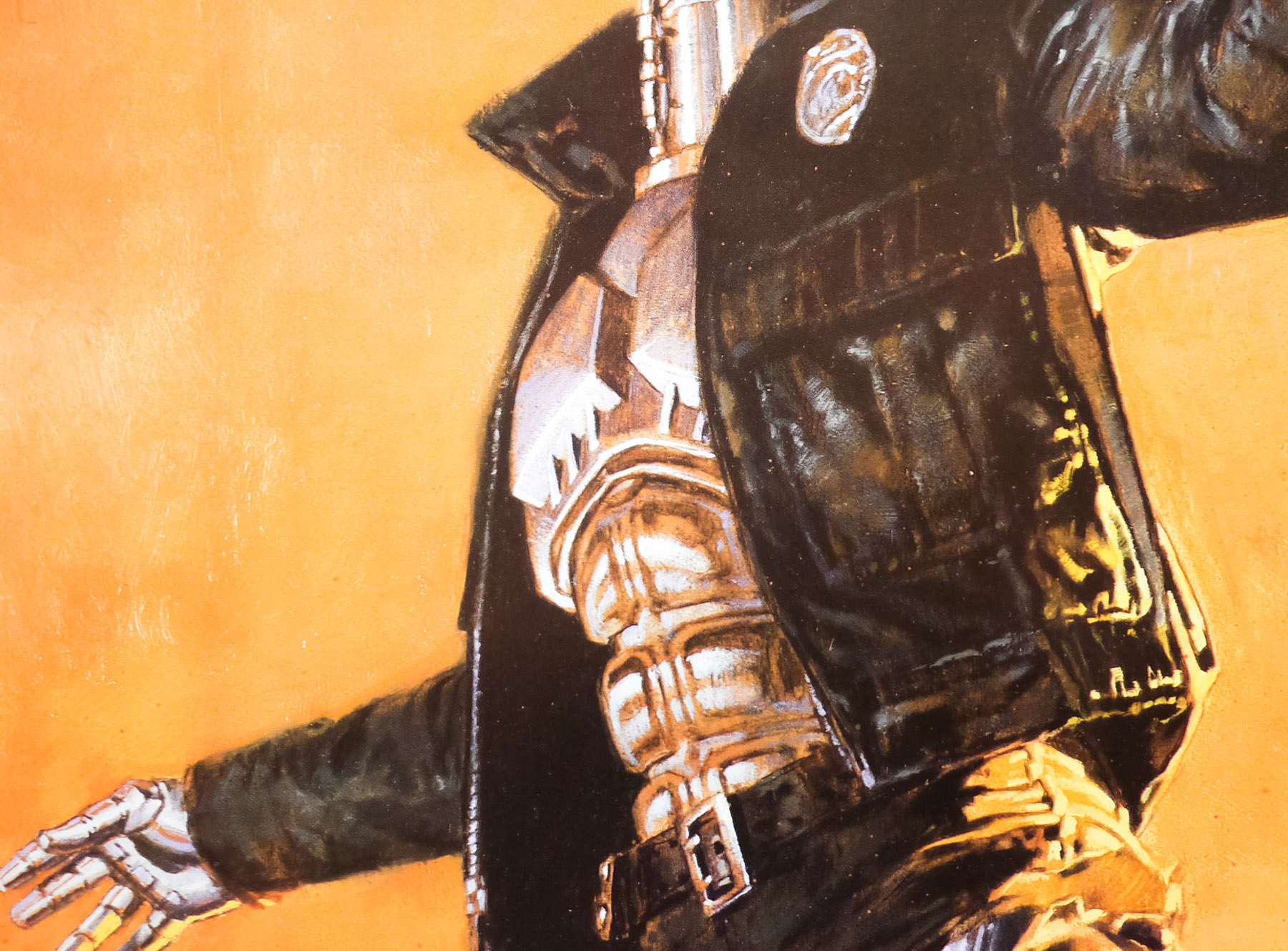
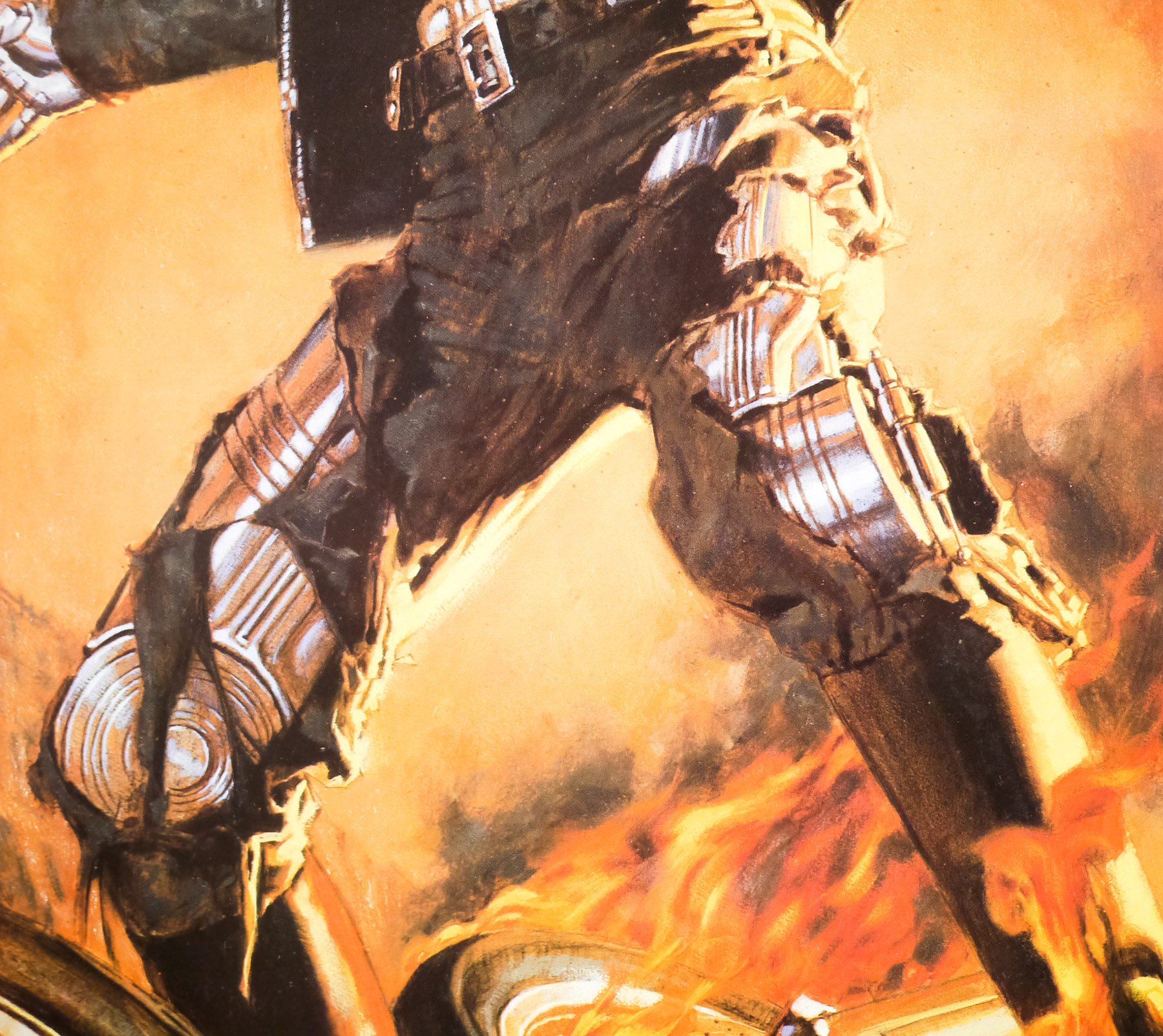
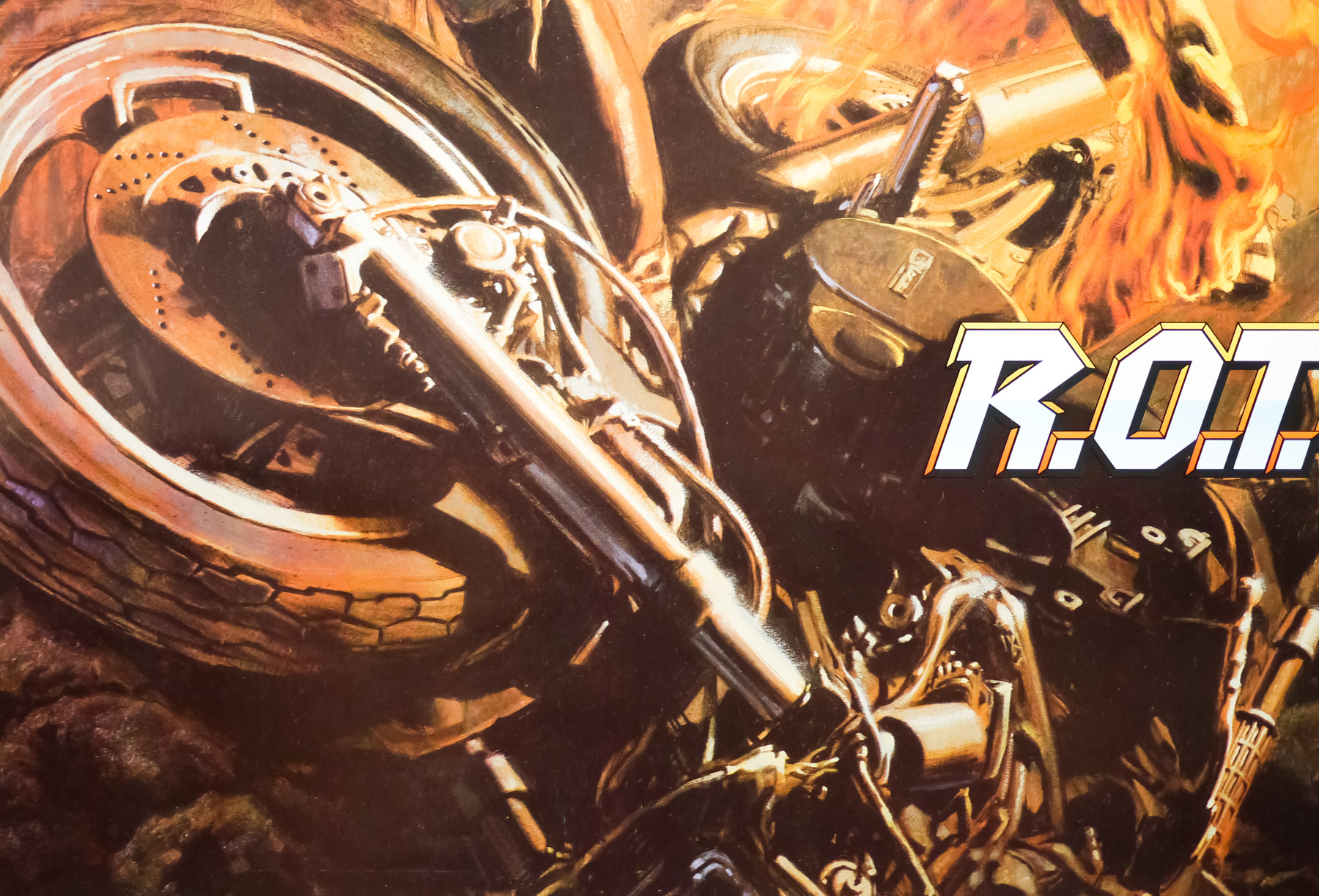
If ever there was a case where the poster is the most interesting thing about the movie, this one sheet for the brief cinema release of ROTOR (or R.O.T.O.R.) is the perfect example. Although I’ve never had the (mis)fortune of seeing the film, the reviews on IMDb speak for themselves and the following synopsis gives you an idea of the kind of experience you’re in for:

Robotic Officer Tactical Operations Research. ROTOR is a robotic cop manufactured from a rare metal – an alloy that’s not only responsible for the unit’s movements, but for it’s intelligence as well. ROTOR has been programmed to combat crime and corruption – to judge and to execute – to be the ultimate law enforcer. But something goes horribly wrong. The robot’s framework mutates into humanoid form and escapes from the research unit. Then when a speeding driver is killed for his minor traffic offence. It’s clear that ROTOR has been programmed too well. Now no one is safe – ROTOR is out on the streets, out of control and out to kill.

Currently hovering near the bottom of IMDb rankings (on a meagre 2.2 rating), reviewer ‘gridoon’ has this to say about the film:

‘There are bad movies that are funny. Bad movies that are boring. Bad movies that are offensive. And then there are bad movies that are just plain incompetent. You can’t get angry at these movies, because it’s obvious they were made by people who simply didn’t have the talent or the budget to make something even halfway decent. “R.O.T.O.R” is one such movie.’

Fellow reviewer ‘martin_dc’ sums the film up thusly:

‘Guaranteed laughter the first 15 minutes. After this the brain tends to numb completely and you watch the rest out of inertia or masochism, so in an unintentional way the movie actually works. Highlights include the R.O.T.O.R. creator giving coffee to his horse and inexplicably trying to blow up a tree.’

One reviewer simply lists 10 things they’d rather do than sit through ROTOR again, which includes ‘Get smashed on the back of the head with a folding chair’ and ‘Belly flop off a 10-meter tower into an empty swimming pool.’

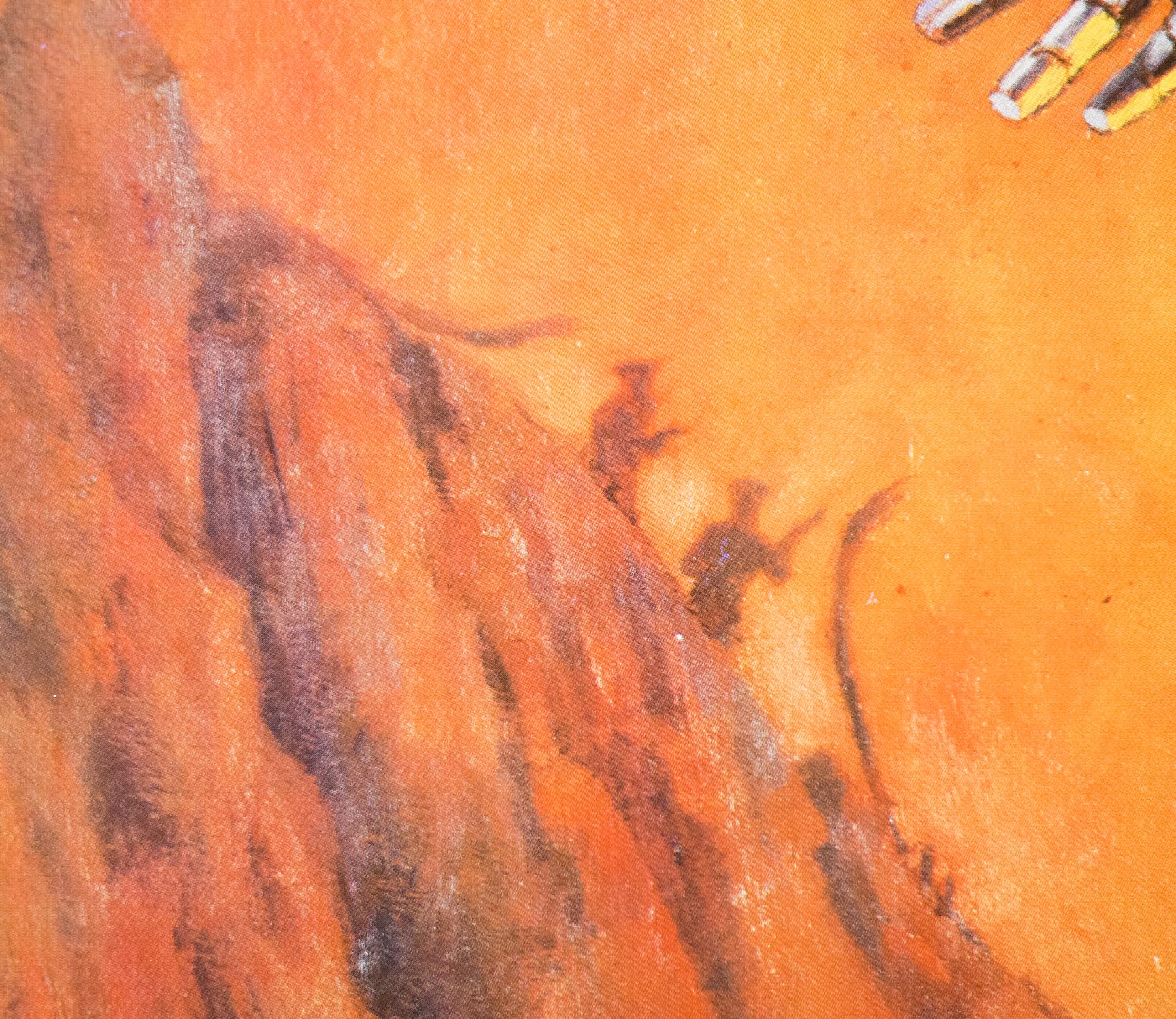
I’ve been unable to determine who painted this artwork, but it appeared on this cinema-release one sheet as well as the video release poster and VHS covers. Whoever did do it was clearly influenced by the US one sheet for Mad Max (painted by Bill Garland), right down to the pose that ROTOR is in. I can only imagine how many people were suckered into picking this VHS off the shelves of their local video rental shop based on the cover alone.

Check out the mesmerising trailer here.
Planet Of The Apes / screen print / Martin Ansin / regular / AP / USA

20.06.14

Poster Poster
Title
Planet Of The Apes
AKA
Apornas planet (Sweden)
Year of Film
1968
Director
Franklin J. Schaffner
Starring
Charlton Heston, Roddy McDowall, Kim Hunter, Maurice Evans, James Whitmore, James Daly, Linda Harrison
Origin of Film
USA
Genre(s) of Film
Charlton Heston, Roddy McDowall, Kim Hunter, Maurice Evans, James Whitmore, James Daly, Linda Harrison,
Type of Poster
Screen print
Style of Poster
Regular - Artists Proof
Origin of Poster
USA
Year of Poster
2012
Designer
Martin Ansin
Artist
Martin Ansin
Size (inches)
24" x 36"
SS or DS
SS
Tagline
--

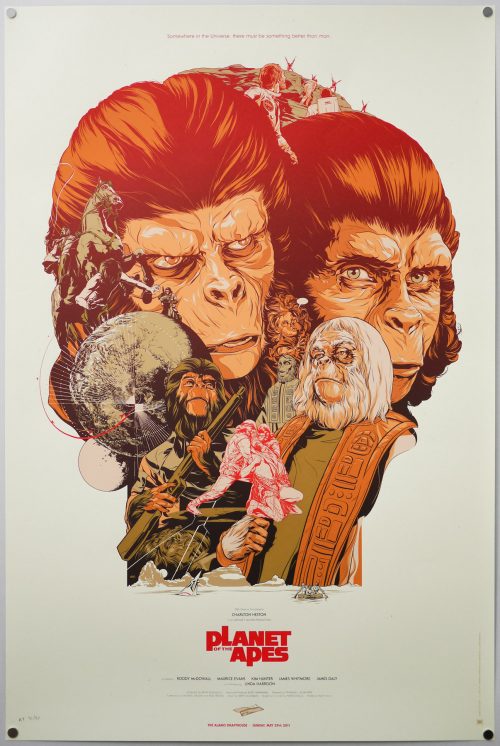
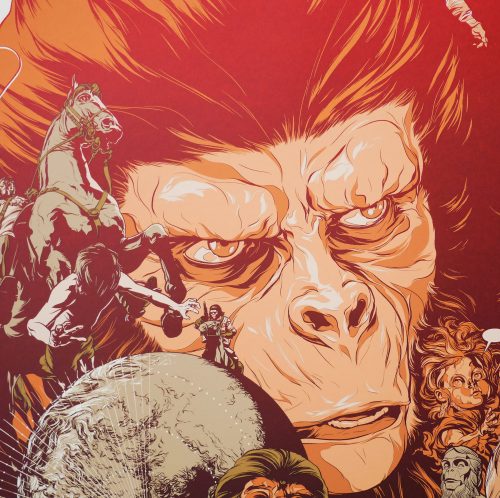
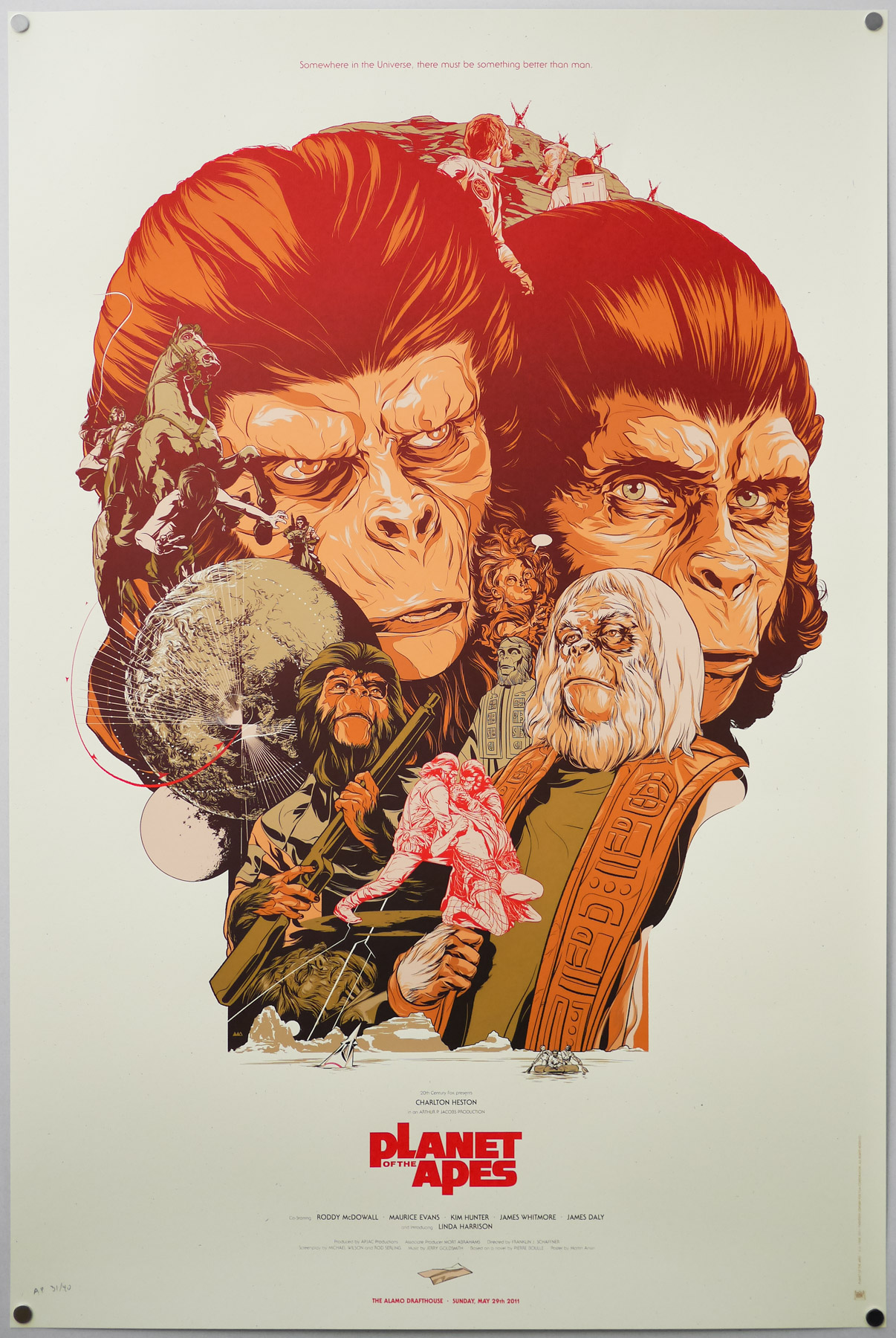
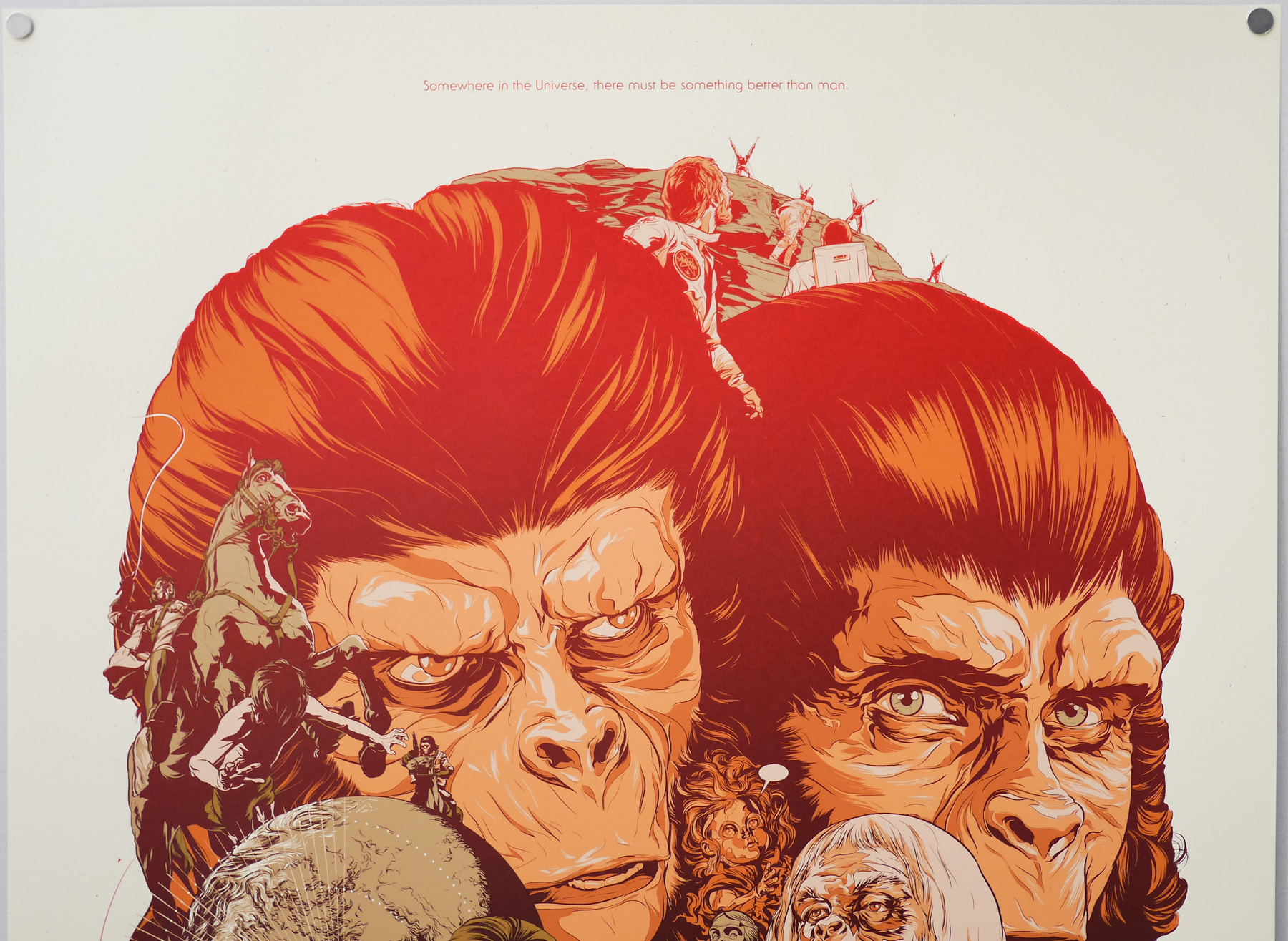
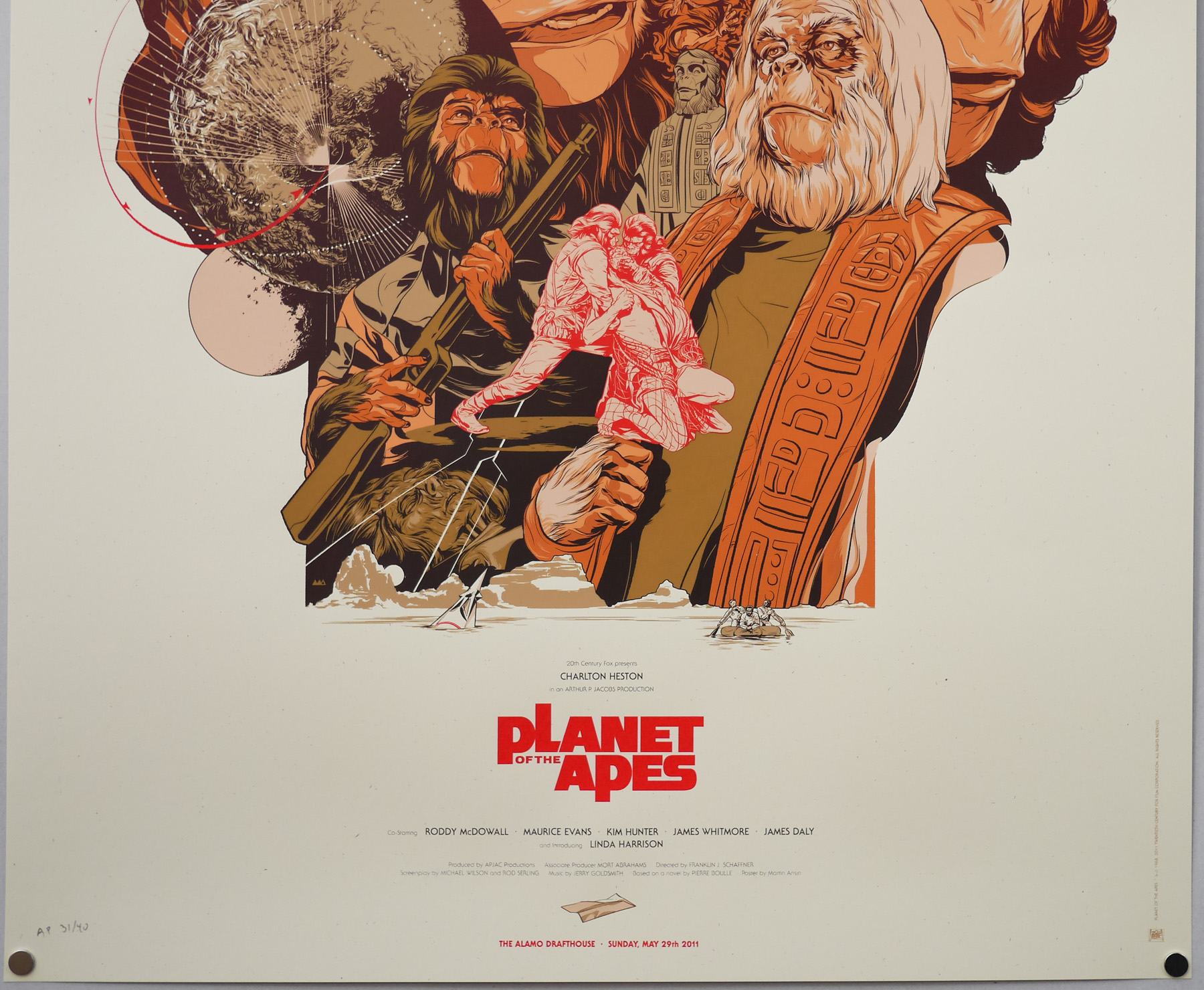
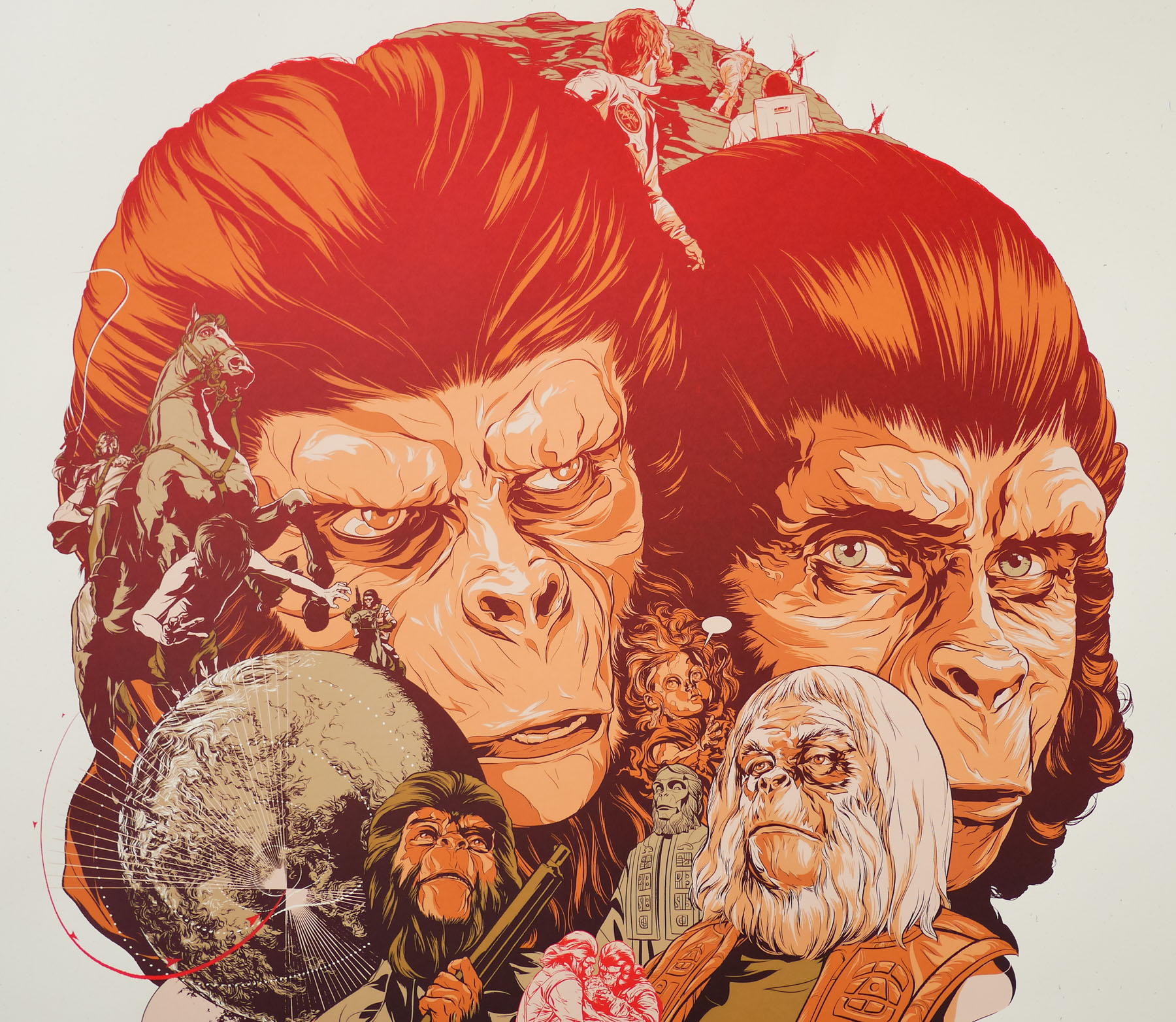
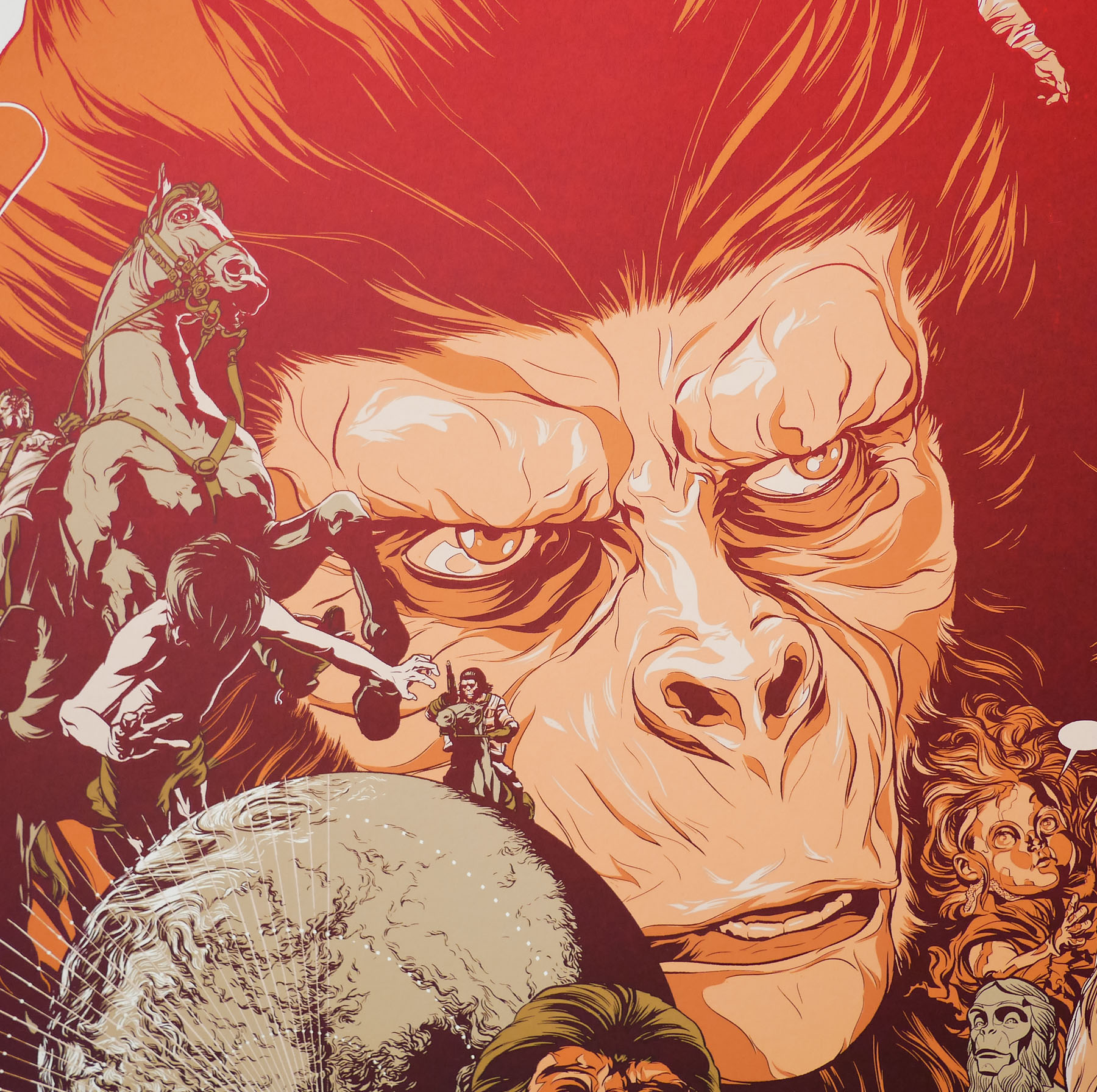
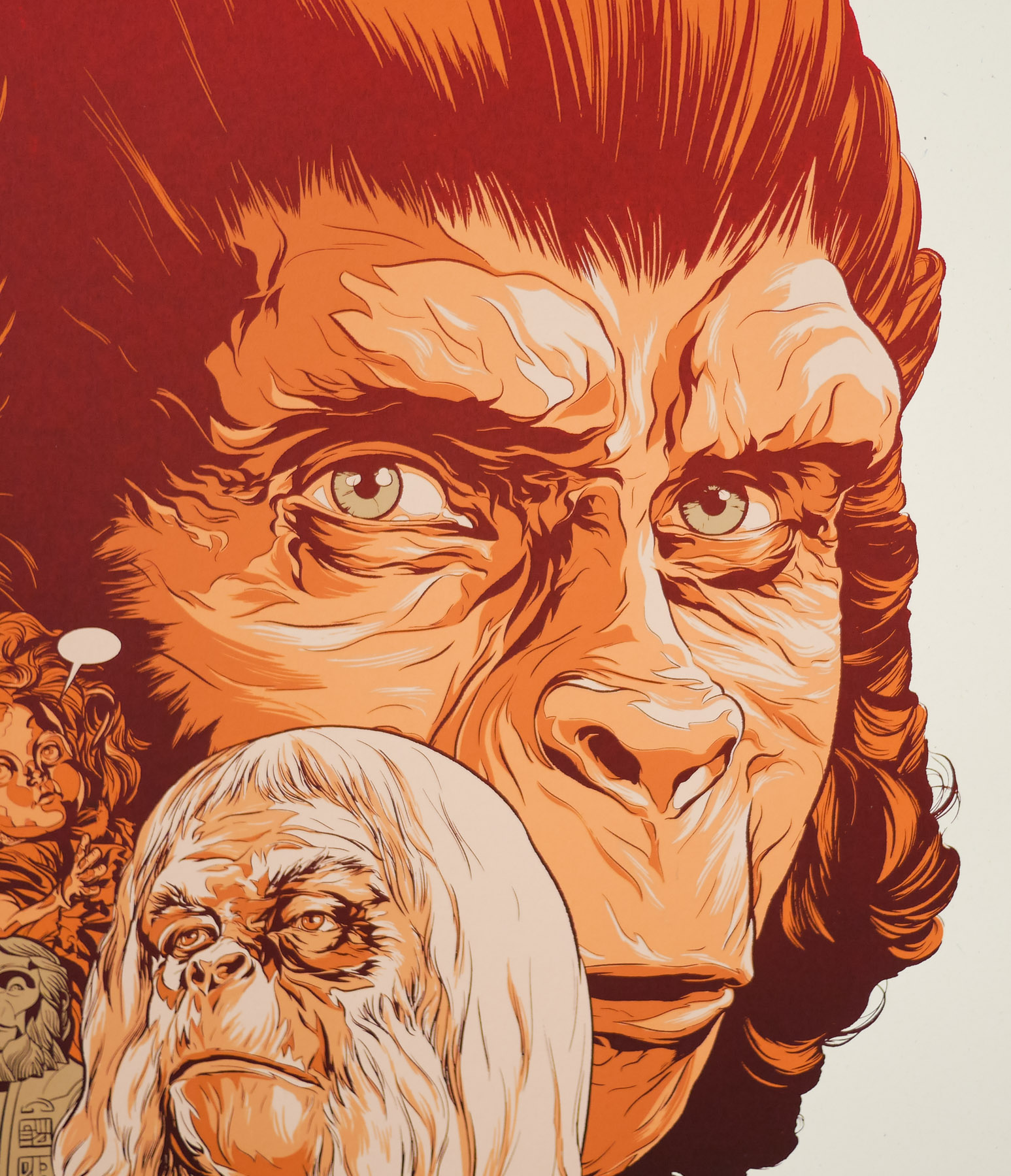
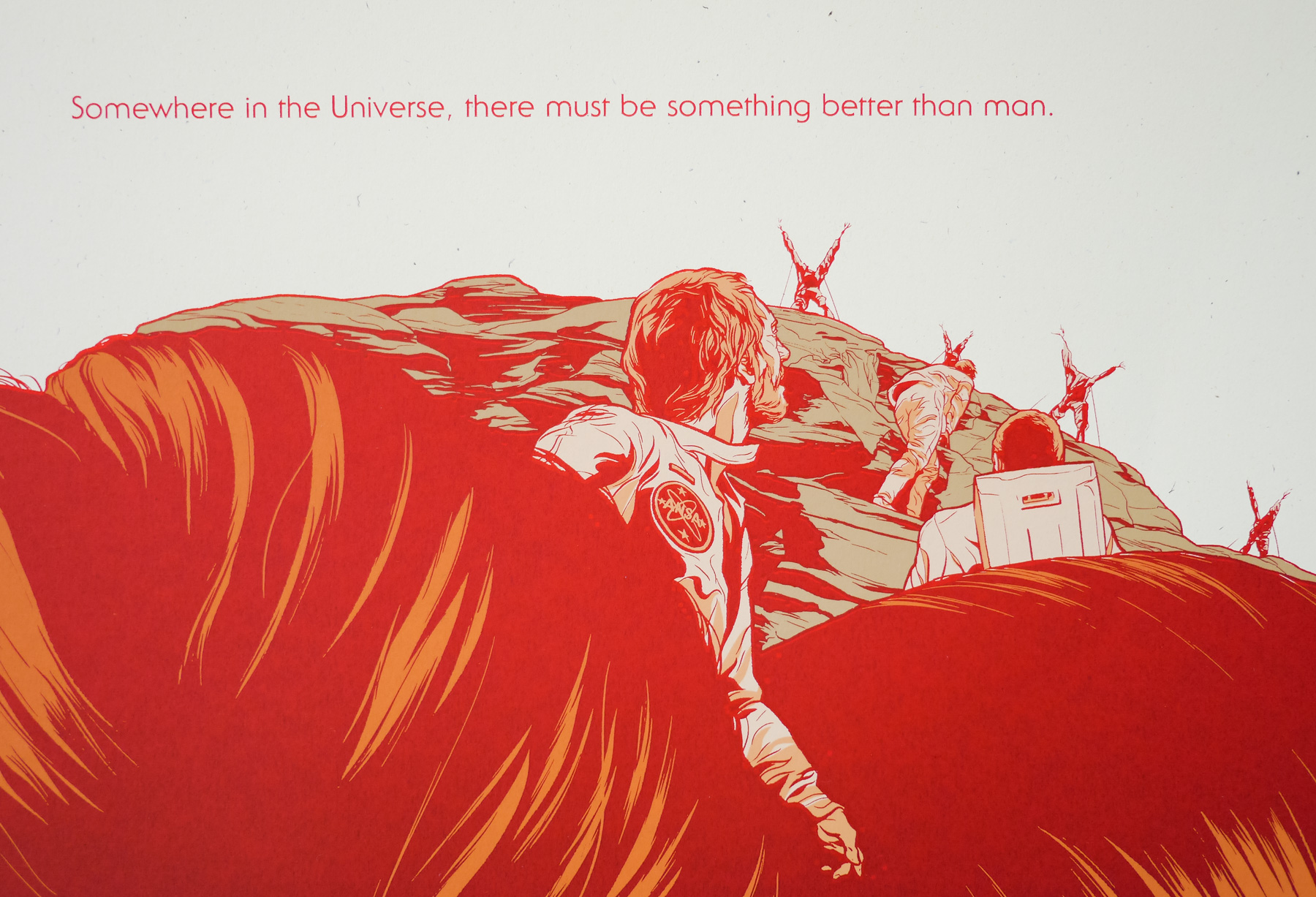
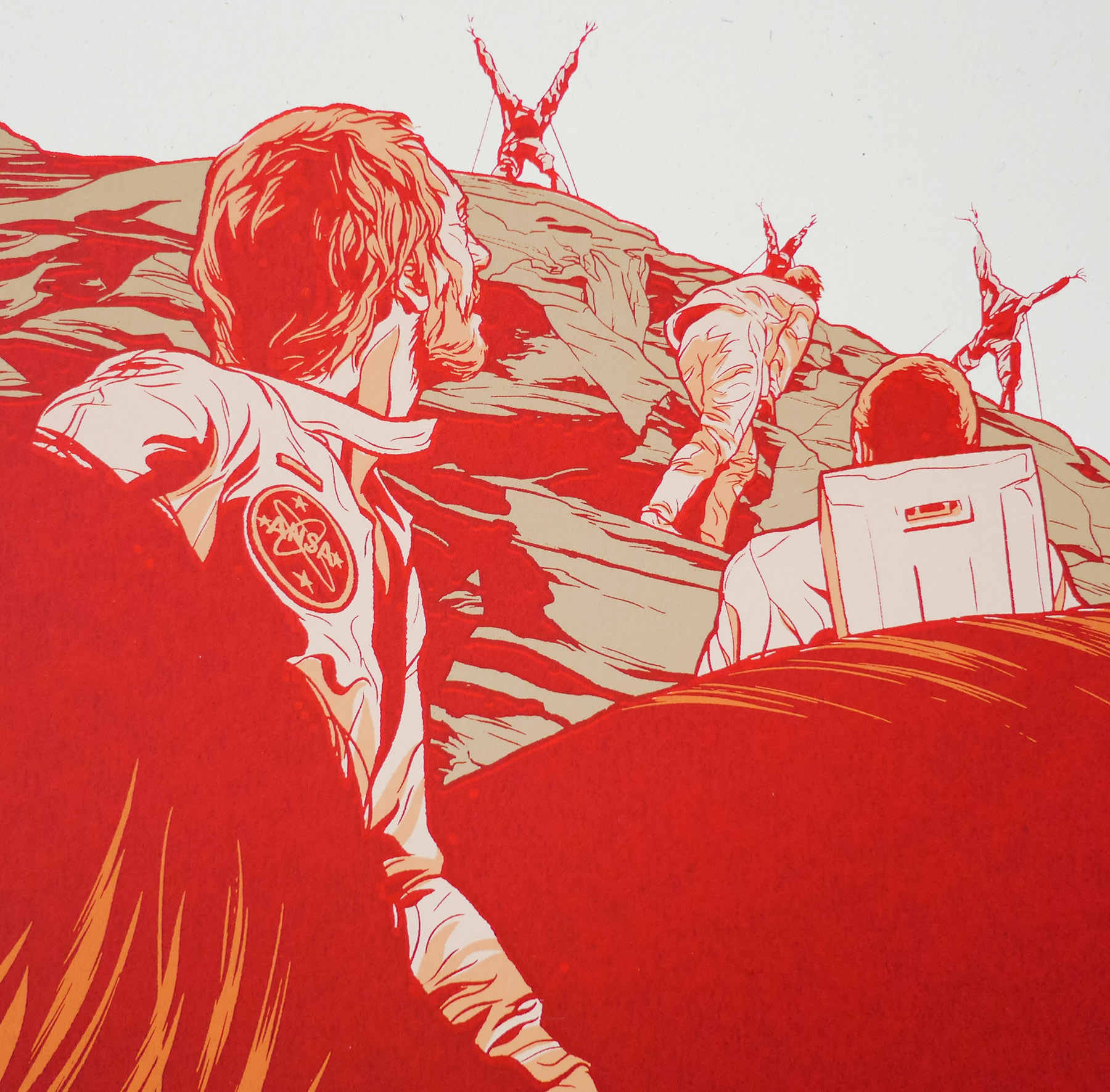
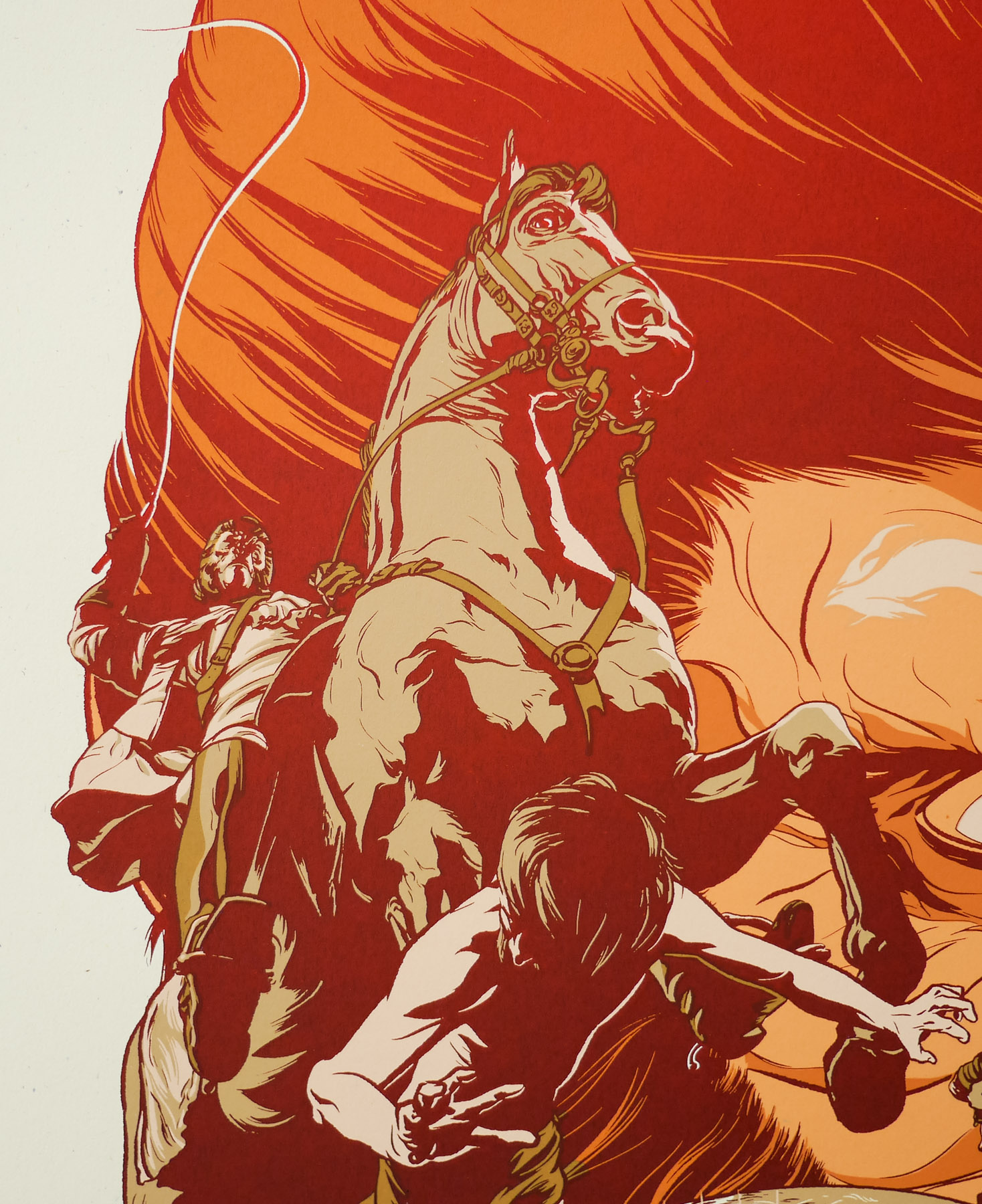
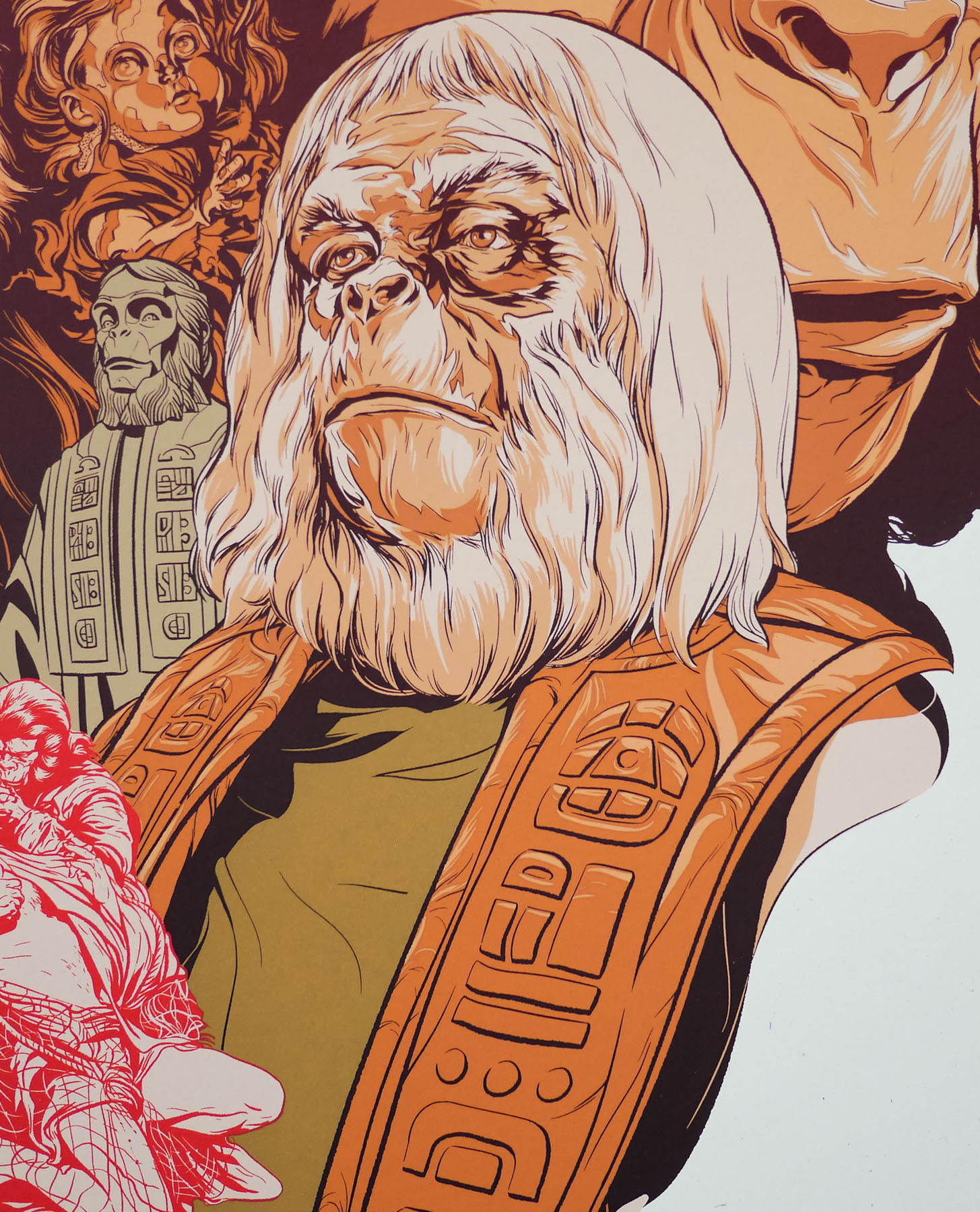
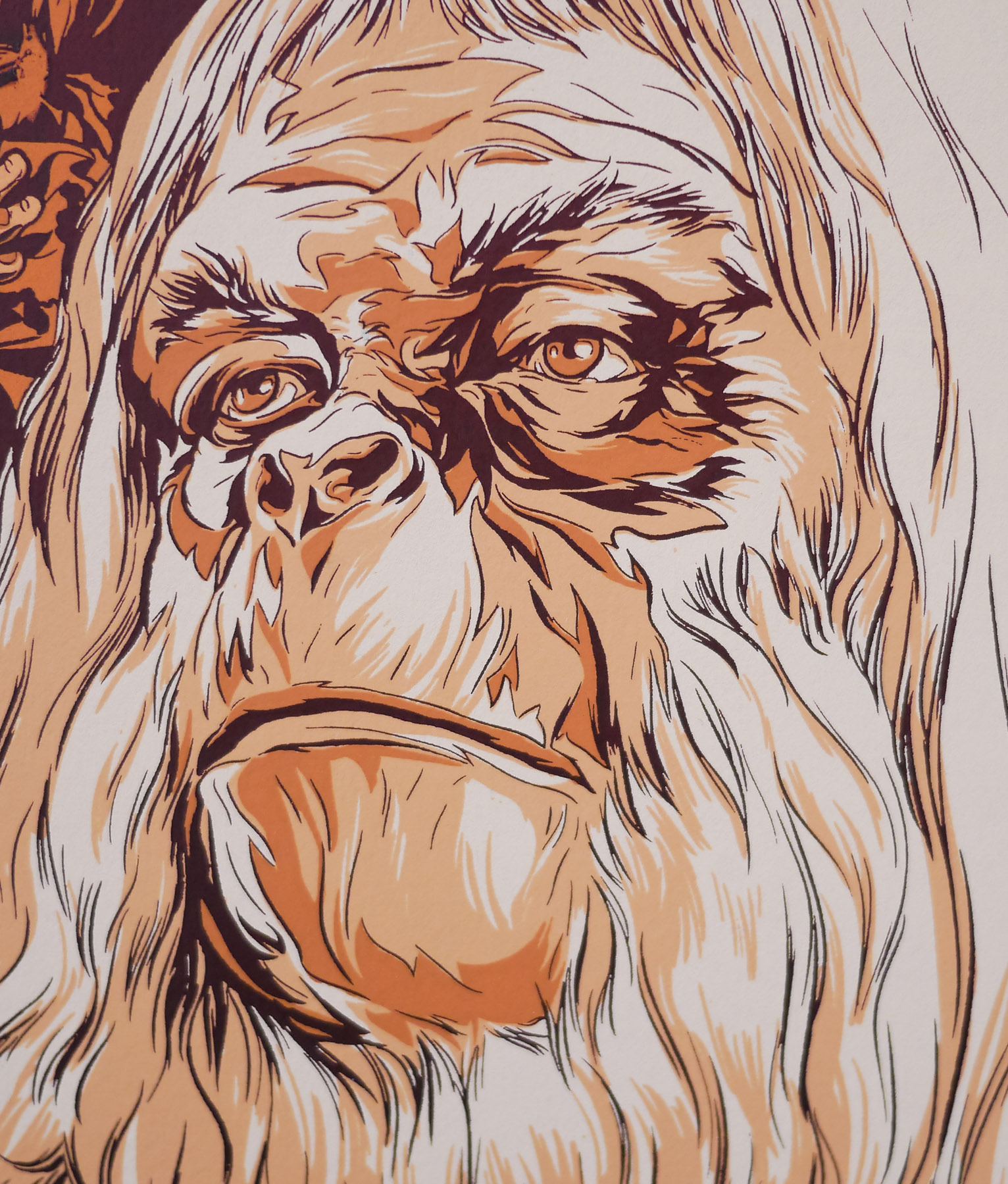
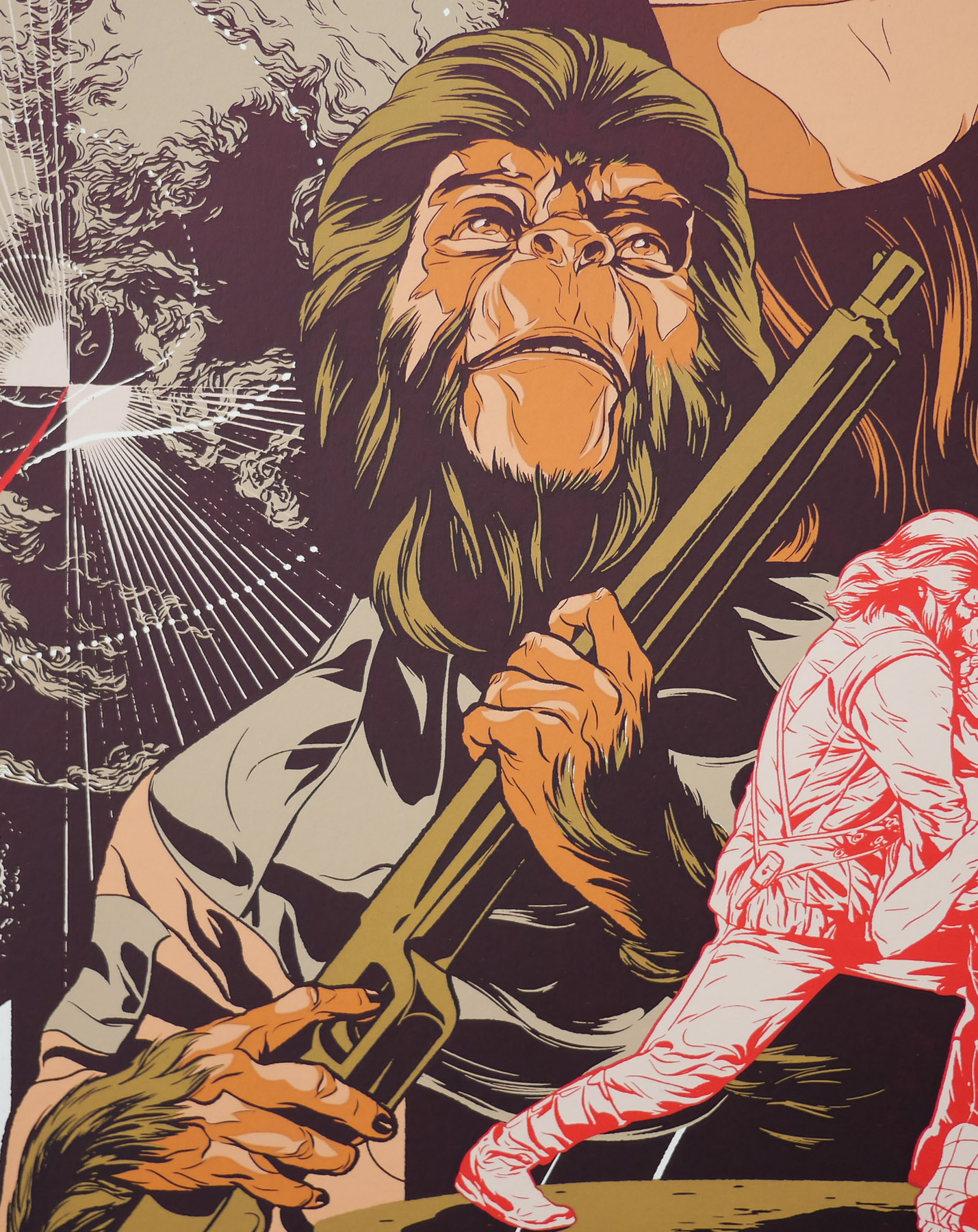
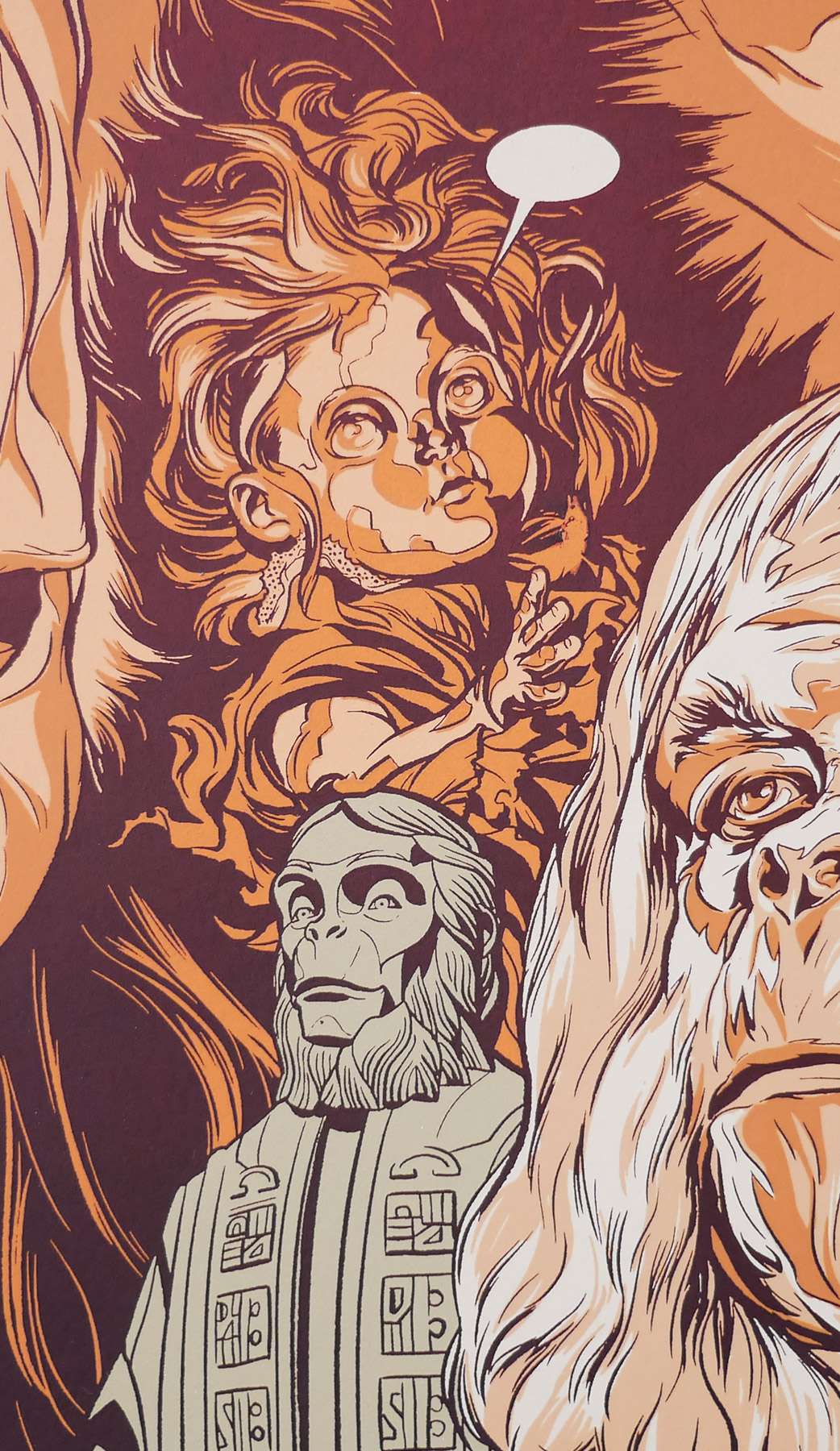
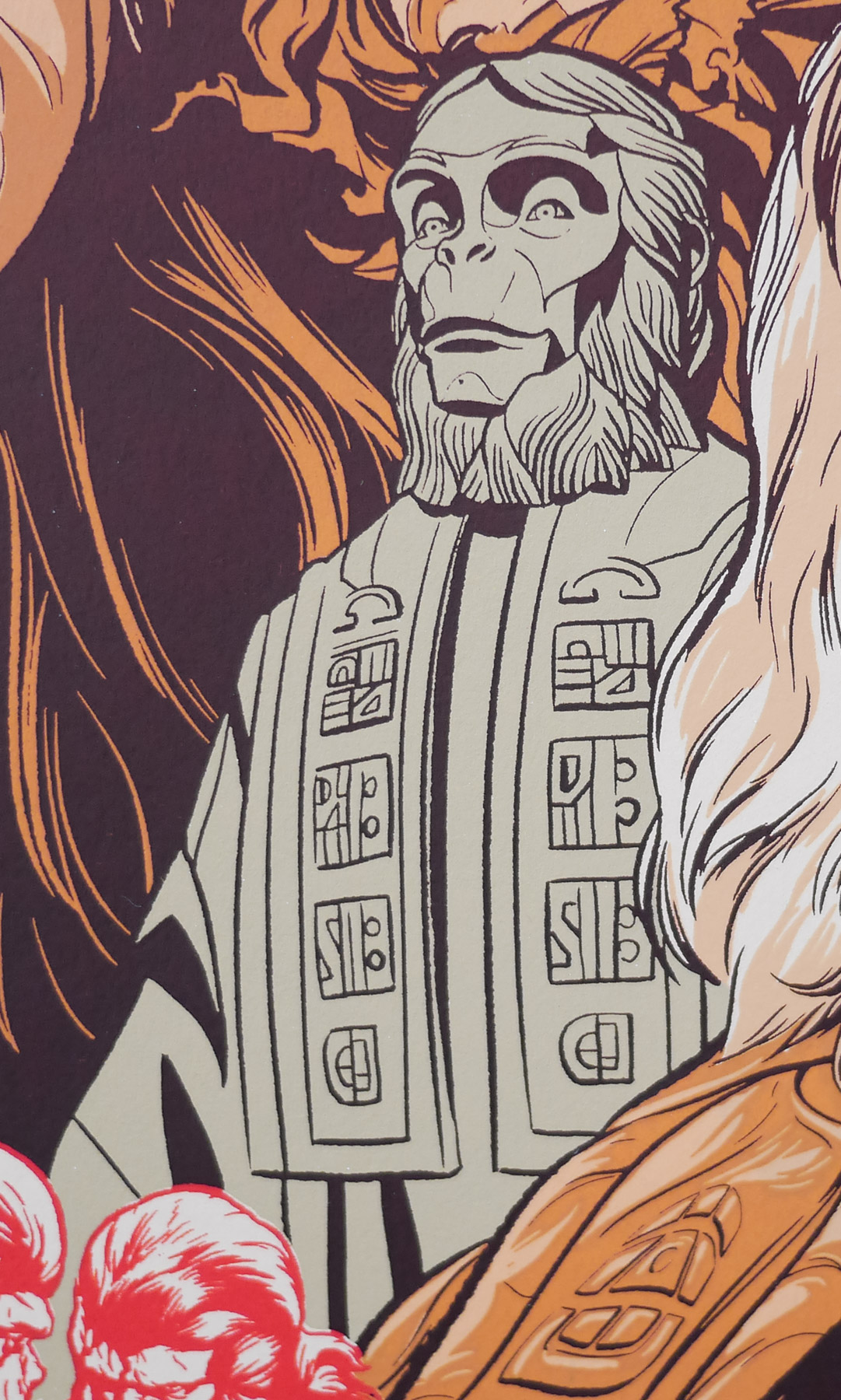
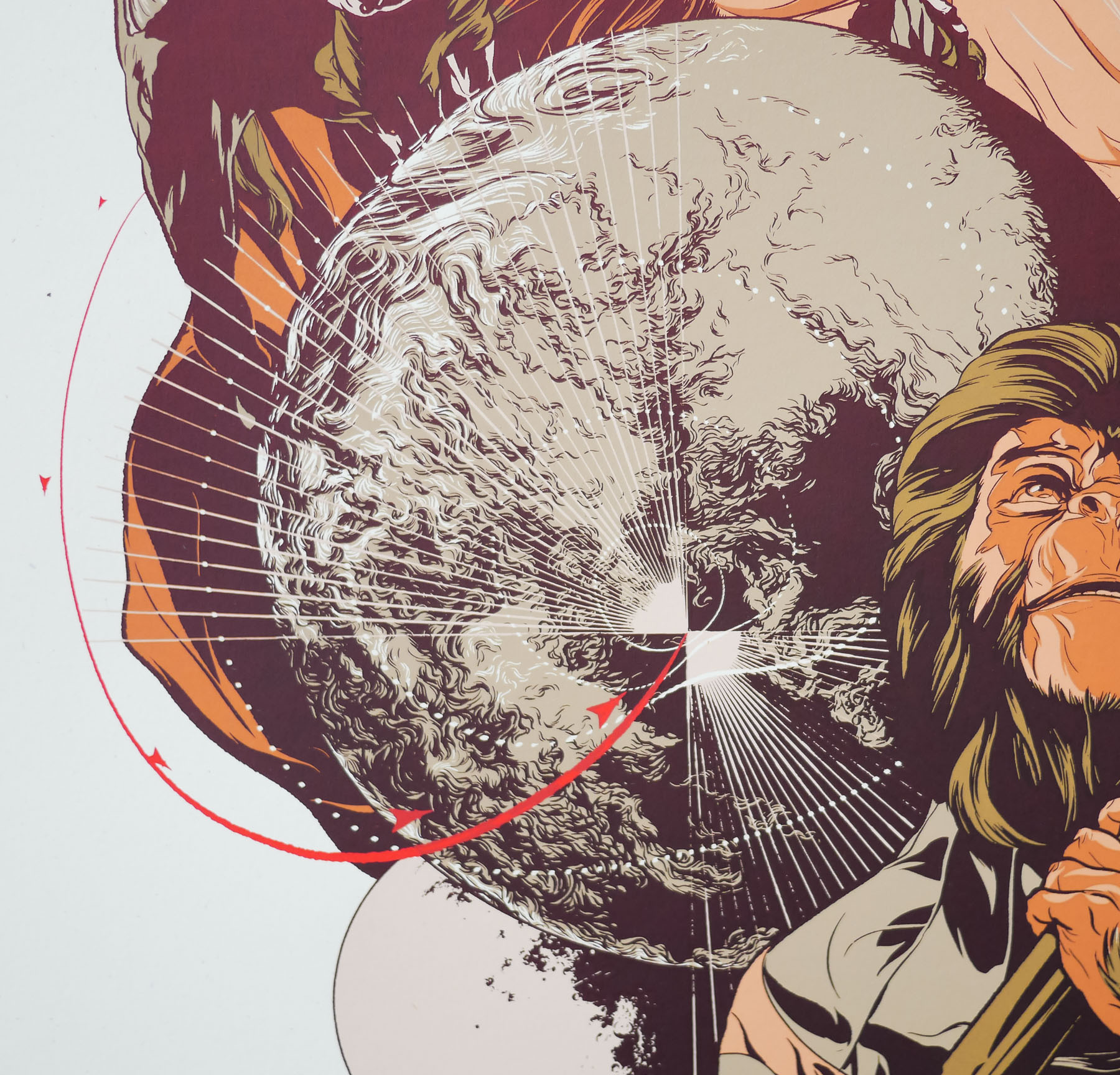
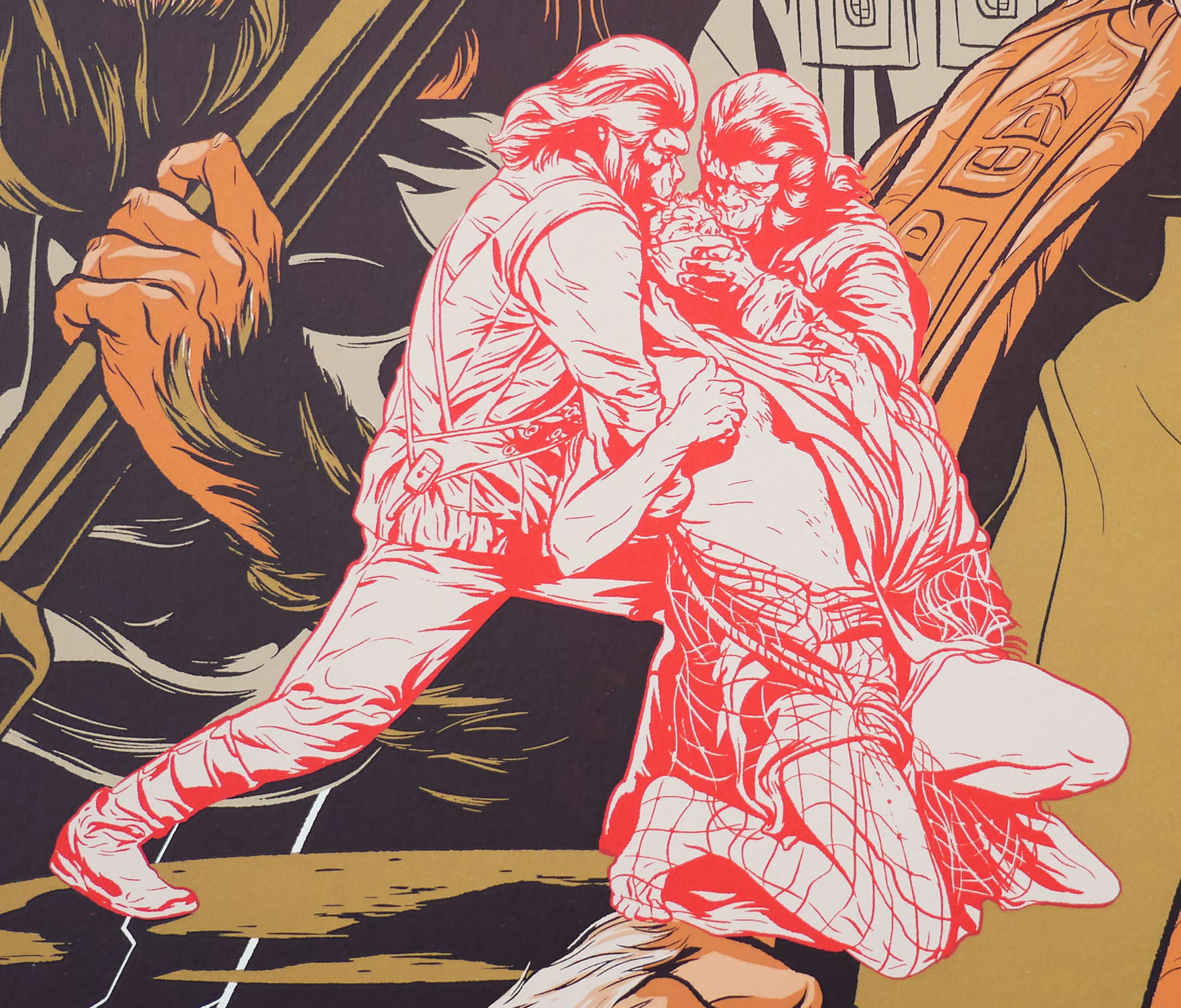
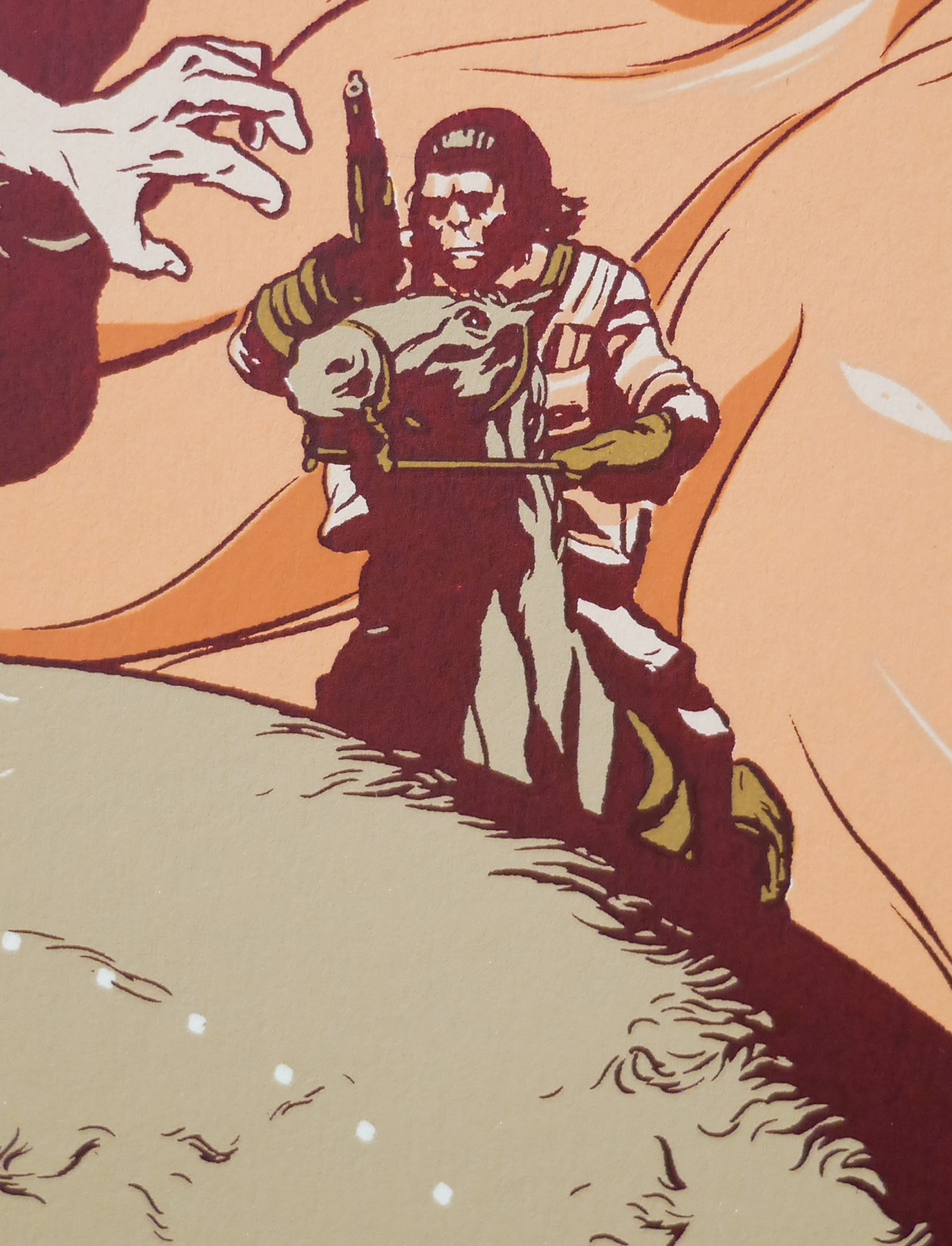
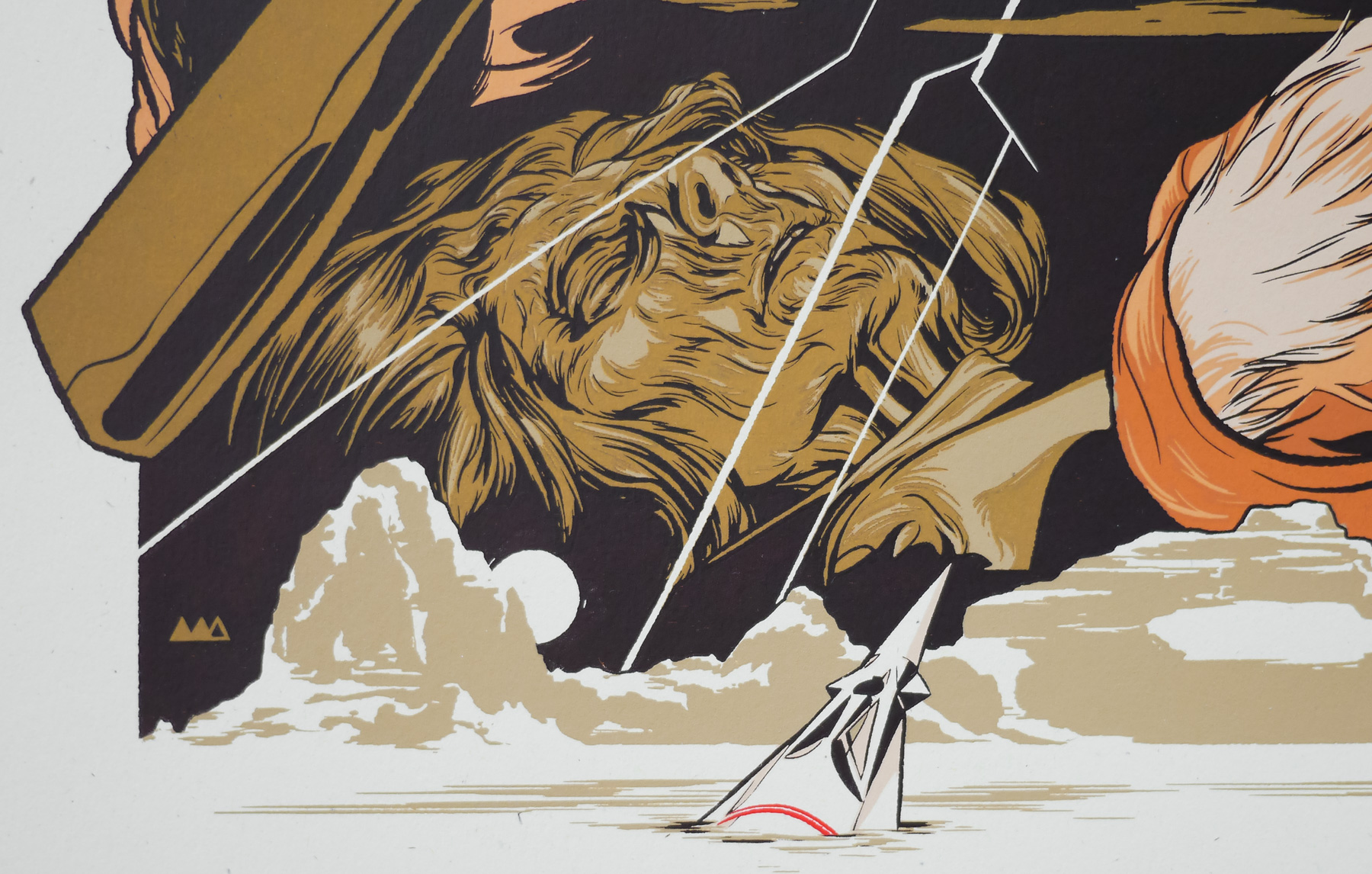
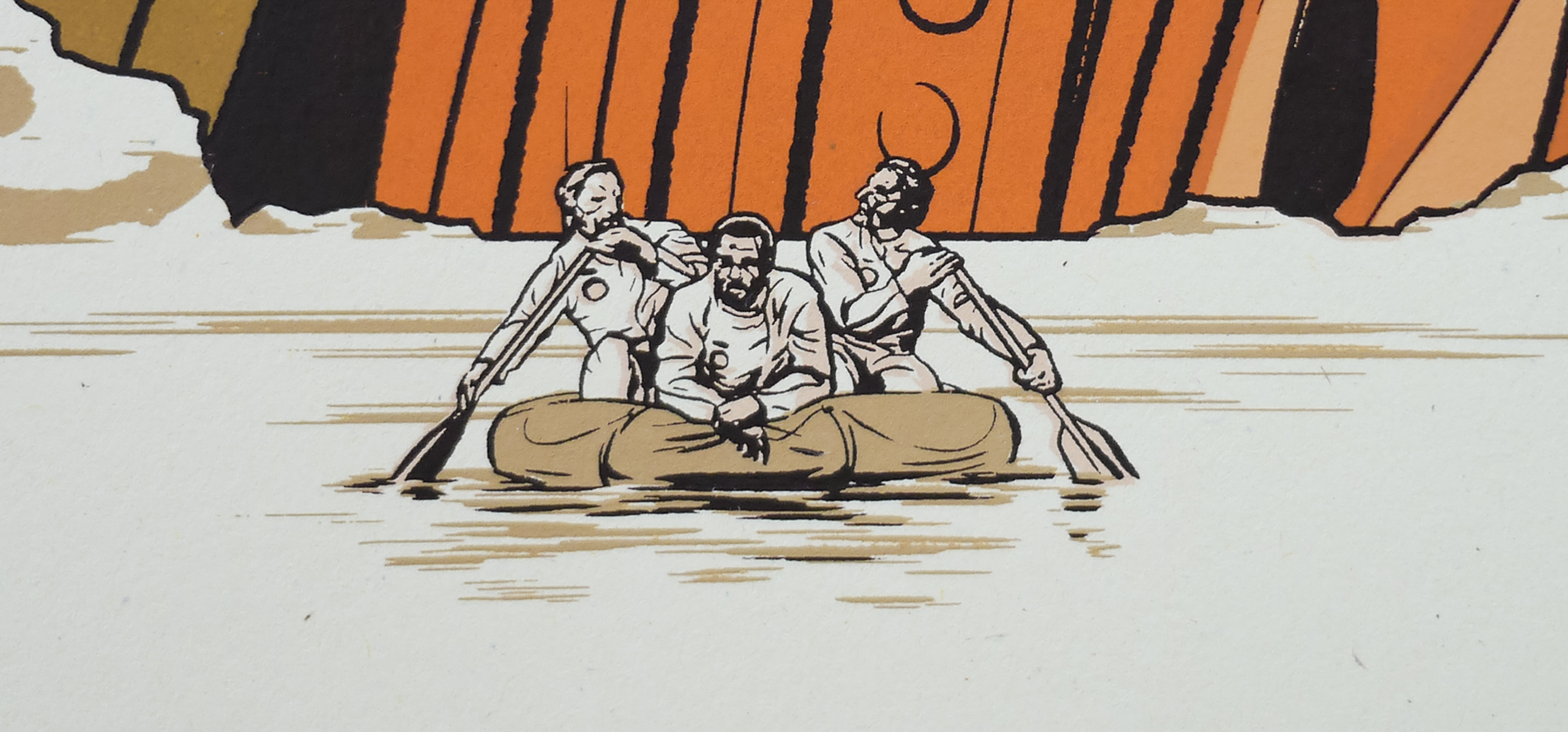
Another superb design by Martin Ansin on this screen print for the original 1968 sci-fi classic Planet of the Apes, which was released in January 2012 as part of a series of Apes inspired prints by Mondo, the celebrated Austin-based limited-edition art boutique. A true cult classic, the first Planet of the Apes was adapted from the book La Planète des singes by the French author Pierre Boulle and went through several iterations at the scripting stage, with the first draft handled by American TV legend Rod Serling, plus a few potential directors before Franklin J. Schaffner was handed the job and production began. The film was shot mostly on location and used some stunning locales, including Lake Powell in Utah/Arizona and along the Colorado river.
Charlton Heston stars as George Taylor, one of a group of astronauts who awake from deep space hibernation to discover that their craft has crash landed on an alien planet 2000 years into the future. The group set-off across the barren landscape in search of life. Eventually they come to an area with lush vegetation and fresh-water lake, which they dive into with relief. Soon afterwards they come across a group of primitive, mute humans but suddenly the whole group is attacked and rounded up by talking, armed, unif0rm-wearing gorillas. One of the astronauts is killed by gunfire, Taylor is shot in the throat and he and his friend are captured and taken back to Ape City. There he meets chimpanzee archaeologist Cornelius (Roddy McDowall) and his fiancee, animal psychologist Zira (Kim Hunter), who soon discover Taylor is not like the other primitives. Eventually he regains his ability to talk and must answer to the President of the apes Assembly Dr. Zaius (James Whitmore) who is determined to discover Taylor’s origins at any cost.

Fearing his life is in danger, Cornelius and Zira help Taylor escape the city and lead him to a cave by the sea in which the history of the planet’s inhabitants is shown to be at odds with the Assembly’s teachings. After an ambush by the Dr Zaius and his gorilla troops, Taylor is eventually allowed to leave and before long he has made a horrifying discovery about the planet, in what is arguably the most famous twist ending in the history of cinema. The film was a success worldwide and spawned a number of sequels of varying quality, plus a short-lived TV series, and a whole raft of merchandising, including what is often cited as the first action-figures tied to a film property, certainly pre-dating the phenomenally successful Star Wars figures.

One of my favourite artists working today, Martin Ansin‘s work has graced many of the best posters released by Mondo, including several in the Universal Monsters series like this amazing Phantom of the Opera print and an excellent Dracula (1931) one. You only have to look at the gallery on his official site to see how talented an artist he is, with an eye for composition and detail unmatched by most of the artists in Mondo’s roster. To see the other posters I’ve collected so far that were designed by Ansin, click here.

Platoon / one sheet / USA

13.08.14

Poster Poster
Title
Platoon
AKA
--
Year of Film
1987
Director
Oliver Stone
Starring
Charlie Sheen, Willem Dafoe, Tom Berenger, Richard Edson, Keith David, Forest Whitaker, Kevin Dillon, Johnny Depp
Origin of Film
USA
Genre(s) of Film
Charlie Sheen, Willem Dafoe, Tom Berenger, Richard Edson, Keith David, Forest Whitaker, Kevin Dillon, Johnny Depp,
Type of Poster
One sheet
Style of Poster
Final
Origin of Poster
USA
Year of Poster
1986
Designer
Bill Gold
Artist
Unknown
Size (inches)
27 2/16" x 41"
SS or DS
SS
NSS #
860115
Tagline
The first casualty of war is innocence

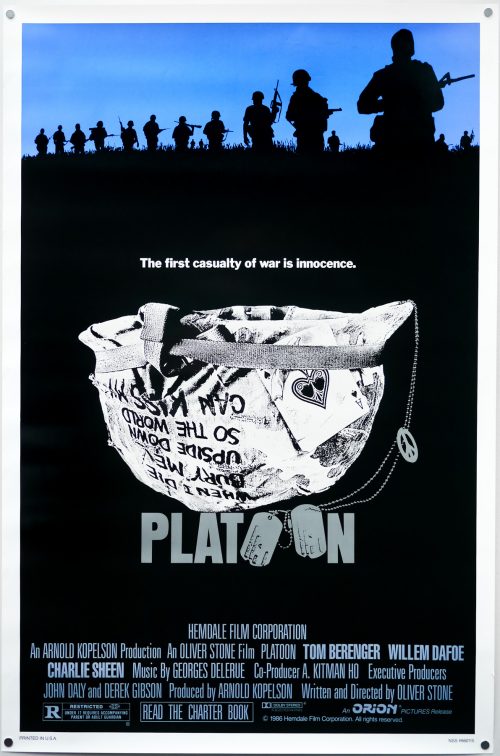
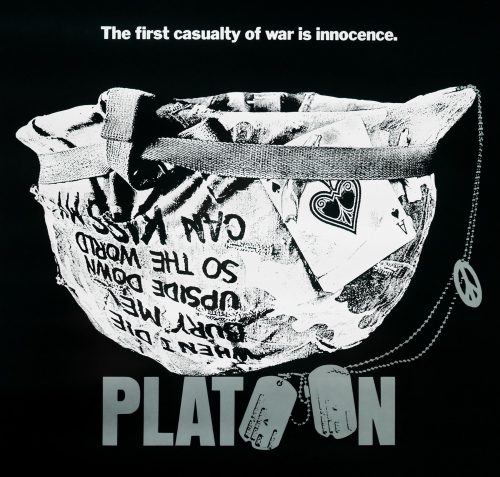
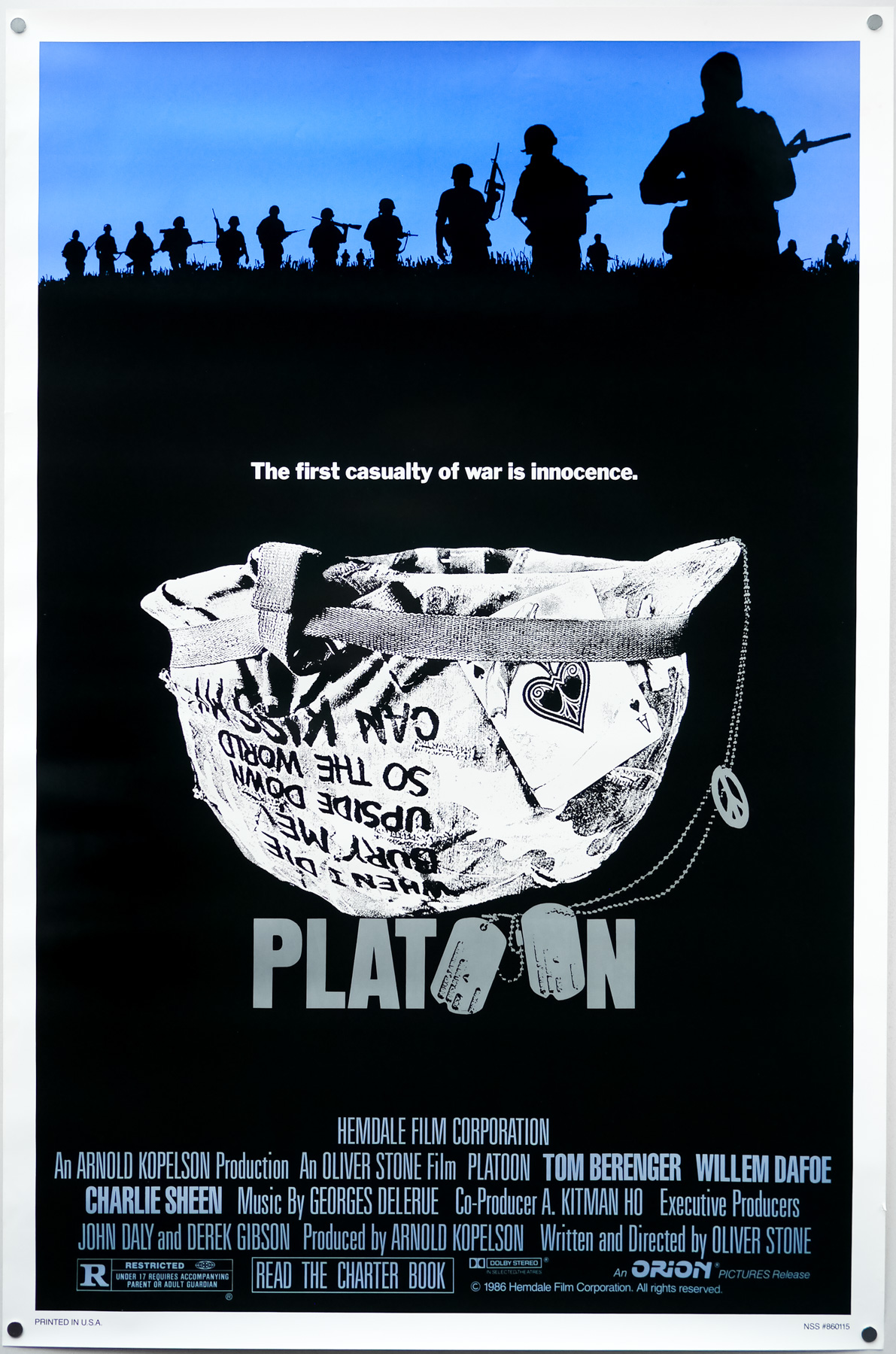
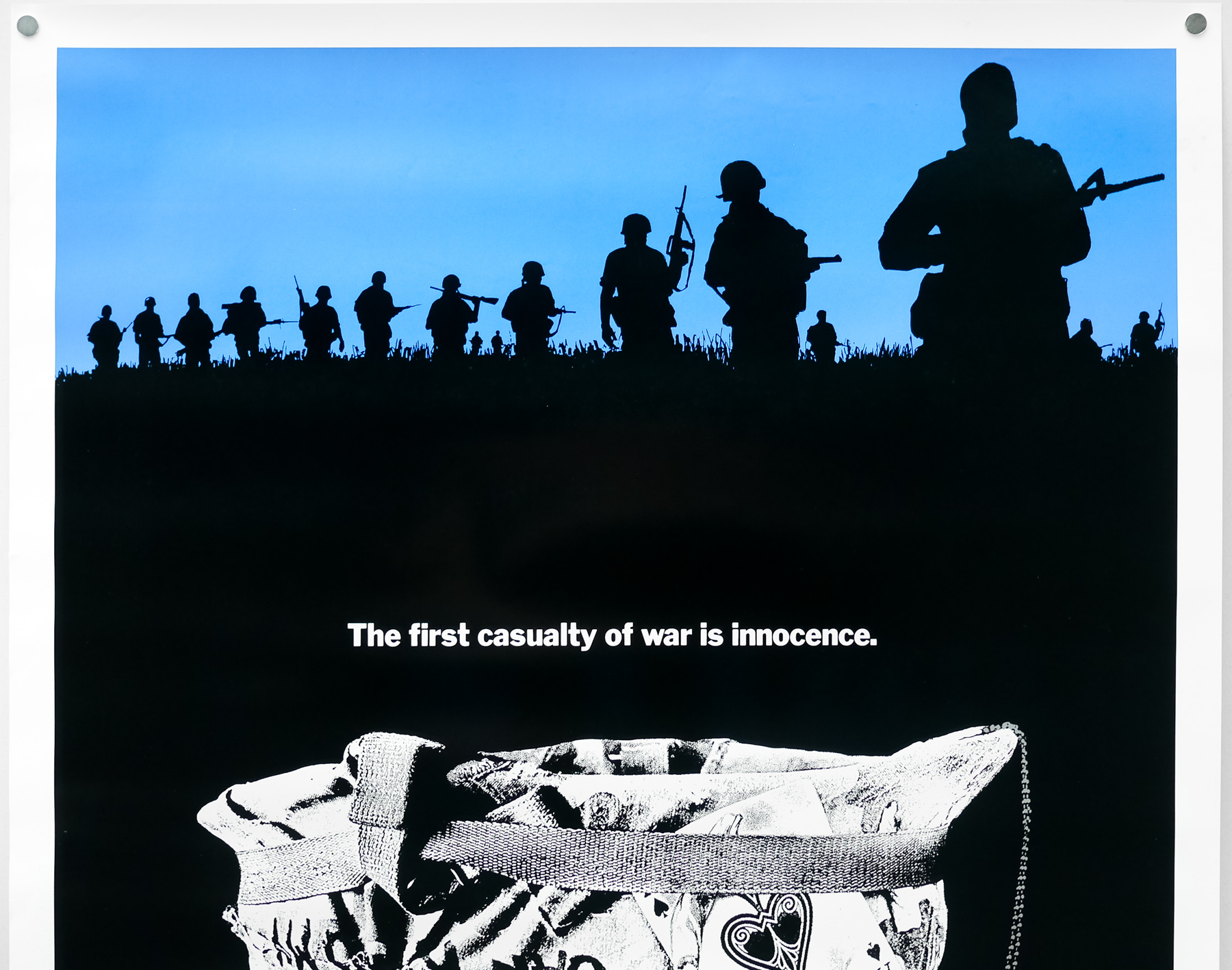
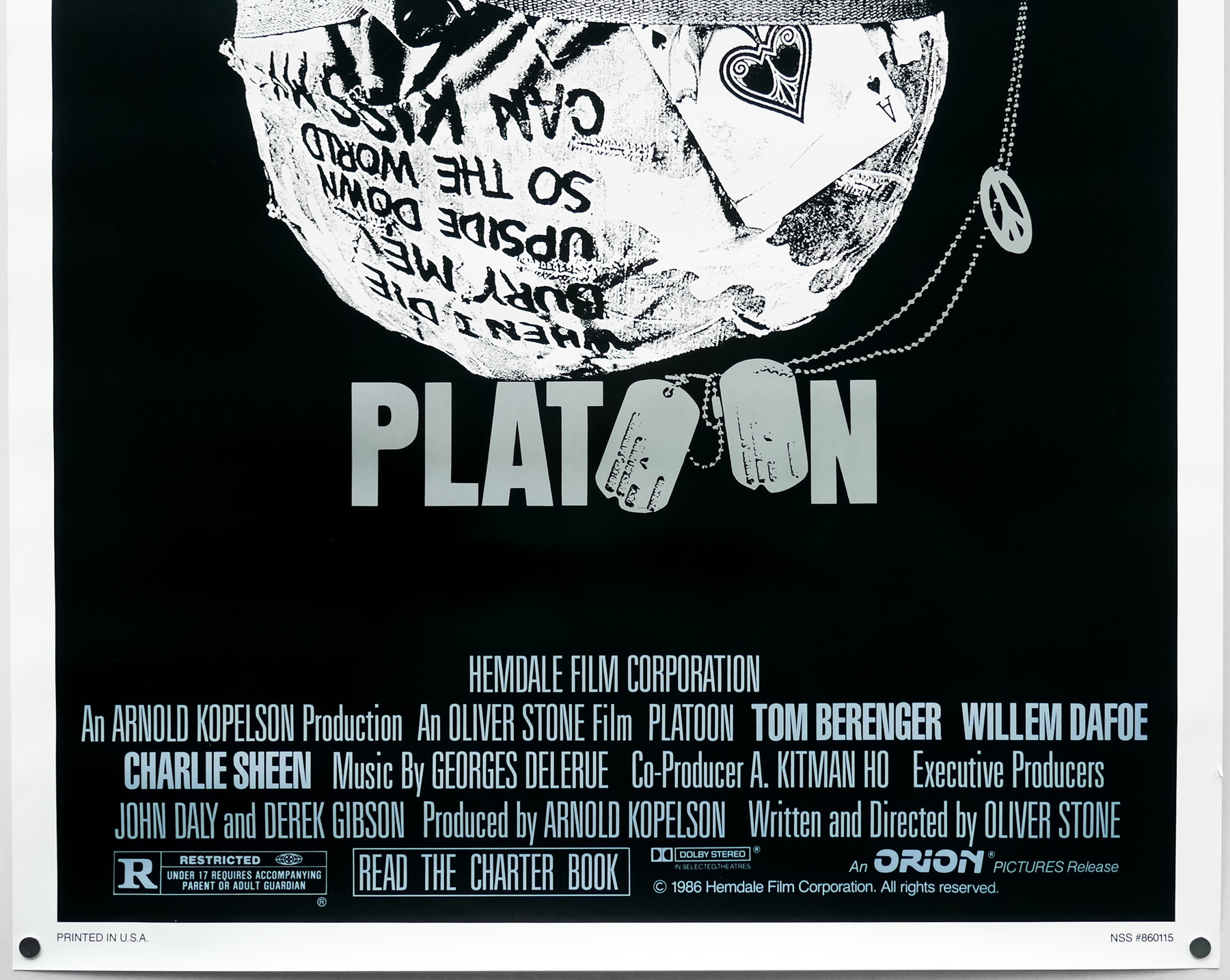
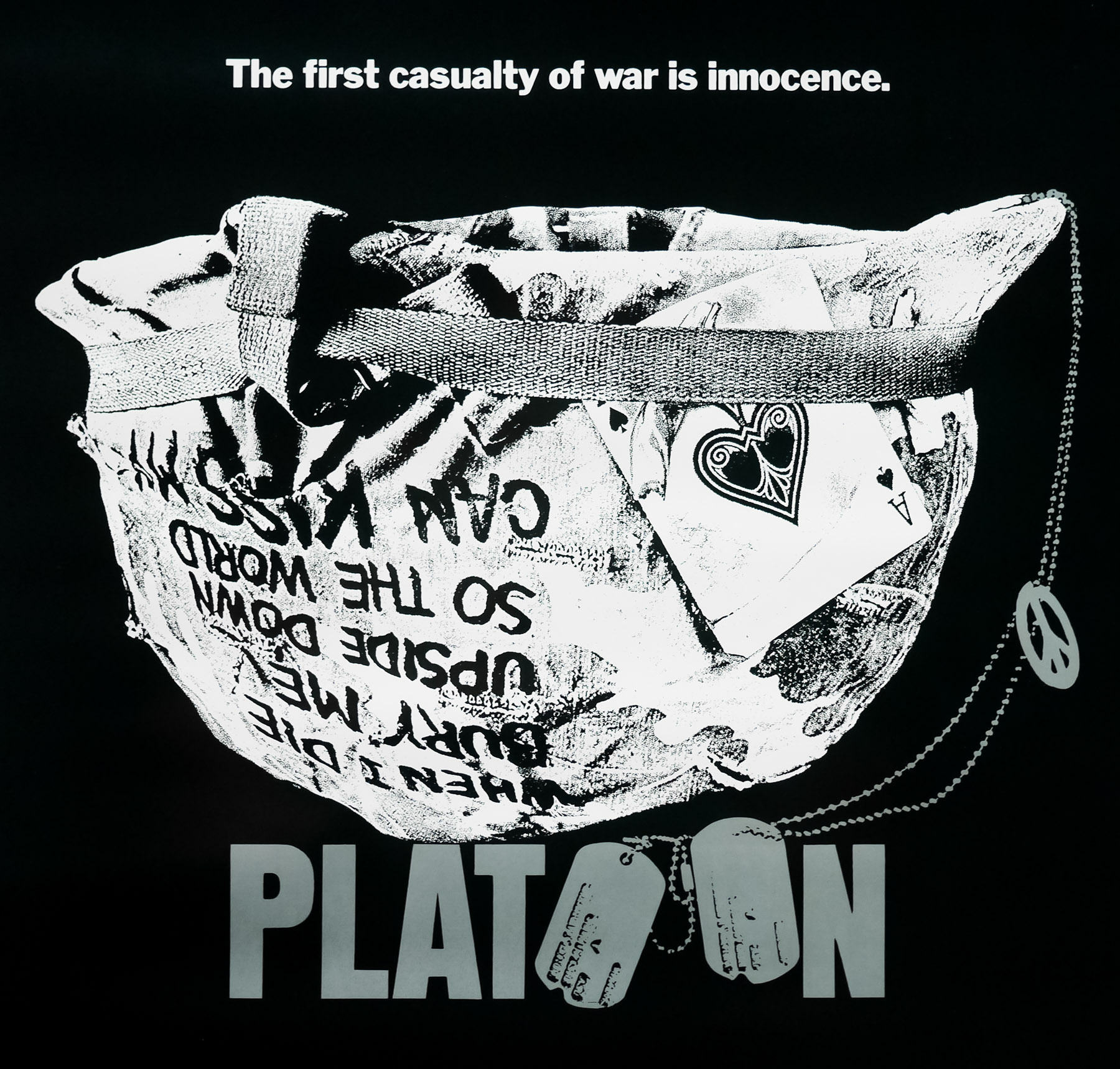
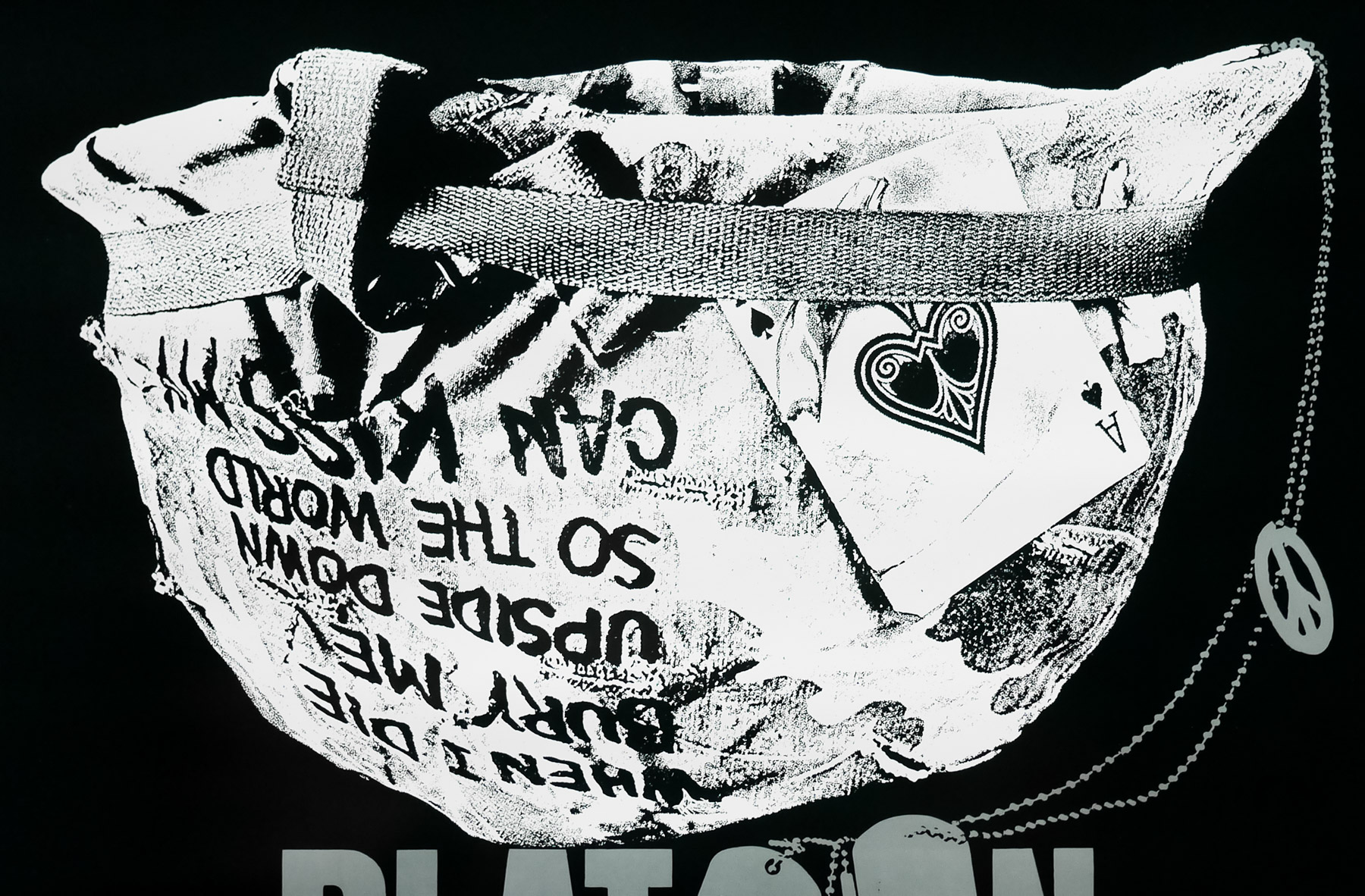
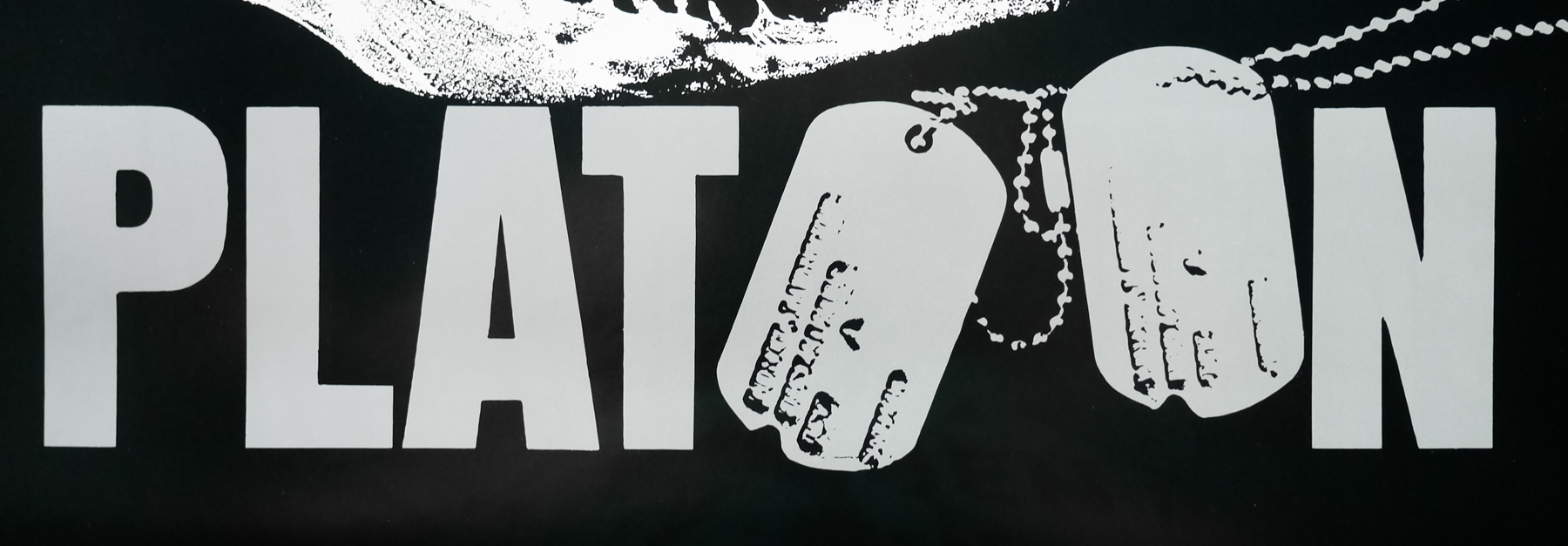
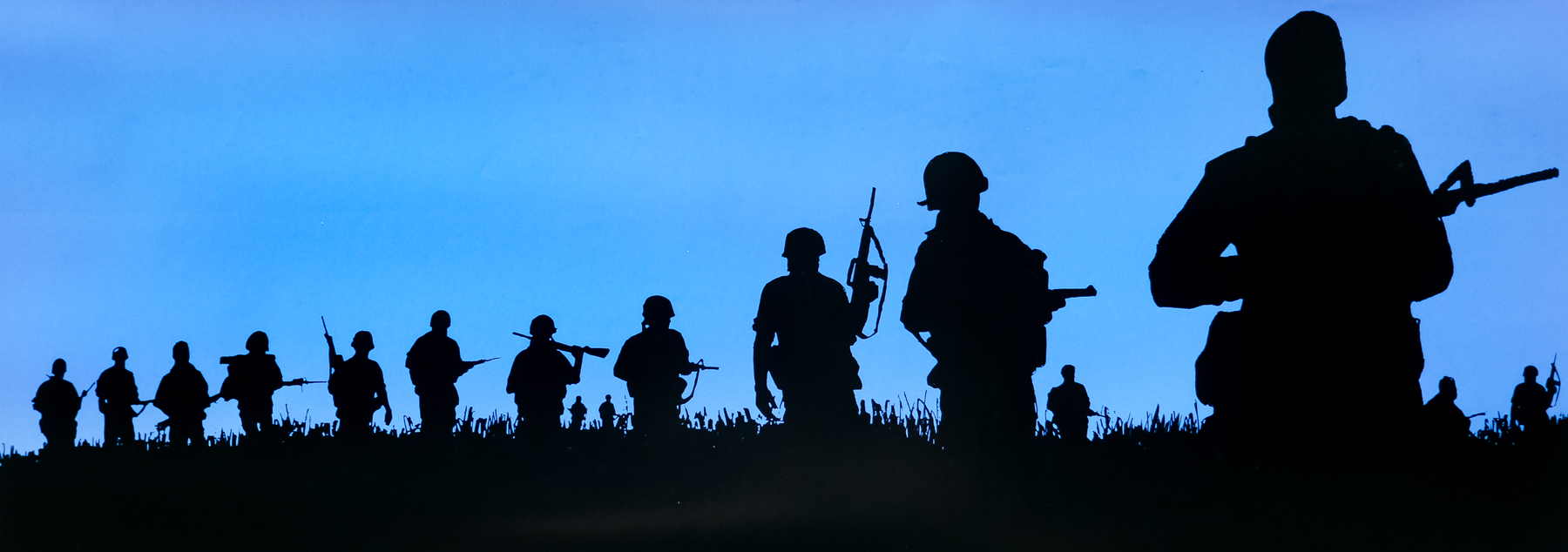
An iconic image on this one sheet for the release of Oliver Stone‘s Academy Award-winning Vietnam war classic, Platoon, one of a three films that the director made on the subject (the others being Born on the Fourth of July and Heaven & Earth). The script, which was written by Stone, is based on his own experiences as an infantryman who served in tours of duty during the Vietnam war. He had signed up in 1967 after dropping out of Yale University and specifically requested to see combat in the war that had seen the first ground troops sent to the country two years earlier. Stone served in two different divisions for over a year and was wounded twice,  receiving several medals, including a Purple Heart.

The film follows Charlie Sheen‘s army grunt Chris Taylor (a proxy for Stone) who is serving as part of Bravo Company, 25th Infantry Division near the Cambodian Border. Taylor is fresh into the field and is treated with disdain by the more experienced soldiers (an incredible ensemble of acting talent, including Willem Dafoe, Tom Berenger, Keith David and Forest Whitaker) who have all been in country for months, and he is quickly made aware that his presence is inconsequential. After a few skirmishes in which some members of the division are killed, Taylor is eventually accepted into the group and discovers the grinding boredom and rampant drug use amongst his fellow soldiers. Tensions between two sergeants, the ill-tempered, battle-scarred Barnes (Berenger) and the pleasant, more reasonable Elias (Dafoe) reach breaking point following an incident involving innocent villagers. Upon returning to base, the issue of a court-martial for illegal killing is raised and when the division is sent out on their next patrol, things reach boiling point, leaving Taylor fighting to survive against the enemy as well as members of his own team.

This one sheet was designed by the great Bill Gold who is best known for his working relationship with Clint Eastwood that has lasted over four decades. He worked on the iconic one sheet for Dirty Harry and went on to design the American poster for every Eastwood film since, which includes the brilliant one for Clint’s last Western,Unforgiven (1992). Gold has also designed posters for some of Hollywood’s greatest directors, including the likes of Stanley Kubrick (A Clockwork Orange, with artwork by Philip Castle) and Alfred Hitchcock (Dial M For Murder).

Born in New York City in 1921, Gold studied illustration and design at the Pratt Institute before starting his professional design career in 1941 in the publicity department for Warner Brothers. One of his earliest designs was for the classic Humphrey Bogart filmCasablanca and within a few years he went on to become the head of the studio’s poster department. In 1962 he started Bill Gold Advertising in New York and then spent the next four decades creating hundreds of memorable poster designs and collaborating with some of the best illustrators in the business, including the brilliant Bob Peak.

Gold started to design less posters towards the end of the 1990s, with only a handful of posters for Eastwood films being credited to him. His last poster was for the 2011 film J. Edgar (directed by Eastwood), which Gold agreed to work on after an unsuccessful period of retirement following the poster he worked on for Mystic River in 2003. He continues to live in Upstate New York and in 2011 a book was released to coincide with his 90th birthday called Bill Gold Posterworks, which features 450 pages worth of his incredible designs and details his creative process. Unfortunately, it has an eye-watering price tag that has prevented me picking a copy up but I hope that one day a more affordable version will be released.

Blade Runner / one sheet / studio version / USA

15.09.14

Poster Poster
Title
Blade Runner
AKA
Blade Runner - Metropolis 2020 (Finland)
Year of Film
1982
Director
Ridley Scott
Starring
Harrison Ford, Rutger Hauer, Sean Young, Edward James Olmos, M. Emmet Walsh, Daryl Hannah
Origin of Film
USA | Hong Kong
Genre(s) of Film
Harrison Ford, Rutger Hauer, Sean Young, Edward James Olmos, M. Emmet Walsh, Daryl Hannah,
Type of Poster
One sheet
Style of Poster
Studio version
Origin of Poster
USA
Year of Poster
1982
Designer
Intralink Film Graphic Design
Artist
John Alvin
Size (inches)
27" x 41"
SS or DS
SS
NSS #
820007
Tagline
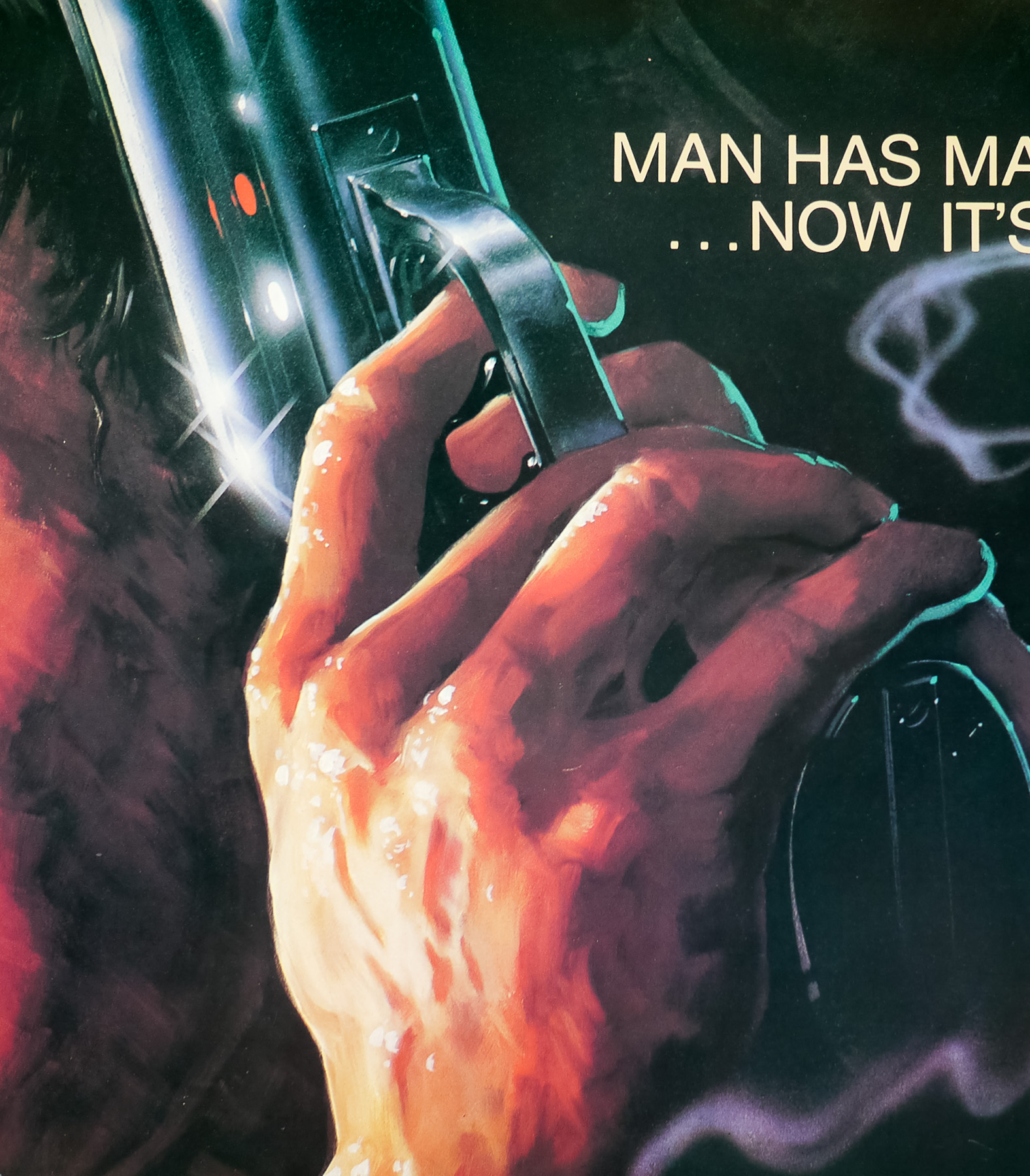
Man Has Made His Match... Now It's His Problem

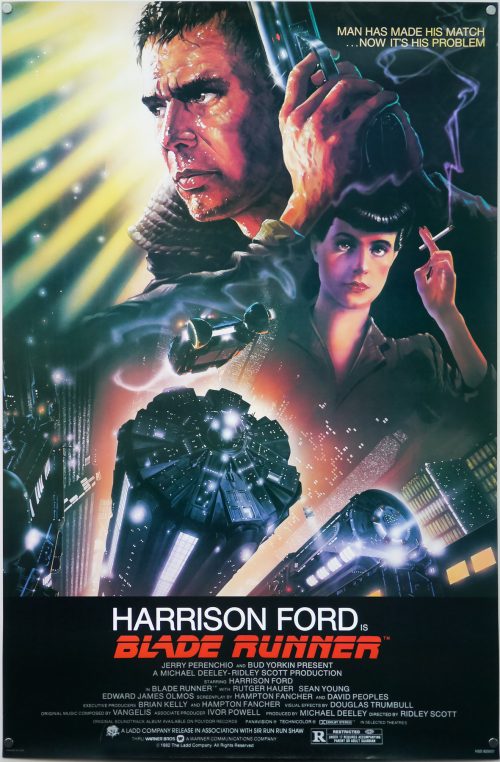
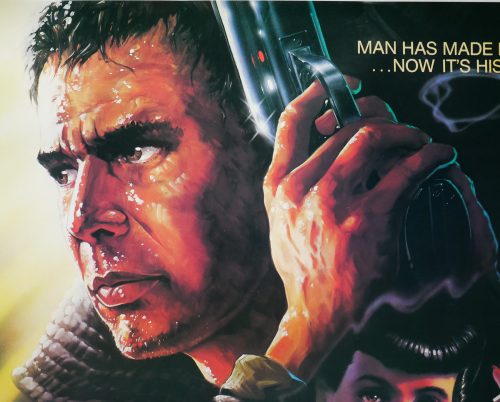
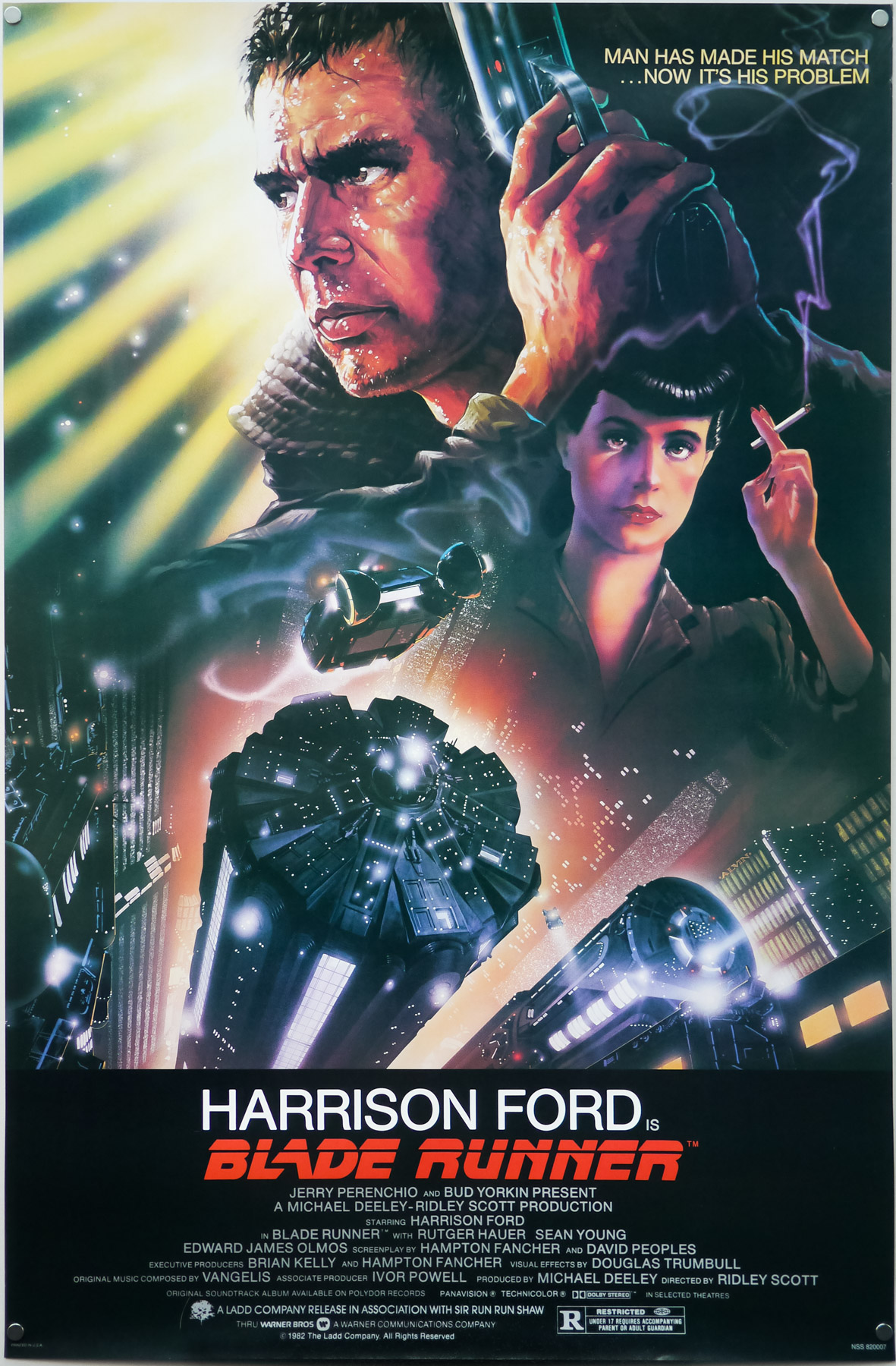
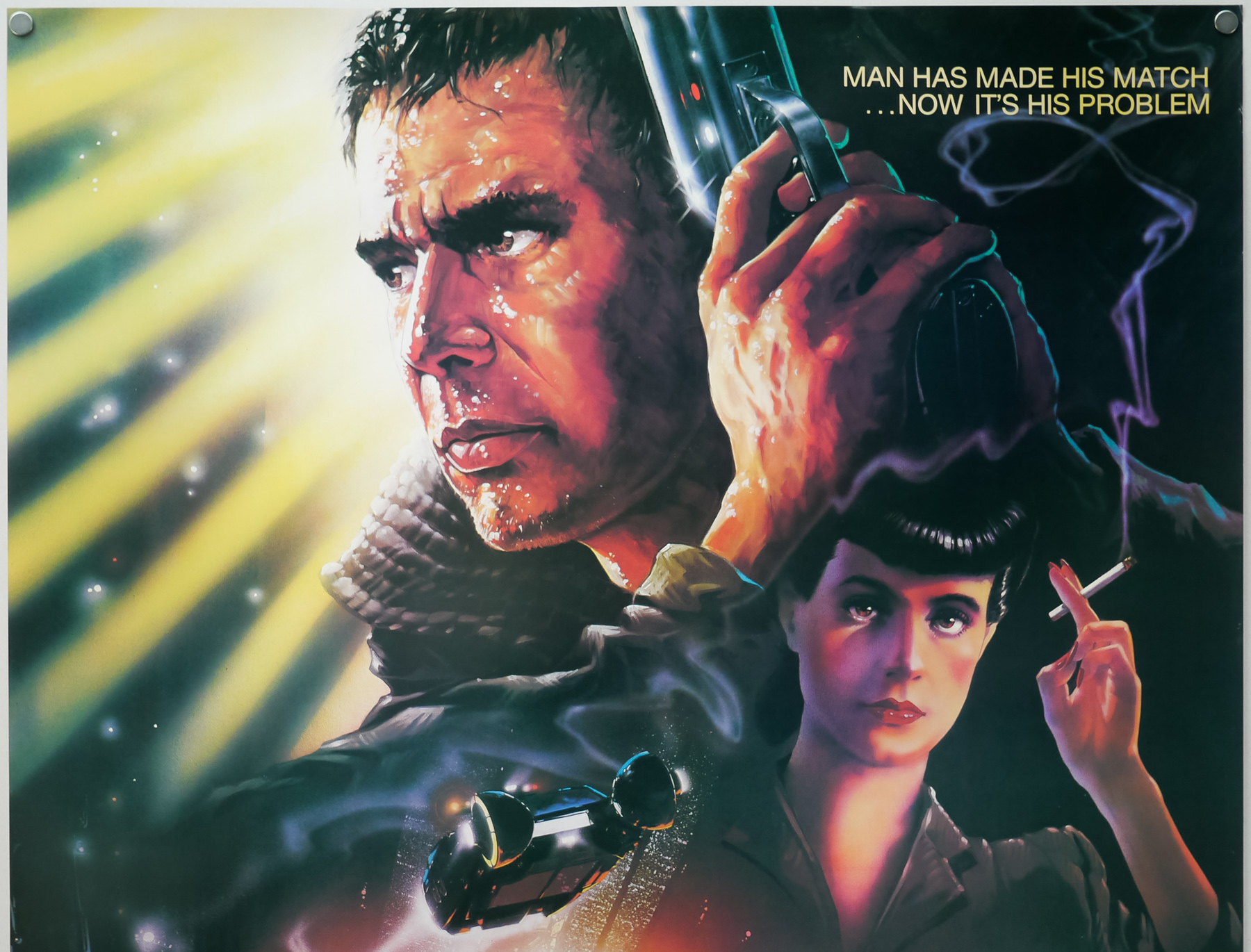
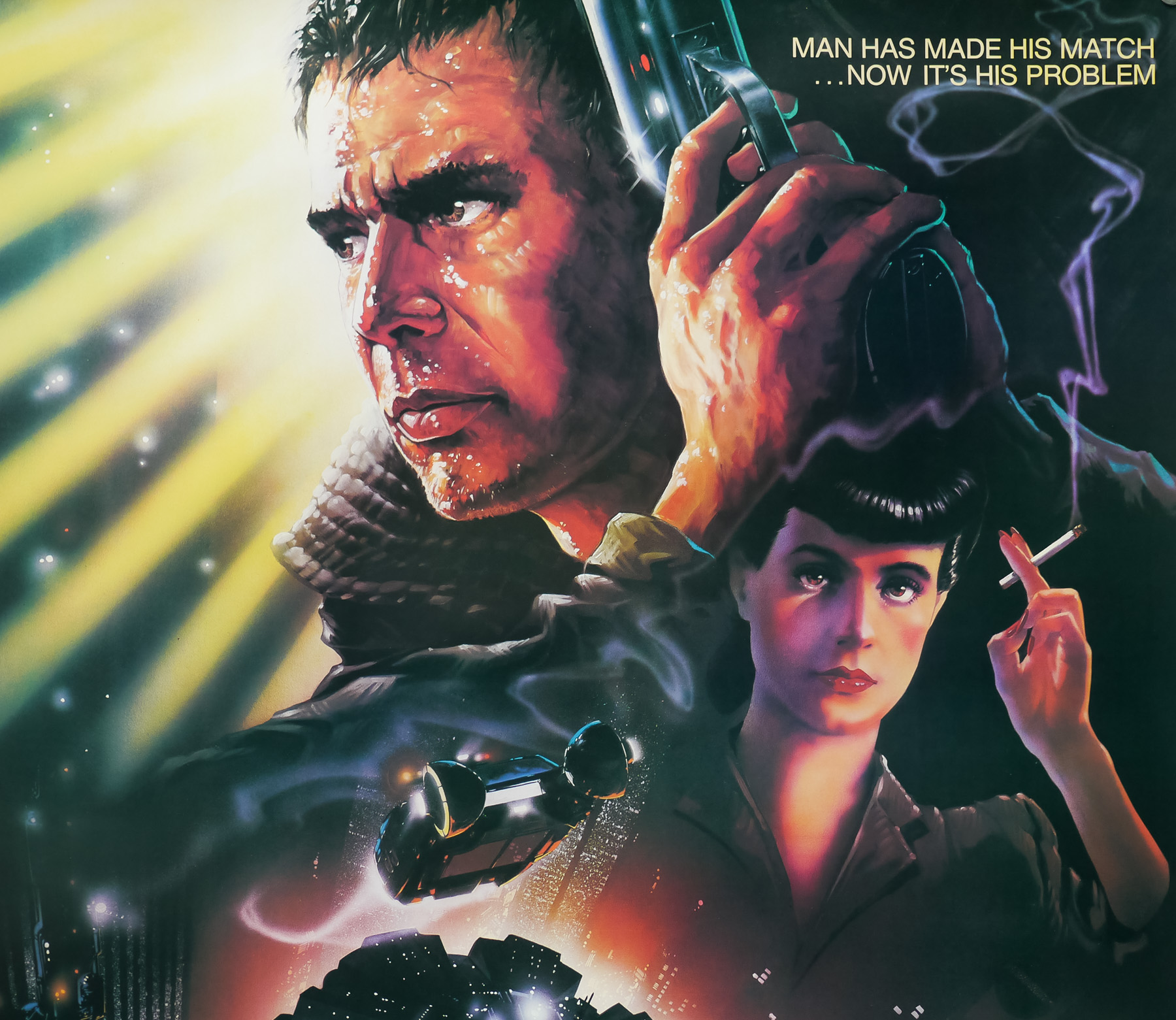
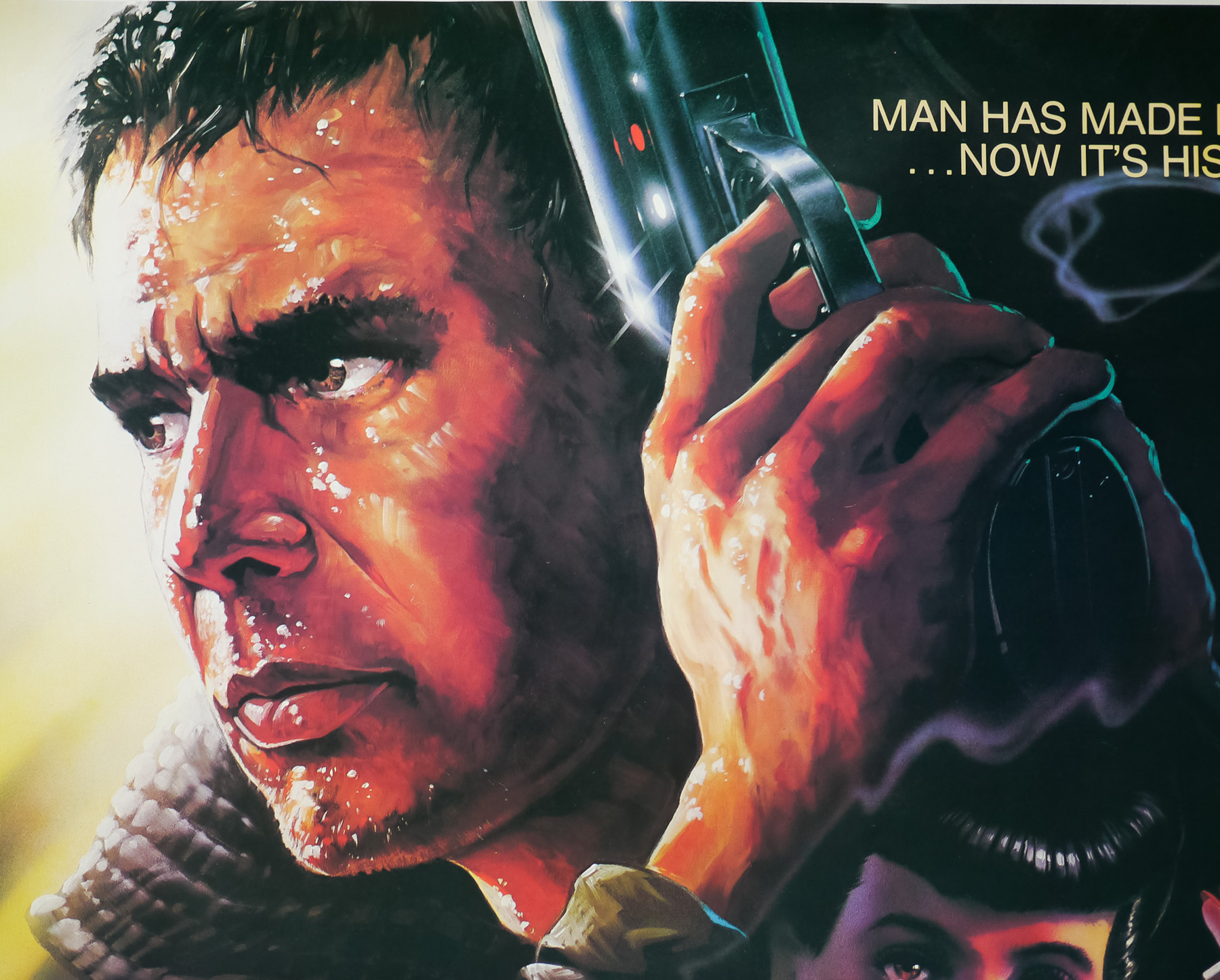
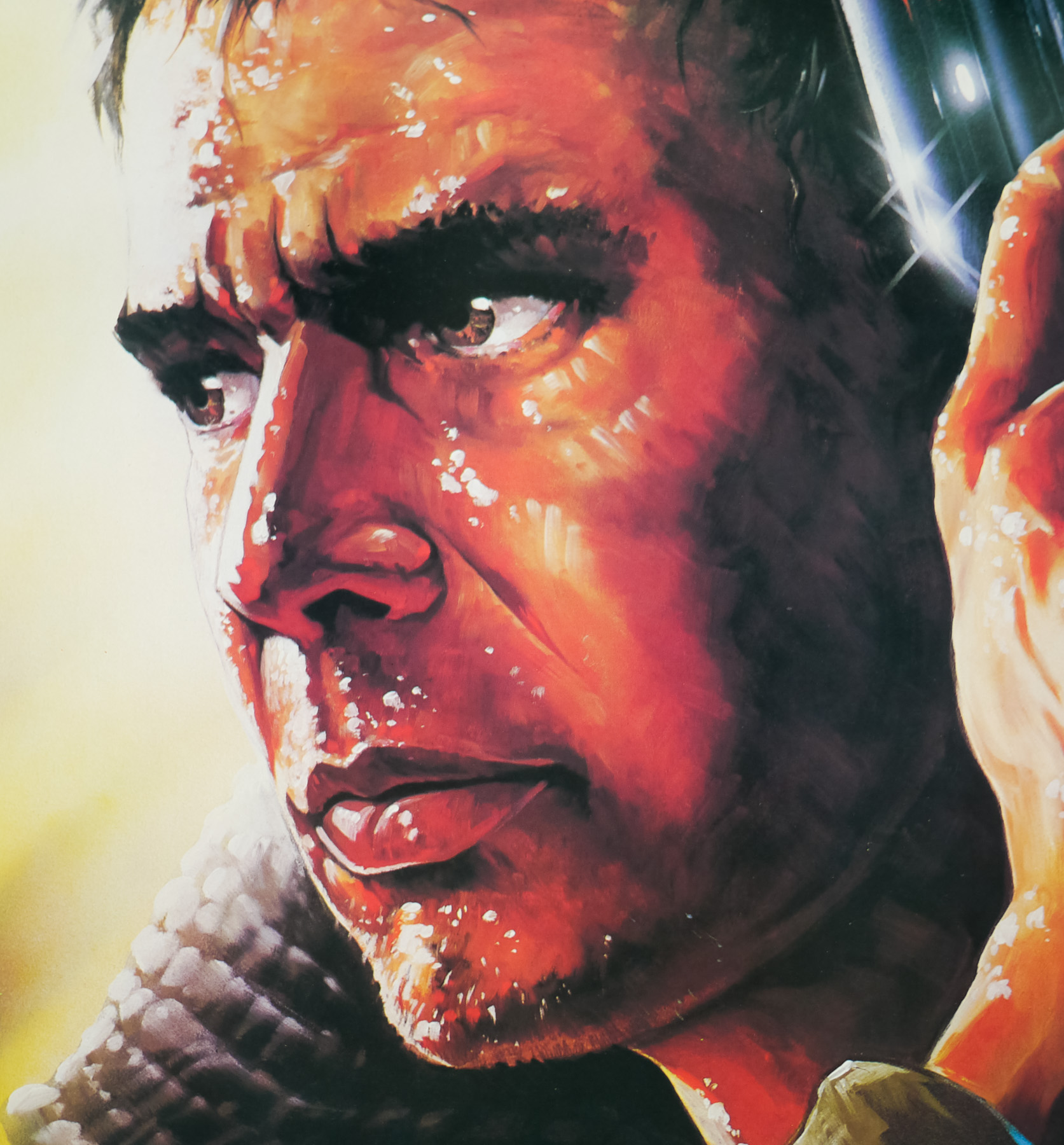
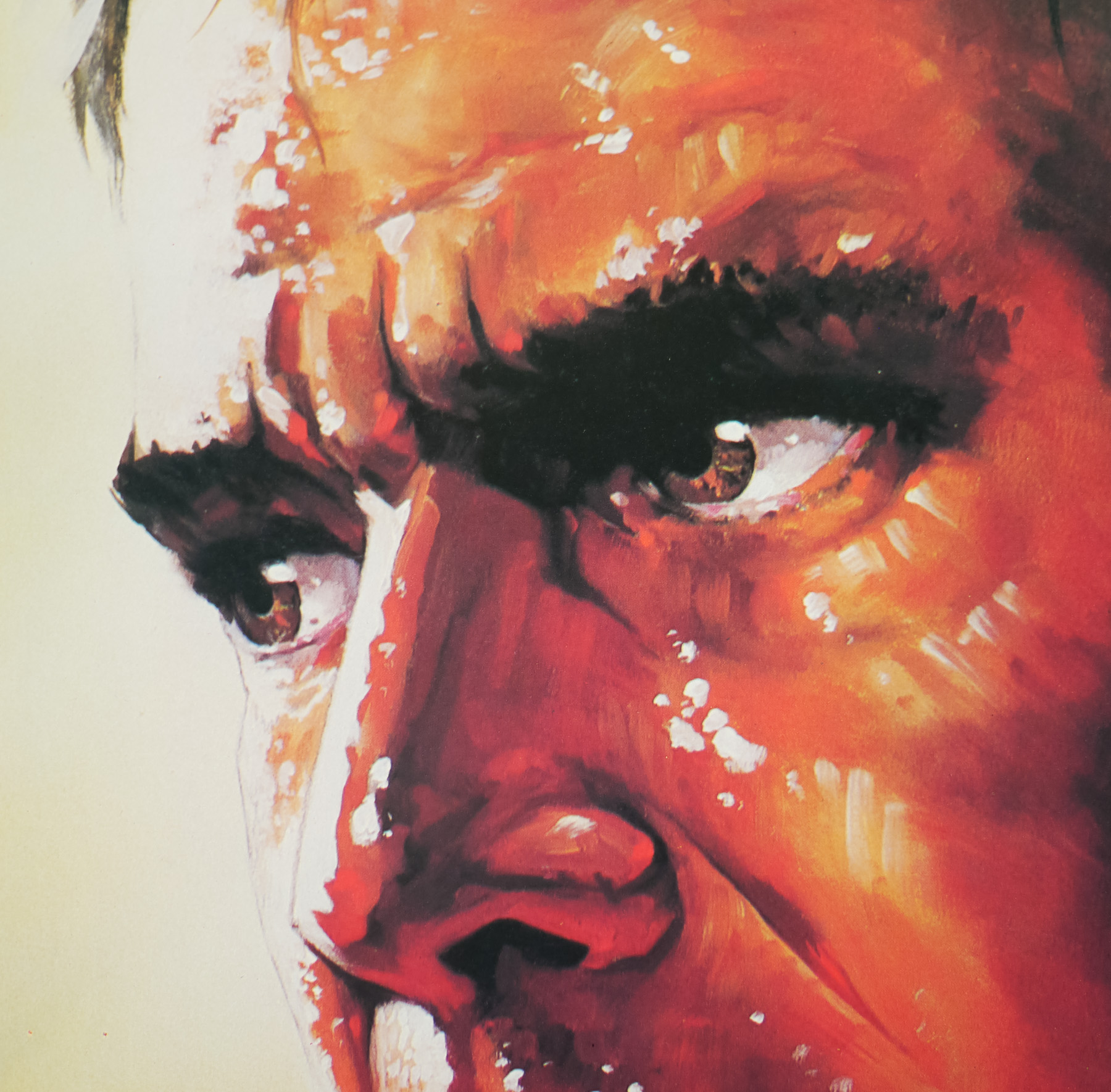
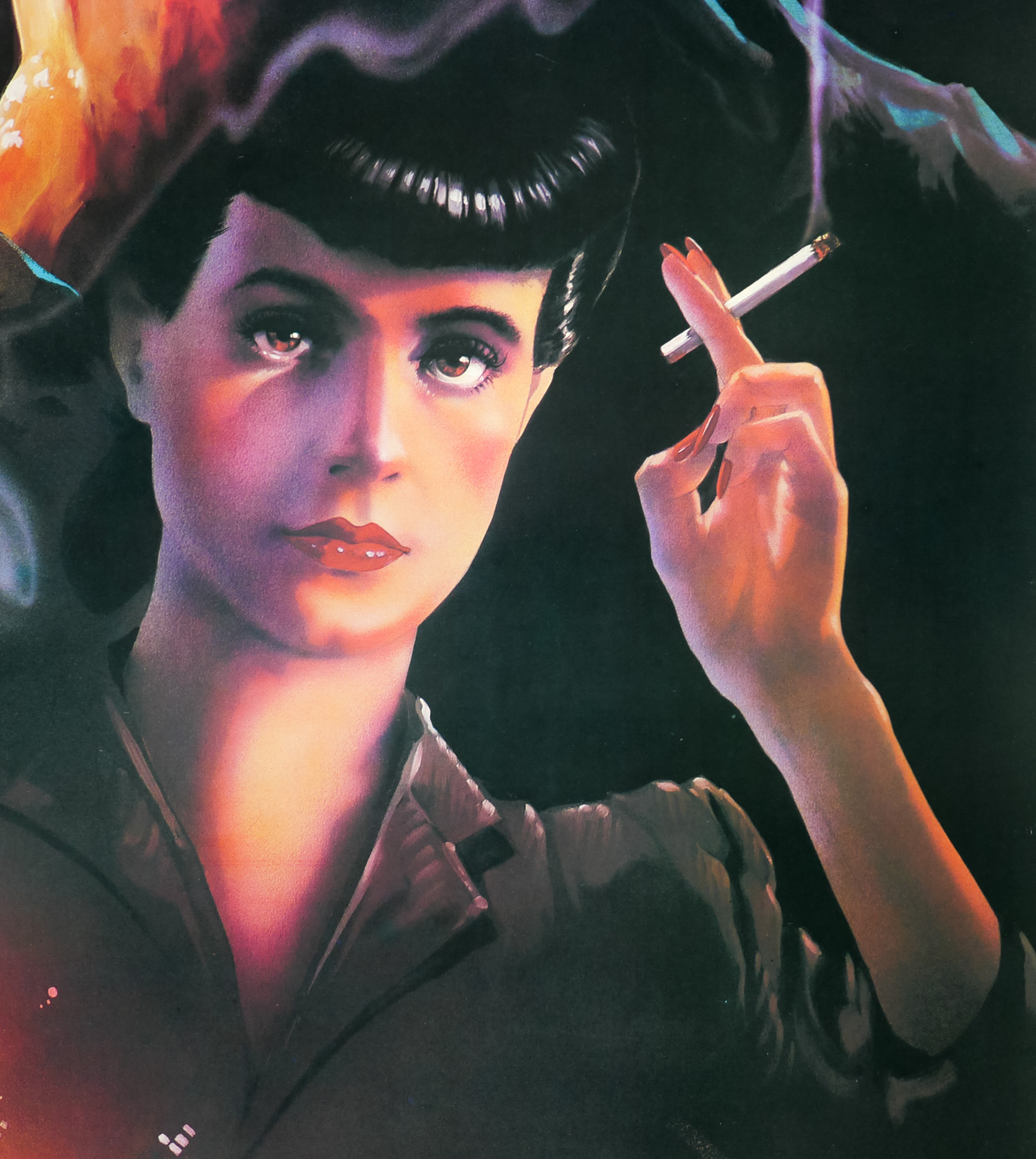
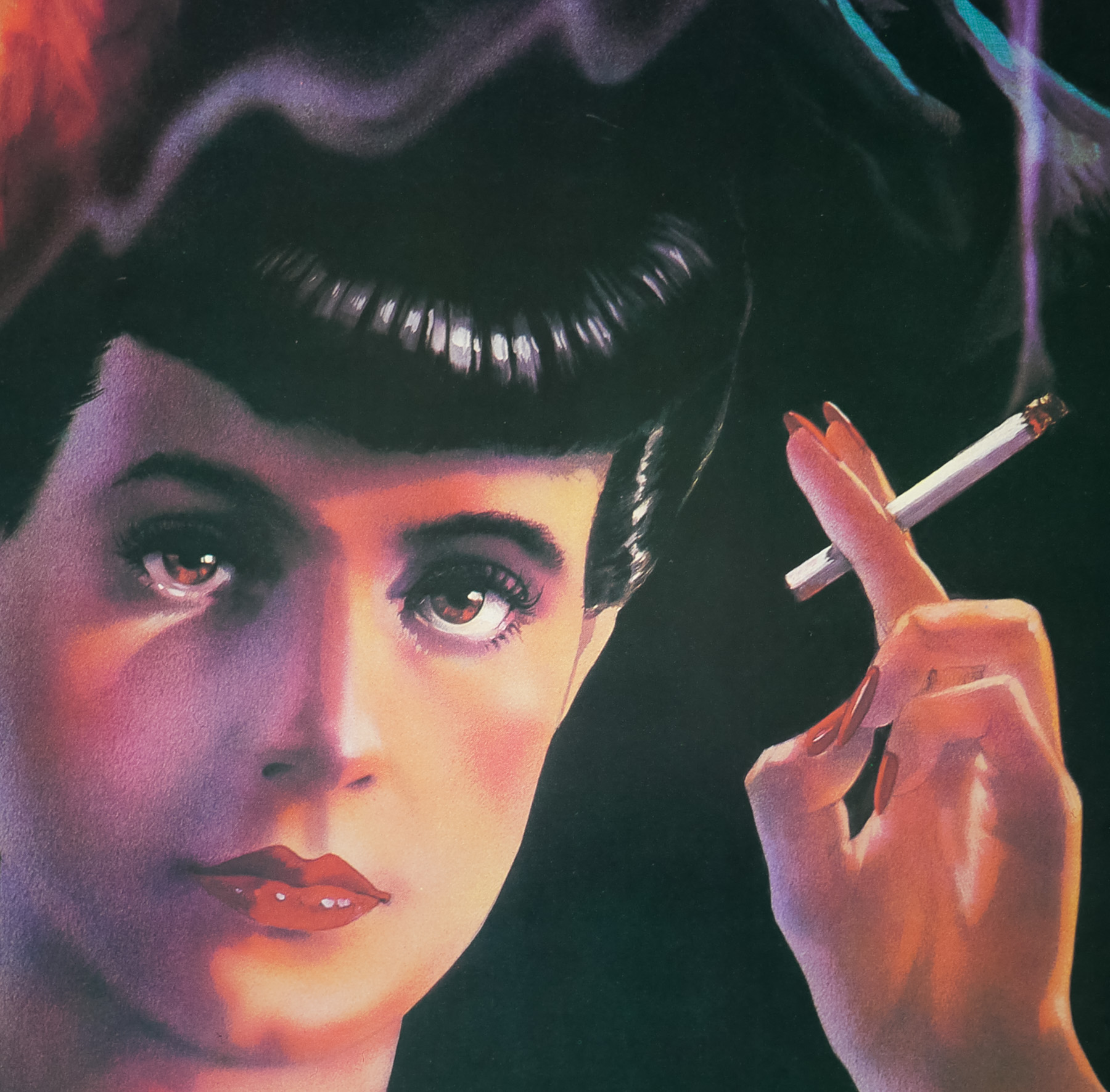
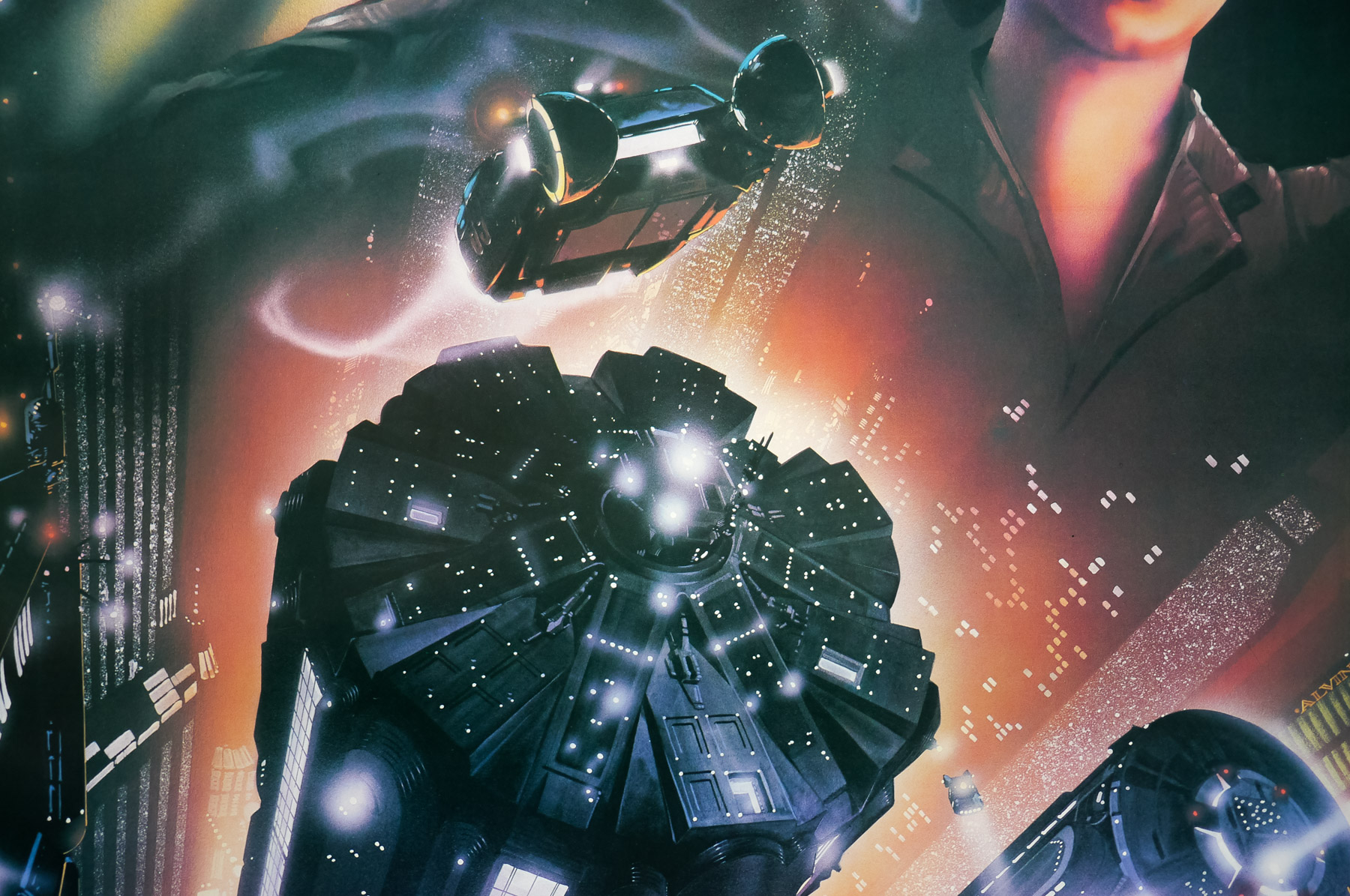
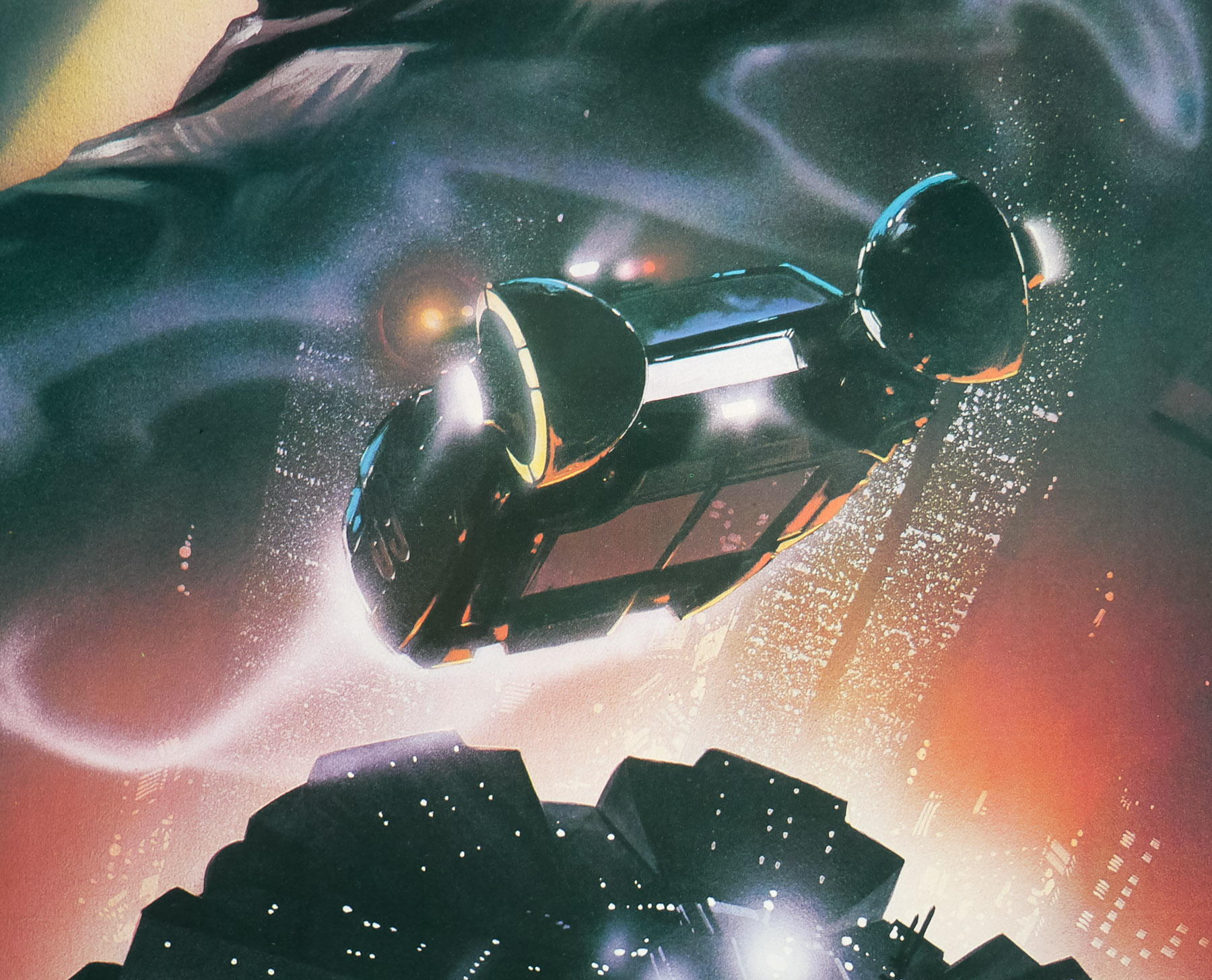
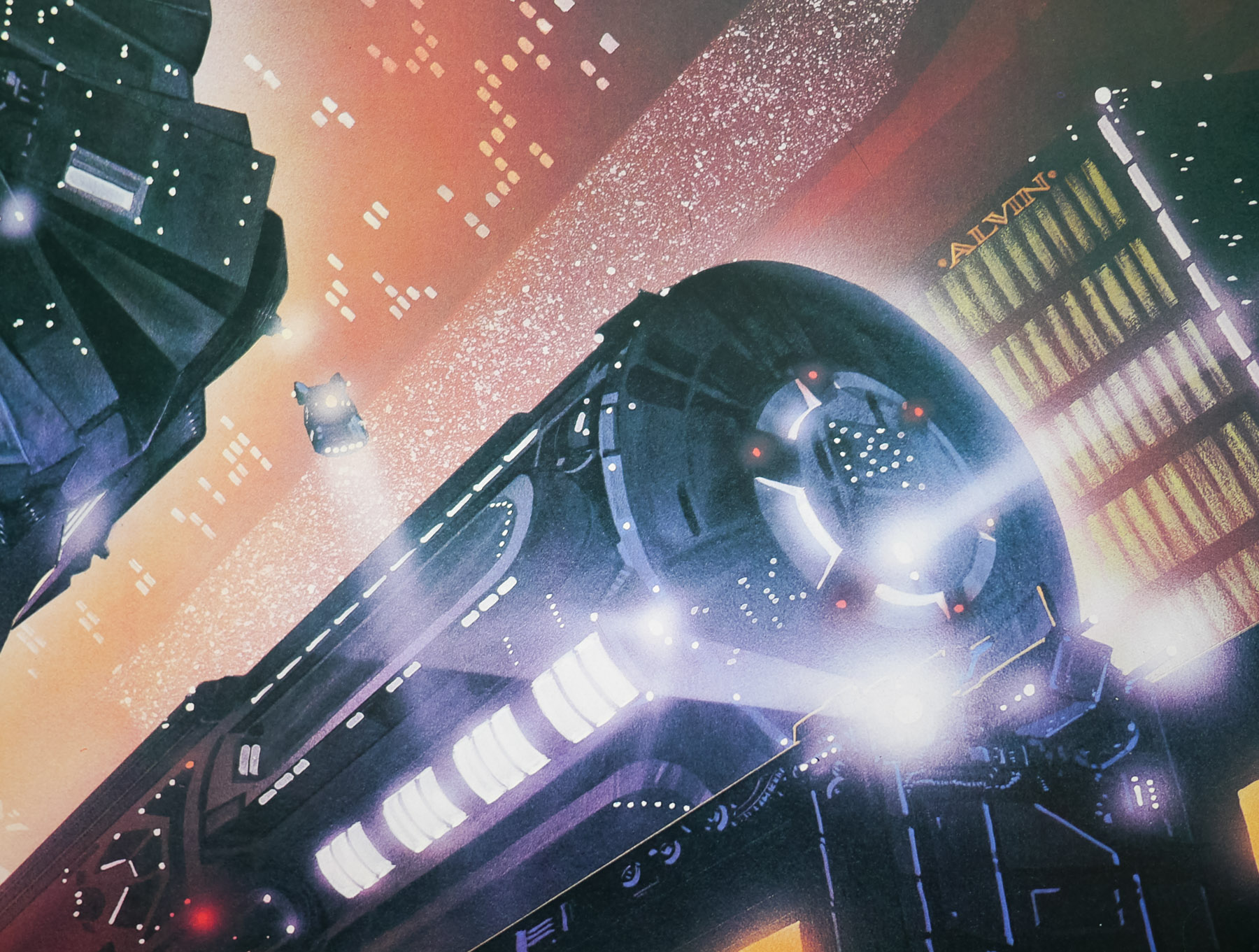
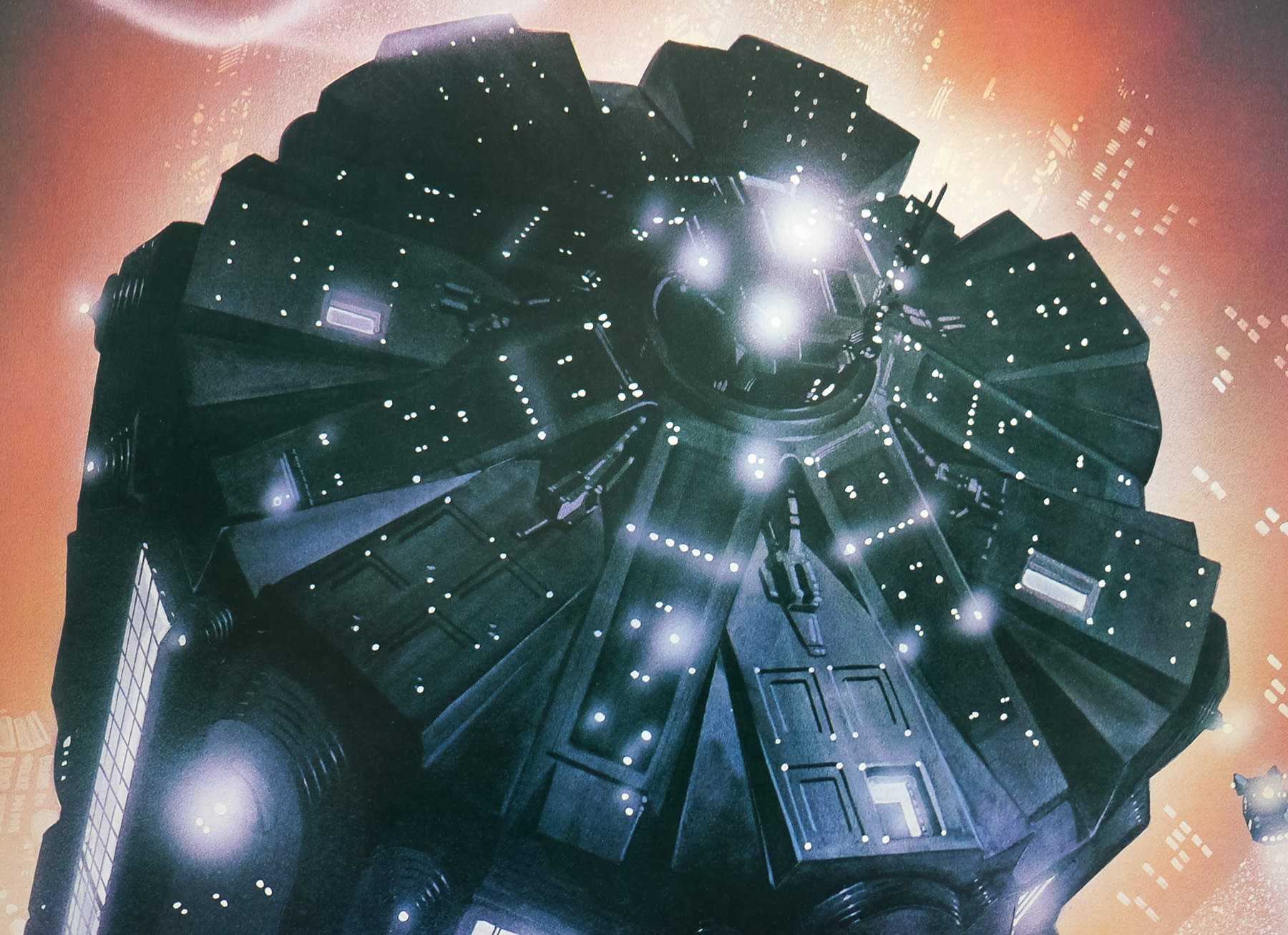
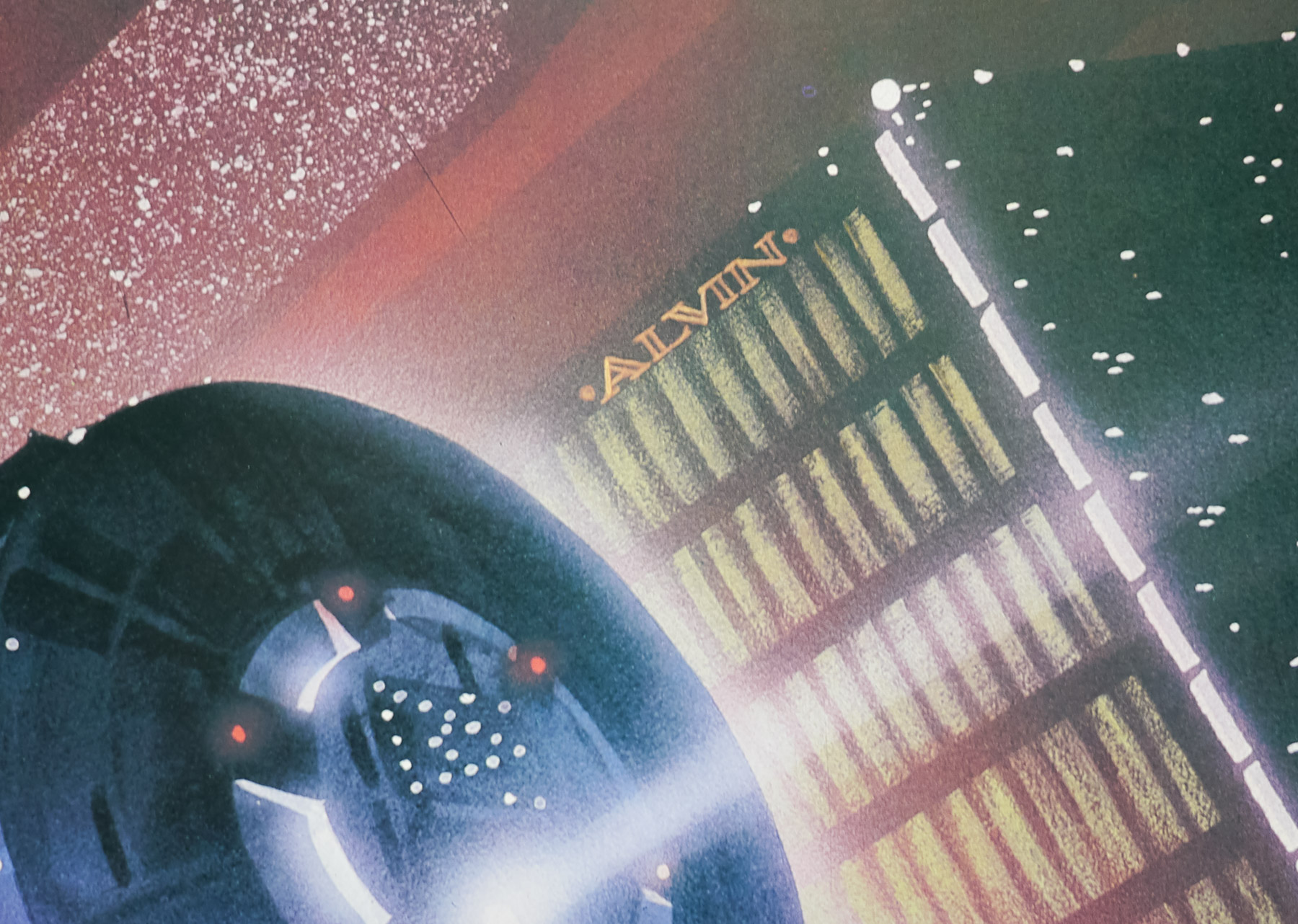
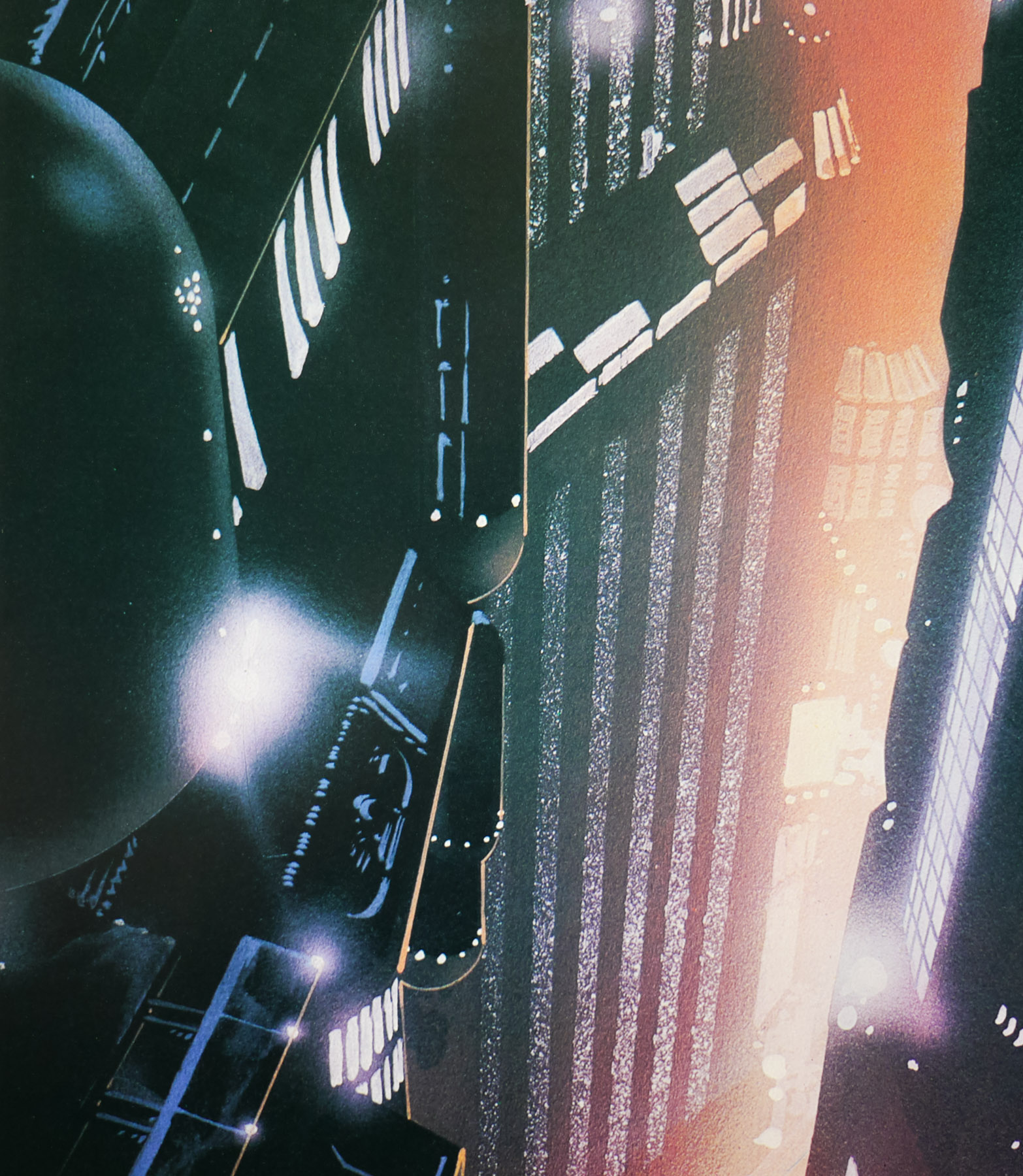
One of my top five films of all time, Blade Runner was released with easily one of the most iconic sci-fi one sheets ever printed. The design and artwork is by the late, great John Alvin, a man responsible for several of the most memorable film posters of the past 40 years. This is perhaps his most well known piece since it featured on posters across the globe, was reused for the 1992 Director’s cut release and has been on the cover of home video releases for many years.

In August 2014 a book entitled The Art of John Alvin was released after four years of preparation by his wife and studio partner Andrea. An absolute must-own for any fan of film posters and the art of cinema, the book features almost all of John’s most memorable posters which are each given their own section. As well as images of the printed poster, there are also early sketches, painted concepts and pictures of the original artwork itself, plus Andrea has provided fascinating commentary detailing the creation of each piece.

Blade Runner is given six pages and the section features a look at the original graphite sketches done by Alvin to show to Ridley Scott and the studio’s marketing department. Elements of these were then combined to create the painting we know today. Andrea notes that the posters for the film were originally conceived to focus on the relationship with the characters and the futuristic city, but by the time of release Harrison Ford was a global star so Alvin was asked to make him more prominent in the artwork.

John apparently always regretted not featuring Rutger Hauer’s android Roy Batty so when he was asked to revisit the design for a 25th anniversary print he reworked several elements, including the two portraits of Harrison Ford and Sean Young and added the face of Roy Batty looming large over them. The print was called ‘I’ve Seen Things’ by John and can be viewed here.

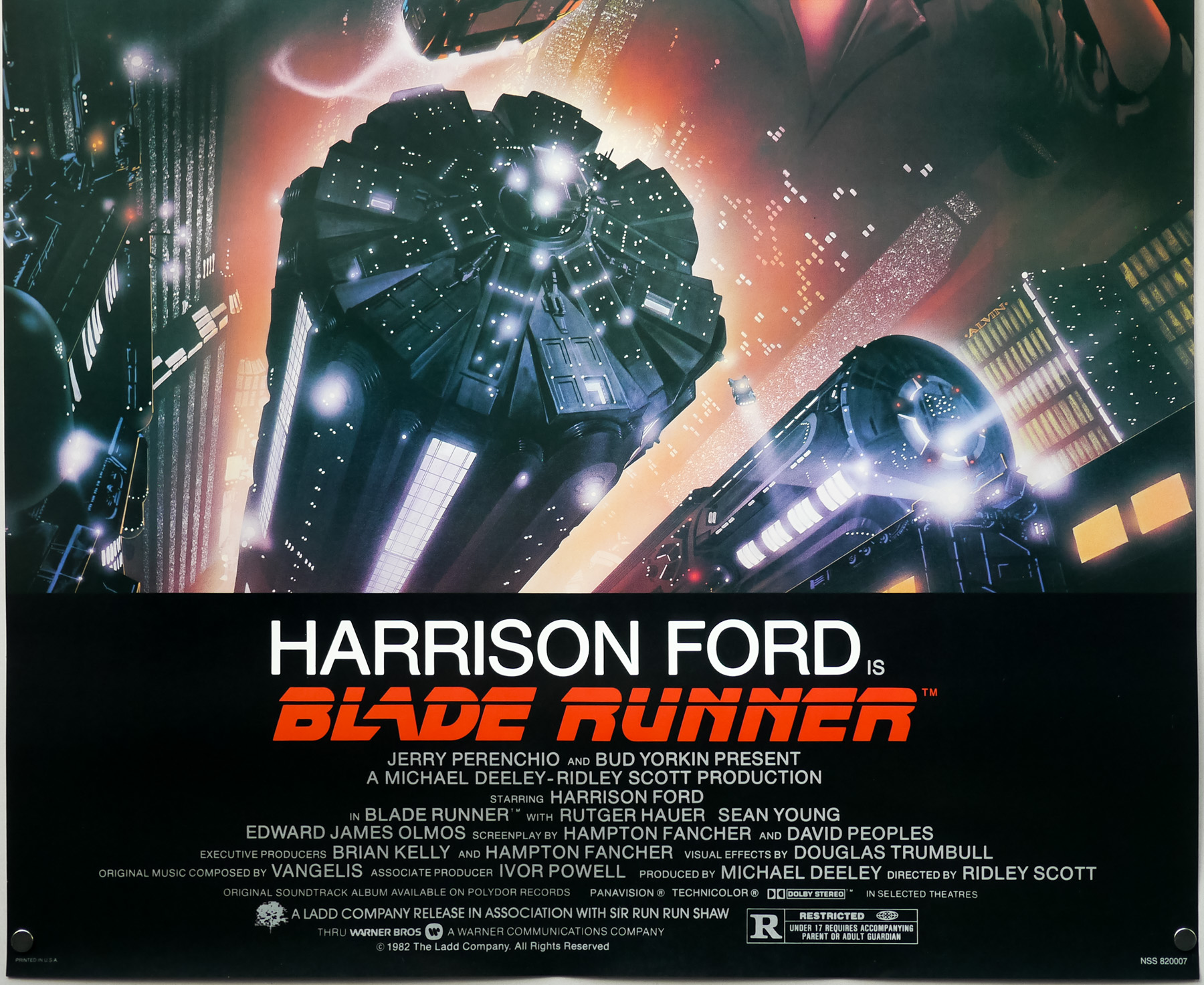
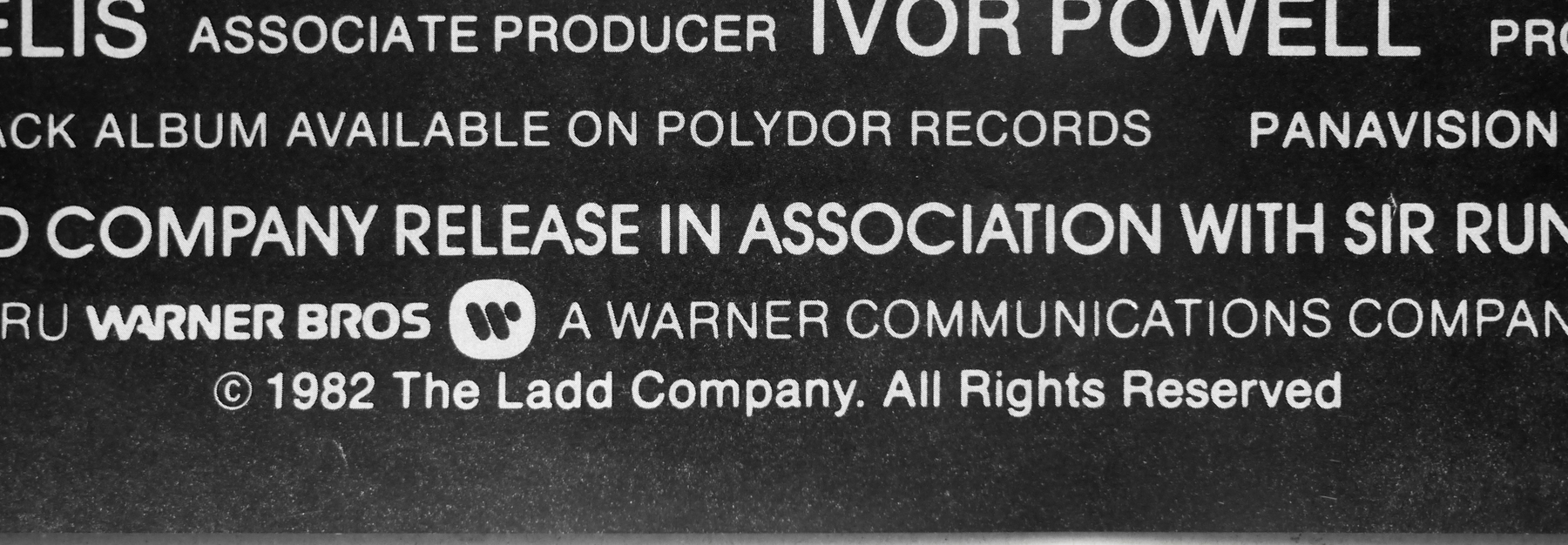
There are known reprints of this poster and this particular version is one of three known variants. LAMP has a guide to all three here. To summarise:

Variation 1 – NSS Version
This version has NOTHING in the bottom left corner; Litho in U.S.A. (AND) the NSS tag in the center; BLADE RUNNER 820007 in the bottom right

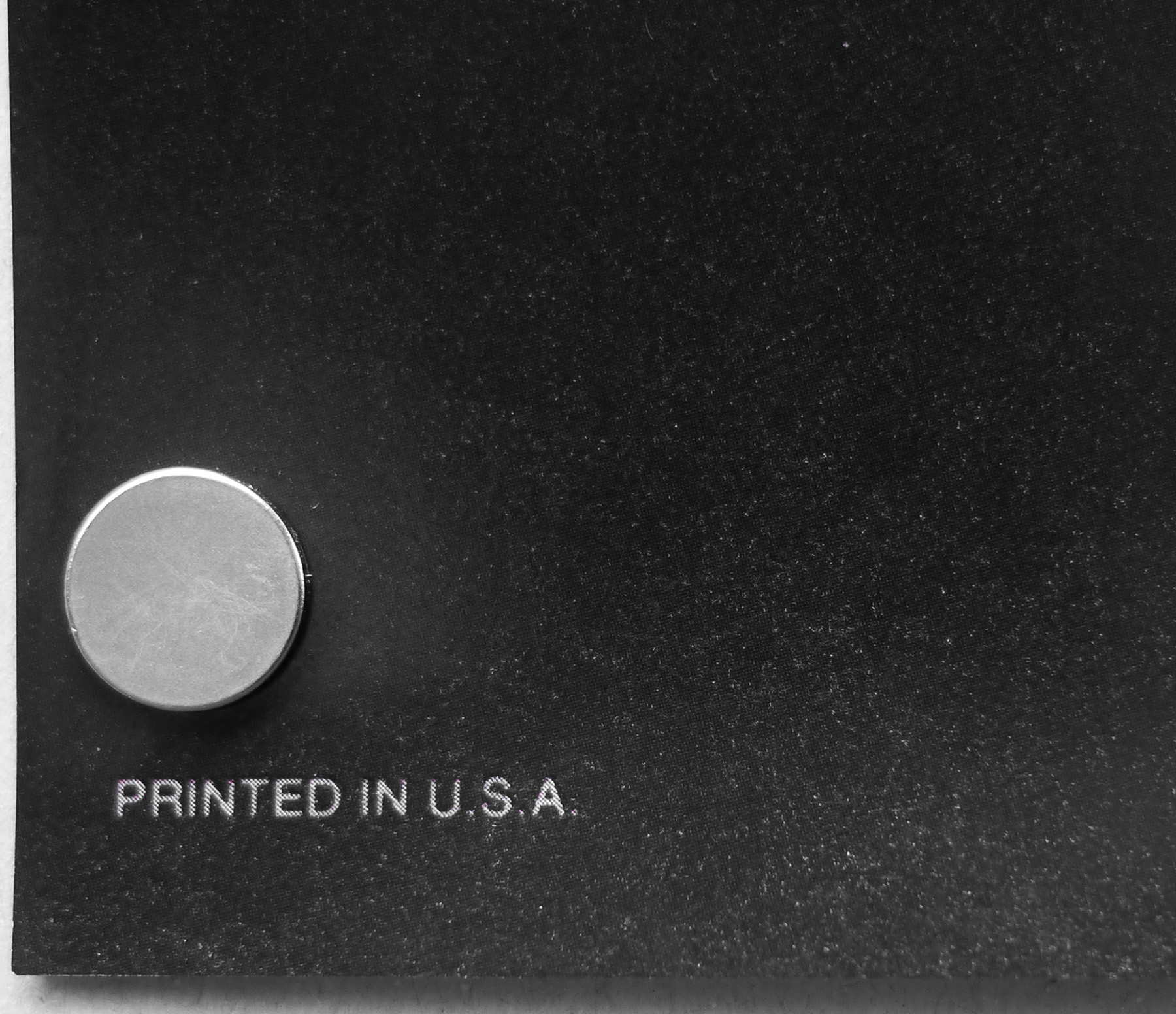
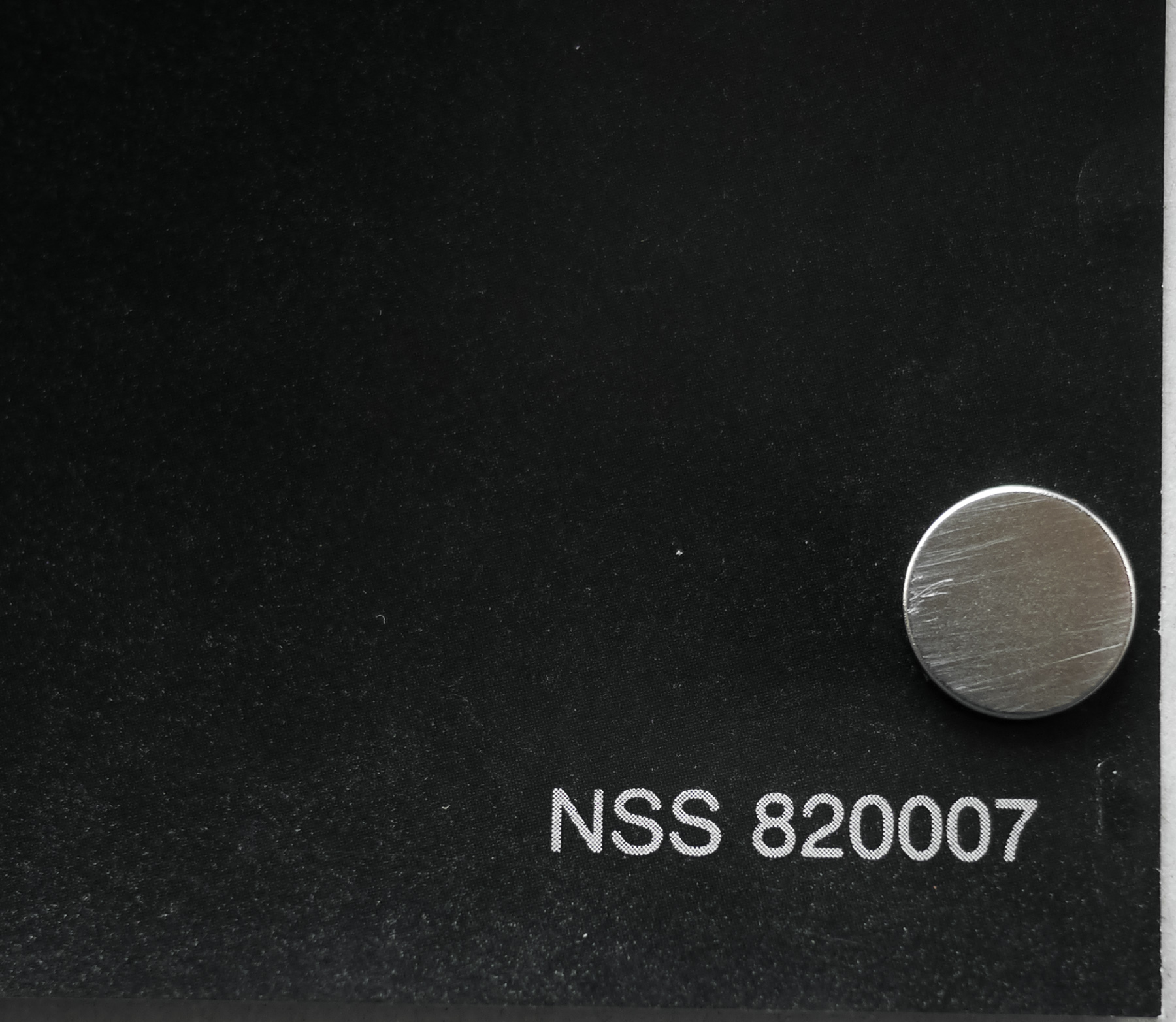
Variation 2 – Studio Version
This variation has “PRINTED IN U.S.A.” in the bottom left corner; NOTHING in the center; and “NSS 820007” in the bottom right.

Variation 3 – Odd NSS Version
In the bottom left corner has “PRINTED IN U.S.A.”; in the center ‘IN SMALLER PRINT’ has “LITHO IN U.S.A.” (AND) the NSS tag; In the bottom right has “BLADE RUNNER NSS 820007” in ‘UNEVEN’ print.

This is the second variation (studio version) but I also have the ‘Odd NSS Version’, which can be viewed here. A dealer in London once told me he believes all NSS versions of this poster are reprints/restrikes. If this is the case then the poster has fooled both respected dealers and collectors alike.

Jaws / one sheet / USA

17.10.14

Poster Poster
Title
Jaws
AKA
Les dents de la mer [The teeth of the sea] (France)
Year of Film
1975
Director
Steven Spielberg
Starring
Roy Scheider, Robert Shaw, Richard Dreyfuss, Lorraine Gary, Murray Hamilton, Carl Gottlieb, Jeffrey Kramer, Susan Backlinie
Origin of Film
USA
Genre(s) of Film
Roy Scheider, Robert Shaw, Richard Dreyfuss, Lorraine Gary, Murray Hamilton, Carl Gottlieb, Jeffrey Kramer, Susan Backlinie,
Type of Poster
One sheet
Style of Poster
--
Origin of Poster
USA
Year of Poster
1975
Designer
Seiniger Advertising | Magidell Agency | Universal in-house design
Artist
Roger Kastel
Size (inches)
27 1/16" x 41"
SS or DS
SS
NSS #
75/155
Tagline
The terrifying motion picture from the terrifying No.1 best seller

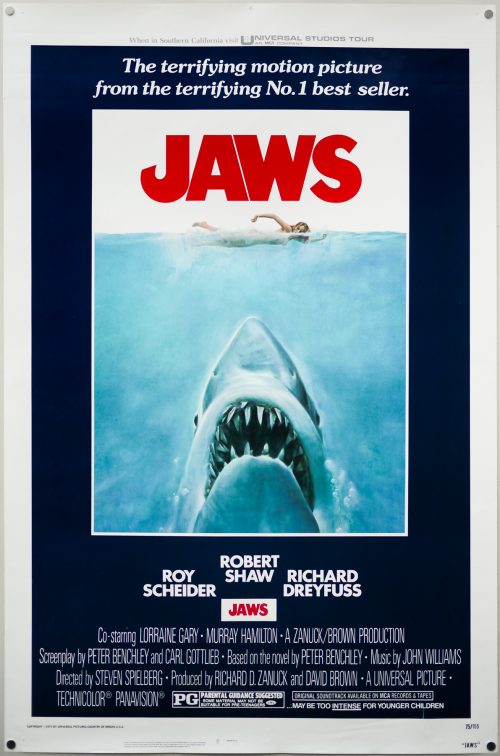
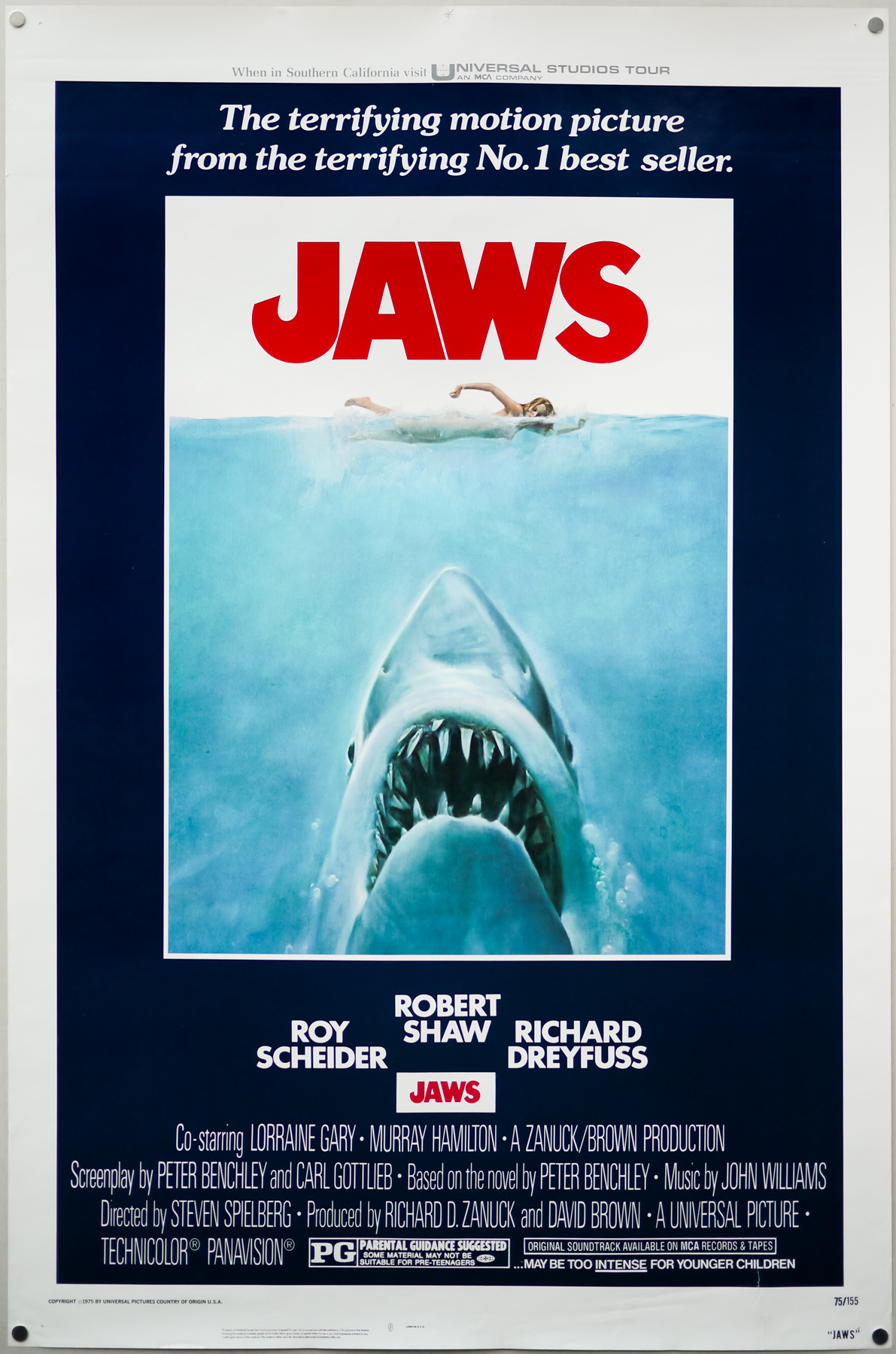
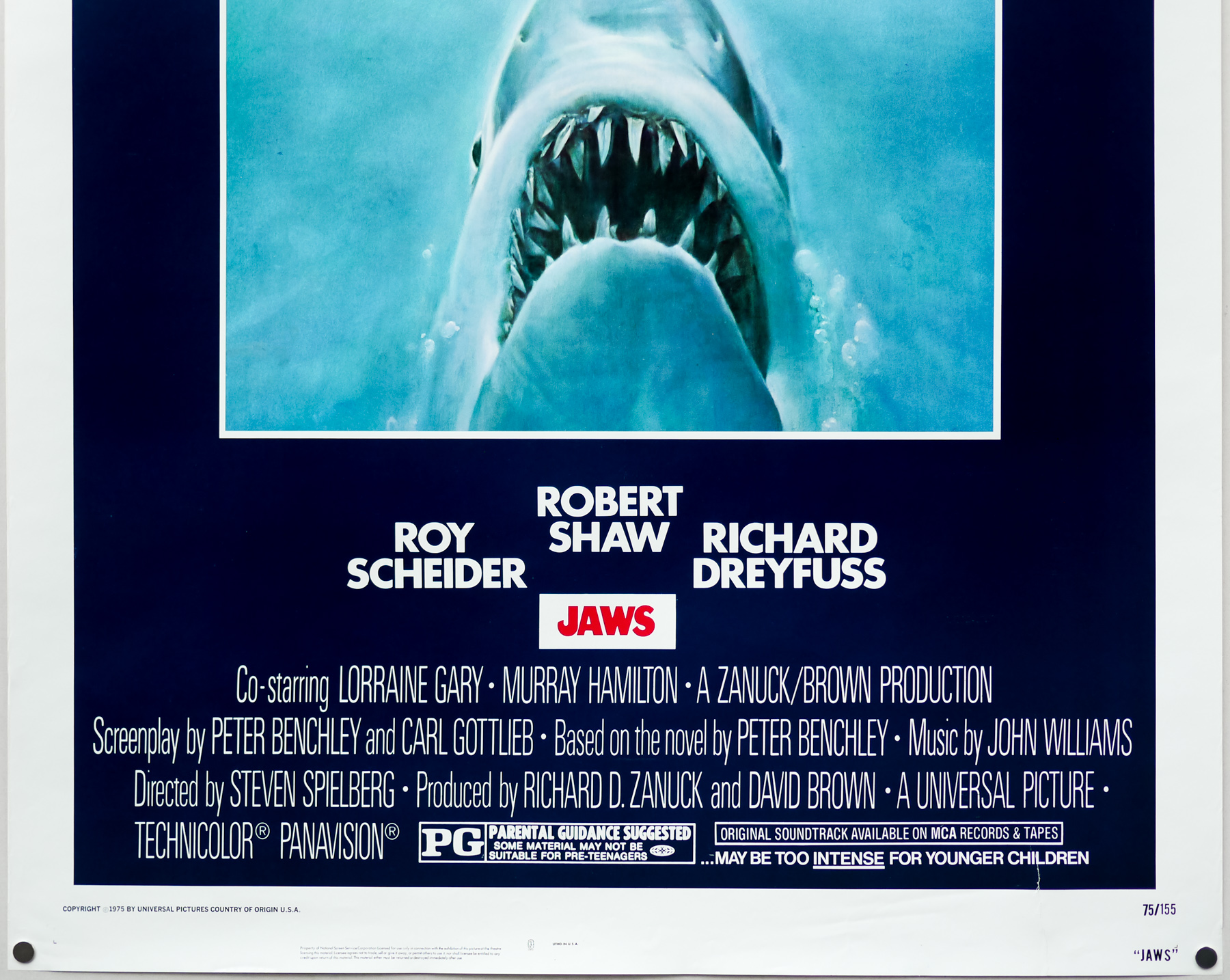
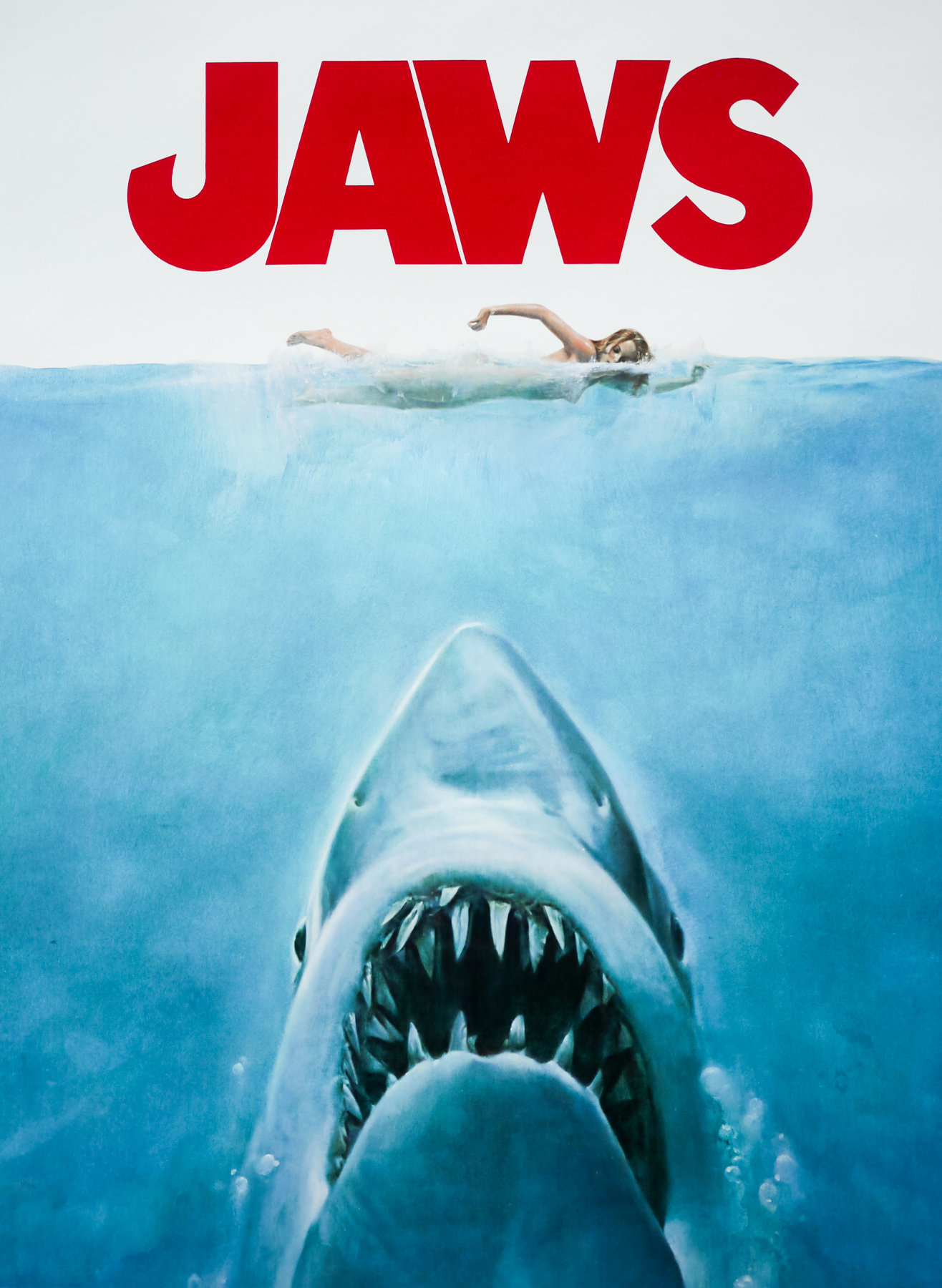
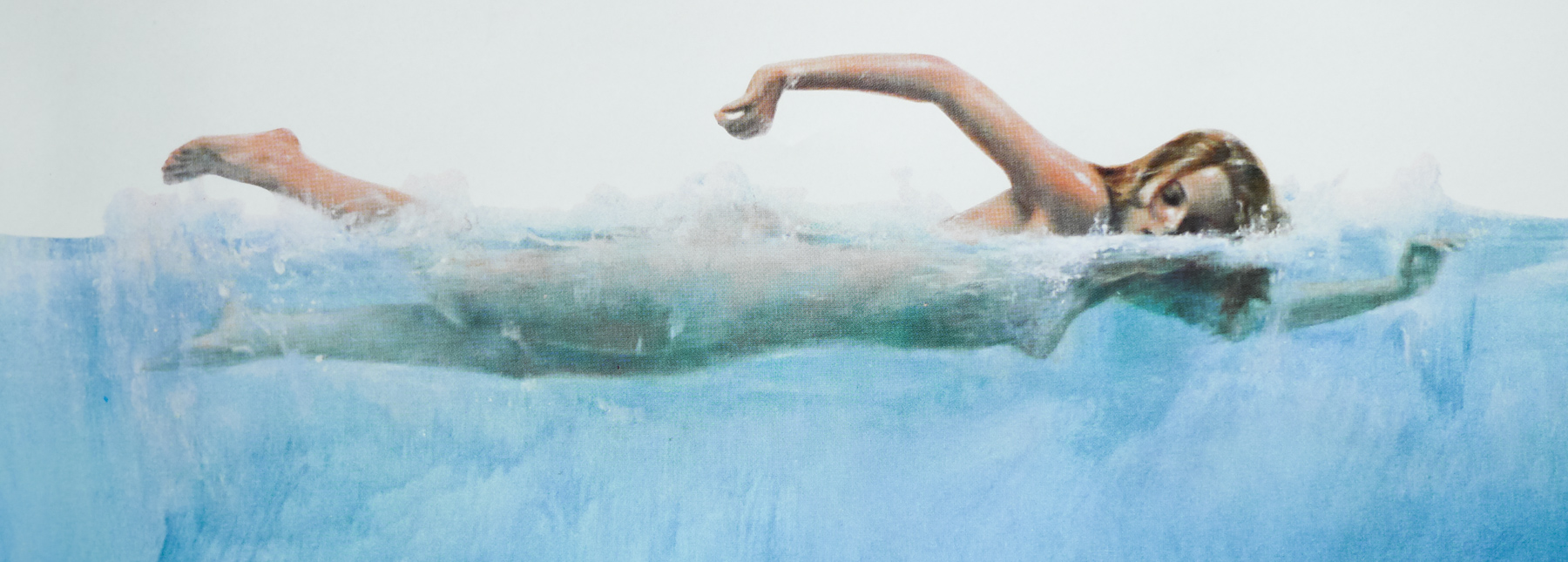
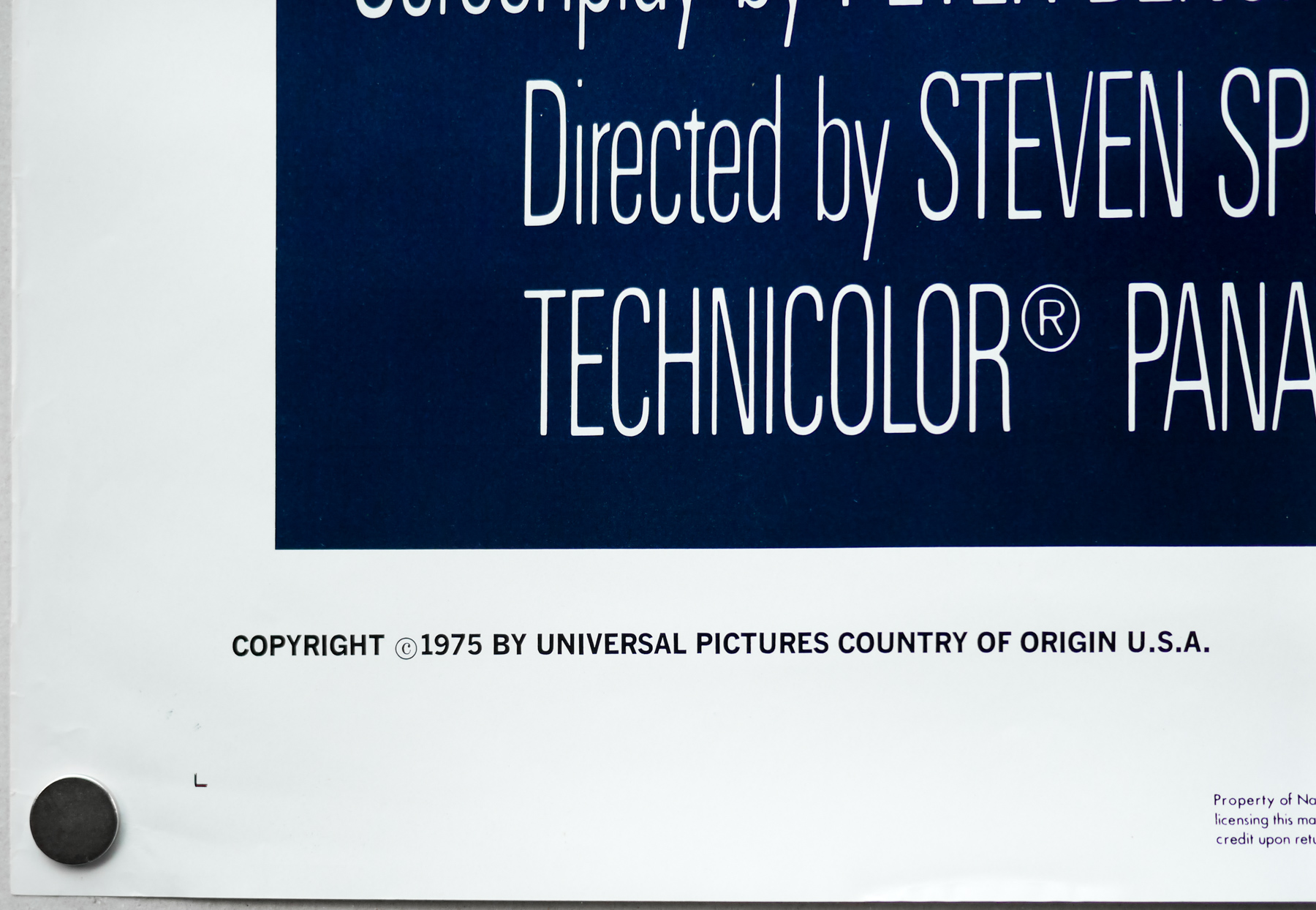
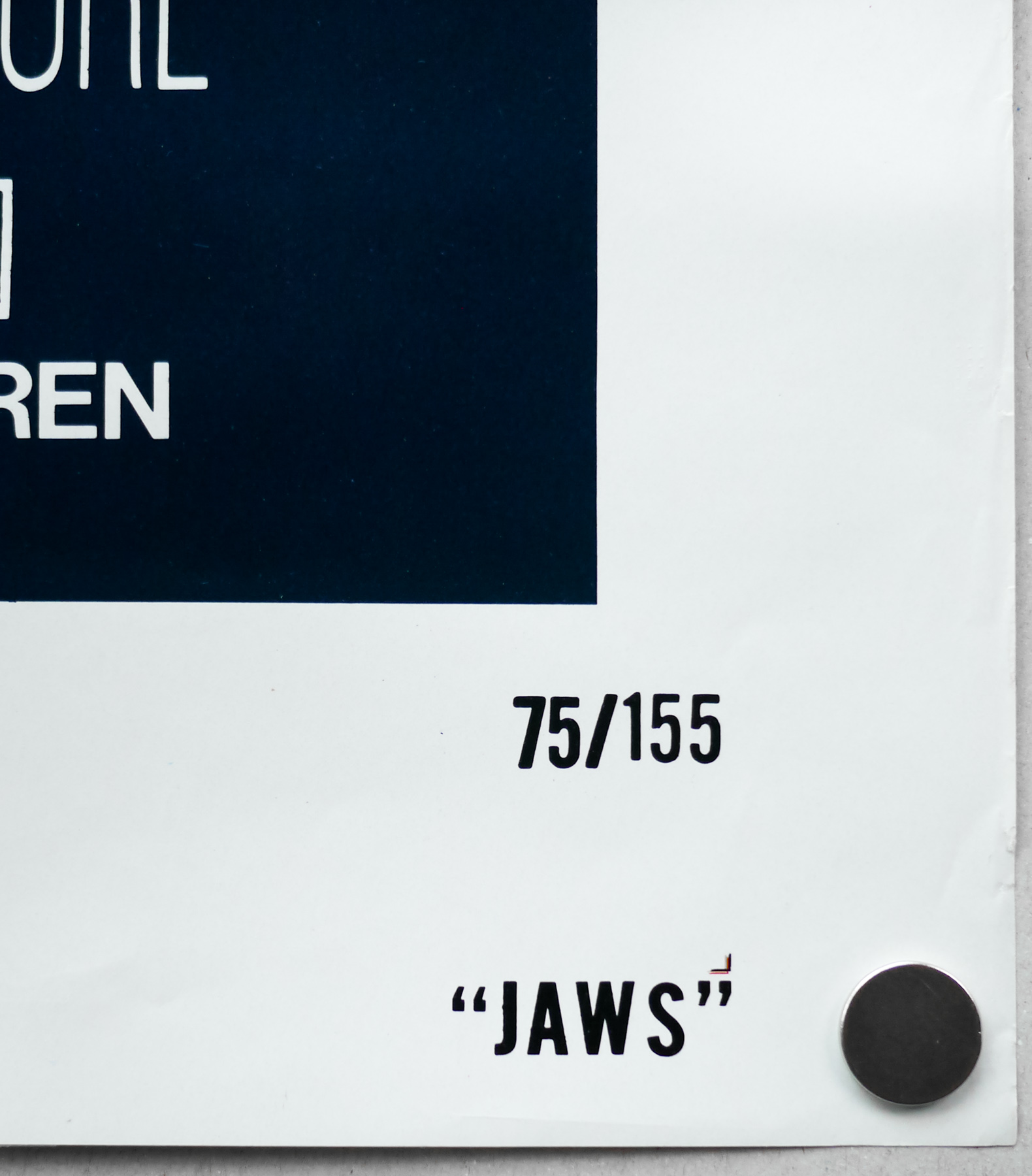
I’ve waited many years to add this iconic one sheet for Steven Spielberg’s masterpiece Jaws to the Film on Paper collection as I wanted to find a rolled copy, which is no meant feat considering the film’s popularity and the fact that it was released in the mid-1970s (rolled posters from this period are rare). I finally won this copy in an auction earlier this year and what’s notable is that when other rolled originals of Jaws appear they almost always have the same NSS information layout at the bottom as this one, which many dealers and collectors believe means they originate from the Cleveland, Ohio NSS office. CineMasterpieces have a number of Jaws one sheets in their inventory (many already sold) and you can compare the different layouts of the NSS information (here’s an example).

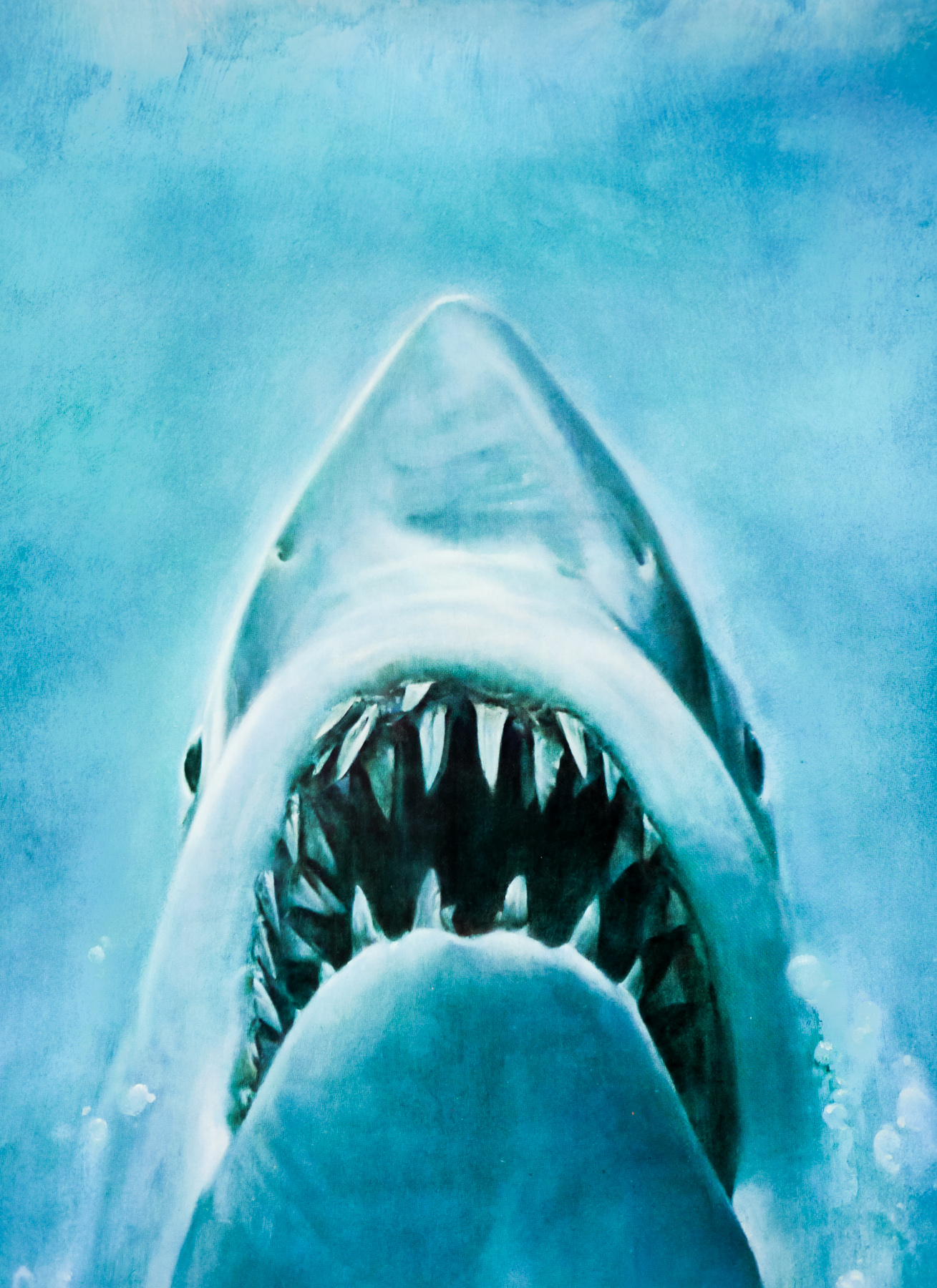
The instantly recognisable image was painted by the American artist Roger Kastel and was originally commissioned for the paperback cover of Peter Benchley’s novel, but when Universal saw the artwork they bought the rights to use it for the poster and following the worldwide success of the film it would go onto become one of the most imitated and parodied images of all time, as well as a merchandising product in its own right.

Collector’s Weekly published a fascinating article about the creation of the poster and the events that led up to Kastel being commissioned to work on the poster. The artist recalls the day the project dropped into his lap:

“I had just delivered a painting to Bantam’s art director, Len Leone,” he says. “Bantam was just loaded with great artists at that time, and Len really gave Bantam its look. I was sitting in Len’s office when Oscar Dystel, Bantam’s publisher, came in. He said, ‘Wait a minute. Don’t leave. I have a great book for you to read’. And he ran out and came back with ‘Jaws.’”

A cover had already been painted by the renowned book cover illustrator for the Doubleday hardback edition of the book but as Kastel remembers it Dystel wasn’t happy with the first cover:

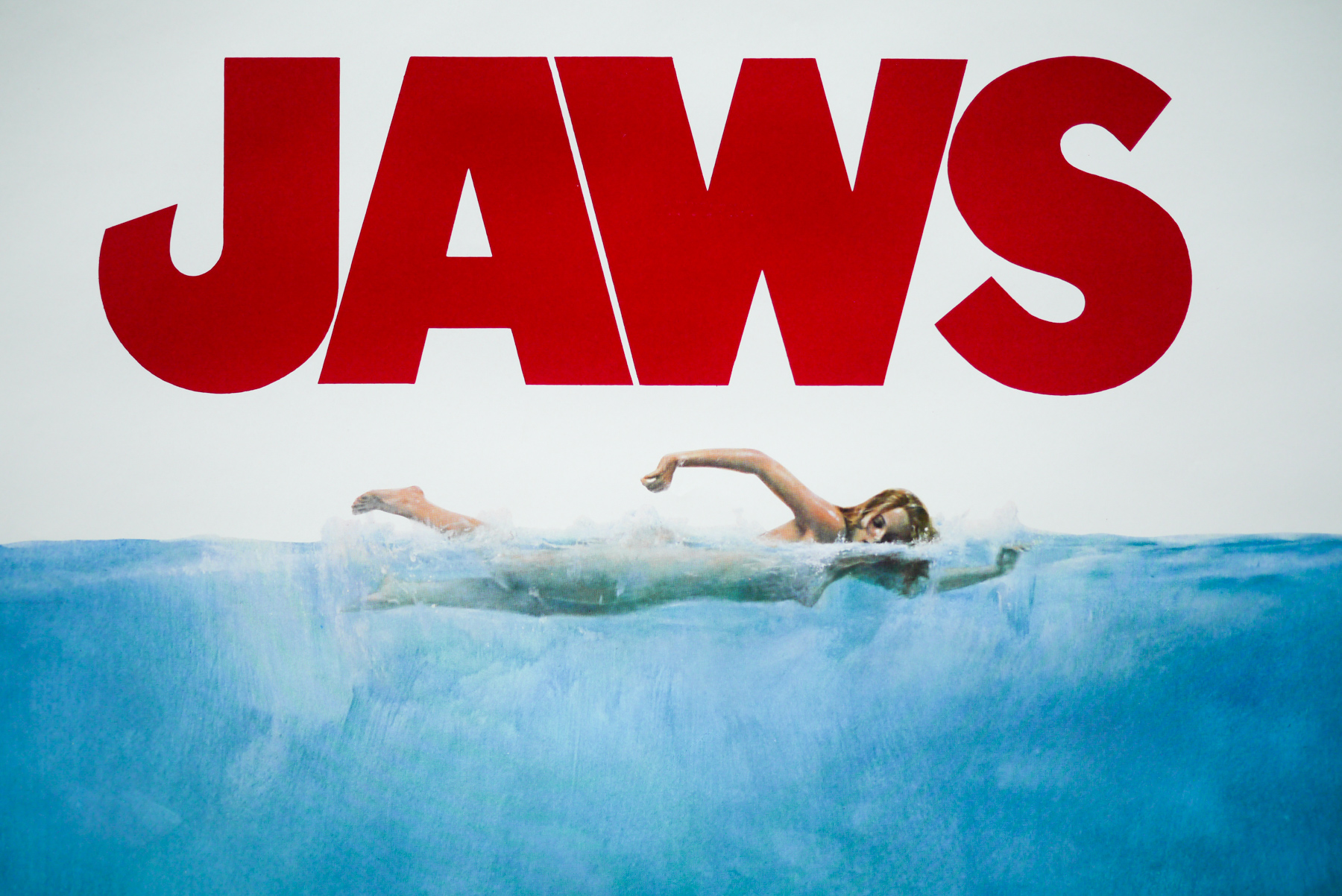
“He wanted me to read the book to pick out a new part to illustrate. But, of course, the best part was the beginning, where Chrissie goes into the water nude.” Turns out the Doubleday concept, if not the execution, was not so bad after all. Kastel did a sketch for Dystel and Leone to critique. “The only direction Oscar and Len gave me was to make the shark bigger, and very realistic.”

Kastel visited his usual go-to source for reference material, the Museum of Natural History in New York, but came up short:

“They didn’t have anything I could use, so I asked if they had a shark exhibit. They said they did but that it was closed for cleaning. It was lunchtime, so I went upstairs anyway, and there were all these different stuffed sharks, just laying on boards. I had my camera with me so I took a few pictures. The shark in my painting developed from there. I just tried to paint a ferocious-looking shark that was still realistic.”

When the book was released the graphic nature of the image saw the paperback banned from shelves in Boston, Massachusetts, and St. Petersburg, Florida, but Bantam didn’t mind the publicity as it greatly boosted sales. The cover also caught the attention of the film studio who were developing the story for the big screen:

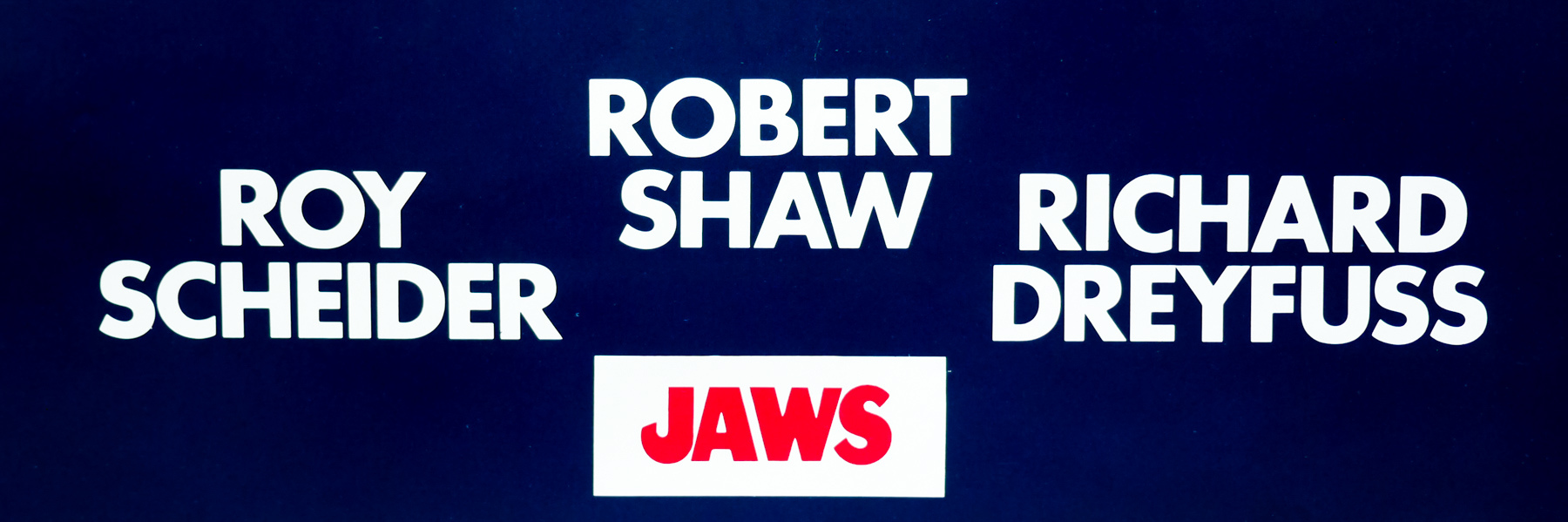
“Apparently Universal had tried other poster ideas, but in the end they picked mine. They changed the color of the ‘JAWS’ lettering, added the actor names and other credits, and blurred the girl’s breasts with some foam.”

Kastel is unsure what fate befell the original oil painting (which was approximately 20″ x 30″) and the last time he saw it was when the paperback was first released:

“It was hanging at the Society of Illustrators in New York,” he says. “It was framed because it was on a book tour, and then it went out to Hollywood for the movie. I expected it to come back, but it never did. Either someone has it or it’s lost in storage at Universal. They really should report it as stolen.”

I’ve credited the design of the poster to three parties, although Tony Seiniger (and his agency) is most often cited as the man behind it. This article on Posterwire features comments that also call out another agency called Magidell who apparently had input as well as Universal’s in-house marketing team. Kastel also painted the ‘Gone with the Wind’ style one sheet for The Empire Strikes Back. Check out his official site here.

Dead Ringers / one sheet / USA

15.12.14

Poster Poster
Title
Dead Ringers
AKA
Inseparables (Spain)
Year of Film
1988
Director
David Cronenberg
Starring
Jeremy Irons, Geneviève Bujold, Heidi von Palleske, Barbara Gordon, Shirley Douglas, Stephen Lack, Nick Nichols, Lynne Cormack, Damir Andrei, Miriam Newhouse
Origin of Film
Canada | USA
Genre(s) of Film
Jeremy Irons, Geneviève Bujold, Heidi von Palleske, Barbara Gordon, Shirley Douglas, Stephen Lack, Nick Nichols, Lynne Cormack, Damir Andrei, Miriam Newhouse,
Type of Poster
One sheet
Style of Poster
--
Origin of Poster
USA
Year of Poster
1988
Designer
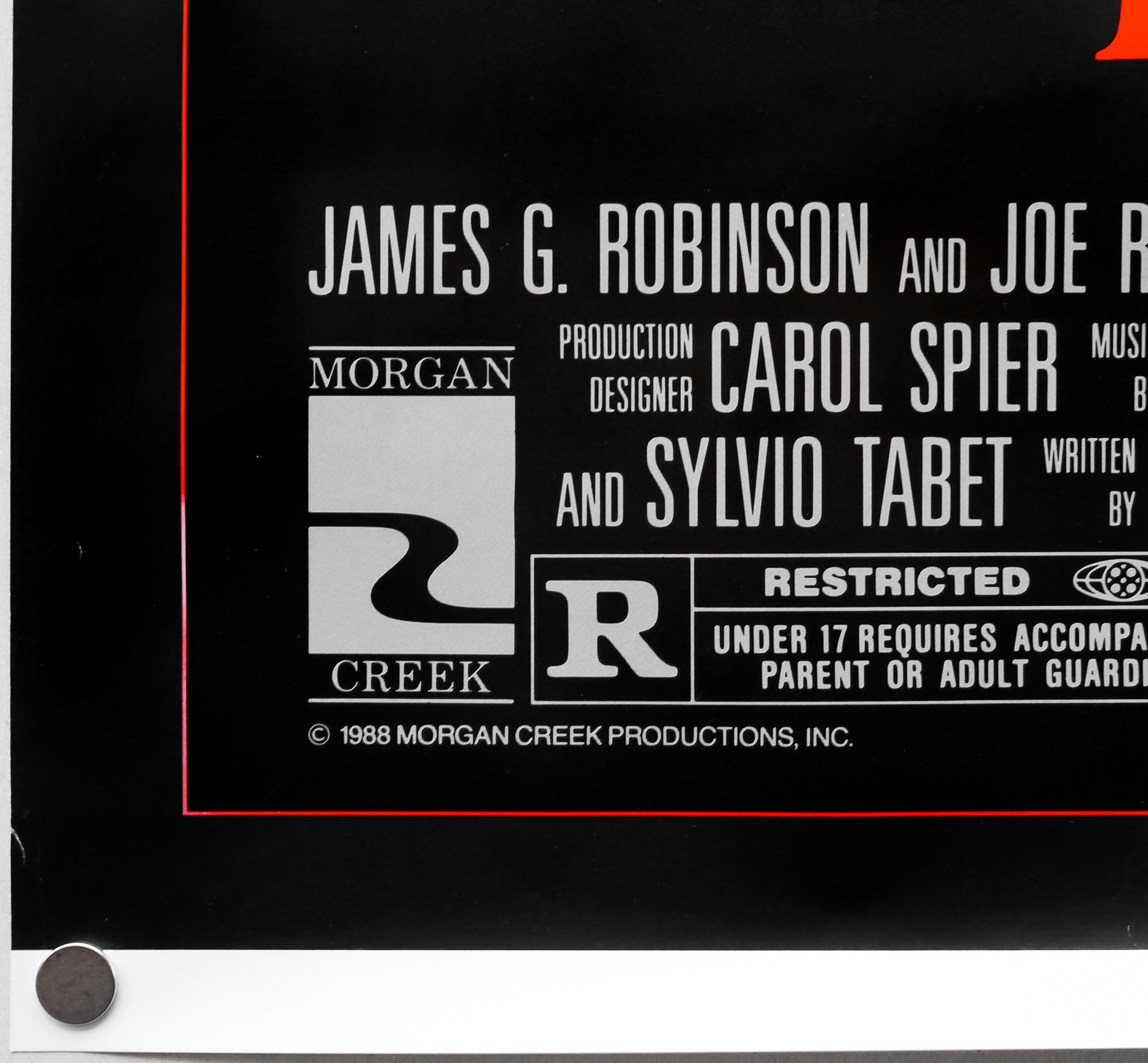
Spiros Angelikas
Artist
Spiros Angelikas
Size (inches)
27 2/16" x 40 15/16"
SS or DS
SS
NSS #
880119
Tagline
From the director of "The Fly" comes a new kind of thriller. | Two bodies. Two minds. One soul.

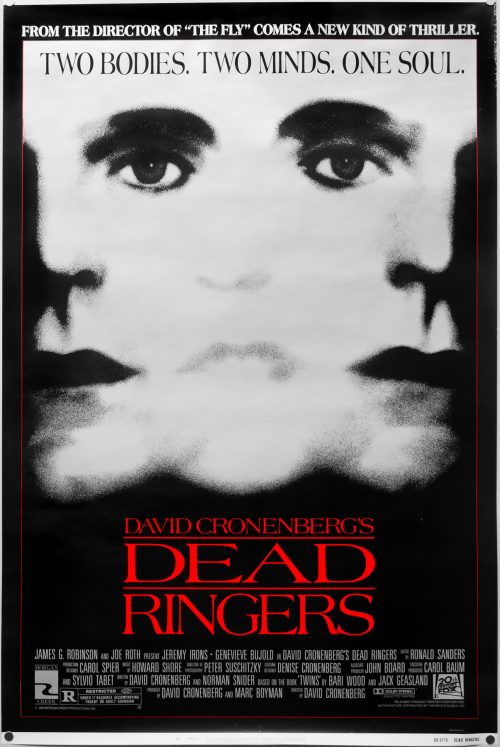
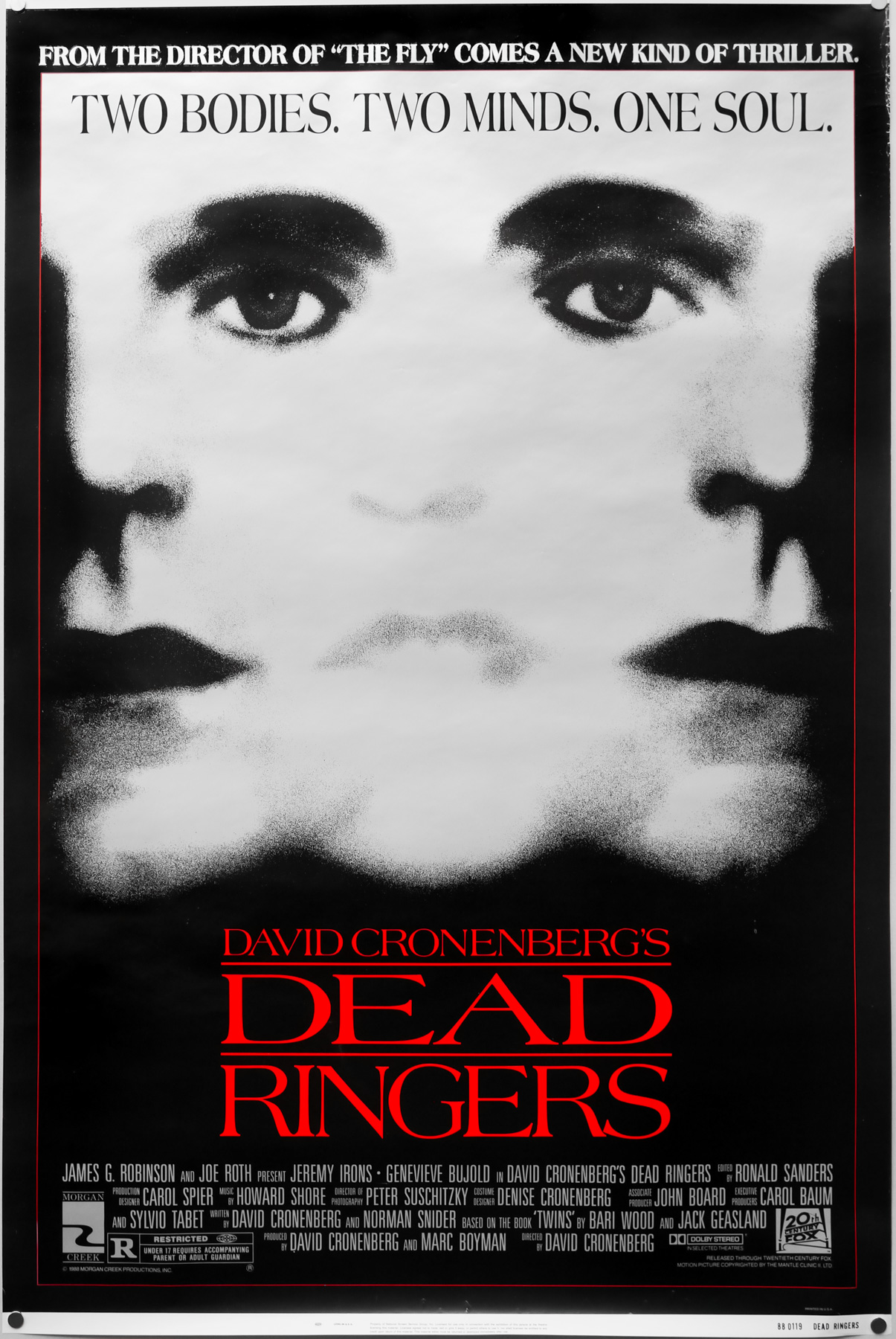
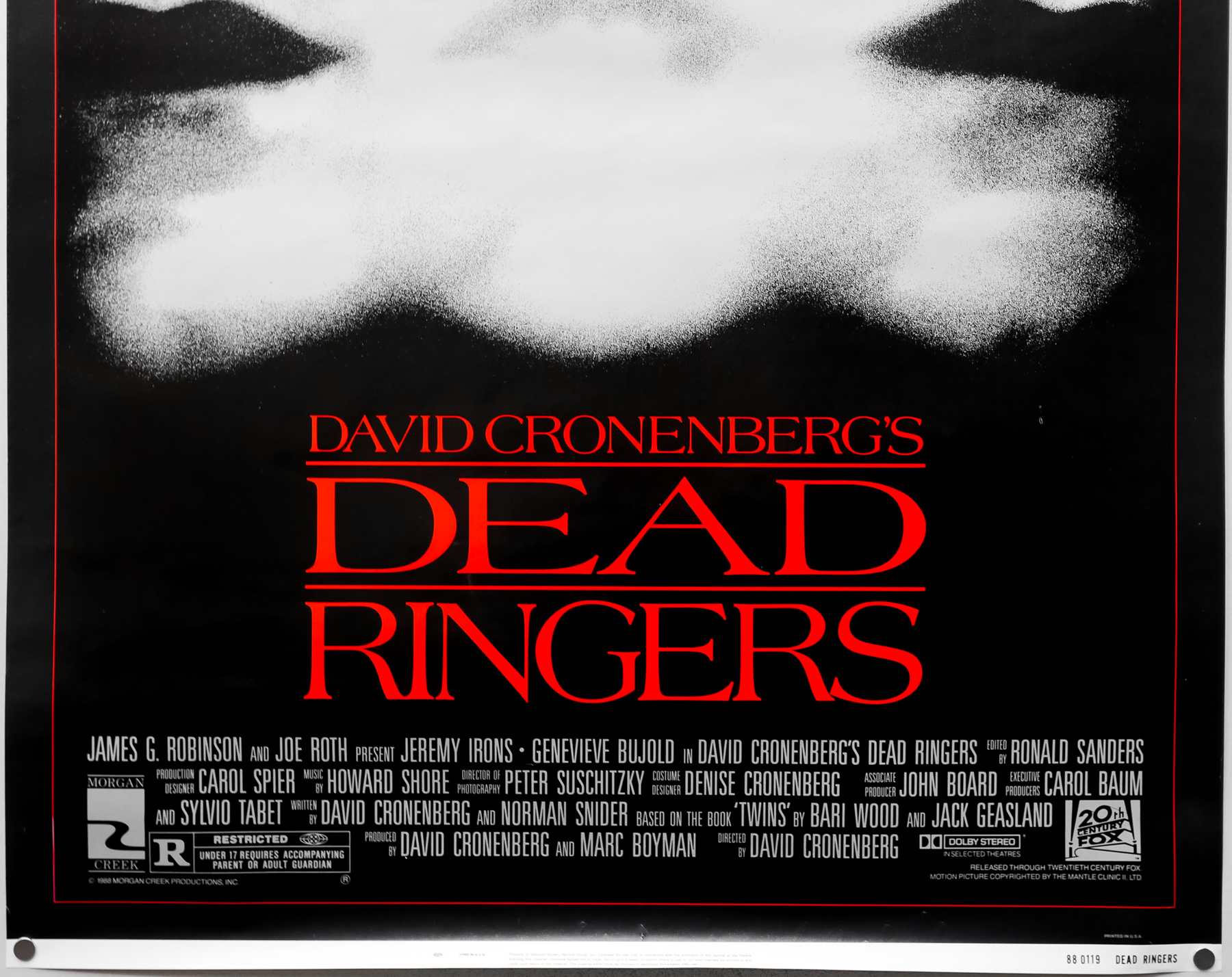
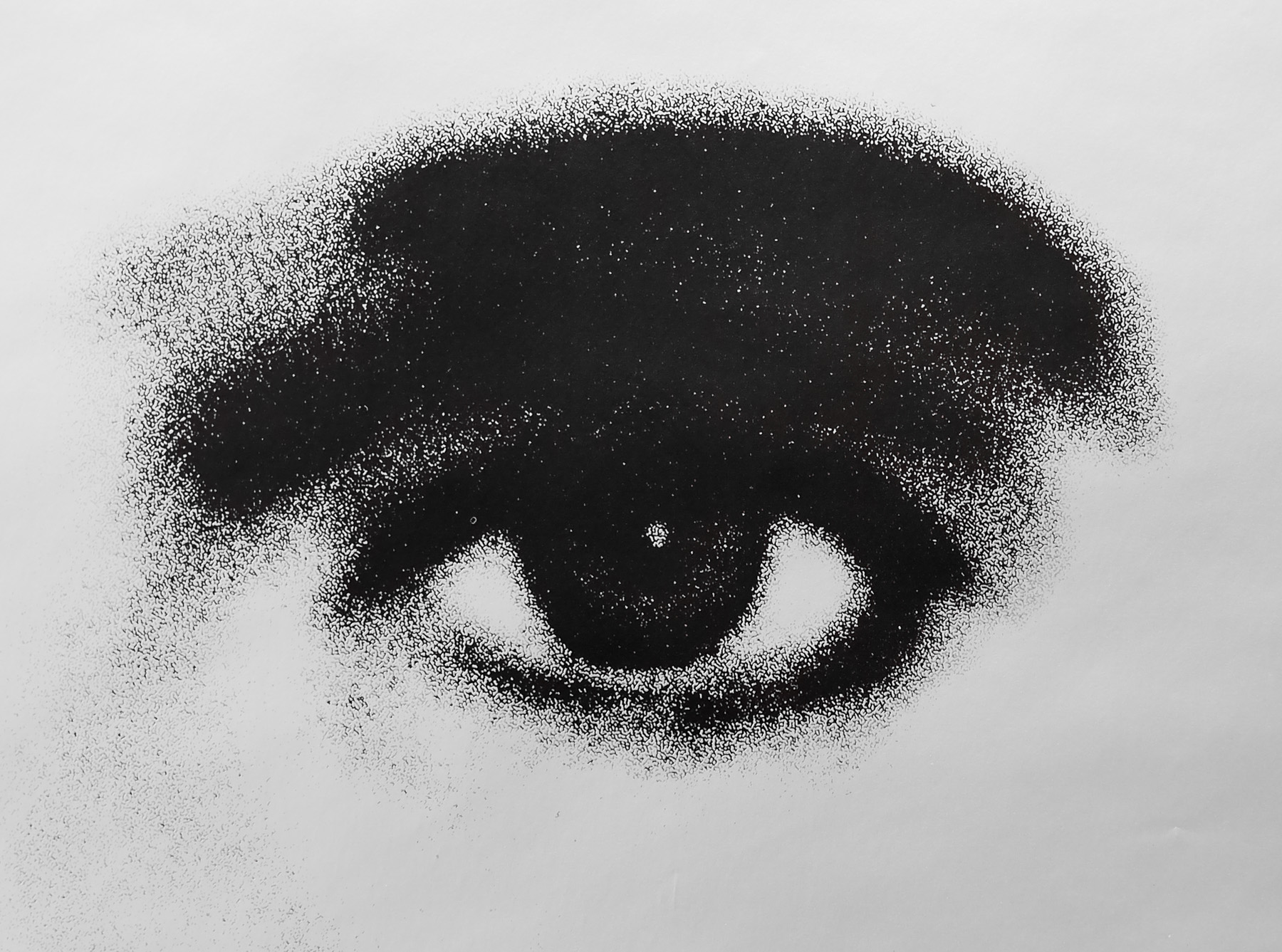
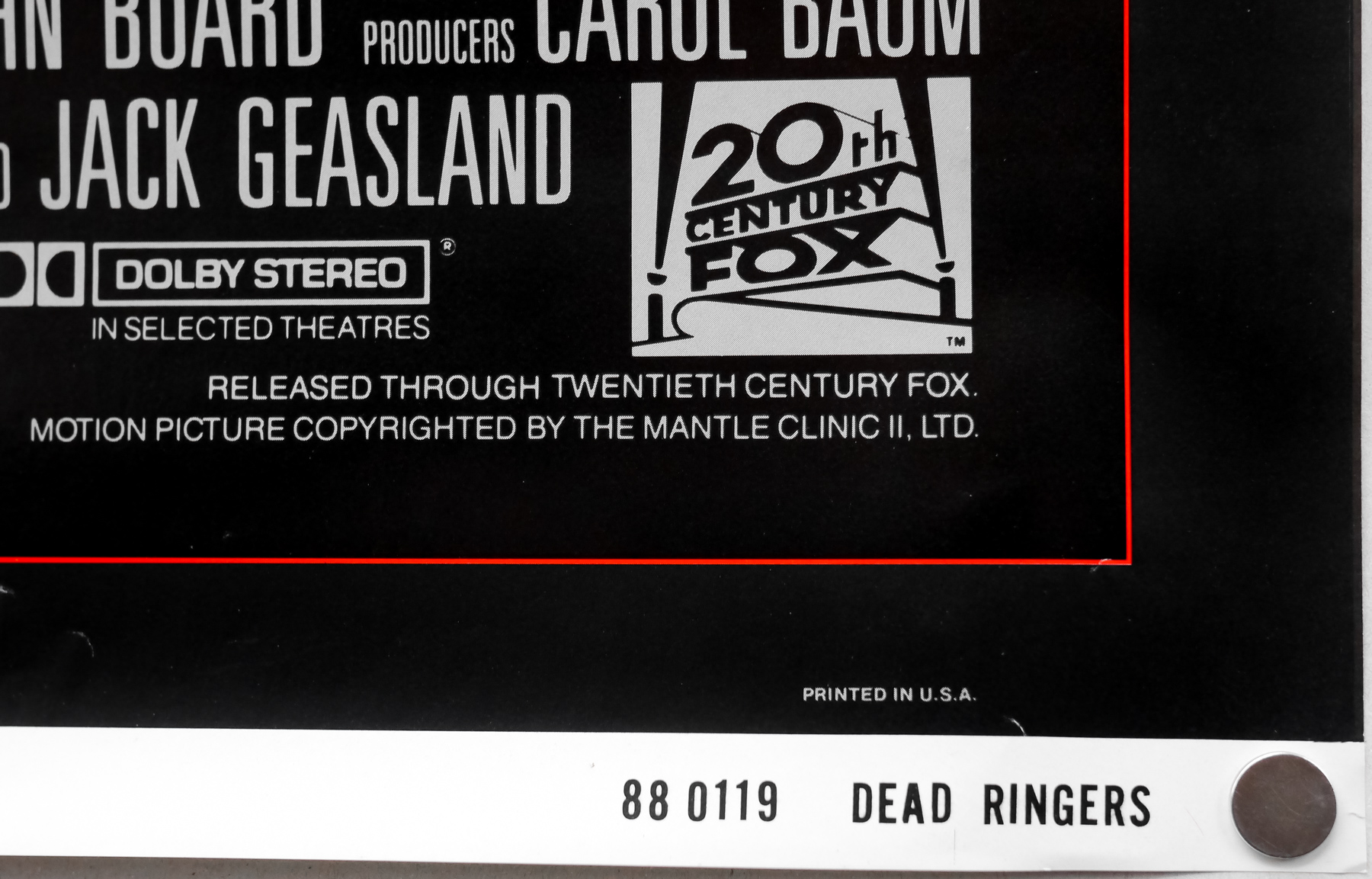
Upon its release in 1988, Dead Ringers was arguably Canadian director David Cronenberg‘s most mainstream release to date (as close as he’d come at least) and it was his first psychological thriller following a slew of horrors, including Scanners (1981) and The Fly (1986). Based on the novel ‘Twins’ by Bari Wood and Jack Geasland, the film was also influenced by the real life case of Stewart and Cyril Marcus and focuses on twin gynaecologists Beverly and Elliot Mantle (both played by Jeremy Irons) who practice in a Toronto clinic dealing with fertility problems. For years they have operated a system where the more confident Elliot seduces women who visit the clinic and then passes them onto the shy Beverly when he’s bored of them, with the women usually not noticing the deception.

One day troubled actress Claire Niveau (Geneviève Bujold) visits the clinic and Elliot does his usual seduction trick. Beverly then becomes infatuated with her, leading to a destabilising of the relationship between the brothers and, after Beverly begins taking the prescription drugs that Claire is addicted to, things take a turn for the worse. Soon paranoid delusions of ‘mutant women’ lead Beverly to purchasing a series of bizarre tools from a metallurgical artist. When he later attacks a patient at the clinic the twins are suspended from practice and set in motion a chain of events with a deadly conclusion.

Although more drama focused, the film still gave Cronenberg plenty of scope for his usual body horror tricks and although it’s not as bloody as previous efforts the film is no less disturbing. Irons impresses with his performance and the actor would win a few awards during the year of release.

The poster was designed by Spiros Angelikas who was a prolific designer and artist of film posters during the 1970s and 1980s. He owned a design agency called Spiros Associates. Some of his most famous work includes the poster he designed for Friday the 13th, with artist Alex Ebel, and for his collaborations with the legendary artist Richard Amsel. They worked on Raiders of the Lost Ark and Nijinsky together and there’s a great article on the late artist’s website about their efforts. He also worked on several of the posters for the original Star Trek films, including the gorgeous Bob Peak original. There’s an interesting article by Angelikas’ son Harry on the Trek Core website which has photographs of concepts for the posters by Spiros that never made it to the print stage.

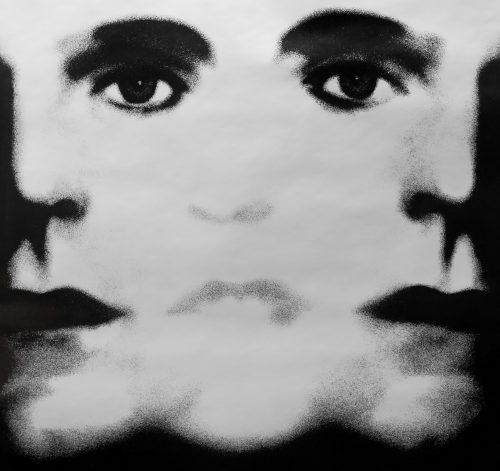
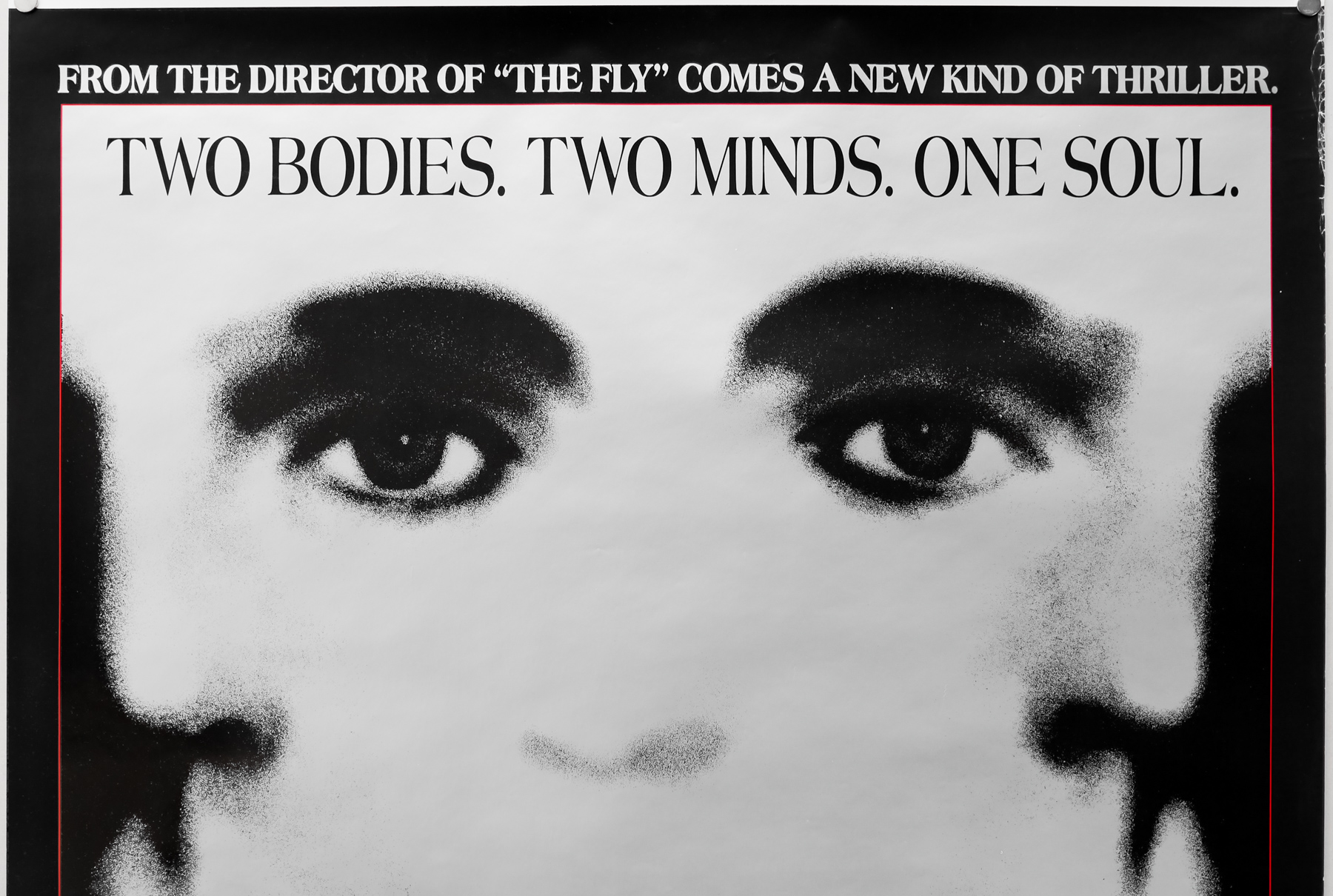
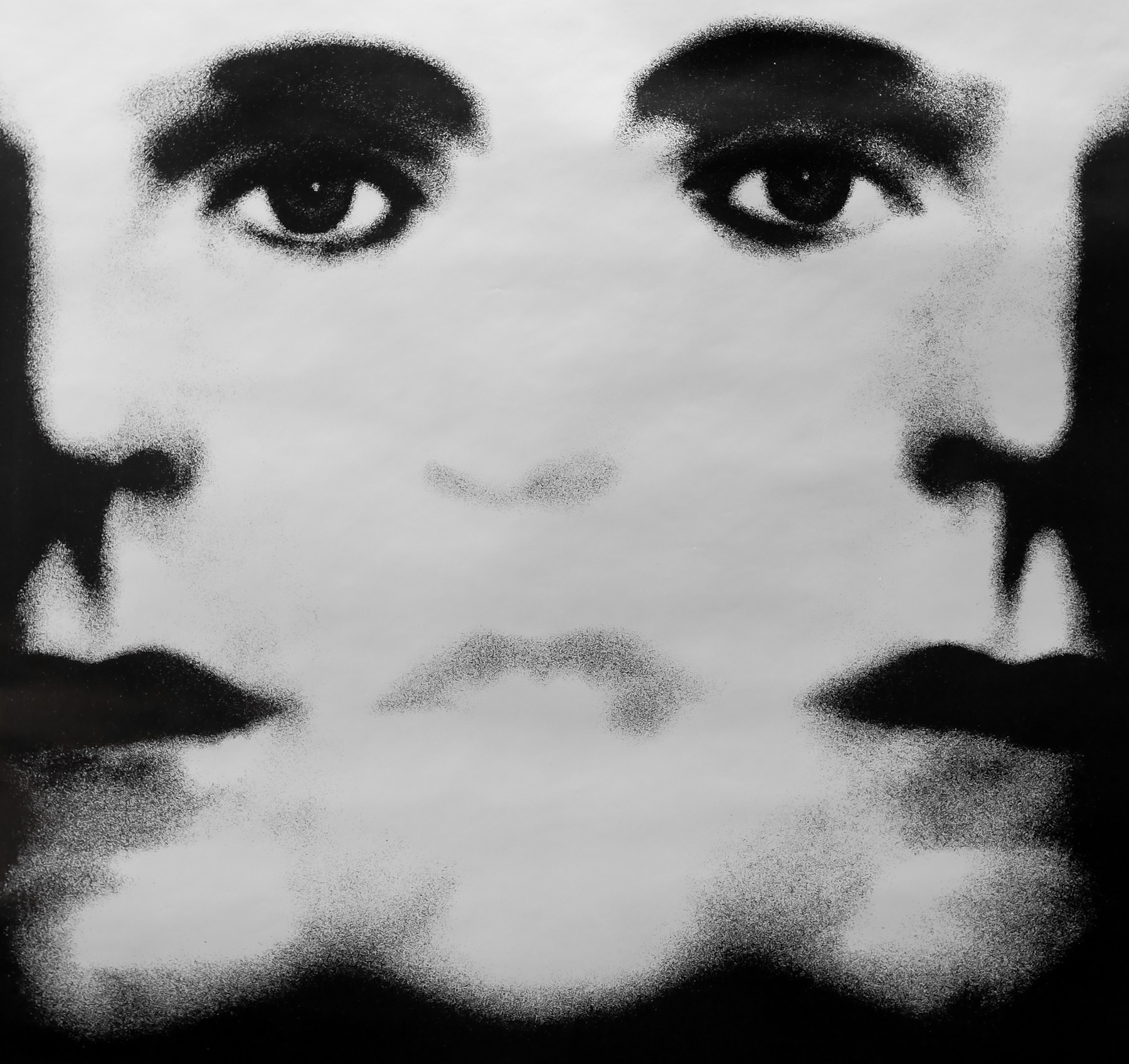
For this poster, not only did Spiros design the layout and type but he also put together the photo montage used for the central image of the melded faces.

Robocop / screen print / regular / Martin Ansin / USA

13.04.15

Poster Poster
Title
Robocop
AKA
Robocop: O batsos robot (Greece)
Year of Film
1987
Director
Paul Verhoeven
Starring
Peter Weller, Nancy Allen, Dan O'Herlihy, Ronny Cox, Kurtwood Smith, Miguel Ferrer
Origin of Film
USA
Genre(s) of Film
Peter Weller, Nancy Allen, Dan O'Herlihy, Ronny Cox, Kurtwood Smith, Miguel Ferrer,
Type of Poster
Screen print
Style of Poster
Regular
Origin of Poster
USA
Year of Poster
2014
Designer
Martin Ansin
Artist
Martin Ansin
Size (inches)
24" x 36"
SS or DS
SS
Tagline
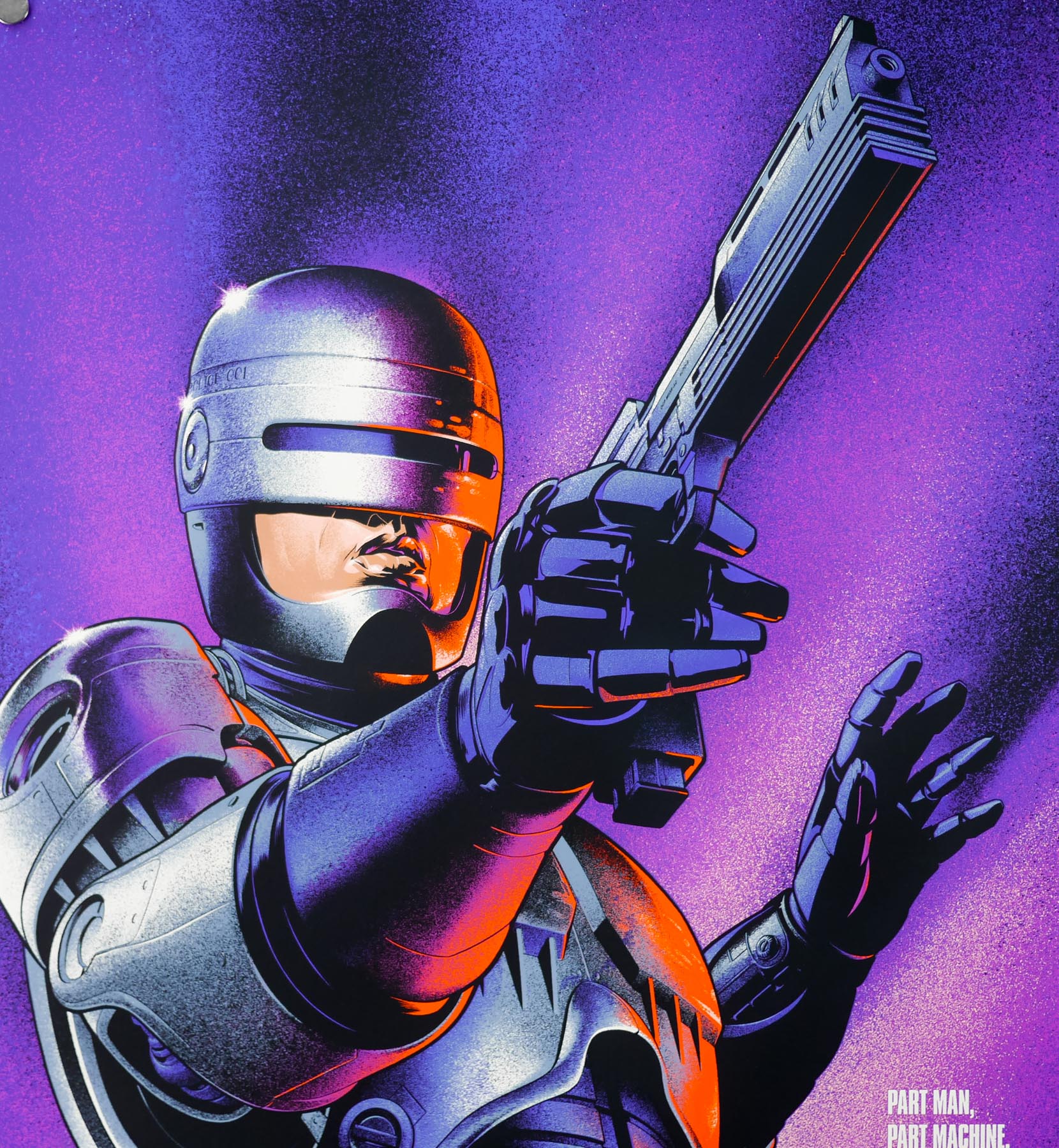
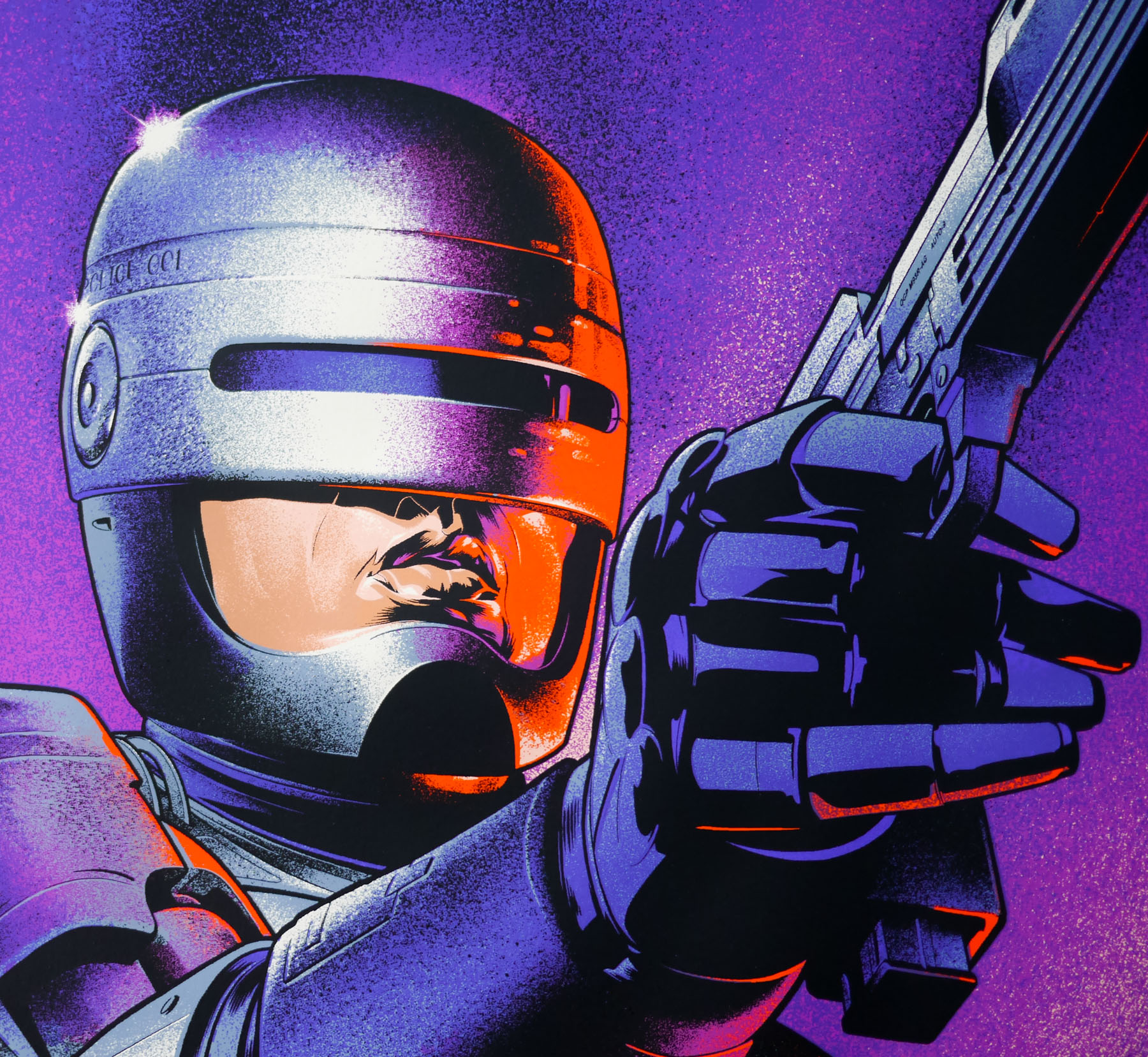
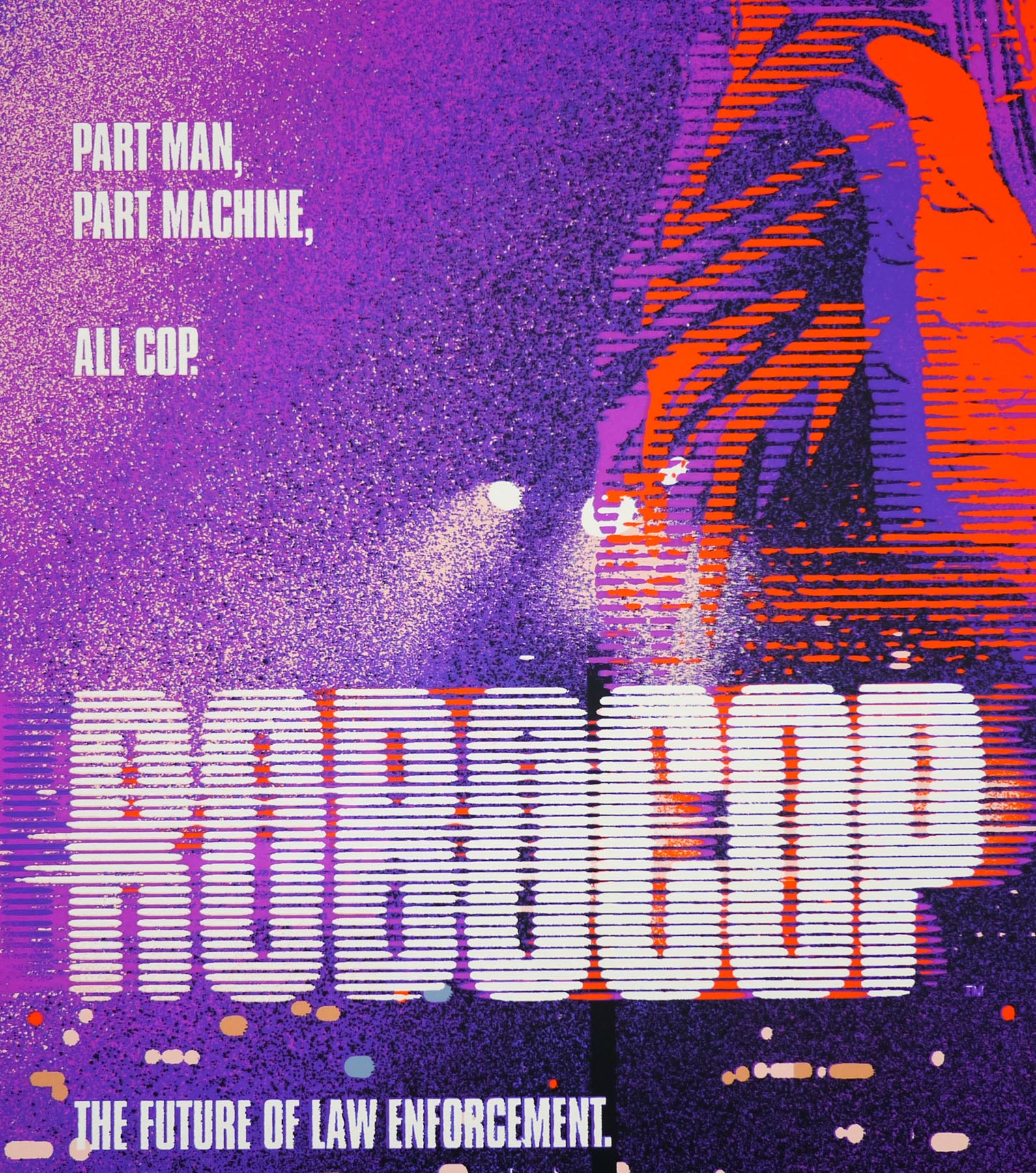
Part man. Part machine. All cop.

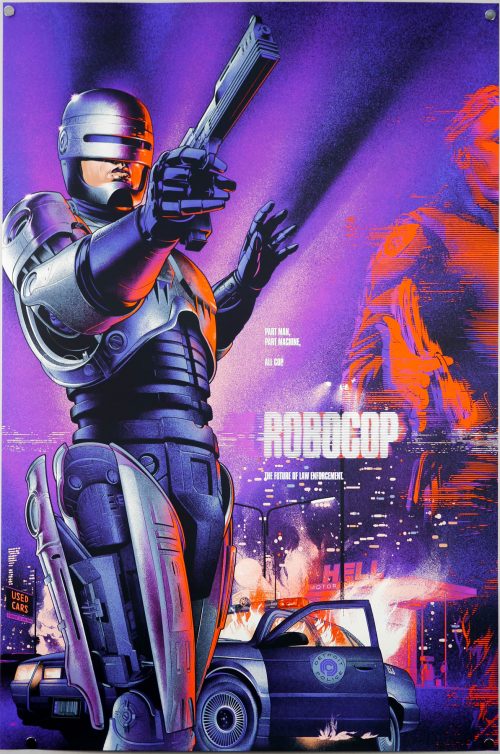
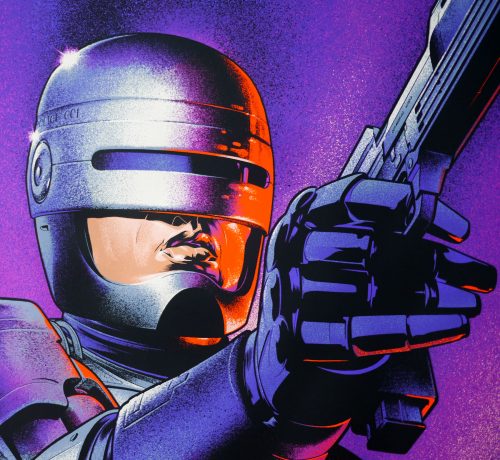
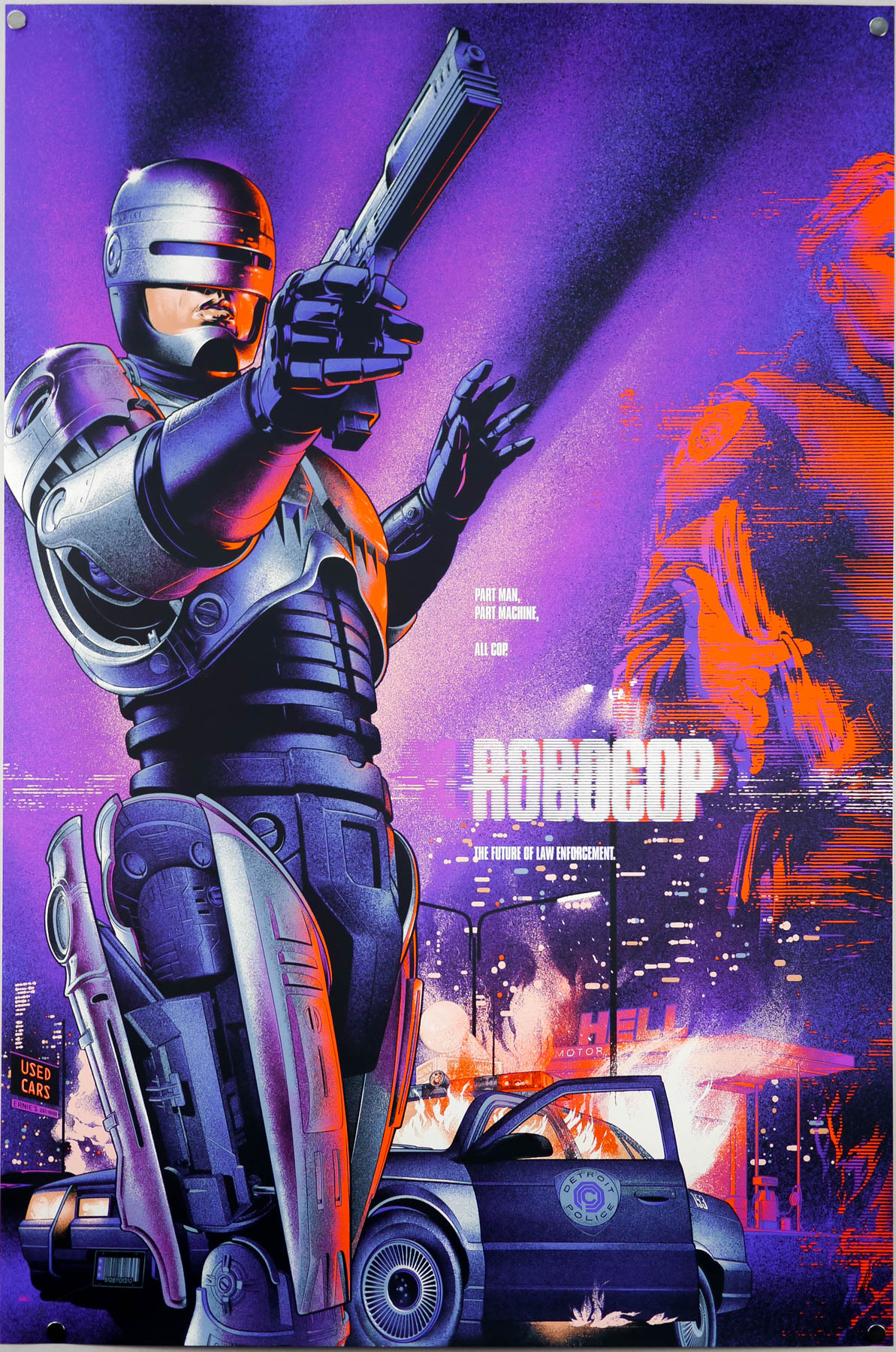
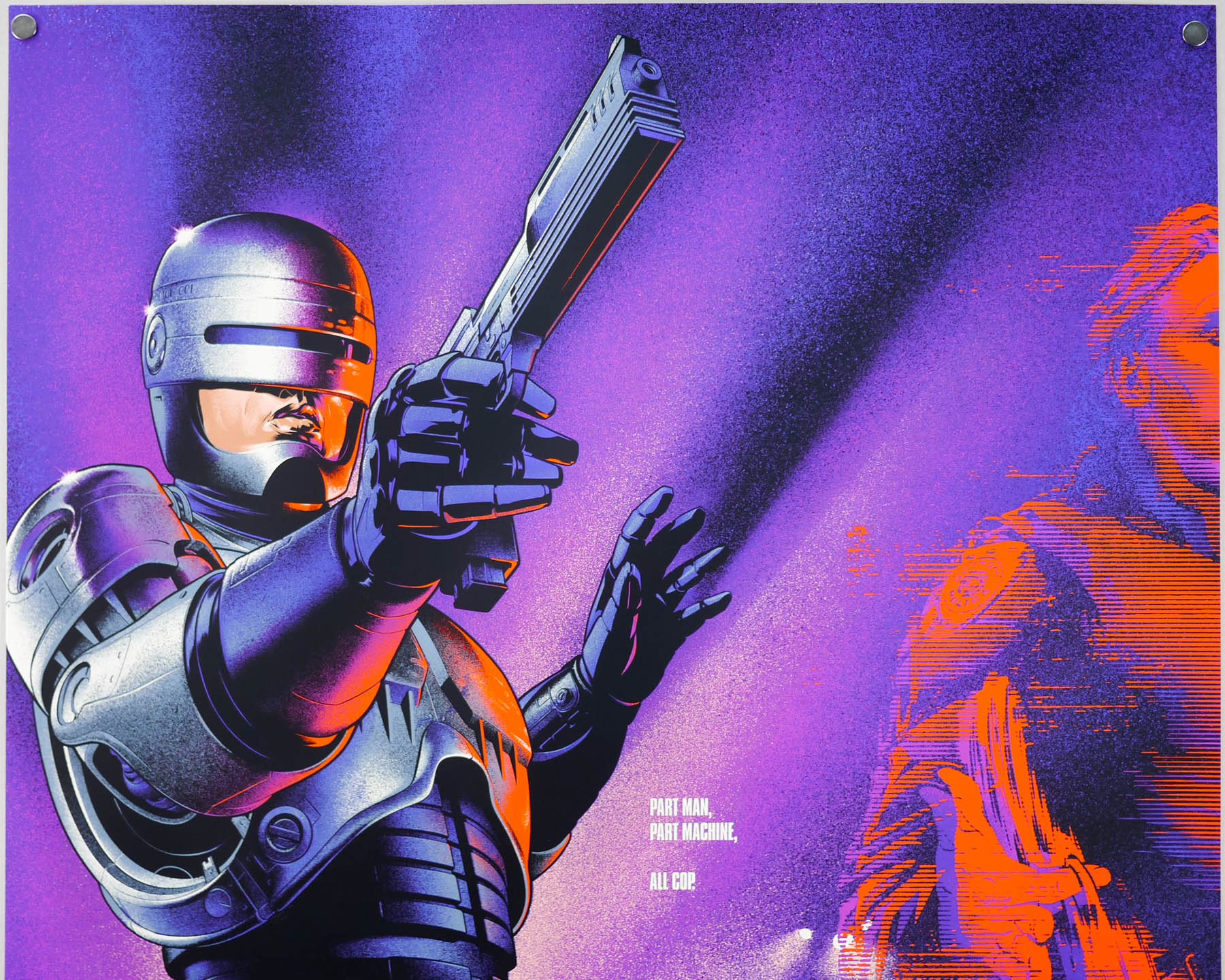
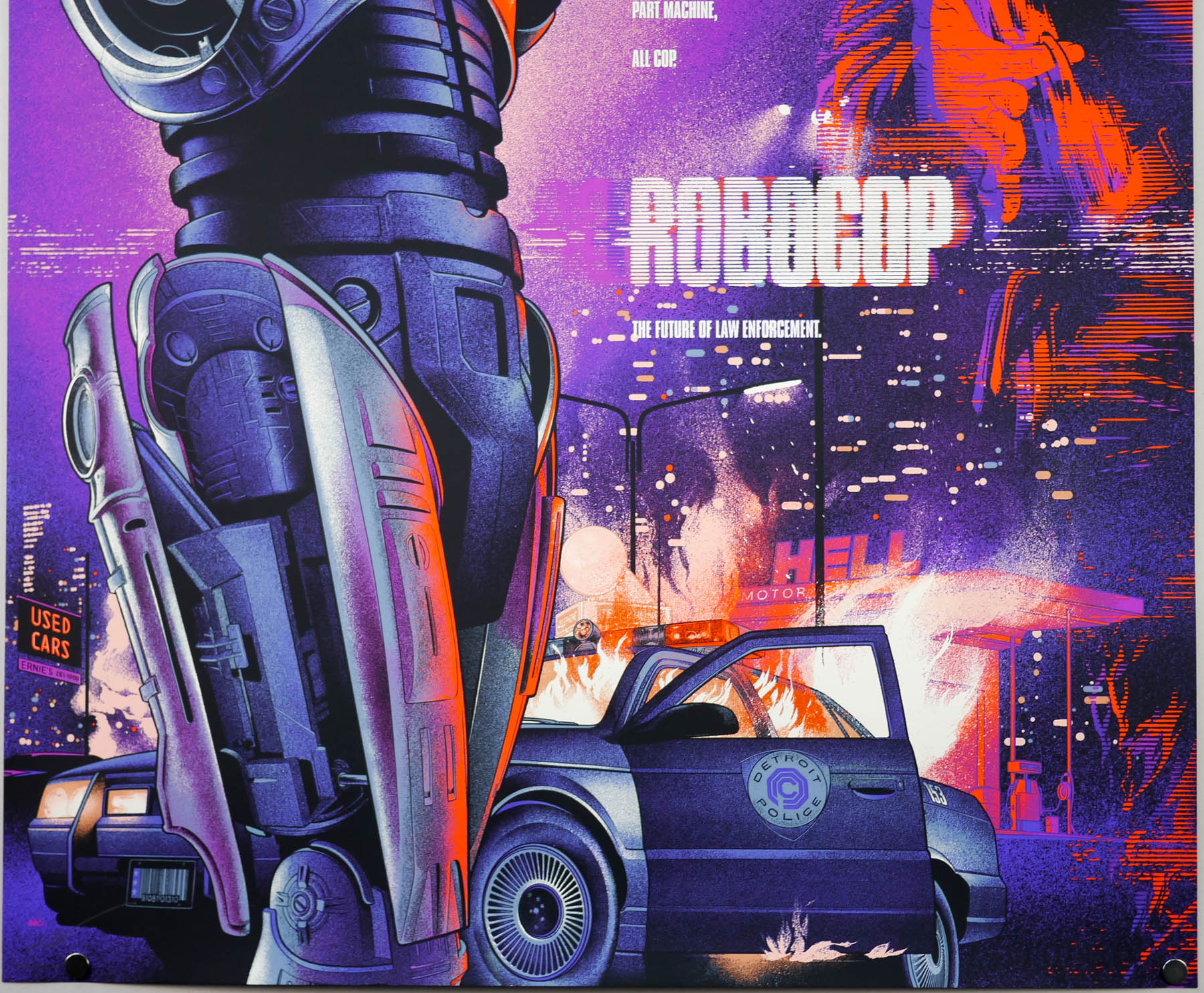
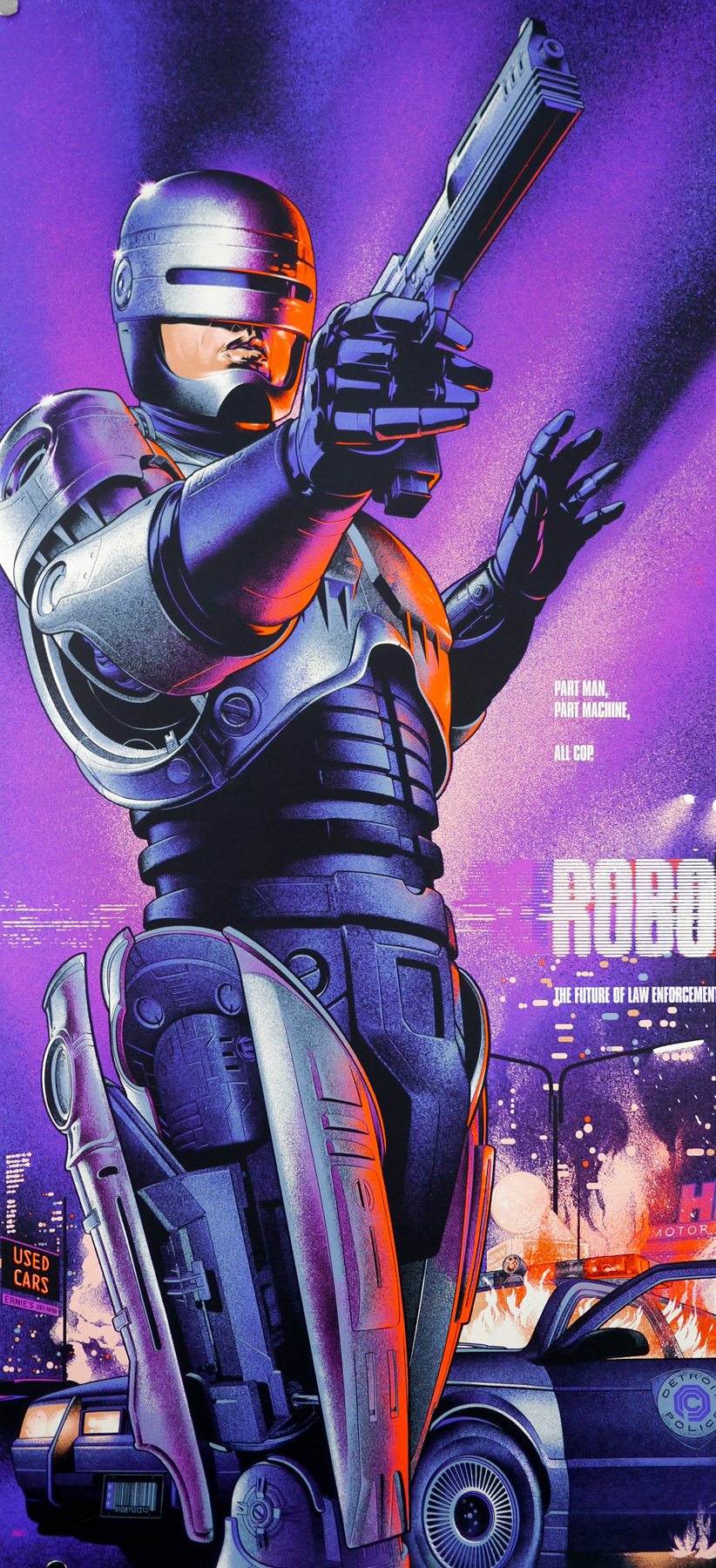
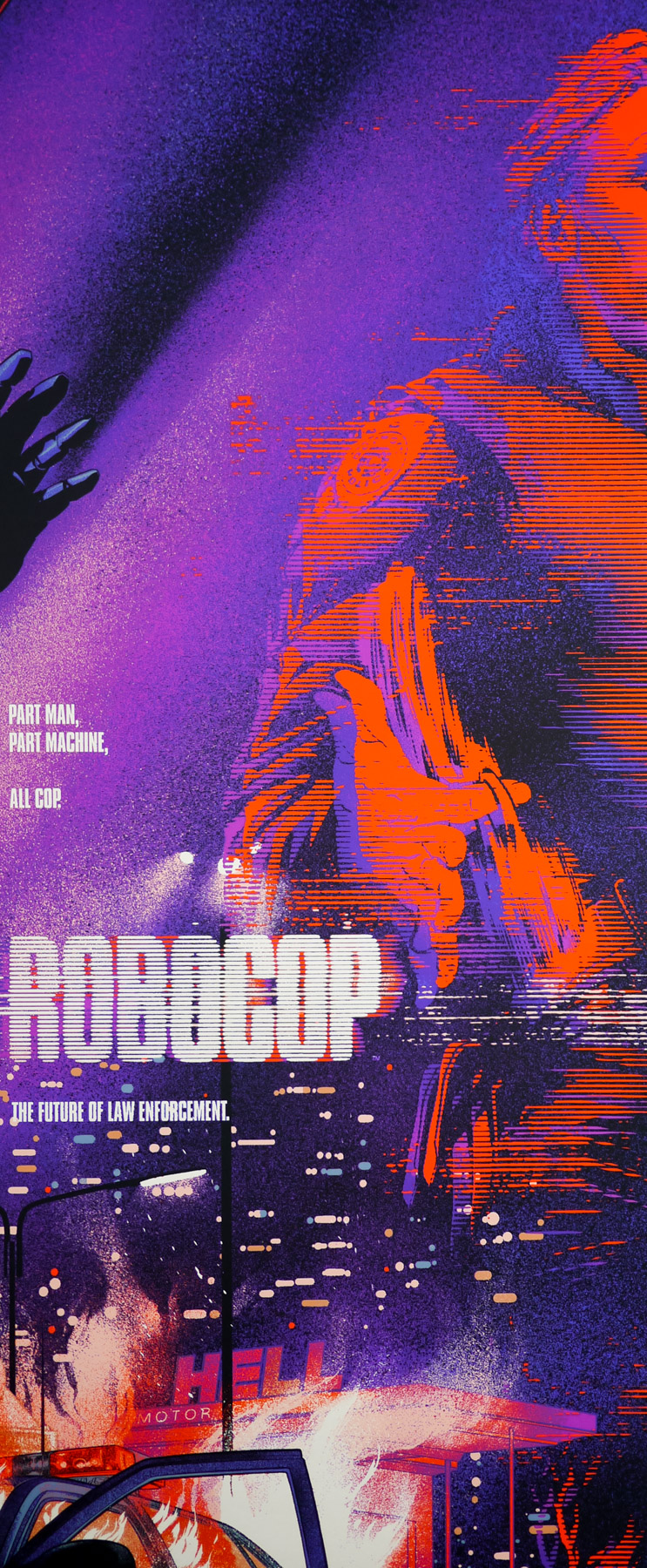
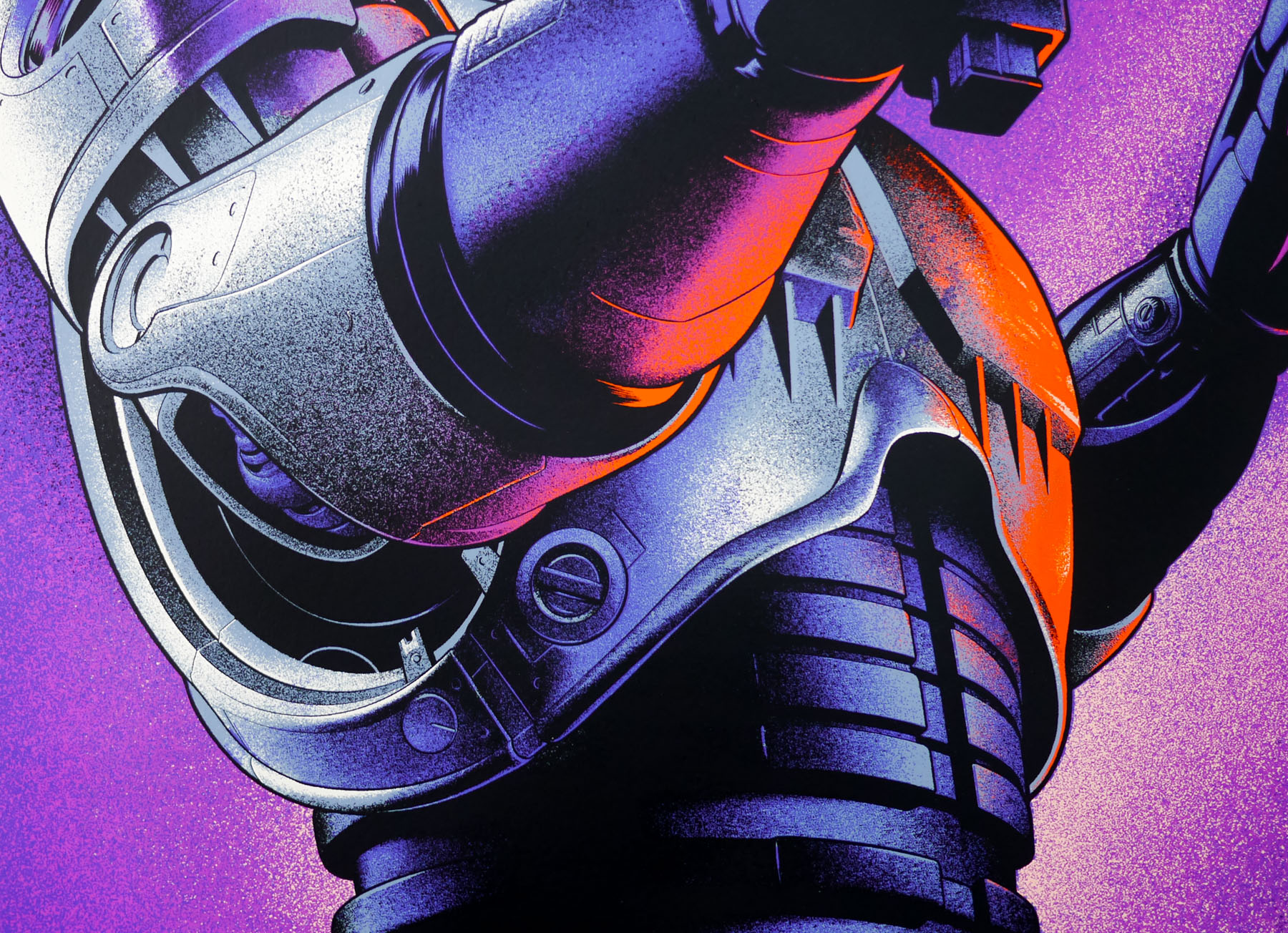
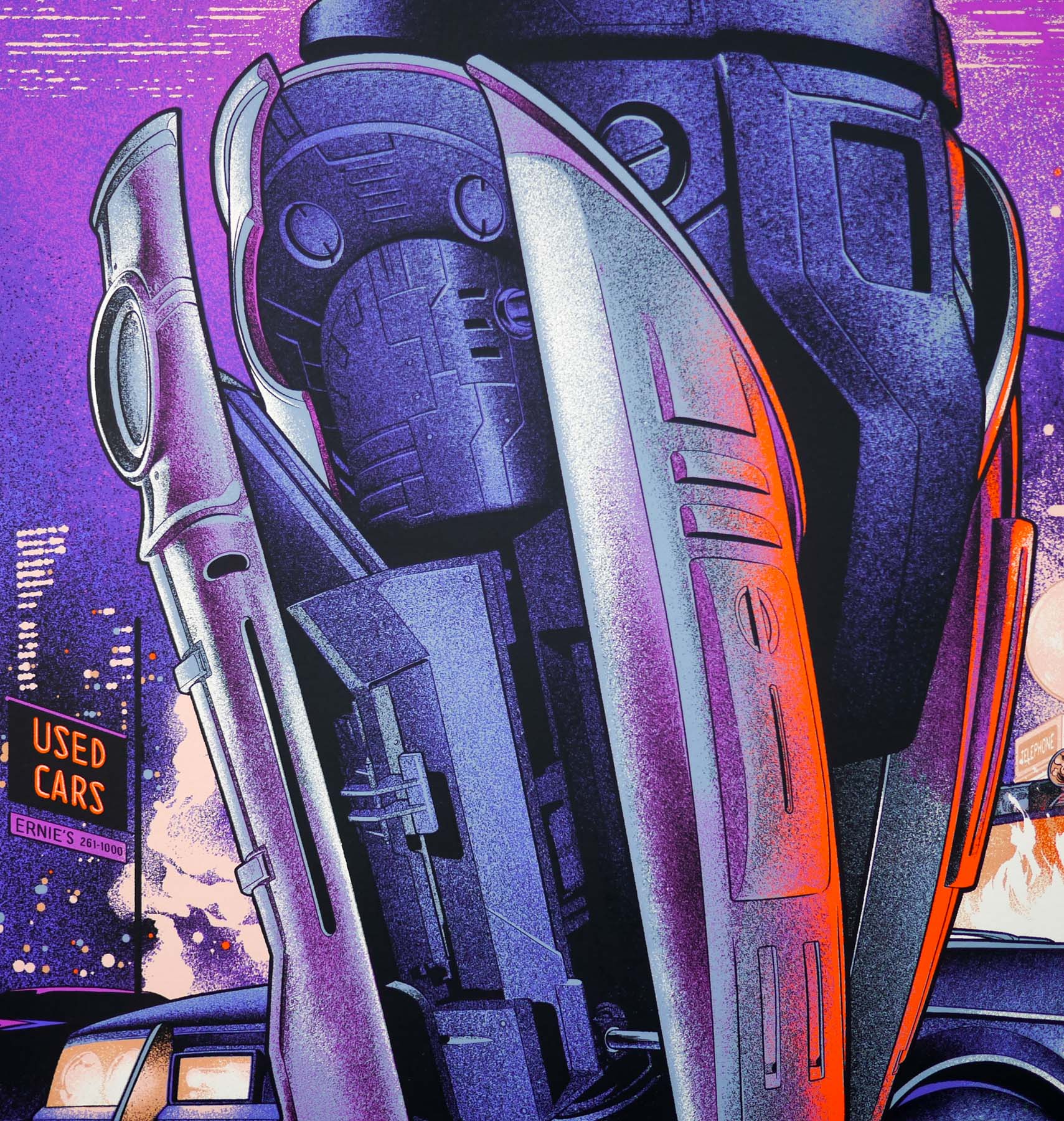
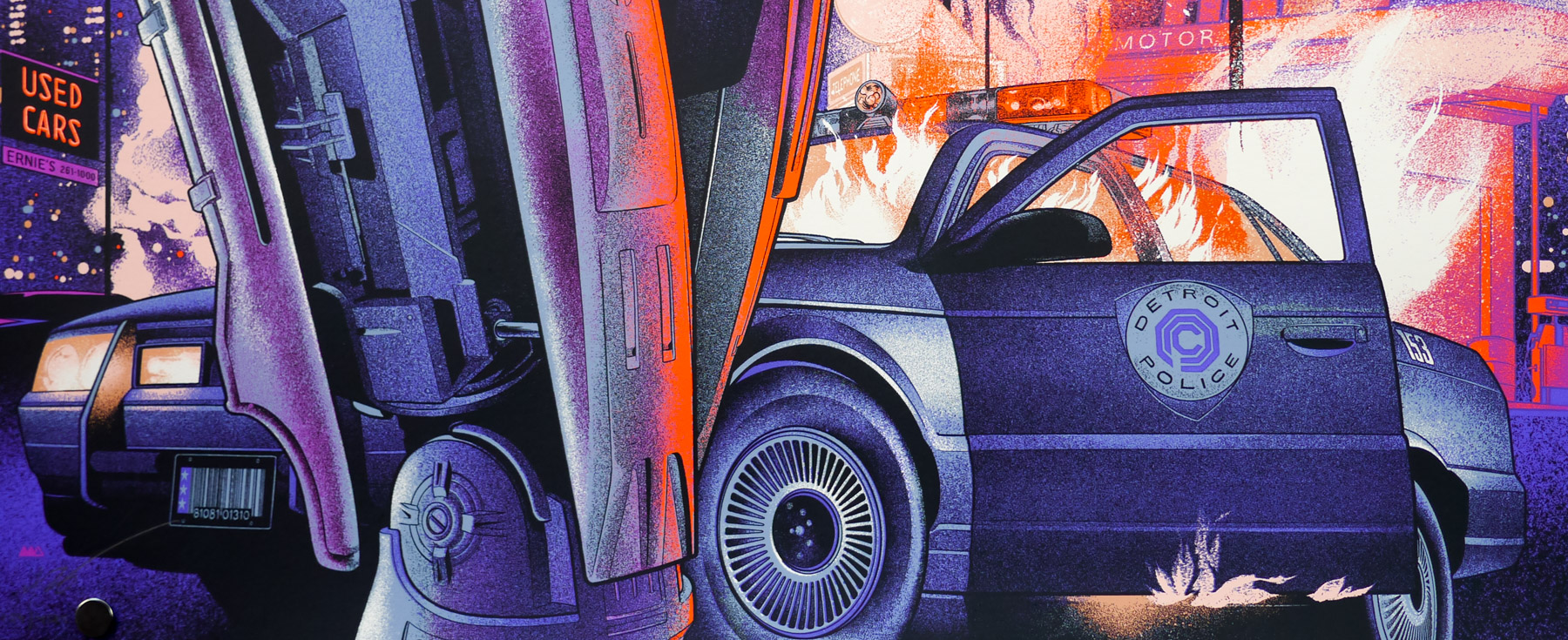
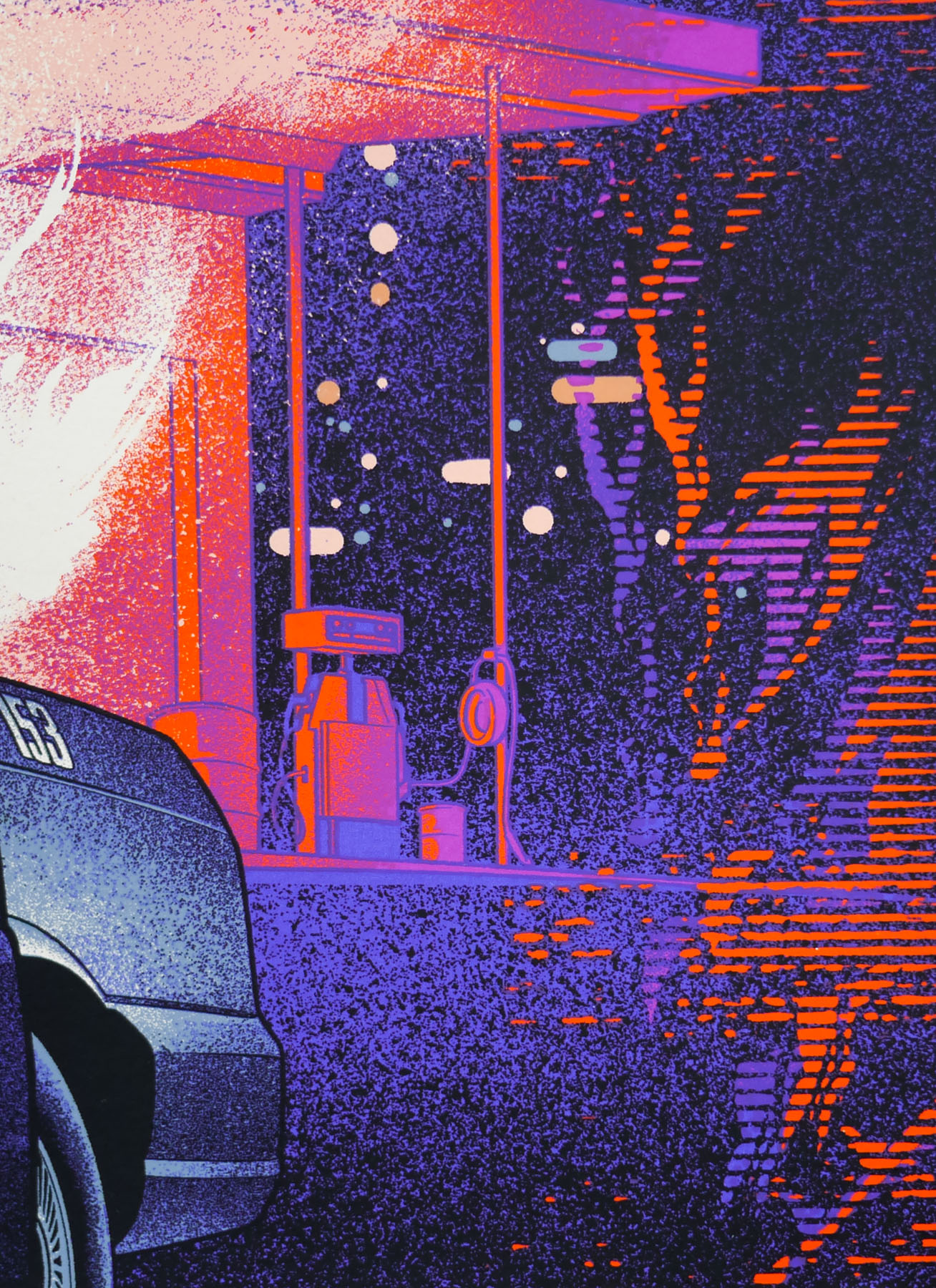
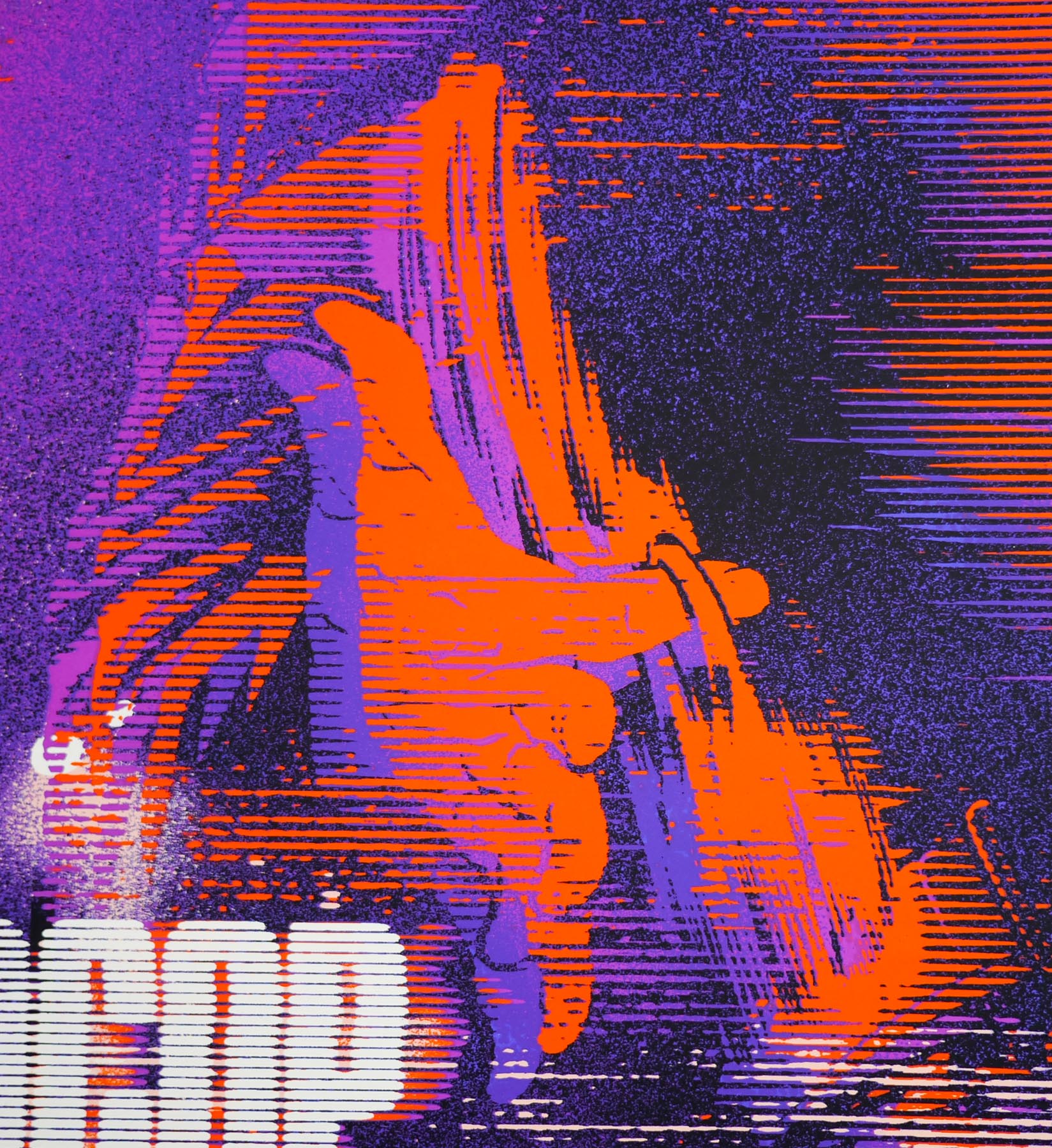
A striking design by Martin Ansin on this screen print for Paul Verhoeven‘s sci-fi masterpiece, Robocop. Set in a dystopian future Detroit where organised crime is rampant and the city is close to financial ruin, the mega-corporation Omni Consumer Products enters into an agreement with the city to run the police force and plans to introduce a robotic enforcer to work alongside the human officers. When tests with a weaponised droid called ED-209 go awry and an OCP junior executive is killed, the chairman agrees to back the plans of Bob Morton (Miguel Ferrer), another OCP executive with designs for a cyborg (half-man, half-machine) cop.

Shortly after, veteran officer Alex Murphy (Peter Weller) is brutally attacked and effectively killed on his first patrol at a new precinct and Morton sees him as the perfect candidate for his Robocop program. OCP quickly goes about transforming his ravaged body into the future of law enforcement, but when he reawakens Murphy initially struggles with his transformation and loss of his family. Soon he sets about avenging his ‘death’ at the hands of crime boss Clarence Bodicker (an unforgettable performance from Kurtwood Smith) and attacks the corruption that is destroying Detroit, which leads all the way to the boardroom of OCP.

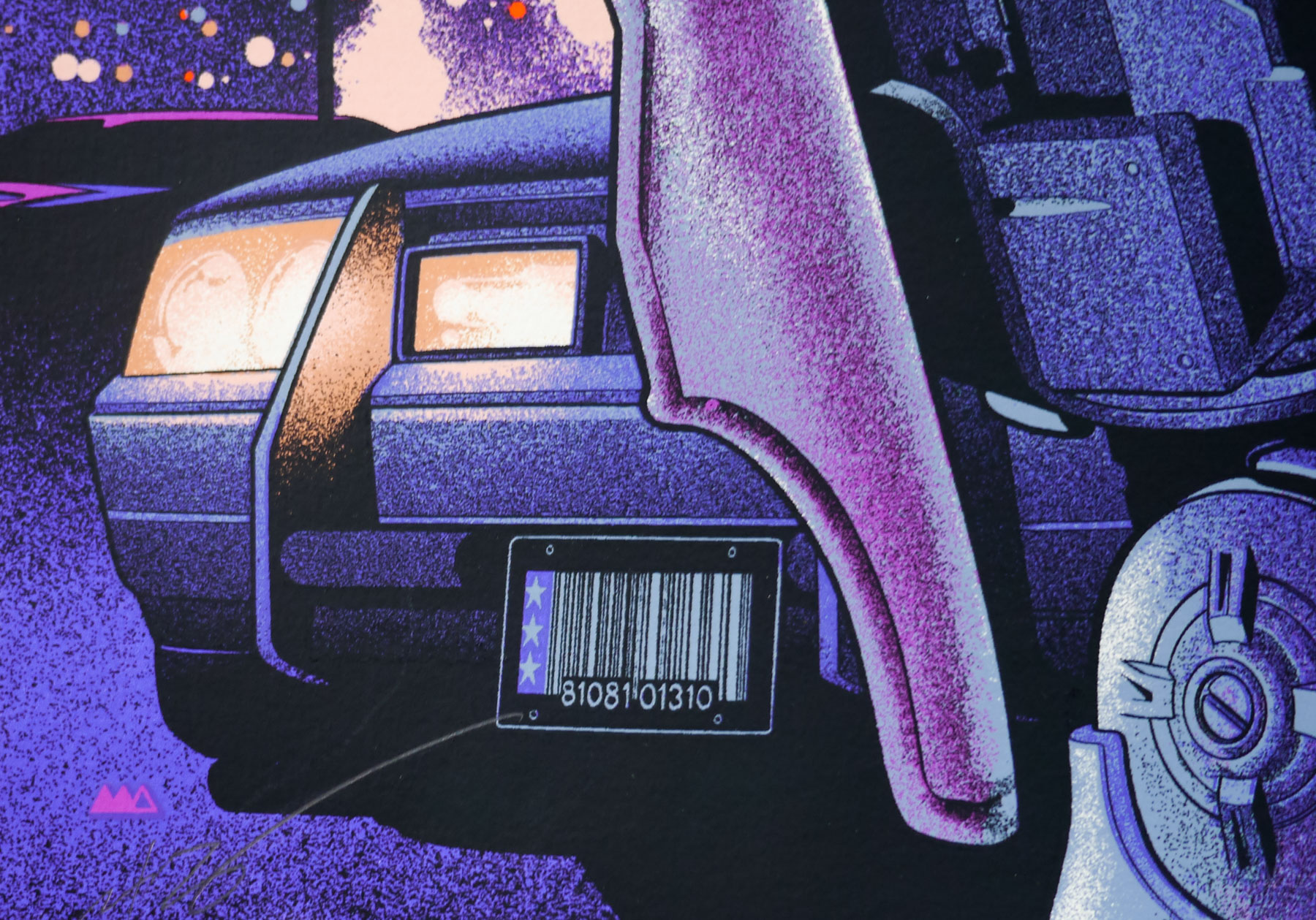
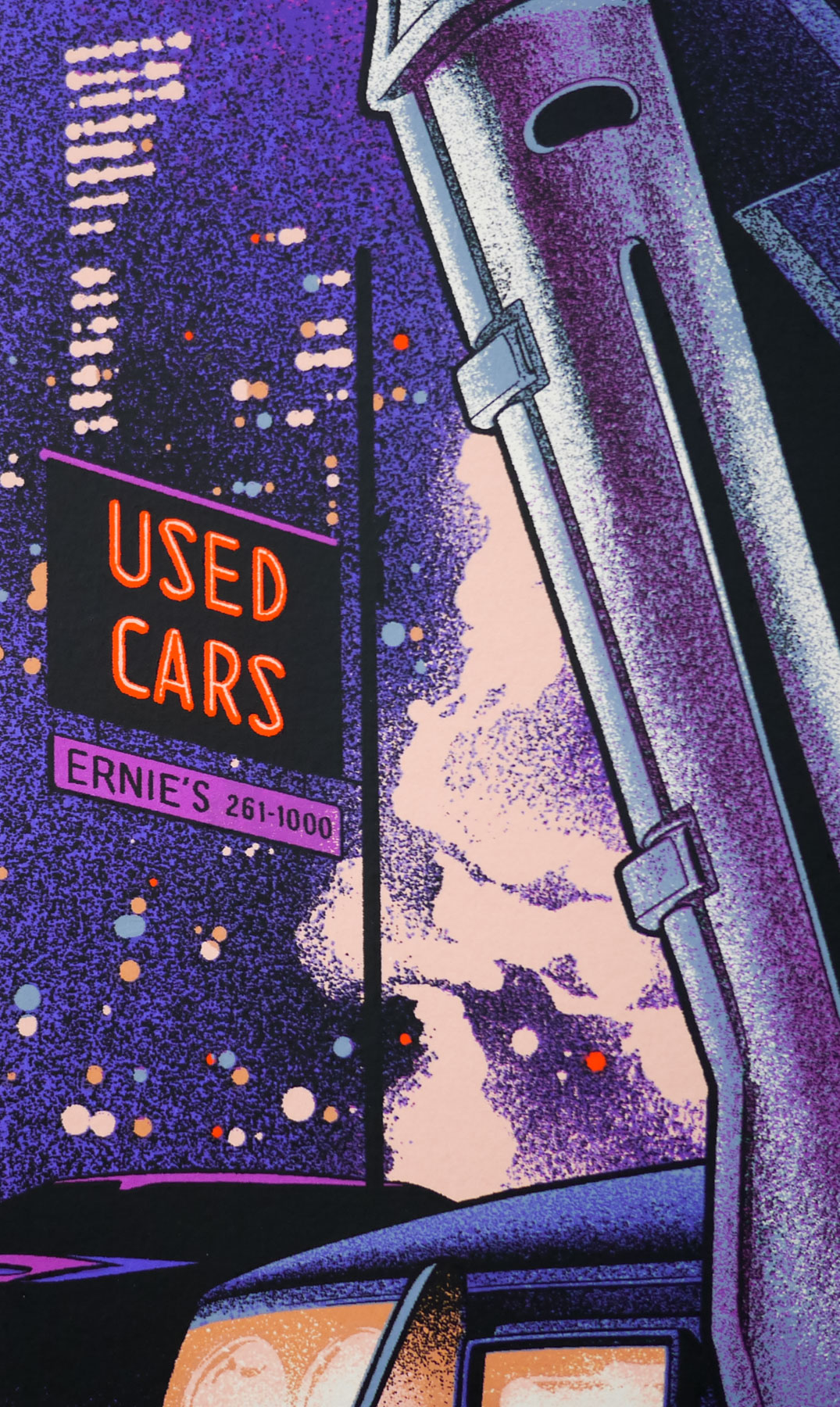
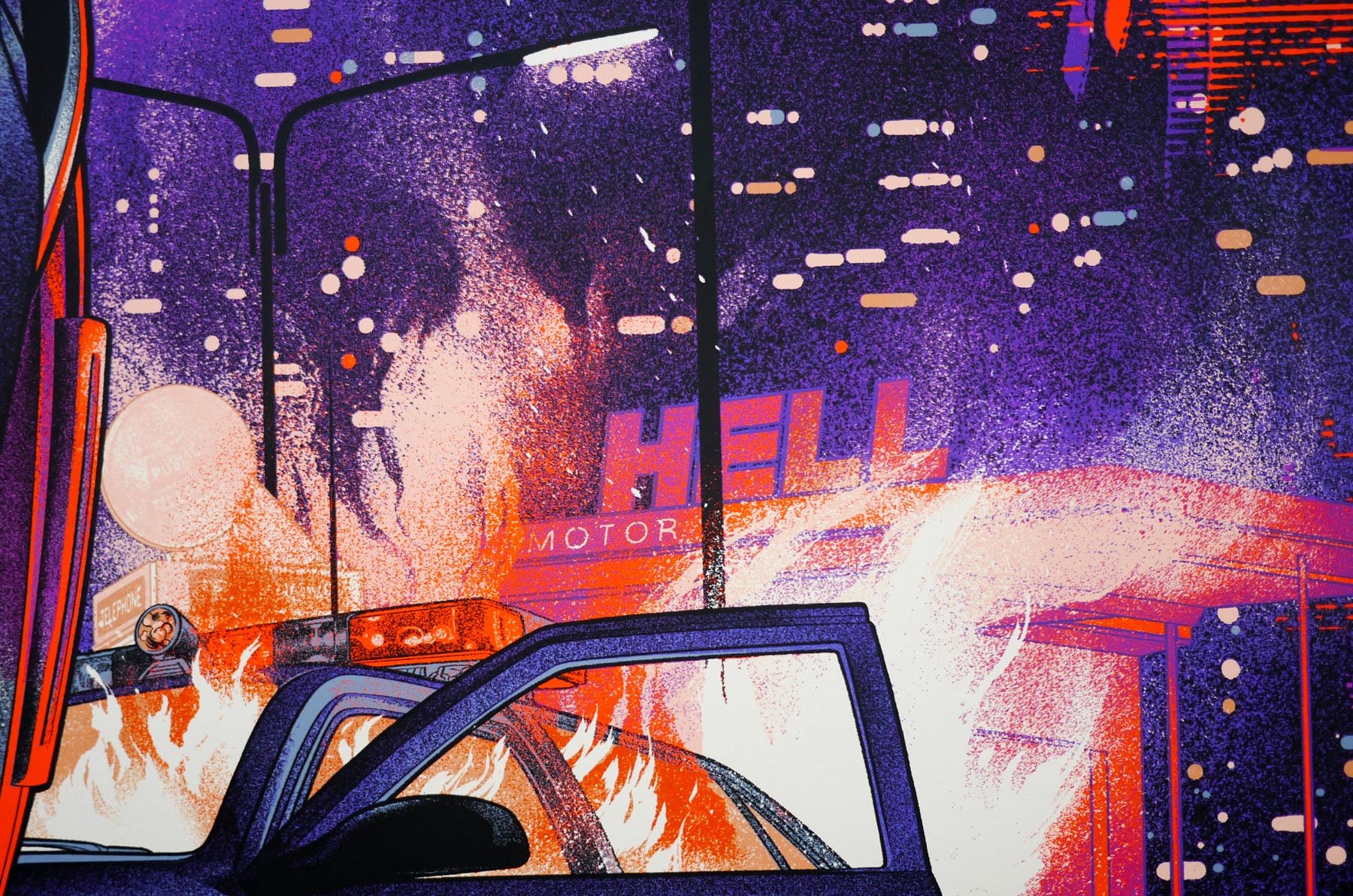
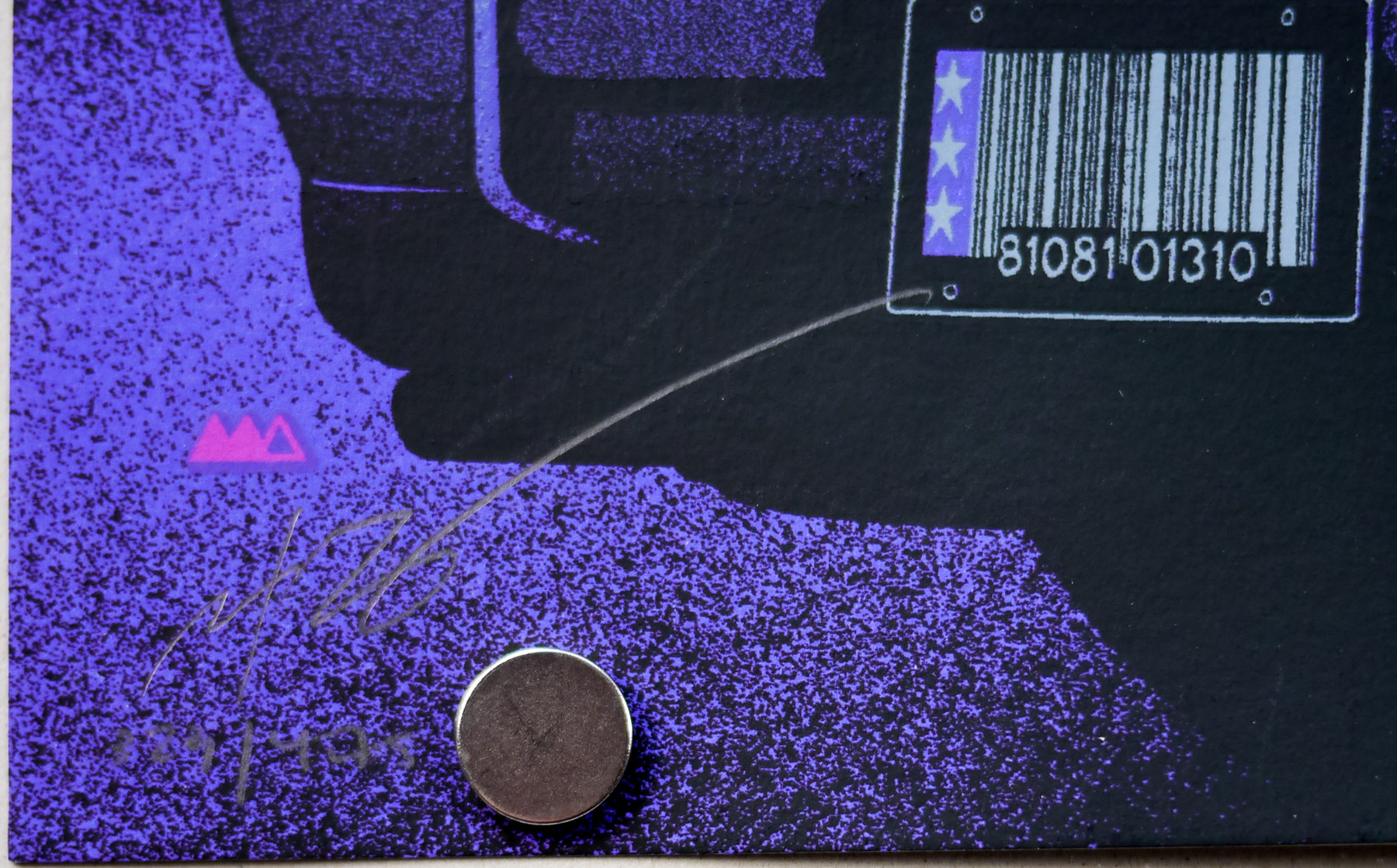
This print was one of several created by Martin Ansin for a joint show with fellow artist Kevin Tong held at the Mondo Austin gallery during March 2014. Tong also worked on a print for Robocop and other films covered included Flash Gordon and Alien. Badass Digest (now Birth Movies Death) went to the show and interviewed Ansin and Tong, which can be read here and Collider.com ran an article featuring loads of images from the show. There was a variant of this print available that was printed with metallic inks and has a different colour scheme, see here.

One of my favourite artists working today, Martin Ansin‘s work has graced many of the best posters released by Mondo, including several in the Universal Monsters series like this amazing Phantom of the Opera print and an excellent Dracula (1931) one. You only have to look at the gallery on his official site to see how talented an artist he is, with an eye for composition and detail unmatched by most of the artists in Mondo’s roster. To see the other posters I’ve collected so far that were designed by Ansin, click here.

Man of Steel / screen print / Martin Ansin / USA

03.07.15

Poster Poster

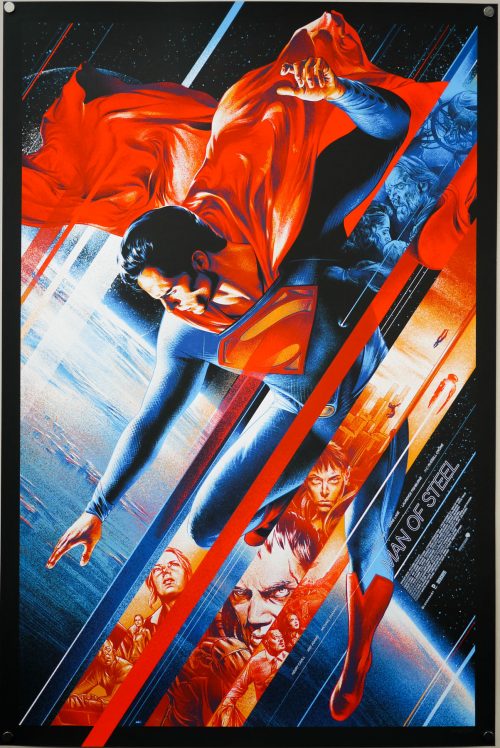
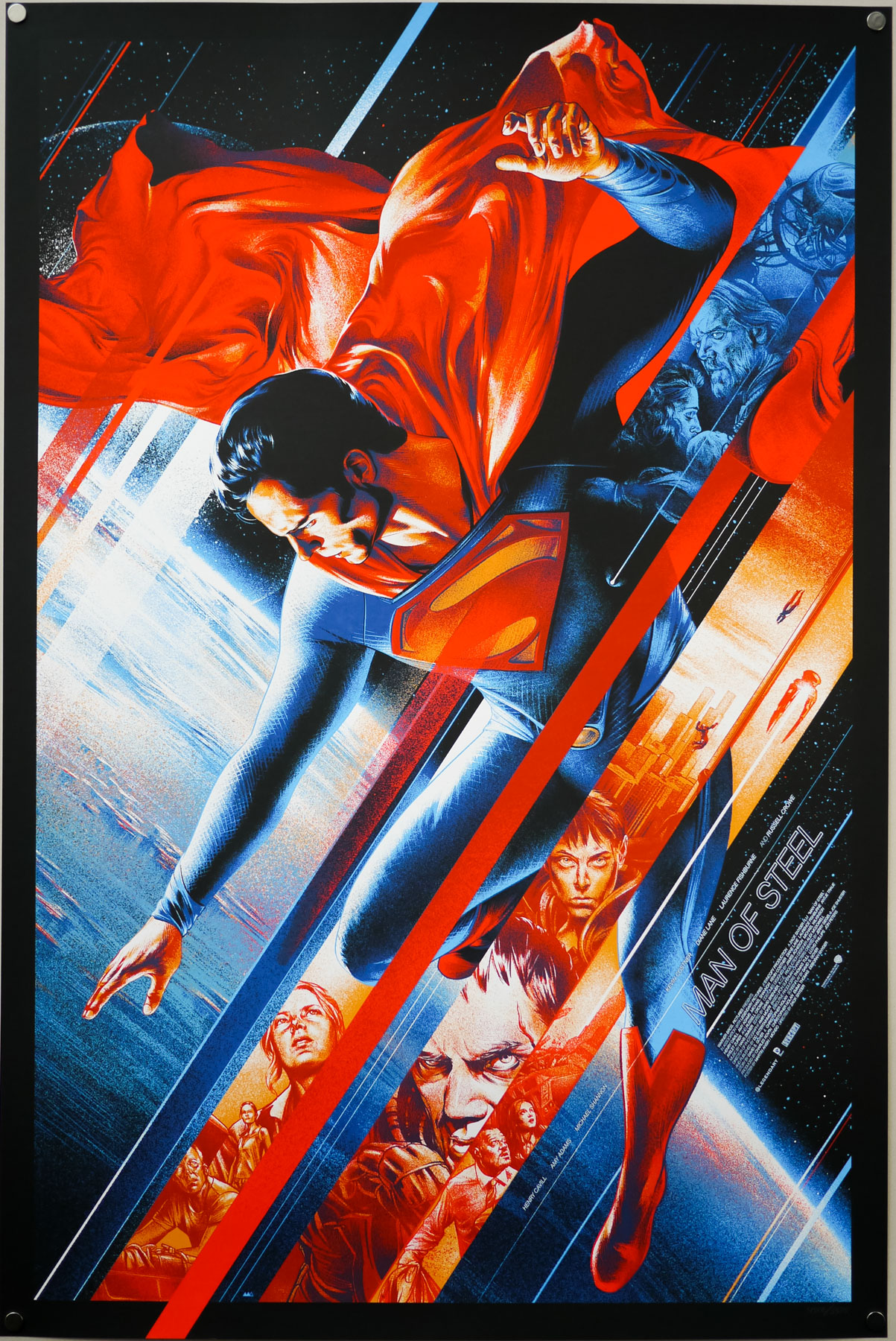
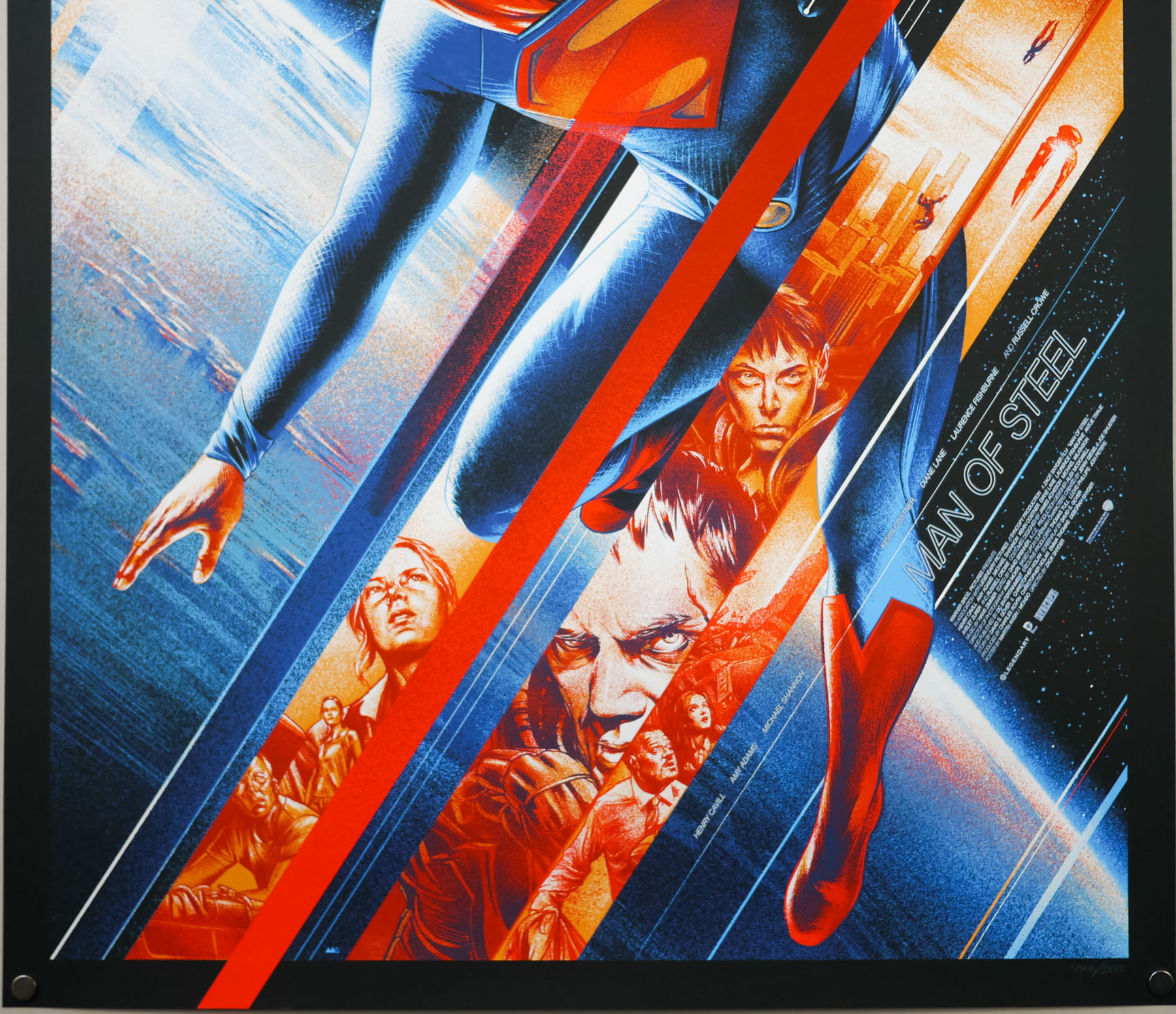
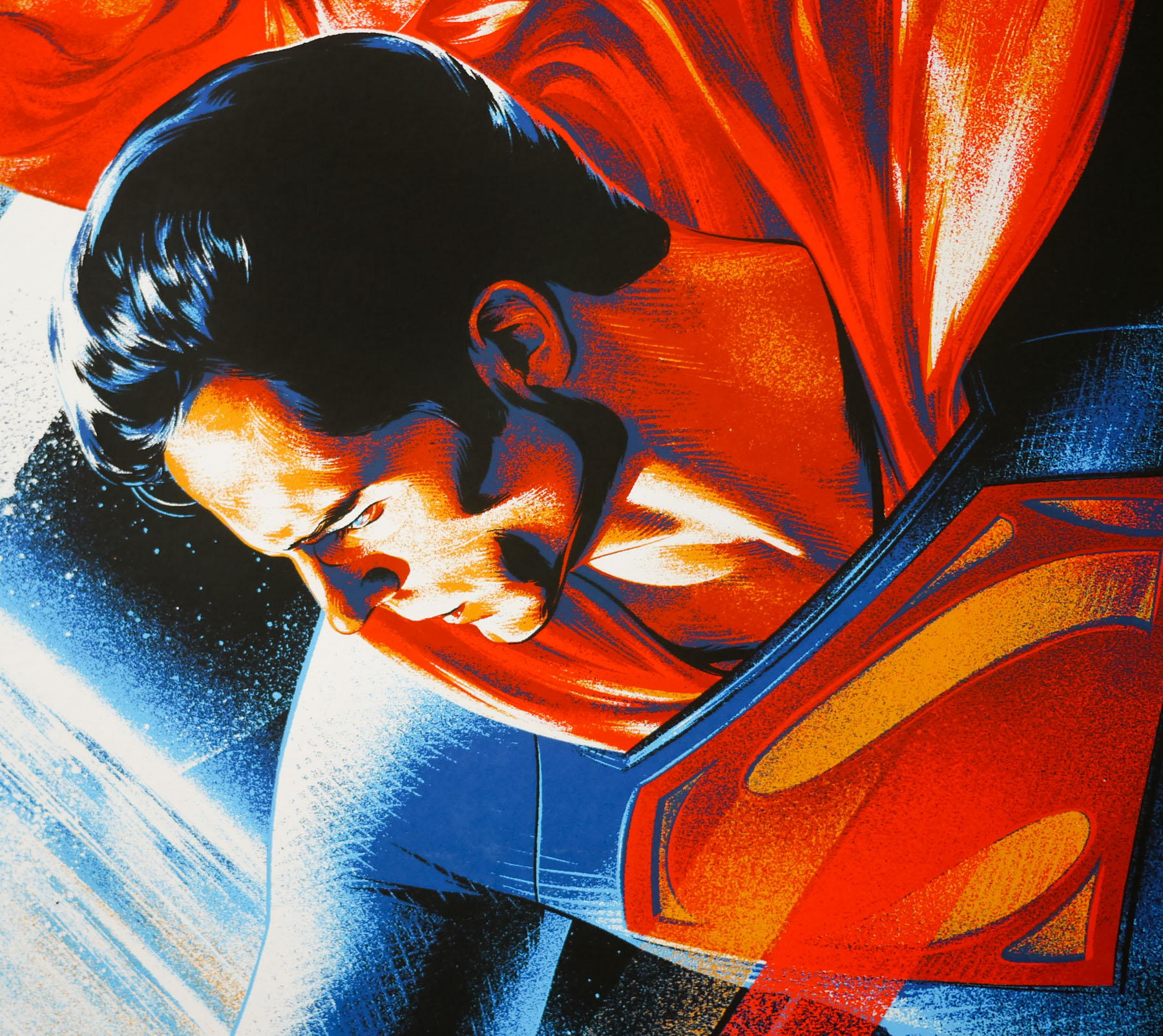
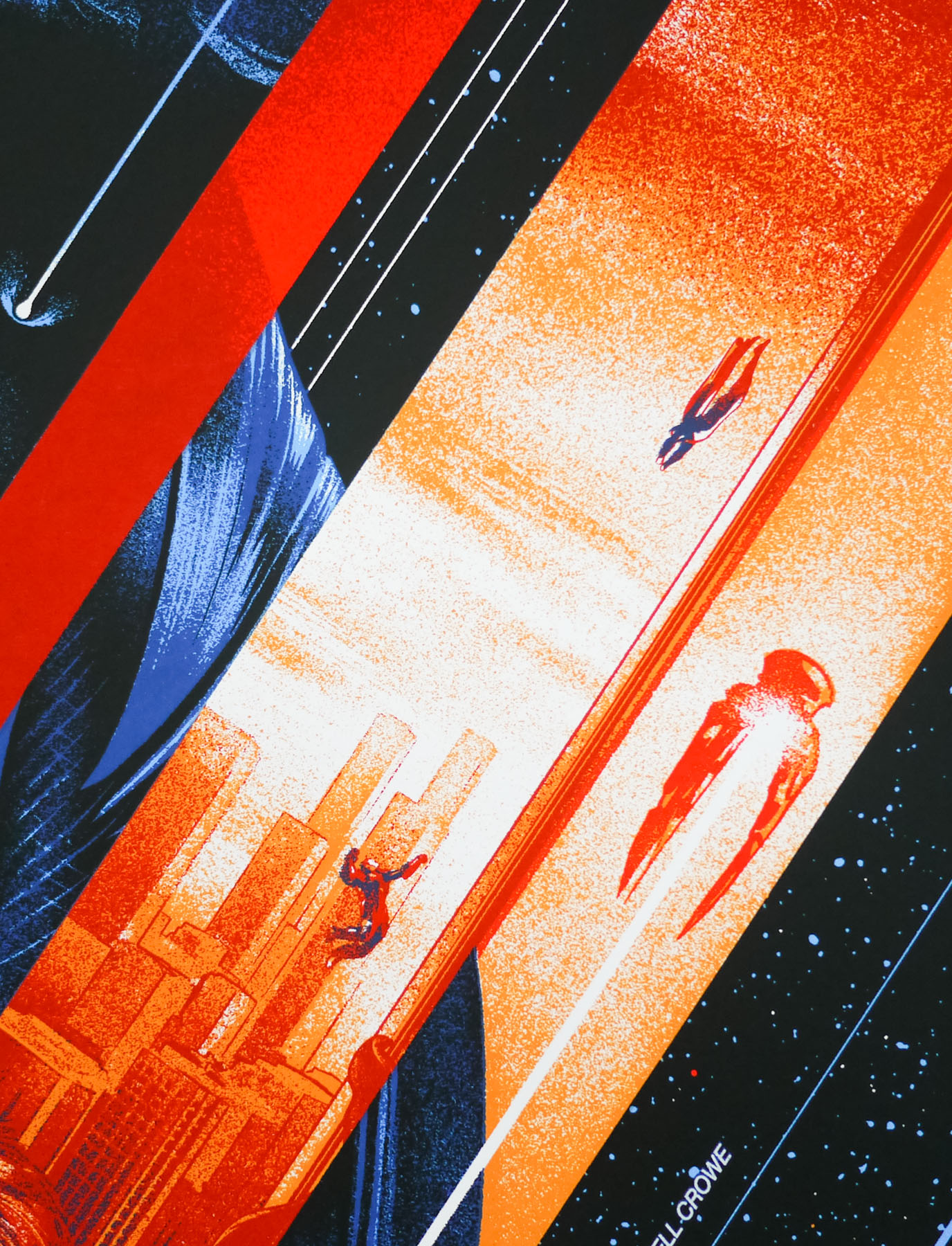
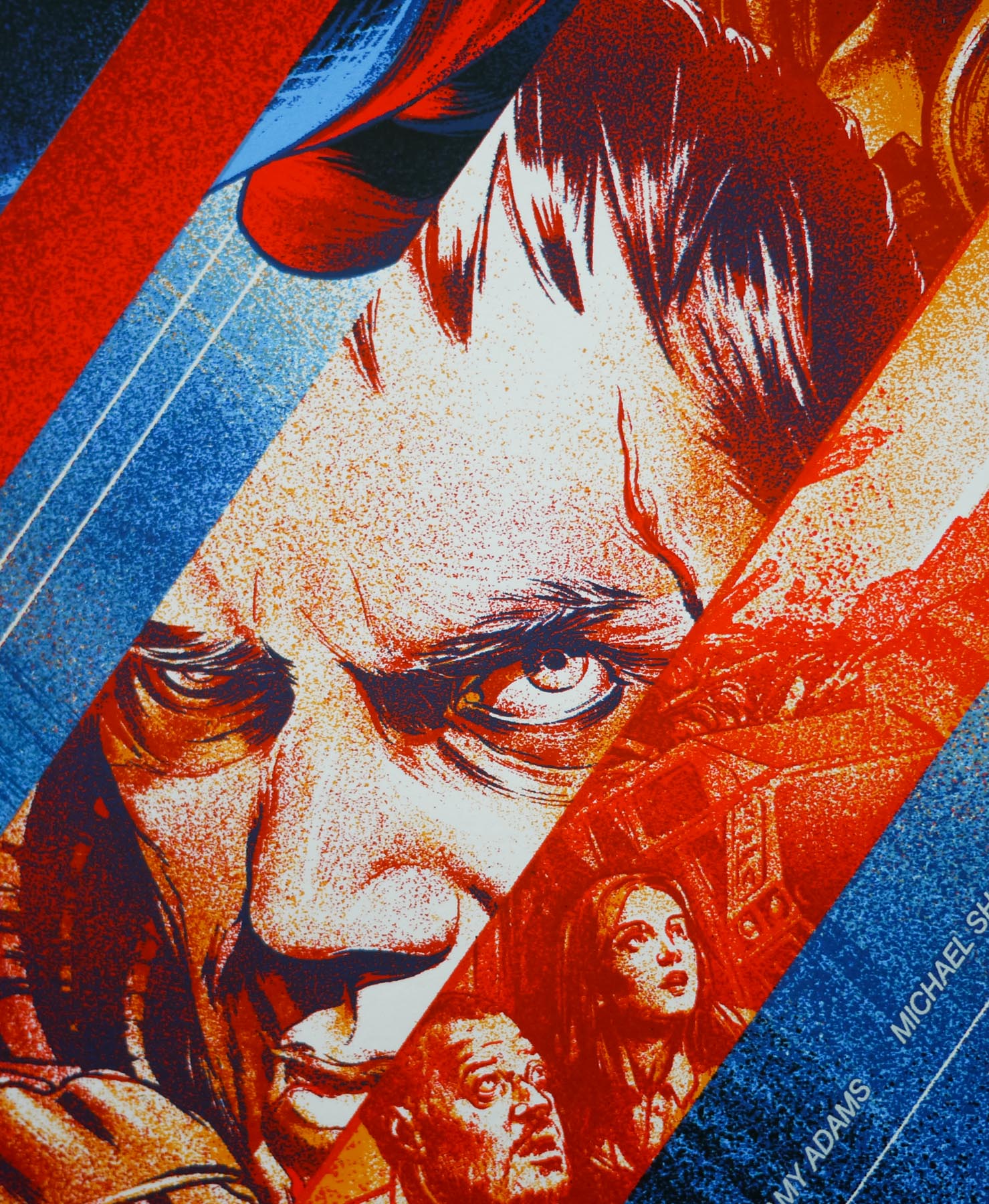
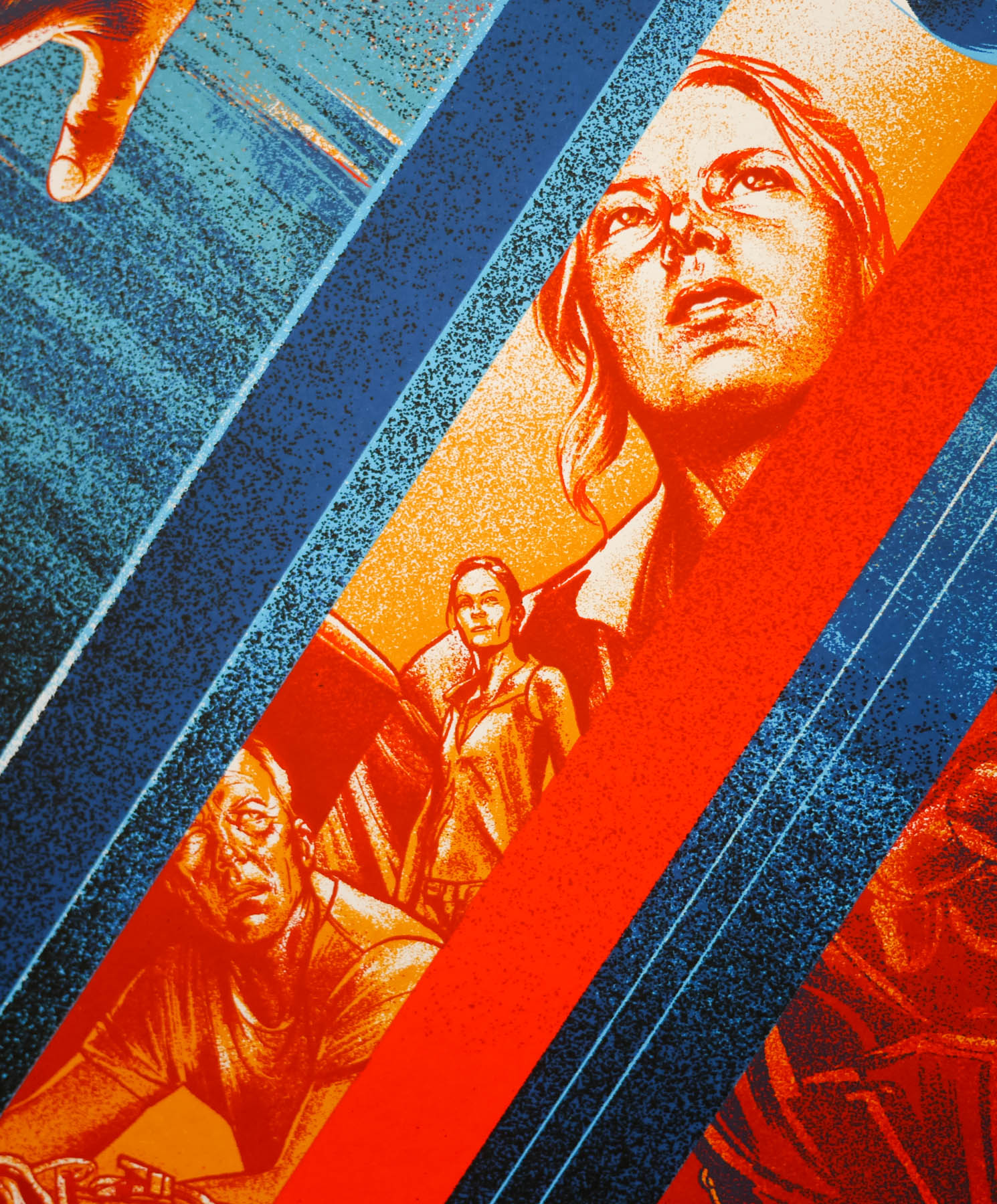
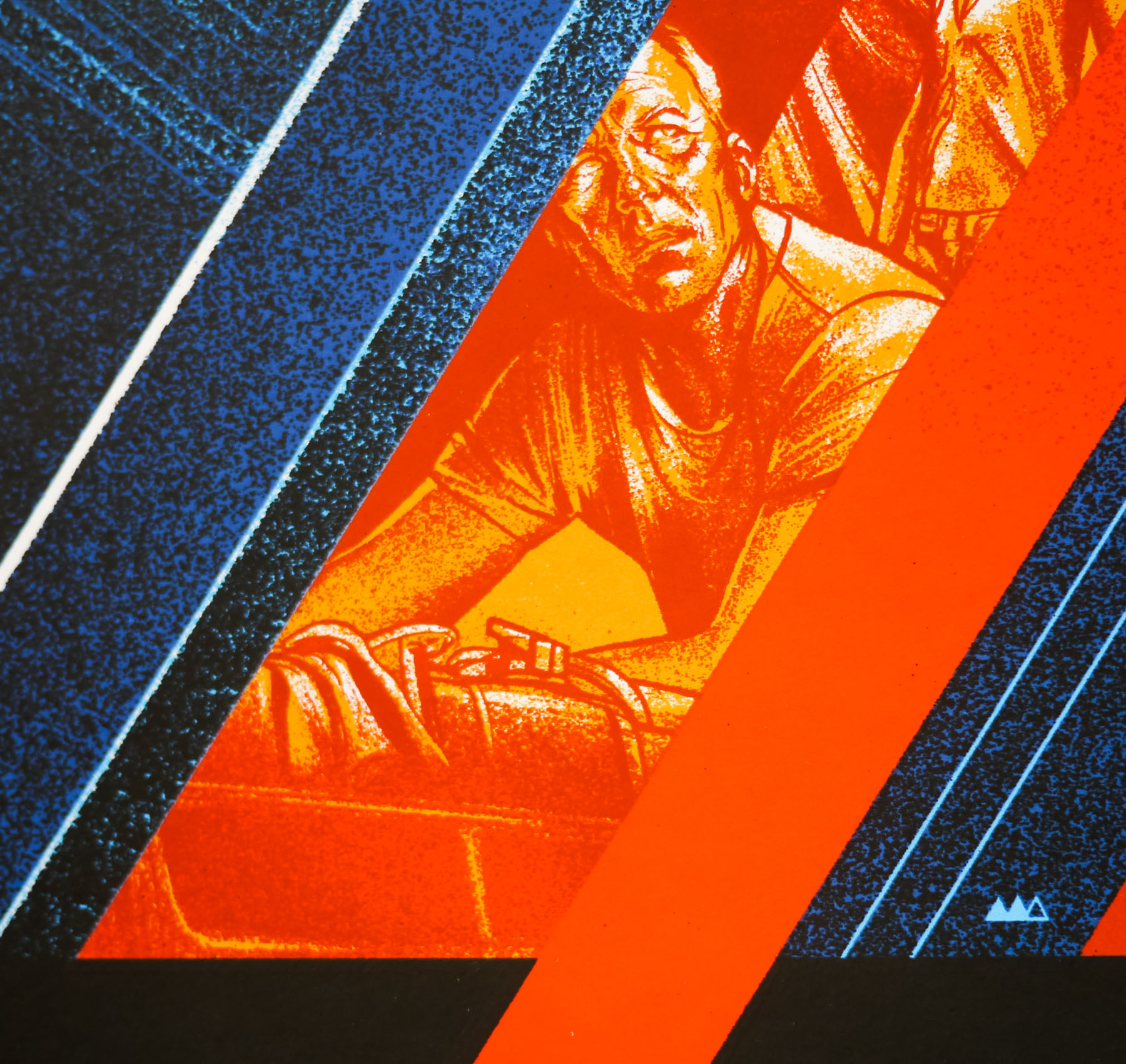
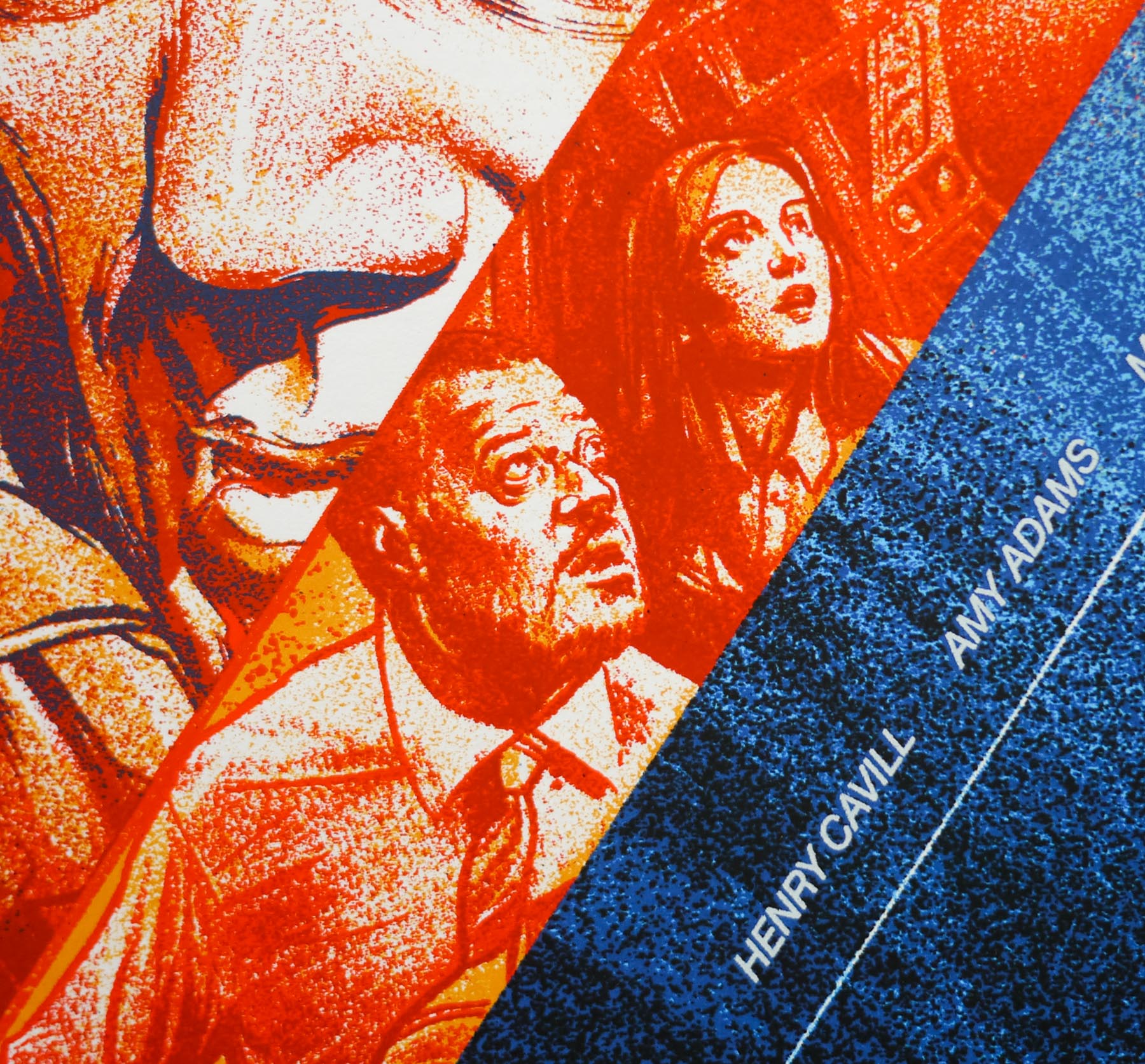
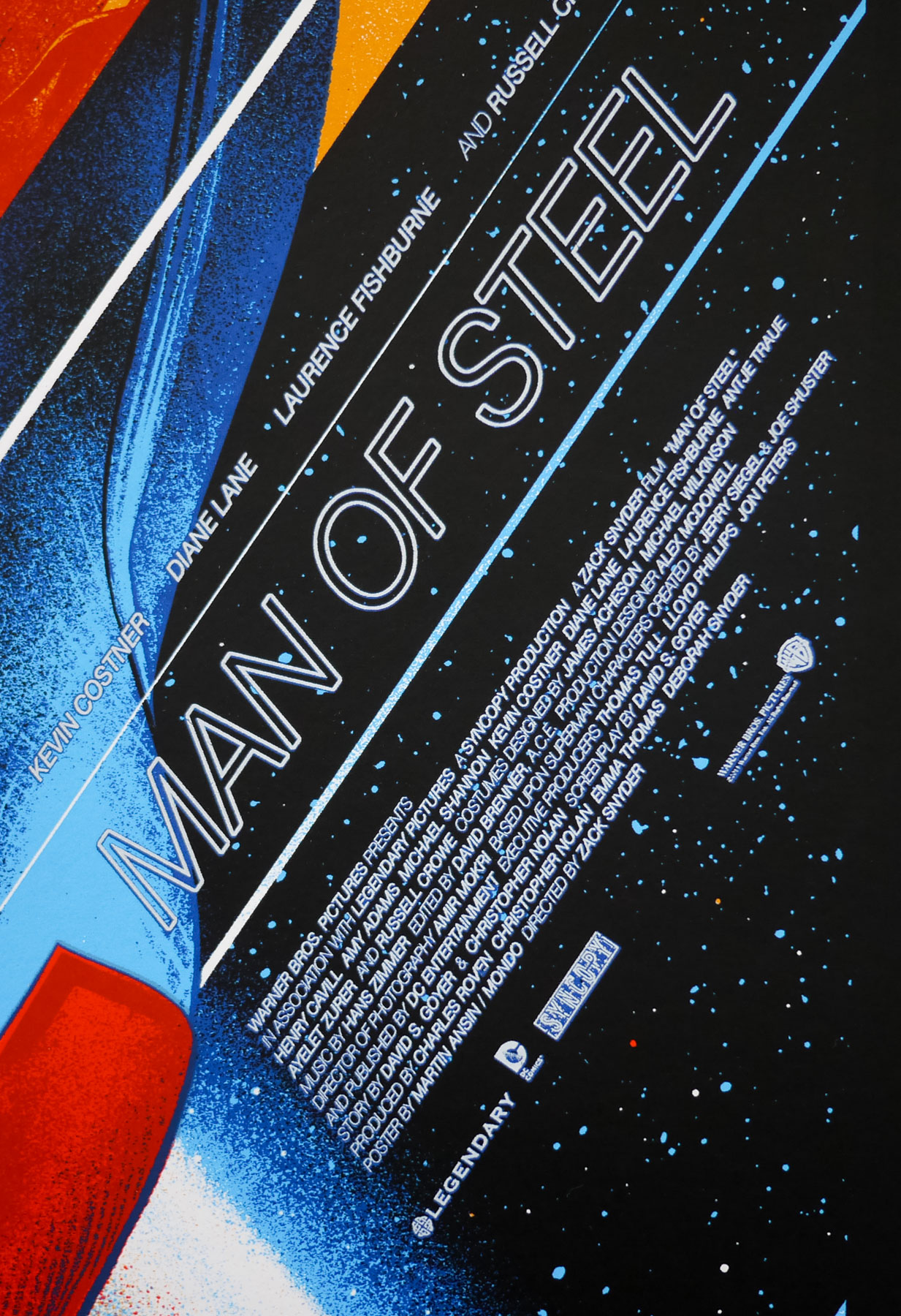
It’s fair to say that Zack Snyder’s Superman reboot Man of Steel divided both critics and audiences upon its release in 2013. Following Bryan Singer’s failed attempt to rekindle the franchise with the disappointment that was 2006’s Superman Returns, expectations were high for this film, coming as it did with production backing from Christopher Nolan who’d struck gold with his Batman trilogy. British actor Henry Cavill stepped into the role of Clark Kent / Kal-El and was joined by a number of notable actors, including Kevin Costner as Jonathan Kent, his adoptive father, and Amy Adams as Lois Lane. The film is effectively an origin story and opens with the destruction of Superman’s home planet of Krypton, resulting in the death of his father Jor-El (Russell Crowe) and mother Faora-Ul (Antje Traue). The rest of the film deals with his arrival on earth and adoption by the Kent family, whose attempts to conceal their adopted son’s identity are threatened by the arrival of the evil Kryptonian General Zod (Michael Shannon) and his gang of miscreants.

The film is undoubtedly visually stunning with state of the art special effects but is lacking something in the storytelling department, certainly not helped by a fairly clunky script. A lot of the criticism about the film was levelled at the final quarter of the film that sees Superman face off against Zod in the middle of a Metropolis that is smashed to pieces by the two Kryptonians with seemingly no thought for the potential loss of life in the city. Additionally, the climactic scene is often cited as being very un-Superman. It also served as a prelude to 2016’s Batman vs Superman and the much anticipated Justice League film due the year after.

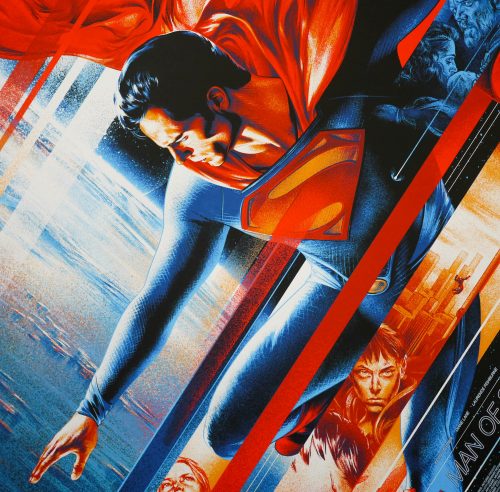
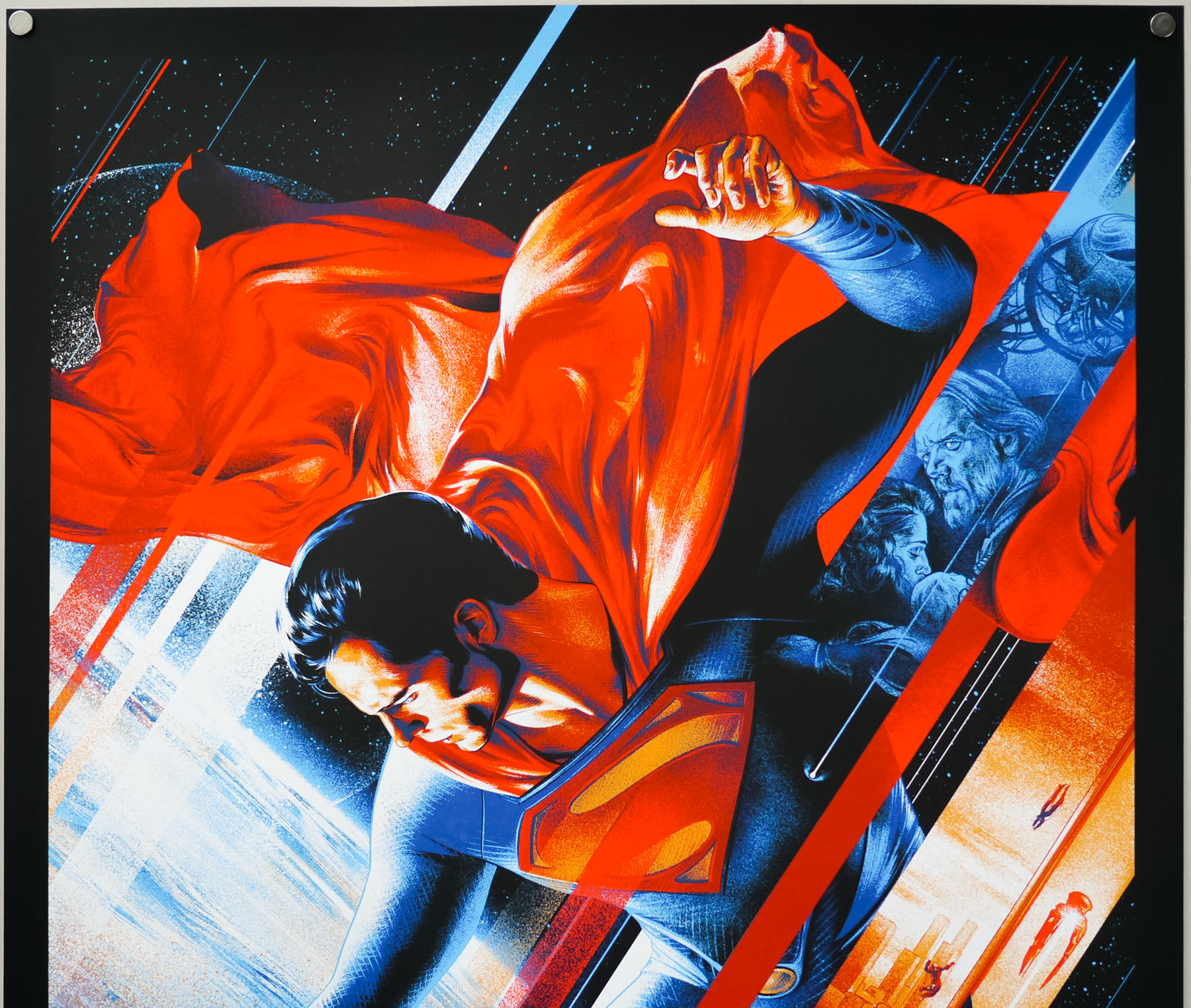
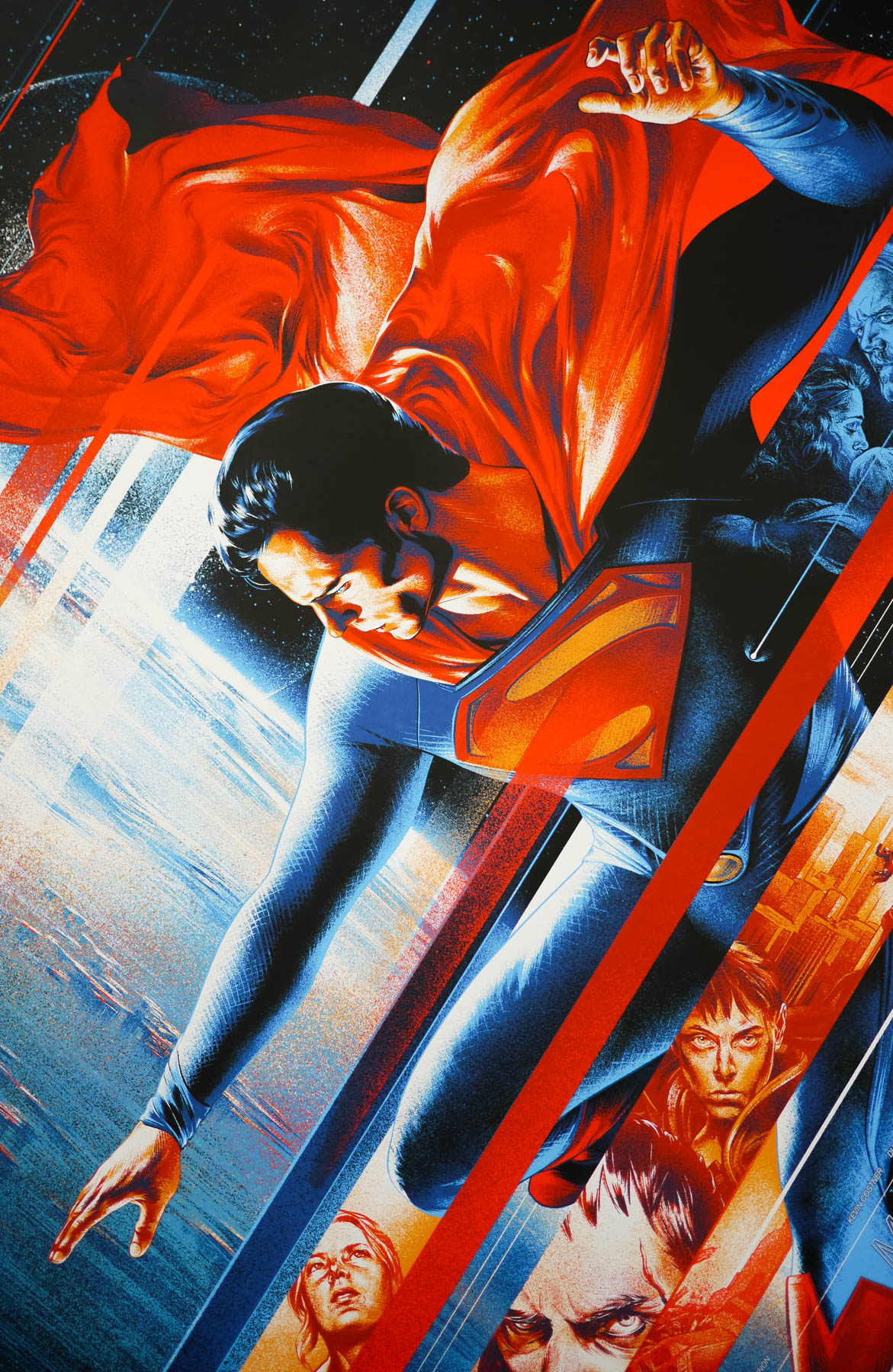
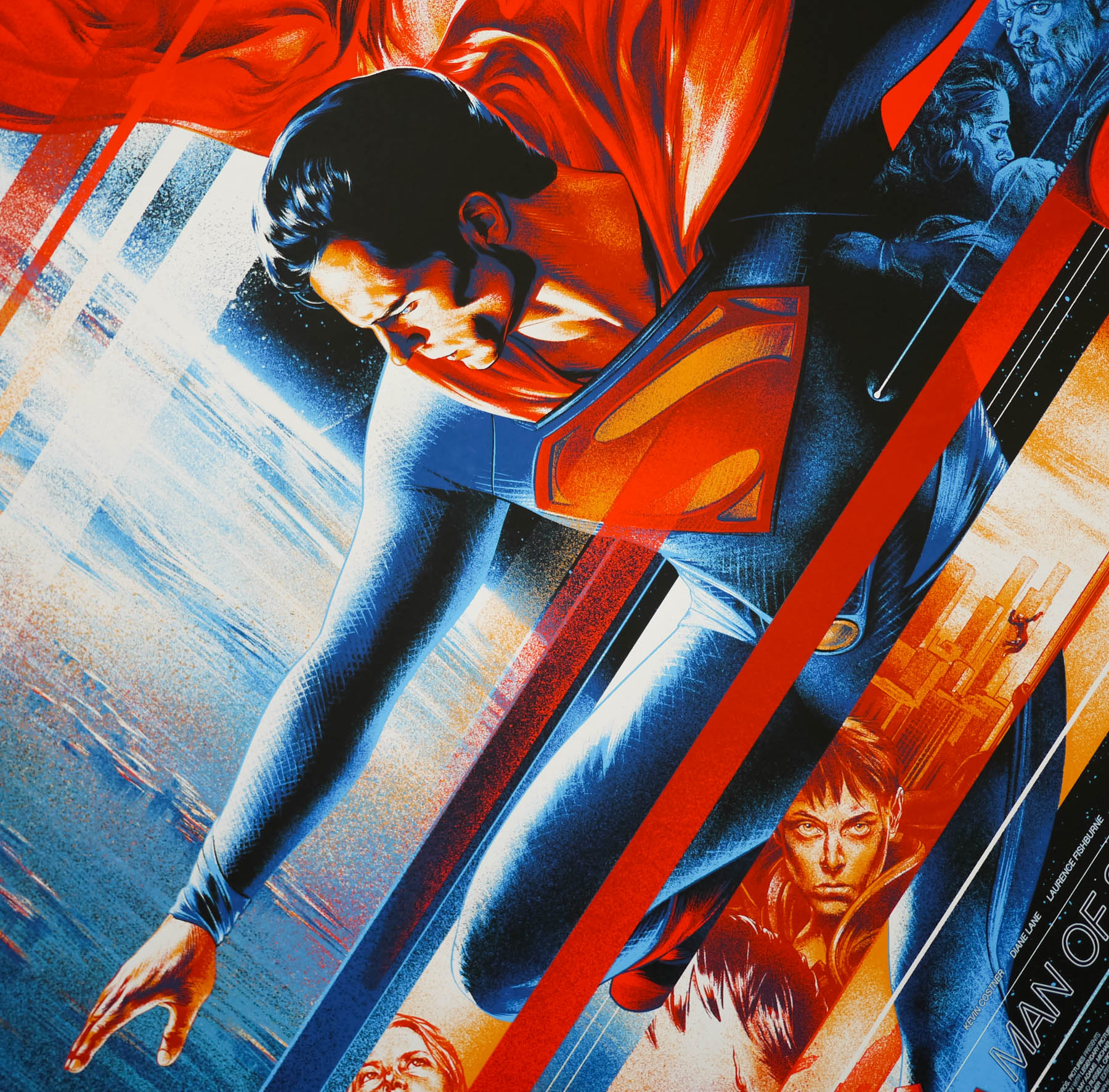
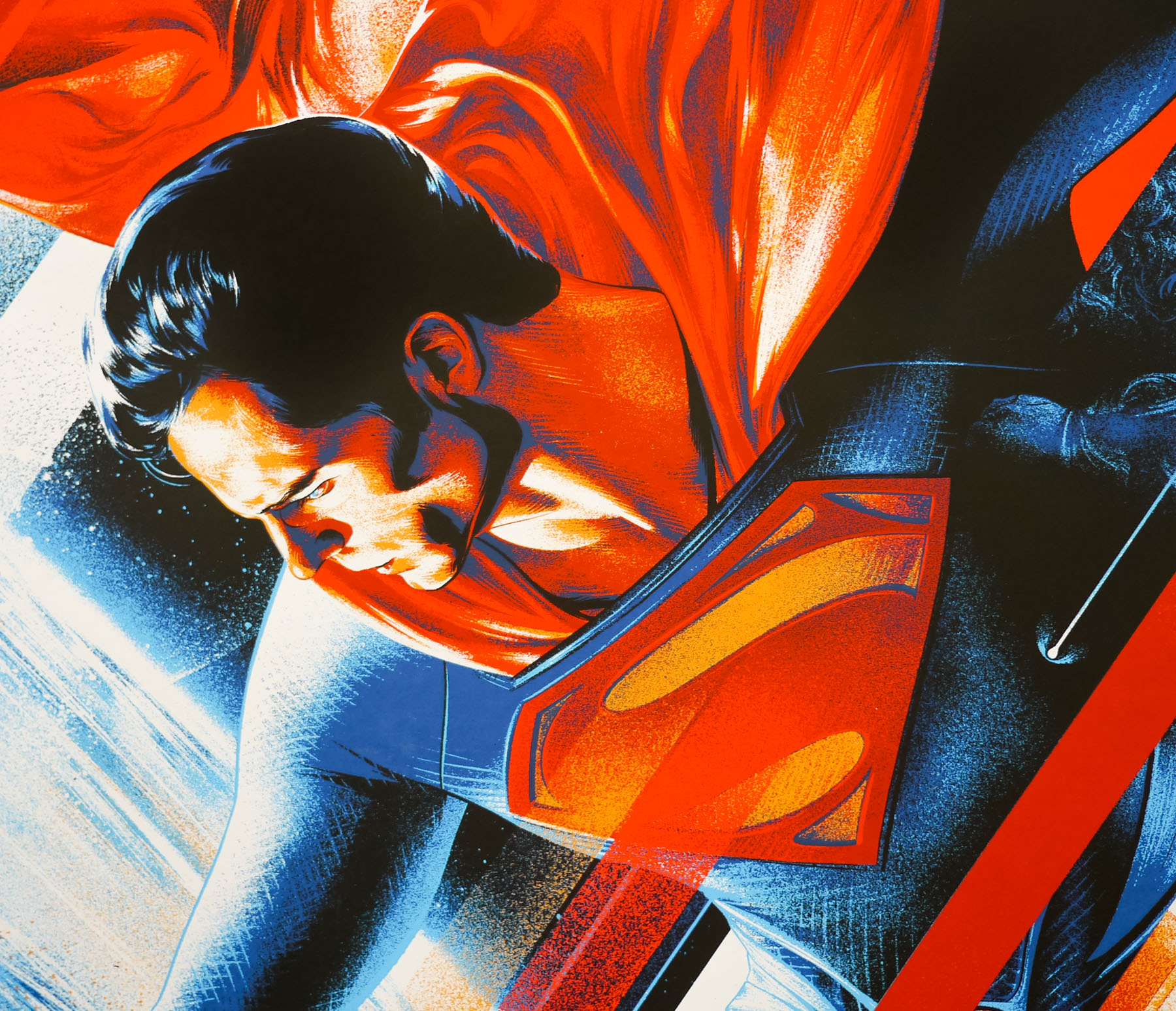
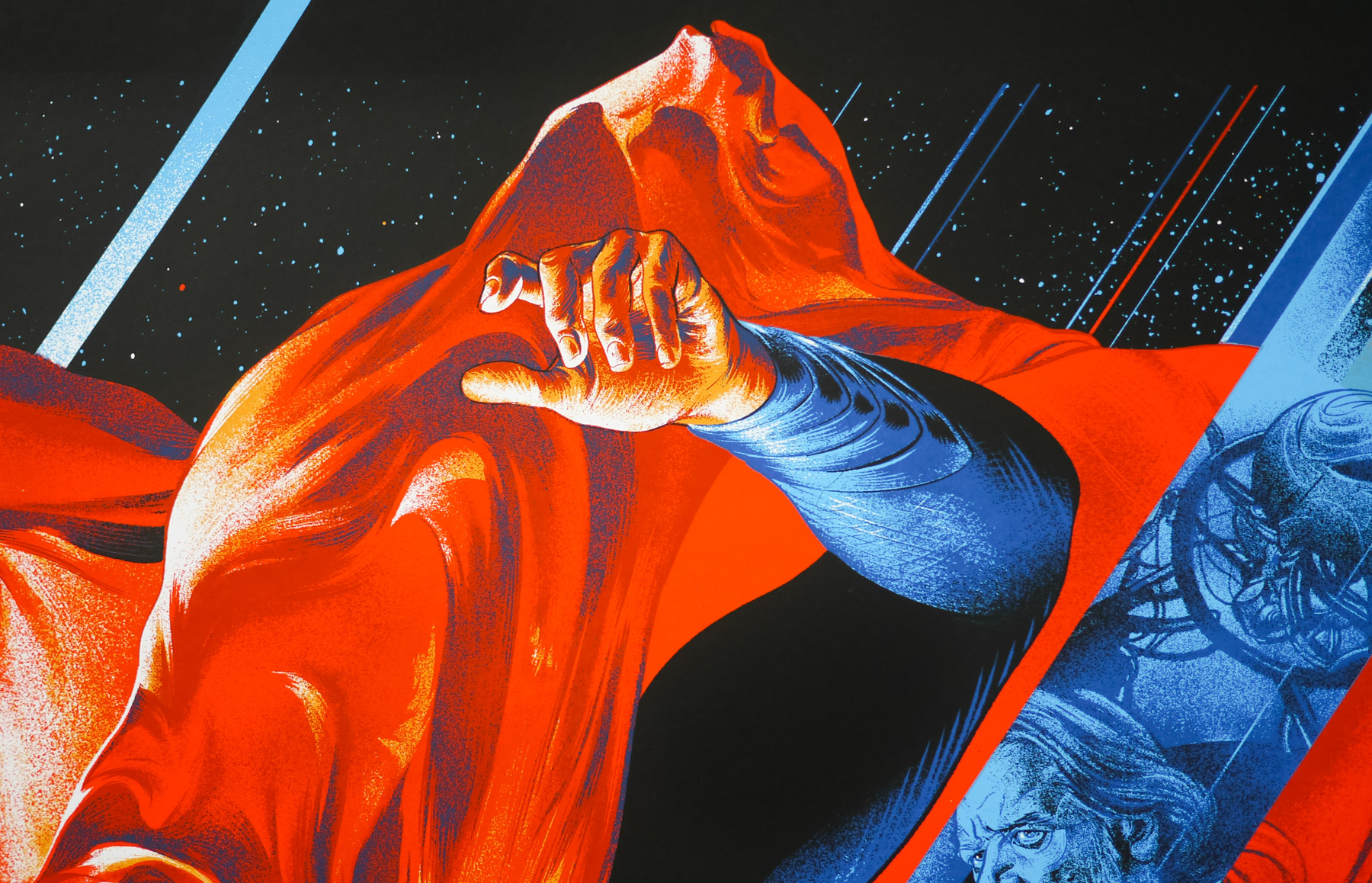
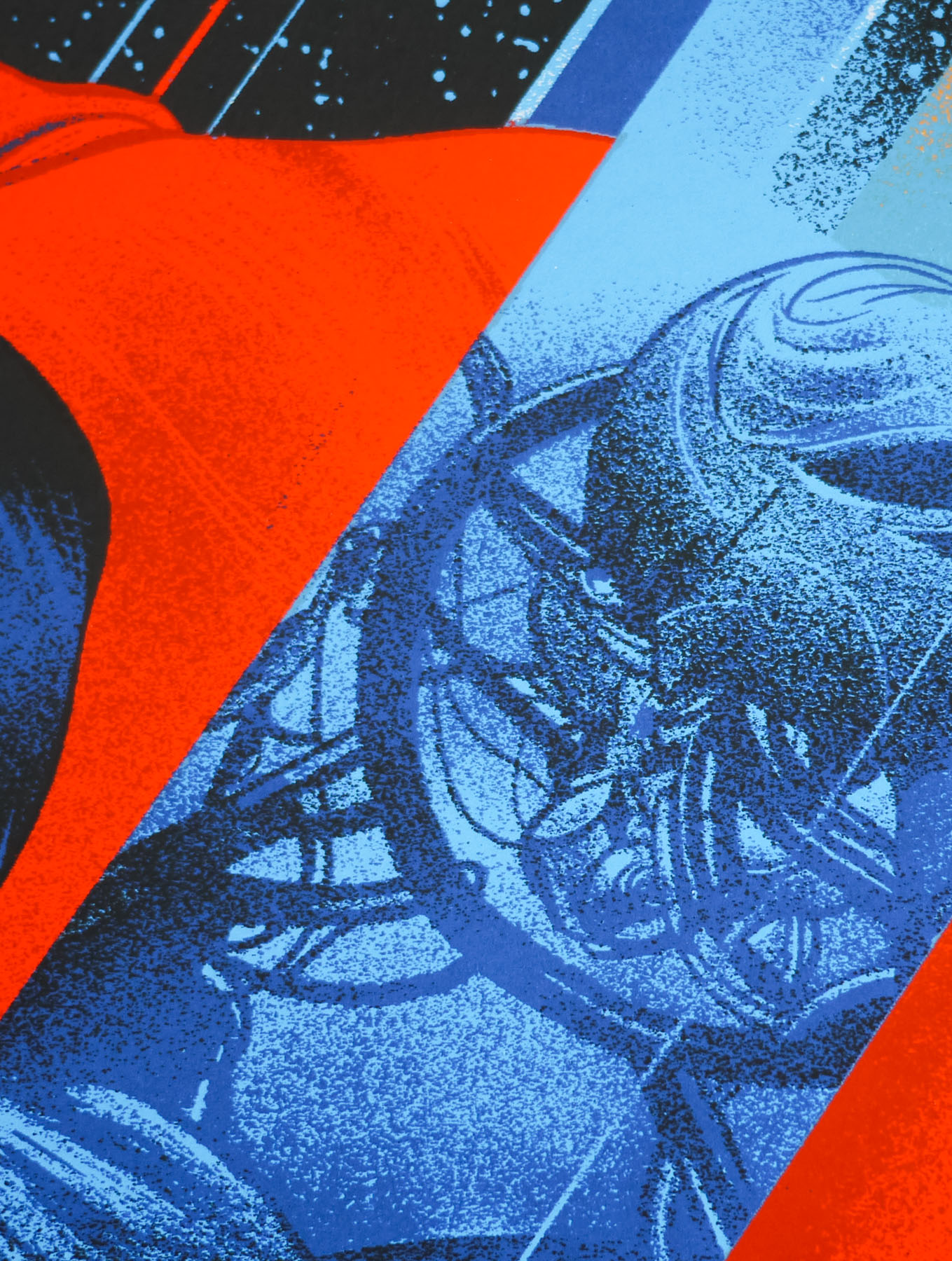
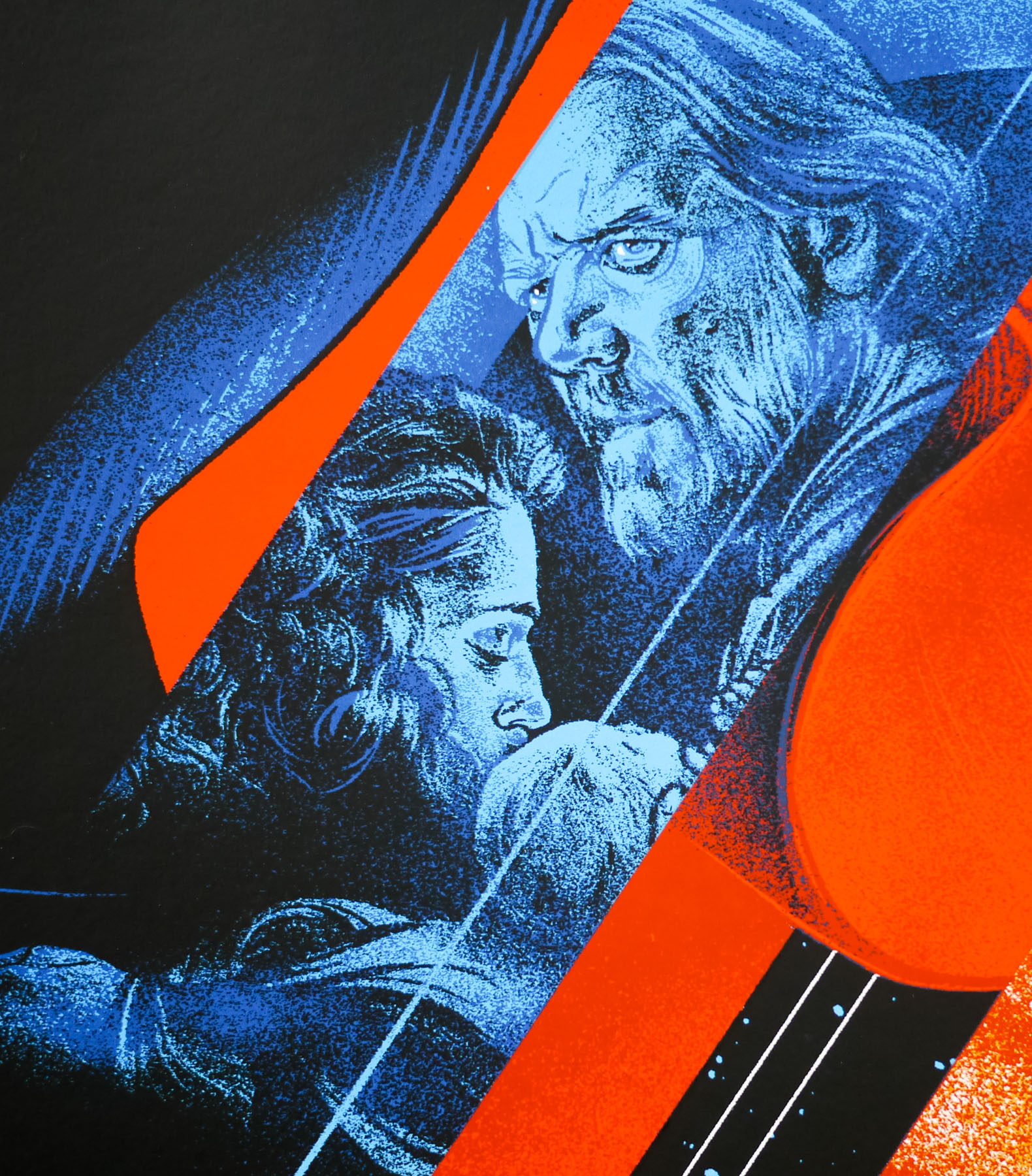
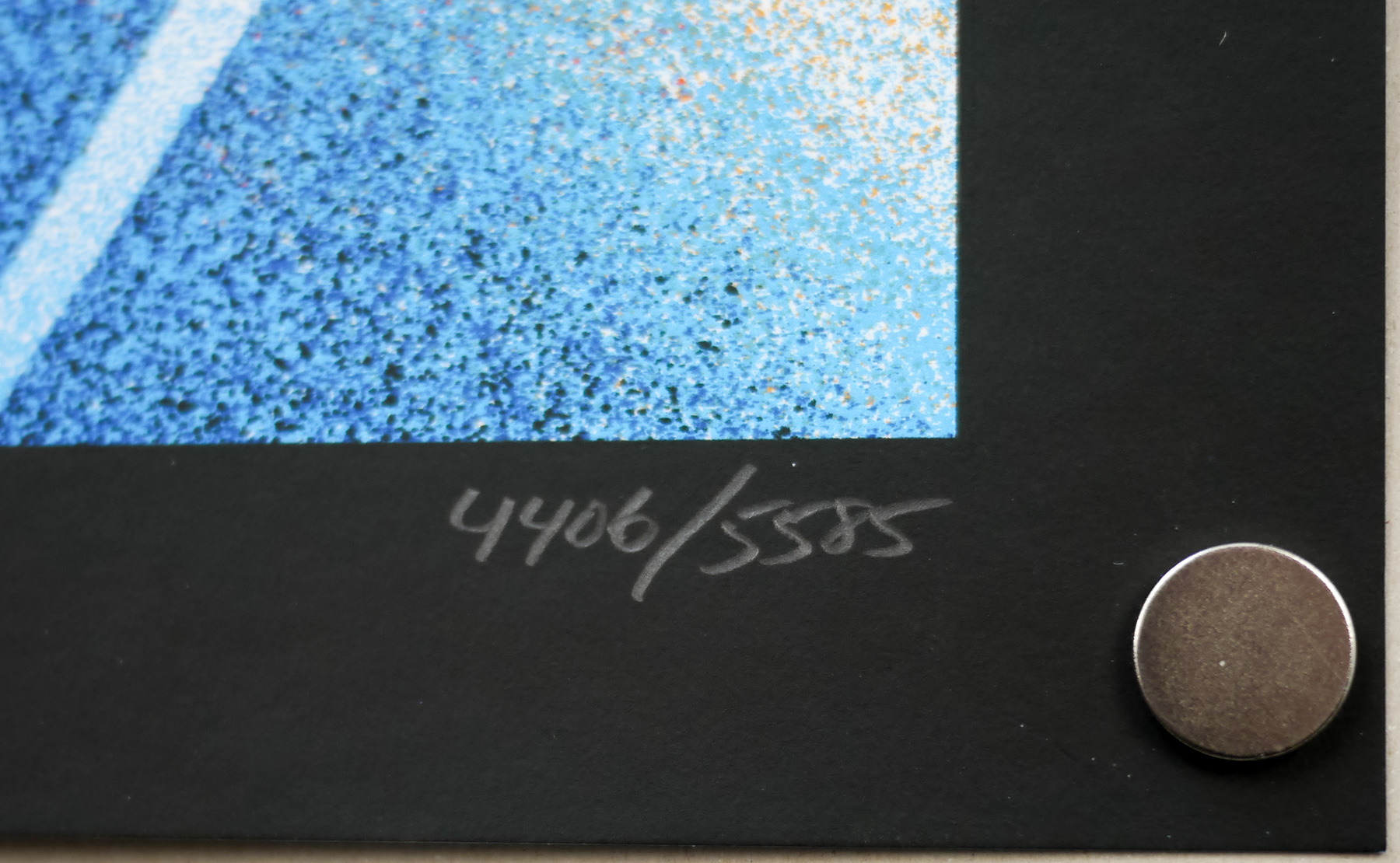
This screen print by the Uruguayan artist Martin Ansin was released by the incomparable Mondo, the Austin-based purveyors of limited edition posters and film merchandise. There is a variant that was printed onto a sheet of steel and only 130 of those were released. The regular edition was a timed-release and was available to purchase over a period of three days (standard Mondo releases are done at a random time on a first-come, first-served basis). This meant that the edition of the regular print ended up being 5585.

The pose of Superman was apparently inspired by a painting by the celebrated artist Alex Ross, which is itself a homage to the first issue of the Superman comic that was printed in 1939.

One of my favourite artists active today, Martin Ansin‘s work has graced many of the best posters released by Mondo, including several in the Universal Monsters series like this amazing Phantom of the Opera print and an excellent Dracula (1931) one. You only have to look at the gallery on his official site to see how talented an artist he is, with an eye for composition and detail unmatched by most of the artists in Mondo’s roster. To see the other posters I’ve collected so far that were designed by Ansin, click here.

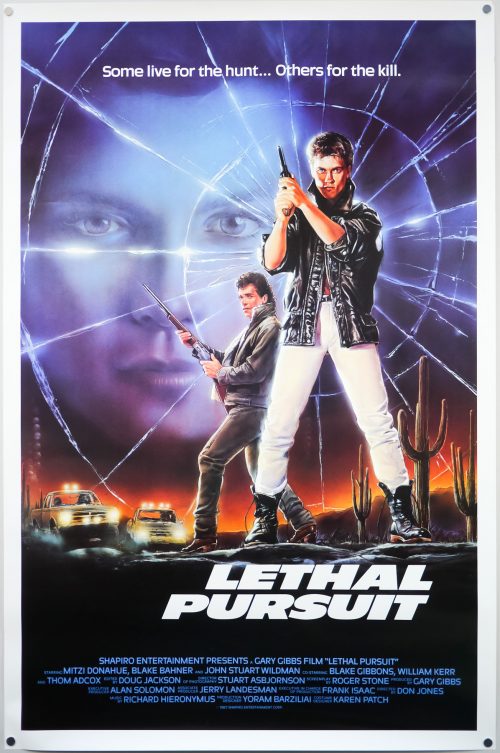
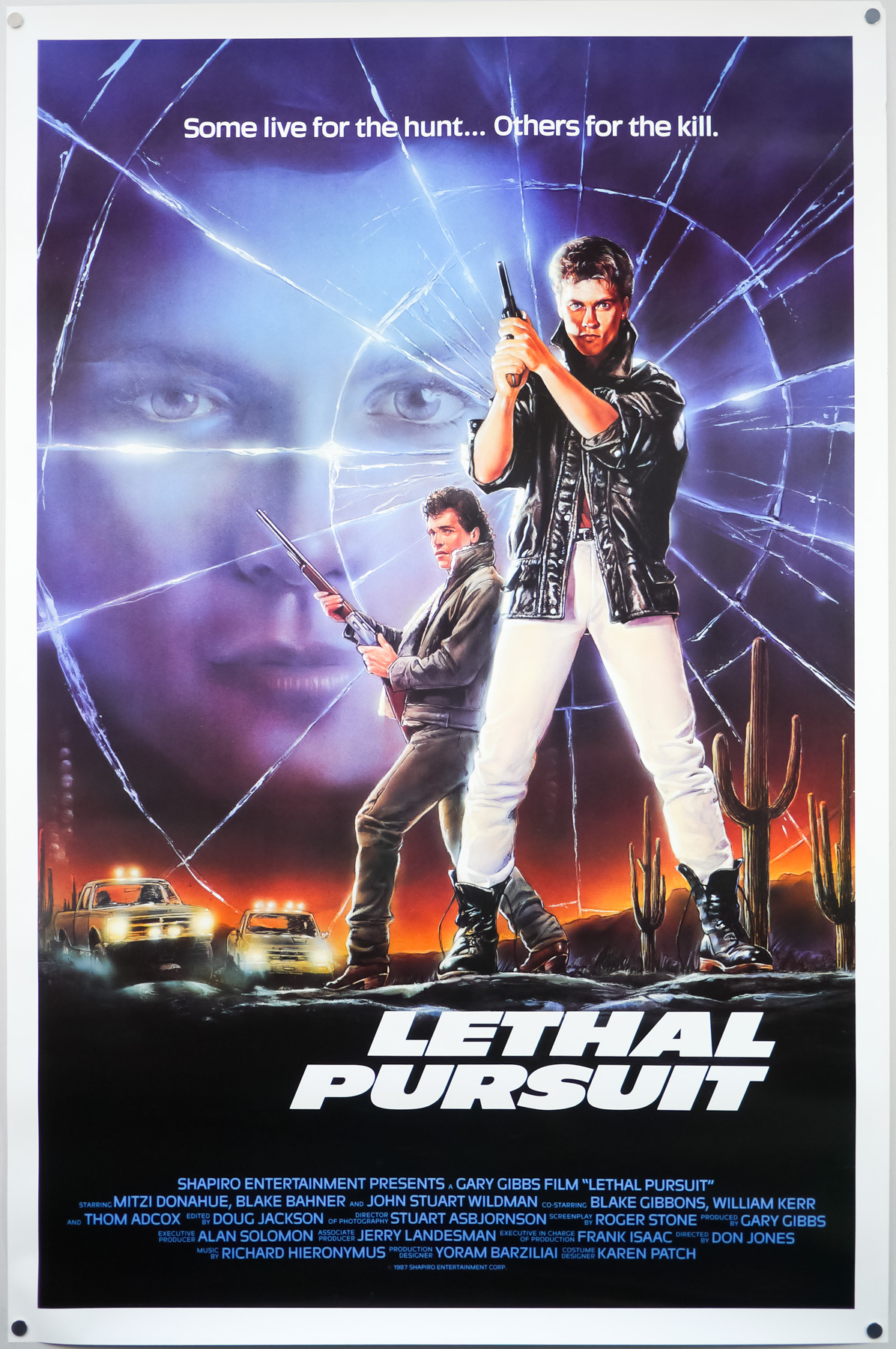
Lethal Pursuit / one sheet / USA

19.08.15

Poster Poster
Title
Lethal Pursuit
AKA
--
Year of Film
1988
Director
Don Jones
Starring
Mitzi Kapture, Blake Bahner, Thom Adcox-Hernandez, Blake Gibbons, Stephanie Johnson, Gary Kent
Origin of Film
USA
Genre(s) of Film
Mitzi Kapture, Blake Bahner, Thom Adcox-Hernandez, Blake Gibbons, Stephanie Johnson, Gary Kent,
Type of Poster
One sheet
Style of Poster
--
Origin of Poster
USA
Year of Poster
1988
Designer
Unknown
Artist
Bill Garland
Size (inches)
27" x 41"
SS or DS
SS
NSS #
--
Tagline
Some live for the hunt... Others for the kill.

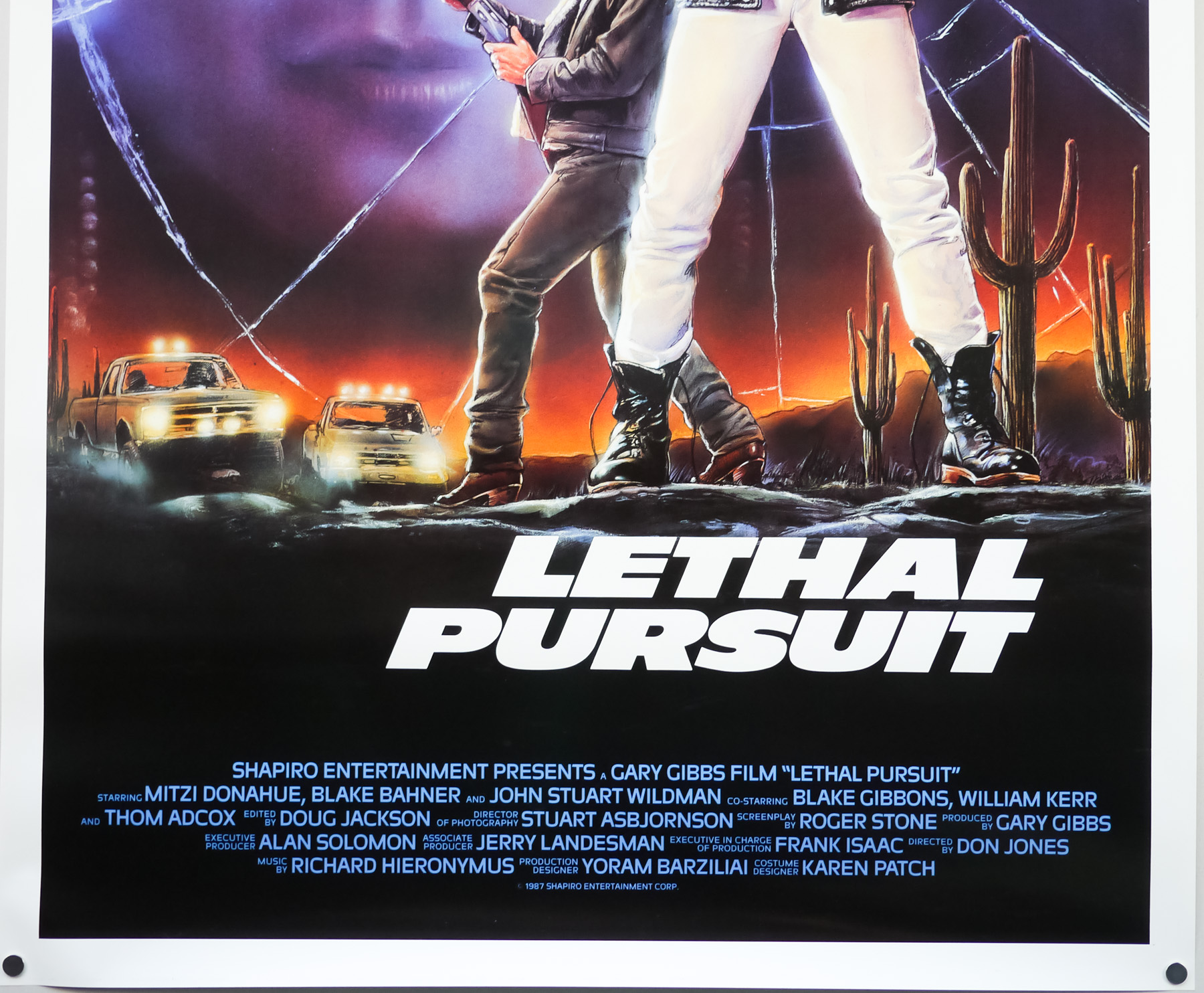
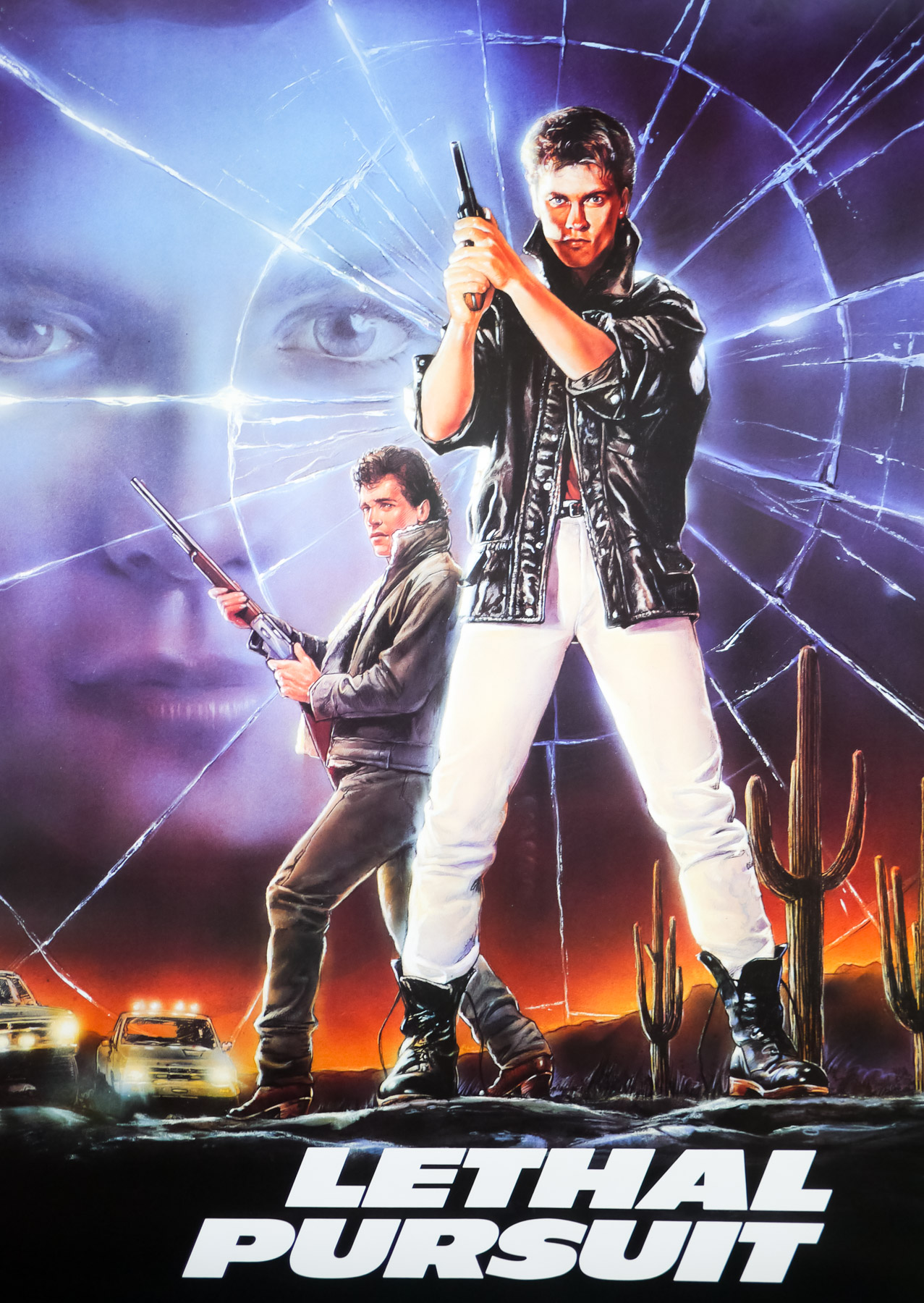
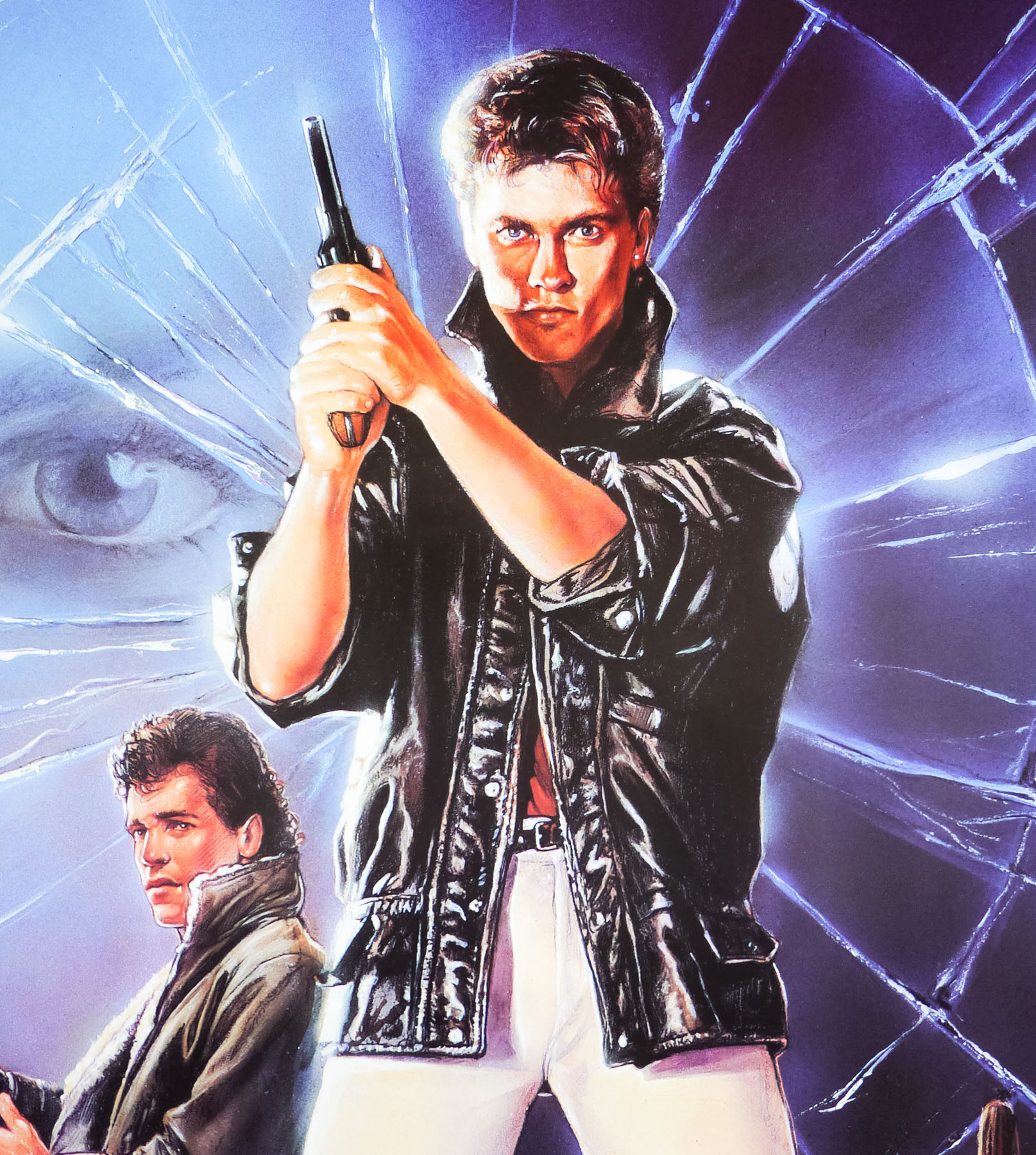
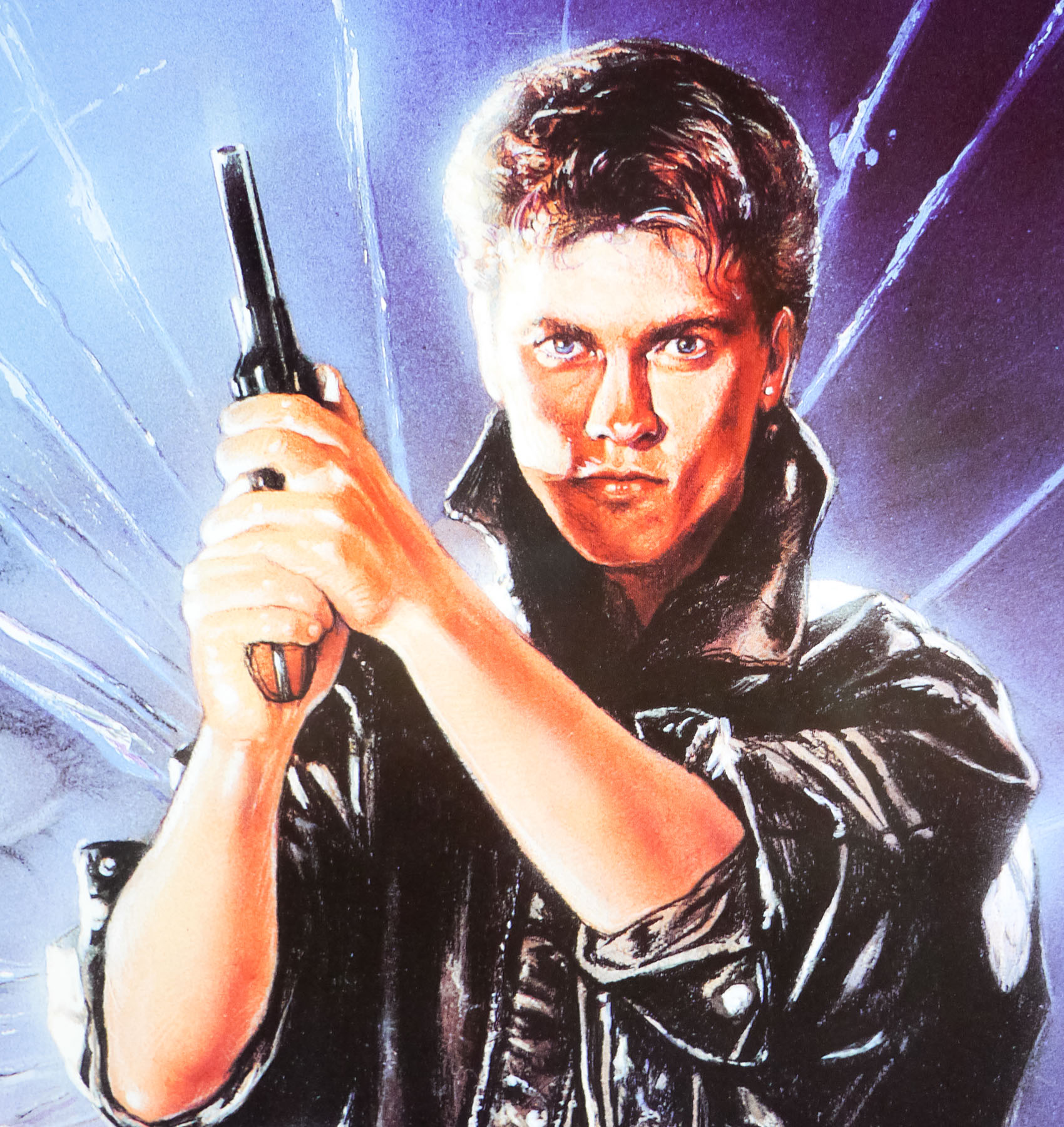
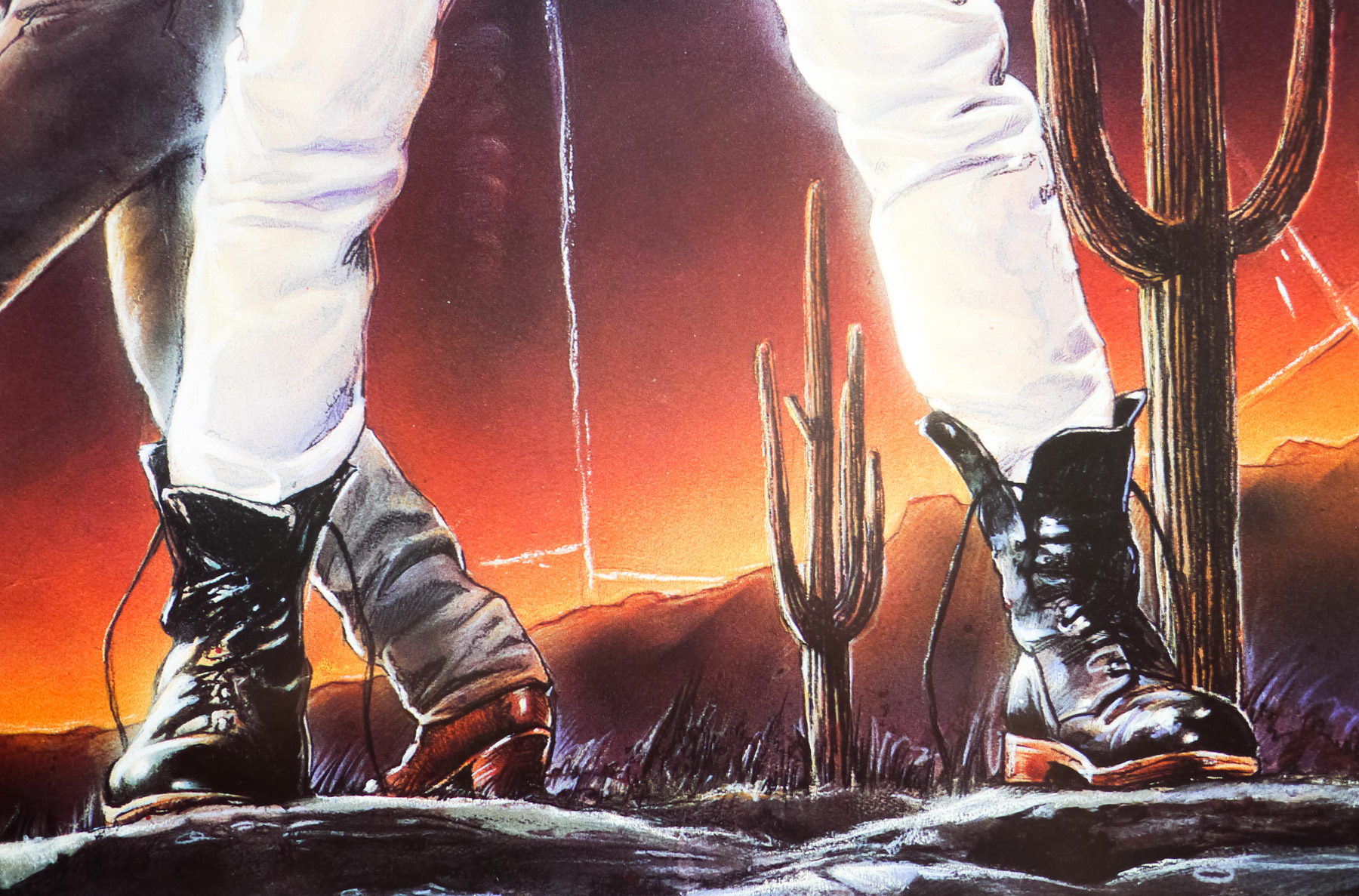
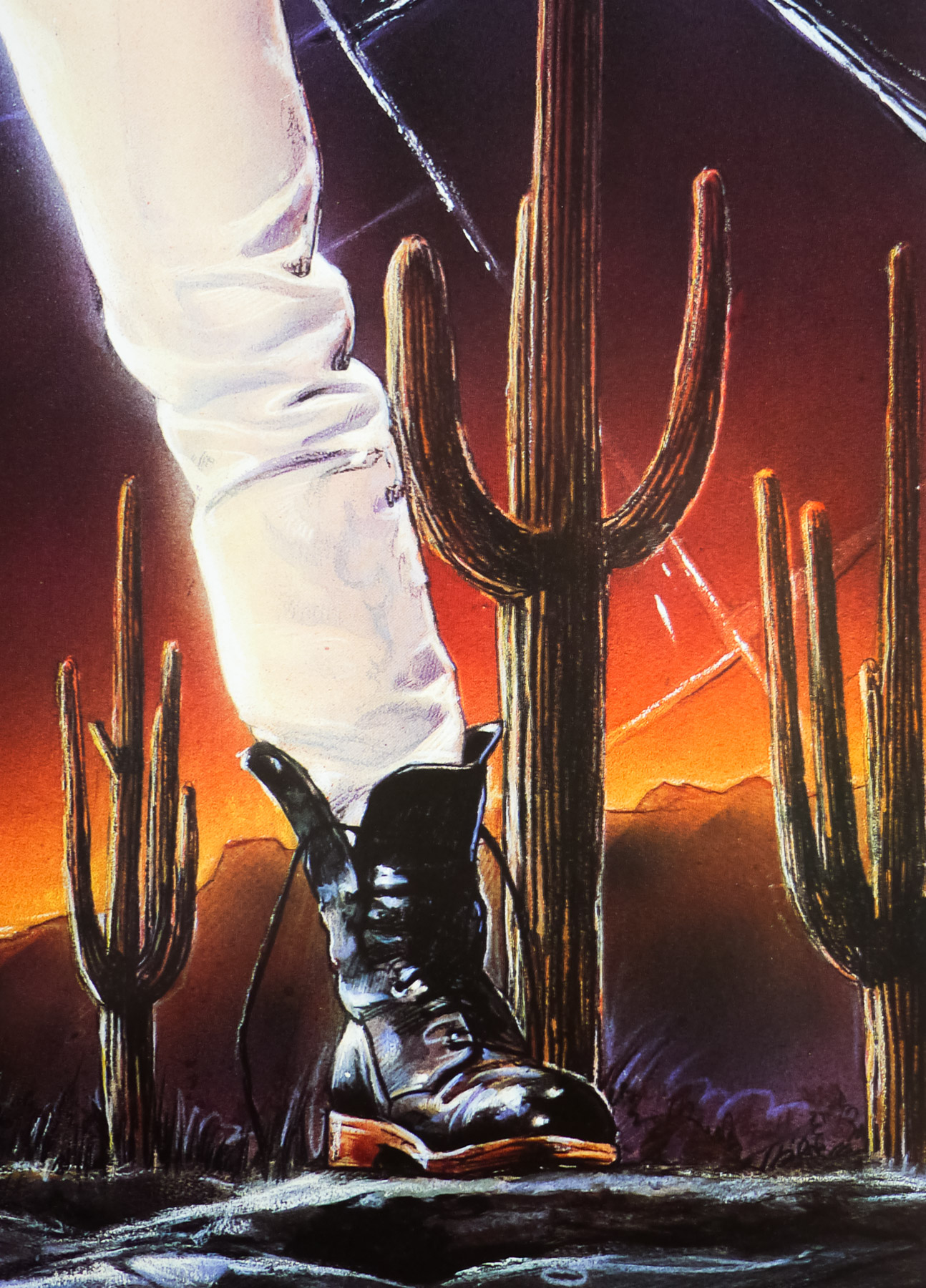
Definitely one of those cases where the poster is the best thing about the film, Lethal Pursuit is a forgotten action b-movie from 1988. It appears to have only had a cinema release in a handful of countries and was straight to video in others. It hasn’t been given a DVD release anywhere in the world as far as I can tell. The IMDb plot description says:

A rock star babe and her hunky honey find themselves targeted by her psychotic ex, whose insane jealousy sparks a deadly game of desert cat-and-mouse.

There’s a single review on the film’s IMDb page and it’s rather damning. Here’s some excerpts:

There is not much to say except simply, do not watch this film. In fact, if you are reading this I must ask why you even looked this movie up? If you are here because you saw this in the 99 cent VHS bin at the Good Will, where it probably can be found, and want to know weather to buy it. PASS! You will want your dollar back.

…

Best way to sum it up. Think of every little detail that makes a film a film. Then take this sentence “The ____ of/in this film is awful in every way.” and insert every one of those details. And you have a summary.

There’s an illustrated review of the film on the Betamax Rundown site.

I’ve discovered that this illustration can be credited to the American artist Bill Garland who is probably best known for the brilliant original Mad Max one sheet, but has worked on several other film posters. The artist has a page on Phosphor Art featuring a short biography as well as a selection of his art. It details that Garland has been working for over 30 years and started his career as a Ford Motor company scholar and used these core technical skills to ‘enhance his command of a wide range of artistic styles’. In addition to working with Hollywood studios, Garland also carried out work for commercial clients like Coca Cola and the NFL. I can’t find an official site for the artist so if anyone knows any more details about him please get in touch.

Breakout / one sheet / style A / USA

11.03.16

Poster Poster
Title
Breakout
AKA
Dieci secondi per fuggire [Ten seconds to escape] (Italy)
Year of Film
1975
Director
Tom Gries
Starring
Charles Bronson, Robert Duvall, Jill Ireland
Origin of Film
USA
Genre(s) of Film
Charles Bronson, Robert Duvall, Jill Ireland,
Type of Poster
One sheet
Style of Poster
Style A
Origin of Poster
USA
Year of Poster
1975
Designer
Unknown
Artist
Weezer
Size (inches)
27" x 41 1/8"
SS or DS
SS
NSS #
75/52
Tagline
Sentenced to 28 years in prison for a crime he never committed. Only two things can get him out - A lot of money and Charles Bronson!

This one sheet for the 1975 action film Breakout features one of those classic taglines that manages to sum up the plot of the film in a couple of sentences. Charles Bronson, flush from the international success of the 1974 thriller Death Wish, leads a star-studded cast, including Robert Duvall, Bronson’s then wife Jill Ireland and a young Randy Quaid. It was helmed by Tom Gries who had started out in television and eventually moved into features, including several westerns such as ‘100 Rifles’. Gries sadly passed away from a heart attack in 1977 but not before he’d worked with Bronson again for Breakheart Pass (also in 1975). The film is loosely based on a real even that’s detailed on the film’s Wikipedia page.

Duvall plays Jay Wagner who is arrested for a crime he didn’t commit that happened in Mexico, 2000 miles away from where he was at the time. Tried by a kangaroo court he is thrown in a grim Mexican jail after being sentenced to 28 years. When his wife Ann (Ireland) learns what’s happened she vows to break him out of the prison and decides to hire wily bush pilot Nick Colton (Bronson) and his improbably named partner Hawk Hawkins (Quaid). The pair make one attempt involving Quad dressing in drag that fails and decide to return with a helicopter. Unfortunately Ann has told Jay’s grandfather, the wealthy businessman Harris Wagner (legendary actor John Huston), their plans without realising that he’s behind Jay’s imprisonment due to an issue with some business deals. Nick and Hawk have to work hard to pull off the escape and avoid being busted by an agent called Cable who Harris sends after them.

Bronson plays his character with an atypical comedic edge, very unlike the roles that had made him a star. The film was a box-office hit, largely due to Columbia trying the then new method of saturation booking where 1300 cinemas across the US were sent prints of the film simultaneously, coupled with plenty of advertising. After it proved a success, Universal then used the method with Jaws the same year and, after the incredible blockbusting results of that release, film releasing tactics were changed forever.

This one sheet is the style A one sheet for the film and features the signature of an artist called Weezer, about whom I’ve been able to discover no information. If anyone has any details about them please get in touch. There’s also a style B one sheet for the film which has similar artwork by a different artist that can be seen here. It’s strange that both posters are so similar in layout and I’m not sure why the studio bothered.