You searched for: Anthony

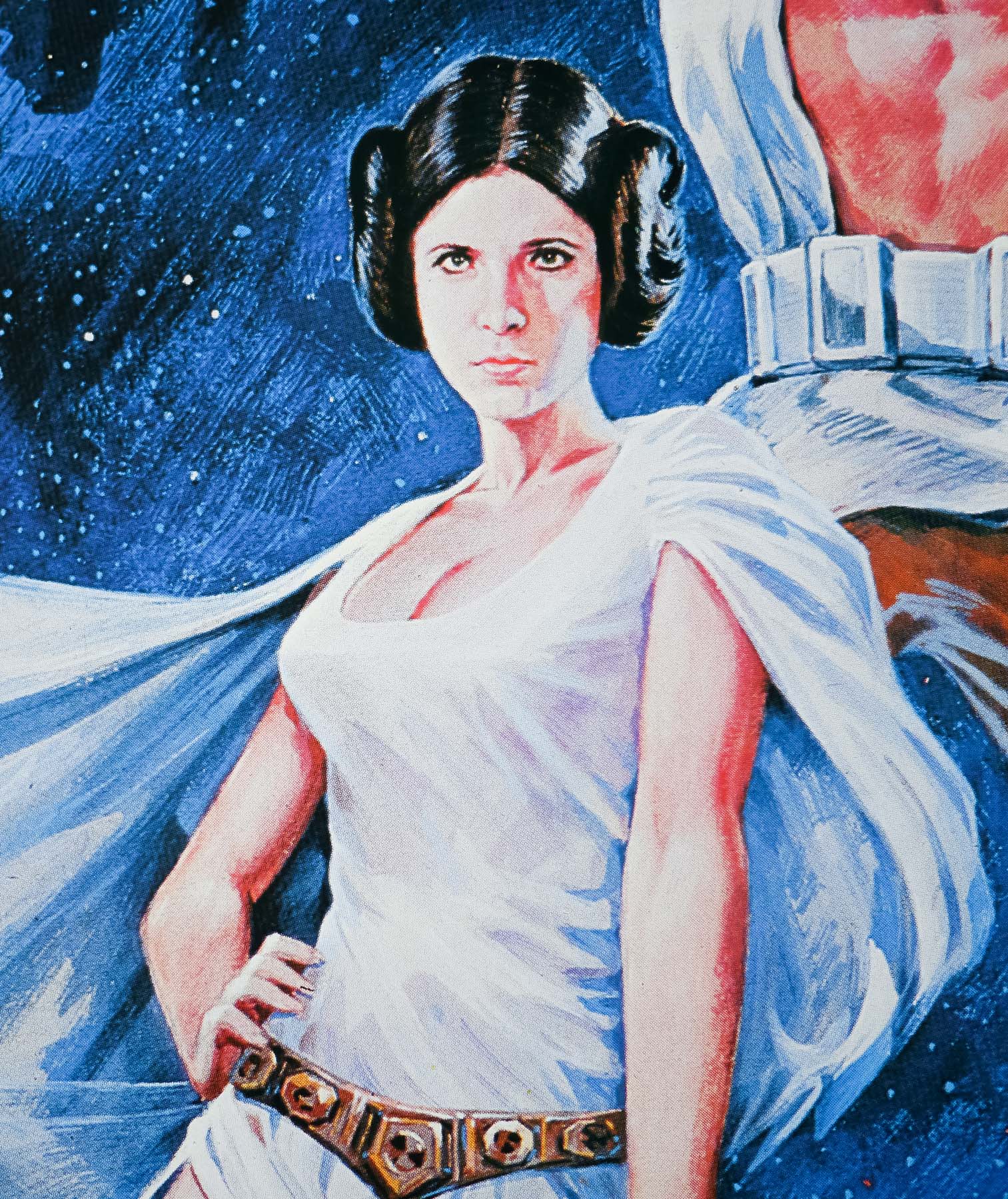
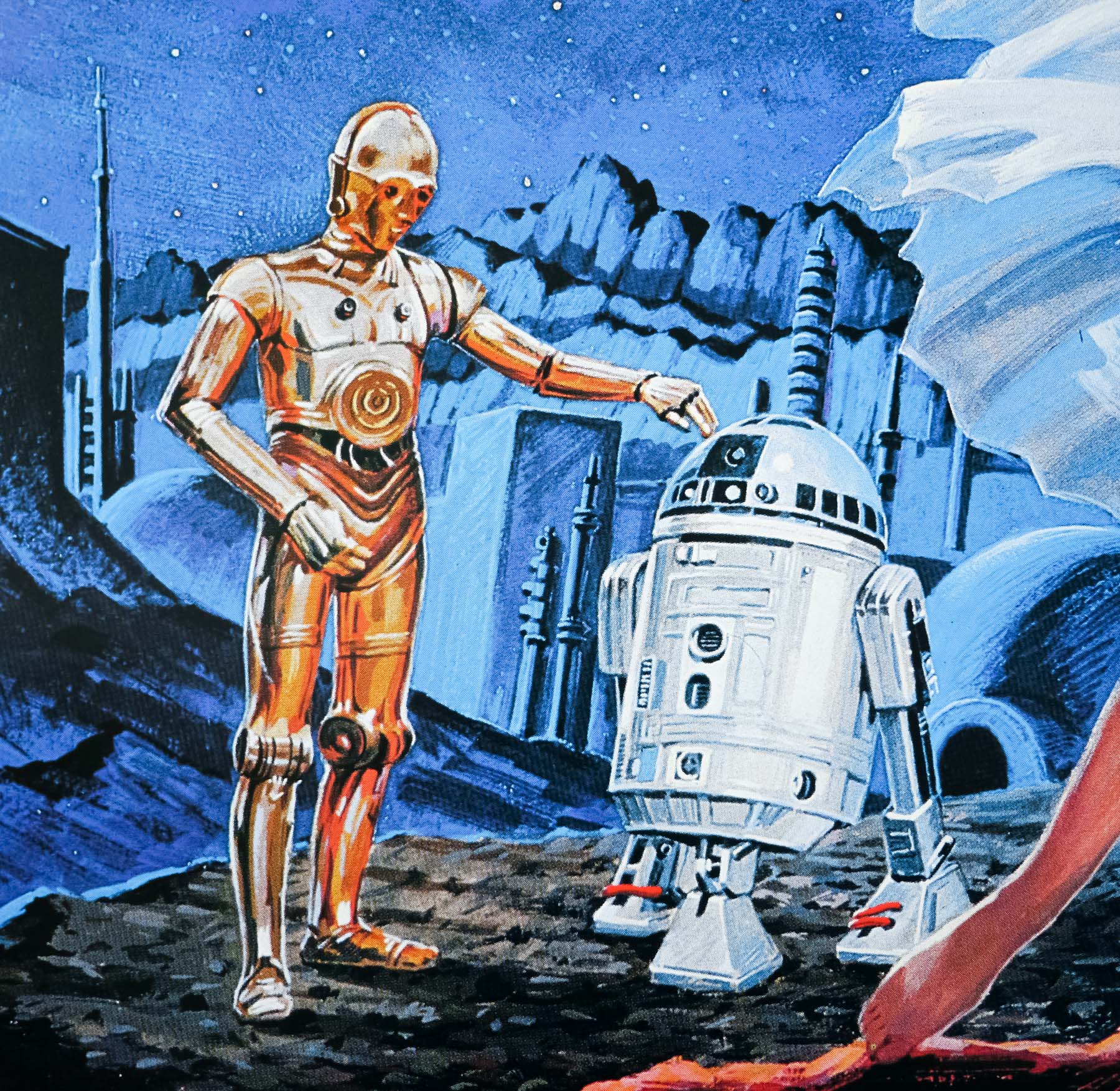
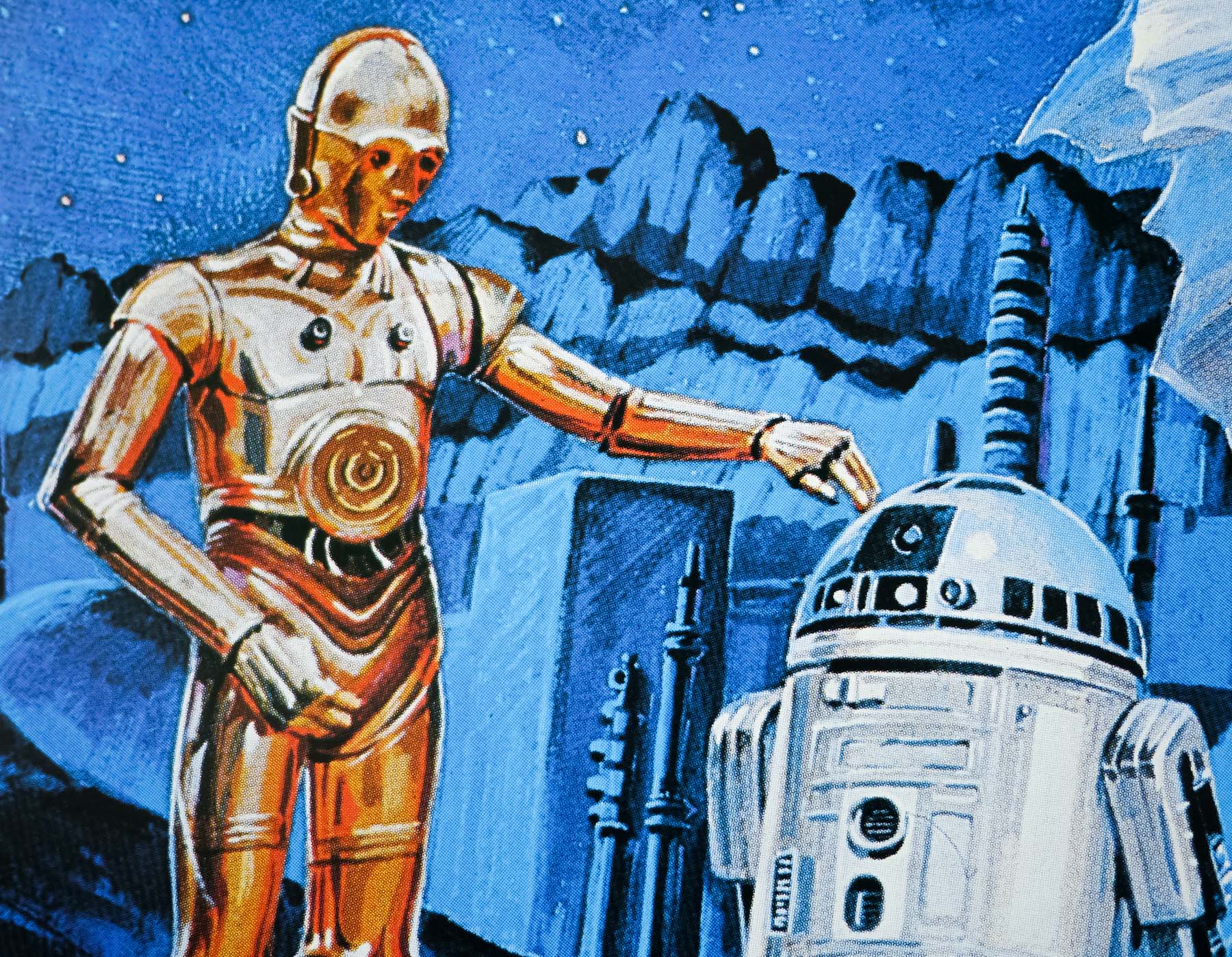
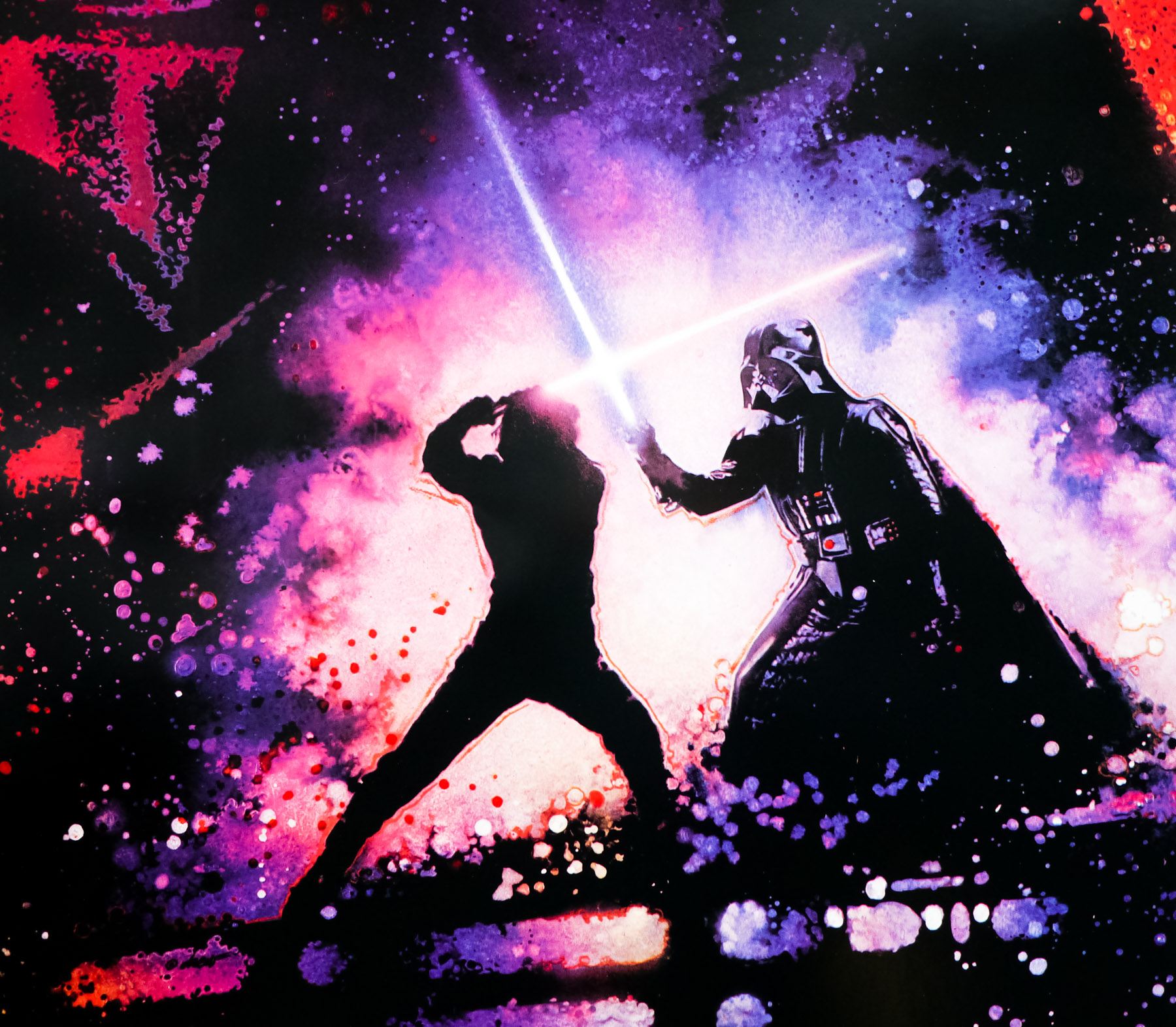
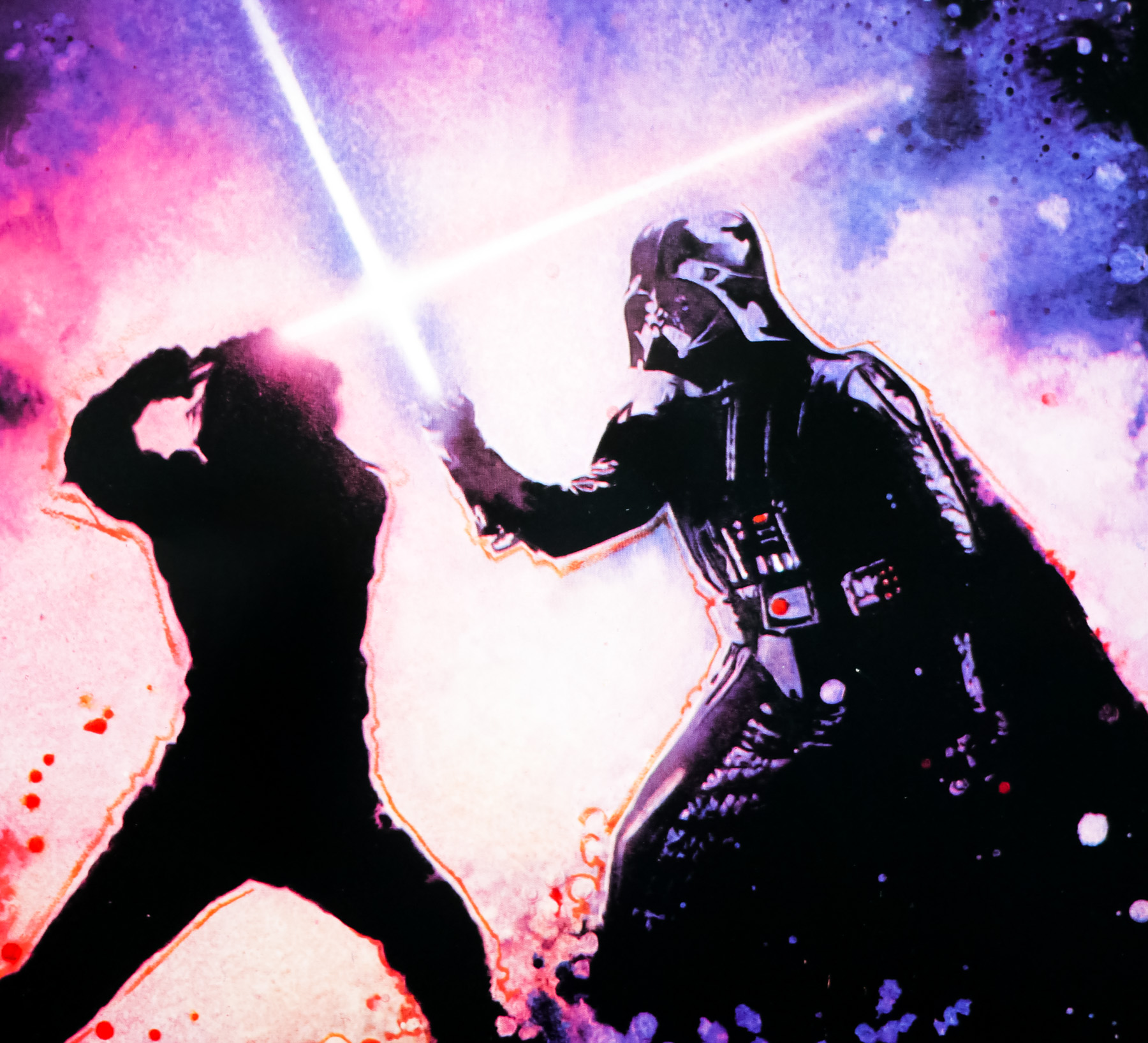
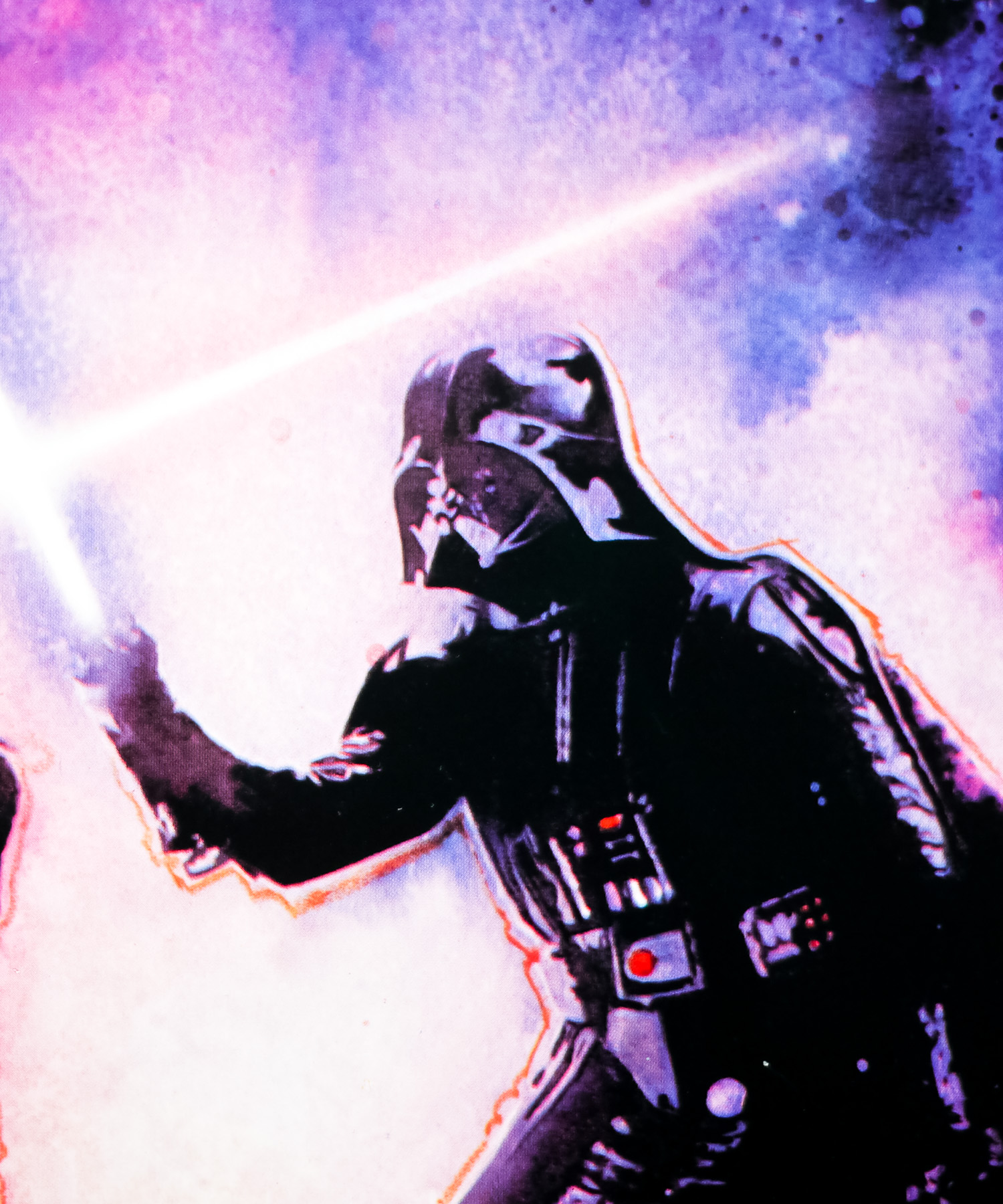
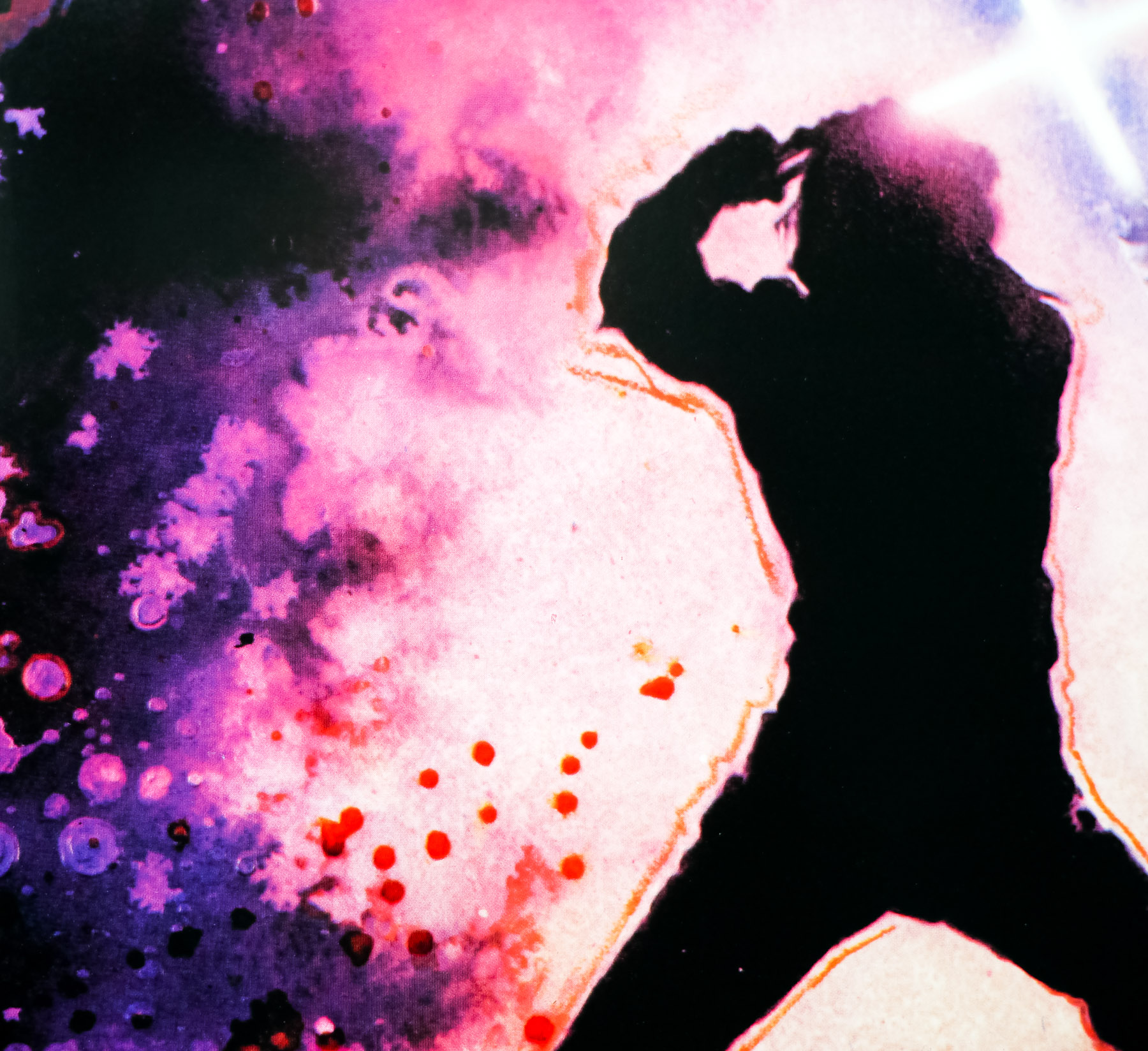
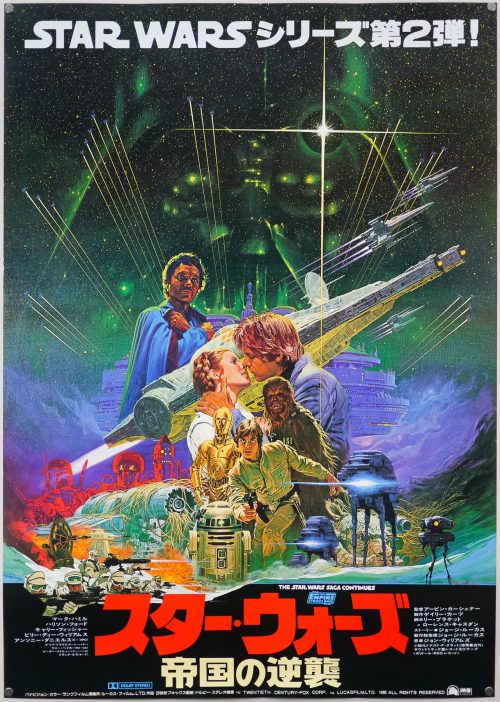
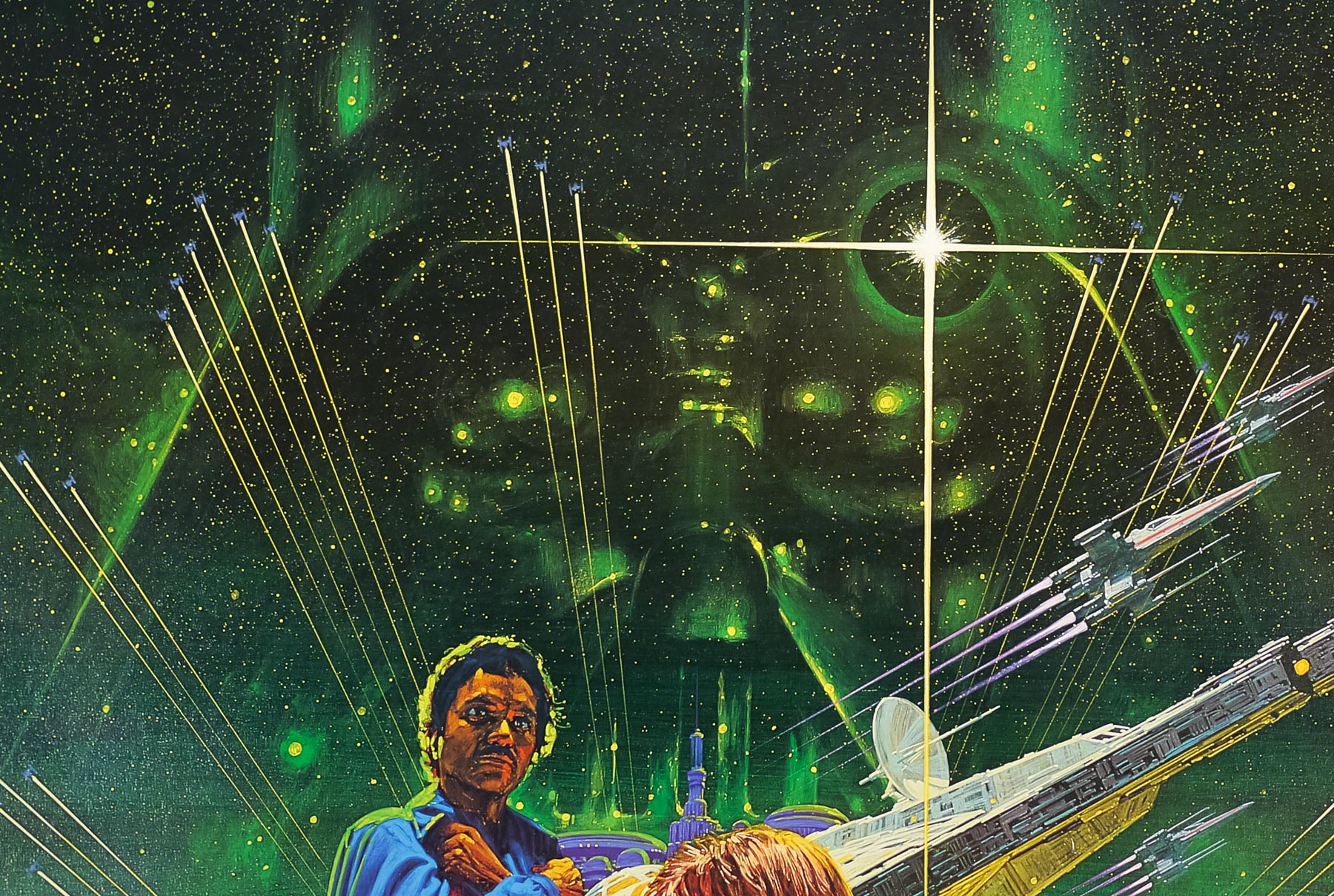
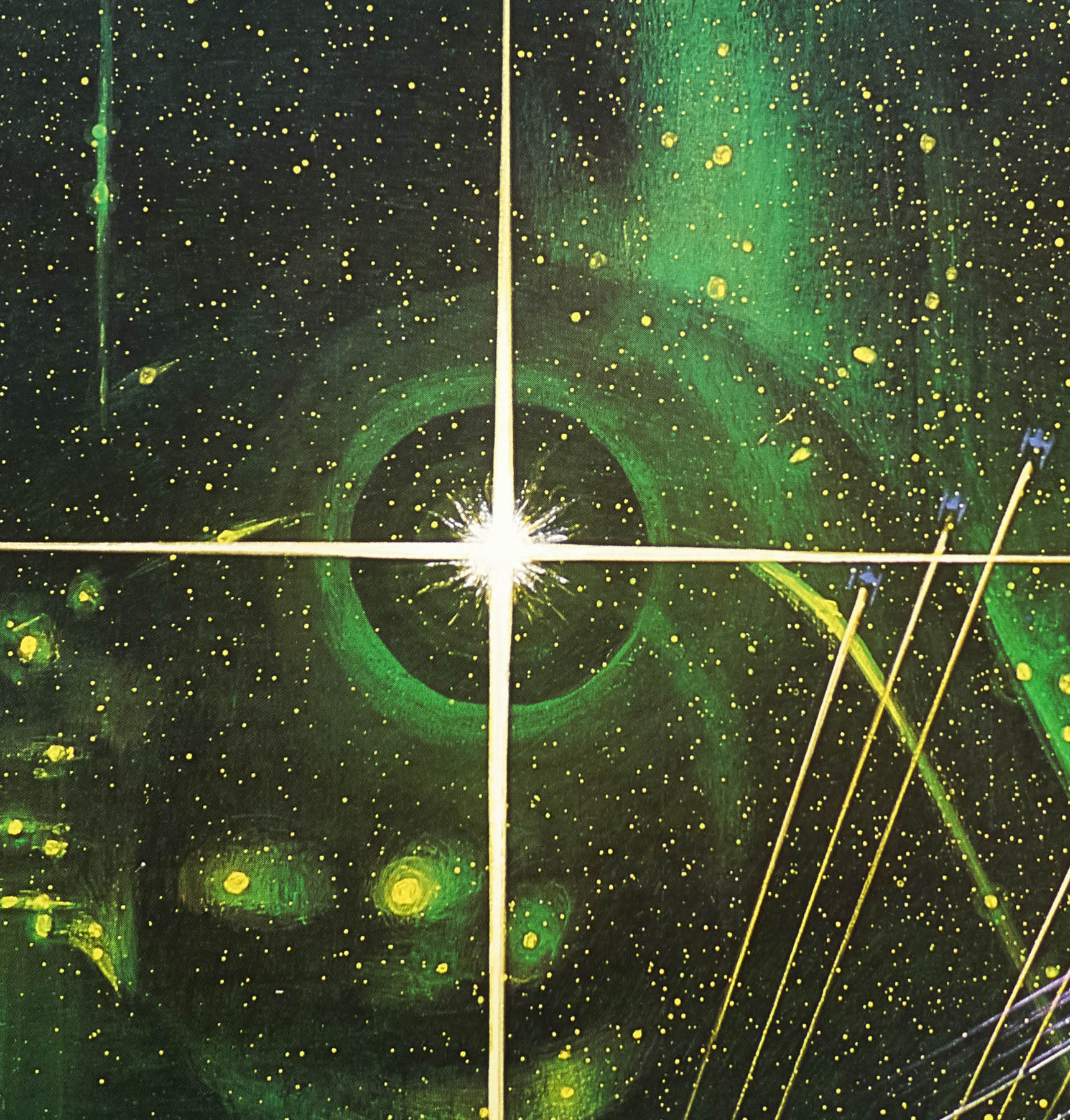
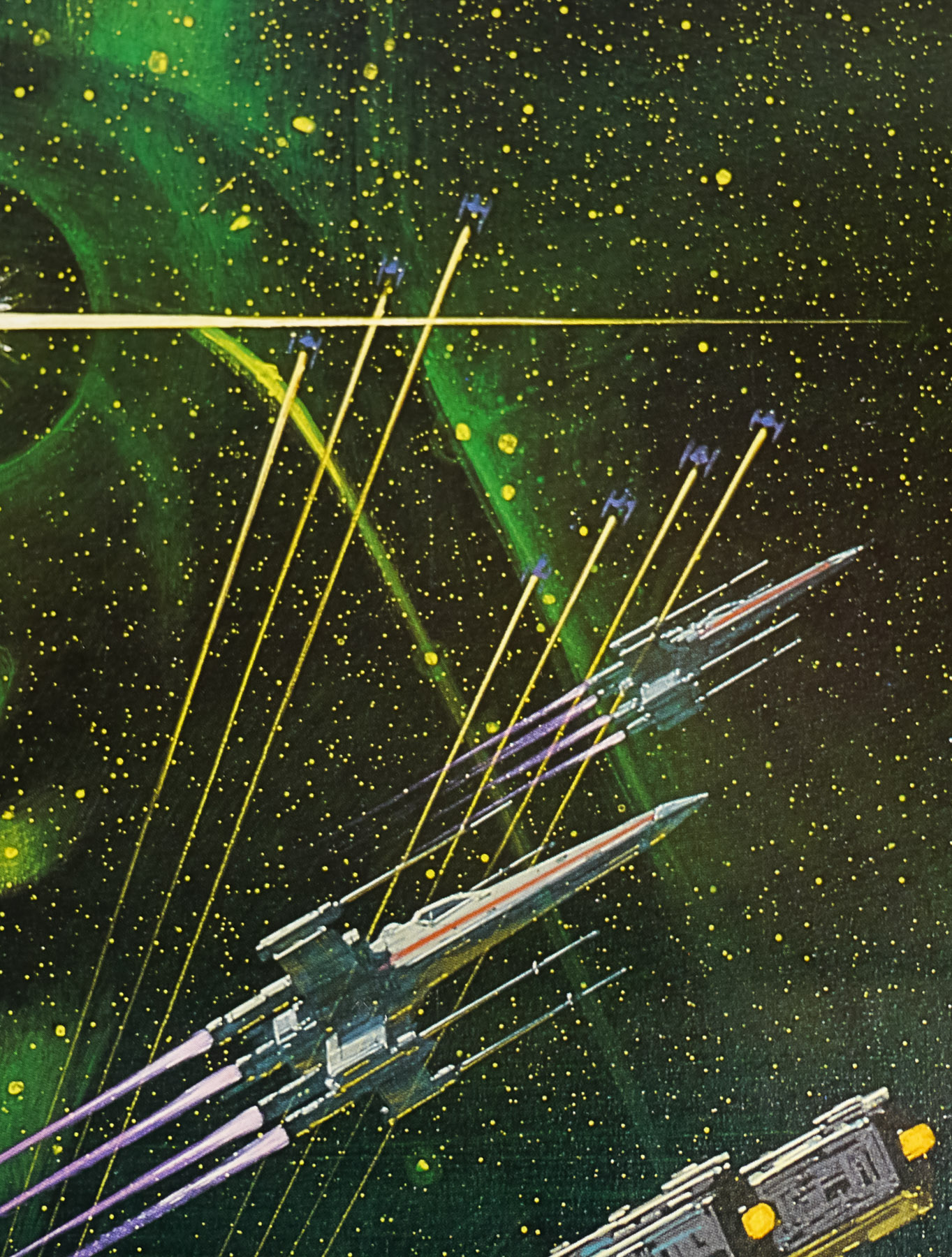
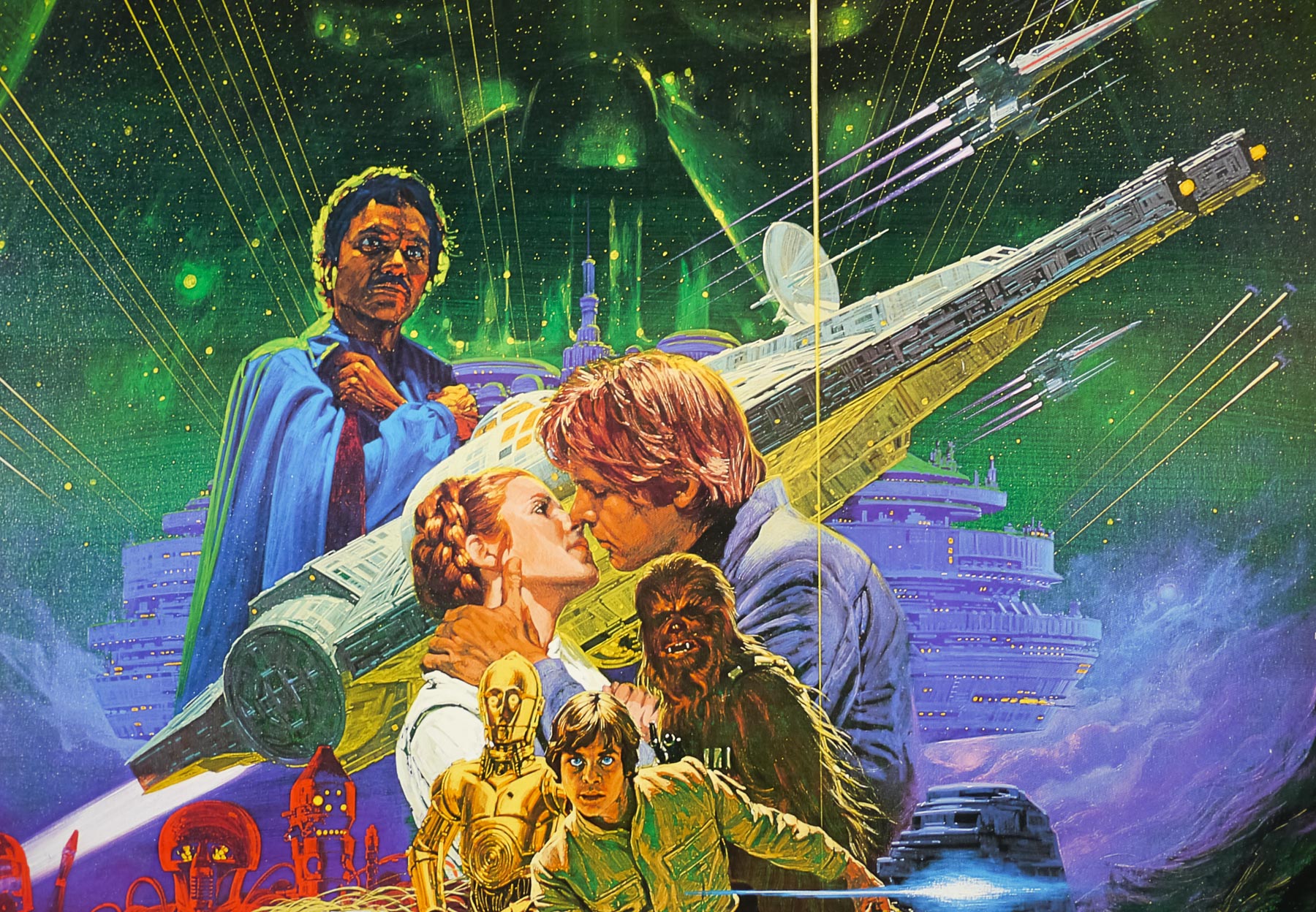
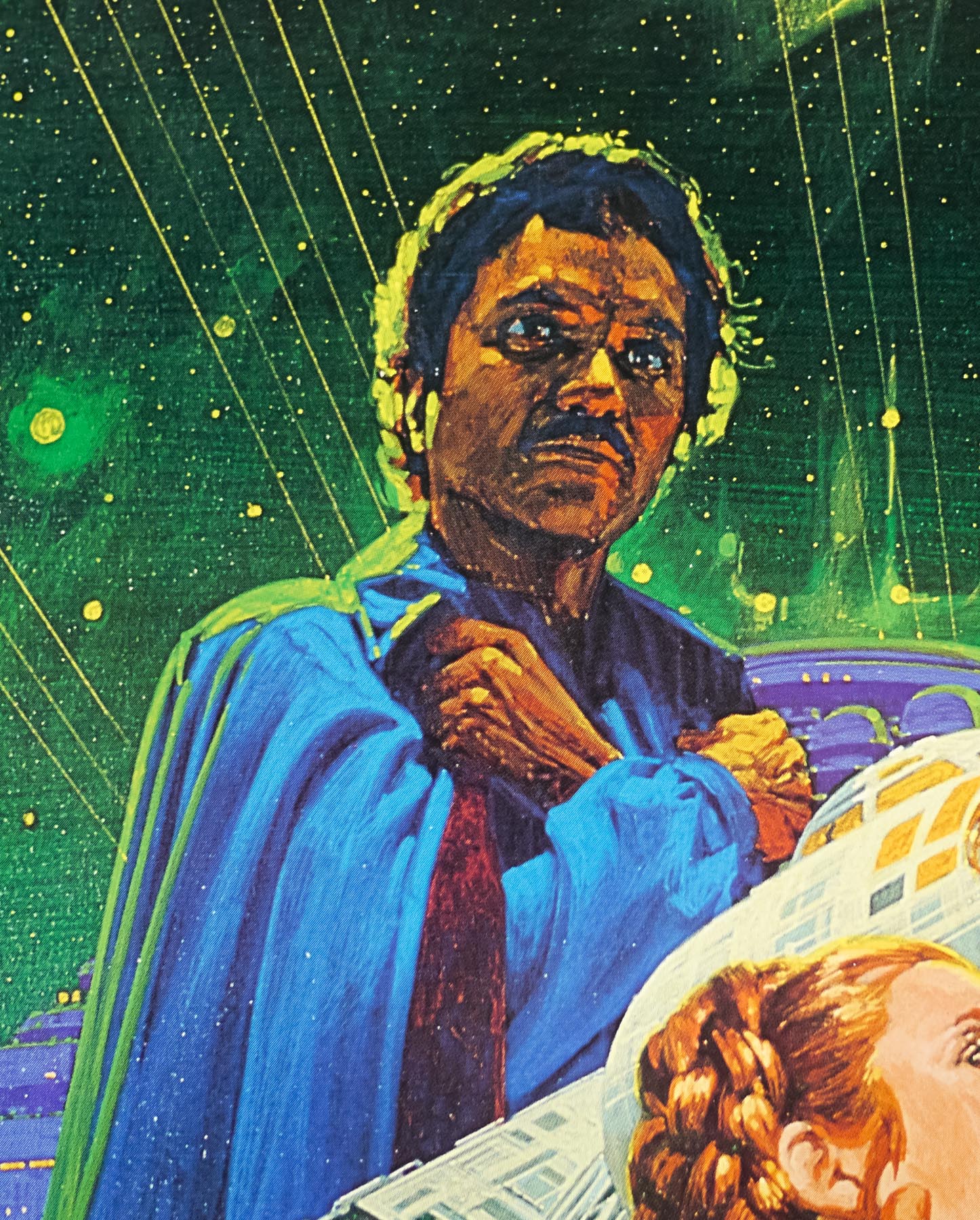
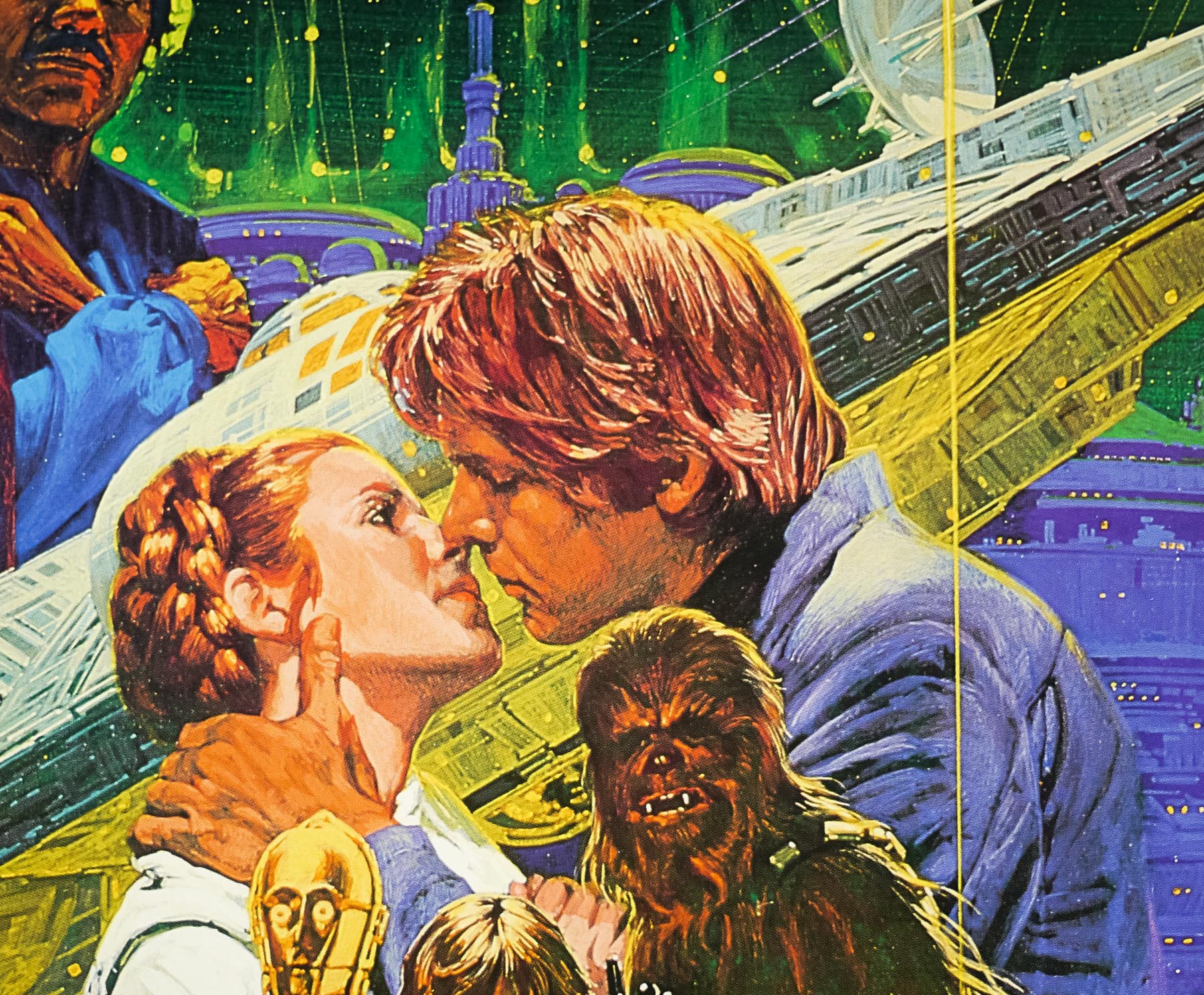
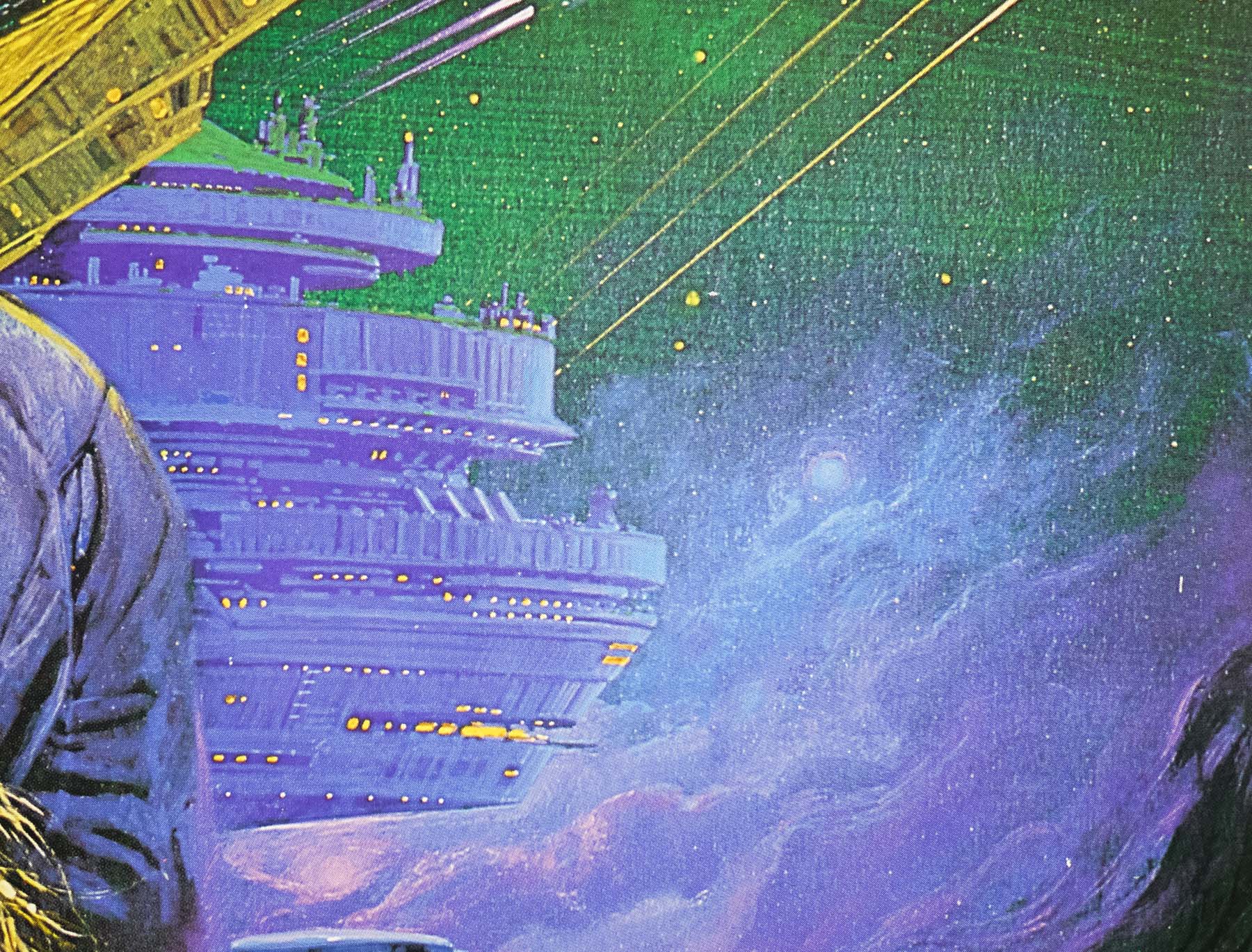
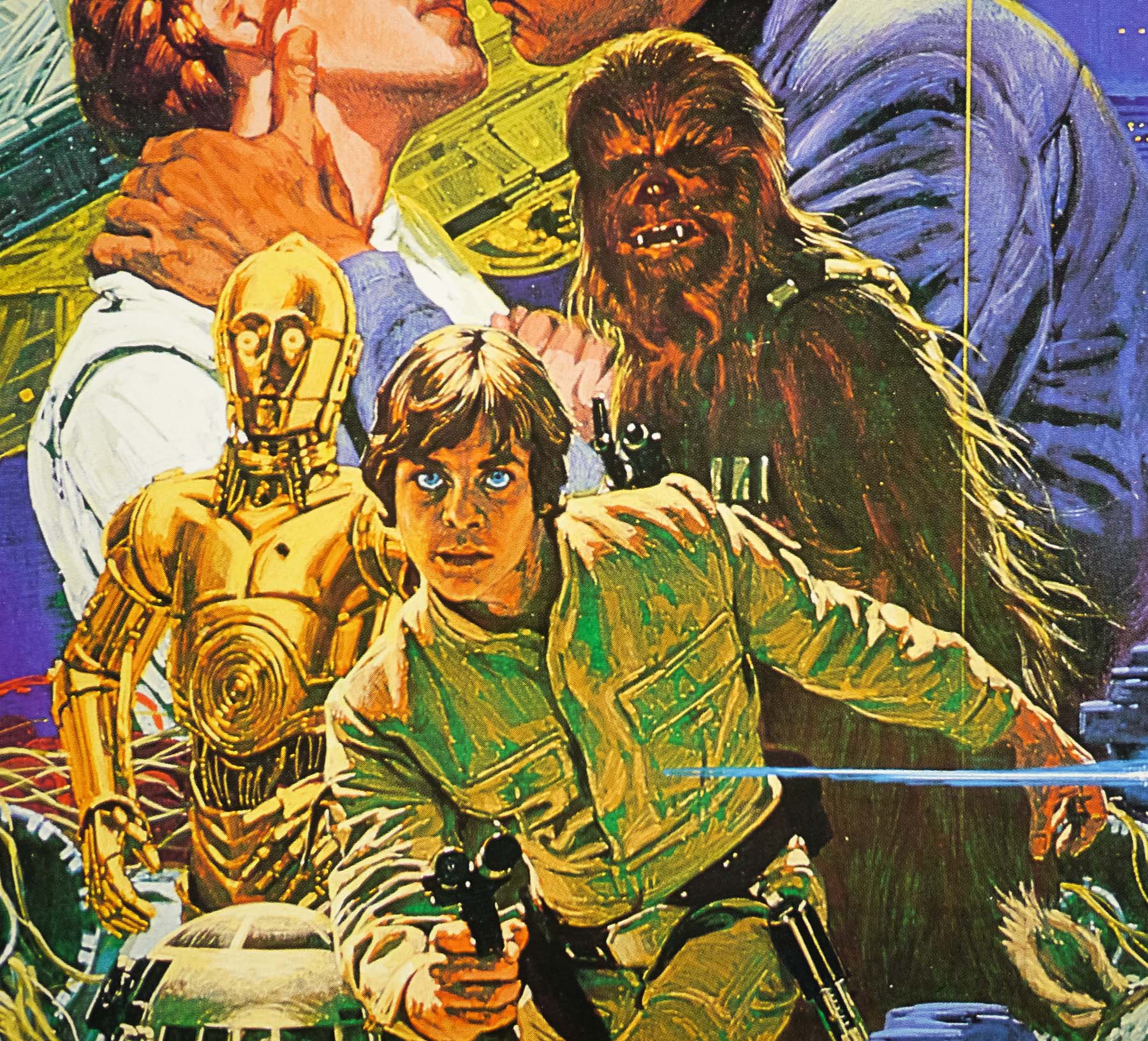
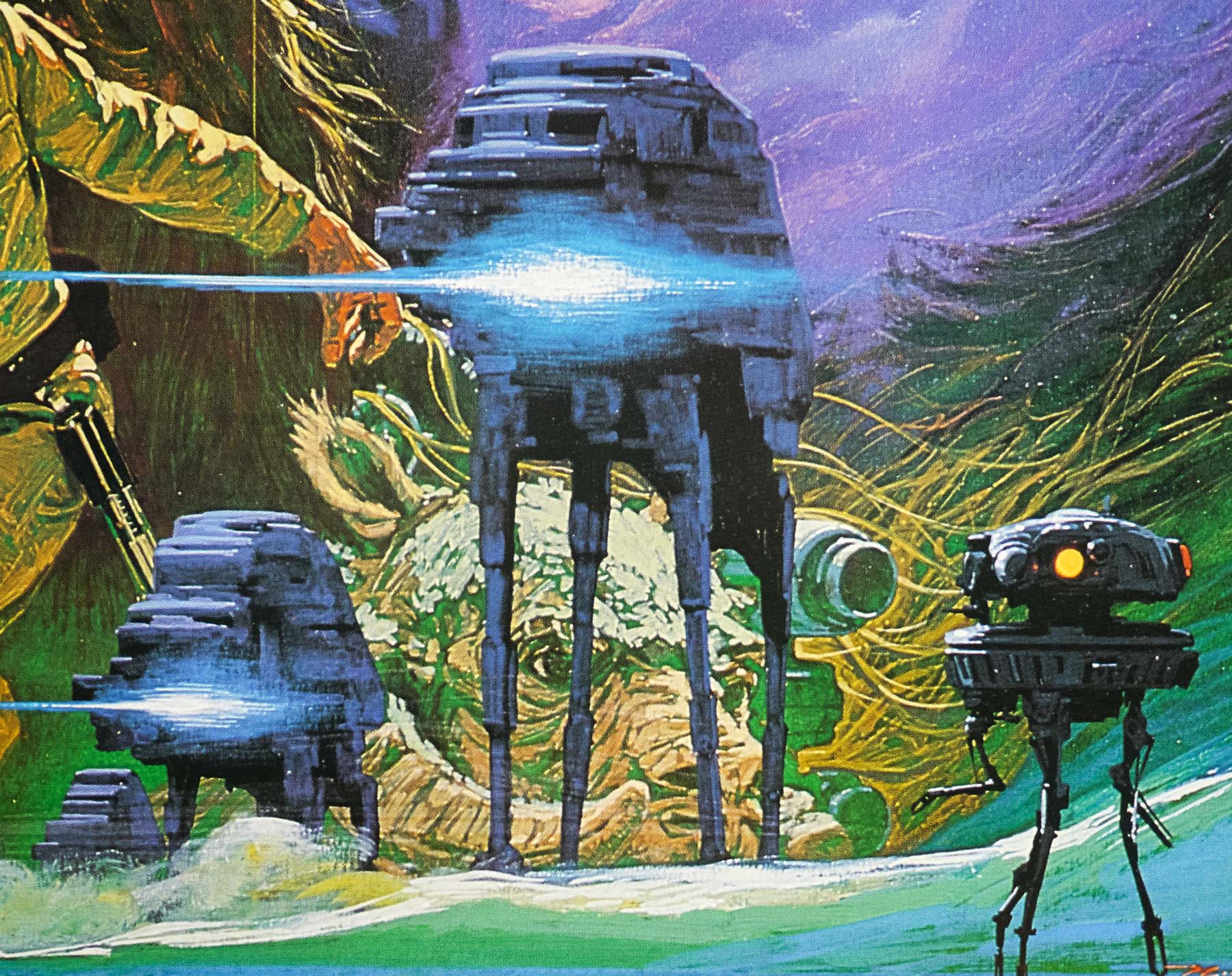
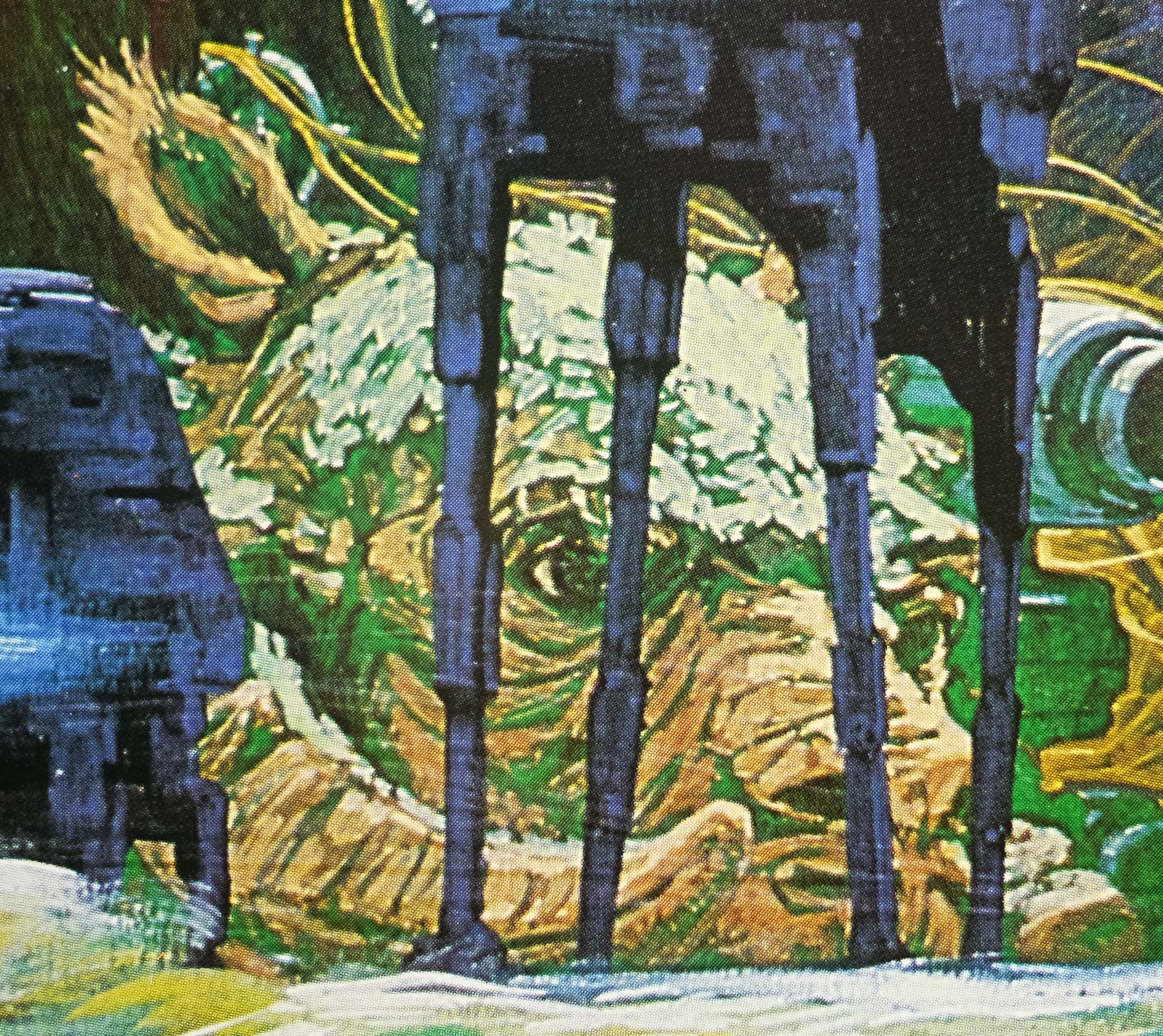
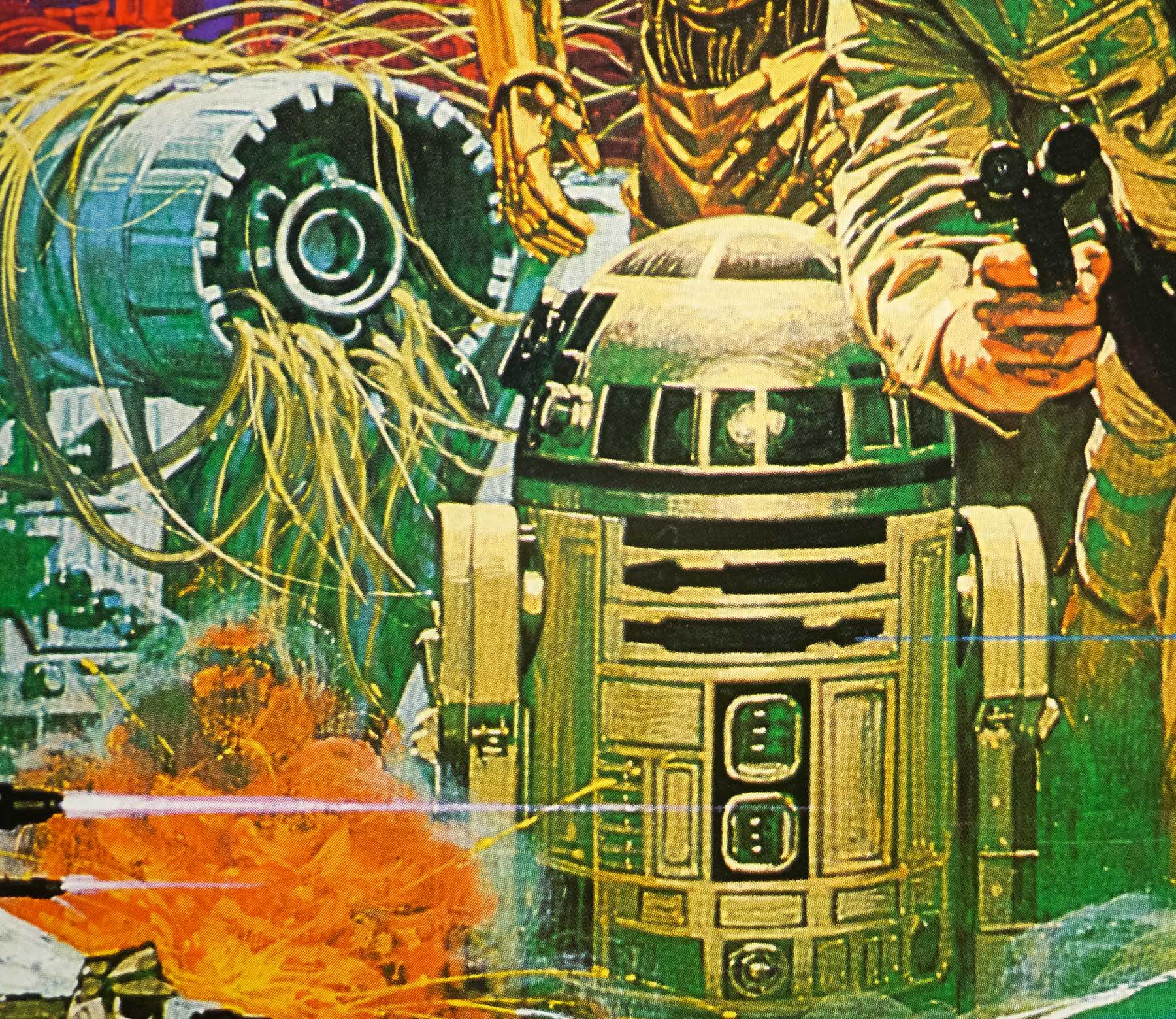
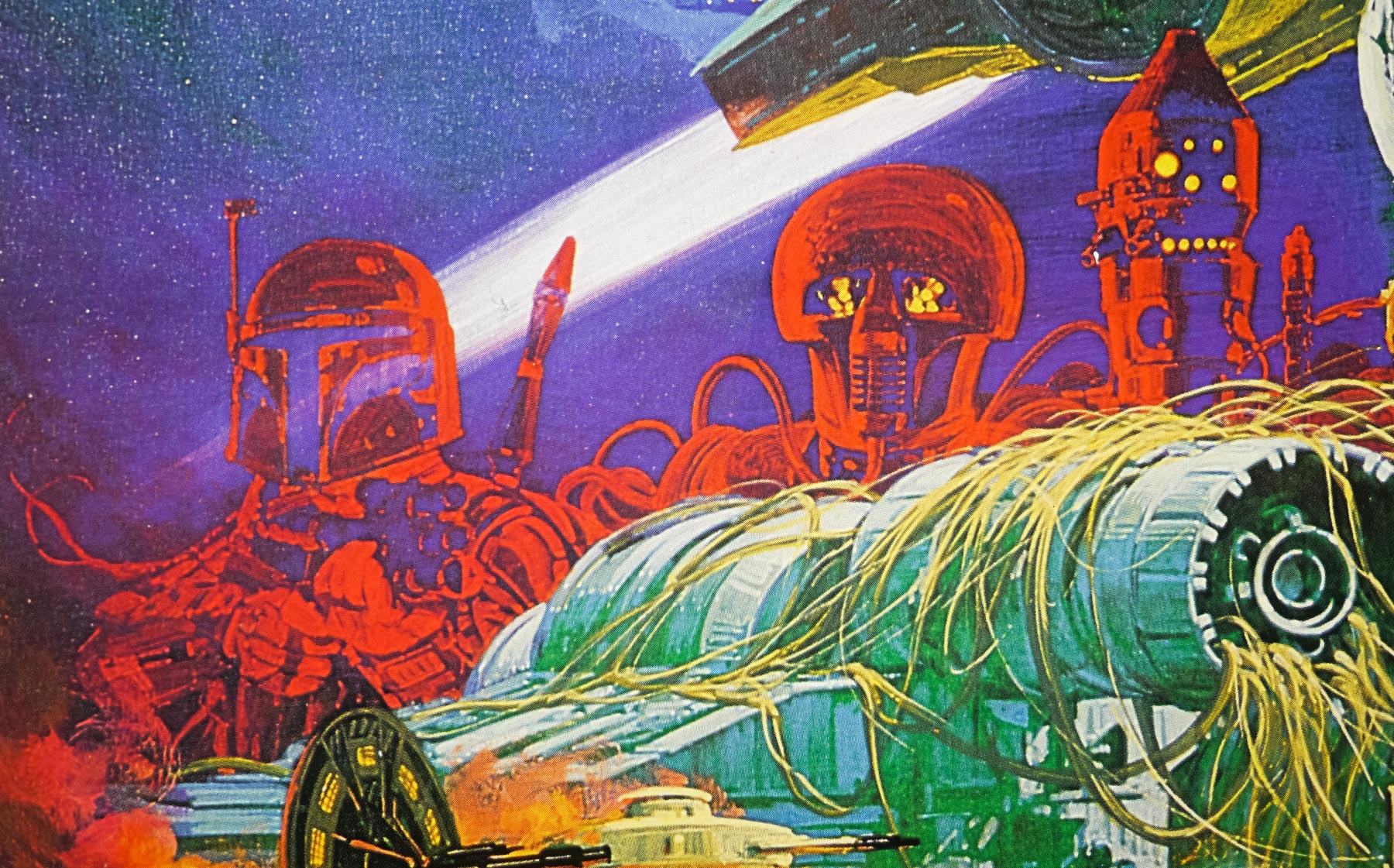
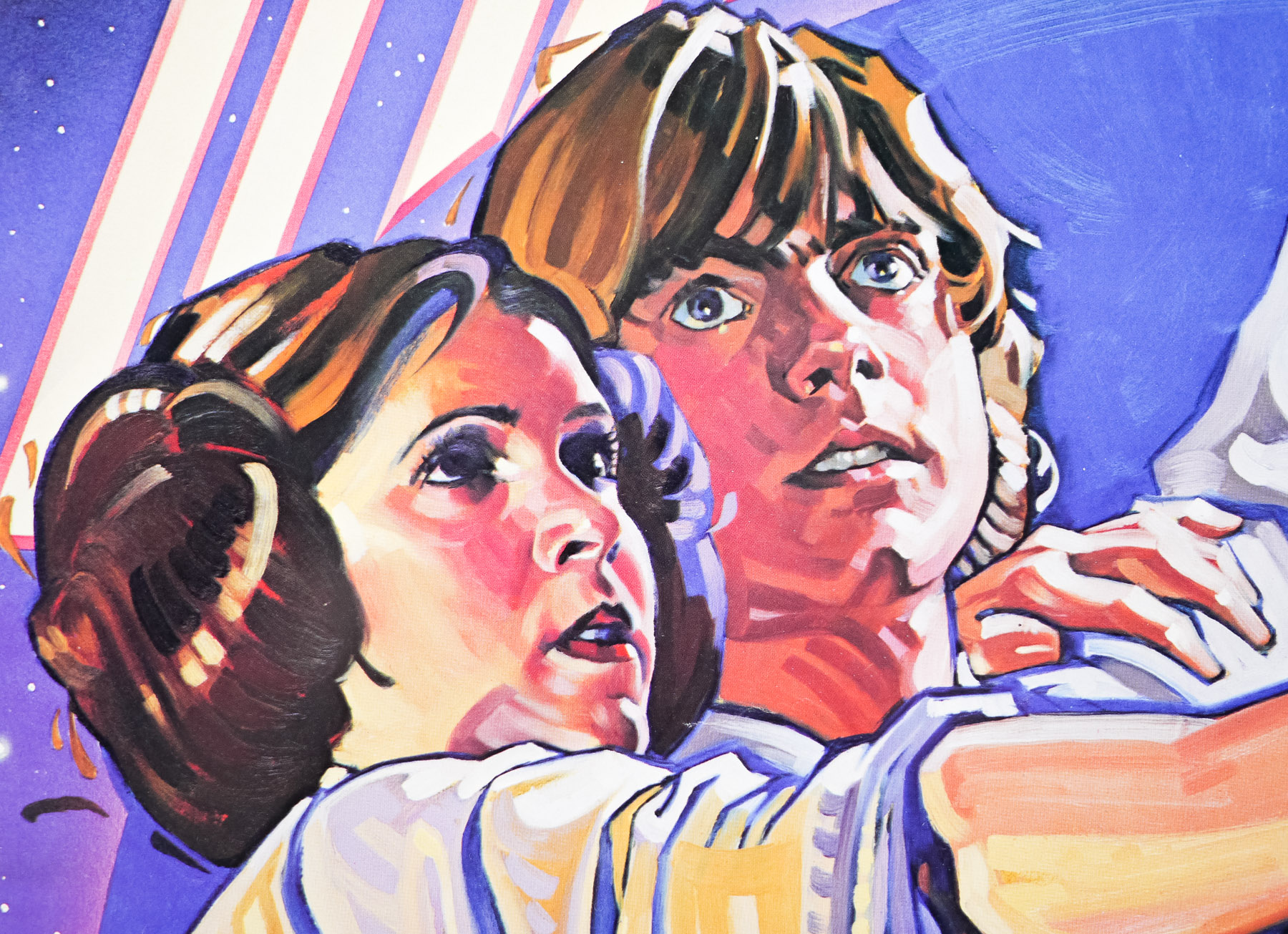
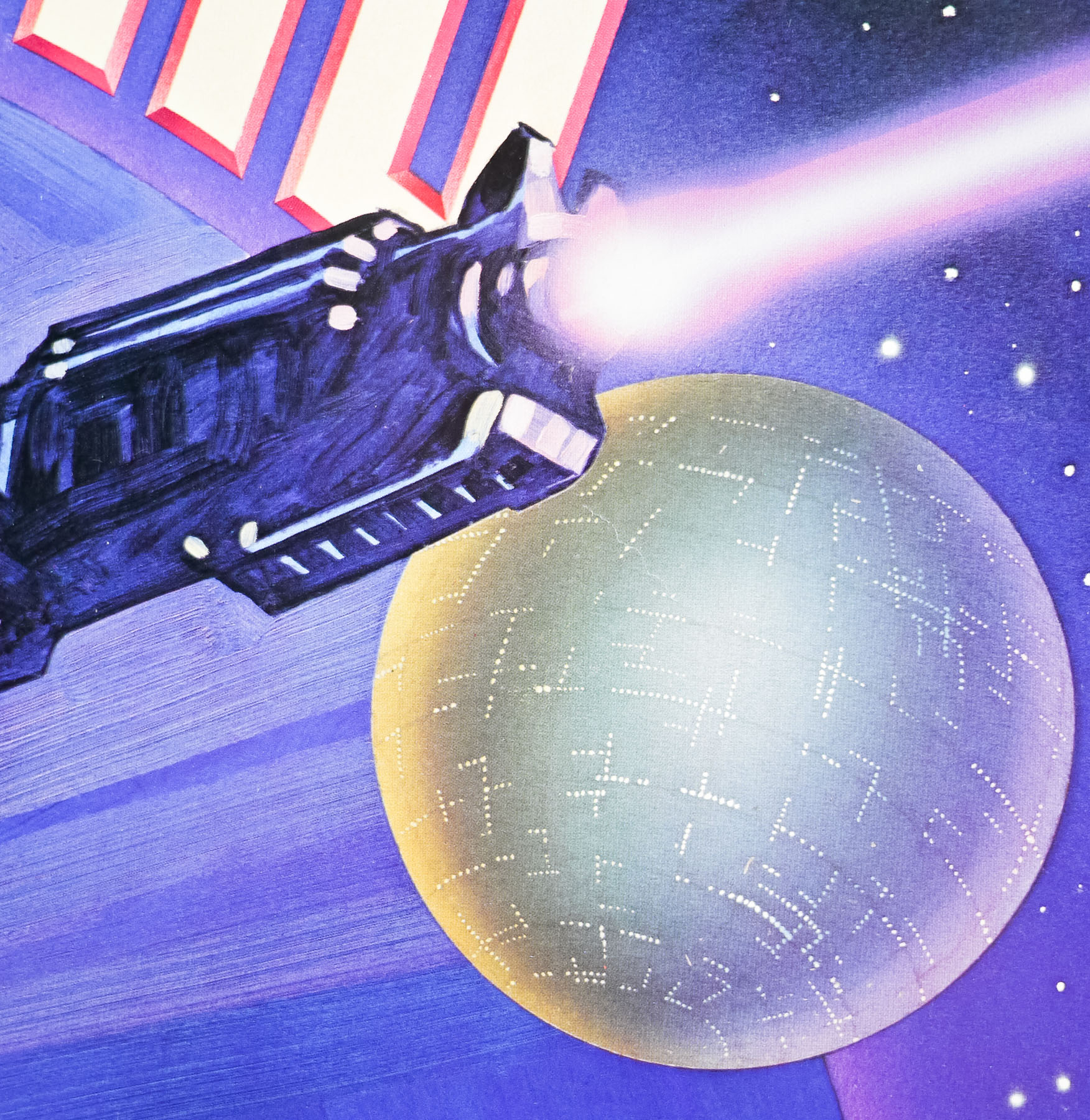
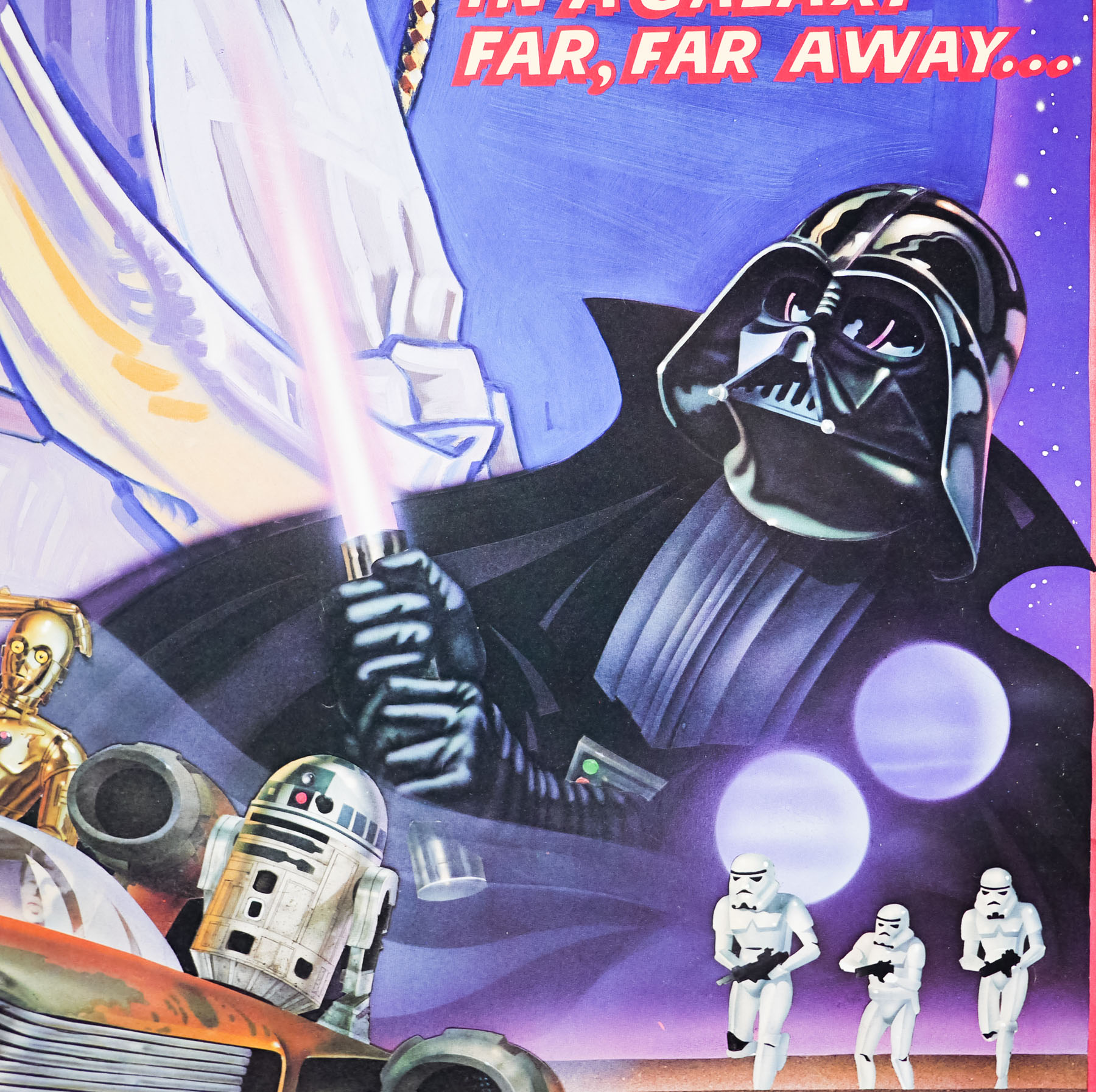
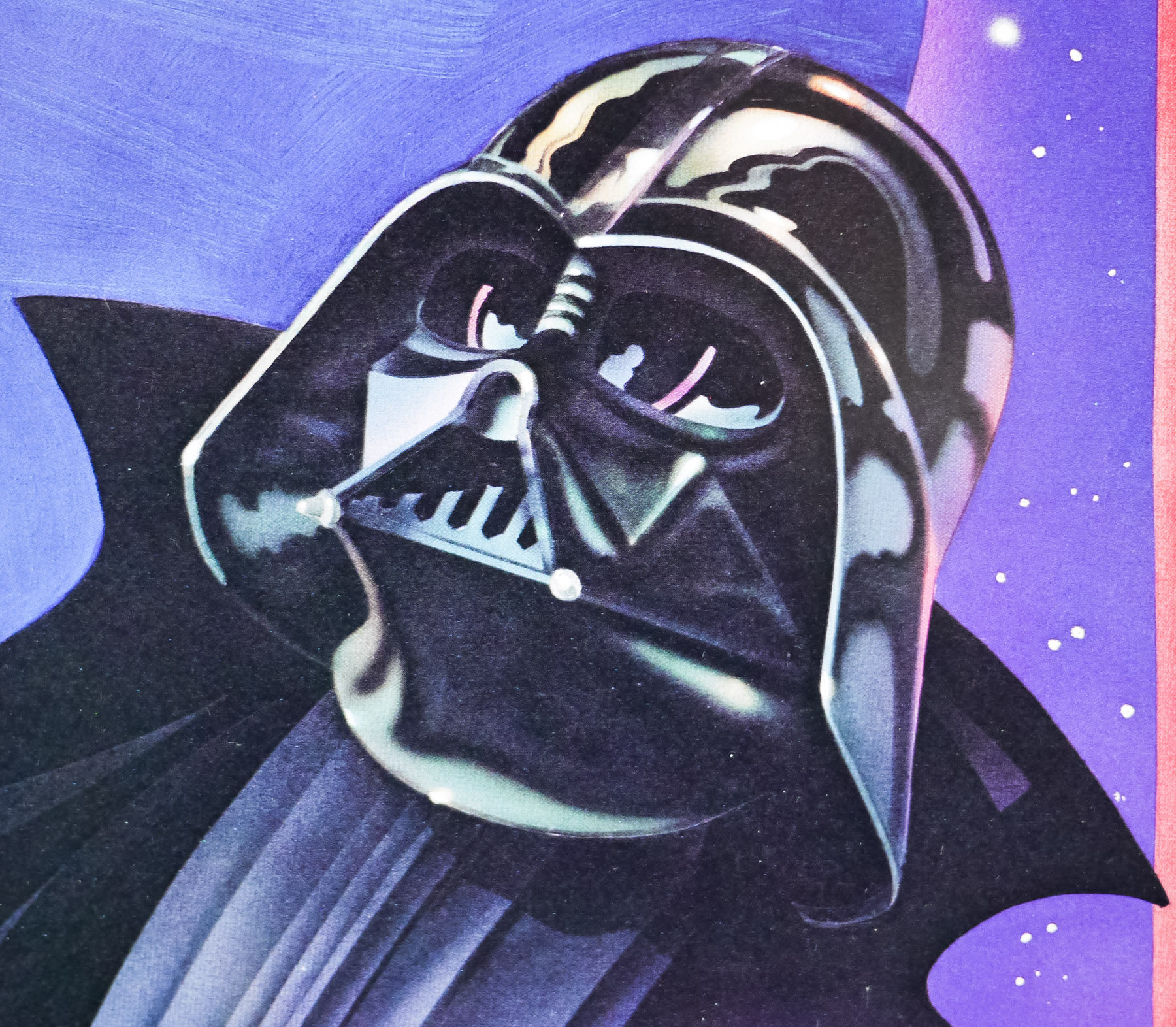
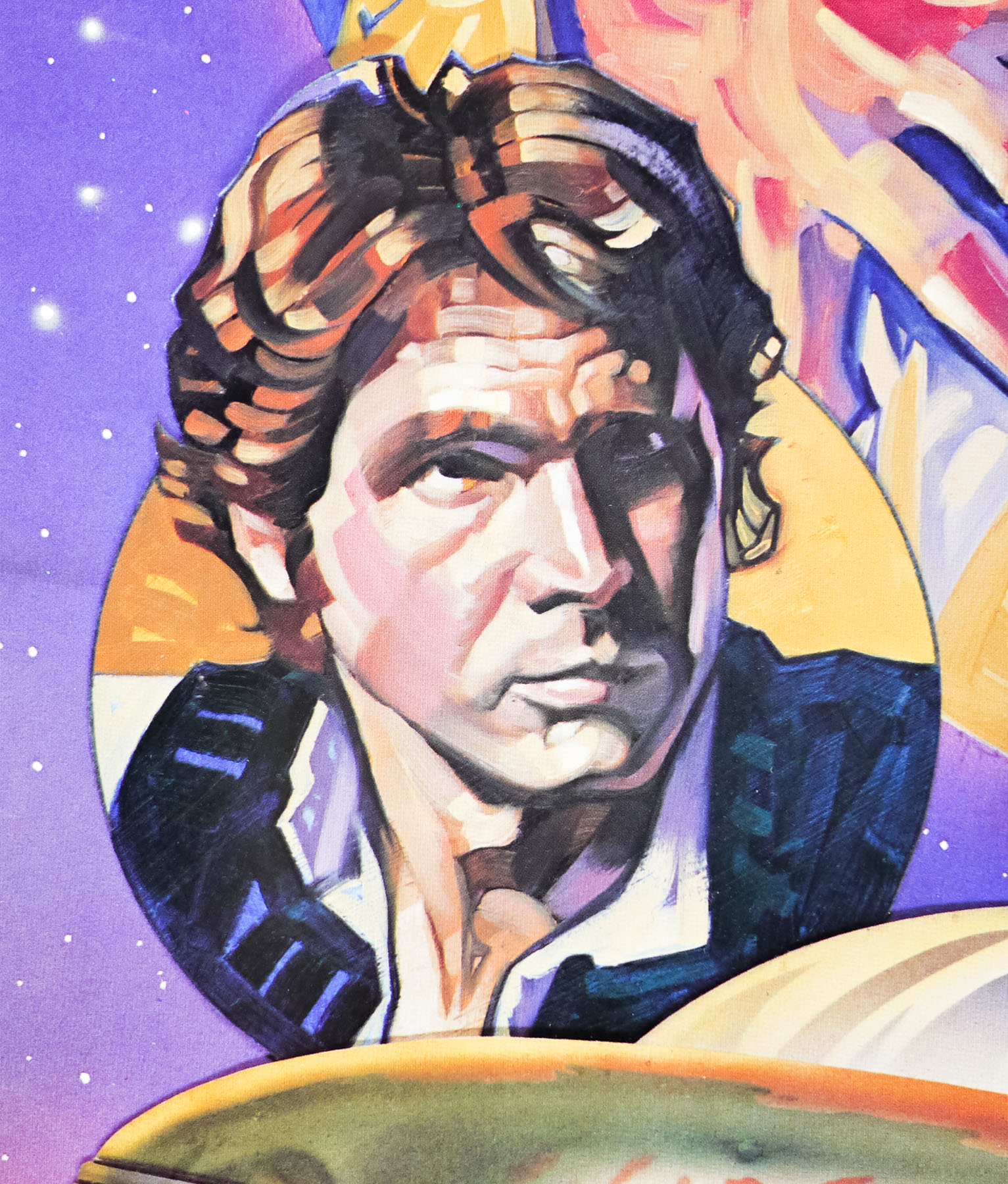
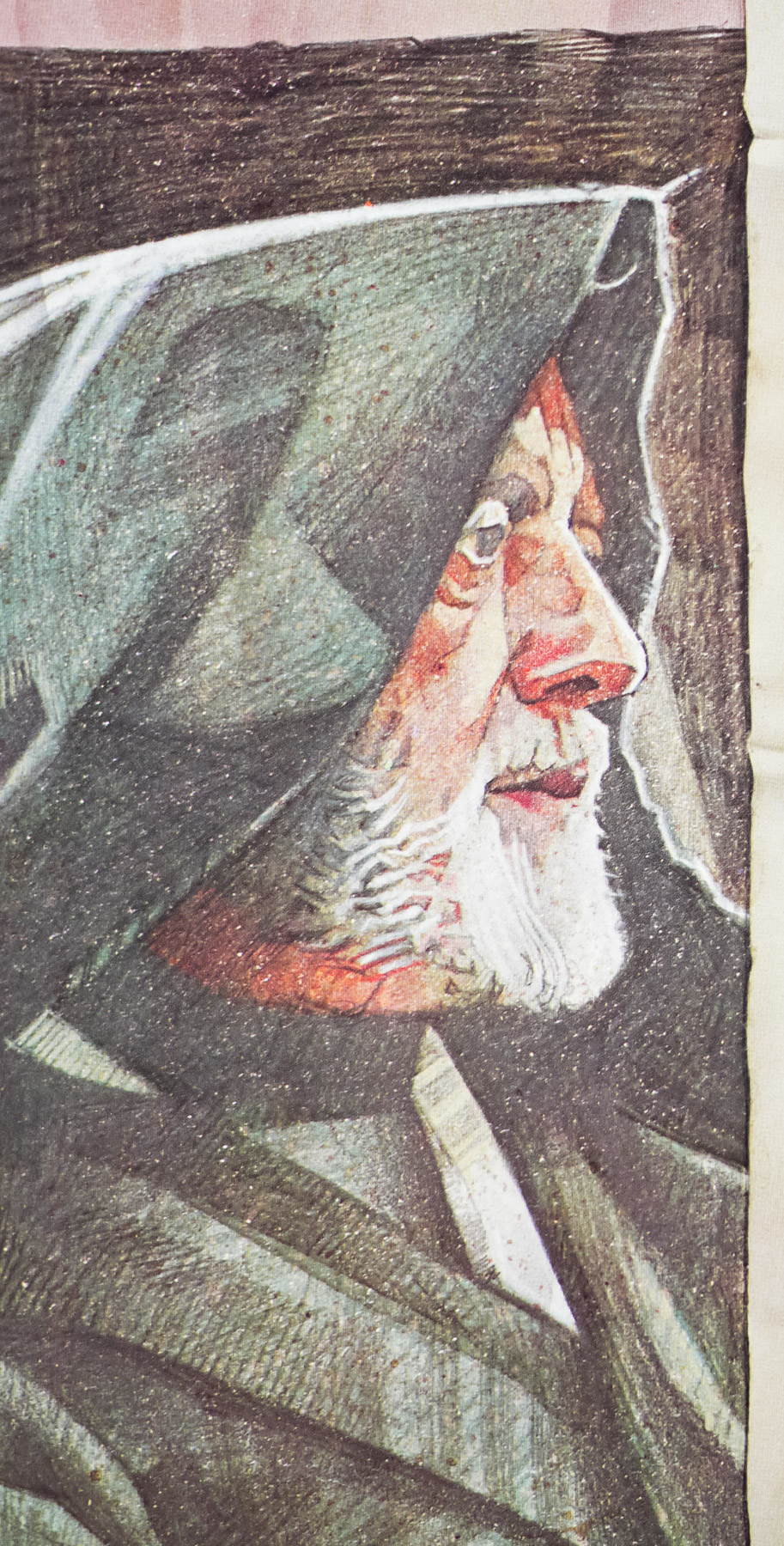
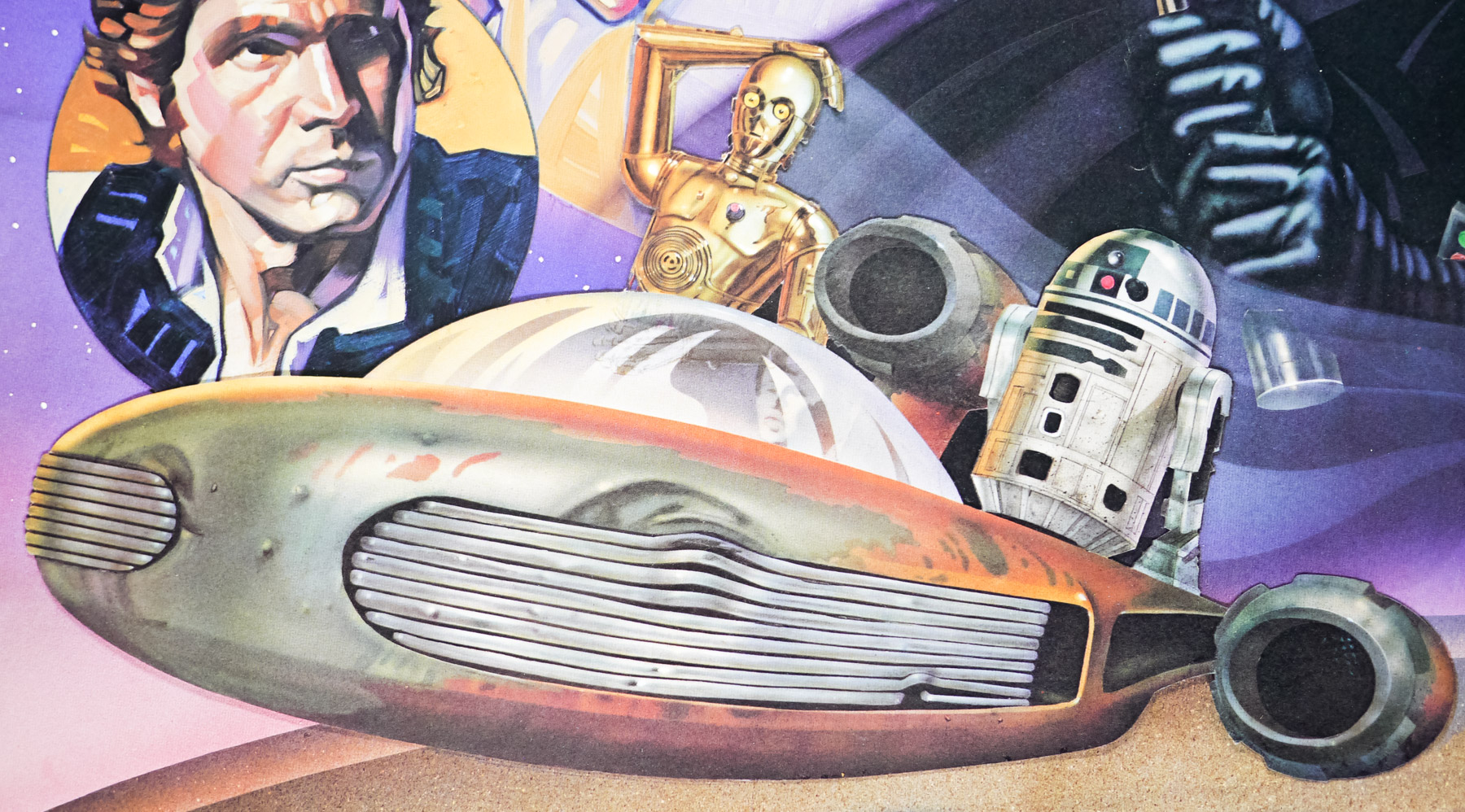
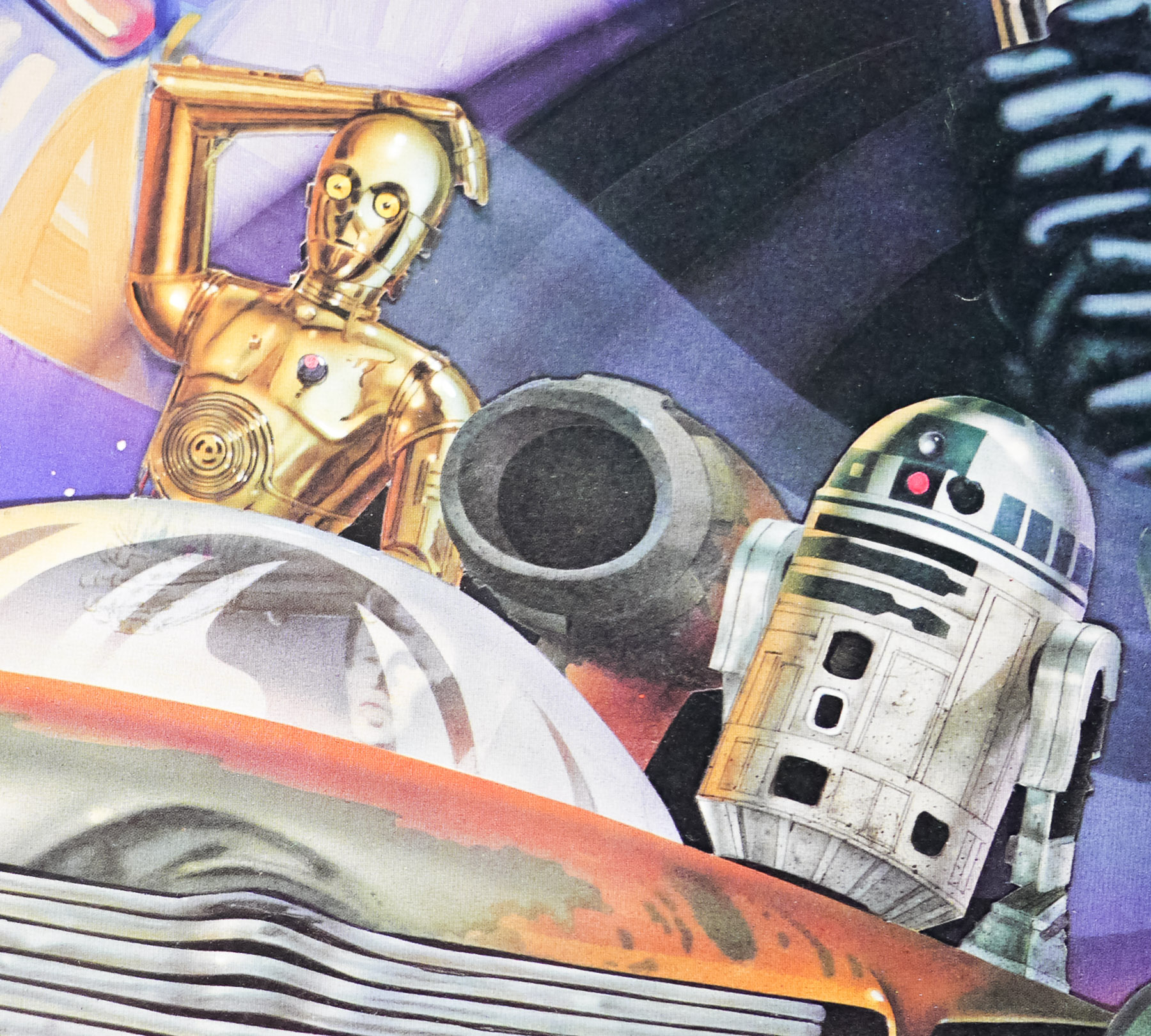
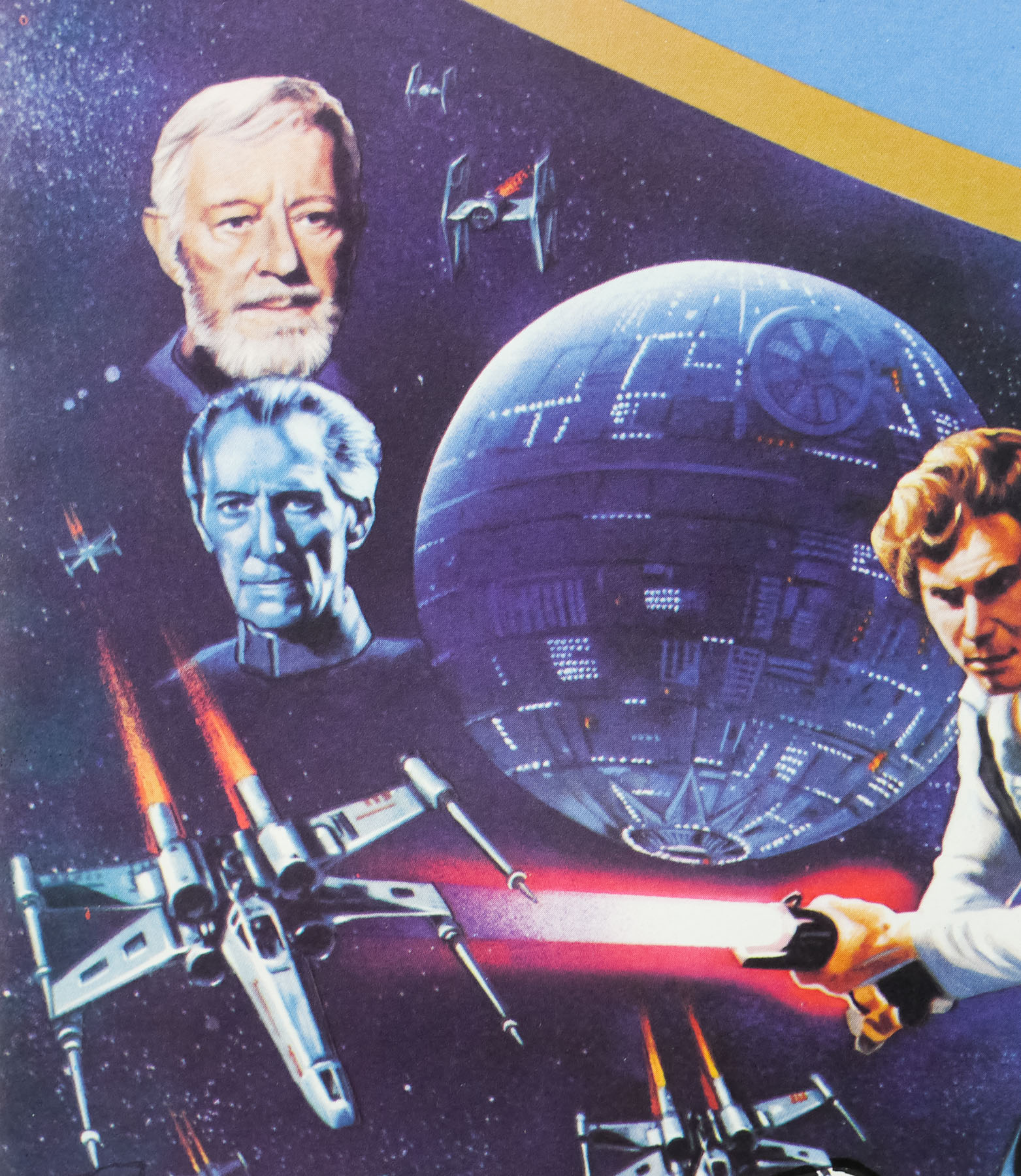
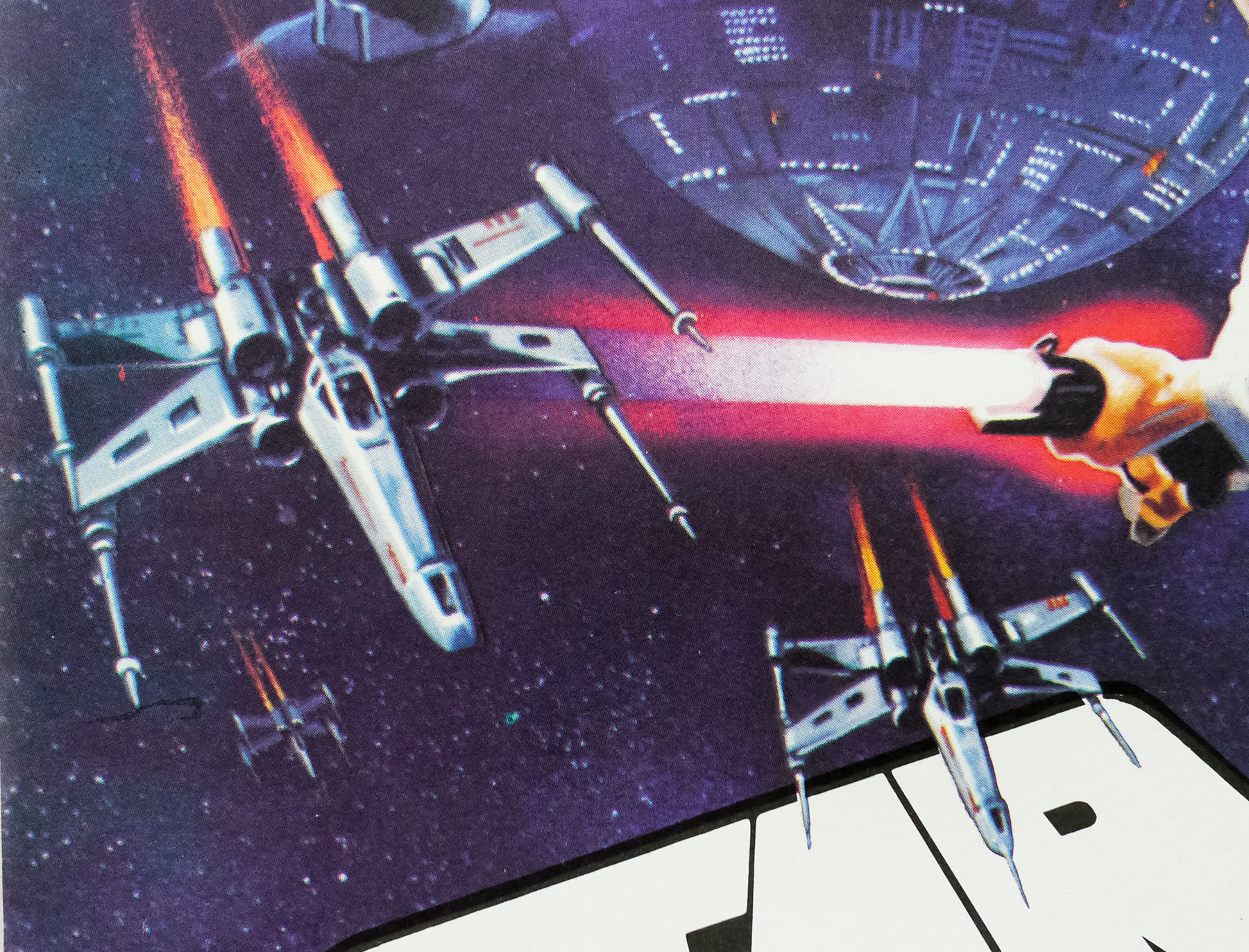
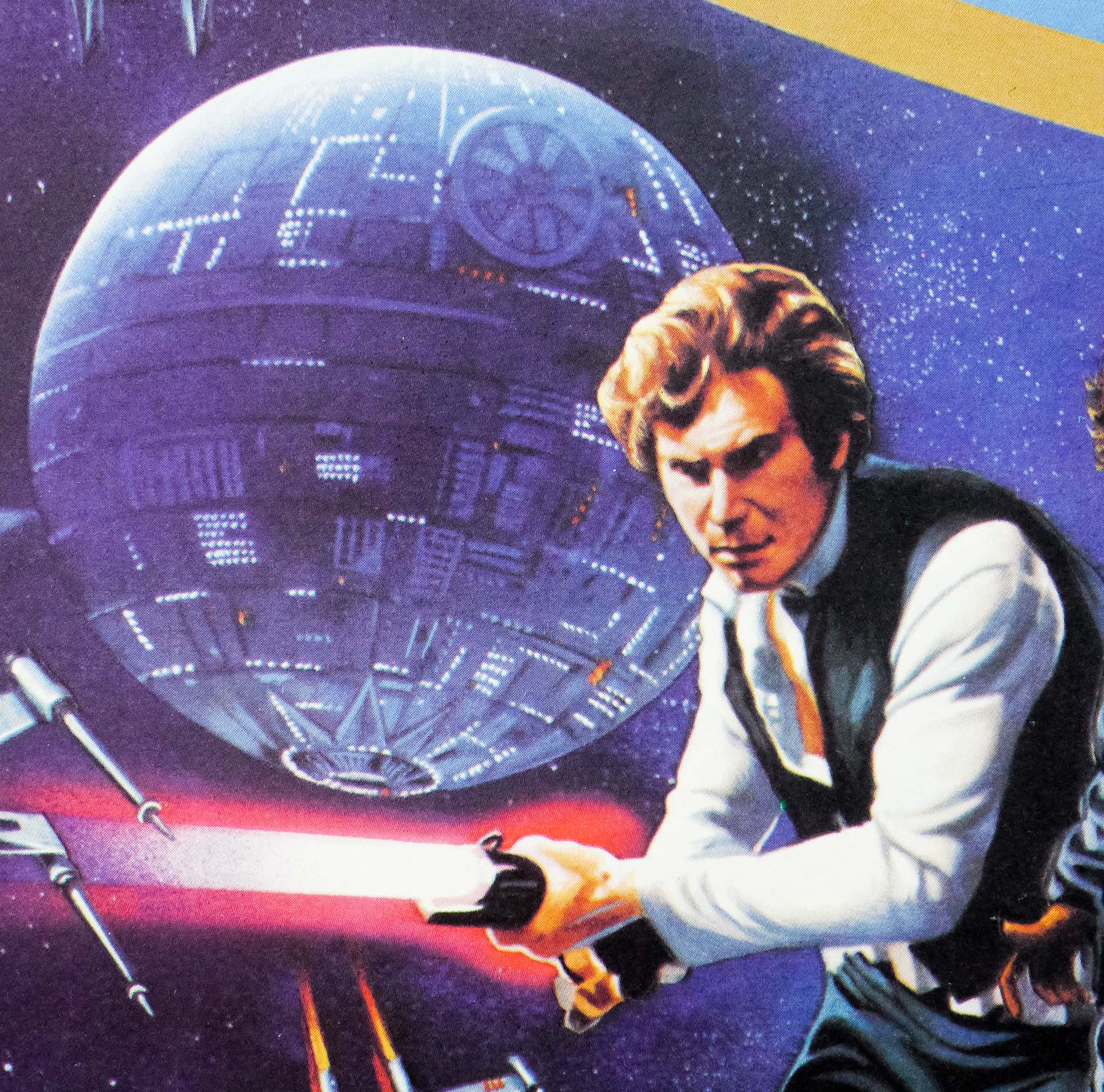
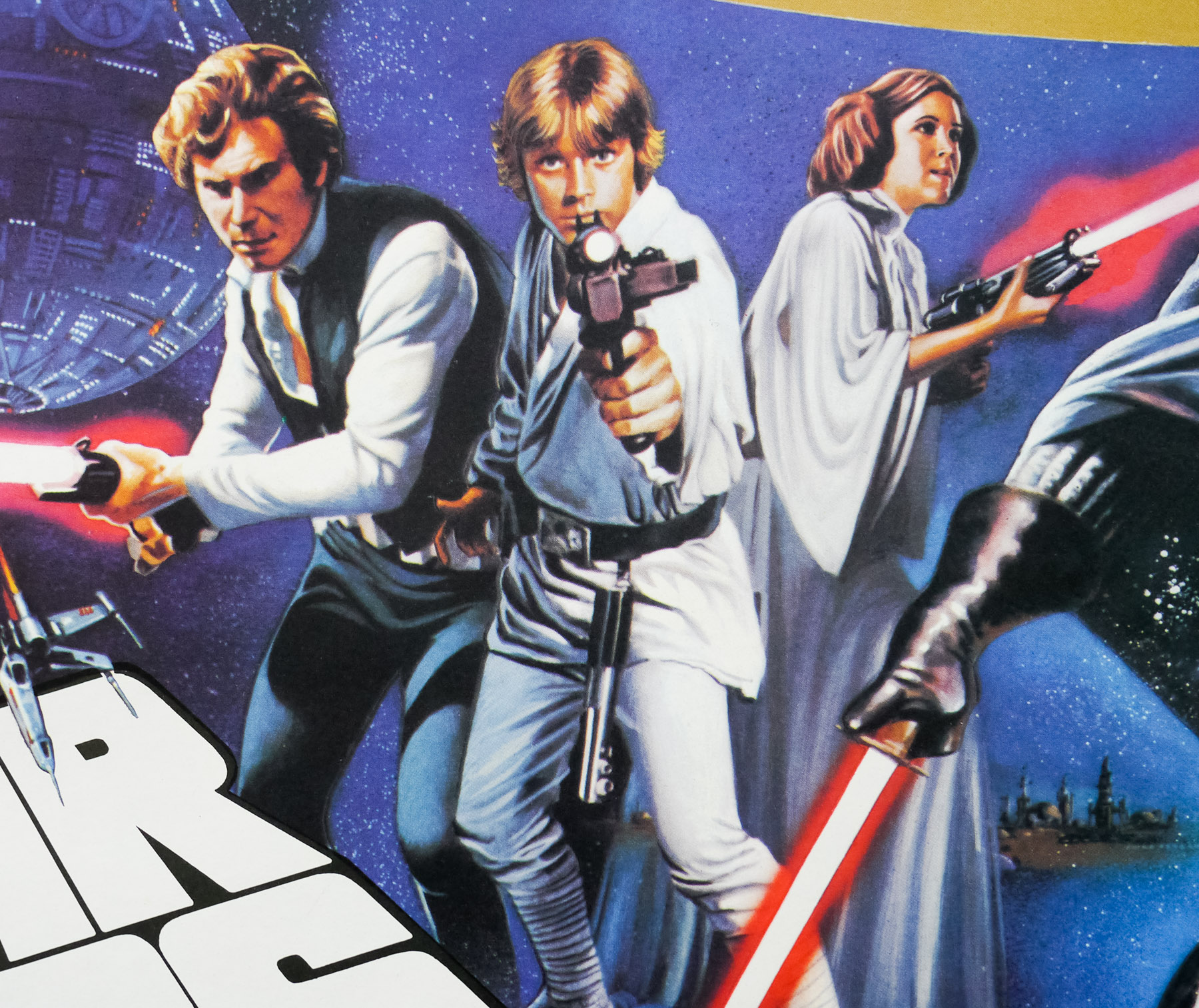
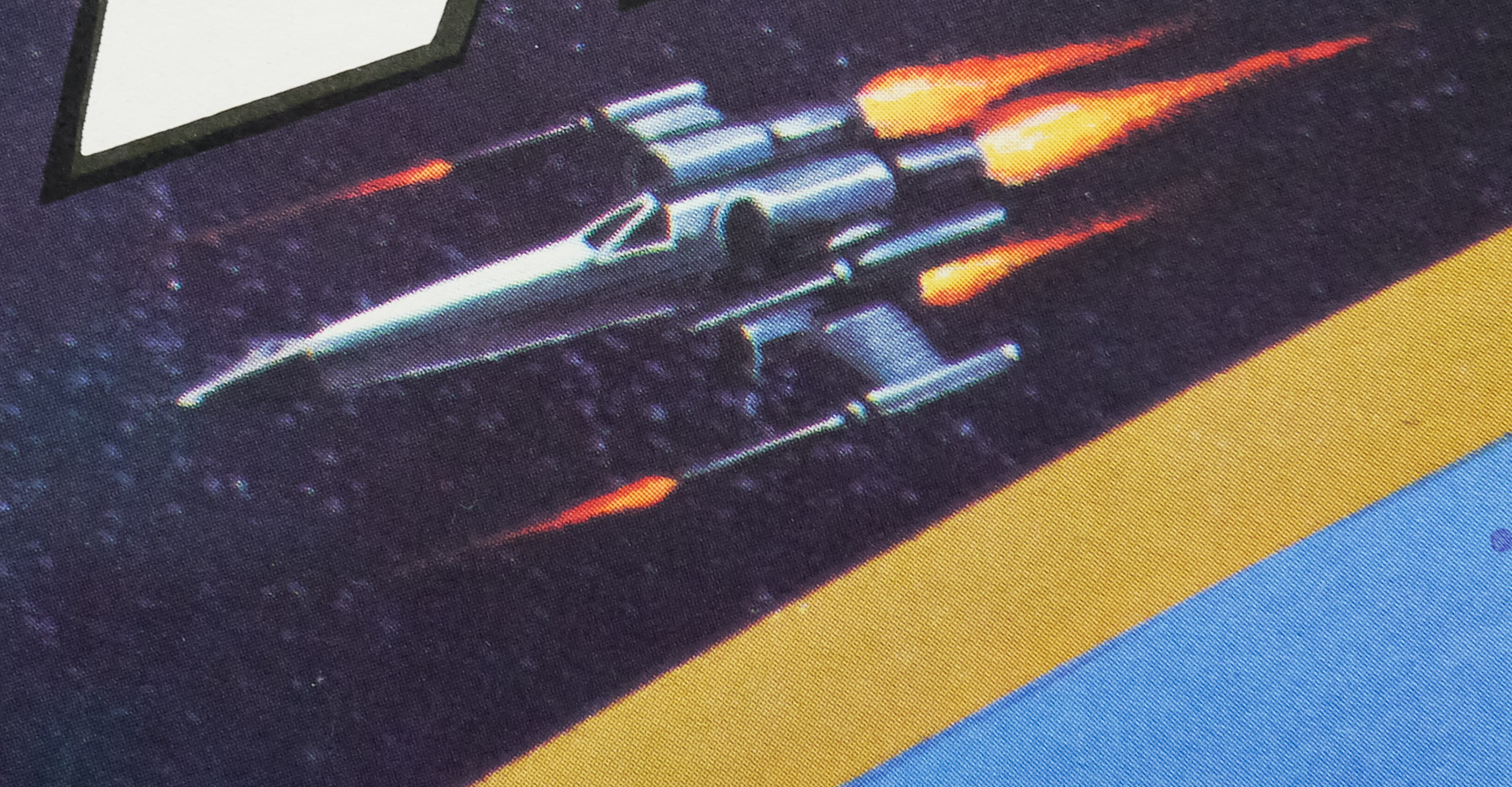
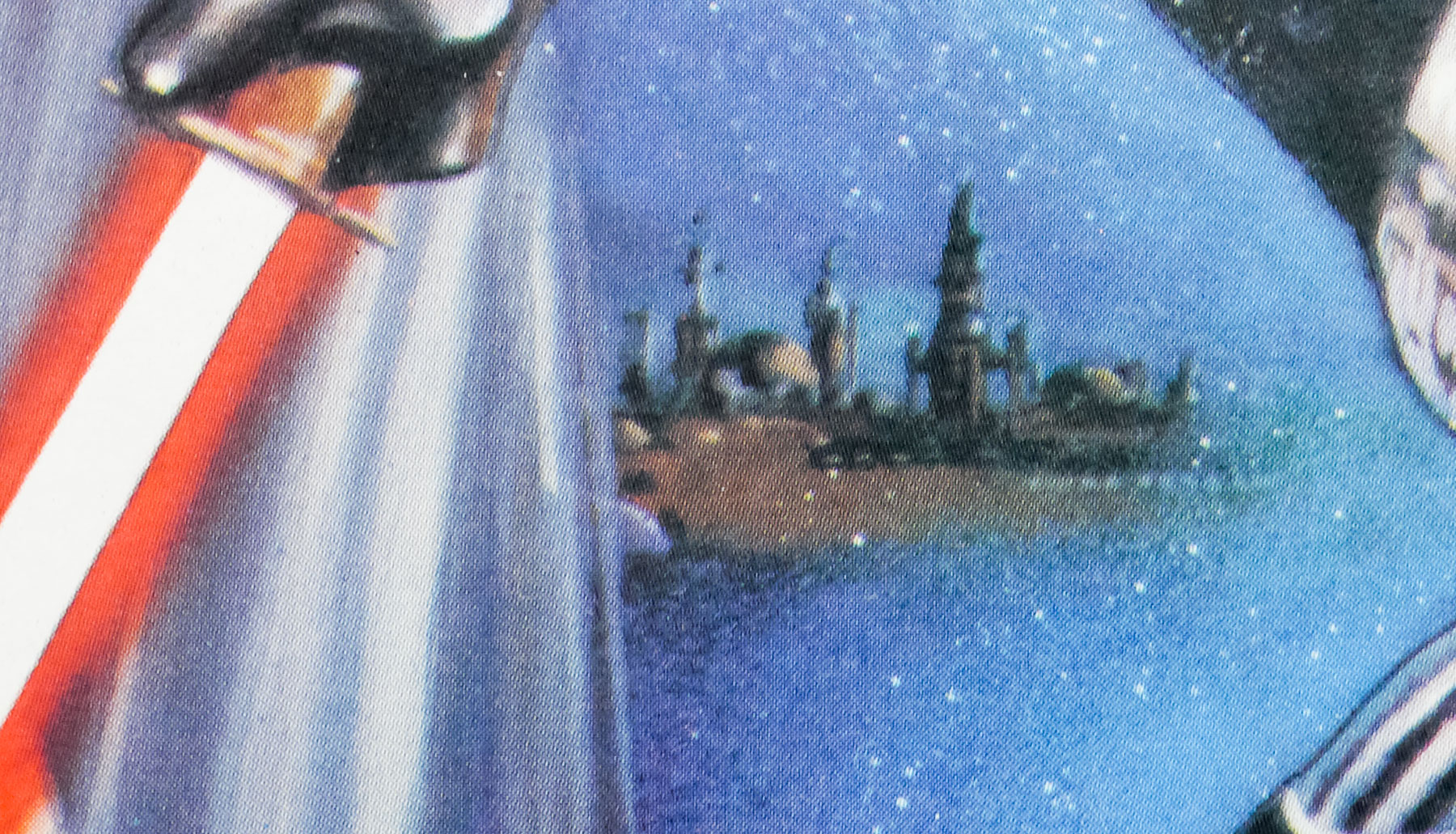
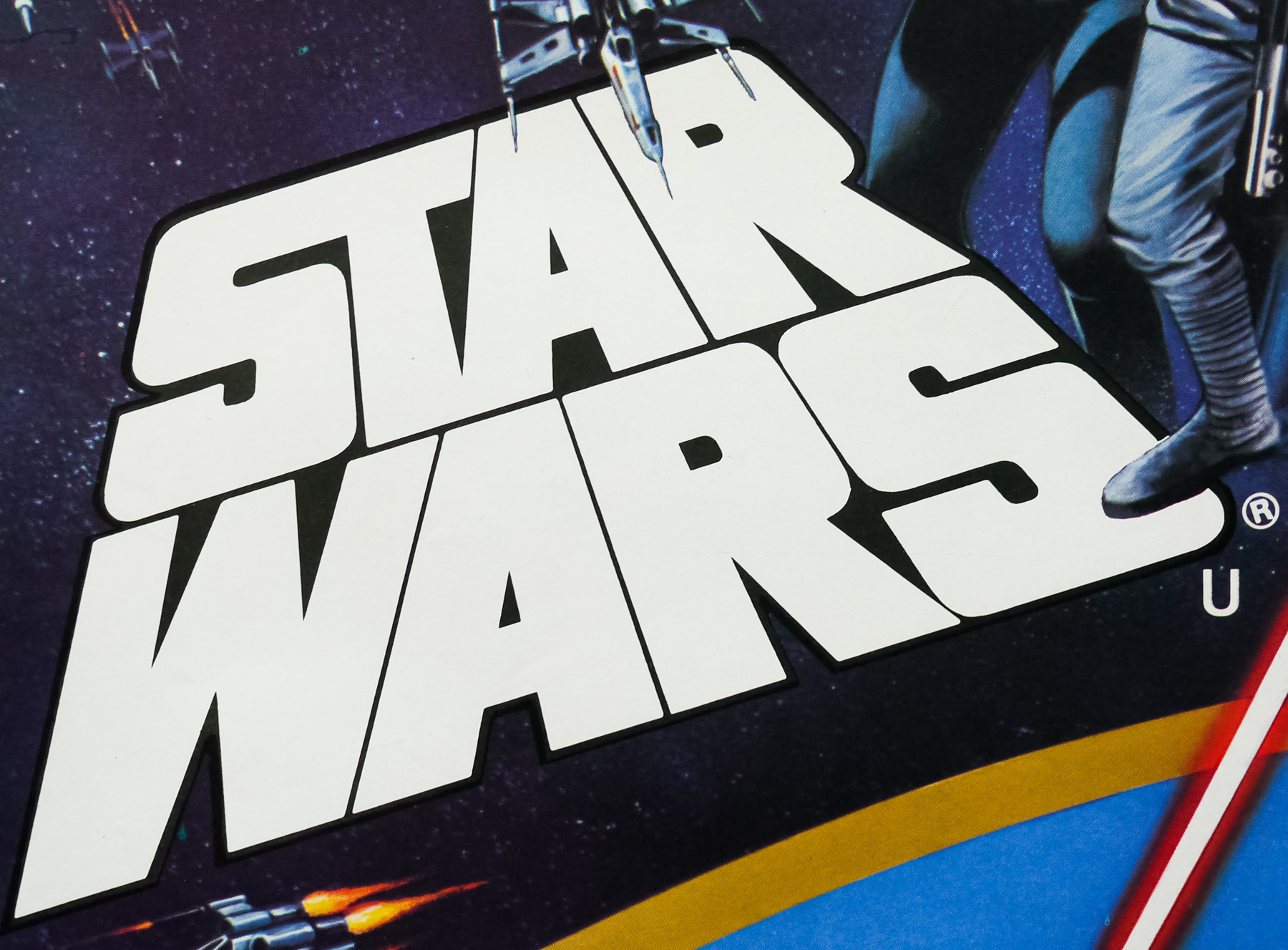
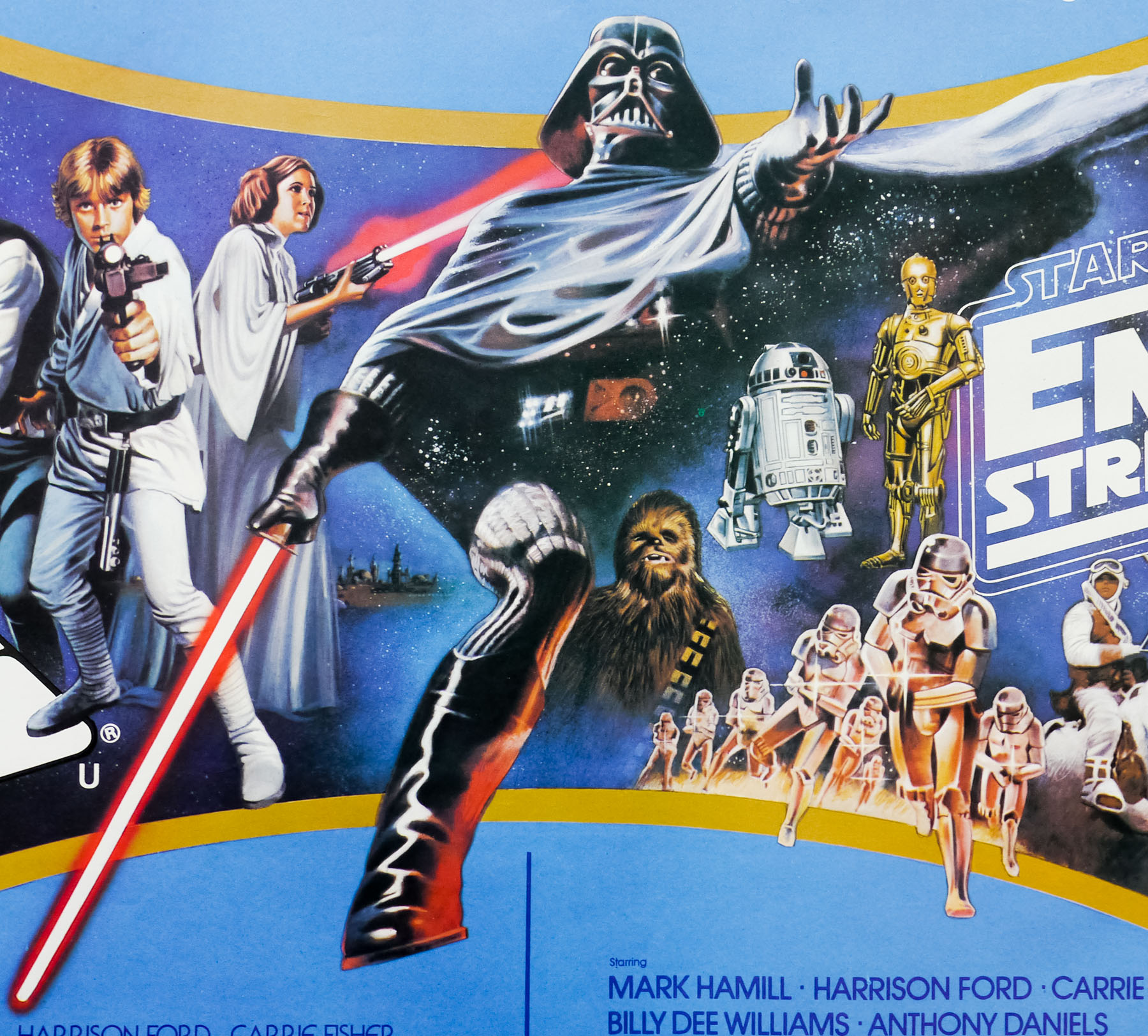
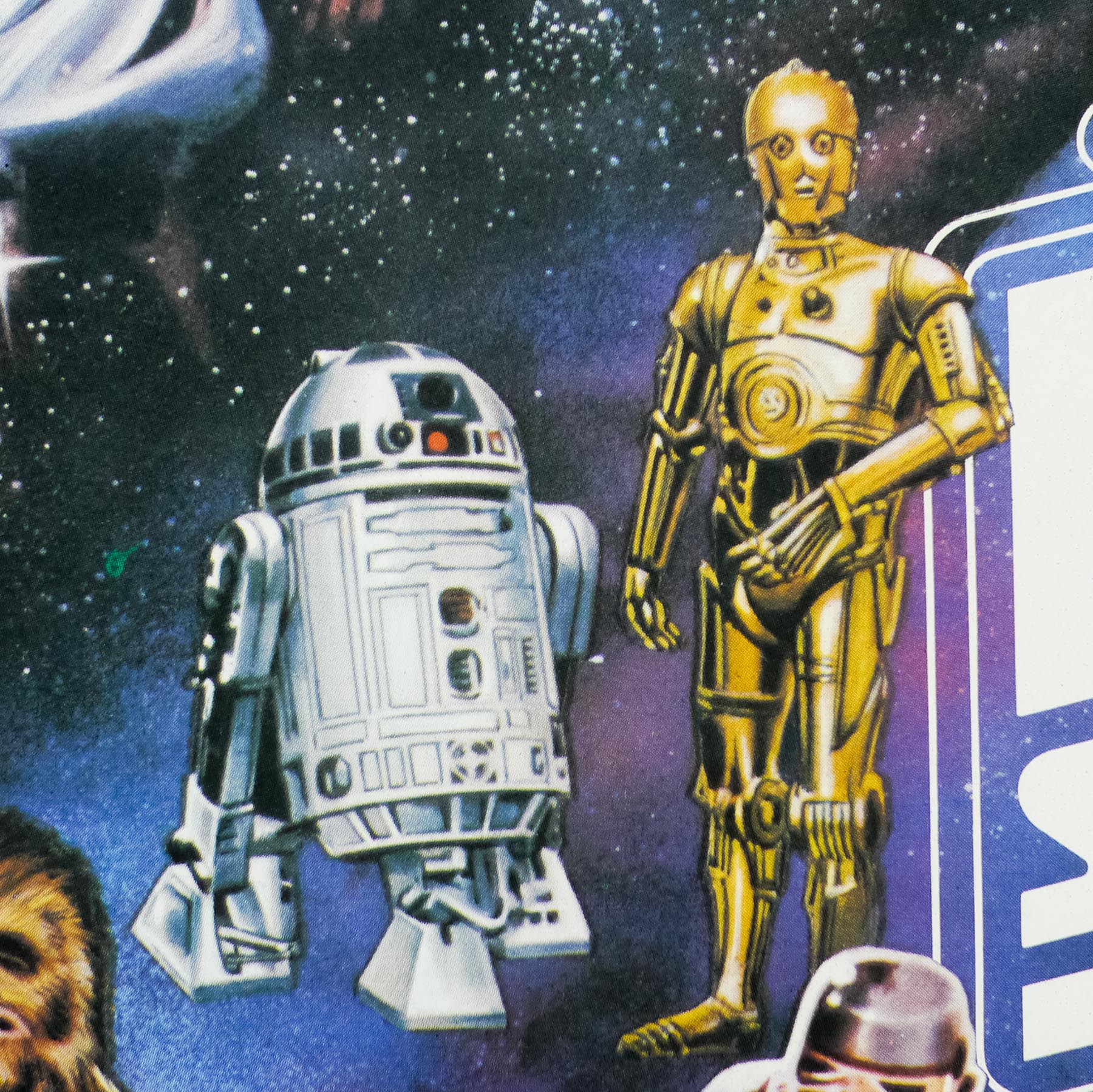
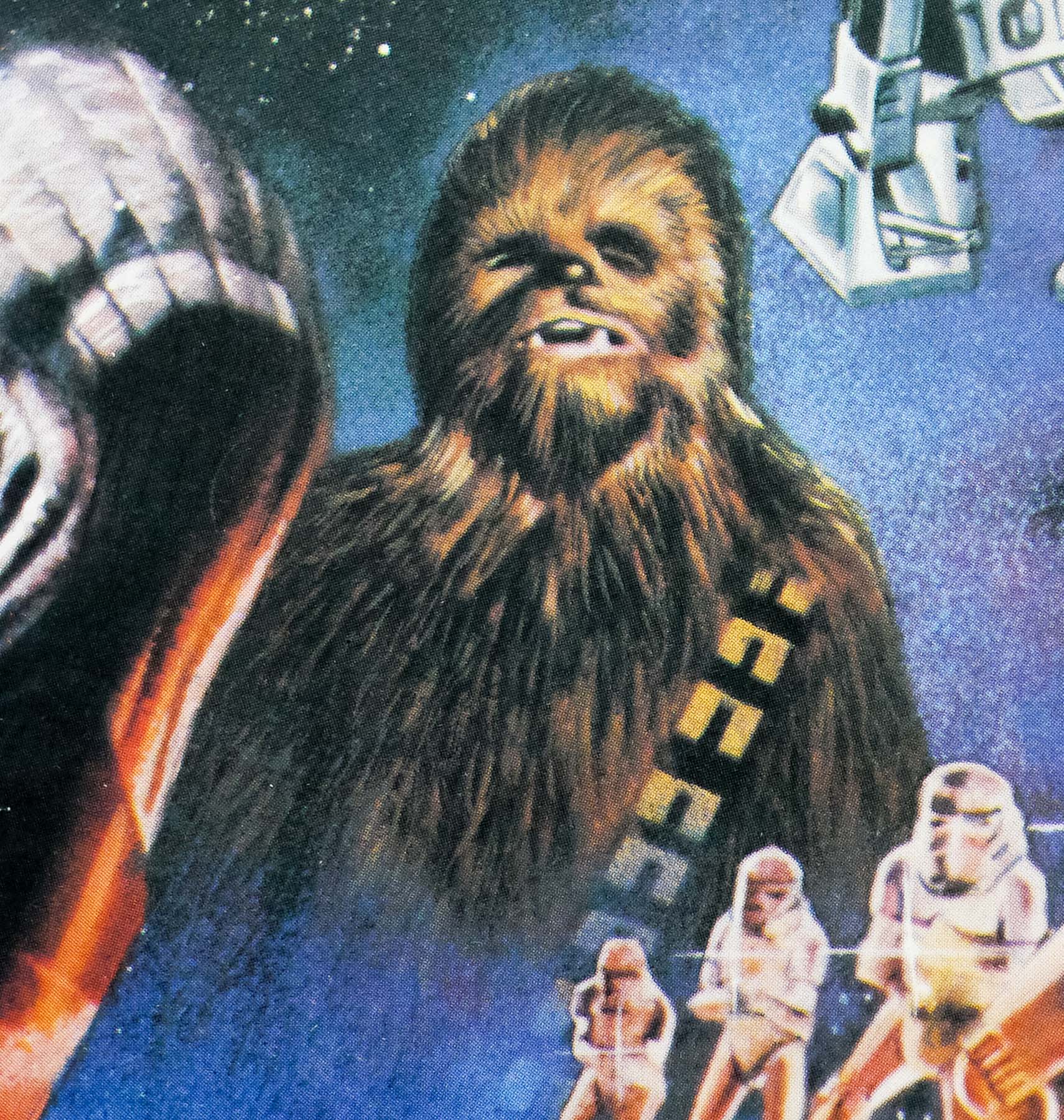
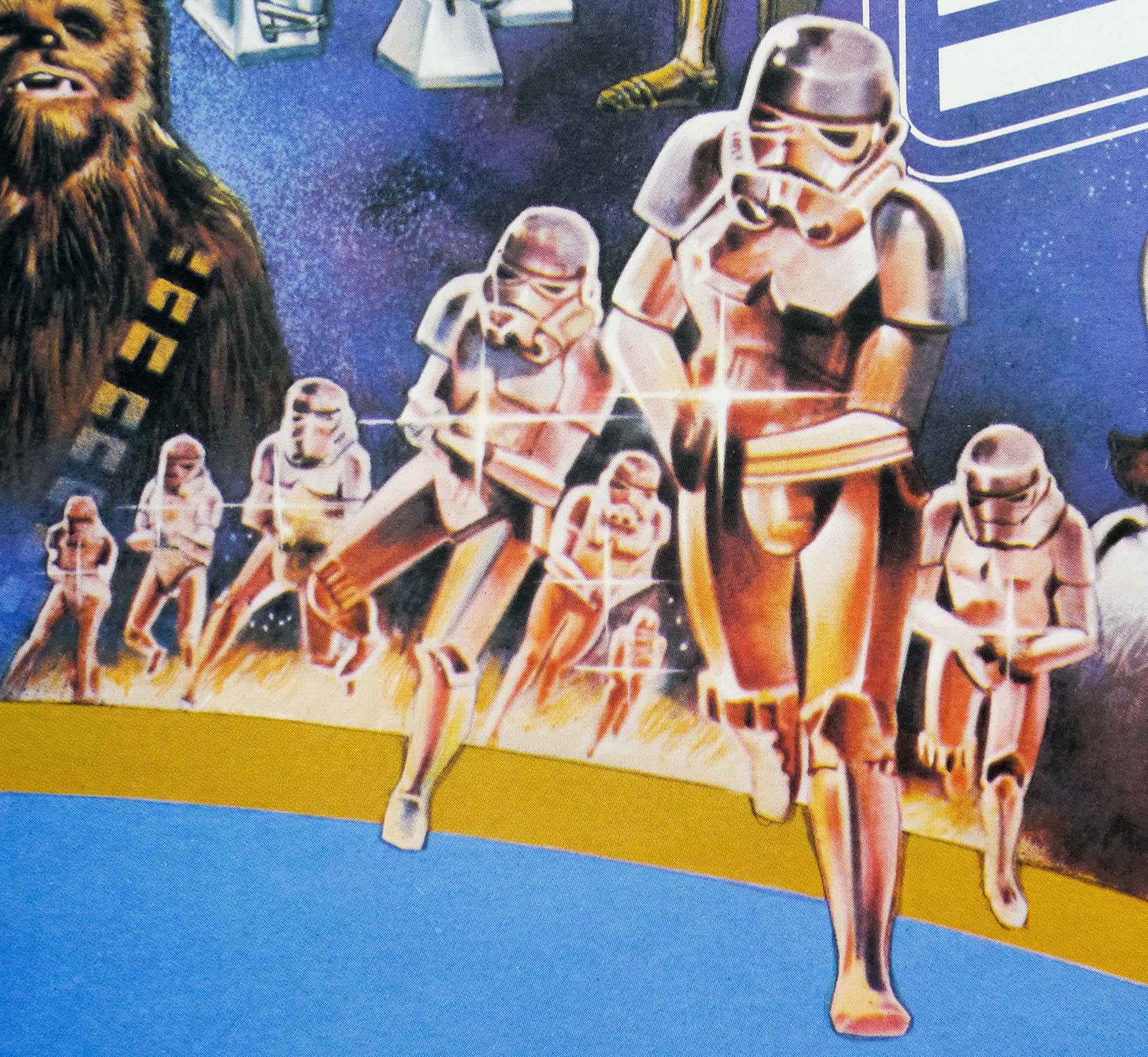
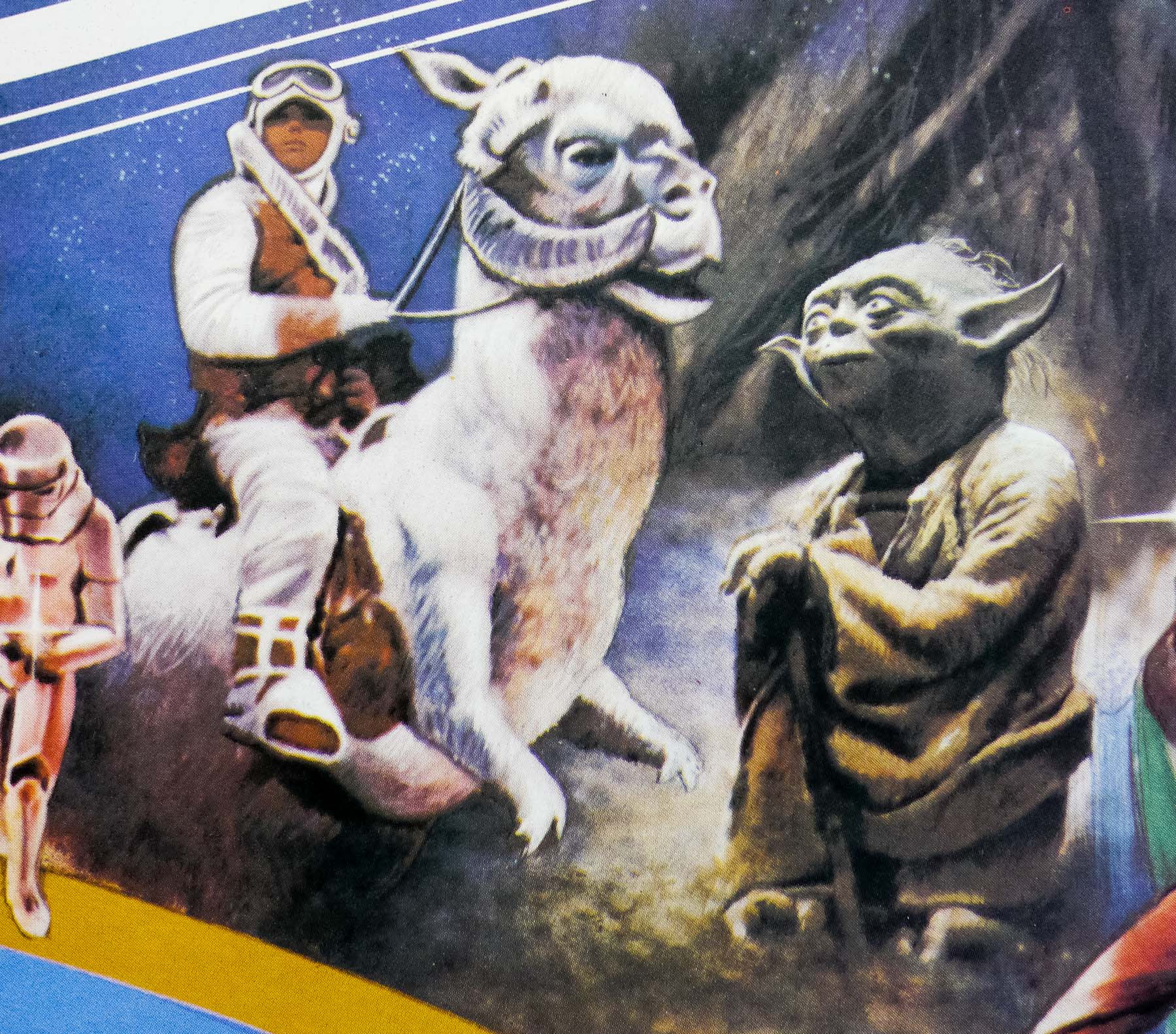
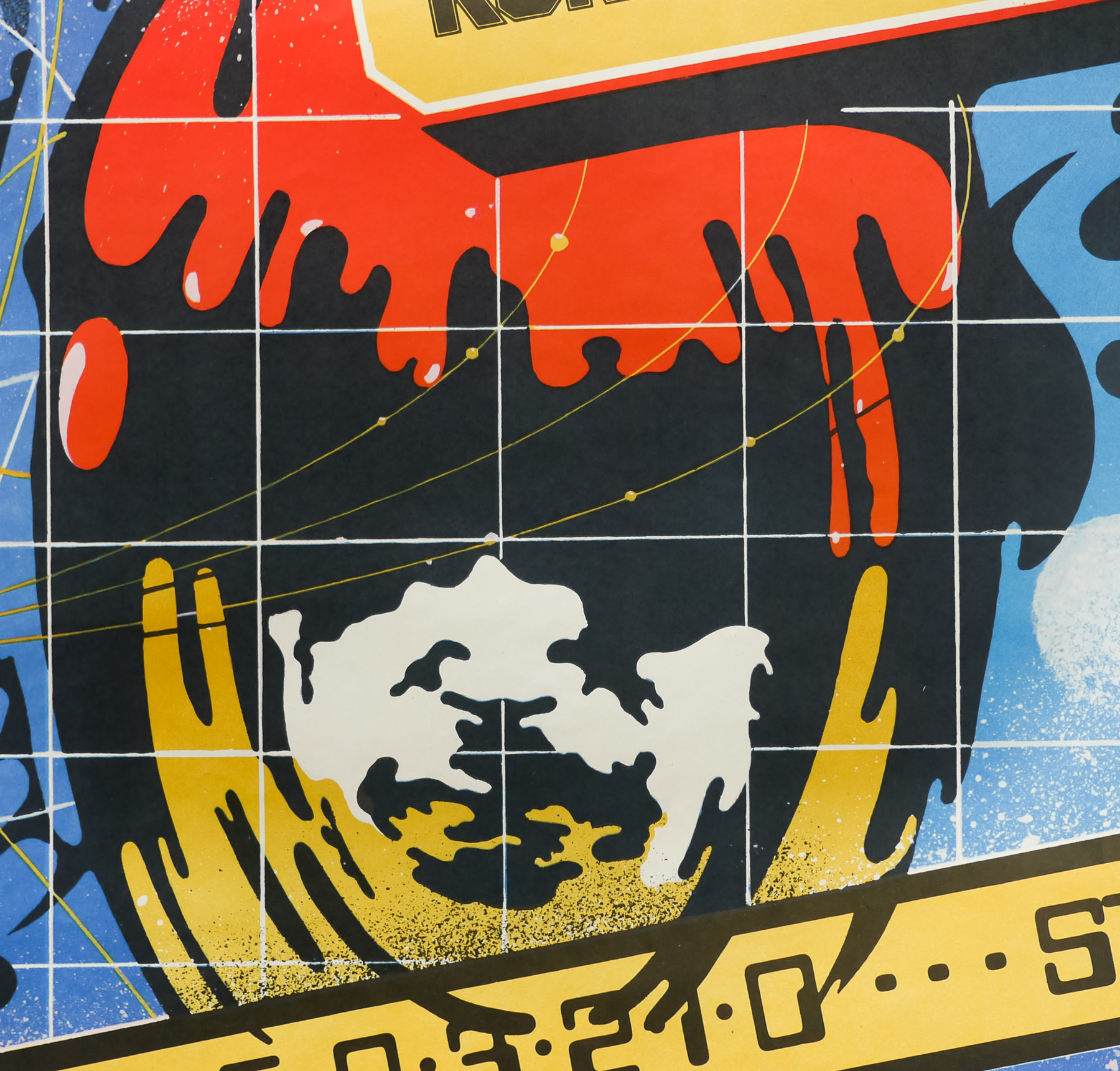
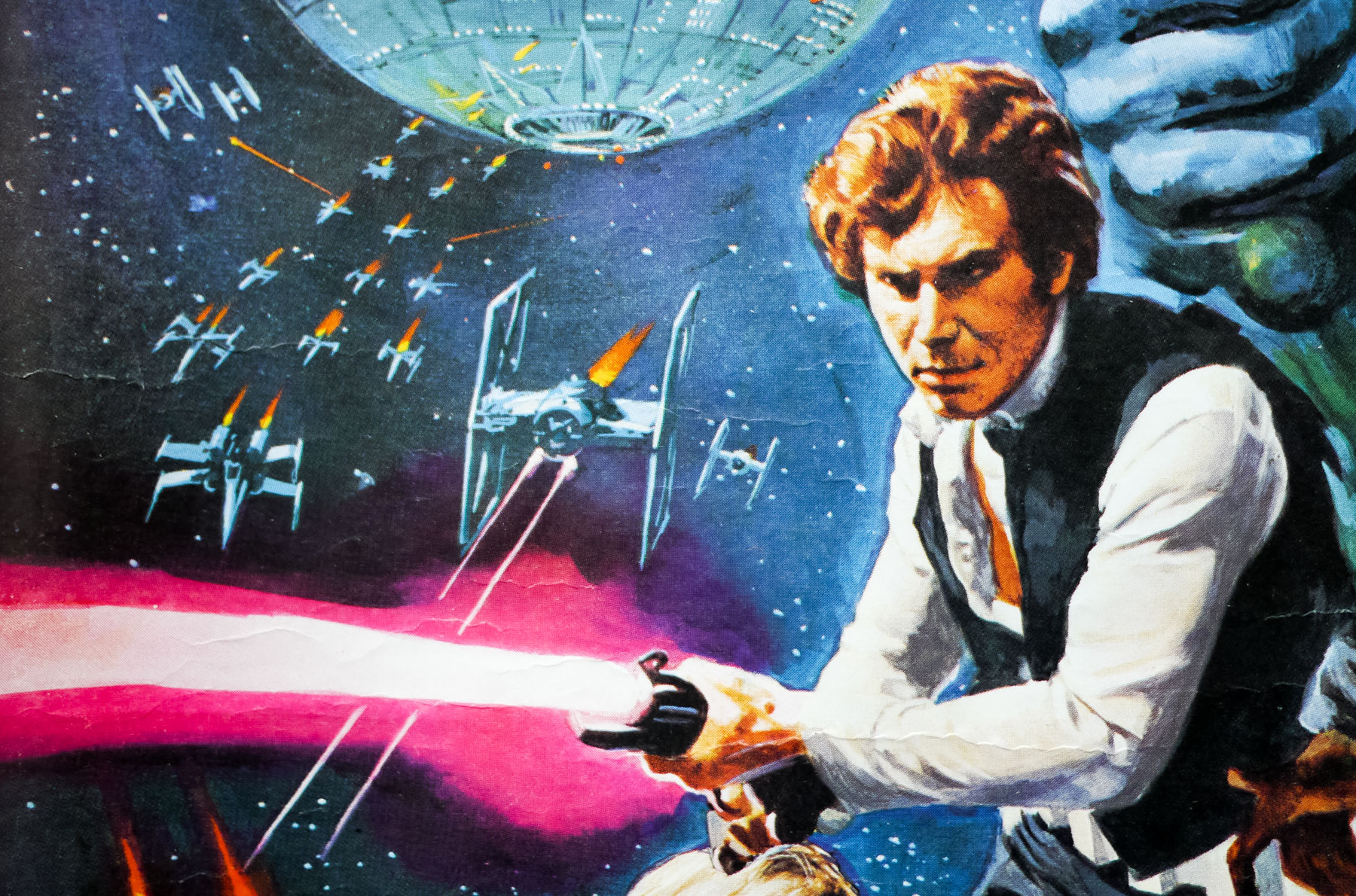
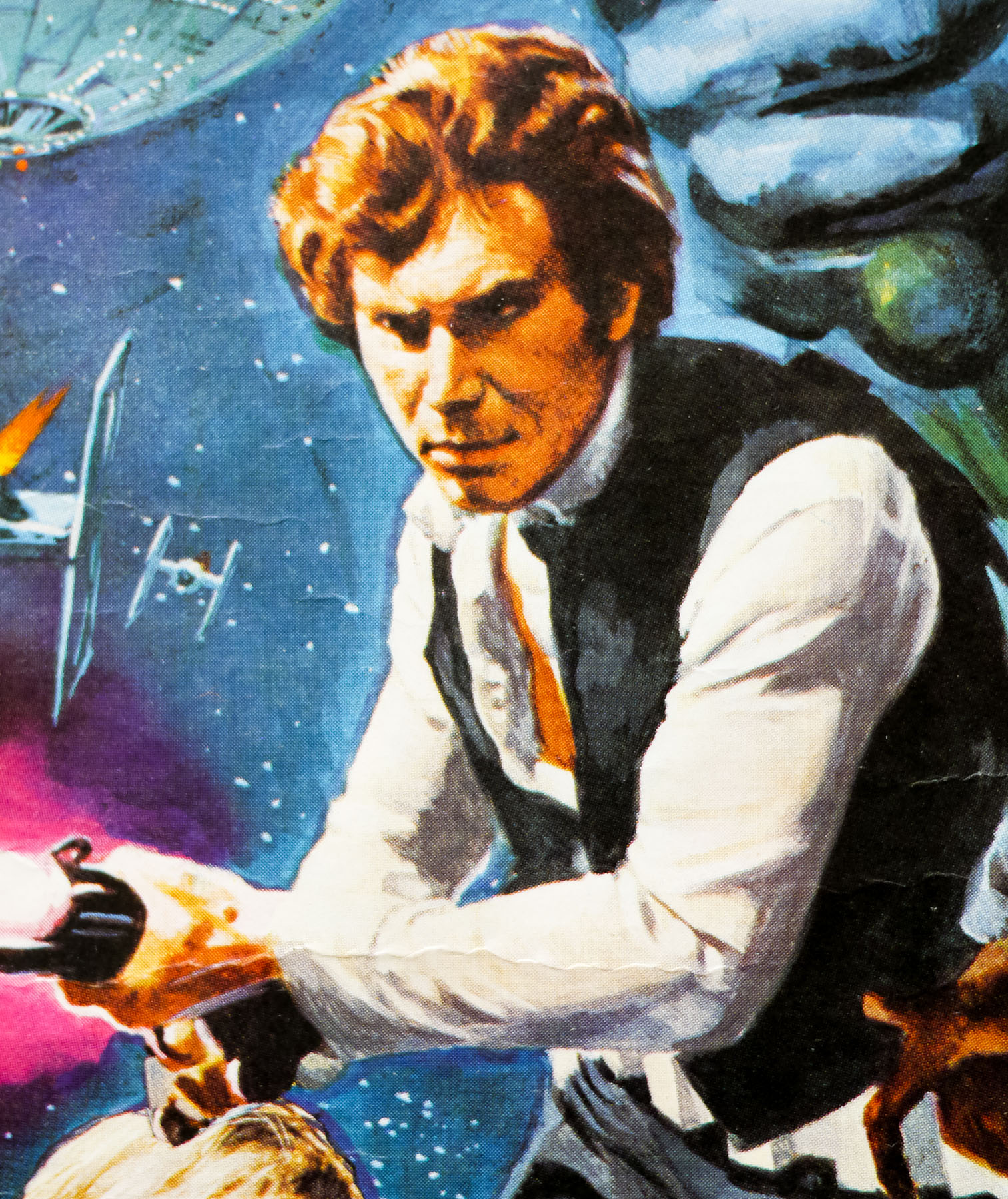
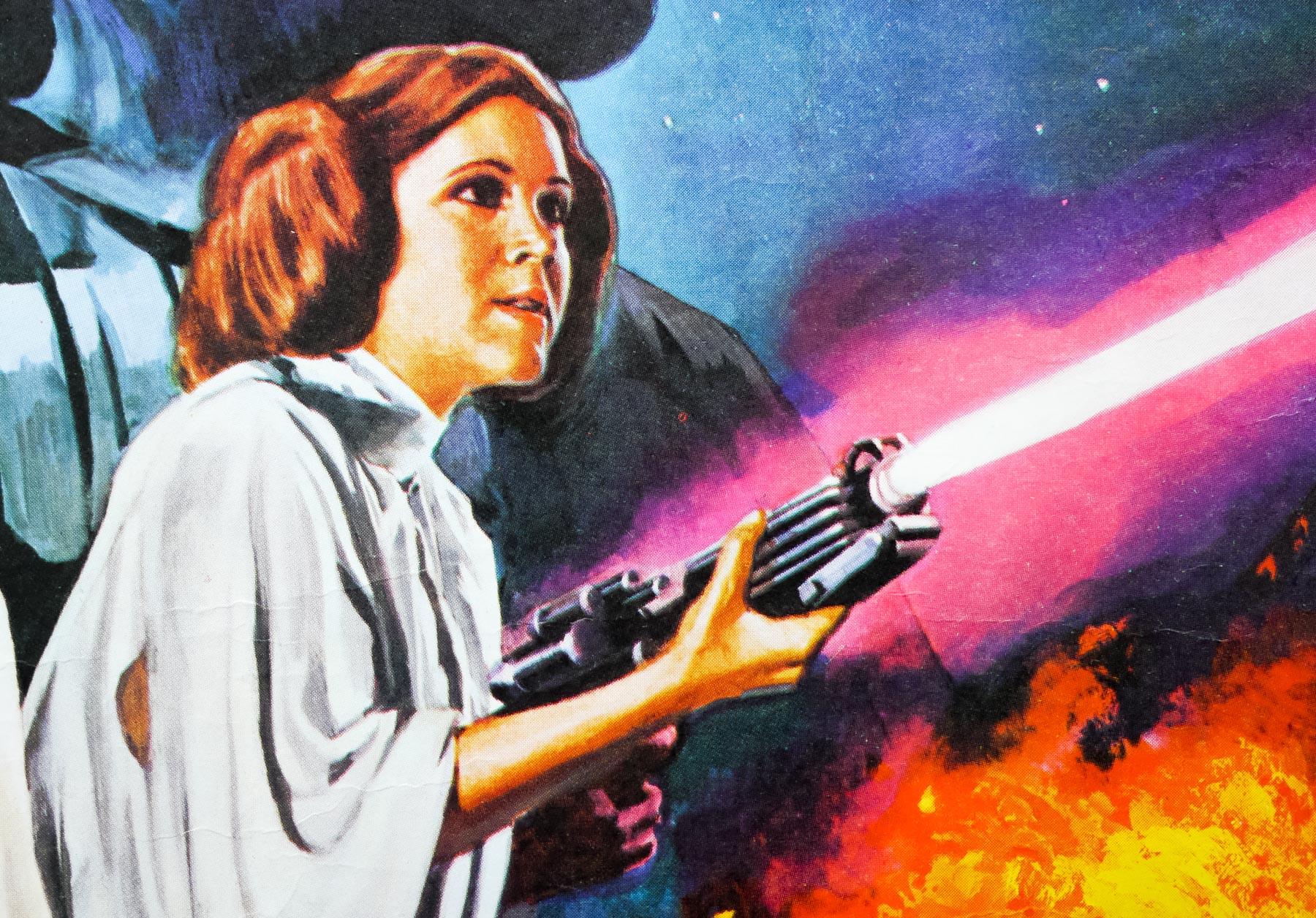
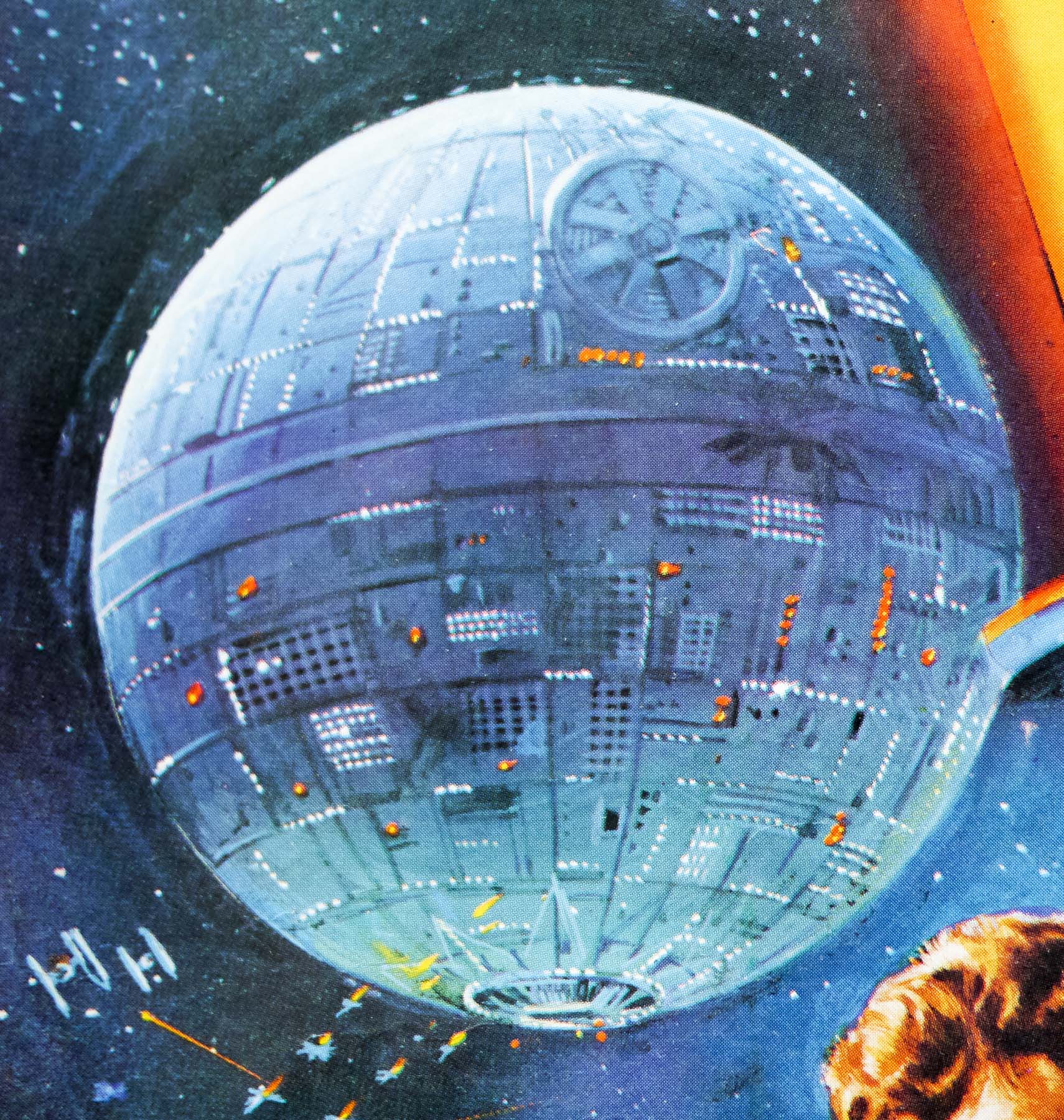
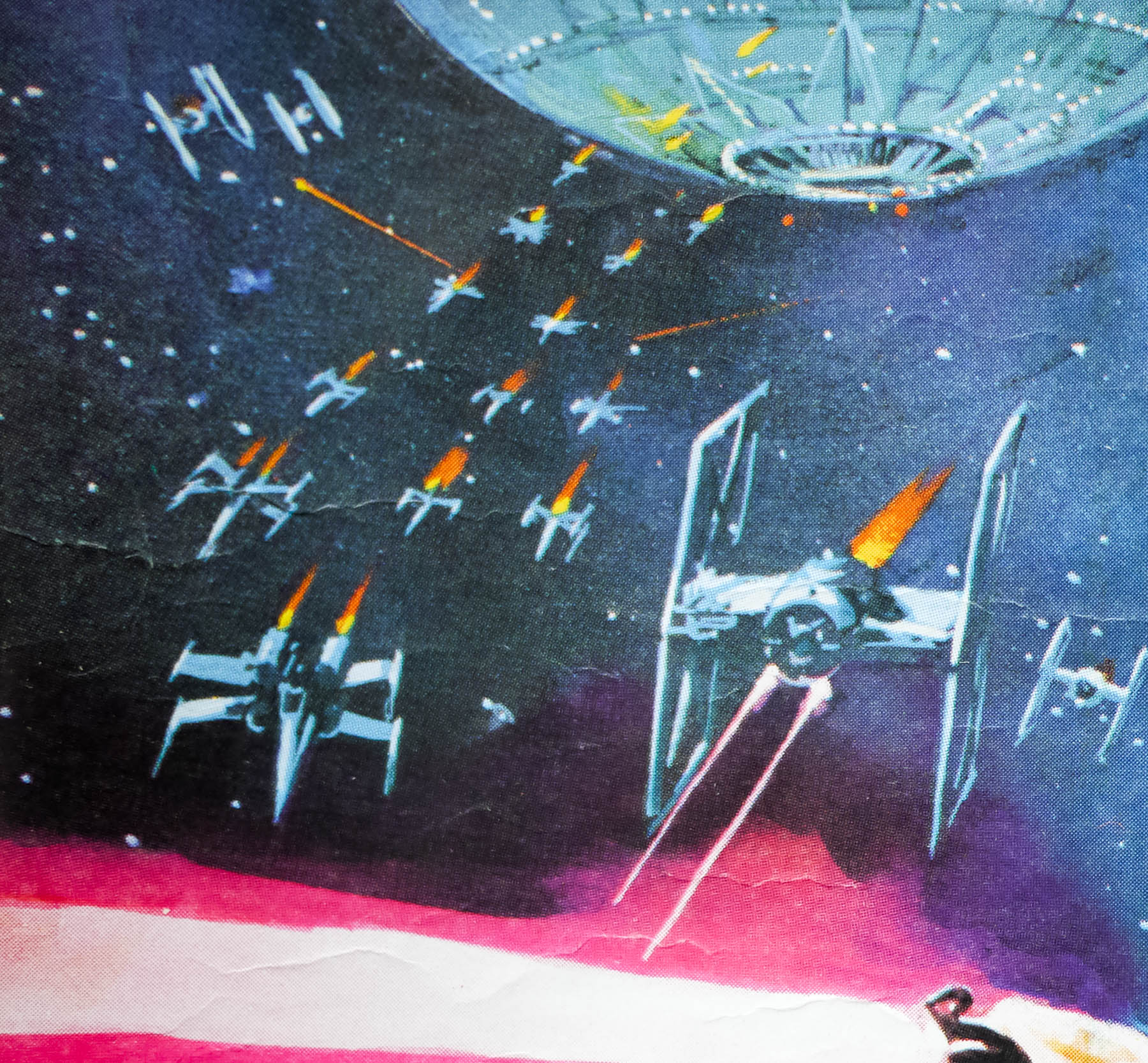
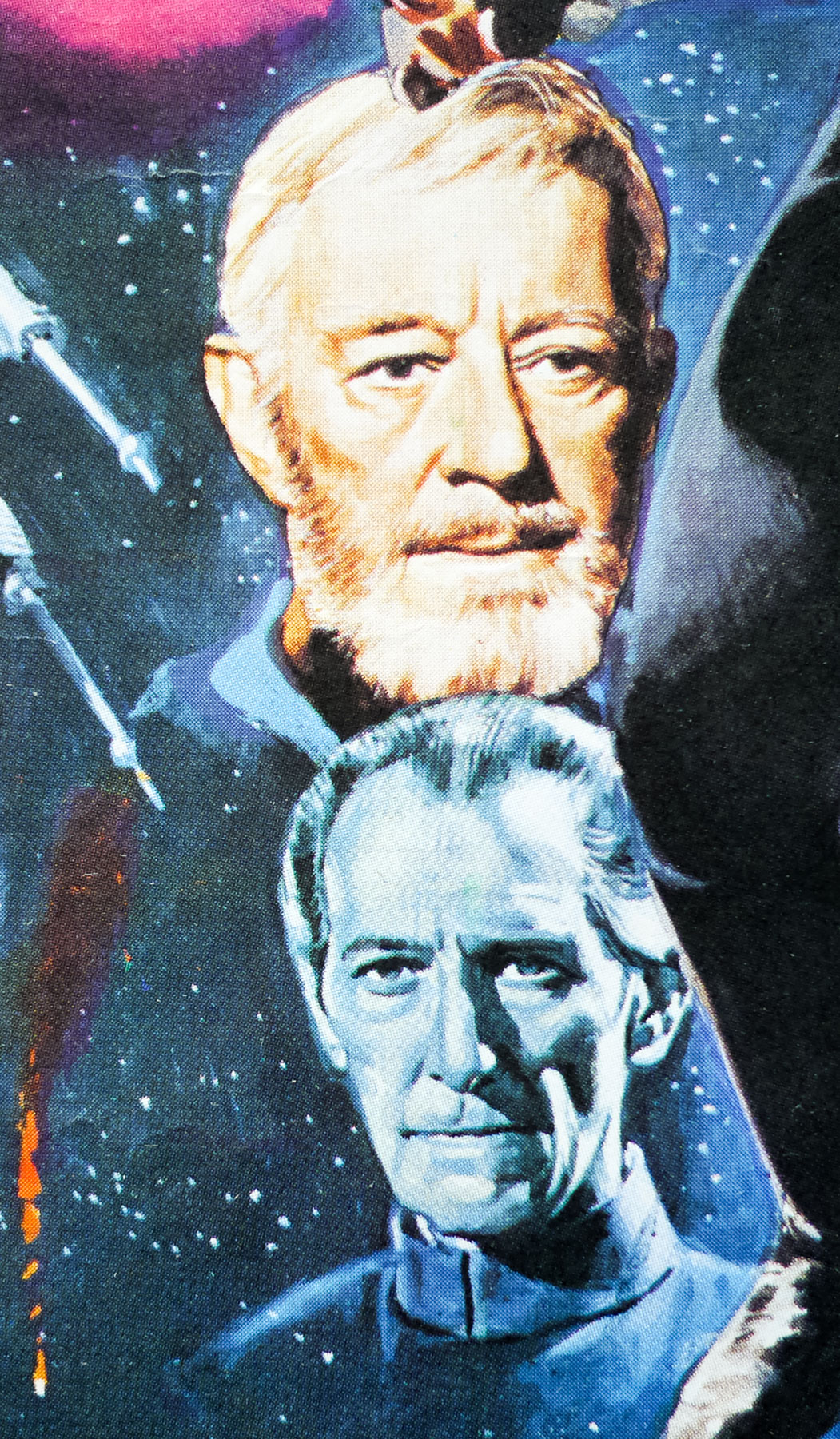
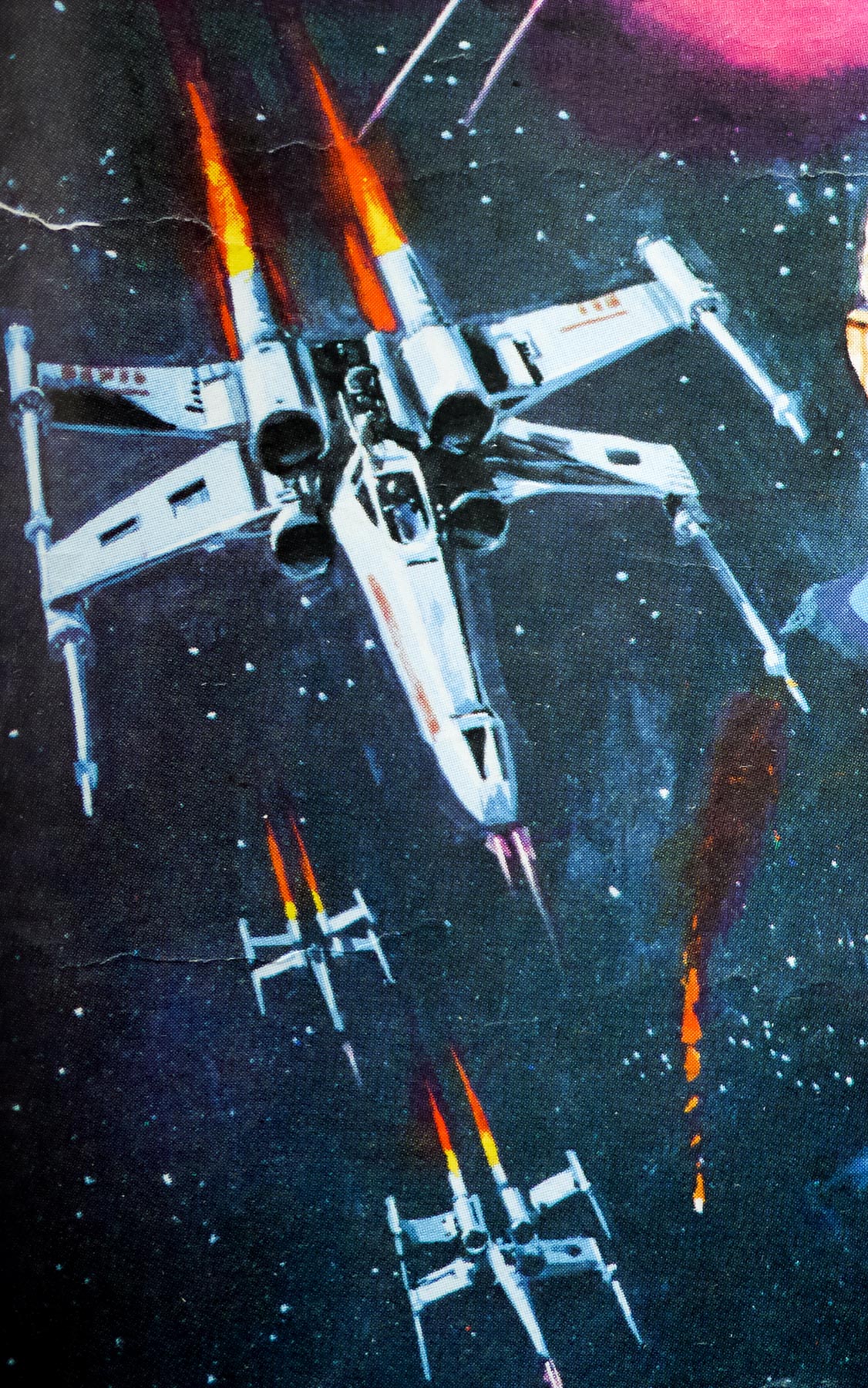
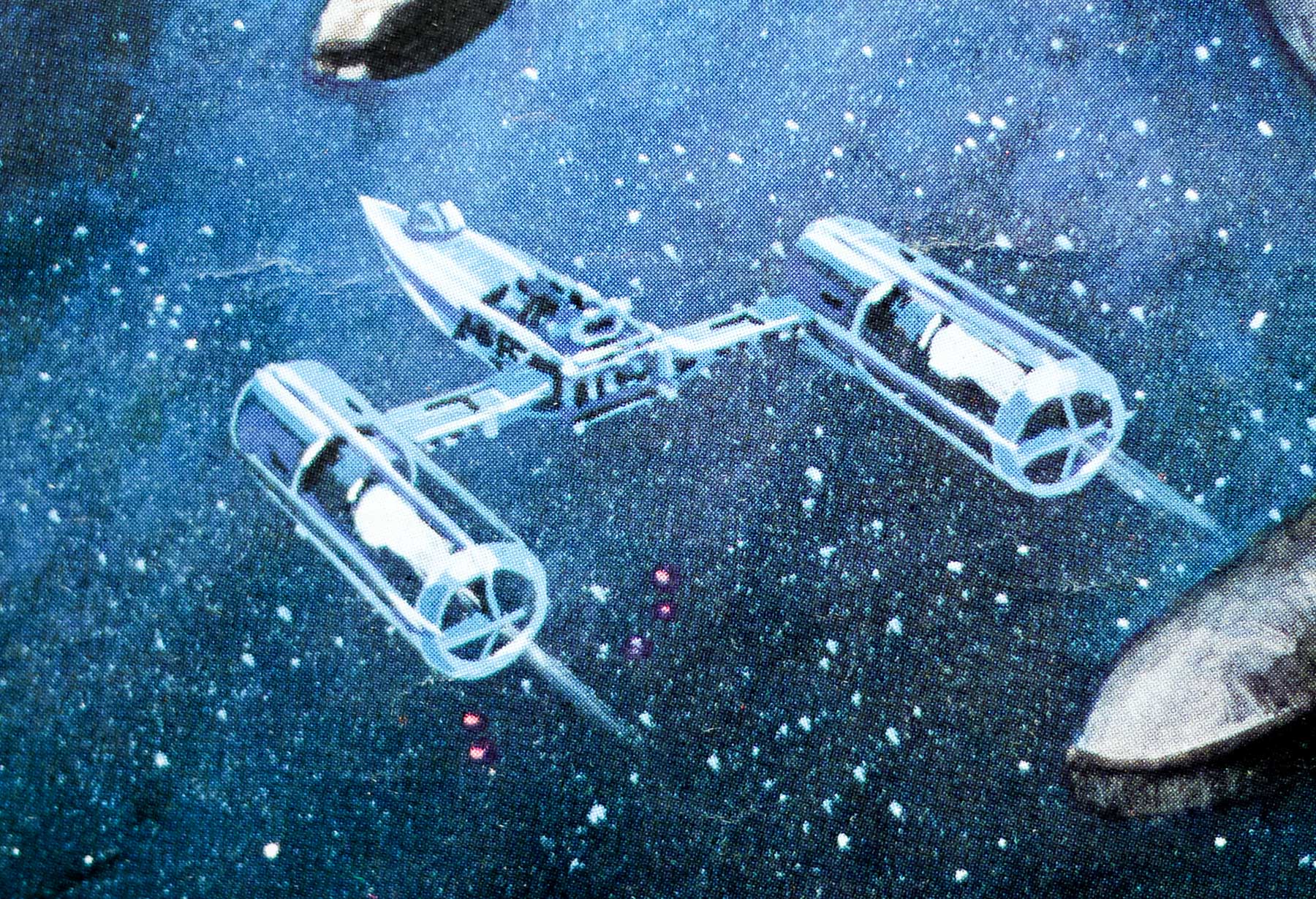
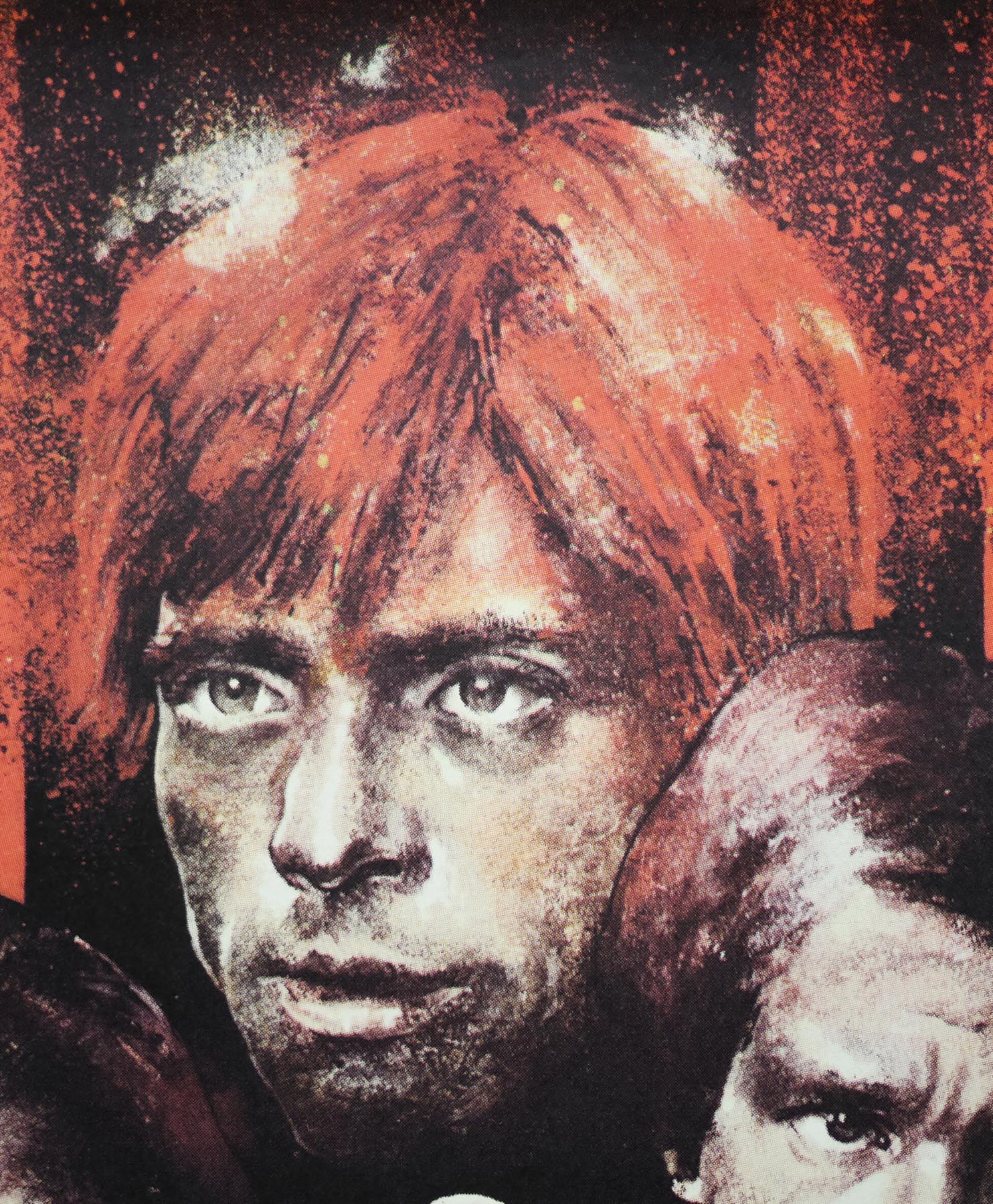
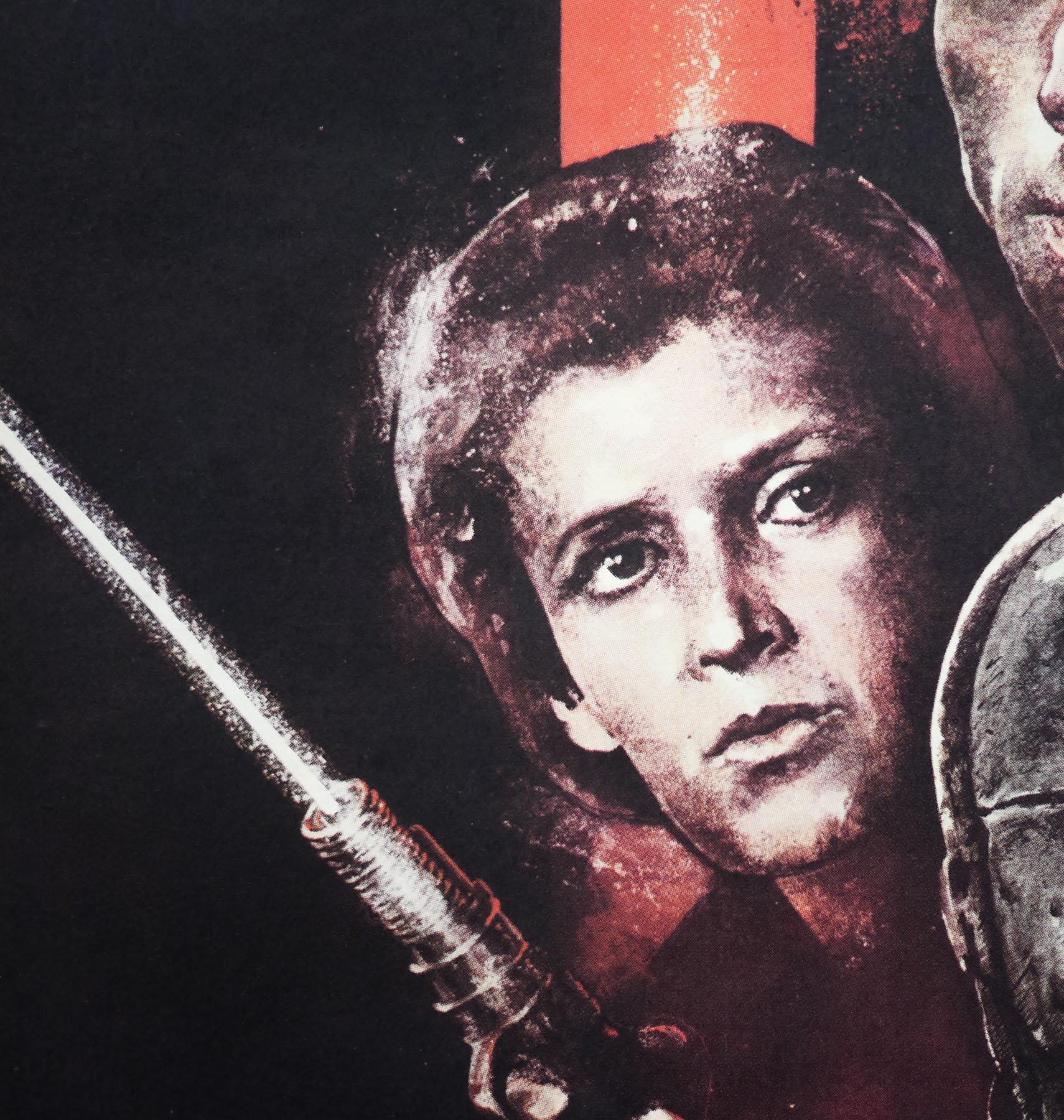
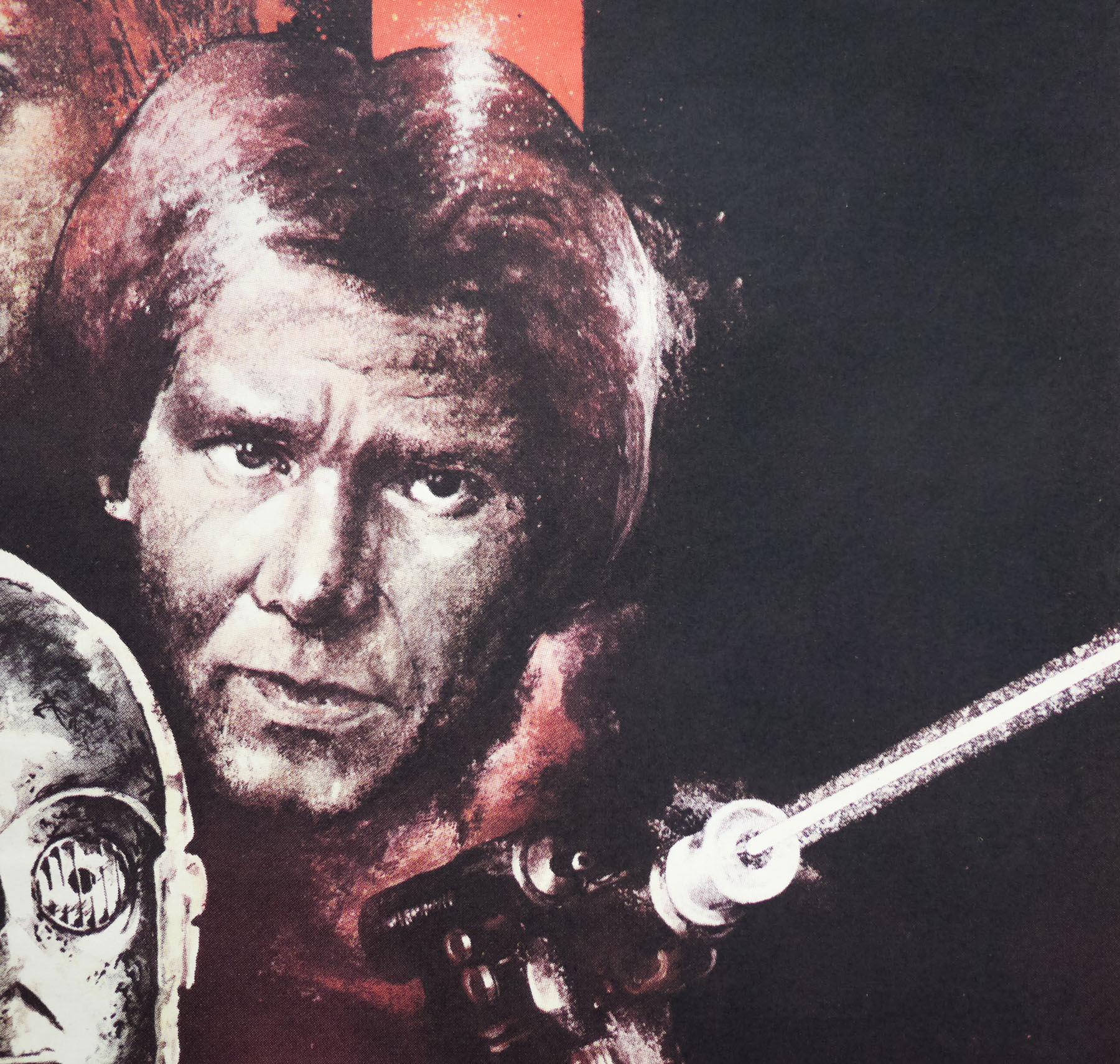
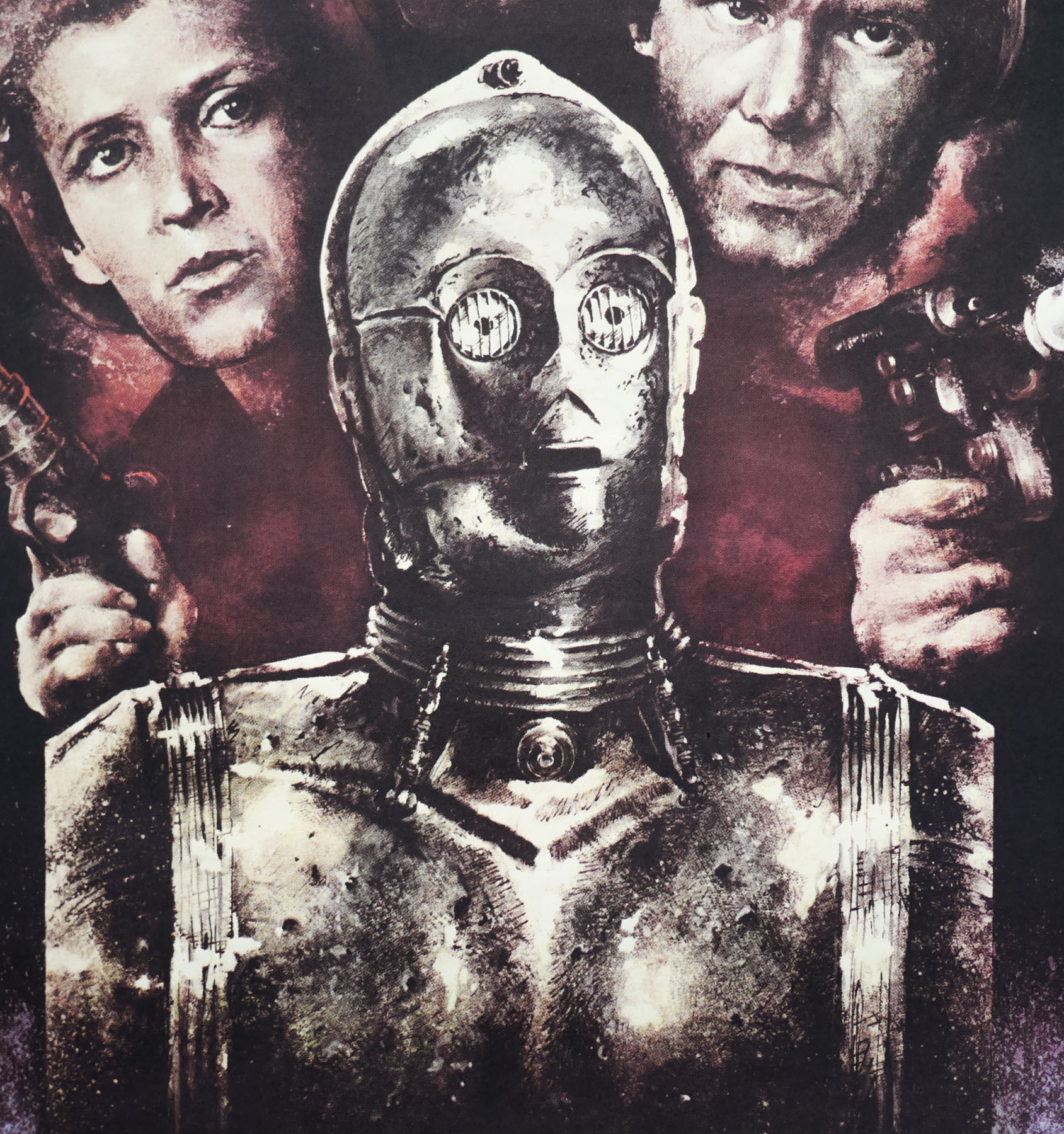
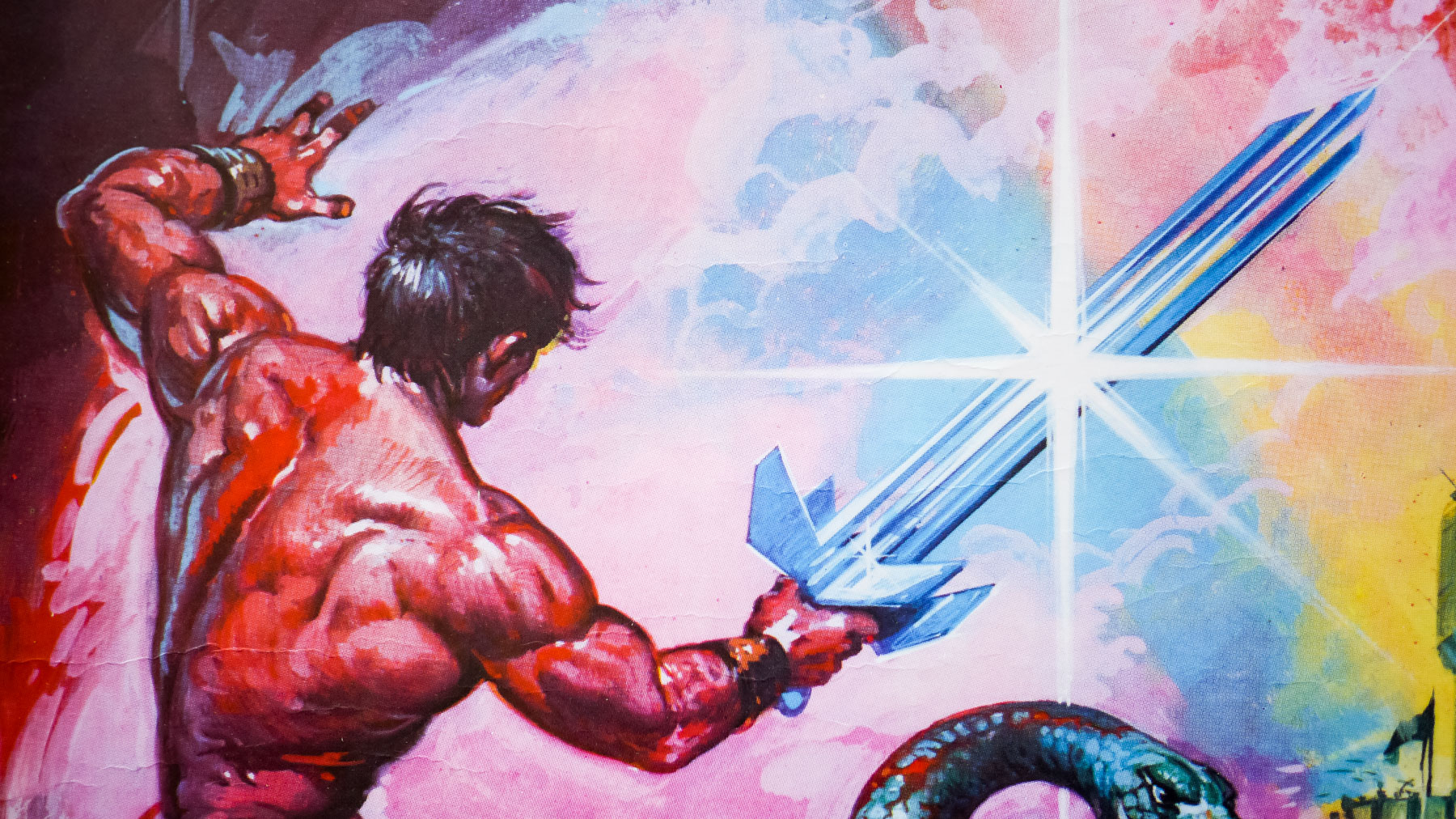
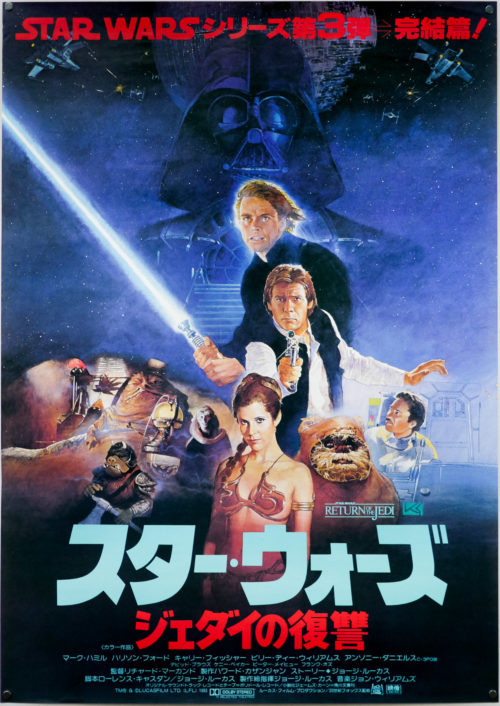
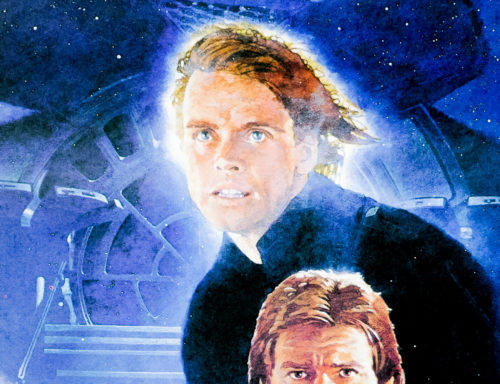
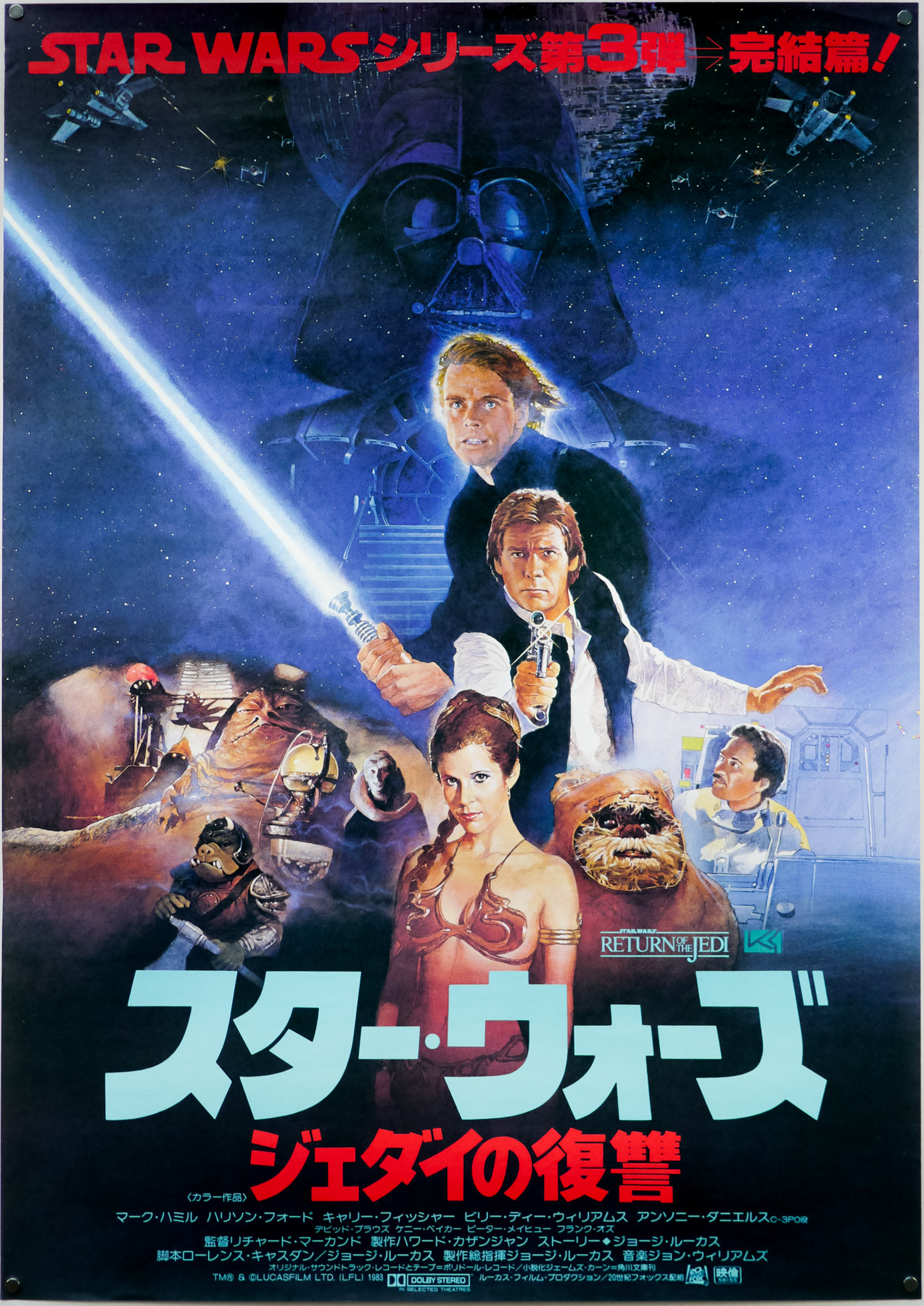
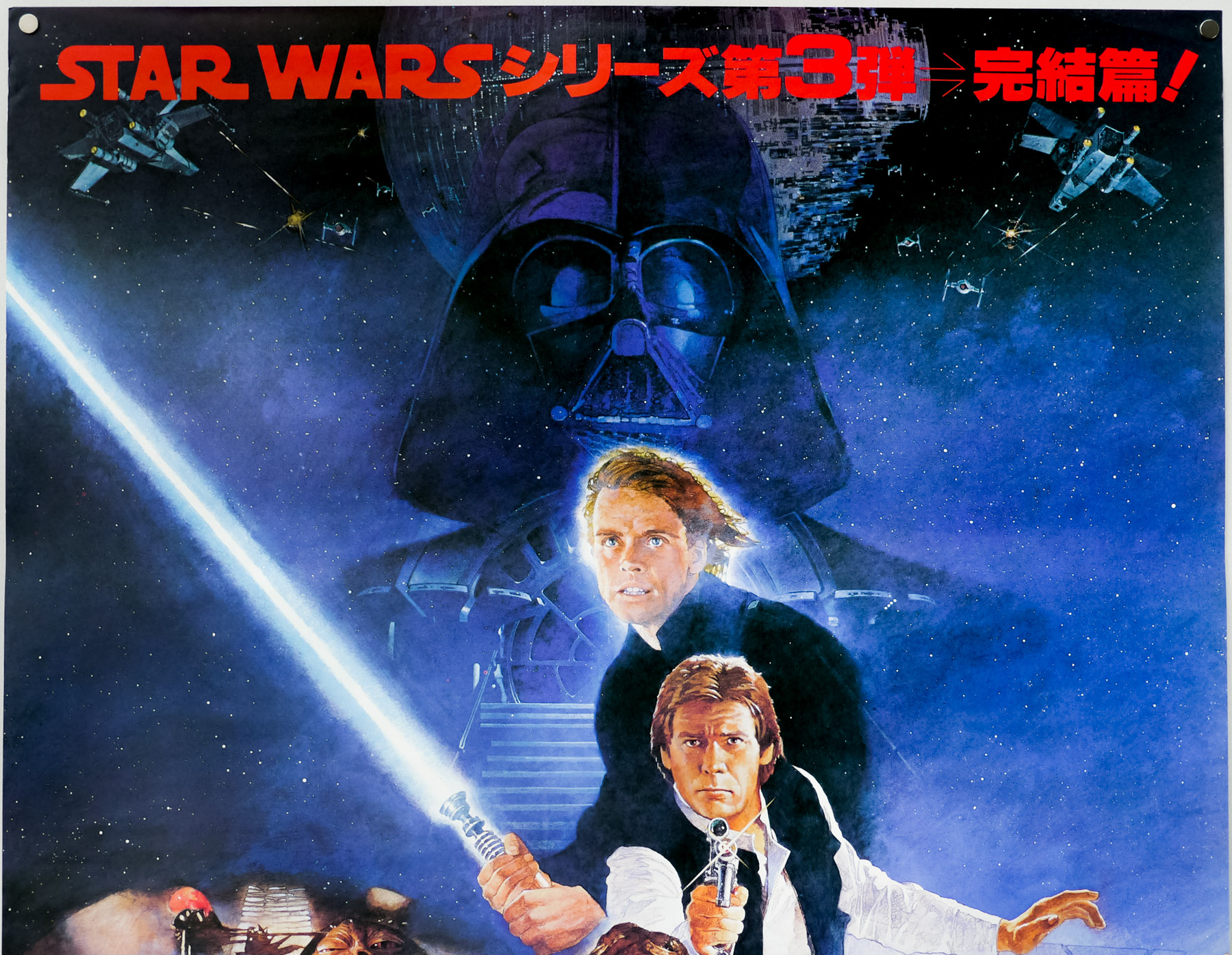
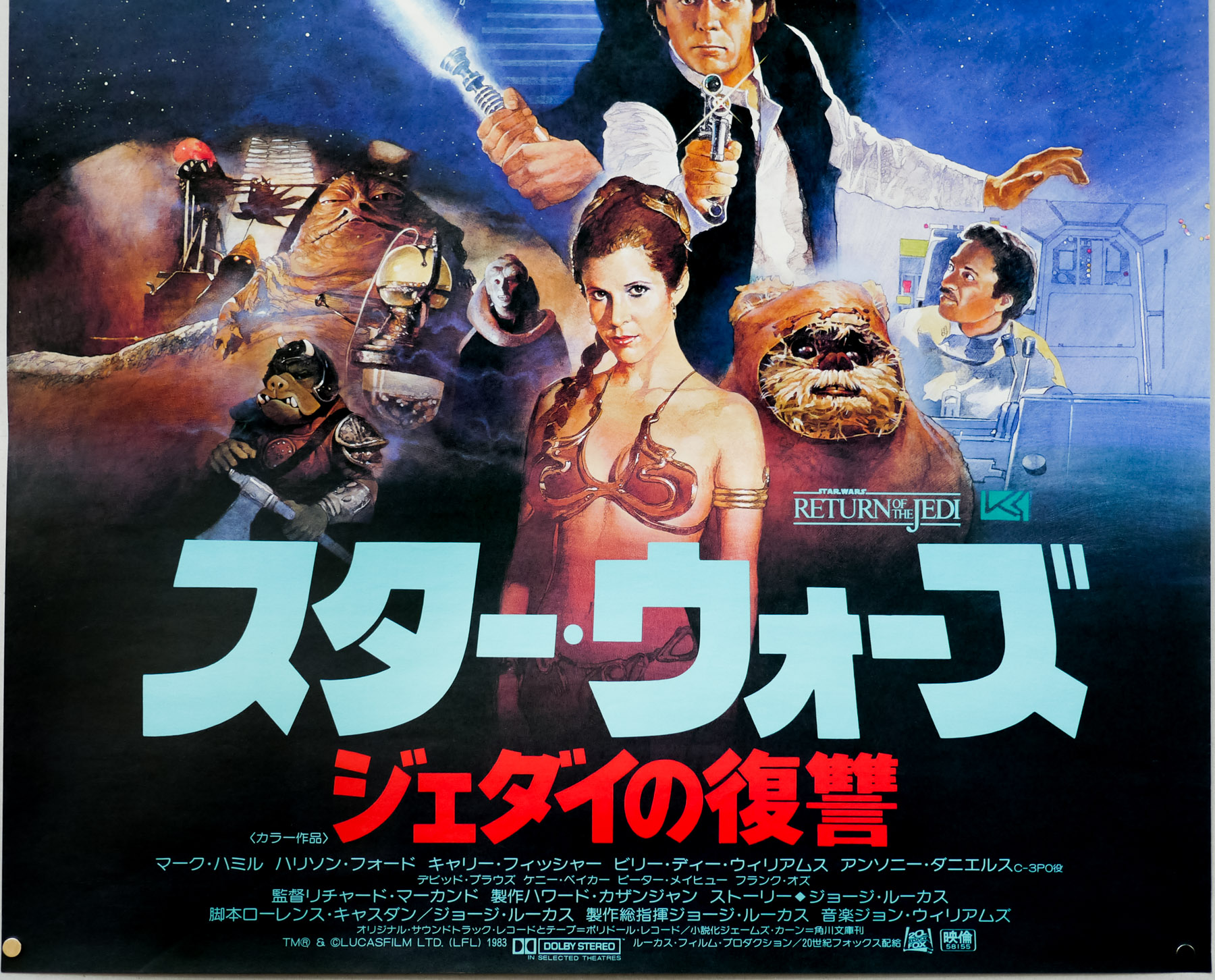
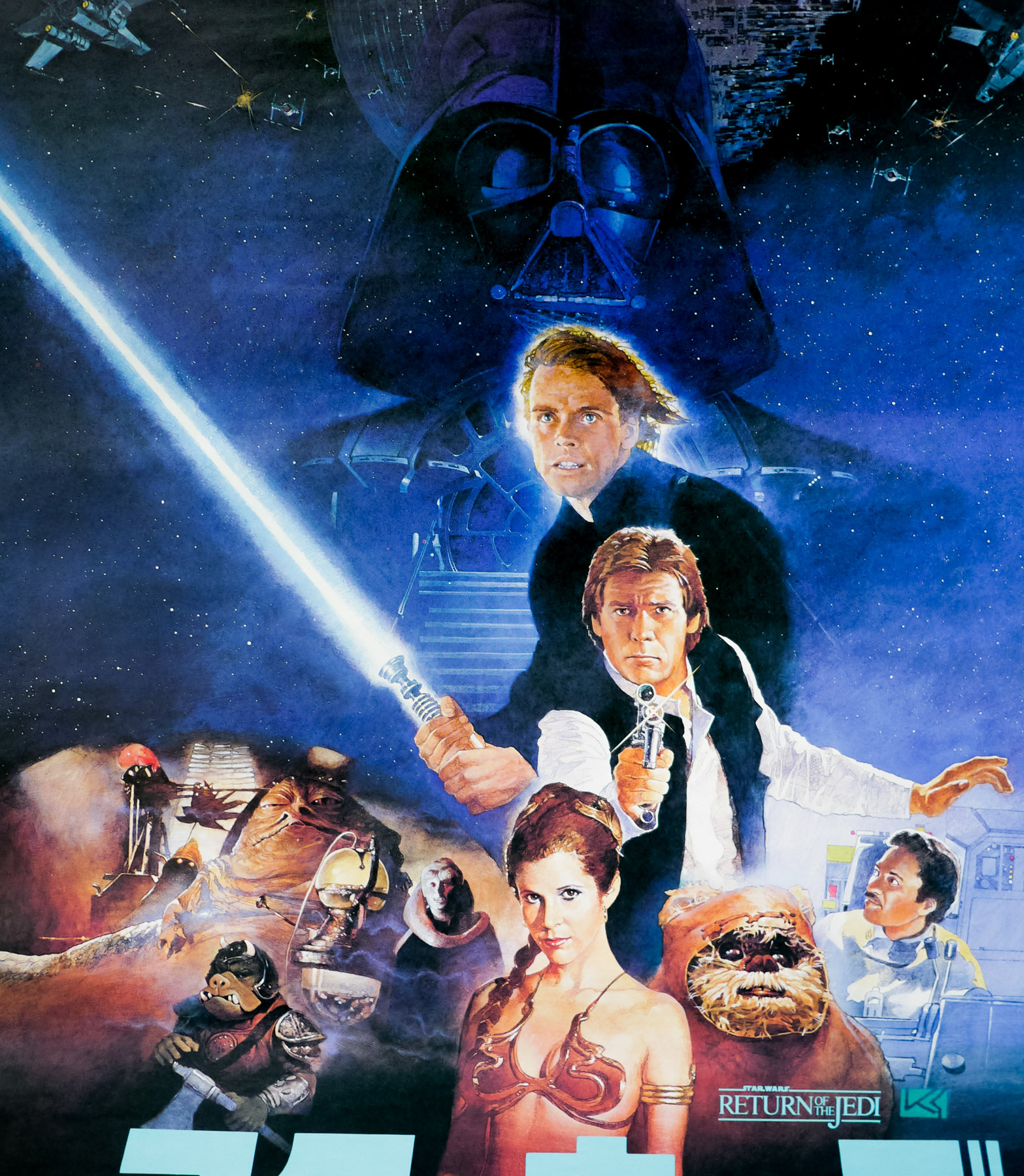
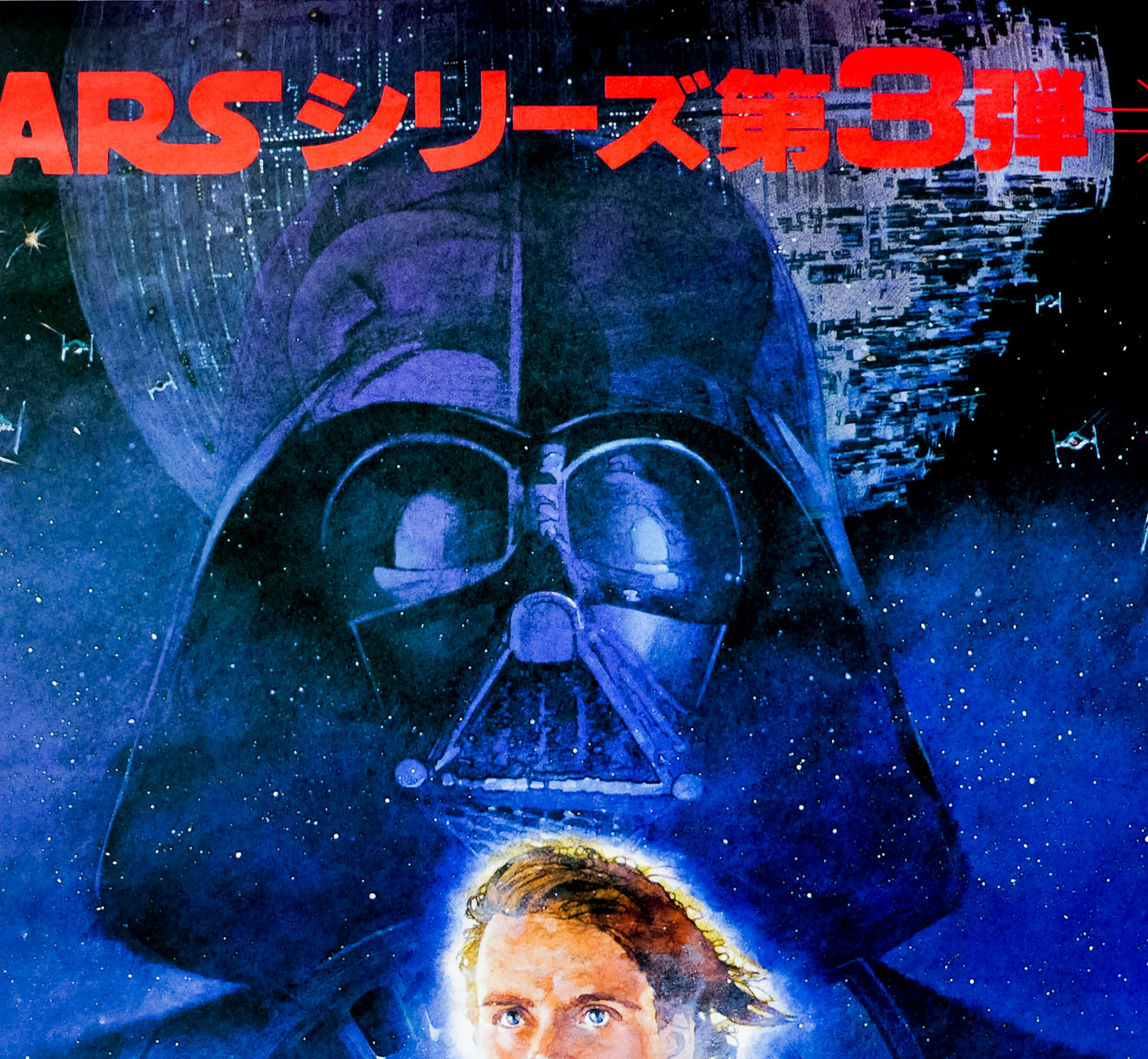
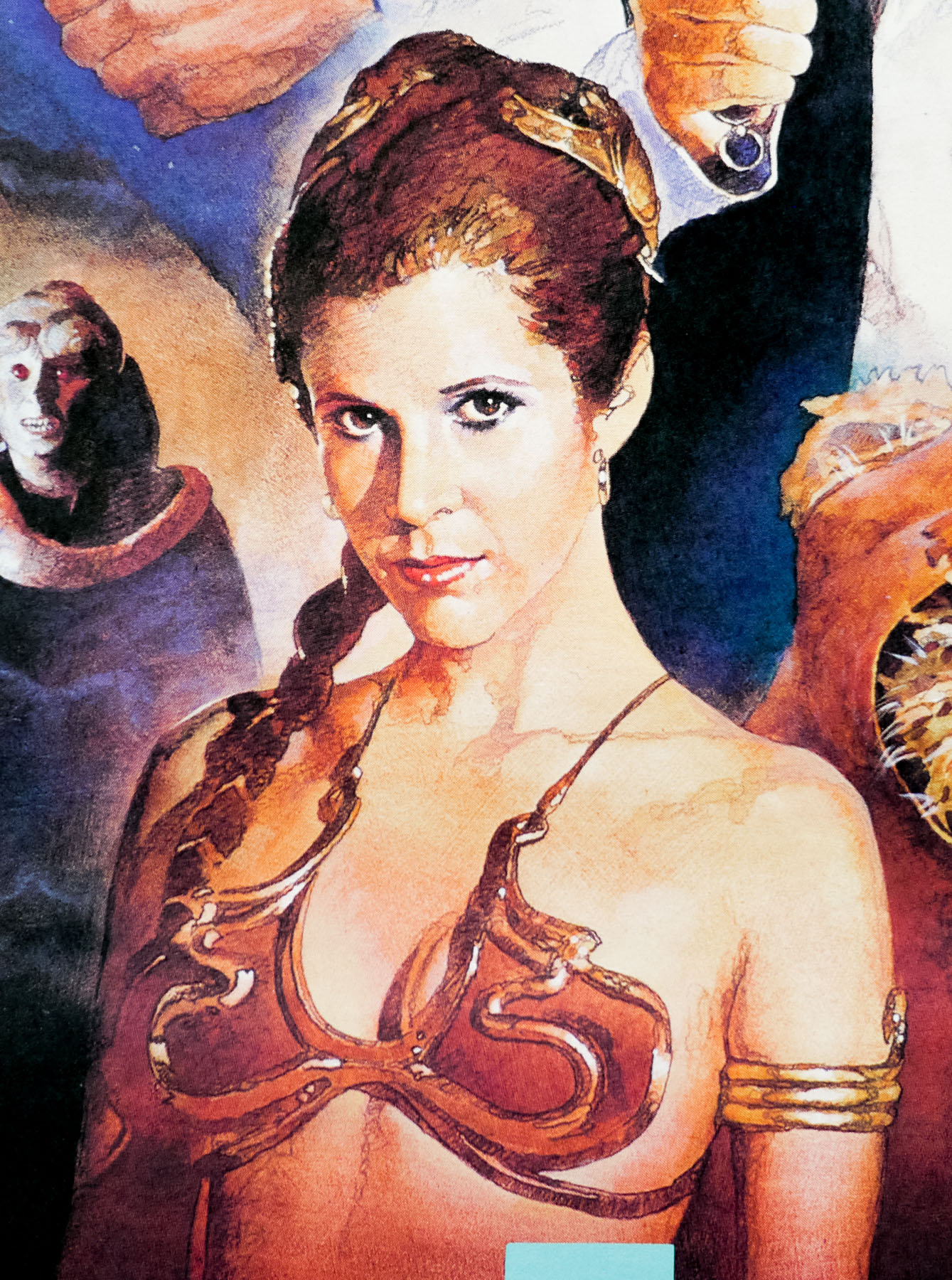
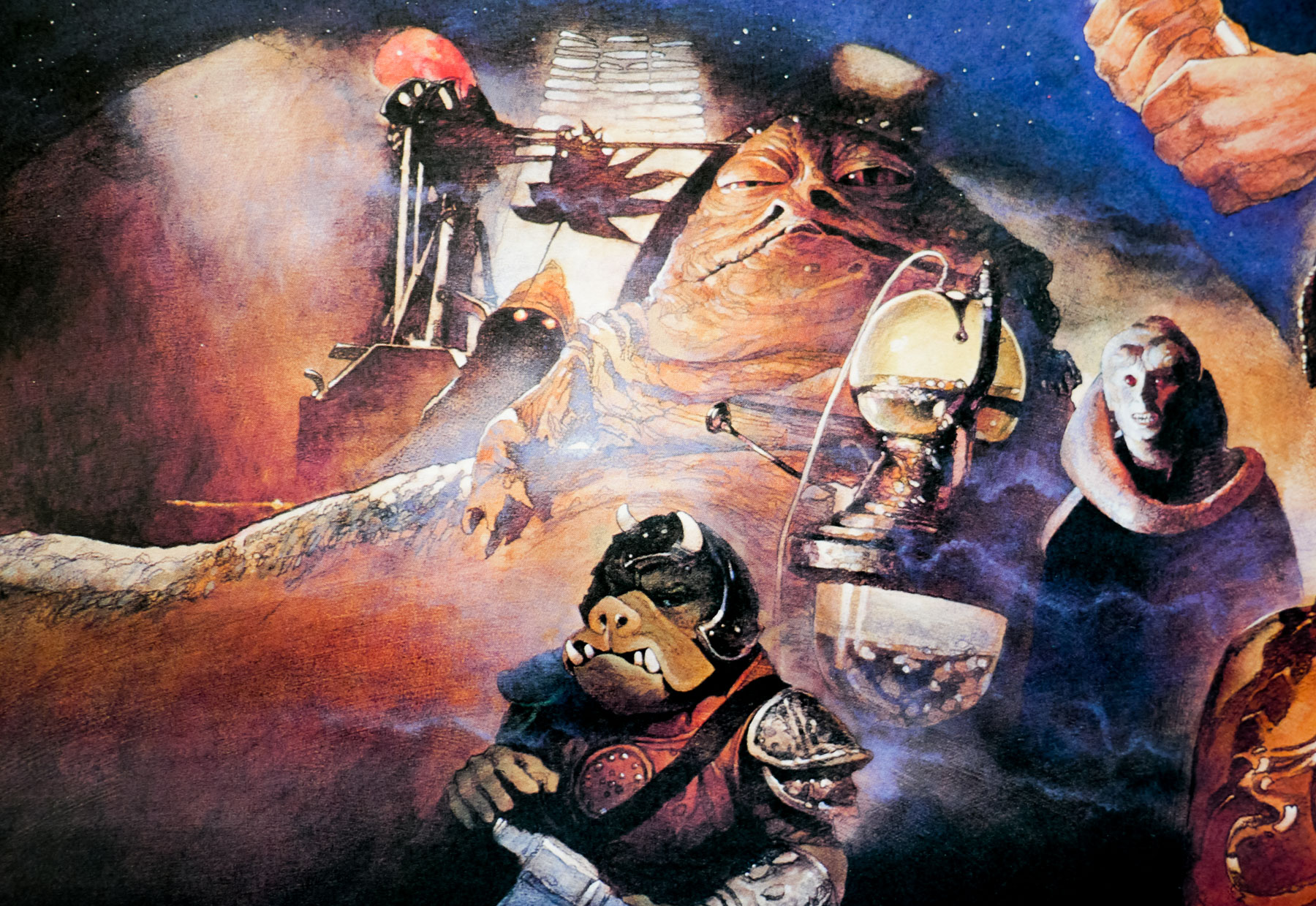
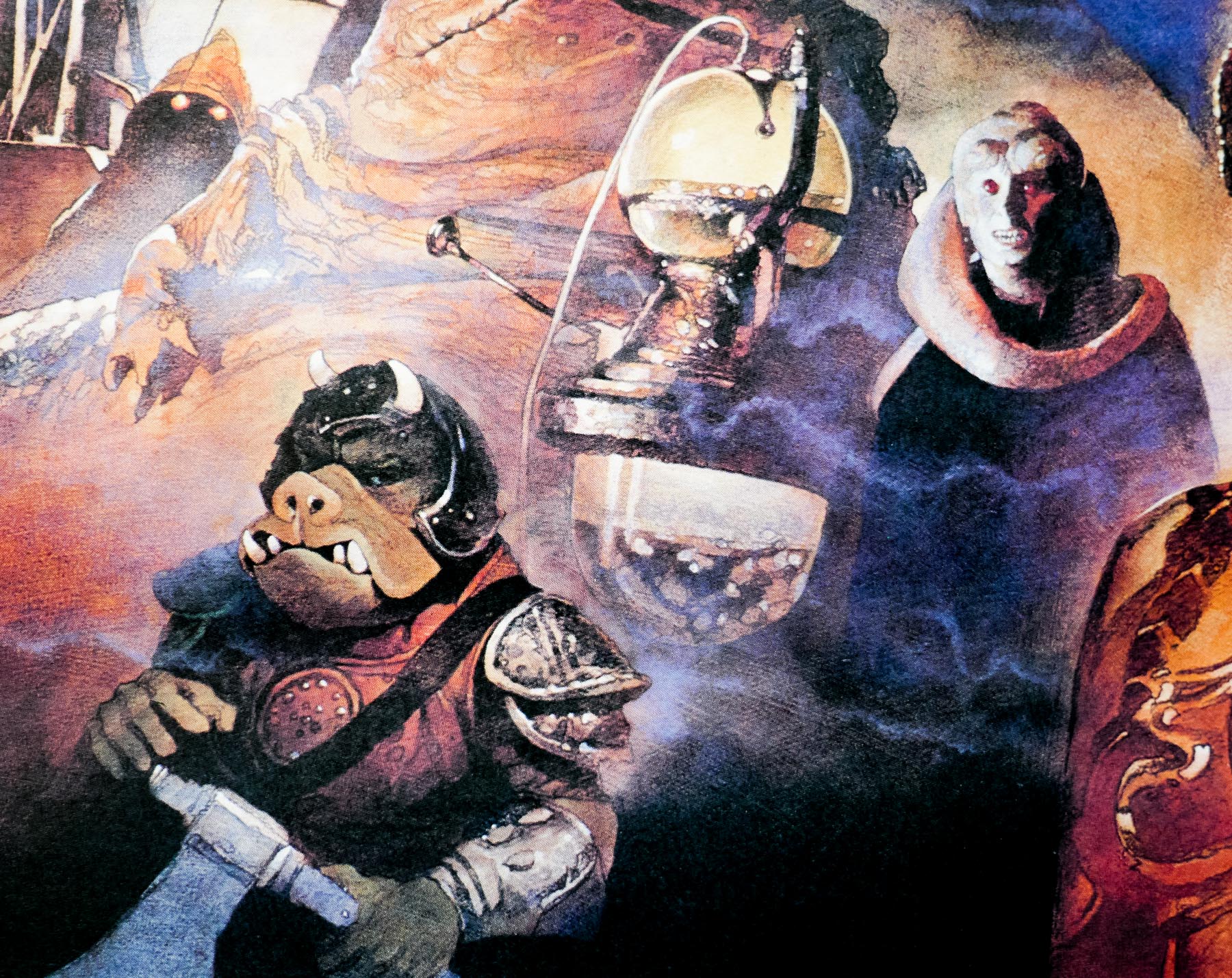
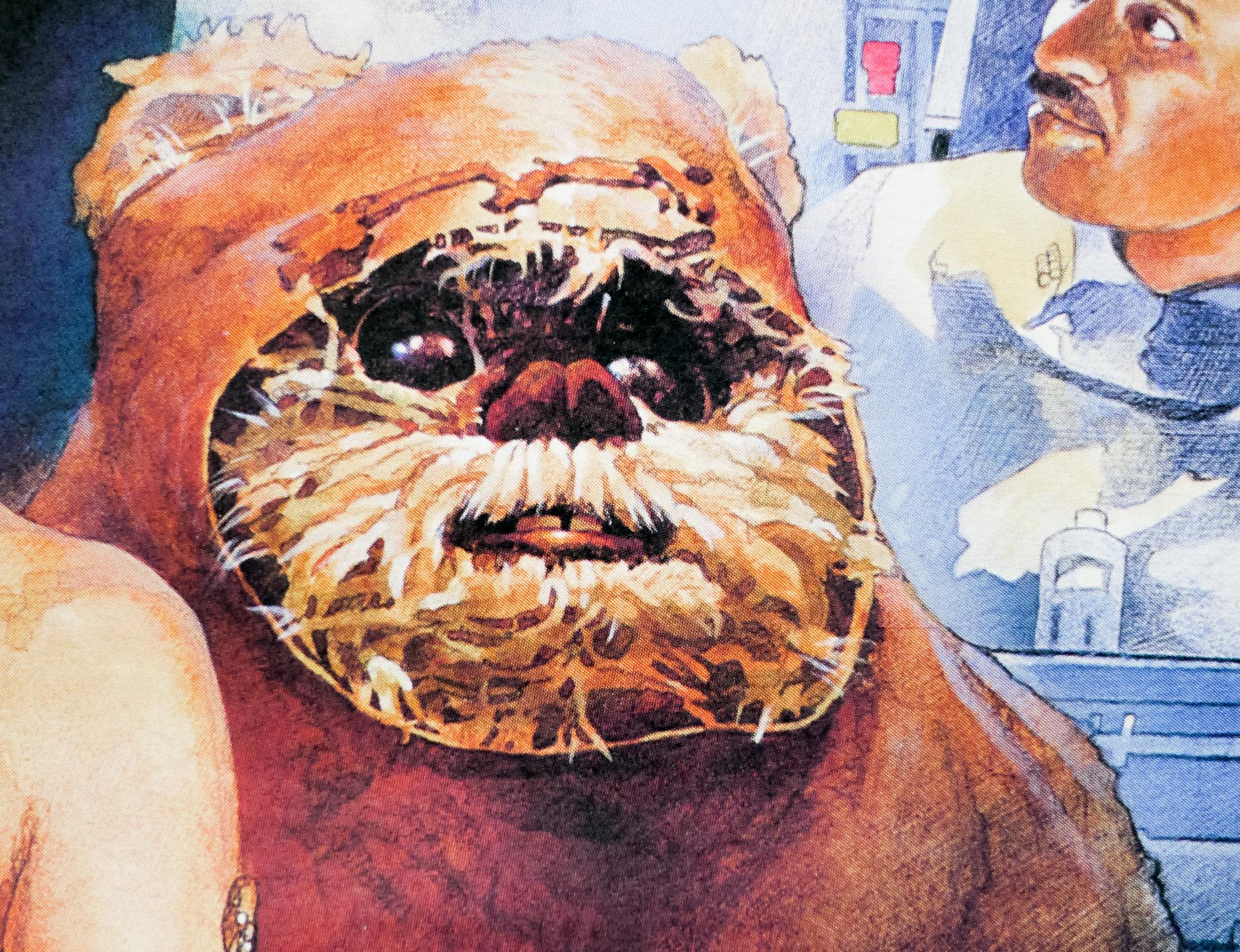
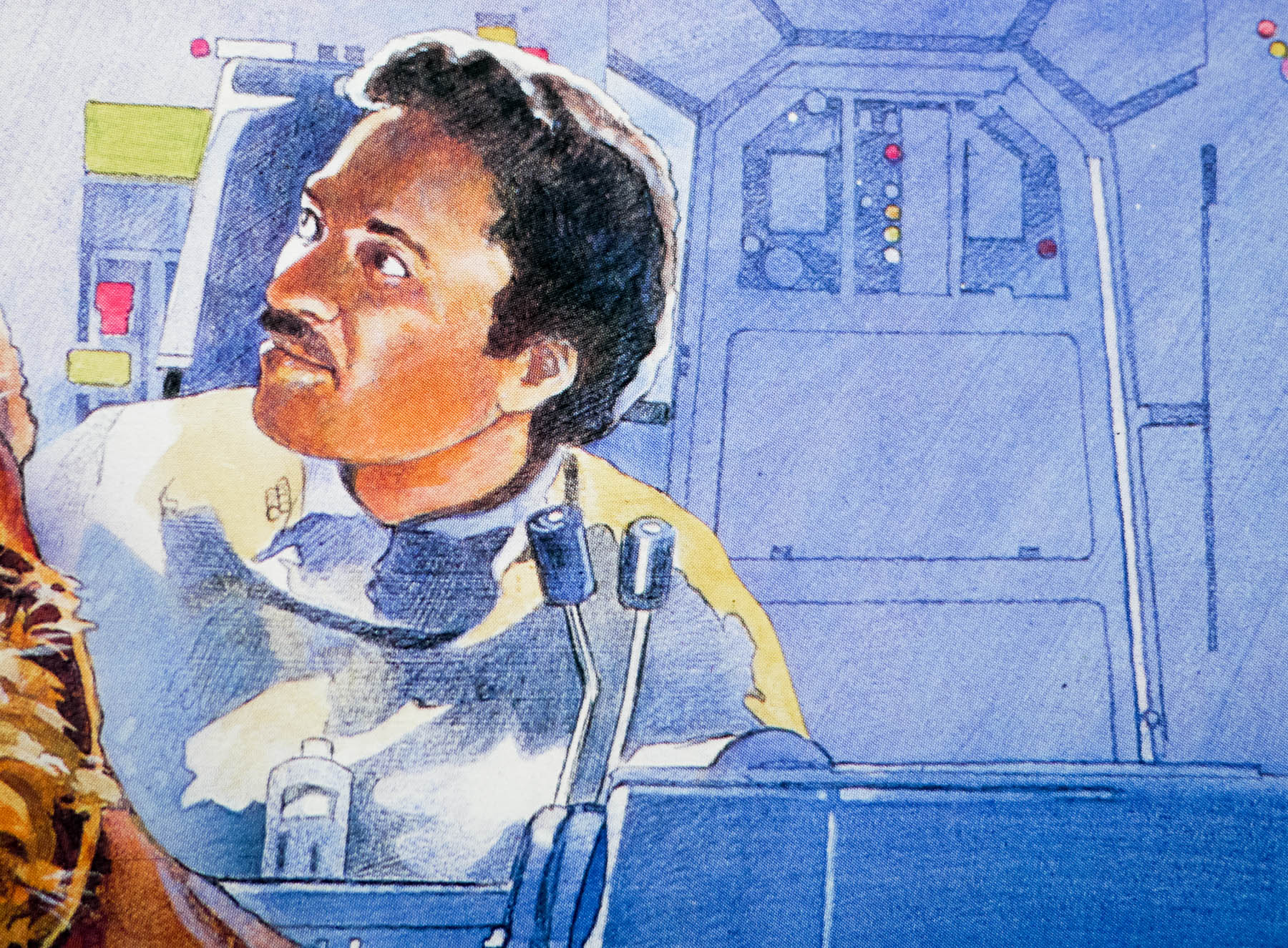
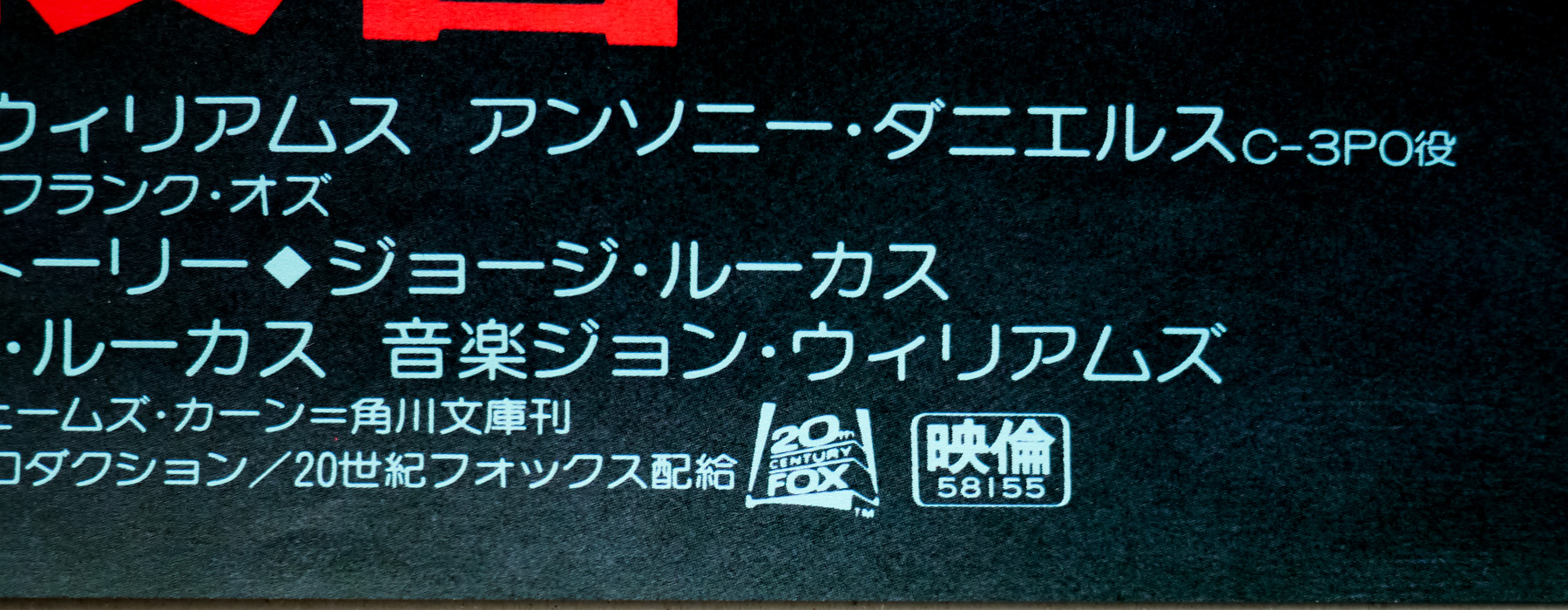
Return Of The Jedi / B2 / Sano artwork style / Japan

11.08.14

Poster Poster
Title
Return Of The Jedi
AKA
Star Wars Episode VI: Return of the Jedi (full title) | Blue Harvest (USA - fake working title) | Revenge of the Jedi (USA - working title)
Year of Film
1983
Director
Richard Marquand
Starring
Mark Hamill, Harrison Ford, Carrie Fisher, Billy Dee Williams, Anthony Daniels, Kenny Baker, Peter Mayhew, David Prowse, Ian McDiarmid
Origin of Film
USA
Genre(s) of Film
Mark Hamill, Harrison Ford, Carrie Fisher, Billy Dee Williams, Anthony Daniels, Kenny Baker, Peter Mayhew, David Prowse, Ian McDiarmid,
Type of Poster
B2
Style of Poster
Sano artwork style
Origin of Poster
Japan
Year of Poster
1983
Designer
Unknown
Artist
Kazuhiko Sano
Size (inches)
20 6/16" x 28 13/16"
SS or DS
SS
NSS #
--
Tagline
--

This is one of four B2 posters printed for the original Japanese release of Return of the Jedi in 1983. Although ROTJ, the third in the original trilogy of Star Wars films, was often maligned by fans who complained it was a weak end to the series and derided for featuring the child-friendly Ewoks, all was forgiven with the release of the 1999′s The Phantom Menace and its ‘galactic trade disputes’ and the risible Jar-Jar Binks. Now, although certainly not as highly acclaimed as the original 1977 film or the classic The Empire Strikes Back, ROTJ is still beloved by fans of the series. In 2015, director JJ Abrams will release Episode VII into cinemas, mooted as a direct sequel to this film and much anticipated by fans worldwide. JJ is seen as a much safer pair of hands than George Lucas after his shepherding of a well-received reboot of the Star Trek franchise.

Even if the Ewoks are loved and hated in equal measure, ROTJ still features many memorable, fan favourite characters, locations and scenes, including the attempted rescue of Han Solo from Jabba the Hut’s palace leading to a memorable showdown above a Sarlacc pit monster (which features the ignominious exit of fan favourite Boba Fett). Later the film sees the passing of Yoda along with more revelations about the Skywalker family, and an excellent scene that sees Luke Skywalker confront the evil Emperor Palpatine with Vader standing by. Meanwhile, the Ewoks (essentially child-sized teddy bears) join forces to defeat the ground forces of the Empire on the surface of the planet Endor.

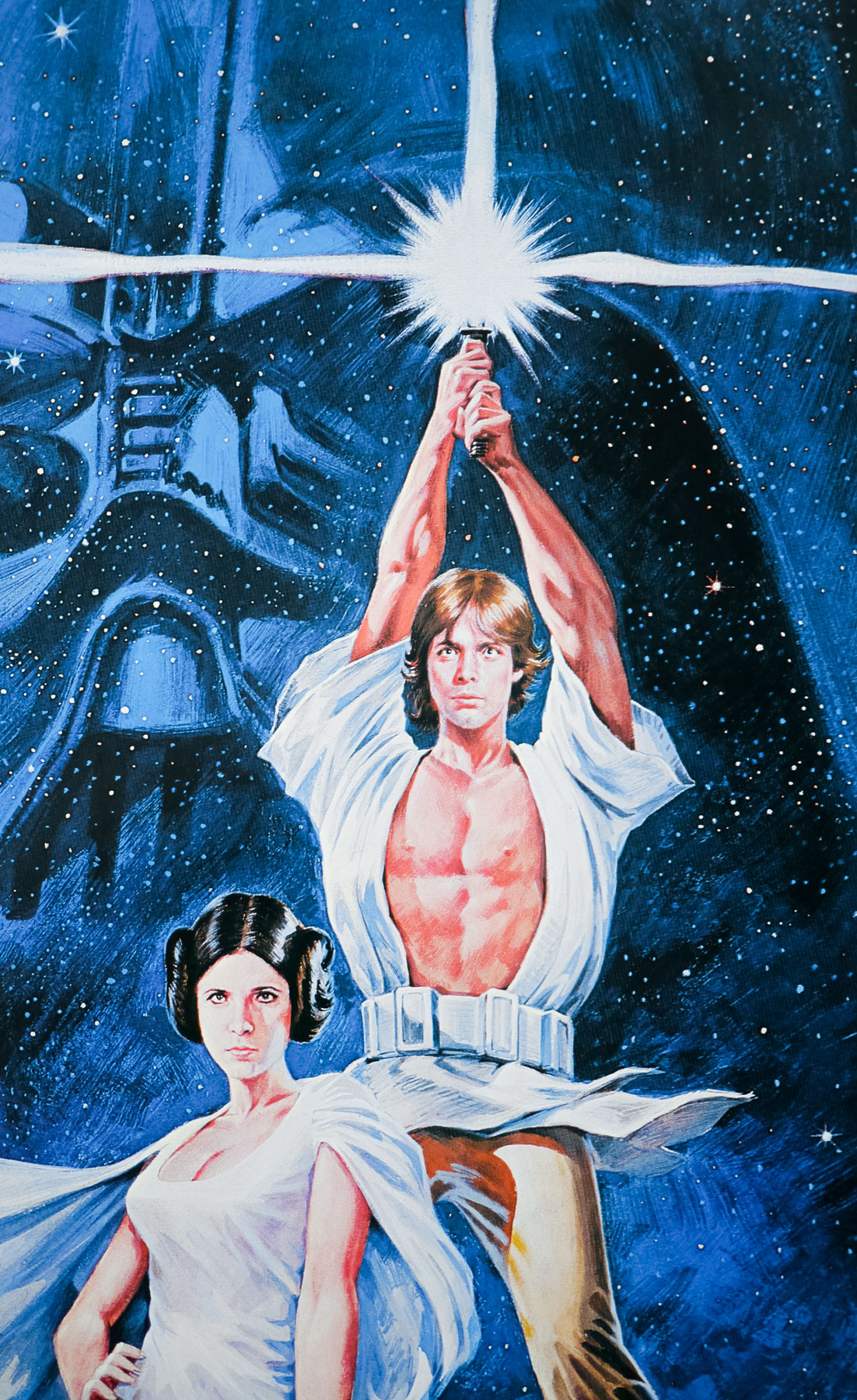
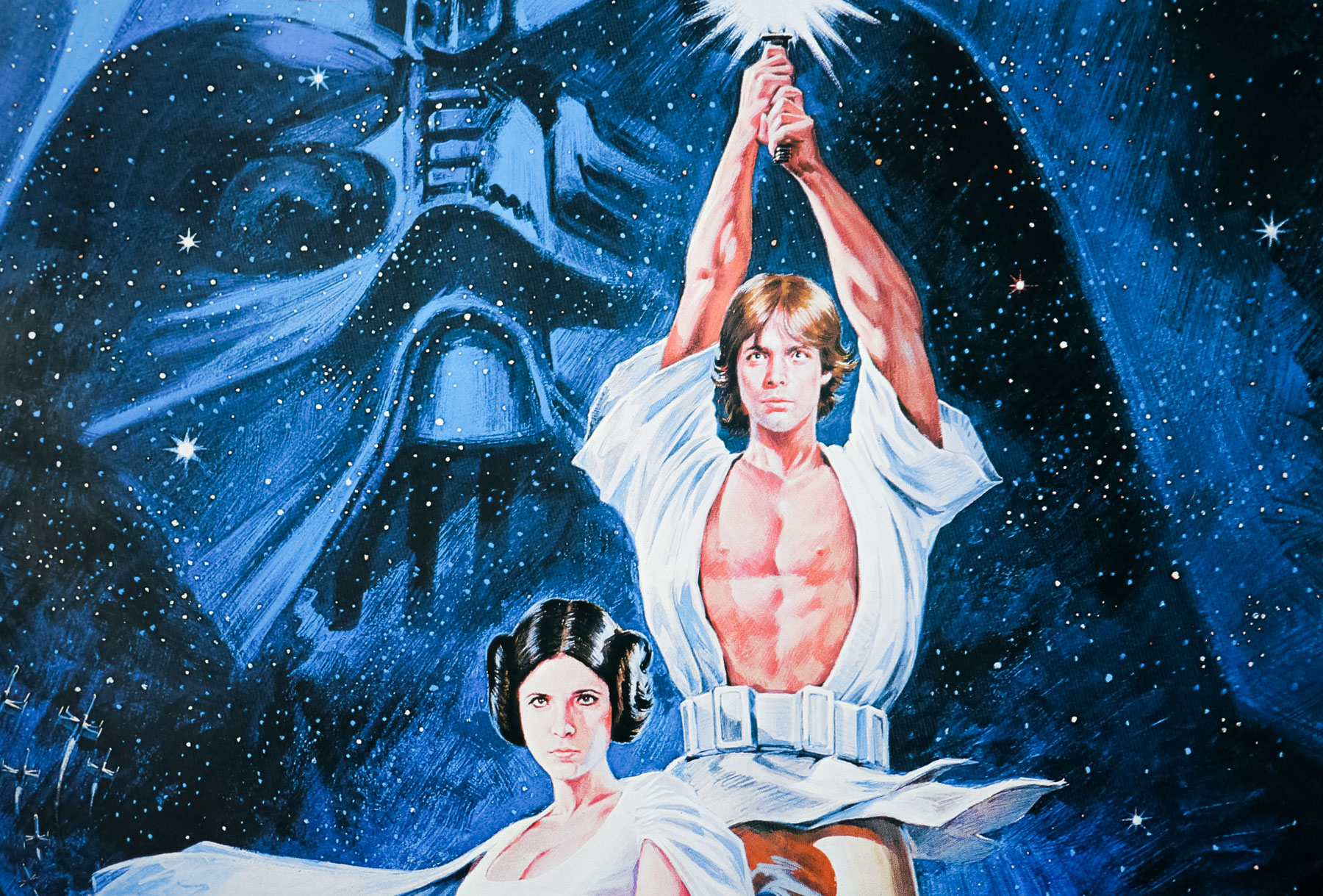
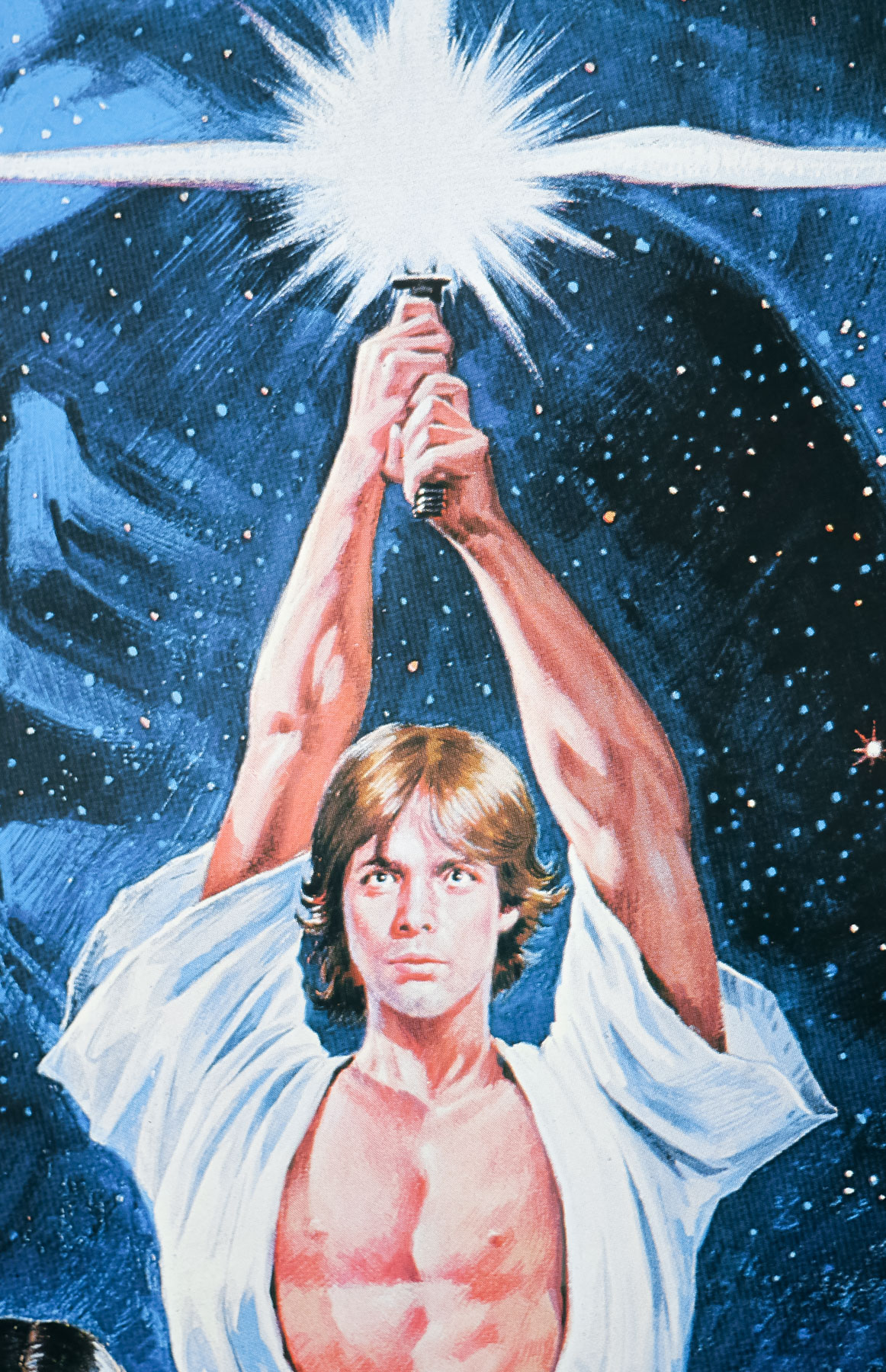
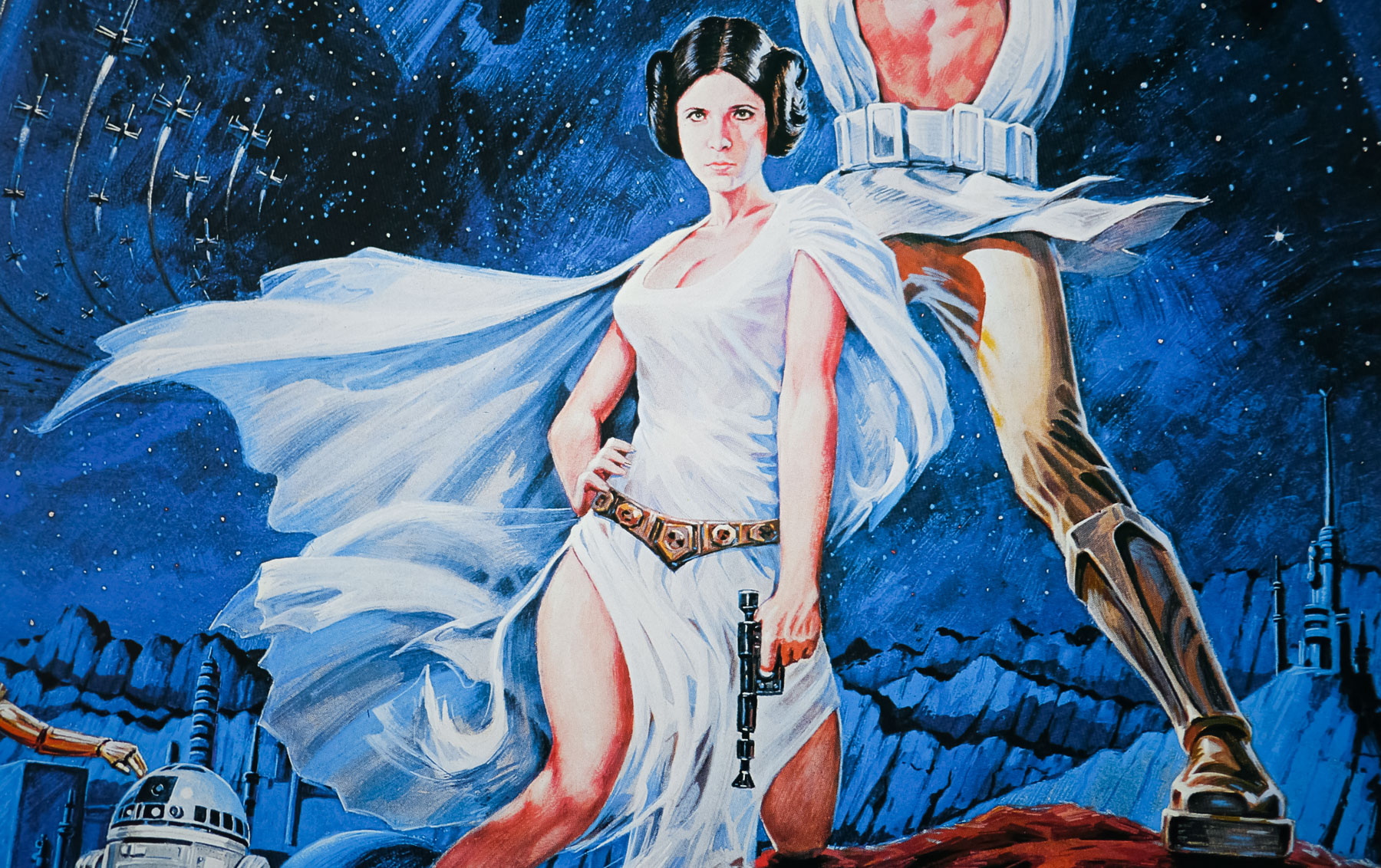
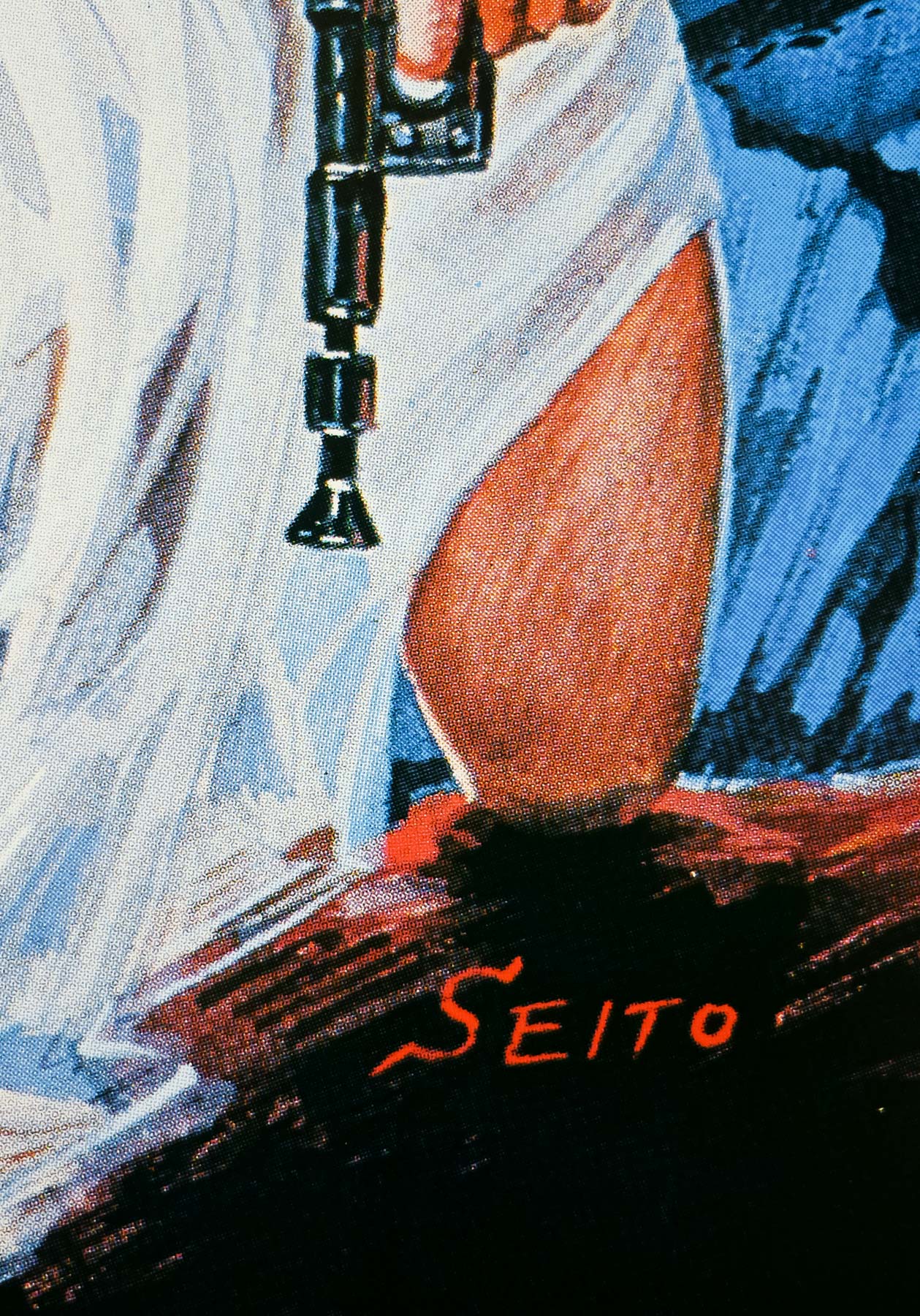
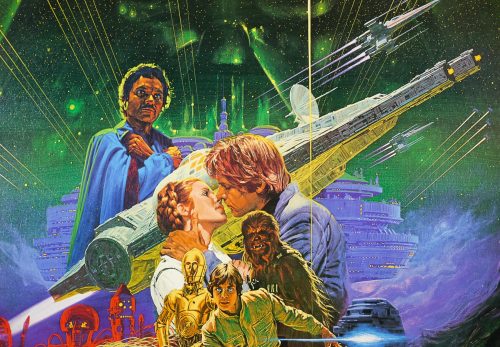
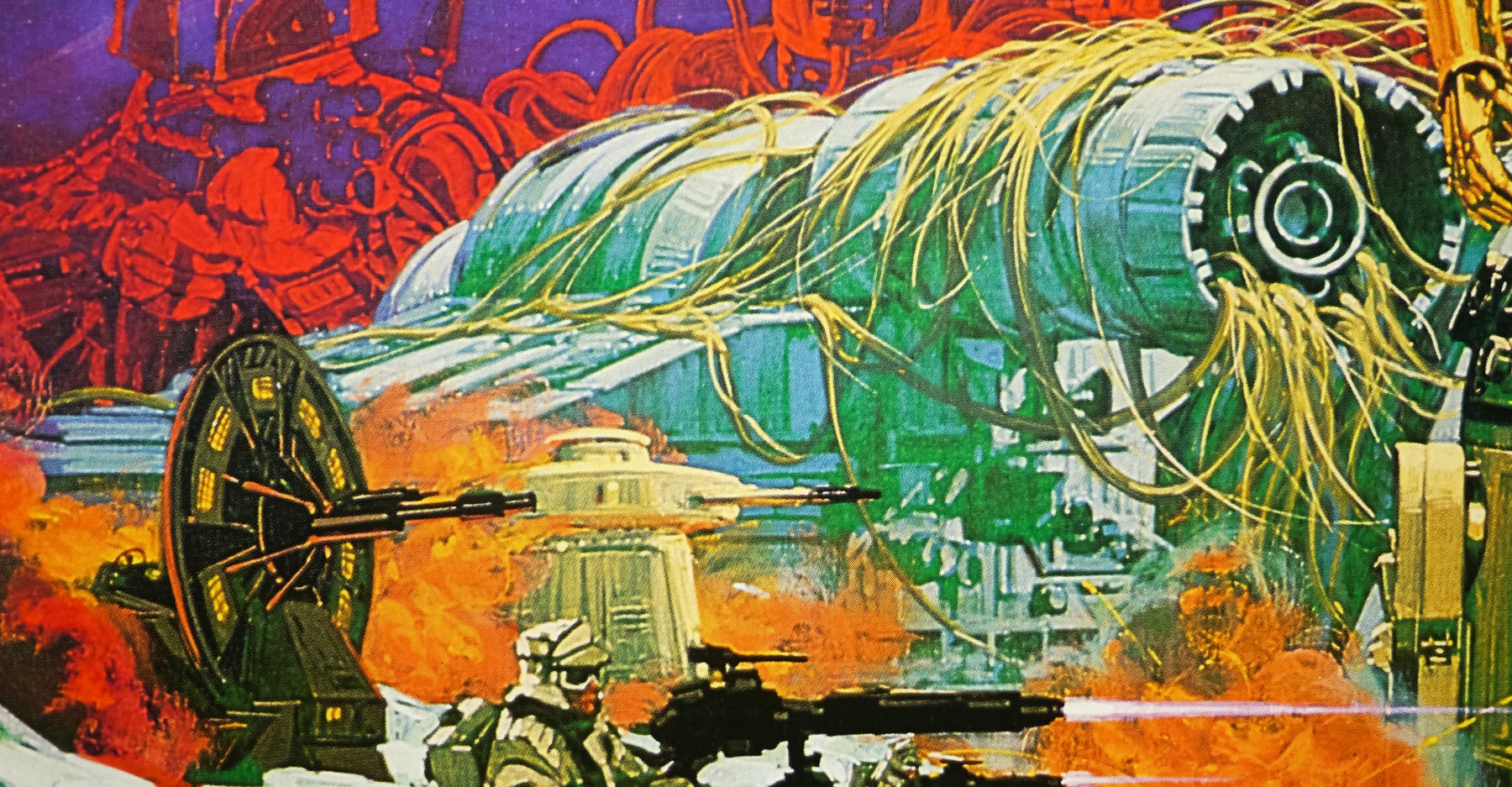
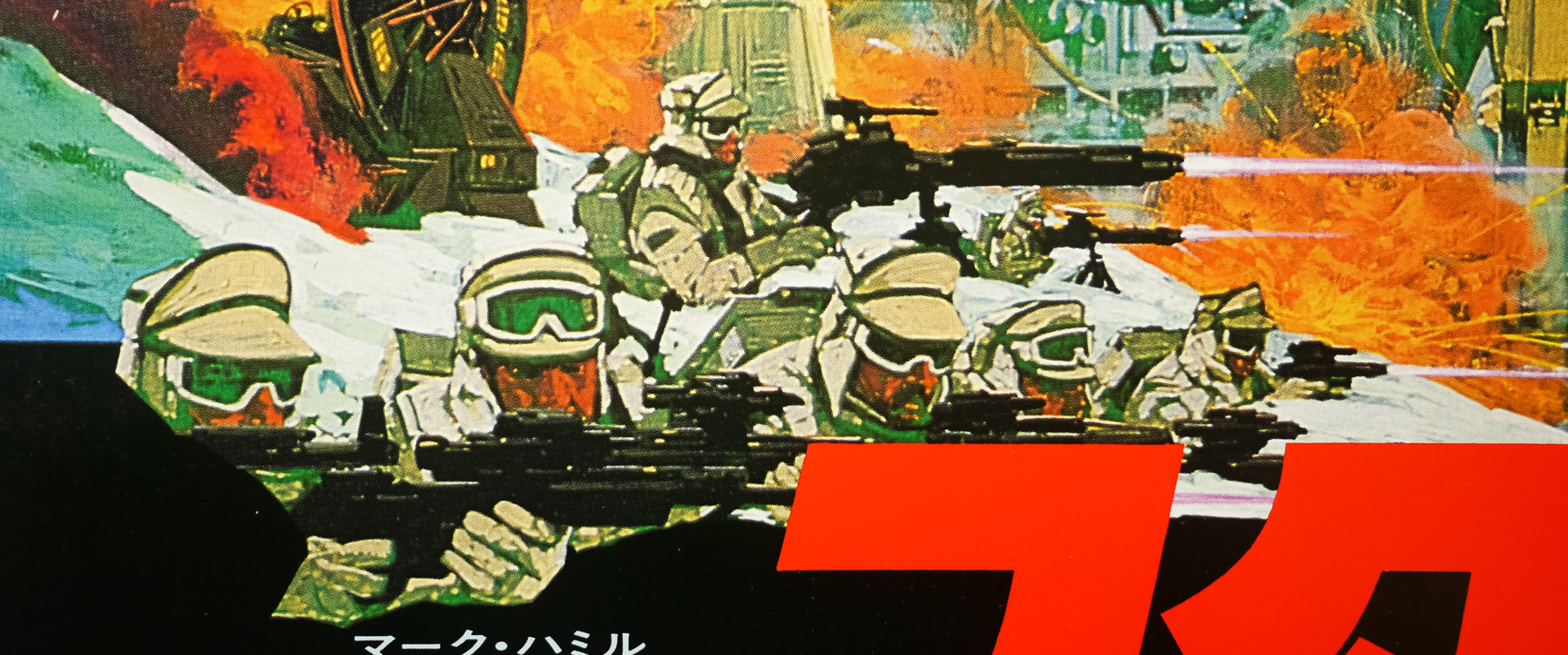
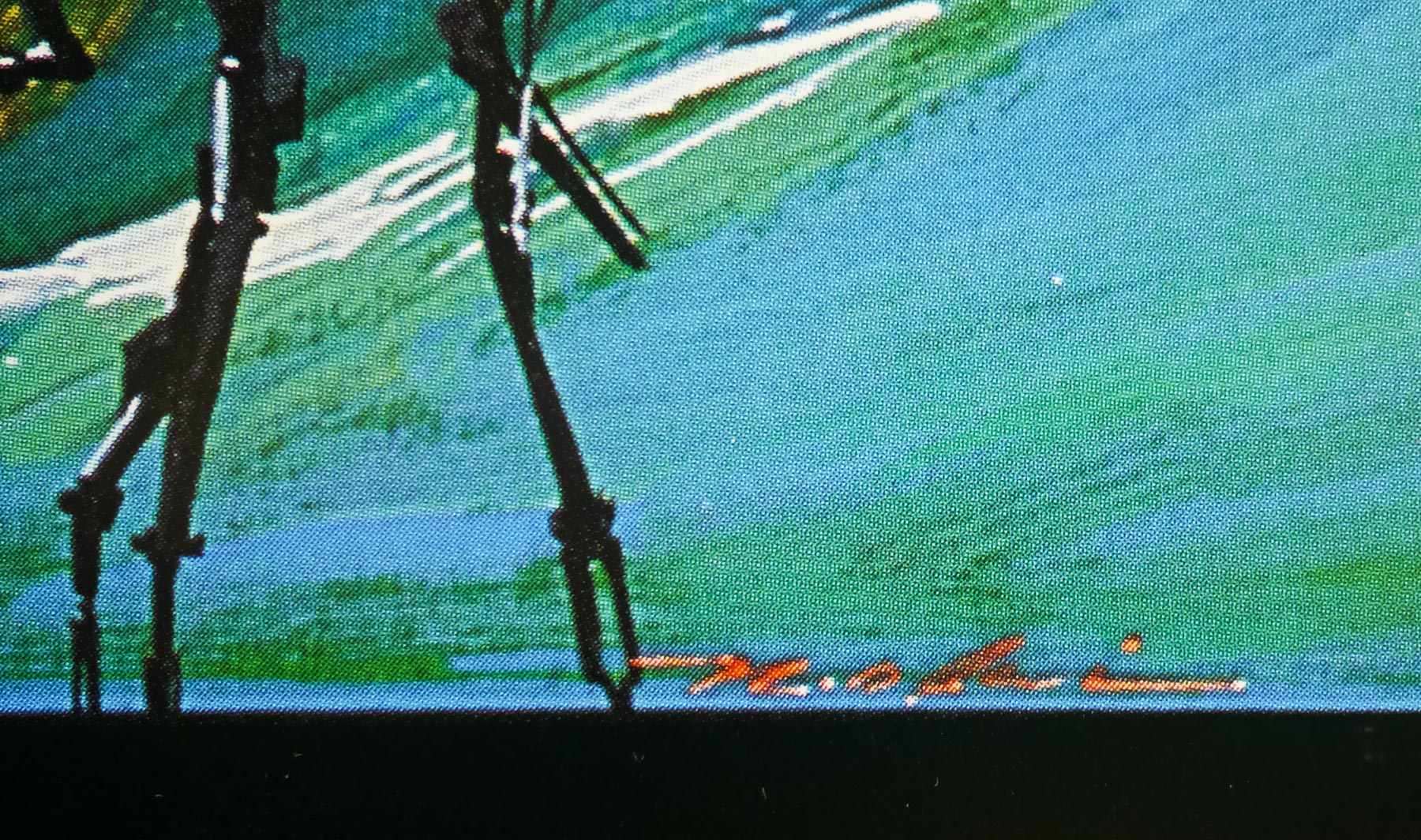
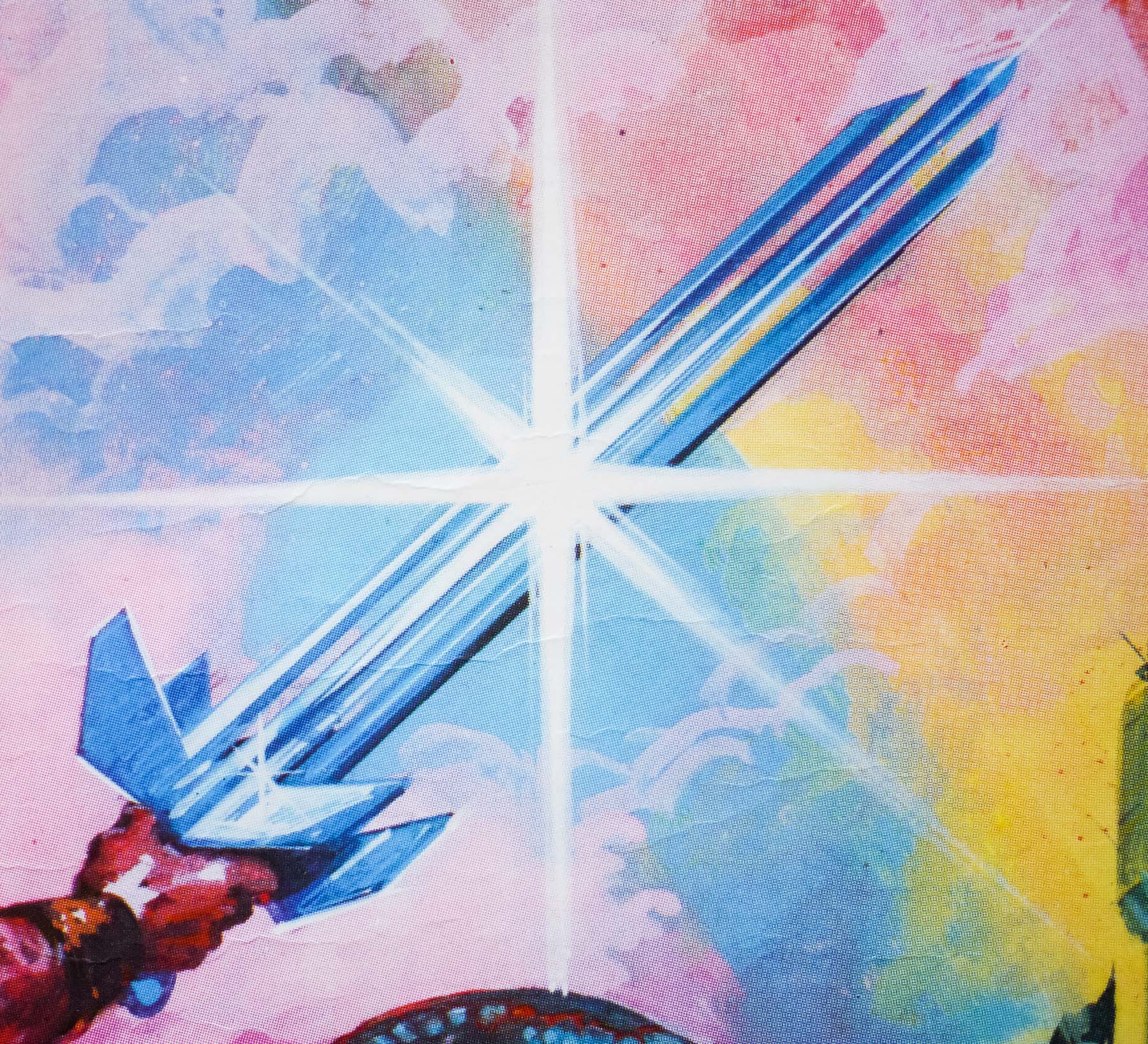
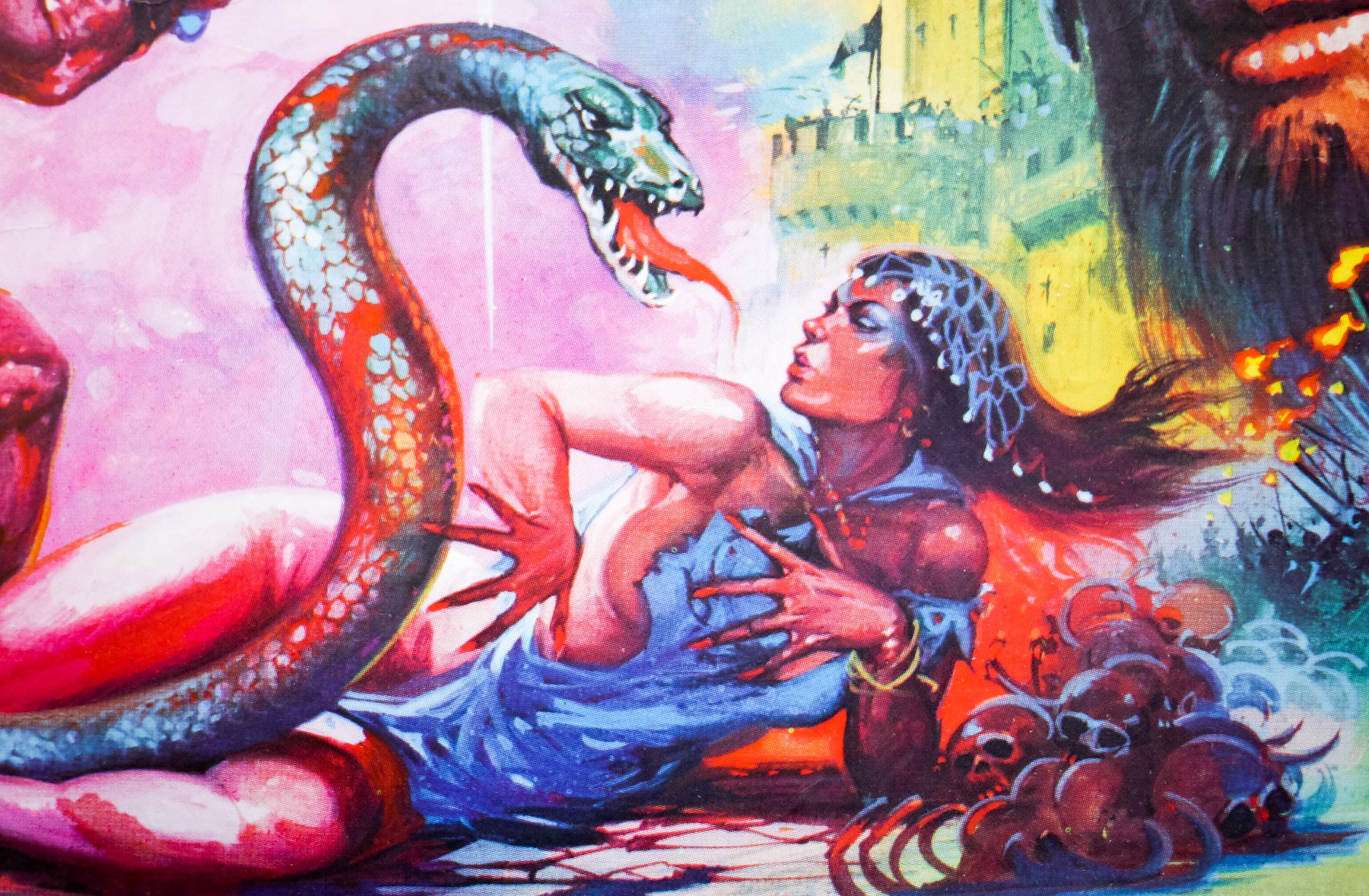
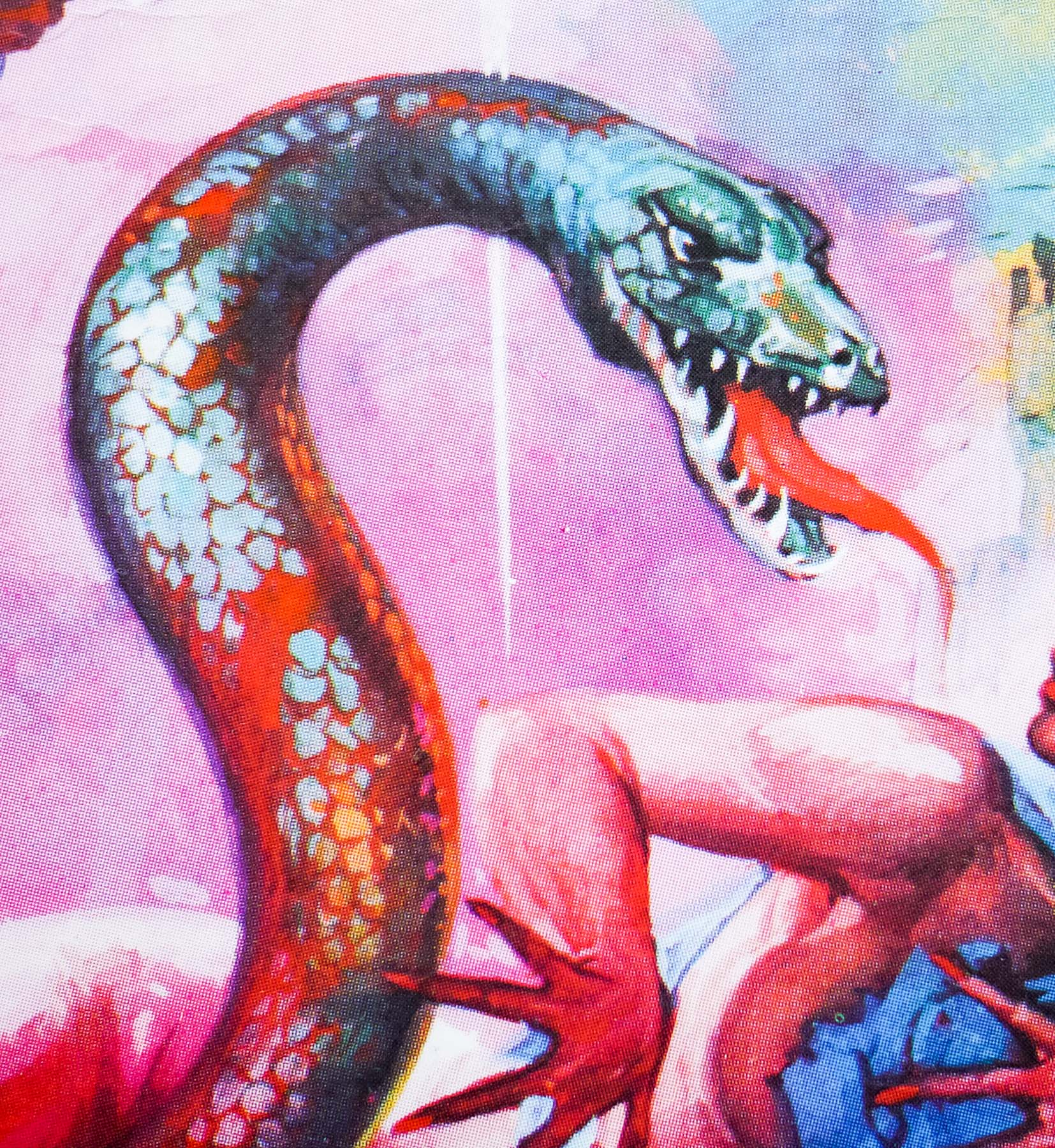
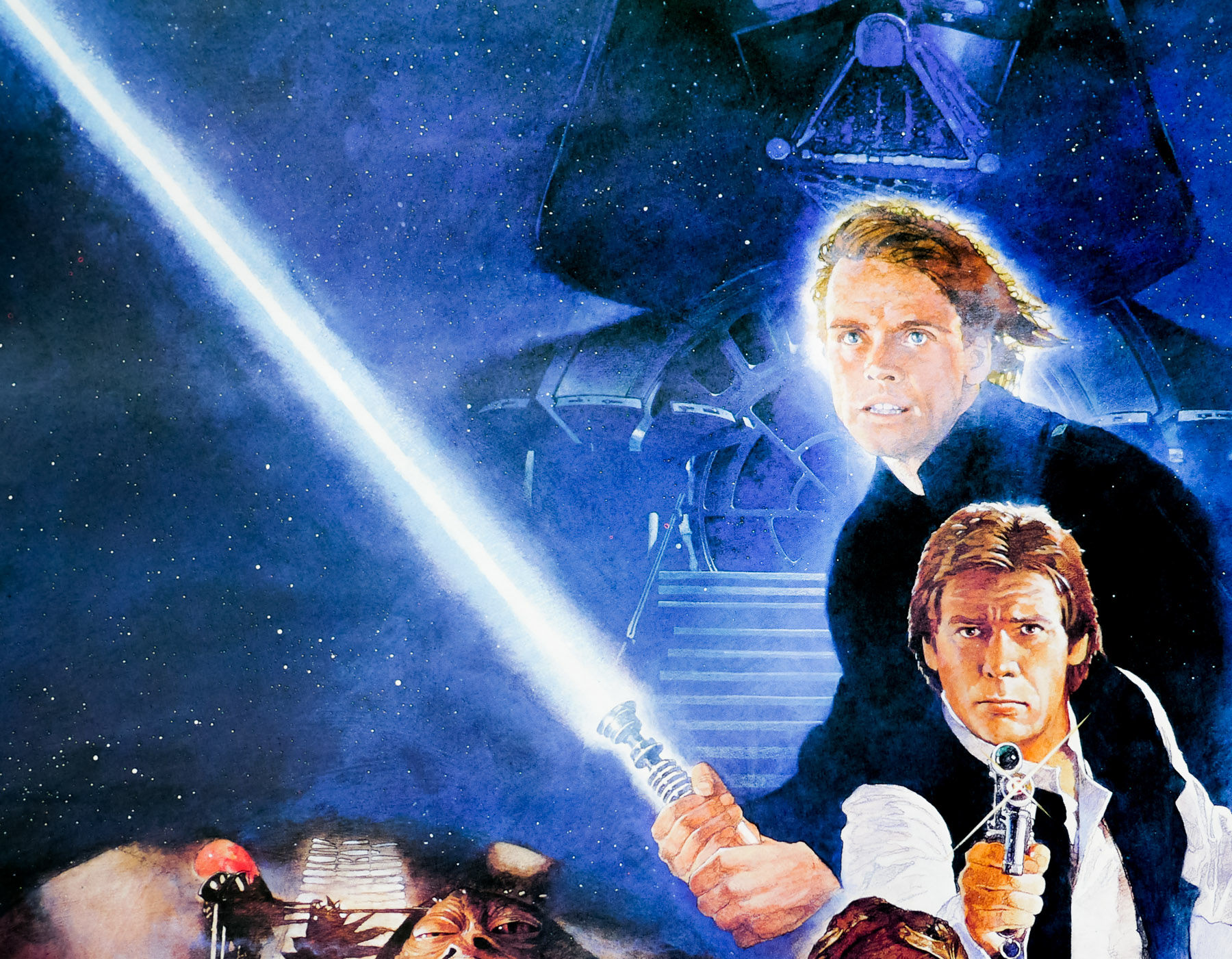
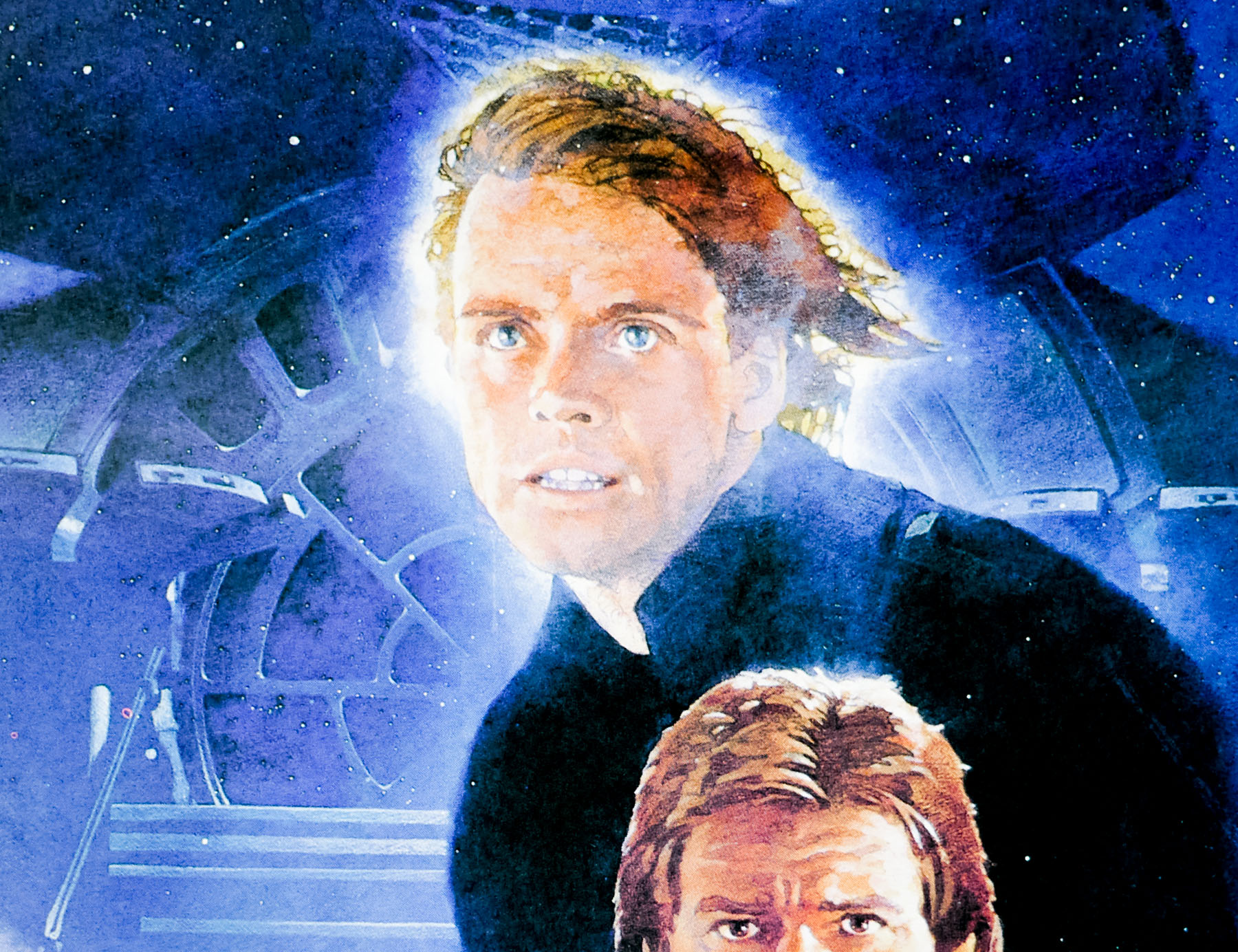
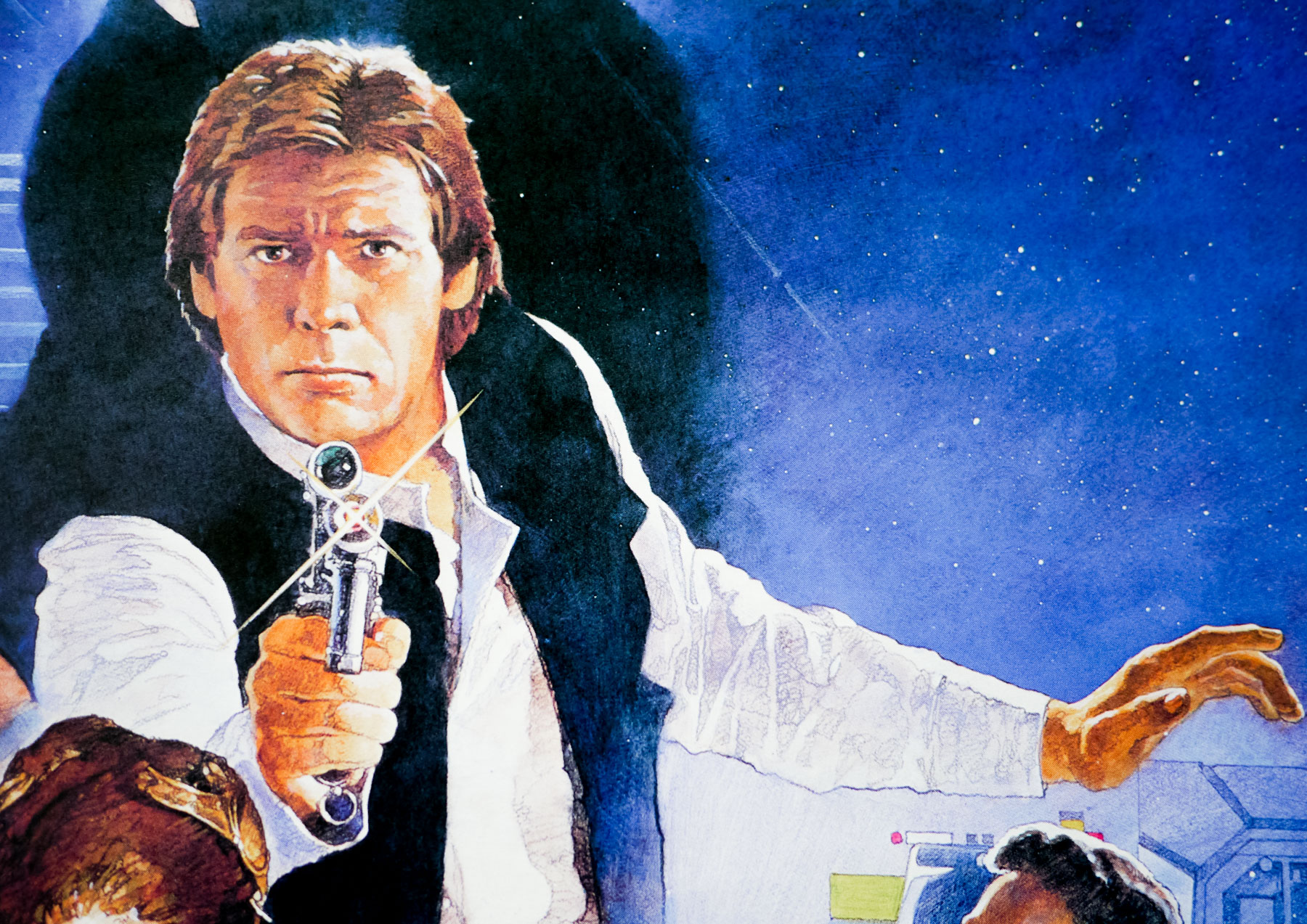
The artwork on this poster was painted by the late Japanese-American artist Kazuhiko Sano and also appeared on a US one sheet and multiple other posters around the world. As detailed in the notes for the one sheet, I discovered the following information about the artwork from an ebay auction description:

‘The art is by Kazuhiko (Kazo) Sano. The art direction and design were by Christopher Werner. There was some resizing of Lando’s head on this poster, which needed to match the general size of the other actors. Because Sano was in Japan when this decision was made, they had another artist come in to do it. This retouch artist may have been Vincent Malizia, an airbrush artist in Los Angeles. I have an old newspaper clipping with him standing in front of the Jedi B poster and a caption that reads he was an airbrush artist for this poster.’

Kazuhiko Sano was born in Toyko in 1952 and studied oil painting before moving to Los Angeles in 1975 and majoring in illustration at the Academy of Art College. He graduated in 1980 with a Master in Fine Art qualification and soon began working in commercial illustration, working on book covers, editorial illustrations and film posters for a whole range of internationally famous clients. He also returned to the Academy of Art College in 1986 to teach and worked there until his death in 2011. Unquestionably his most famous film poster work was this one for Return of the Jedi but there are a handful of others too.
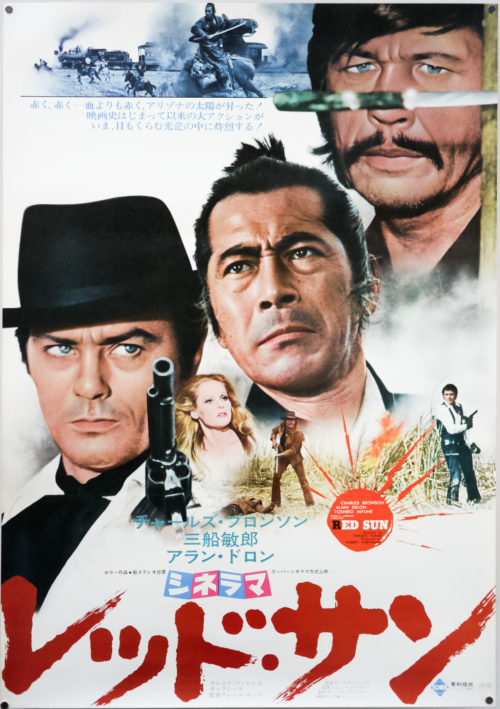
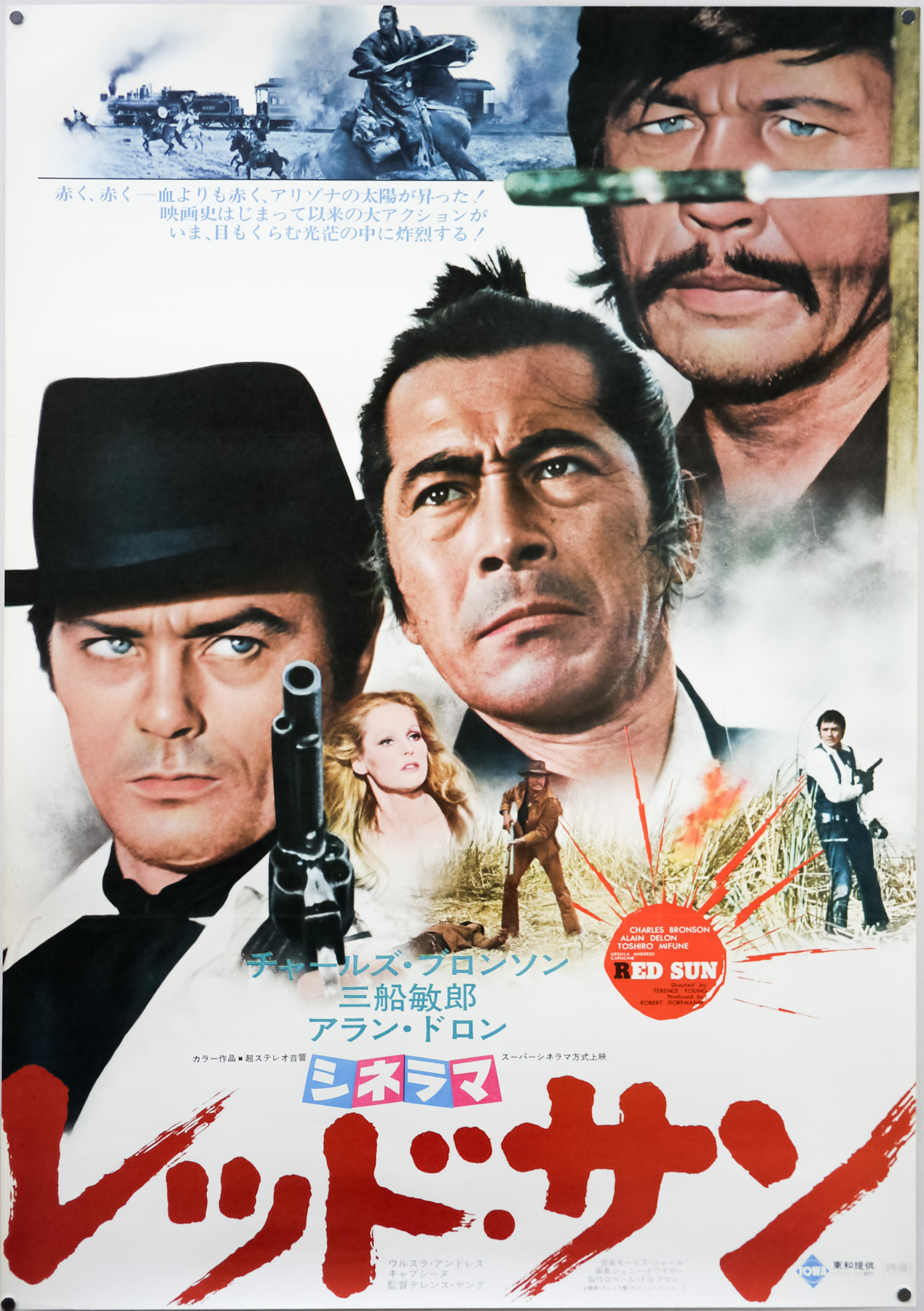
Red Sun / B2 / cast style / Japan

14.08.13

Poster Poster
Title
Red Sun
AKA
Soleil rouge (France - original title)
Year of Film
1971
Director
Terence Young
Starring
Charles Bronson, Ursula Andress, Toshirô Mifune, Alain Delon, Capucine, Barta Barri, Guido Lollobrigida, Anthony Dawson
Origin of Film
France | Italy | Spain
Genre(s) of Film
Charles Bronson, Ursula Andress, Toshirô Mifune, Alain Delon, Capucine, Barta Barri, Guido Lollobrigida, Anthony Dawson,
Type of Poster
B2
Style of Poster
Cast style
Origin of Poster
Japan
Year of Poster
1971
Designer
Unknown
Artist
--
Size (inches)
20 5/16" x 28 13/16"
SS or DS
SS
NSS #
--
Tagline
--

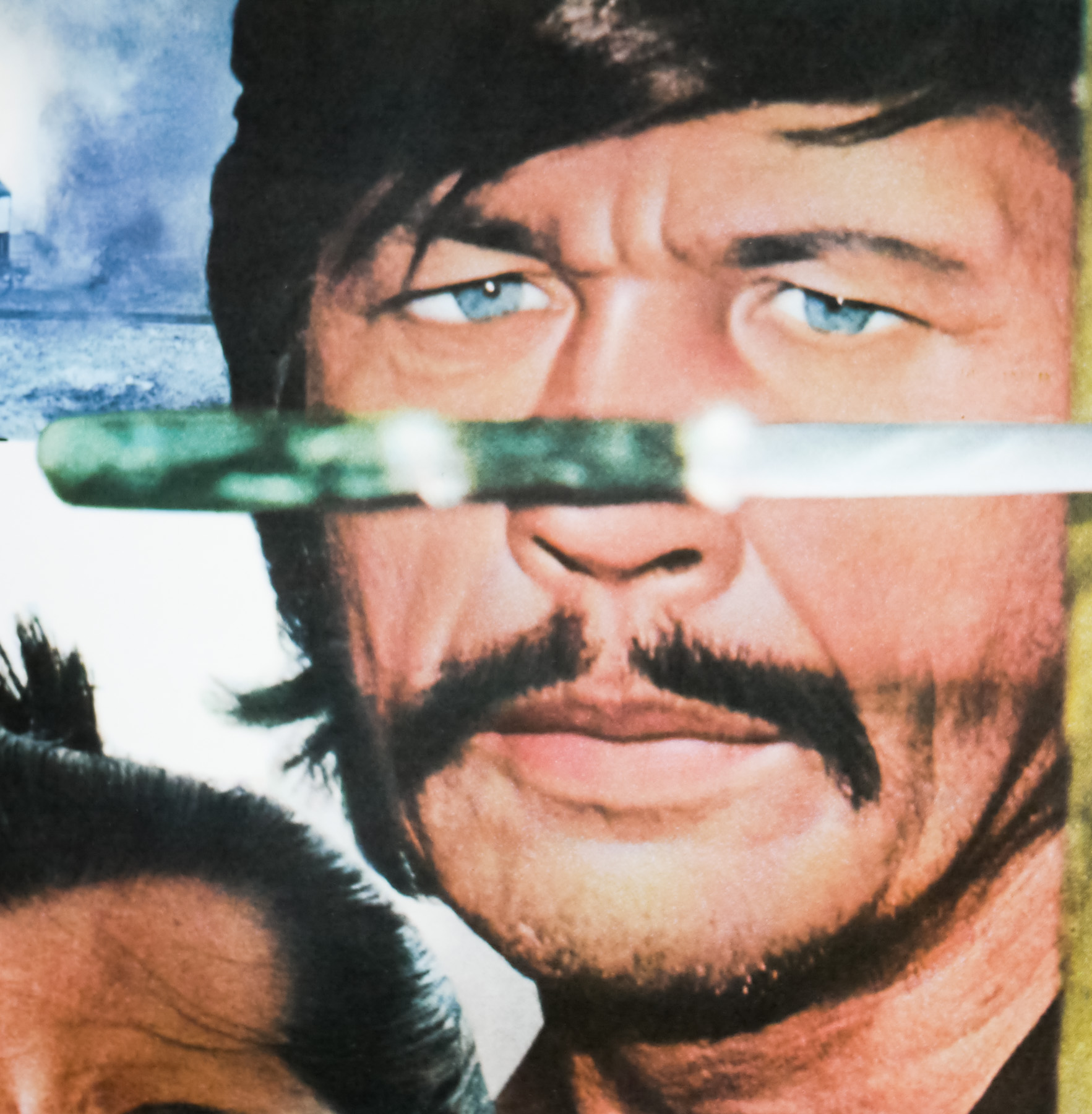
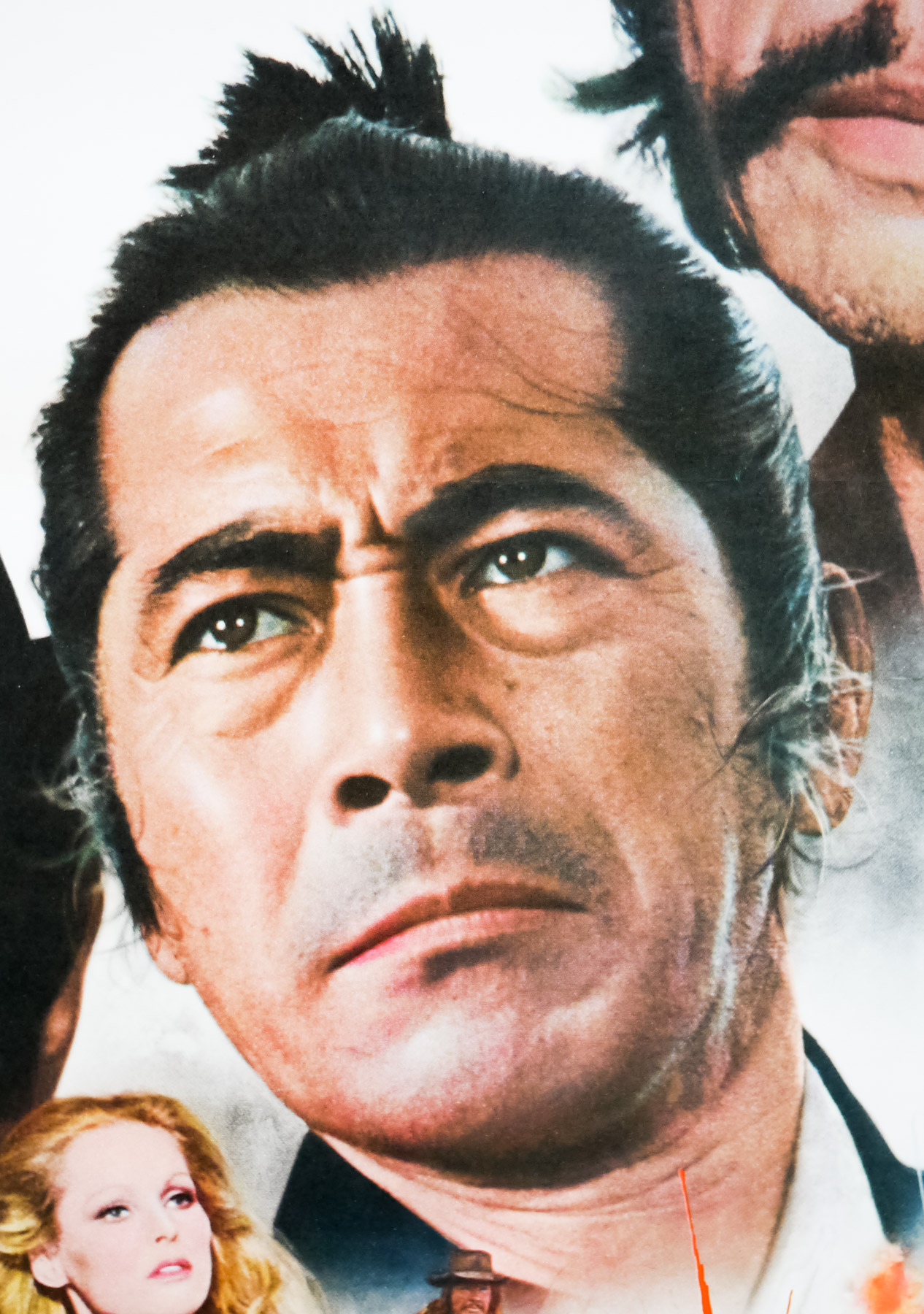
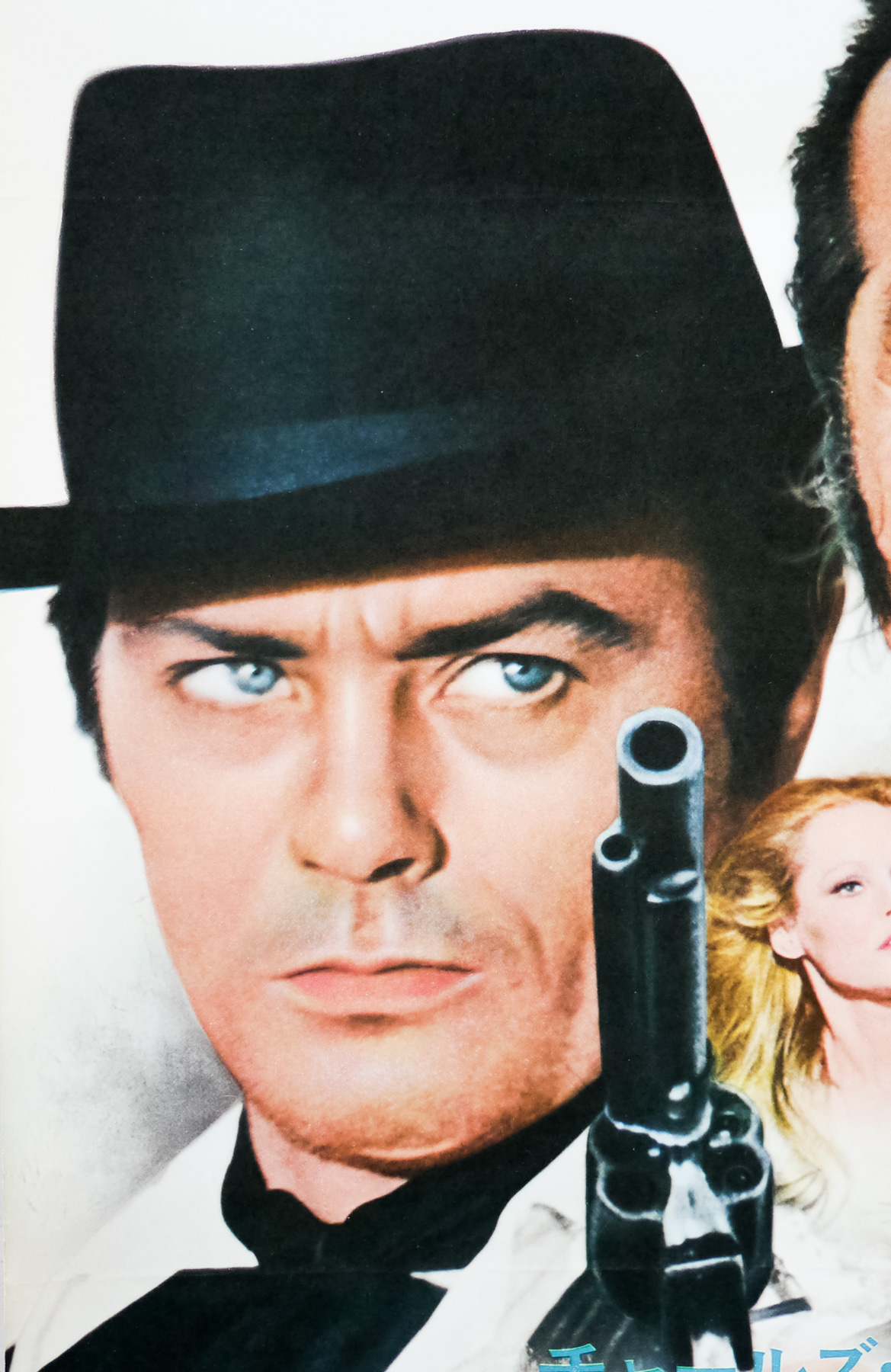
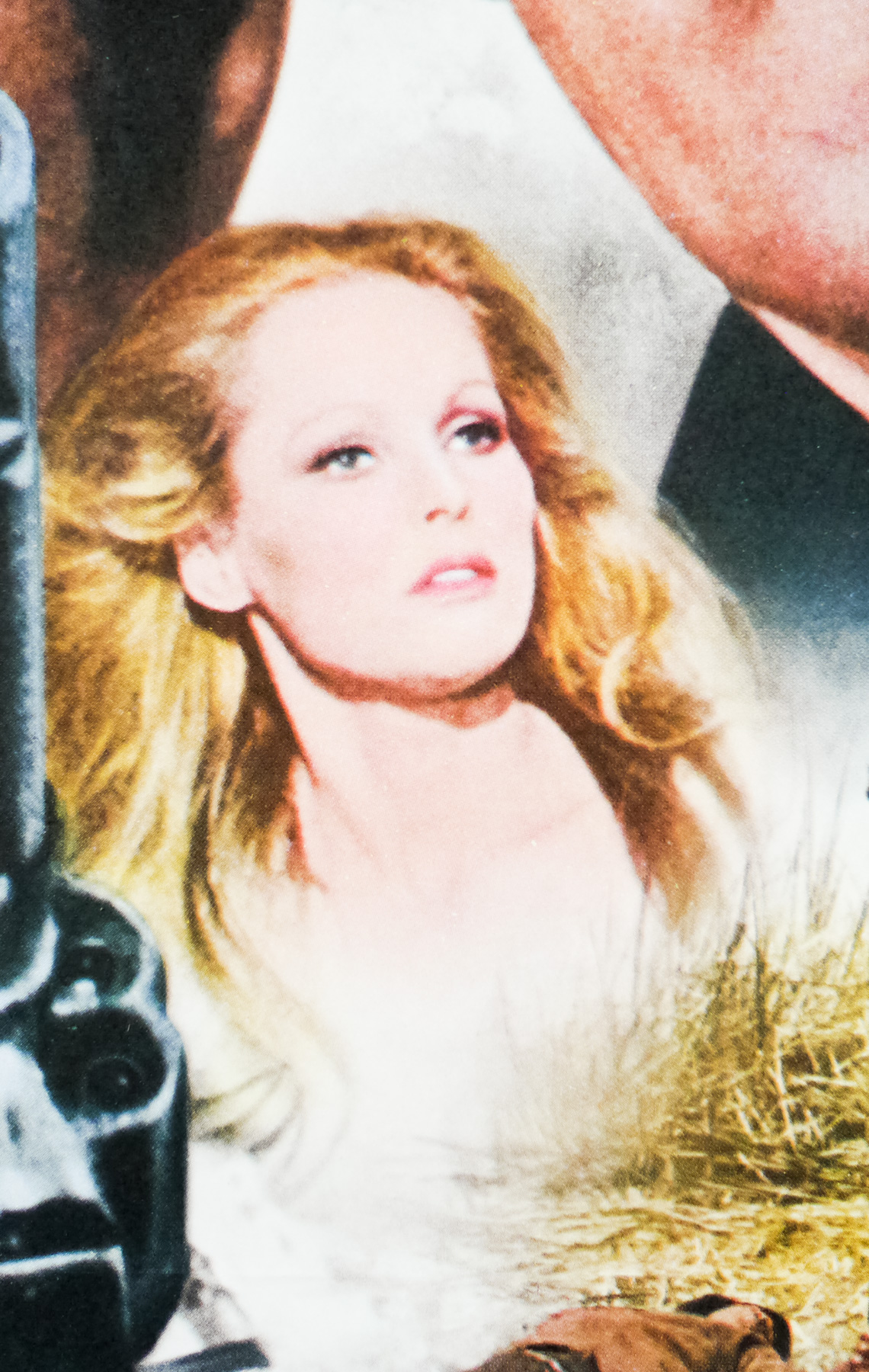
A truly international production, Red Sun was filmed in Spain by the British director Terence Young and starring American action legend Charles Bronson,the Japanese actor Toshirô Mifune (best known for Kurosawa’s Seven Samurai), French superstar Alain Delon and the gorgeous Swiss actress Ursula Andress. Terence Young had previously achieved great commercial success directing Sean Connery in three of his outings as James Bond. Bronson had previously starred in The Magnificent Seven, an American remake of Seven Samurai.

The film sees two ruthless robbers, Link (Bronson) and Gauche (Delon) attack a train bound for Washington carrying the Japanese ambassador. During the raid Gauche steals a very valuable sword and then betrays Link, trying to kill him before escaping with the loot. Link must team up with the only surviving Samurai escort of the ambassador (Mifune) and track down Gauche before it’s too late.

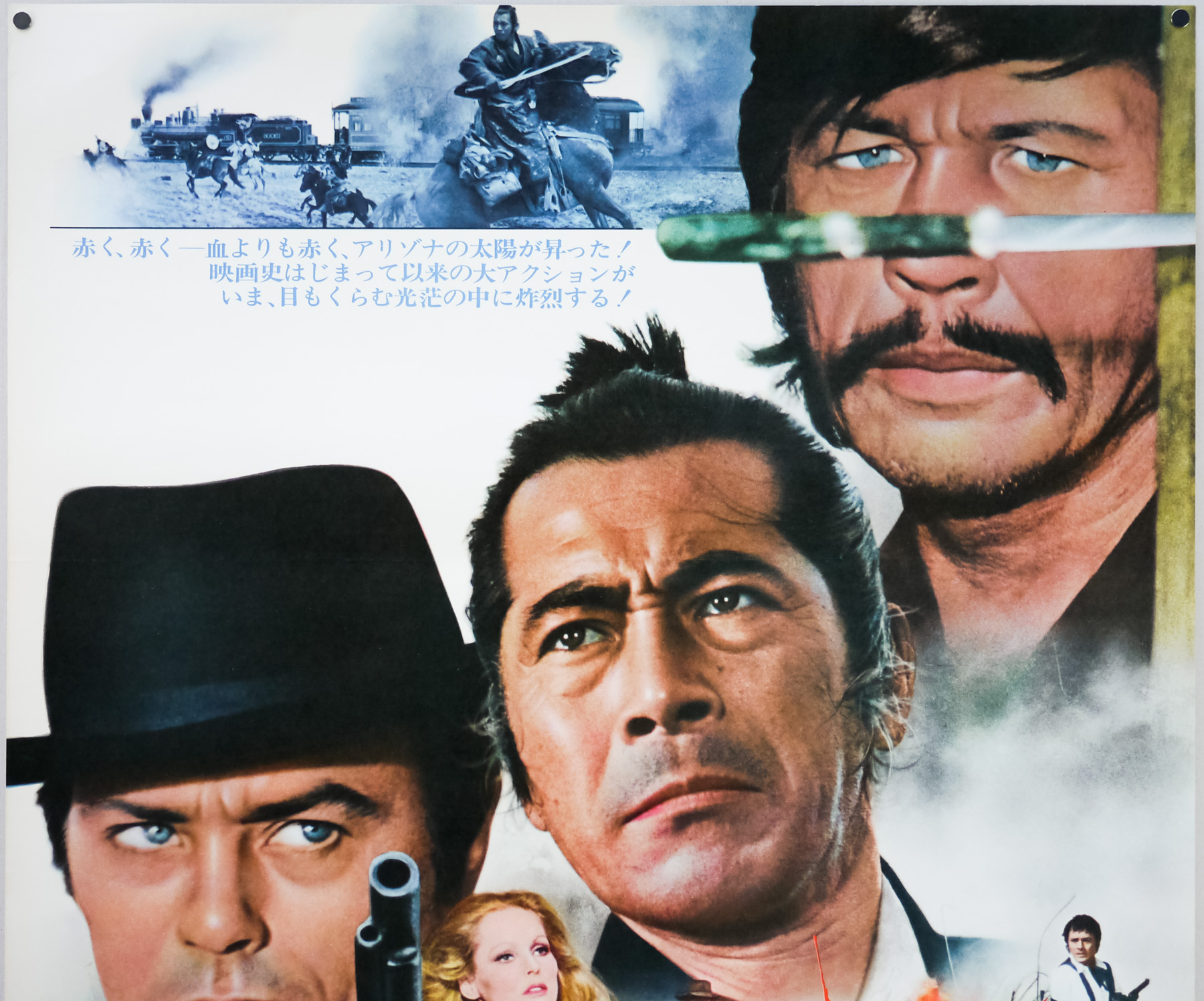
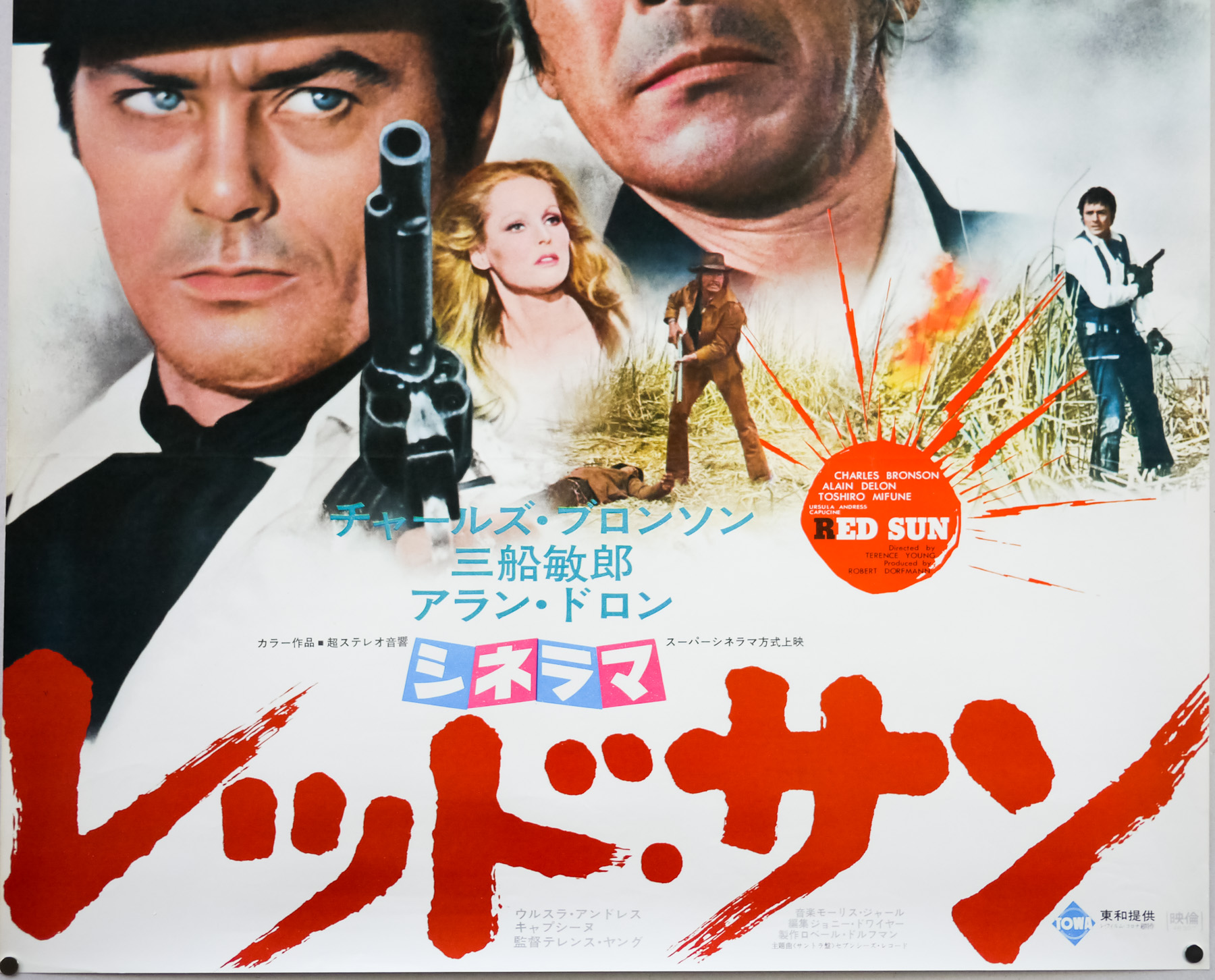
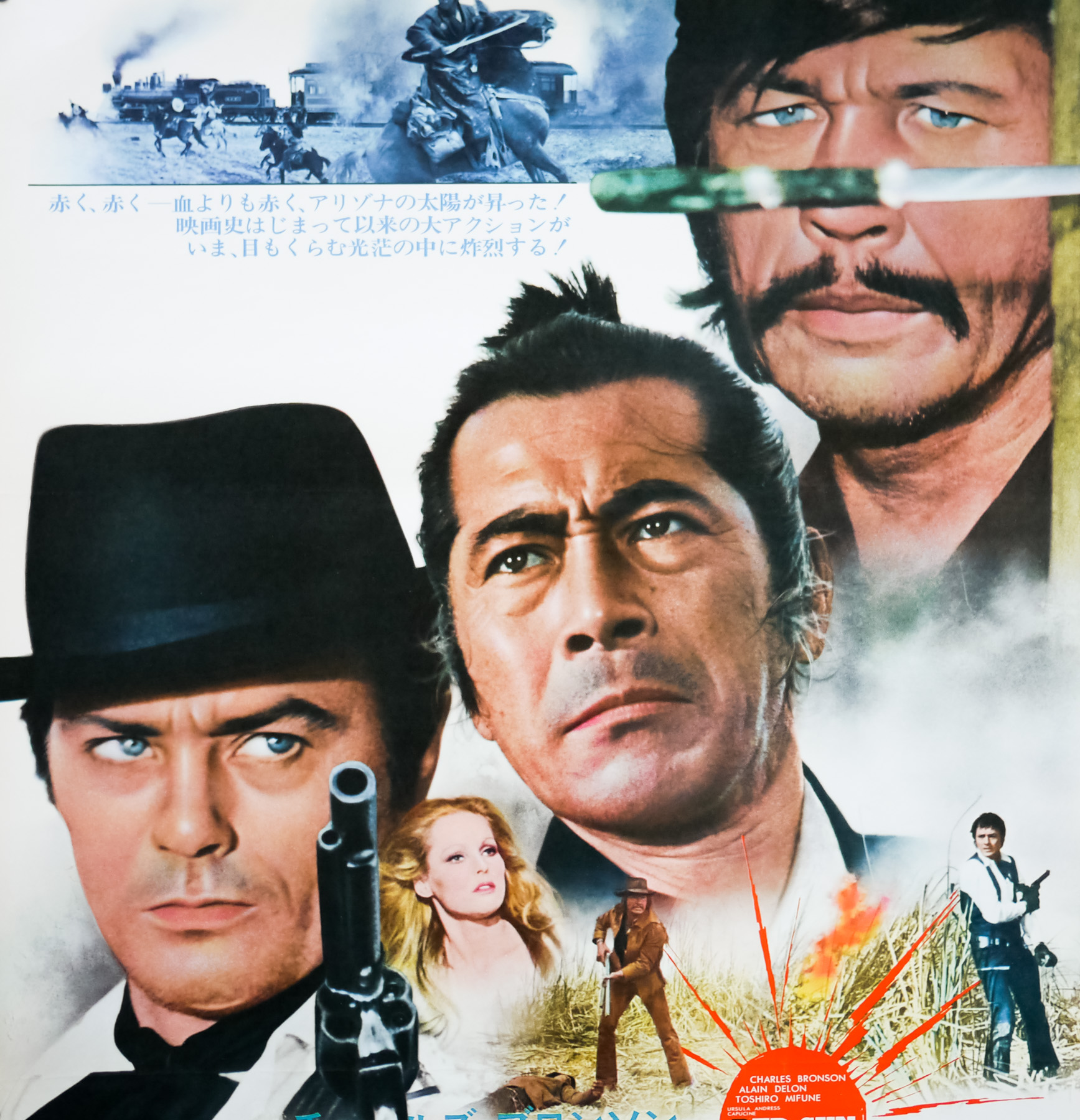
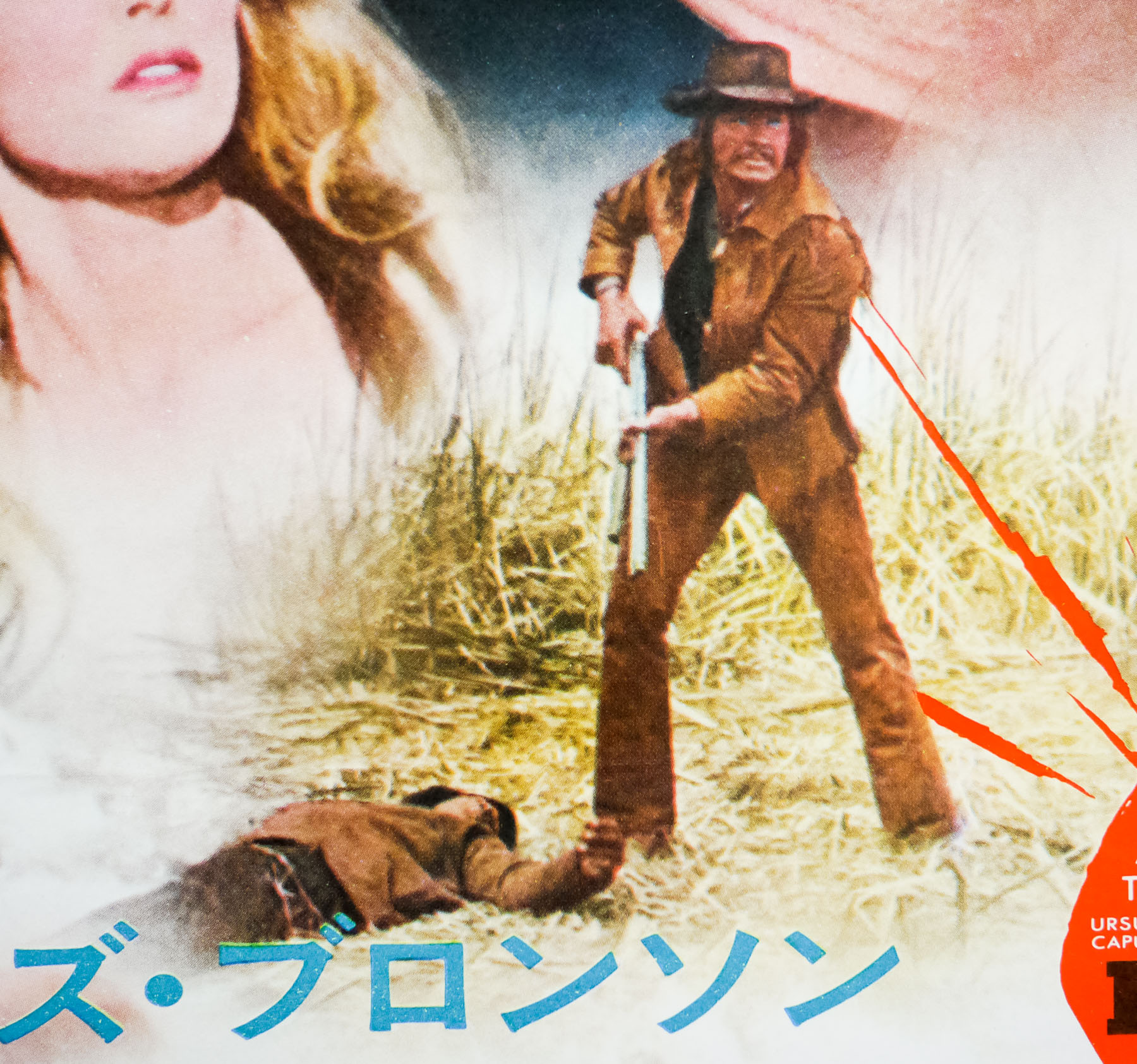
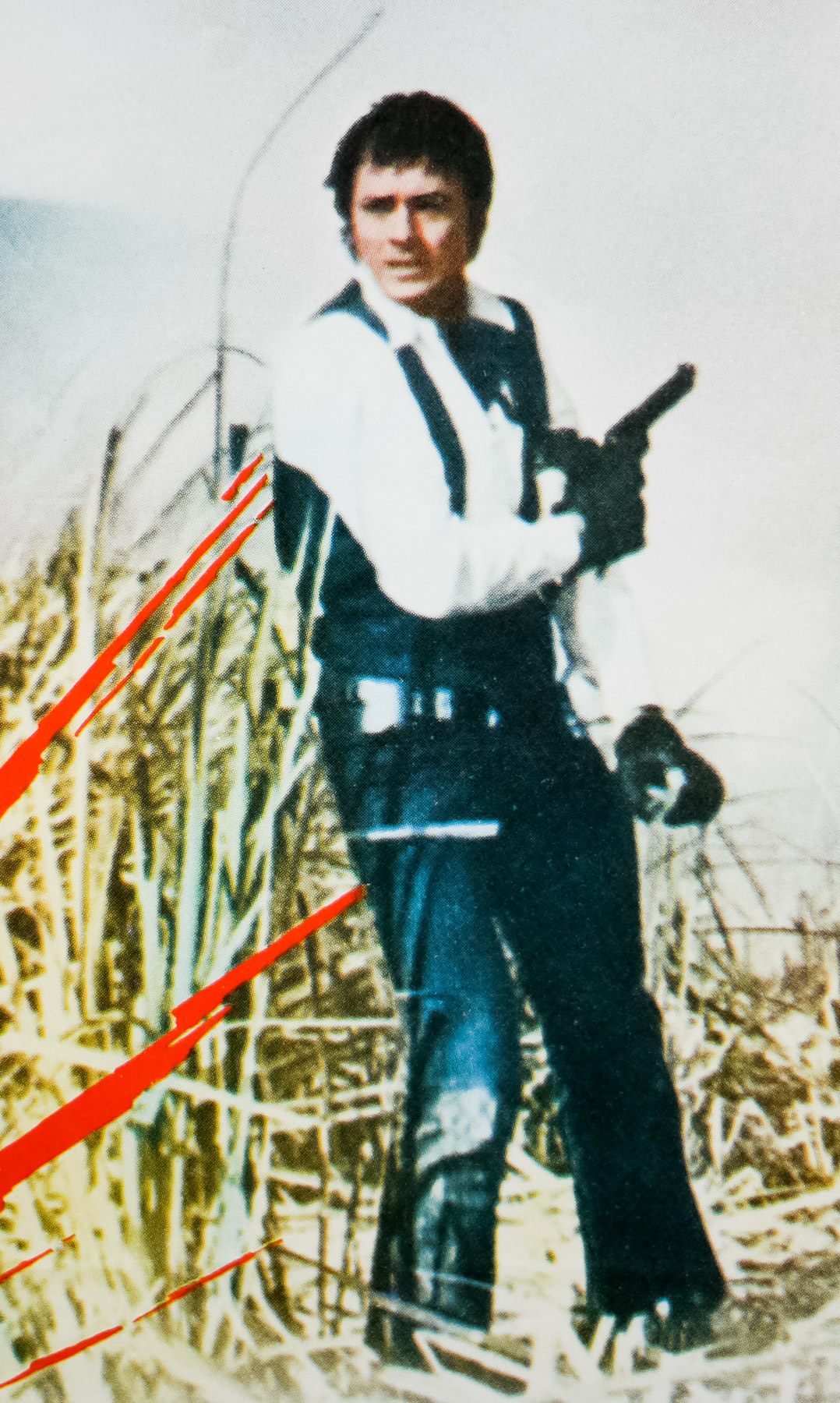
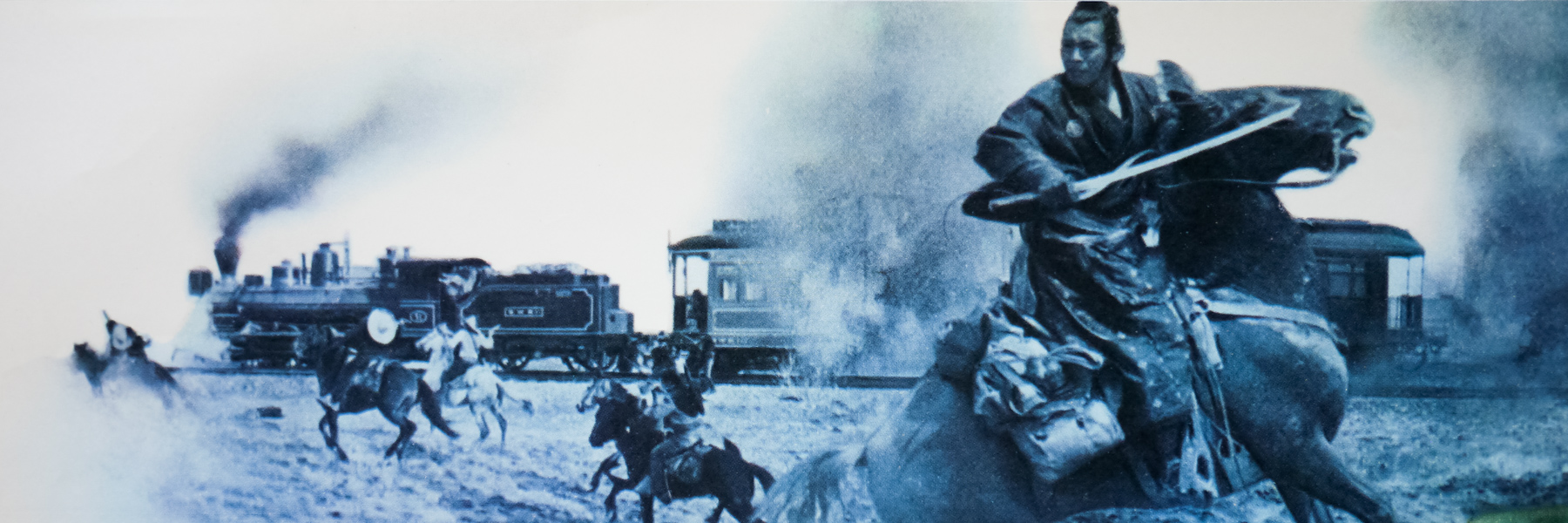
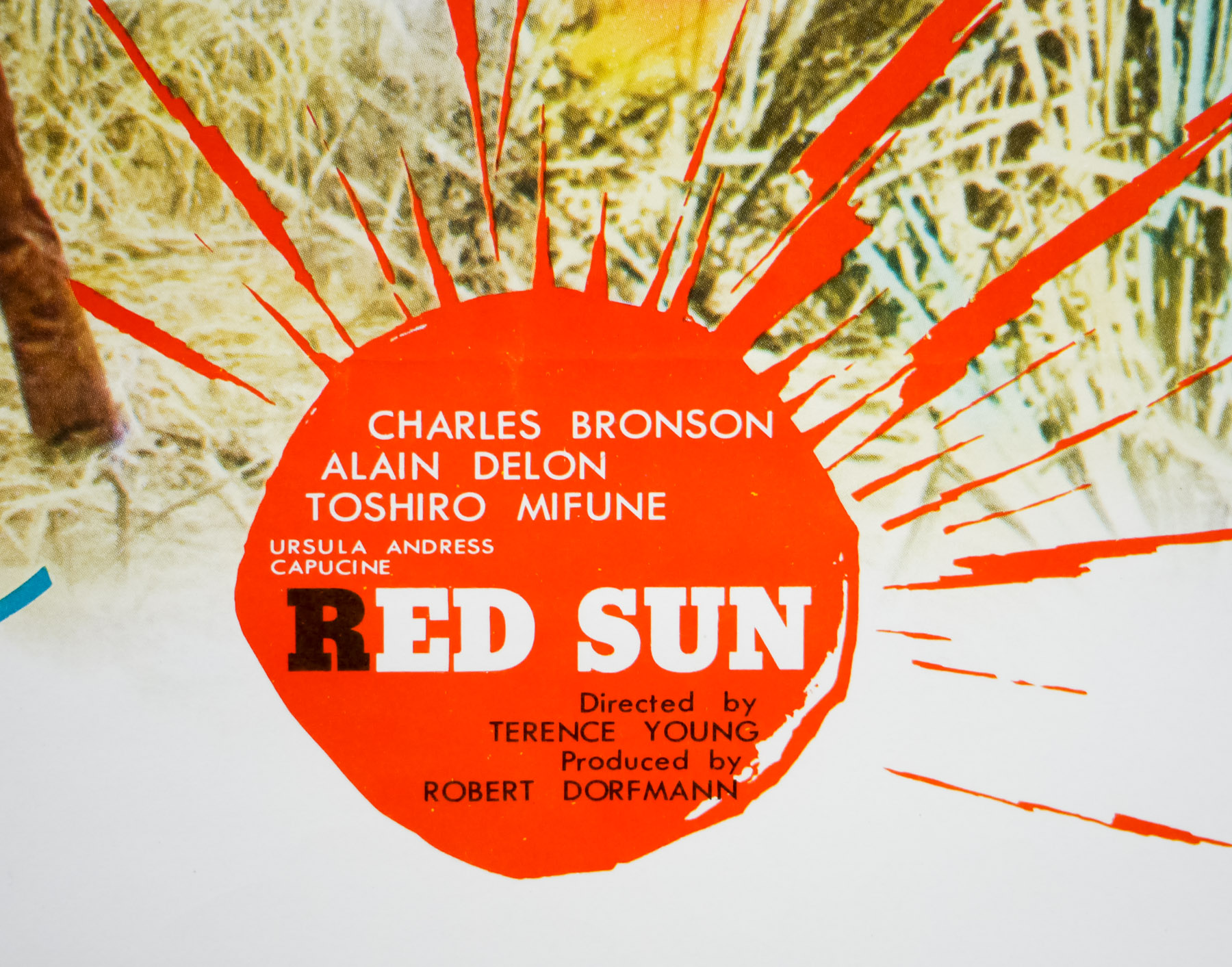
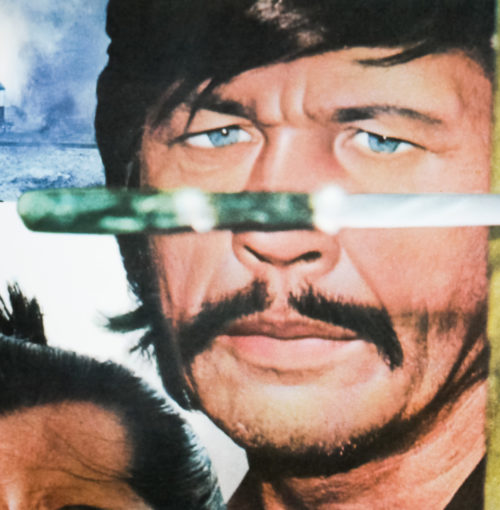
This Japanese B2 features photographic portraits of the main actors and is markedly different to the US poster.


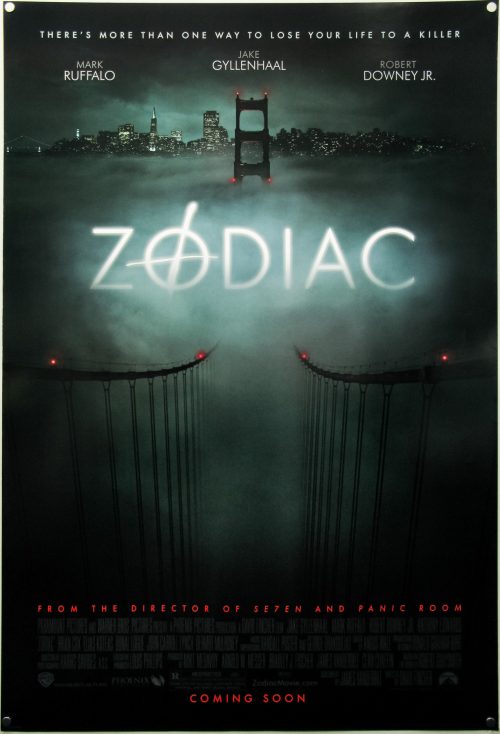
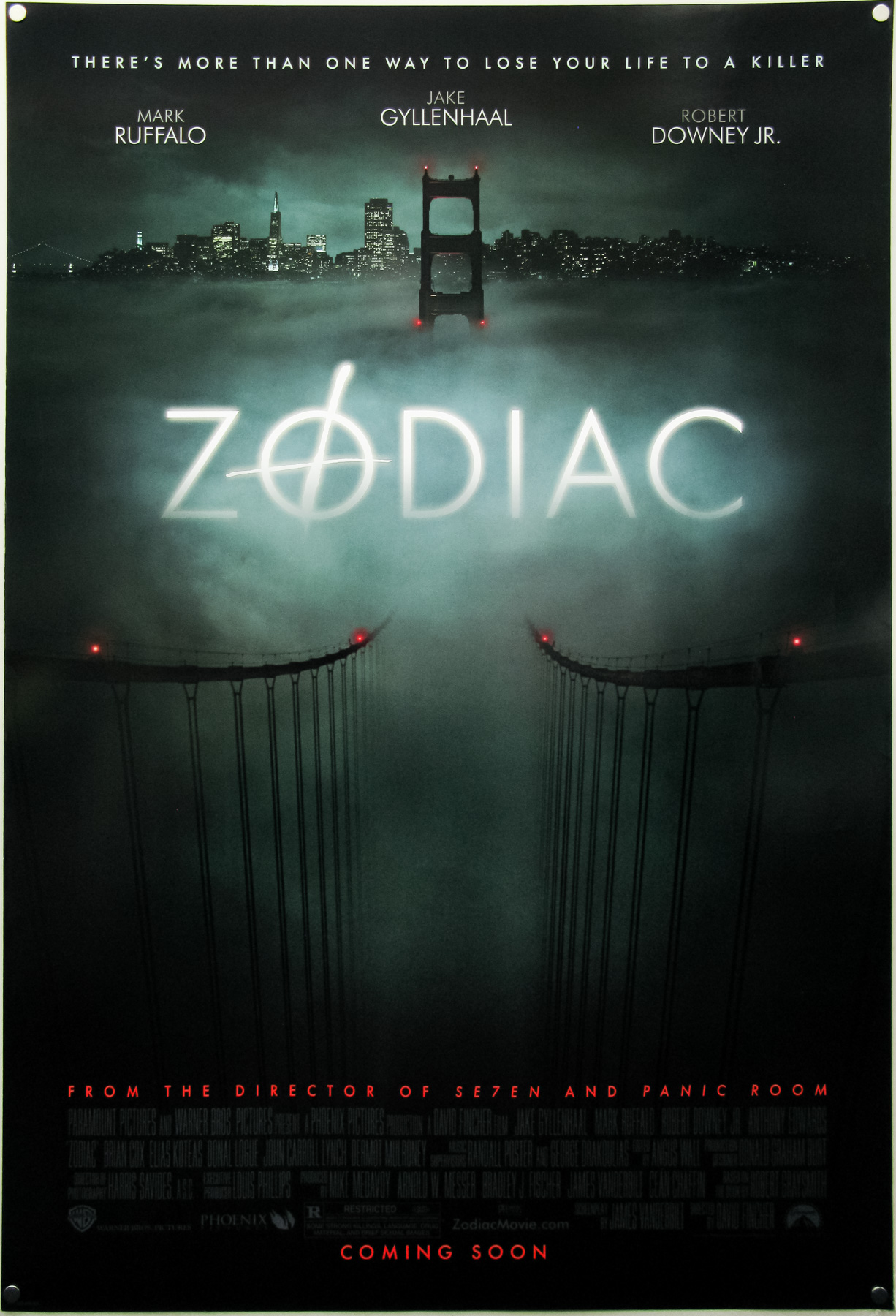
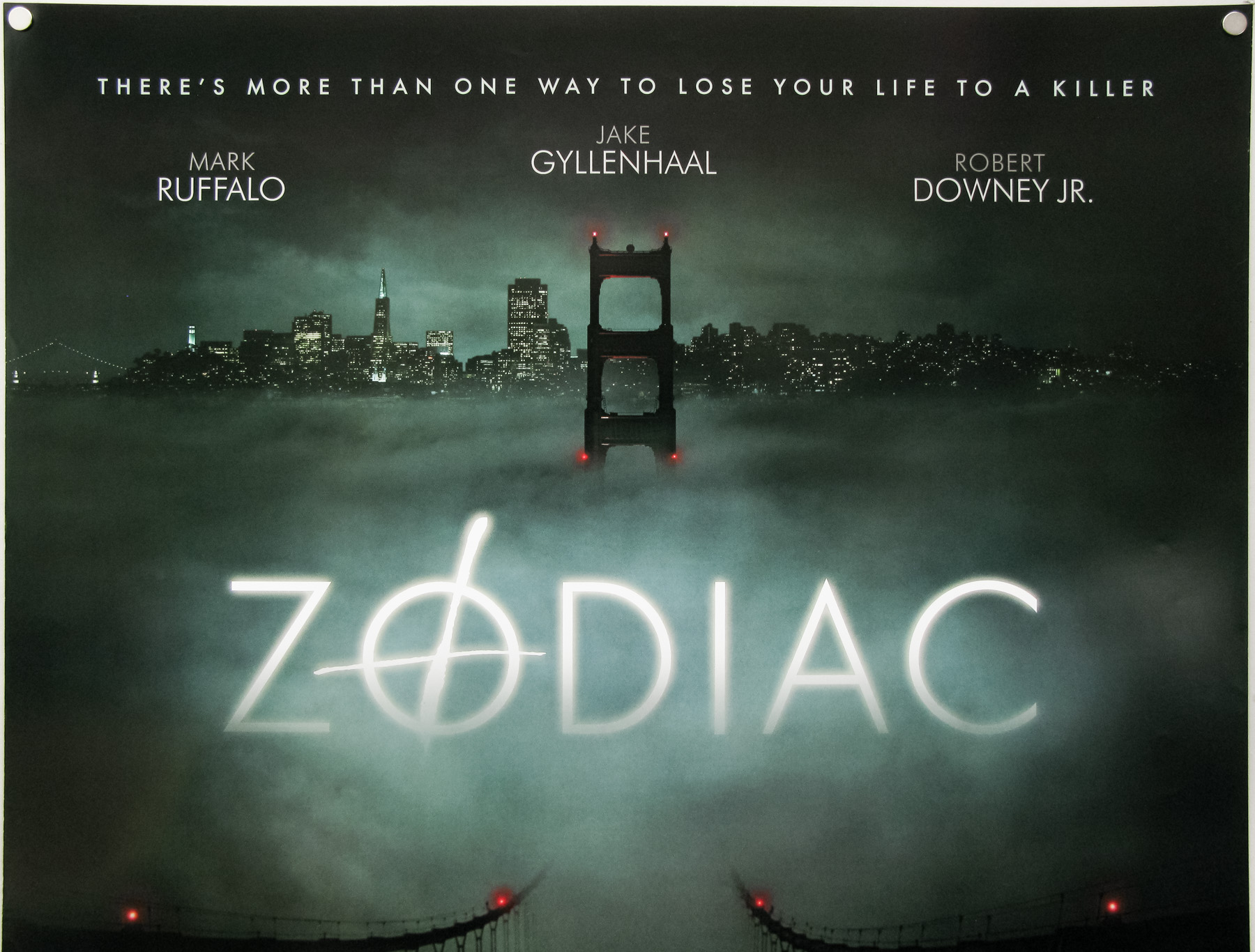
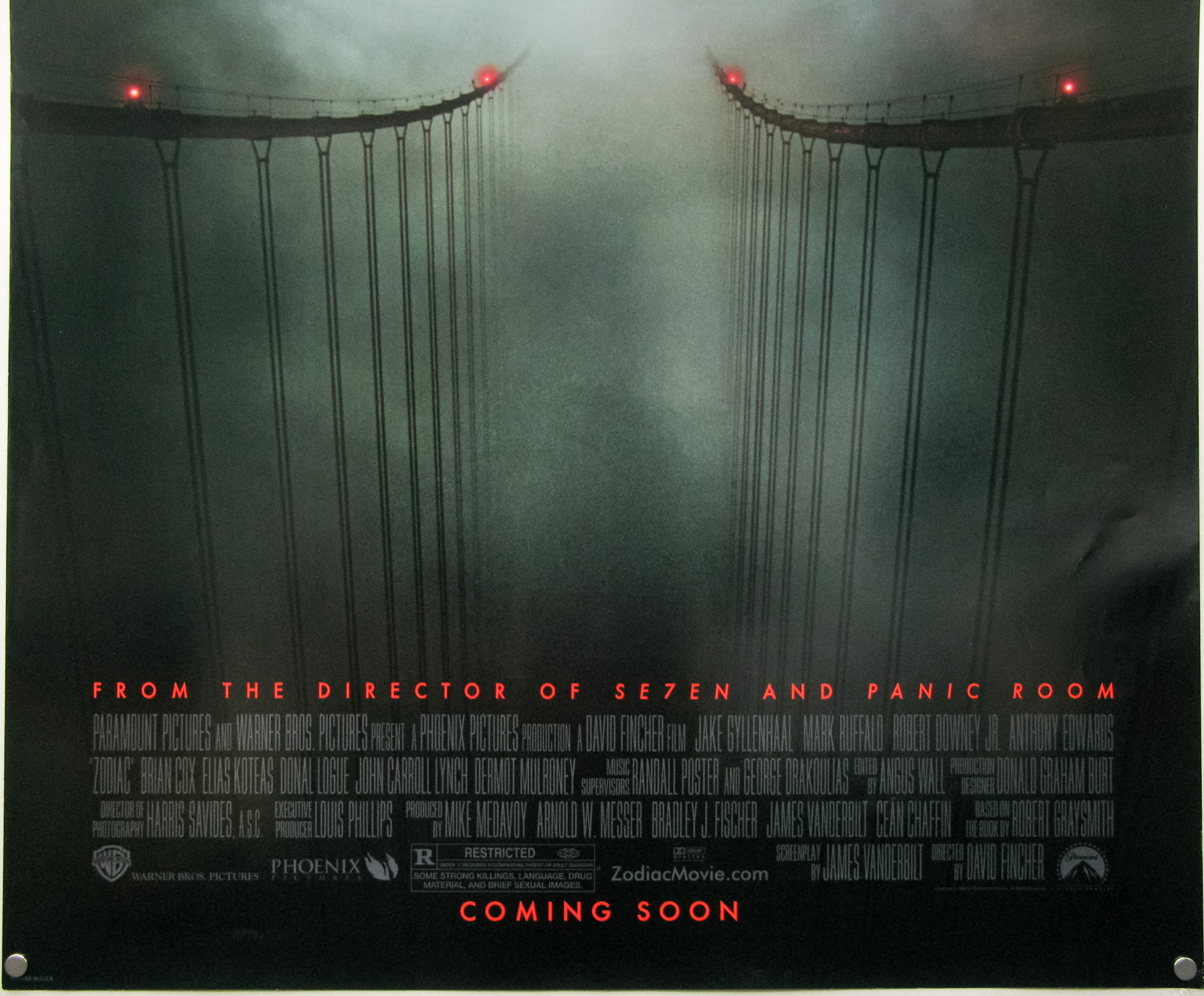
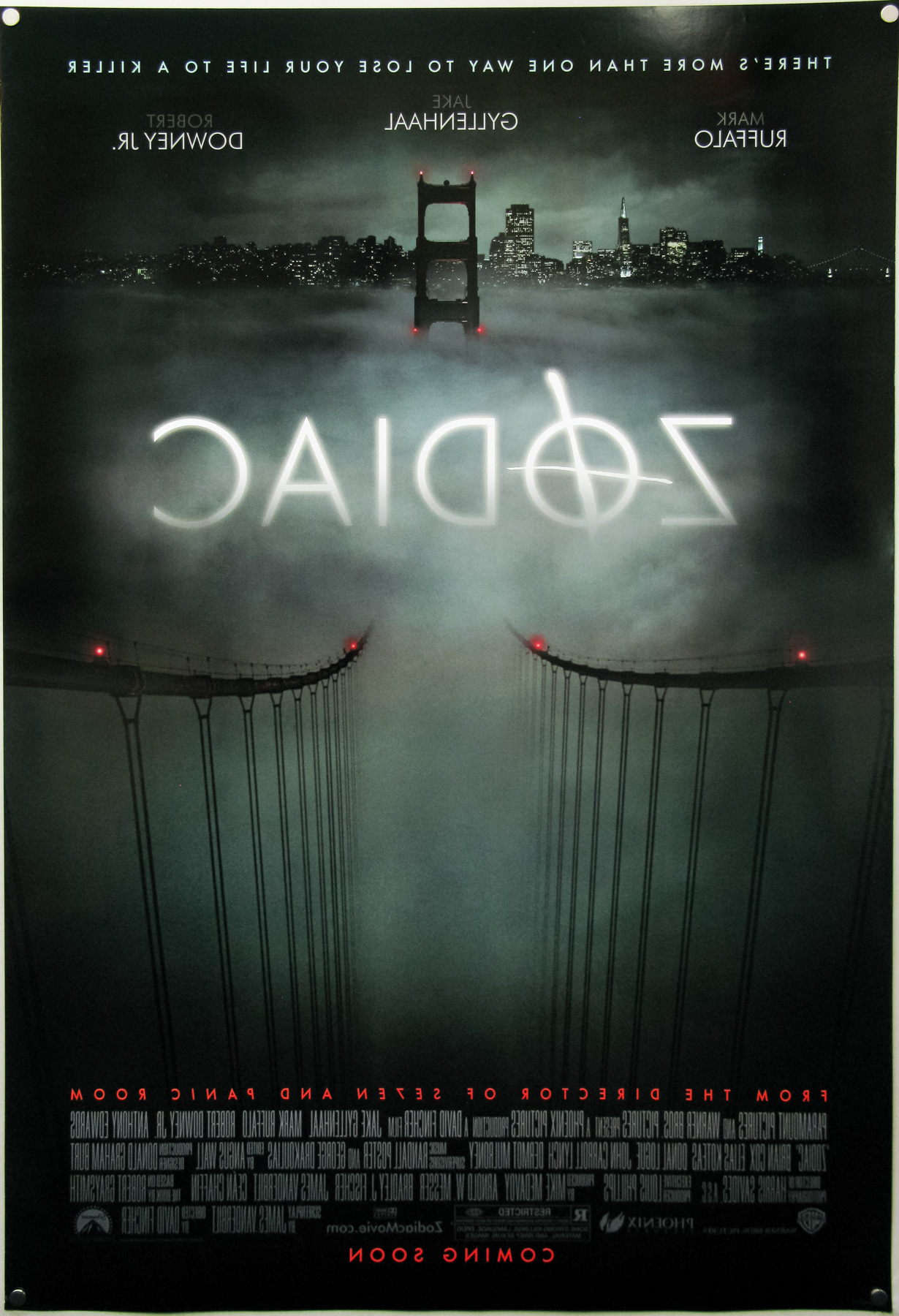
Zodiac / one sheet / advance / USA

17.05.11

Poster Poster

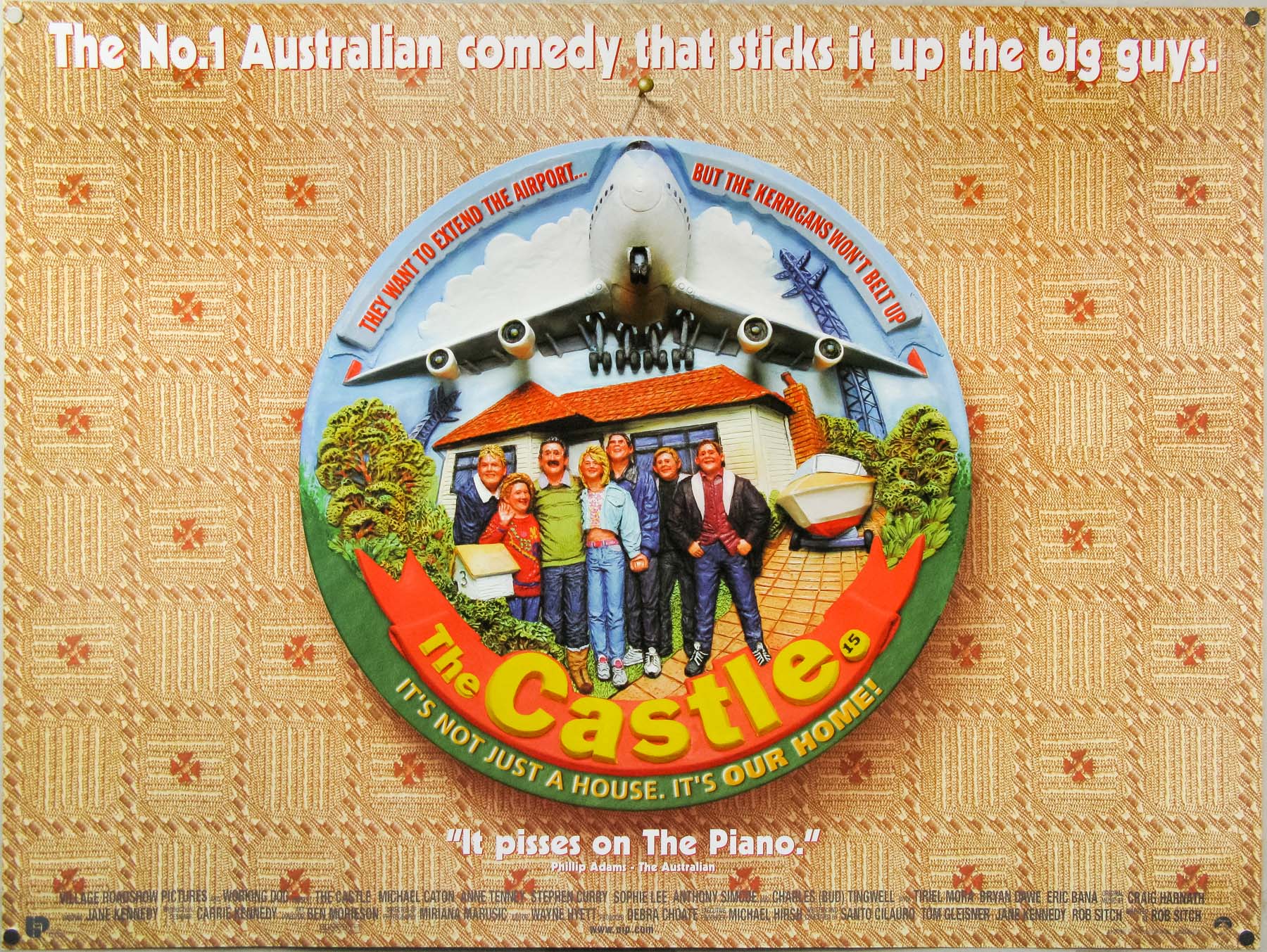
The Castle / quad / UK

23.09.11

Poster Poster
Title
The Castle
AKA
Casa dolce casa [Home Sweet Home] (Italy) | My Home Is My Castle (Germany)
Year of Film
1997
Director
Rob Sitch
Starring
Michael Caton, Anne Tenney, Stephen Curry, Anthony Simcoe, Sophie Lee, Wayne Hope, Tiriel Mora, Eric Bana, Charles 'Bud' Tingwell, Robyn Nevin, Costas Kilias
Origin of Film
Australia
Genre(s) of Film
Michael Caton, Anne Tenney, Stephen Curry, Anthony Simcoe, Sophie Lee, Wayne Hope, Tiriel Mora, Eric Bana, Charles 'Bud' Tingwell, Robyn Nevin, Costas Kilias,
Type of Poster
Quad
Style of Poster
--
Origin of Poster
UK
Year of Poster
1998
Designer
Steve Laws - FEREF
Artist
Brian Bysouth - model
Size (inches)
30 2/16" x 40"
SS or DS
DS
Tagline
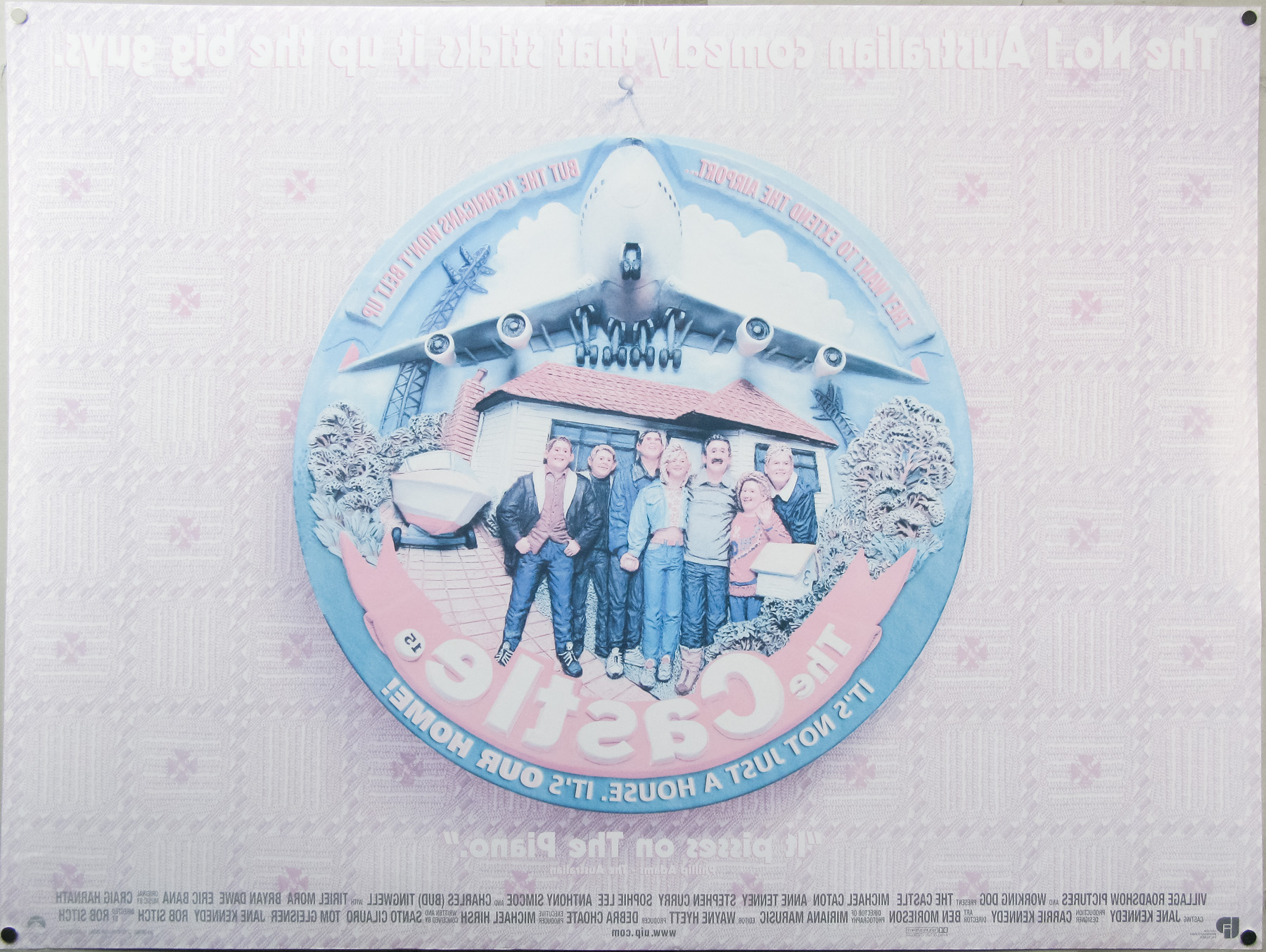
They want to extend the airport... but the Kerrigans wont belt up!

The Castle is a true cult film and one that many folks outside of Australia will never have even heard of, but those that have seen it are very likely to sing its praises to anyone who’ll listen. For a long time it wasn’t an easy film to catch in the UK, having opened at a handful of cinemas in 1998 and then languishing unreleased on DVD until a month ago (it was released on VHS at a time when that format was being ousted from most shops). I first saw it after borrowing a copy of the Australian DVD from a Kiwi friend who had urged me to watch it on a number of occasions and I’m very glad I did.

It’s a really funny, sweet little film and you can’t help but get caught up in the story of a family trying to save their home from destruction. Some of the Aussie references will be lost on non-natives but there’s plenty to enjoy and I heartily recommend you check it out as soon as possible. The film is endlessly quotable and, from what I understand, it’s a film that Australians really took to heart. I’ve been told that you’d be hard pressed to find any Aussie who can’t recite lines such as “This is going straight to the pool room” or “Tell him he’s dreaming”.

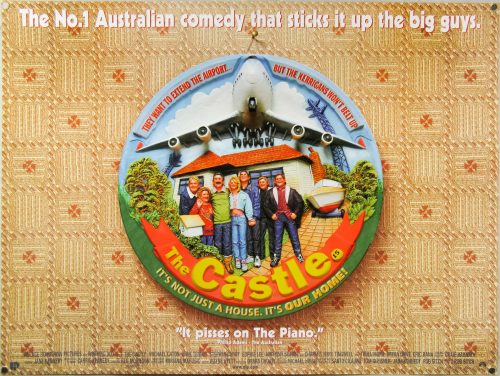
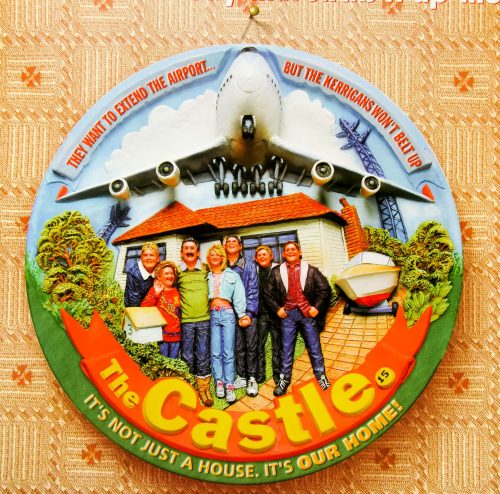
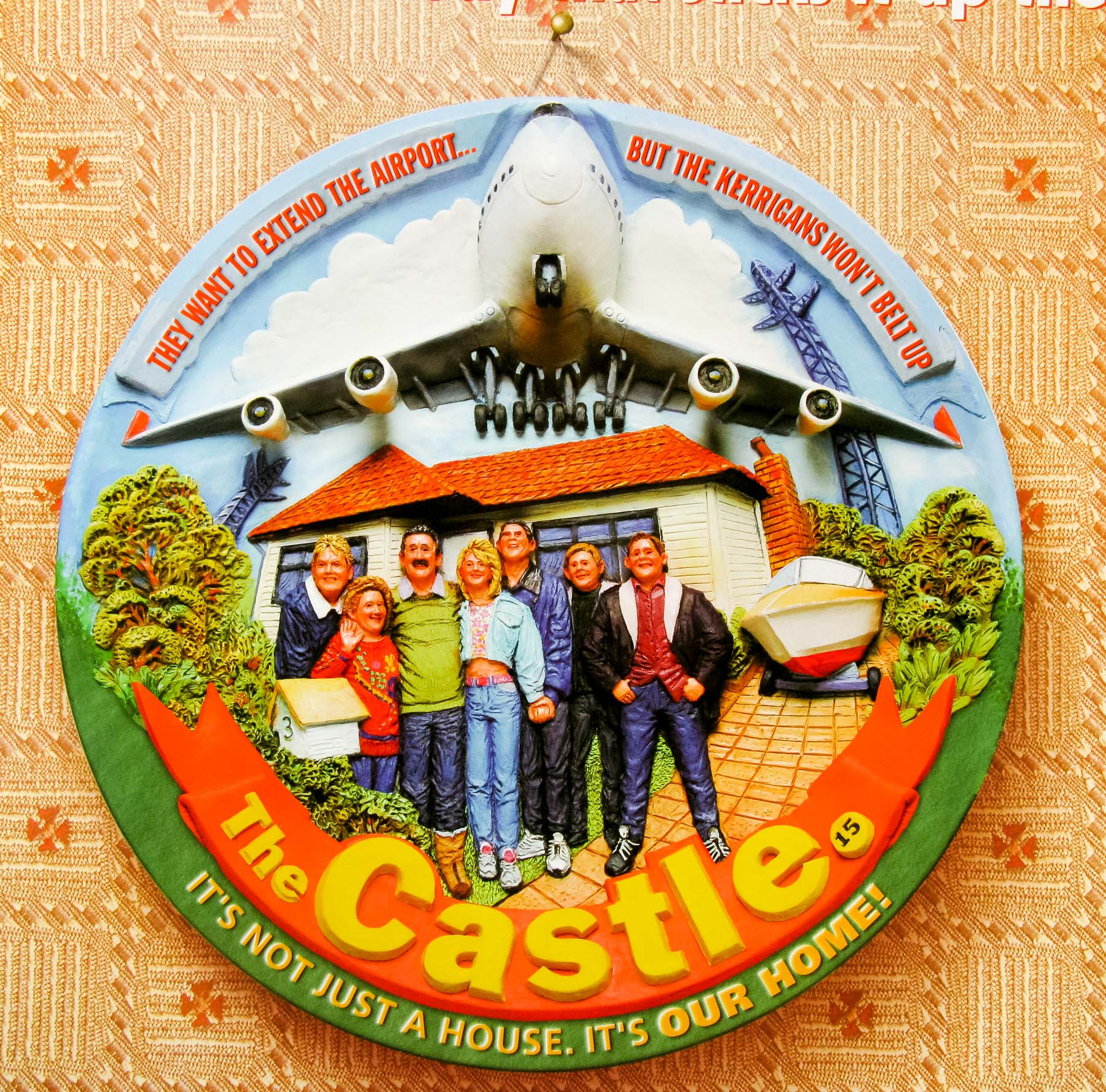
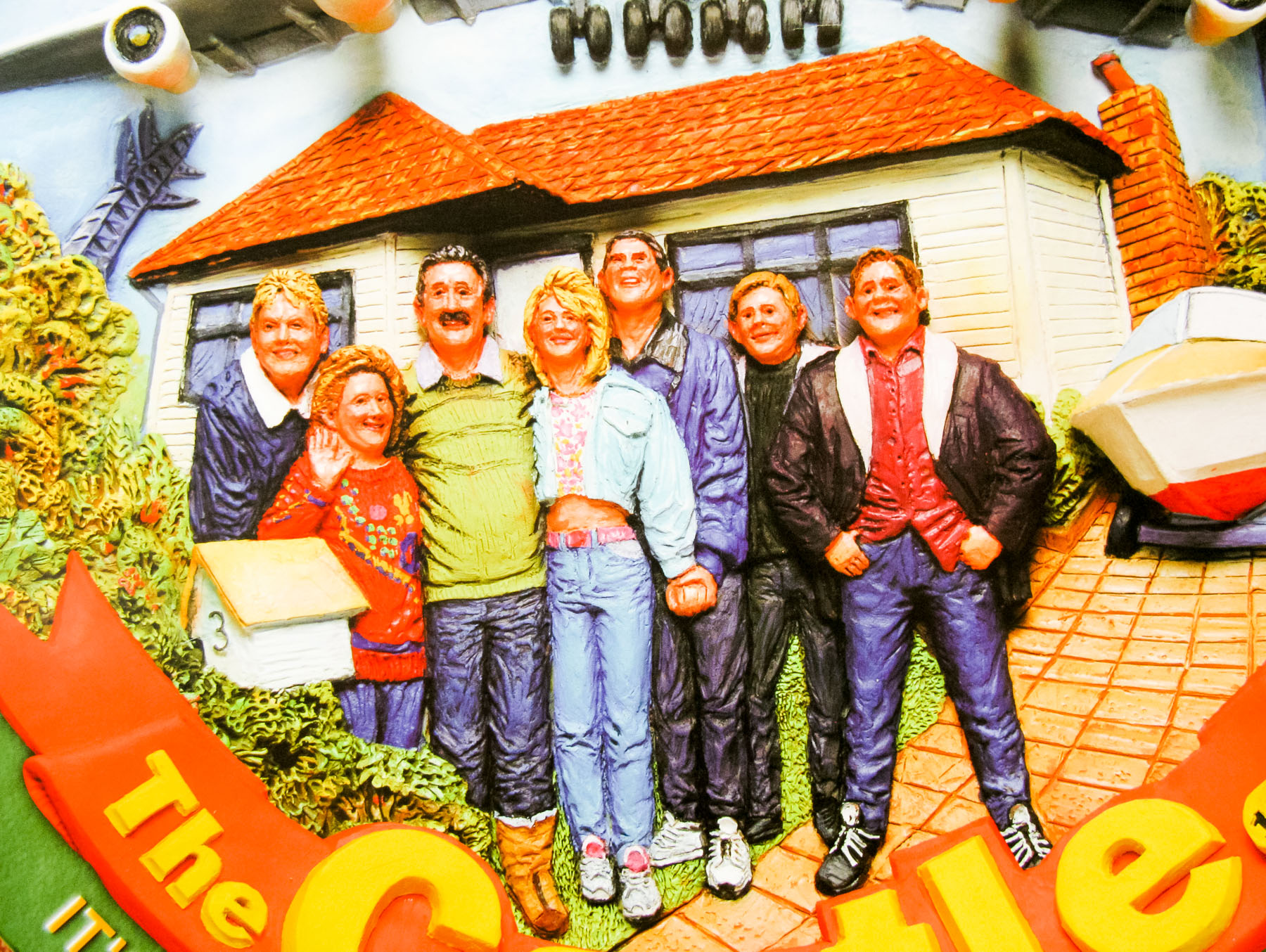
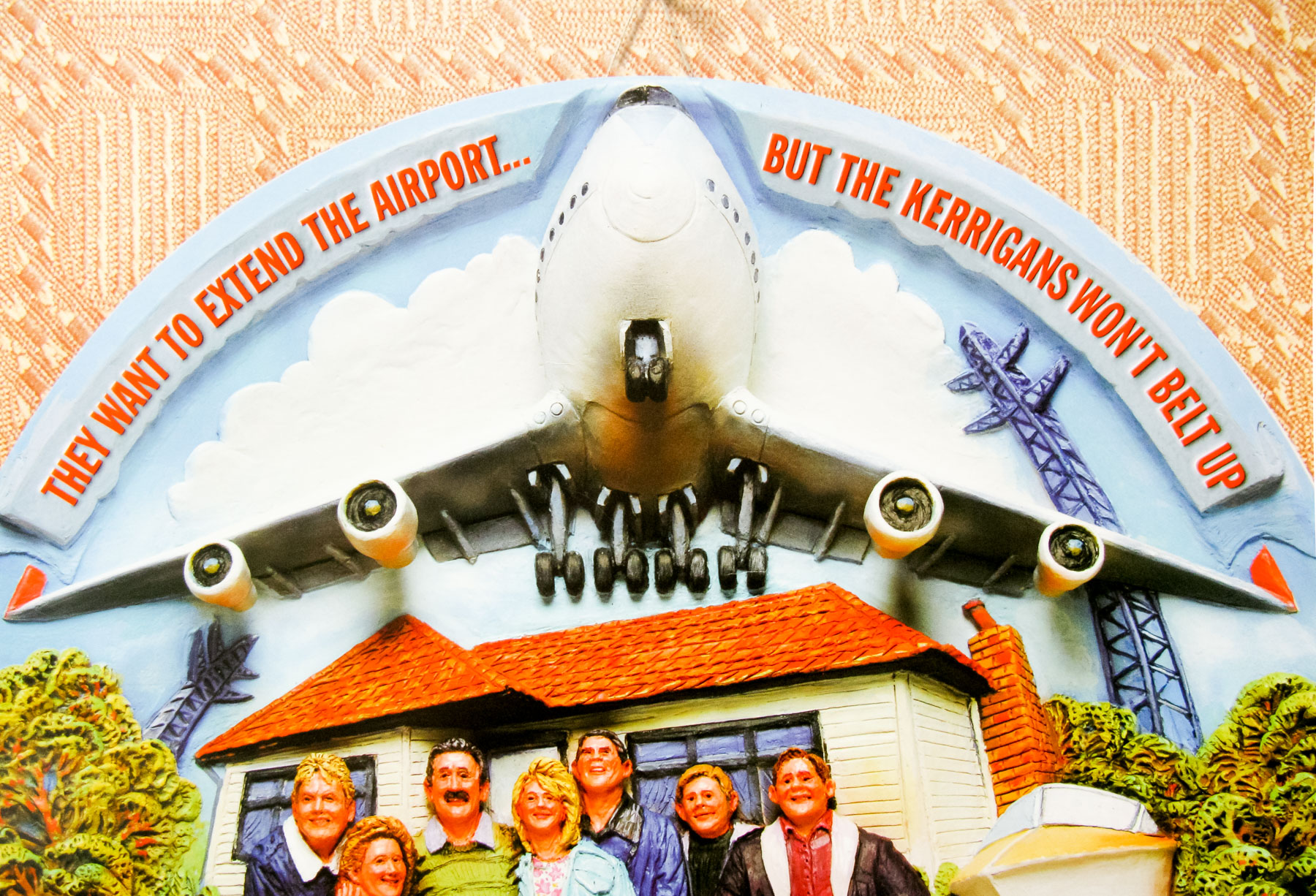
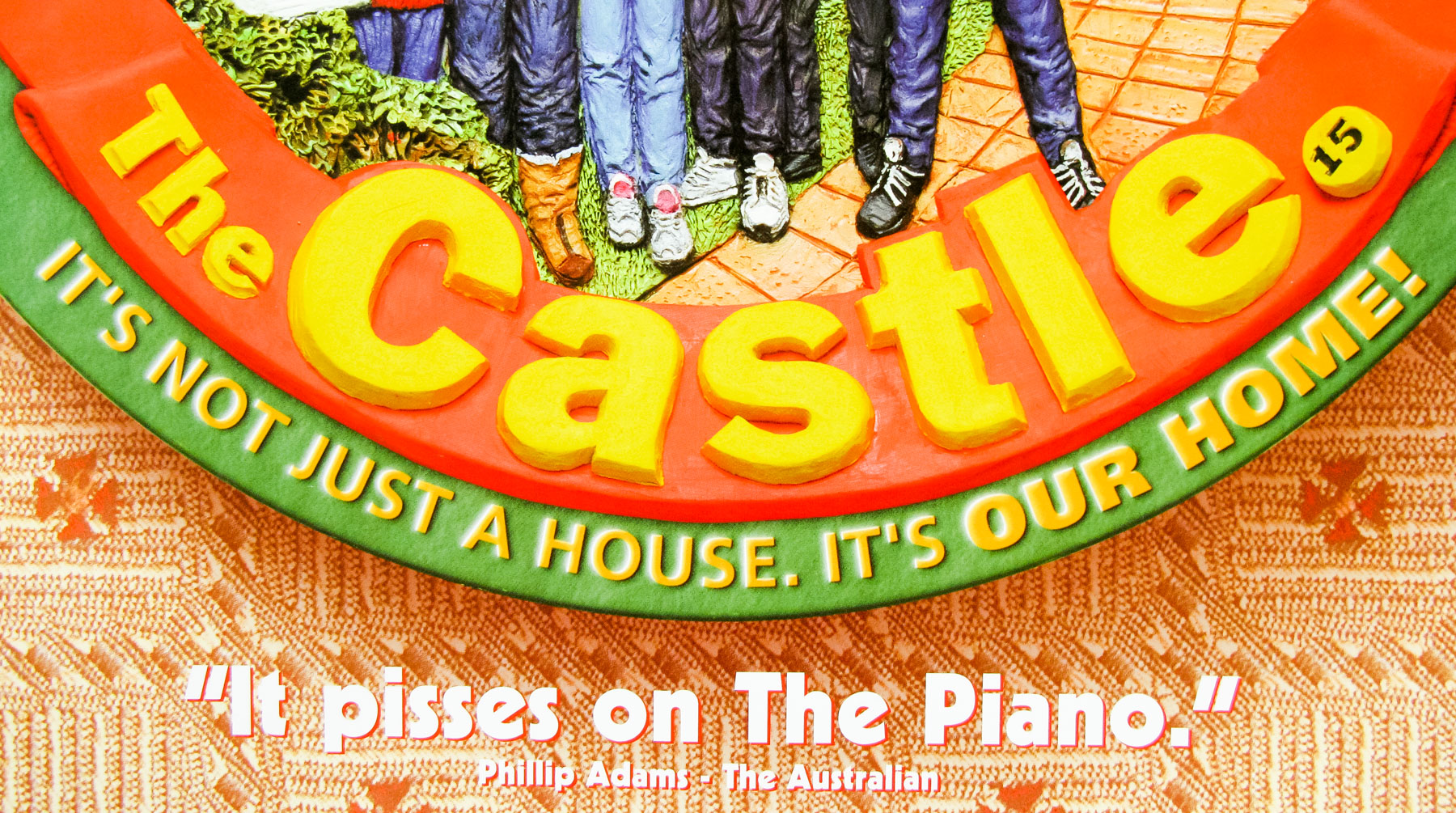
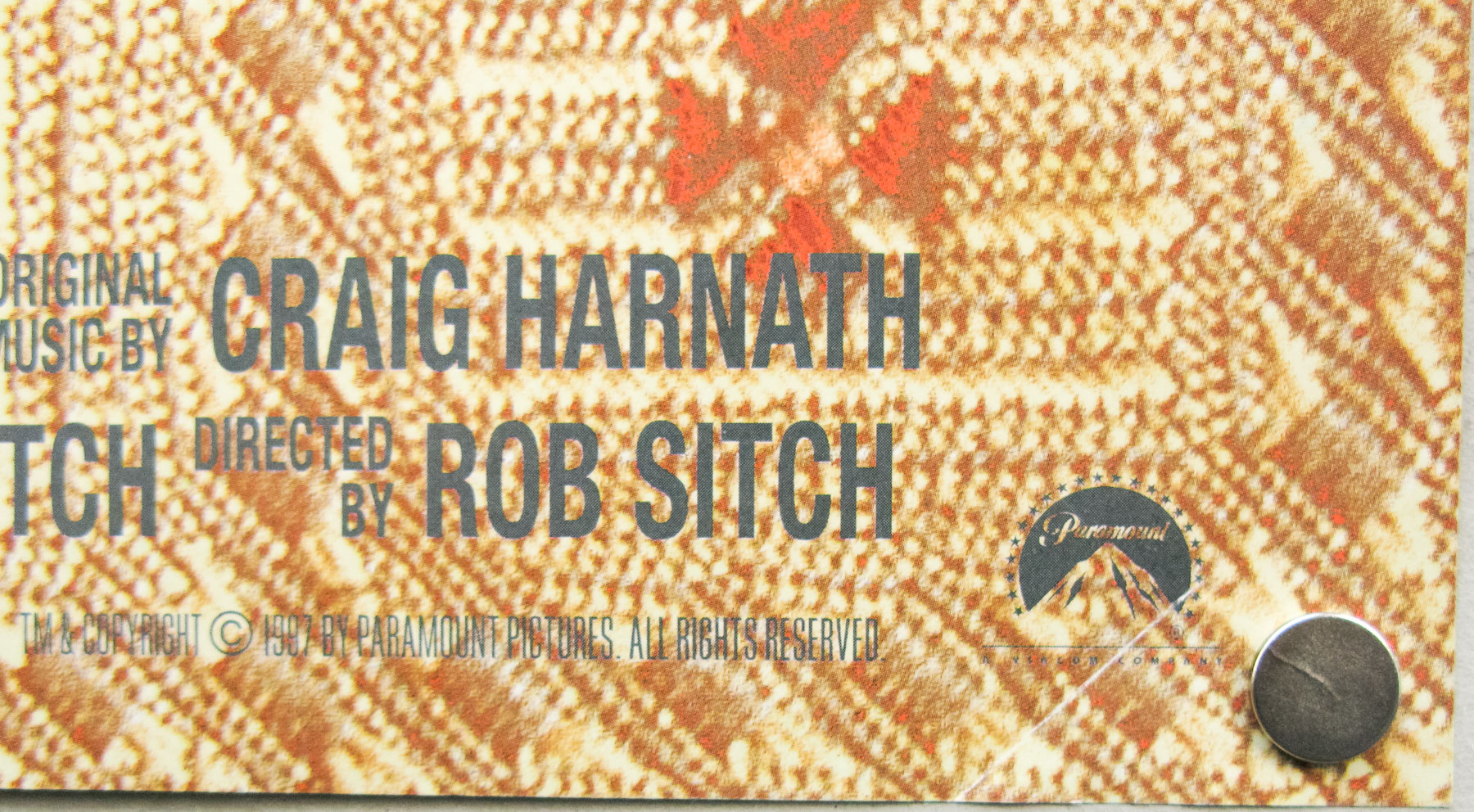
This British poster features a unique design of a ‘pottery relief’ of the Kerrigan family in front of their house with a Jumbo jet flying overhead. This was done by the great British artist Brian Bysouth. The press quote is also rather great and I had someone tell me that this particular poster was withdrawn at some cinemas for the ‘pissing’, though I’m not sure how true this is.

In December 2012 I met and interviewed Brian Bysouth and this poster was discussed:

One poster that I recently discovered had your input is the quad for The Castle, which is that small independent Australian film that came out in the 1990s. You modelled the wall plaque that’s featured on it, right? How did that come about?
We went to a screening of the film and afterwards had a meeting to discuss what we all thought was a unique and challenging film to create a poster for.  Later I sat down with Steve Laws, the studio manager and a leading creative, and we thrashed out some ideas, but inspiration was lacking.  The following day an excited Steve came into my office and explained his idea for making something ‘that the dad in the film would be happy to have in his poolroom’ (a famous quote from the film).

Steve’s idea was that we should create something that you could easily imagine hanging in the poolroom amongst all of the other bric-a-brac. We decided to imitate those bass-relief plaster plaques that you see in kitsch-filled shops. So we went out and bought some Plasticine and a very large plate to base the model on, and I set to work. I modelled the characters and the airplane taking off over the bungalow. The title was cut out of Plasticine and included around the base. I remember thinking that my art school training in sculpture was a real help.

Steve and I enjoyed a good laugh as we watched the thing develop, and a series of transparencies were made to show the client how it was progressing. When it was finished I painted it with poster colour then sprayed it with varnish to protect the delicate surface, and that was that. For the background of the poster we wanted to reproduce the wallpaper of the poolroom but couldn’t find anything we liked, so we ended up using a macro close-up of one of the FEREF account executive’s silk ties!

Note that the article also features an image of an initial sketch idea for the poster by Brian.

The Black Hole / program / Japan

11.07.12

Poster Poster

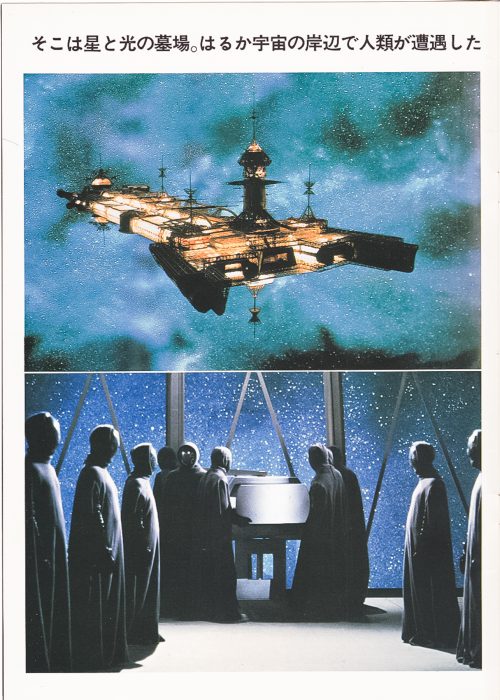
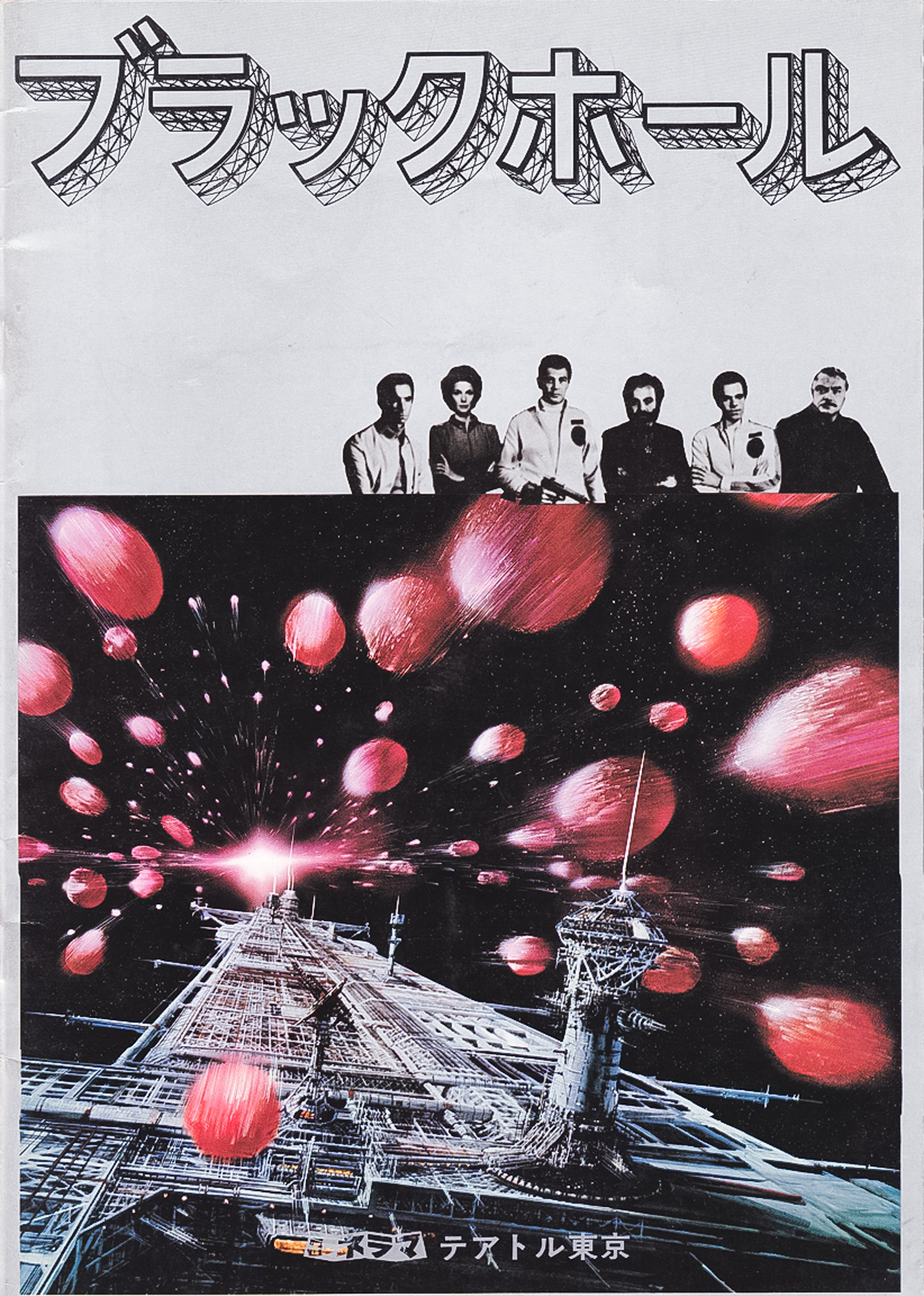
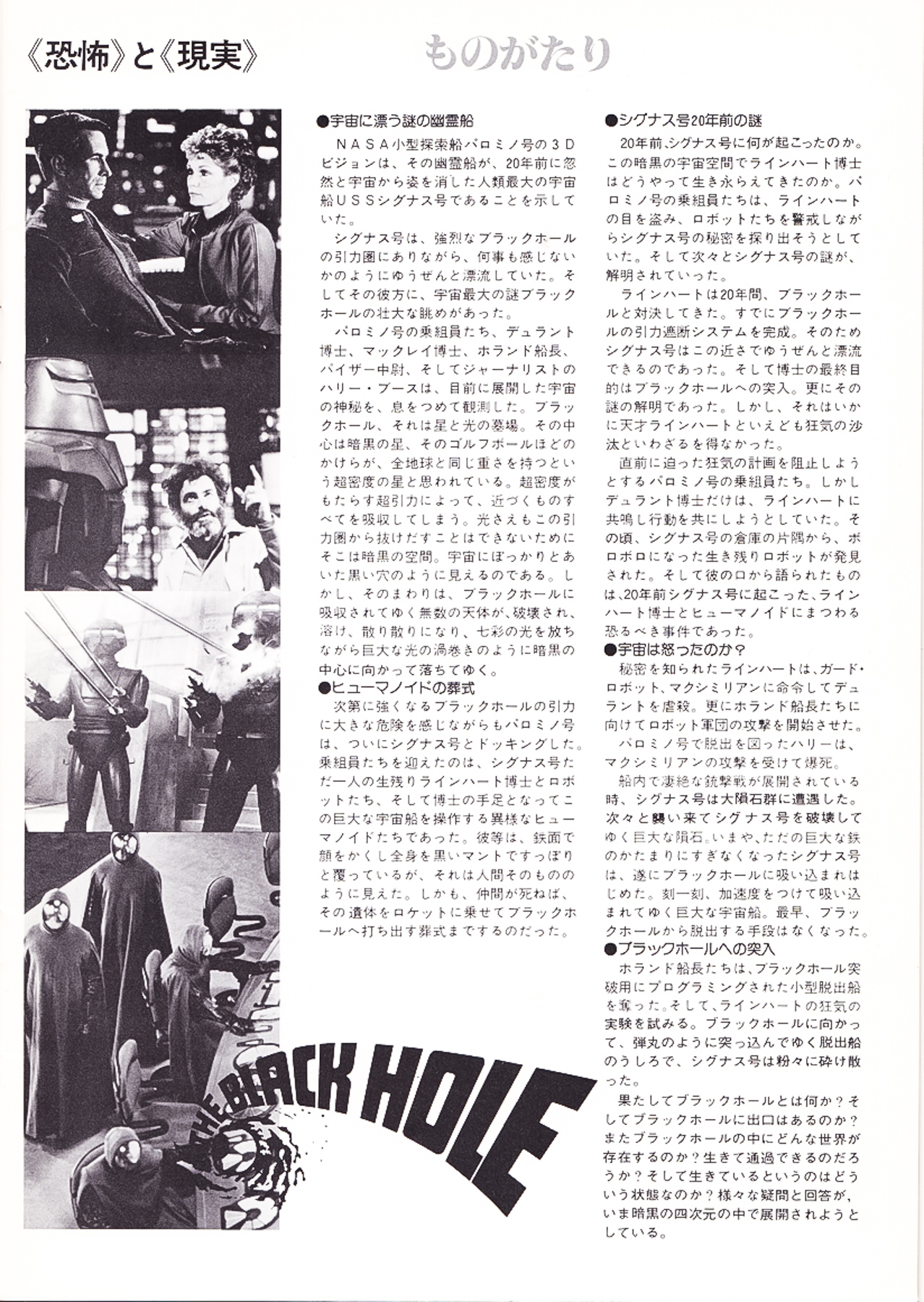
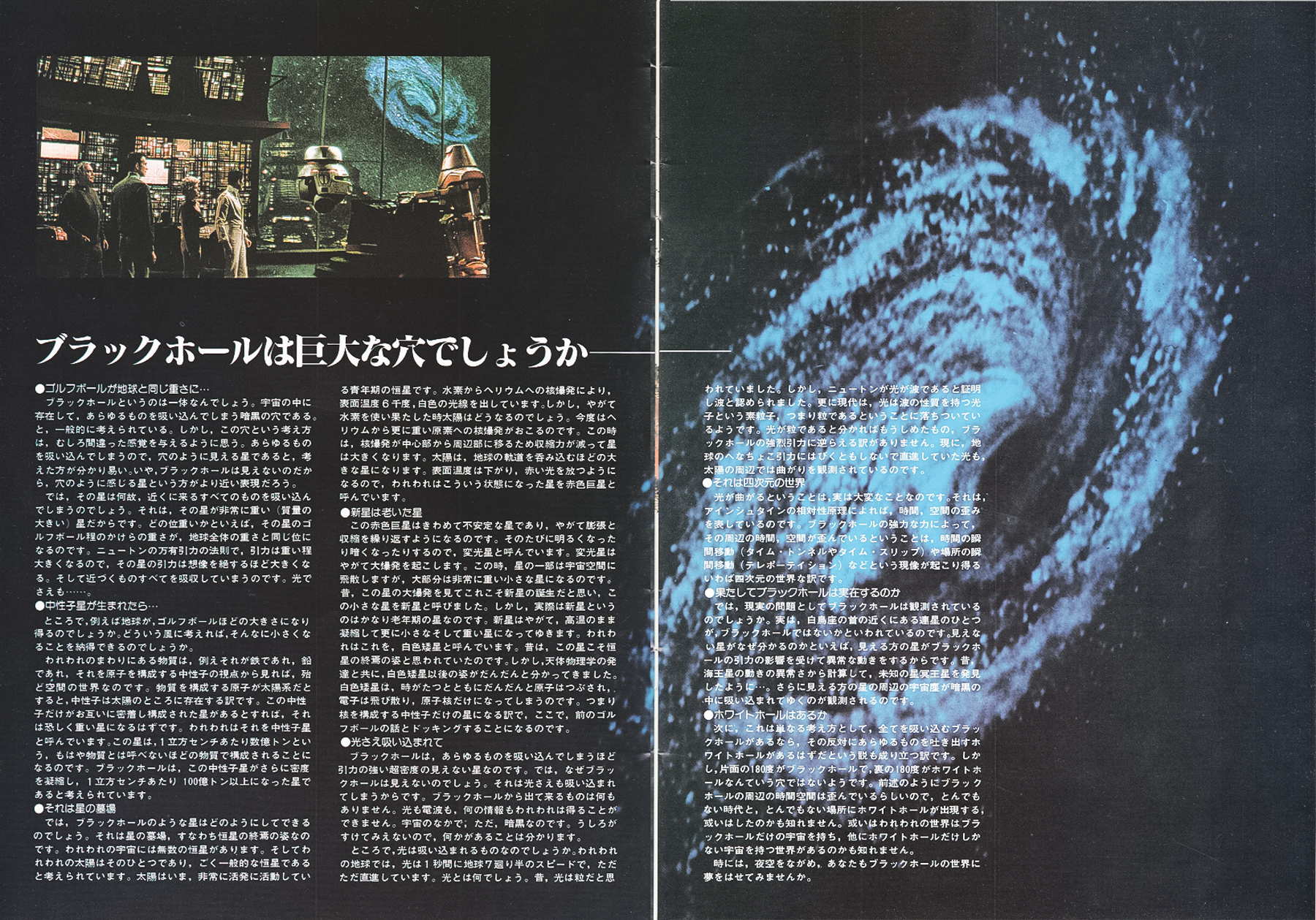
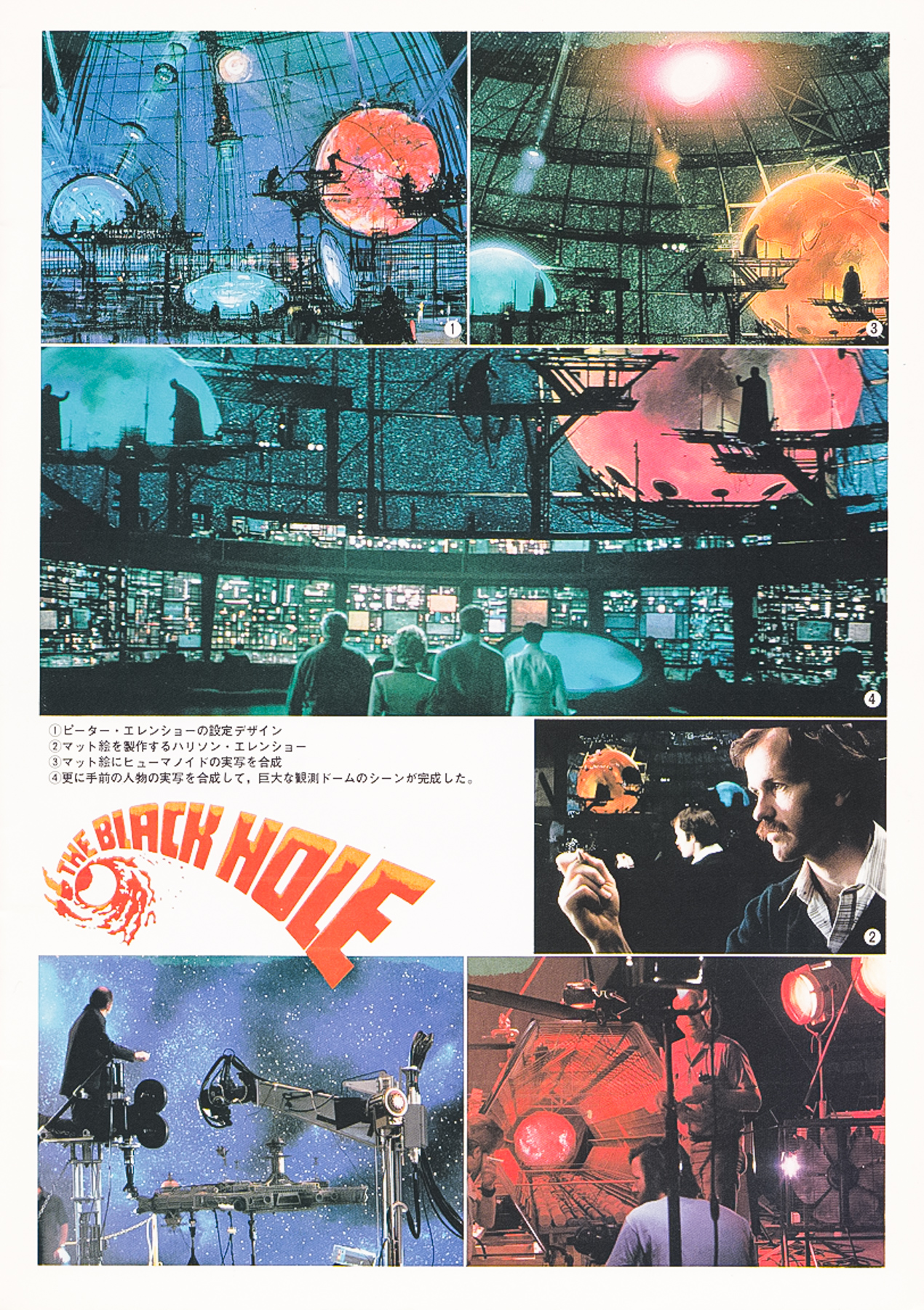
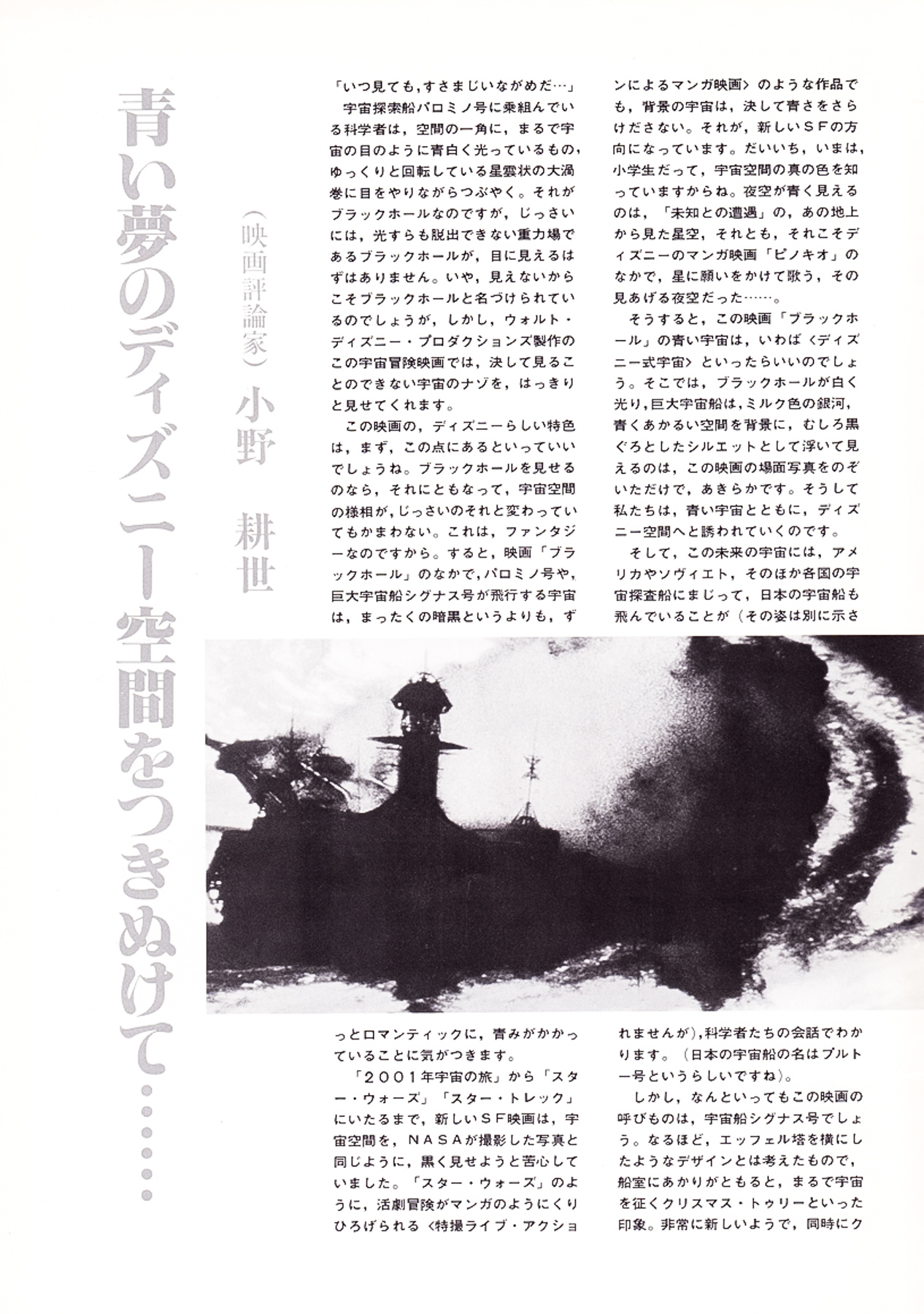
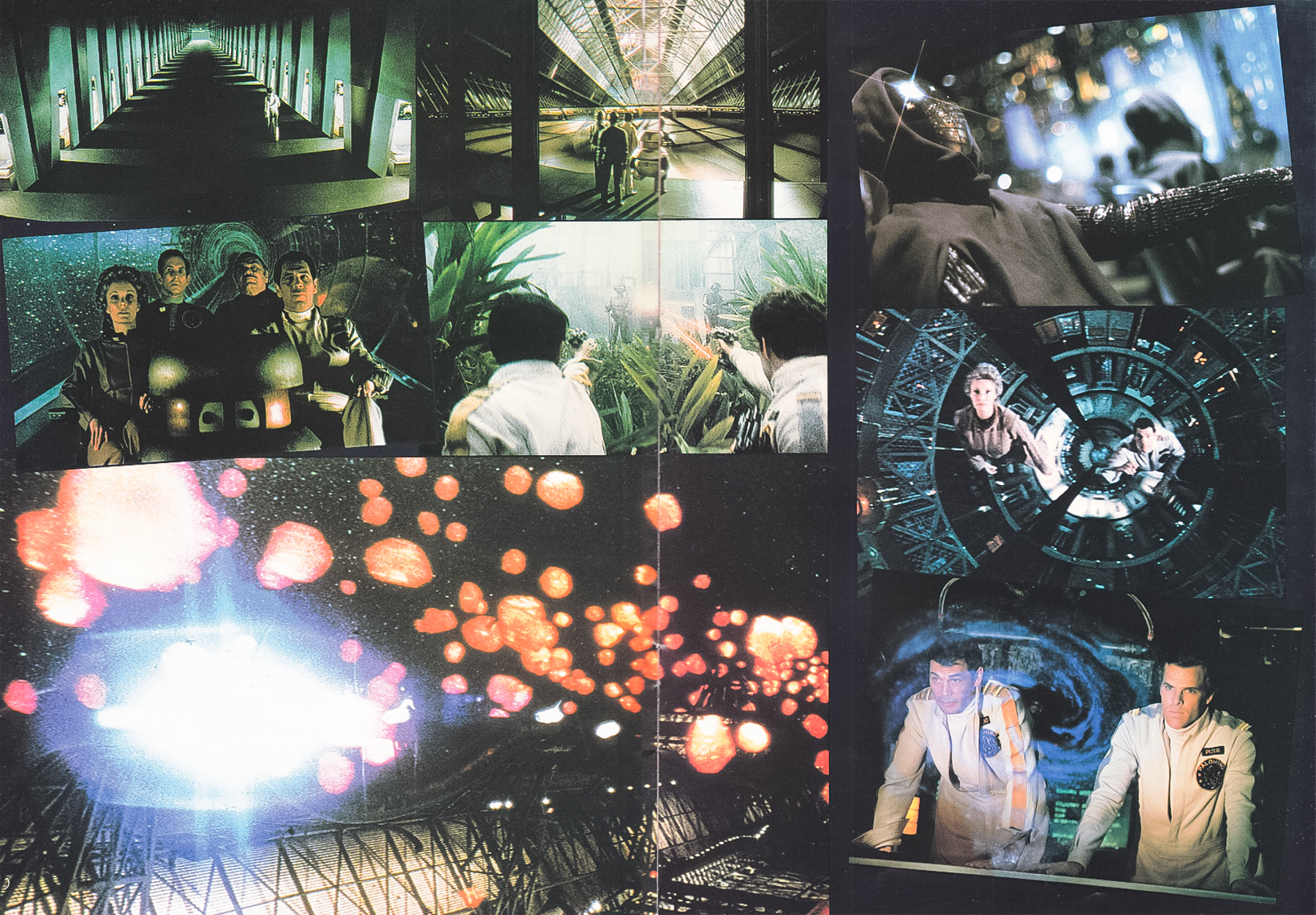
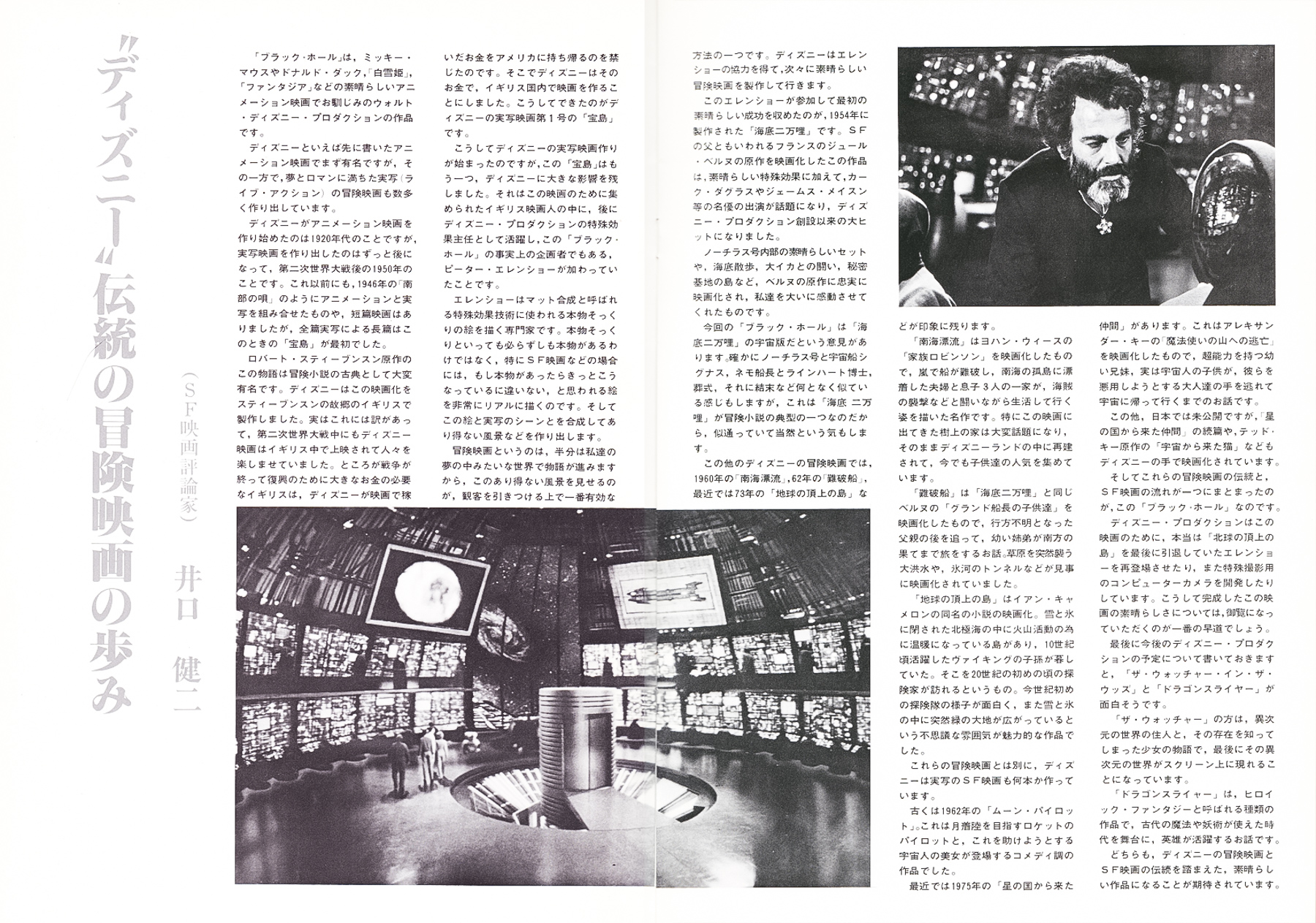
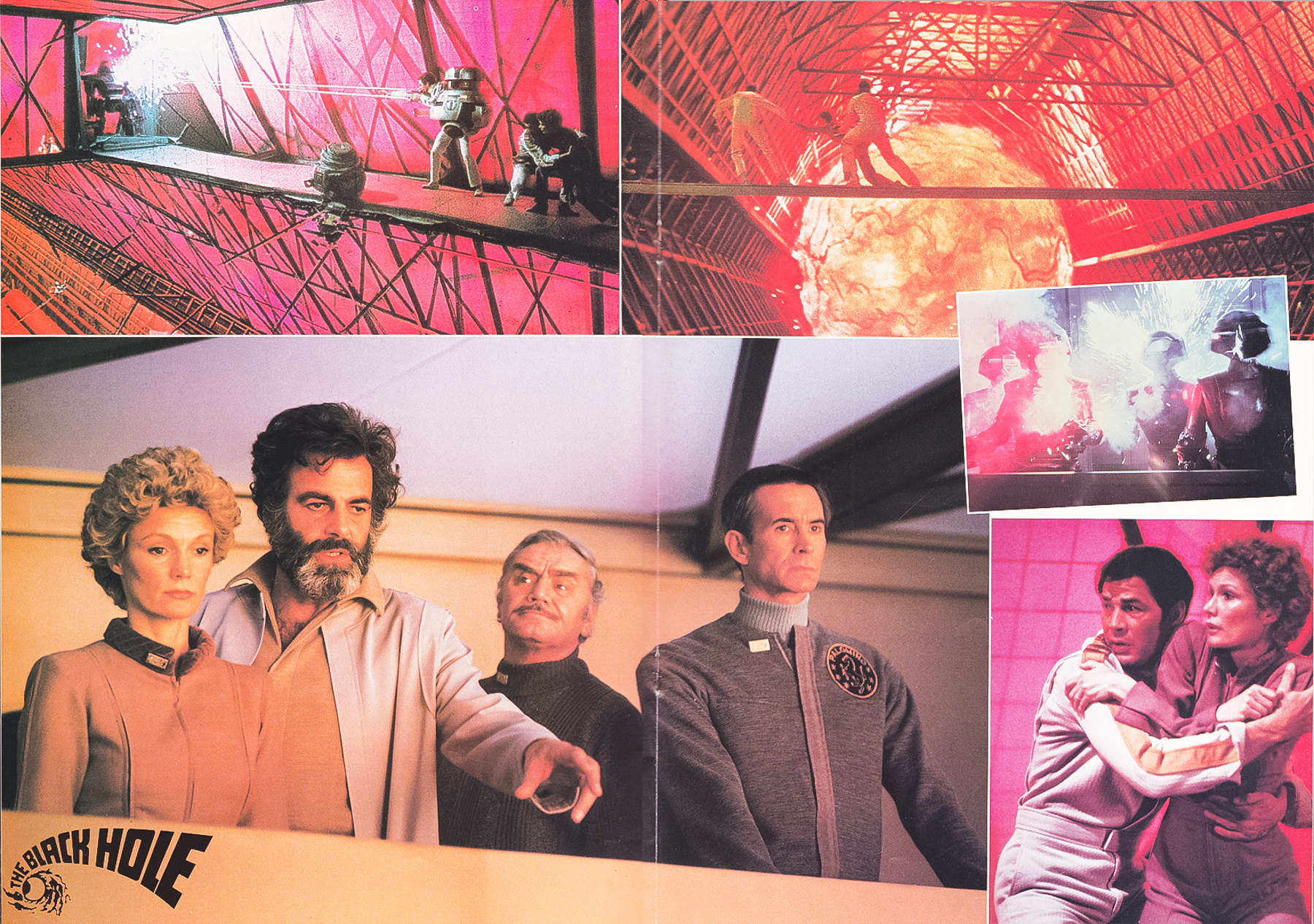
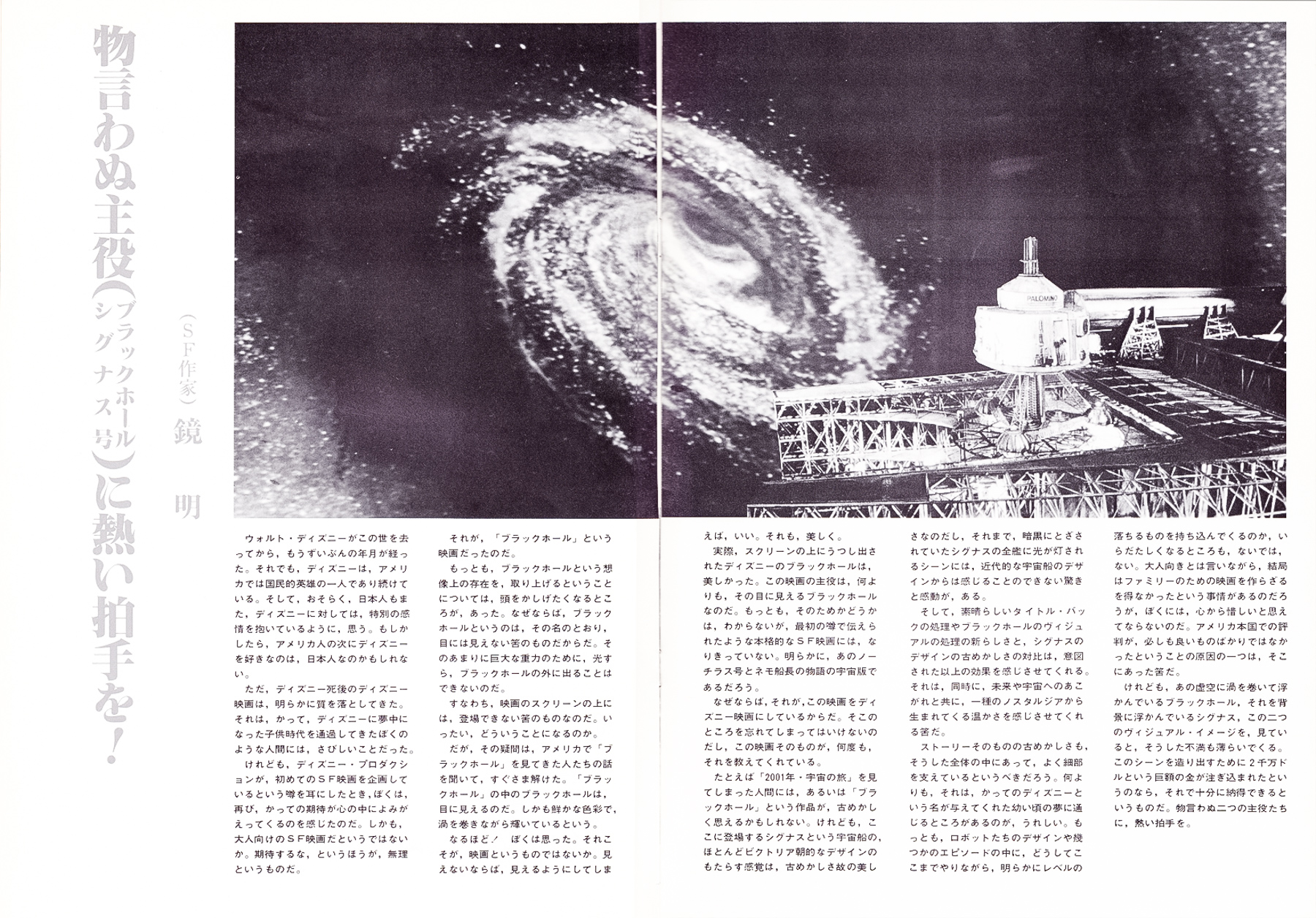
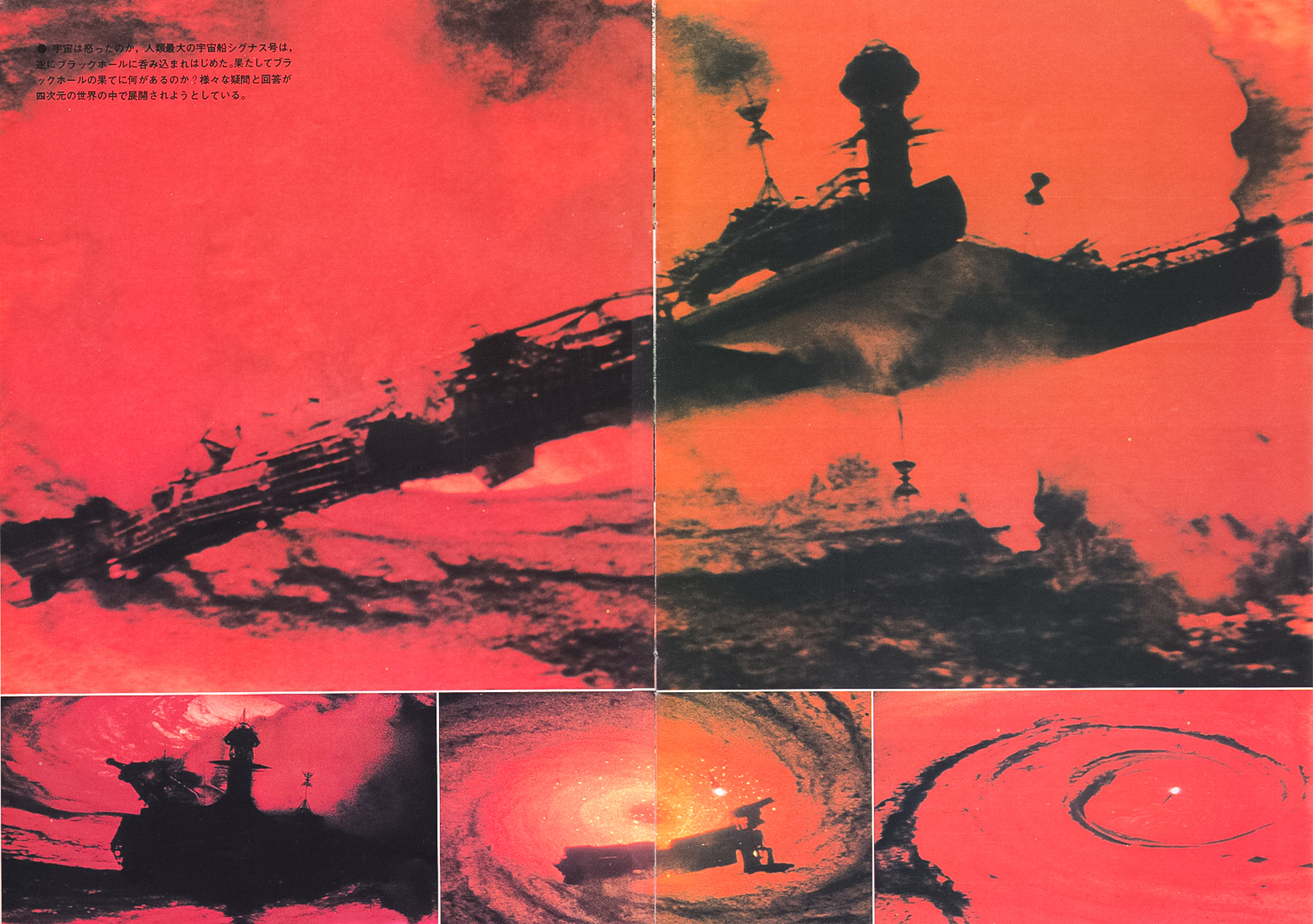
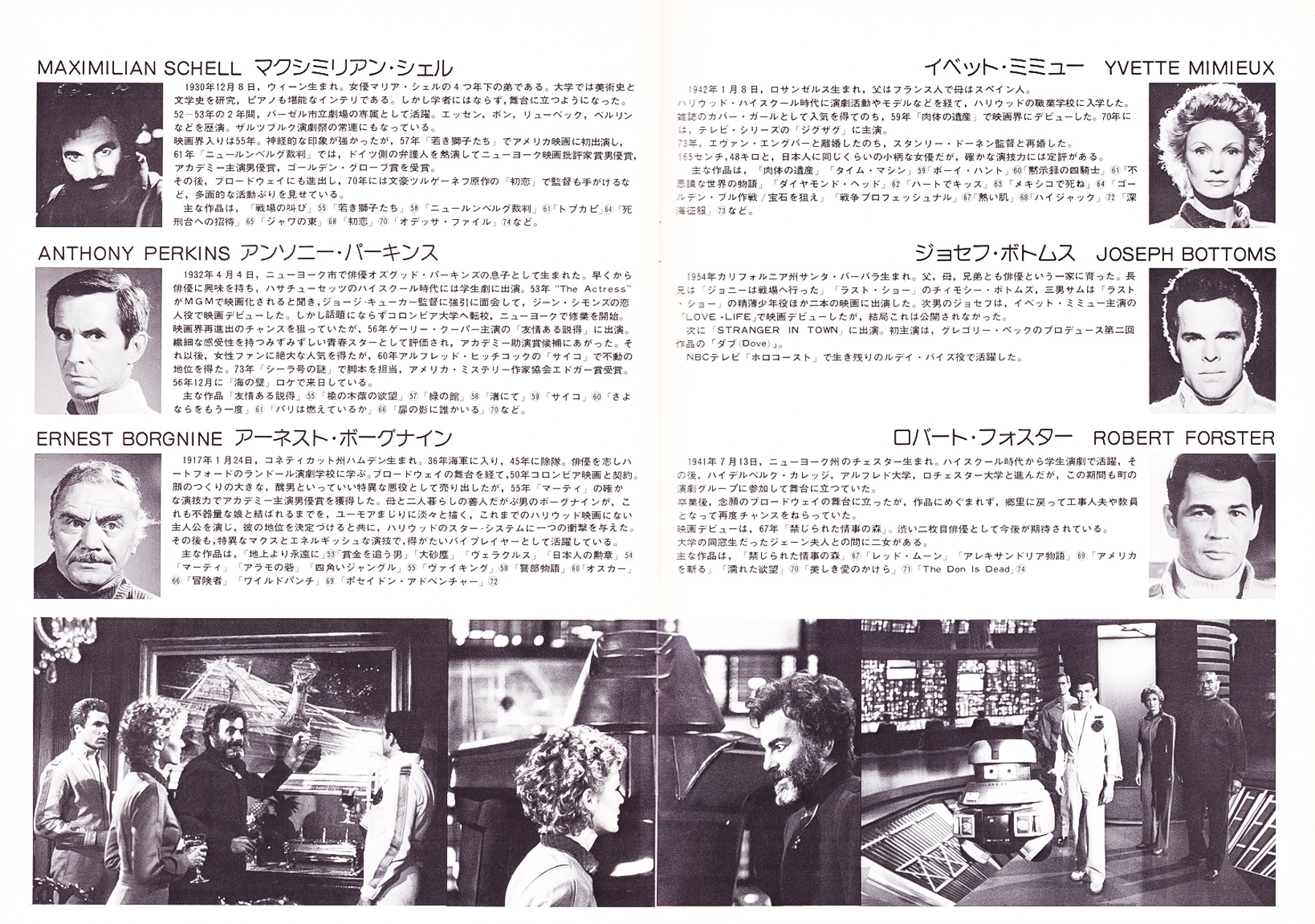
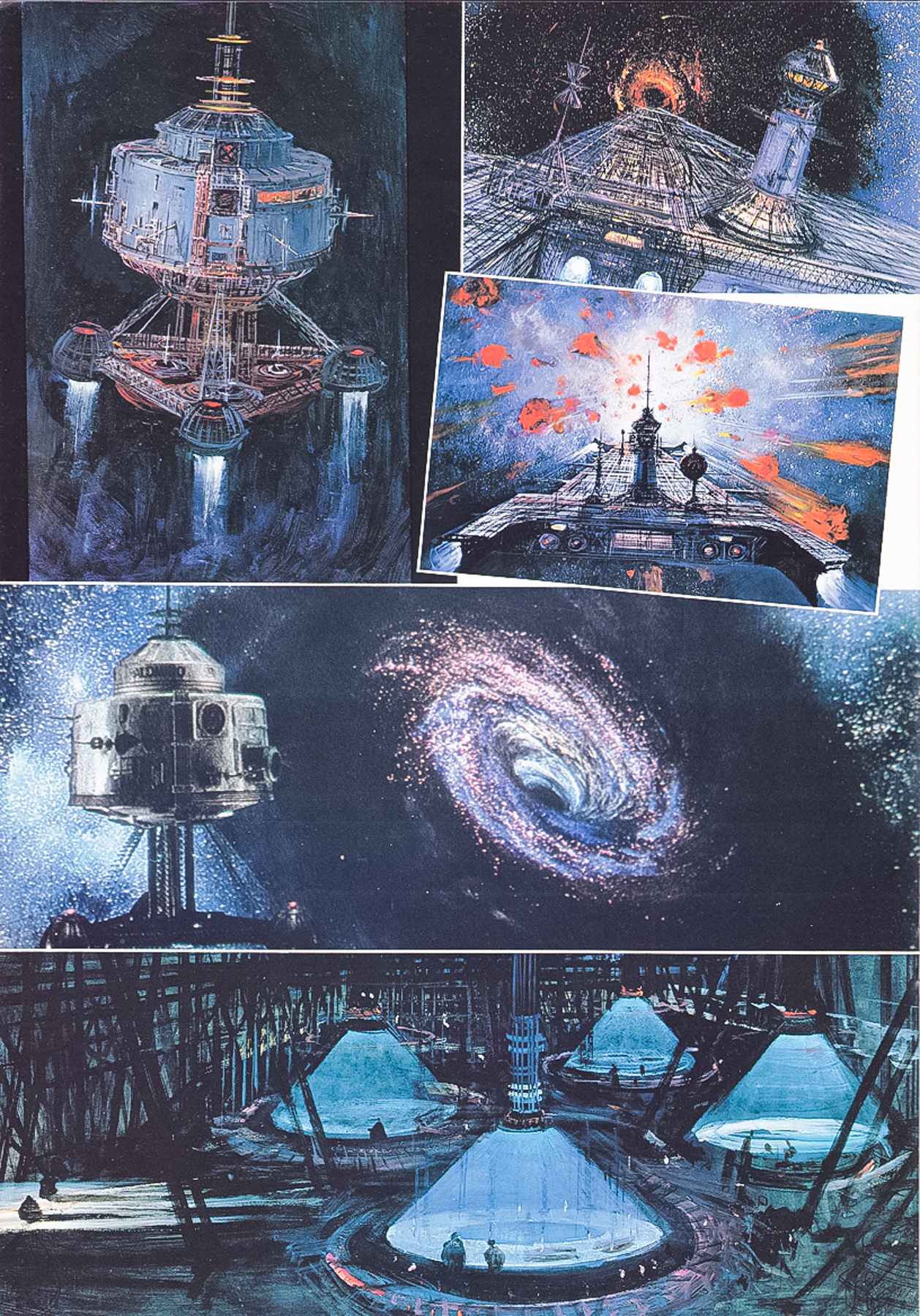
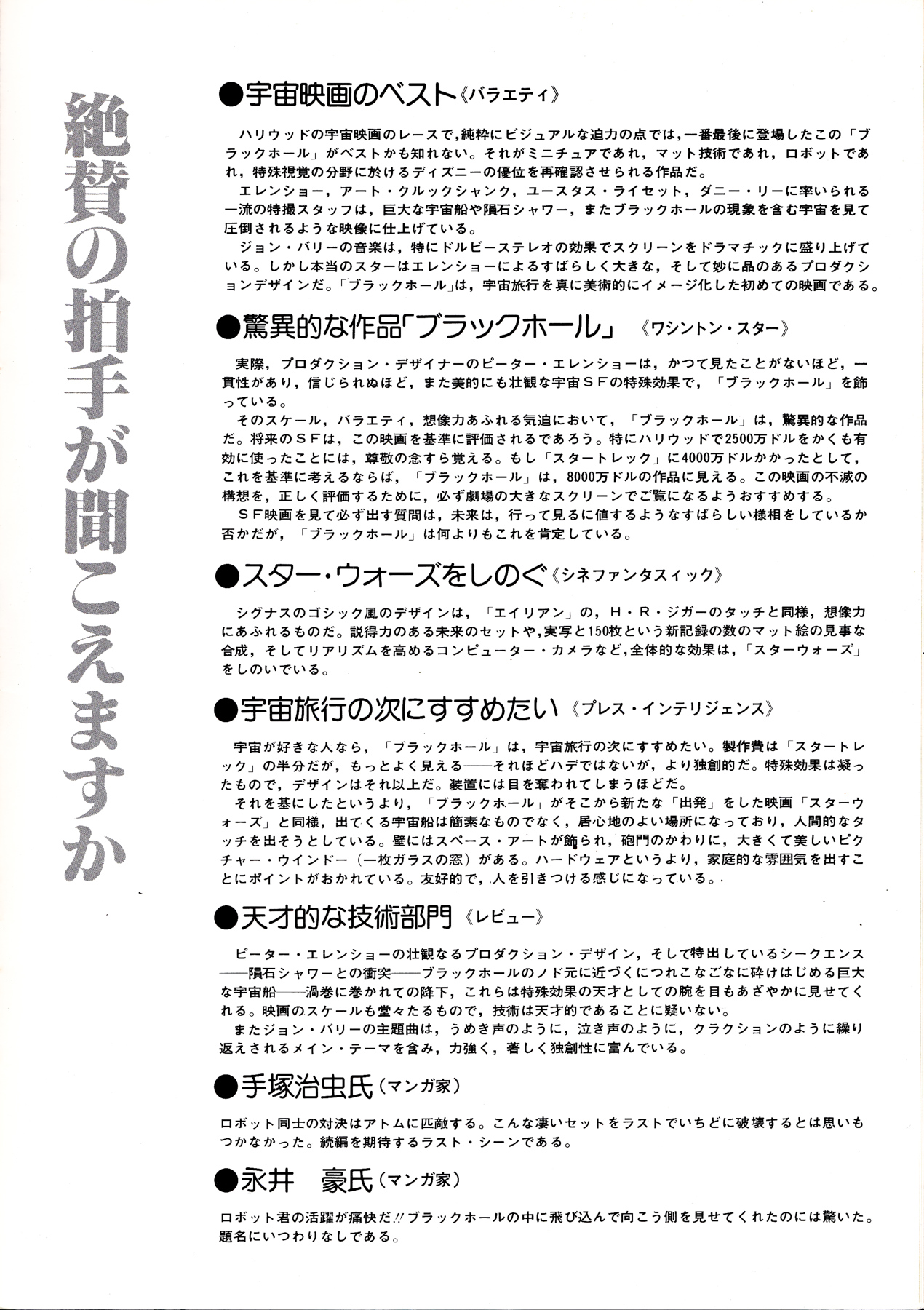
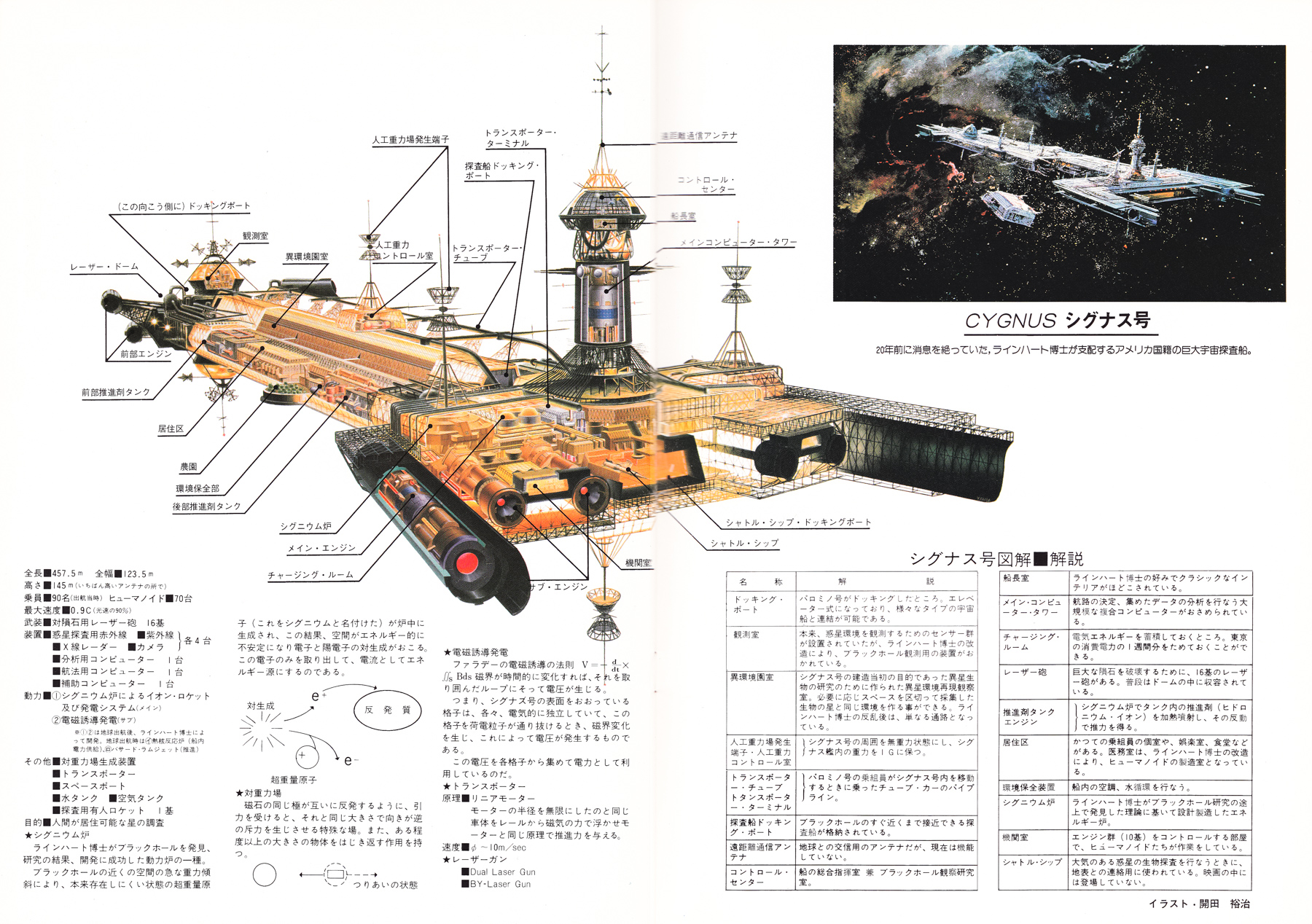
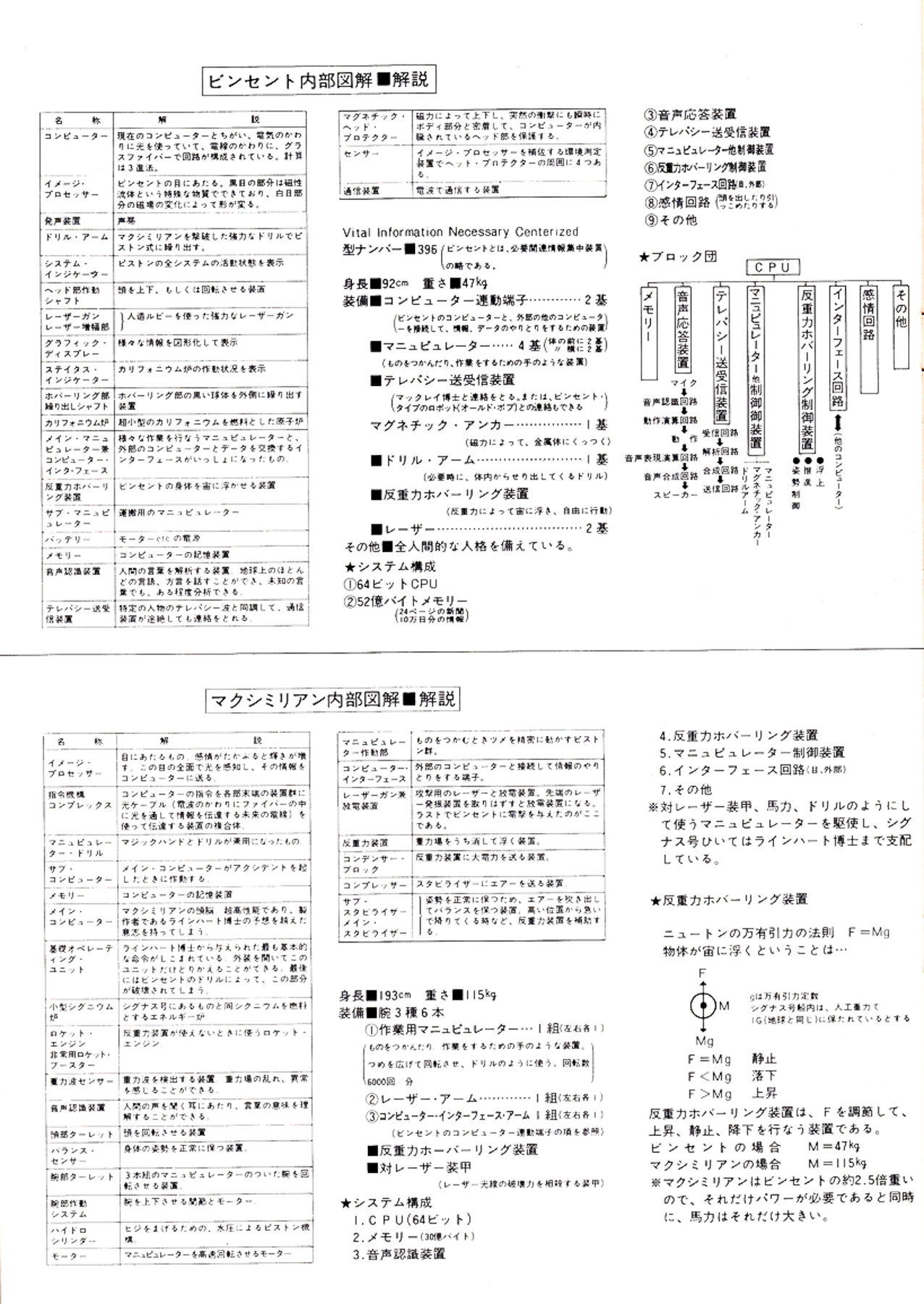
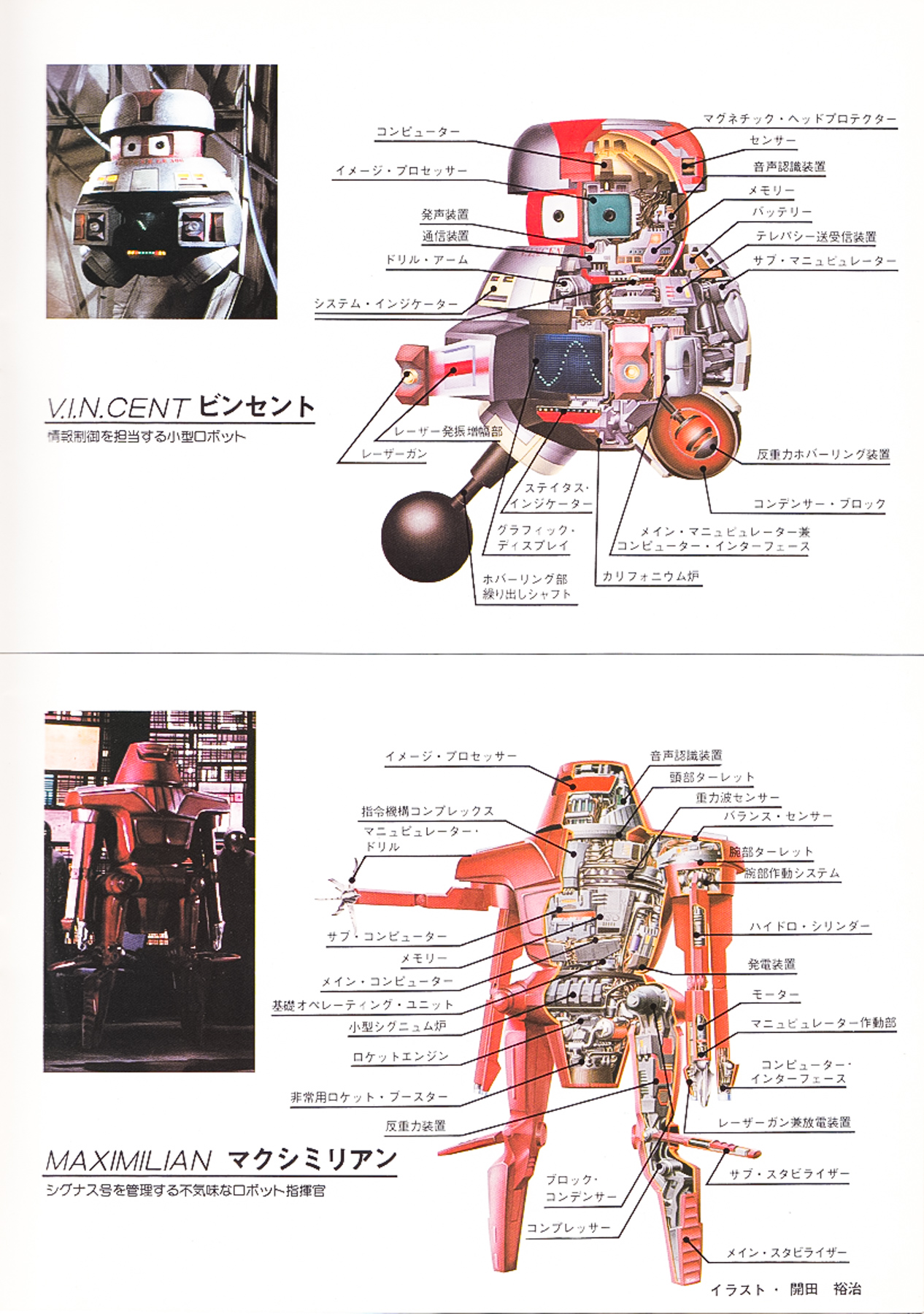
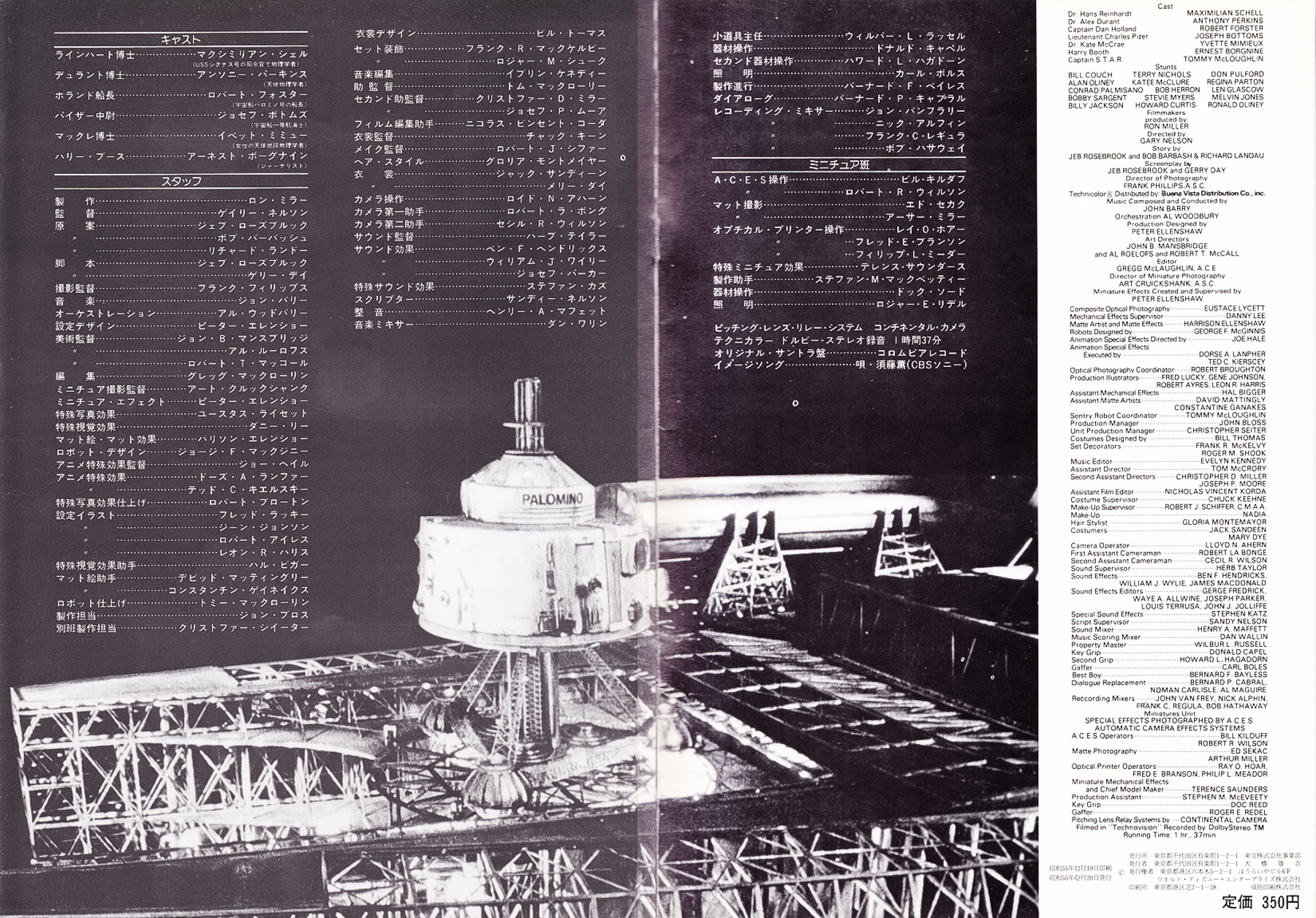
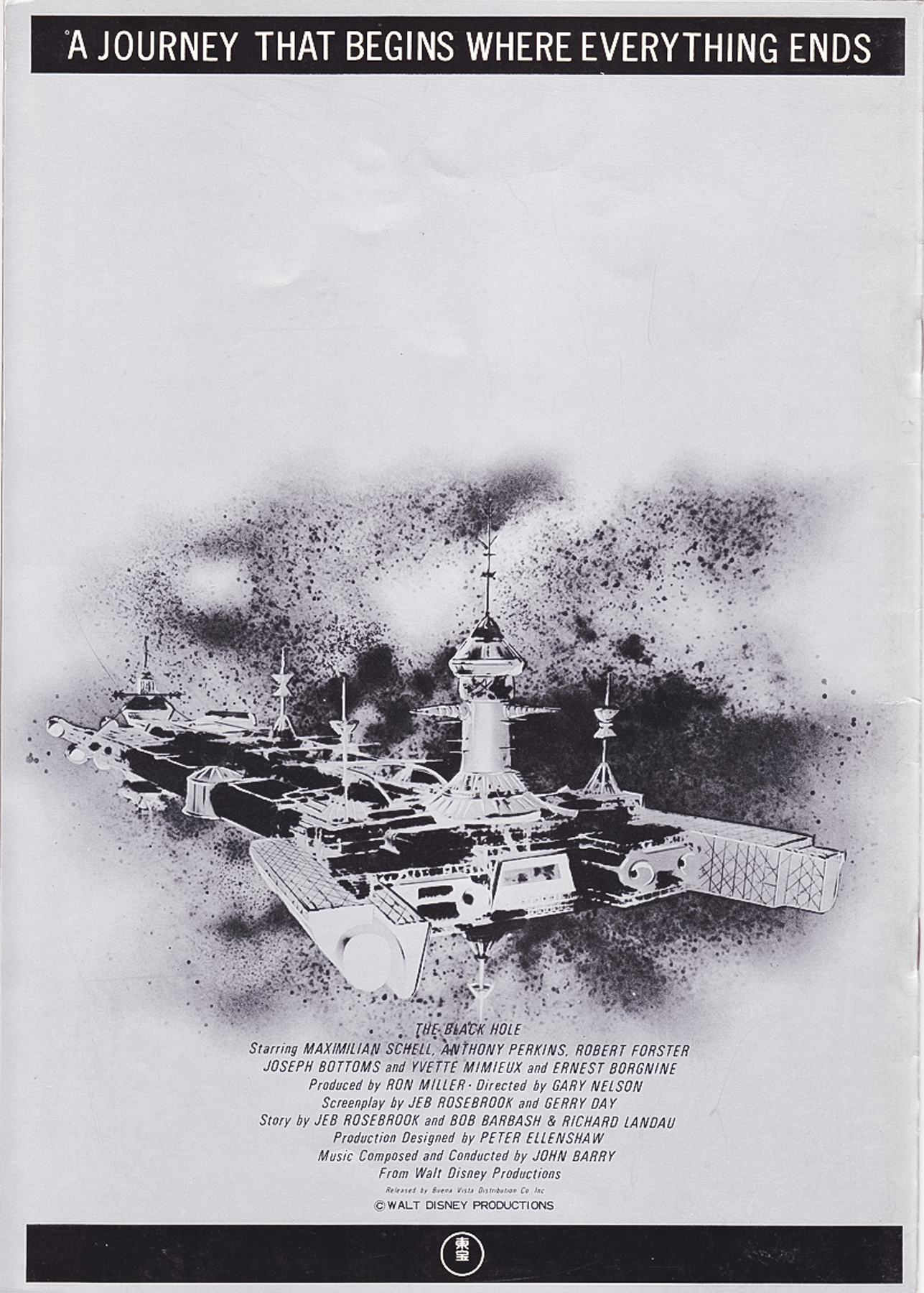
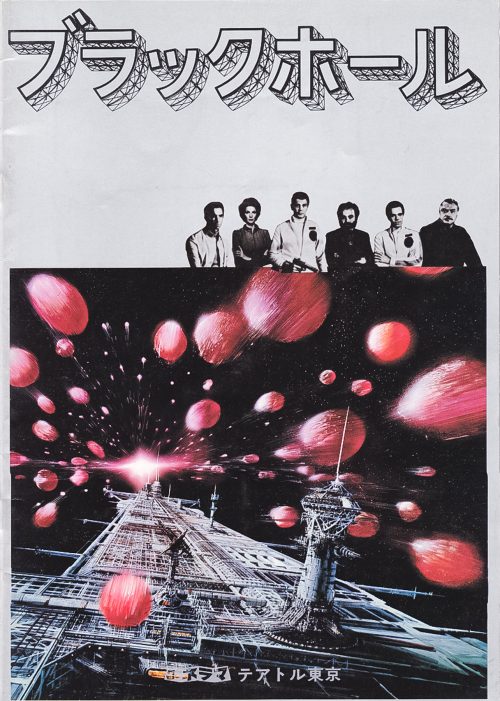
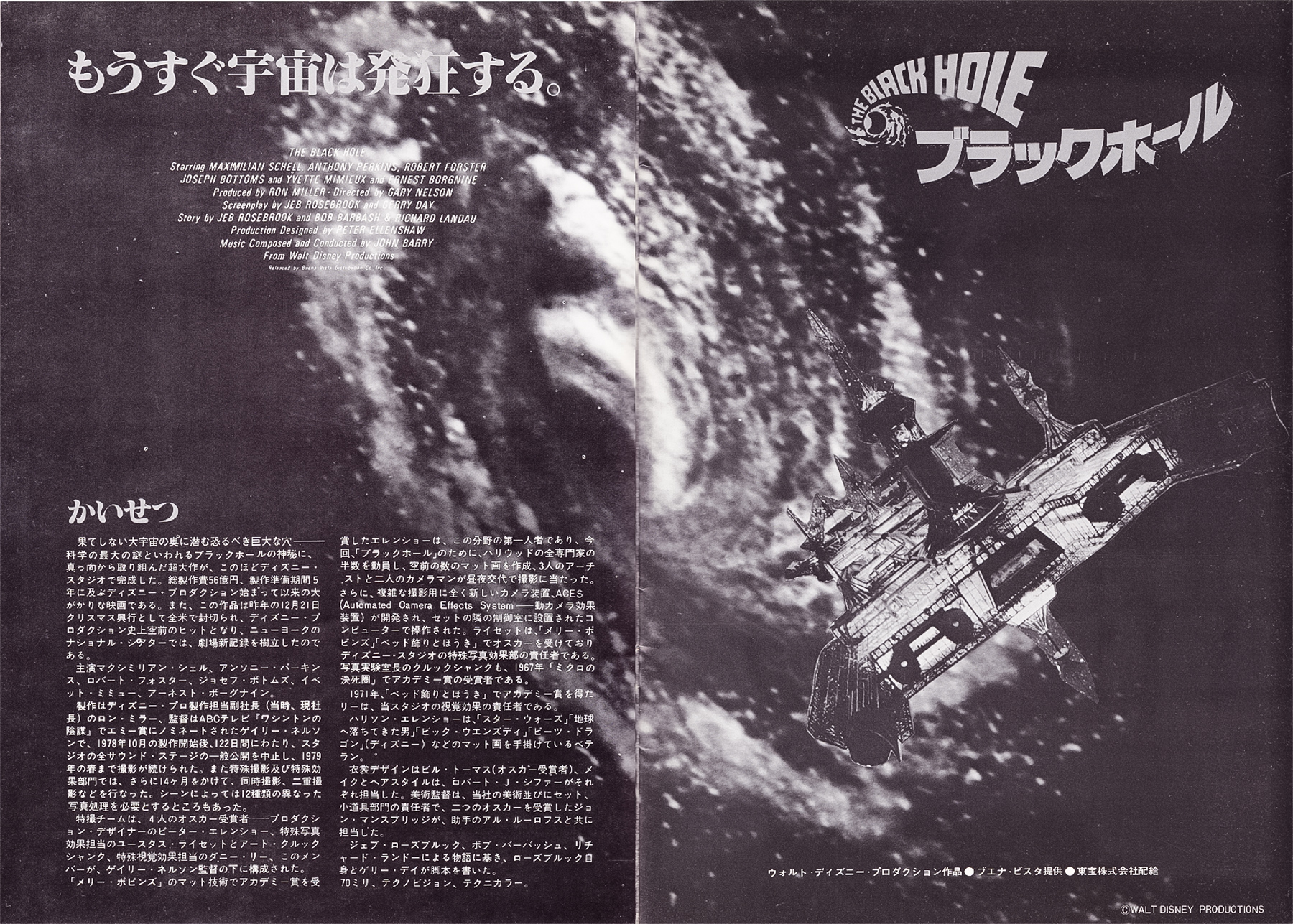
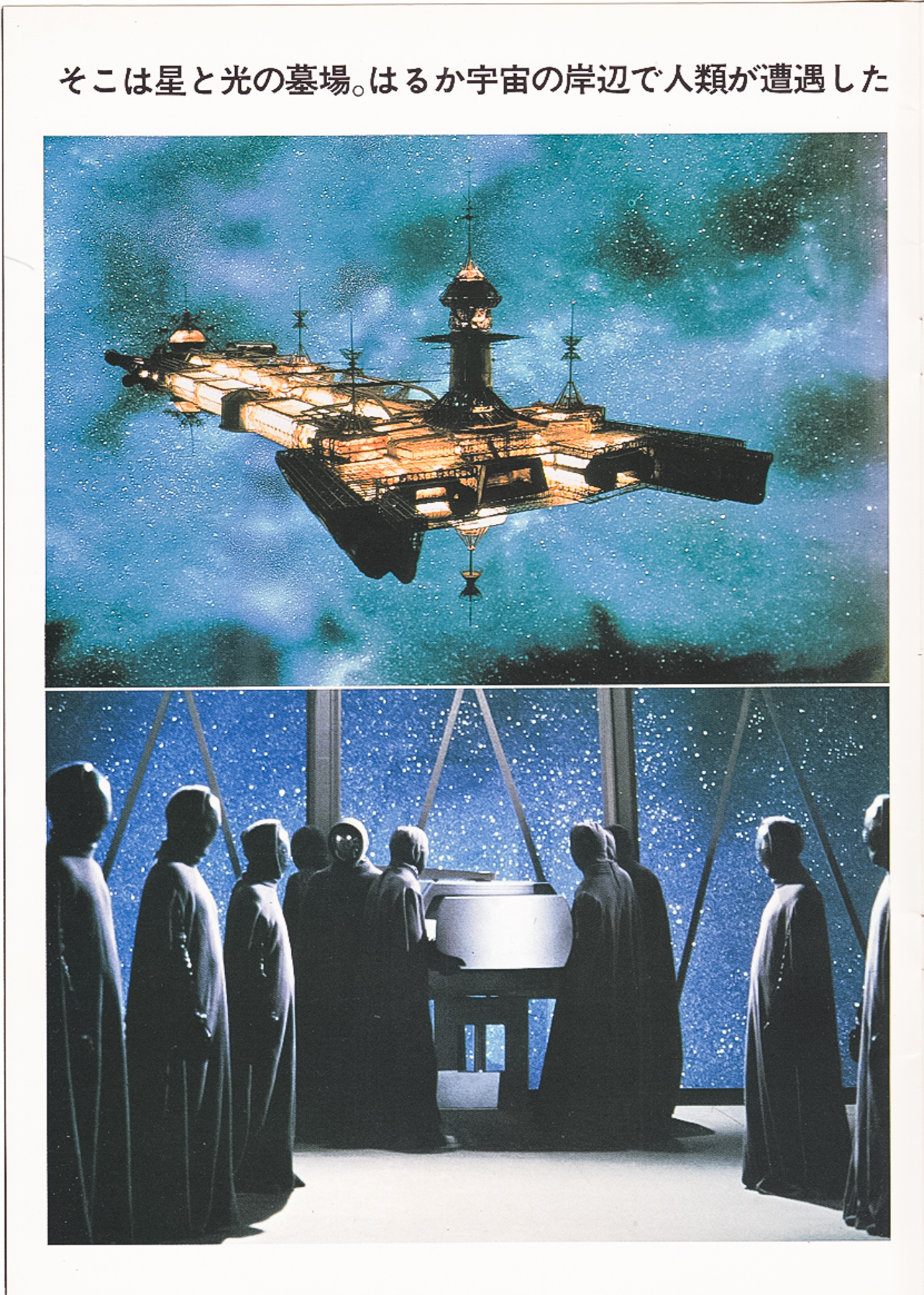
The next non-poster addition to the site is this original Japanese program for Disney’s 1979 live-action oddity The Black Hole. The program features some excellent production stills as well as several pages of concept artwork and three rather brilliant cutaway diagrams of the spacecraft Cygnus and the two robots V.I.N.Cent and Maximilian.

To see the other items I’ve collected for The Black Hole, including three Japanese posters, click here.

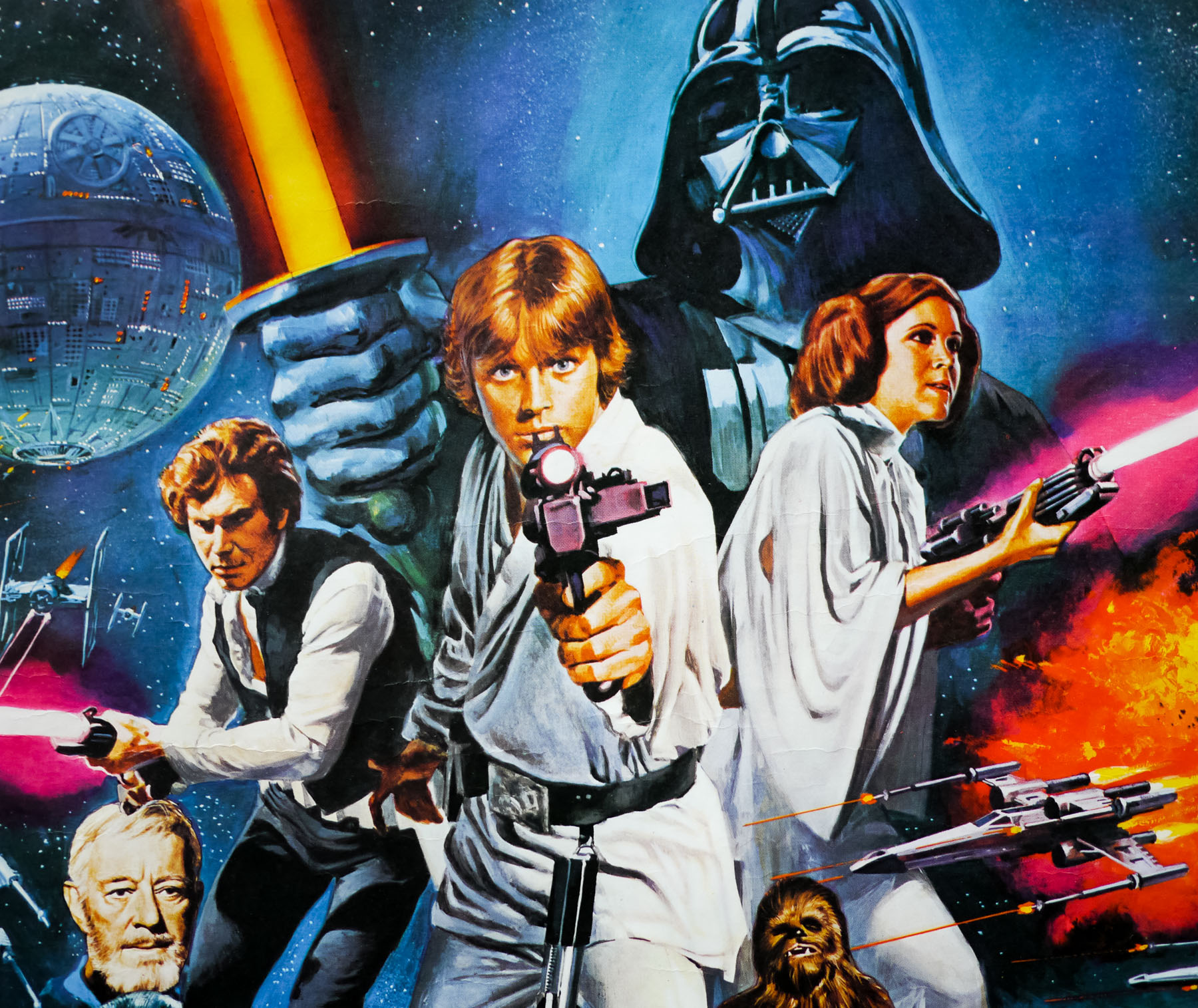
Star Wars / B1 / artwork style / Japan

23.09.12

Poster Poster
Title
Star Wars
AKA
Star Wars: Episode IV - A New Hope (full title) | La guerre des étoiles (Canada - French title / France)
Year of Film
1977
Director
George Lucas
Starring
Mark Hamill, Harrison Ford, Carrie Fisher, David Prowse, Peter Cushing, Alec Guinness, Anthony Daniels, Kenny Baker, Peter Mayhew
Origin of Film
USA
Genre(s) of Film
Mark Hamill, Harrison Ford, Carrie Fisher, David Prowse, Peter Cushing, Alec Guinness, Anthony Daniels, Kenny Baker, Peter Mayhew,
Type of Poster
B1
Style of Poster
Artwork
Origin of Poster
Japan
Year of Poster
1978
Designer
Unknown
Artist
Seito
Size (inches)
28 13/16" x 40 8/16"
SS or DS
SS
Tagline
--

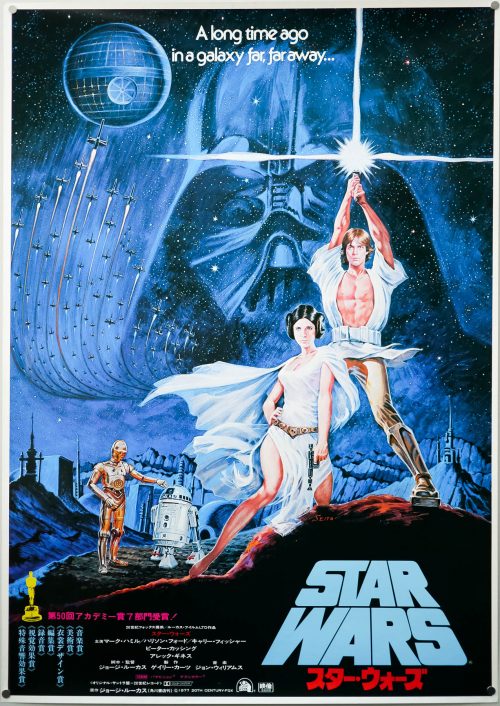
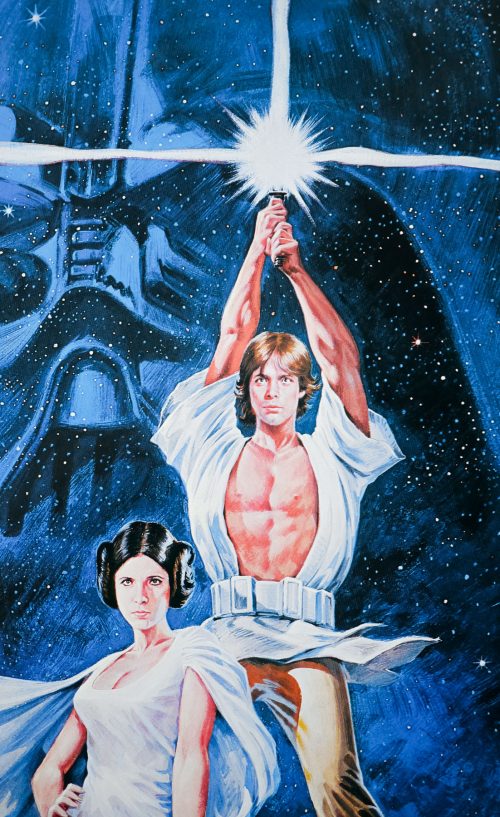
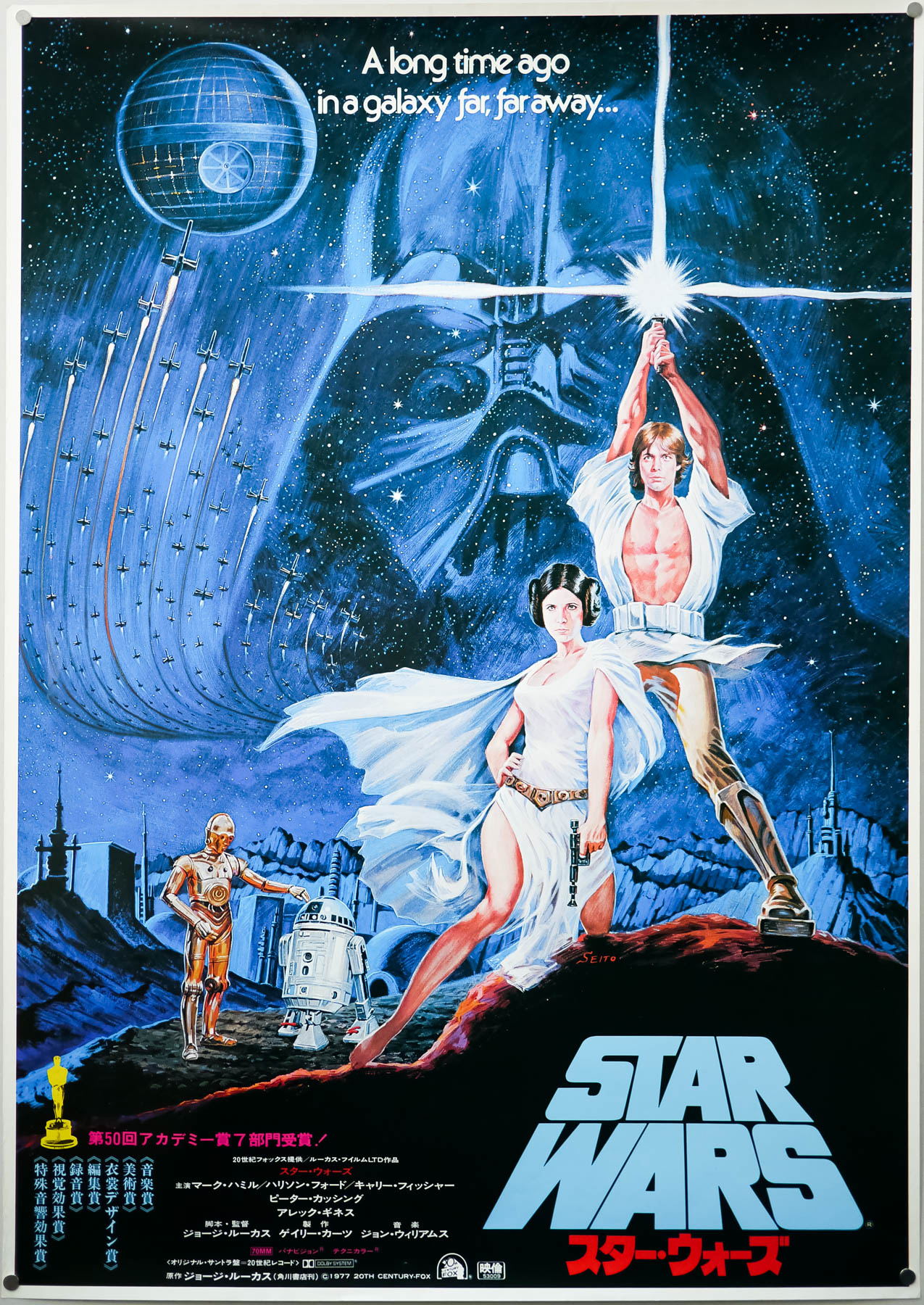
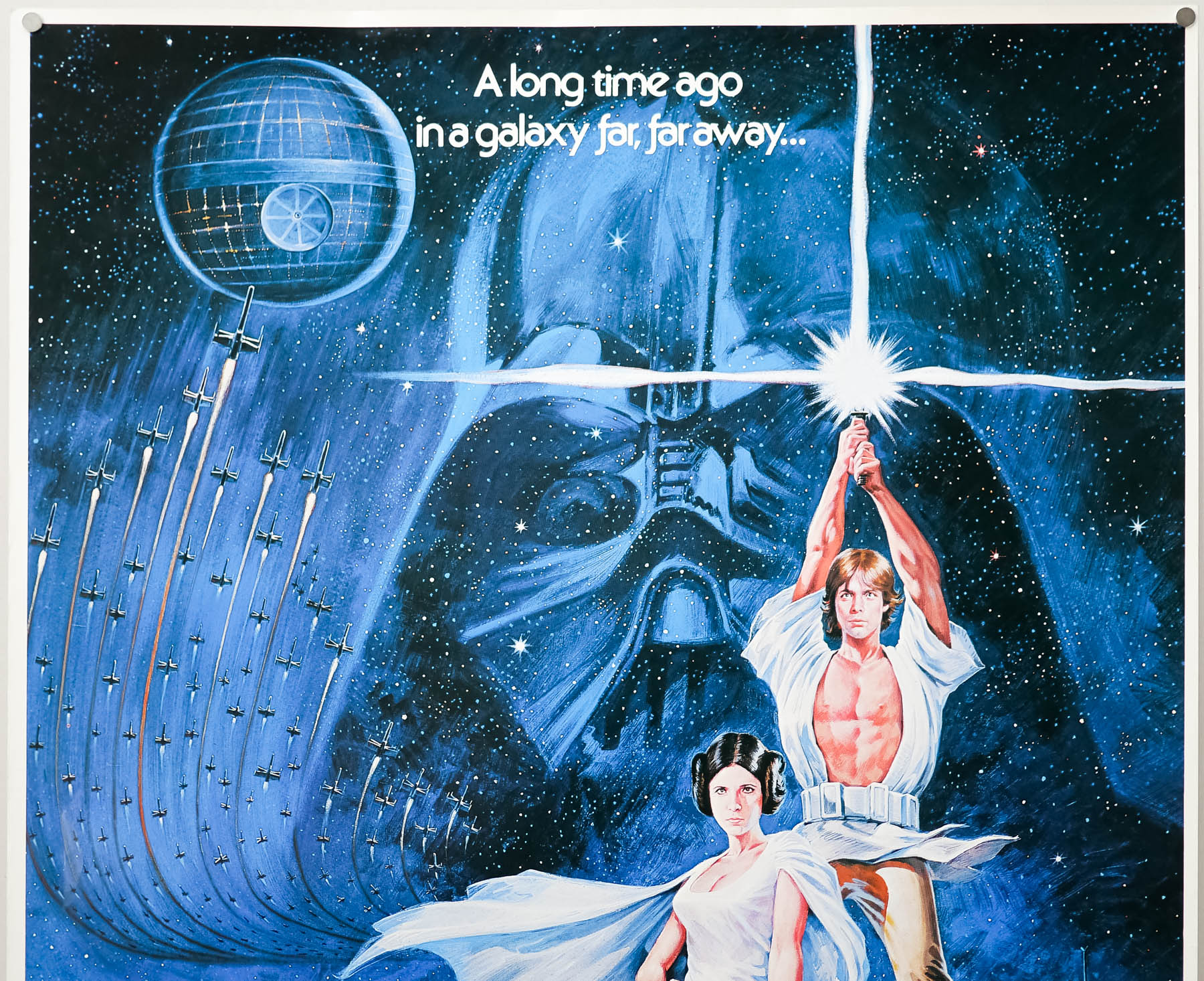
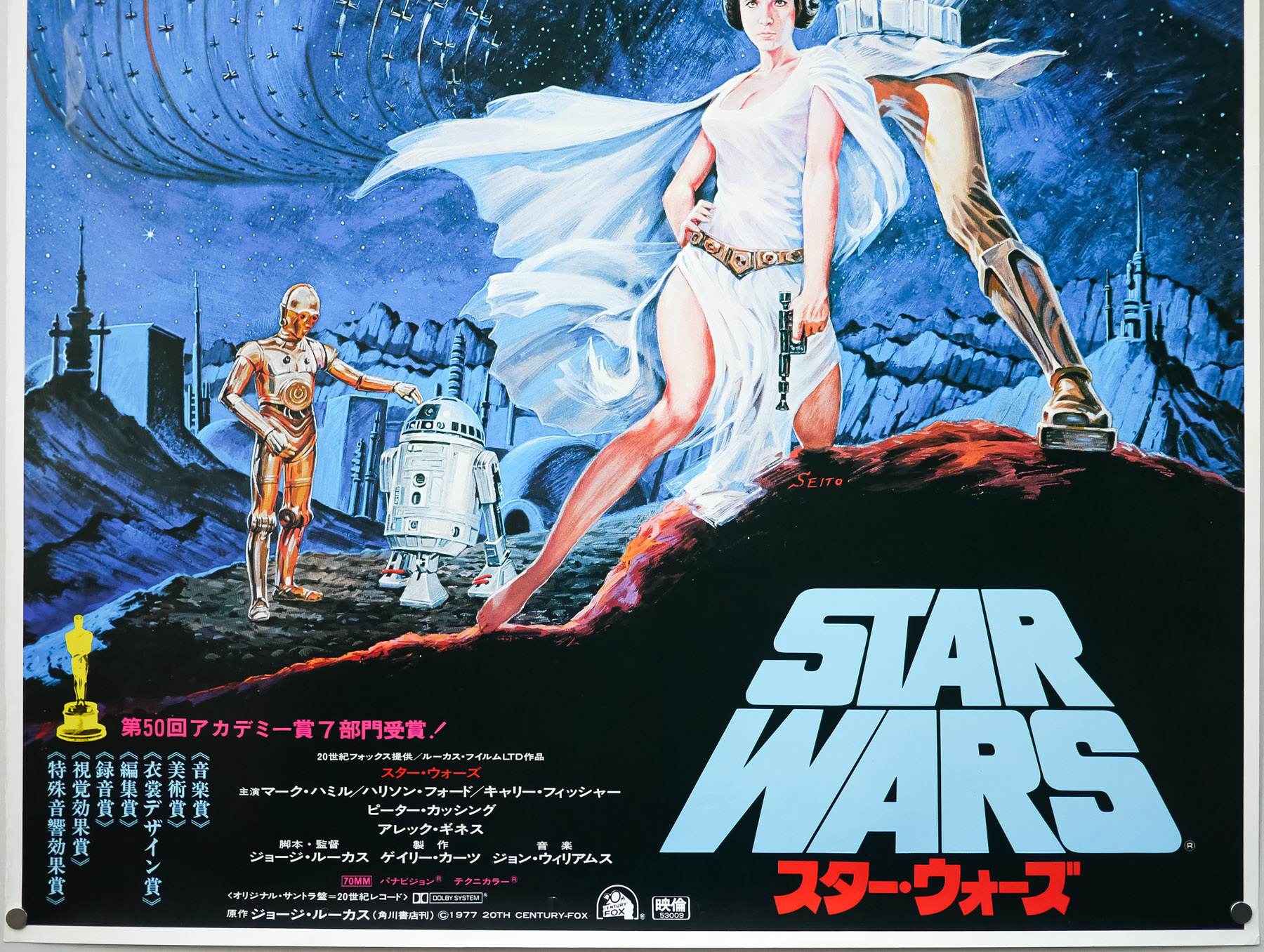
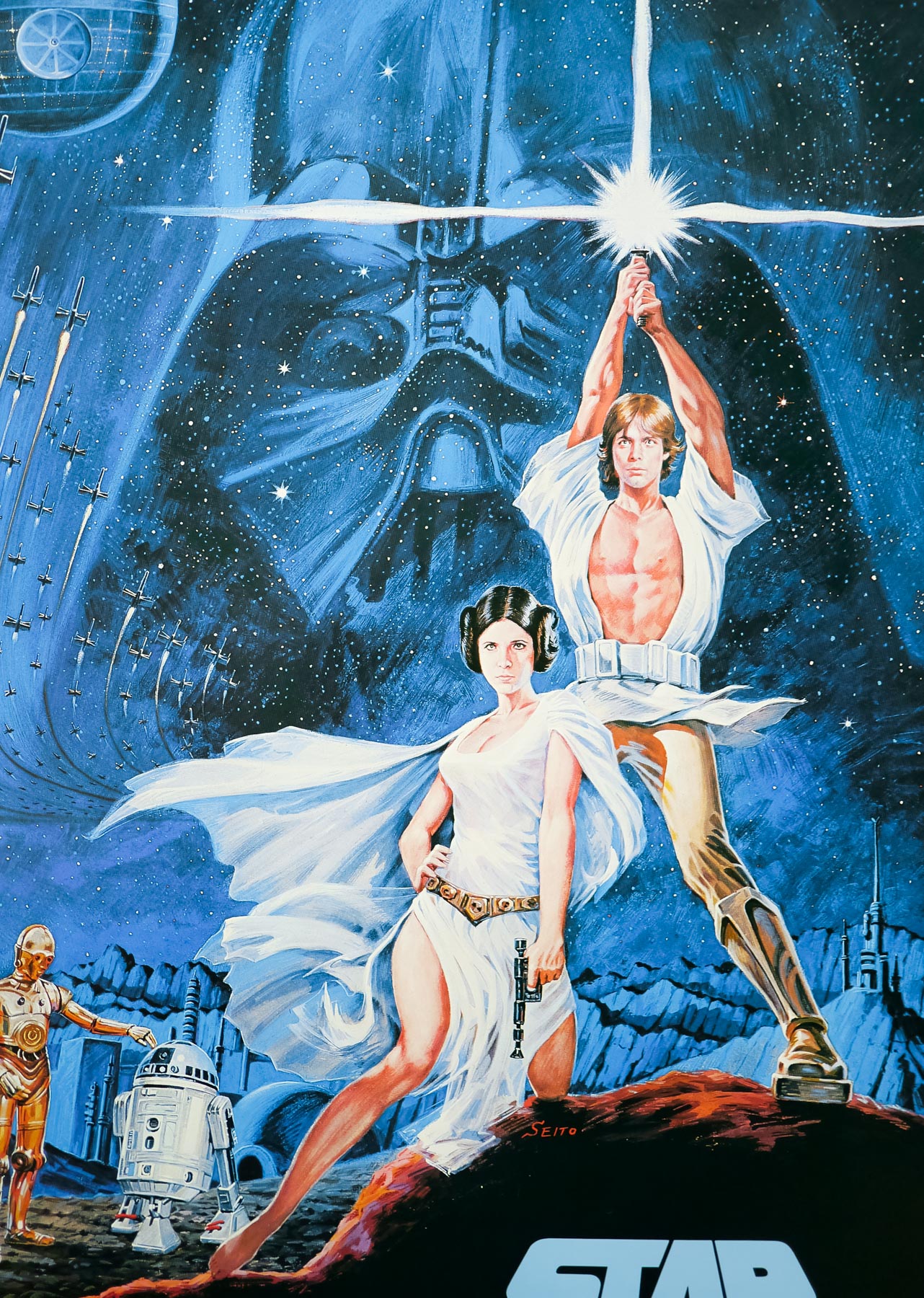
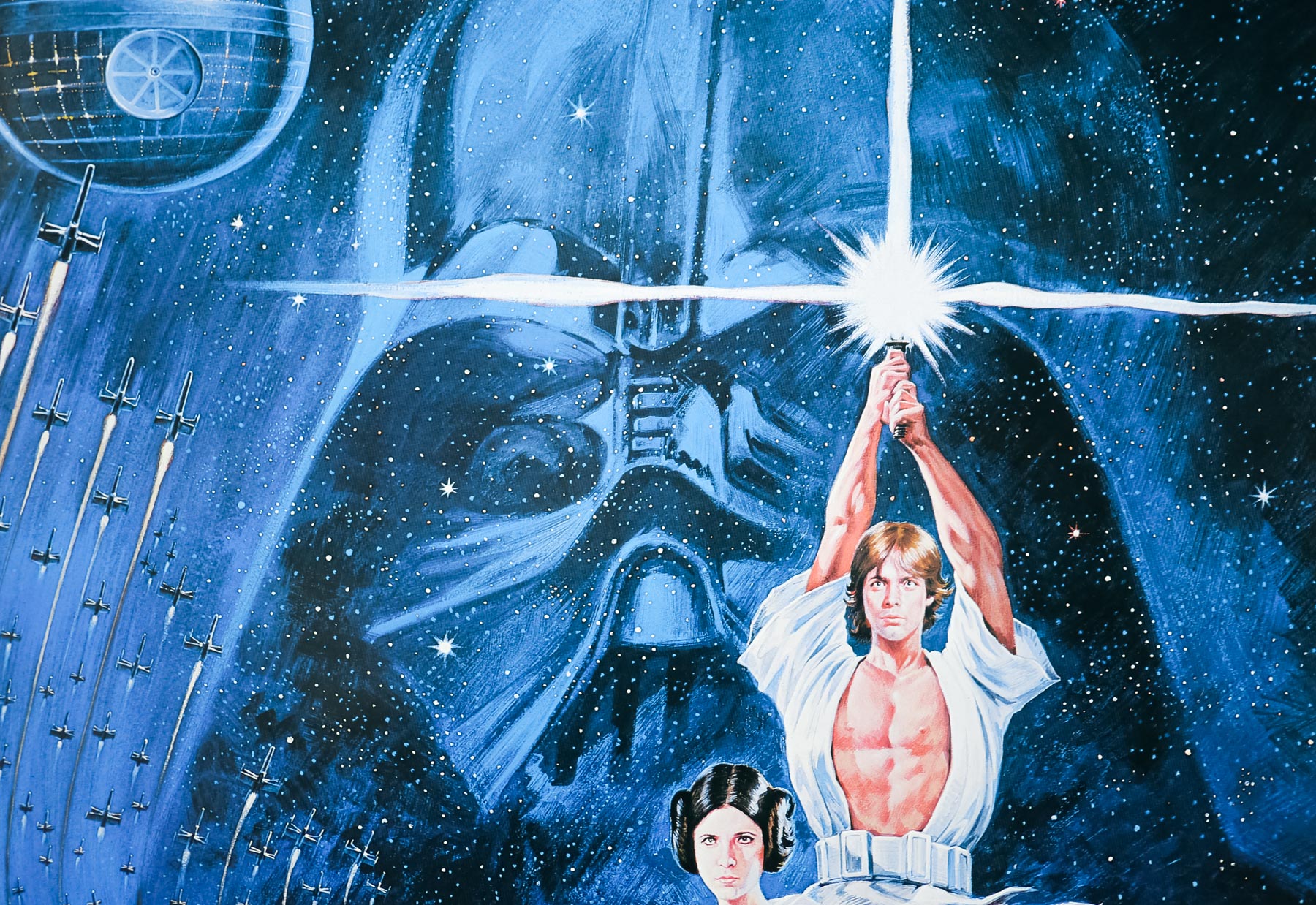
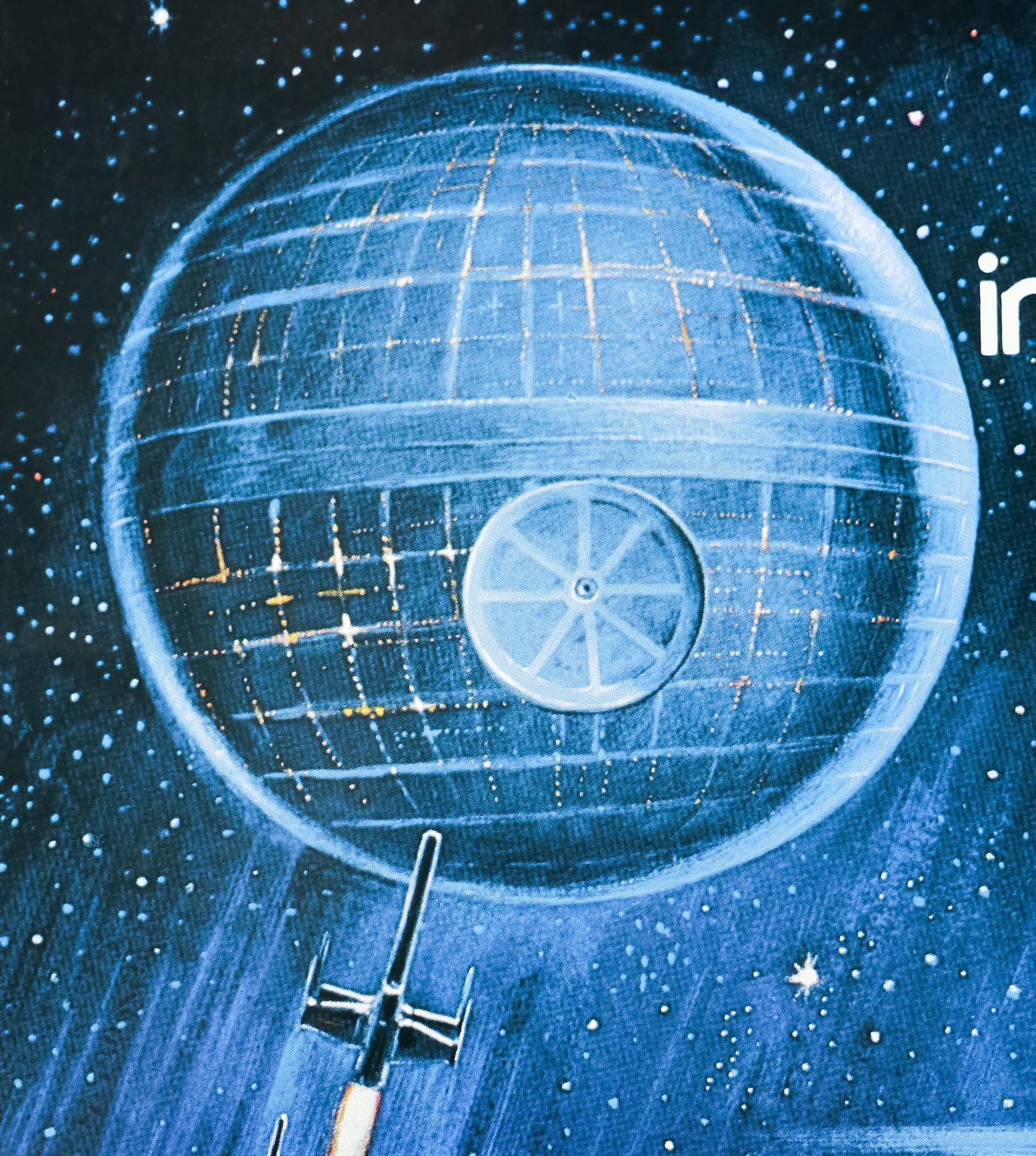
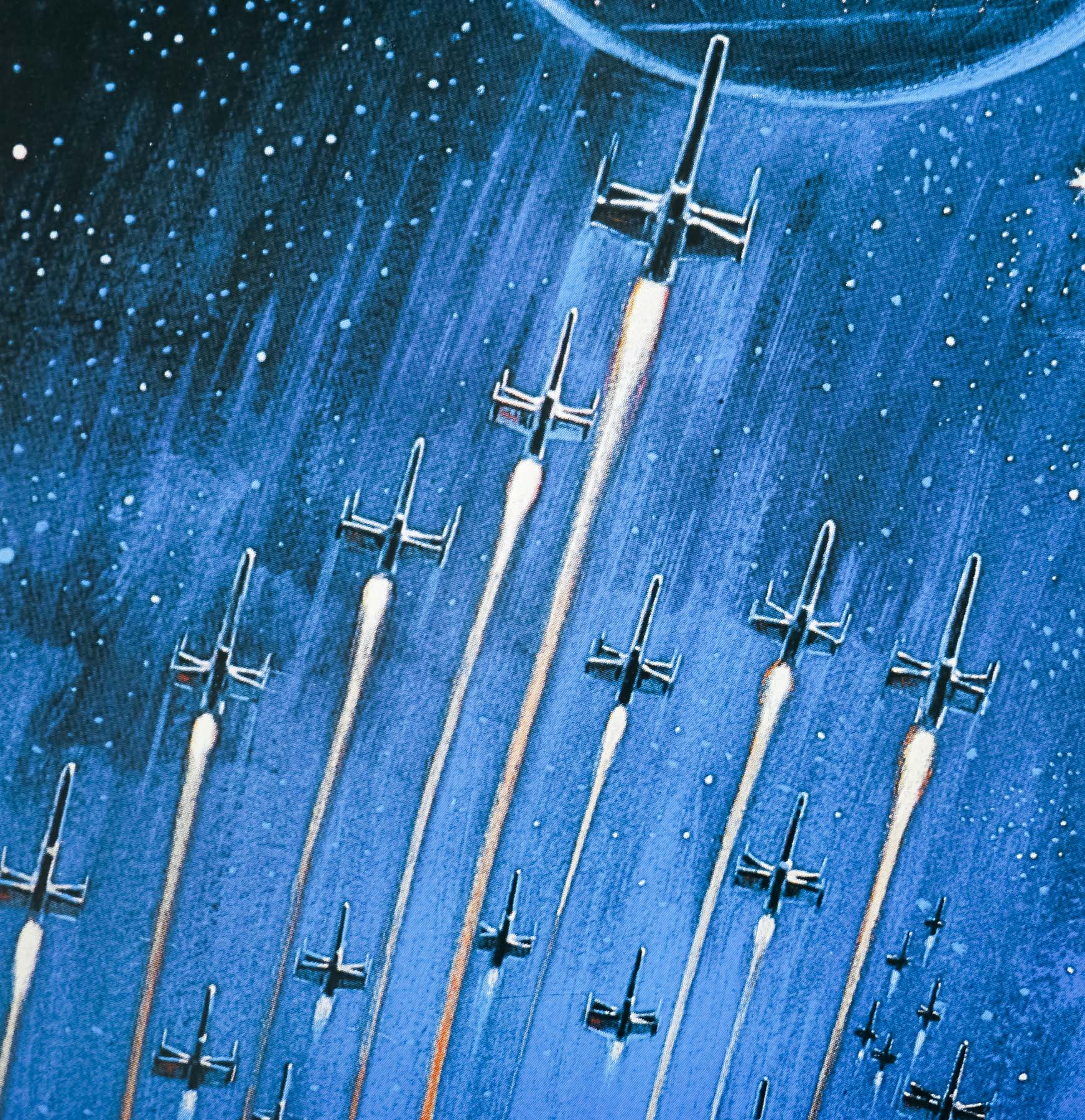
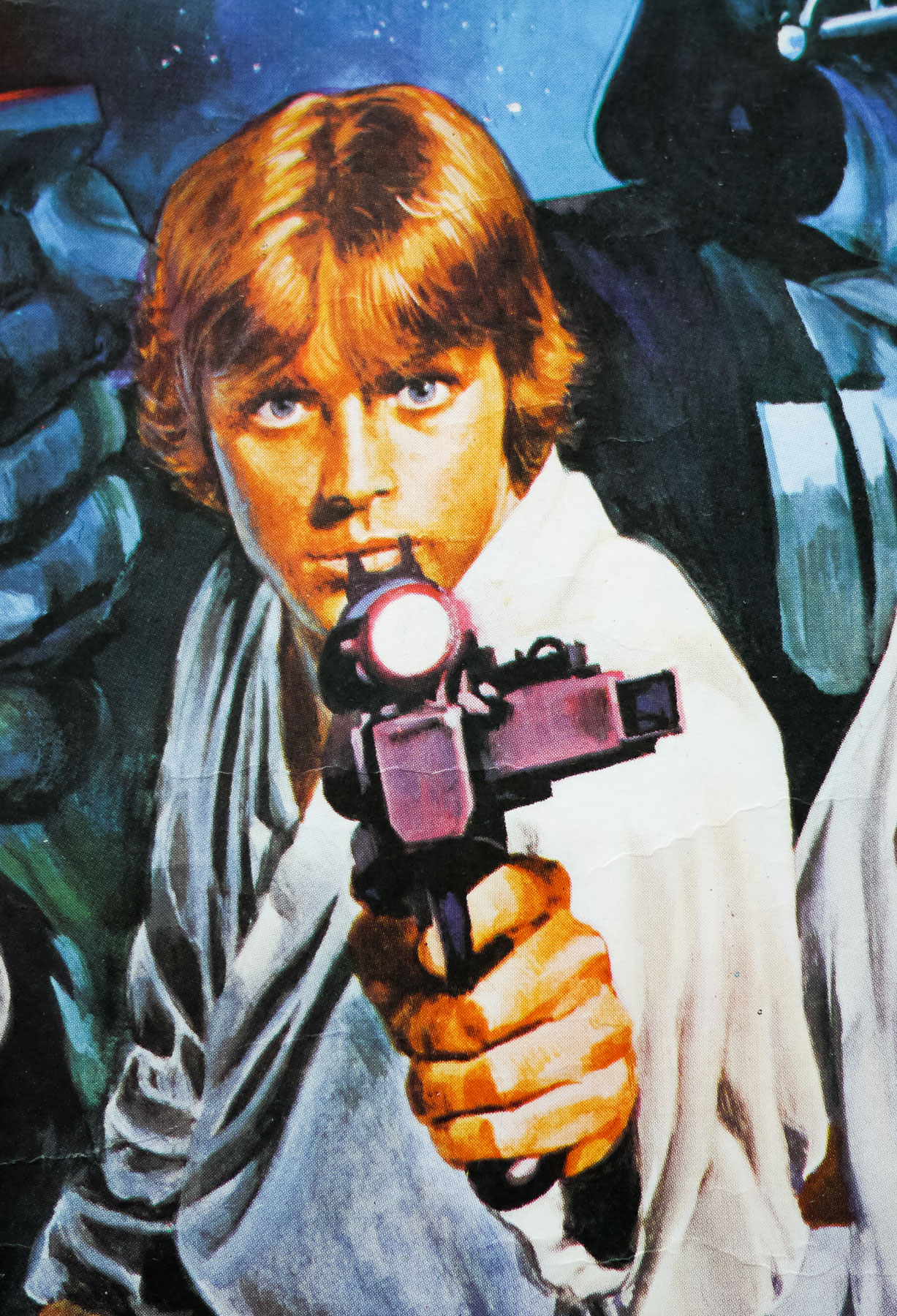
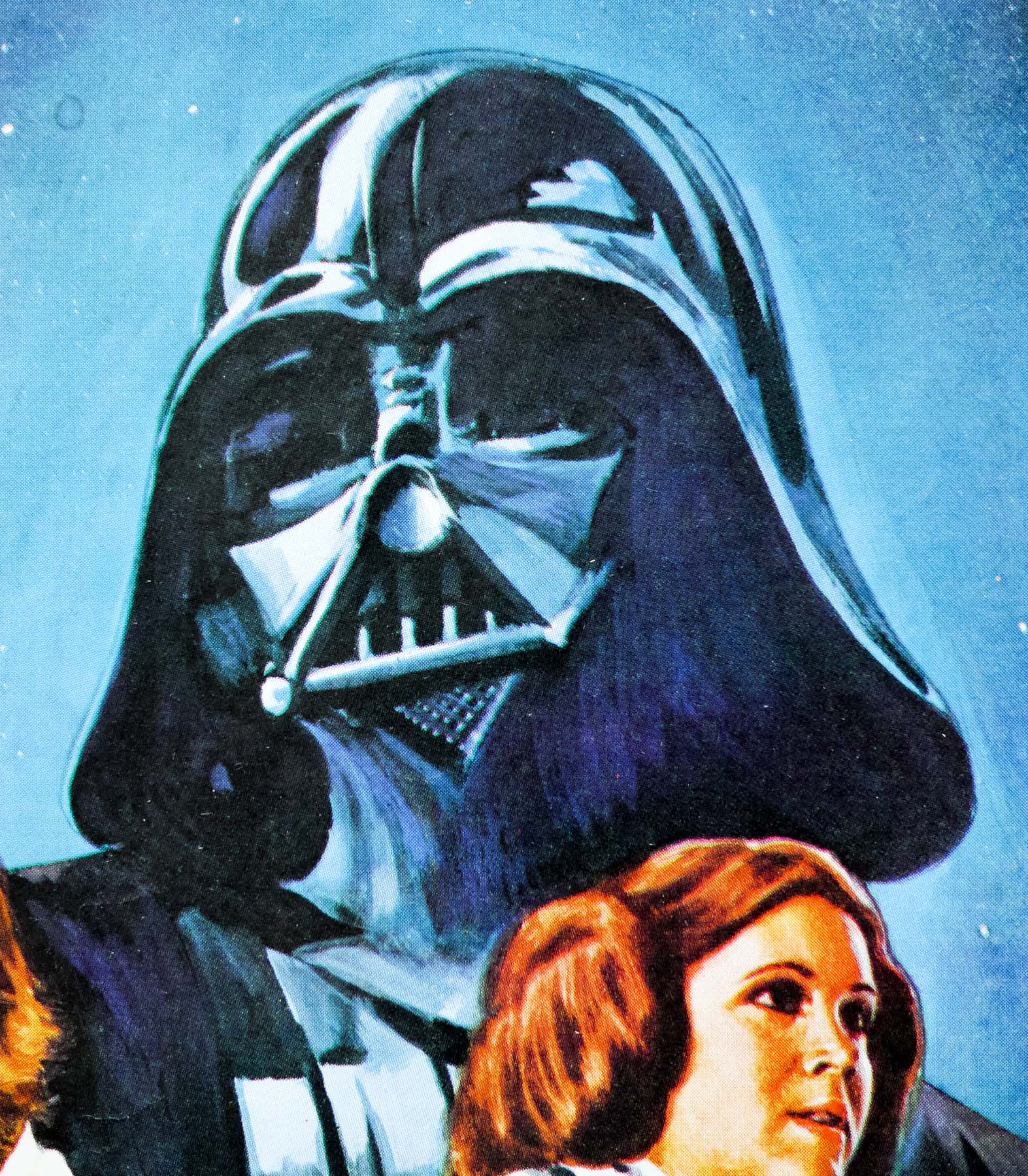
The enigmatic artist Seito is responsible for the artwork on this Japanese B1 poster for the original release of the sci-fi classic Star Wars in Japan. The design has clear echoes of the American one sheet artwork by Tom Jung but features several additions and the unusual choice of having the Death Star upside down (the weapon crater at least). Both designs depict an overly muscled Luke Skywalker and a tight-clothed, voluptuous Princess Leia, which, if you’ve seen the film (who hasn’t!), you’ll know doesn’t quite match up with the actual characters.

This is one of three posters printed for the original release of Star Wars in Japan, which included a simple advance and this photo montage style.

Seito is one of my favourite Japanese artists and is responsible for some wonderful illustrated posters, although little is known about him even in his native Japan. To see the other posters I’ve collected by him click here.

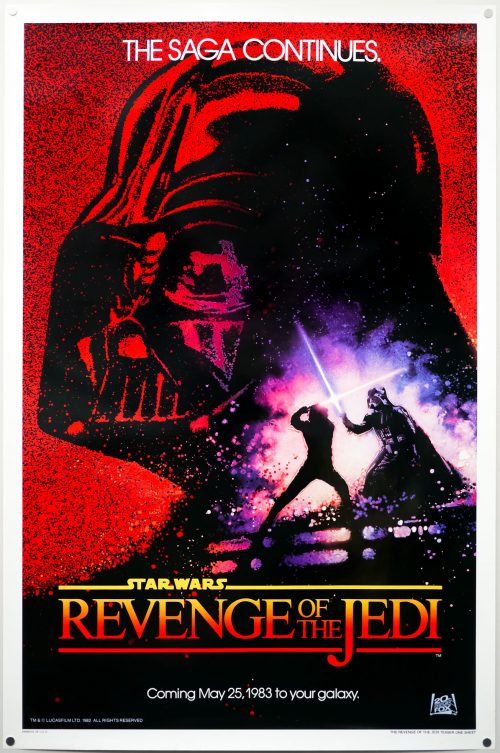
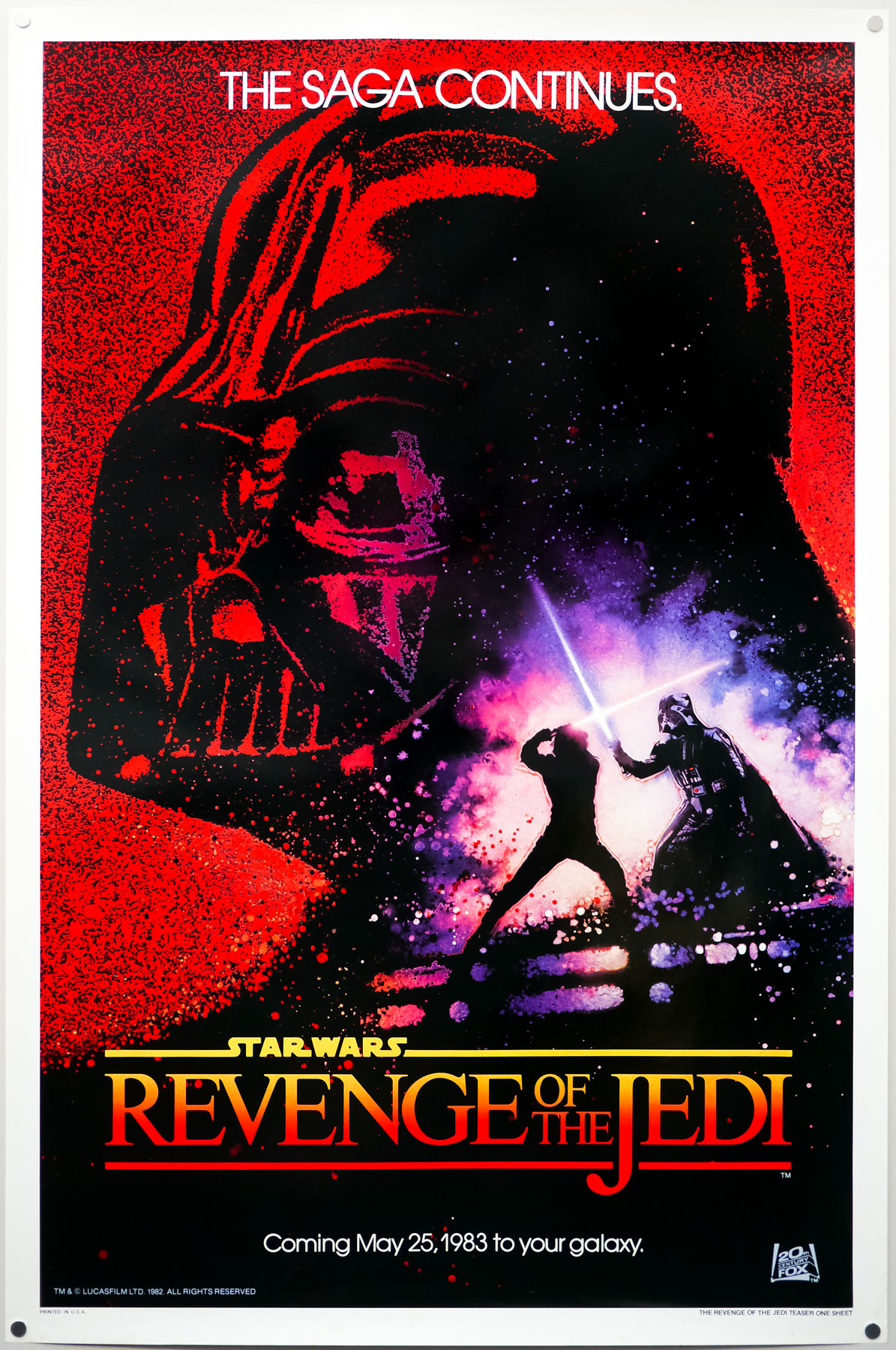
Revenge of the Jedi / one sheet / dated version / USA

28.11.12

Poster Poster
Title
Revenge of the Jedi
AKA
Return Of The Jedi (release title) | Star Wars Episode VI: Return of the Jedi (full title) | Blue Harvest (USA - fake working title)
Year of Film
1983
Director
Richard Marquand
Starring
Mark Hamill, Harrison Ford, Carrie Fisher, Billy Dee Williams, Anthony Daniels, Kenny Baker, Peter Mayhew, David Prowse, Ian McDiarmid
Origin of Film
USA
Genre(s) of Film
Mark Hamill, Harrison Ford, Carrie Fisher, Billy Dee Williams, Anthony Daniels, Kenny Baker, Peter Mayhew, David Prowse, Ian McDiarmid,
Type of Poster
One sheet
Style of Poster
Dated version
Origin of Poster
USA
Year of Poster
1983
Designer
Unknown
Artist
Drew Struzan
Size (inches)
27 1/8" x 41 1/16"
SS or DS
SS
NSS #
--
Tagline
The Saga Continues

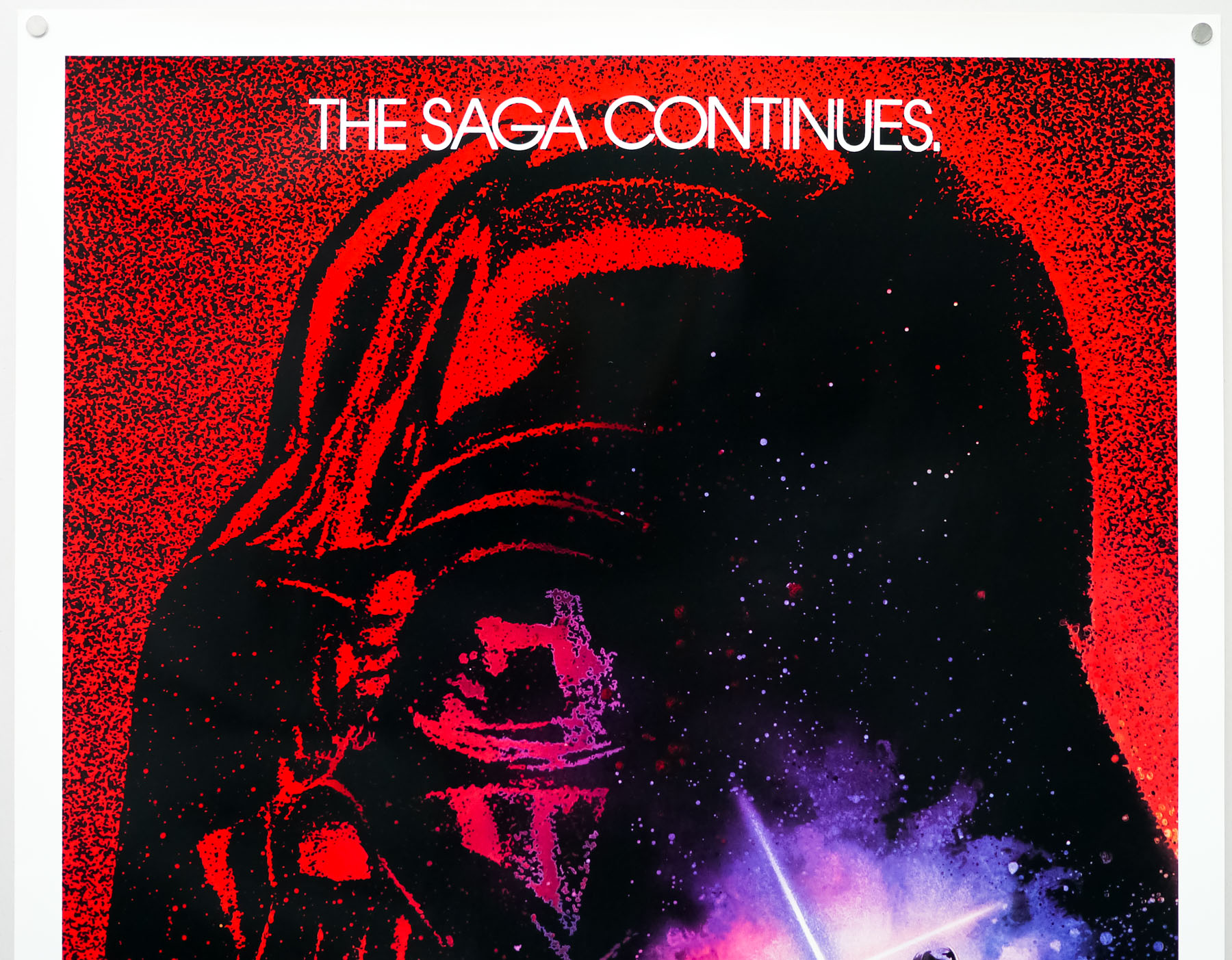
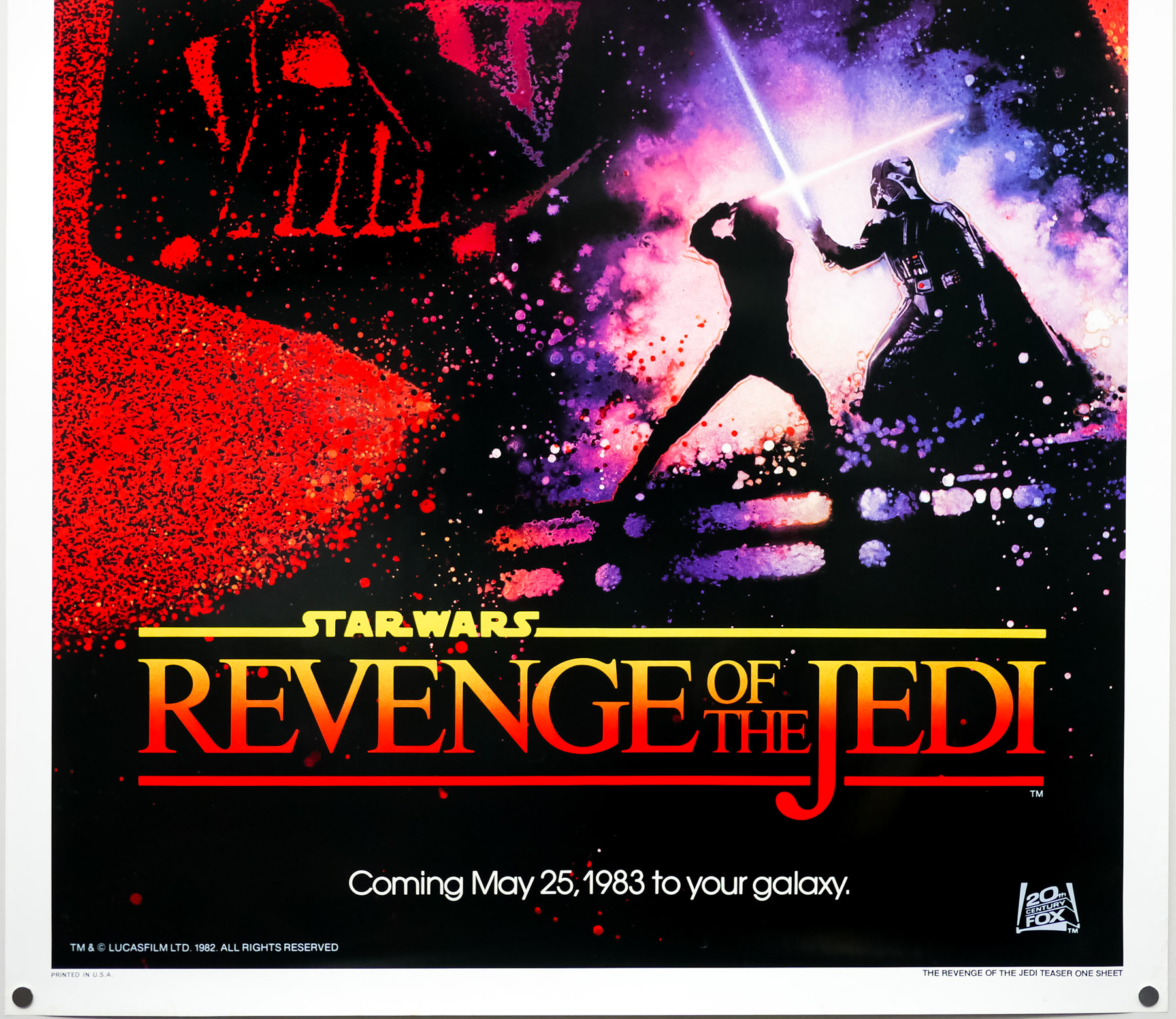
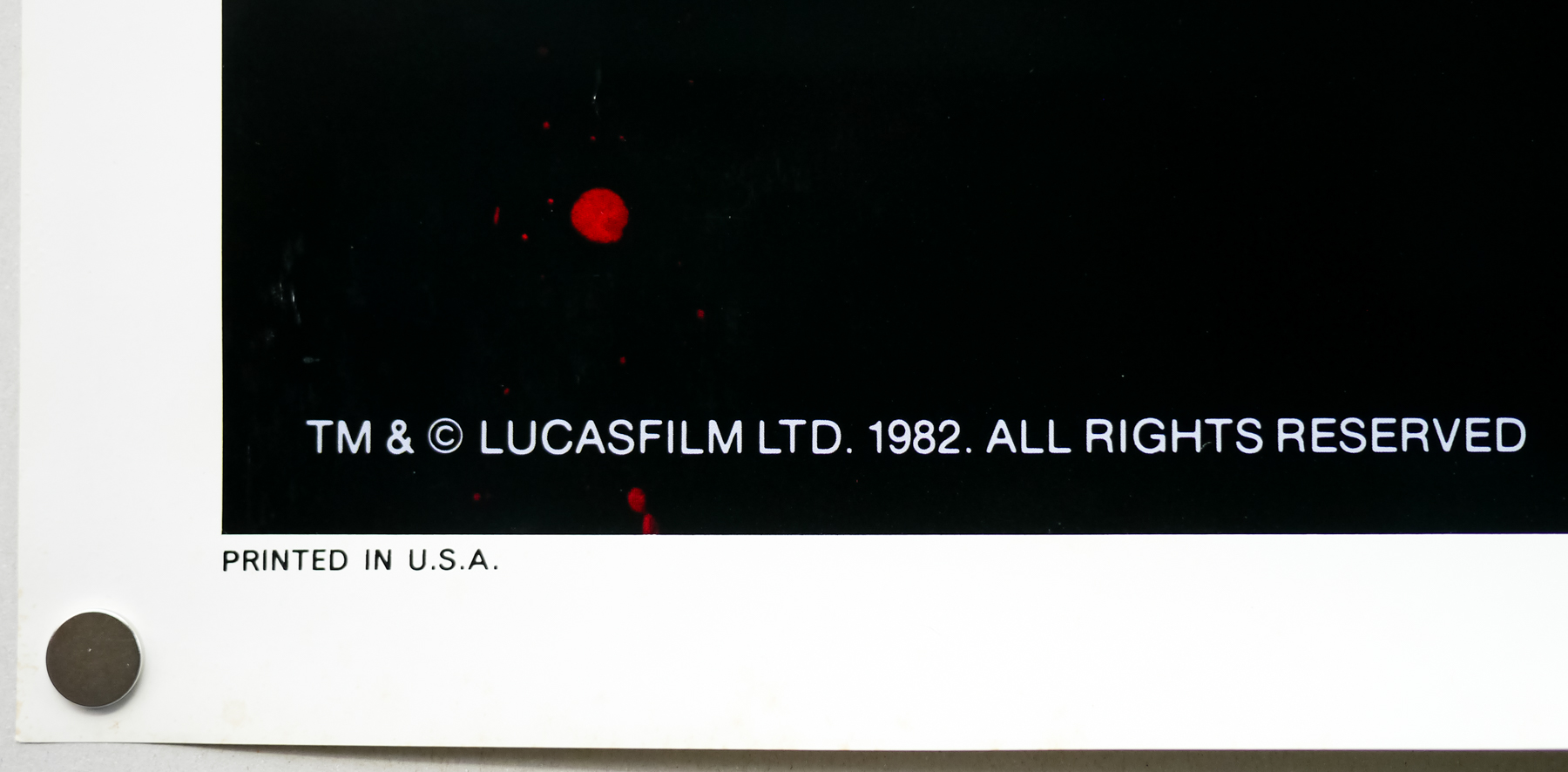
The third film in the much-loved original trilogy of Star Wars films was written by Lawrence Kasdan and, in a recently produced documentary, he claims to have suggested that the initially planned title of ‘Return of the Jedi’ was too weak and that ‘Revenge’ would be a better option. A teaser trailer for the film featured the Revenge title and legendary poster artist Drew Struzan, who had worked on the style D one sheet for the first film, was hired to paint this teaser poster.

Lucas eventually decided that revenge was not a Jedi concept so the film was changed back to the original ‘Return’ title and all subsequent posters were renamed too. According to the Star Wars poster book, by the time the title had been changed thousands of Revenge posters had been printed and hundreds had been distributed to theaters. Lucasfilm stopped the shipping of the posters and destroyed all but 6,800 posters, which were sold in three days to Star Wars fan club members for $9.50. (Source: The Star Wars Poster Book).
The excellent resource site Movie Poster Collectors has a page on the poster that confirms:

The vast majority of posters that escaped destruction have the tagline “Coming May 25, 1983 to your galaxy” at the bottom.  According to reports, a very few – perhaps 100 – omit that tag line. The posters without the release date command somewhat higher prices than the “Coming May 25” posters.

Unfortunately because of its collectable nature there have been several fakes printed over the years and the MPC page features details on what to look for if you want to make sure you purchase an original.

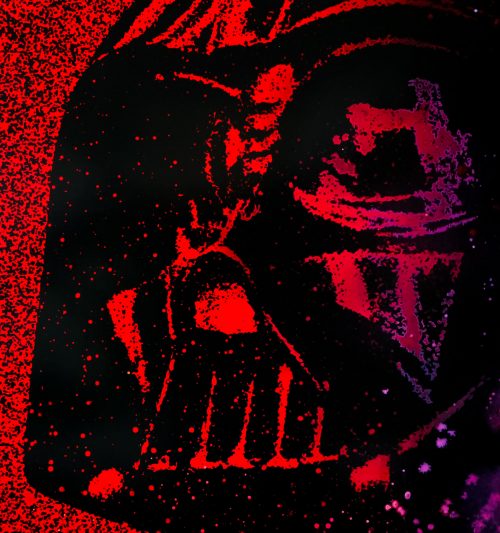
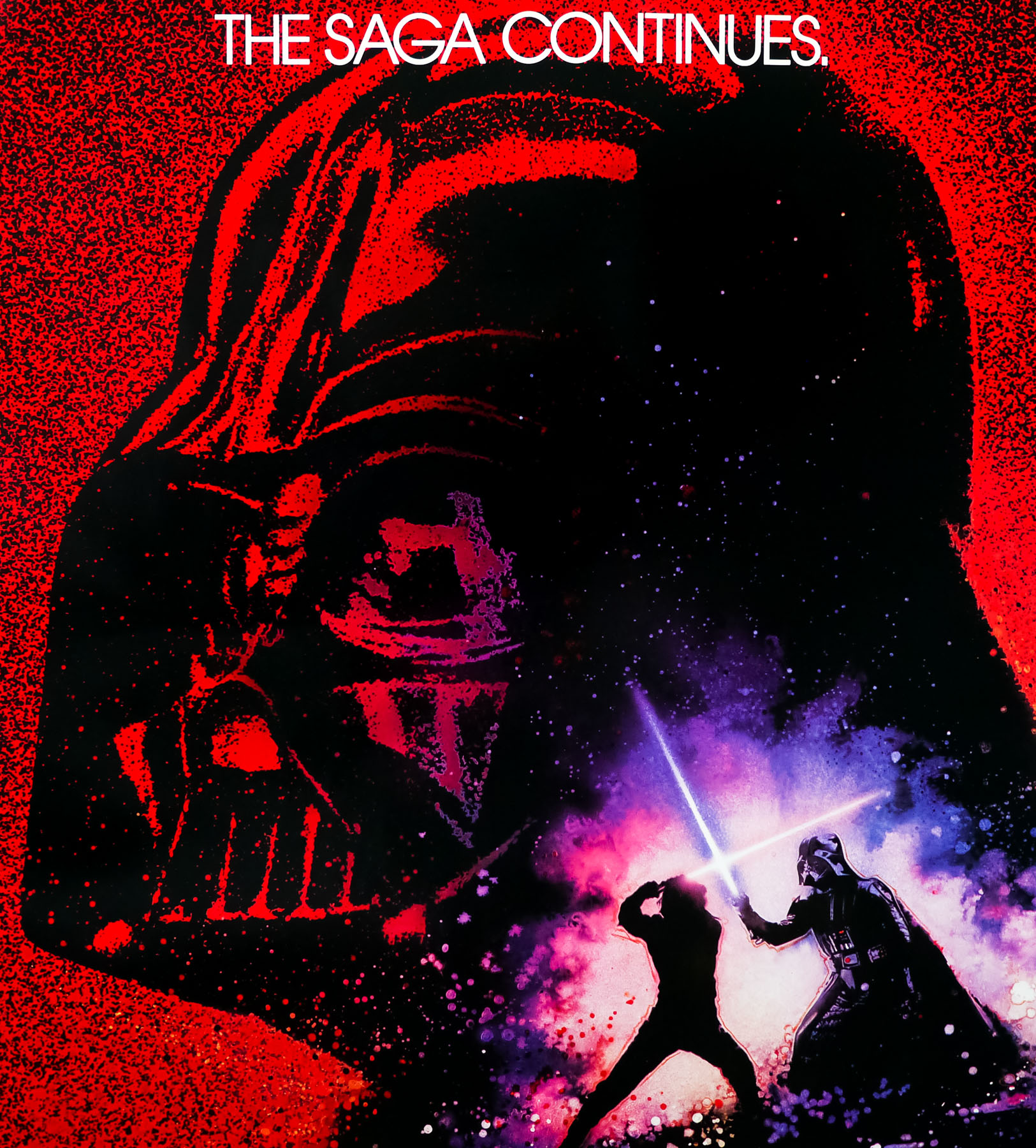
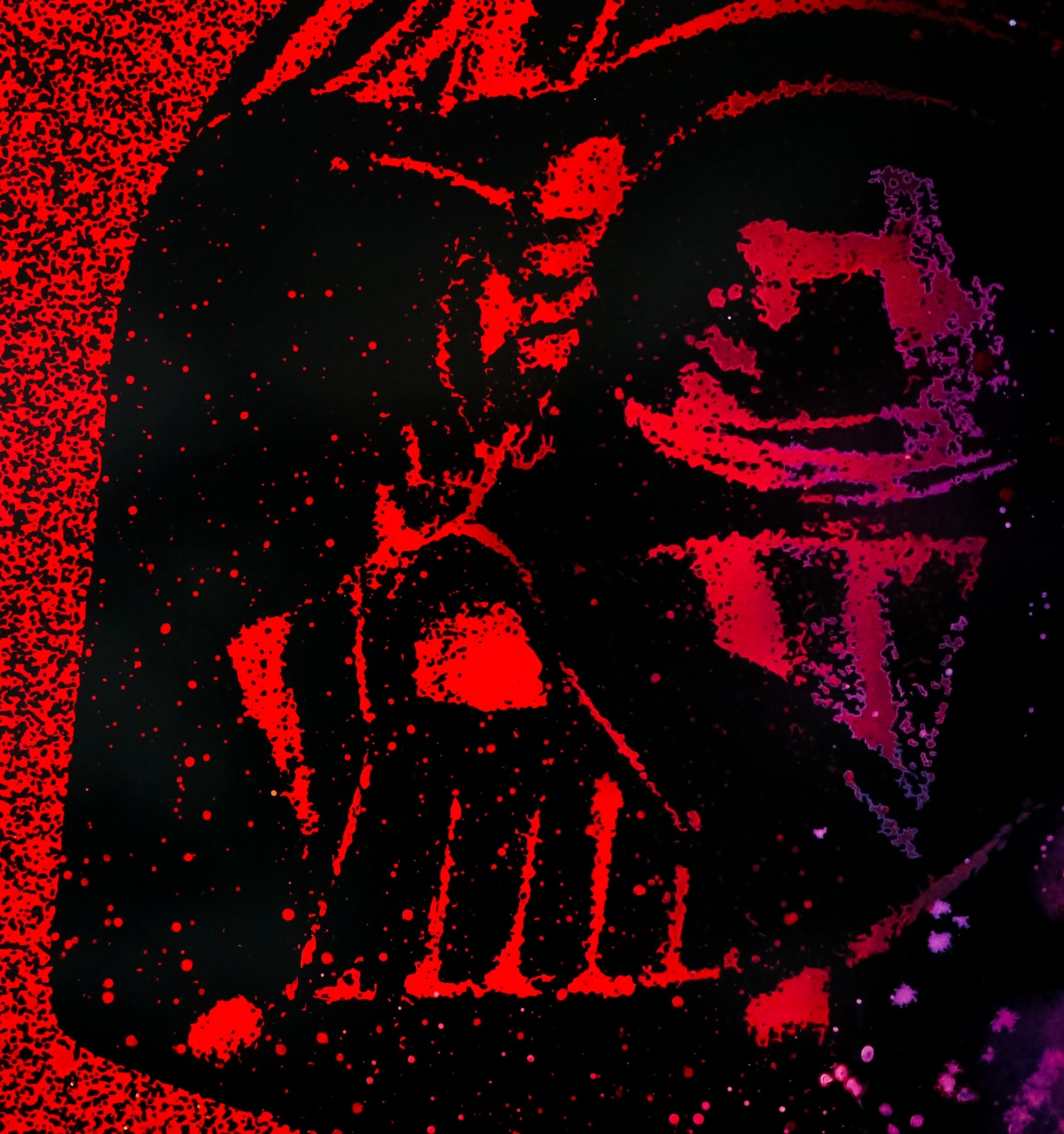
The poster is one of Struzan’s most iconic designs and brilliantly depicts a moment from what would eventually be revealed as a fight between Darth Vader and Luke Skywalker. The colours and use of painting techniques are fantastic and you should check out the detailed images to see these up close. The poster features on his own website. The design was later adapted for a British advance quad featuring the Return title.

This teaser one sheet was officially reprinted by Kilian Enterprises on the film’s tenth anniversary but with the Return title instead. This page on Learn About Movie Posters details the various versions that were released.

The other posters I’ve collected by Struzan can be viewed here.

The Omega Man / 30×40 / USA

20.03.13

Poster Poster
Title
The Omega Man
AKA
1975: occhi bianchi sul pianeta Terra [White eyes on planet earth] (Italy)
Year of Film
1971
Director
Boris Sagal
Starring
Charlton Heston, Anthony Zerbe, Rosalind Cash, Paul Koslo, Eric Laneuville, Lincoln Kilpatrick, Jill Giraldi
Origin of Film
USA
Genre(s) of Film
Charlton Heston, Anthony Zerbe, Rosalind Cash, Paul Koslo, Eric Laneuville, Lincoln Kilpatrick, Jill Giraldi,
Type of Poster
30x40
Style of Poster
--
Origin of Poster
USA
Year of Poster
1971
Designer
Unknown
Artist
Unknown
Size (inches)
30 1/16" x 40"
SS or DS
SS
NSS #
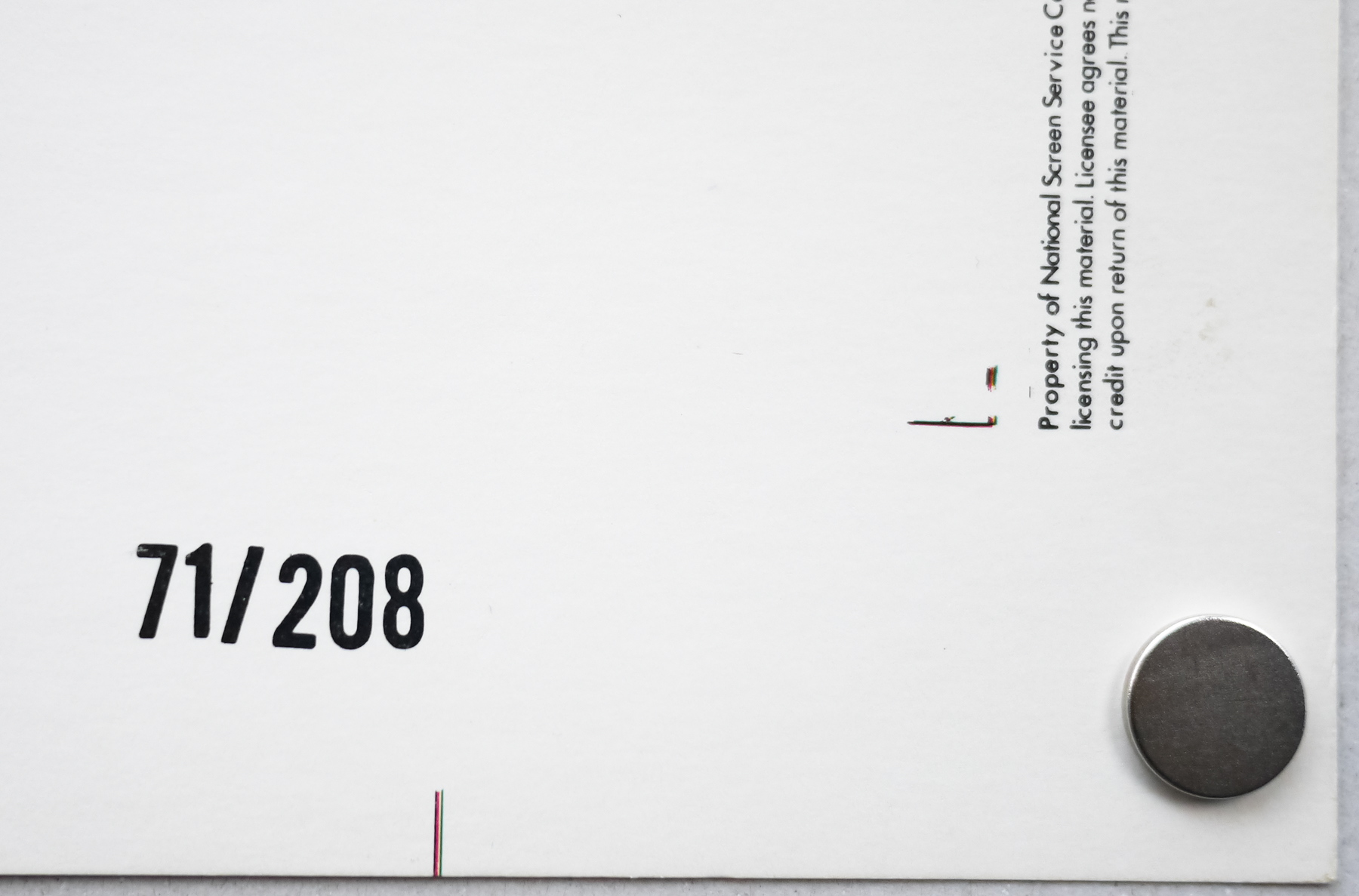
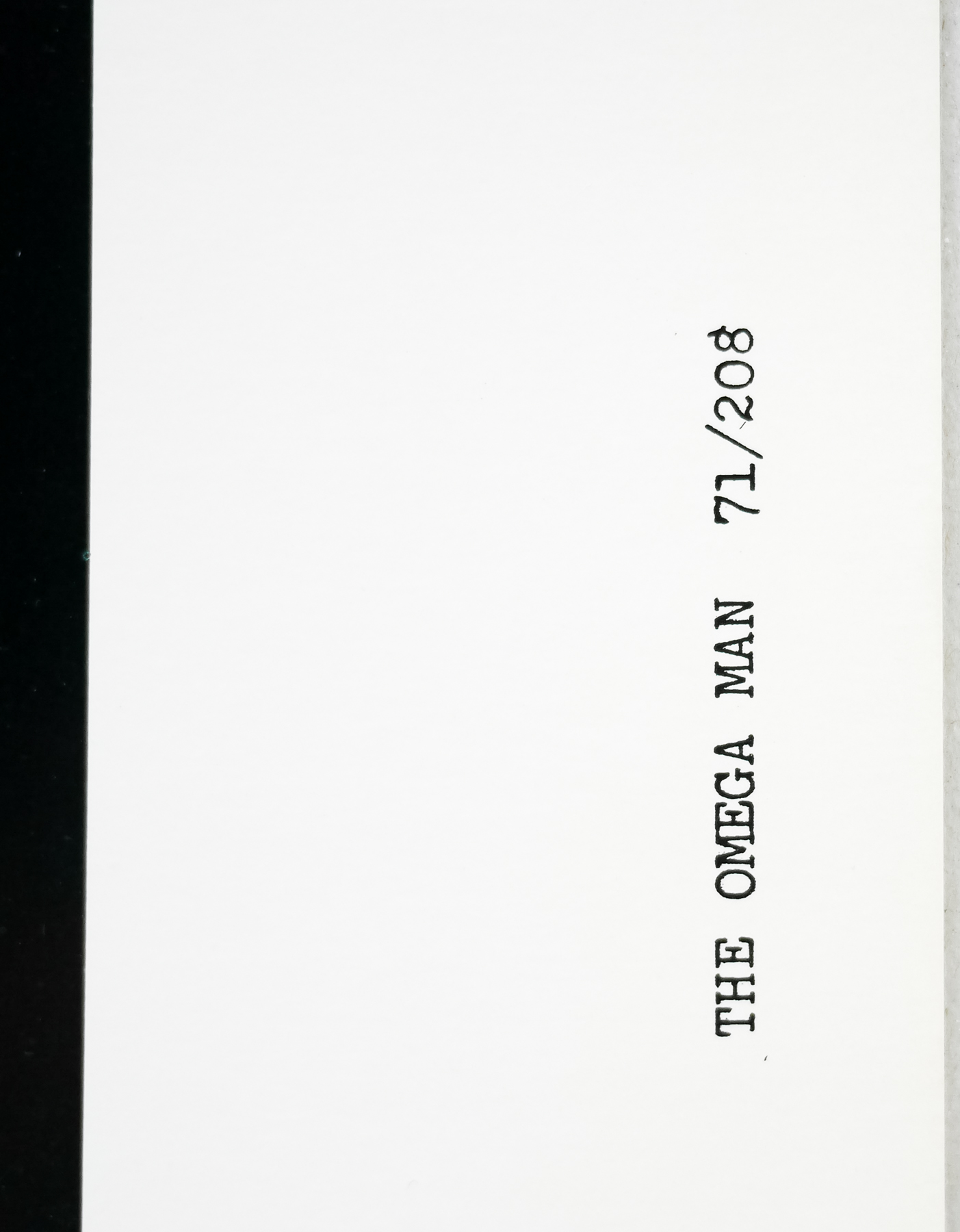
71/208
Tagline
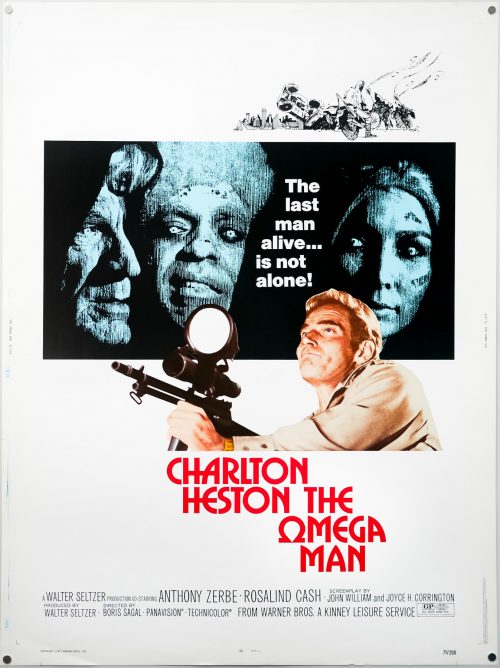
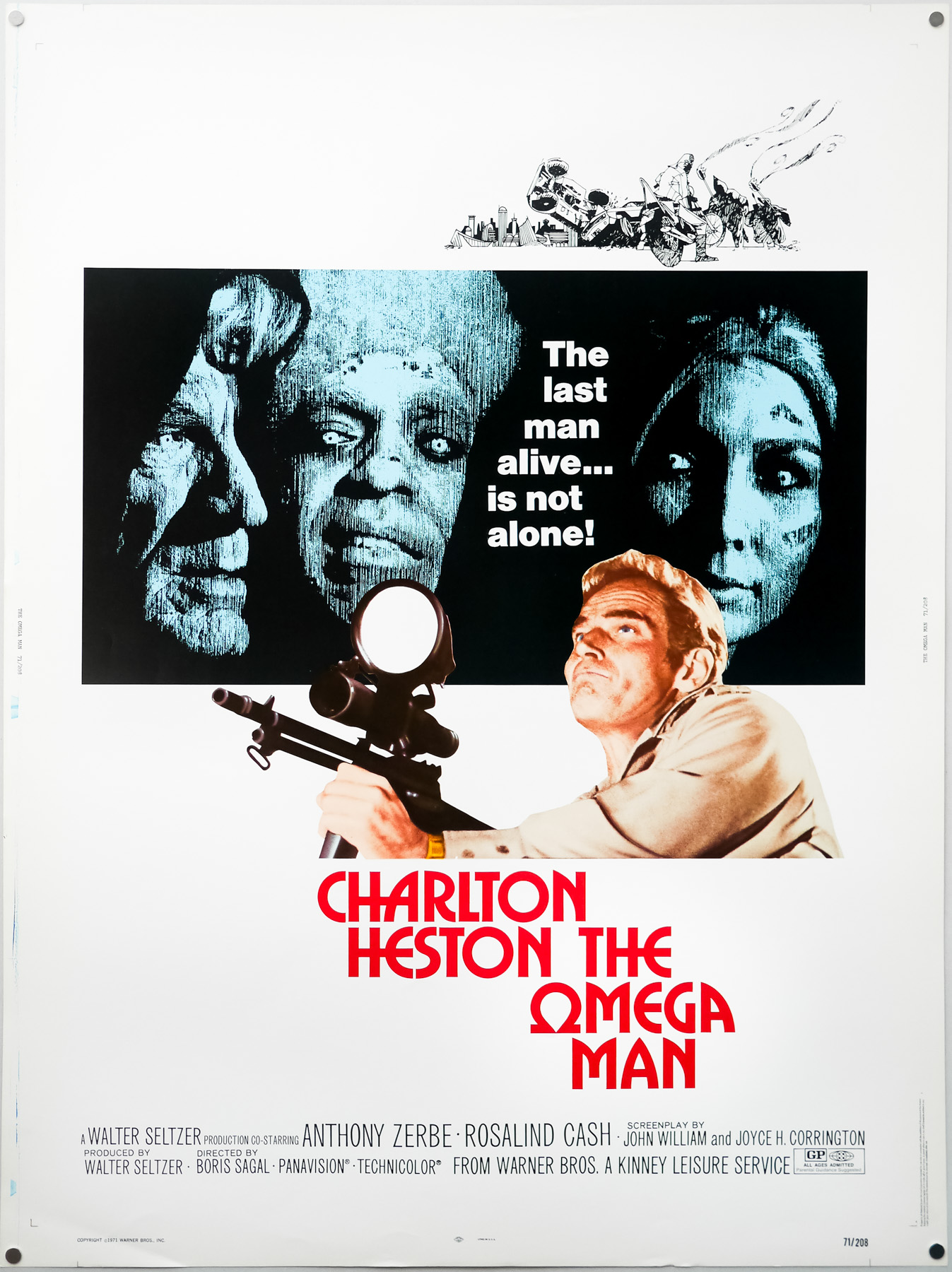
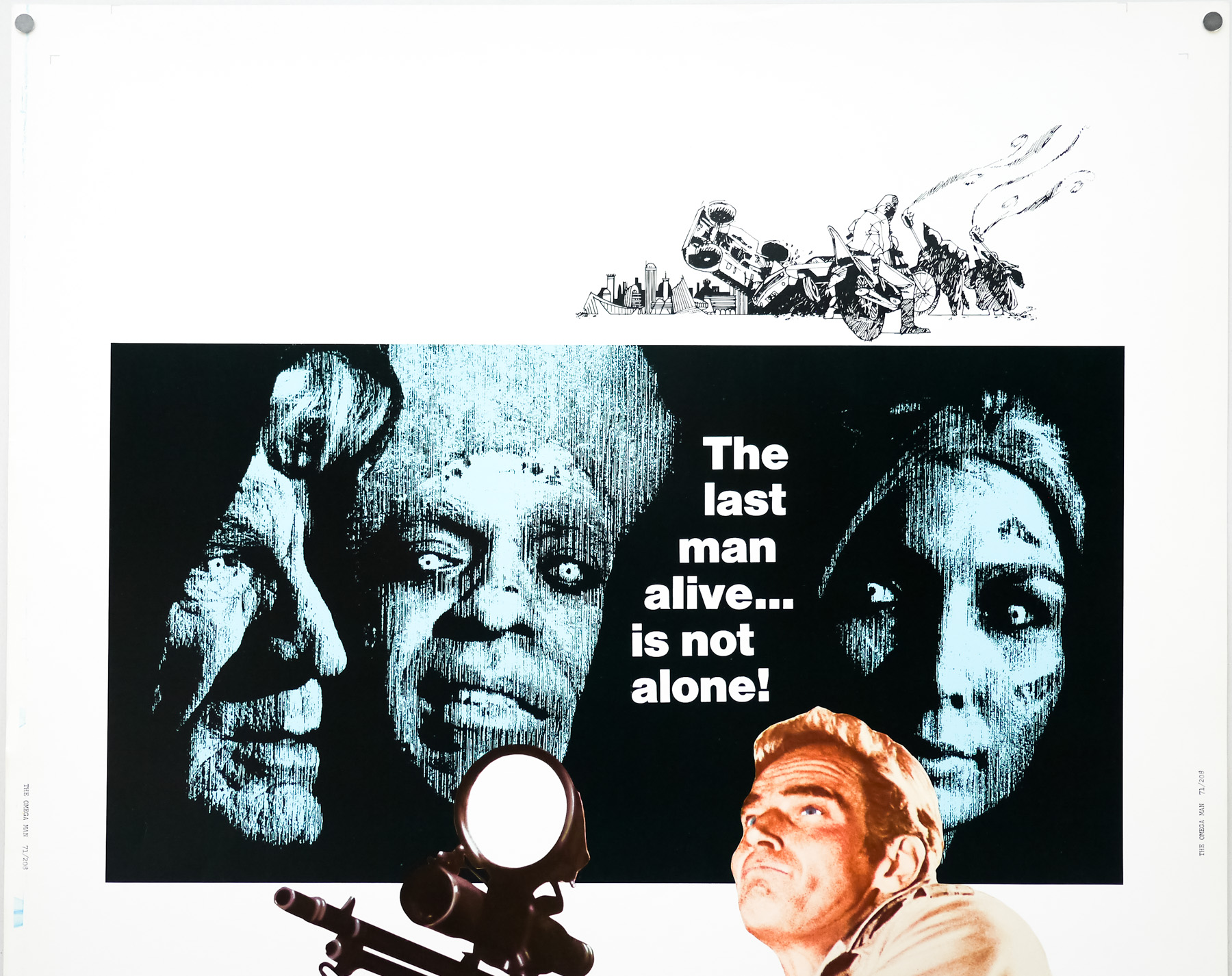
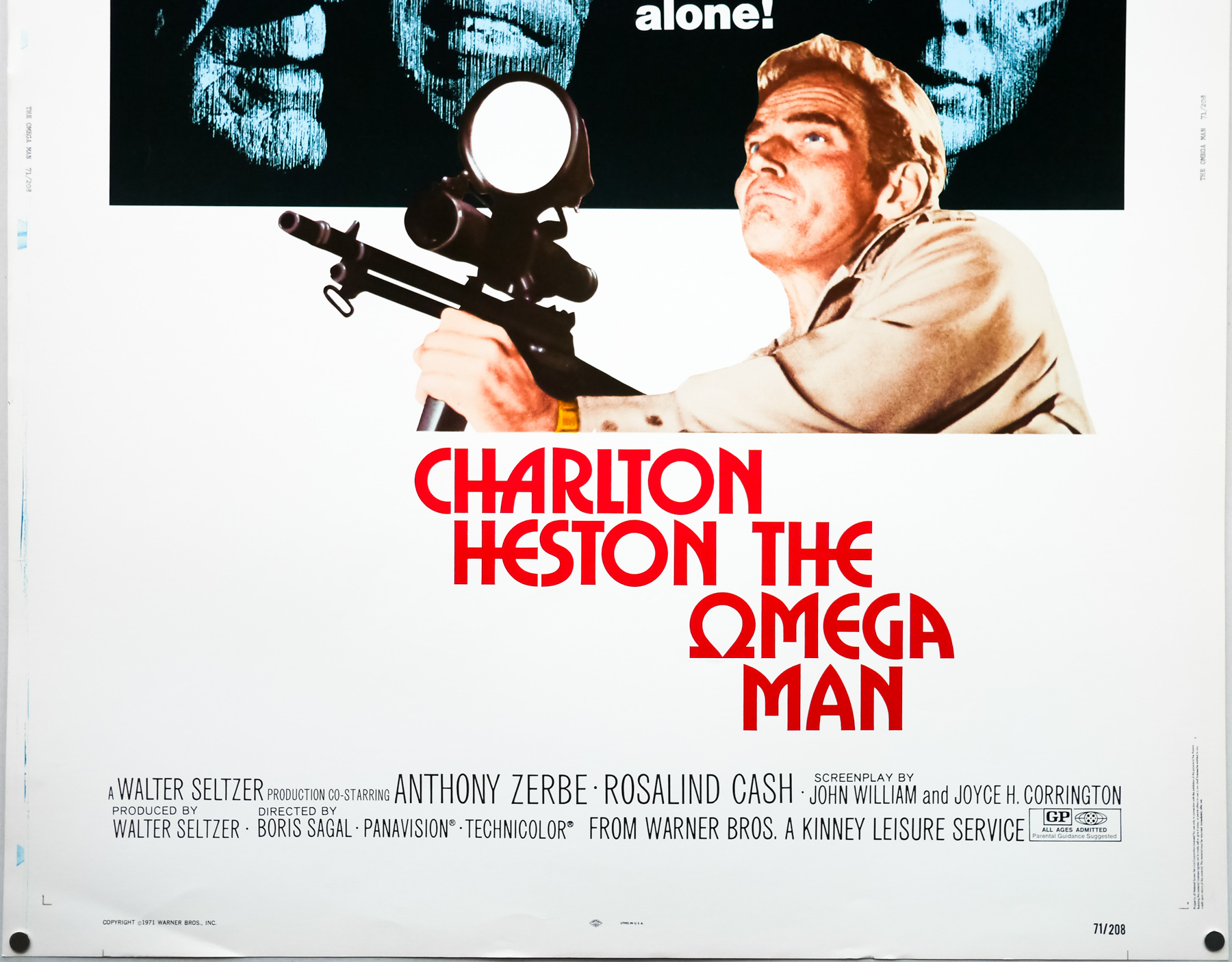
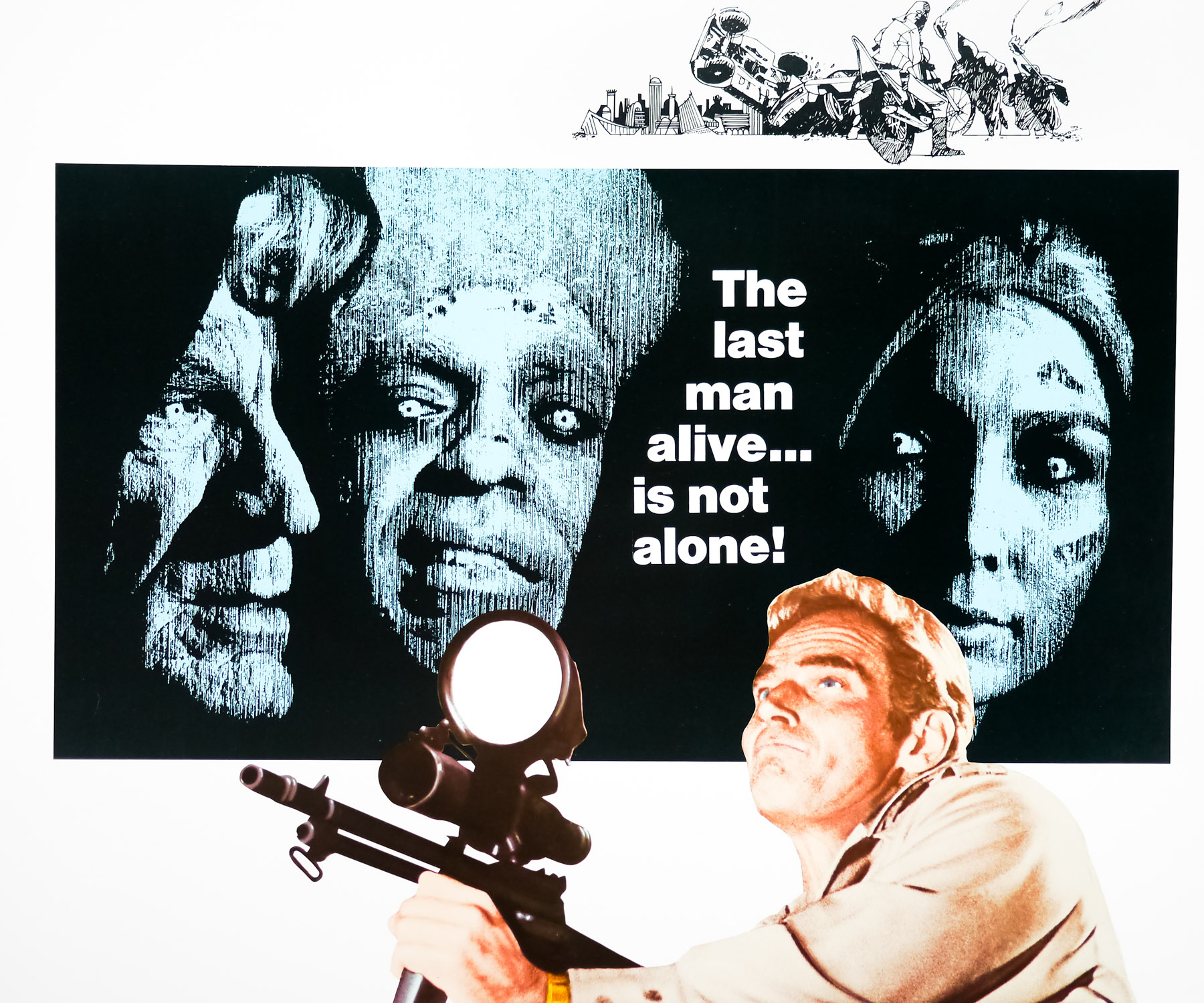
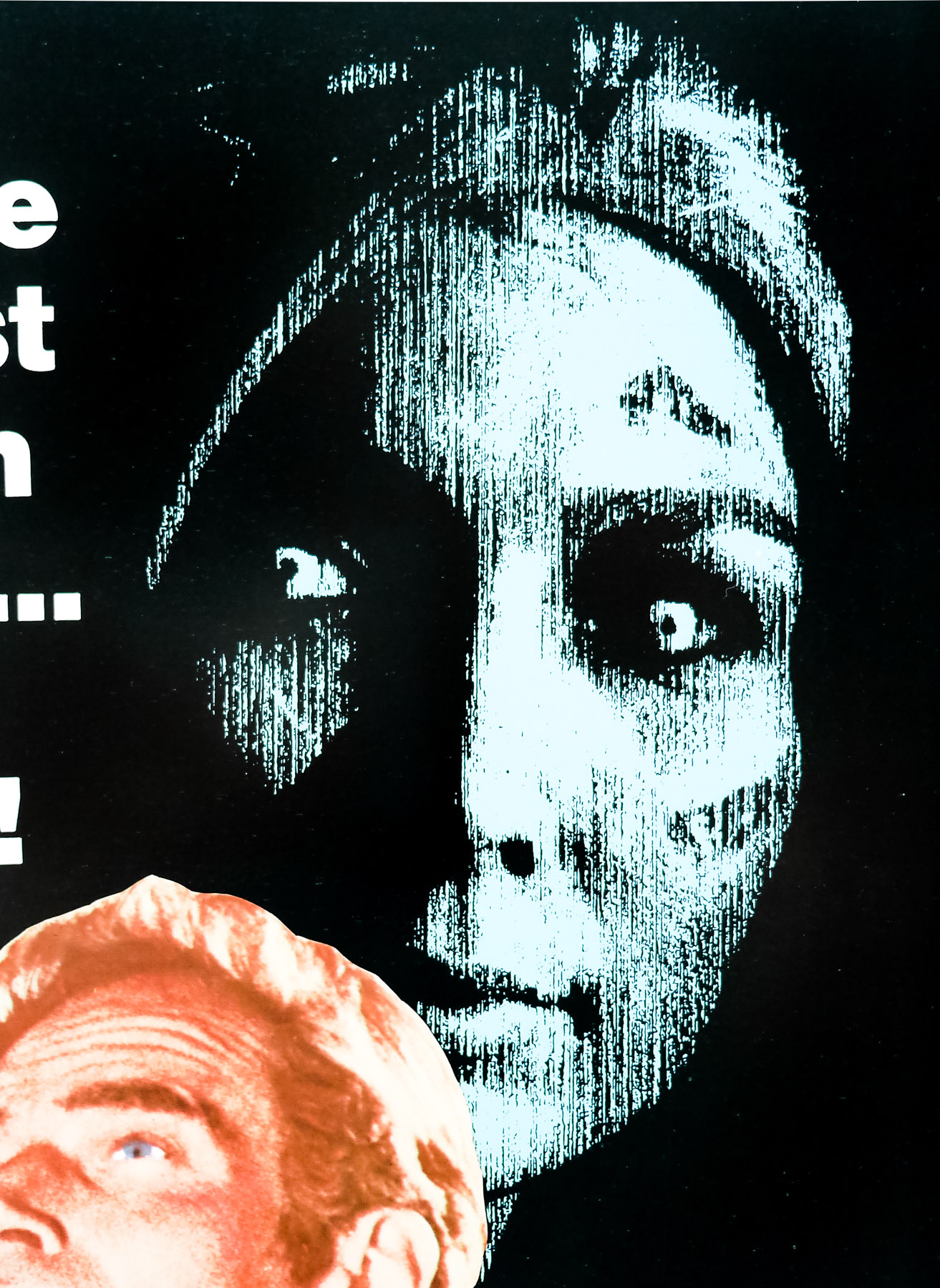
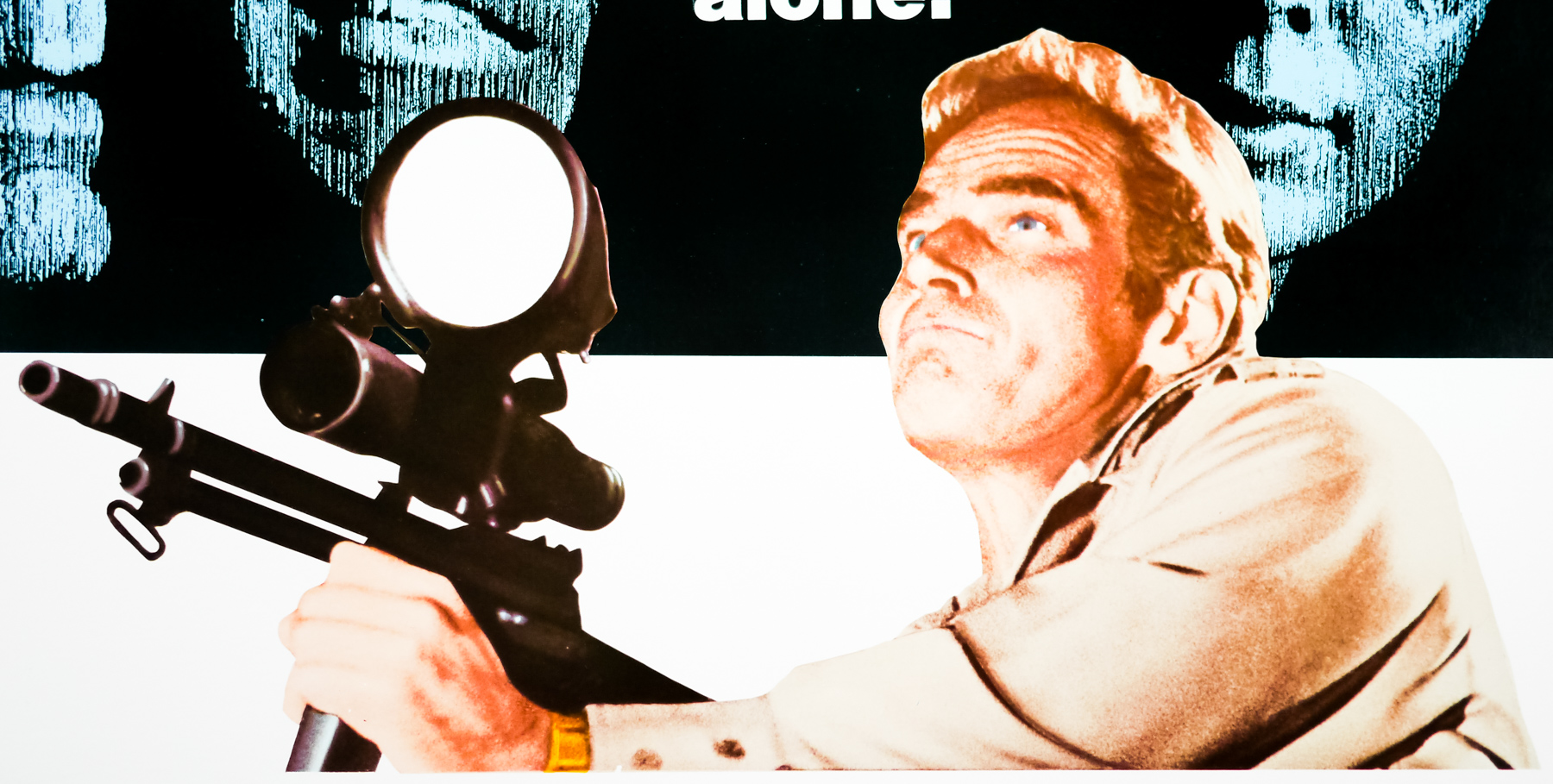
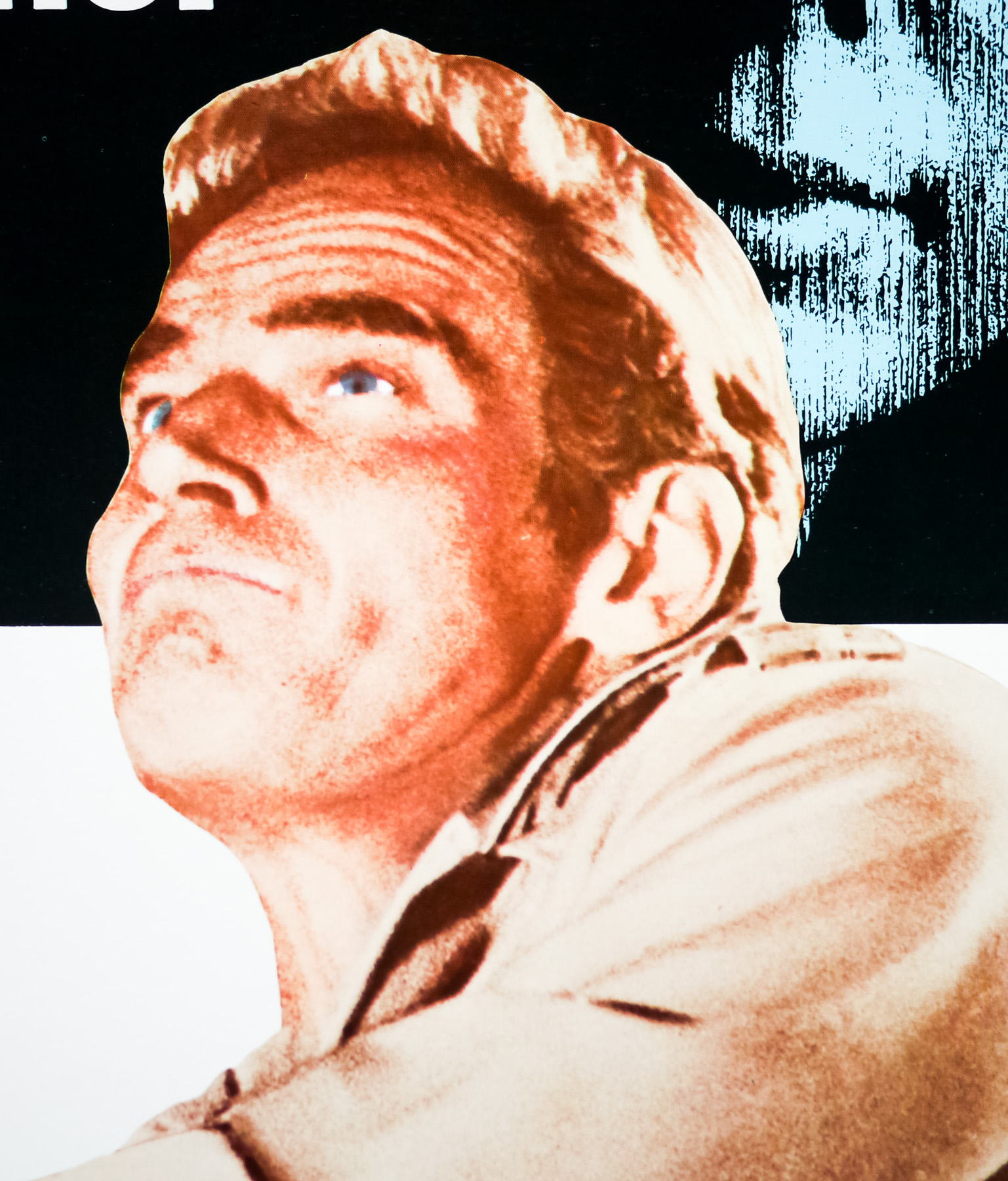
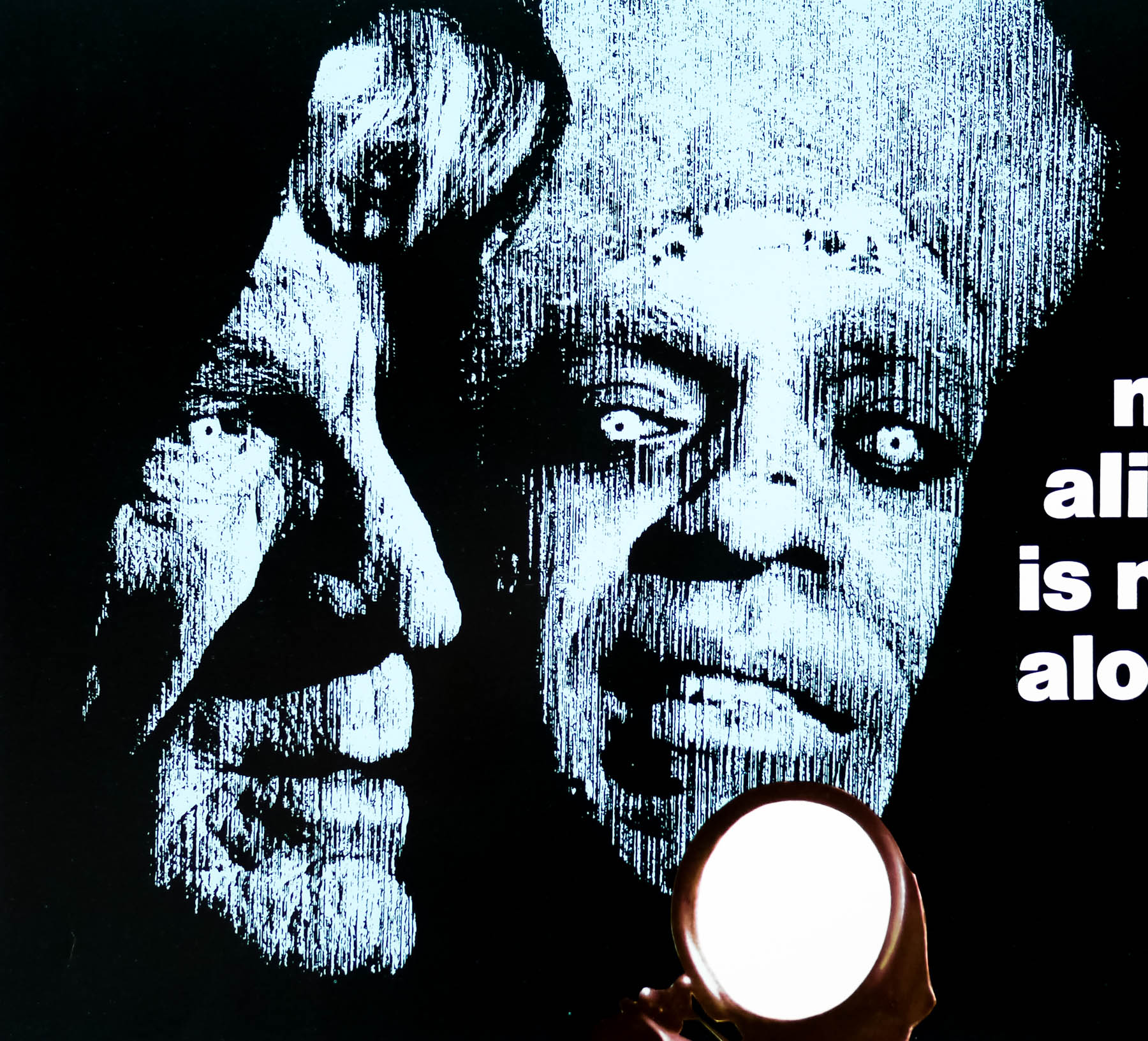
The last man alive... is not alone!

American author Richard Matheson‘s 1954 post-apocalyptic tale I Am Legend has been adapted for the screen three times, first in 1964 as the Vincent Price-starring The Last Man on Earth that was shot in Rome and co-directed by Italian Ubaldo Ragona and American Sidney Salkow. The rights to the story had originally been bought by Tony Hinds of the British Hammer Studios and Matheson was asked to write the screenplay, but worries about the gruesome content being too much for British censors saw the script being sold to the American producer Robert Lippert. Matheson was apparently so disappointed with his own screenplay and resultant film that he asked to be credited with the pseudonym Logan Swanson. The Last Man on Earth’s limited success at the box-office might explain why The Omega Man was put into production only seven years later.

Charlton Heston stars as Robert Neville, the Army scientist who manages to inject himself with an experimental vaccine just as the world’s population is obliterated by biological warfare between the Chinese and Russians. Two years later Neville believes himself to be the only surviving human and spends his days exploring a deserted Los Angeles and hunting down a group of infected mutants known as The Family. One day whilst exploring a shopping centre Neville has an encounter with another human survivor but quickly dismisses it as a hallucination, having been alone for so long. When he is captured by The Family and almost burned at the stake his rescue comes from a ragtag bunch of human survivors who ask for his help in saving a group of children that are infected and slowly succumbing to the disease. Neville decides to see if his blood can be used to create a serum to save them, but The Family are not done with him yet…

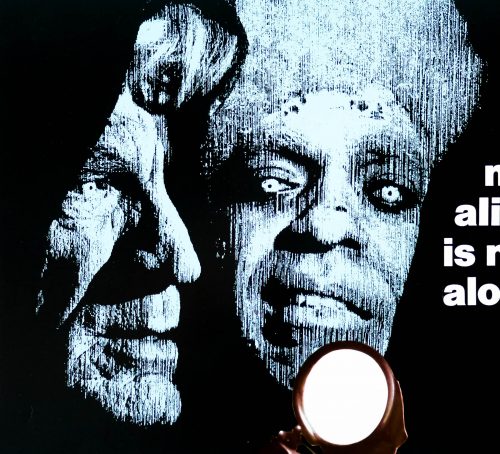
The Omega Man has several memorable scenes, particularly during the first half of the film as Neville explores a convincingly deserted Los Angeles, which was achieved with out any visual effects by shooting in the city’s business district early on Sunday mornings. The soundtrack is also excellent and Heston does a solid job in the lead role, supported by Rosalind Cash who’s memorable as one of the other survivors with whom Heston shares a controversial (for the time) interracial kiss. The make-up for the mutants has dated rather badly but it’s nowhere near as poor as the terrible CGI abominations that all but sank 2007’s I Am Legend, starring Will Smith in the lead role.

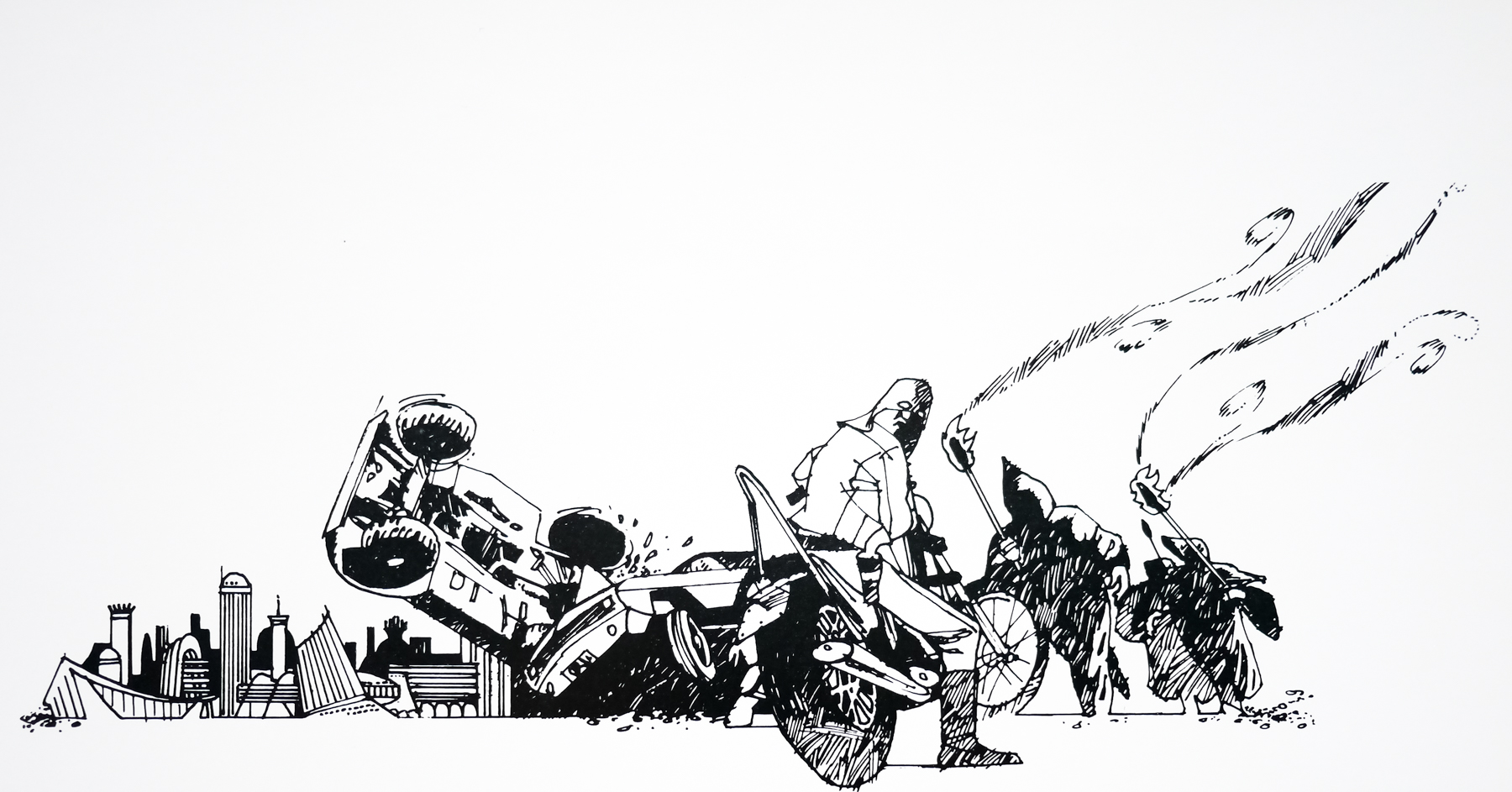
I’m unsure who is responsible for the design of this poster but the pencil drawing is similar to the one seen on the Dirty Harry one sheet that was designed by Bill Gold, so I suspect the same artist may be credited and that Gold was also behind the design. If anyone knows for sure please get in touch.

Vampire Circus / 30×40 / USA

29.07.13

Poster Poster

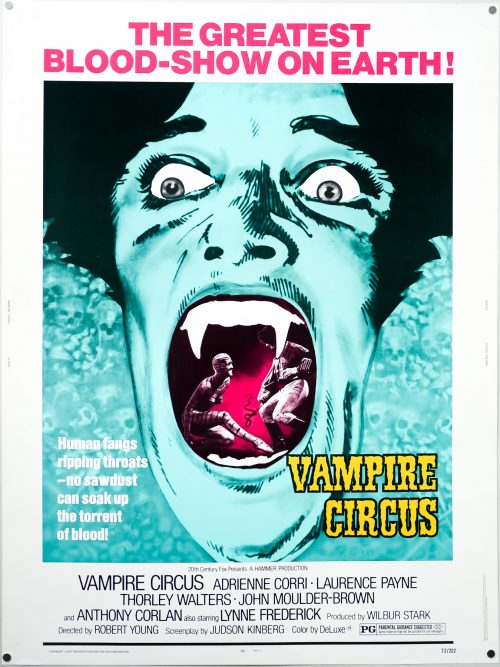
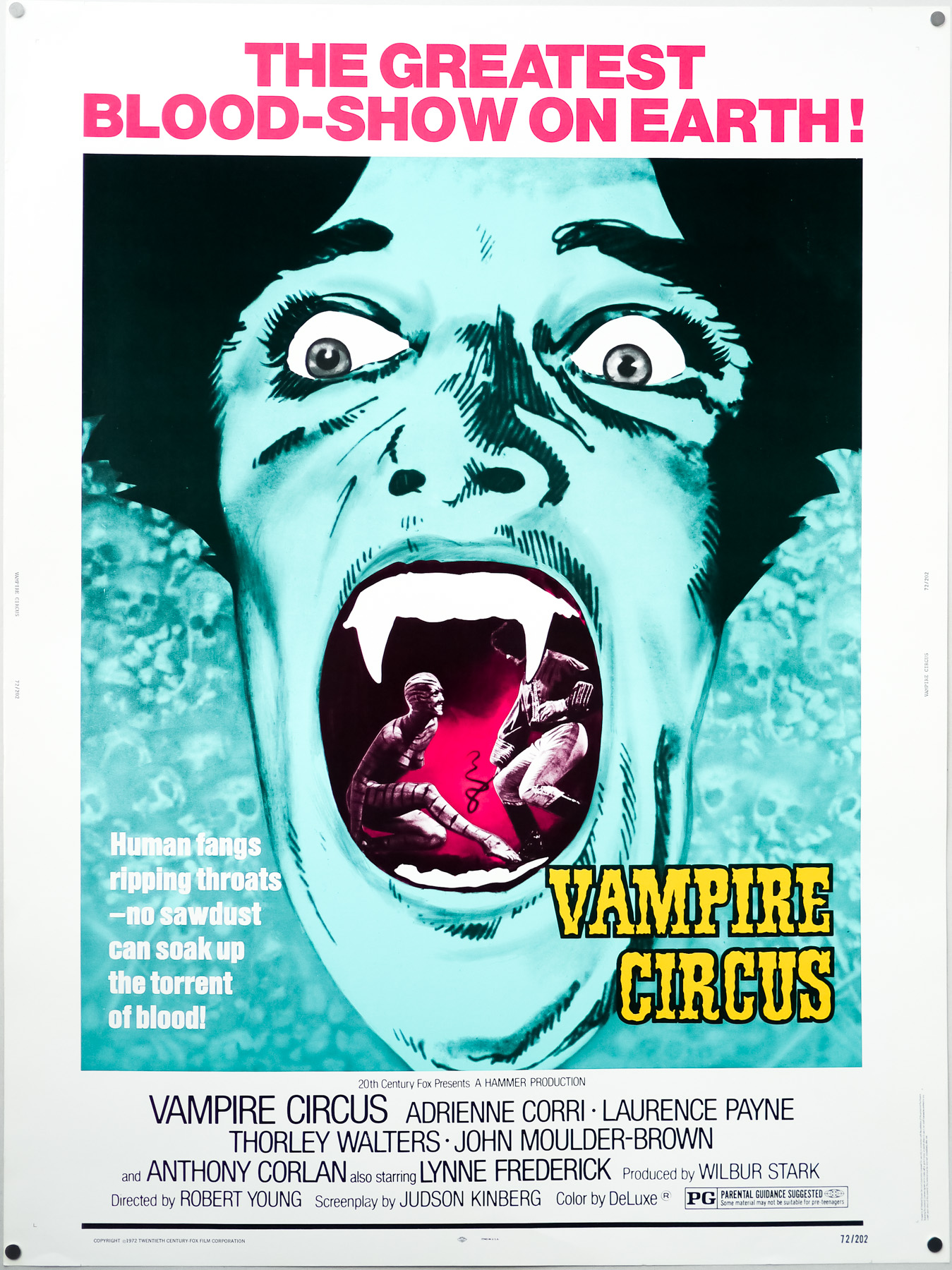
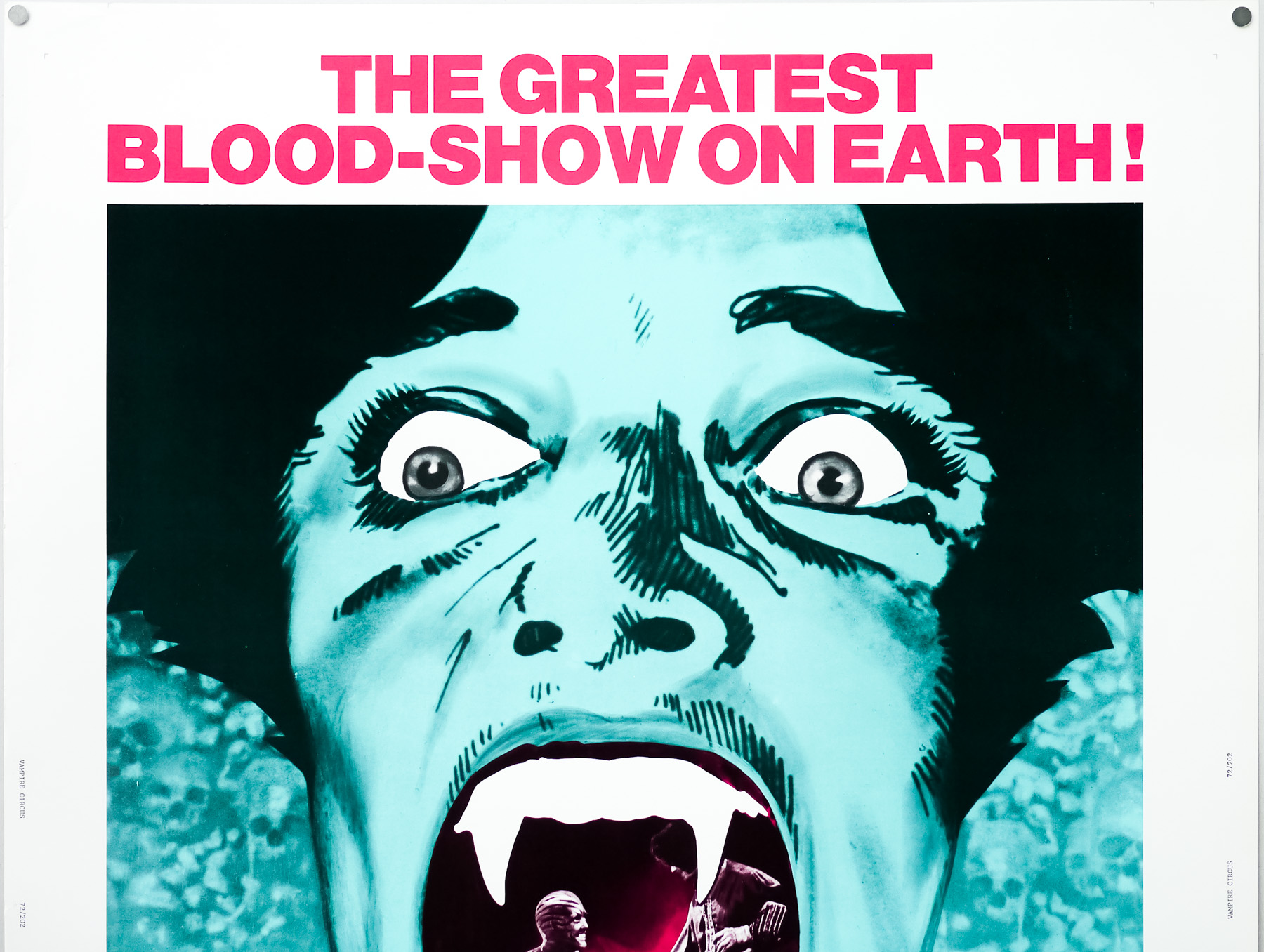
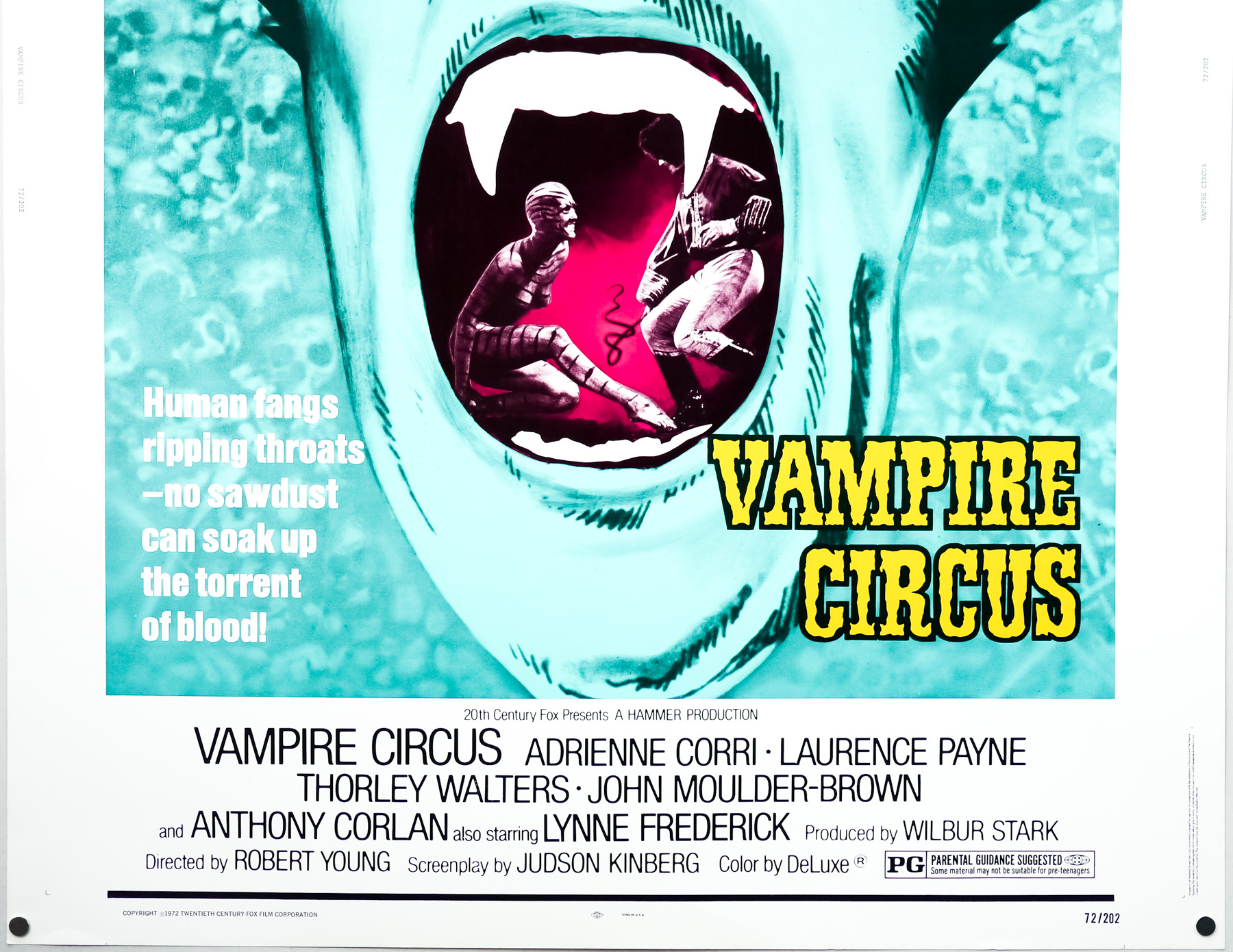
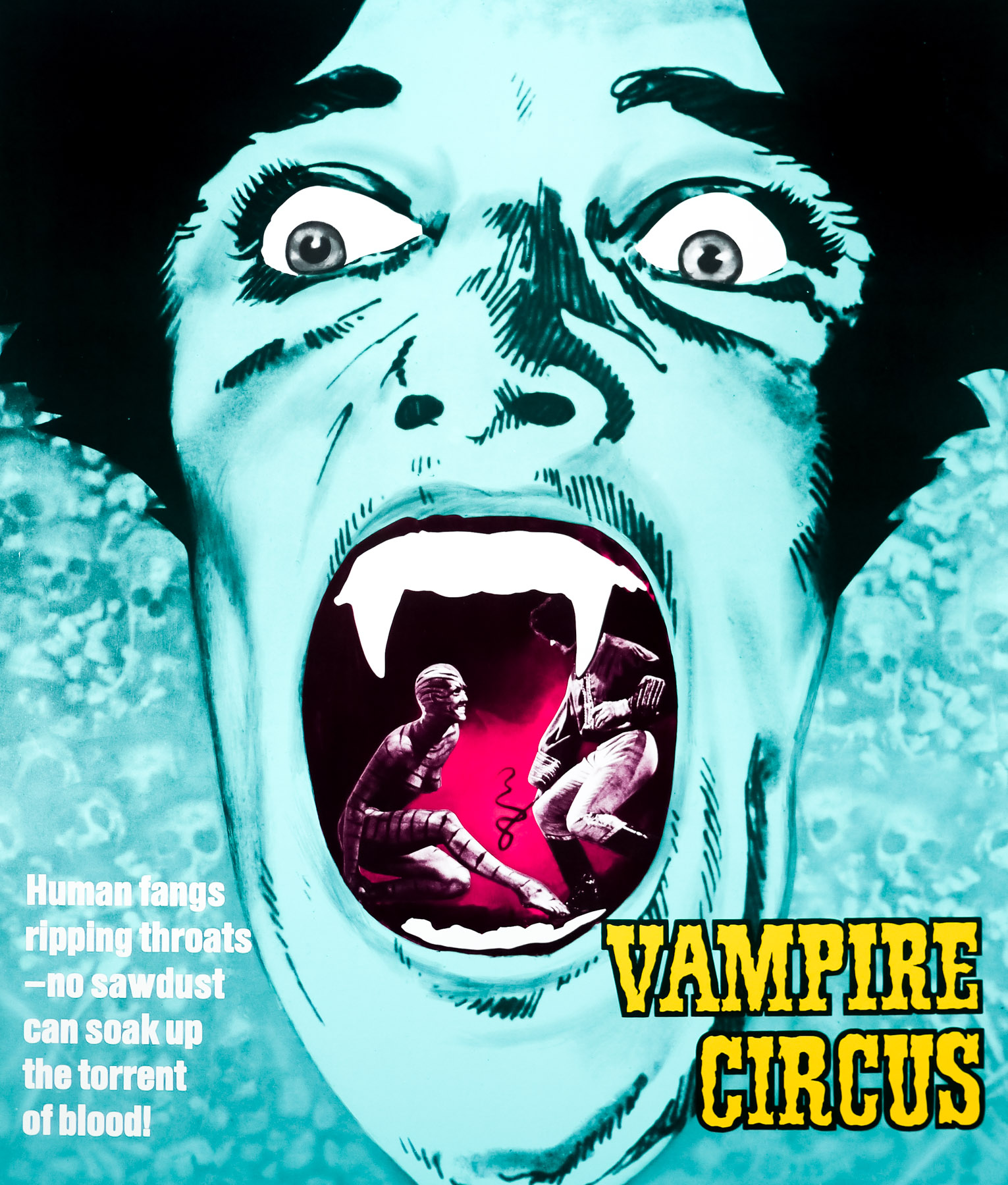
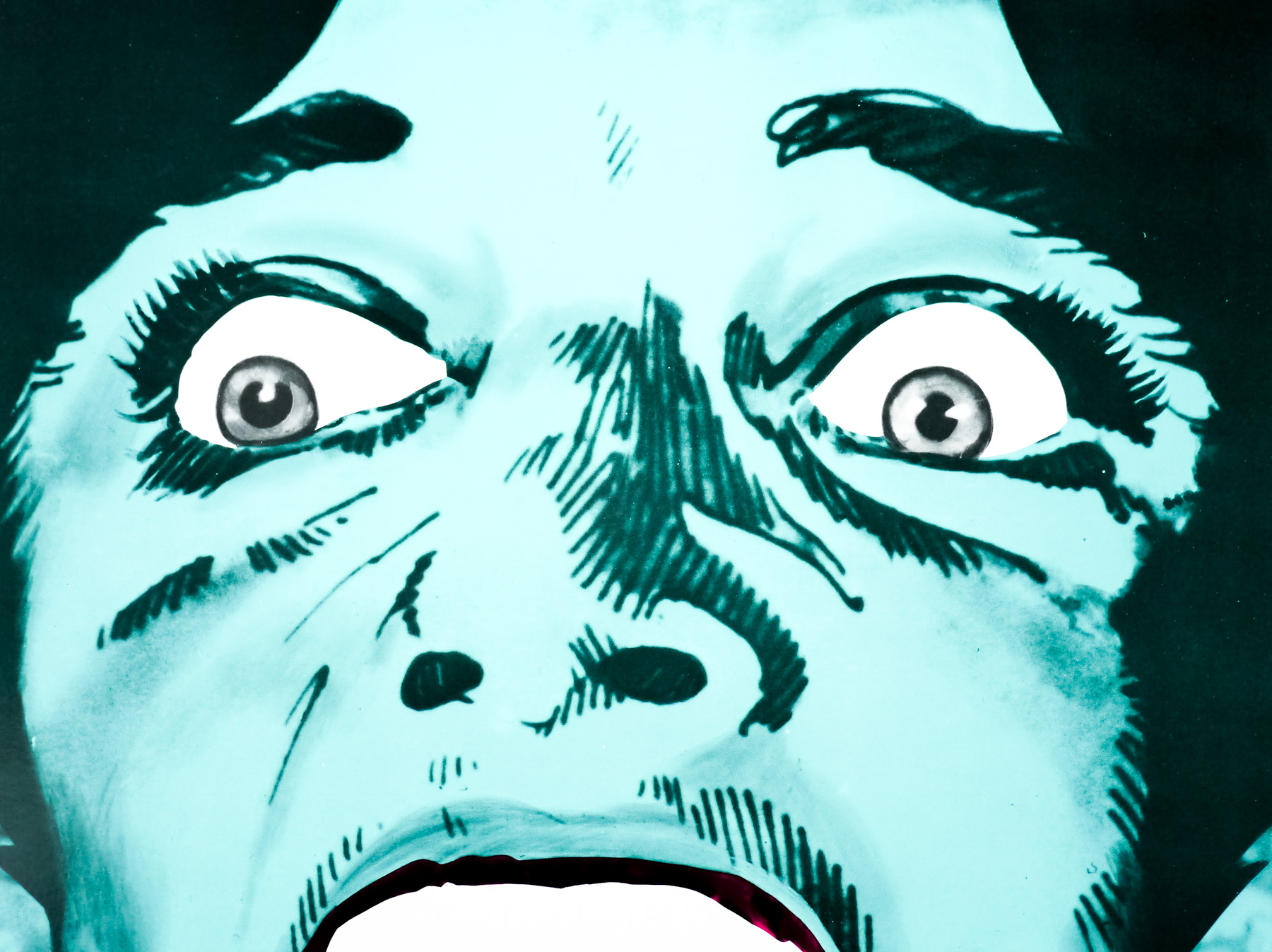
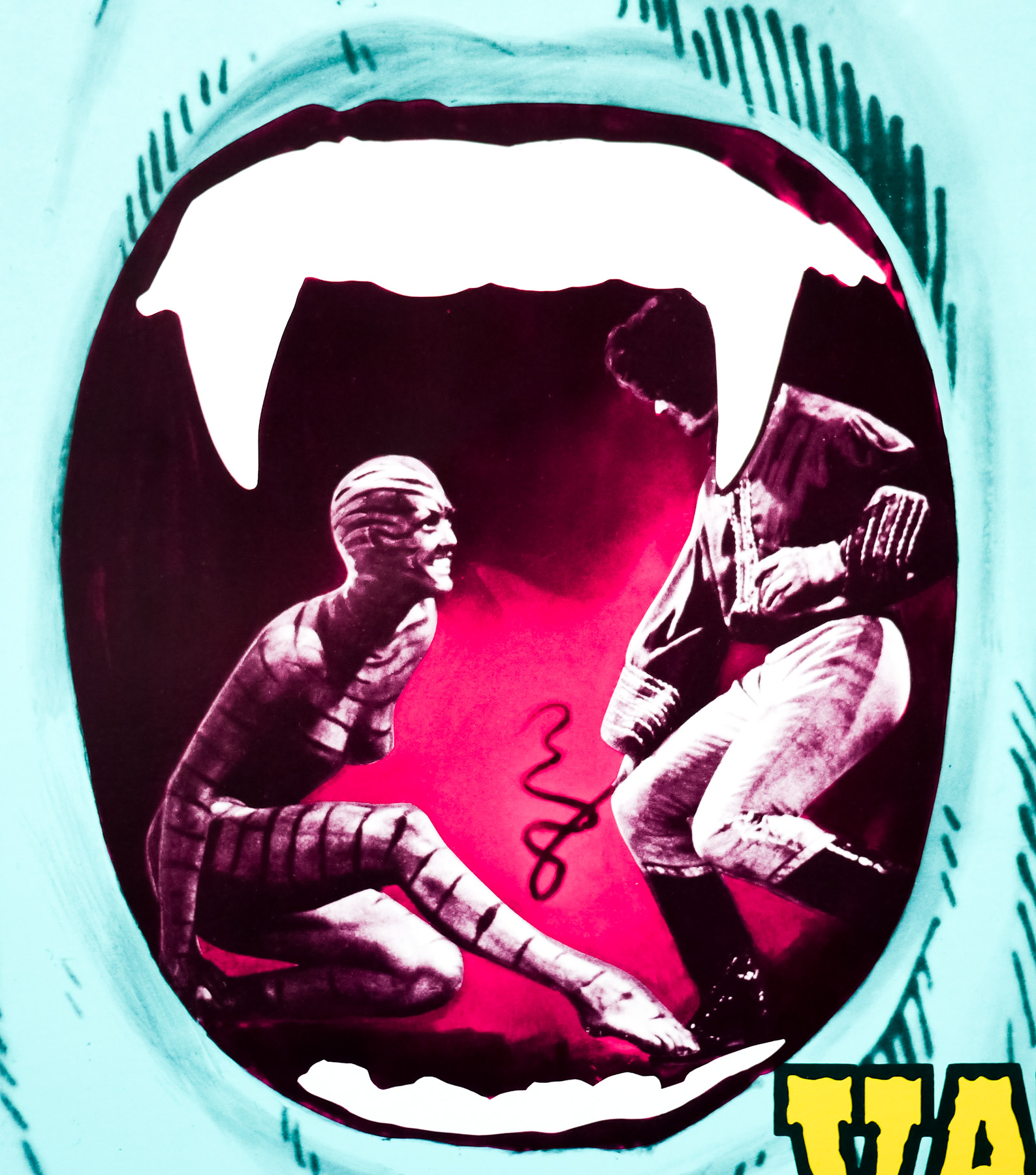
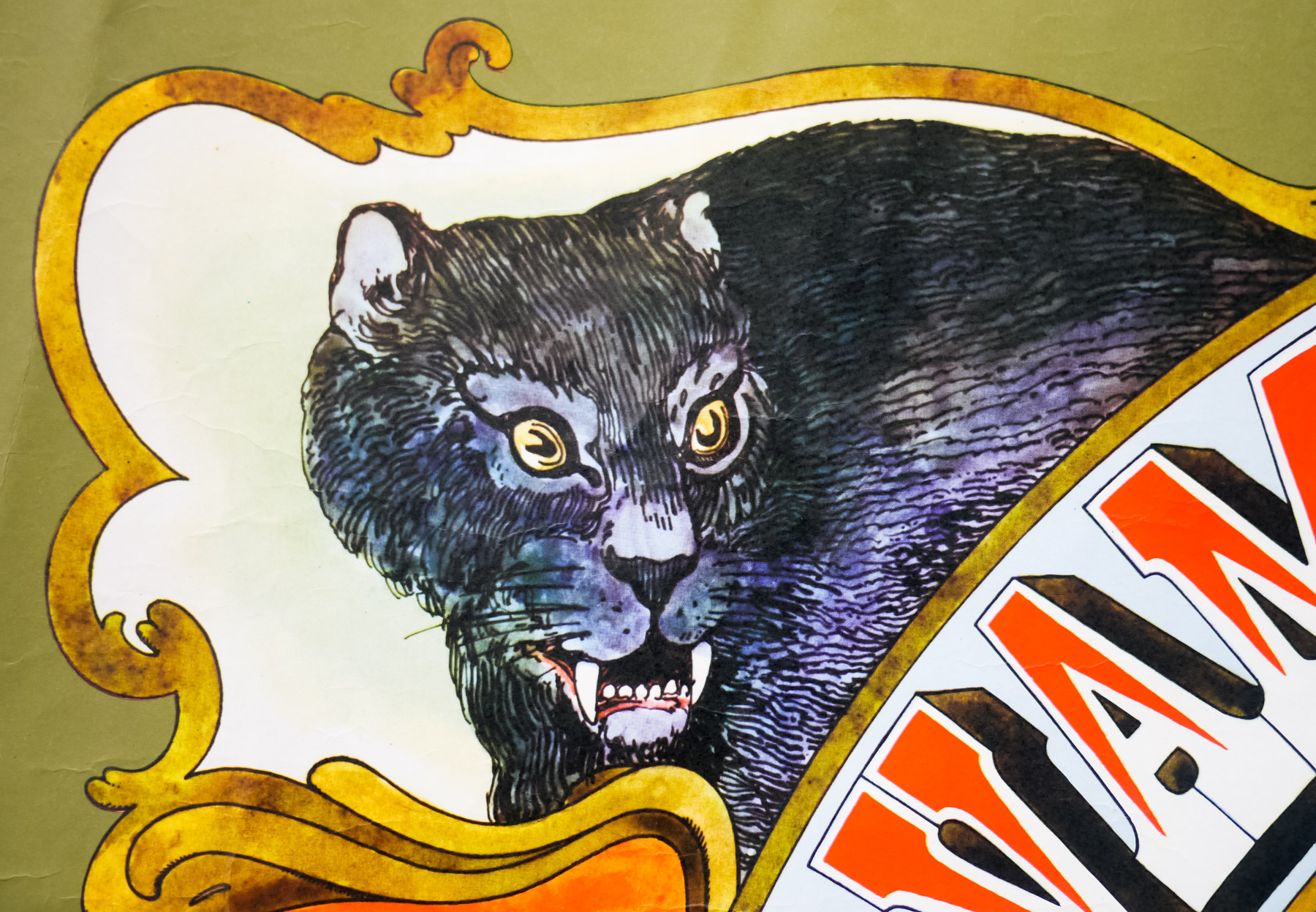
The taglines on this US 30×40 left cinema-goers in no doubt as to the kind of film they were in for with Hammer Films‘ 1972 horror Vampire Circus. Released at a time when the popularity of British gothic horror tales was on the wane, particularly when compared against the more explicit, contemporary horrors coming out of Hollywood (Rosemary’s Baby and later The Exorcist), the film nevertheless managed to stand out from a glut of other films produced by the studio around the same time. A decent script, typically excellent production design and a raft of quality British thespians all help to make Vampire Circus one of the more memorable films to be produced by the House of Horror before its first demise picked up pace a couple of years later

Set in a small village in the studio’s customary ‘mittel-Europe’ sometime in the 19th century, a lengthy pre-credits sequence shows a young girl being led into the castle of vampire Count Mitterhaus by Anna (Domini Blythe), the wife of local schoolmaster Albert Müller (Laurence Payne). Soon after the girl is murdered by the vampire, a group of villagers led by Müller storm the castle, stake the Count and burn the castle to the ground. Anna manages to drag the dying vampire to the crypt beneath the castle and before he perishes he curses the villagers and promises that their children will die to give him back his life. Fast-forward fifteen years, the village is beset by a plague and blockaded by the authorities with the miserable villagers fearing that this is the Count’s doing.

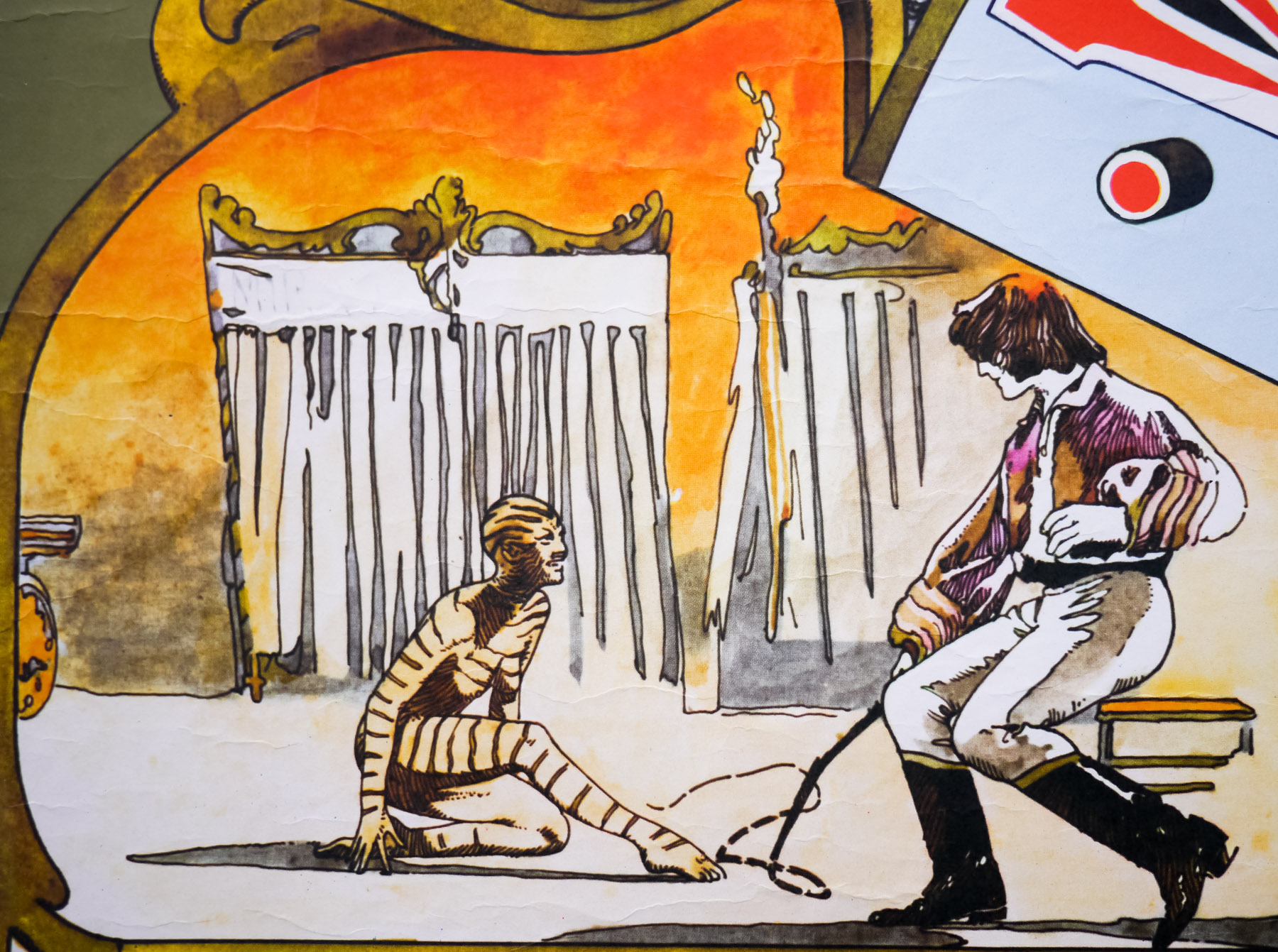
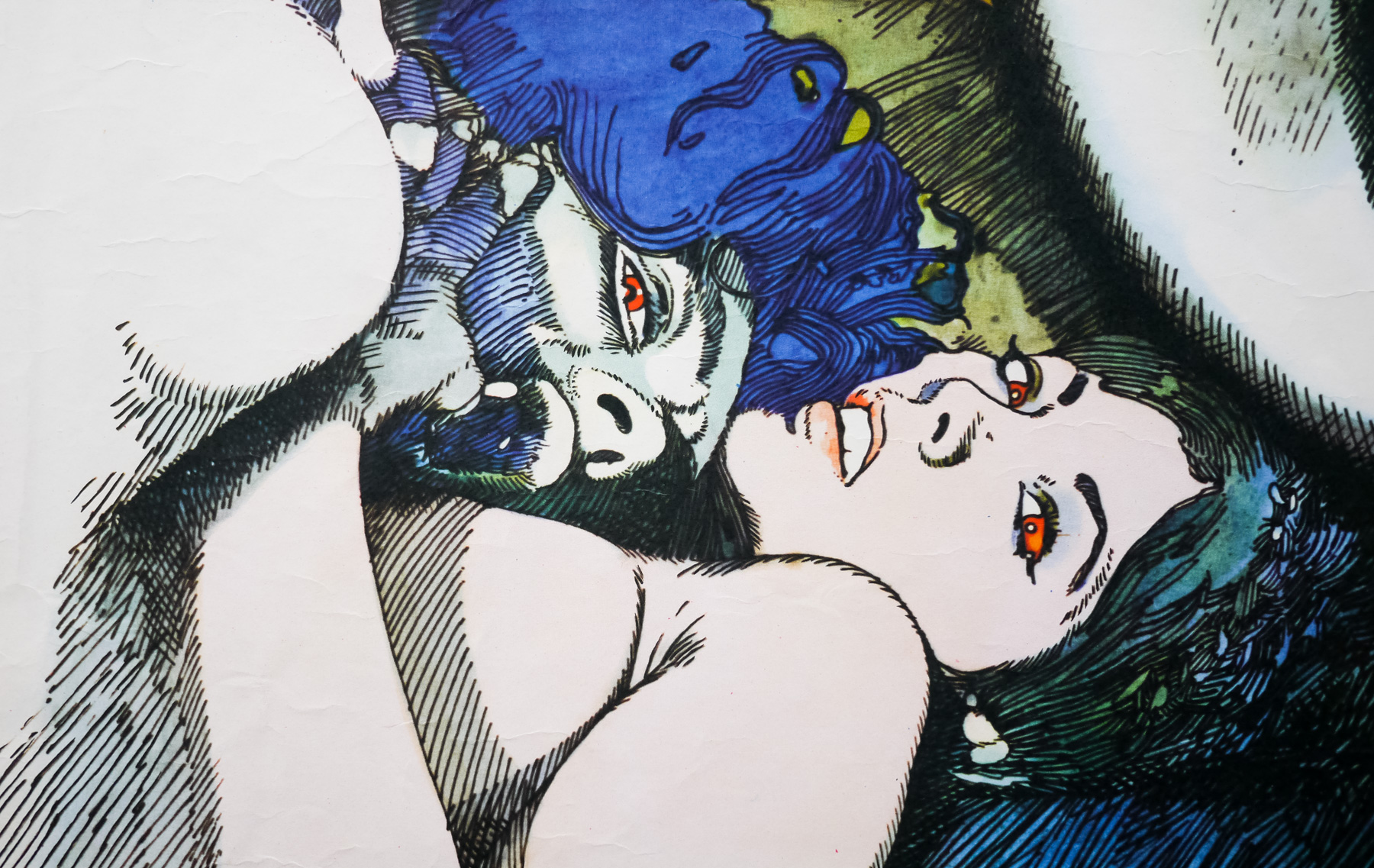
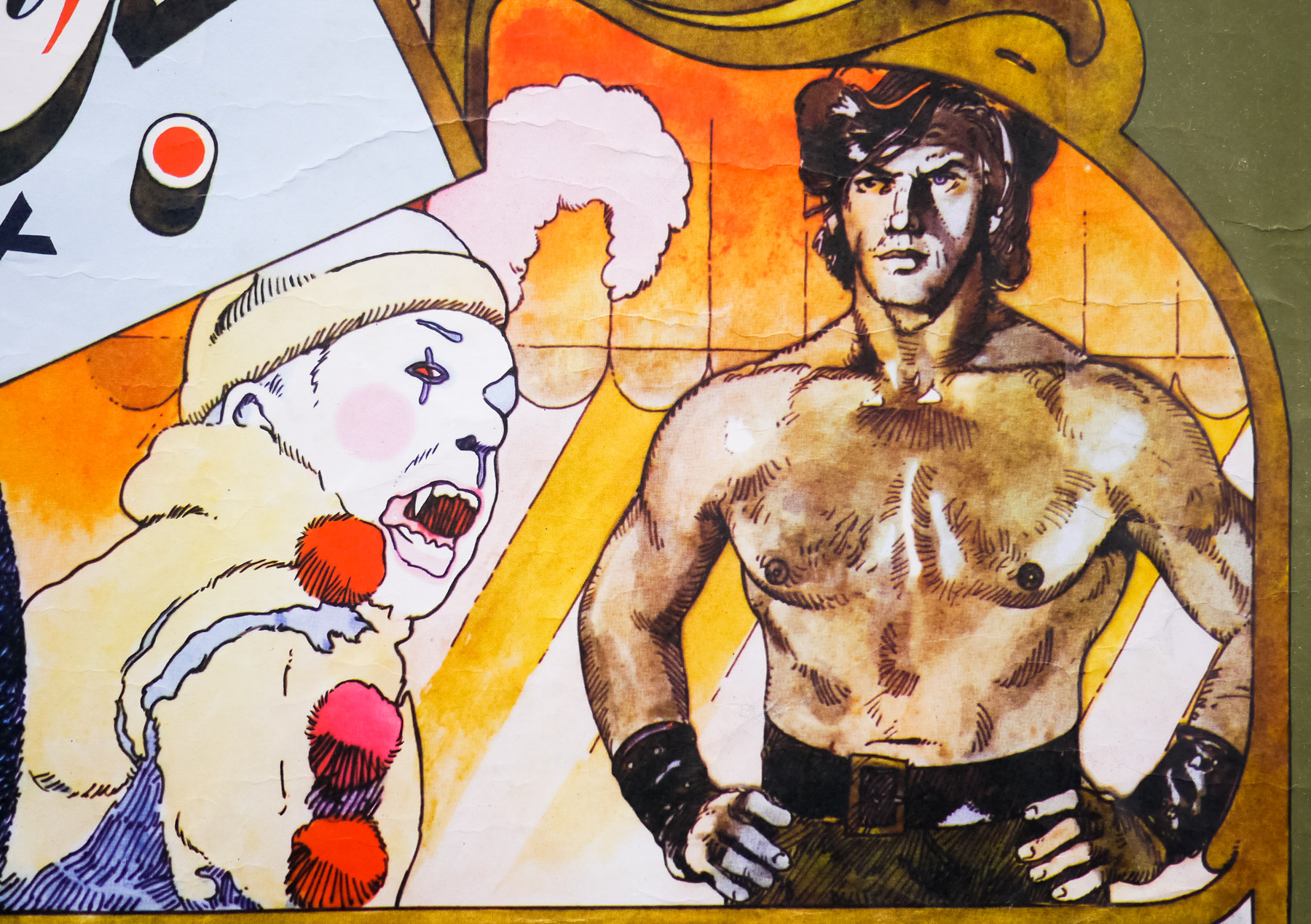
One day the eponymous travelling troupe arrives, having apparently snuck past the blockades, led by a mysterious gypsy woman (Adrienne Corri) and containing a ragtag bunch of performers, including a mischievous clown dwarf, a set of flying twins, an erotic tiger dancer (as depicted on this poster) and Emil, a shape-shifting artiste. At first the villagers are happy to be entertained by the circus as it gives them a reprieve from their misery, but it soon becomes clear that the gang have an ulterior motive for being there. Before long the Count’s dying promise is being kept by Emil, who it turns out is a ‘kinsman’ of Mitterhaus, and the leaders of the village must battle to try to stop the murder of their children and the resurrection of the cursed Count. It’s a well-paced film and certainly a stand-out feature in Hammer’s output of the early 1970s, only let down by some dodgy special effects, which can be explained by a curtailed production period and the dwindling budgets of the time.

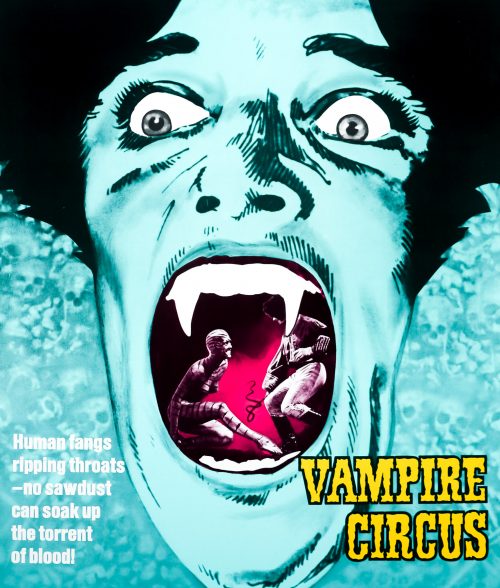
I’m unsure who is responsible for the artwork on this American poster, which depicts Emil in all his fang-baring glory, so if you have any ideas please get in touch.

The Empire Strikes Back / B1 / advance / Japan

04.11.13

Poster Poster

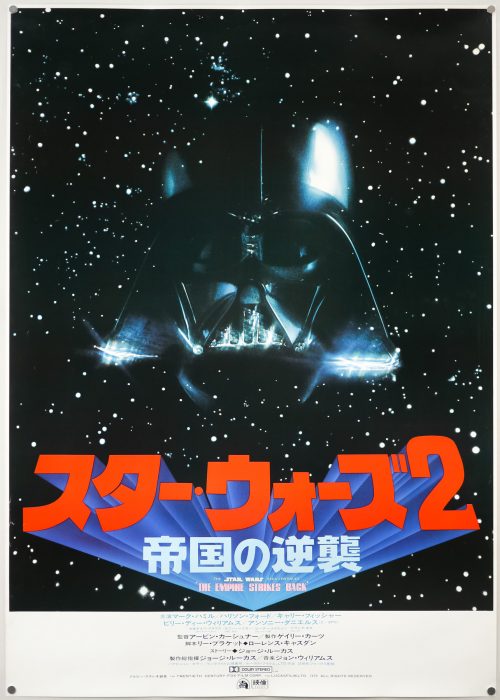
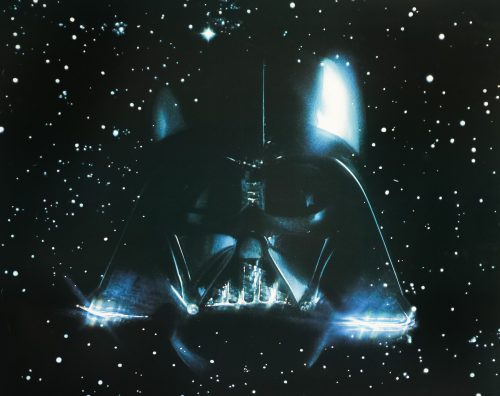
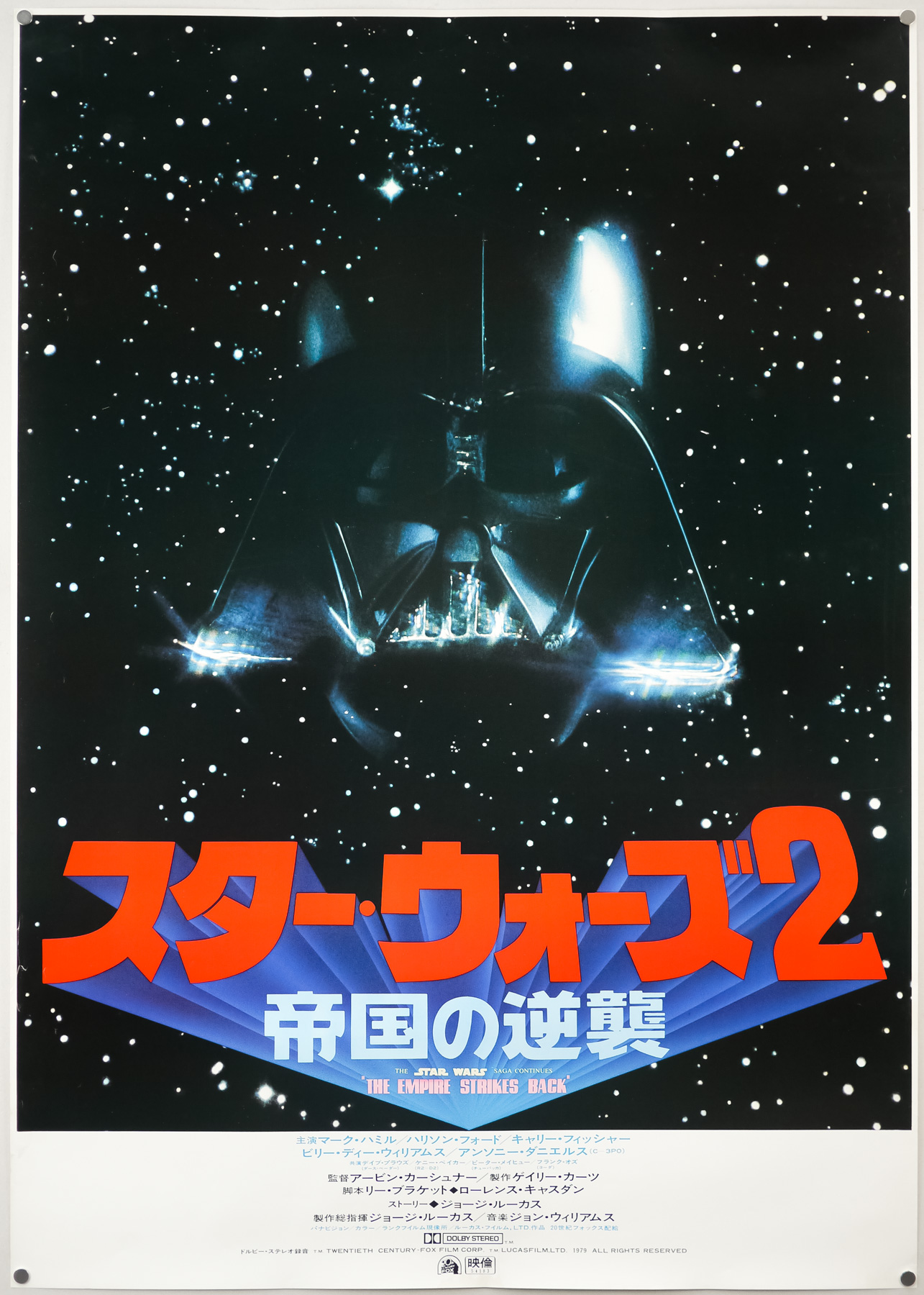
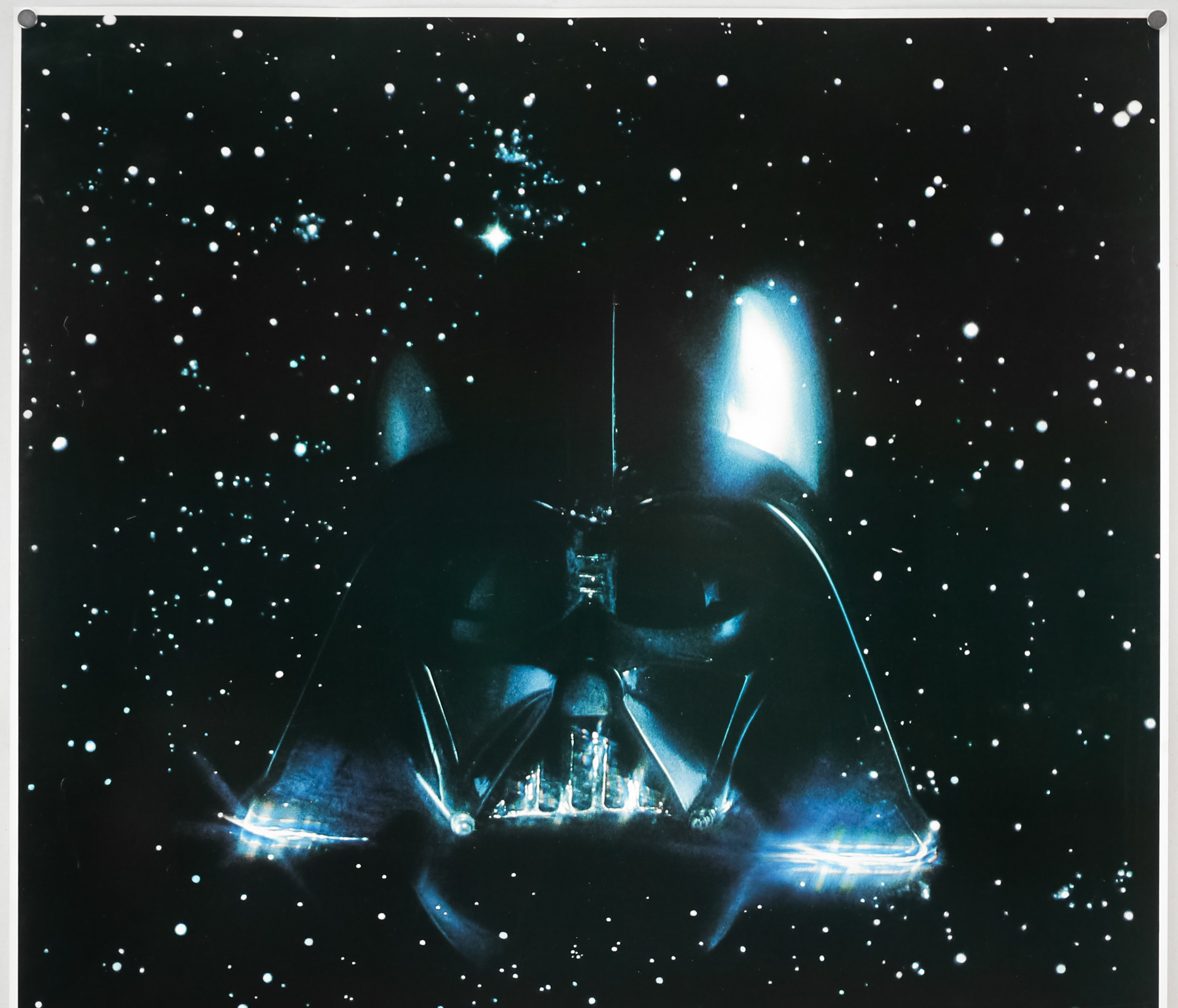
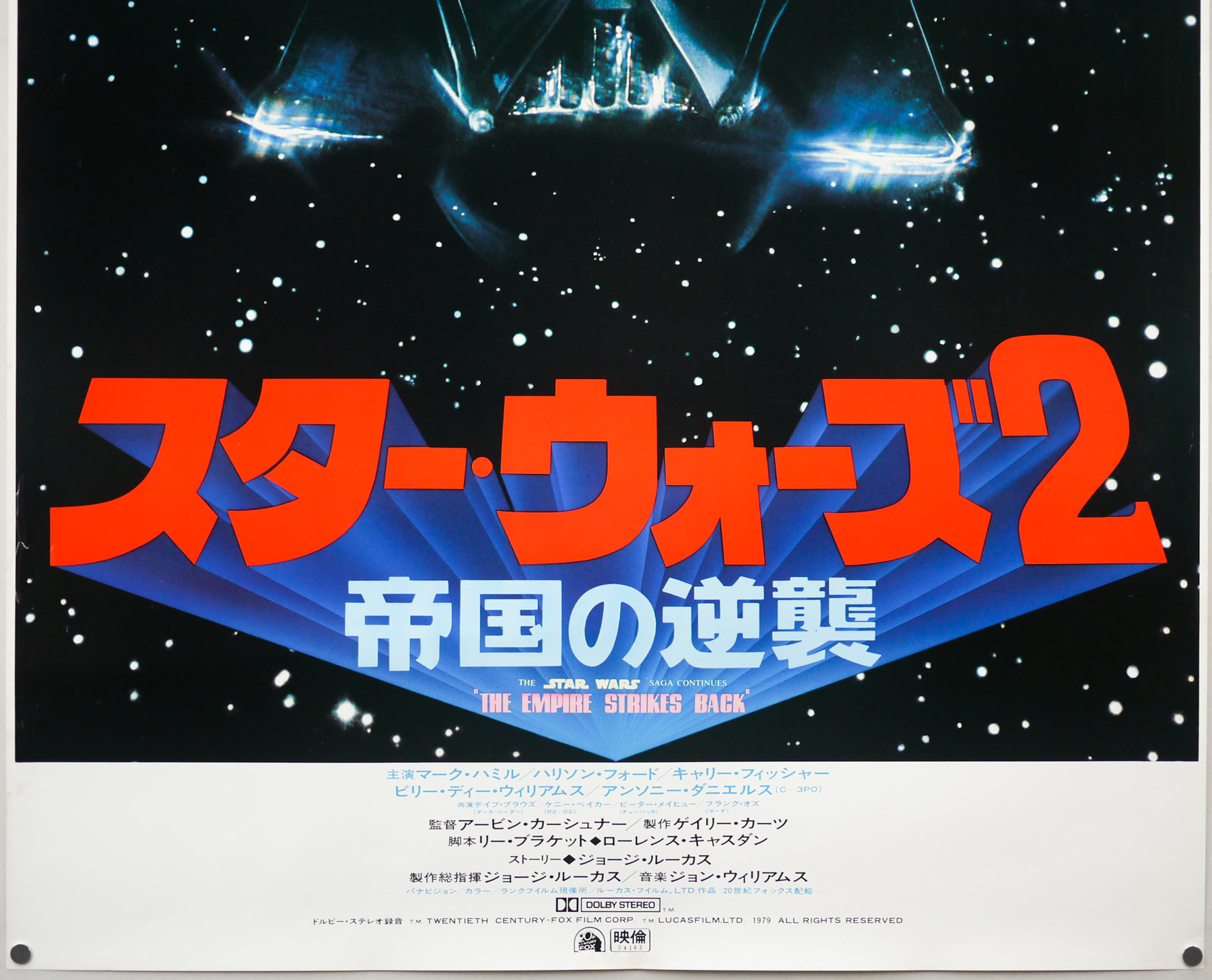
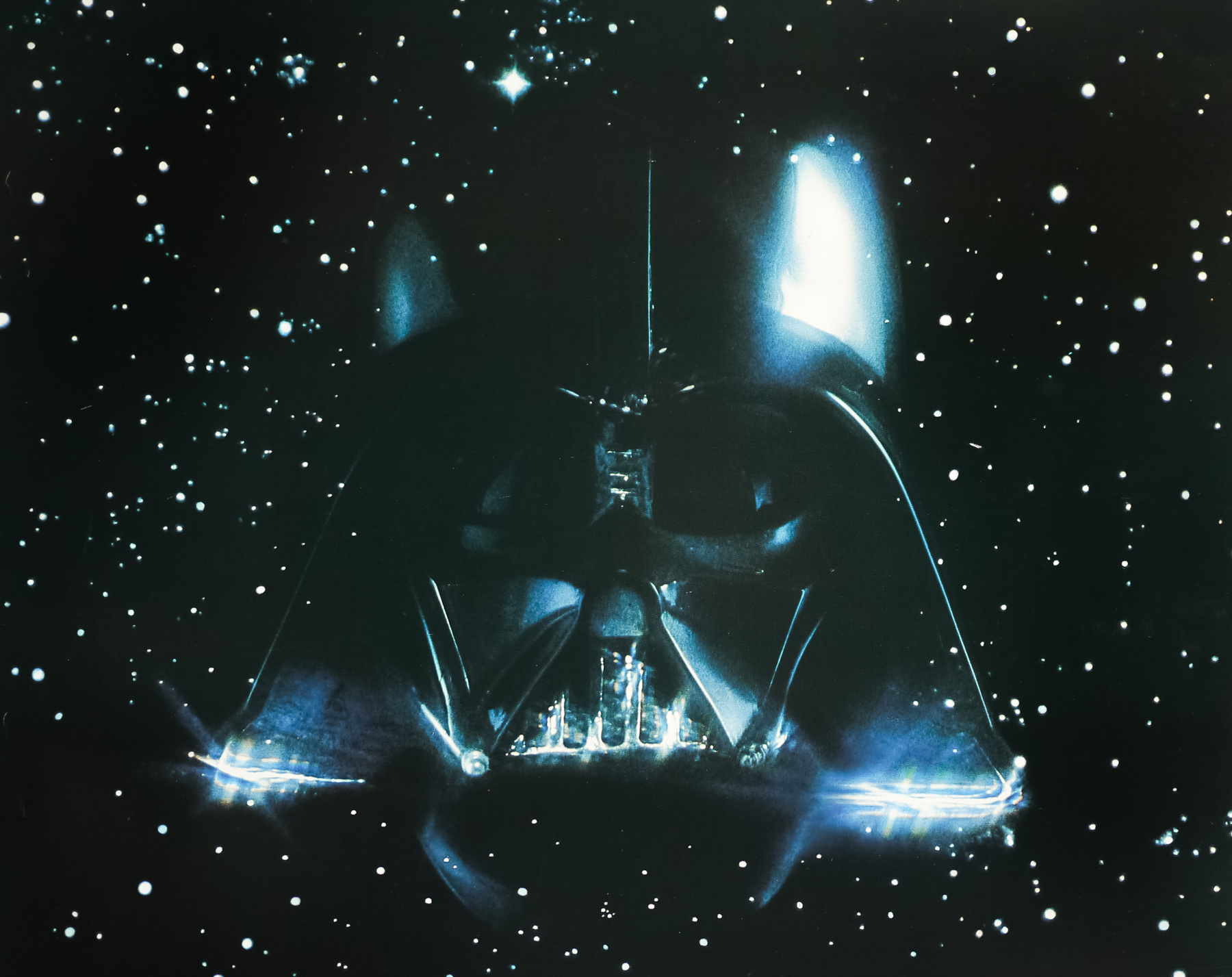
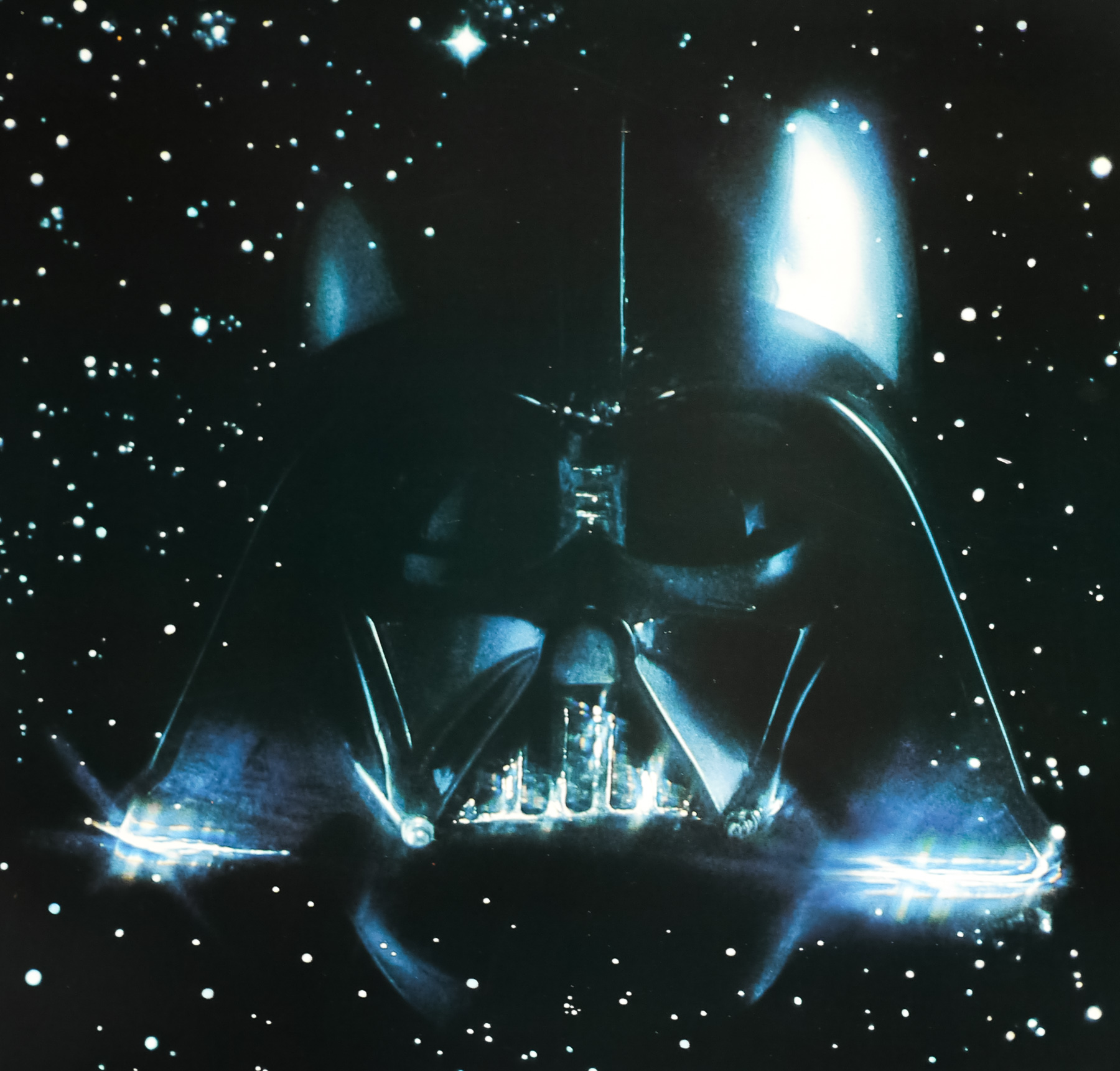
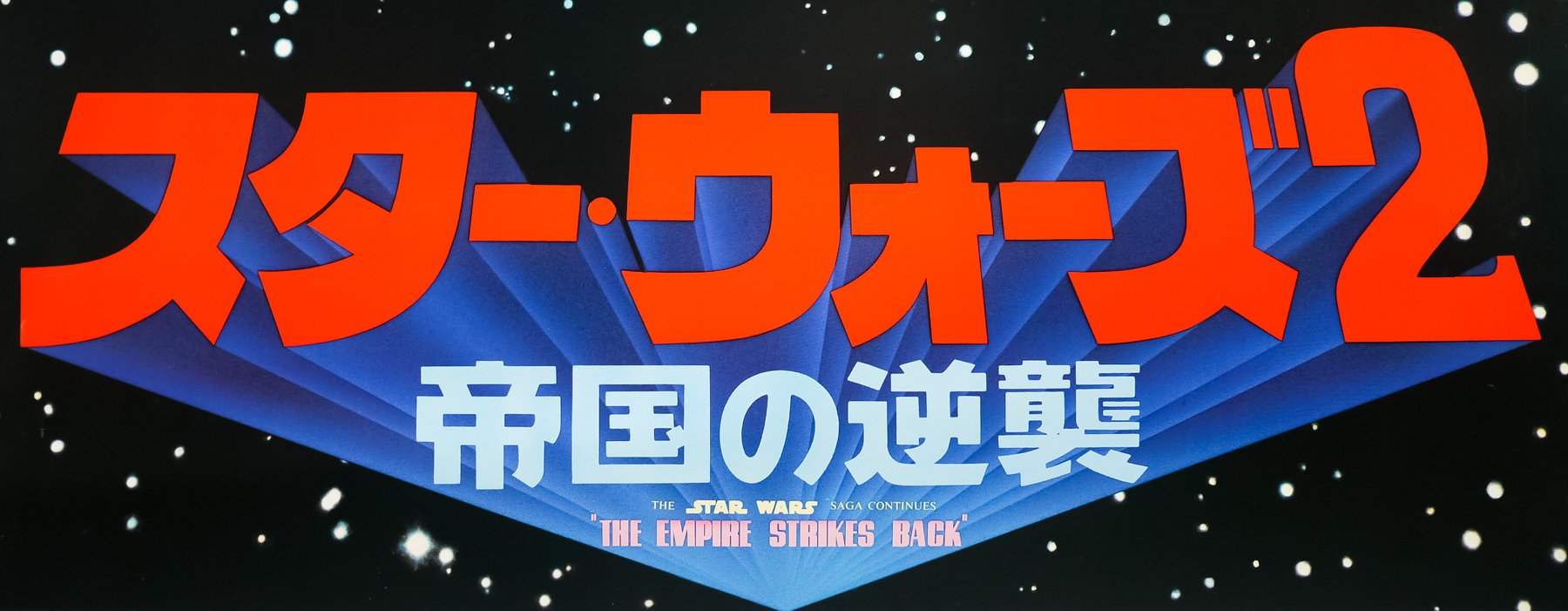
This is the B1 advance poster for the Japanese release of The Empire Strikes Back, which by 1980 was one of the most anticipated sequels in the history of cinema following the continuing international success of George Lucas’ original Star Wars (1977). This image of bad guy Darth Vader’s helmet was also used for the North American advance one sheet and is a photograph of a prop helmet created to be worn by Dave Prowse in the original trilogy. The photo shoot for this poster was apparently done by the respected poster designer and artist Bob Peak, who was responsible for many classic 70s and 80s posters, including Apocalypse Now, The Spy Who Loved Me and Superman.

This image was only used for the B1 size Japanese poster, with a photographic montage being used for the standard B2 whilst Noriyoshi Ohrai was responsible for the artwork on the superb alternative style B2, which was also printed as a B1 size poster.

To see more posters by Bob Peak in the Film on Paper collection click here.


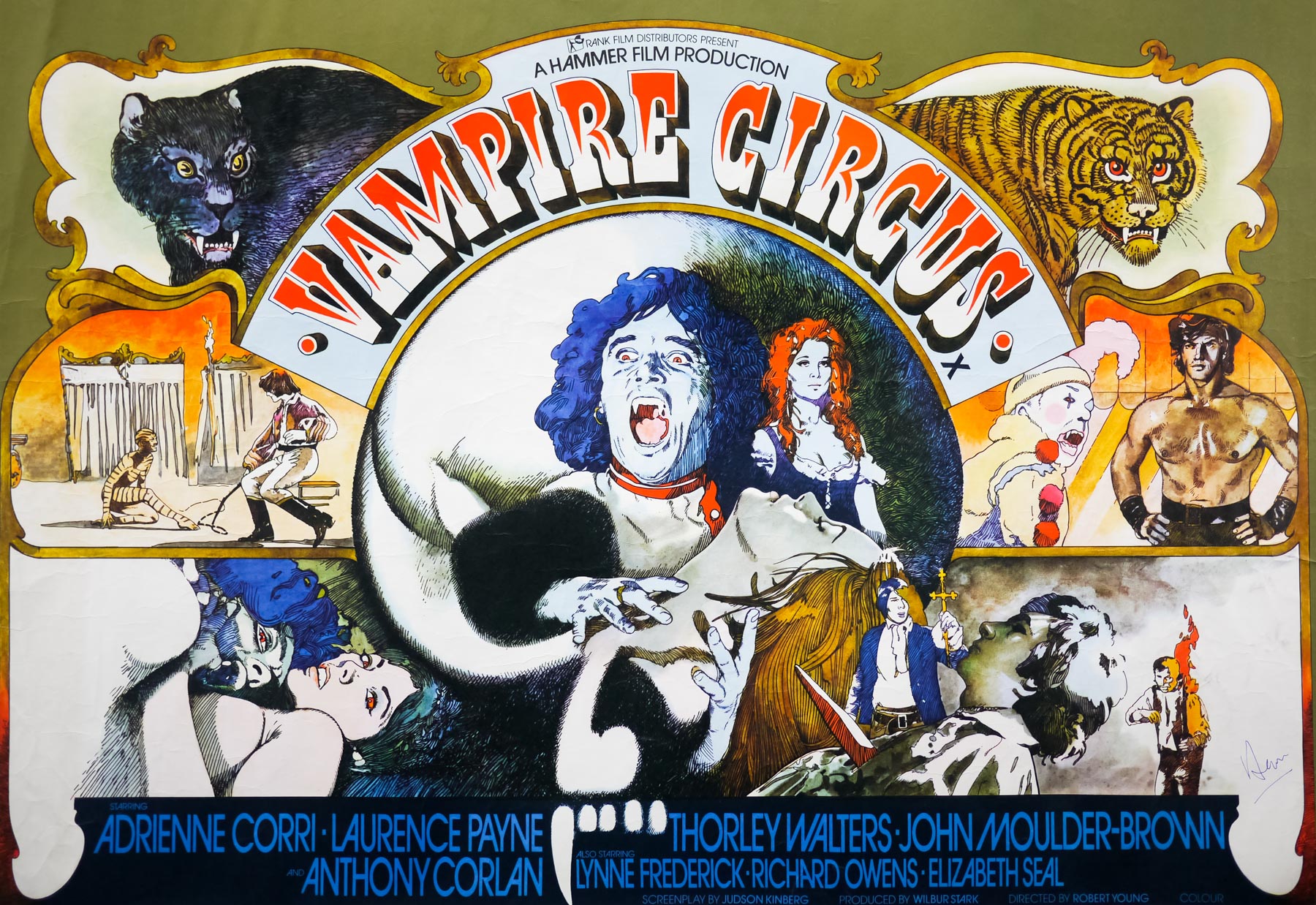
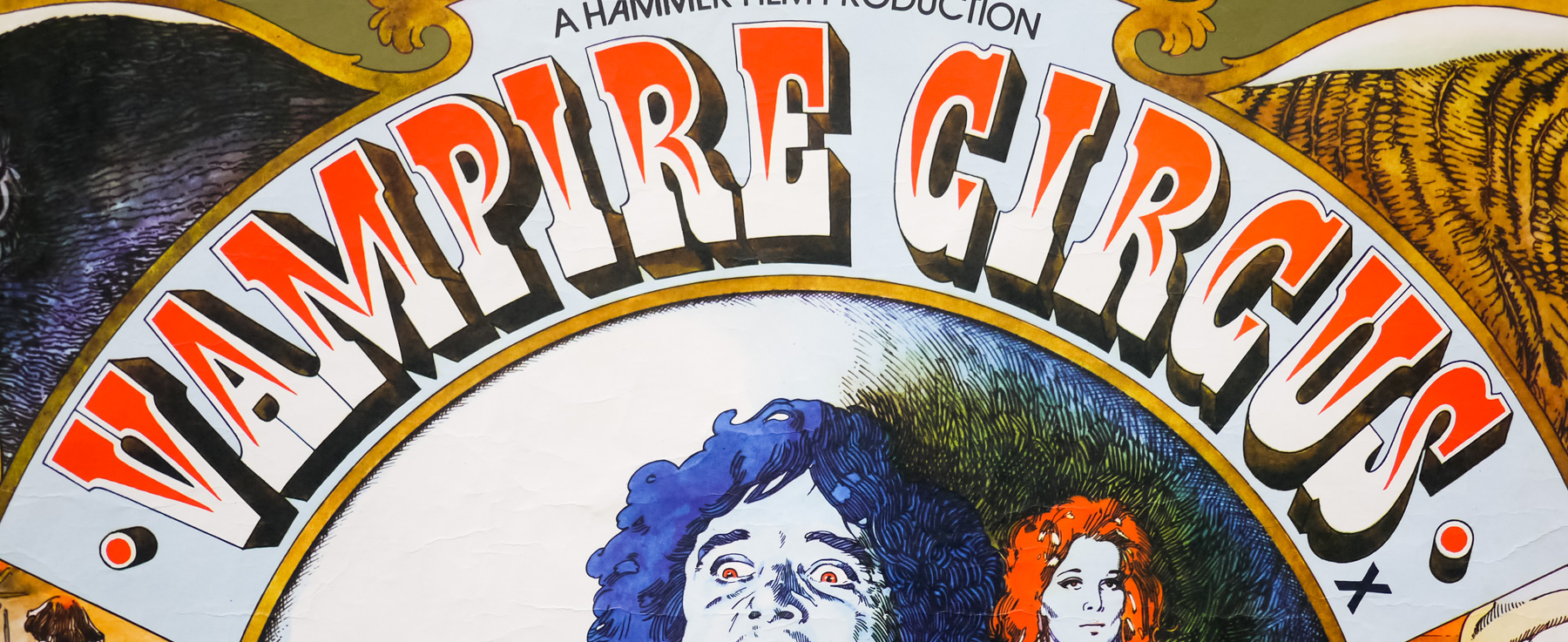
Vampire Circus / quad / UK

06.02.14

Poster Poster

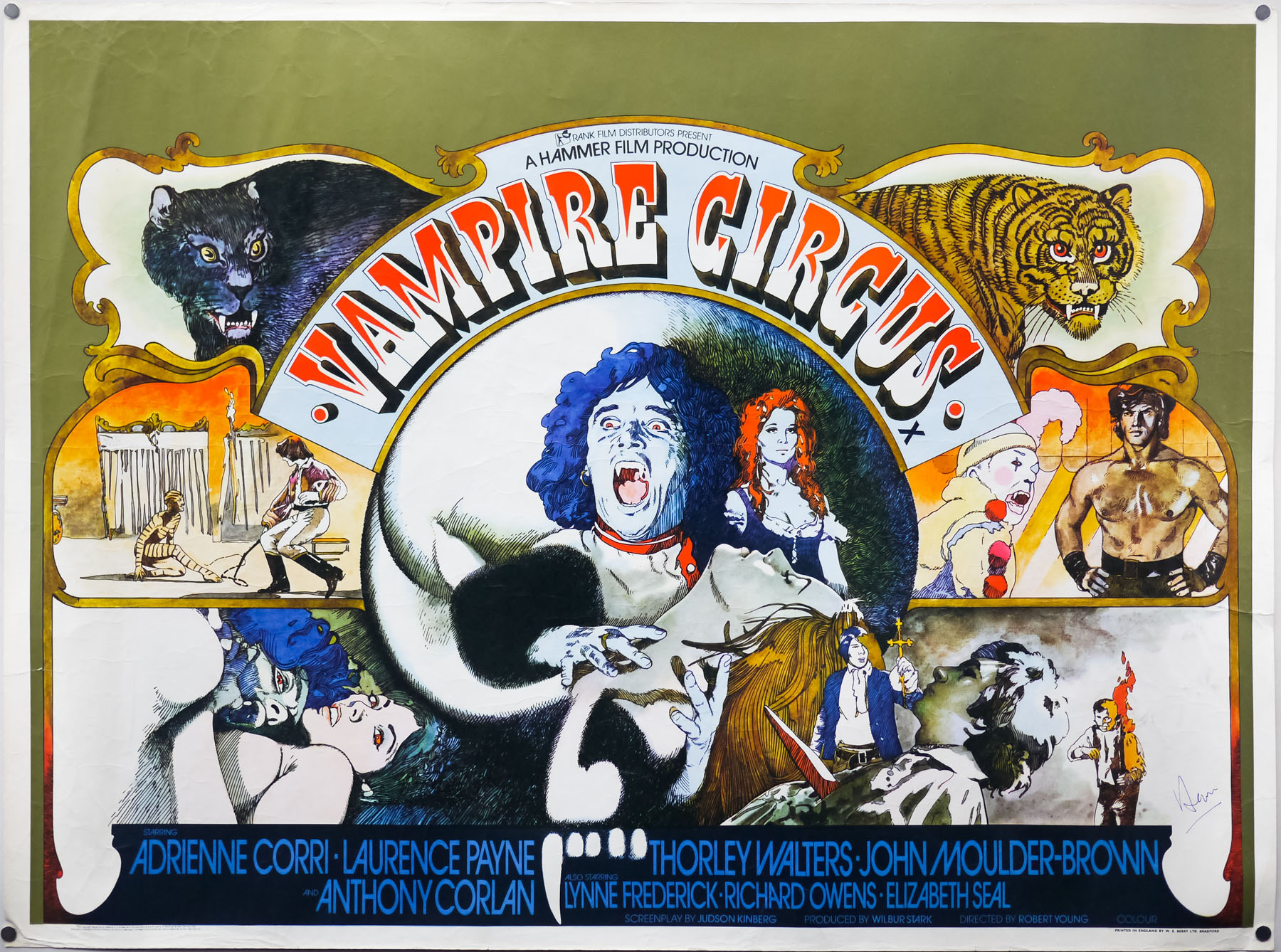
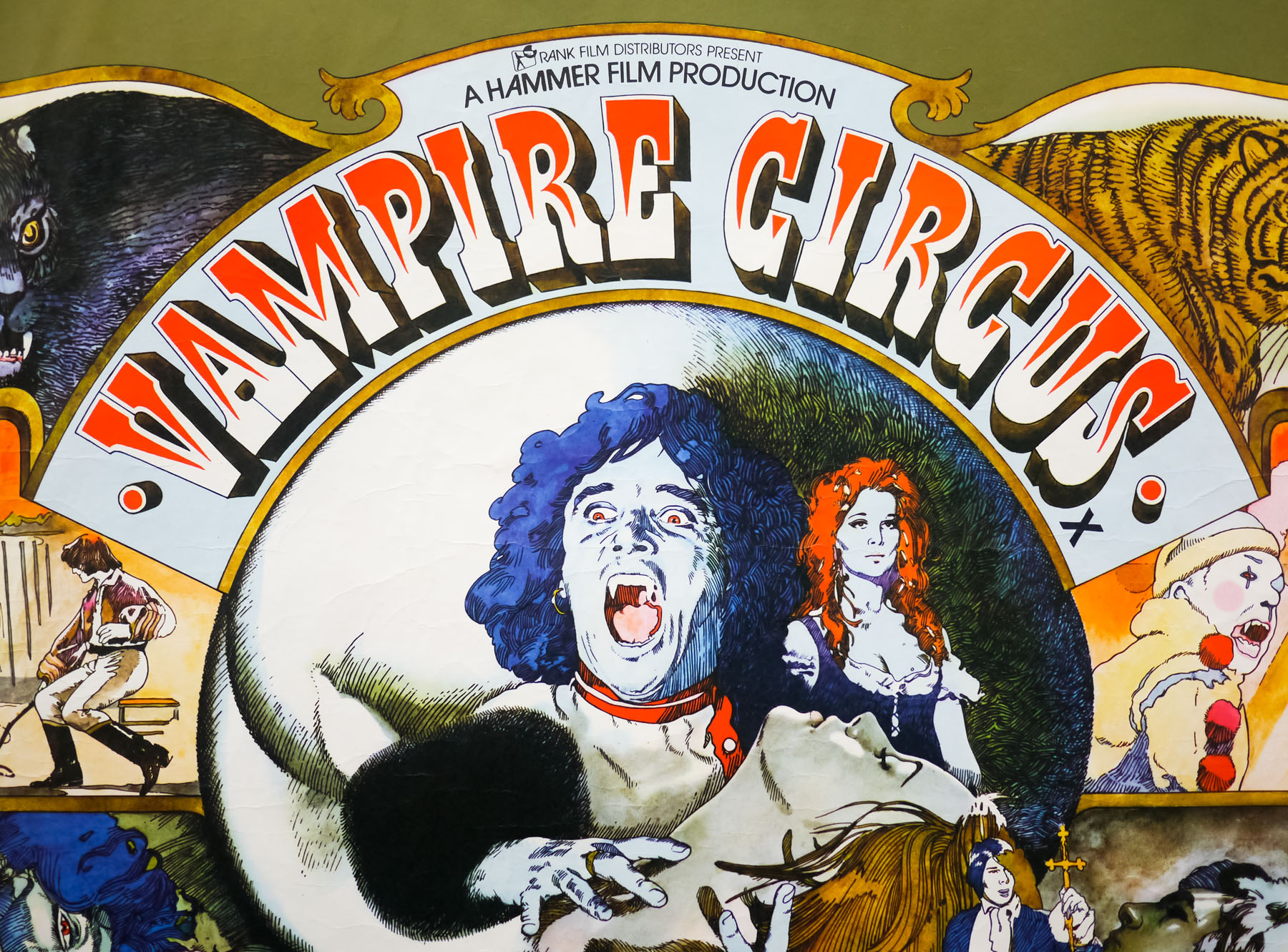
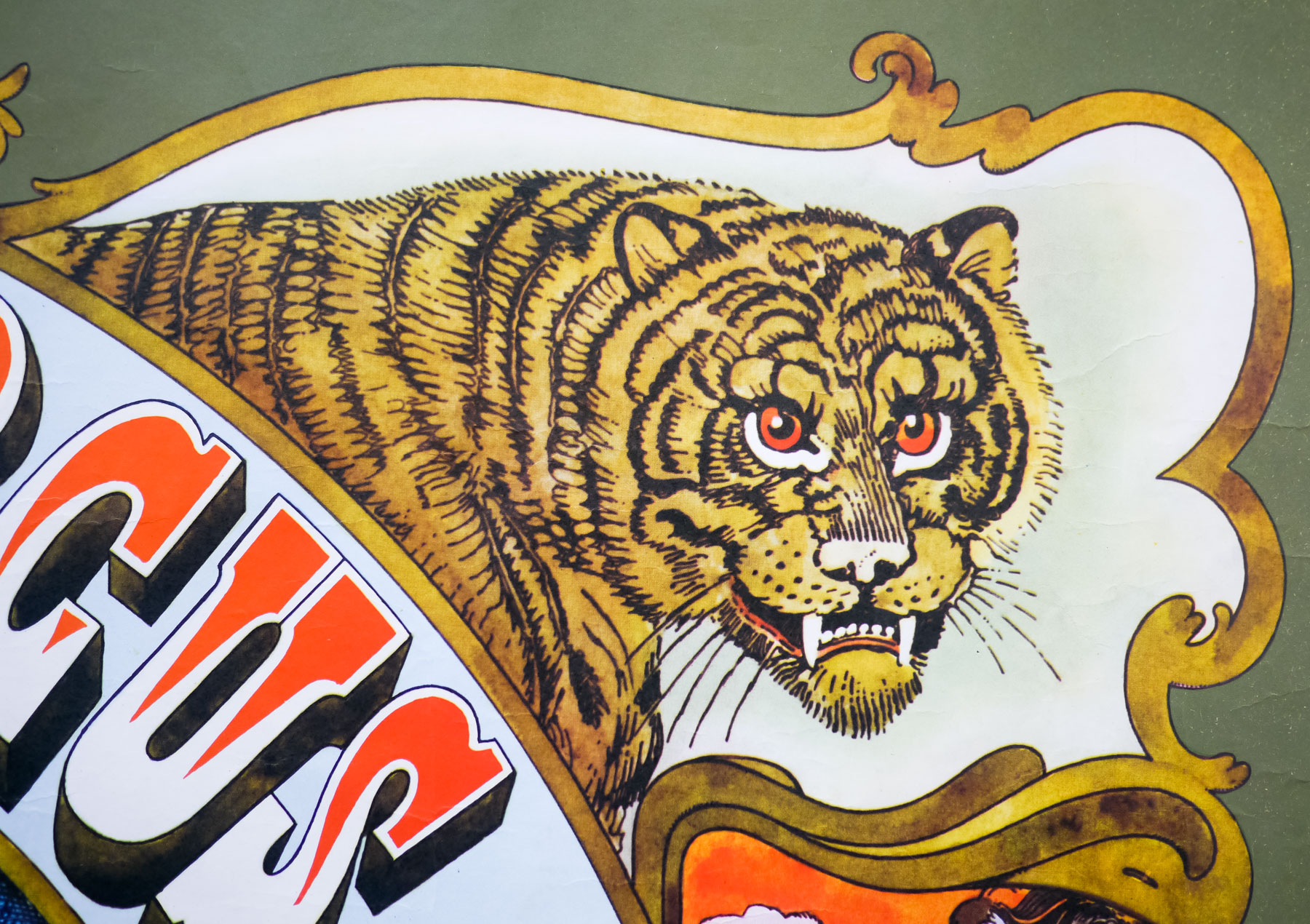
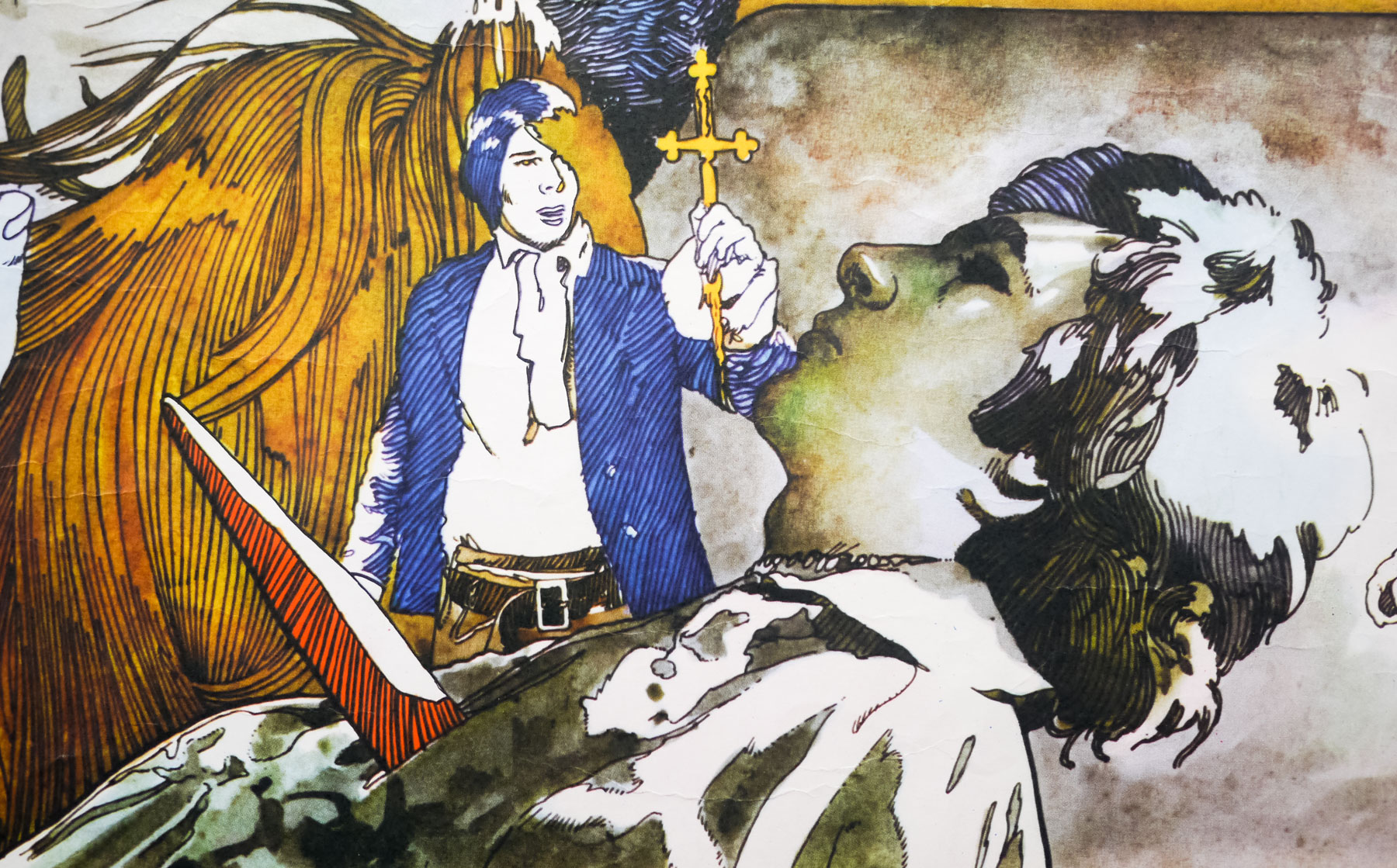
Iconic Vic Fair artwork graces this UK quad for the release of Hammer Films‘ 1972 horror Vampire Circus. Released at a time when the popularity of British gothic horror tales was on the wane, particularly when compared against the more explicit, contemporary horrors coming out of Hollywood (Rosemary’s Baby and later The Exorcist), the film nevertheless managed to stand out from a glut of other films produced by the studio around the same time. A decent script, typically excellent production design and a raft of quality British thespians all help to make Vampire Circus one of the more memorable films to be produced by the House of Horror before its first demise picked up pace a couple of years later

Set in a small village in the studio’s customary ‘mittel-Europe’ sometime in the 19th century, a lengthy pre-credits sequence shows a young girl being led into the castle of vampire Count Mitterhaus by Anna (Domini Blythe), the wife of local schoolmaster Albert Müller (Laurence Payne). Soon after the girl is murdered by the vampire, a group of villagers led by Müller storm the castle, stake the Count and burn the castle to the ground. Anna manages to drag the dying vampire to the crypt beneath the castle and before he perishes he curses the villagers and promises that their children will die to give him back his life. Fast-forward fifteen years, the village is beset by a plague and blockaded by the authorities with the miserable villagers fearing that this is the Count’s doing.

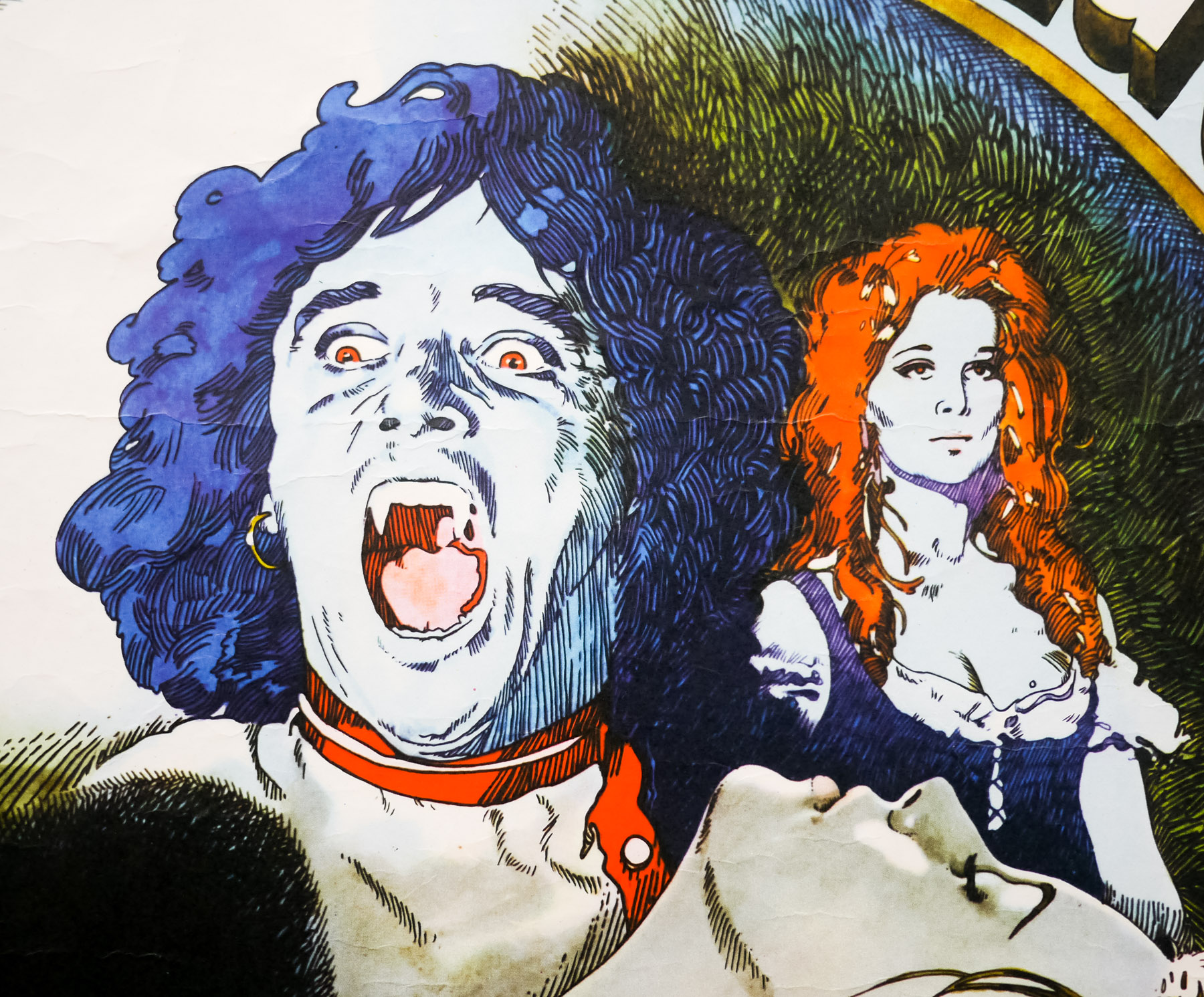
One day the eponymous travelling troupe arrives, having apparently snuck past the blockades, led by a mysterious gypsy woman (Adrienne Corri) and containing a ragtag bunch of performers, including a mischievous clown dwarf, a set of flying twins, an erotic tiger dancer (as depicted on this poster) and Emil, a shape-shifting artiste. At first the villagers are happy to be entertained by the circus as it gives them a reprieve from their misery, but it soon becomes clear that the gang have an ulterior motive for being there. Before long the Count’s dying promise is being kept by Emil, who it turns out is a ‘kinsman’ of Mitterhaus, and the leaders of the village must battle to try to stop the murder of their children and the resurrection of the cursed Count. It’s a well-paced film and certainly a stand-out feature in Hammer’s output of the early 1970s, only let down by some dodgy special effects, which can be explained by a curtailed production period and the dwindling budgets of the time.

During my interview with Vic Fair that was published at the end of 2013 I asked the artist about his work on the poster and this is an excerpt from that article (which also features an image of the original sketch created for the poster):

‘I enjoyed working on the quad I designed for Vampire Circus. I’d wanted to design something that might have been used to advertise an actual circus. The animals on there were pretty much copied directly from a children’s book, as I really didn’t have that much time to work on it. I thought they looked quite amusing, since they’re not exactly anatomically correct portraits of tigers and lions! I also had fun sneaking in the hidden male members, which was really just meant as a bit of a tease towards certain people behind the scenes. I can’t believe I got away with it really.’

To see the other posters I’ve collected that were designed by Vic click here.

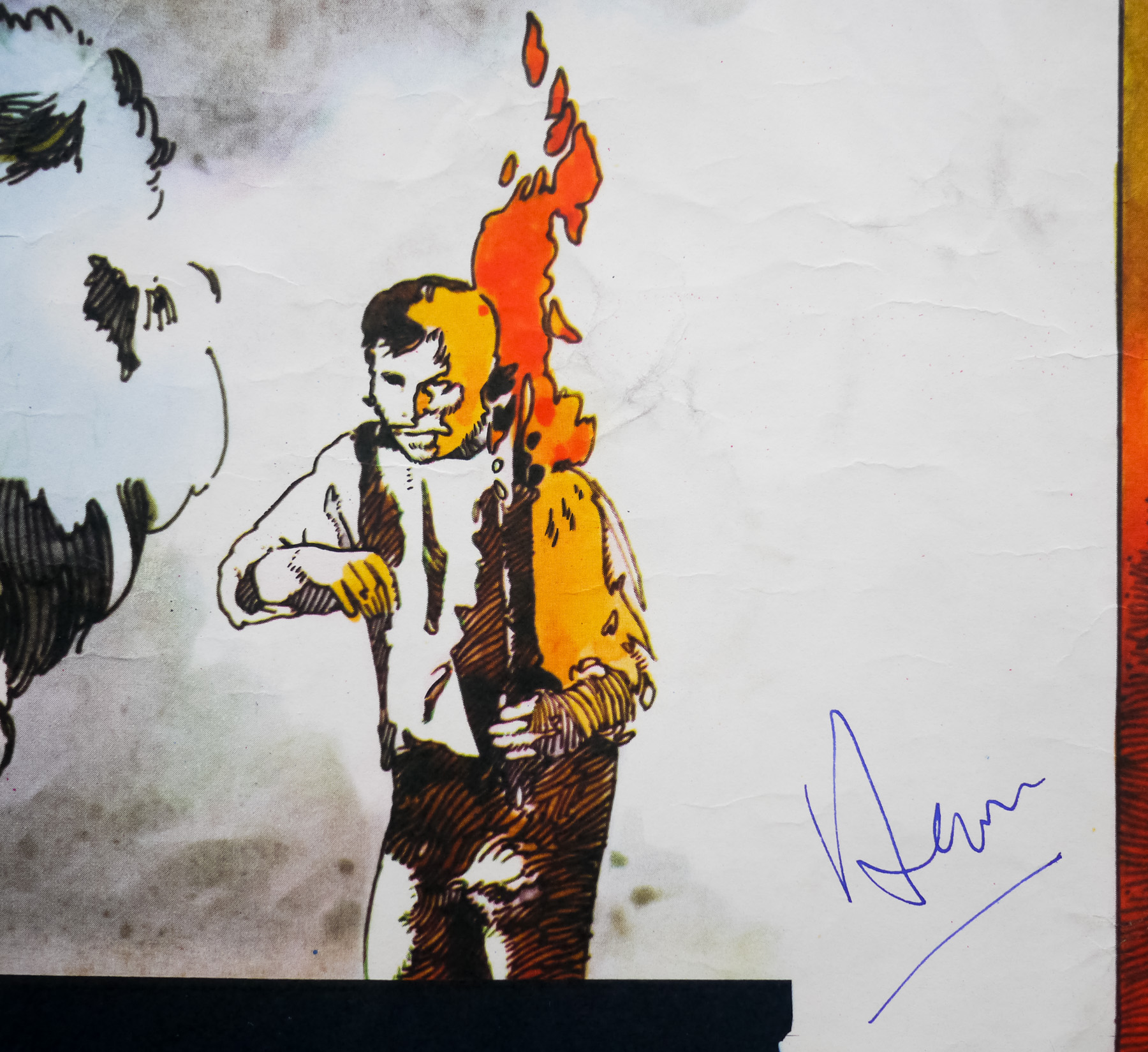
Note that this copy came from Vic’s personal archive and it is signed in the bottom right-hand corner.

The Empire Strikes Back / B1 / Ohrai style / Japan

21.03.14

Poster Poster
Title
The Empire Strikes Back
AKA
--
Year of Film
1980
Director
Irvin Kershner
Starring
Mark Hamill, Harrison Ford, Carrie Fisher, Billy Dee Williams, Anthony Daniels, David Prowse, Peter Mayhew, Kenny Baker, Frank Oz
Origin of Film
USA
Genre(s) of Film
Mark Hamill, Harrison Ford, Carrie Fisher, Billy Dee Williams, Anthony Daniels, David Prowse, Peter Mayhew, Kenny Baker, Frank Oz,
Type of Poster
B1
Style of Poster
Ohrai
Origin of Poster
Japan
Year of Poster
1980
Designer
Unknown
Artist
Noriyoshi Ohrai
Size (inches)
28 11/16" x 40 7/16"
SS or DS
SS
Tagline
--

This is the artwork style Japanese poster for the release of George Lucas’ sci-fi classic The Empire Strikes Back, which features a fantastic illustration by the Japanese artist Noriyoshi Ohrai which, in my opinion, is the best artwork for the best film in the six film saga. I’d have a hard time choosing between this and Tom Chantrell’s classic design for the greatest overall Star Wars poster artwork.

As well as this Japanese B1, the artwork featured on a Japanese B2 as well as several other international posters, including an Australian one sheet. Sadly it was not to be used for the US or UK campaigns. In 2010, for the ESB 30th anniversary, Lucasfilm released a limited edition one sheet of the poster taken from the original artwork transparency – see this article for more info.
Noriyoshi Ohrai is my favourite Japanese artist and certainly in my top five greatest film poster illustrators of all time. He’s responsible for a number of other Star Wars related posters, including this lovely 1982 B2 to celebrate the release of the Japanese dubbed version of the original film. He is also know for a series of Godzilla posters, some of which can be seen here. In March 2014 a retrospective exhibition was held in Japan of Ohrai’s work and I made the trip over to Miyazaki to see the exhibition and I’m very glad I did as it featured most of his original artwork and a whole array of posters and book covers. A full report will follow soon.
The posters I’ve managed to collect by him can be seen by clicking here.

Return of the Jedi / B1 / Vader style / Poland

22.04.14

Poster Poster
Title
Return of the Jedi
AKA
Revenge of the Jedi (pre-release title) | Star Wars Episode VI: Return of the Jedi (full title) | Blue Harvest (USA - fake working title)
Year of Film
1983
Director
Richard Marquand
Starring
Mark Hamill, Harrison Ford, Carrie Fisher, Billy Dee Williams, Anthony Daniels, Kenny Baker, Peter Mayhew, David Prowse, Ian McDiarmid
Origin of Film
USA
Genre(s) of Film
Mark Hamill, Harrison Ford, Carrie Fisher, Billy Dee Williams, Anthony Daniels, Kenny Baker, Peter Mayhew, David Prowse, Ian McDiarmid,
Type of Poster
B1
Style of Poster
Vader
Origin of Poster
Poland
Year of Poster
1984
Designer
Witold Dybowski
Artist
Witold Dybowski
Size (inches)
26 6/16" x 38 4/16"
SS or DS
SS
Tagline
--

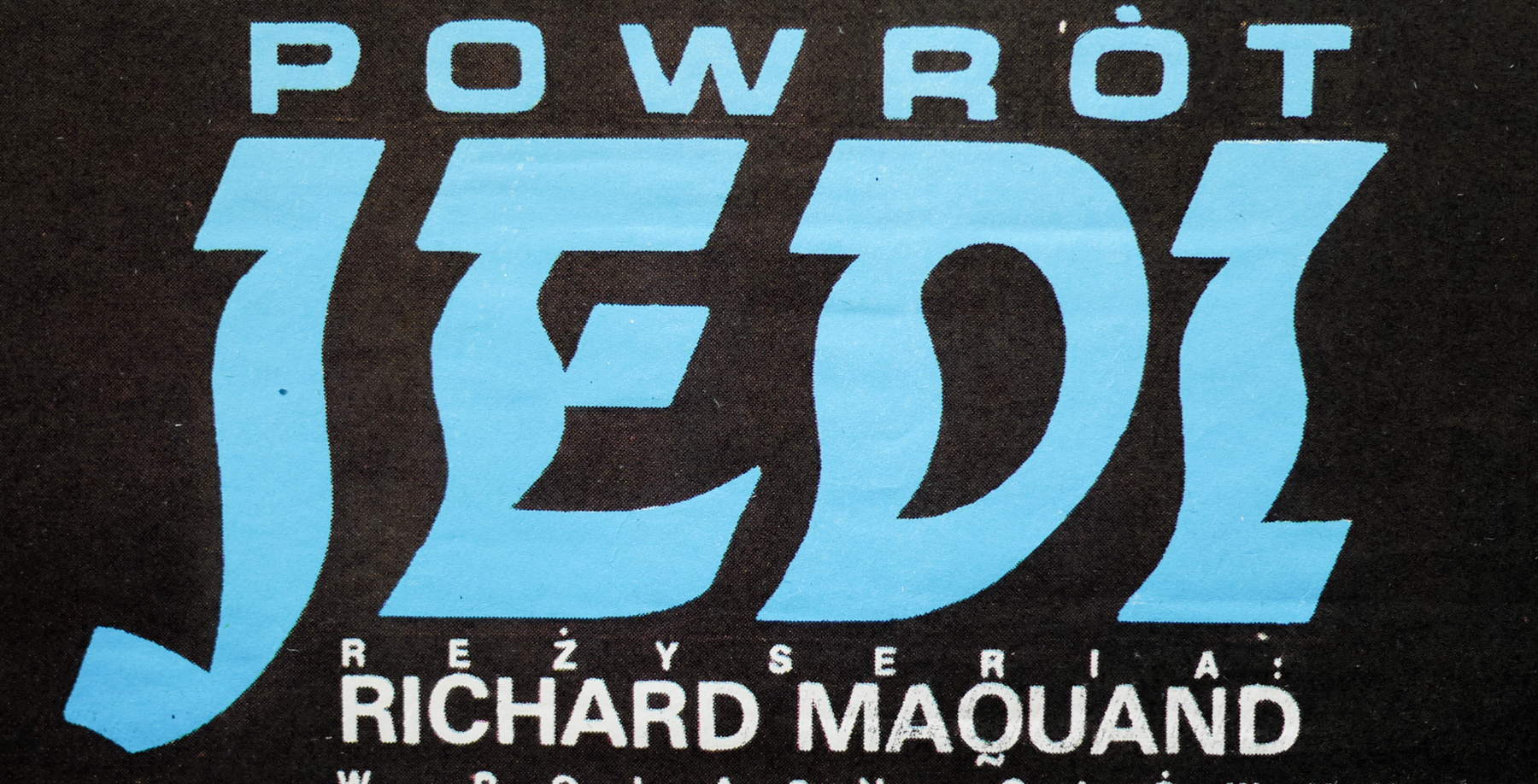
This is one of two posters printed for the original Polish release of Return of the Jedi in 1984. Although ROTJ, the third in the original trilogy of Star Wars films, was often maligned by fans who complained it was a weak end to the series and derided for featuring the child-friendly Ewoks, all was forgiven with the release of the 1999’s The Phantom Menace and its ‘galactic trade disputes’ and the risible Jar-Jar Binks. Now, although certainly not as highly acclaimed as the original 1977 film or the classic The Empire Strikes Back, ROTJ is still beloved by fans of the series. In 2015, director JJ Abrams will release Episode VII into cinemas, mooted as a direct sequel to this film and much anticipated by fans worldwide. JJ is seen as a much safer pair of hands than George Lucas after his shepherding of a well-received reboot of the Star Trek franchise.

Even if the Ewoks are loved and hated in equal measure, ROTJ still features many memorable, fan favourite characters, locations and scenes, including the attempted rescue of Han Solo from Jabba the Hut’s palace leading to a memorable showdown above a Sarlacc pit monster (which features the ignominious exit of fan favourite Boba Fett). Later the film sees the passing of Yoda along with more revelations about the Skywalker family, and an excellent scene that sees Luke Skywalker confront the evil Emperor Palpatine with Vader standing by. Meanwhile, the Ewoks (essentially child-sized teddy bears) join forces to defeat the ground forces of the Empire on the surface of the planet Endor.

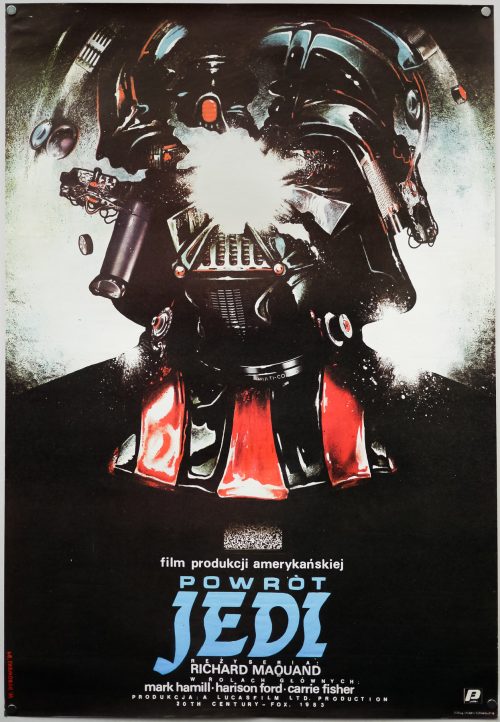
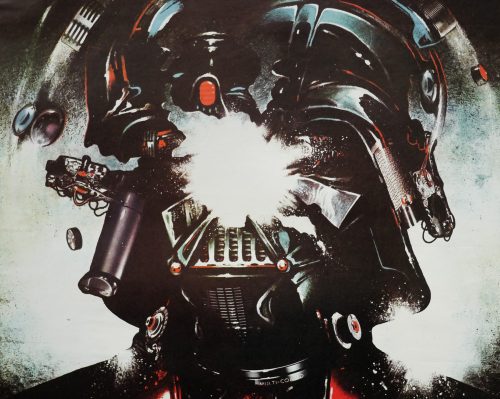
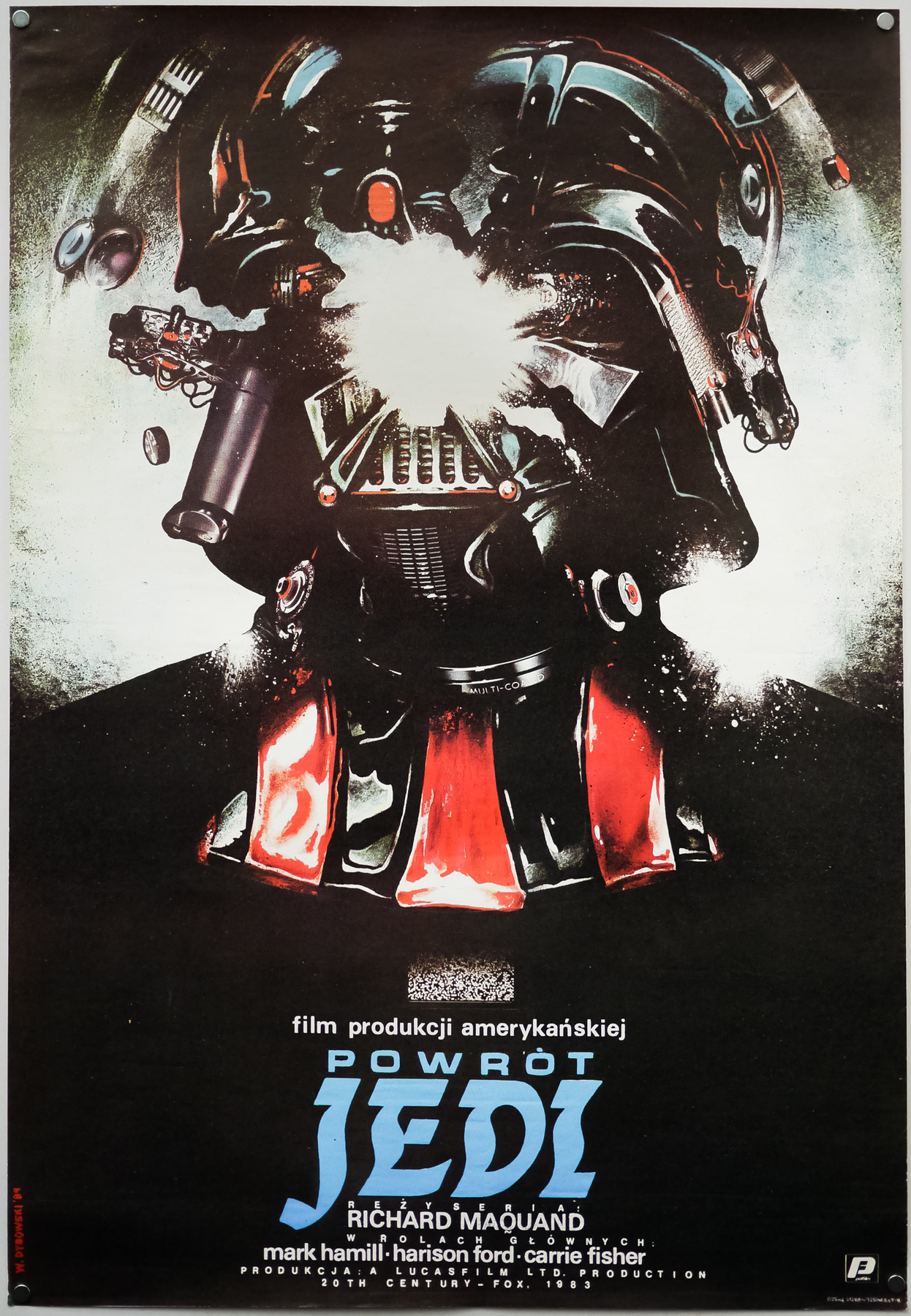
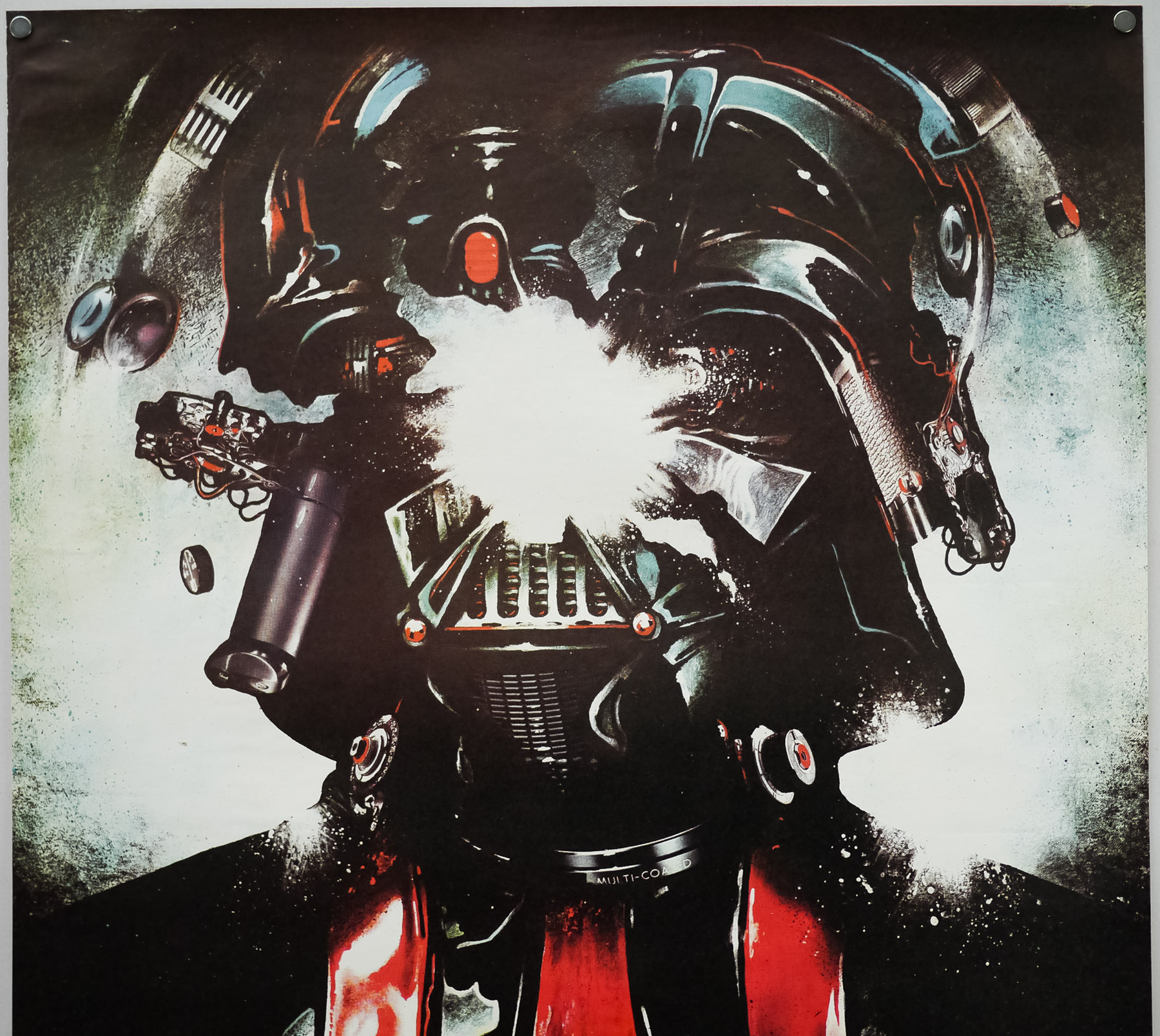
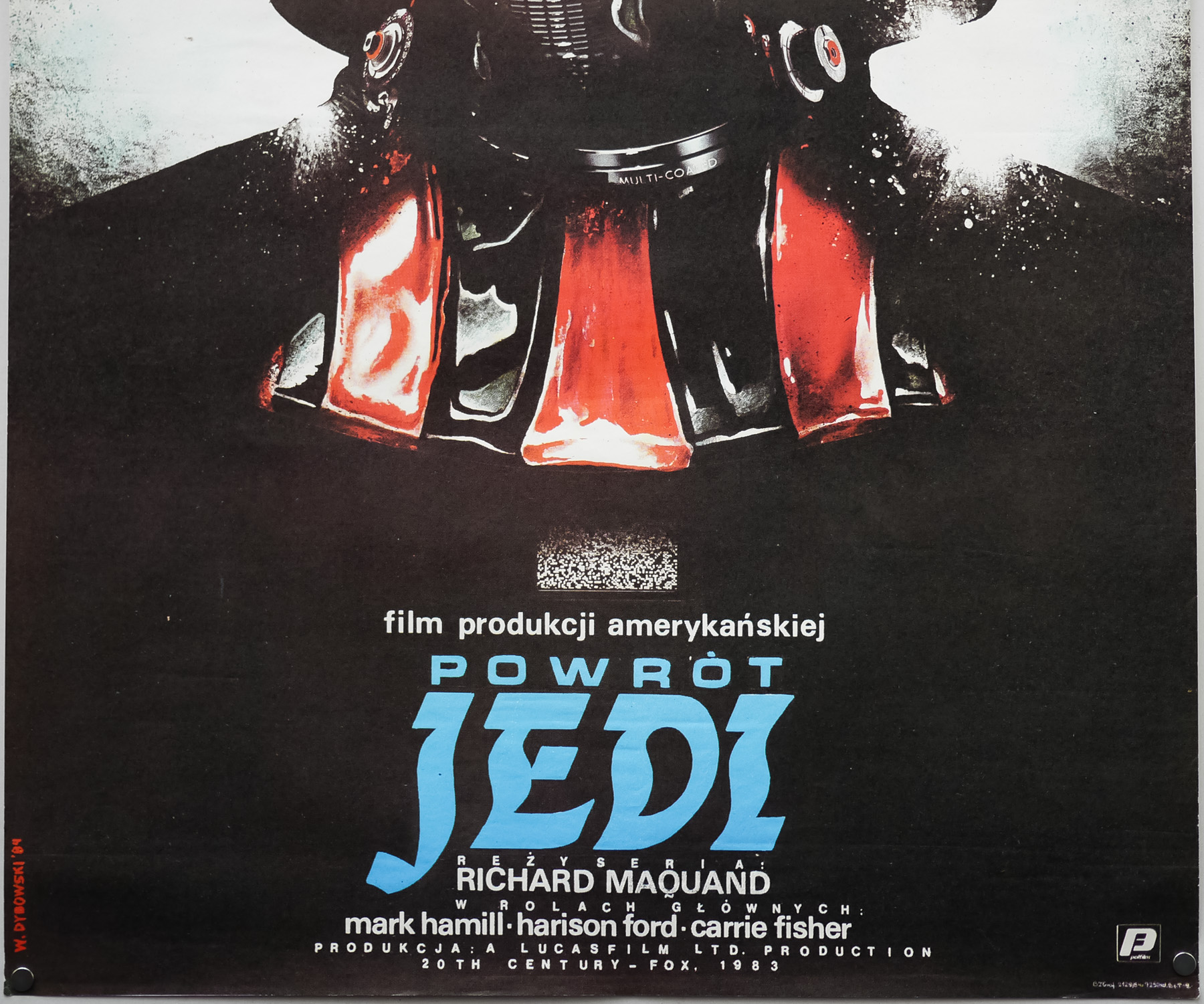
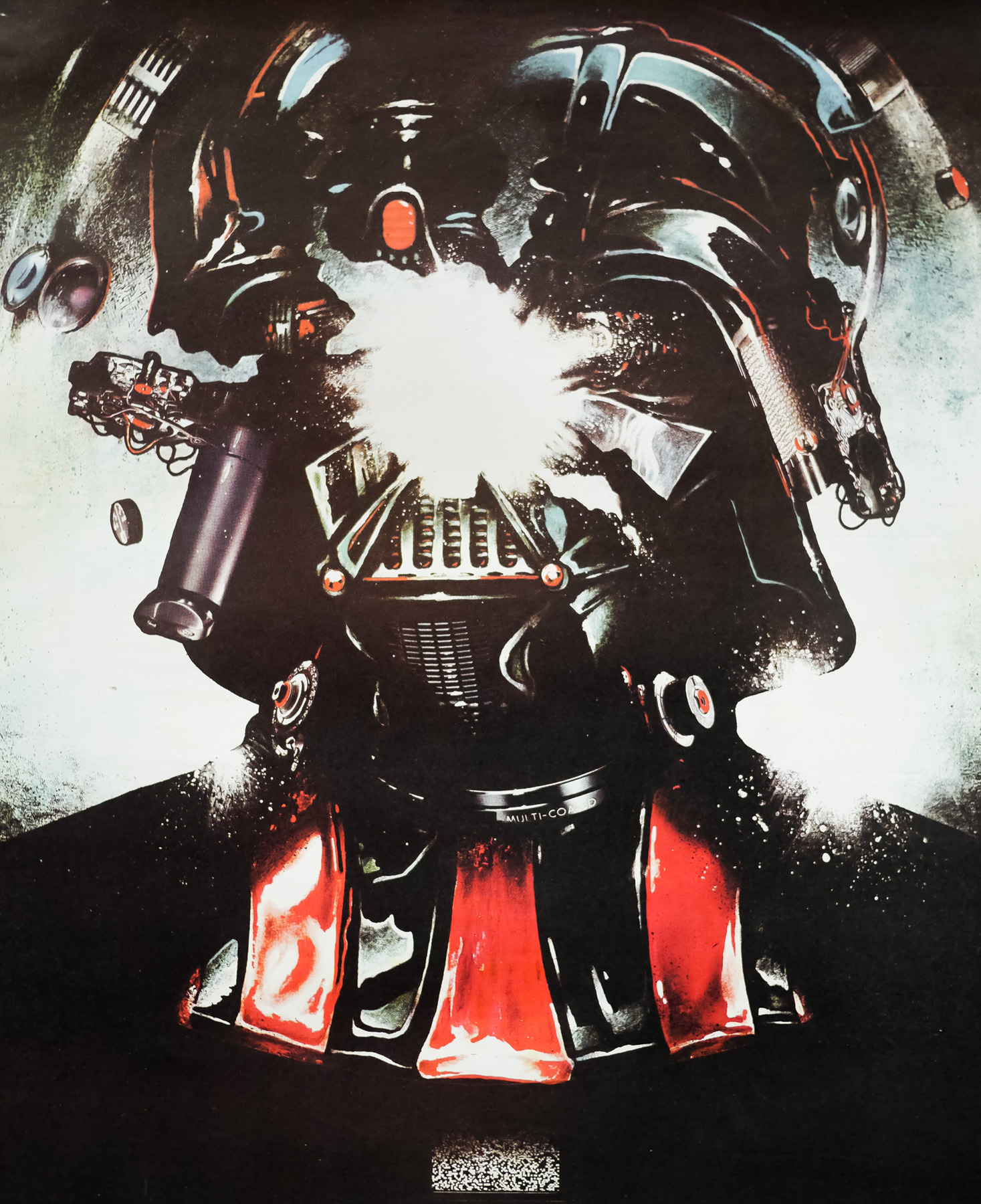
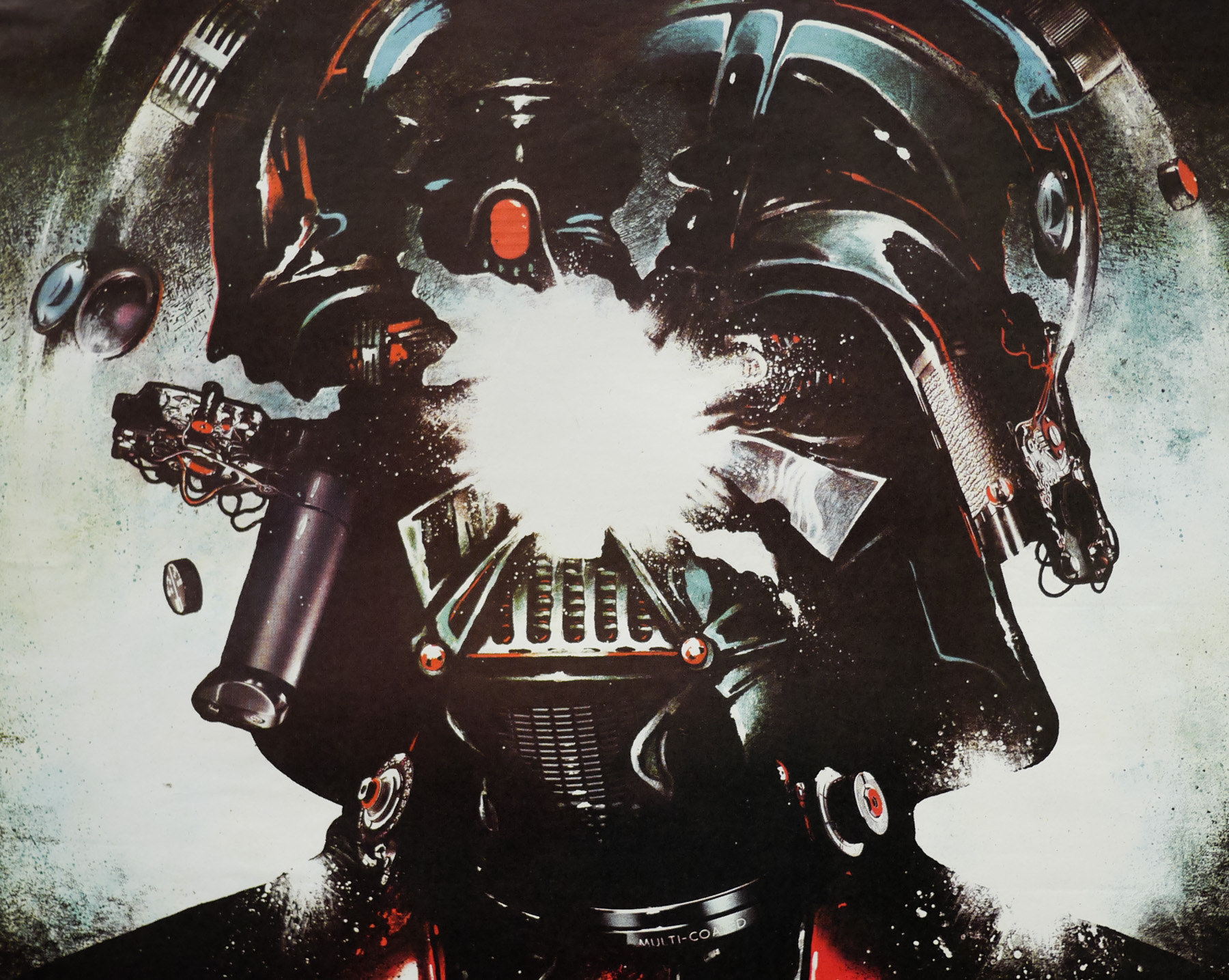
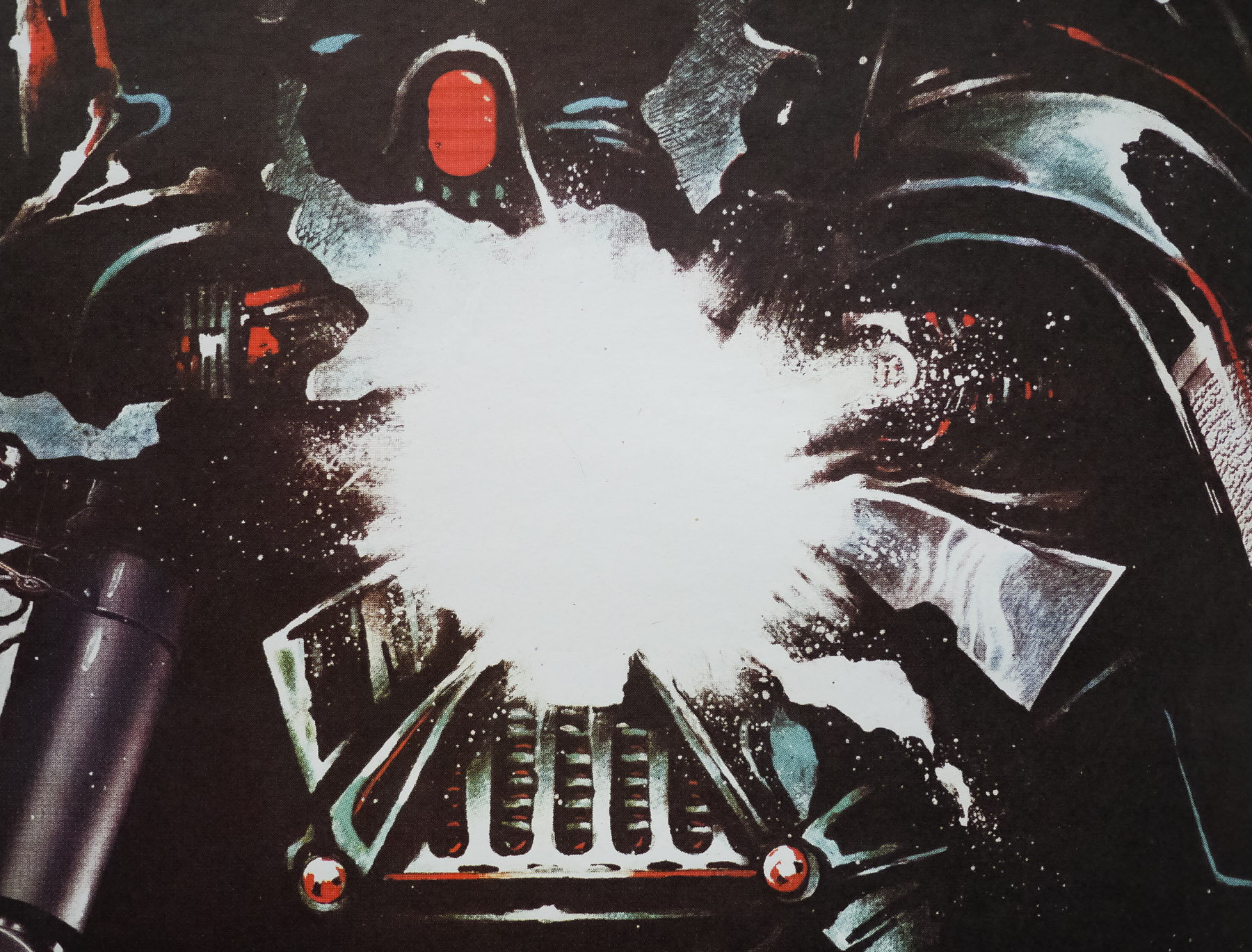
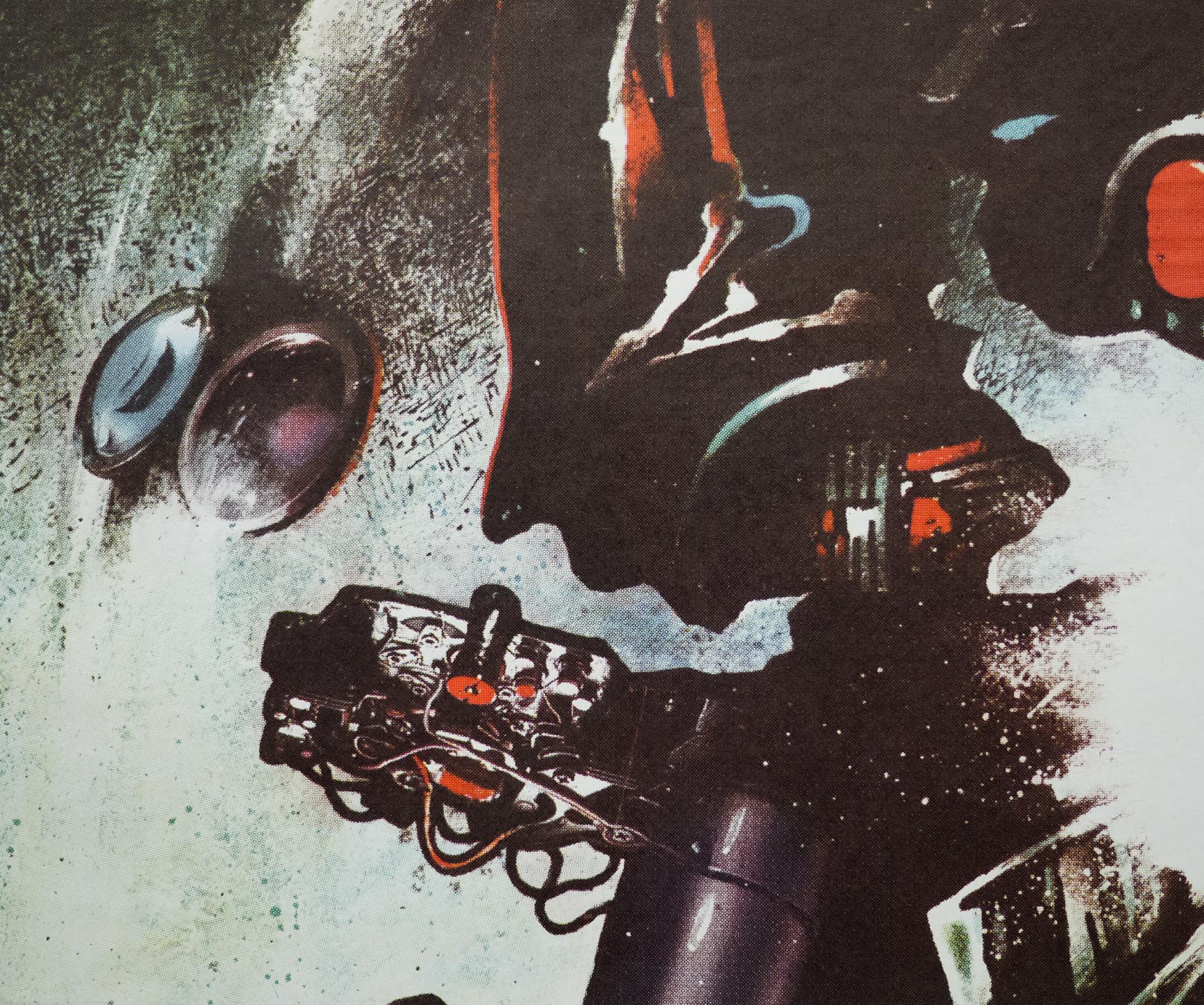
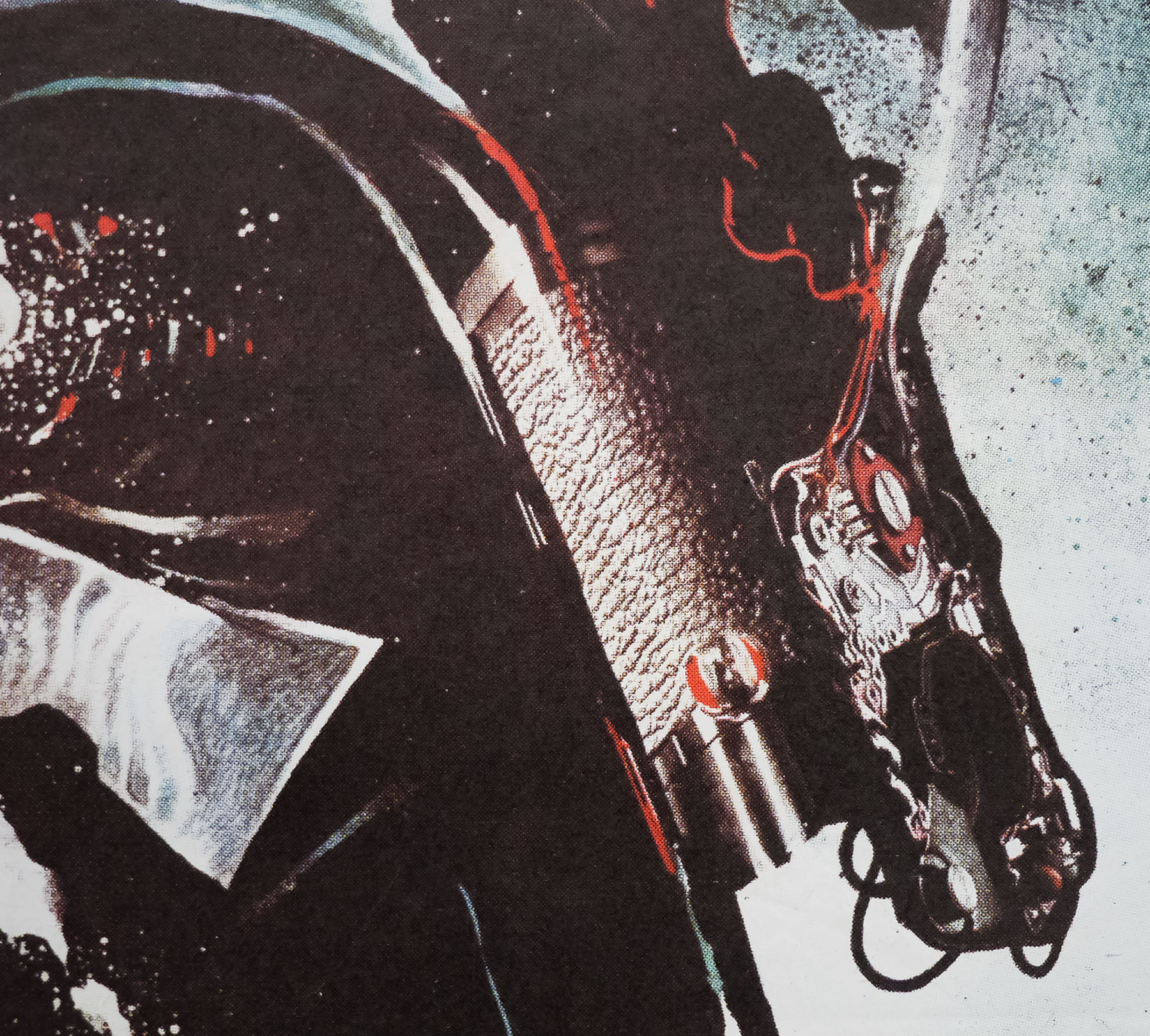
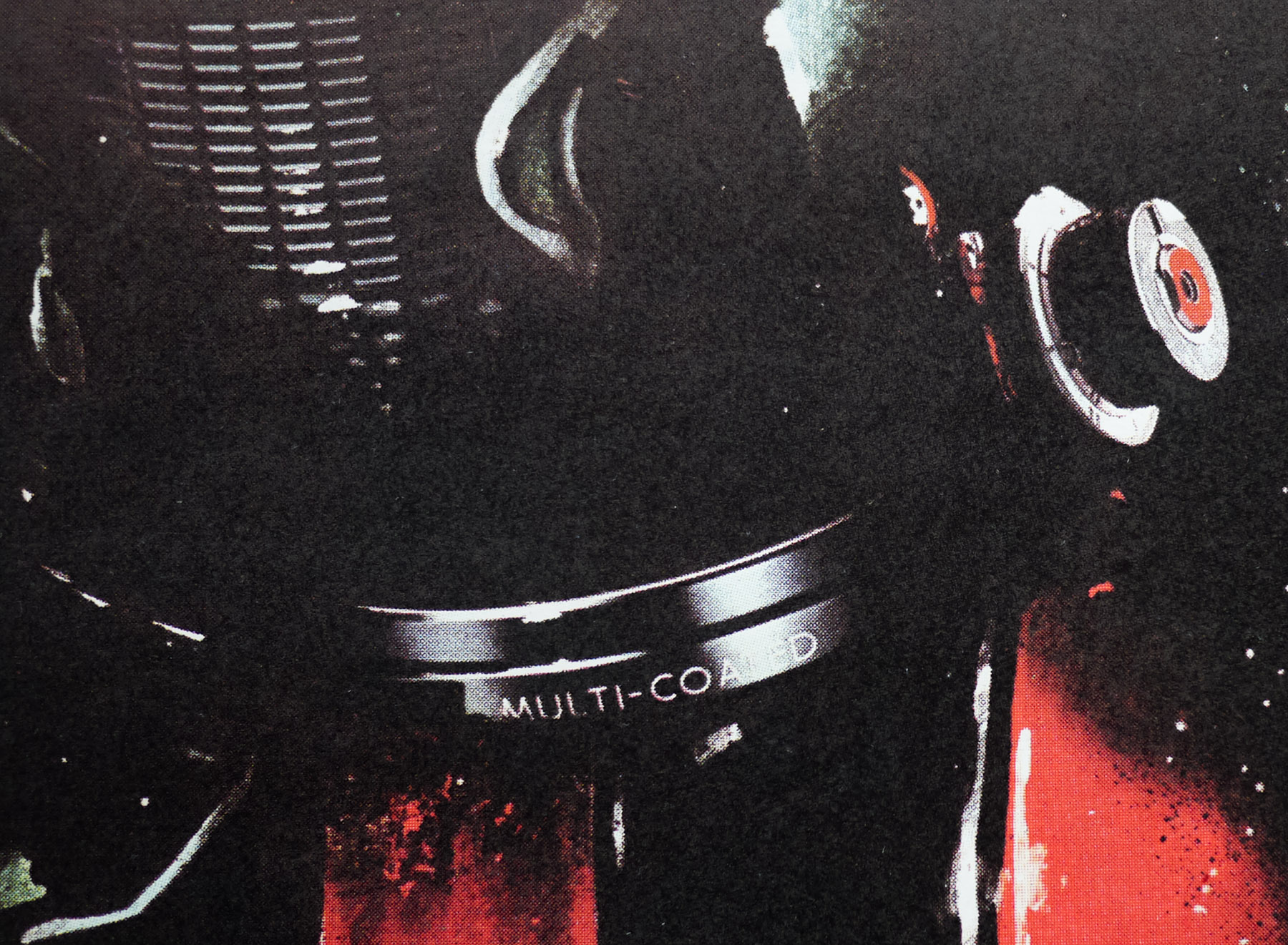
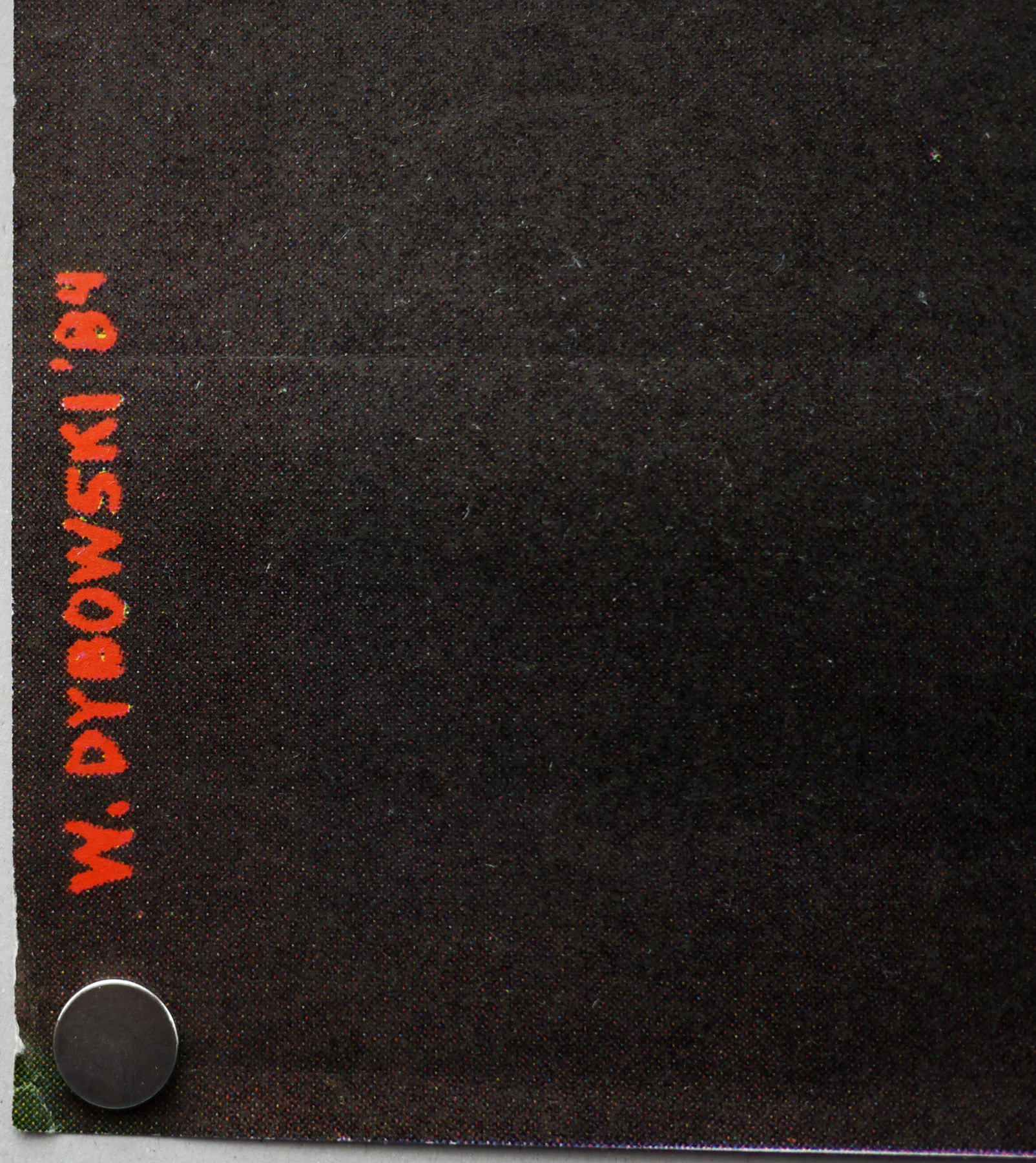
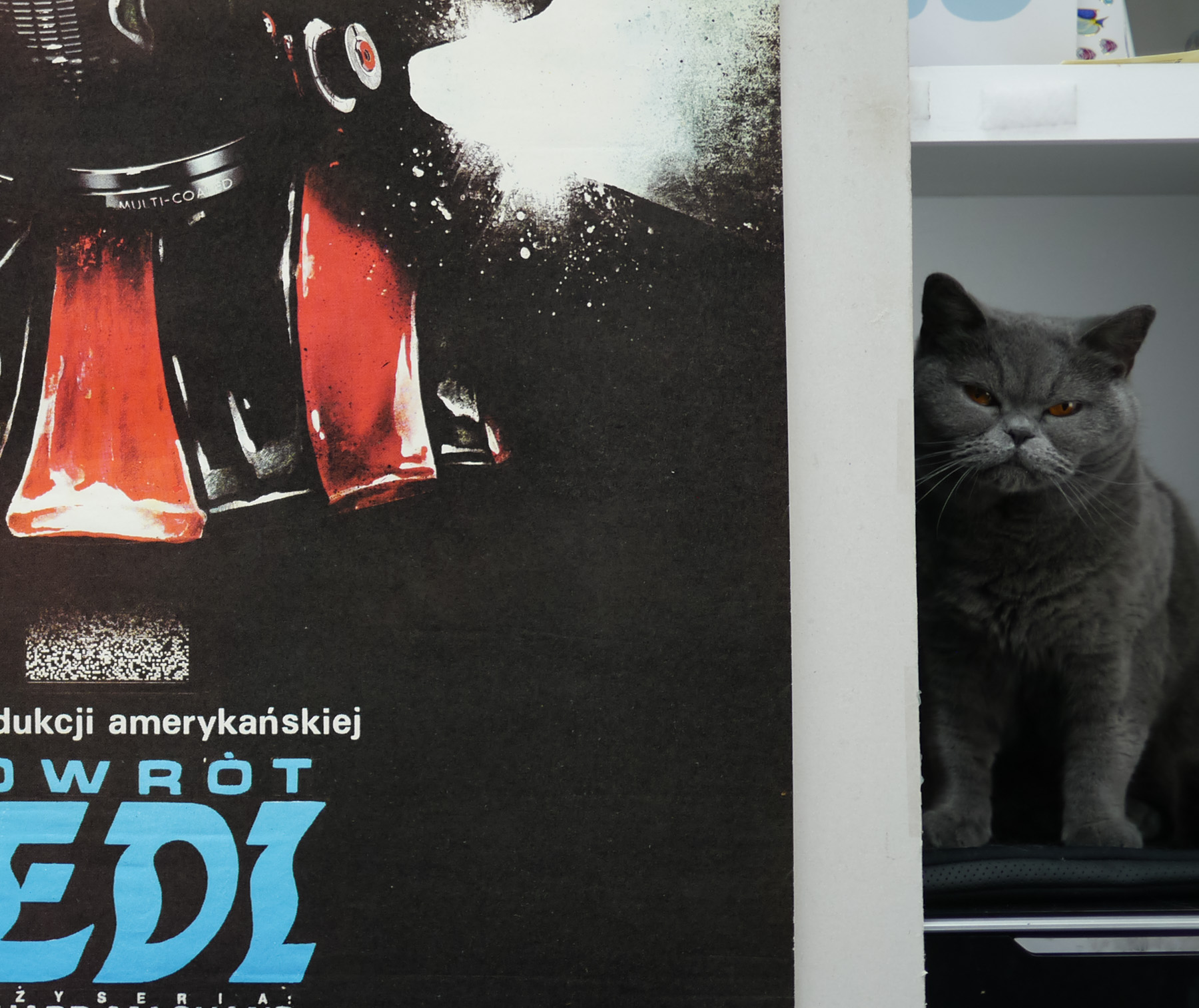
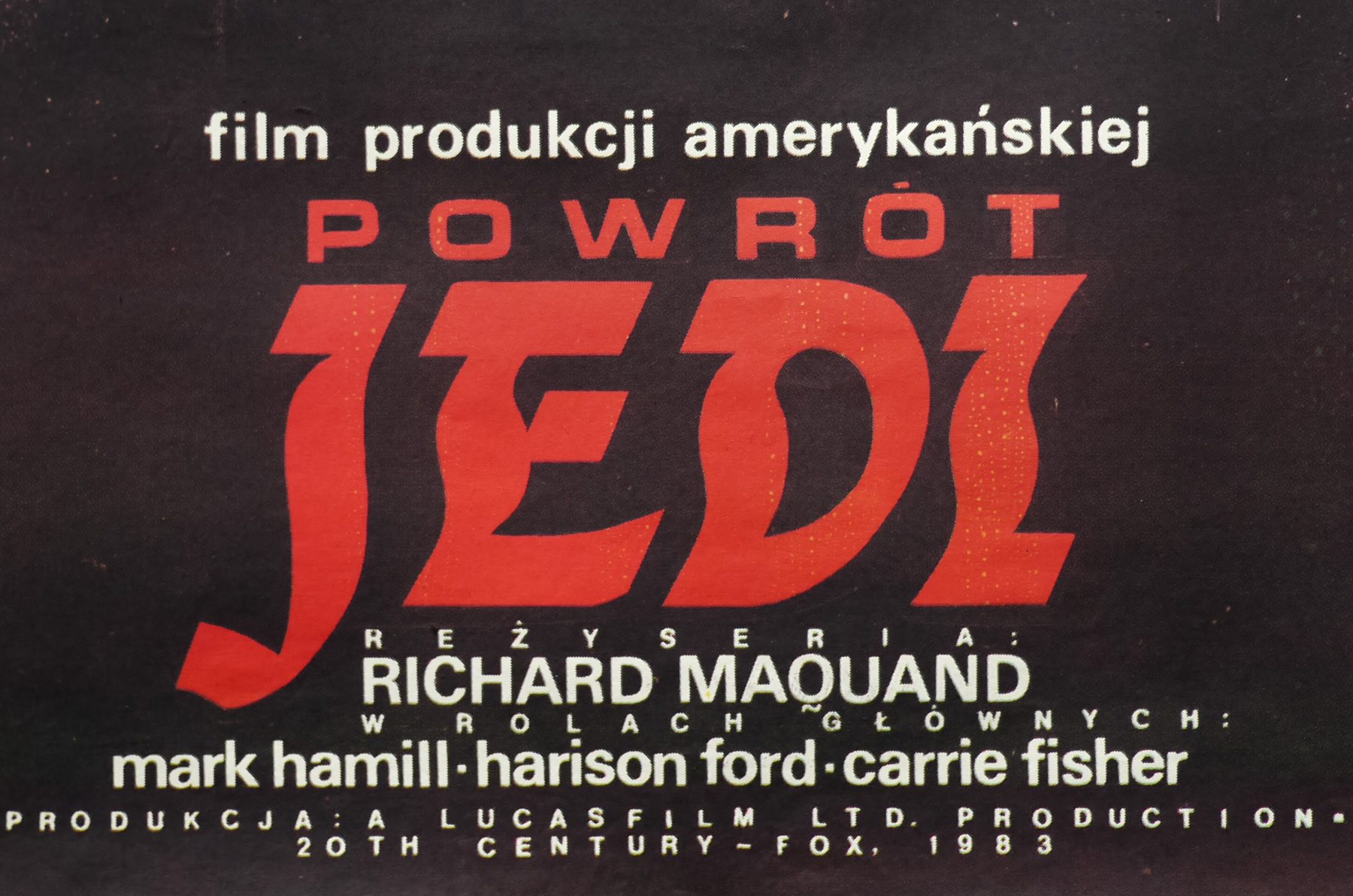
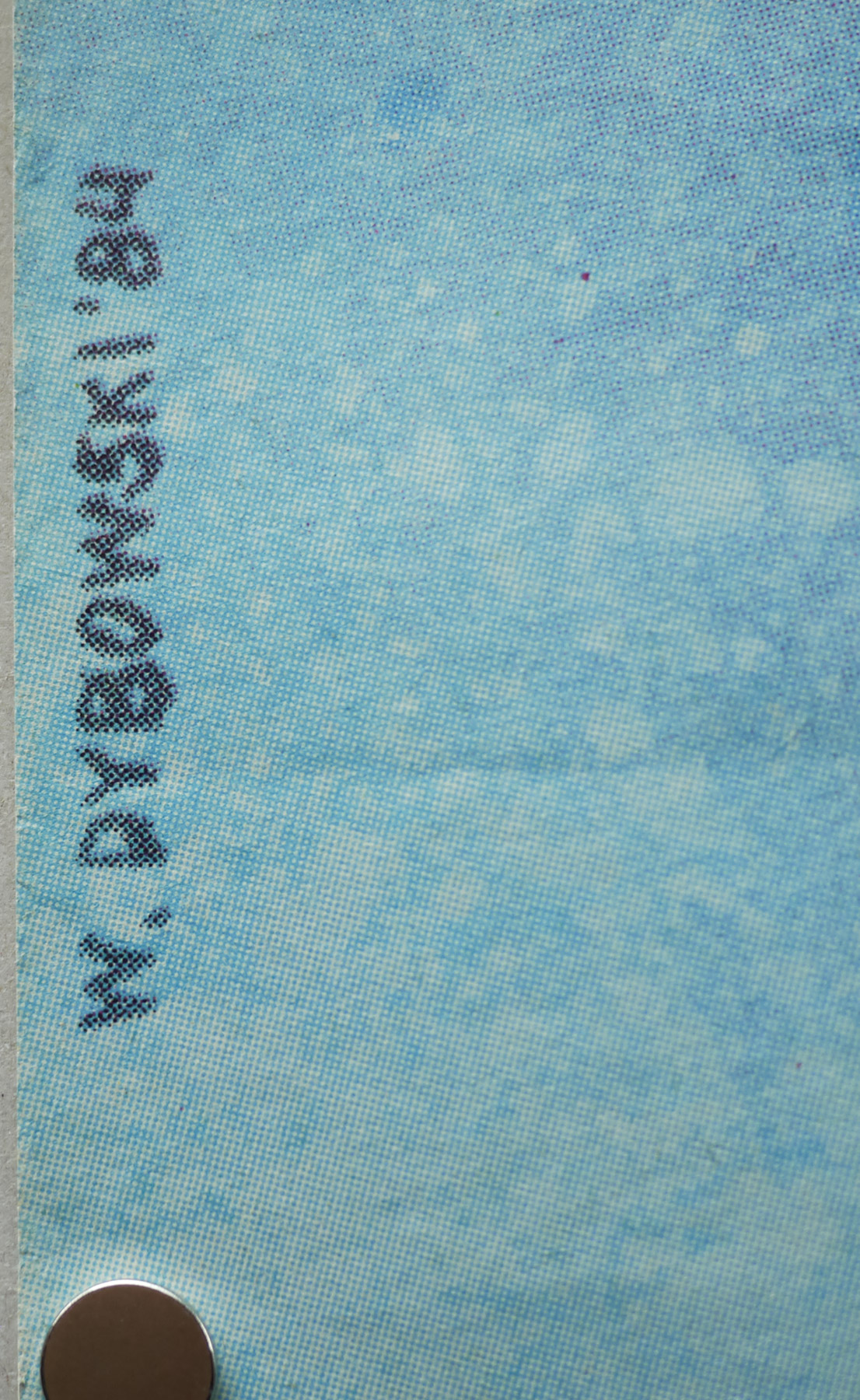
This poster, depicting the exploding head of Darth Vader (featuring real-life camera parts), was designed and illustrated by Witold Dybowski who, according to the short biography on his official website, was born in Sopot, Poland and went on to study at the College of Design in Gdansk. After graduating he worked as a graphic designer, illustrator, art director and creative director in Poland, Germany and Austria. During the 1980s he worked on a number of Polish film posters advertising both native and Hollywood productions, which include this and one other poster for Return of the Jedi (to be added to Film on Paper later this year), Indiana Jones and the Temple of Doom and the ‘bubbles’ style poster for Aliens. Since 2010 he has been working as a freelance photographer and his official site features galleries of his work.

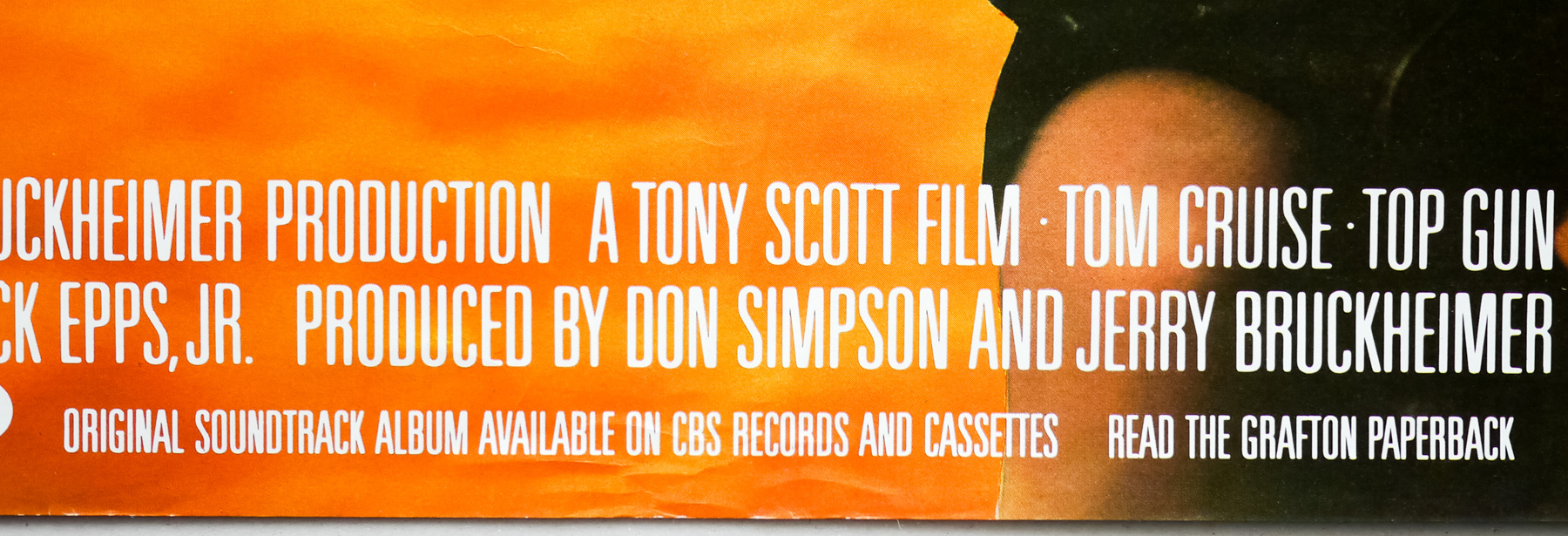
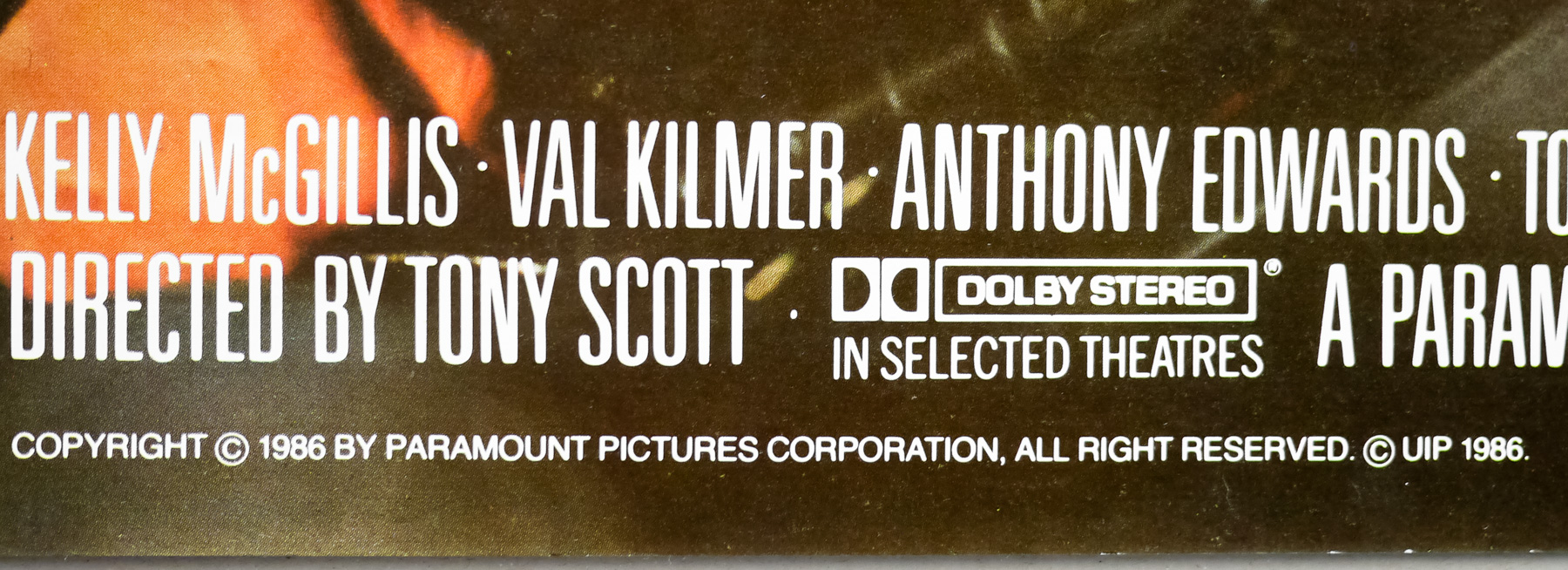
Top Gun / quad / UK

30.04.14

Poster Poster

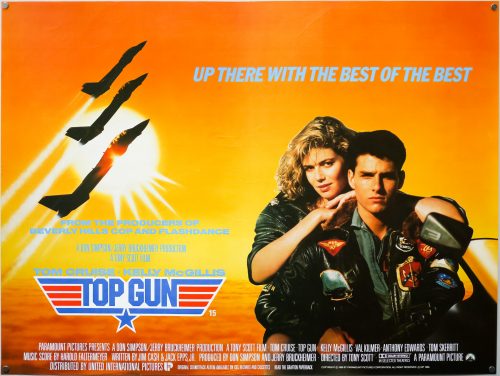
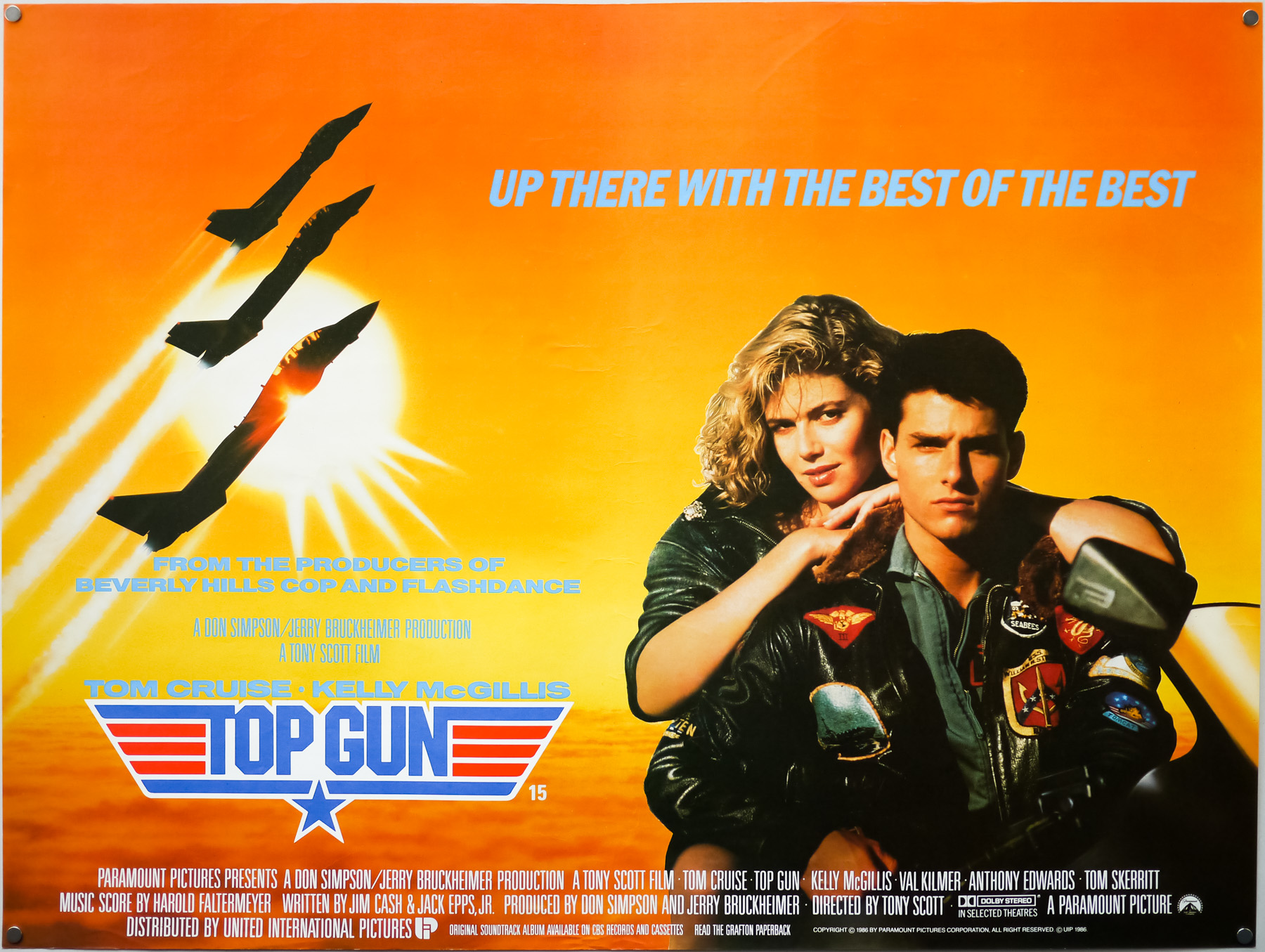
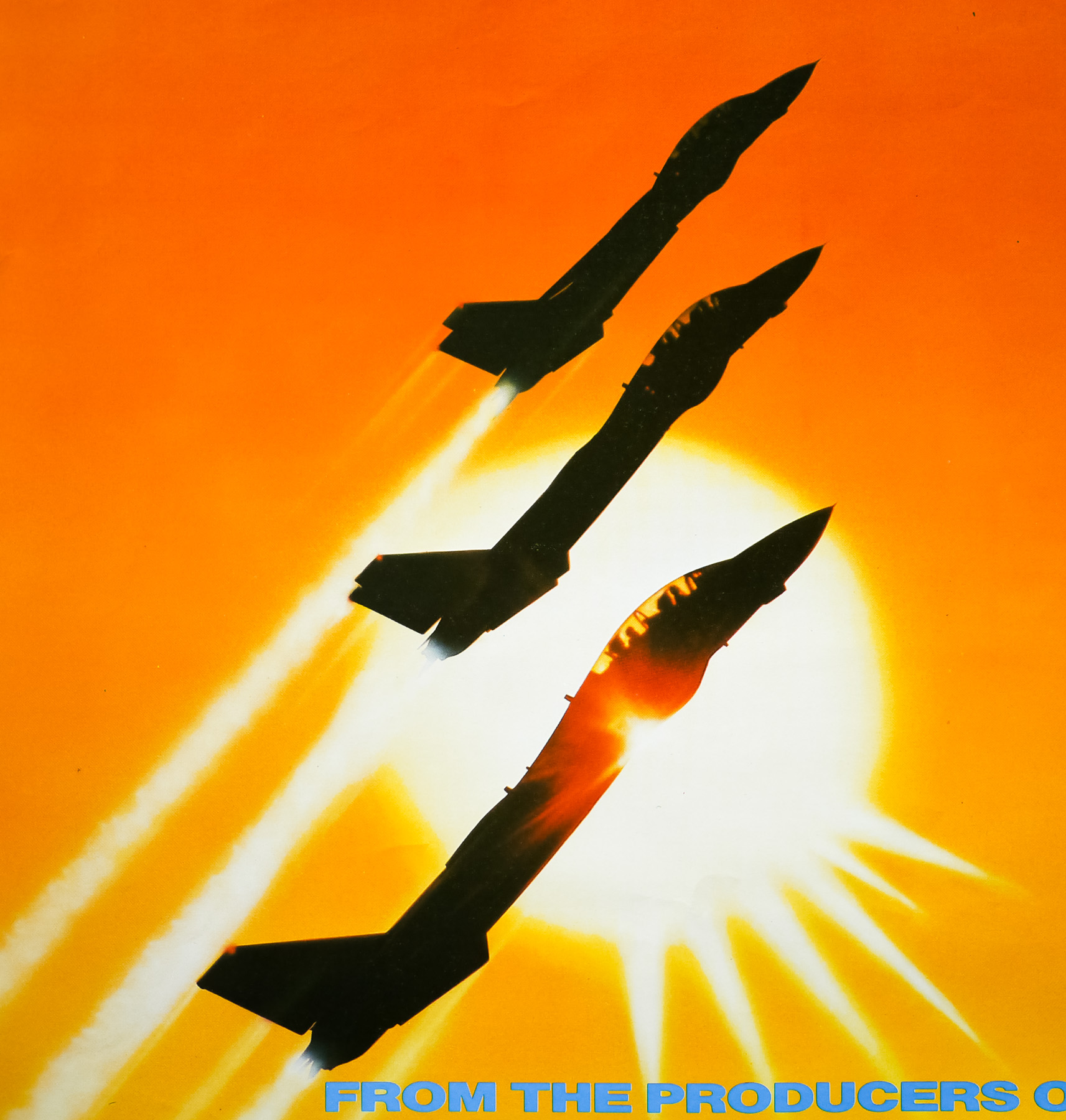
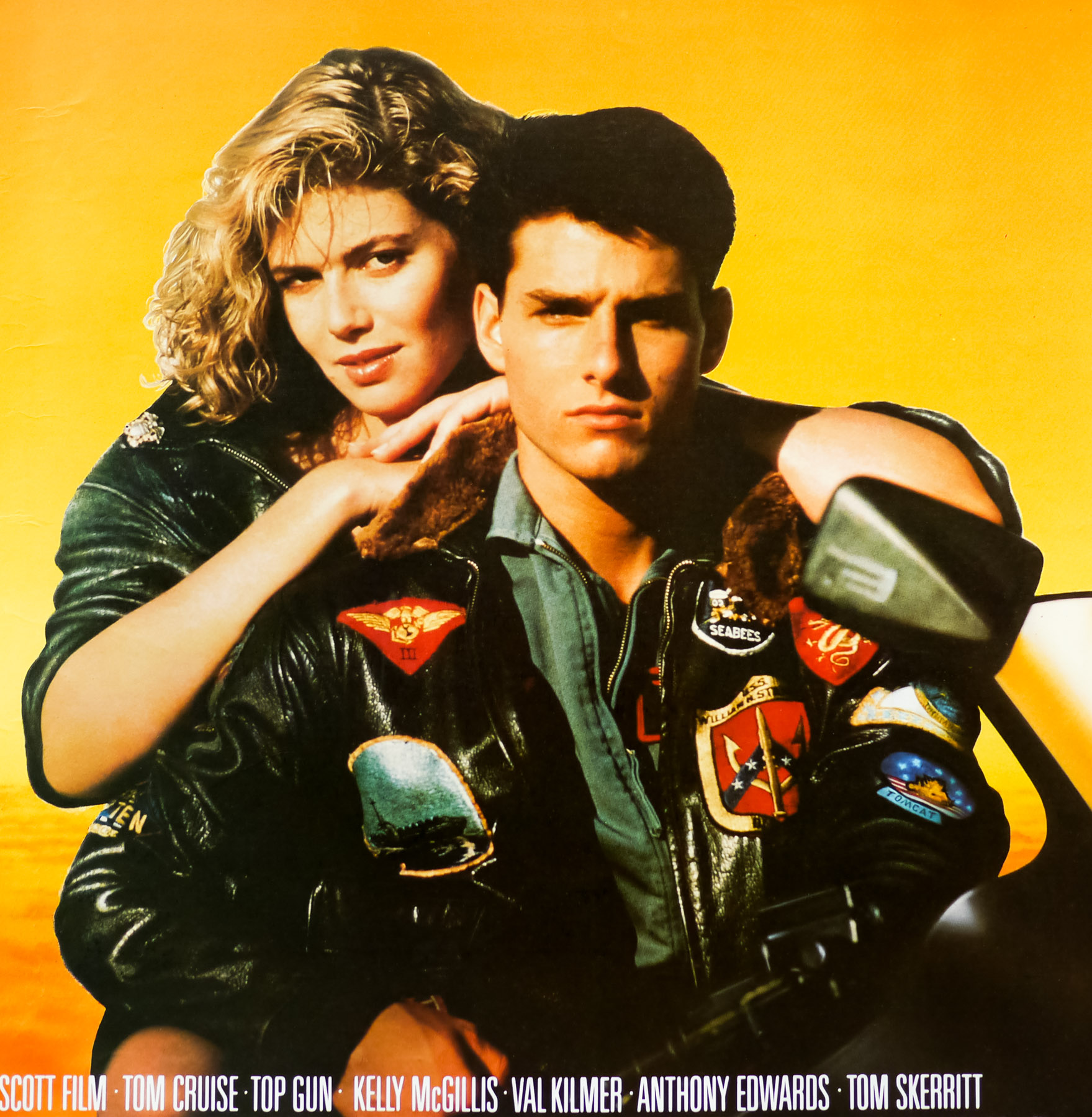
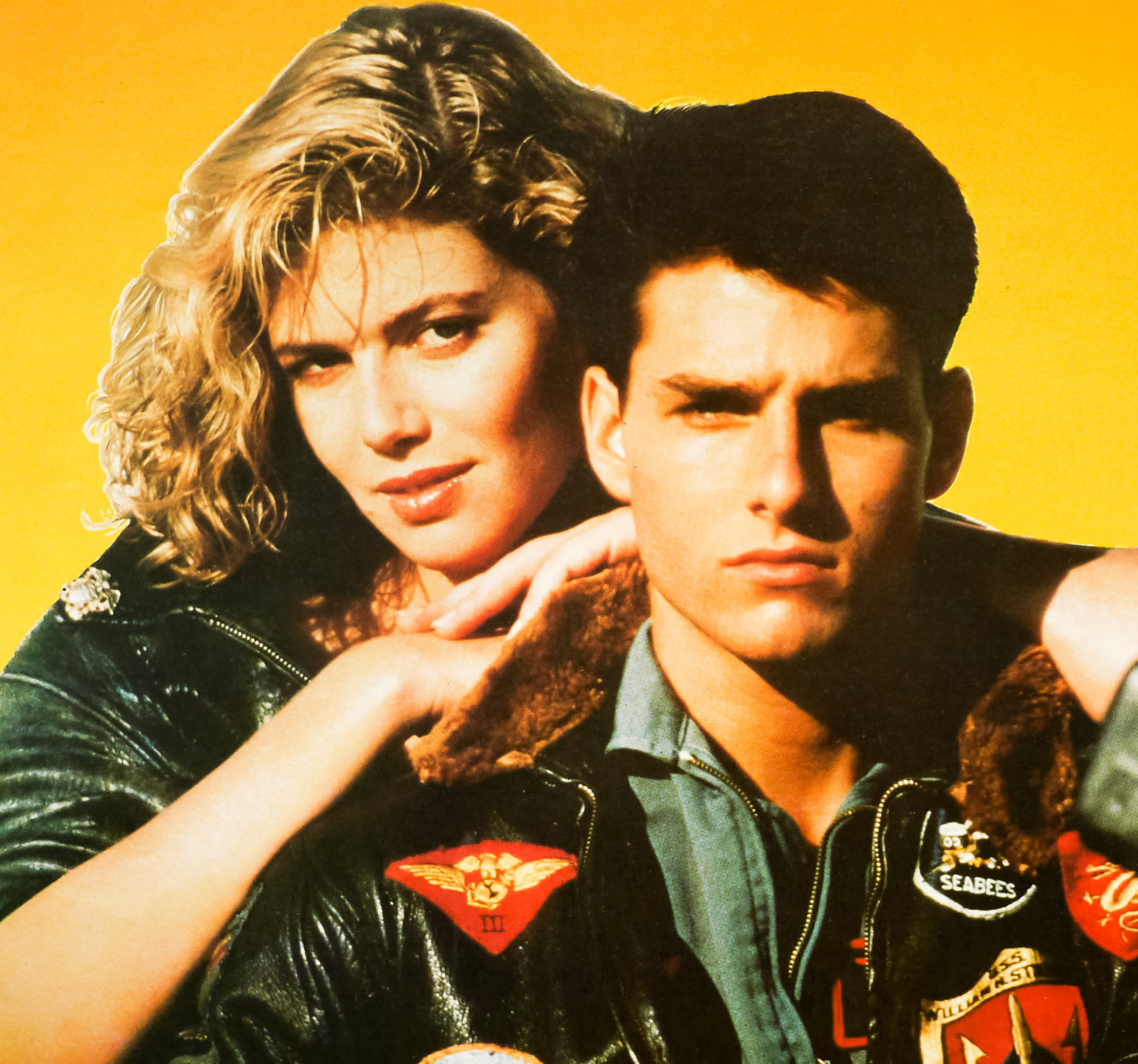
Top Gun is one of the quintessential popcorn films of the 1980s and certainly the one that launched and boosted several Hollywood careers, including that of its director, the late Tony Scott, star Tom Cruise and producing partners Jerry Bruckheimer and the late Don Simpson who were responsible for some of the biggest box-office successes of the 80s and 1990s. The film’s script was based on a magazine article about a top Navy fighter pilot training school, Cruise plays pilot Maverick who is bumped up the ranks and sent to the Top Gun training school after he successfully aids a fellow pilot in distress. There his reckless flying draws the attention of the school’s instructors and disdain from fellow trainees, including top student Iceman (Val Kilmer) who considers his methods dangerous and unsafe. At the same time, Maverick chases after a civilian contractor called Charlie (Kelly McGilliswho is initially wary of his advances. The film features corny dialogue and cheesy acting but is never anything but entertaining and its soundtrack, by Harold Faltermeyer, is one of the most successful of all time in terms of sales.

This British quad was created by the British designer and artist Brian Bysouth who I interviewed for this site in 2012. In the mid-1980s the requests for painted artwork, of which Brian was a renowned specialist, were drying up so Brian realised it was time to learn how to use computers to create photographic posters, as detailed below. This Top Gun quad is likely to have been one of the first computer-generated posters that the designer worked on (see also the Predator quad)

——————————

Computers as an art tool came in during the time you were at FEREF. What was it like making that transition? Was it easy for the company?
Yes, luckily Steve Laws, the studio manager at the time and also a good designer, managed to persuade the upper management that desktop publishing was coming and that we had to embrace it. I can’t remember exactly when this was, but it was clear that the Apple Macintosh was the best computer. At that time they were very expensive but gradually the studio was equipped with the new technology.

Unfortunately, the computers replaced the jobs of paste up artists and it soon became apparent that unless they were capable of making the transition they were no longer needed. One machine and an operator could add all the text and details to an advert or illustration, ready for it to be sent to the printer. To keep their jobs our paste up artists had to learn how to use a Mac.

In the beginning the computers couldn’t handle very large files so things went very slowly, especially with complex designs. But when Macs started to get a lot faster the way forward was firmly established and we began to recruit skilled computer designers and operators.

I realised when my illustration work was drying up that I needed to become more of an art director. I was interested in helping out the Mac designers and I was able to use my experience to help them. I always found it easy to suggest ways to improve a design, which they came to appreciate; gradually it became usual for me to be asked to help if a design was proving troublesome.  I wasn’t as quick on the Macs as the operators but I realised that I had to learn Photoshop to enable me to art direct them properly. Learning the correct commands was essential, so I read the manual of Photoshop 3, (which I think was the version at that time), and learned the various key-commands and technical terms.

Eventually I asked for a Mac of my own and I was given use of one that had become surplus. When I wasn’t painting I was practicing. Looking back now, it was instrumental in helping me when I was asked to work on the Star Trek DVD covers.

——————————-

To see the other posters in the Film on Paper collection that were designed and/or painted by Brian Bysouth click here.


Day of the Dead / quad / UK

12.05.14

Poster Poster
Title
Day Of The Dead
AKA
Zombie 2 - Das letzte Kapitel (West Germany) | Il giorno degli zombi (Italy)
Year of Film
1985
Director
George A. Romero
Starring
Lori Cardille, Terry Alexander, Joe Pilato, Jarlath Conroy, Anthony Dileo Jr., Richard Liberty, Sherman Howard
Origin of Film
USA
Genre(s) of Film
Lori Cardille, Terry Alexander, Joe Pilato, Jarlath Conroy, Anthony Dileo Jr., Richard Liberty, Sherman Howard,
Type of Poster
Quad
Style of Poster
--
Origin of Poster
UK
Year of Poster
1985
Designer
Unknown
Artist
--
Size (inches)
30 1/16" x 40"
SS or DS
SS
NSS #
--
Tagline
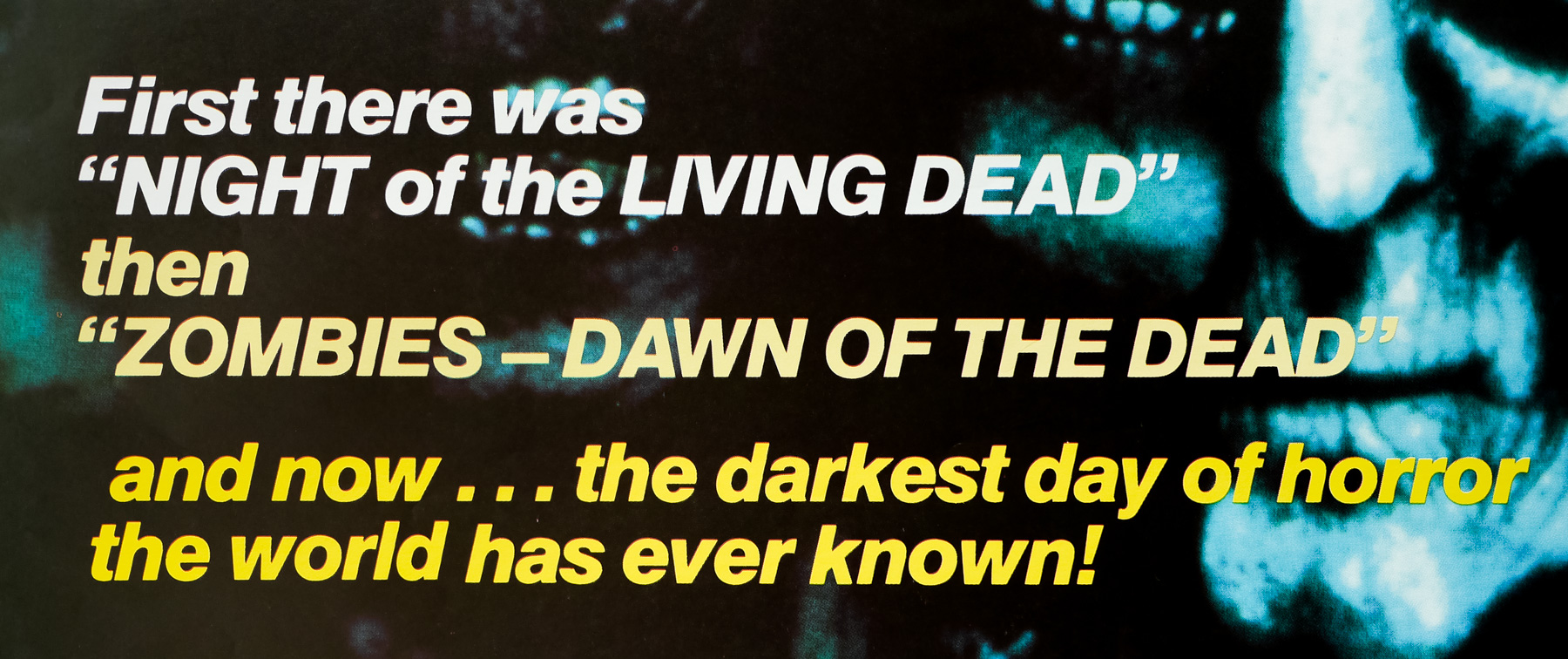
First there was "Night of the Living Dead" then "Zombies - Dawn of the Dead" and now the darkest day of horror the world has ever known

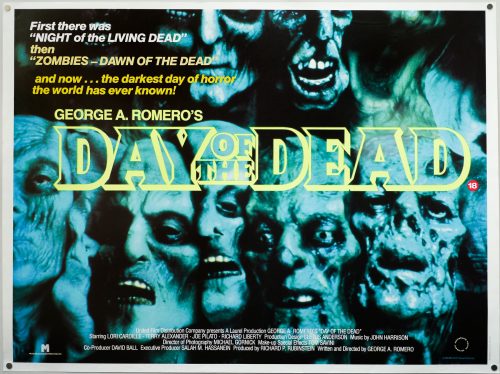
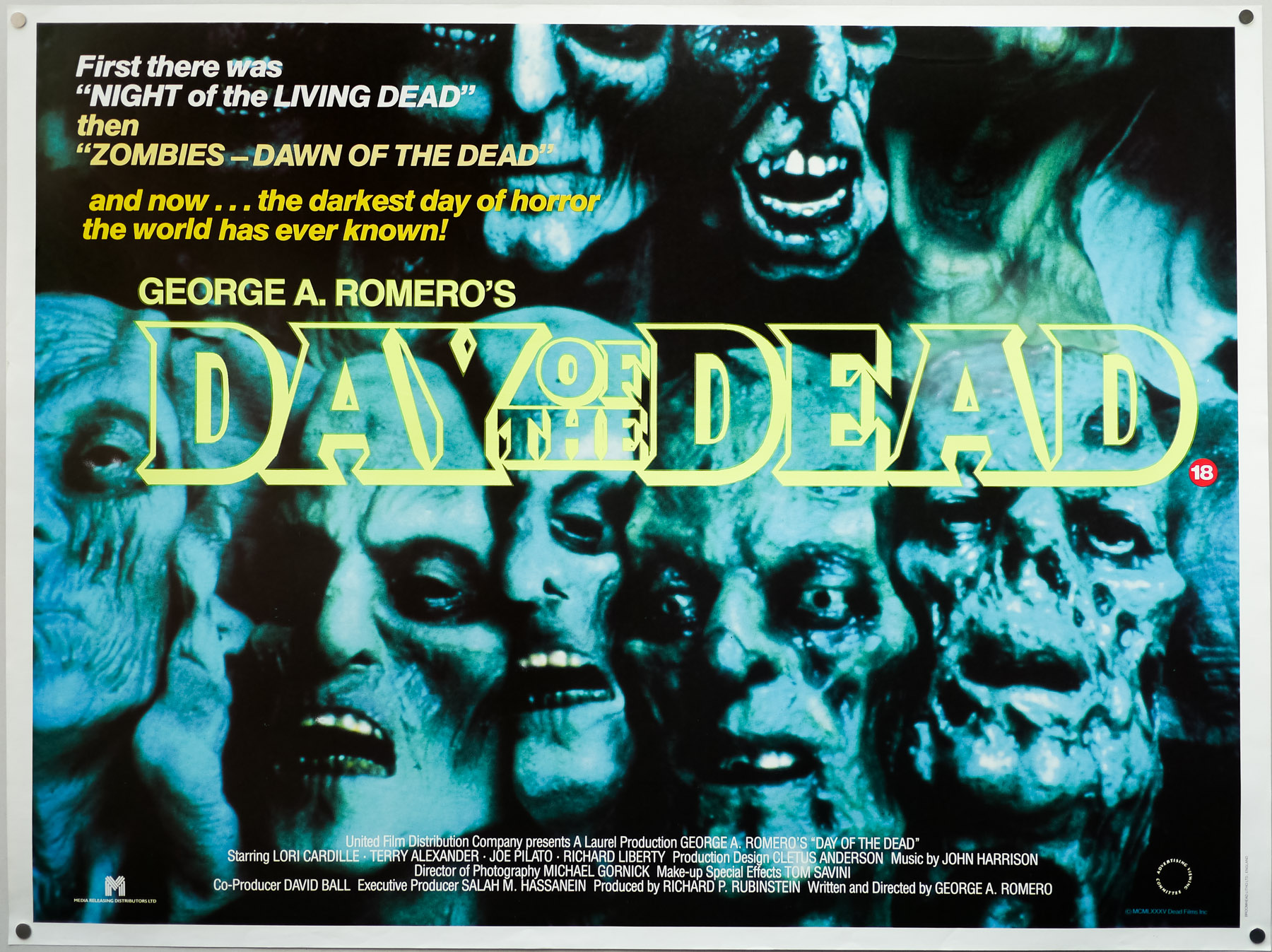
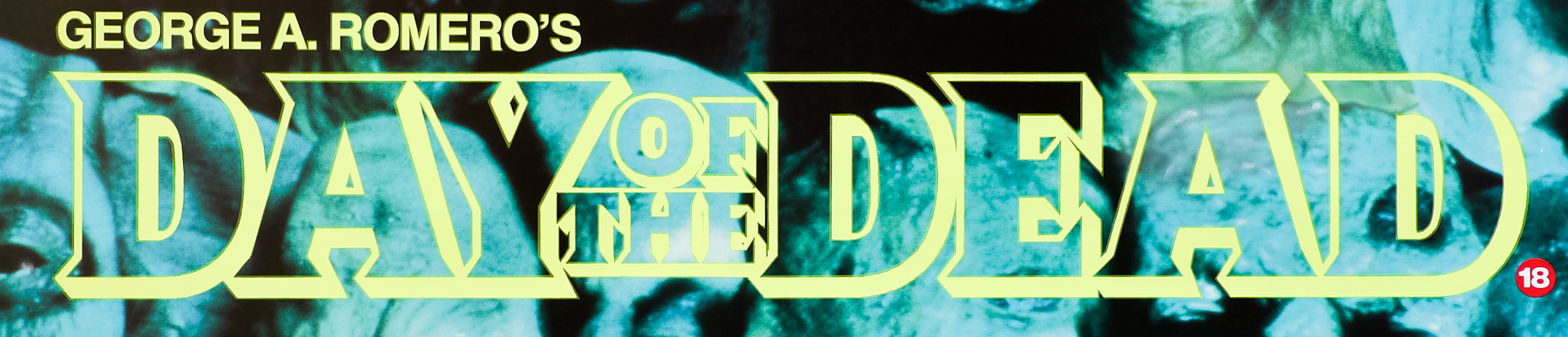
This is the British quad for the original release of the third film in George A. Romero‘s ‘Dead’ series, Day of the Dead. In a similar situation to Dawn of the Dead (released 7 years earlier) this film had no returning characters from the previous entry due to rights issues, so it’s set in the same universe after the zombie outbreak but shares no continuity with the earlier films. Romero’s original vision for the ‘Day…’ was scaled back to due to budget constraints, but the director has since said he’s very happy with the final product. It’s a notably darker, bleaker effort than the fan favourite ‘Dawn’ but features a unique setting, memorable characters and some of the best special effects of the entire series, courtesy of the legendary Tom Savini.

The story follows a group of survivors who have holed-up in a military bunker in Florida and make regular trips around the area looking for survivors. Underground a small group of scientists and technical specialists, including Dr Sarah Bowman (Lori Cardille) and Dr Logan (Richard Liberty), known as ‘Frankenstein’, are working to discover the cause of the outbreak and discover if anything can be done to make the zombies more docile. An uneasy truce is maintained by the scientists and other specialists like helicopter pilot John (Terry Alexander), with a group of soldiers ostensibly there to protect them and deliver them test subjects from a fenced off area of the base. The soldiers are led by the psychotic Captain Rhodes (Joseph Pilato) who discovers that Dr Frankenstein has been secretly carrying out experiments using dead soldiers, including training a zombie known as Bub (Sherman Howard) to follow commands. At this point the truce is shattered and a series of events see the base overrun with the undead, forcing Sarah and the others to try to escape the carnage before its too late.

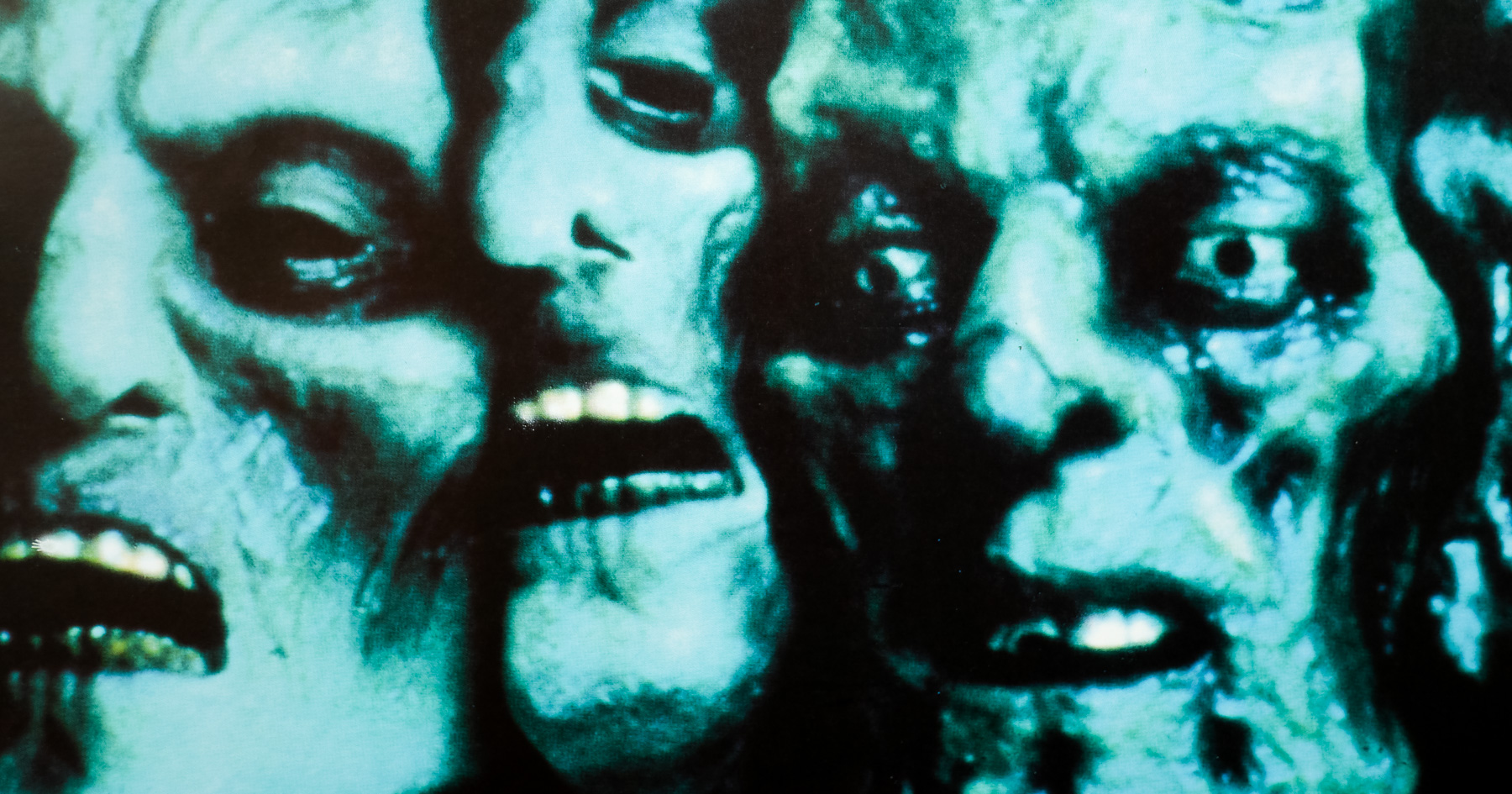
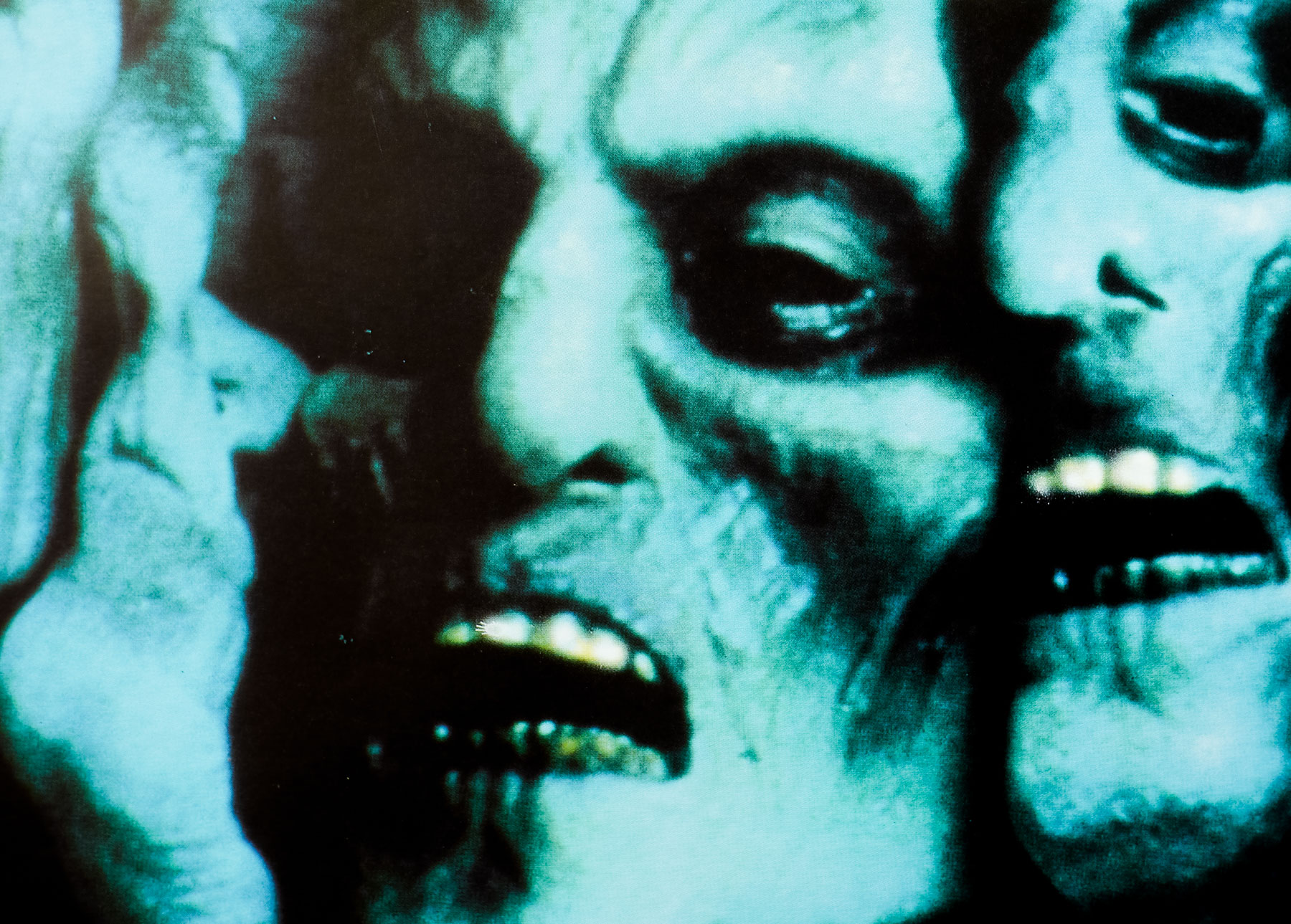
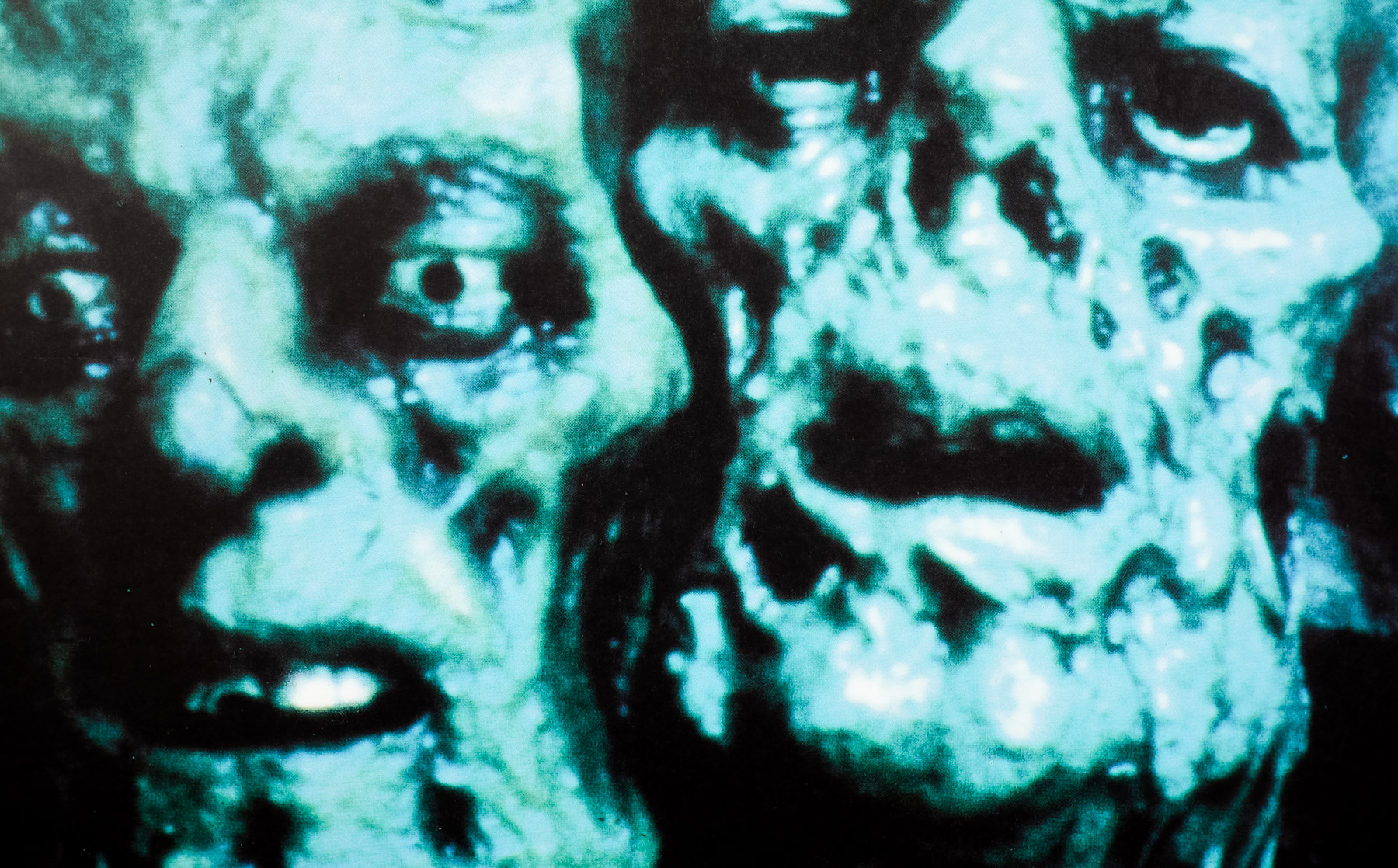
This image of a wall of zombie faces is (with thanks to a site reader) actually a photograph of the back wall of the film’s production makeup room. It features a close up of some of the 100+ zombie masks that were created for the film during a break in filming (when they were waiting to be applied to the extras playing the zombies). This explains why the faces are distorted and without eyes. The same imagery also featured on one of four Japanese B2s. The US one sheet is markedly different and an iconic horror film poster in its own right.  Note that the tagline references the alternate international title for Dawn of the Dead, ‘Zombies’.

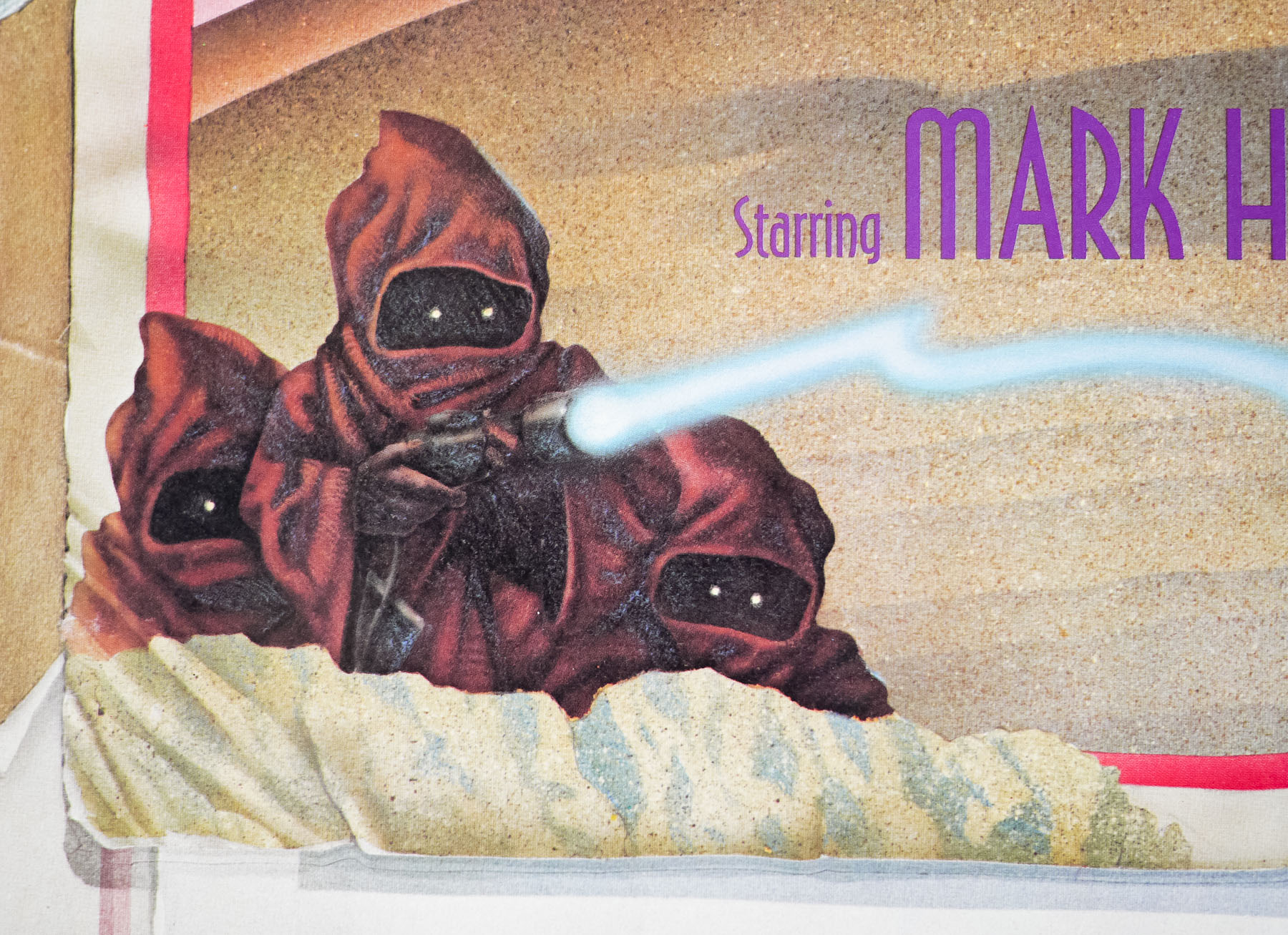
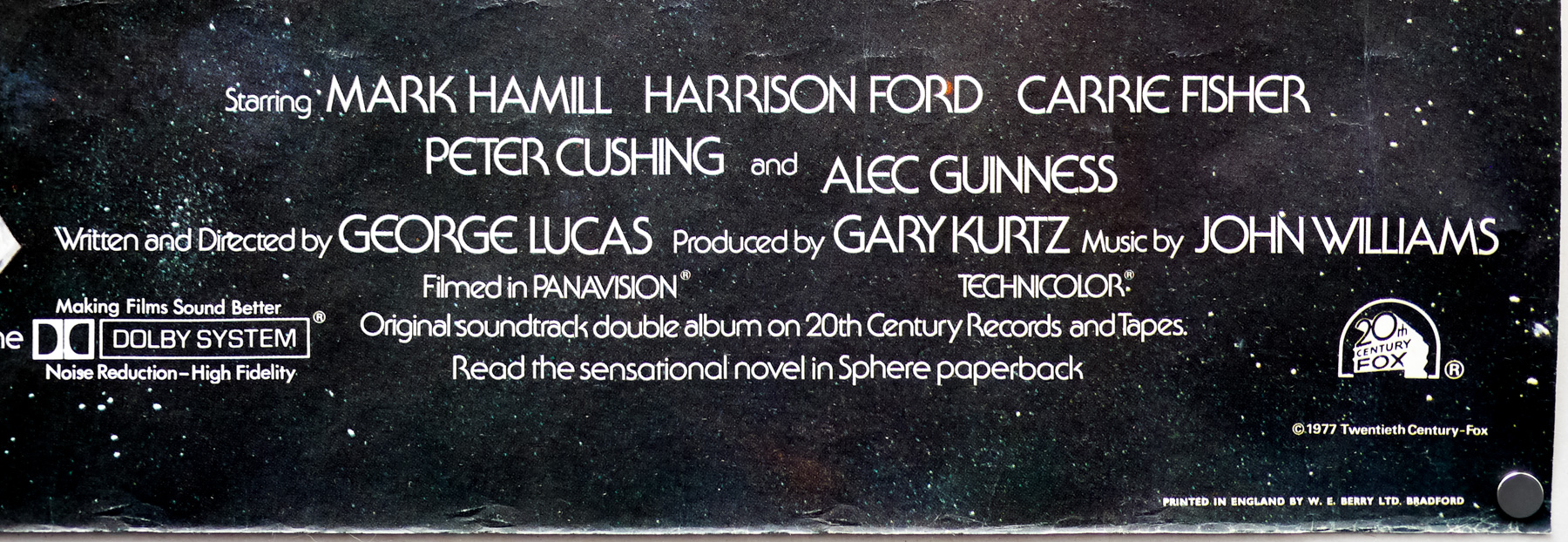
Star Wars / one sheet / style D / studio version / USA

23.07.14

Poster Poster
Title
Star Wars
AKA
Star Wars: Episode IV - A New Hope (full title) | La guerre des étoiles (Canada - French title / France)
Year of Film
1977
Director
George Lucas
Starring
Mark Hamill, Harrison Ford, Carrie Fisher, David Prowse, Peter Cushing, Alec Guinness, Anthony Daniels, Kenny Baker, Peter Mayhew
Origin of Film
USA
Genre(s) of Film
Mark Hamill, Harrison Ford, Carrie Fisher, David Prowse, Peter Cushing, Alec Guinness, Anthony Daniels, Kenny Baker, Peter Mayhew,
Type of Poster
One sheet
Style of Poster
Style D - studio version
Origin of Poster
USA
Year of Poster
1978
Designer
Unknown
Artist
Charles White III | Drew Struzan
Size (inches)
27 2/16" x 40 15/16"
SS or DS
SS
NSS #
--
Tagline
A long time ago in a galaxy far, far away

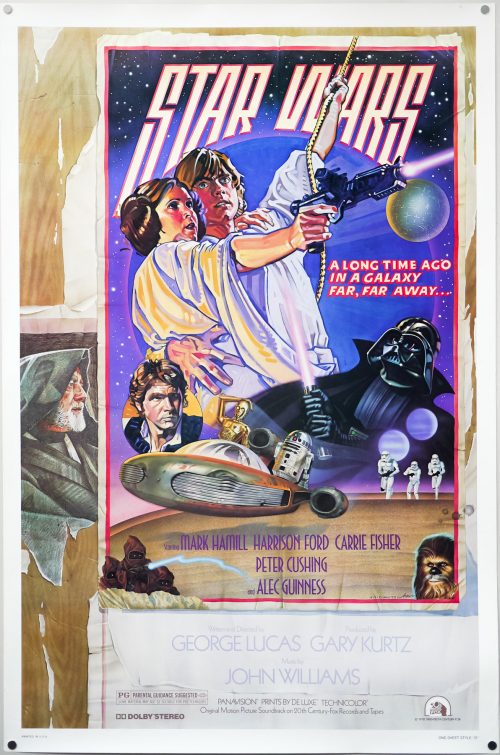
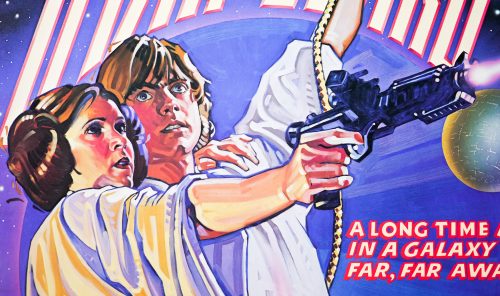
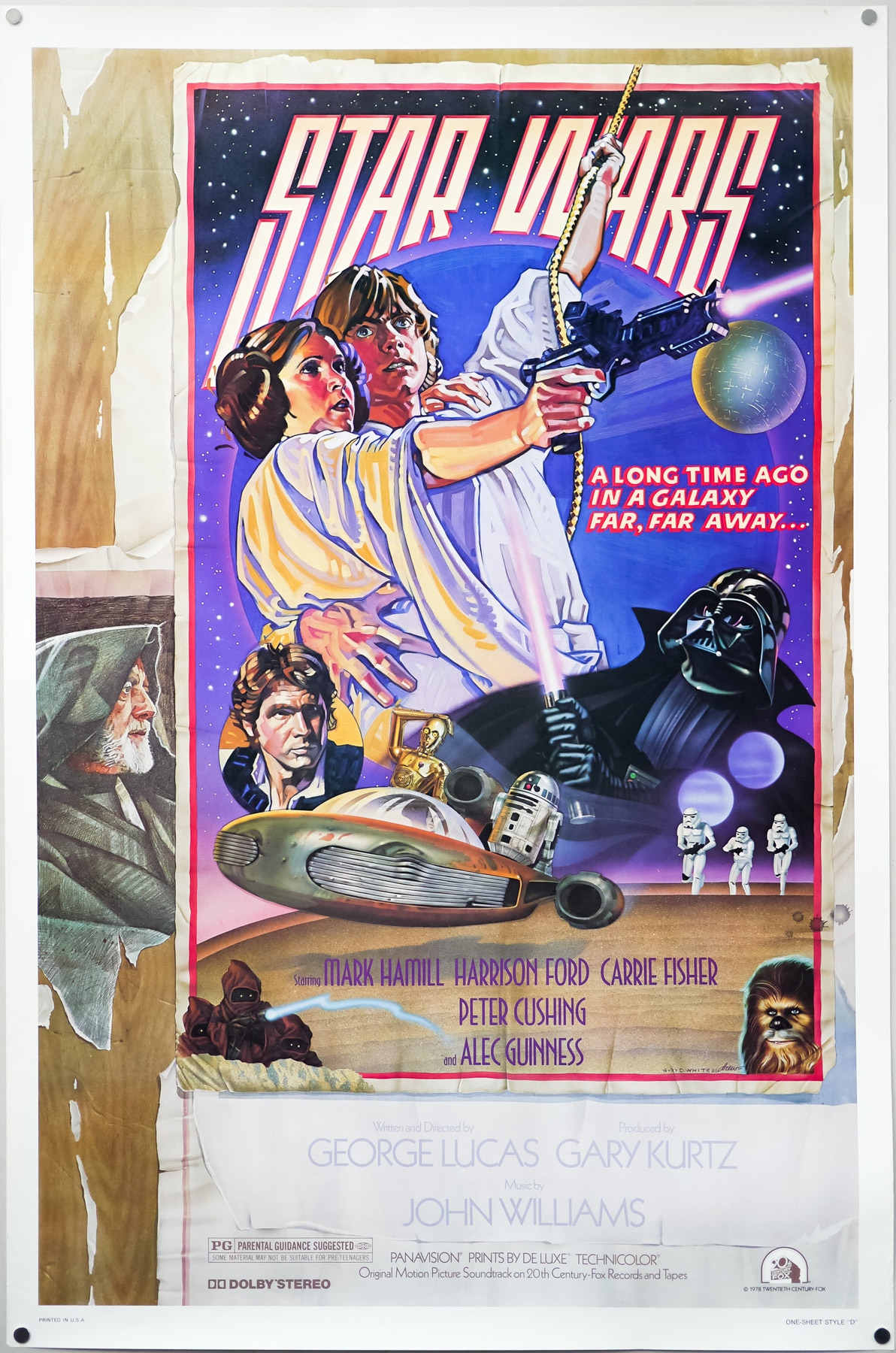
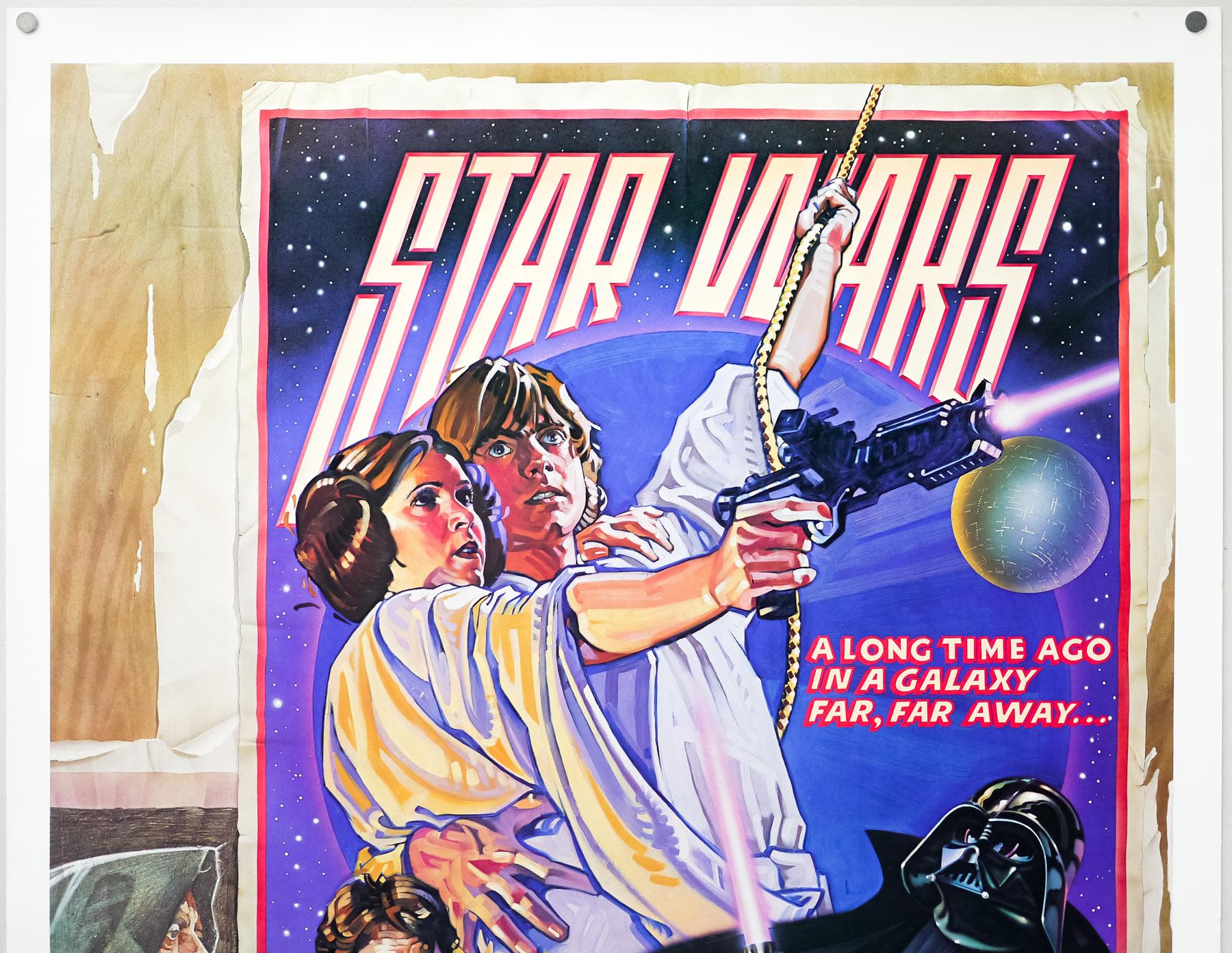
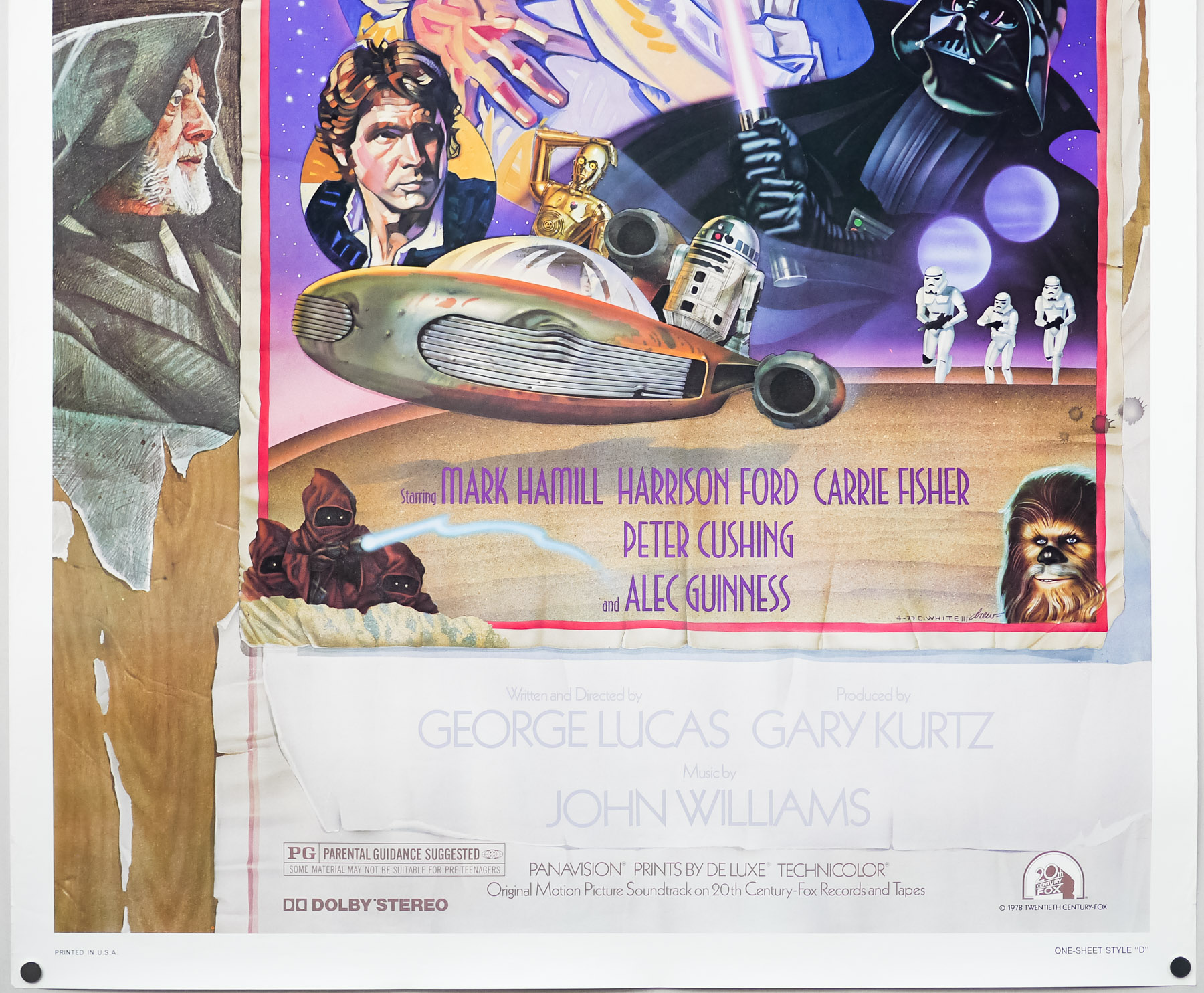
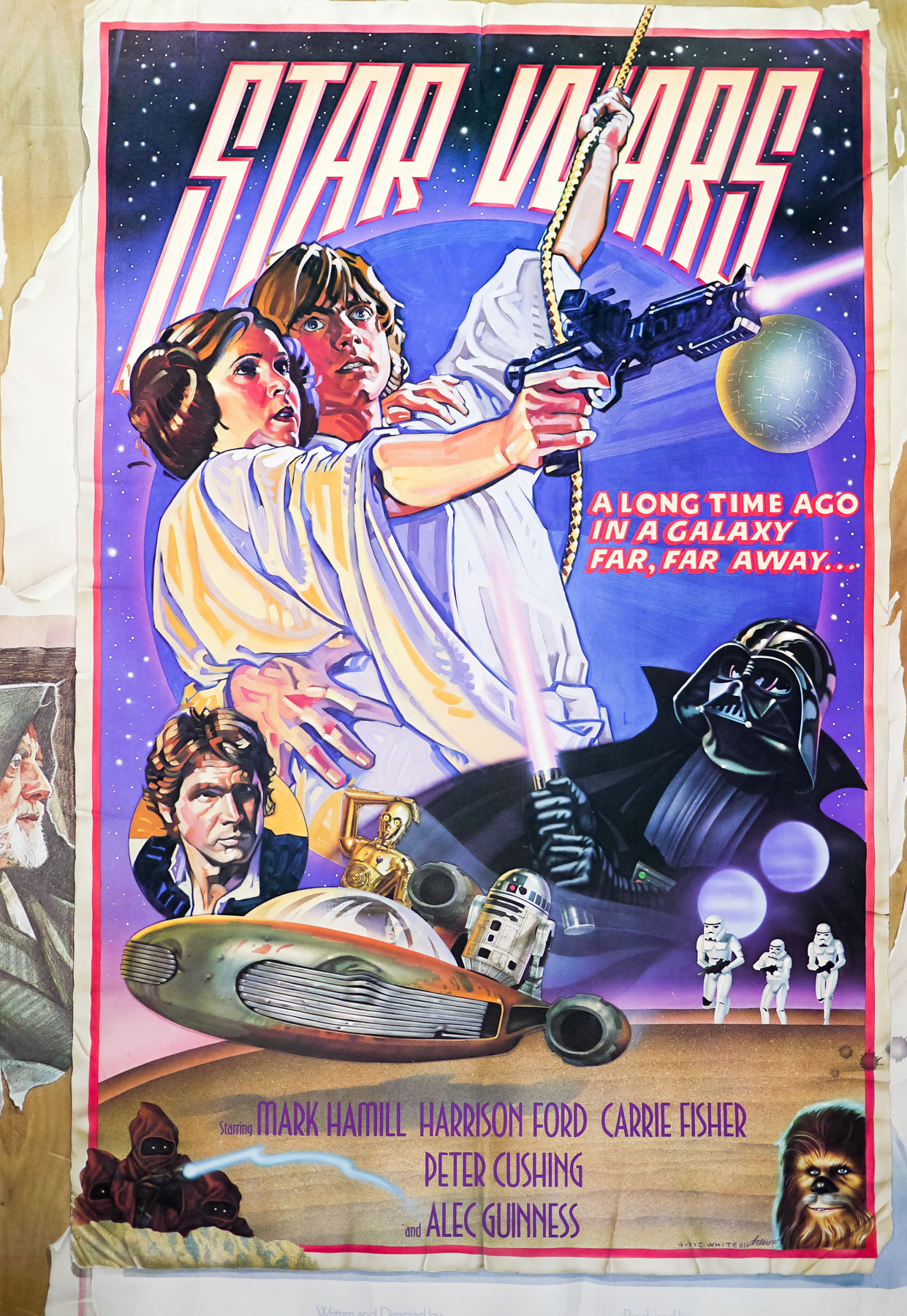
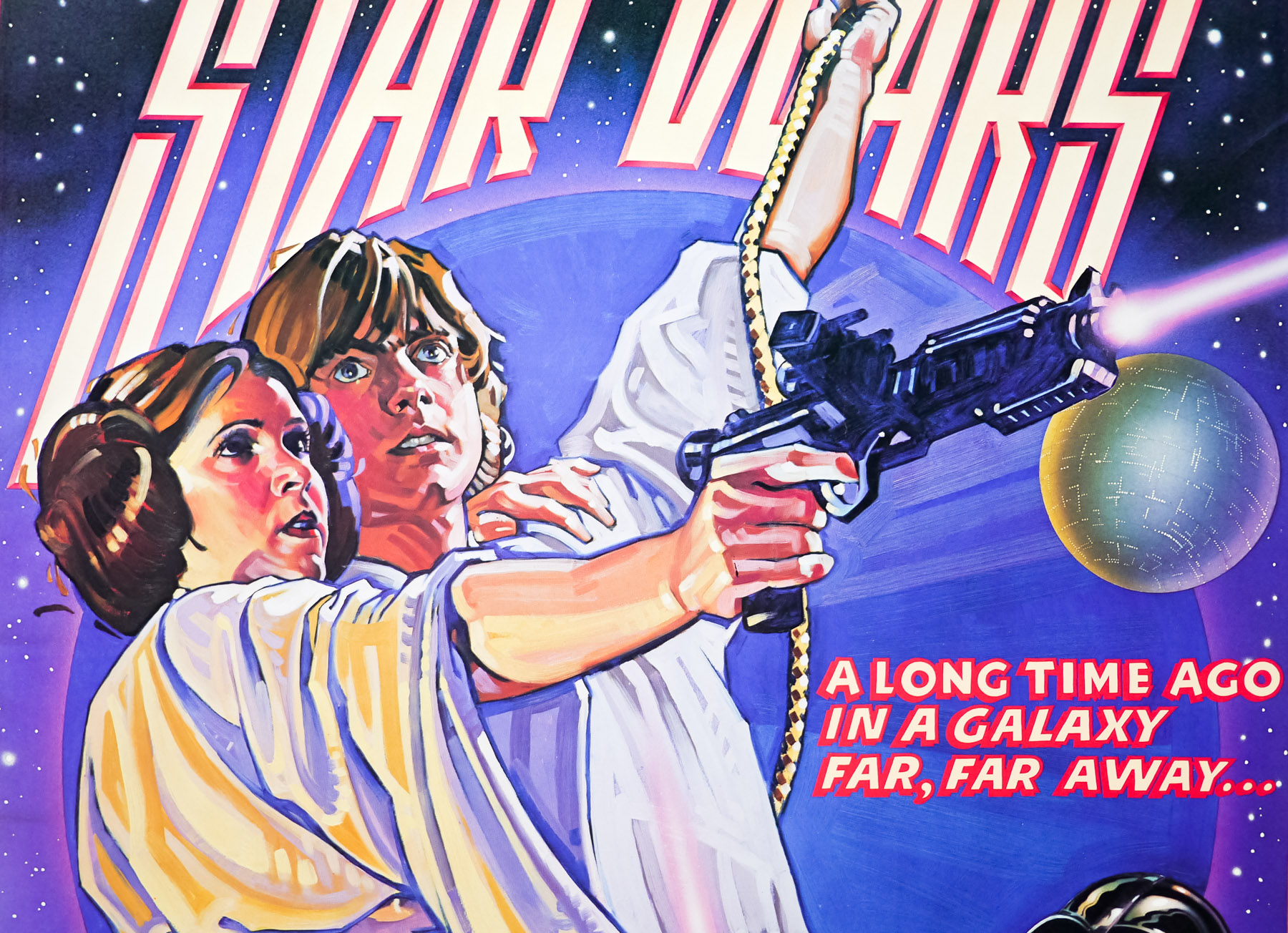
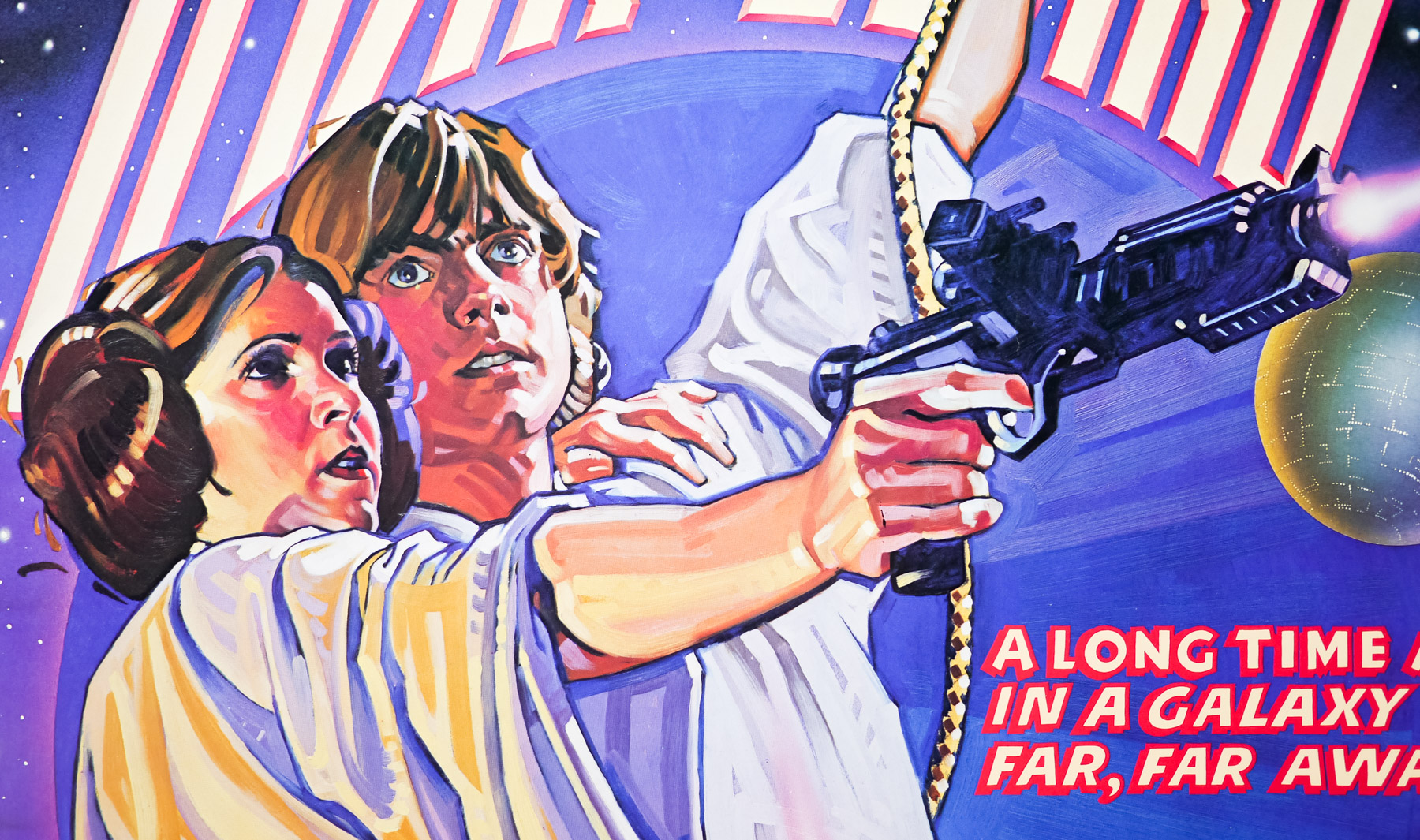
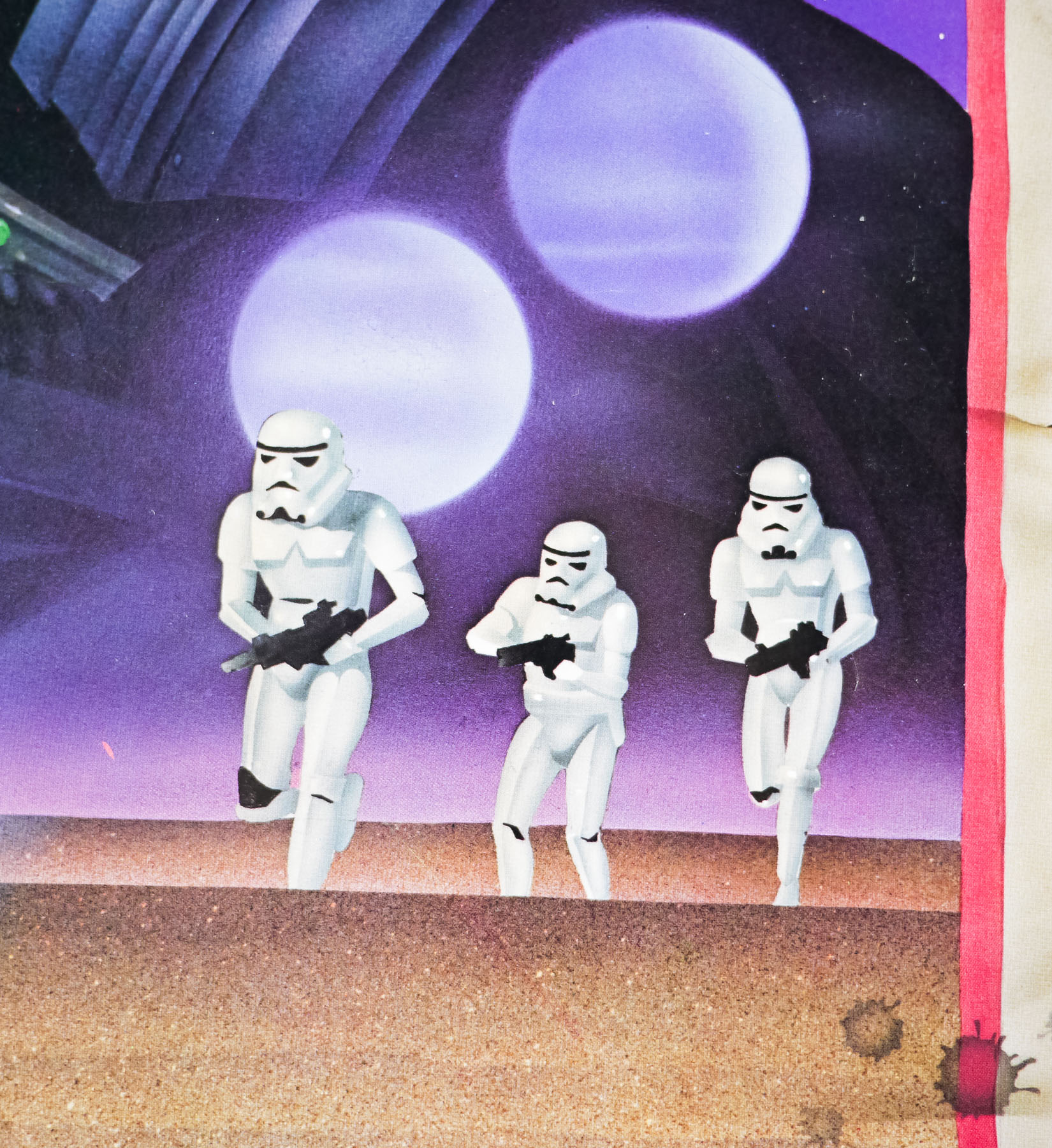
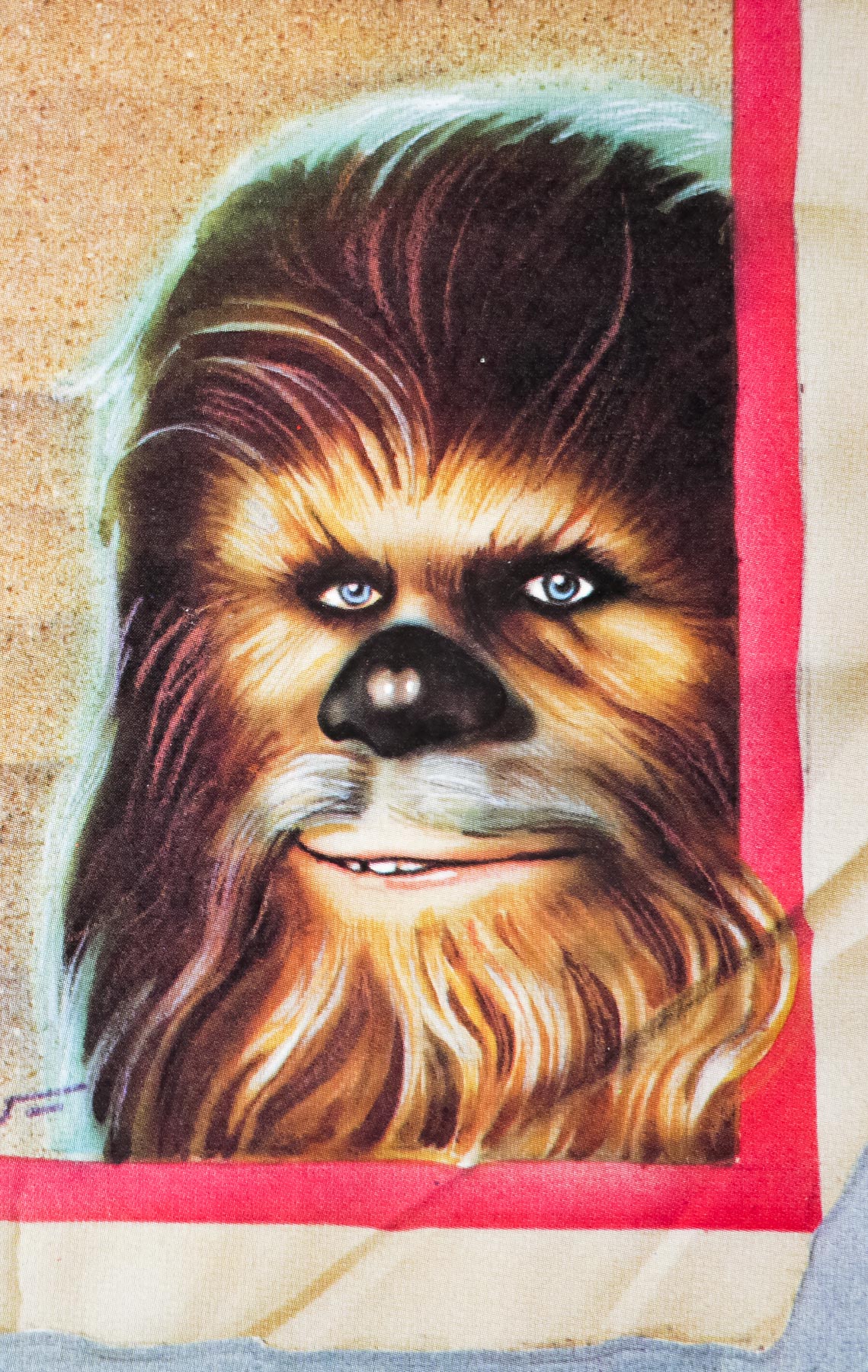
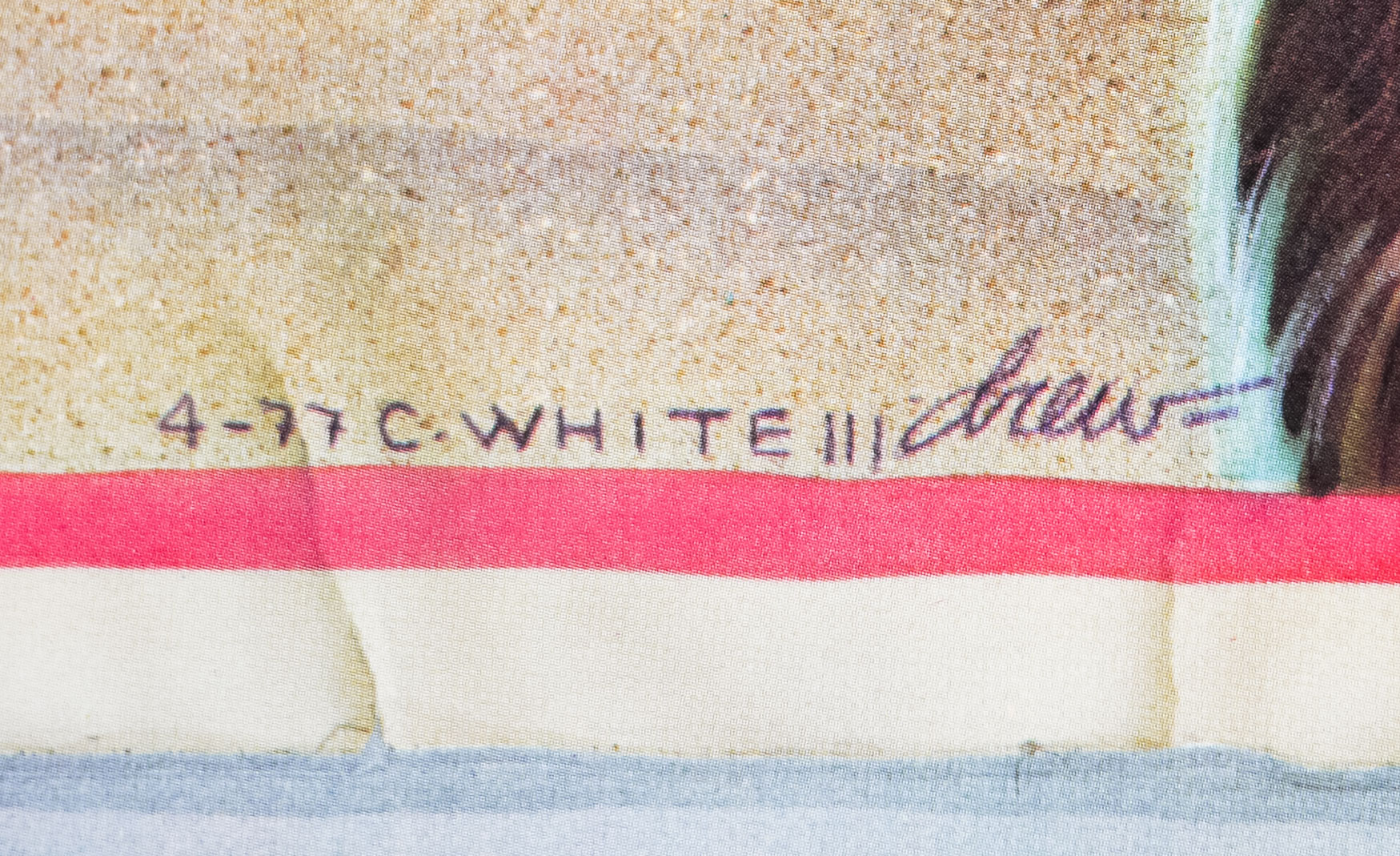
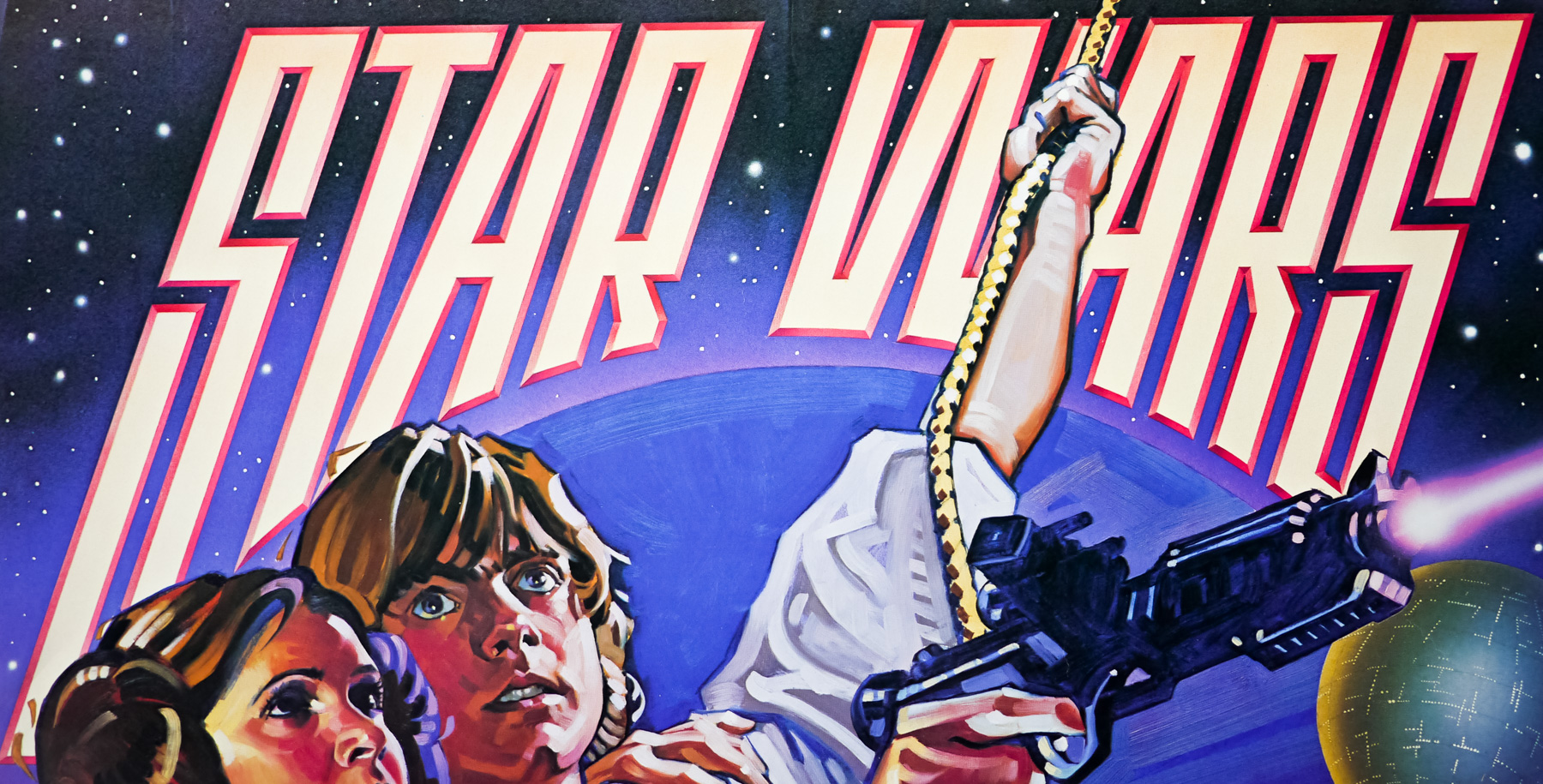
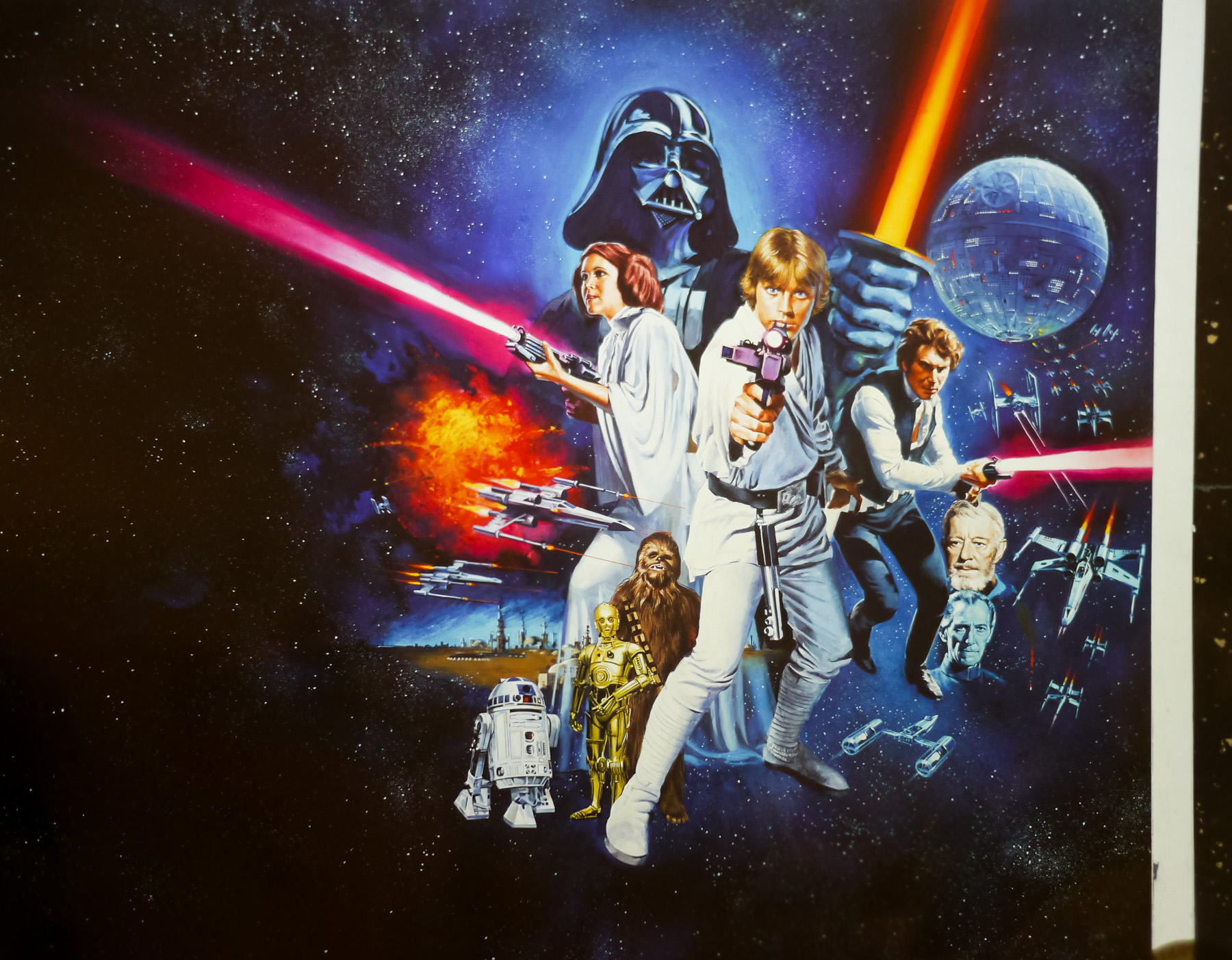
This is the excellent ‘style D’ poster for the original sci-fi classic Star Wars, which was printed for the 1978 re-release of the film in the US. The artwork, which only appears on this US one sheet, was a collaboration between two talents; Charles White III who was at the time an established and well regarded artist well known for his skills with an airbrush, and Drew Struzan who was early in his film poster painting career and yet to paint the iconic images for which he is famous for today. This is Struzan’s first poster for the Star Wars franchise and he would later go on to be one of Lucasfilm’s most trusted artists, painting several other posters and related images for the Star Wars universe over the following 35 years.

In an interview with Airbrush Magazine in August 1999, Struzan said:

‘I will never fail to give credit to Charlie White for what he did for me. It may have been a small thing to him, but a life changer for me. He is an extraordinary artist famed for his airbrush work. He had the desirable assignment to do the one-sheet poster for the re-release of Star Wars in 1978. He is marvellous at painting objects, but was hesitant to paint portraits for the poster. Somehow, he asked me to paint the portraits while he would paint the droids and the like…Only an extraordinary individual does anything so generous and unselfish. It is the individual who deserves the honor. I have no doubt that there was a desire on Charlie’s part to do the best job possible on the Star Wars project…It was to his advantage to use the best talent he could find. He also gave the lettering to a great letterer. It made for an outstanding poster. All of us who worked on it have been proud ever since to have had the opportunity. It remains a perennial favorite, even among Hollywood executives.’

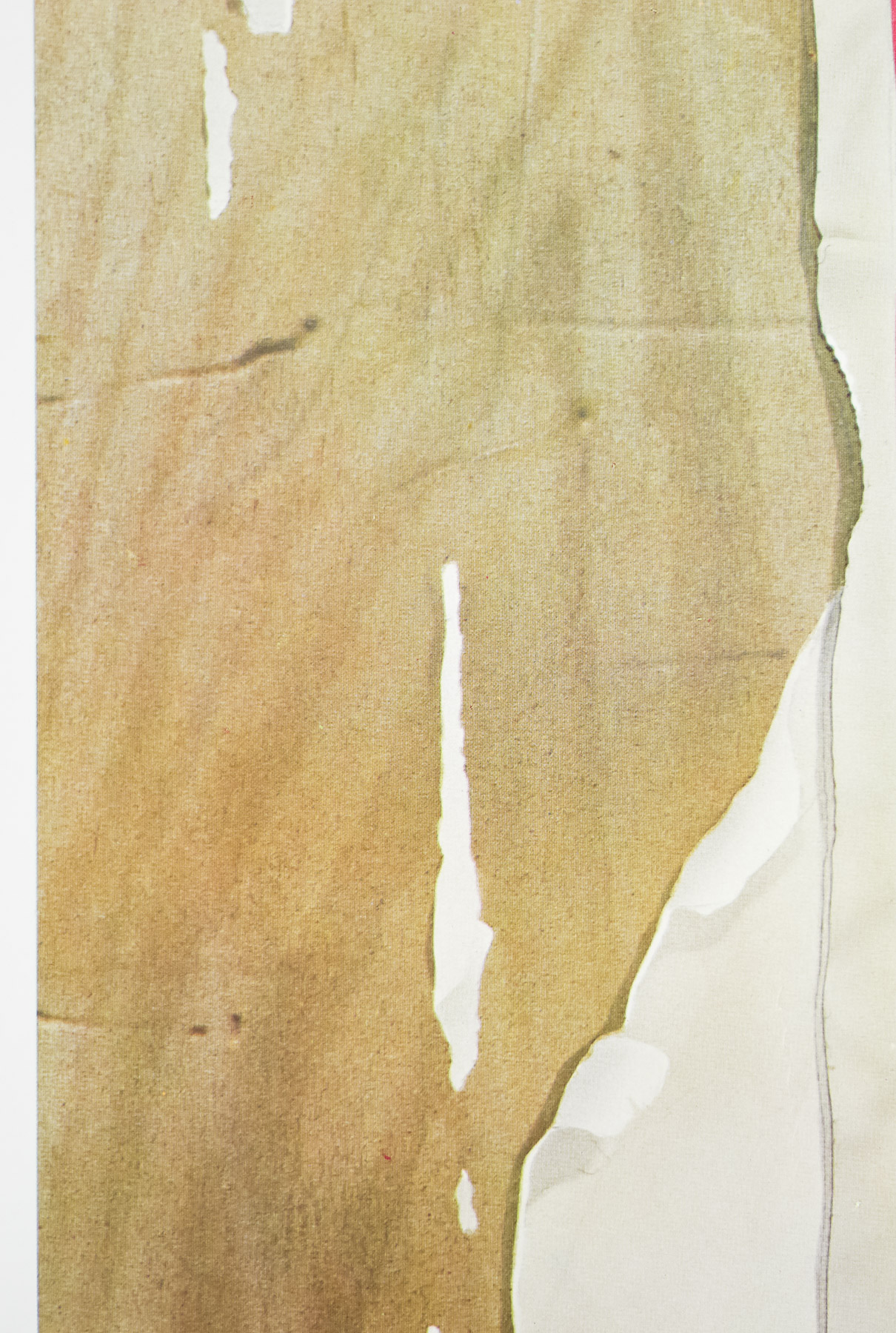
The style D page on TheForce.net notes that this is said to be George Lucas’ favourite Star Wars poster and the original artwork apparently hangs on the wall in his house. It is often described as being a ‘circus’ style poster as the main image has been illustrated to appear that it’s sitting on a wooden board with other older, torn paper surrounding it.

In another interview with Struzan carried out by Cinefantastique in 1997, the artist recalls how the design came about:

‘The novel idea of making the poster appear as if it were pasted on a wall came about almost by accident. “We had already done the lettering of the title, painting it in as part of the poster,” recalled Struzan. “Then, when we got the billing, we discovered there wasn’t enough room for all the credits, so we had to figure out a way to make more space. We thought, ‘Why don’t we take what we already have and paint it to look like it’s wild posted on top of other posters?’ That gave us the extra room we needed for the billing at the bottom. It was a case of Necessity being the Mother of Invention.” …”We had to do other art to fill it out, so we had a chance to include more characters. We added Han Solo in a little vignetted circle, and Alec Guinness was an afterthought. It kind of grew to include everybody.”‘

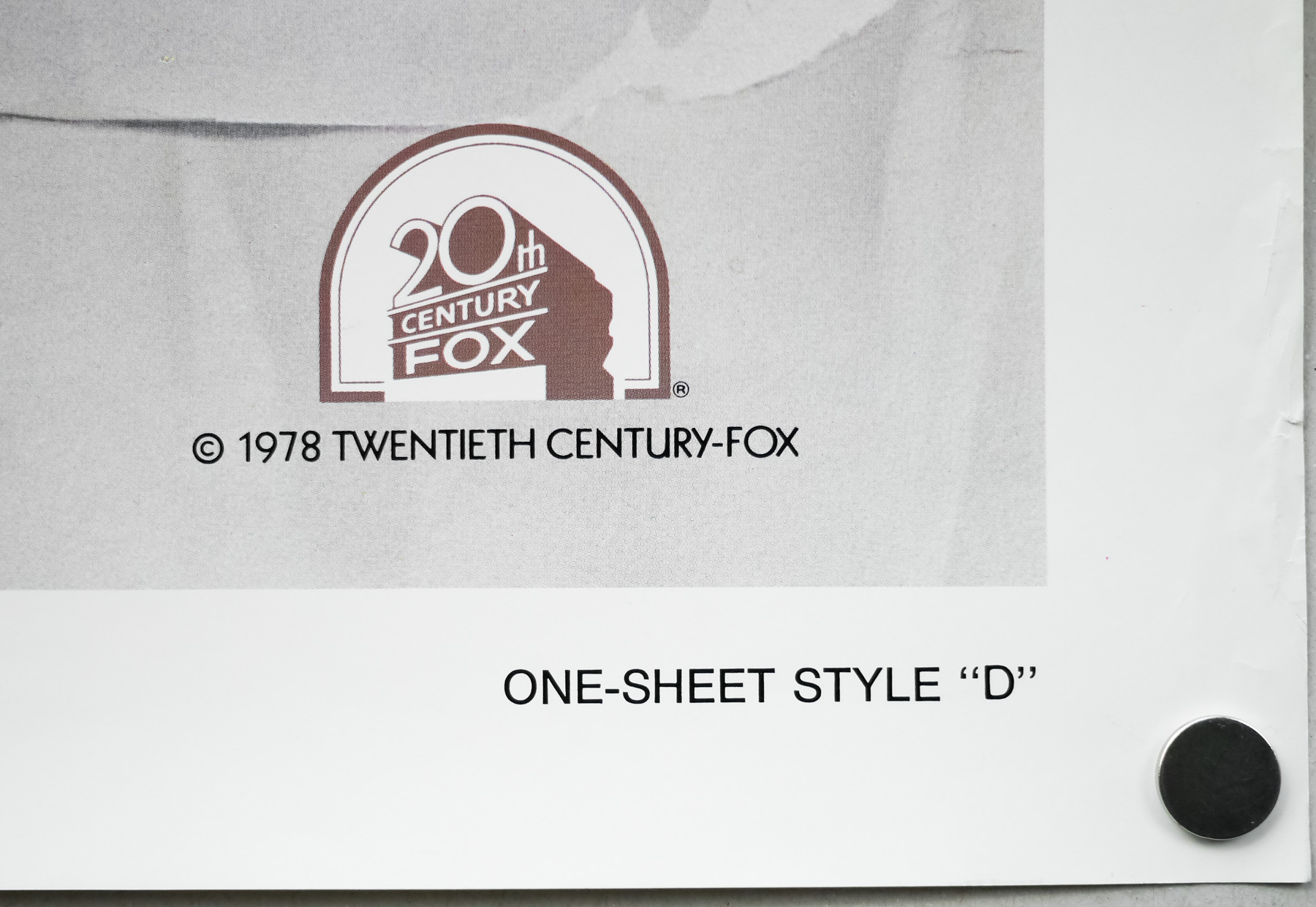
Note that this is the ‘studio’ version of the one sheet and there is also the National Screen Service (NSS) version which has all of the associated markings on the bottom edge of the poster. The studio style was printed by the studio itself, whilst the NSS version would have been produced at one of their own printing offices. There were also two official reprints done around the time of the film’s 15th anniversary but they are pretty easy to spot since they are undersized and feature several new lines of text (copyright and so on). Moviepostercollectors.com features a page on the poster that’s well worth a read.

Drew Struzan barely needs an introduction to film fans worldwide but he also has an official website featuring galleries of his work. To see the other posters I’ve collected by Struzan click here.

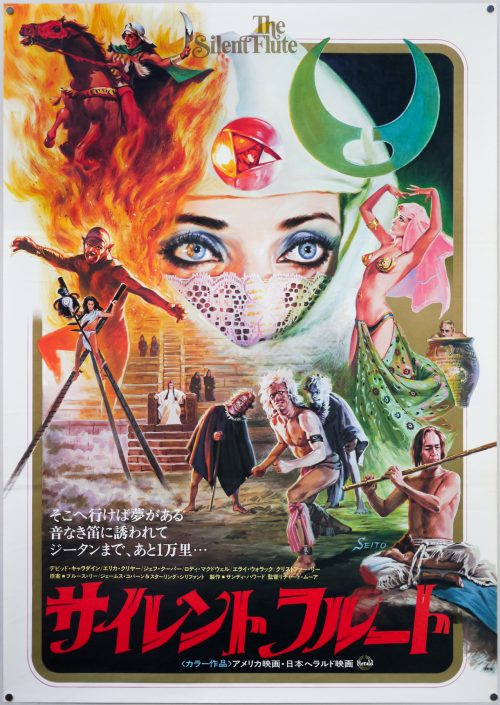
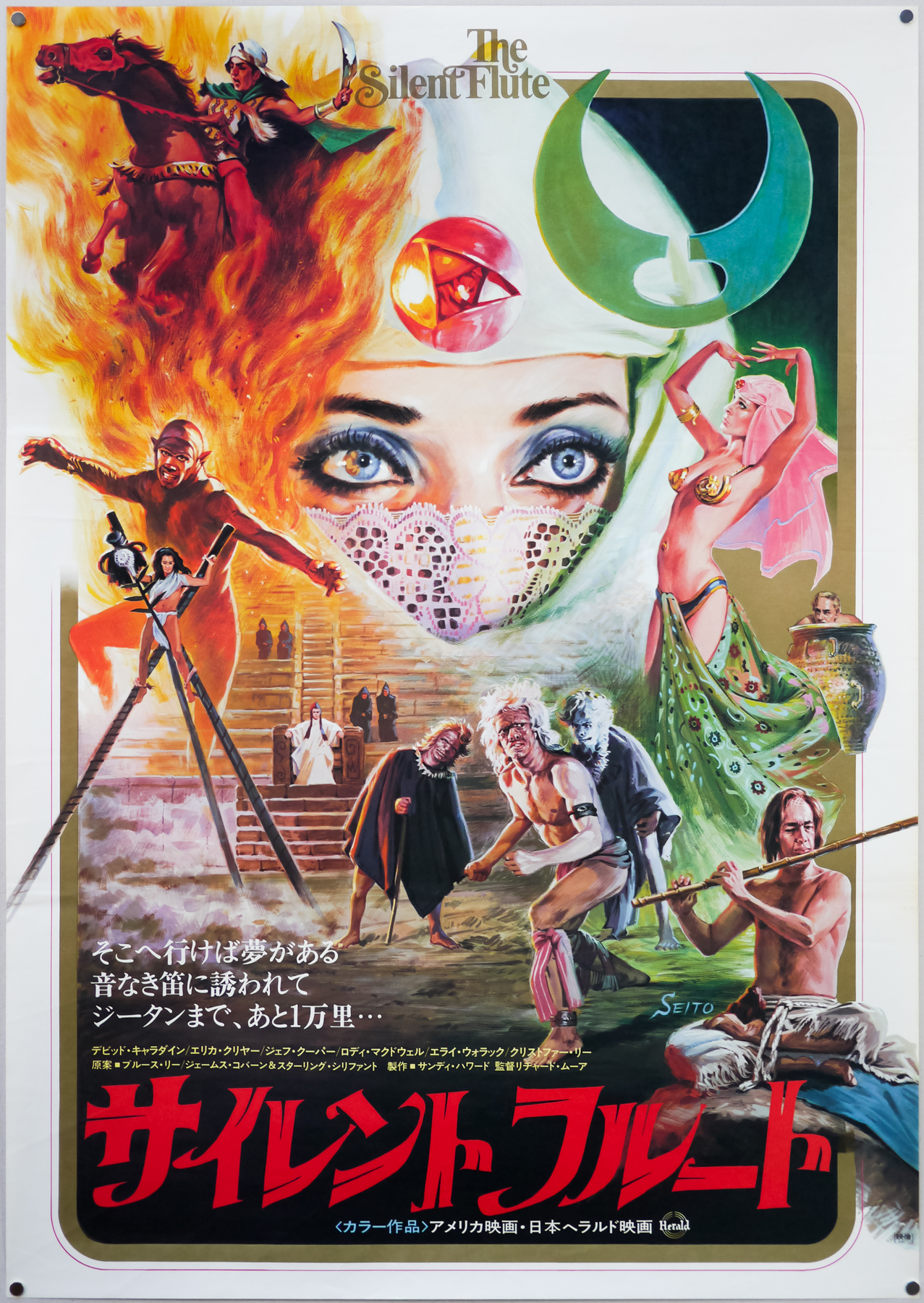
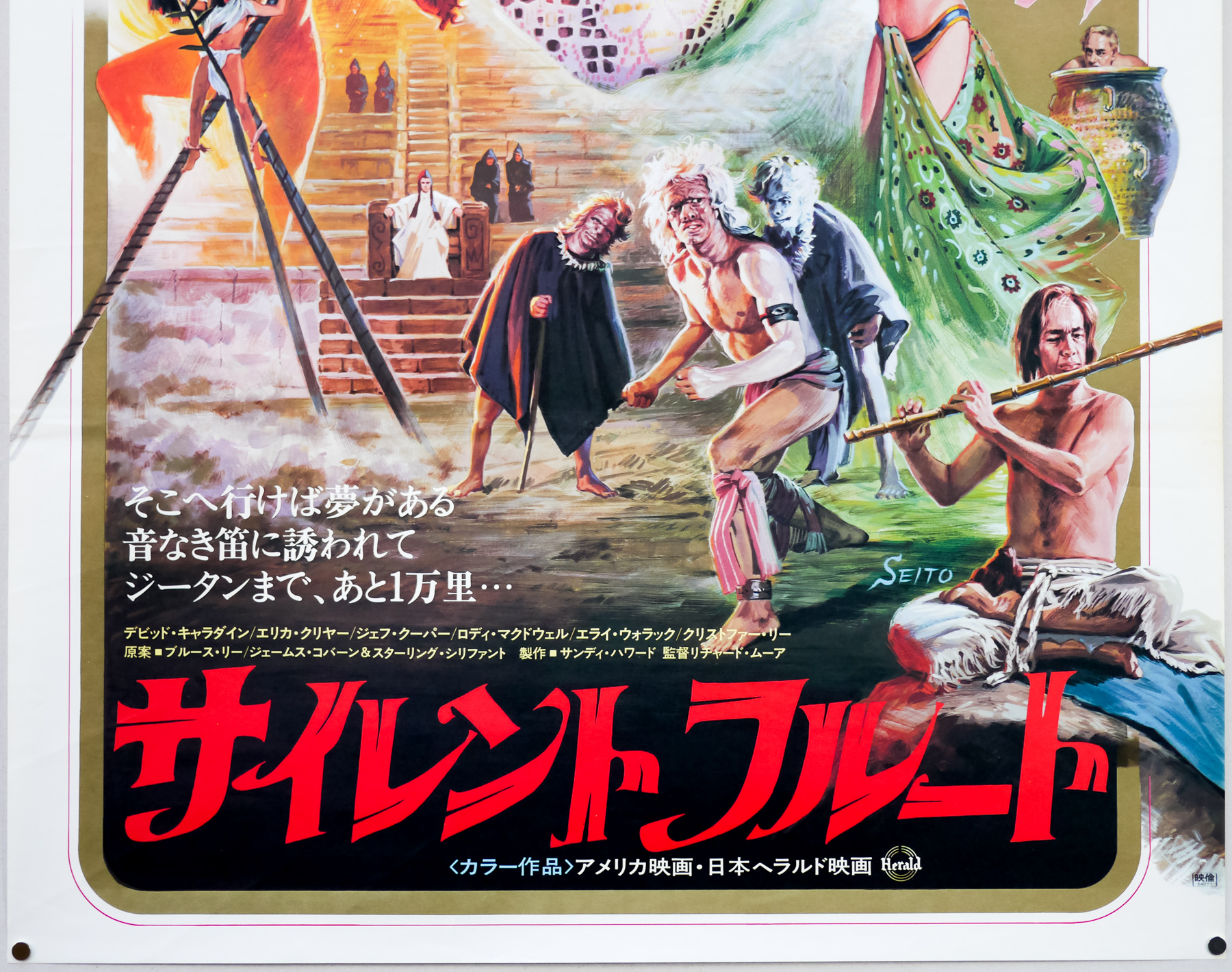
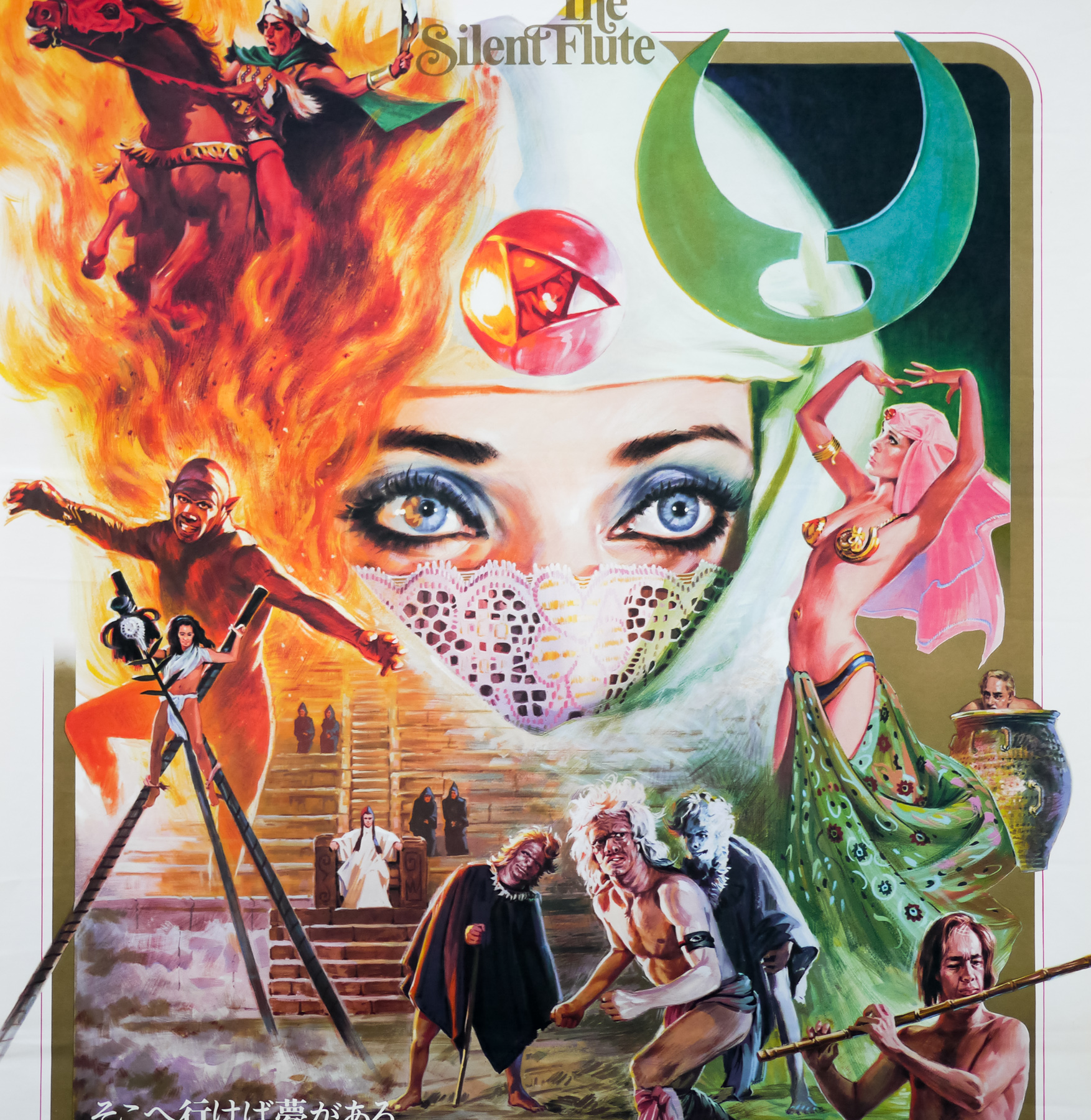
The Silent Flute / B2 / Japan

06.08.14

Poster Poster
Title
The Silent Flute
AKA
Circle of Iron (US/UK)
Year of Film
1978
Director
Richard Moore
Starring
David Carradine, Jeff Cooper, Christopher Lee, Roddy McDowall, Eli Wallach, Anthony De Longis, Earl Maynard, Erica Creer
Origin of Film
USA
Genre(s) of Film
David Carradine, Jeff Cooper, Christopher Lee, Roddy McDowall, Eli Wallach, Anthony De Longis, Earl Maynard, Erica Creer,
Type of Poster
B2
Style of Poster
--
Origin of Poster
Japan
Year of Poster
1979
Designer
Unknown
Artist
Seito
Size (inches)
20 5/16" x 28 13/16"
SS or DS
SS
Tagline
--

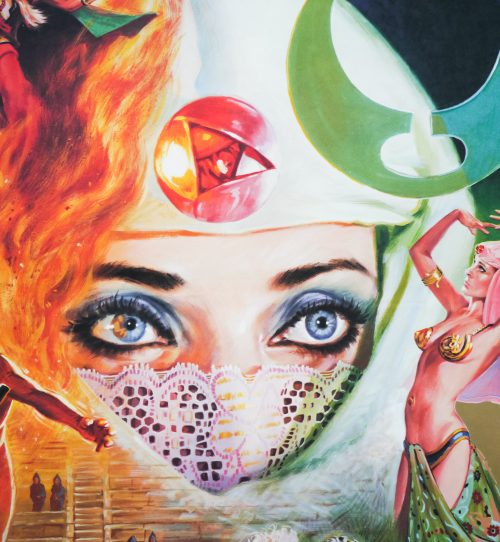
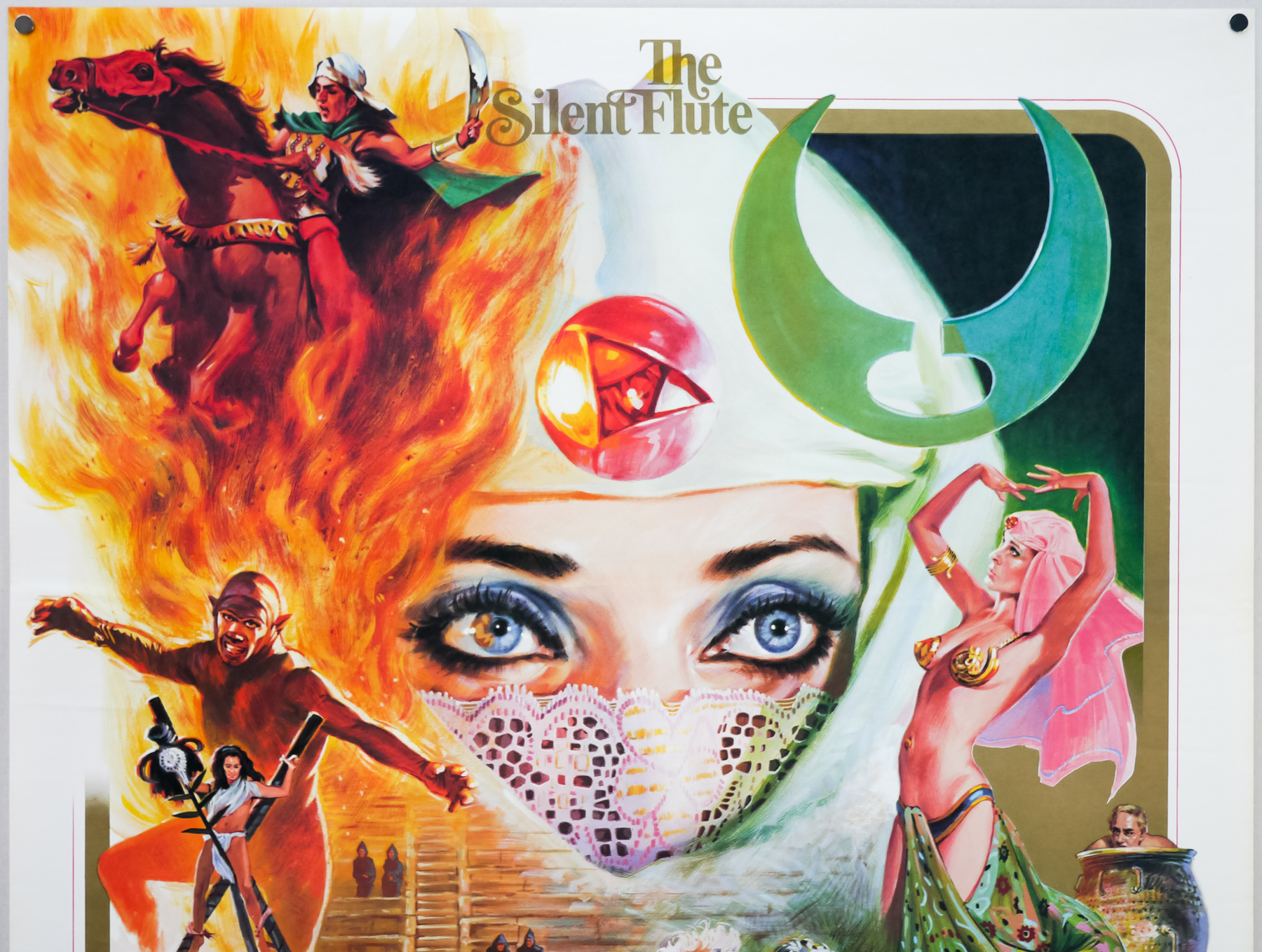
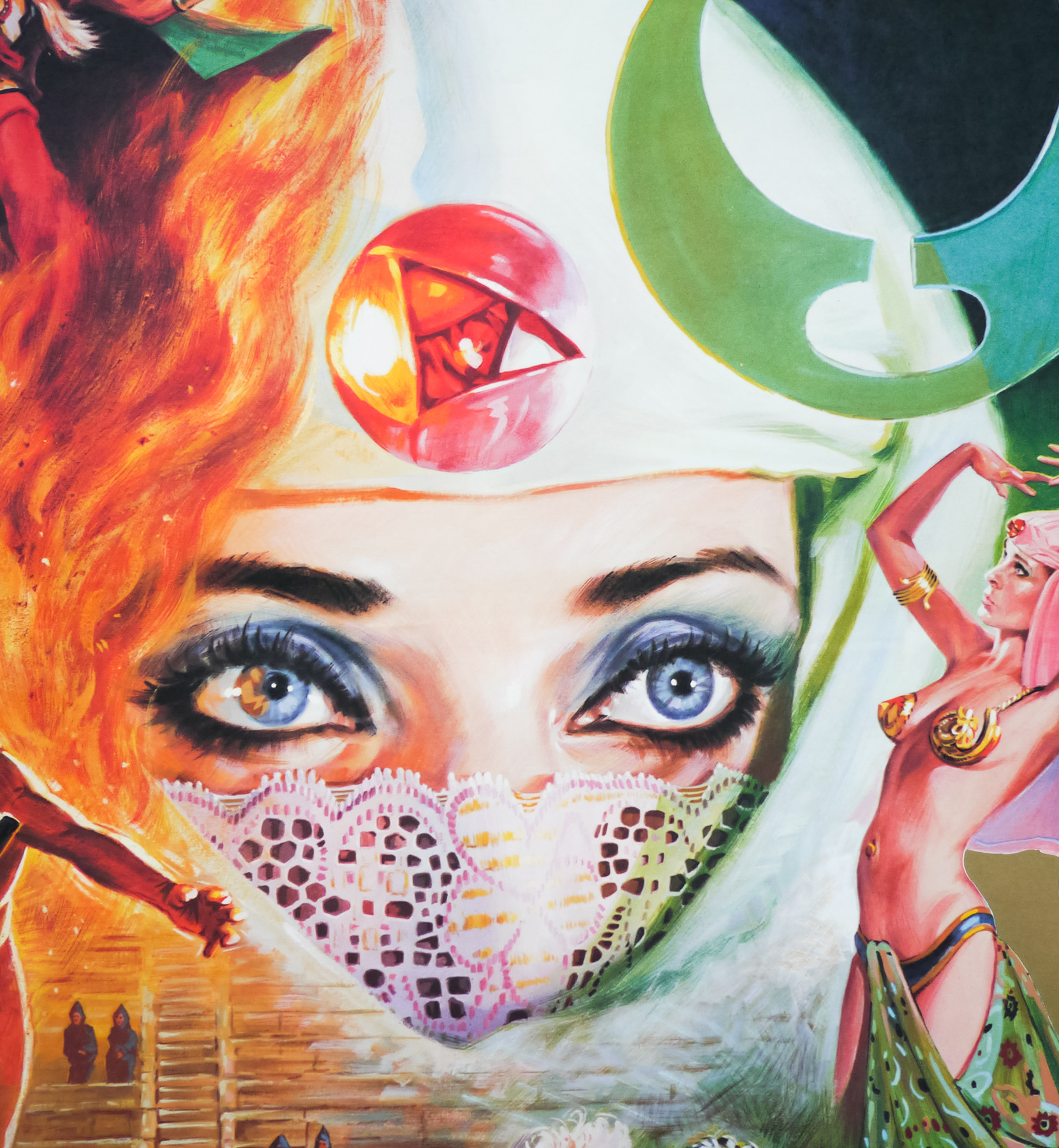
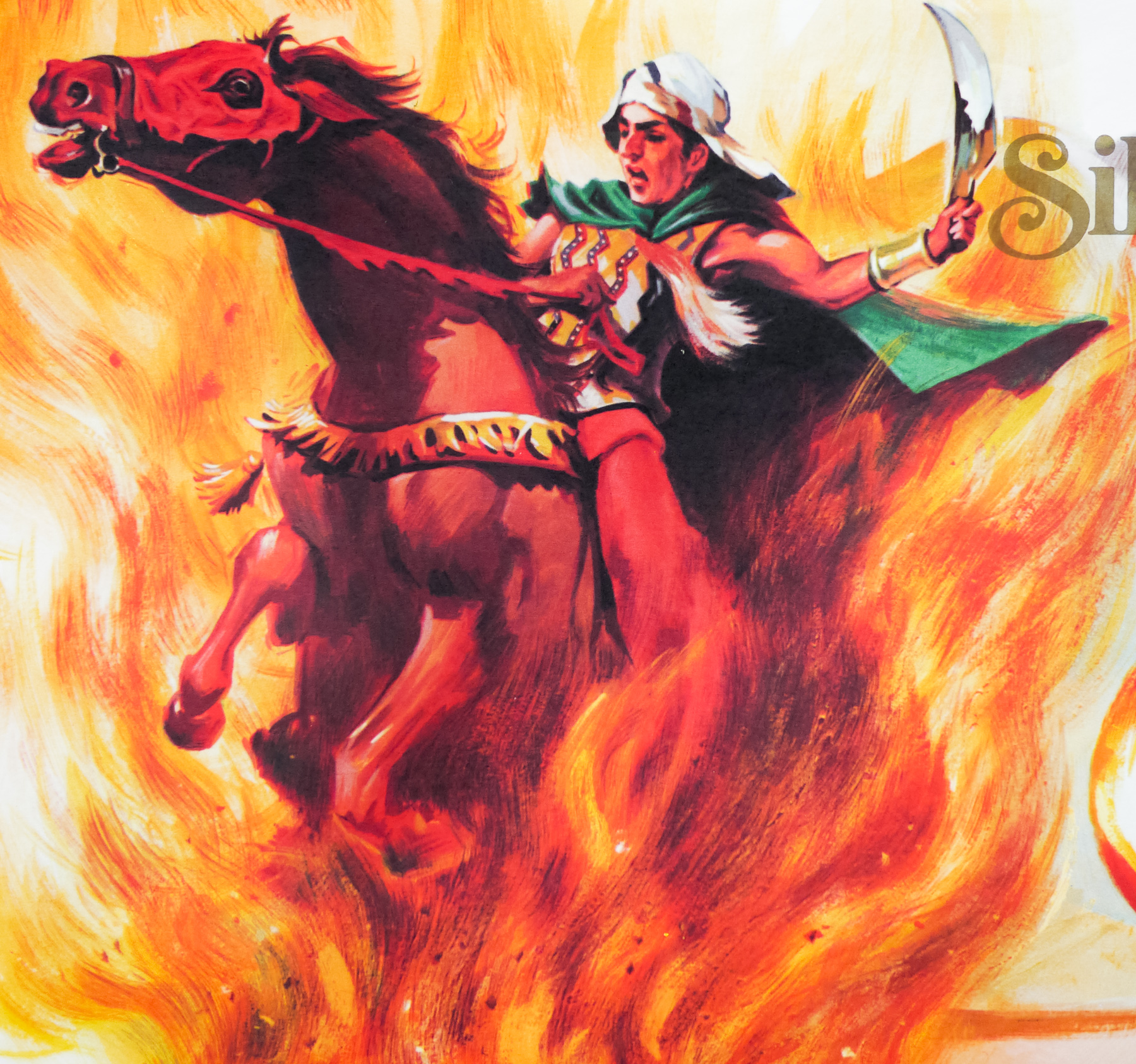
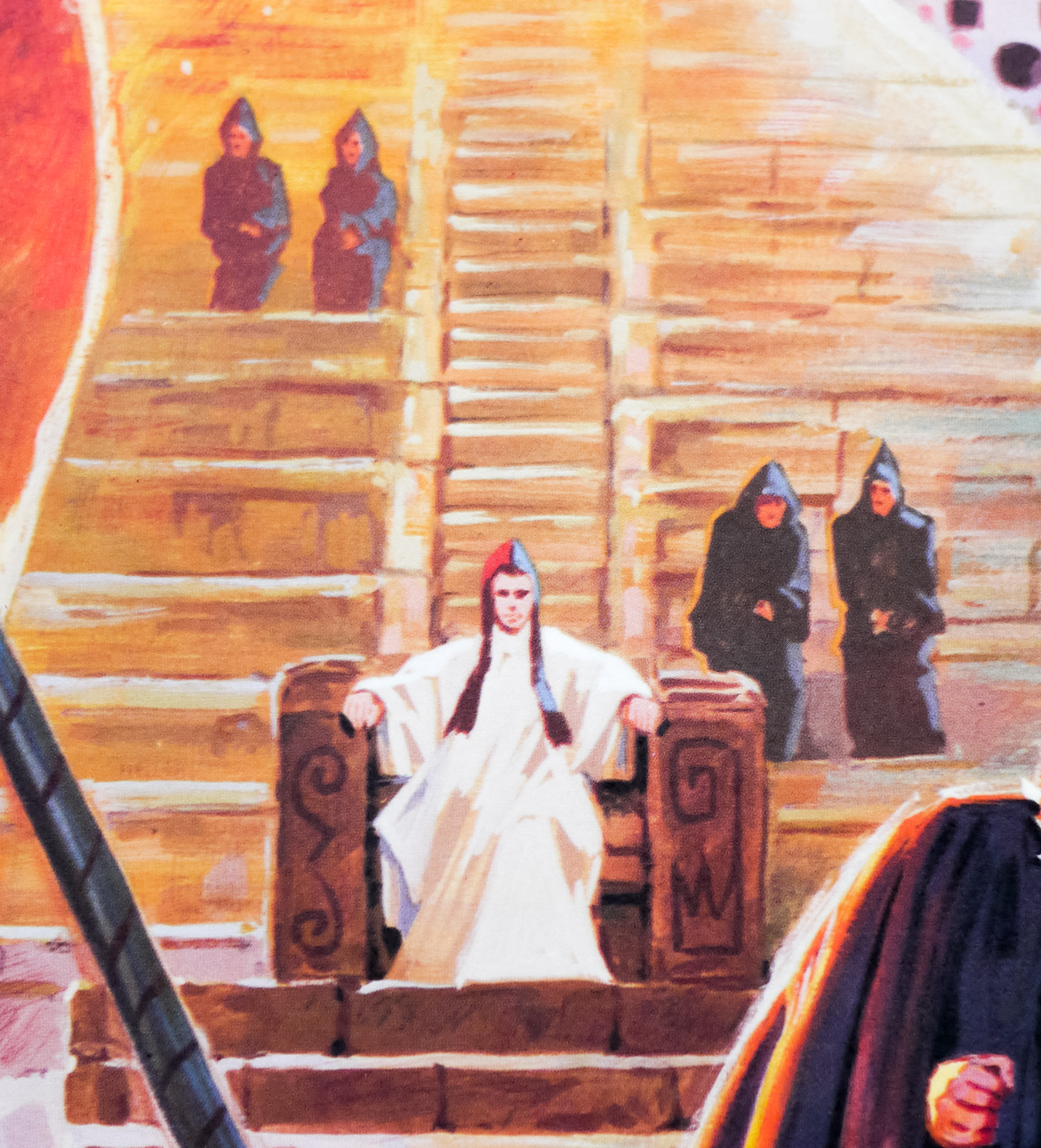
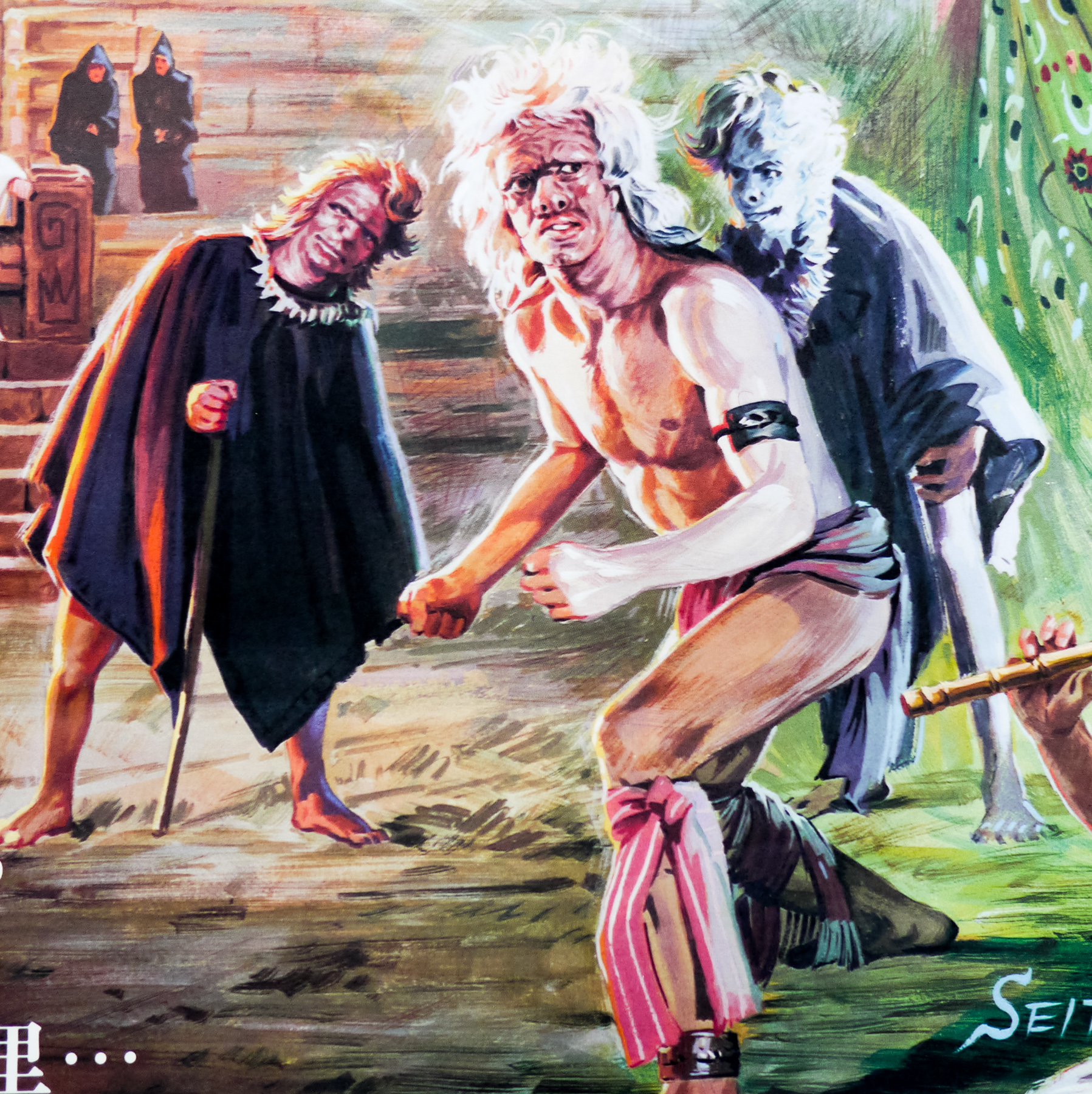
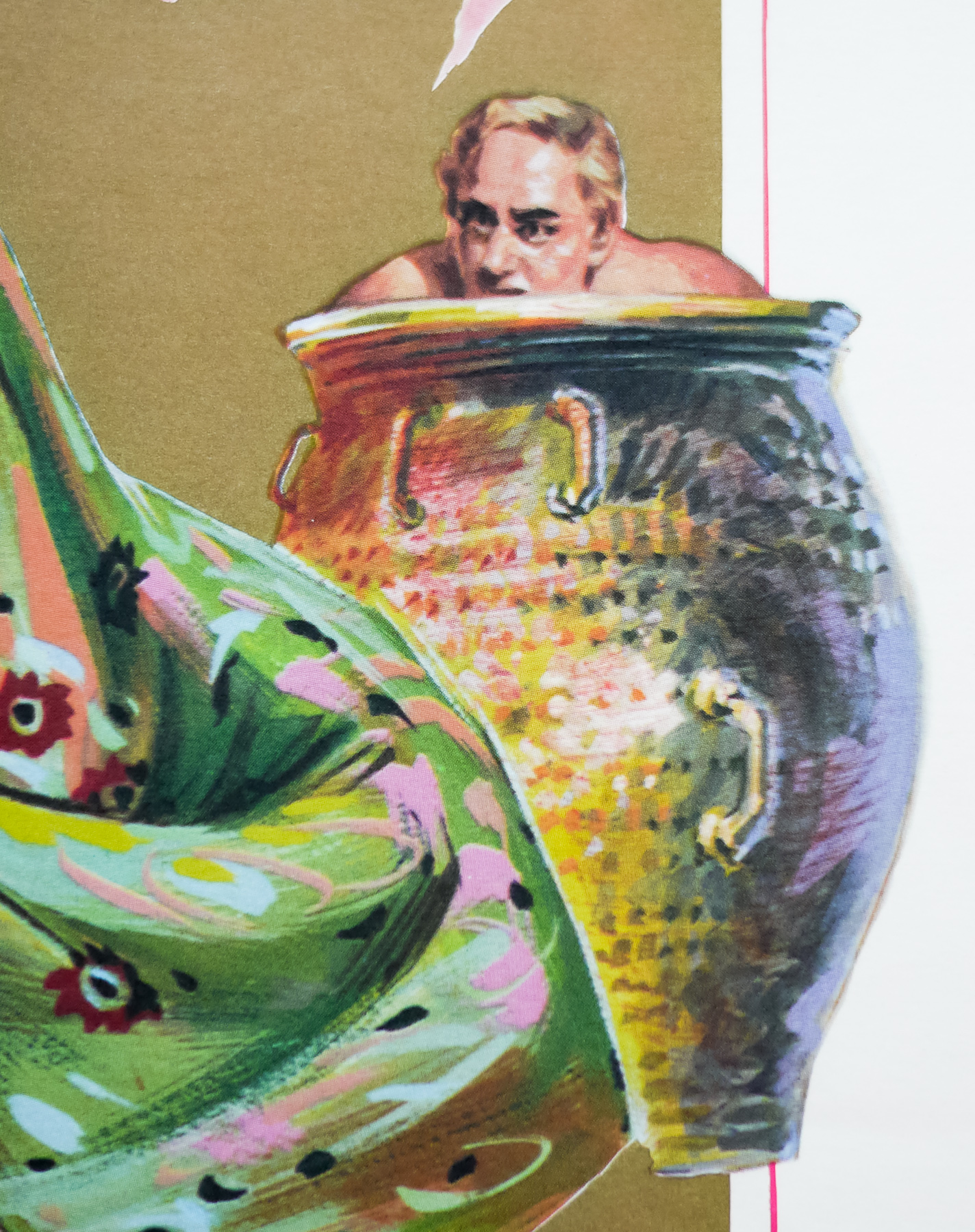
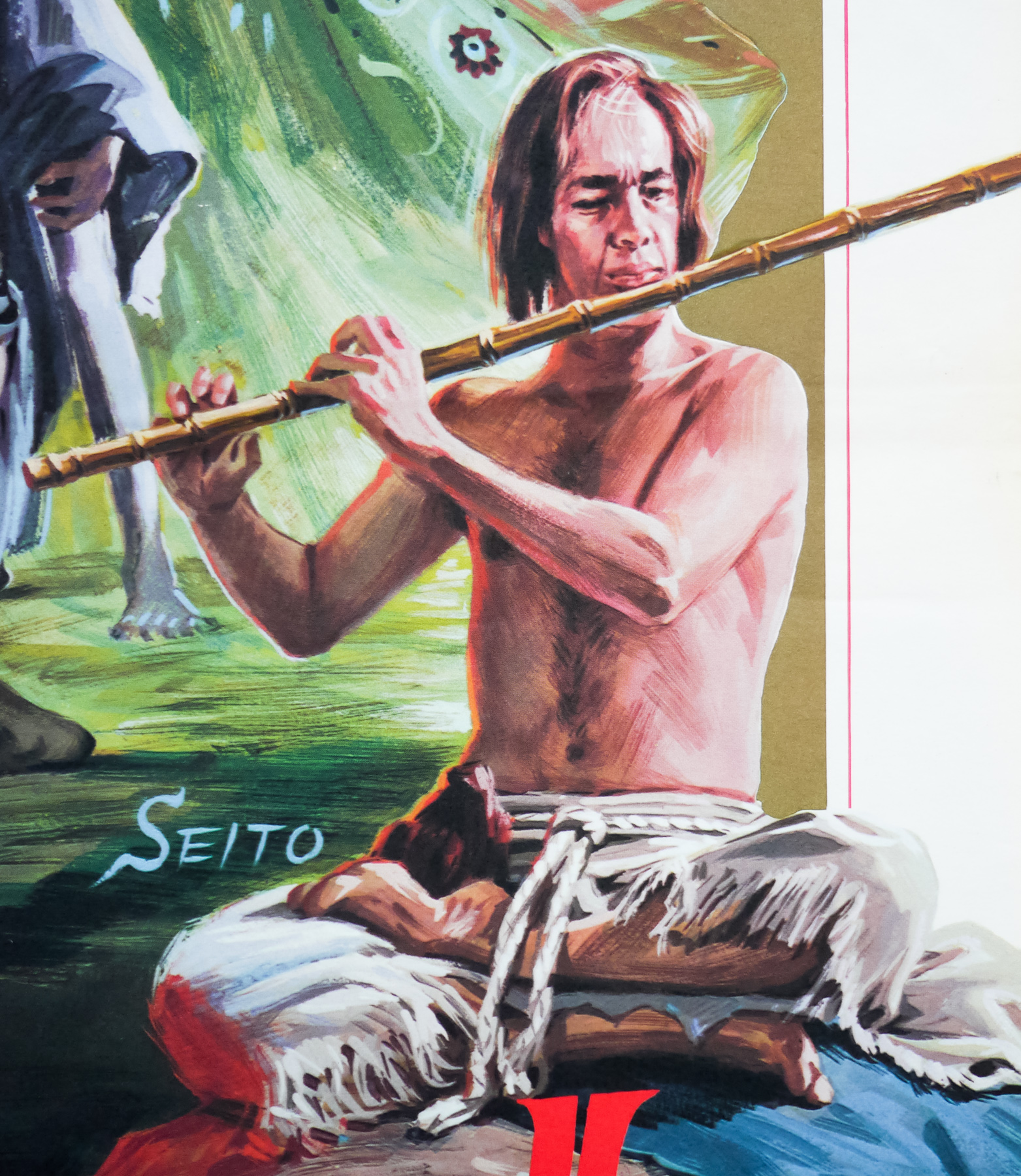
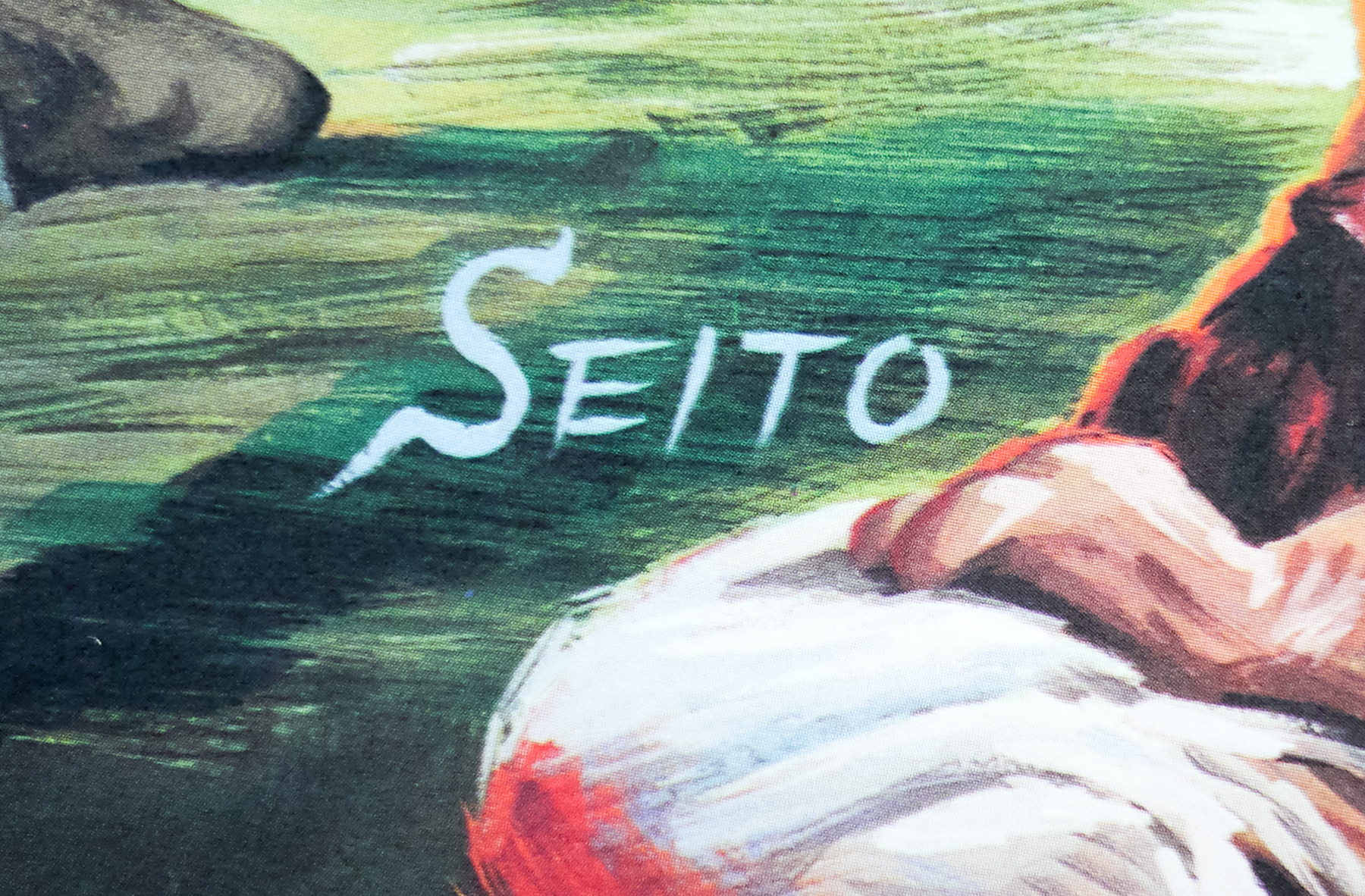
A colourful illustration by the artist known as Seito on this Japanese poster for the release of The Silent Flute (released in many countries as Cross of Iron), a strange cult oddity from the end of the 1970s. Originally conceived by Bruce LeeJames Coburn, and Stirling Silliphant at the end of the 1960s, the film was intended to be an introduction to Eastern philosophy and martial arts, but the project floundered following Lee’s untimely death. Silliphant and screenwriter Stanley Mann completed the screenplay in the mid-1970s and the rights were acquired by legendary actor David Carradine, at that time famous as the star of the TV series Kung Fu.

Carradine appears in the film in four roles that were originally intended for Bruce Lee but the lead character of Cord, a poodle-haired warrior, was played by the Canadian ‘actor’ Jeff Cooper, who somehow manages to get upstaged by his own abdominal muscles. To say he’s the weak link in the film would be an understatement and it’s literally impossible to take him seriously as the supposedly determined and proud hero who sets out on quest to find a wizard called Thetan and discover what is so important about the mysterious book he is said to protect. Almost all of Cord’s lines are uttered with a shit-eating grin and he has one of the most unintentionally hilarious laughs I’ve ever heard.

It doesn’t help that the script is at times impenetrable cod-philosophical twaddle, which was clearly meant to be profound but must have left most audiences expecting some martial arts action scratching their heads in confusion. One can only speculate that some of the ‘teachings’ were hangovers from the original script versions overseen by Bruce Lee, and you can’t help but wonder if he’d been partaking in a little bit too much Mary Jane at the time. Carradine is at least entertaining enough in his various roles, although he sports some questionable attire, terrible monkey make-up and a spectacularly bad moustache. Not even the appearance of Christopher Lee as Thetan can save the film since he seems to be wearing a costume better suited for a character from the Moomins. He was clearly in it for the bottom line.

Whilst the film isn’t much cop, this Japanese poster is rather excellent and the artwork is unique to the Japanese campaign. Seito is one of my favourite Japanese artists who was responsible for several fantastic illustrated posters during the 1970s and 1980s. Little is known about the man himself, even in his native country. 

To see the other posters I’ve collected by Seito click here.

Star Wars and Empire Strikes Back / double bill / quad / UK

02.09.14

Poster Poster

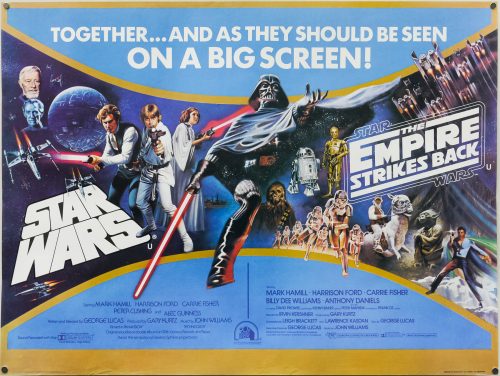
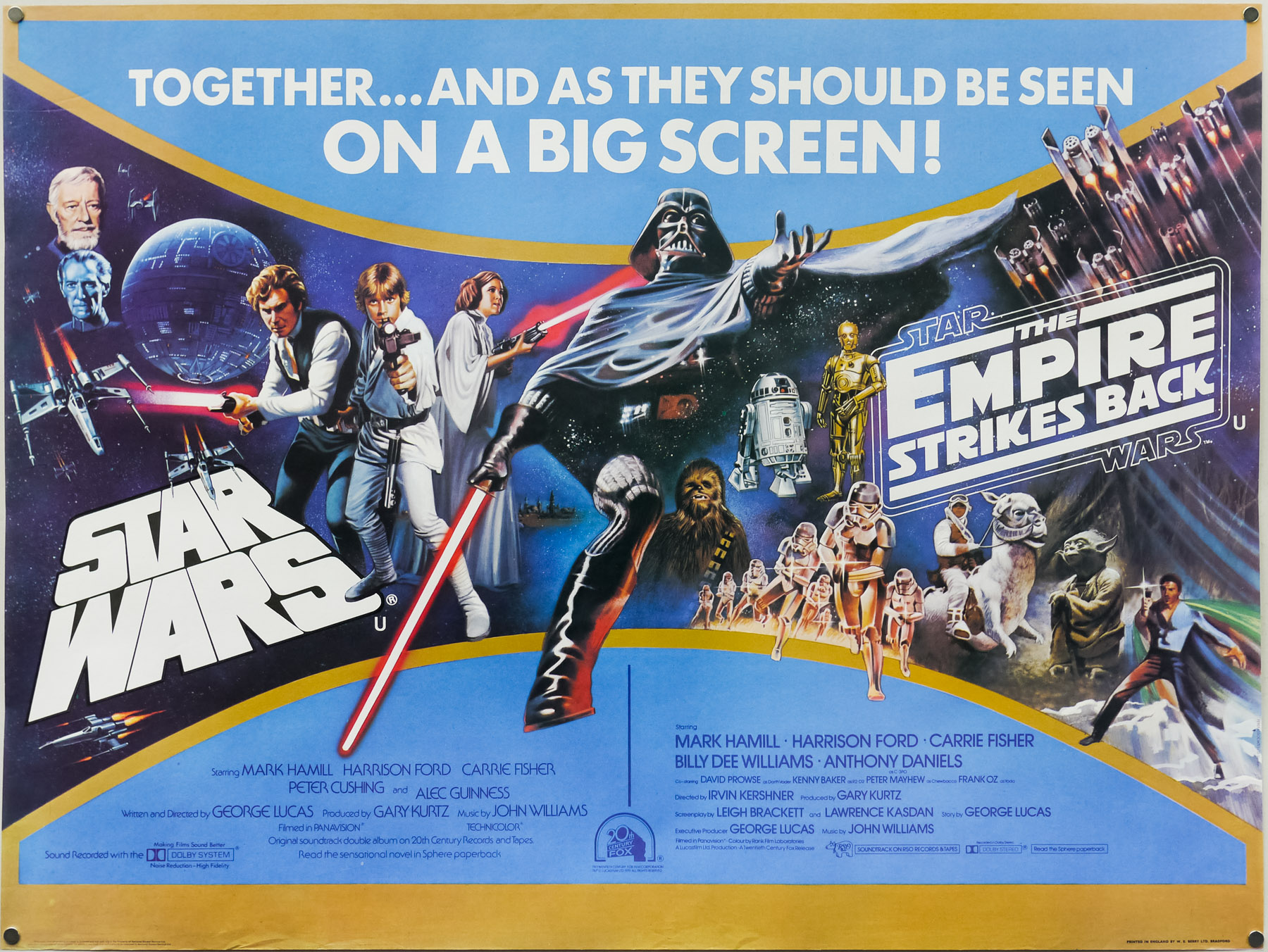
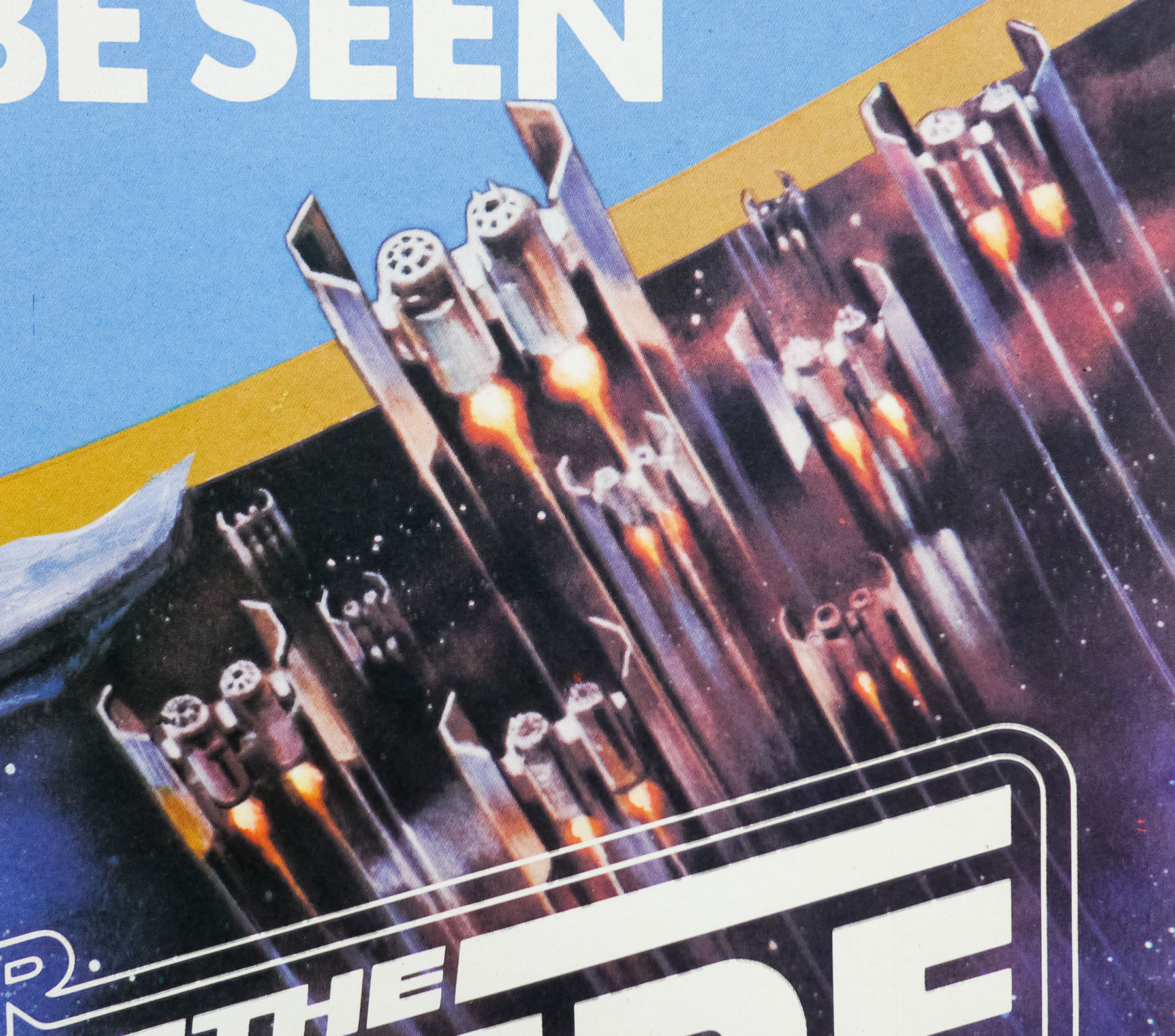
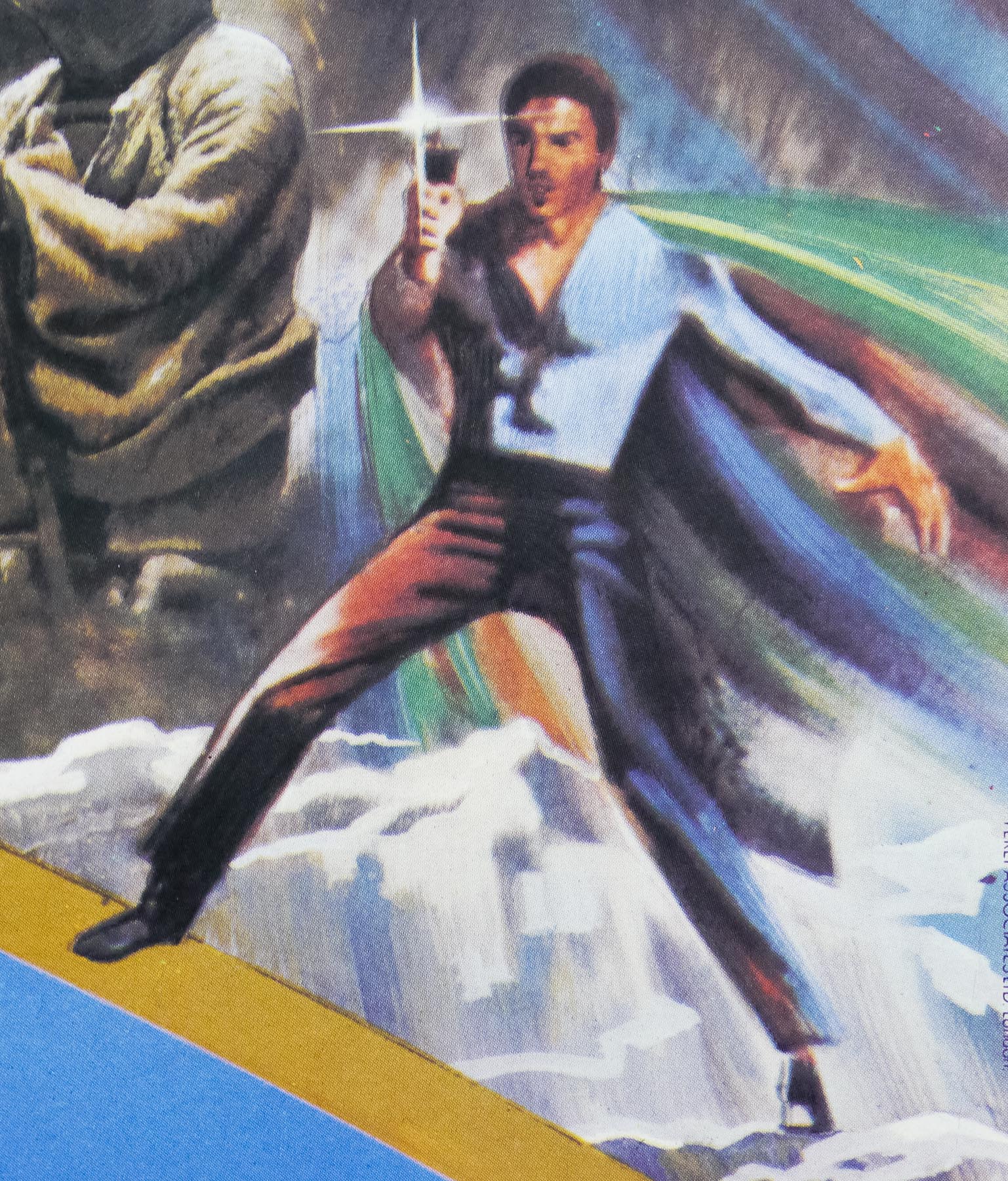
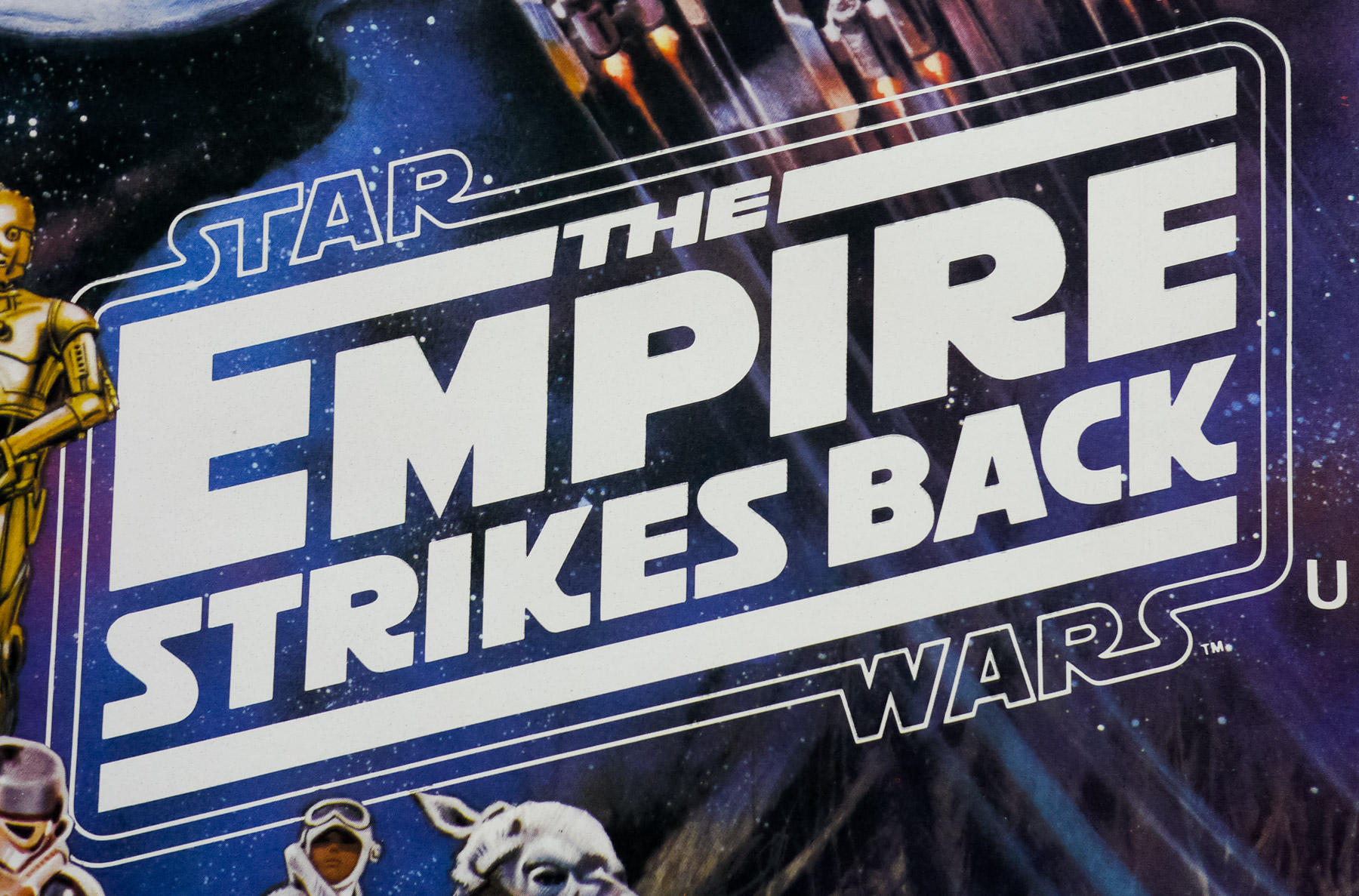
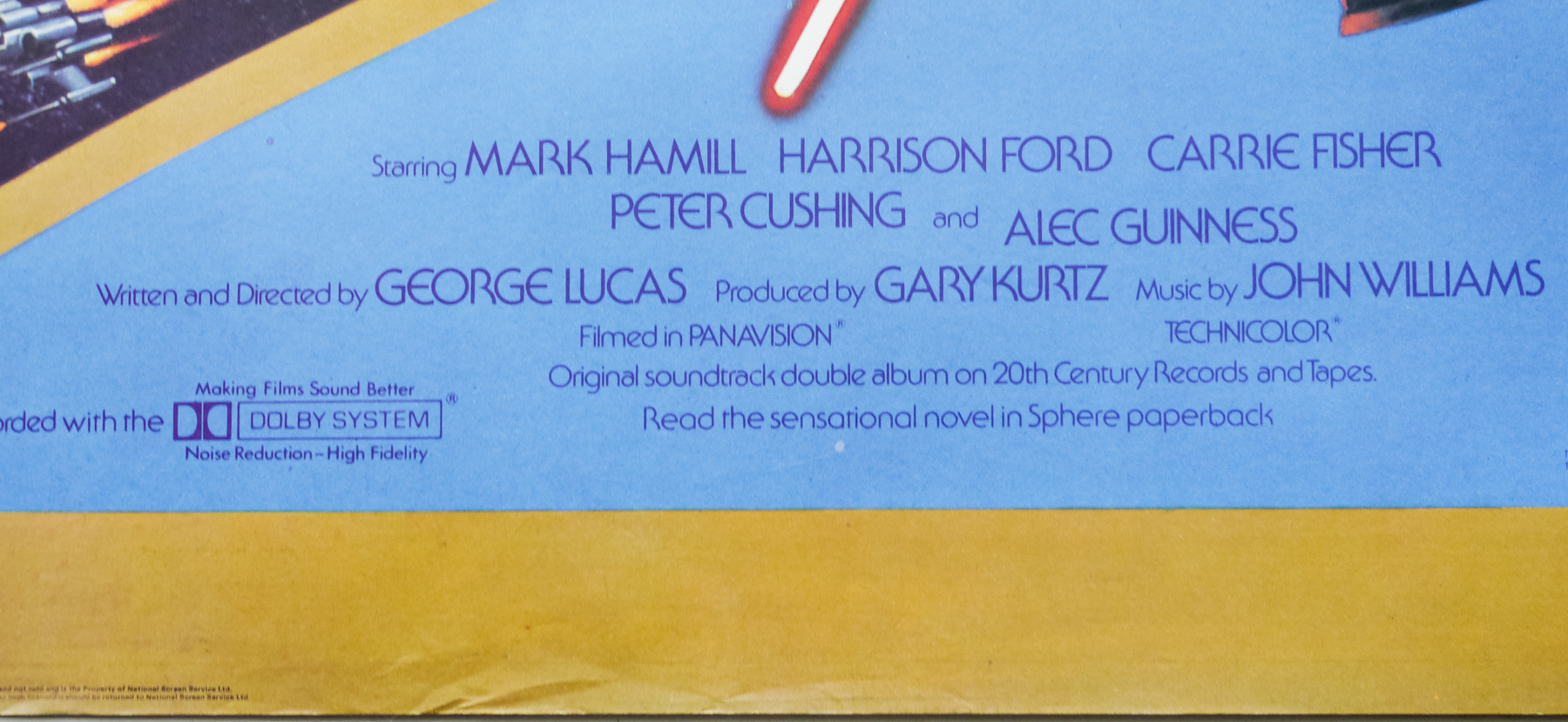
Following the unprecedented success of the original Star Wars, released in 1977 to worldwide audience acclaim, expectations were high for the sequel which was put into production a few months after its release. Three years later, The Empire Strikes Back arrived in cinemas and was met with huge audience and critical acclaim, firmly cementing the series’ place in the hearts of millions of fans across the globe. A less well-received third part of the original trilogy, Return of the Jedi, and a lacklustre set of prequel films failed to dampen audience enthusiasm for the franchise and a new film adventure is set to be released at the end of 2015.

To capitalise on the successful release of the films, particularly before home video was a reality, distributor 20th Century Fox decided to release a double-bill of both Star Wars and Empire Strikes Back in to cinemas towards the end of 1980. This event was repeated across the world but this British quad is unique to this country and is the result of the amalgamation of the original quads for both films, plus an extra photographic element not included on either in the figure of Jedi master Yoda, which was probably added due to the characters’ popularity.

The original Star Wars quad was designed and illustrated by the late, great British artist Tom Chantrell whose dynamic and colourful work featured on hundreds of posters over a forty year period. The artist sadly passed away in 2001 but last year his widow Shirley launched his official website, which showcases his work and features a great biography written by Sim Branaghan, author of the must-own book British Film Posters. Chantrell illustrated many classic poster designs, including several Hammer posters such as the brilliant quad for ‘One Million Years B.C.’, and he was also responsible for many other pieces of iconic poster artwork. I have a number of other designs by Chantrell on this site and you can read an exclusive interview with Shirley by clicking here.

The Empire Strikes Back quad features the artwork painted for the US style B one sheetwhich was by the American artist Tom Jung, perhaps best known for his iconic ‘style A’ one sheet that he painted for the release of the original Star Wars. Jung was a prolific designer and illustrator for film campaigns from the 1950s through to the 1980s. IMPAwards features a gallery of his work and his Wikipedia article has a selected list of the posters he worked on. The other posters I’ve collected by him can be seen here.

Another special quad was put together for a triple-bill event after the release of Return of the Jedi, which again featured elements of the artwork from all three separate release quads. Note that this poster can be found undersized at around 28″ x 40″ and this was because several hundred copies were machine trimmed to be used in special frames on the London Underground, a fate which befell a number of posters around the end of the 1970s and early 1980s.


The Empire Strikes Back / B1 / Poland

08.10.14

Poster Poster
Title
The Empire Strikes Back
AKA
--
Year of Film
1980
Director
Irvin Kershner
Starring
Mark Hamill, Harrison Ford, Carrie Fisher, Billy Dee Williams, Anthony Daniels, David Prowse, Peter Mayhew, Kenny Baker, Frank Oz
Origin of Film
USA
Genre(s) of Film
Mark Hamill, Harrison Ford, Carrie Fisher, Billy Dee Williams, Anthony Daniels, David Prowse, Peter Mayhew, Kenny Baker, Frank Oz,
Type of Poster
B1
Style of Poster
--
Origin of Poster
Poland
Year of Poster
1983
Designer
Jakub Erol
Artist
Jakub Erol
Size (inches)
26 4/16" x 38 3/16"
SS or DS
SS
Tagline
--

This is the B1 poster for the original Polish release of The Empire Strikes Back, which was one of the most anticipated sequels in the history of cinema following on from the unexpected international success of George Lucas’ original Star Wars (1977). The first film wasn’t released in Poland until 1979 and Empire Strikes Back appeared in 1983, the same year that the original trilogy came to an end in most other markets with Return of the Jedi (released a year later in Poland).

This highly-stylised image, the centre of which resembles Han Solo (Harrison Ford) in the outfit he wears during the opening scenes on the ice planet of Hoth, was created by the designer and artist Jakub Erol who was born in Zamość in 1941 and graduated from the Warsaw Academy of Fine Arts in 1968. He worked as a prolific poster artist for over 25 years and designed several iconic images for both Polish and American films. Some of his other poster highlights include the bizarre image he conjured up for Ridley Scott’s Alien, a striking design for James Cameron’s The Terminator and the poster for Robocop. One of his best, in my opinion, is the skull-style poster he created for the release of Raiders of the Lost Ark.

The Polishposter.com website features many of his designs, several which are for sale, and the Polish cinemaposter.com website also features three pages of his work. This list of his designs on the same website gives you an idea of how prolific an artist he was.

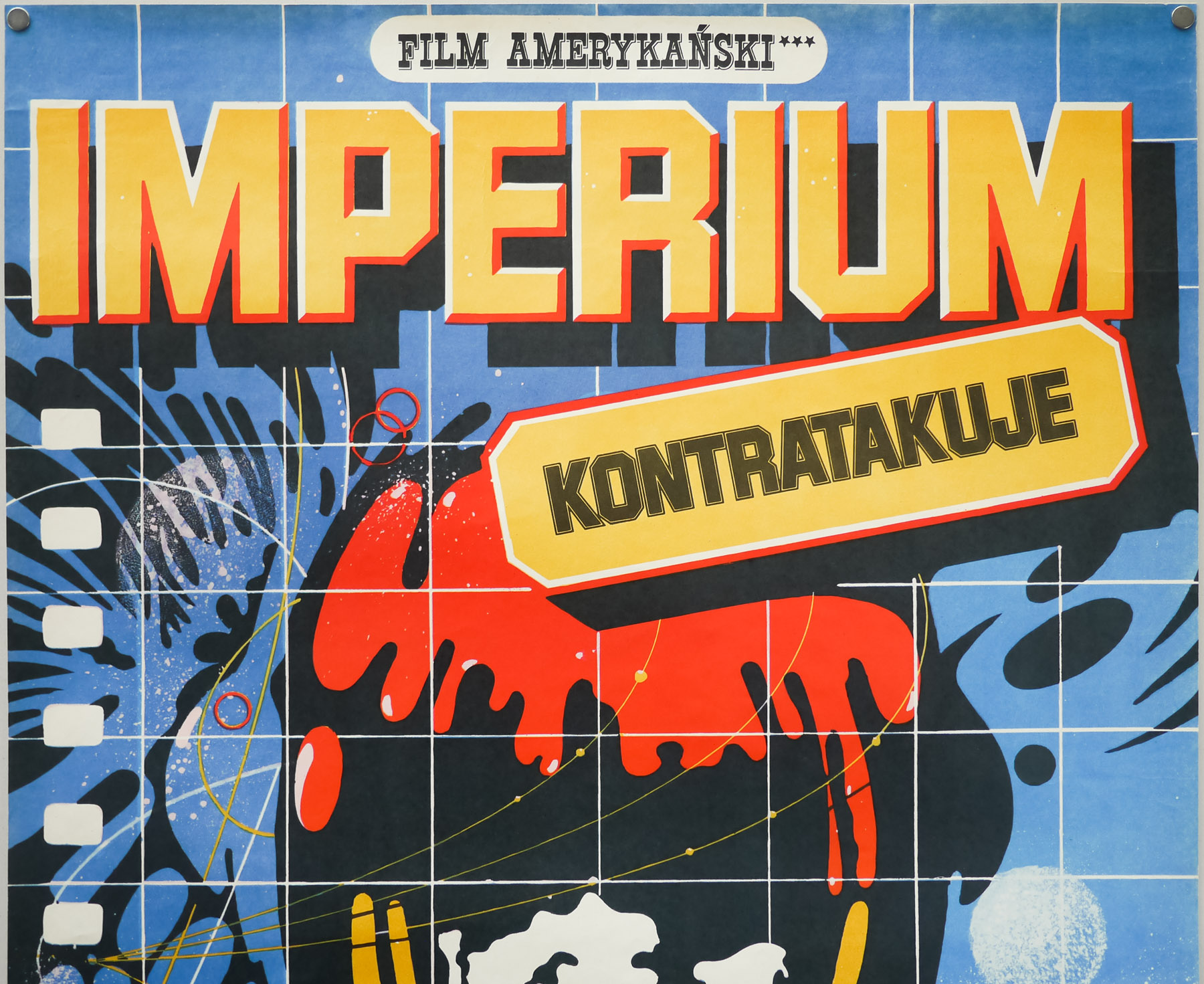
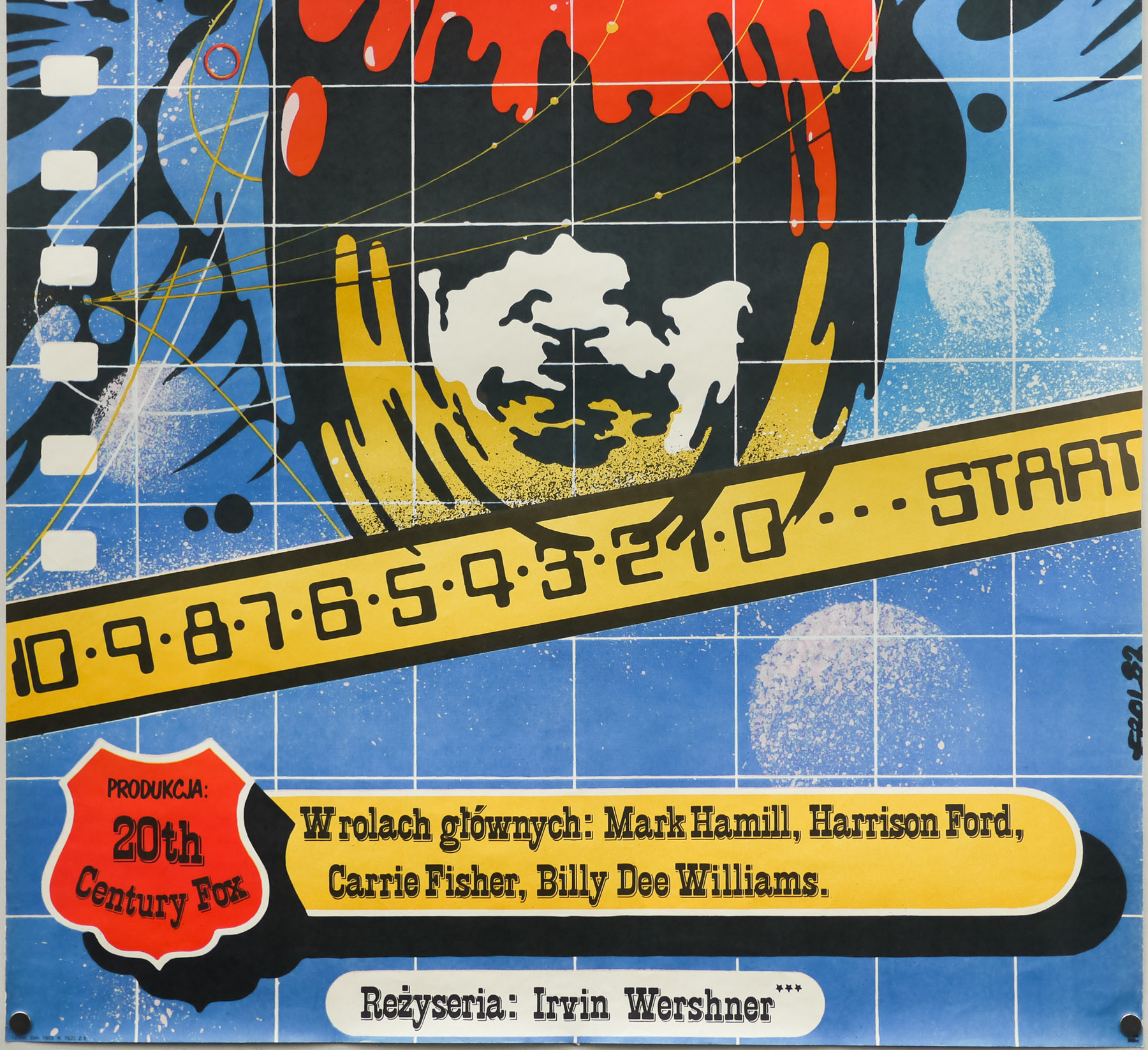
Note that the name of director Irvin Kershner has been misspelled at the bottom of the poster (Wershner).

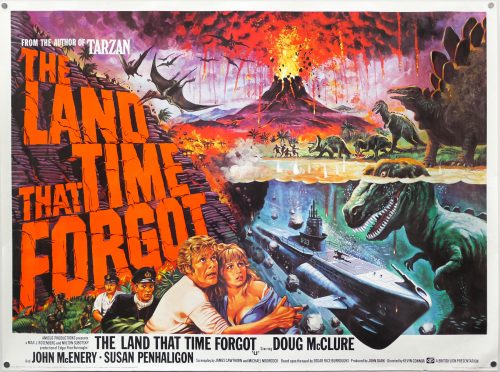
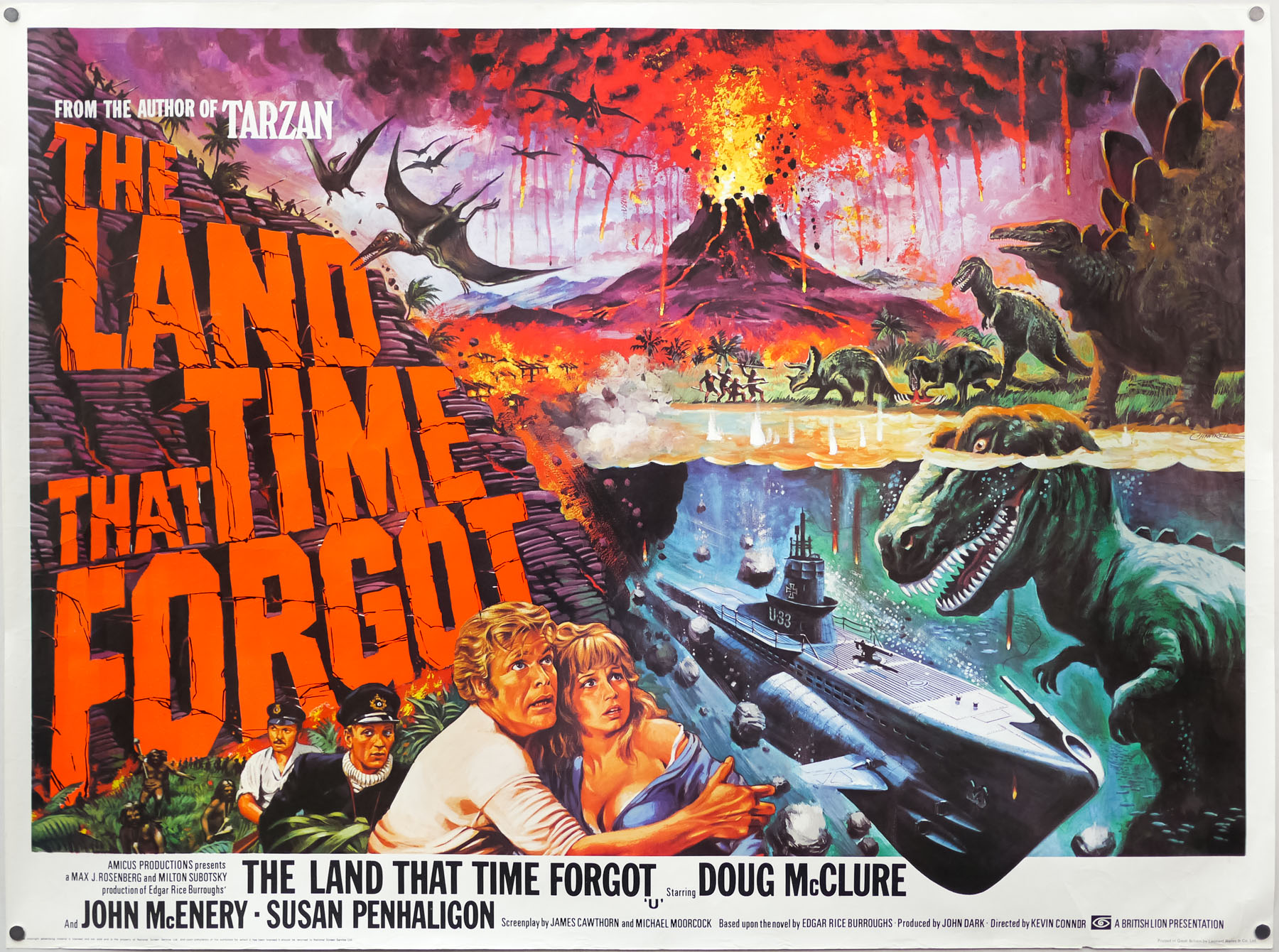
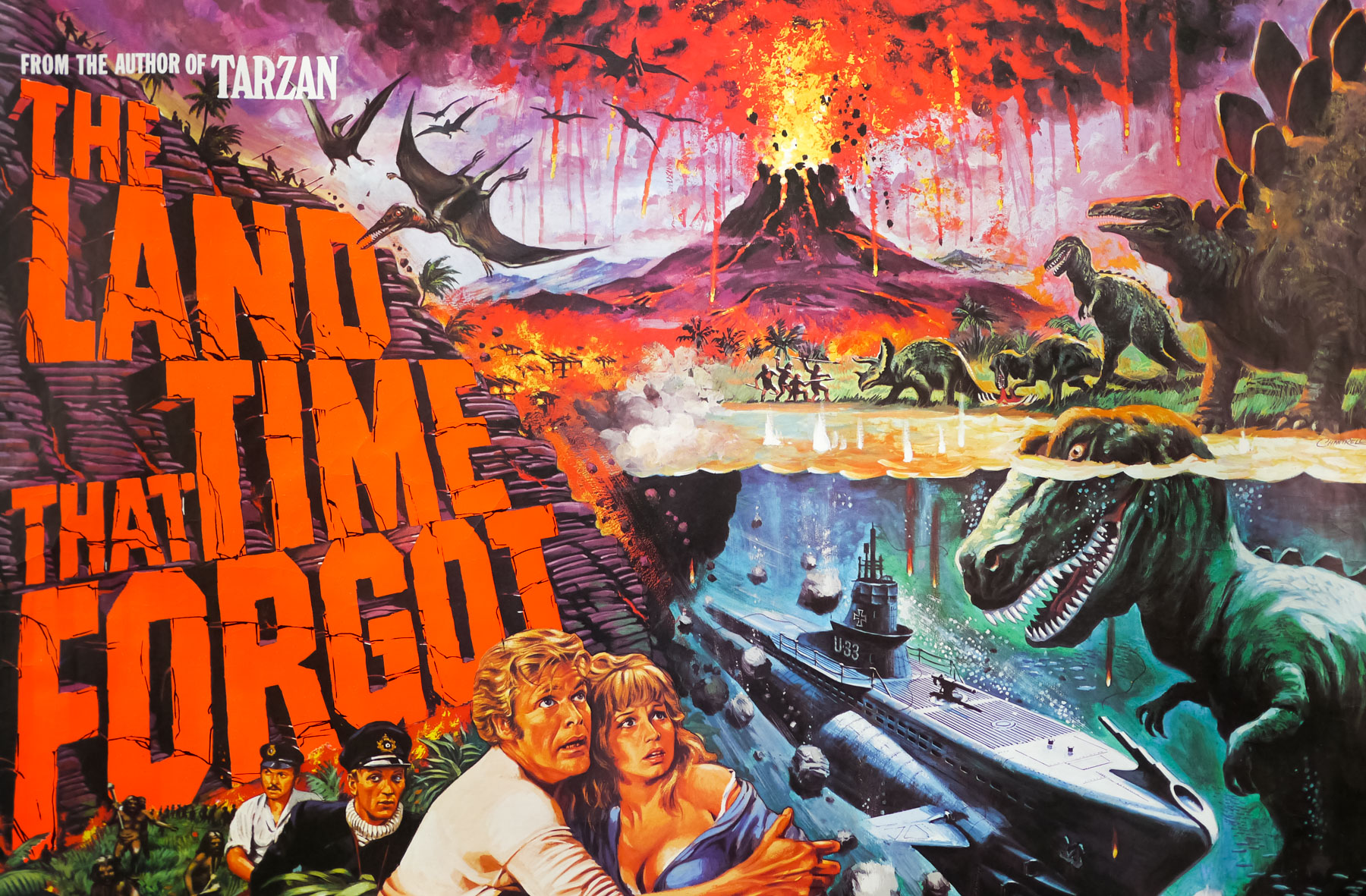
The Land That Time Forgot / quad / UK

24.10.14

Poster Poster
Title
The Land That Time Forgot
AKA
--
Year of Film
1975
Director
Kevin Connor
Starring
Doug McClure, John McEnery, Susan Penhaligon, Keith Barron, Anthony Ainley, Godfrey James, Bobby Parr
Origin of Film
UK | USA
Genre(s) of Film
Doug McClure, John McEnery, Susan Penhaligon, Keith Barron, Anthony Ainley, Godfrey James, Bobby Parr,
Type of Poster
Quad
Style of Poster
--
Origin of Poster
UK
Year of Poster
1975
Designer
Tom Chantrell
Artist
Tom Chantrell
Size (inches)
30" x 40"
SS or DS
SS
Tagline
From the author of Tarzan

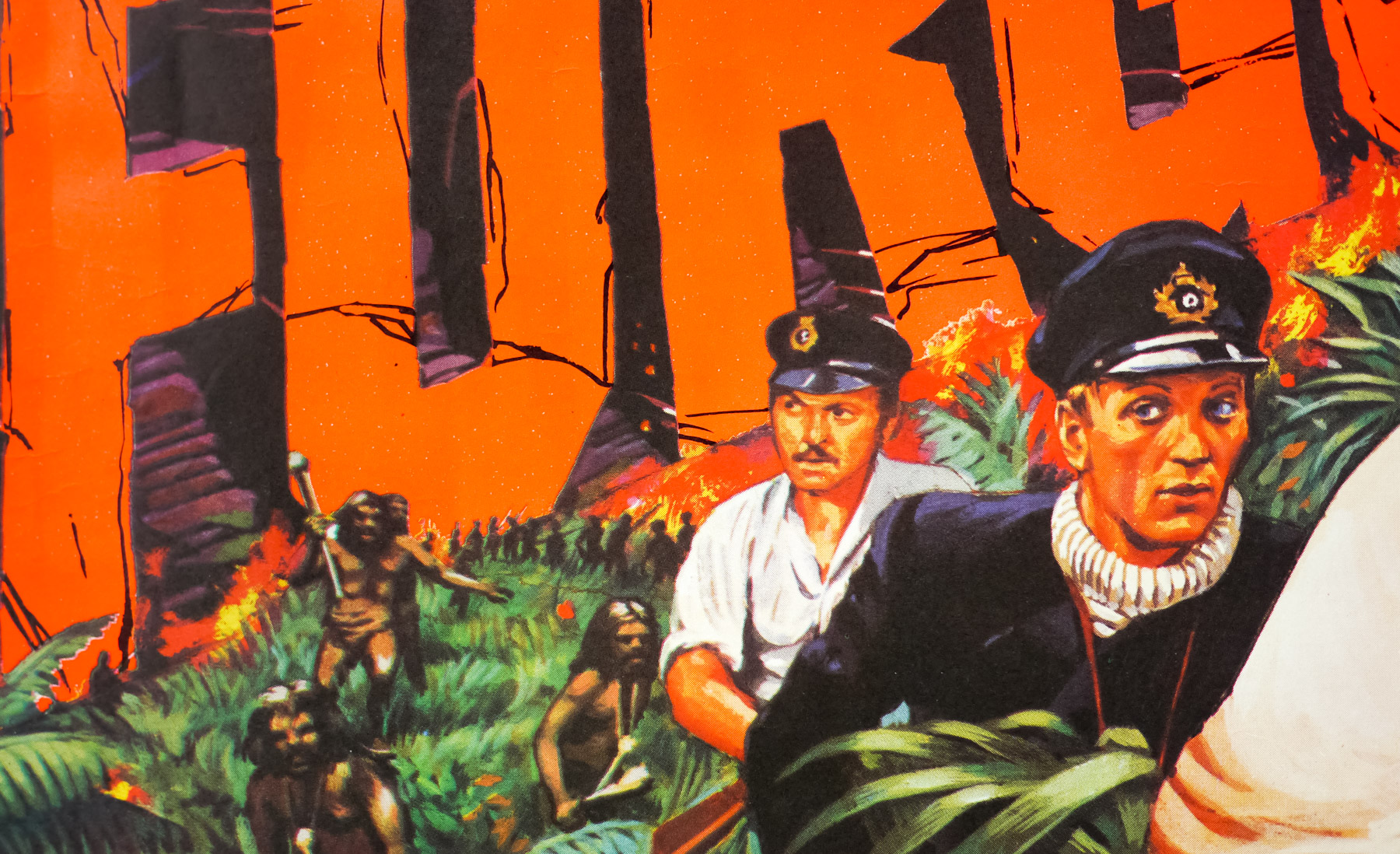
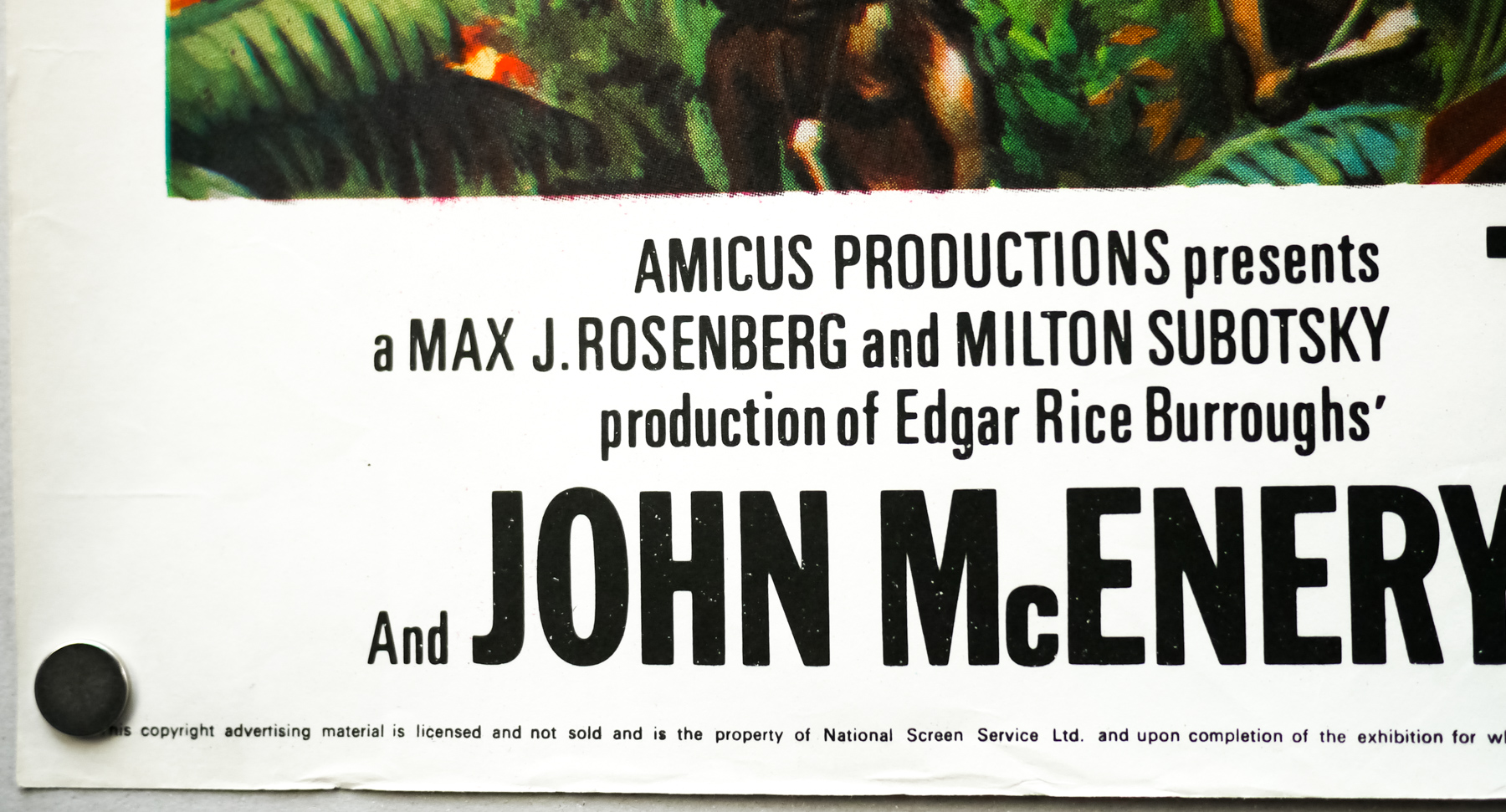
The Land That Time Forgot was the first entry in a series of British sci-fi/fantasy b-movies that were directed by Kevin Connor and starred the prolific American actor Doug McClure, known for his hammy leading man performances (McClure was one of the inspirations for The Simpsons’ Troy ‘You may remember me from…’ McClure). The series continued with At the Earth’s Core (1976) and The People That Time Forgot (1977), and ended with Warlords of Atlantis (1978). The initial three were shepherded through production by Max Rosenberg and Milton Subotsky’s Amicus Productions, which was based at Shepperton studios and is perhaps best remembered for its series of portmanteau horror films. By the time Warlords of Atlantis was released the company was almost defunct and so EMI Films stepped in and produced it, utilising many of the same cast and crew as the previous films.

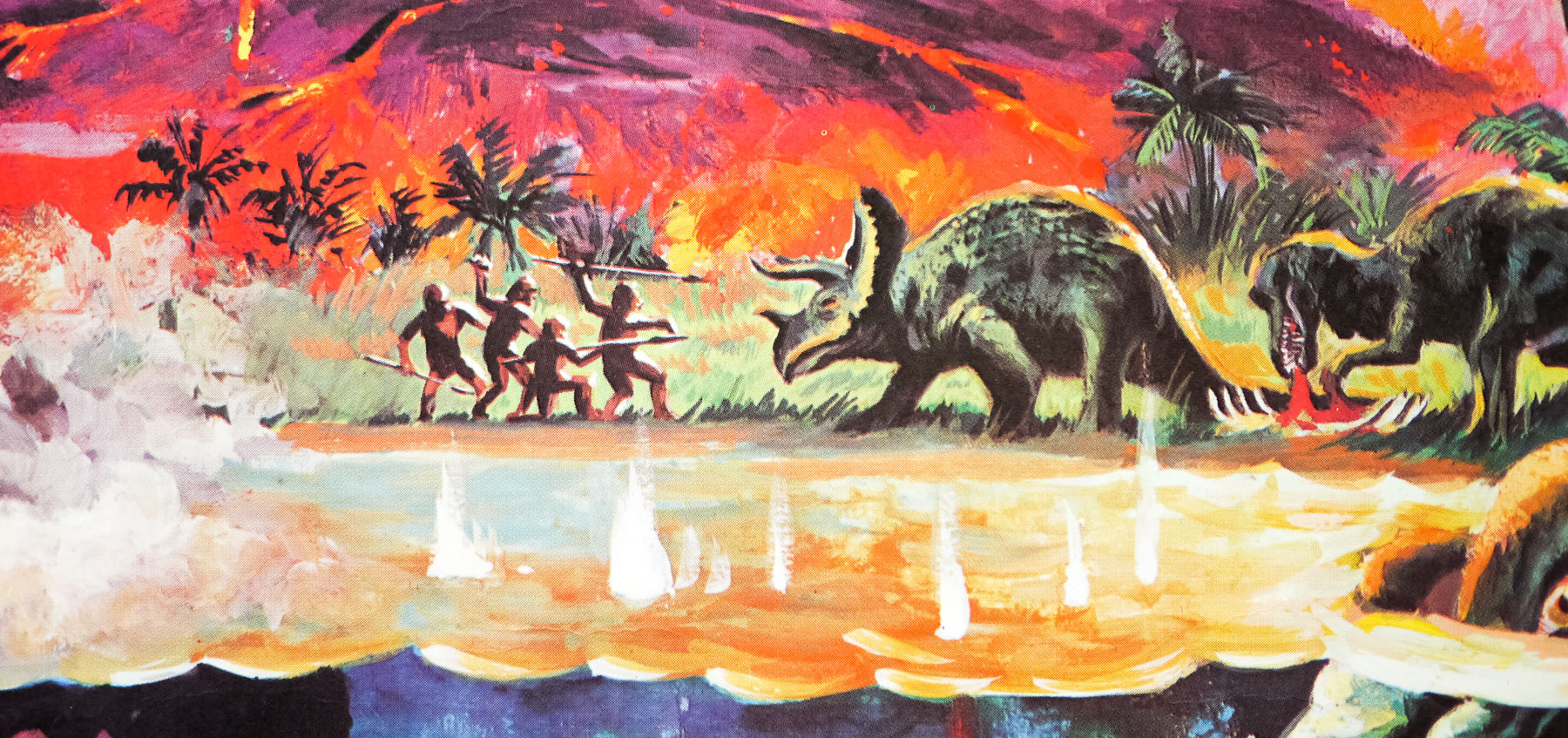
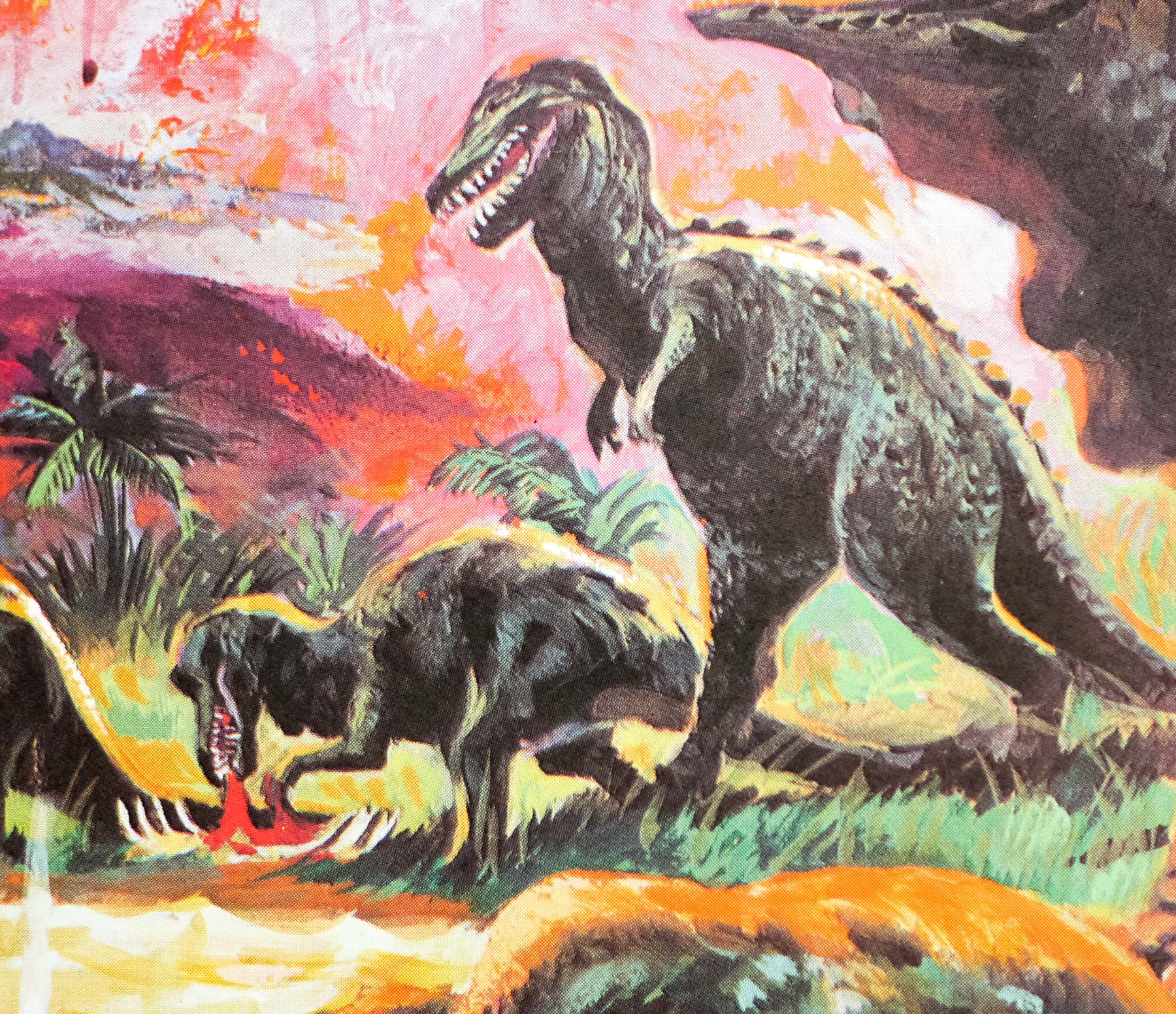
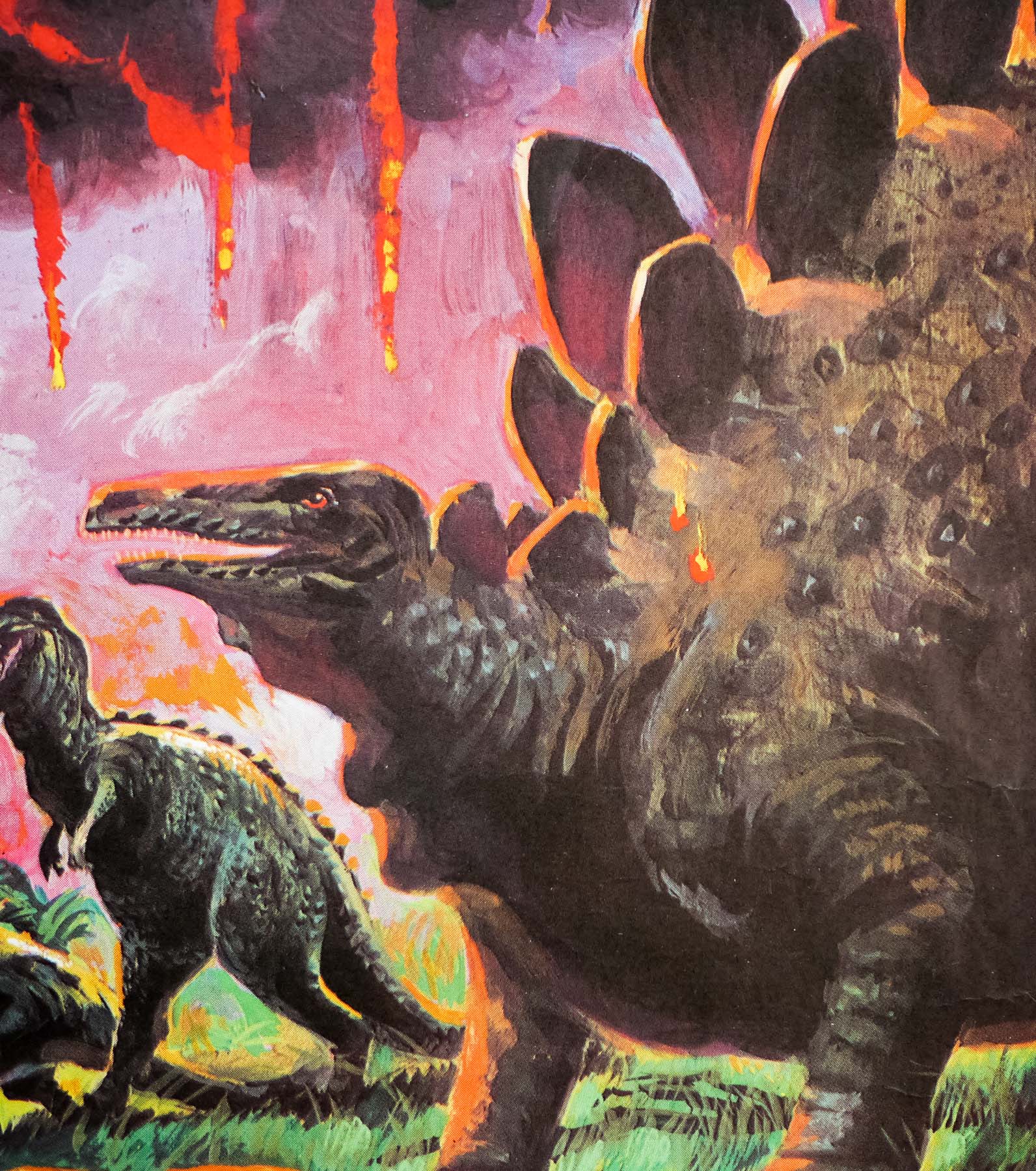
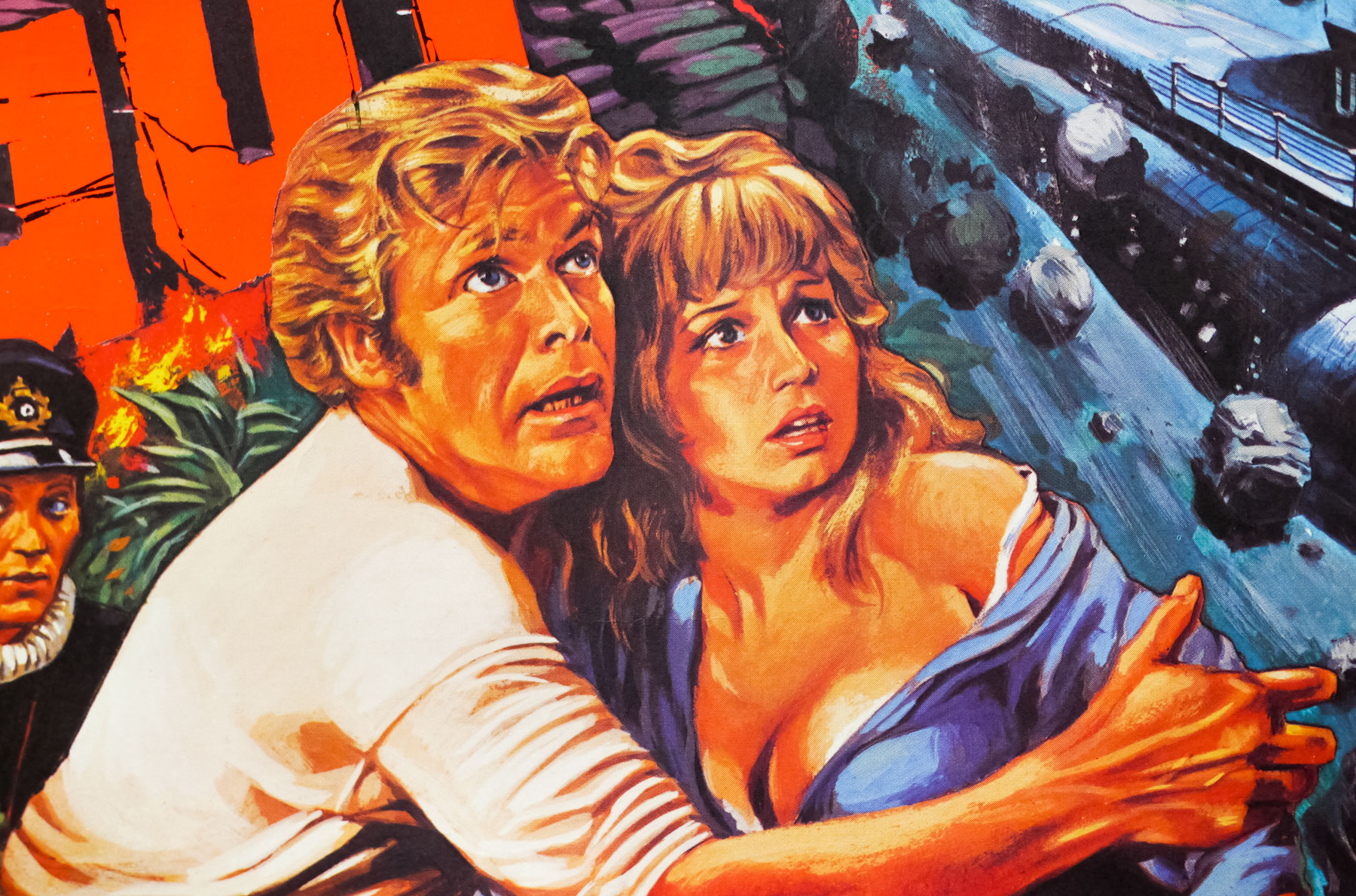
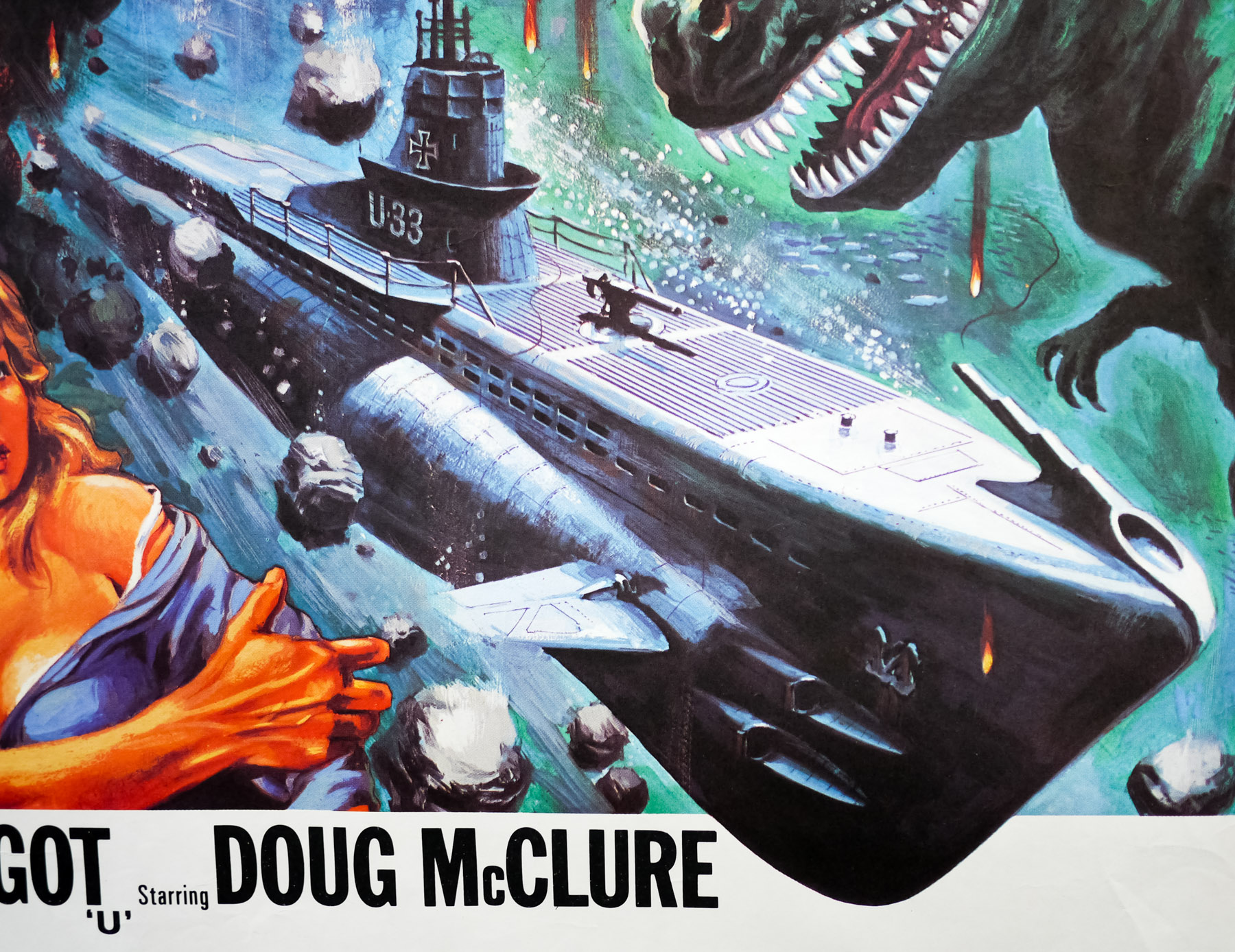
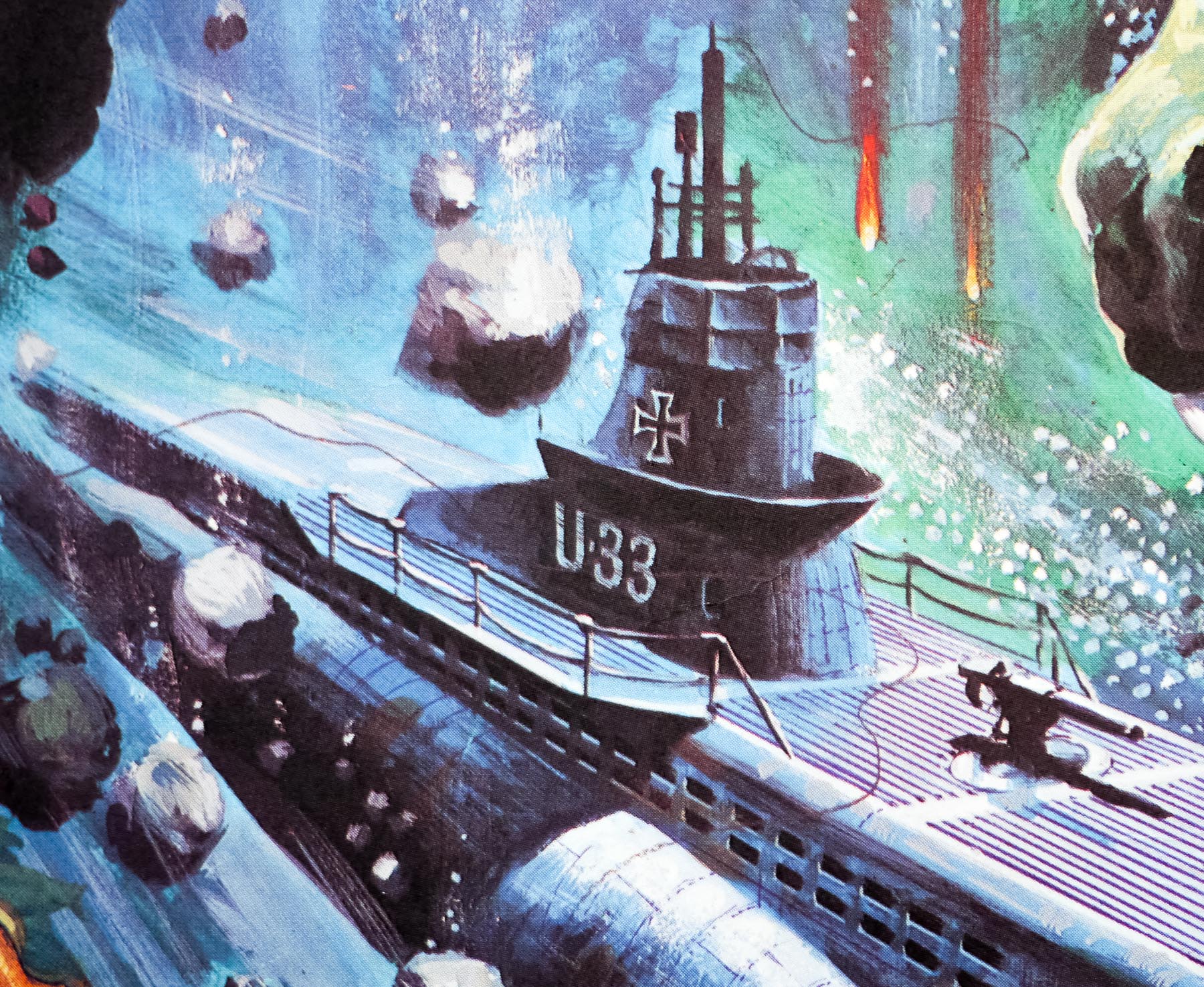
The Land That Time Forgot starts with the torpedoing of a passenger ship by a German U-boat crew. The few remaining survivors, including Bowen Tyler (McClure) and Lisa Clayton (Penhaligon), manage to overcome the U-boat’s crew when it surfaces and they force the captain to pilot the craft back to allied waters. The crew decide to sabotage their plans and the craft ends up completely lost in unknown waters. They happen across a strange island and find an underwater cave through which they pilot the U-boat. When they surface in the islands interior they are immediately set upon by a dinosaur-like creature that eats one of the crew before Tyler manages to decapitate it. The crew then venture through the strange land and come across more giant beasts and a tribe of primitive cavemen before discovering oil, which they hope will allow them to escape back to civilisation.

The film is never less than entertaining and McClure definitely gives it all he’s got. The creature effects have really dated badly, however, and are definitely not up to the standard set by Ray Harryhausen. There’s one excruciatingly bad sequence where the crew blast away at a pair of T-Rex like creatures and the second one takes an age to fall over unconvincingly (explained away by saying that the creature’s brains are slow to send signals). There are some decent special effects like the U-boat scenes underwater but it’s one film that hasn’t stood the test of time as well as some of its contemporaries.

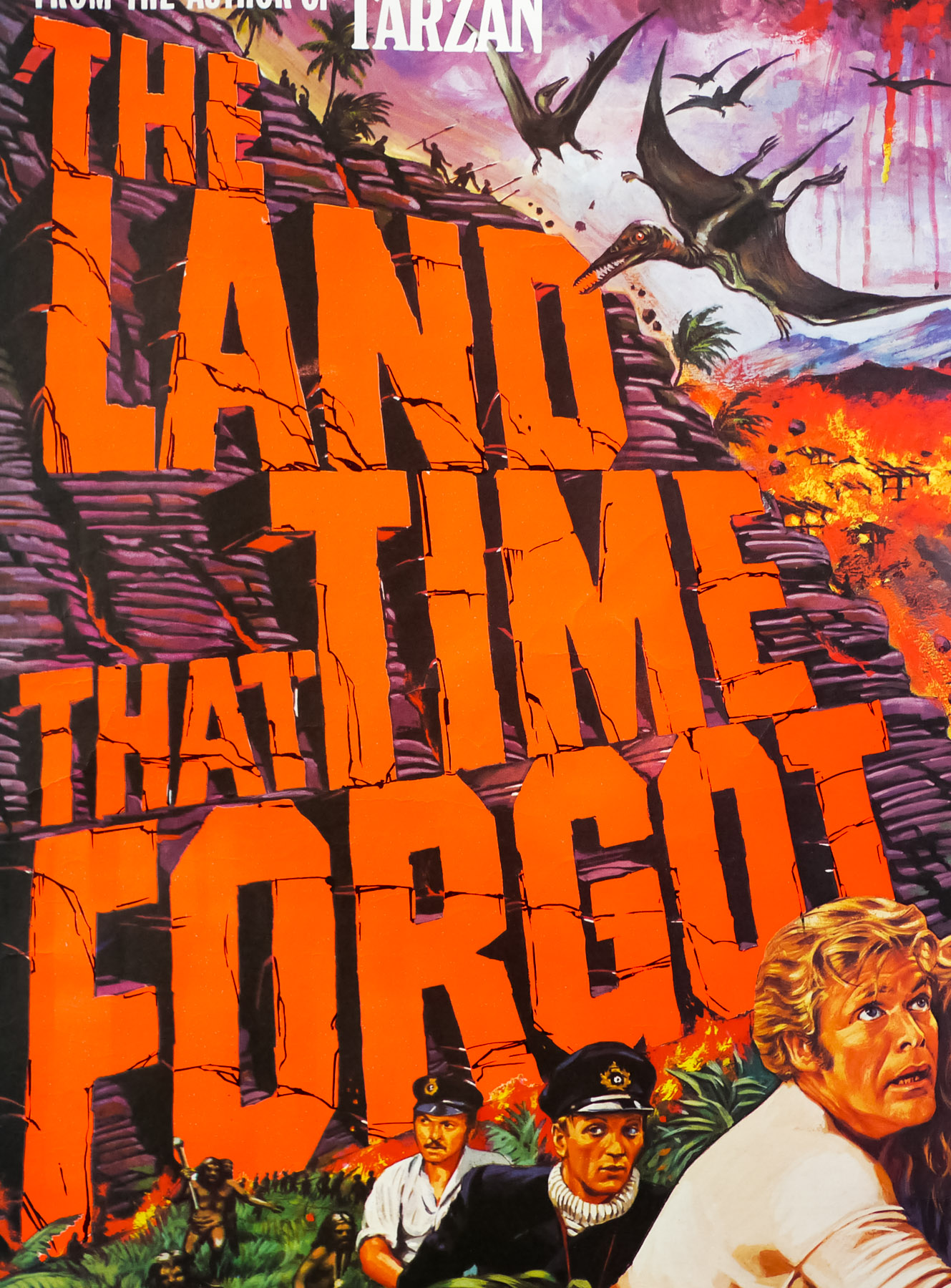
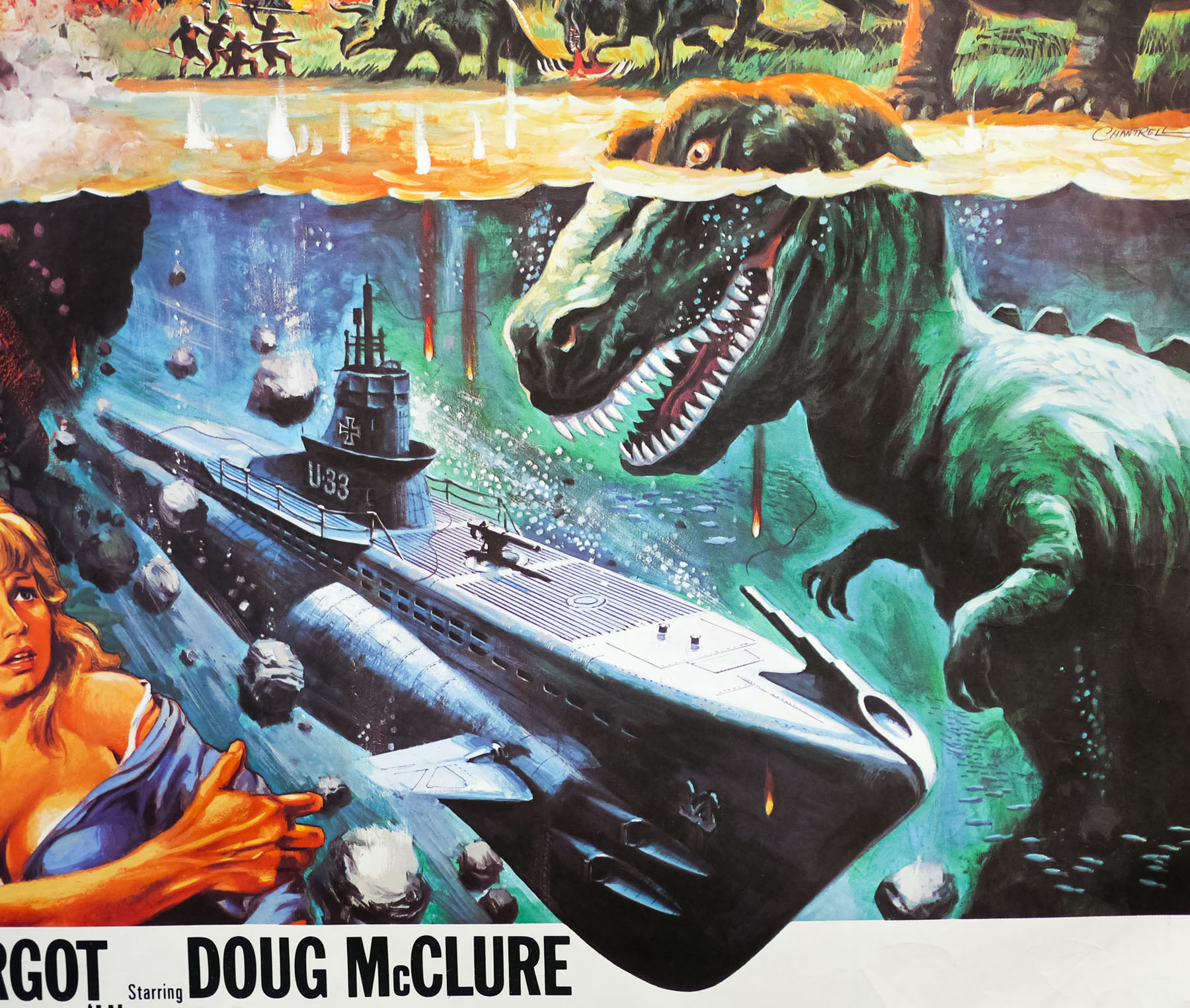
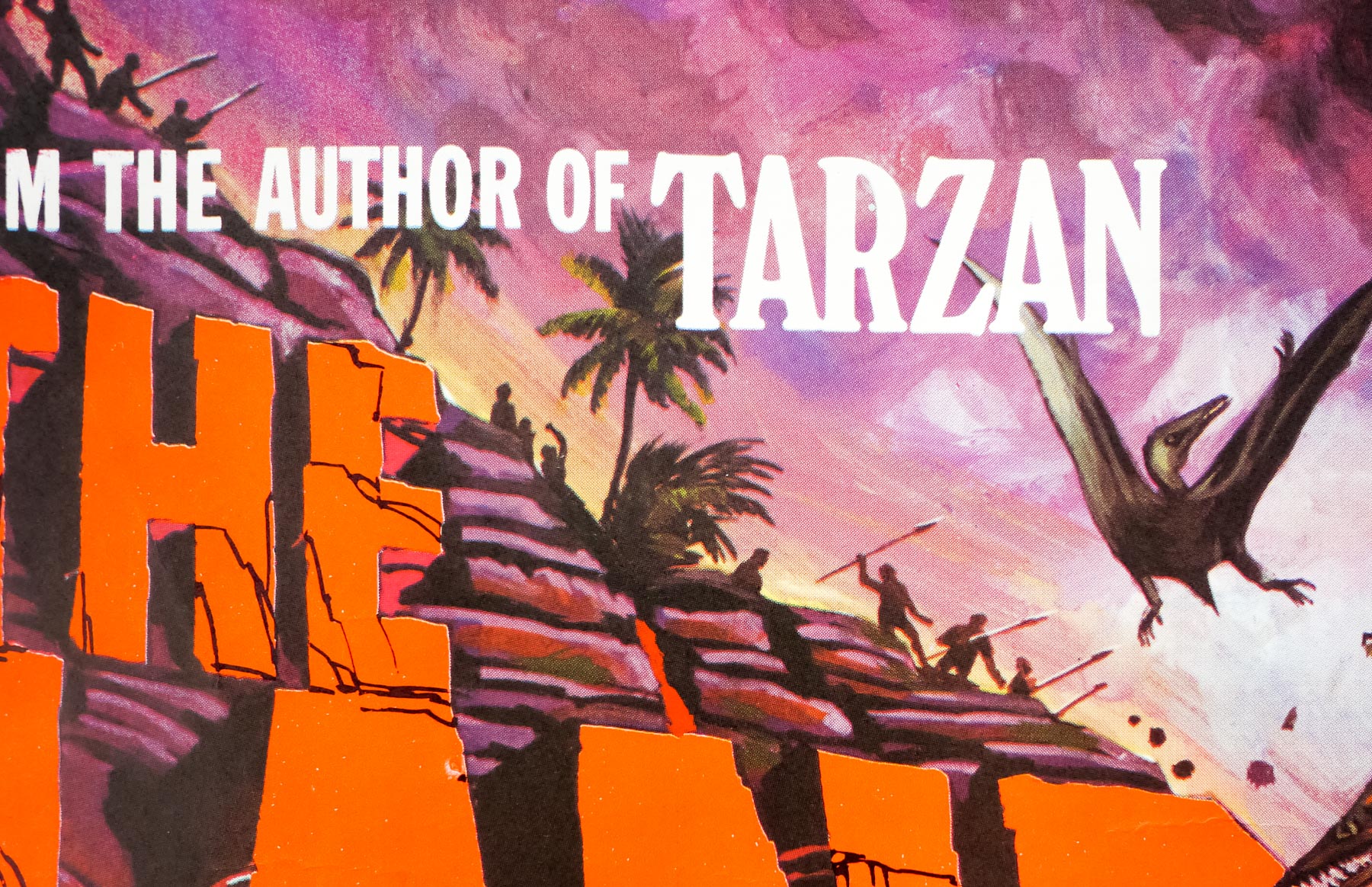
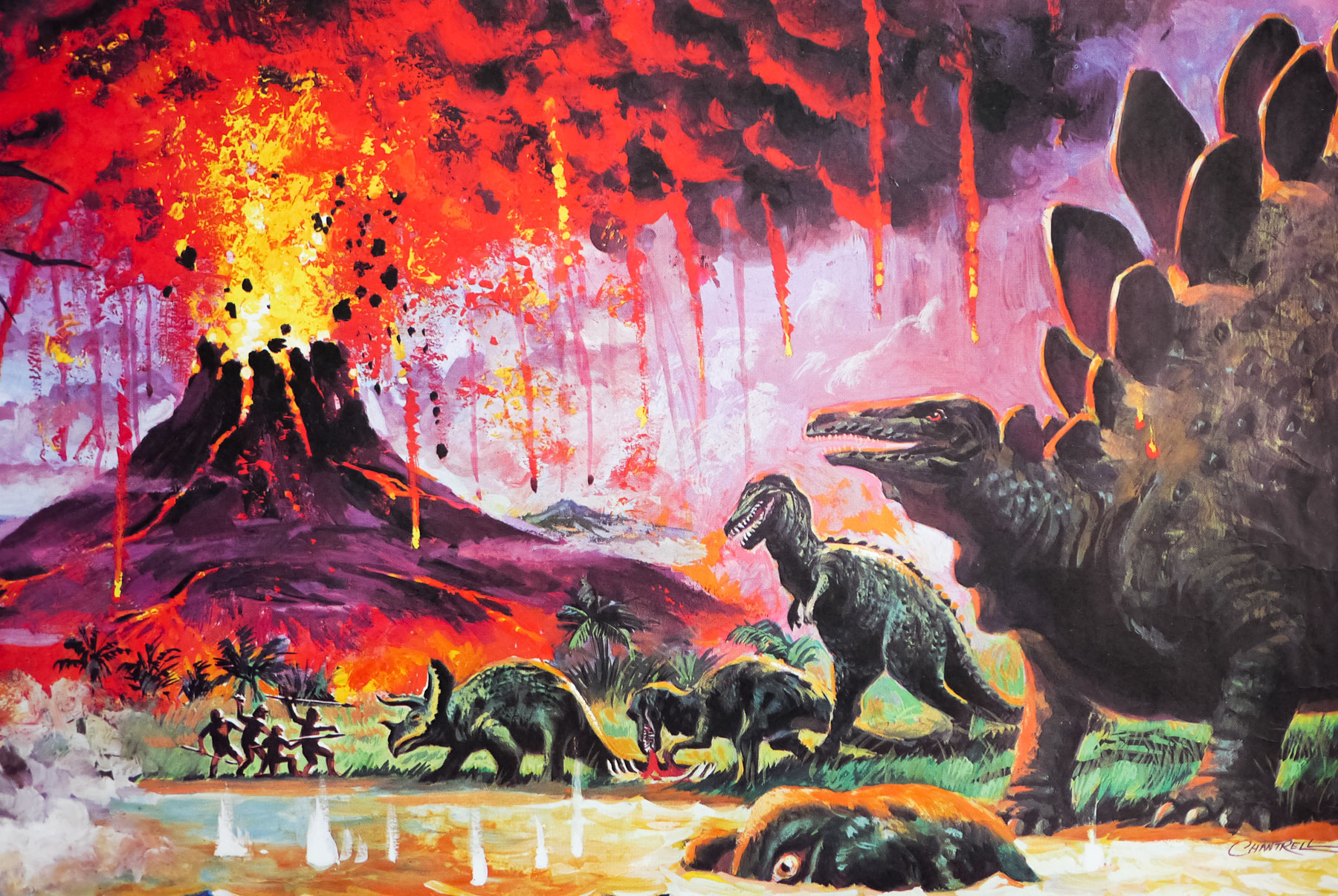
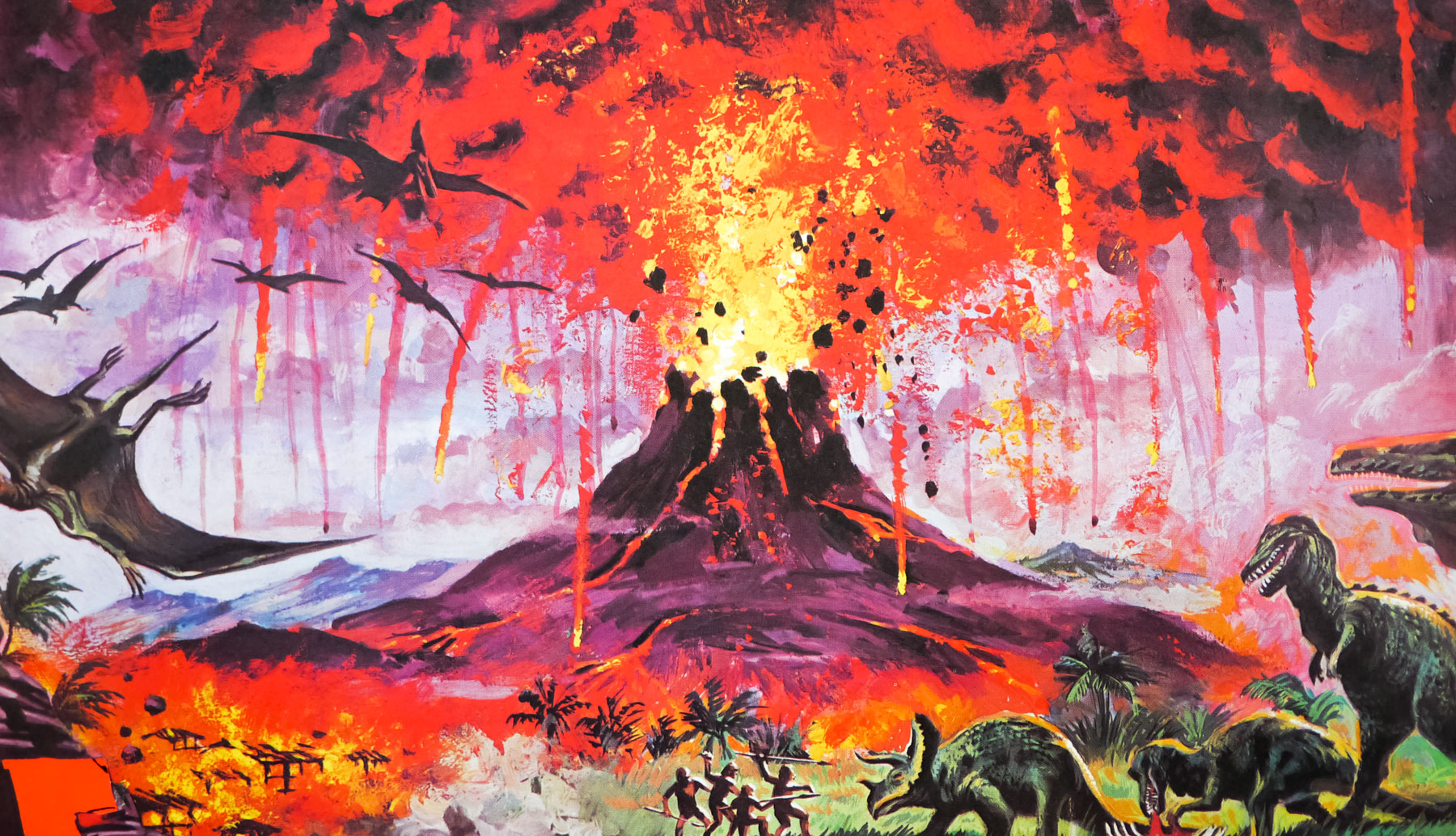
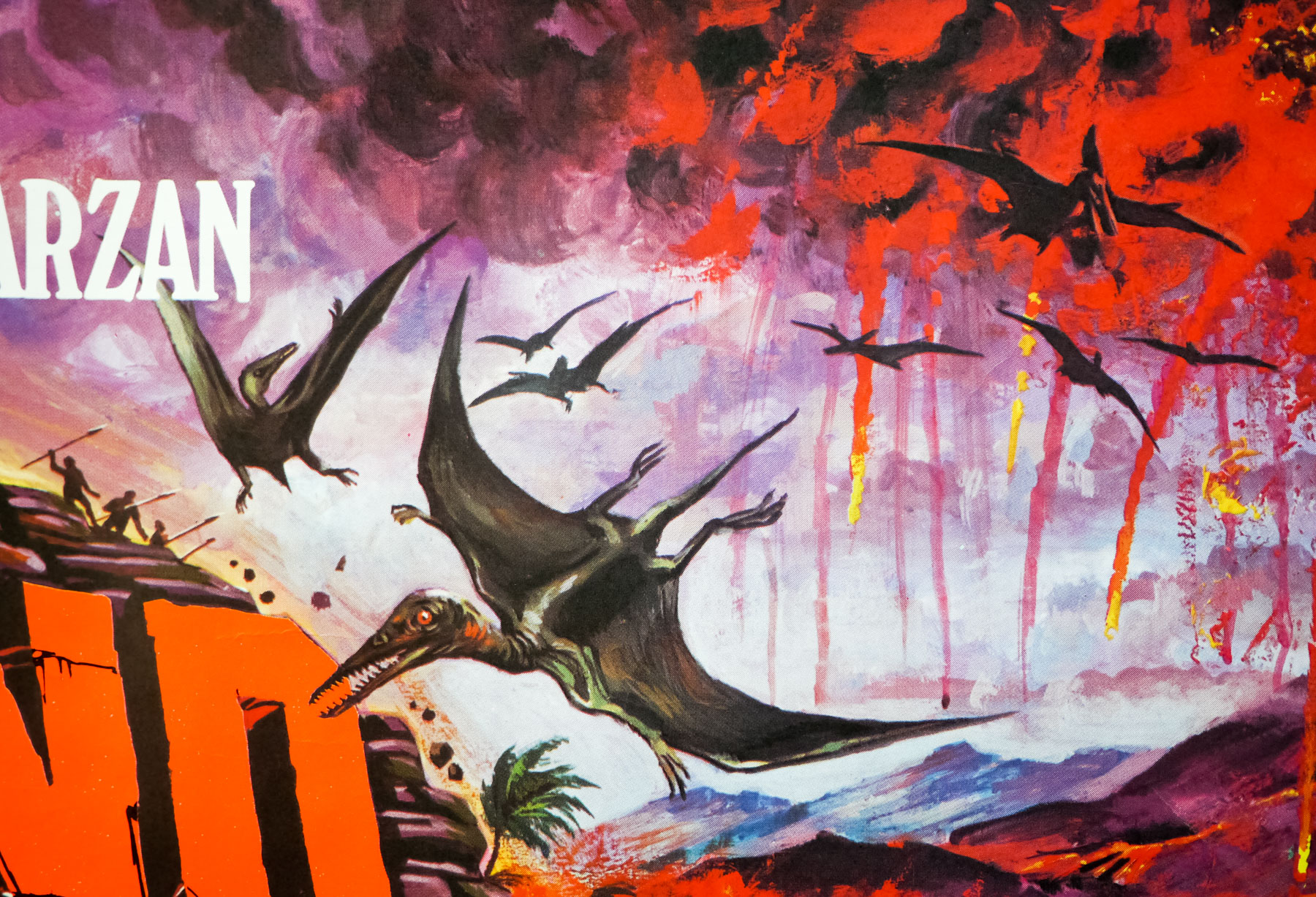
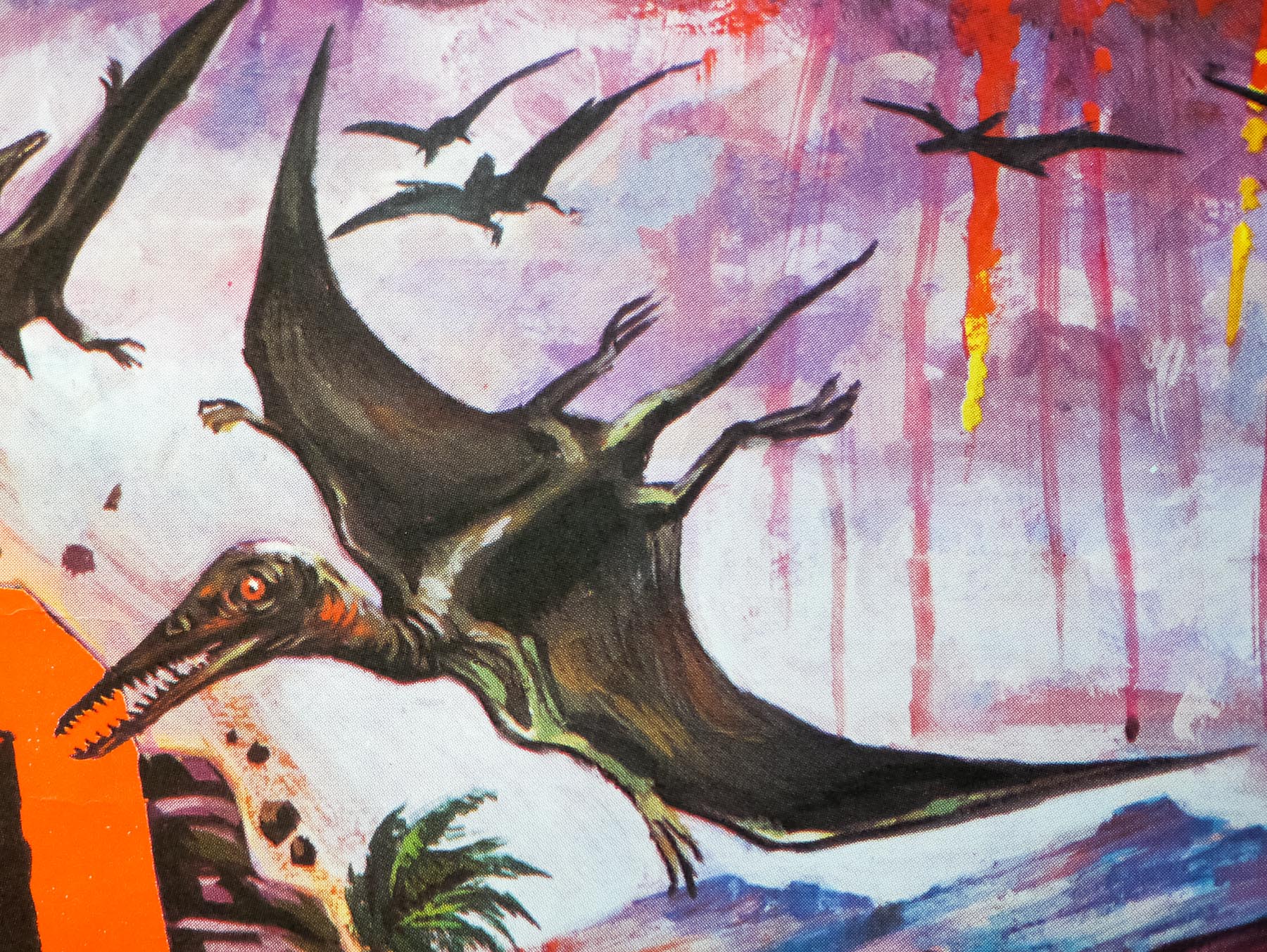
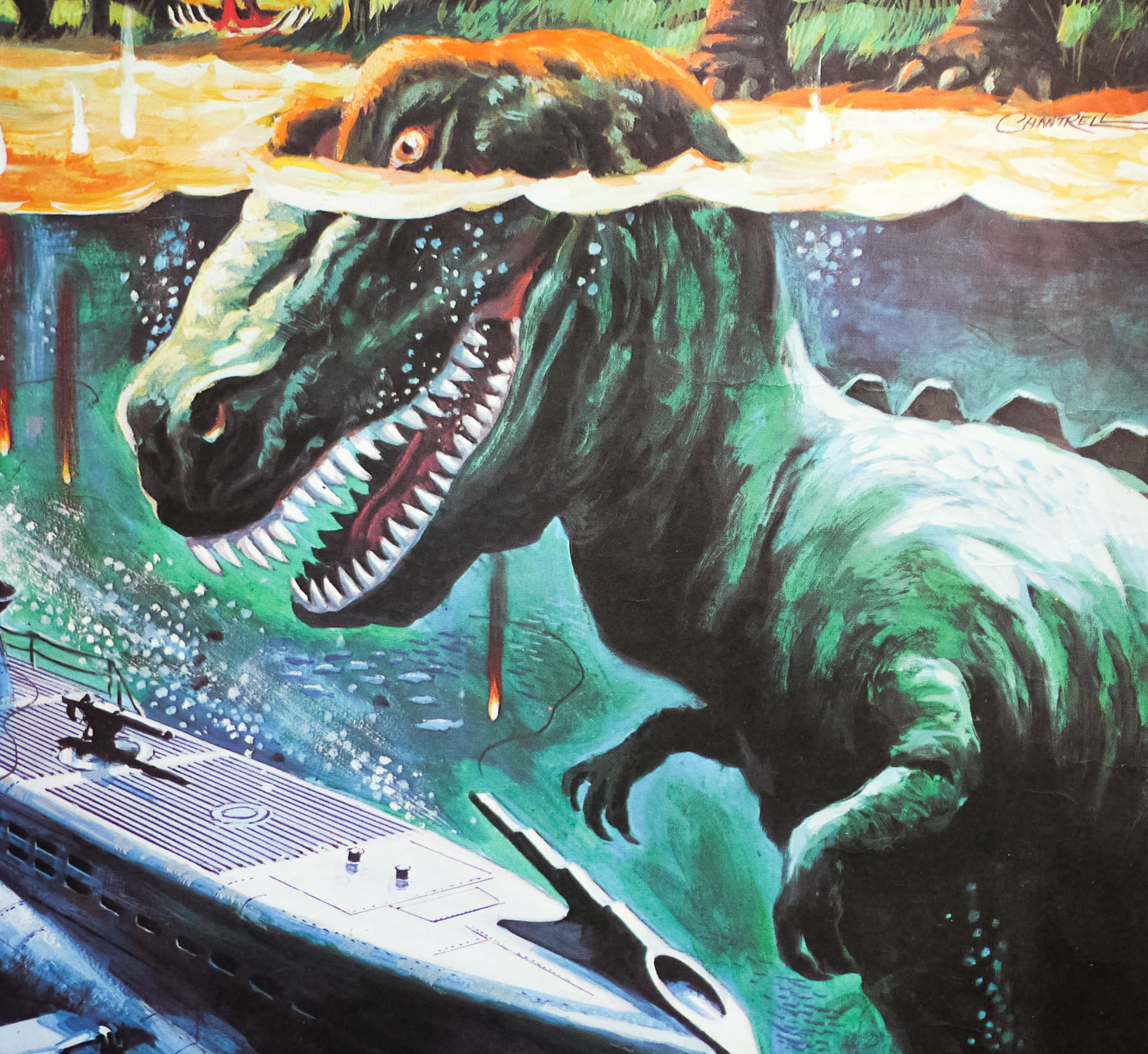
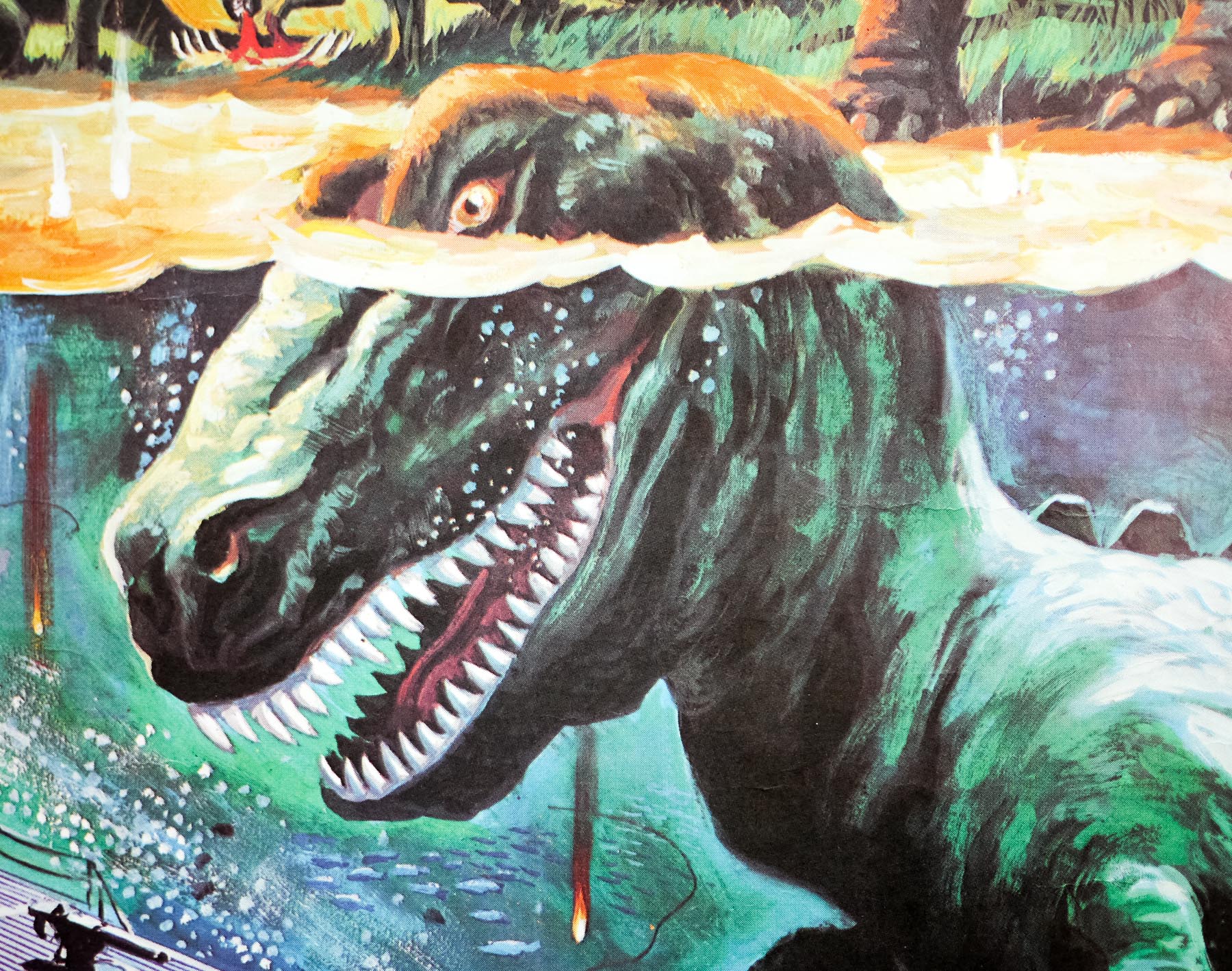
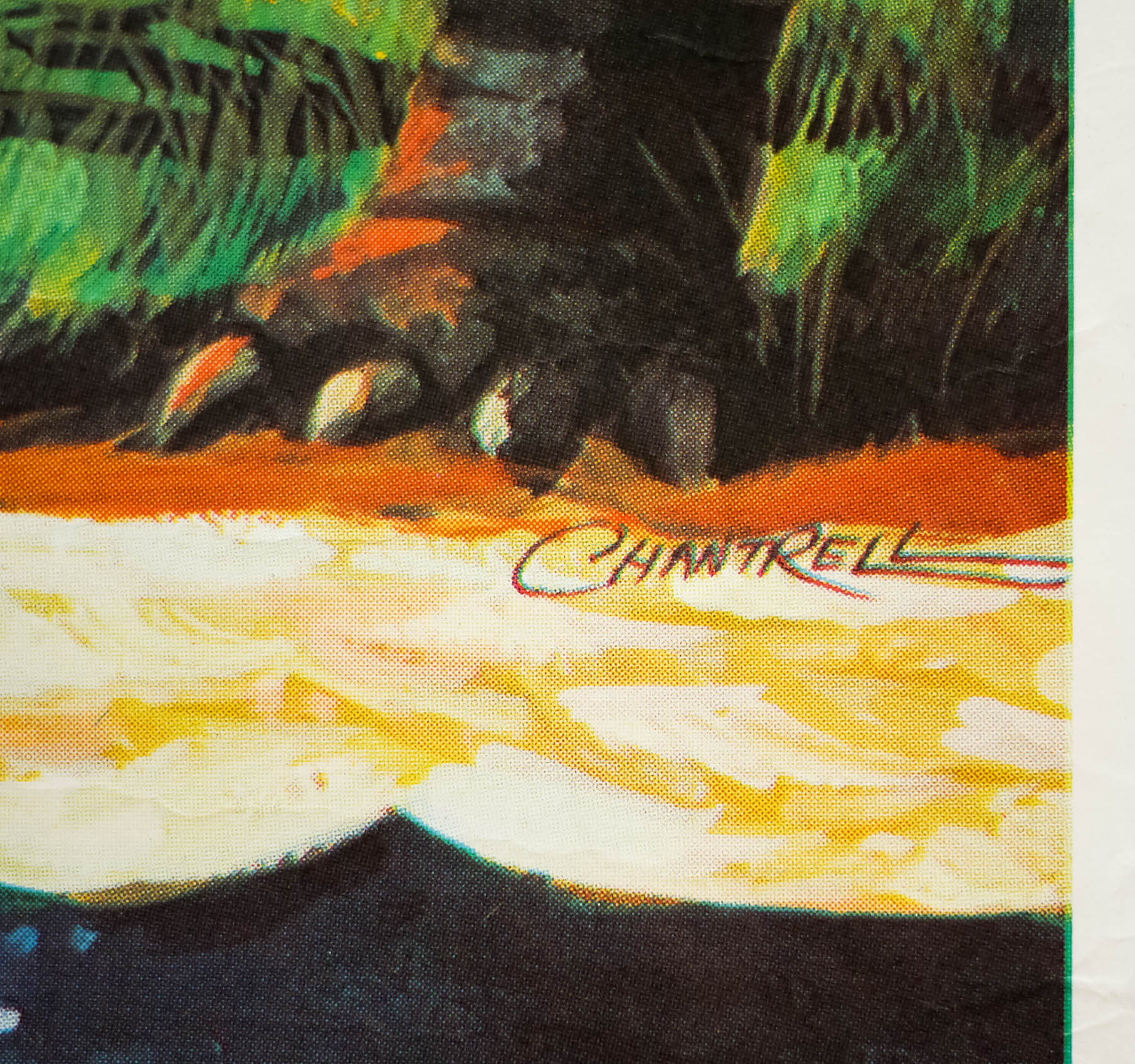
The brilliant artwork on this quad, featuring a cheeky image of a T-Rex underwater (which is definitely not in the film itself), is by Tom Chantrell, the celebrated British artist whose dynamic and colourful work featured on hundreds of posters over a forty year period. His official website features a great biography written by Sim Branaghan, author of the must-own British Film Posters. Chantrell illustrated many classic poster designs, including several Hammer posters such as the brilliant quad for ‘One Million Years B.C.’, and was also responsible for the iconic Star Wars quad, the artwork of which ended up being used around the globe. I have a number of other designs by him on this site.

Star Wars / quad / UK

25.11.14

Poster Poster
Title
Star Wars
AKA
Star Wars: Episode IV - A New Hope (full title) | La guerre des étoiles (Canada - French title / France)
Year of Film
1977
Director
George Lucas
Starring
Mark Hamill, Harrison Ford, Carrie Fisher, David Prowse, Peter Cushing, Alec Guinness, Anthony Daniels, Kenny Baker, Peter Mayhew
Origin of Film
USA
Genre(s) of Film
Mark Hamill, Harrison Ford, Carrie Fisher, David Prowse, Peter Cushing, Alec Guinness, Anthony Daniels, Kenny Baker, Peter Mayhew,
Type of Poster
Quad
Style of Poster
First printing
Origin of Poster
UK
Year of Poster
1977
Designer
Tom Chantrell
Artist
Tom Chantrell
Size (inches)
30" x 39 14/16"
SS or DS
SS
Tagline
May the force be with you

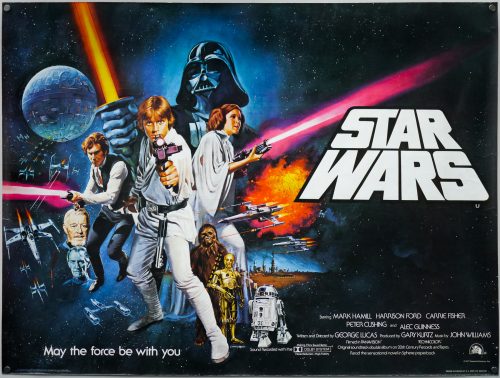
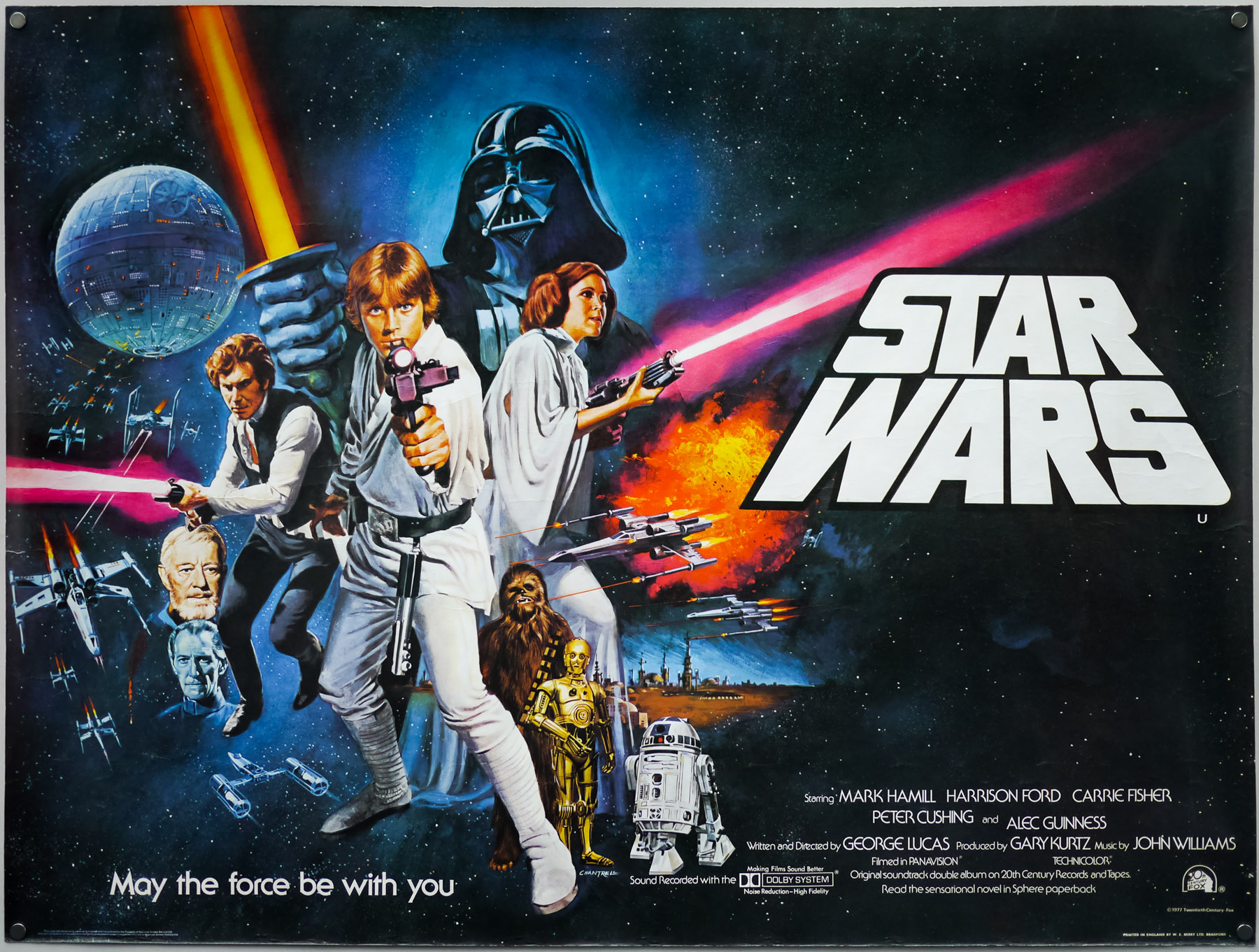
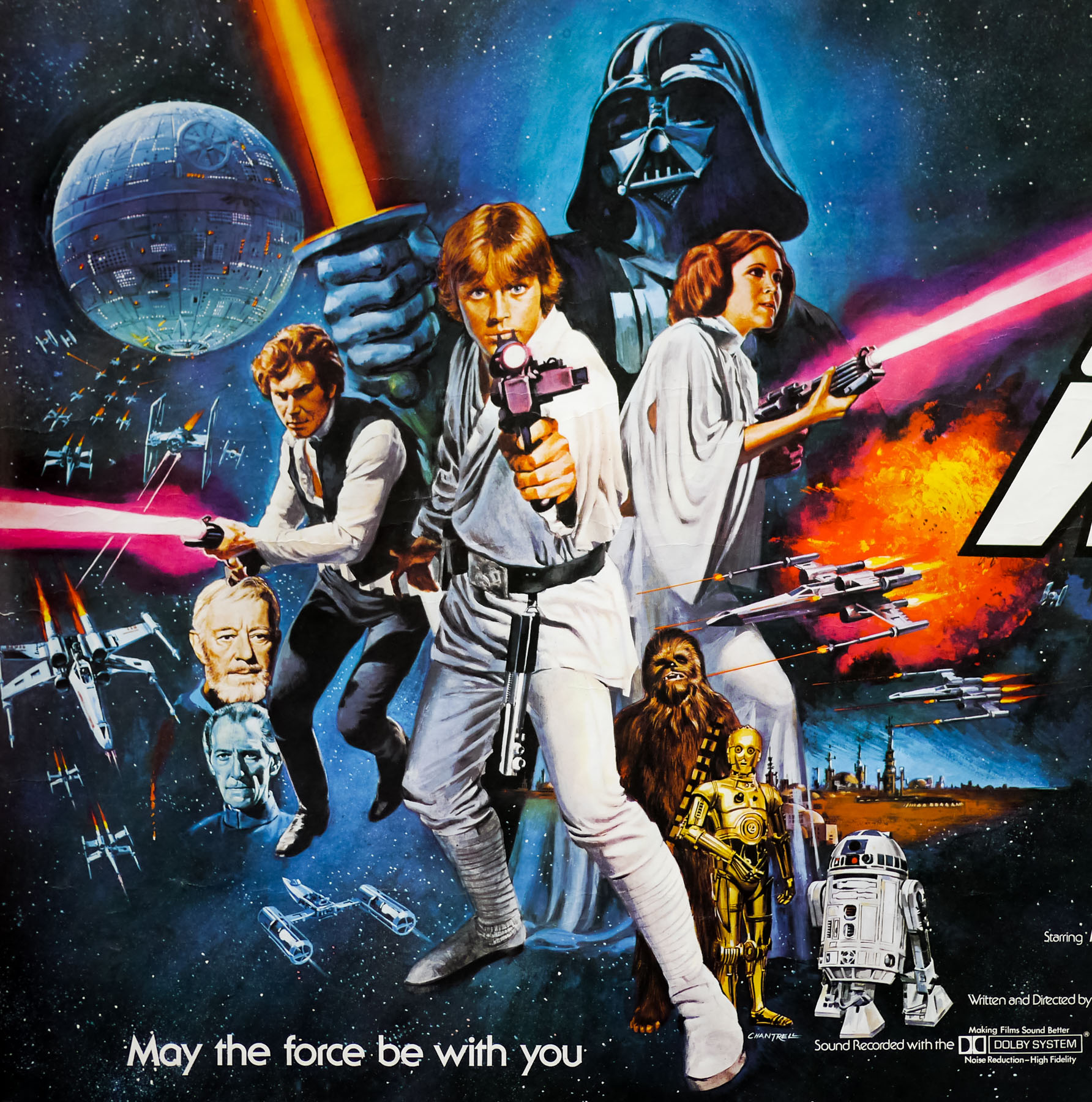
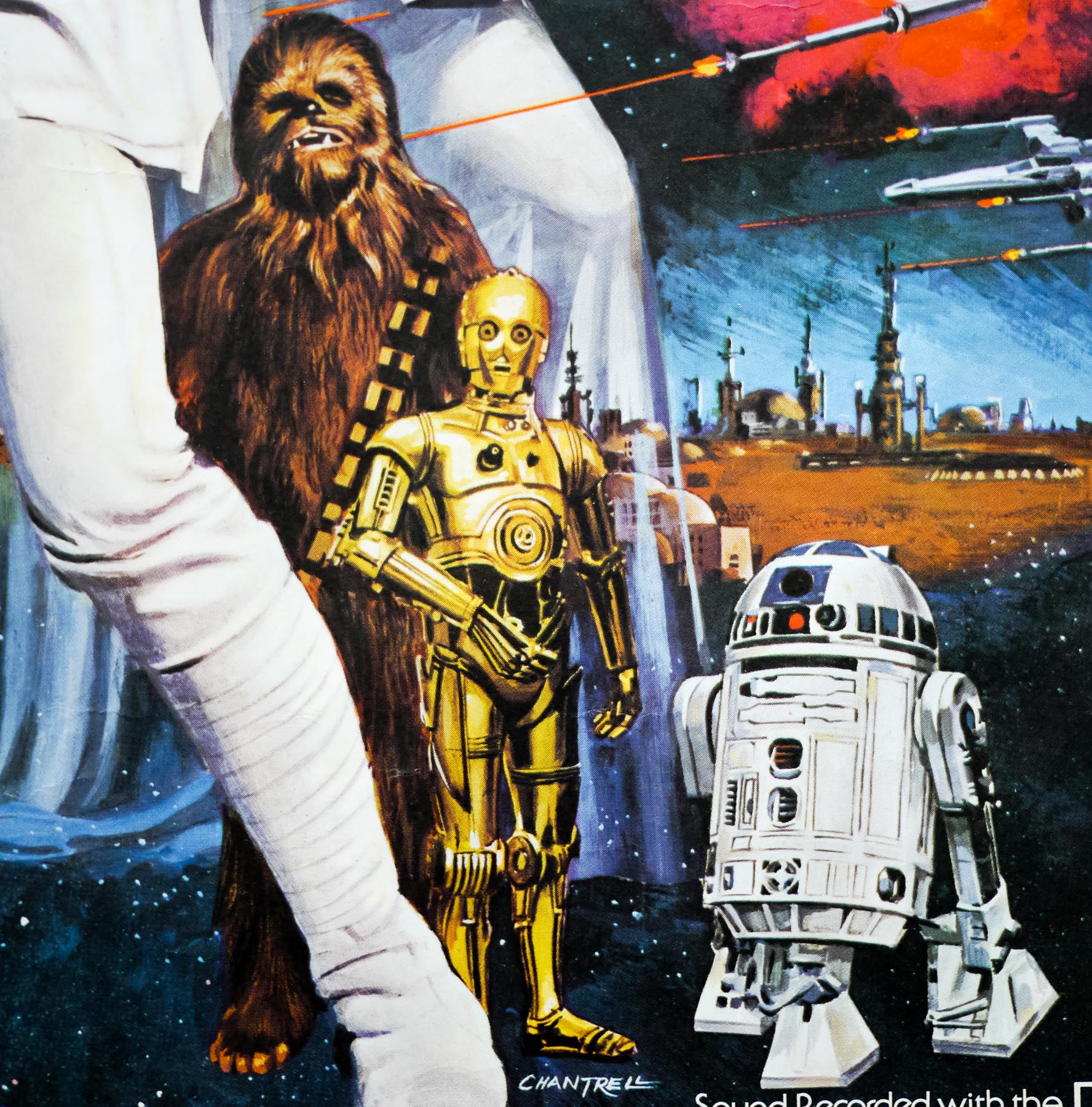
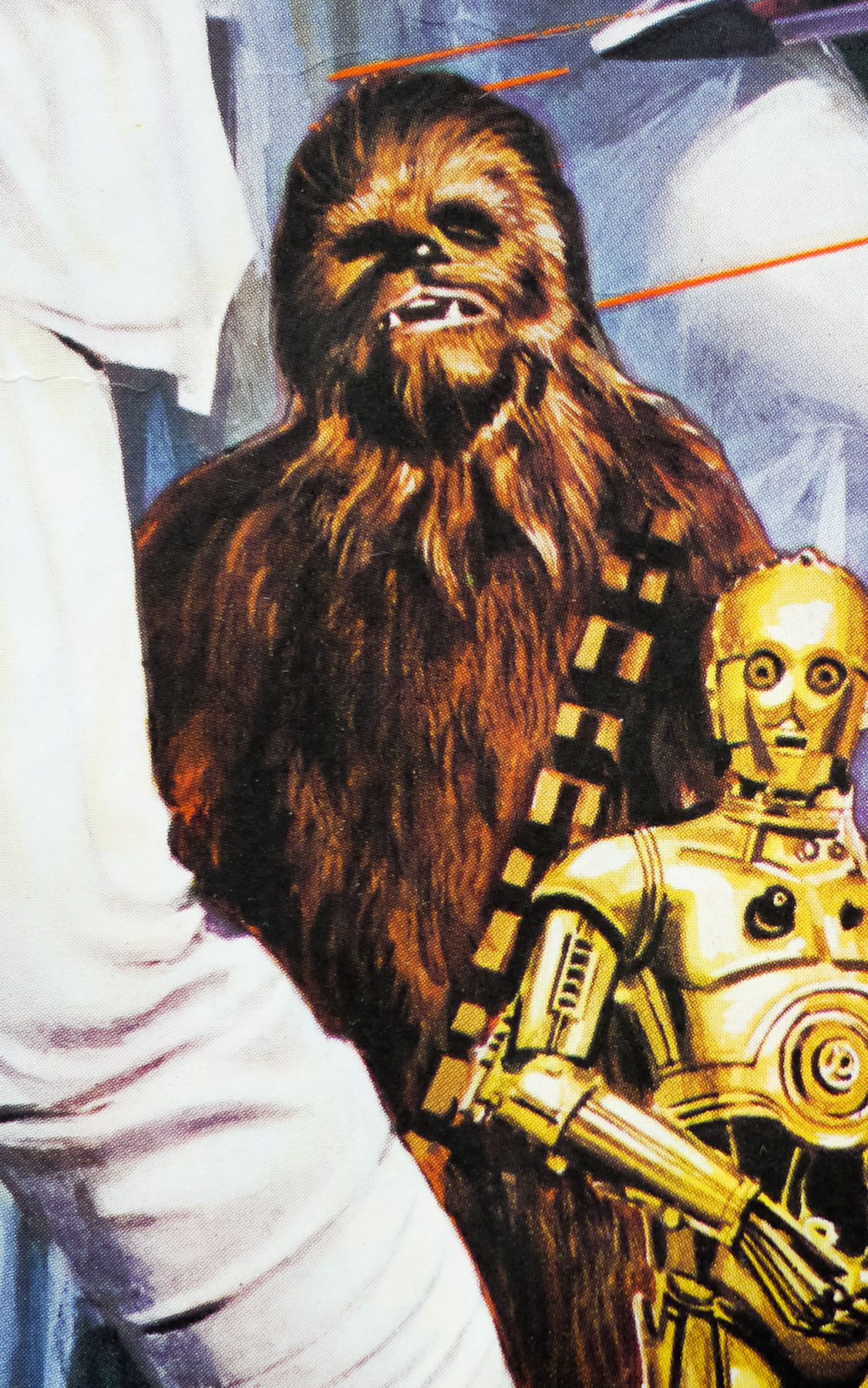
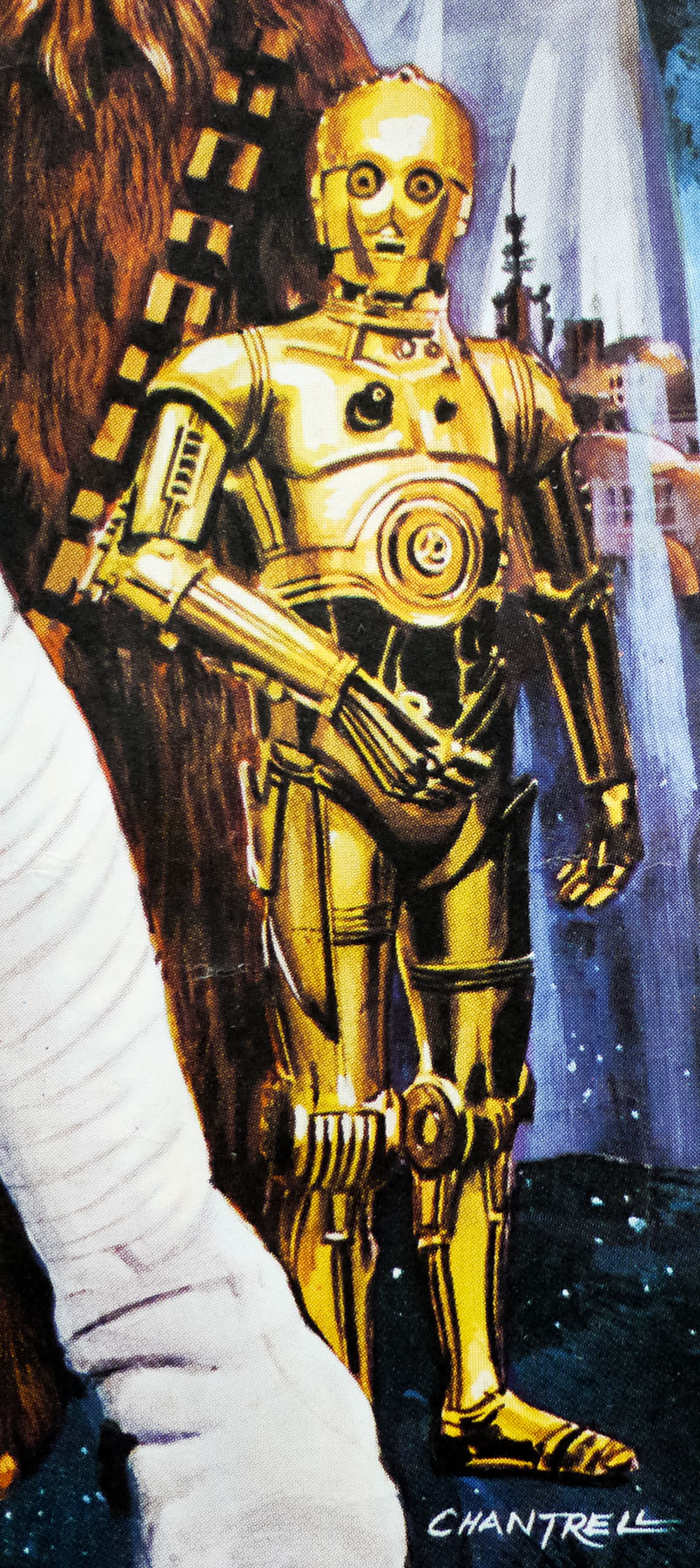
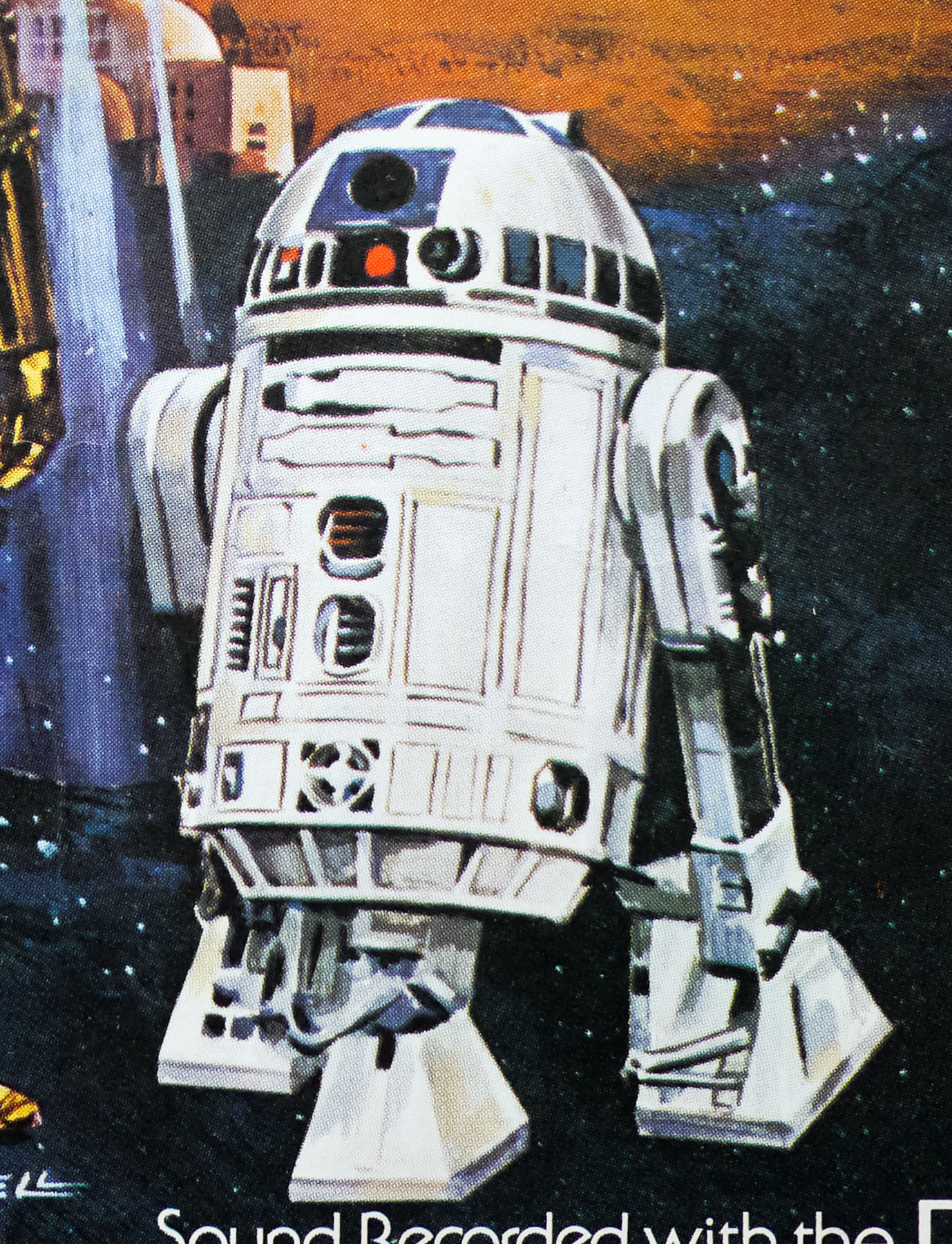
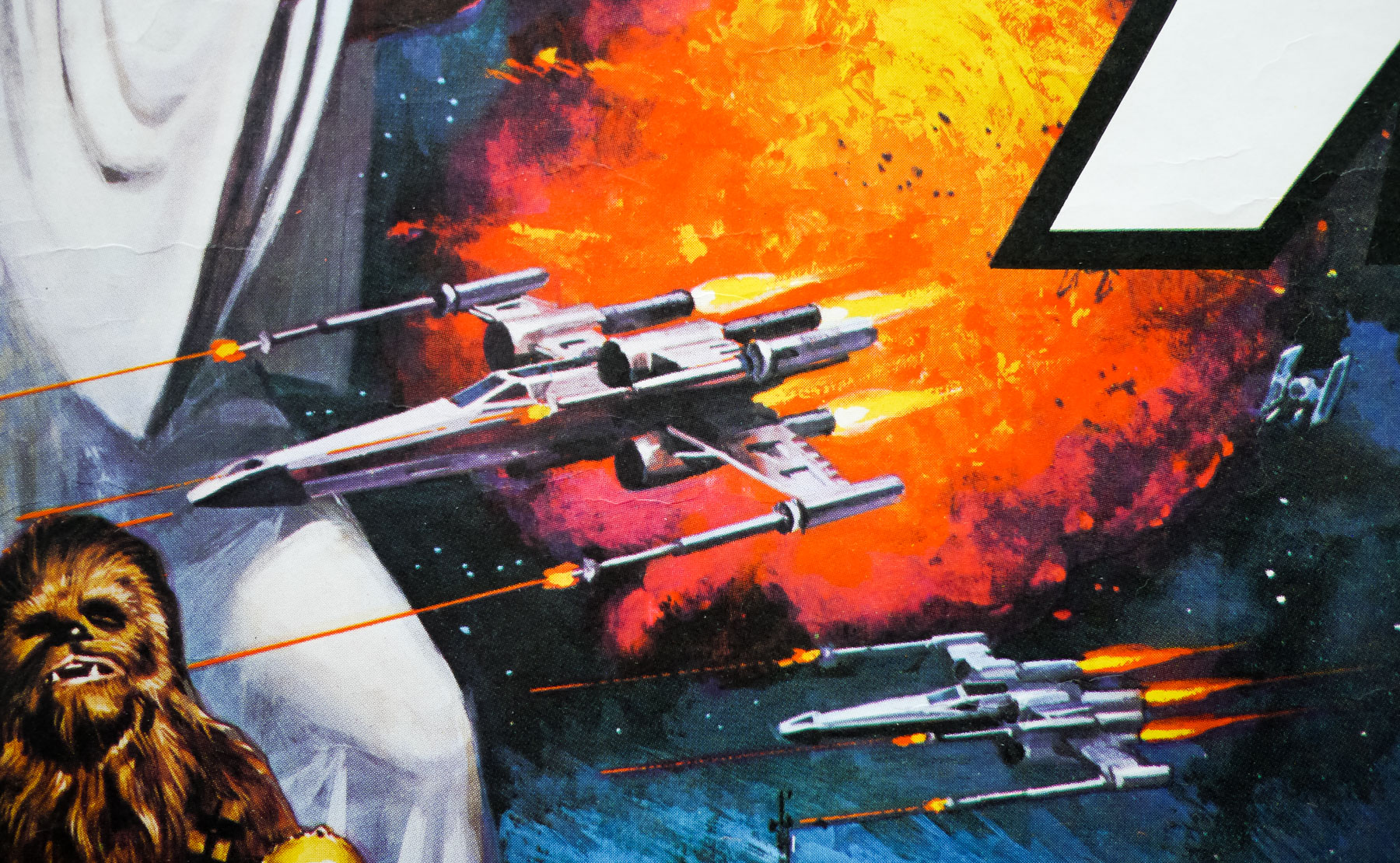
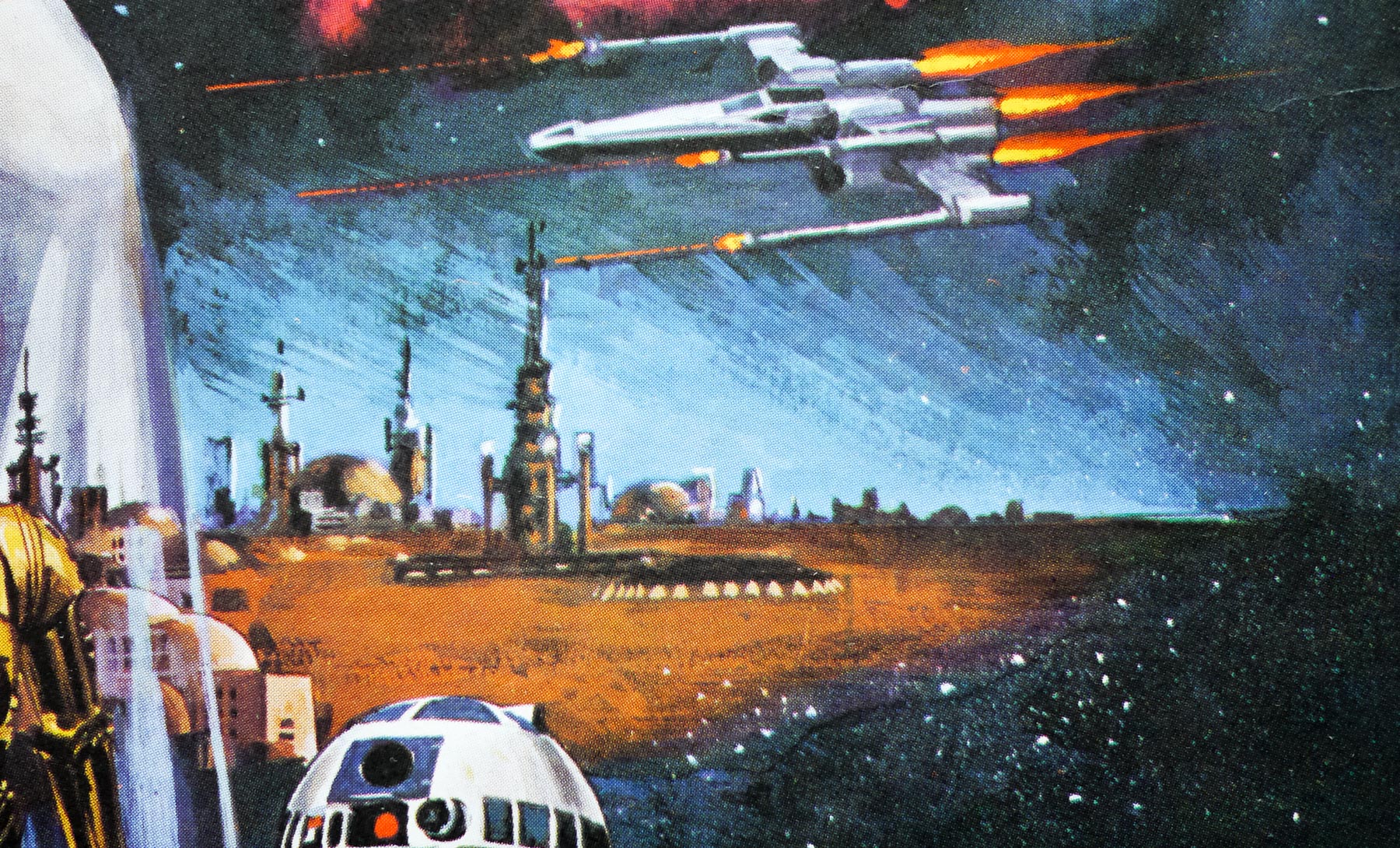
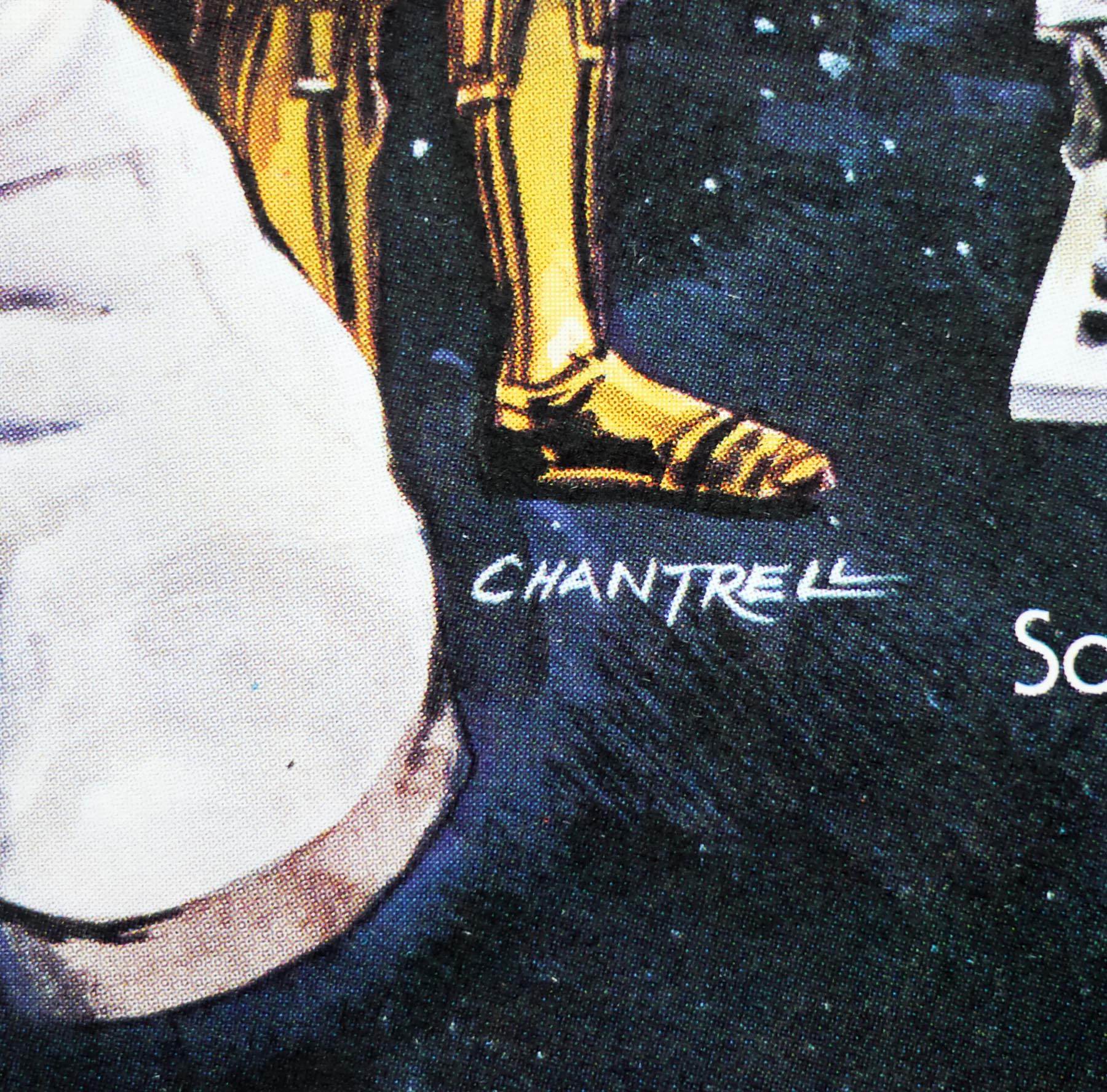
Not only is this probably the best poster artwork for the film that started the biggest sci-fi franchise of all, it’s also considered by many to be the greatest work by the late, great British artist Tom Chantrell. Declaring it so is not an easy decision to make since Chantrell illustrated thousands of posters during his long career and there are many classic designs to choose from, including several Hammer posters and a brilliant design for ‘One Million Years B.C.’. I have a number of other posters by him on this site for you to peruse.

In 2013 I interviewed Chantrell’s widow Shirley about their life together and she recalled how Tom would often ask her to pose so he could capture the correct stance for female characters appearing on his posters. Shirley recalls how the project came about for Tom:

Tom was given an invite to the premier showing and we all went along as a family. As soon as he’d seen the film he had the synopsis, the 10” x 8” press stills and then he started to think about how he was going to tackle the project. From beginning to end it took one month, which is a lot of work for one poster. He’d never taken that long before and I don’t think he did again.

Shirley once again posed for Tom and this time she was his Princess Leia. She not only still has the reference photos taken that day but also still has the same dress she wore.

This poster perfectly captures the excitement and adventure of the seminal sci-fi blockbuster and, although originally intended just to be used for the UK market, the art was liked so much by Lucasfilm that the decision was made to use it for a style C one sheet as well as for other posters around the world. George Lucas himself would later purchase the original artwork for his archives and I like to imagine it’s hanging on a wall in Skywalker Ranch.

This particular style of the poster is the first printing of the poster for the initial 1977 release in cinemas and this can be distinguished from the later printing known as the ‘Oscars version’, so called because it was printed once the film had won a handful of Academy Awards a few months after the original UK release. The ongoing success and phenomenon of the film meant that many more copies of the second version were printed as it was shown around the UK. The Oscars version is also in the Film on Paper collection and can be viewed here.

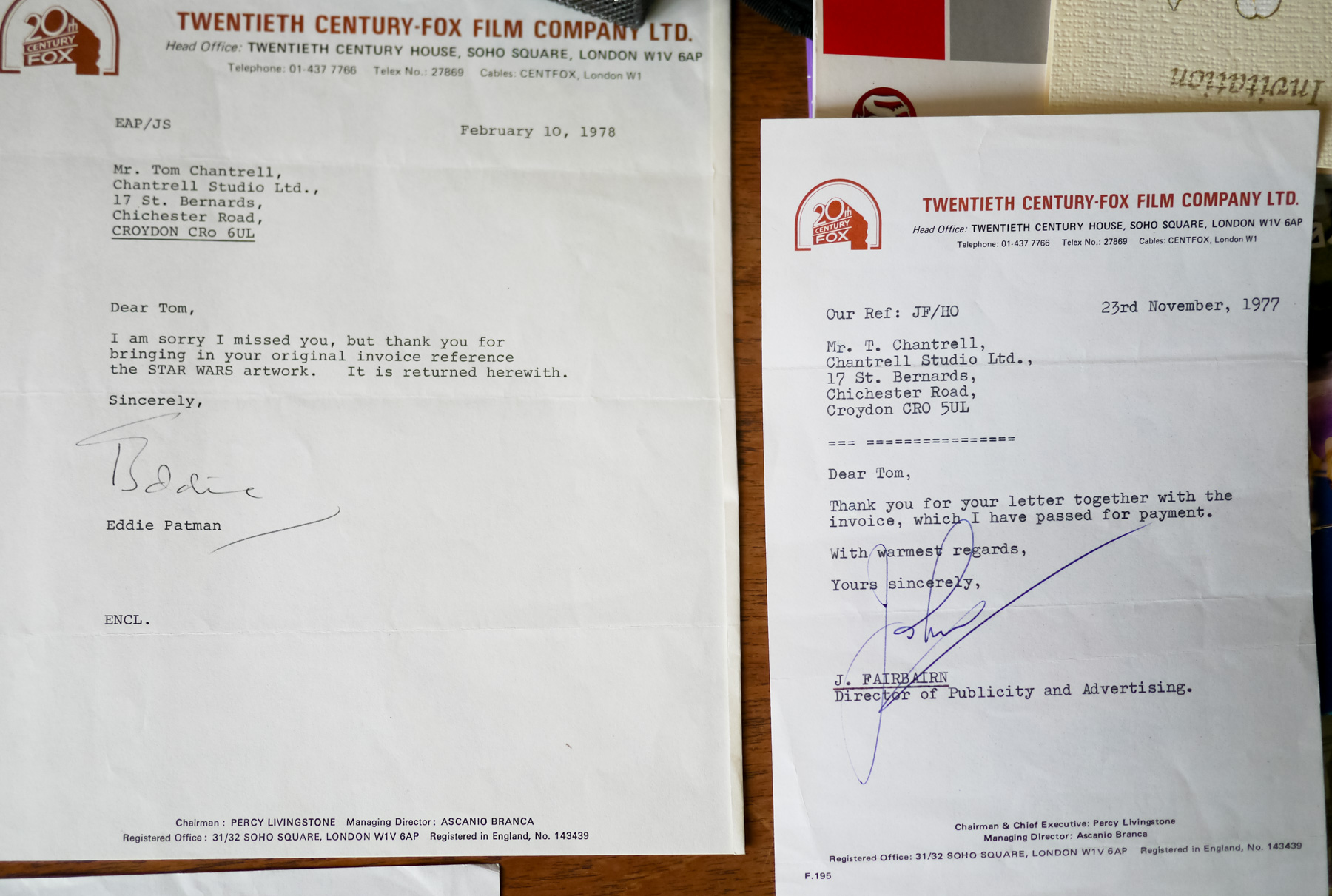
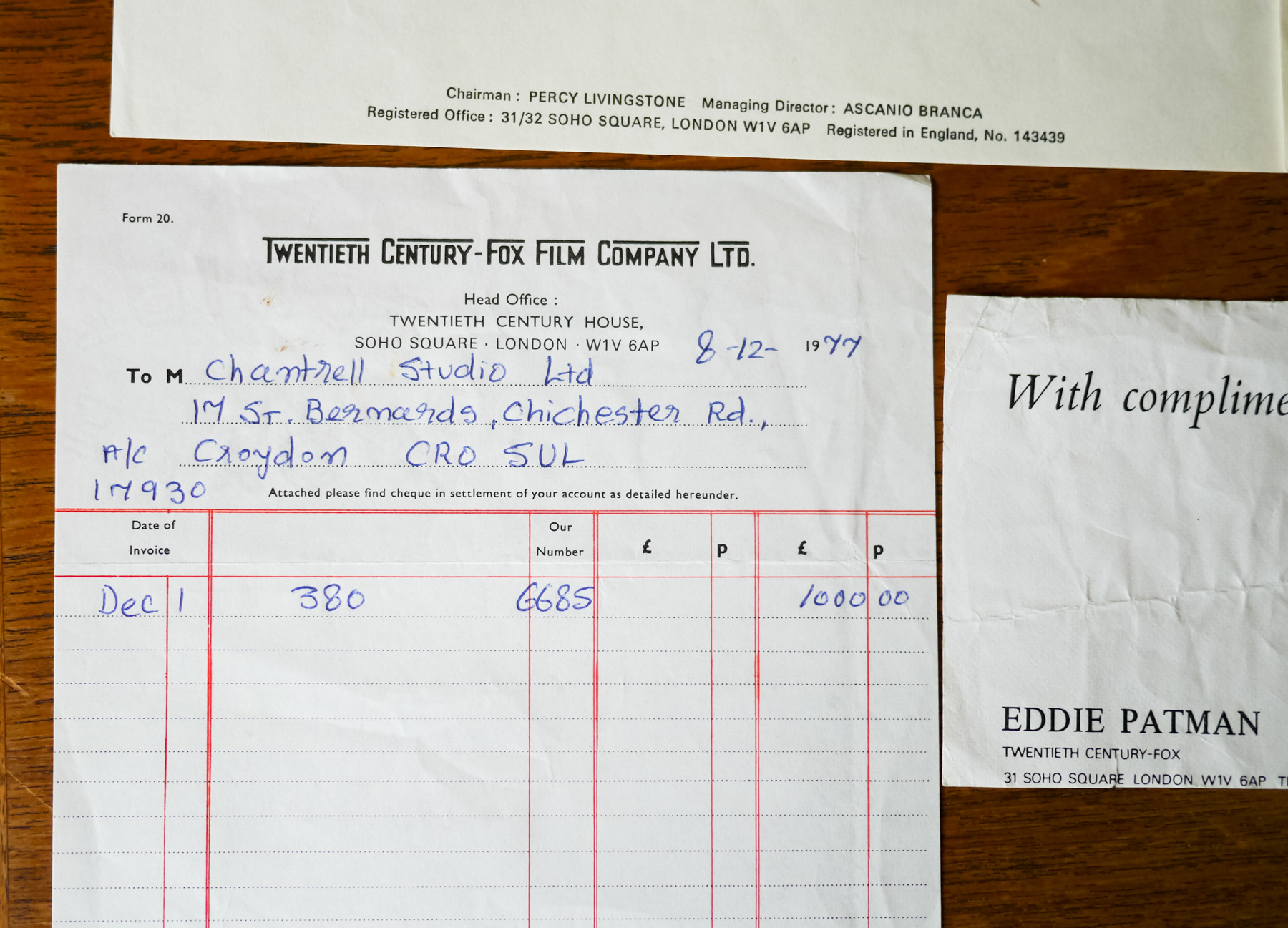
During the time I spent with Shirley we browsed through several boxes of the plentiful material she has kept from the days that Tom was working on film posters. I was amazed to see that he had retained the original invoice that he had sent to 20th Century Fox (Star Wars’ UK distributors) and some letters from Fox relating to the invoice, which confirmed that he had been paid the sum of £1000 for his original work on the art. These can be viewed by accessing picture thumbnails 28 and 29.

Sadly, Tom Chantrell passed away in 2001 and my friend, and author of the must own British Film Posters: An Illustrated History, Sim Branaghan wrote his obituary for the Guardian. He may no longer be with us but Tom Chantrell’s classic artworks have stood the test of time and continue to impress decades later.

The Beyond / A1 / Germany

05.12.14

Poster Poster
Title
The Beyond
AKA
Die Geisterstadt der Zombies (Germany) | L'aldilà (Italy) | 7 Doors of Death (USA)
Year of Film
1981
Director
Lucio Fulci
Starring
Catriona MacColl, David Warbeck, Cinzia Monreale, Antoine Saint-John, Veronica Lazar, Anthony Flees, Giovanni De Nava, Al Cliver, Michele Mirabella, Gianpaolo Saccarola
Origin of Film
Italy
Genre(s) of Film
Catriona MacColl, David Warbeck, Cinzia Monreale, Antoine Saint-John, Veronica Lazar, Anthony Flees, Giovanni De Nava, Al Cliver, Michele Mirabella, Gianpaolo Saccarola,
Type of Poster
A1
Style of Poster
--
Origin of Poster
Germany
Year of Poster
1981
Designer
Unknown
Artist
Lutz Peltzer
Size (inches)
23.5" x 33 9/16"
SS or DS
SS
Tagline
--

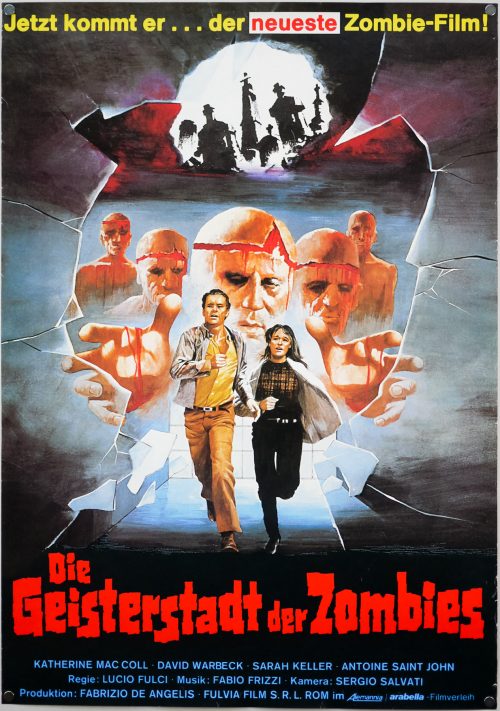
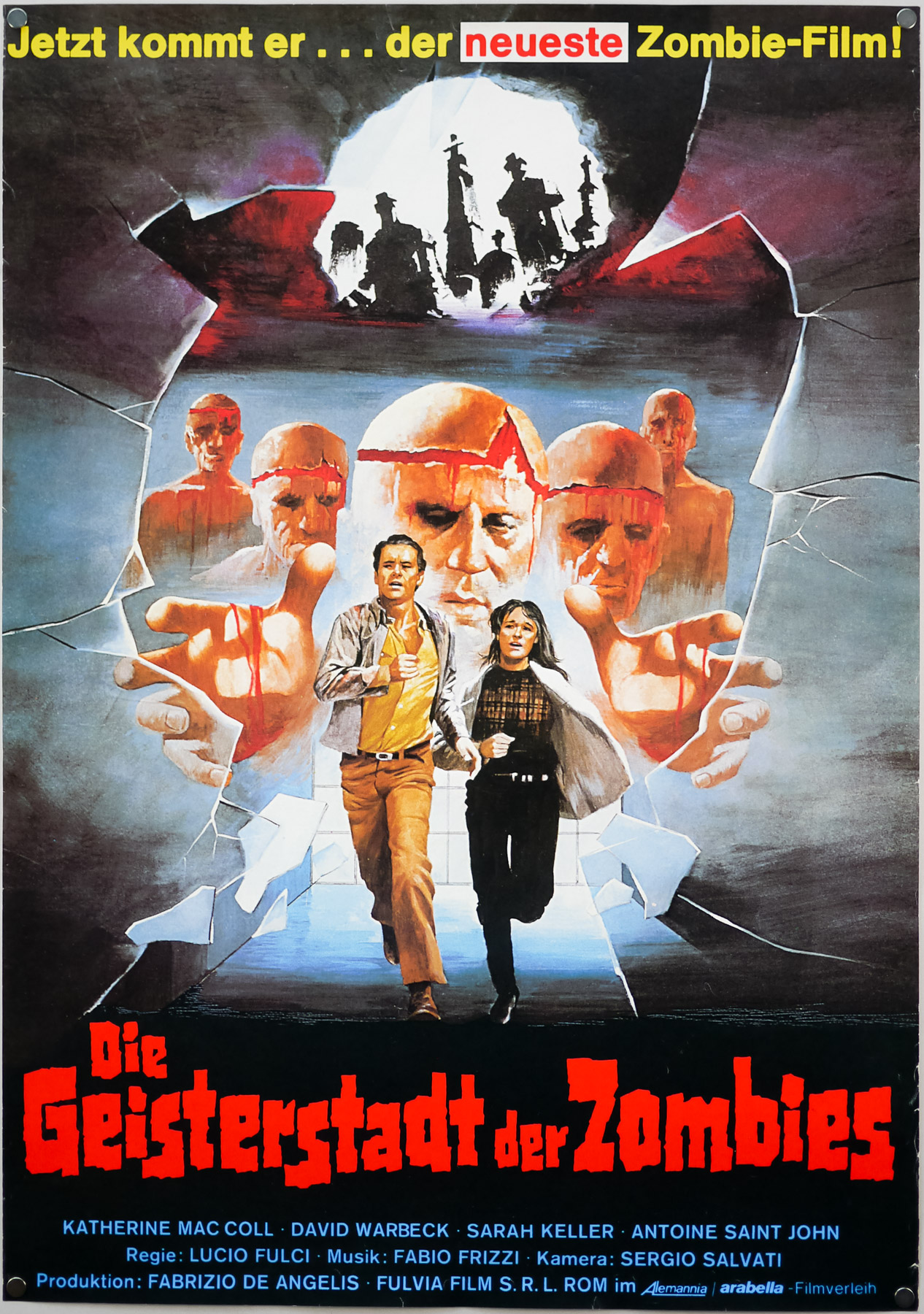
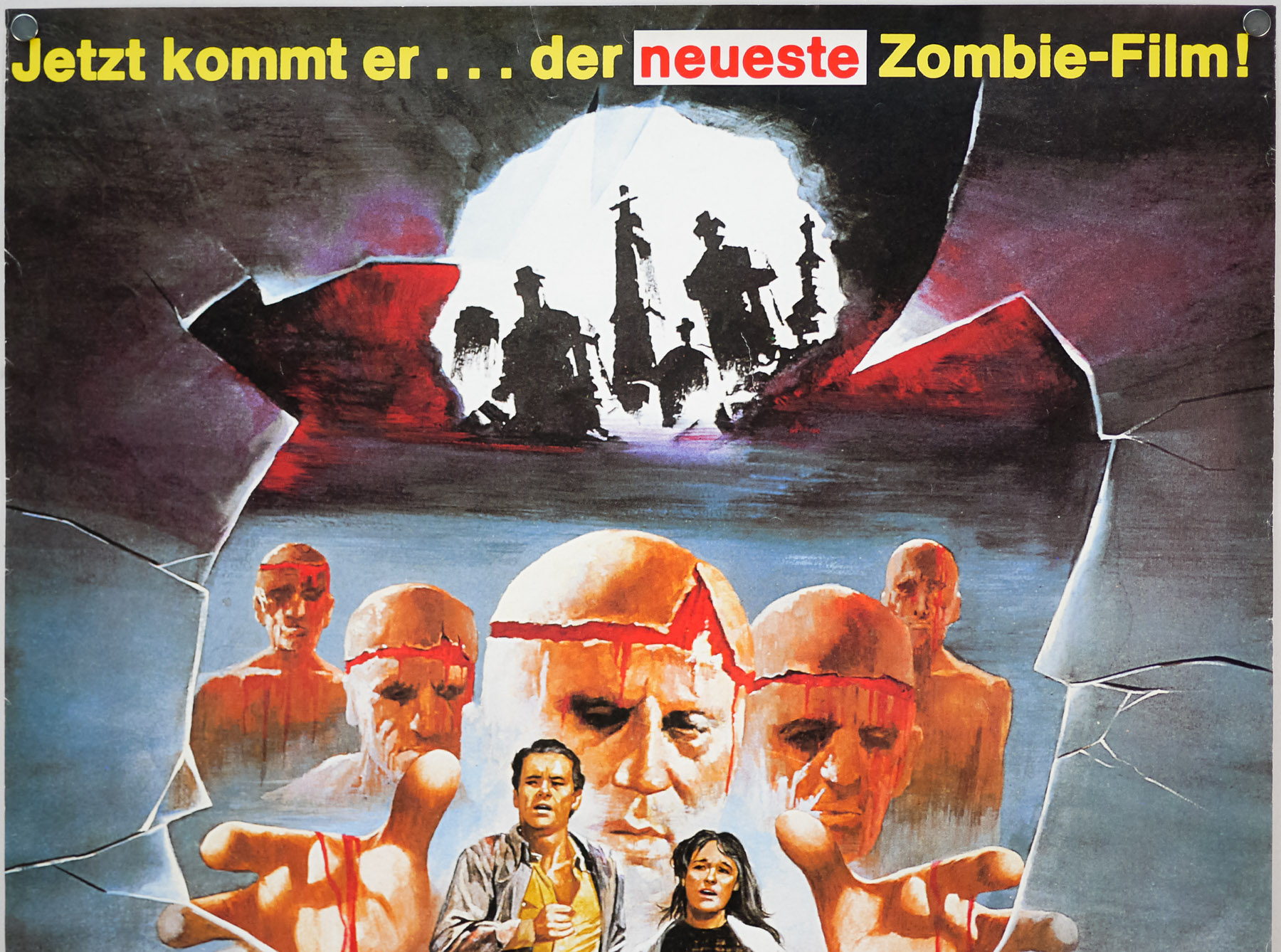
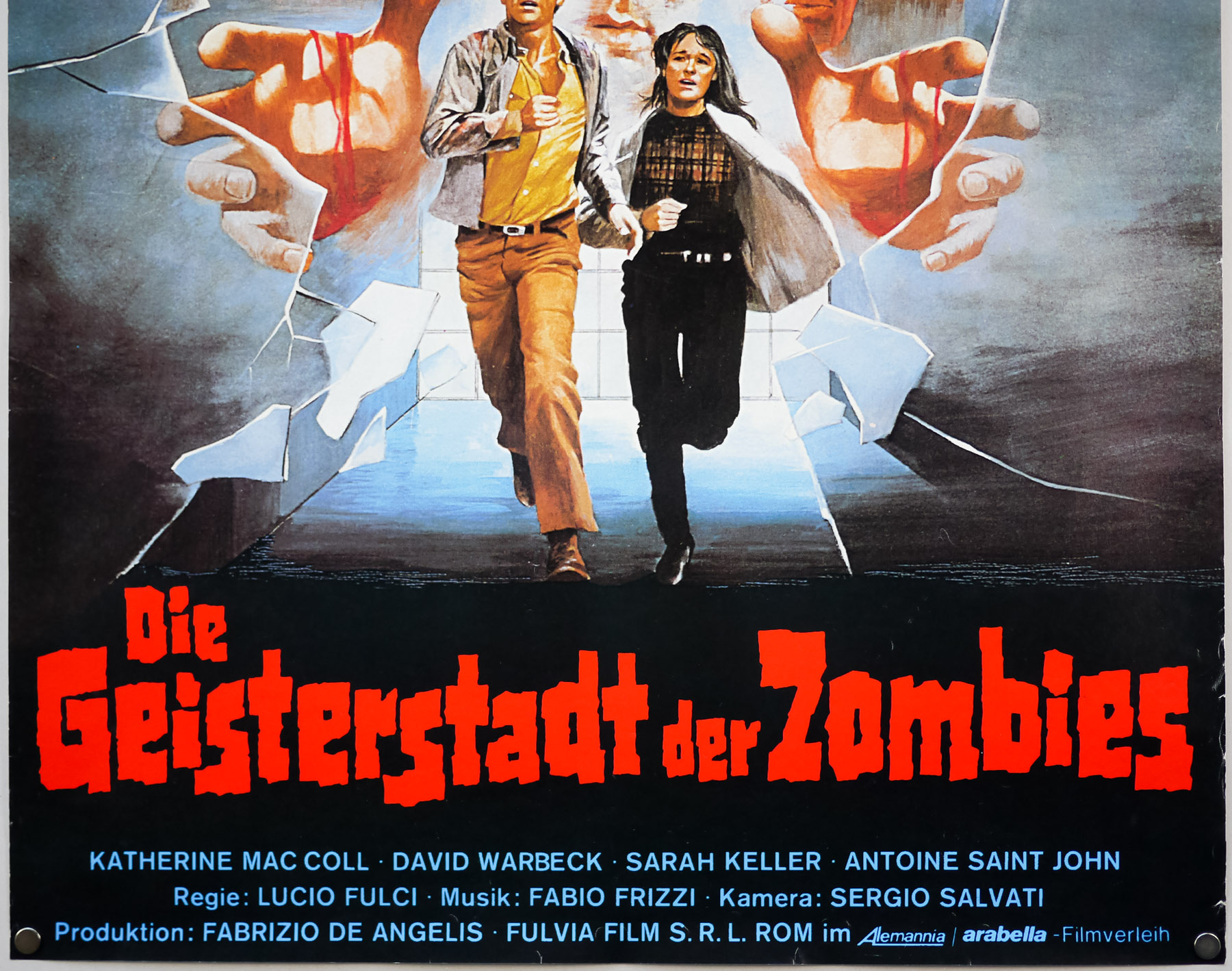
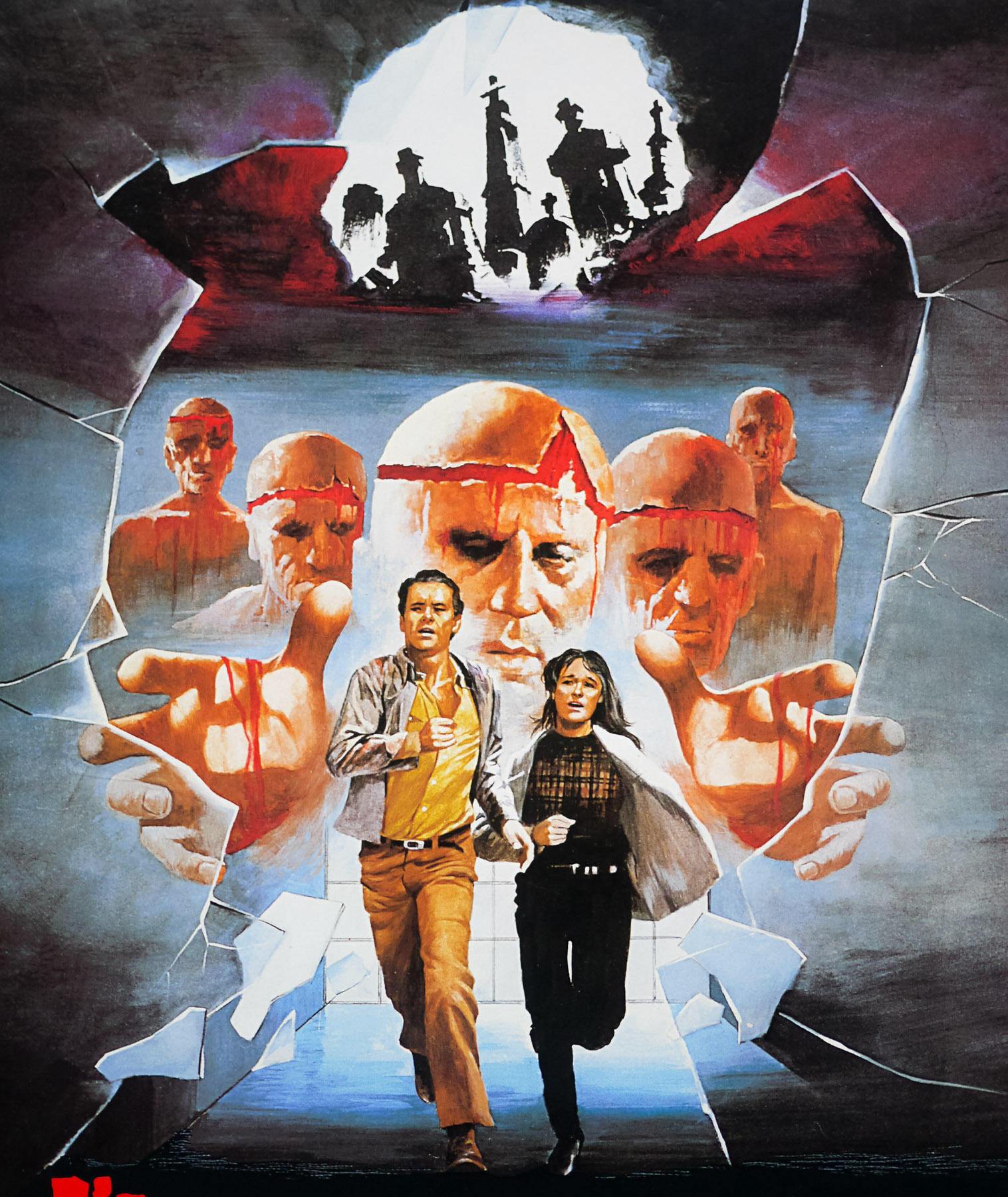
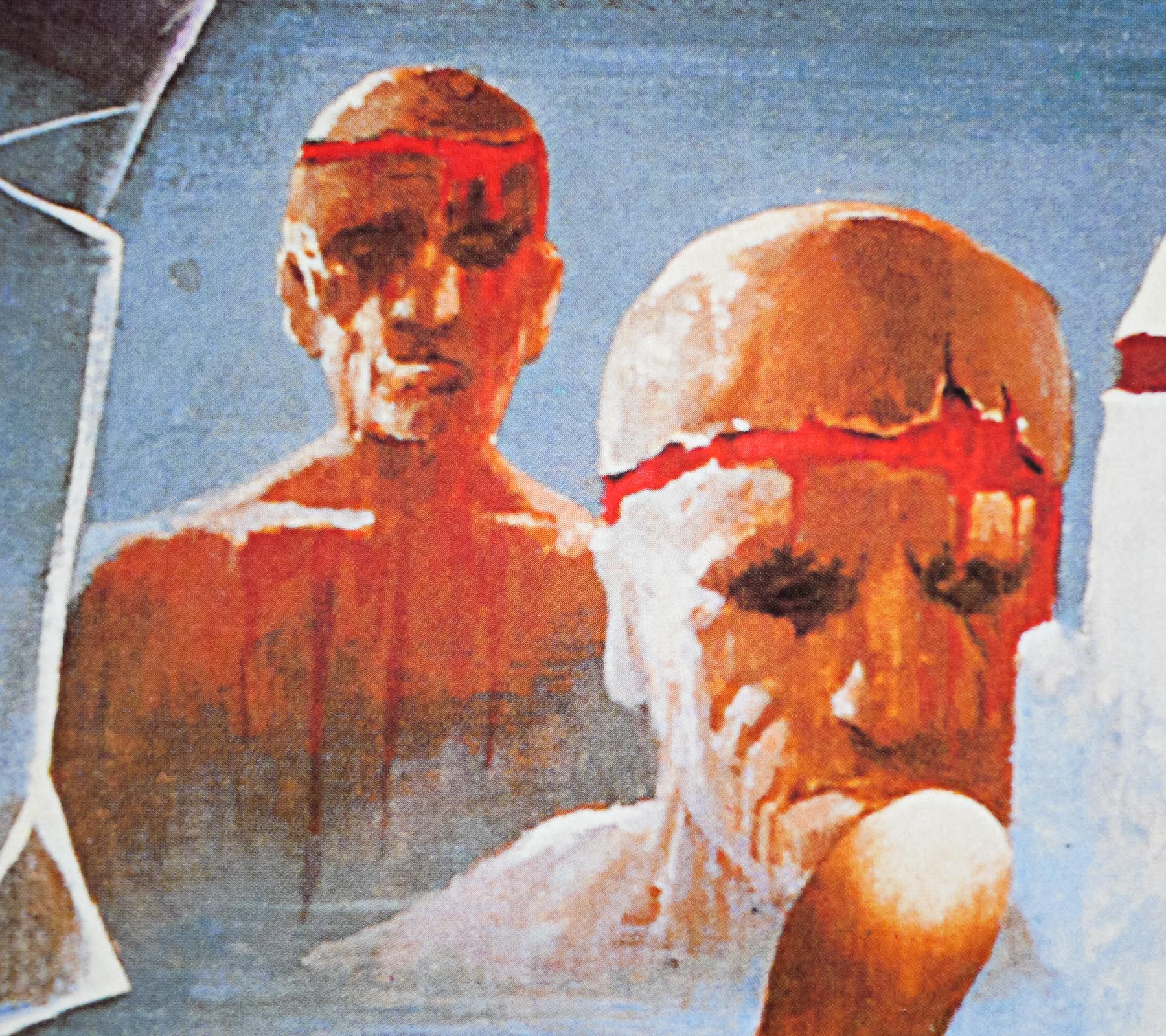
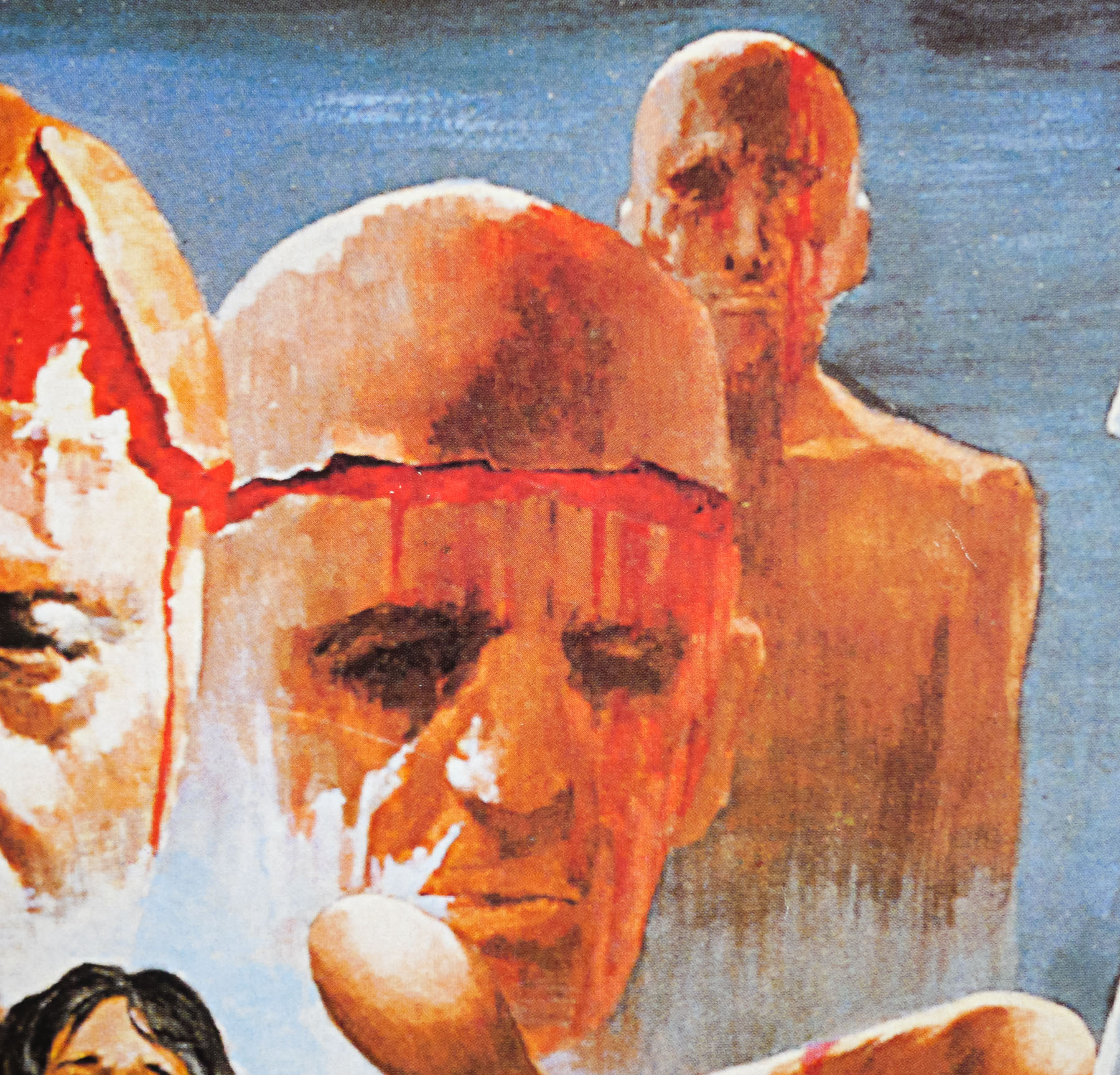
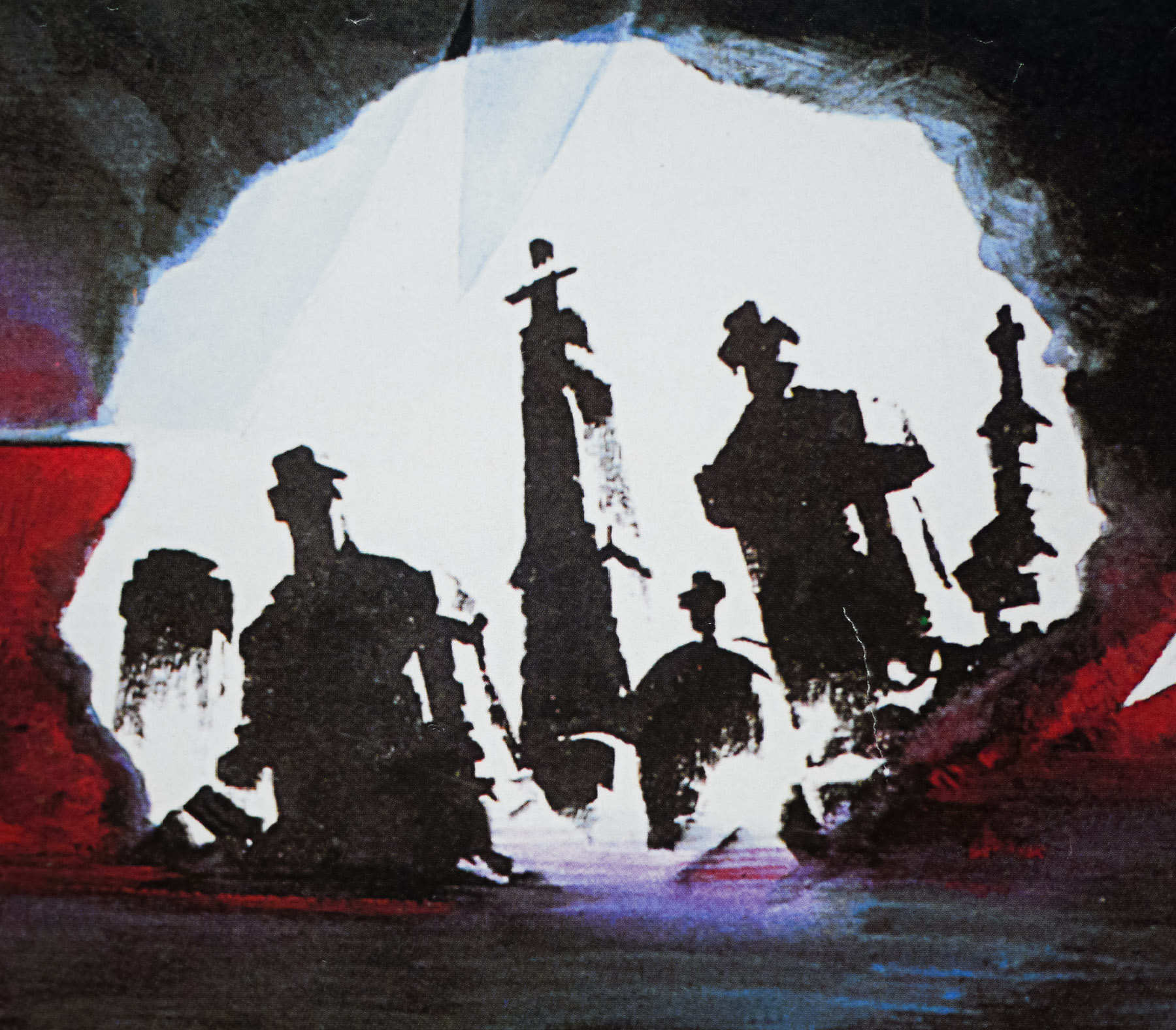
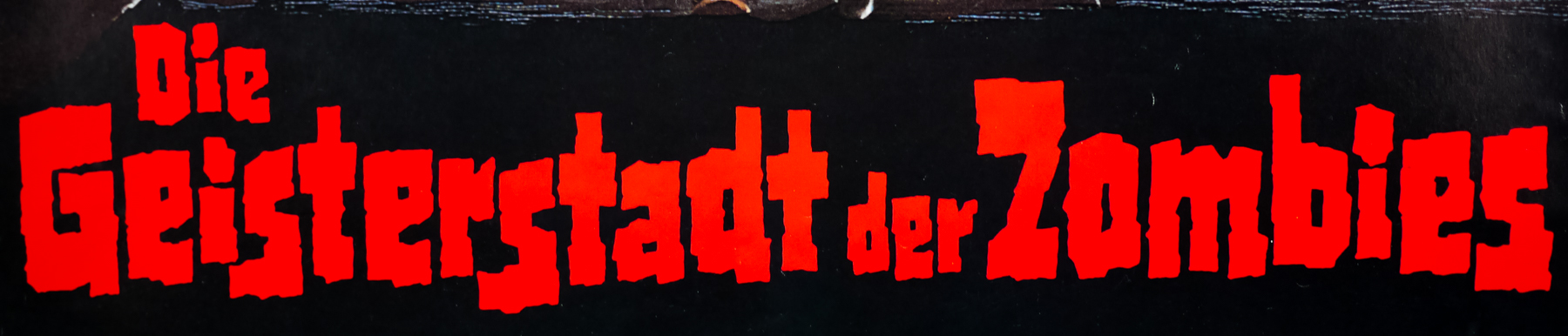
Unique artwork features on this German A1 poster for the release of Lucio Fulci‘s classic horror The Beyond (1981). Nicknamed The Godfather of Gore, the late Italian director is responsible for several memorable entries in the horror genre and The Beyond is one of what are often considered to be the big four Fulci films (the others being Zombie Flesh Eaters, The House By the Cemetery and City of the Living Dead), which were all made within two years of each other. The director tried his hand at various genres, including westerns and comedies, but it was horror where he found the greatest success and for which he is best remembered.

The Beyond is the second film in the unofficial ‘Gates of Hell’ trilogy of Fulci films that began with 1980s City of the Living Dead and ended with The House By the Cemetery. British actress Catriona MacColl, star of the other two films, plays New Yorker Liza Merril who has inherited a run-down Louisiana hotel and decides to spend her savings on renovating the place. What she doesn’t realise is that it was built over one of ‘Seven Doors of Death’, which are direct pathways to hell, and when people involved in helping her repair the hotel begin to die horribly she is helped by a local doctor (David Warbeck) and a mysterious local blind woman called Emily (Cinzia Monreale). It soon becomes clear that the pathway is letting supernatural evil out and creating bloodthirsty zombies of the dead and Liza must fight for her very survival.

As with many of Fulci’s films, the story plays second fiddle to the striking visuals and gory set-pieces as the body count ramps up. It’s never less than memorable and is often cited by Fulci fans as their favourite of his films. The Beyond also features a great score by regular Fulci collaborator Fabio Frizzi. The film was butchered heavily for its original US release (as ‘7 Doors of Death’) and was missing most of the gore scenes and a different soundtrack. The UK release was originally heavily cut, despite being granted an ‘X’ certificate. It was finally passed fully uncut in 2001.

A reader of the site got in touch to confirm that the poster was painted by Lutz Peltzer, a prolific German artist who worked on over 800 posters during his career. The German site Archiv für Filmposter features a biography and plenty of images of his work. It details that he was born in 1925 in Mannheim and passed away in 2003.

Return of the Jedi / B1 / Rebels style / Poland

16.01.15

Poster Poster
Title
Return of the Jedi
AKA
Revenge of the Jedi (pre-release title) | Star Wars Episode VI: Return of the Jedi (full title) | Blue Harvest (USA - fake working title)
Year of Film
1983
Director
Richard Marquand
Starring
Mark Hamill, Harrison Ford, Carrie Fisher, Billy Dee Williams, Anthony Daniels, Kenny Baker, Peter Mayhew, David Prowse, Ian McDiarmid
Origin of Film
USA
Genre(s) of Film
Mark Hamill, Harrison Ford, Carrie Fisher, Billy Dee Williams, Anthony Daniels, Kenny Baker, Peter Mayhew, David Prowse, Ian McDiarmid,
Type of Poster
B1
Style of Poster
Rebels
Origin of Poster
Poland
Year of Poster
1984
Designer
Witold Dybowski
Artist
Witold Dybowski
Size (inches)
26 6/16" x 38 2/16"
SS or DS
SS
Tagline
--

This is one of two posters printed for the original Polish release of Return of the Jedi in 1984. Although ROTJ, the third in the original trilogy of Star Wars films, was often maligned by fans who complained it was a weak end to the series and derided for featuring the child-friendly Ewoks, all was forgiven with the release of the 1999’s The Phantom Menace and its ‘galactic trade disputes’ and the risible Jar-Jar Binks. Now, although certainly not as highly acclaimed as the original 1977 film or the classic The Empire Strikes Back, ROTJ is still beloved by fans of the series. In 2015, director JJ Abrams will release Episode VII into cinemas, mooted as a direct sequel to this film and much anticipated by fans worldwide. JJ is seen as a much safer pair of hands than George Lucas after his shepherding of a well-received reboot of the Star Trek franchise.

Even if the Ewoks are loved and hated in equal measure, ROTJ still features many memorable, fan favourite characters, locations and scenes, including the attempted rescue of Han Solo from Jabba the Hut’s palace leading to a memorable showdown above a Sarlacc pit monster (which features the ignominious exit of fan favourite Boba Fett). Later the film sees the passing of Yoda along with more revelations about the Skywalker family, and an excellent scene that sees Luke Skywalker confront the evil Emperor Palpatine with Vader standing by. Meanwhile, the Ewoks (essentially child-sized teddy bears) join forces to defeat the ground forces of the Empire on the surface of the planet Endor.

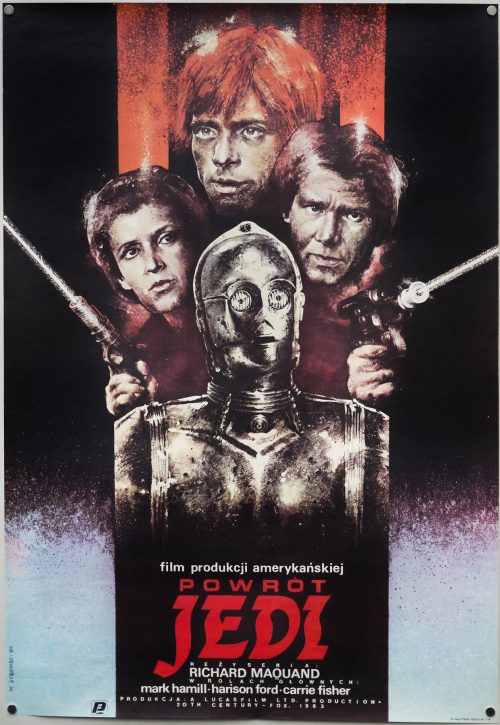
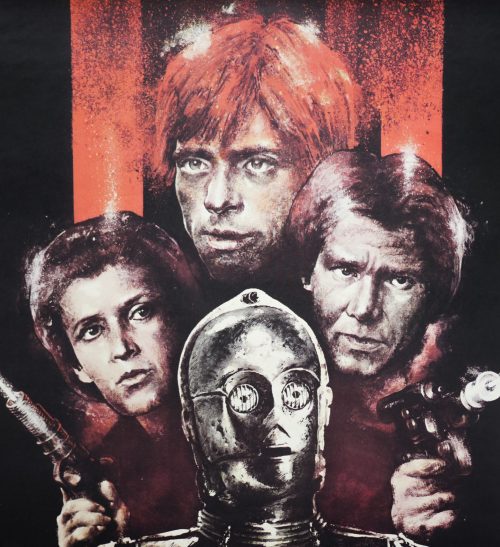
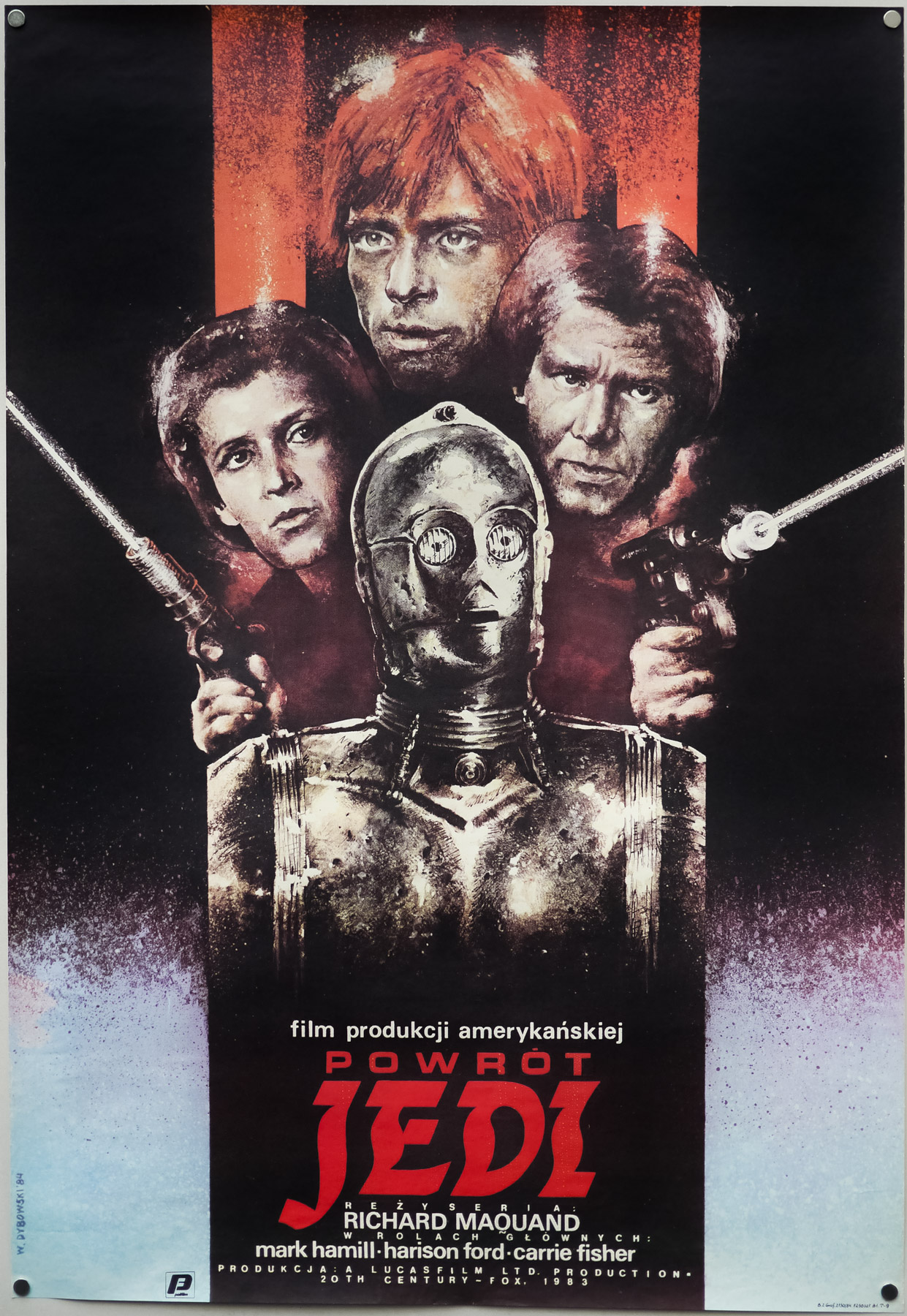
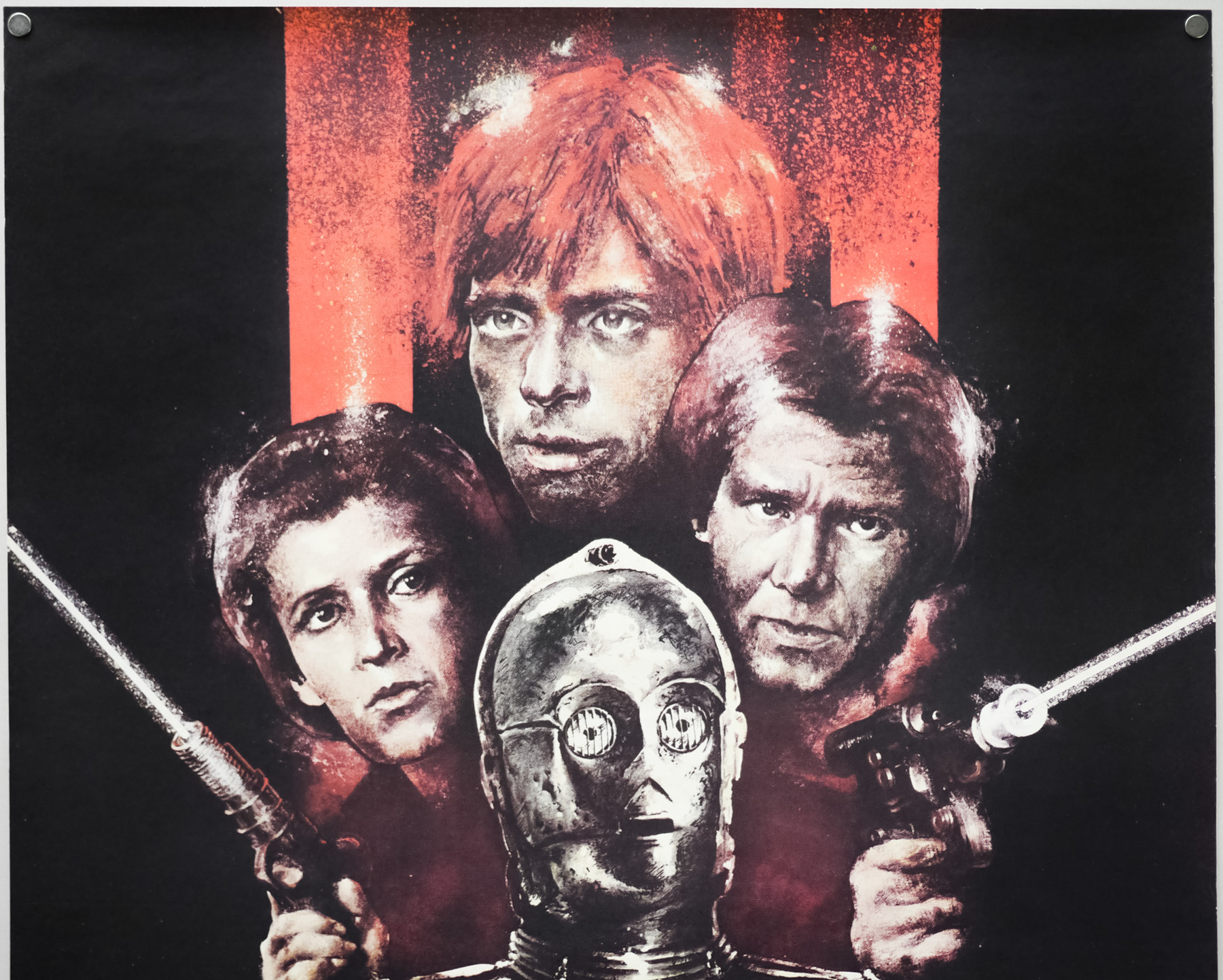
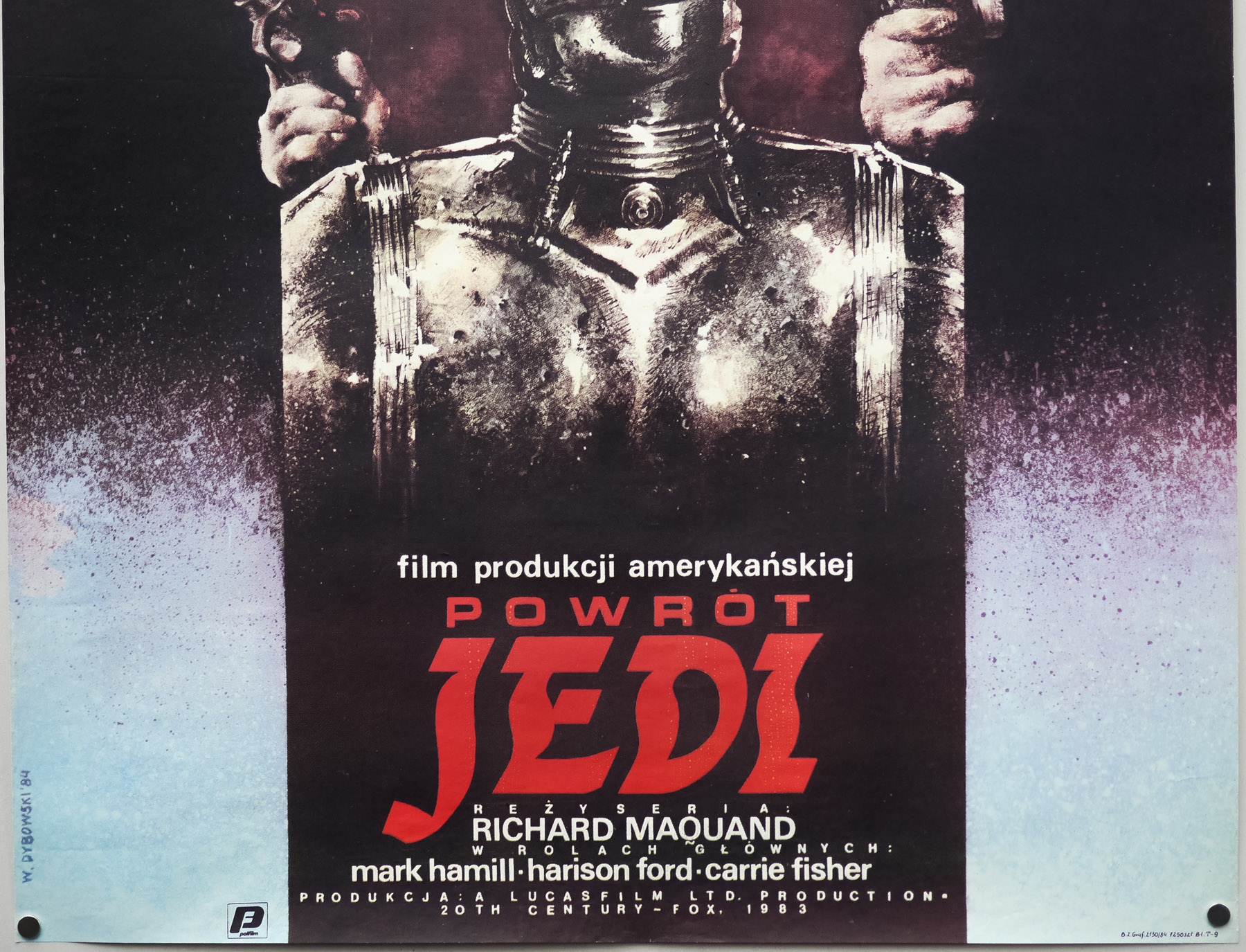
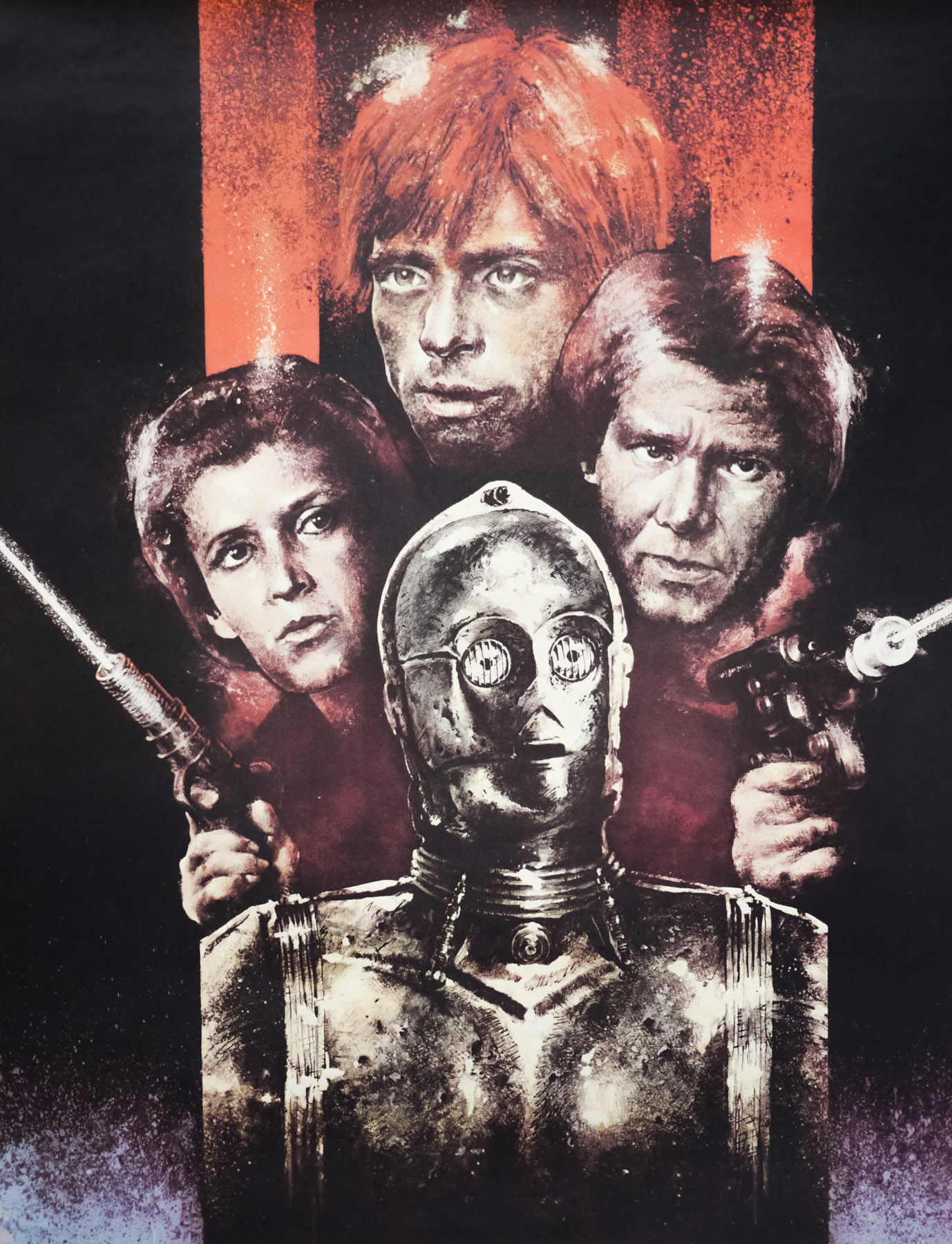
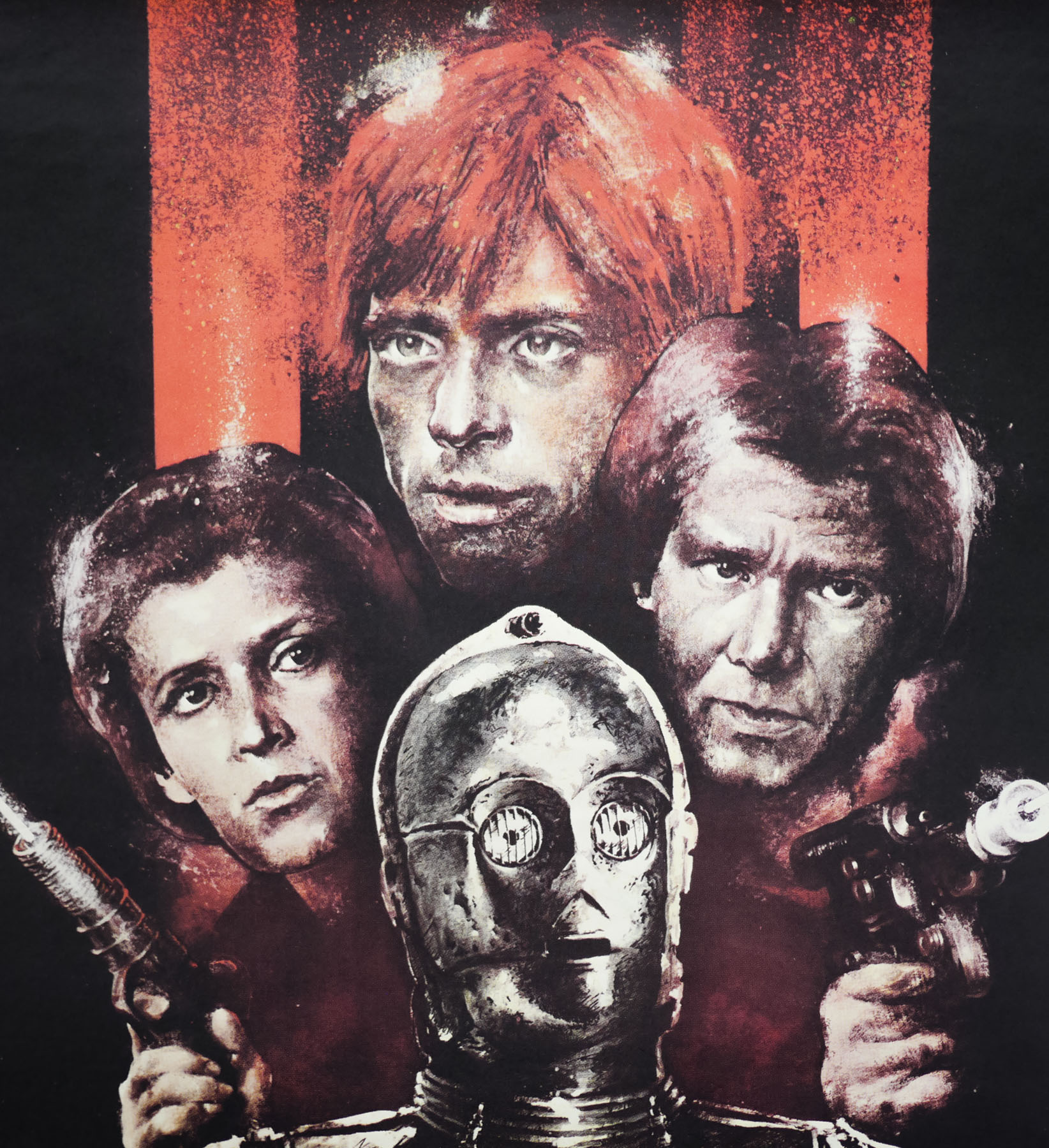
This poster, depicting four members of the rebel alliance, including Luke Skywalker (centre top) and friendly robot C-3PO, and was designed and illustrated by Witold Dybowski who, according to the short biography on his official website, was born in Sopot, Poland and went on to study at the College of Design in Gdansk. After graduating he worked as a graphic designer, illustrator, art director and creative director in Poland, Germany and Austria. During the 1980s he worked on a number of Polish film posters advertising both native and Hollywood productions, which include this and one other poster for Return of the Jedi (to be added to Film on Paper later this year), Indiana Jones and the Temple of Doom and the ‘bubbles’ style poster for Aliens. Since 2010 he has been working as a freelance photographer and his official site features galleries of his work.

I also have the Darth Vader style Polish B1 designed by Dybowski.

The Sword and the Sorcerer / quad / UK

30.01.15

Poster Poster

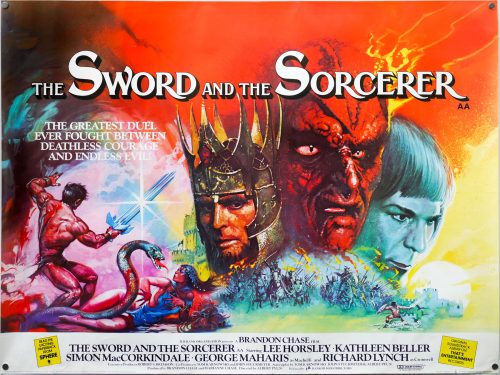
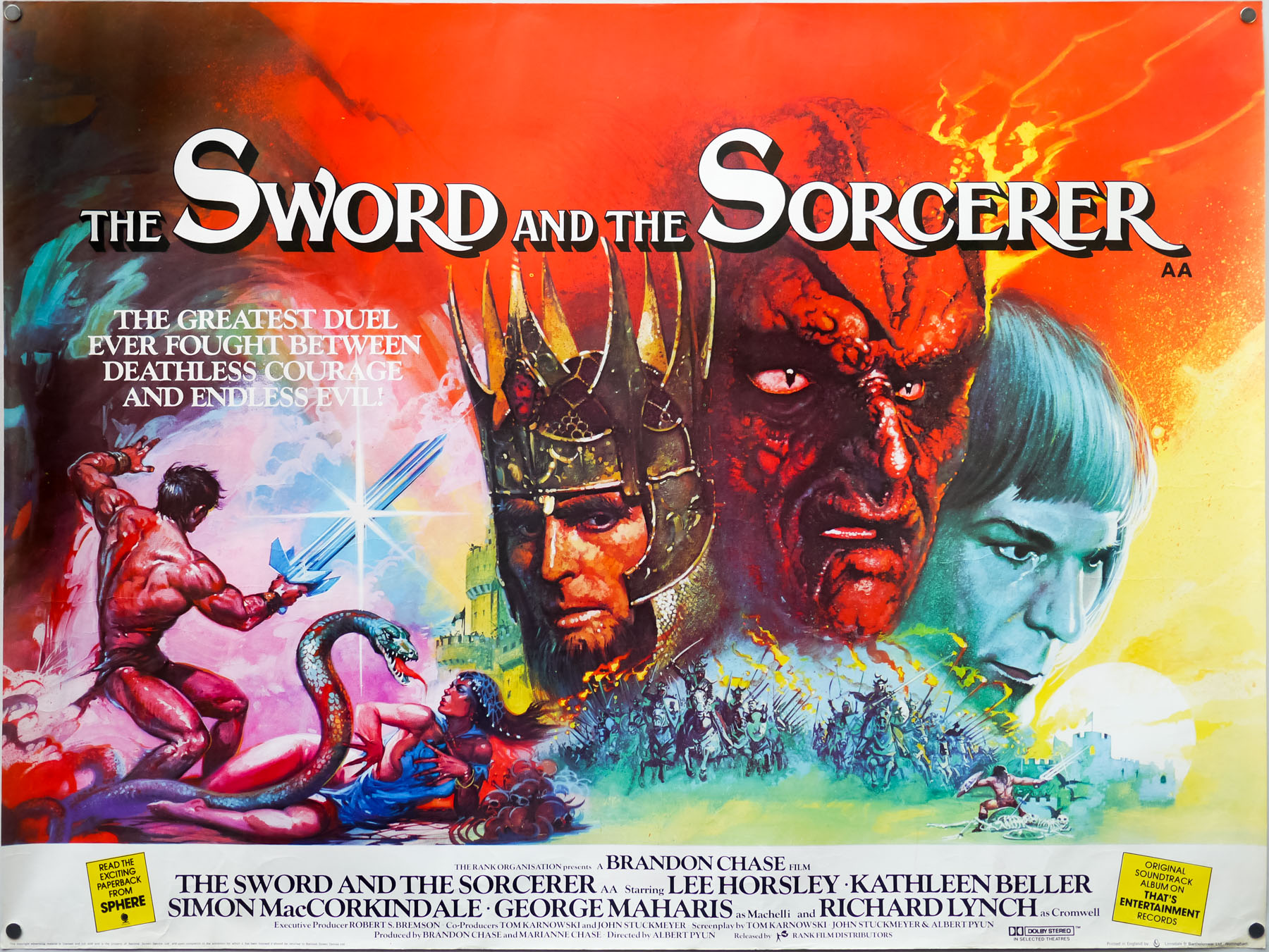
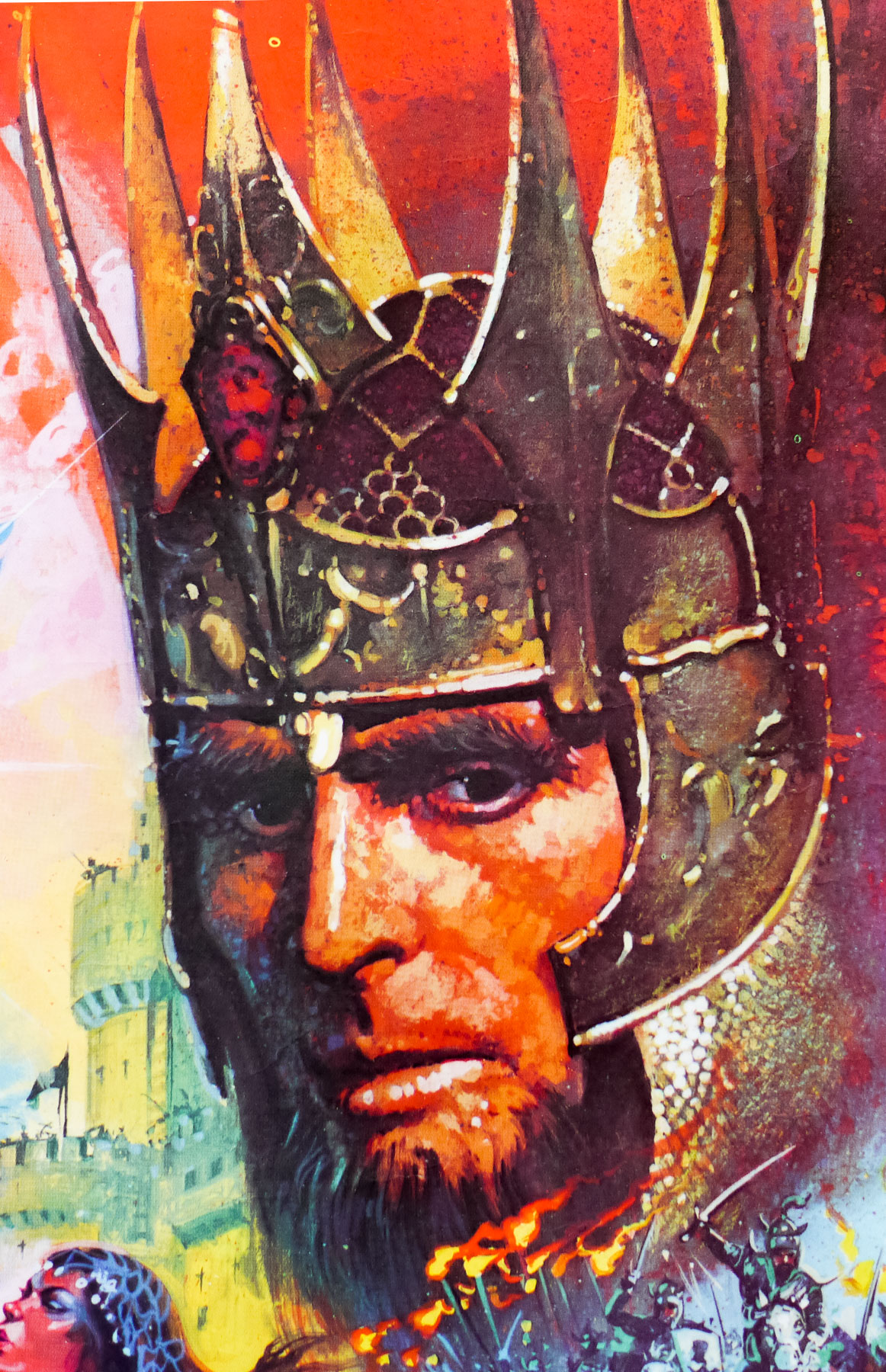
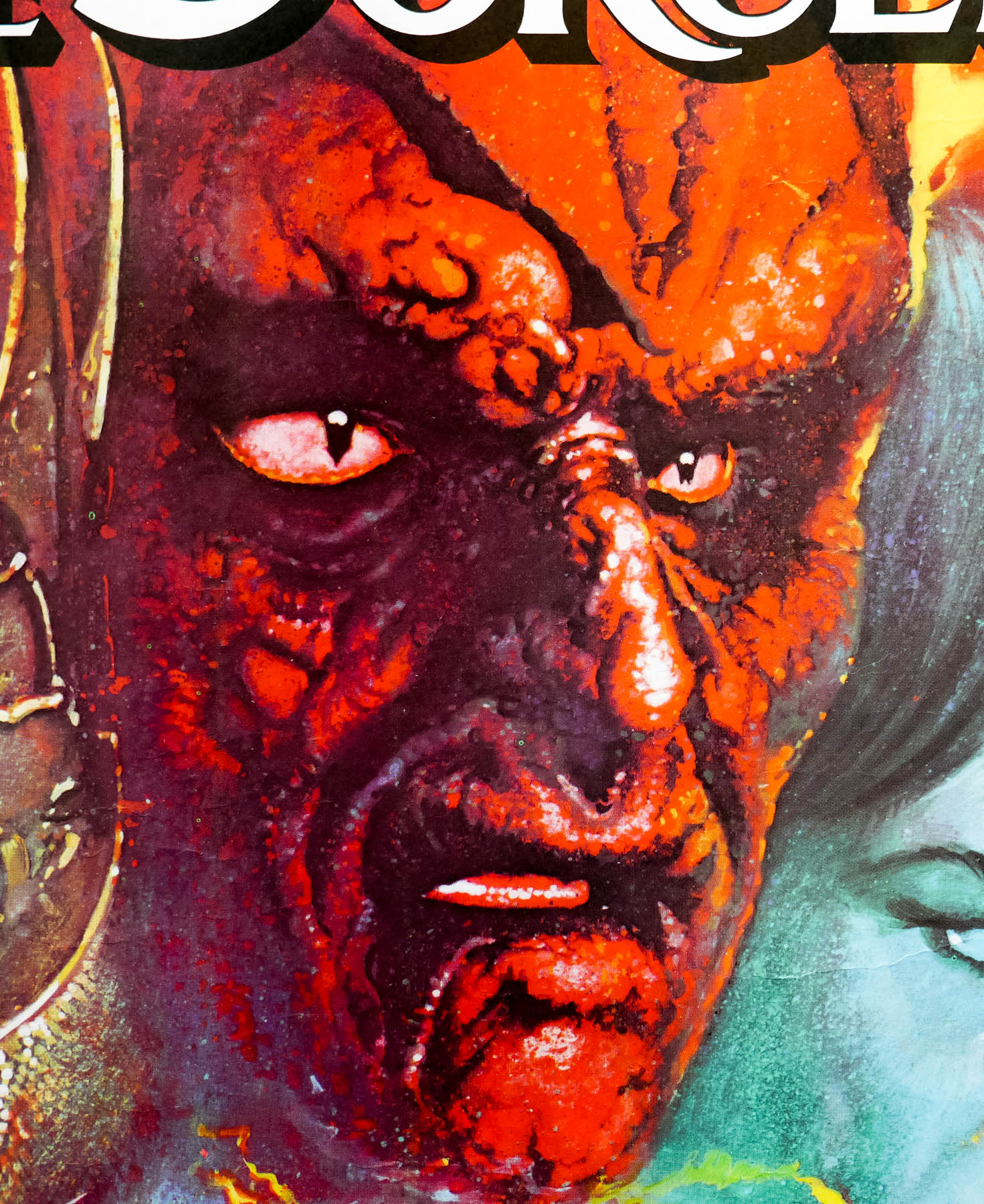
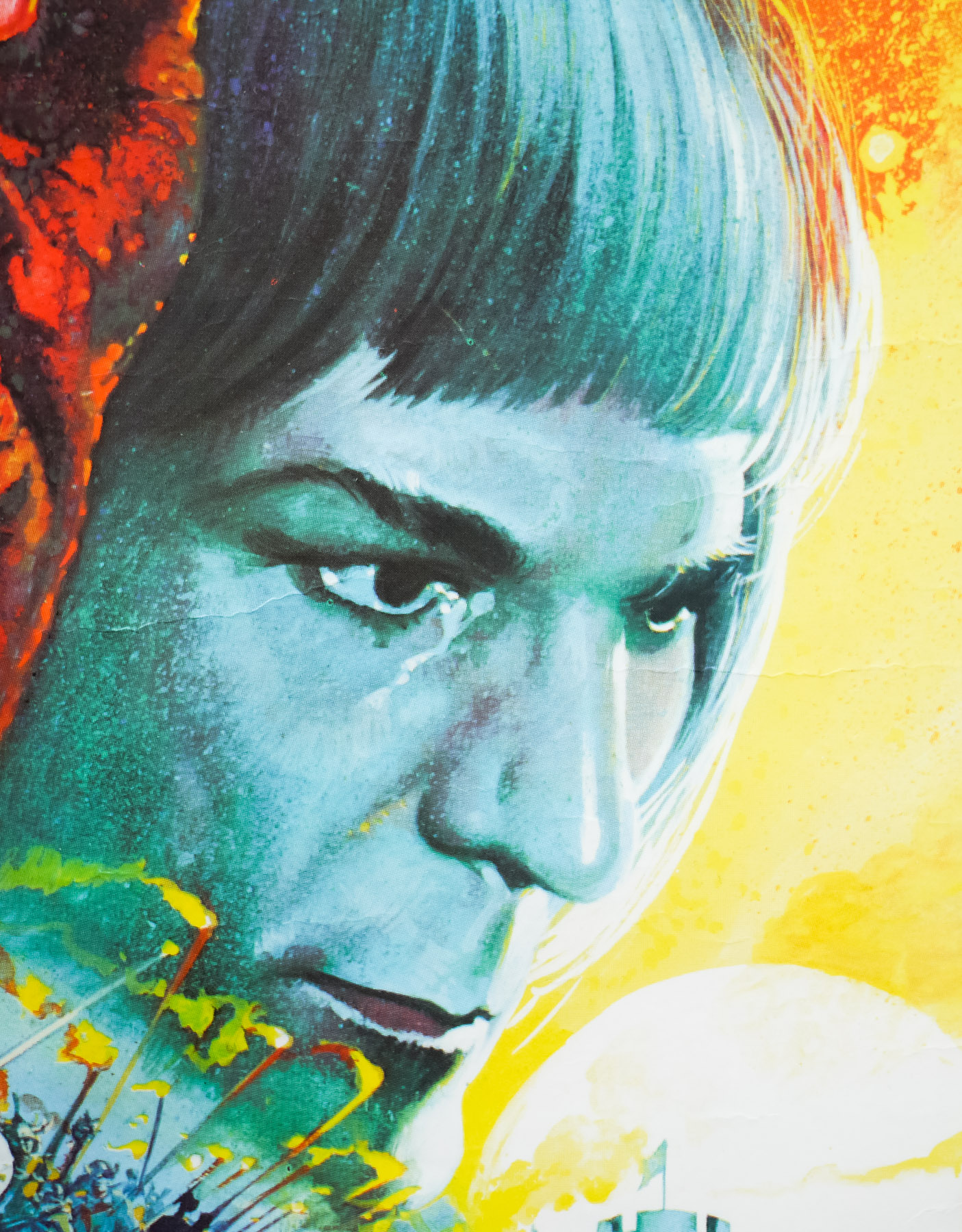
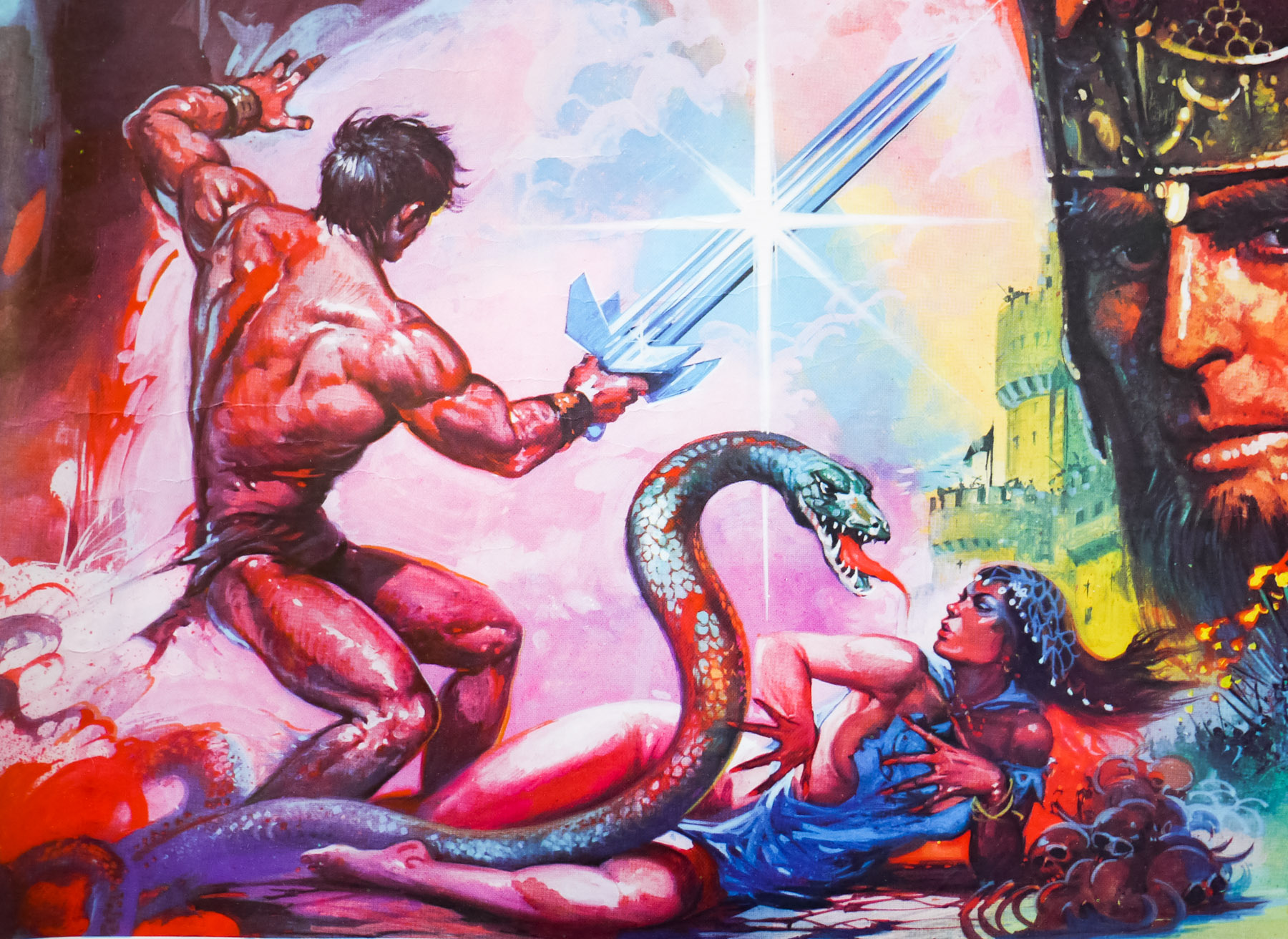
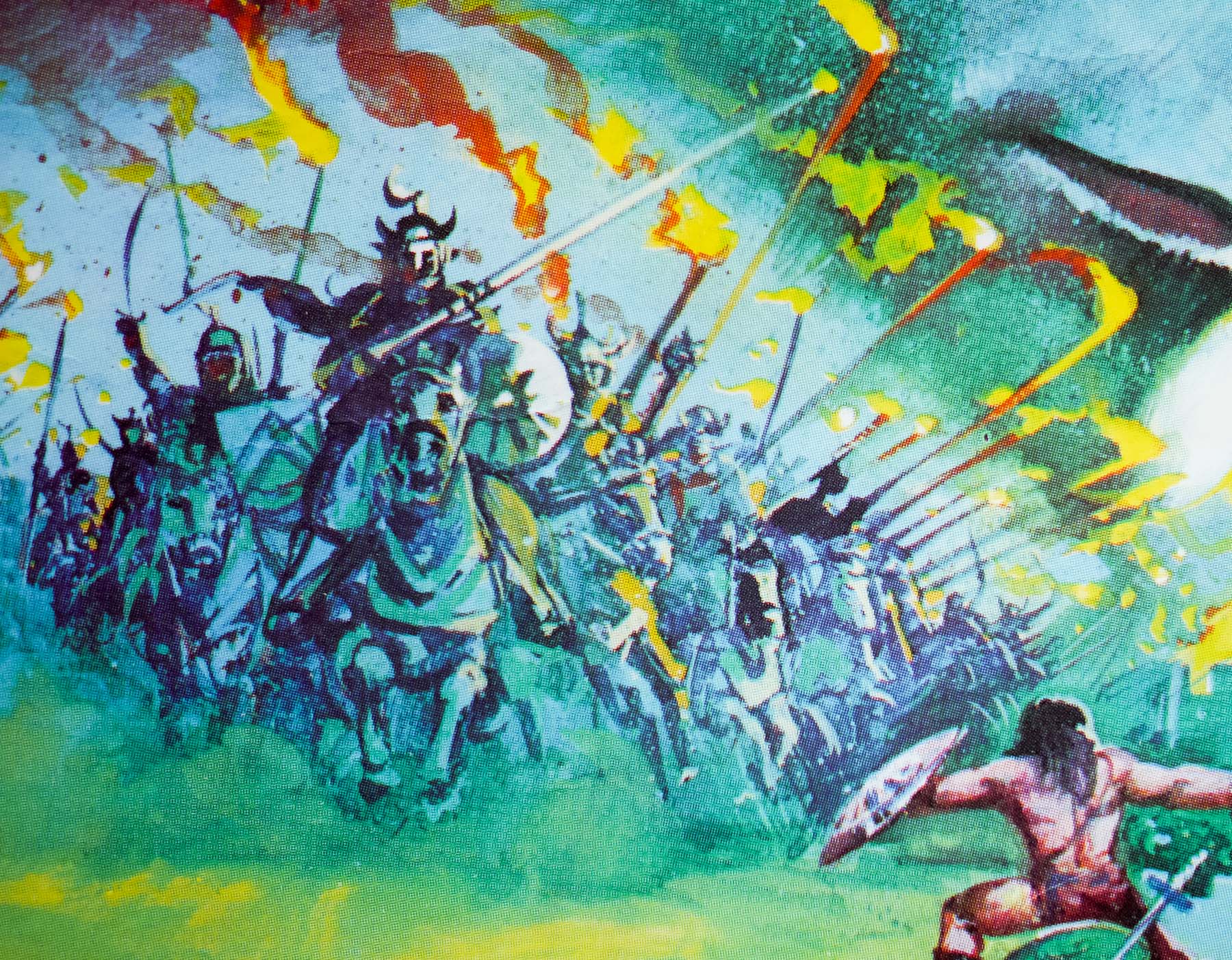
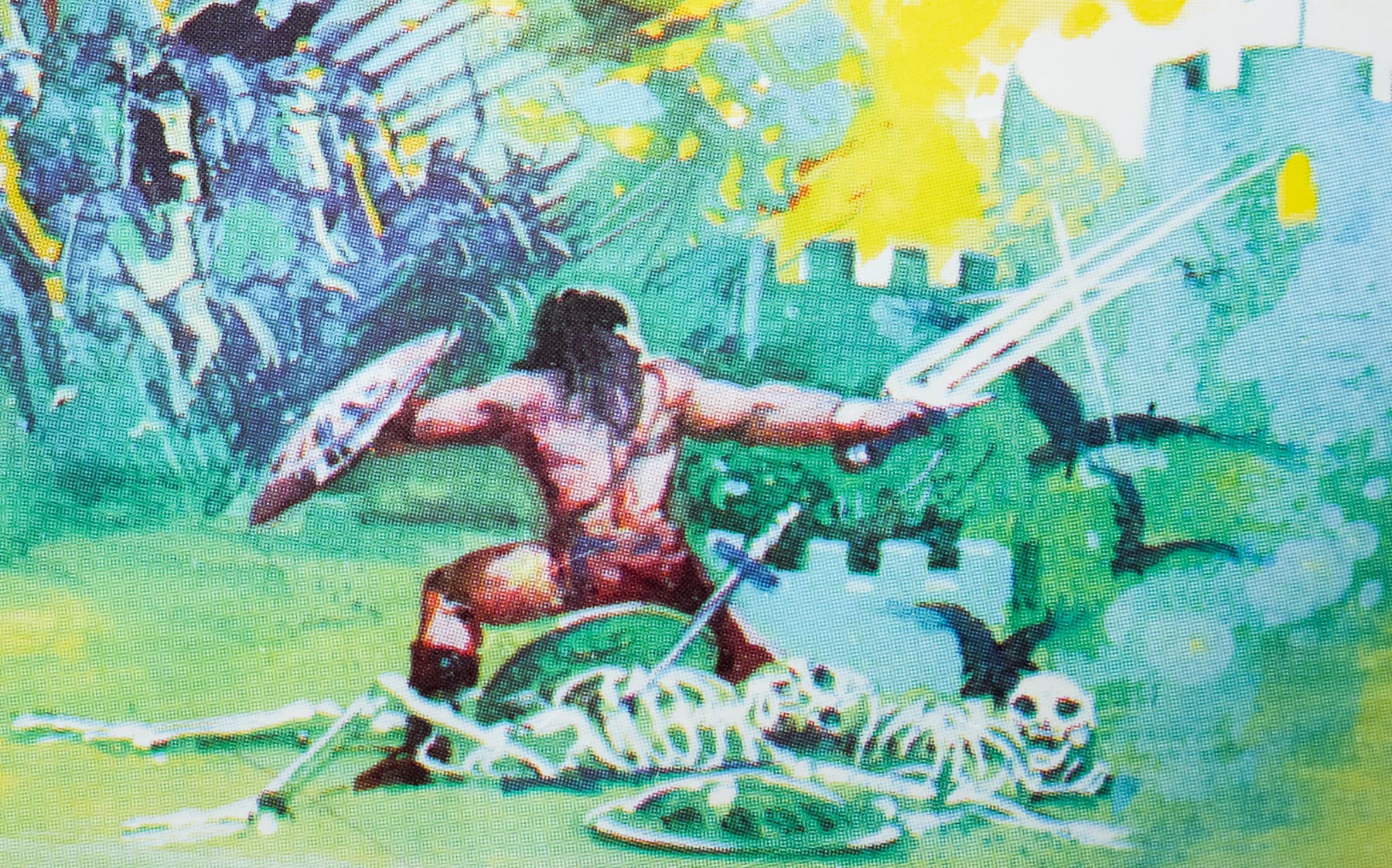
The Sword and the Sorcerer is a 1982 fantasy film directed by Albert Pyun (in his debut) and was one of several entries in the genre that were released the same year, including Conan the Barbarian and The Beastmaster. Lee Horsley appears in his first film role as Prince Talon the song of a King and Queen who are slain by the evil King Cromwell (Richard Lynch) after he uses the black magic of a sorcerer named Xusia (Richard Moll) to overthrow their kingdom.

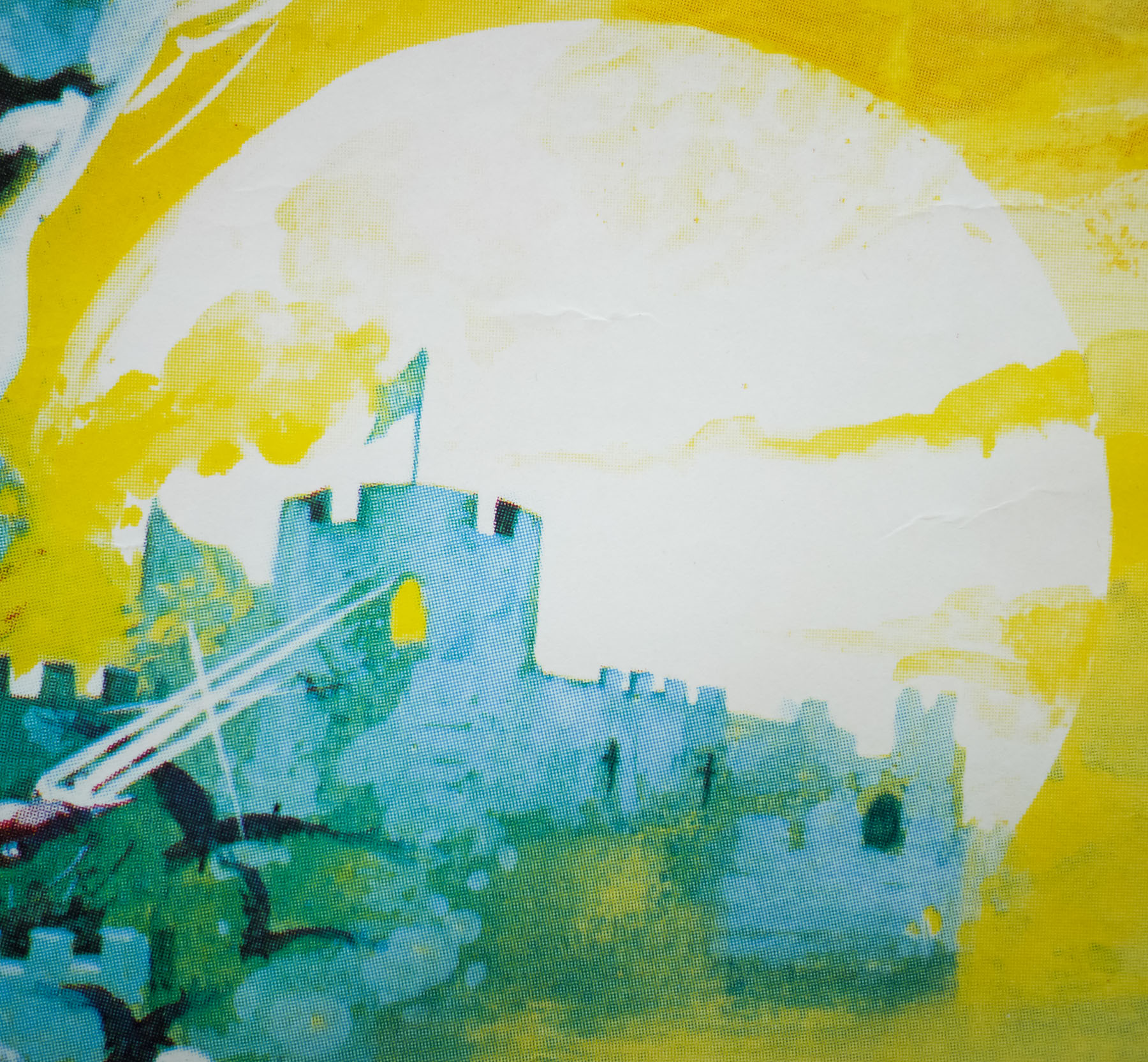
Over a decade later, Talon returns to the kingdom as a mercenary leading a band of men on a mission to help rebels overthrow Cromwell. Talon is asked to help free Mikah (Simon MacCorkindale), Cromwell’s war chancellor, who is secretly a double agent and is captured and imprisoned. His sister Alana (Kathleen Beller) begs for help from Talon and the mercenary sets out to Cromwell’s castle where the final showdown with his parents’ murderer takes place.

The film was critically derided at the time but still proved a popular box-office draw, easily recouping its relatively low budget and ending up as the most profitable independent film of 1982.

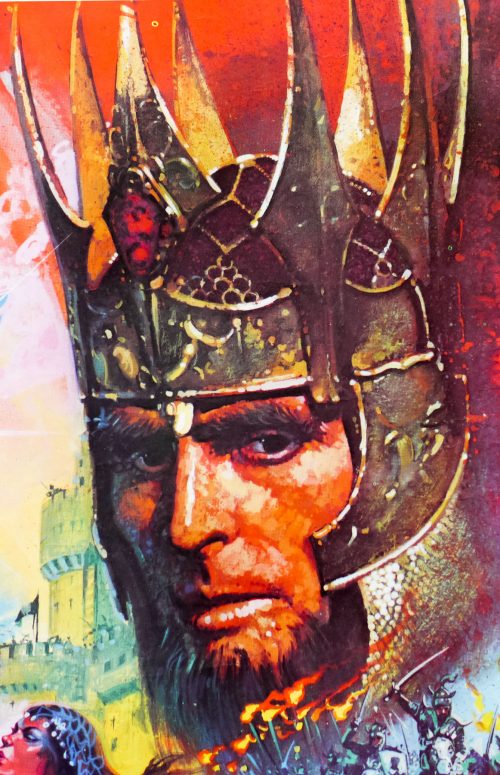
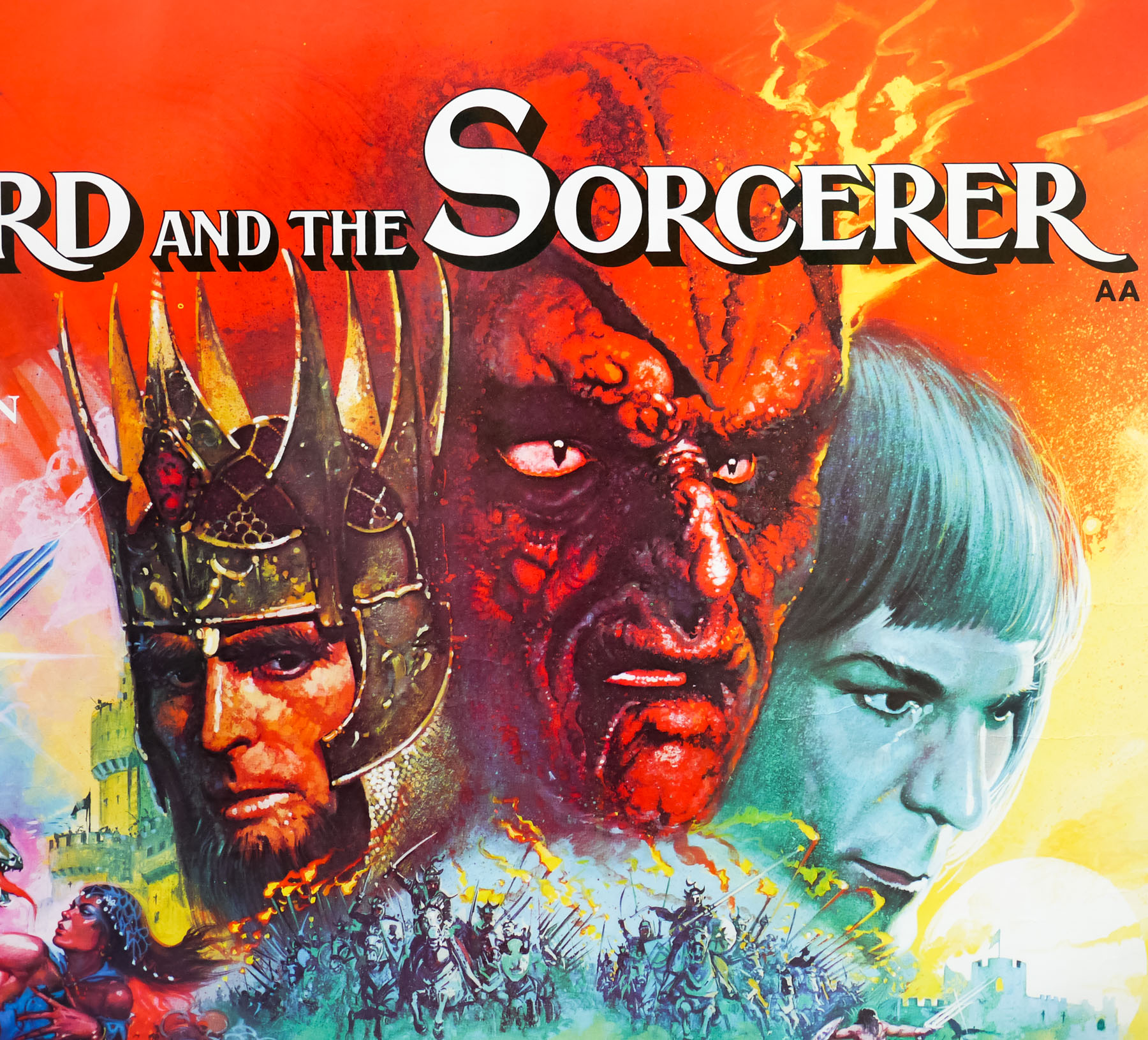
This quad was painted by the British designer and artist Brian Bysouth who I interviewed for this site in 2012, There is also a quad for Willow featuring the same artwork. Brian is one of my favourite artists and worked on multiple classic posters from the 1960s to the 1980s, including the final painted poster for a James Bond film, The Living Daylights. The other posters I’ve collected by Brian can be seen by clicking here.

This poster takes elements from both the Style A US one sheet as well as the Style B one sheet, both credited to the artist Peter Andrew Jones.

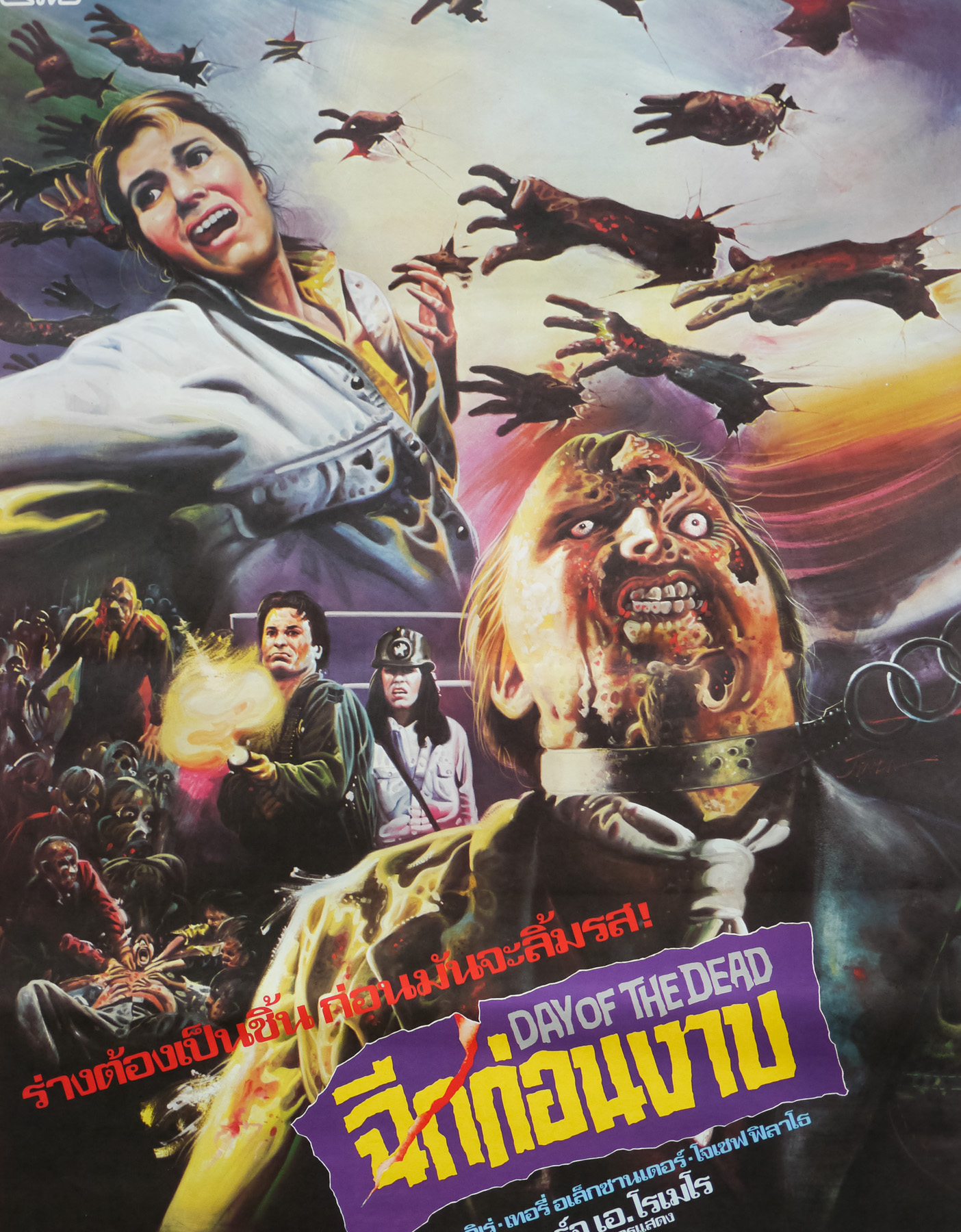
Day of the Dead / Thailand

18.02.15

Poster Poster
Title
Day Of The Dead
AKA
Zombie 2 - Das letzte Kapitel (West Germany) | Il giorno degli zombi (Italy)
Year of Film
1985
Director
George A. Romero
Starring
Lori Cardille, Terry Alexander, Joe Pilato, Jarlath Conroy, Anthony Dileo Jr., Richard Liberty, Sherman Howard
Origin of Film
USA
Genre(s) of Film
Lori Cardille, Terry Alexander, Joe Pilato, Jarlath Conroy, Anthony Dileo Jr., Richard Liberty, Sherman Howard,
Type of Poster
Thai
Style of Poster
--
Origin of Poster
Thailand
Year of Poster
1985
Designer
Unknown
Artist
Jinda
Size (inches)
21 4/16" x 30 14/16"
SS or DS
SS
Tagline
--

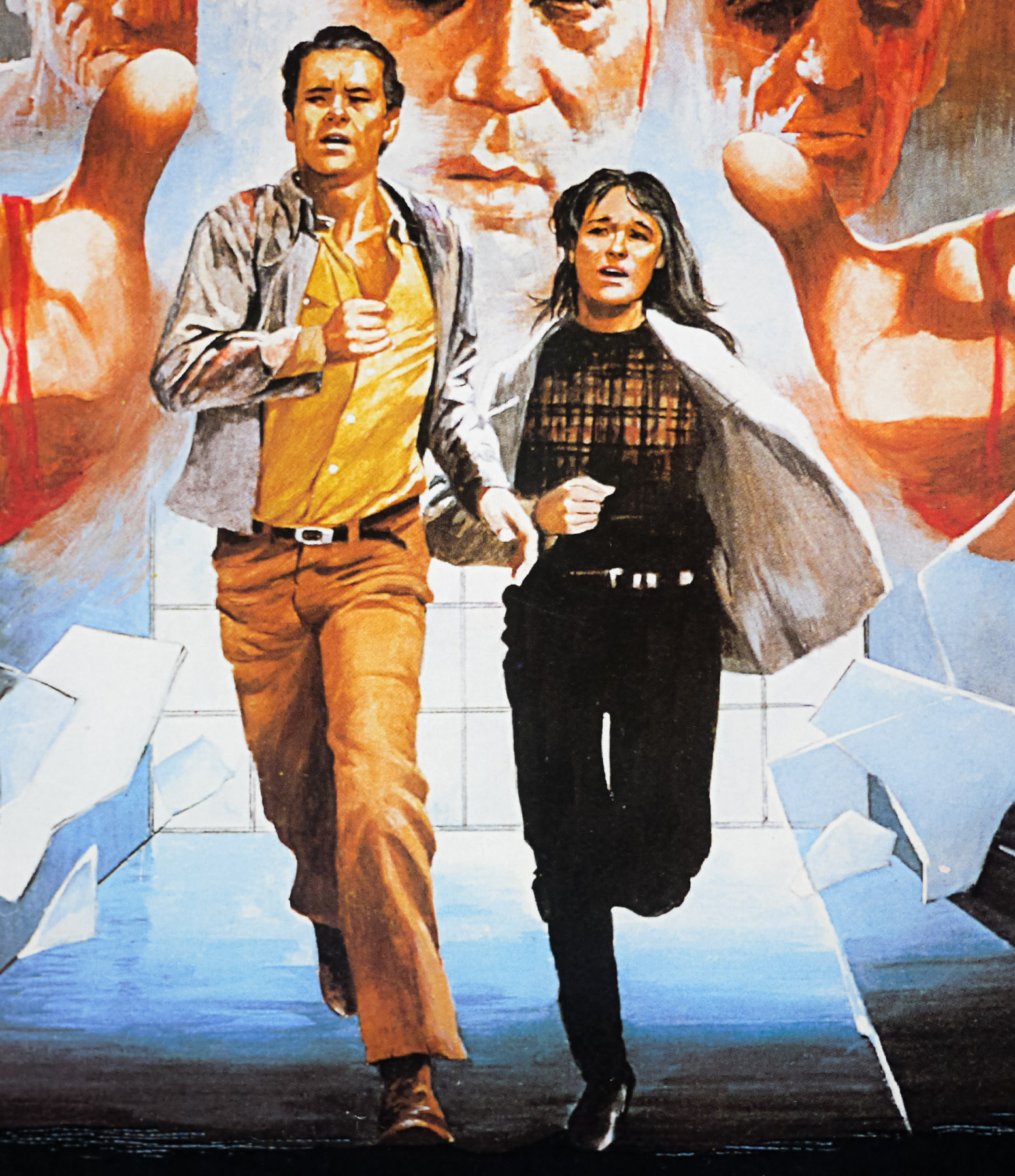
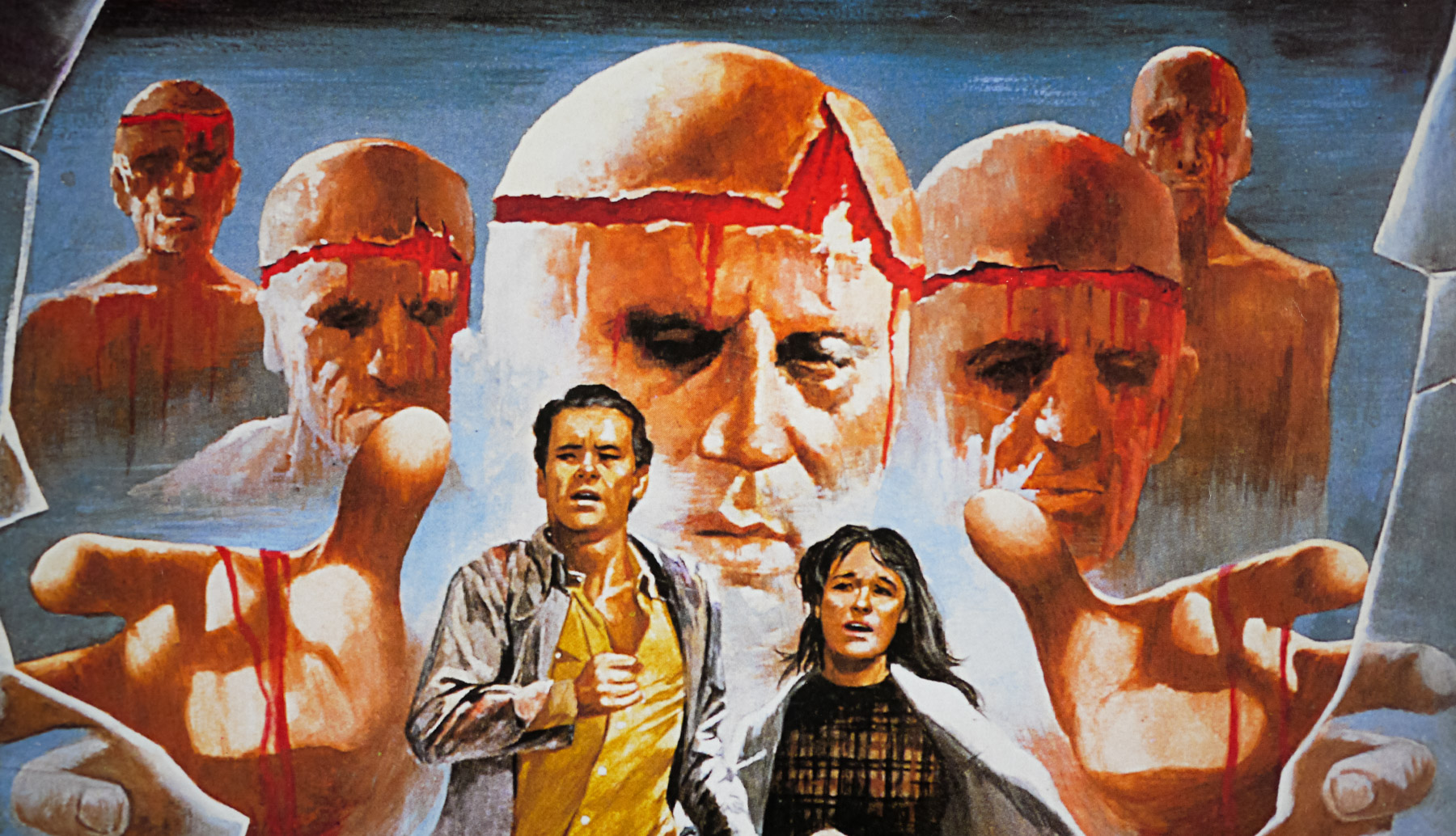
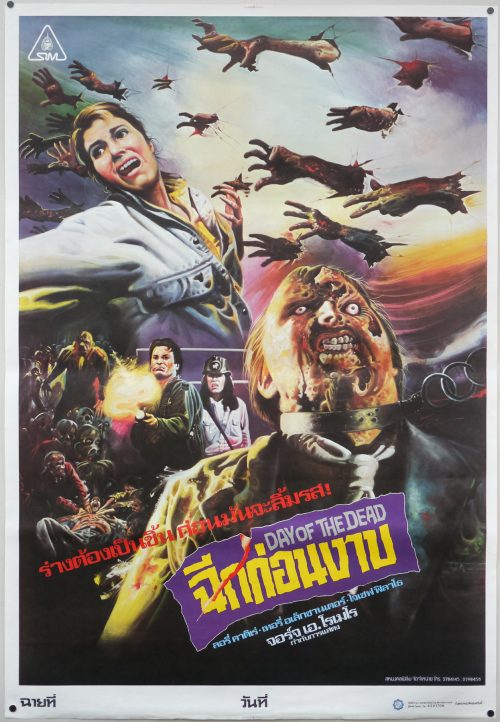
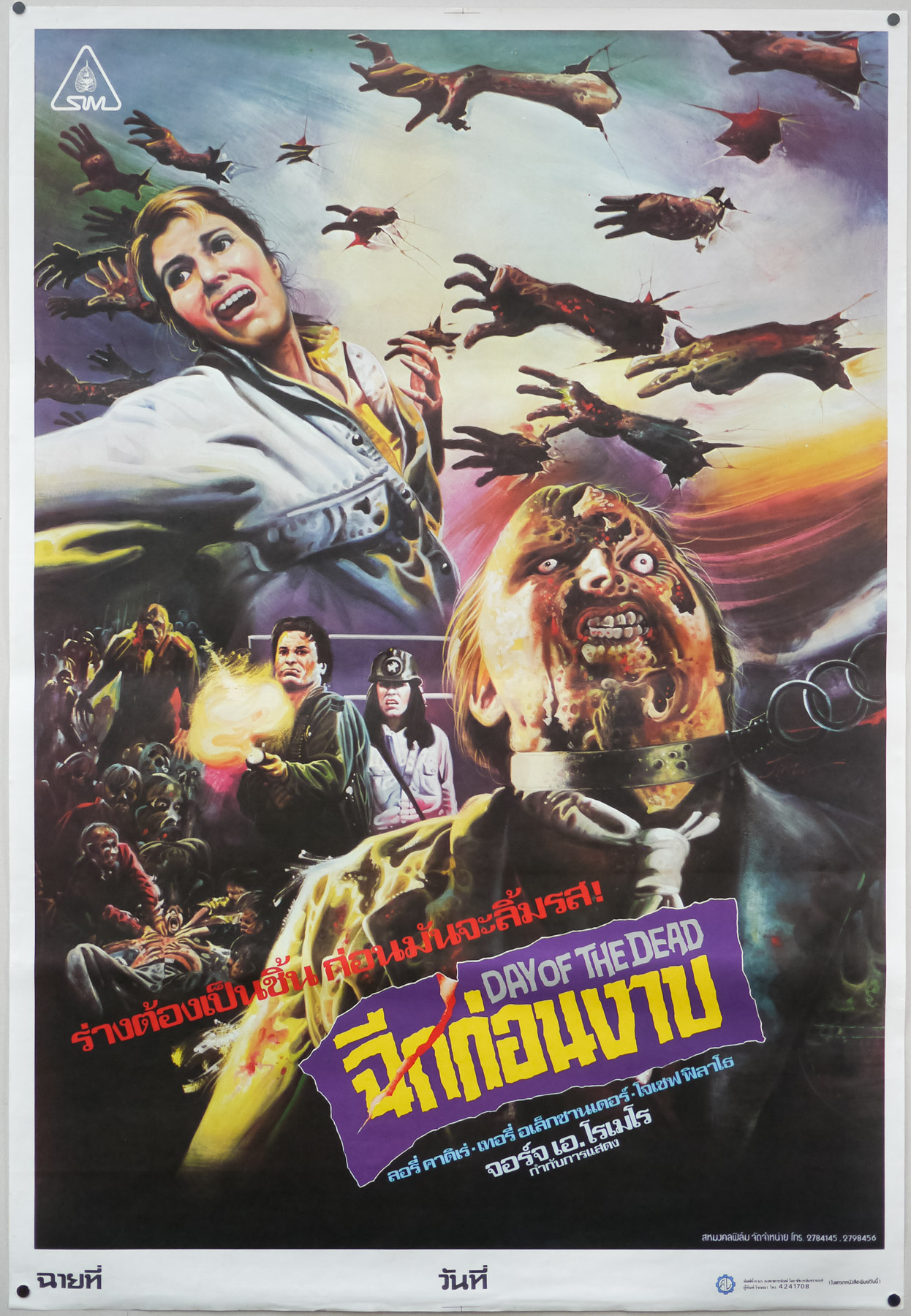
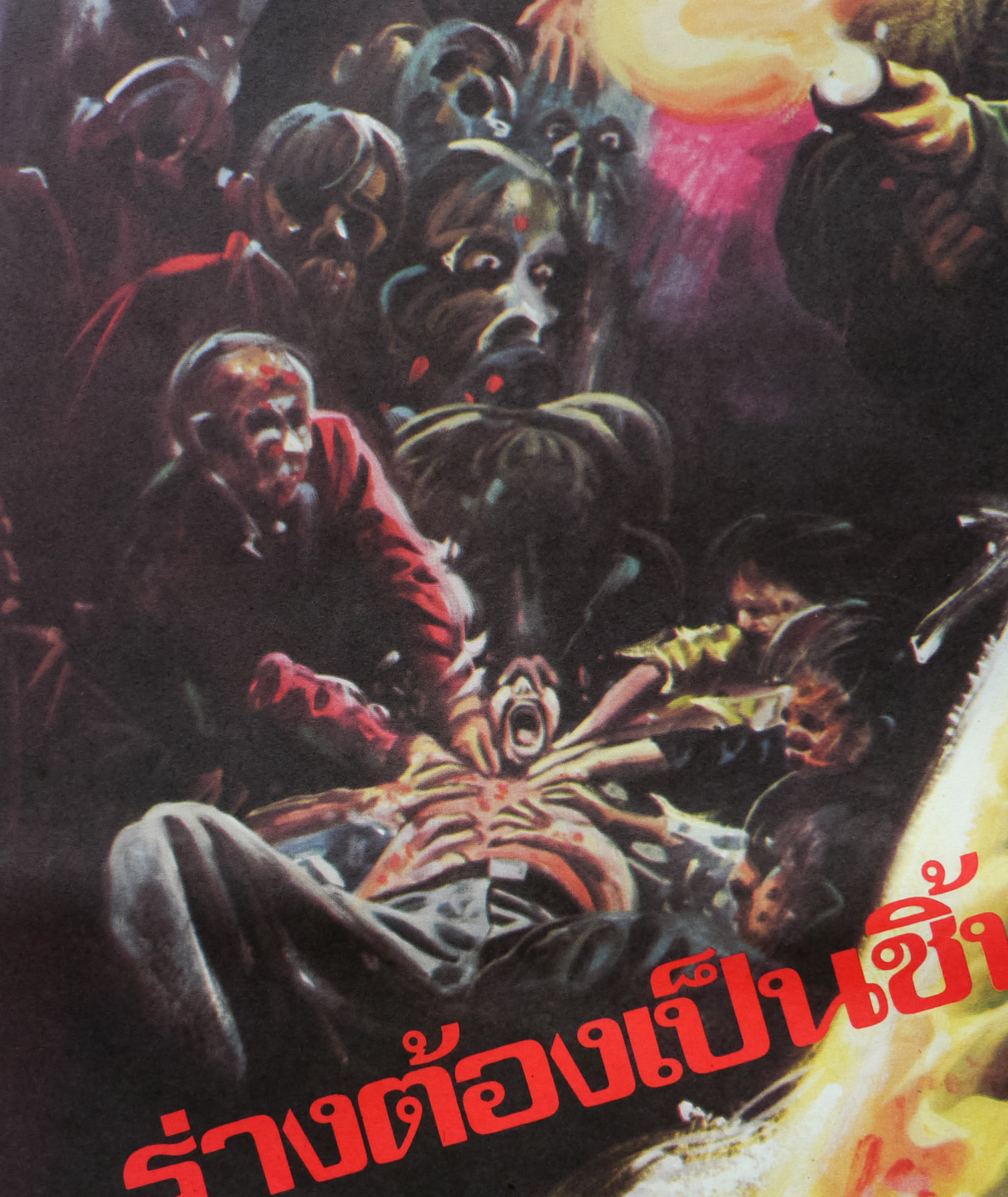
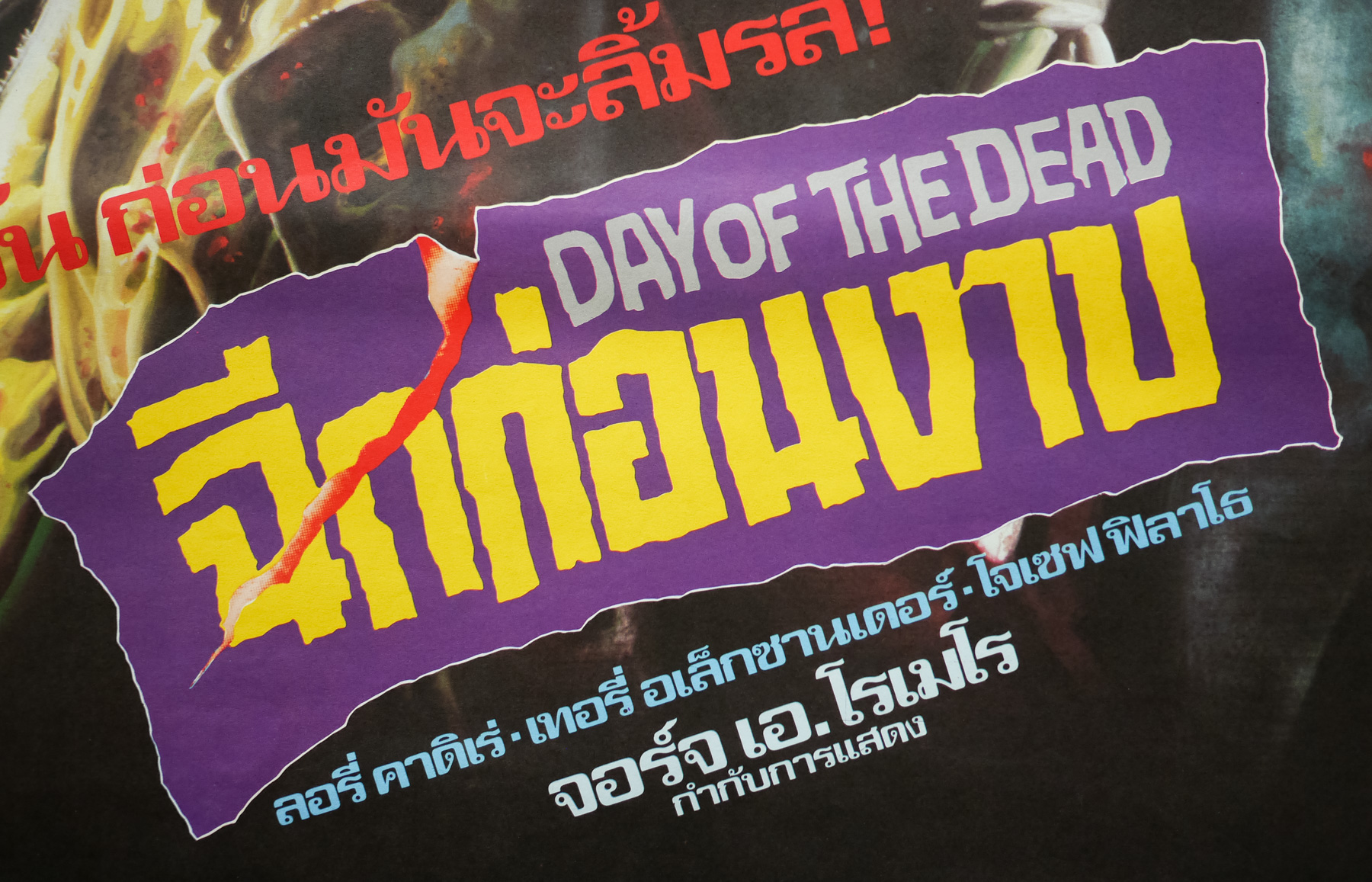
This is Thai poster for the release of the third film in George A. Romero‘s ‘Dead’ series, Day of the Dead. In a similar situation to Dawn of the Dead (released 7 years earlier) this film had no returning characters from the previous entry due to rights issues, so it’s set in the same universe after the zombie outbreak but shares no continuity with the earlier films. Romero’s original vision for the ‘Day…’ was scaled back to due to budget constraints, but the director has since said he’s very happy with the final product. It’s a notably darker, bleaker effort than the fan favourite ‘Dawn’ but features a unique setting, memorable characters and some of the best special effects of the entire series, courtesy of the legendary Tom Savini.

The story follows a group of survivors who have holed-up in a military bunker in Florida and make regular trips around the area looking for survivors. Underground a small group of scientists and technical specialists, including Dr Sarah Bowman (Lori Cardille) and Dr Logan (Richard Liberty), known as ‘Frankenstein’, are working to discover the cause of the outbreak and discover if anything can be done to make the zombies more docile. An uneasy truce is maintained by the scientists and other specialists like helicopter pilot John (Terry Alexander), with a group of soldiers ostensibly there to protect them and deliver them test subjects from a fenced off area of the base. The soldiers are led by the psychotic Captain Rhodes (Joseph Pilato) who discovers that Dr Frankenstein has been secretly carrying out experiments using dead soldiers, including training a zombie known as Bub (Sherman Howard) to follow commands. At this point the truce is shattered and a series of events see the base overrun with the undead, forcing Sarah and the others to try to escape the carnage before its too late.

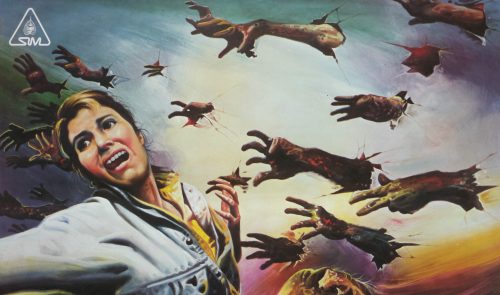
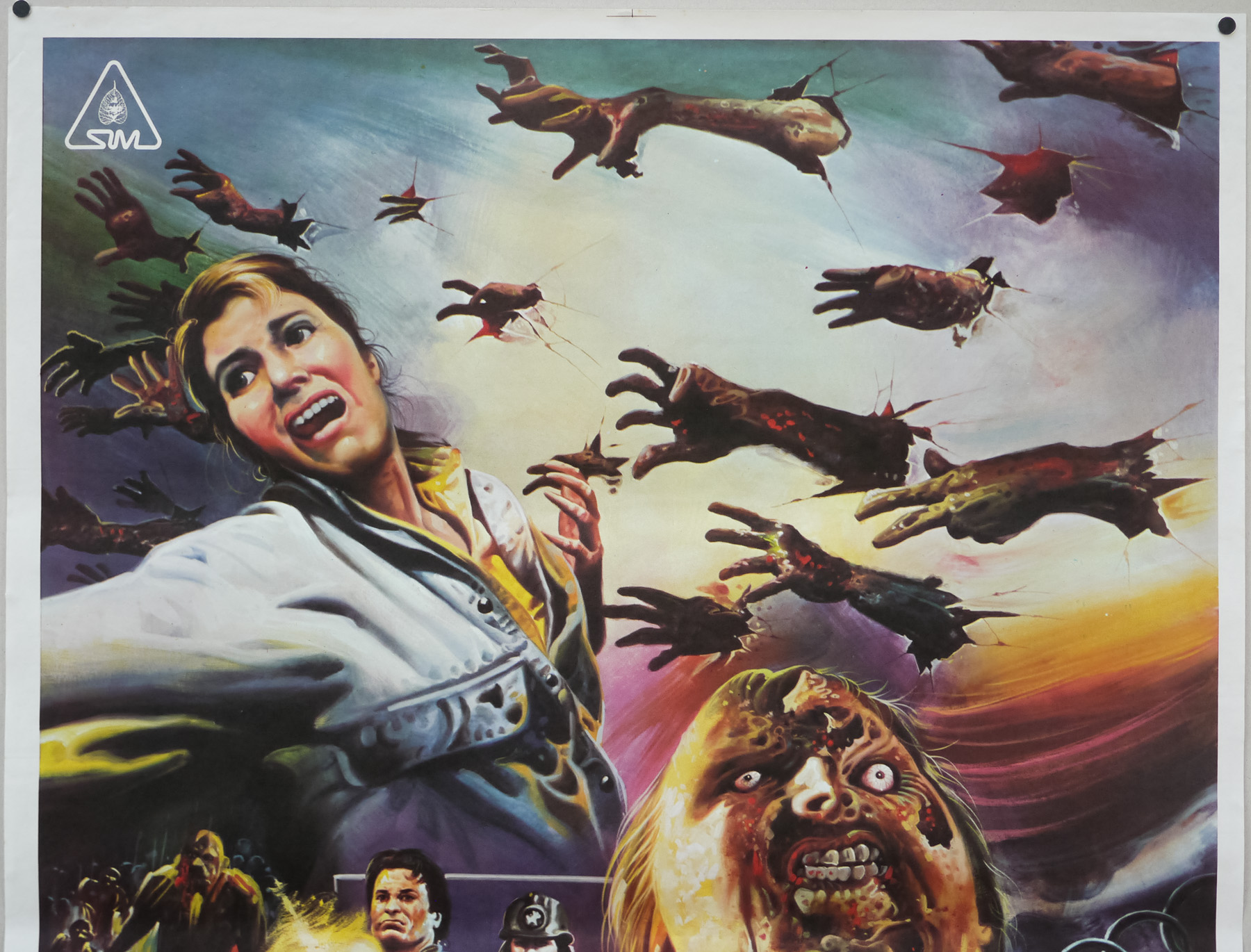
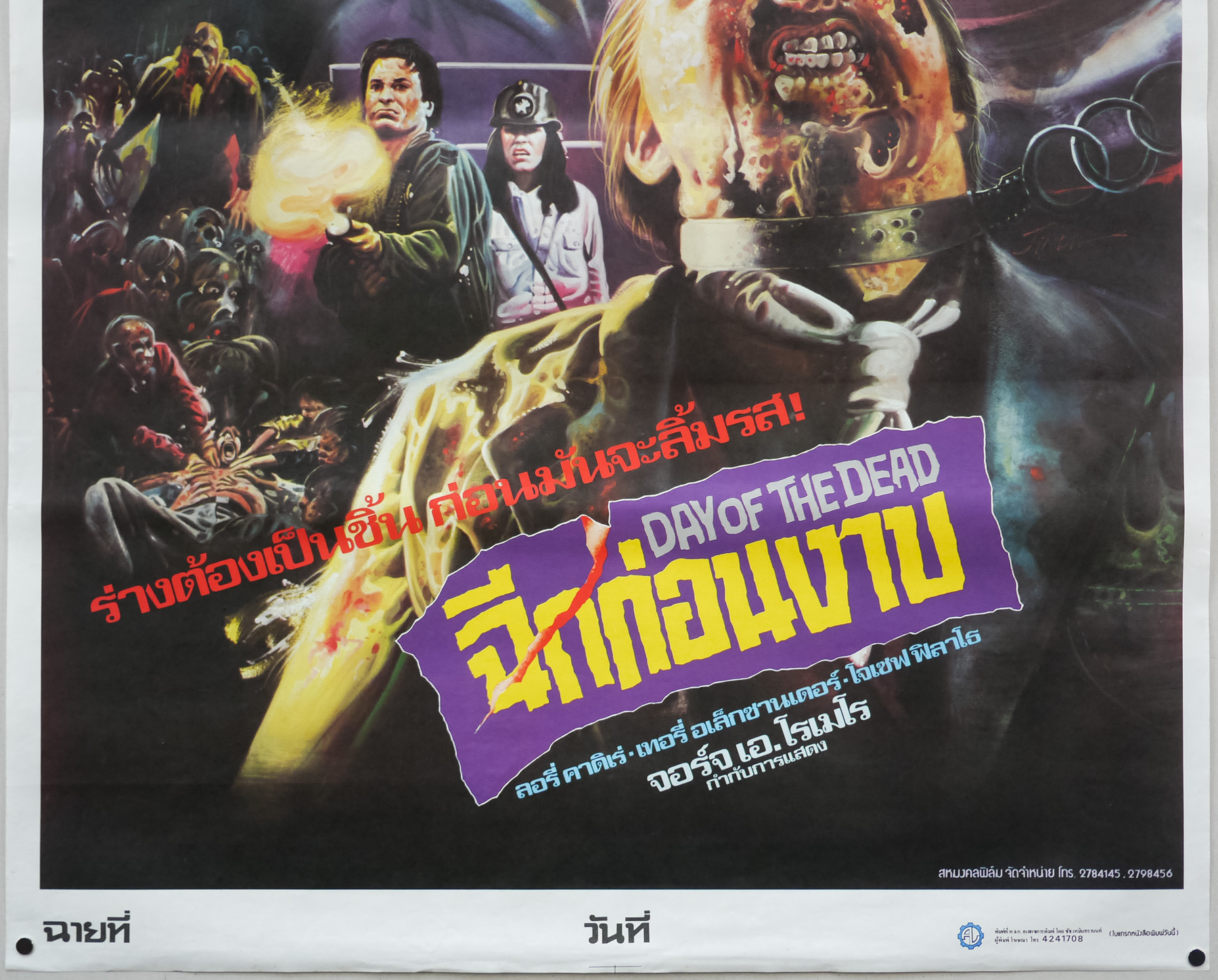
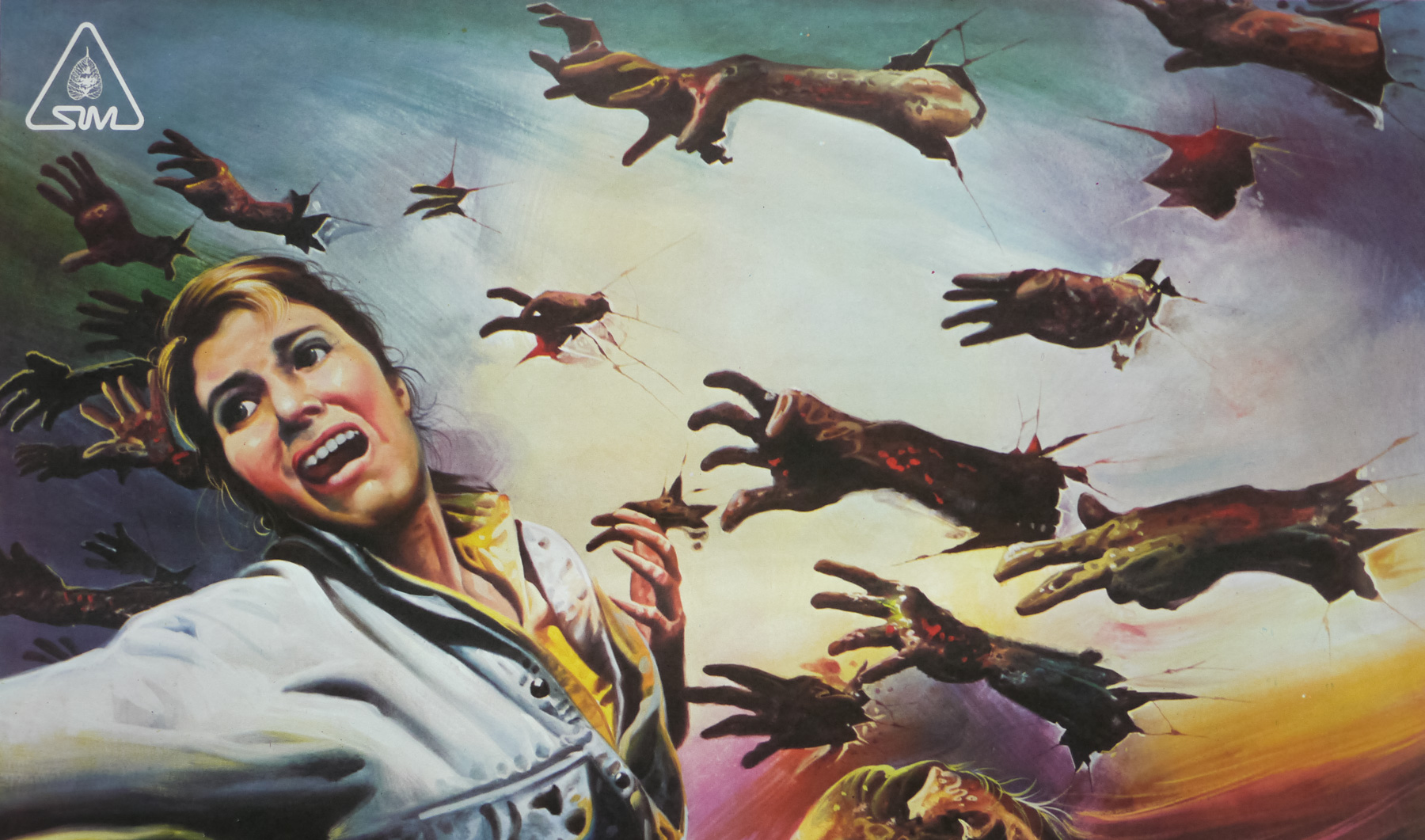
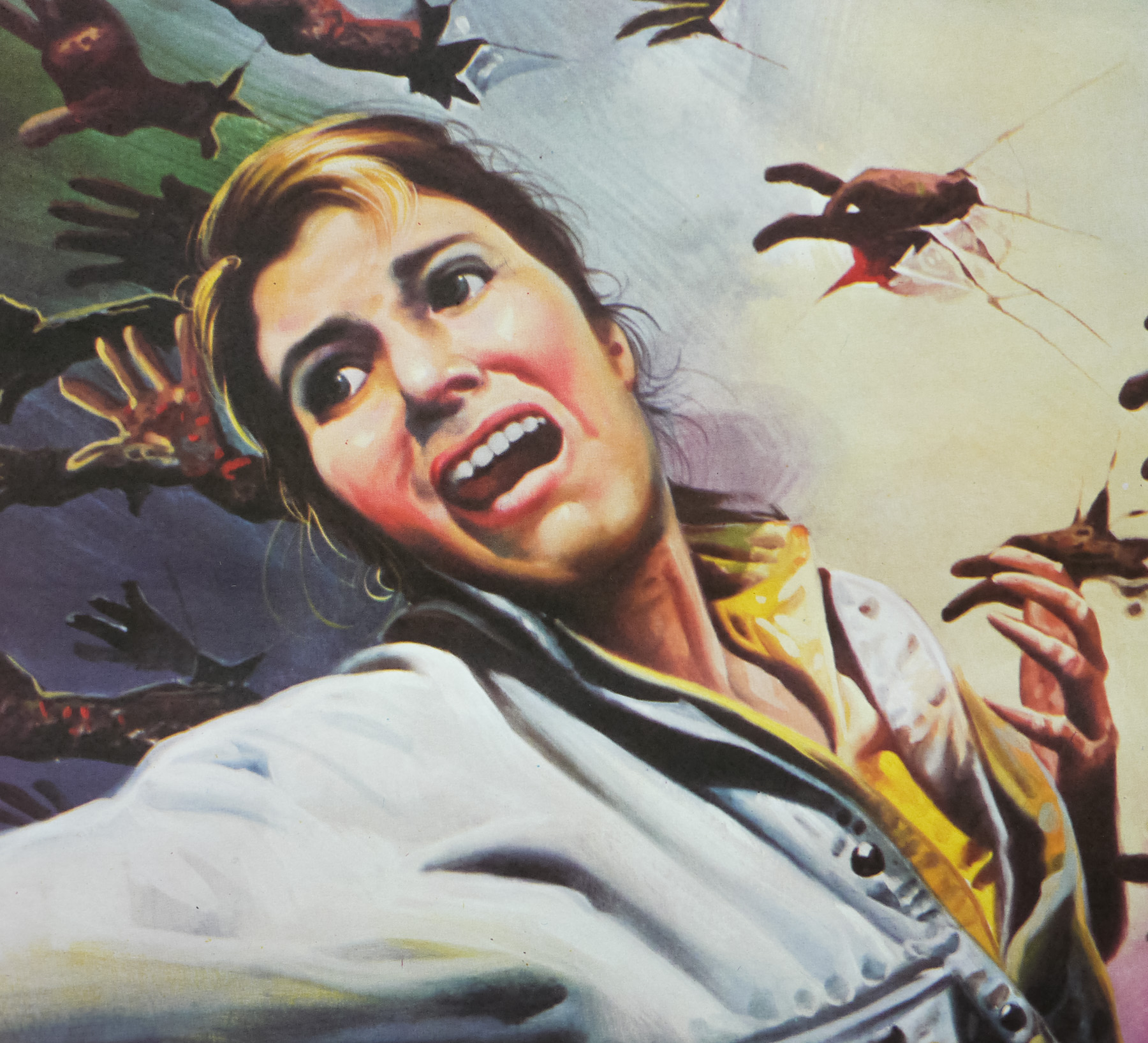
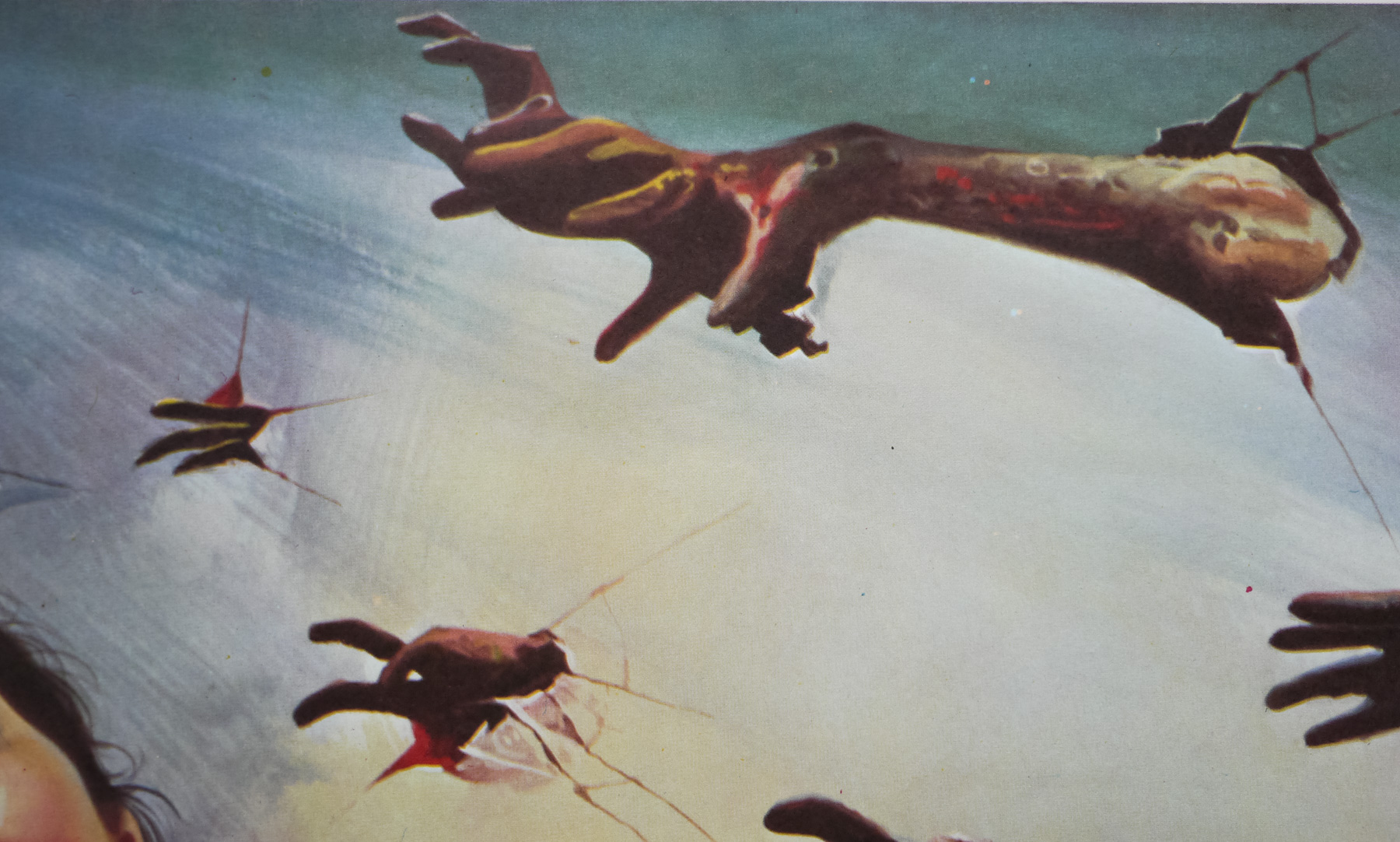
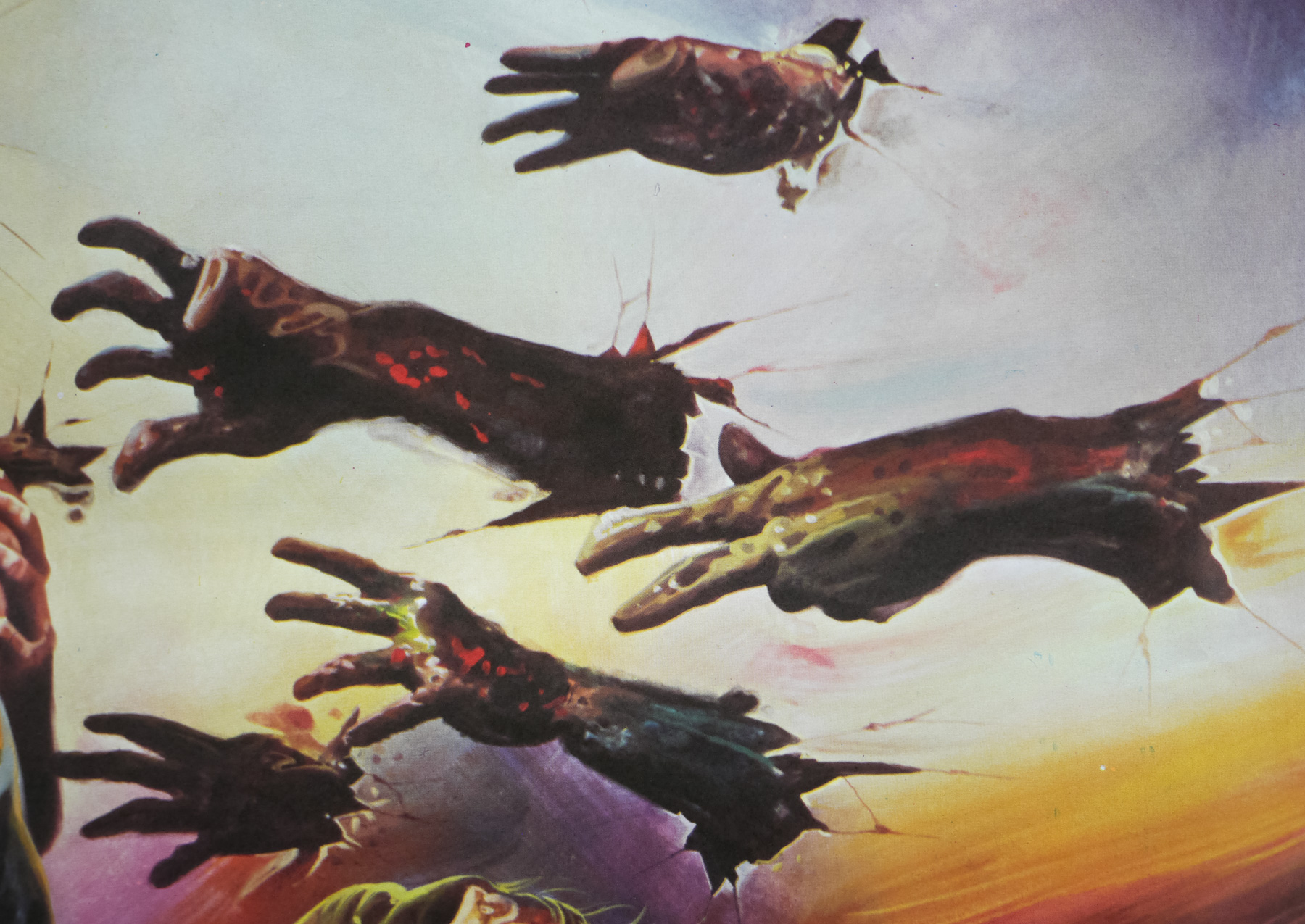
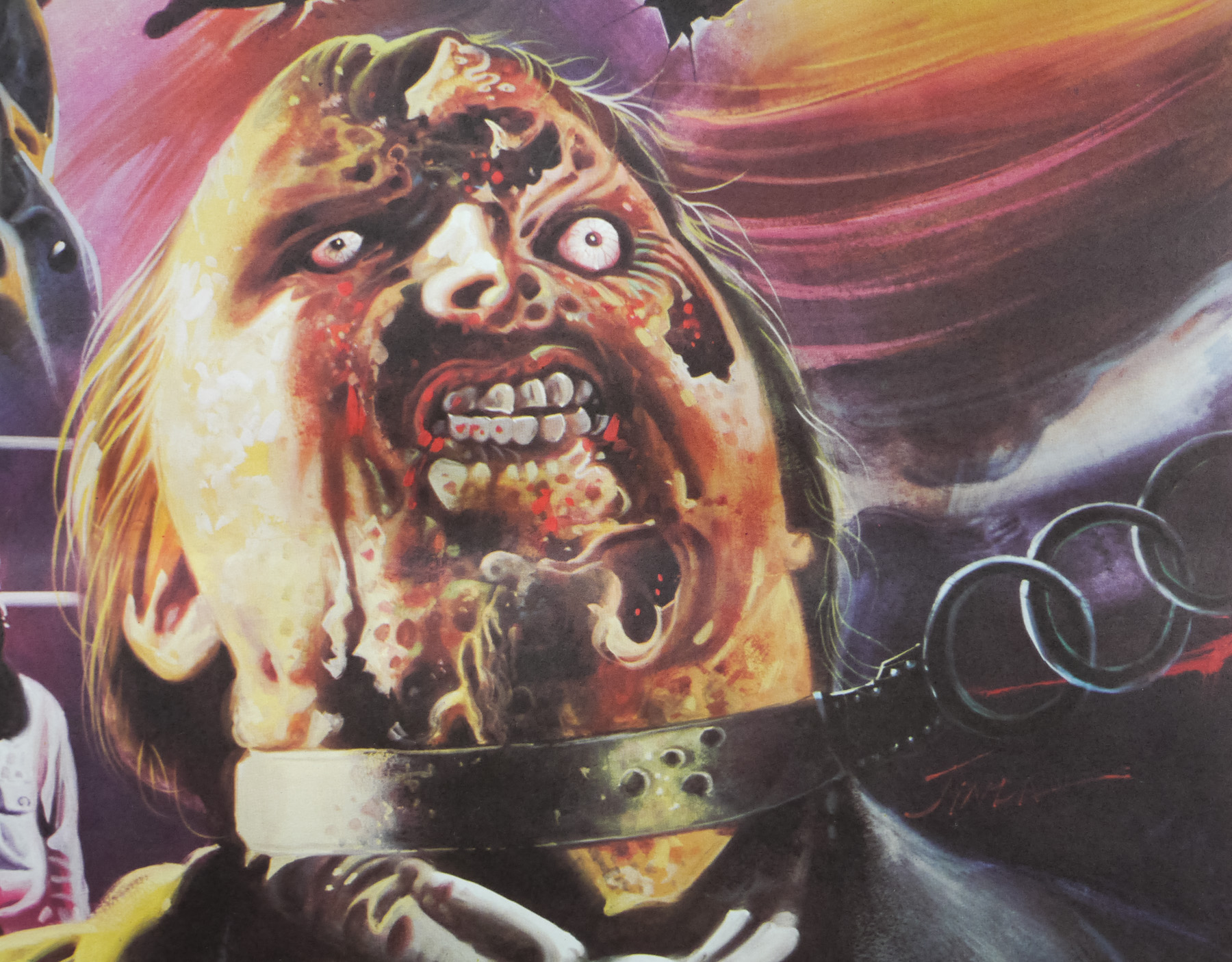
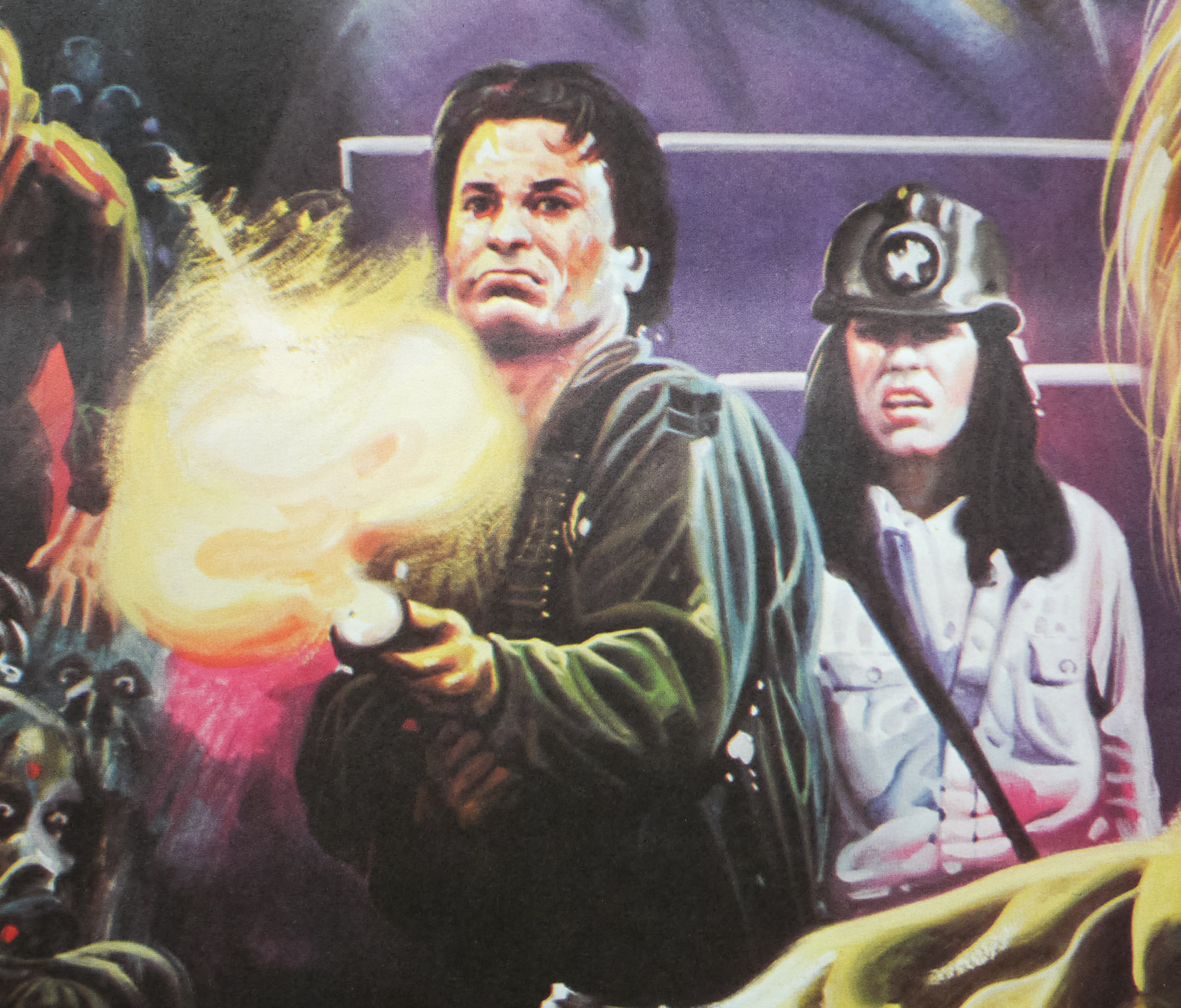
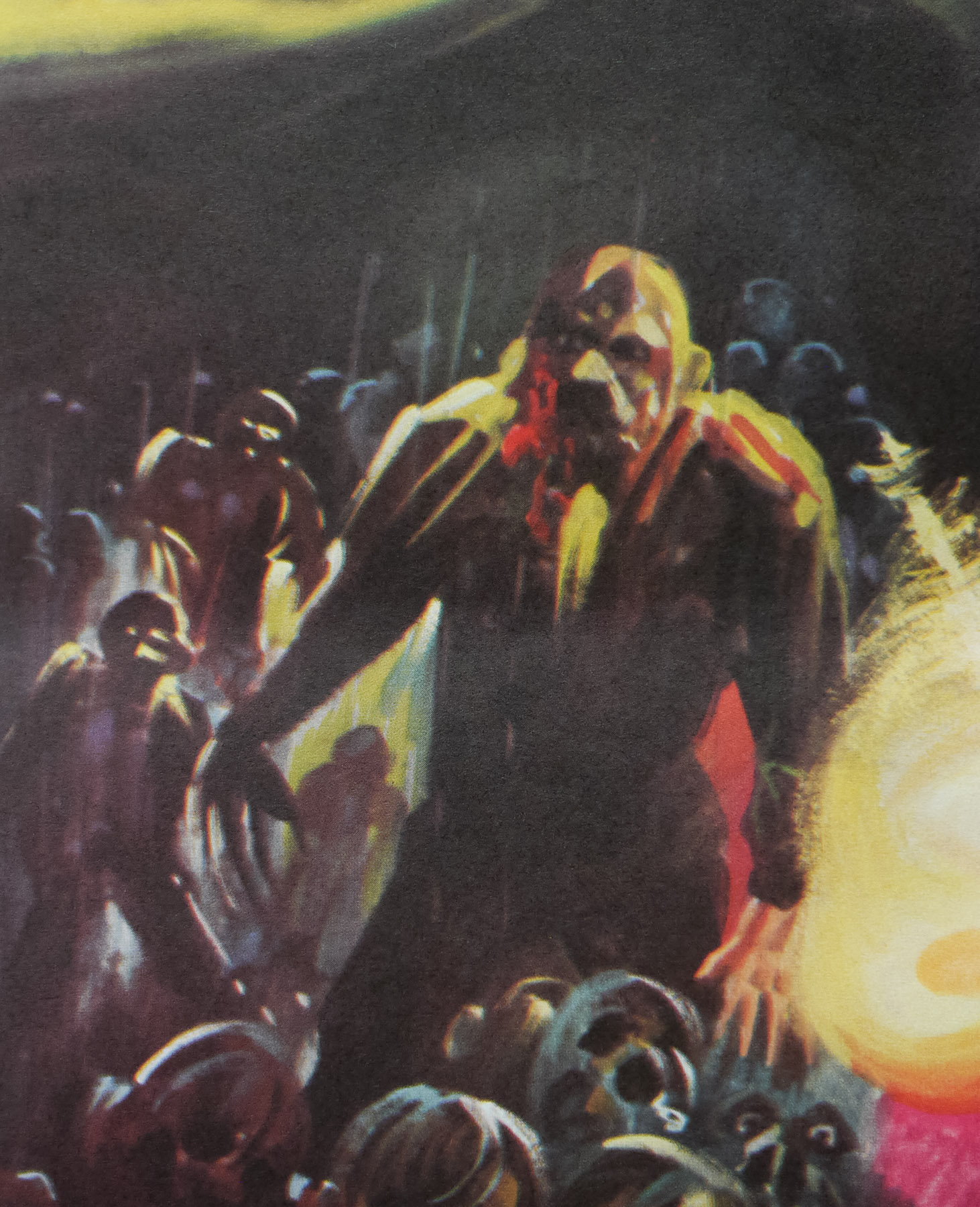
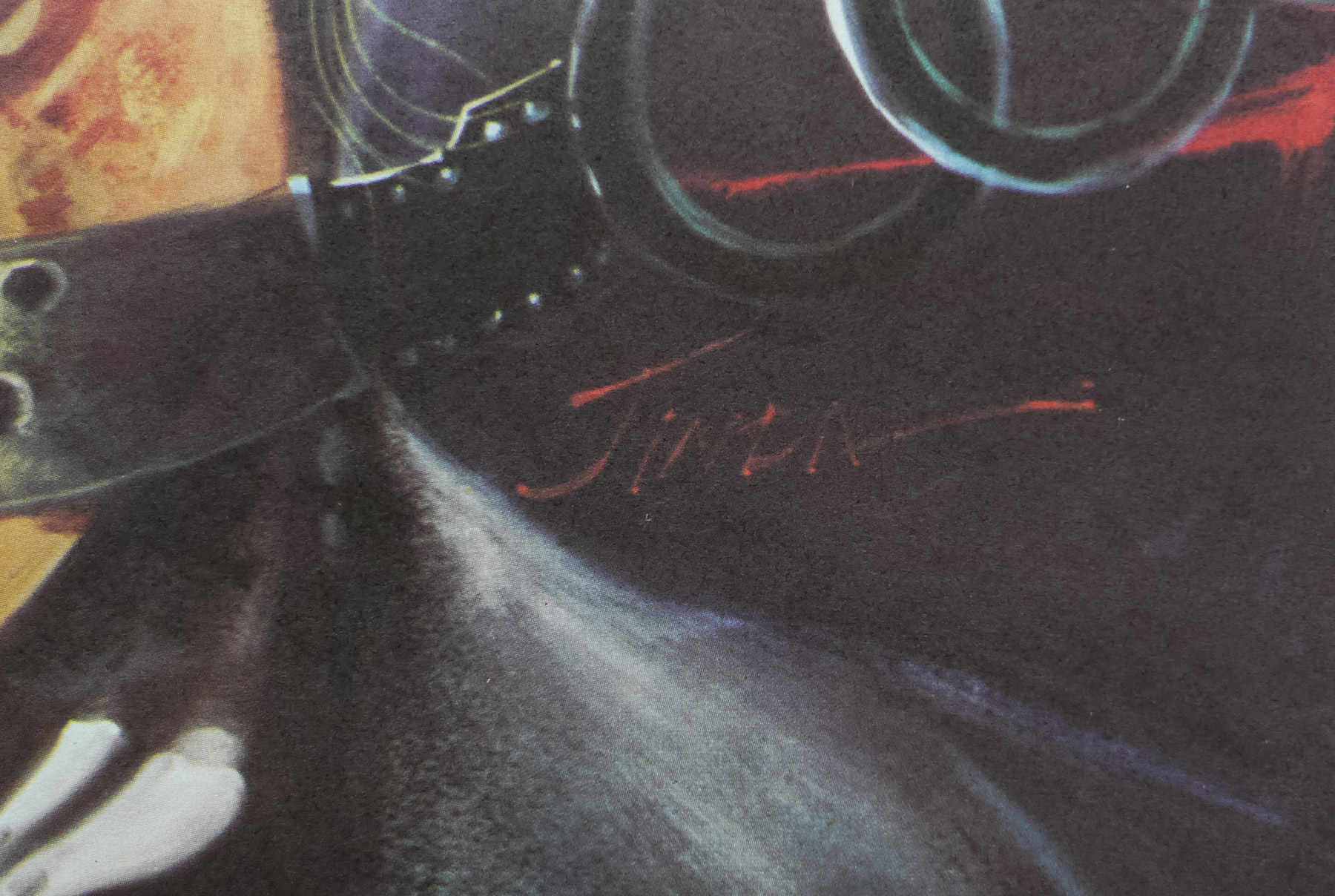
This Thai poster features a montage of images from the film, including the infamous dream sequence where zombie hands burst through the wall trying to grab Dr Bowman. The artist responsible is known as Jinda and, other than some other Thai film posters he’s painted, I could find little information about him. If anyone knows more biographical details about Jinda, please get in touch.