You searched for: thailand

The Long Good Friday / Thailand

16.12.15

Poster Poster

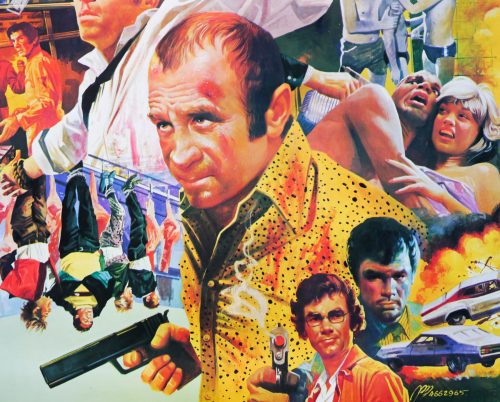
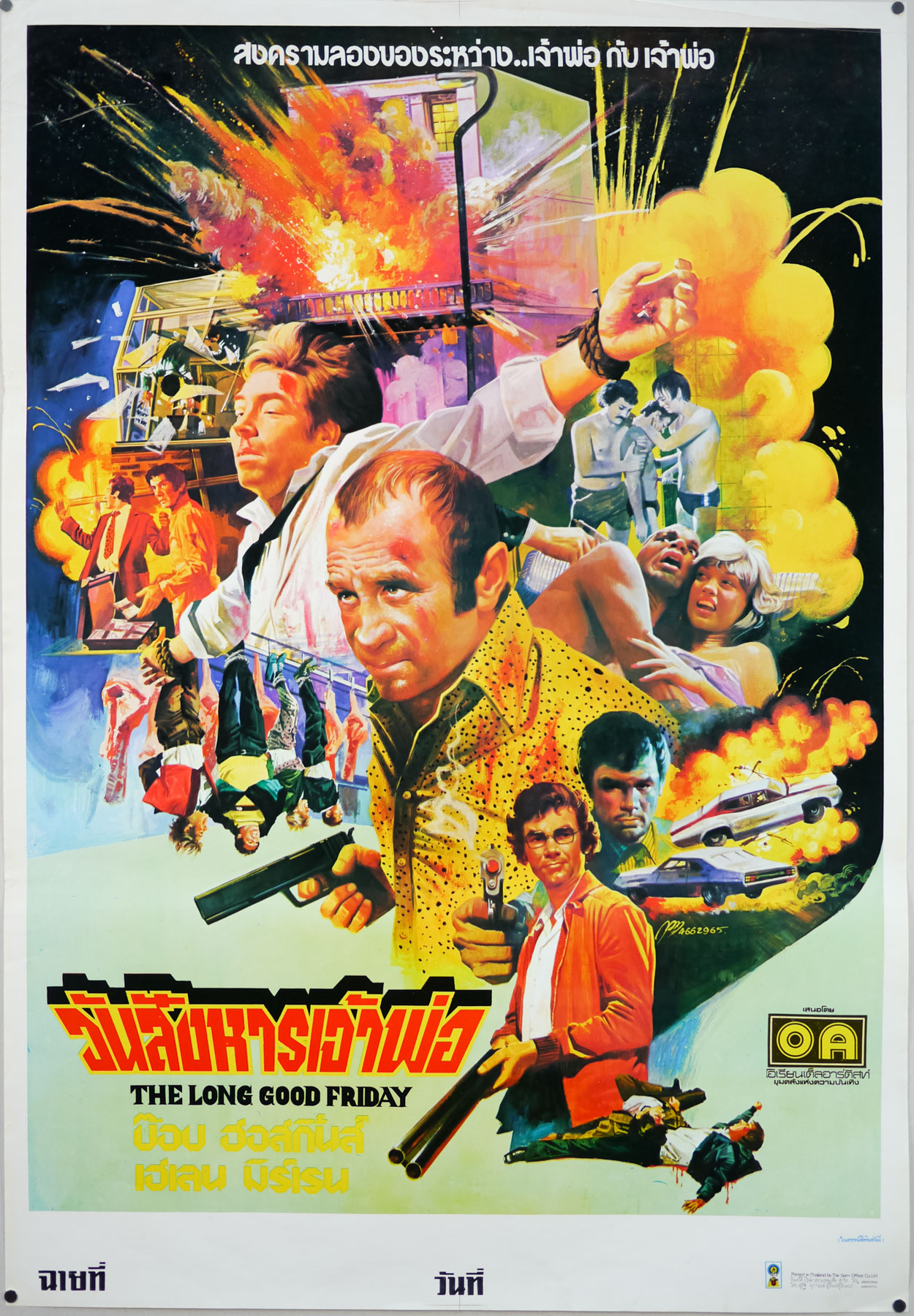
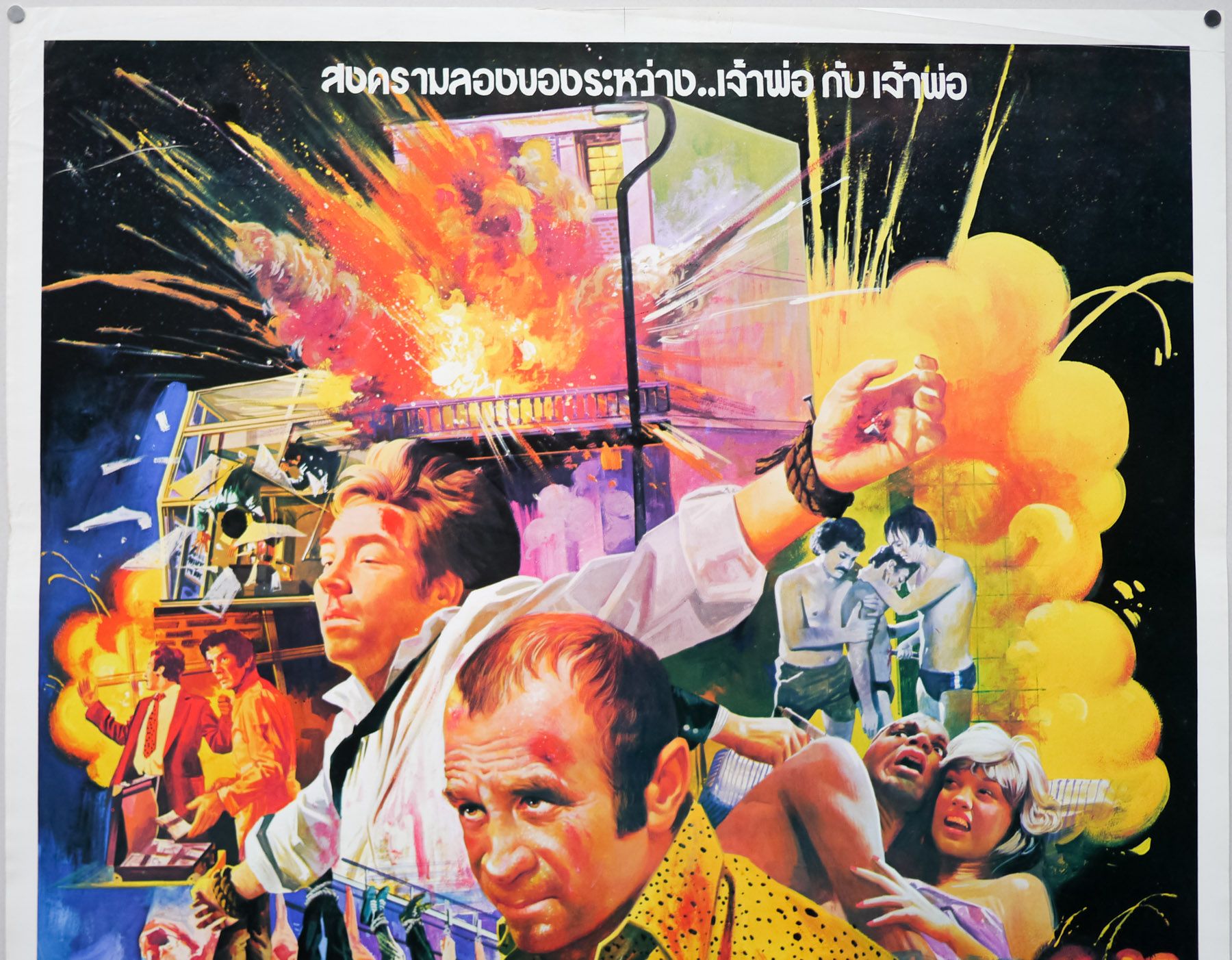
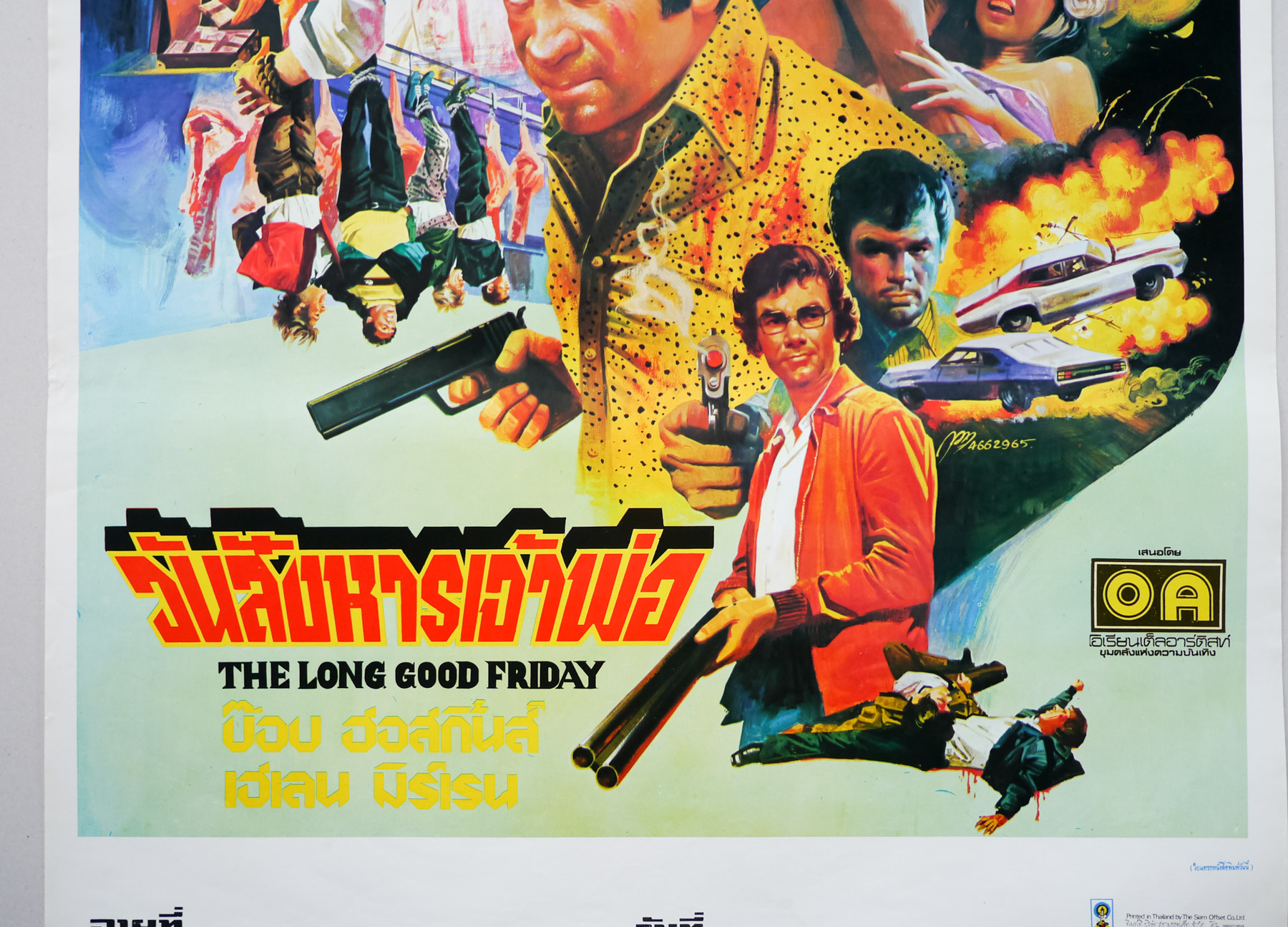
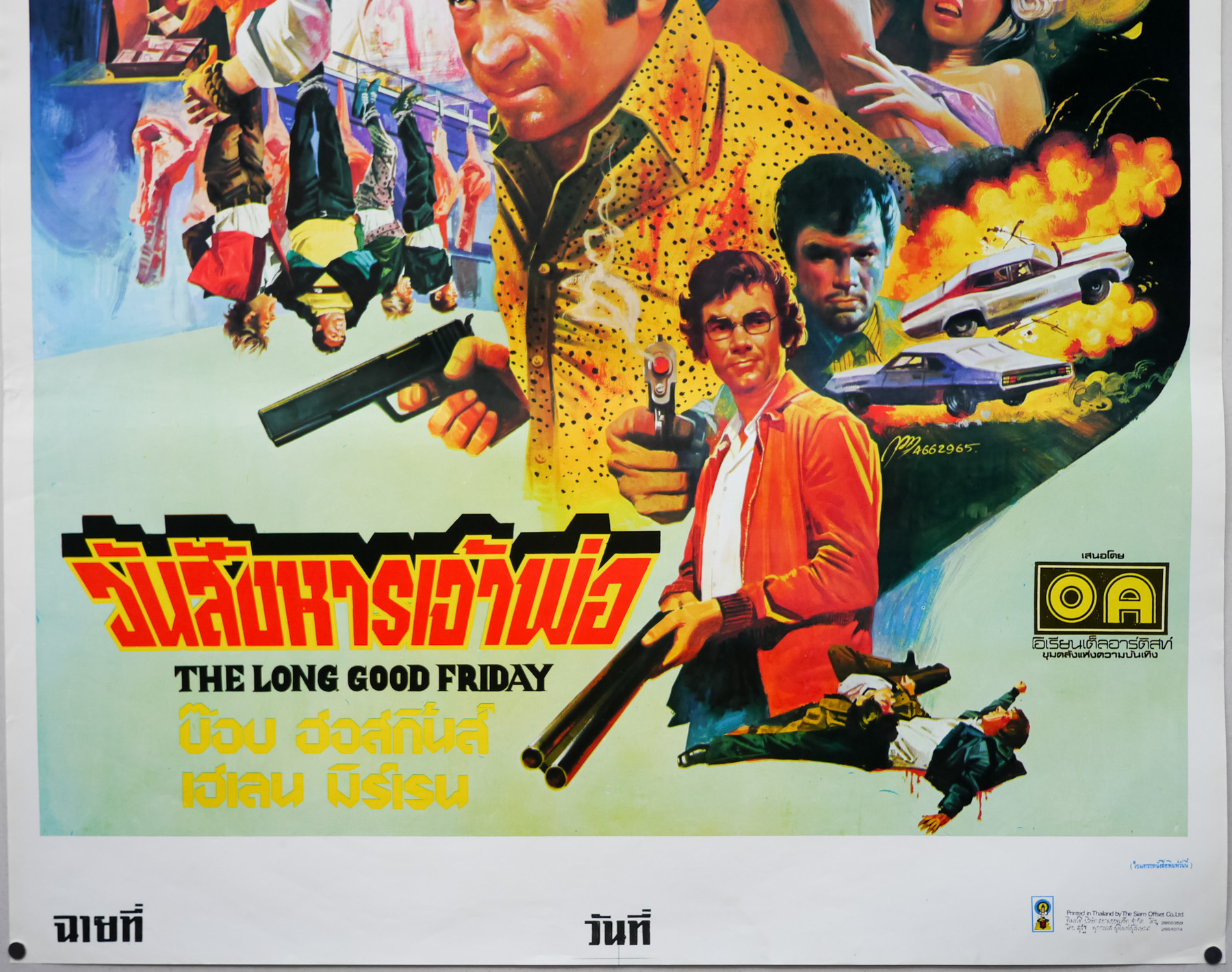
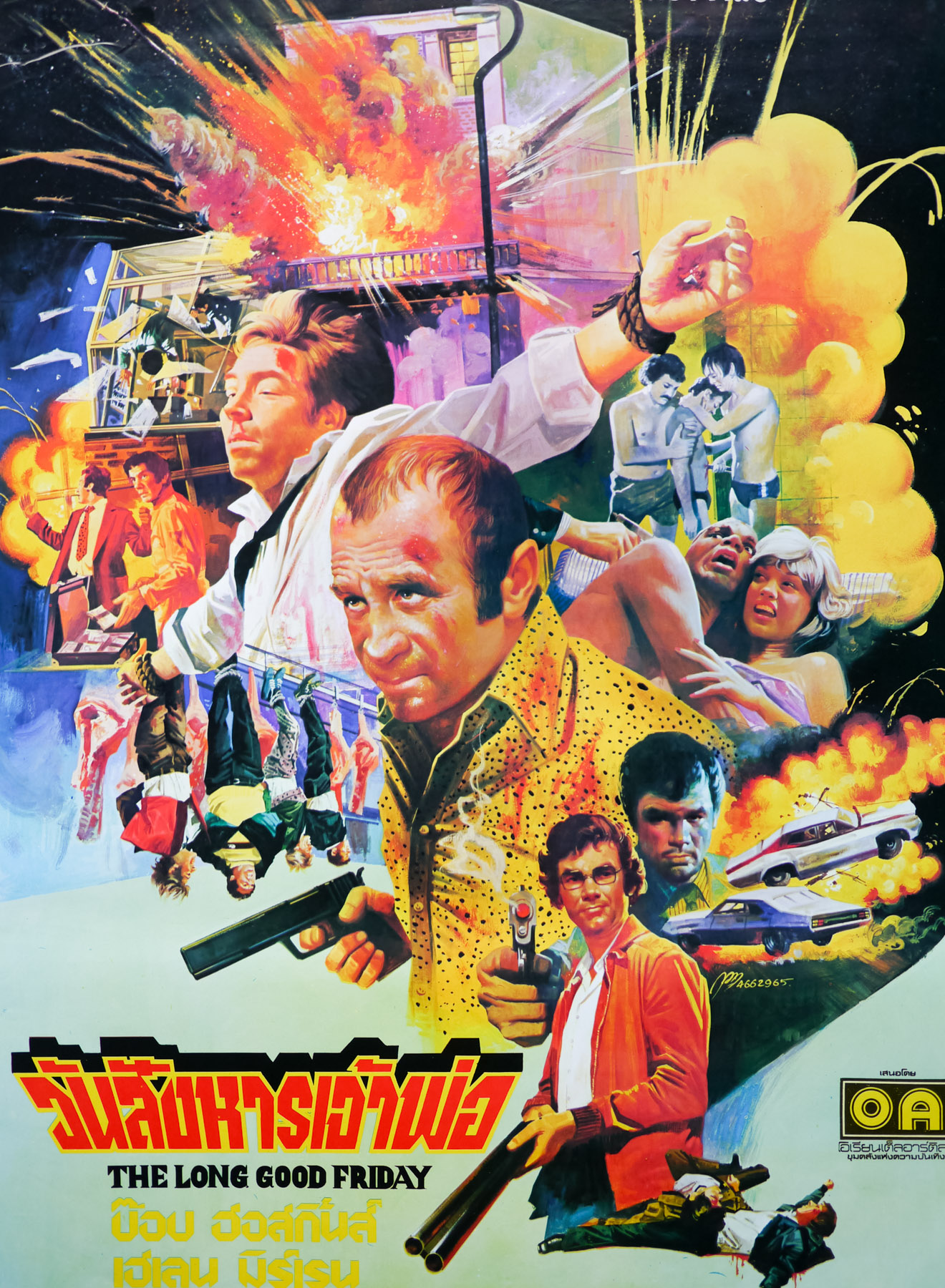
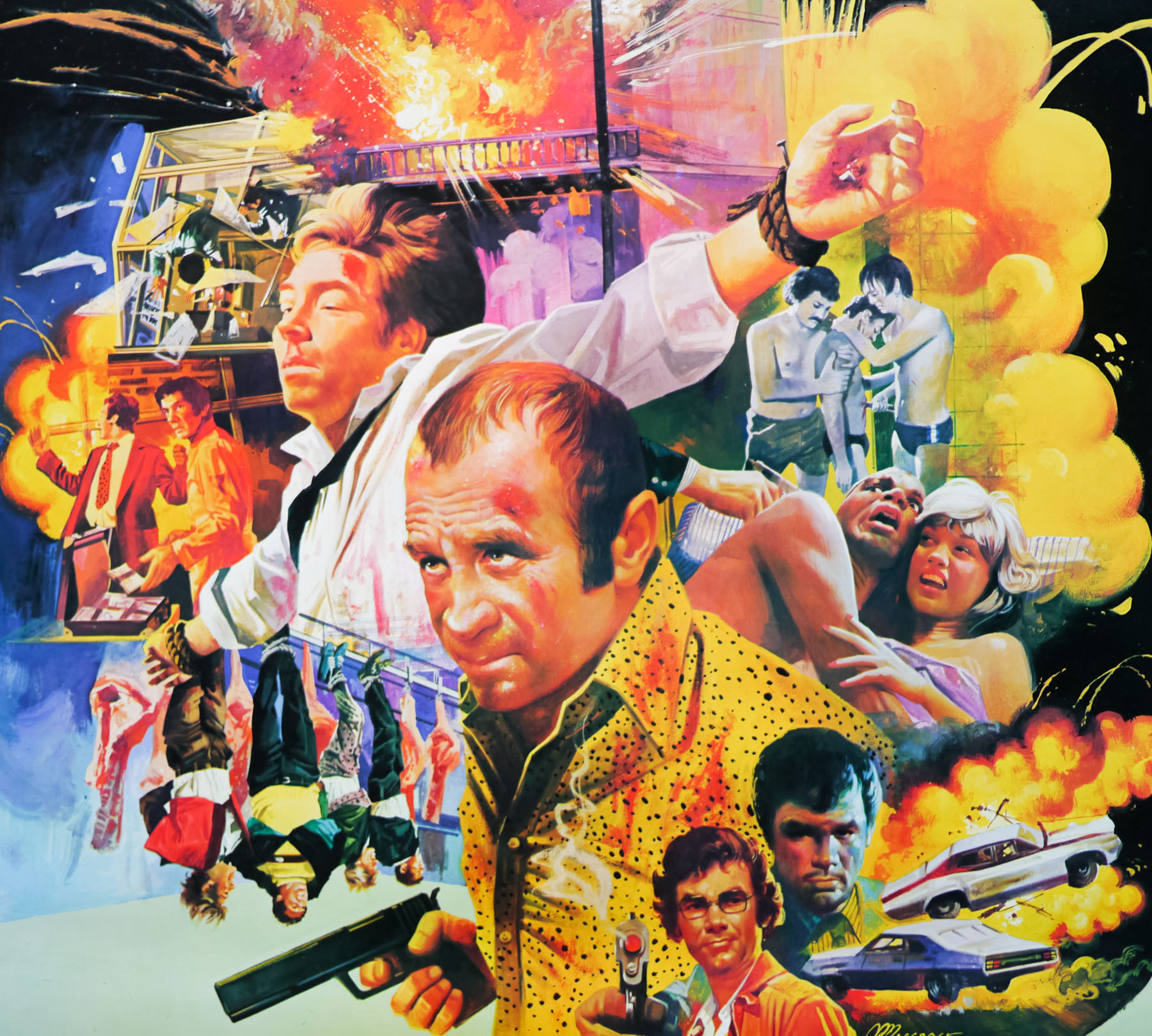
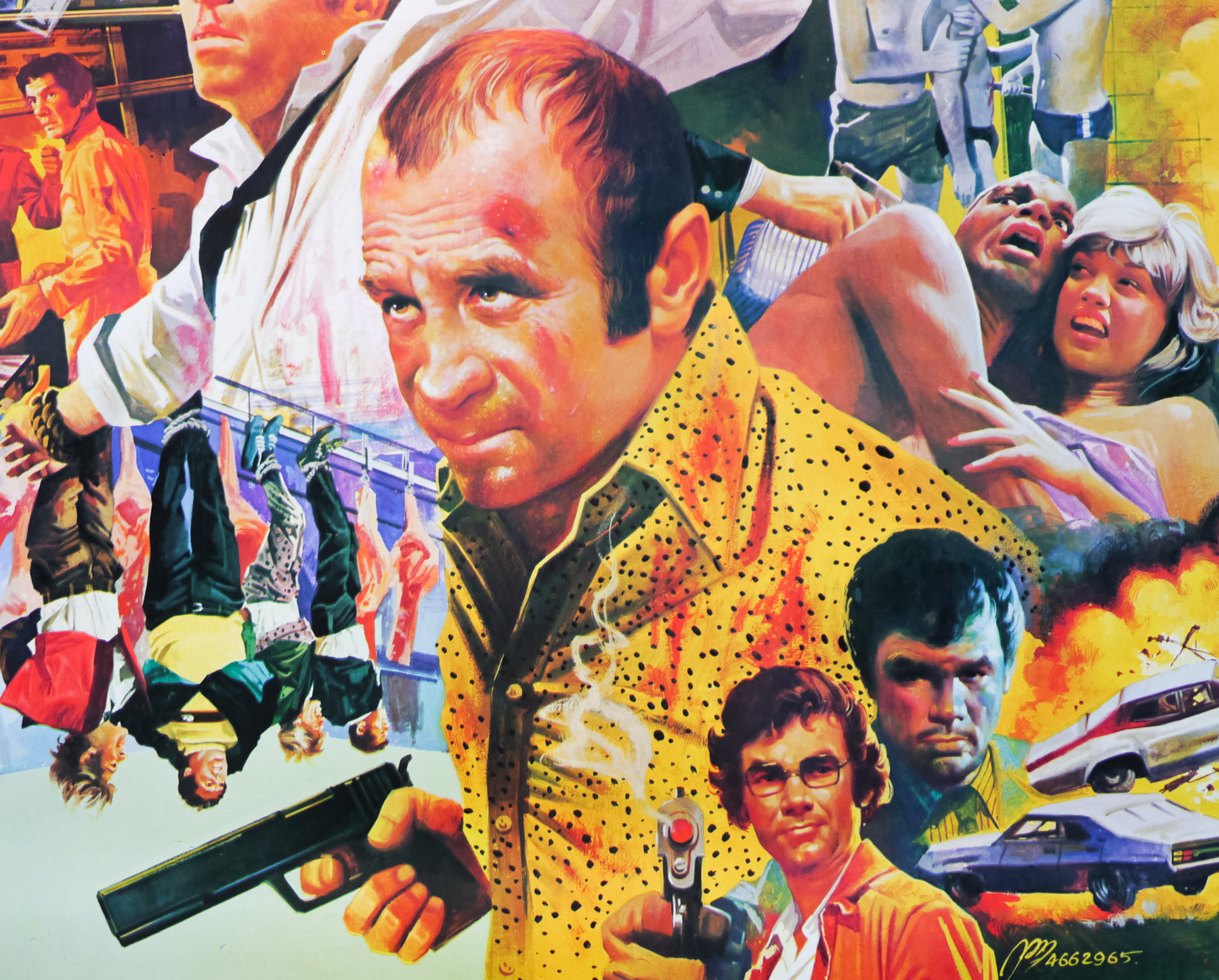
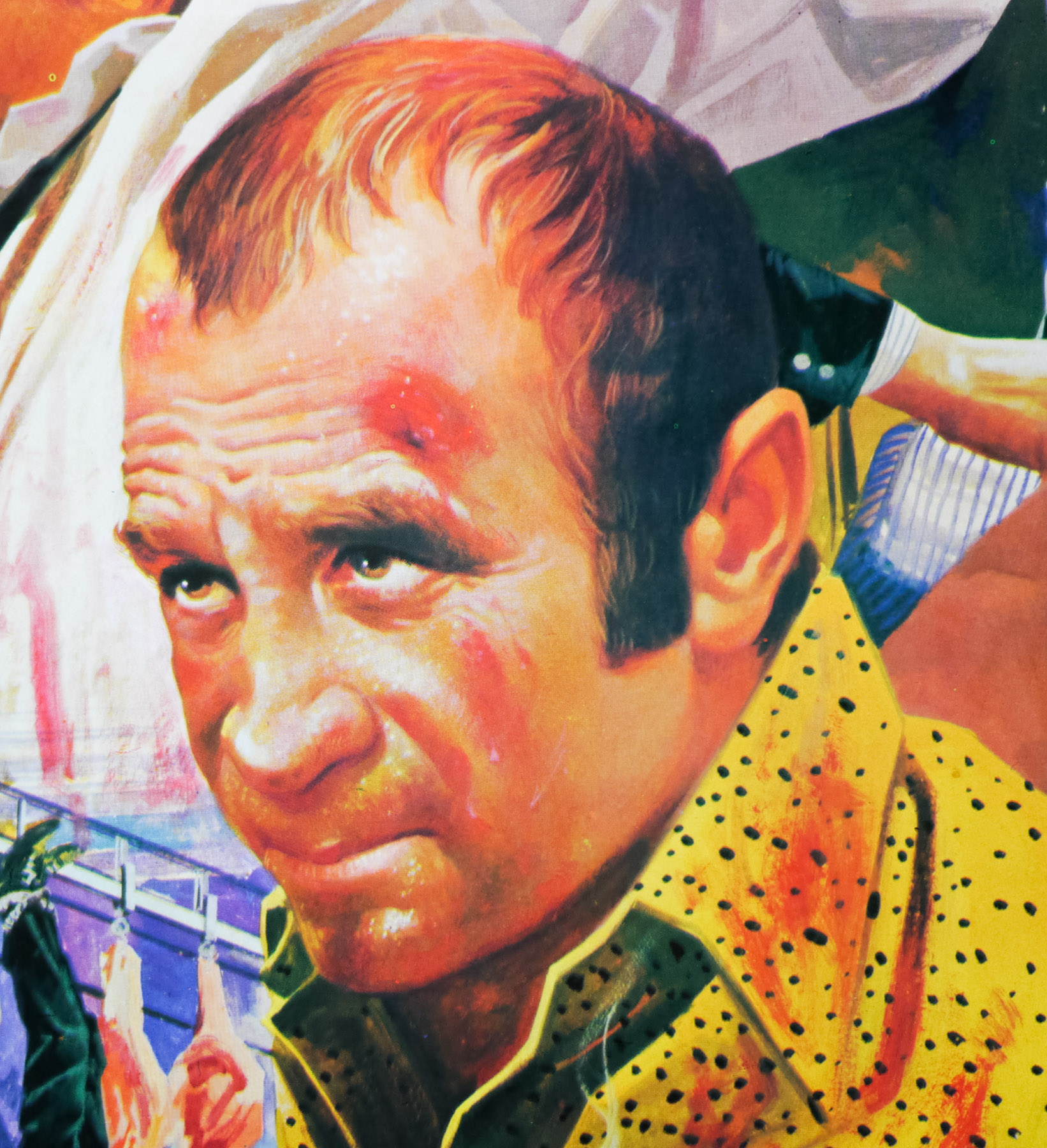
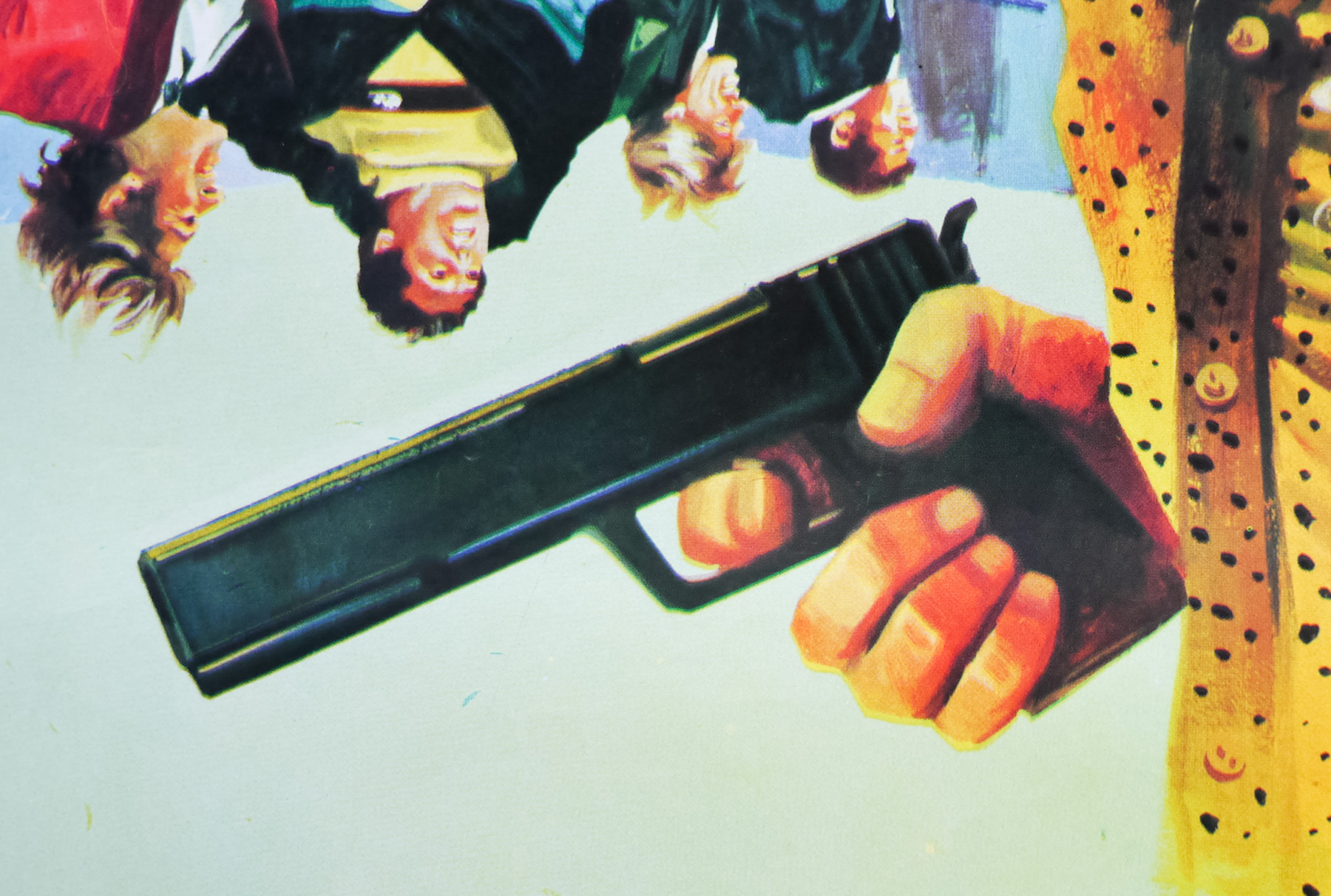
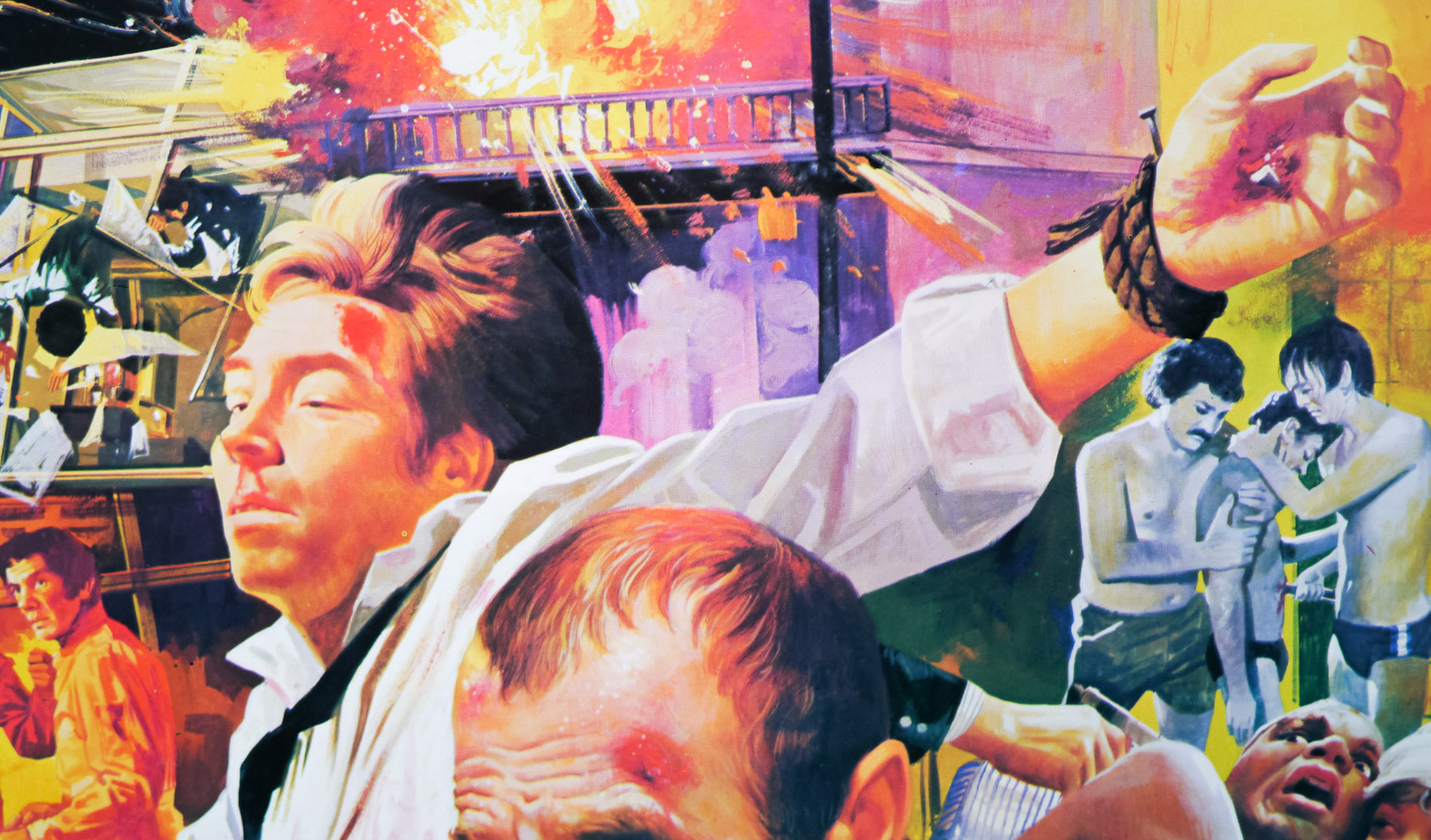
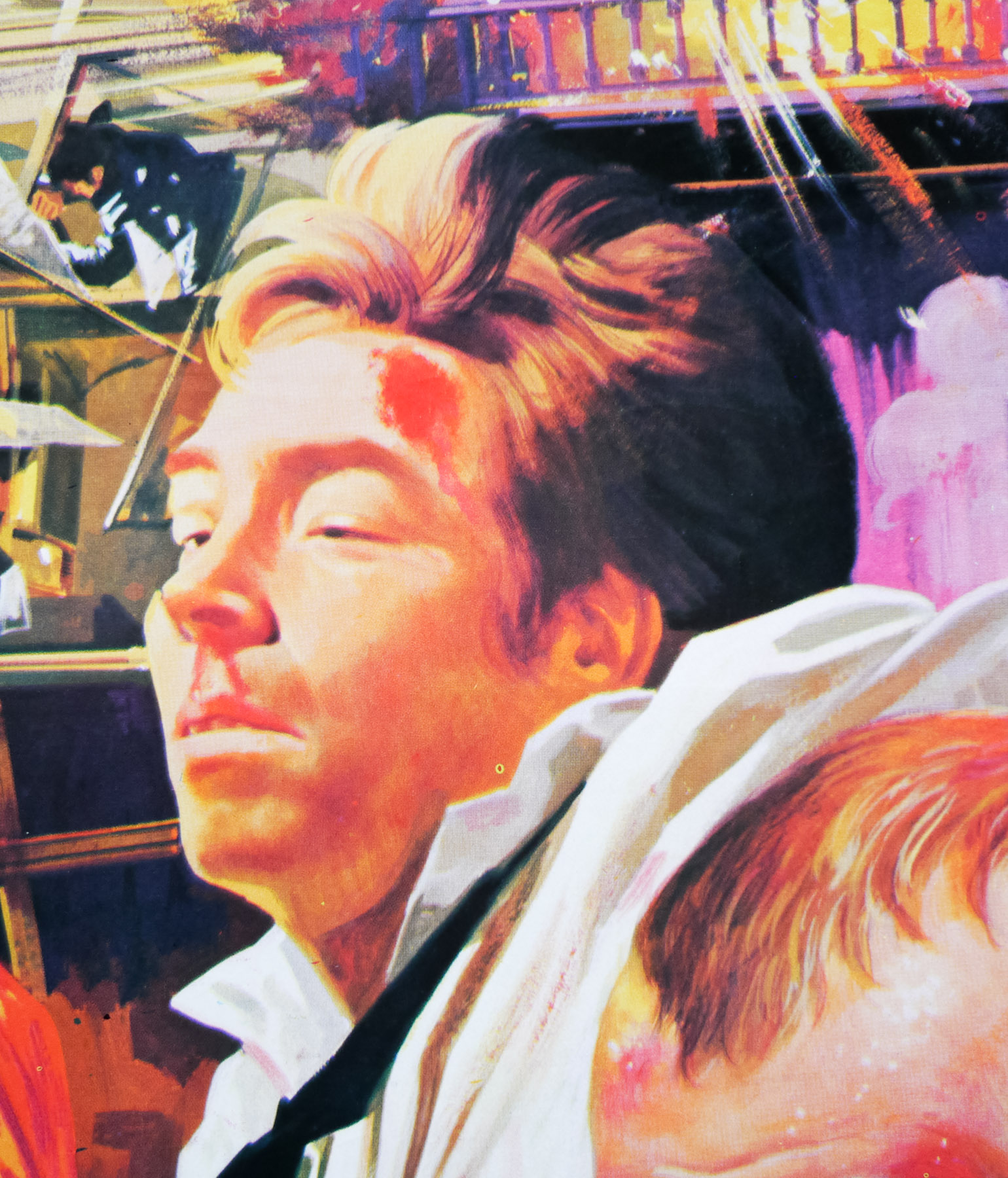
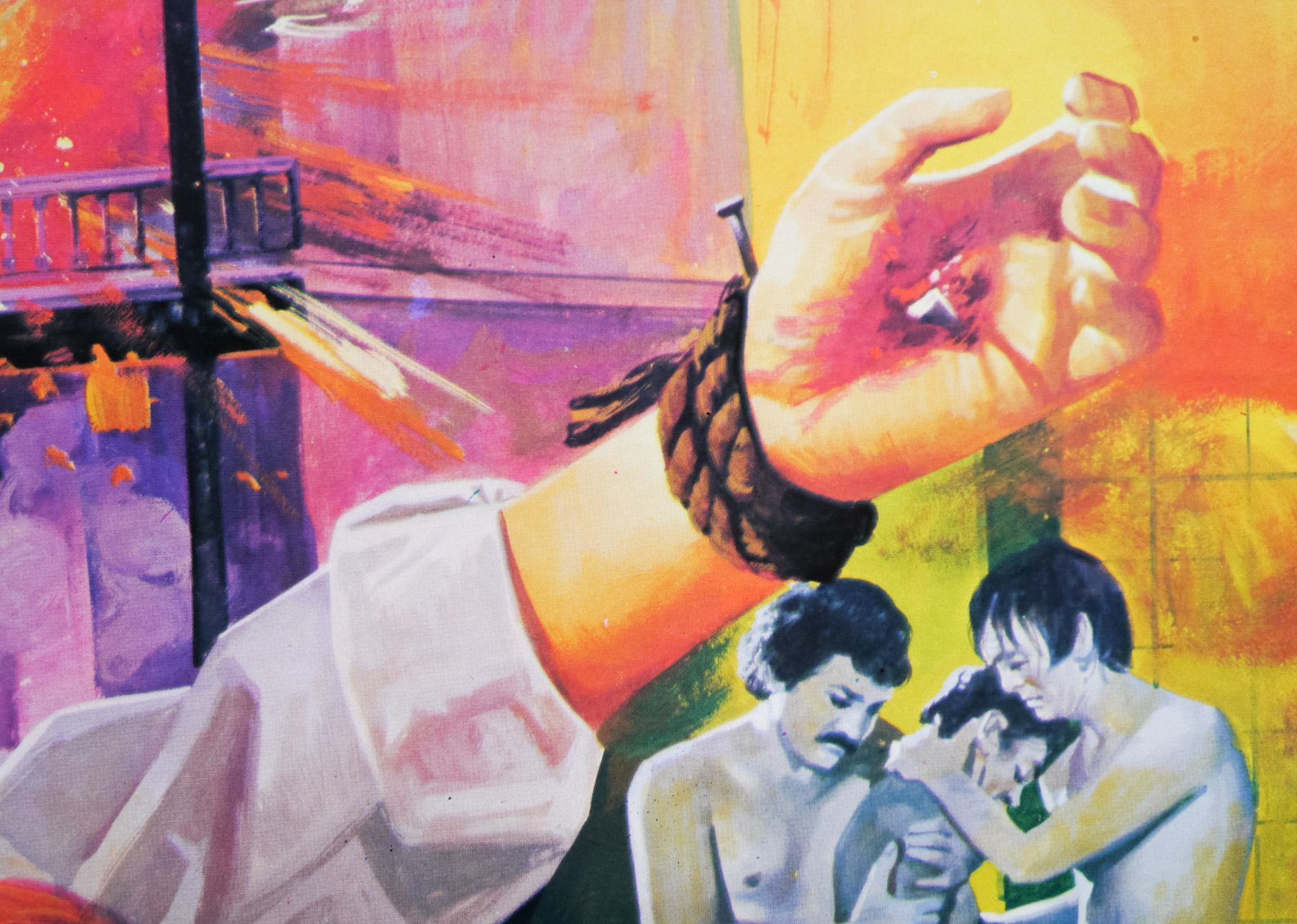
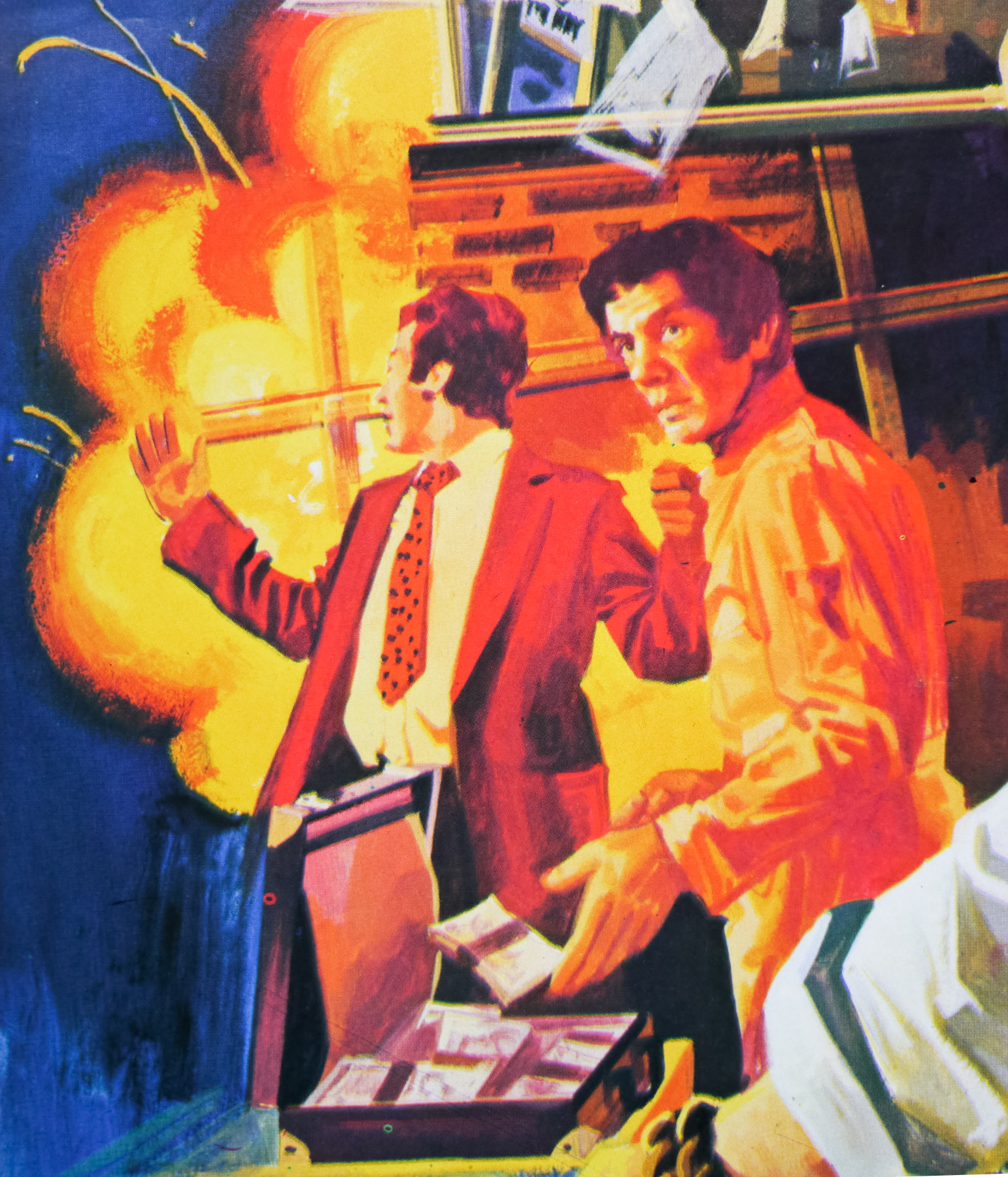
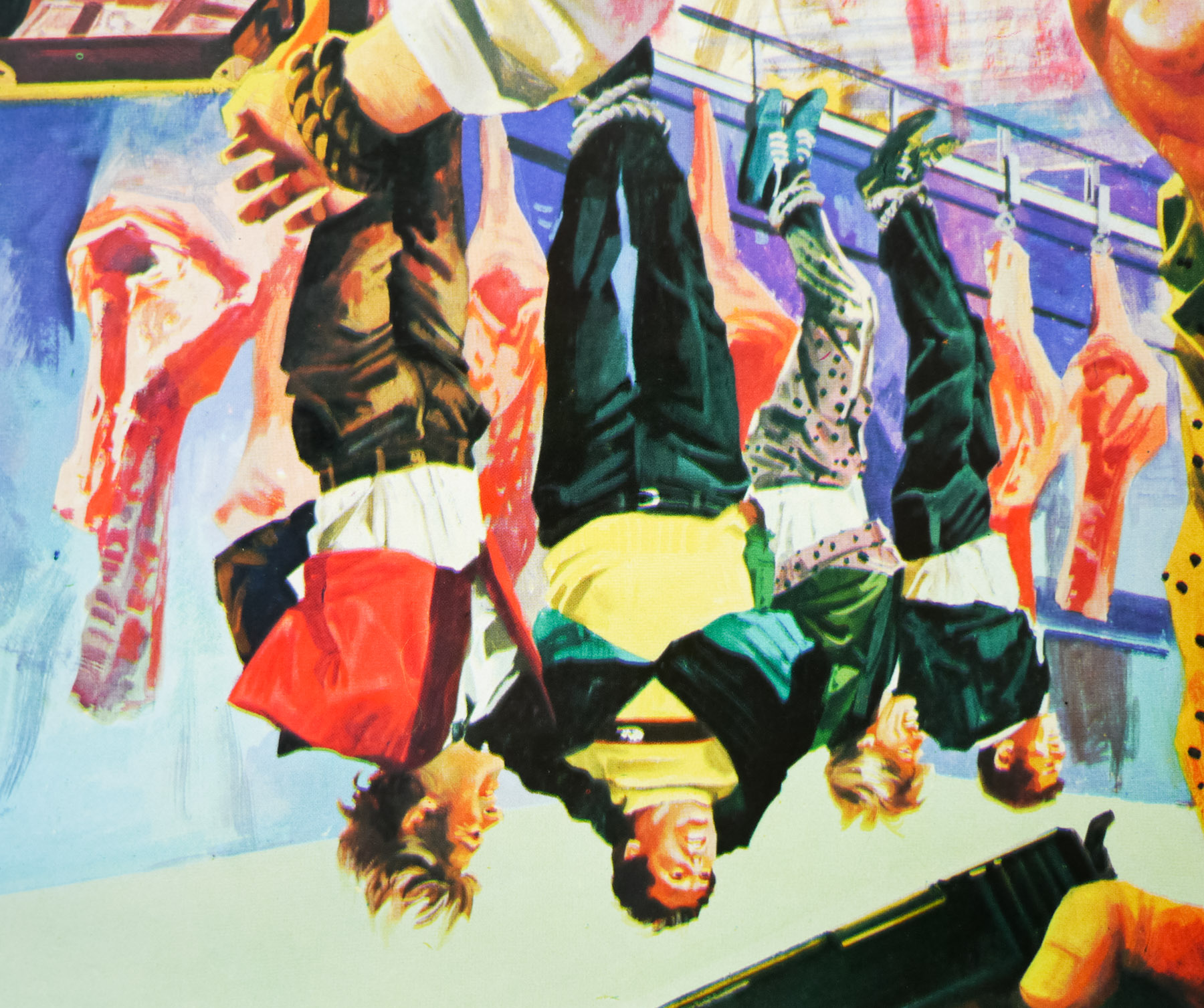
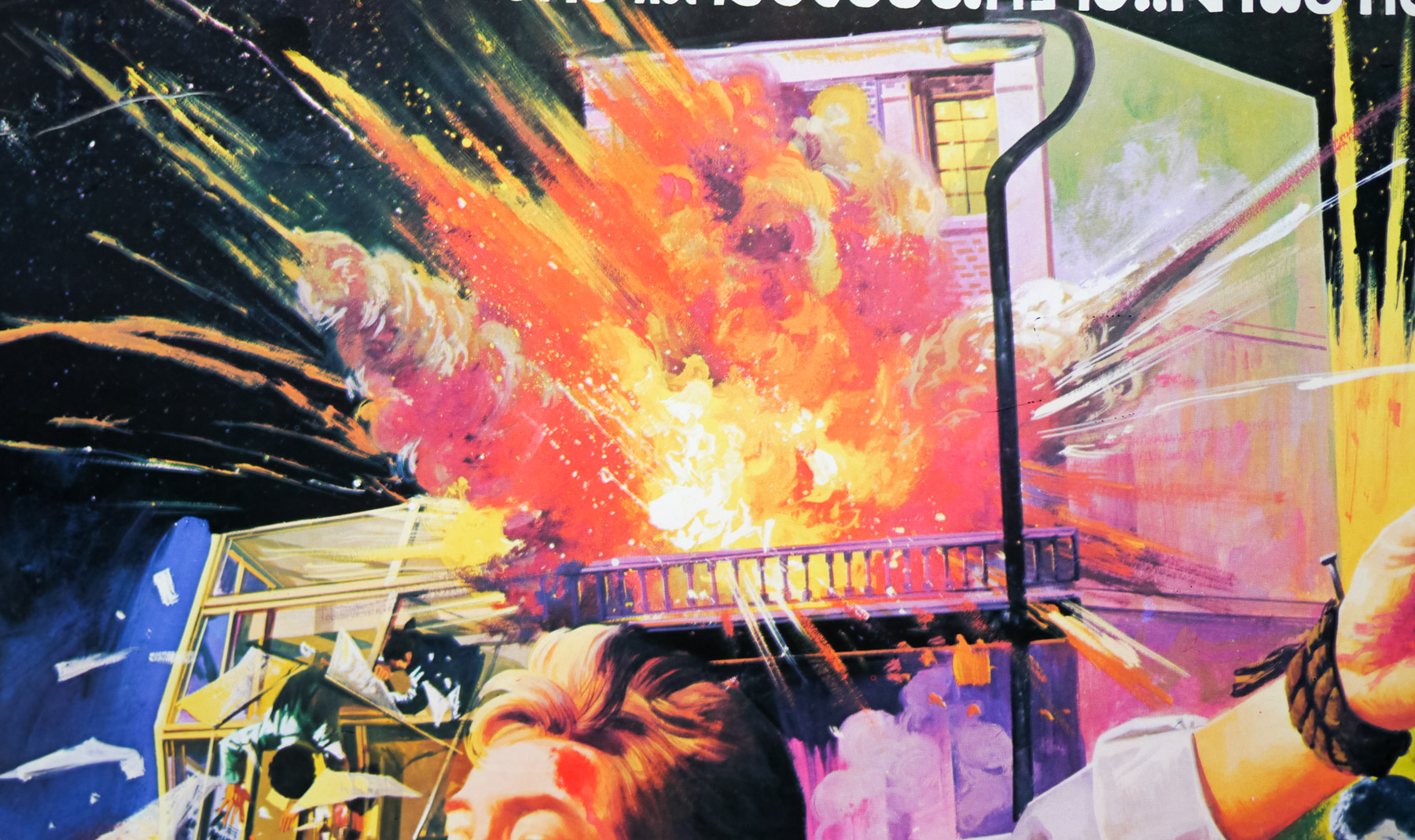
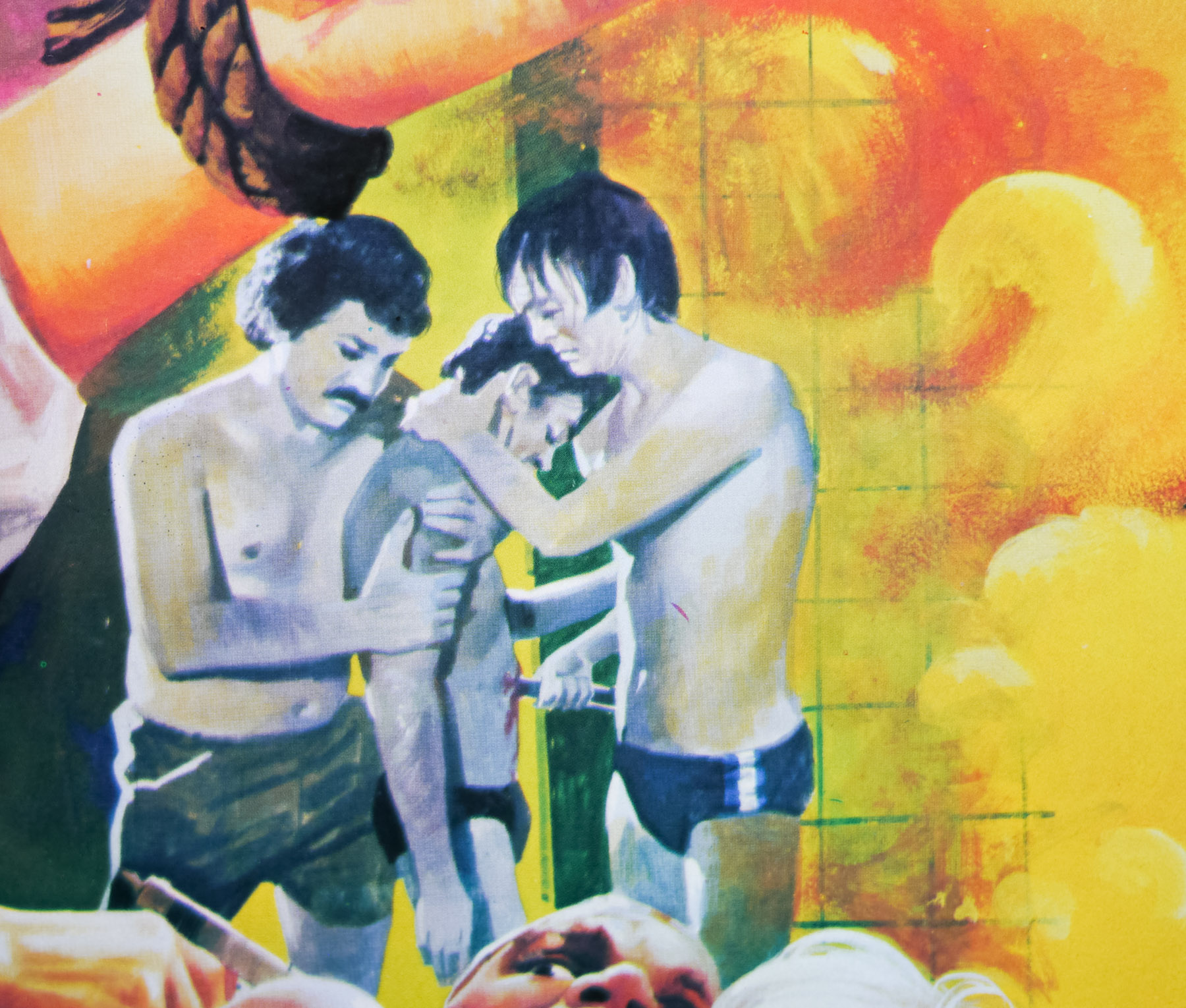
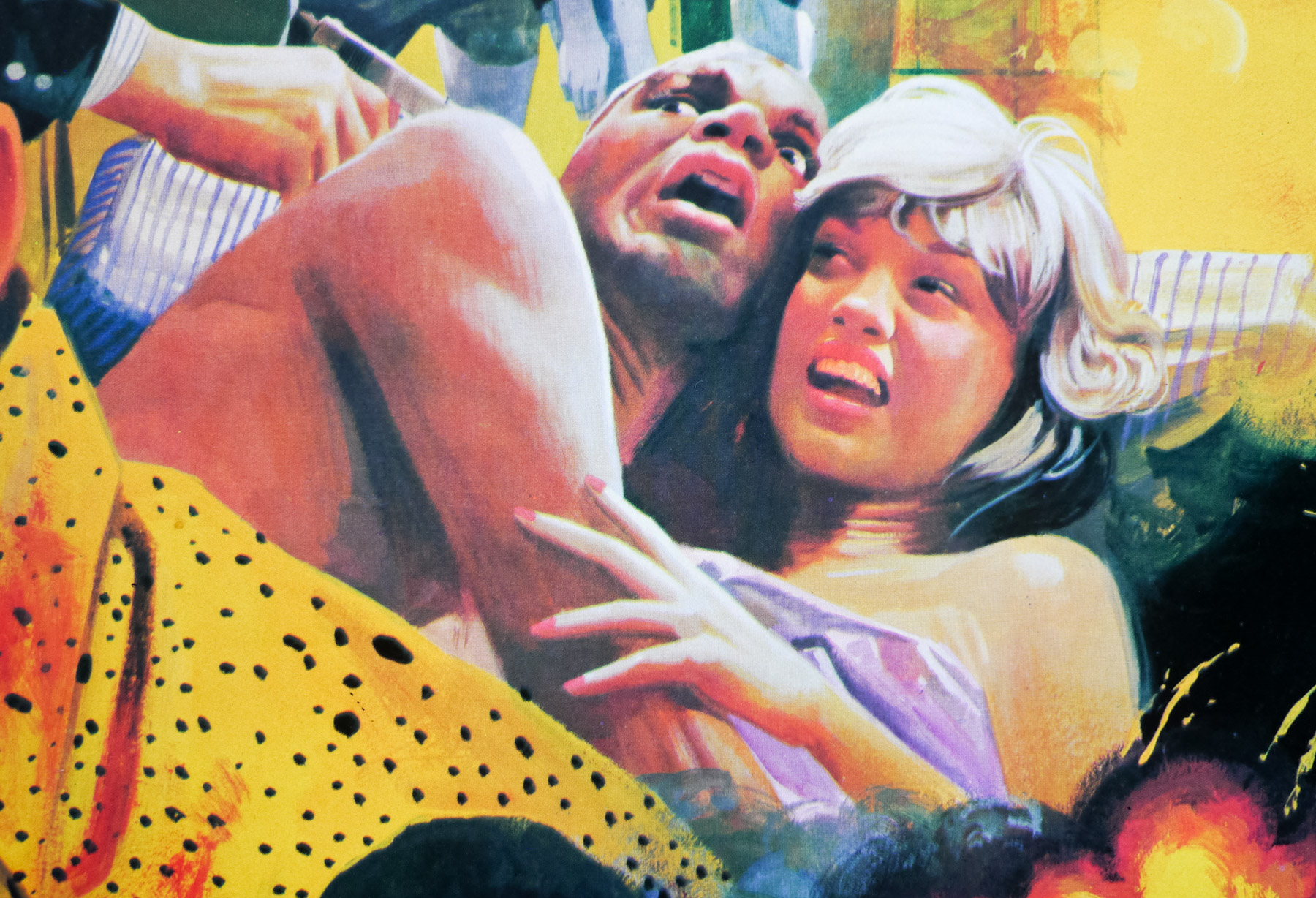
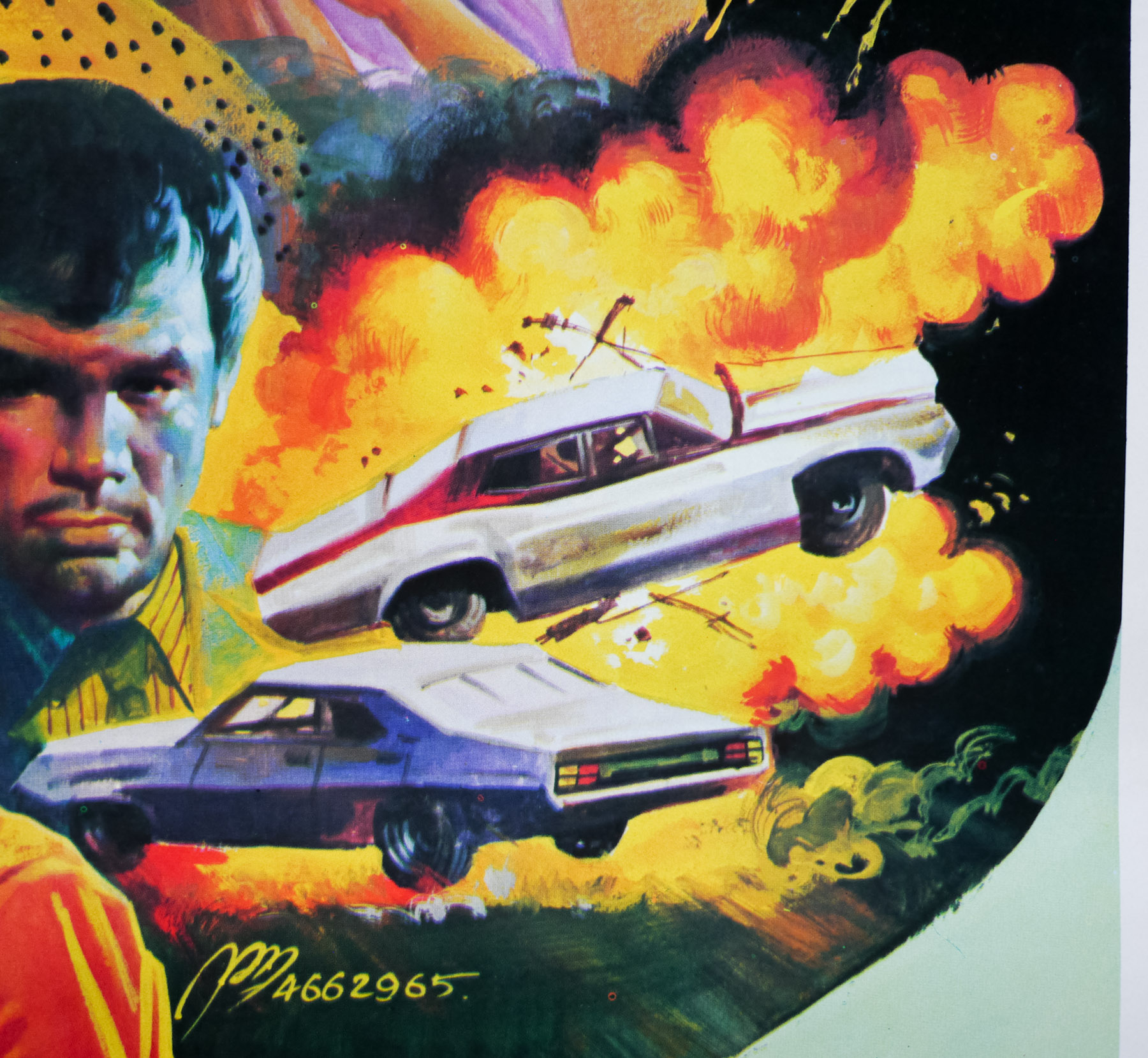
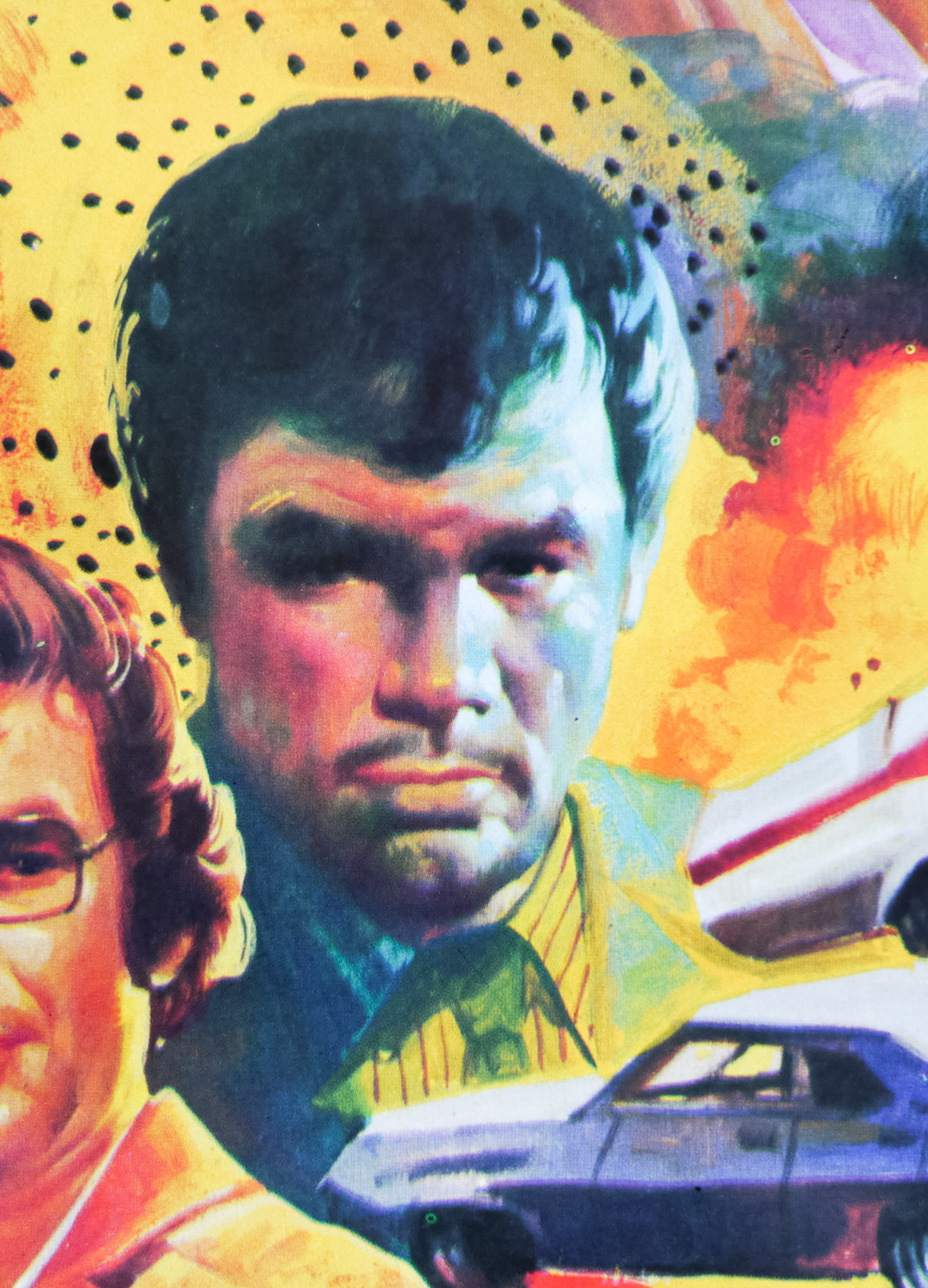
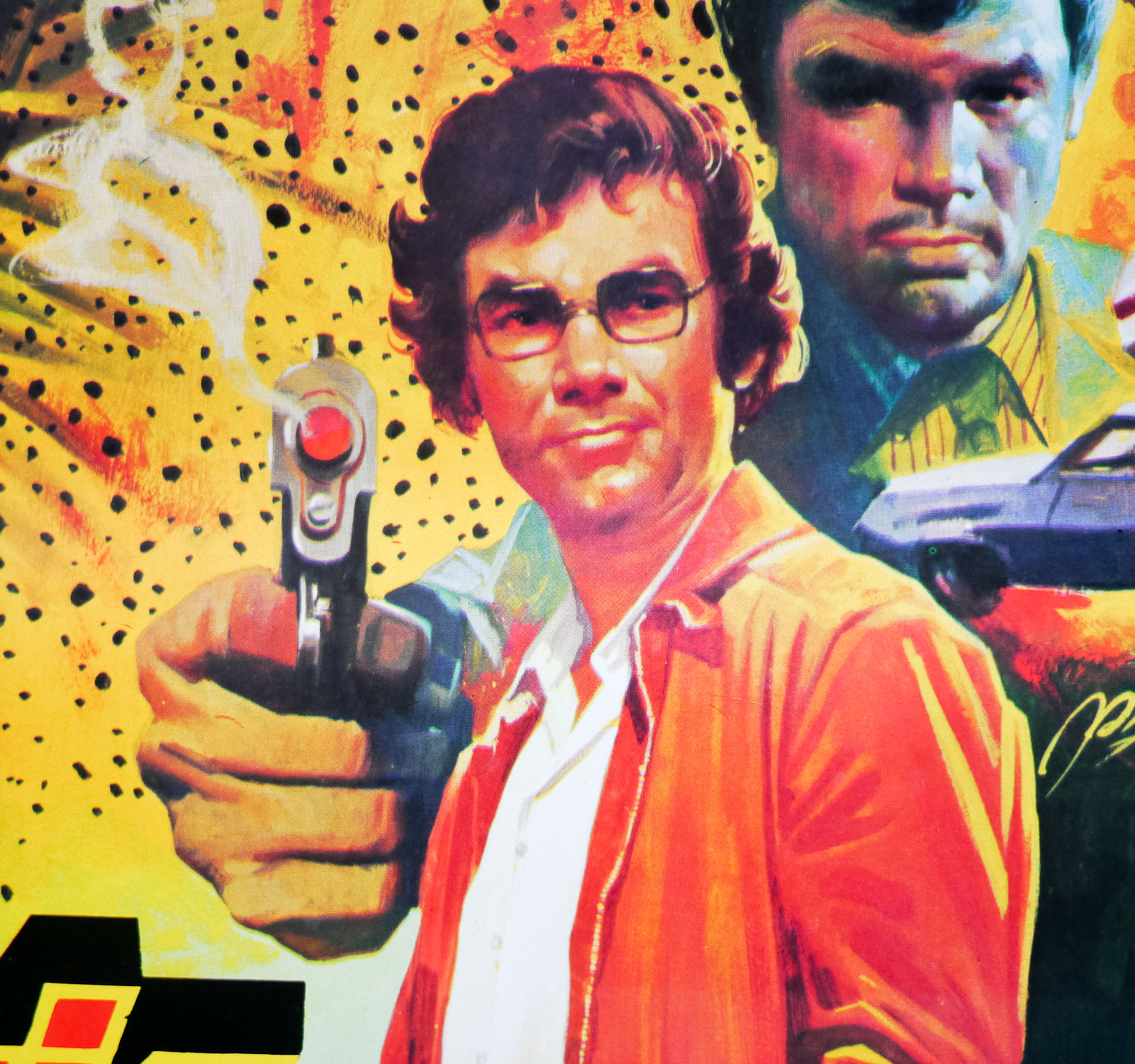
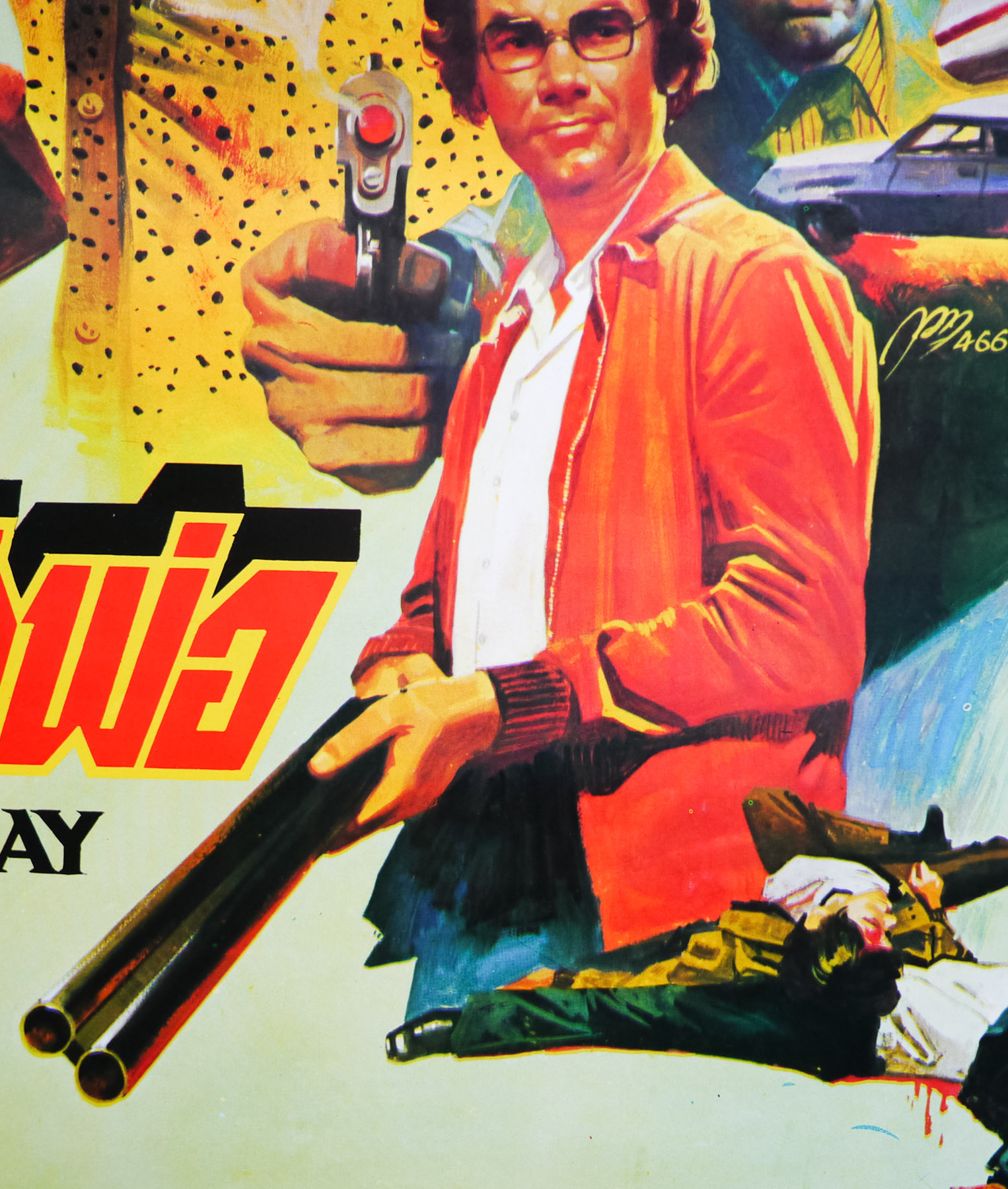
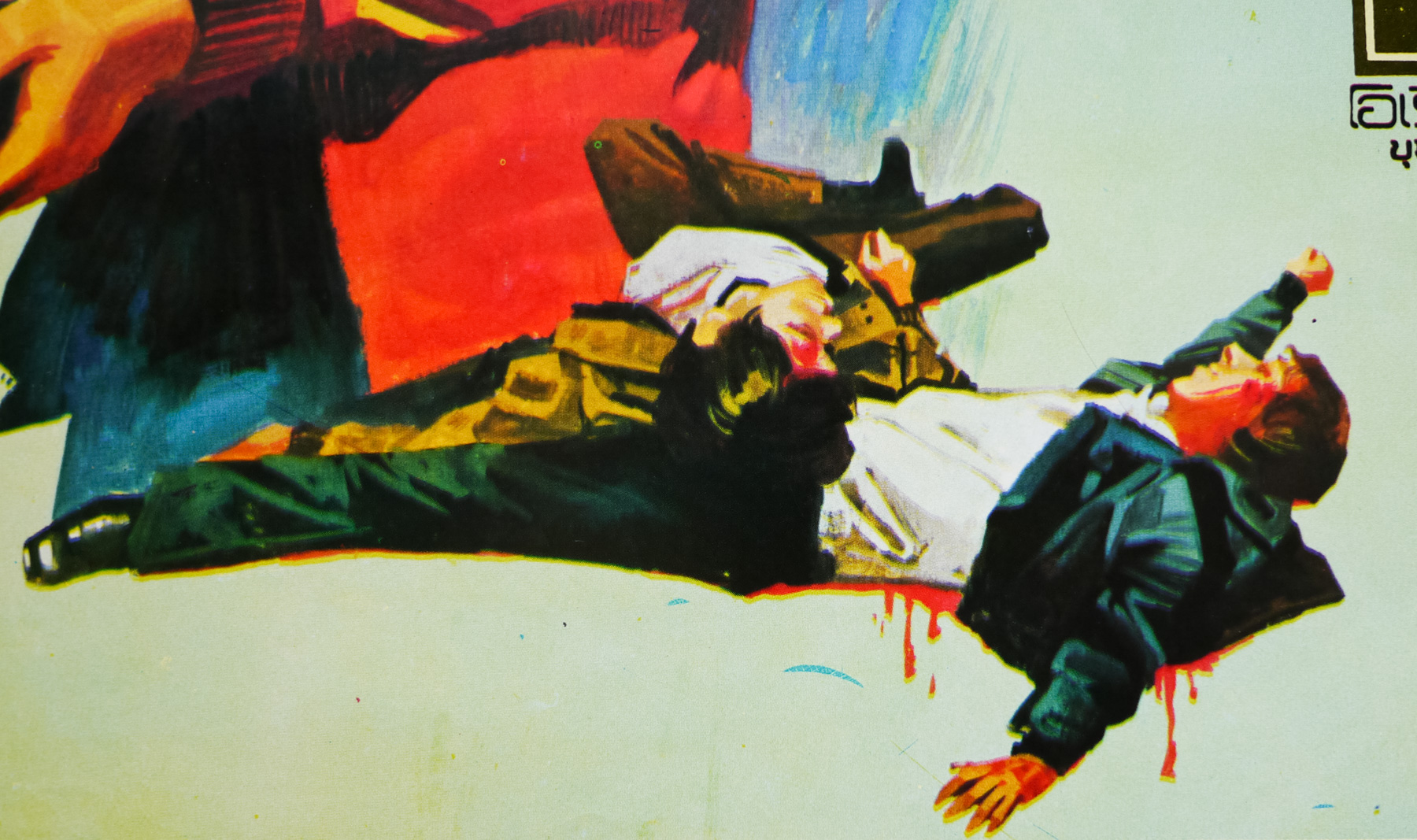
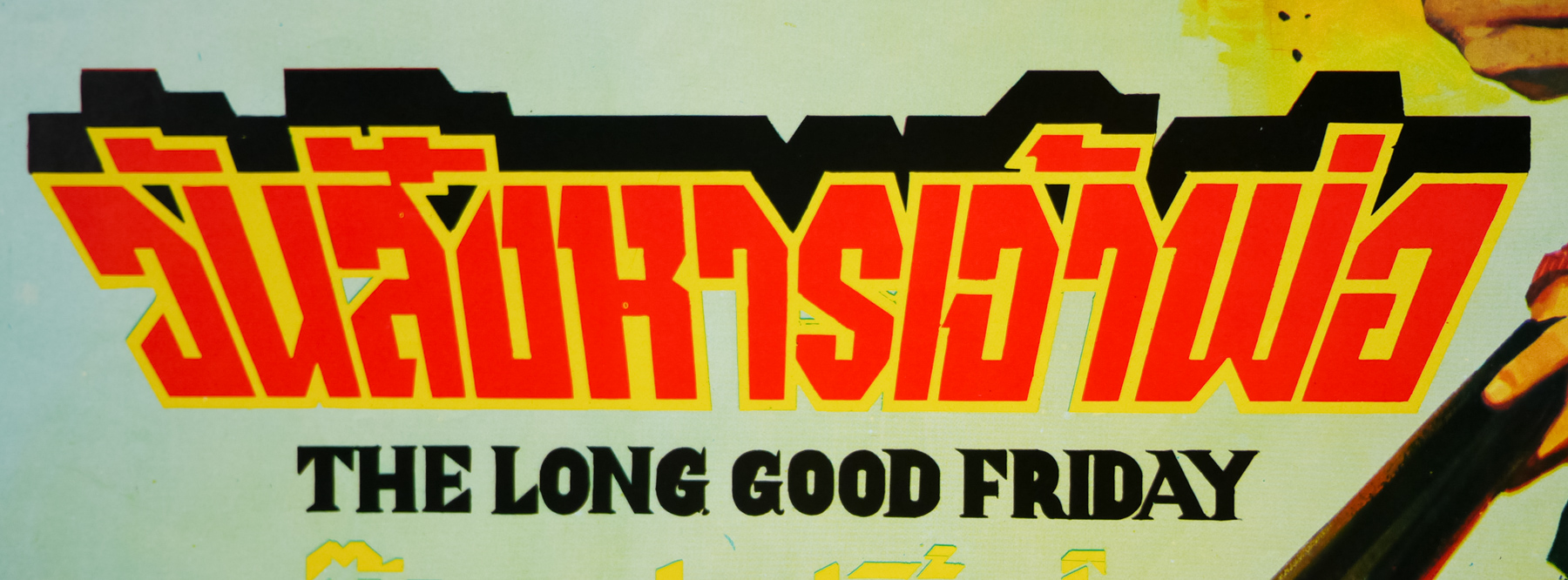
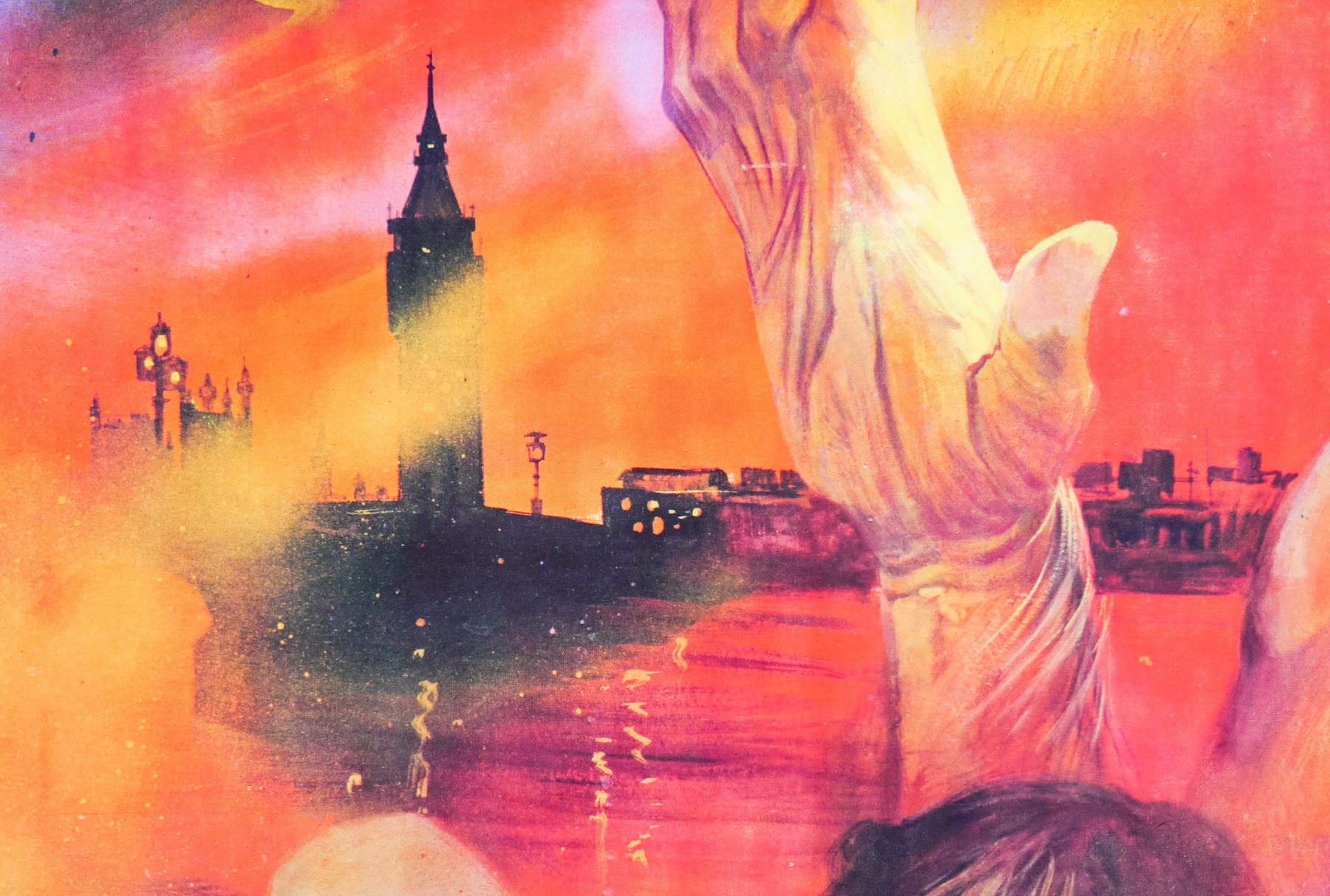
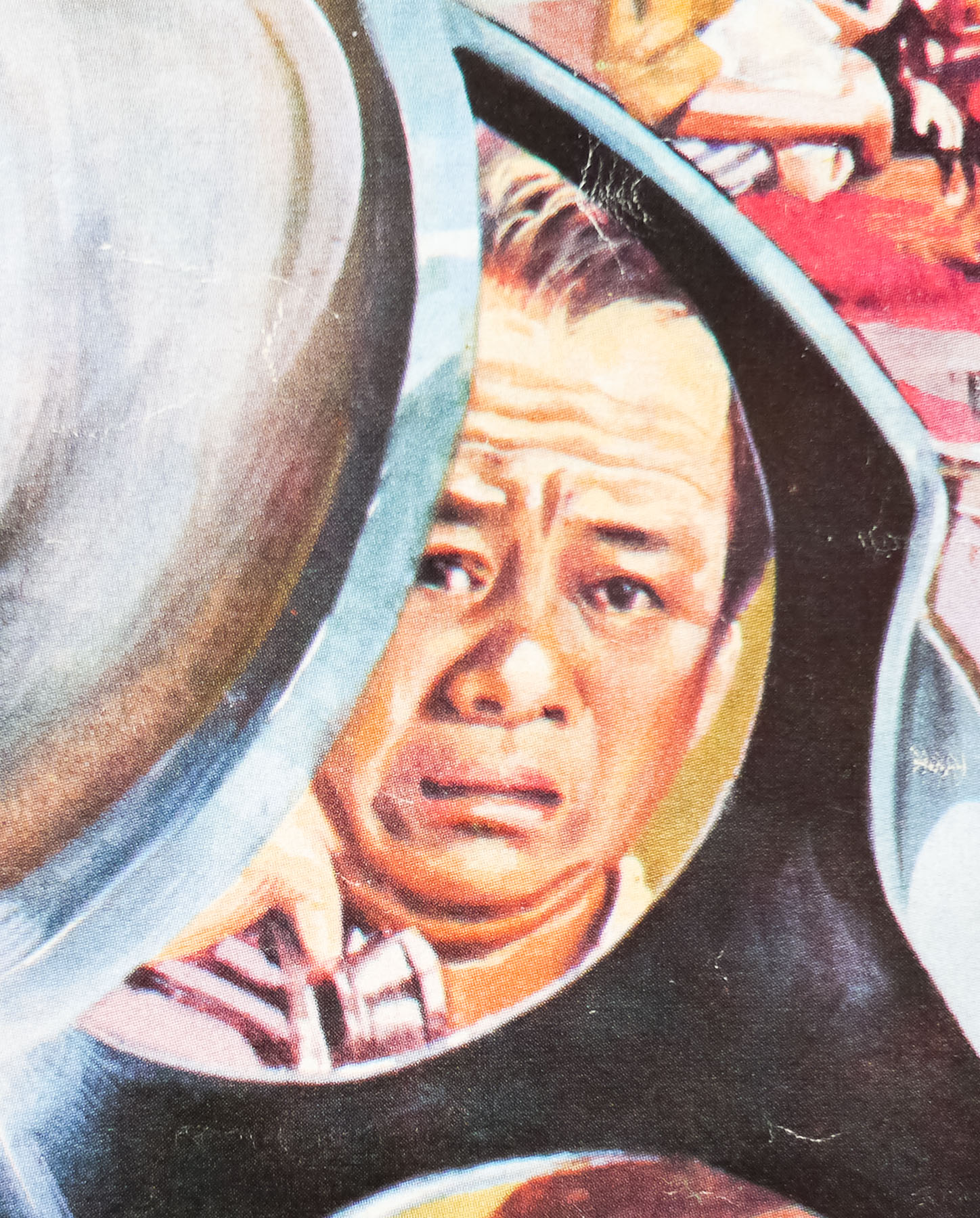
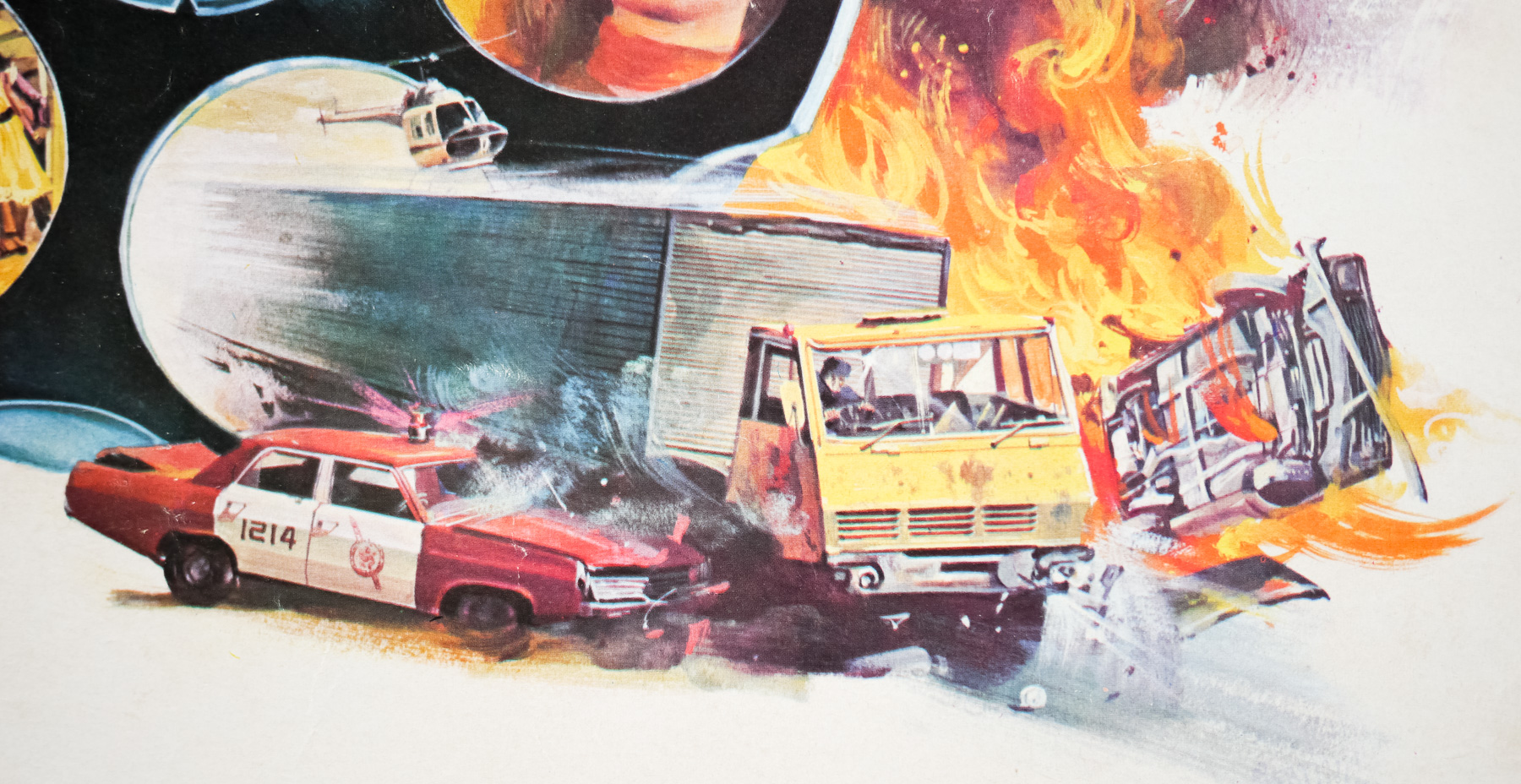
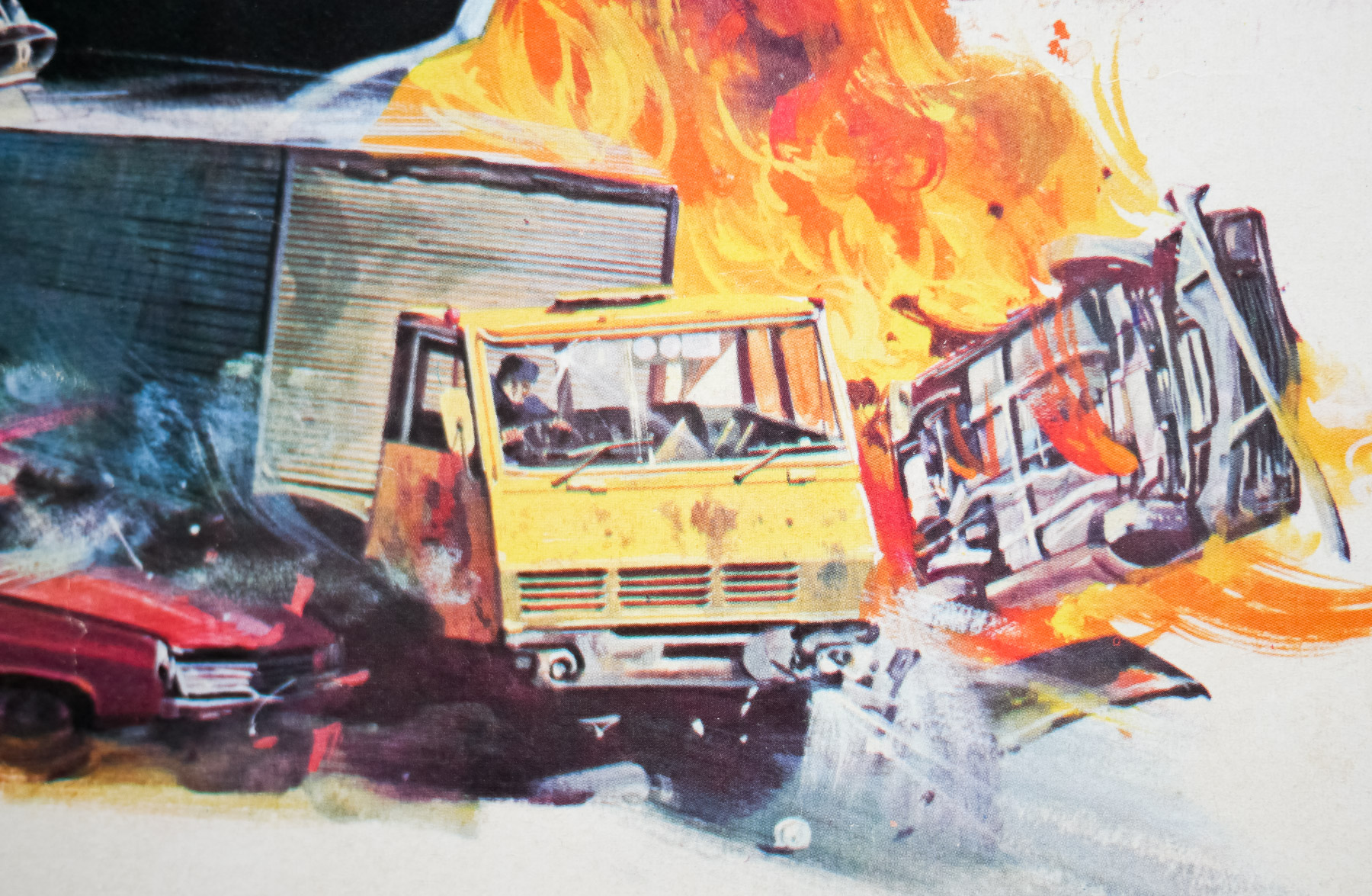
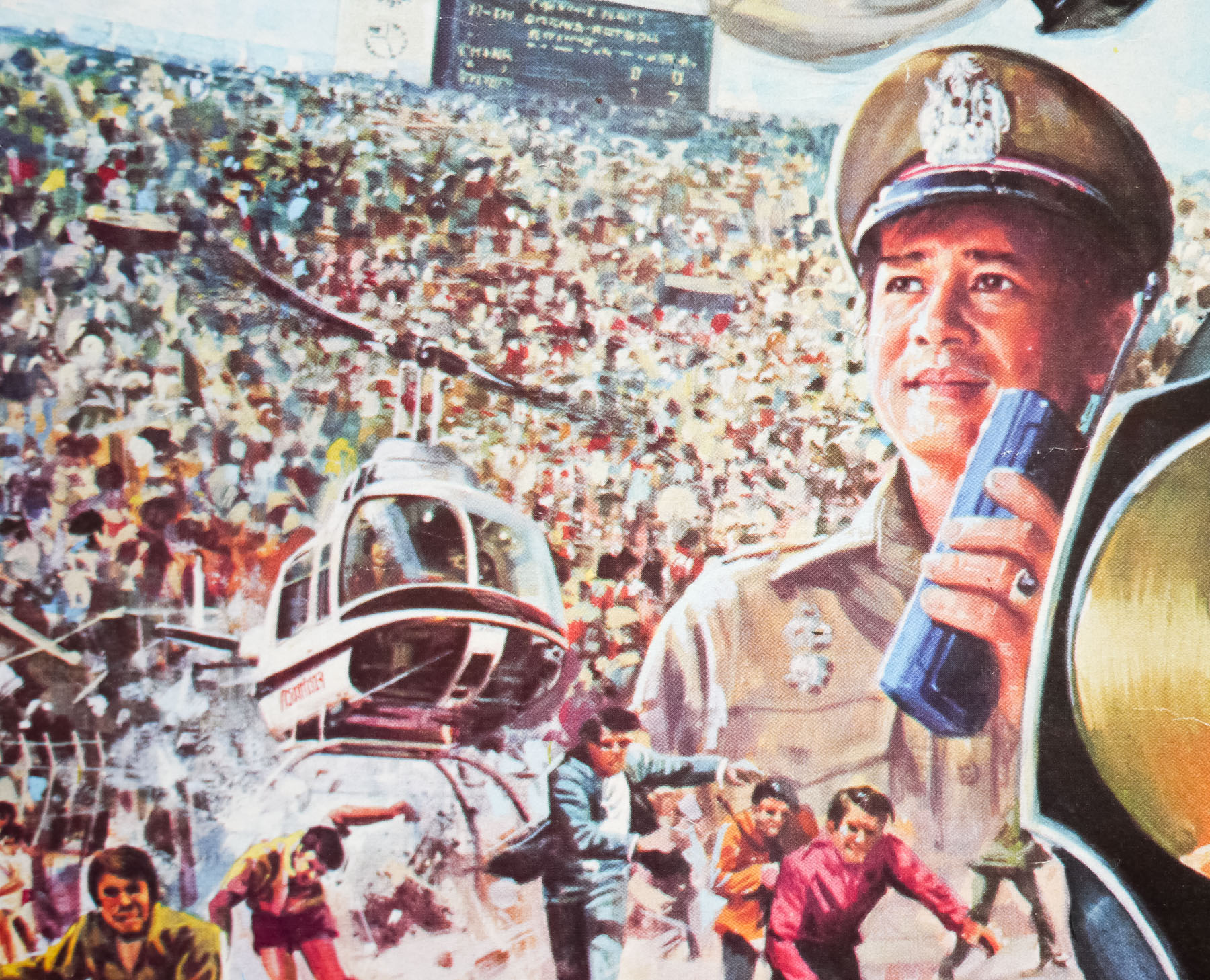
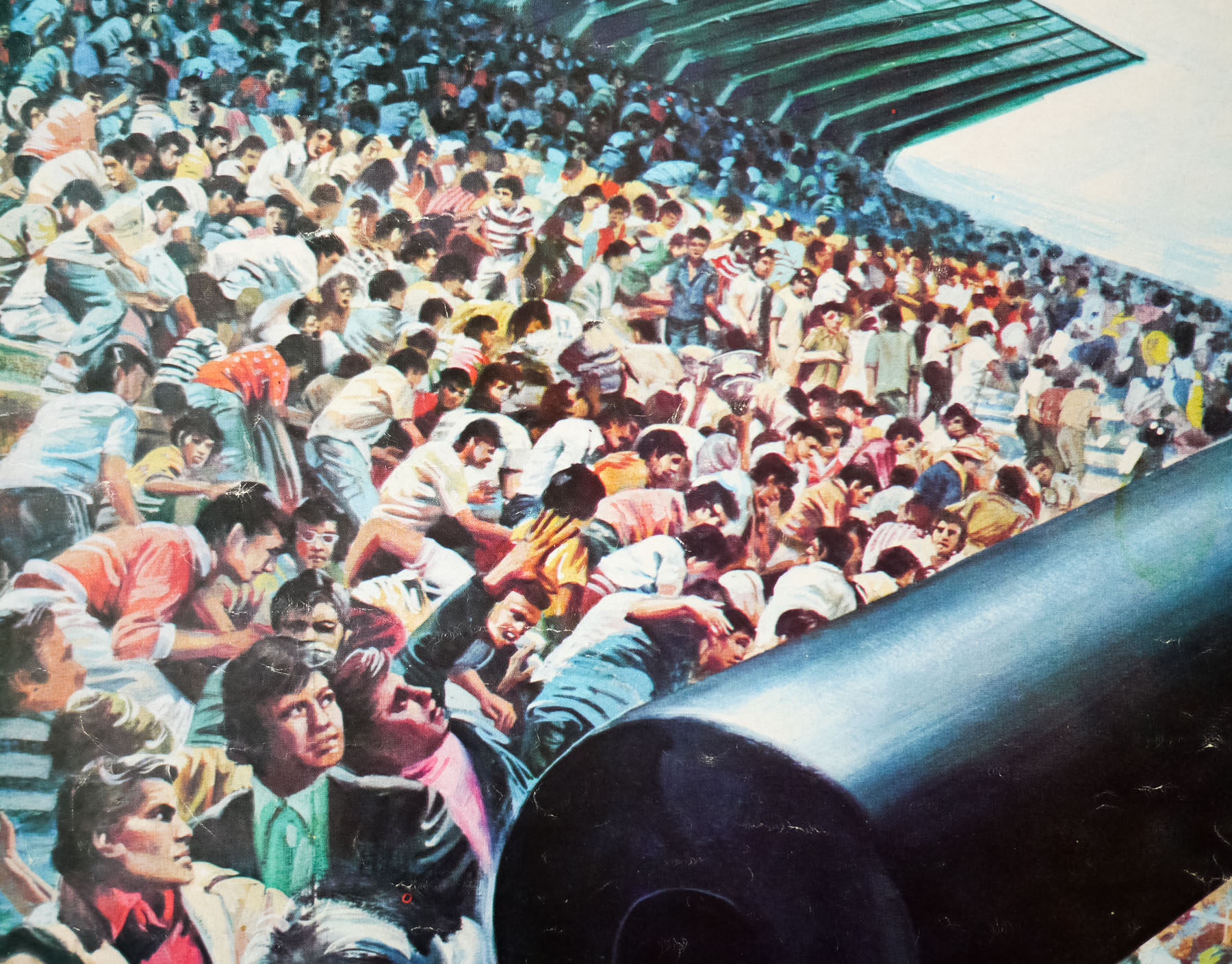
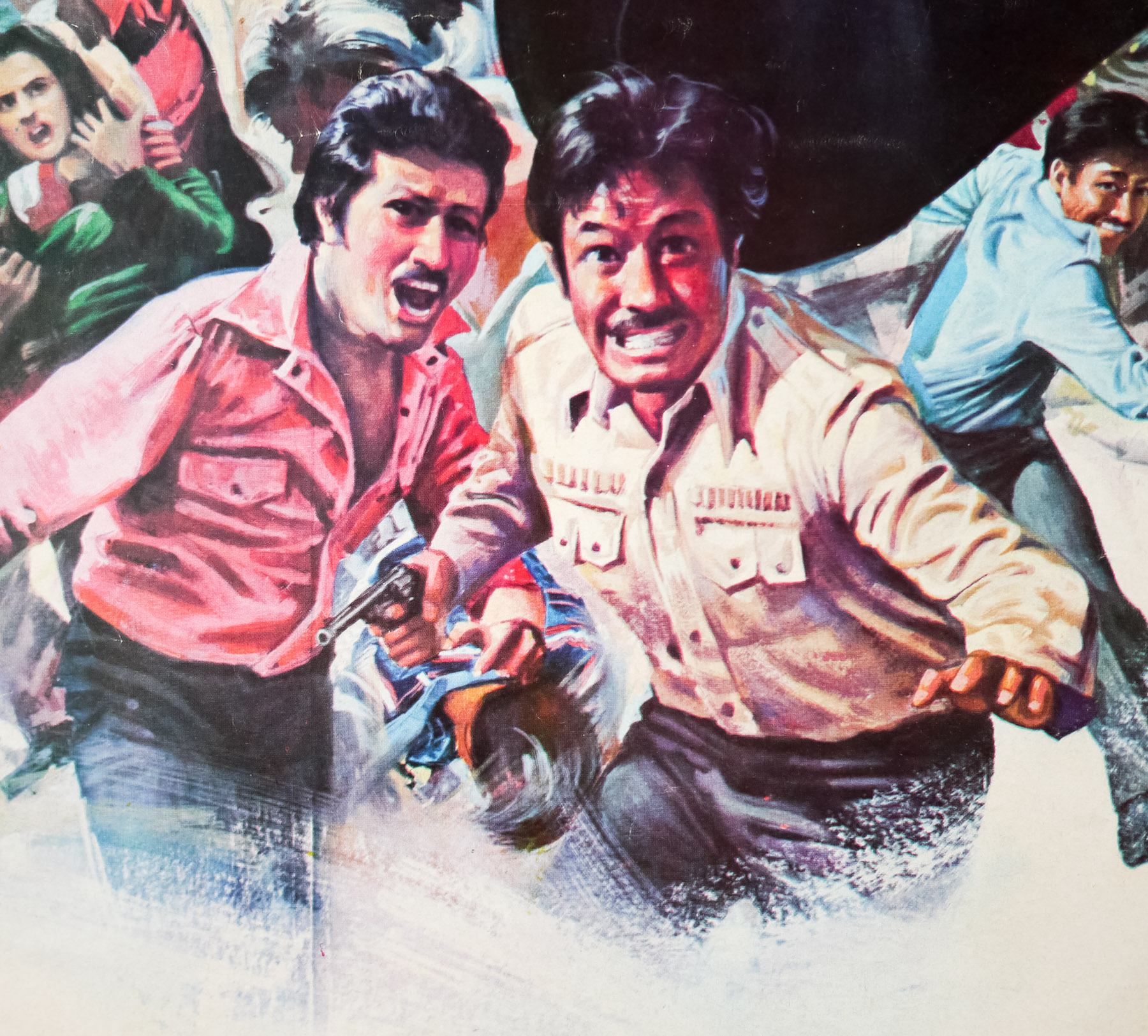
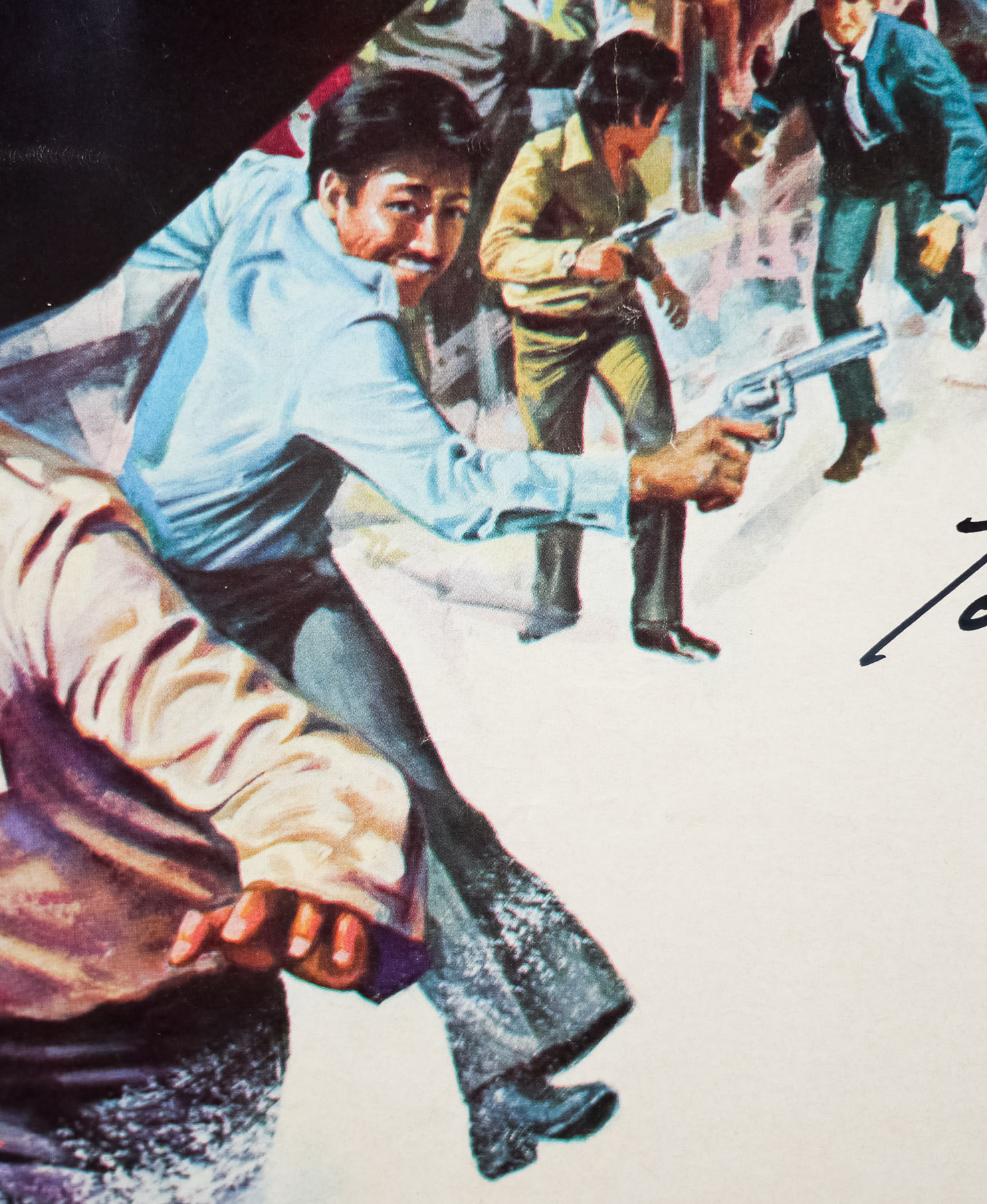
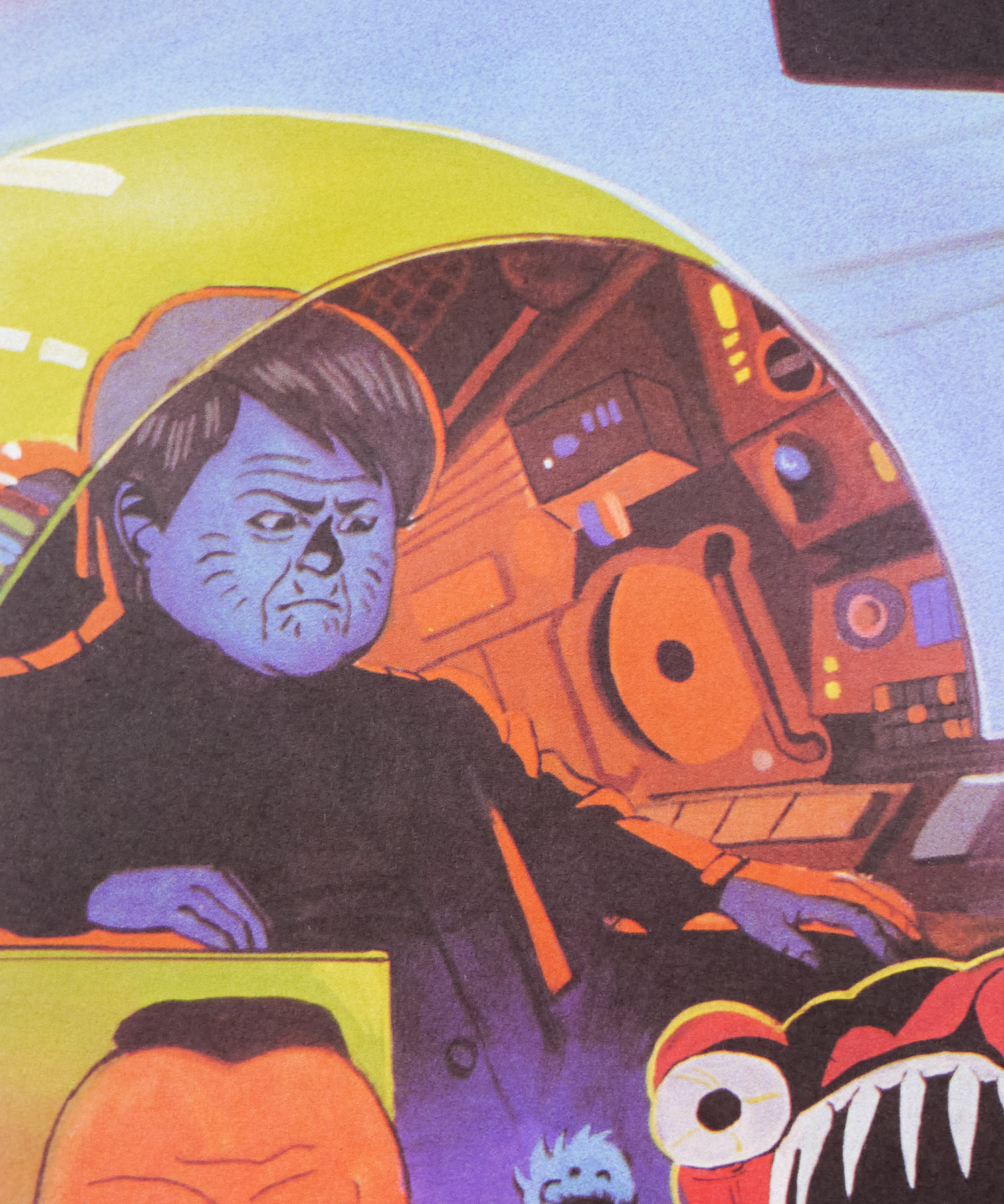
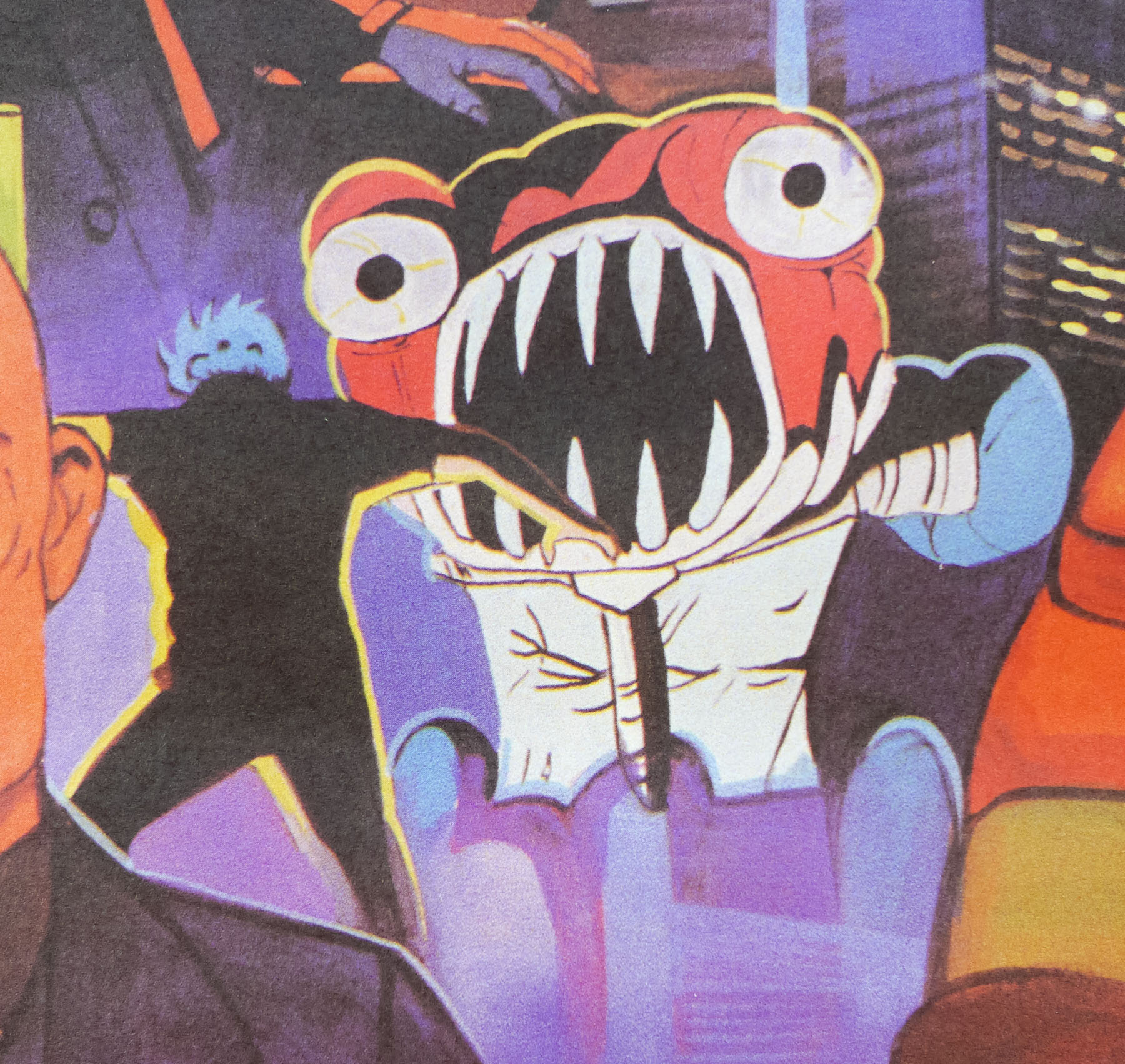
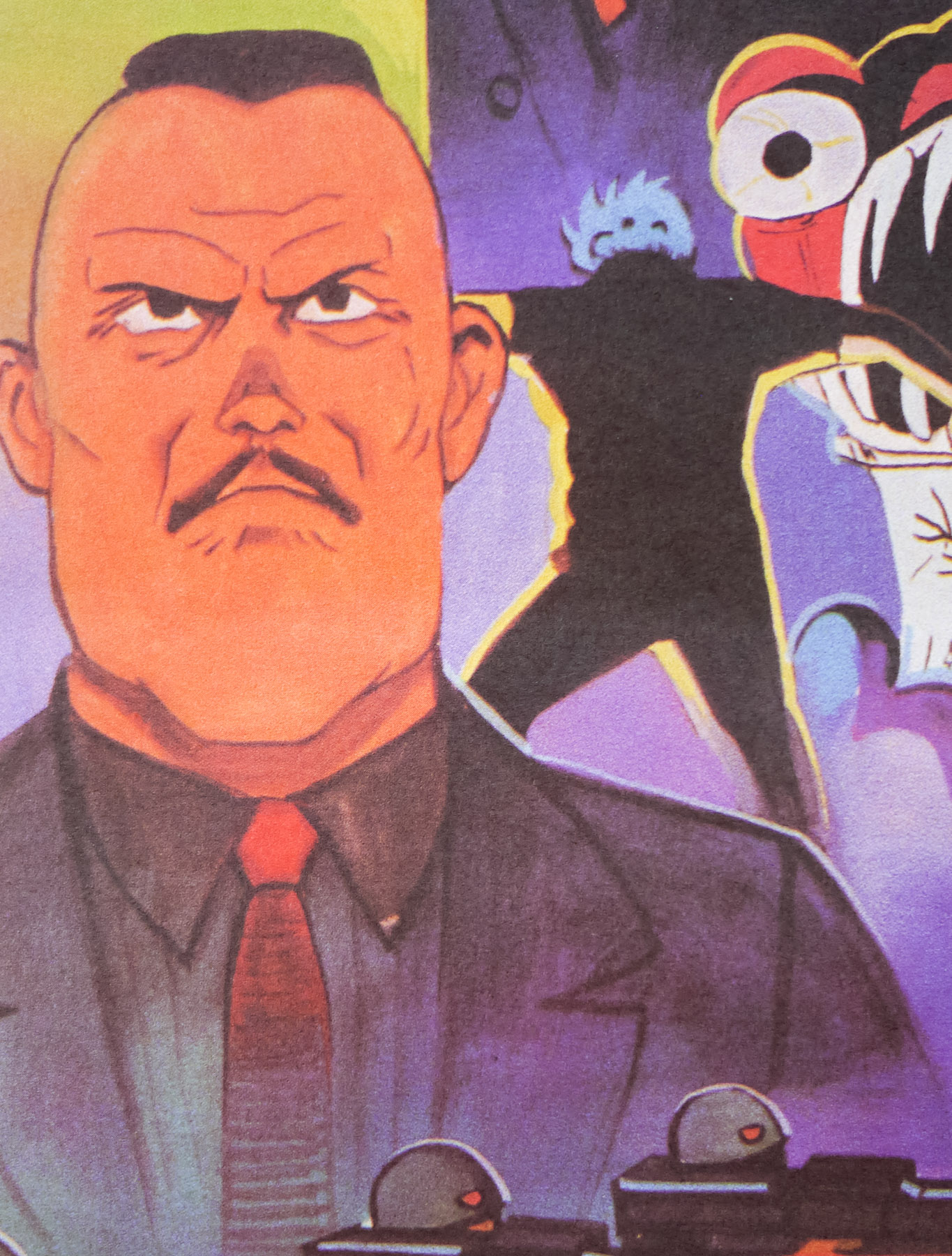
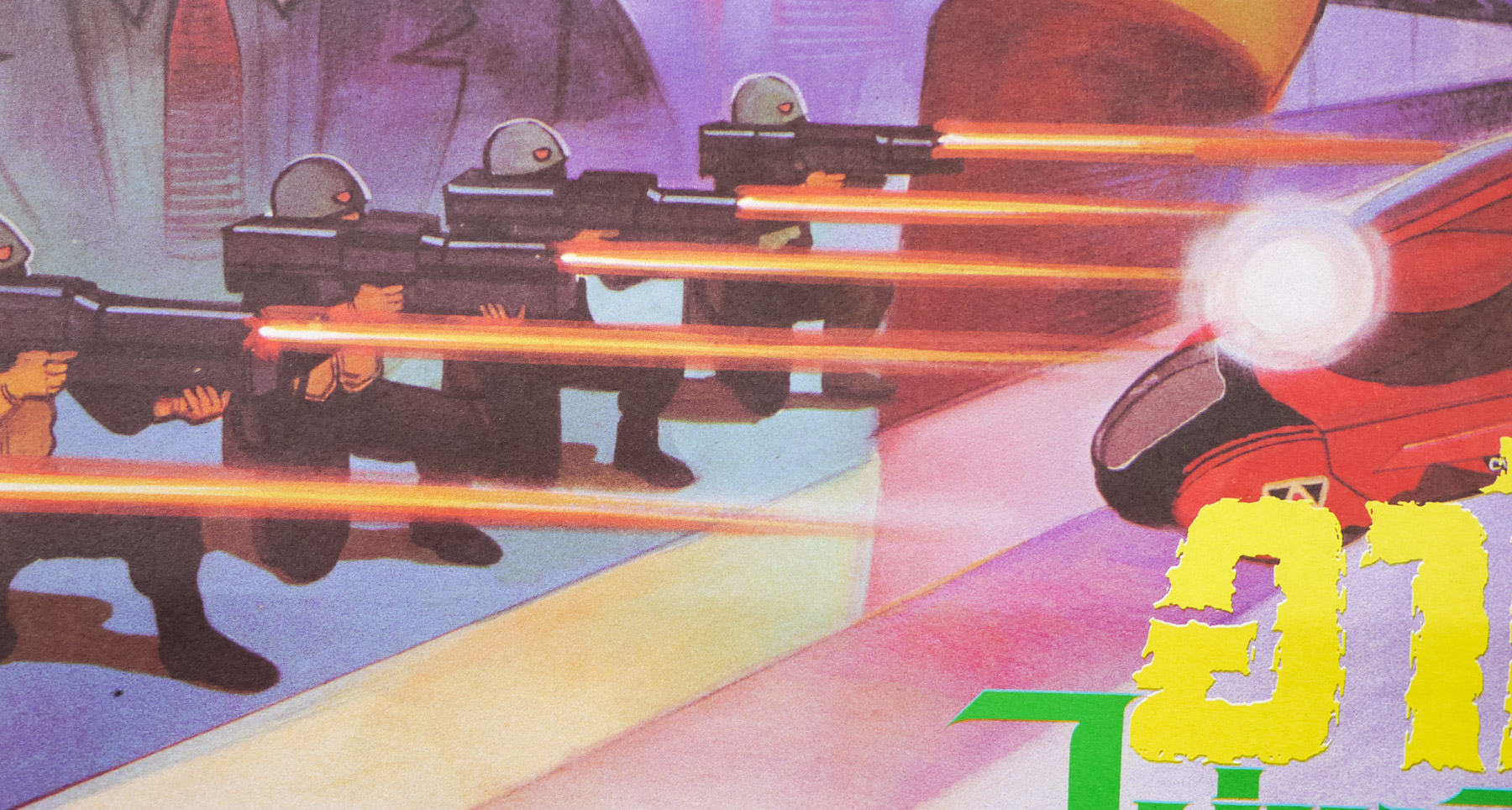
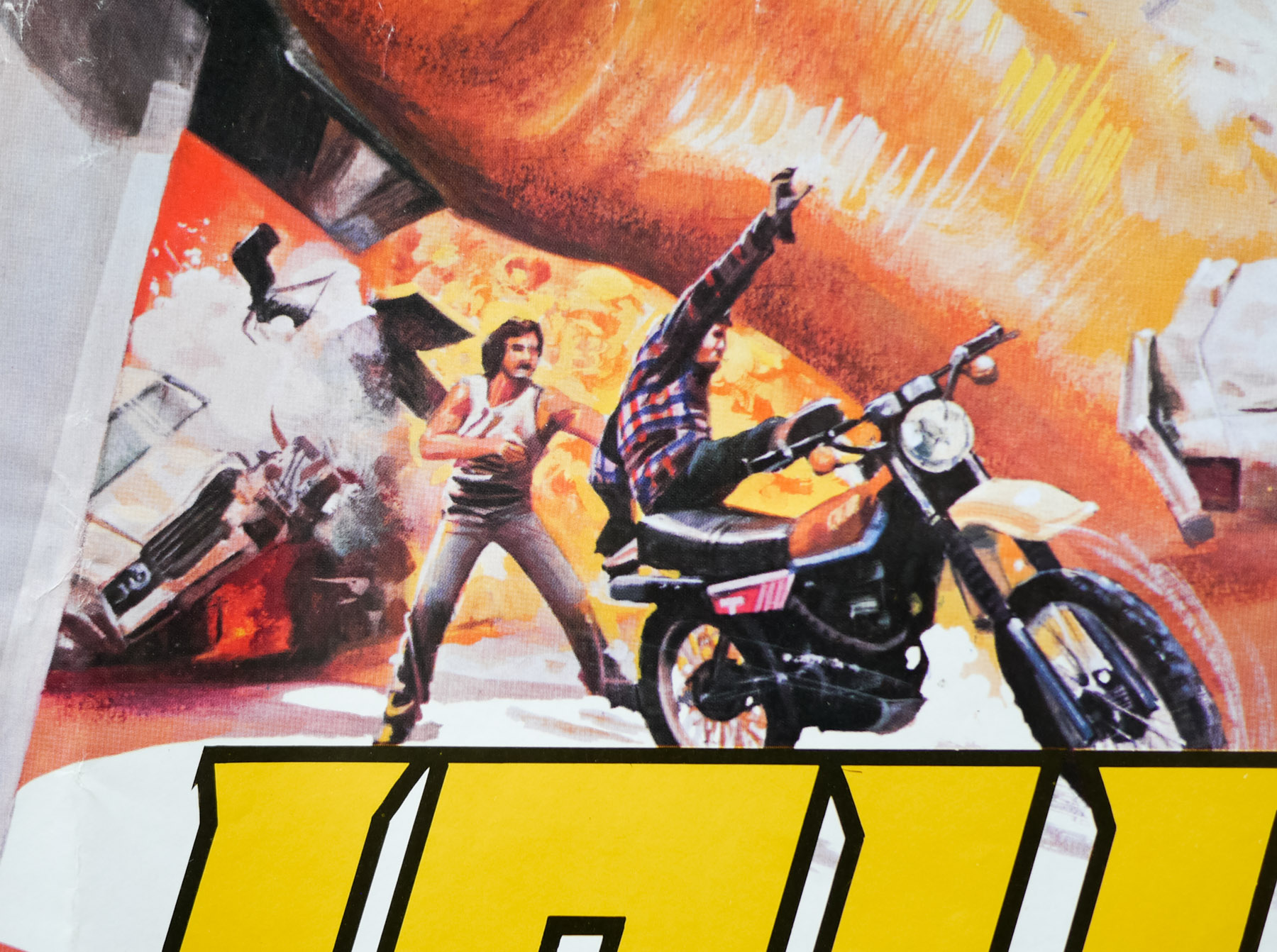
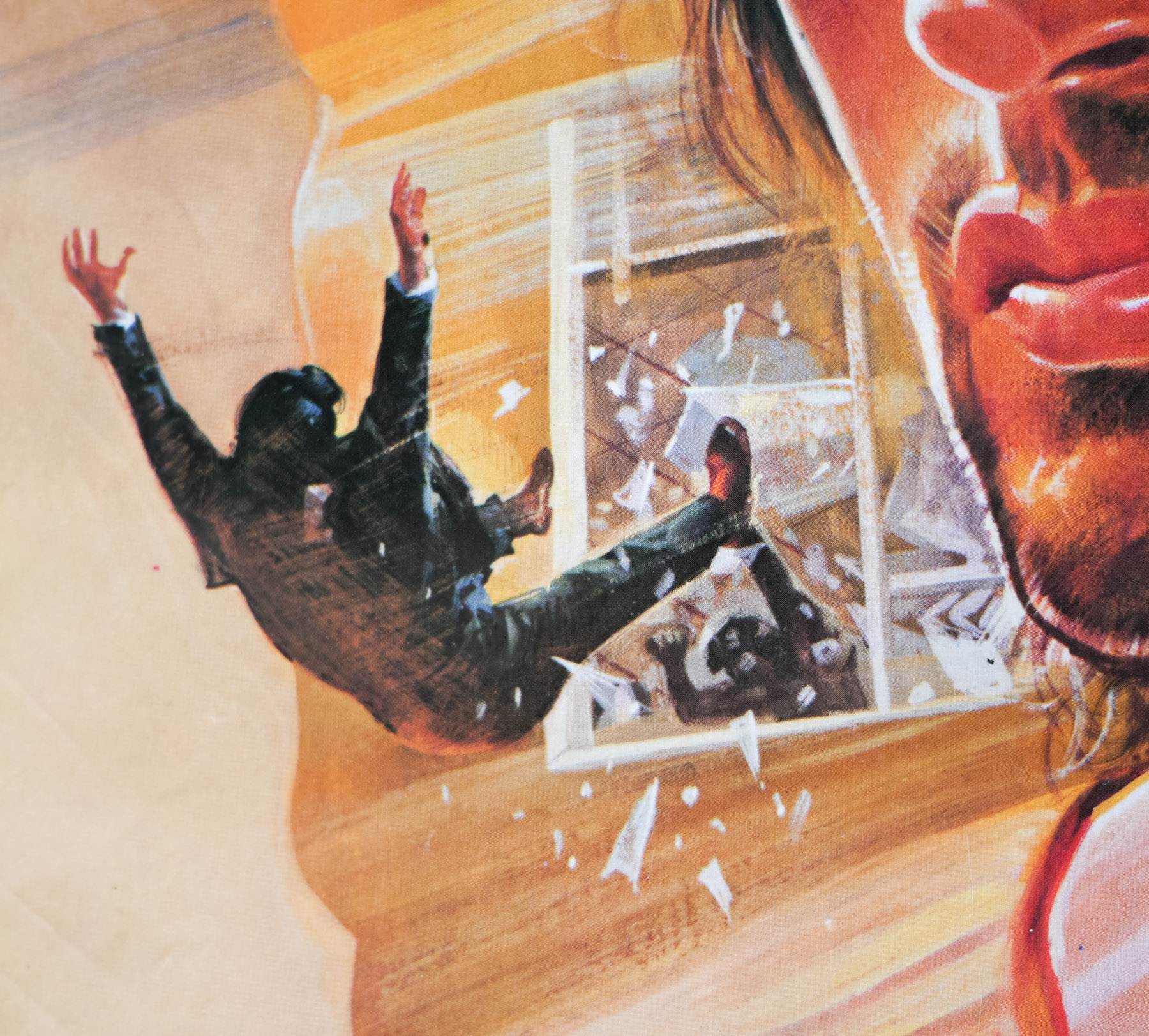
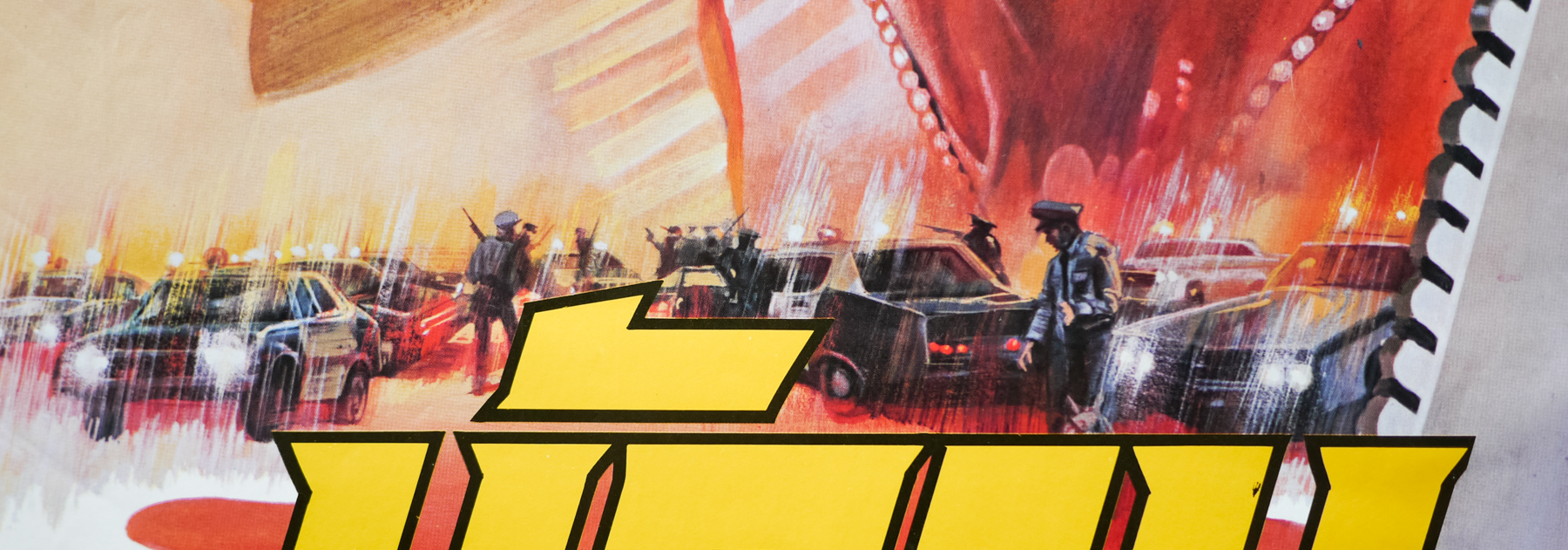
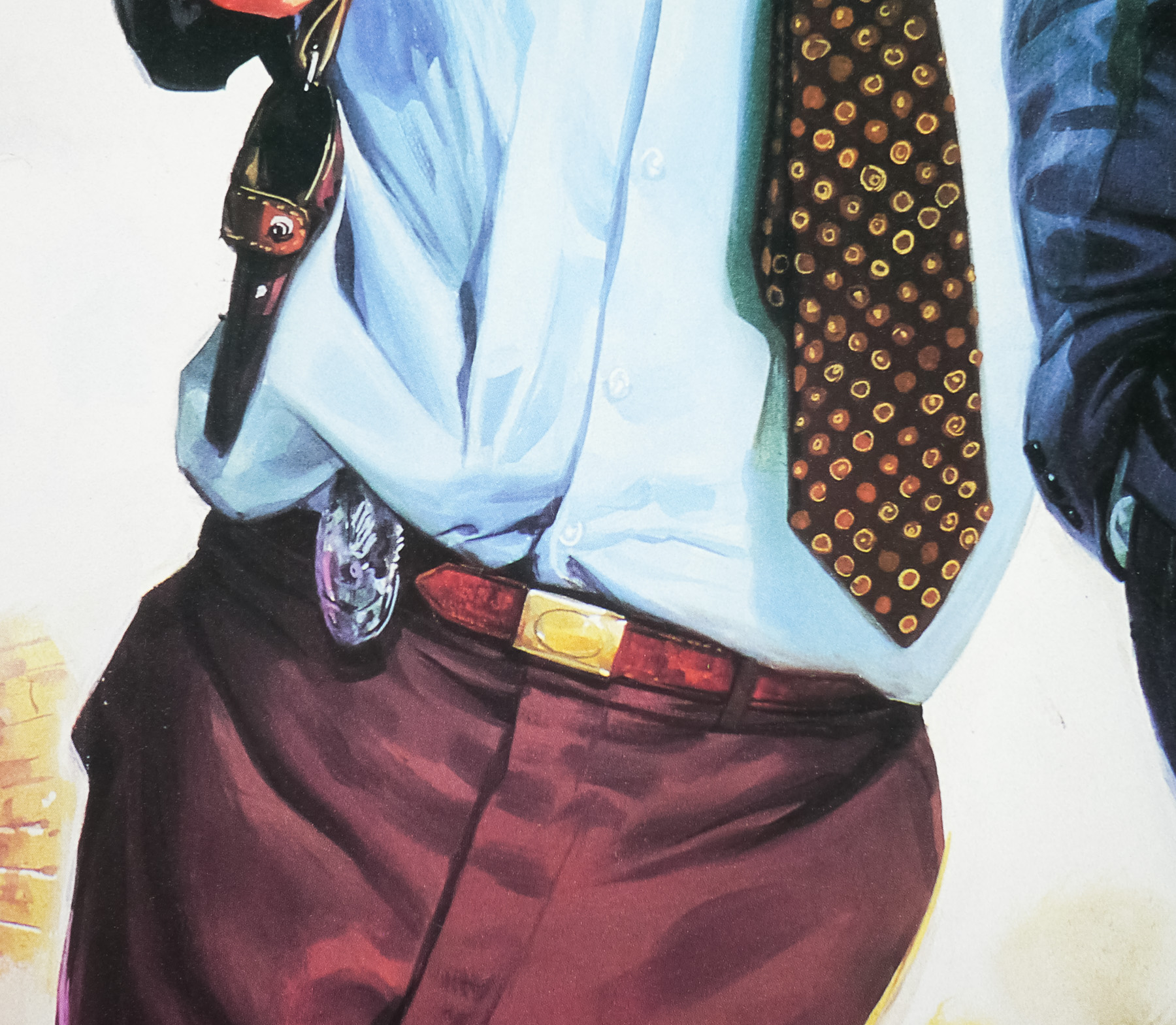
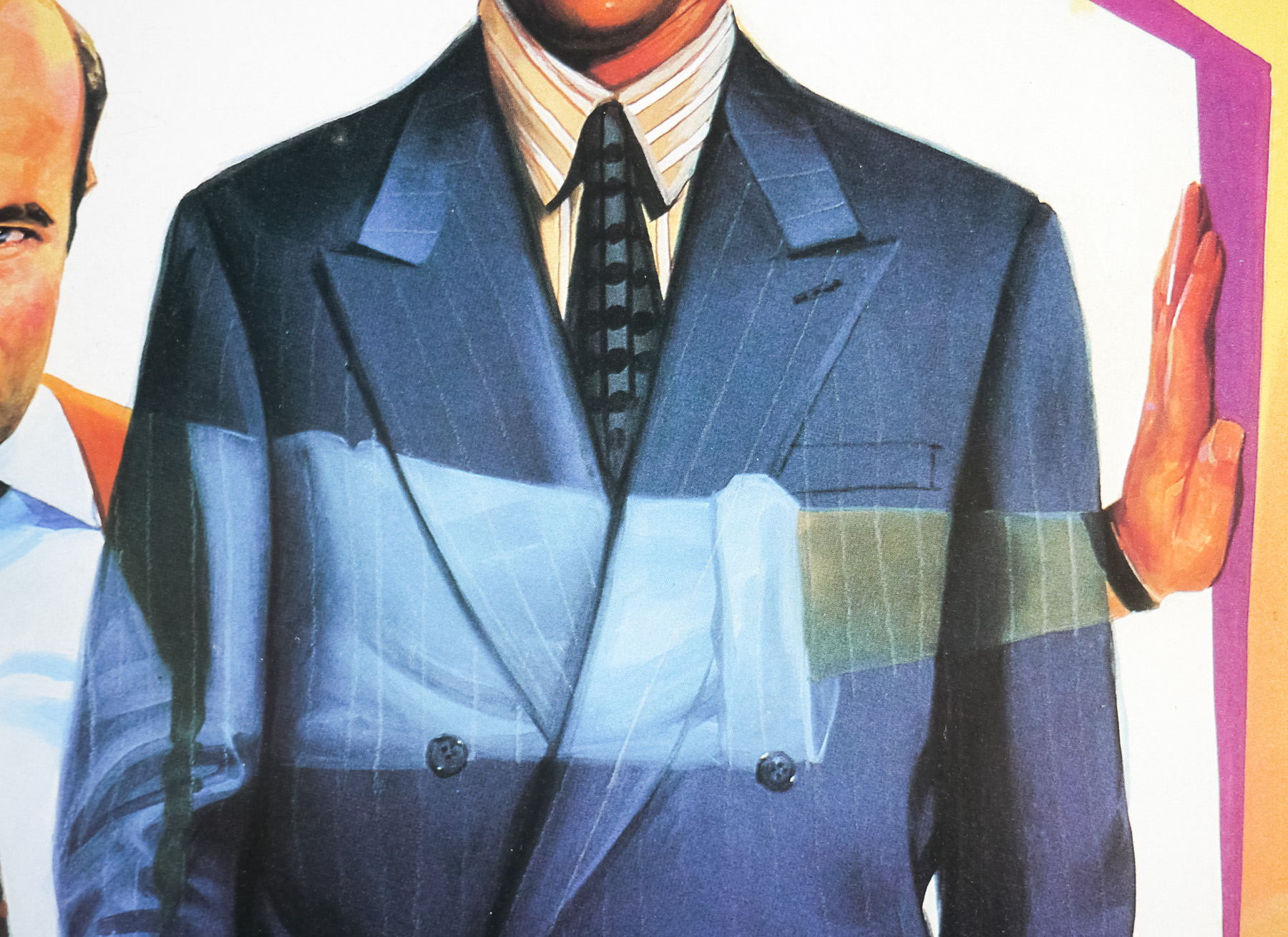
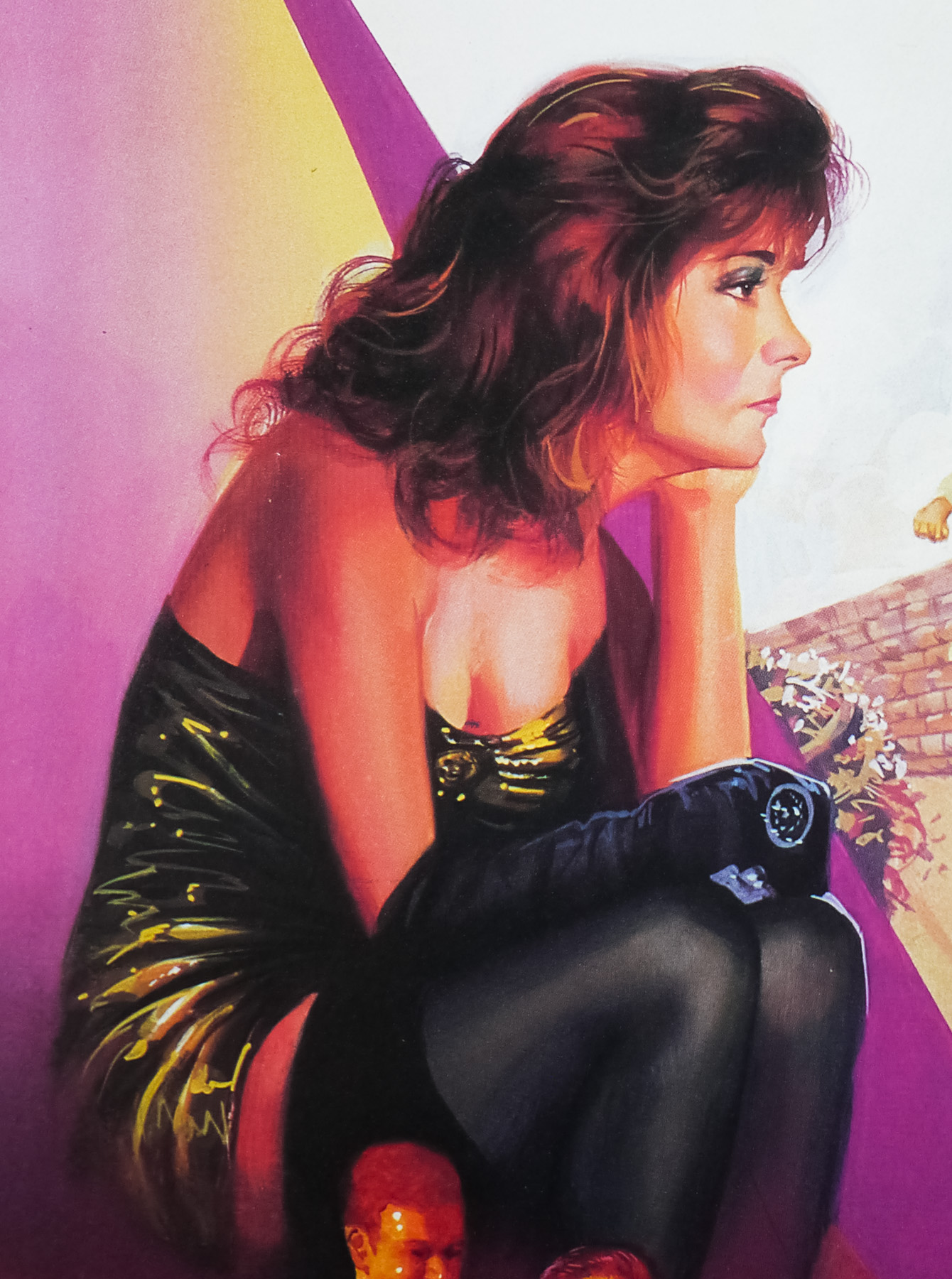
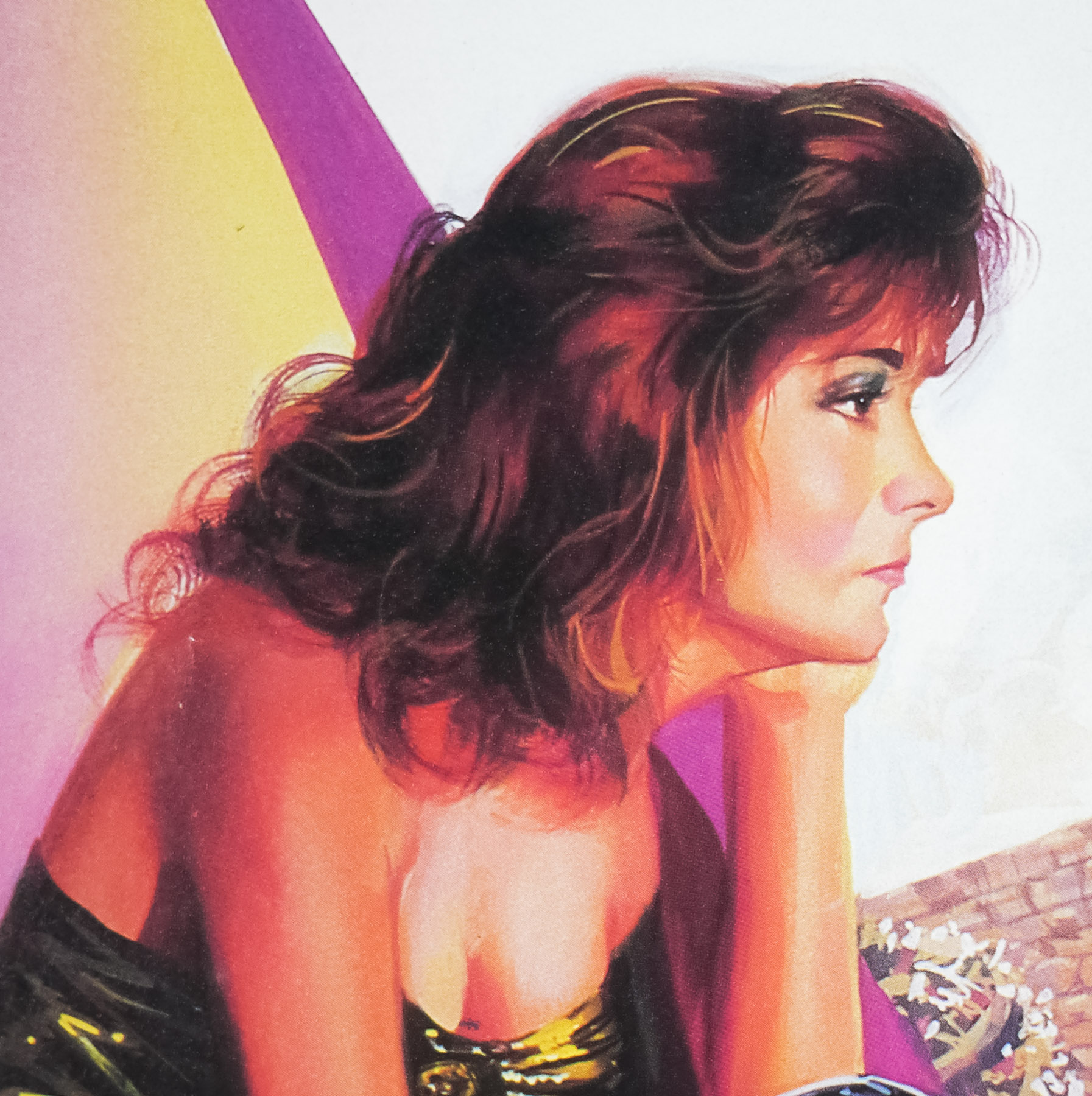
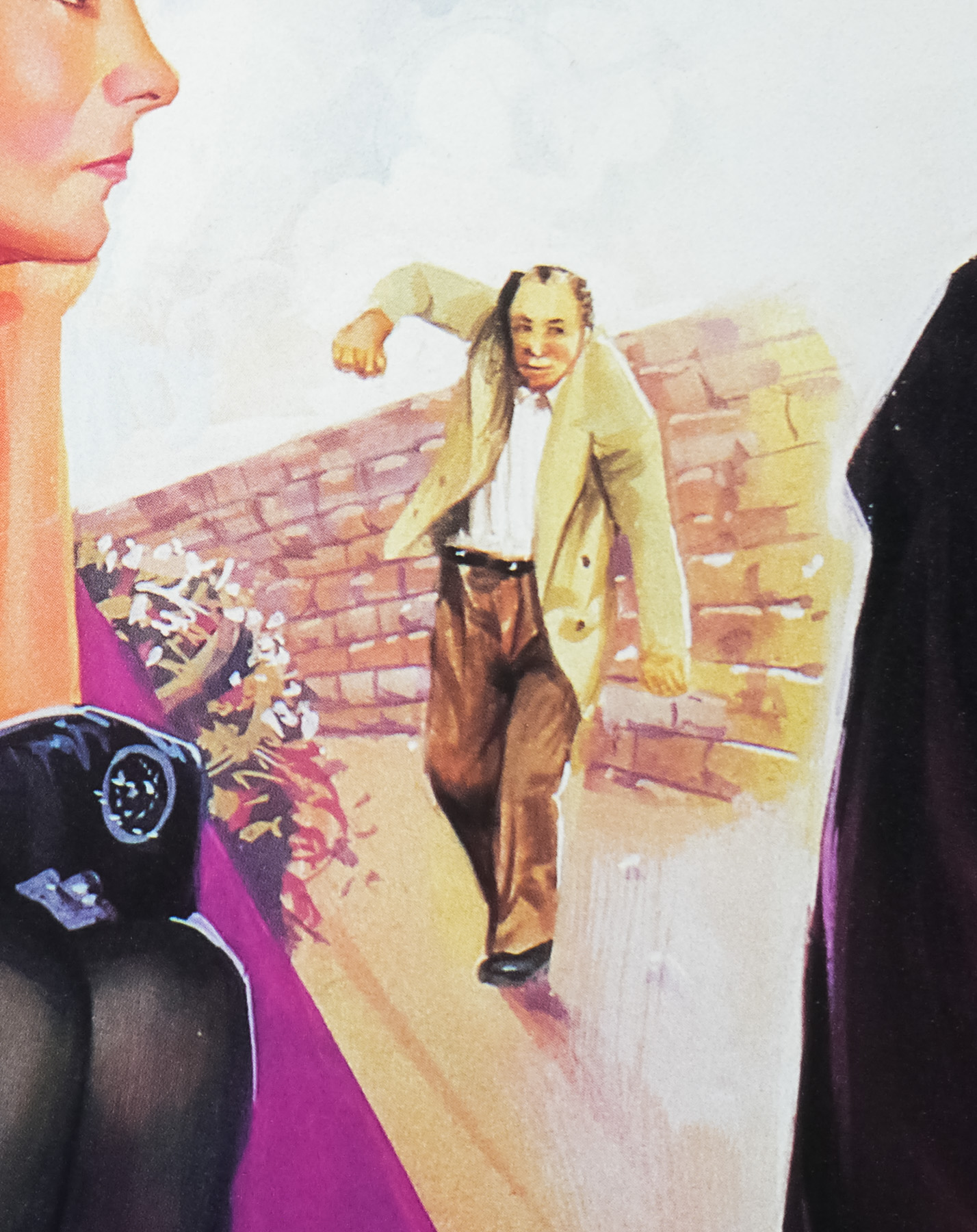
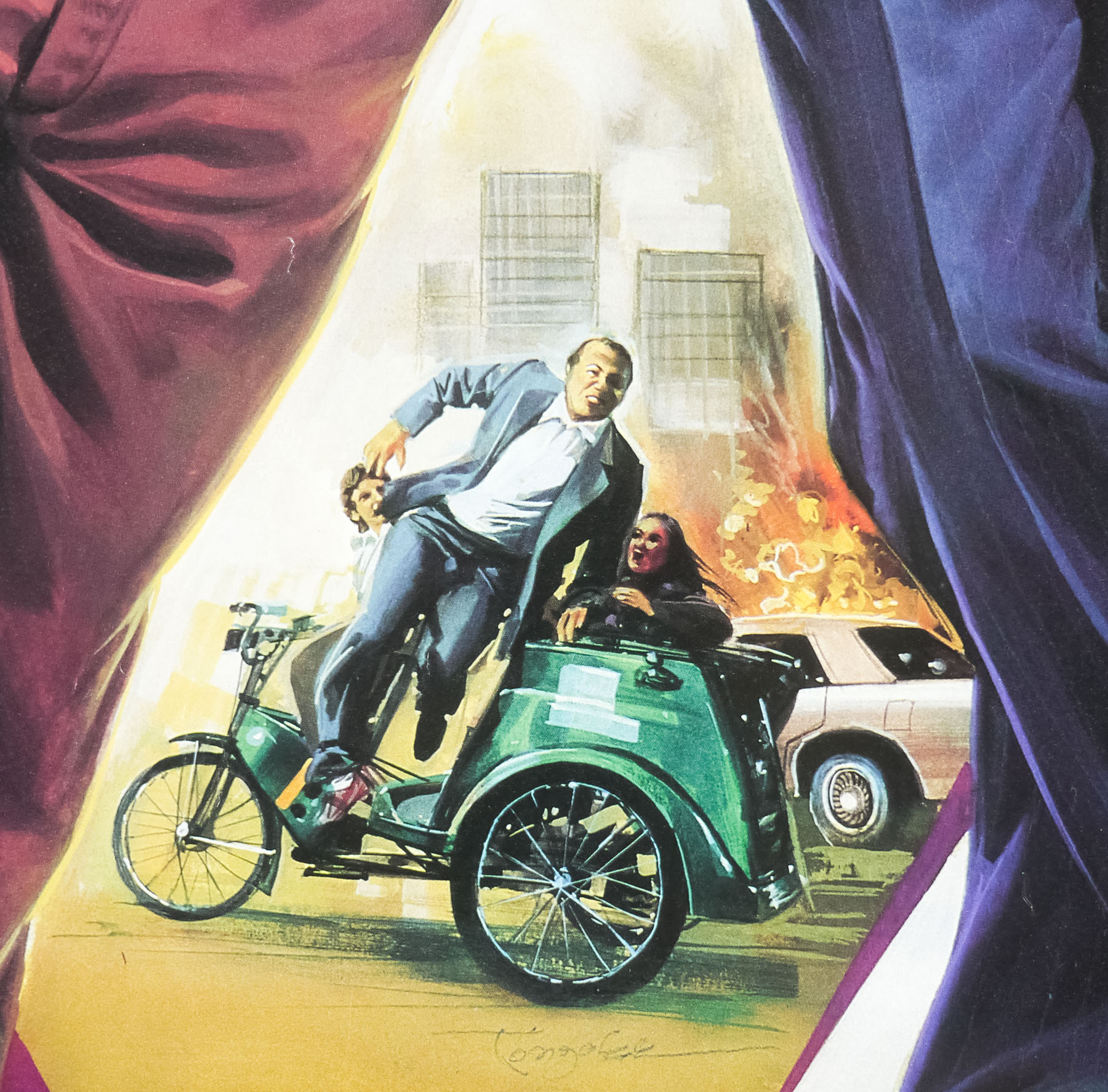
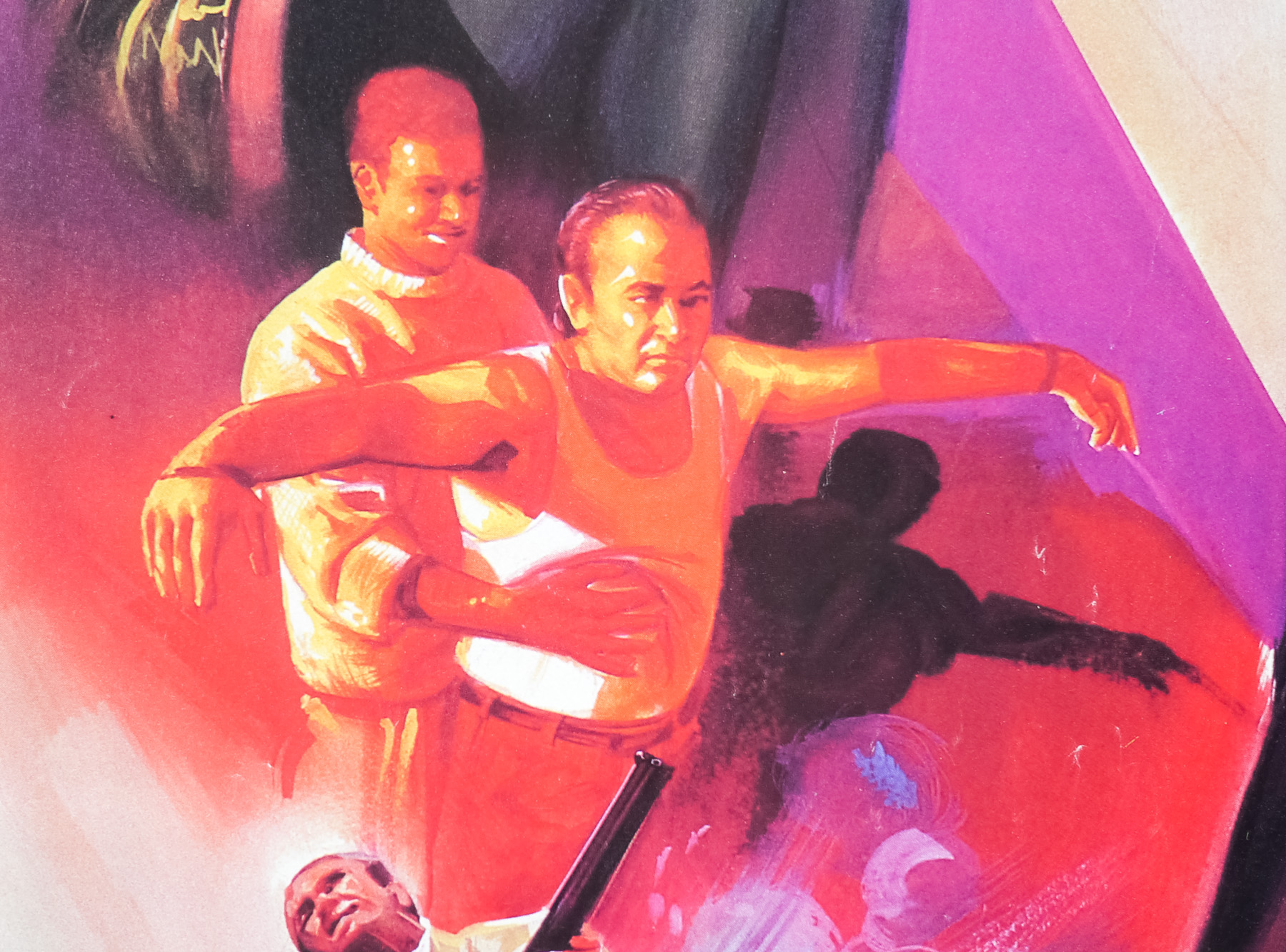
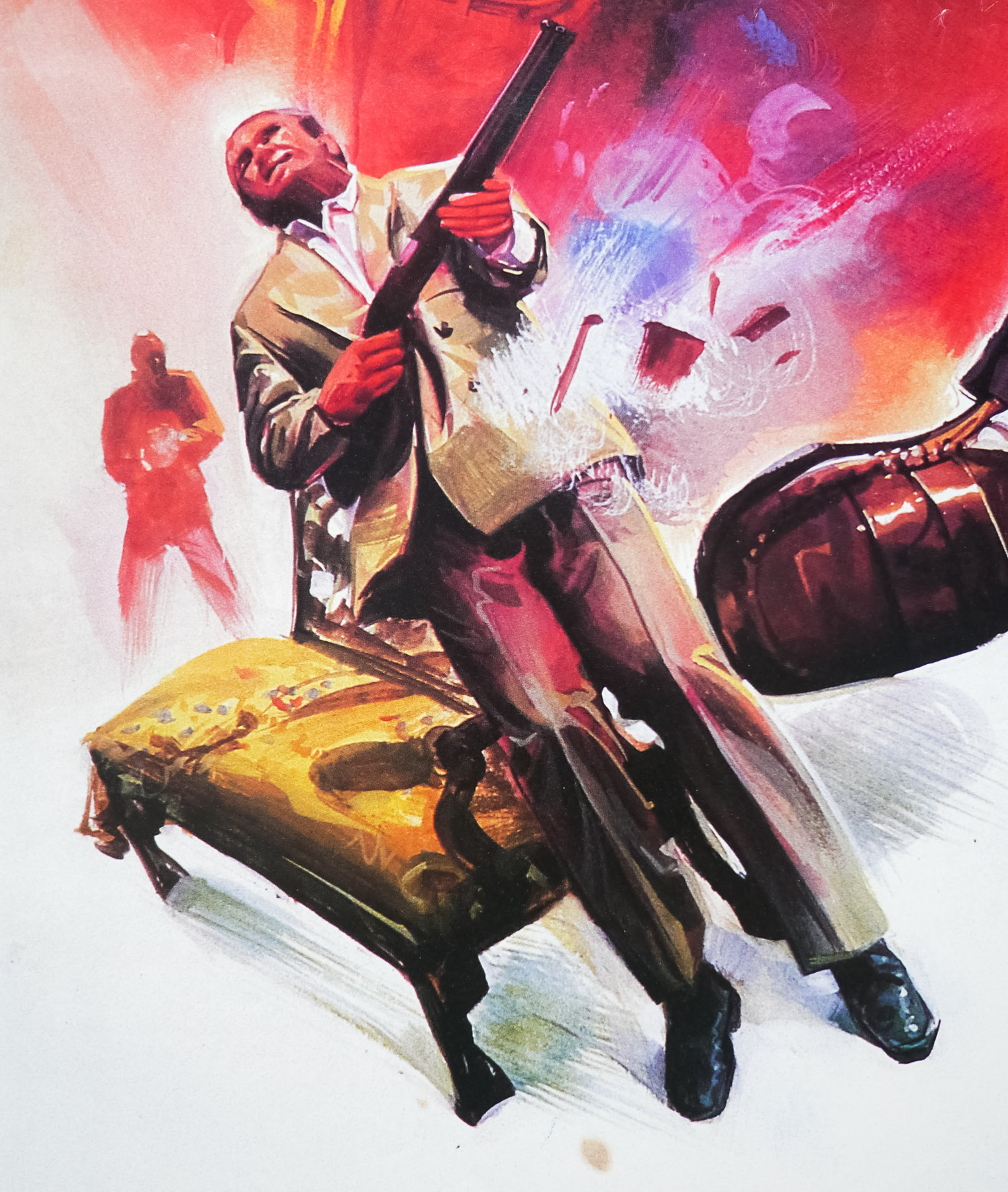
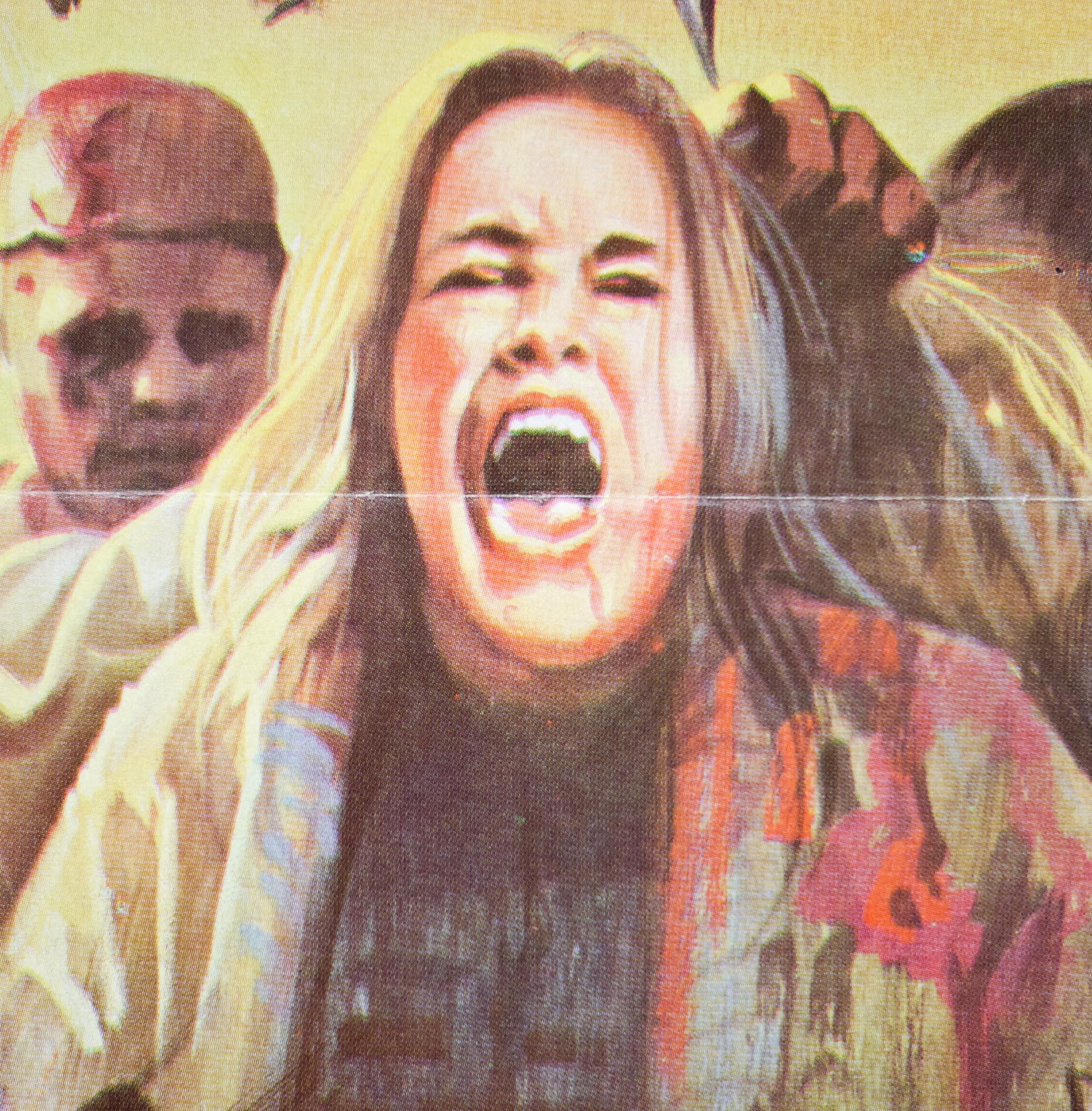
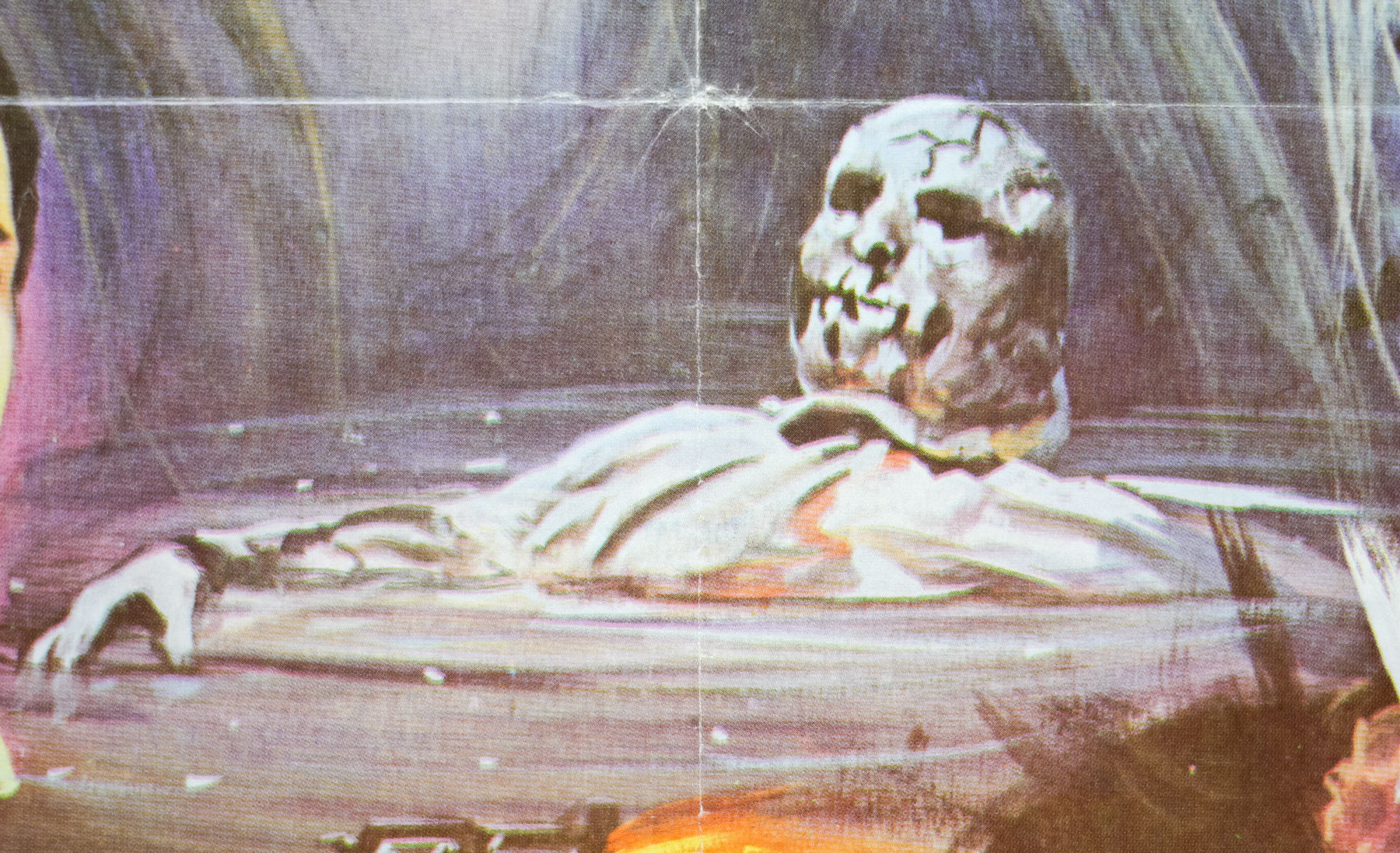
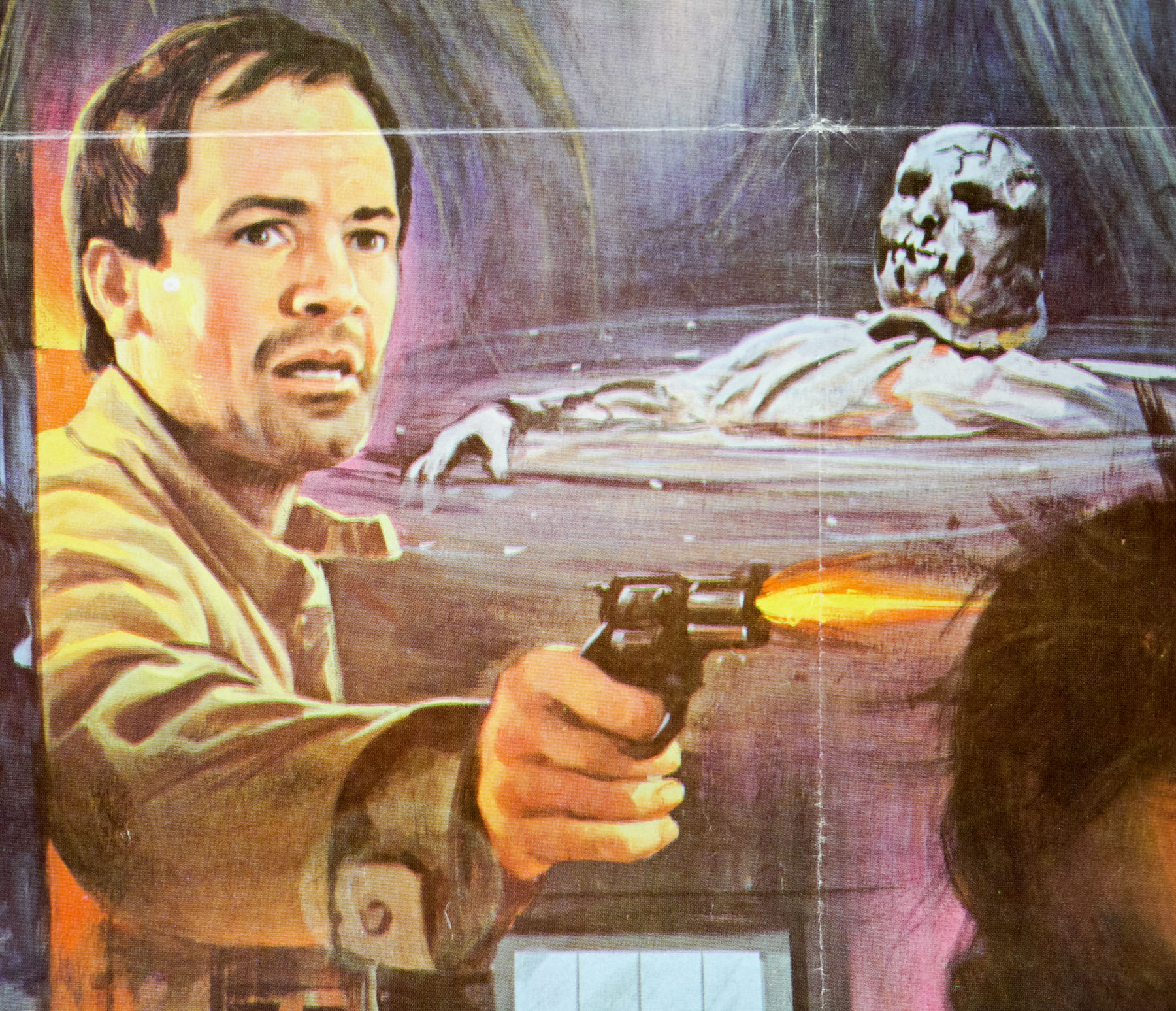
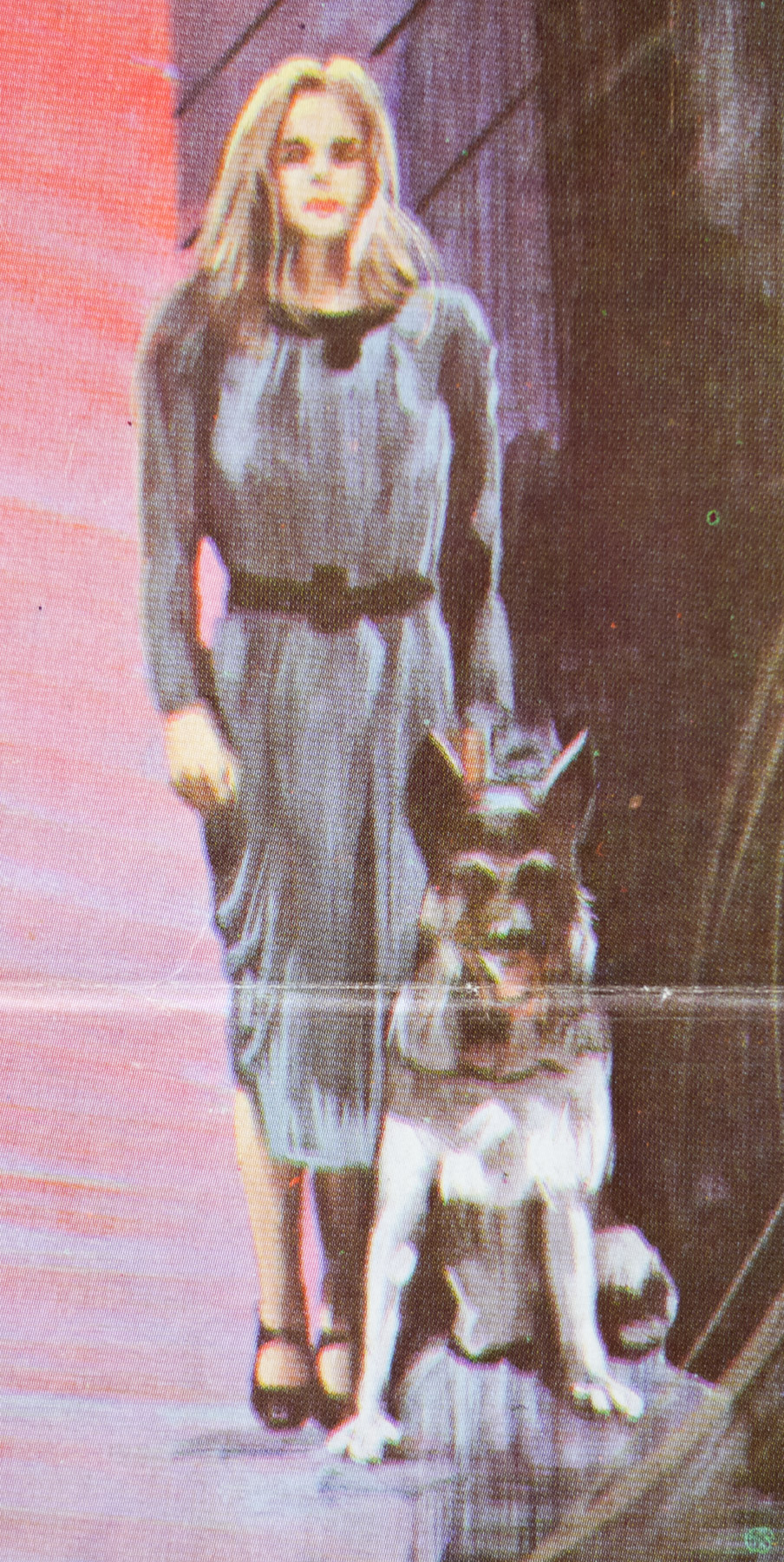
This is the original poster for the Thai release of the classic British gangster film The Long Good Friday, starring the late, great Bob Hoskins. The story focuses on Harold Shand (Hoskins), an underworld kingpin whose grand plans to develop the London Docklands, with the backing of the American Mafia, start to go awry when a series of bombs kill his associates and undermine his credibility. Harold needs to discover who is behind the killings and exact revenge before the deal is lost.

The film is notable for its use of real London locations and it’s a thrill to watch the film now and see how much of the capital has changed. It was only made 33 years ago but the city is barely recognisable compared to today.

The film had a fairly tumultuous time getting into cinemas and was saved from being cut to shreds and offloaded as a TV special after its original production company (ITC) weren’t happy with the results. Helen Mirren was friends with Eric Idle who saw the film and recommended it to George Harrison who had just started up Handmade Films. Harrison saw commercial potential and was able to purchase the rights for less than the original production cost. The film went on to be a solid success for Handmade.

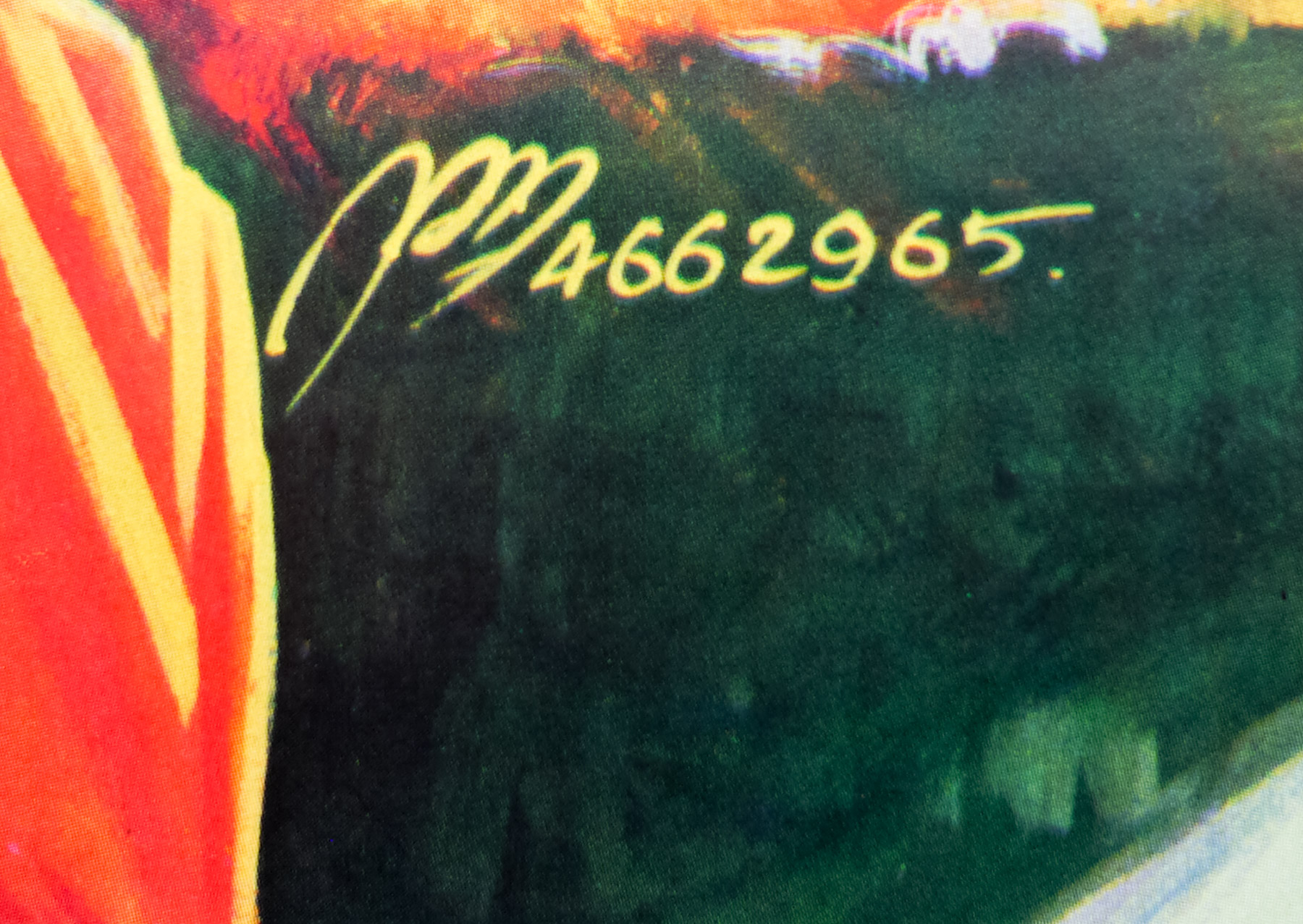
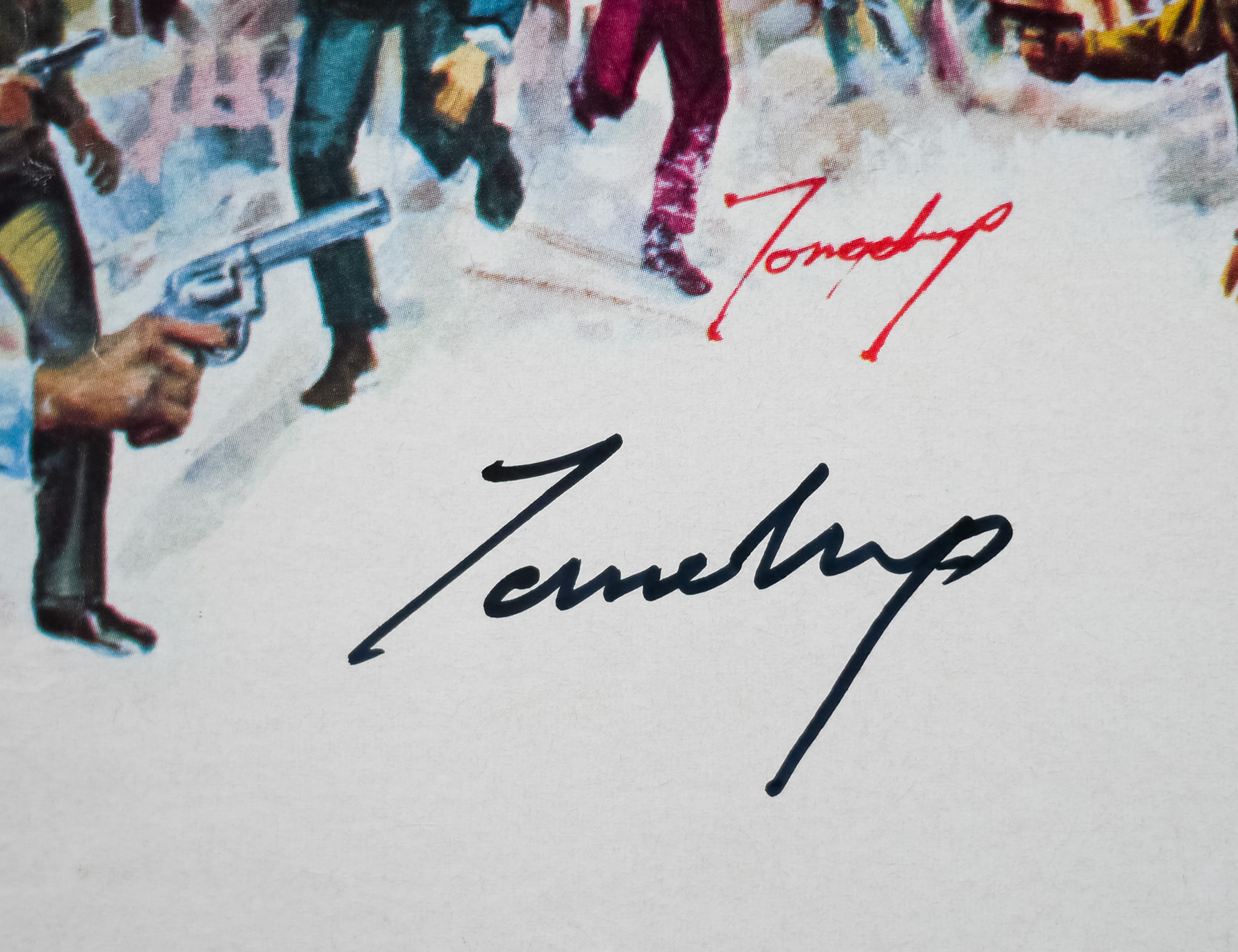
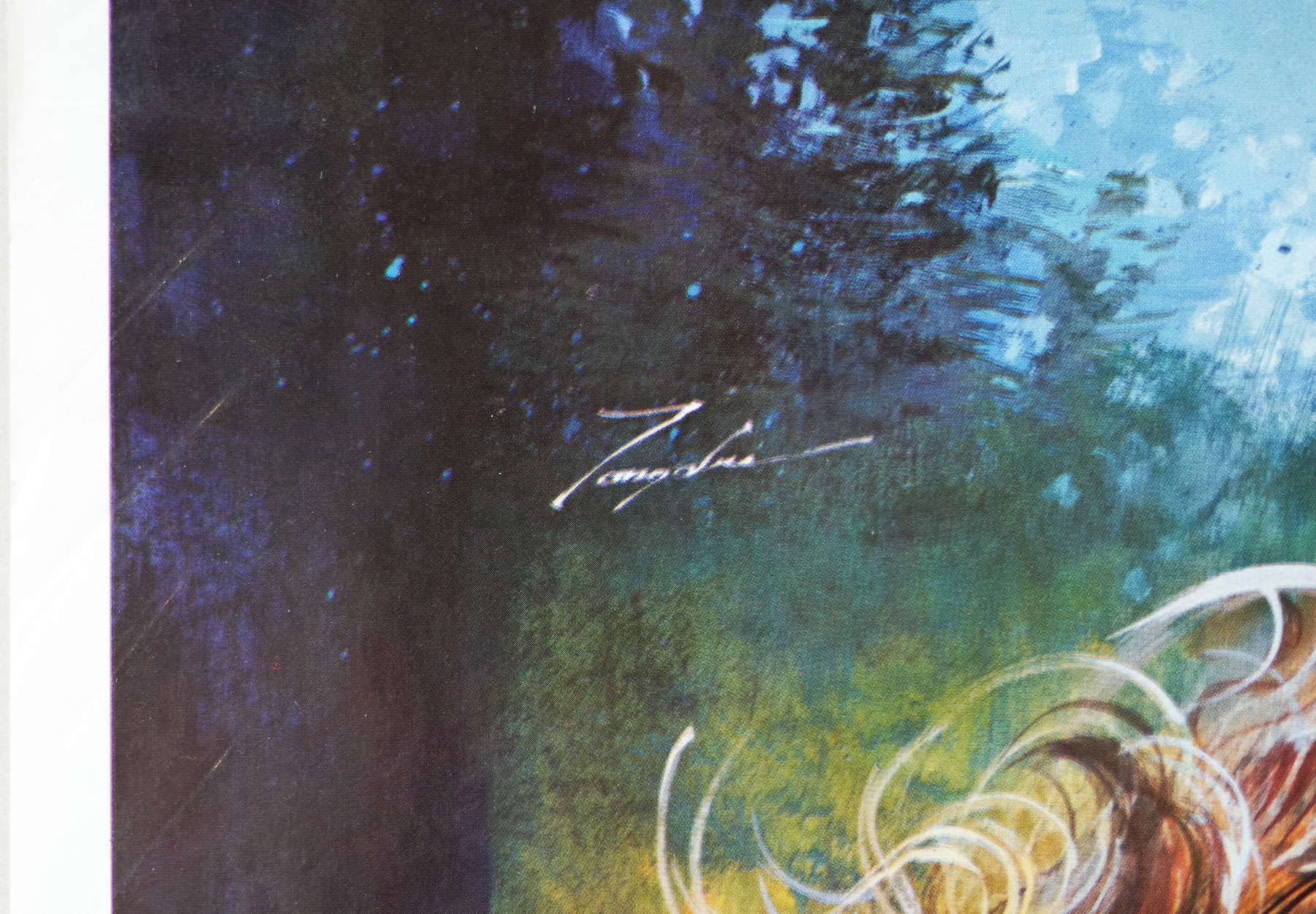
There is a signature on this artwork, which is unique to the Thai poster, that apparently belongs to the artist Kwow. I’ve been able to discover very little about him so please get in touch if you have any details about him.

The original trailer can be viewed on YouTube.

An American Werewolf in London / Thailand

11.01.16

Poster Poster
Title
An American Werewolf in London
AKA
--
Year of Film
1981
Director
John Landis
Starring
David Naughton, Jenny Agutter, Griffin Dunne, John Woodvine, Brian Glover, David Schofield
Origin of Film
USA | UK
Genre(s) of Film
David Naughton, Jenny Agutter, Griffin Dunne, John Woodvine, Brian Glover, David Schofield,
Type of Poster
Thai
Style of Poster
--
Origin of Poster
Thailand
Year of Poster
1981
Designer
Unknown
Artist
Kwow
SS or DS
SS
NSS #
--
Tagline
From the director of Animal House - a different kind of animal | A masterpiece of terror

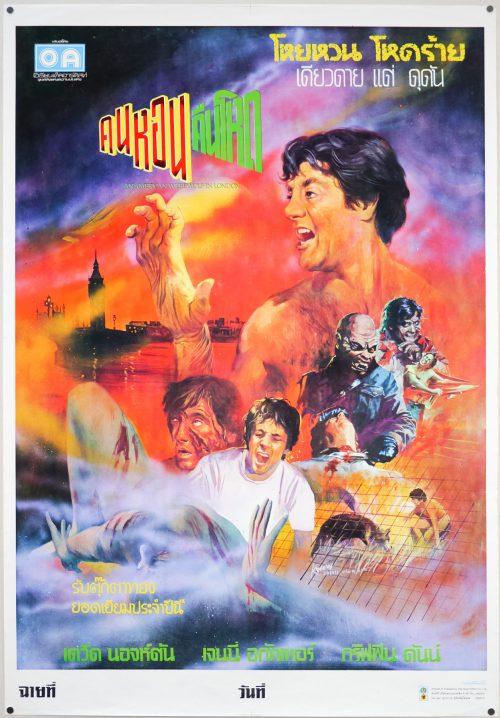
Director John Landis’ horror classic An American Werewolf in London was, unusually for the time, released simultaneously in North American and British cinemas. The film was shot in the UK with a largely local cast and crew thanks to the Eady Levy, which provided funding for British productions based on taxed box-office receipts. The levy attracted a number of foreign producers and directors including Stanley KubrickSidney Lumet and John Huston. The levy lasted for almost thirty years before being wound-up in 1985.

It was this incentive that saw Landis and his producing partners (including frequent collaborator George Folsey Jr.) move over here for the duration of filming, and although the two lead actors (David Naughton and Griffin Dunne) are American, the majority of the rest of the cast are British, including the gorgeous Jenny Agutter. The film makes excellent use of several London locations, with a memorable sequence on the Underground, plus the climactic scenes shot in and around Piccadilly Circus. There is an excellent article on the Guardian website that was written by Landis in 2009 in which he recalls his memories of shooting the film.

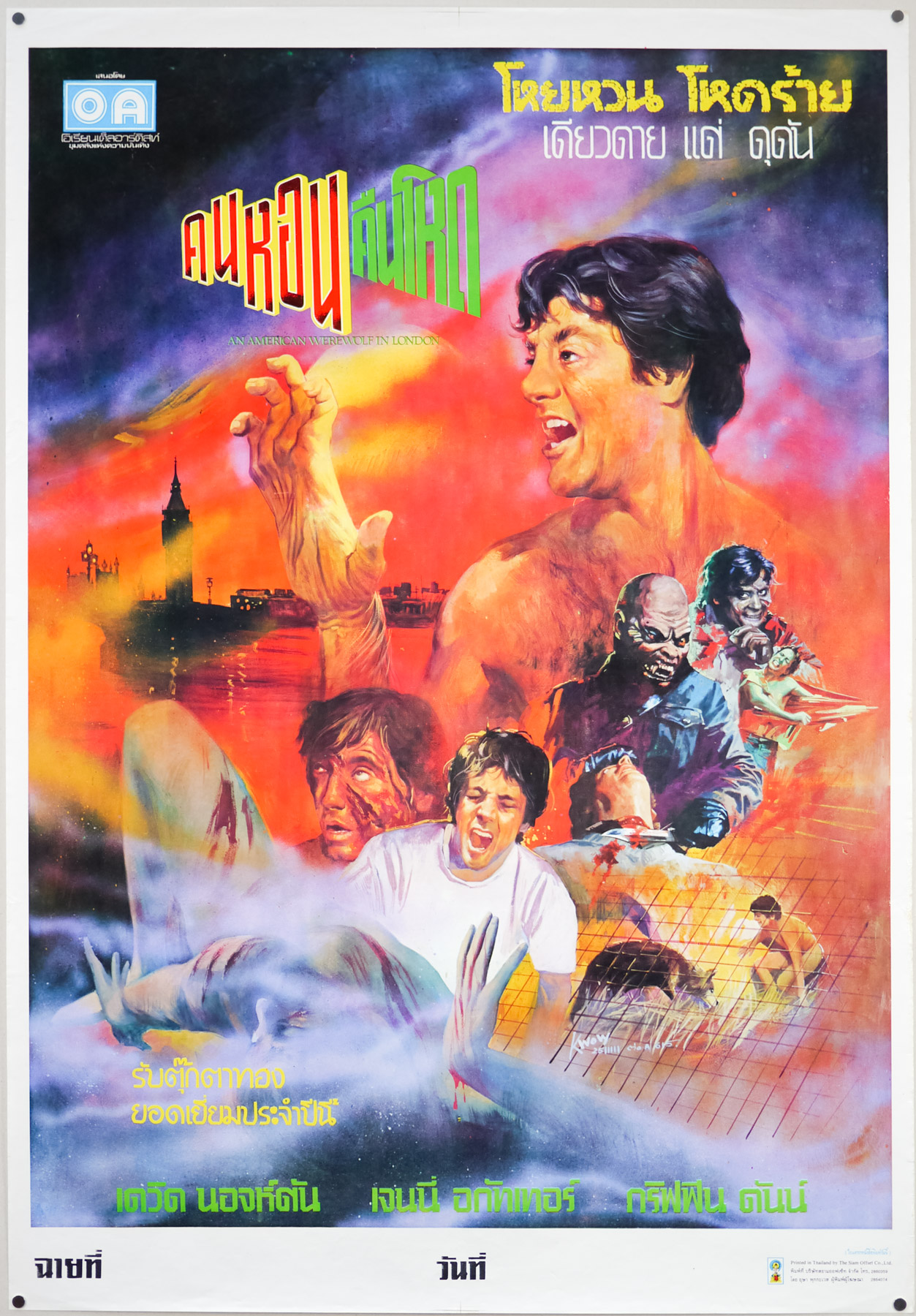
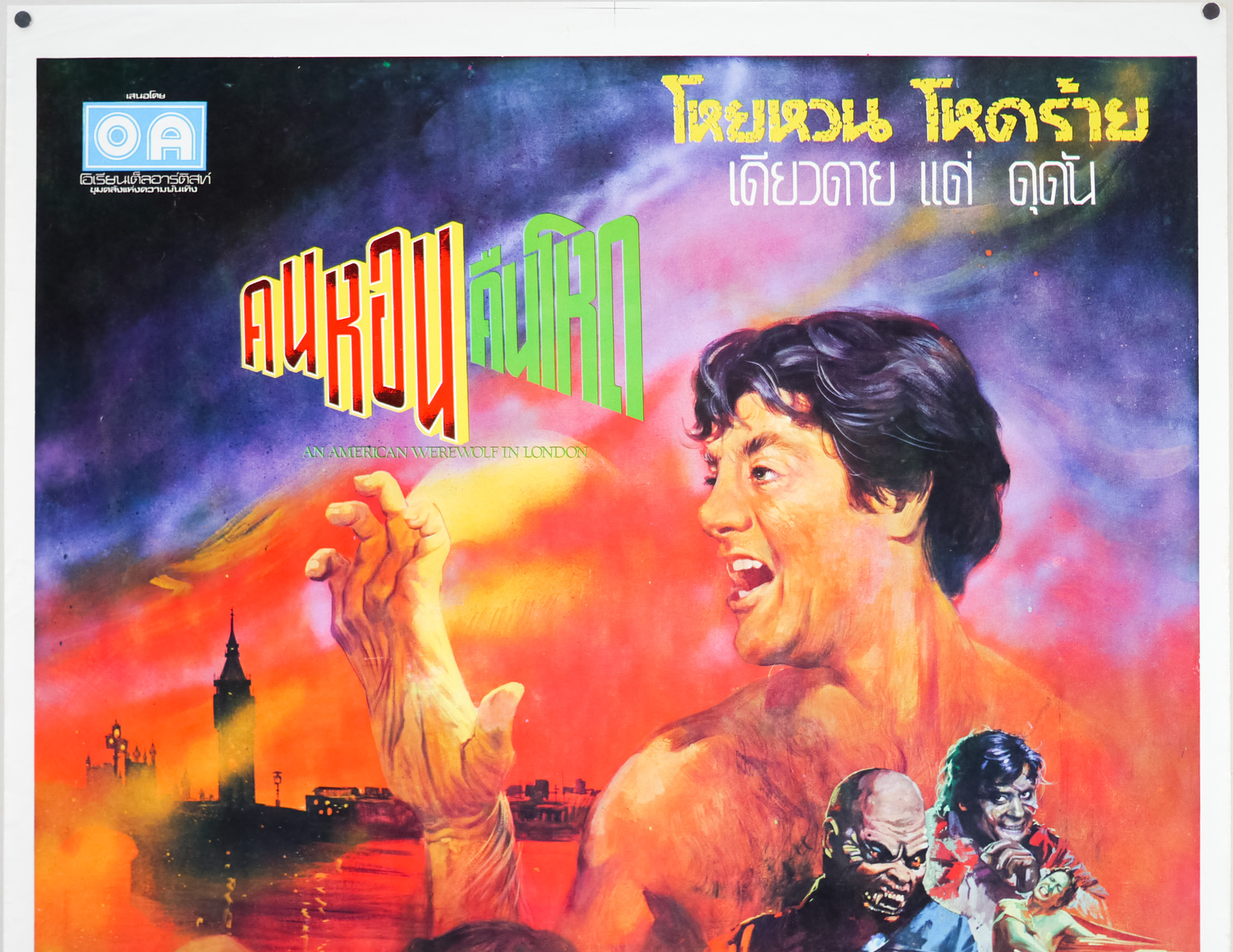
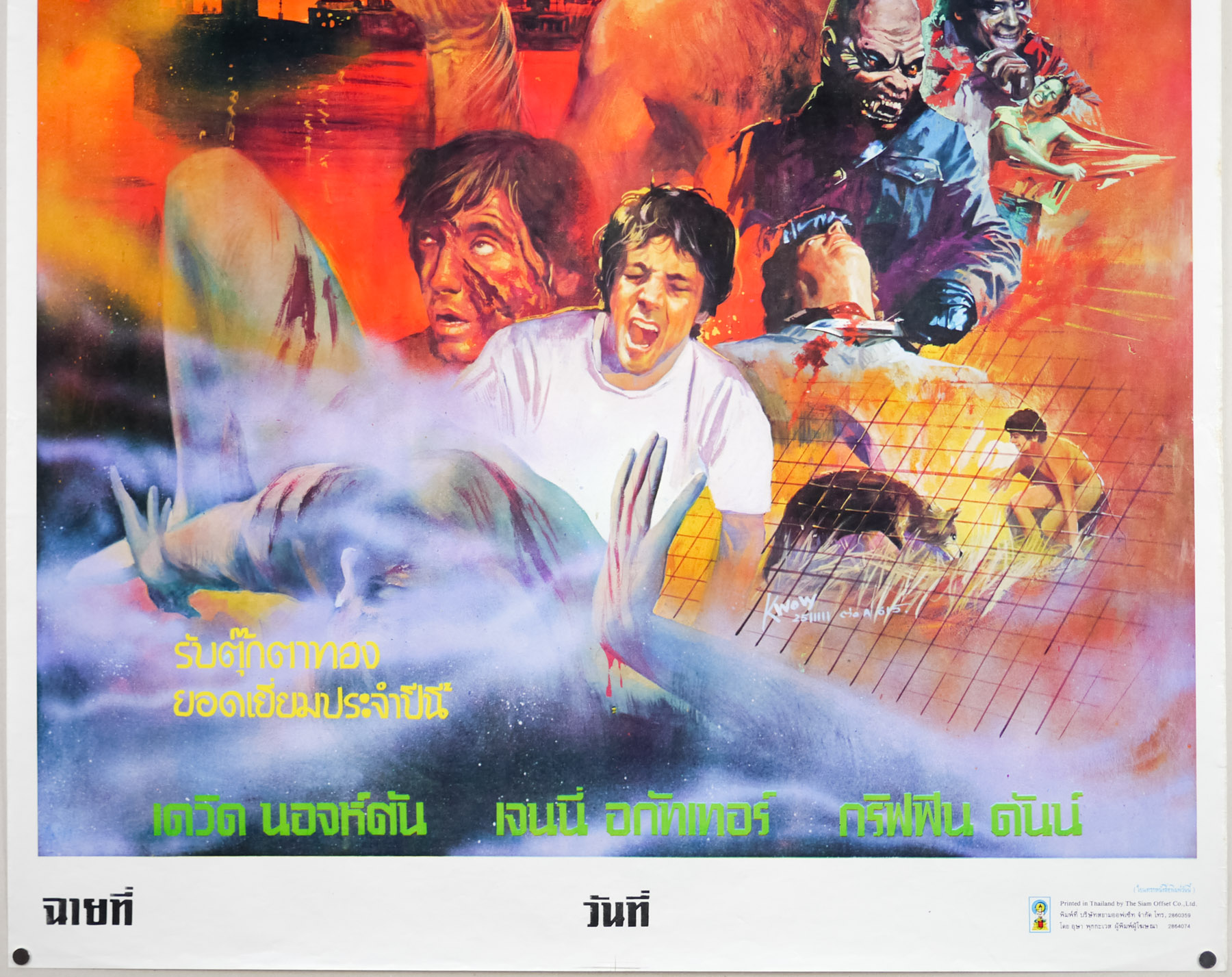
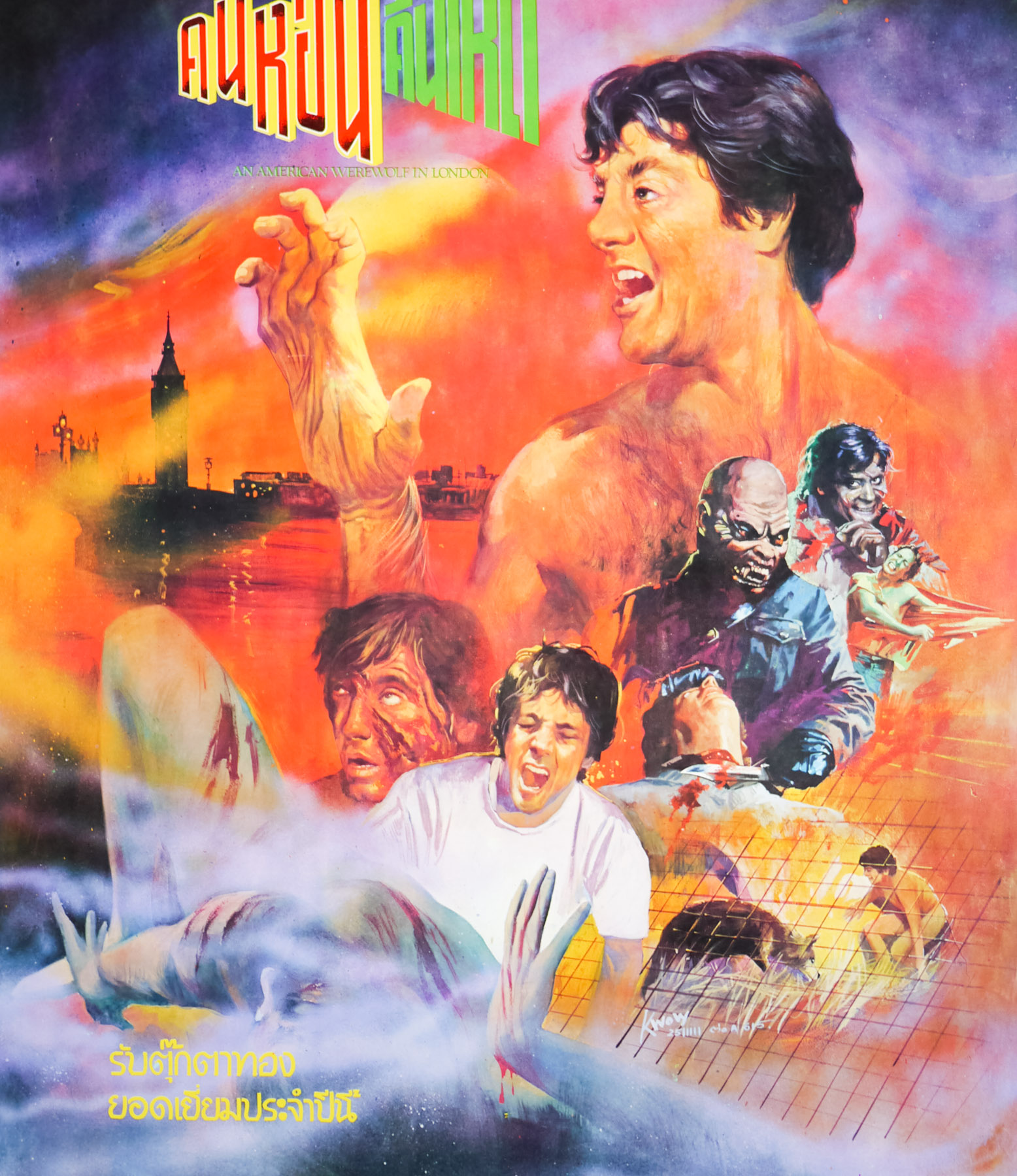
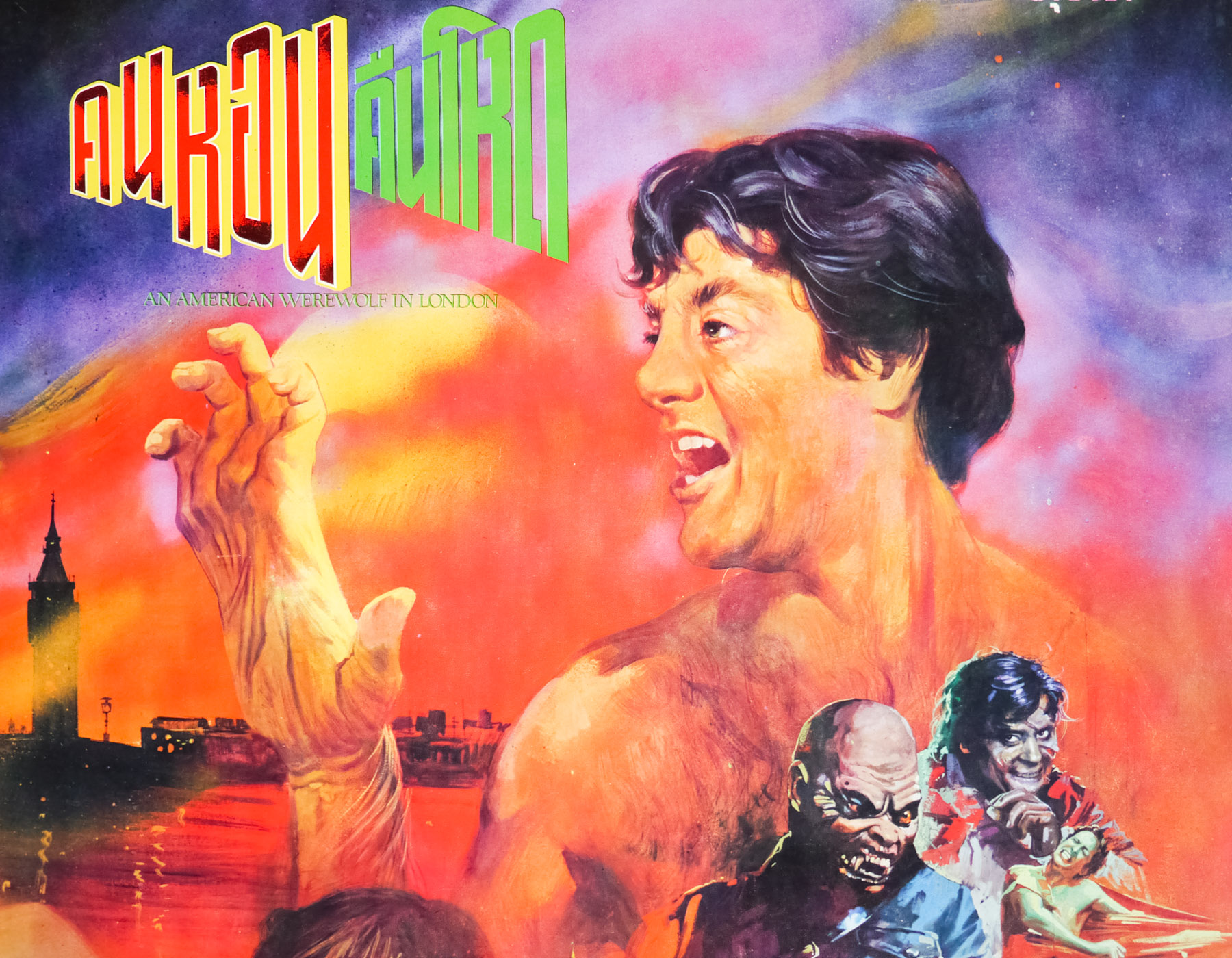
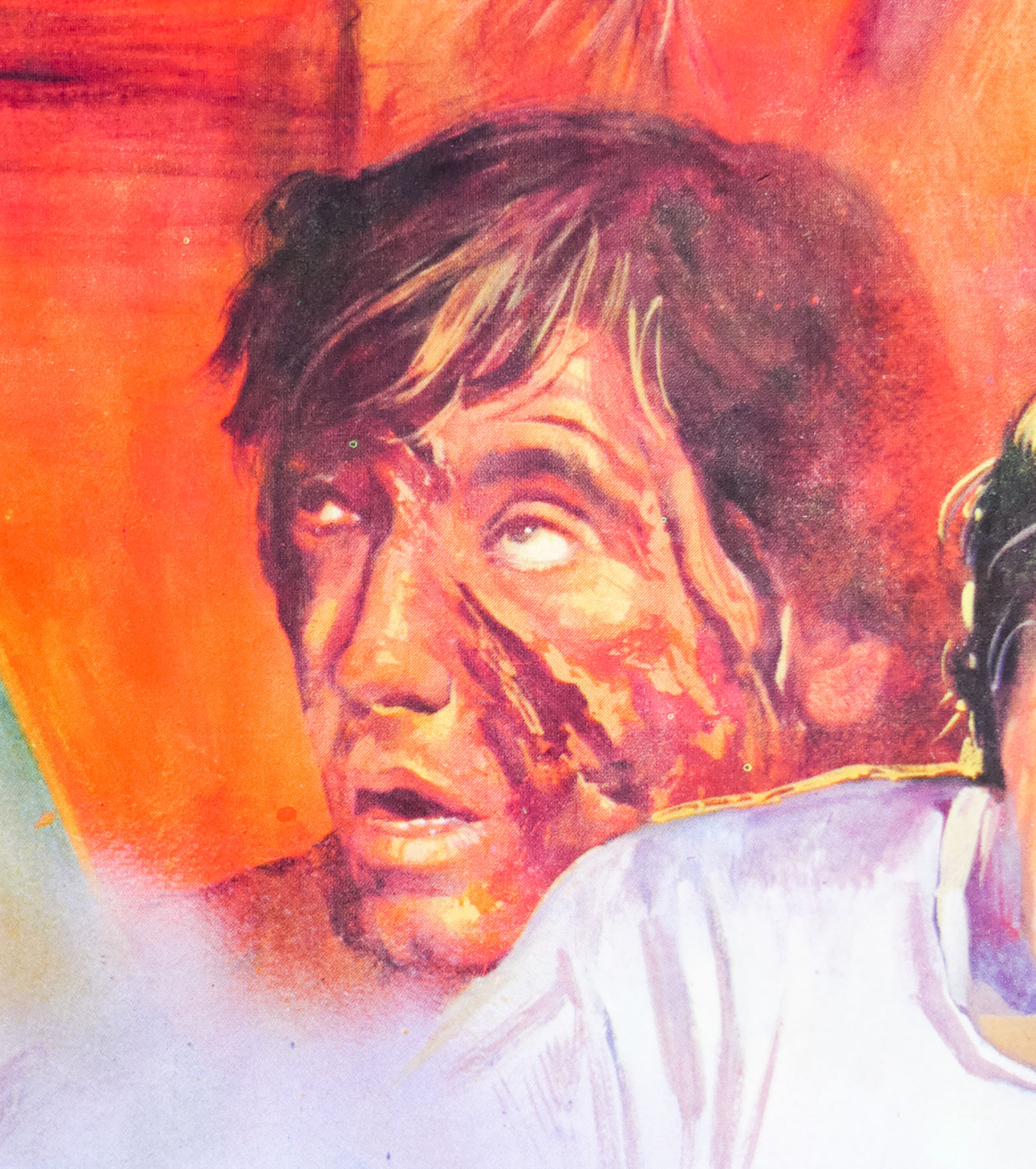
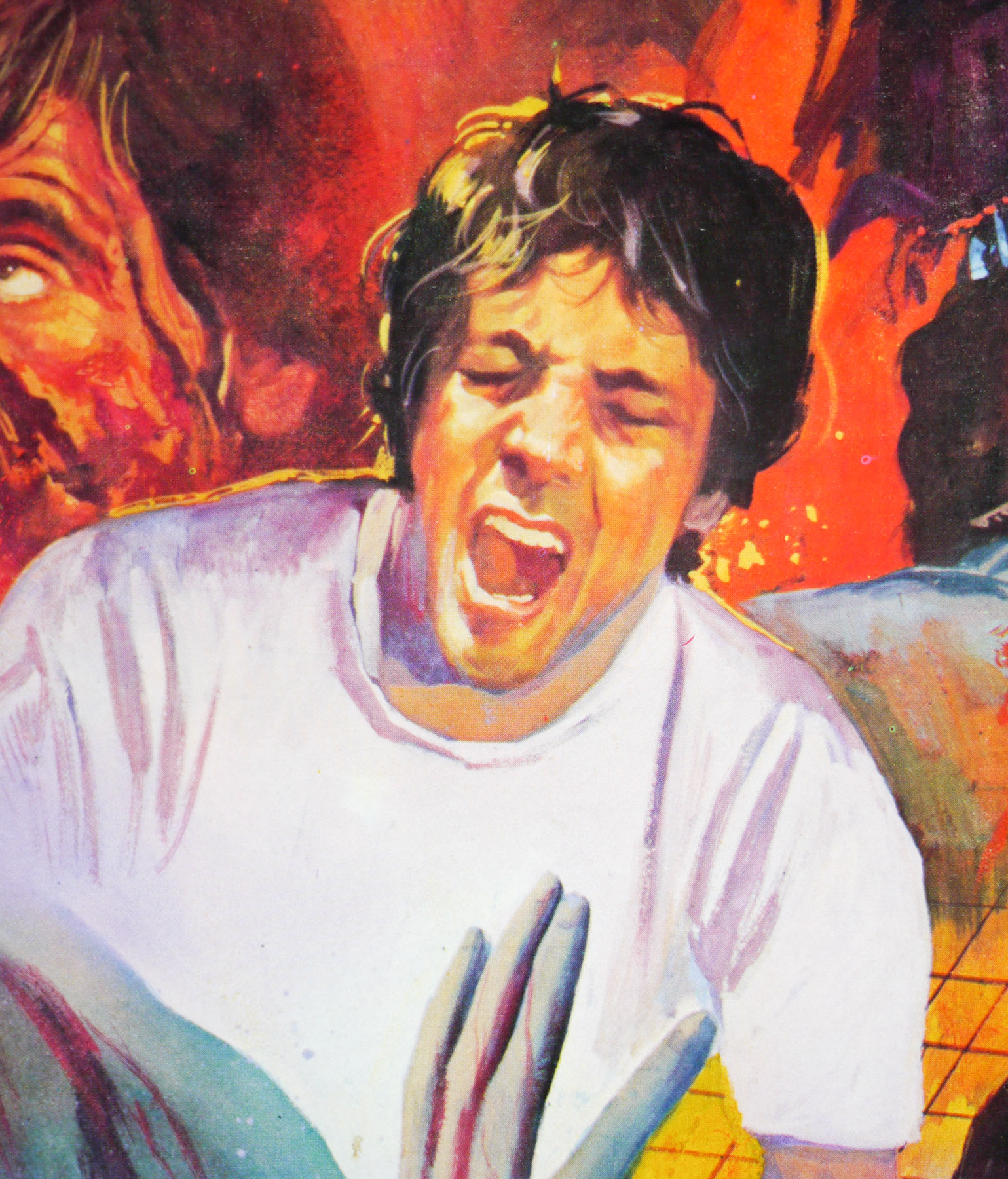
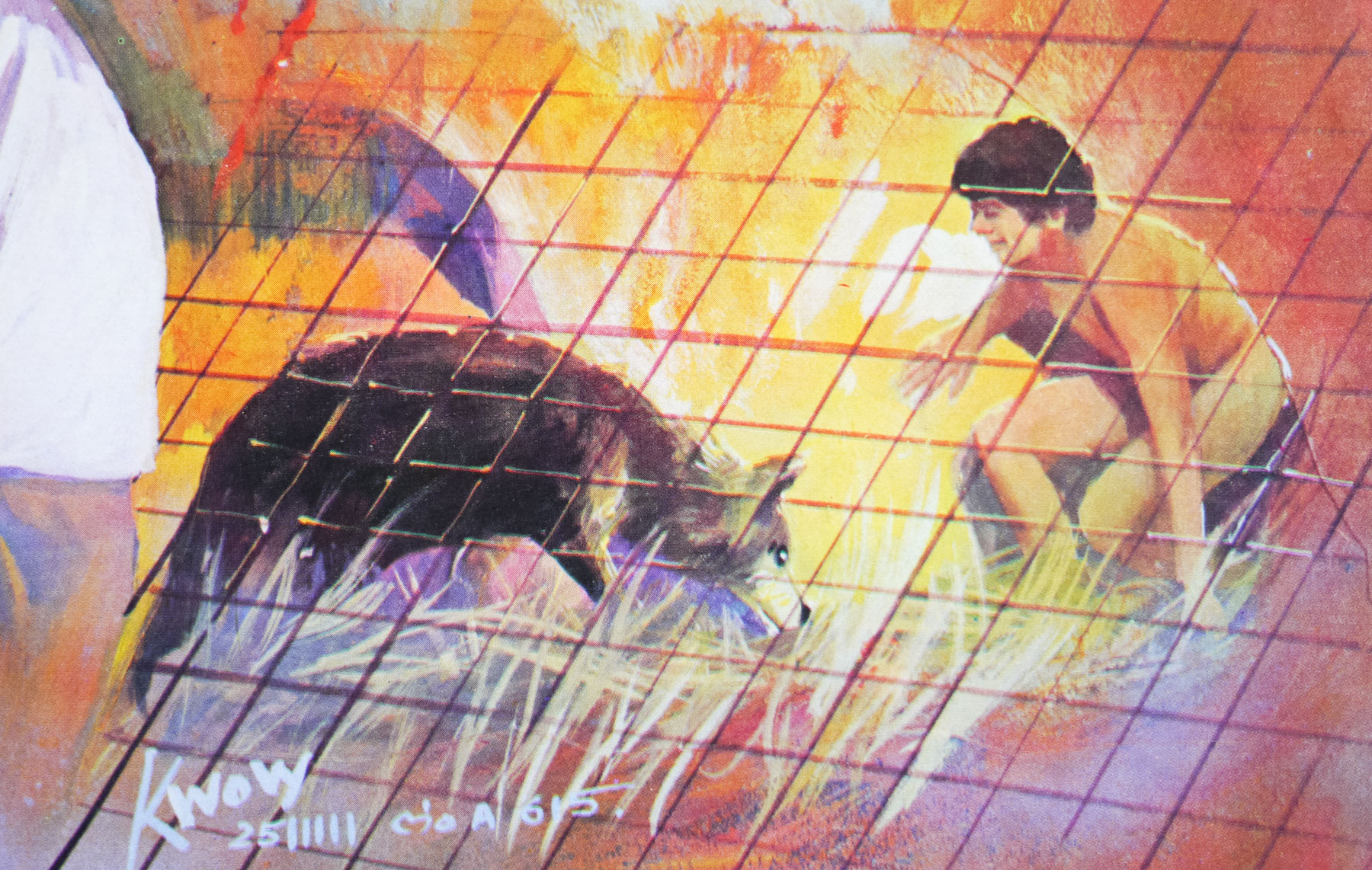
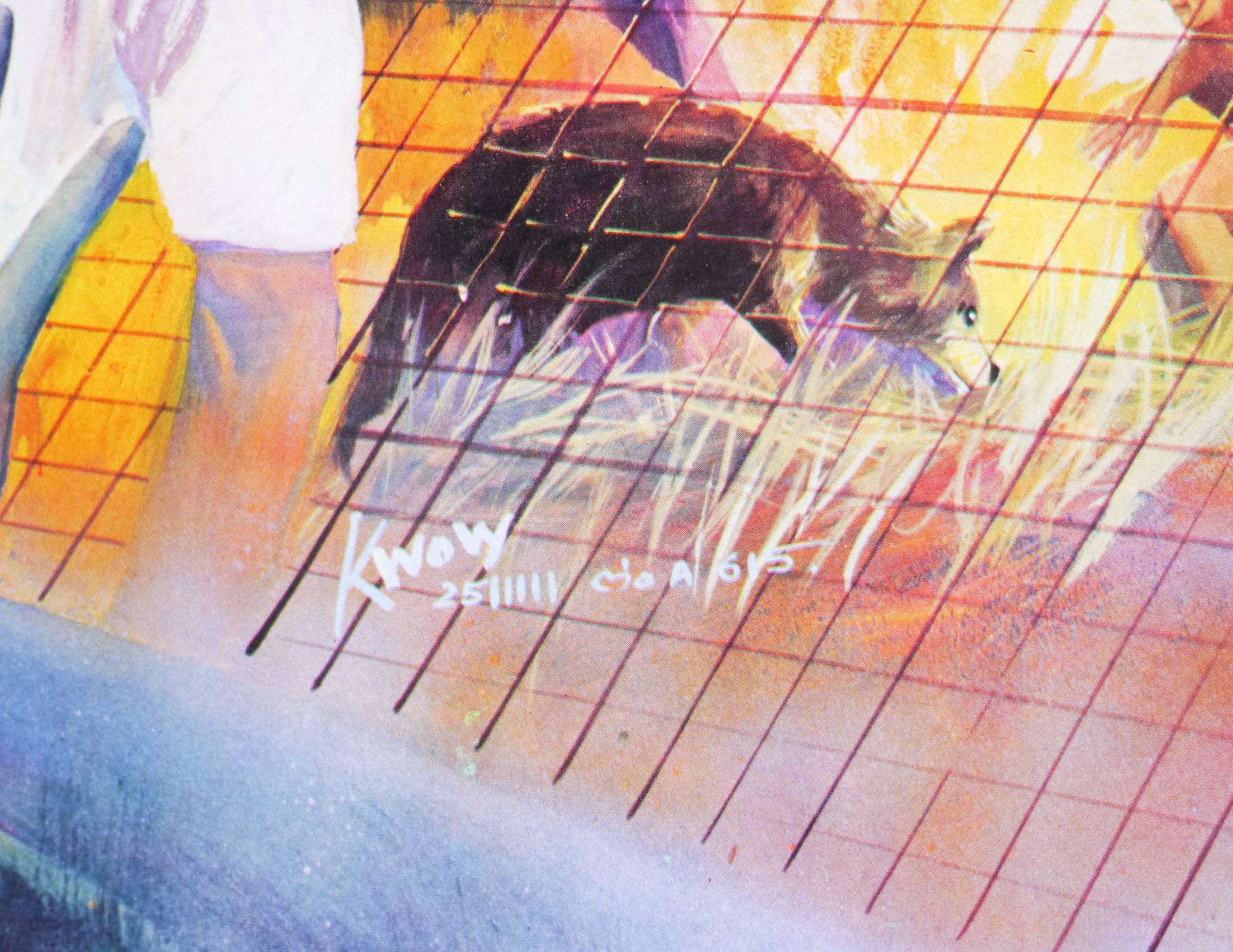
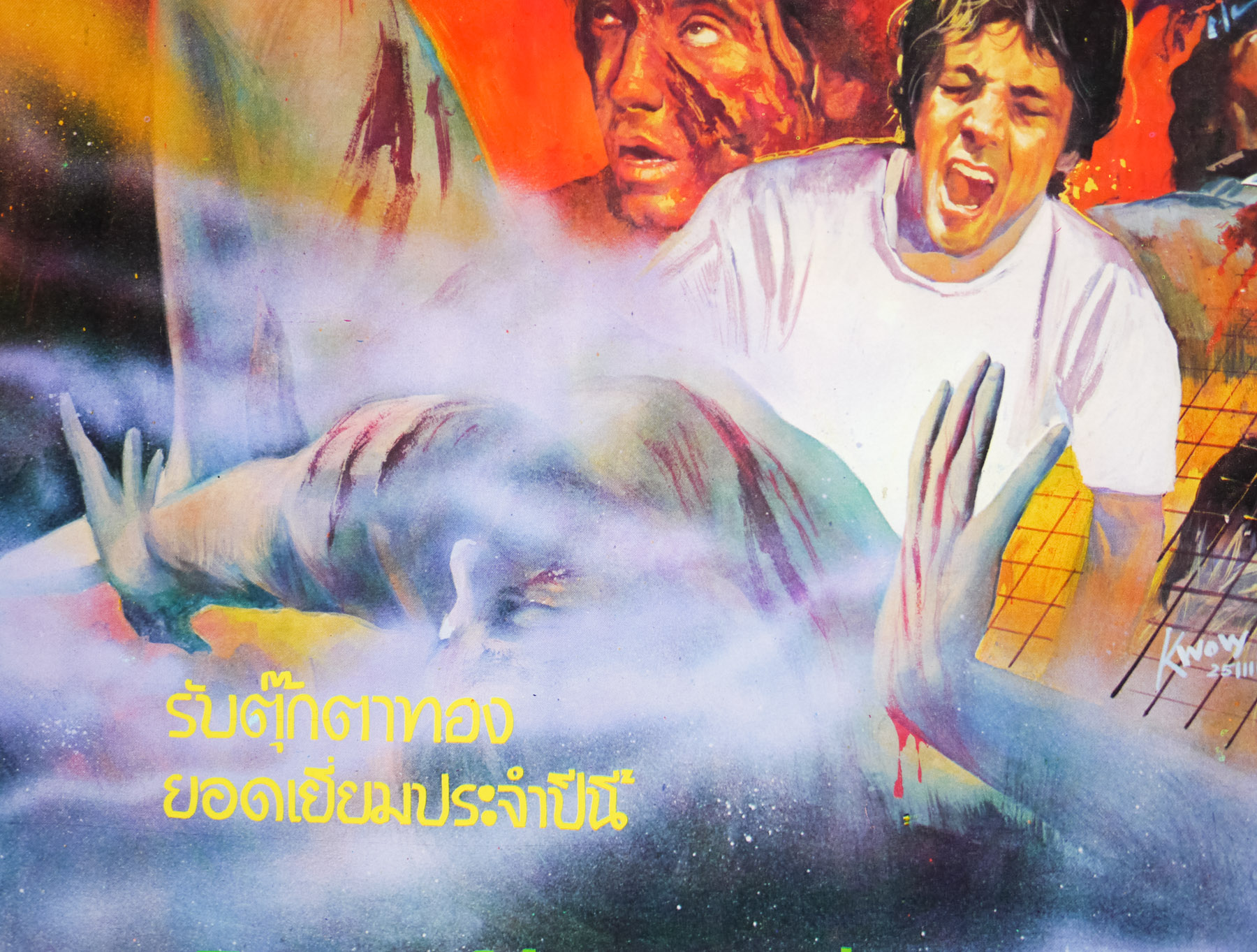
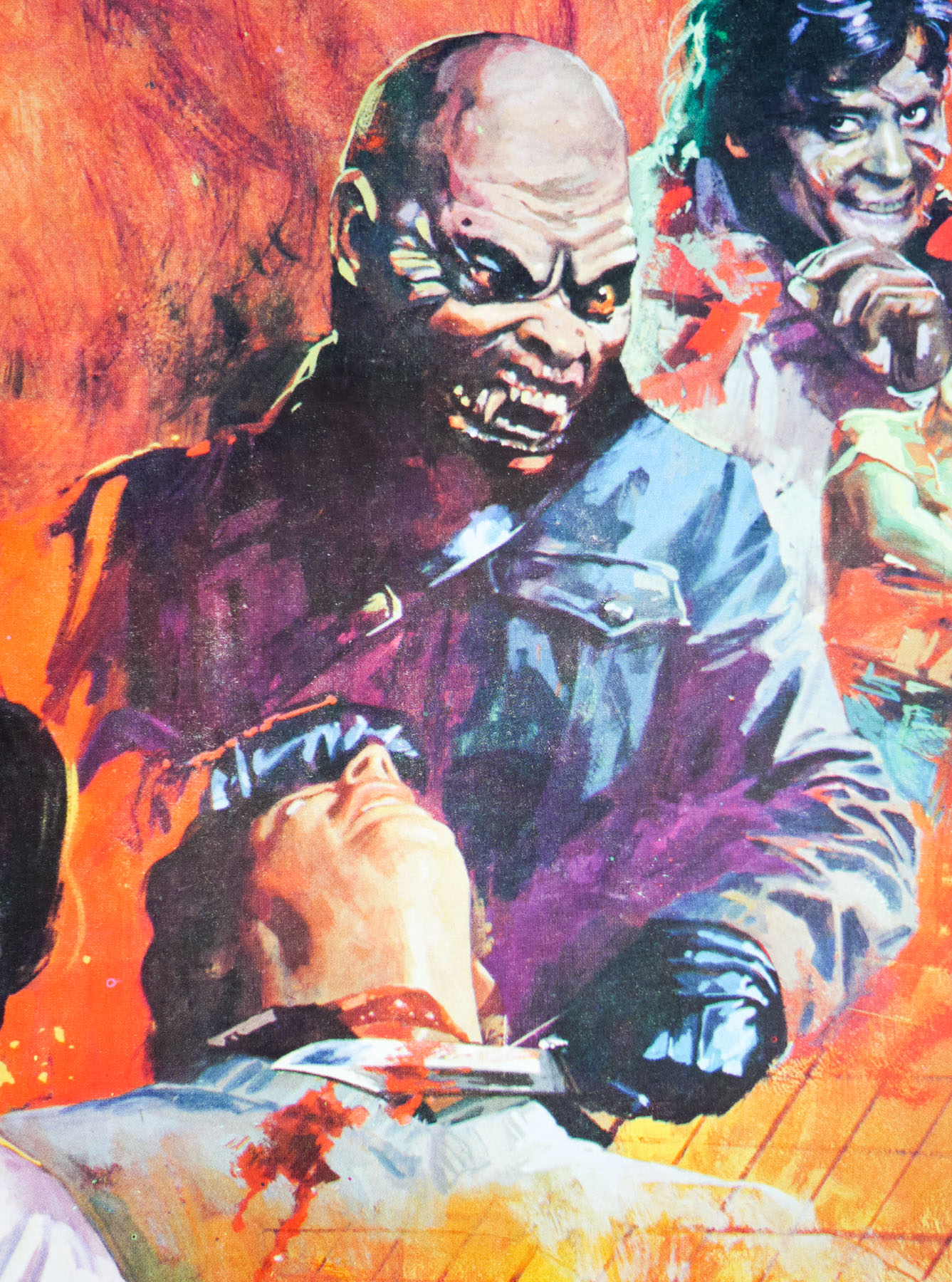
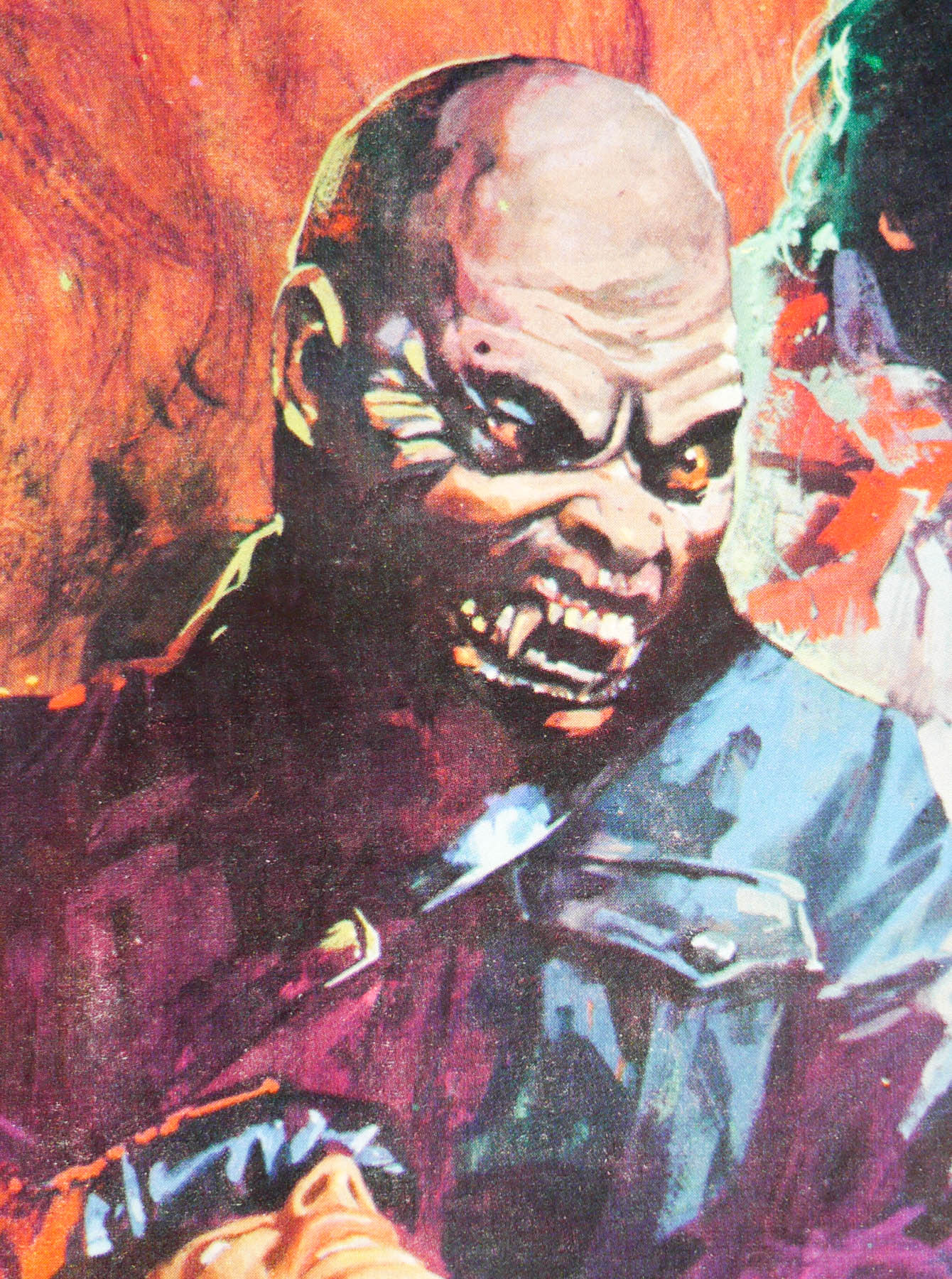
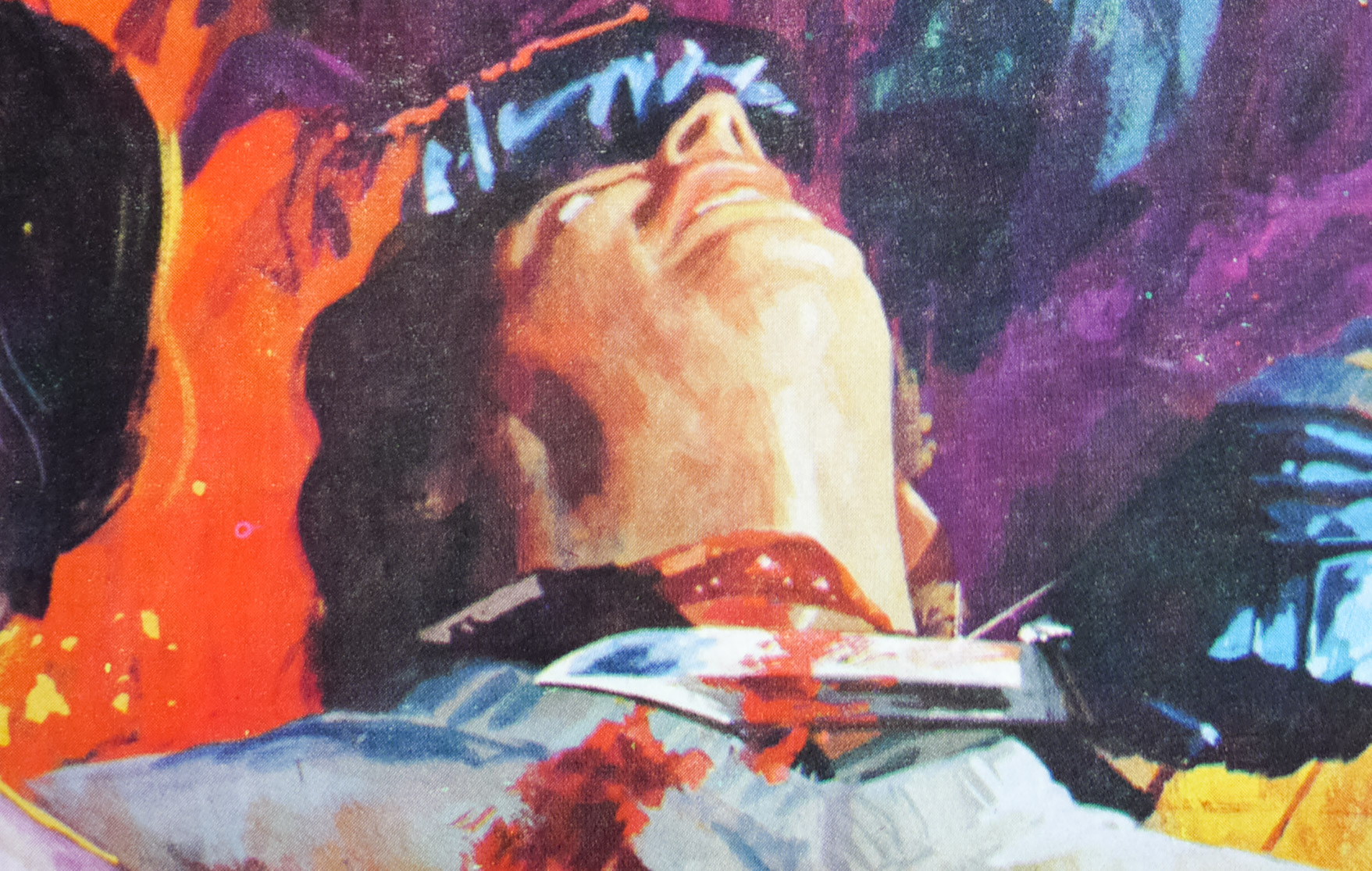
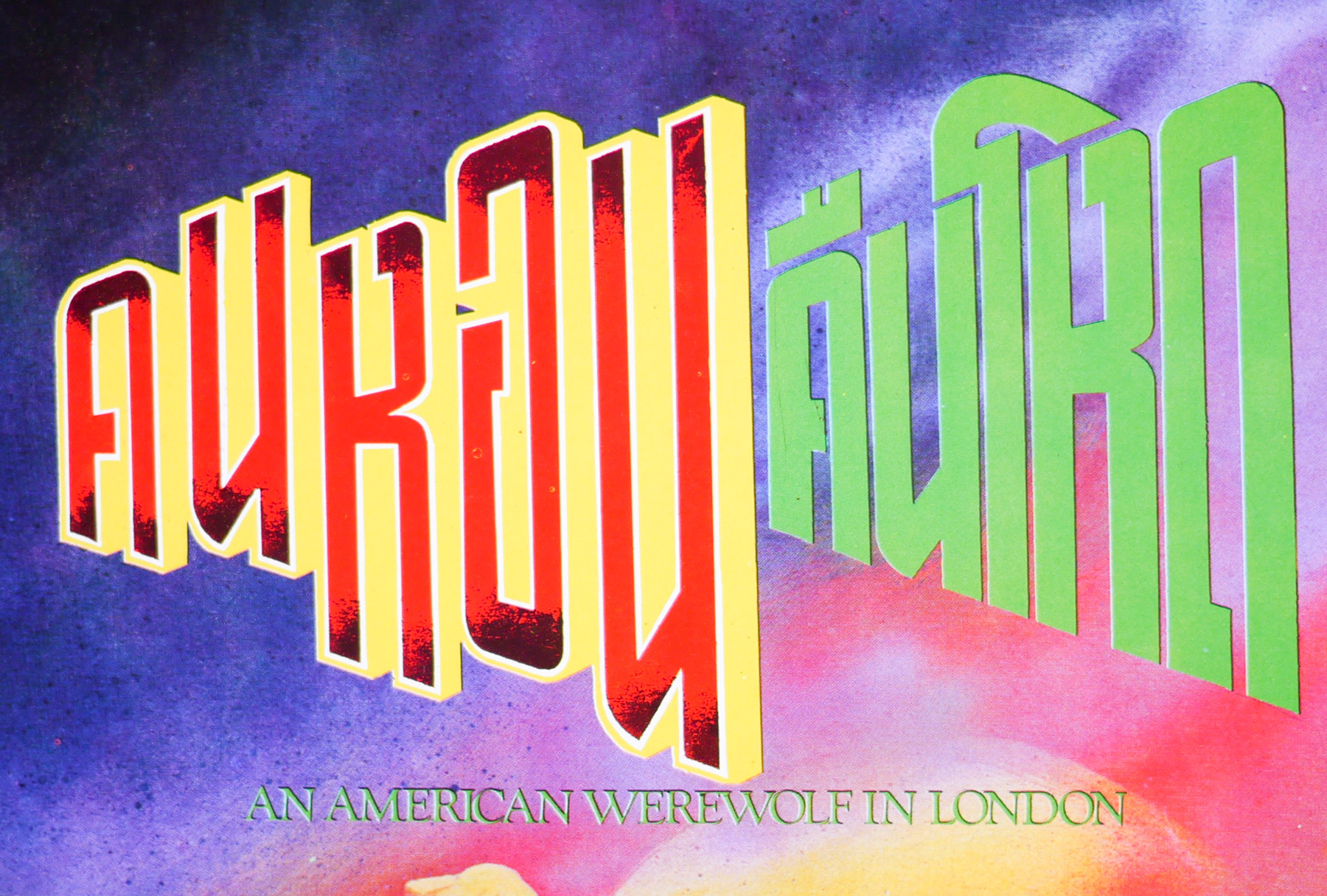
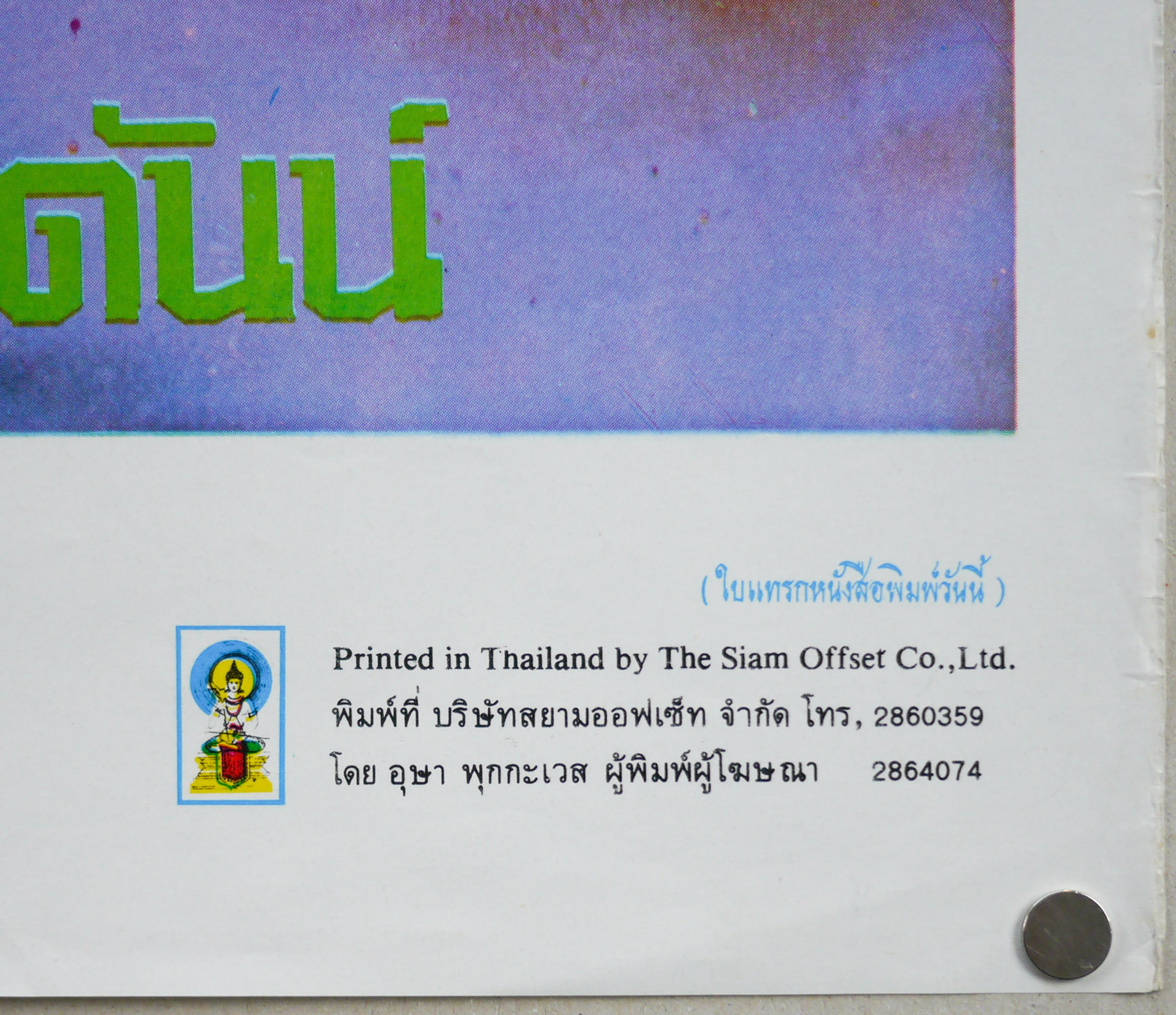
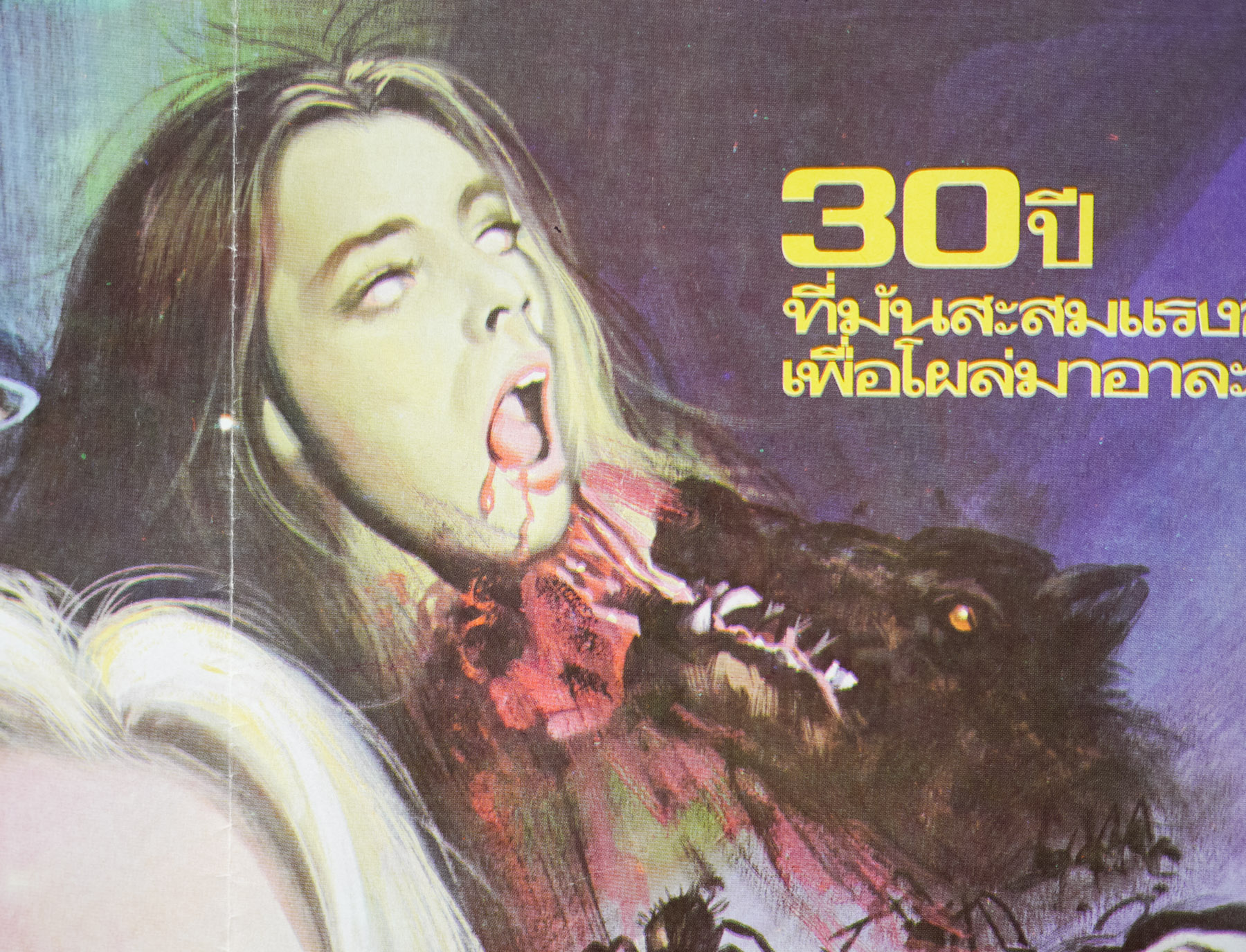
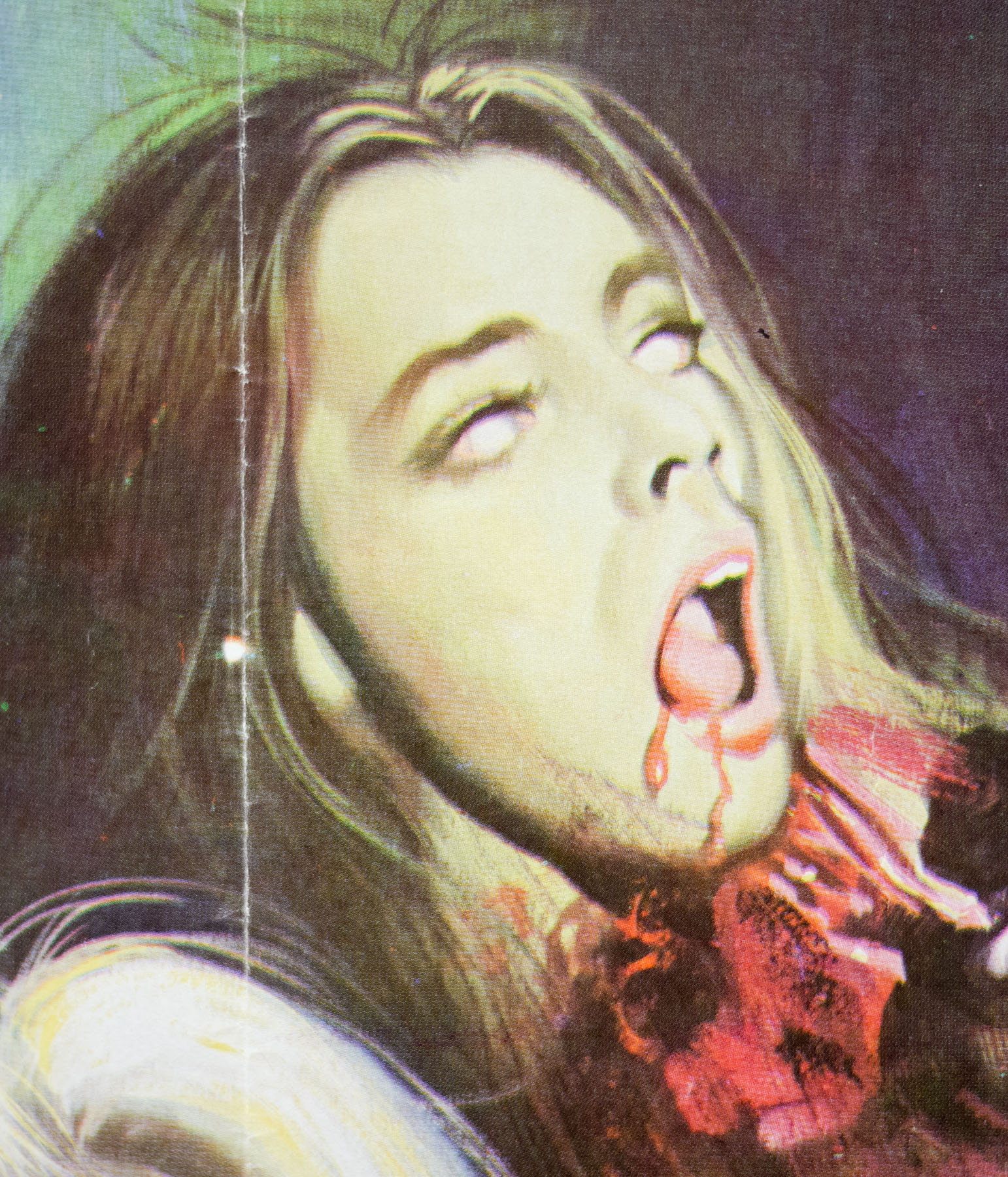
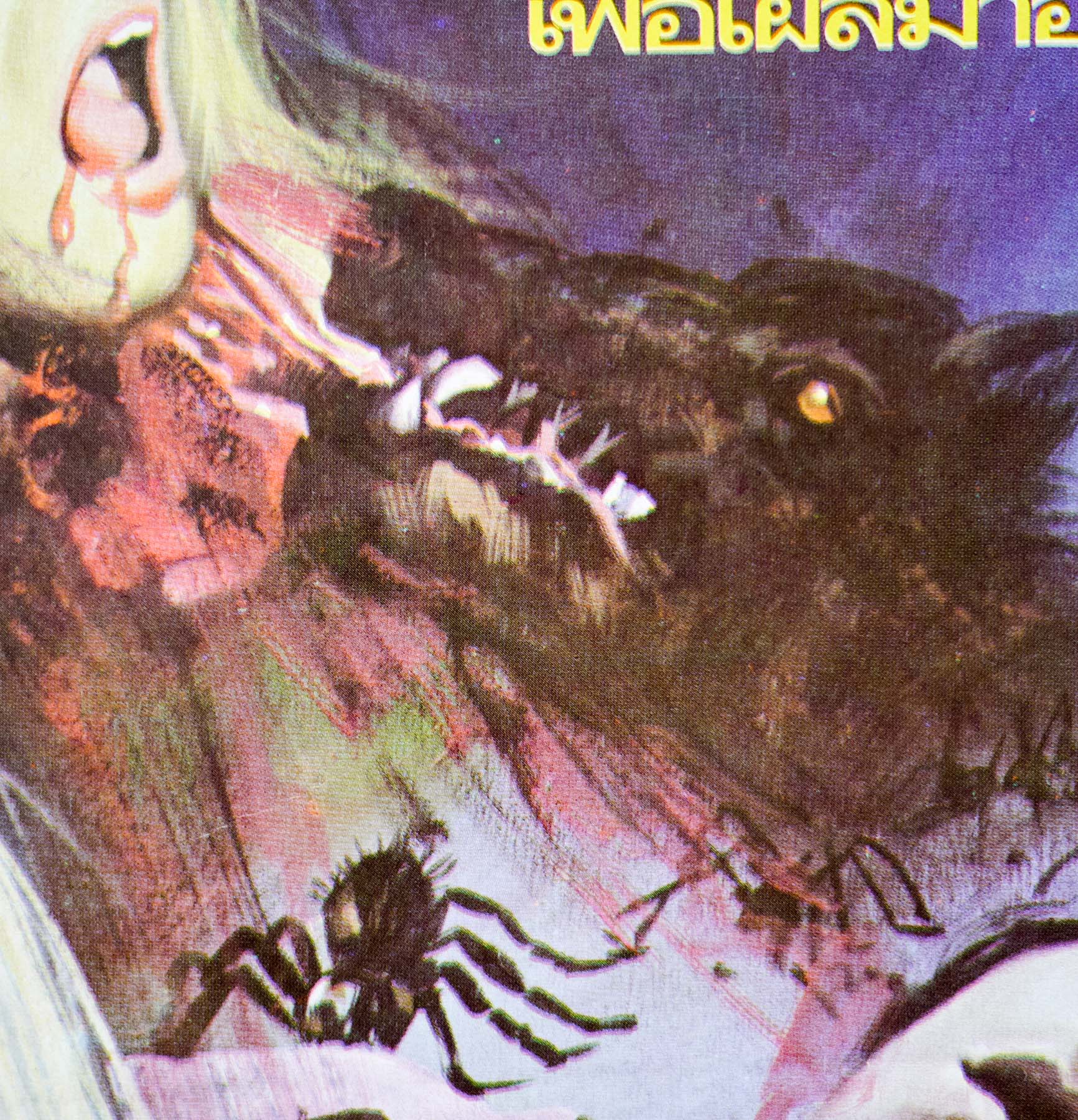
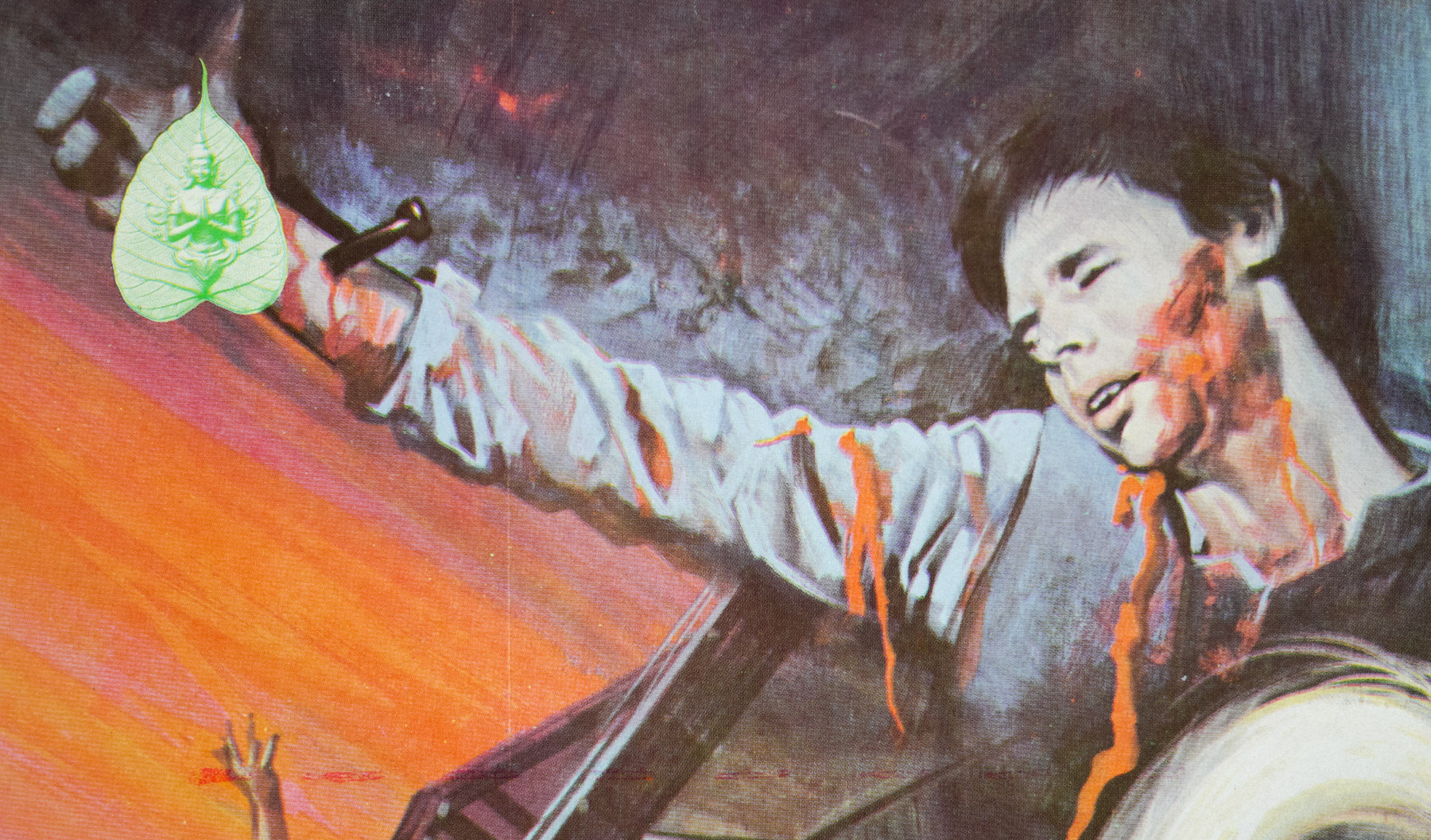
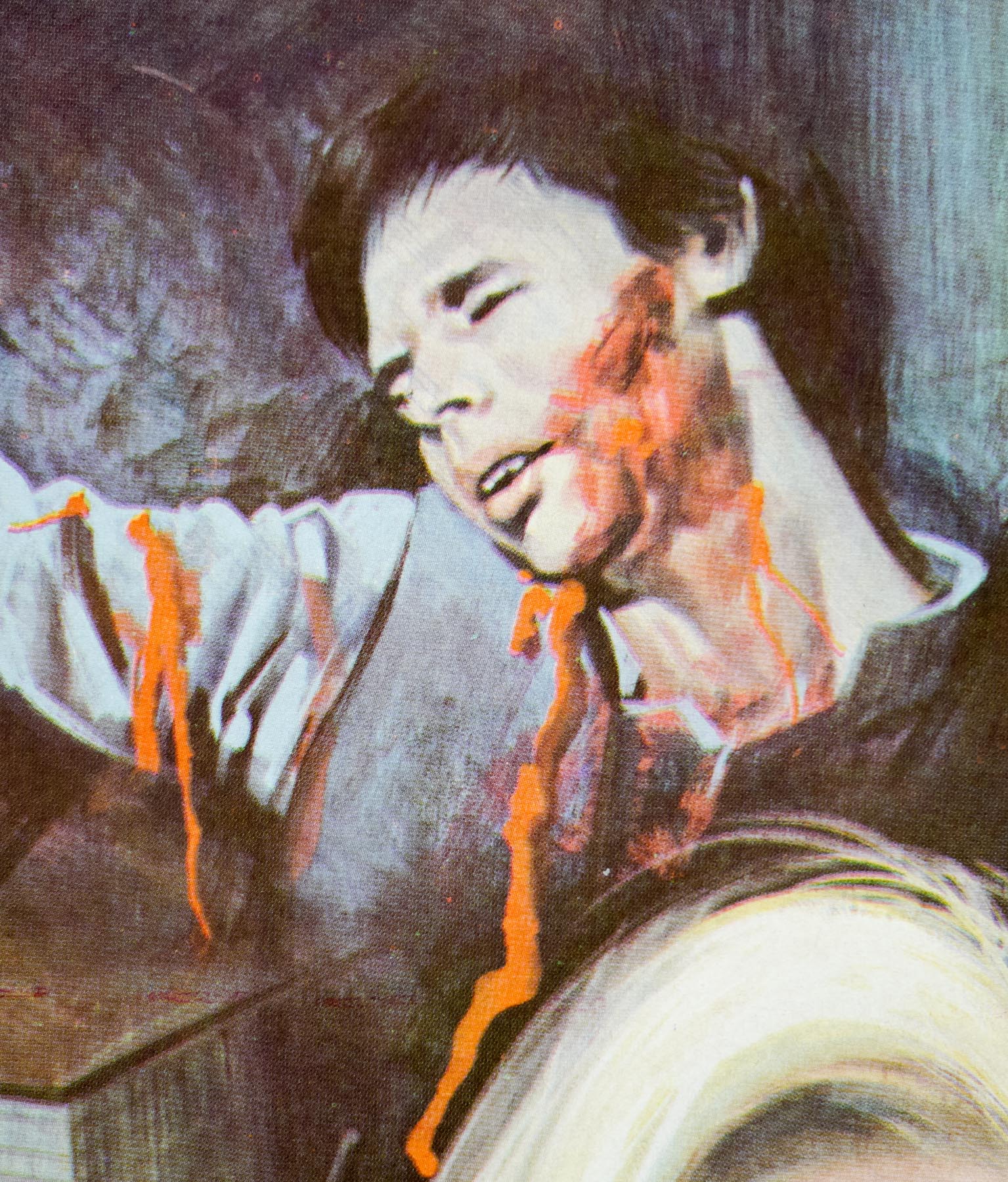
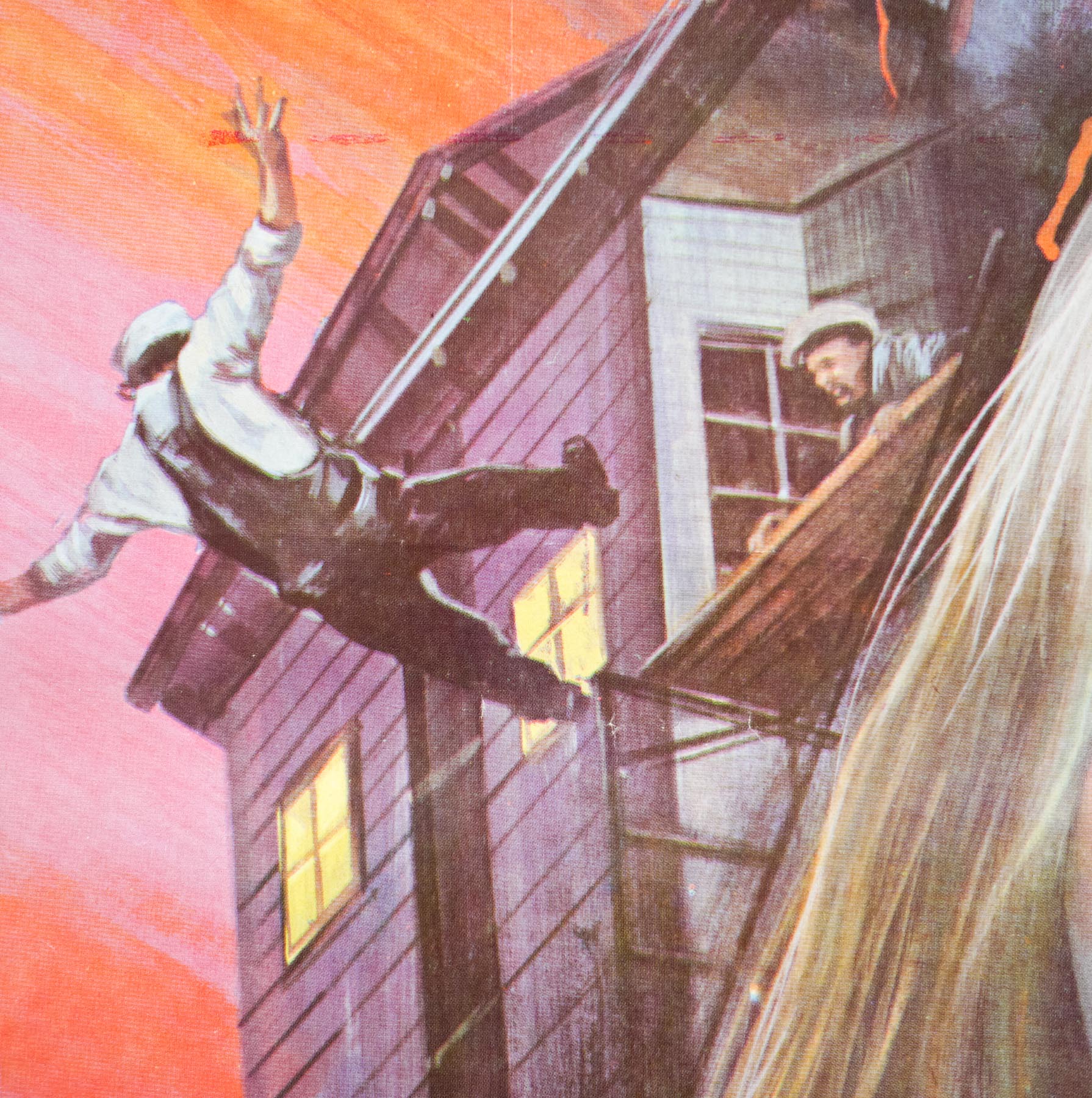
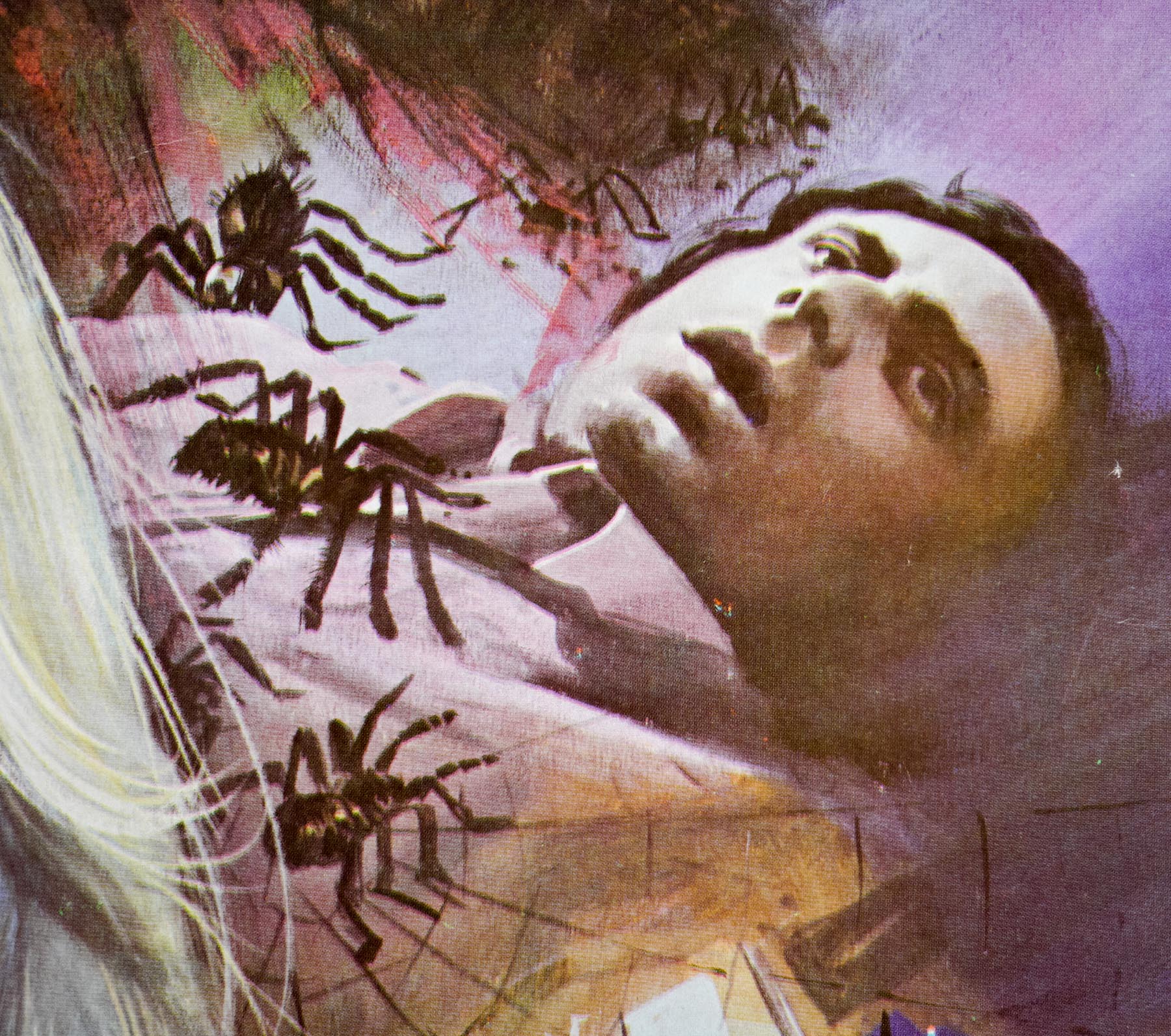
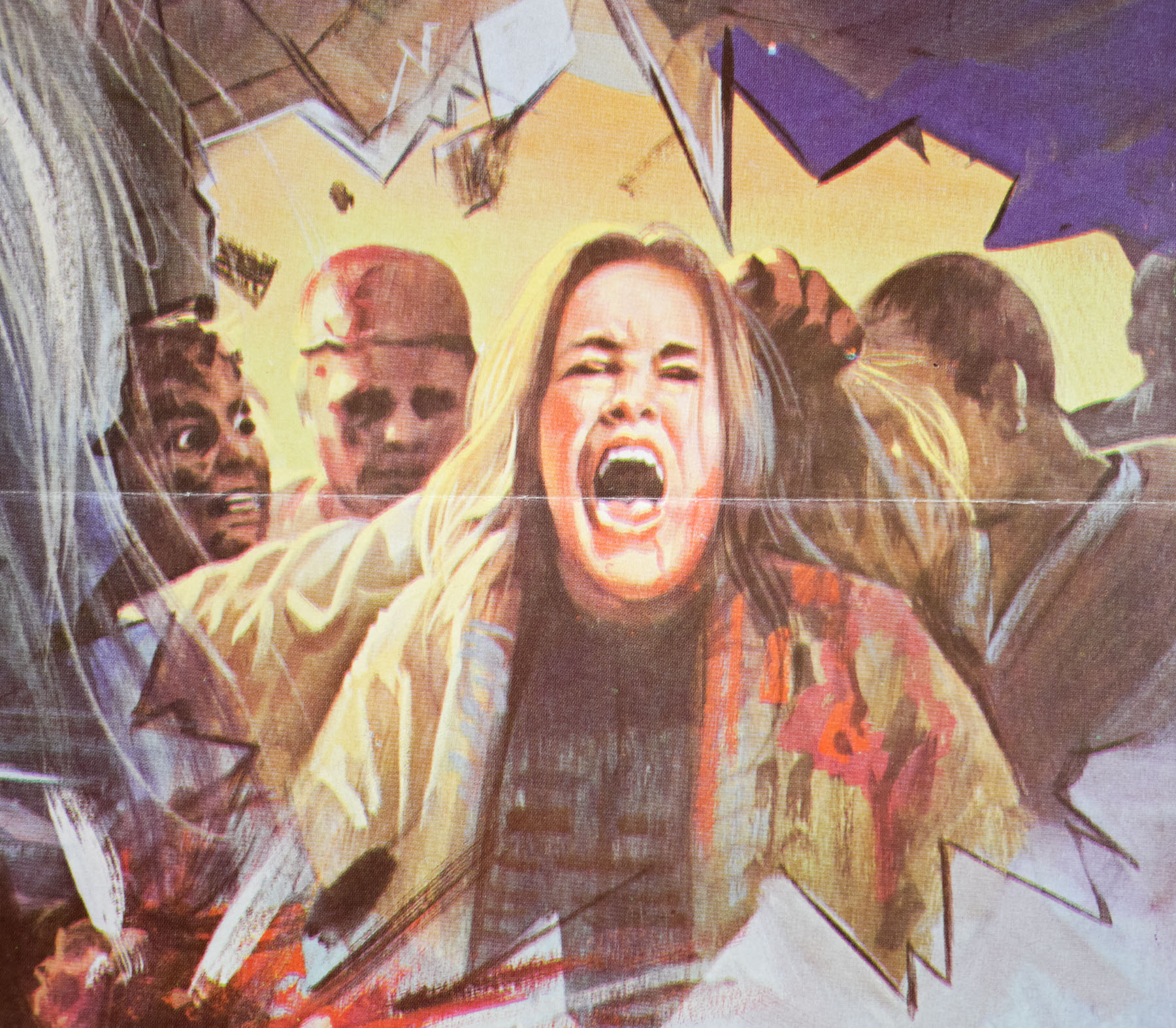
This Thai poster features colourful, unique artwork that was painted by the Thai artist who signs his art ‘Kwow’. I’ve struggled to find out much about him so if anyone has any more details please get in touch. Kwow decided to depict the infamous transformation scene as the main image along with a montage of gore from various points in the film, including the freakish dream that David has whilst in hospital that features evil creatures dressed in SS uniforms. Note that the numbers below Kwow’s signature are his phone number at the time. It was common practice for Thai artists to add their numbers to artwork in the hope of attracting further business.

Fans of the film would be wise to pick up the 2009 blu-ray release as it features a must-watch documentary on the film called Beware the Moon: Remembering ‘An American Werewolf in London’ that was conceived and filmed by life-long AWIL devotee Paul Davis. It features the majority of the surviving cast and crew and has clearly been put together by someone who cares about the film deeply.

Operation of the Gun / Thailand

29.03.17

Poster Poster
Title
Operation of the gun
AKA
ผ่าปืน (Thai - original title)
Year of Film
1980
Director
Chalong Pakdeevijit
Starring
Sombat Metanee, Naowarat Yuktanan, Manop Aswathep
Origin of Film
Thailand
Genre(s) of Film
Sombat Metanee, Naowarat Yuktanan, Manop Aswathep,
Type of Poster
Thai
Style of Poster
--
Origin of Poster
Thailand
Year of Poster
1980
Designer
Tongdee Panumas
Artist
Tongdee Panumas
Size (inches)
21 7/16" x 30 12/16"
SS or DS
SS
Tagline
--

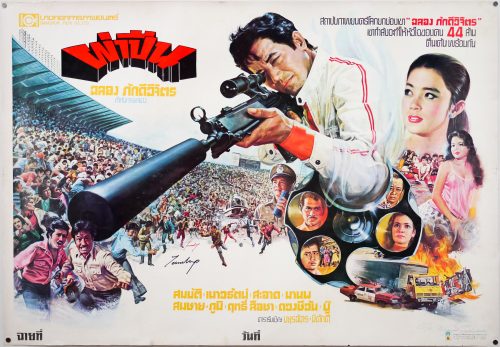
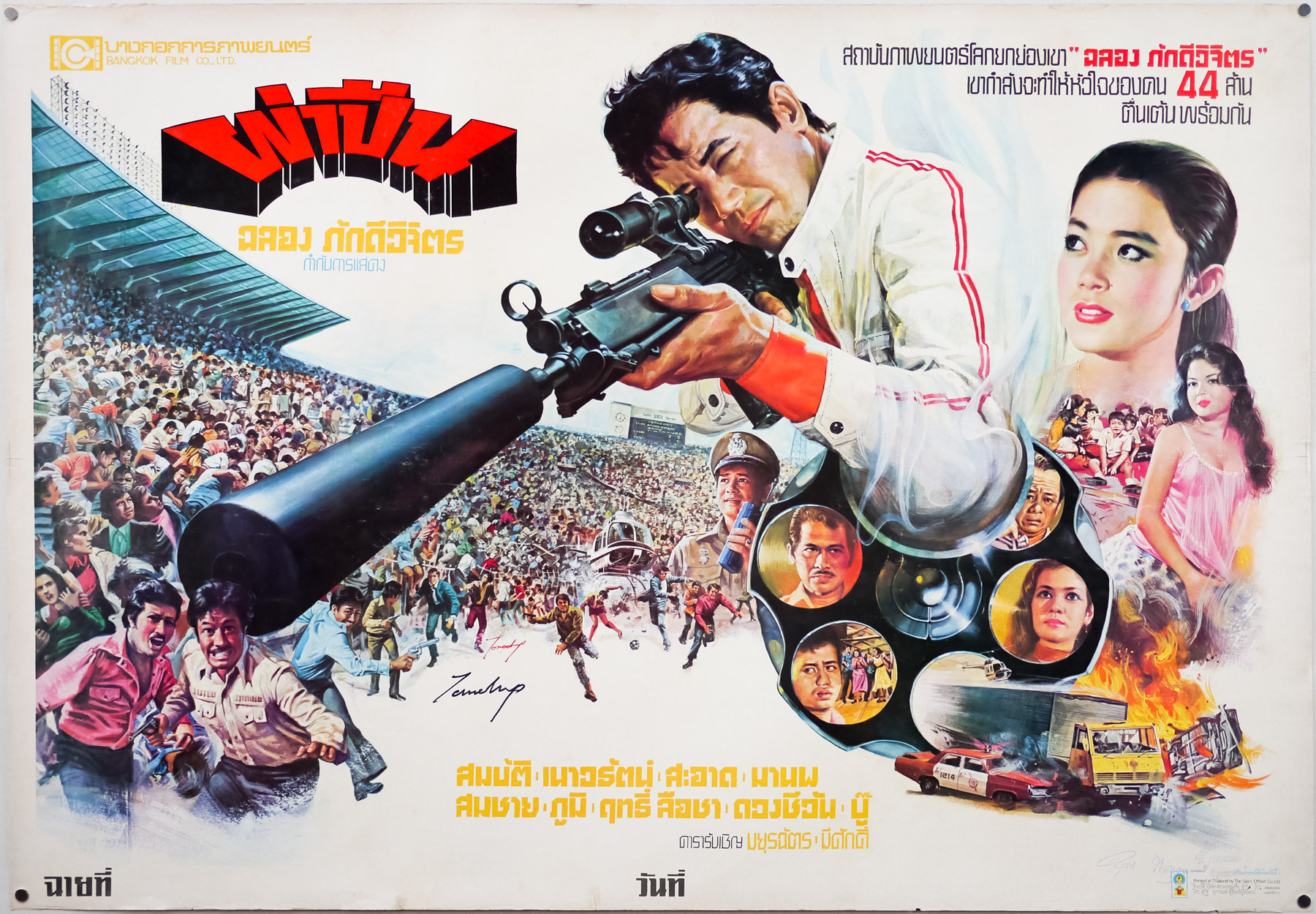
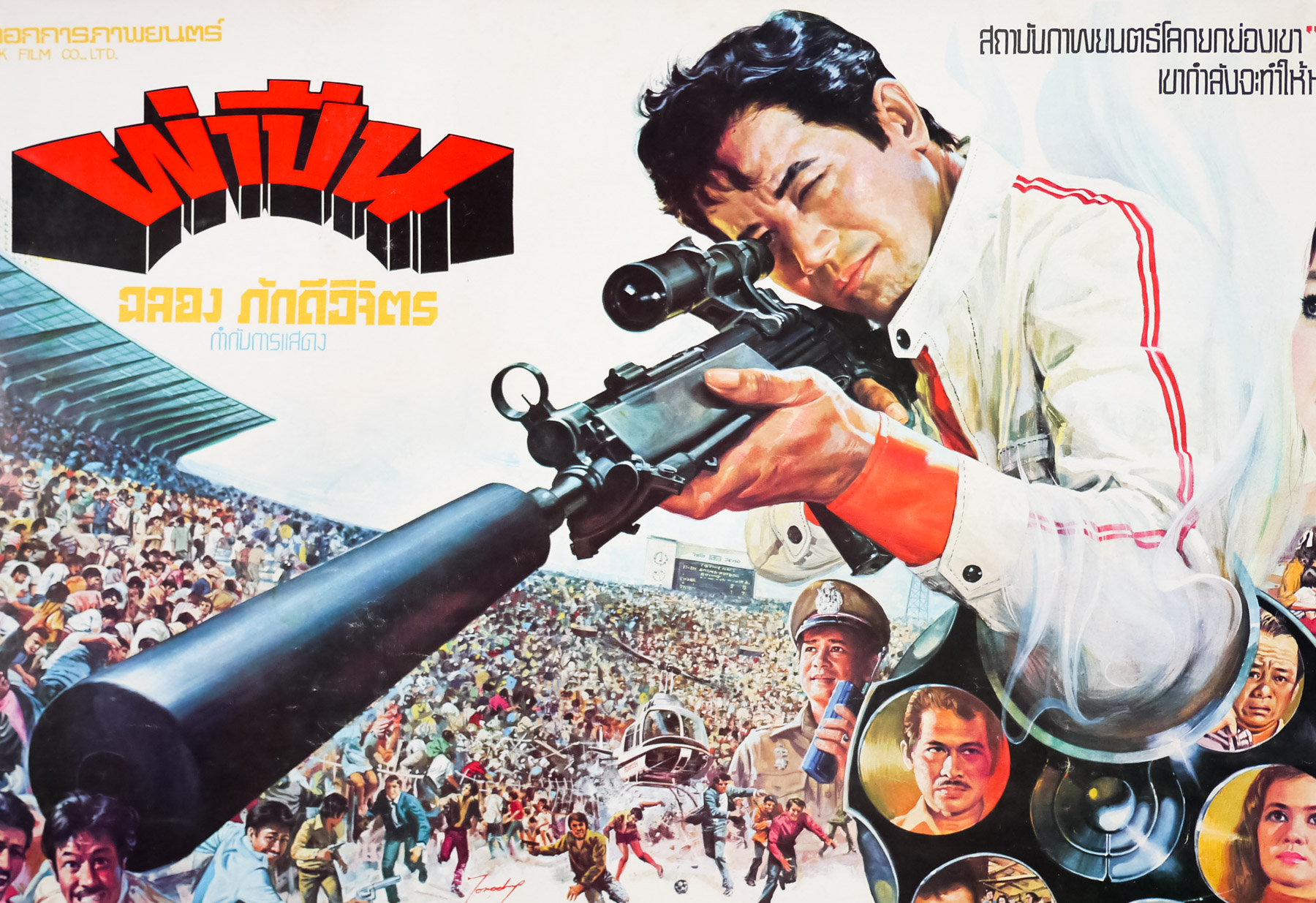
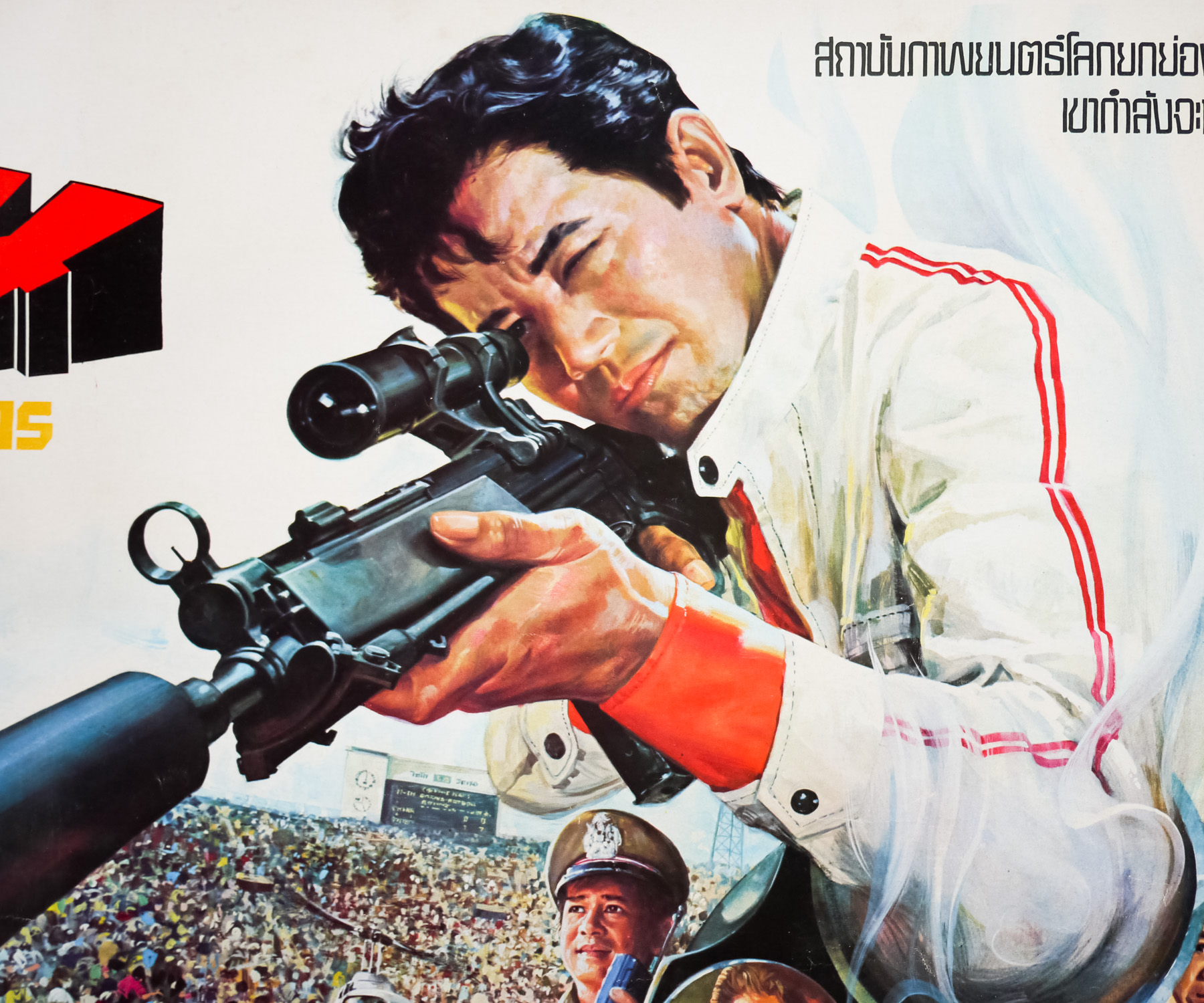
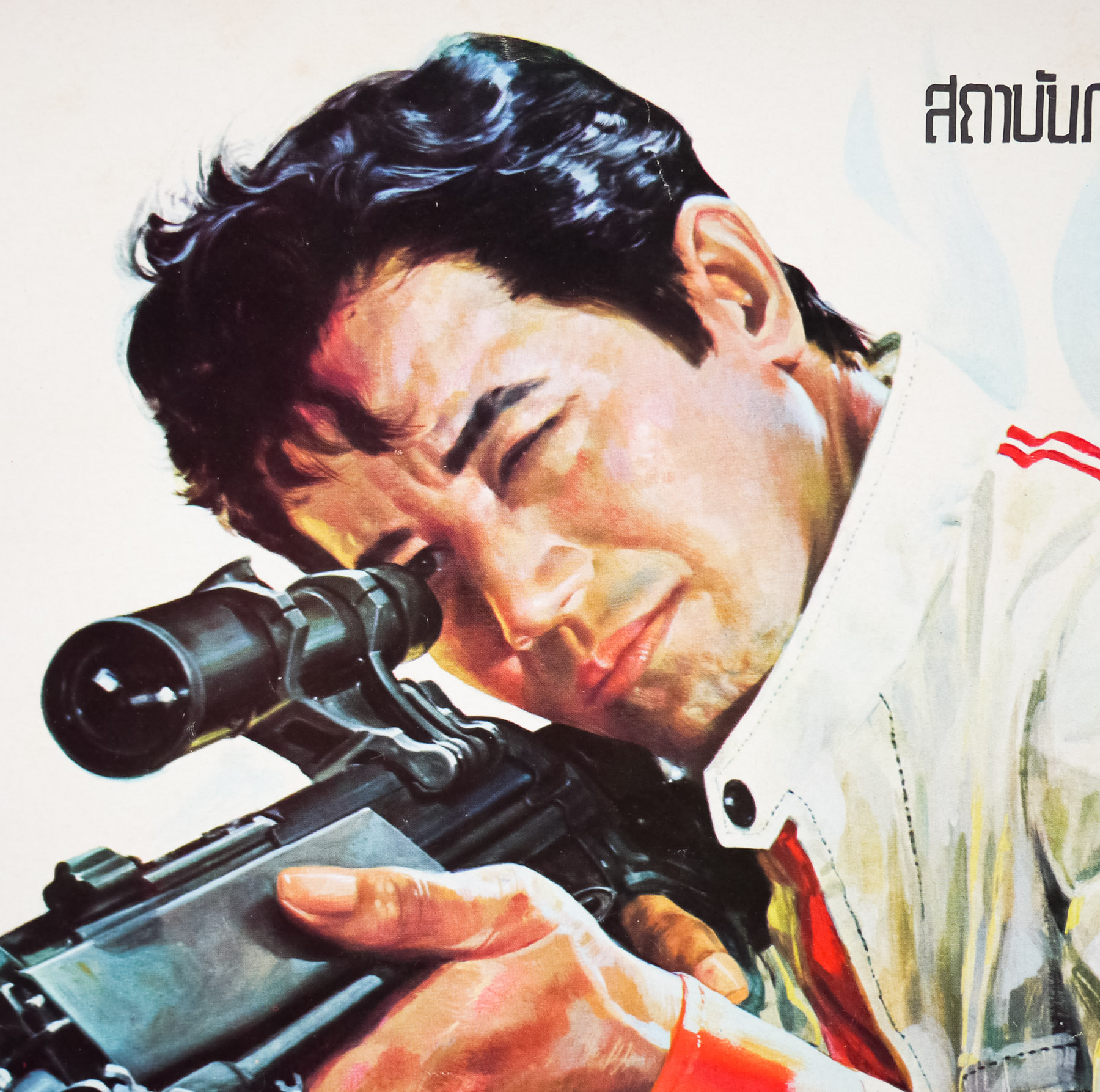
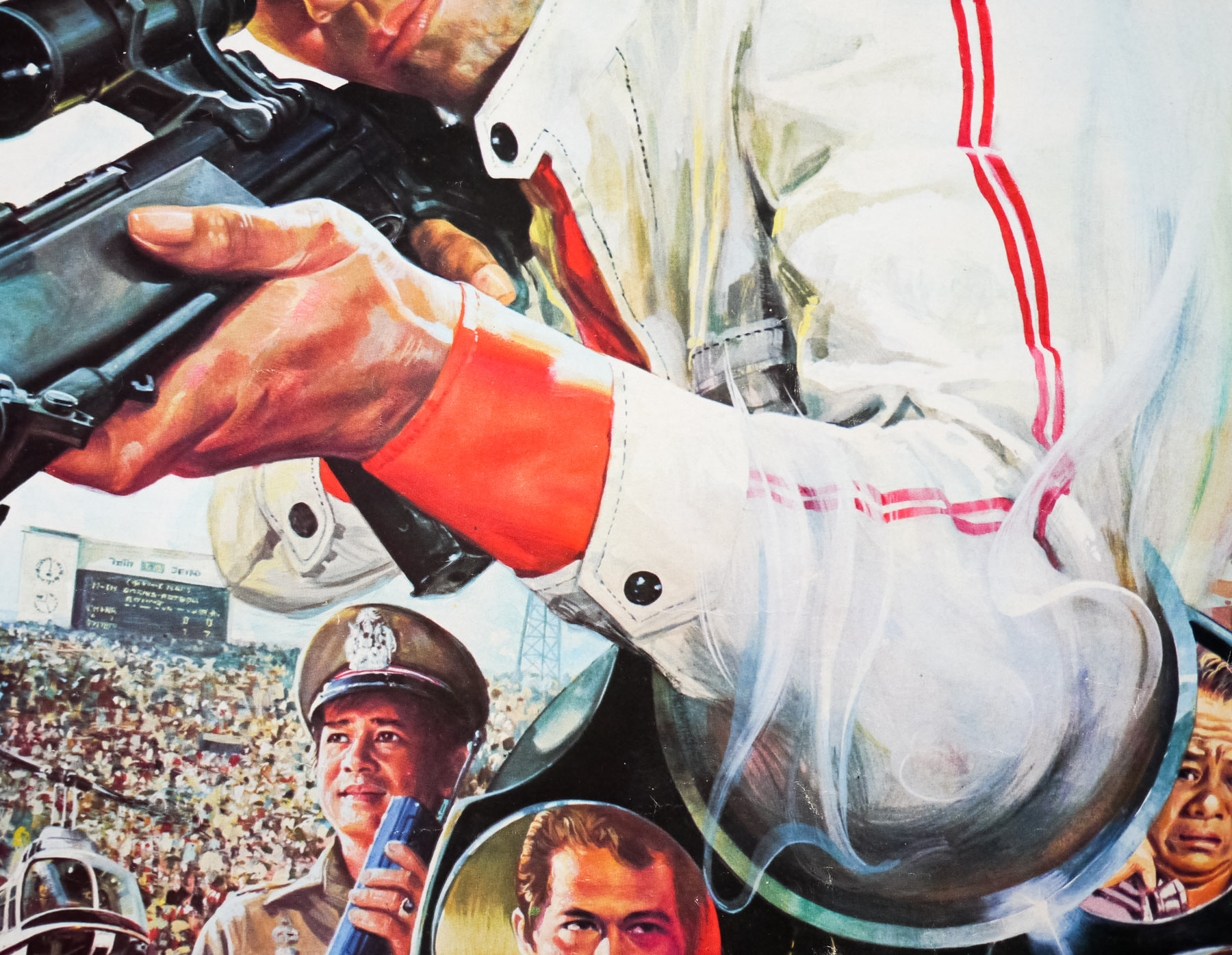
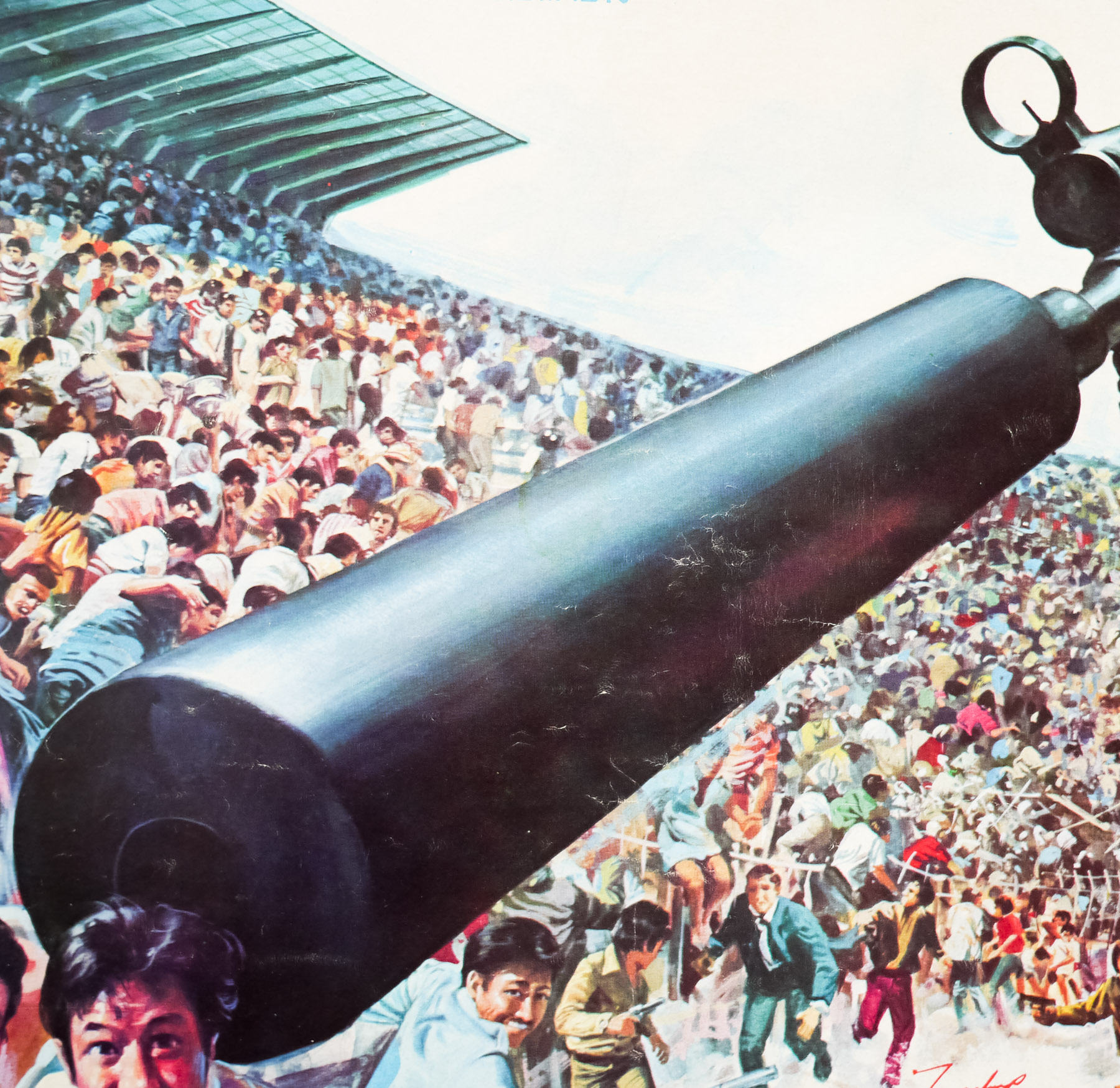
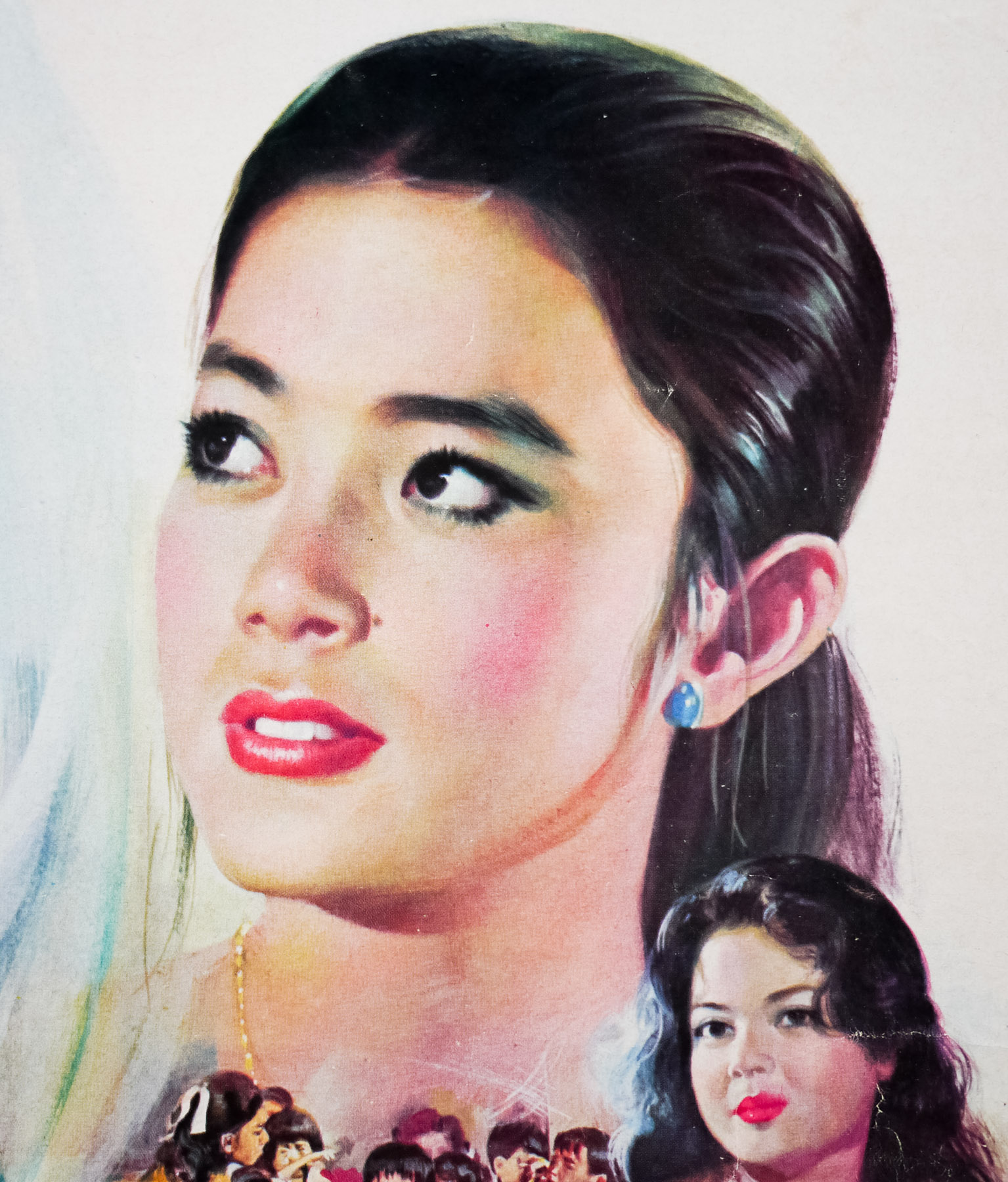
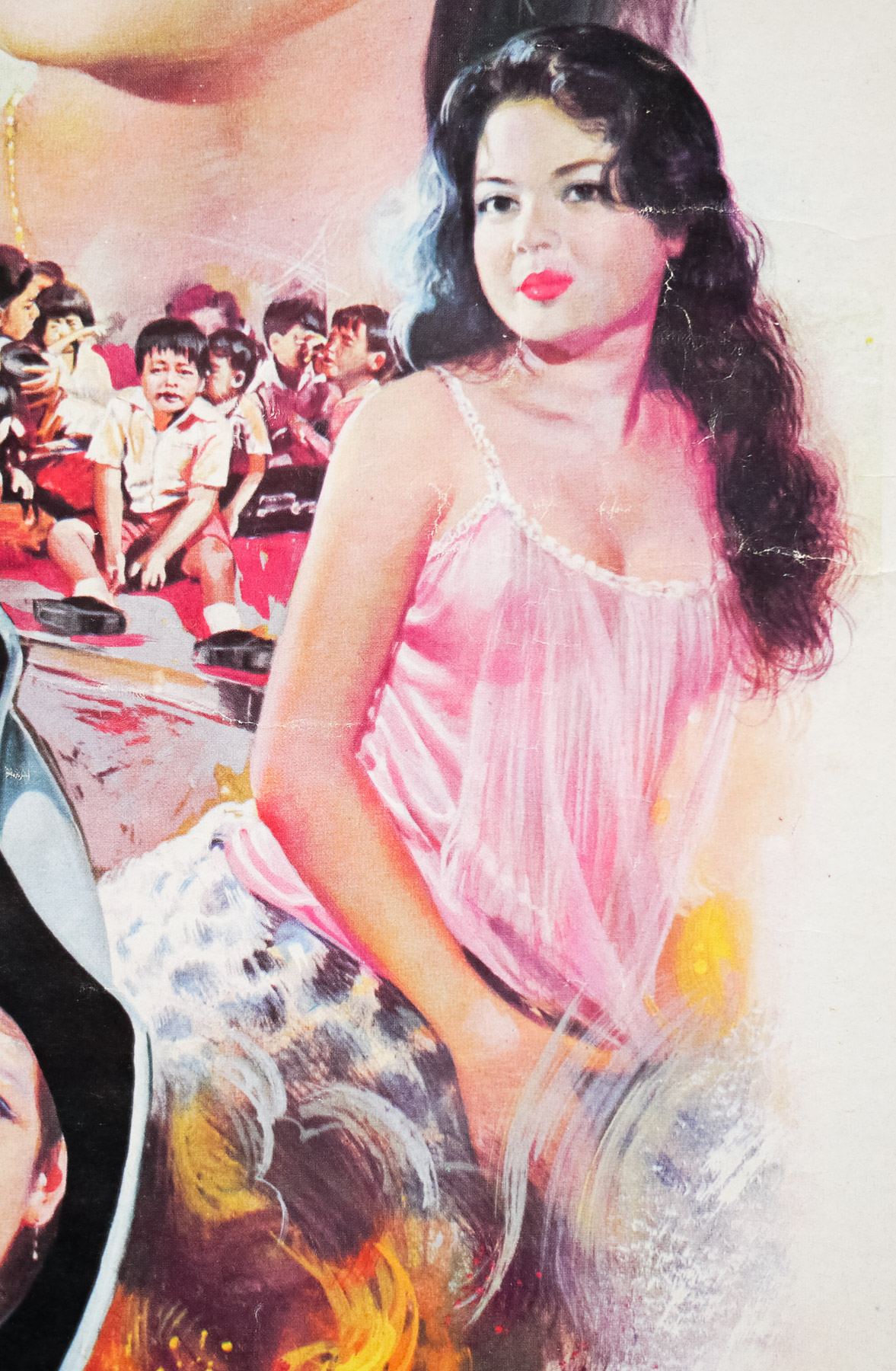
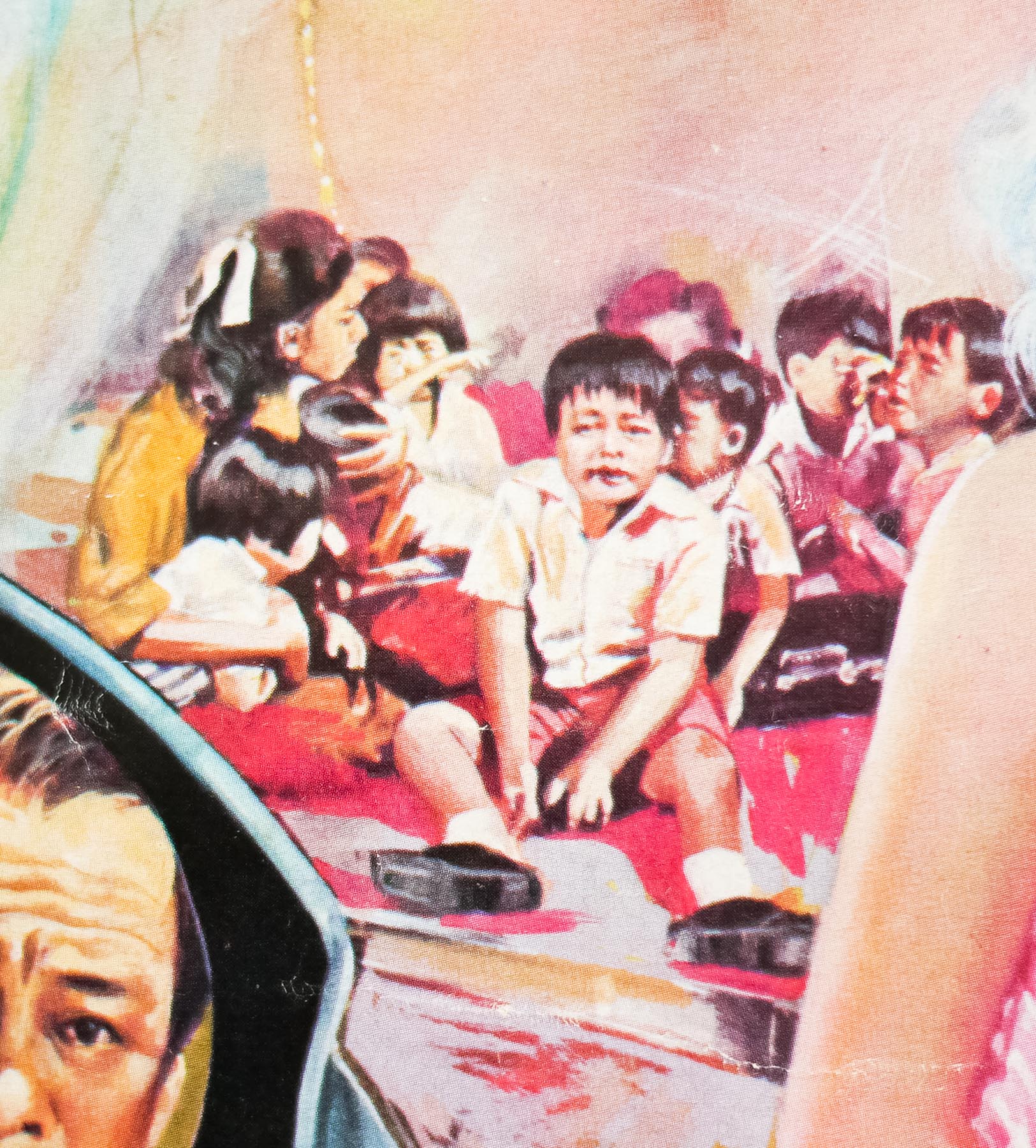
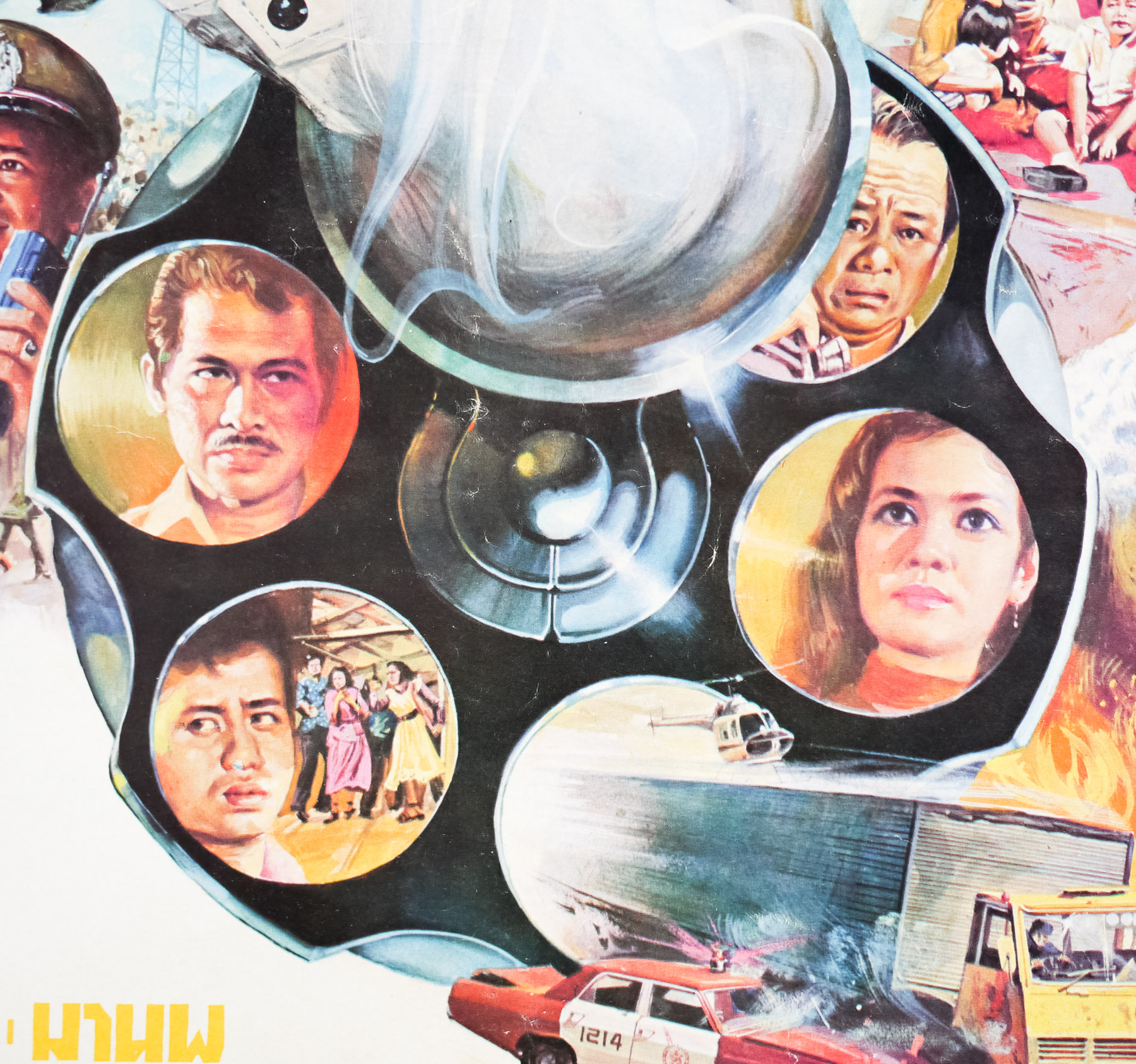
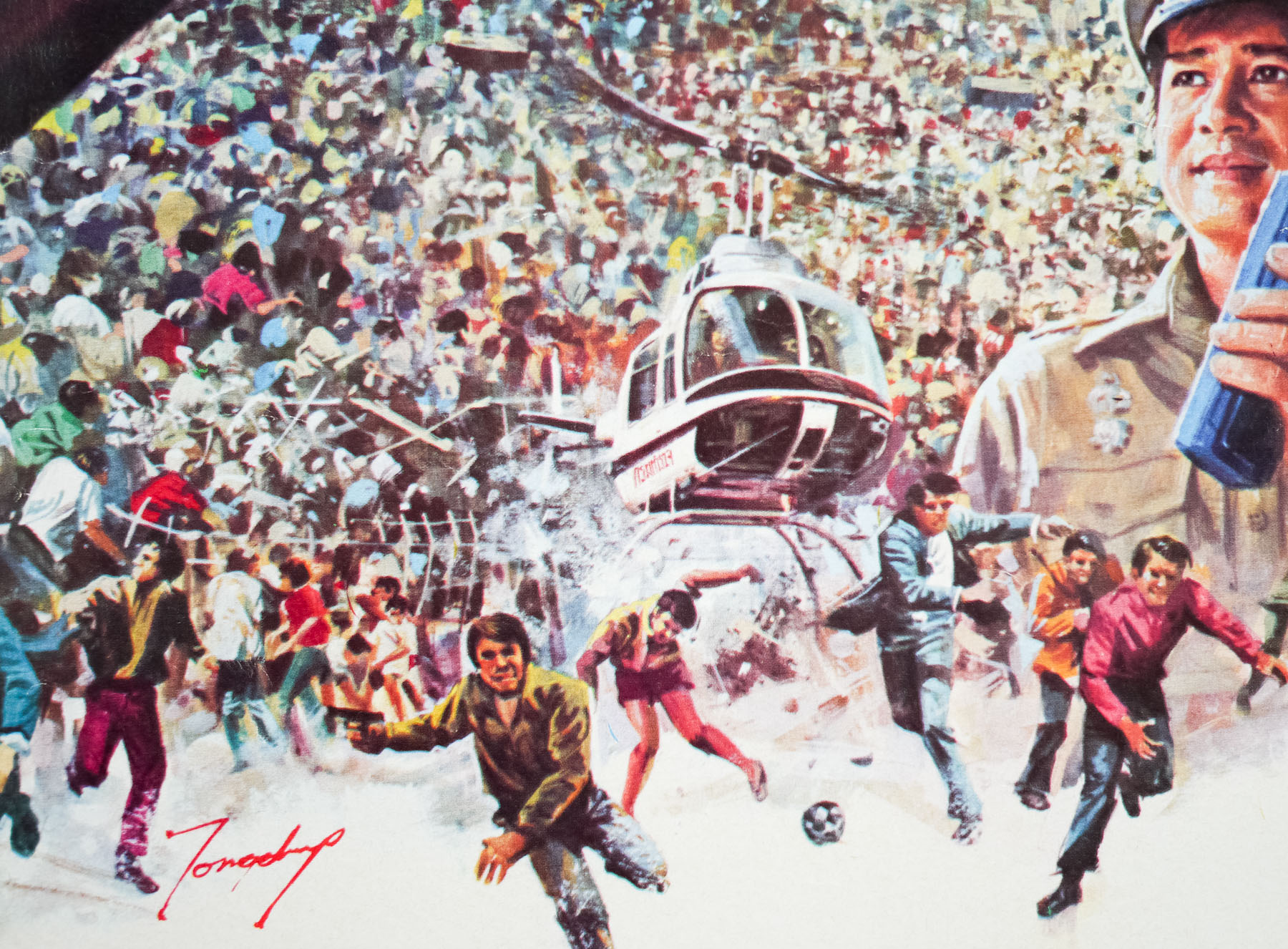
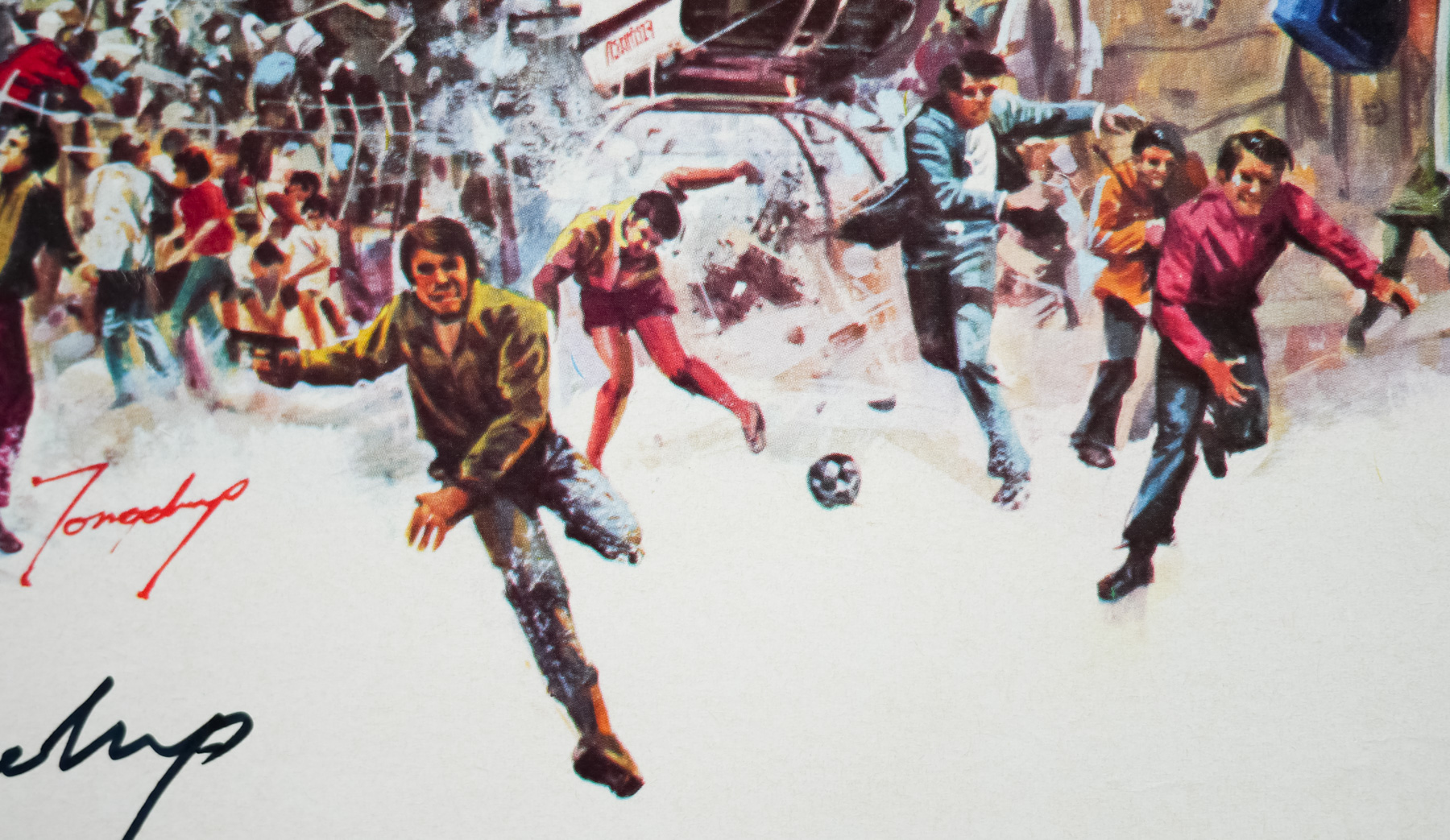
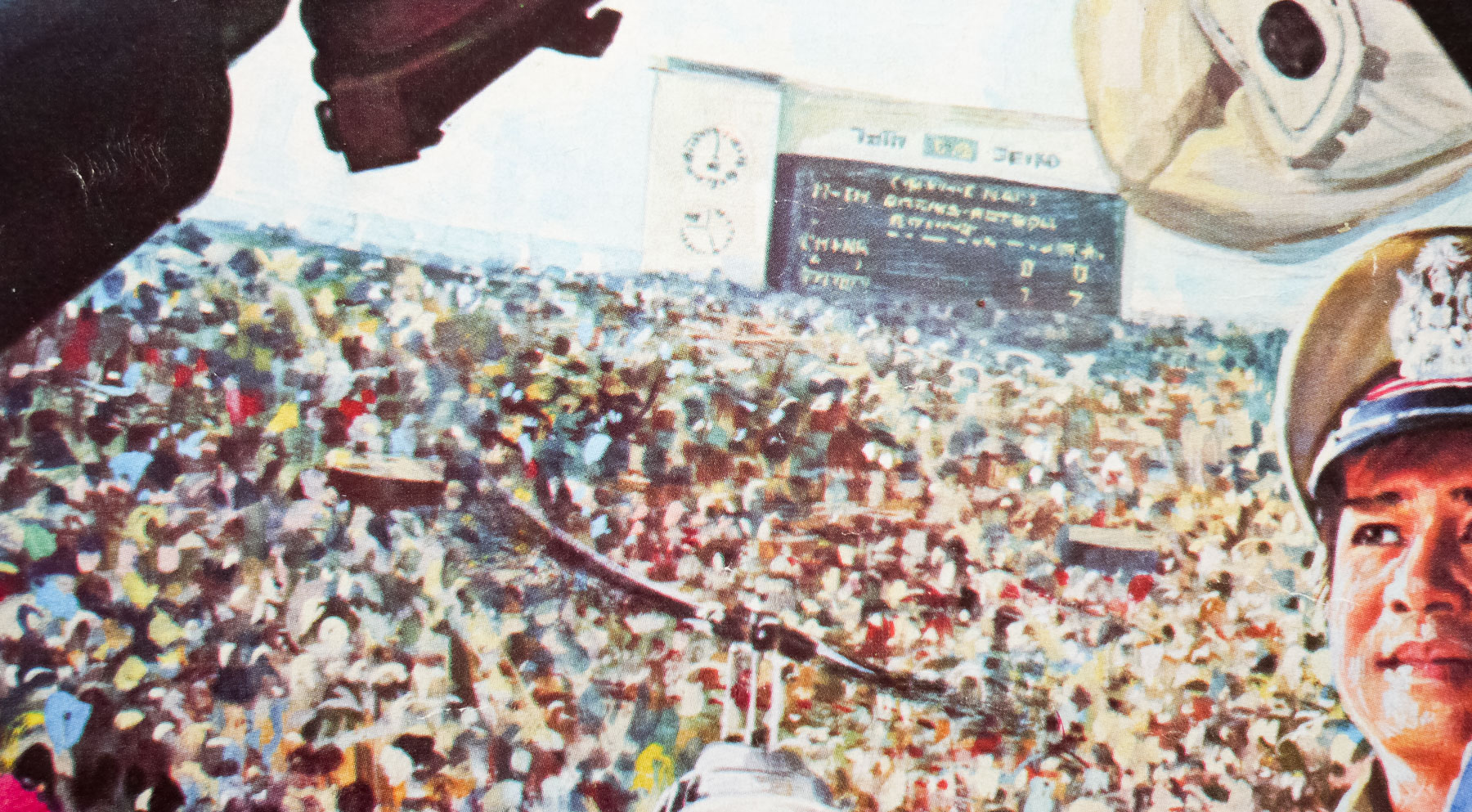
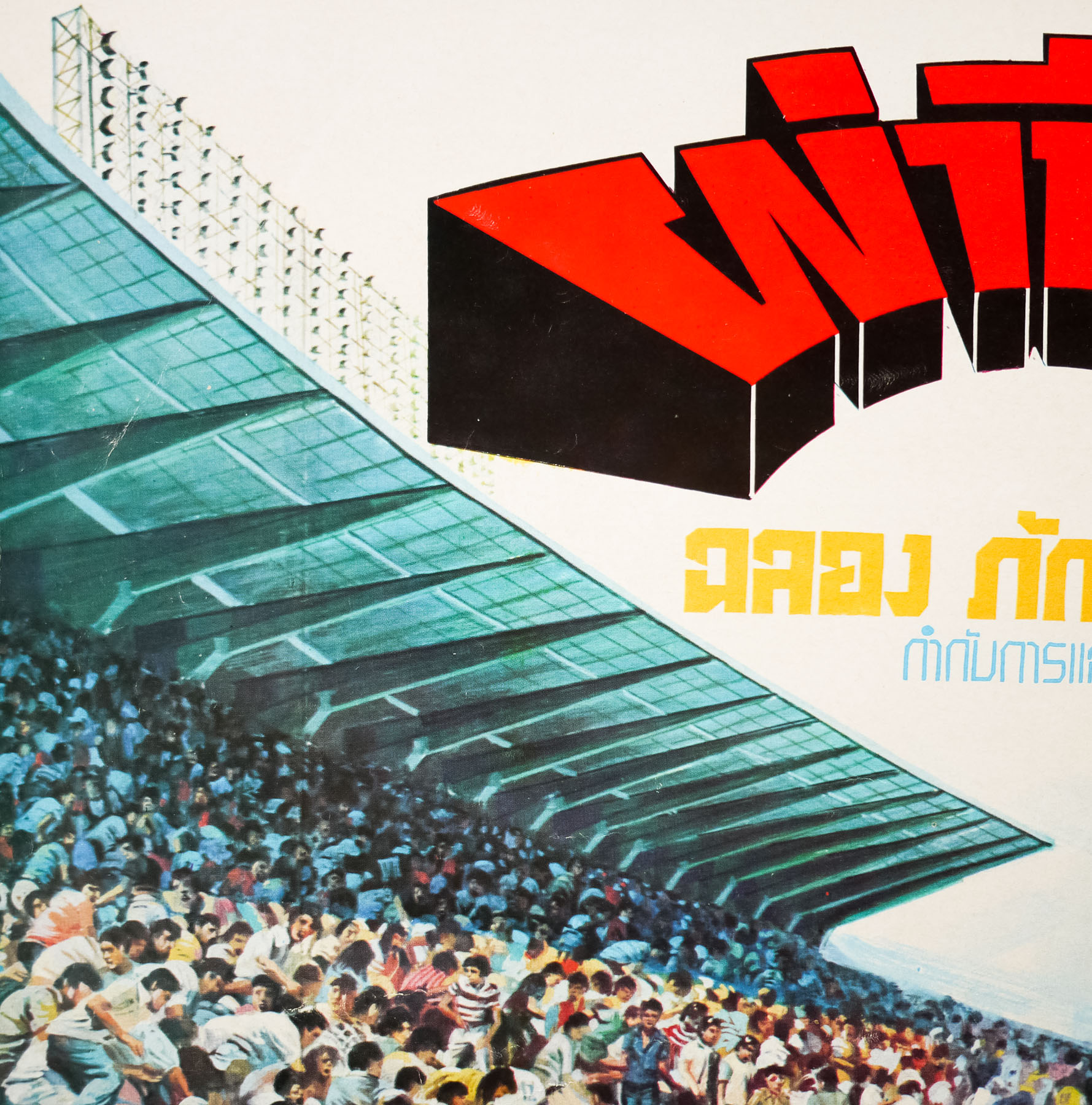
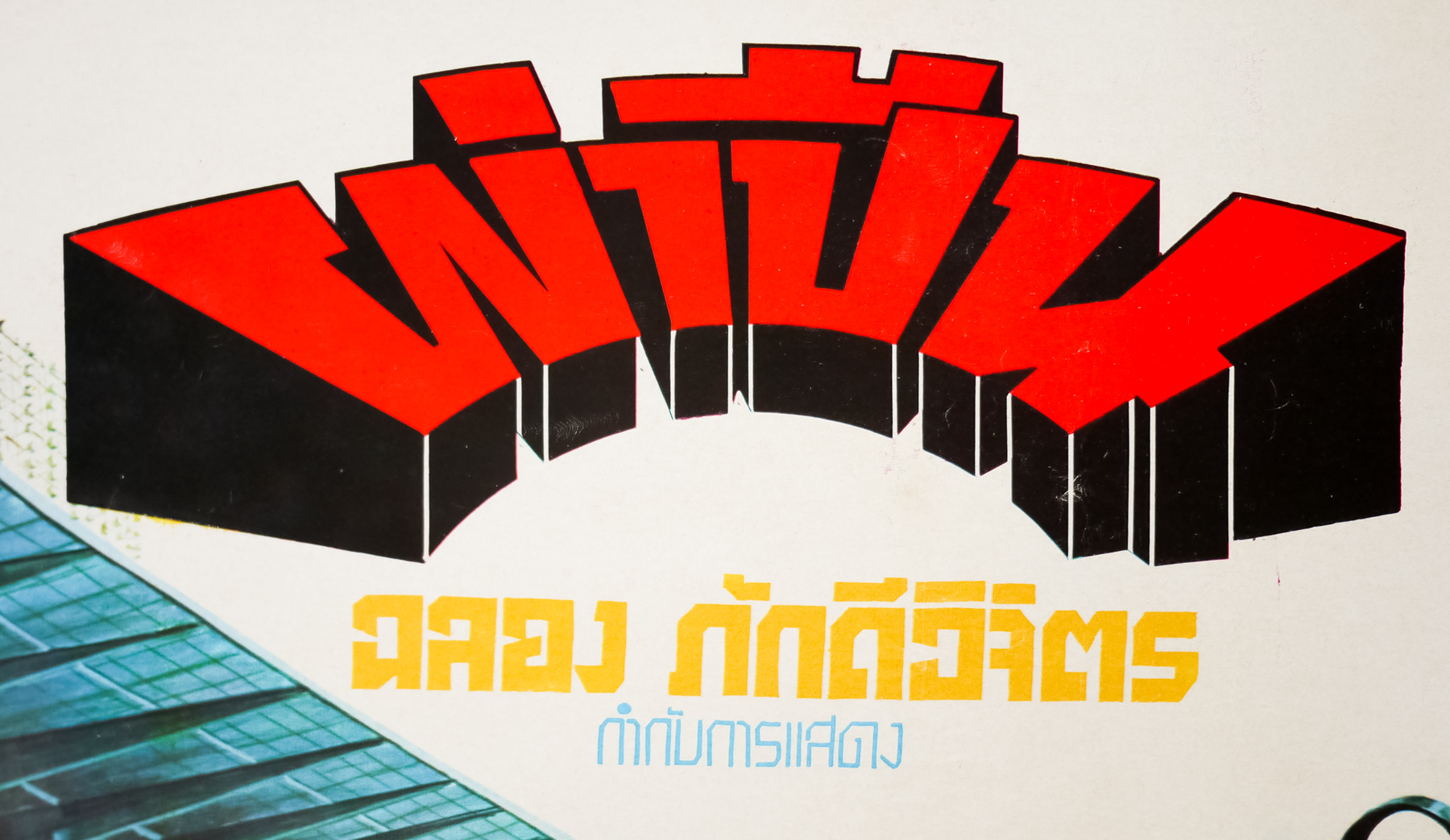
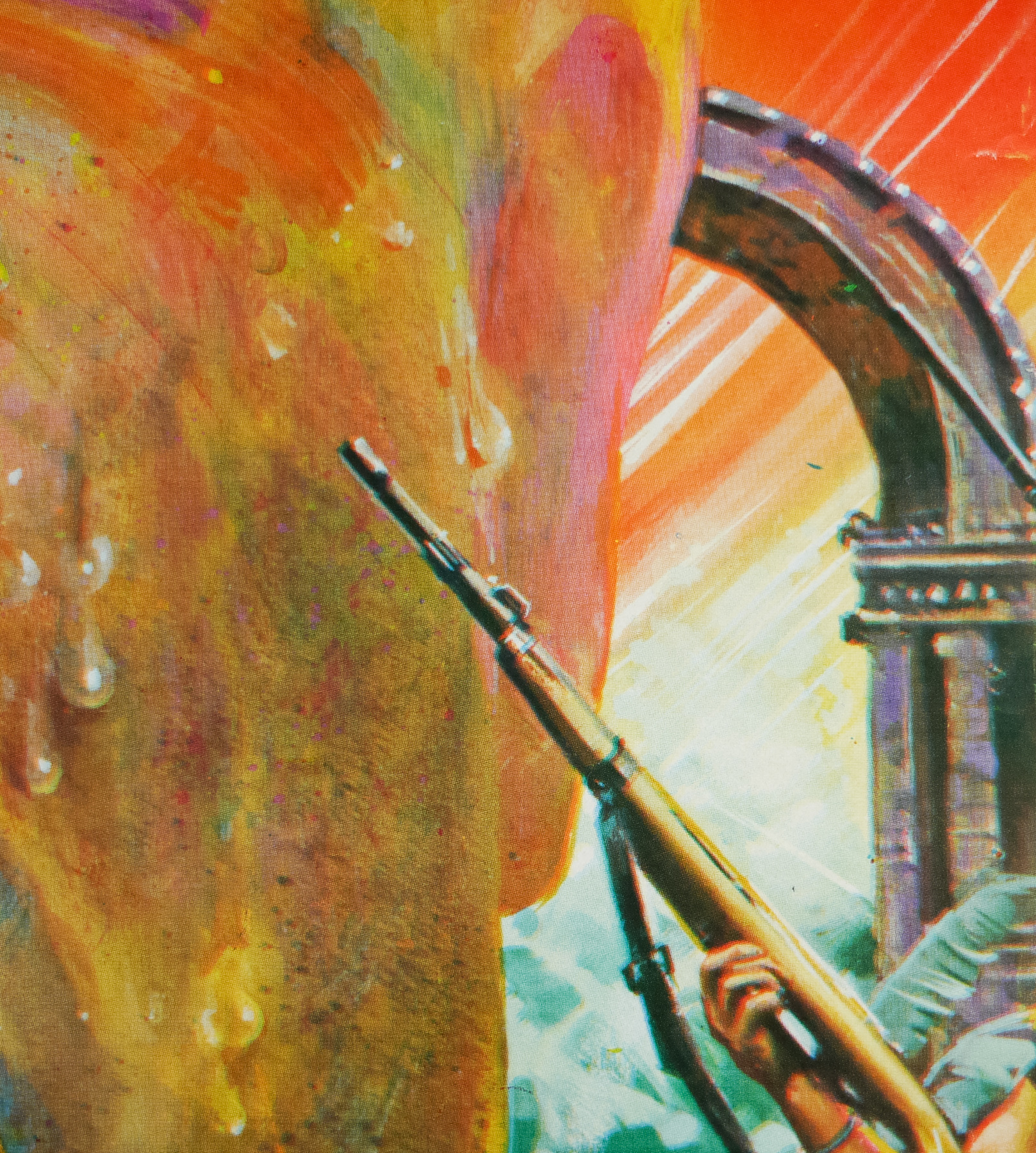
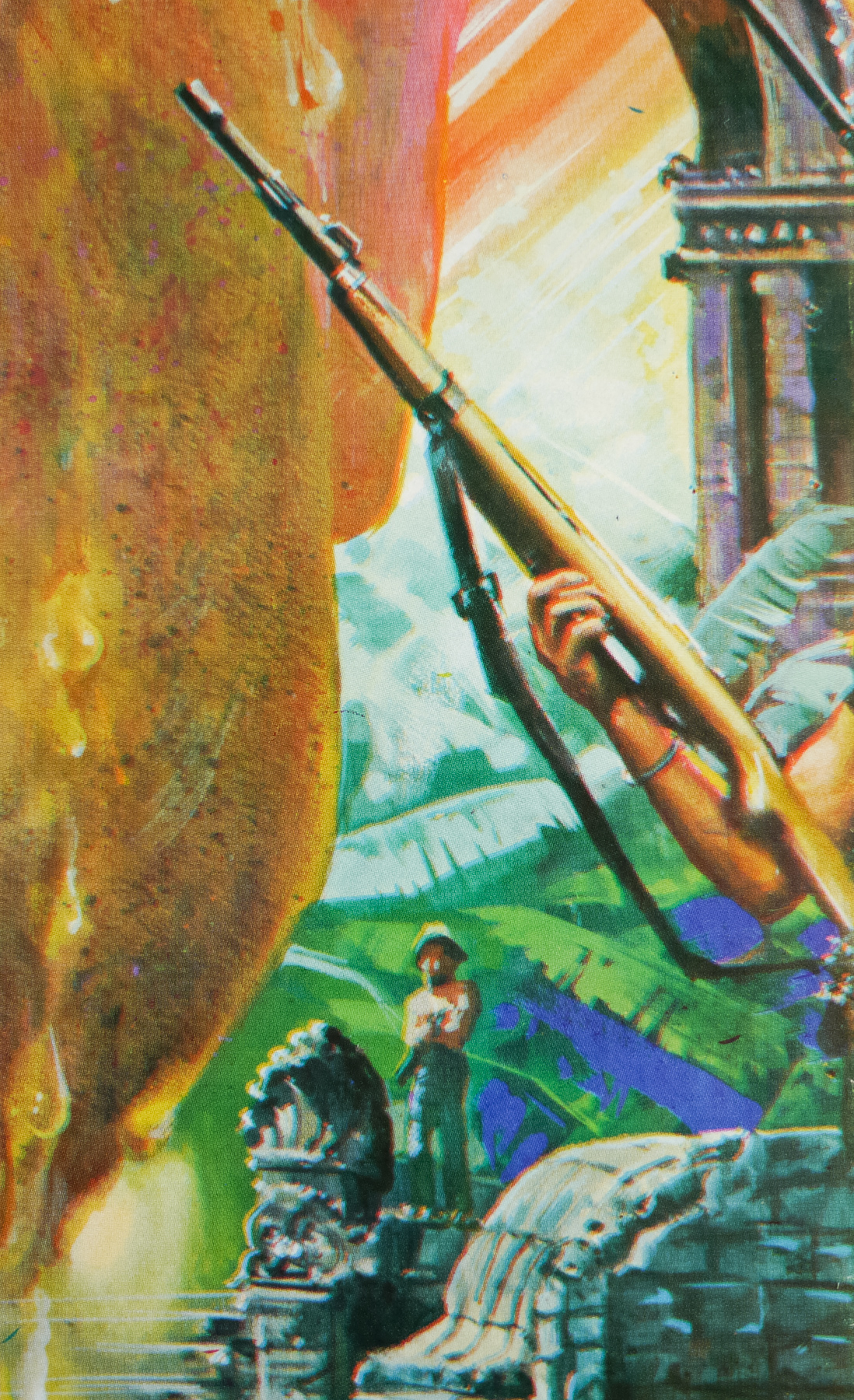
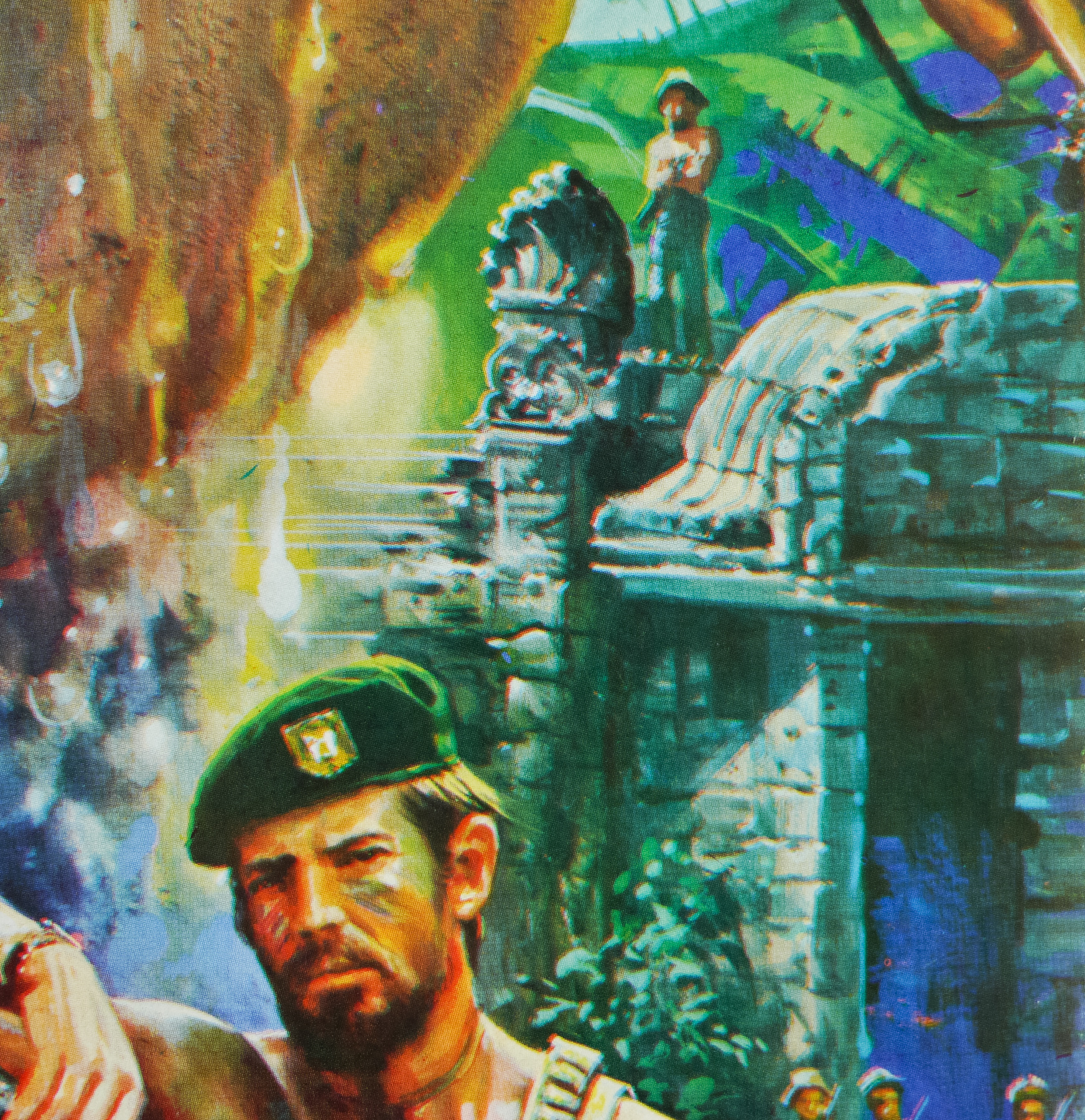
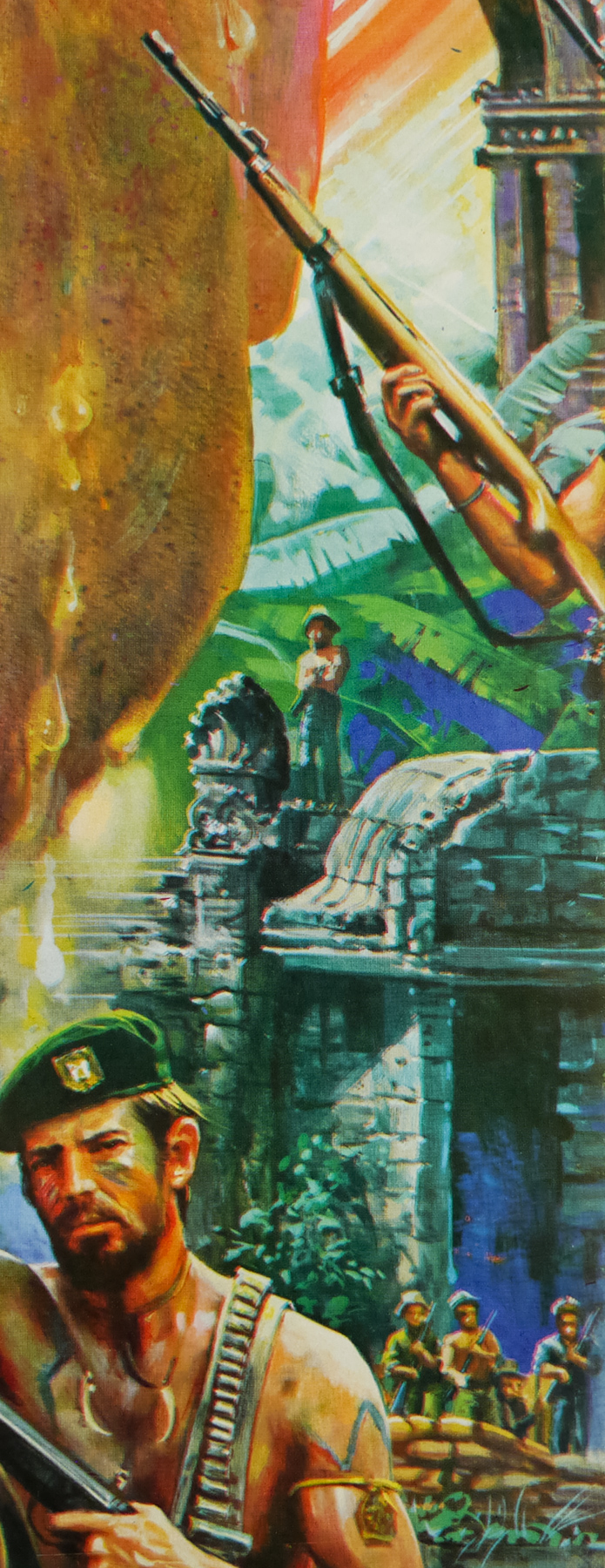
Dramatic and detailed artwork by Tongdee Panumas features on this poster for the release of the Thai film ‘Operation of the Gun’ (AKA Gun Cut, AKA Rifle, AKA Gunpowder). The original title is ผ่าปืน and it is unlikely to have ever been officially released in markets like the US and UK so the English title is up for debate. If anyone knows for sure whether it was given an official international title, please get in touch.

I know very little about the film, other than that it stars the famous Thai actor Sombat Metanee, who at one point was in the Guinness Book of Records for the most appearances by an actor. It’s calculated that he has starred in over 2000 film and TV shows during his career. Western audiences may have seen him appear in the Thai film Tears of the Black Tiger (2000). It was directed by Chalong Pakdeevijit (ฉลอง ภักดีวิจิตร) – the actual Western spelling of his name varies considerably from what I can tell – who directed a number of action thrillers, as this Thai Wikipedia page indicates.

Tongdee Panumas was an incredibly prolific film poster artist during the 70s, 80s and 90s. I’ve been unable to find out much about him, other than that he was born in 1947, so if anyone has any more details please get in touch.

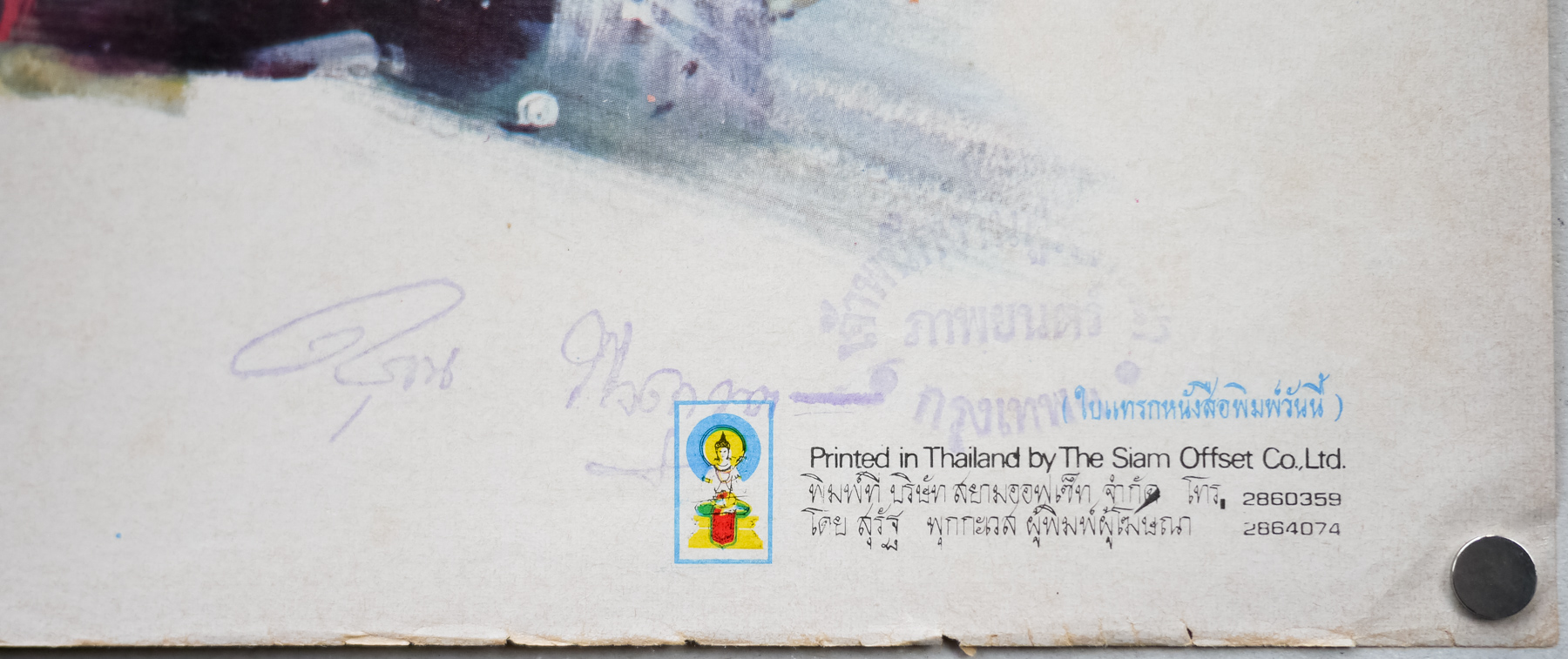
Note that this particular copy of the poster has been hand-signed by Tongdee and I bought it from someone who had visited Thailand, met the artist and had him sign a few posters. I’ve seen photographic evidence that it’s a genuine signature.

Predator / original artwork / Thailand

28.09.16

Poster Poster
Title
Predator
AKA
O Predador (Brazil / Portugal)
Year of Film
1987
Director
John McTiernan
Starring
Arnold Schwarzenegger, Carl Weathers, Elpidia Carrillo, Bill Duke, Jesse Ventura, Kevin Peter Hall, Shane Black, Sonny Landham, Richard Chaves
Origin of Film
USA
Genre(s) of Film
Arnold Schwarzenegger, Carl Weathers, Elpidia Carrillo, Bill Duke, Jesse Ventura, Kevin Peter Hall, Shane Black, Sonny Landham, Richard Chaves,
Type of Poster
Original artwork
Style of Poster
--
Origin of Poster
Thailand
Year of Poster
2016
Designer
Tongdee Panumas
Artist
Tongdee Panumas
Size (inches)
28 5/16" x 41"
SS or DS
SS
NSS #
--
Tagline
--

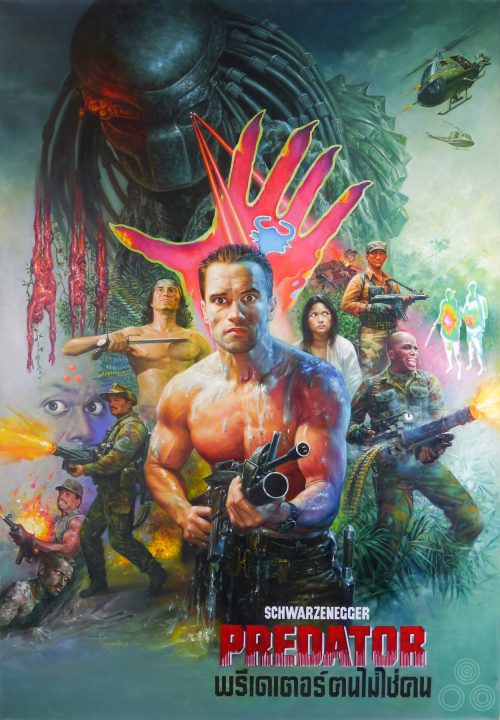
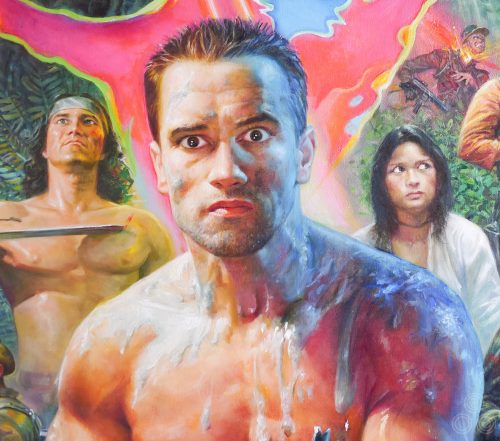
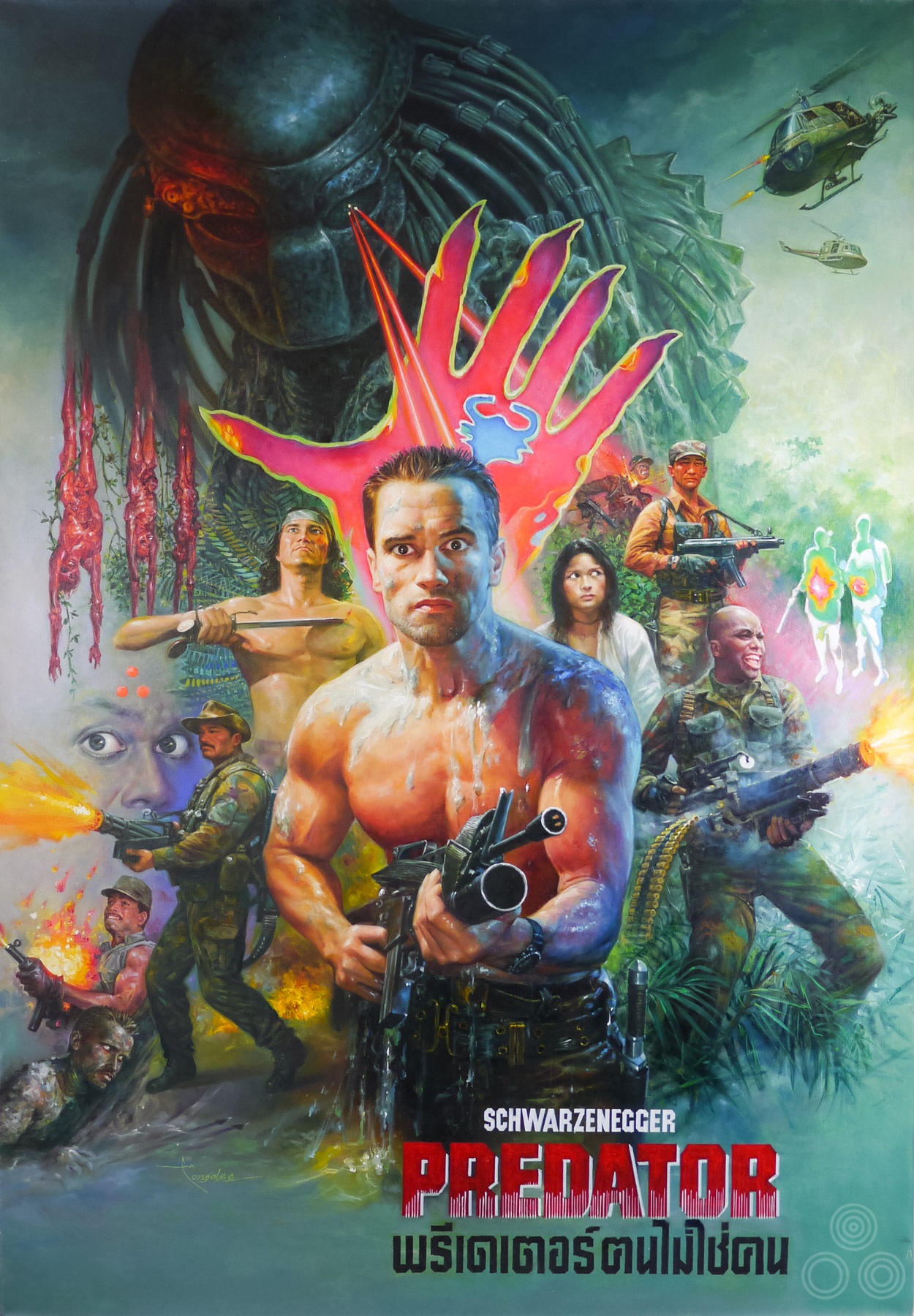
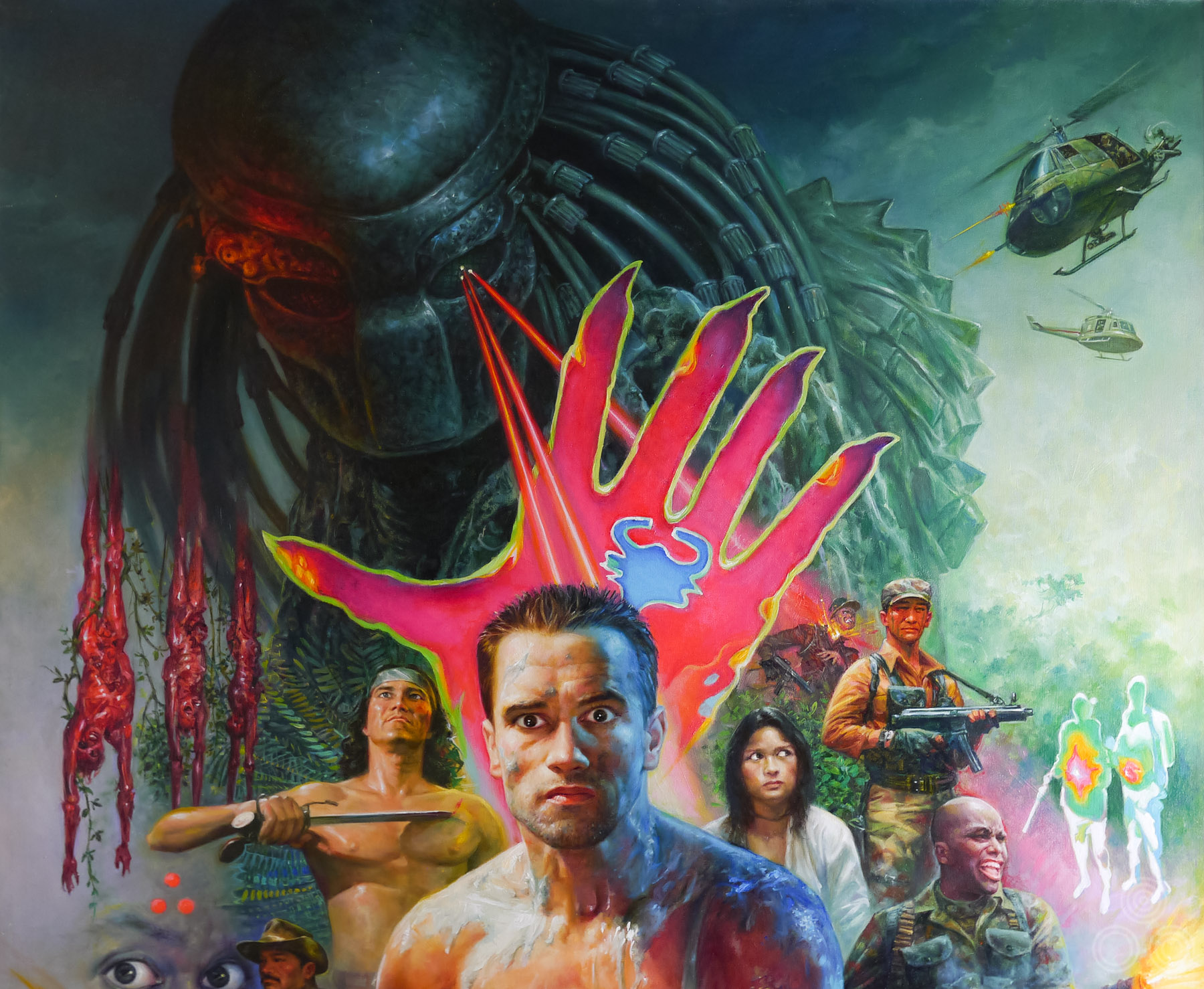
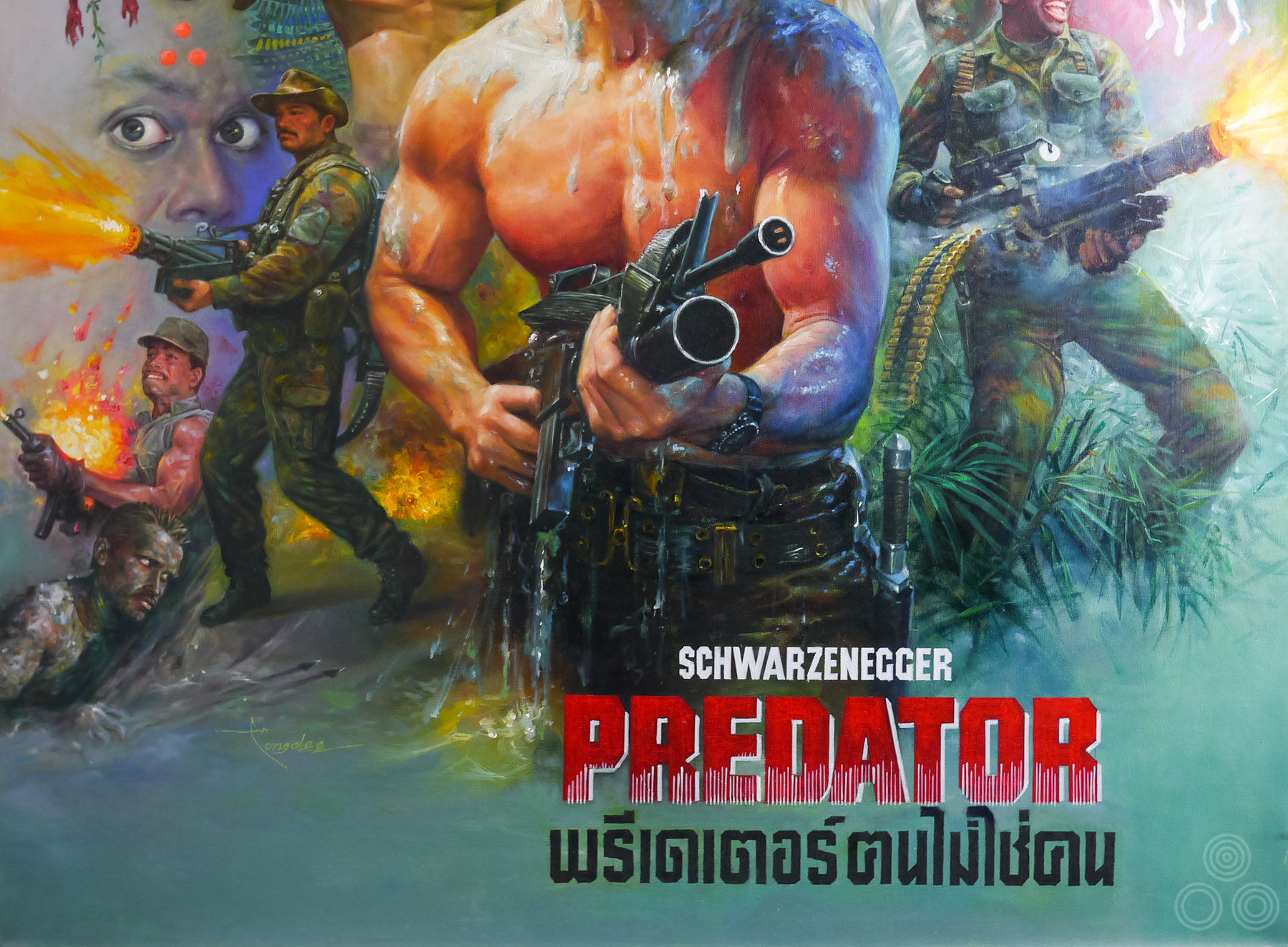
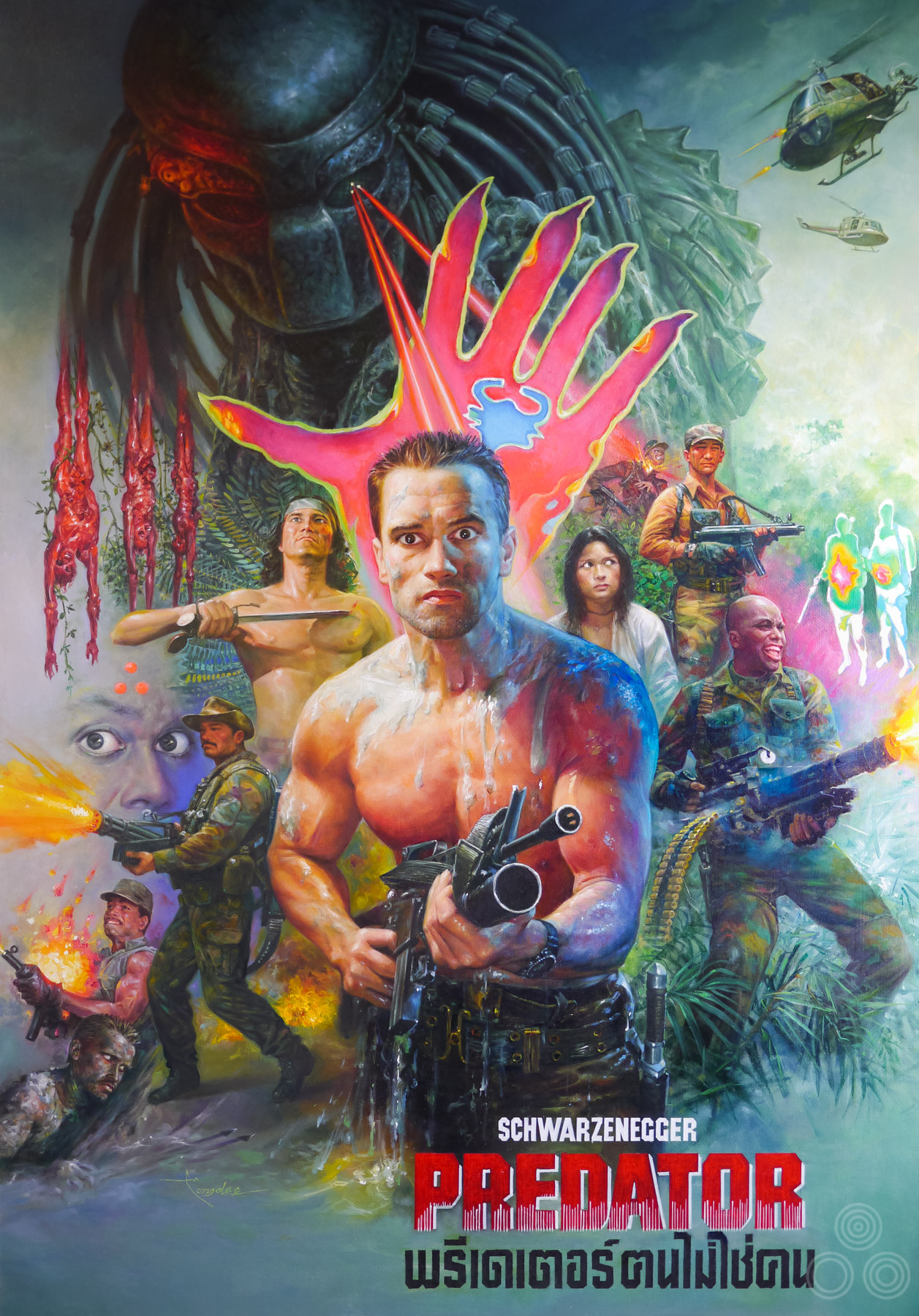
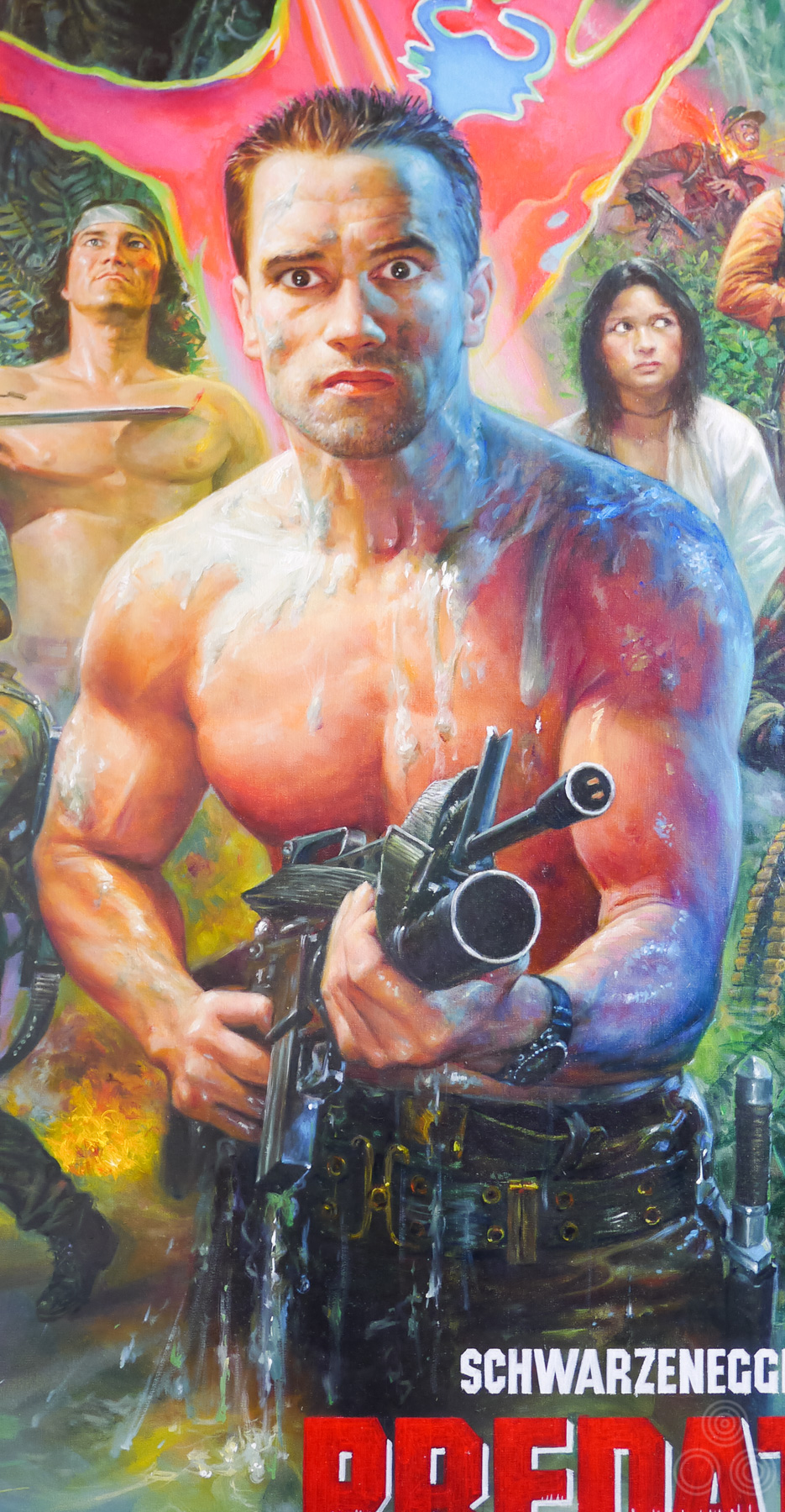
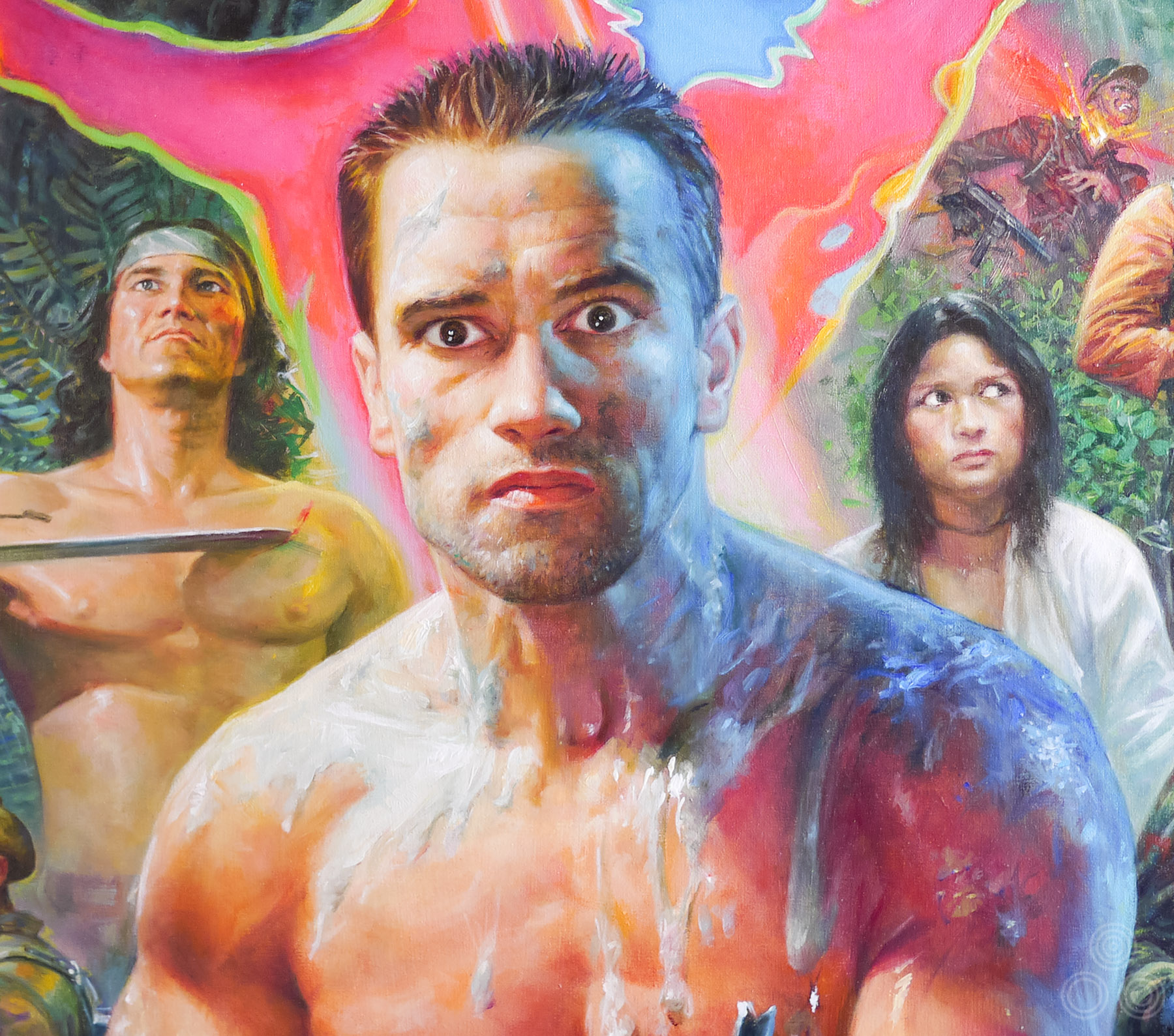
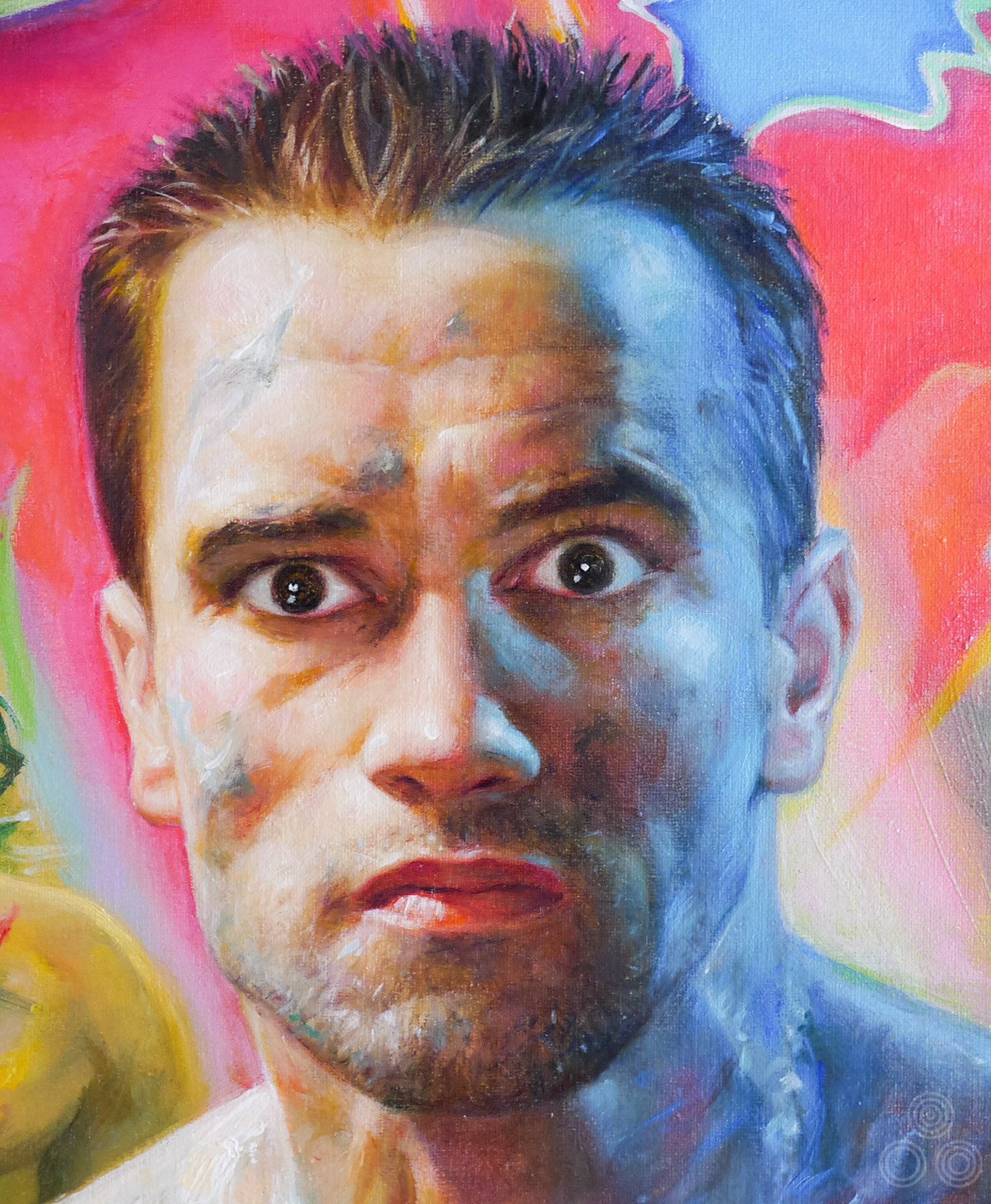
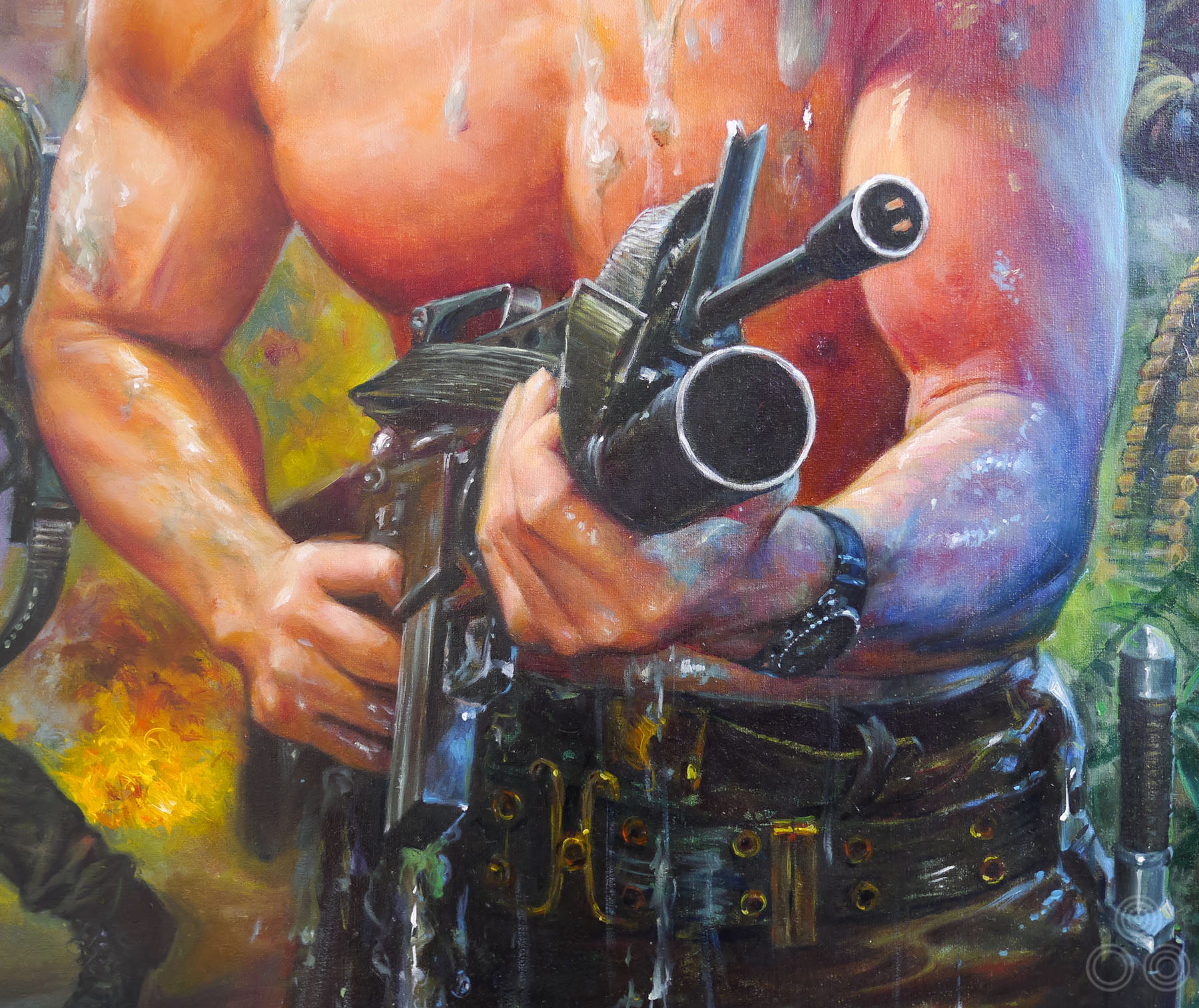
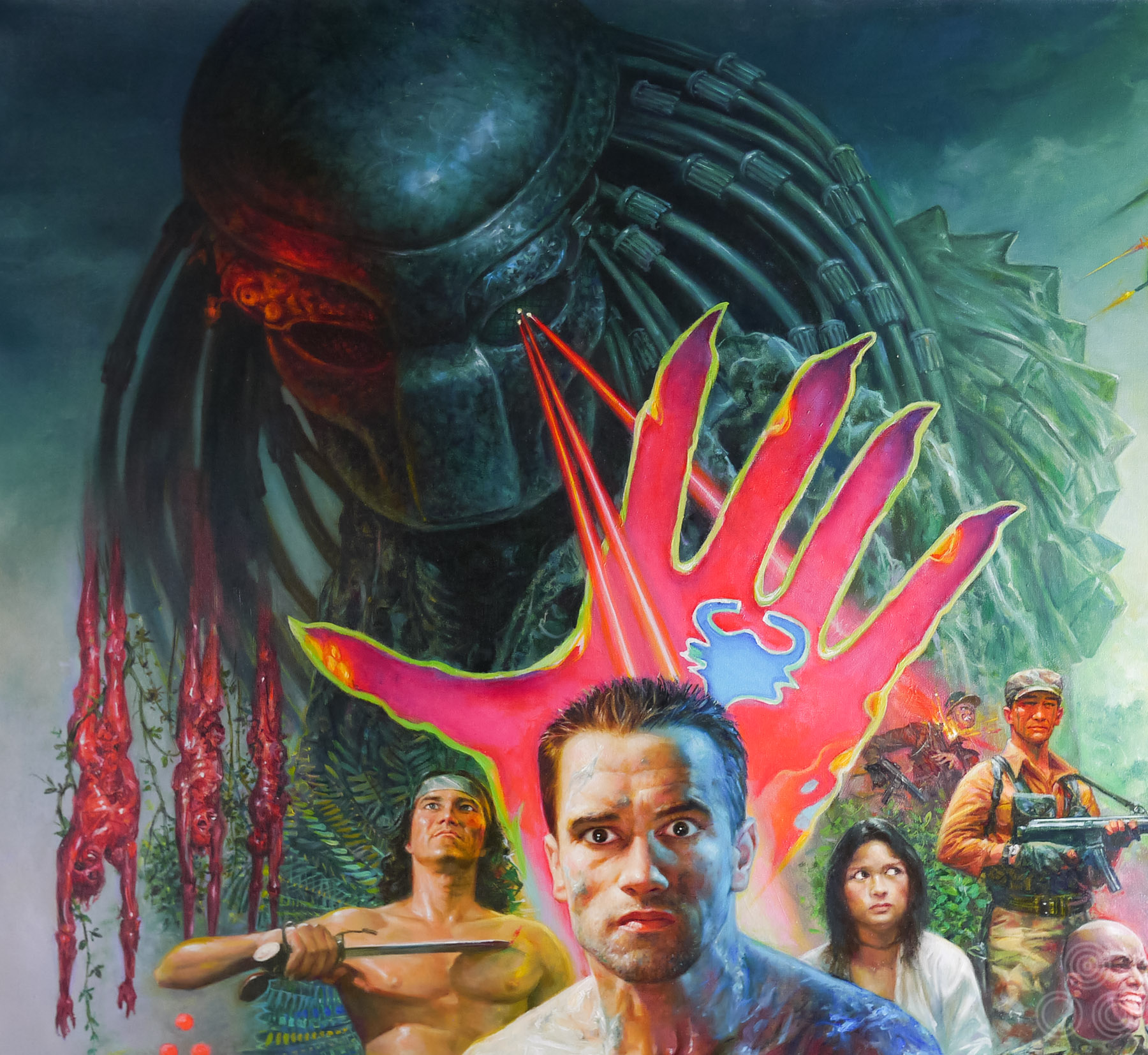
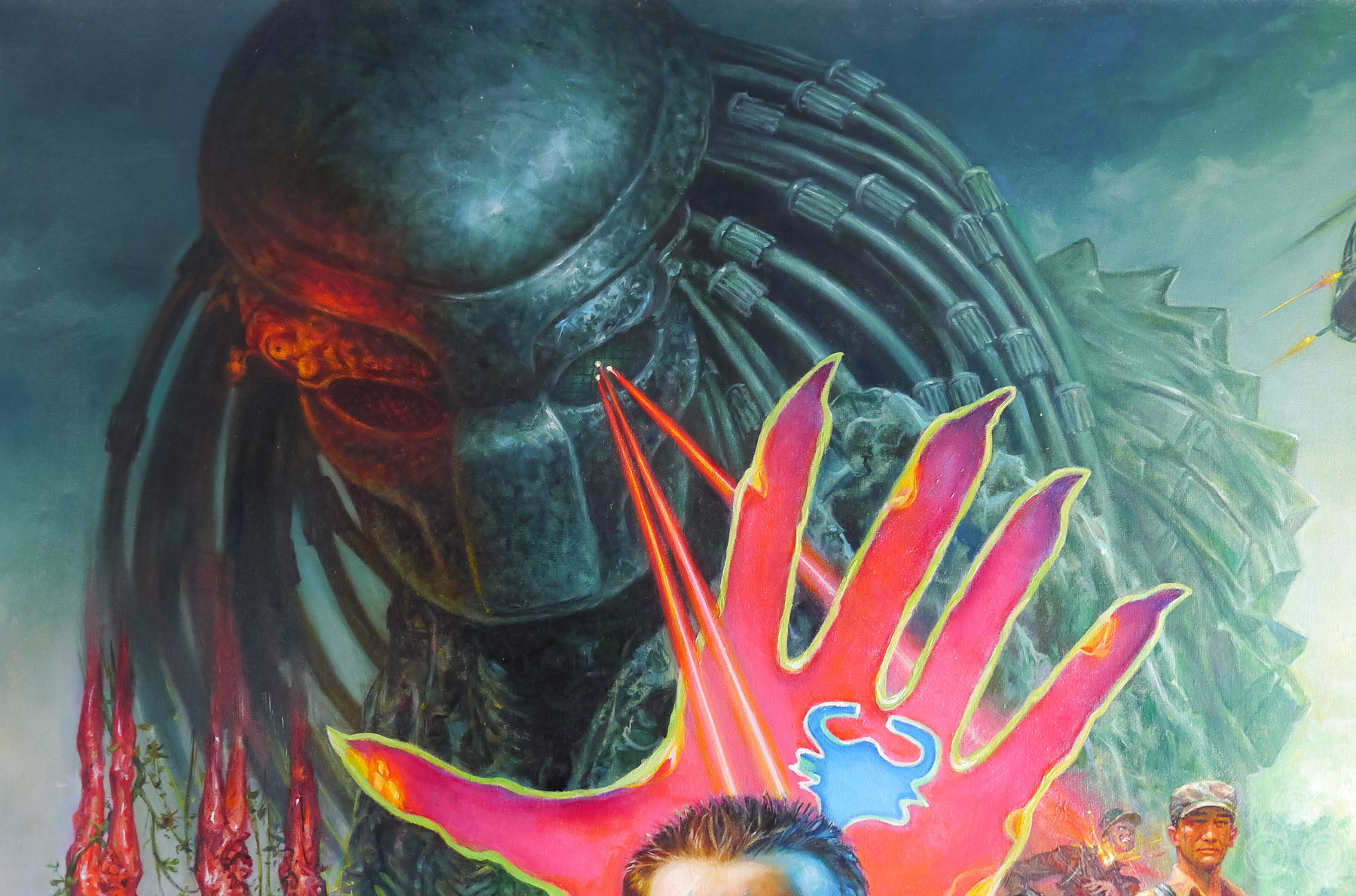
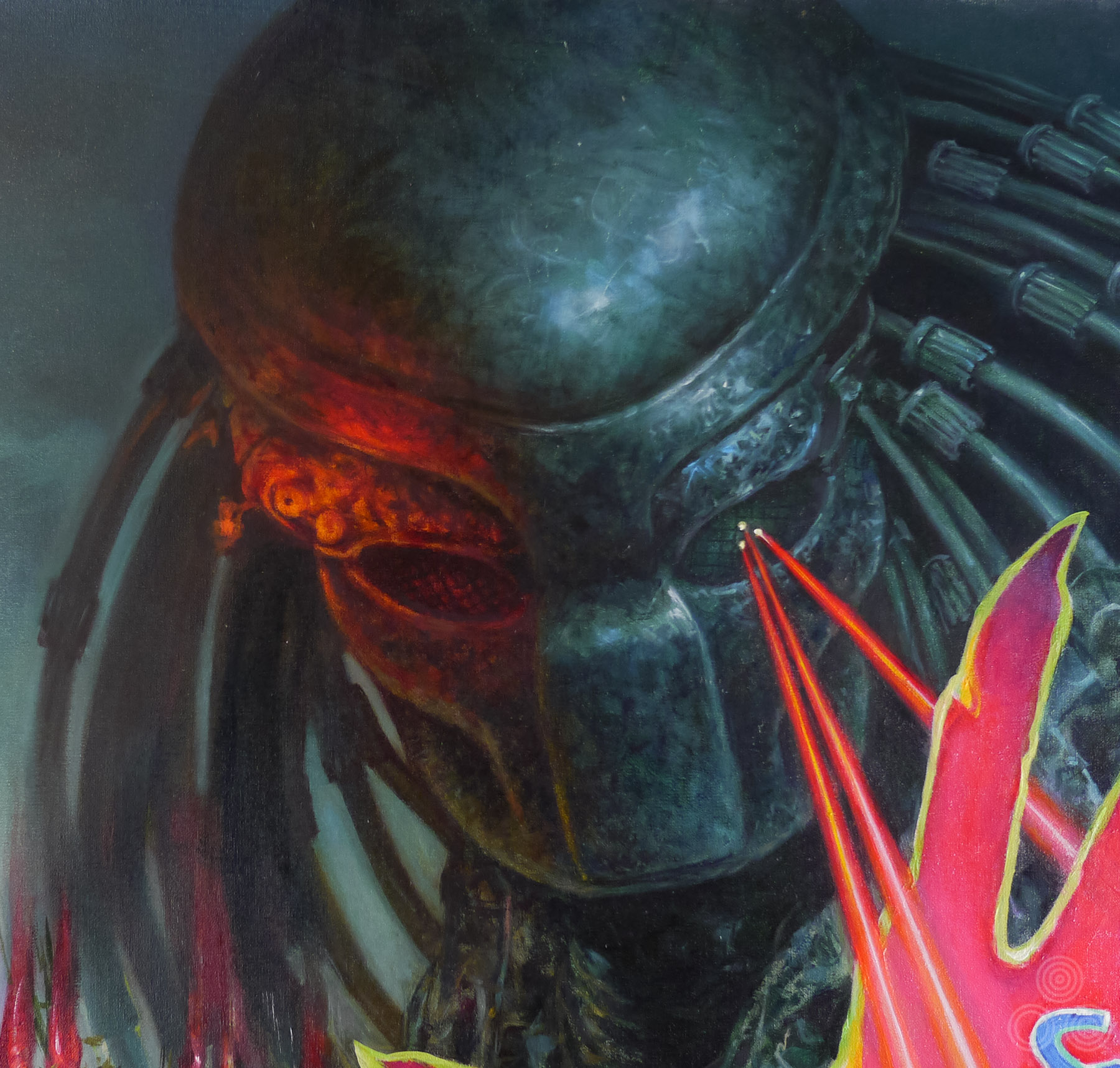
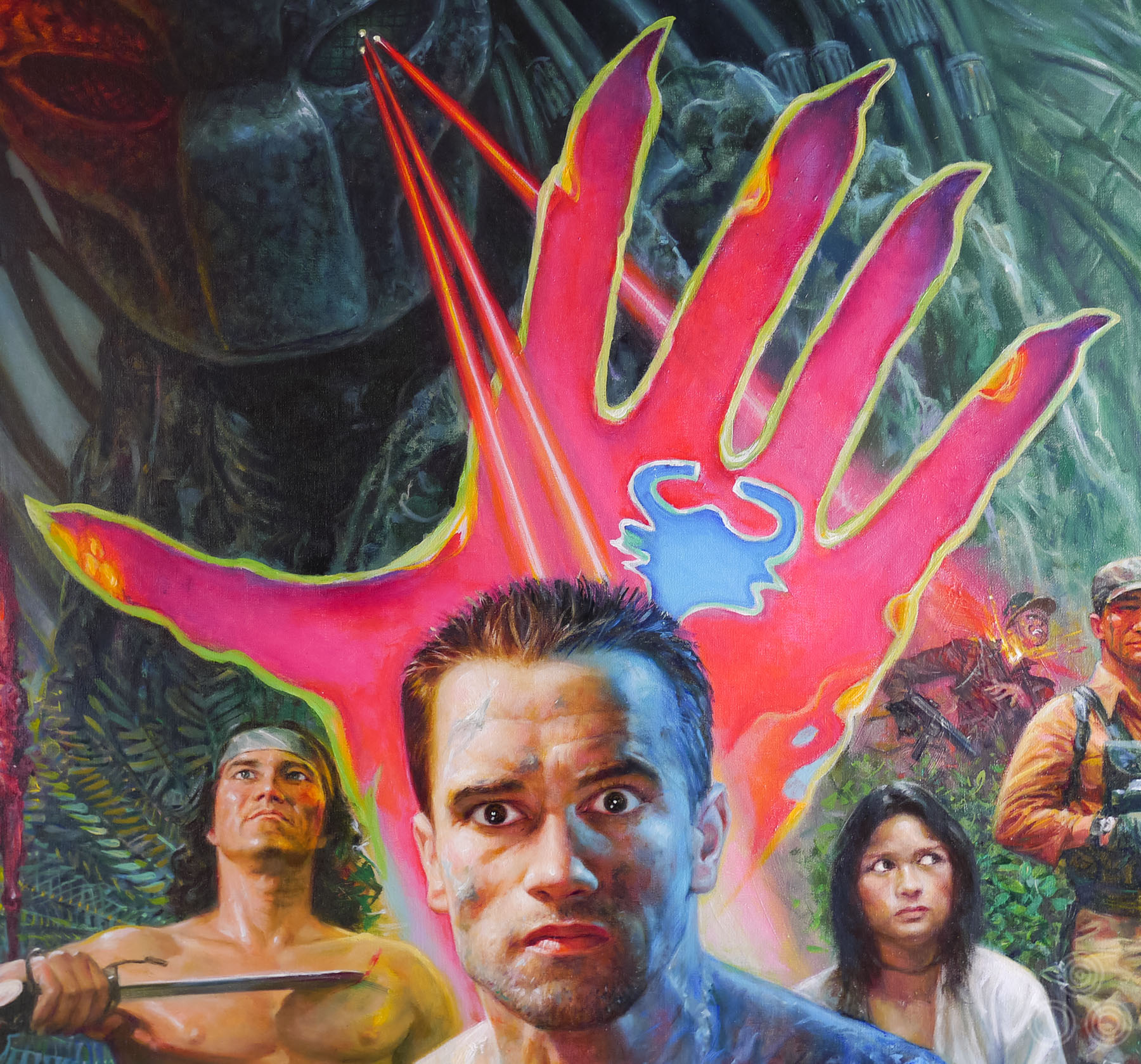
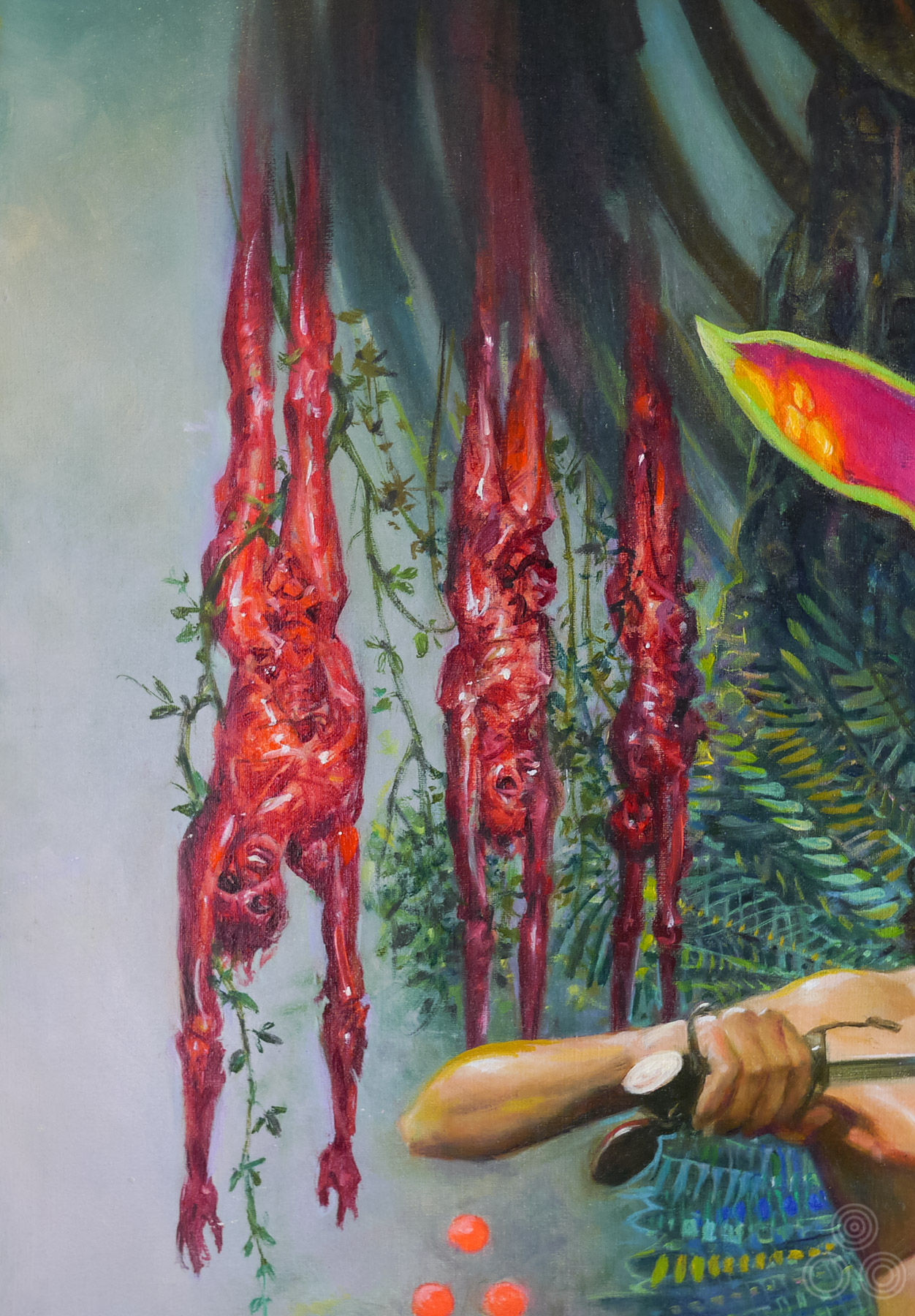
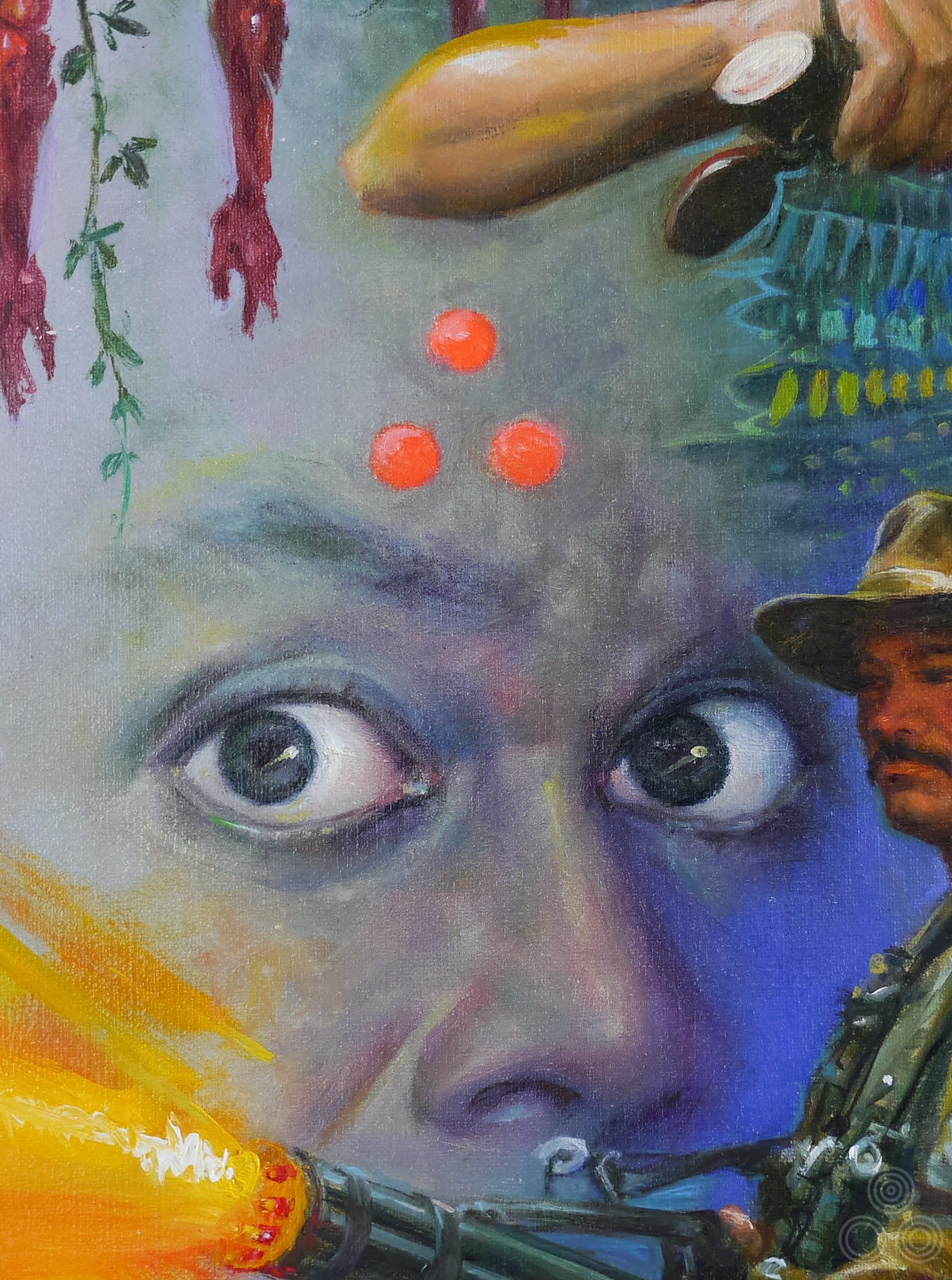
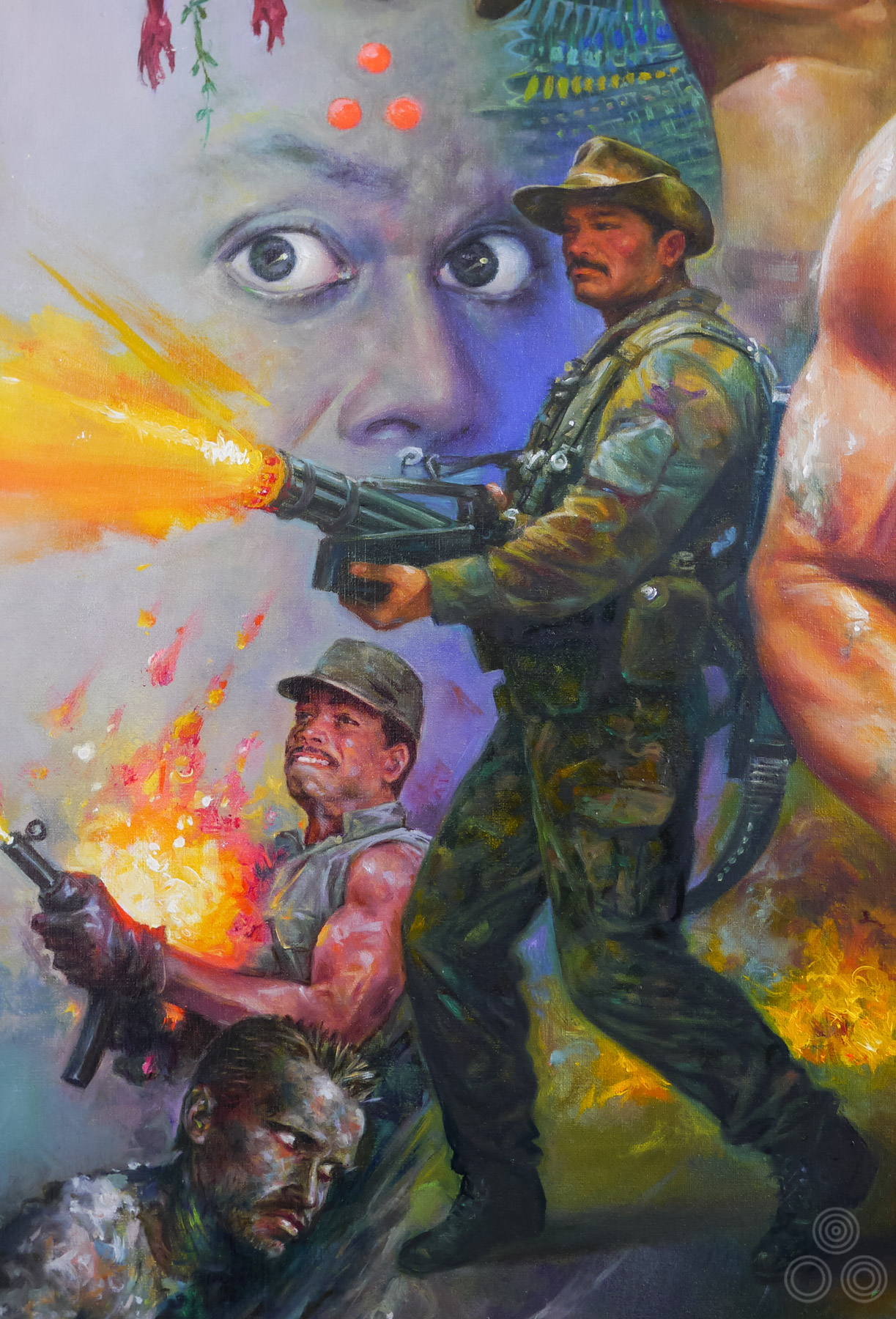
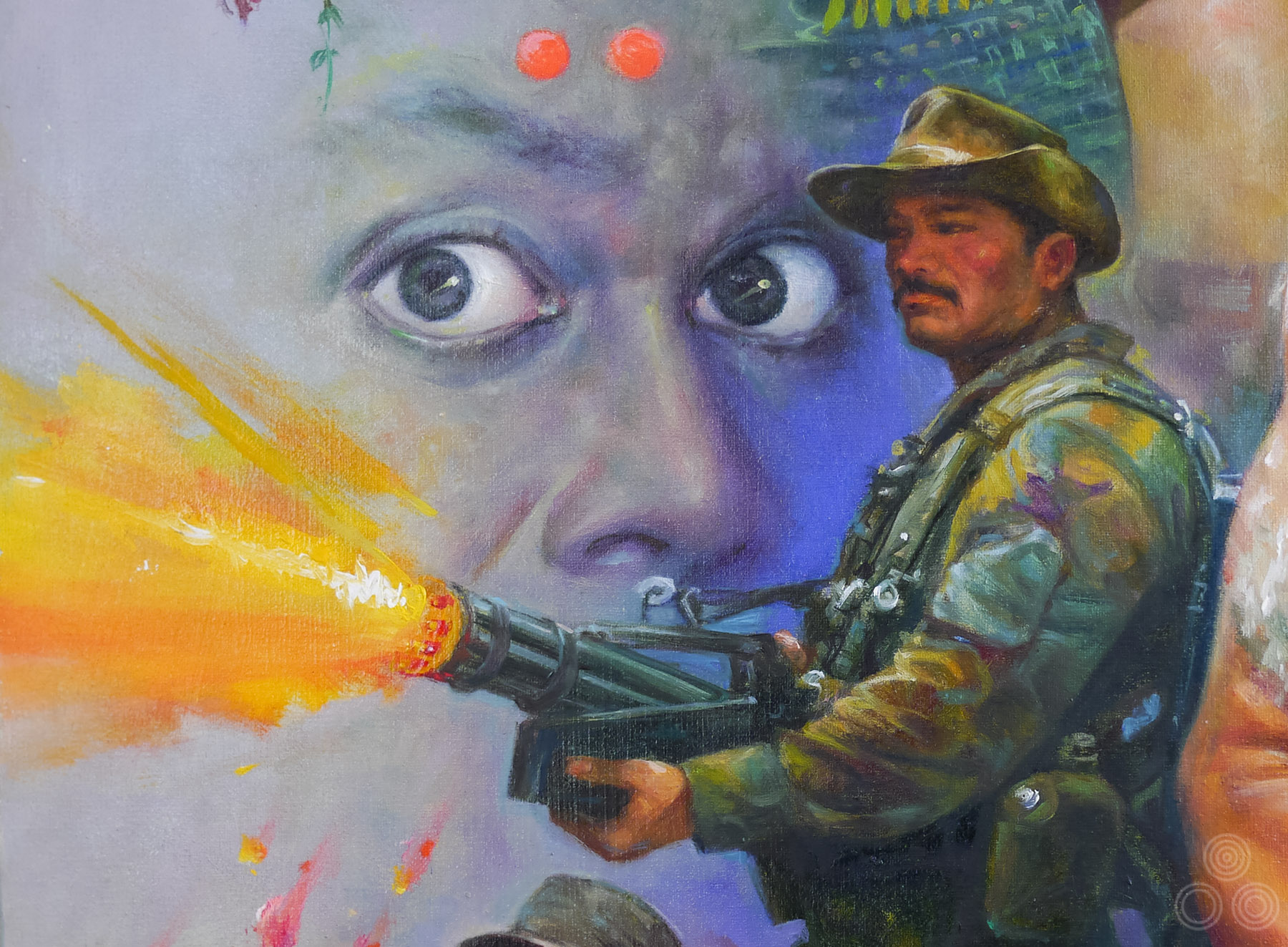
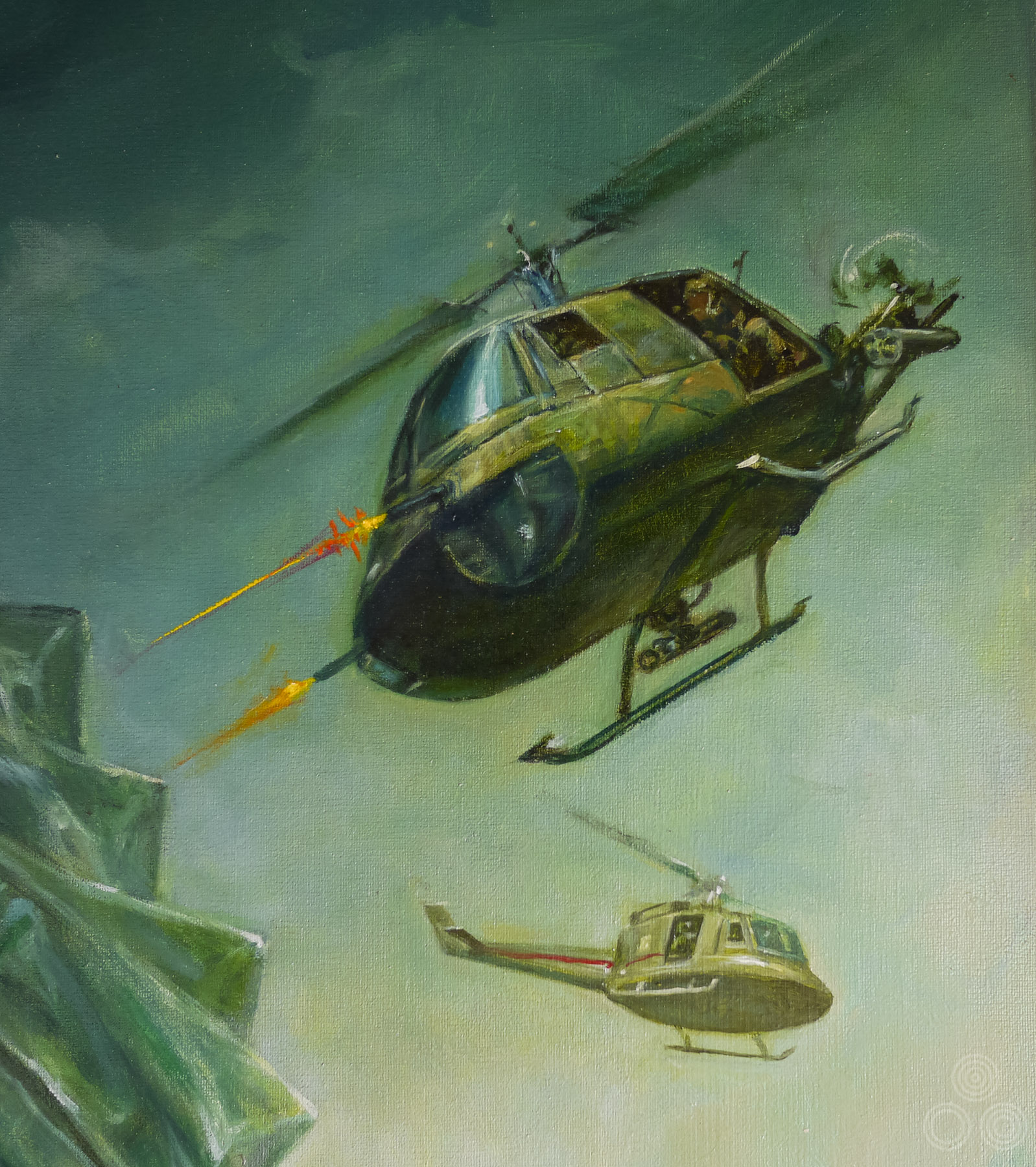
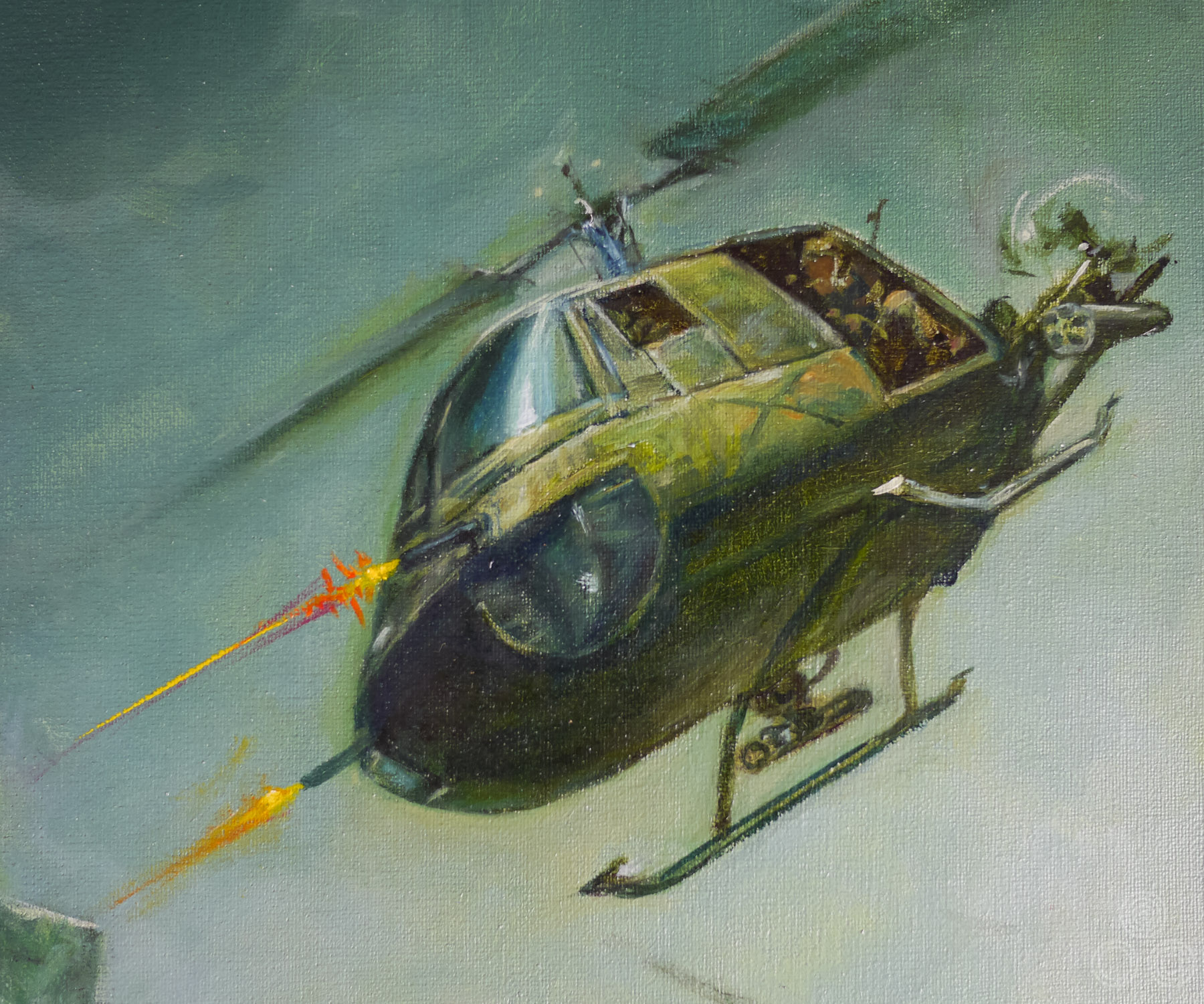
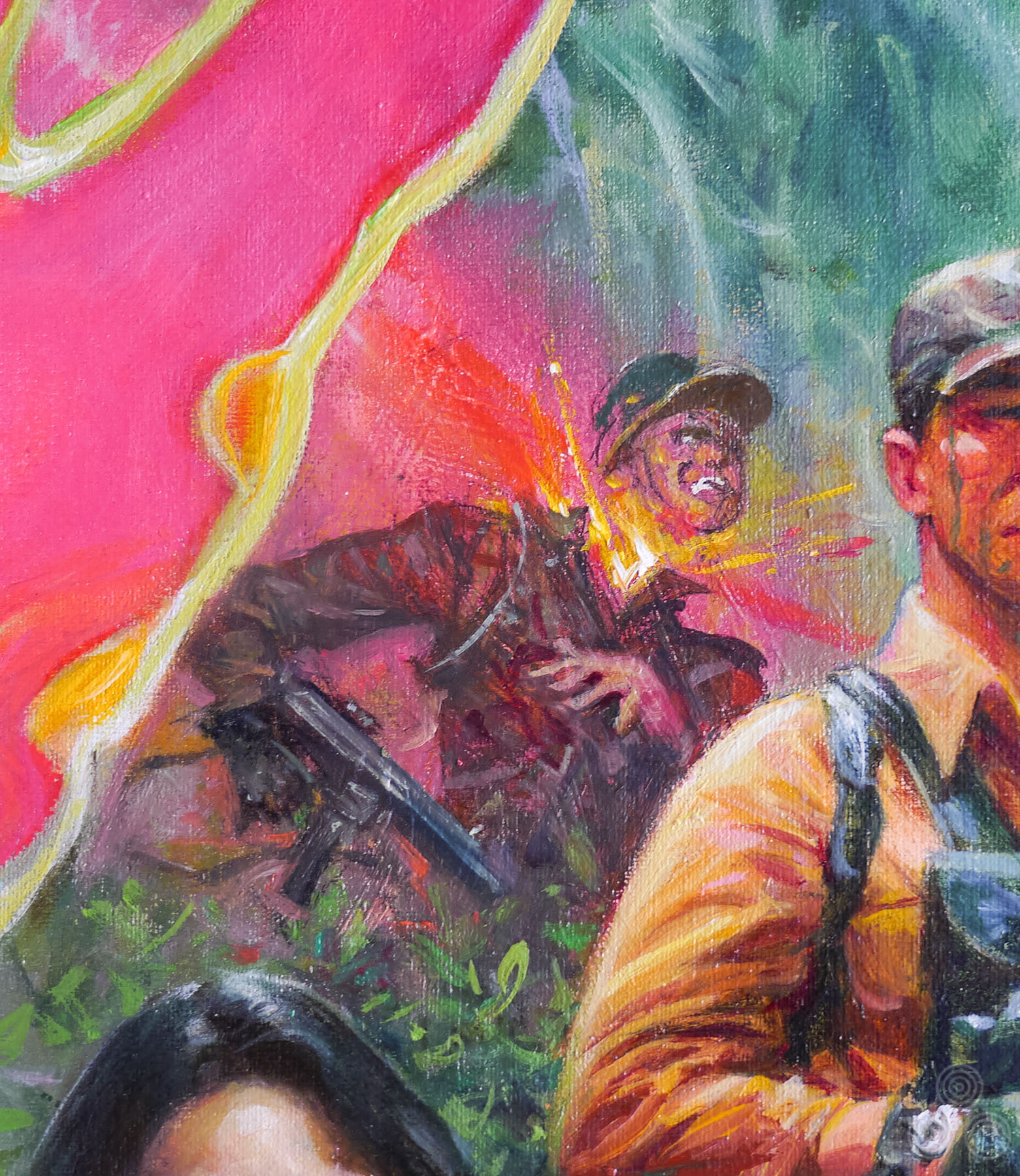
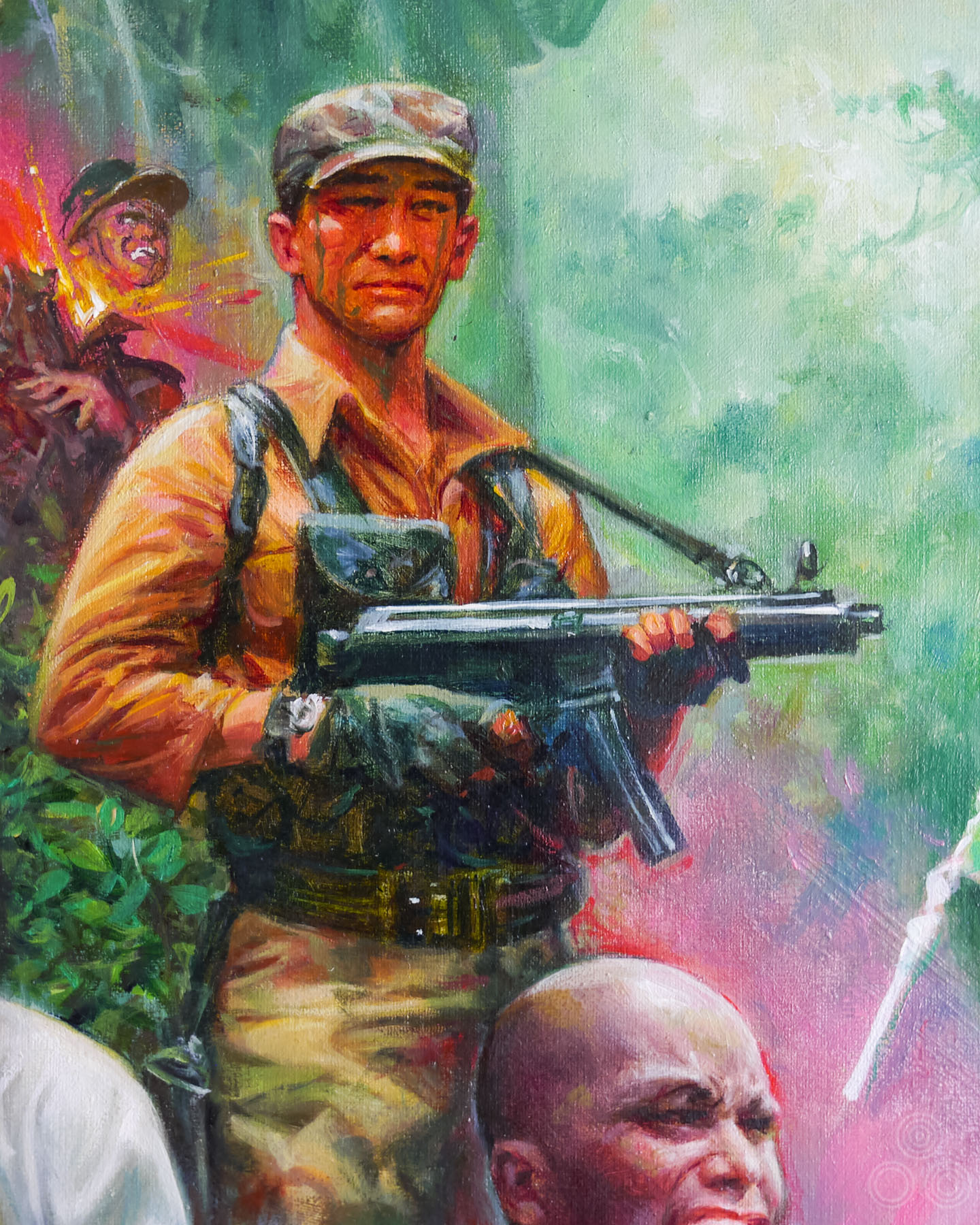
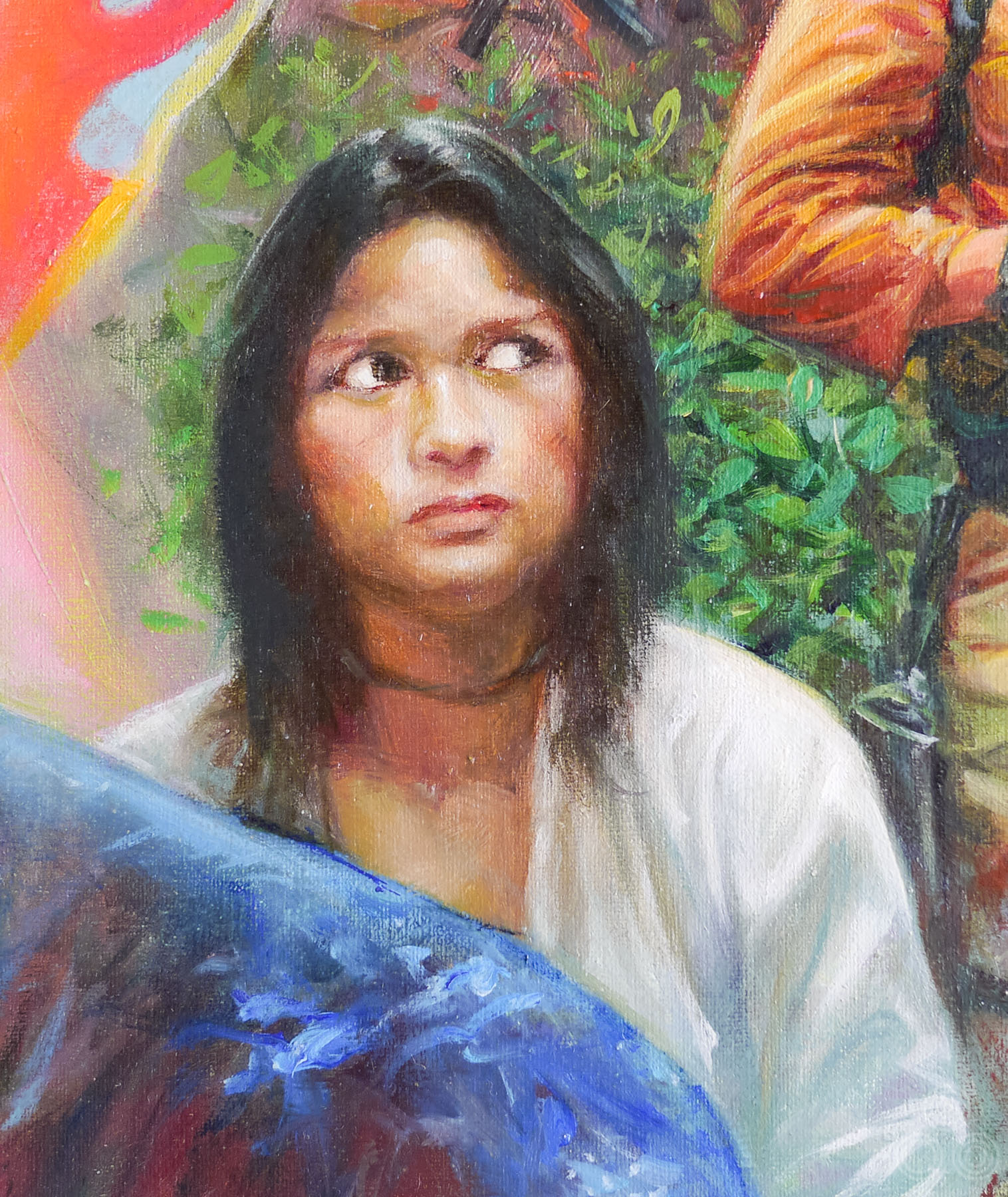
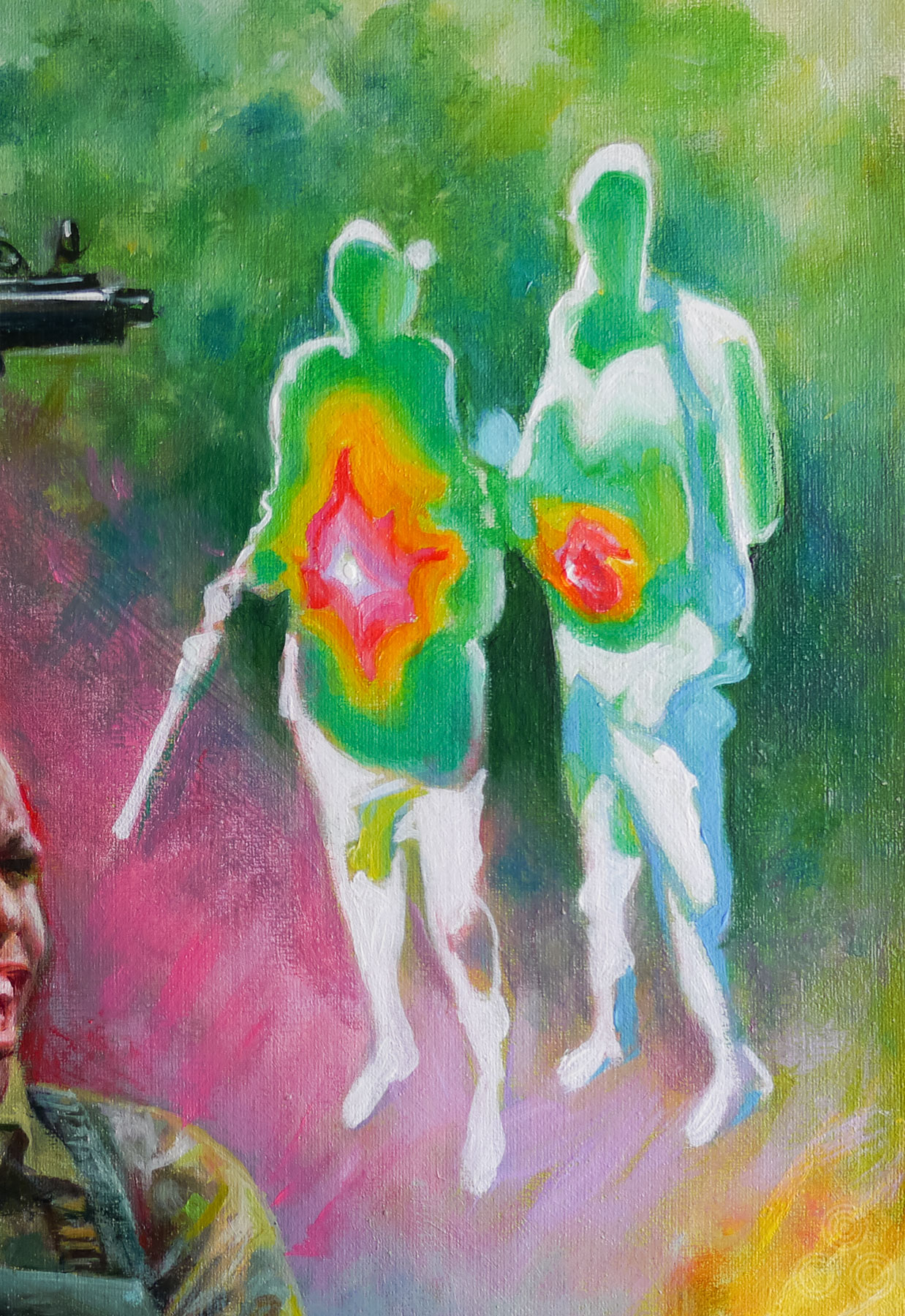
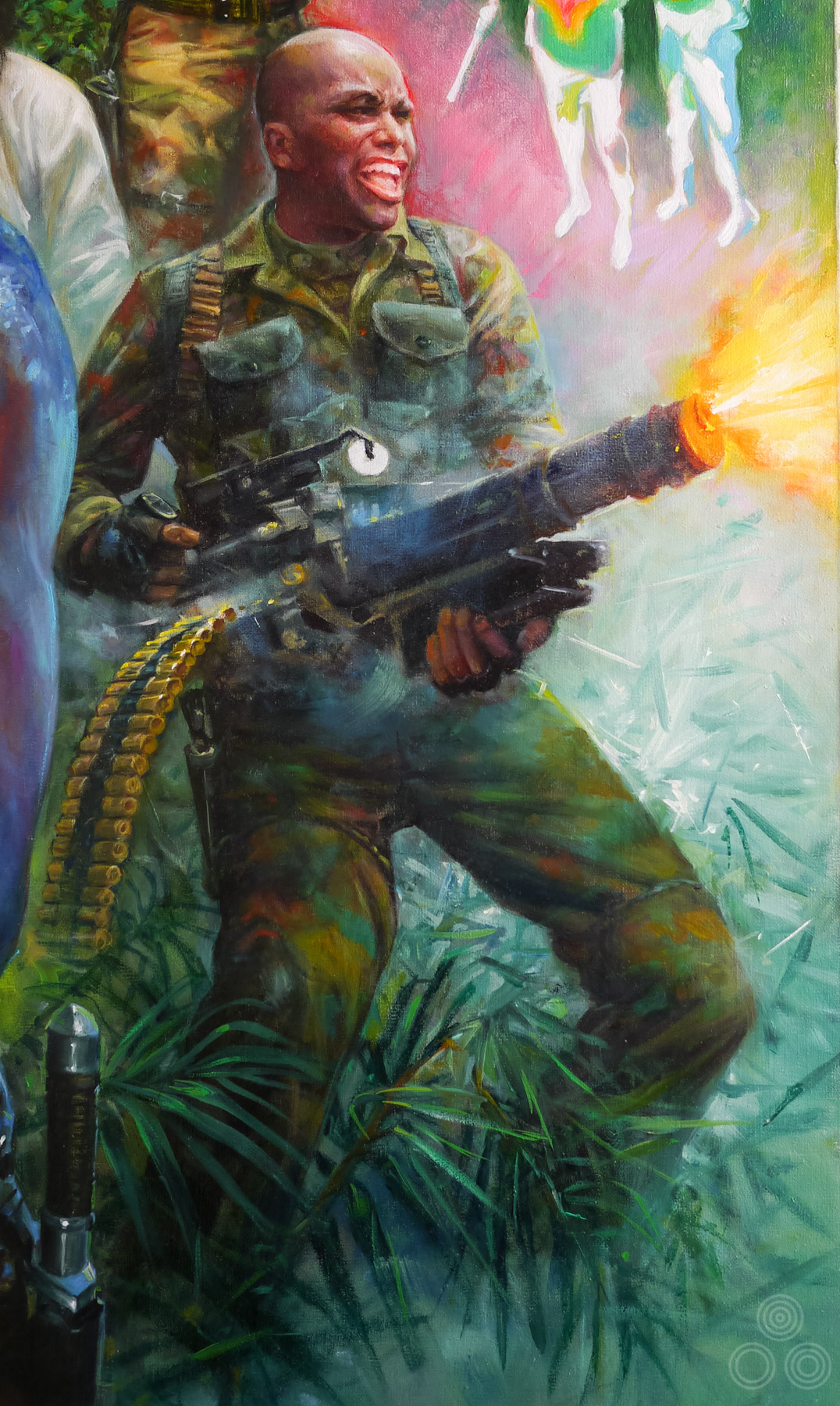
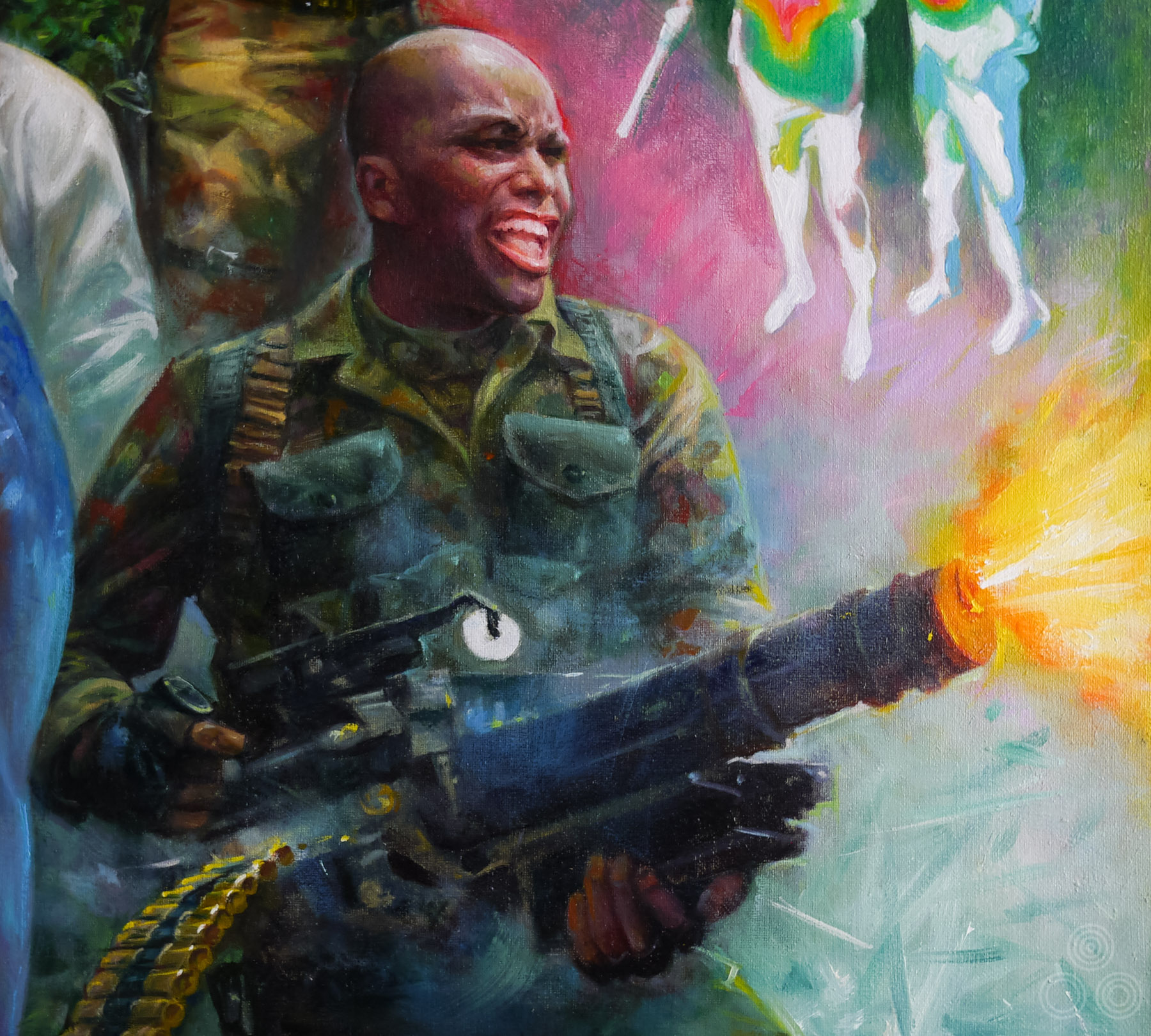
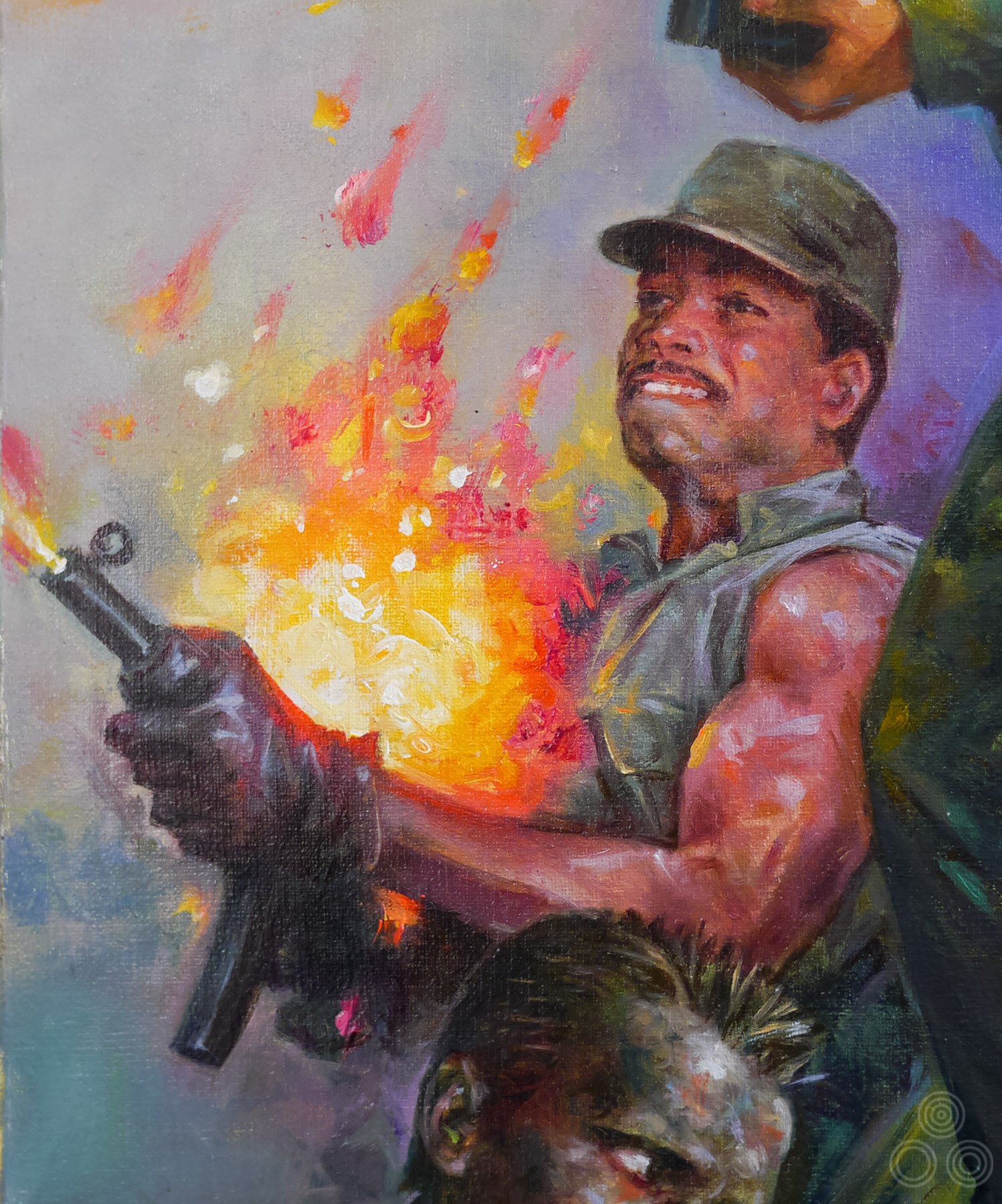
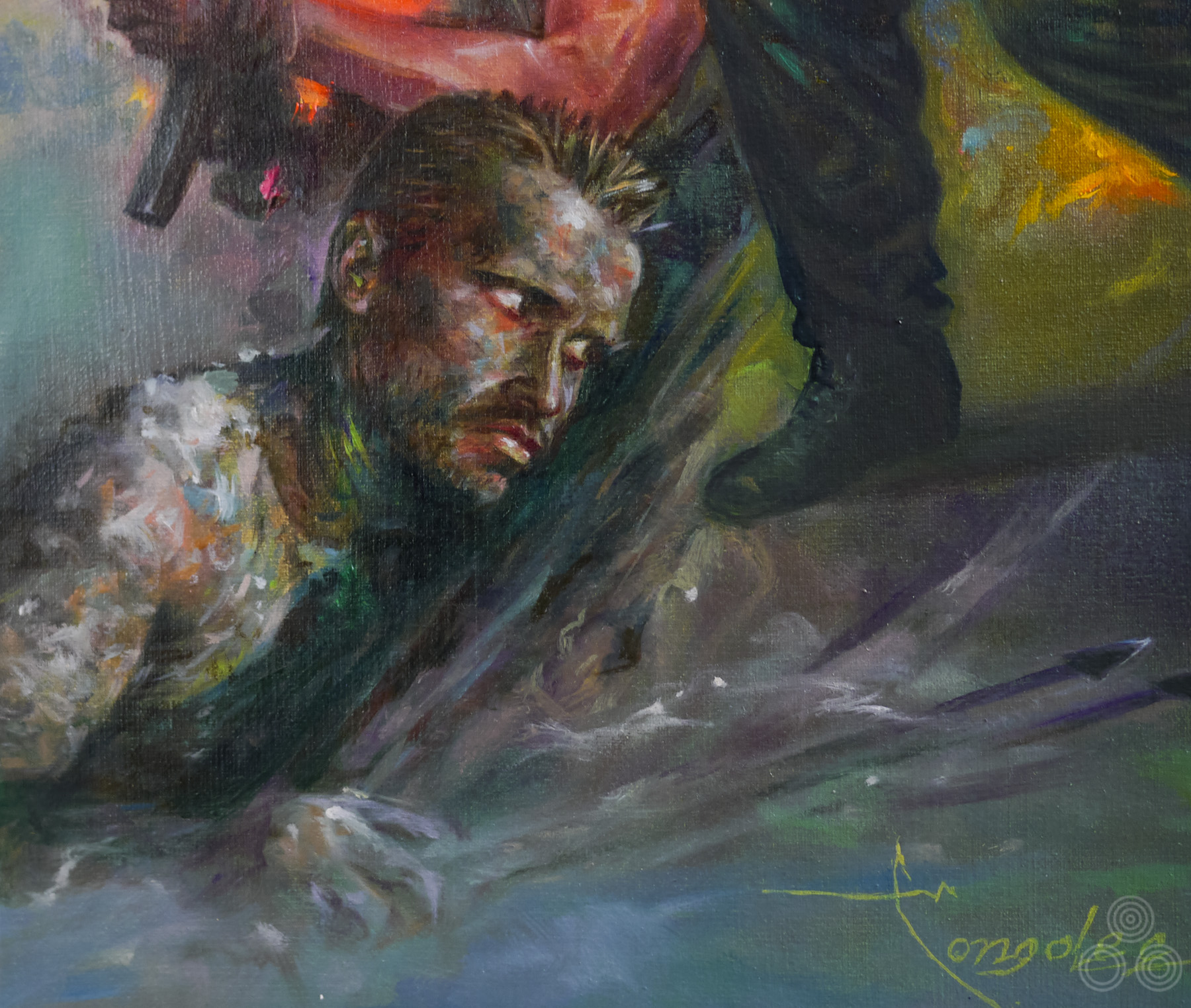
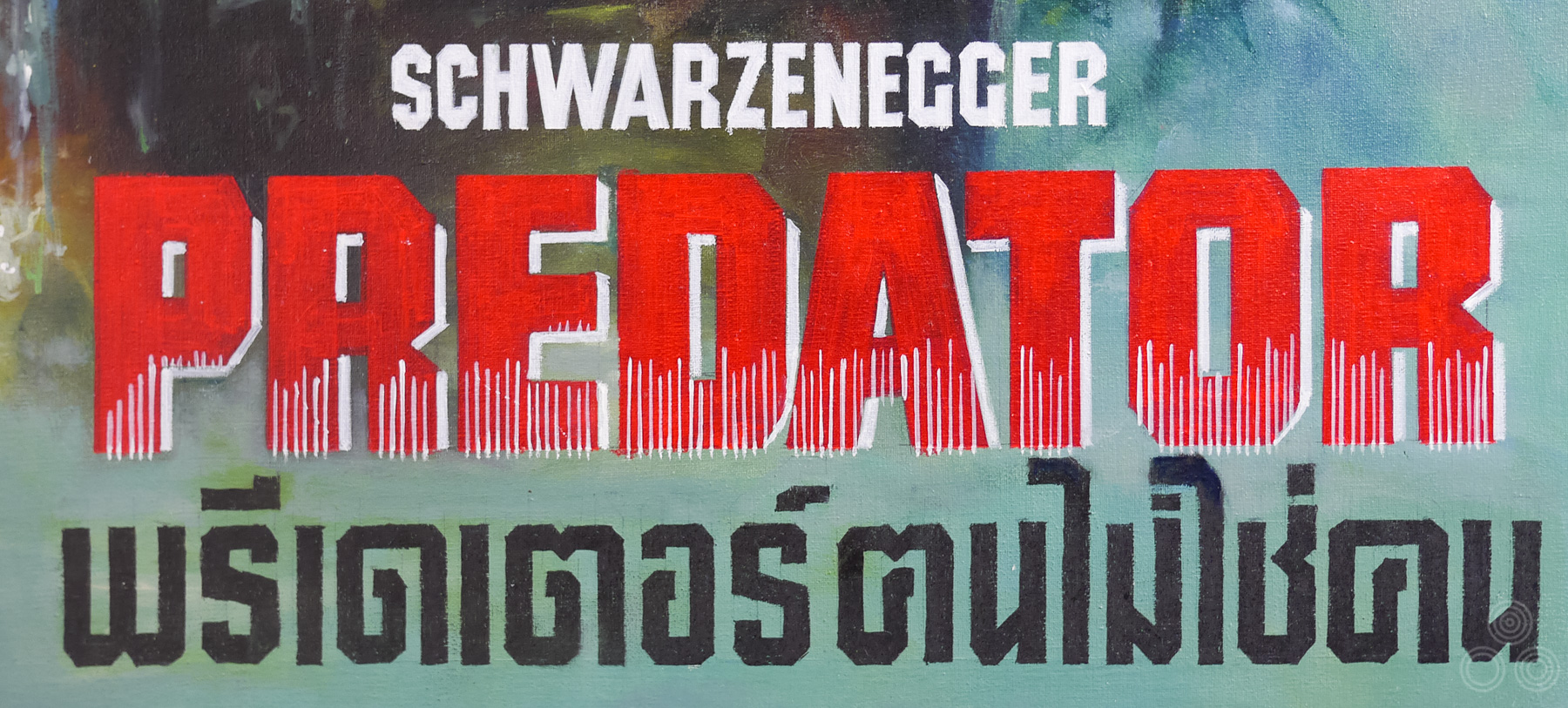
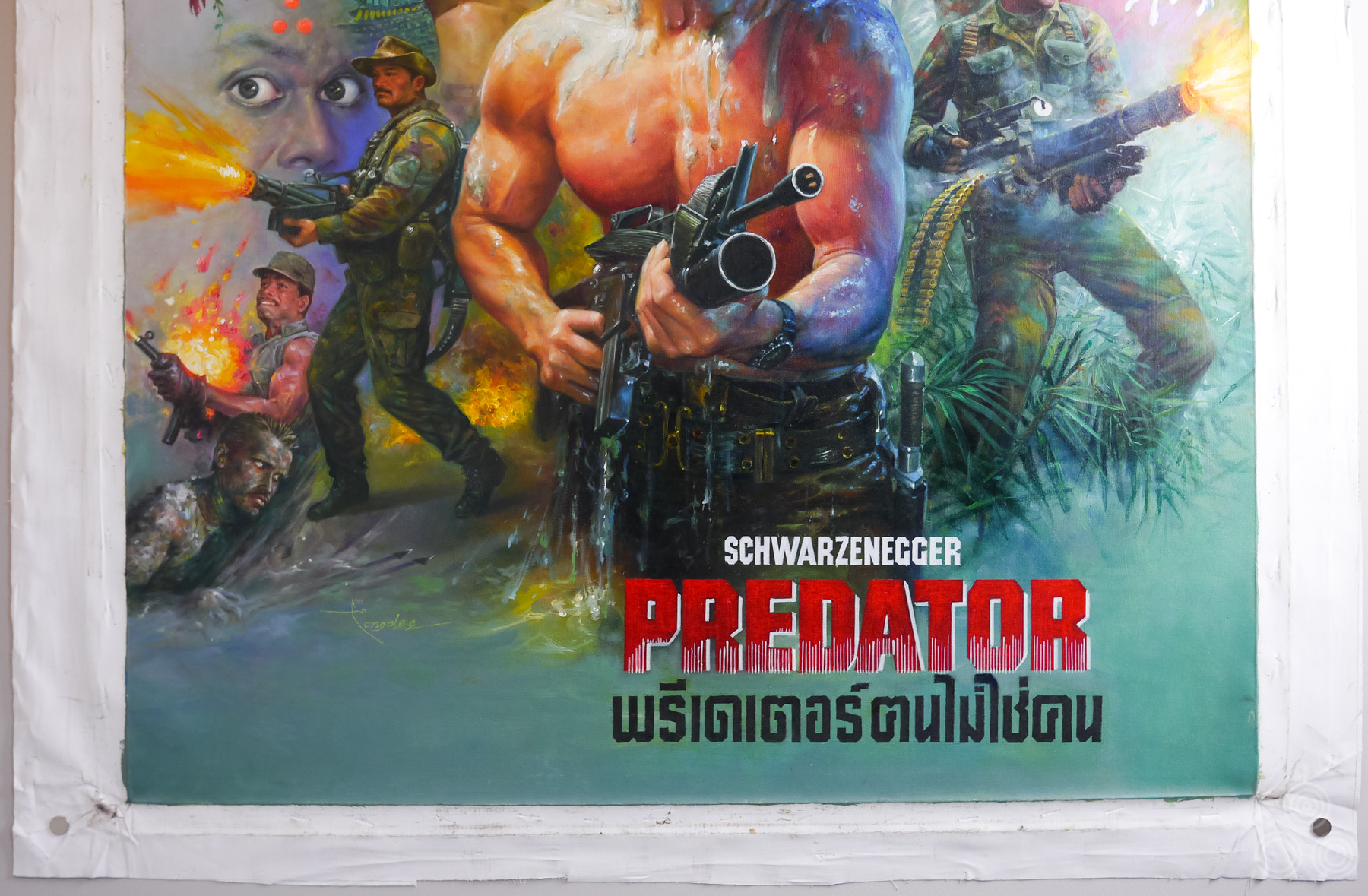
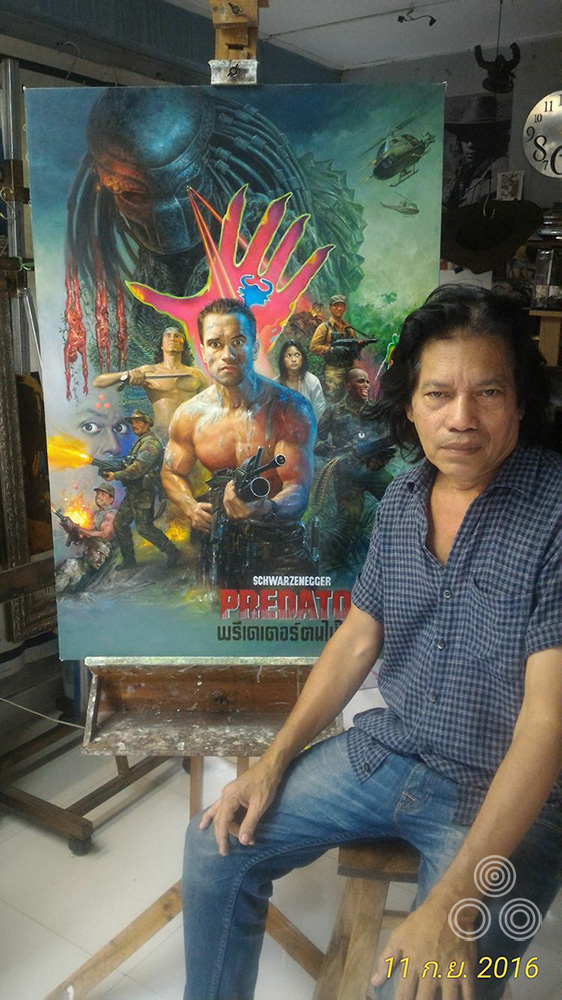
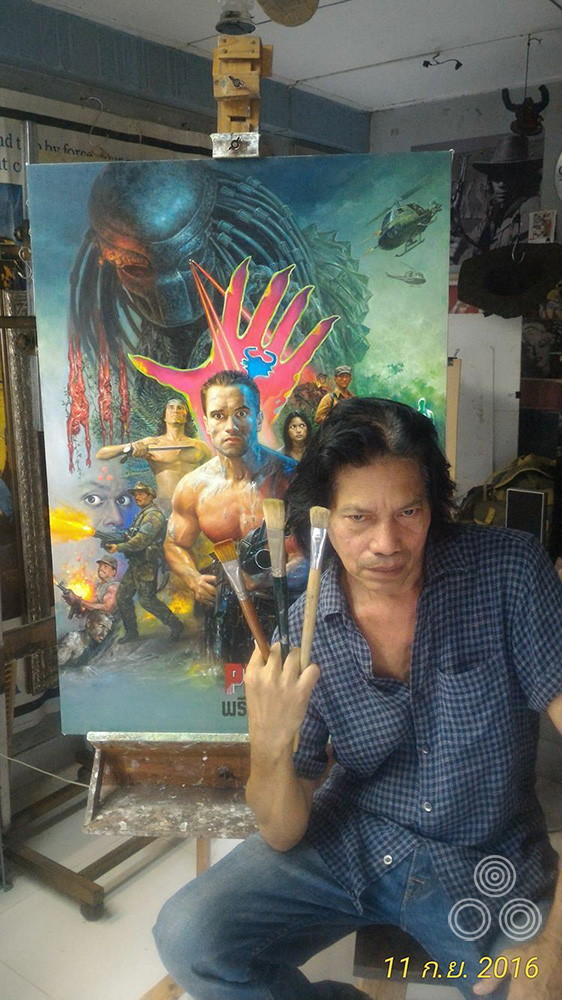
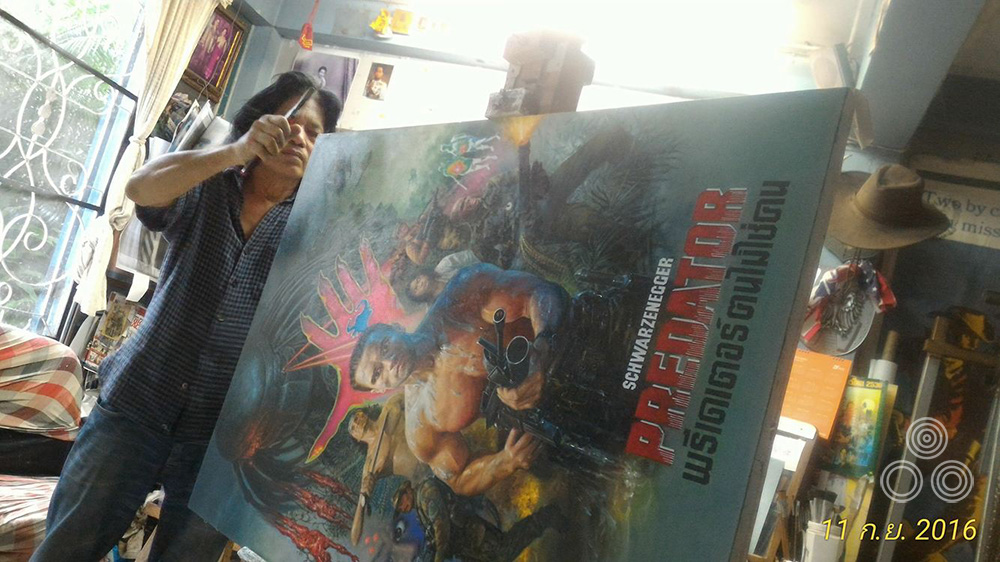
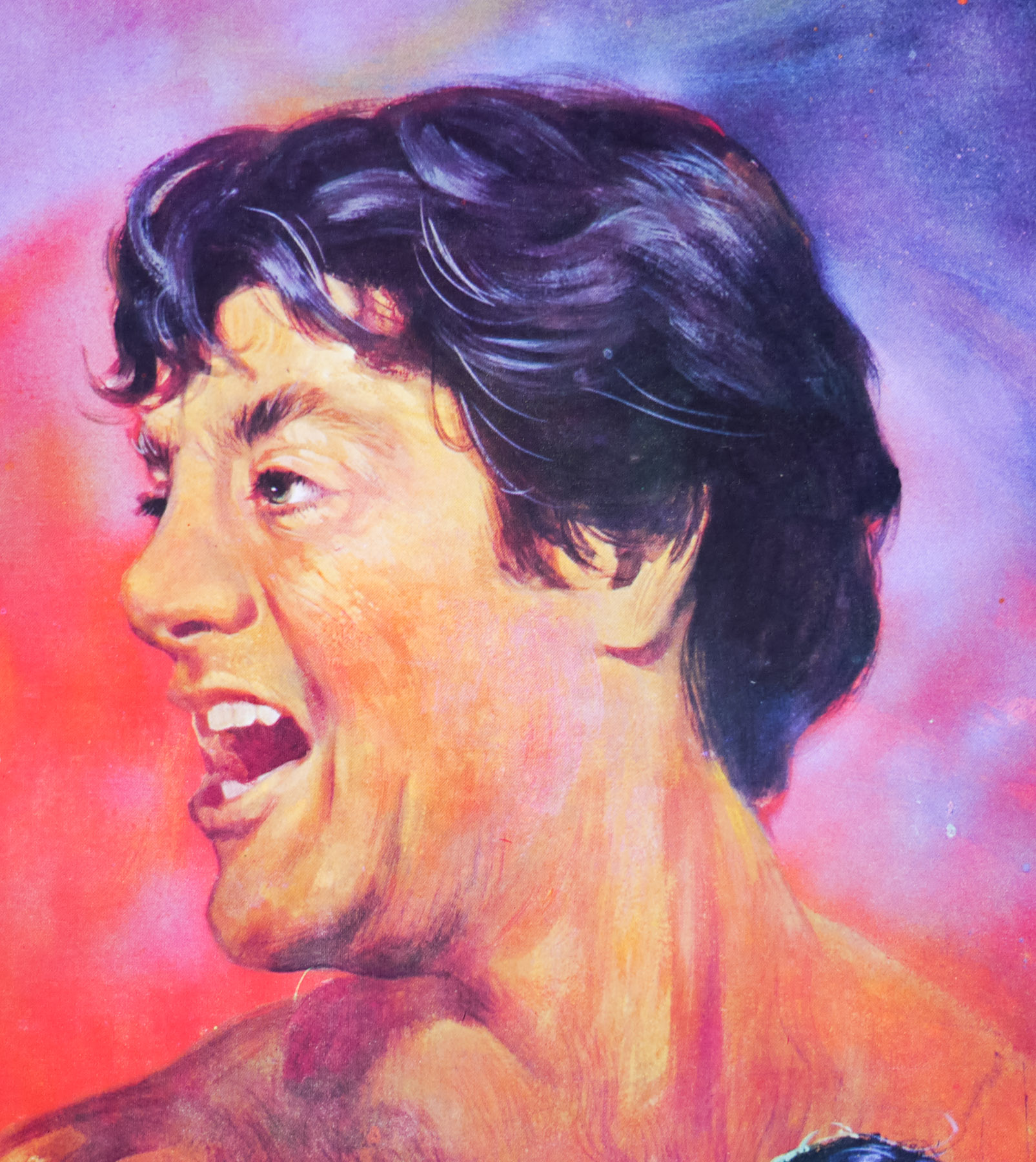
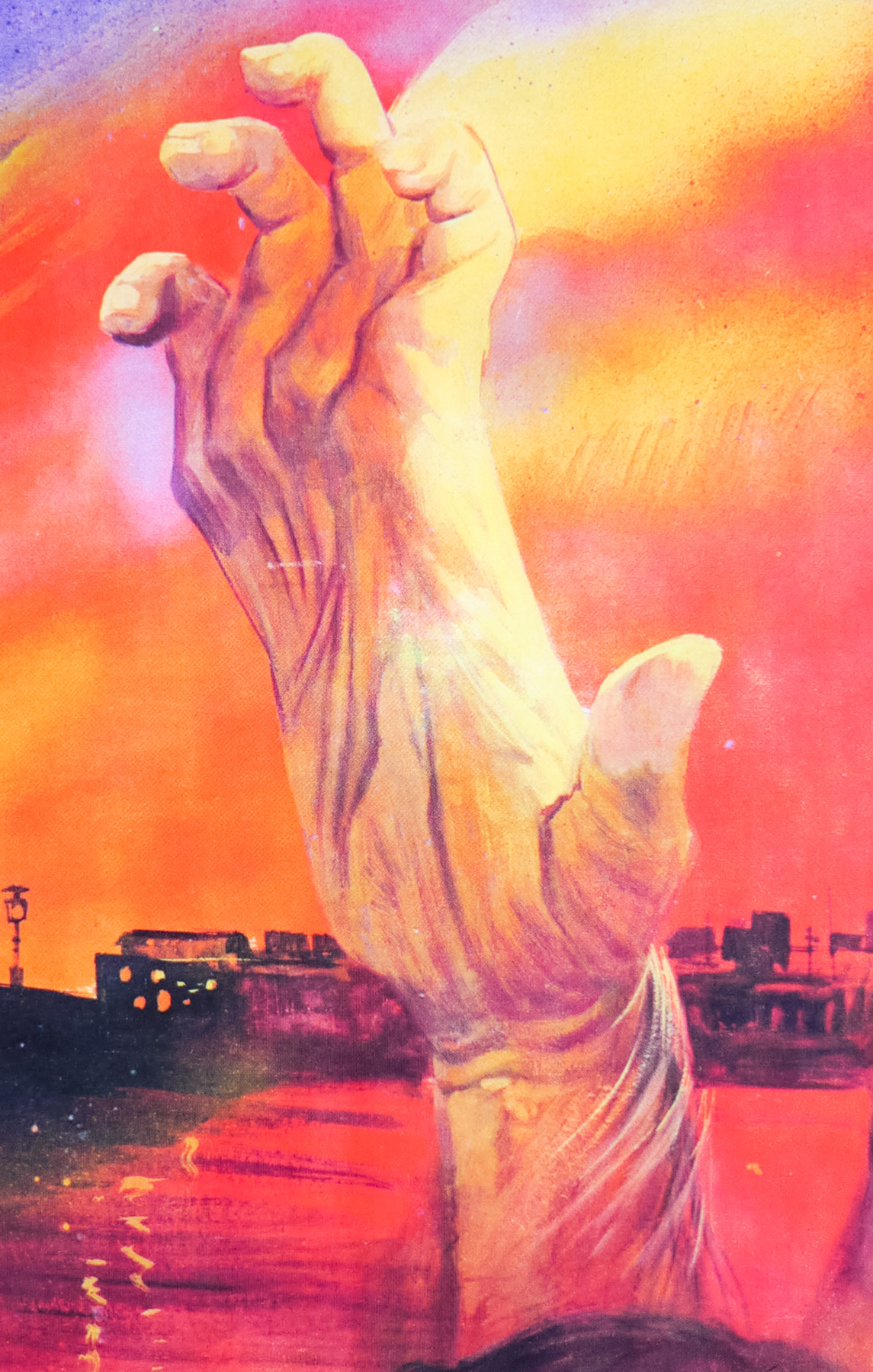
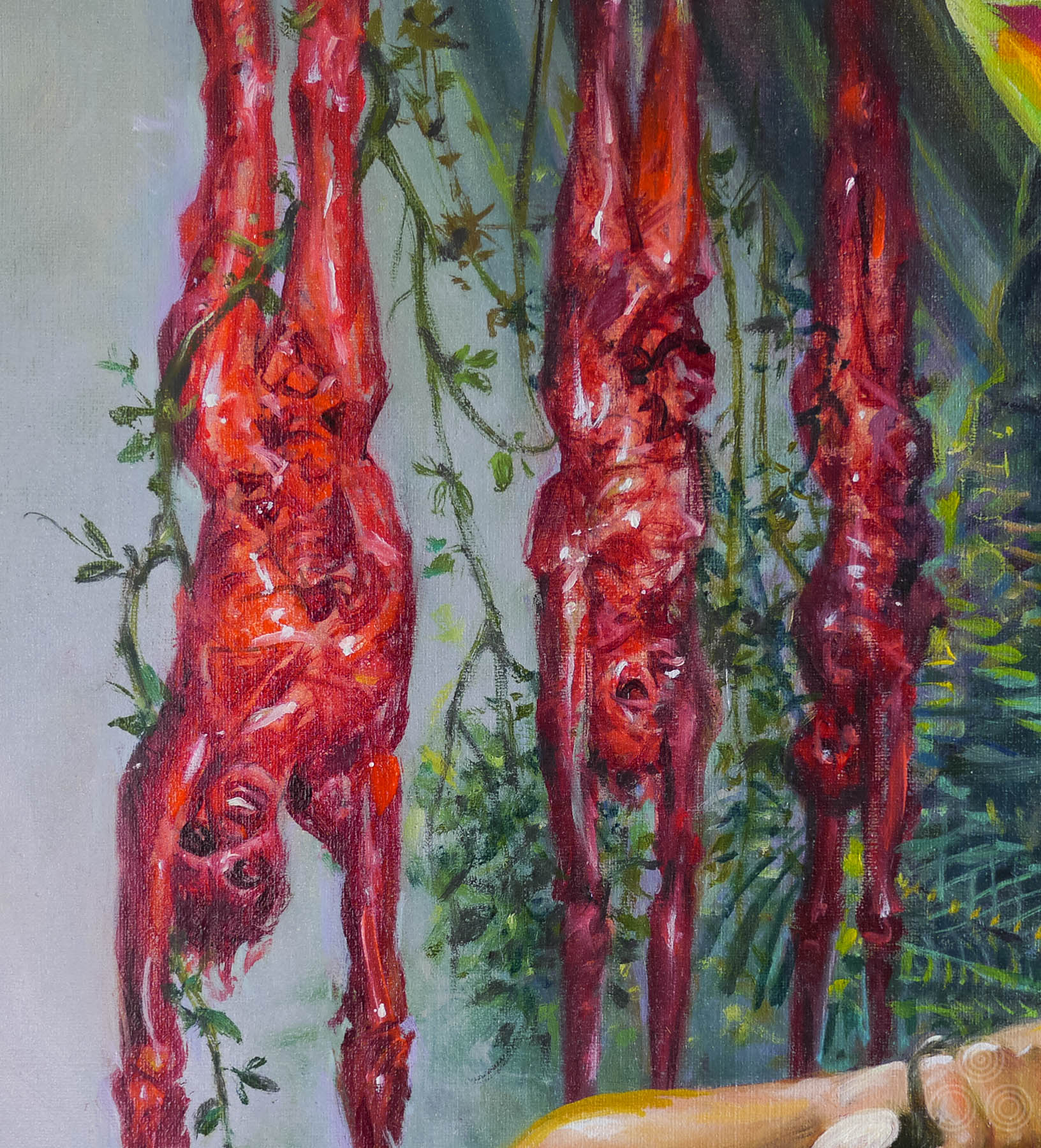
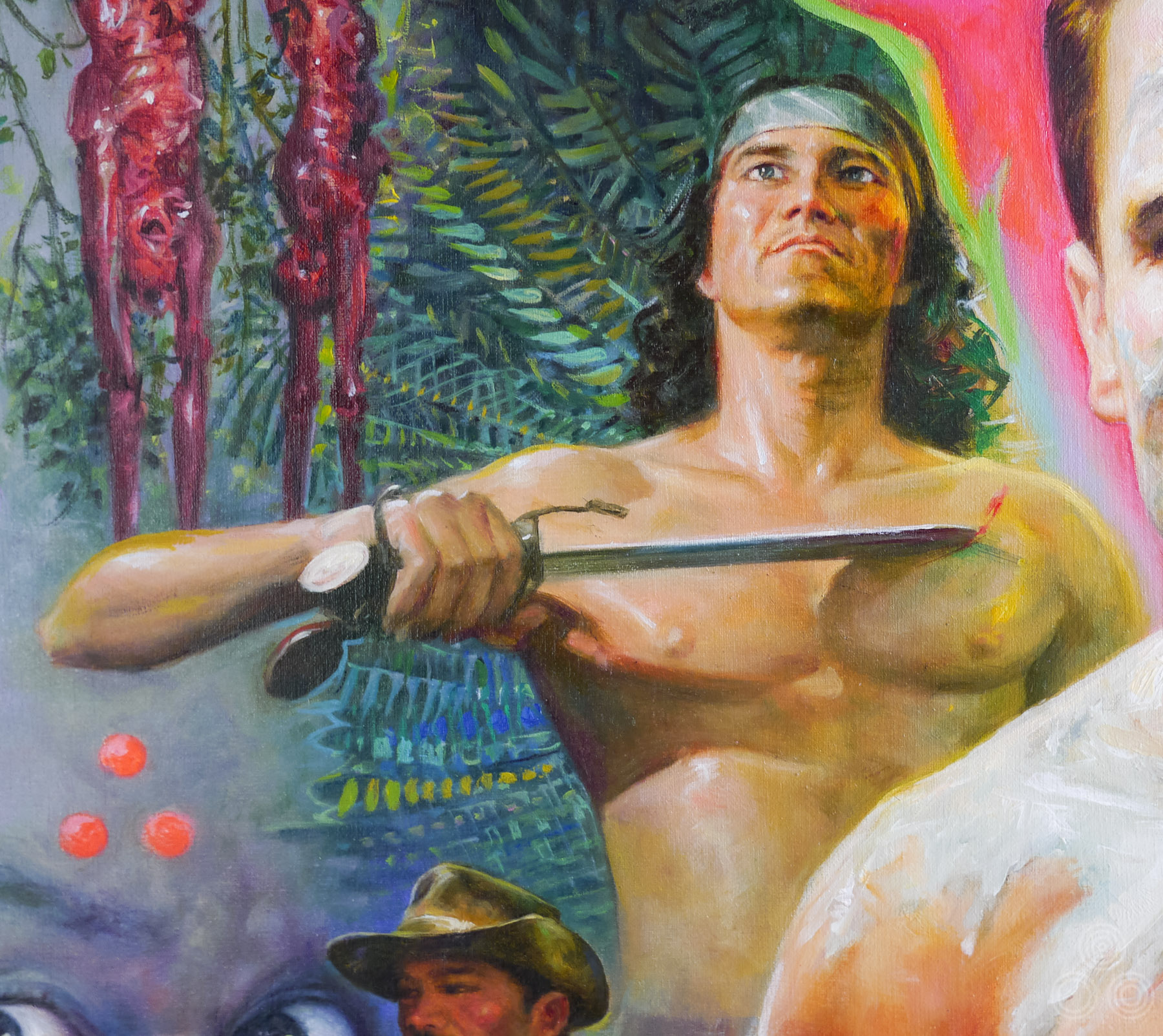
Earlier this year I commissioned (through a mutual friend) the legendary Thai artist Tongdee to reimagine a poster for one of my favourite films, Predator (1987). The film was released in Thailand at a time when the use of painted artwork was being phased out and the original Thai poster is a photographic design that was based on the US one sheet. I’m a huge fan of Thai film poster artwork because of the typically lurid use of colours and lack of censoring, which led to some incredible posters like Tongdee’s Apocalypse Now and the one for Lucio Fulci’s The Beyond.

Because the original photographic poster was comparatively disappointing, I was excited to see what Tongdee would create. I gave him free reign with the exception of a couple of things I was keen to see (the iconic thermal-vision being one) and after a few weeks was sent a sketch with his idea for the layout. After requesting a couple of very minor tweaks I gave the go ahead and Tongdee began working on the actual painting. Last week I received the finished article and I’m very happy with the result. I love the layout and the use of colours, including the incorporation of the thermal-vision Predator hand. I also love the artistic licence he took on a few elements (I’ll let you figure out what I’m talking about) which was typical of his paintings from the original period of him working on film posters.

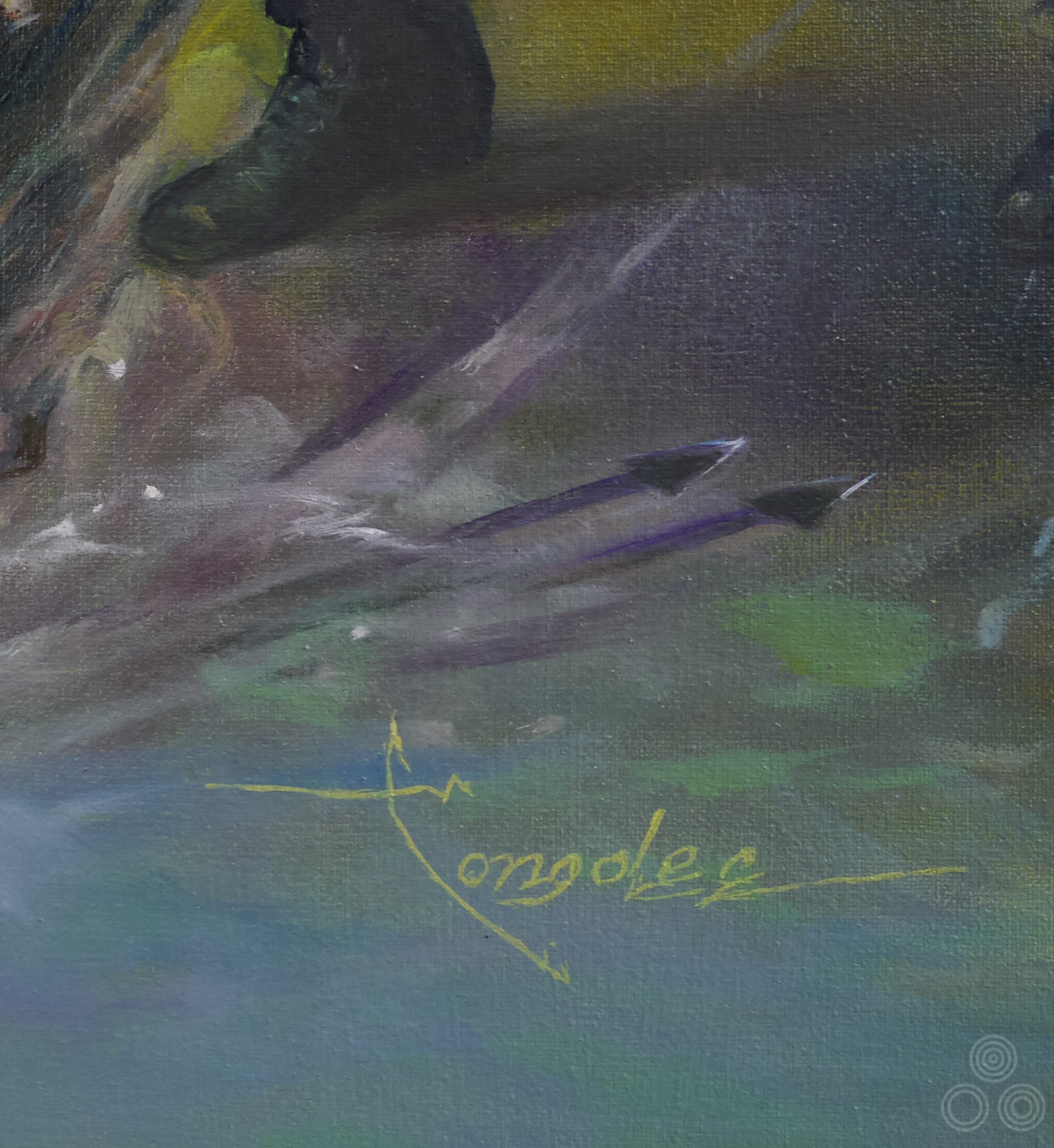
The painting is just over American one sheet size and I plan to get it framed as soon as possible. I’ve tried to take as many pictures as possible so you can see the details, and you’ll be able to see the grain from the canvas onto which Tongdee painted. I’ve also included three pictures that I was sent showing the painting with Tongdee in his studio. There’s also one photo (fourth from last) which shows the painting as it was sent to me, having been removed from the wooden frame over which it was stretched for painting.

Tongdee Panumas (he signs his posters with just his first name) was incredibly prolific during the 70s, 80s and 90s and, although he no longer paints official film posters for Thai distributors he is still painting for other clients. I’ve been unable to find out much about him from a biographical point of view other than that he was born in 1947. My hope is to someday travel to Thailand to meet and interview him.

One of the best films of the 1980s and certainly one of the Austrian Oak‘s finest roles, Predator is a film I’ve seen more times than I care to remember. Directed by John McTiernan, who would go on to helm Die Hard the following year (arguably the greatest action movie ever made), the film is an excellent mix of gung-ho action and sci-fi horror with a truly iconic monster that has gone on to appear in several (not so great) sequels and spin-offs.

The story sees Schwarzenegger’s team of single-monikered, rough-neck commandos dropped into a dangerous South-American jungle ostensibly on a rescue mission. When they discover a series of butchered and skinned corpses it soon becomes clear that they’re dealing with more than just a bunch of gun-toting guerrillas and someone, or something, is following them through the jungle. The film features several memorable characters, including Native American Sonny Landham‘s Billy, a man-mountain with much-needed tracking skills and the first one to realise they’re not alone, and Bill Duke‘s Mac who memorably leads the charge with a mini-gun when one of his comrades is killed. Like many of Schwarzenegger’s films, Predator is eminently quotable and features countless memorable lines spoken by several of the characters – ‘If it bleeds, we can kill it!’

To see the other Thai posters I’ve collected click here.


Erik the Viking / Thailand

17.07.17

Poster Poster

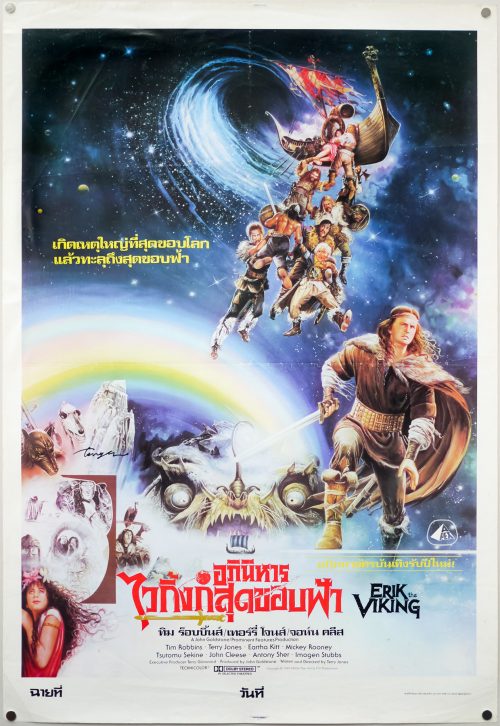
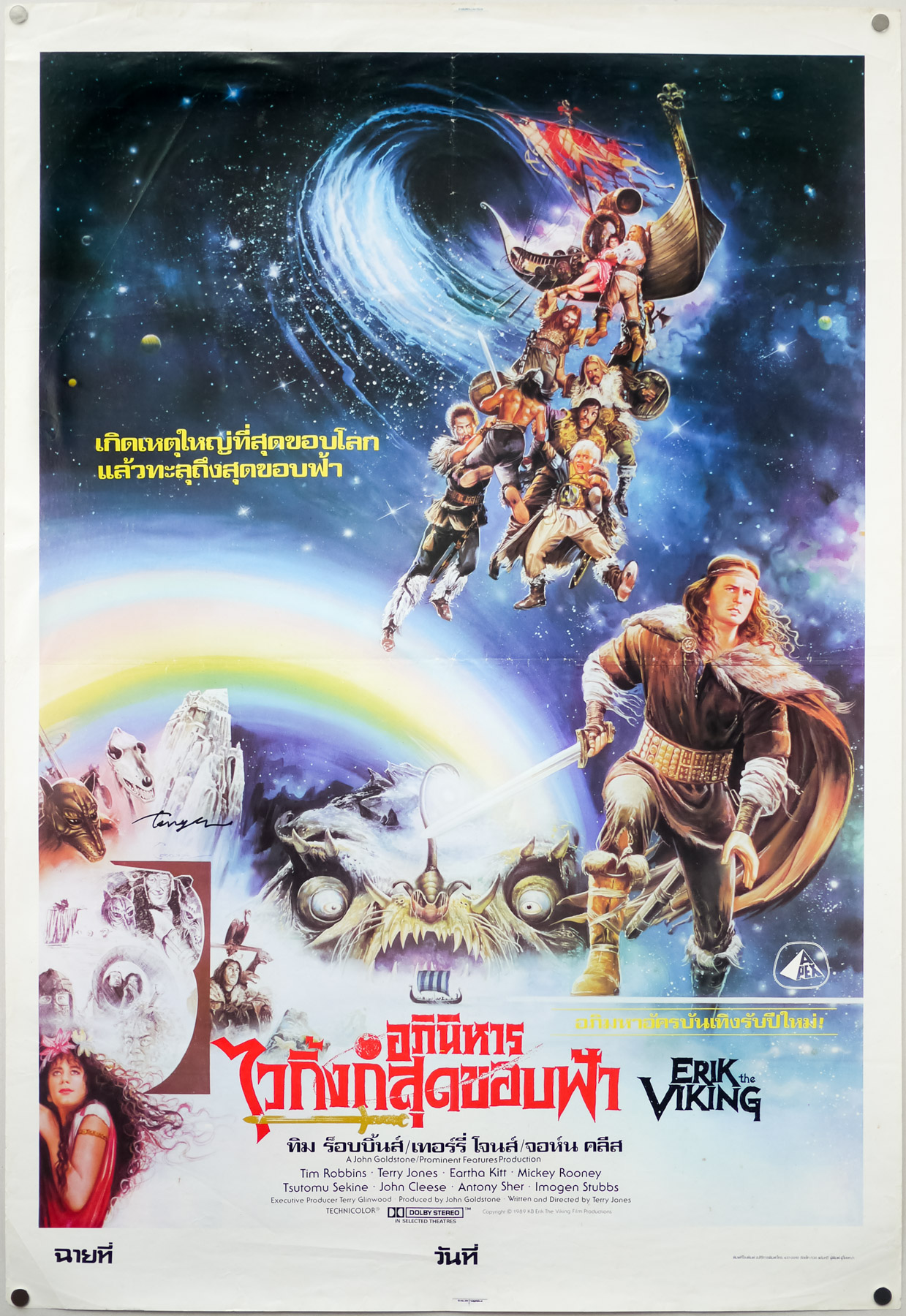
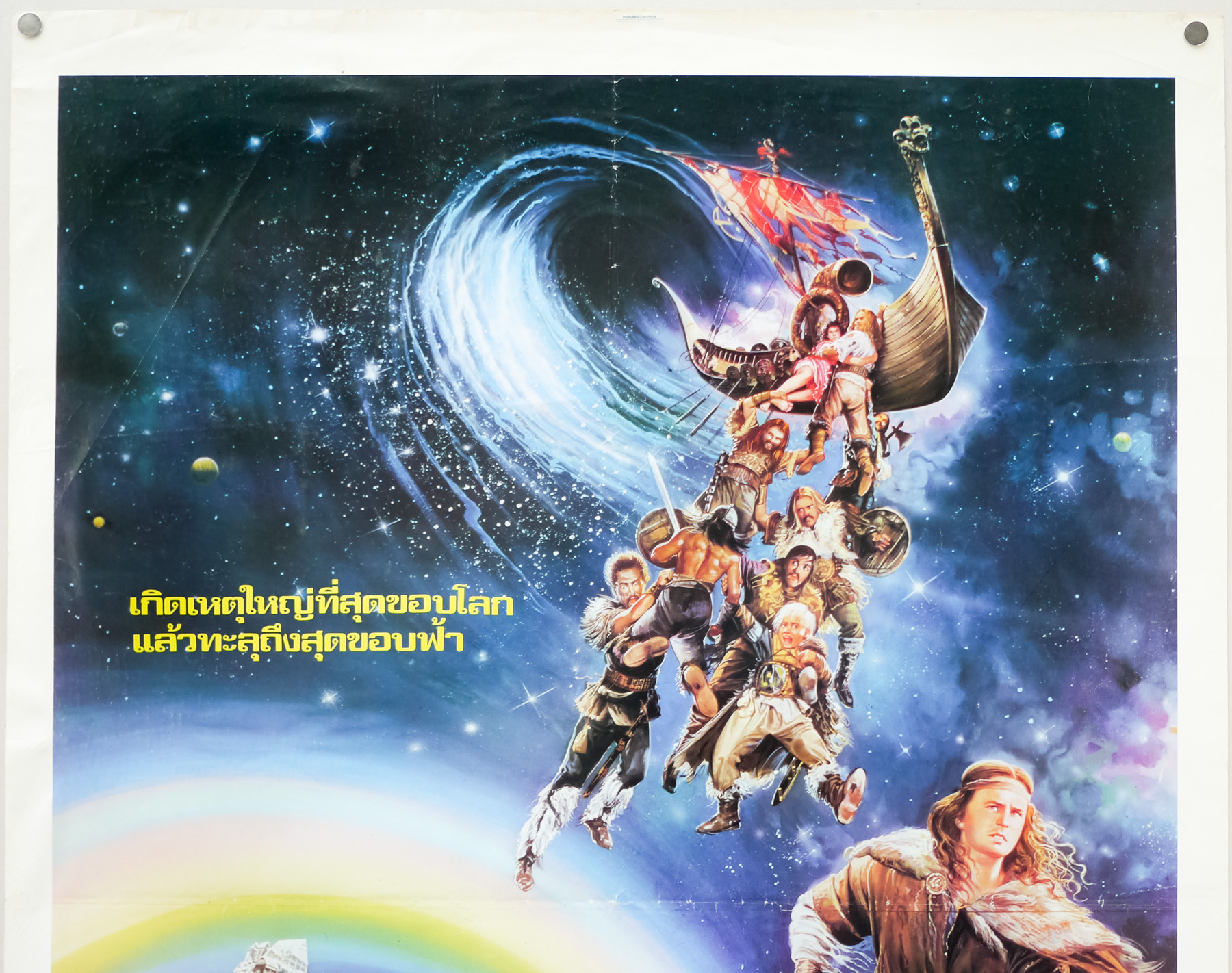
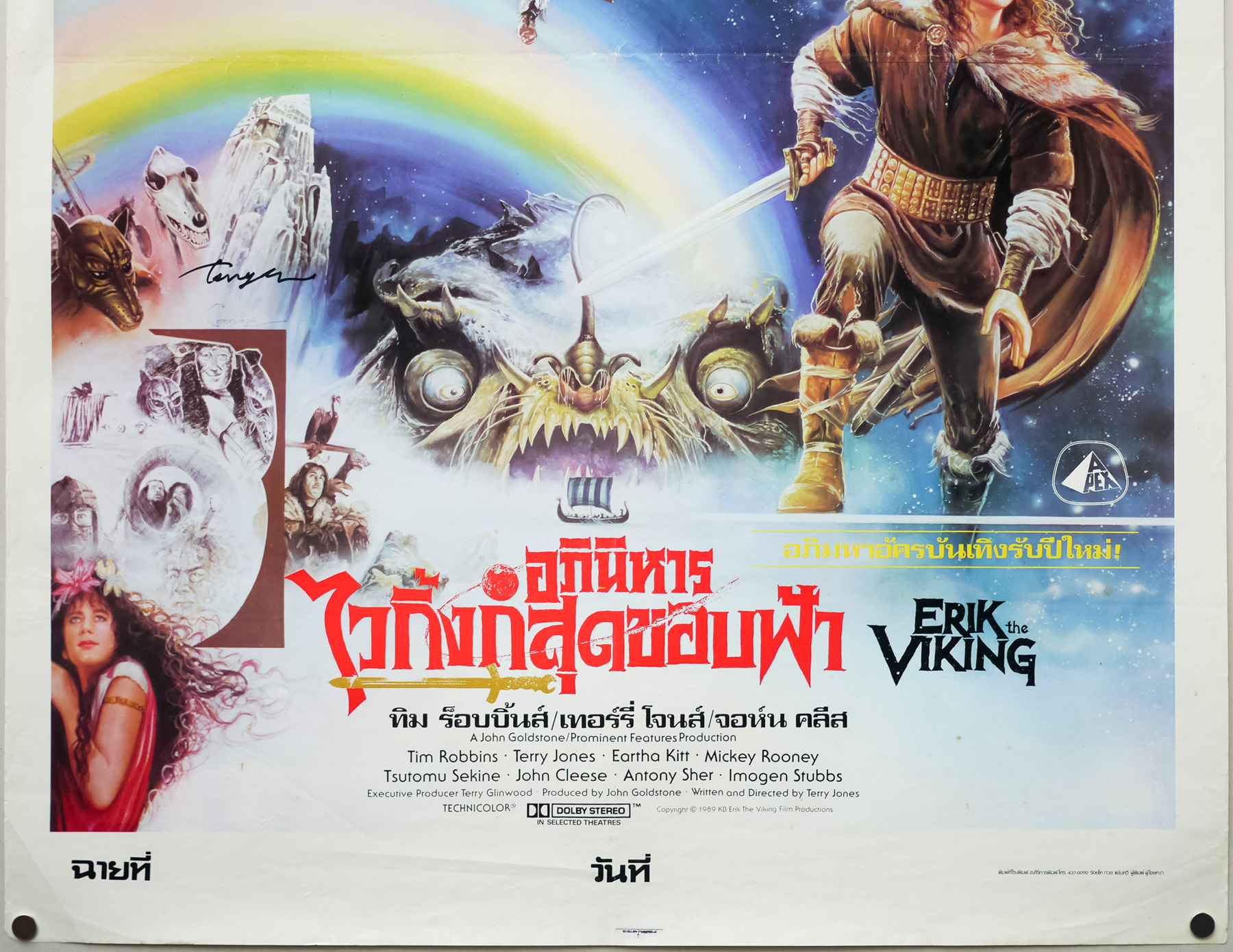
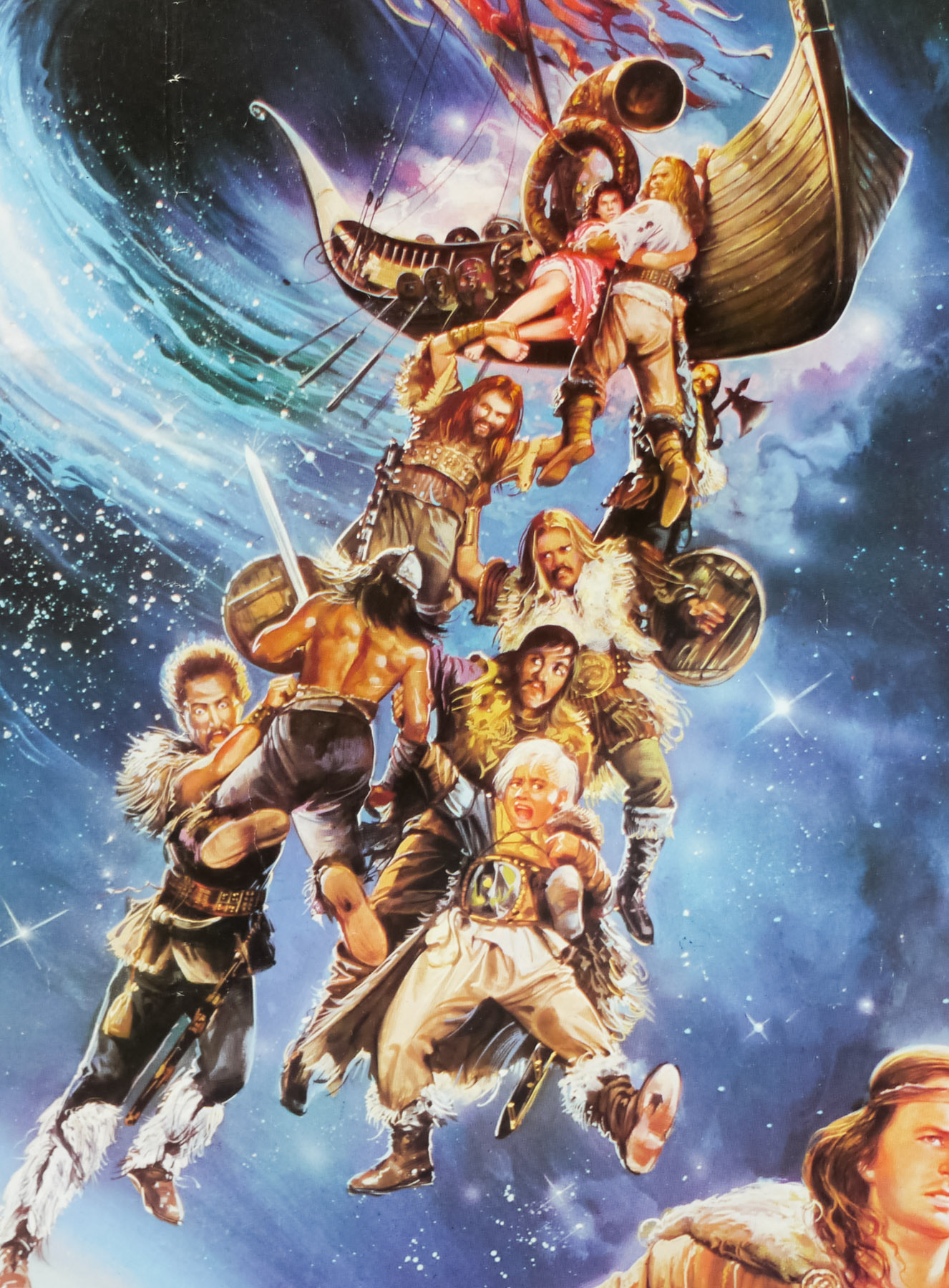
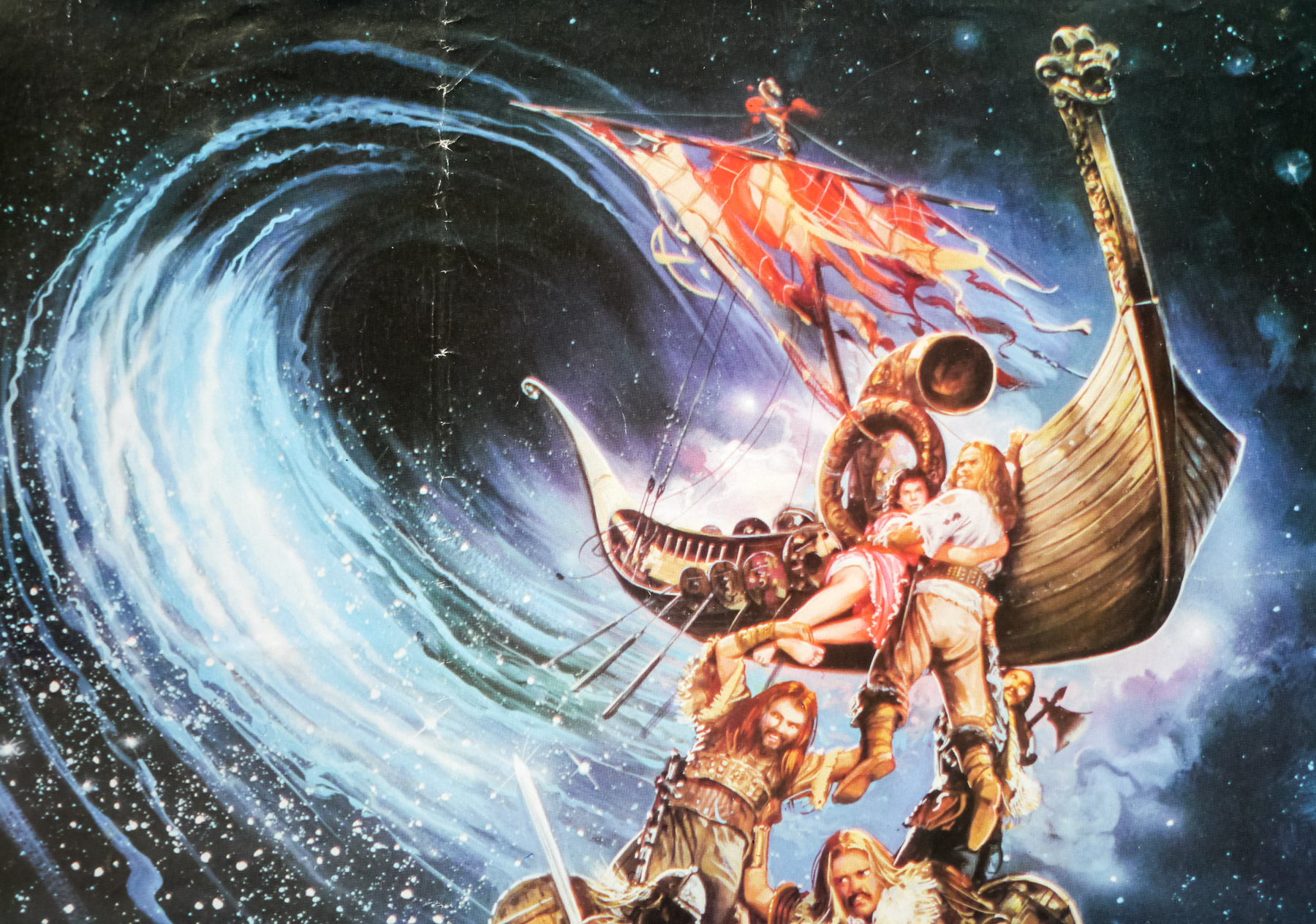
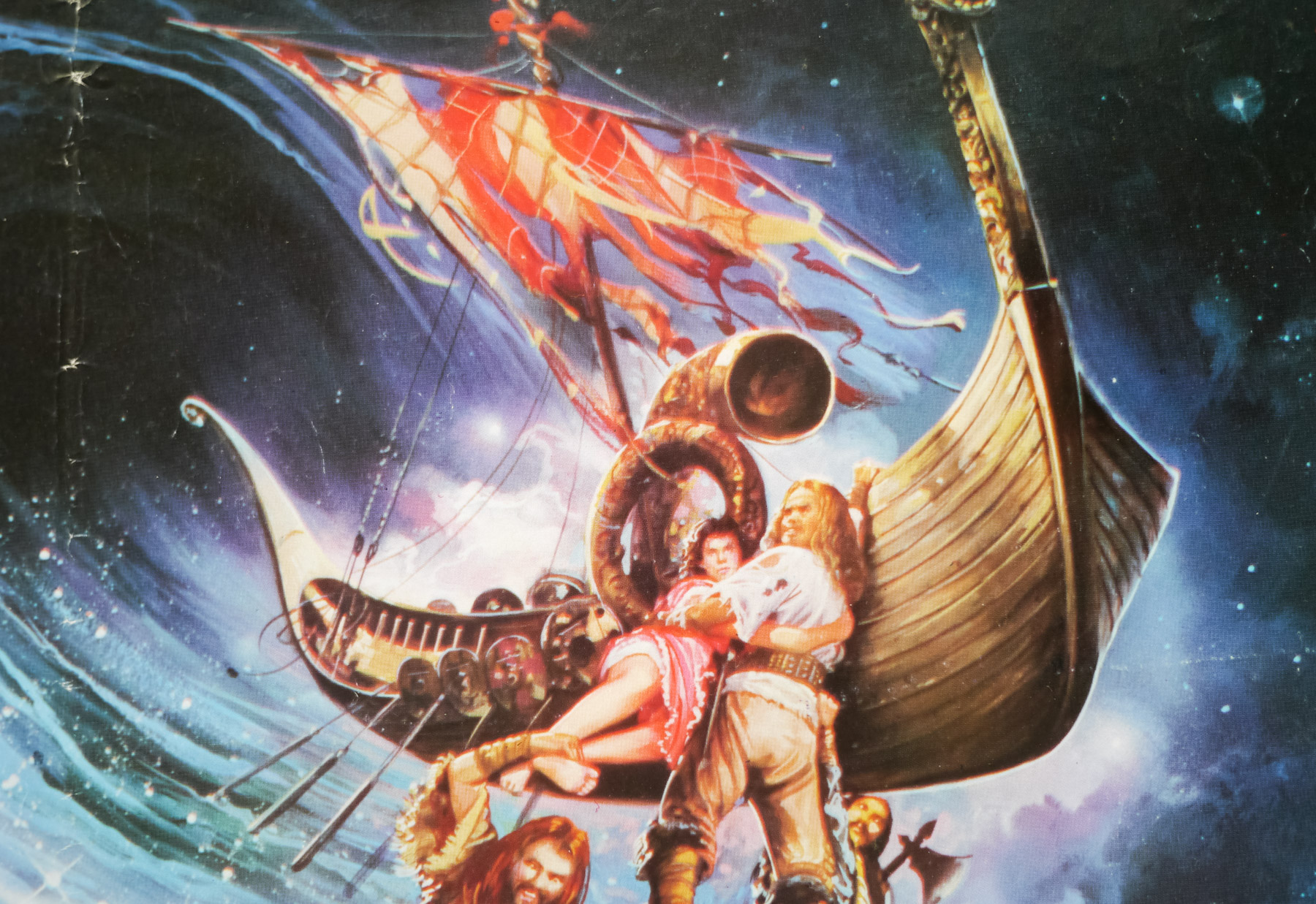
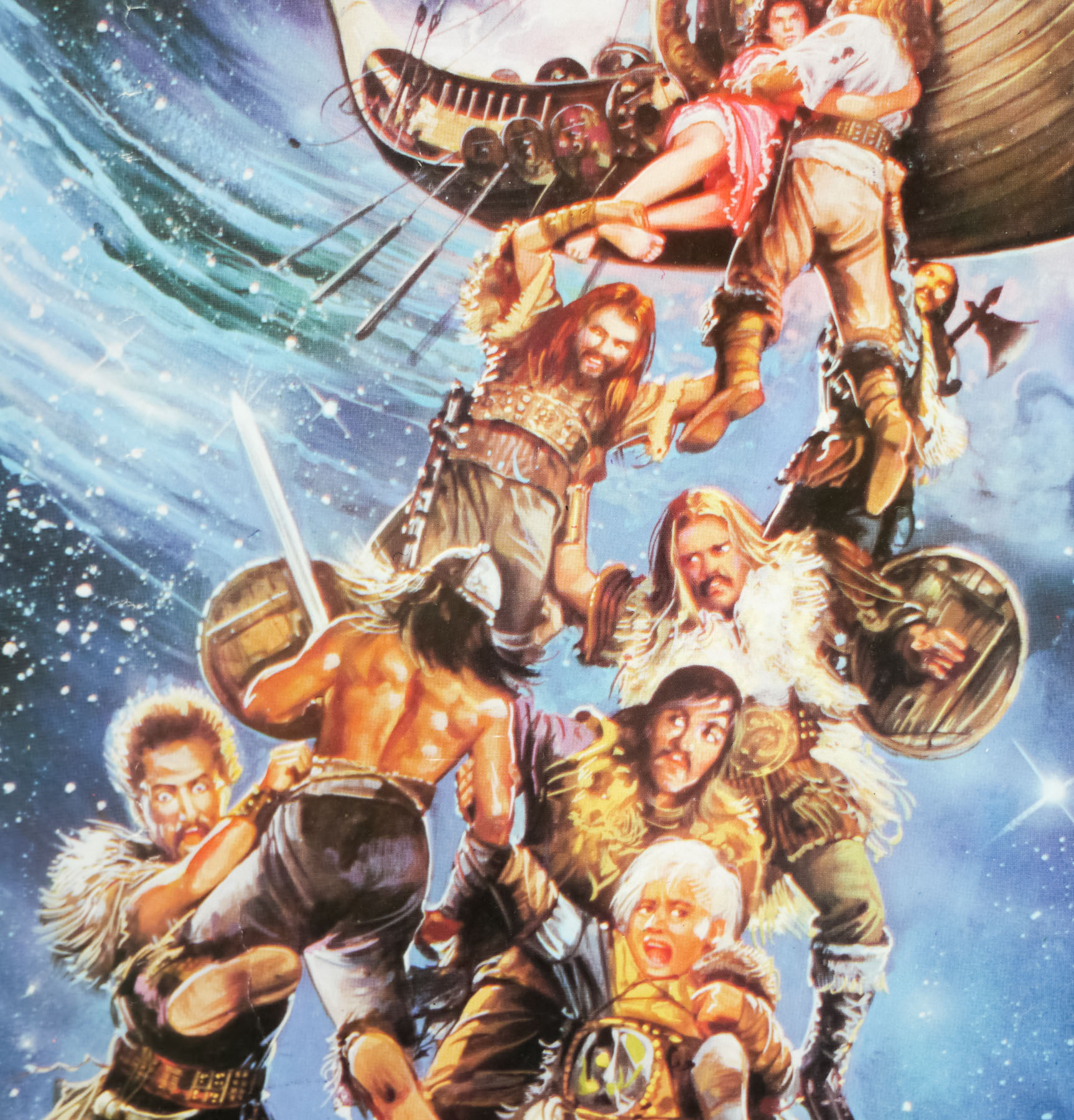
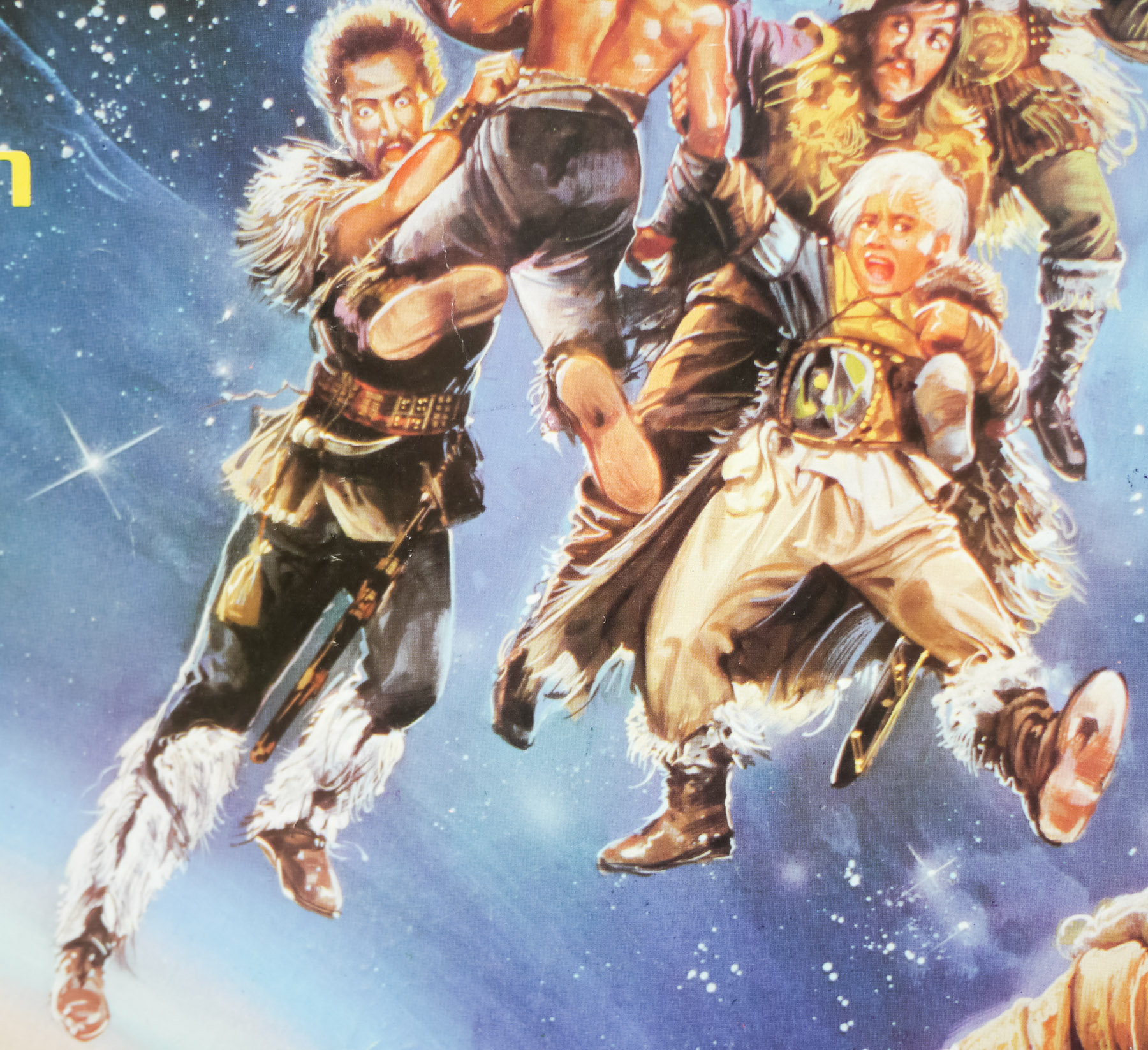
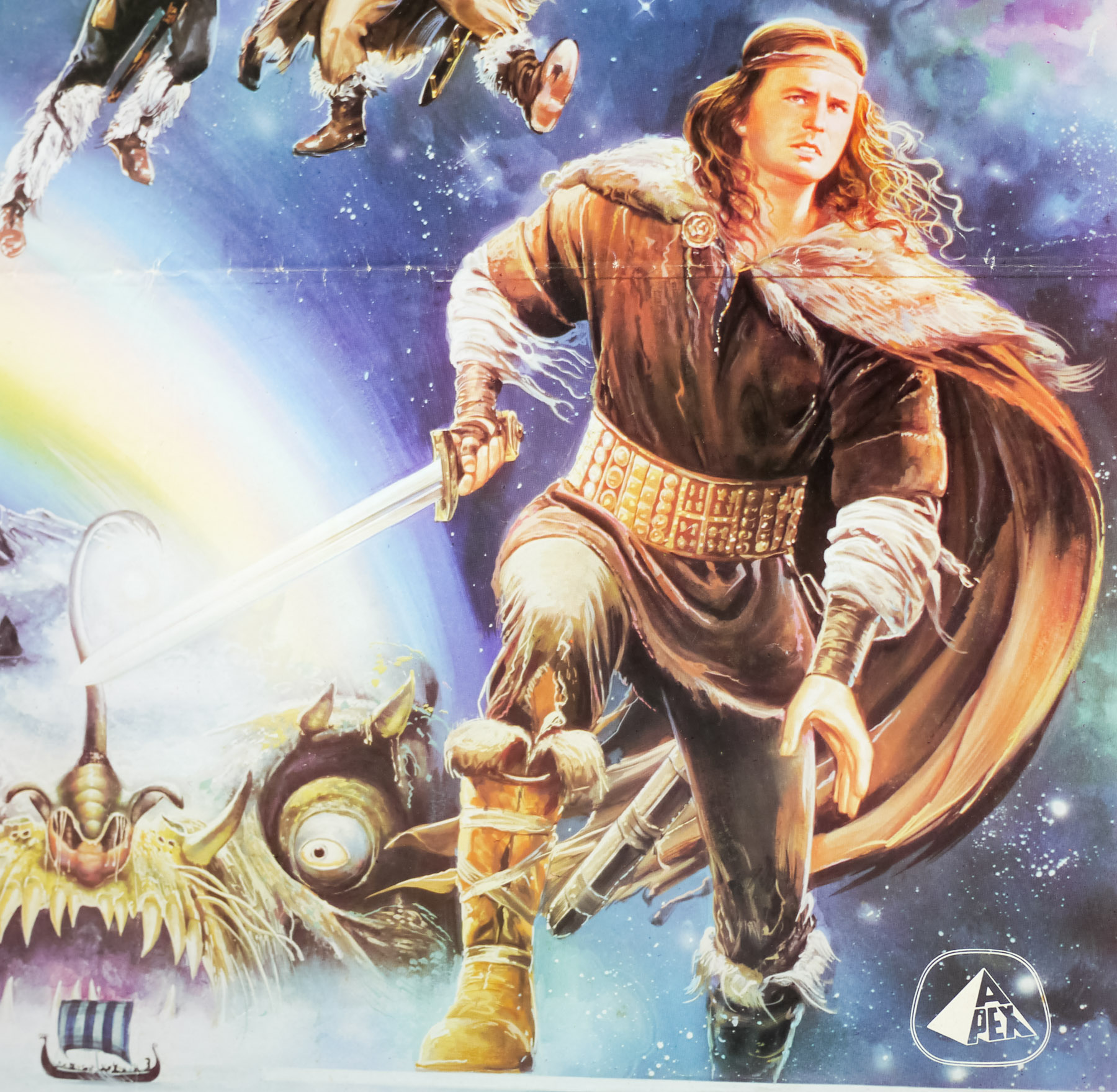
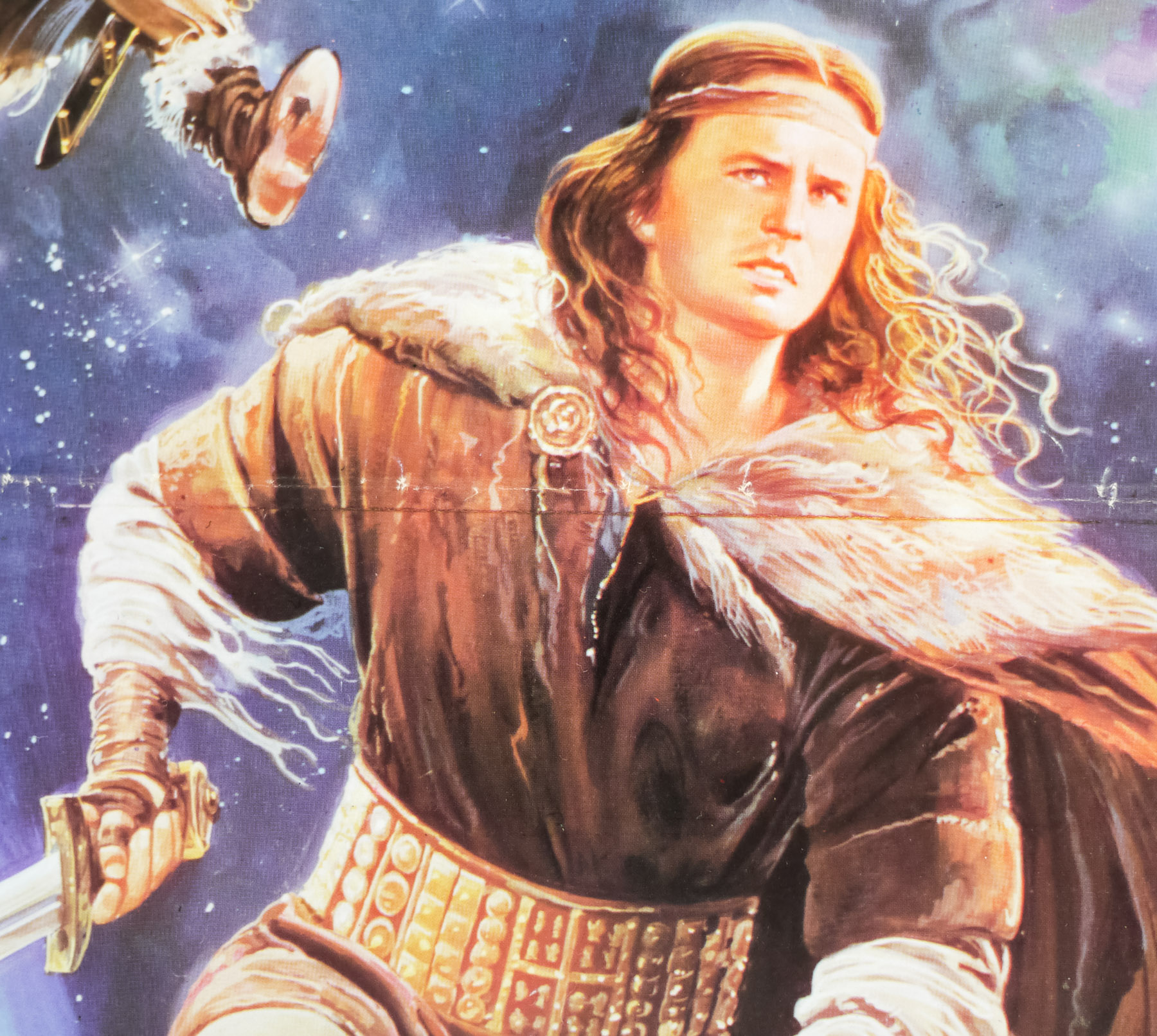
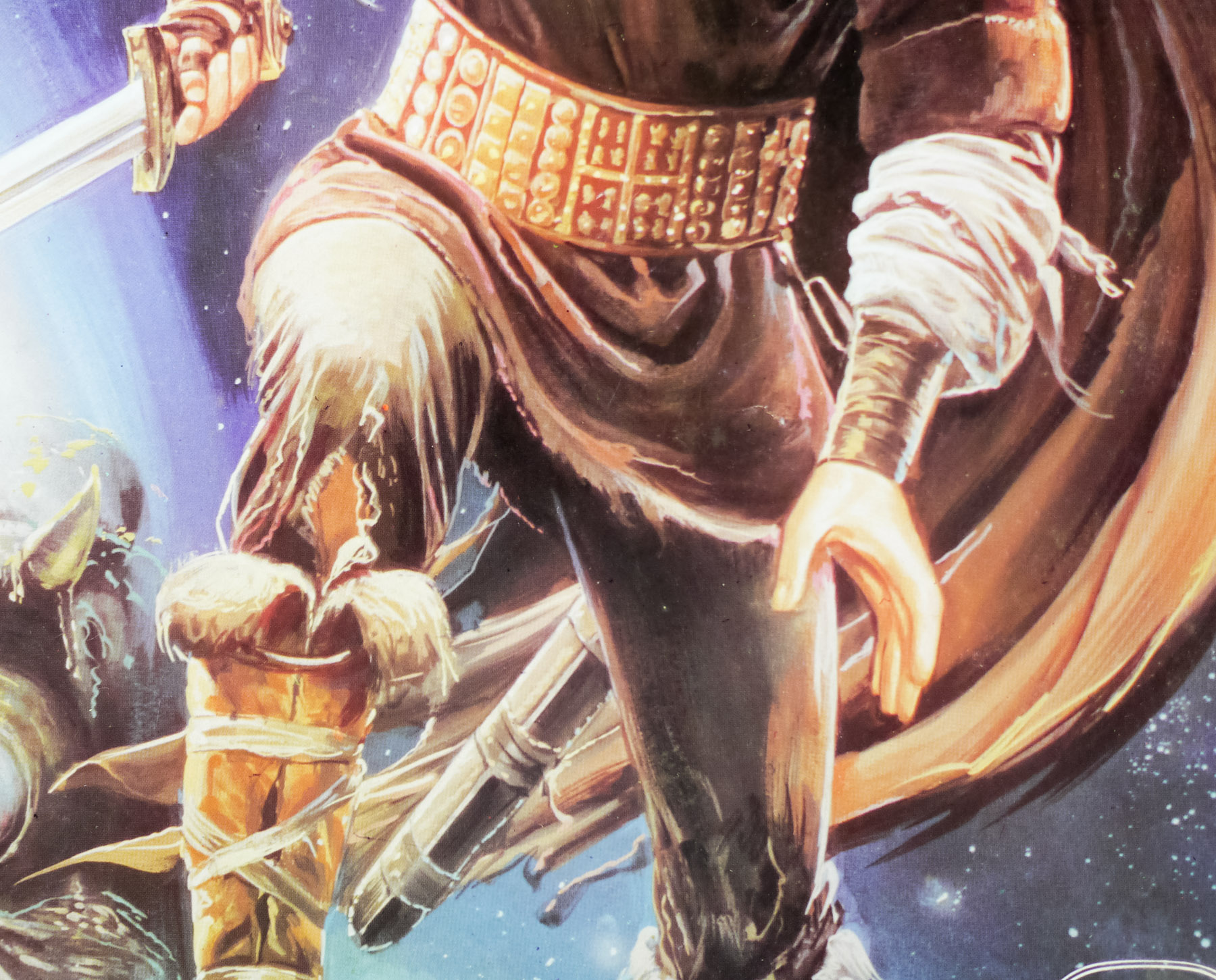
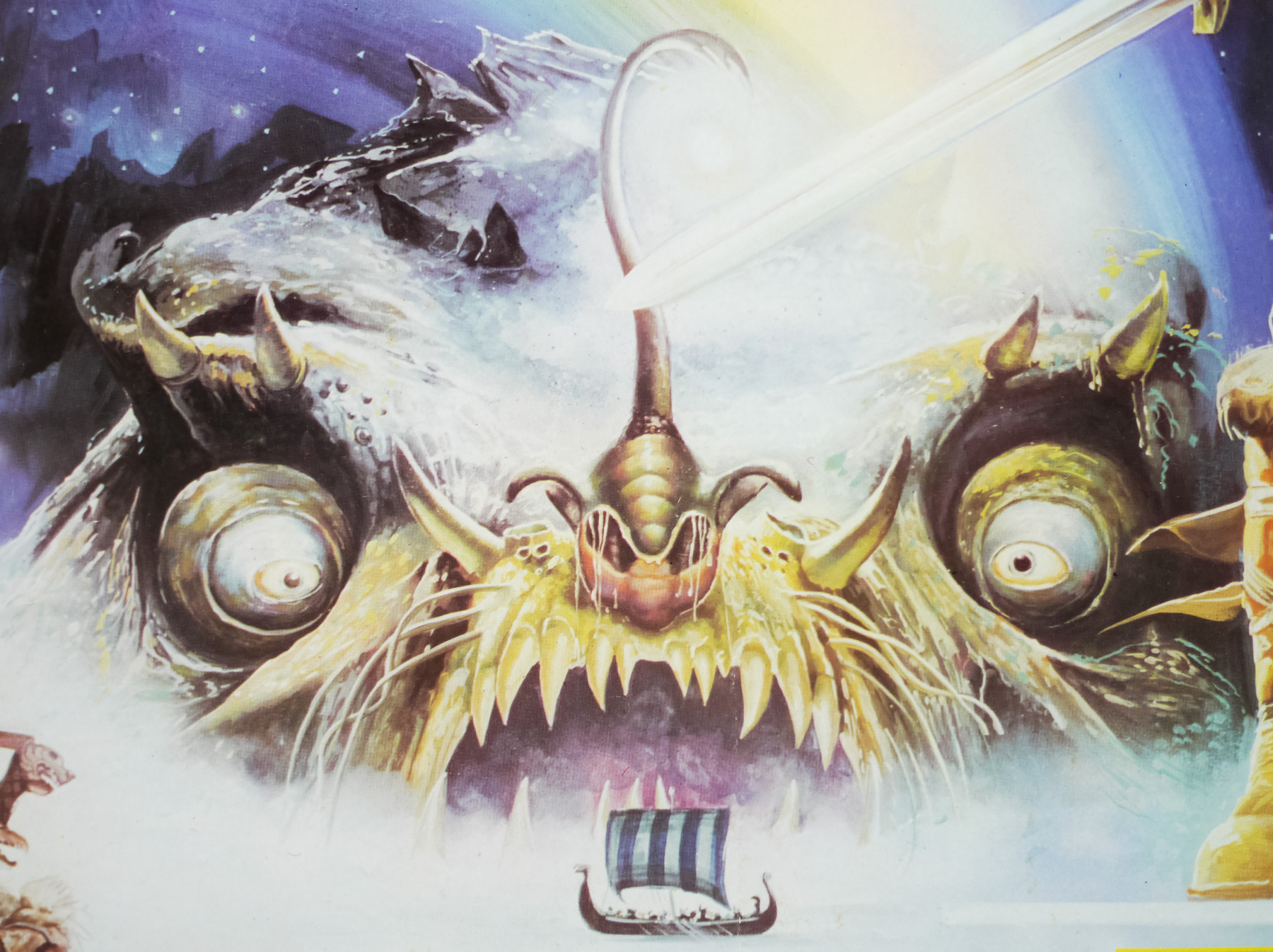
This Thai poster for Terry Jones’ 1989 fantasy film Erik the Viking features artwork by Tongdee Panumas. The prolific Jones (actor, director, author, screenwriter, poet, historian) is best known as a Monty Python member and director of the comedy group’s feature films. The film was inspired by Jones’ own 1983 children’s book The Saga of Erik the Viking but shares only character names; the plotline is completely different. Based largely on Norse mythology, Tim Robbins stars as the titular Viking who discovers in the opening scene that he has no taste for the usual Viking activities of raping and pillaging. He learns from a wise old woman that Fenrir the wolf has swallowed the sun and plunged the world into the chaotic age of Ragnarök. Erik resolves to gather a motley crew together to travel to Asgard and petition the gods to end Ragnarök and bring sunlight back to his people. First he must travel to Hy-Brasil and recover the ‘Horn Resounding’ and there he meets King Arnulf (Jones) and promptly falls in love with his daughter, Princess Aud (Imogen Stubbs).

The film was largely critically panned and didn’t fare too well at the box-office. Over the years Jones and his son Bill have made a few edits to the film, with a VHS release chopping 18 minutes from the runtime, before a 2006 “Director’s Son’s Cut” saw it reduced down to just 75 minutes (from the original theatrical running time of 107 minutes).

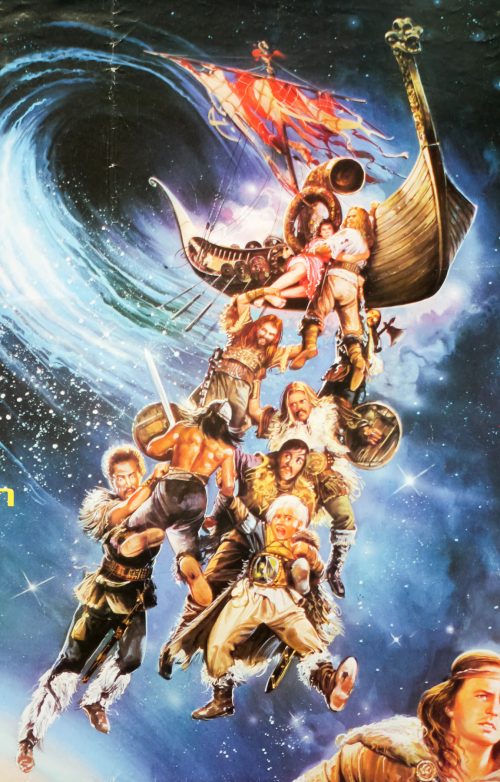
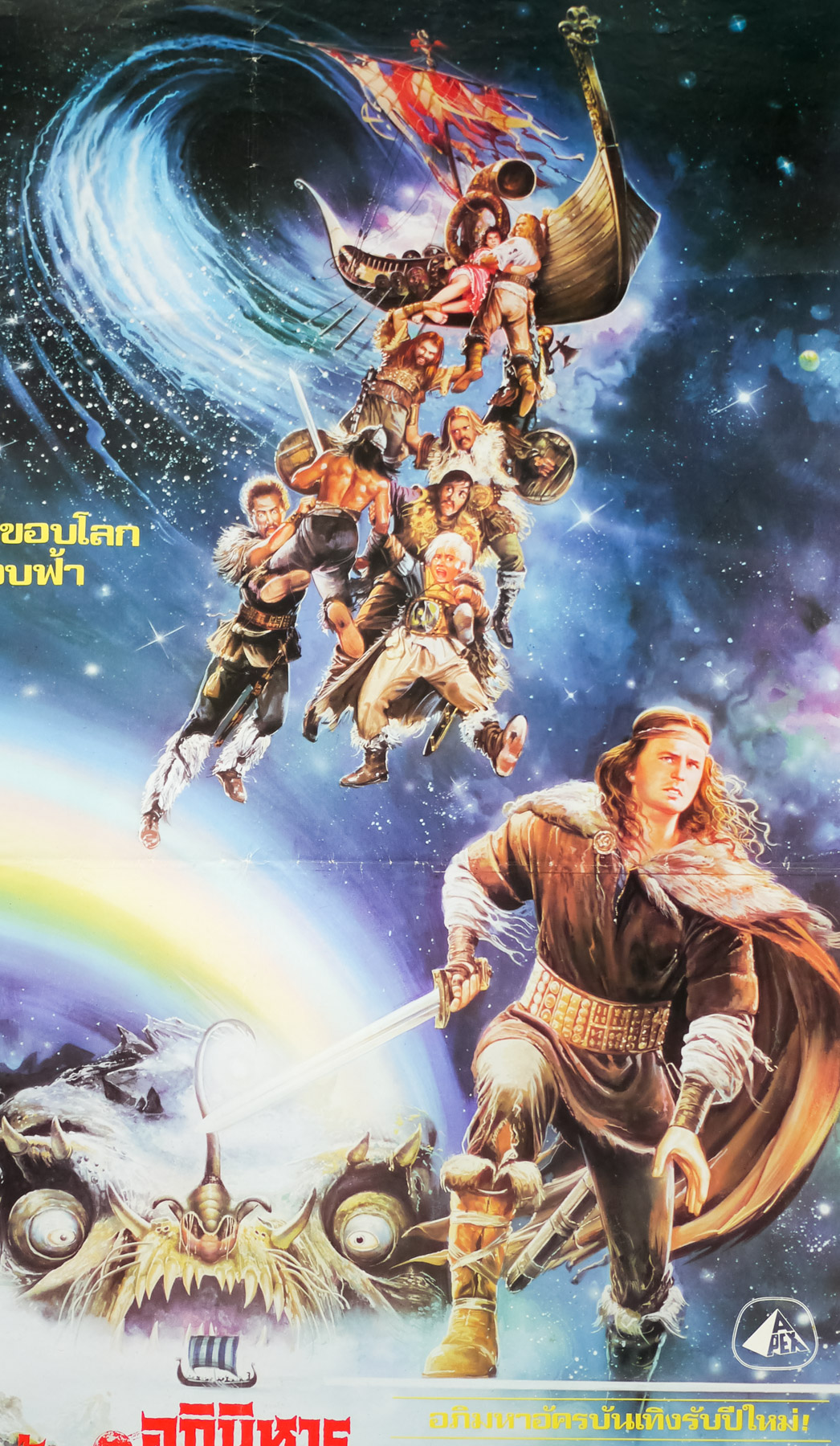
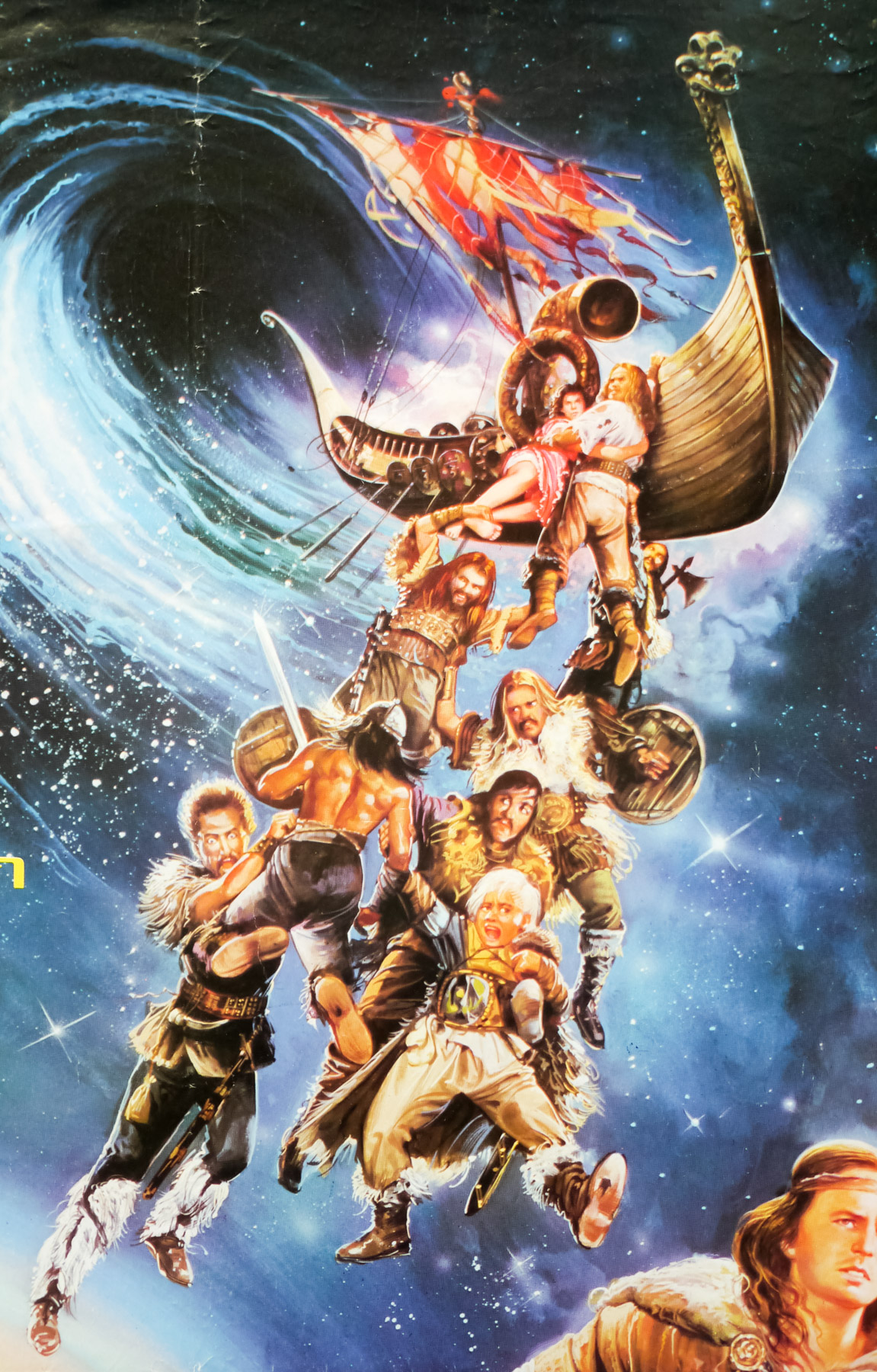
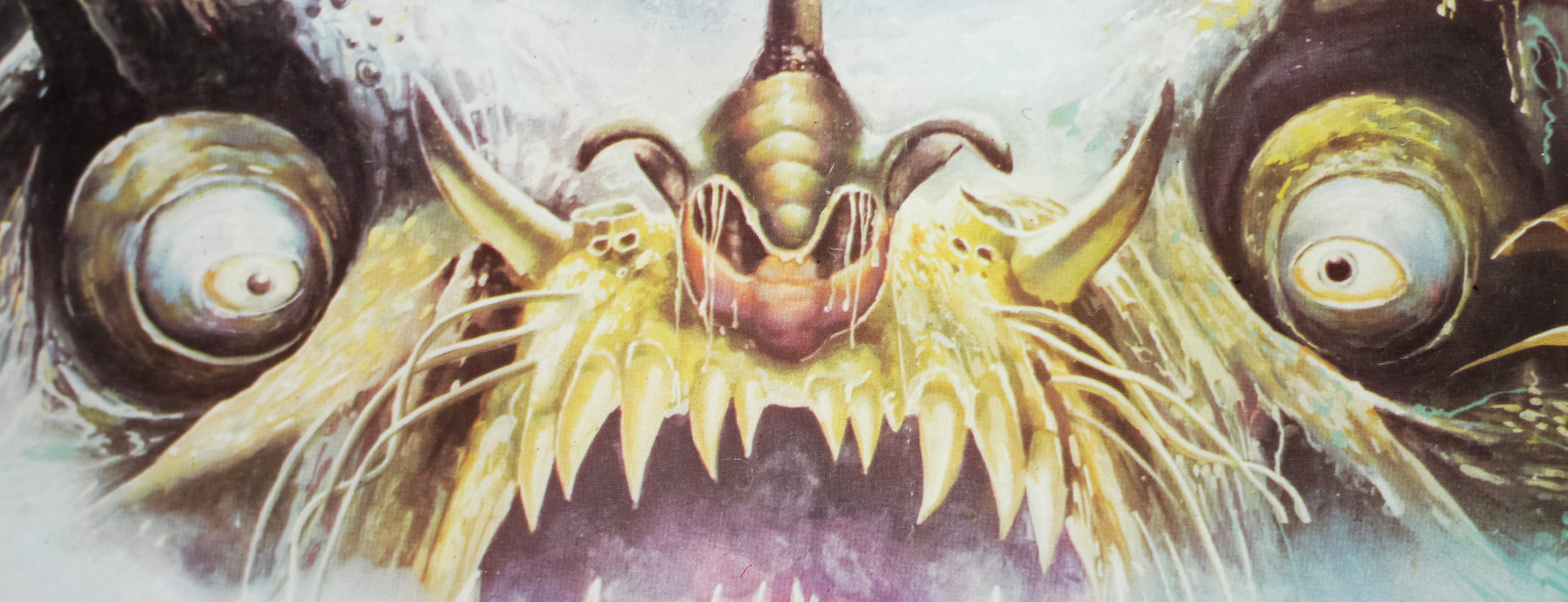
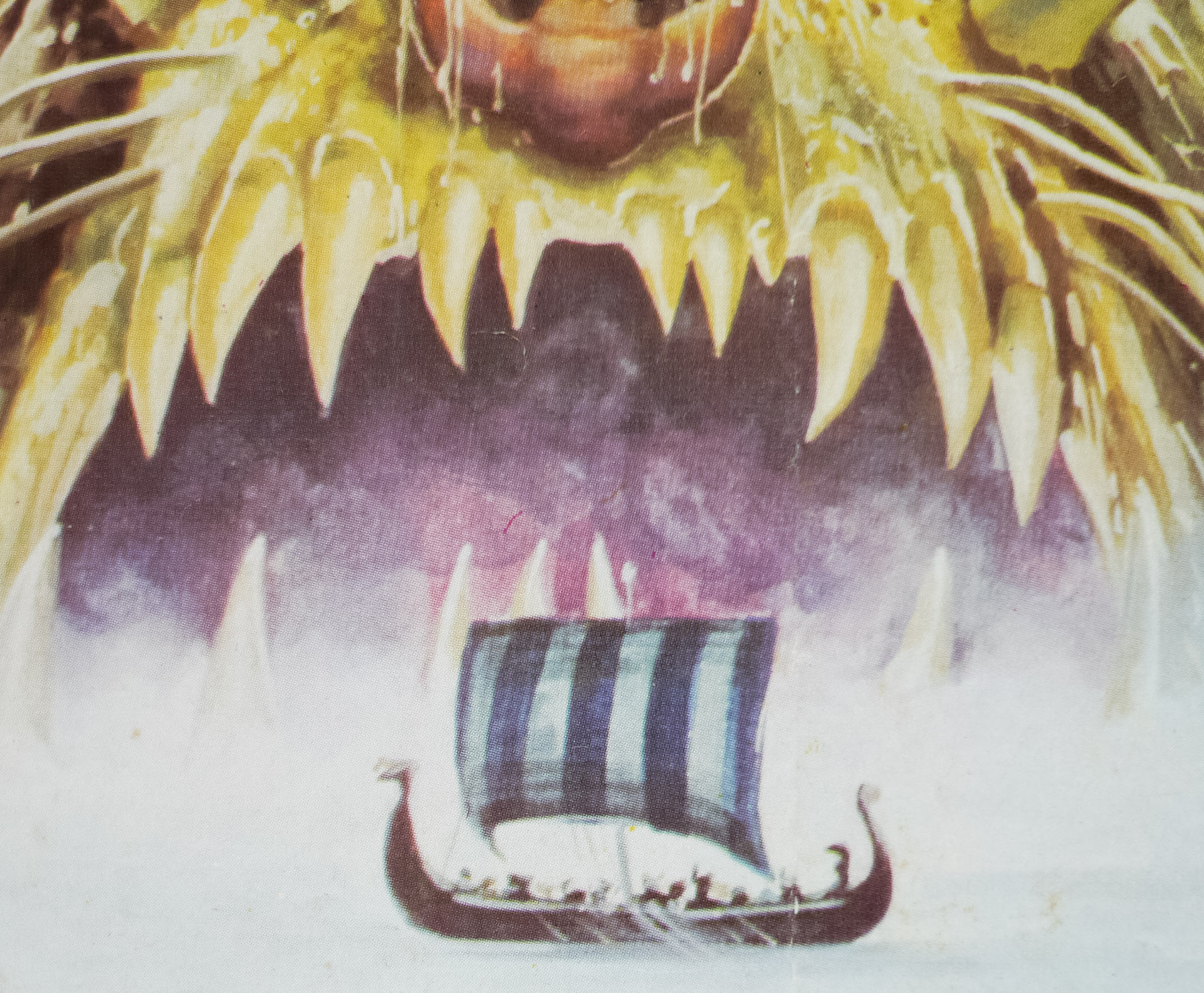
This Thai poster features a repainted take on the figures falling out of the viking boat, as seen on the German poster (and painted by Renato Casaro), but adds more colour and a montage of action scenes as was typical of the artist responsible. Tongdee Panumas was an incredibly prolific film poster artist during the 70s, 80s and 90s. I’ve been unable to find out much about him, other than that he was born in 1947, so if anyone has any more details please get in touch.

Note that this particular copy of the poster has been hand-signed by Tongdee and I bought it from someone who had visited Thailand, met the artist and had him sign a few posters. I’ve seen photographic evidence that it’s a genuine signature.

Akira / Thailand

03.03.16

Poster Poster
Title
Akira
AKA
--
Year of Film
1988
Director
Katsuhiro Ôtomo
Starring
Mitsuo Iwata, Nozomu Sasaki, Mami Koyama
Origin of Film
Japan
Genre(s) of Film
Mitsuo Iwata, Nozomu Sasaki, Mami Koyama,
Type of Poster
Thai
Style of Poster
--
Origin of Poster
Thailand
Year of Poster
Unknown
Designer
Unknown
Artist
Unknown
Size (inches)
21 7/16" x 30 12/16"
SS or DS
SS
Tagline
--

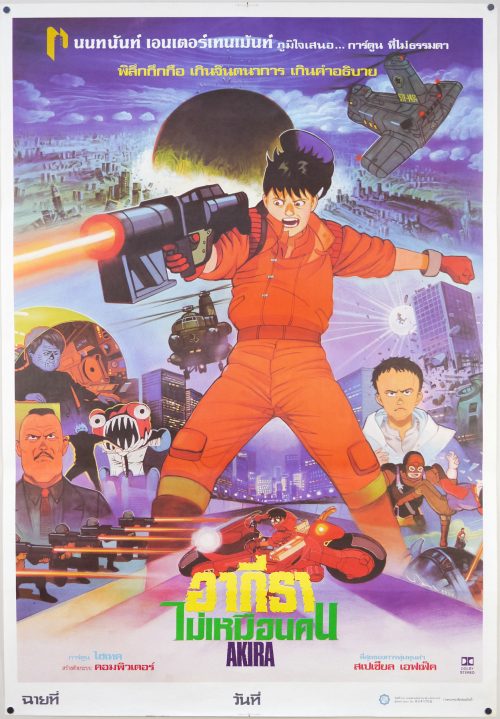
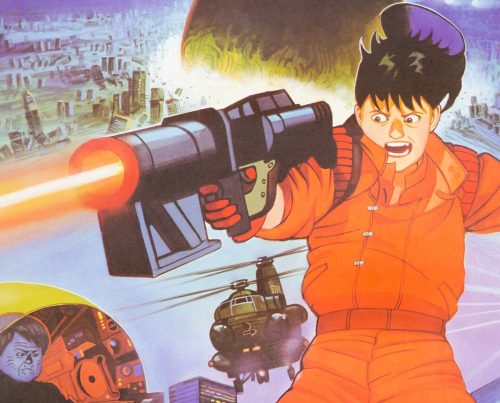
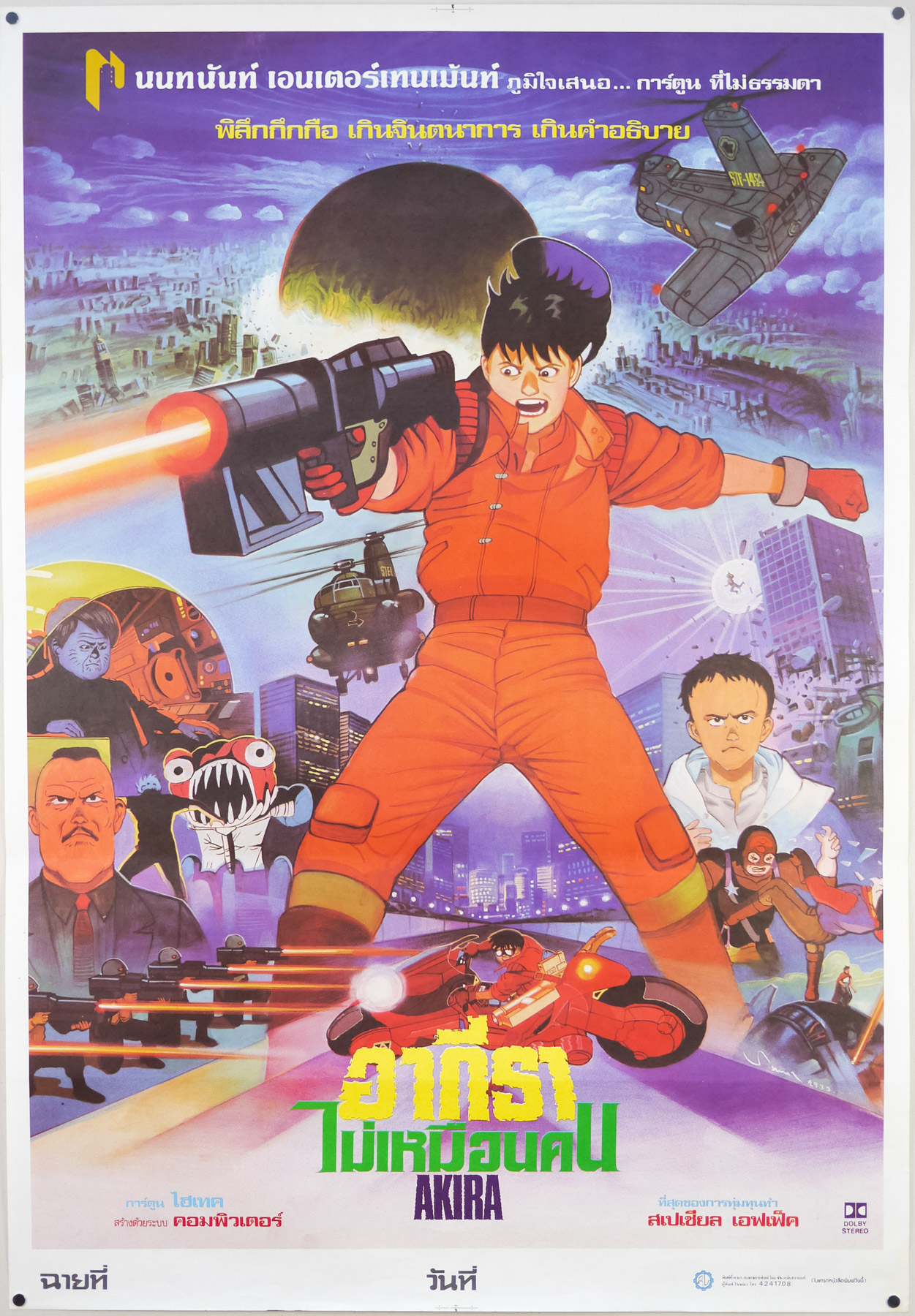
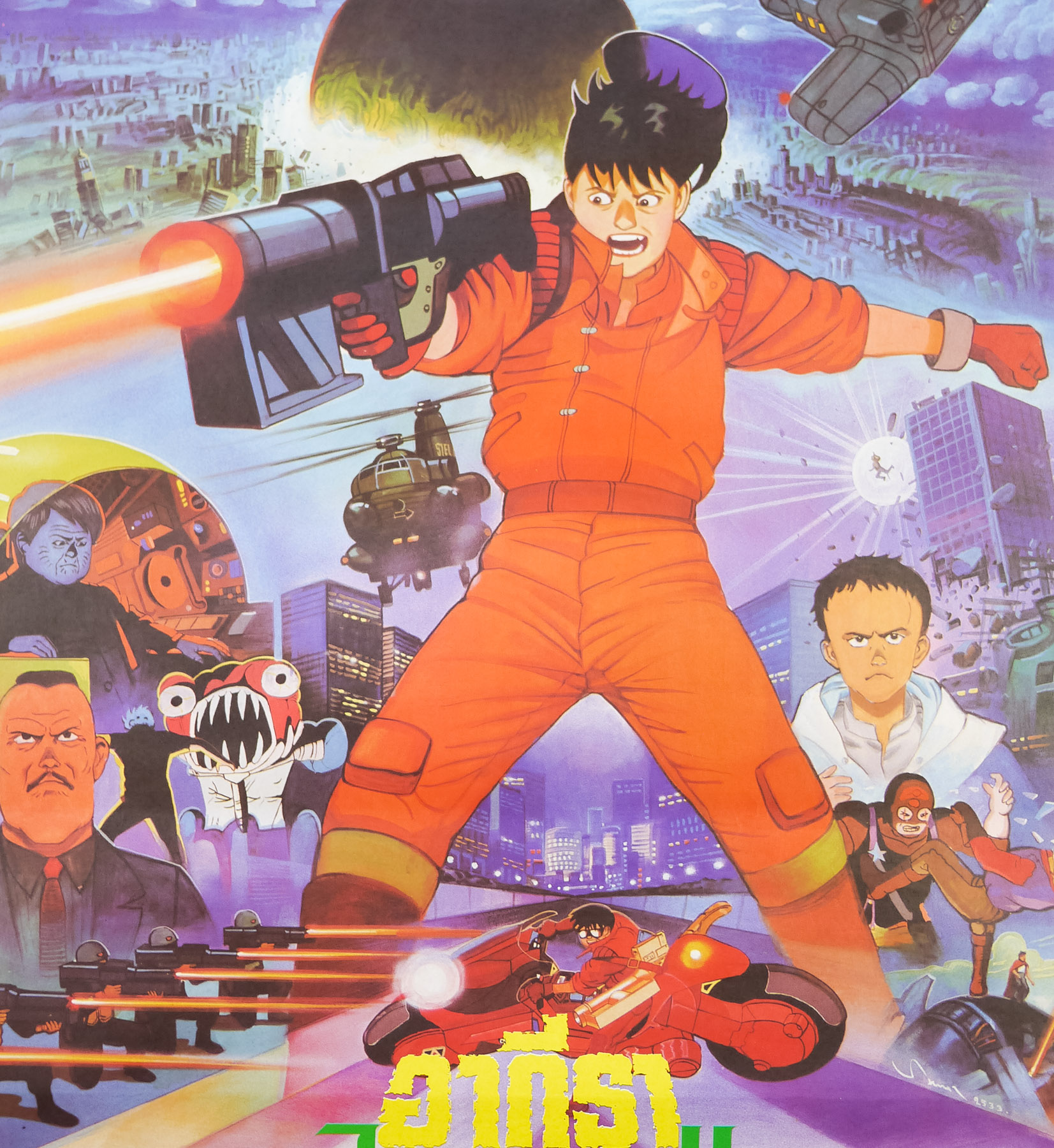
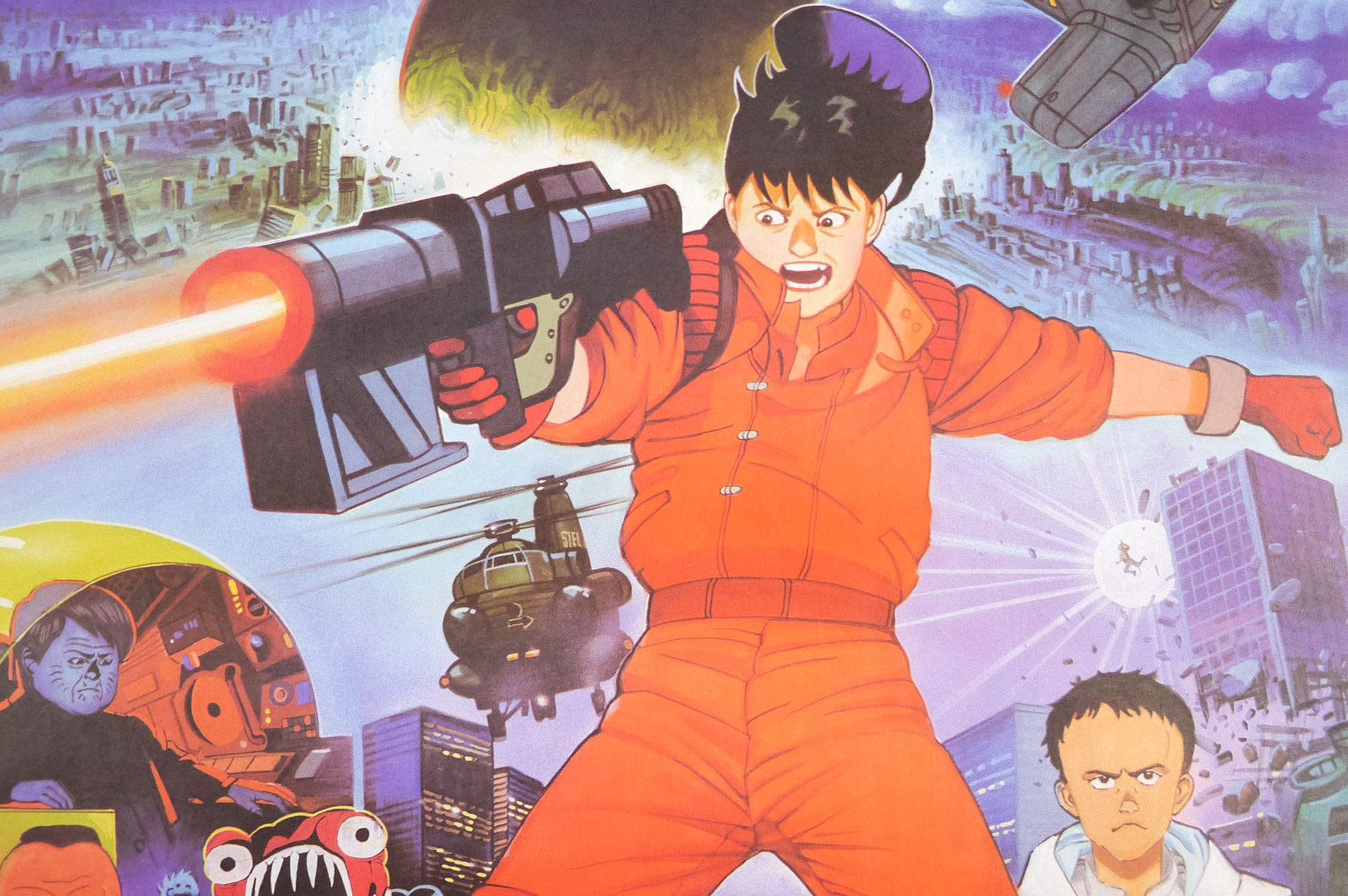
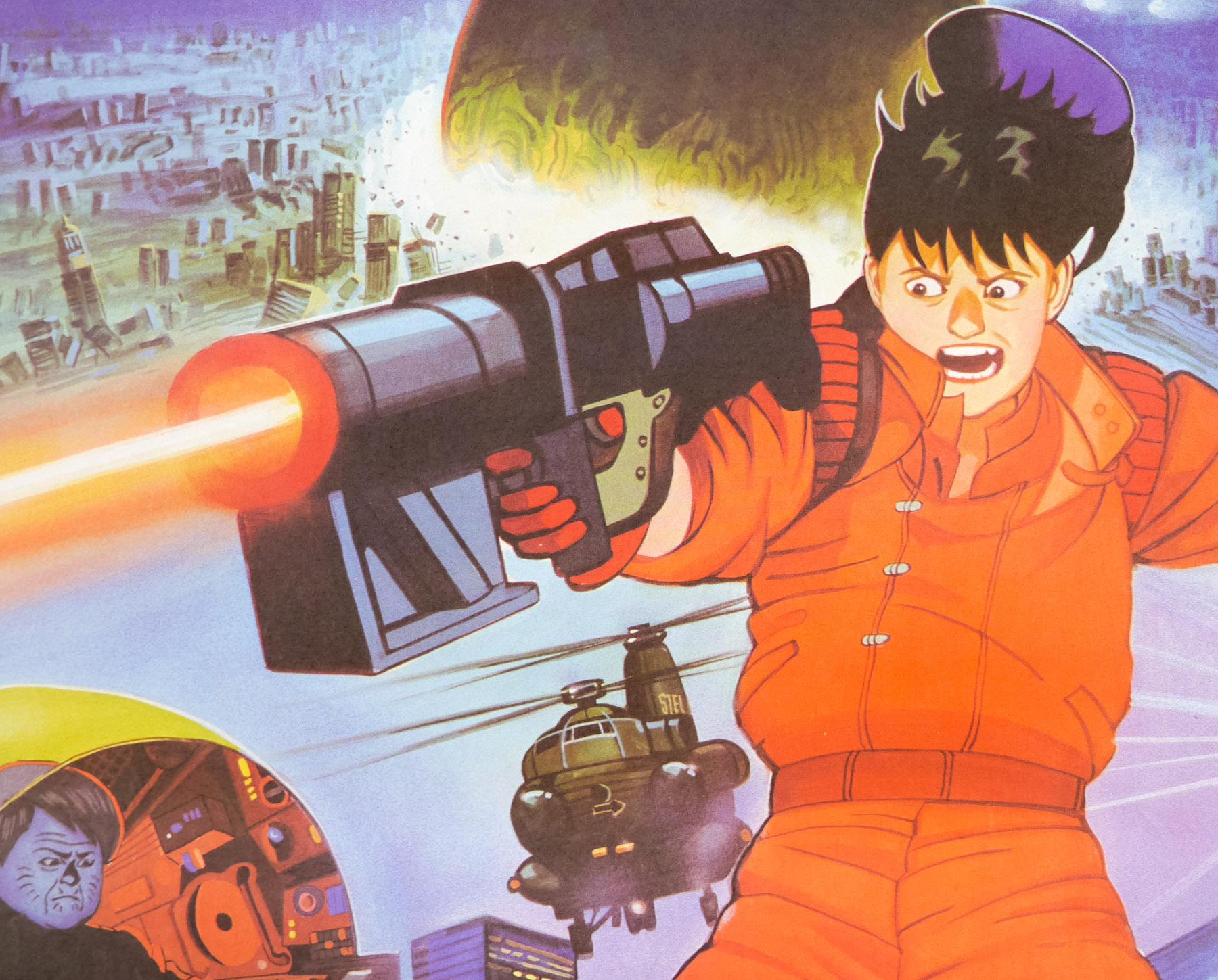
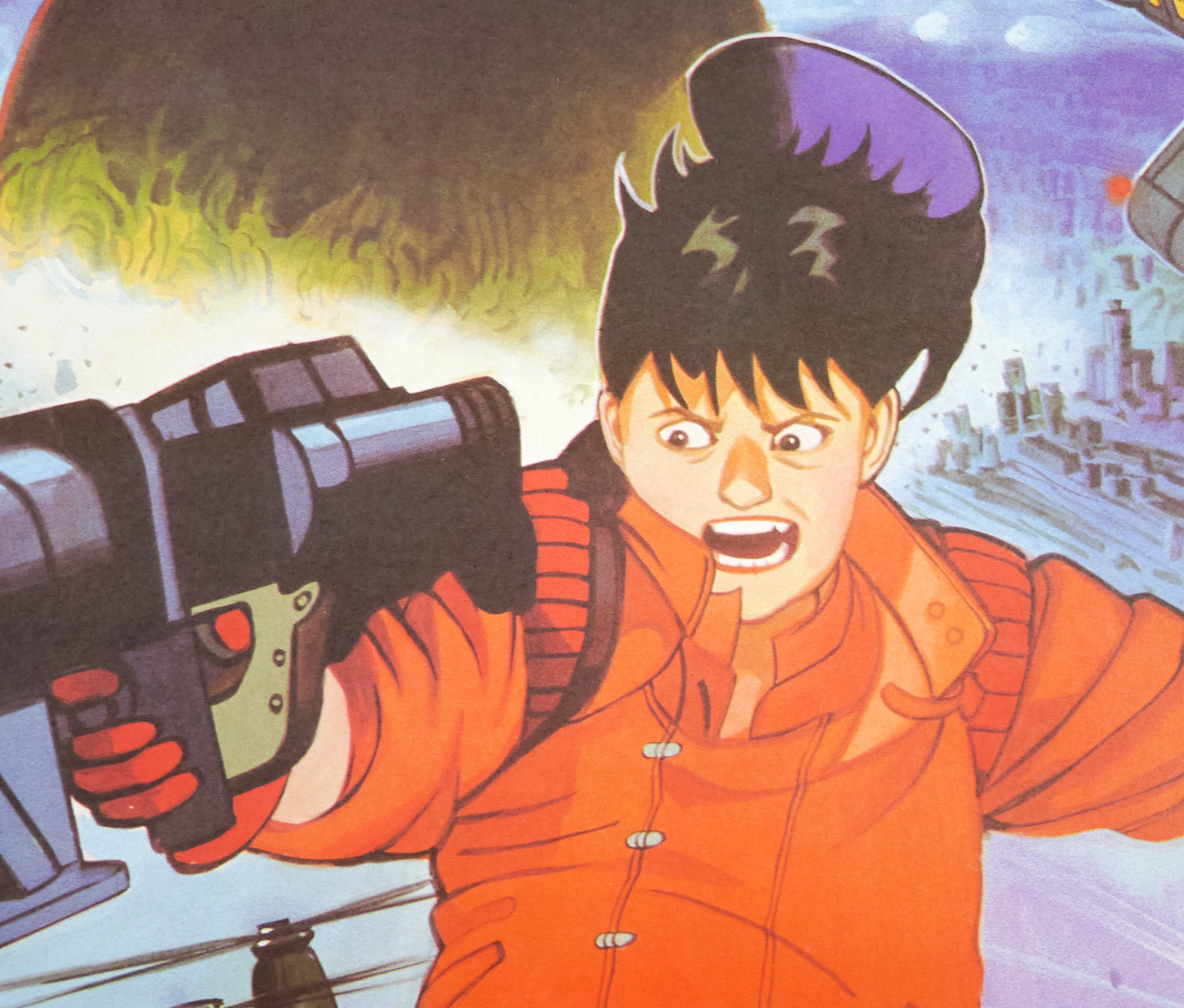
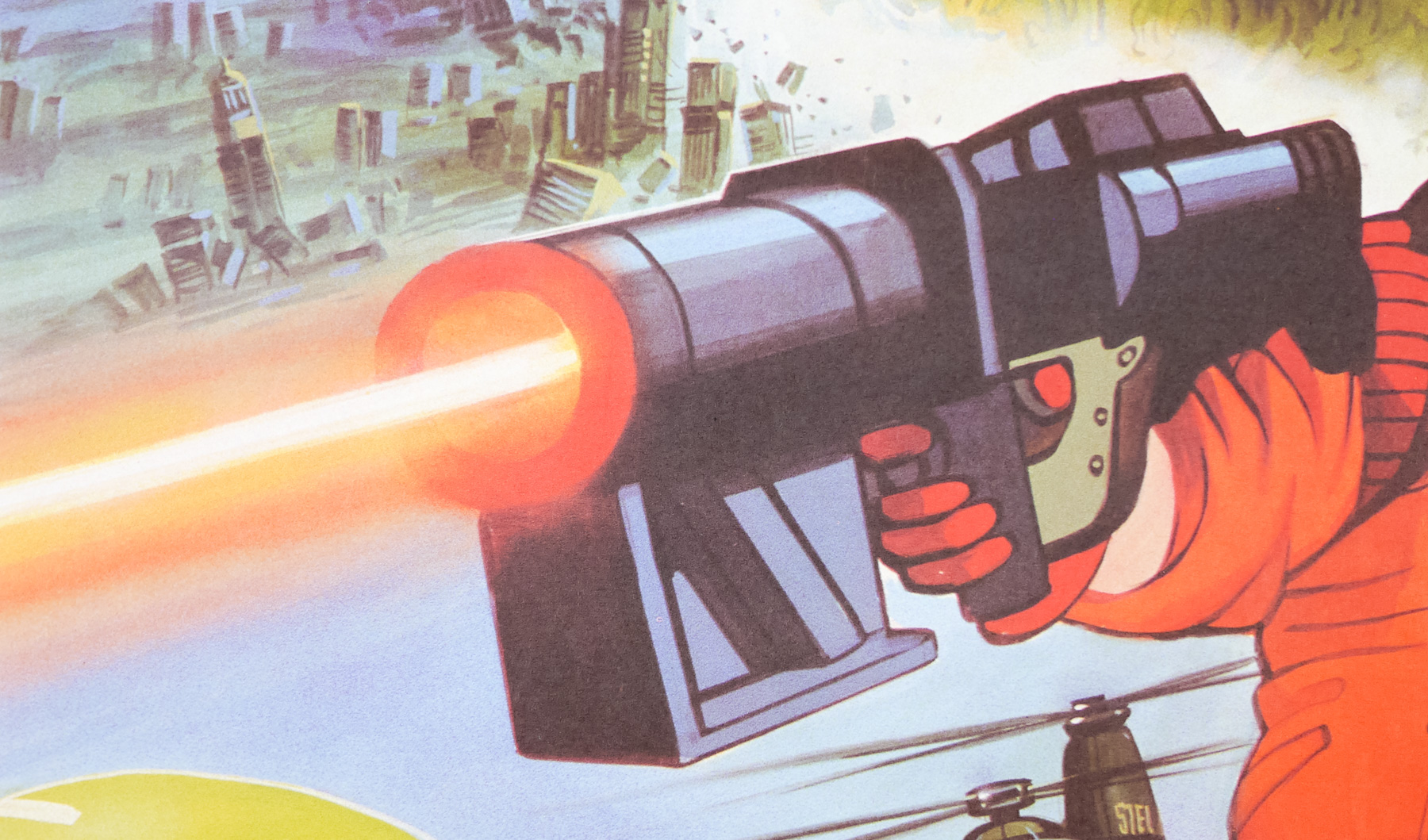
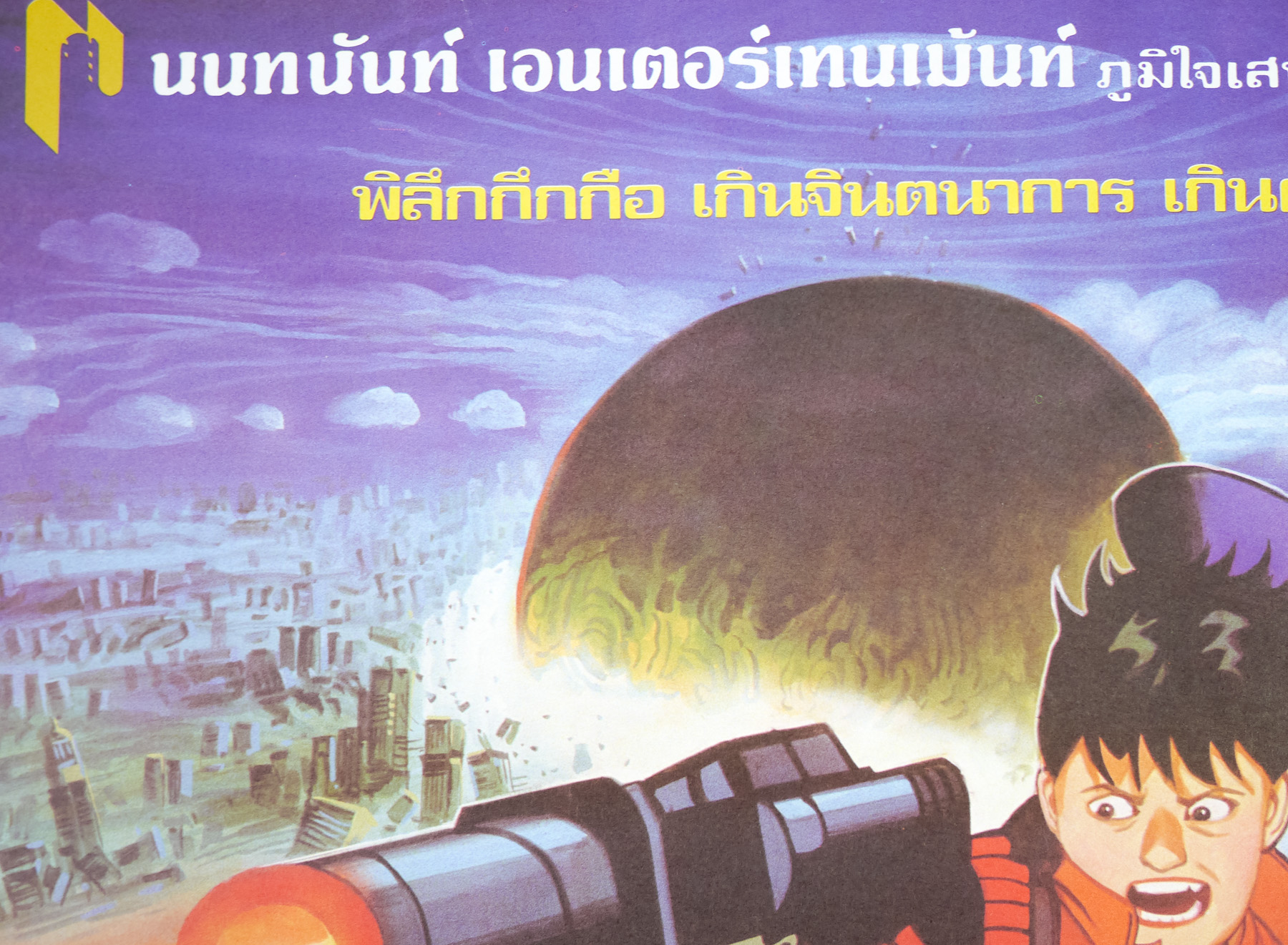
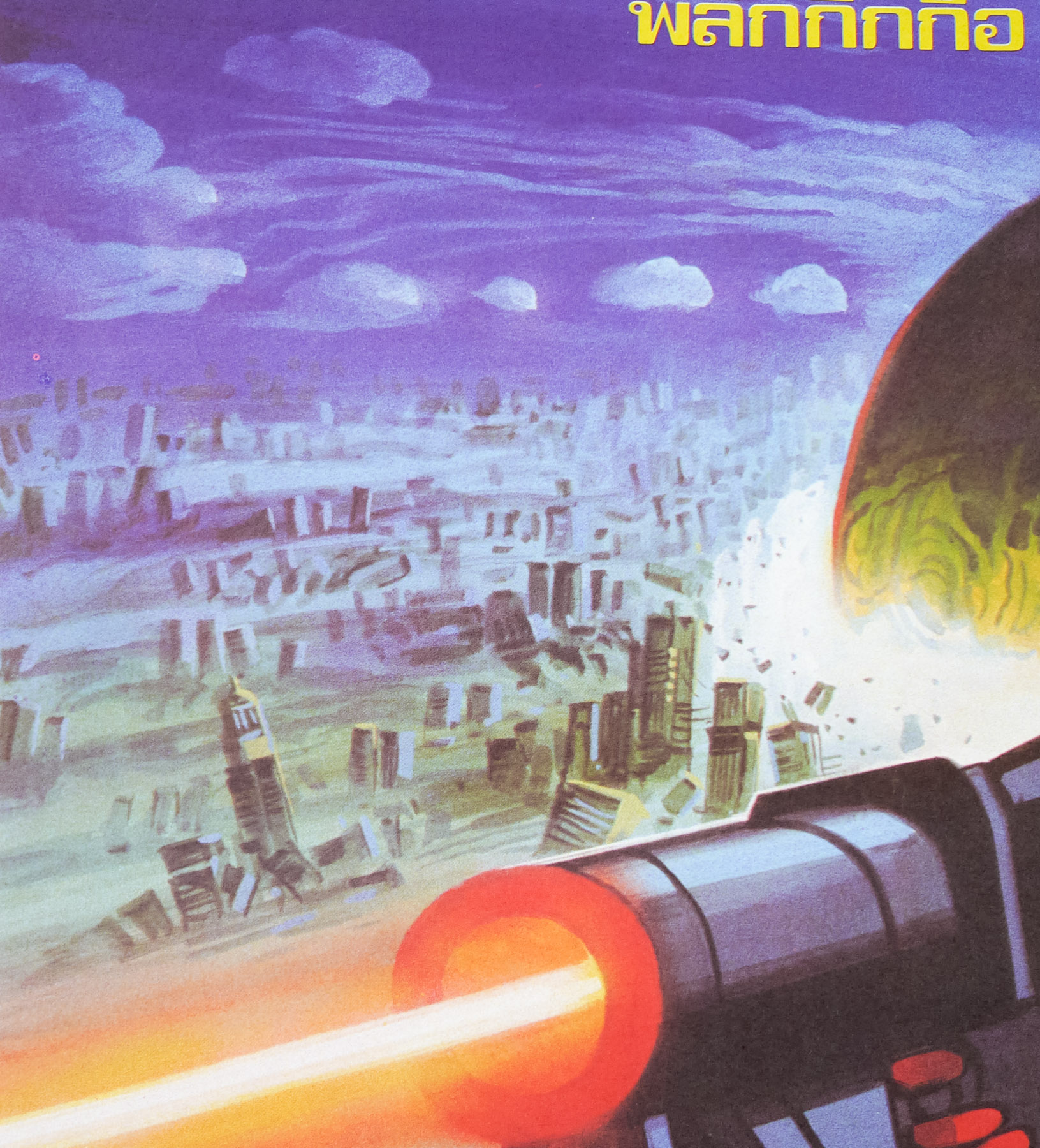
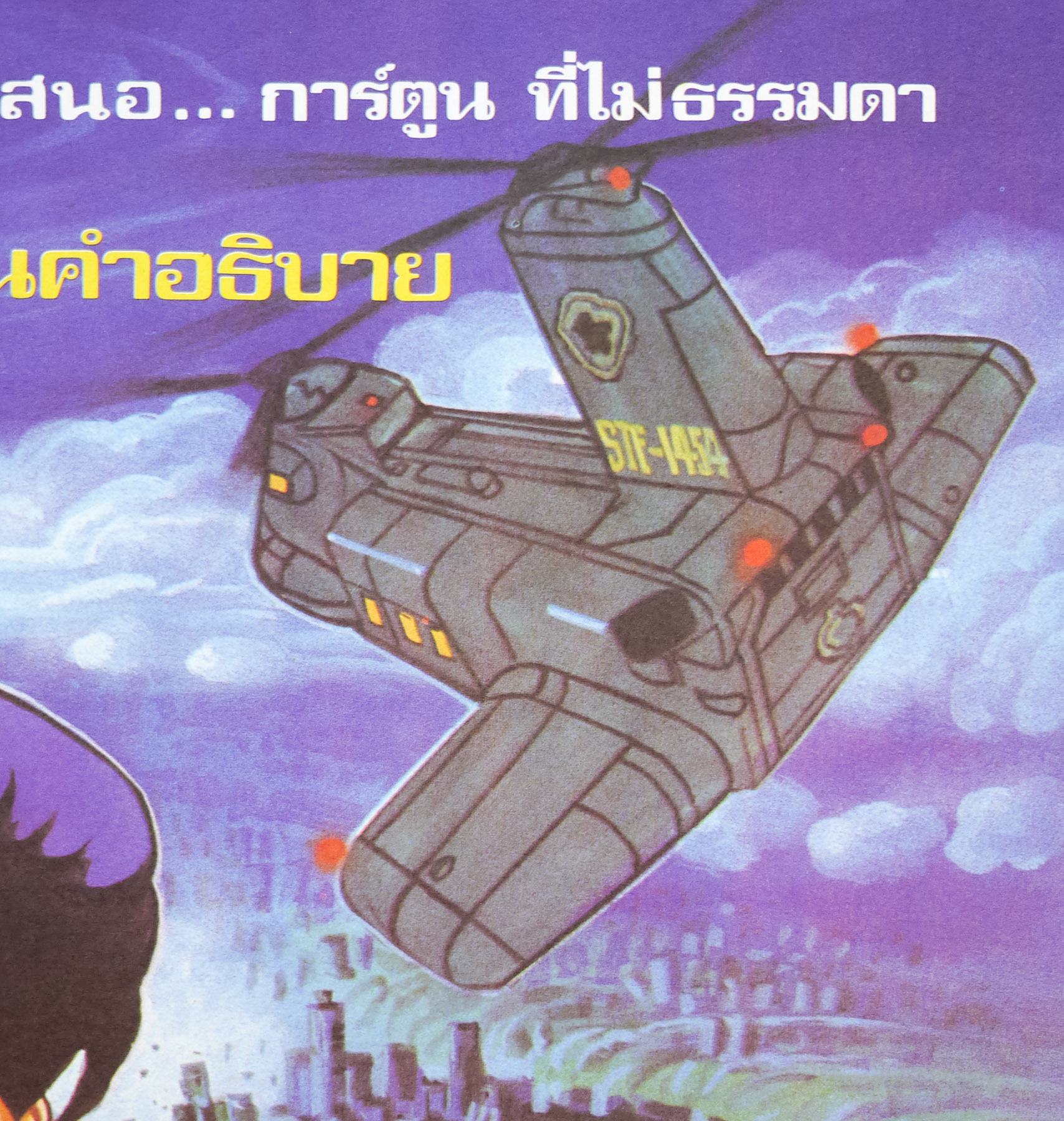
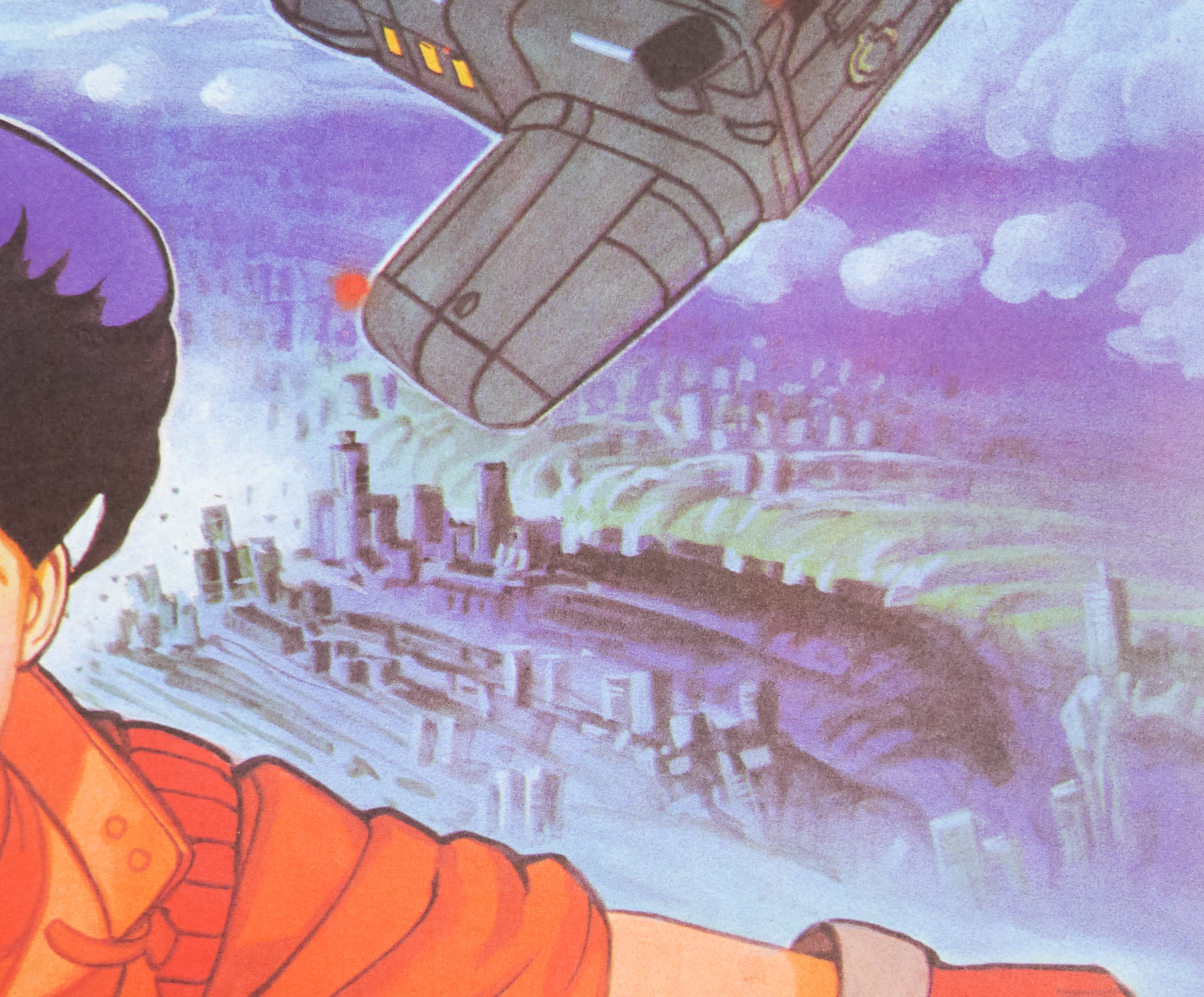
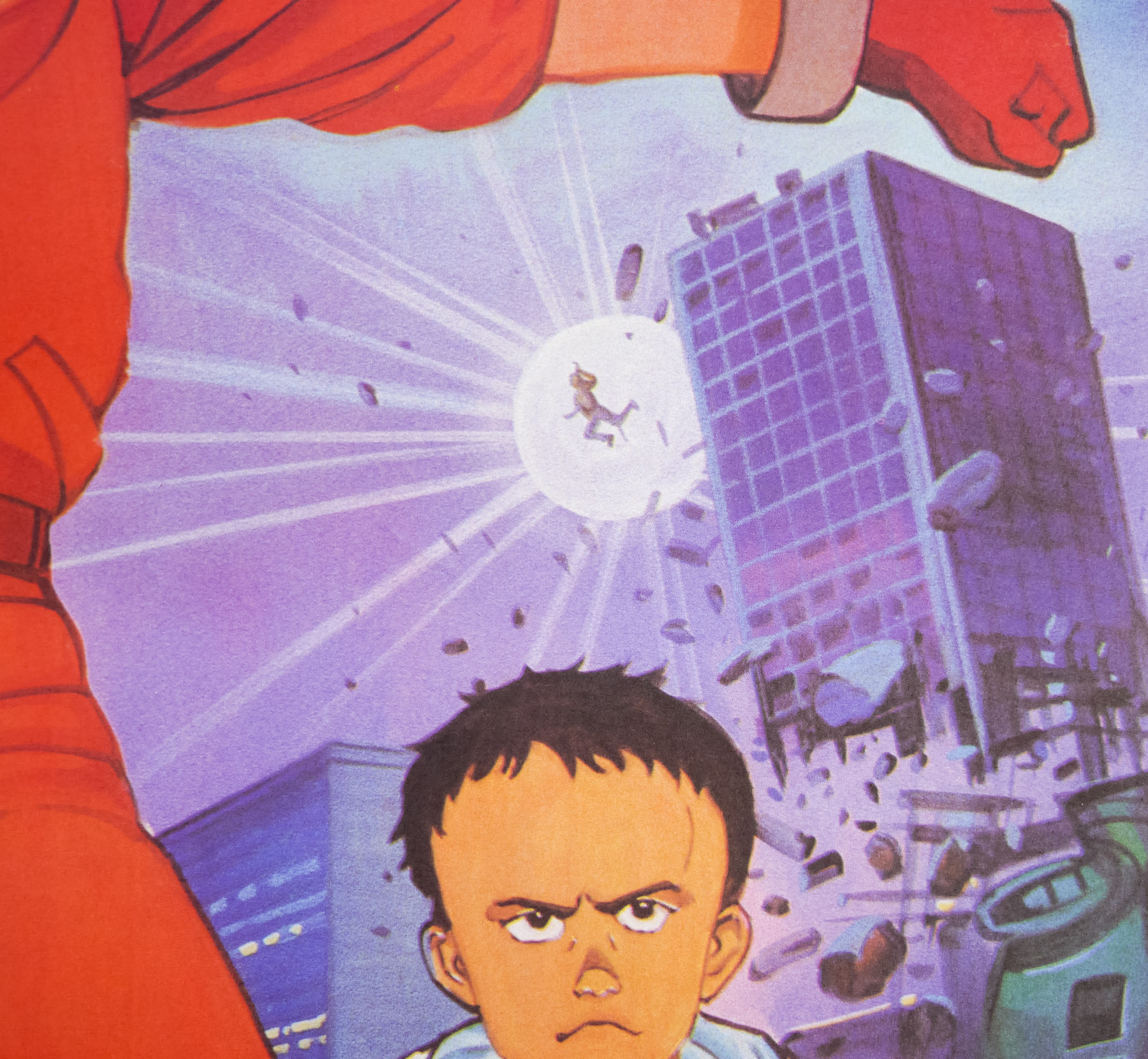
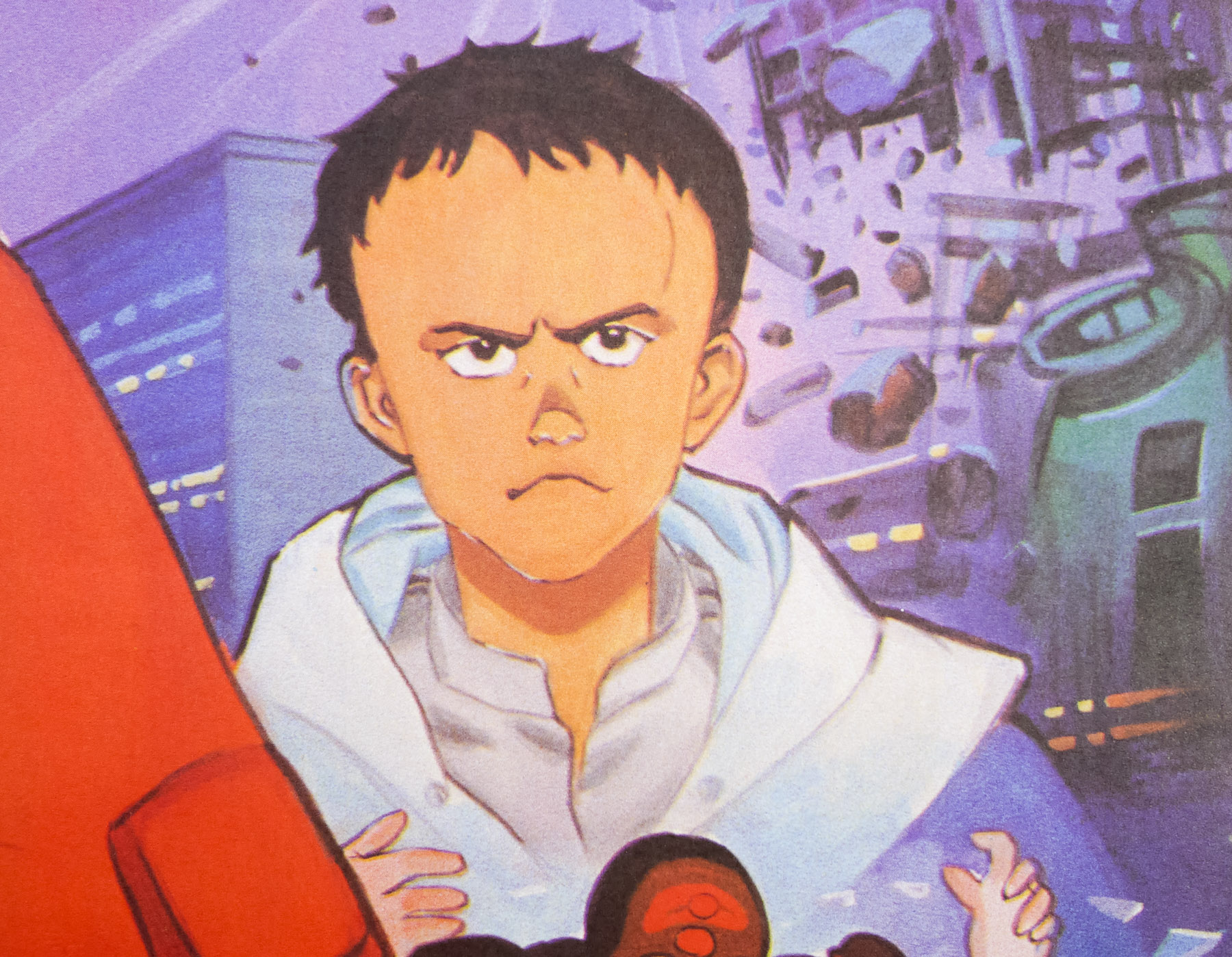
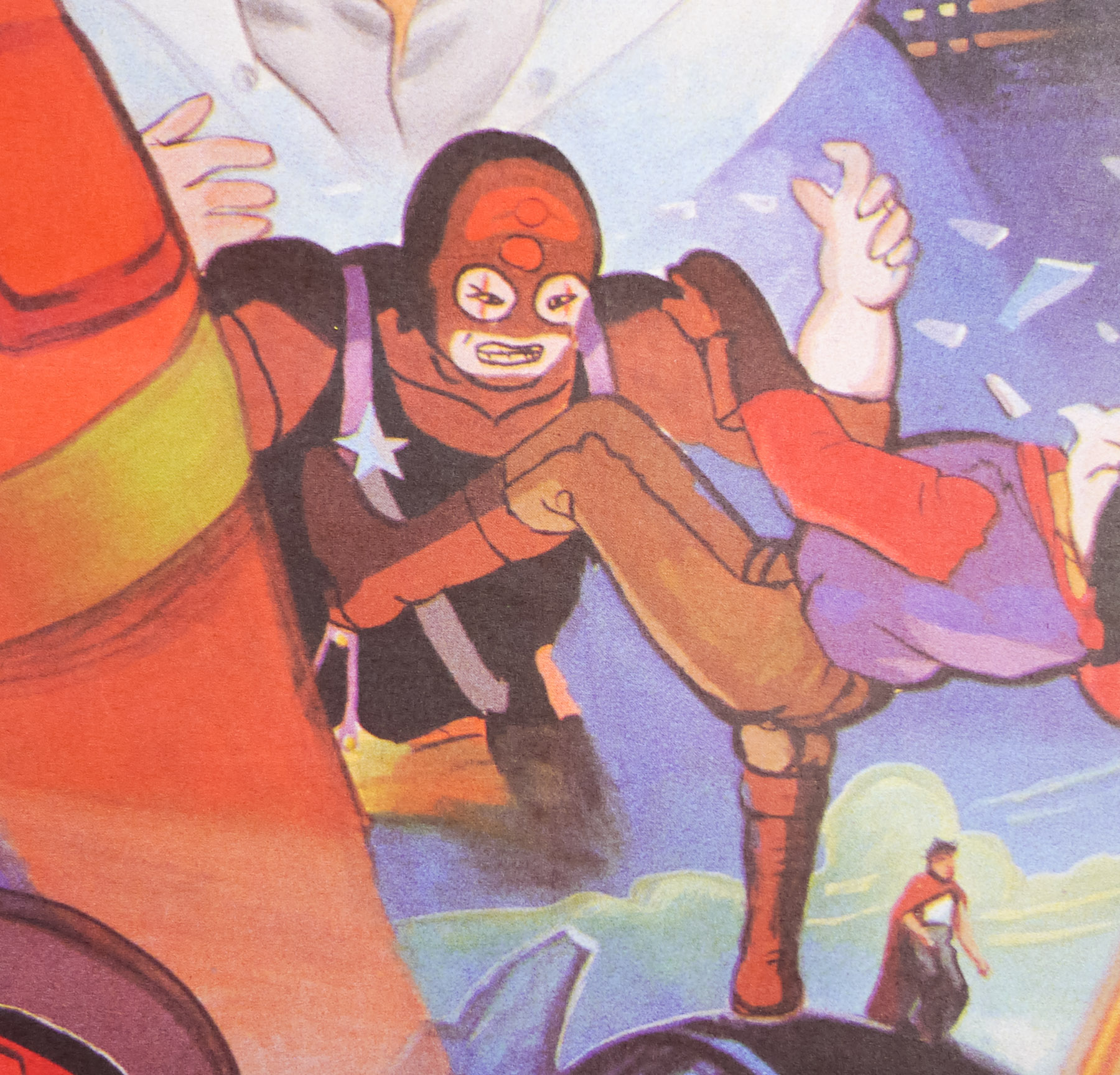
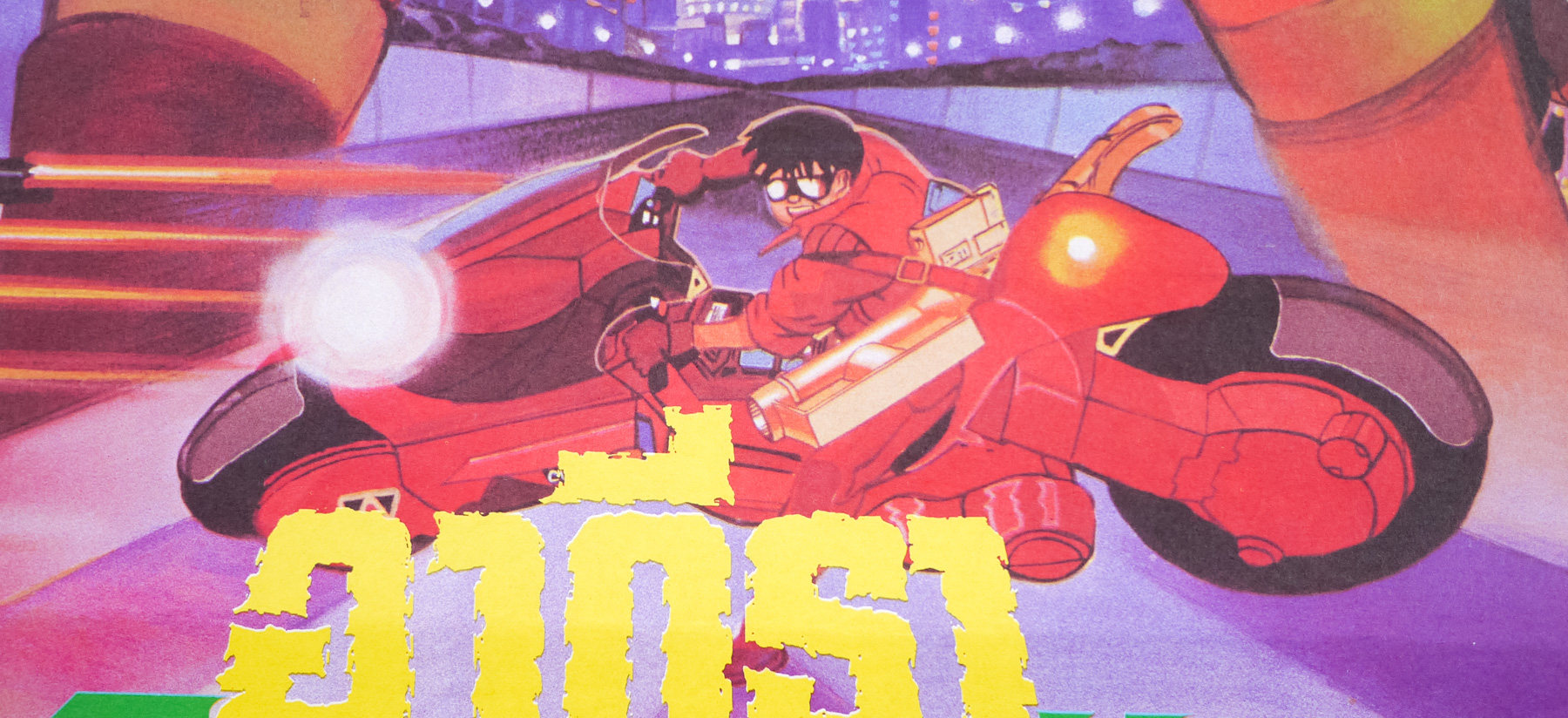
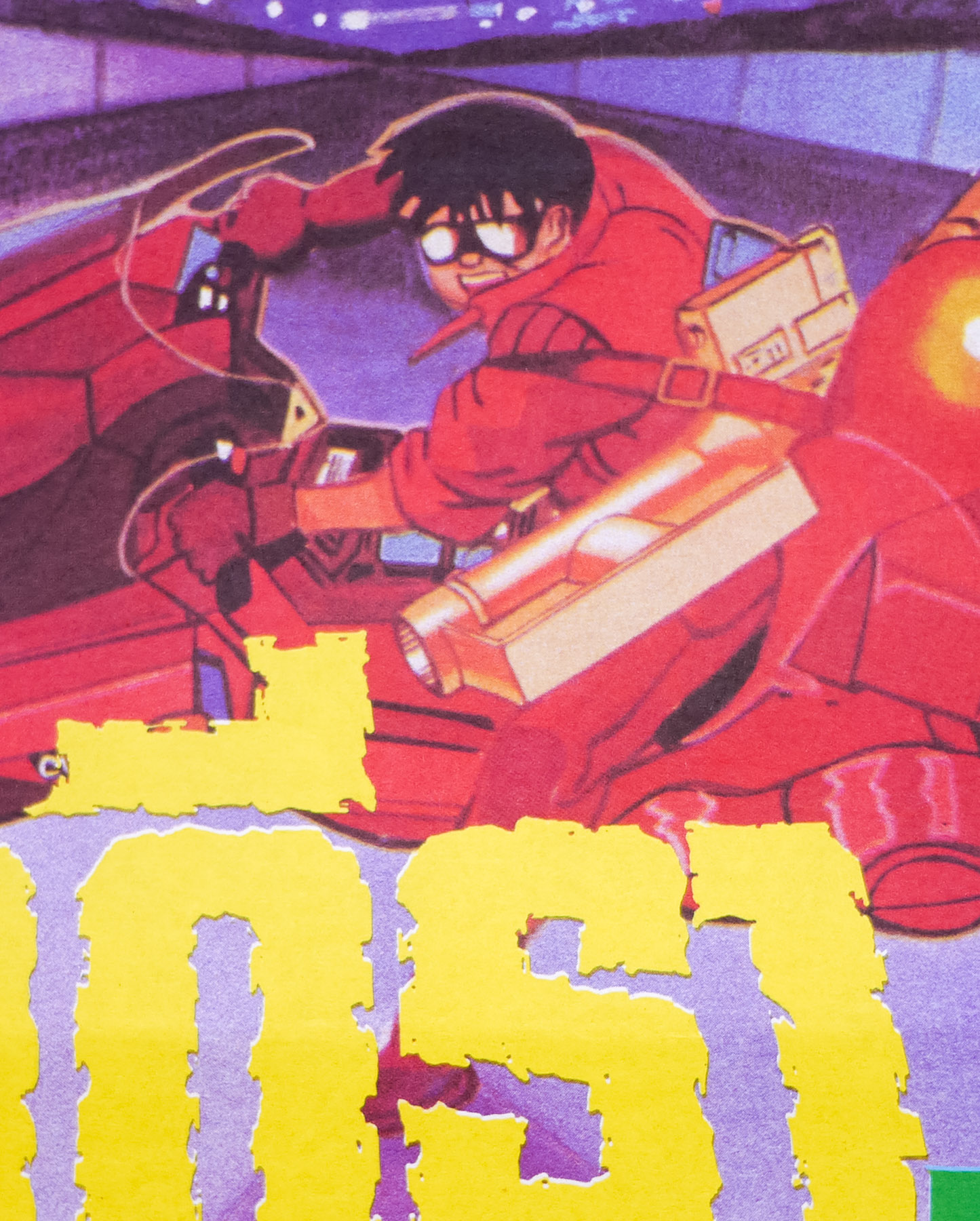
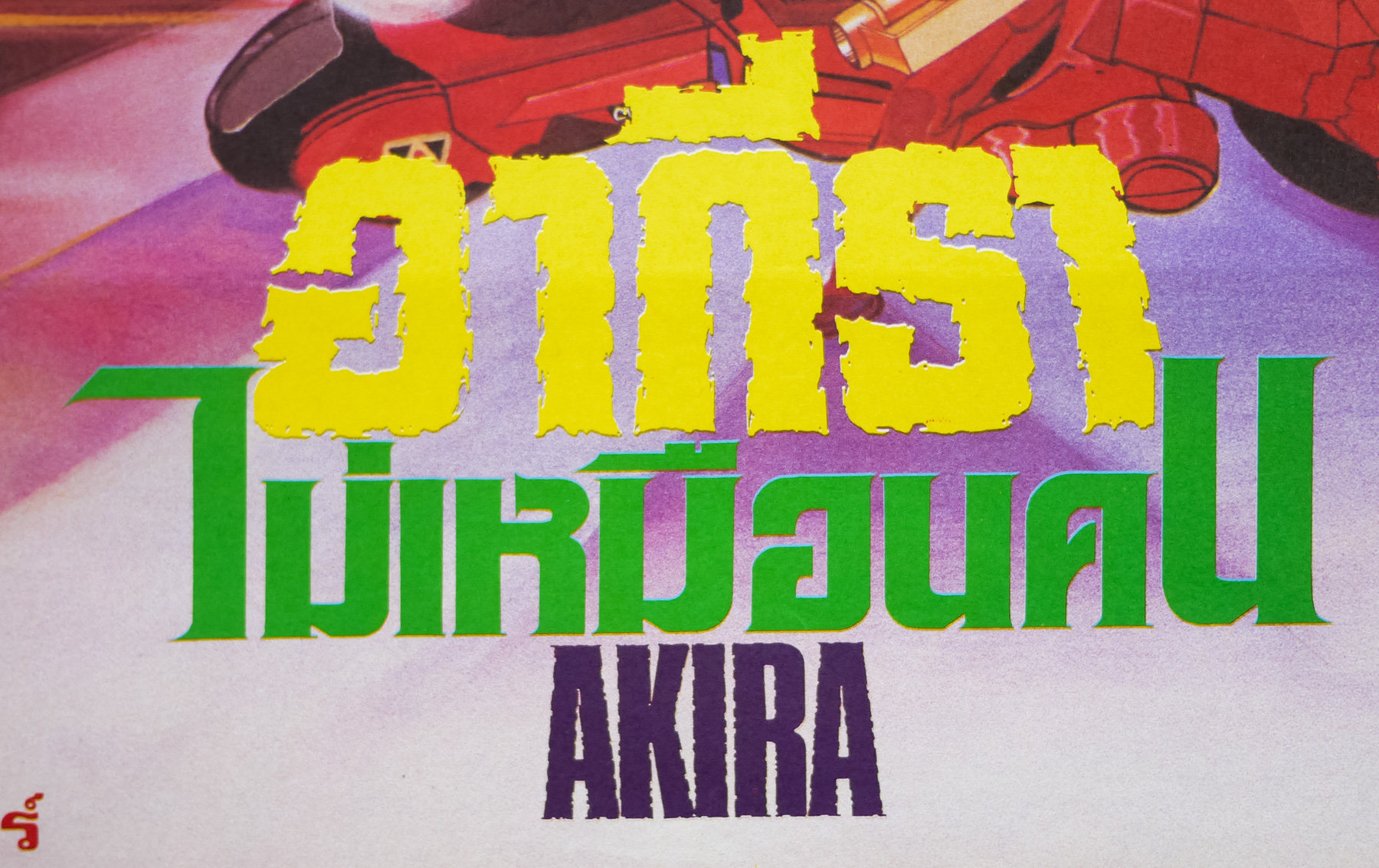
Katsuhiro Ôtomo‘s landmark manga series Akira was adapted into a feature-length anime film in 1988 and directed by Ôtomo himself. The film is set 30 years after an explosion levelled Tokyo and started World War III. Neo-Tokyo eventually rises from the ashes but it is a run-down, seedy city that is ravaged by marauding biker gangs and terrorists. Two members of a biker gang, Akira and his friend Kaneda, come into contact with an esper (a human with special powers, including telepathy) and soon Tetsuo is embroiled in a secret government project known as Akira. Kaneda must set out to stop his friend from triggering another cataclysmic disaster with the help of a trio of espers.

The film adapted most of the first half of the manga and dropped a lot of the content from the second half. It was hailed as a critical success on its release and remains many fans’ favourite anime film. Akira had a huge impact on me when it was shown on the UK’s Channel 4 sometime in the early 1990s. I’d never seen anything quite like it and it opened my eyes to the world of anime films that were slowly being released in the UK, including the likes of Ninja ScrollGhost in the Shell and the great work of Hayao Miyazaki and his Studio Ghibli.

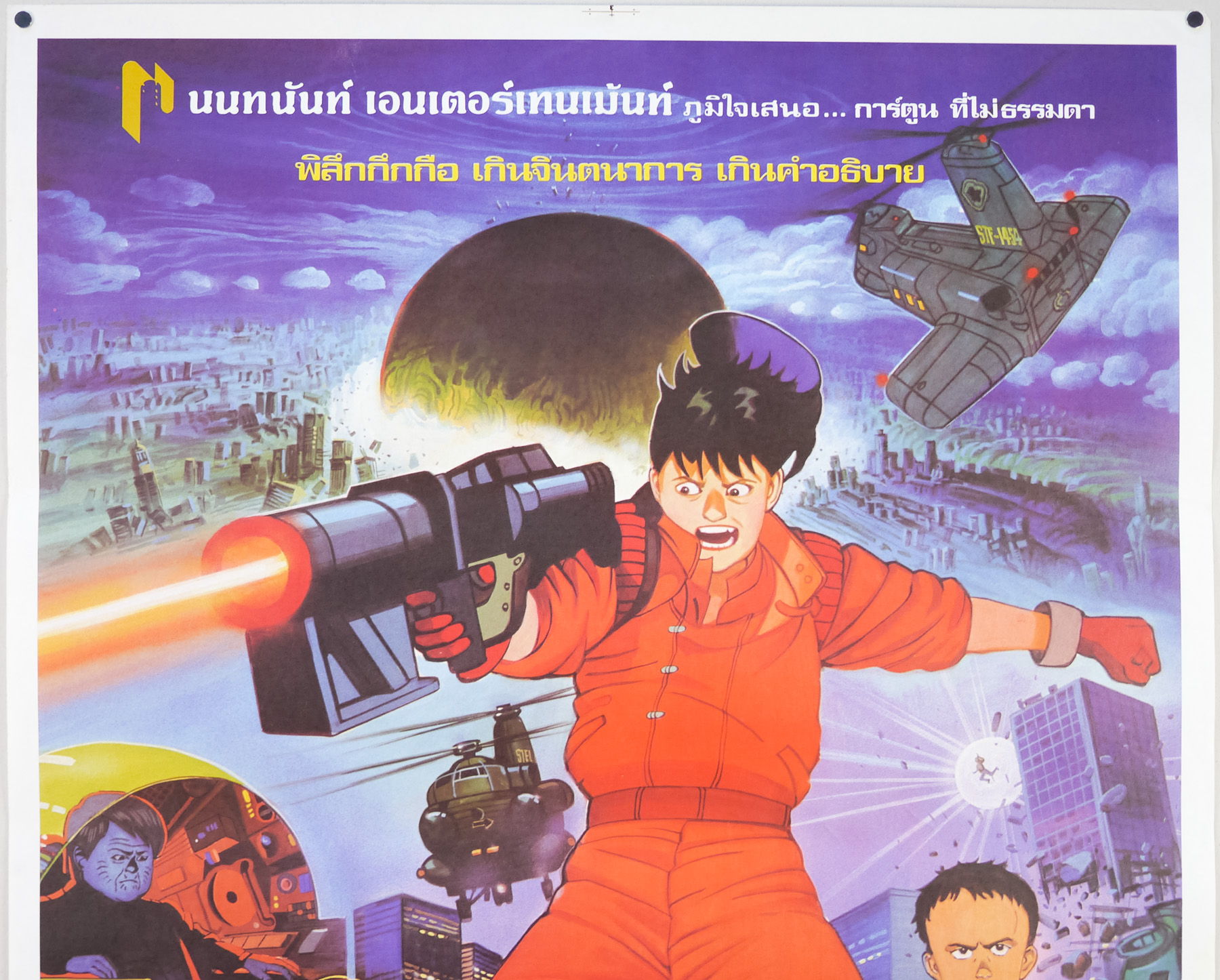
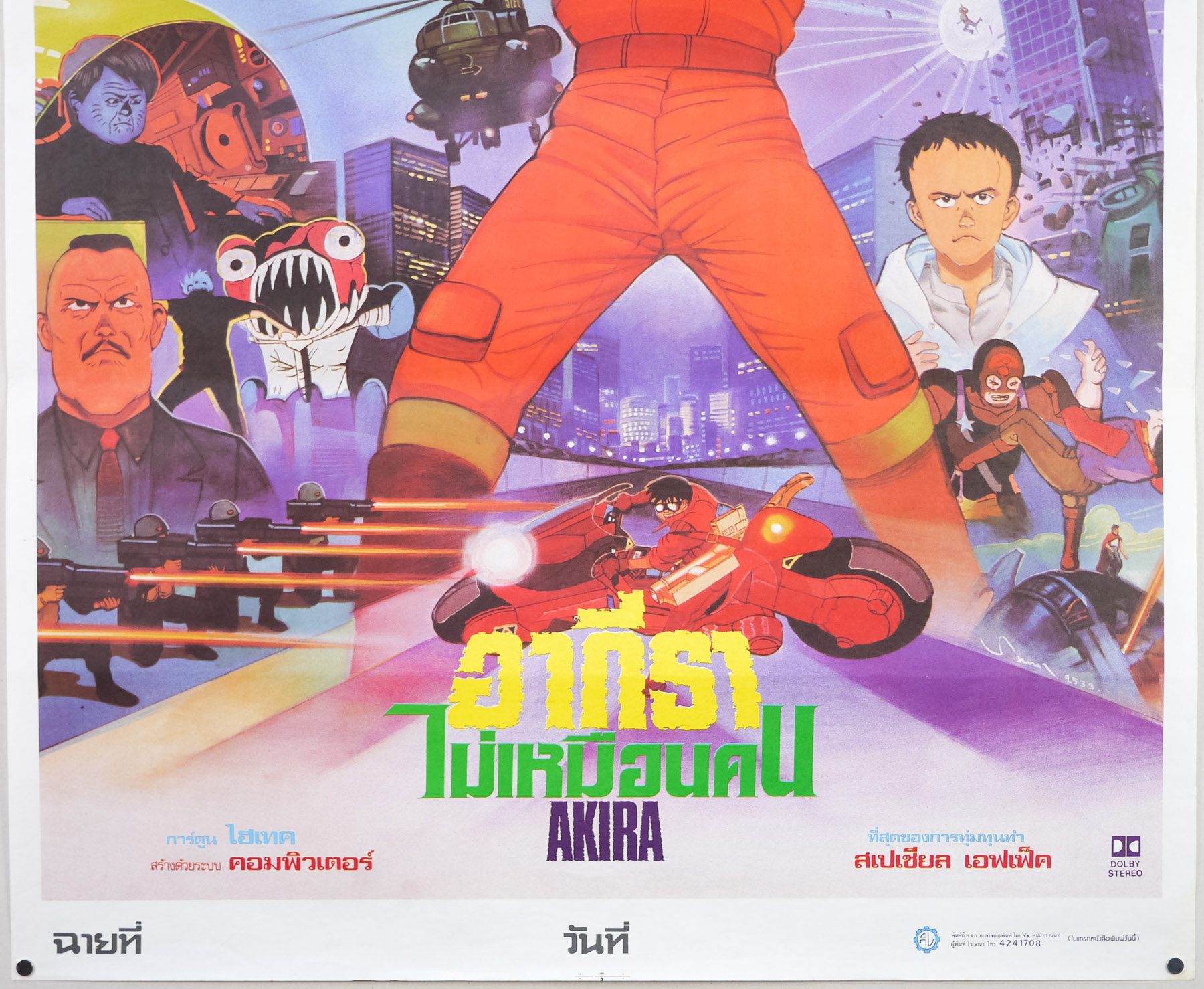
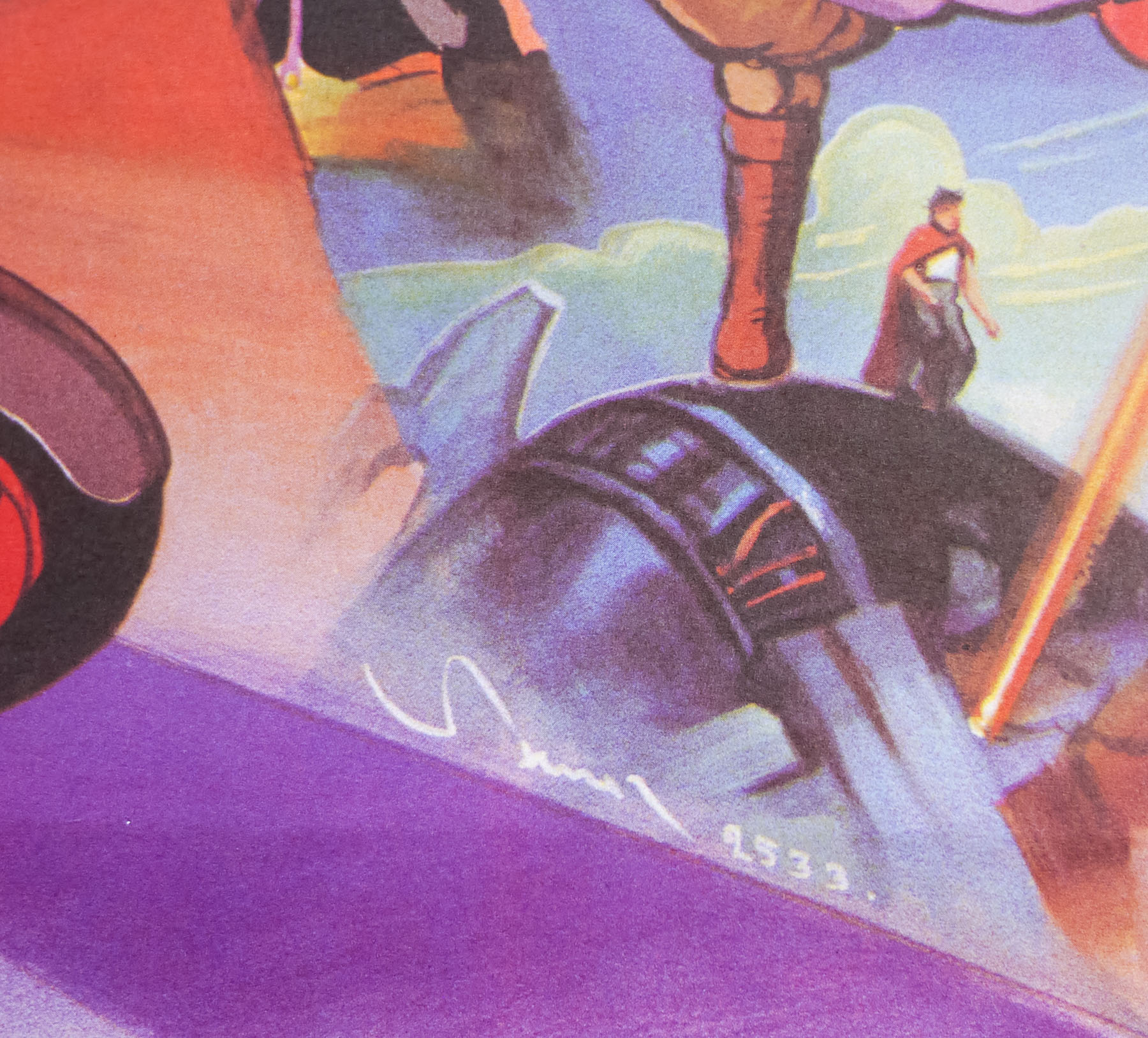
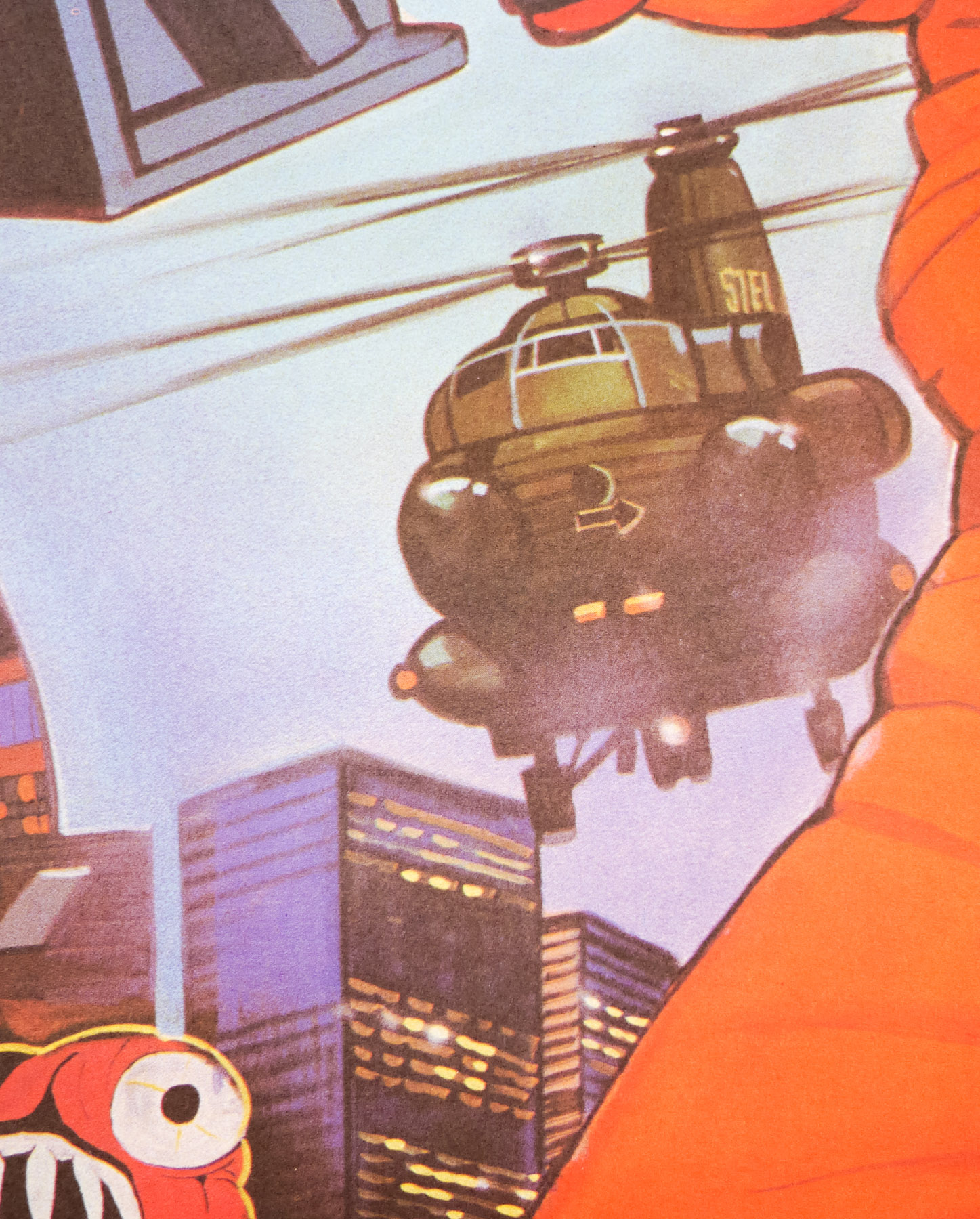
This is the poster for the release of the film in Thailand and features unique artwork painted by a local artist known as Noppadol.

I also have two Japanese B2 posters for the film; style A and style B, the Japanese B1 poster, as well as the American one sheet, and ace illustrator Tyler Stout’s take on the film.

The Terminator / Thailand

05.10.15

Poster Poster

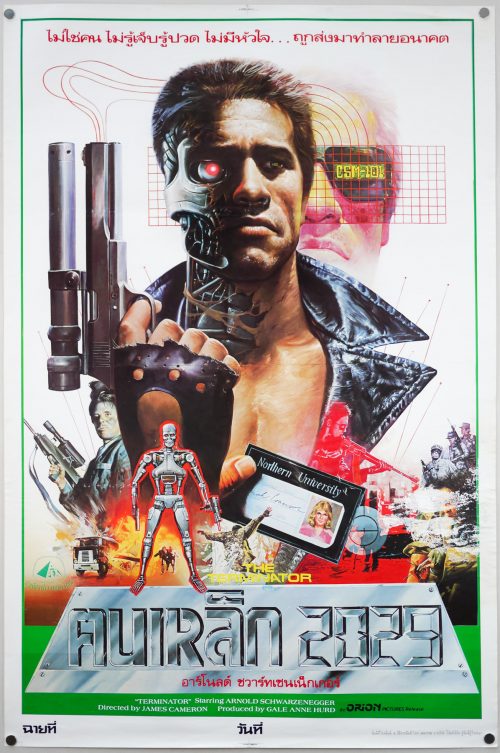
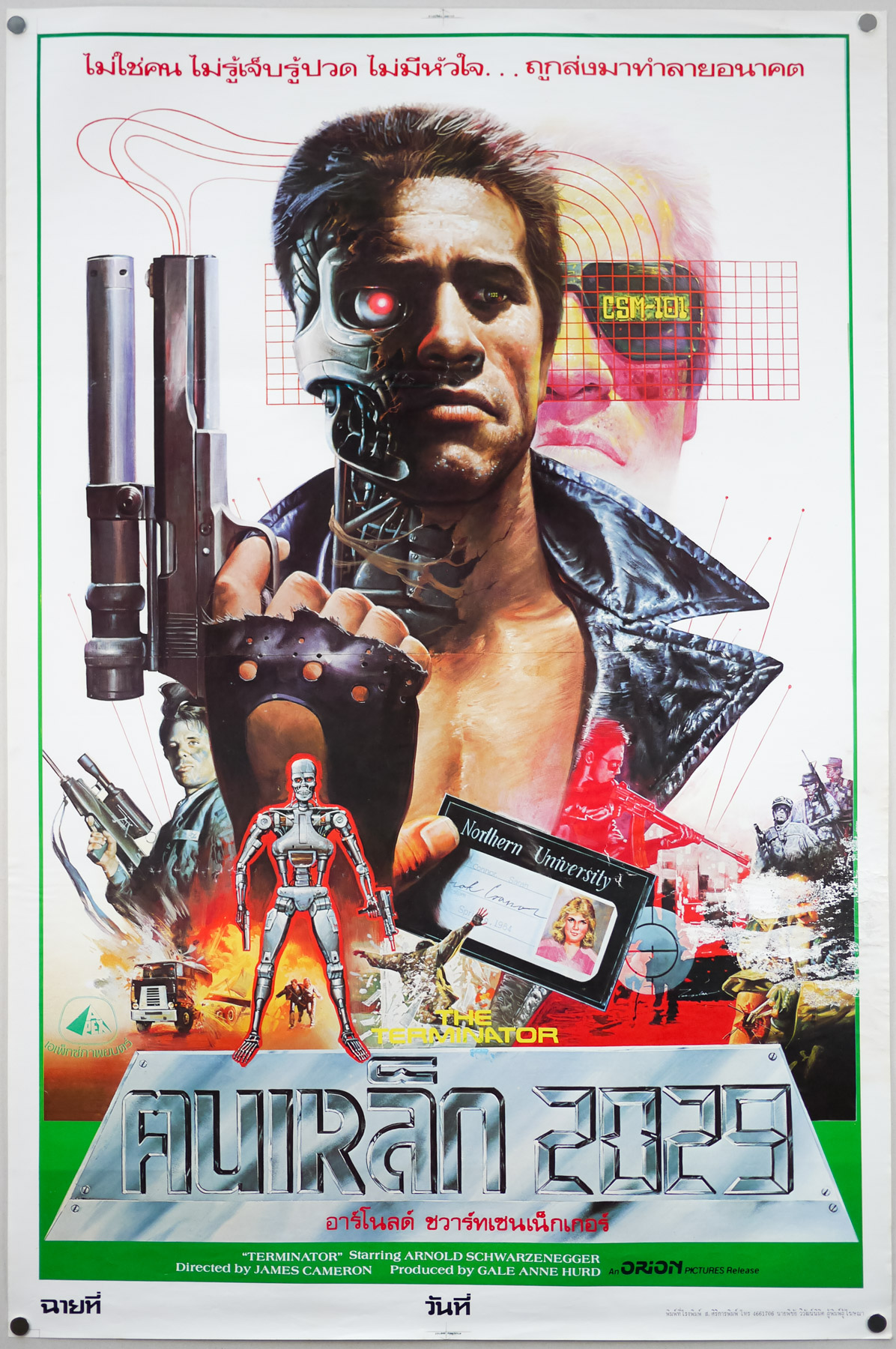
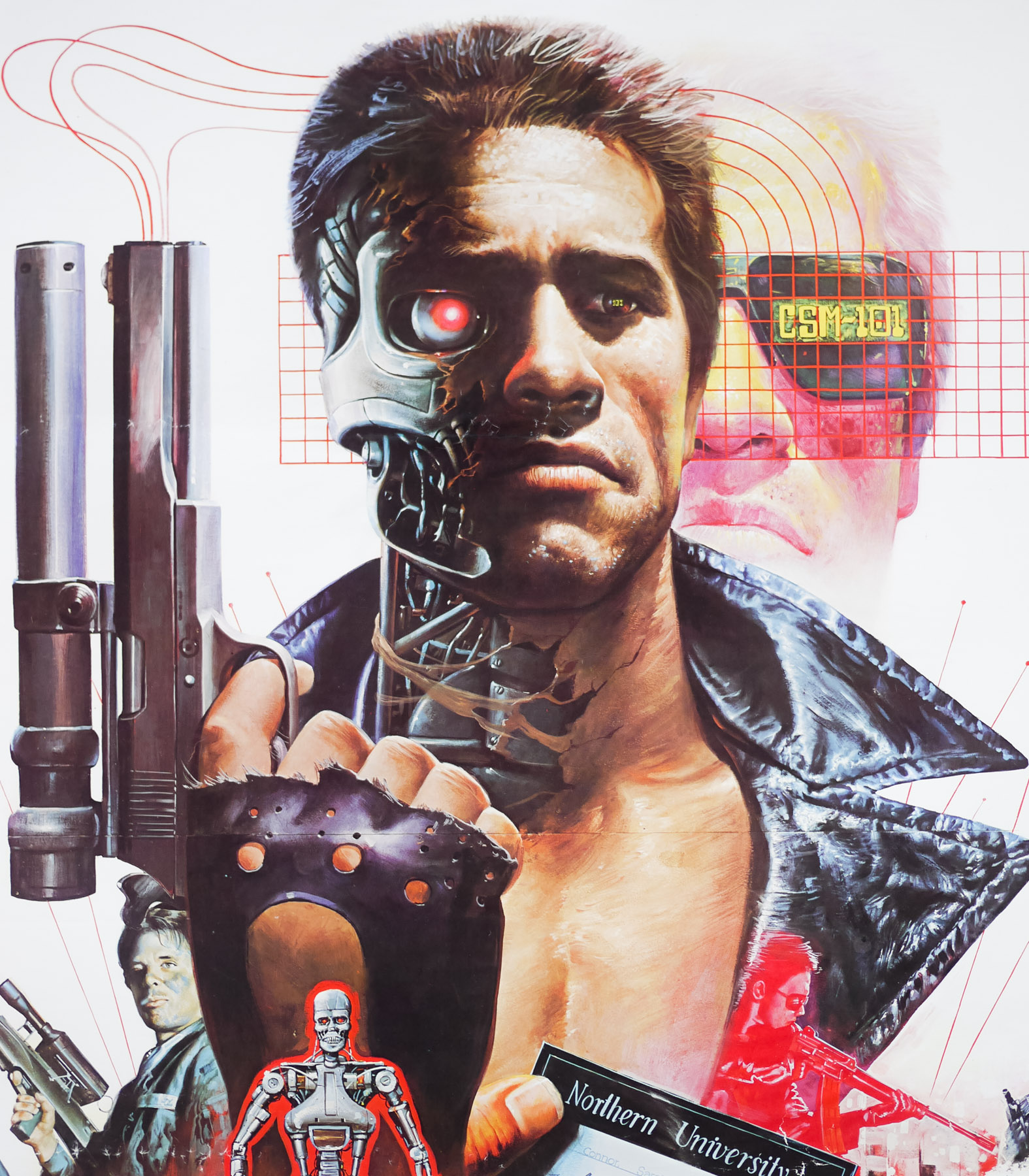
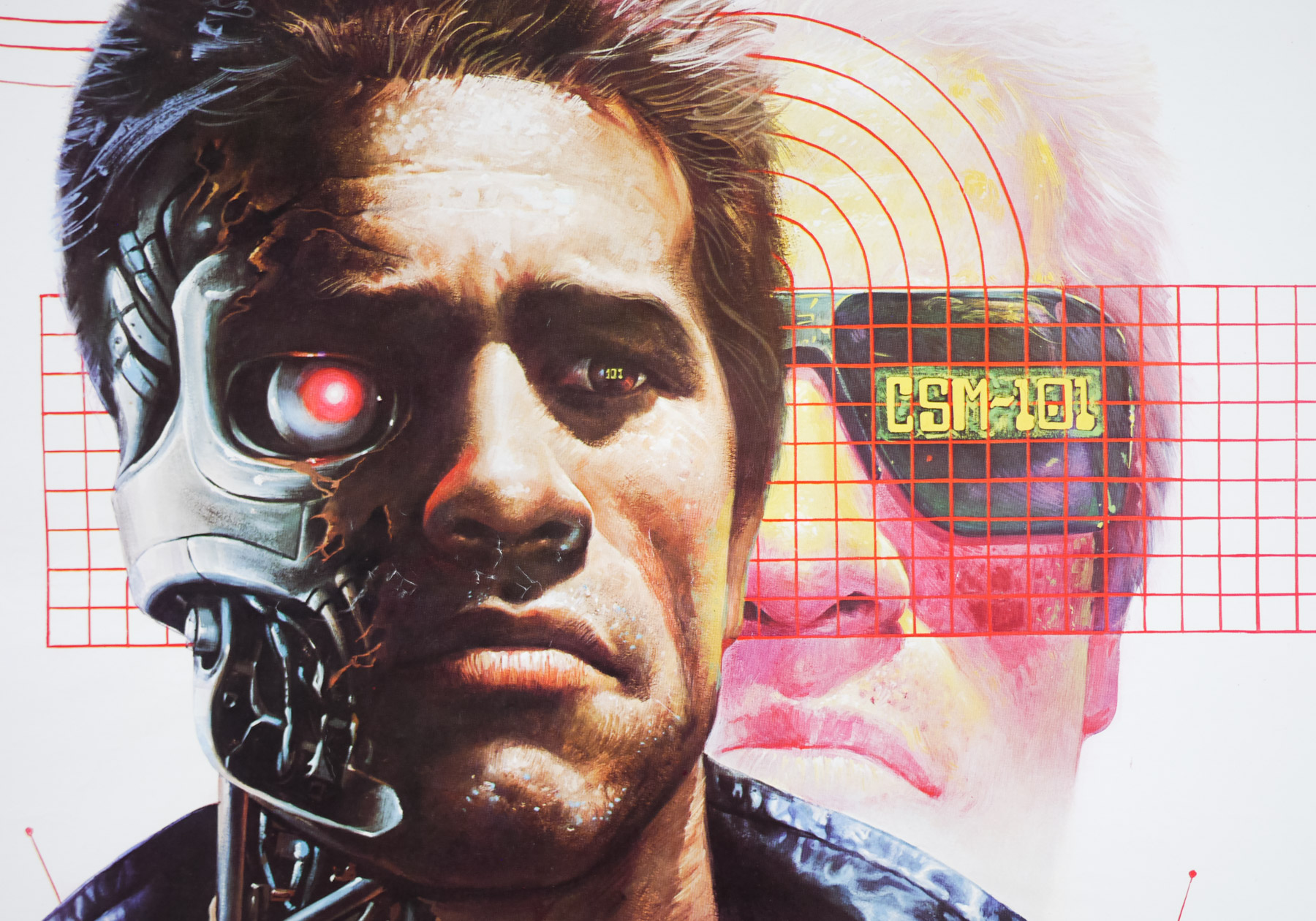
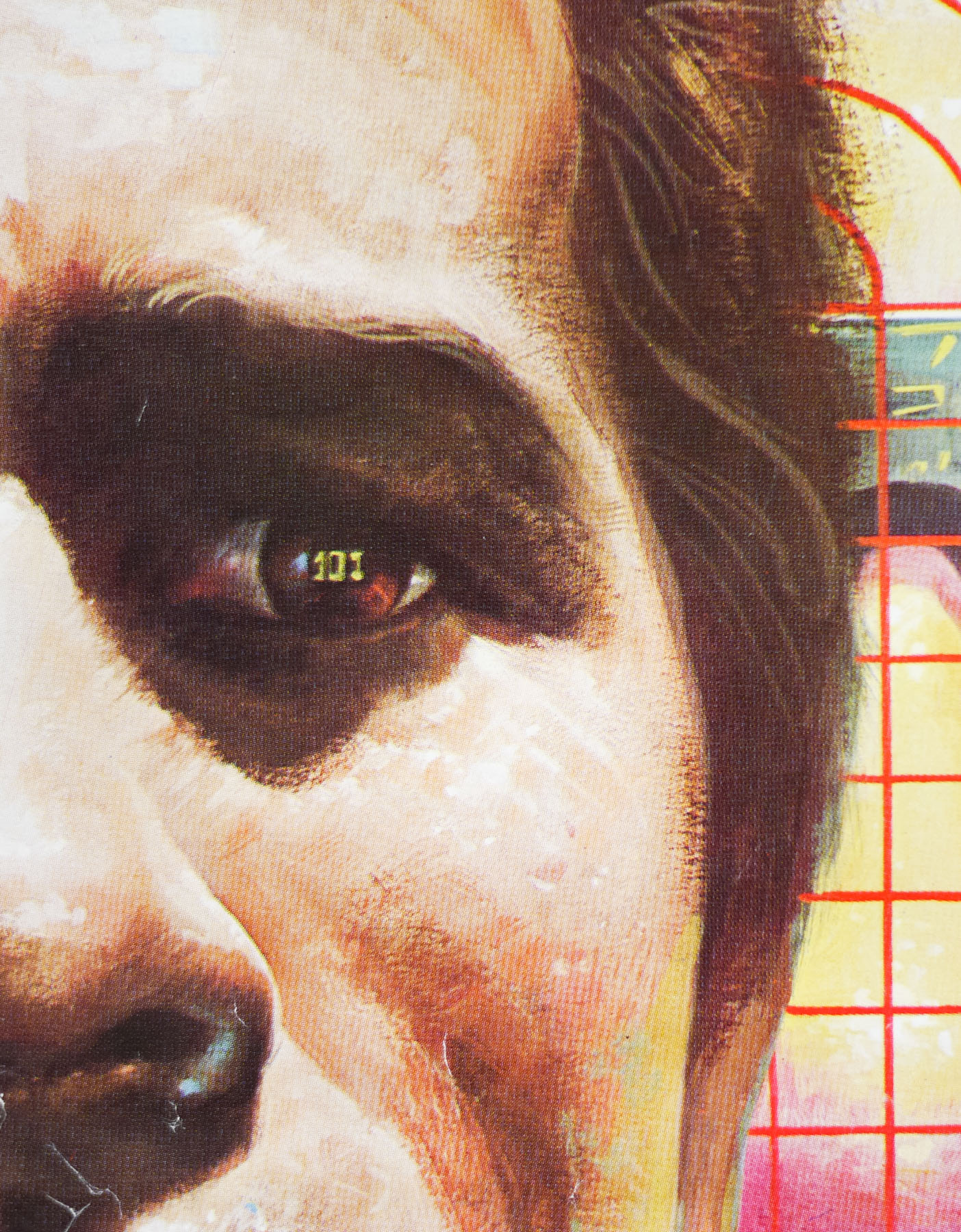
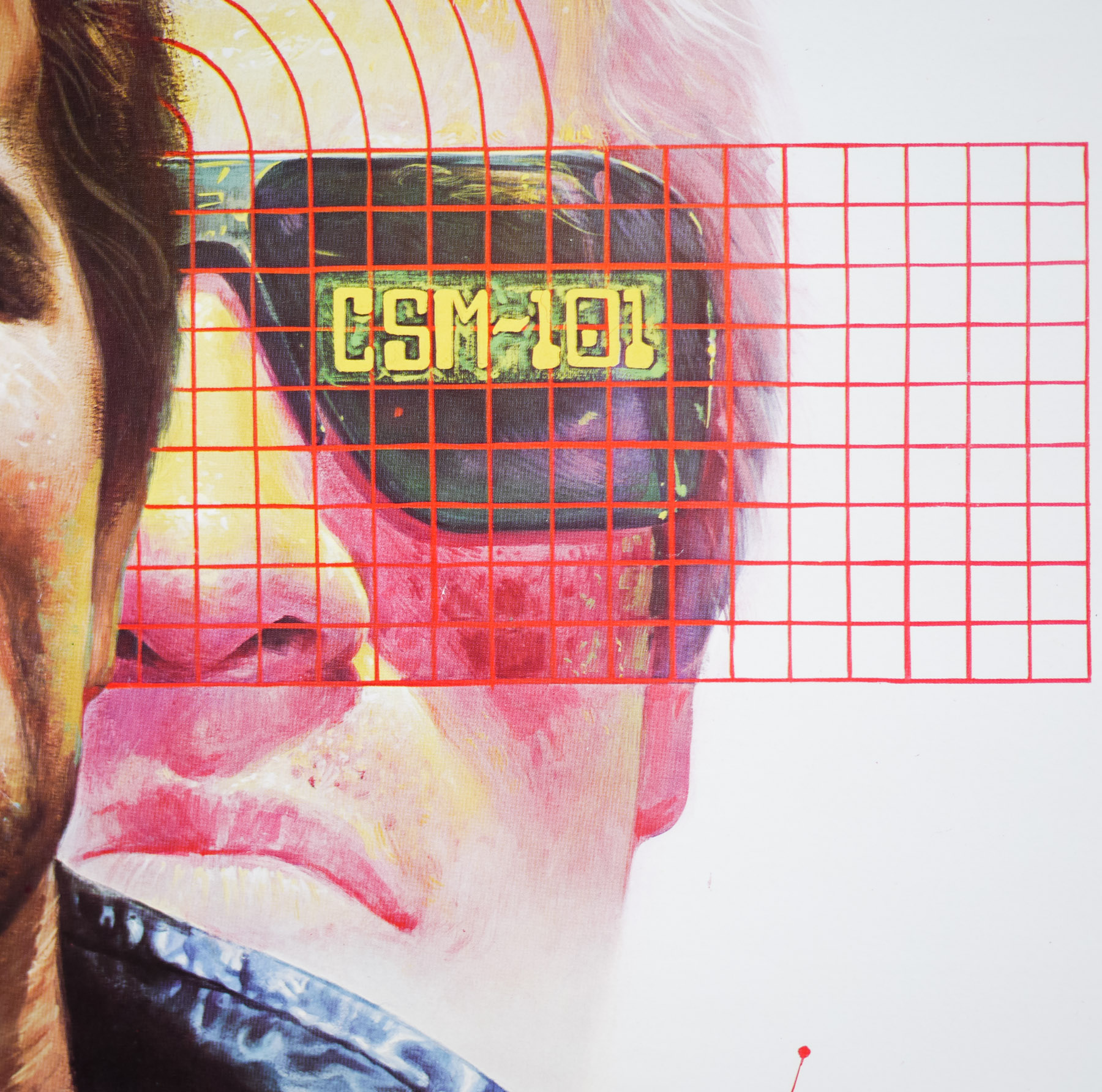
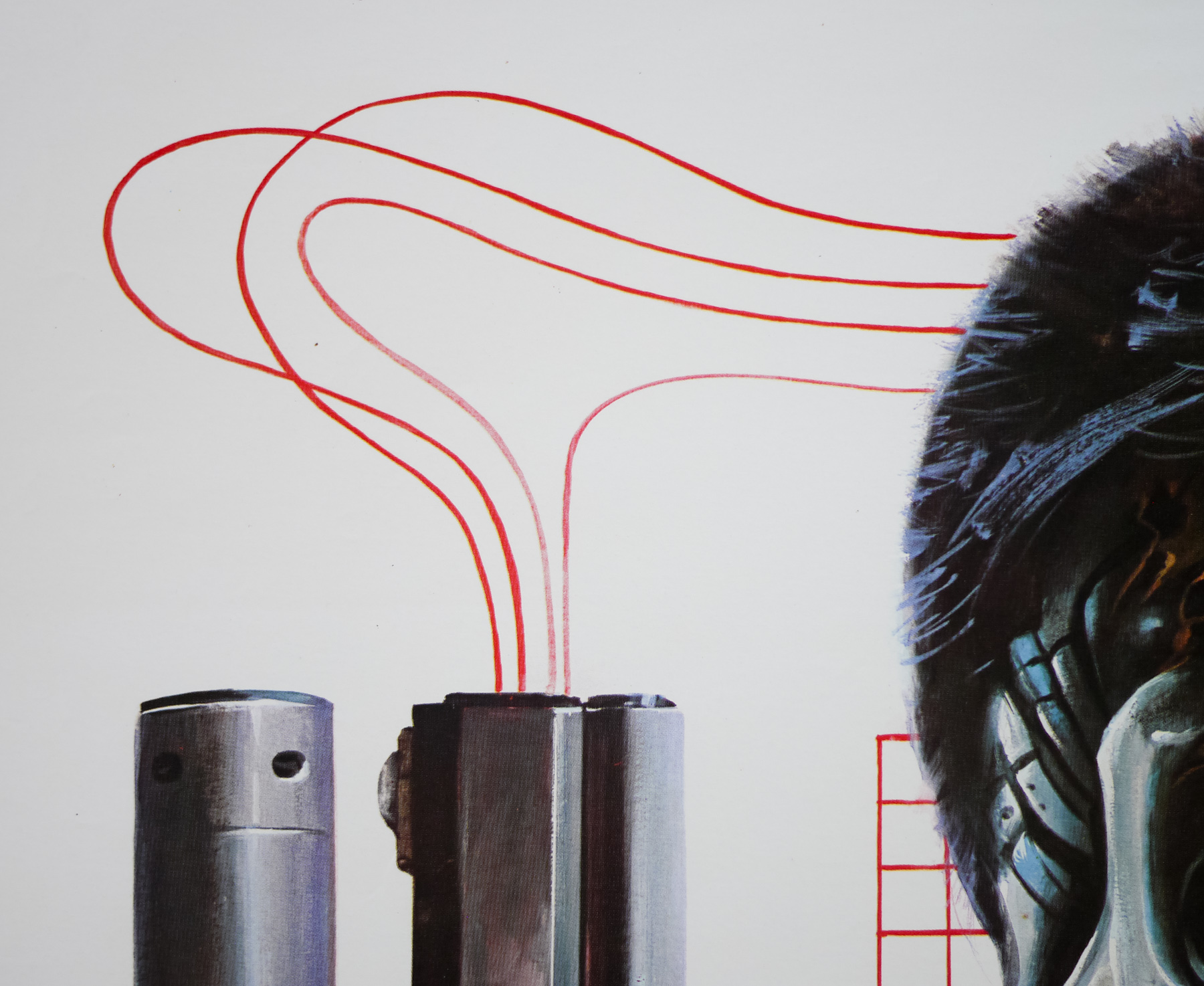
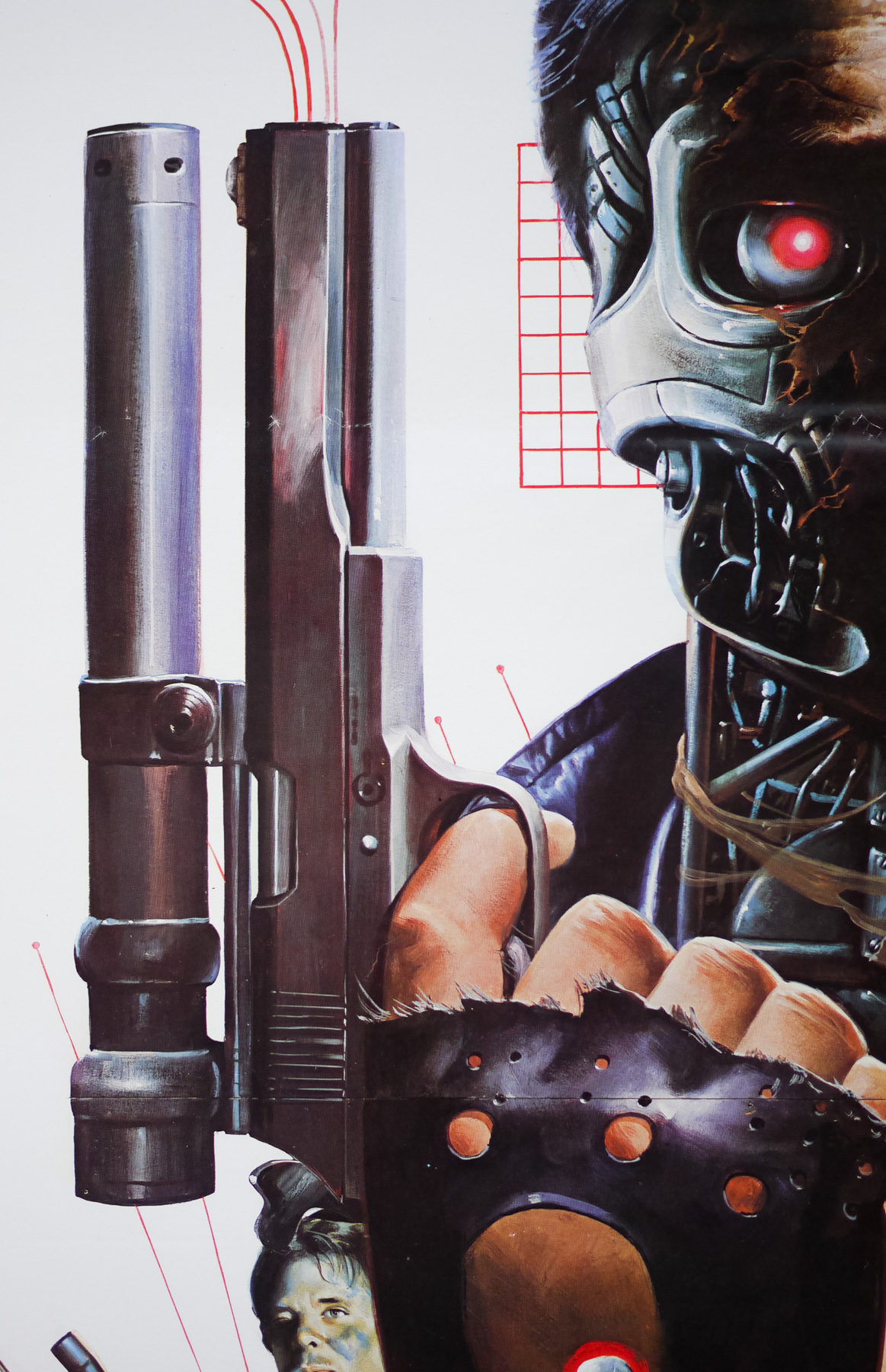
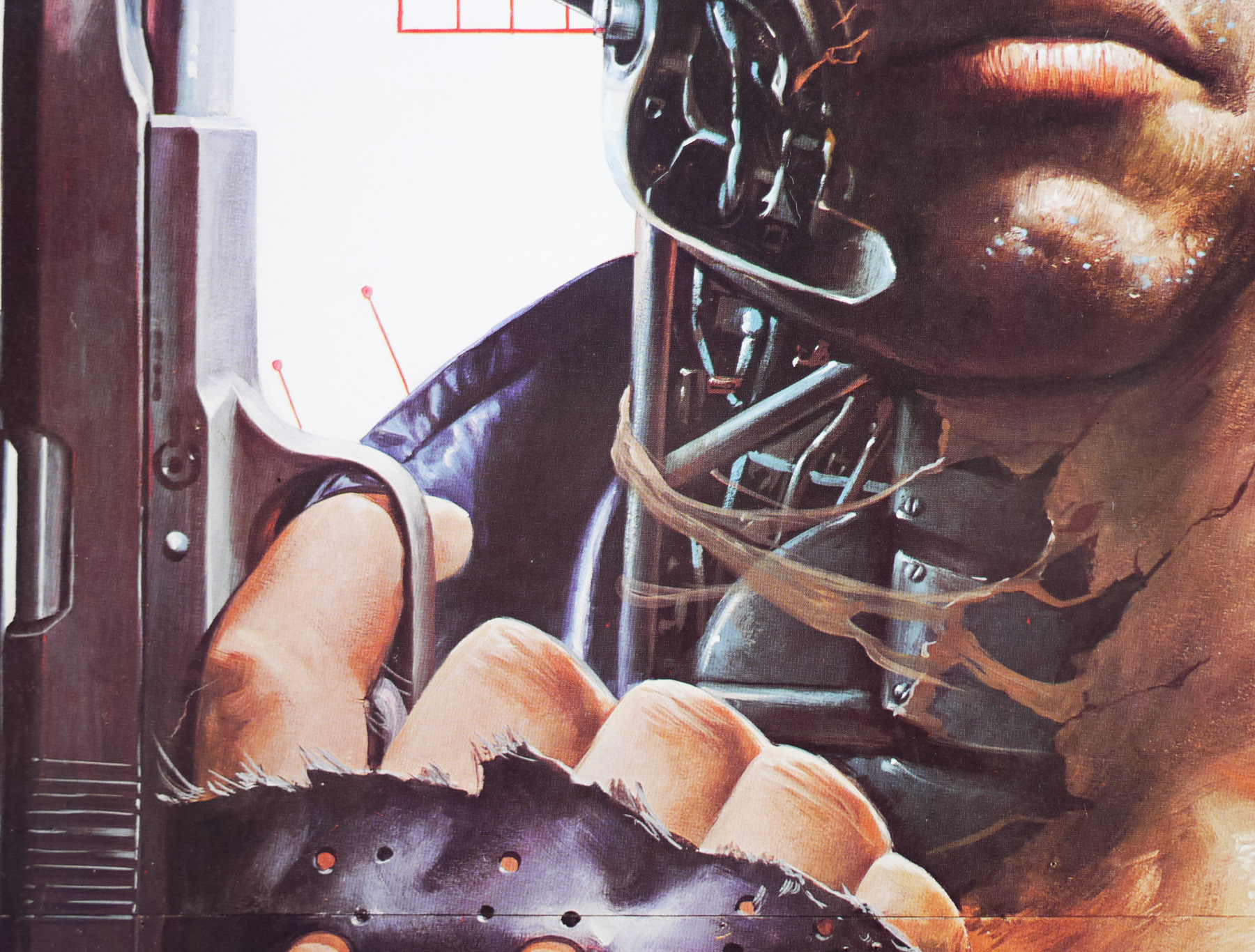
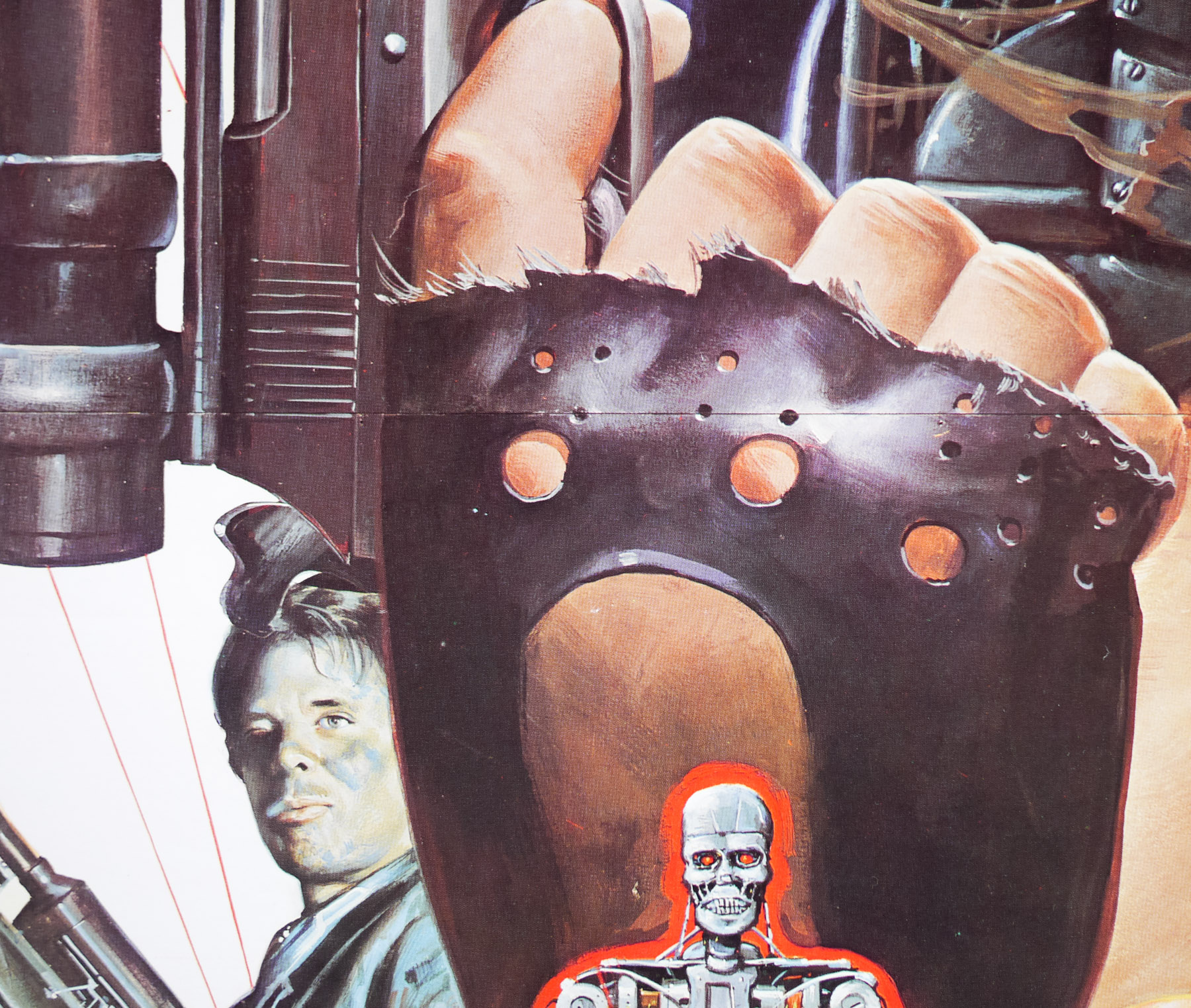
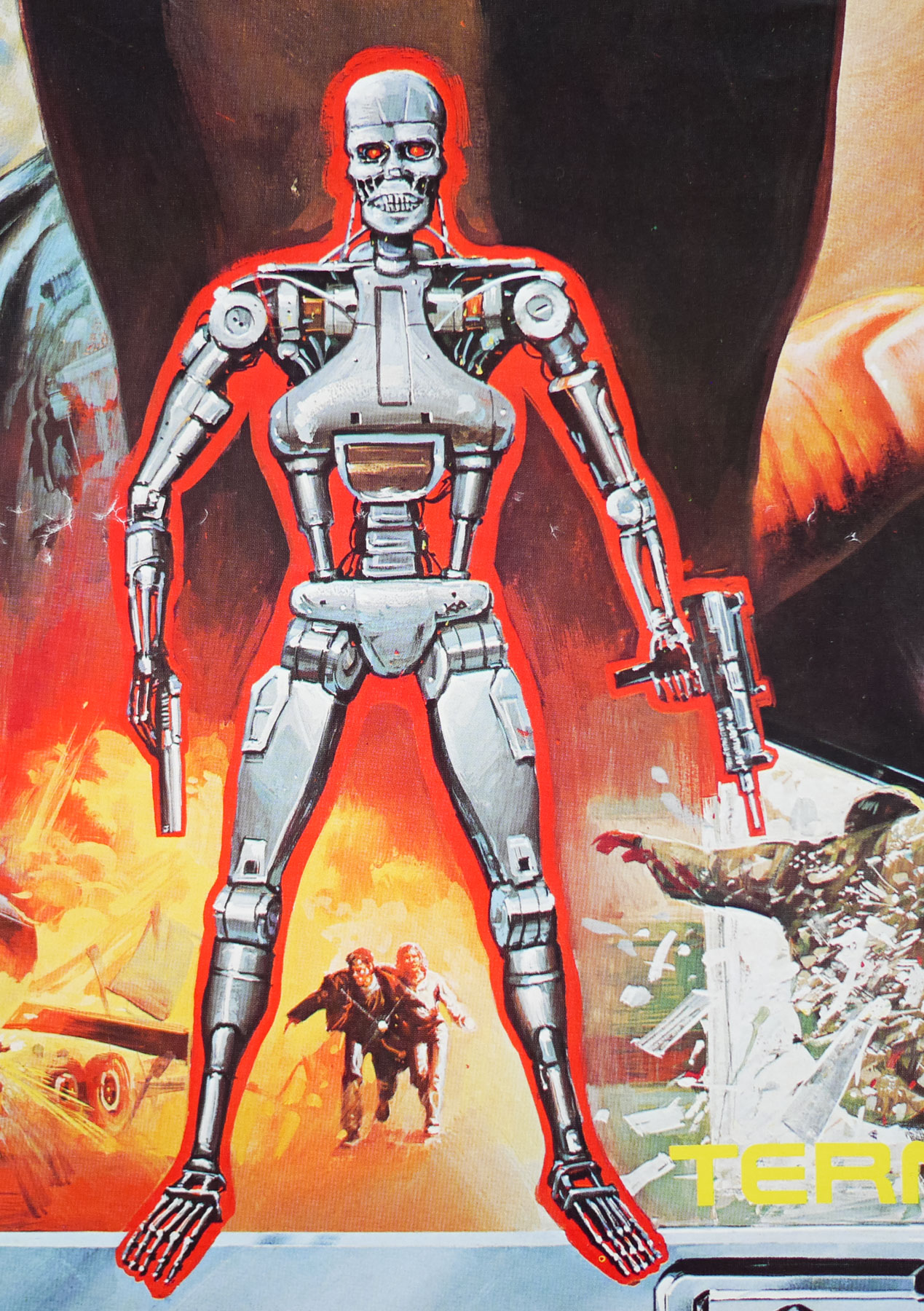
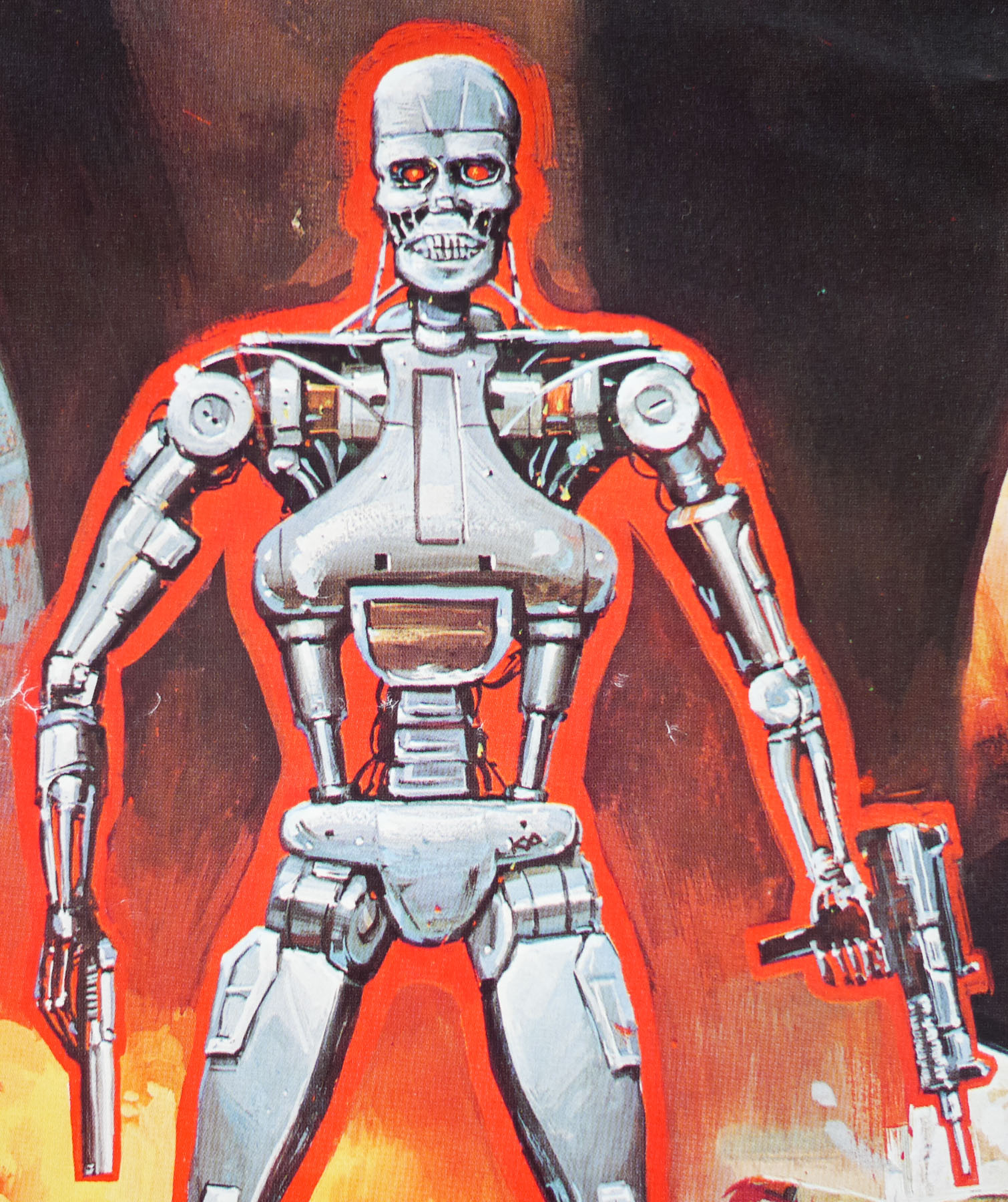
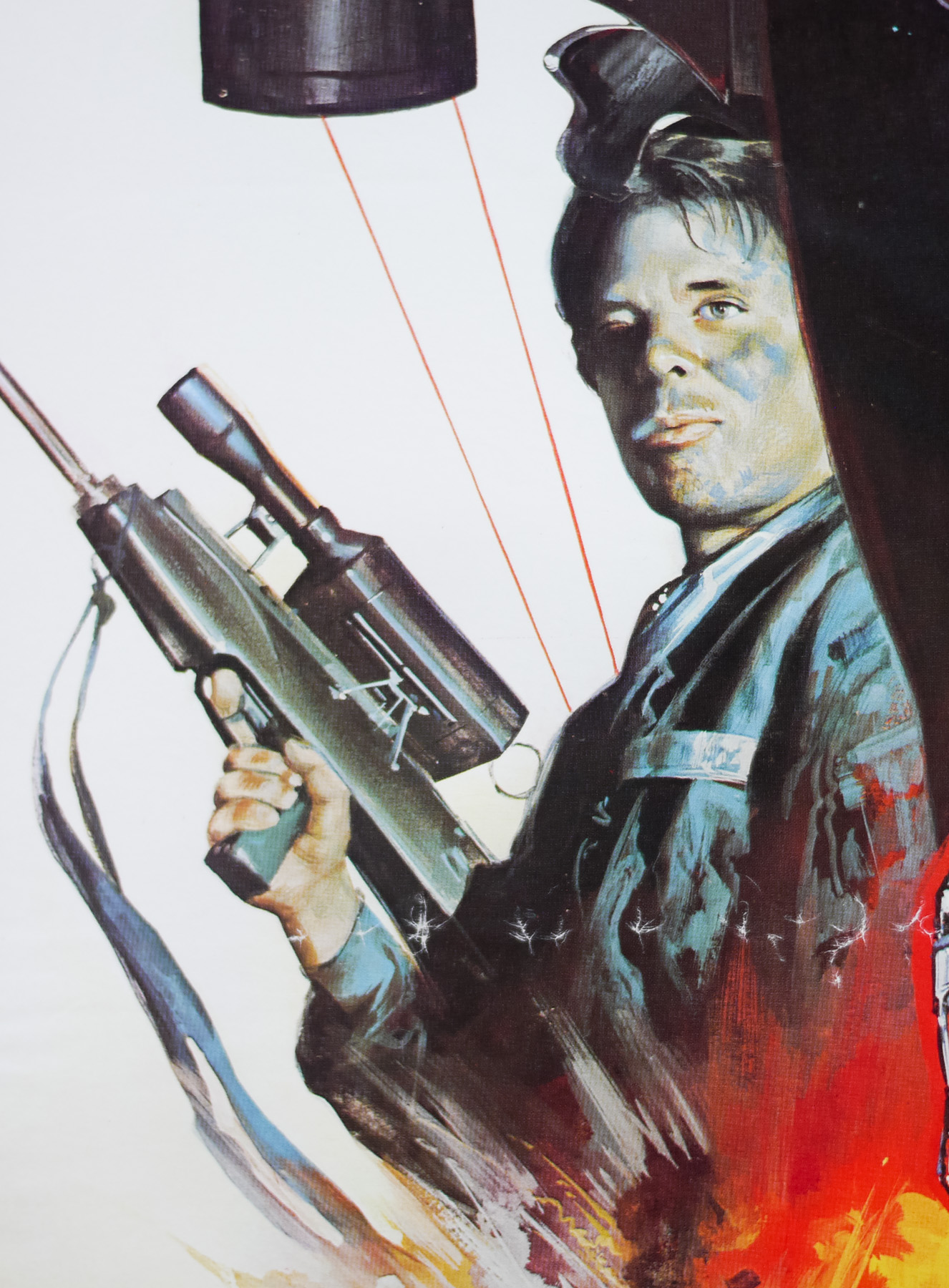
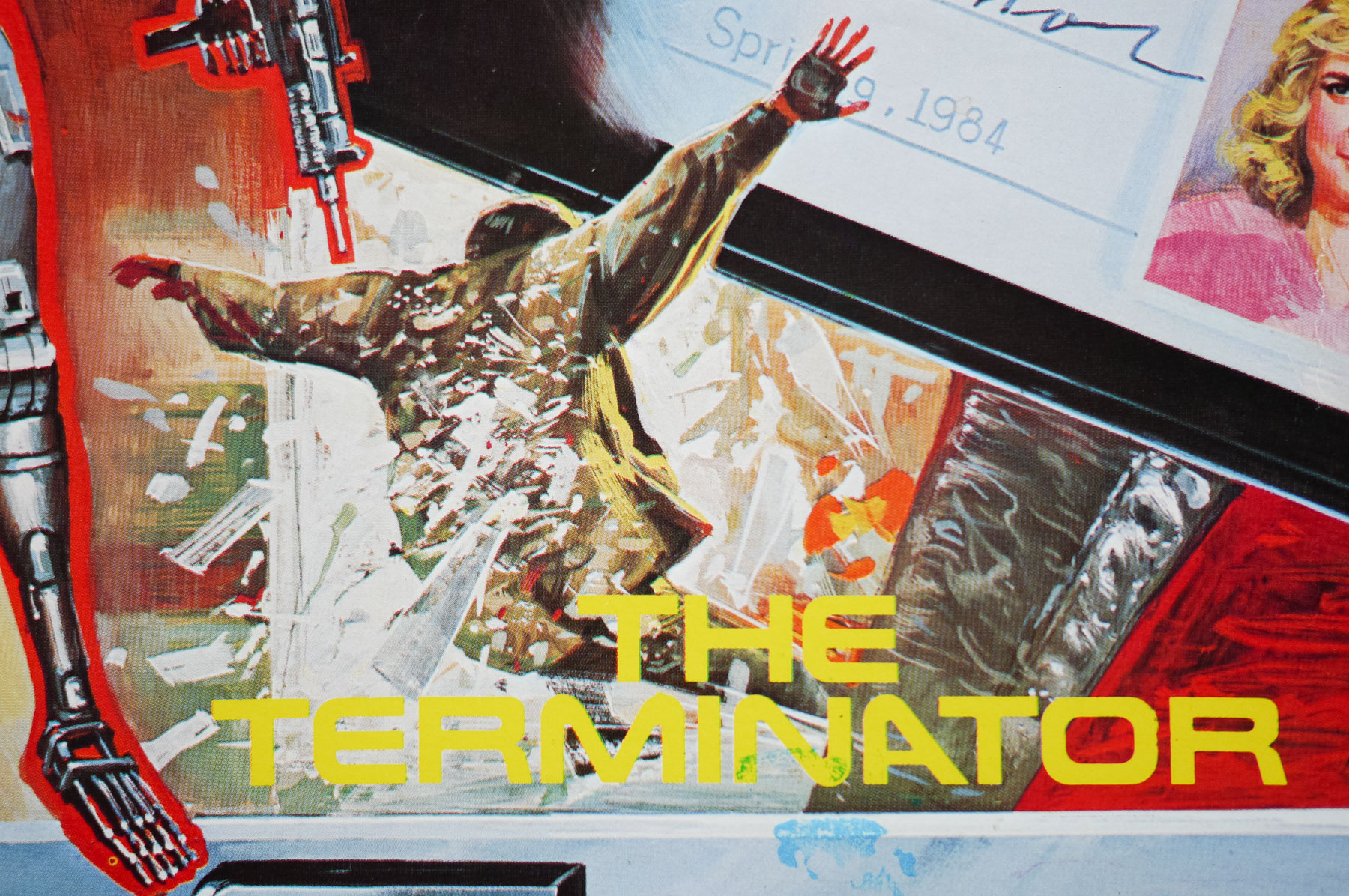
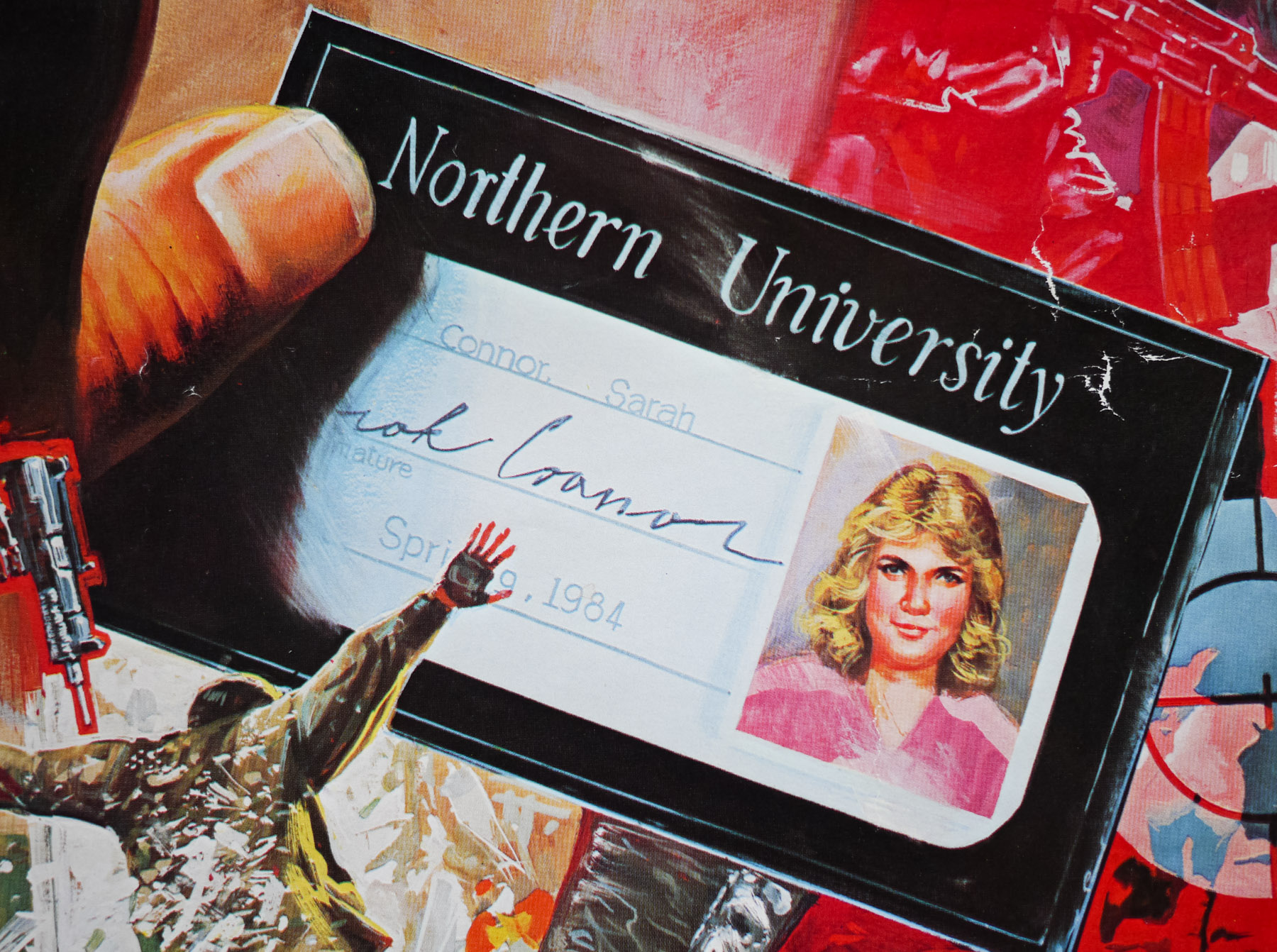
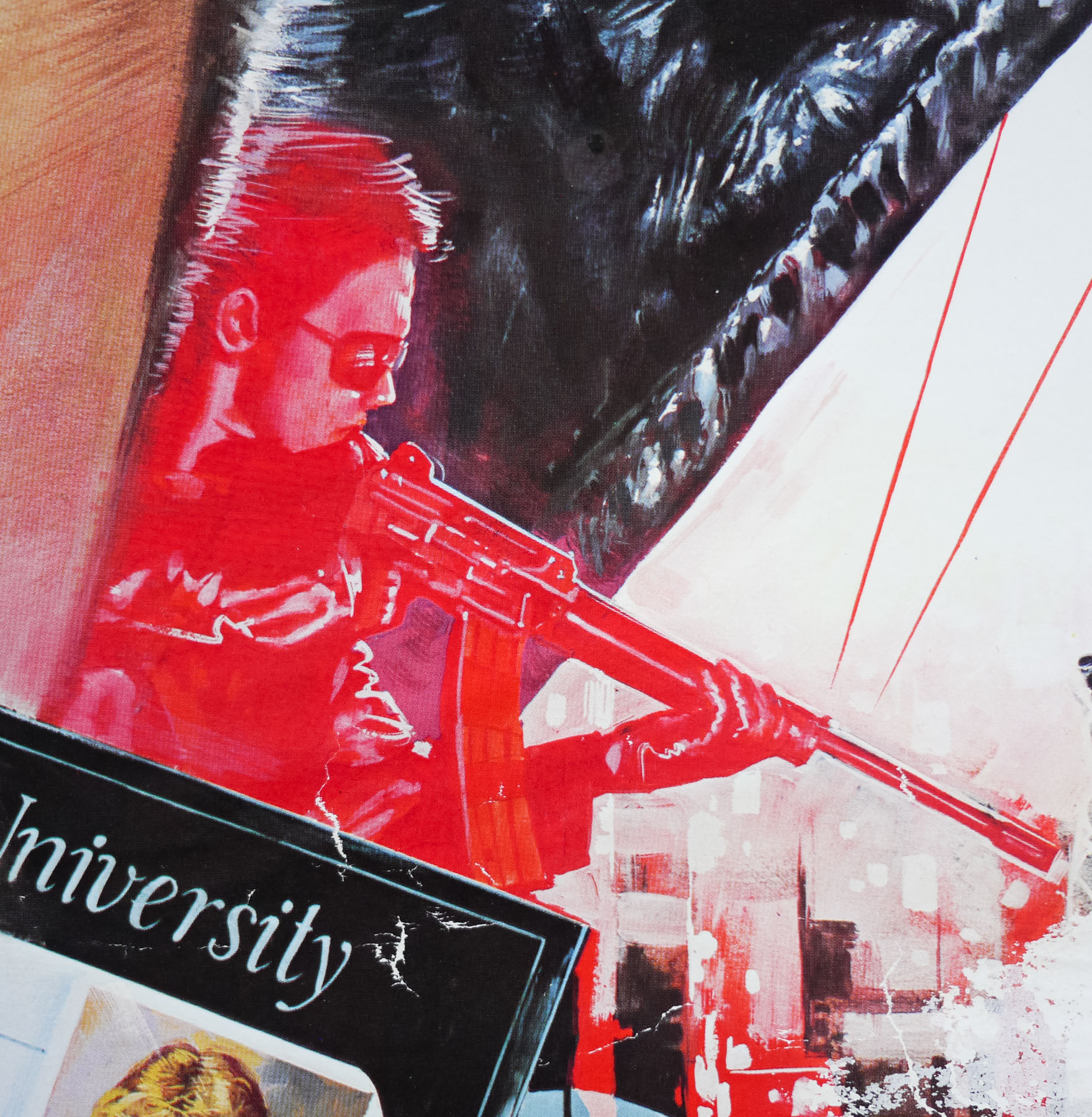
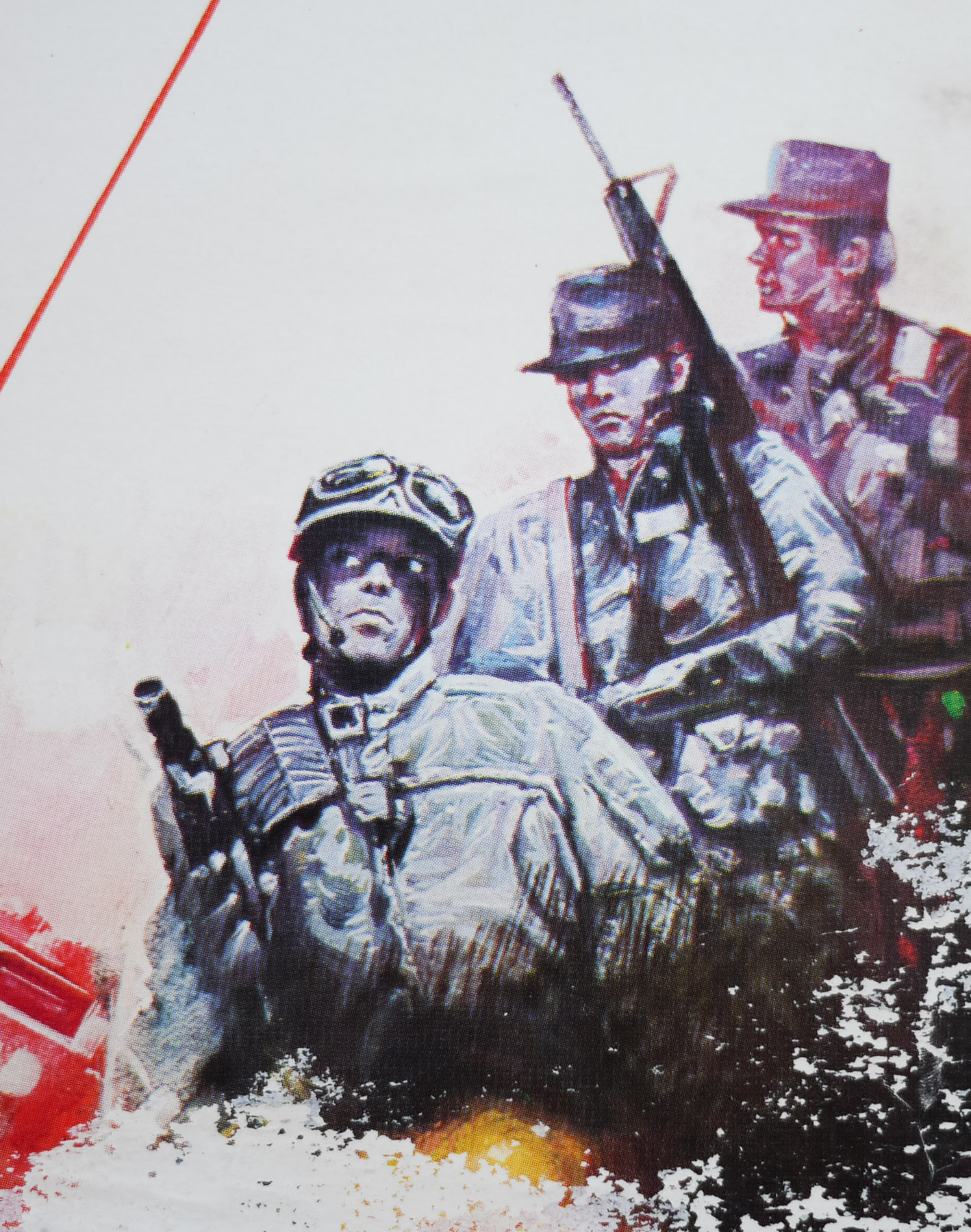
James Cameron’s seminal sci-fi classic The Terminator celebrates its 30th anniversary this year and it cannot be overstated how much of an impact the film has had on cinema and culture in general. The careers of Cameron and star Arnold Schwarzenegger were given stratospheric boosts (not so much poor Michael Biehn) and the concepts of time-travel, and killer cyborgs will forever be tied to what would go on to become the Terminator franchise. The film is also arguably the original 80s action blockbuster and would be followed by a slew of increasingly more muscular, explosive flicks starring the likes of Sylvester Stallone, Bruce Wills and, of course, Arnie.

The US poster features an iconic photograph of Arnie alongside a lengthy tagline, whilst the UK quad went for an illustration depicting a battle-damaged Terminator showing the endoskeleton underneath. This poster for the Polish release of the film features a stylised silhouette of Arnie as the Terminator with coloured circles, some of which represent the red eyes of the Endoskeleton underneath.

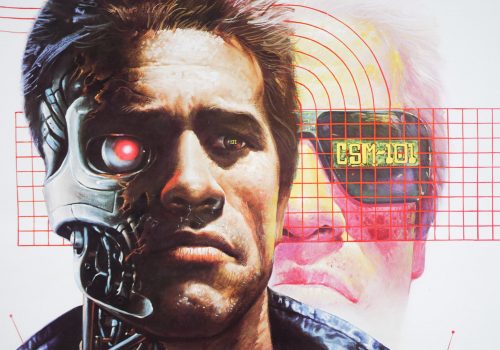
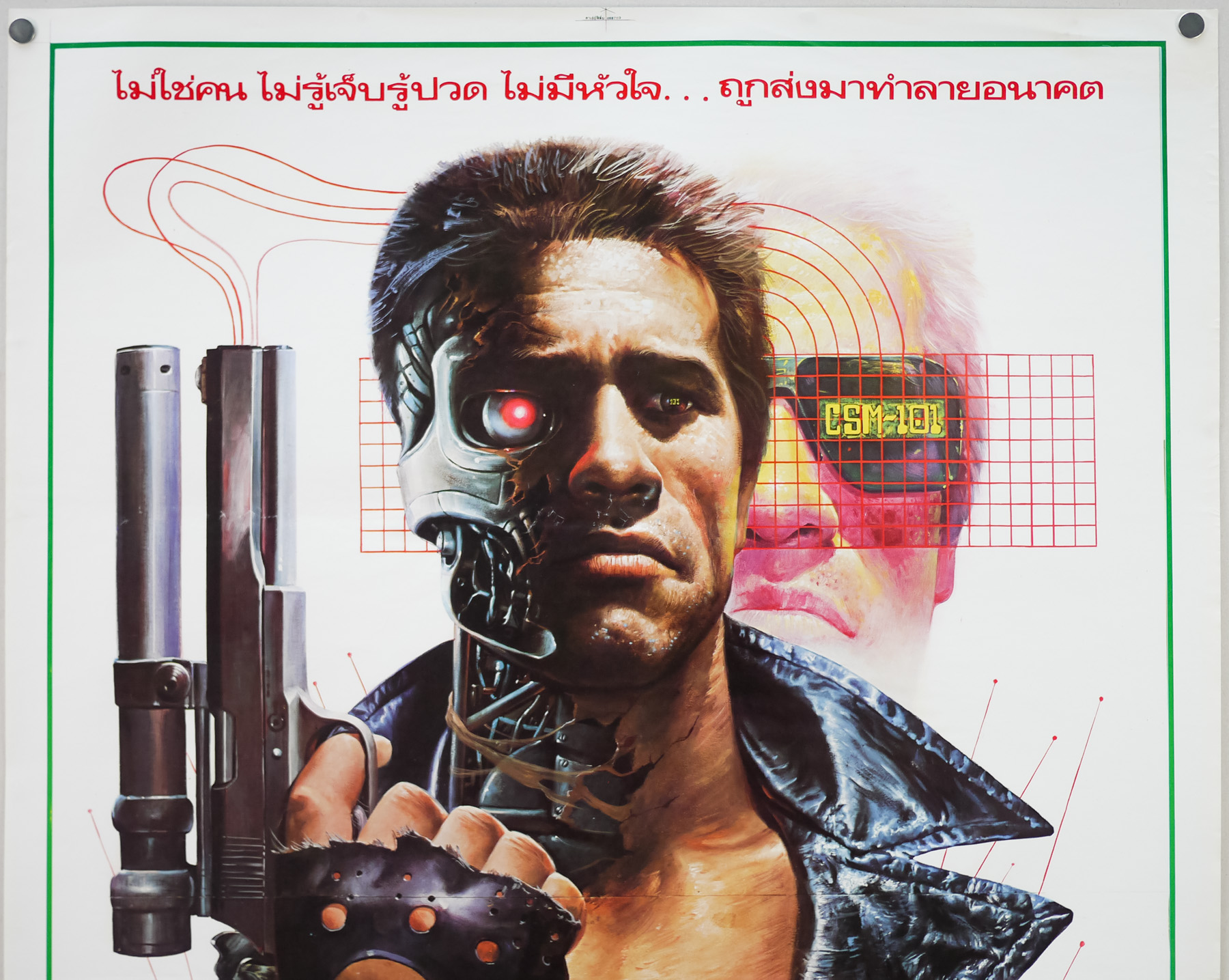
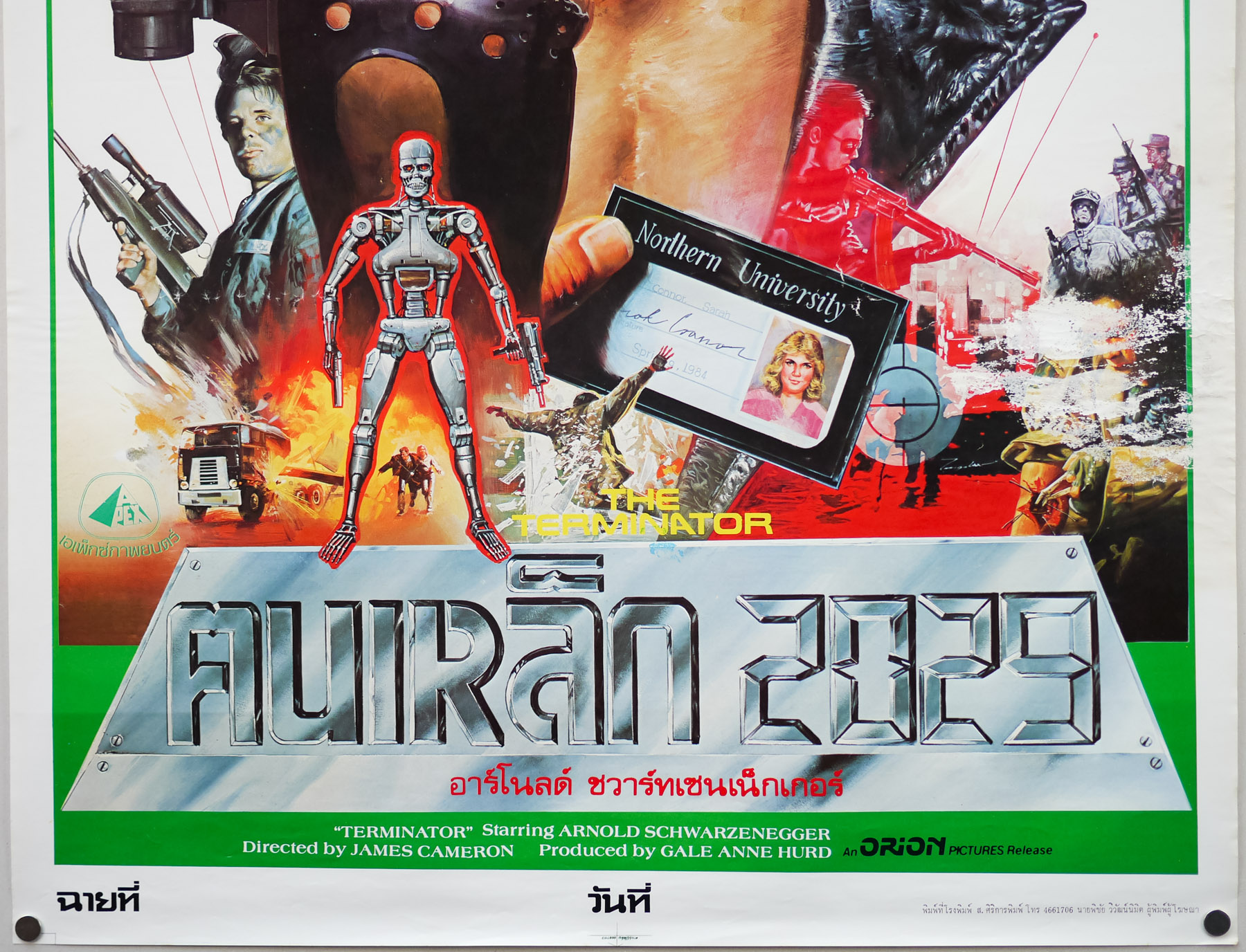
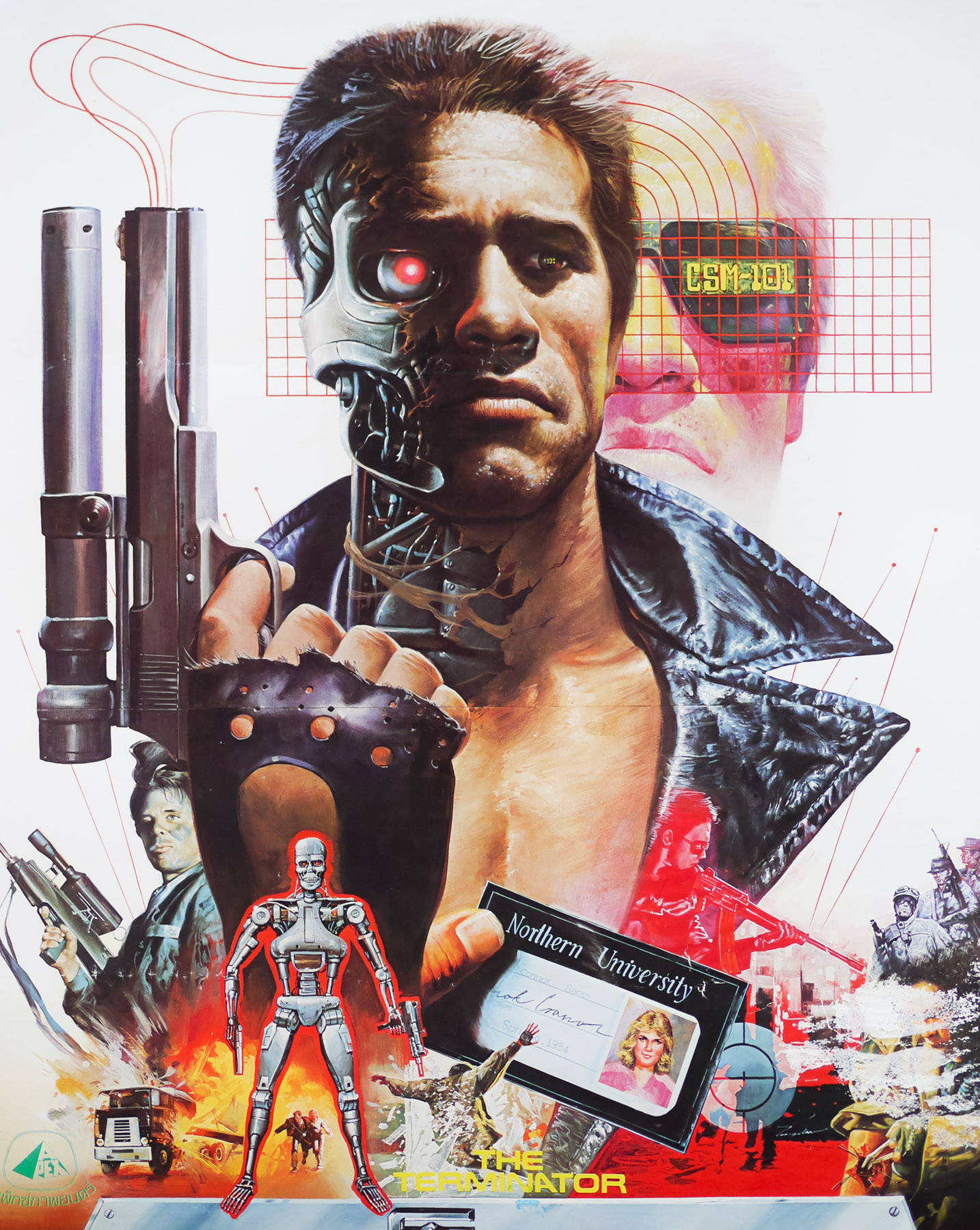
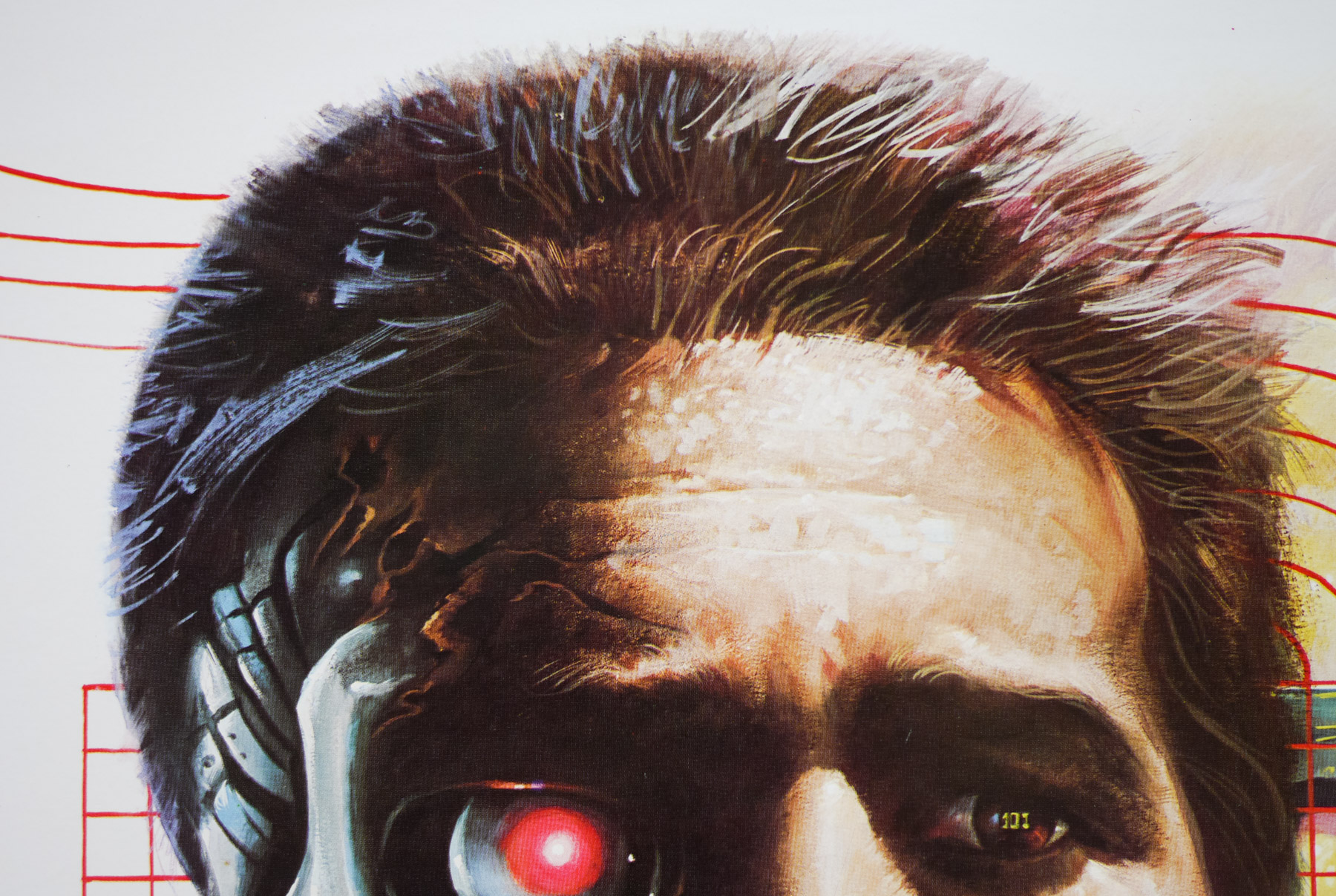
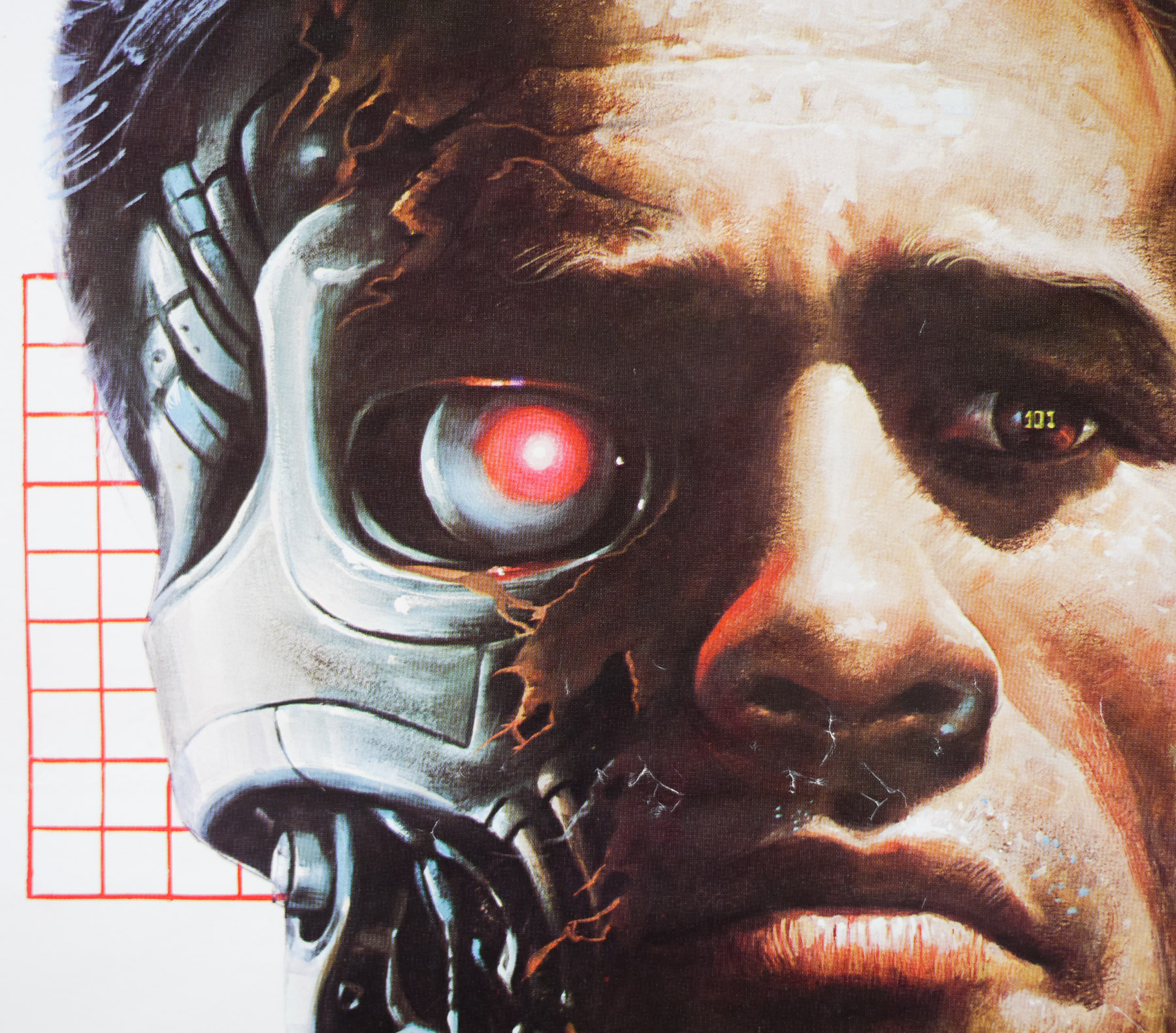
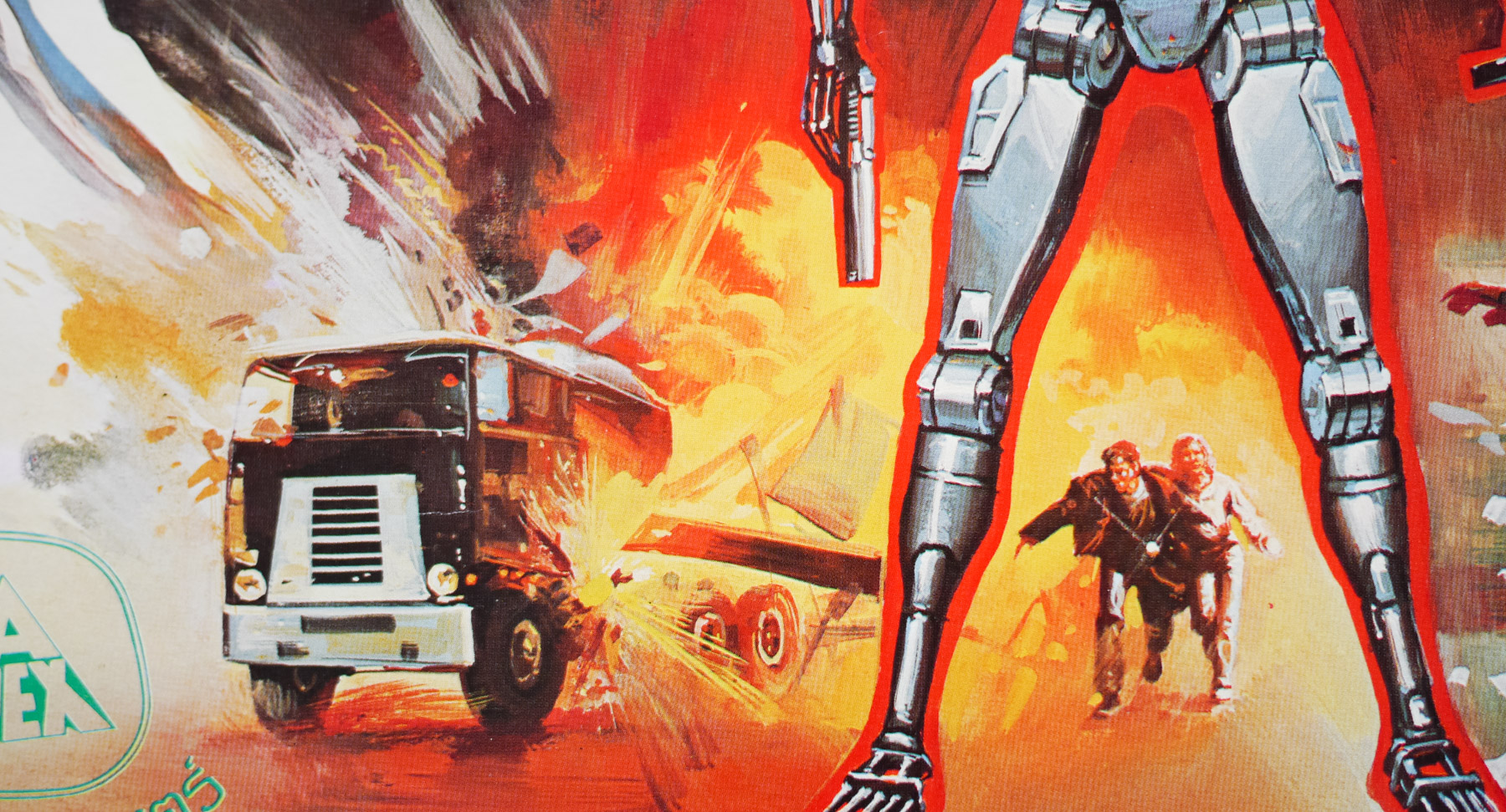
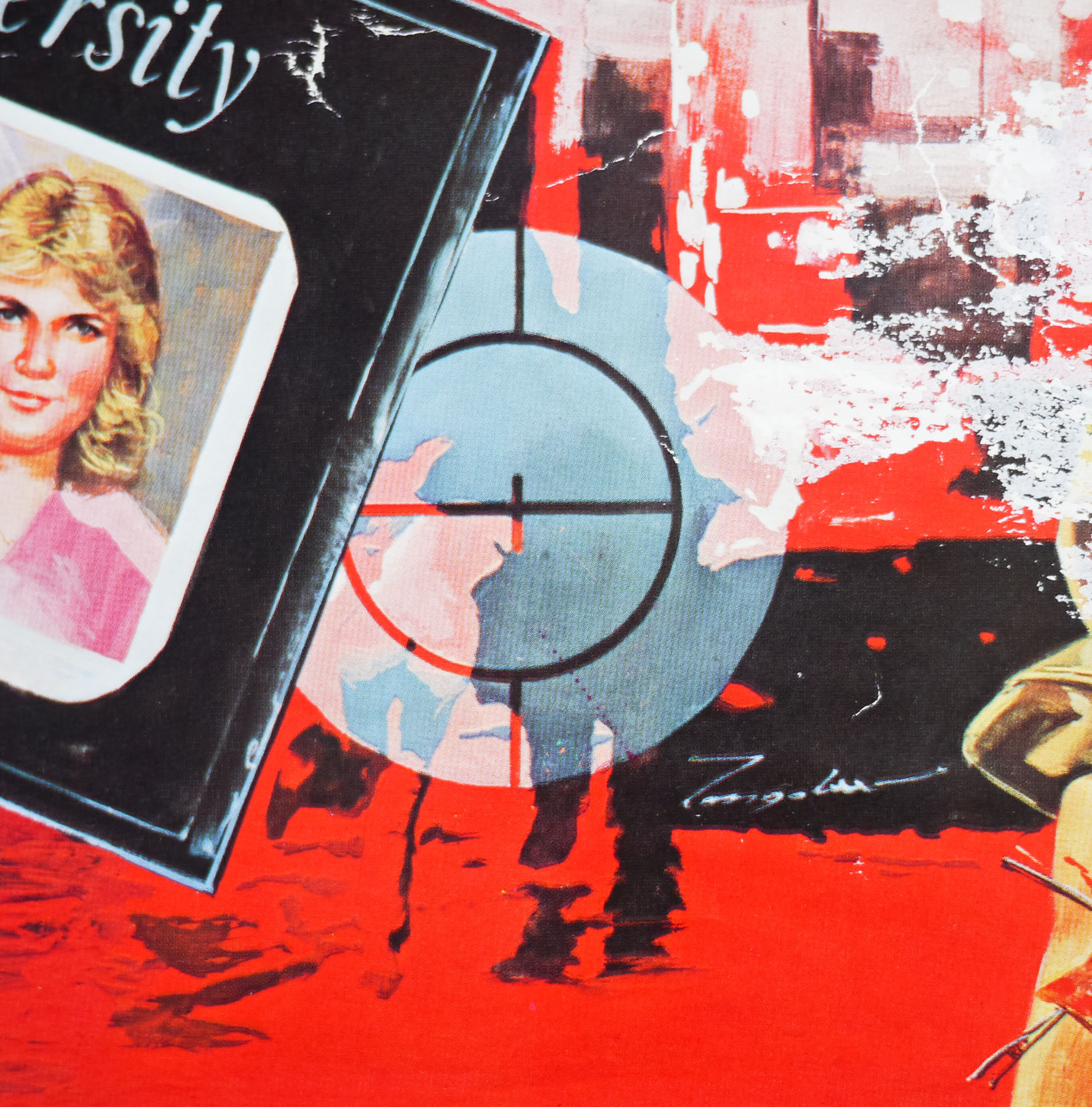
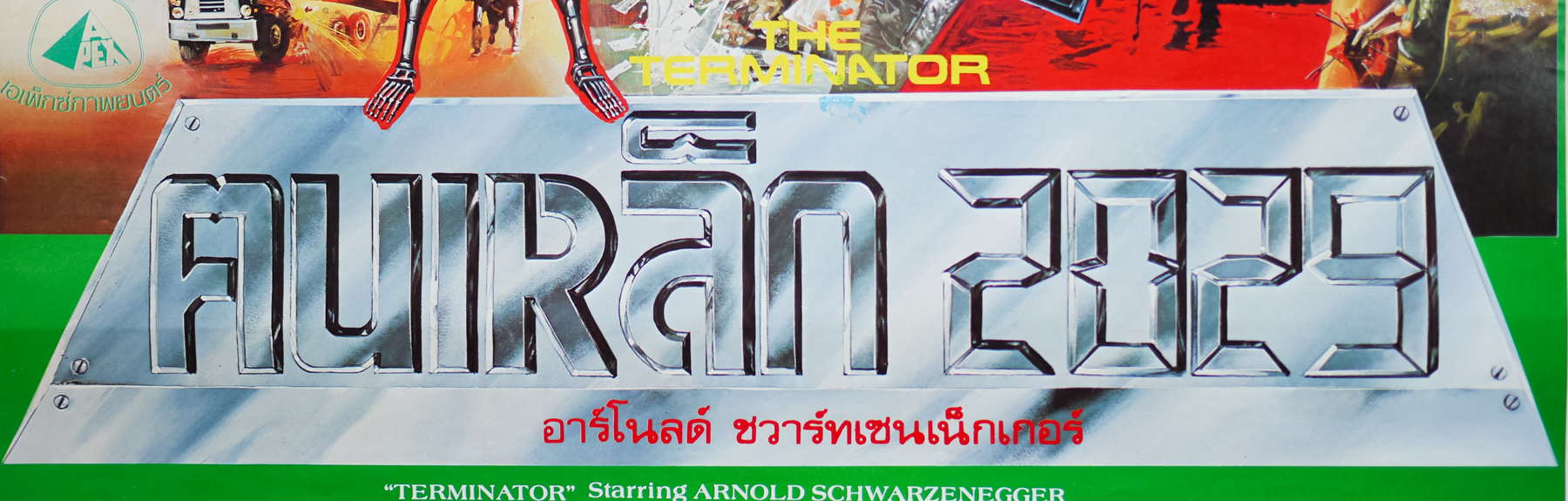
This Thai poster displays unique, detailed artwork that was painted by Tongdee Panumas (he signs his posters with just his first name) who was an incredibly prolific Thai film poster artist during the 70s, 80s and 90s. I’ve been unable to find out much about him, other than that he was born in 1947. If anyone has any more information please get in touch.

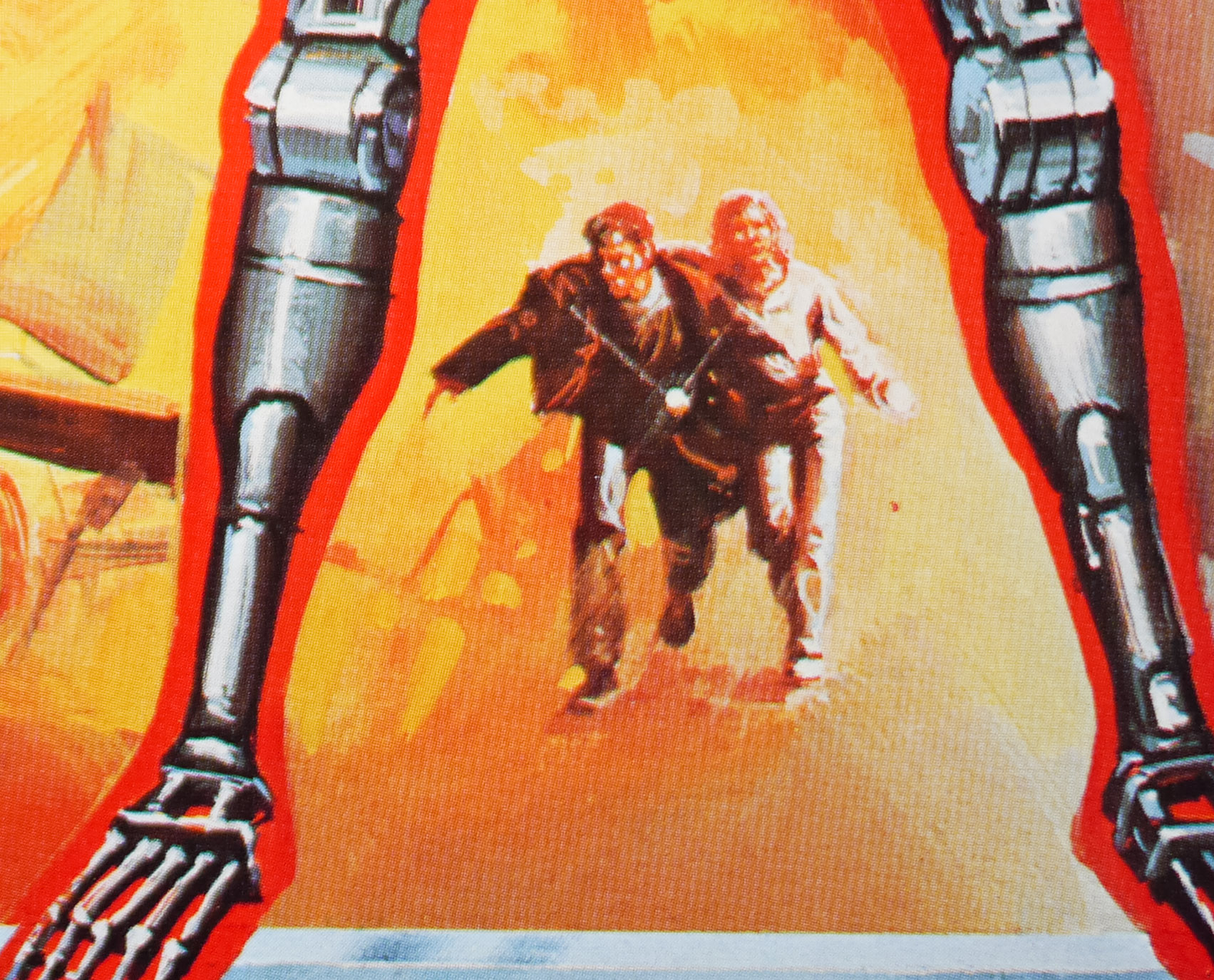
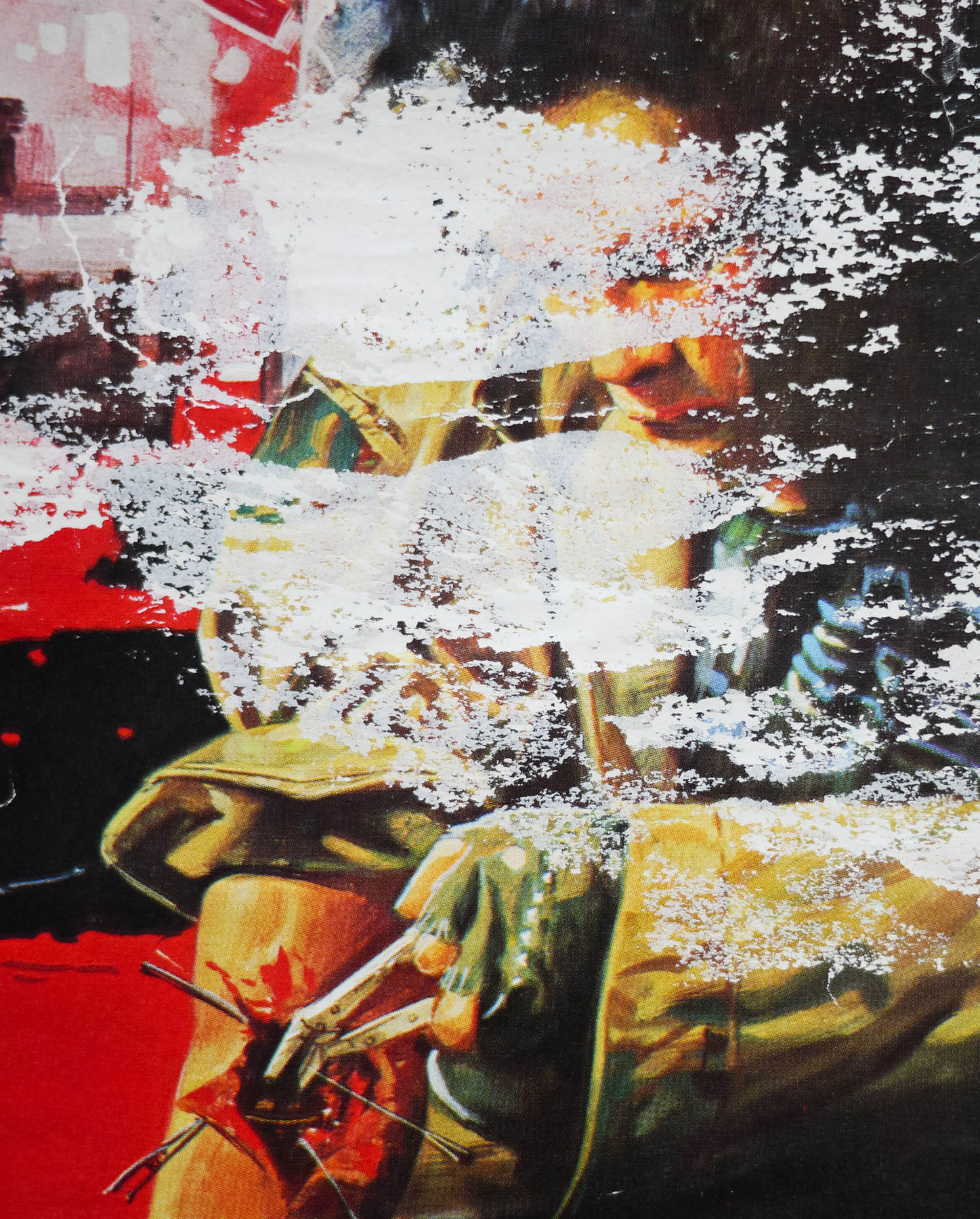
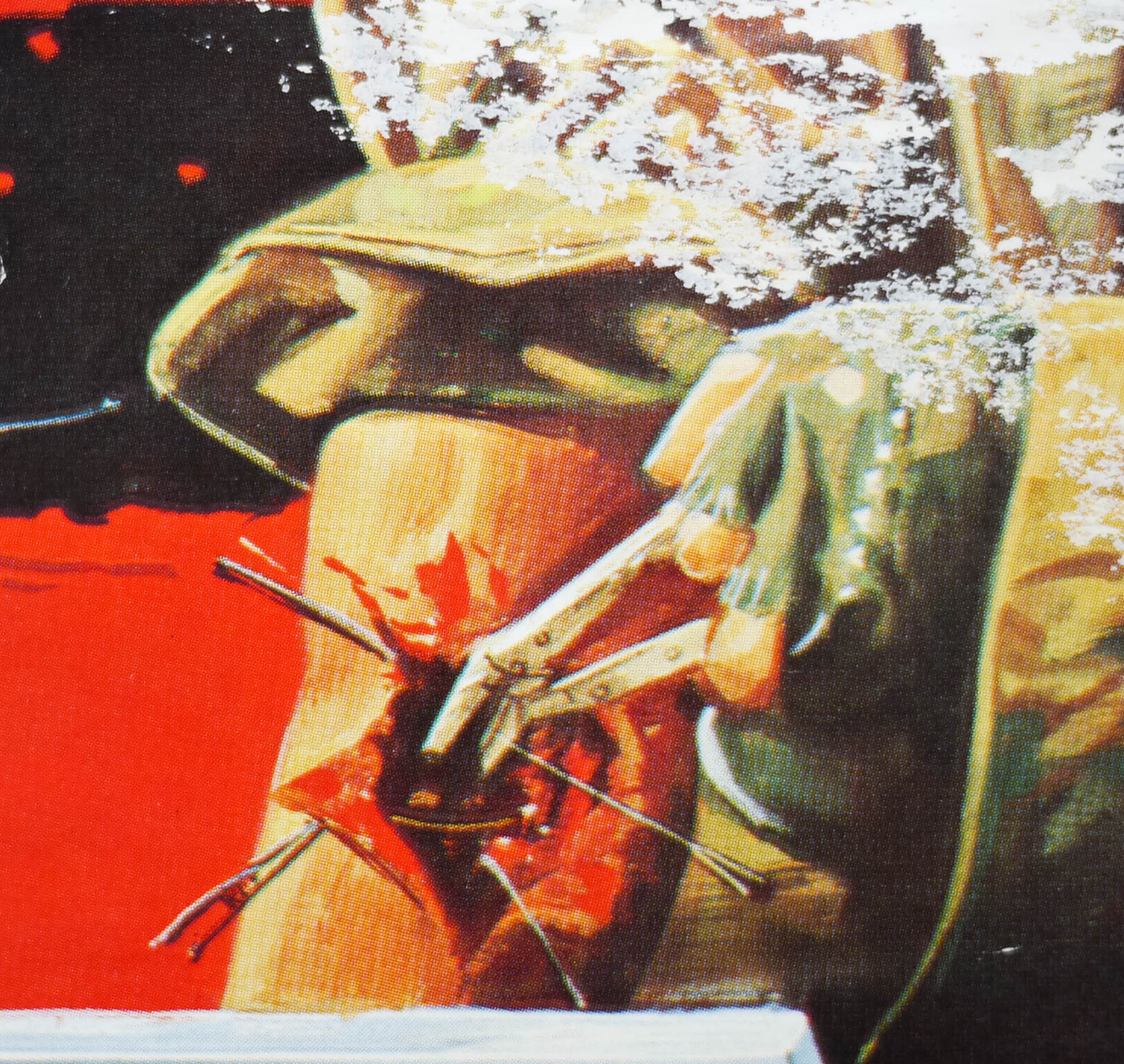
Note that this poster is slightly larger than the standard Thai poster size (of about 21″ x 31″) and also note that this poster has sustained water damage to the bottom right side and has lost part of the artwork as a result. A few copies of this poster have surfaced in this condition and it’s believed that they were found in a stack in a warehouse that had sustained flood damage (very common in Thailand, sadly) and were damaged when they were later pulled apart. As a result the level of damage varies in some of the posters. You can see what’s missing on this image of the poster from an old emovieposter auction.

To see the other Thai posters in the Film on Paper collection click here.

Apocalypse Now / Thailand

23.09.15

Poster Poster

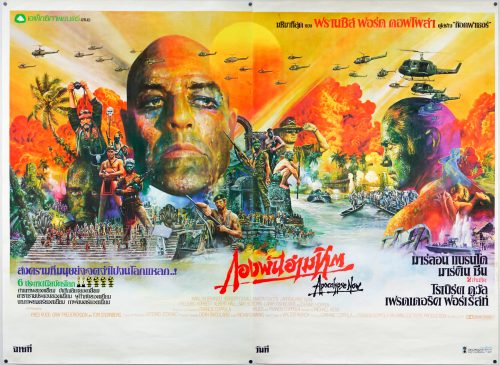
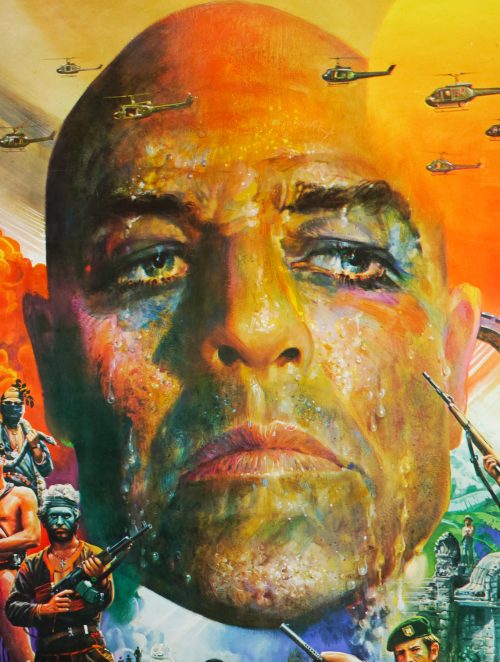
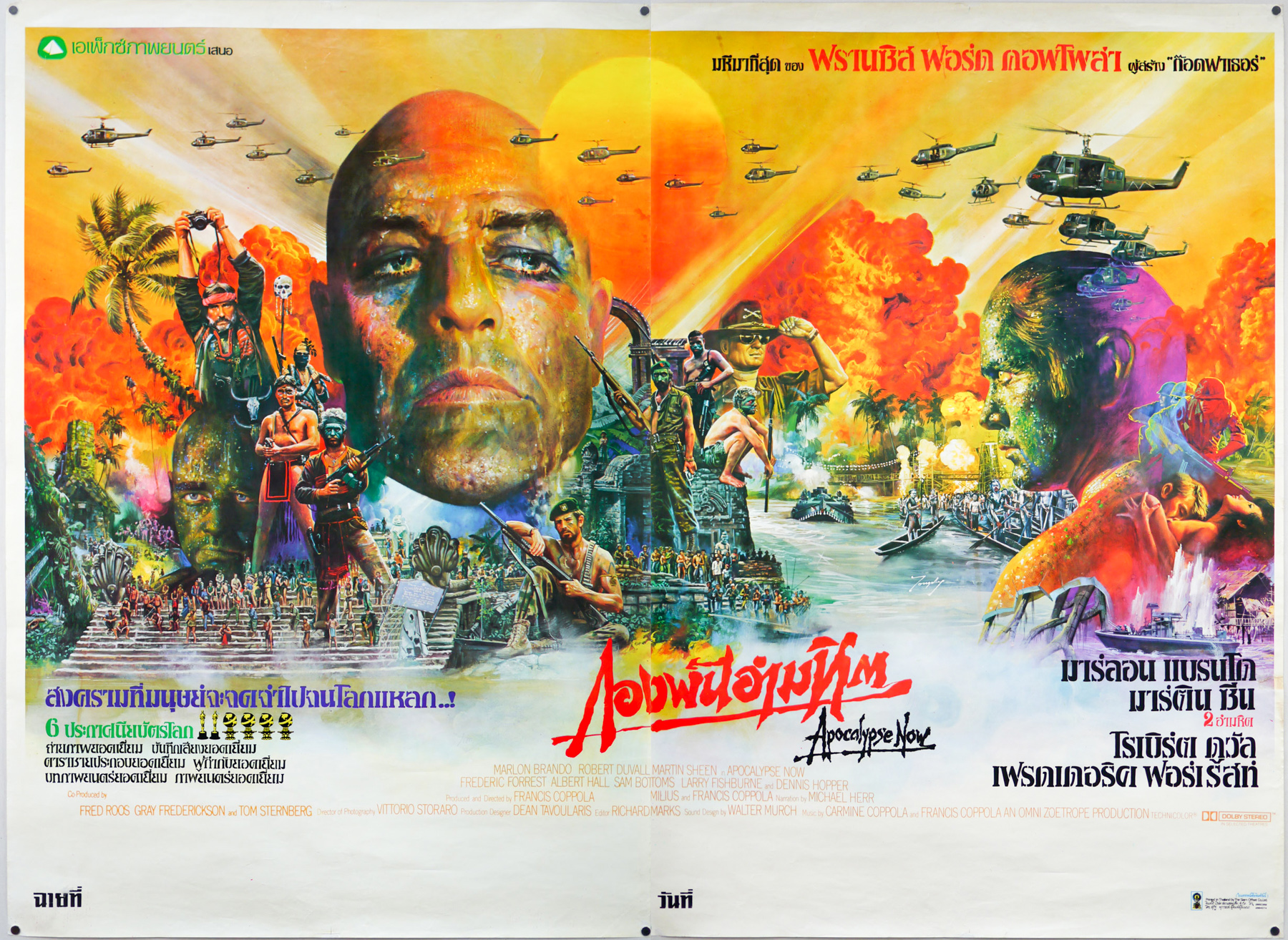
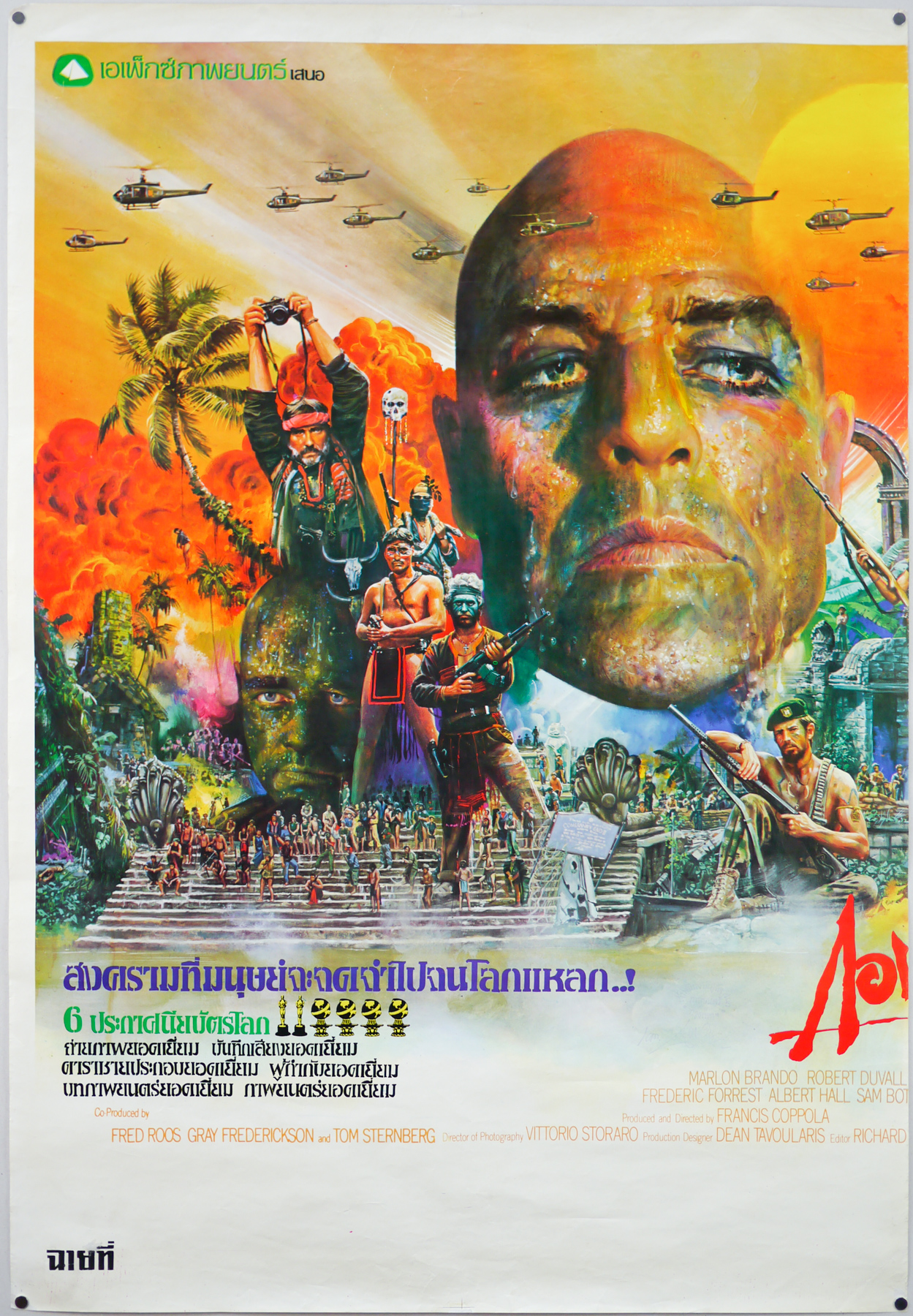
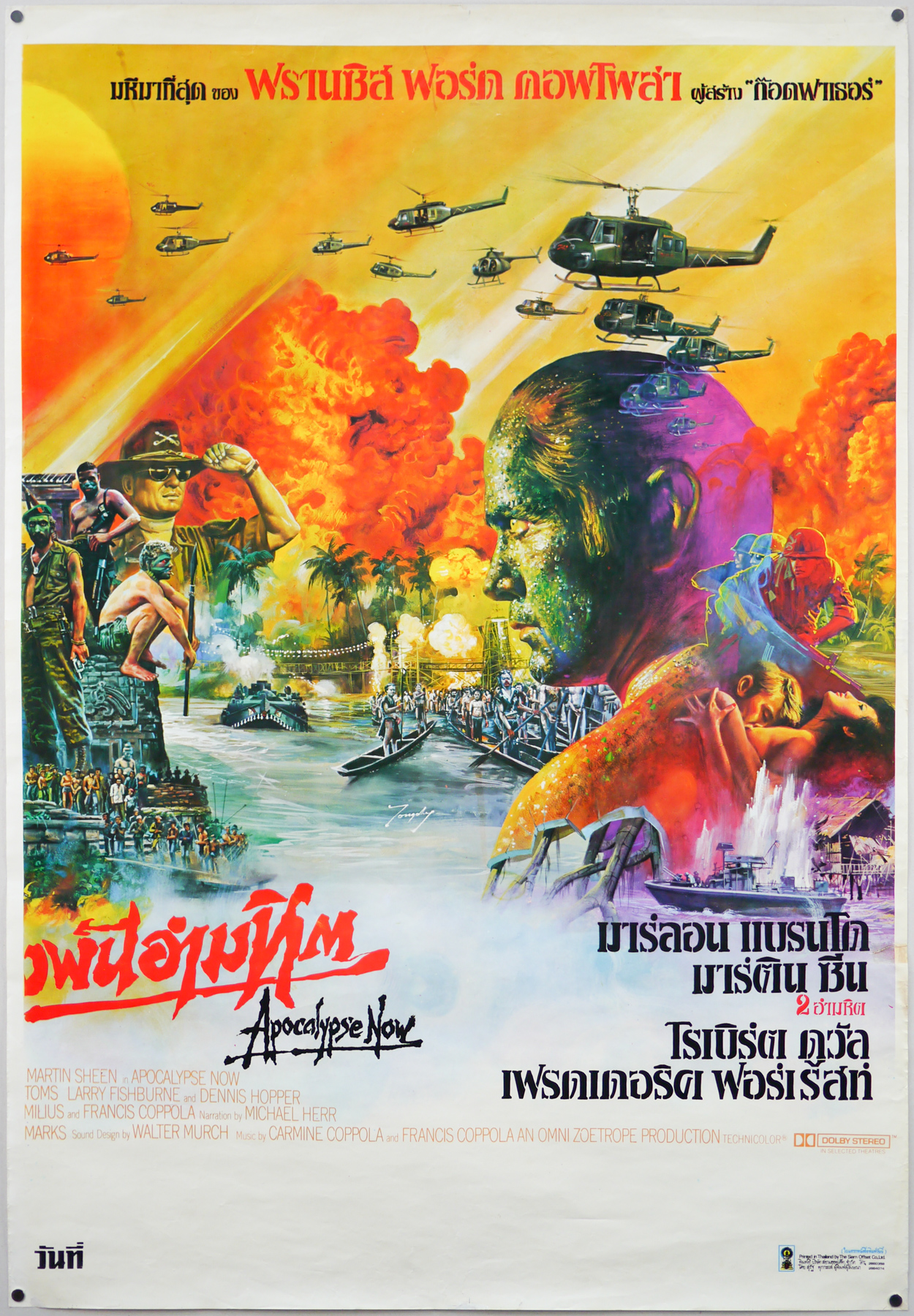
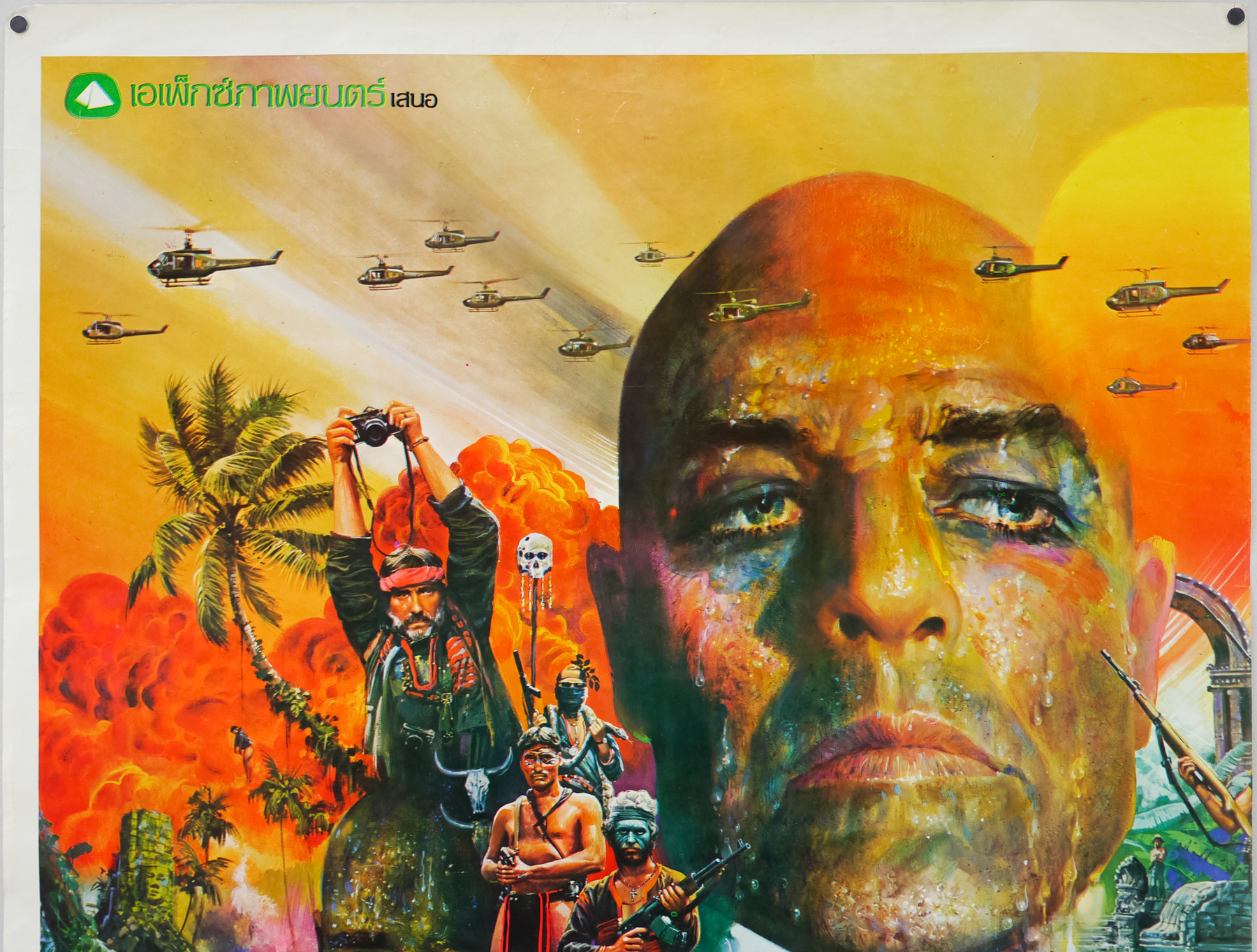
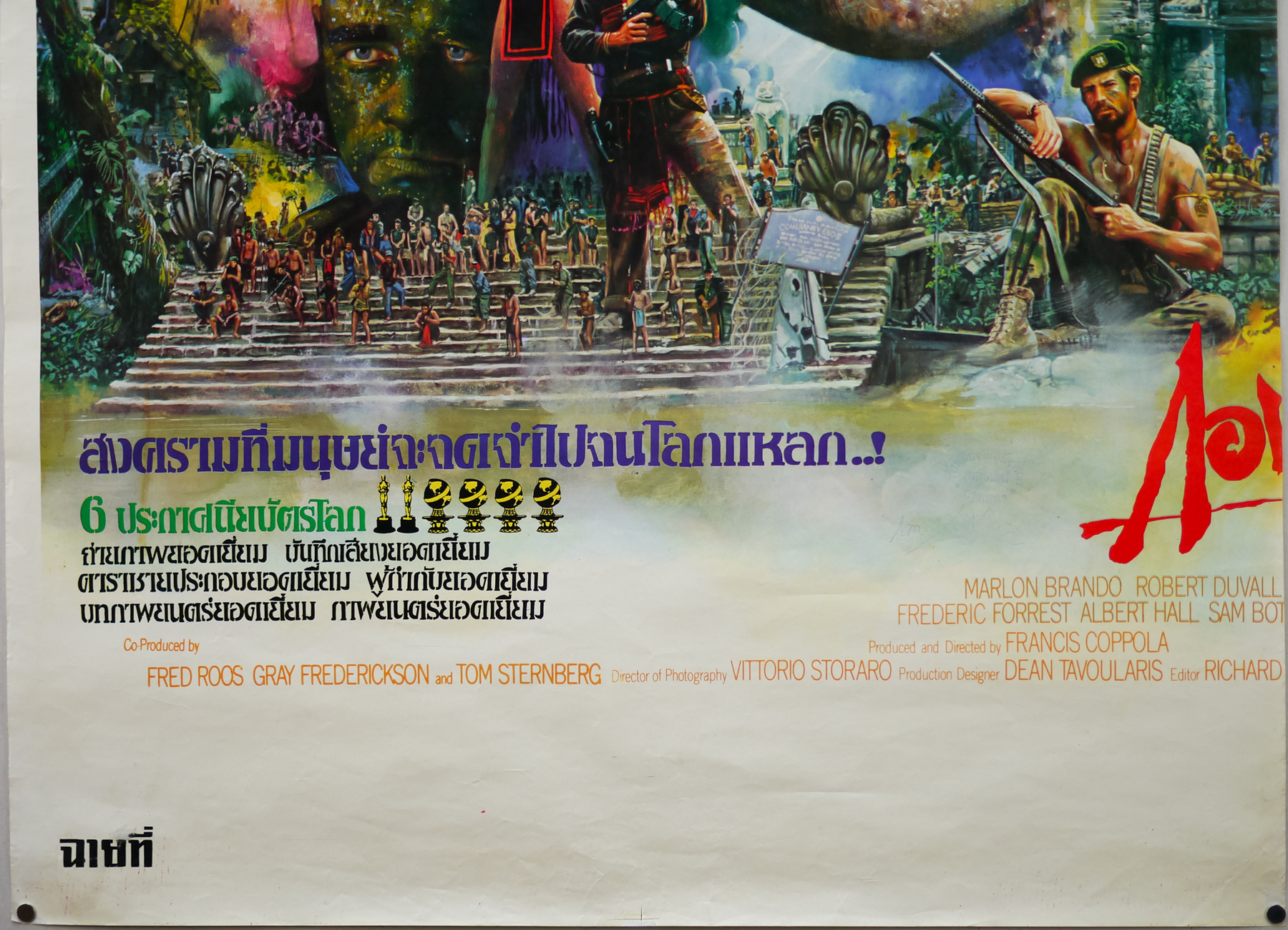
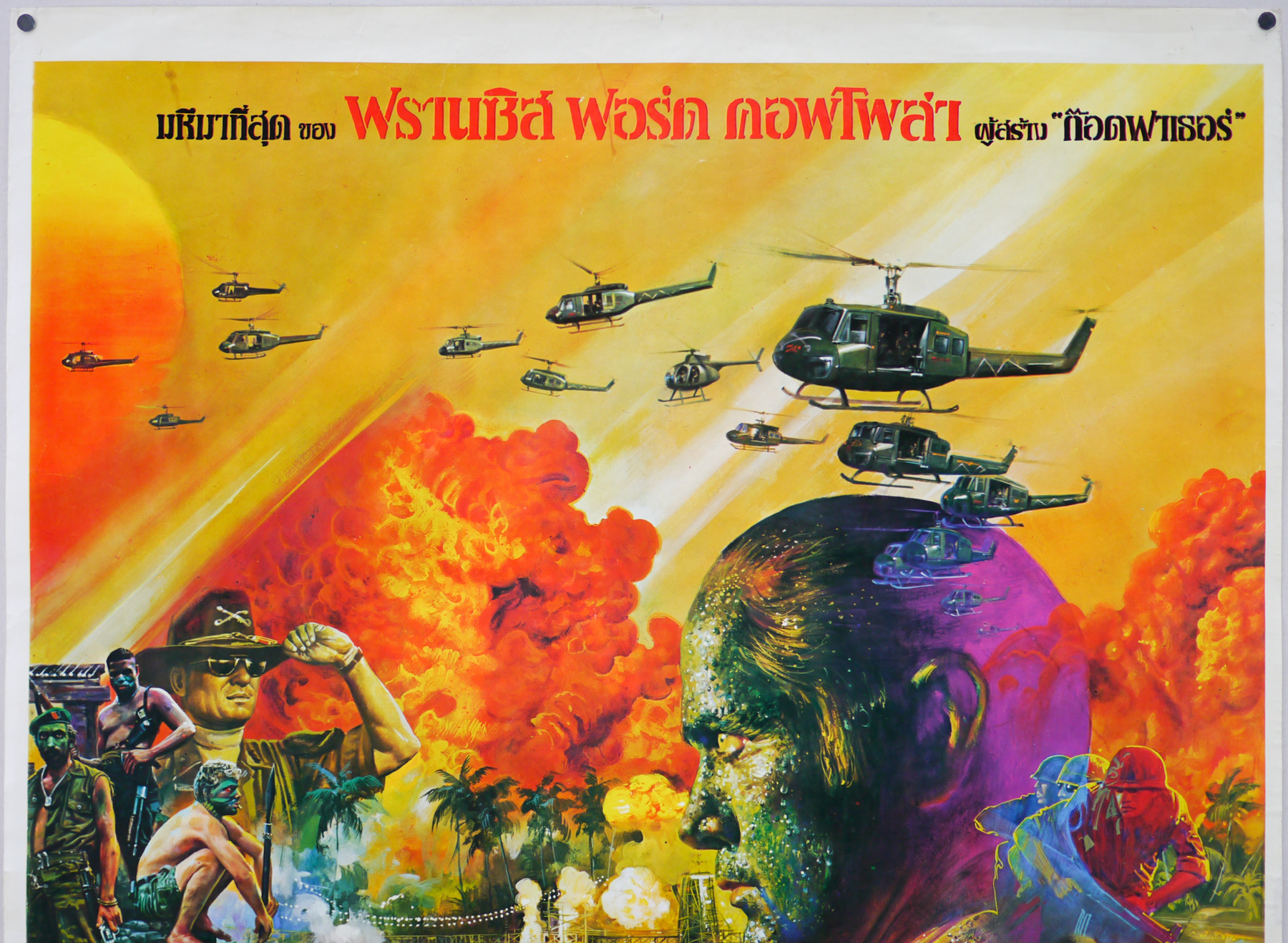
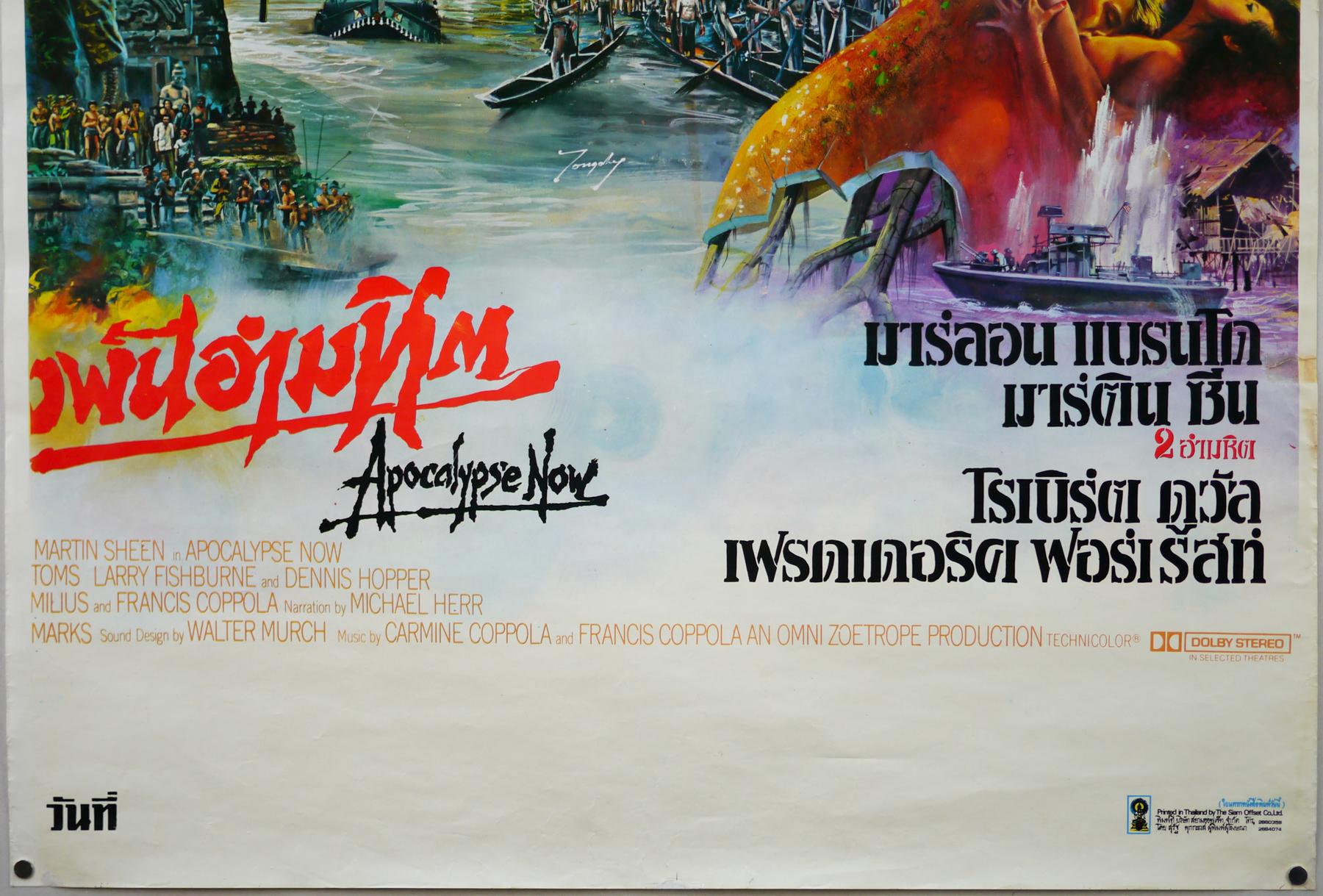
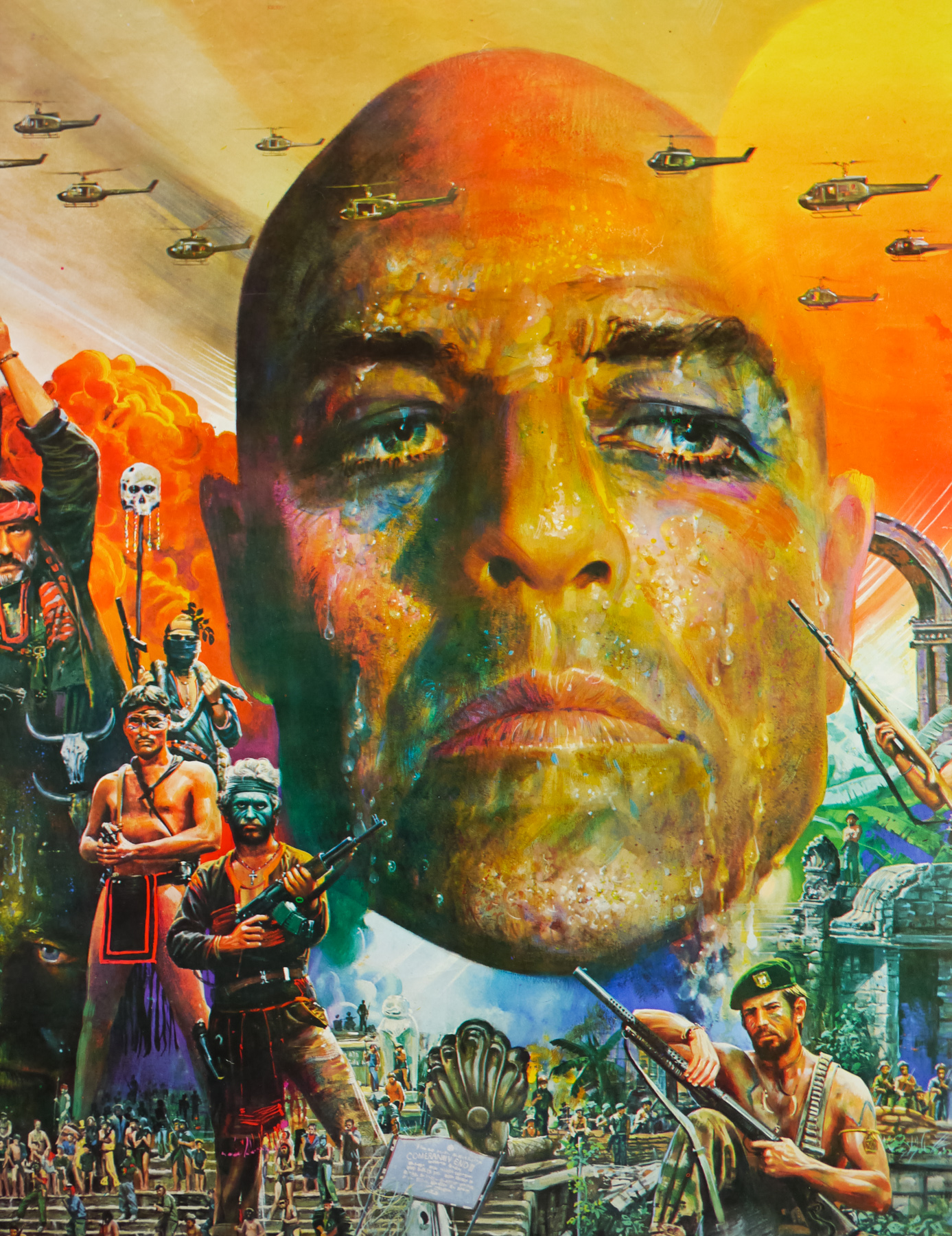
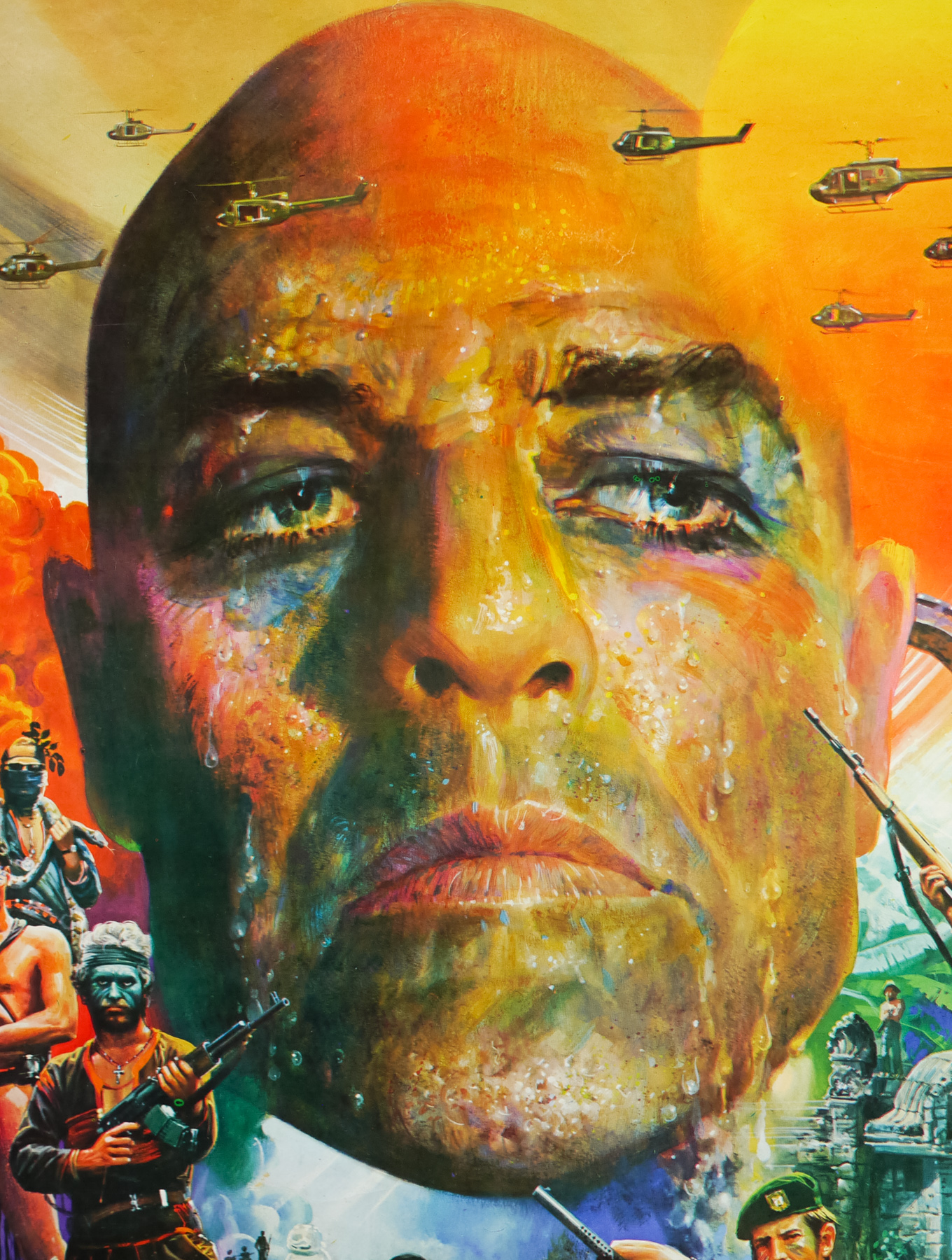
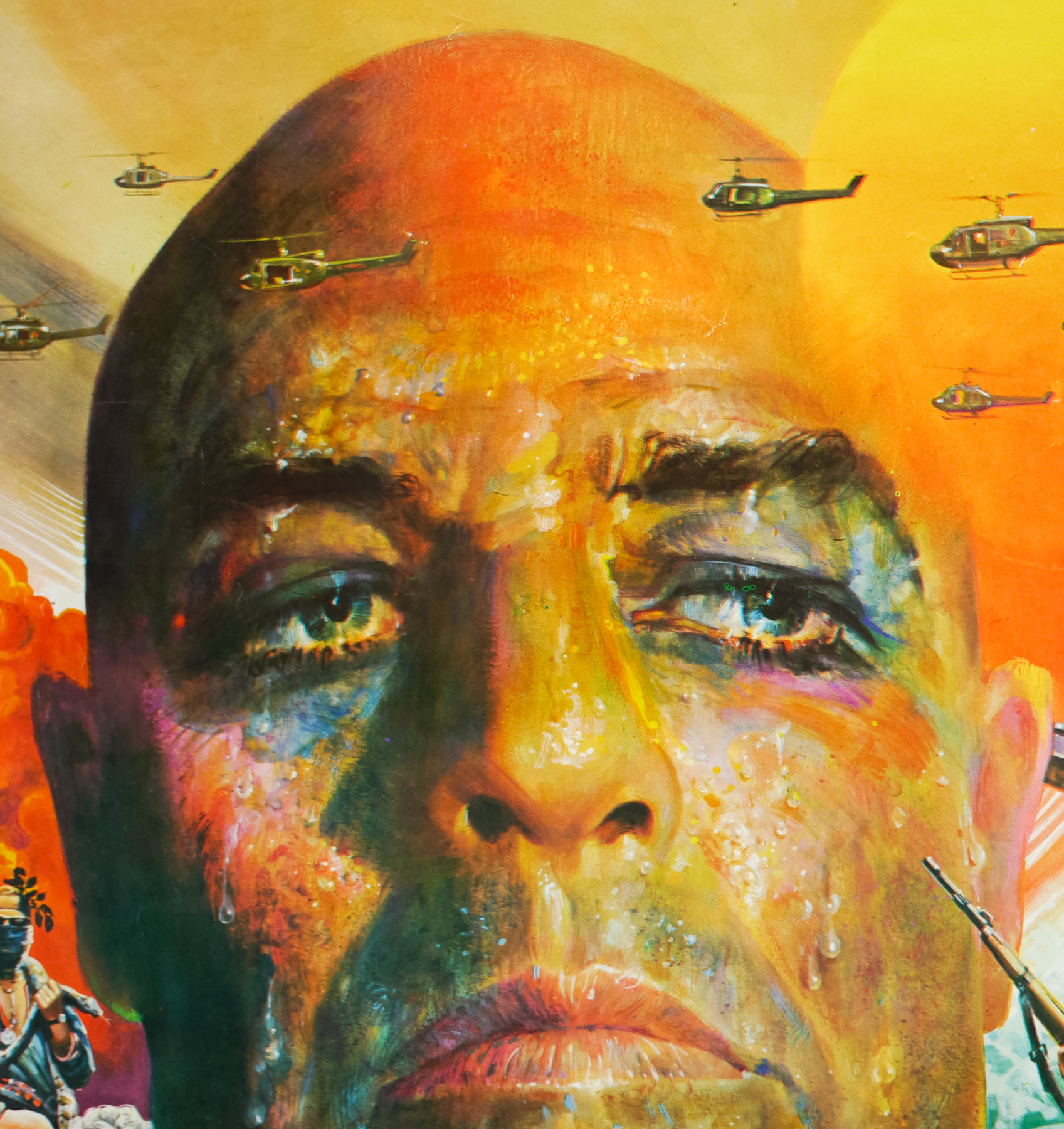
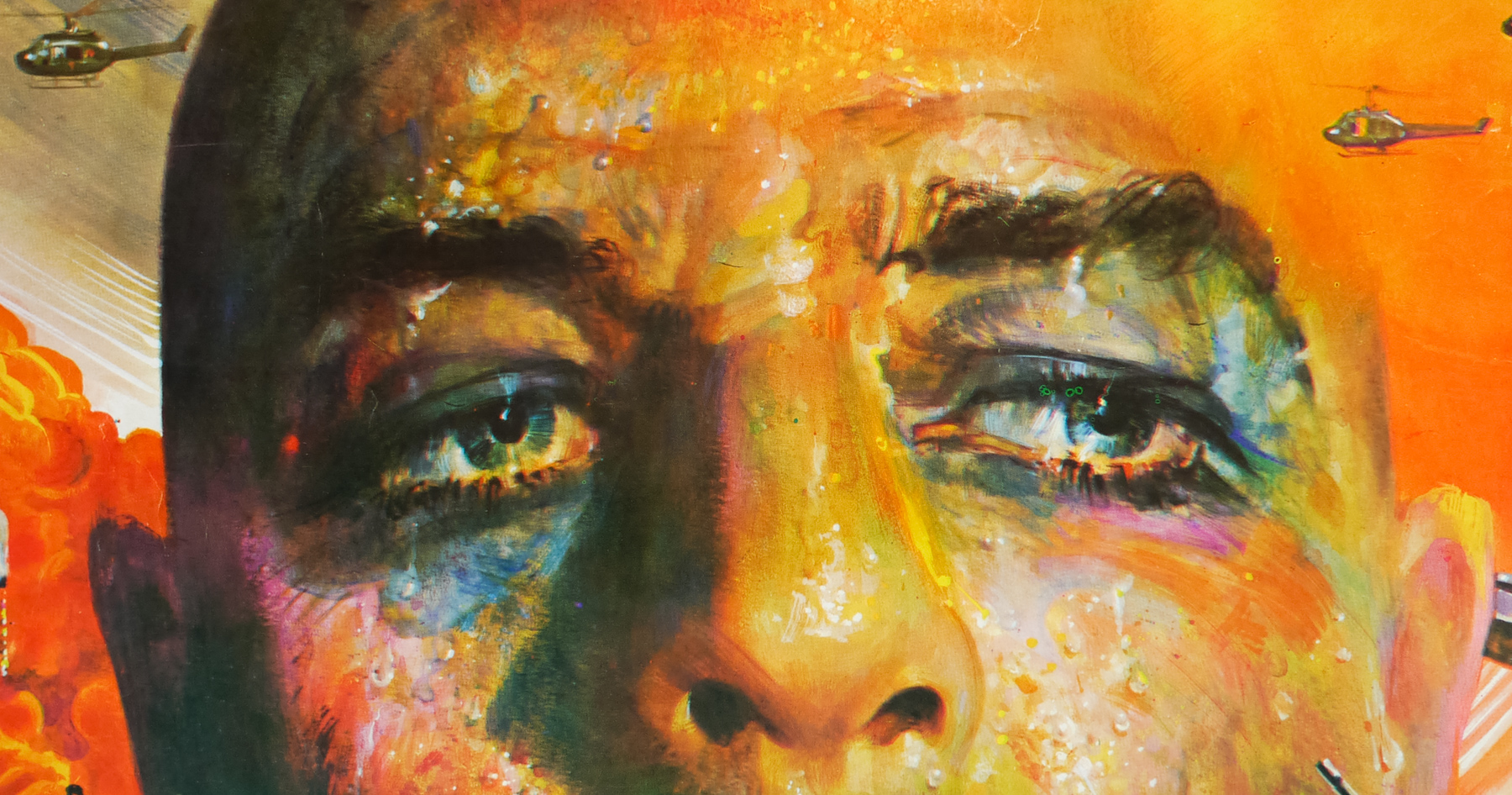
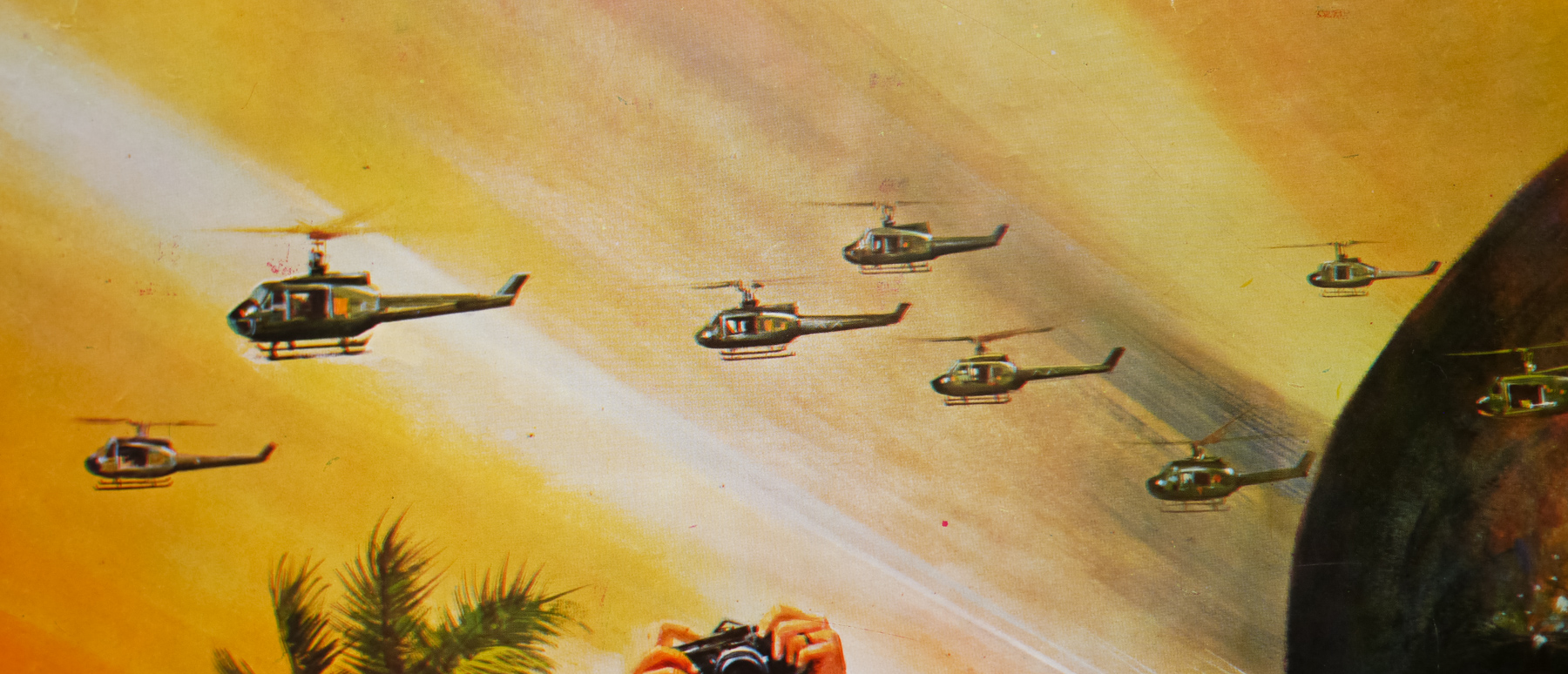
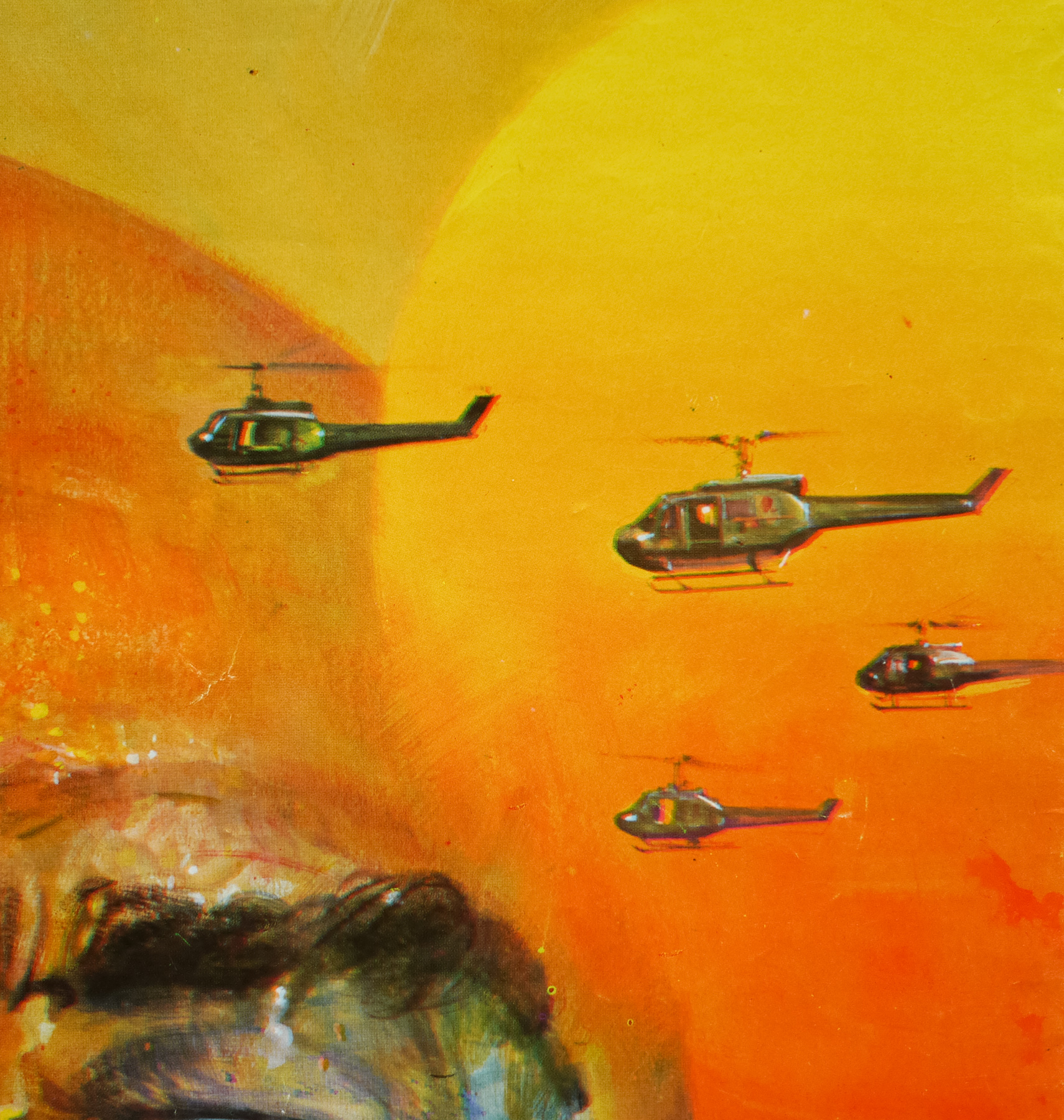
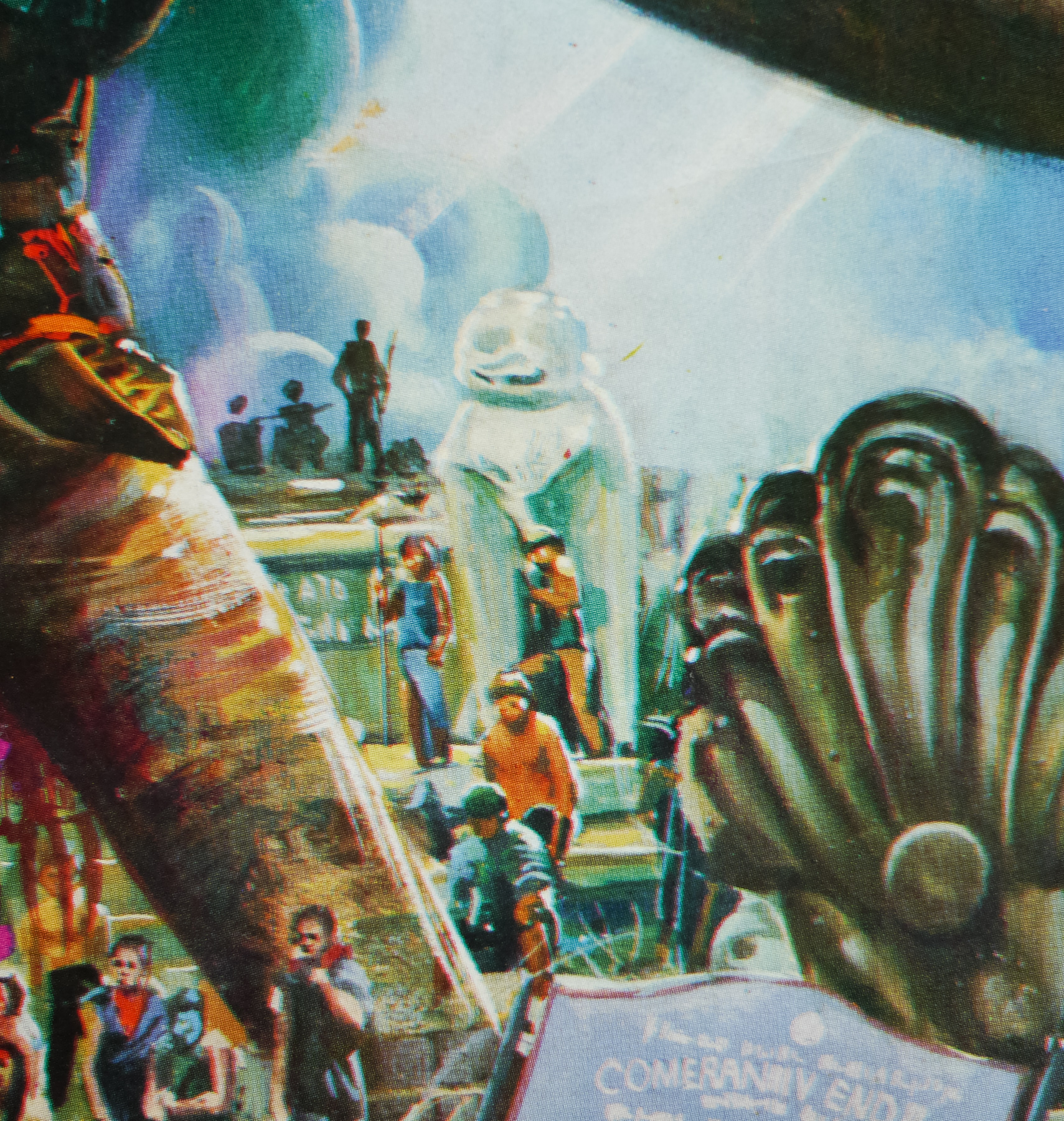
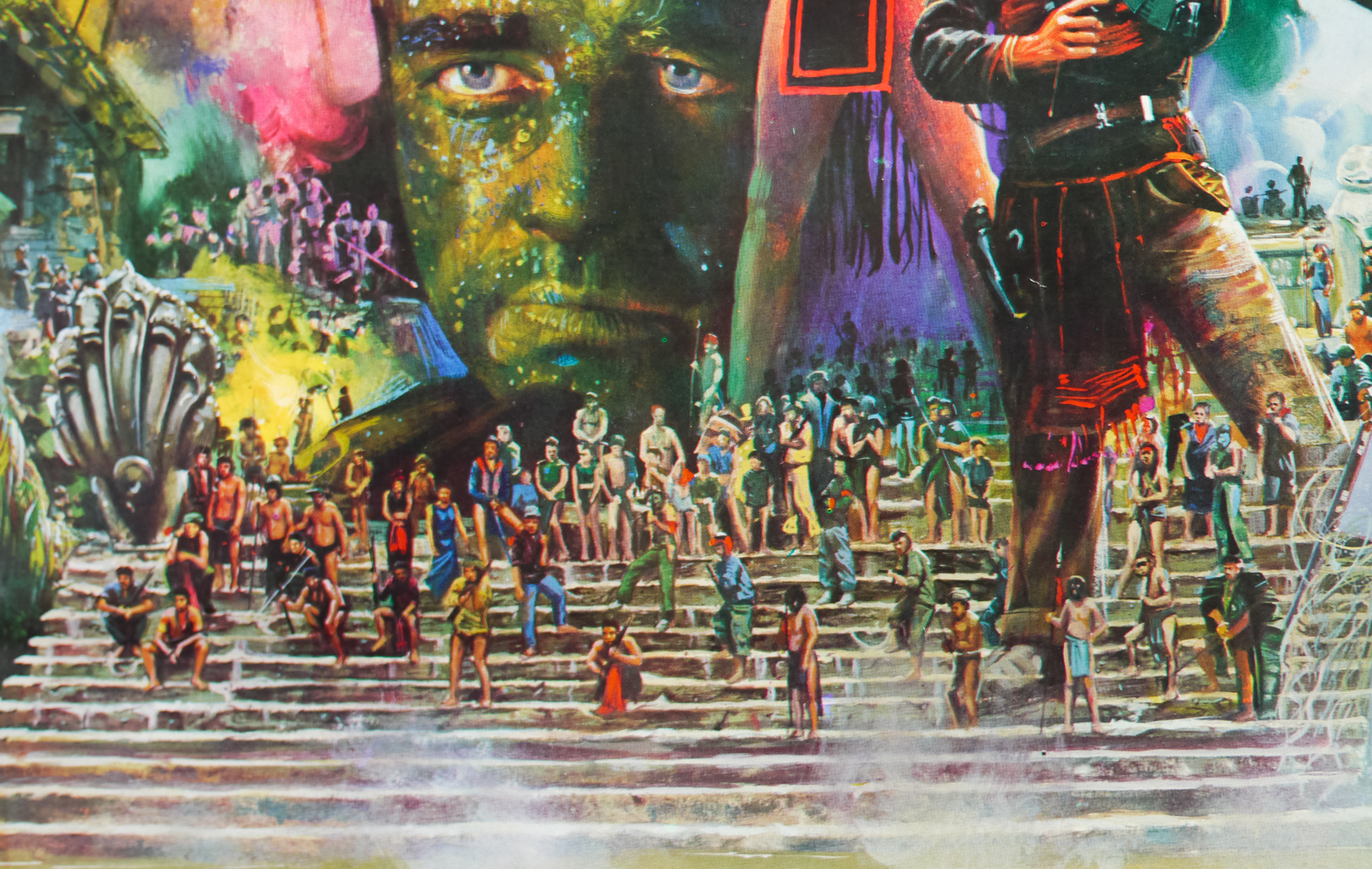
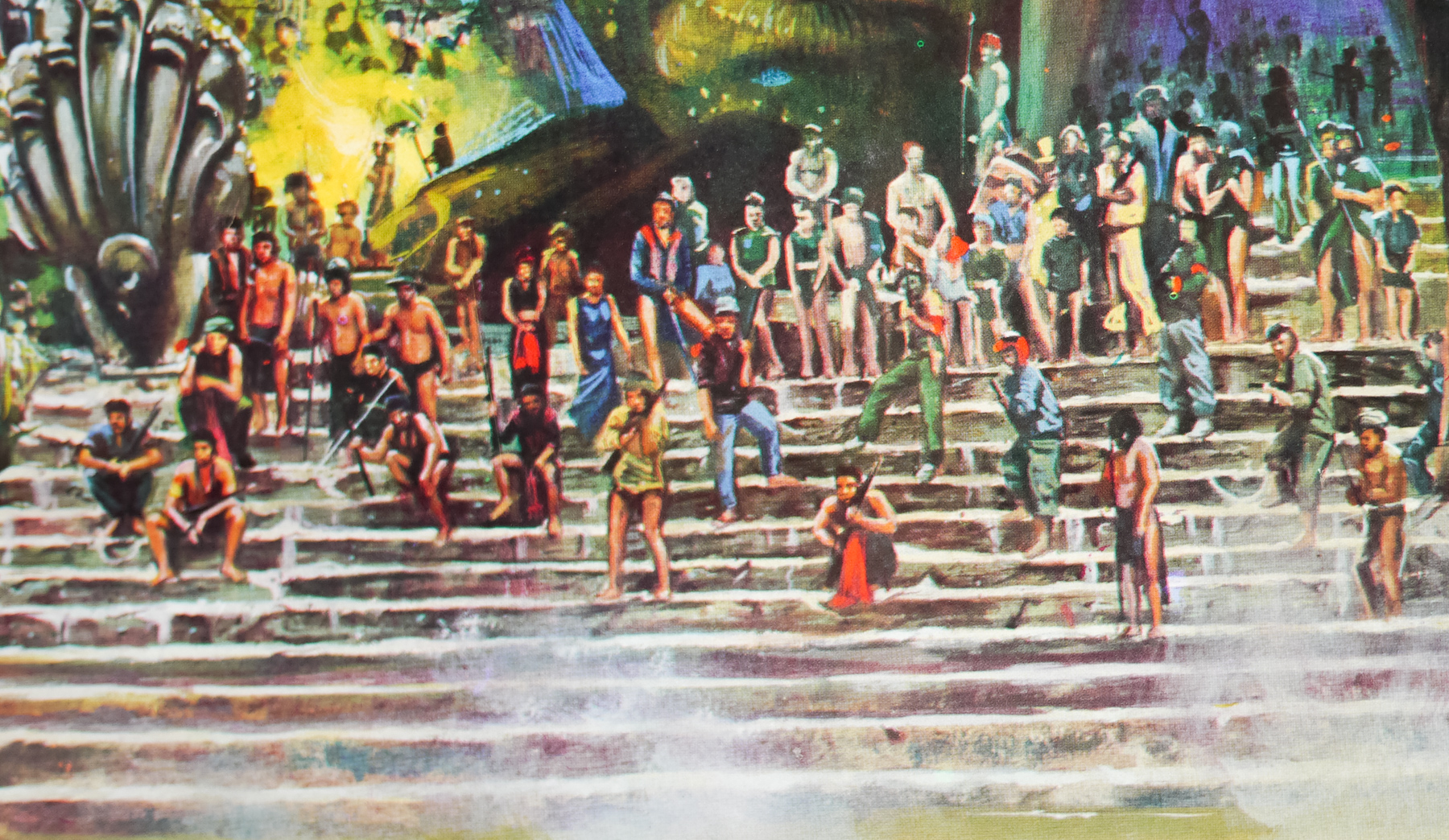
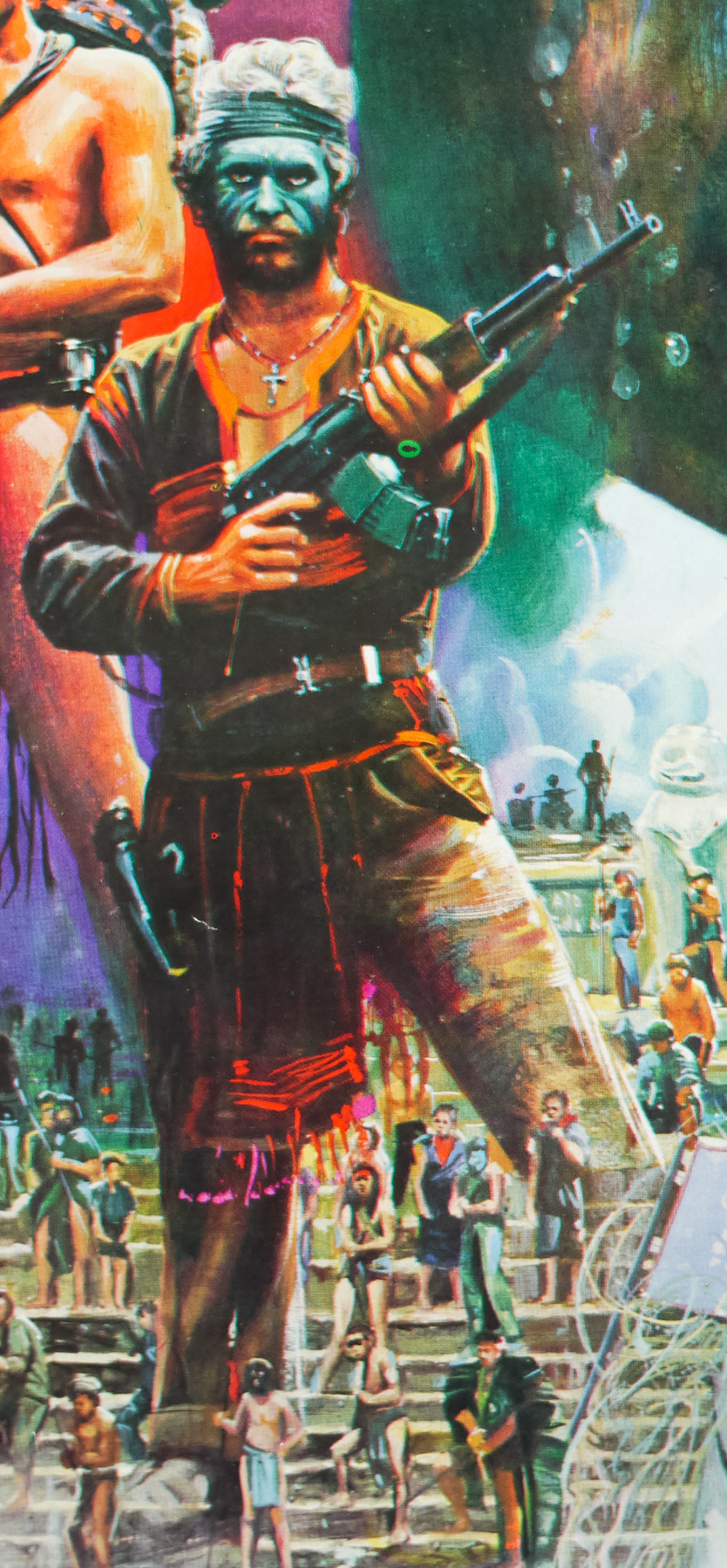
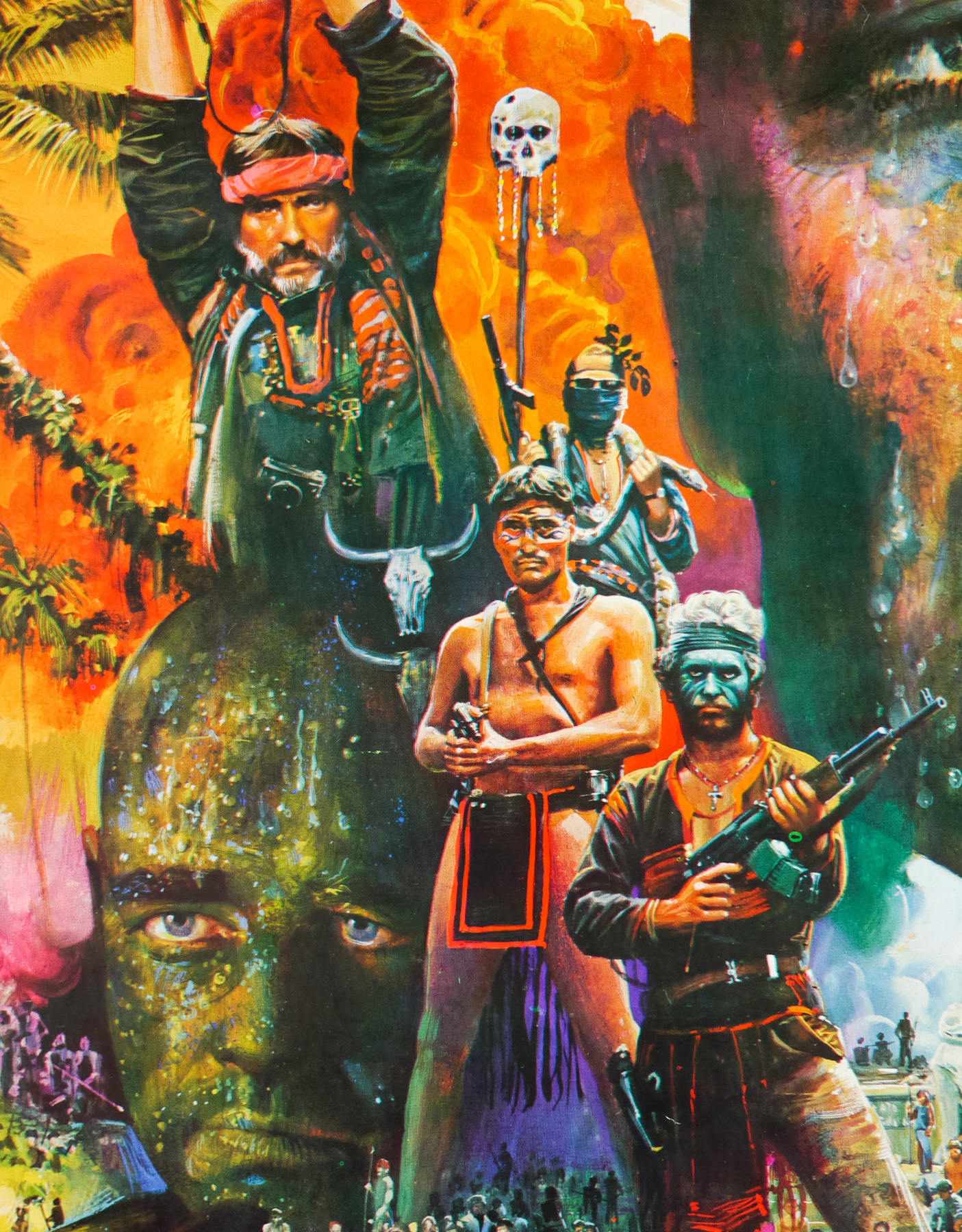
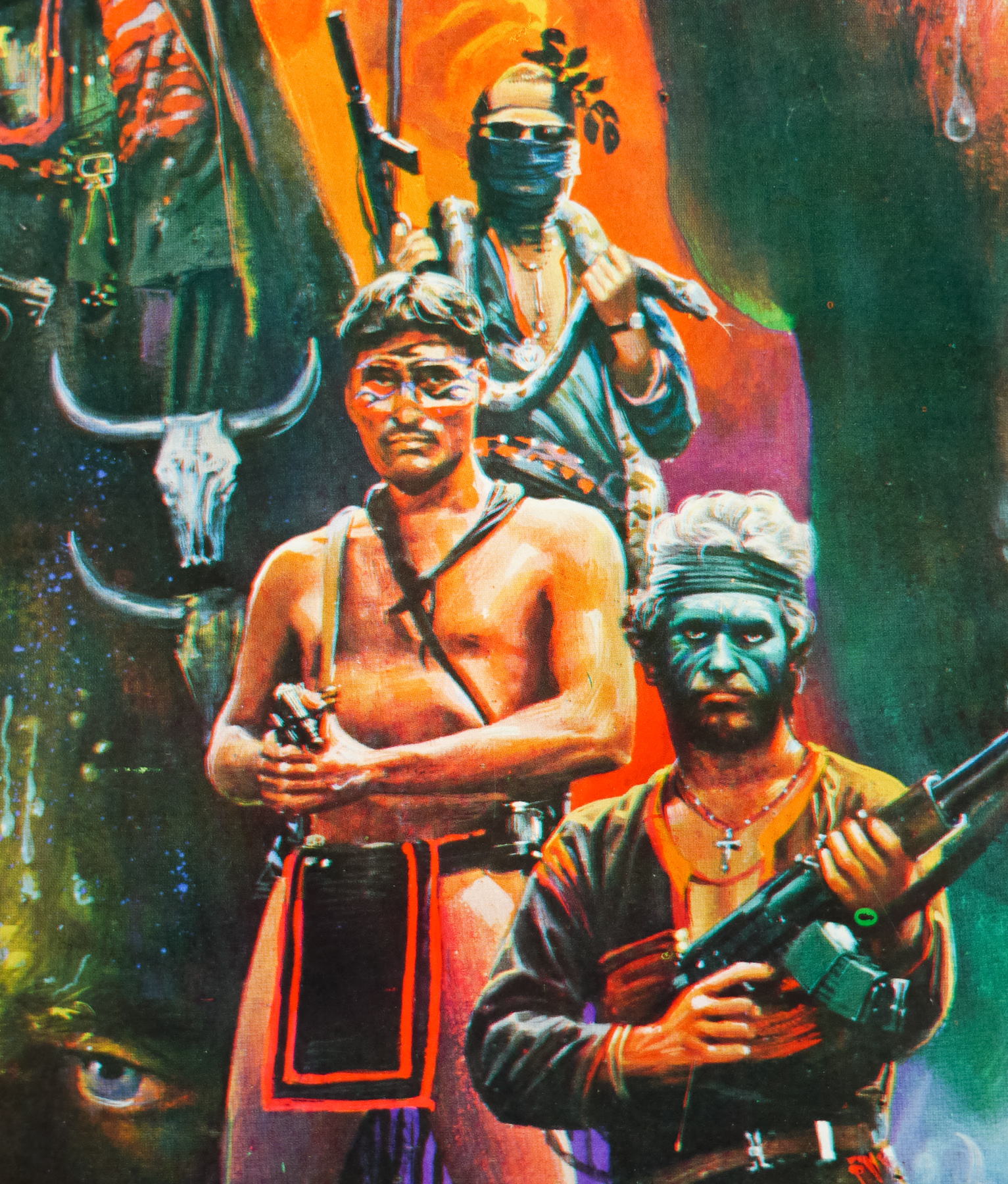
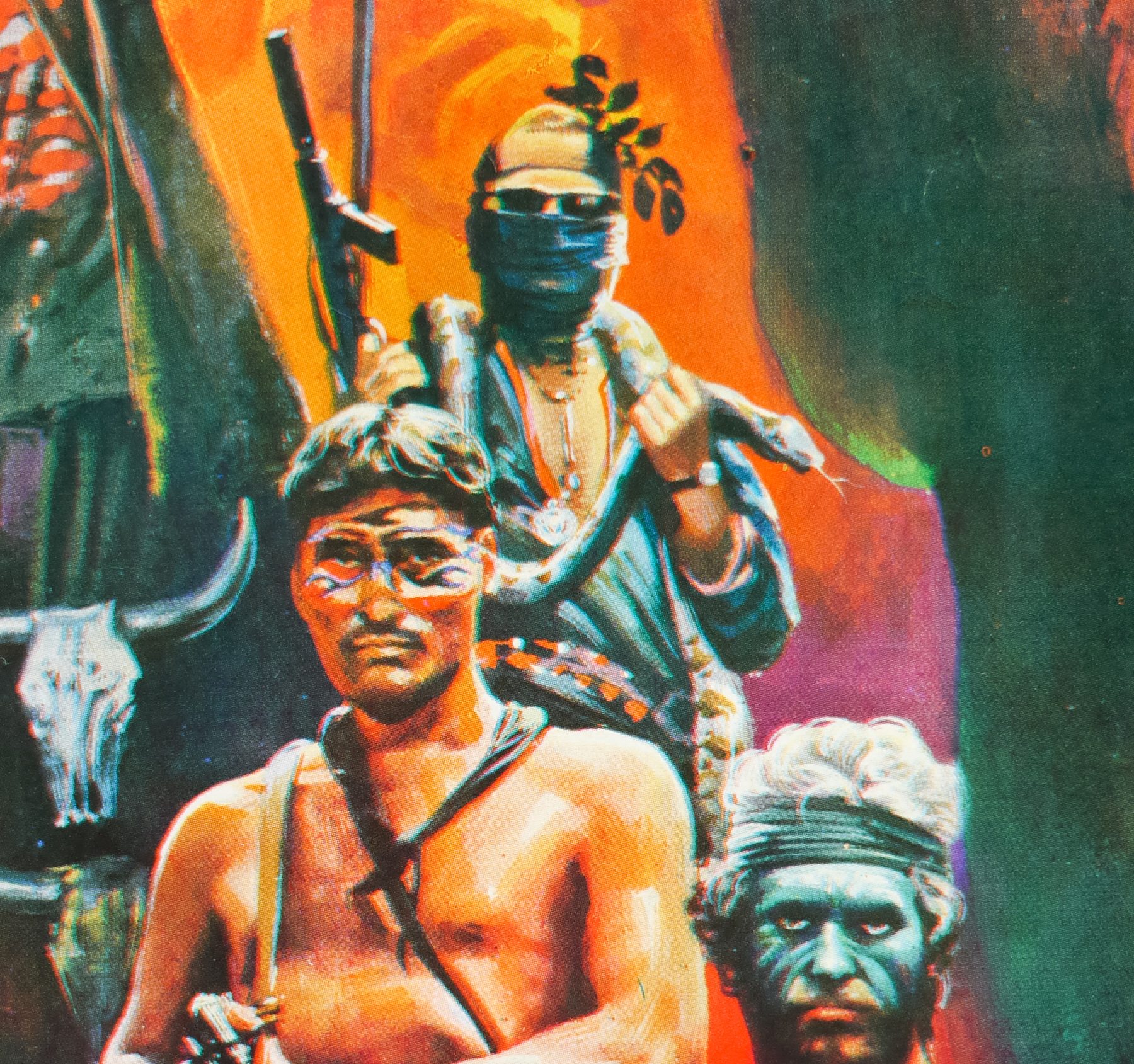
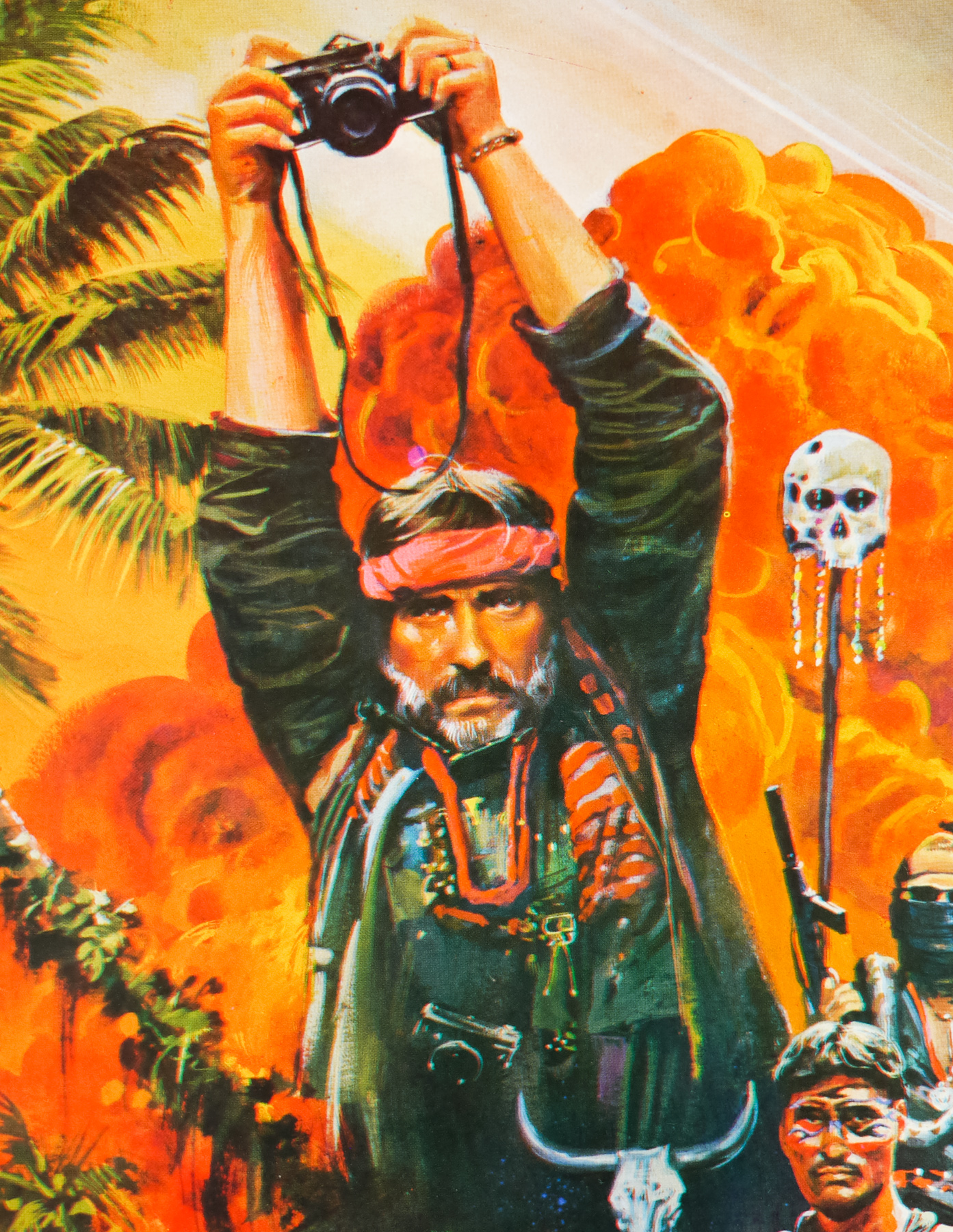
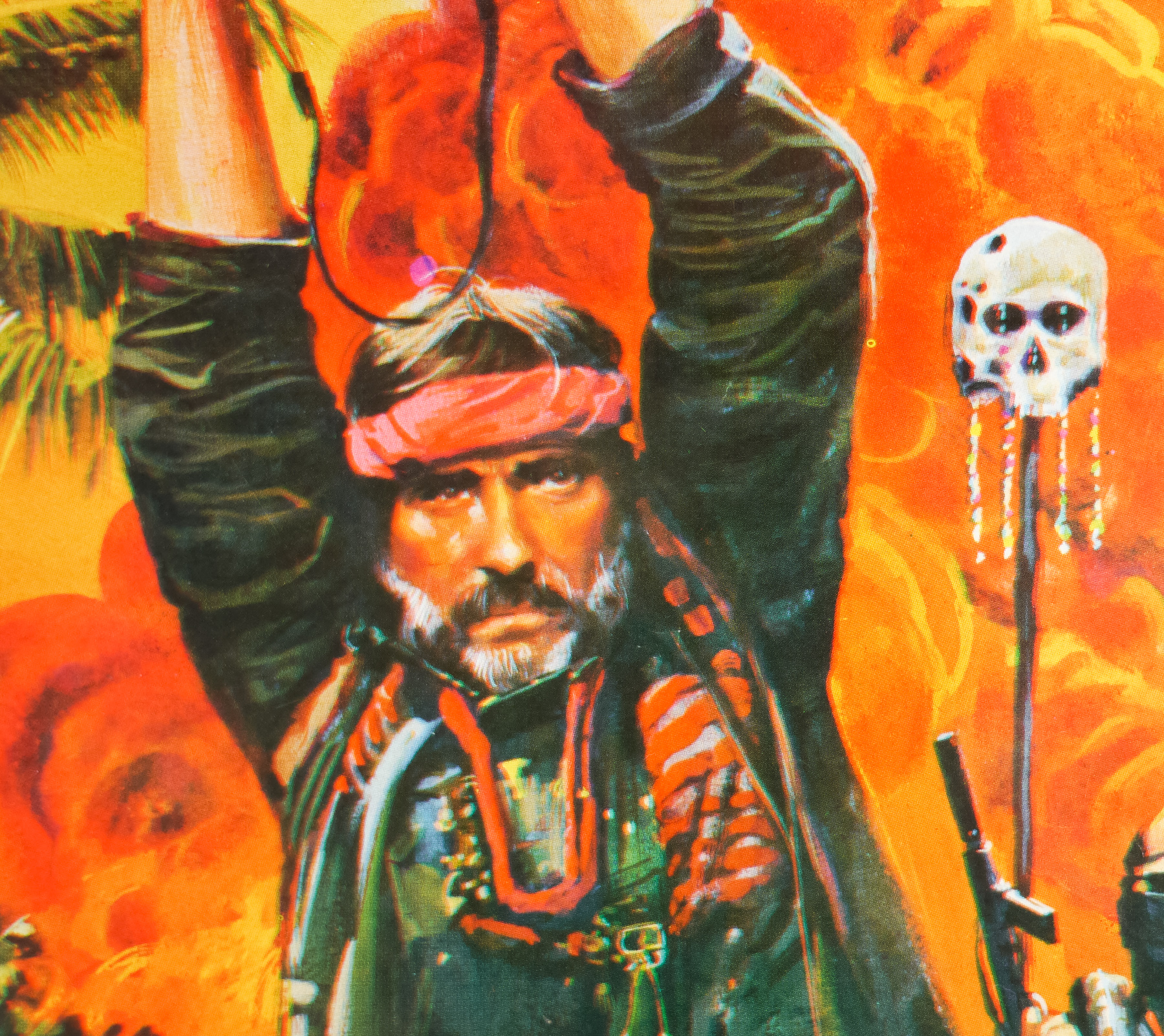
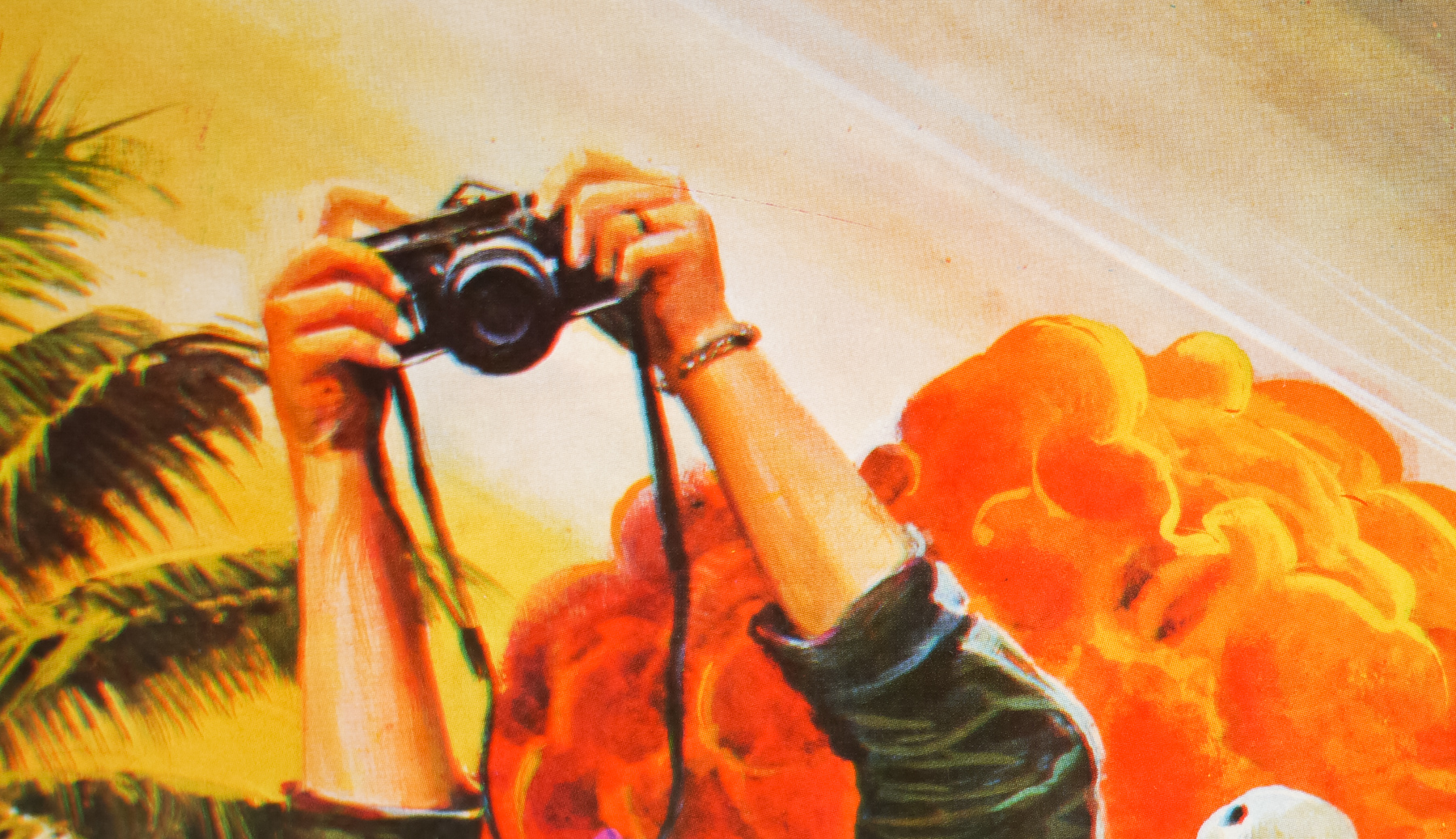
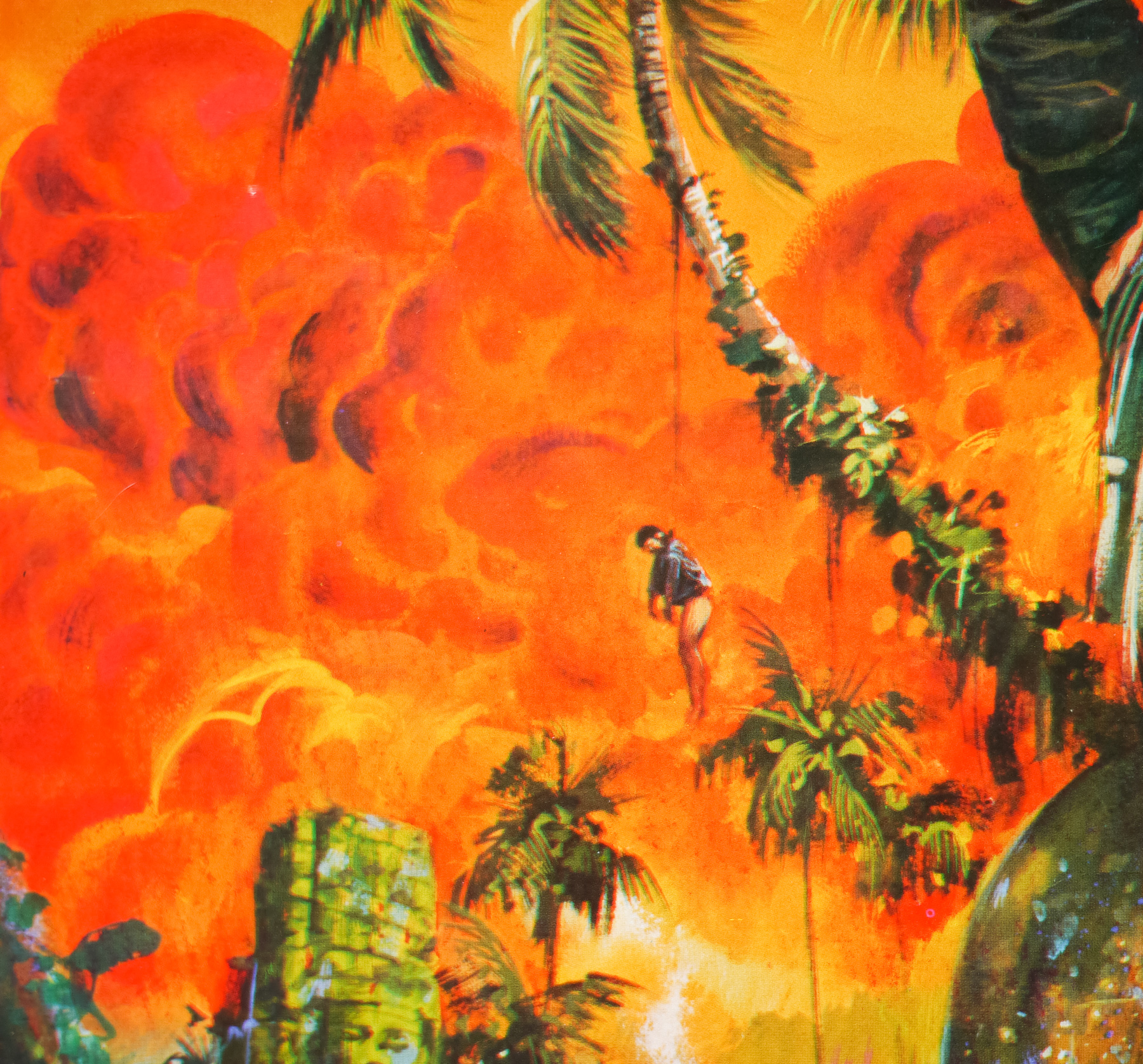
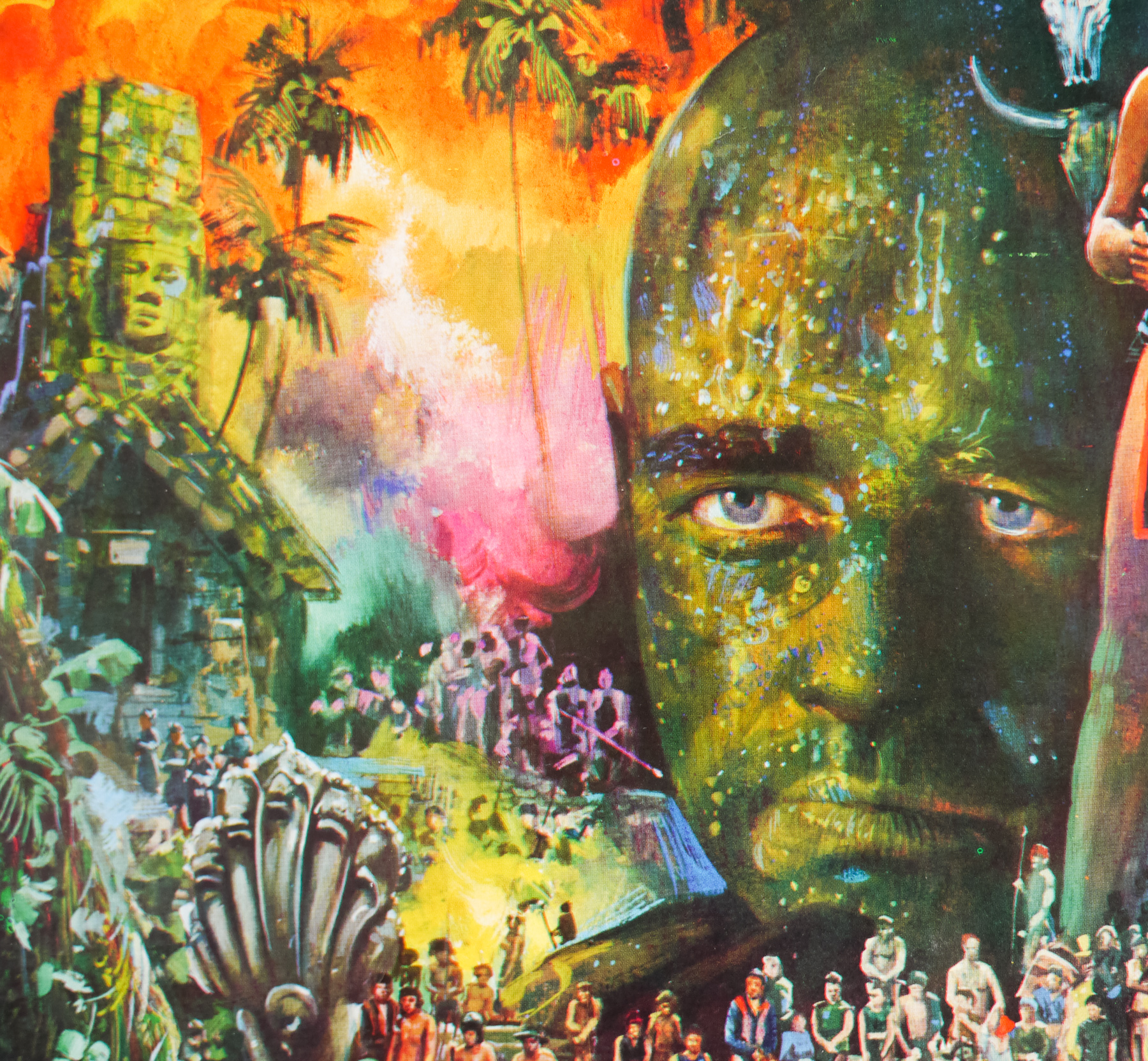
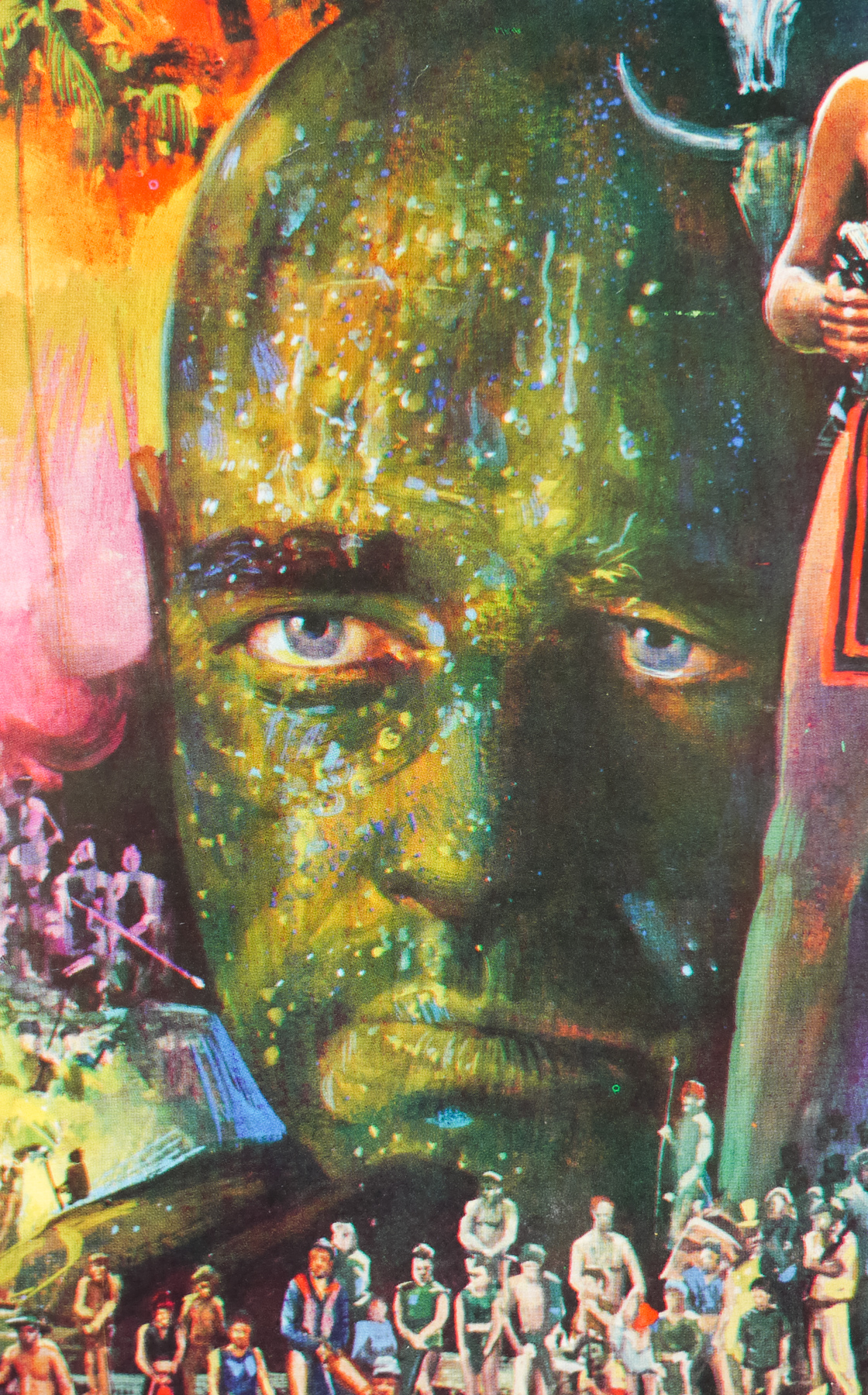
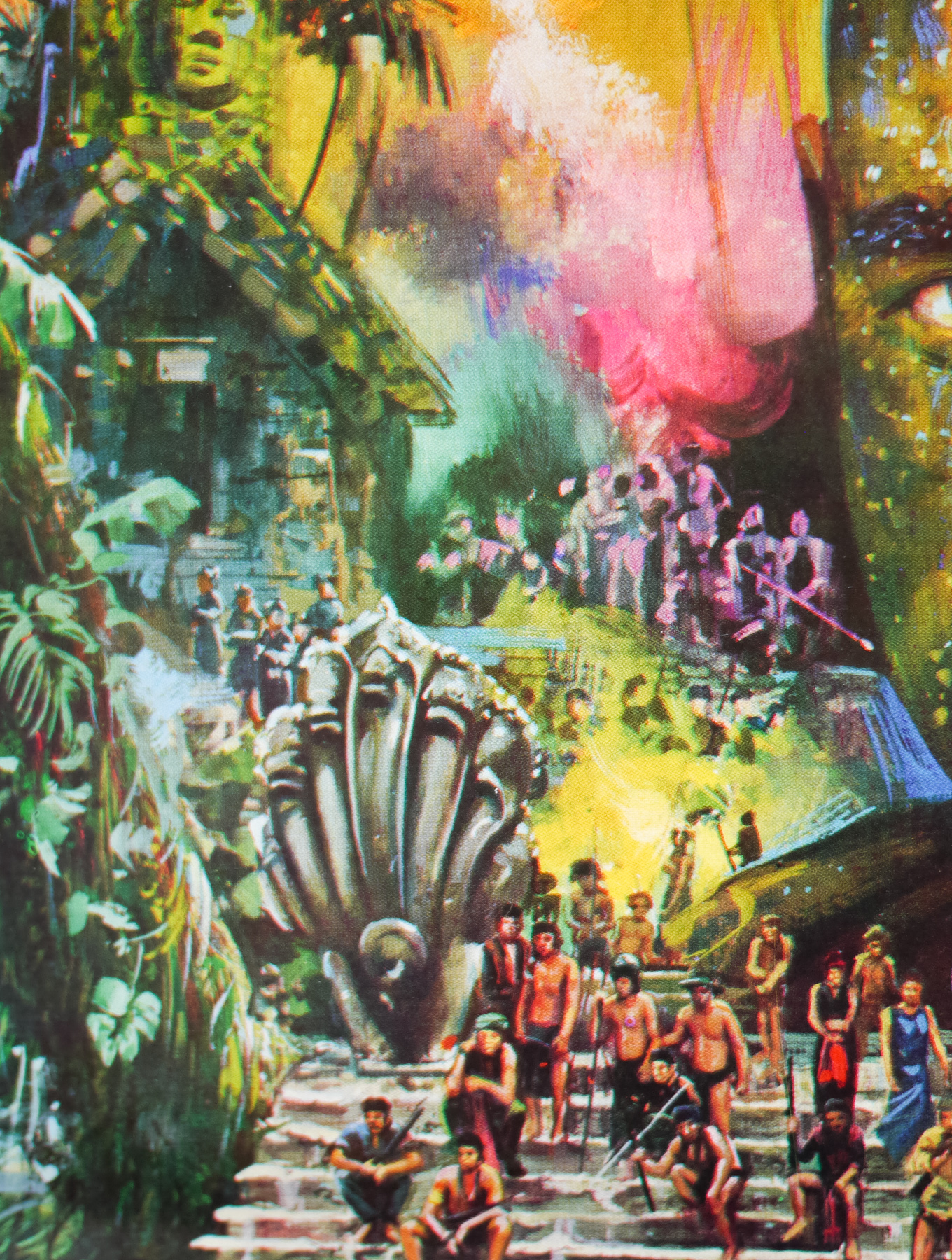
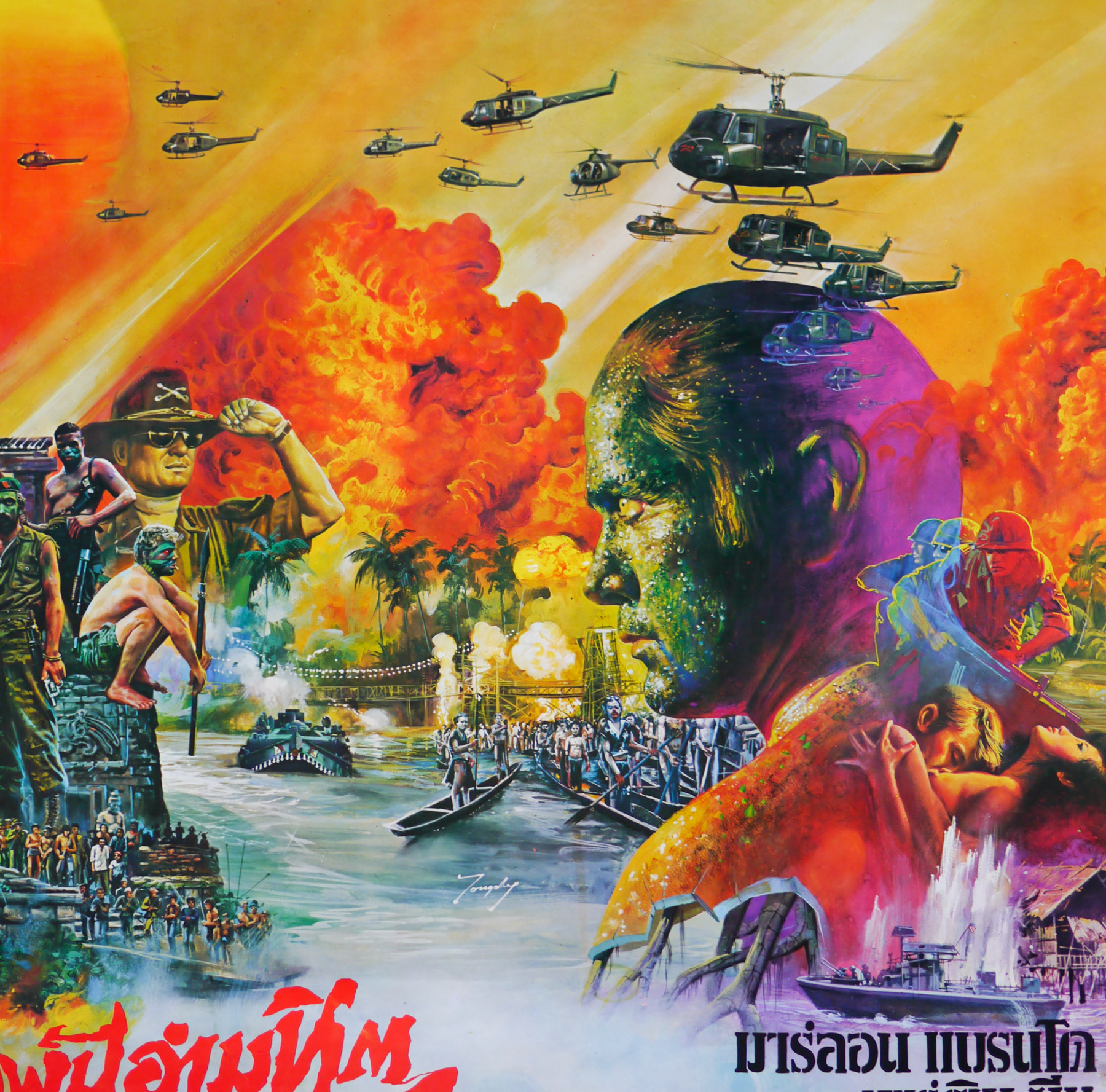
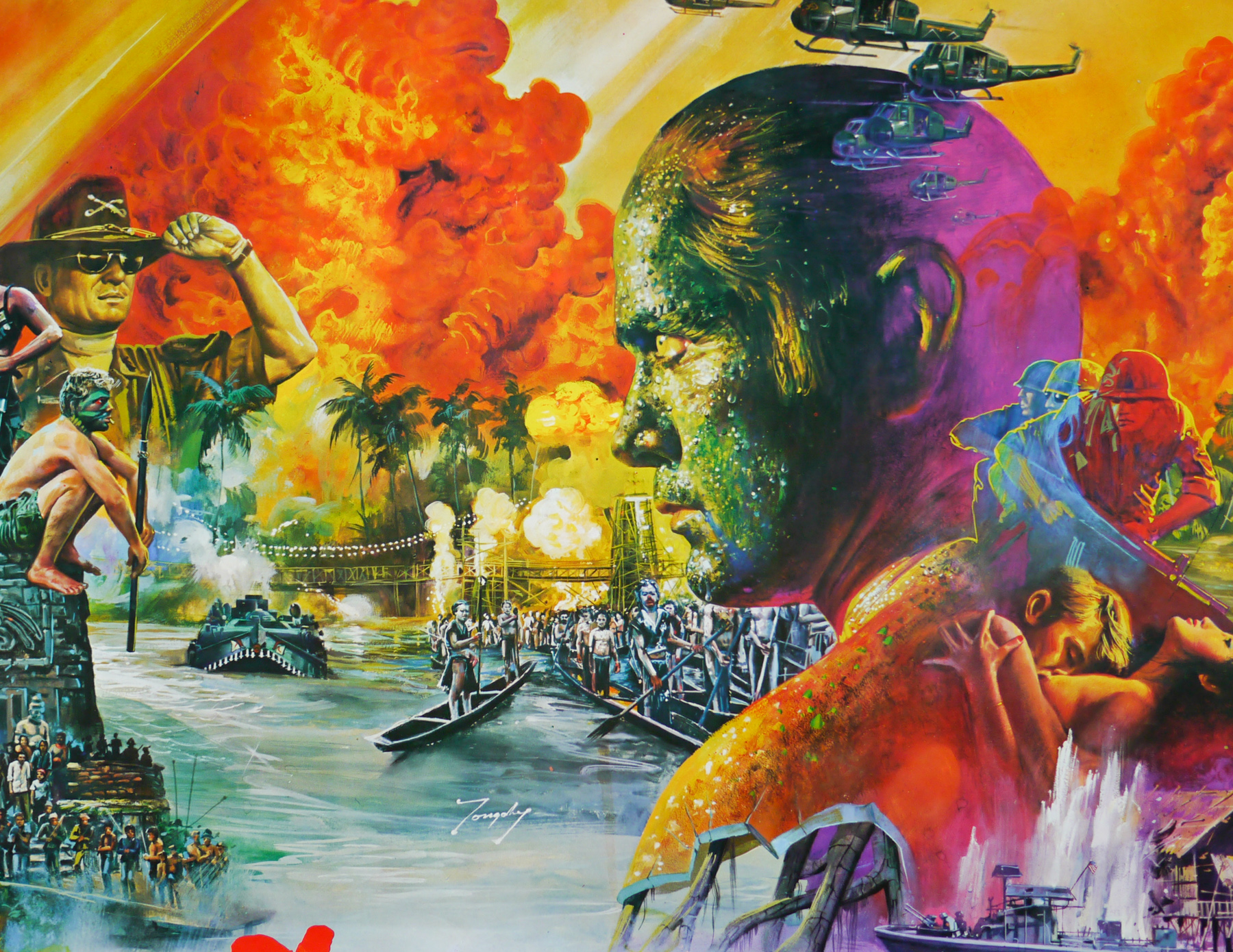
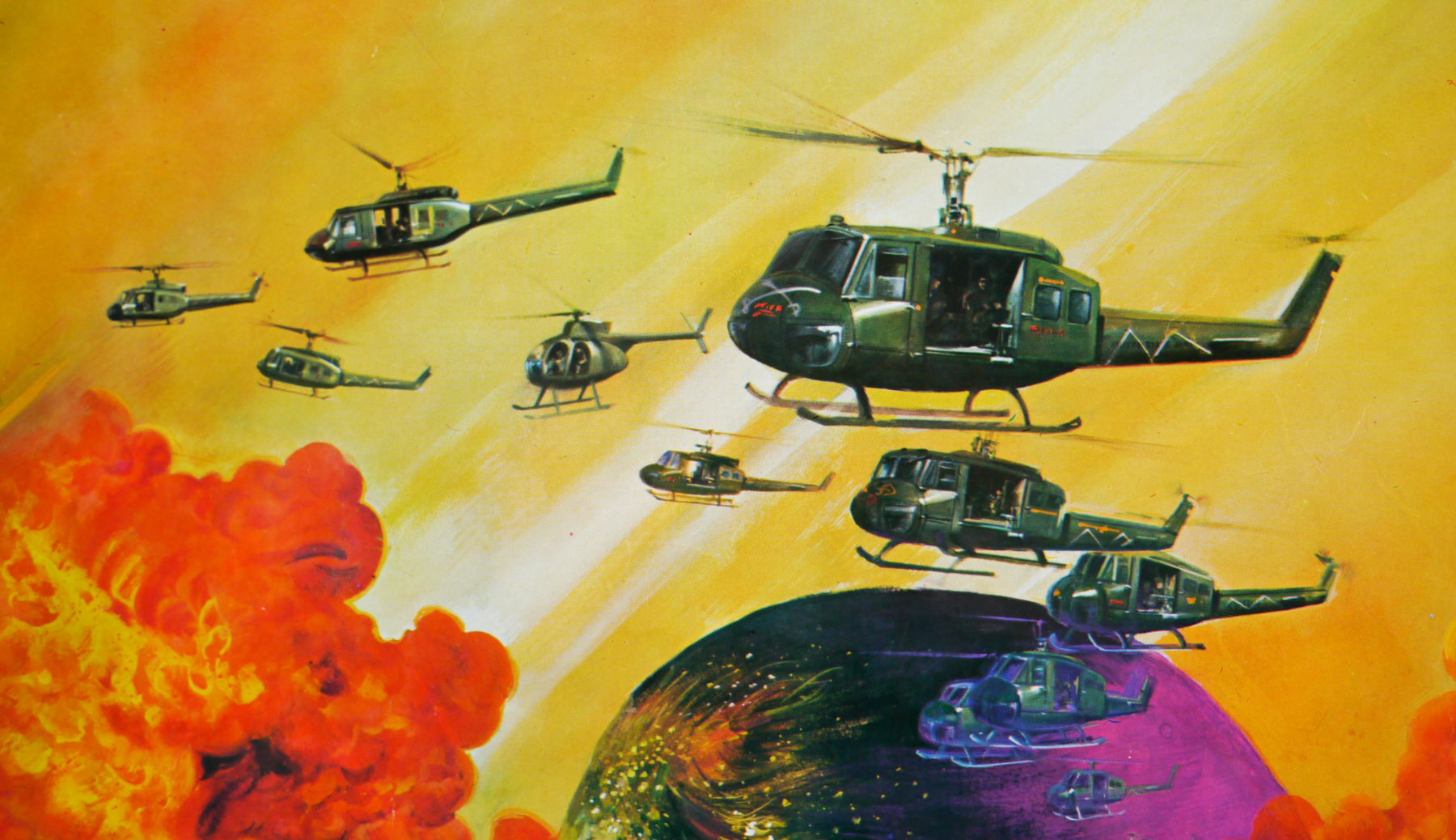
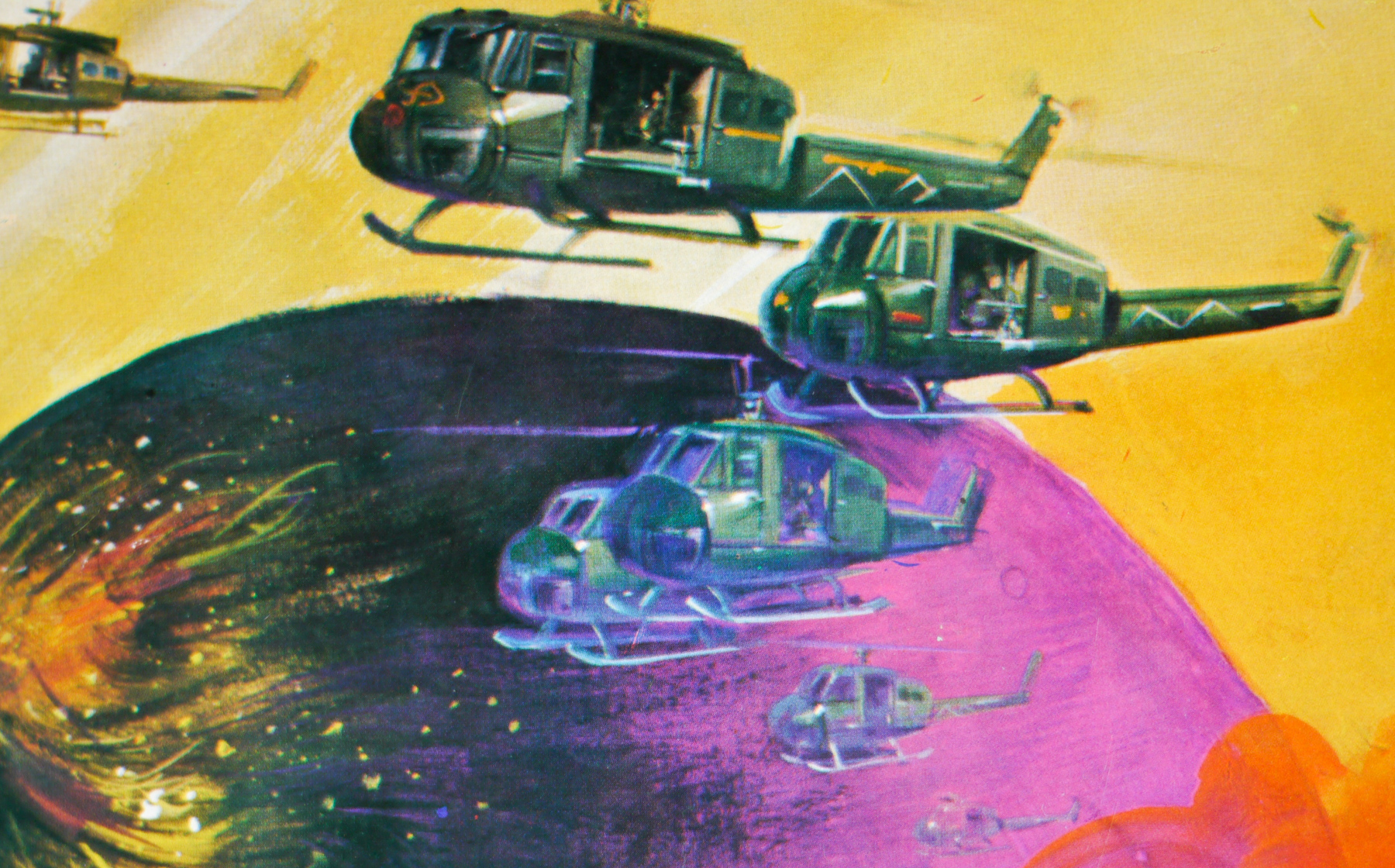
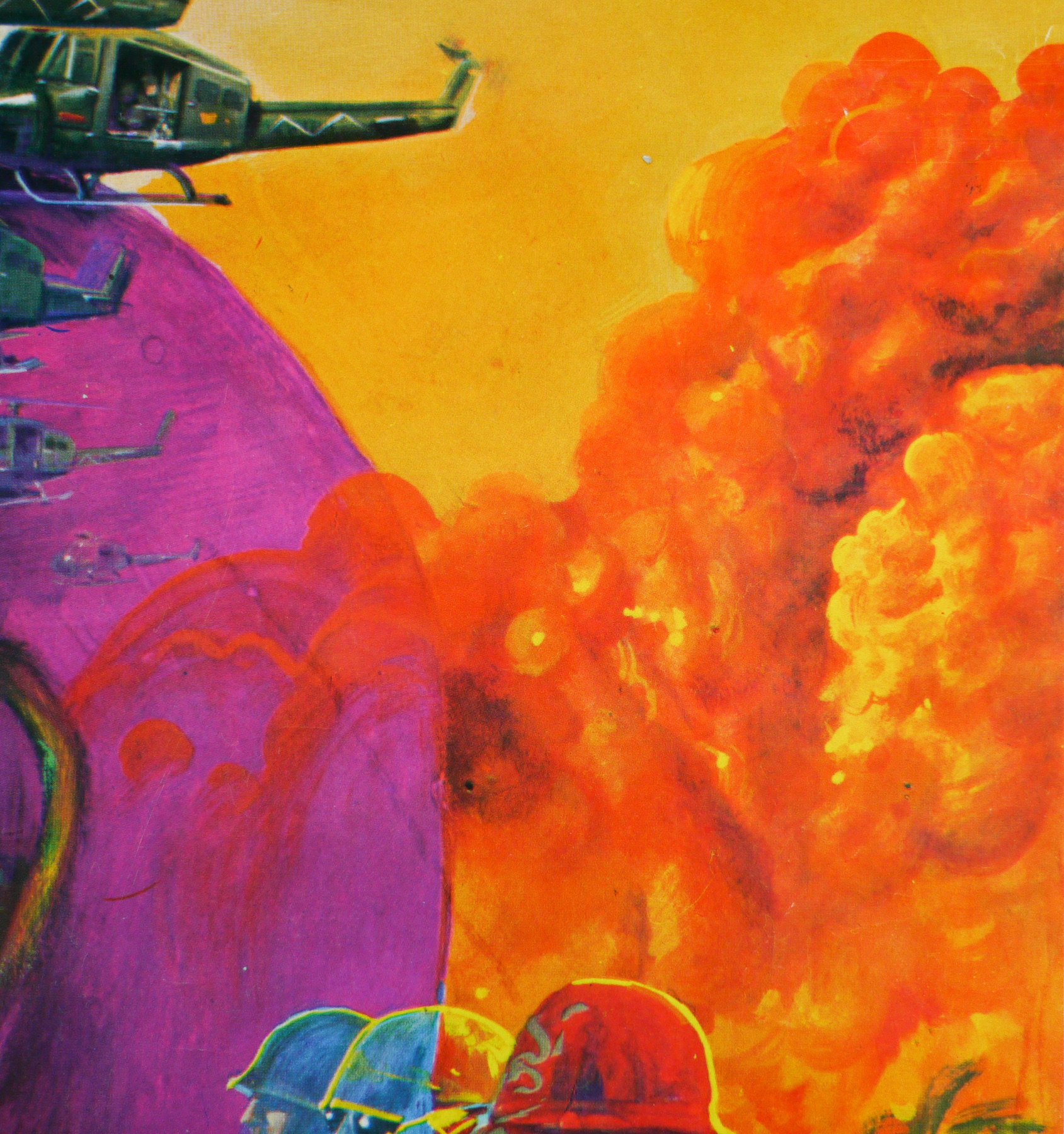
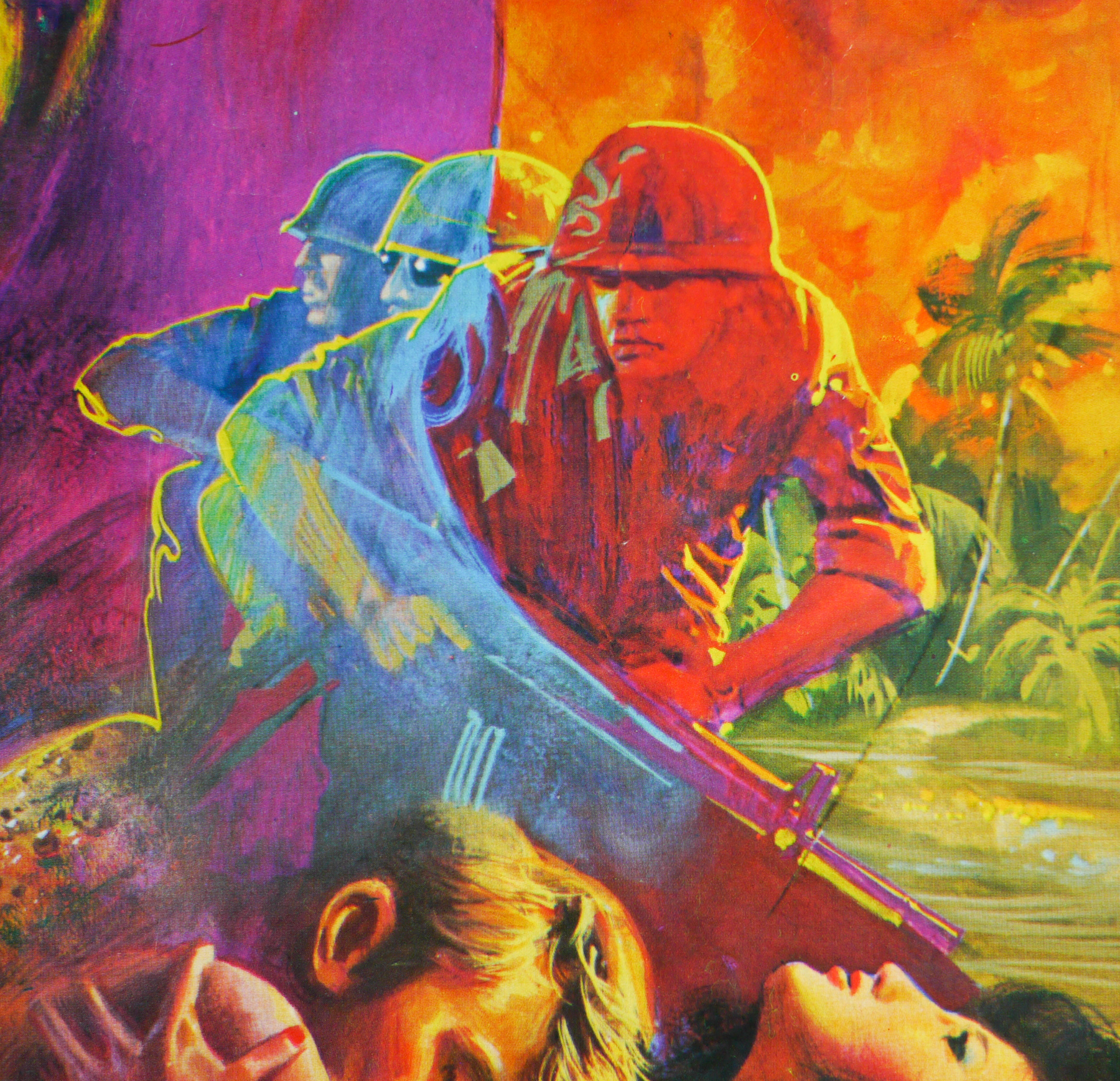
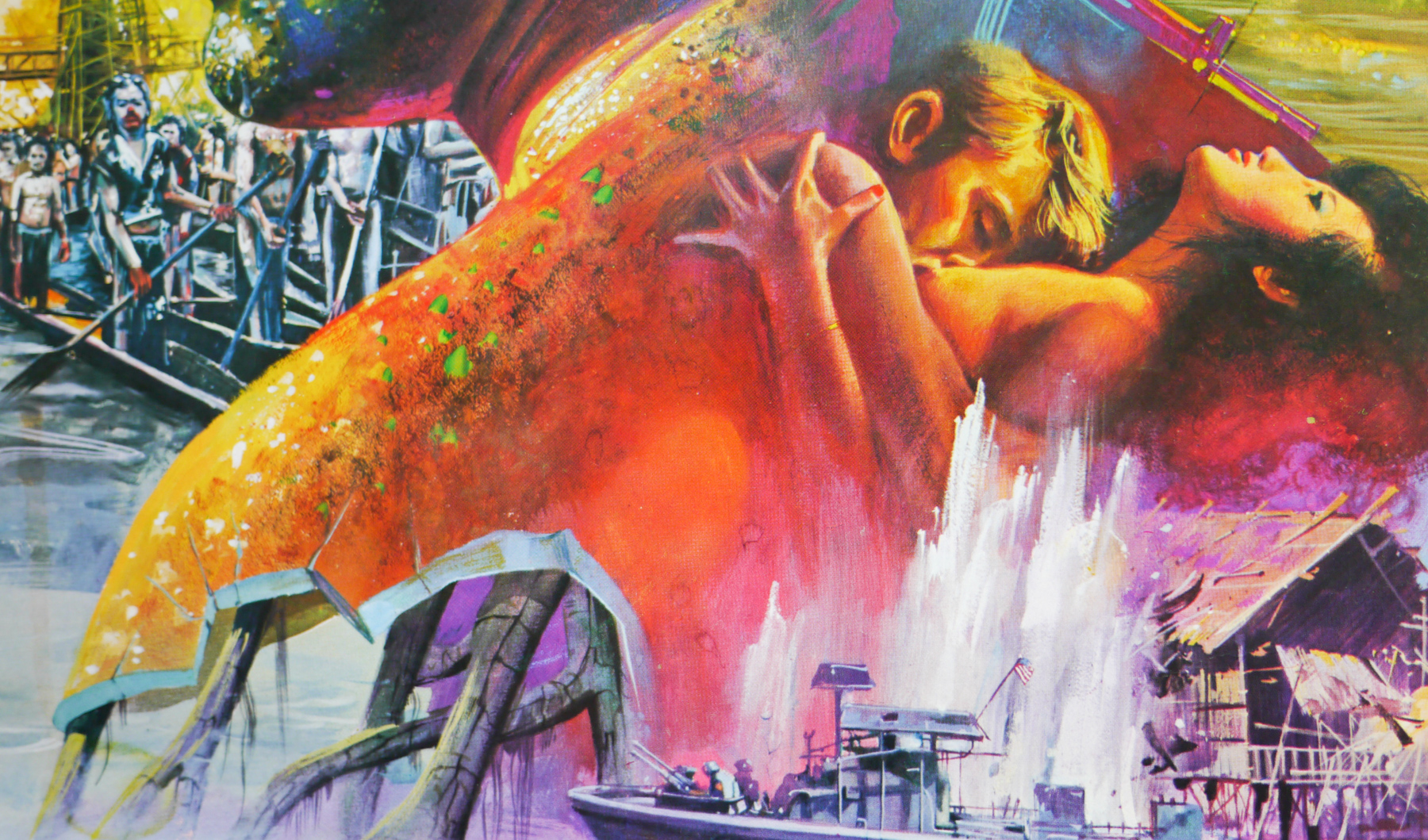
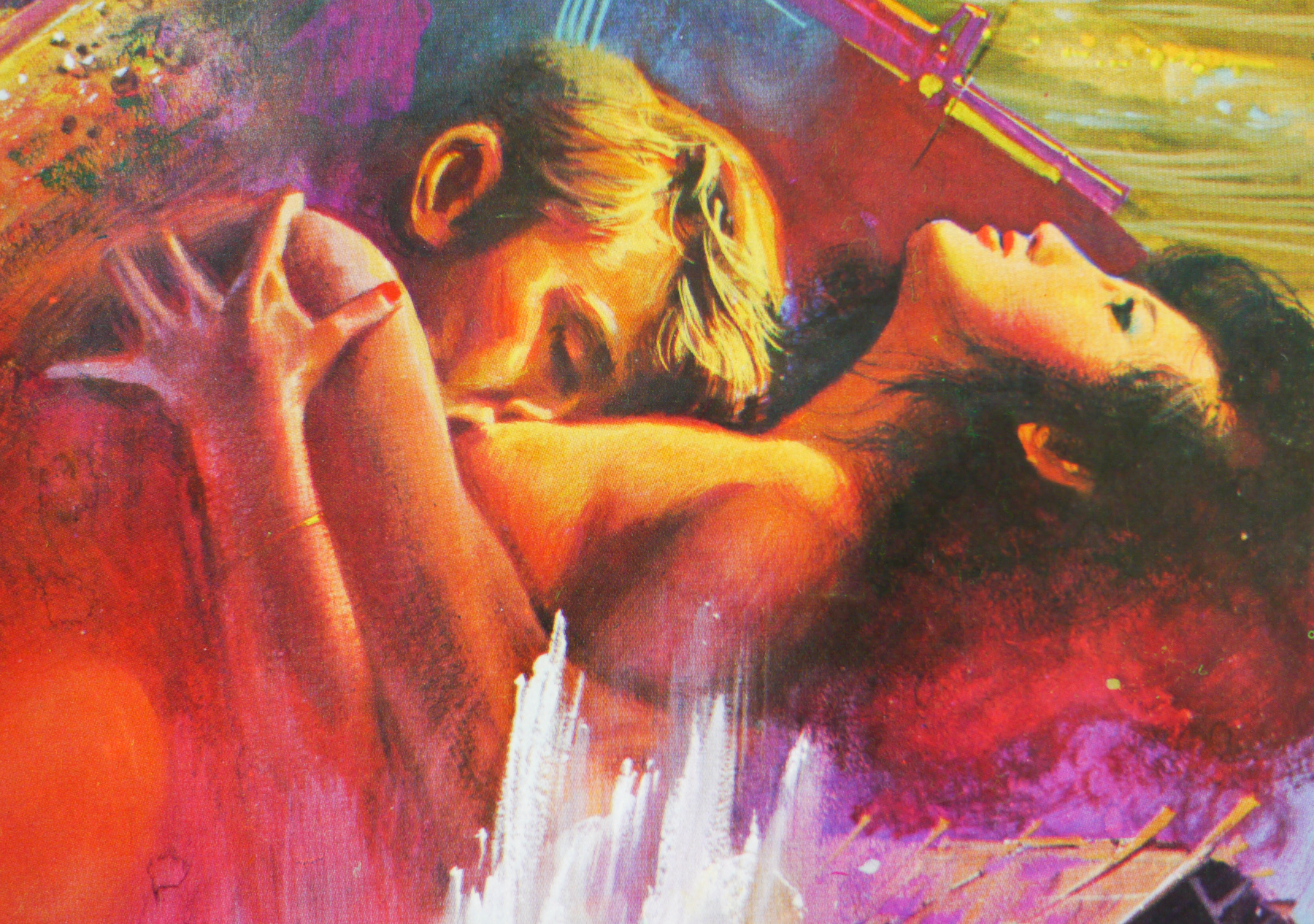
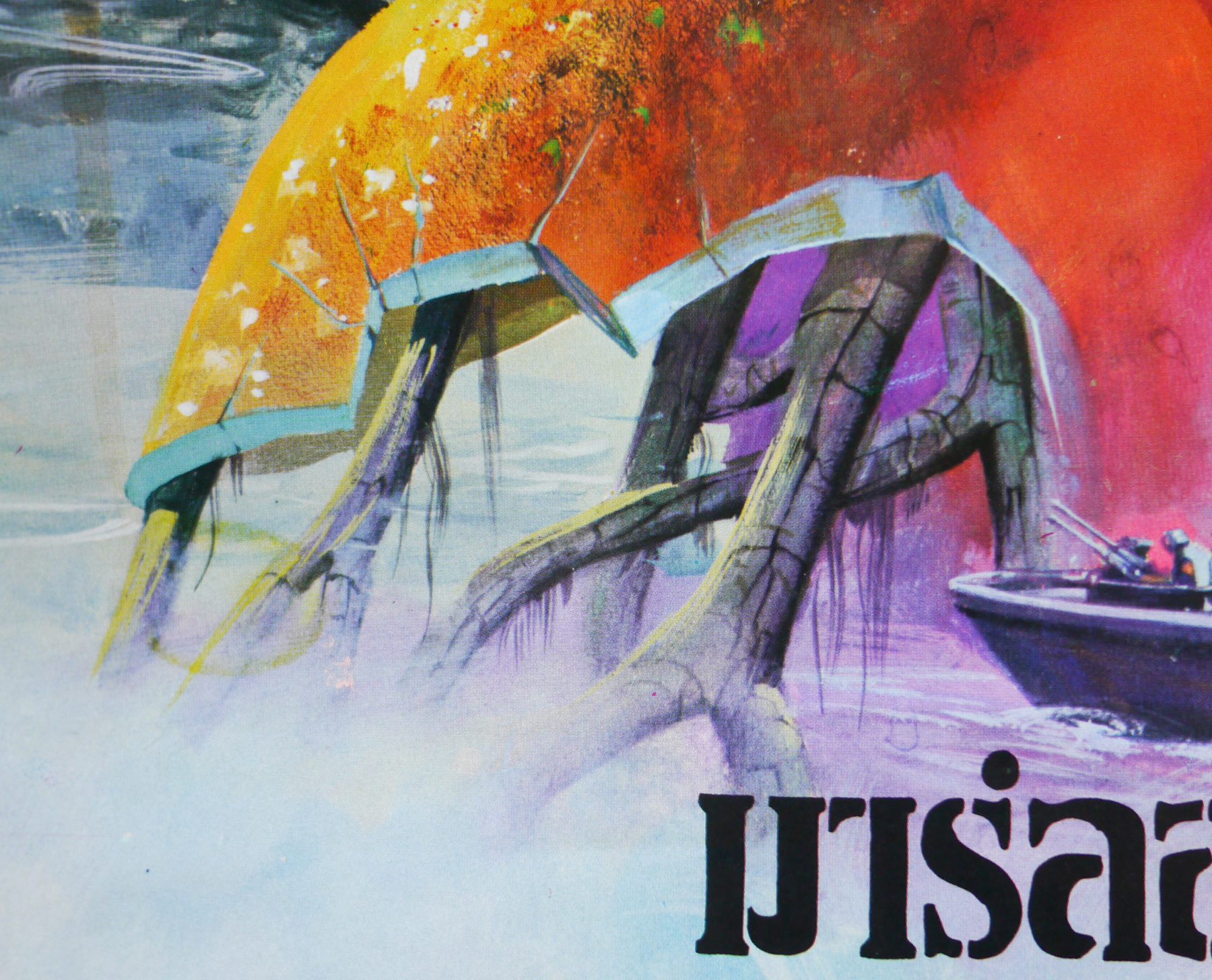
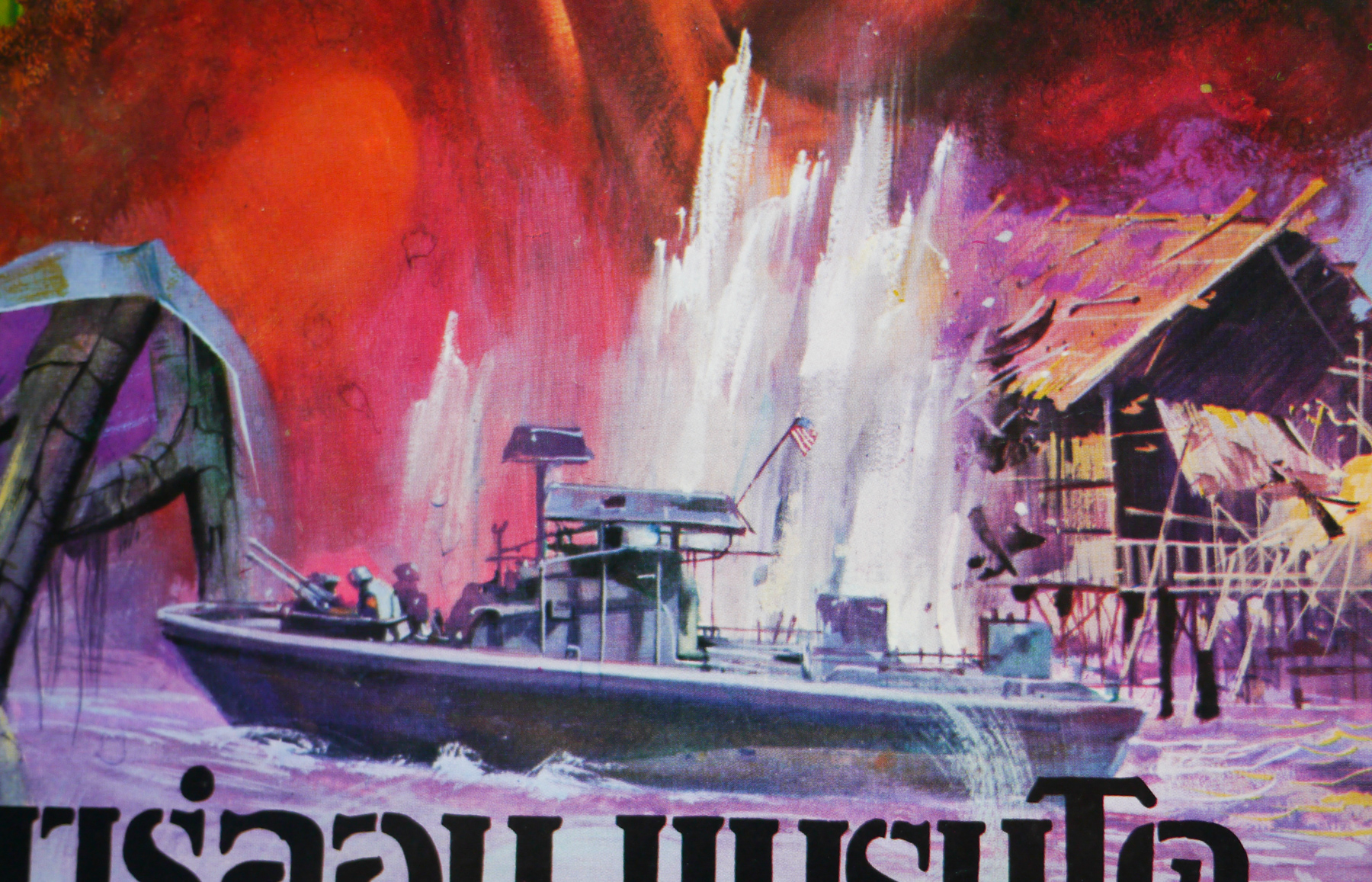
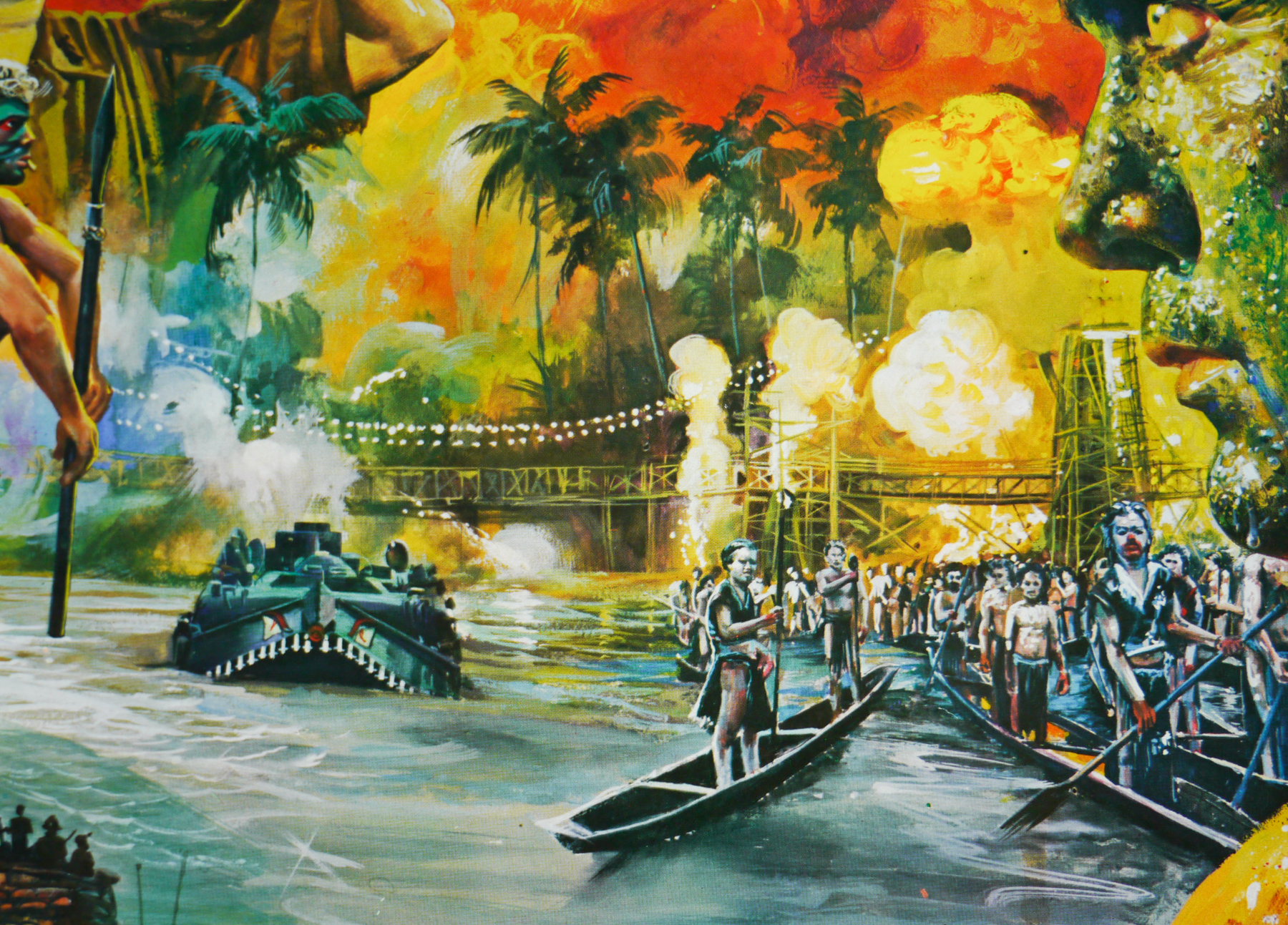
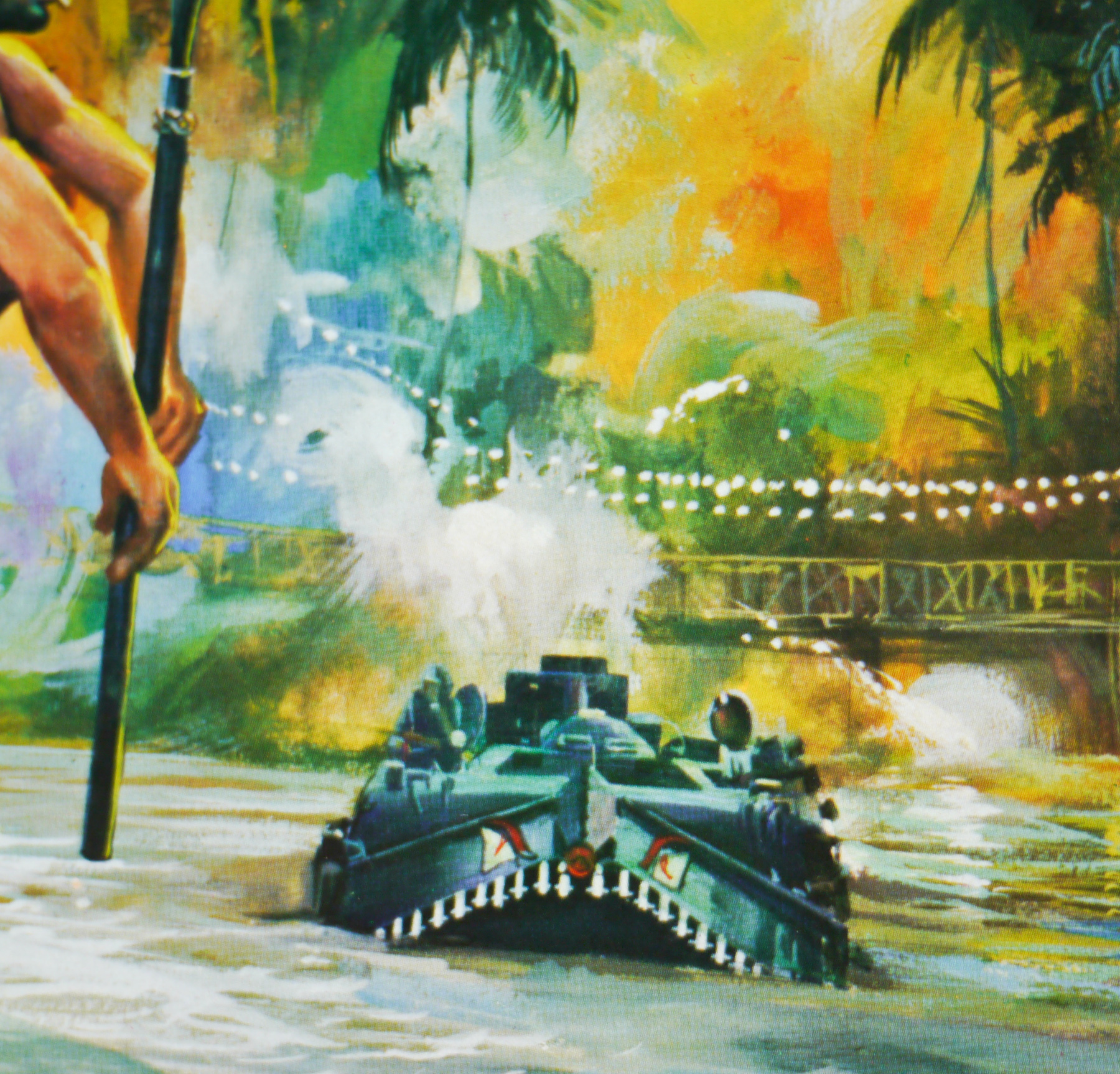
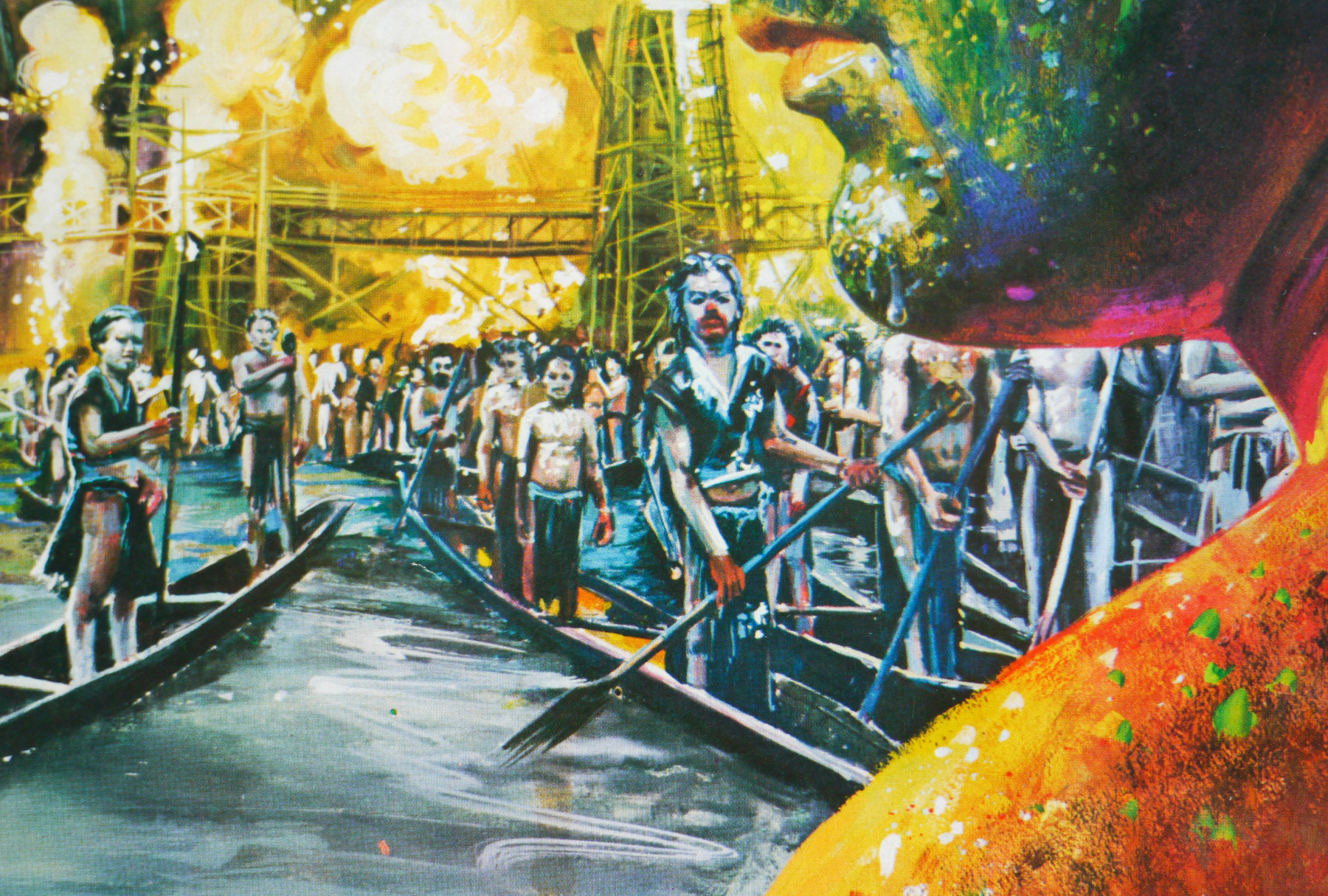
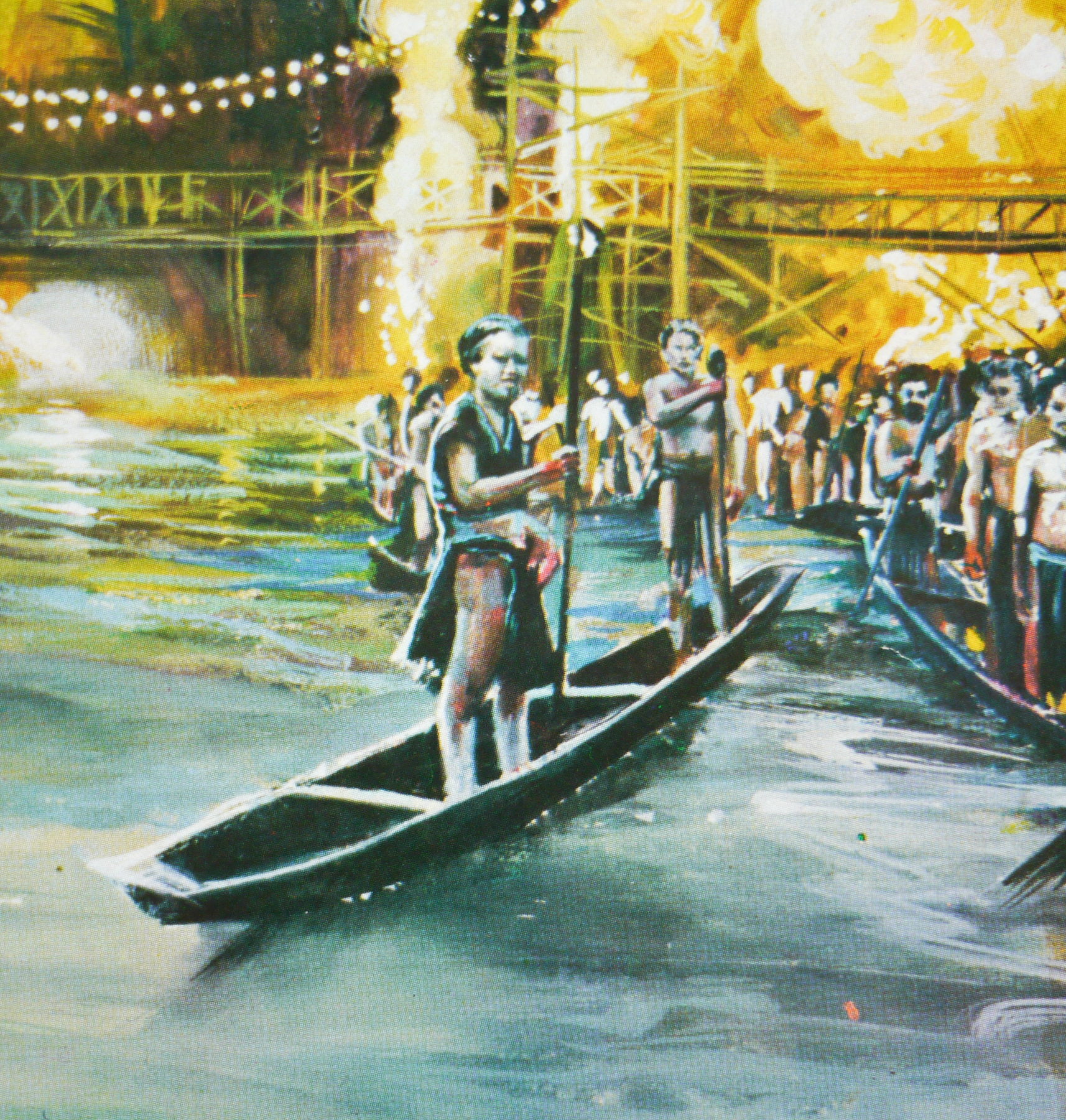
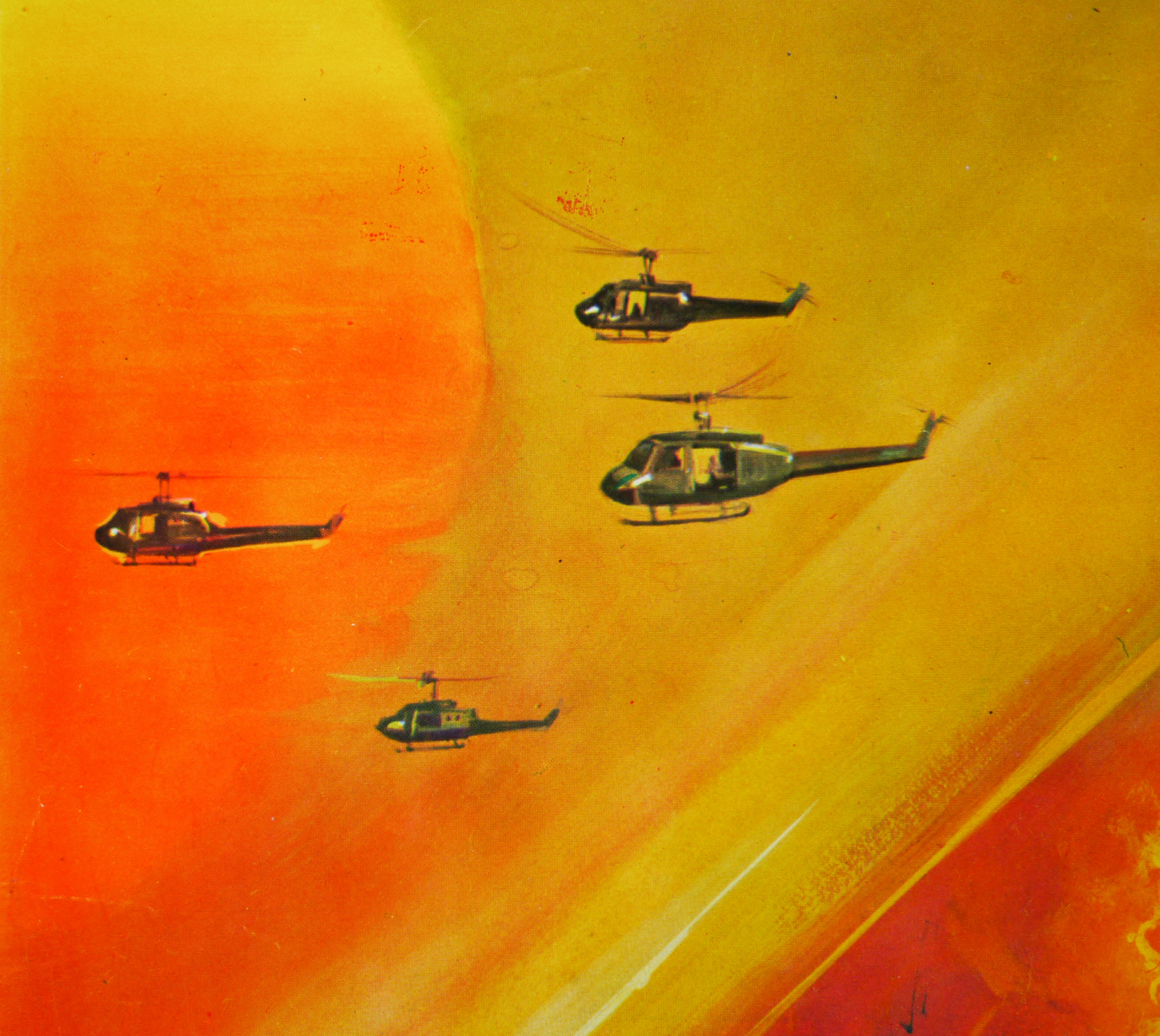
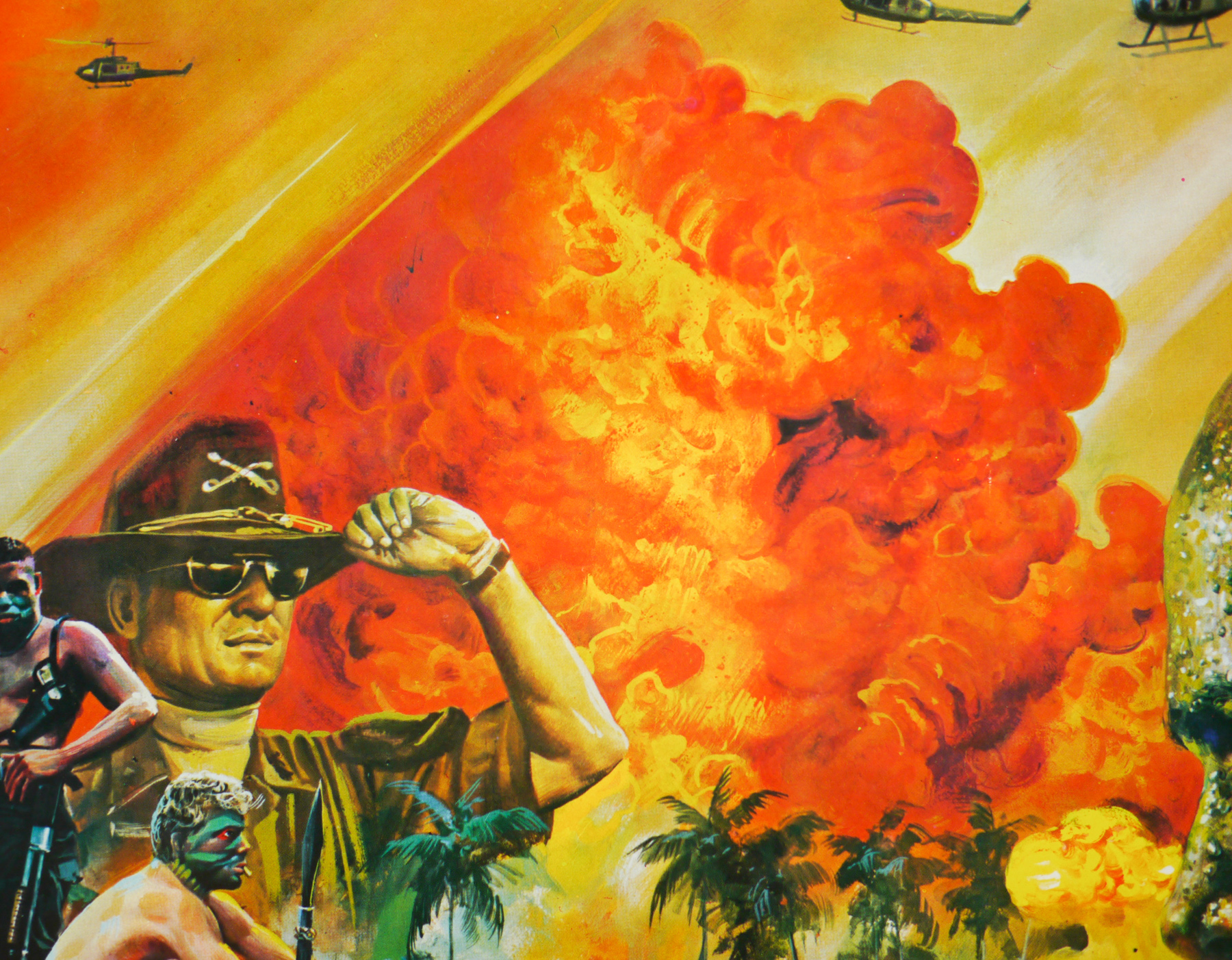
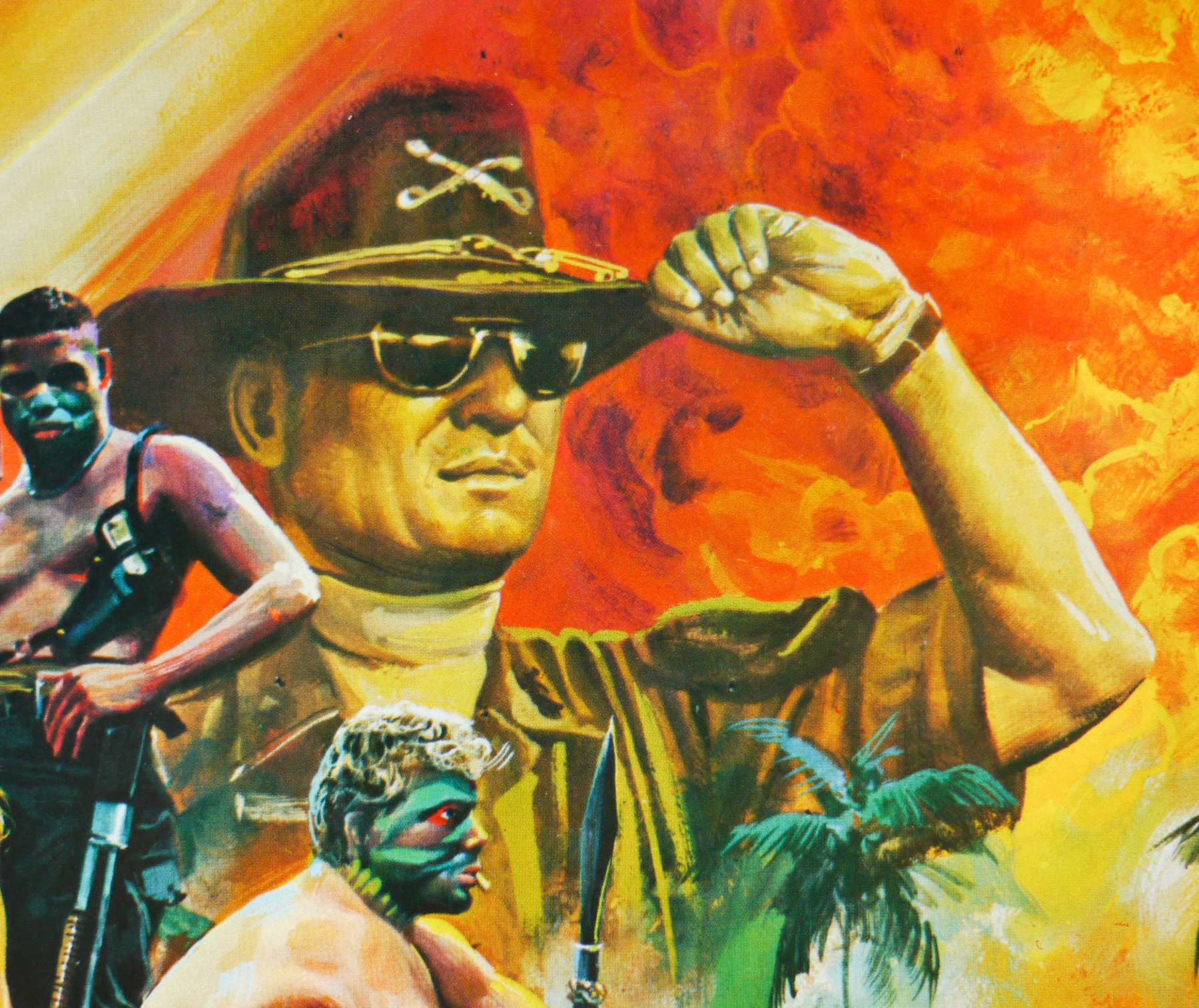
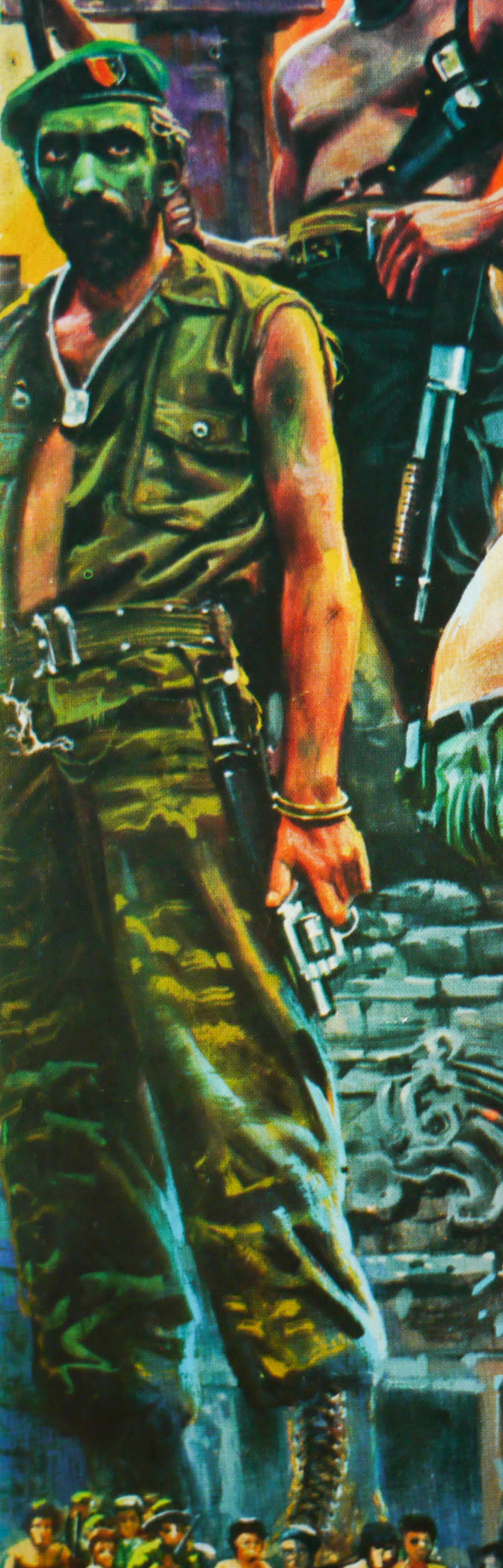
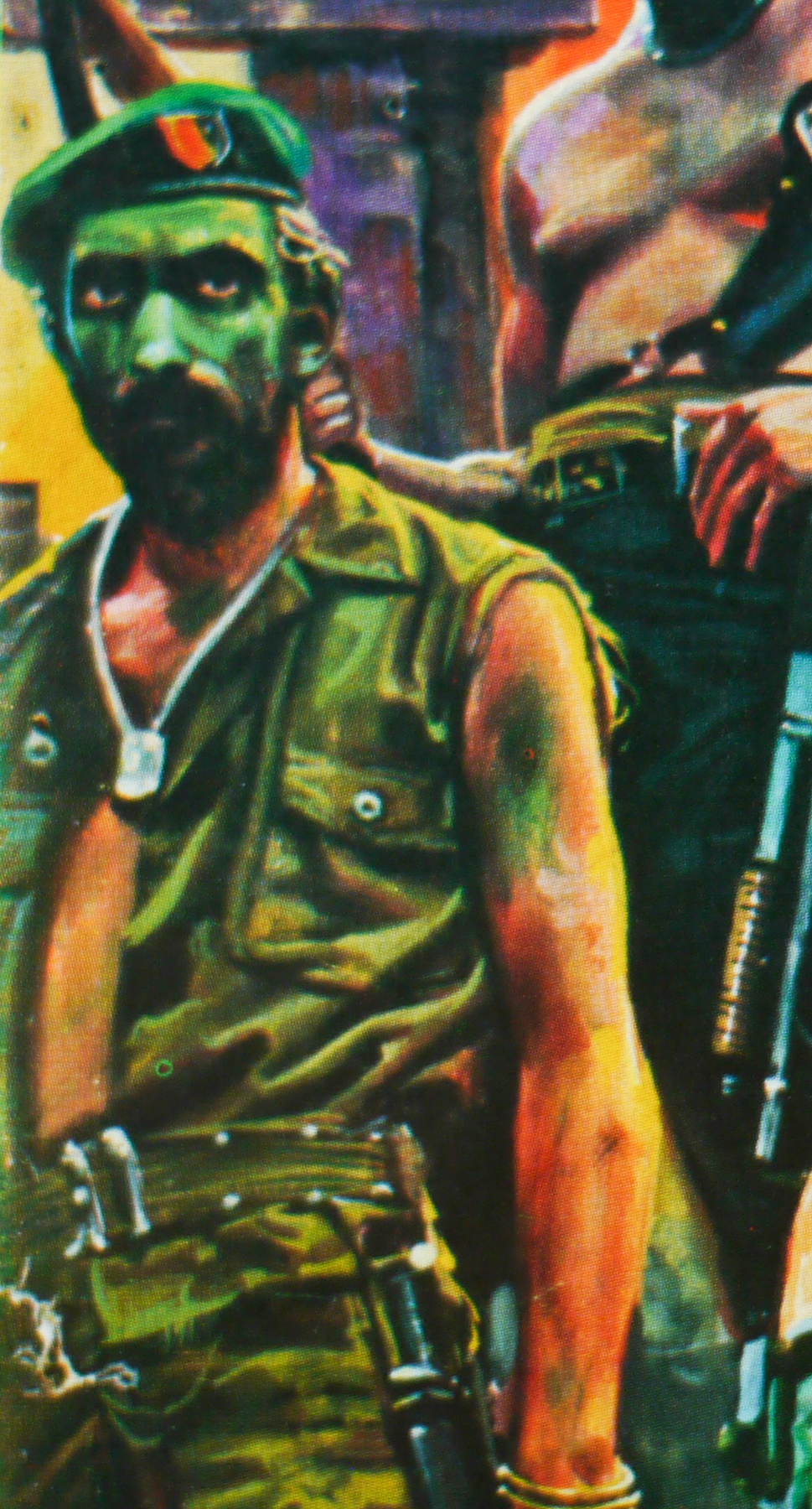
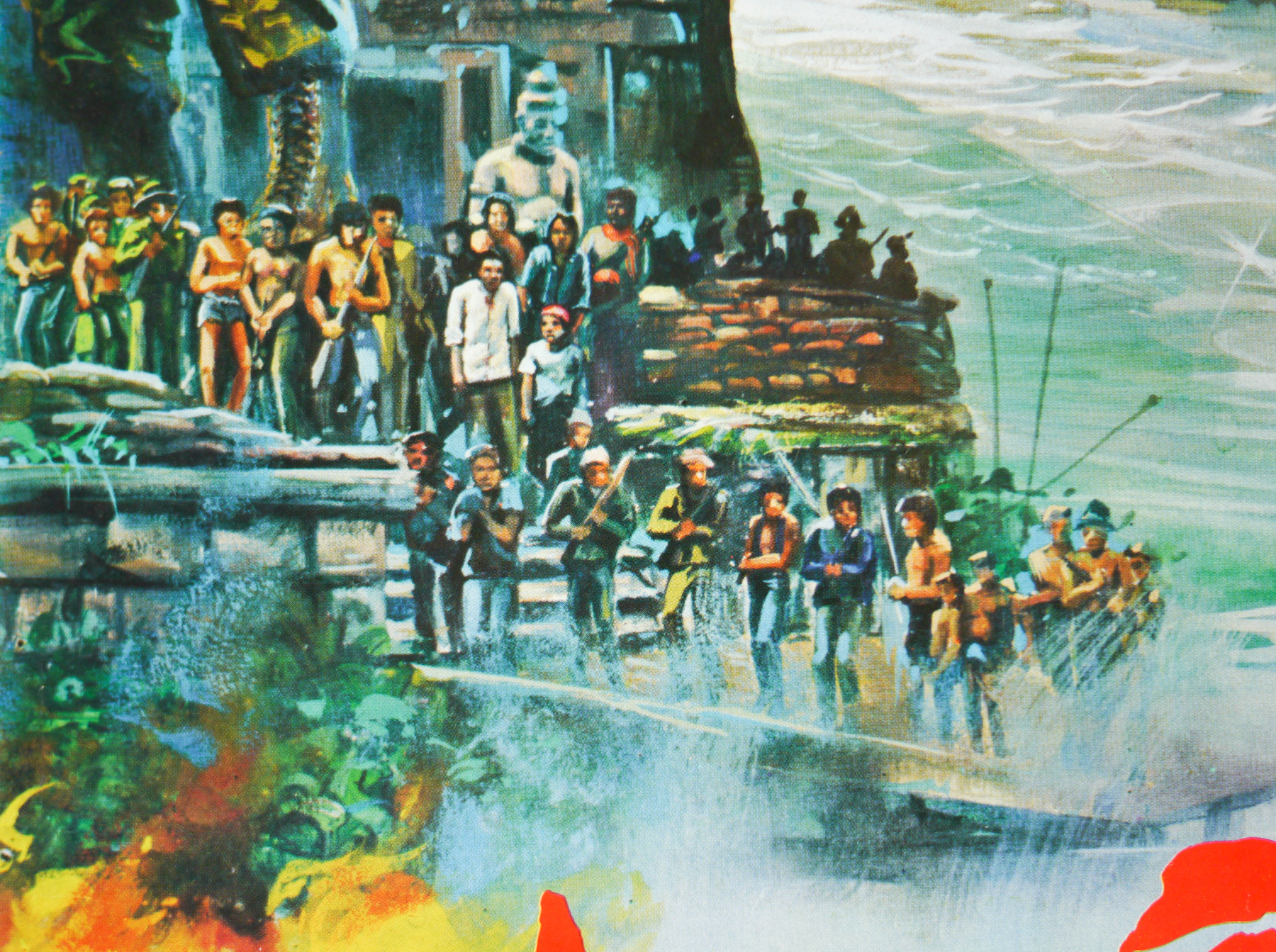
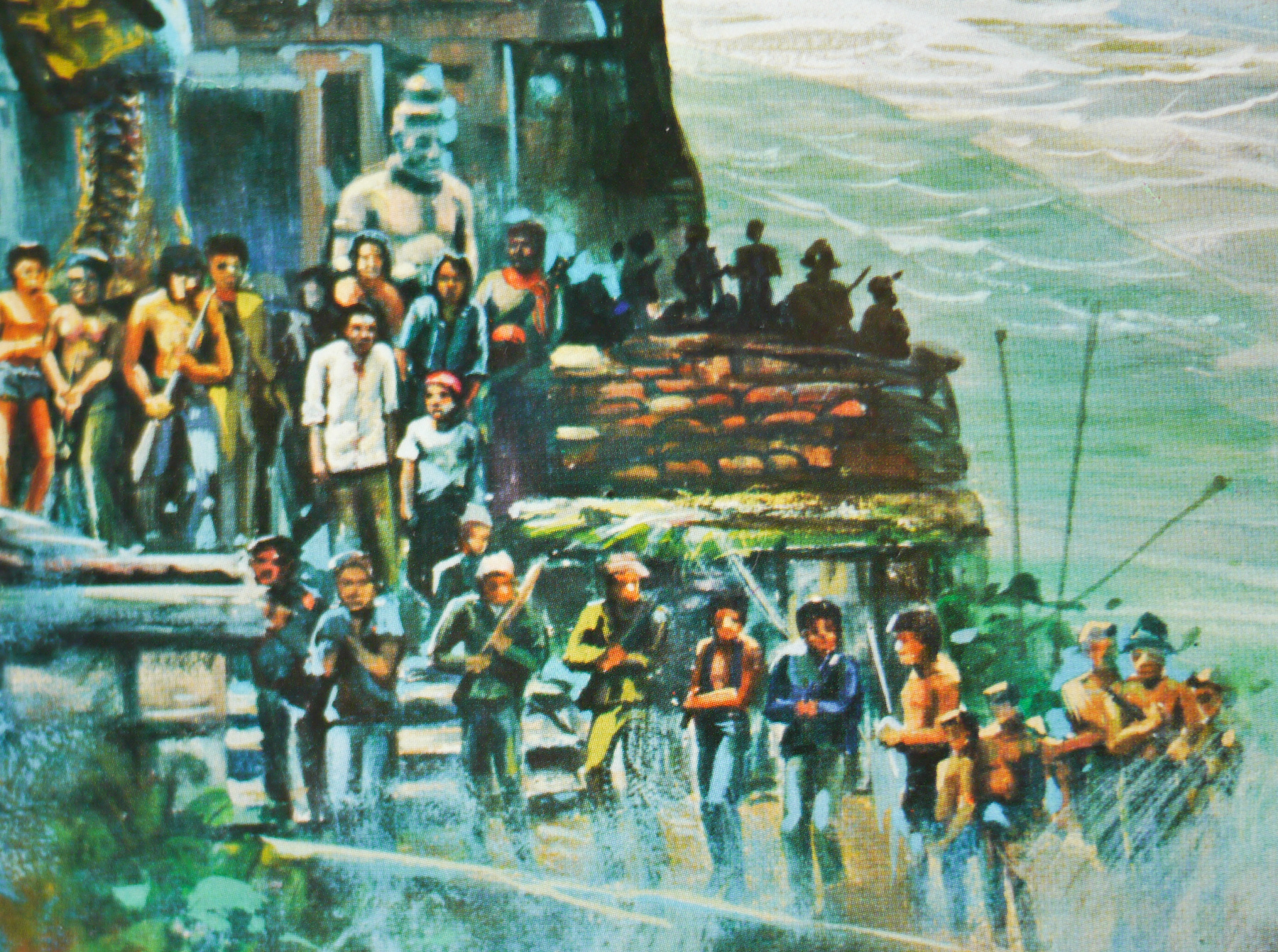
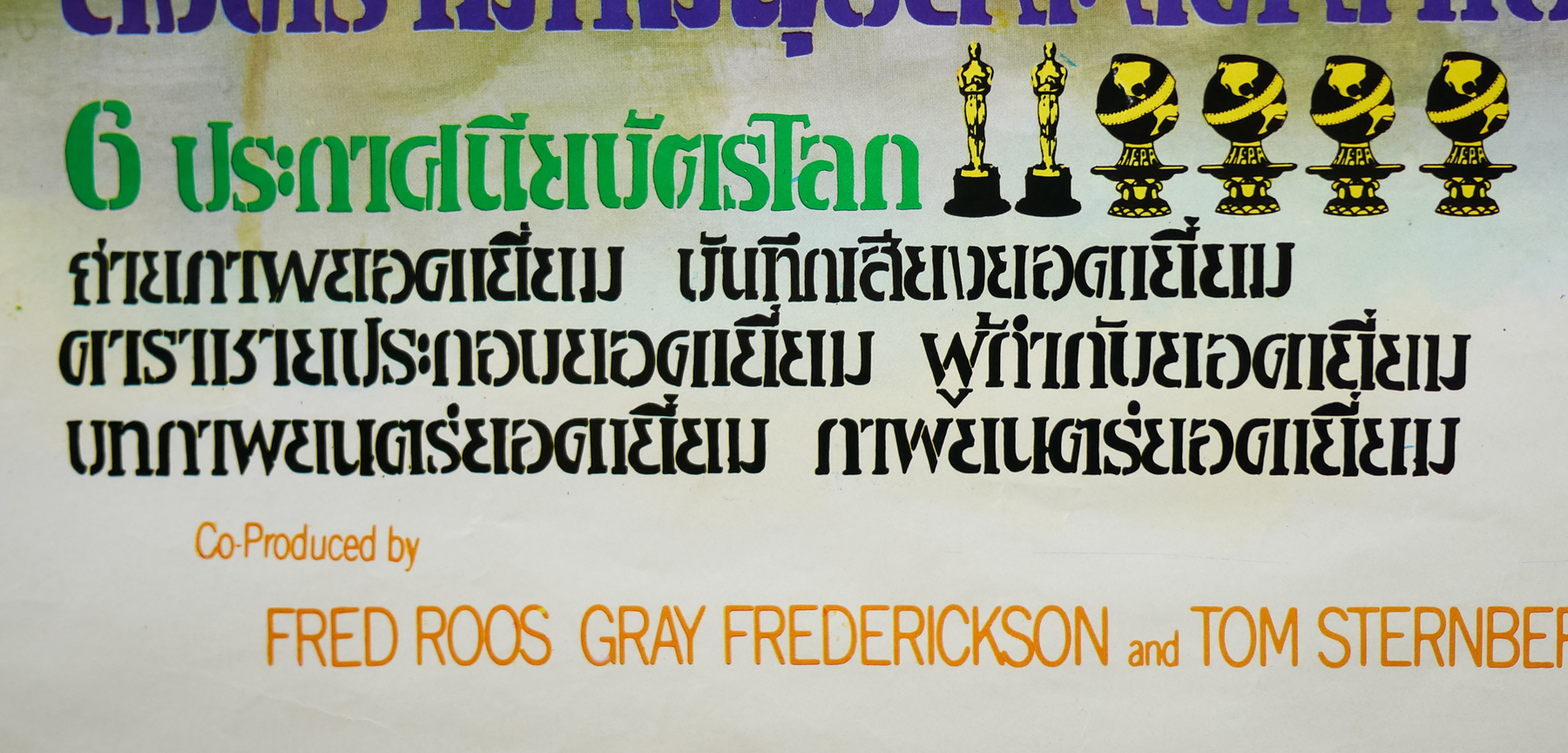
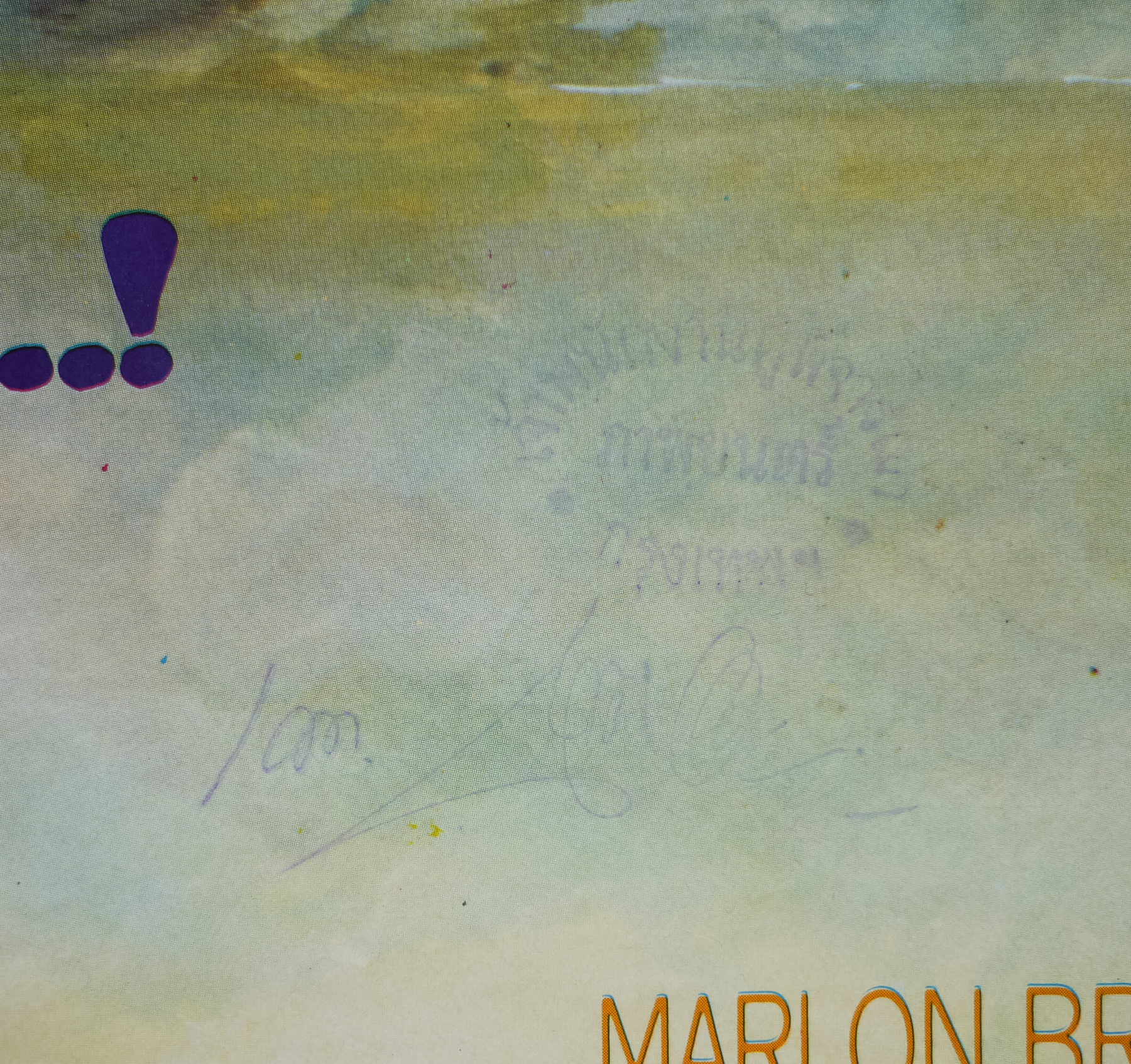
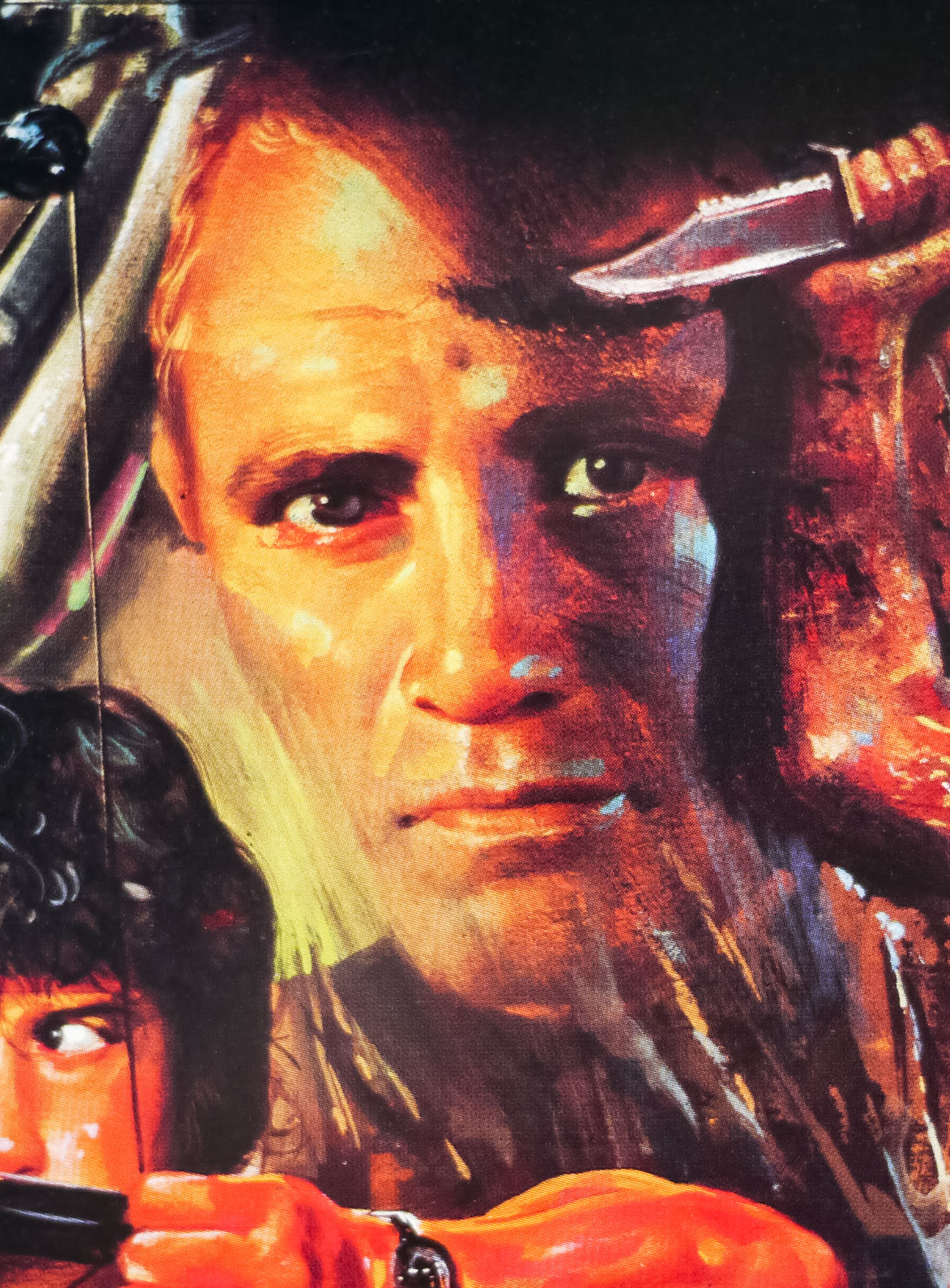
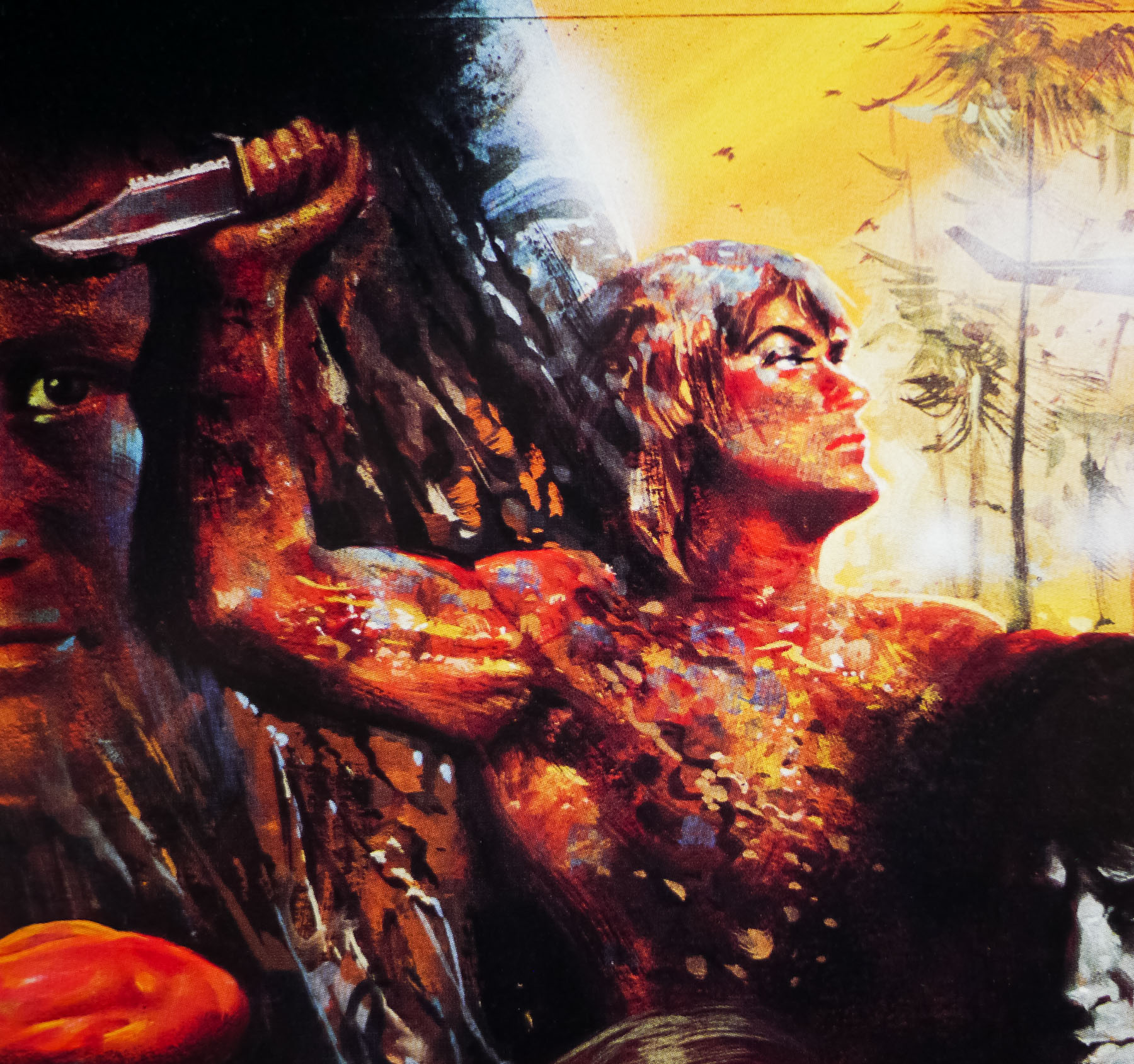
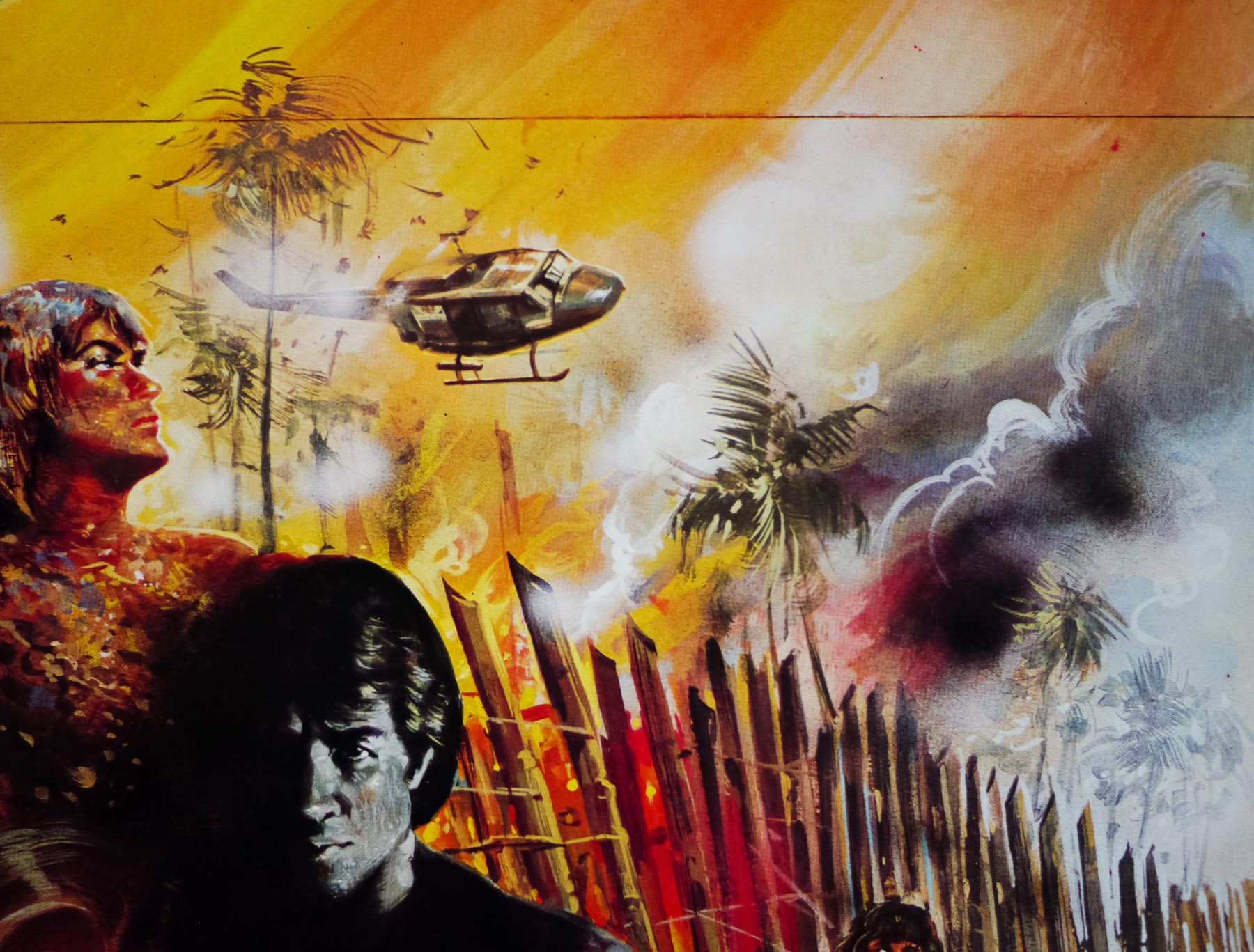
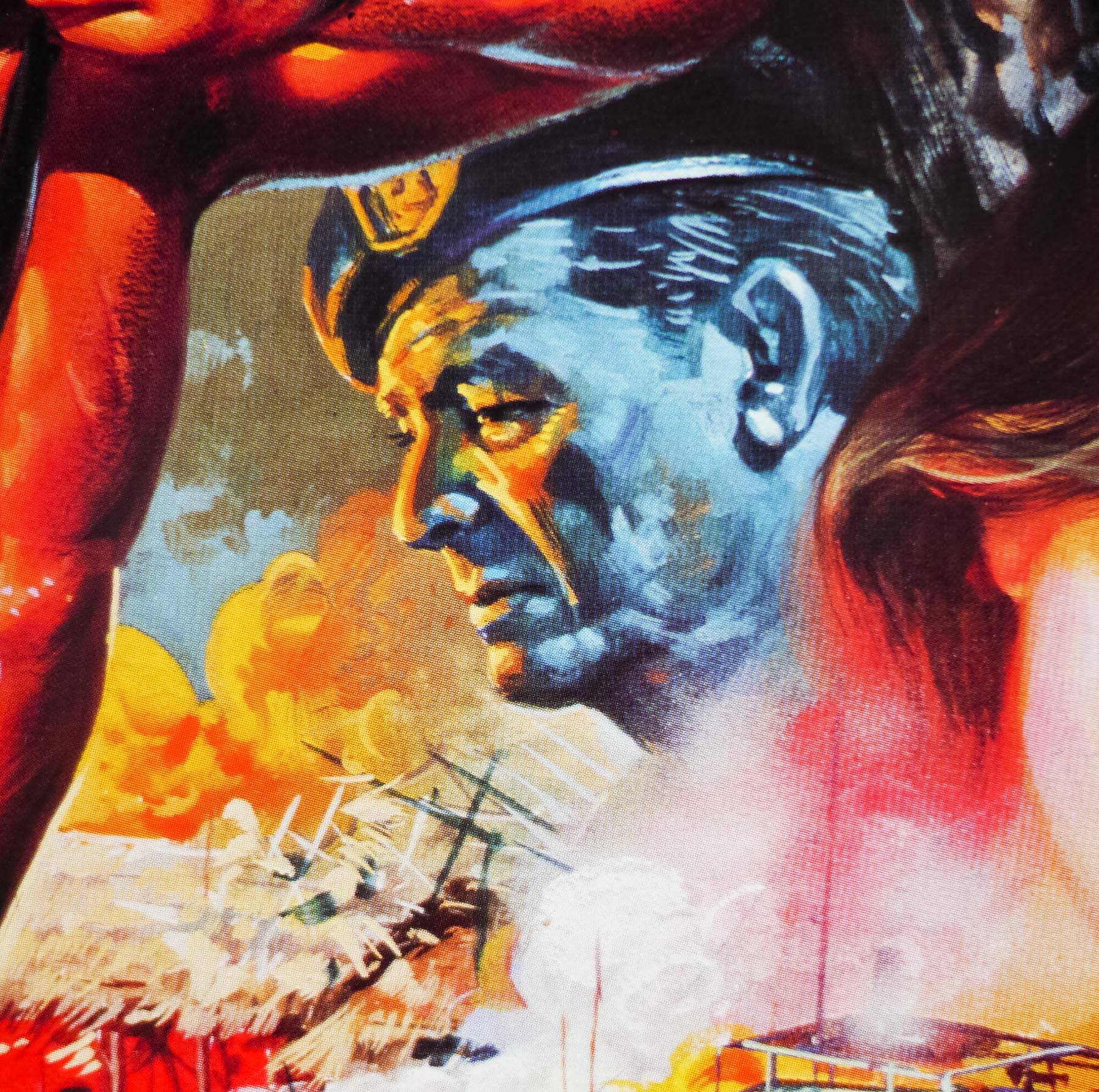
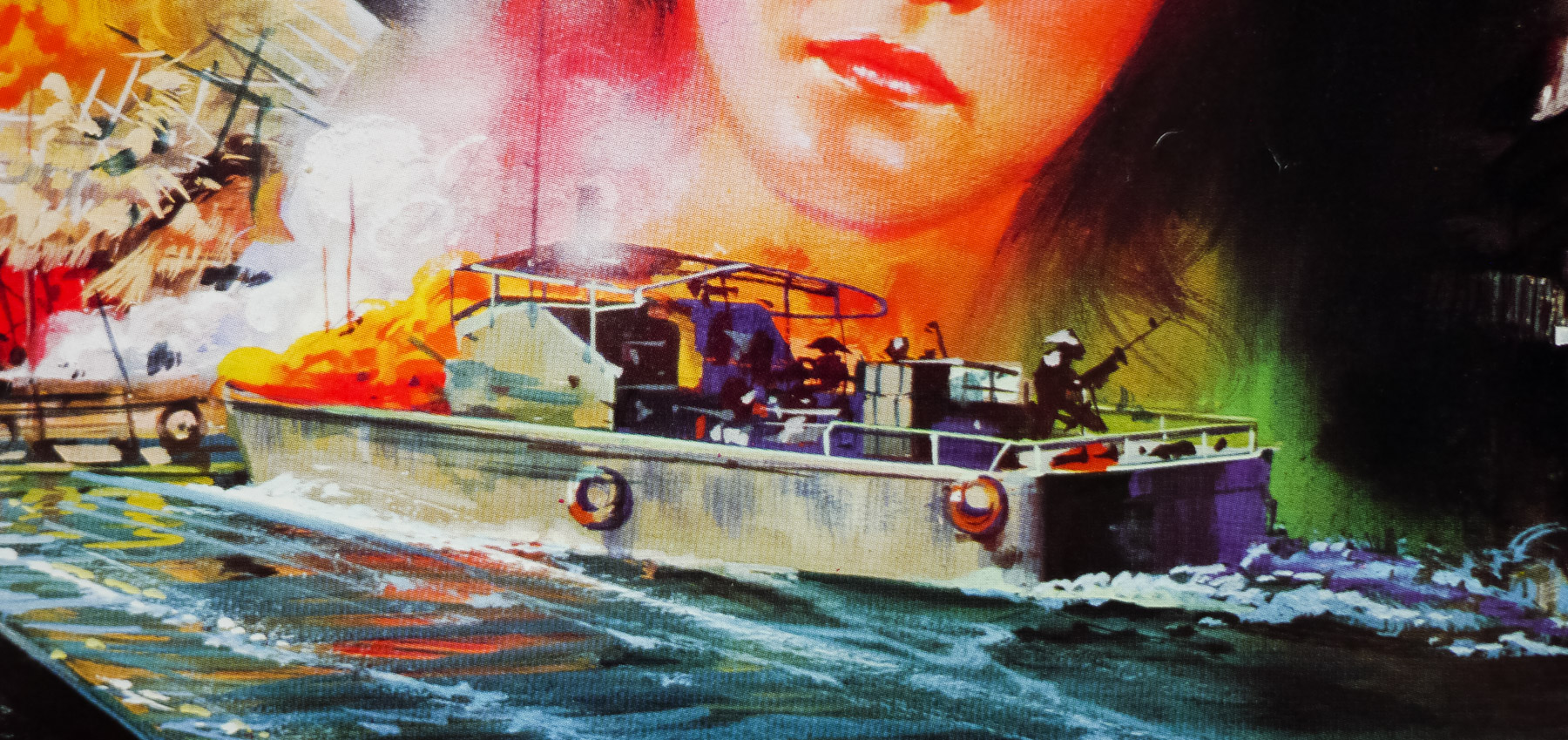
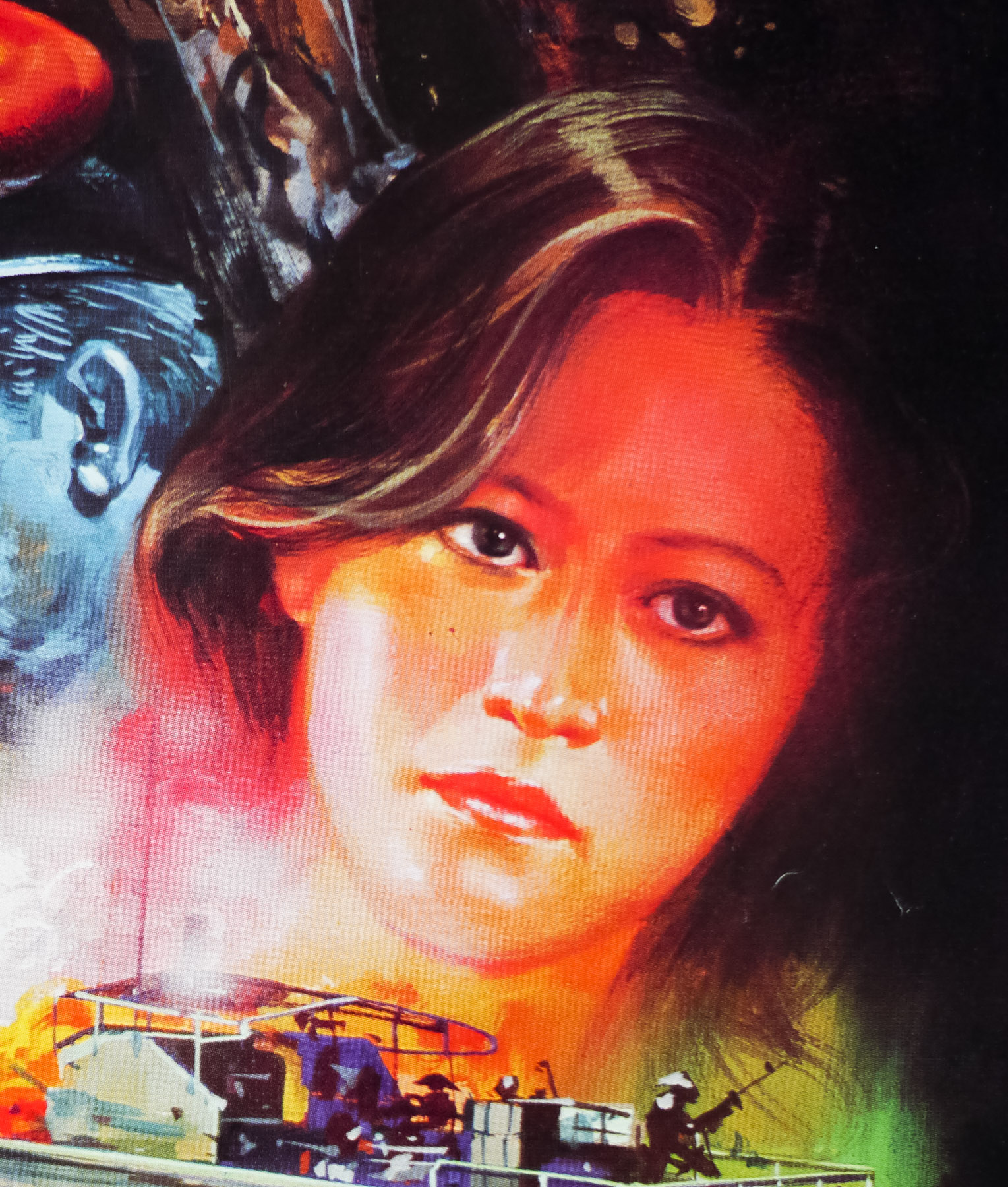
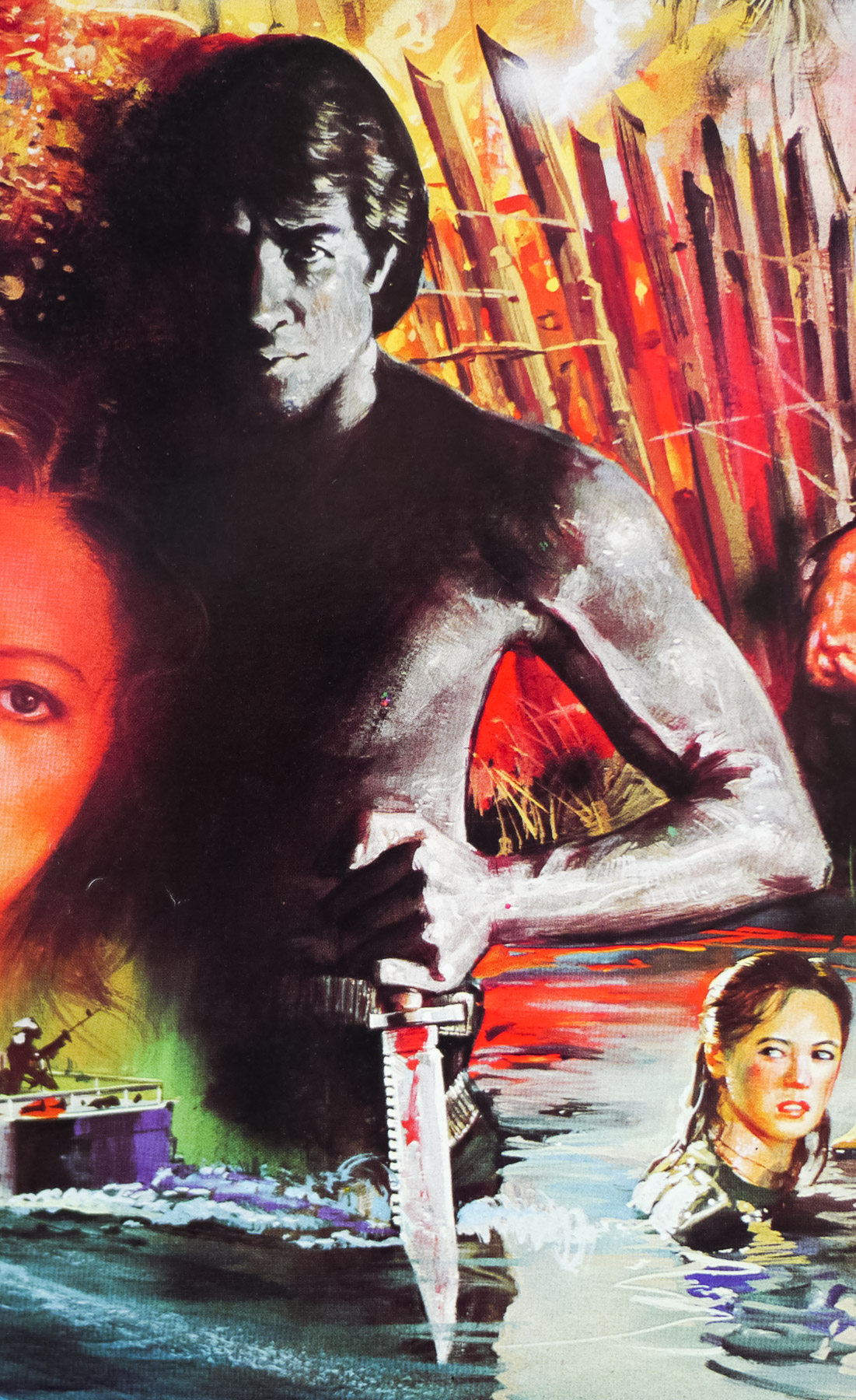
This is the very scarce original 2-sheet poster for the Thai release of arguably the best war film ever made, Francis Ford Coppola’s Apocalypse Now.  Set during America’s war in Vietnam, the film follows Martin Sheen’s US Army Army and special forces veteran Benjamin Willard as he journeys up the dangerous Nung River and deeper into the jungle in the search of the rogue Special Forces Colonel Walter E. Kurtz (Marlon Brando in an unforgettable role). Willard is told that an insane Kurtz has gathered together an army of indigenous fighters inside neutral Cambodia and that he must ‘terminate with extreme prejudice’. After landing at the mouth of the river in a spectacular sequence in which Colonel Kilgore (Robert Duvall) first attacks an enemy village from helicopters whilst blasting Wagner’s Ride of the Valkyries from loudspeakers, then orders some of his men to surf despite the fact that mortar shells continue to land all around them, Willard  joins the crew of a Navy PBR boat that transports him on his fateful journey up river.

Apocalypse Now is famous for its fraught production in which the shoot went over time and over budget, sets were destroyed by storms, Martin Sheen suffered a heart attack and other woes that caused Coppola to famously say, “We had access to too much money, too much equipment, and little by little we went insane”, and “My film is not about Vietnam, it is Vietnam”. The director’s wife Eleanor helped to put together the acclaimed documentary of the troubled production called Hearts of Darkness: A Filmmaker’s Apocalypse, which is an essential watch for fans of the film. Despite the production woes, the film was a huge critical and commercial success, with its cultural impact undeniable.

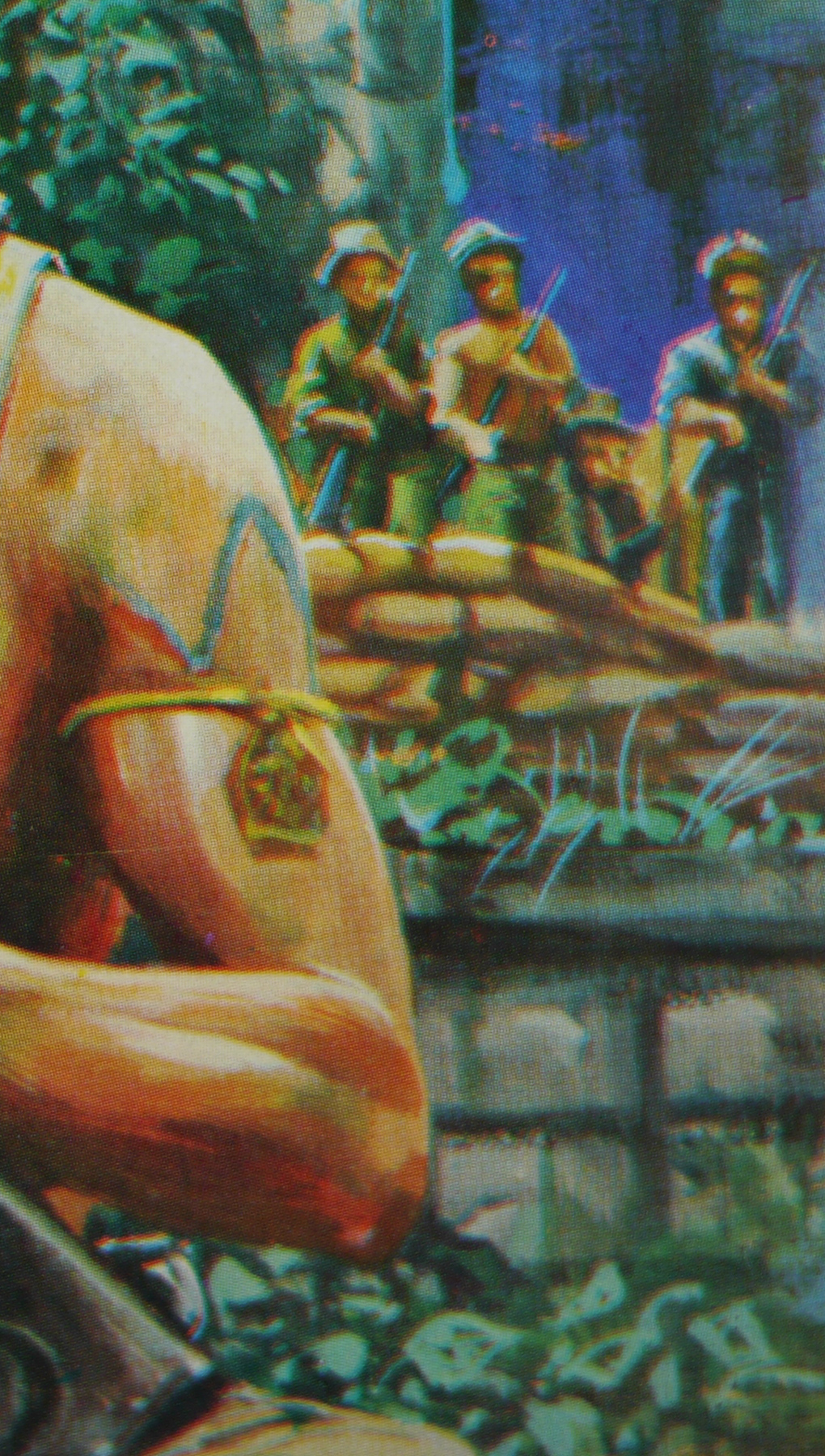
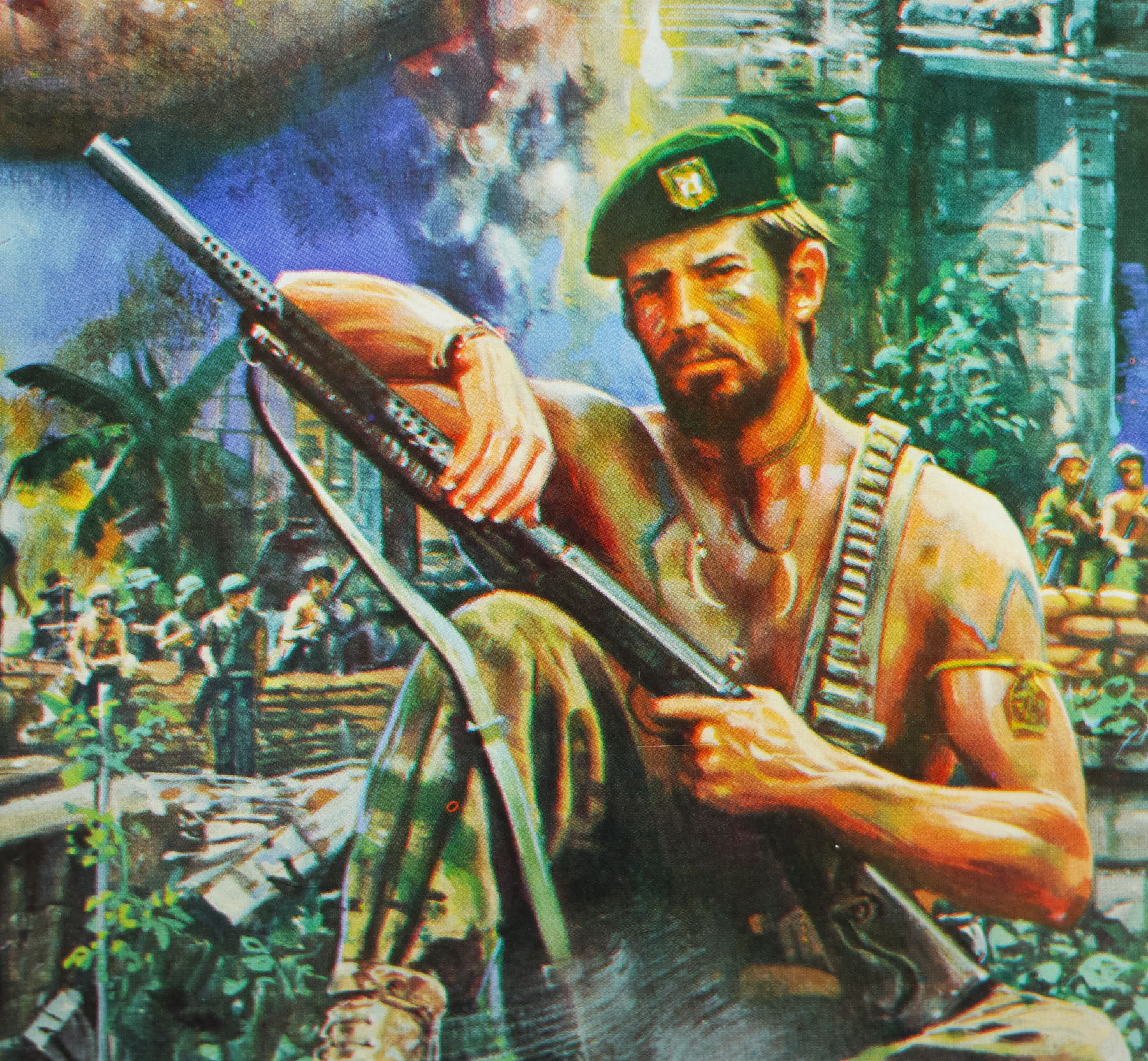
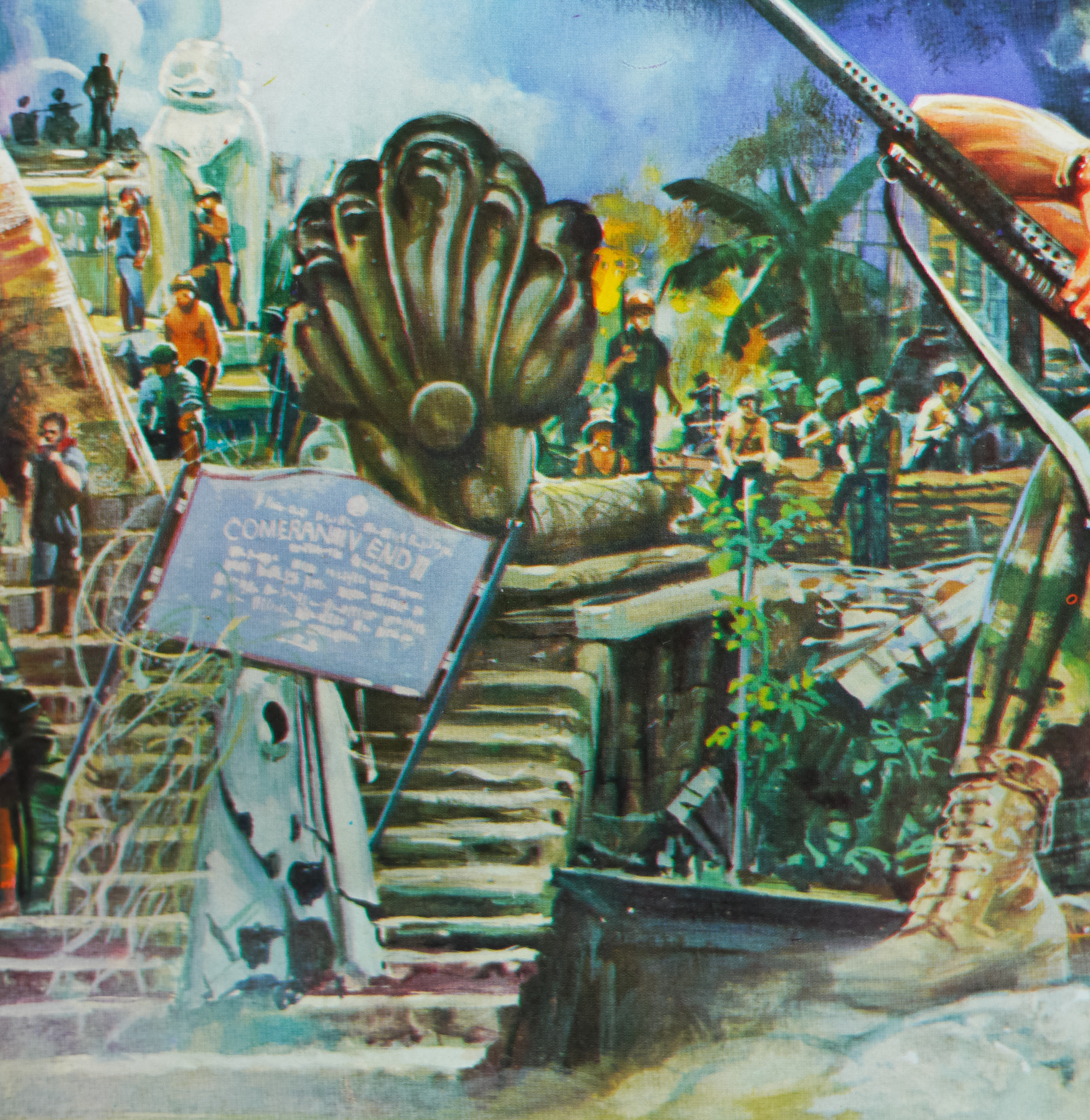
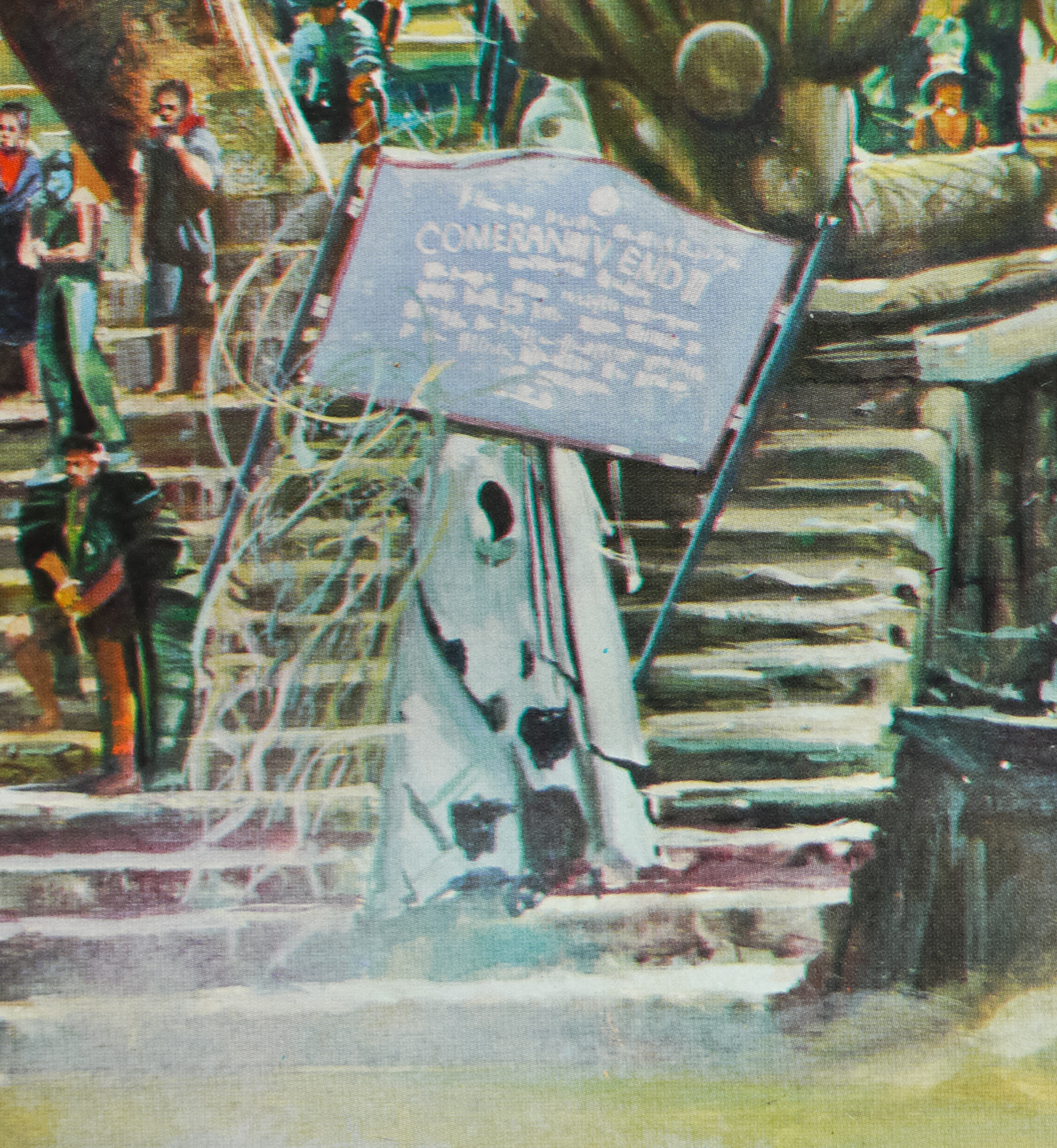
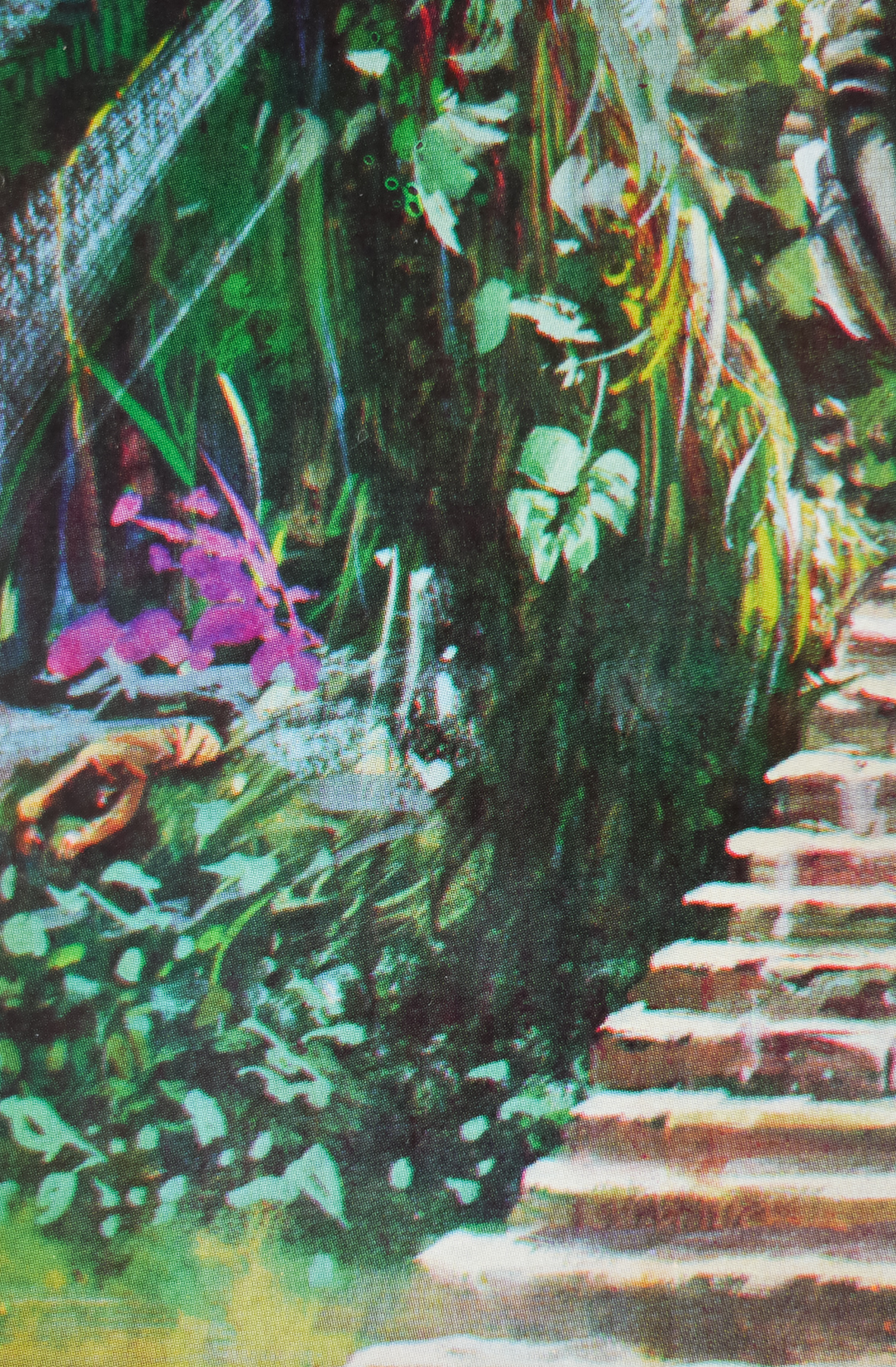
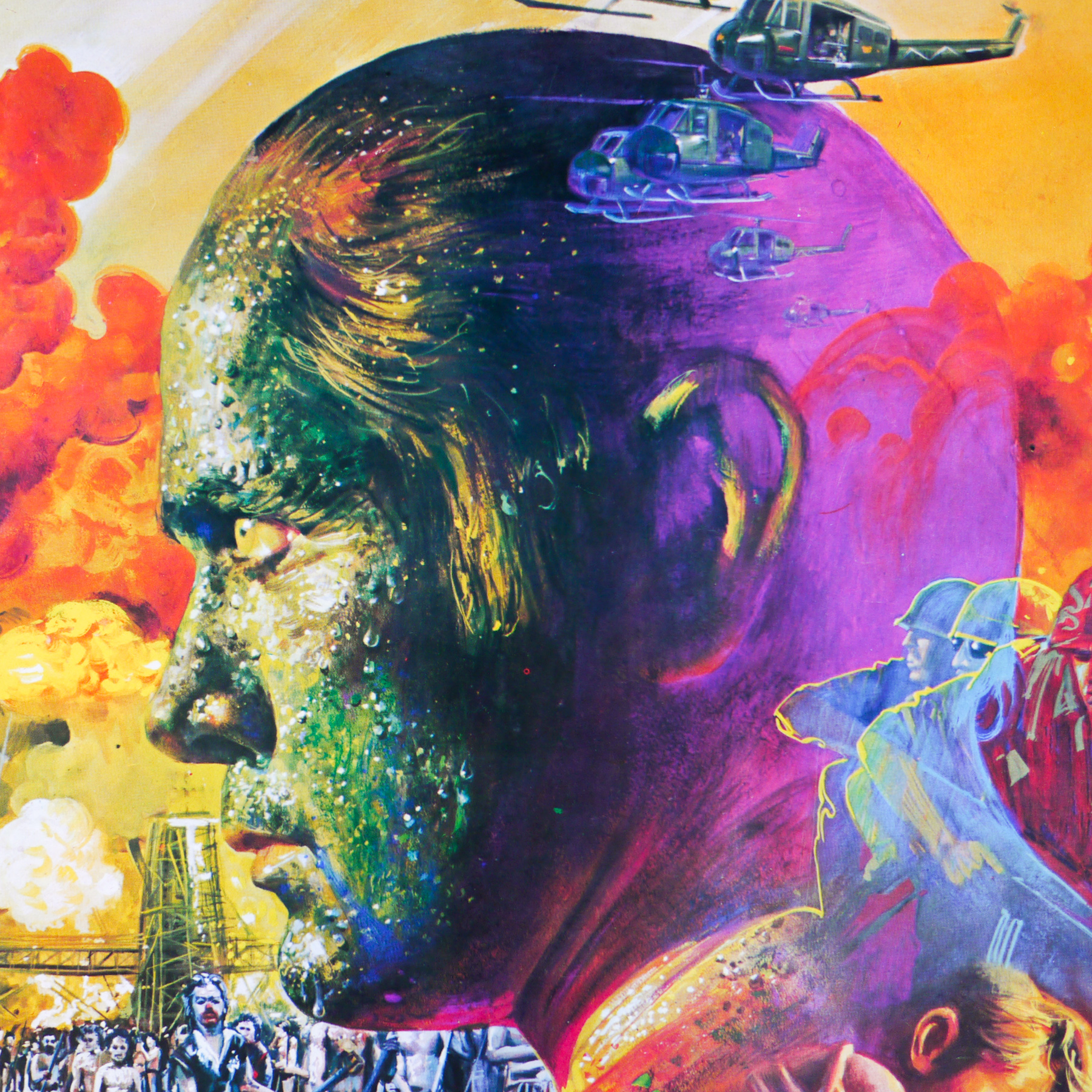
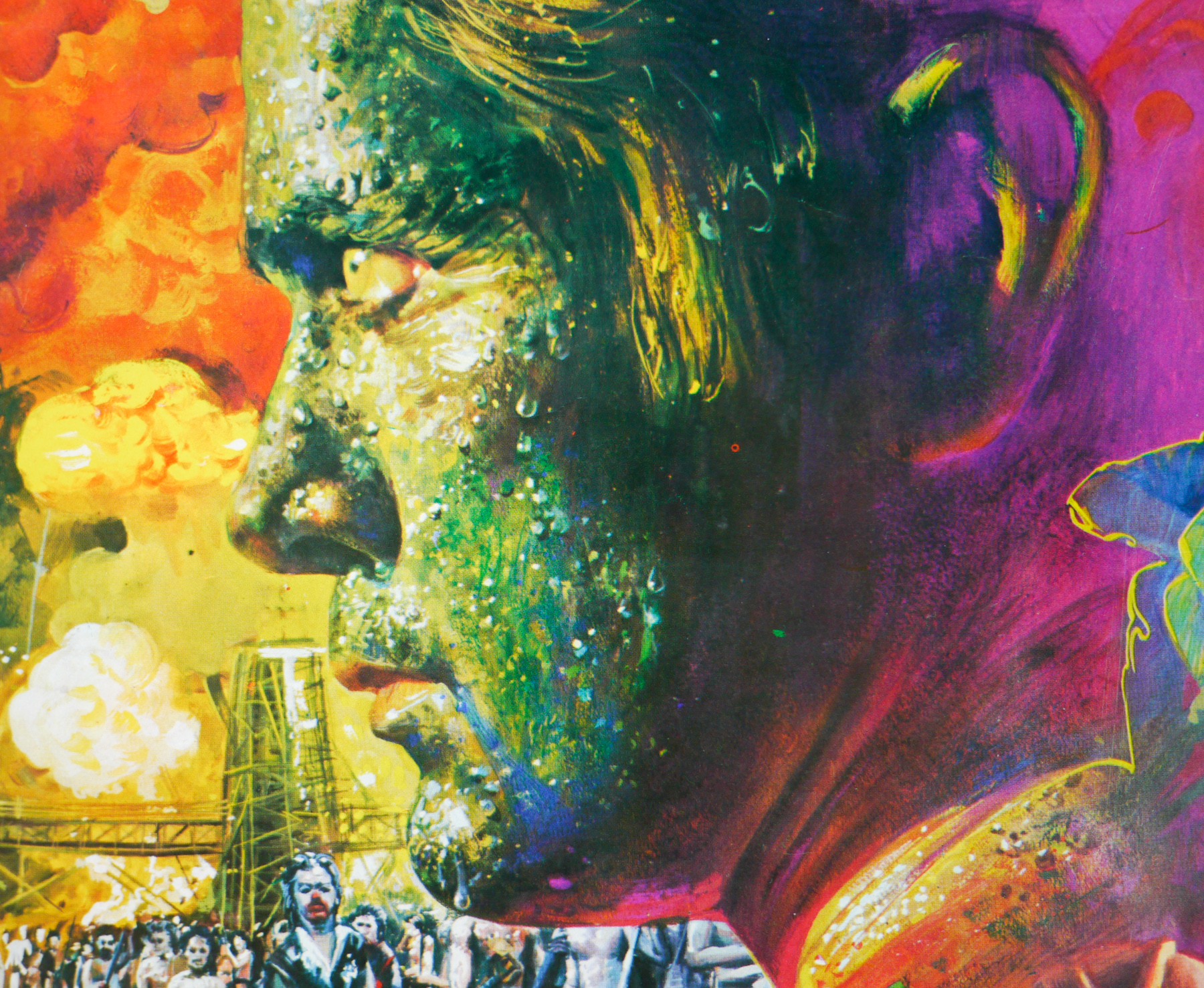
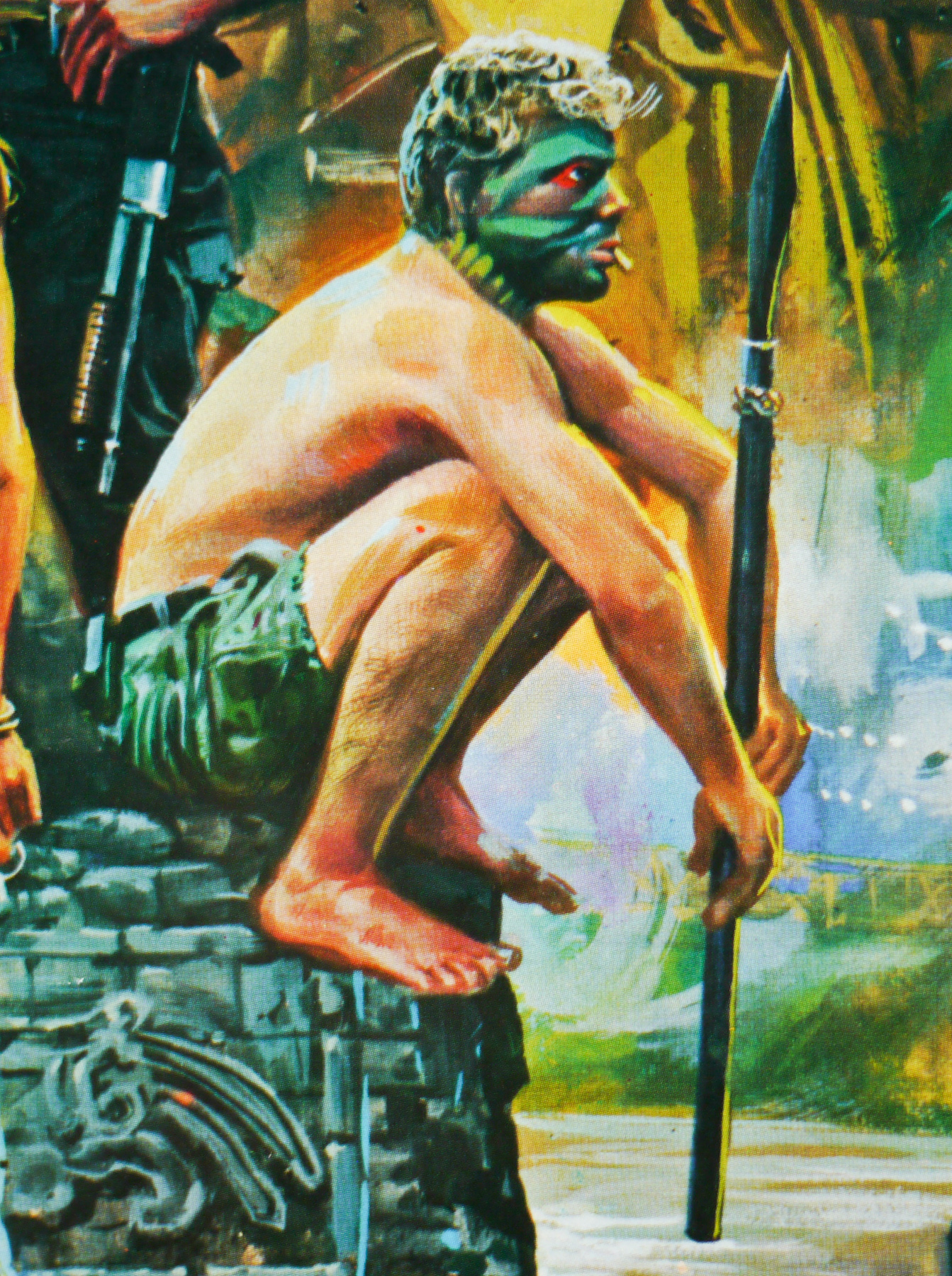
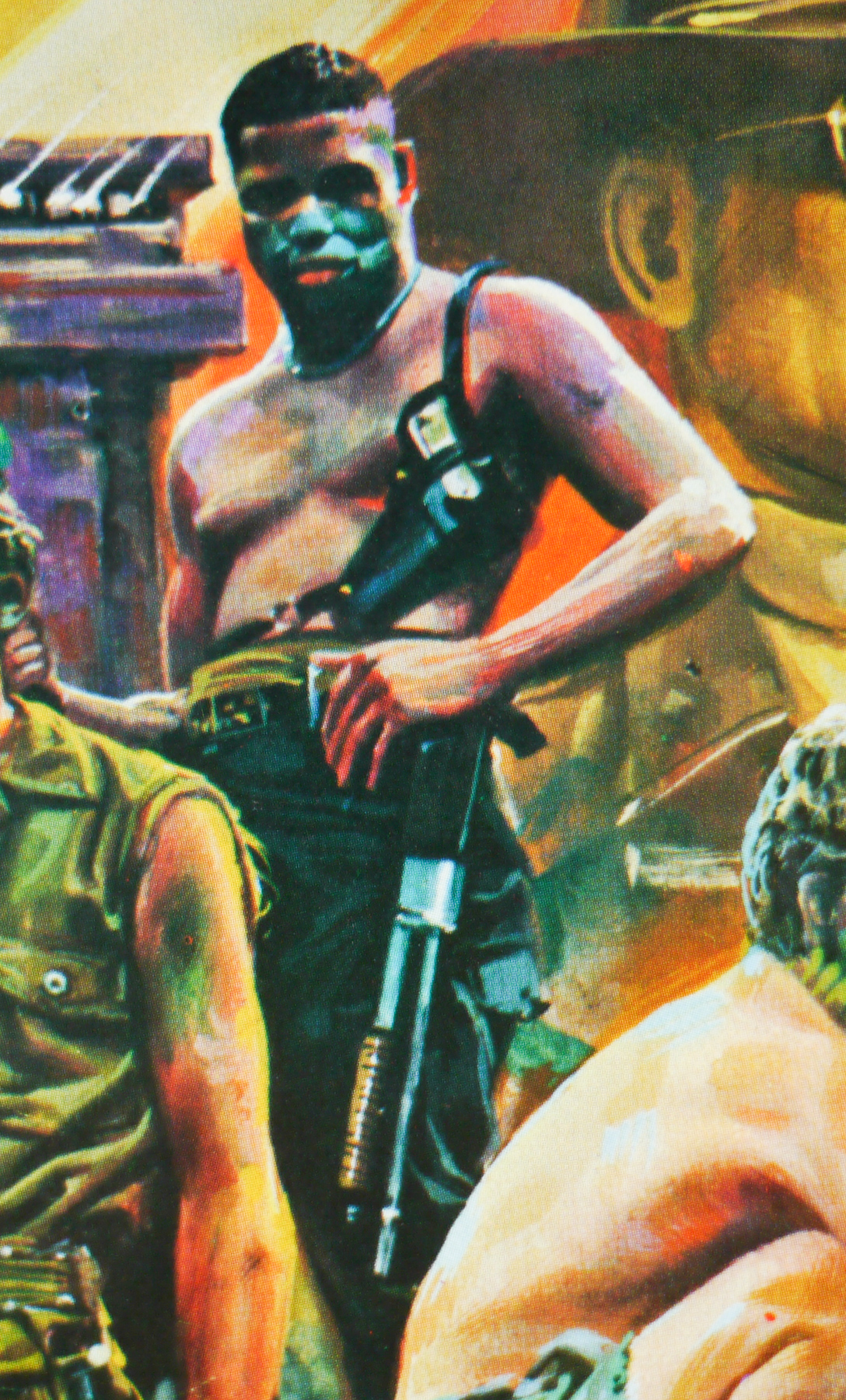
The film had several interesting posters printed for its release, including the great Bob Peak artwork used around the world, but this Thai 2-sheet is up there, in my mind, as one of the best posters ever painted, full stop. The amount of detail, use of colour and expertly arranged montage all add up to a visual feast of a design and I find some new detail every time I look at it. I’ve added 70 photos for you to really get a sense of the poster.

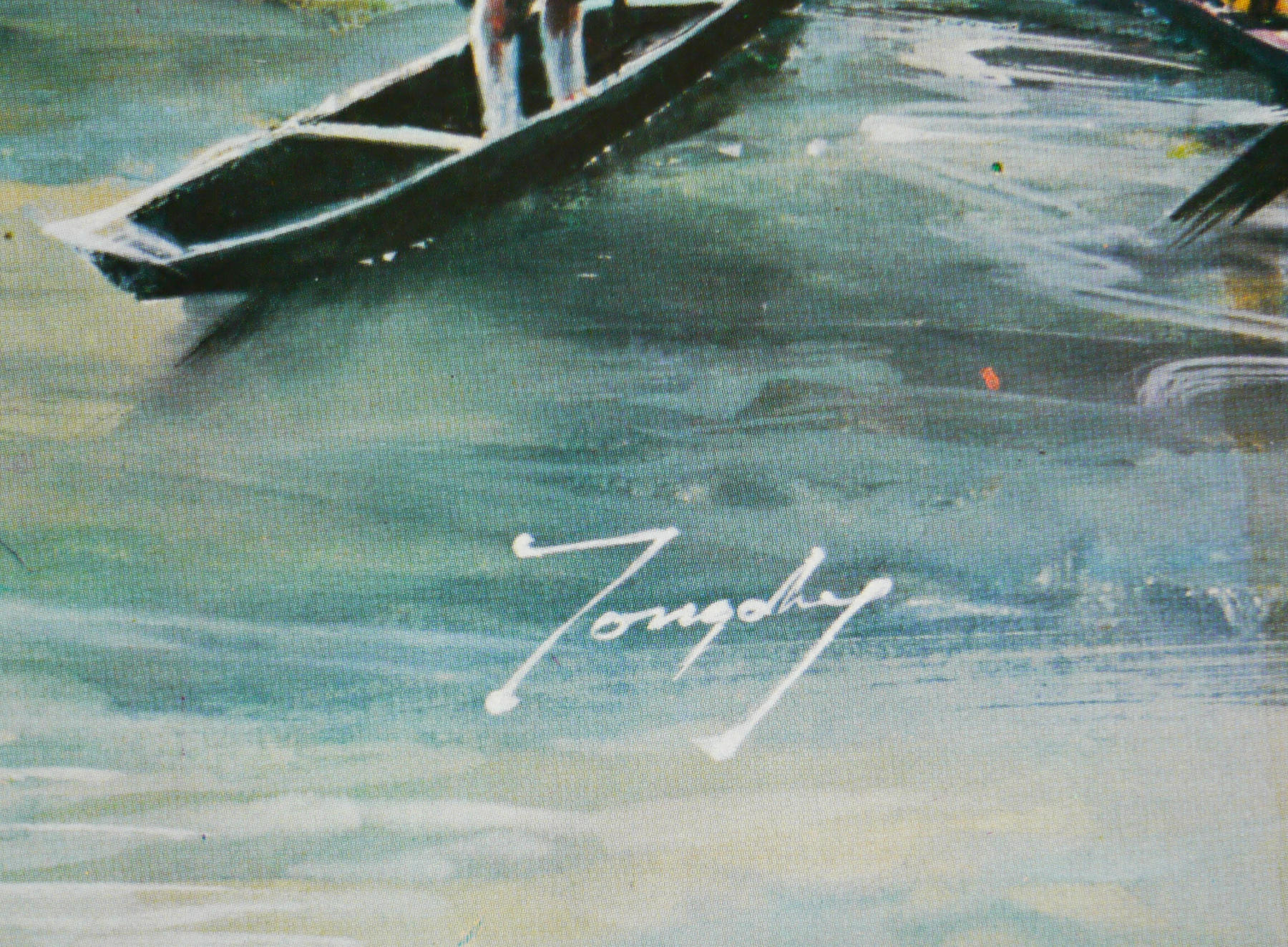
This poster was painted by the artist Tongdee Panumas (he signs his posters with just his first name) who was an incredibly prolific Thai film poster artist during the 70s, 80s and 90s but I’ve been unable to find out much about him, other than that he was born in 1947. If anyone has any more information please get in touch.

The two sides of the poster were printed separately and then joined together once they were displayed at cinemas. I tried my best to join them together with Photoshop but it’s not that easy to get them to match. Photos 2 and 3 show the two halves separately. It’s interesting to note that Tongdee actually painted the original art on two canvases as can be seen on this photograph showing him and the British collector Neil Pettigrew that was published in issue 168 of Dark Side magazine. This means that getting a totally seamless join between the two halves is impossible.

Note that there was a reprint made of this poster several years ago where someone in Thailand scanned the poster when the two halves were joined together and then printed it as a single sheet poster at the standard Thai film poster size of around 21″ x 31″. These have sometimes been sold as ‘commercial posters’ but are nothing more than unauthorised fakes and should be avoided at all costs. Permission was not sought from the distributor or the artist to make these copies and their sale should not be supported.

Superman / Thailand

01.08.16

Poster Poster

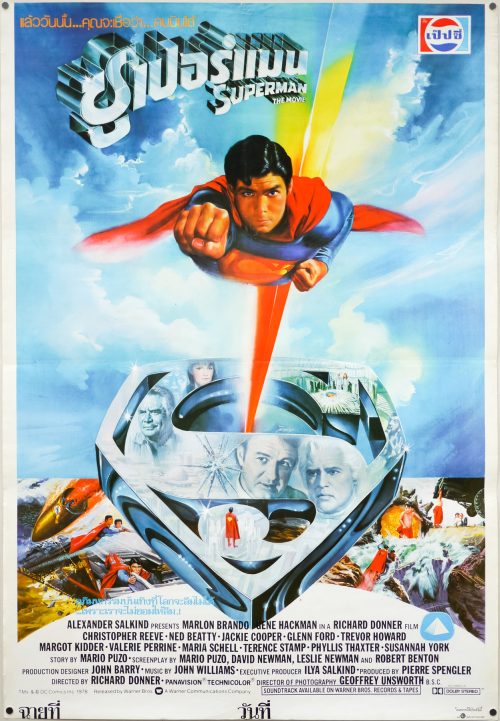
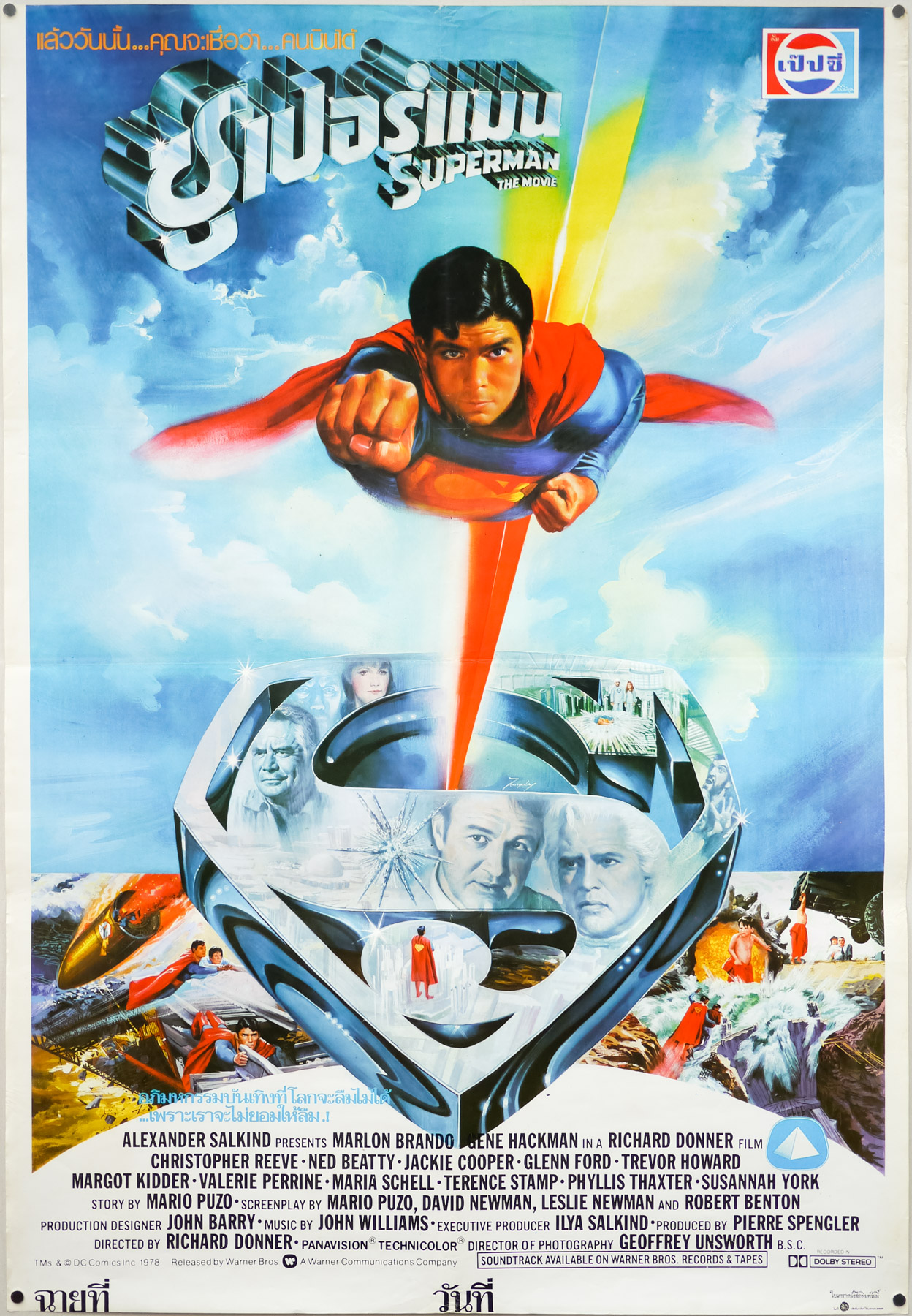
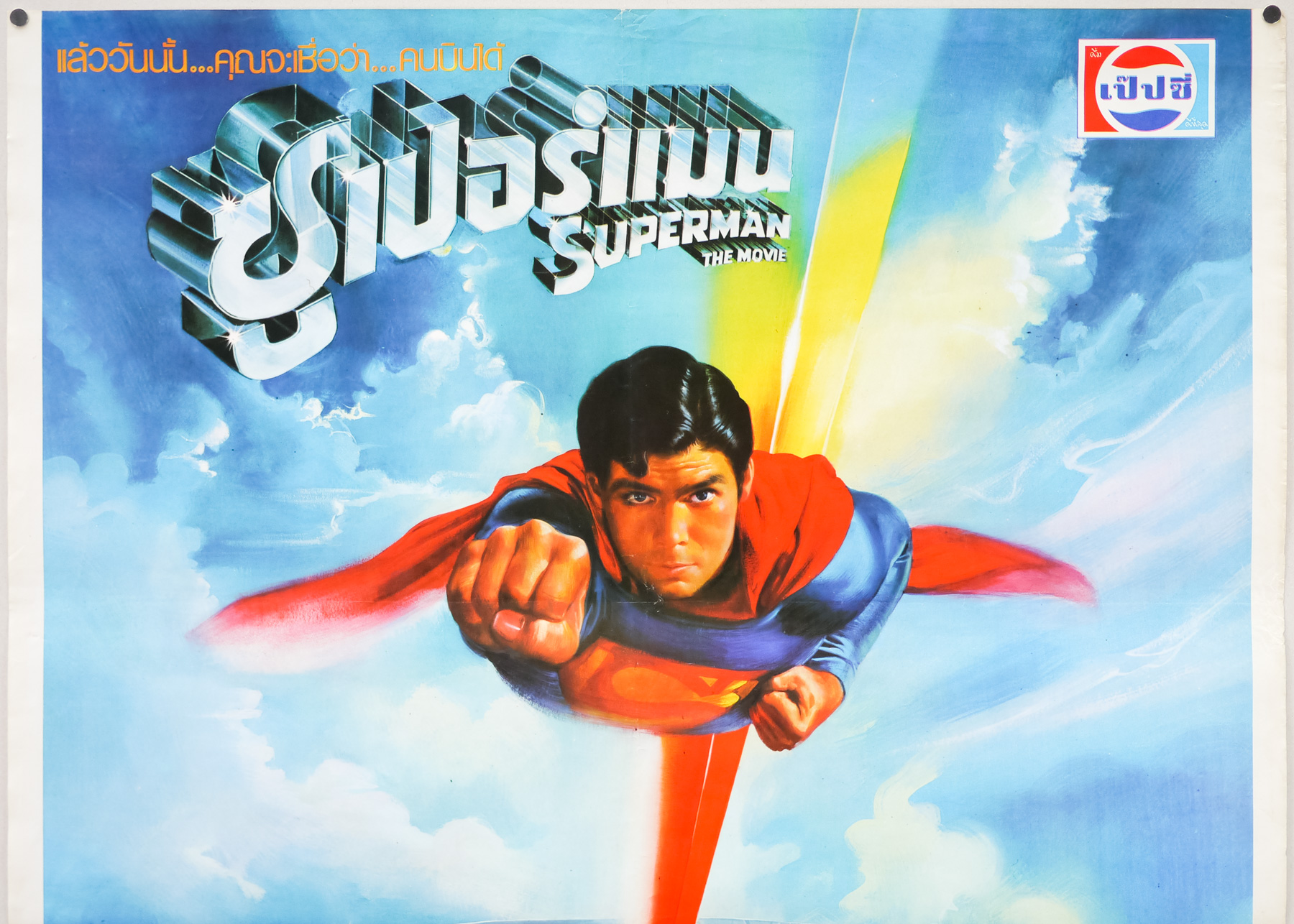
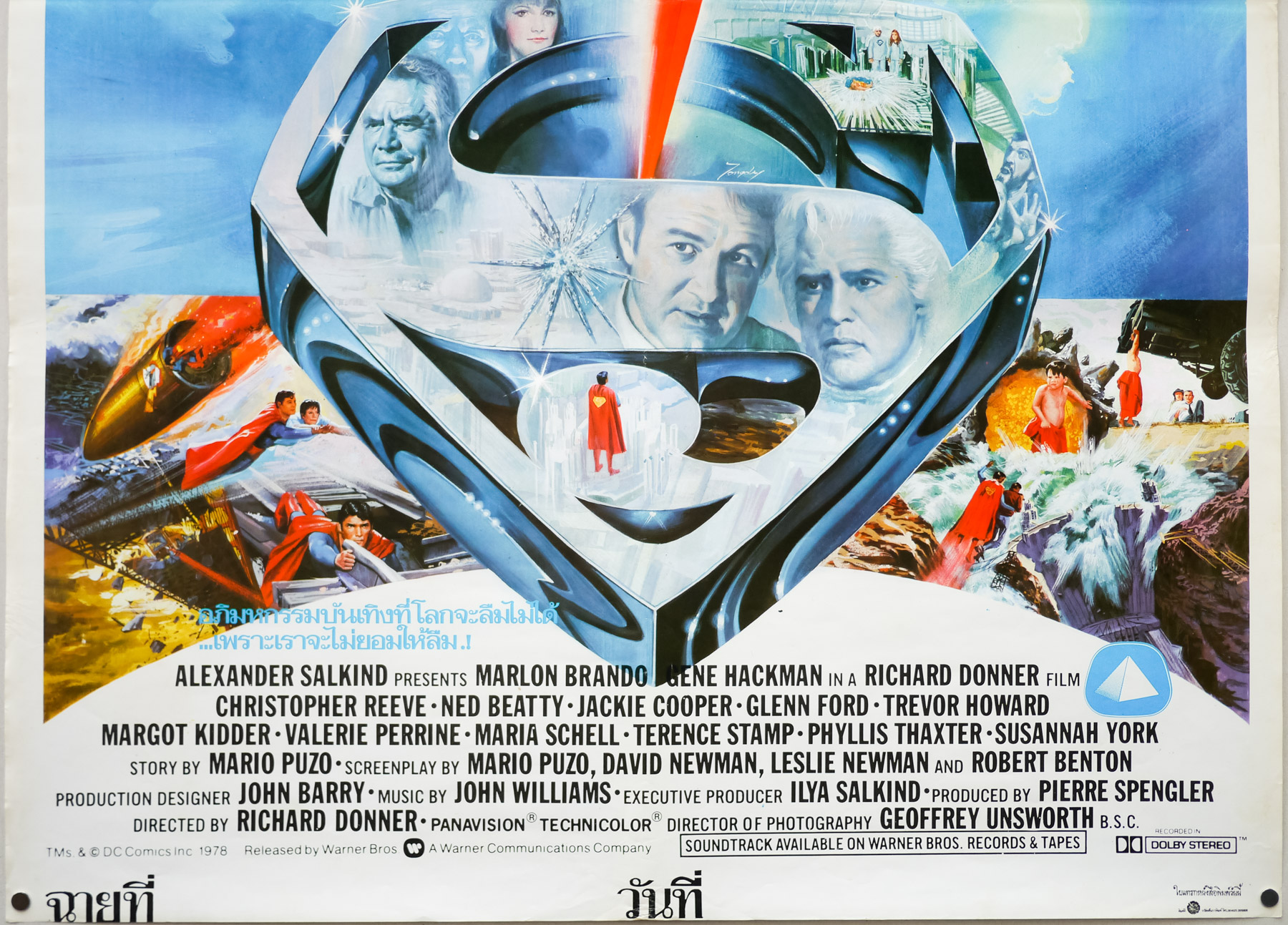
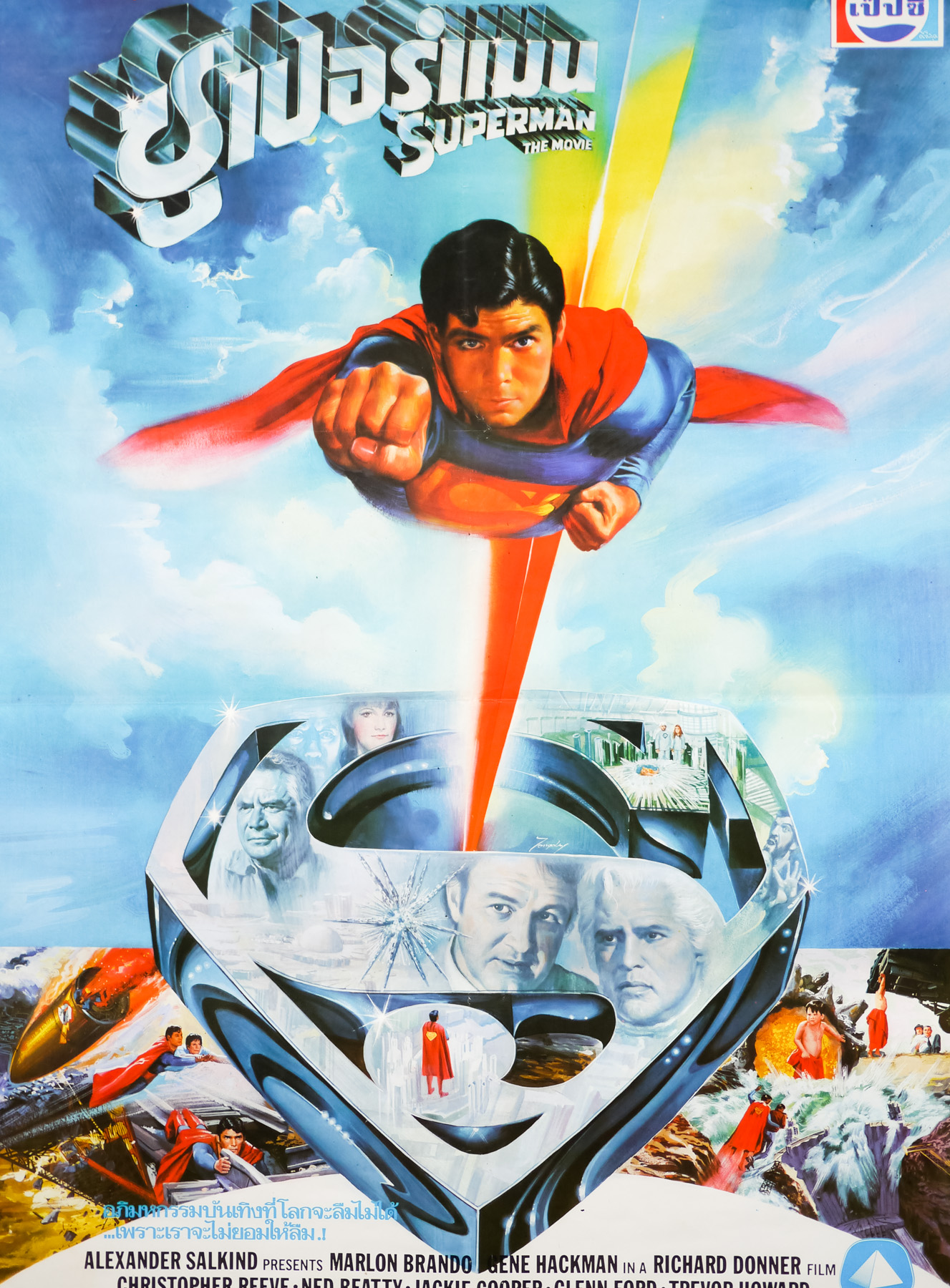
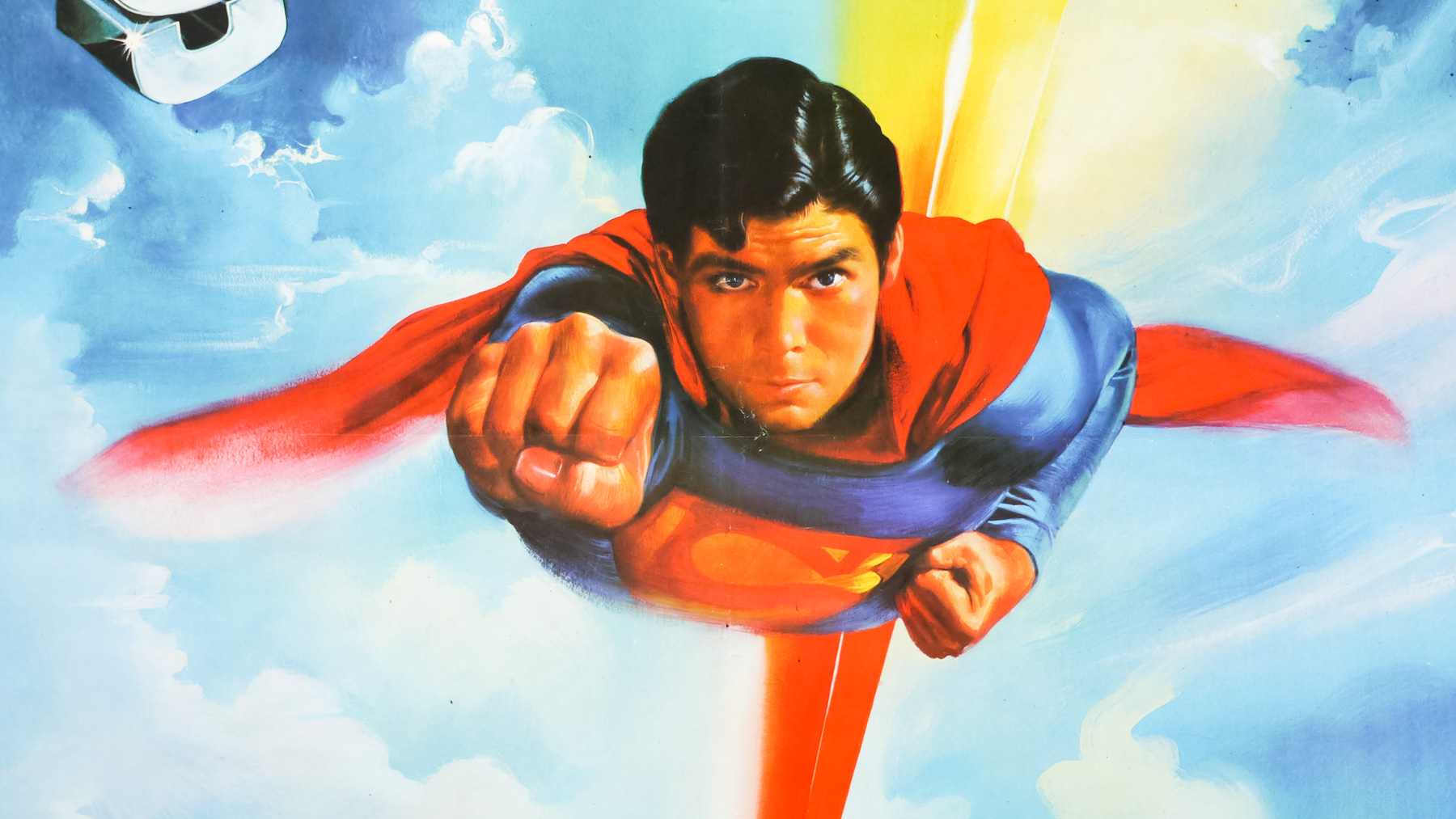
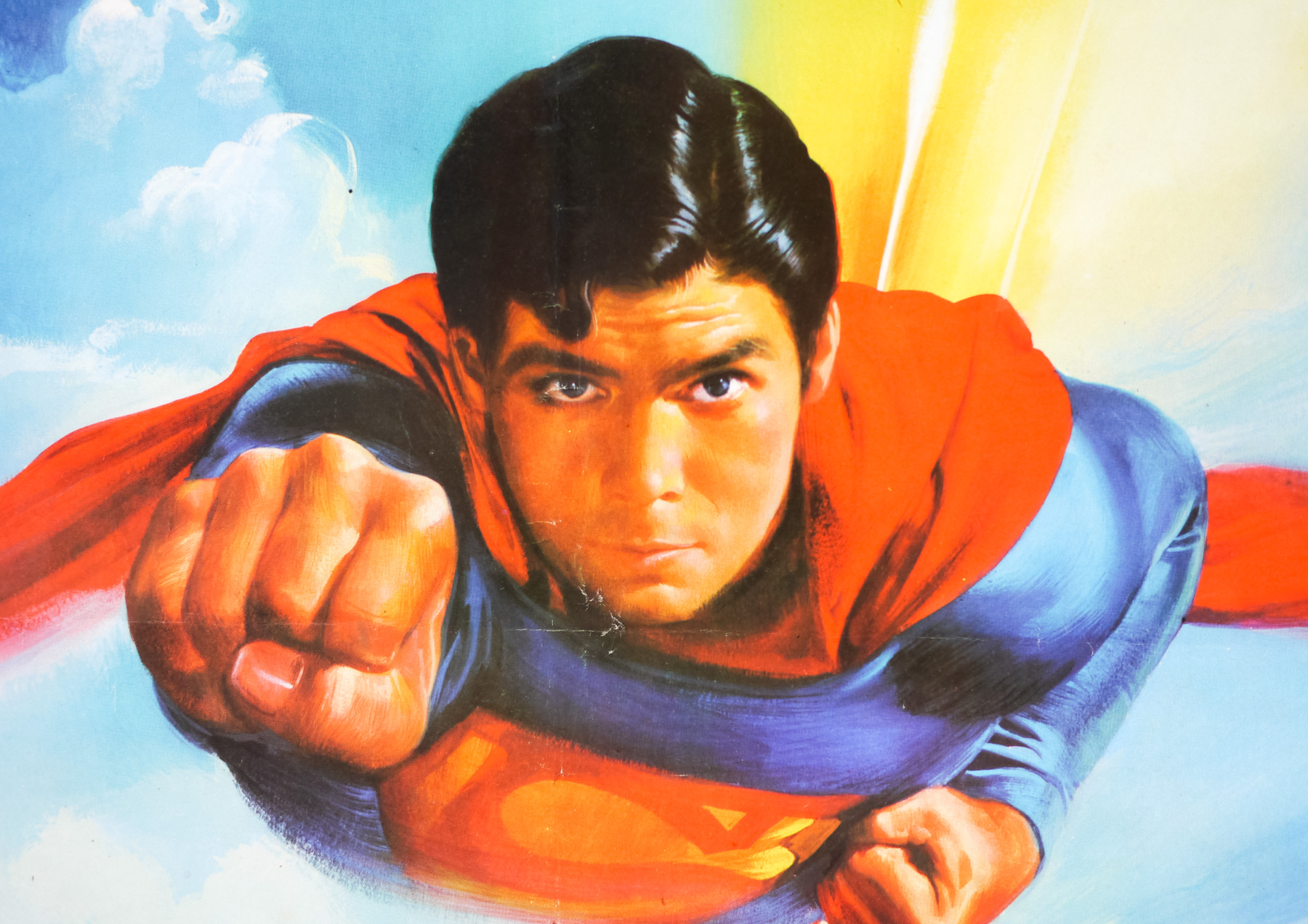
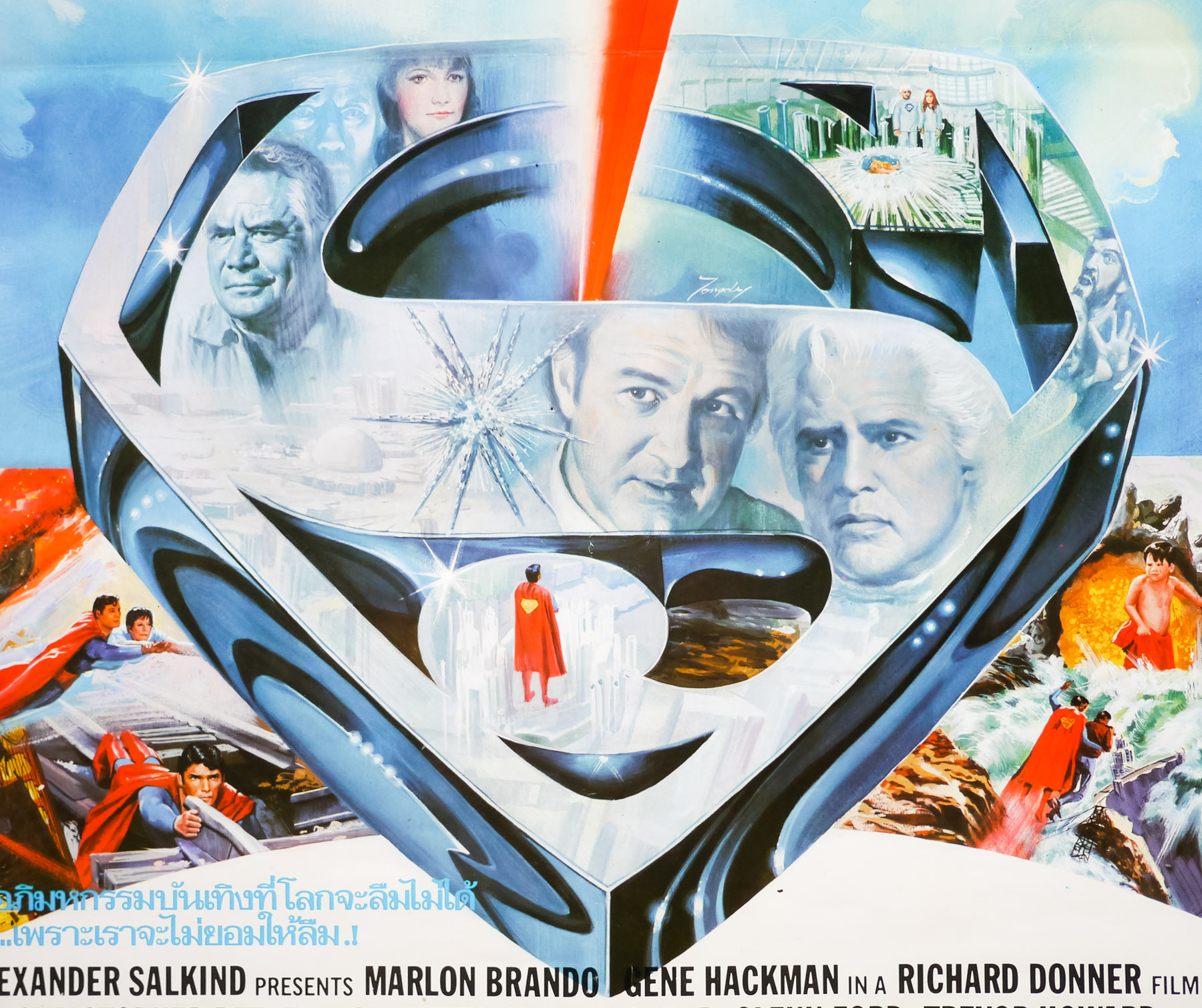
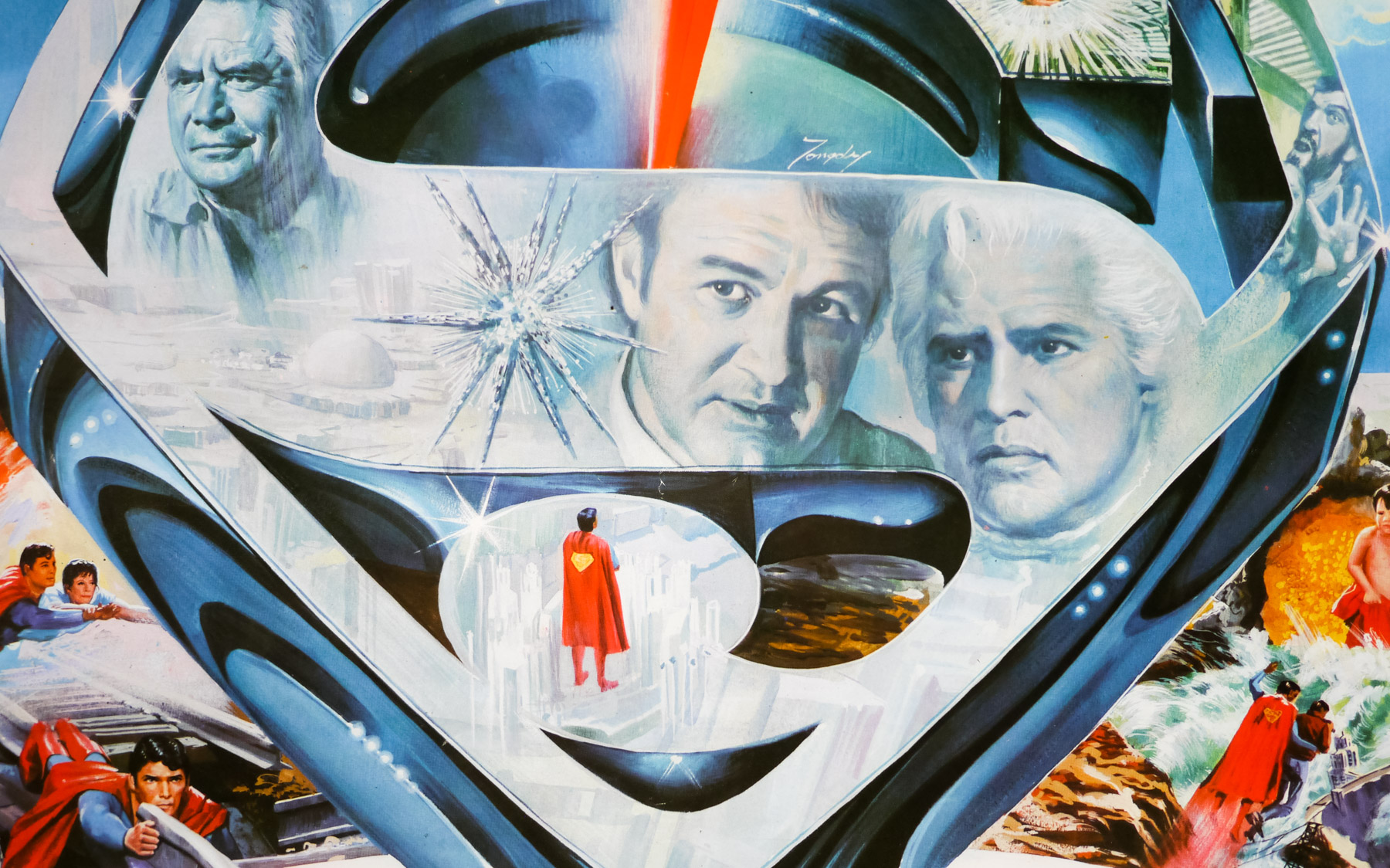
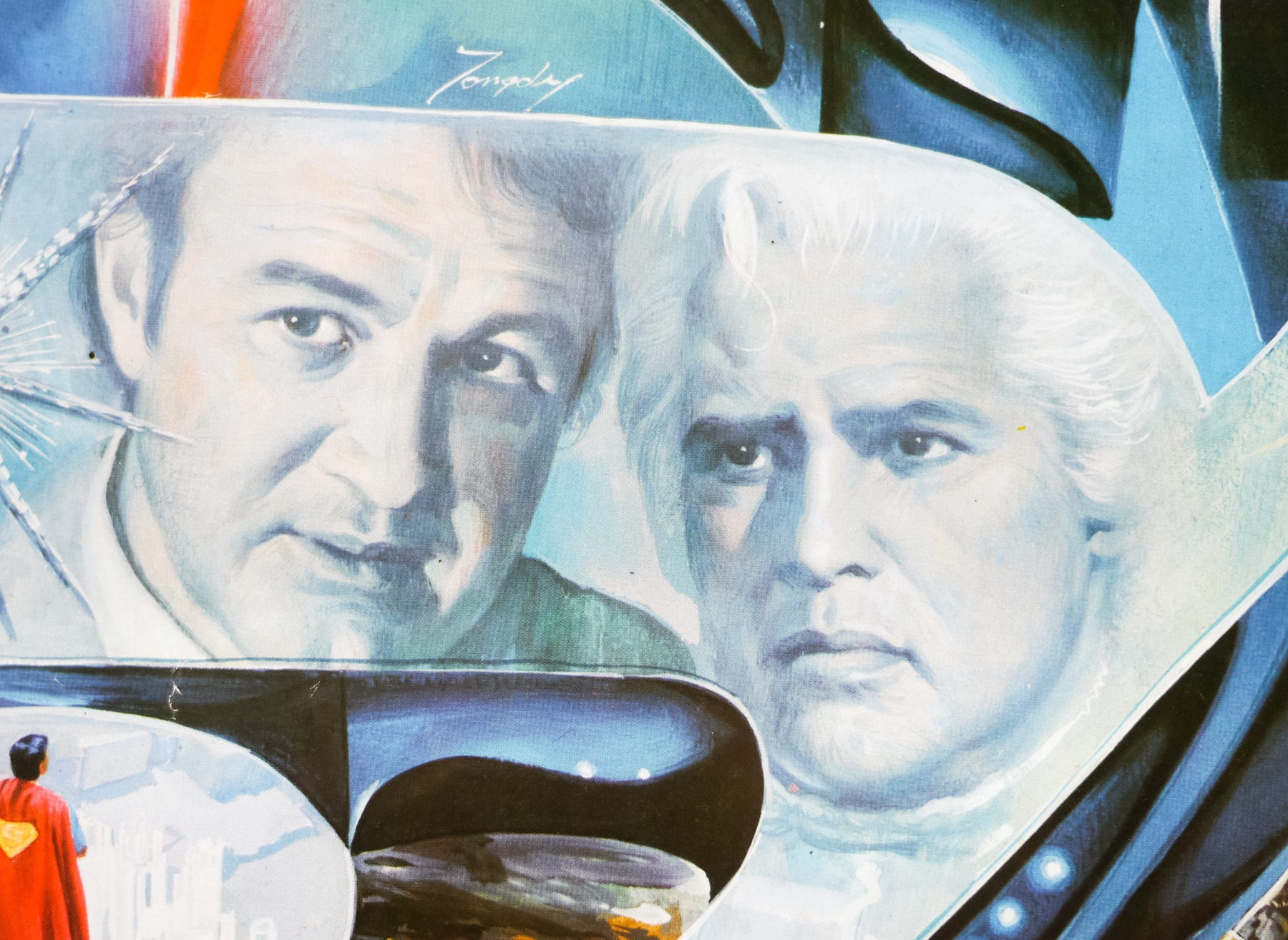
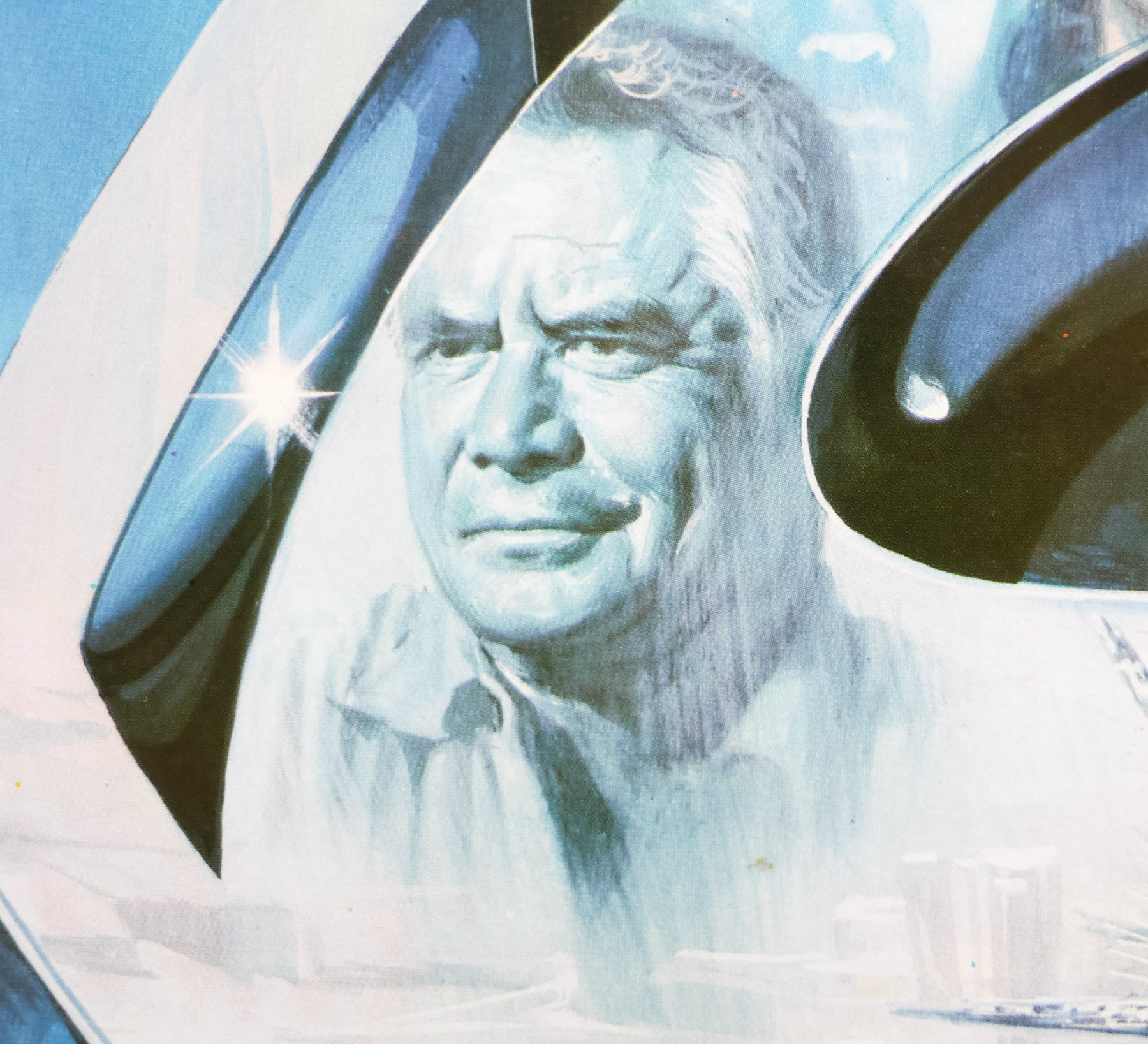
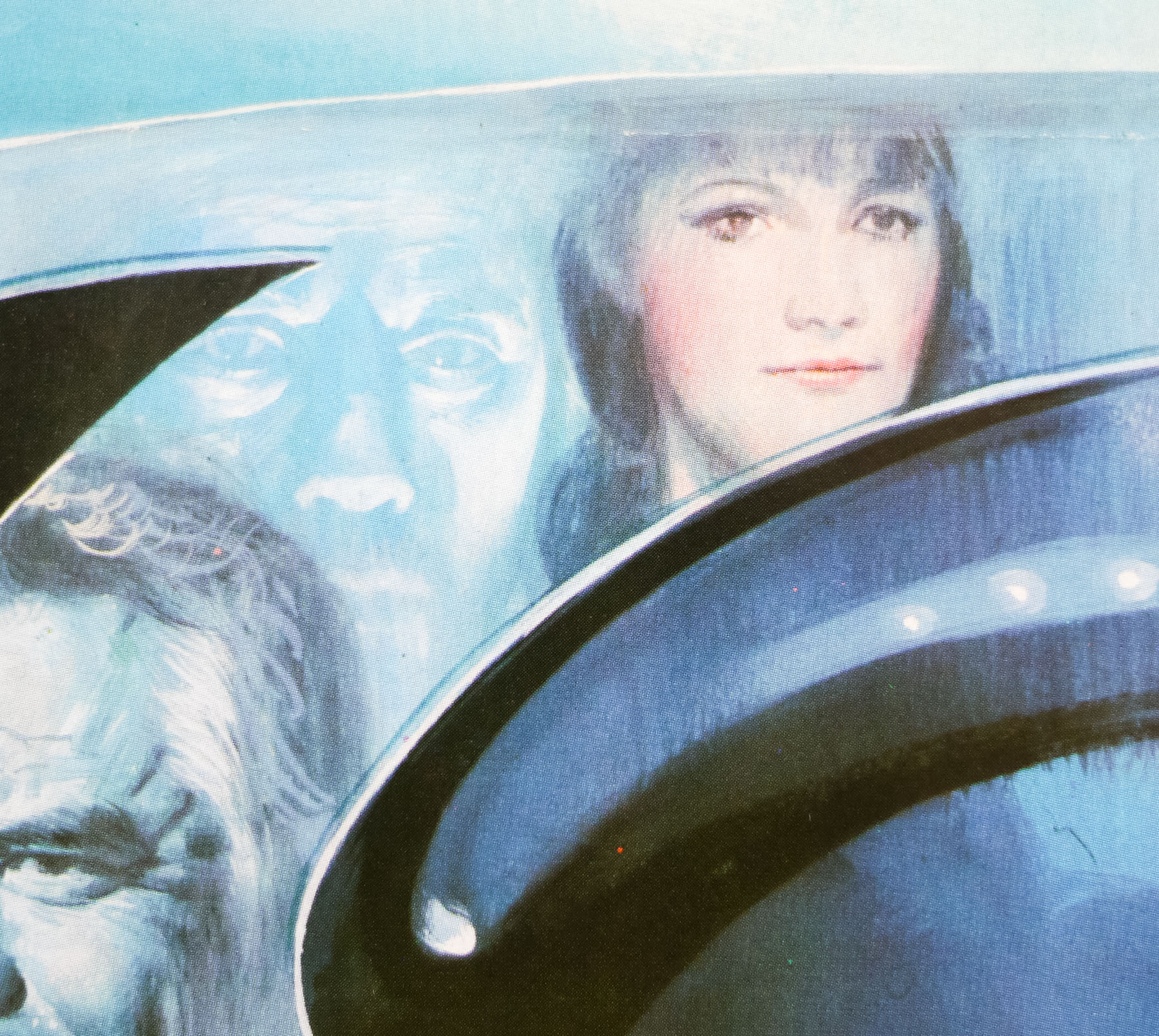
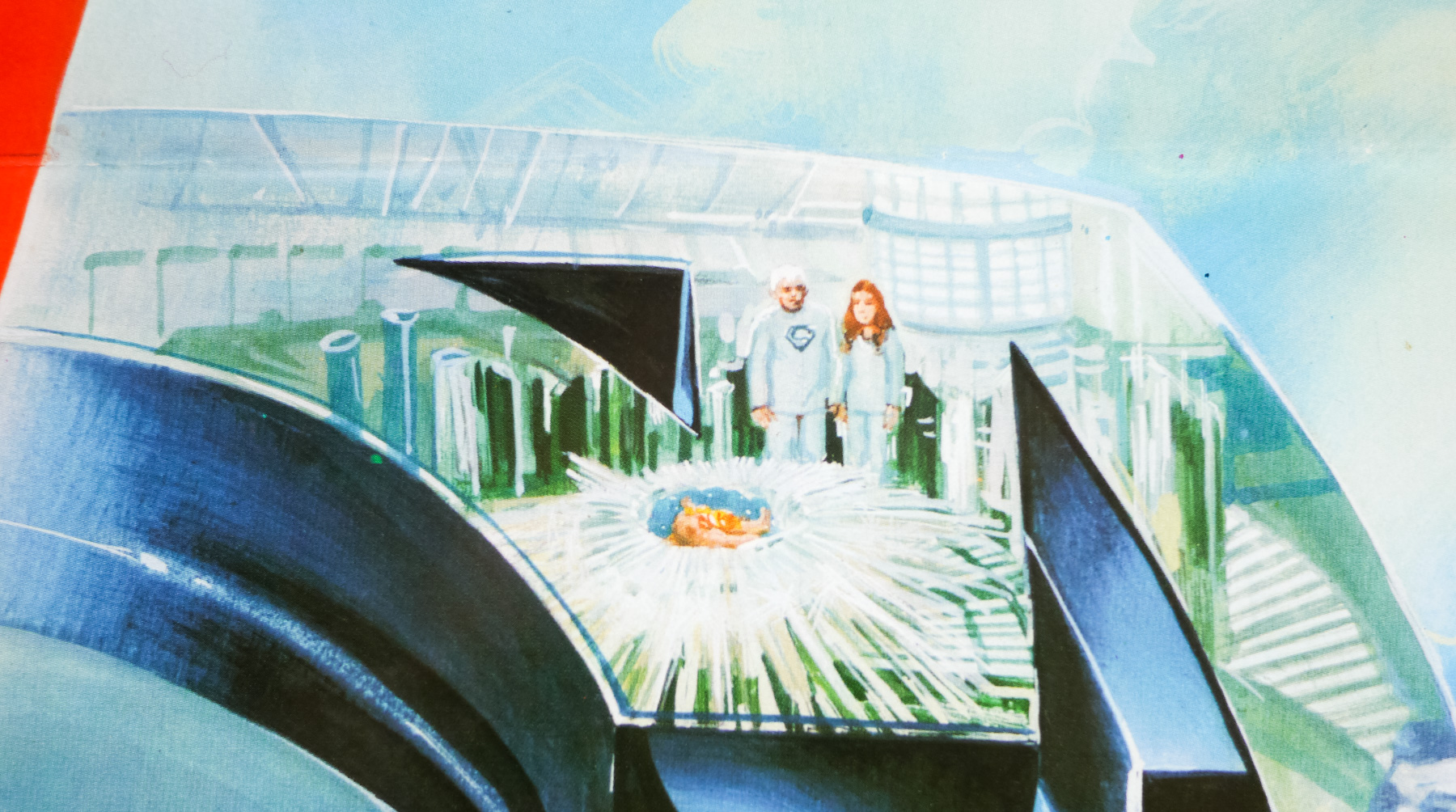
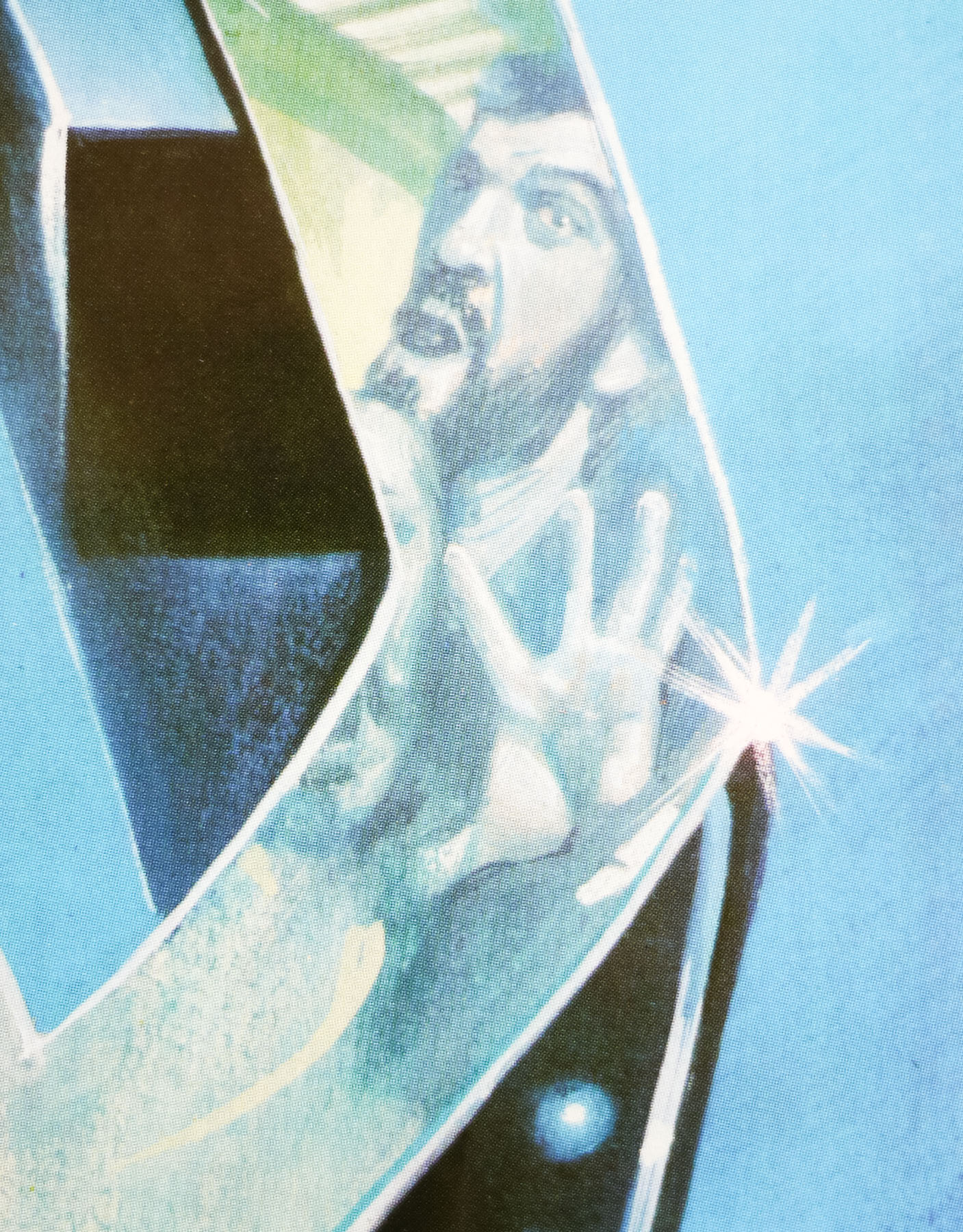
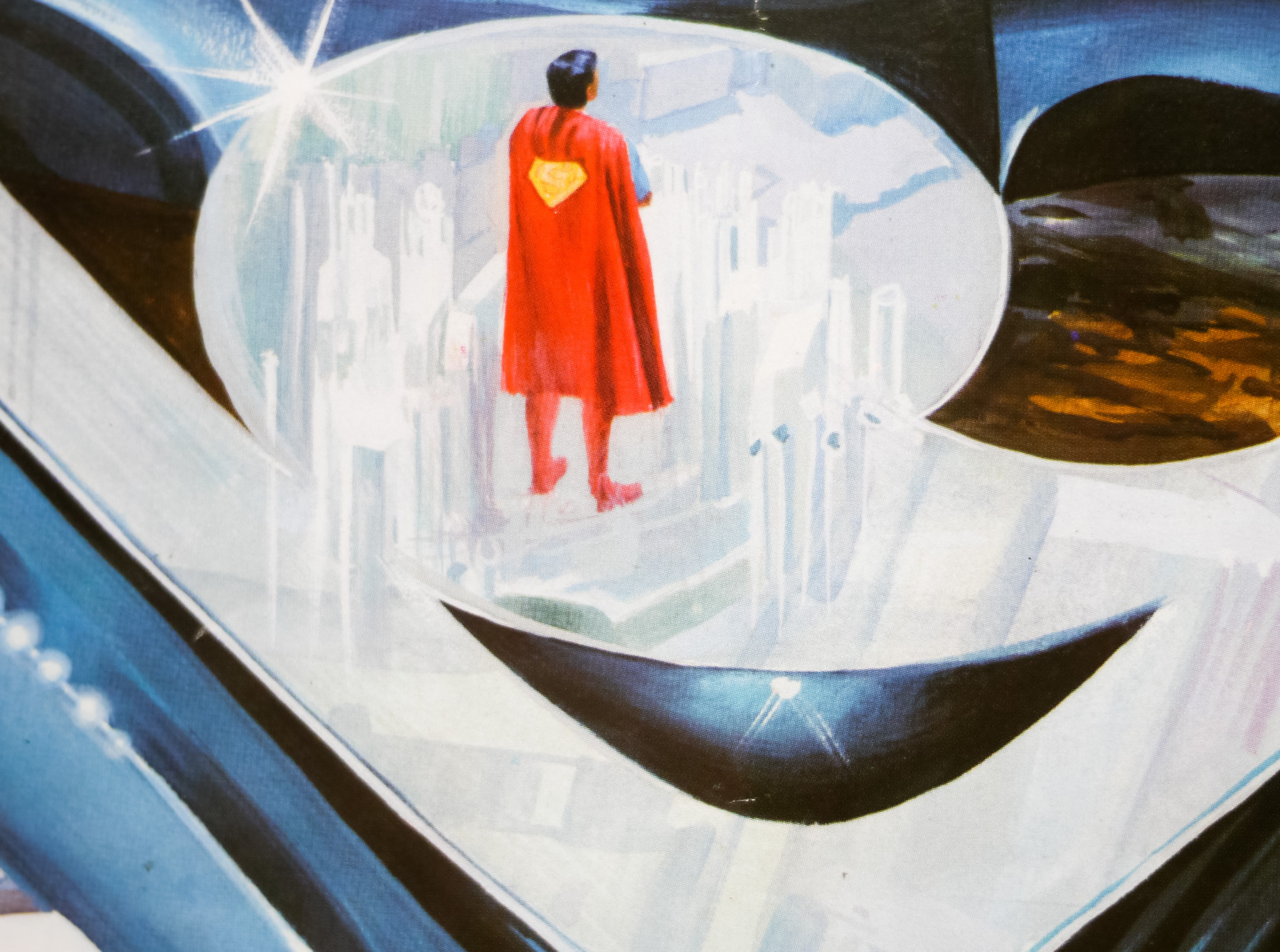
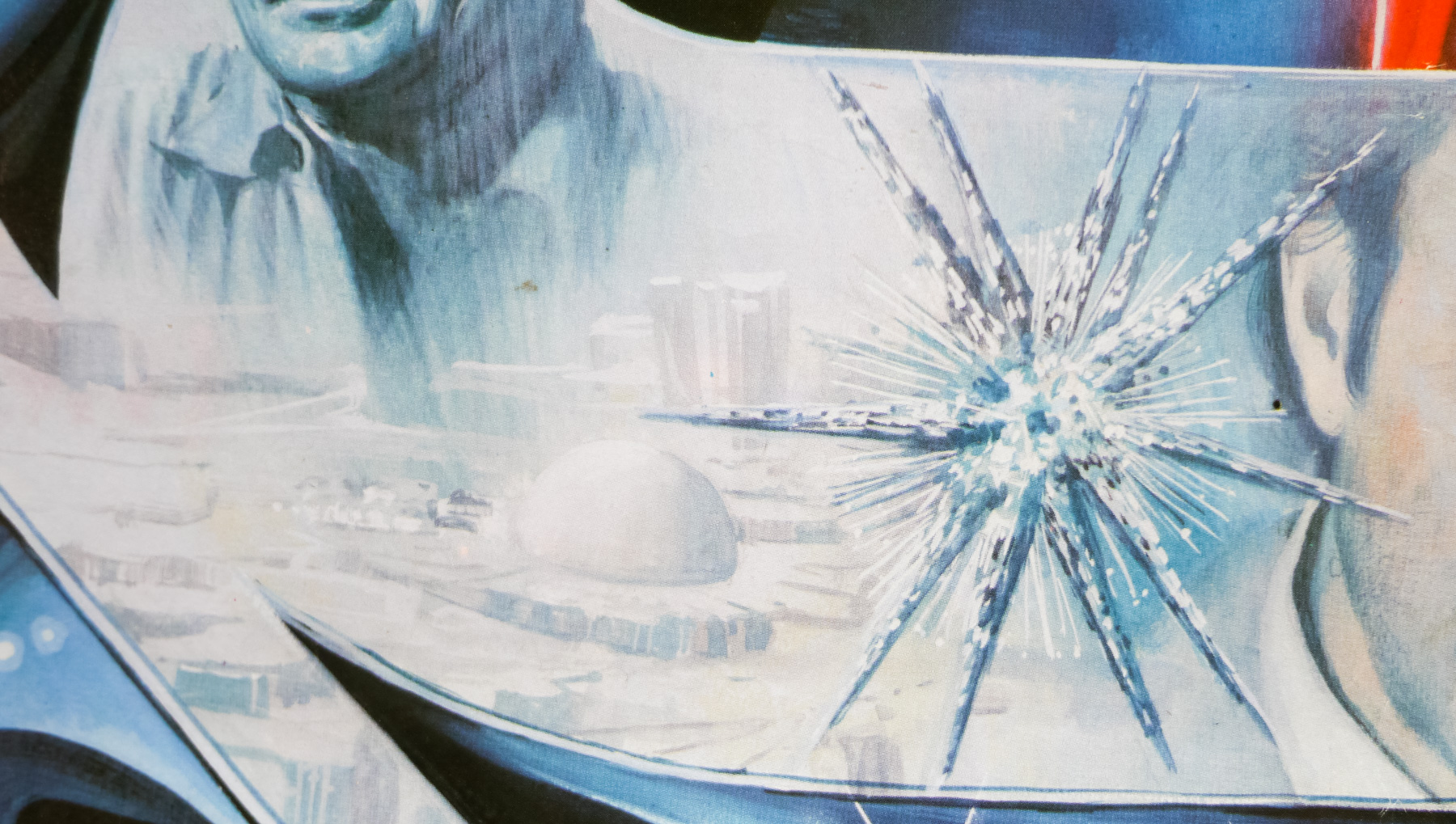
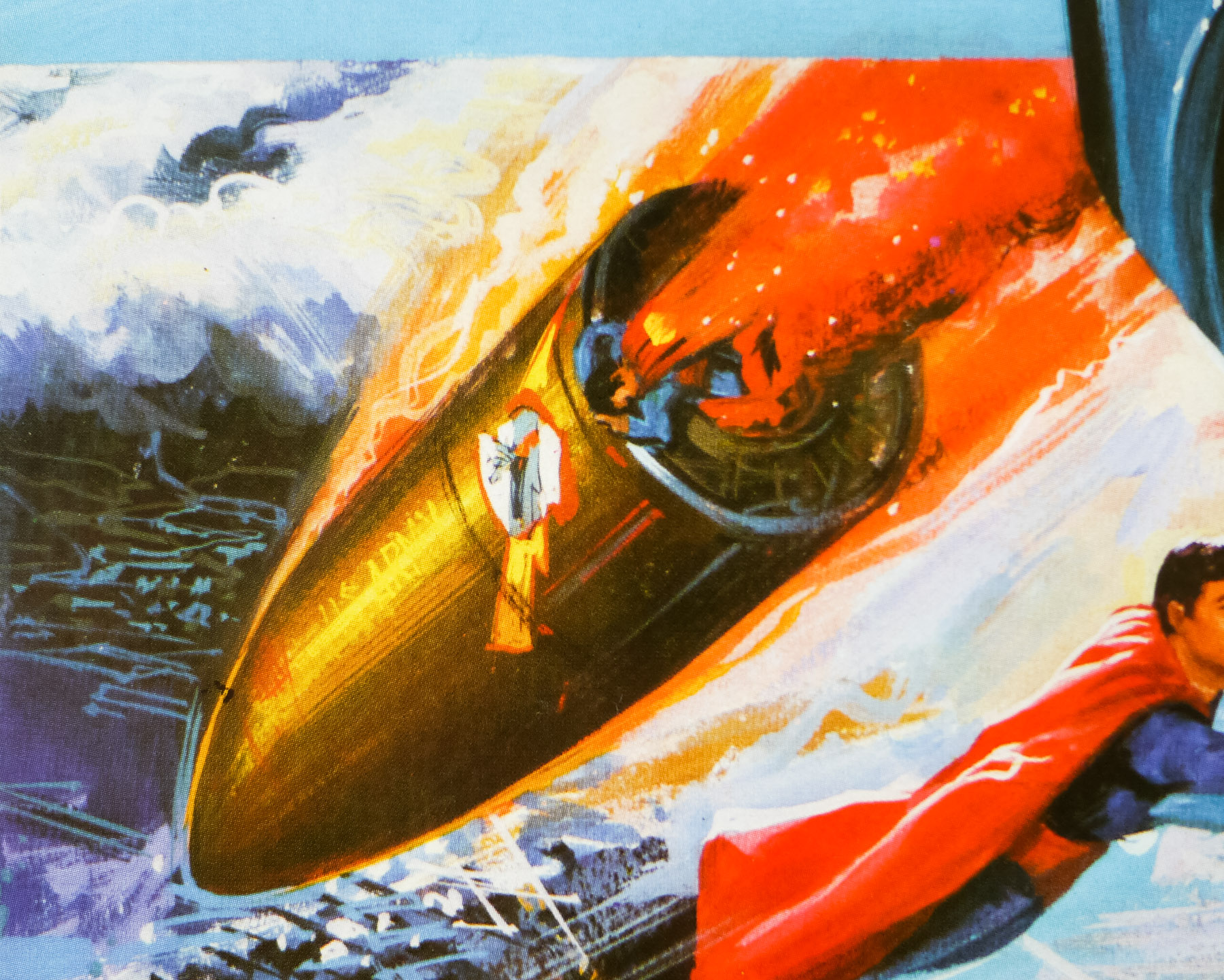
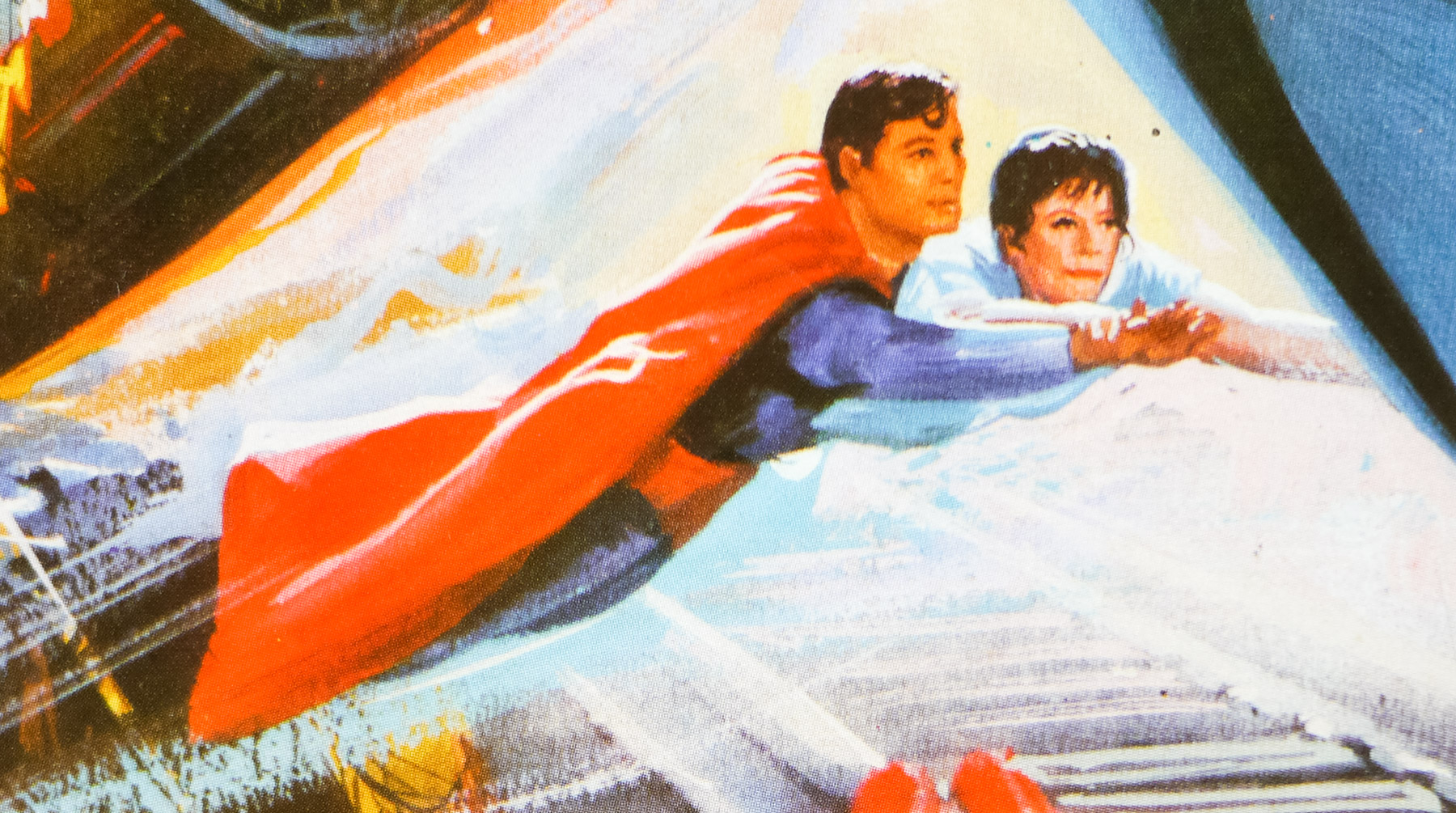
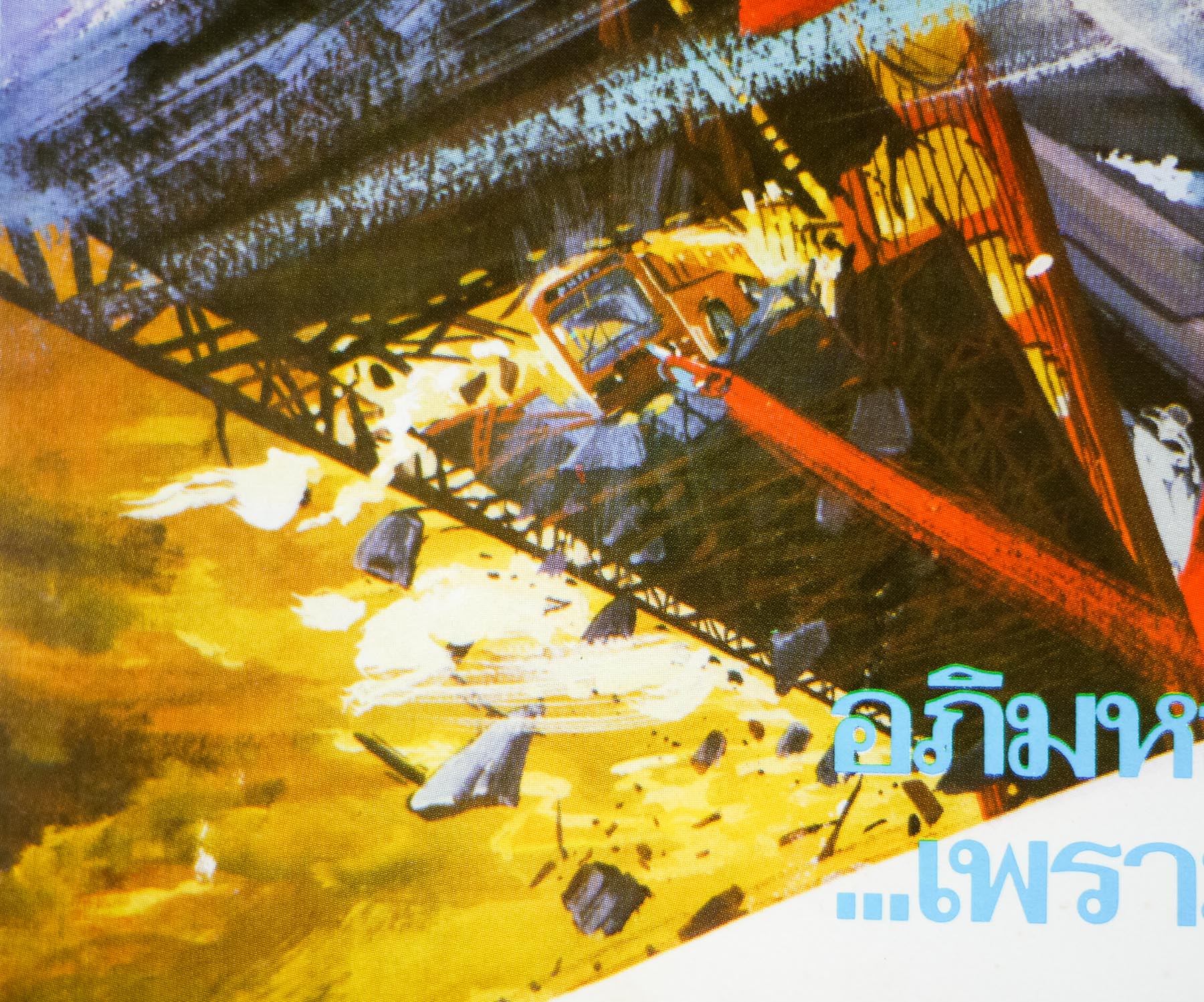
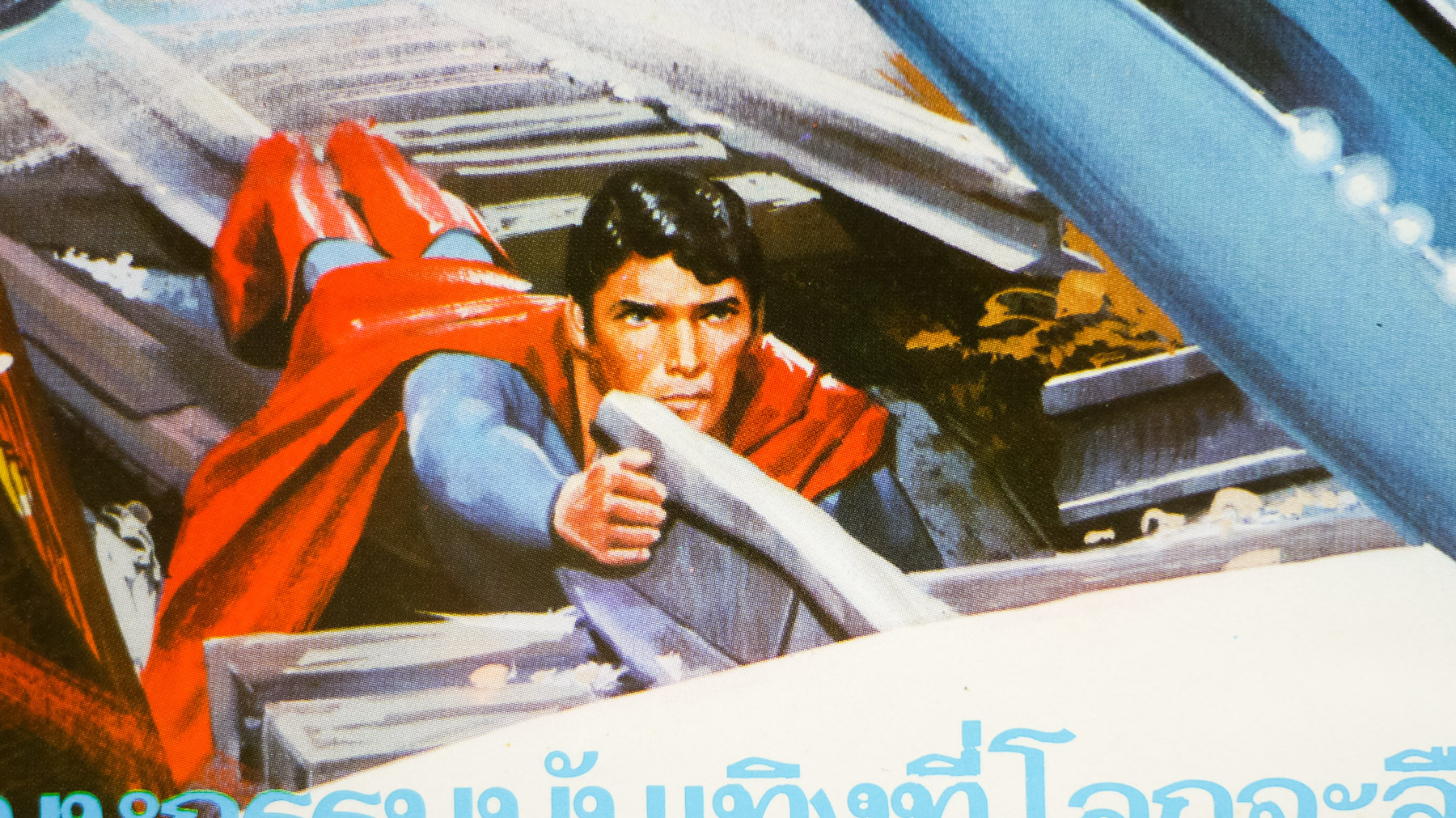
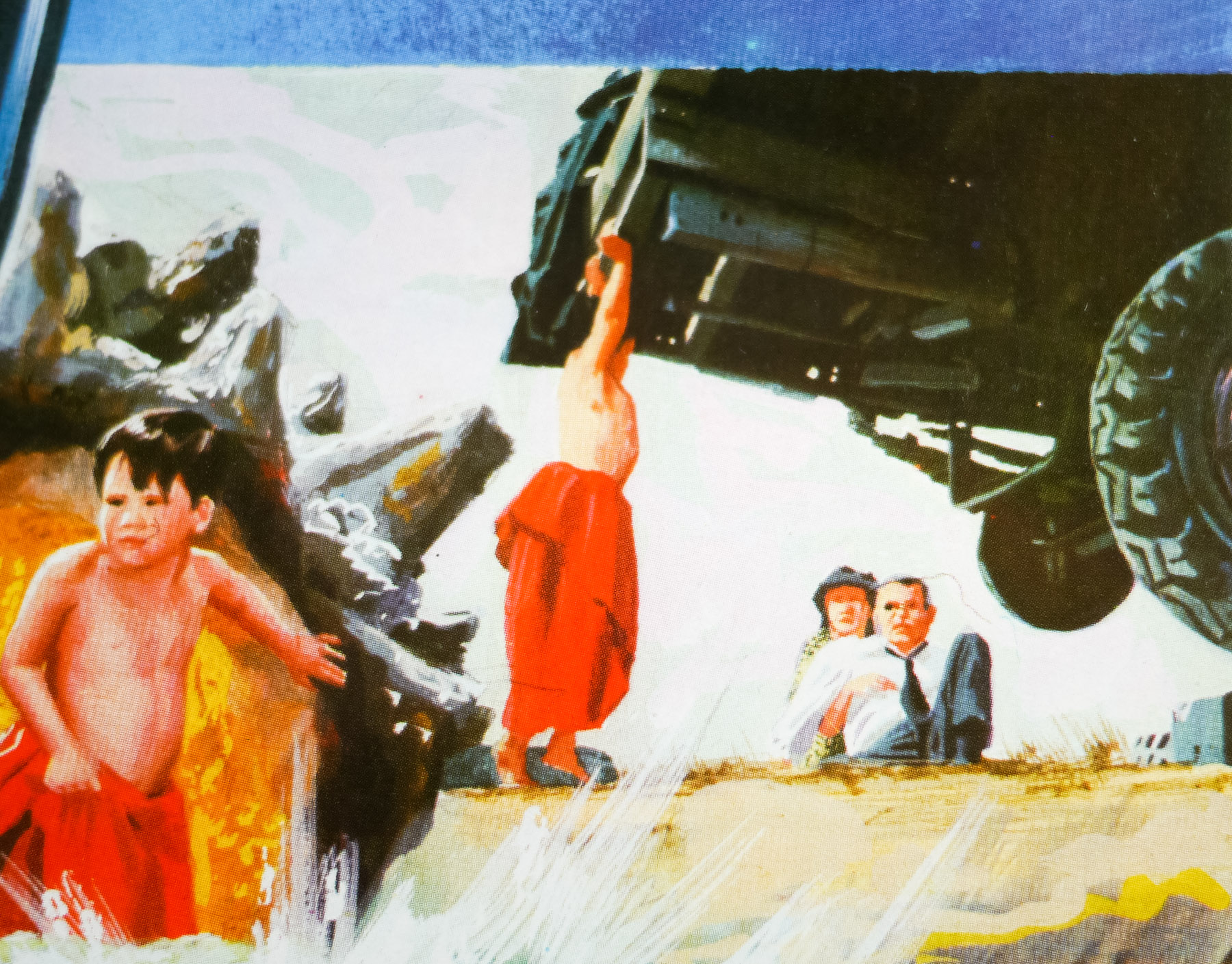
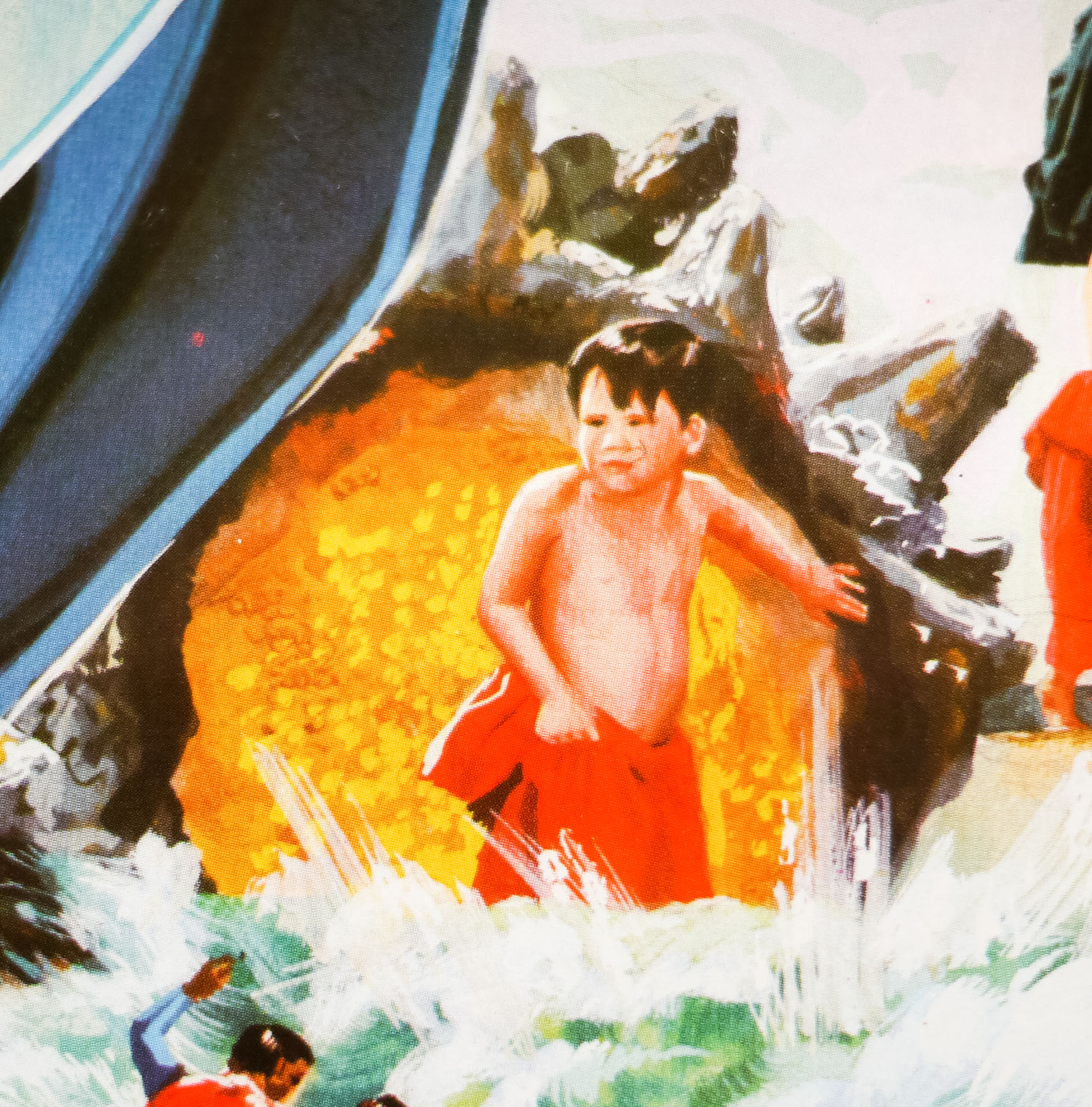
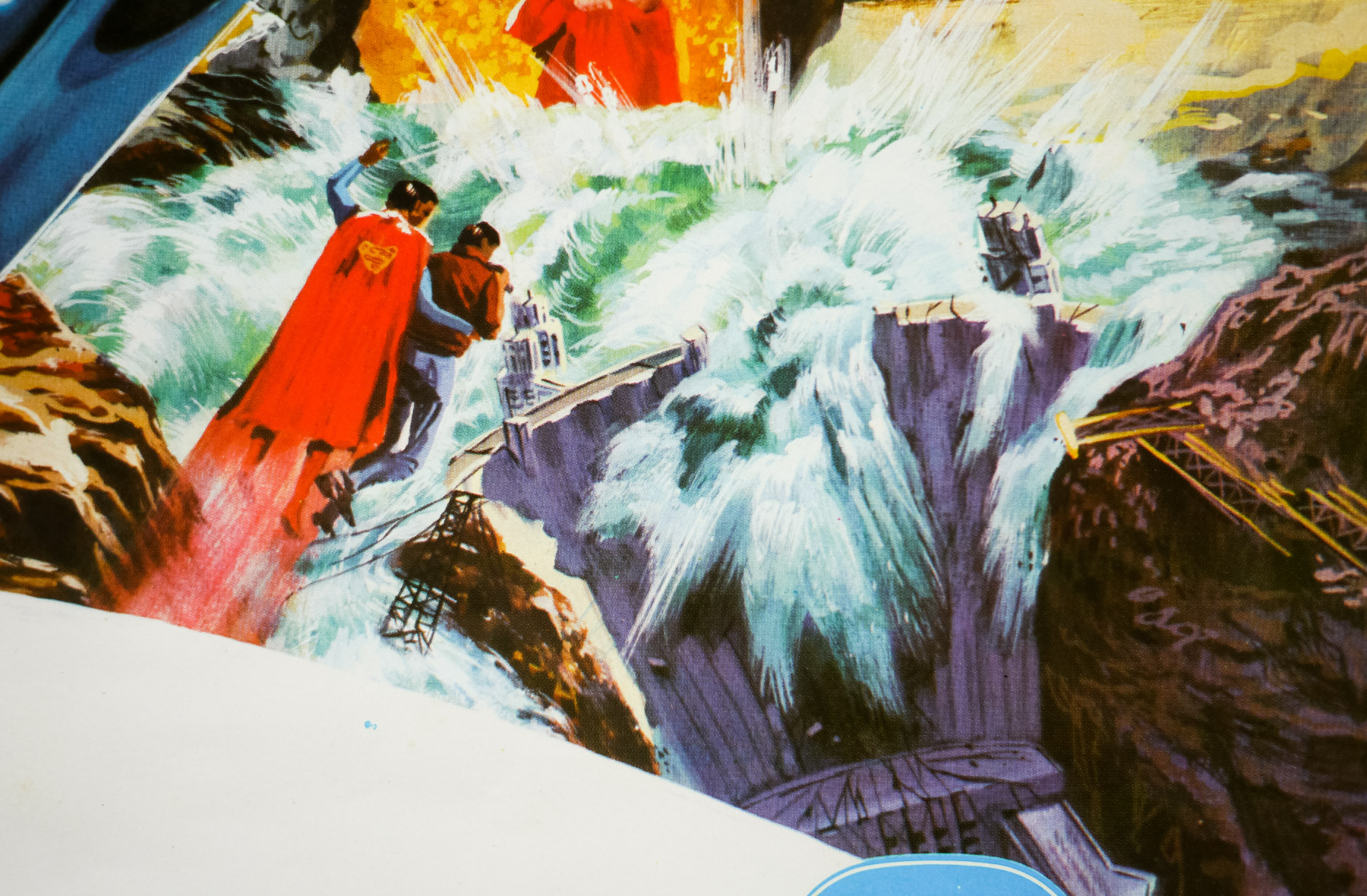
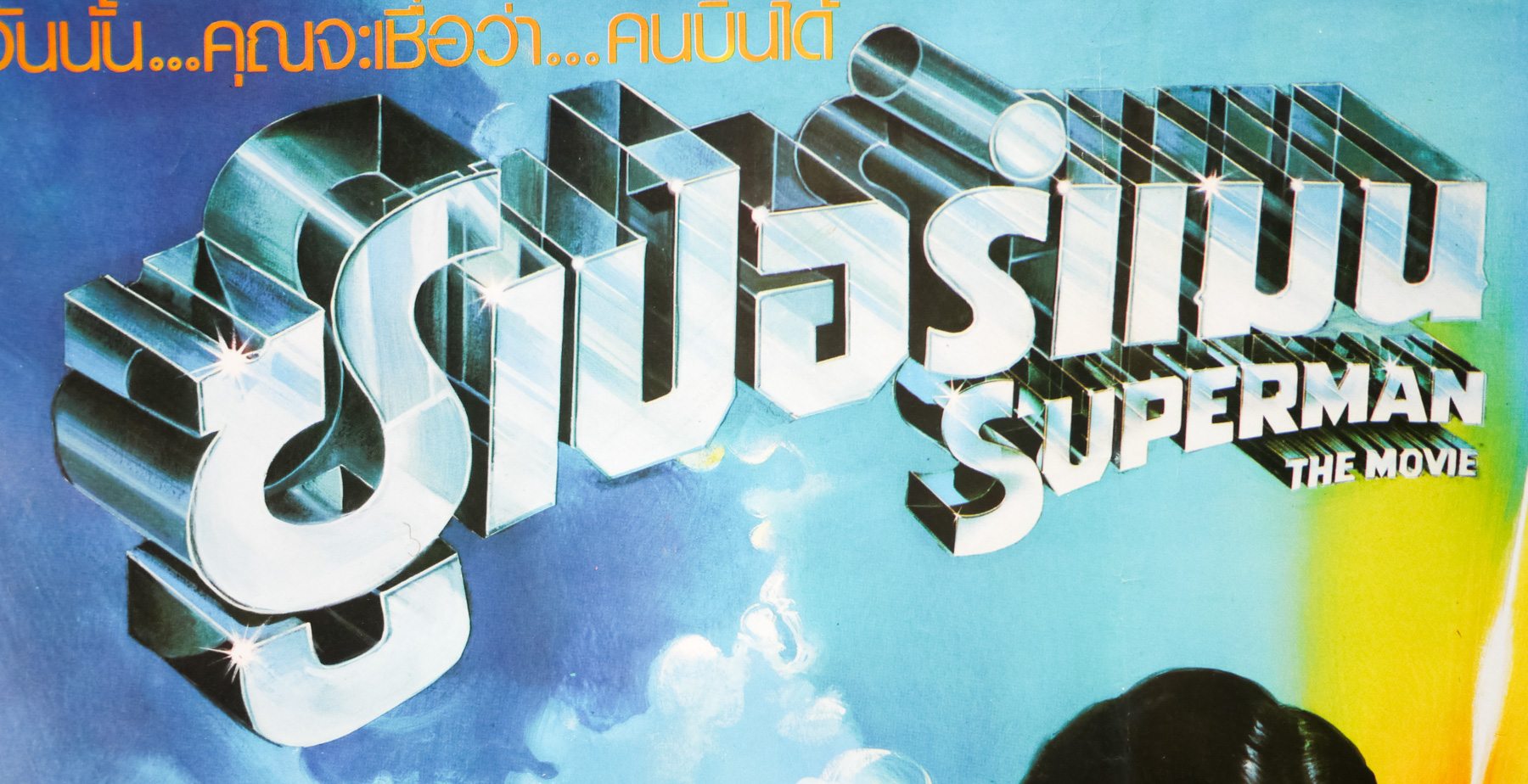
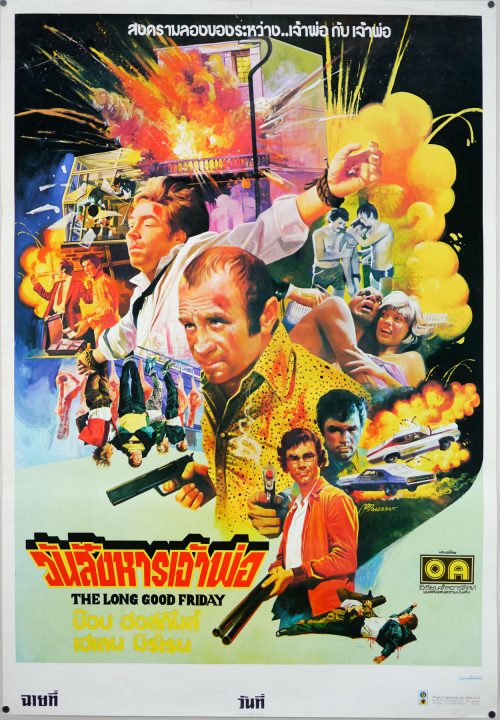
Unique artwork by the Thai artist Tongdee Panumas features on this Thai poster for the release of Superman in 1978 (although the release date in Thailand was likely later). Whilst there had been several other superhero films released over the preceding decades, including three Superman ones, this is often considered to presage the hugely popular franchises of today, including Marvel’s Cinematic Universe and DC’s new crop of films. The Superman character had been invented in 1933 by two high school students, Jerry Siegel and Joe Shuster, who would go on to sell their creation to the original incarnation of DC Comics (then called Action Comics) in 1938.

The first Superman film appeared exactly 30 years before this one and was actually a 15 chapter serial that dealt with the character’s origin story, from his birth on the dying planet of Krypton to his eventual assumption of the guise of mild-mannered reporter Clark Kent in the city of Metropolis. The 1978 film tackled the same origin story and was in development for around four years after Alexander and Ilya Salkind, a father and son producing team, negotiated the rights from DC in 1974. The Godfather scribe Mario Puzo was hired to write the script and the hunt for a suitable director took almost three years before Richard Donner was eventually selected. The producers decided to film Superman and its sequel back-to-back, but tensions during the production saw the latter’s production put on hold to focus on the first film. Puzo’s script was apparently completely retooled by Donner and an uncredited Tom Mankiewicz.

The casting of Superman was as protracted as the hunt for a director and several A-list actors were offered the part before the production team decided to instead go with the relatively unknown Christopher Reeve. The choice would be richly rewarded, both in financial terms but also in the amounts of critical praise Reeve would garner over the months following the films release. Any doubts about the film being a schlocky retread of previous superhero films were put to bed by the casting of the likes of Marlon Brando (taking a then record salary with profits percentage totalling $19m) as Superman’s father Jor-El, Gene Hackman as the villainous Lex Luthor and Margot Kidder as Lois Lane. 

The film begins with the destruction of Krypton and Kal-El’s (Superman) parents sending their infant son off into space to land on Earth in the fictional town of Smallville in Kansas. The boy is found and raised by Jonathan and Martha Kent as their own son (whom they name Clark) and the couple vow to keep his burgeoning powers a secret. When he reaches 18, following the death of Jonathan, Clark hears a psychic call and travels to the Arctic with a crystal he finds in the craft that took him to earth. There the crystal builds the Fortress of Solitude where a hologram of Jor-El teaches his son about his origins and the extent of his powers. After 12 years of training Clark heads to Metropolis and takes a job as a reporter at the Daily Planet newspaper where he meets Lois Lane, a fellow reporter. Soon after he begins using his powers in public for the first time with heroic rescues and acts of crime prevention proving to Metropolis that there is a superhero in their midst.

The nefarious plans of Lex Luthor threaten the lives of everyone on the West Coast of America and Superman must act to stop him, however the master criminal learns of Superman’s weakness when it comes to the radioactive element Kryptonite which, as the name suggests, comes from his home planet. At the time the film was the most expensive made, with a budget of $55 million, but it ended up as a huge box-office success and earned over $300m during its cinema run. The then groundbreaking special effects were particularly praised and the film was able to capitalise on cinema audiences’ appetite for science-fiction and fantasy following the release of films such as Star Wars and Close Encounters of the Third Kind a year earlier. Critics lavished the film with praise and the sequel was quickly put into turnaround by the producers, although things didn’t exactly work out smoothly for most involved.

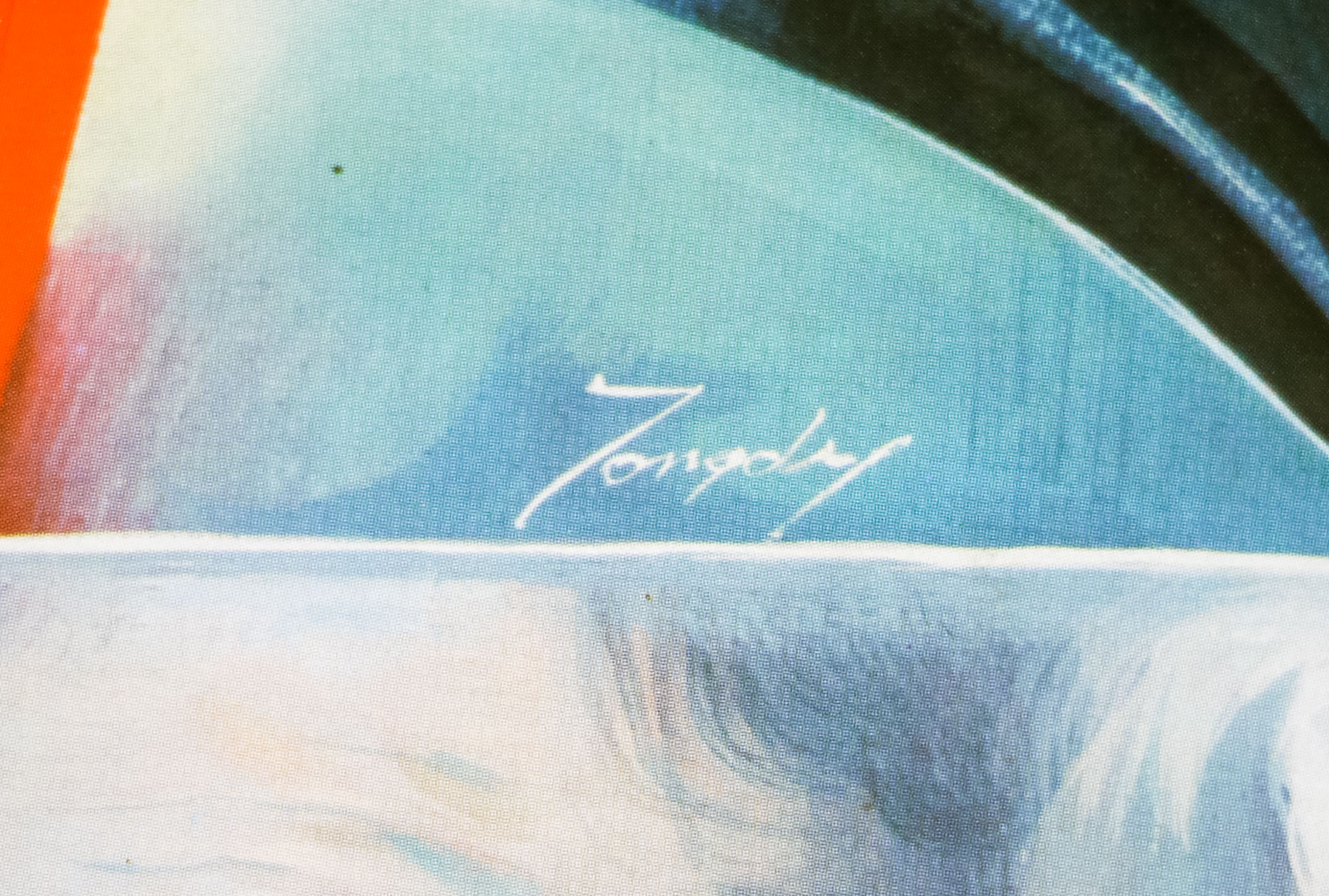
Tongdee Panumas (he signs his posters with just his first name) was an incredibly prolific Thai film poster artist during the 70s, 80s and 90s. I’ve been unable to find out much about him, other than that he was born in 1947, so if anyone has any more details please get in touch.

Note that the scenes from the film depicted towards the bottom of the poster also appear in much more detail on a series of Thai lobby posters that I plan to add to the site in the near future. Elements of this poster are of course based on the classic US poster by Bob Peak that features the Superman logo against blue sky and clouds.
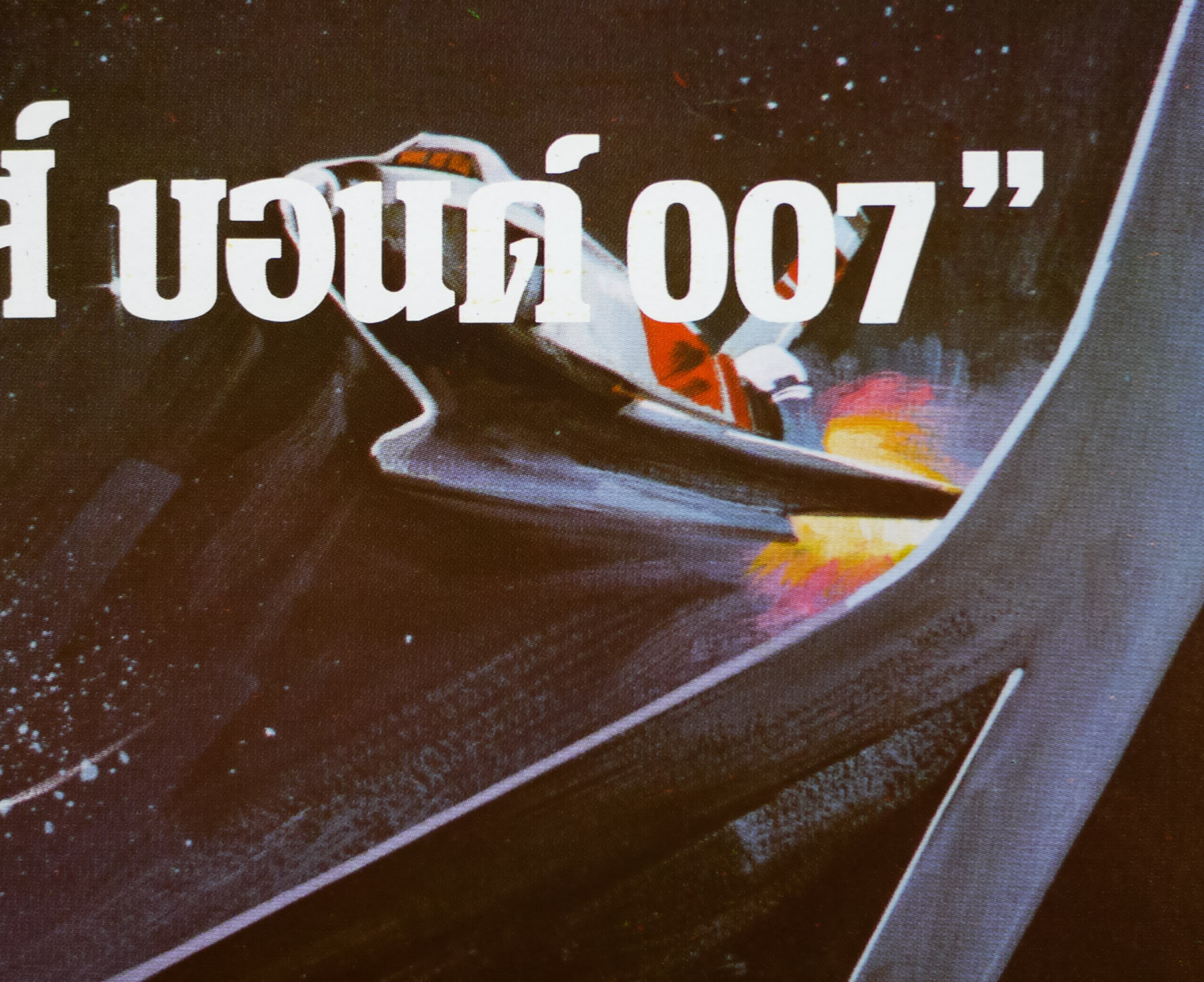
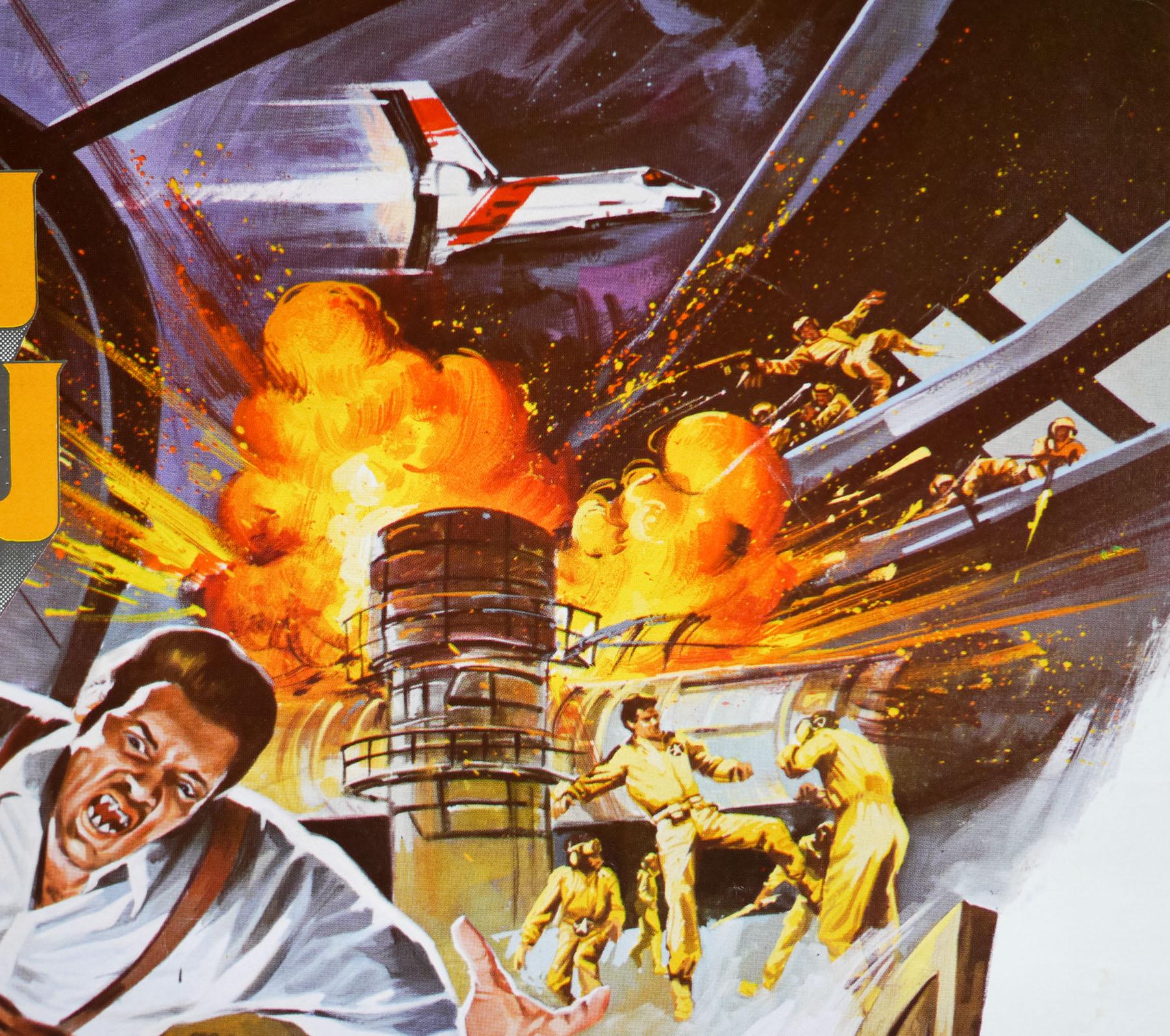
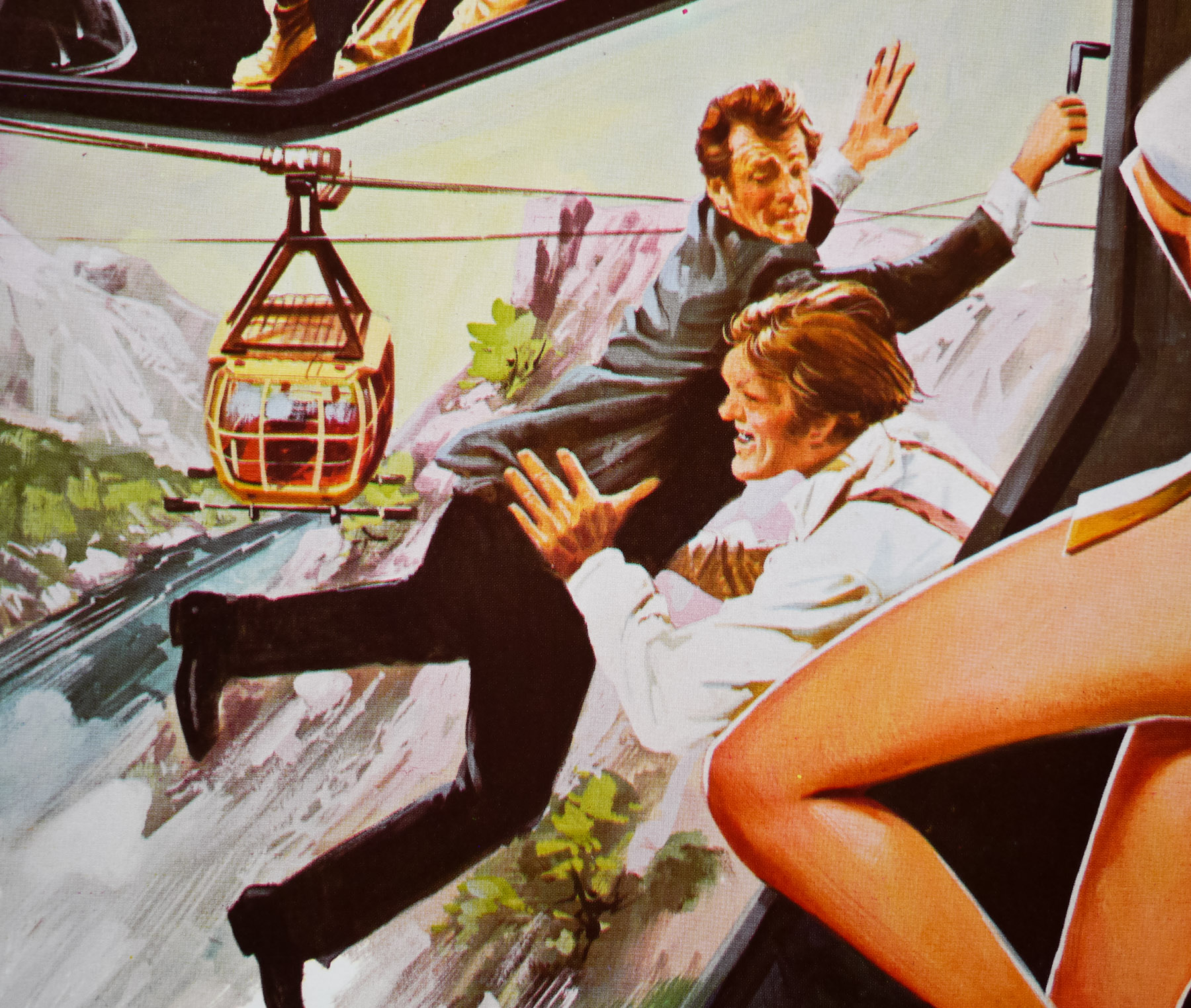
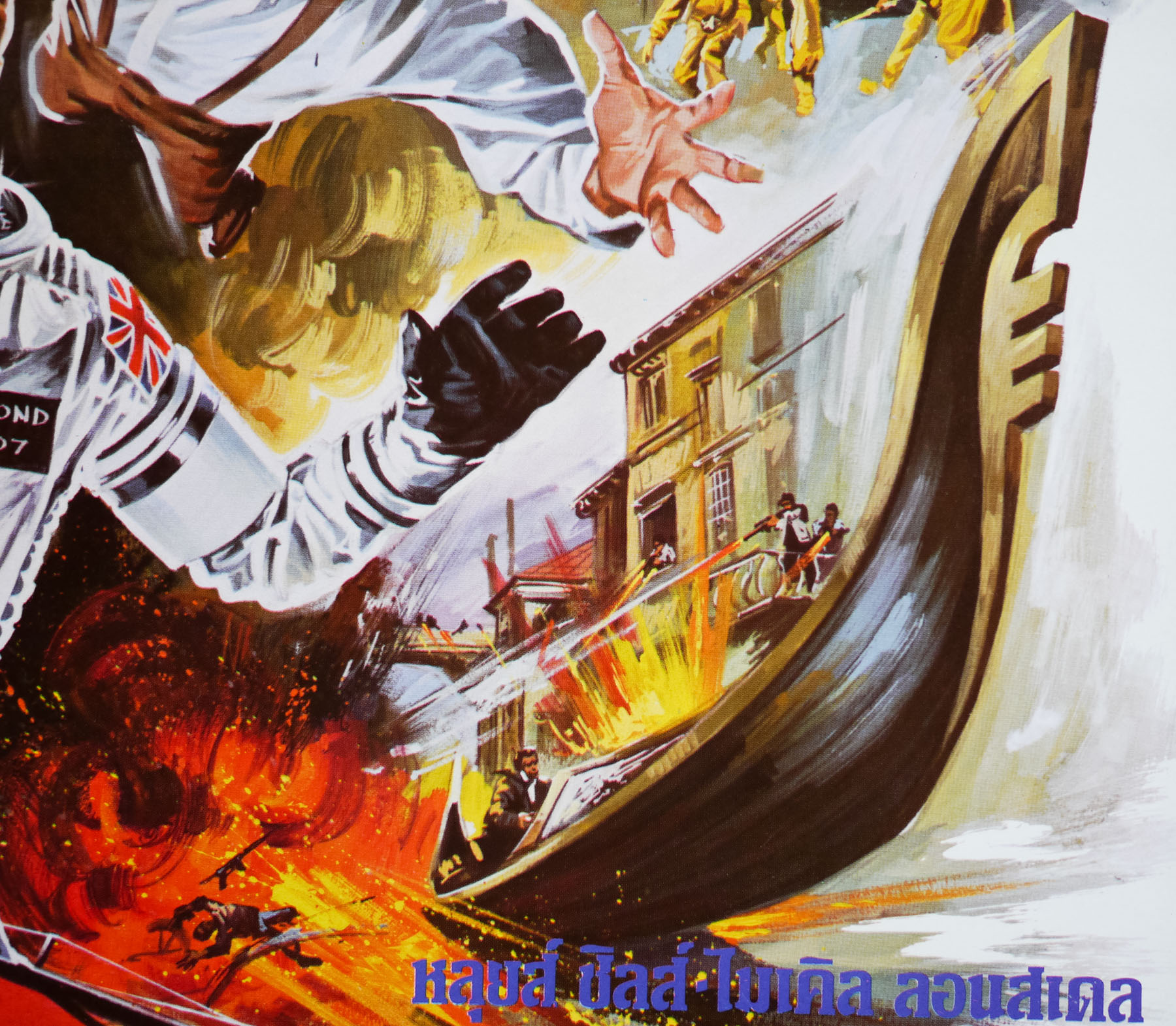
Moonraker / Thailand

07.04.15

Poster Poster

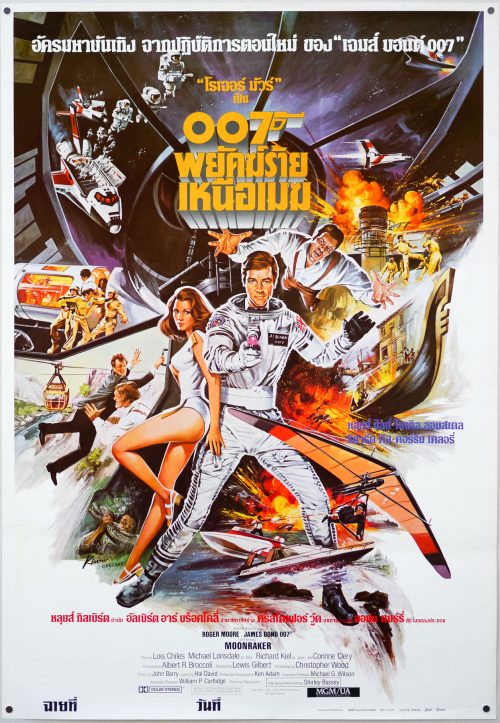
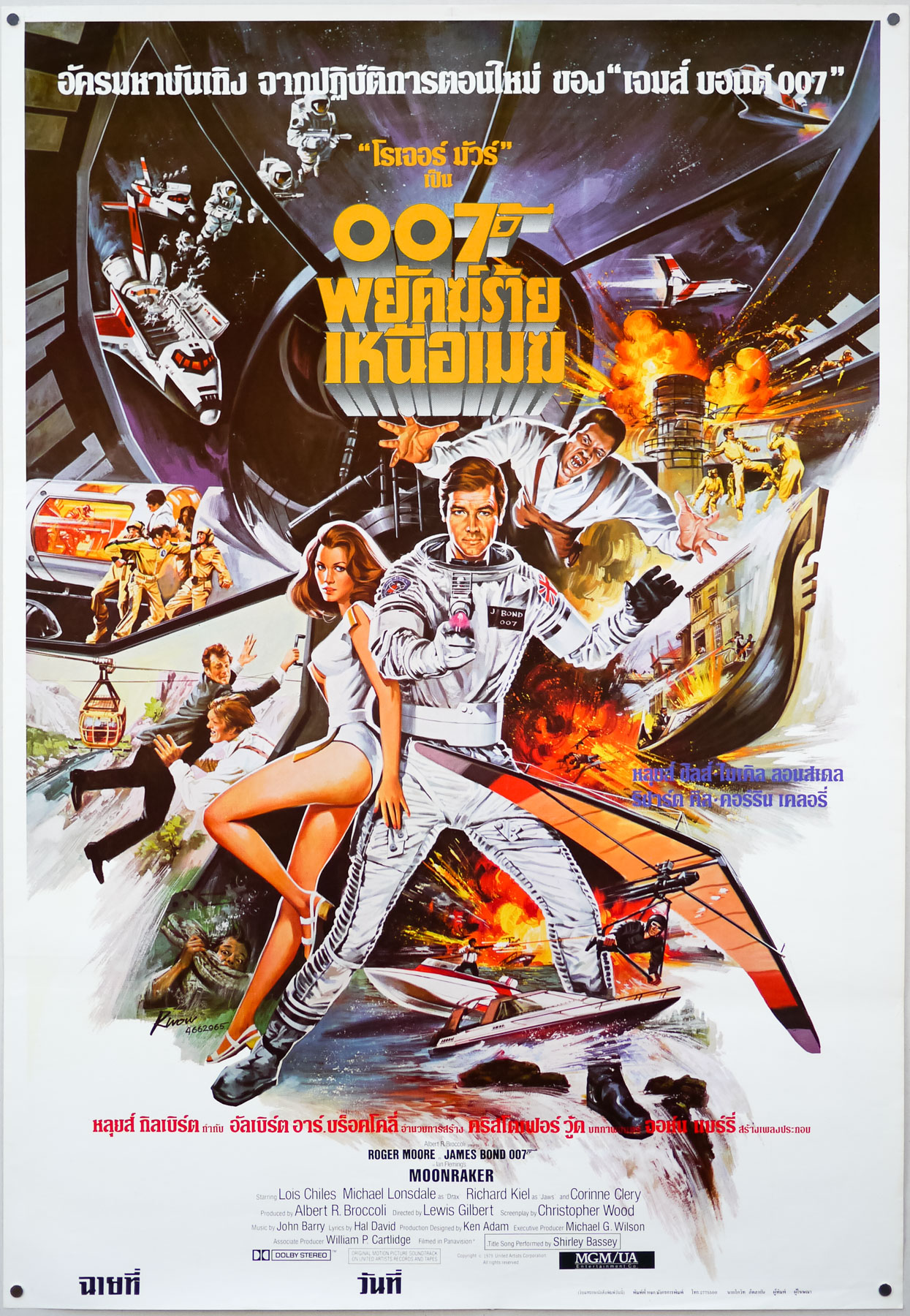
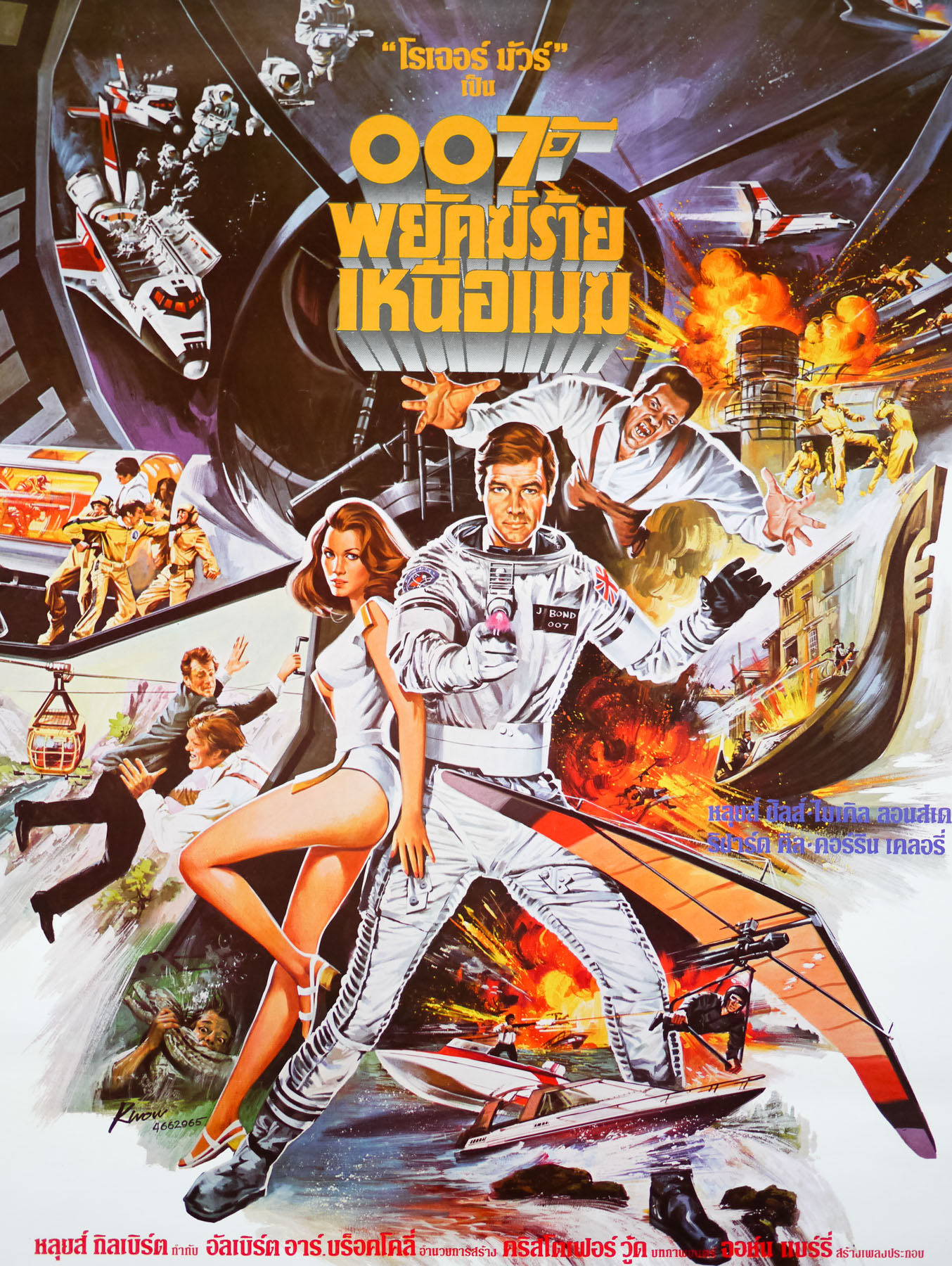
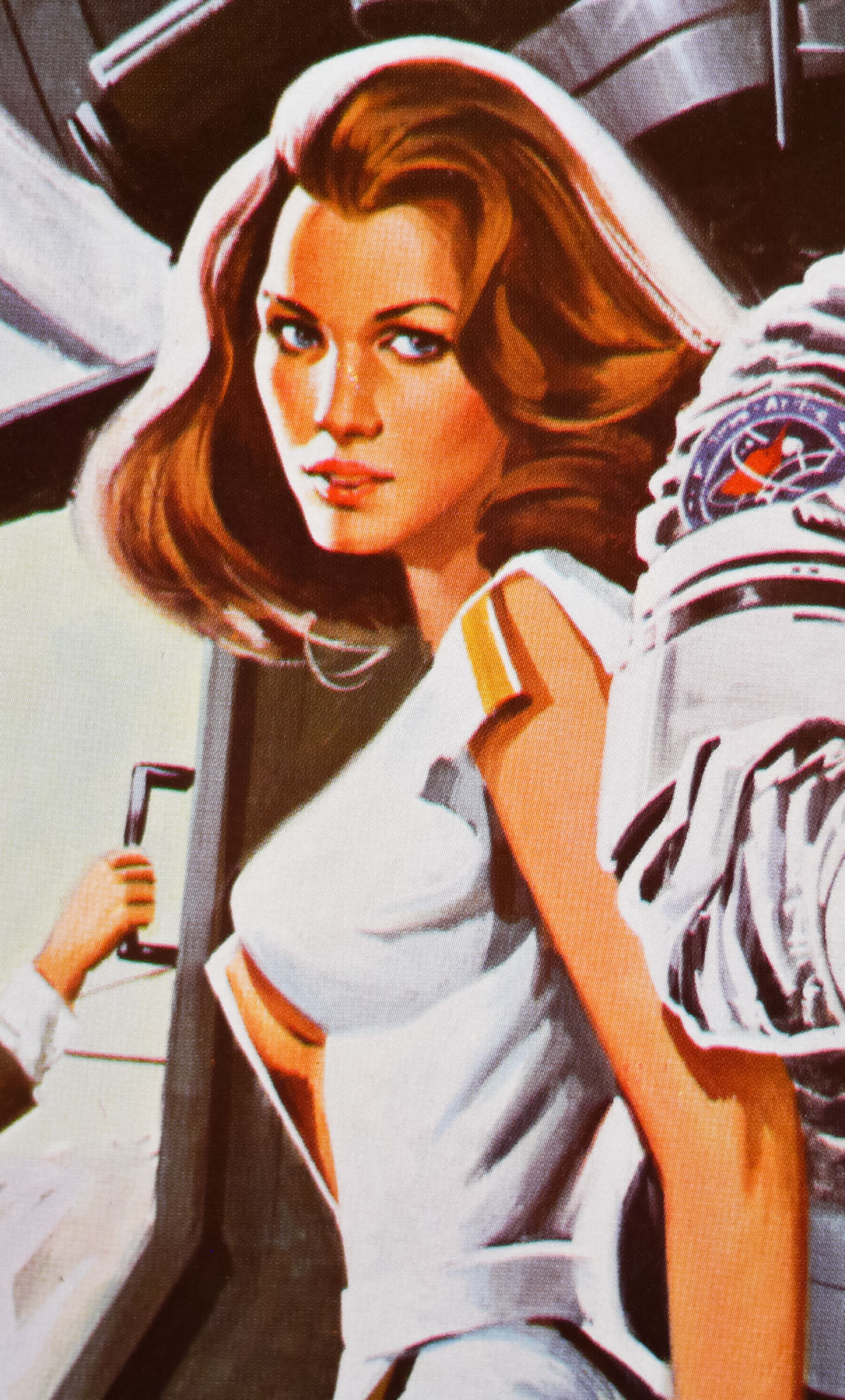
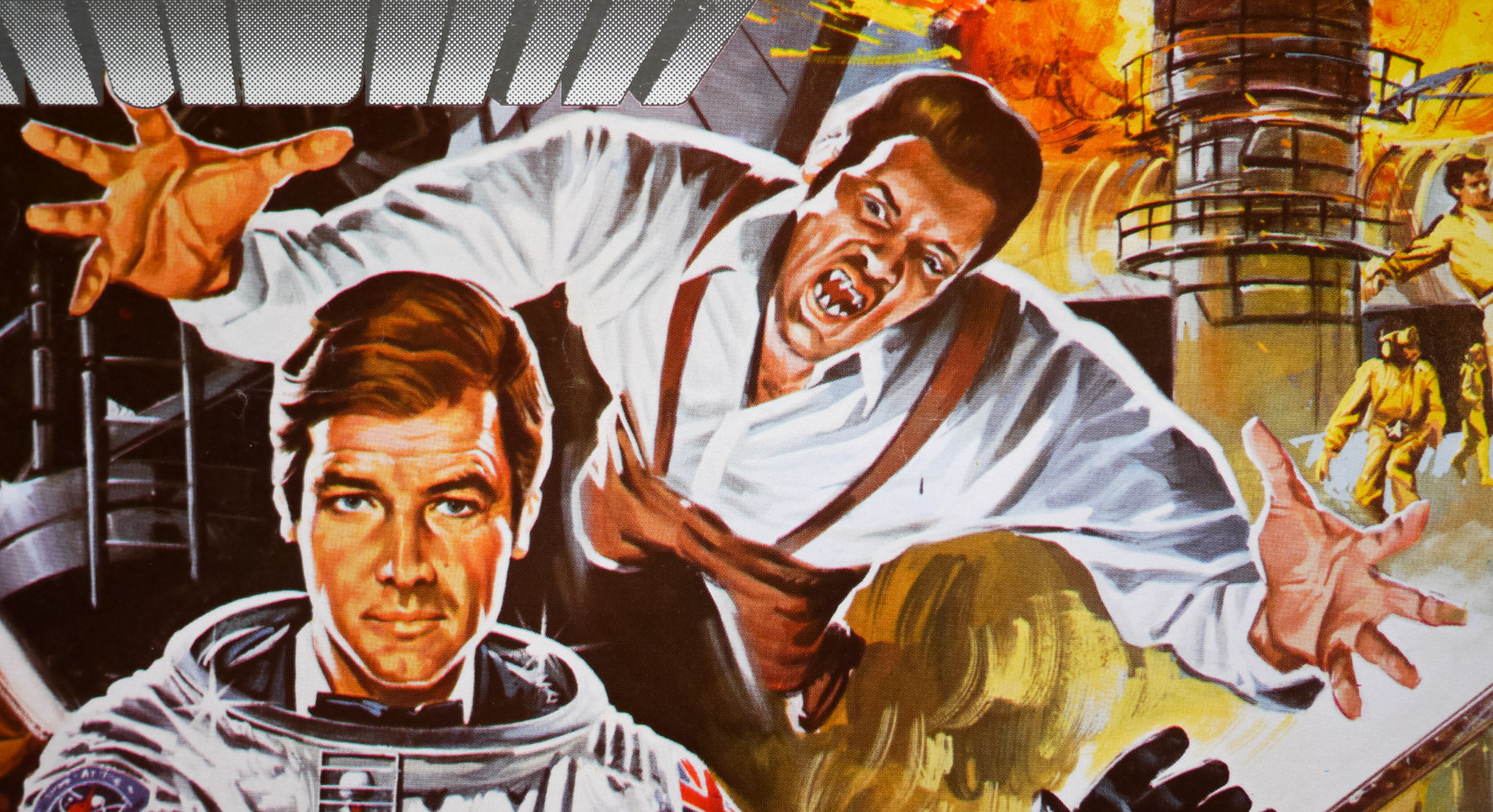
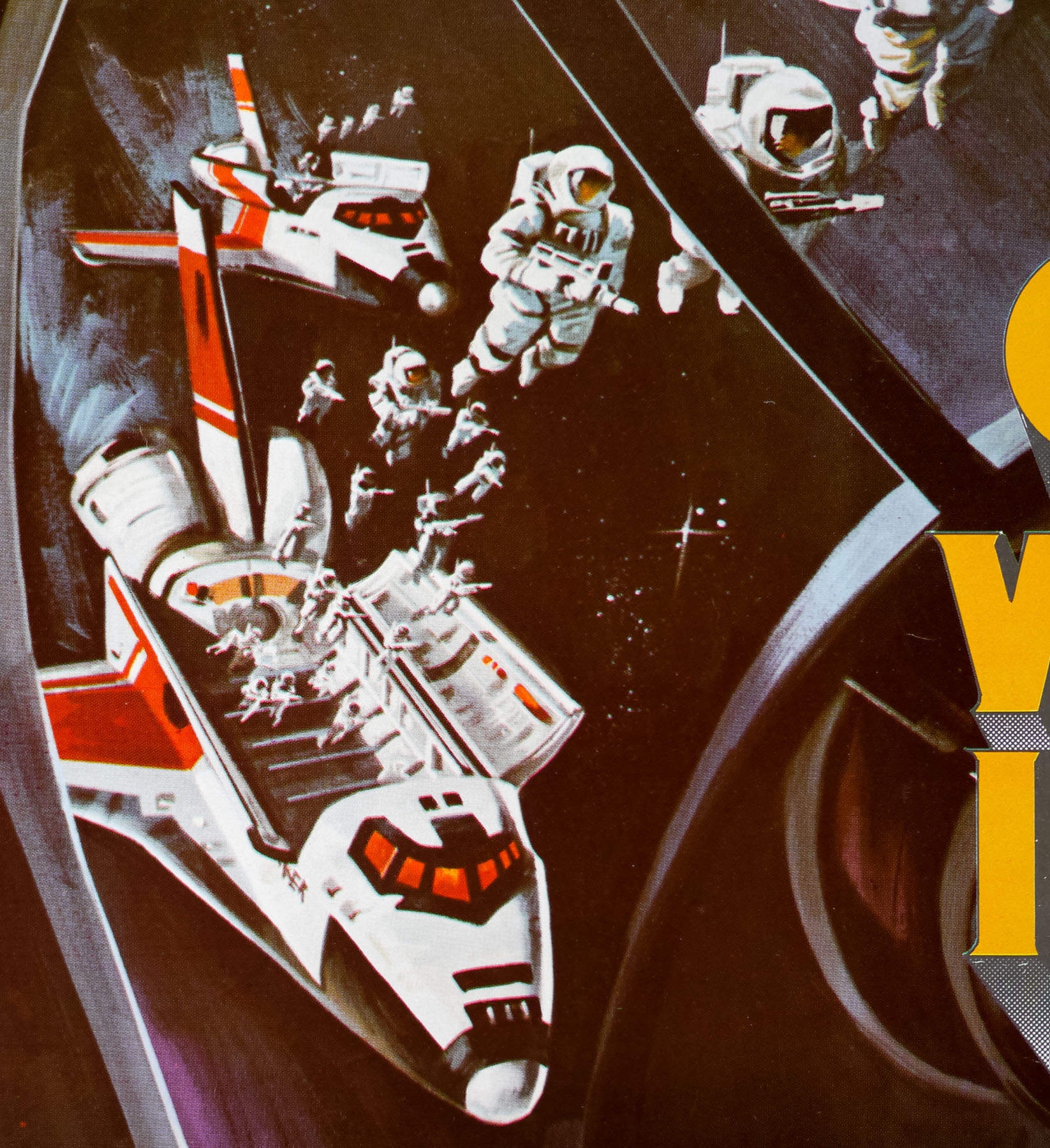
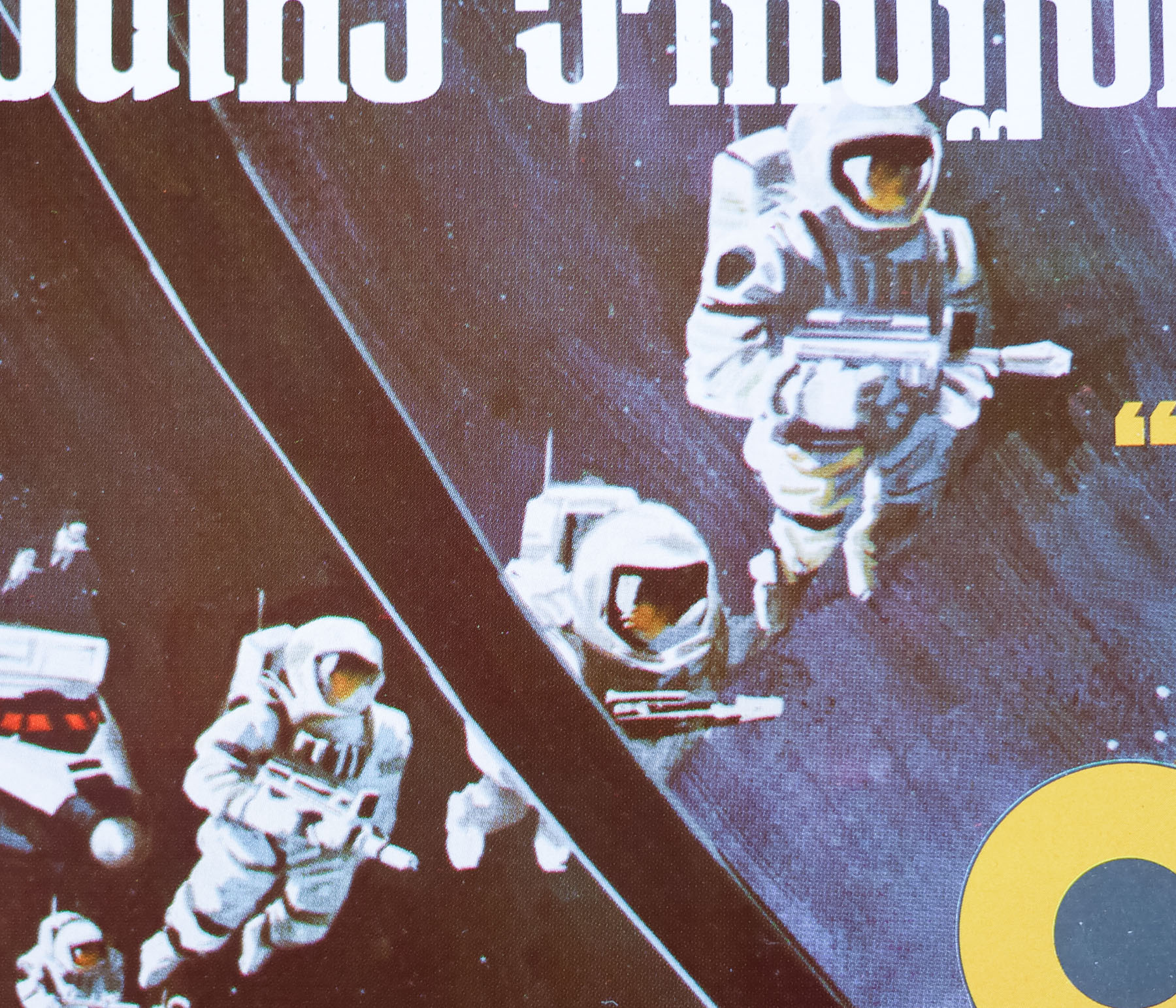
Although considered by most Bond fans to be one of the weakest of the series, I know I’m not the only one to have a soft spot for MoonrakerRoger Moore‘s fifth outing as James Bond. Thanks to endless TV showings during the 1980s and early 1990s I’ve probably seen this more than any other in the series and, like Live and Let Die, it had a huge impression on my young mind.

Looking at it through the cynical fog of adulthood it’s easy to sneer at the camp script, supremely daft action sequences (motorised Gondola anyone?) and painfully obvious attempt to cash in on the success of Star Wars (a very common theme amongst films released in its wake). The film is probably the quintessential outing for Moore as Bond and only he could have pulled it off as well as he did, particularly when it comes to the hokey script and madcap action.

The film features several memorable sequences, including a cable car fight over Rio de Janeiro, and a decent bad guy in Richard Kiel‘s inimitable ‘Jaws’ who used to scare me senseless as a kid. Also notable is John Barry‘s soundtrack, which marked a departure from his previous Bond work by mainly using strings instead of the typical brass. The film also features one of the most (literally) eyebrow-raising character names in the form of Dr Holly Goodhead (Lois Chiles) and one of the best/worst sign-offs of the entire series:
Sir Frederick Gray, Minister of Defence:  My God, what’s Bond doing?
Q: I think he’s attempting re-entry, sir.
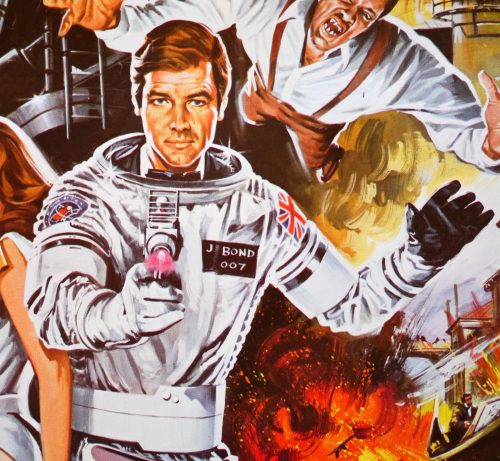
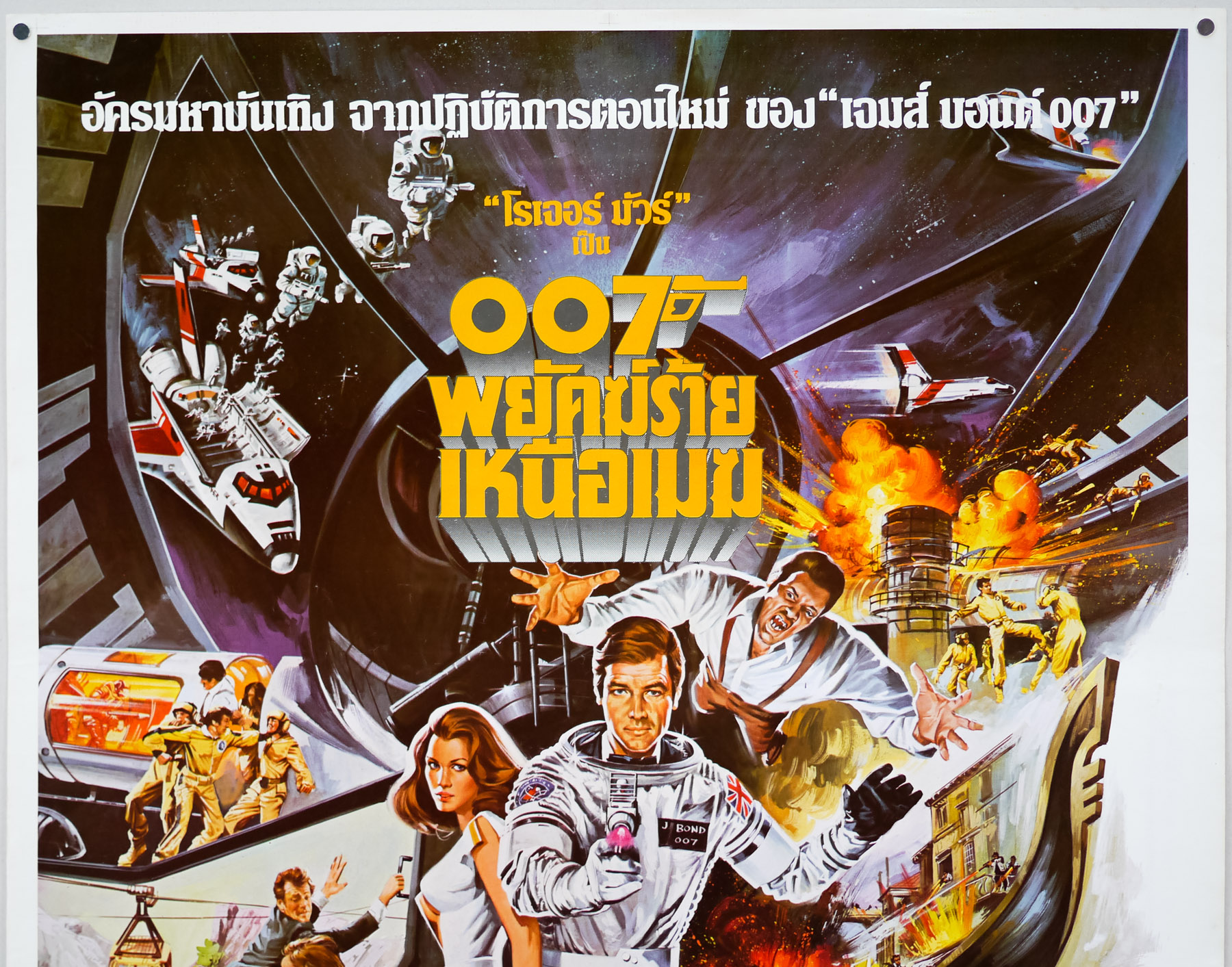
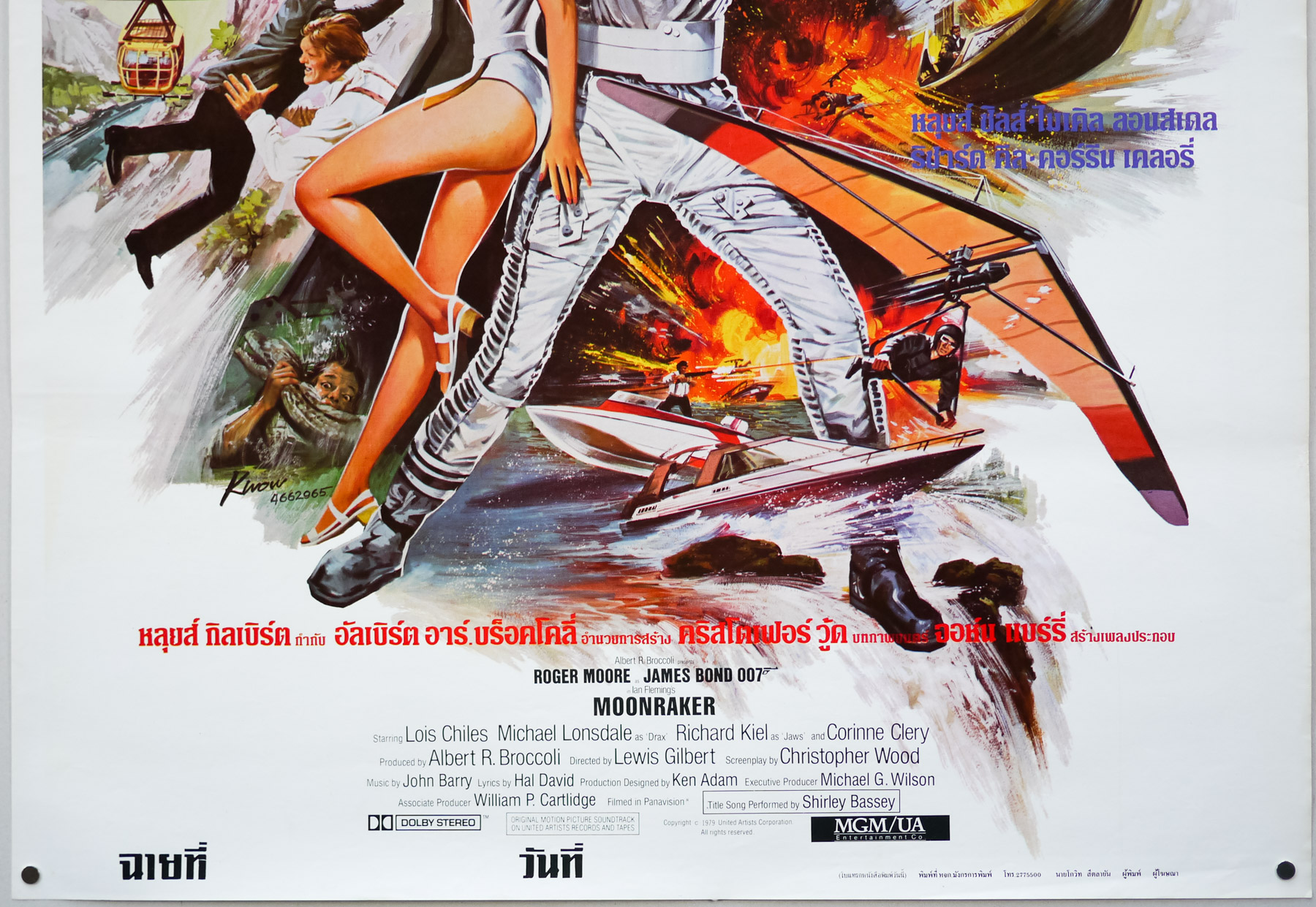
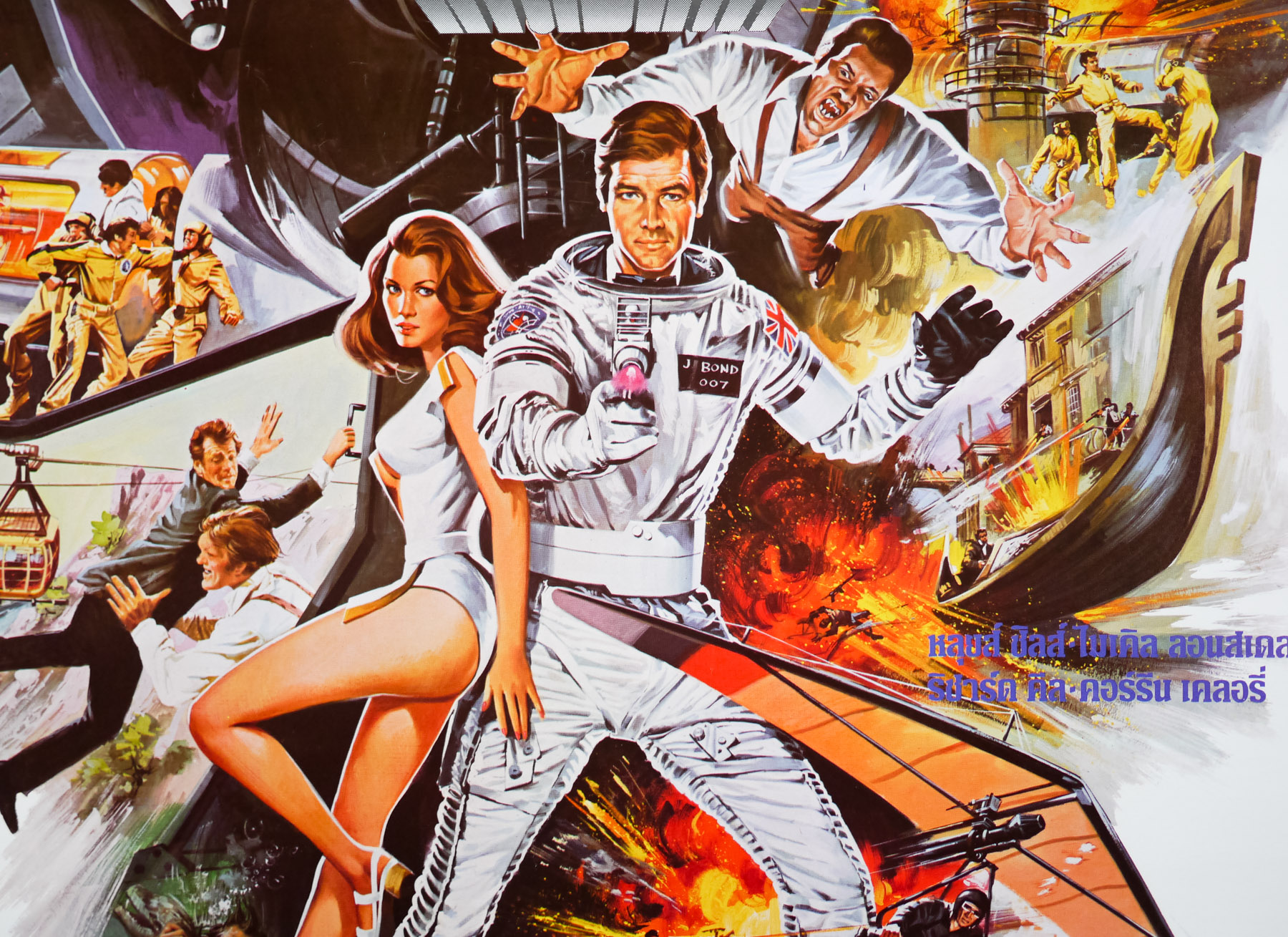
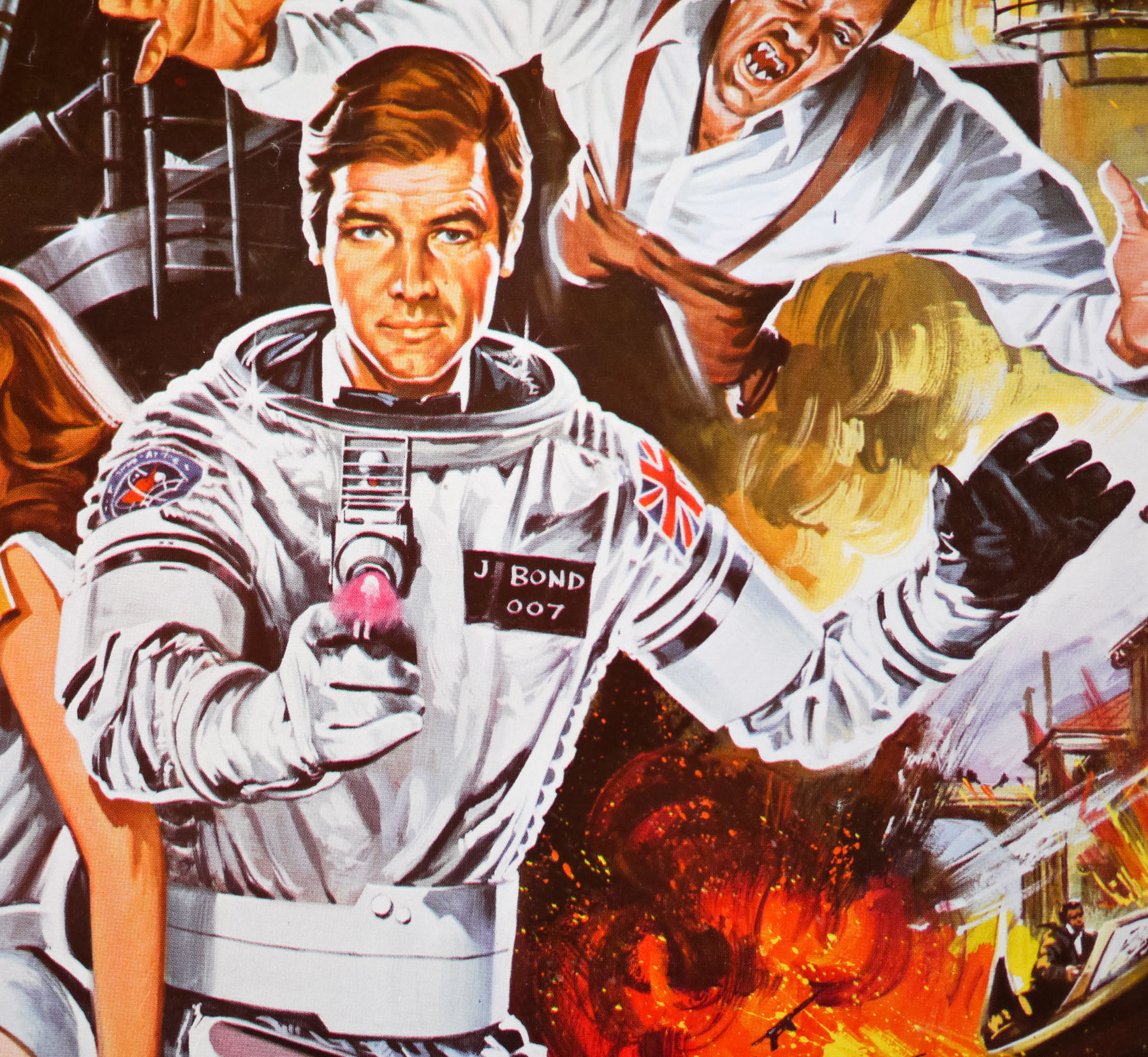
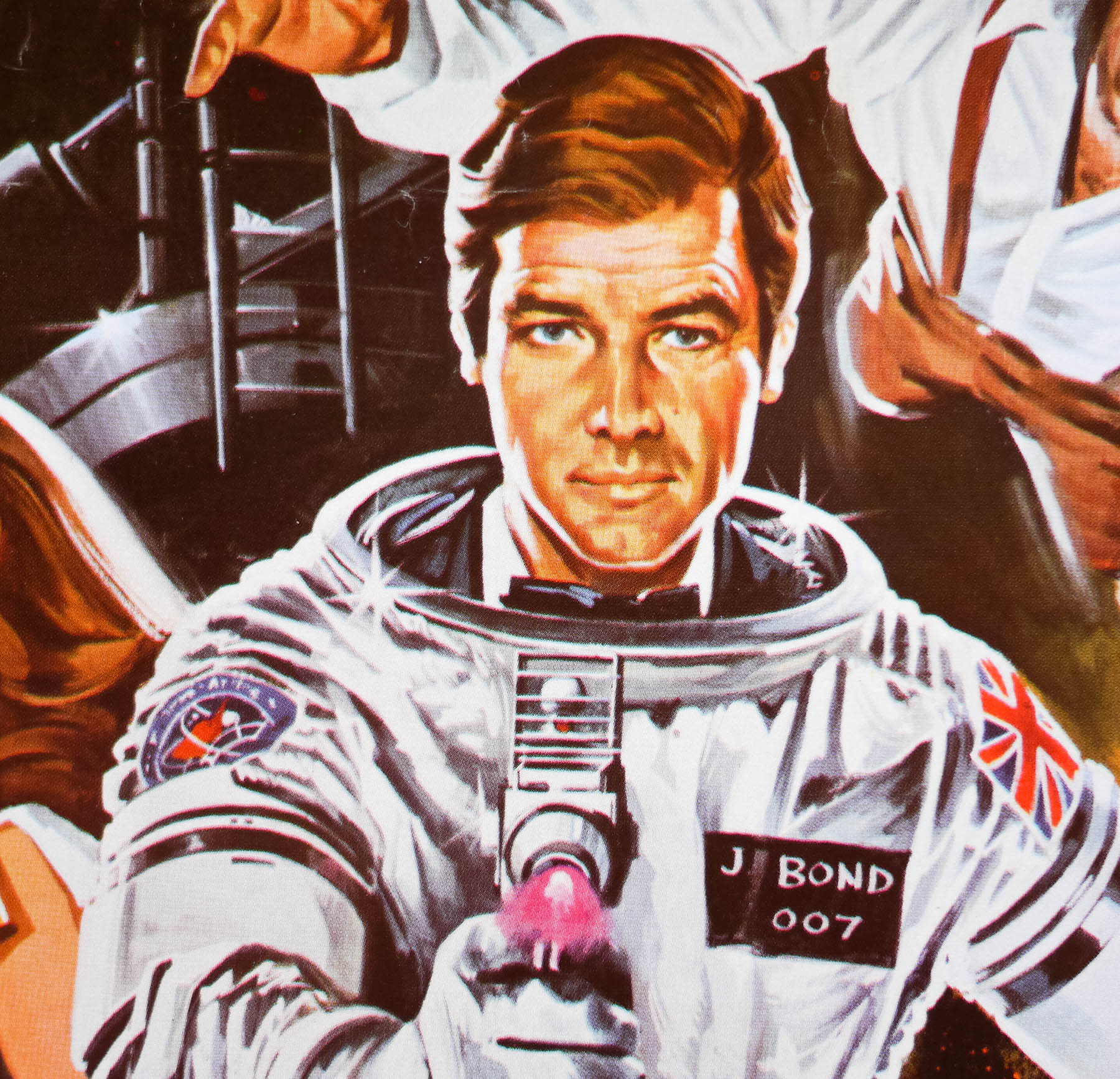
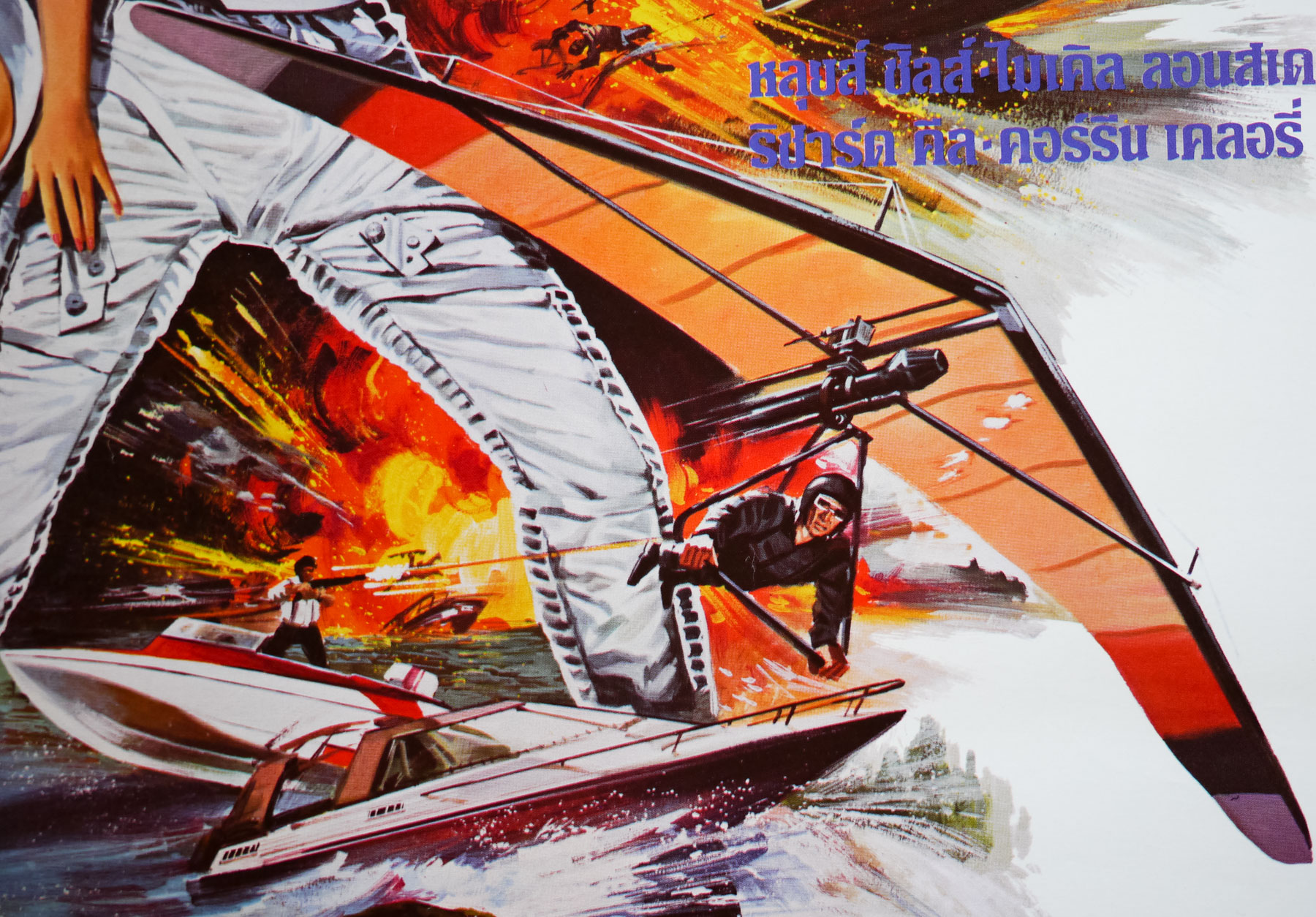
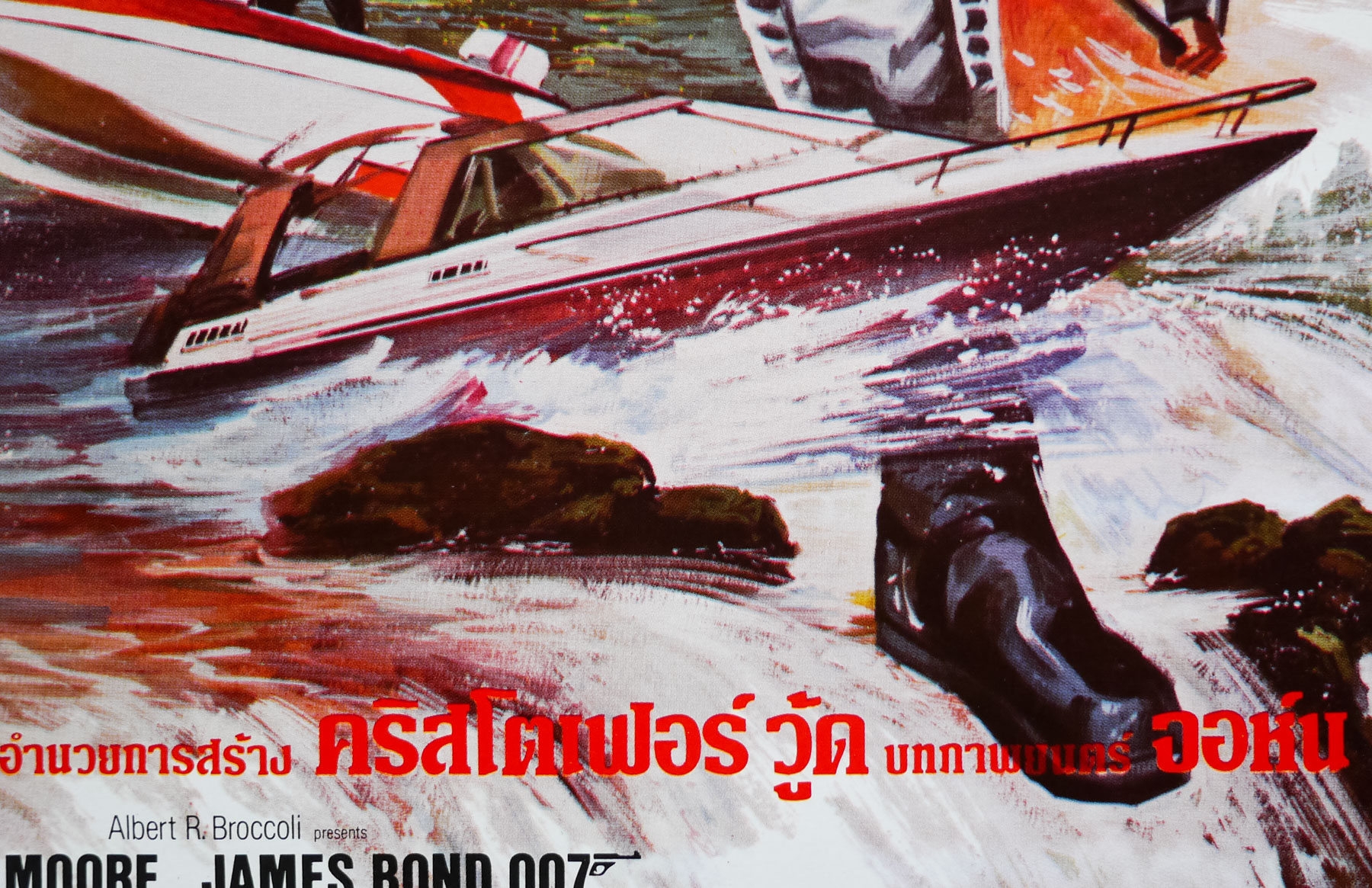
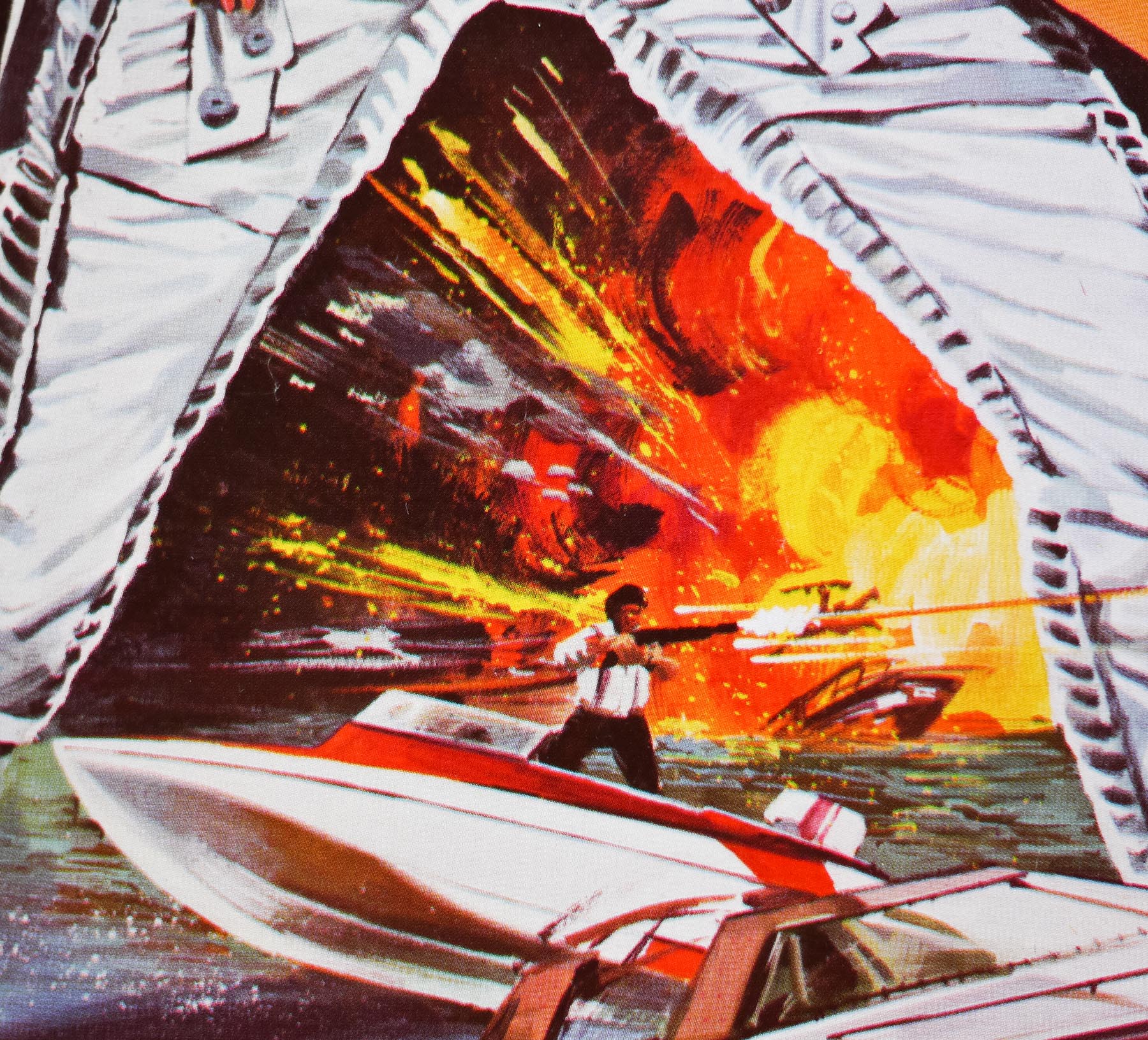
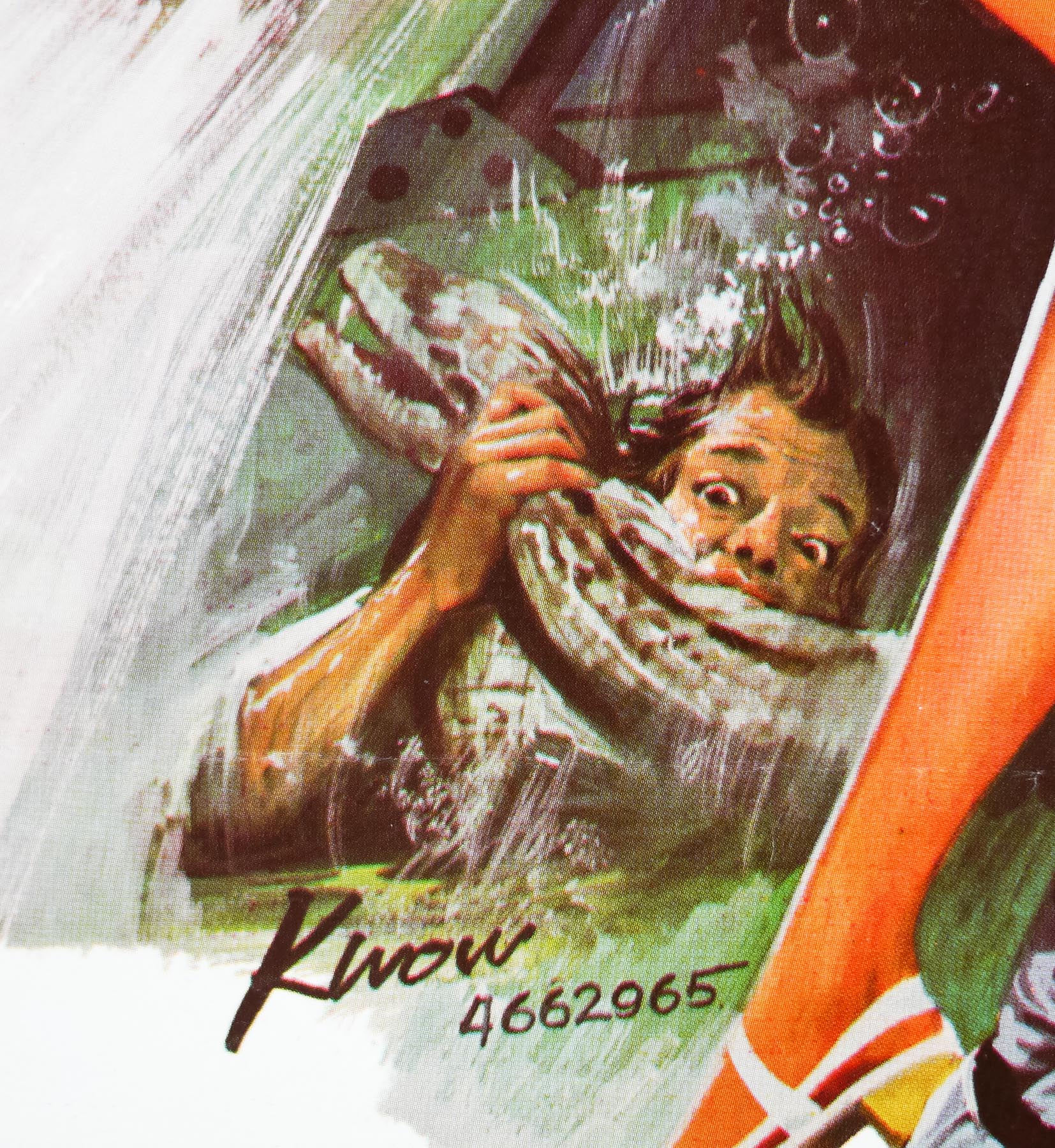
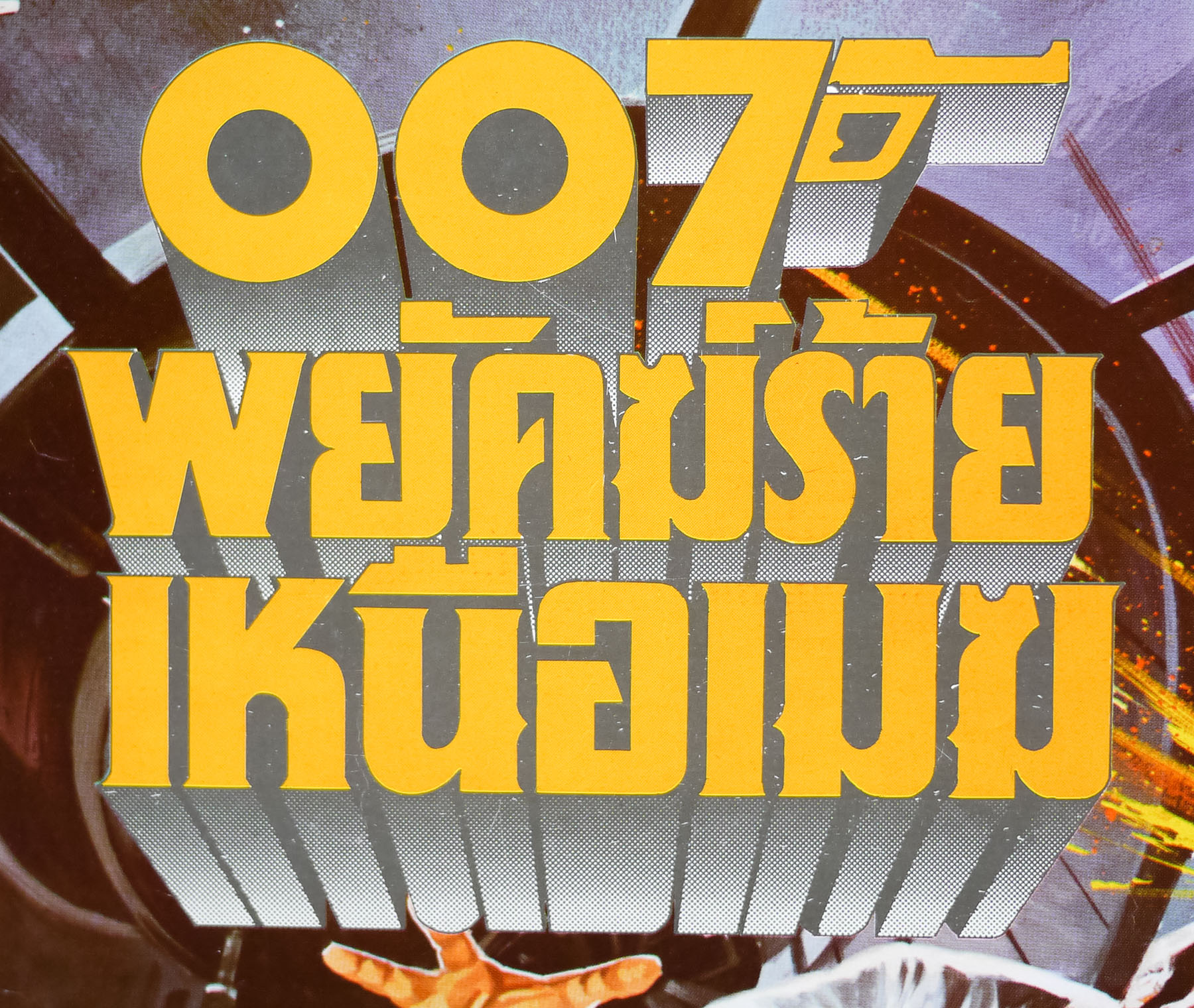
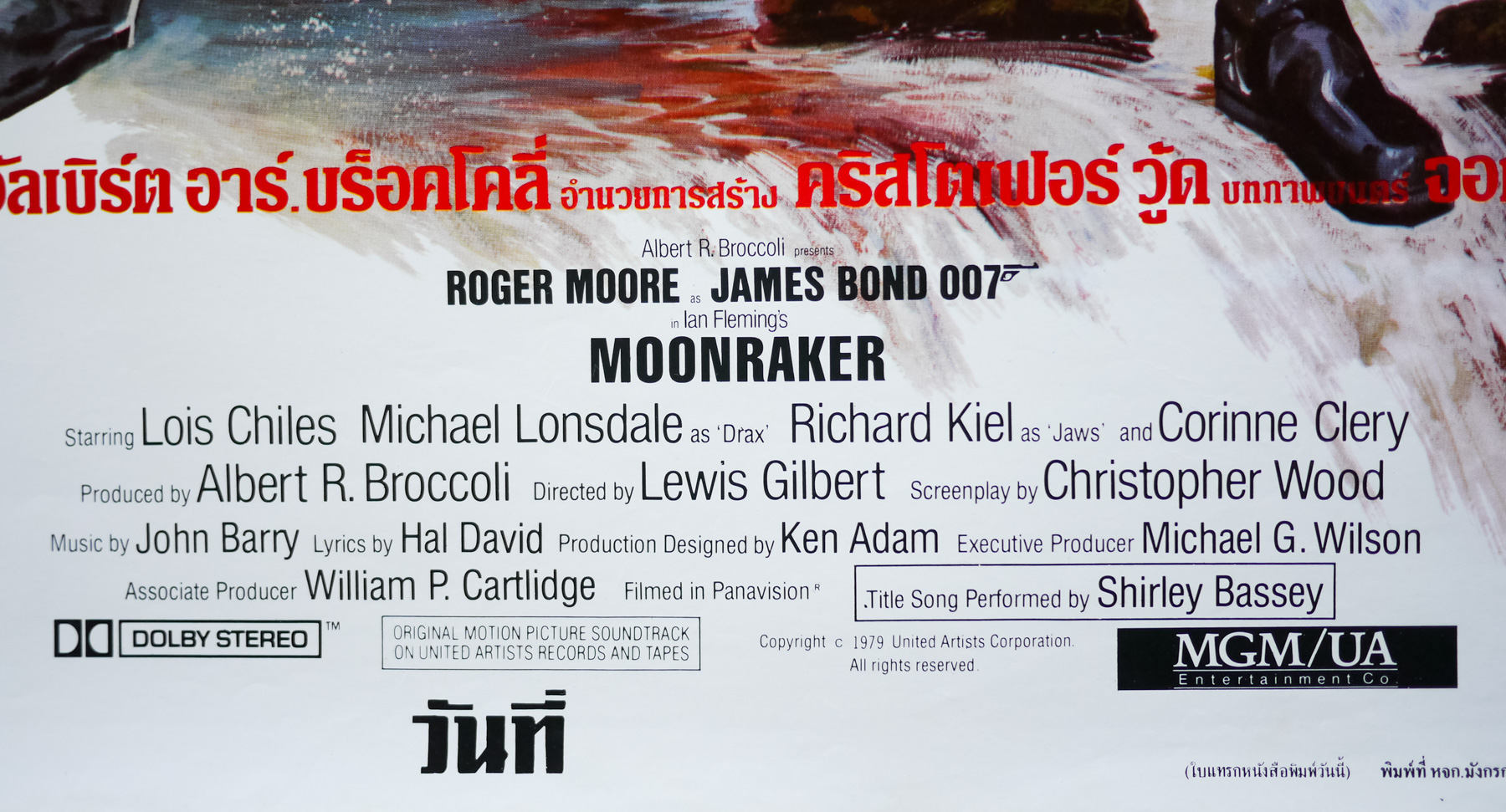
This is the poster printed for the release of the film in Thailand, with a painting by the artist known as Kwow that was clearly based on two of American artist Dan Goozee’s paintings for the film. The main figures and some of the background is a repaint of the art on the the final Moonraker US one sheet with some of the elements from the international style B one sheet. I’ve been unable to find out anything about Kwow beyond other posters he worked on so if anyone has any more details please get in touch.

The other Moonraker posters I’ve collected can be seen here.

First Blood / large / Thailand

08.12.16

Poster Poster
Title
First Blood
AKA
Rambo (multiple countries)
Year of Film
1982
Director
Ted Kotcheff
Starring
Sylvester Stallone, Brian Dennehy, Richard Crenna, Bill McKinney, Jack Starrett, Michael Talbott, Chris Mulkey
Origin of Film
USA
Genre(s) of Film
Sylvester Stallone, Brian Dennehy, Richard Crenna, Bill McKinney, Jack Starrett, Michael Talbott, Chris Mulkey,
Type of Poster
Thai
Style of Poster
Large style
Origin of Poster
Thailand
Year of Poster
1982
Designer
Unknown
Artist
Tongdee Panumas | Drew Struzan (original Rambo figure holding gun, repainted by Tongdee)
Size (inches)
27.5" x 39 15/16"
SS or DS
SS
Tagline
--

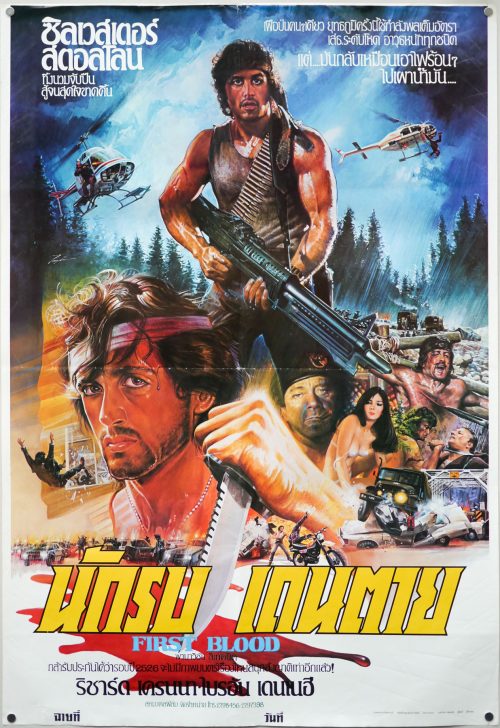
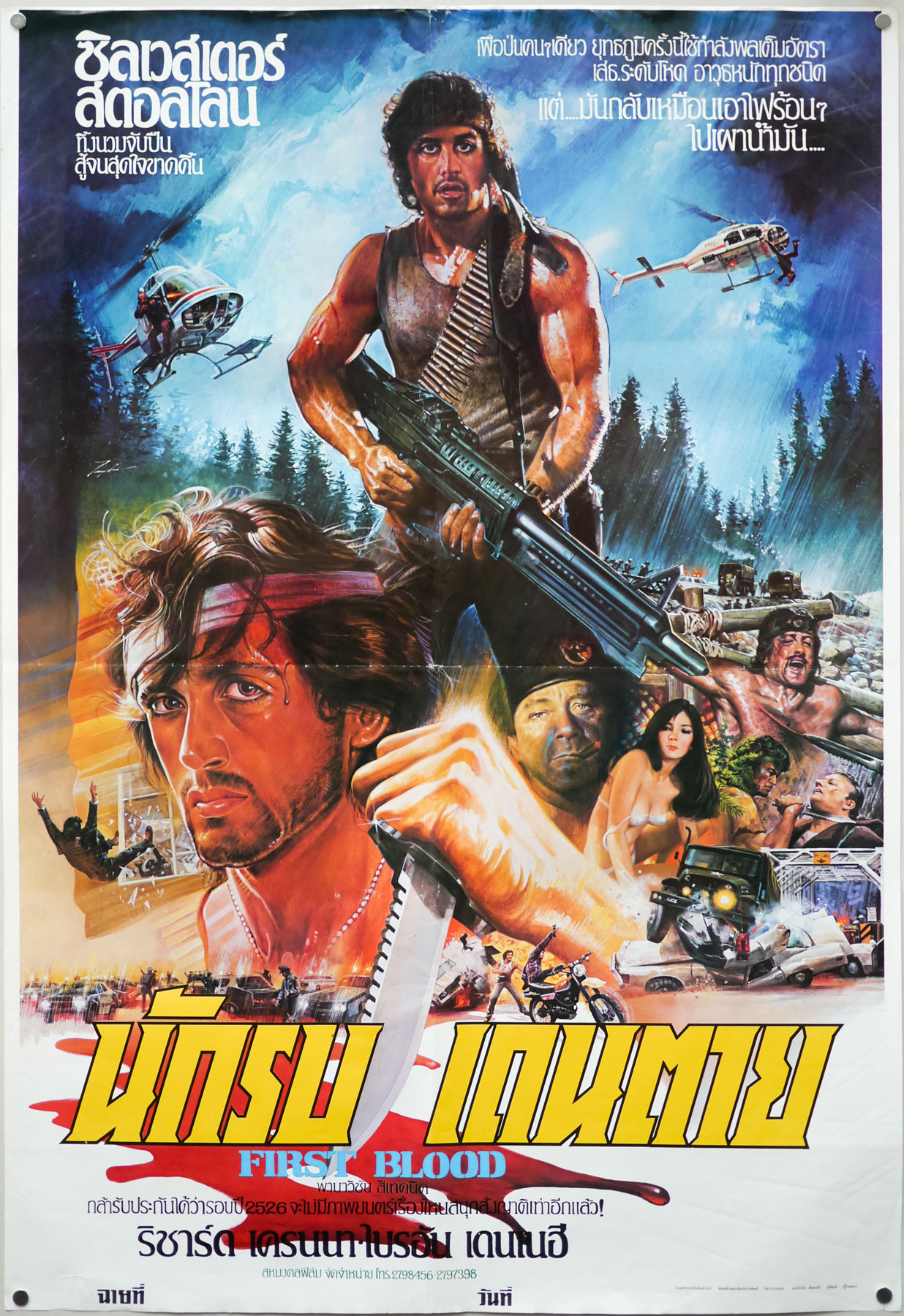
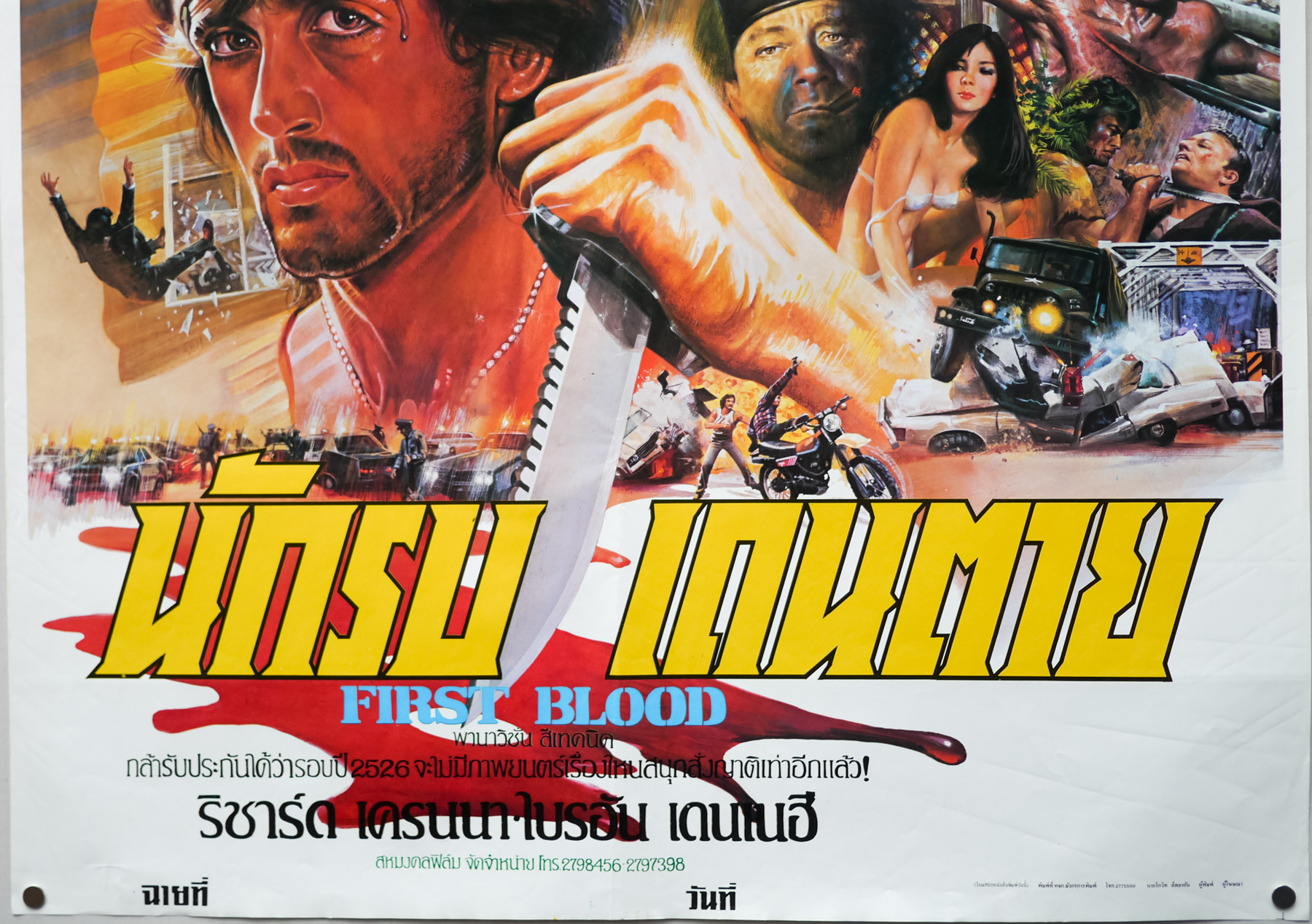
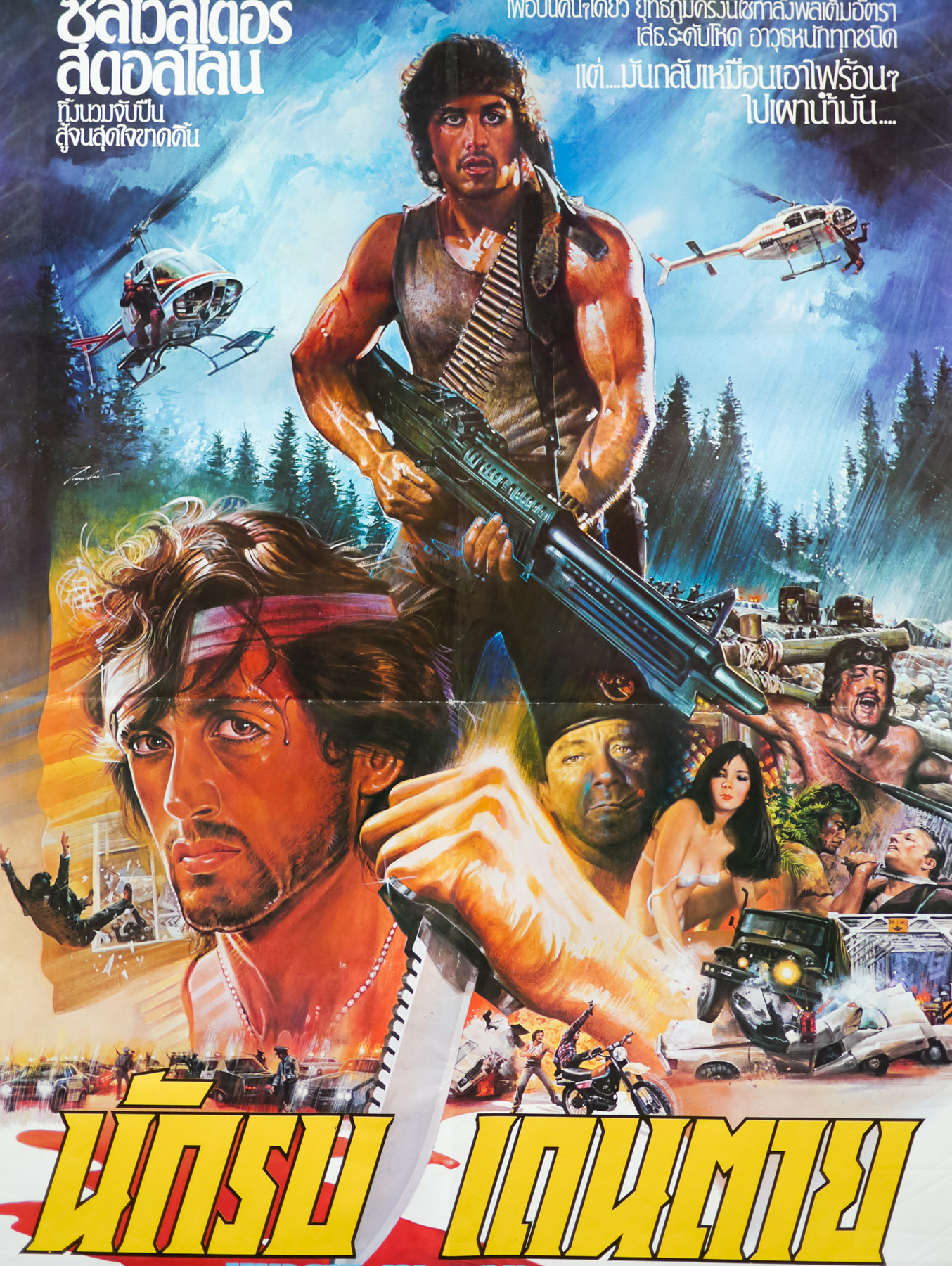
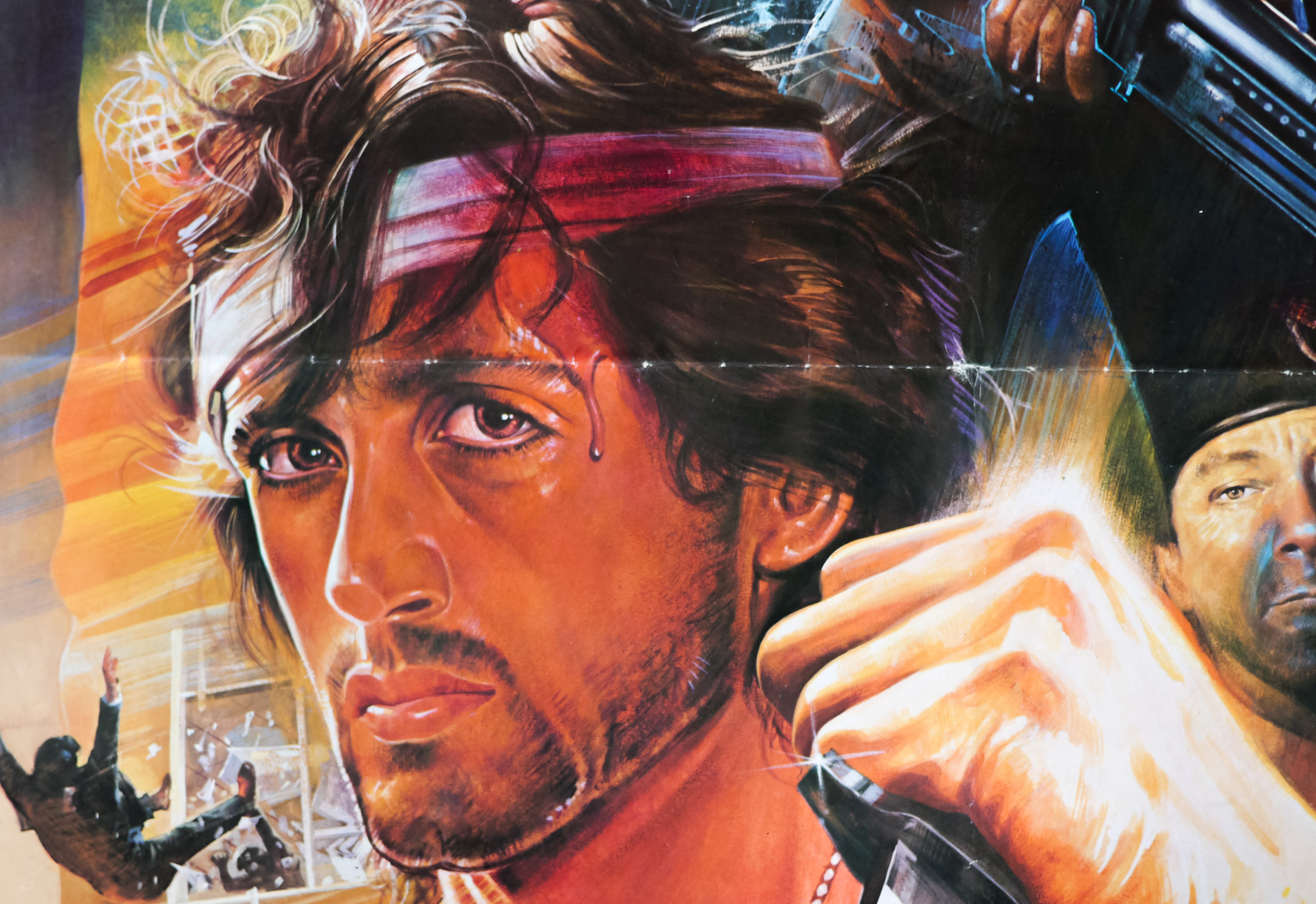
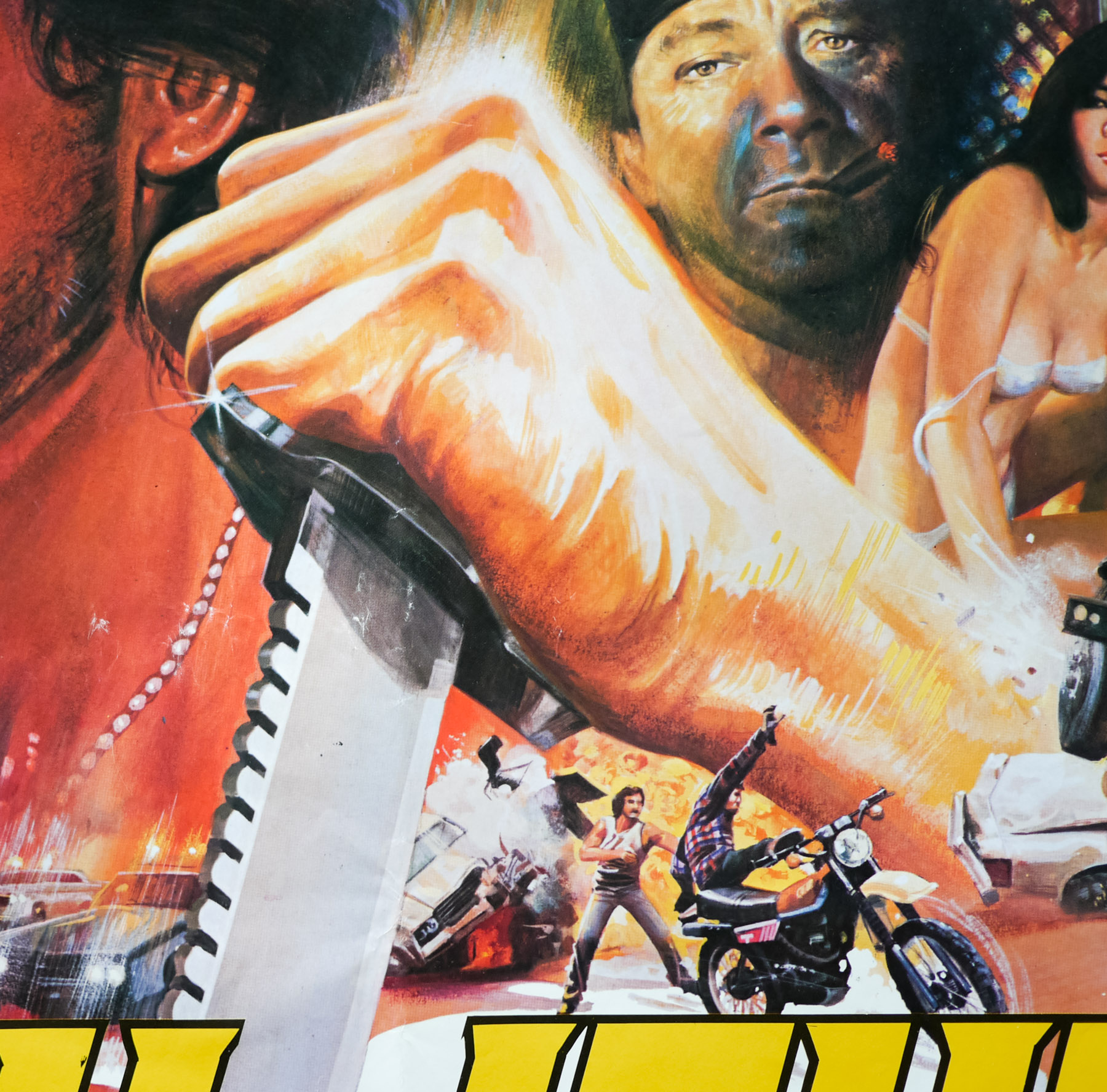
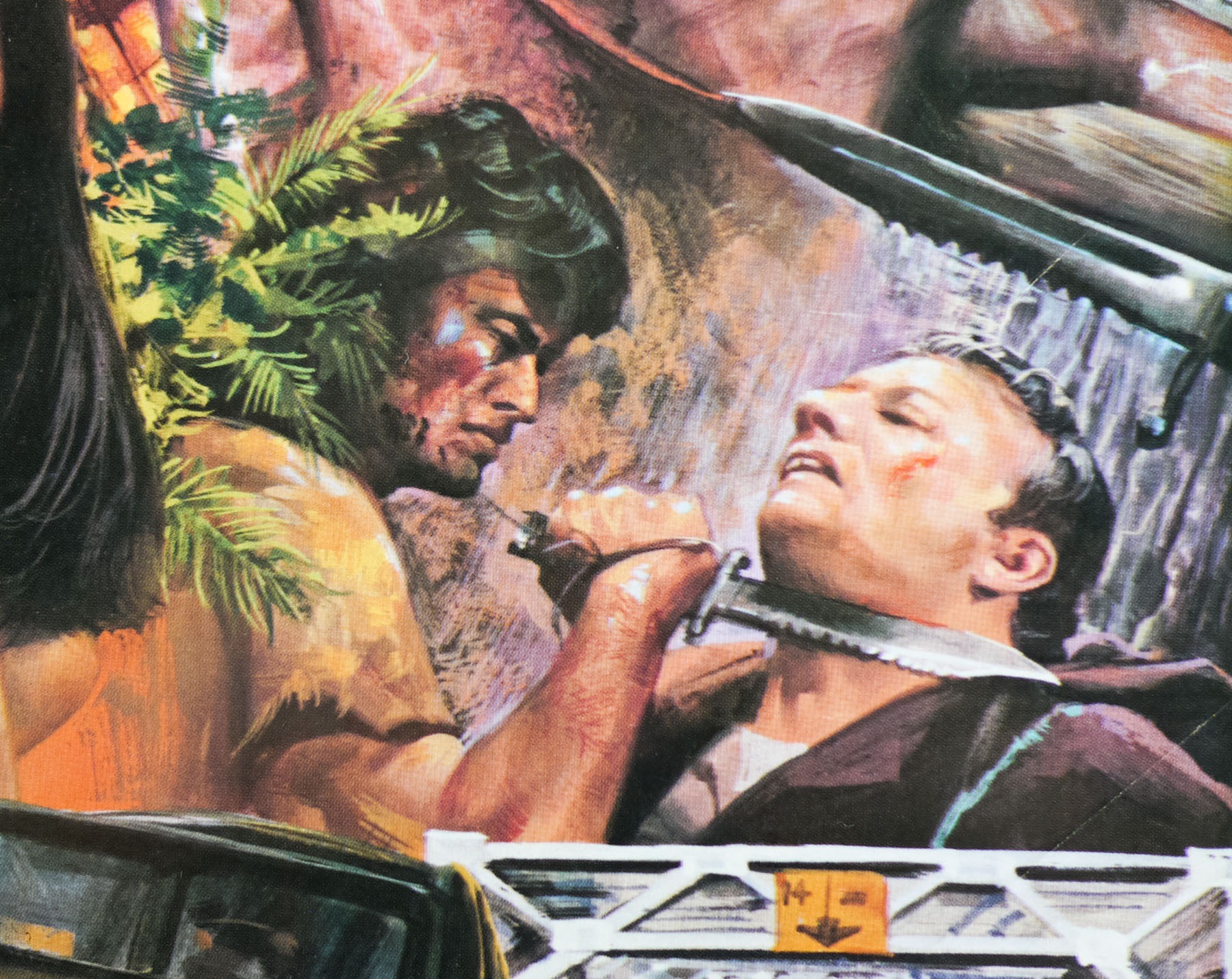
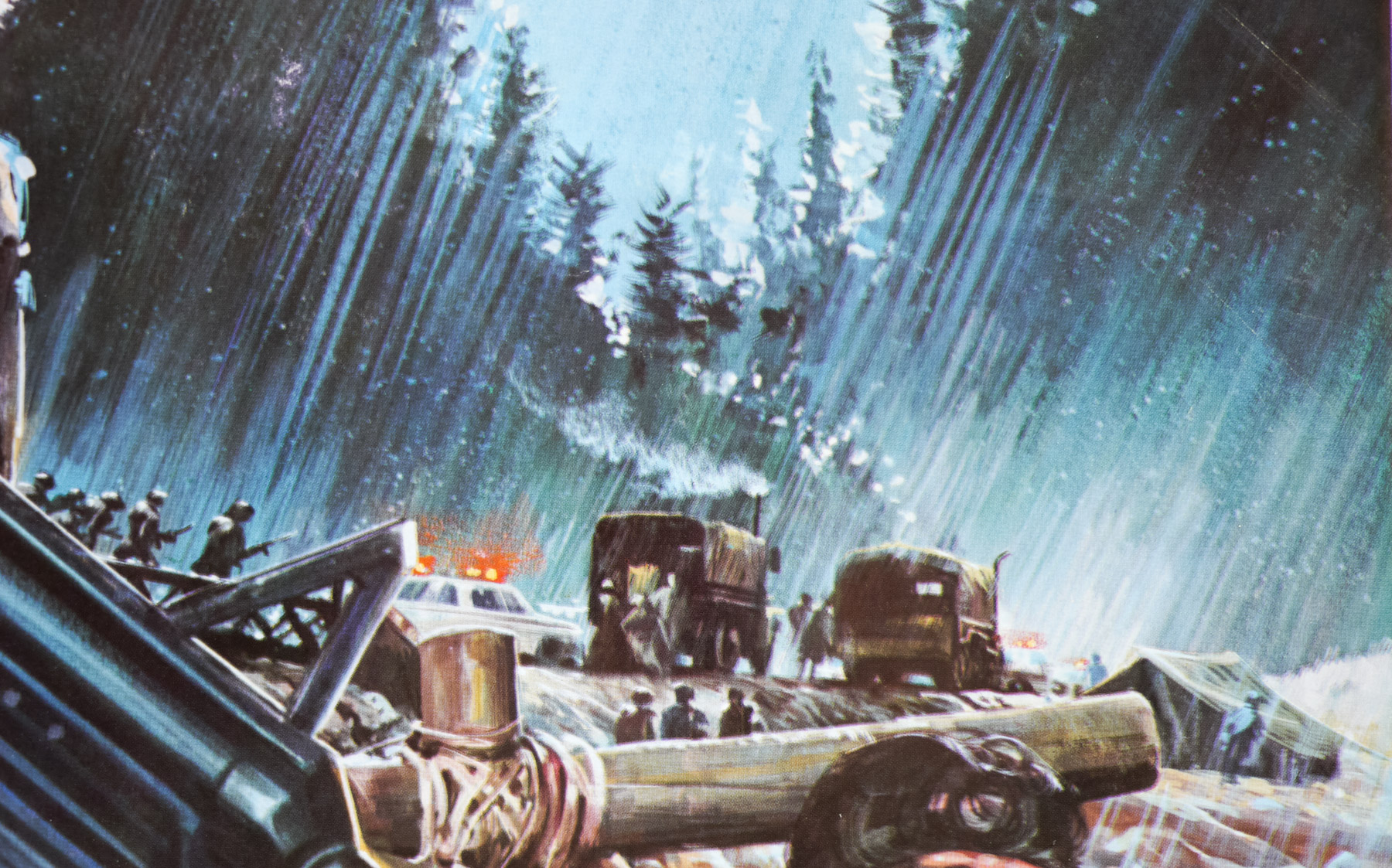
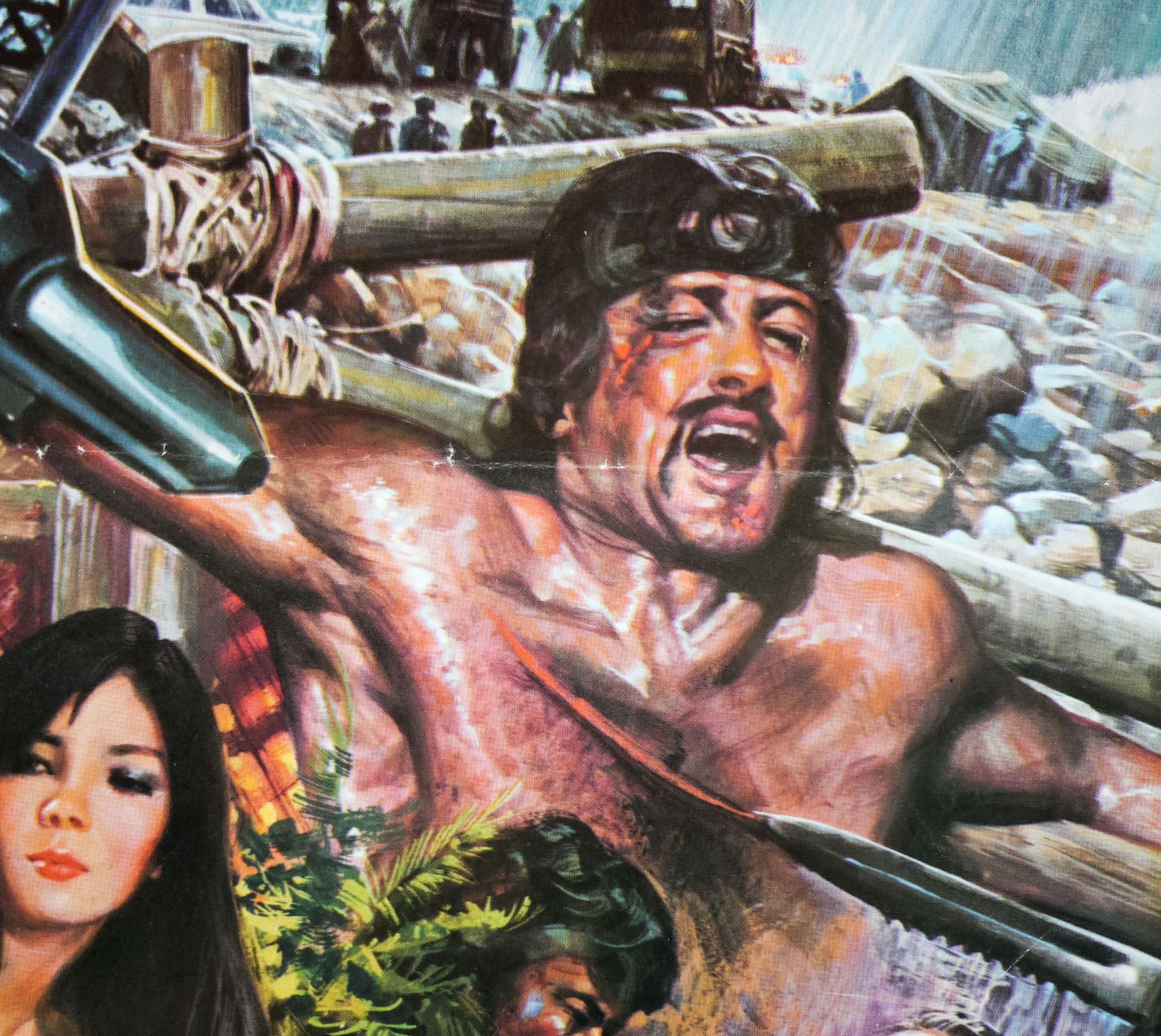
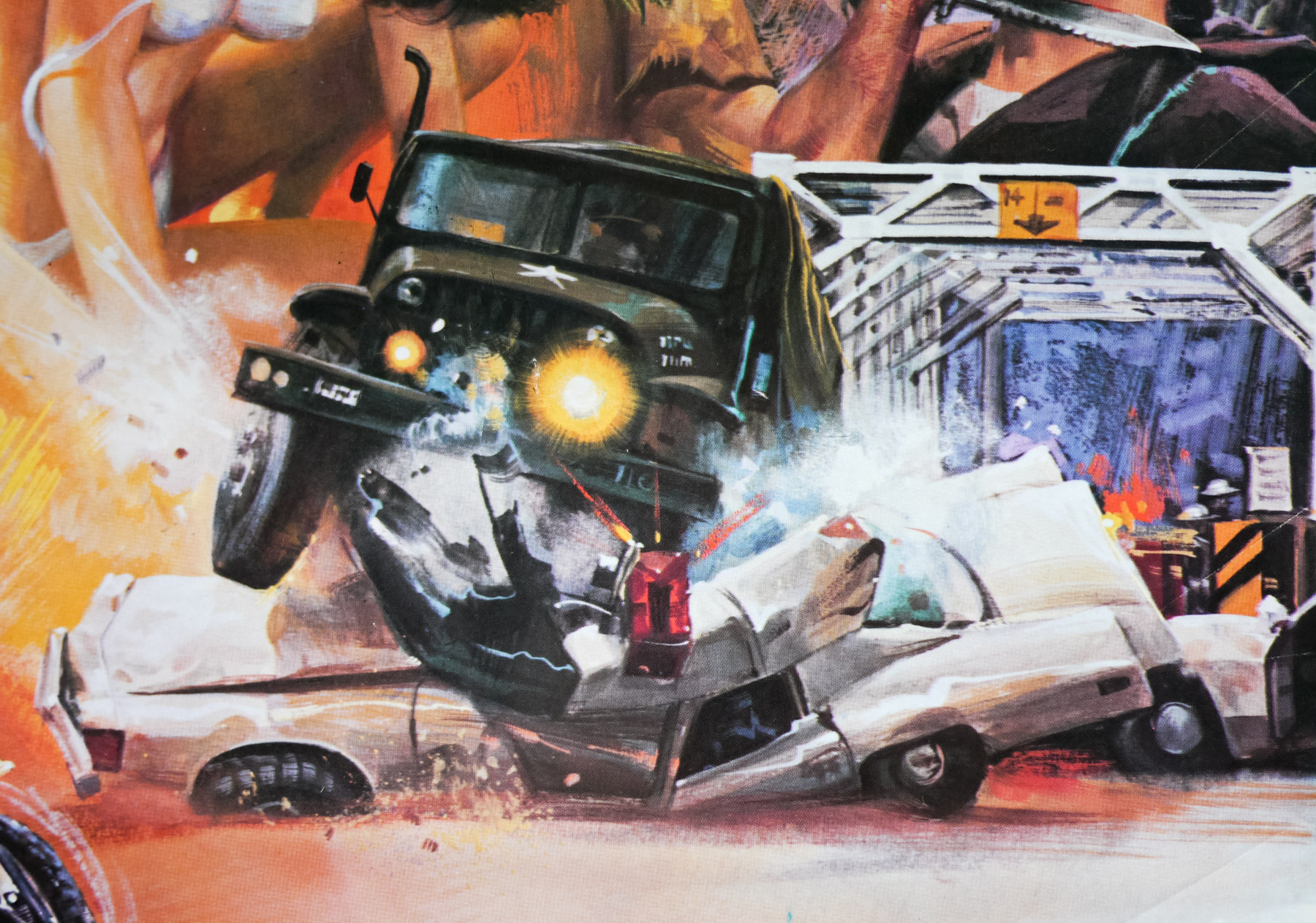
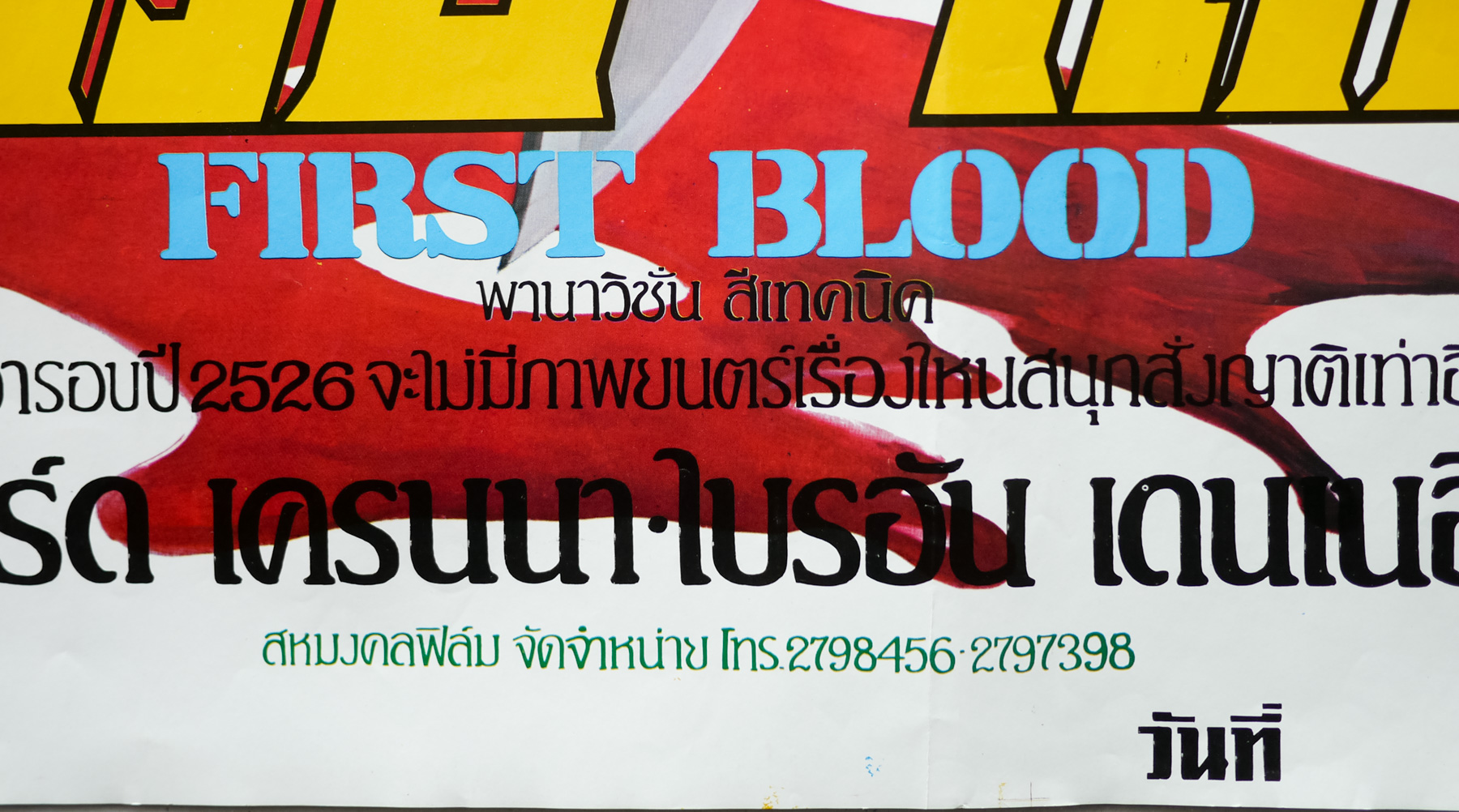
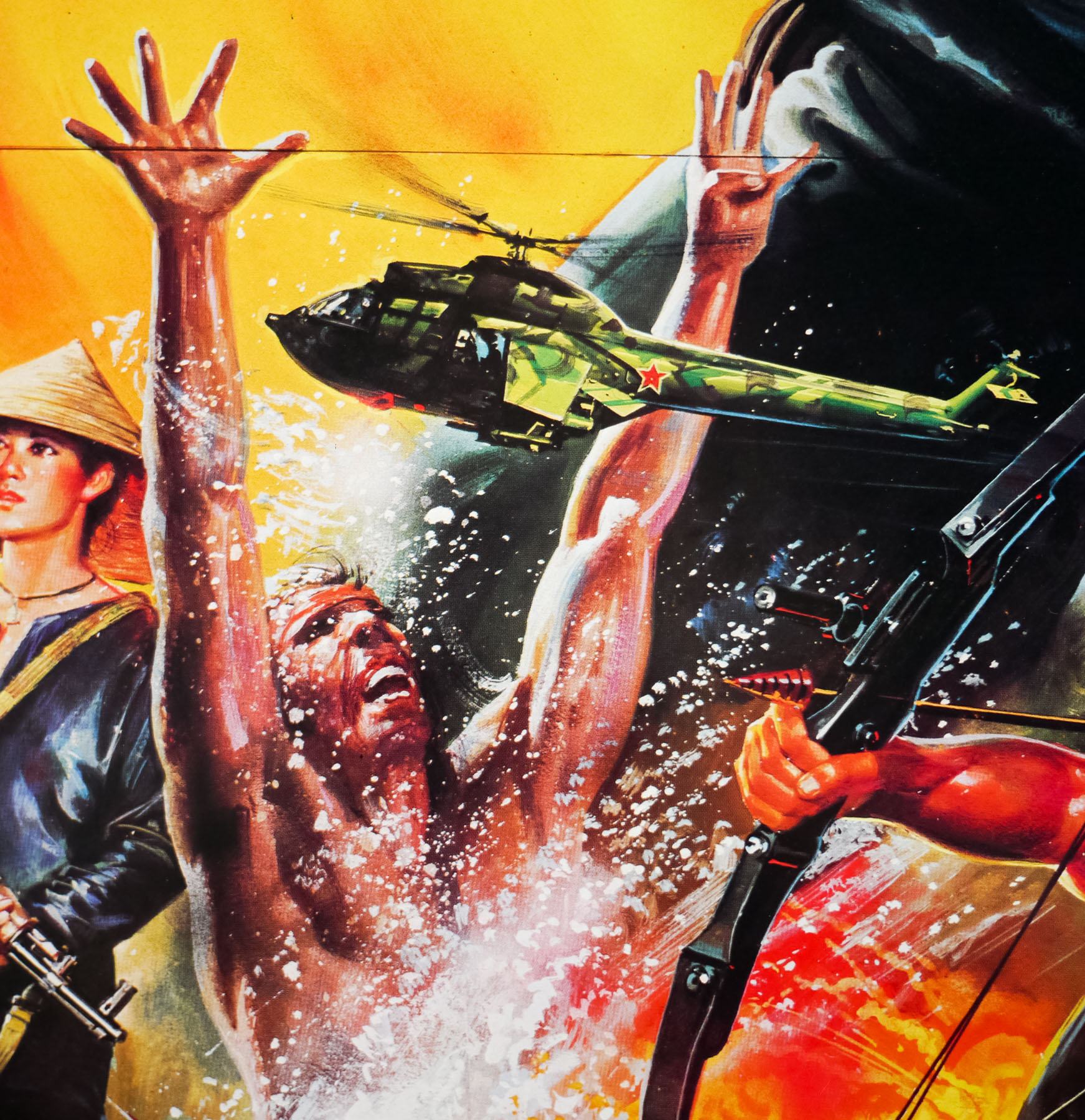
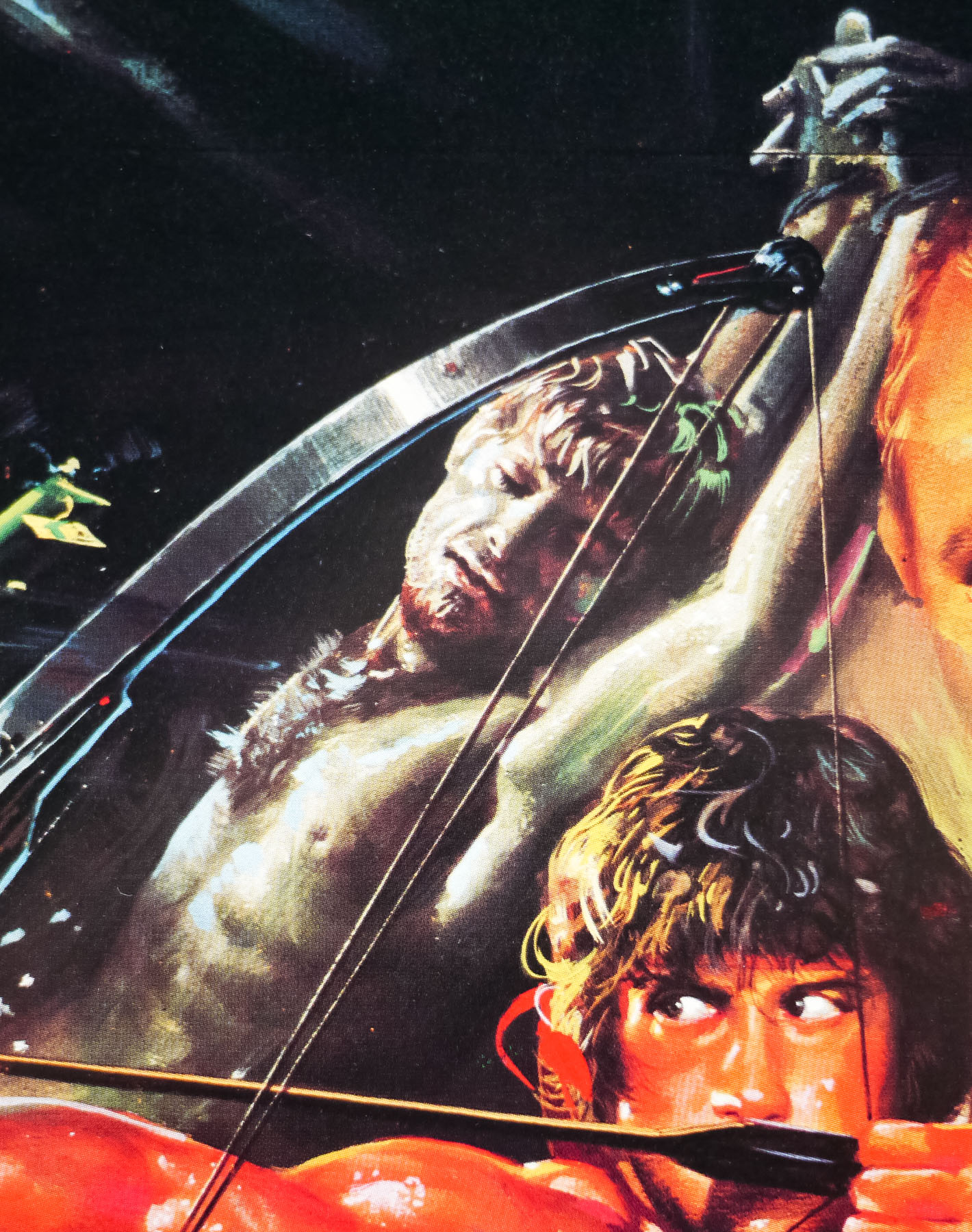
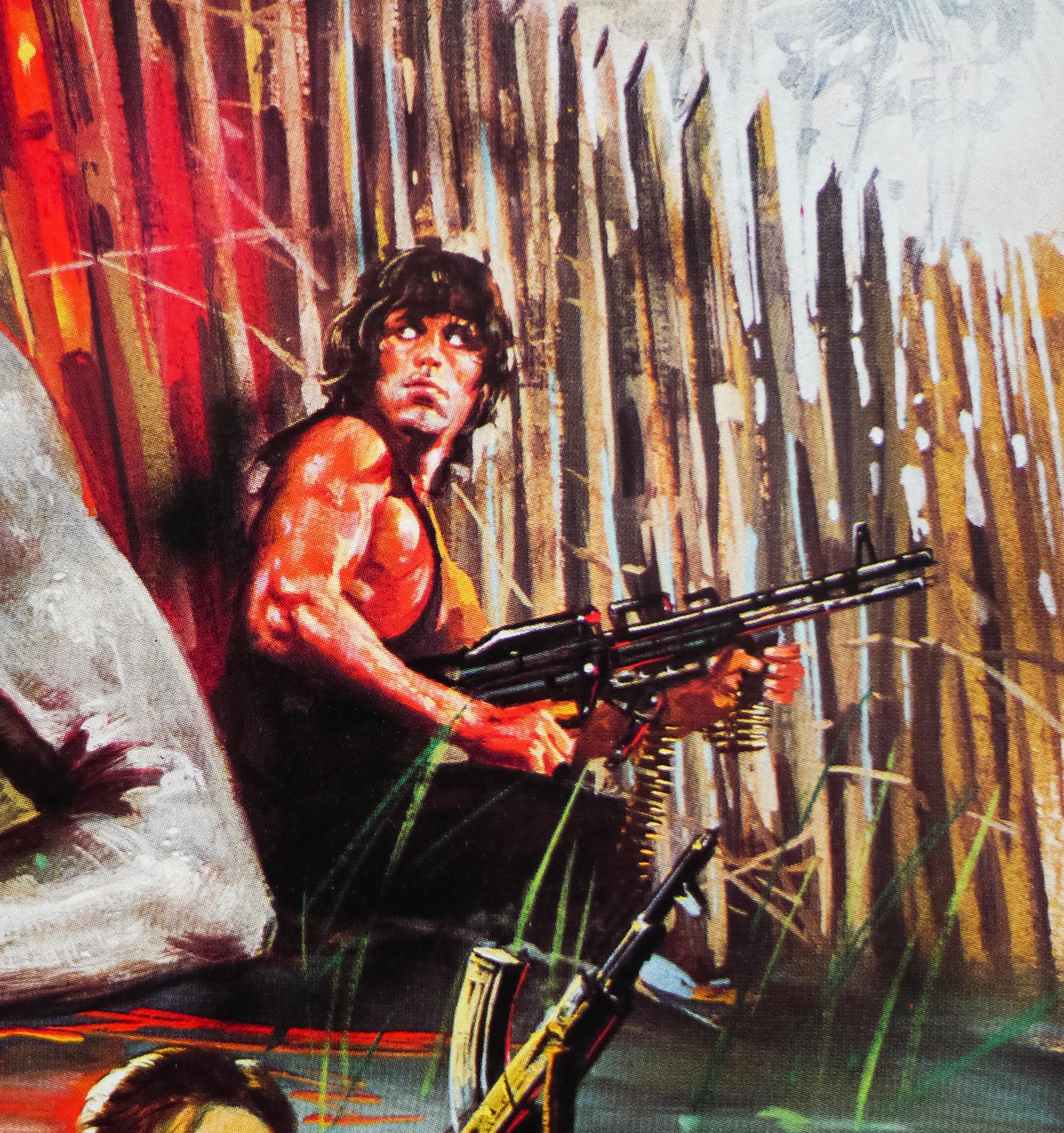
This is the scarce, large-size poster for the Thai release of the first film in what would become known as the Rambo series, First Blood. Helmed by the Canadian director Ted Kotcheff, the film was co-written by the film’s star Sylvester Stallone. Stallone would eventually become best known for two series that between them saw 11 films released over a 40 year period; the Rocky boxing saga and Rambo. The first Rocky film had been met with critical and commercial success when it was released in 1976. A sequel followed three years later and Stallone had Rocky III in cinemas at the same time as First Blood (1982). The latter cemented the actor as a box-office behemoth and he became one of the 1980’s action megastars, alongside Arnold Schwarzenegger and Bruce Willis.
First Blood started life as a 1972 novel by author David Morrell which had its rights optioned by Columbia Pictures almost immediately. The project then spent the next decade bouncing between studios, producers and directors. Eventually Stallone was offered the lead role and Ted Kotcheff agreed to direct for the legendary producers Mario Kassar and Andrew G. Vajna of Carolco Pictures.
John J. Rambo (Stallone) is a former US Special Forces soldier who has returned from Vietnam still haunted and disoriented by his experiences there. He decides to pay a visit to an ex-forces friend by hitchhiking across the country. When he arrives he discovers that his pal died soon after returning from the war due to exposure to Agent Orange. Rambo continues his journey on foot and eventually arrives in the small town of Hope, Washington. There he is confronted and abused by the local sheriff known as Teasle (Brian Dennehy) who drives Rambo out of town and tells him not to return.

Deciding to defy the orders, Rambo is soon arrested by Teasle for a series of bogus charges. Whilst in detention and being sadistically attacked by the other corrupt sheriffs, Rambo has flashbacks to being a Prisoner of War in Vietnam. Fearing for his life, he fights his way out of the jail. There then follows a cat and mouse chase as he flees into the nearby forest, pursued by Teasle and a gang of his men. He manages to evade and outwit the sheriffs and eventually his former commanding officer Trautman (an excellent Richard Crenna) arrives in Hope to help with the situation. Trautman warns the lawmen that Rambo will not come quietly and urges them not to corner him. When they fail to heed his warning, a series of violent encounters ends with Rambo pitched against Teasle in a night-time confrontation.

The film was a huge box-office success on its release, although film critics were less than impressed at the time. It would later be given a critical reappraisal and quickly gained cult status once it was released on home video. Two sequels were released in the 1980s but these were much more gung-ho and violent than the original. It’s often forgotten how relatively tame the first Rambo film is compared to the three sequels, particularly the later revival film, Rambo (2008).

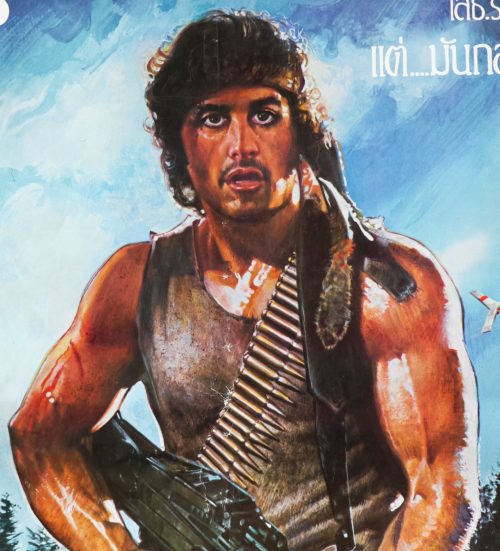
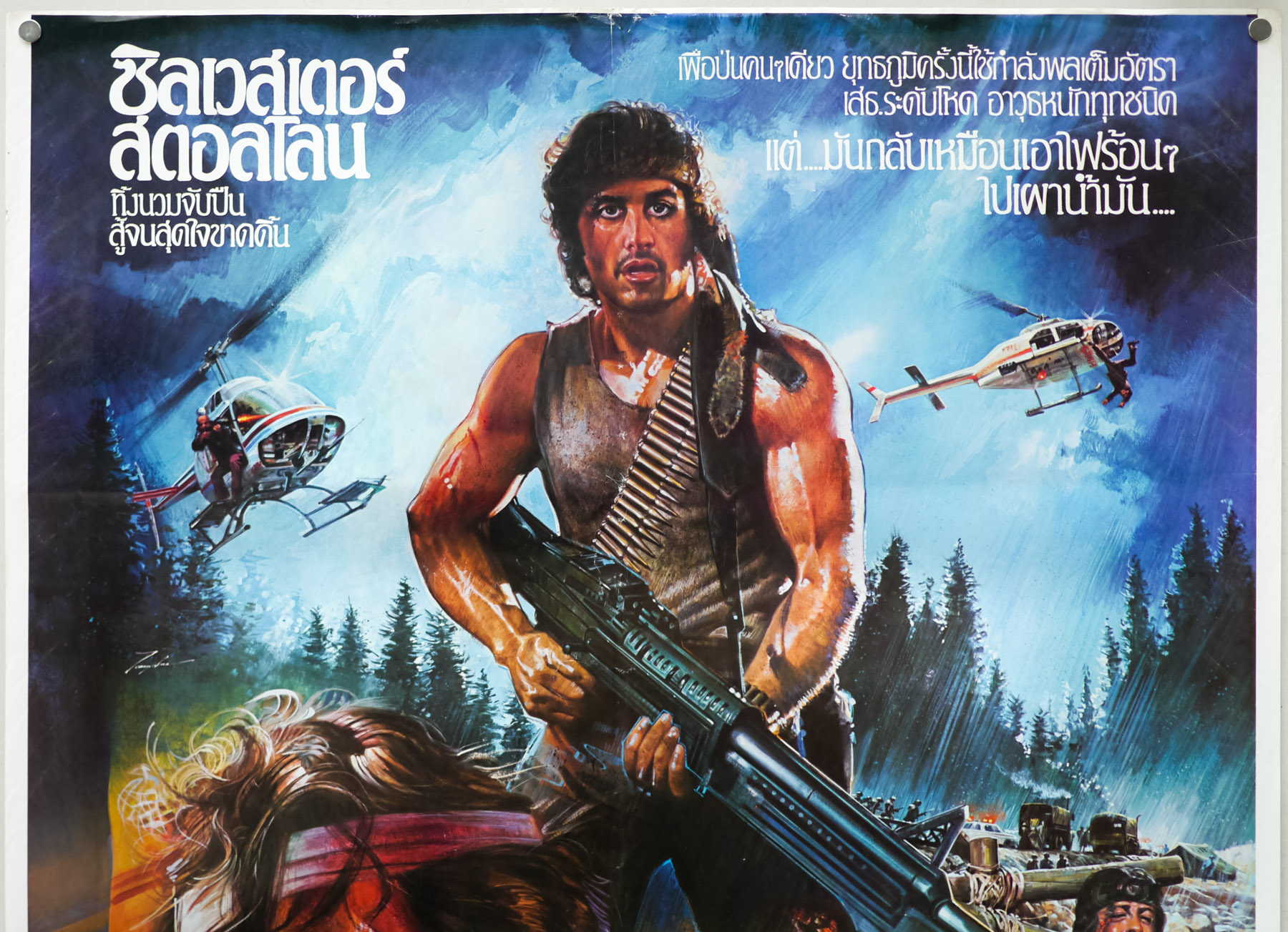
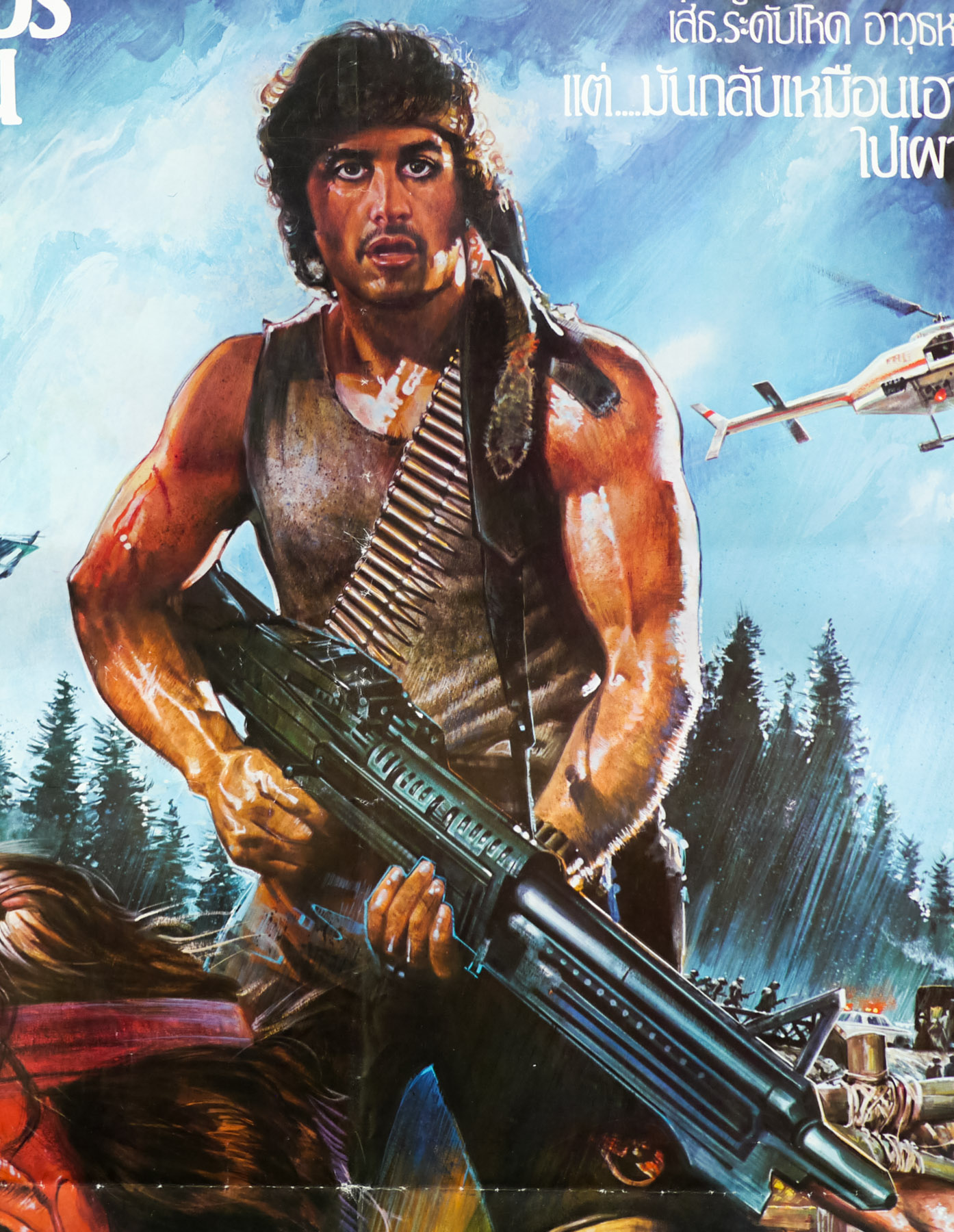
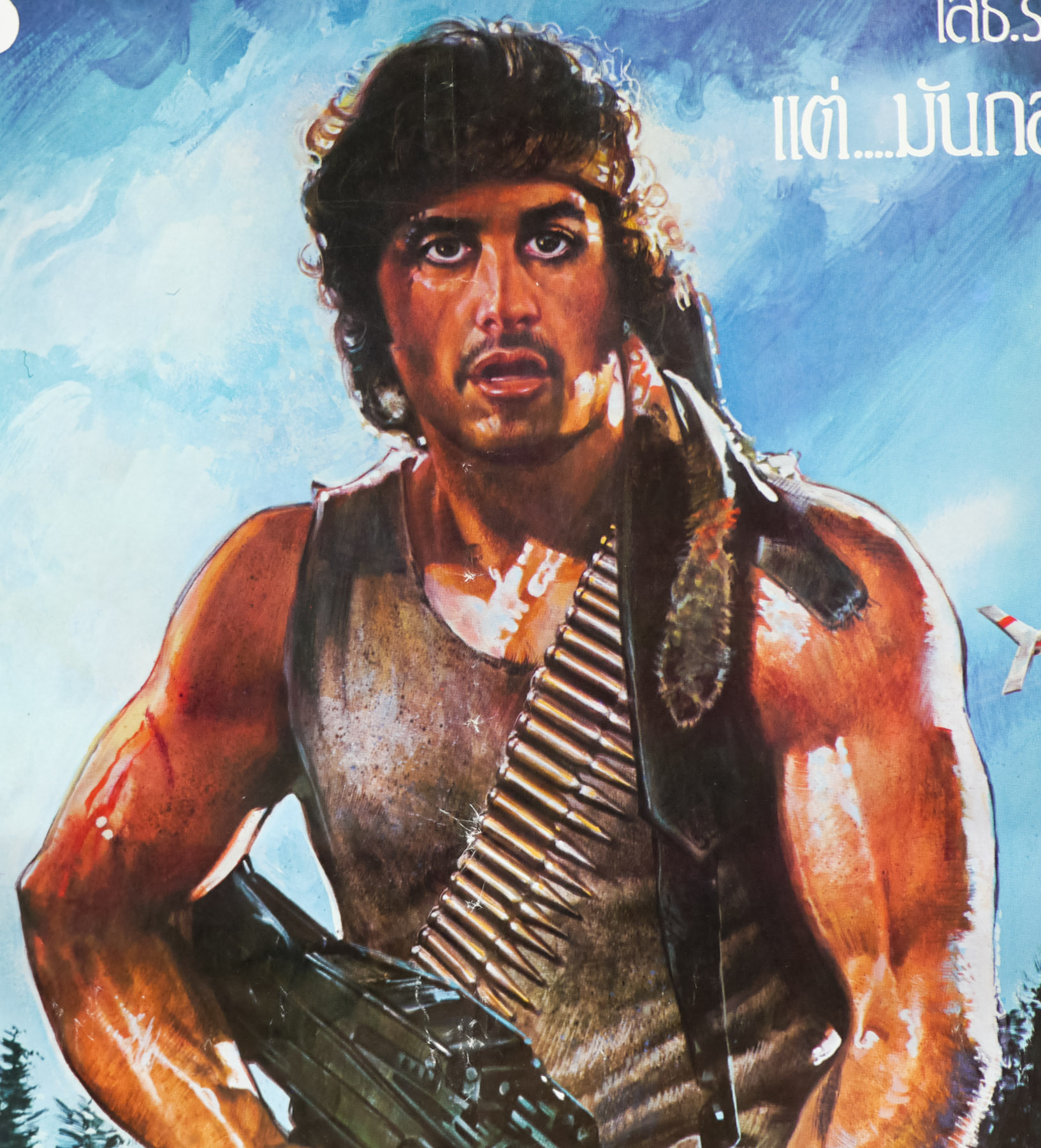
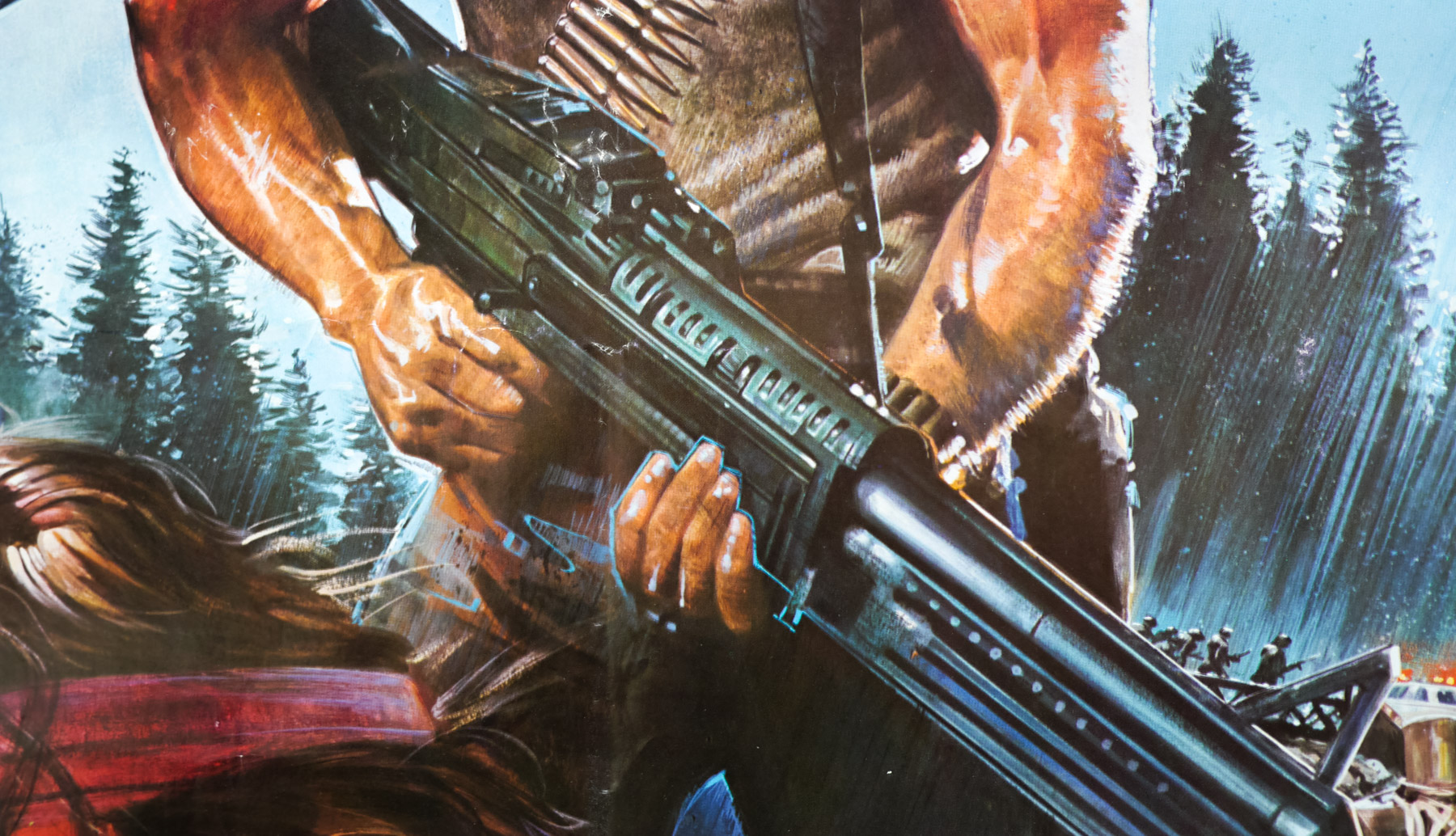
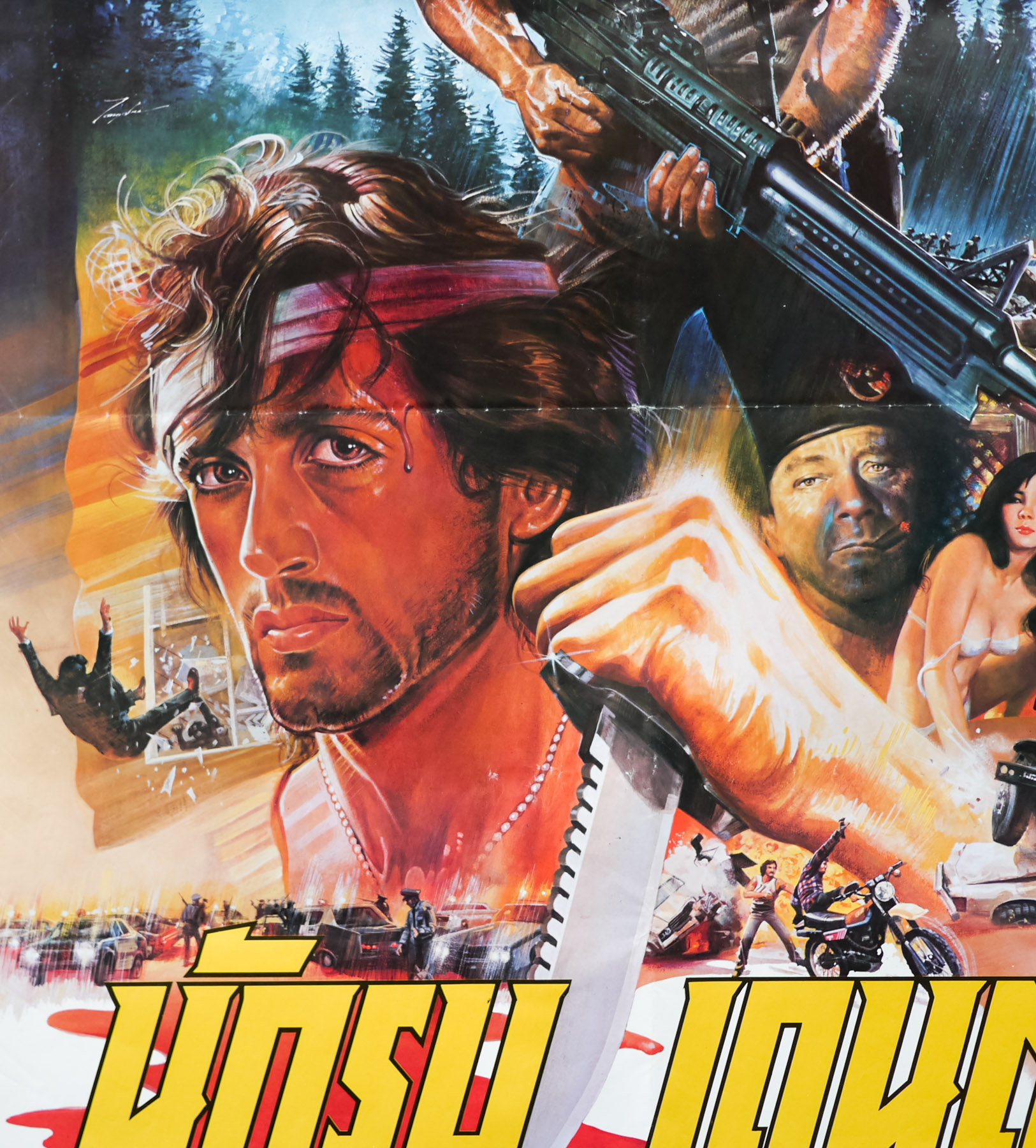
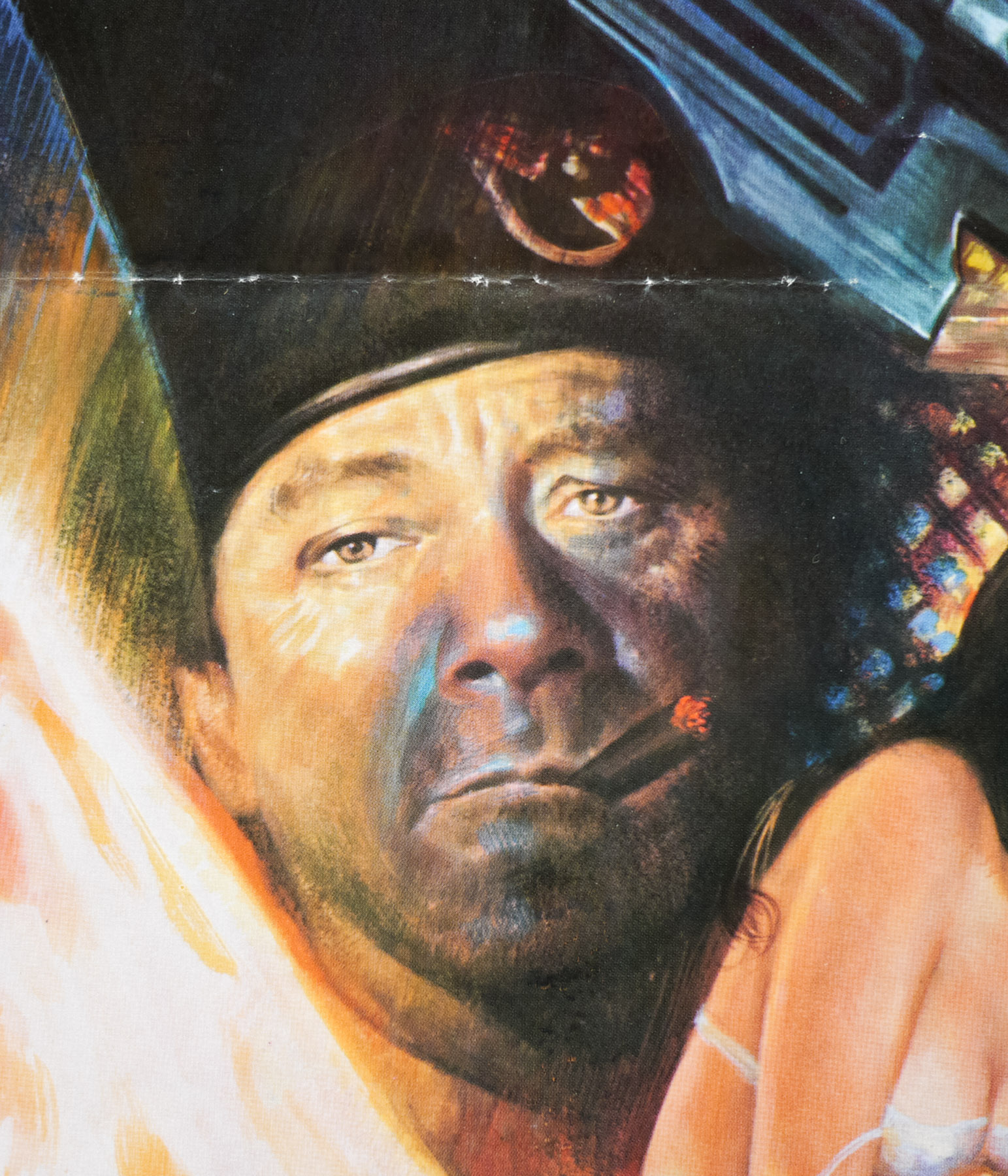
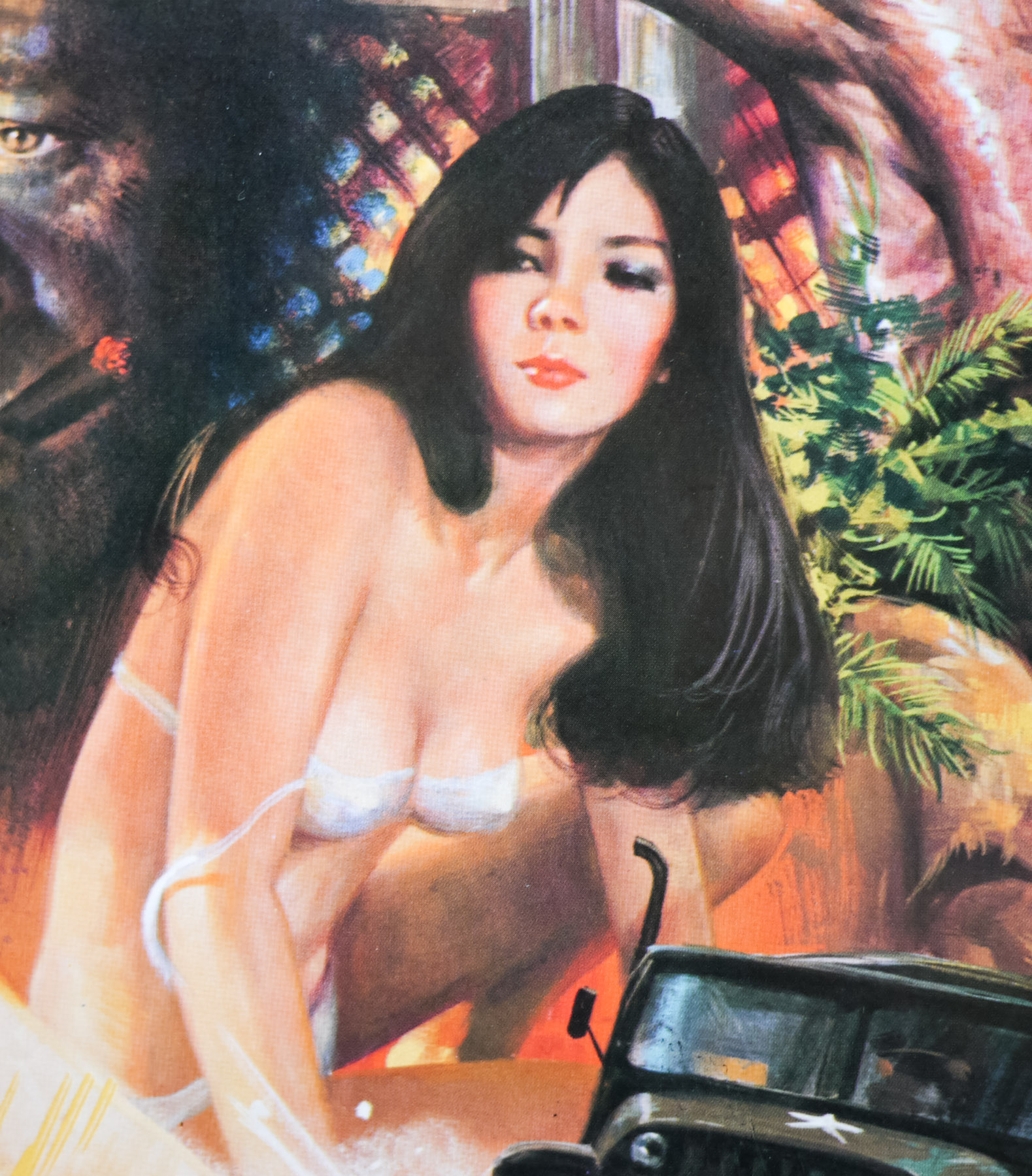
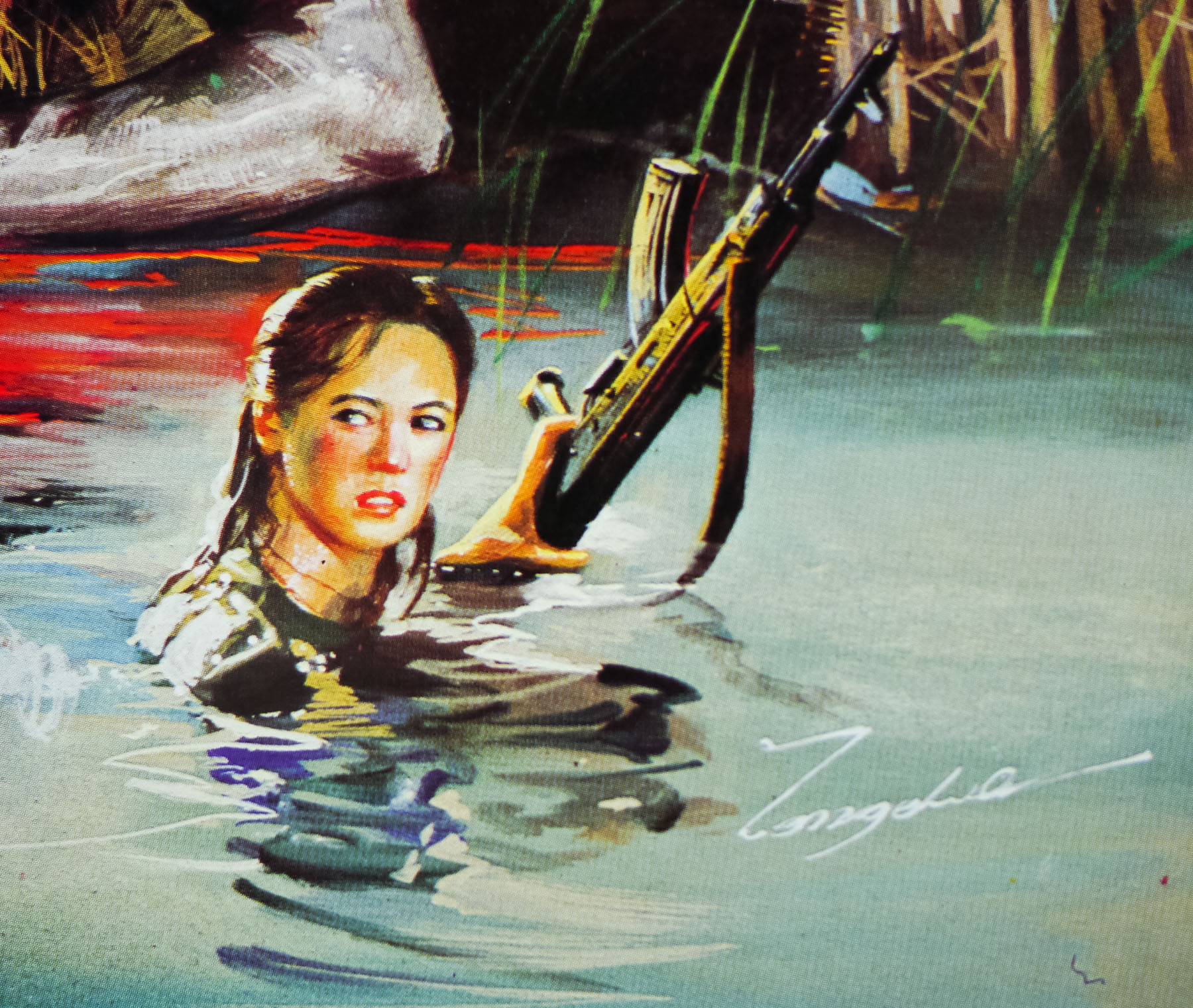
This is one of three Thai posters that exist for First Blood. At least one of them is for a later re-release but I believe this poster, which is the size of a US one-sheet, was printed for the original cinema release in Thailand. The main figure of Rambo with the giant machine gun is based on the artwork by Drew Struzan that was used on the American one sheet and British quad. It has been repainted by Tongdee and the rest of the poster is of the artist’s own creation.

Tongdee Panumas was an incredibly prolific film poster artist during the 70s, 80s and 90s. I’ve been unable to find out much about him, other than that he was born in 1947, so if anyone has any more details please get in touch.

Rambo: First Blood Part II / Thailand

05.01.17

Poster Poster
Title
Rambo: First Blood Part II
AKA
Rambo II: la vendetta [the revenge] (Italy)
Year of Film
1985
Director
George P. Cosmatos
Starring
Sylvester Stallone, Richard Crenna, Charles Napier, Steven Berkoff, Julia Nickson, Julian Turner
Origin of Film
USA
Genre(s) of Film
Sylvester Stallone, Richard Crenna, Charles Napier, Steven Berkoff, Julia Nickson, Julian Turner,
Type of Poster
Thai
Style of Poster
--
Origin of Poster
Thailand
Year of Poster
1985
Designer
Unknown
Artist
Tongdee Panumas
Size (inches)
24 1/16" x 34 14/16"
SS or DS
SS
NSS #
--
Tagline
No man, no law, no war can stop him.

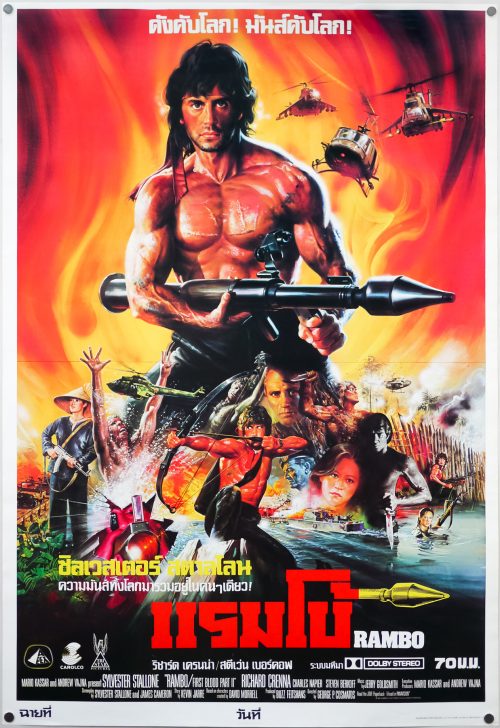
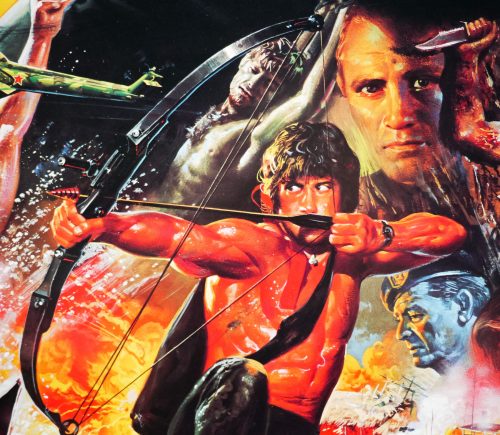
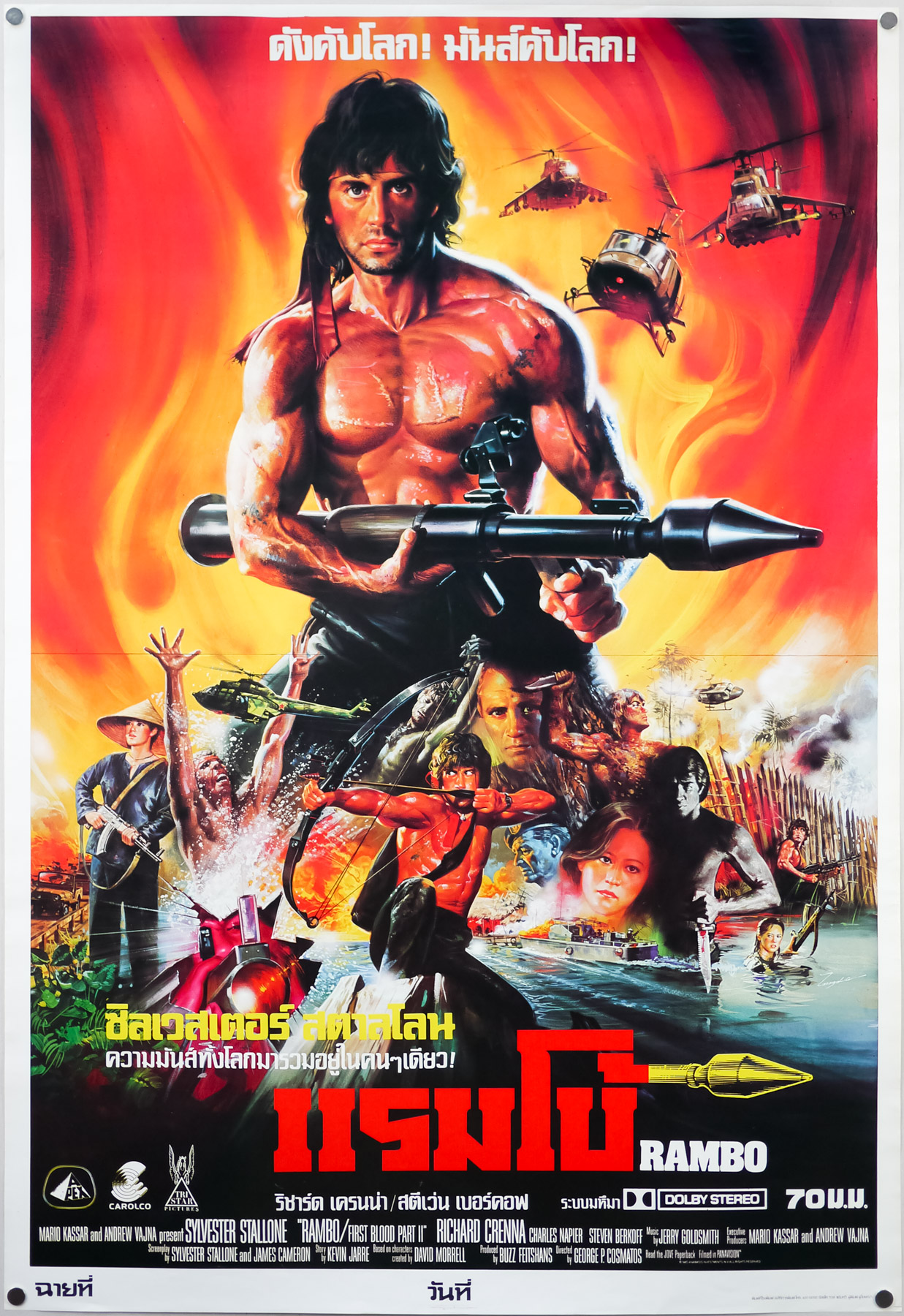
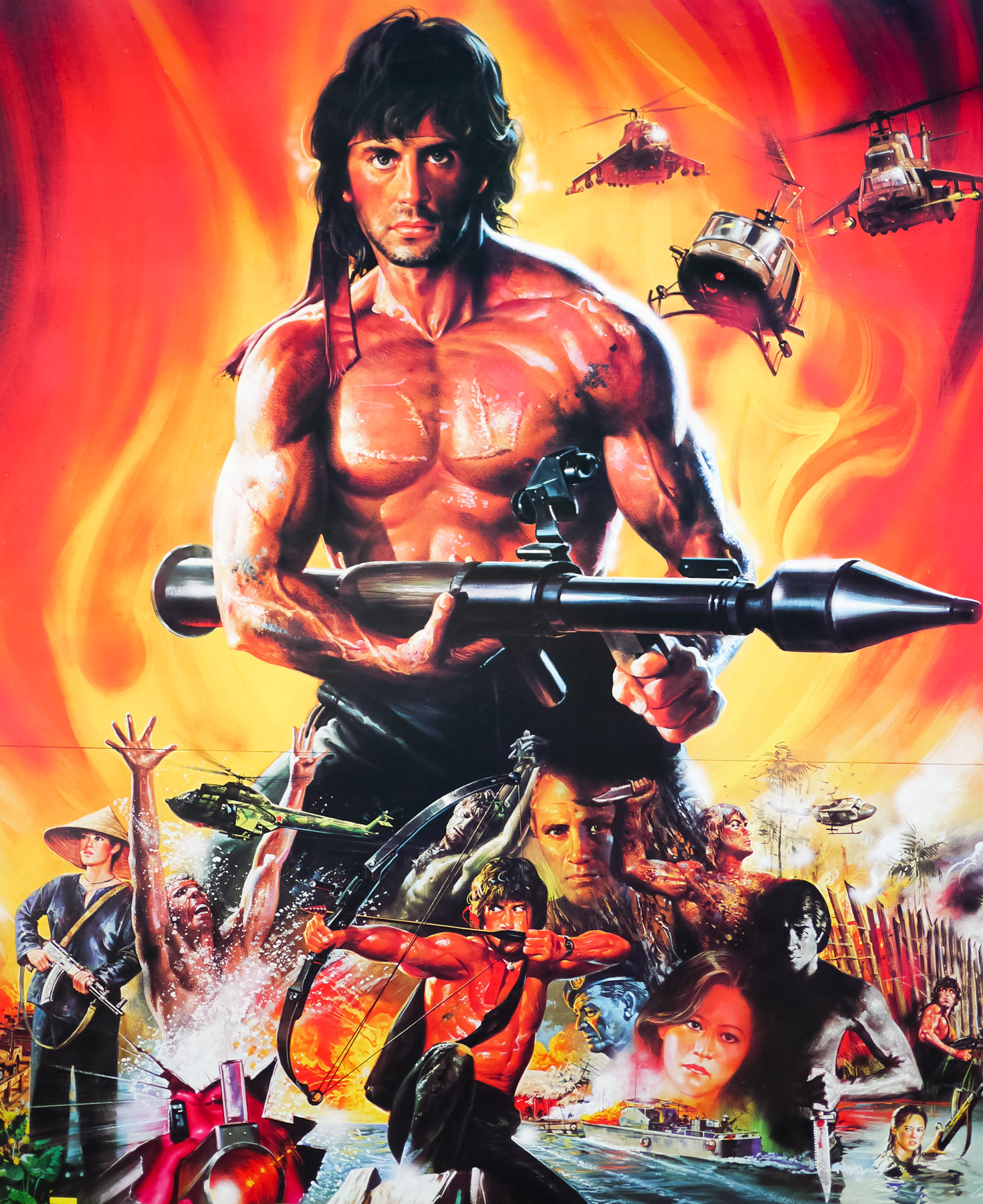
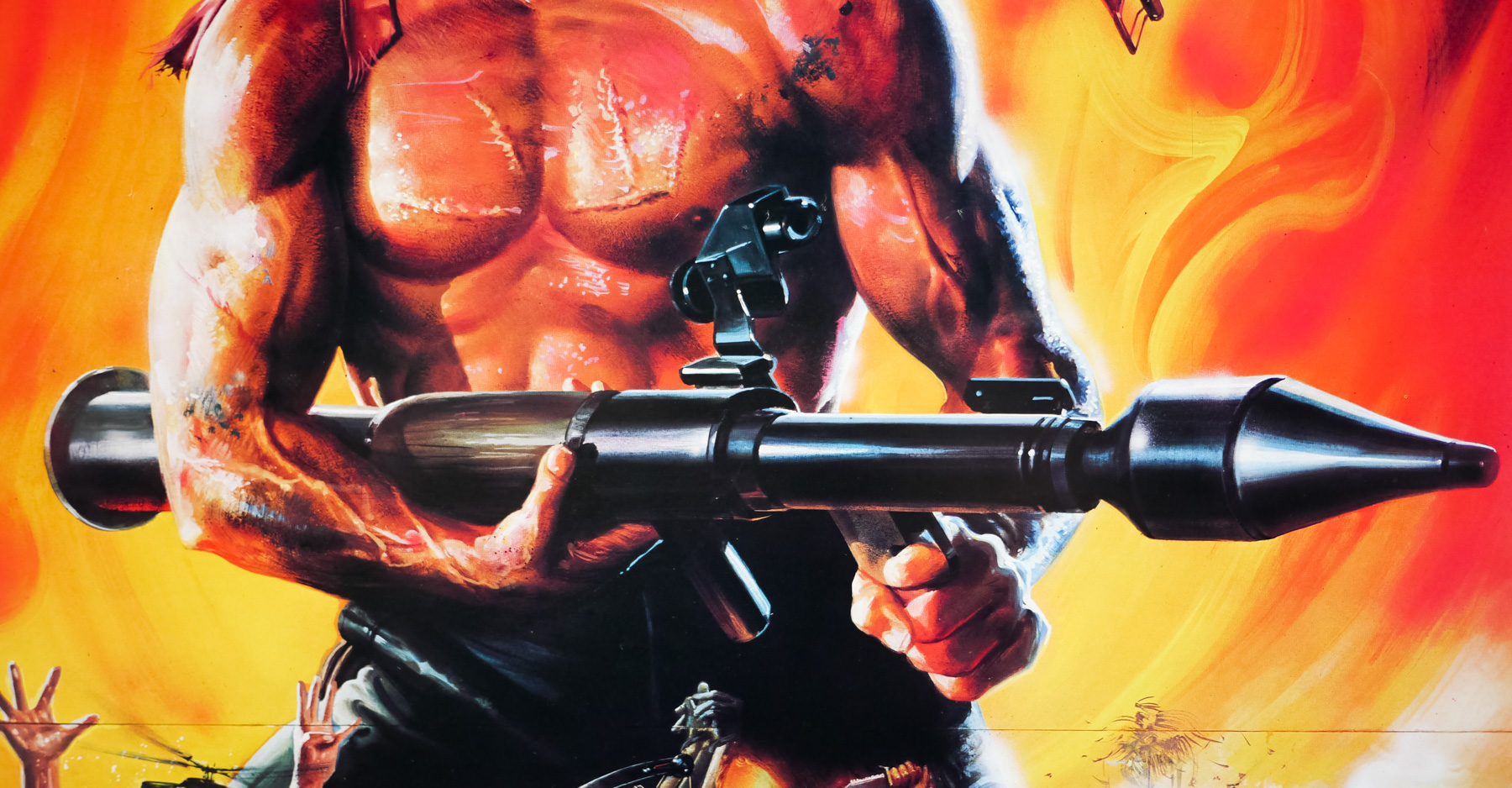
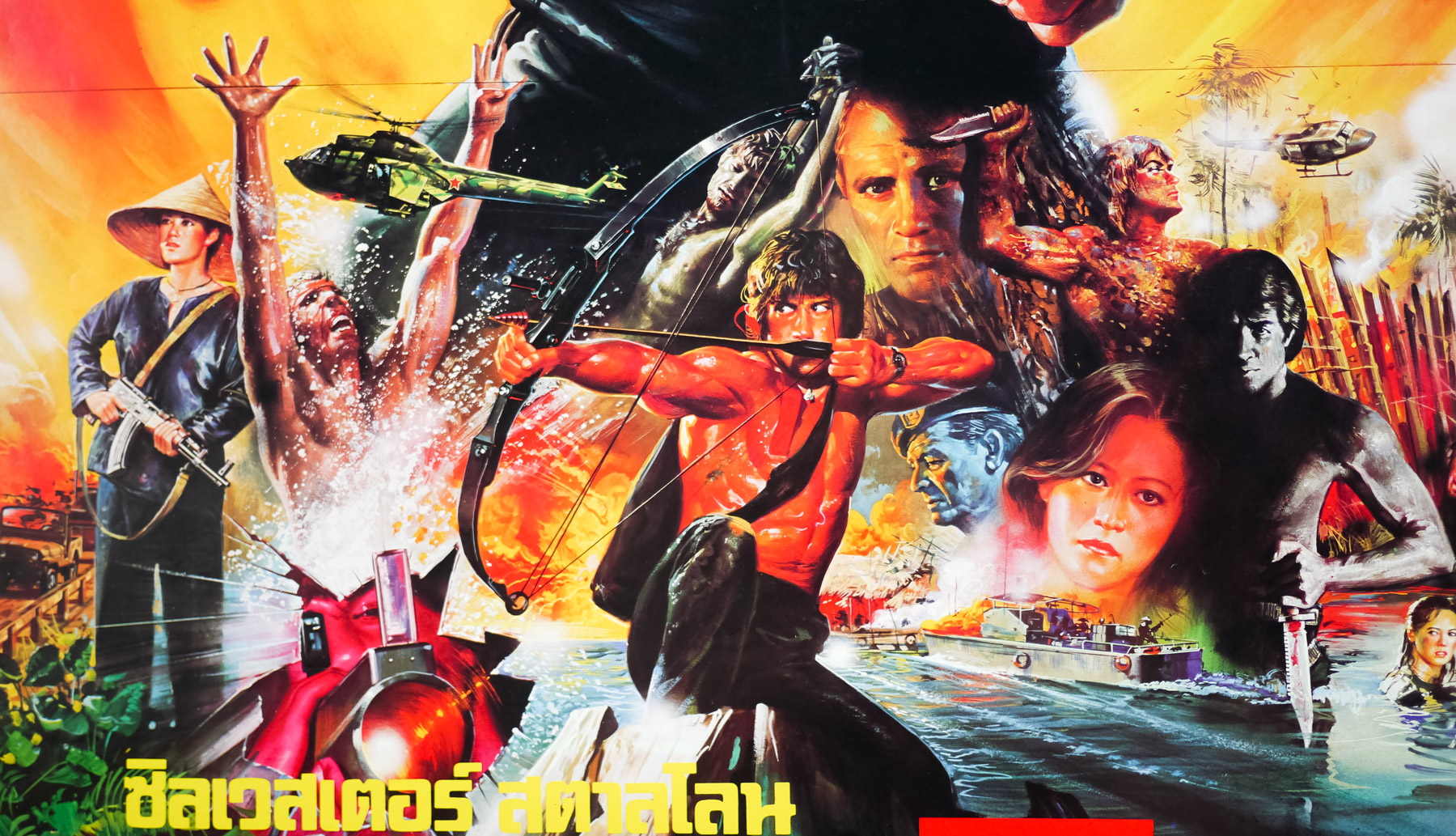
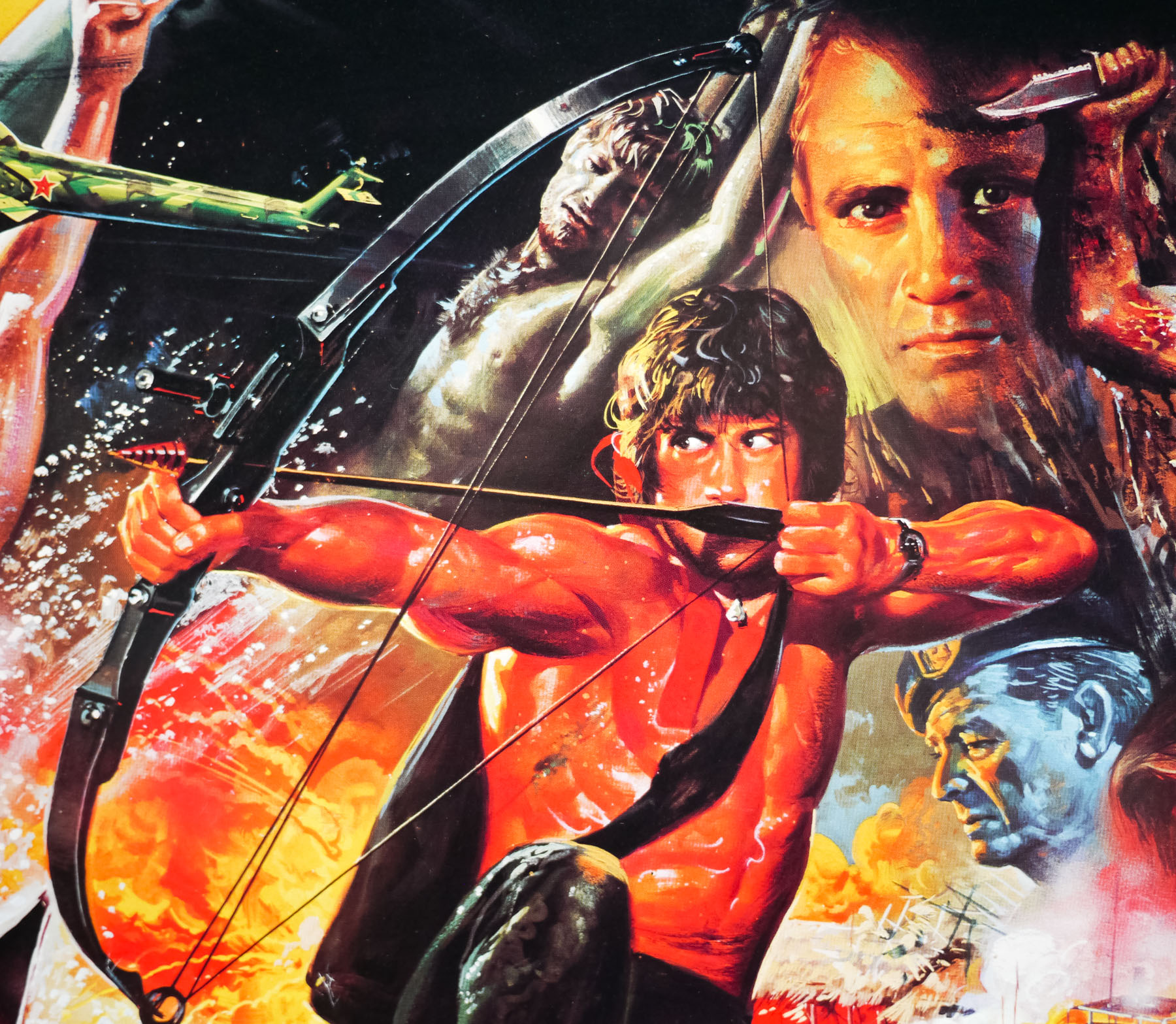
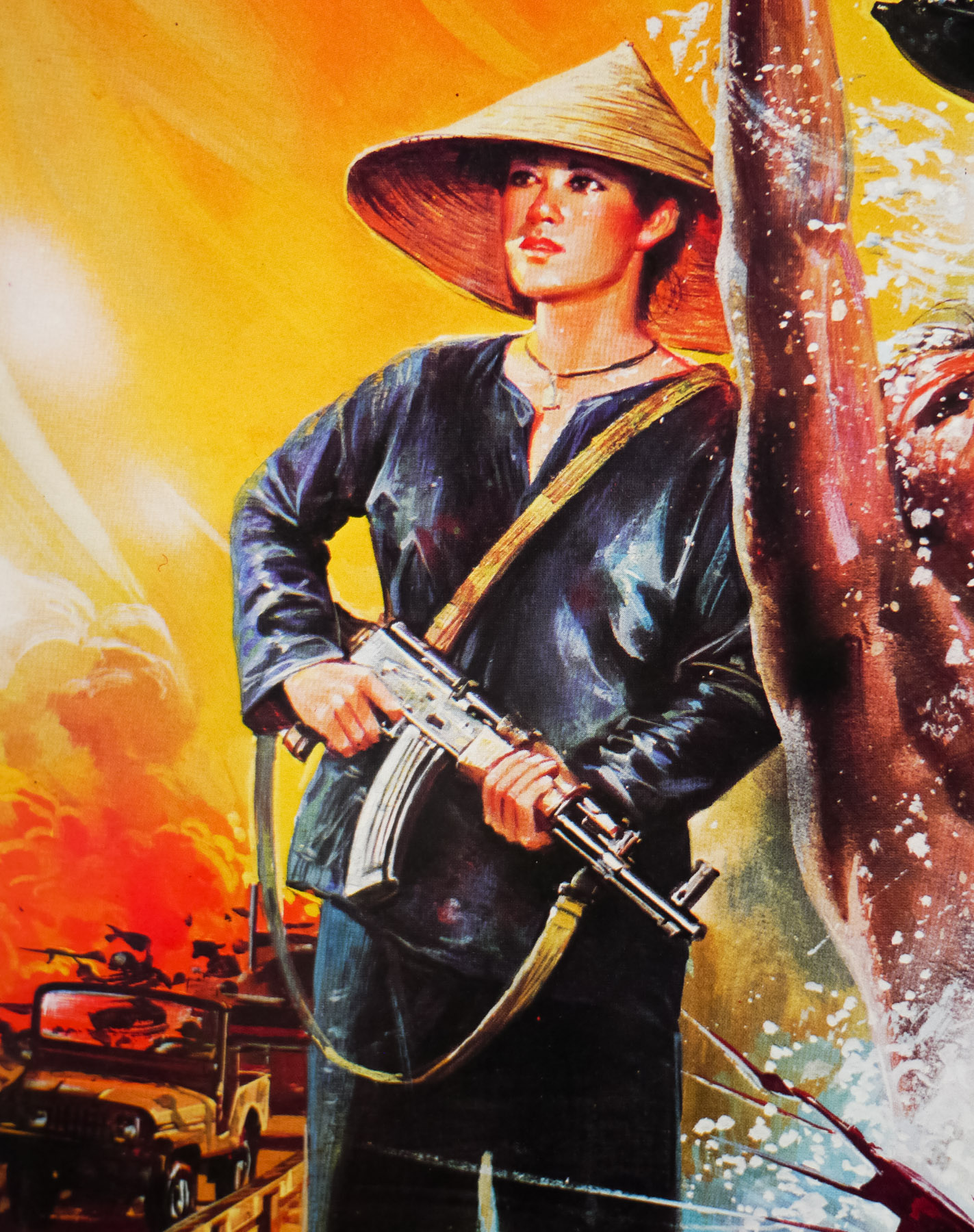
This is the Thai poster for the release of the follow up to the action classic First Blood (1982). Coming three years after the original, Rambo: First Blood Part II – note the addition of the character’s surname to the title – had a script that was co-written by James Cameron and Sylvester Stallone. George P. Cosmatos was chosen to direct the film and the legendary partnership of Mario Kassar and Andrew Vajna, who were behind many of the best action films of the 1980s and 90s, were executive producers. 

The film picks up where the original left off, with ex-commando John Rambo (Stallone) serving time in prison for the events of the first film. His former commander Colonel Trautman (Richard Crenna) visits him whilst he’s cracking rocks in a quarry with other prisoners and asks him if he’d help with a mission to locate MIA / Prisoners of War (POWs) in Vietnam. The public believe there are still American soldiers out there in the country, despite denials by the US and Vietnamese government. This was a very topical issue in the early 1980s and First Blood Part II was one of the first films to tackle the issue directly. Promised a pardon for his previous actions, Rambo accepts and travels to Thailand from where we he will be covertly dropped into Vietnam. He’s given orders that it’s just a reconnaissance mission – photographs can be shot but nothing else.

During the parachute drop things go awry when his parachute is caught in the door of the plane and he’s forced to cut away his bag of equipment before managing to untangle himself. Landing with only a large knife and a fold-out bow, Rambo manages to meet up with his contact Co-Bao (the stunning Julia Nickson) who helps him locate the camp in which it’s believed the prisoners may be held. Sneaking in during the night, he locates the American prisoners and breaks one out of the camp, intending to rescue the others with more support. The trio head to the pre-arranged rendezvous point with the Vietnamese guards in hot pursuit. Desperately trying to climb onto the rescue helicopter, they discover that the government agent overseeing the mission, Marshall Murdock (Charles Napier), orders his men not to pick them up. The whole thing was intended as a kind of PR mission to appease the American public angry about the POW situation. Murdock incorrectly believed that no prisoners would be located.

Rambo and the prisoner are captured by the Vietnamese and returned to the camp whilst Co-Bao manages to escape. They soon discover that the Soviets are arming and training the local soldiers. They meet the local commander, Lt. Col. Podovsky (Steven Berkoff) and his henchman Sergeant Yushin who torture Rambo and force him to disavow the POWs over the radio. When they threaten the life of a prisoner and Co-Bao attacks the hut in which they’re in, Rambo seizes his chance, rampaging out of the camp with Co-Bao following. The Russian and Vietnamese soldiers soon realise they messed with the wrong man as he proceeds to kill them one by one in a famous sequence during which the body count rises into the 70s.

The film was critically mauled on release but was a huge box-office hit, being the first film released in America to open on over 2000 screens. It accrued several times its original budget with a worldwide take of north of $300m. First Blood Part II is one of the defining action films of the 1980s and has been much imitated and parodied (particularly by Charlie Sheen in Hot Shots! Part Deux) since. A far less successful sequel would follow three years later before the series took a long hiatus prior to being resurrected in 2008 with Rambo.

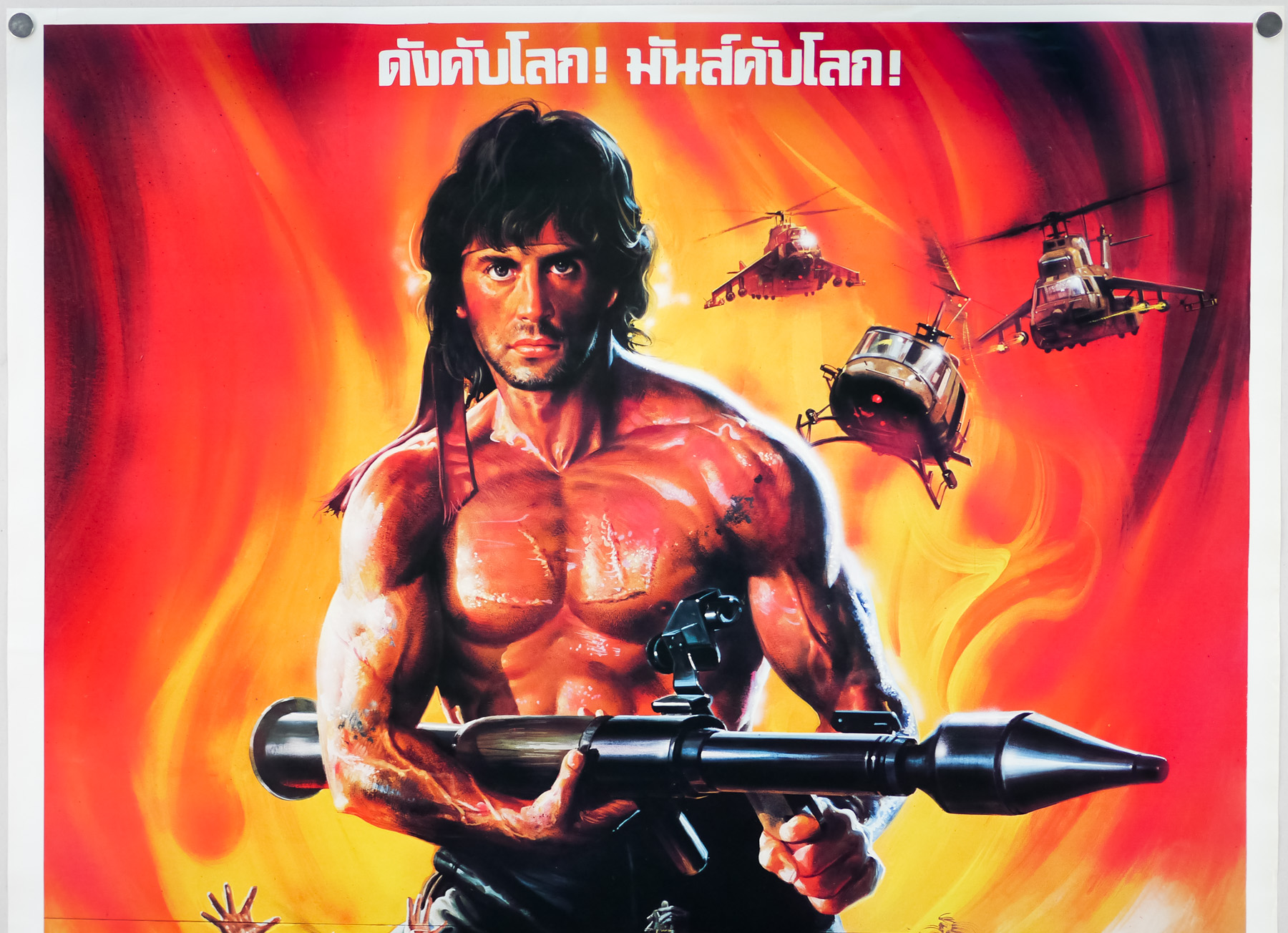
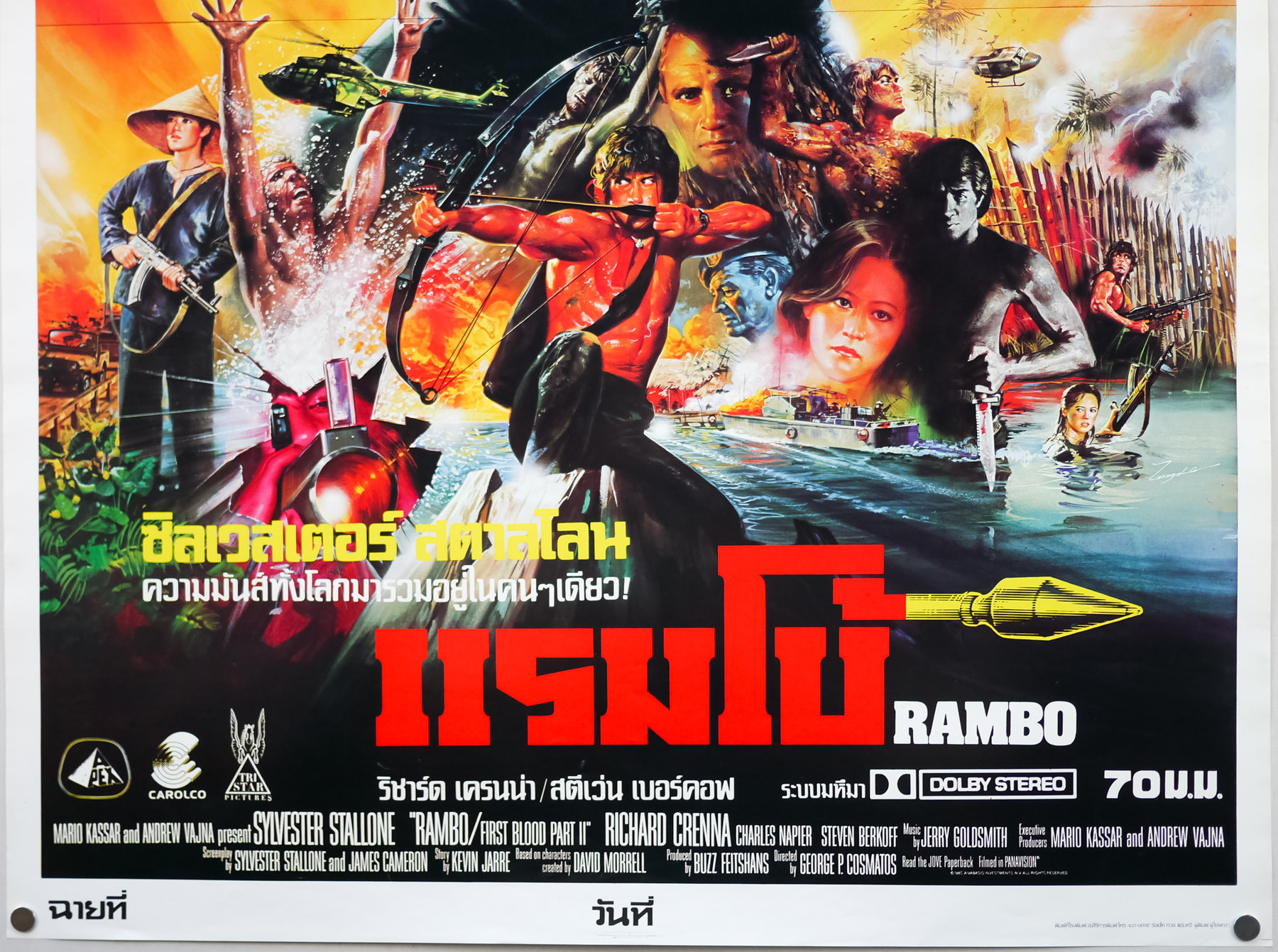
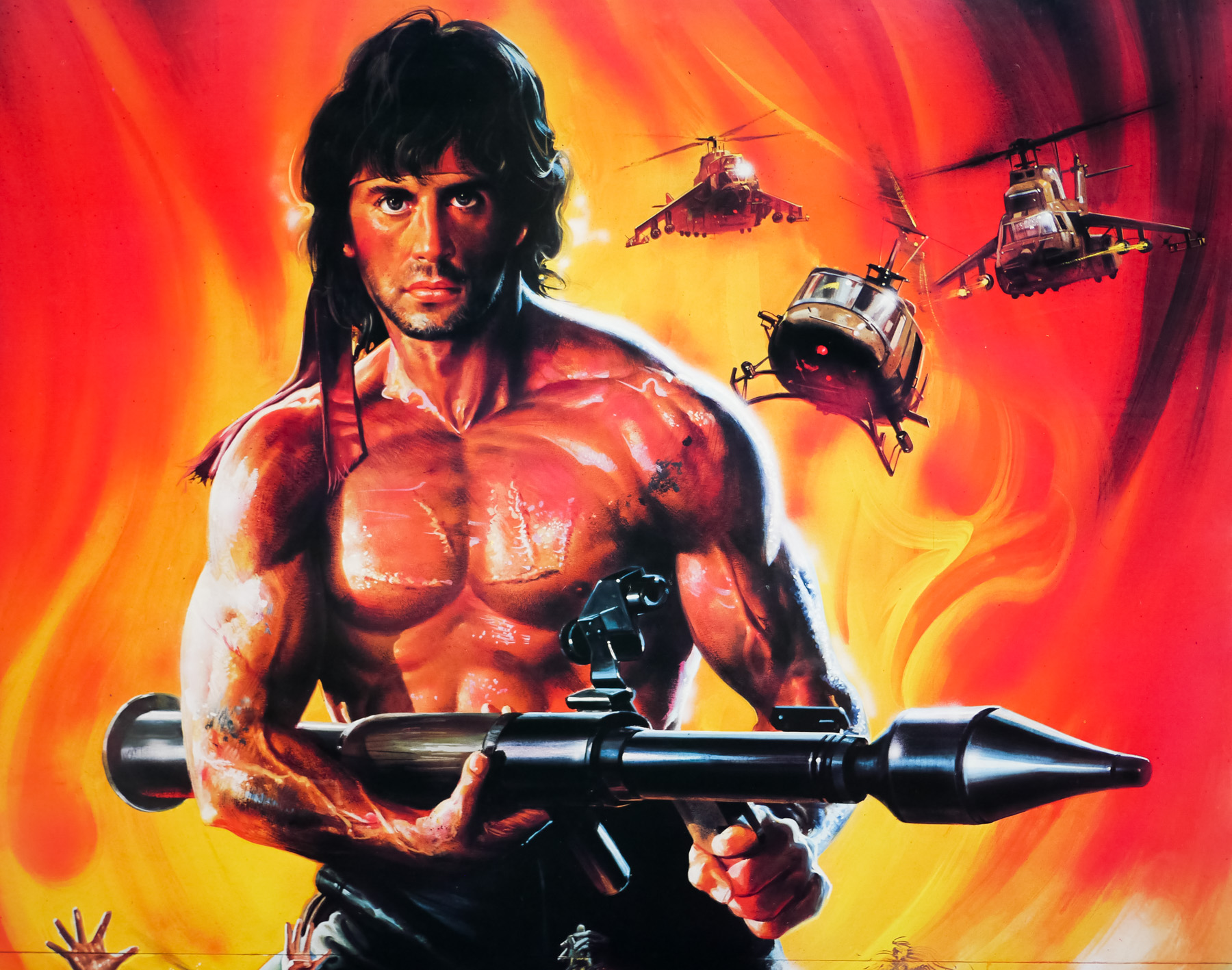
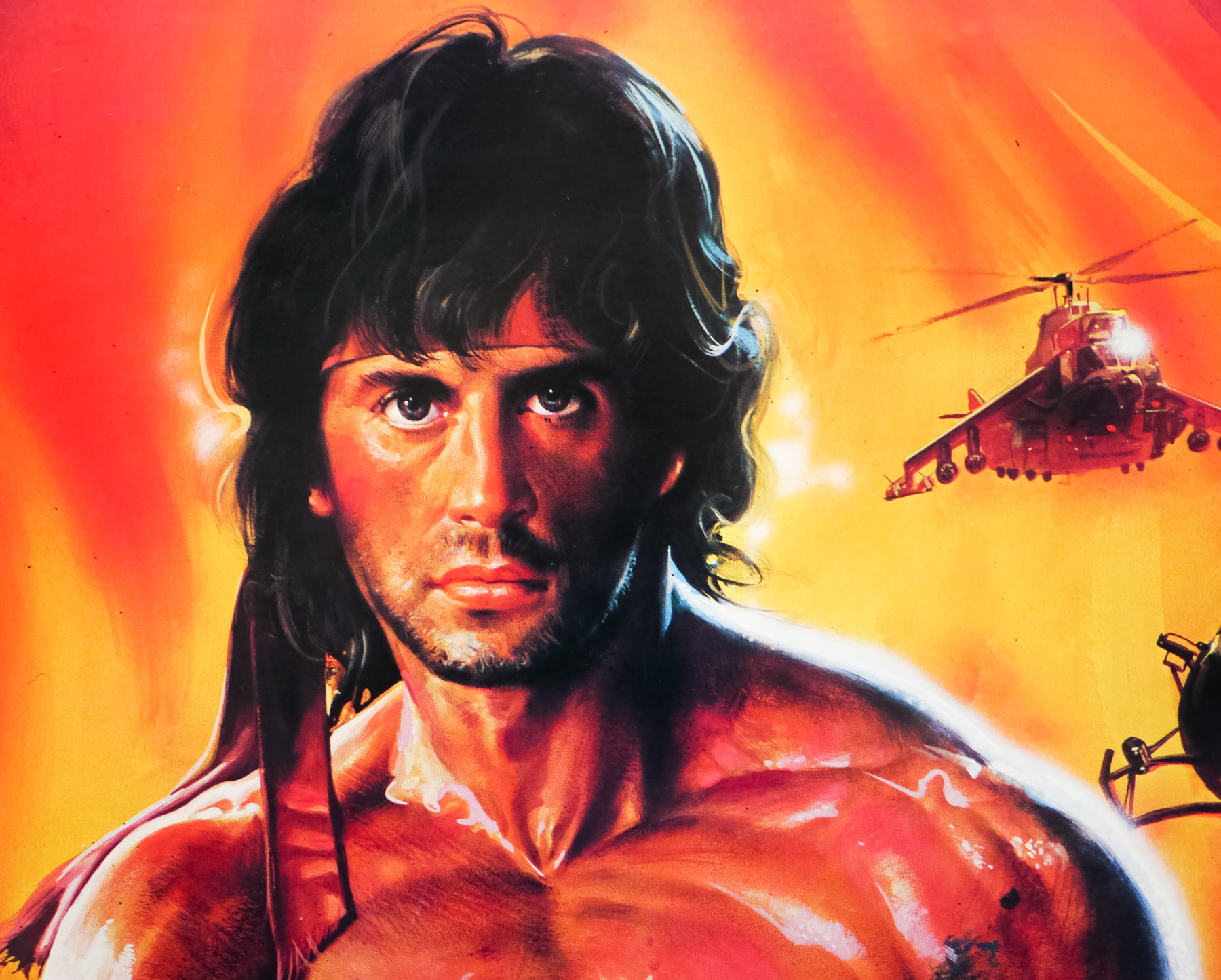
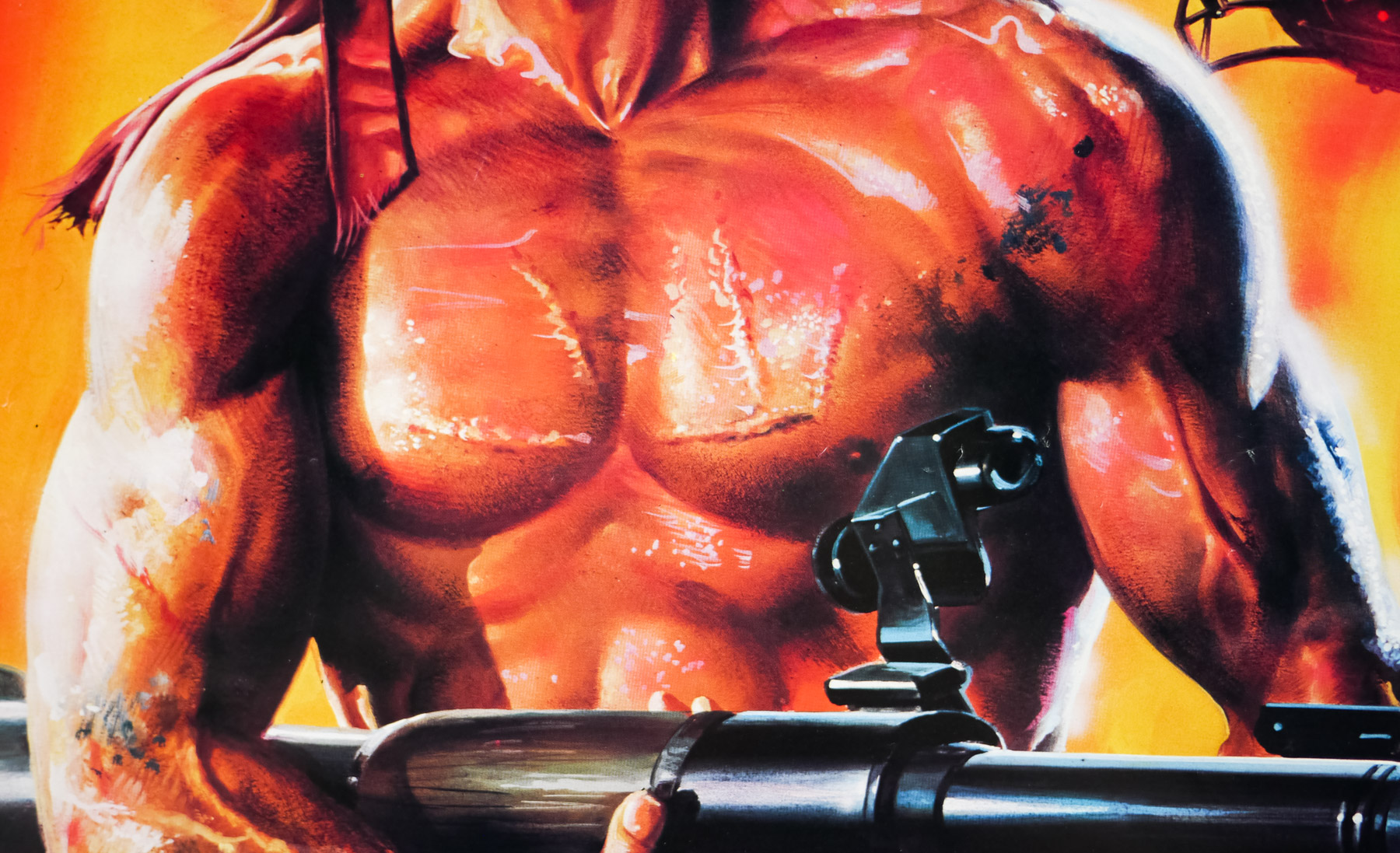
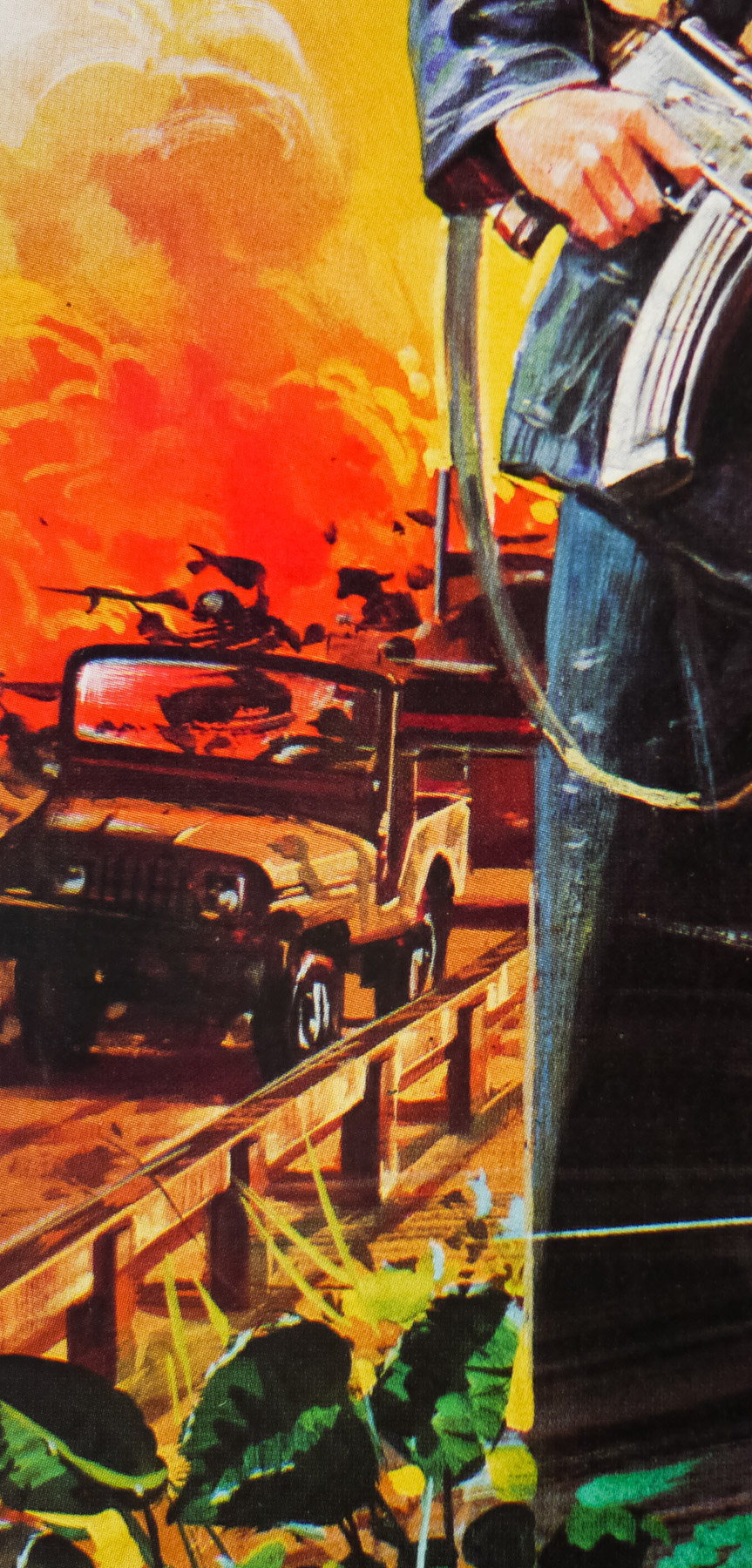
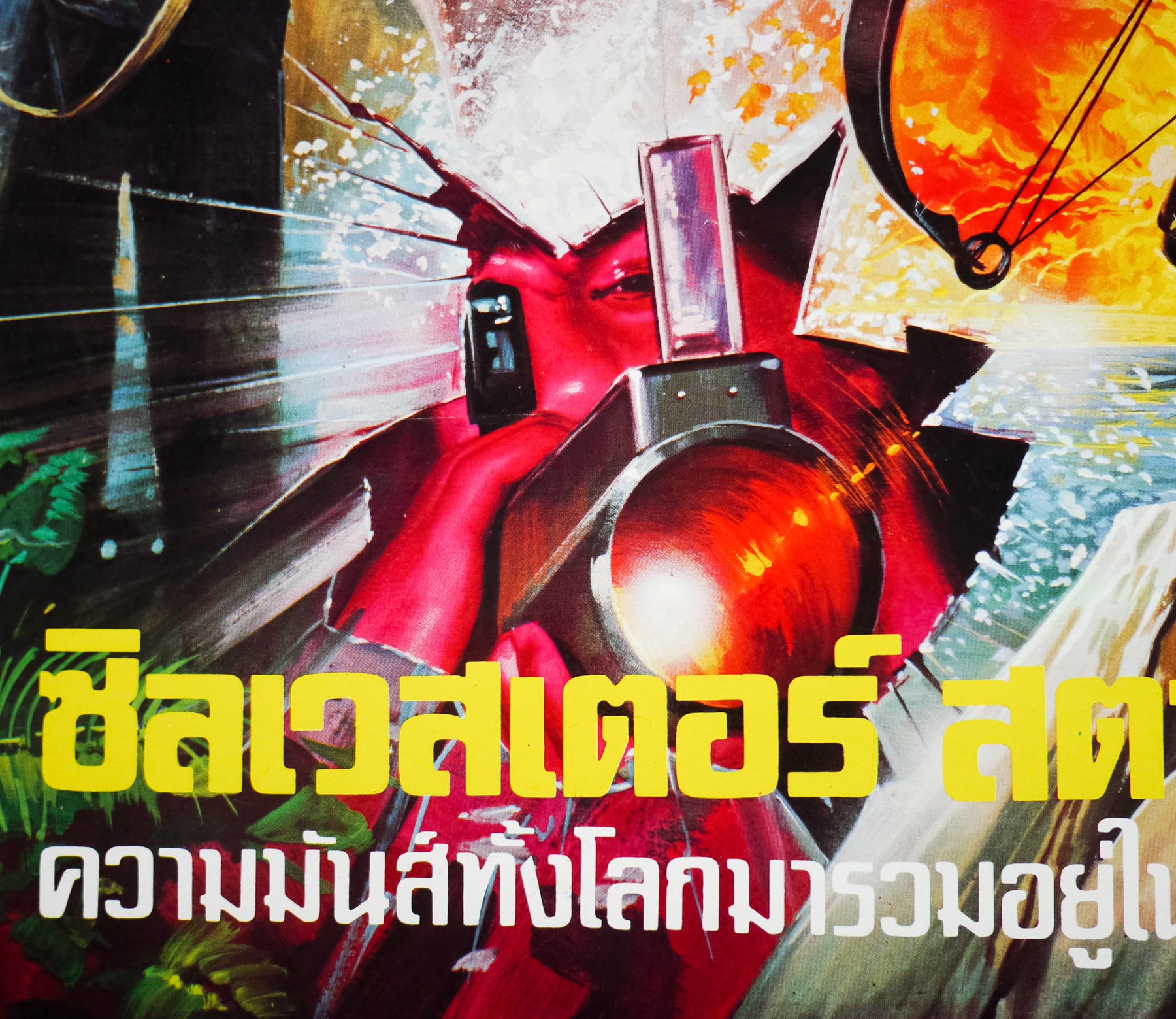
The artwork on this poster is by Tongdee Panumas who was an incredibly prolific film poster artist during the 70s, 80s and 90s. I’ve been unable to find out much about him, other than that he was born in 1947, so if anyone has any more details please get in touch. The central image of Stallone holding a bazooka was redrawn from the photograph used for the American one sheet, which can be seen here.

Note that the dark line seen across the centre of the poster is actually where two painted canvases have been joined together by the artist – the art was then copied and the text and other details overlaid.

Heart Condition / Thailand

01.03.17

Poster Poster
Title
Heart Condition
AKA
Black Ghost (Spain)
Year of Film
1990
Director
James D. Parriott
Starring
Bob Hoskins, Denzel Washington, Chloe Webb, Roger E. Mosley, Ja'net DuBois, Alan Rachins, Ray Baker, Jeffrey Meek, Eva LaRue
Origin of Film
USA
Genre(s) of Film
Bob Hoskins, Denzel Washington, Chloe Webb, Roger E. Mosley, Ja'net DuBois, Alan Rachins, Ray Baker, Jeffrey Meek, Eva LaRue,
Type of Poster
Thai
Style of Poster
--
Origin of Poster
Thailand
Year of Poster
1990
Designer
Unknown
Artist
Tongdee Panumas
Size (inches)
24" x 34 14/16"
SS or DS
SS
Tagline
--

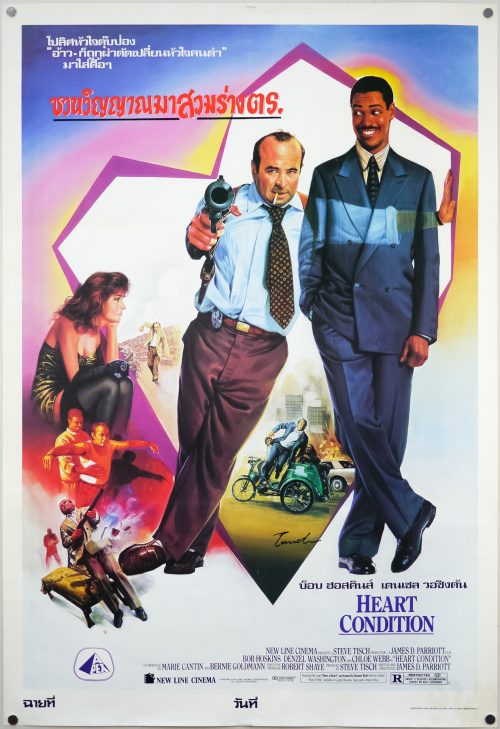
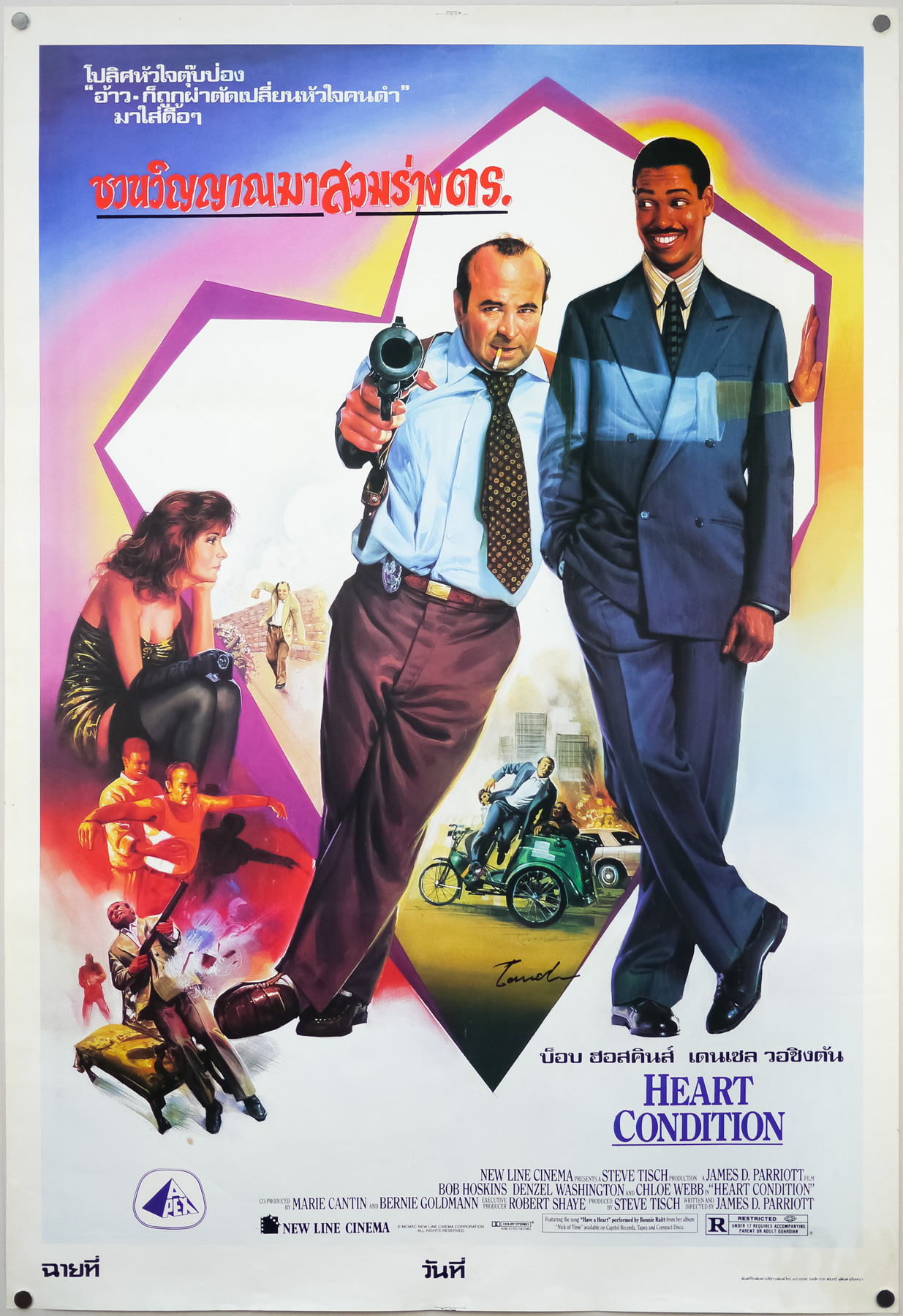
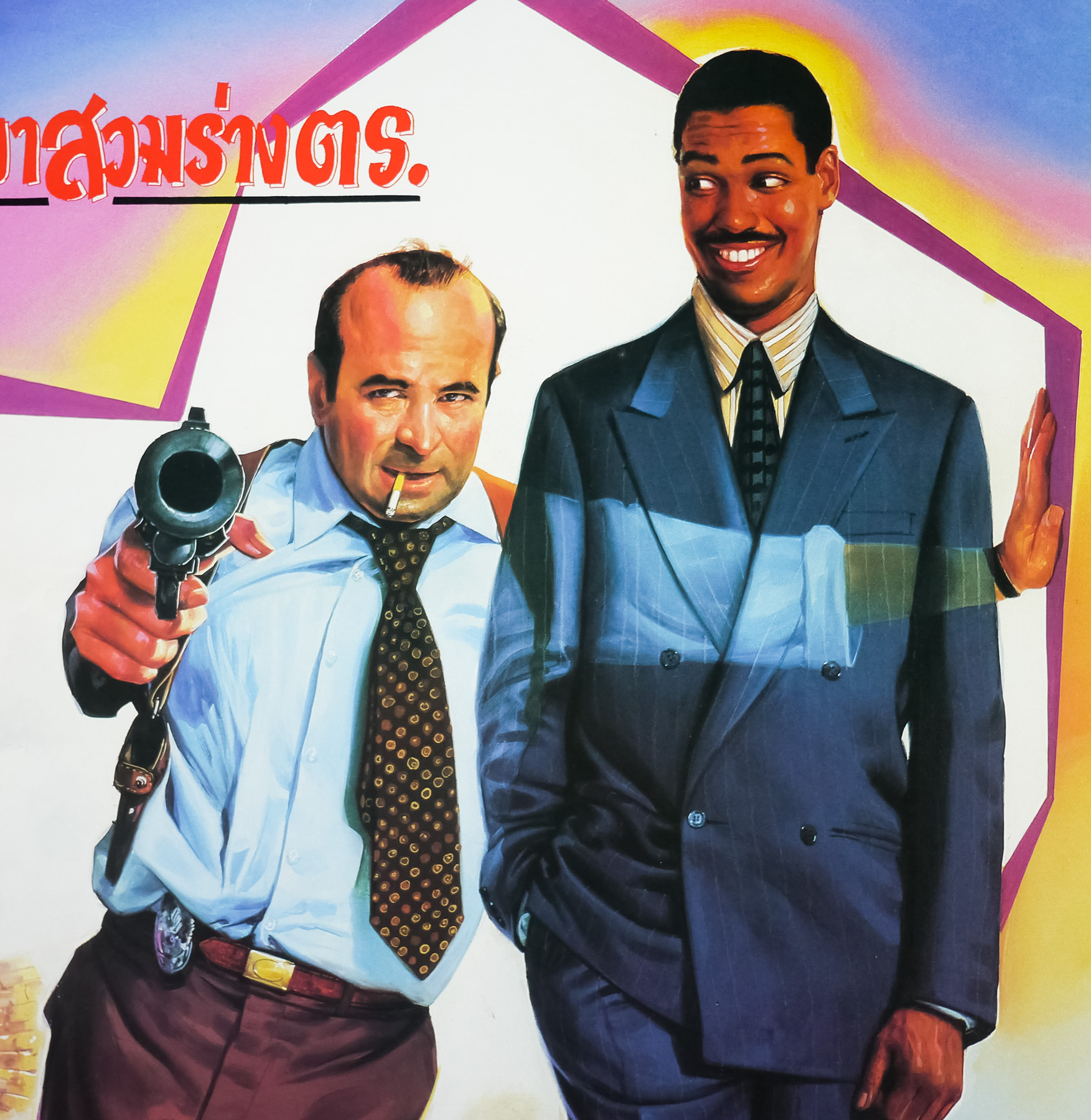
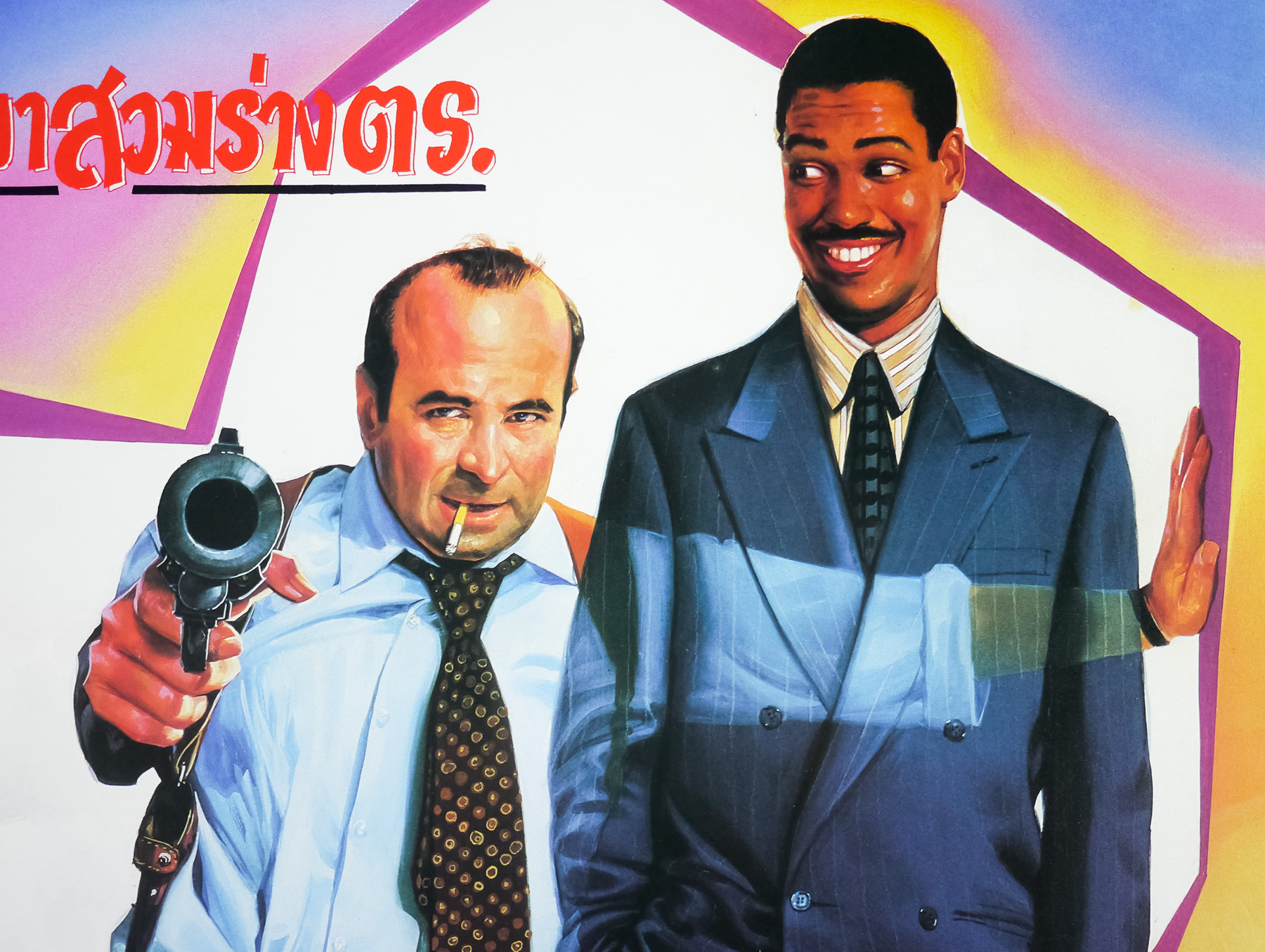
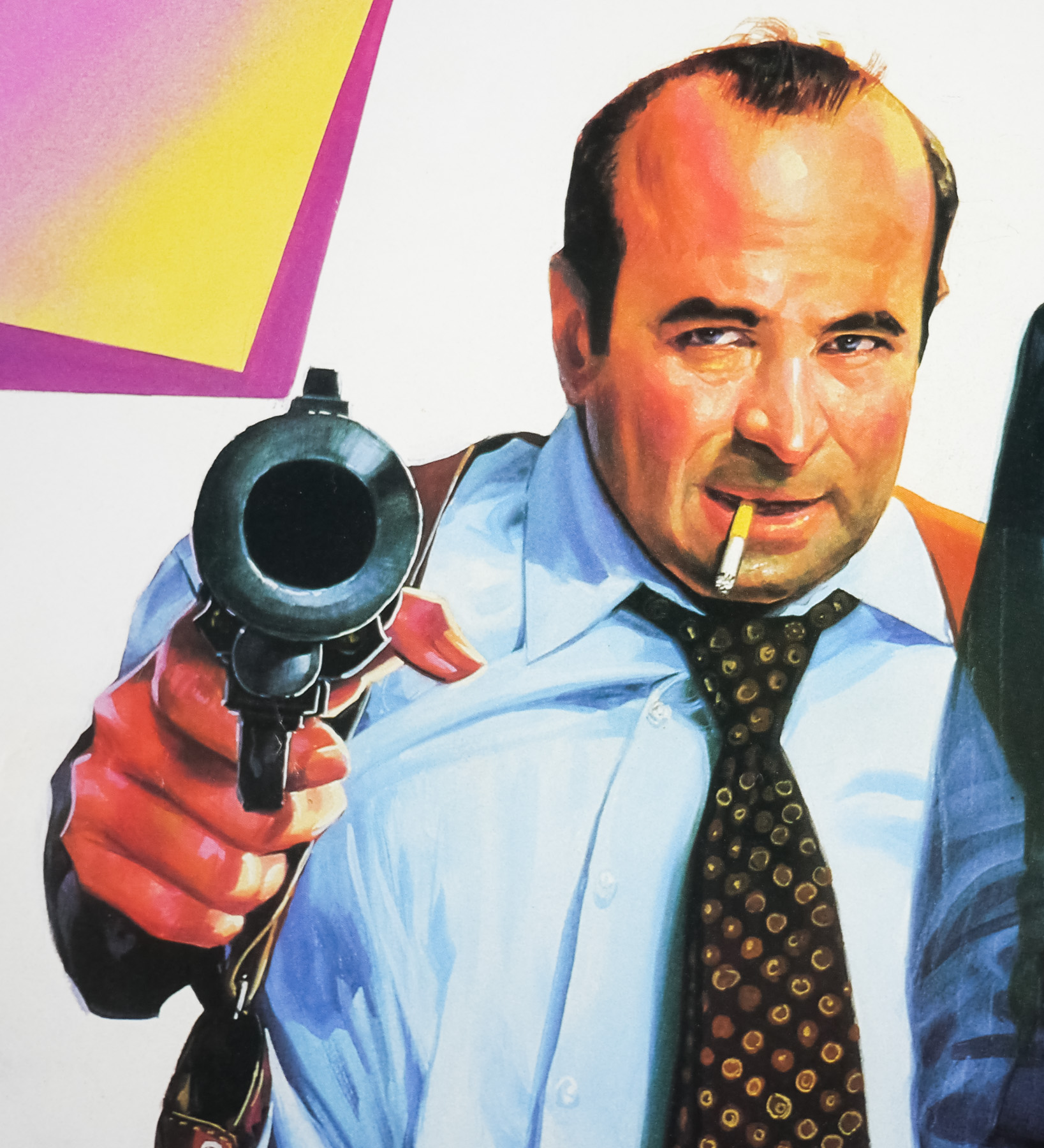
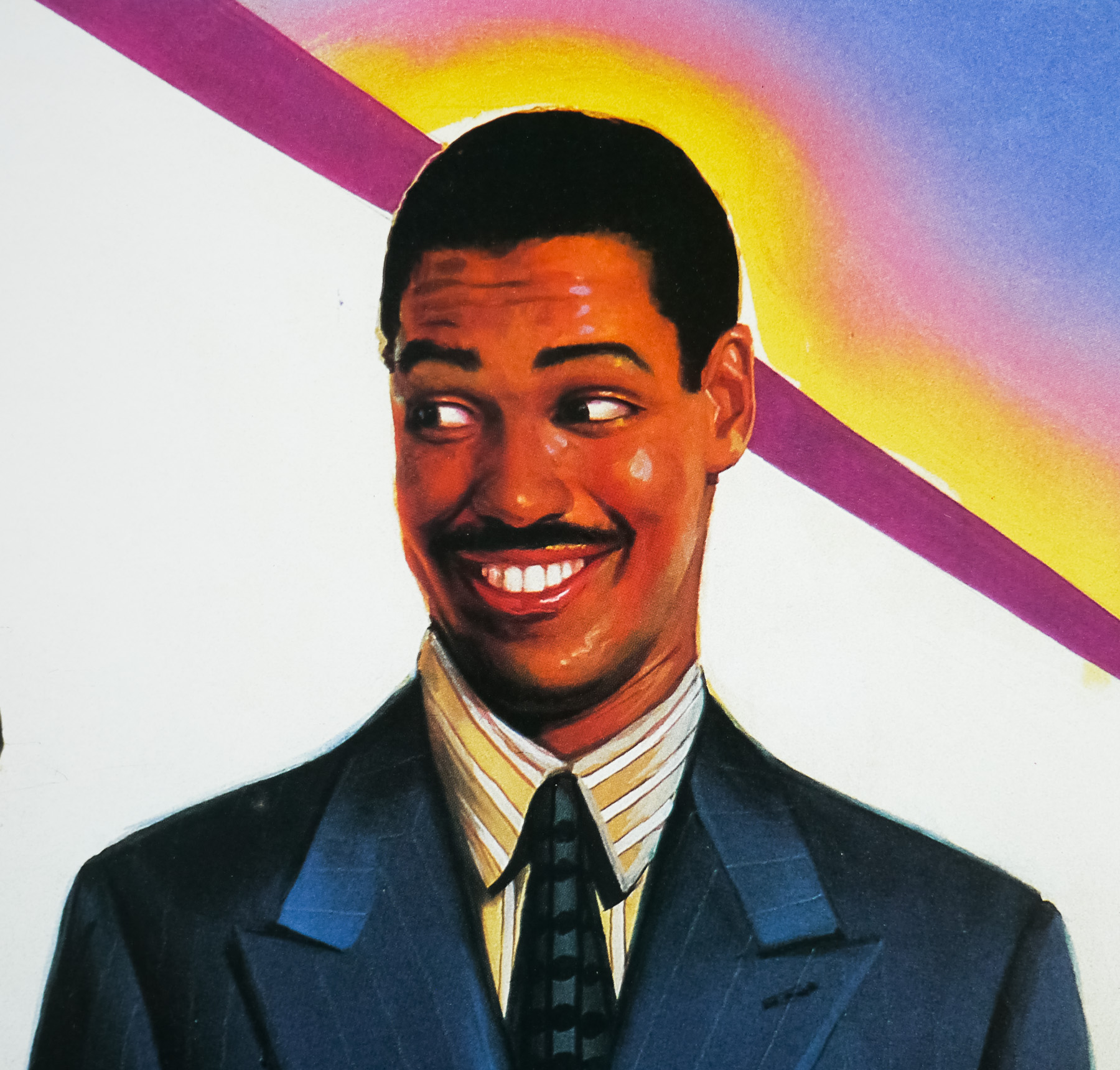
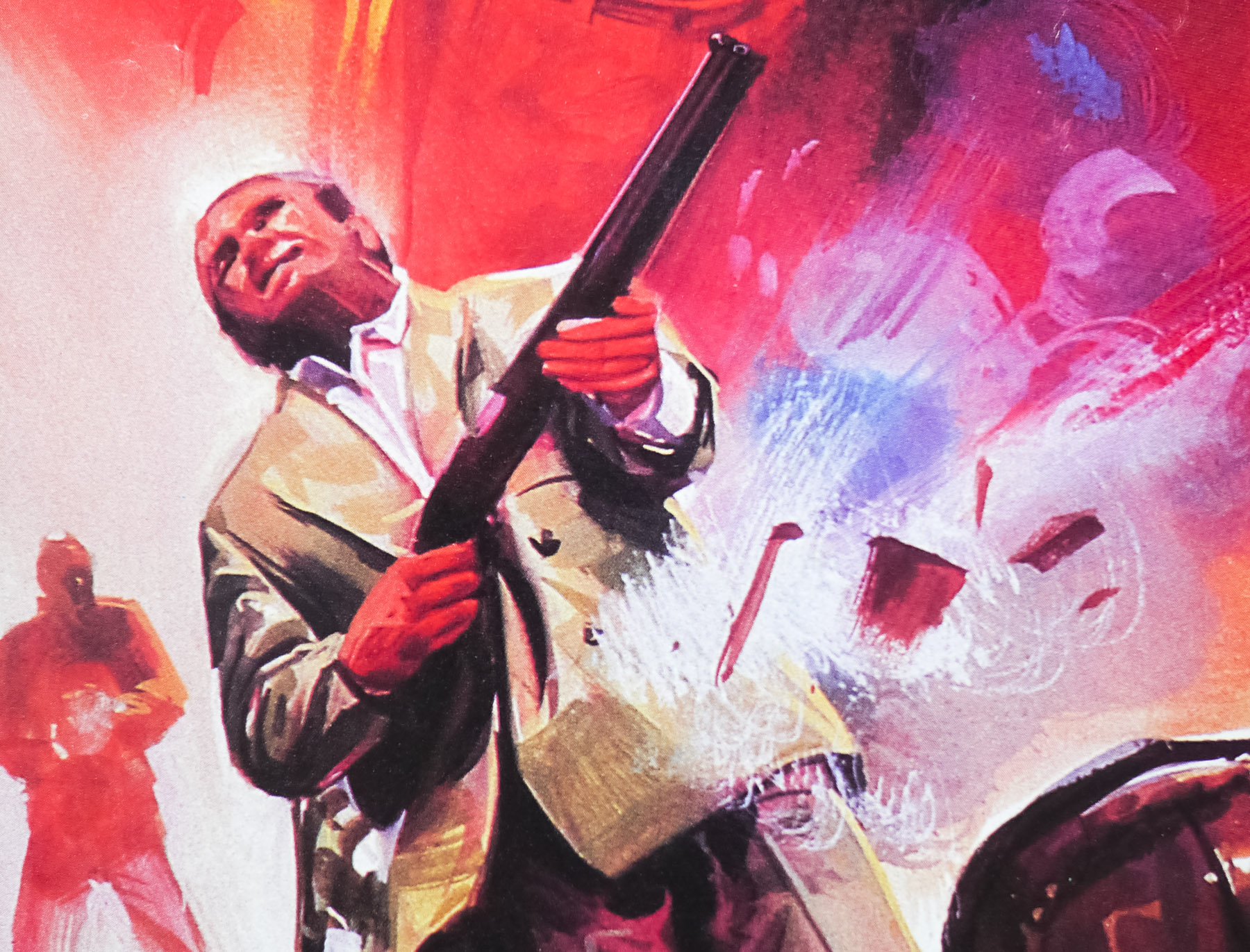
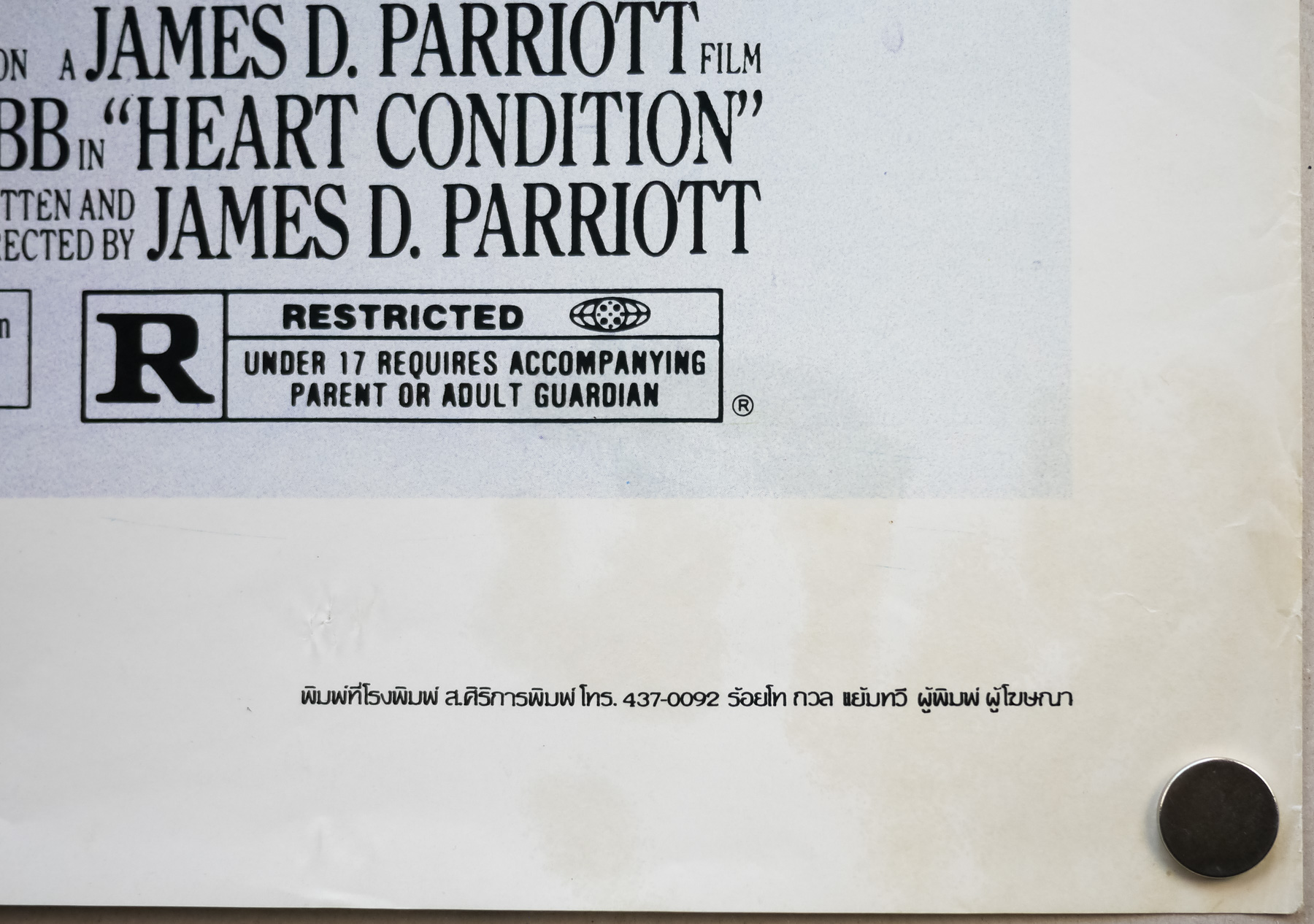
This is the original Thai poster for the 1990 fantasy-comedy, Heart Condition, starring the late Bob Hoskins and Denzel Washington. The film was written and directed by James D. Parriott who appears to have spent most of his career working in TV (including shows like Grey’s Anatomy). It was one of only a handful of ‘racial’ comedies that Denzel starred in and he was apparently talked into doing it by his then agent. After the film was critically mauled and sank at the box-office he fired his agent and wasn’t to appear in another comedy film for over two decades.

IMDb describes the plot like this:

Jack Moony (Hoskins), a white cop, has it in for a black lawyer to the drug crowd, Napoleon Stone (Washington). That Stone is now dating his ex-girlfriend doesn’t help matters at all. Stone is shot after Moony suffers a heart attack and wakes to find that he not only has a new heart, but that it is Stone’s and that Stone’s ghost is now his constant companion. Stone is insistent that Moony not only take care of his heart now but that Moony solve his murder.

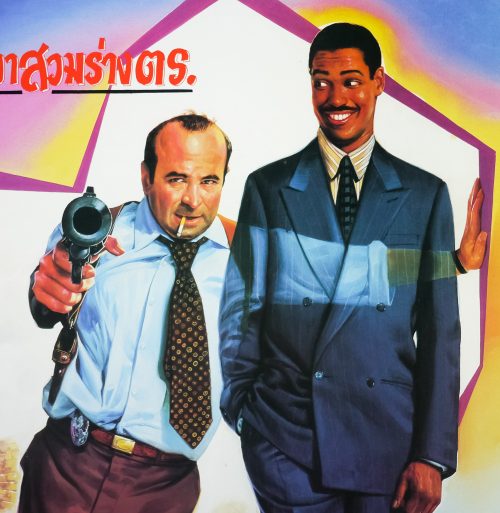
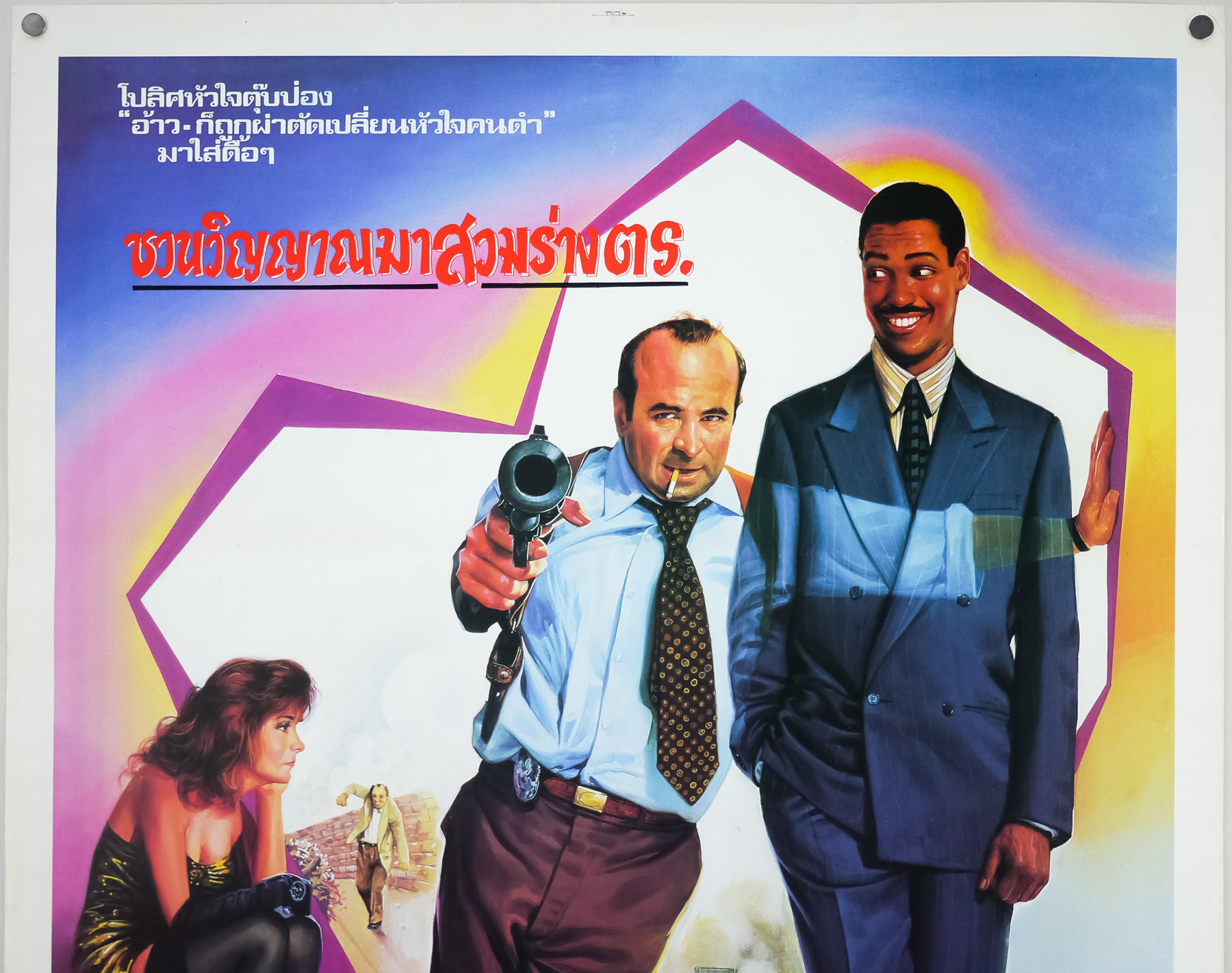
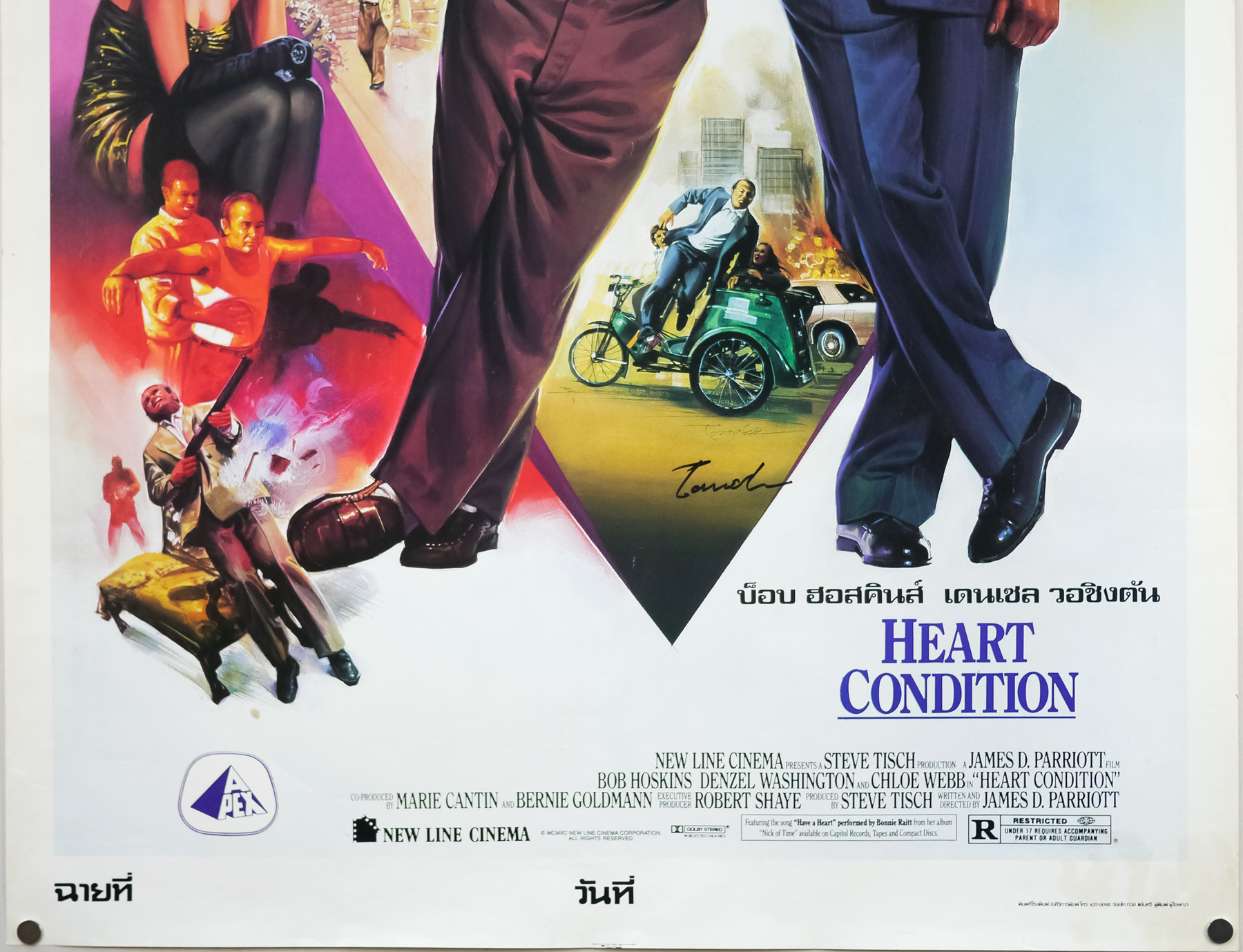
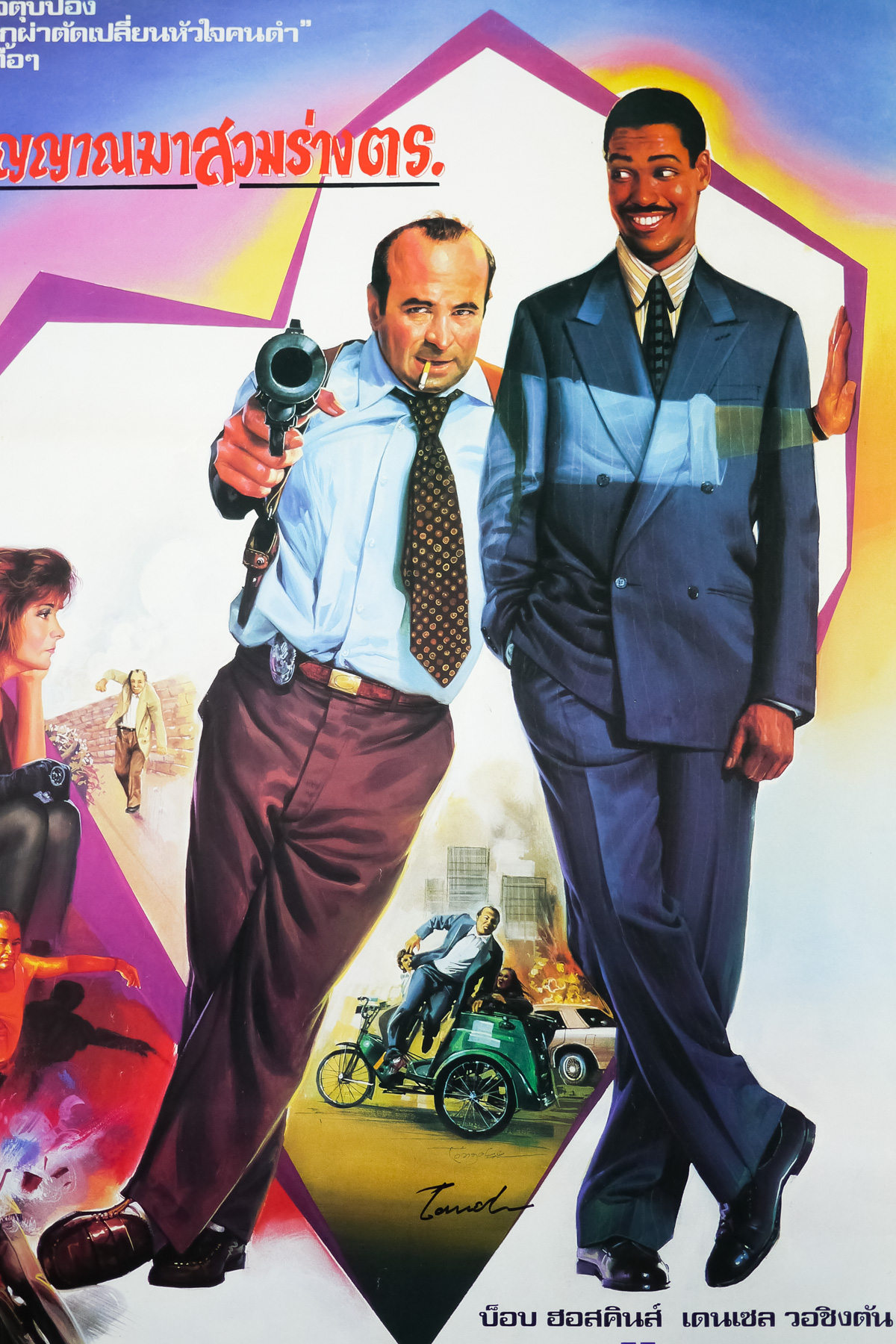
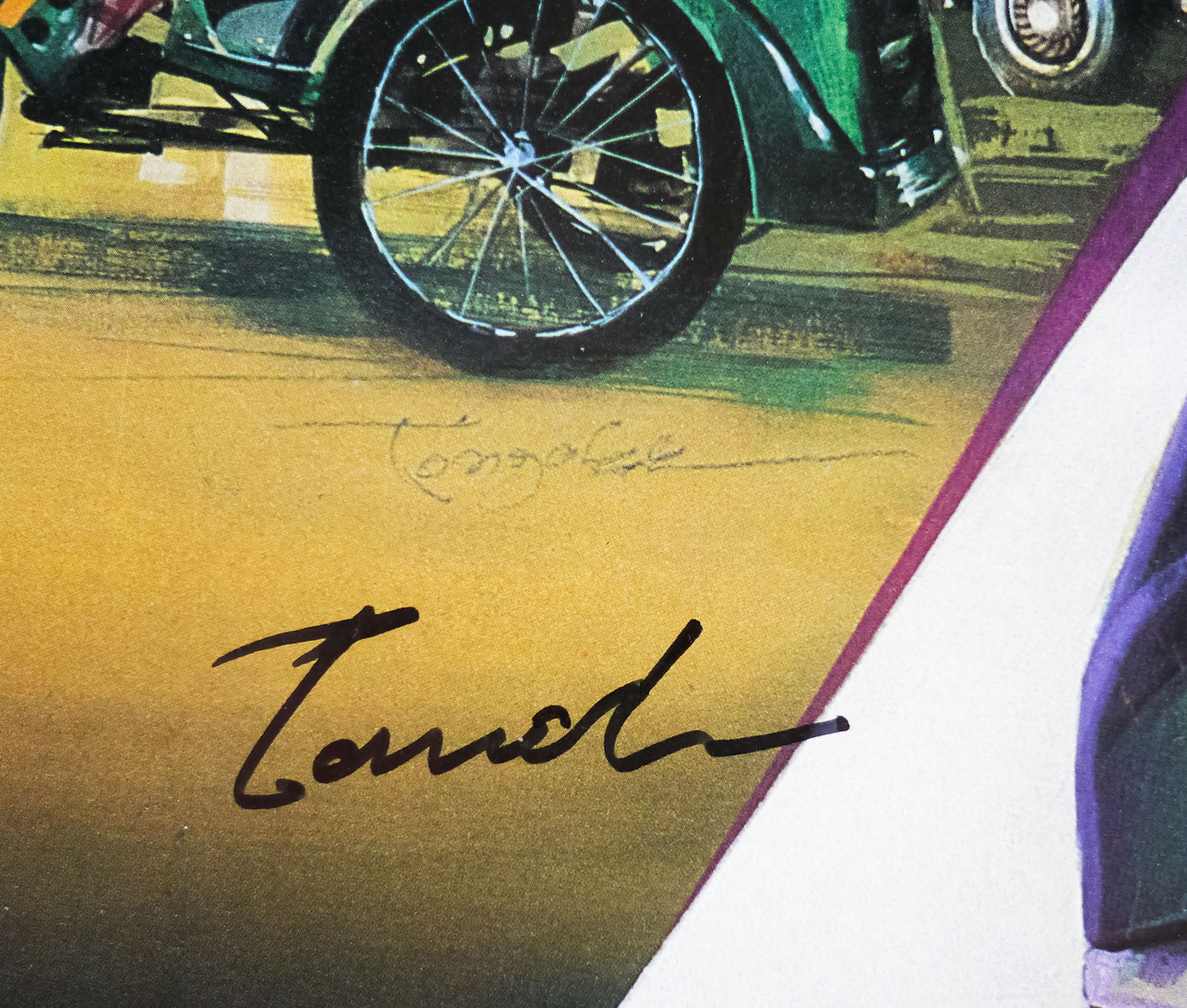
This Thai poster features a repainted take on the two leads as featured on the US one sheet but adds significantly more colour and a montage of action scenes as was typical of the artist responsible. Tongdee Panumas was an incredibly prolific film poster artist during the 70s, 80s and 90s. I’ve been unable to find out much about him, other than that he was born in 1947, so if anyone has any more details please get in touch.

Note that this particular copy of the poster has been hand-signed by Tongdee and I bought it from someone who had visited Thailand, met the artist and had him sign a few posters. I’ve seen photographic evidence that it’s a genuine signature.

The Beyond / Thailand

01.04.16

Poster Poster
Title
The Beyond
AKA
Die Geisterstadt der Zombies (Germany) | L'aldilà (Italy) | 7 Doors of Death (USA)
Year of Film
1981
Director
Lucio Fulci
Starring
Catriona MacColl, David Warbeck, Cinzia Monreale, Antoine Saint-John, Veronica Lazar, Anthony Flees, Giovanni De Nava, Al Cliver, Michele Mirabella, Gianpaolo Saccarola
Origin of Film
Italy
Genre(s) of Film
Catriona MacColl, David Warbeck, Cinzia Monreale, Antoine Saint-John, Veronica Lazar, Anthony Flees, Giovanni De Nava, Al Cliver, Michele Mirabella, Gianpaolo Saccarola,
Type of Poster
Thai
Style of Poster
--
Origin of Poster
Thailand
Year of Poster
1981
Designer
Unknown
Artist
Noppadol
Size (inches)
21" x 29 15/16"
SS or DS
SS
Tagline
--

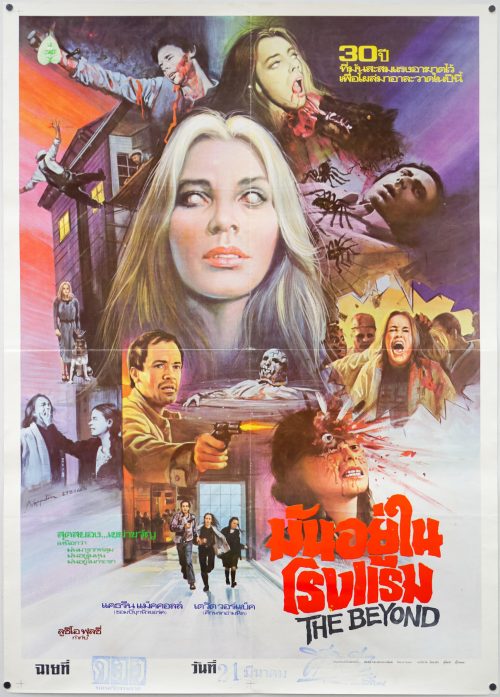
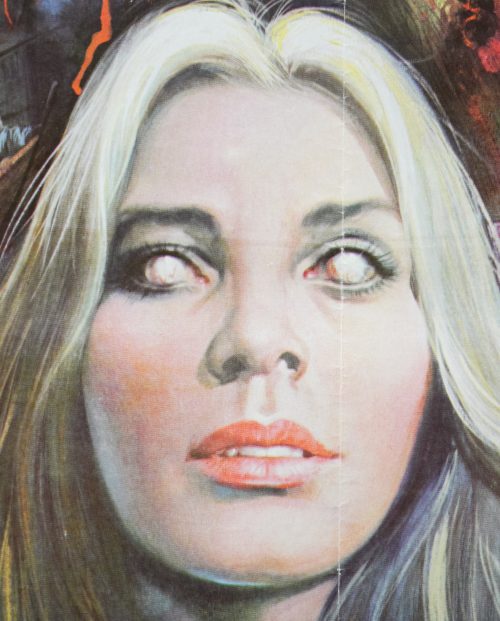
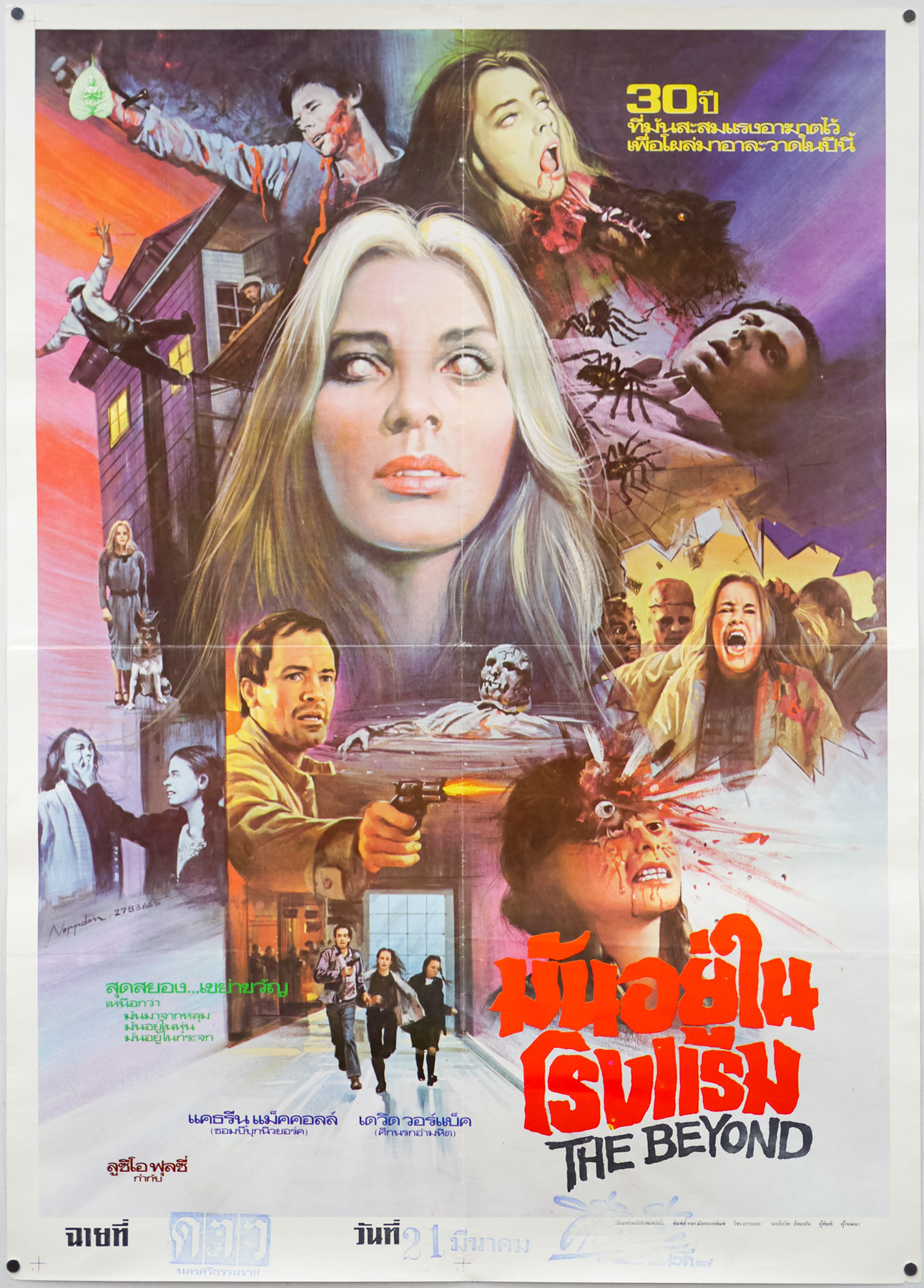
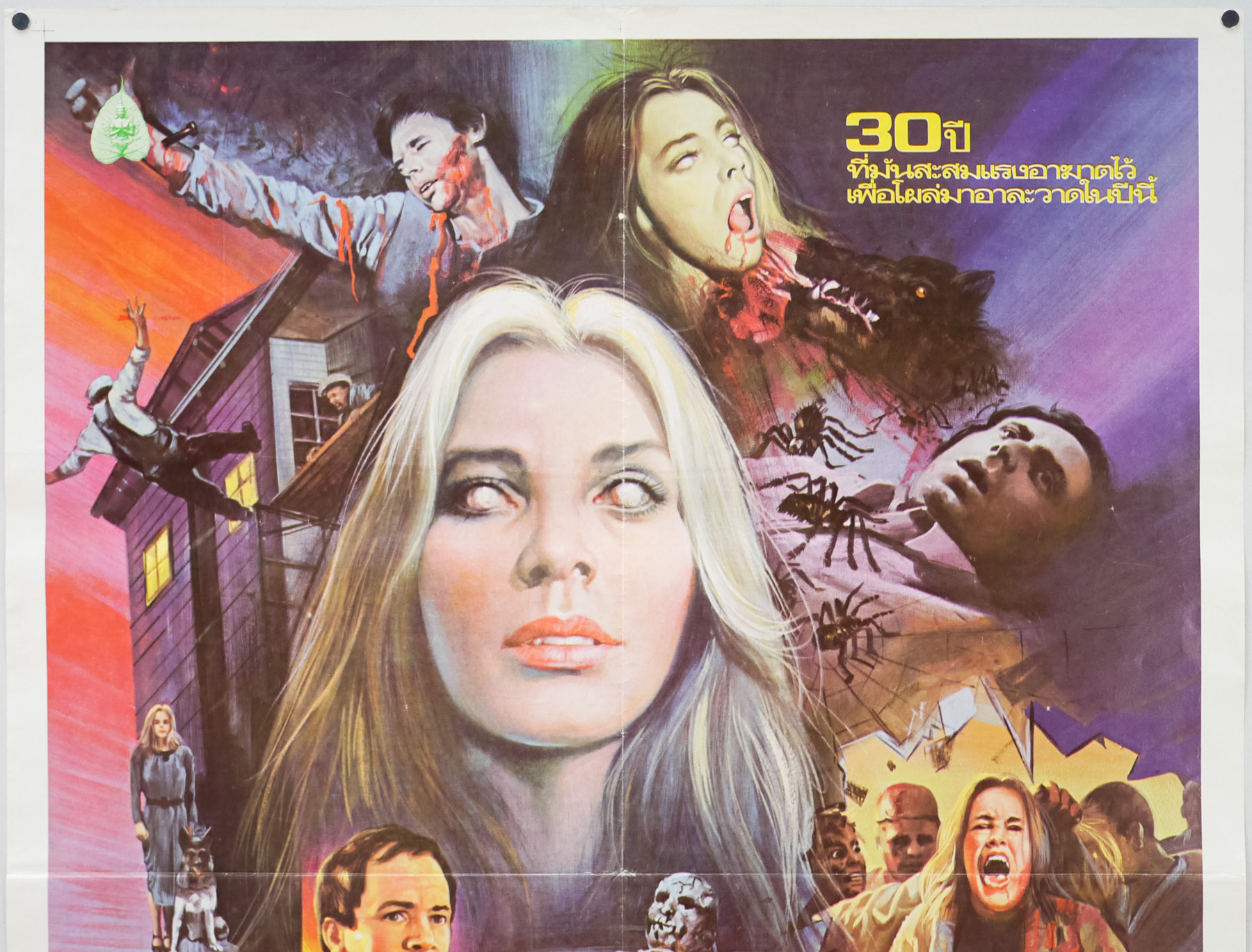
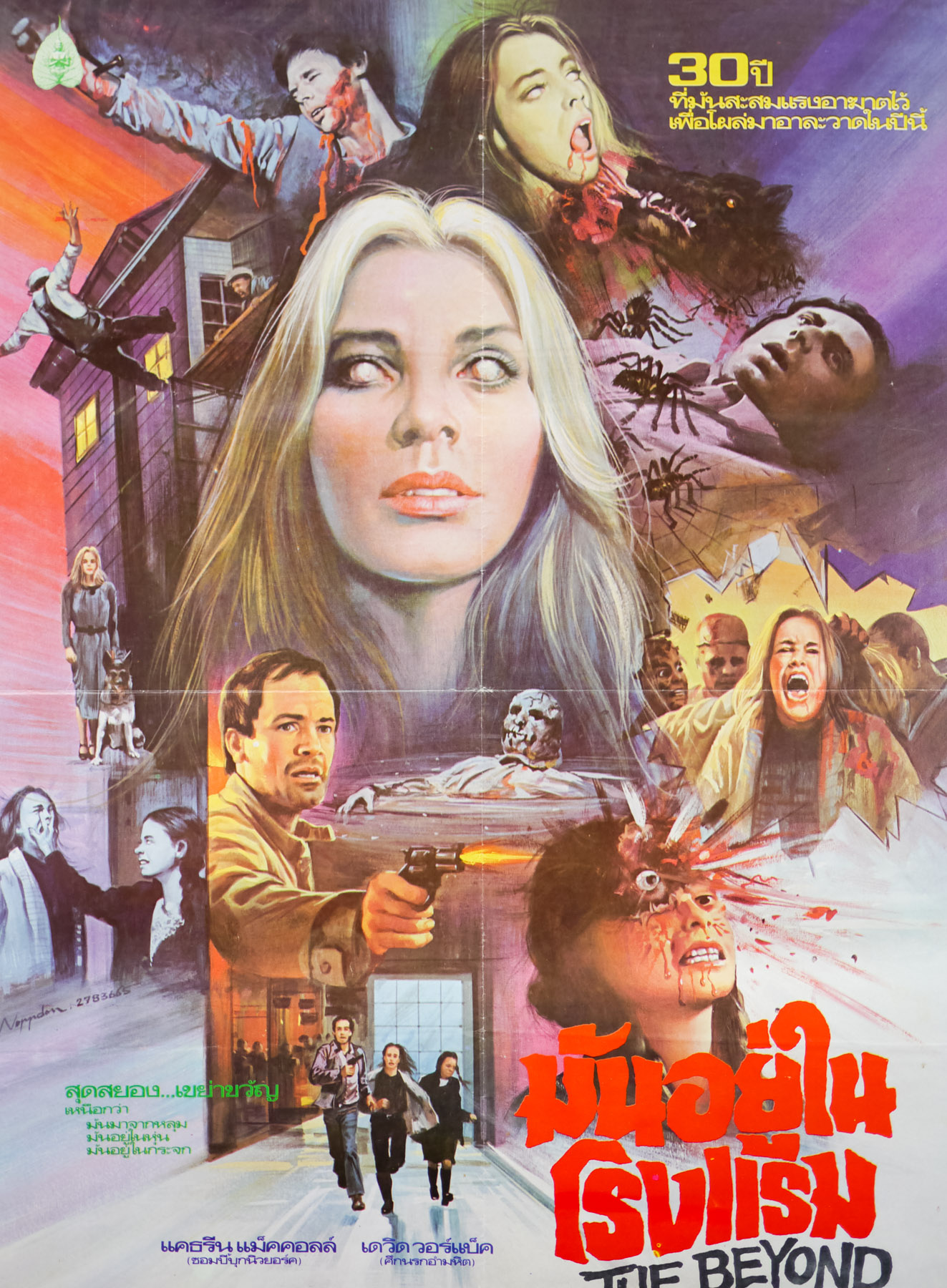
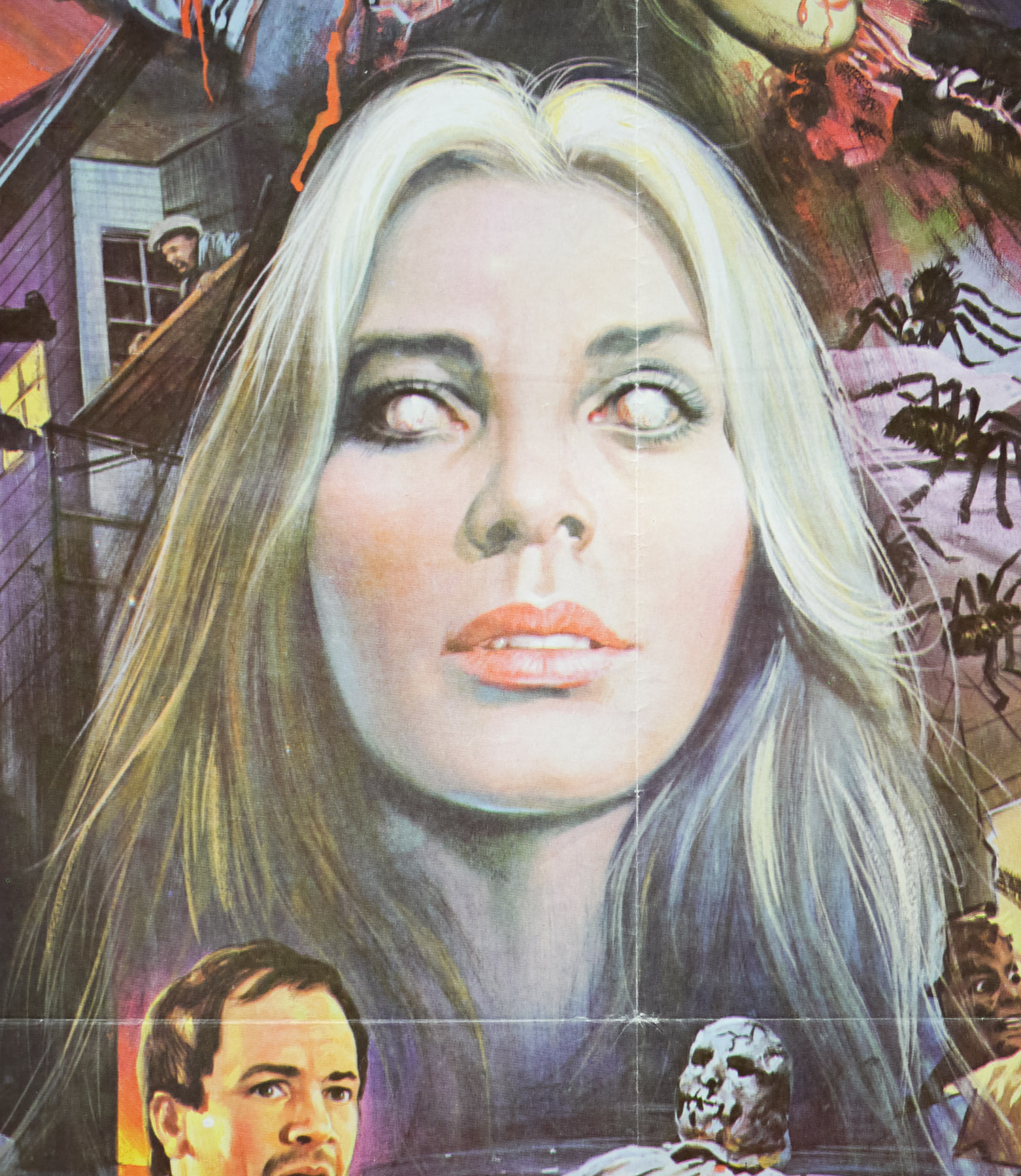
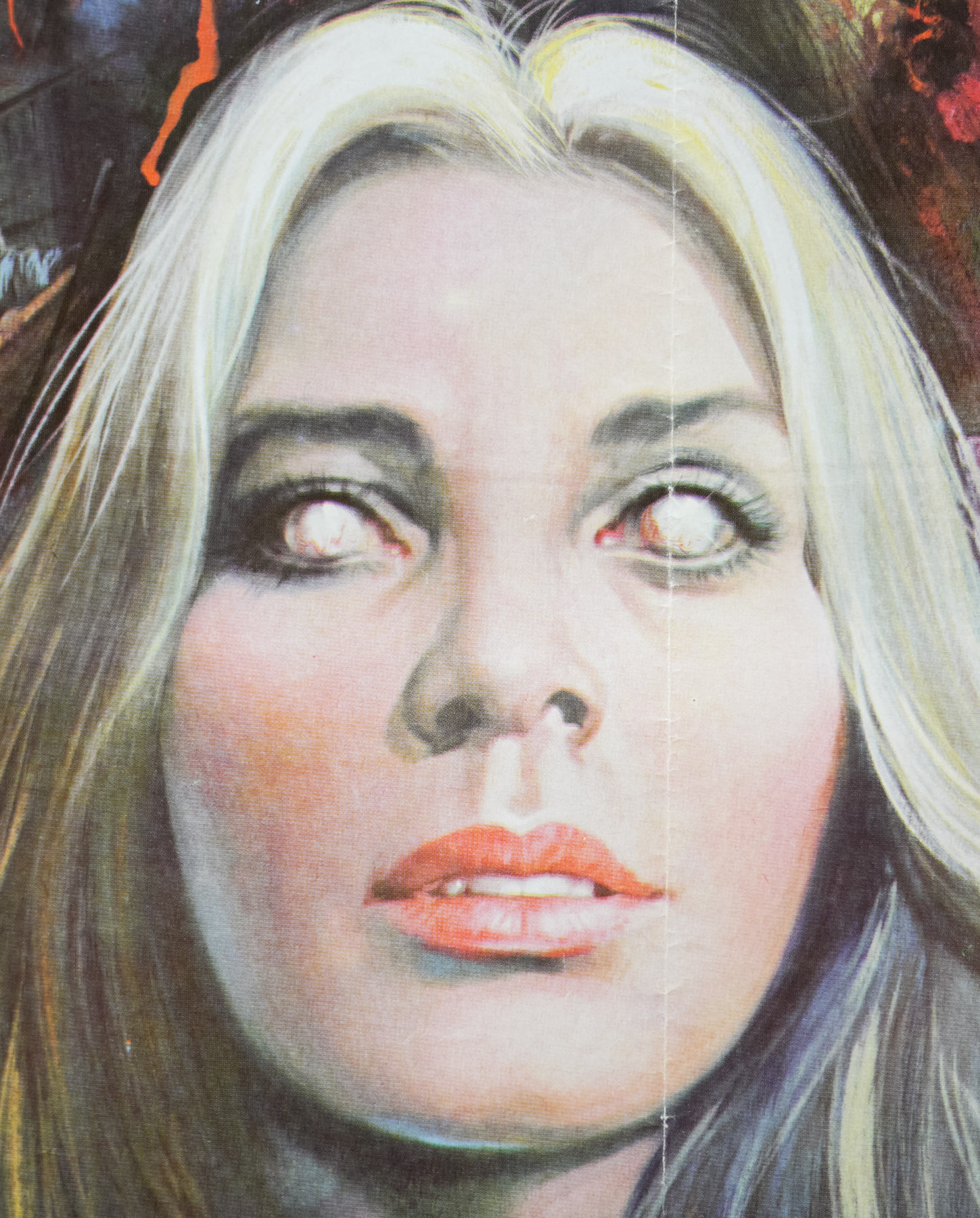
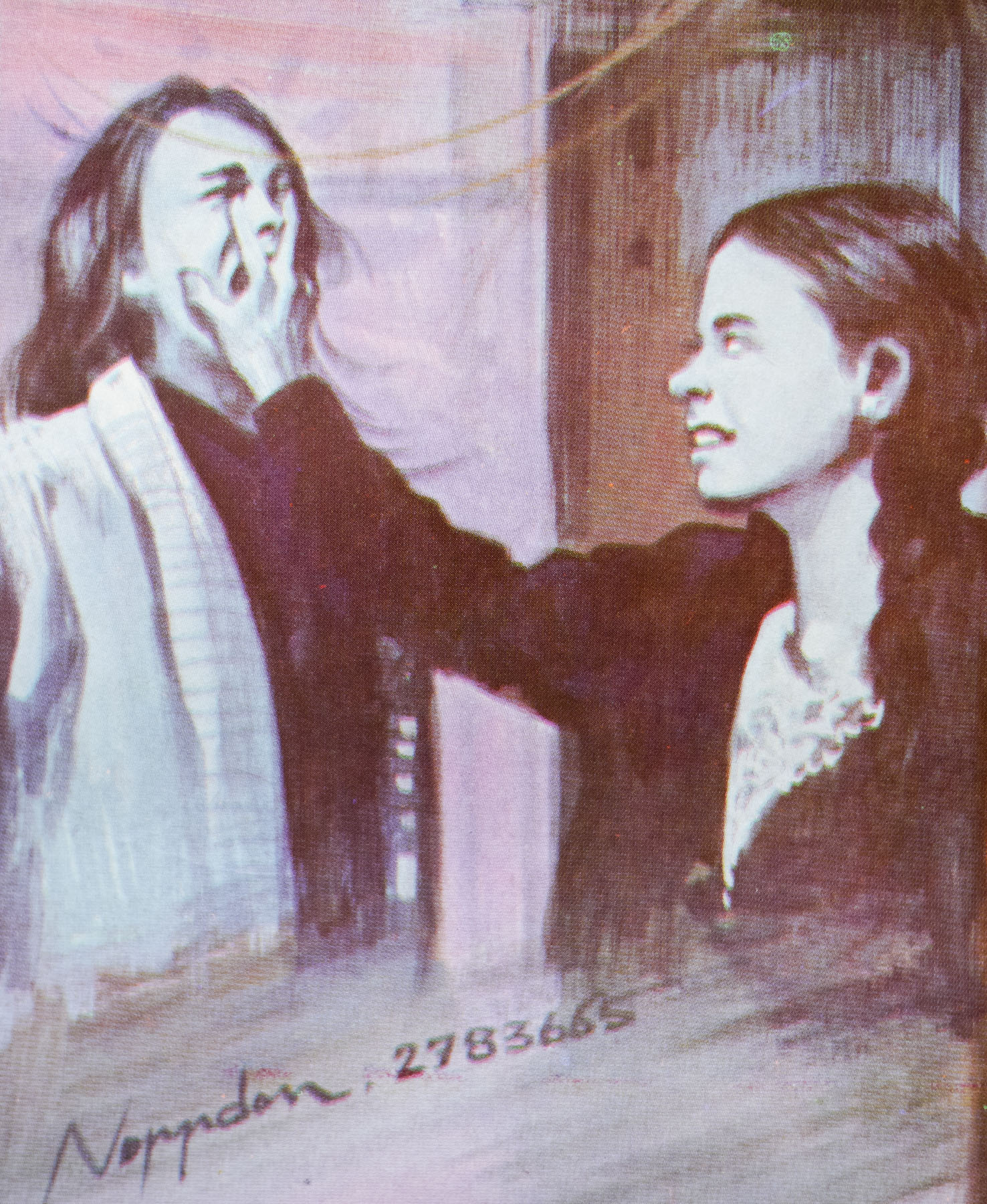
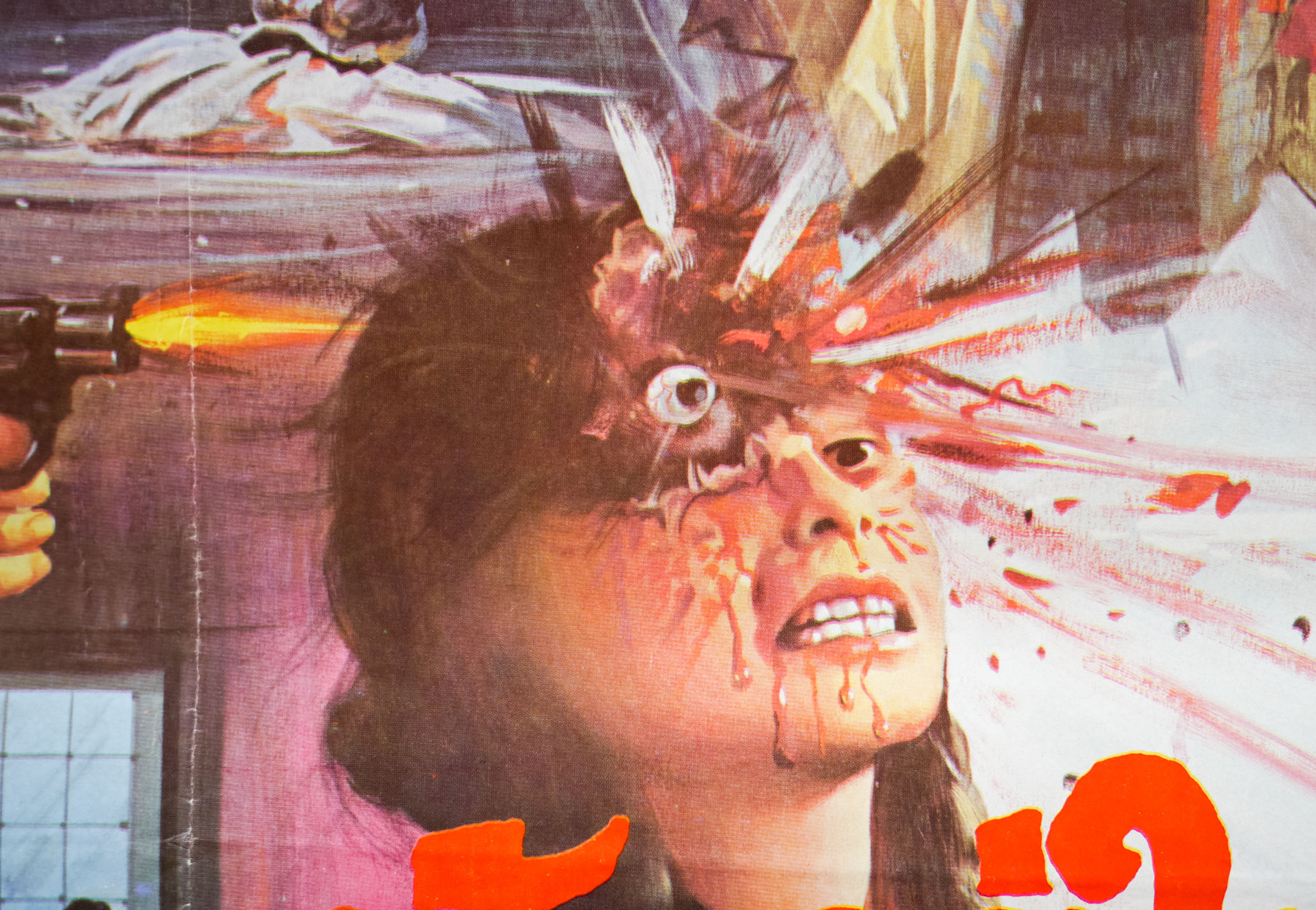
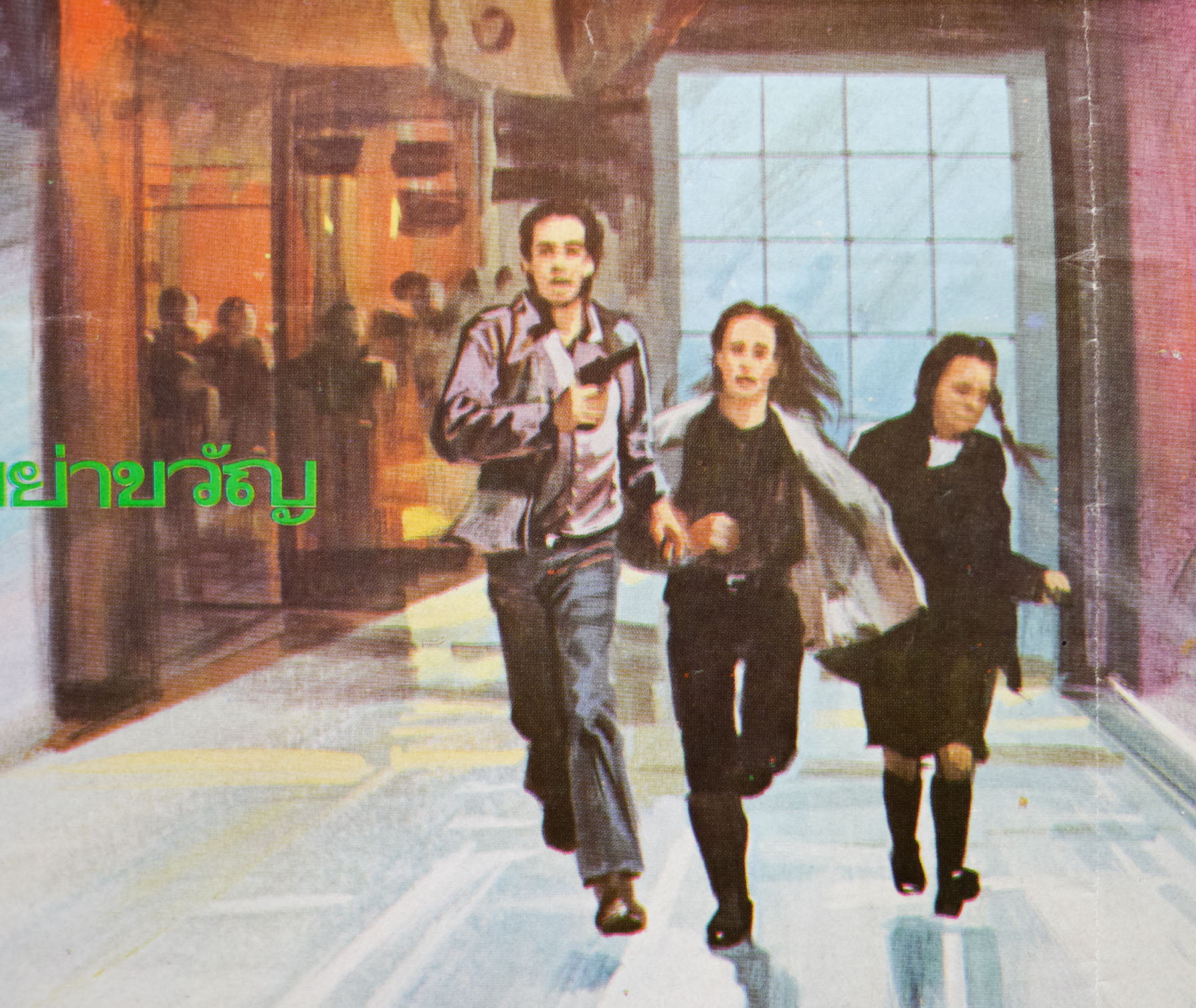
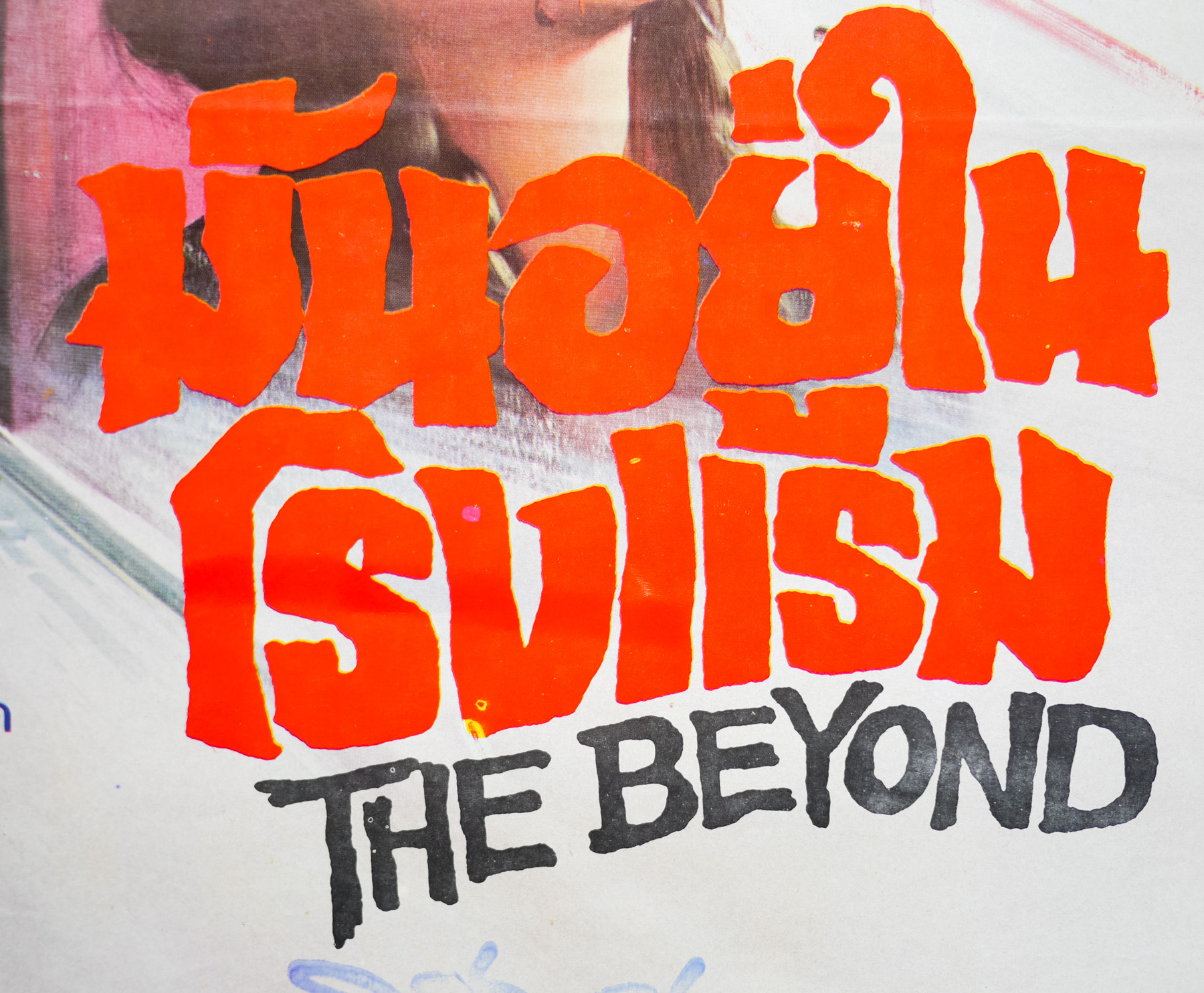
Unique artwork features on this Thai poster for the release of Lucio Fulci‘s classic horror The Beyond (1981). Nicknamed The Godfather of Gore, the late Italian director is responsible for several memorable entries in the horror genre and The Beyond is one of what are often considered to be the big four Fulci films (the others being Zombie Flesh Eaters, The House By the Cemetery and City of the Living Dead), which were all made within two years of each other. The director tried his hand at various genres, including westerns and comedies, but it was horror where he found the greatest success and for which he is best remembered.

The Beyond is the second film in the unofficial ‘Gates of Hell’ trilogy of Fulci films that began with 1980s City of the Living Dead and ended with The House By the Cemetery. British actress Catriona MacColl, star of the other two films, plays New Yorker Liza Merril who has inherited a run-down Louisiana hotel and decides to spend her savings on renovating the place. What she doesn’t realise is that it was built over one of ‘Seven Doors of Death’, which are direct pathways to hell, and when people involved in helping her repair the hotel begin to die horribly she is helped by a local doctor (David Warbeck) and a mysterious local blind woman called Emily (Cinzia Monreale). It soon becomes clear that the pathway is letting supernatural evil out and creating bloodthirsty zombies of the dead and Liza must fight for her very survival.

As with many of Fulci’s films, the story plays second fiddle to the striking visuals and gory set-pieces as the body count ramps up. It’s never less than memorable and is often cited by Fulci fans as their favourite of his films. The Beyond also features a great score by regular Fulci collaborator Fabio Frizzi. The film was butchered heavily for its original US release (as ‘7 Doors of Death’) and was missing most of the gore scenes and a different soundtrack. The UK release was originally heavily cut, despite being granted an ‘X’ certificate. It was finally passed fully uncut in 2001.

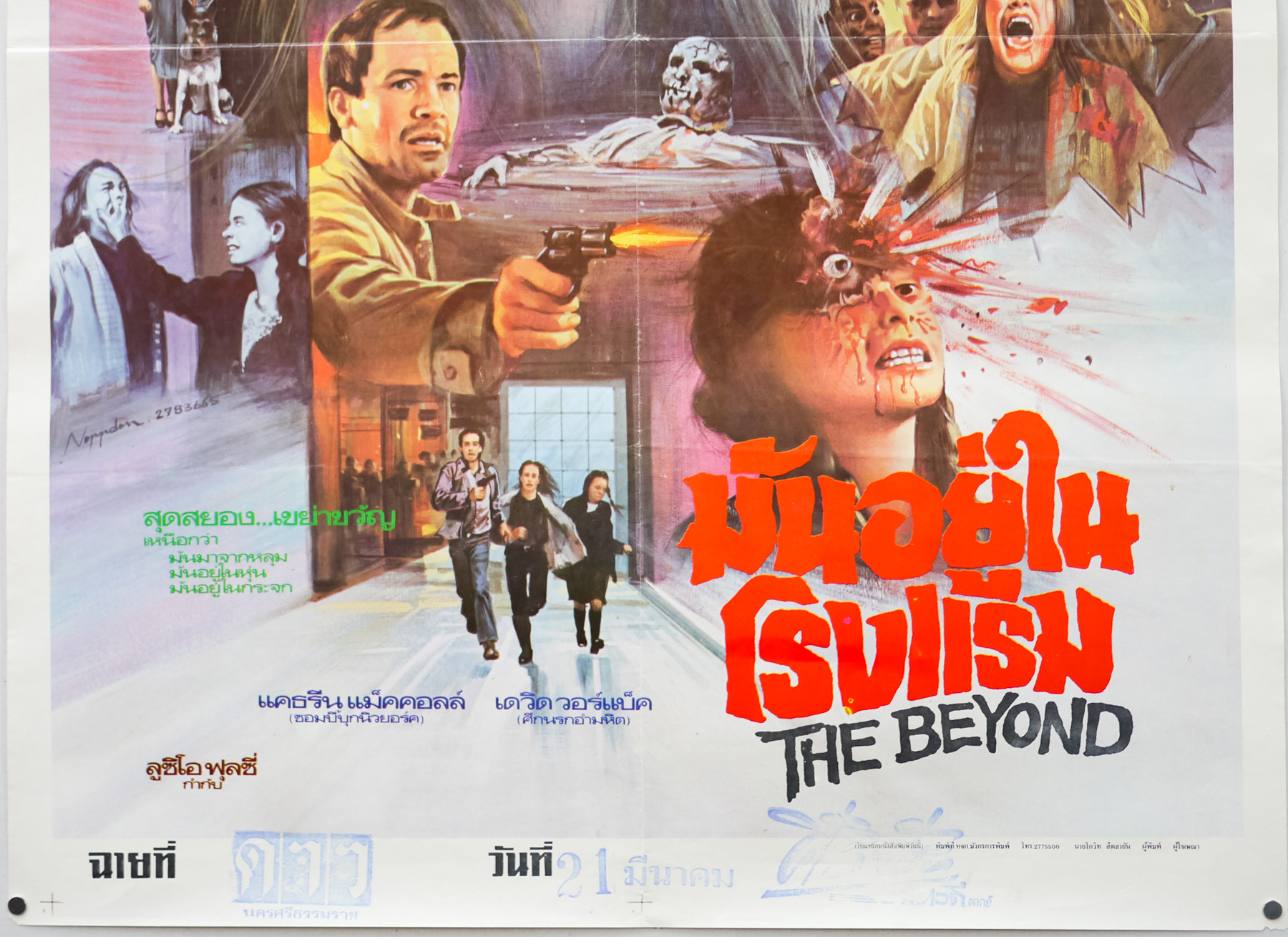
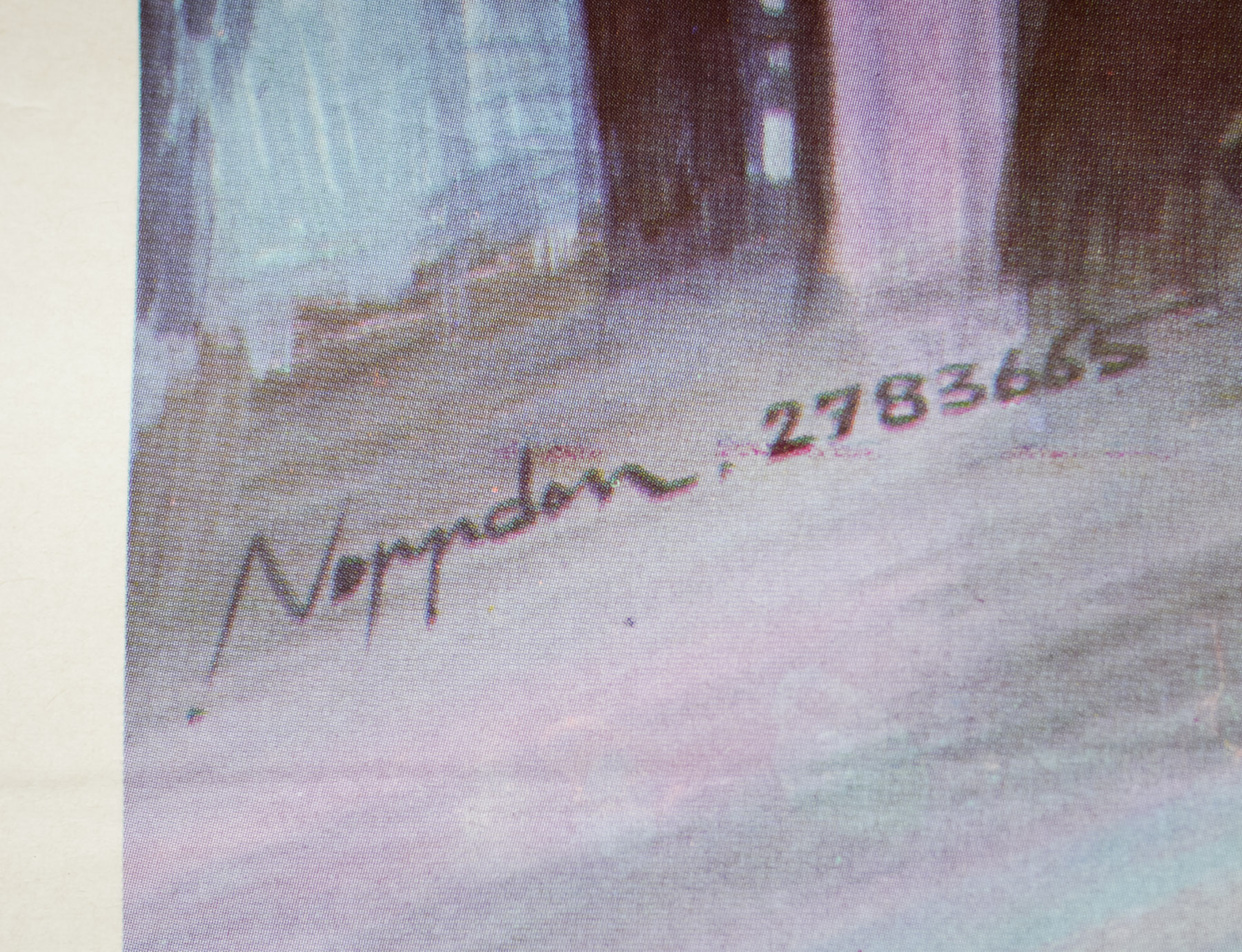
This montage featuring some of the more memorable moments of gory violence from the film was painted by a Thai artist called Noppadol about whom I’ve been unable to discover very little, other than a few of the other film poster titles he worked on (including Saturn 3 and Evil Dead). If anyone knows any more details please get in touch.

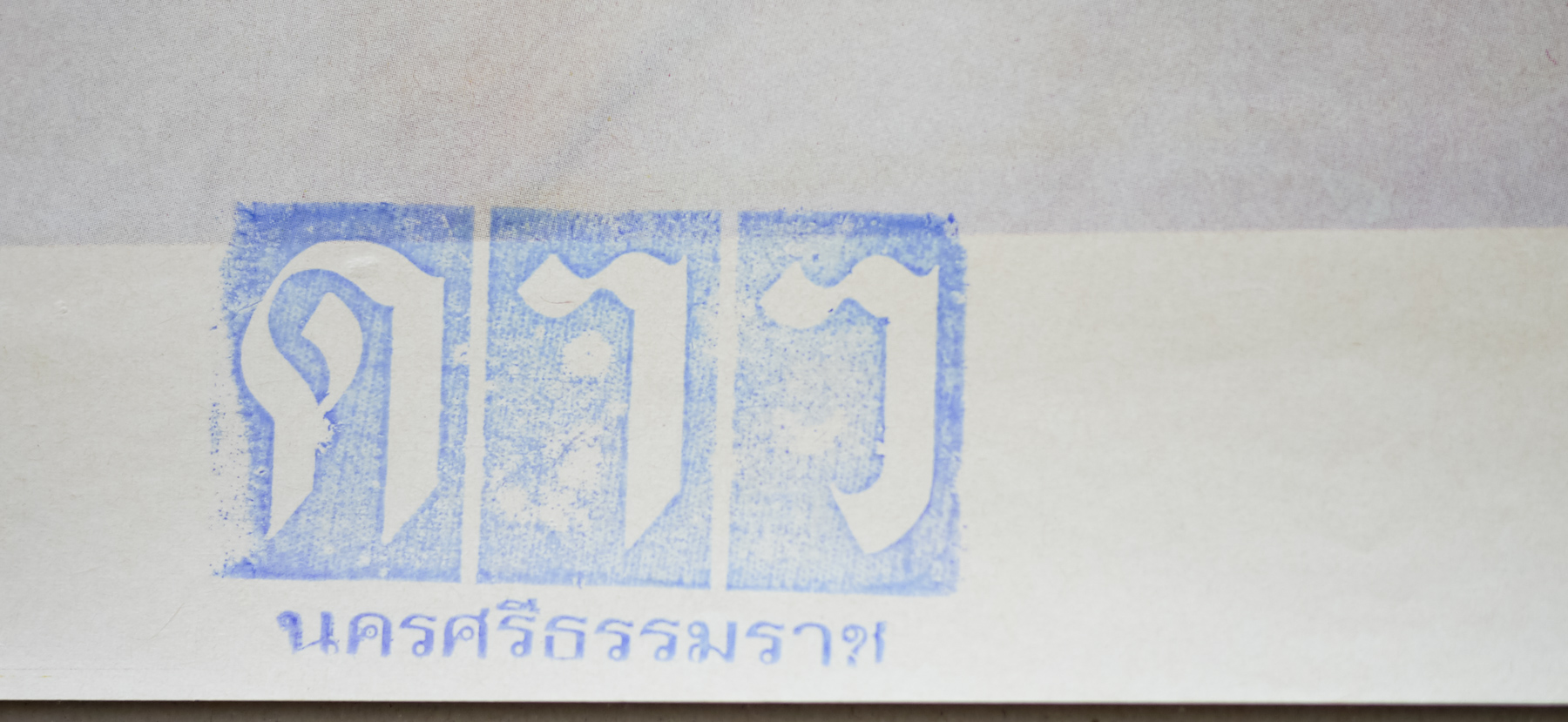
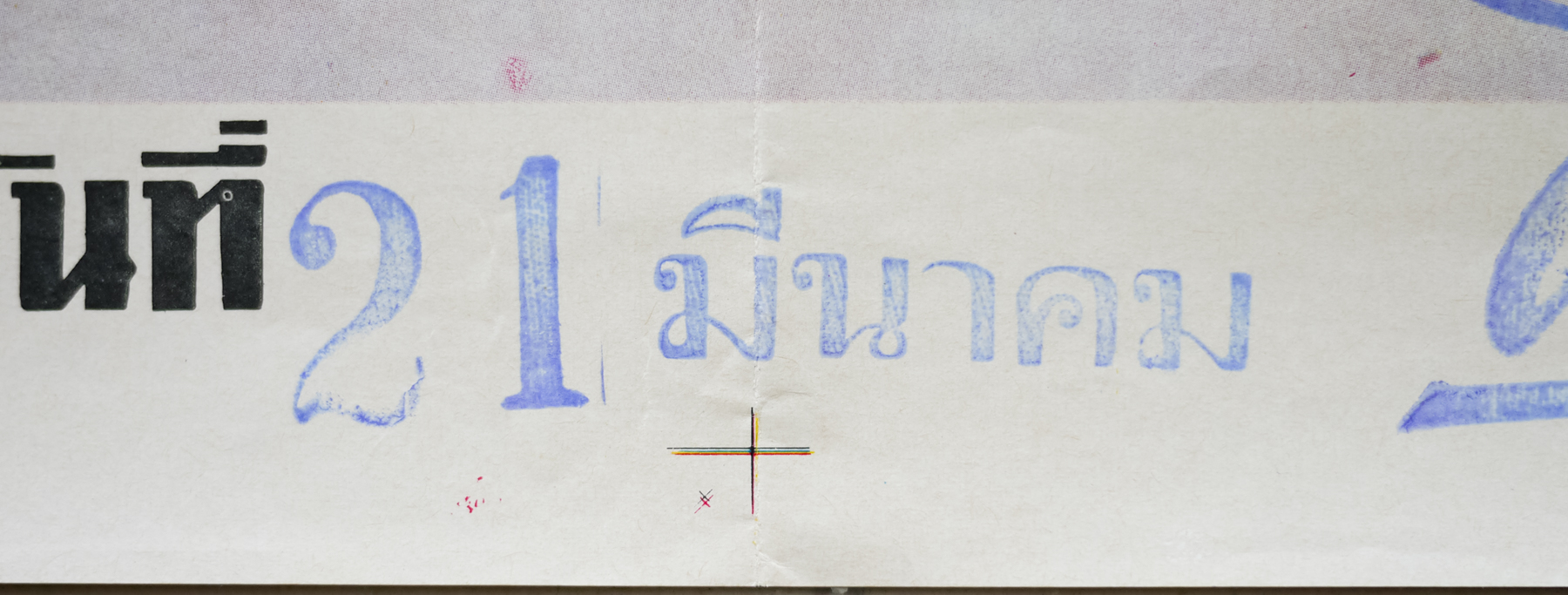
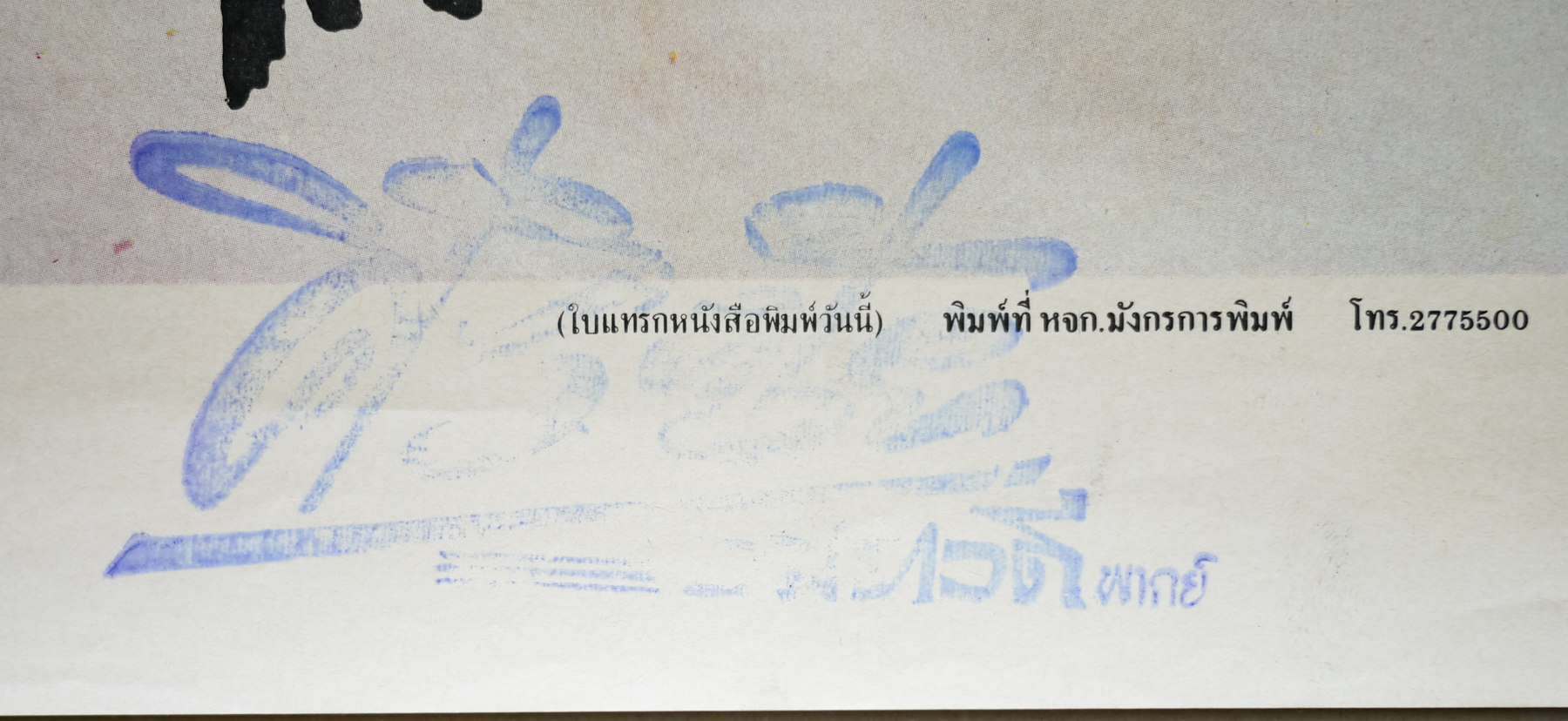
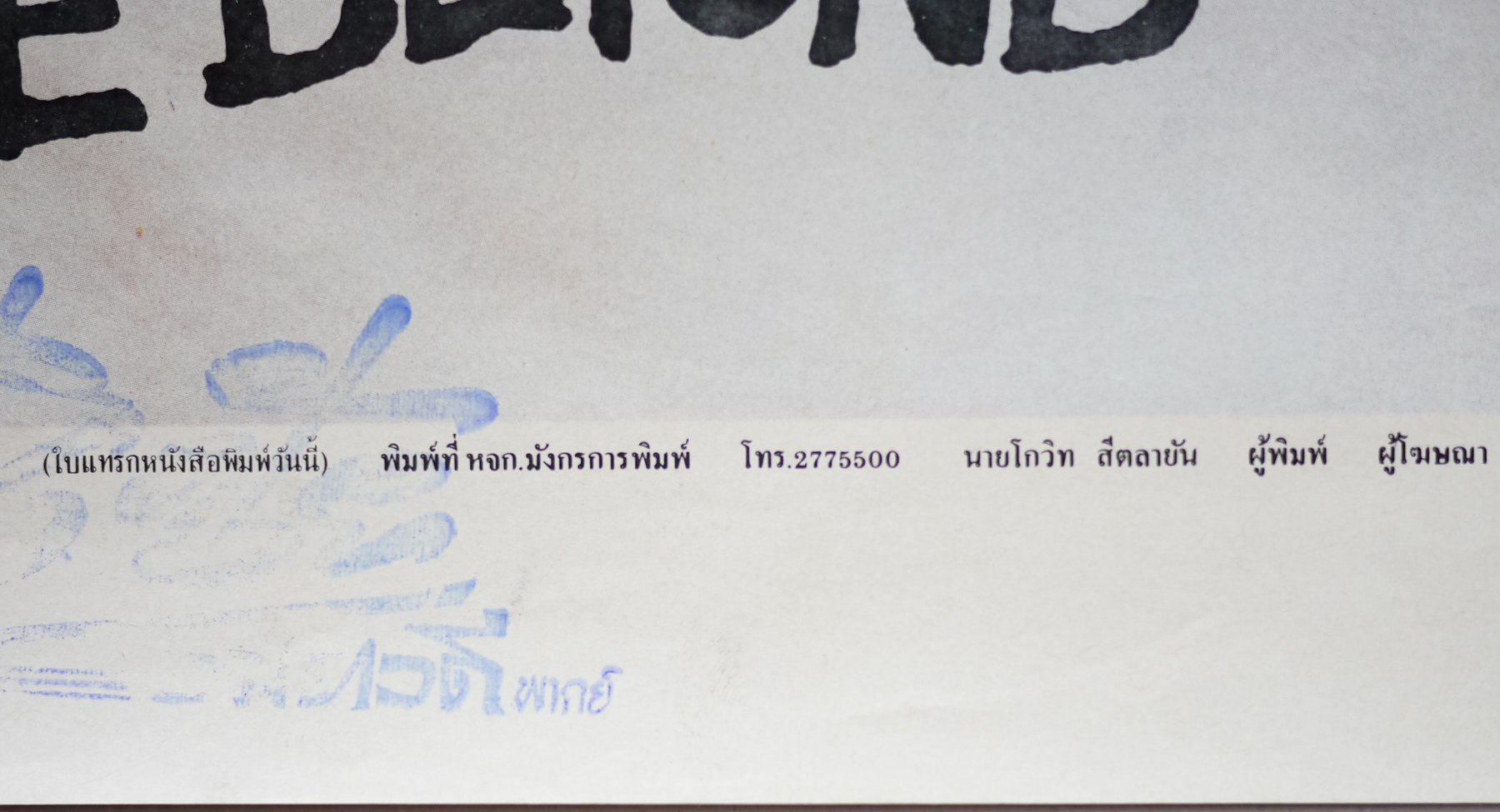
Although folded and not in amazing condition this is a very scarce poster and one that’s getting increasingly hard to find. I’ll continue to try and locate one without the fold lines but suspect it won’t be easy. The blue ink marks on the bottom of the poster relate to showings at specific times in specific cinemas and were stamped on after the original printing.

Flash Gordon / landscape / Thailand

13.05.15

Poster Poster
Title
Flash Gordon
AKA
Blixt Gordon (Sweden)
Year of Film
1980
Director
Mike Hodges
Starring
Sam J. Jones, Melody Anderson, Chaim Topol, Timothy Dalton, Max von Sydow, Ornella Muti, Brian Blessed
Origin of Film
USA | UK
Genre(s) of Film
Sam J. Jones, Melody Anderson, Chaim Topol, Timothy Dalton, Max von Sydow, Ornella Muti, Brian Blessed,
Type of Poster
Thai
Style of Poster
Landscape
Origin of Poster
Thailand
Year of Poster
1980
Designer
Tongdee Panumas
Artist
Tongdee Panumas
Size (inches)
21 6/16" x 30 13/16"
SS or DS
SS
Tagline
--

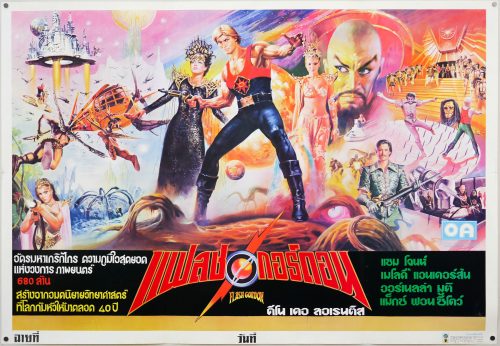
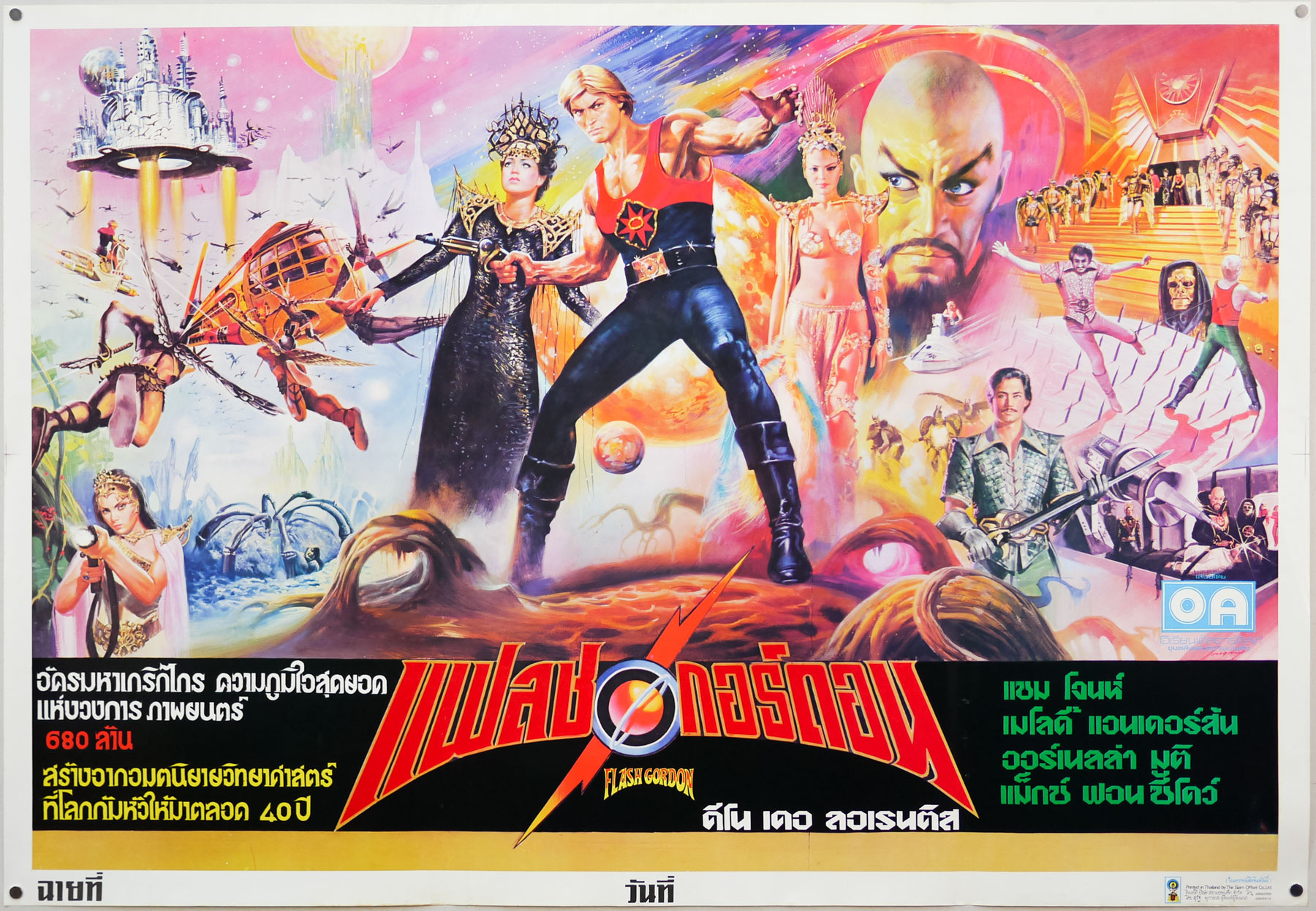
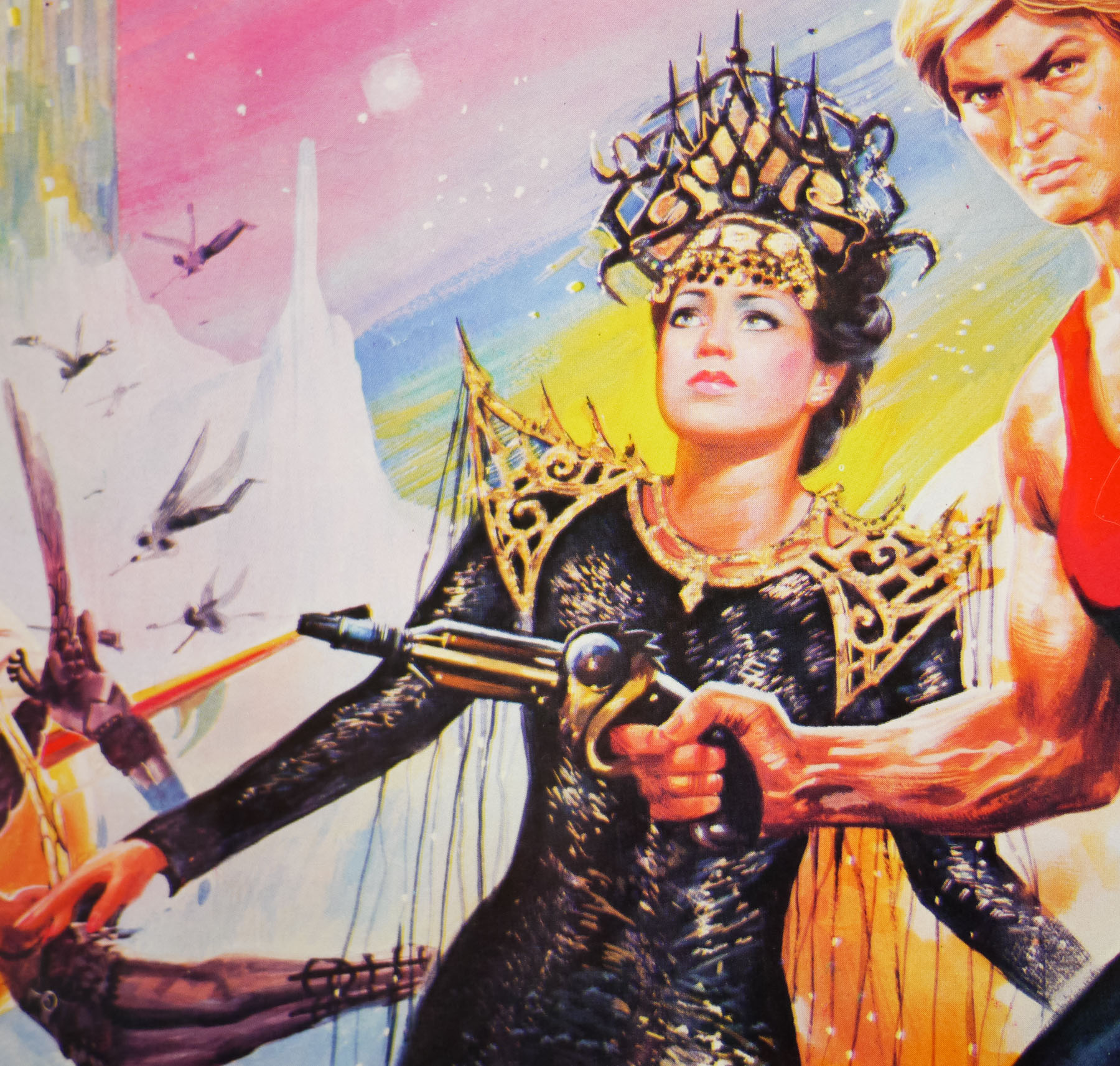
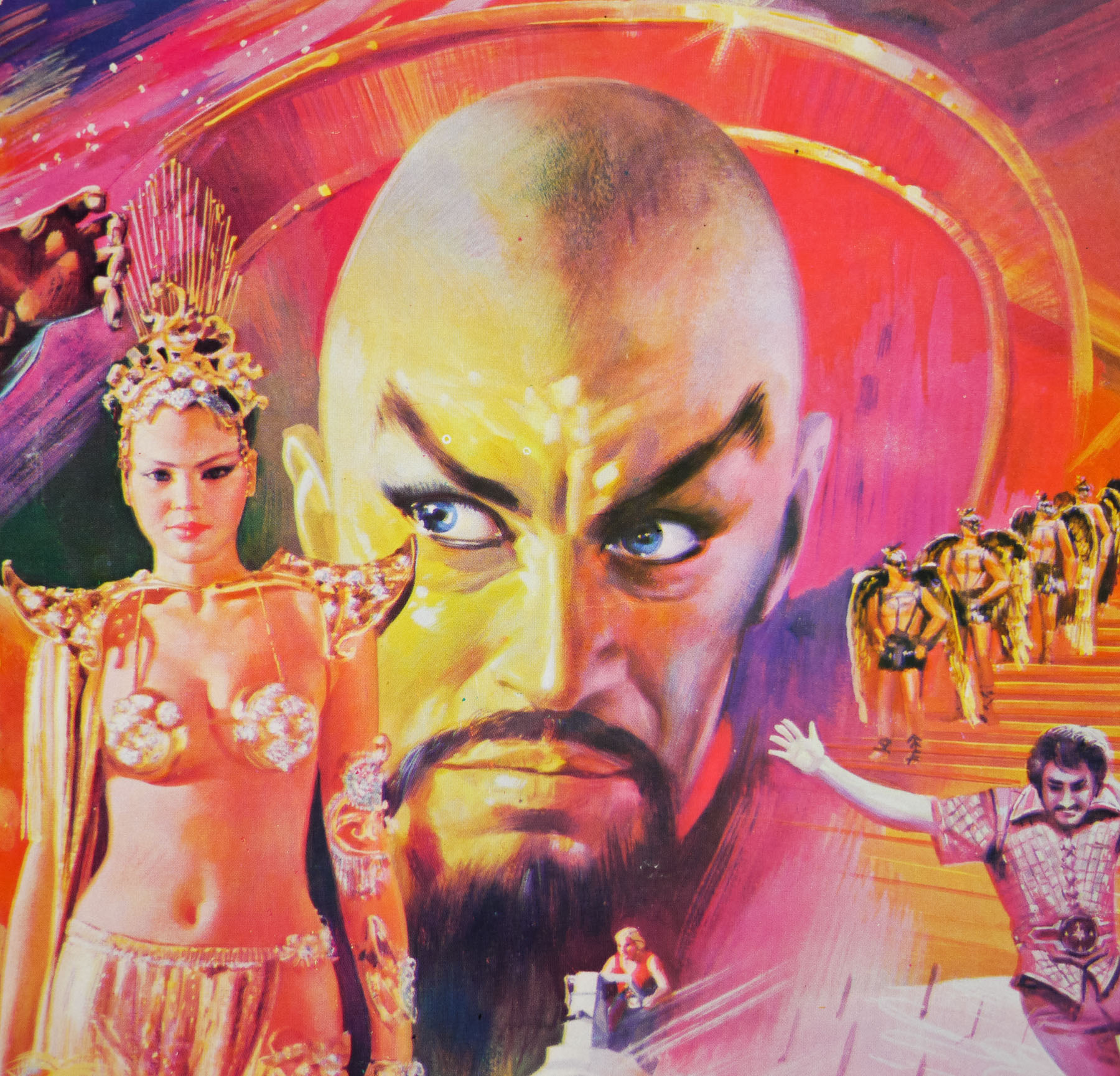
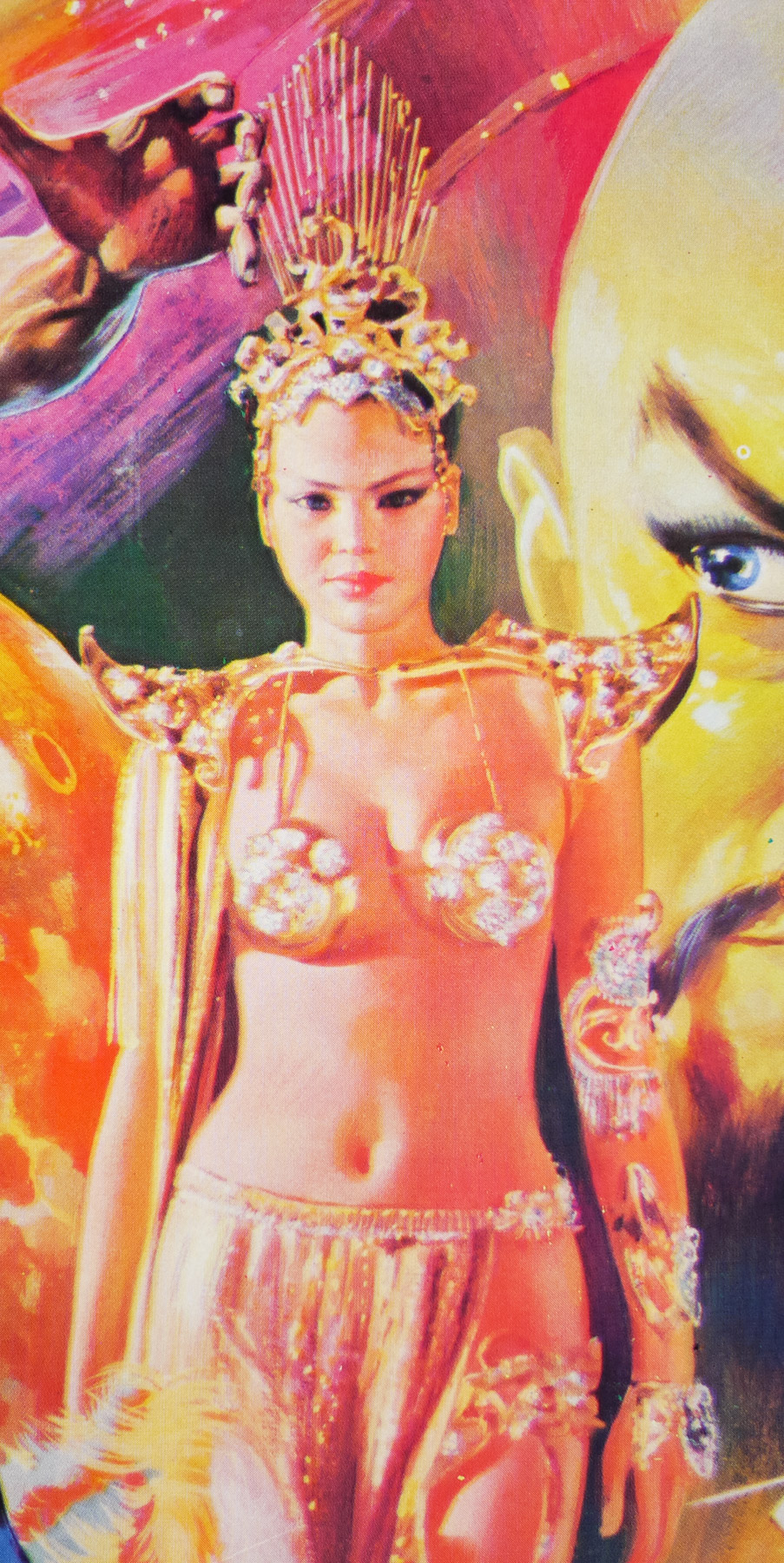
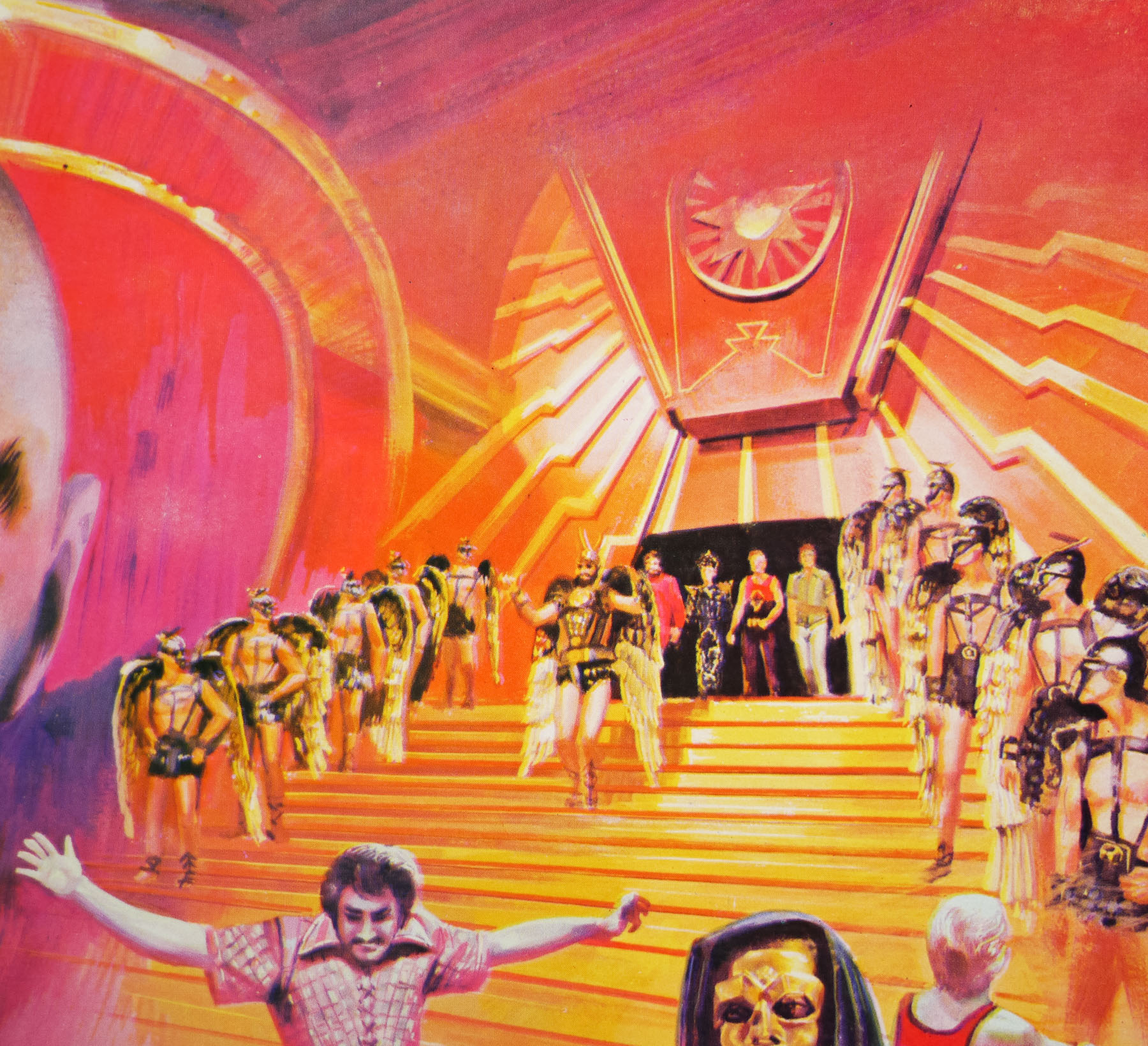
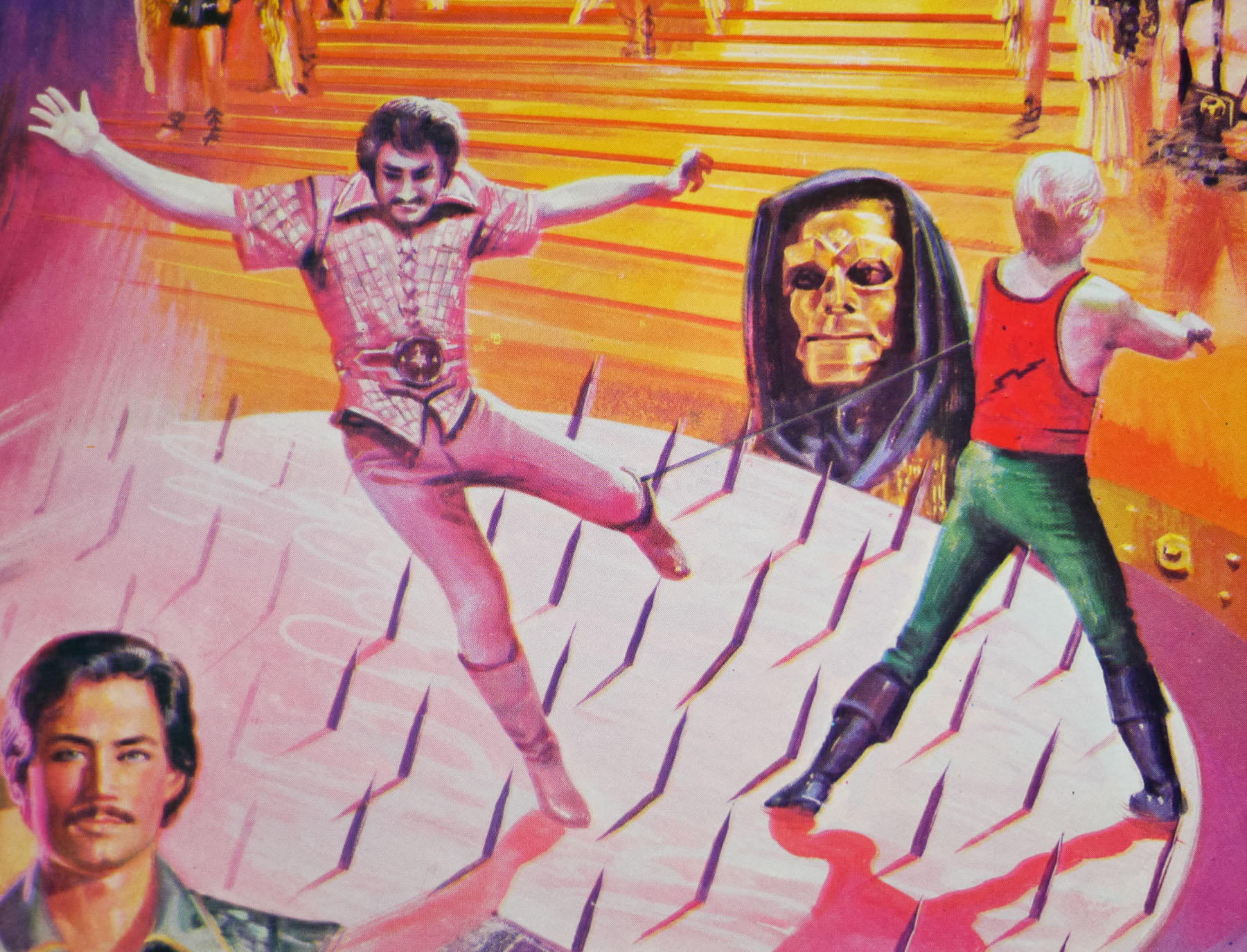
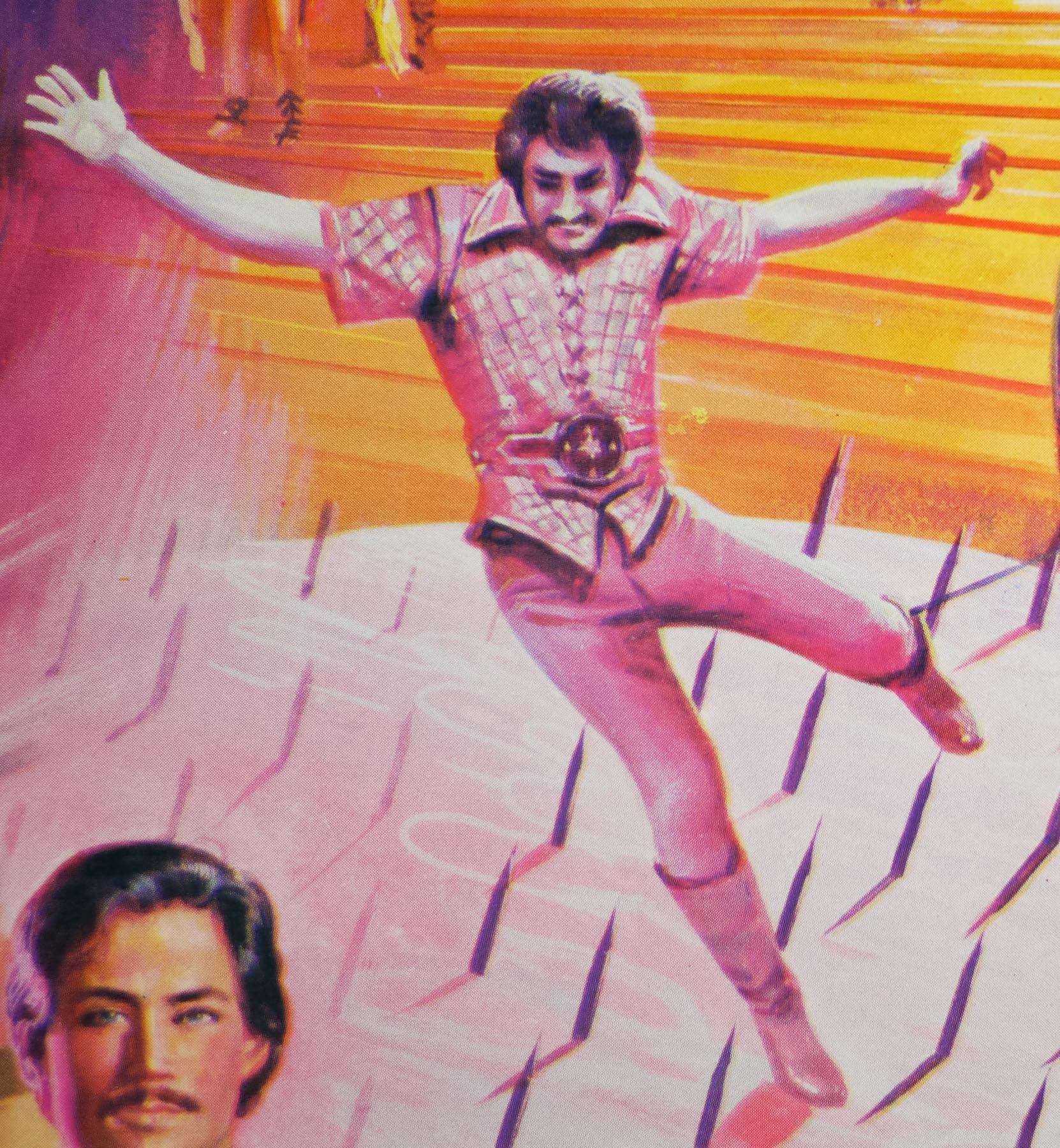
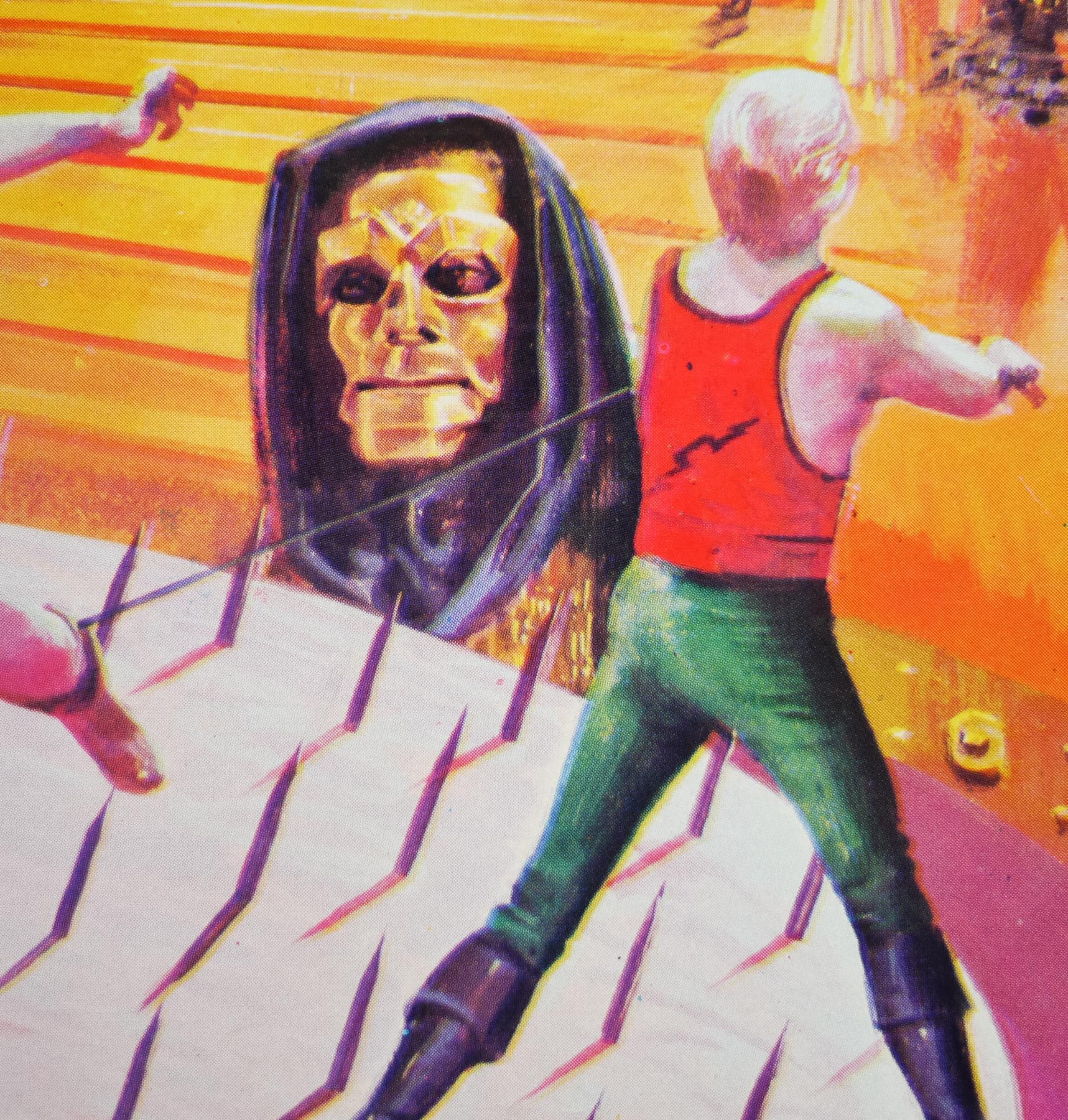
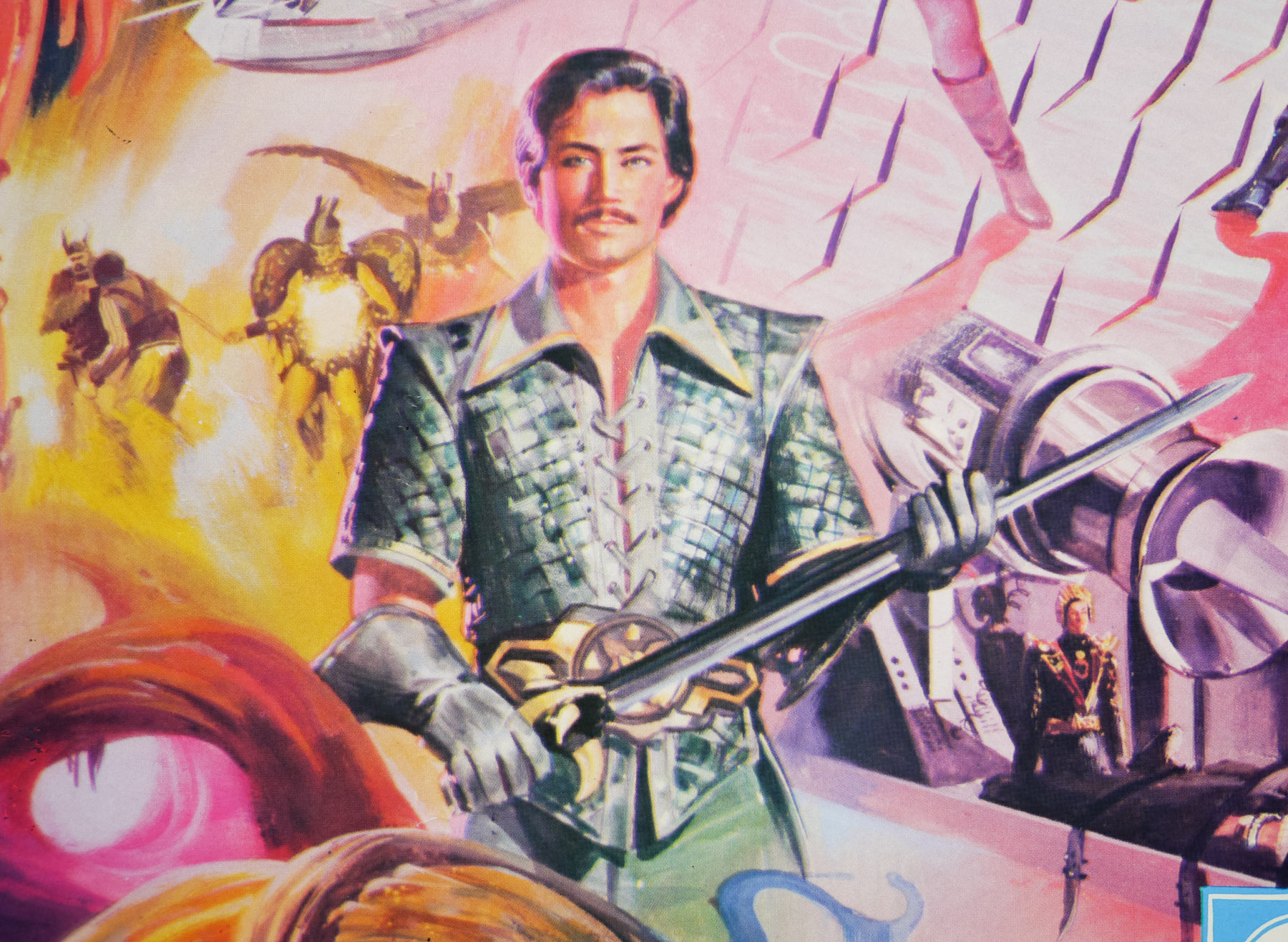
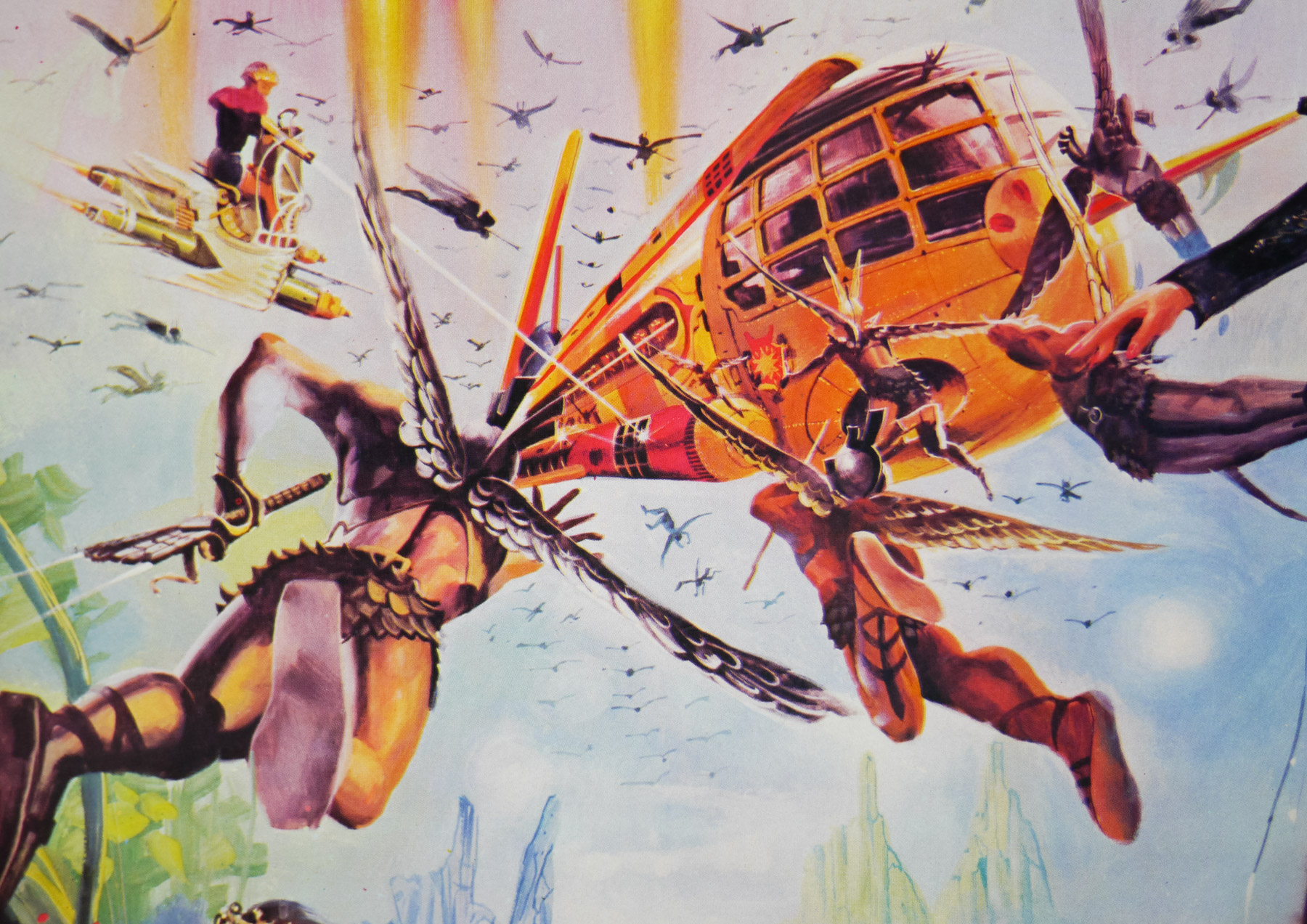
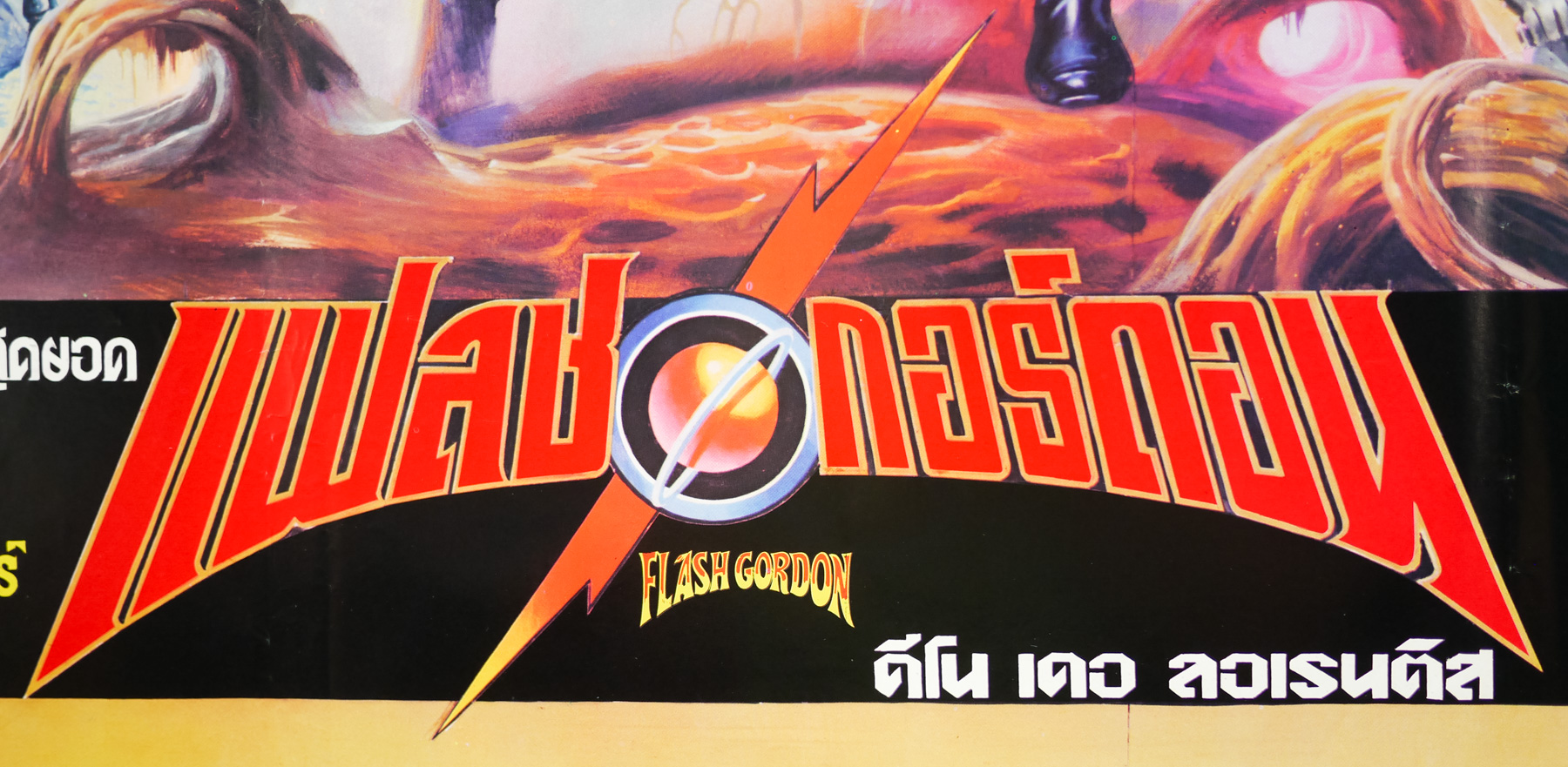
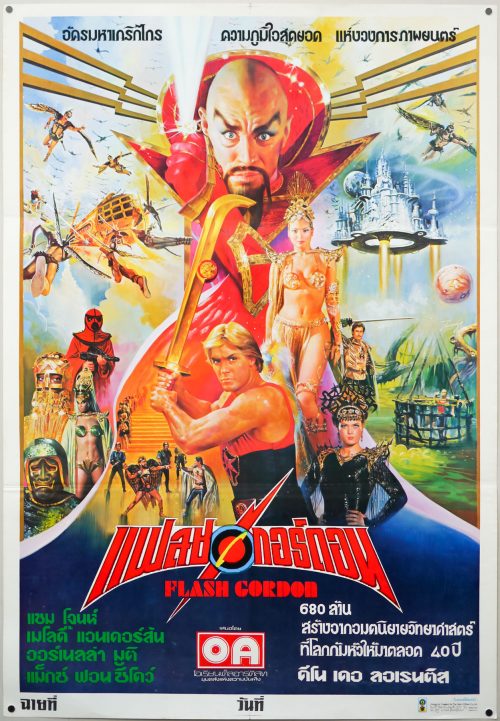
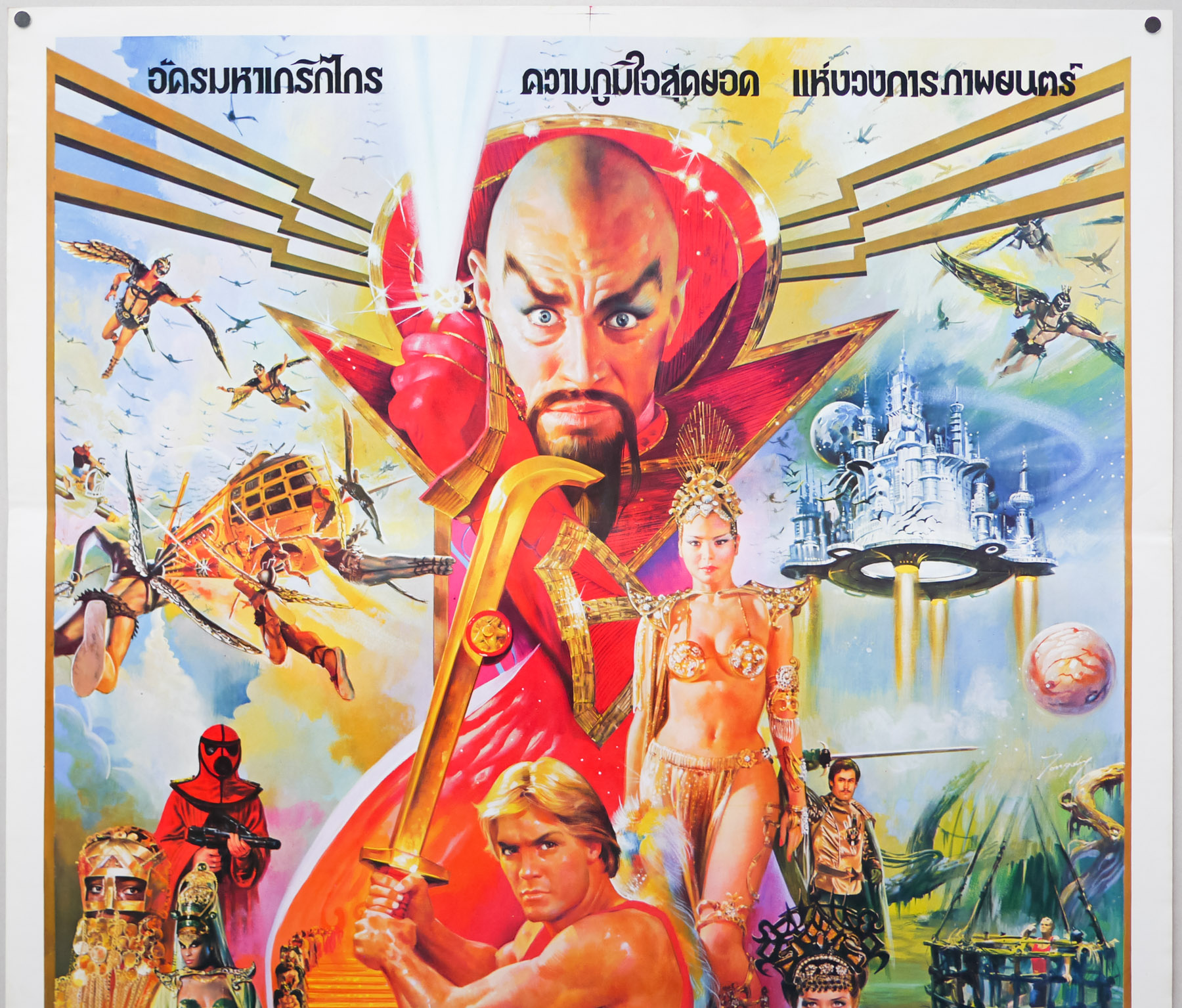
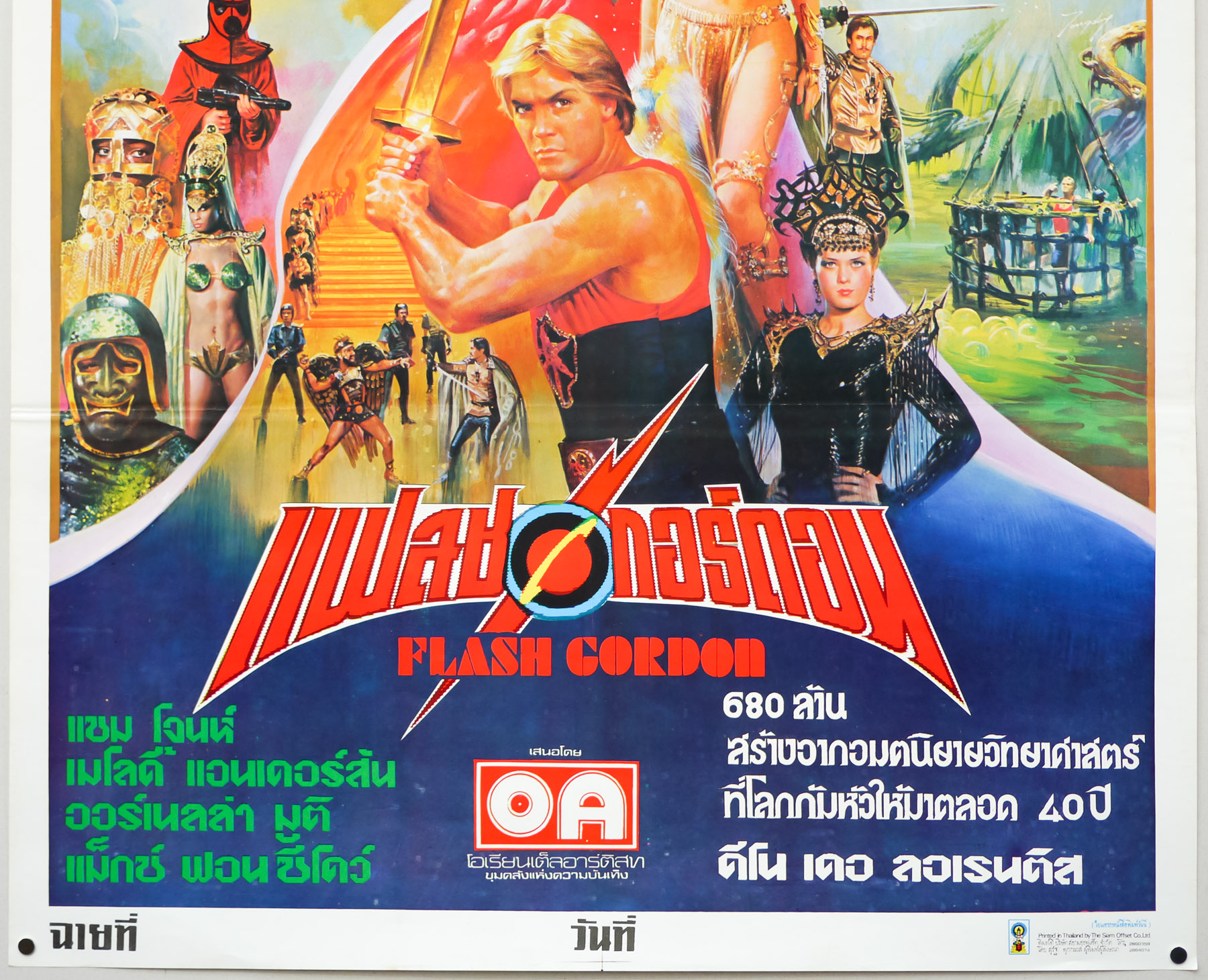
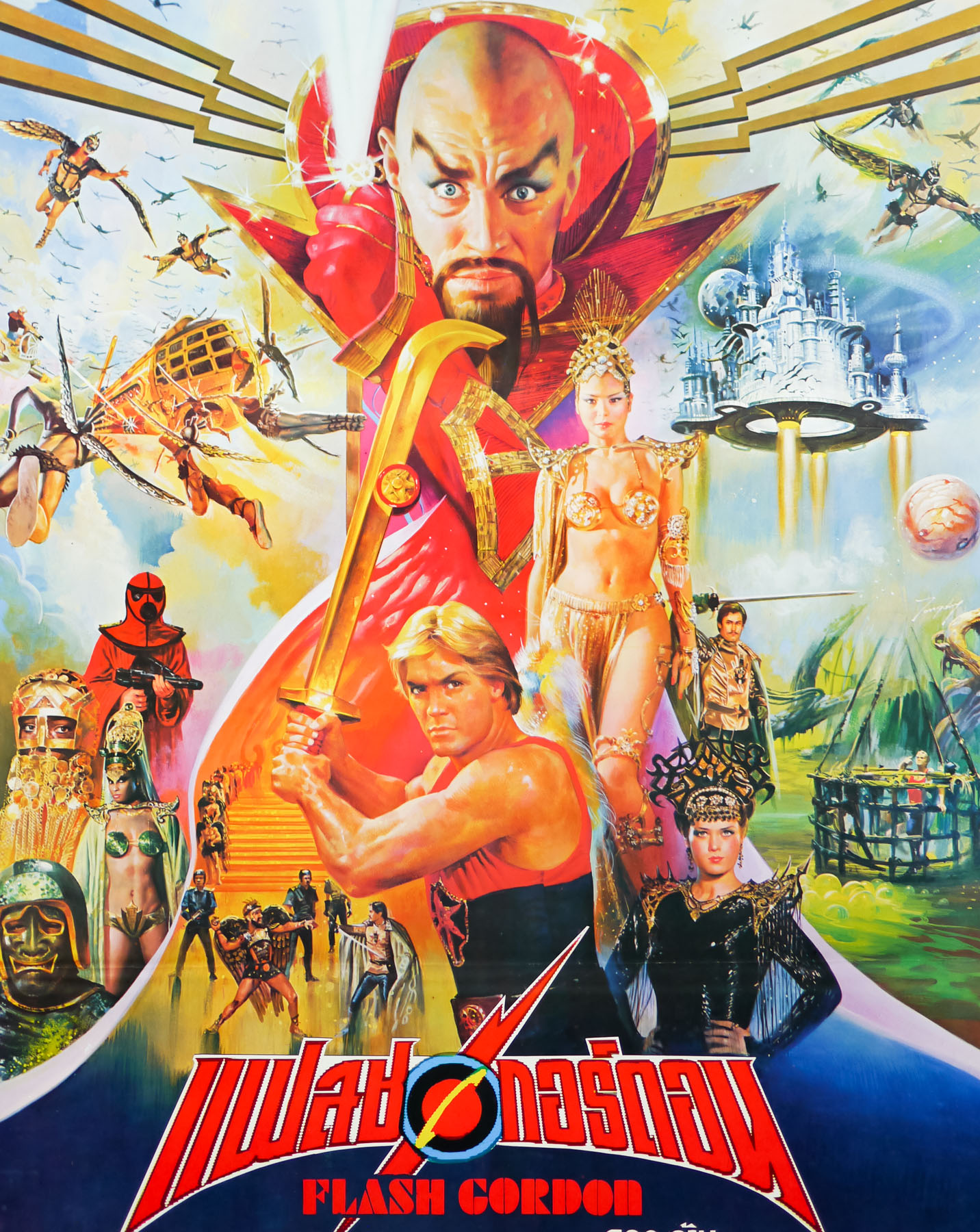
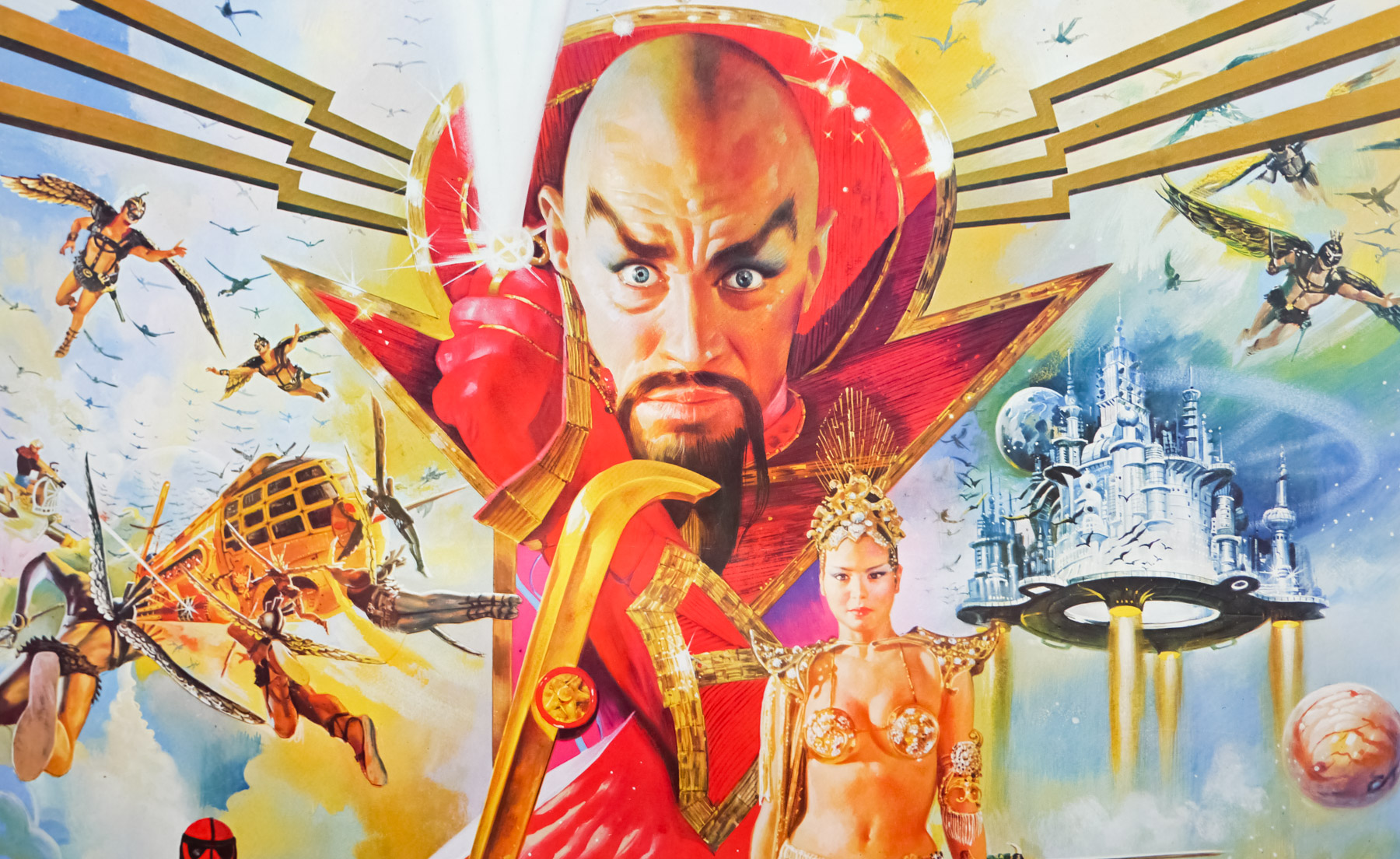
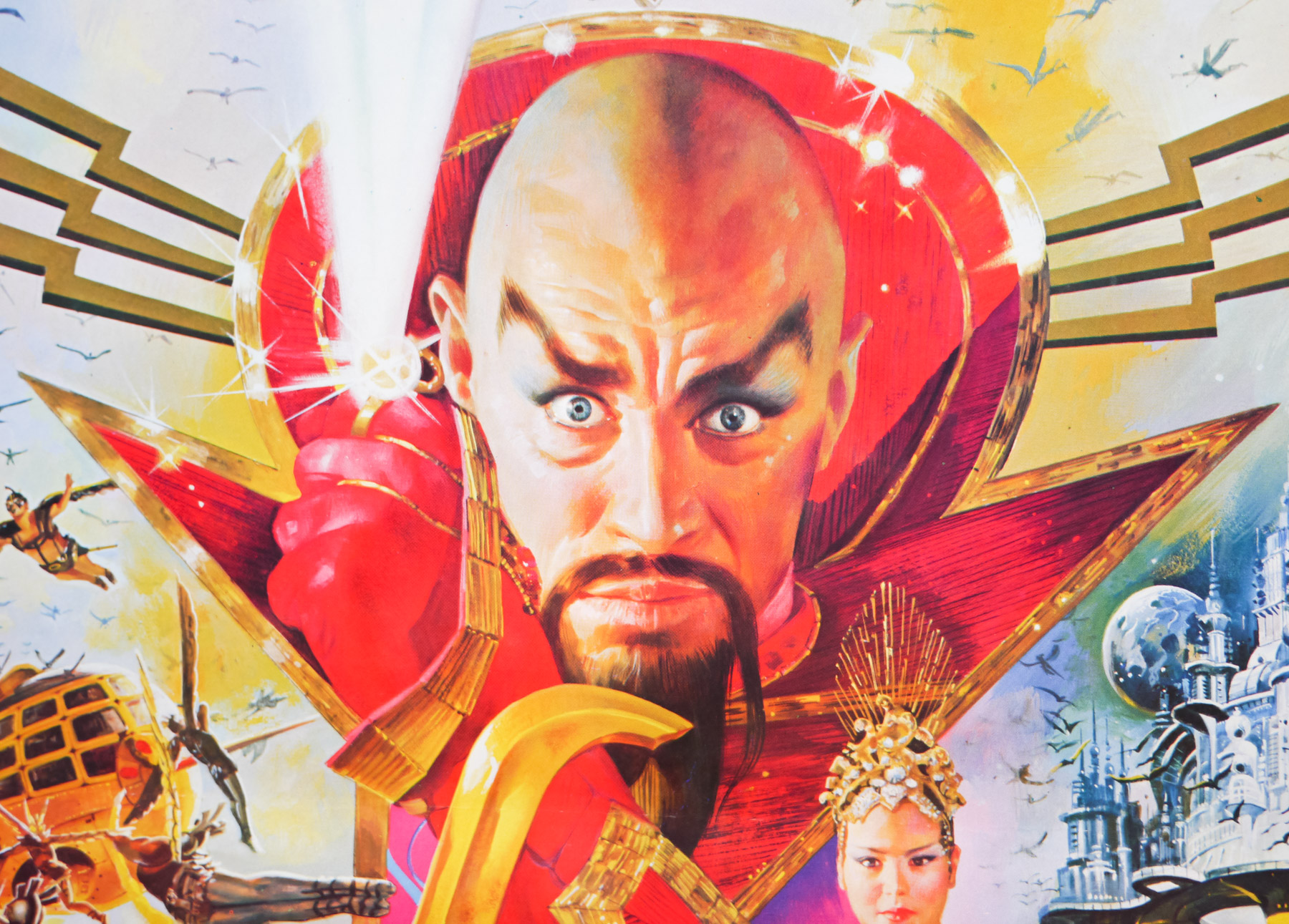
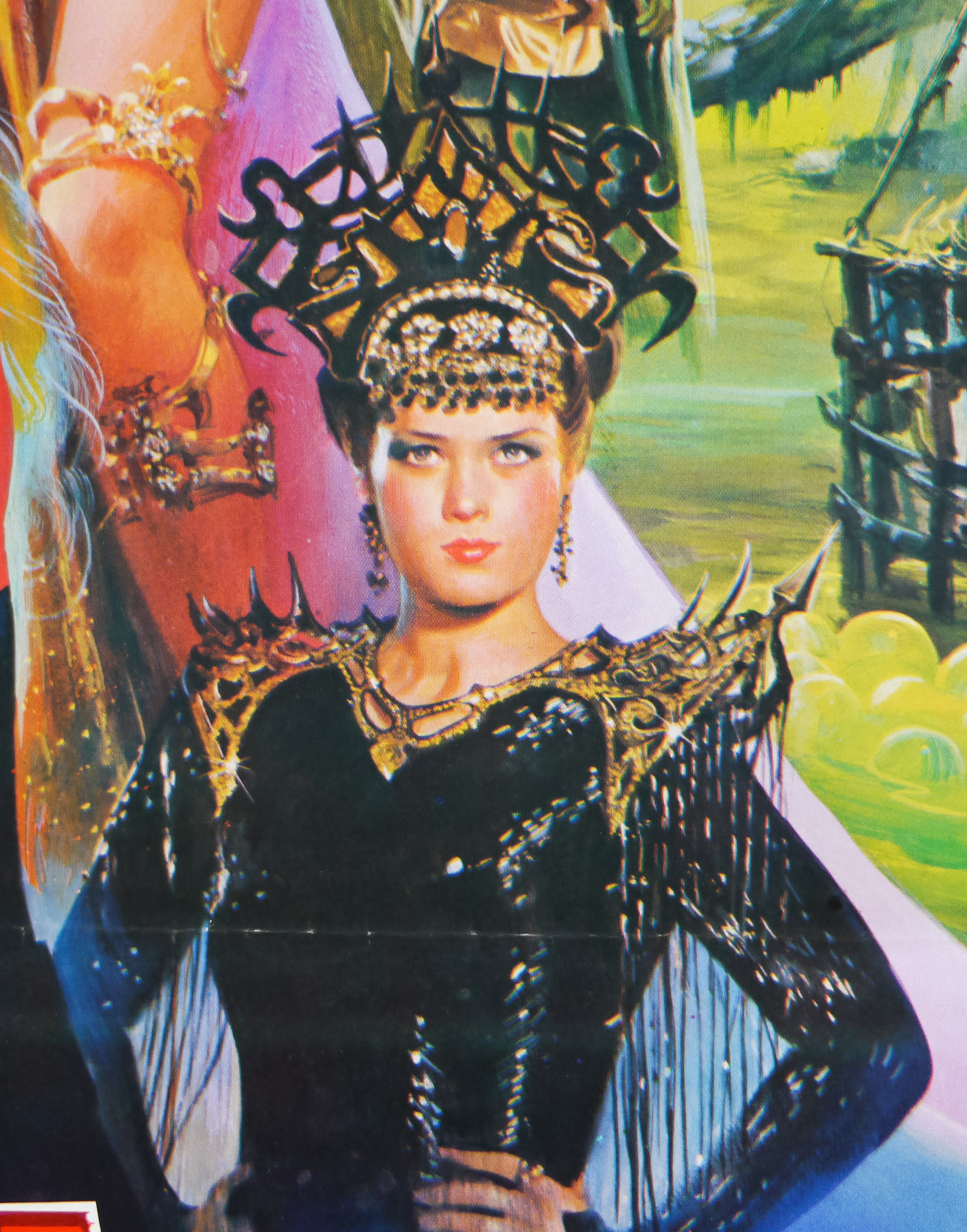
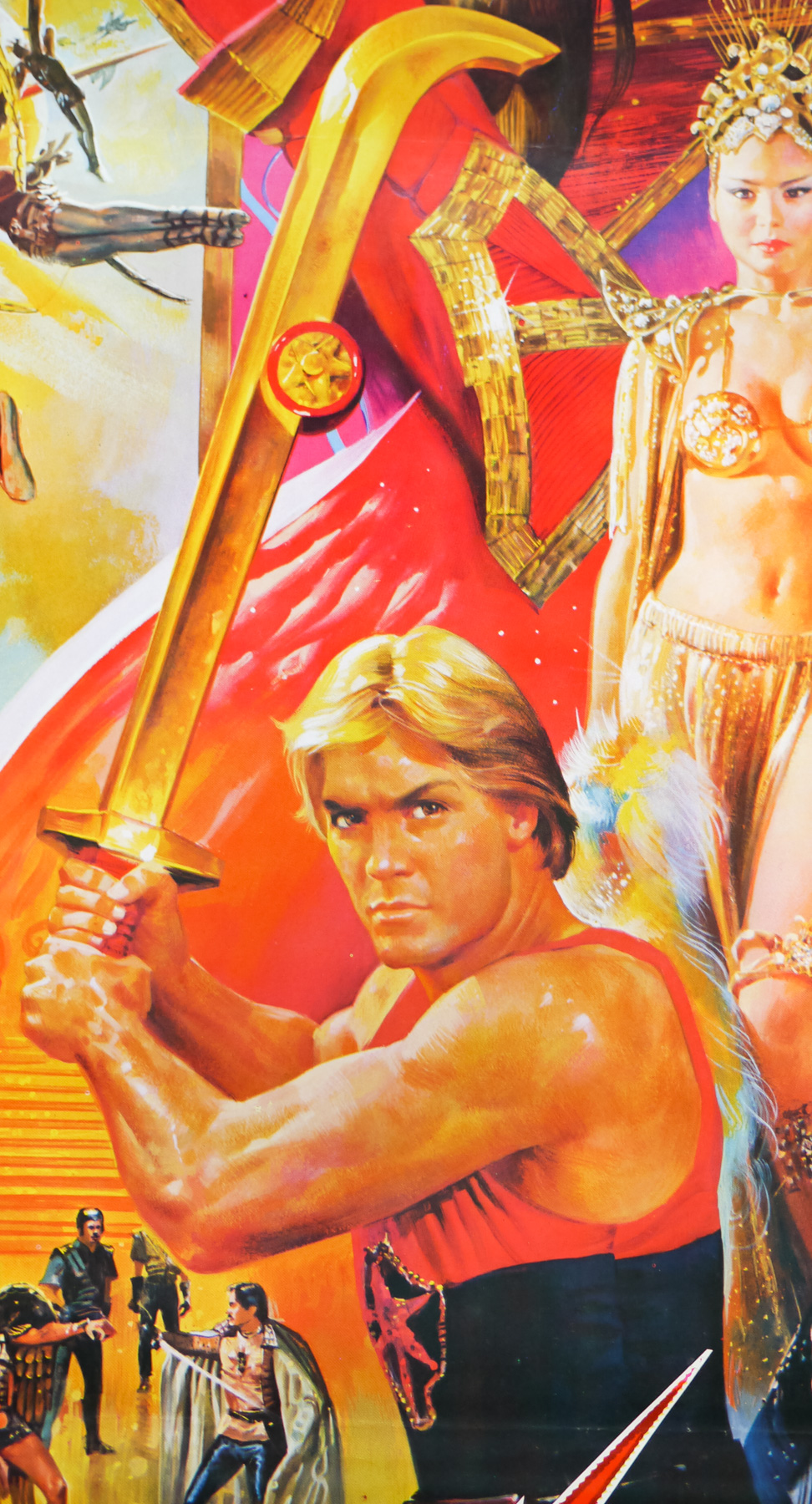
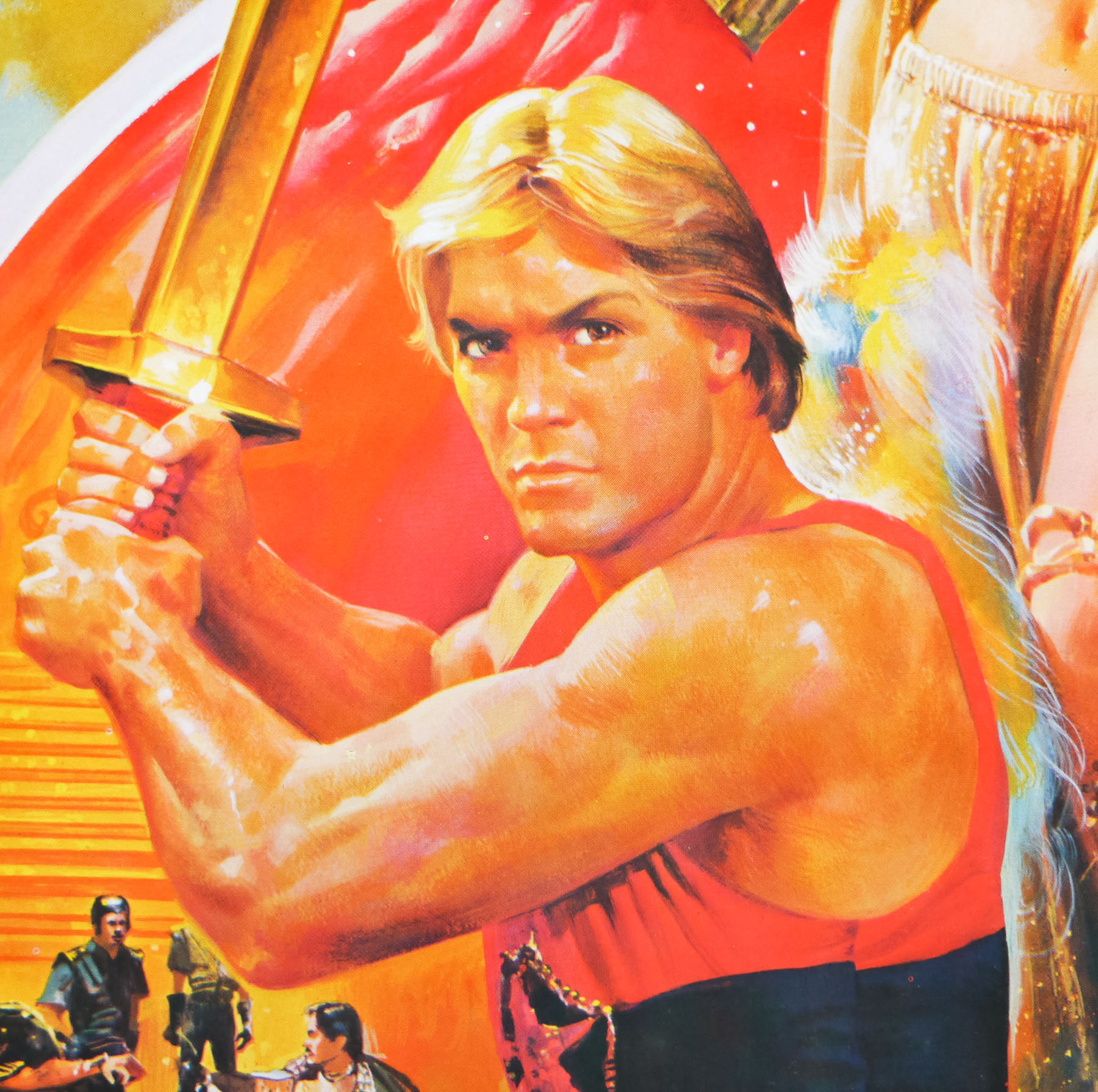
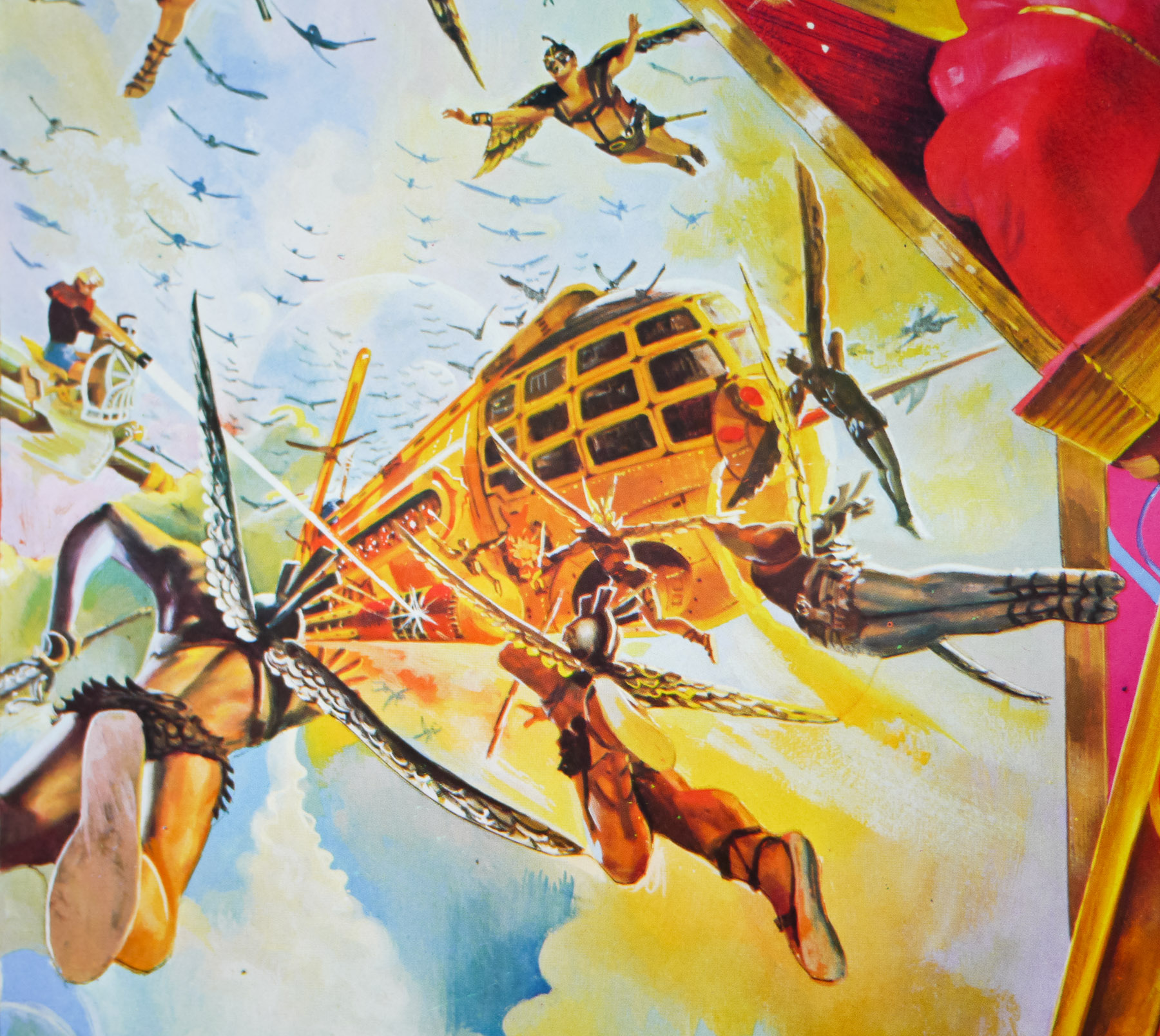
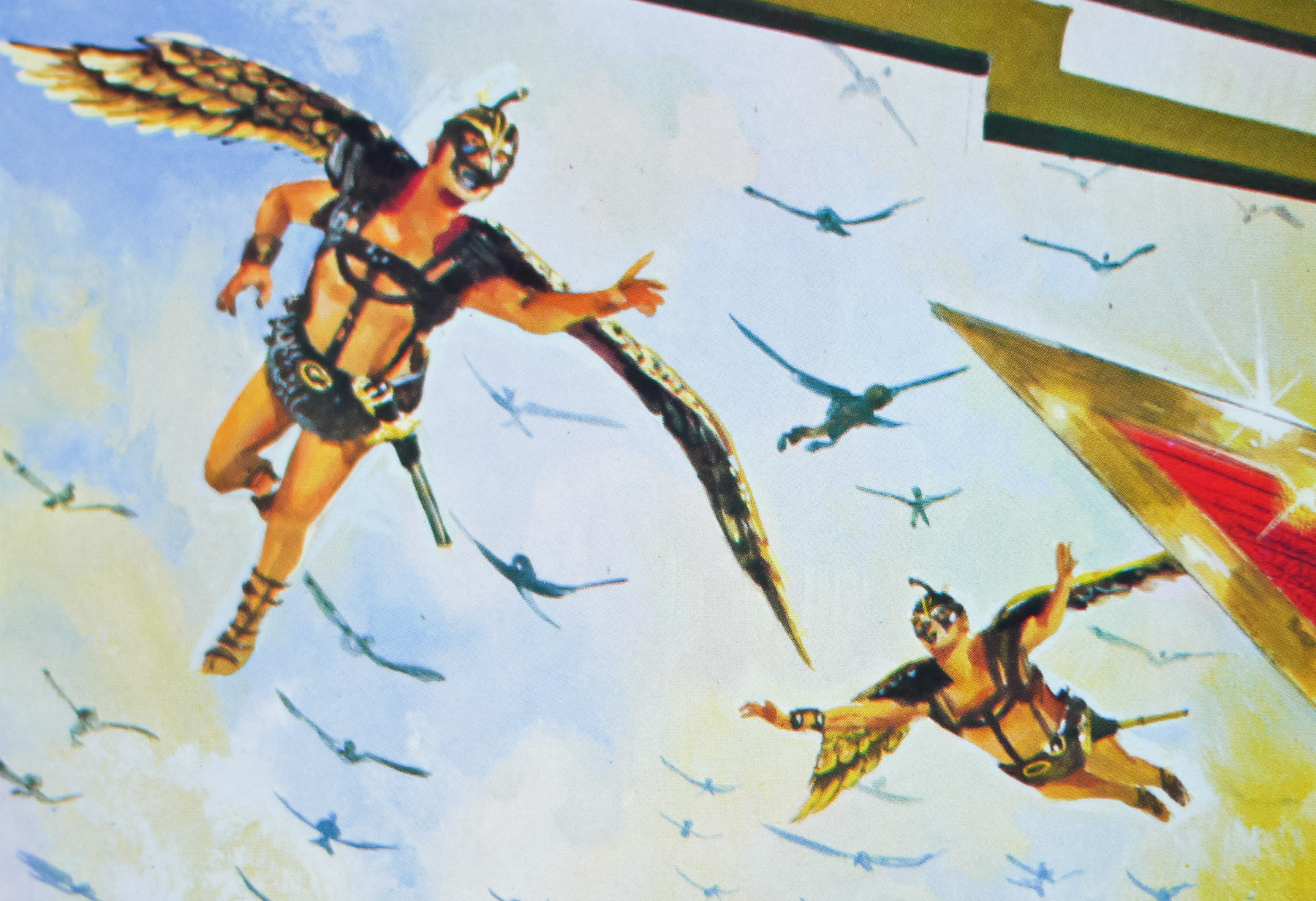
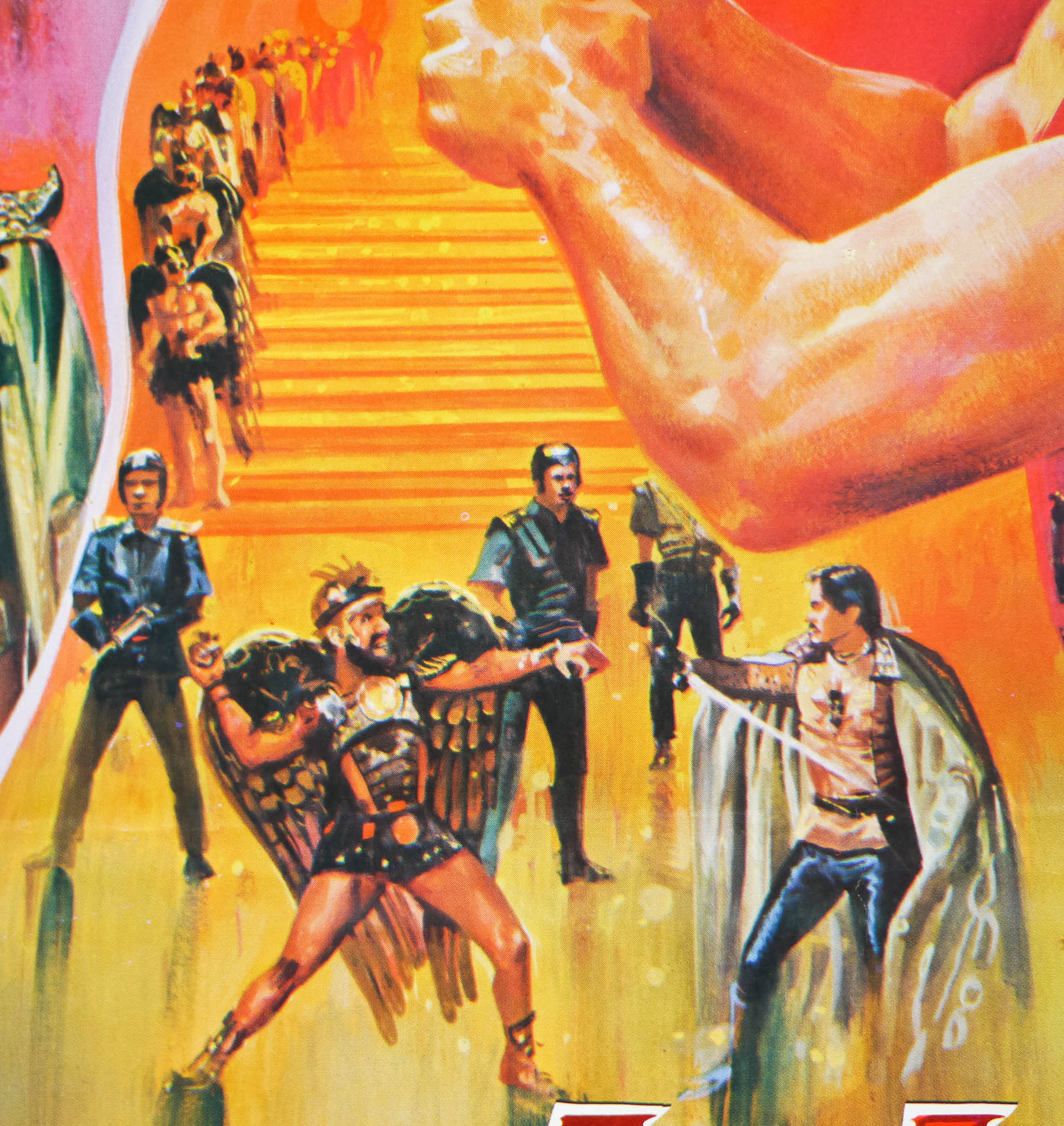
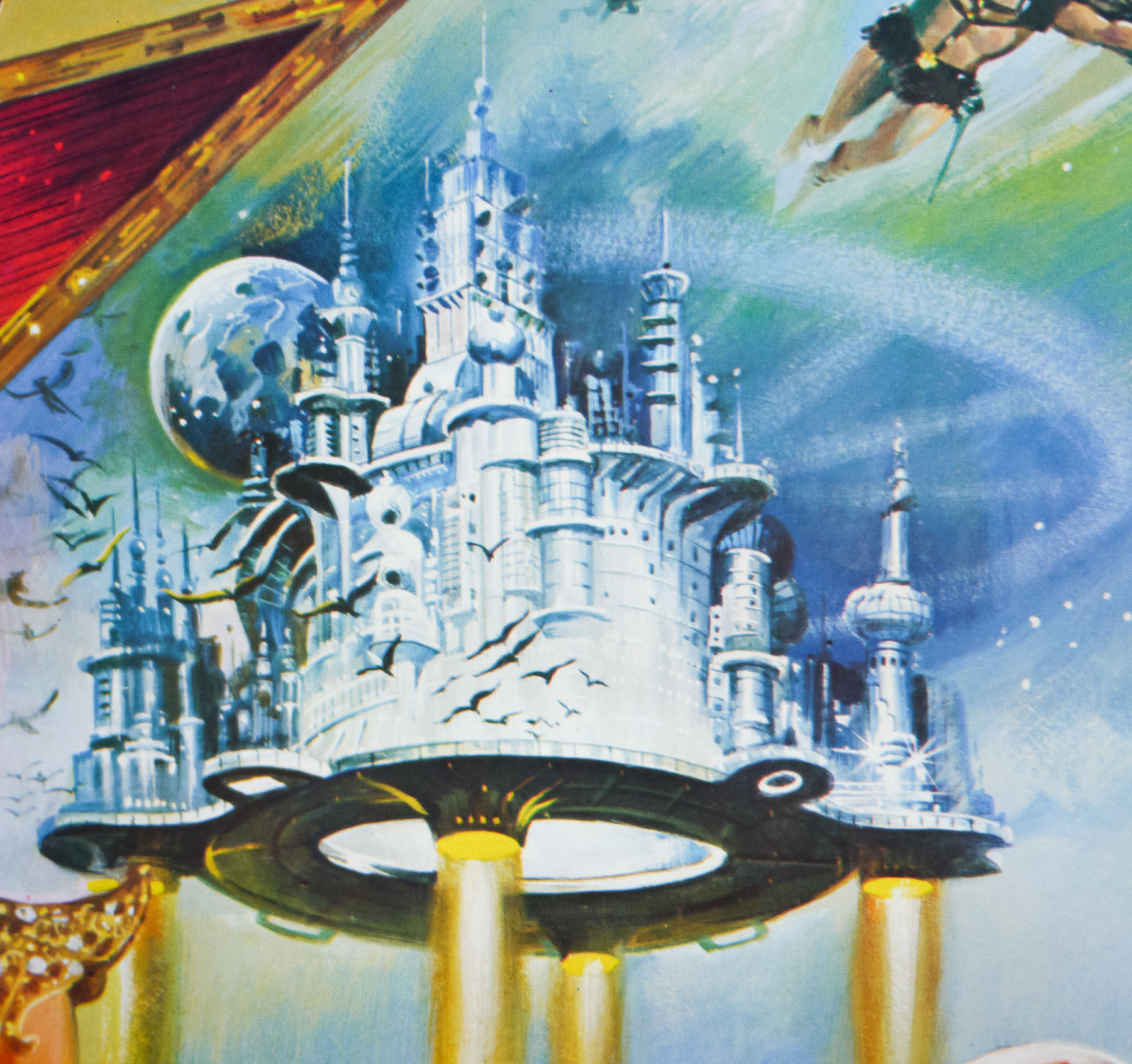
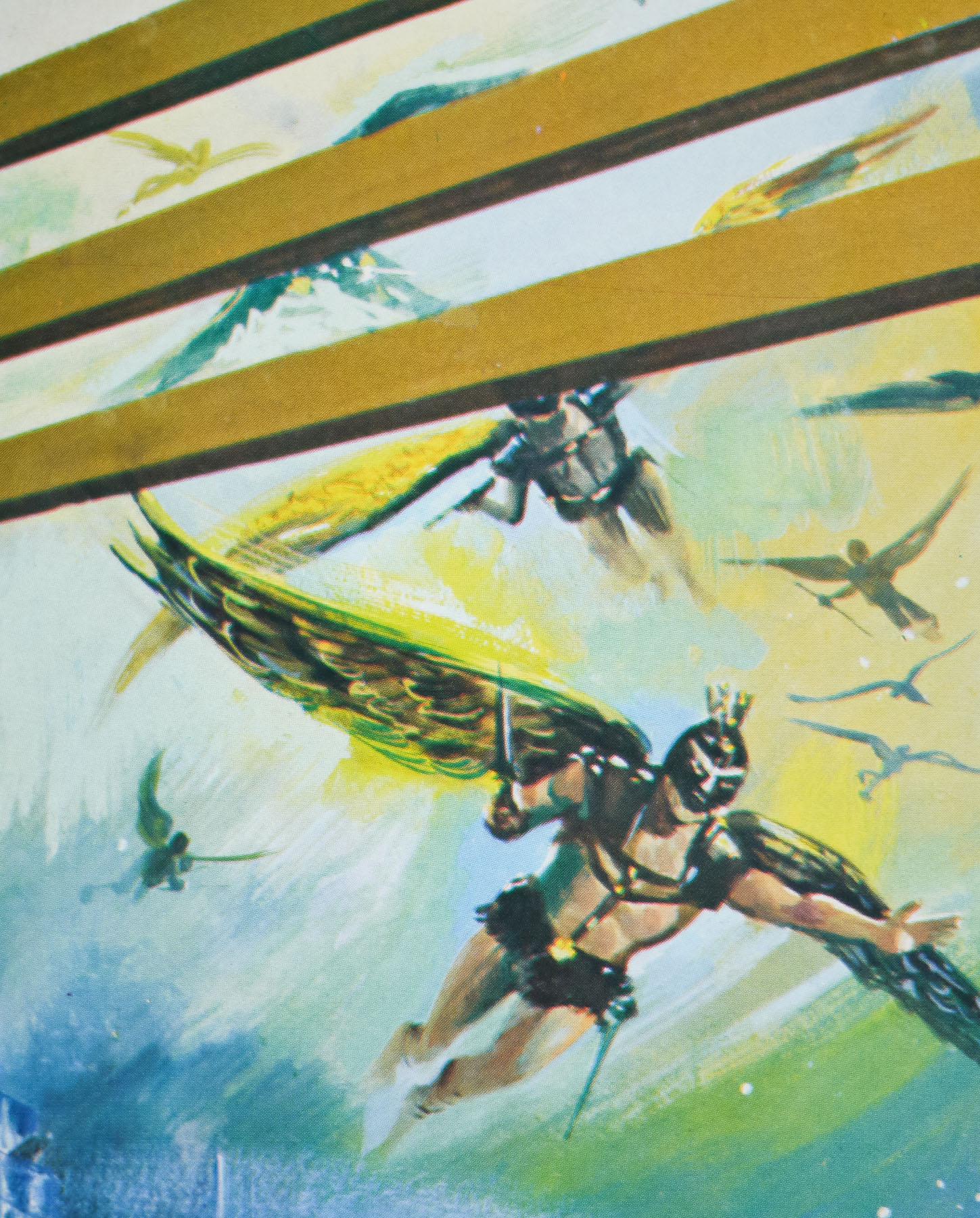
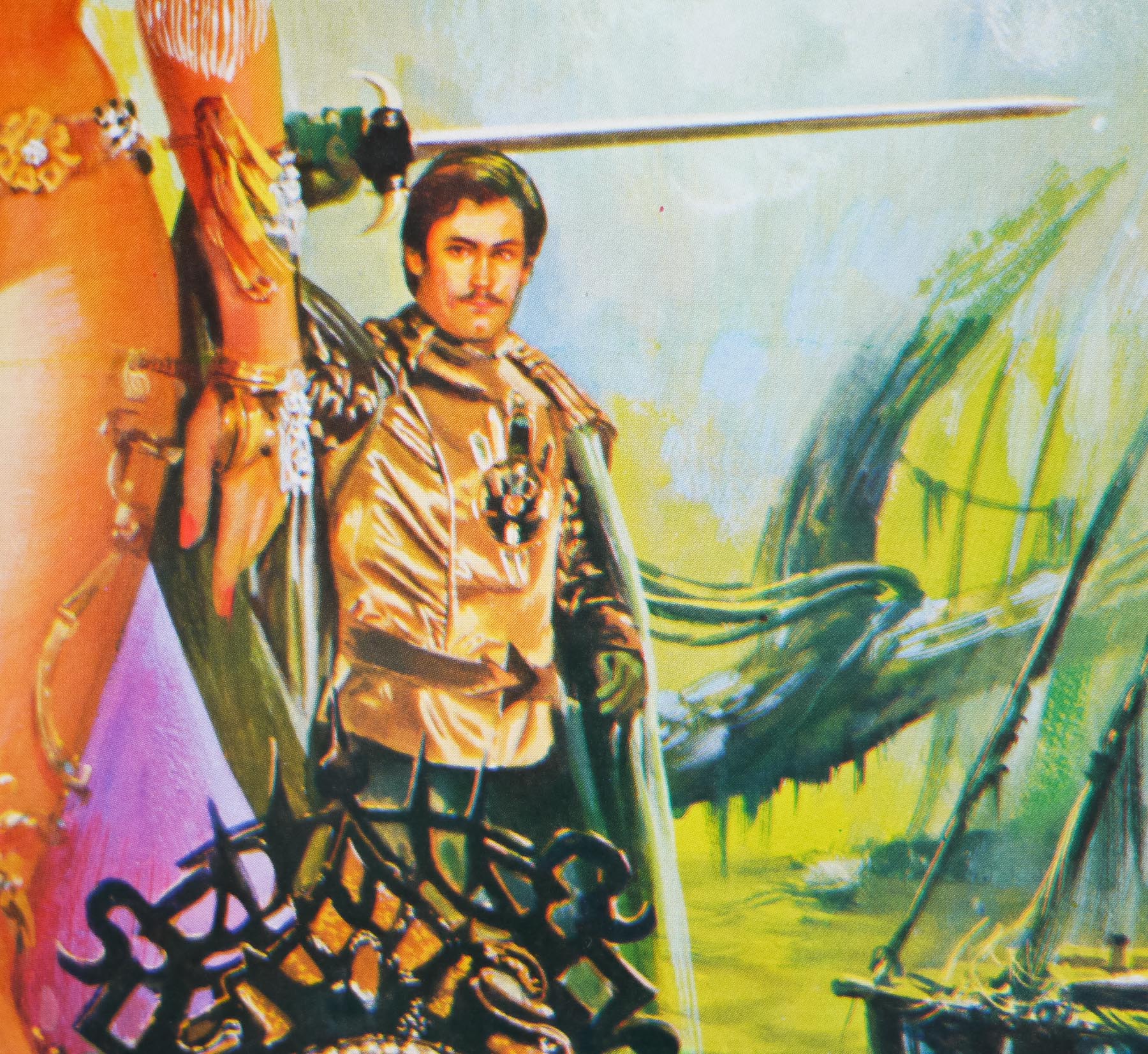
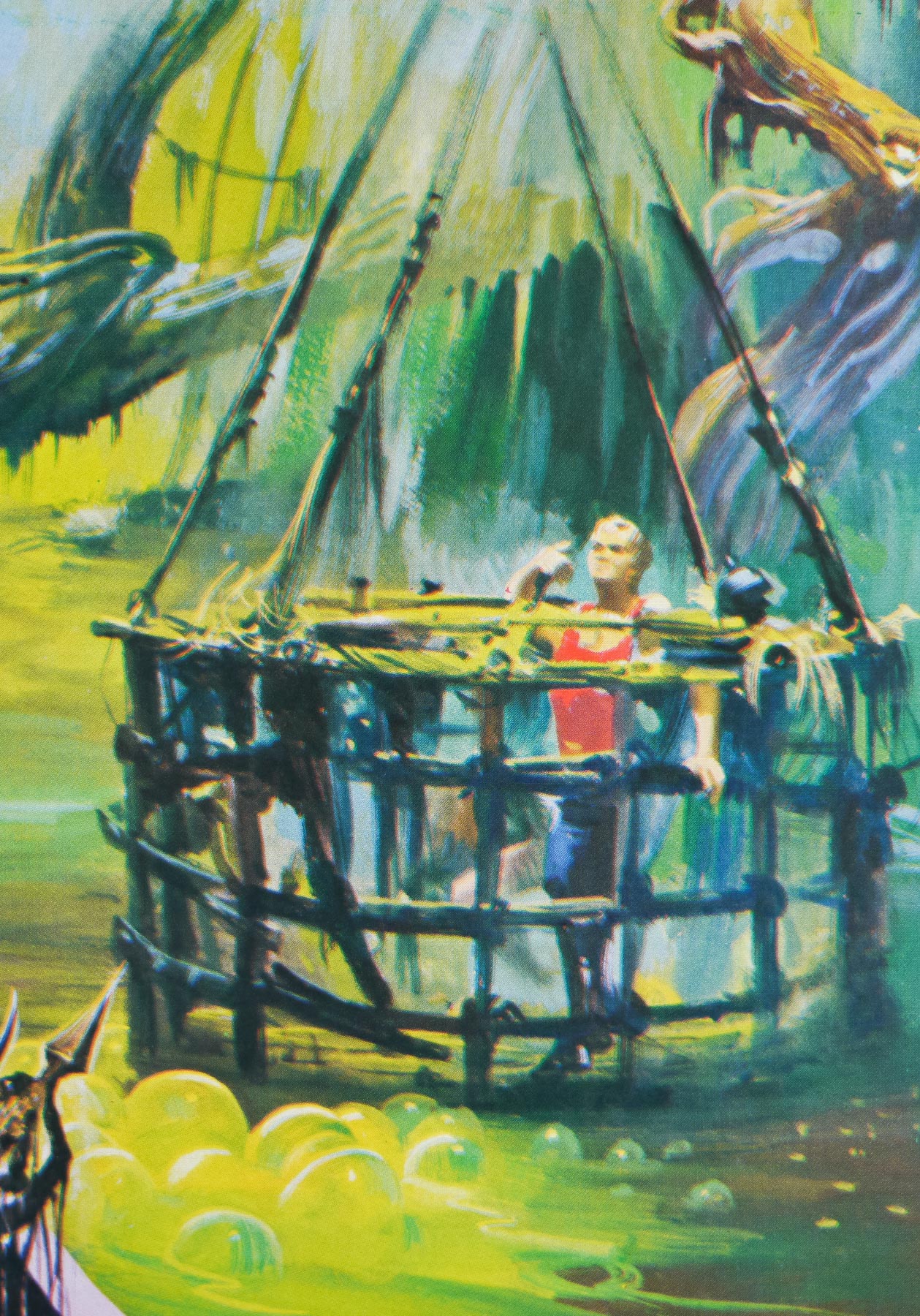
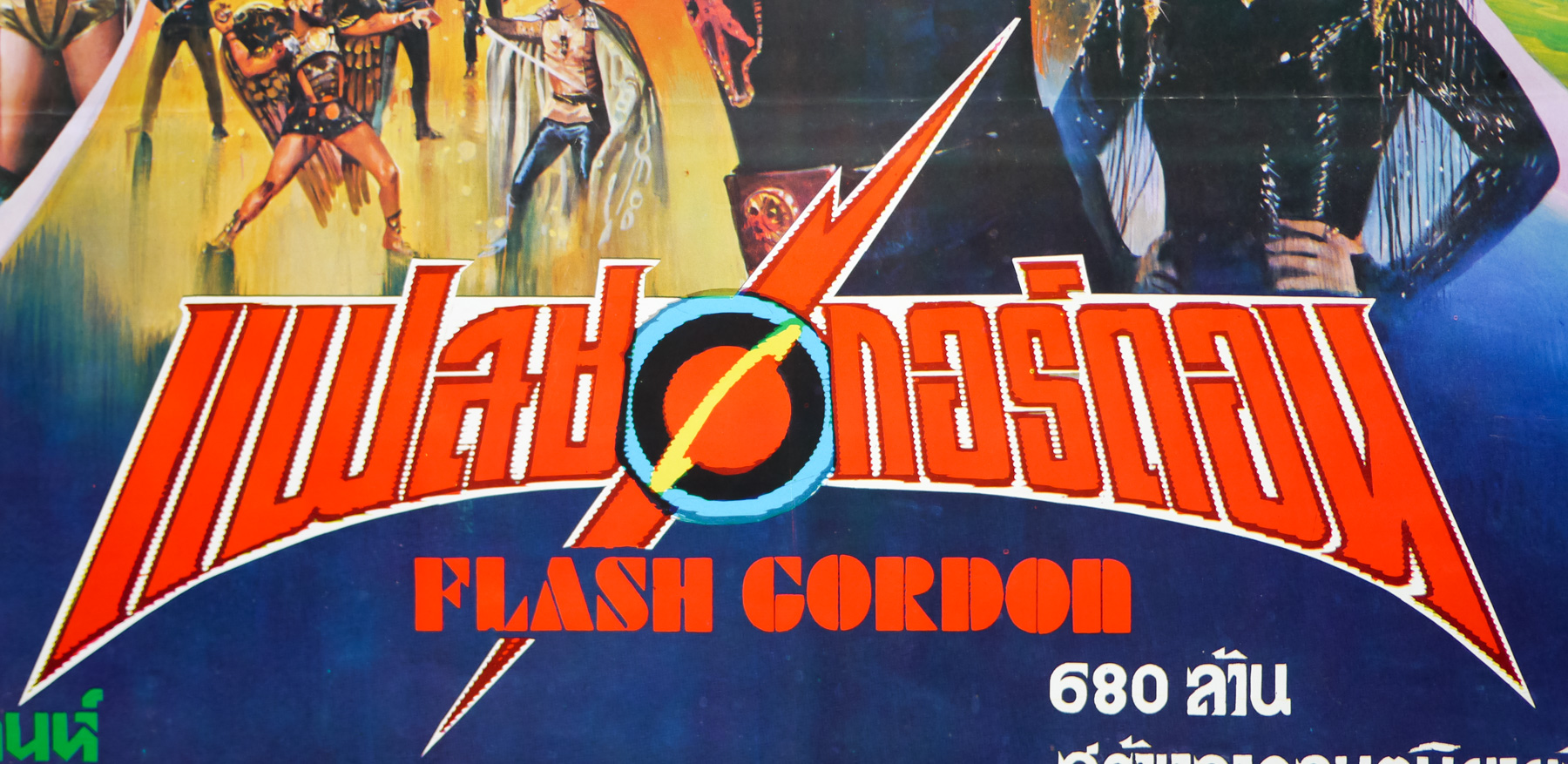
There are few films quite like Flash Gordon and having re-watched it on blu-ray recently I was reminded how much of an impression it had on me when I first saw it as a child. I also listened to the excellent audio commentary with director Mike Hodges, who admits to being an unlikely choice to direct and confirms in no uncertain terms that they were making things up as they went along. It sounds like a typically chaotic Dino De Laurentiis production with scenes being written the night before filming and huge amounts of the budget going on the costume and set designs (though these are very impressive, even today).

There are several reasons the film remains one of my favourites of the 1980s:

Acting
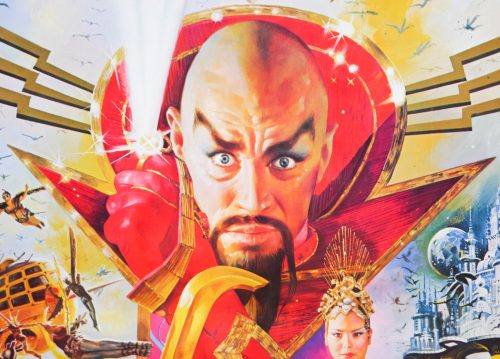
Topol is insanely over the top as Dr Hans Zarkov with an accent that changes from scene to scene. It’s not hard to see why Sam J. Jones never hit the big time, although you can’t say he doesn’t give the role his all. Max Von Sydow is clearly having fun playing Ming and Brian Blessed is spectacular as Vultan the Hawksman; no one else could deliver the simple line ‘pass me the remote control’ with such unbridled gusto. A pre-Bond Timothy Dalton is also rather memorable, sporting a spectacular moustache.

The woodbeast
This infamous scene (featuring Peter Duncan) terrified me as a child, and not just ‘wow, that’s a bit weird’, I’m talking more like ‘I’m never going near a tree stump ever again’. Scarred. For. Life. There’s also an odd ‘black whoopee-cushion with tendrils’ creature that attacks Flash and is seared into my memory, even if it looks like a painted balloon when you watch it again today.

The costumes and set designs
As mentioned, a serious amount of budget was spent on costumes and sets by Danilo Donati and it shows. You only have to watch this brief clip to get an idea of the amount of work that went into them – very impressive stuff.

Ornella Muti
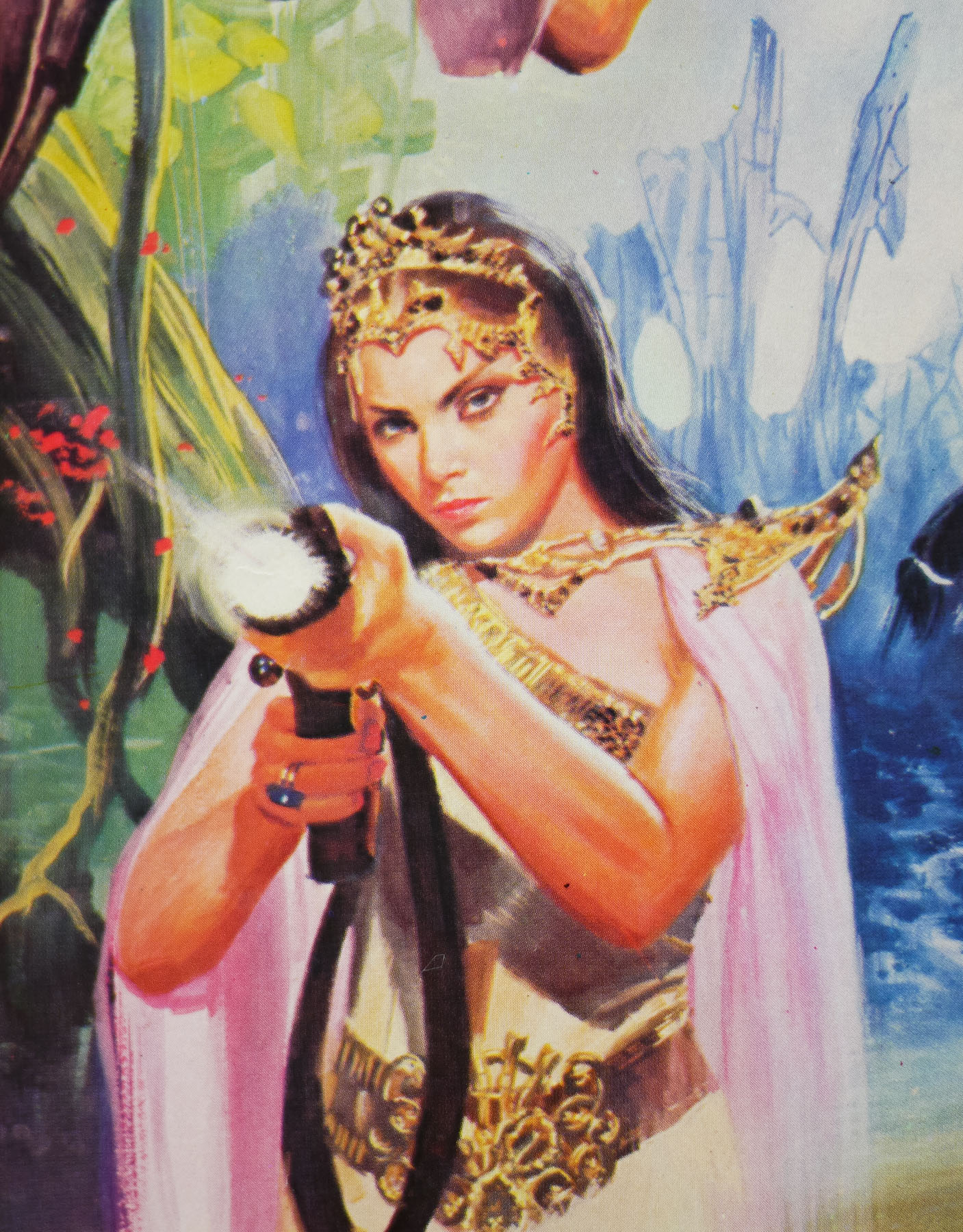
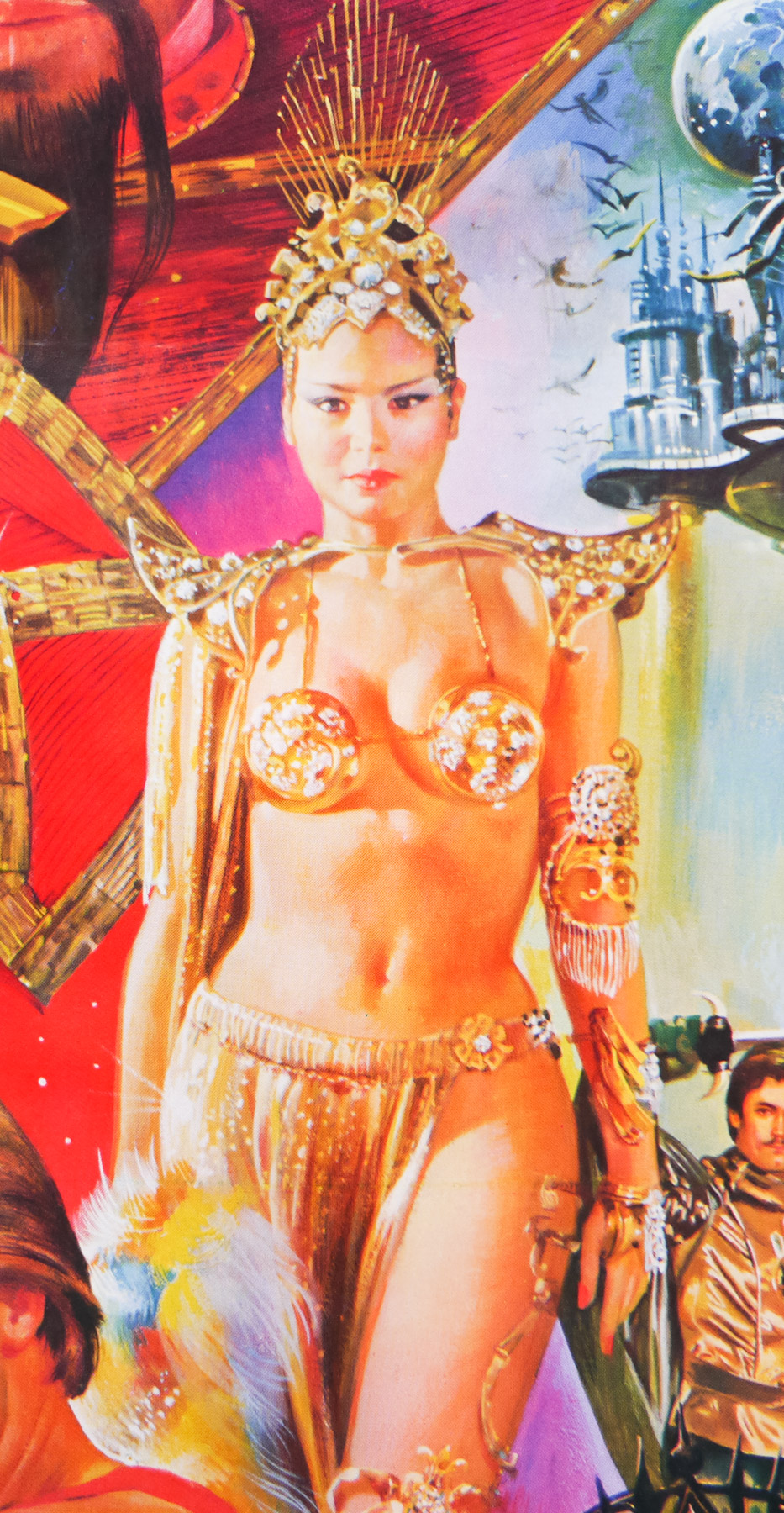
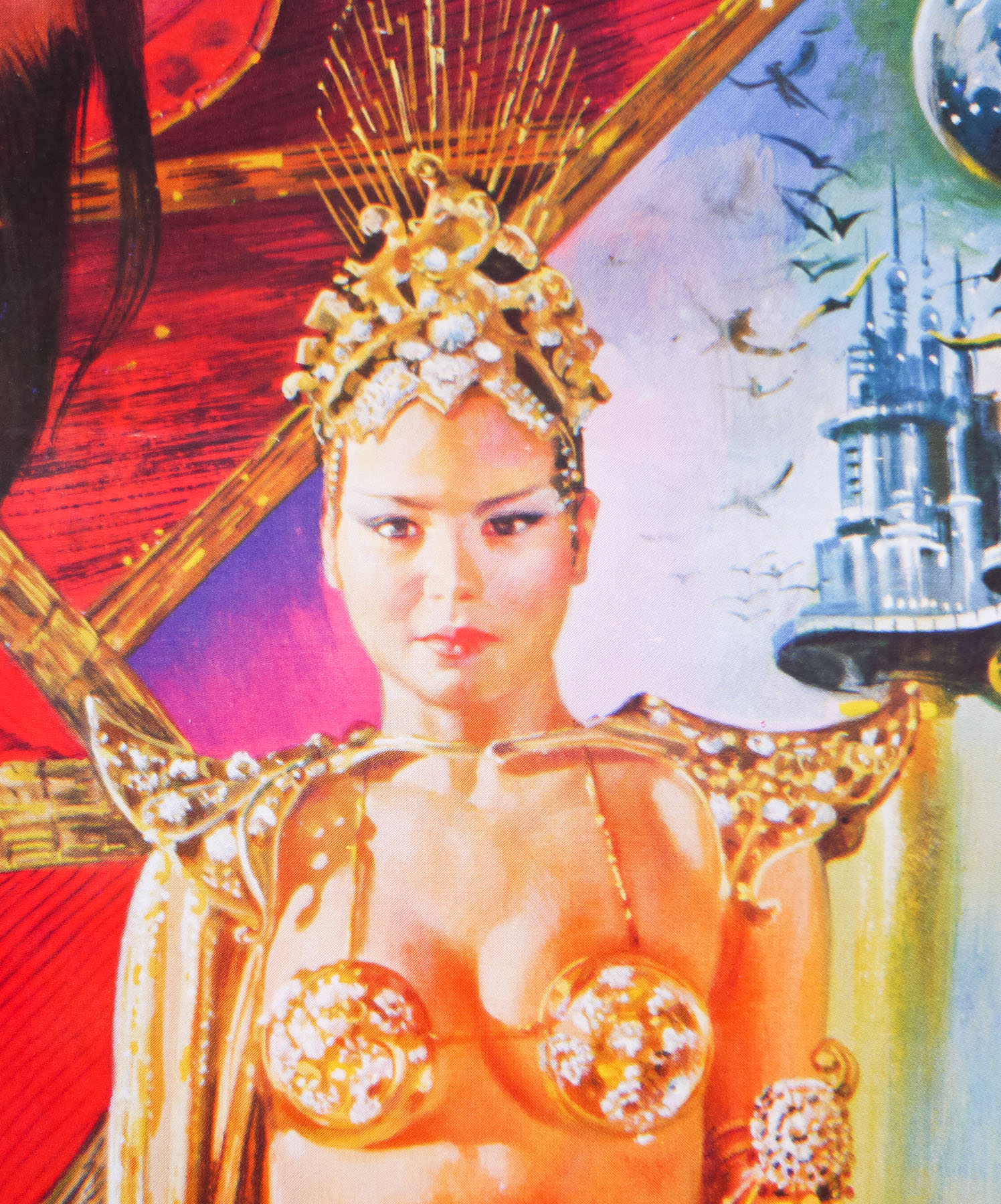
Just like Jane Seymour in Live and Let Die, Ornella (playing Princess Aura) was responsible for putting more than a few hairs on my chest. Her costumes are the very definition of figure-hugging. The infamous interrogation scene has to be seen to be believed.

The music
An awesome soundtrack by Brit rockers Queen that still sounds superb today. I almost tried to persuade my wife to walk down the aisle to the sound of Ming’s wedding march; it’s that good. The 2011 remaster is available on Spotify.

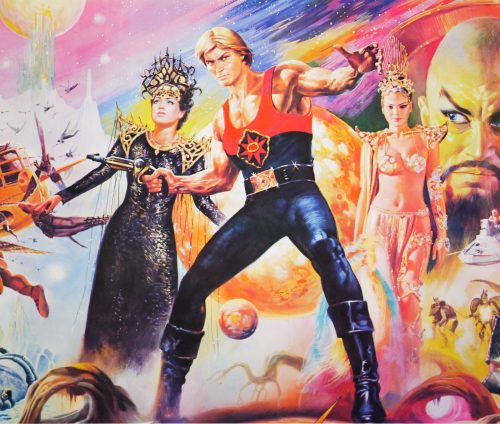
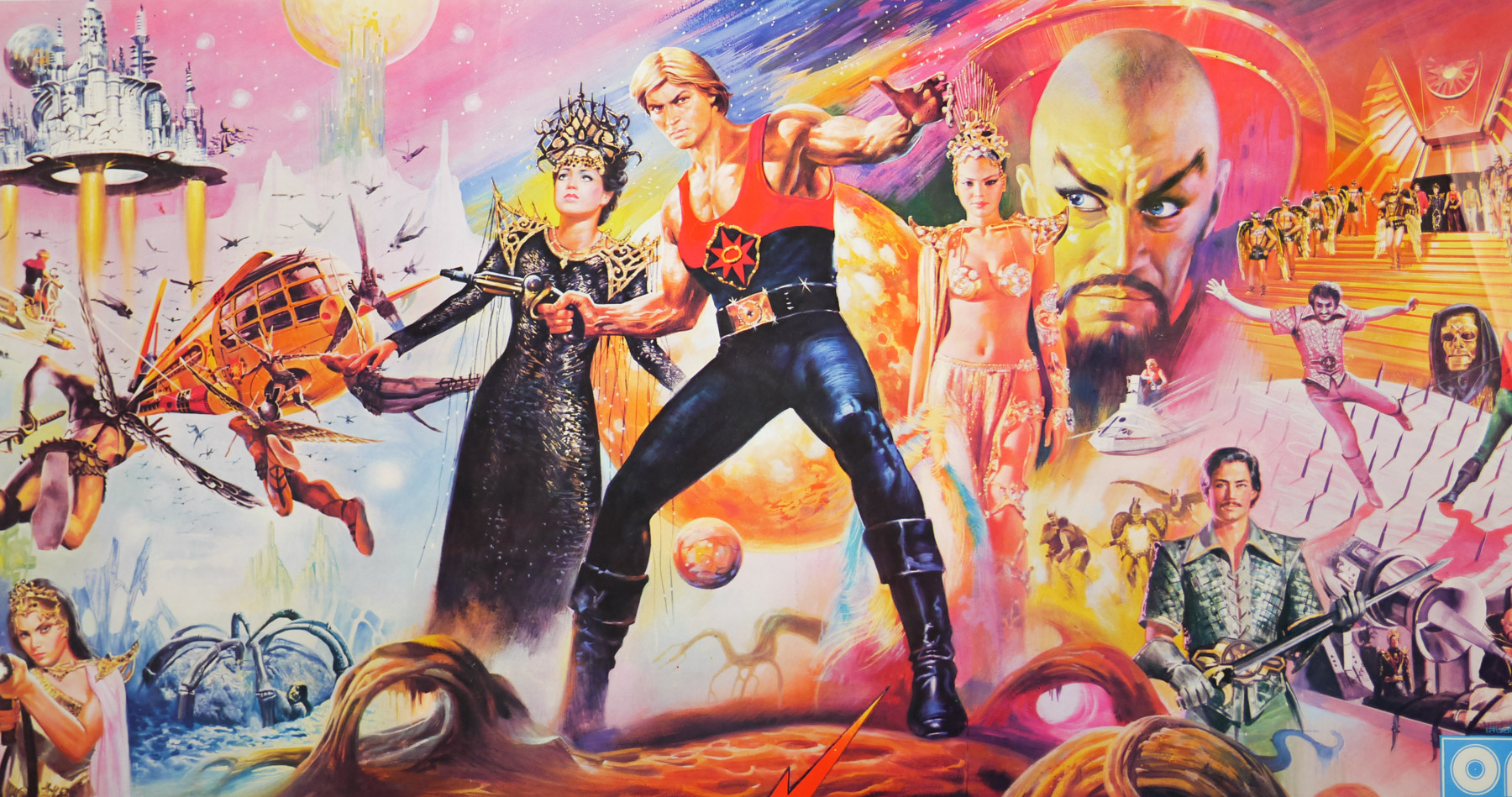
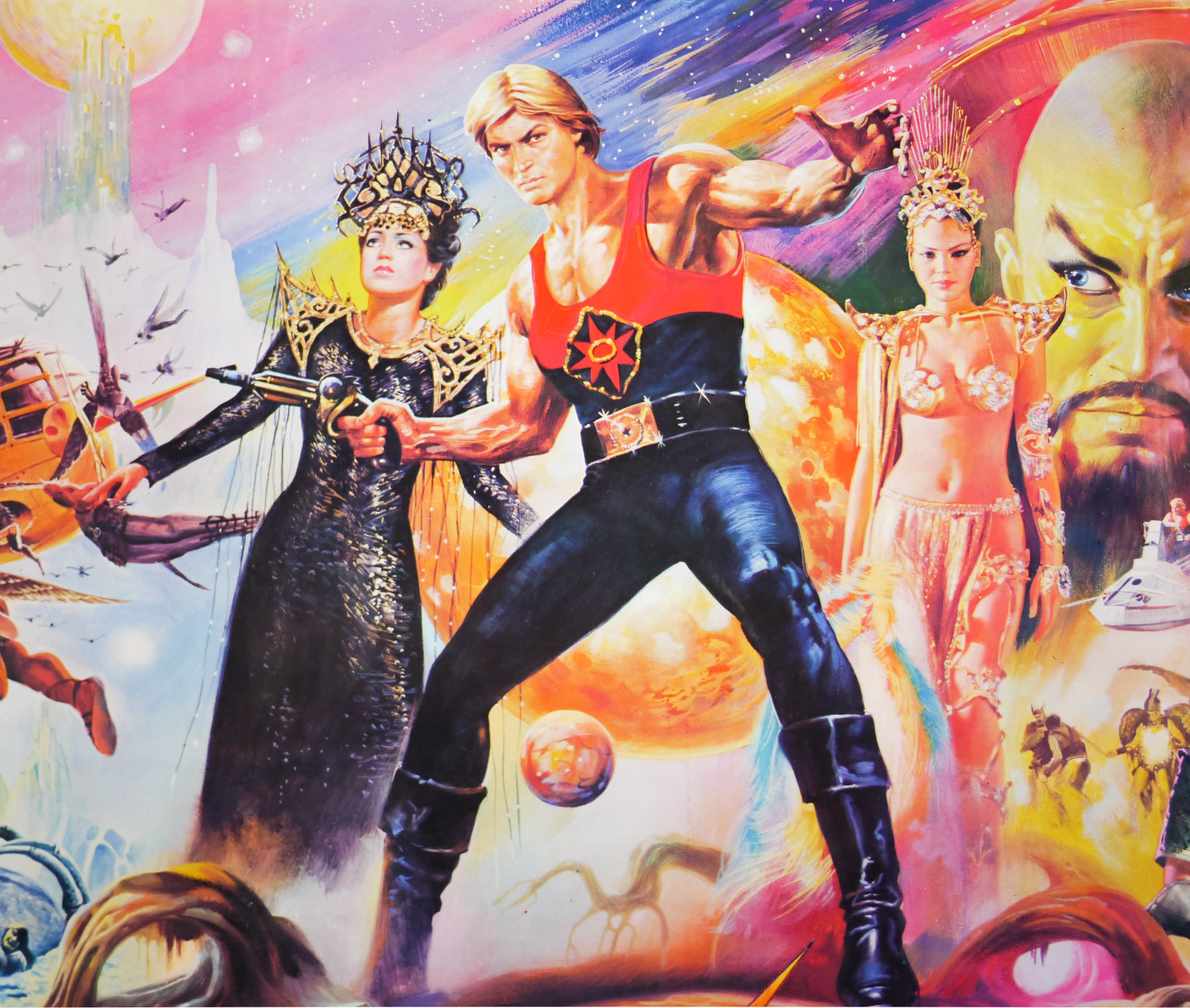
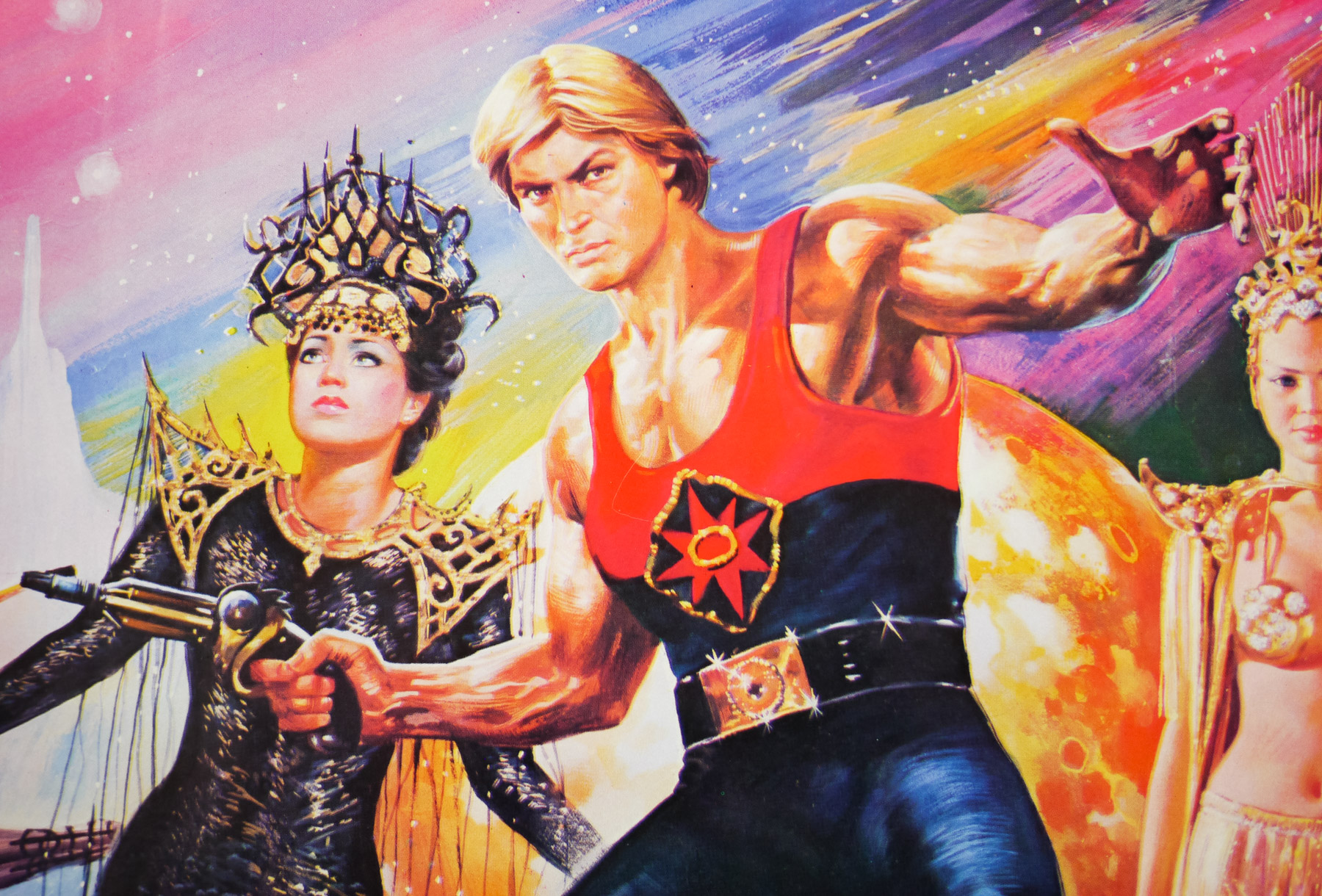
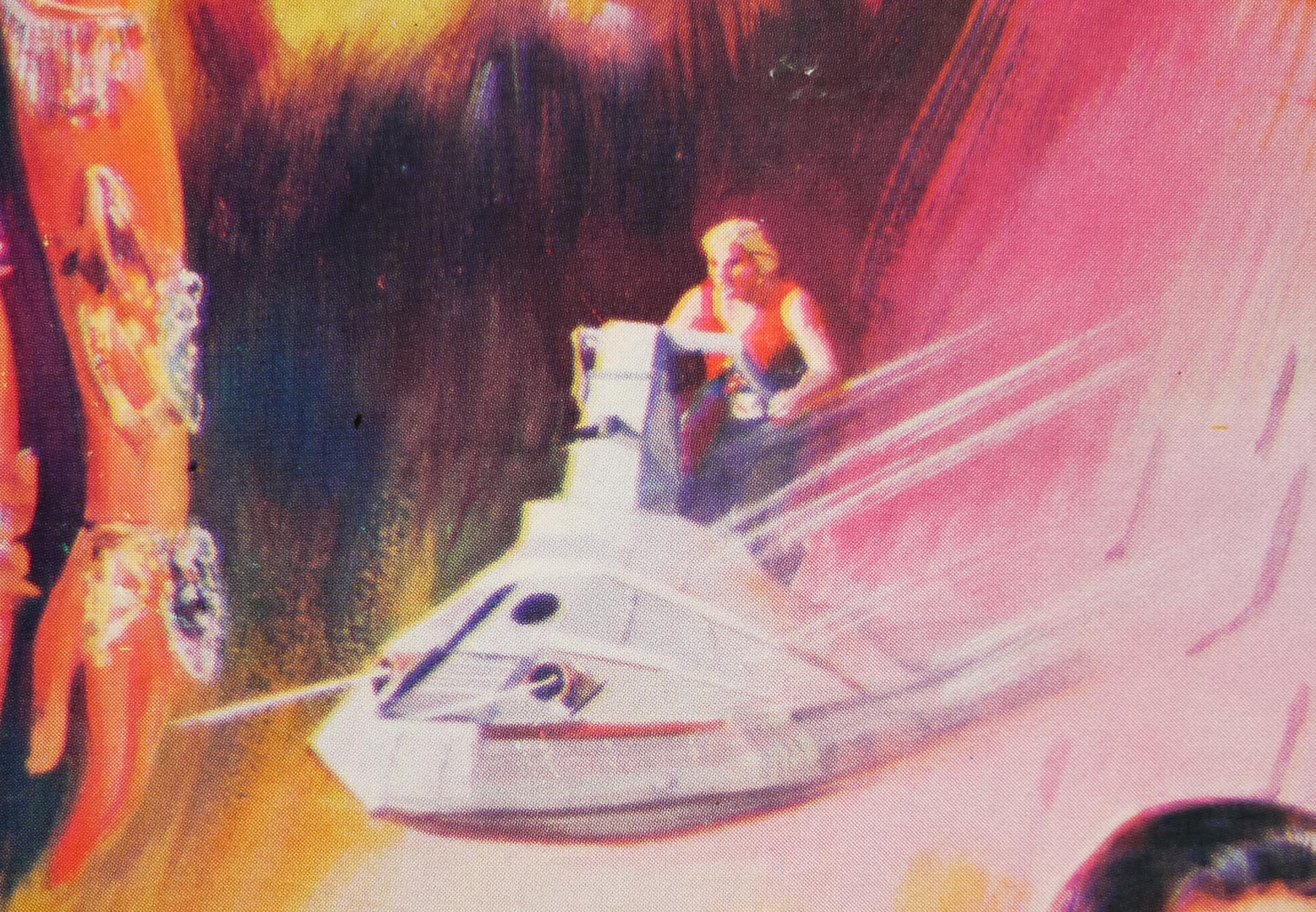
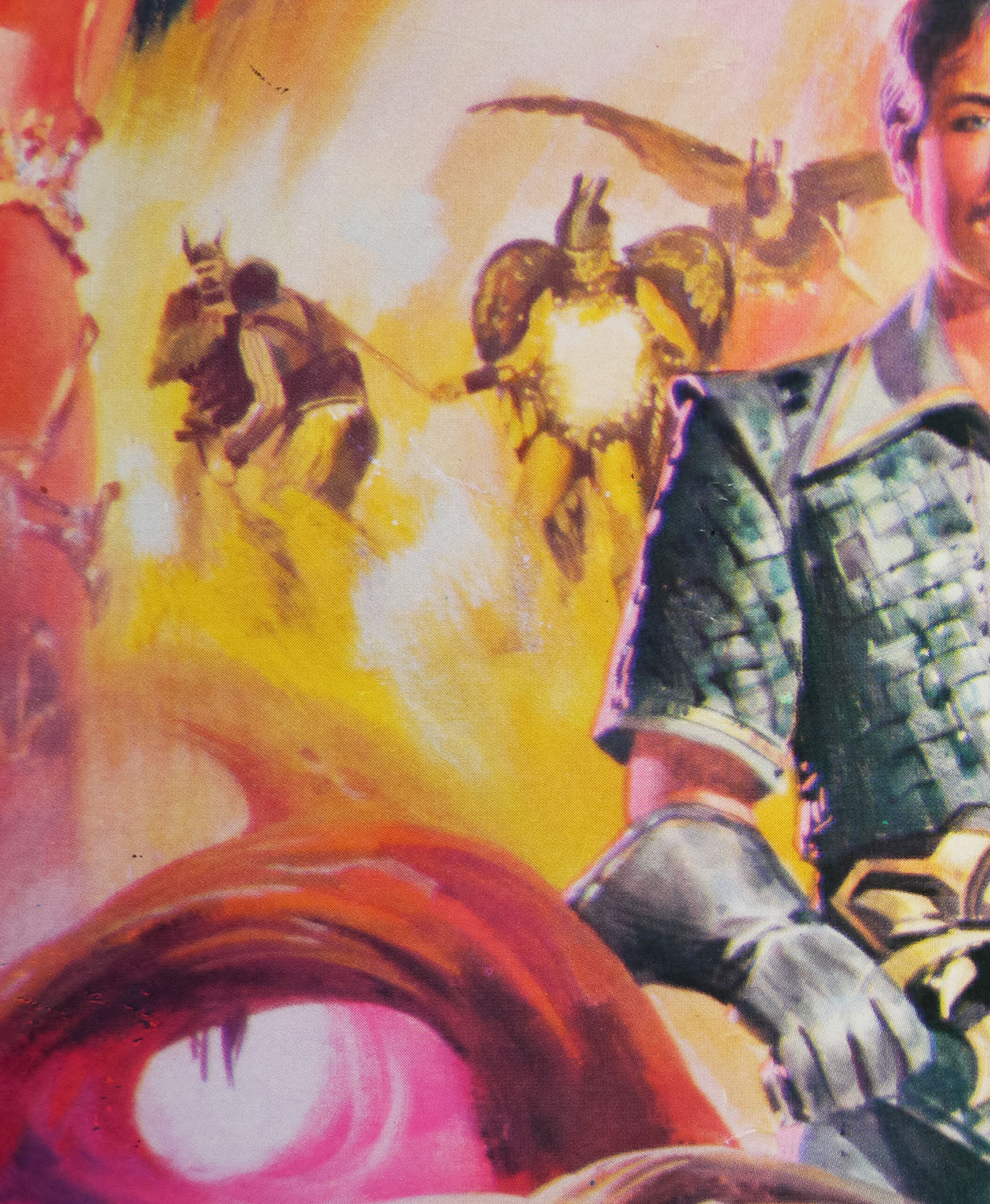
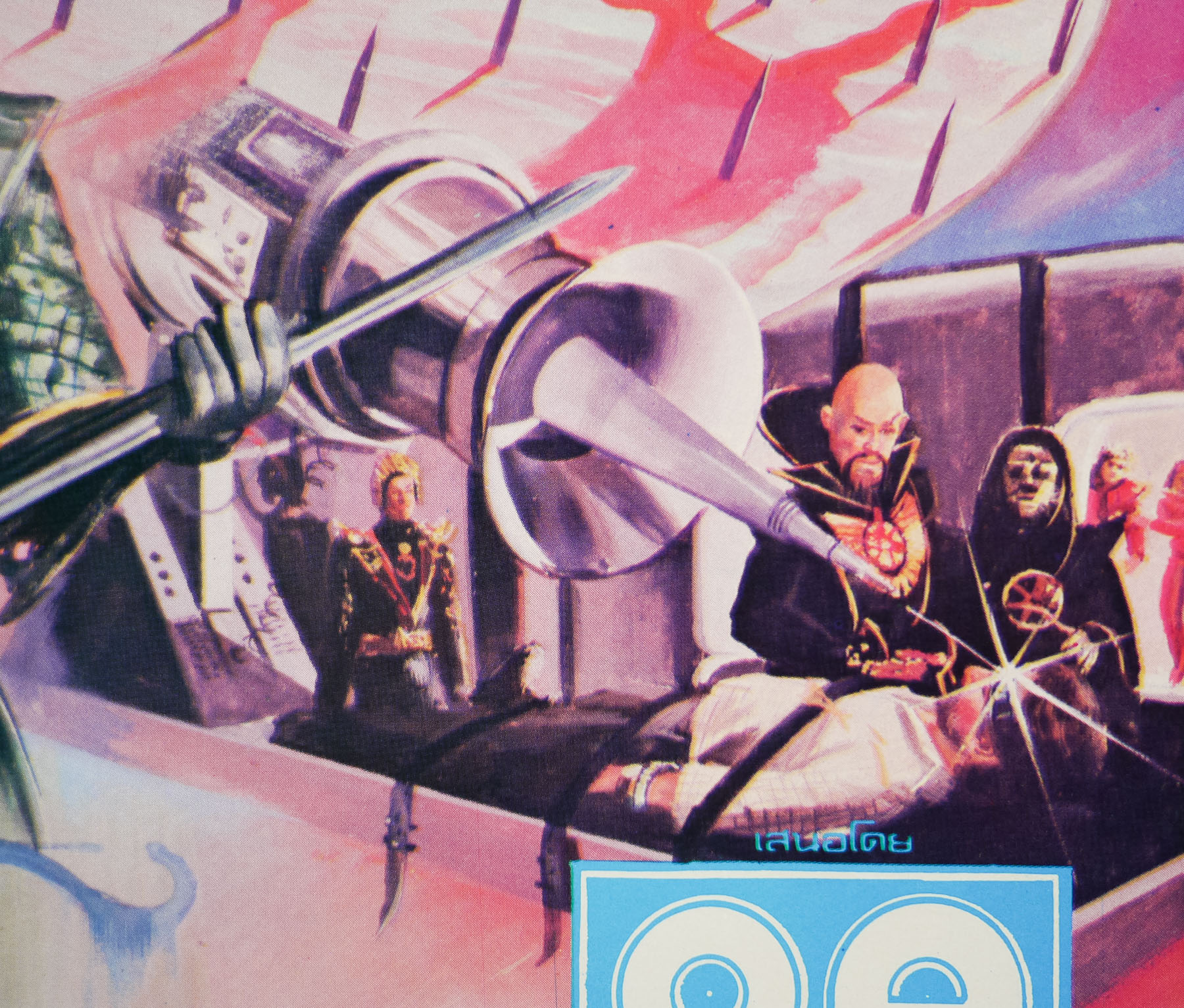
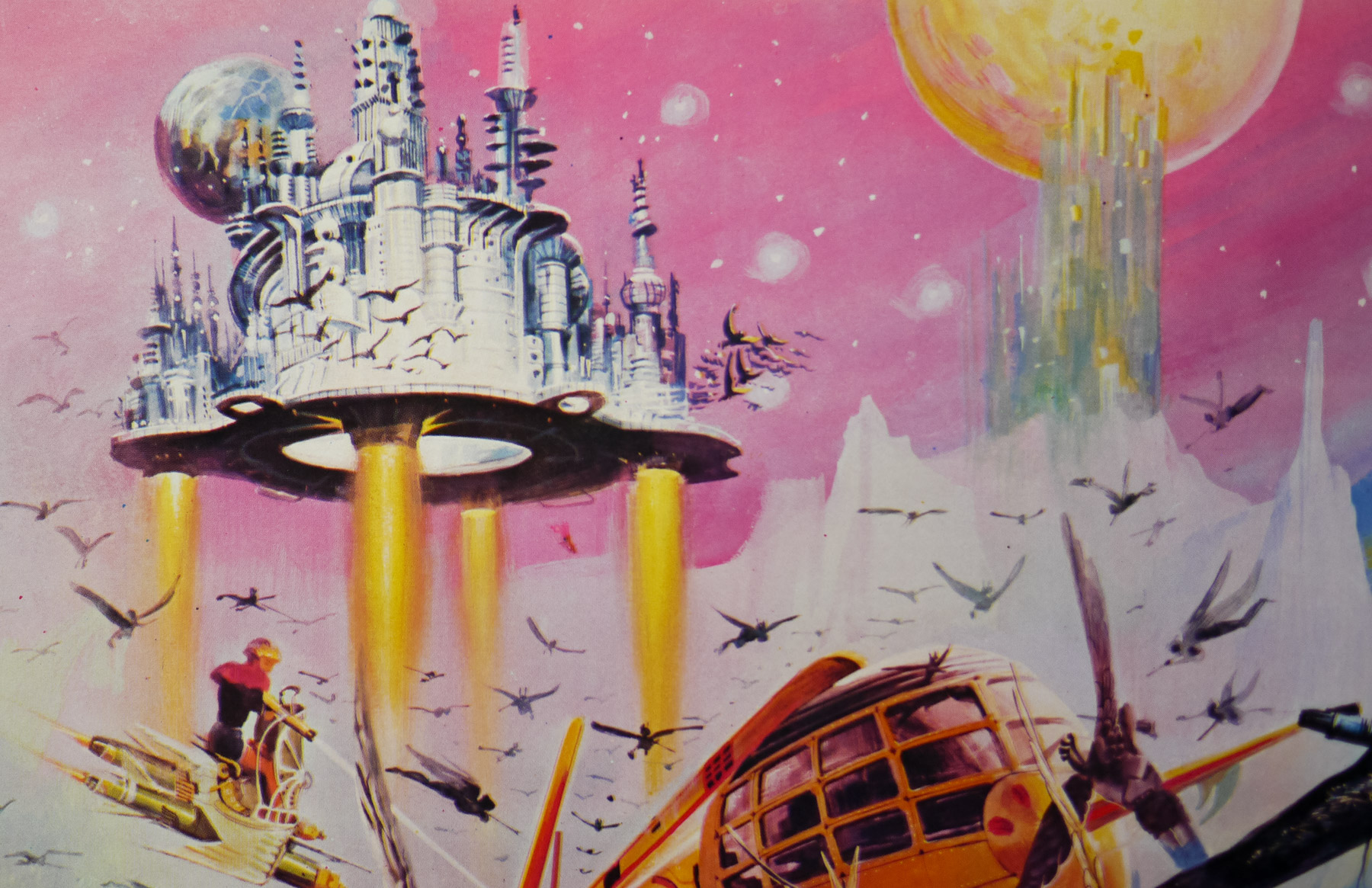
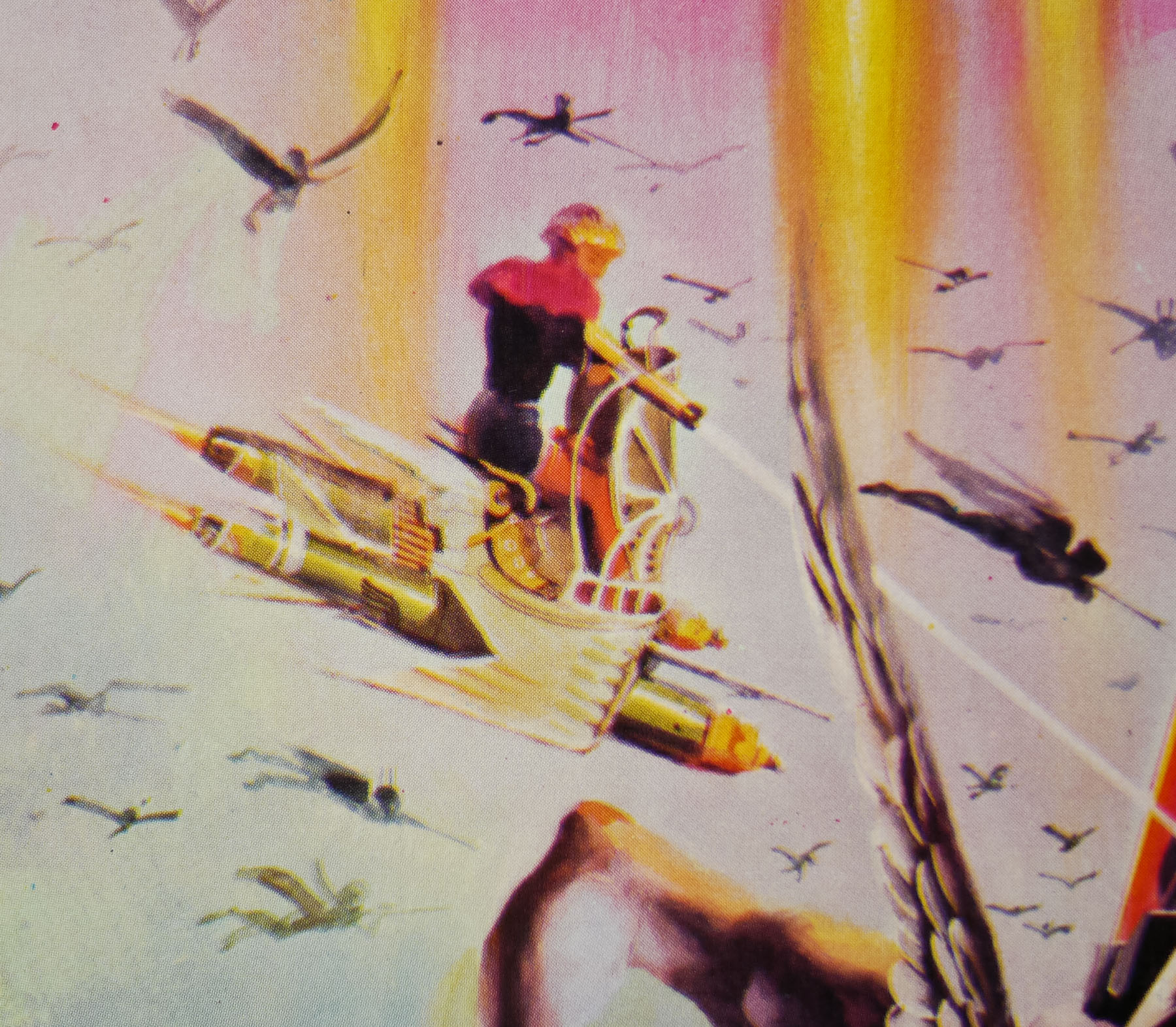
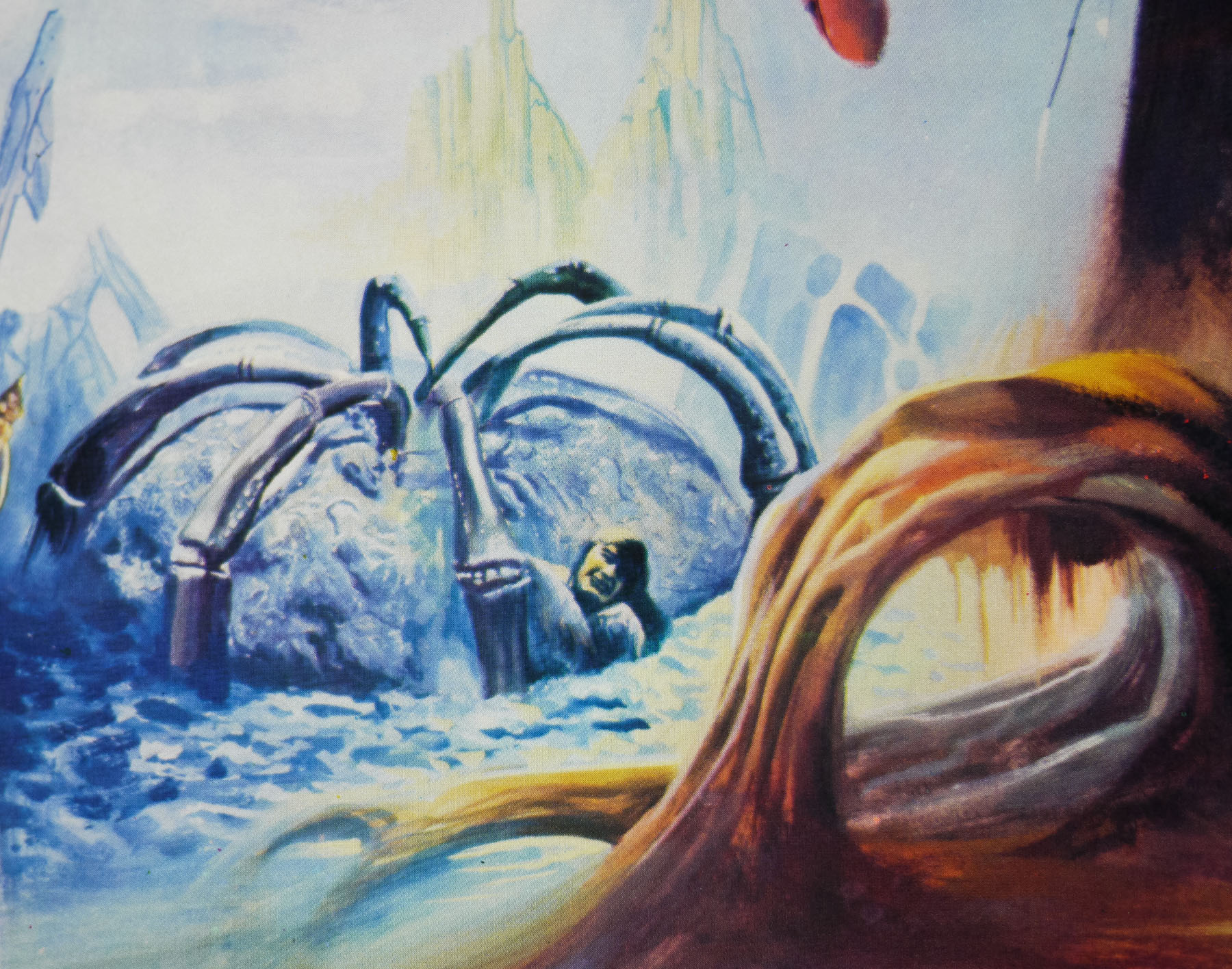
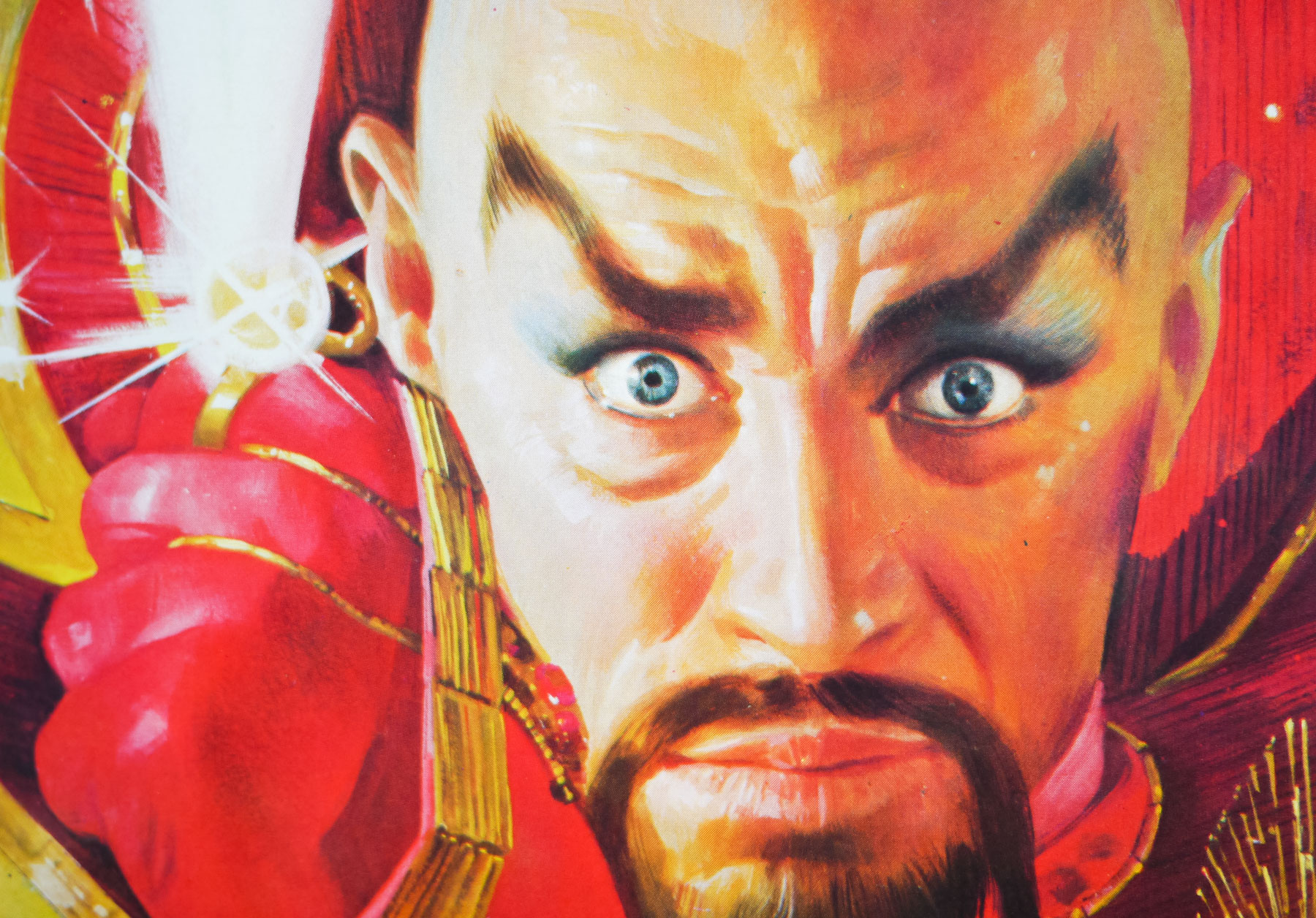
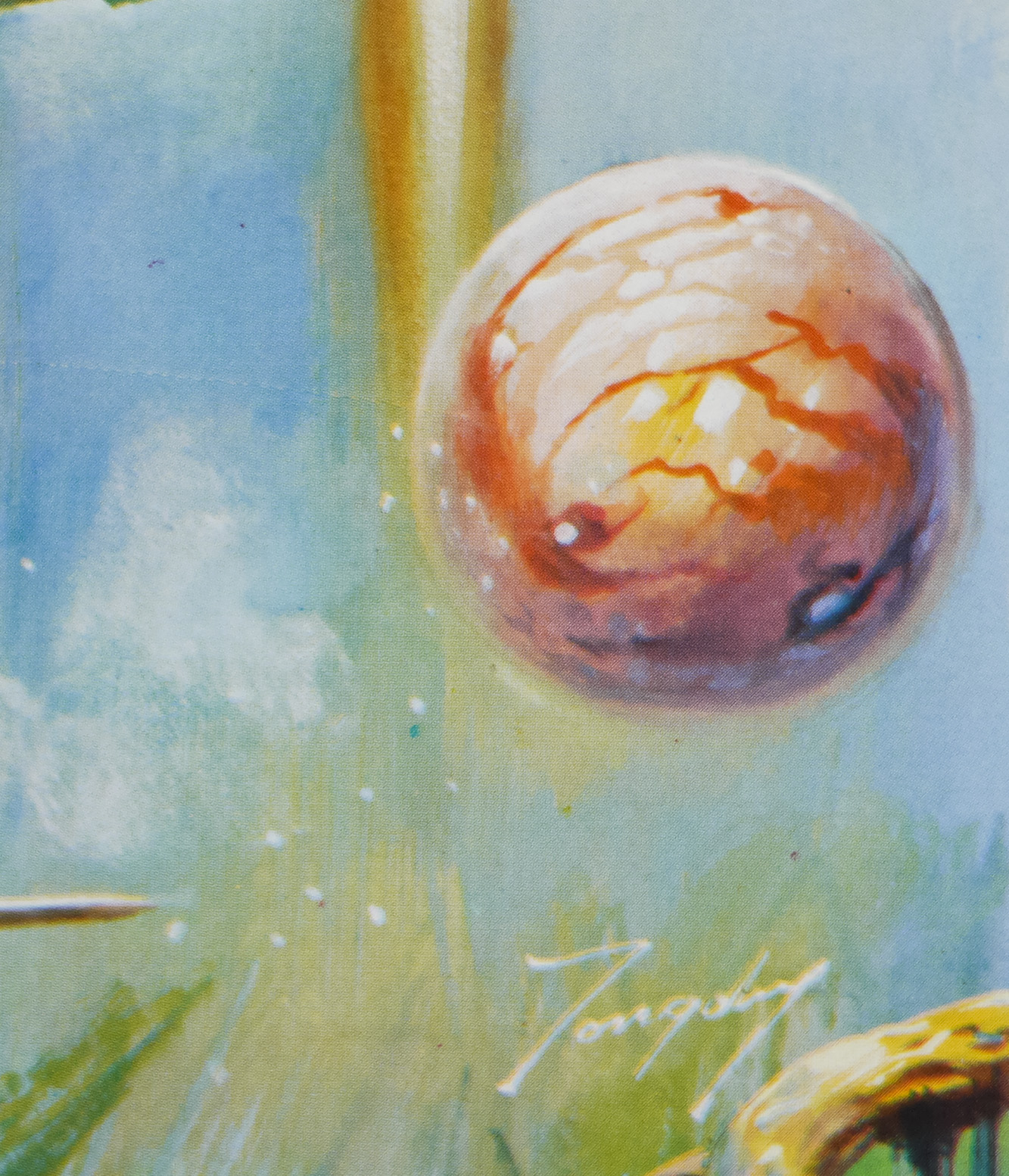
This landscape Thai poster was painted by the artist Tongdee Panumas (he signs his posters with just his first name) who was an incredibly prolific Thai film poster artist during the 70s, 80s and 90s but I’ve been unable to find out much about him, other than that he was born in 1947. If anyone has any more information please get in touch. A knowledgeable collector of Thai posters told me that the artists would rarely if ever see the film they were creating the poster for and would instead paint images based on still photos or posters from other countries. This led to some wild designs and even some artwork with characters and elements that didn’t even appear in the actual film!

I believe elements of this poster were copied from the same stills that were used to make some of the other worldwide posters for Flash Gordon, so it’s likely that the film was actually released some time after 1980. If anyone knows the date please get in touch. I also have a portrait version of the poster in the collection.

Flash Gordon / portrait / Thailand

08.12.14

Poster Poster
Title
Flash Gordon
AKA
Blixt Gordon (Sweden)
Year of Film
1980
Director
Mike Hodges
Starring
Sam J. Jones, Melody Anderson, Chaim Topol, Timothy Dalton, Max von Sydow, Ornella Muti, Brian Blessed
Origin of Film
USA | UK
Genre(s) of Film
Sam J. Jones, Melody Anderson, Chaim Topol, Timothy Dalton, Max von Sydow, Ornella Muti, Brian Blessed,
Type of Poster
Thai
Style of Poster
Portrait
Origin of Poster
Thailand
Year of Poster
1980
Designer
Tongdee Panumas
Artist
Tongdee Panumas
Size (inches)
21 6/16" x 30 14/16"
SS or DS
SS
Tagline
--

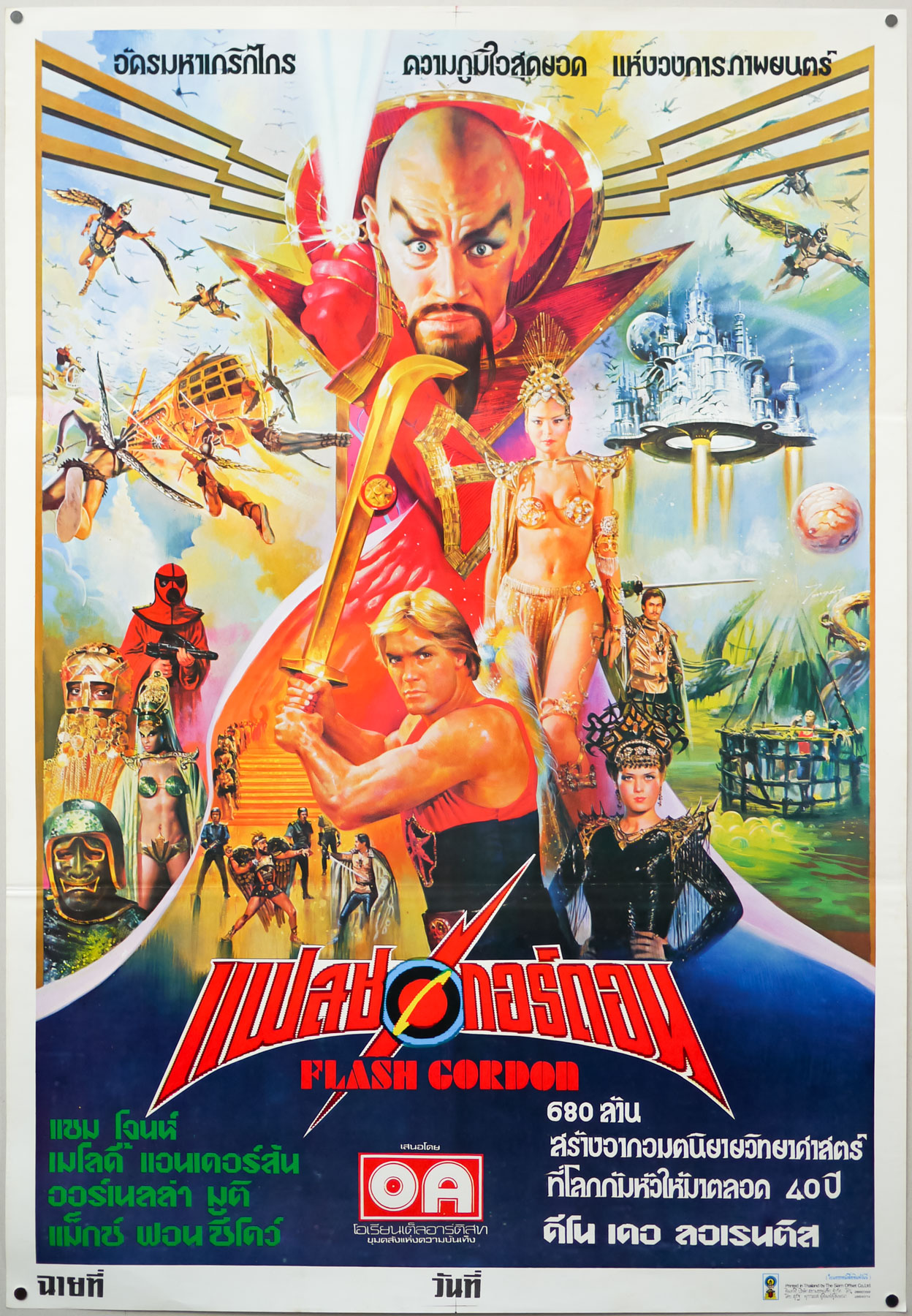
There are few films quite like Flash Gordon and having re-watched it on blu-ray recently I was reminded how much of an impression it had on me when I first saw it as a child. I also listened to the excellent audio commentary with director Mike Hodges, who admits to being an unlikely choice to direct and confirms in no uncertain terms that they were making things up as they went along. It sounds like a typically chaotic Dino De Laurentiis production with scenes being written the night before filming and huge amounts of the budget going on the costume and set designs (though these are very impressive, even today).

There are several reasons the film remains one of my favourites of the 1980s:

Acting
Topol is insanely over the top as Dr Hans Zarkov with an accent that changes from scene to scene. It’s not hard to see why Sam J. Jones never hit the big time, although you can’t say he doesn’t give the role his all. Max Von Sydow is clearly having fun playing Ming and Brian Blessed is spectacular as Vultan the Hawksman; no one else could deliver the simple line ‘pass me the remote control’ with such unbridled gusto. A pre-Bond Timothy Dalton is also rather memorable, sporting a spectacular moustache.

The woodbeast
This infamous scene (featuring Peter Duncan) terrified me as a child, and not just ‘wow, that’s a bit weird’, I’m talking more like ‘I’m never going near a tree stump ever again’. Scarred. For. Life. There’s also an odd ‘black whoopee-cushion with tendrils’ creature that attacks Flash and is seared into my memory, even if it looks like a painted balloon when you watch it again today.

The costumes and set designs
As mentioned, a serious amount of budget was spent on costumes and sets by Danilo Donati and it shows. You only have to watch this brief clip to get an idea of the amount of work that went into them – very impressive stuff.

Ornella Muti
Just like Jane Seymour in Live and Let Die, Ornella (playing Princess Aura) was responsible for putting more than a few hairs on my chest. Her costumes are the very definition of figure-hugging. The infamous interrogation scene has to be seen to be believed.

The music
An awesome soundtrack by Brit rockers Queen that still sounds superb today. I almost tried to persuade my wife to walk down the aisle to the sound of Ming’s wedding march; it’s that good. The 2011 remaster is available on Spotify.

This Thai poster was painted by the artist Tongdee Panumas (he signs his posters with just his first name) who was an incredibly prolific Thai film poster artist during the 70s, 80s and 90s but I’ve been unable to find out much about him, other than that he was born in 1947. If anyone has any more information please get in touch. A knowledgeable collector of Thai posters told me that the artists would rarely if ever see the film they were creating the poster for and would instead paint images based on still photos or posters from other countries. This led to some wild designs and even some artwork with characters and elements that didn’t even appear in the actual film!

I believe elements of this poster were copied from the same stills that were used to make some of the other worldwide posters for Flash Gordon, so it’s likely that the film was actually released some time after 1980. If anyone knows the date please get in touch. I also have a landscape version of the poster in the collection.

Uncle Boonmee Who Can Recall His Past Lives / one sheet / USA

25.05.12

Poster Poster

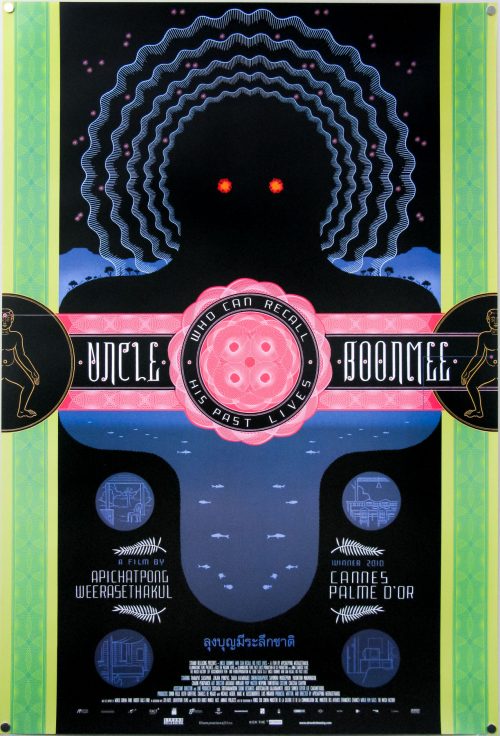
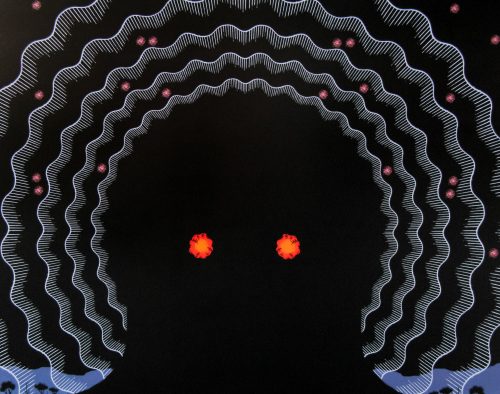
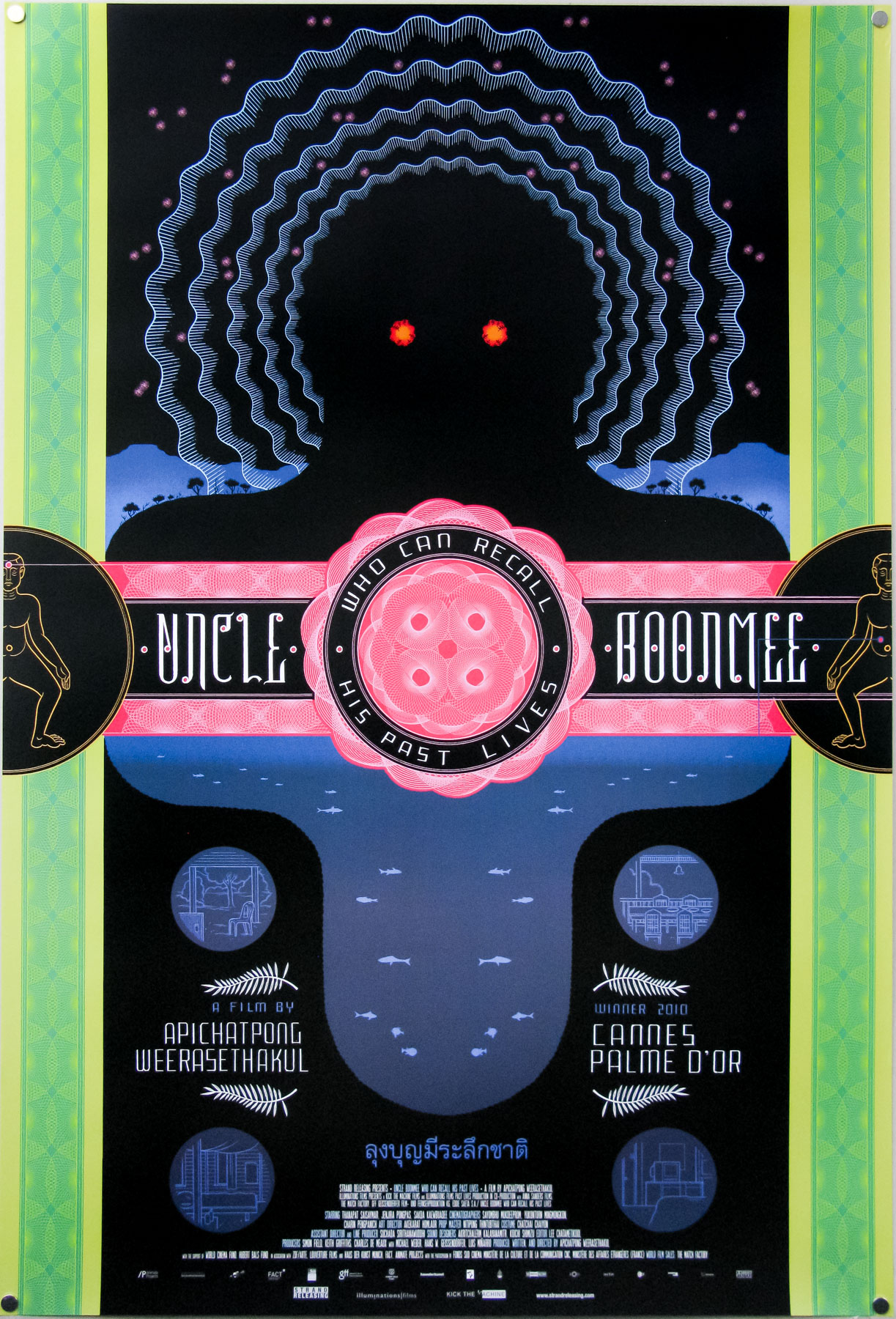
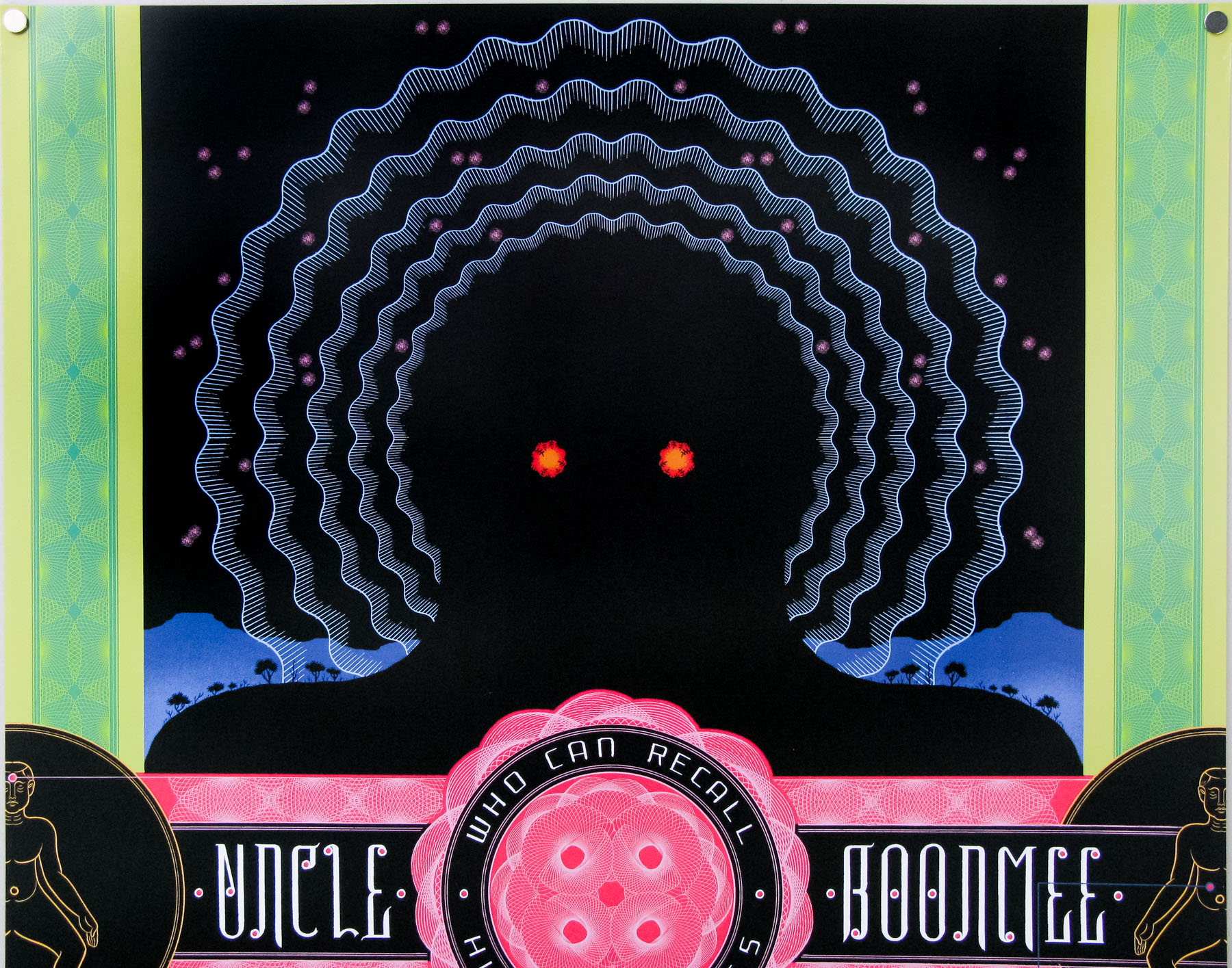
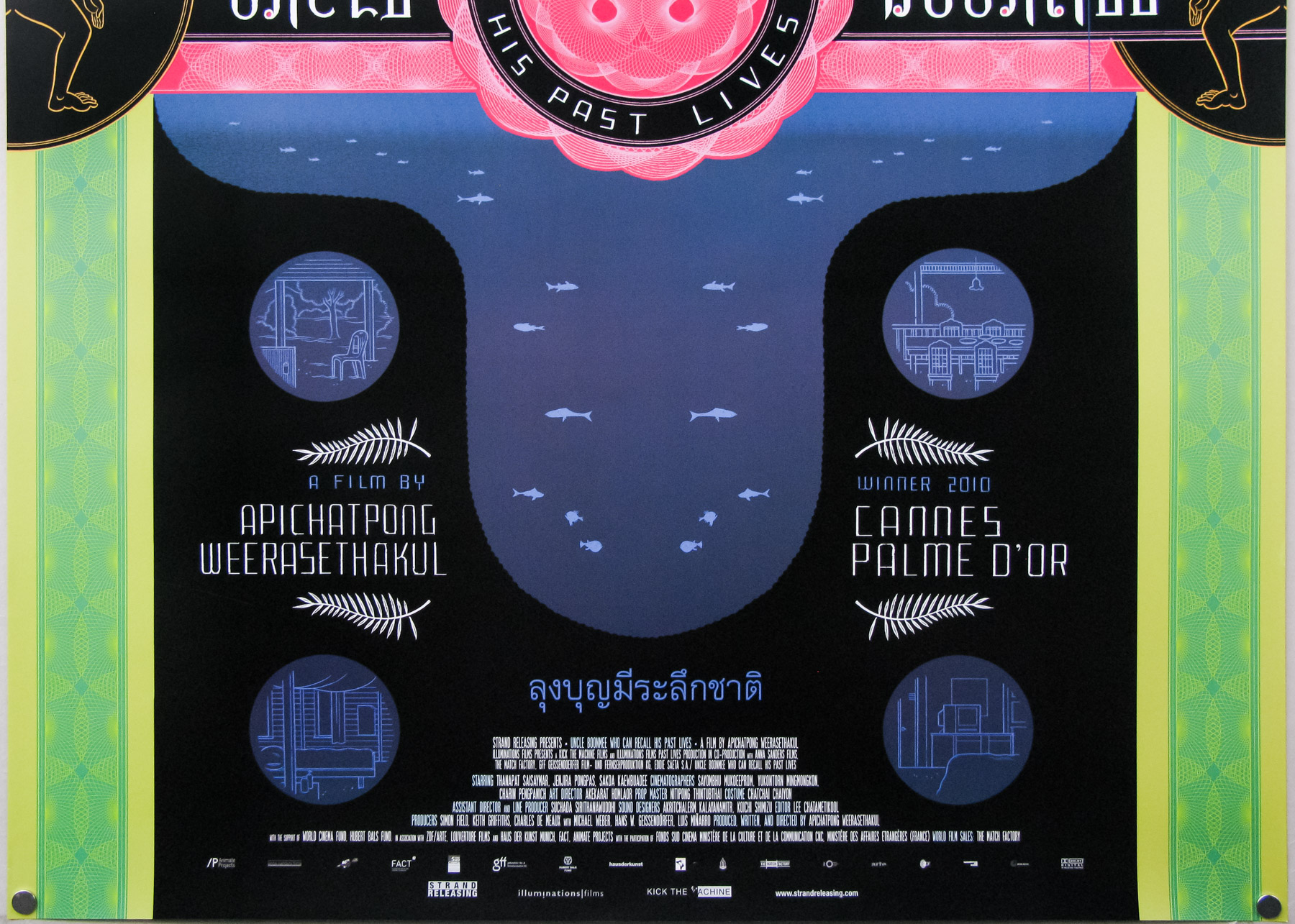
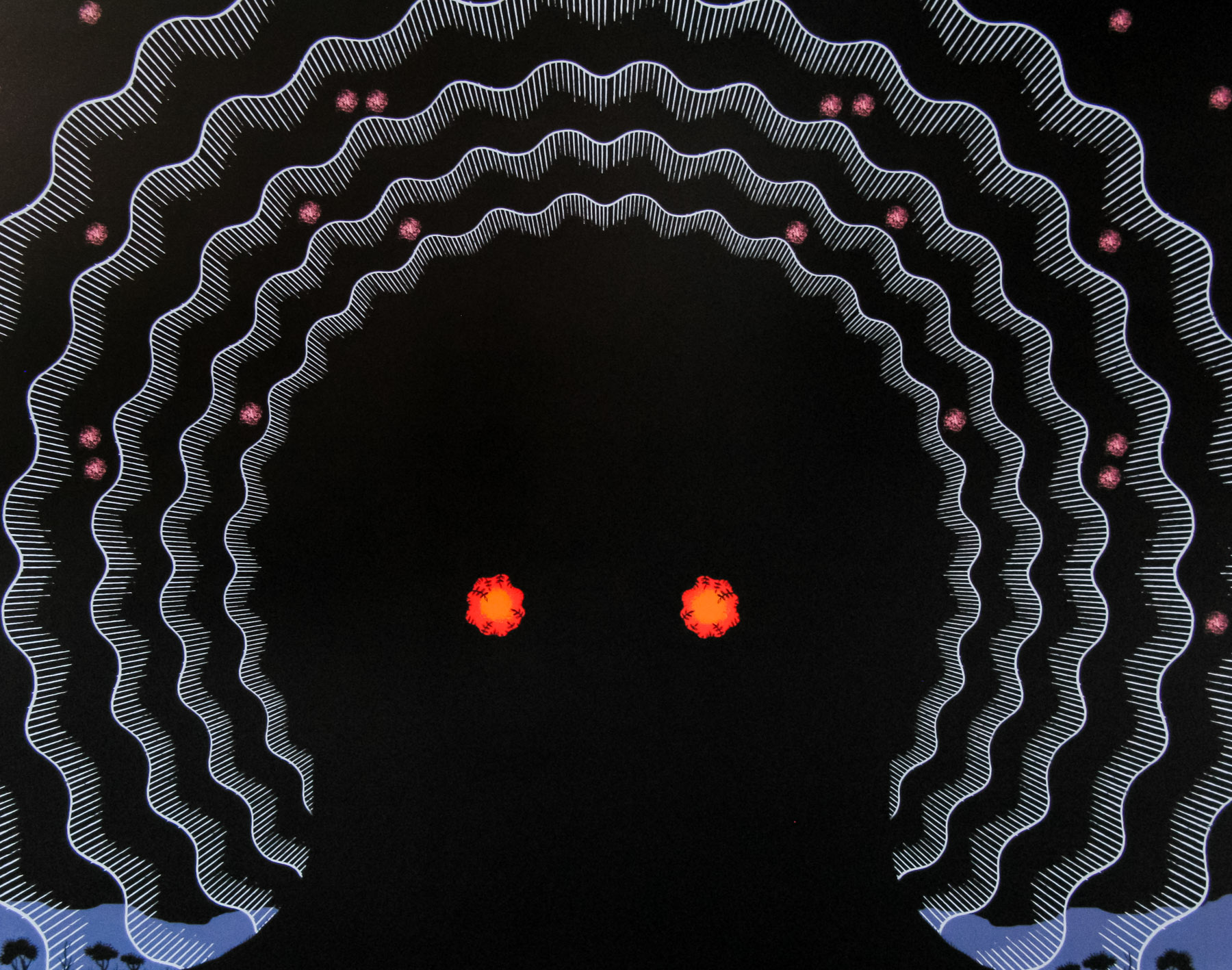
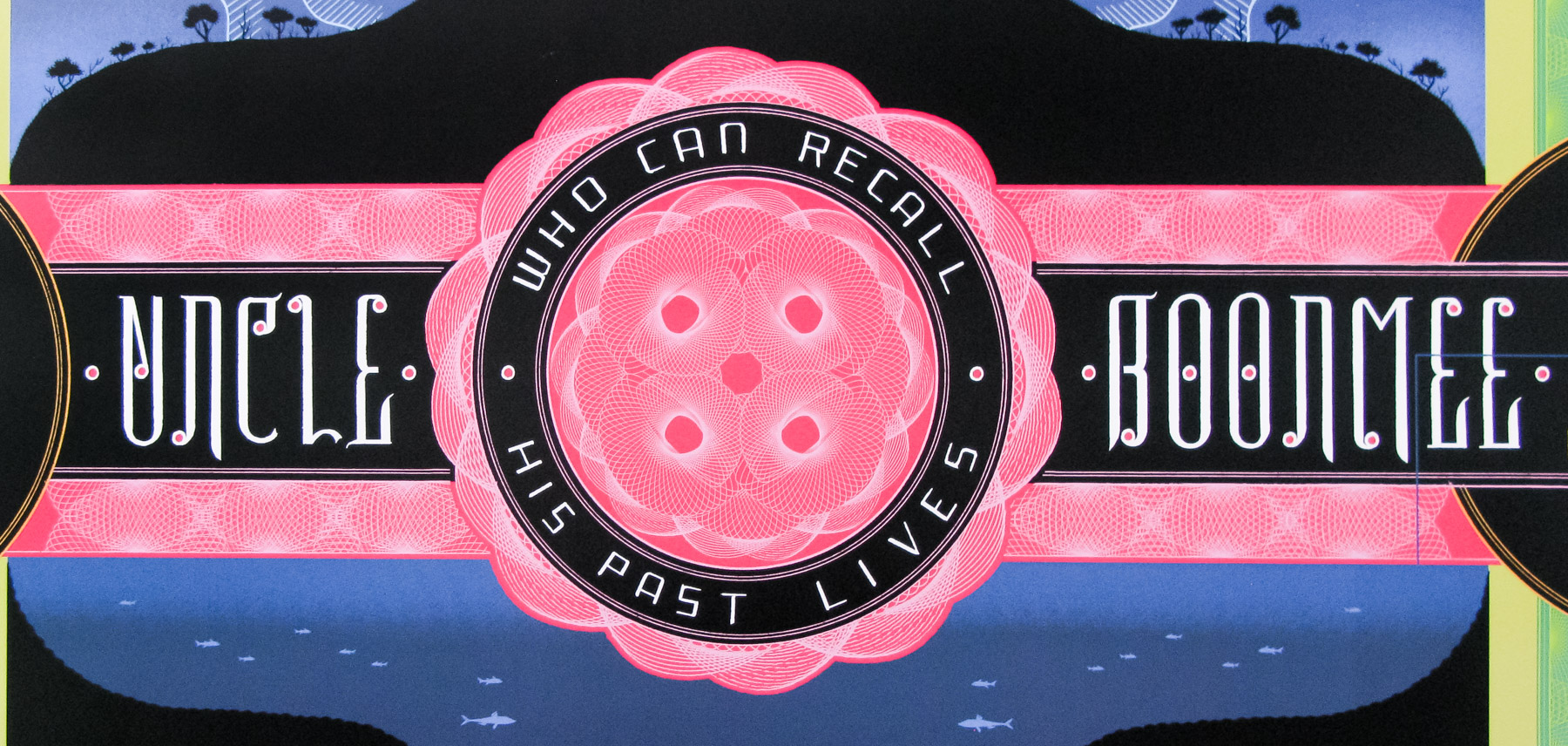
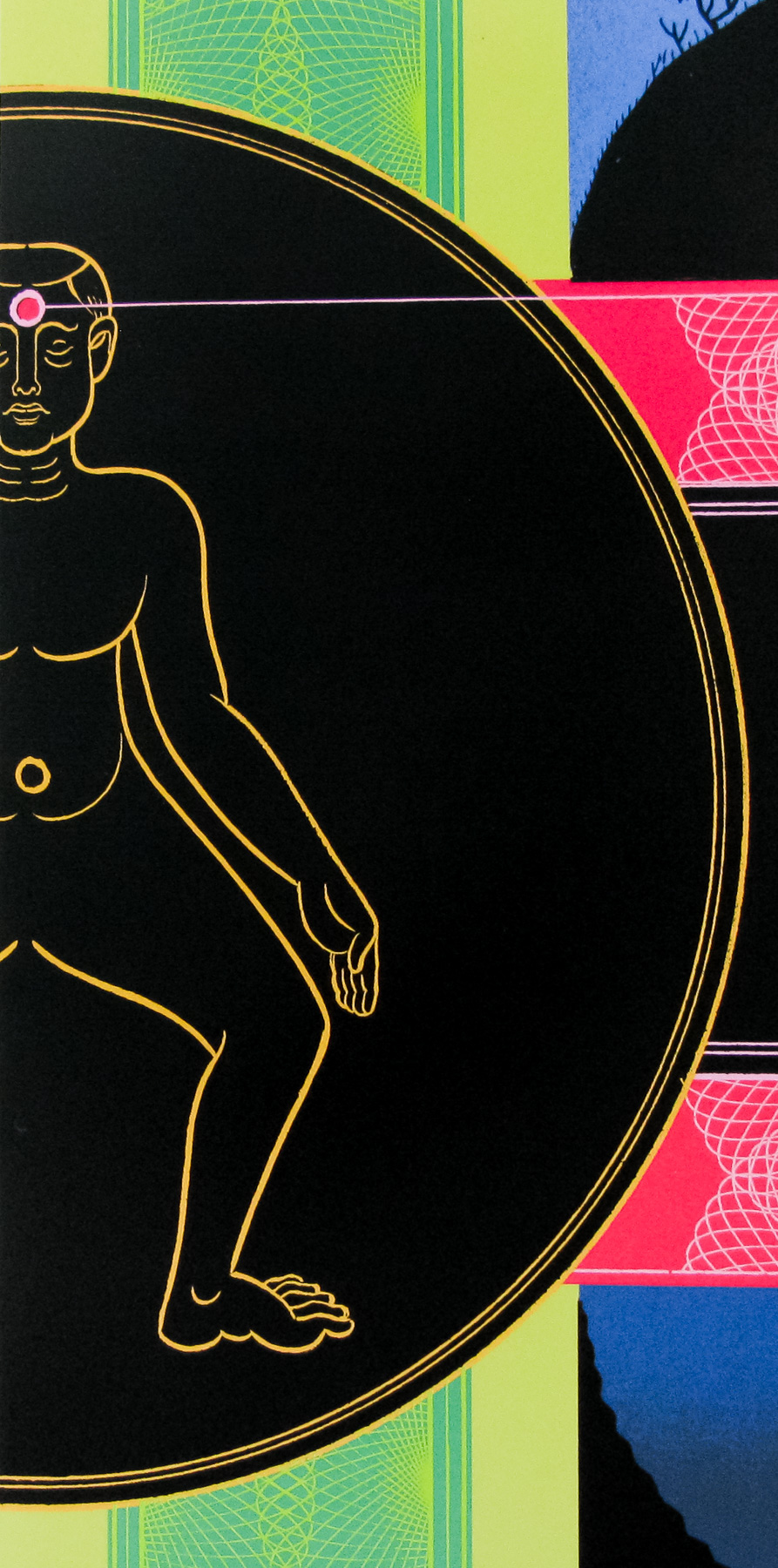
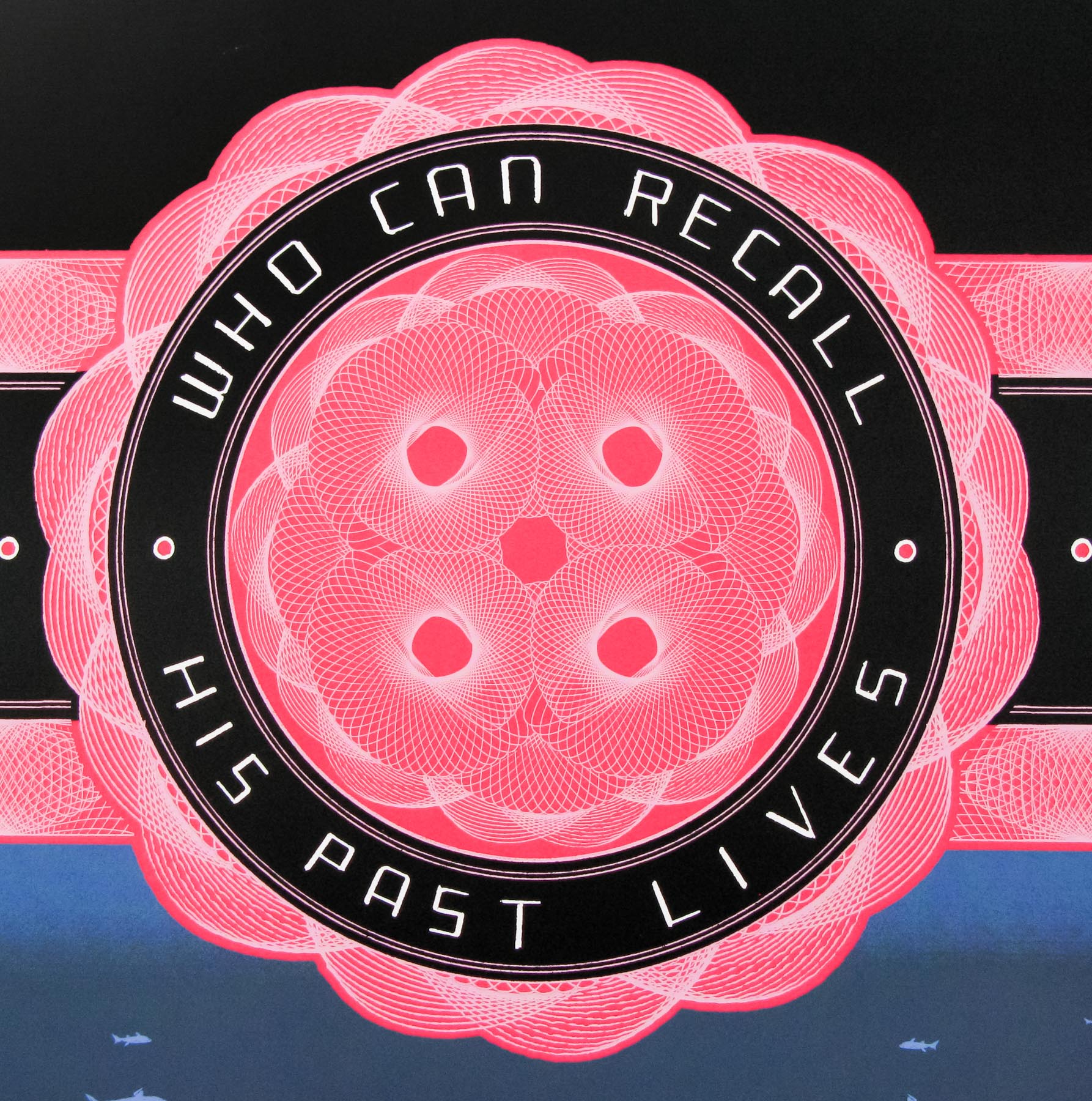
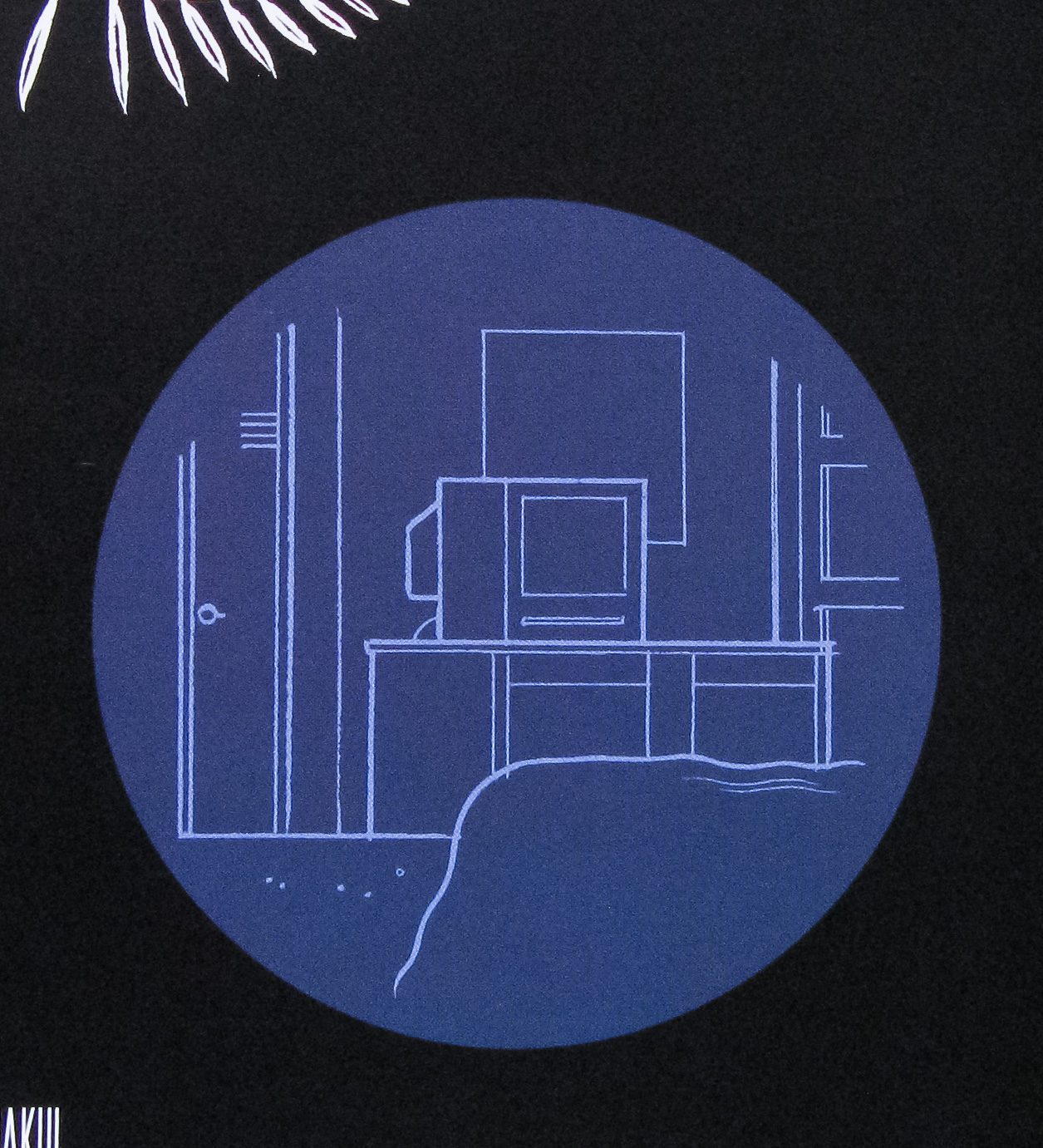
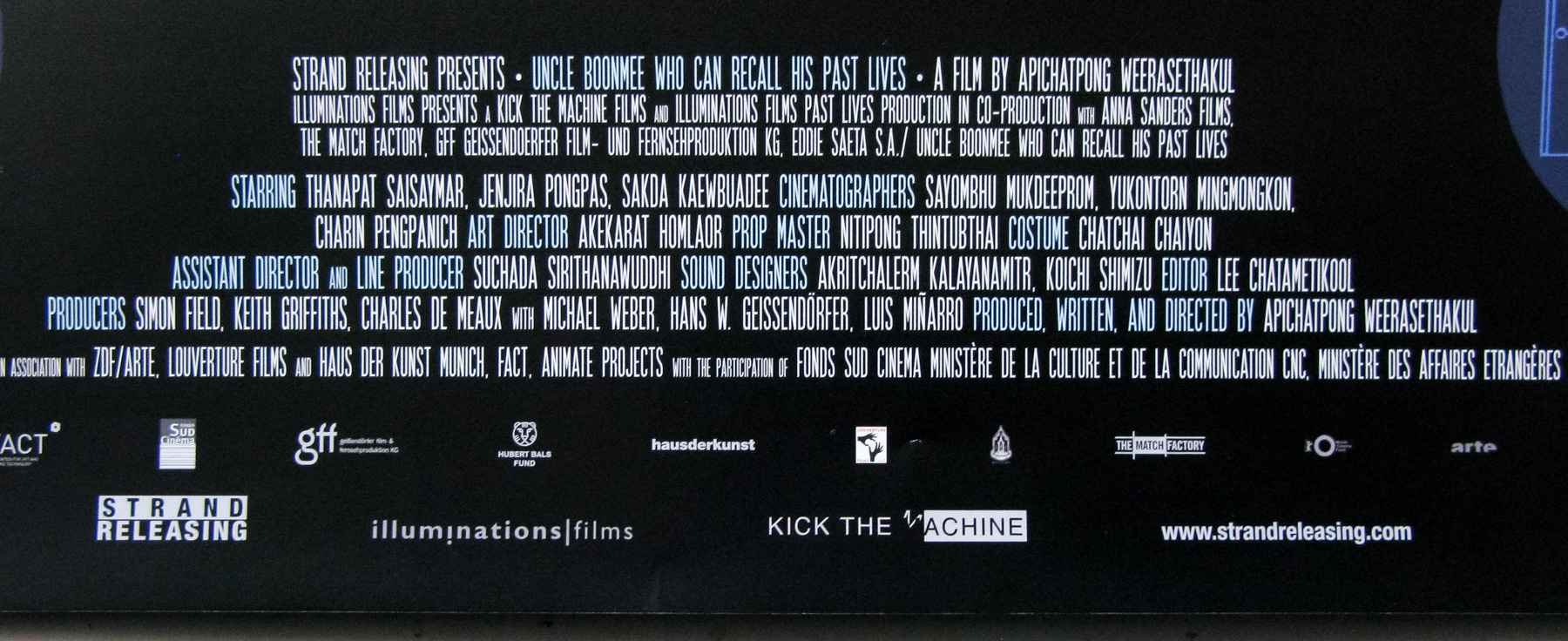
This is one of those posters that you can’t quite believe the studio was willing to go ahead and print, but you’re very glad they did! The poster was designed and illustrated by the brilliant cartoonist Chris Ware, the man behind the sublime Jimmy Corrigan, the Smartest Kid on Earth graphic novel and other excellent creations such as Quimby the Mouse (one of his earliest charatcters).

In an article on the Vulture website, the artist says of the poster; “I wanted to get at both the transcendent solemnity of the film while keeping some sense of its loose, very unpretentious accessibility.” He also remarks,”This being a poster, however — and even worse, me not really being a designer — I realized it also had to be somewhat punchy and strange, so as to draw viewers in and pique their curiosity without, hopefully, insulting their intelligence.”

The intricate lettering, oblique imagery and brilliant use of colour is quintessential of Ware’s work and it’s a thrill to see it on such a big scale. I’ve read some complaints that it’s almost too difficult to read, but I think that’s part of its charm and it is infinitely more interesting than most of the bland photoshopped creations so prevalent today.

The film itself, as the title suggests, focuses on the reminiscences of Uncle Boonmee, a dying man who spends his final days recalling his previous lives with the ghost of his dead wife and his long lost son who has returned as a kind of ape creature with red eyes (as depicted on this poster). Directed by Apichatpong Weerasethakul, the film is based on a book that was written after a man named Boonmee approached Phra Sripariyattiweti, the abbot of a Buddhist temple in the director’s home town, claiming he could clearly remember his own previous lives while meditating. The abbot was so impressed with Boonmee’s ability that he published a book called A Man Who Can Recall His Past Lives in 1983.

Winning the Palme d’Or at the 2010 Cannes Film Festival, it’s certainly not a film for everyone with slow meditative sequences and bizarre, often hallucinatory imagery, but it’s definitely worth a watch, particularly for fans of world cinema.

The original trailer is on YouTube.

Die Hard / Thai

22.12.14

Poster Poster
Title
Die Hard
AKA
Jungla de cristal (Spain) | Die hard: Operasjon skyskraper (Norway)
Year of Film
1988
Director
John McTiernan
Starring
Bruce Willis, Alan Rickman, Bonnie Bedelia, Reginald VelJohnson, Alexander Godunov, Paul Gleason
Origin of Film
USA
Genre(s) of Film
Bruce Willis, Alan Rickman, Bonnie Bedelia, Reginald VelJohnson, Alexander Godunov, Paul Gleason,
Type of Poster
Thai
Style of Poster
--
Origin of Poster
Thailand
Year of Poster
1988
Designer
Tongdee Panumas
Artist
Tongdee Panumas
Size (inches)
21 7/16" x 30 14/16"
SS or DS
SS
Tagline
--

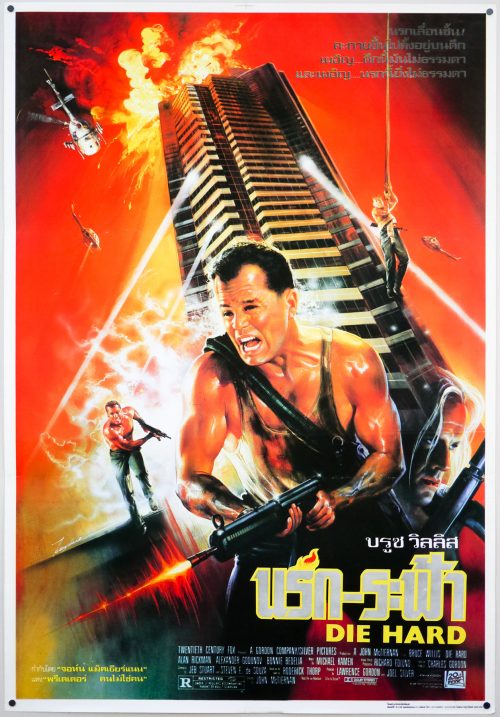
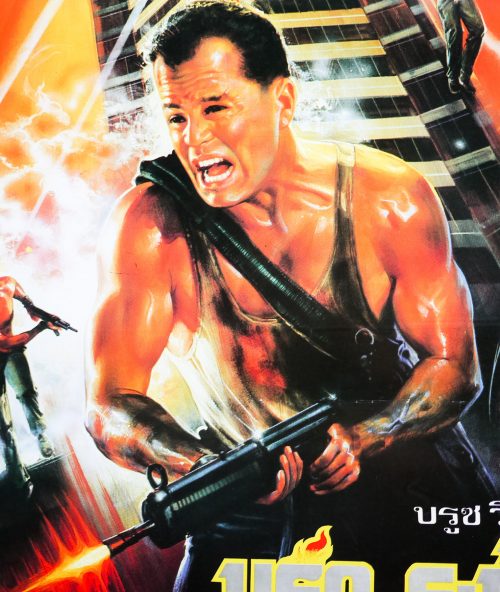
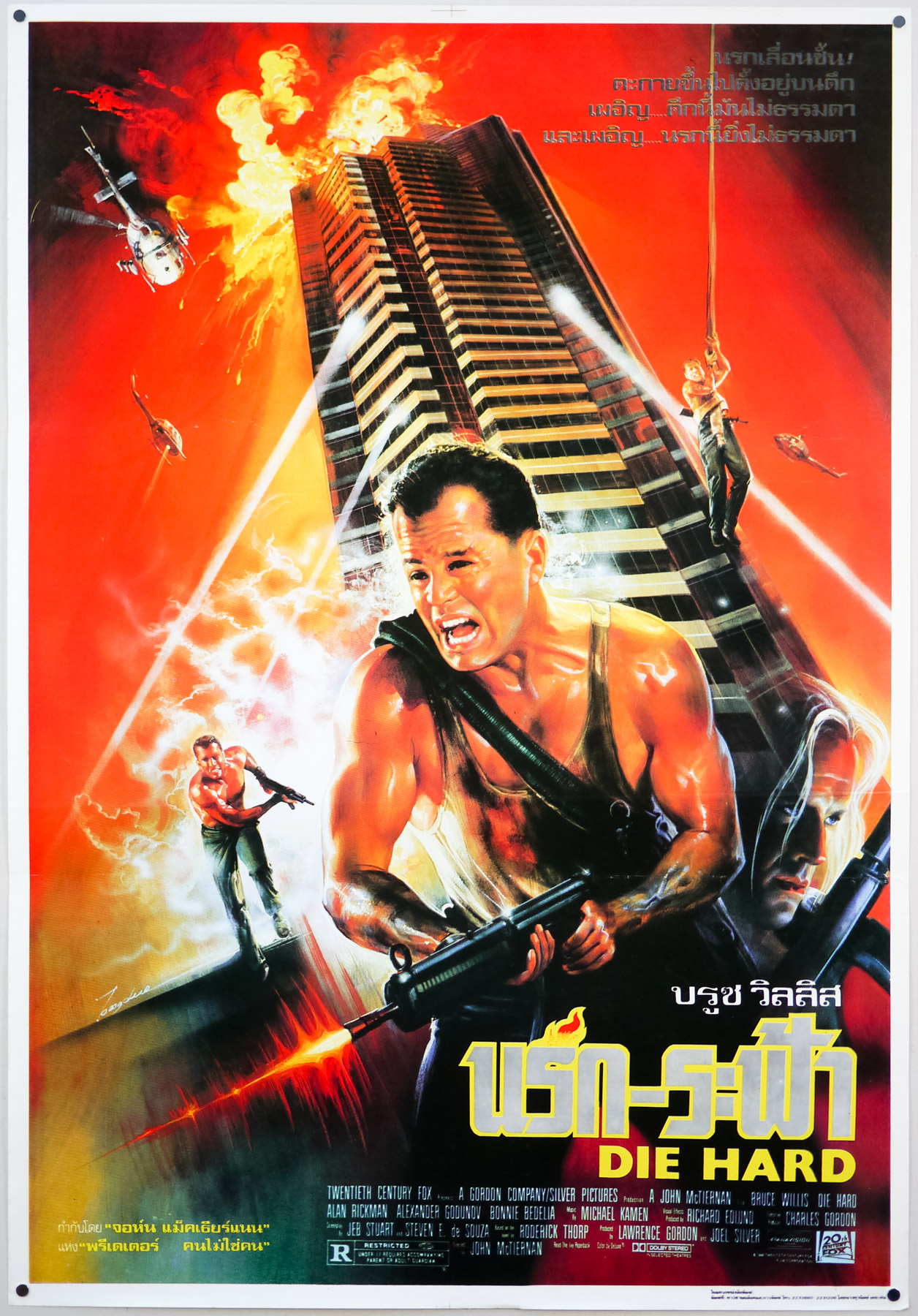
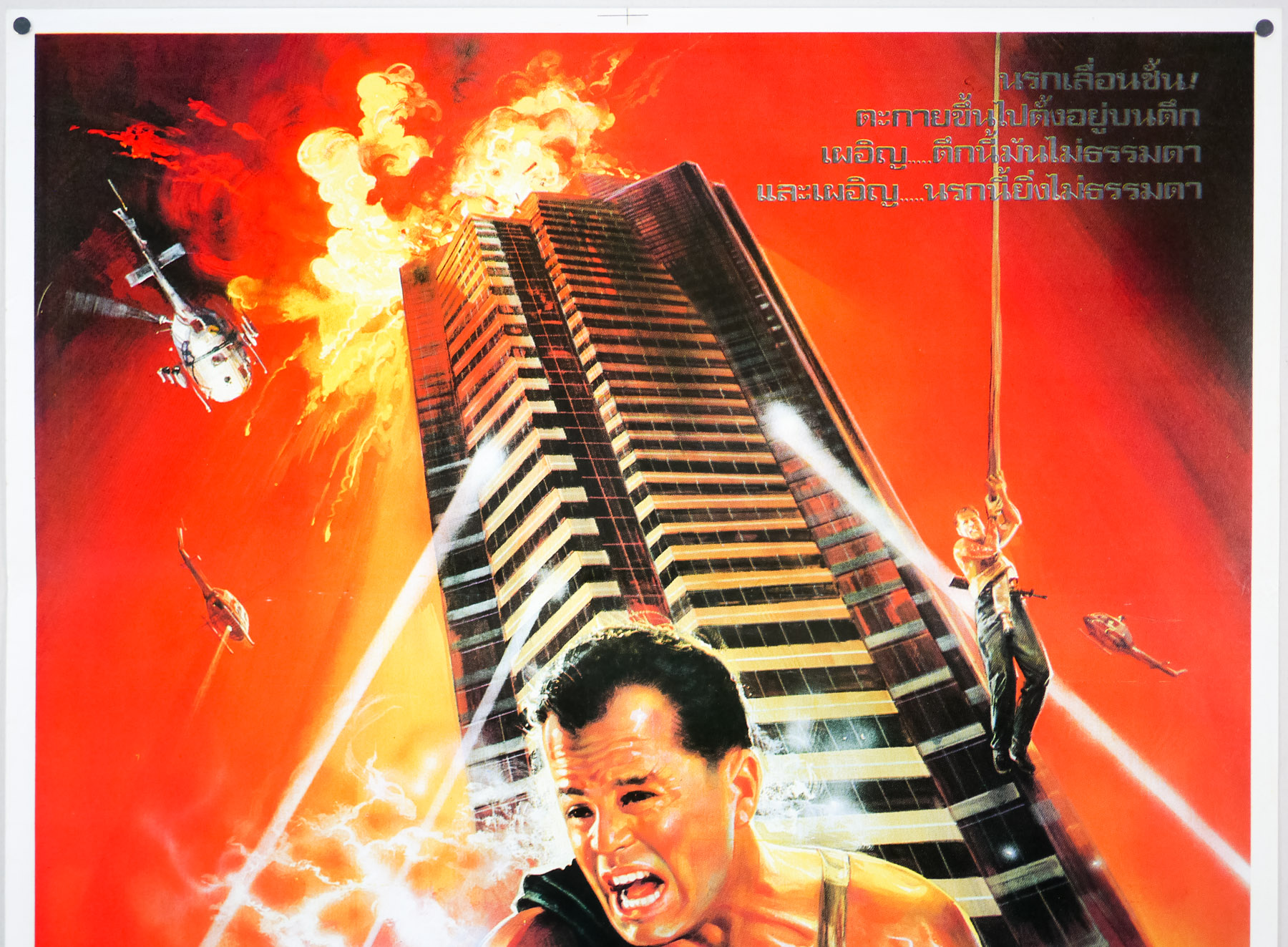
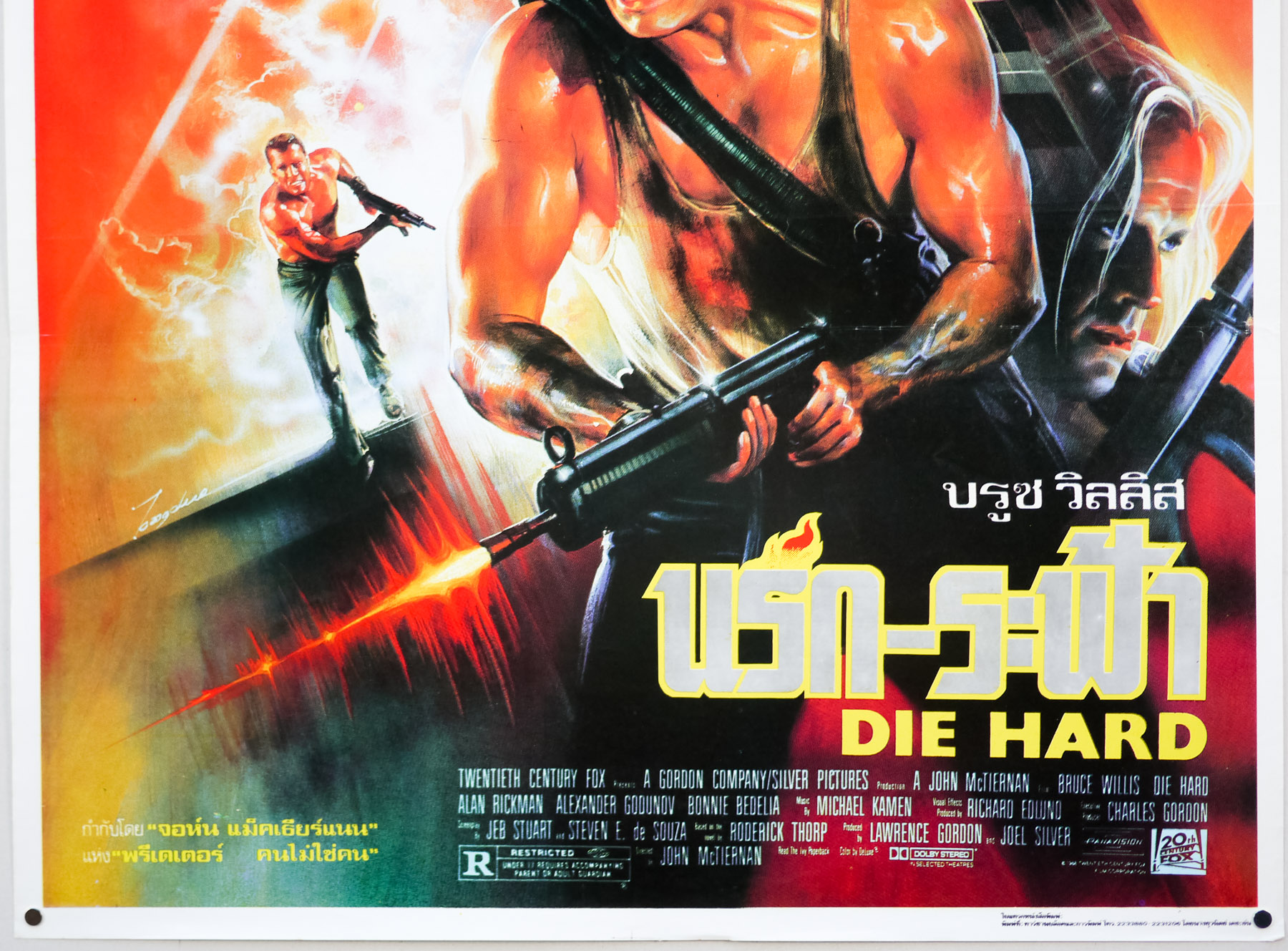
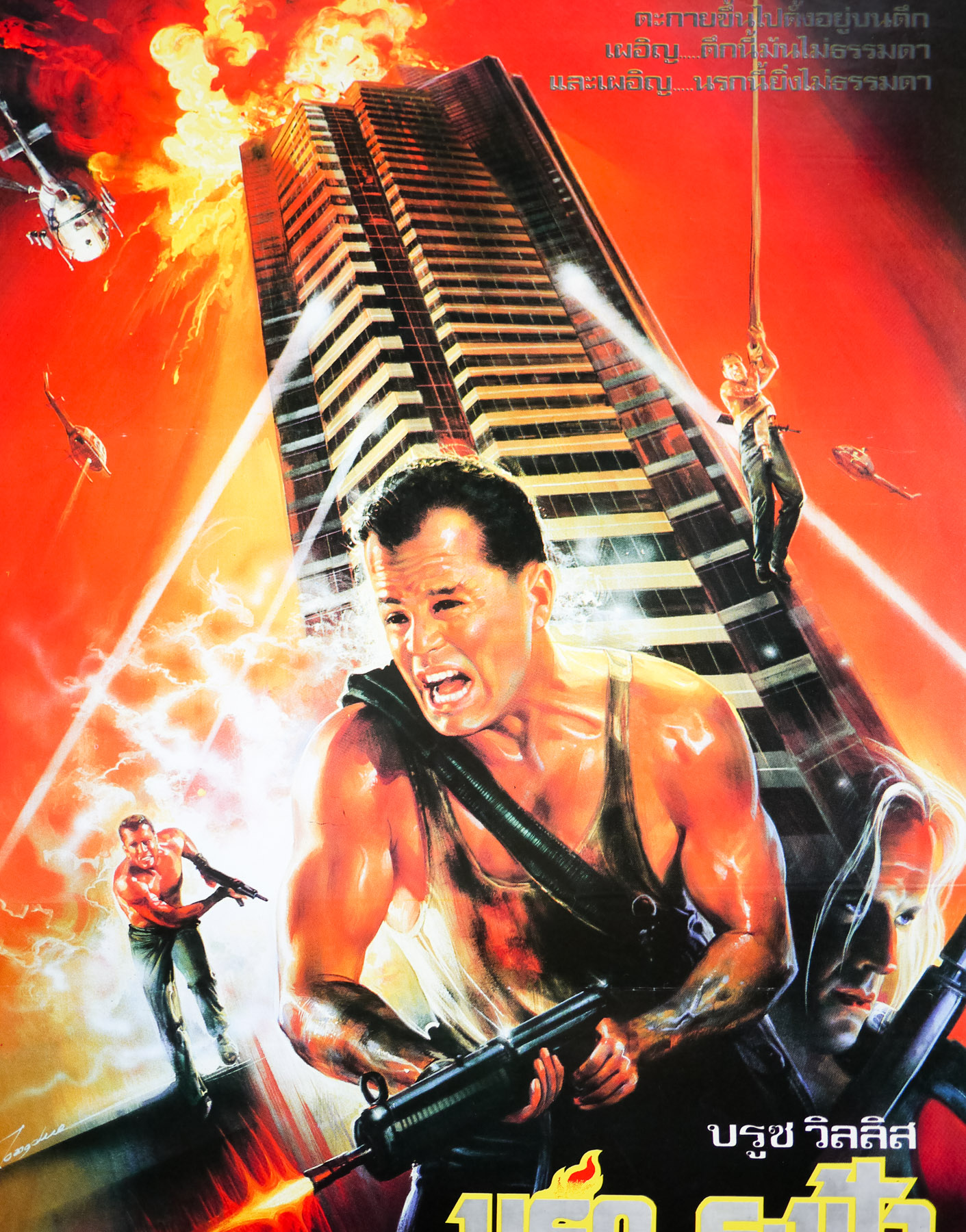
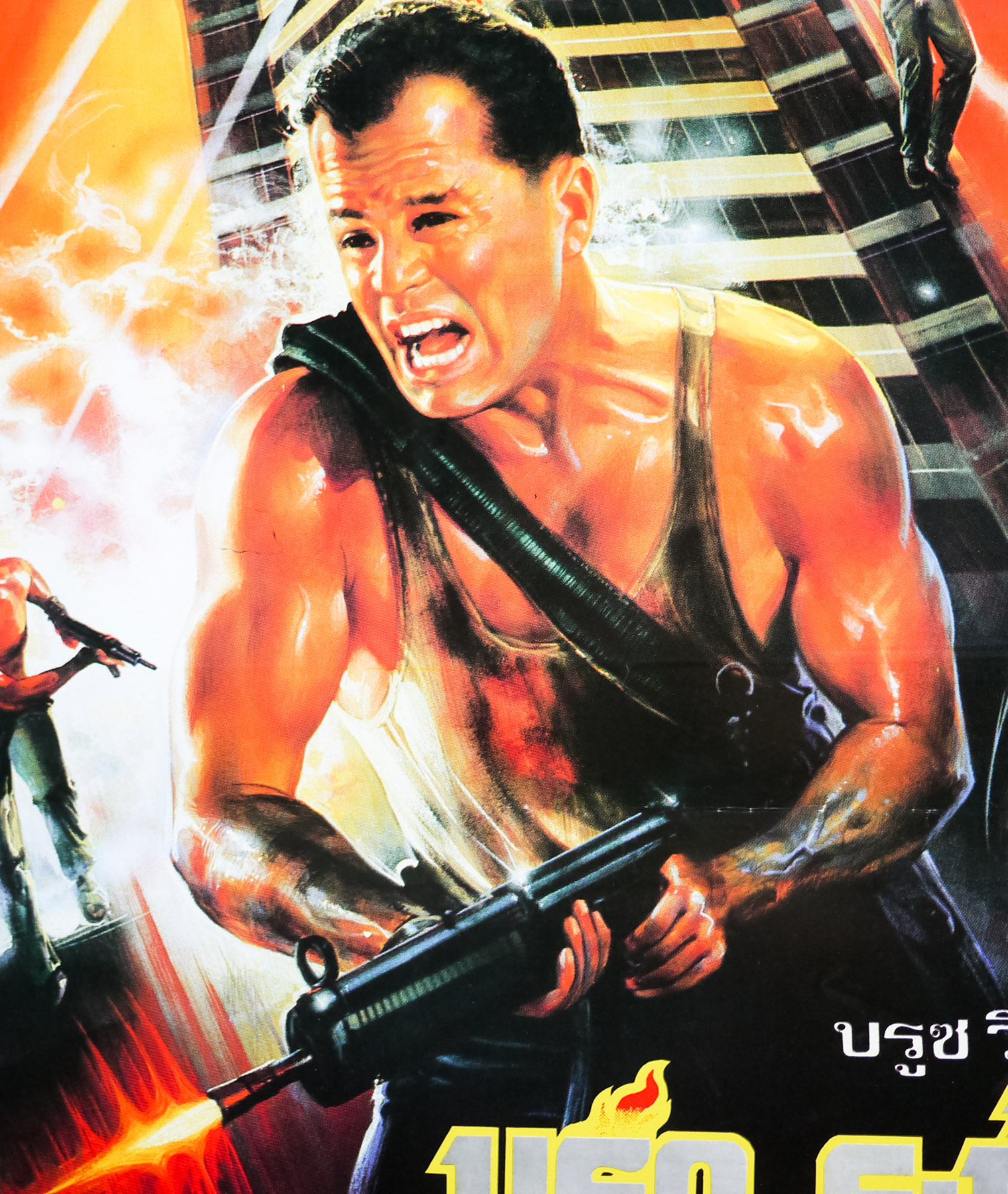
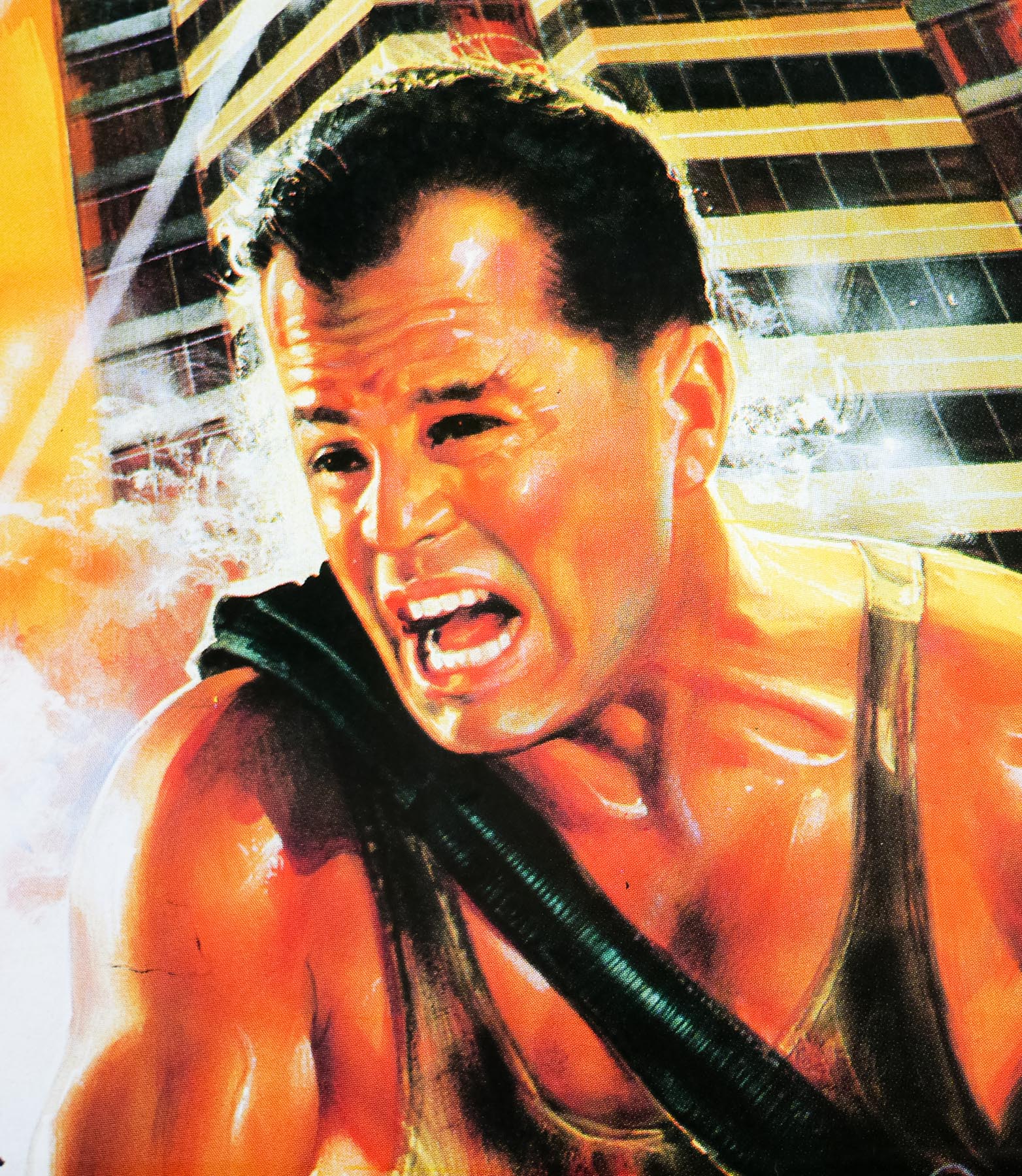
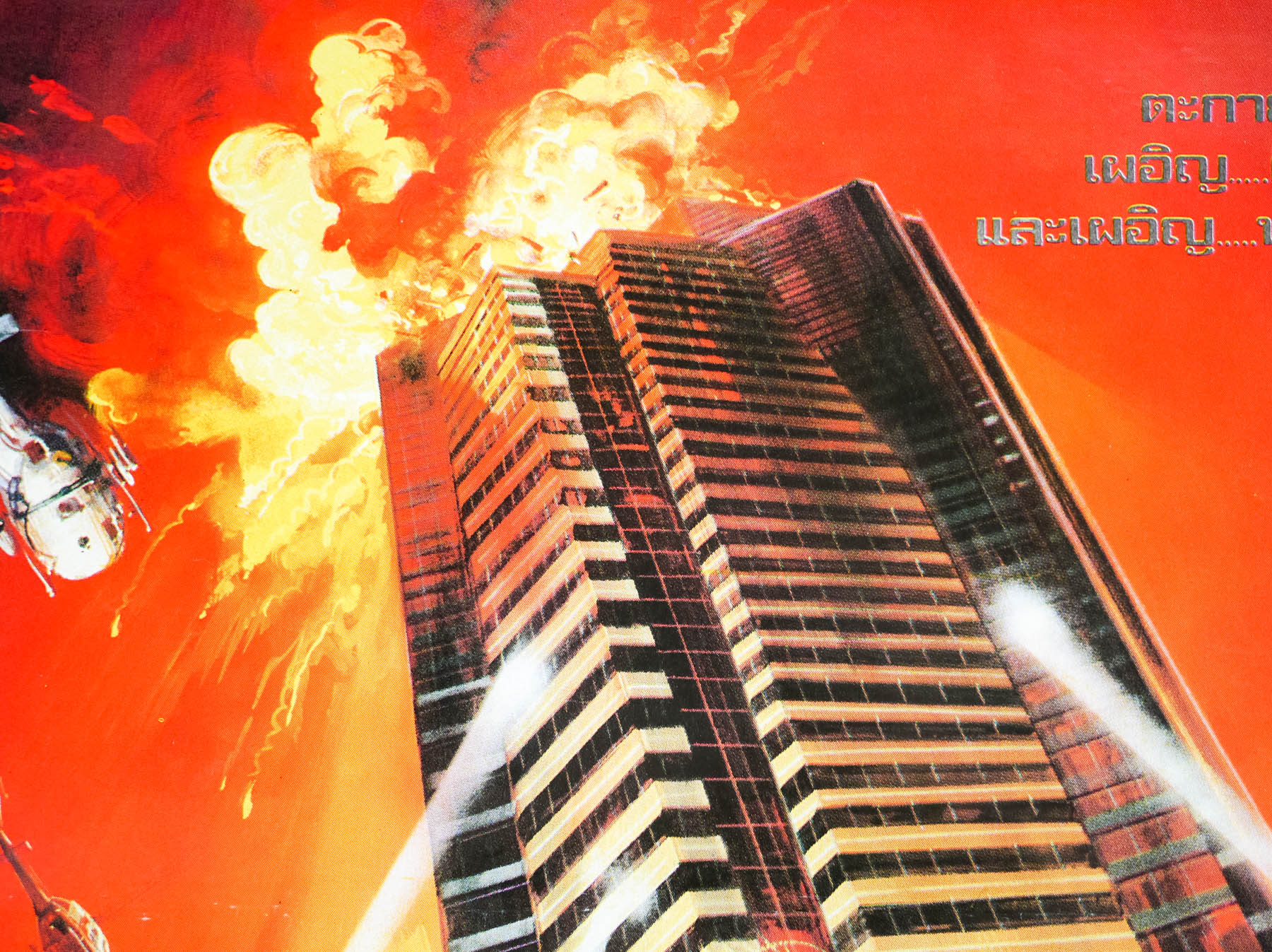
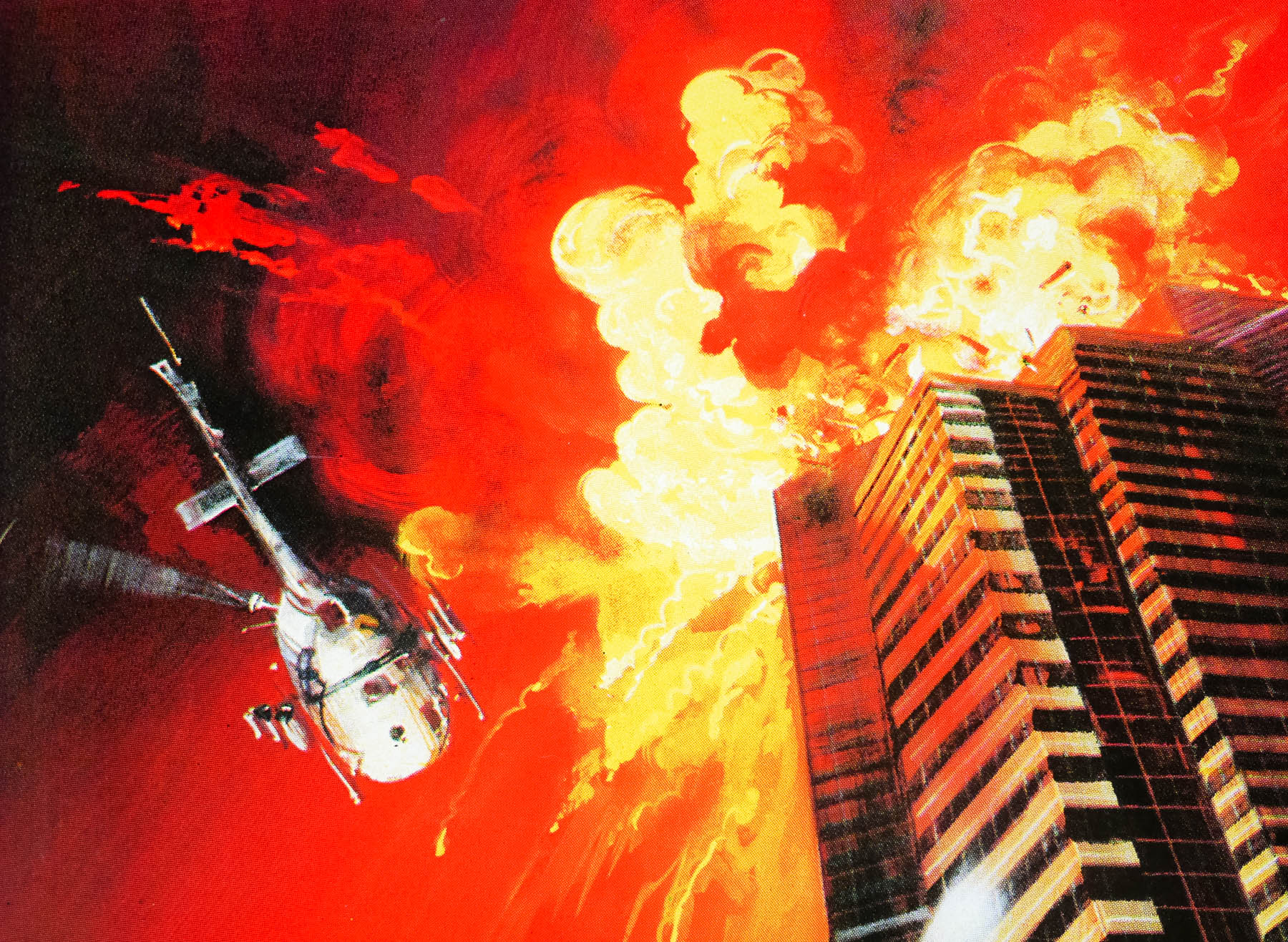
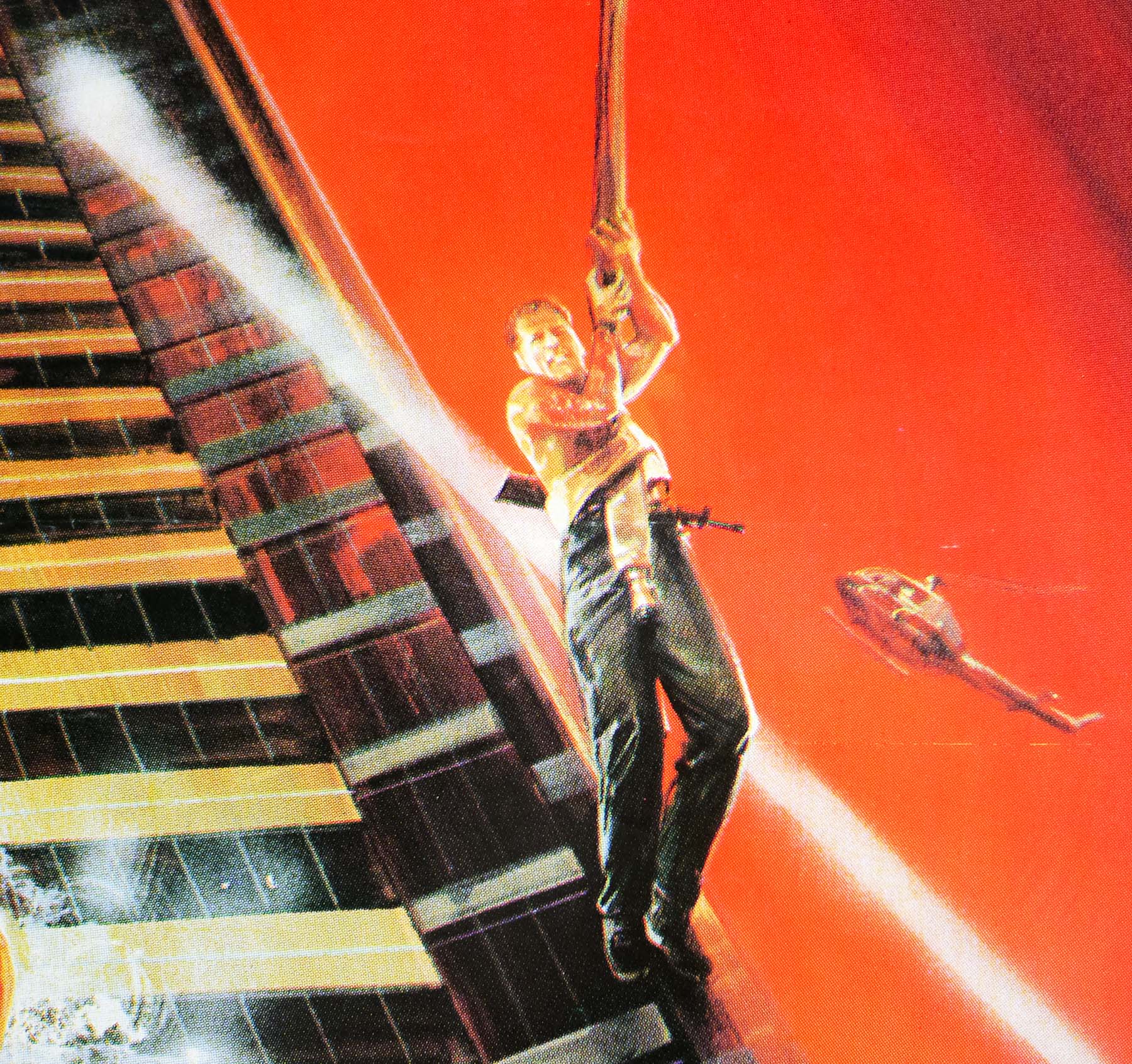
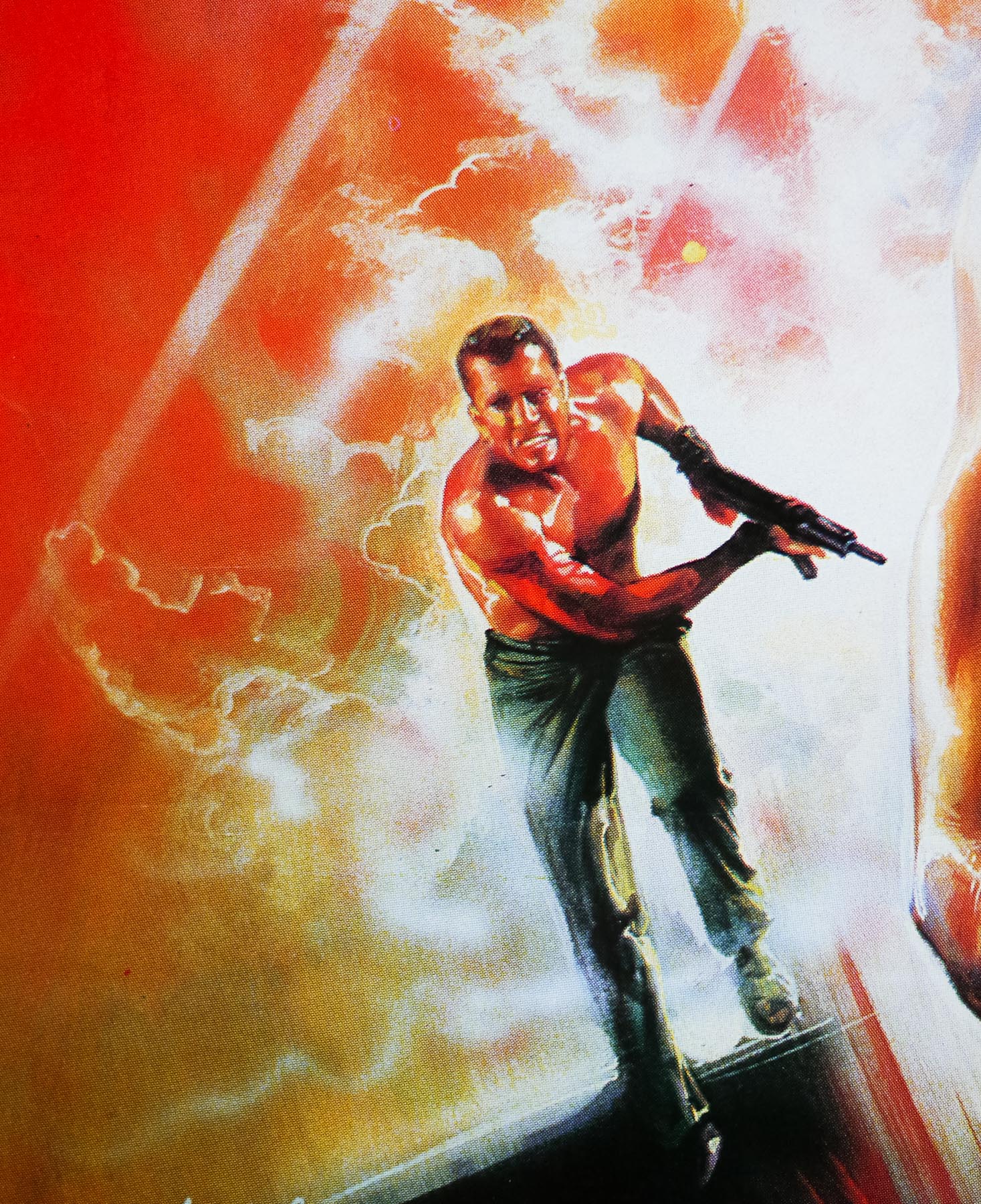
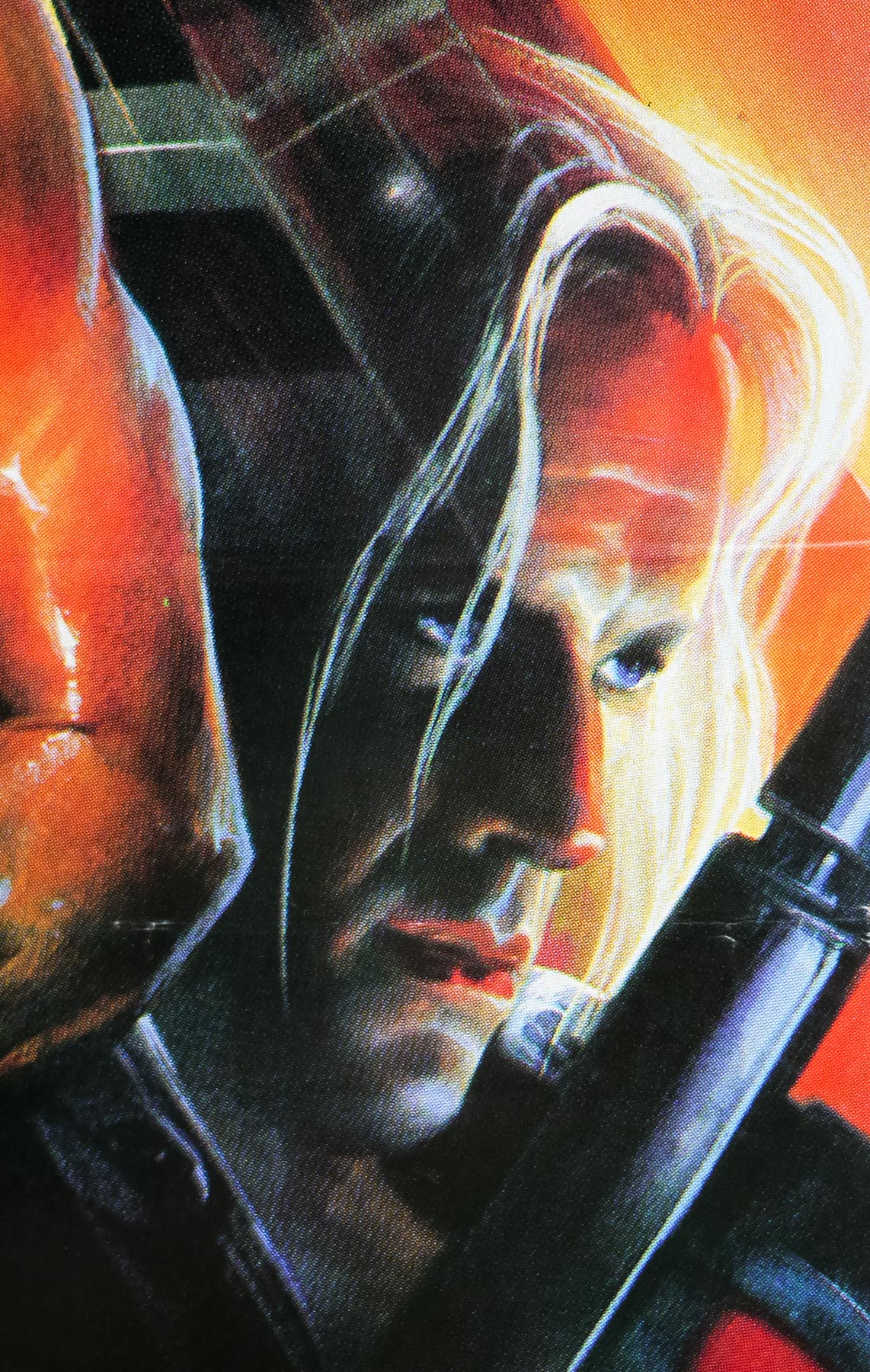
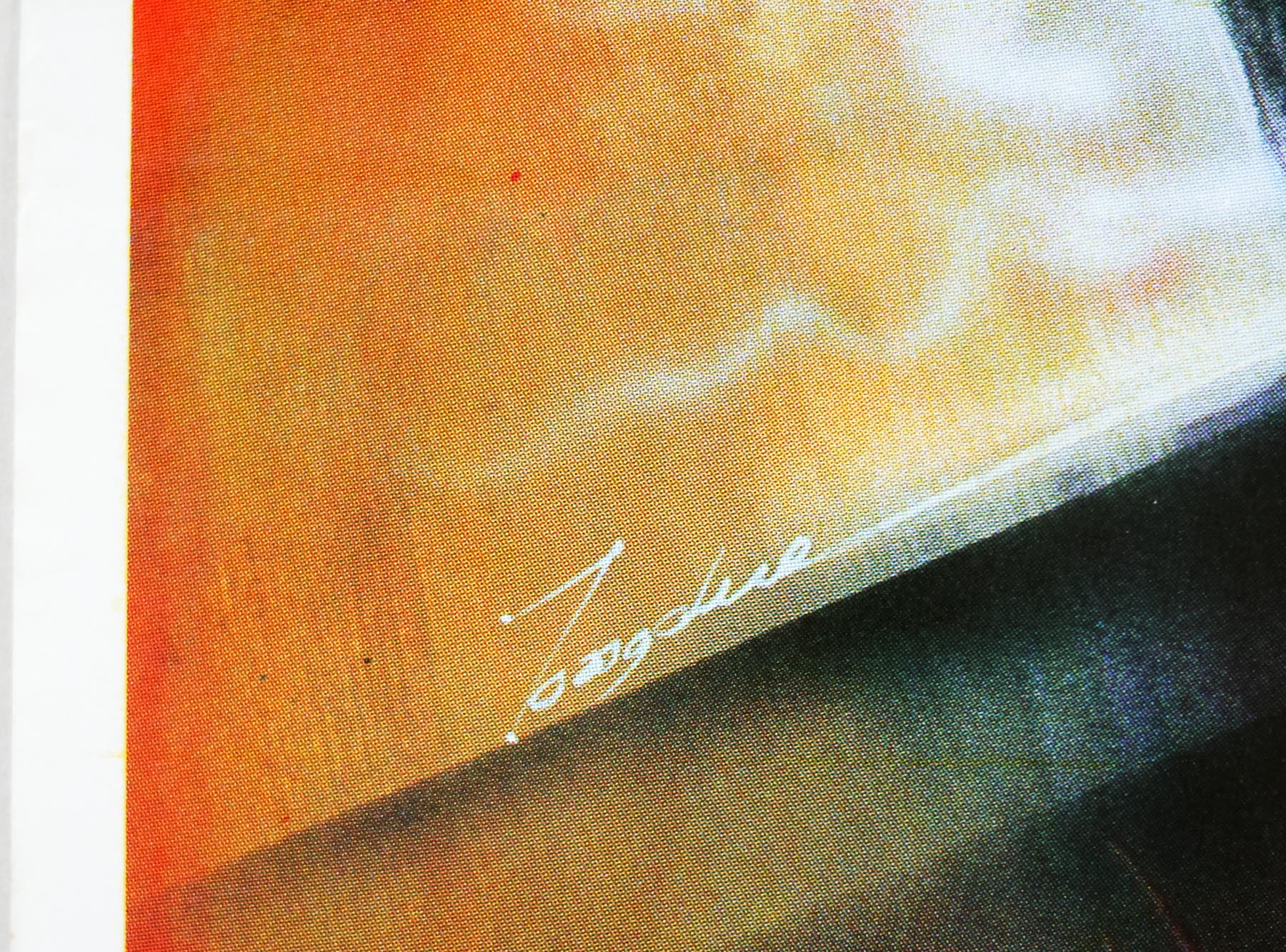
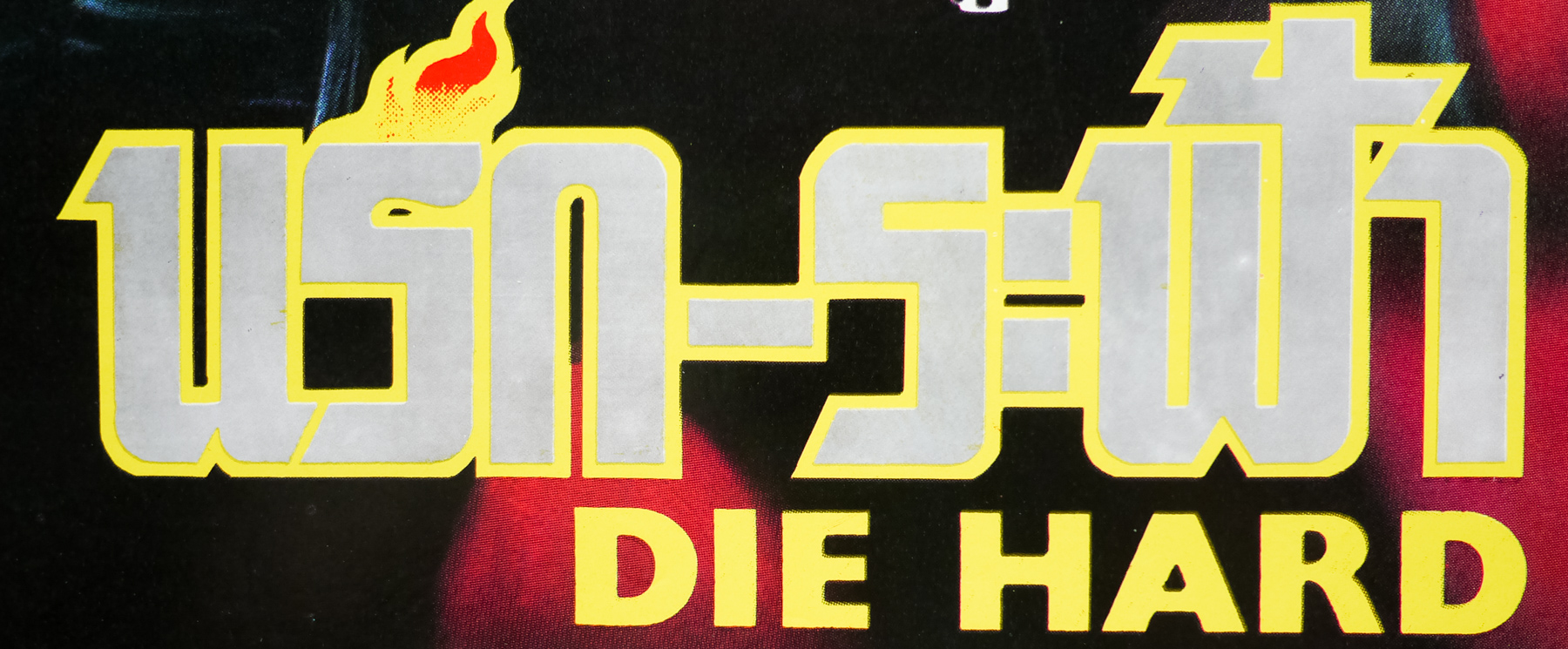
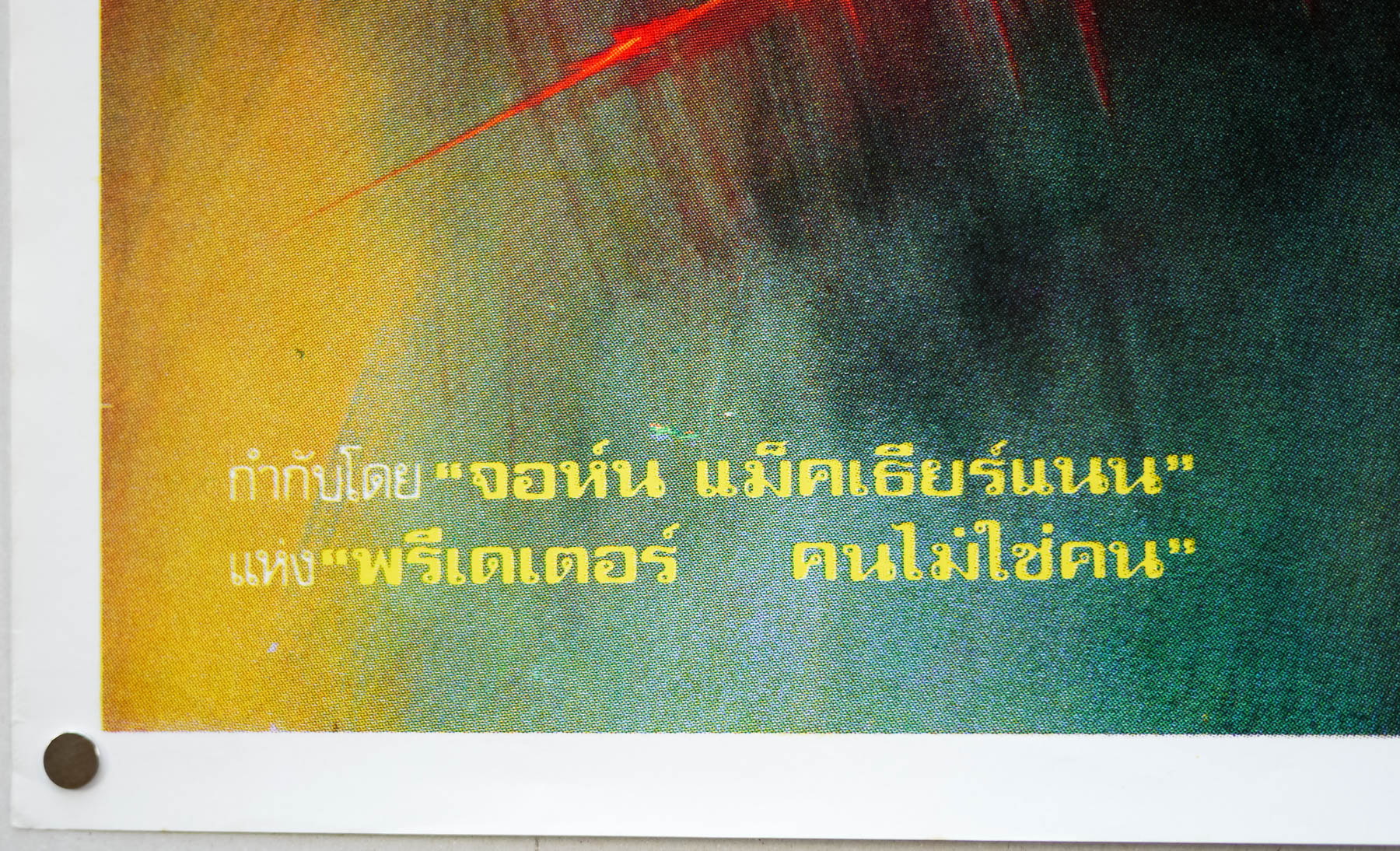
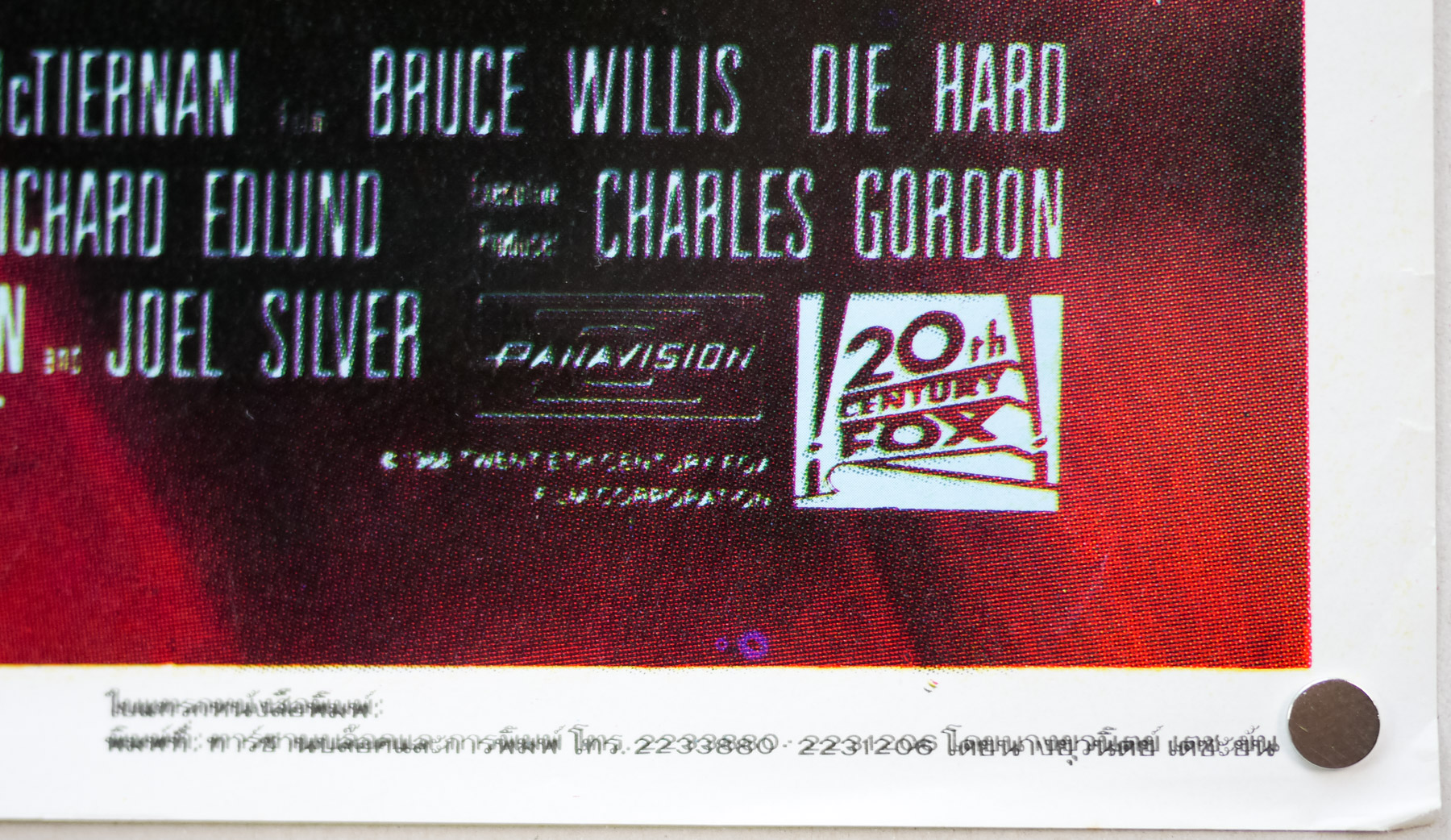
This is the original Thai poster for what is regarded by many film fans as the best action movie of all time. Die Hard stars Bruce Willis in arguably his most iconic role (certainly the part that made him a megastar) as John McClane, the good cop having a very bad day when a terrorist group takes control of Nakatomi Plaza, the office building in which his wife works. John McTiernan was the right director to deliver excitement and unremittingly violent thrills since he’d proven his skill with the superb Predator (1987) and the action in Die Hard continues to escalate to a nail-biting crescendo, with several unforgettable set-pieces.

Alan Rickman delivers an iconic performance as the leader of the terrorists, Hans Gruber, who meets his demise in an oft-parodied, slow-motion manner. What makes the film work so well is the perfectly-balanced script that features a great mix of nerve-shredding action with just the right amount of humour and a series of well-realised characters. The other thing the script does well is to not make the character of John McClane an unstoppable, invincible superhero – he’s a flawed man with his own set of problems and he bleeds when cut just like the rest of us – think the glass on the floor!

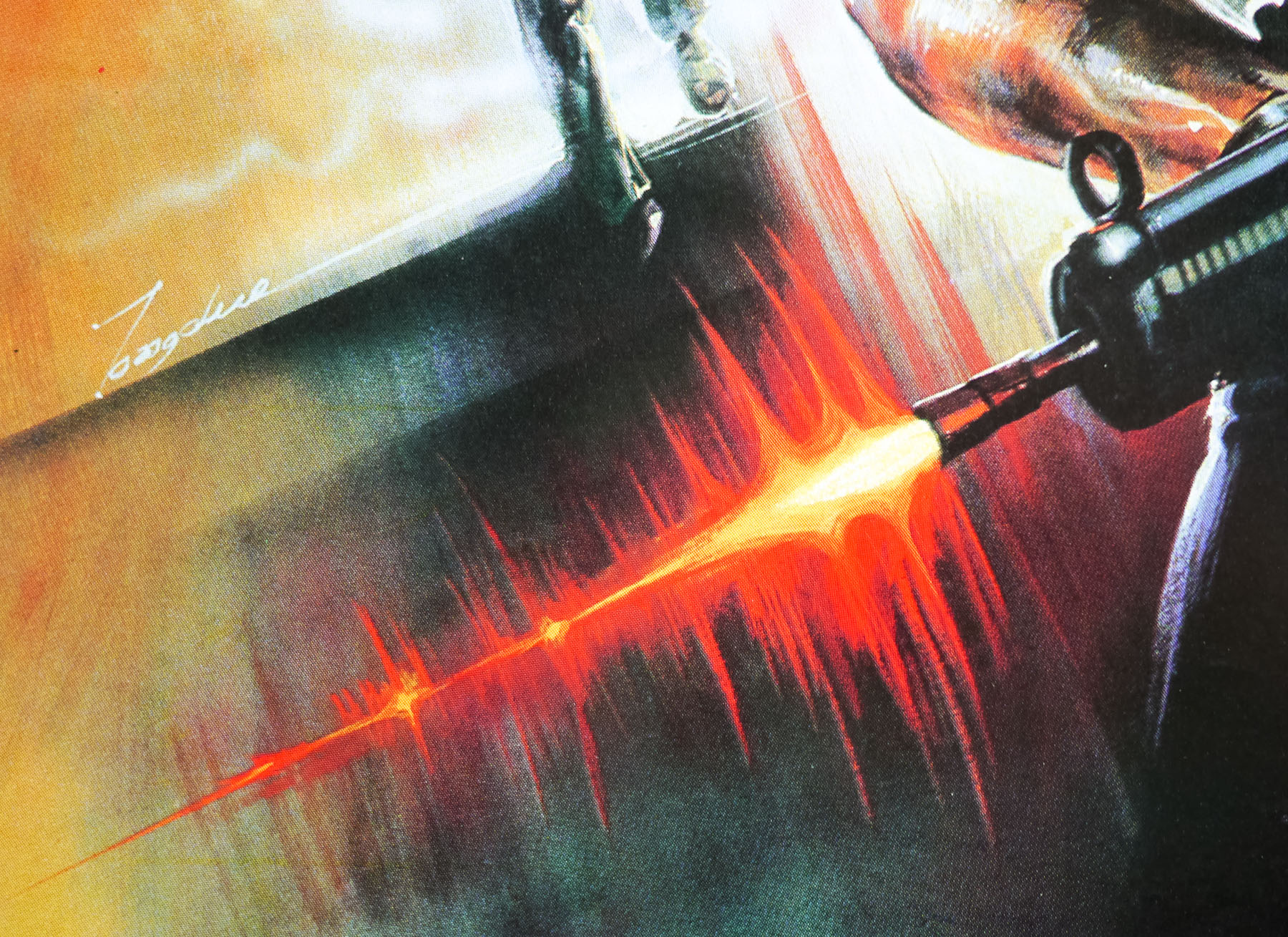
This Thai poster was painted by the artist Tongdee Panumas (he signs his posters with just his first name) who was an incredibly prolific Thai film poster artist during the 70s, 80s and 90s but I’ve been unable to find out much about him, other than that he was born in 1947. If anyone has any more information please get in touch. A knowledgeable collector of Thai posters told me that the artists would rarely if ever see the film they were creating the poster for and would instead paint images based on still photos or posters from other countries. This led to some wild designs and even some artwork with characters and elements that didn’t even appear in the actual film!

The advance American one sheet features a sweaty Willis clutching a gun but I much prefer the darker image that features on the final American one sheet and the UK quad.

Return of the Living Dead / Thai

19.11.14

Poster Poster

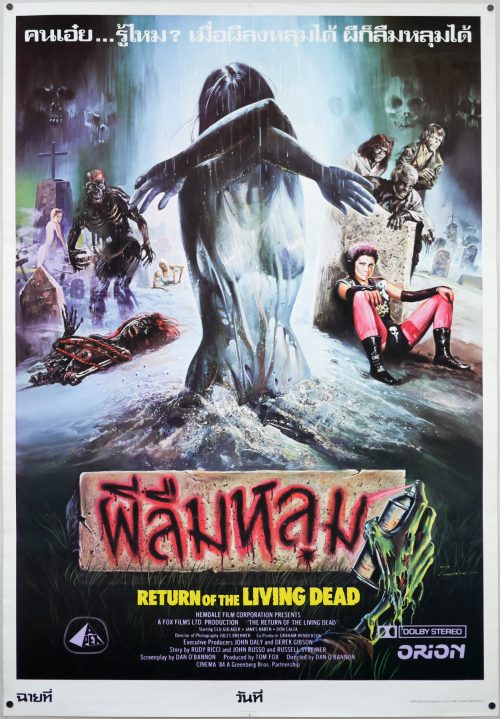
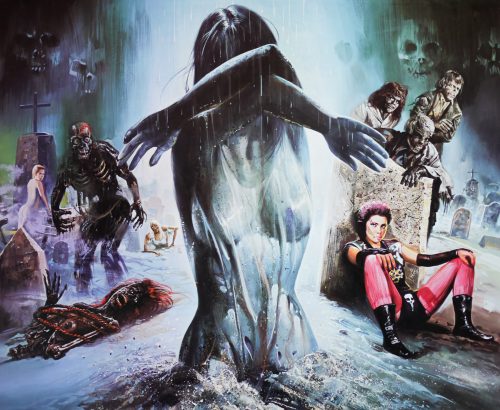
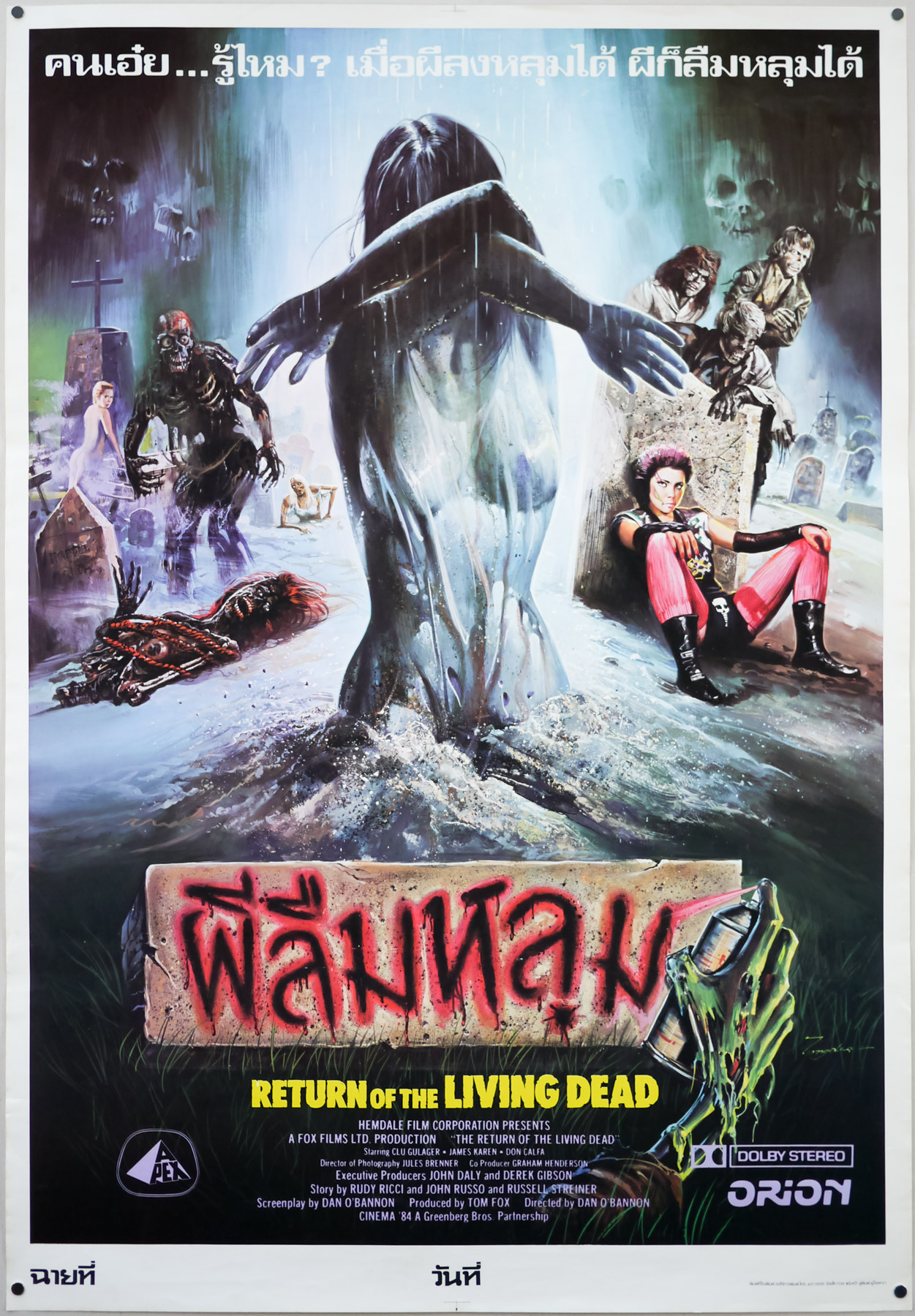
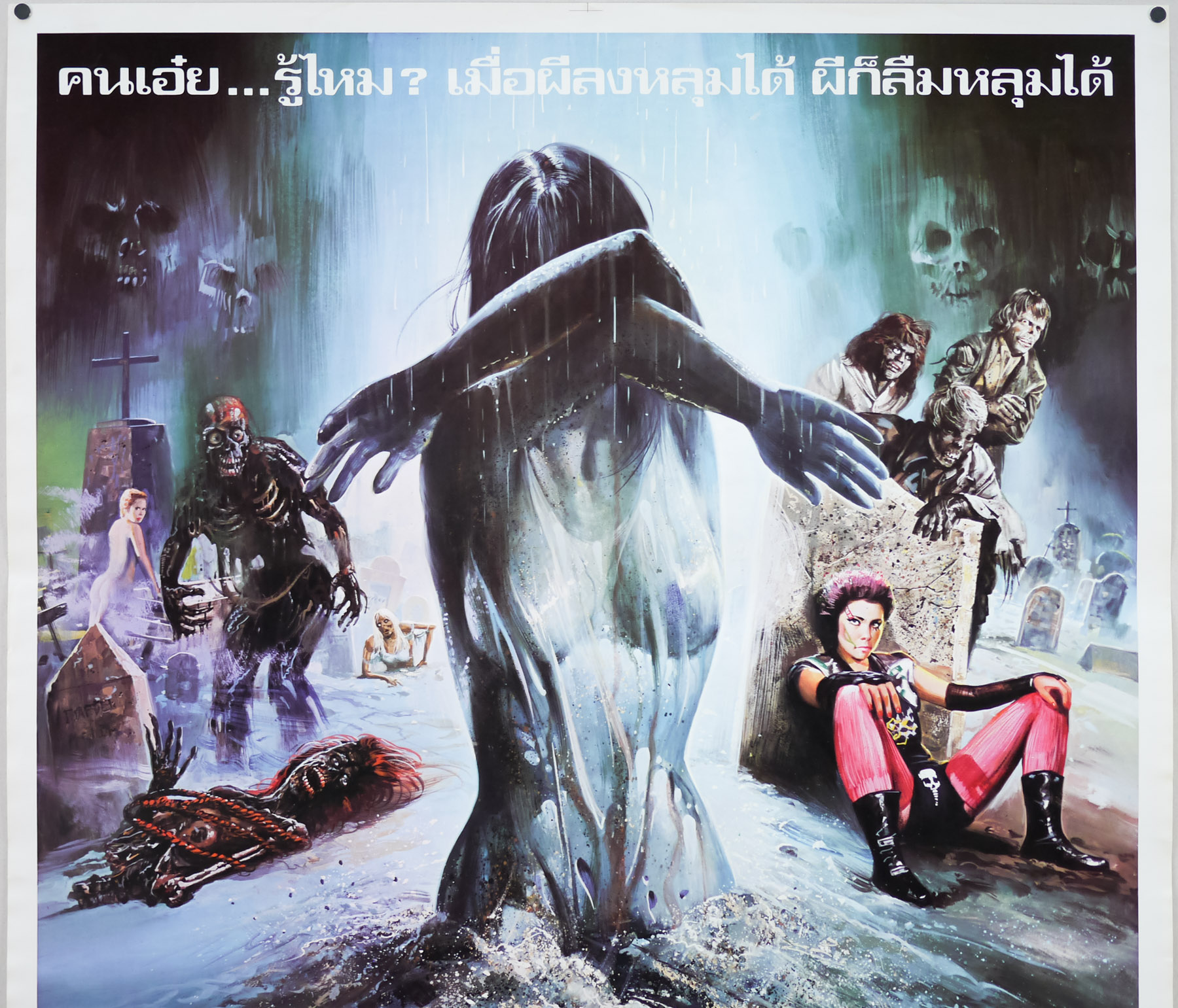
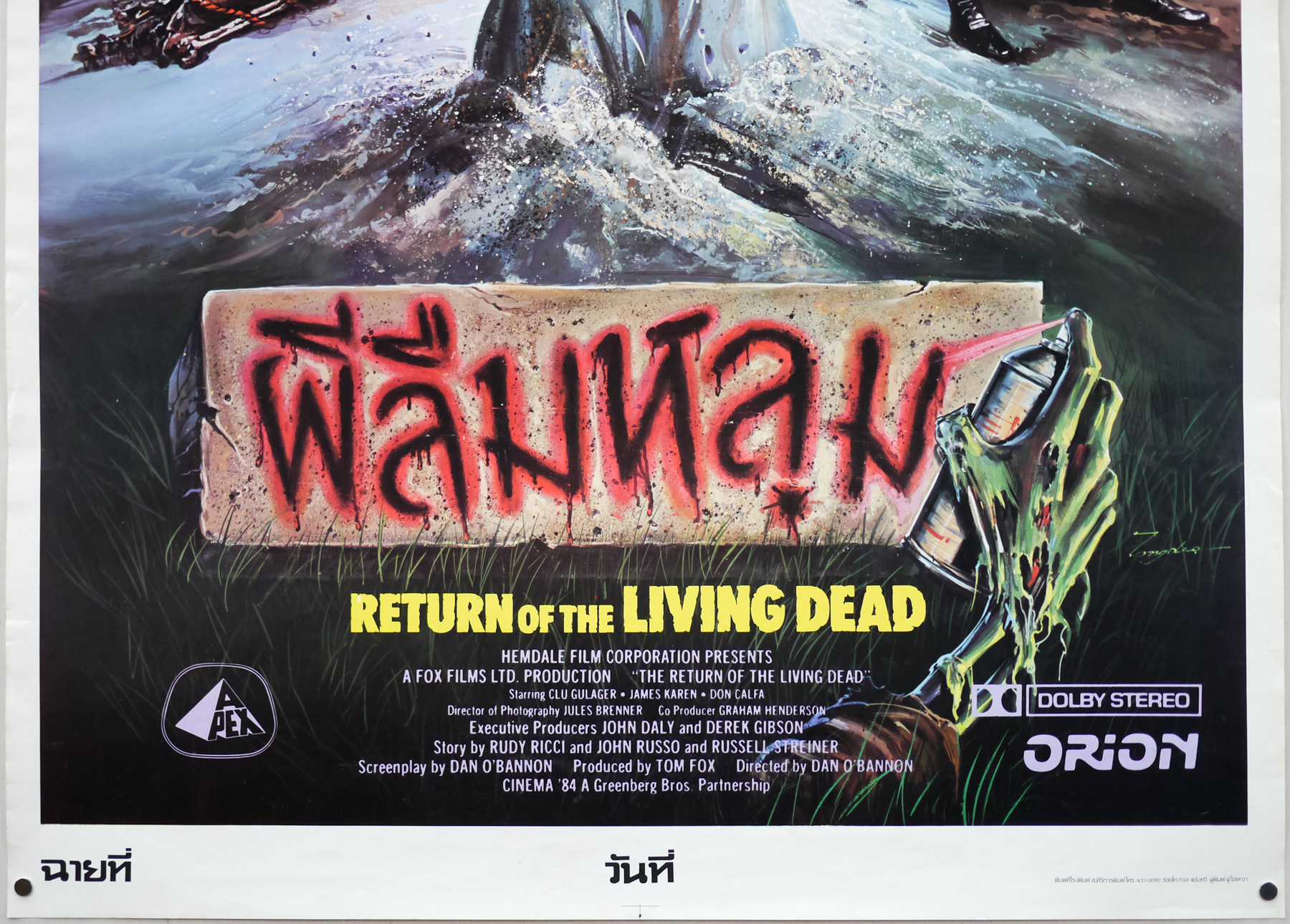
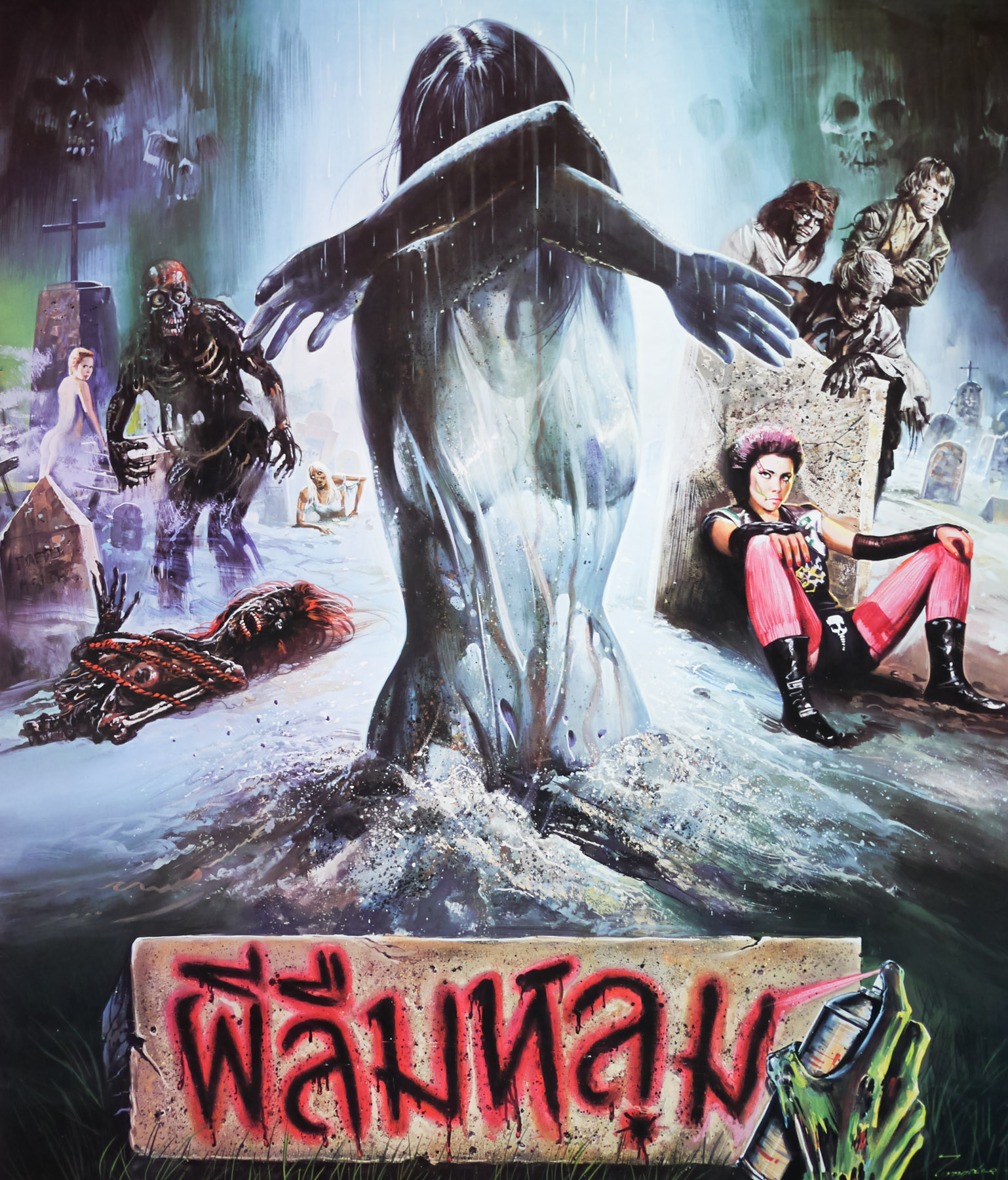
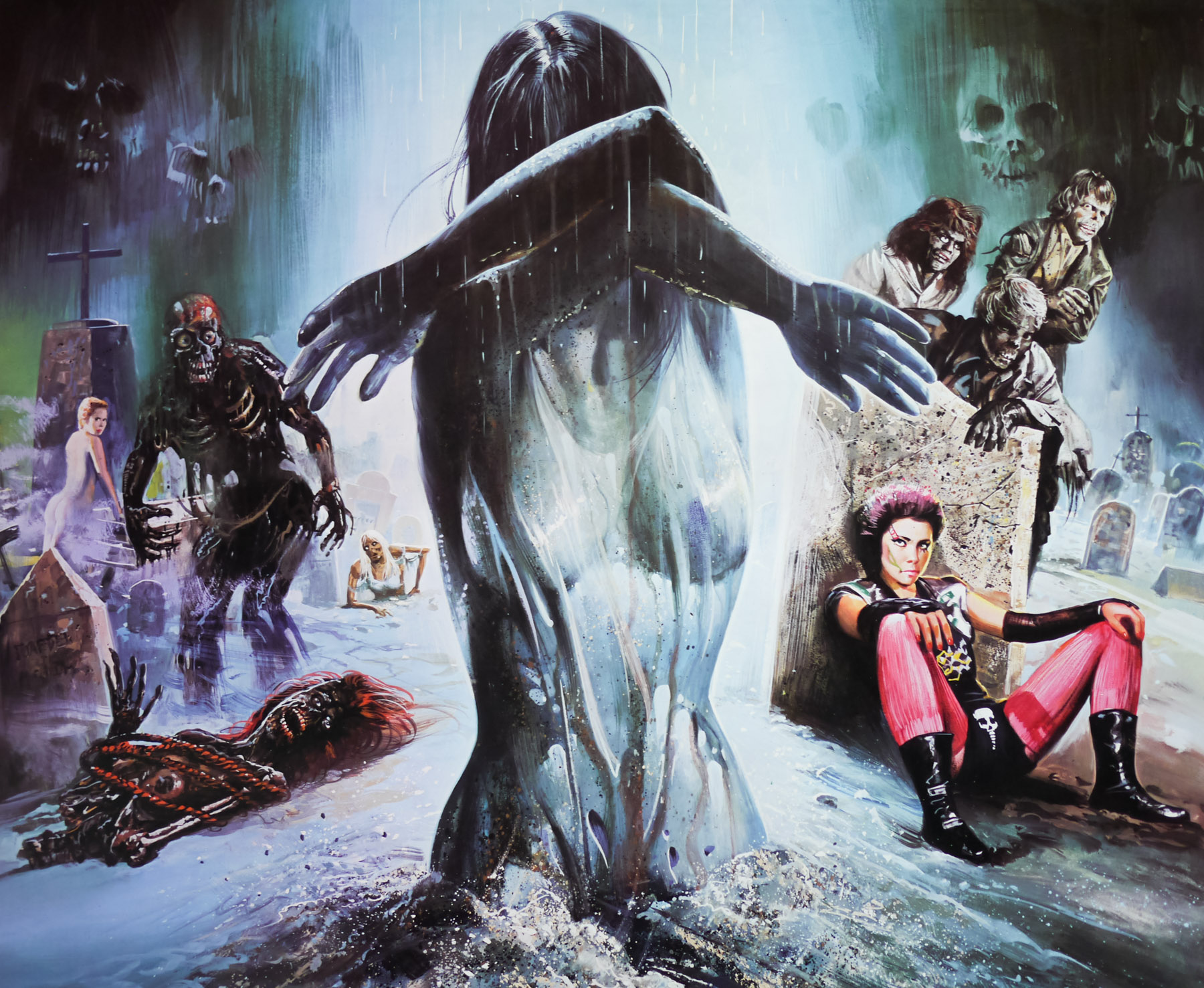
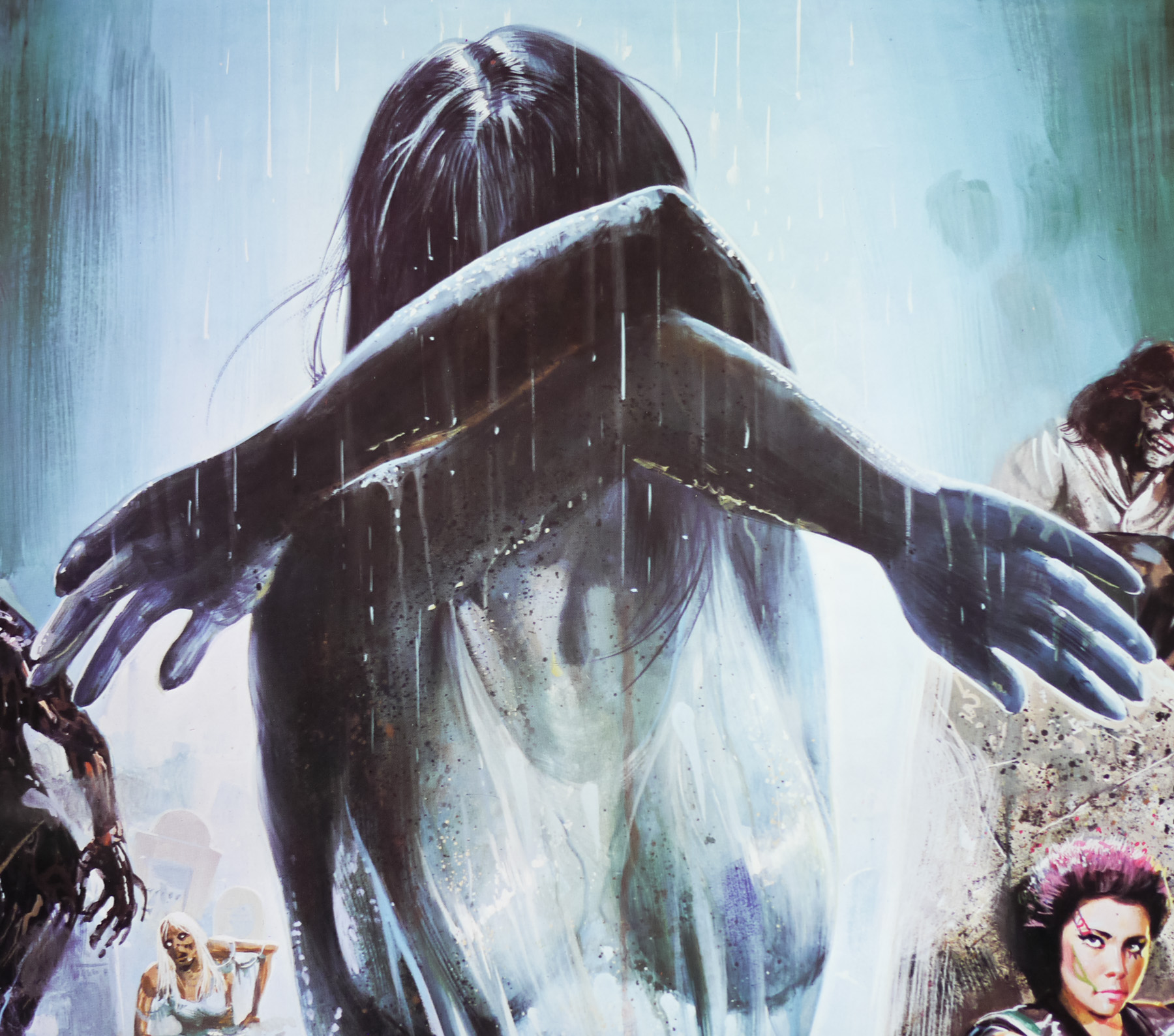
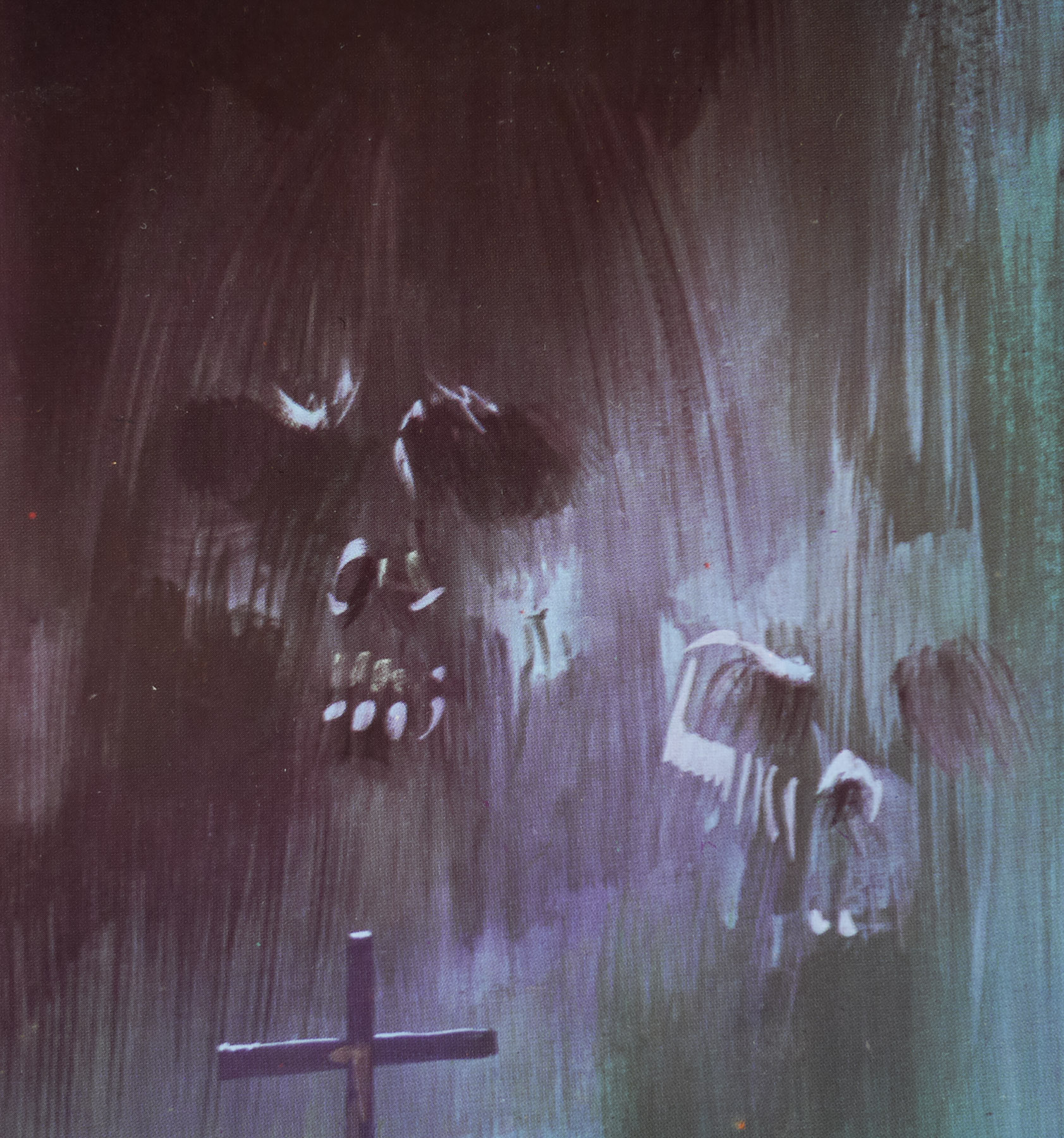
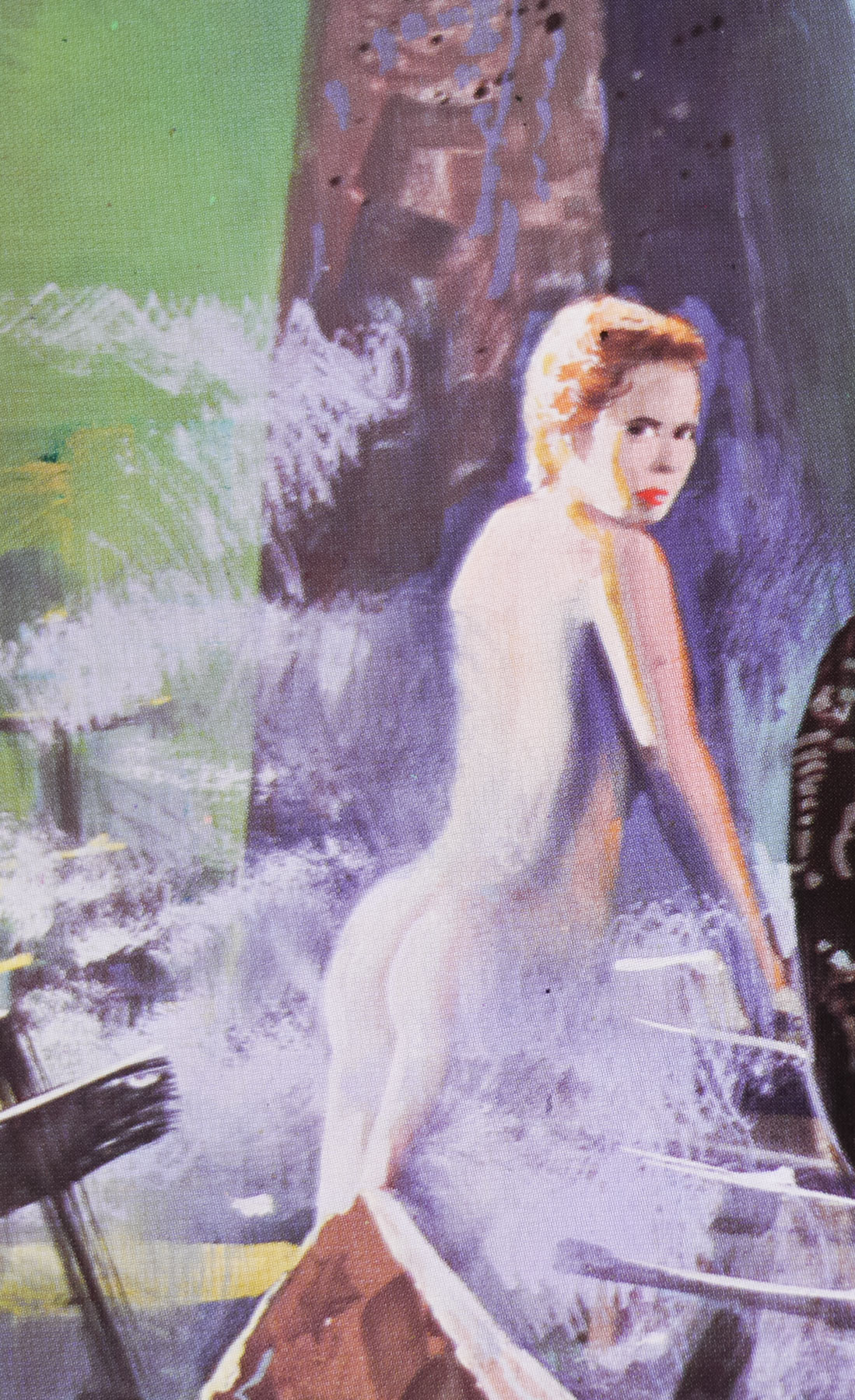
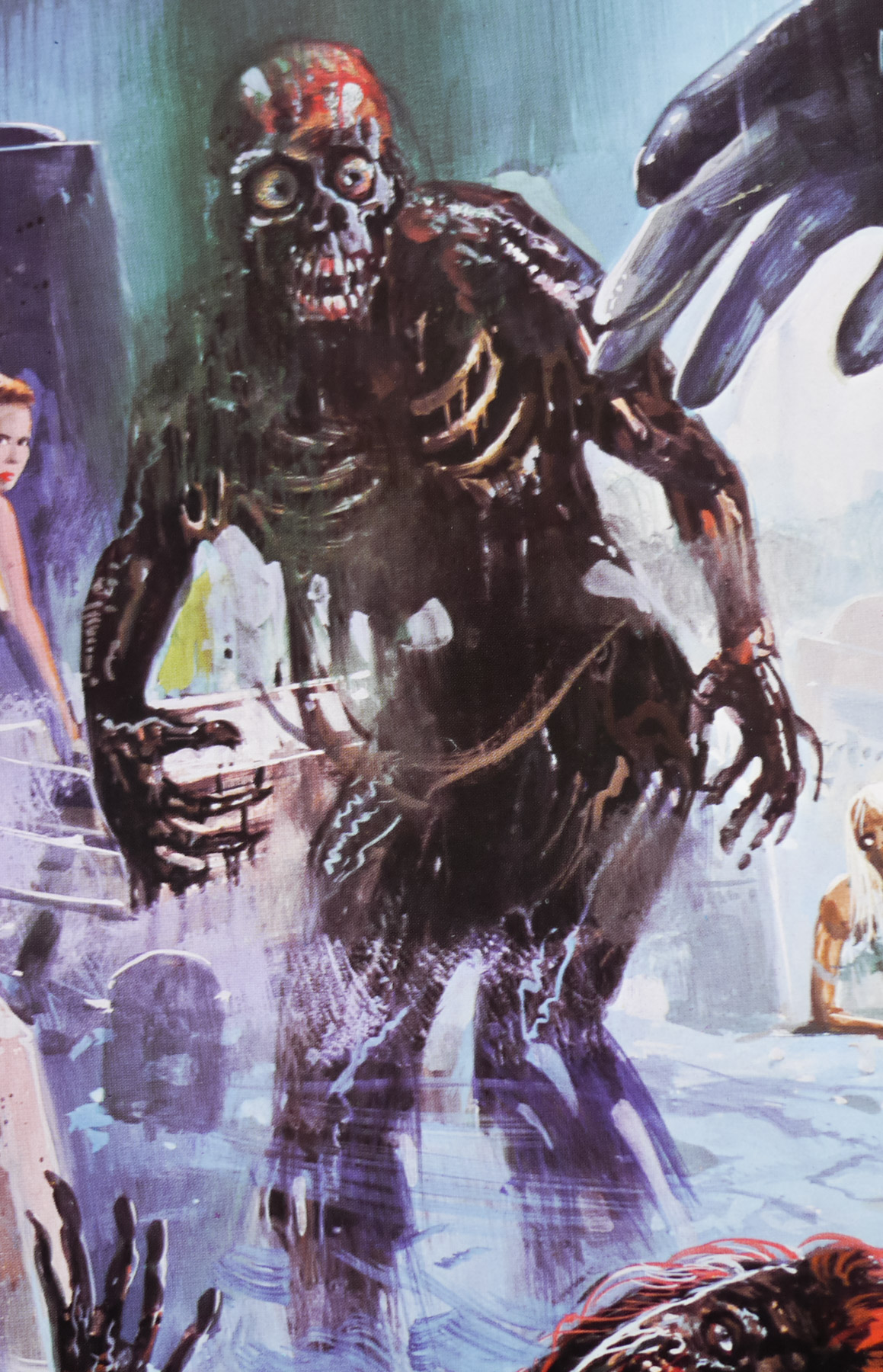
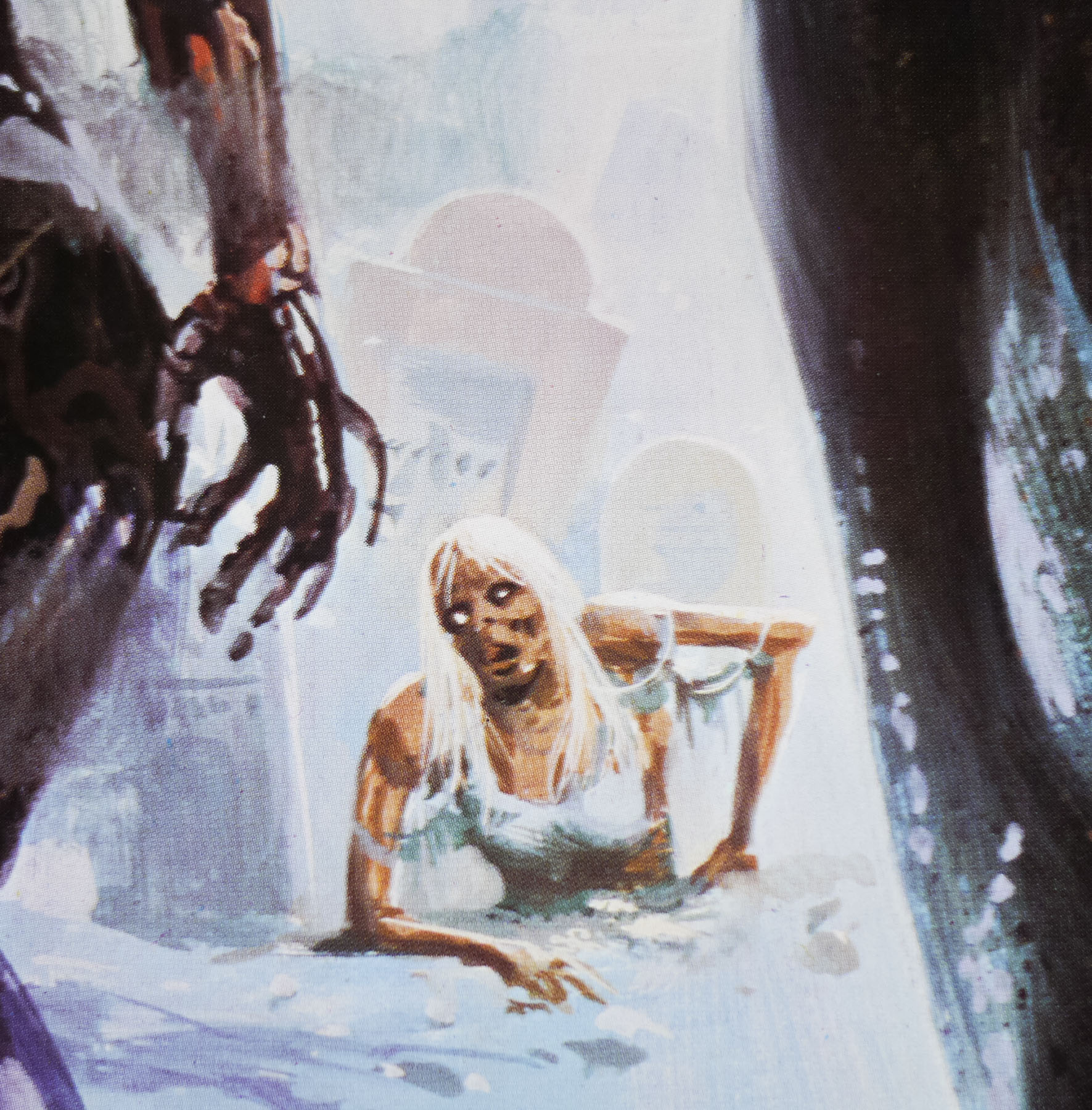
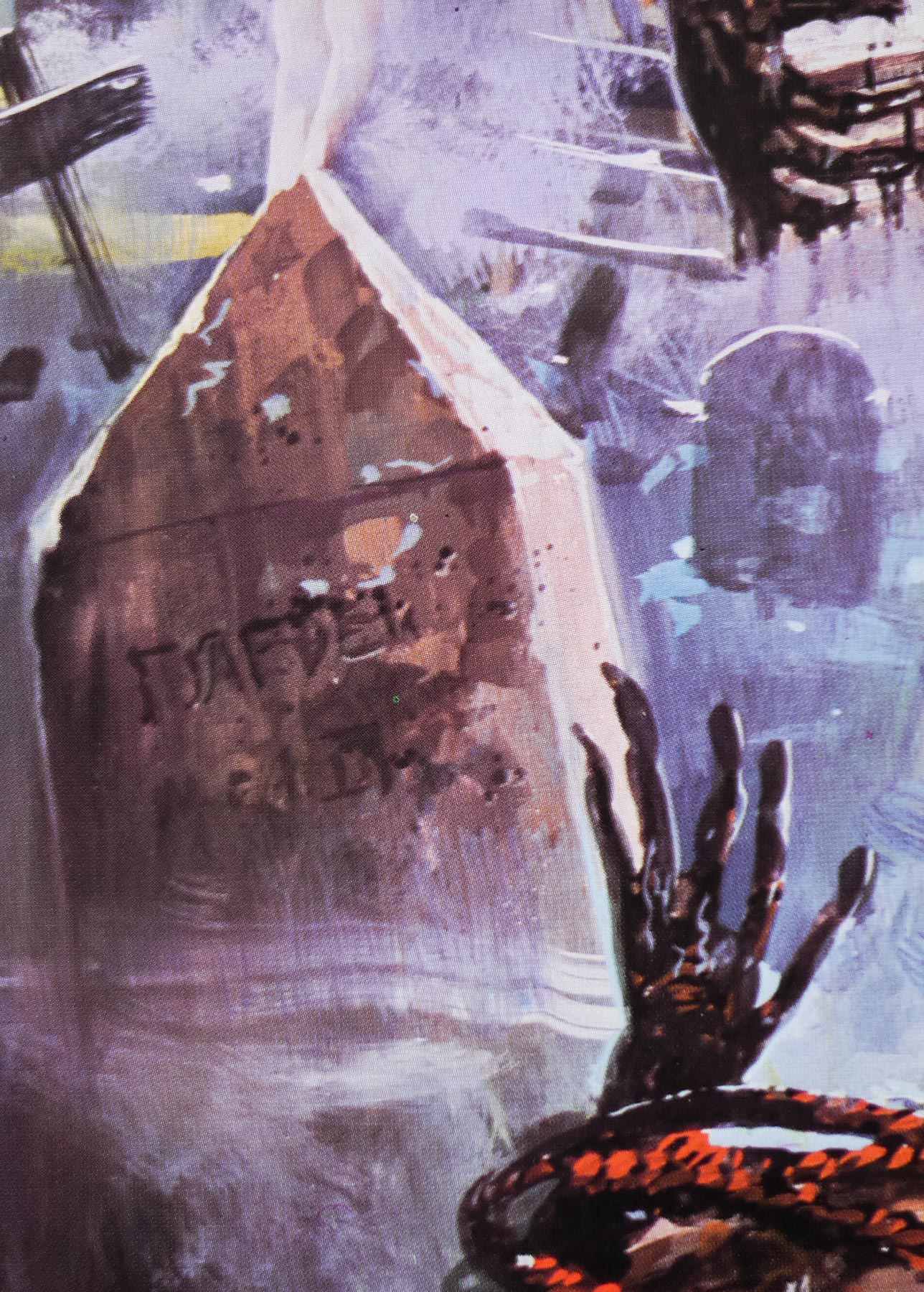
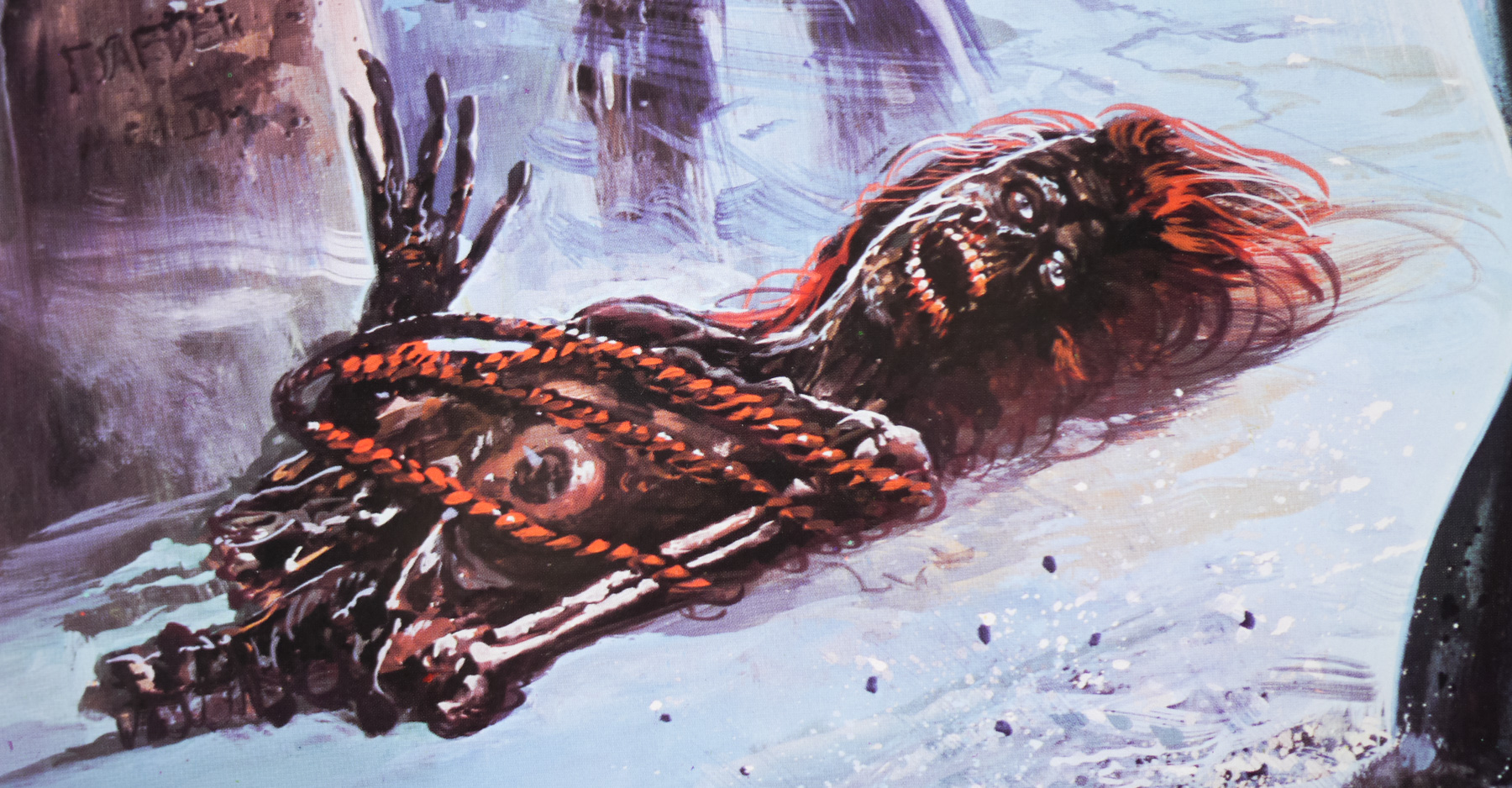
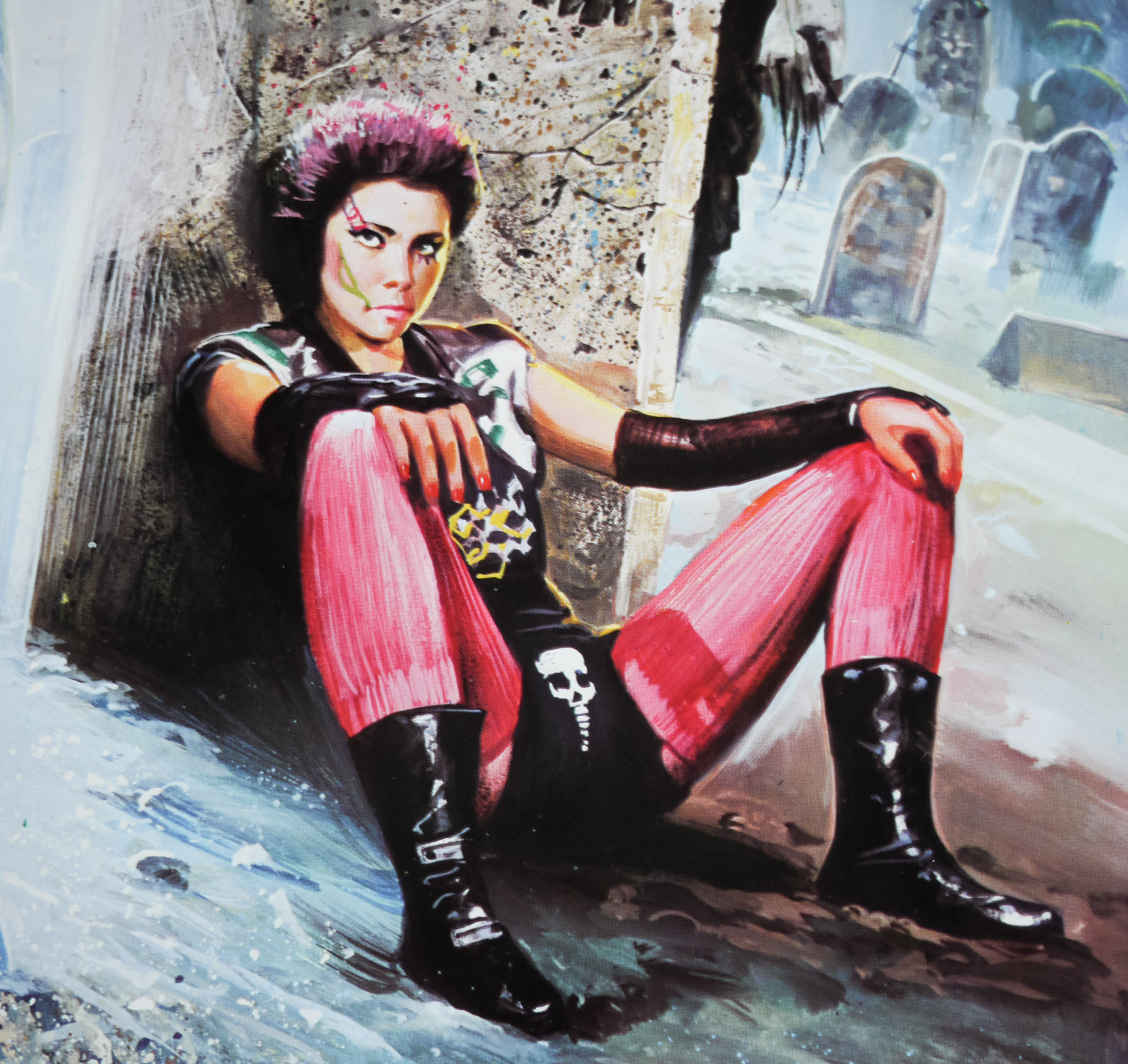
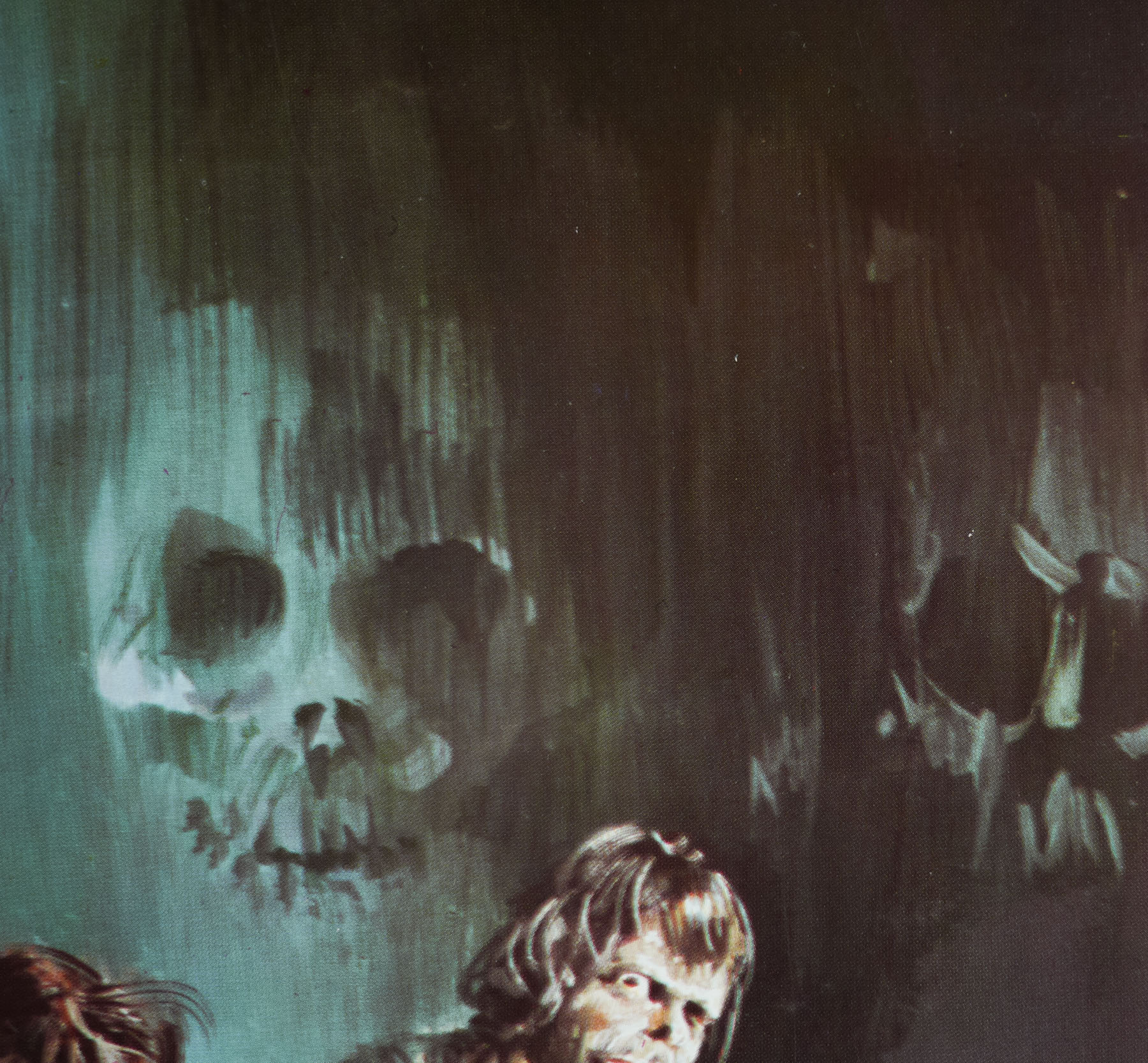
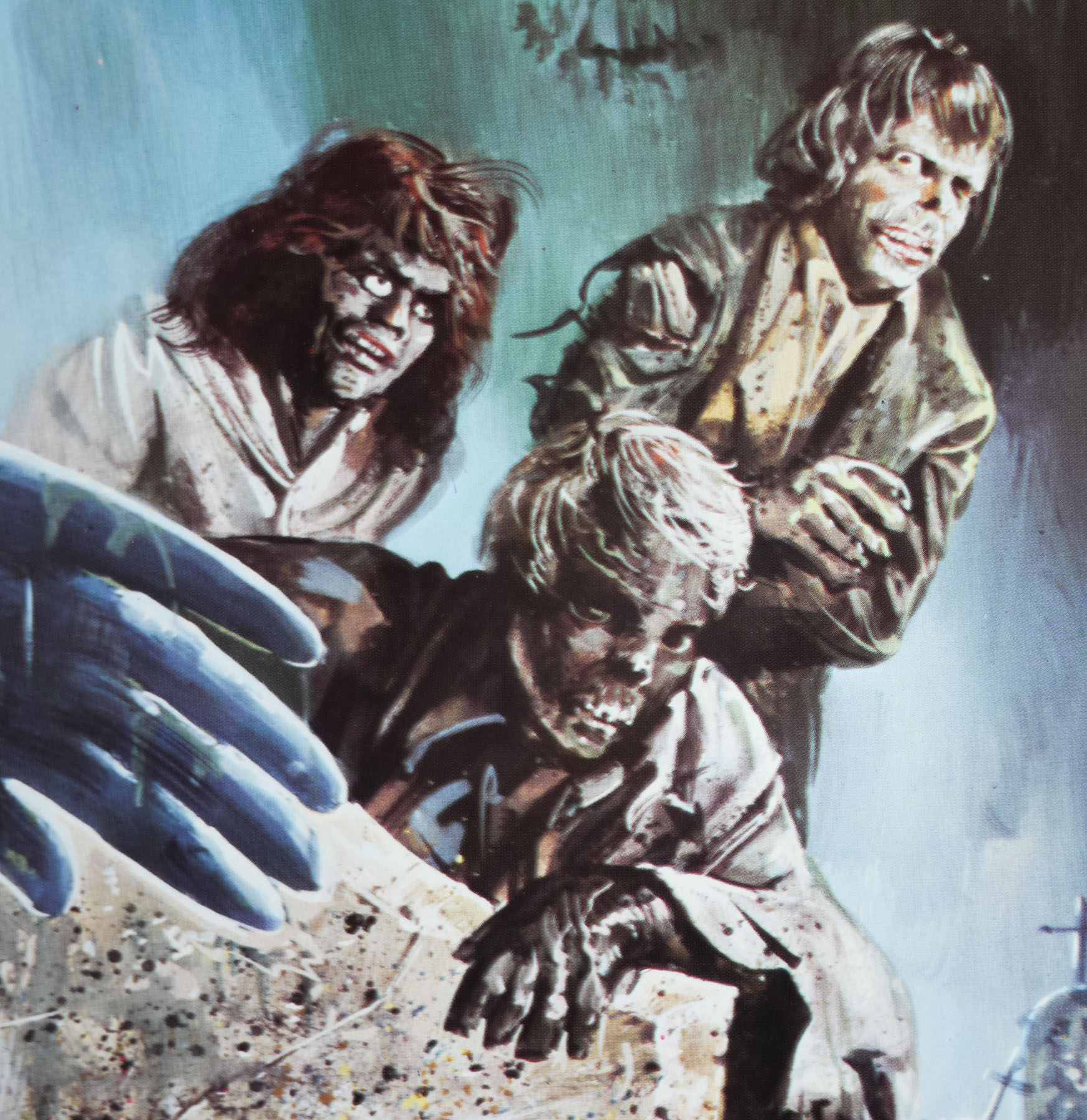
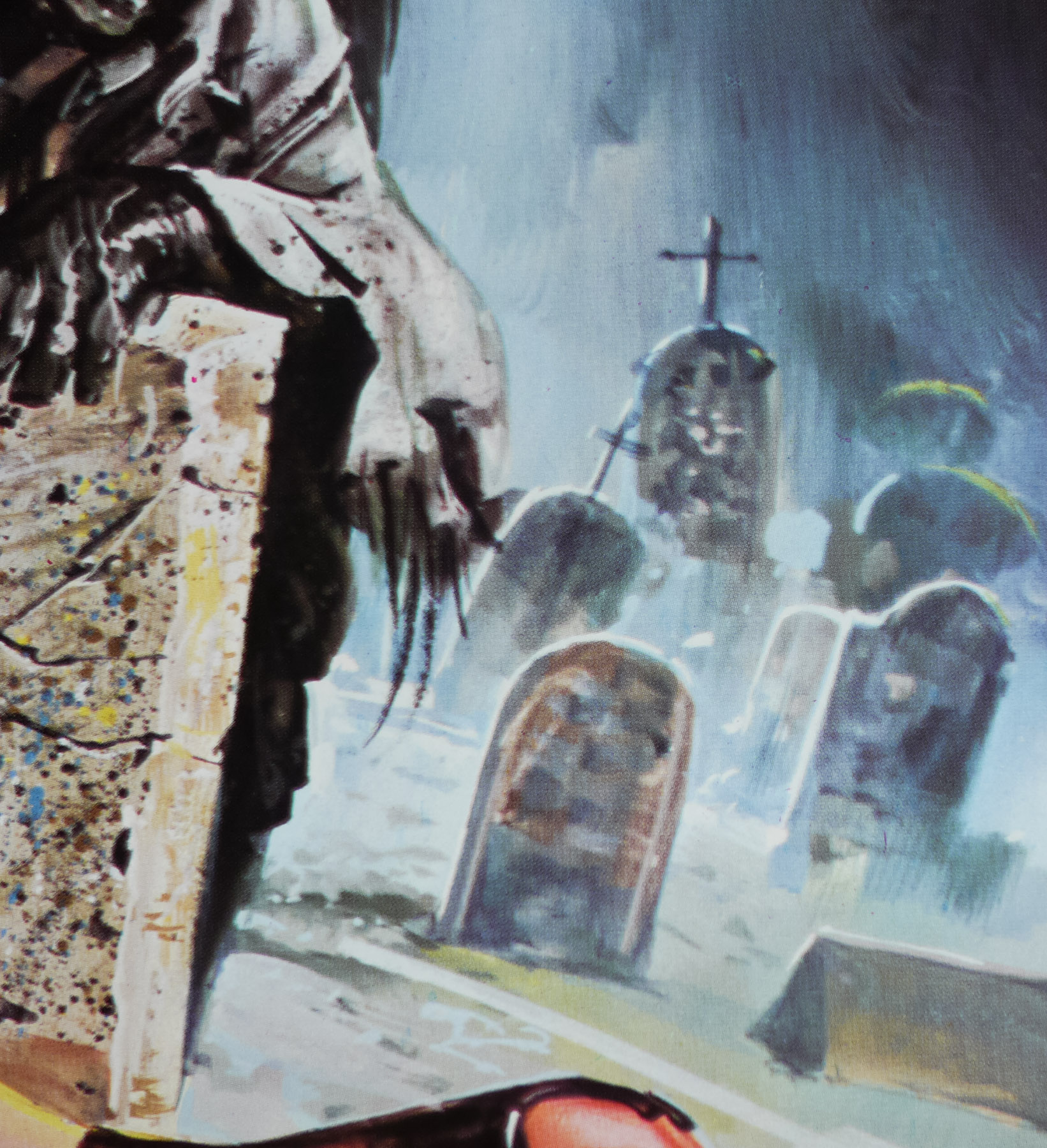
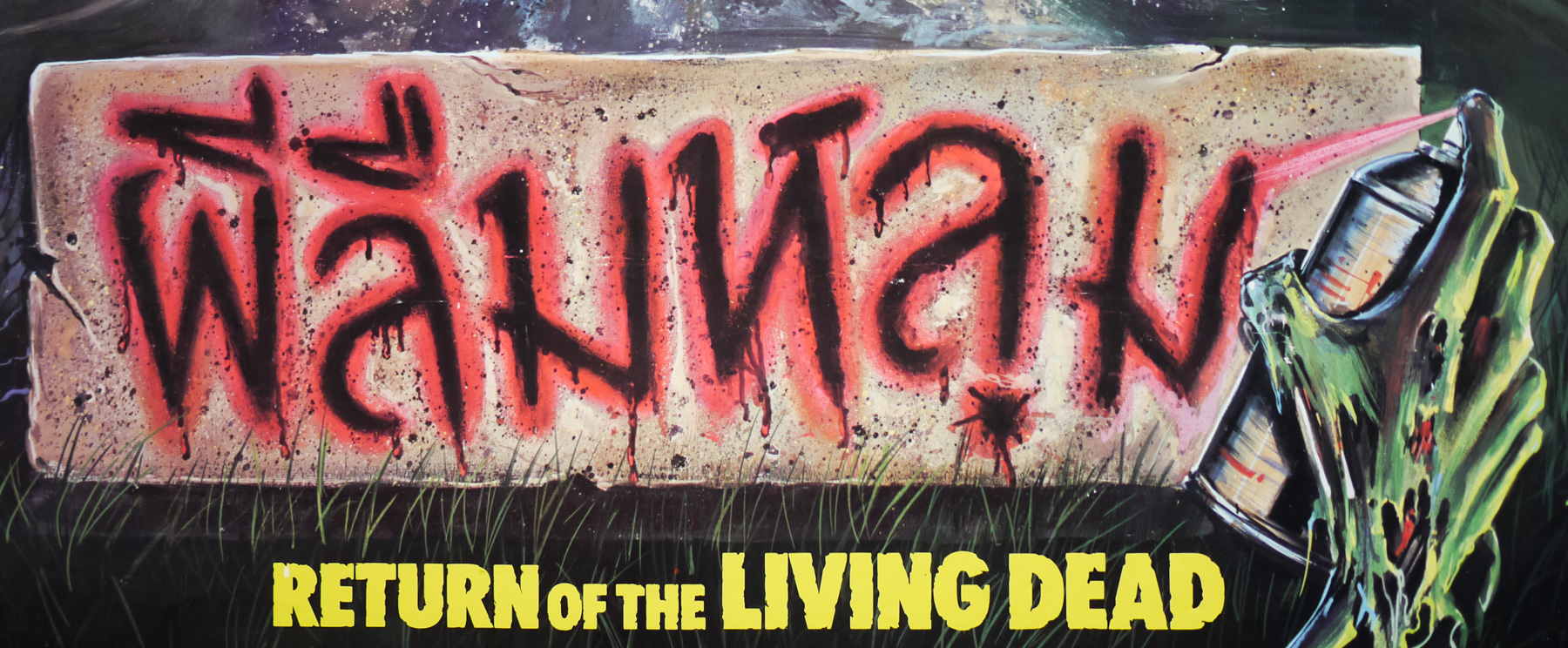
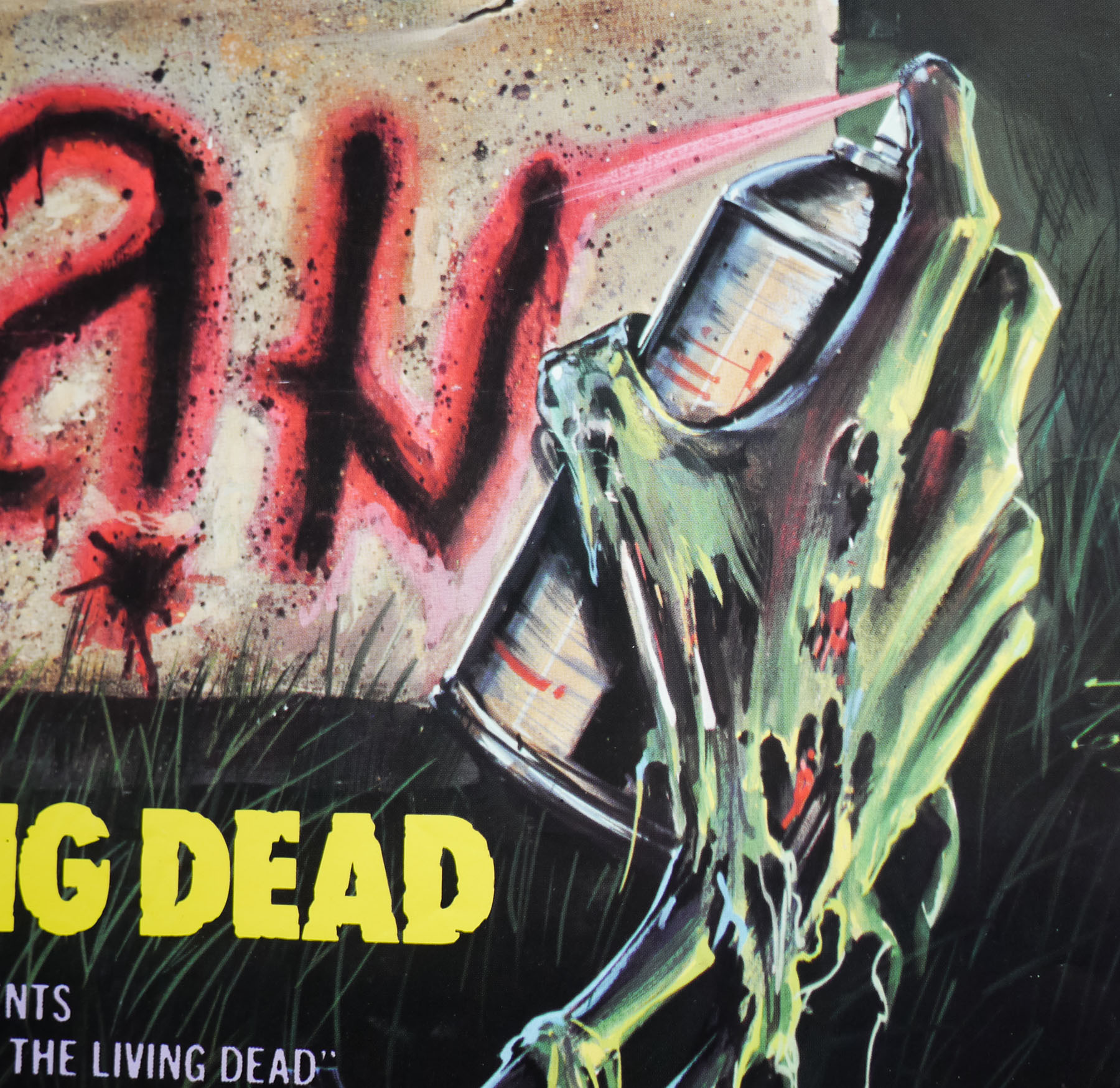
Unique artwork by artist Tongdee on this Thai poster for the release of the 80s zombie classic Return of the Living Dead, featuring a depiction of the memorable character played by Linnea Quigley (represented here in undead form). When I first saw the film I was a little mystified by her ‘Barbie doll’ look (smooth bump) when she’s naked in the graveyard and only later found out that one of the producers made her wear prosthetics to cover up her privates. I can only imagine that it confused a lot of impressionable teenagers who were watching this back in the 1980s.

I recently bought the blu-ray and have to say the film still holds up really well – the creature designs and music are particular standouts. I’m definitely going to pick up ‘The Complete History of the Return of the Living Dead’ book, which is meant to be excellent.

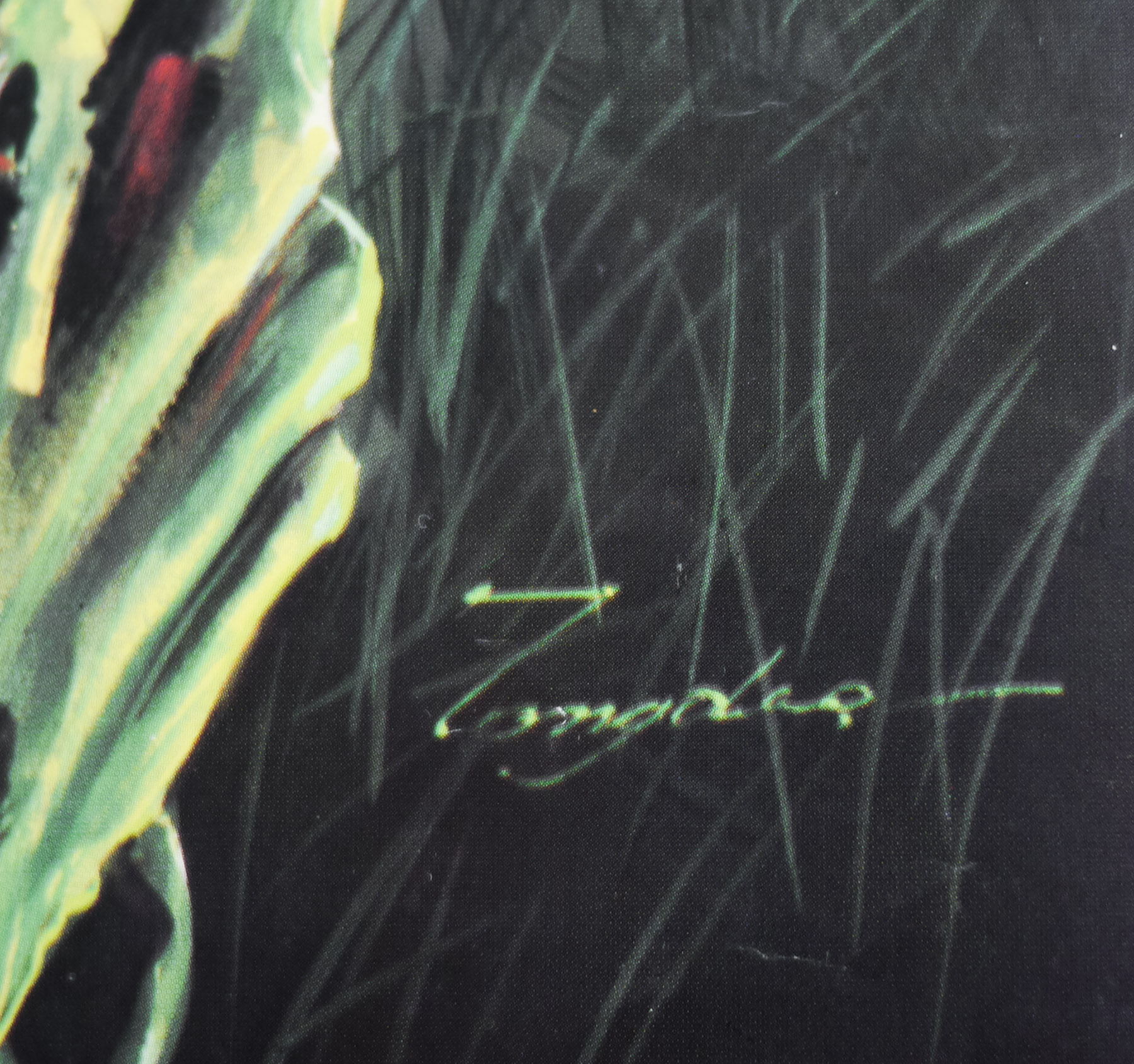
Tongdee Panumas (he signs his posters with just his first name) was an incredibly prolific Thai film poster artist during the 70s, 80s and 90s but I’ve been unable to find out much about him, other than that he was born in 1947. If anyone has any more information please get in touch. A knowledgeable collector of Thai posters told me that the artists would rarely if ever see the film they were creating the poster for and would instead paint images based on still photos or posters from other countries. This led to some wild designs and even some artwork with characters and elements that didn’t even appear in the actual film!

The US one sheet is markedly different and can be seen here.

The original trailer is on YouTube.

Tron / Thai

27.10.14

Poster Poster
Title
Tron
AKA
Tron: The Electronic Gladiator (Australia)
Year of Film
1982
Director
Steven Lisberger
Starring
Jeff Bridges, Bruce Boxleitner, David Warner, Cindy Morgan, Barnard Hughes, Dan Shor, Peter Jurasik
Origin of Film
USA | Taiwan
Genre(s) of Film
Jeff Bridges, Bruce Boxleitner, David Warner, Cindy Morgan, Barnard Hughes, Dan Shor, Peter Jurasik,
Type of Poster
Thai
Style of Poster
--
Origin of Poster
Thailand
Year of Poster
1982
Designer
Tongdee Panumas
Artist
Tongdee Panumas
Size (inches)
21 7/16" x 30 13/16"
SS or DS
SS
Tagline
--

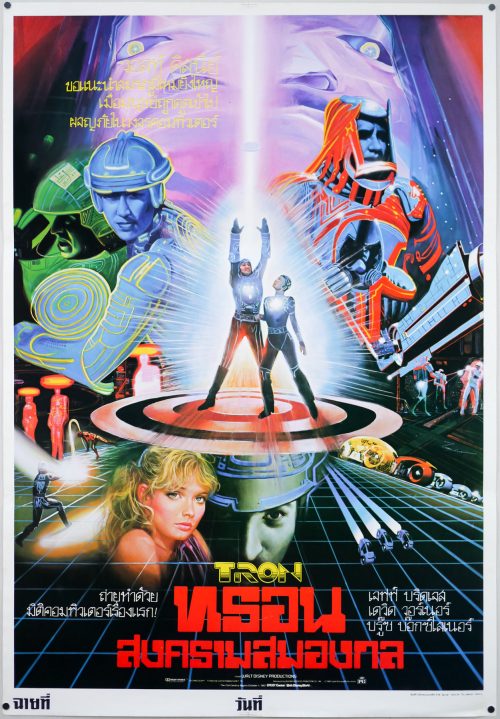
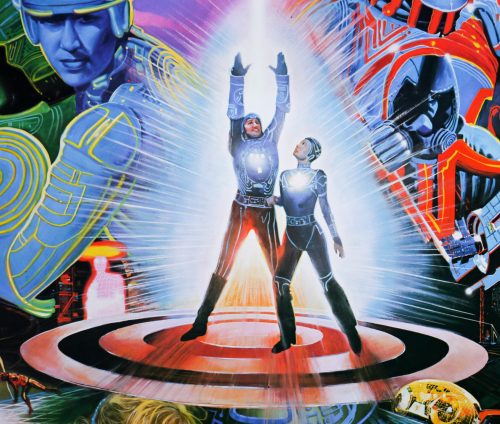
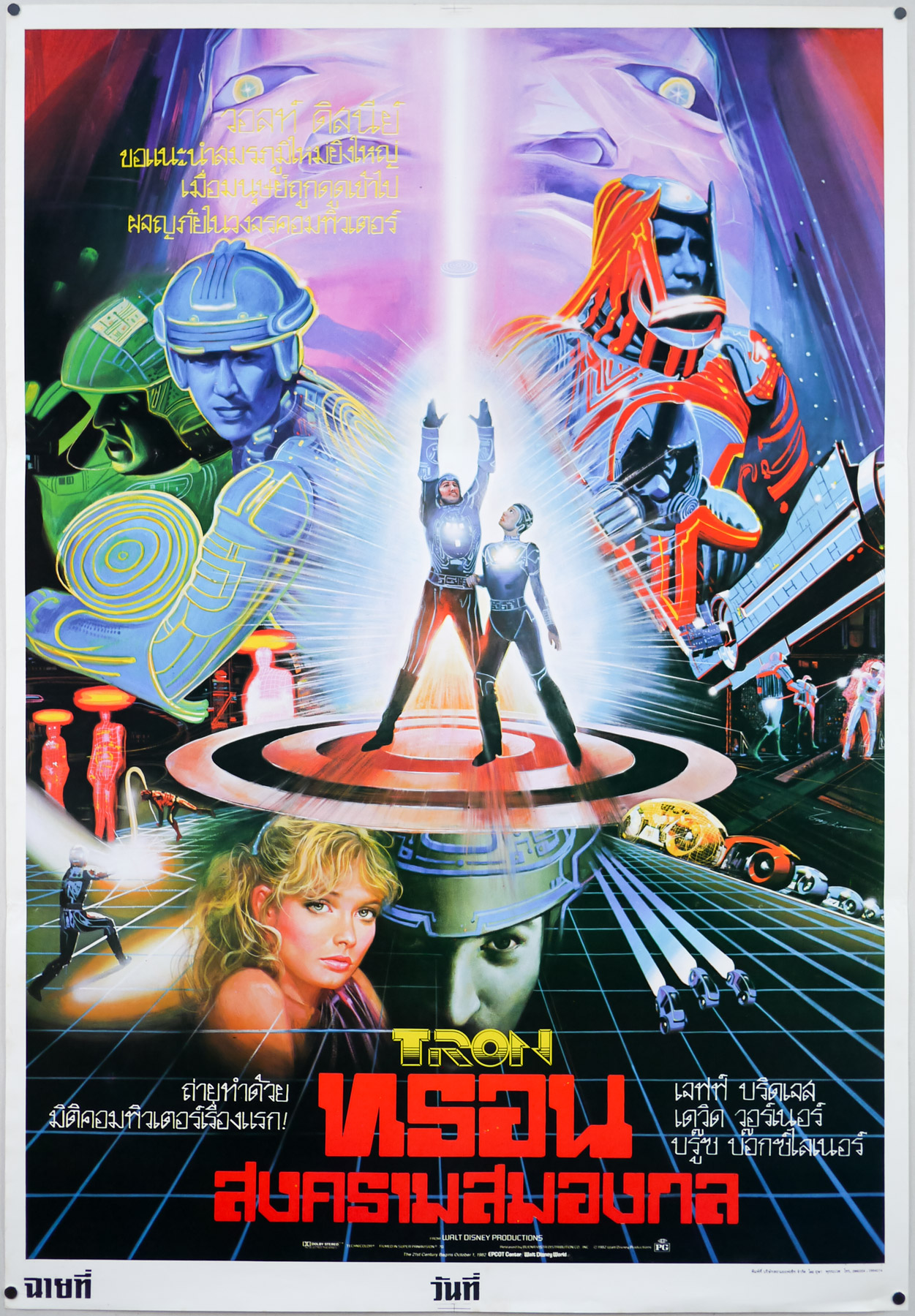
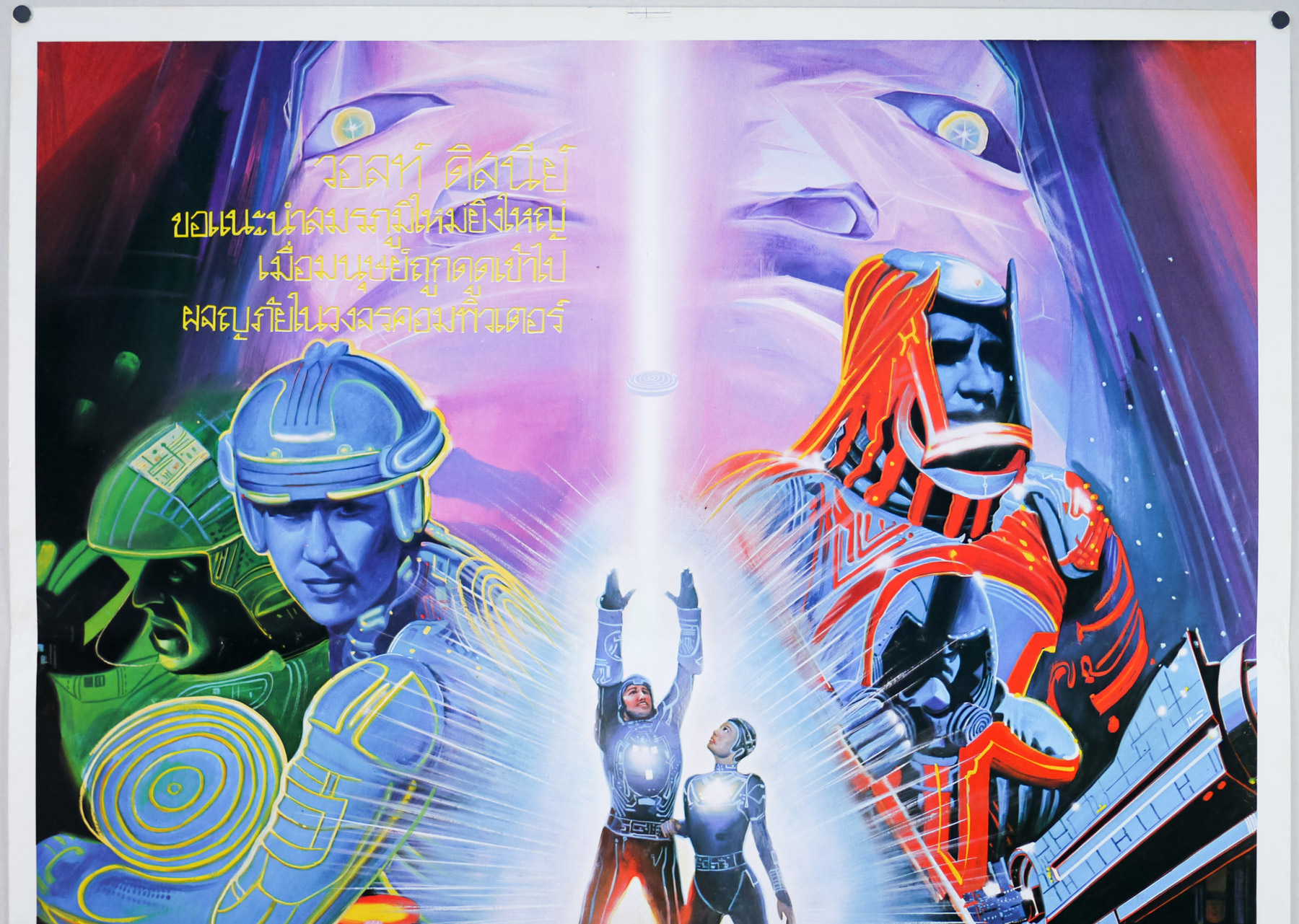
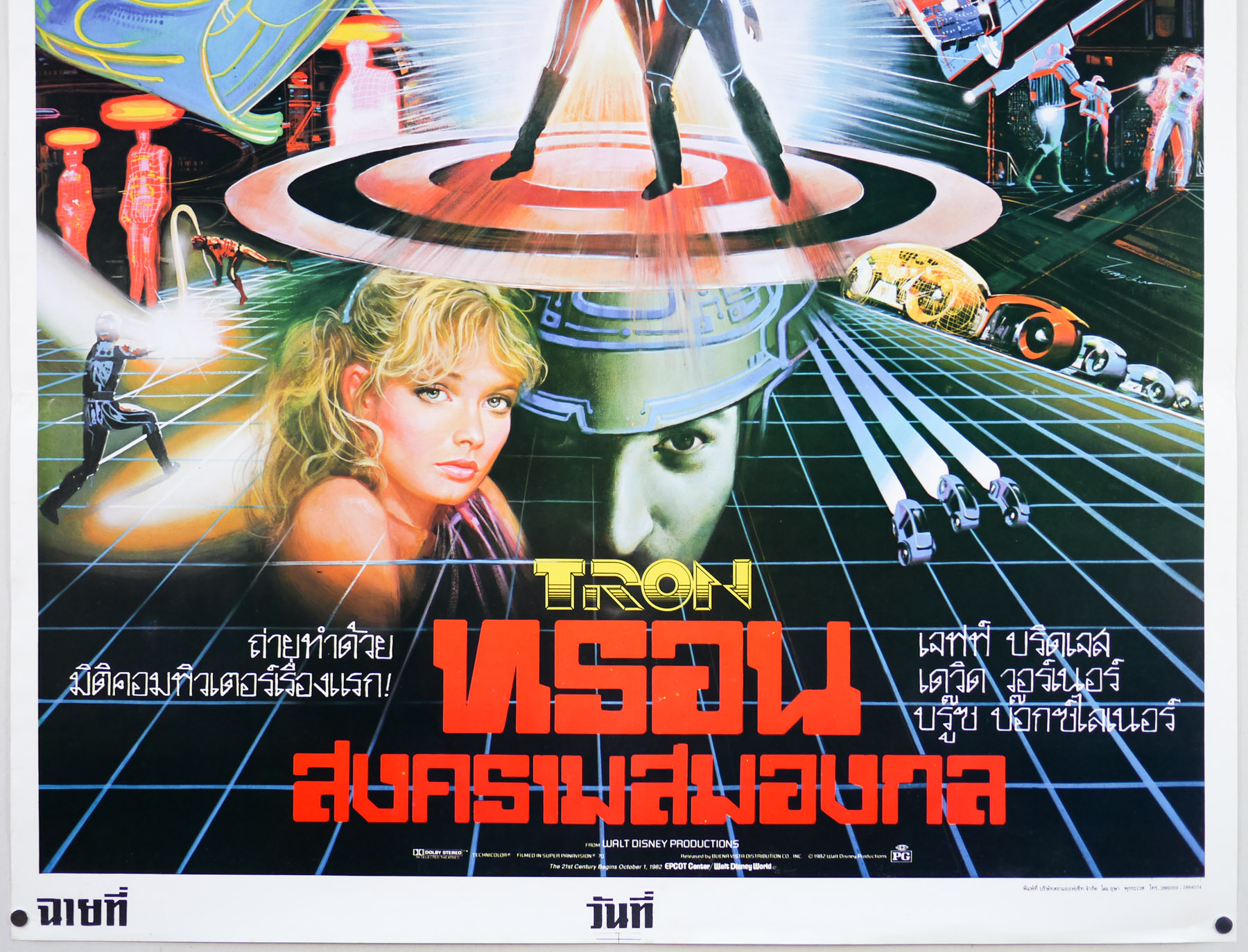
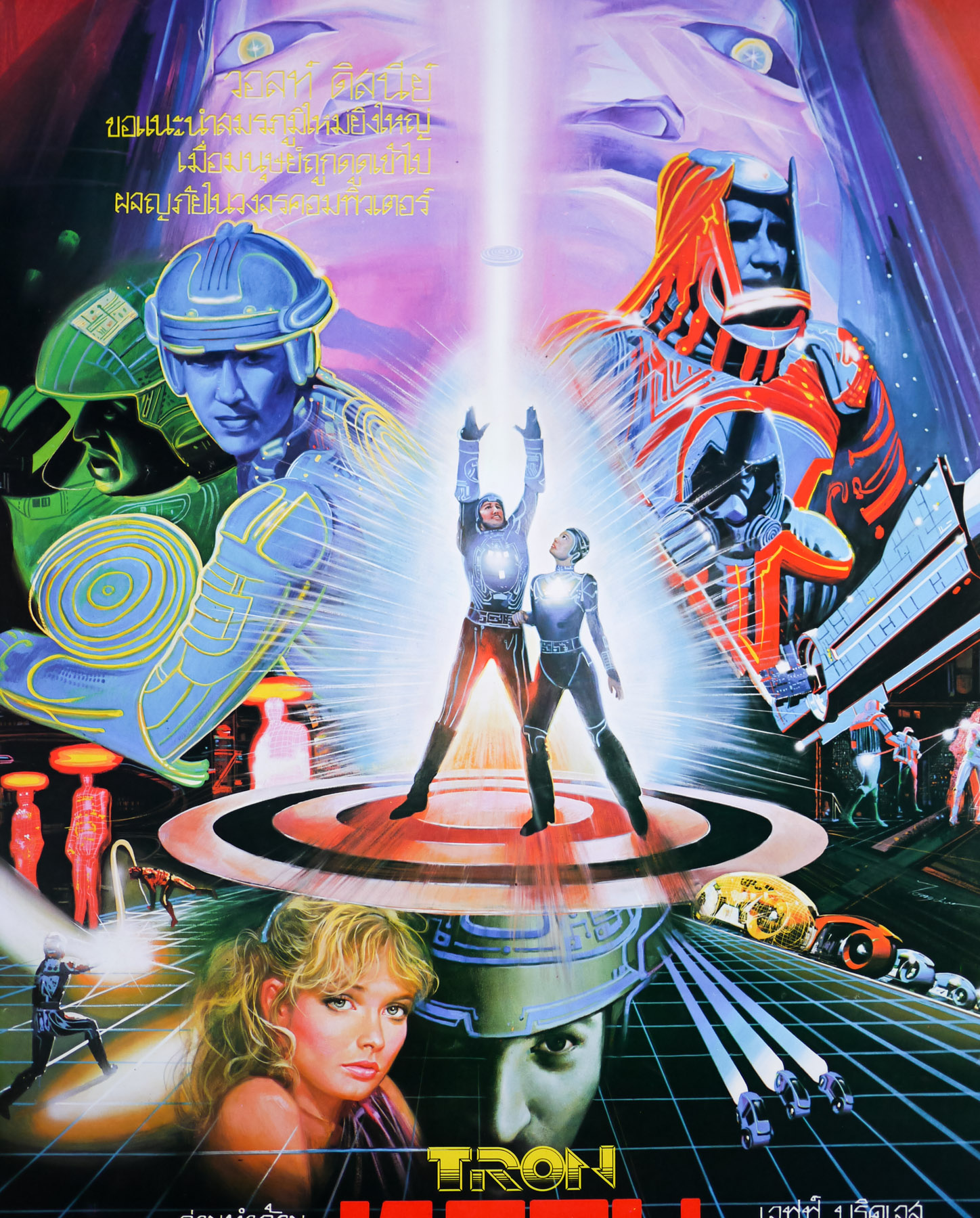
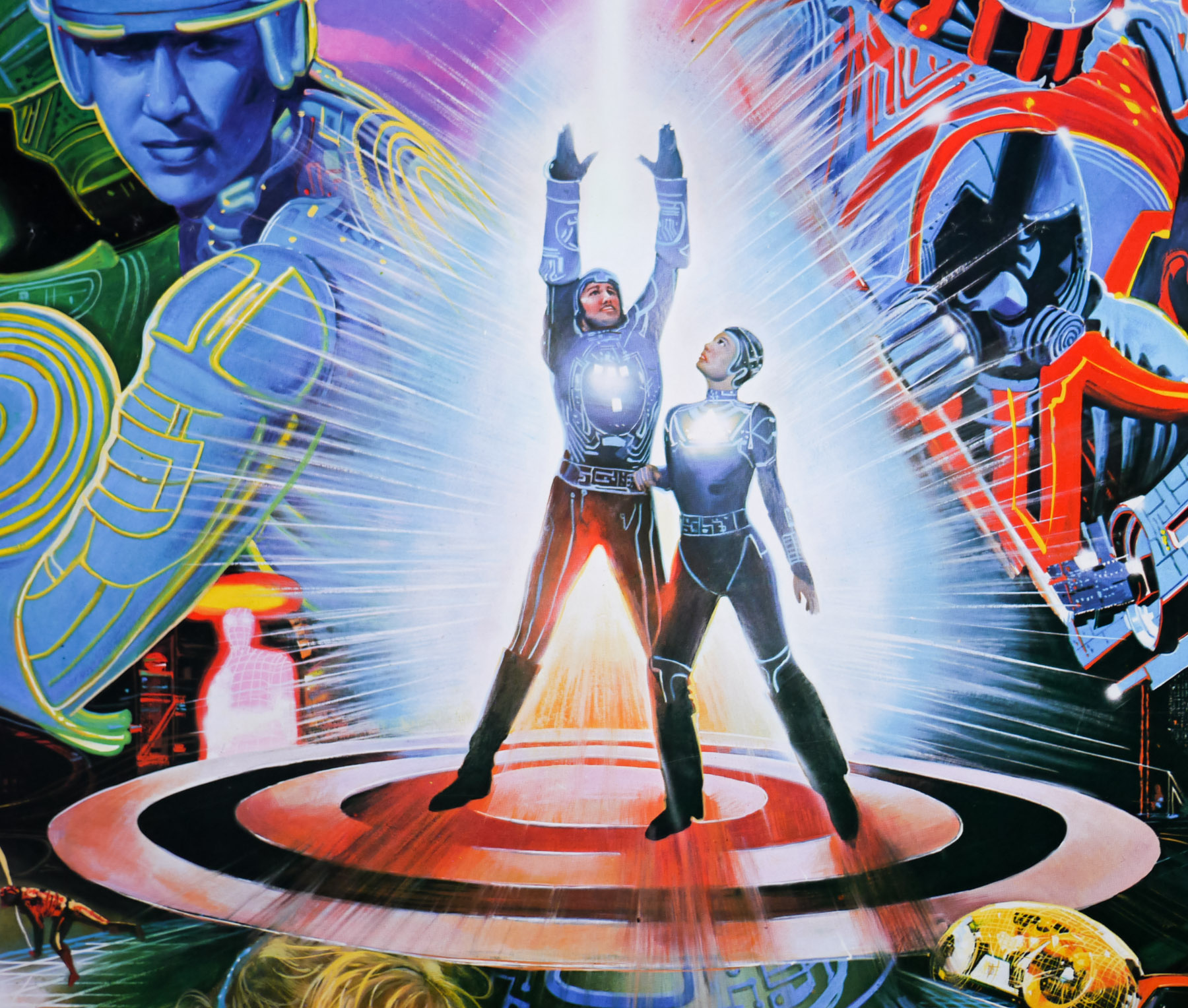
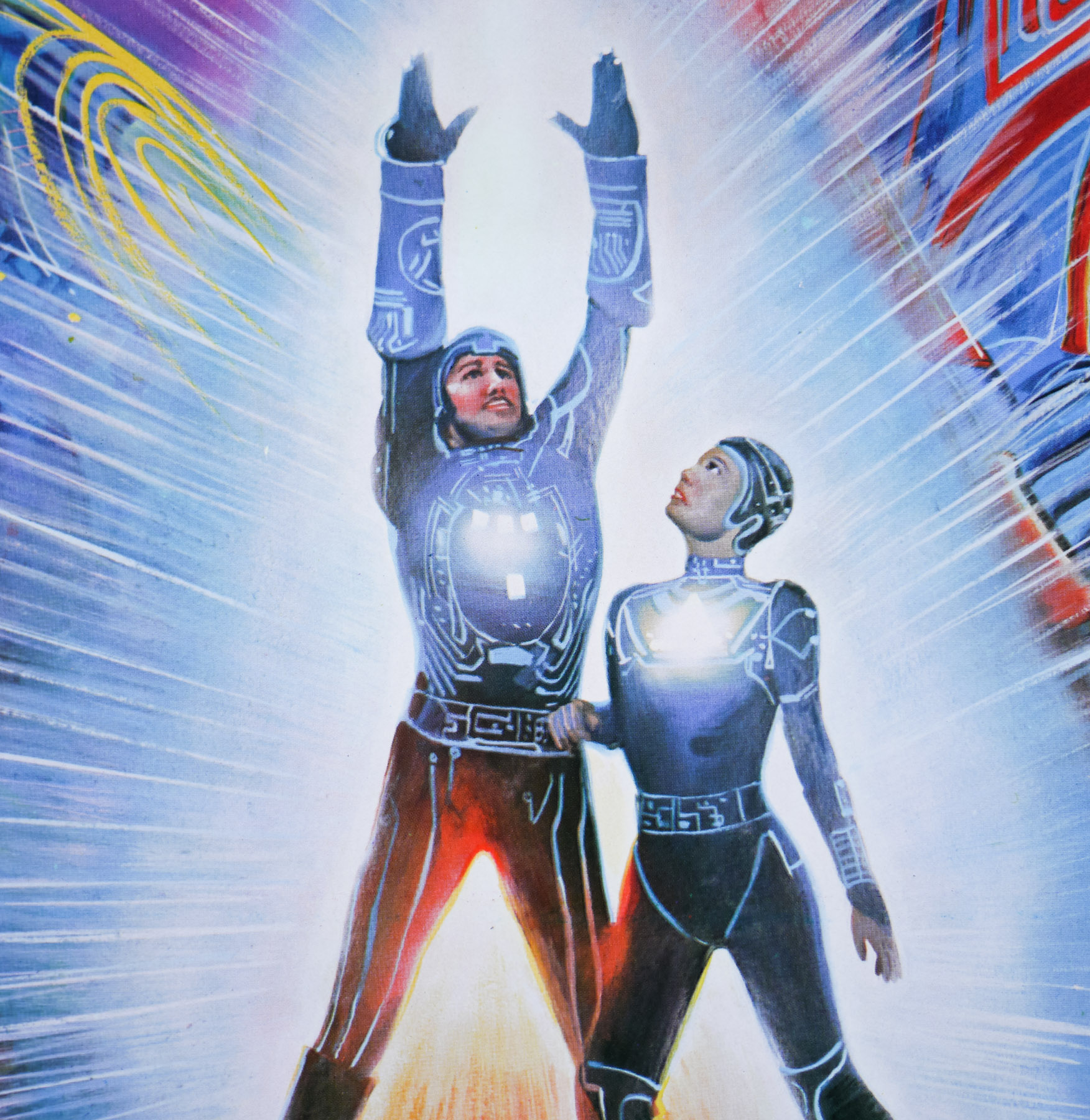
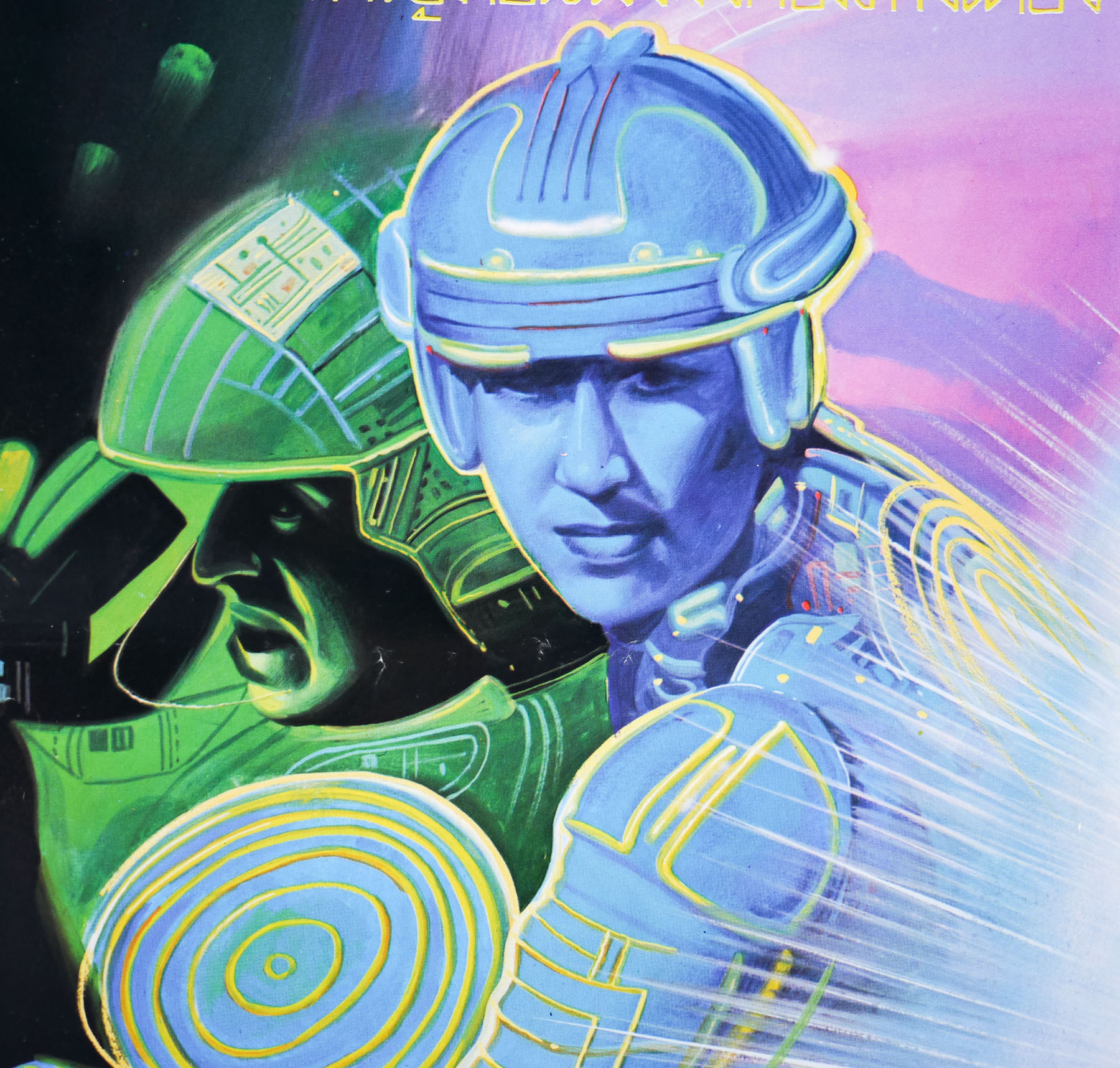
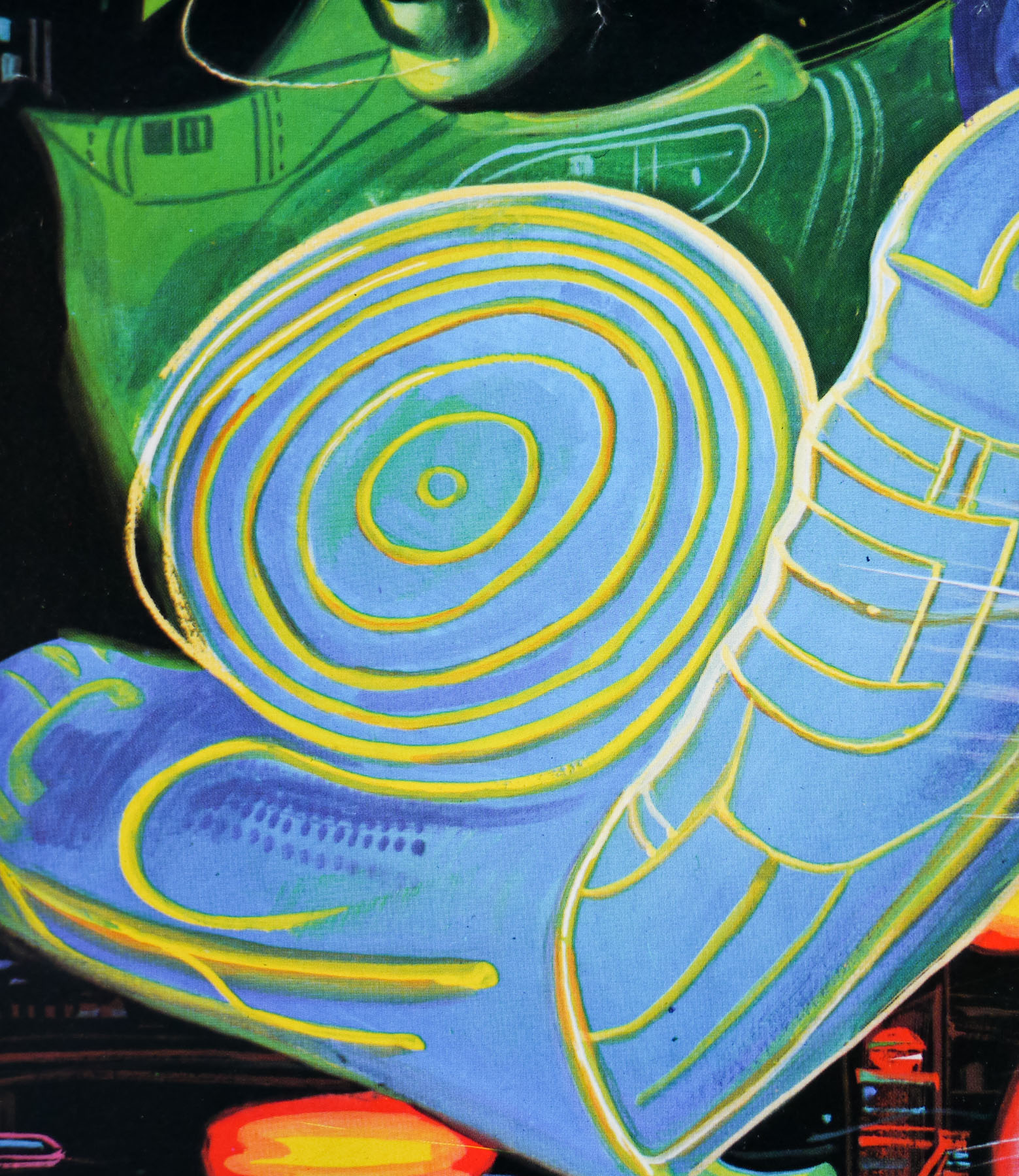
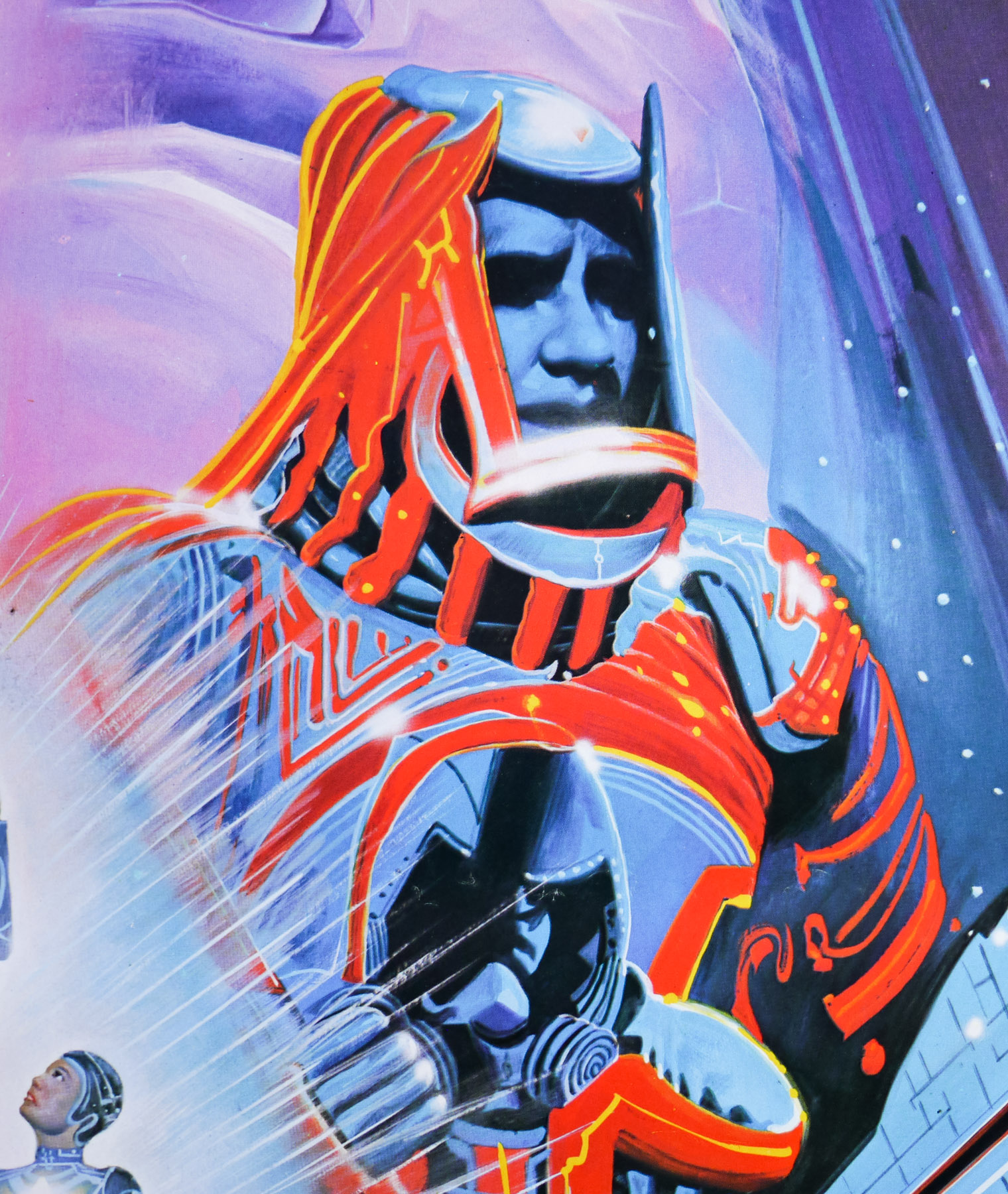
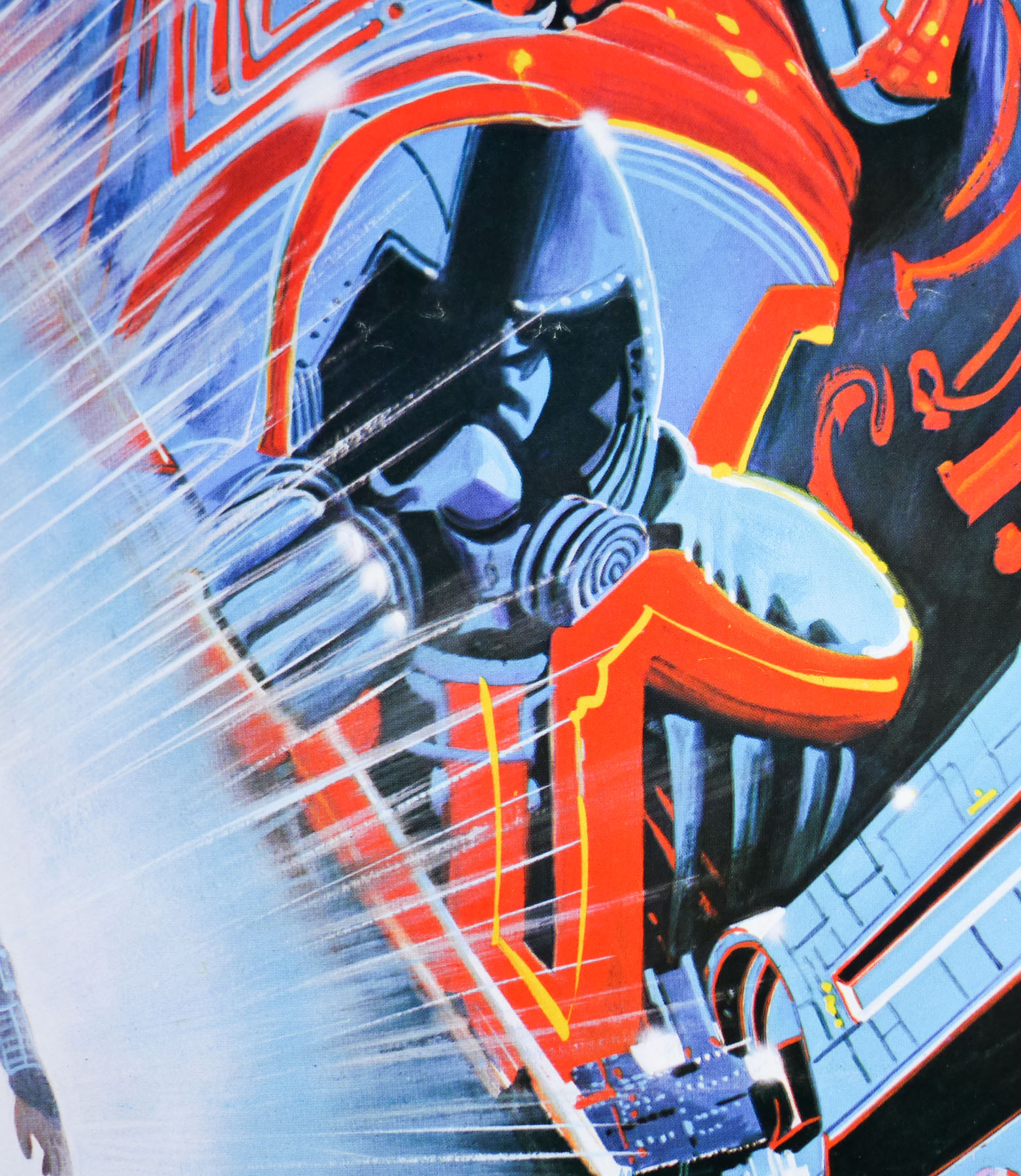
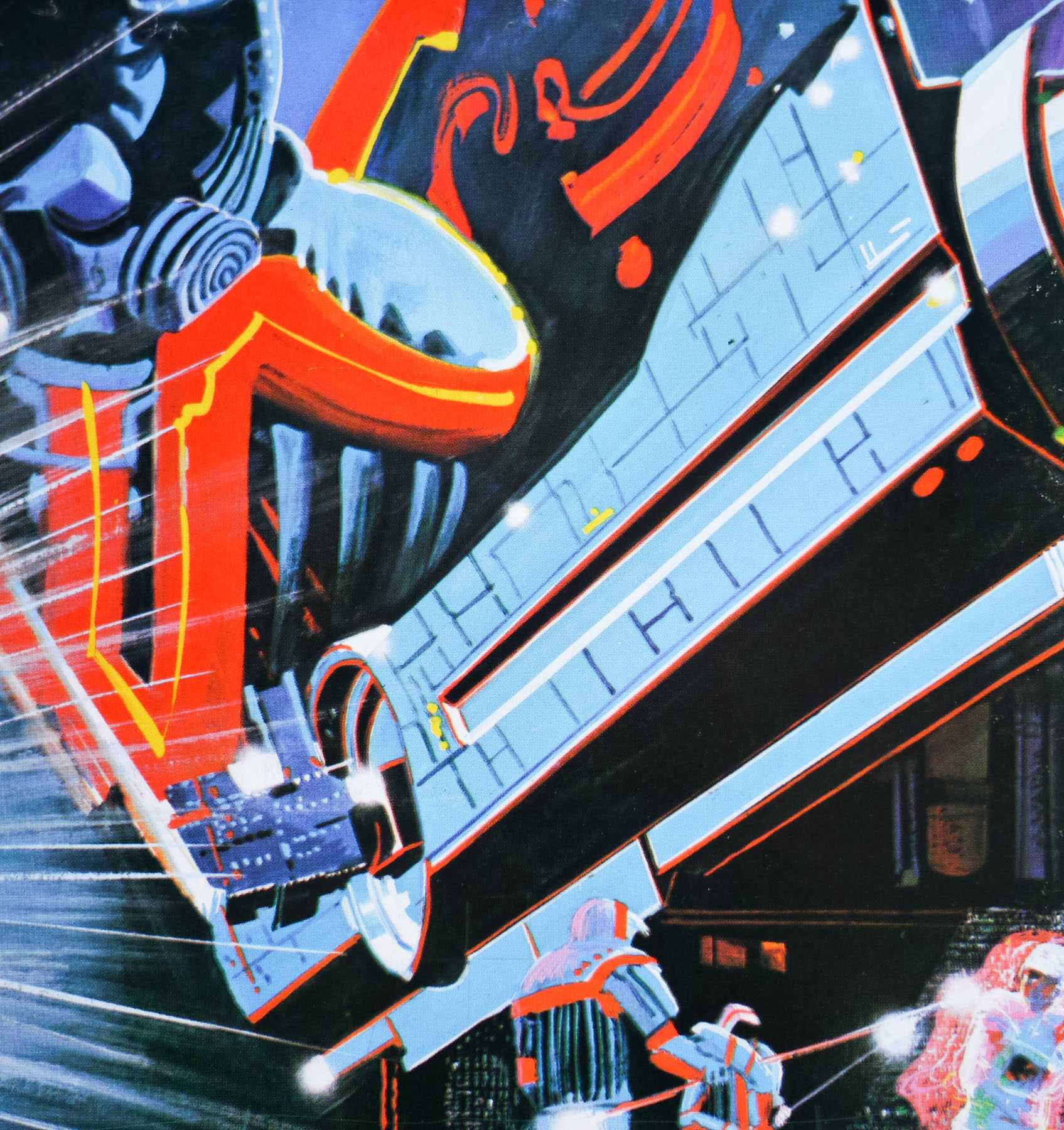
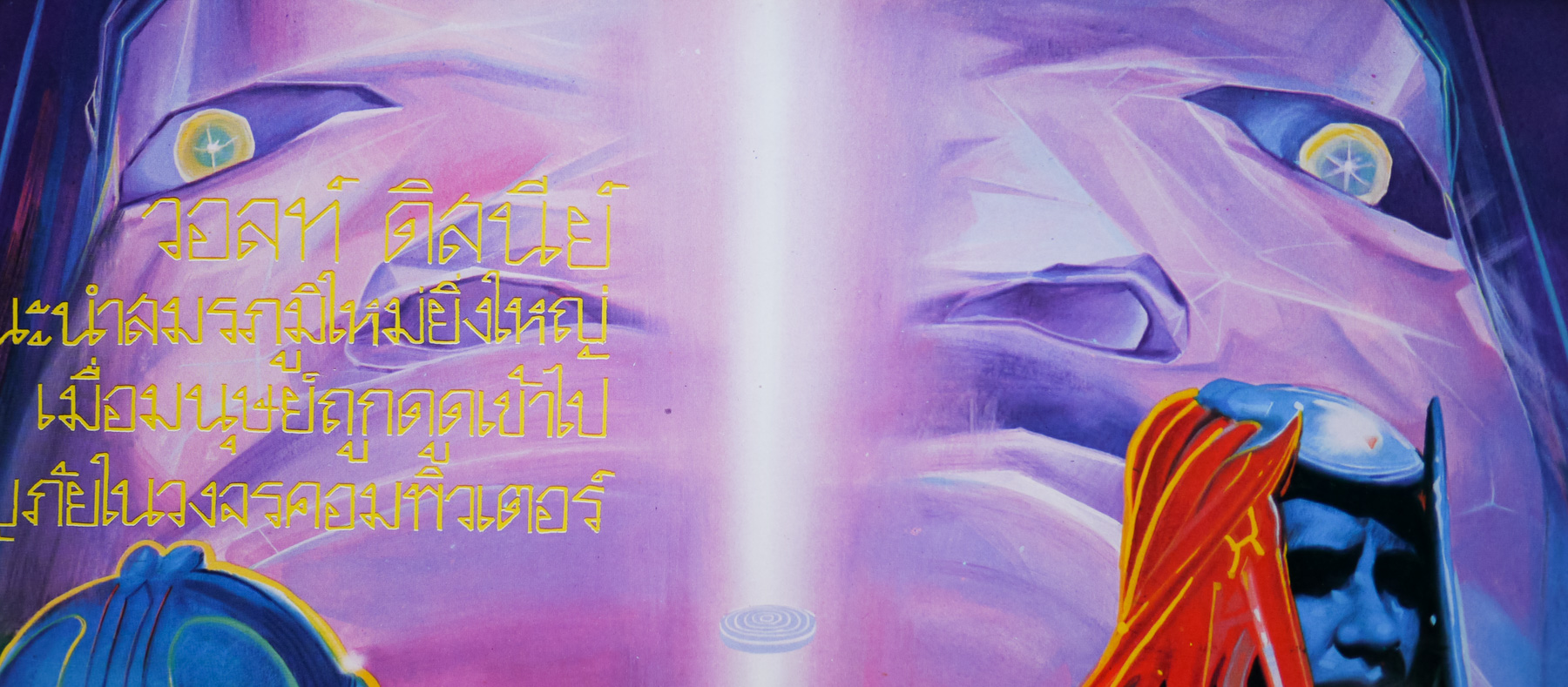
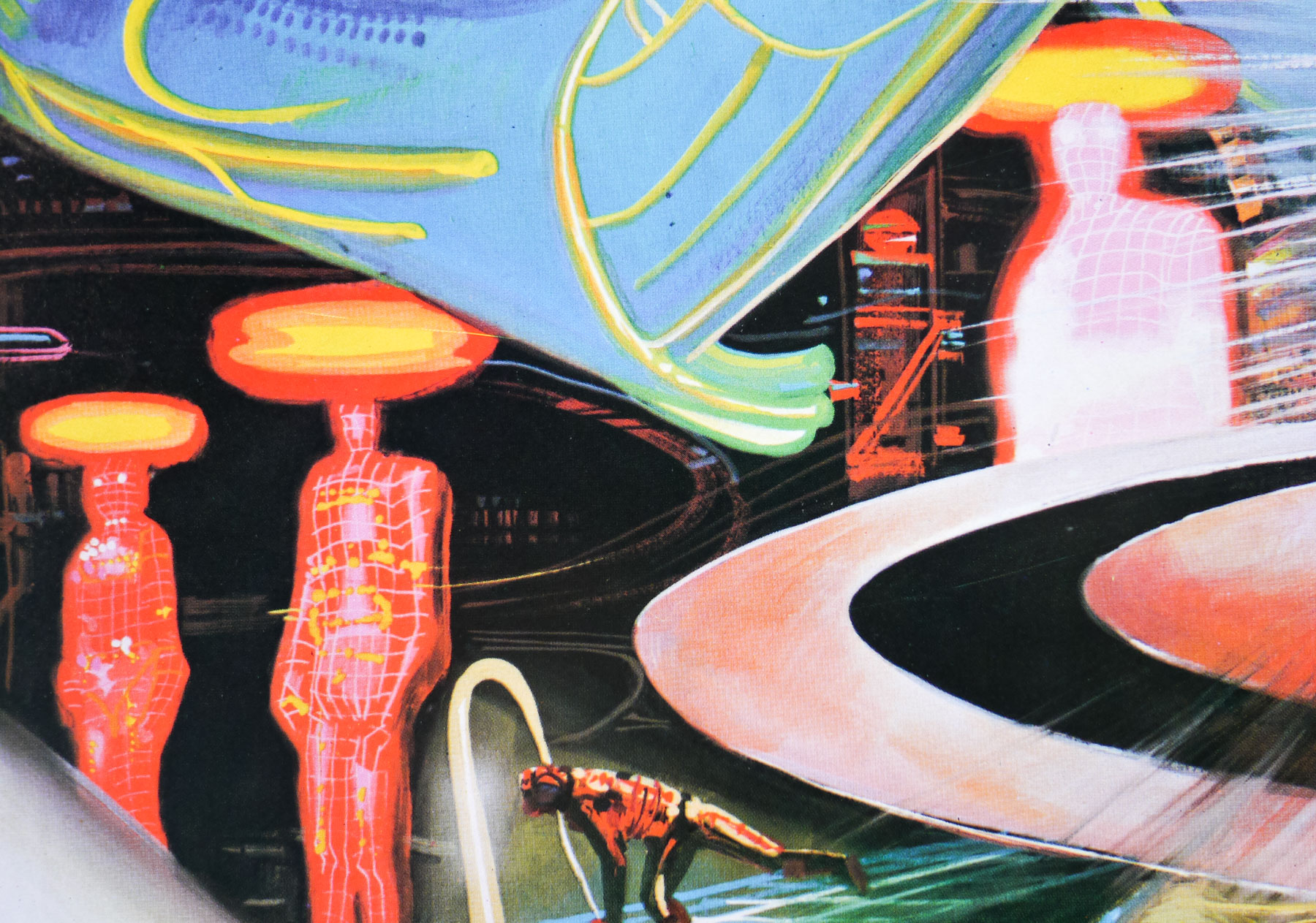
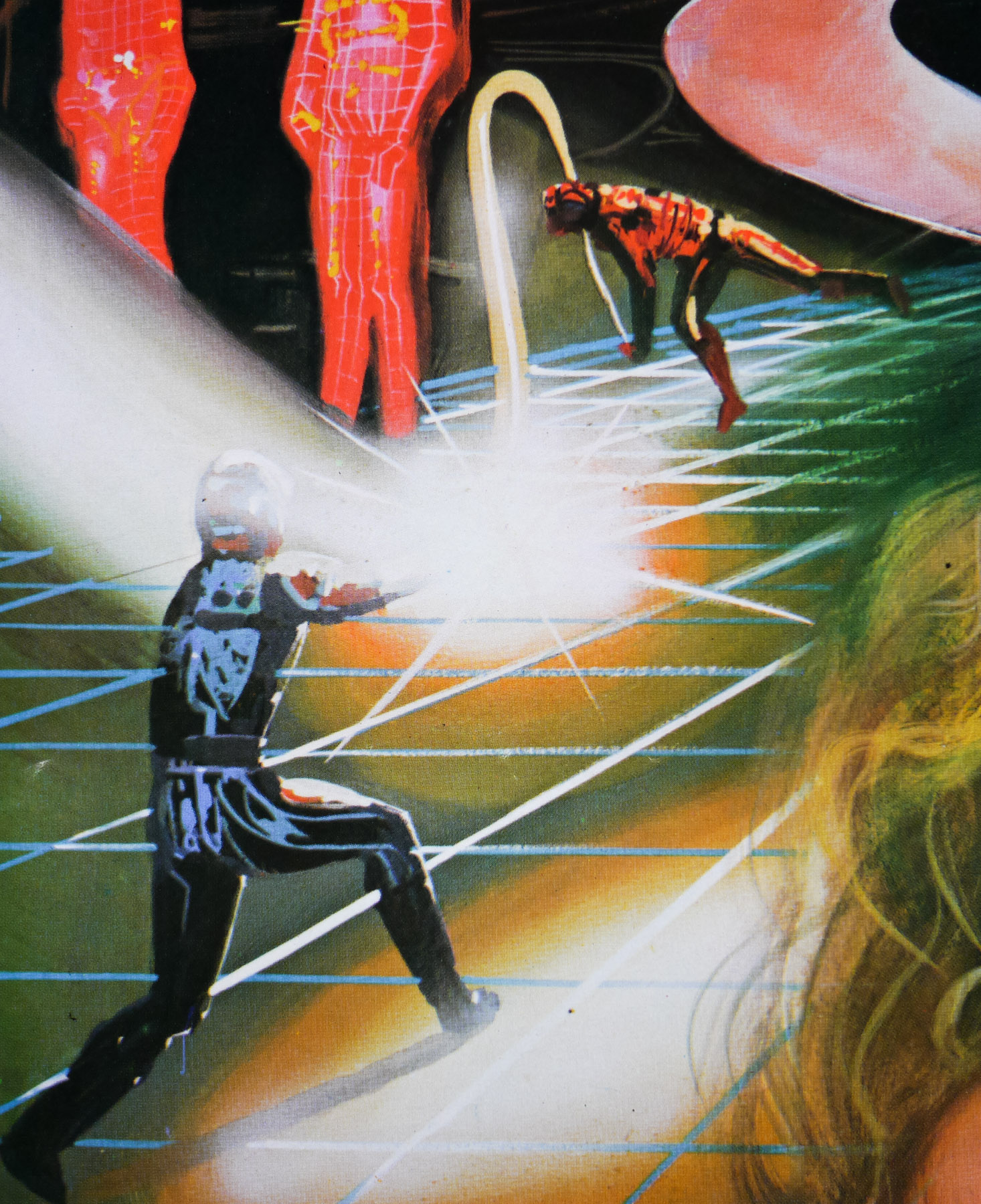
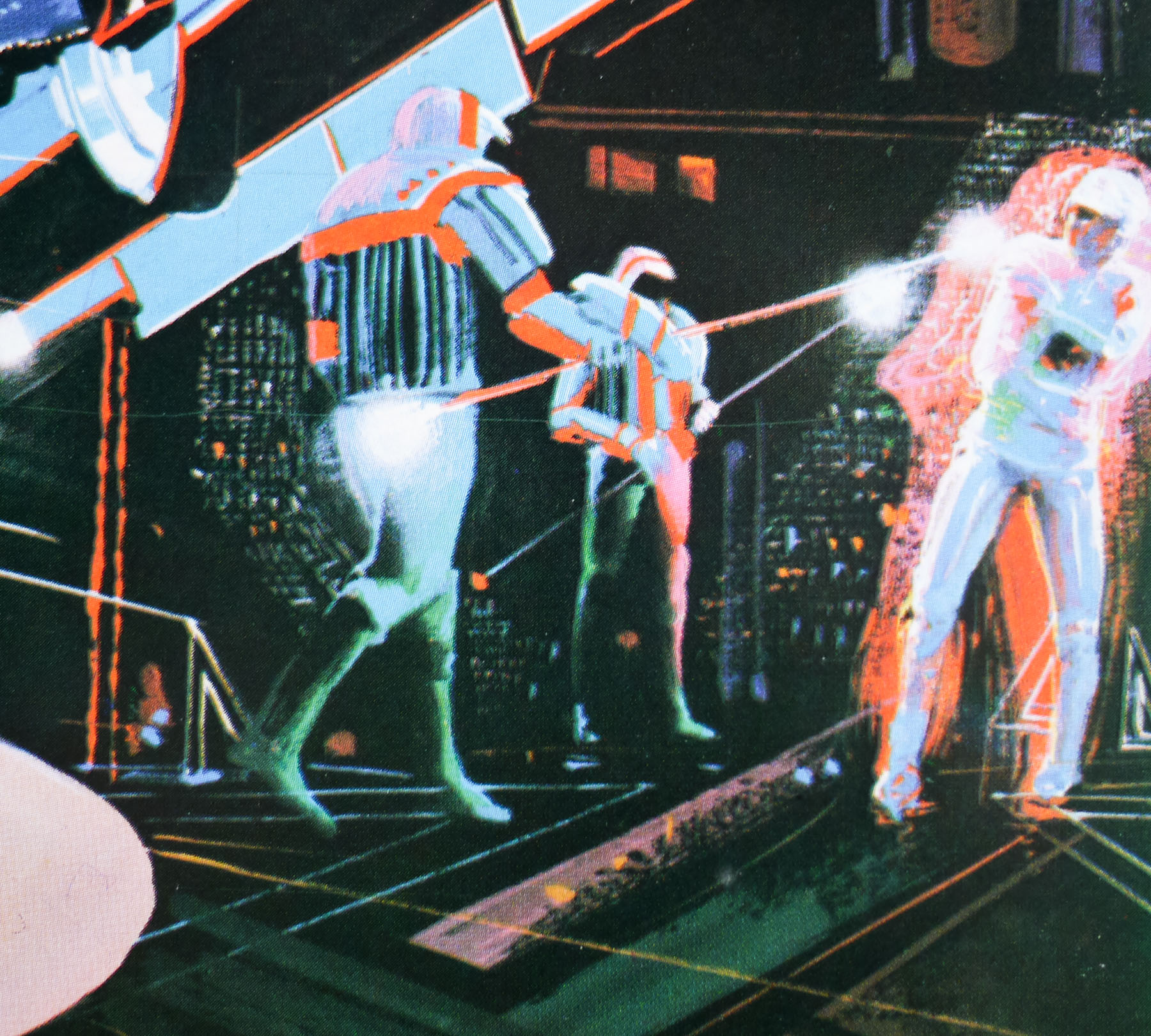
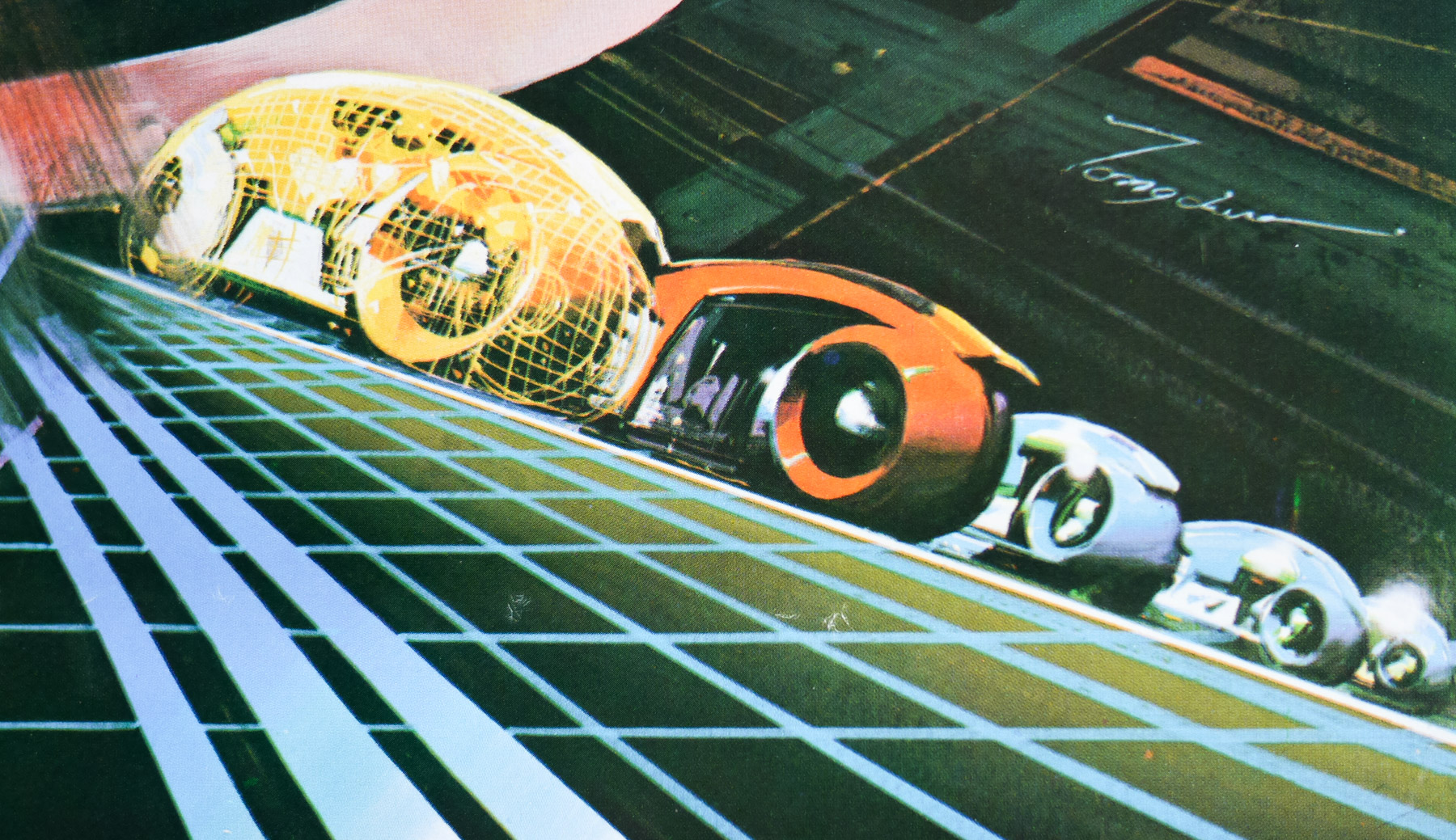
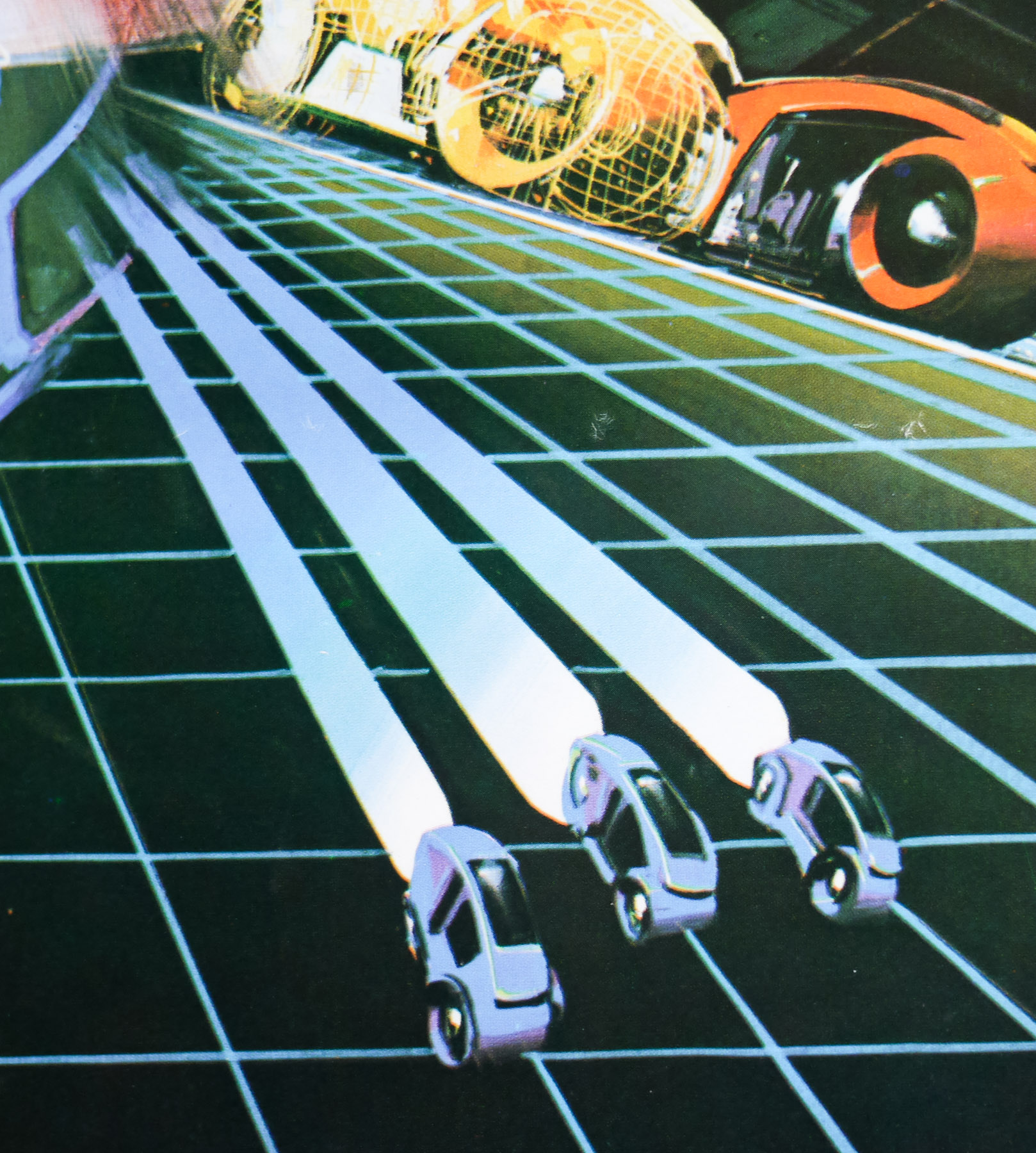
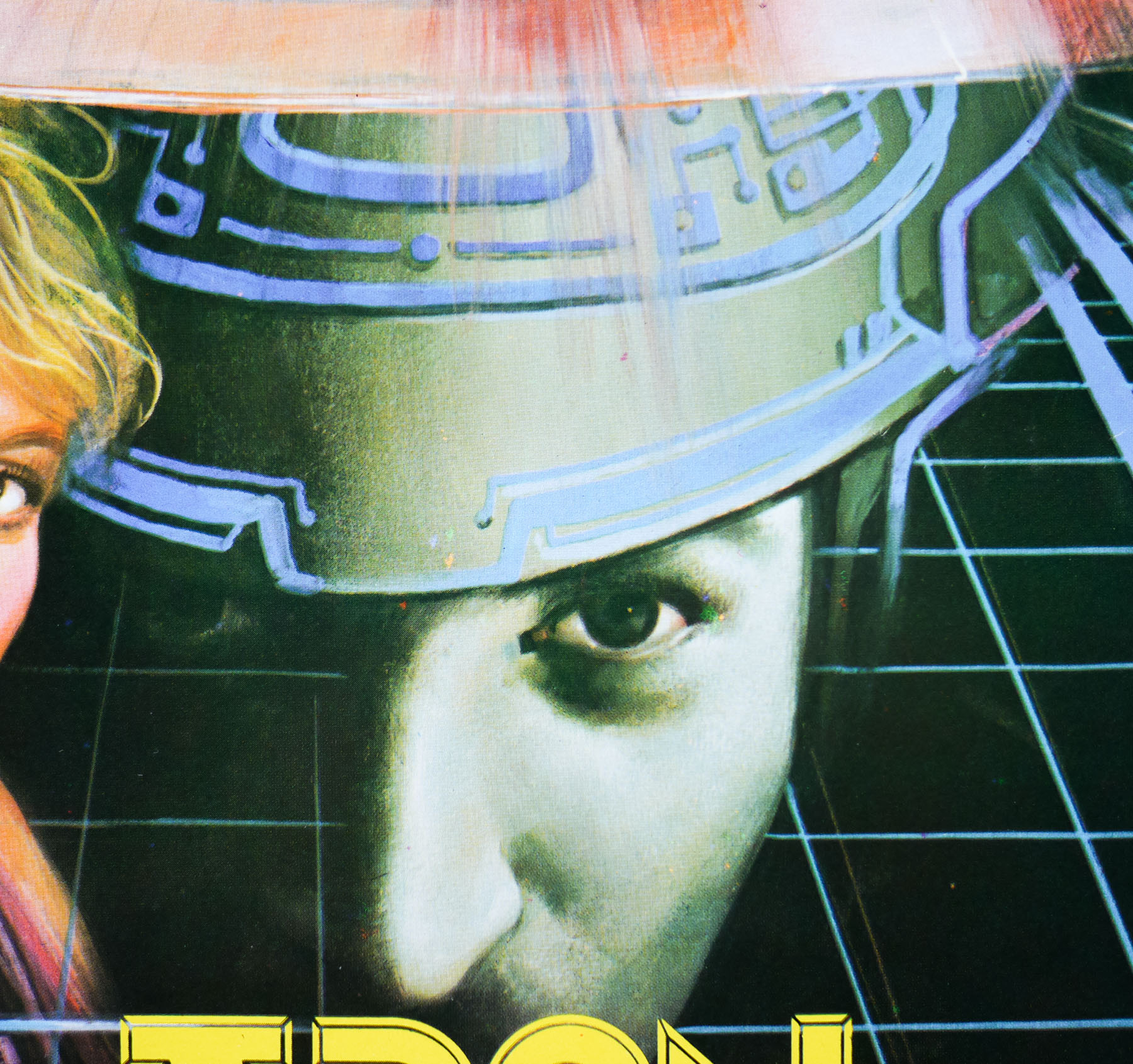
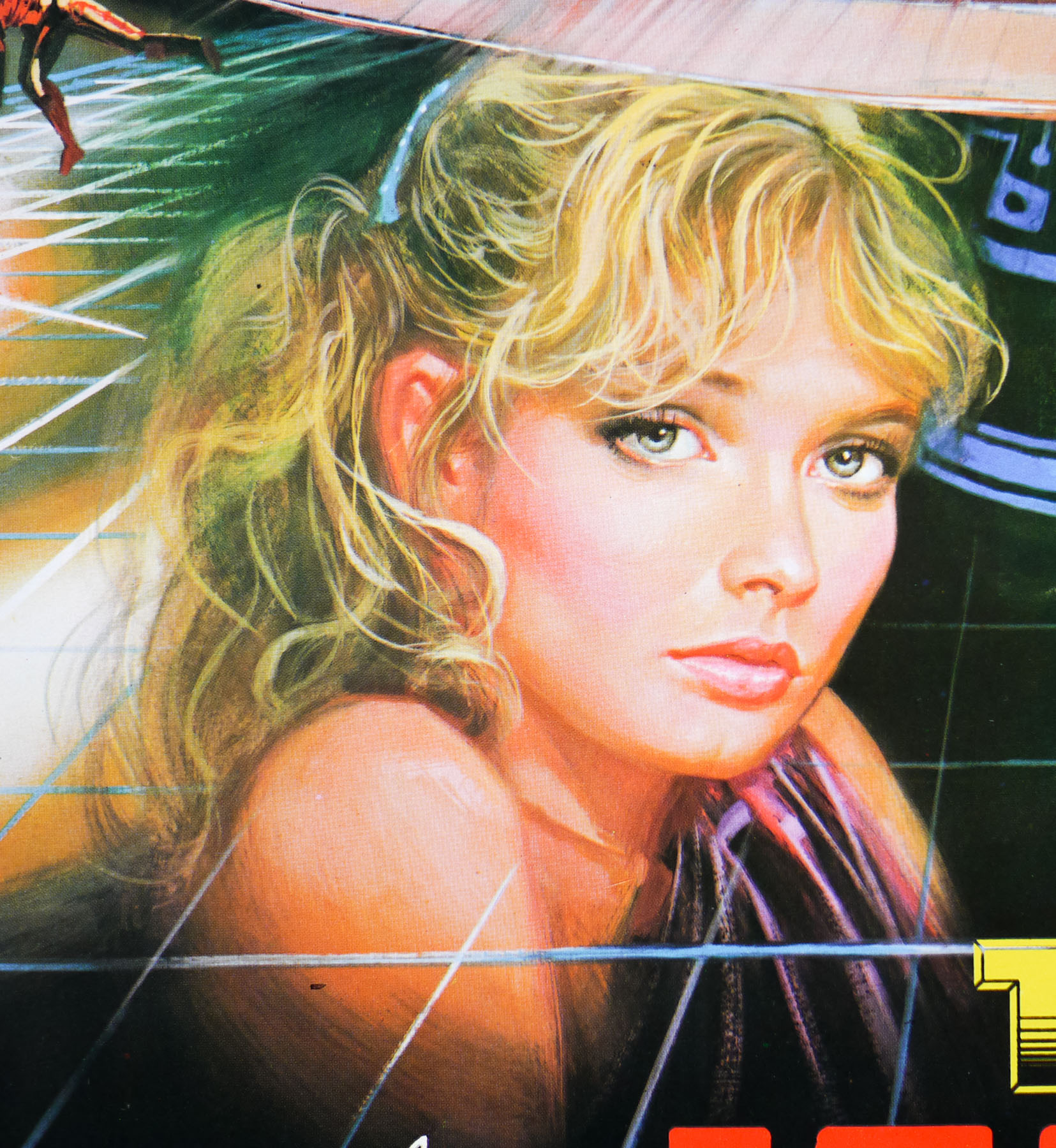
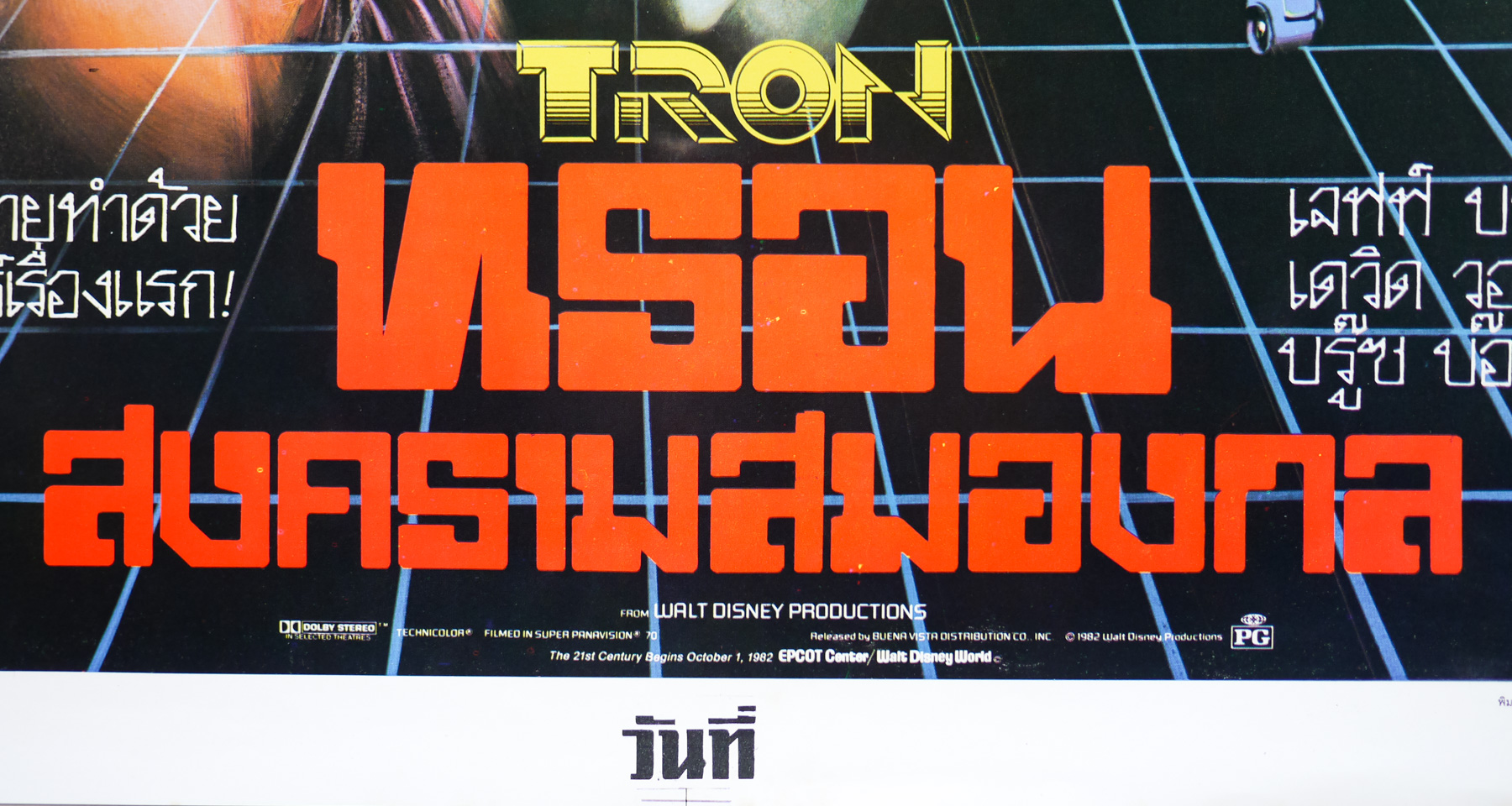
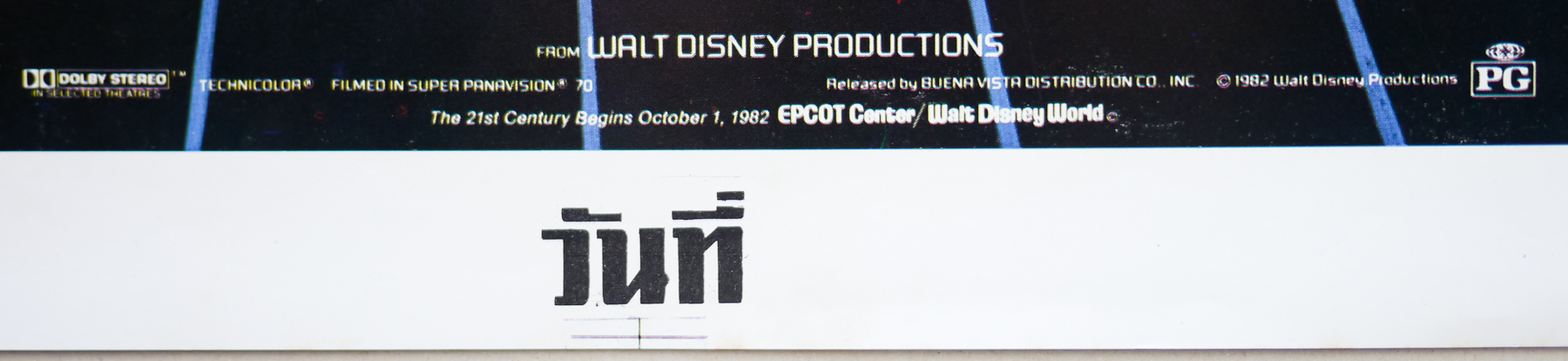
A unique and colourful montage by artist Tongdee features on this Thai poster for the release of Disney’s groundbreaking sci-fi film, Tron. Another title that was released in the incredible summer of 1982, which included Blade Runner, E.T. the Extra Terrestrial and The Thing, the film follows the adventures of hacker Kevin Flynn (Jeff Bridges) who finds himself broken down into data and absorbed into a 3D computer world of his own making. There he must join forces with his lover Yori and the titular Tron to battle the malevolent Master Control Program and liberate the system from its dictatorial grip, which is the only way Flynn can return to the real world.

The film features seminal use of computer graphics to depict the world inside the mainframe and, although the visuals date the film somewhat when viewed today, back in 1982 they wowed audiences worldwide and were instrumental in CGI’s rise to prominence in the years that followed.

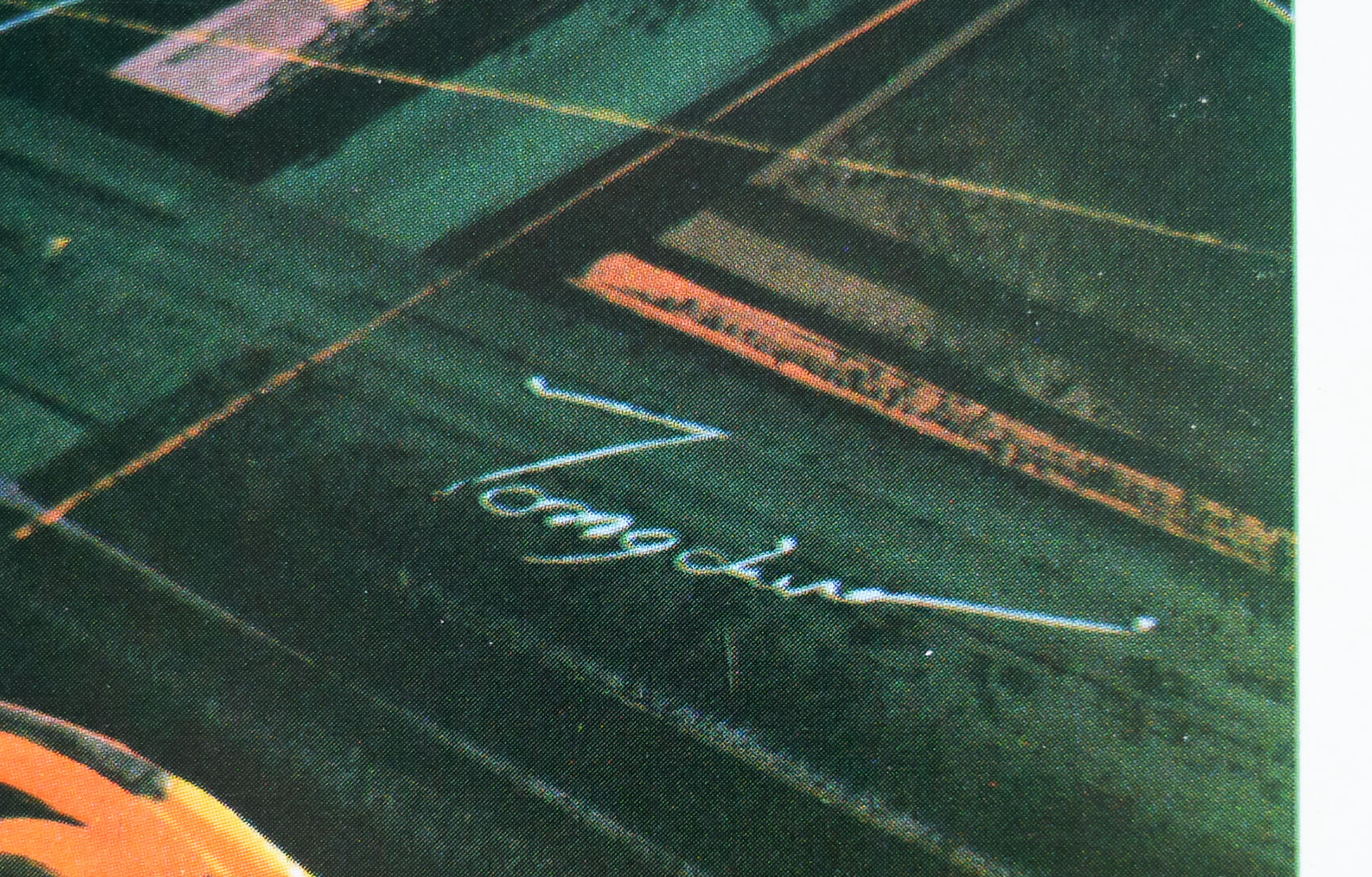
Tongdee Panumas (he signs his posters with just his first name) was an incredibly prolific Thai film poster artist during the 70s, 80s and 90s but I’ve been unable to find out much about him, other than that he was born in 1947. If anyone has any more information please get in touch. A knowledgeable collector of Thai posters told me that the artists would rarely if ever see the film they were creating the poster for and would instead paint images based on still photos or posters from other countries. This led to some wild designs and even some artwork with characters and elements that didn’t even appear in the actual film!